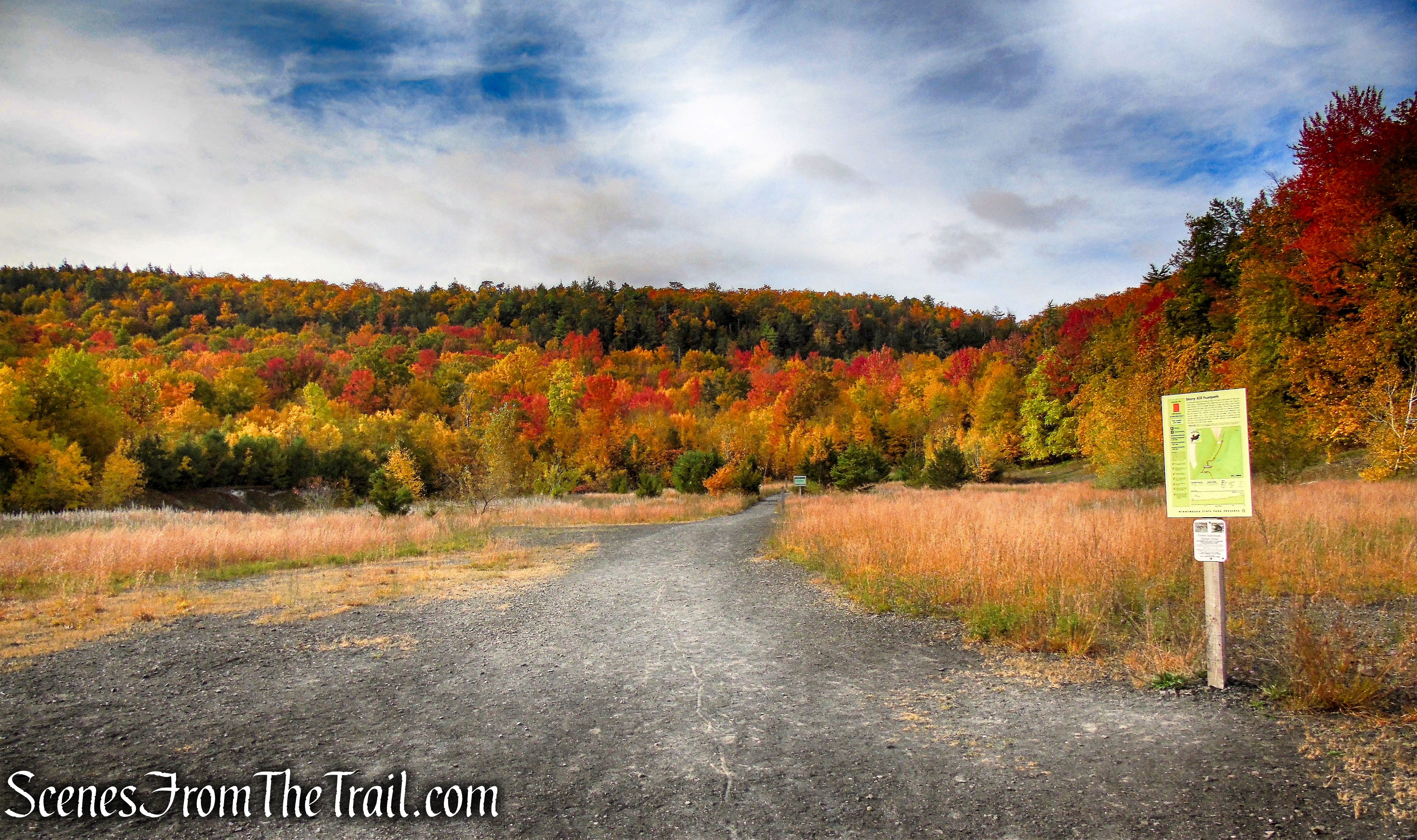
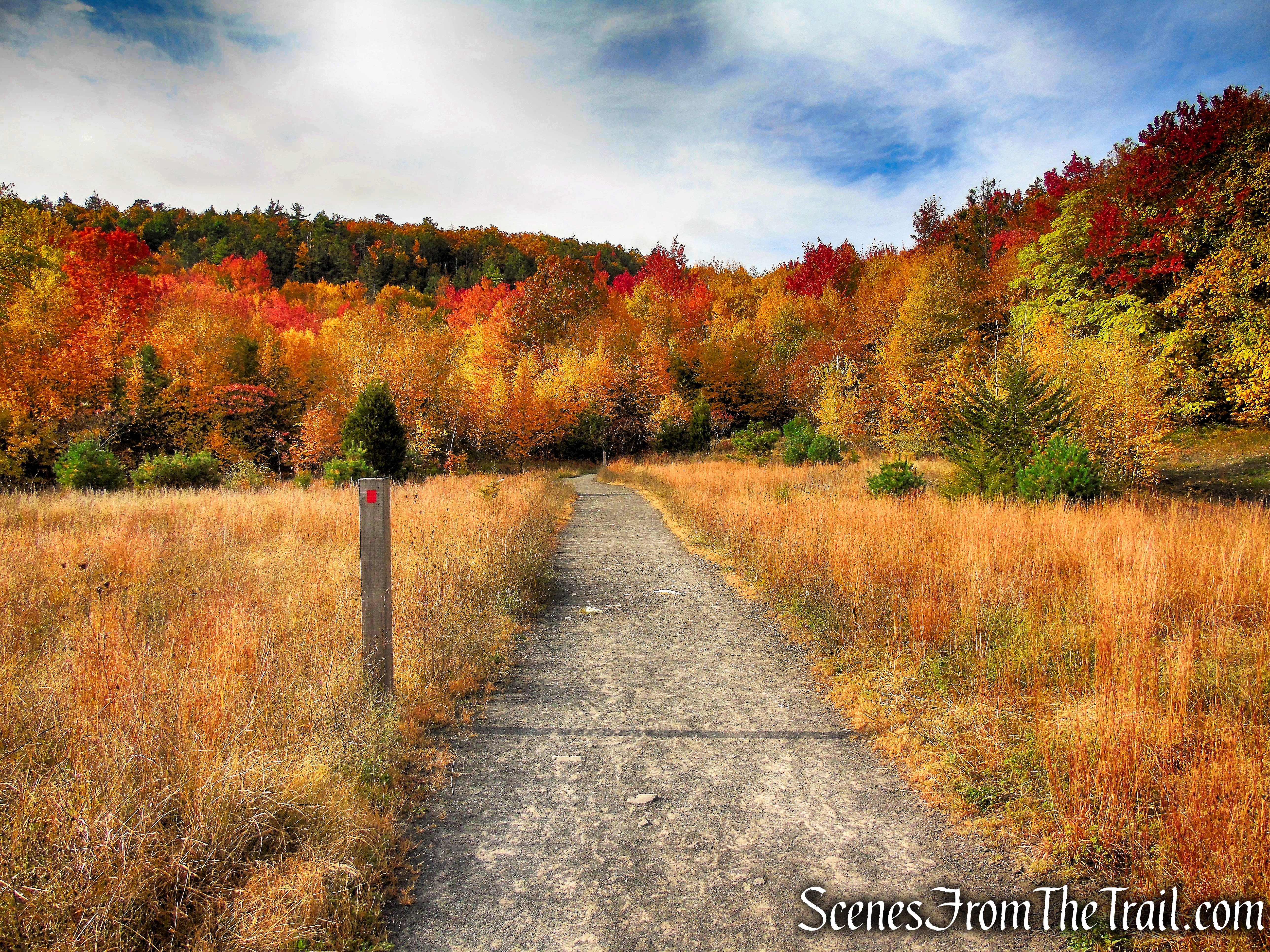
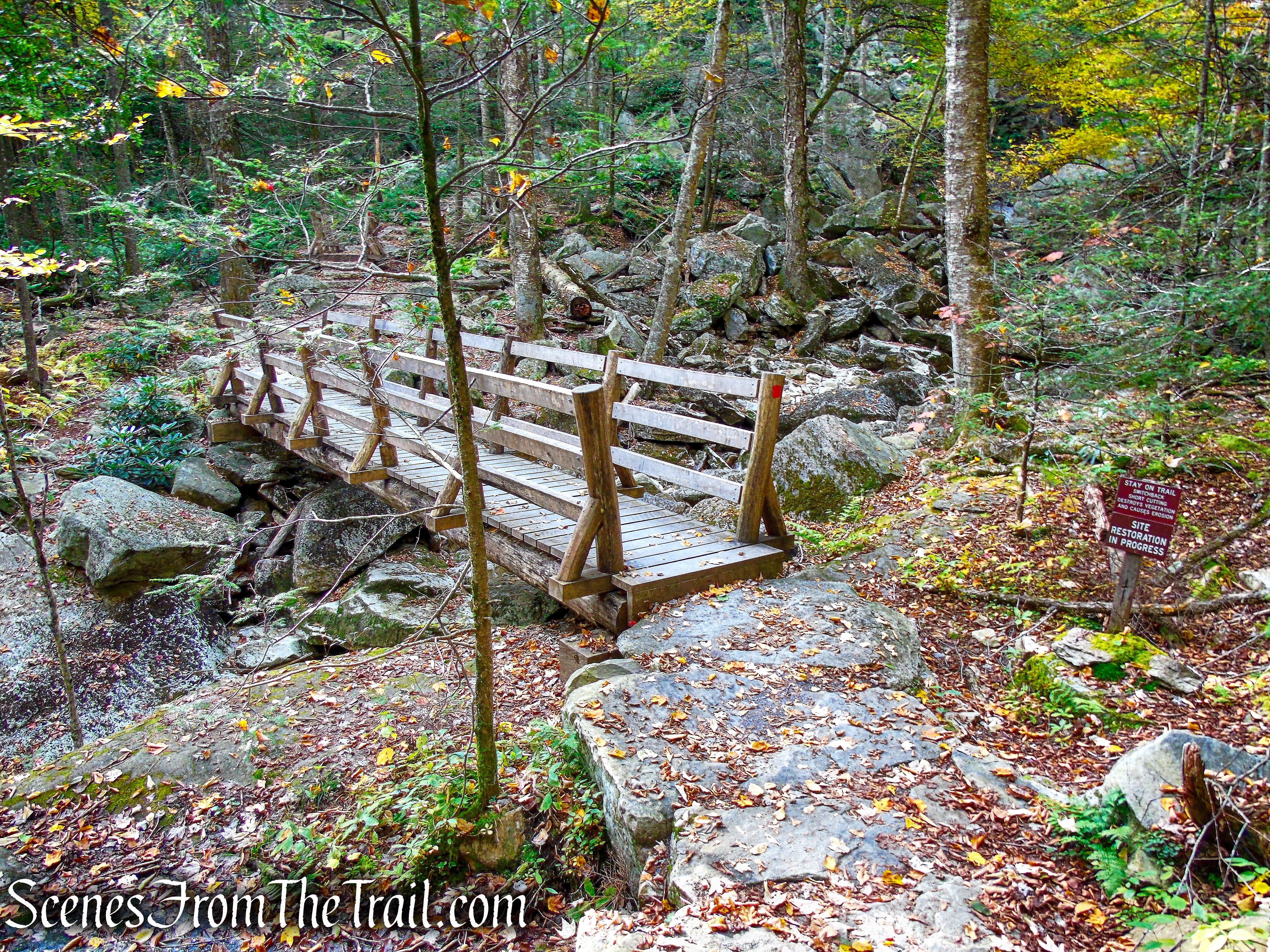
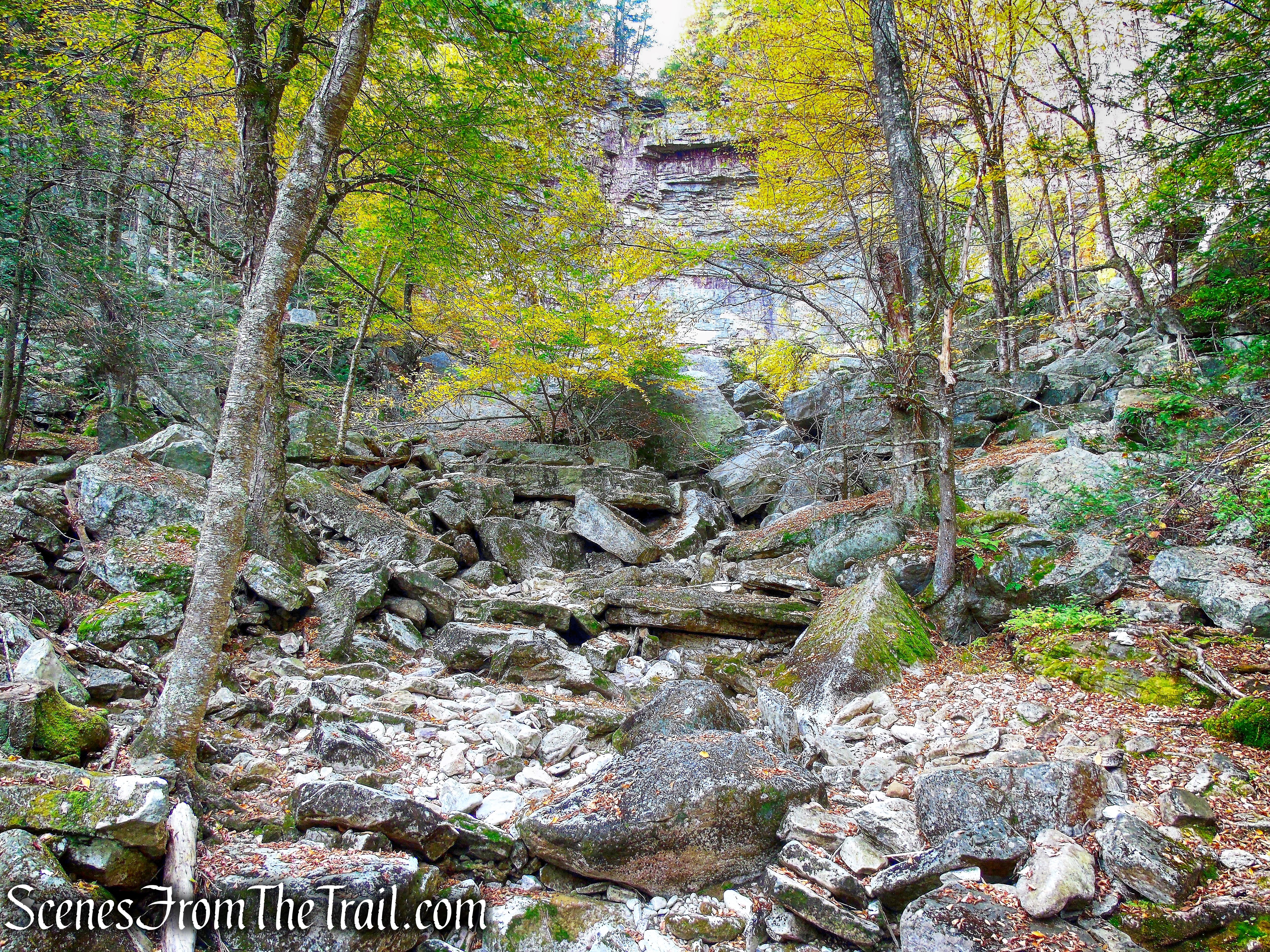
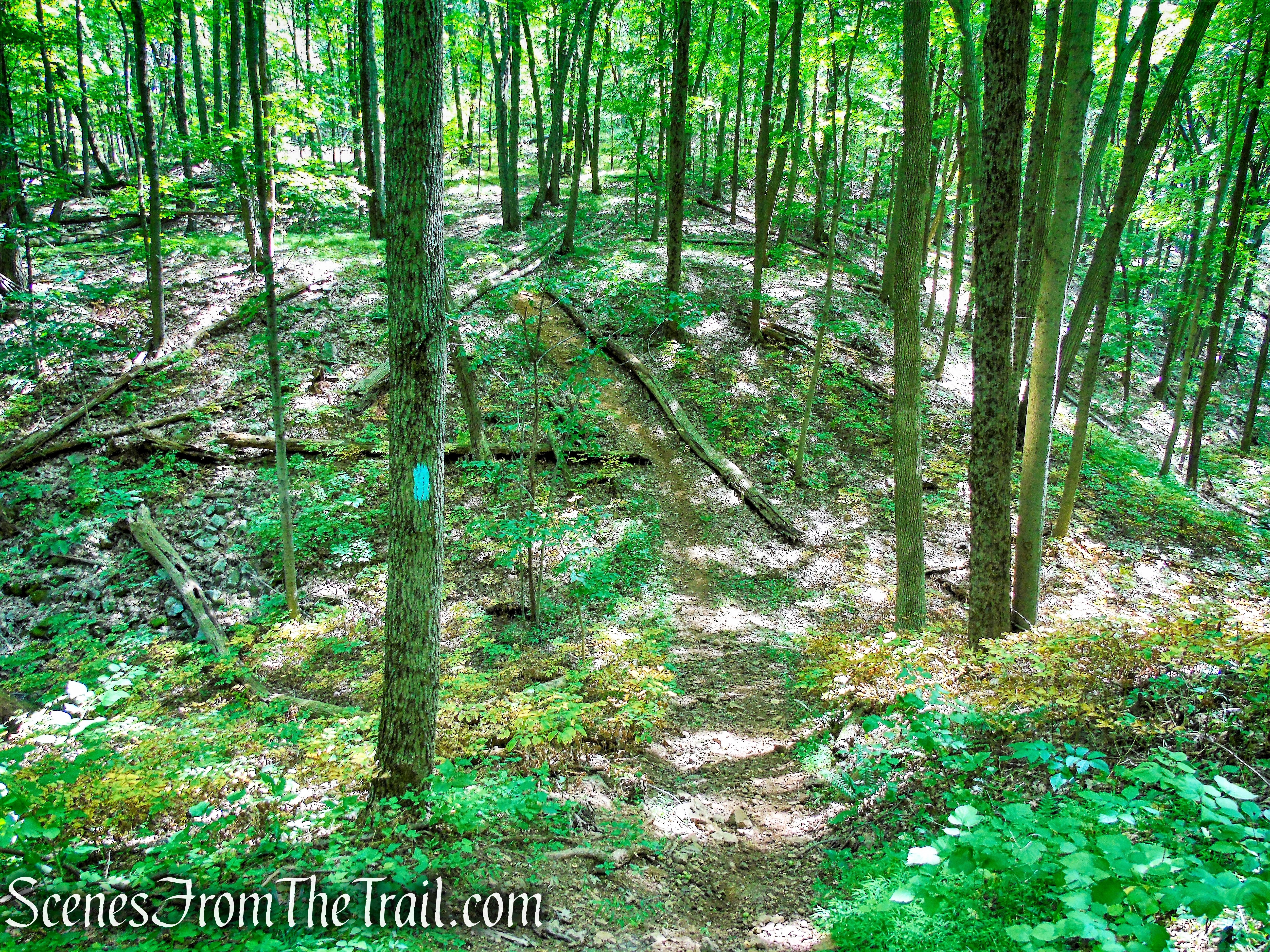
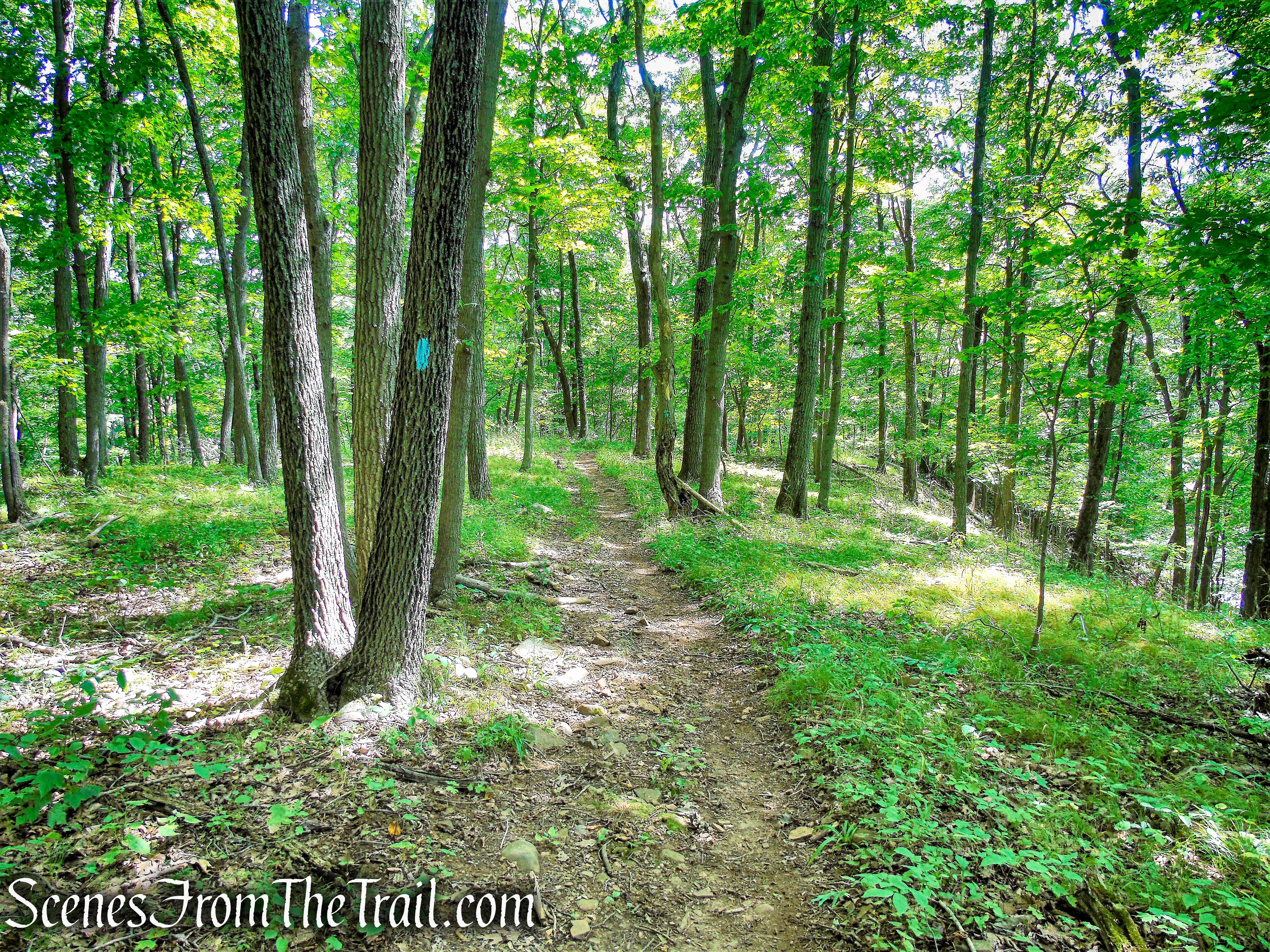
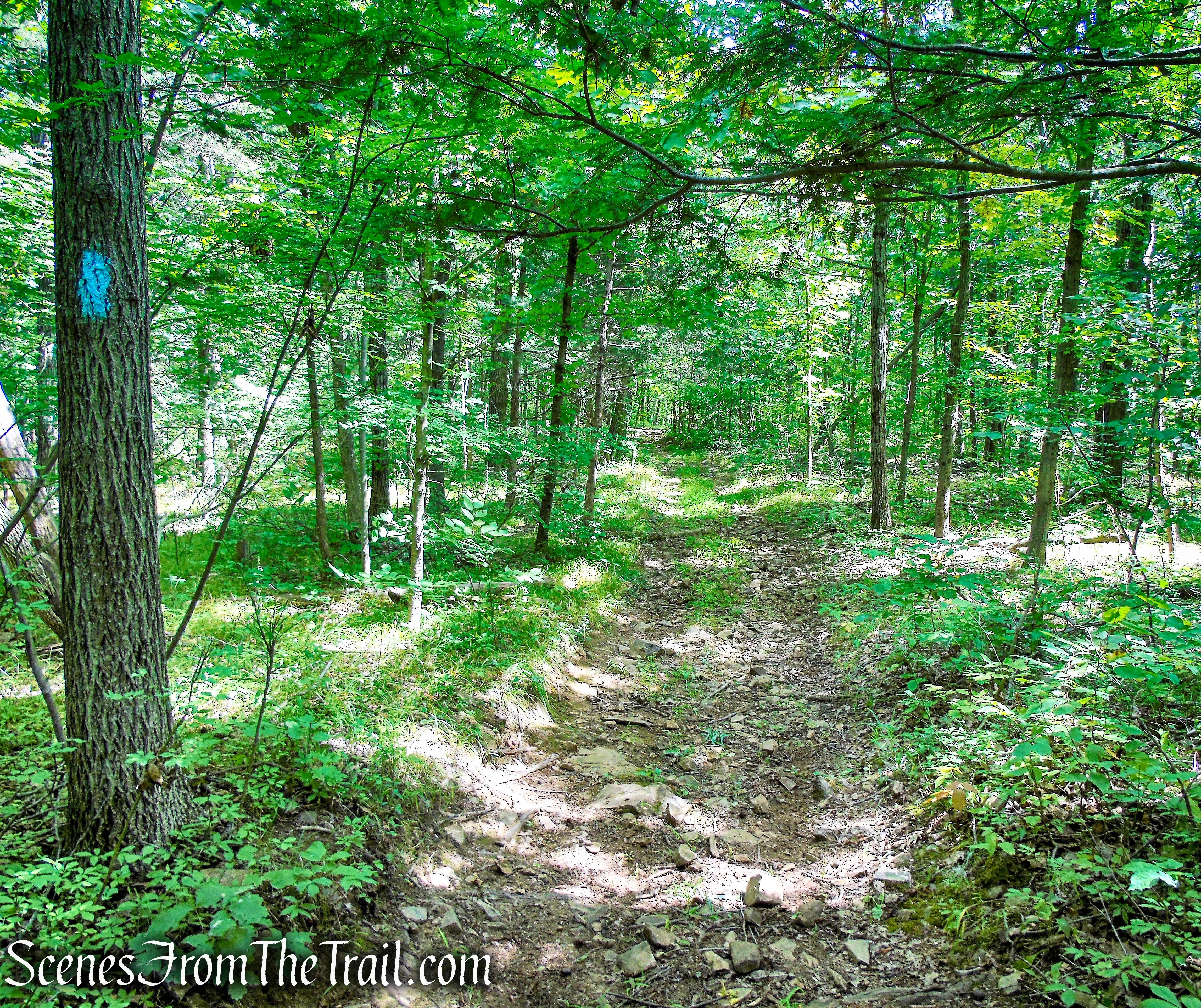
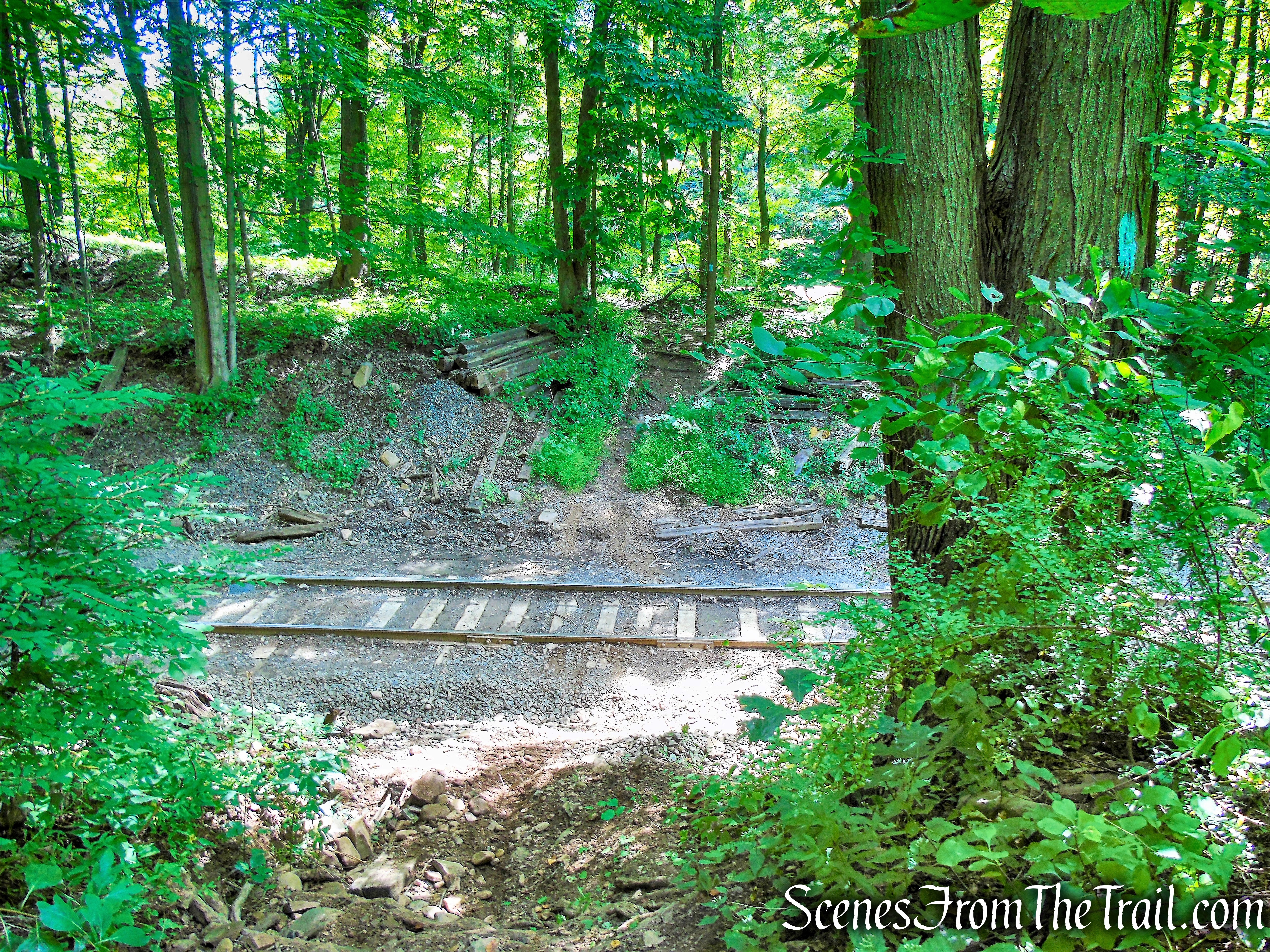
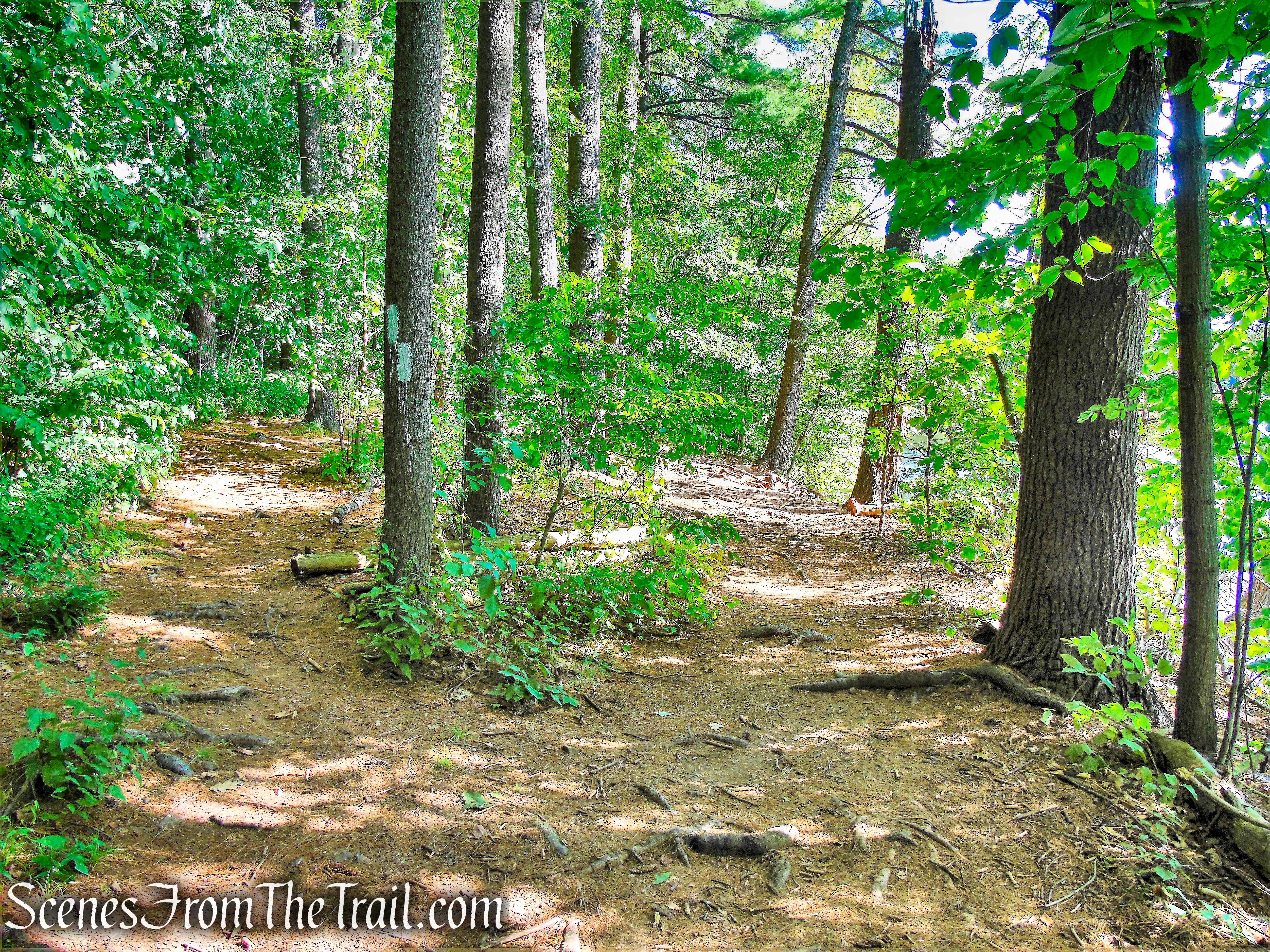
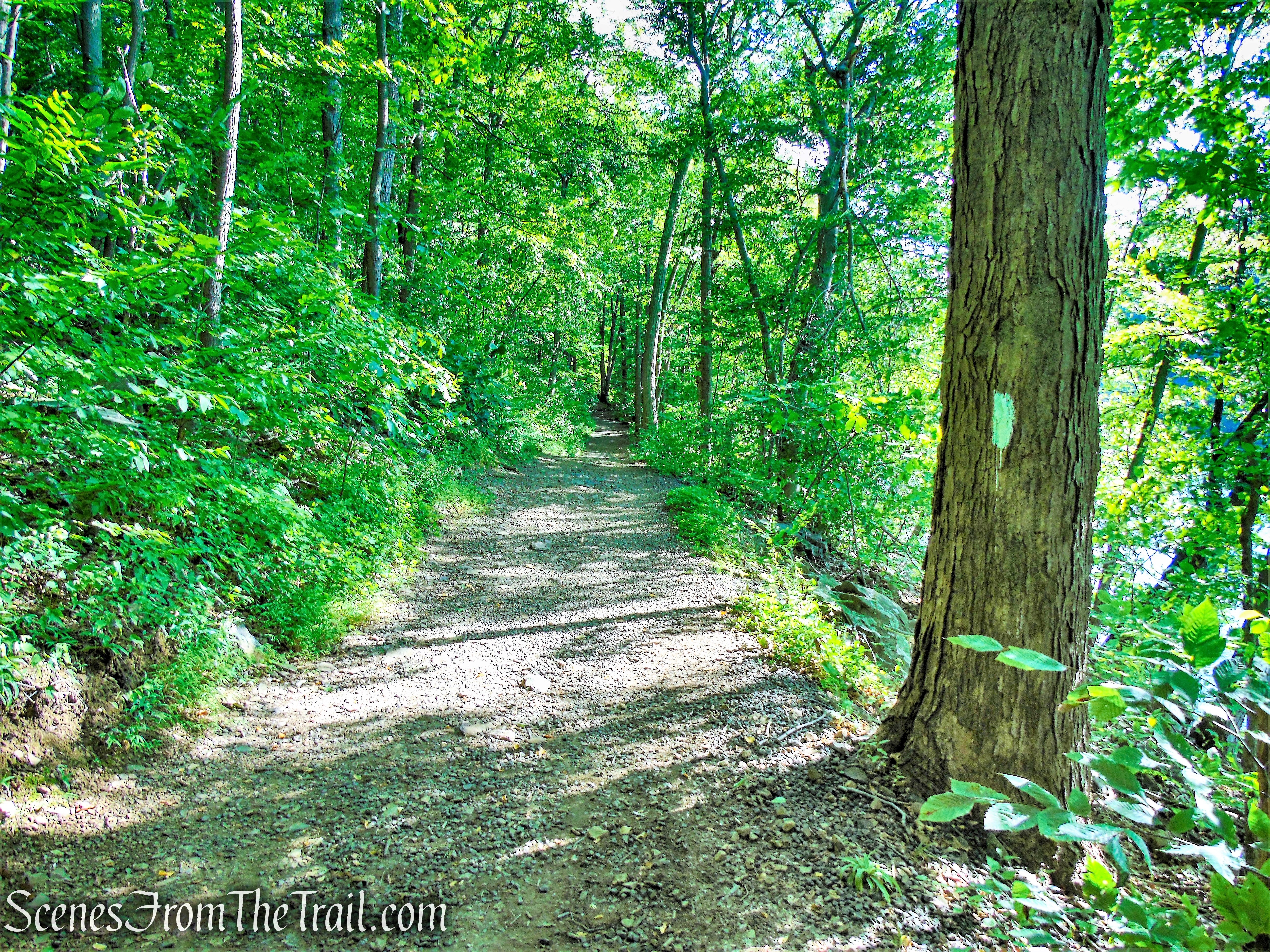
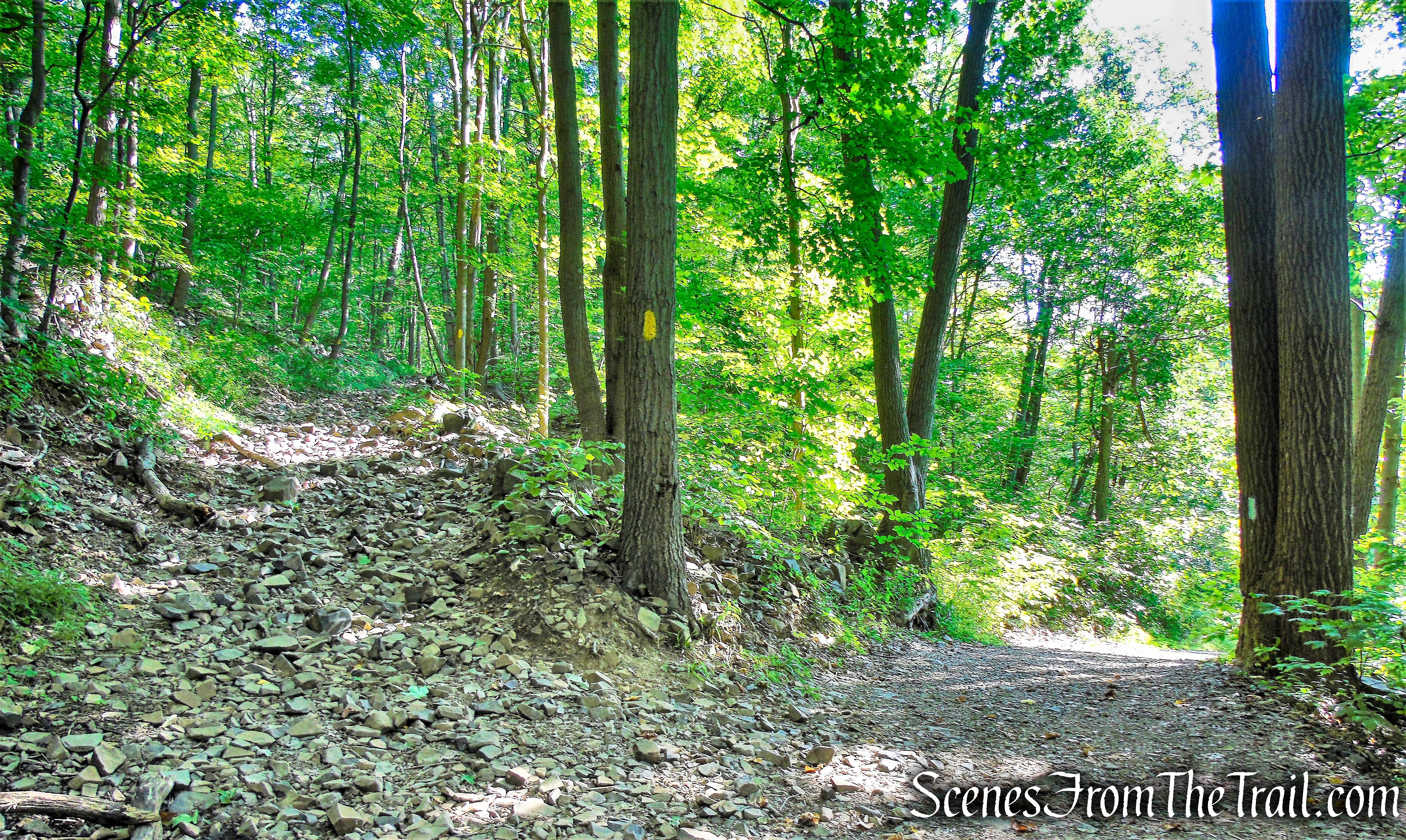
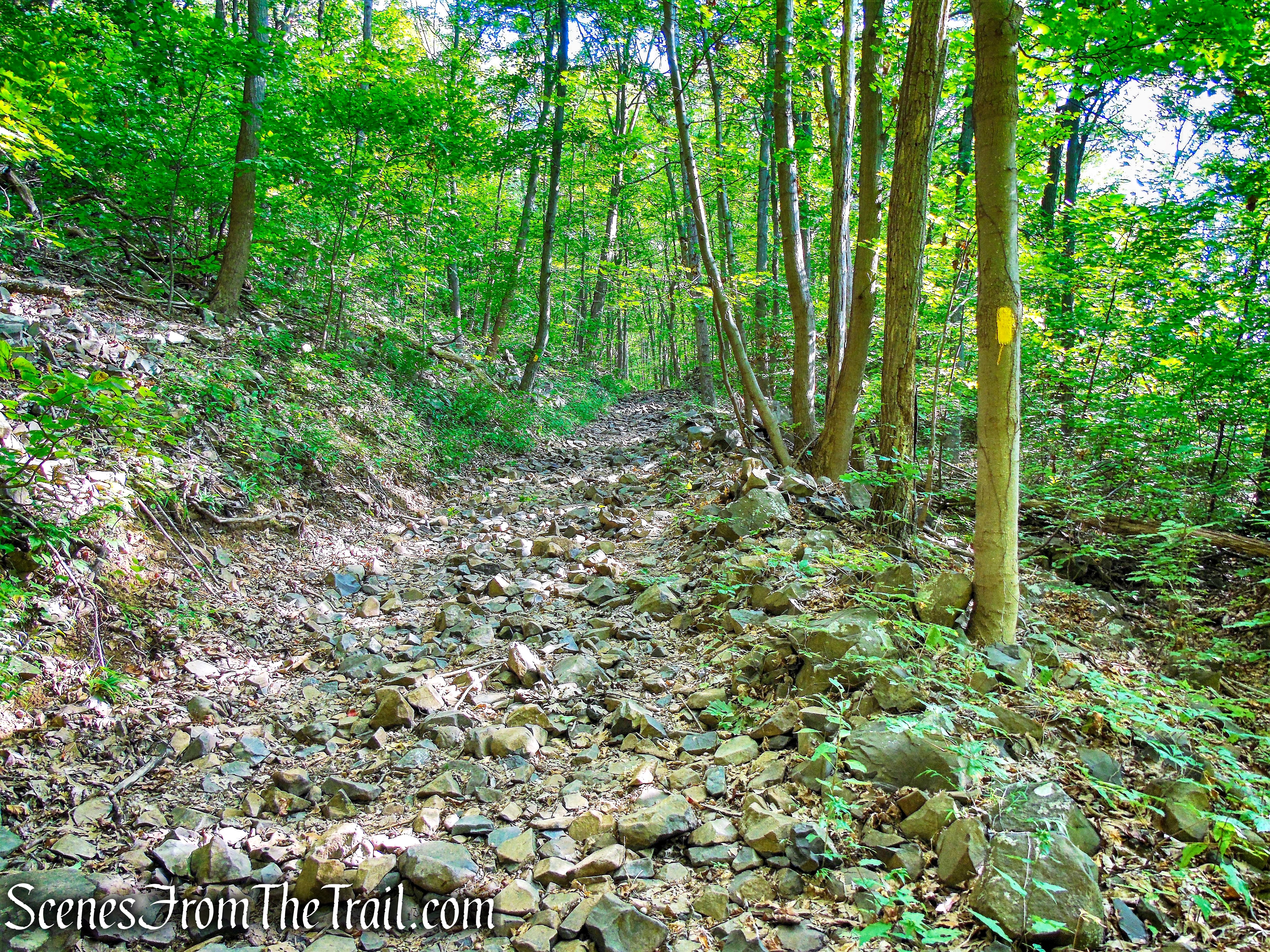
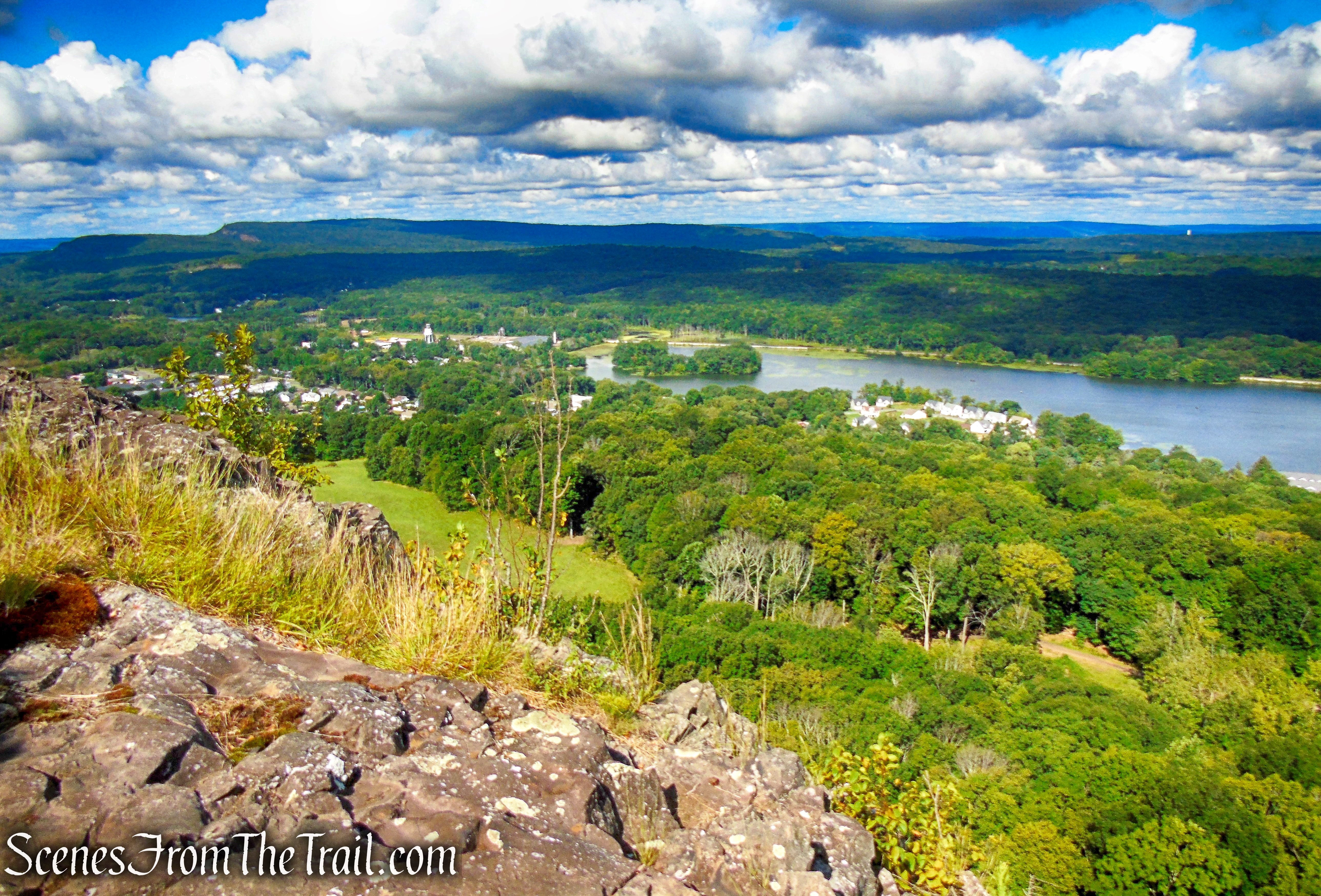
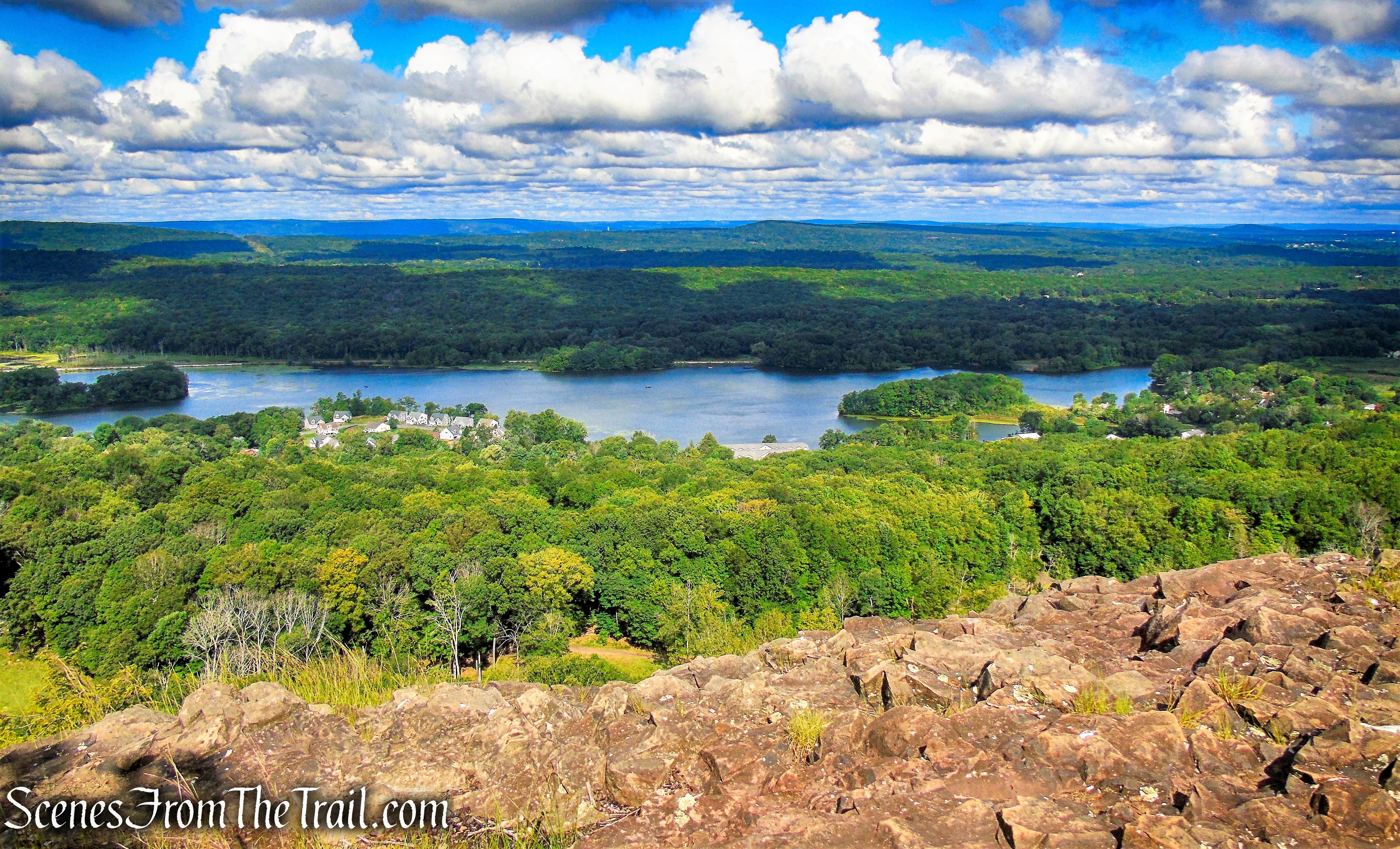
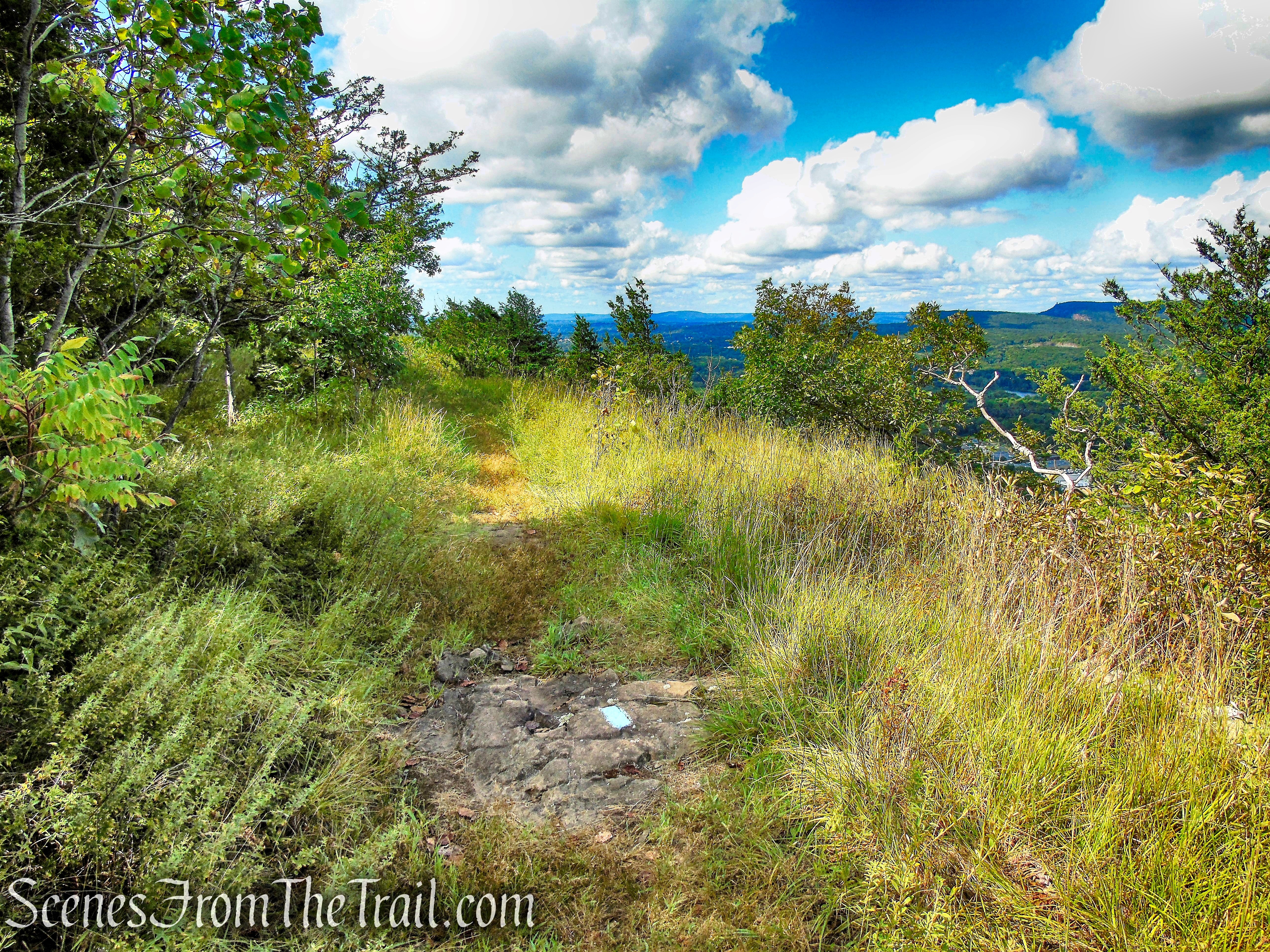
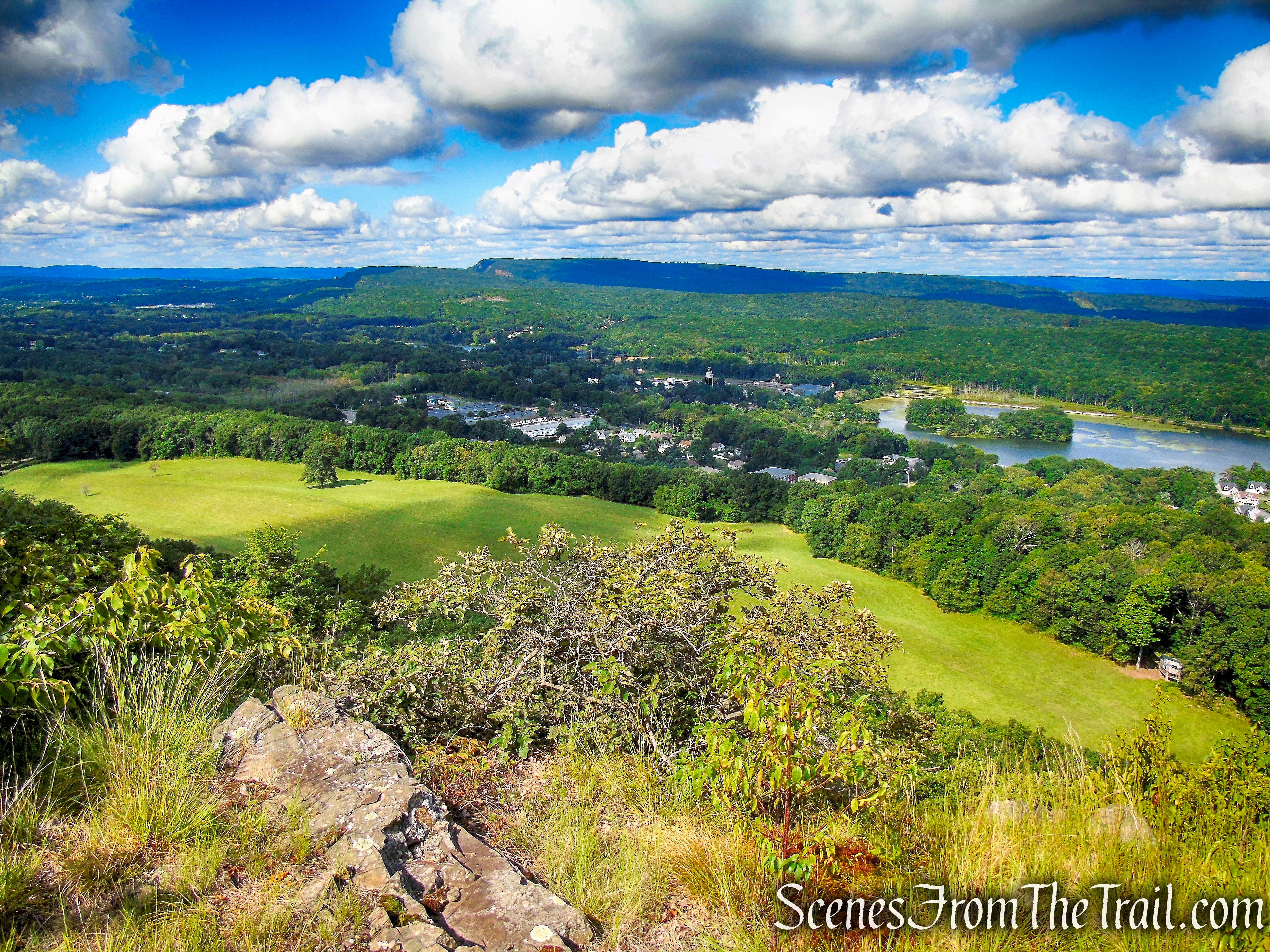
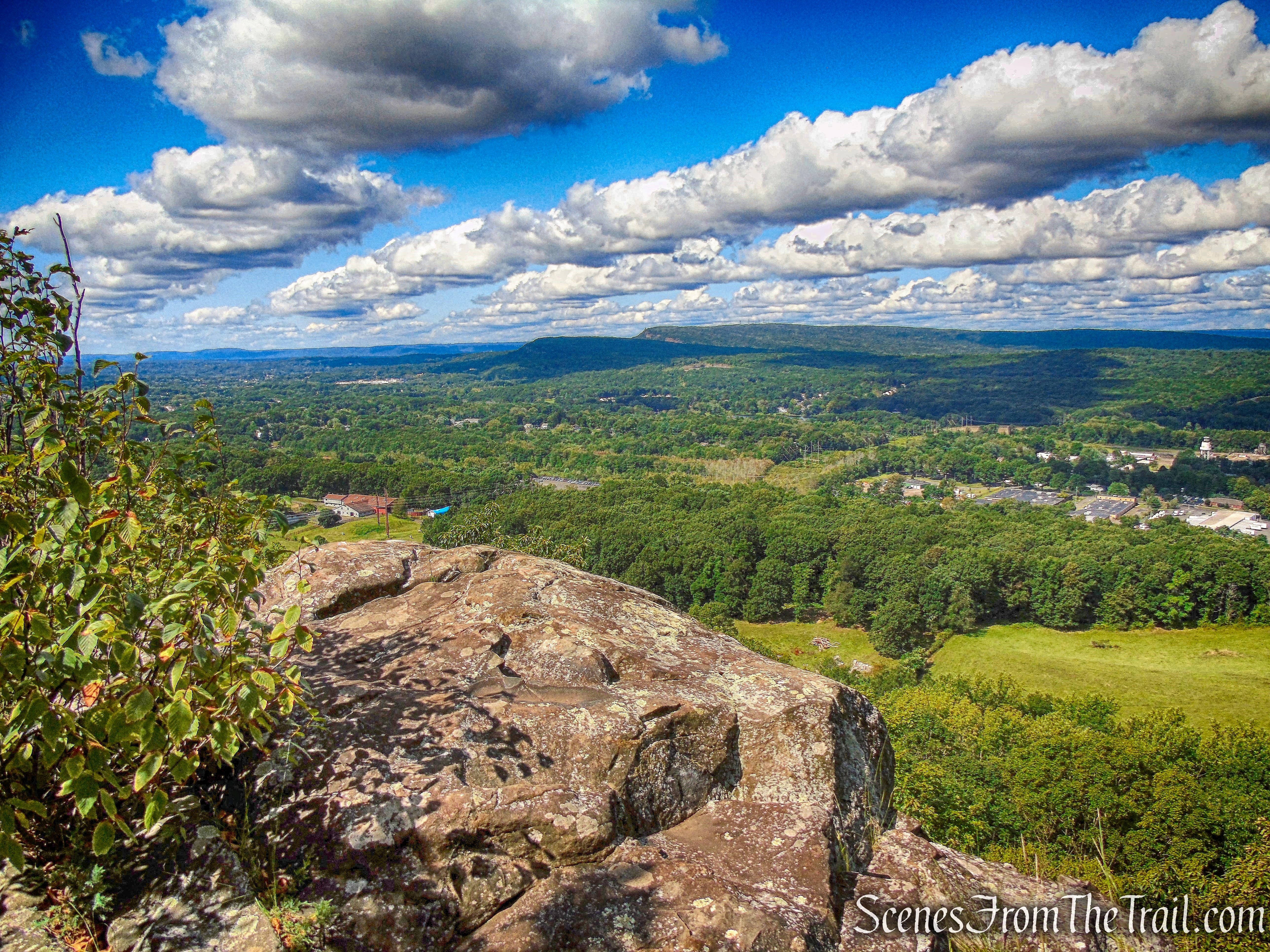
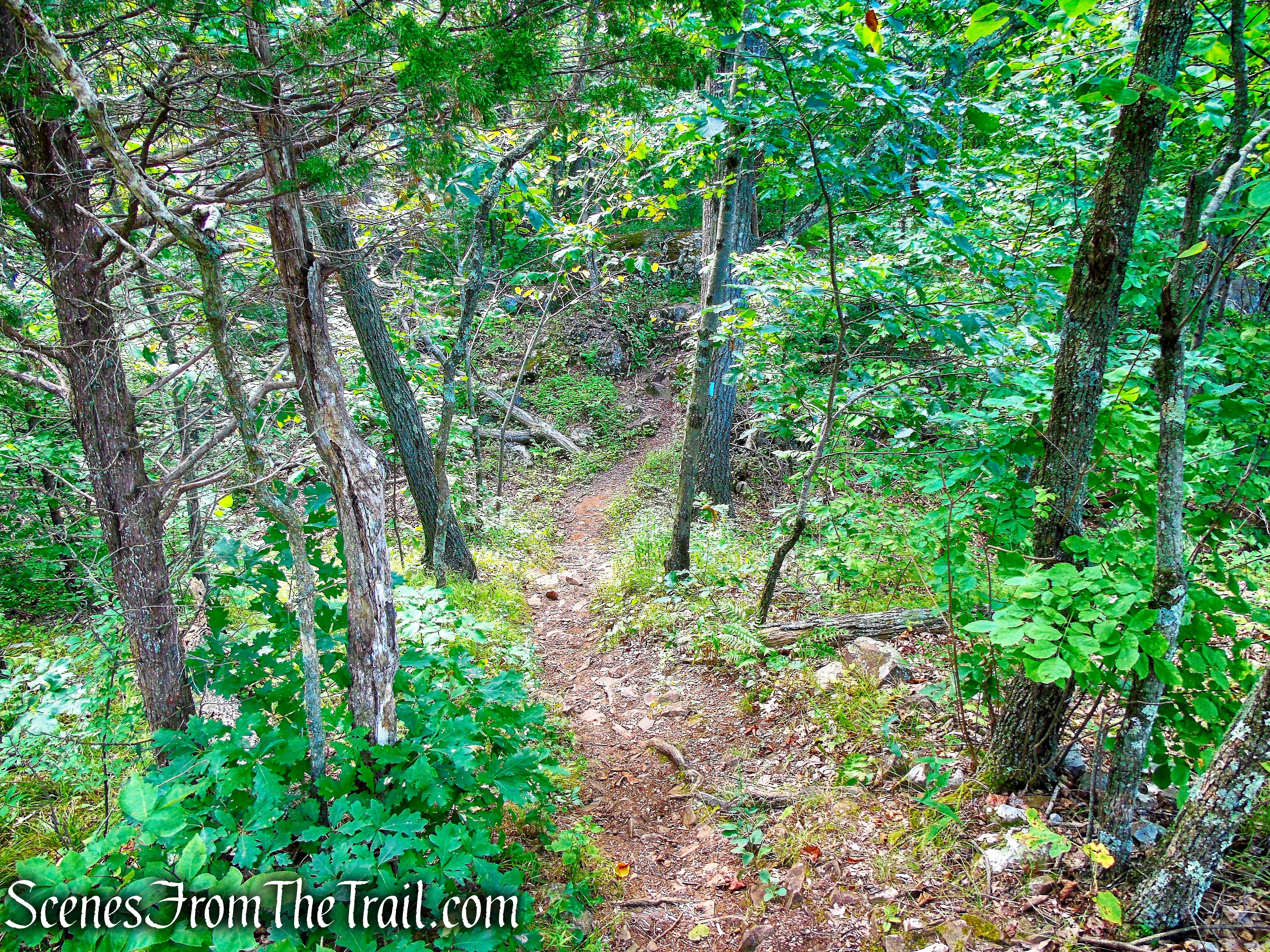
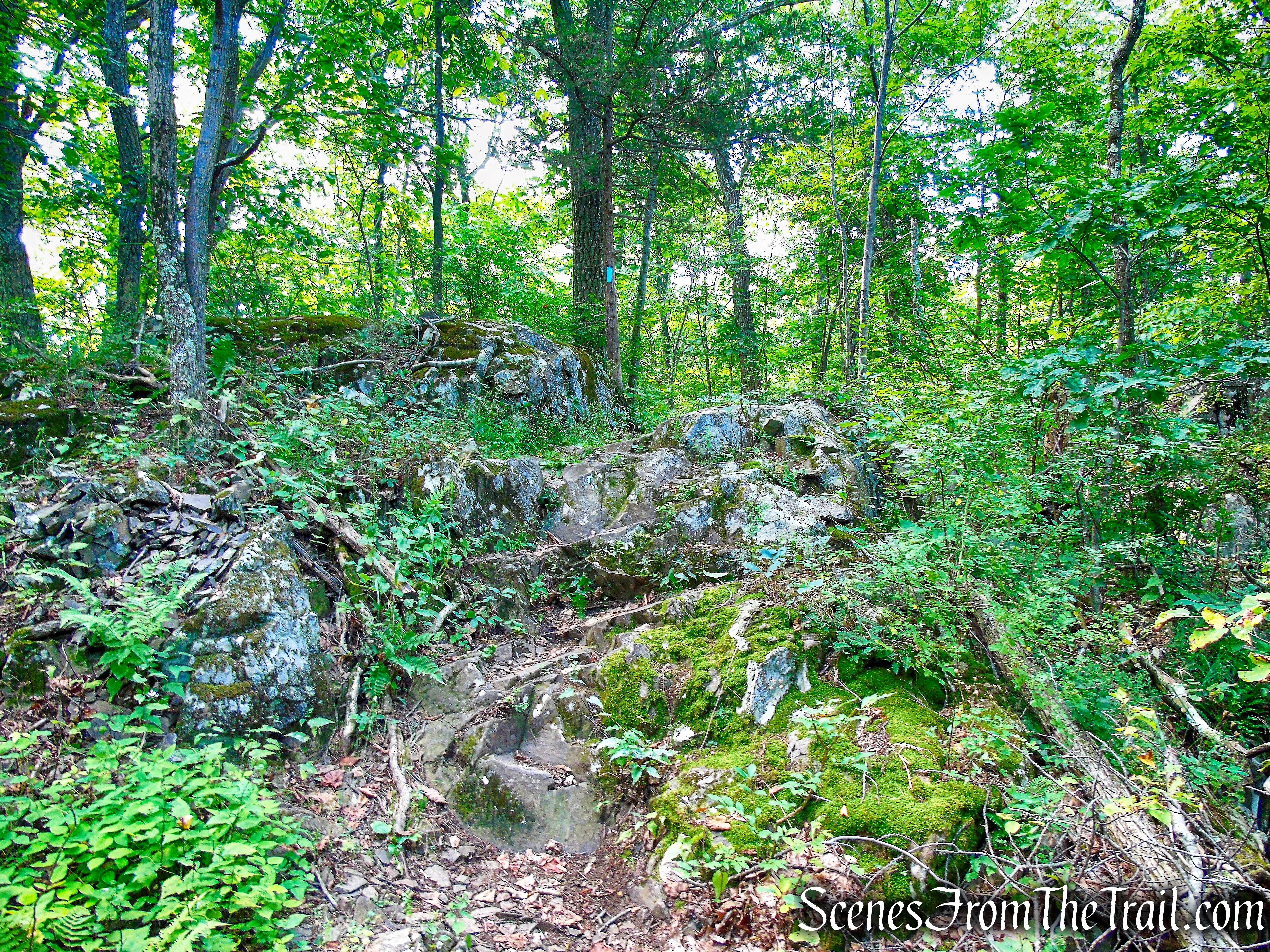
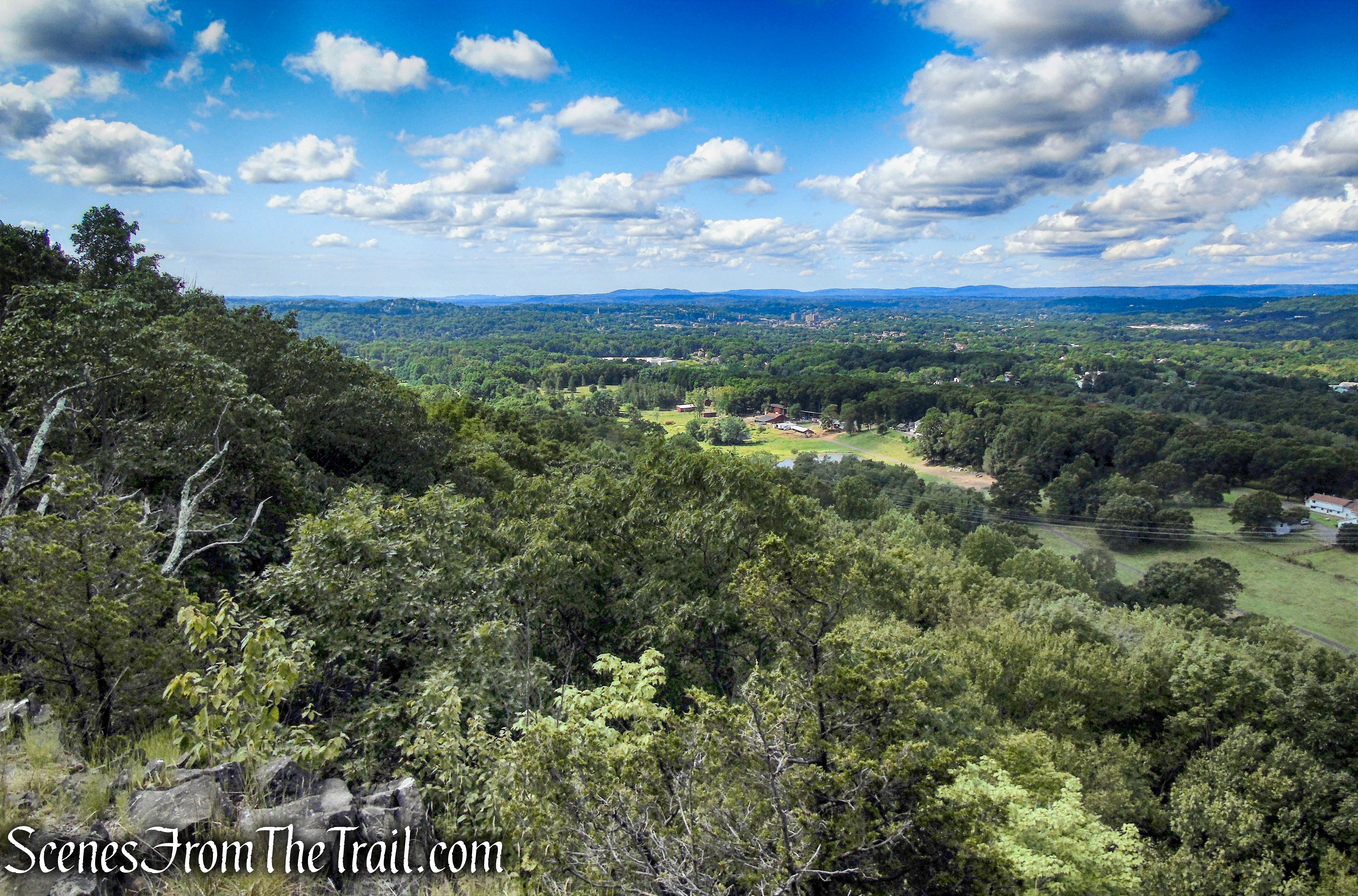
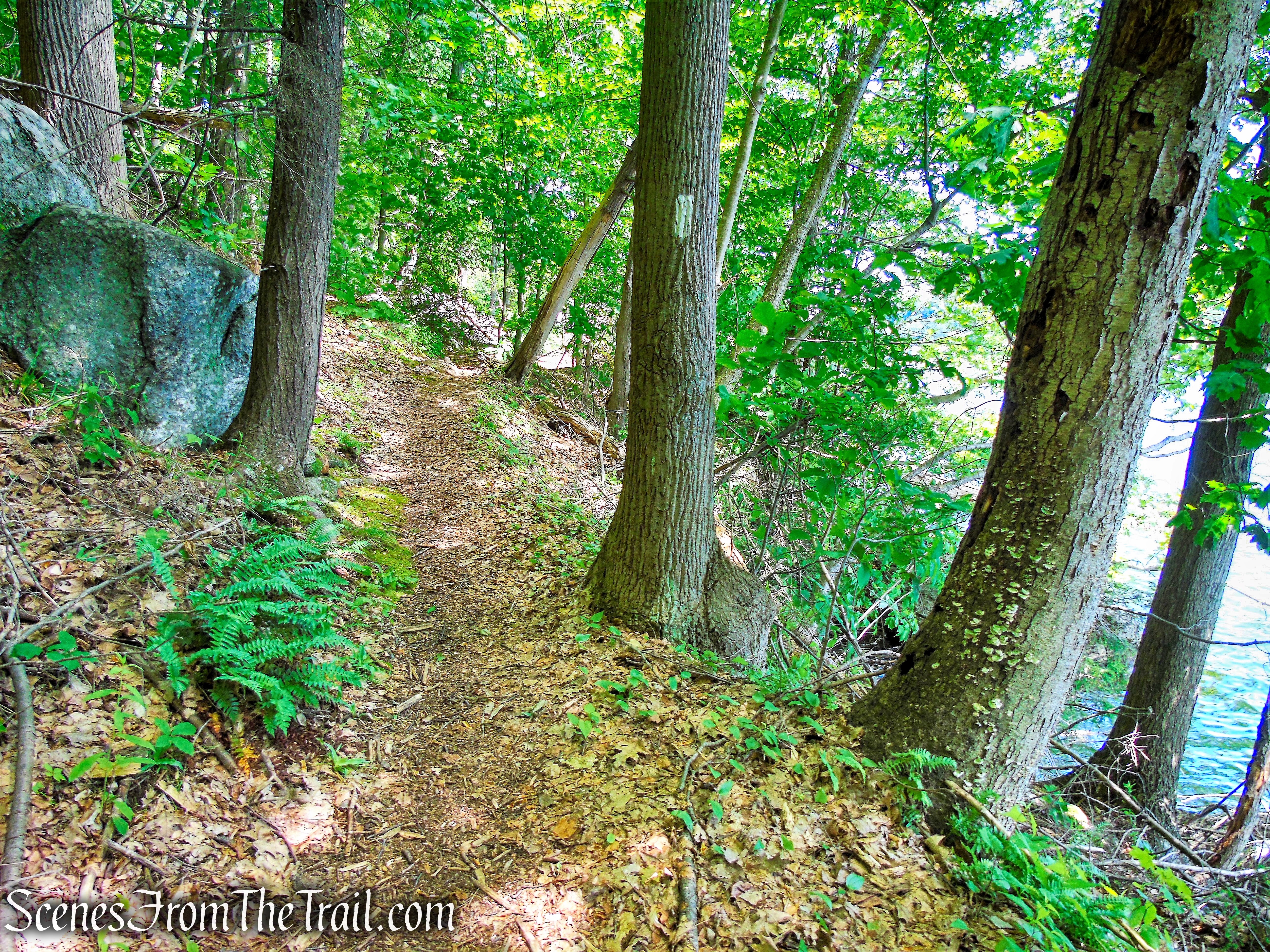
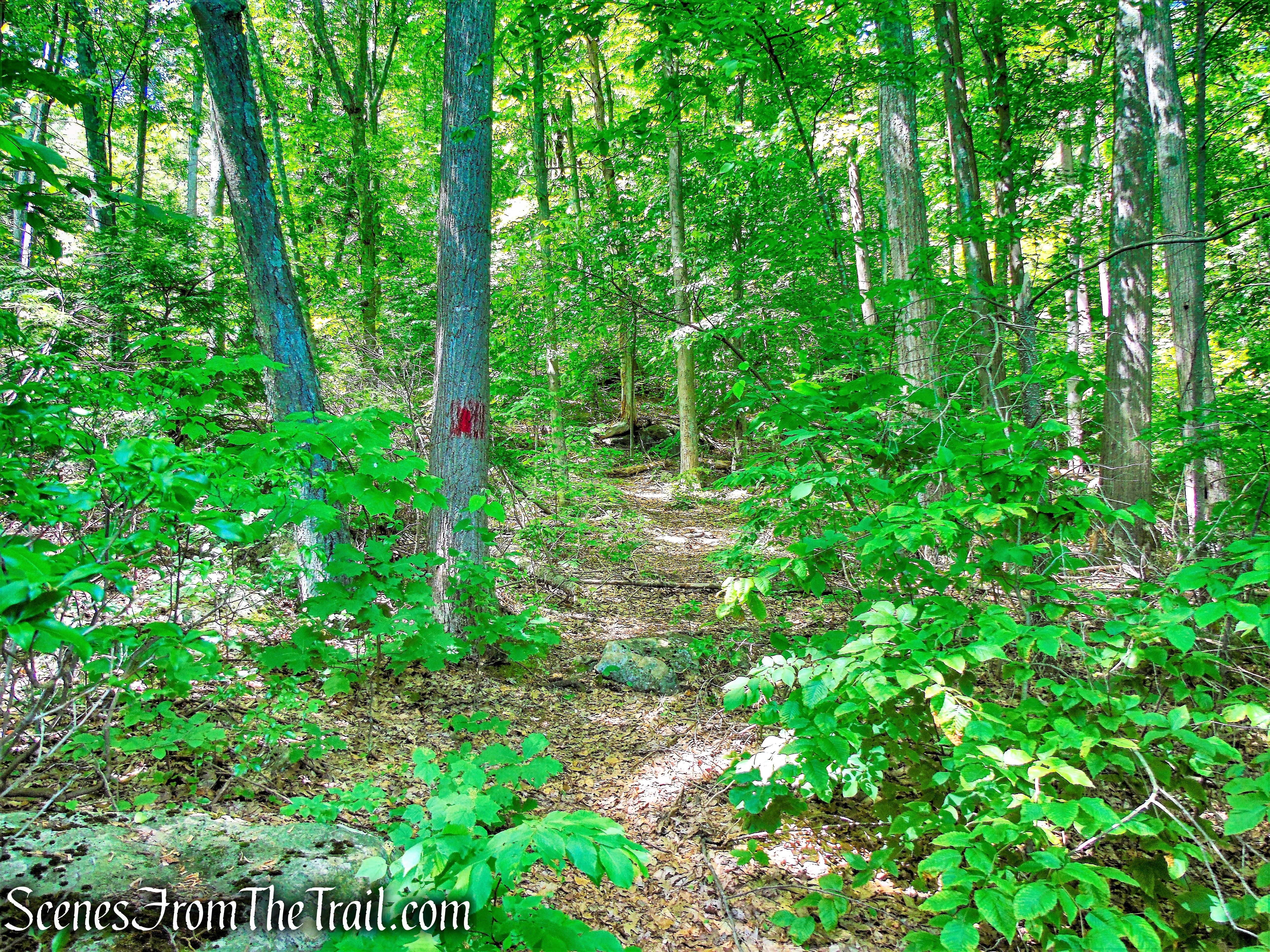
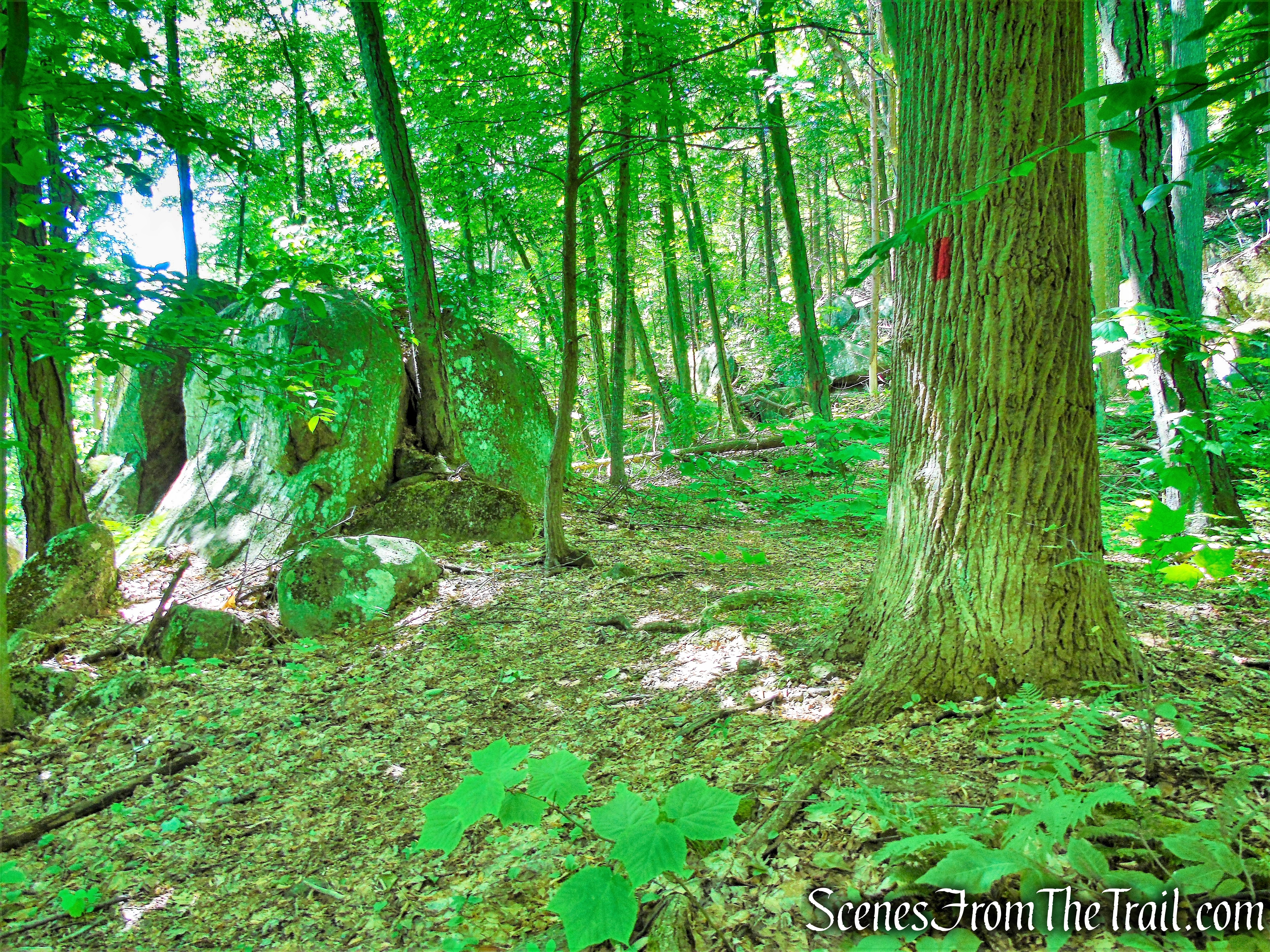
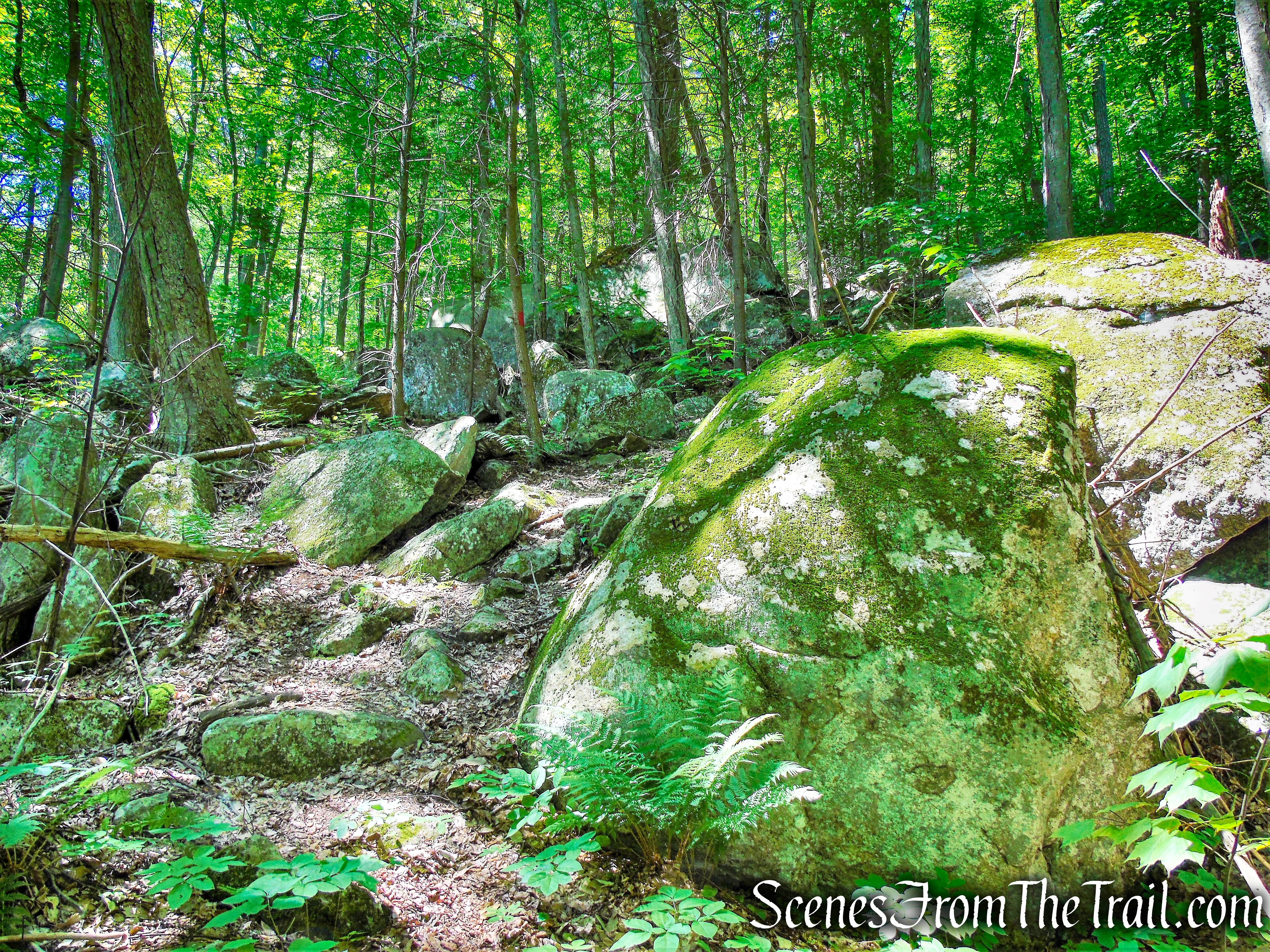
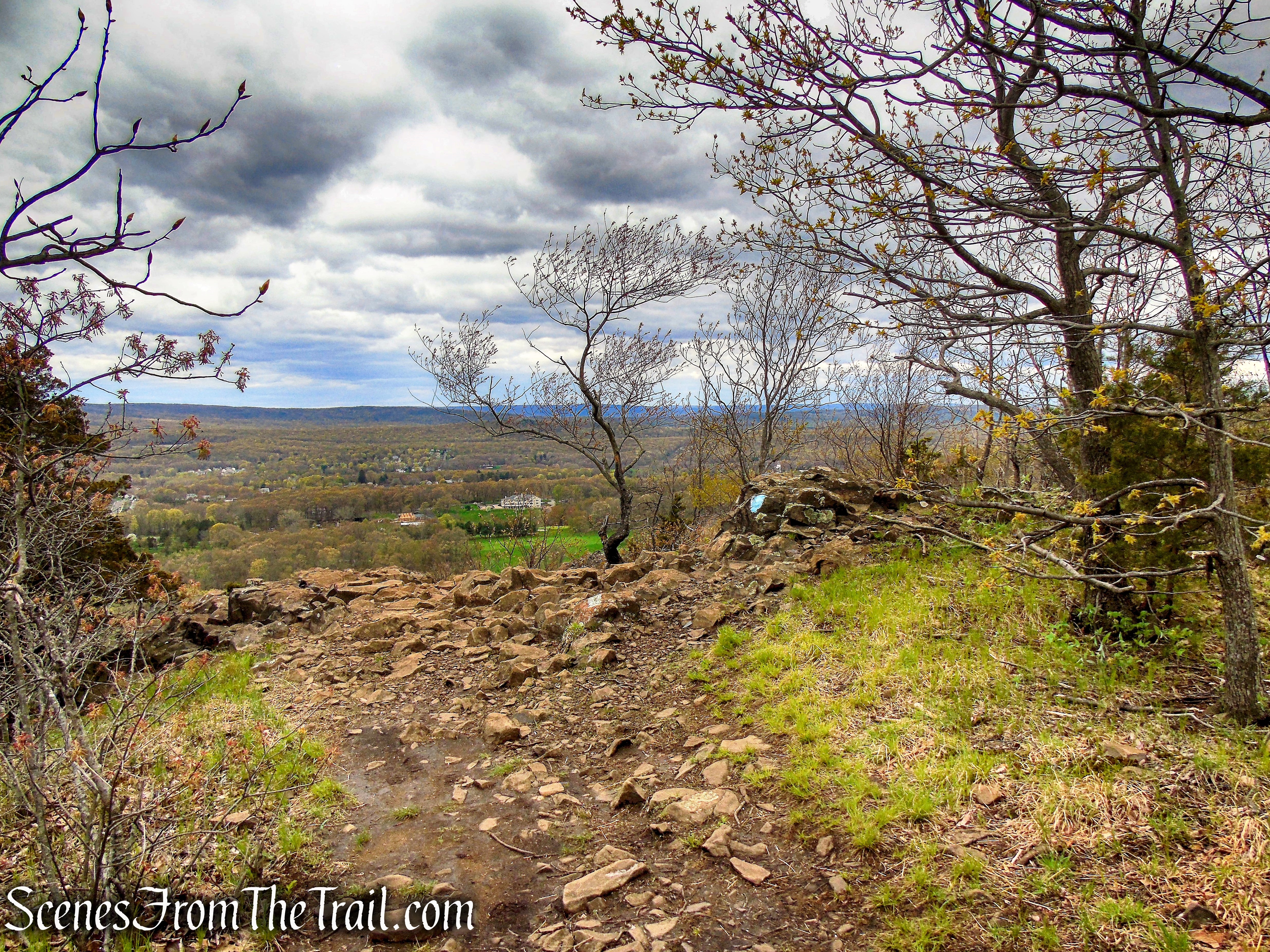
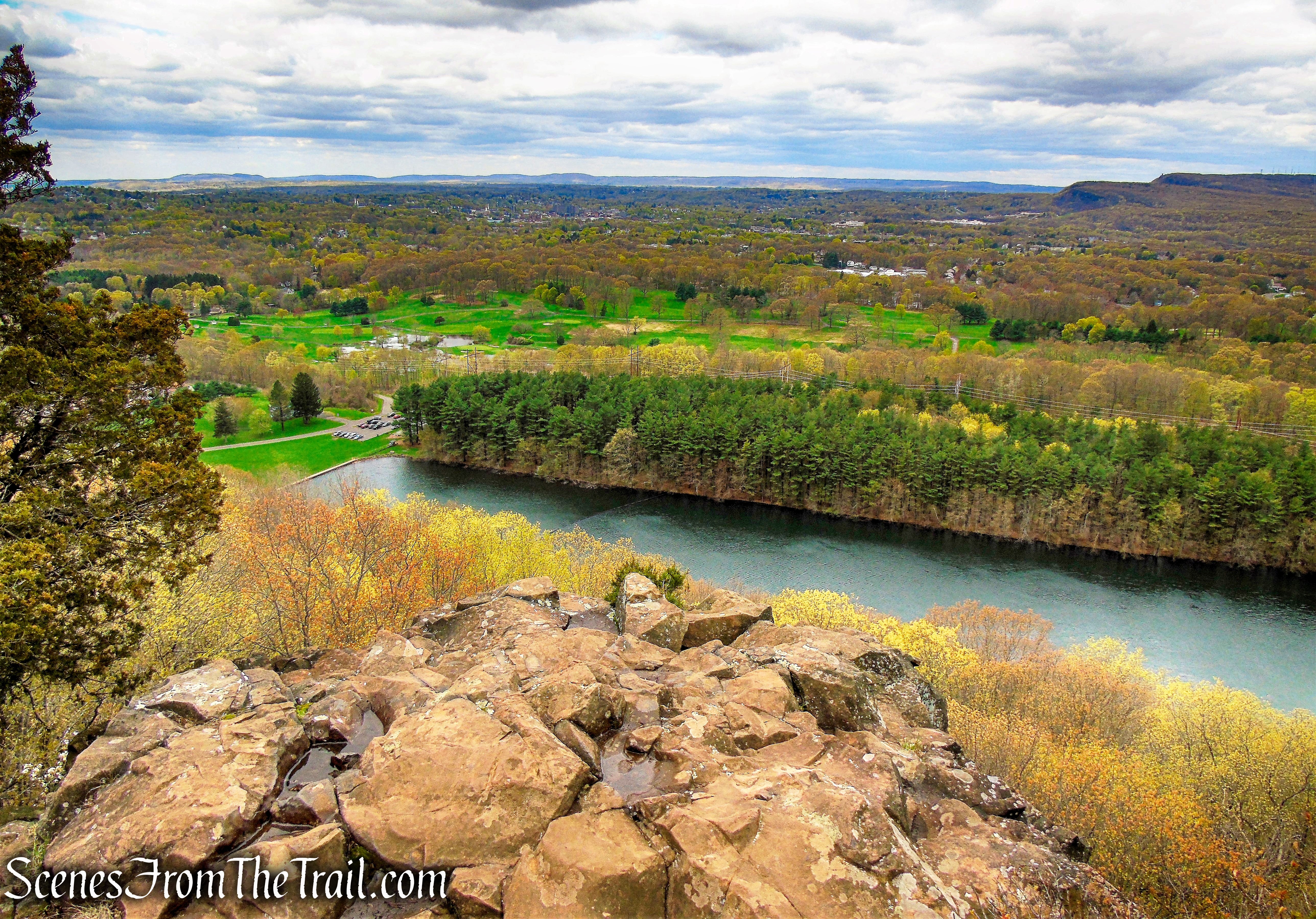
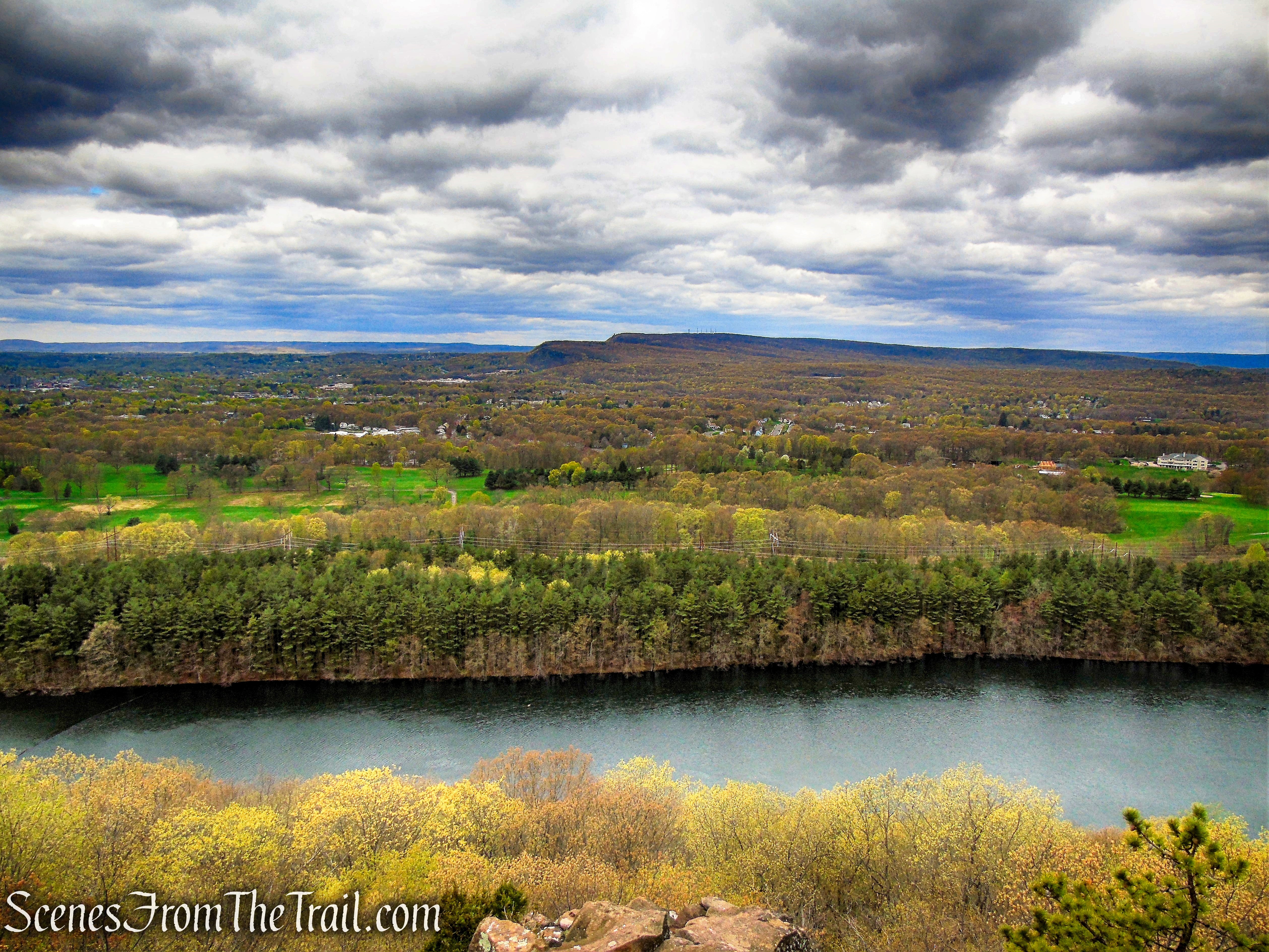
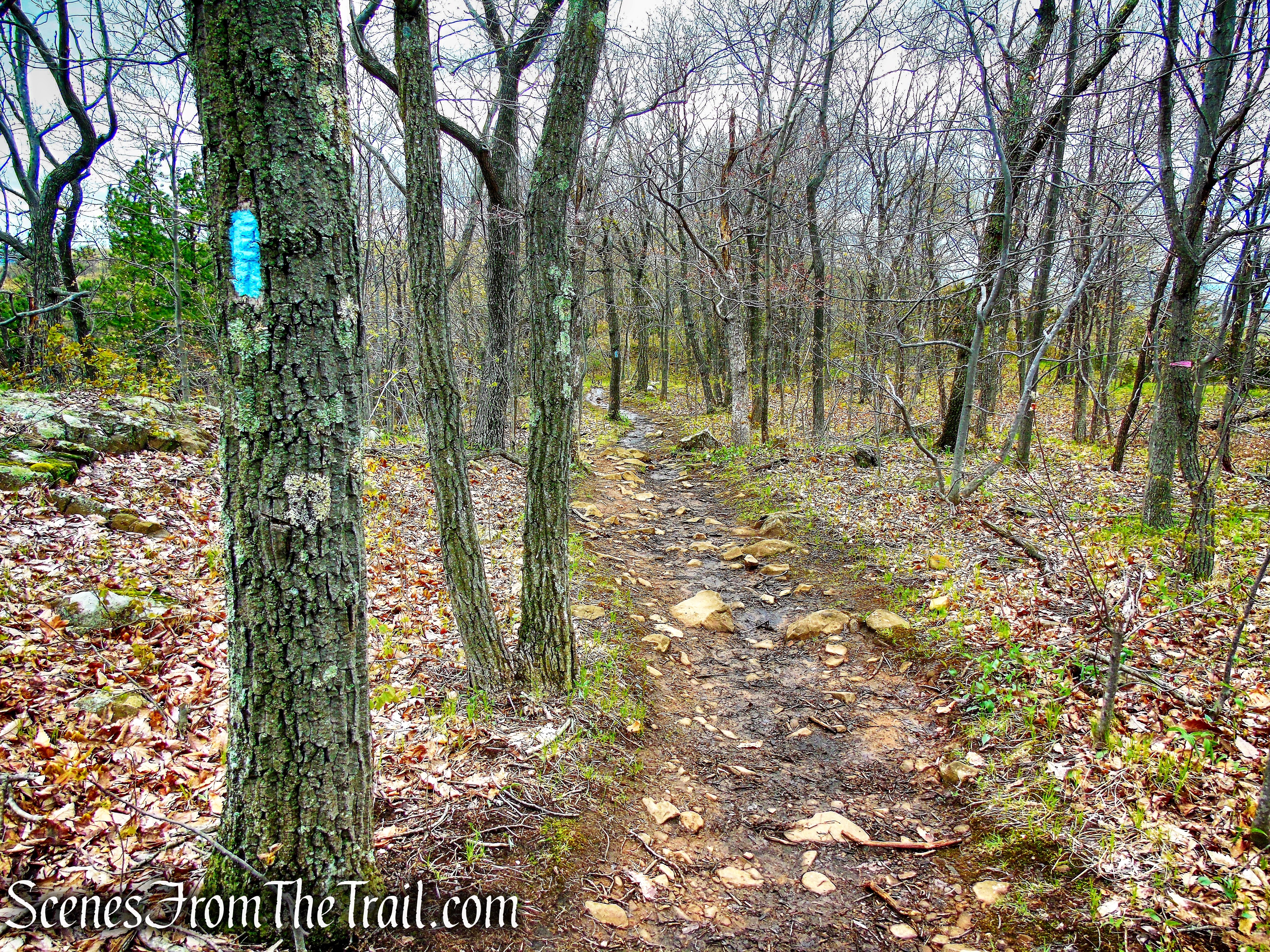
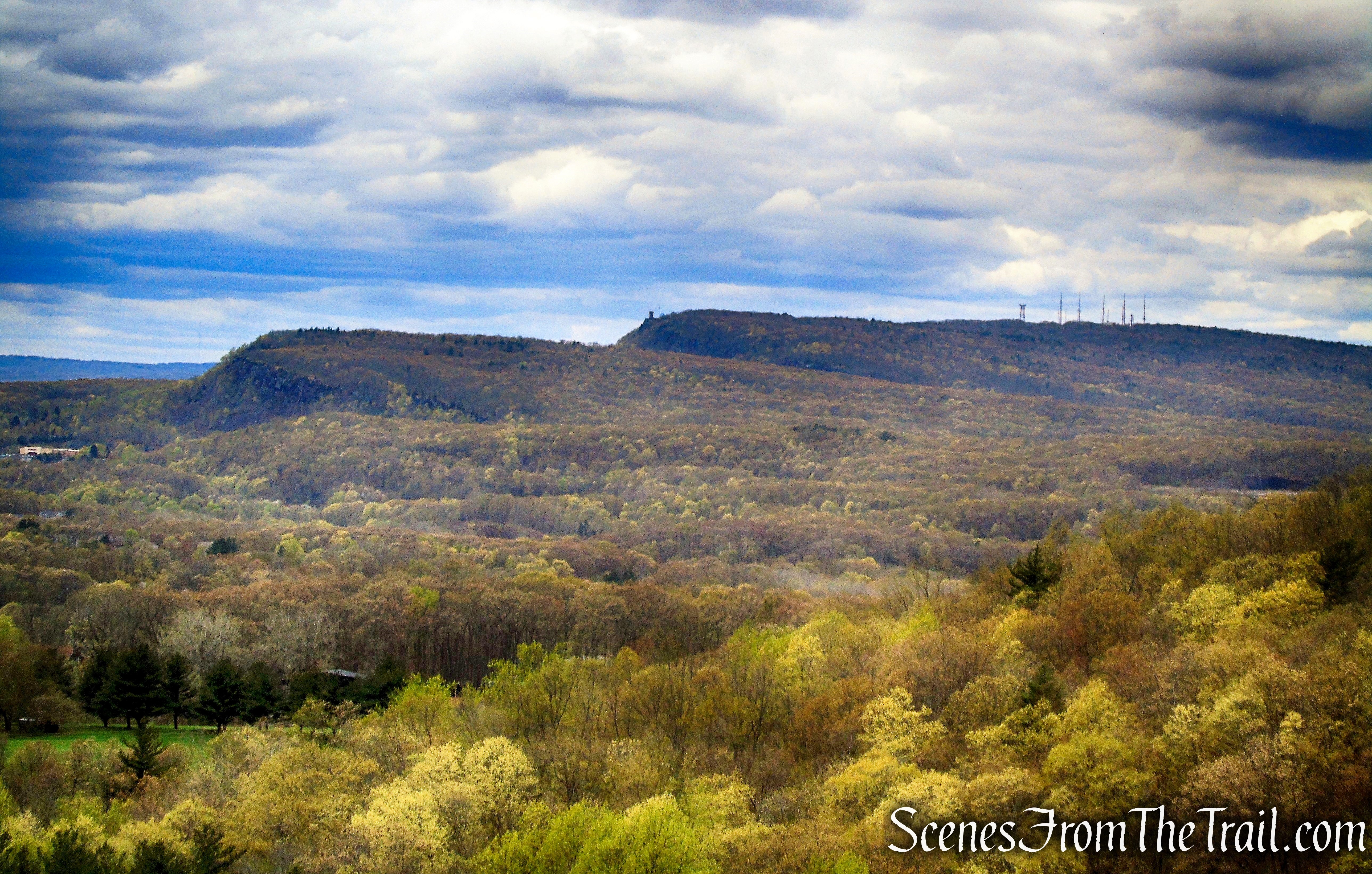
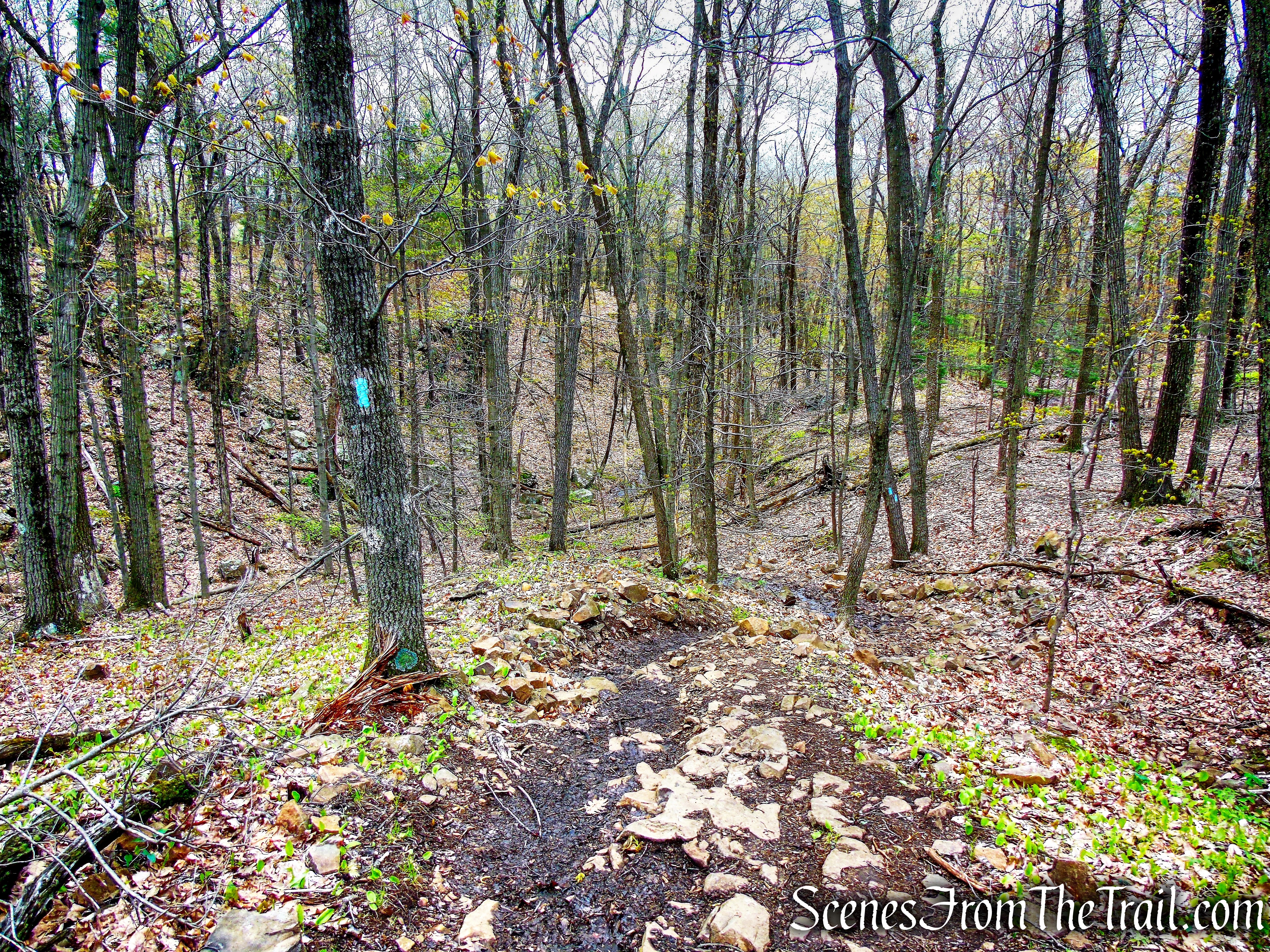
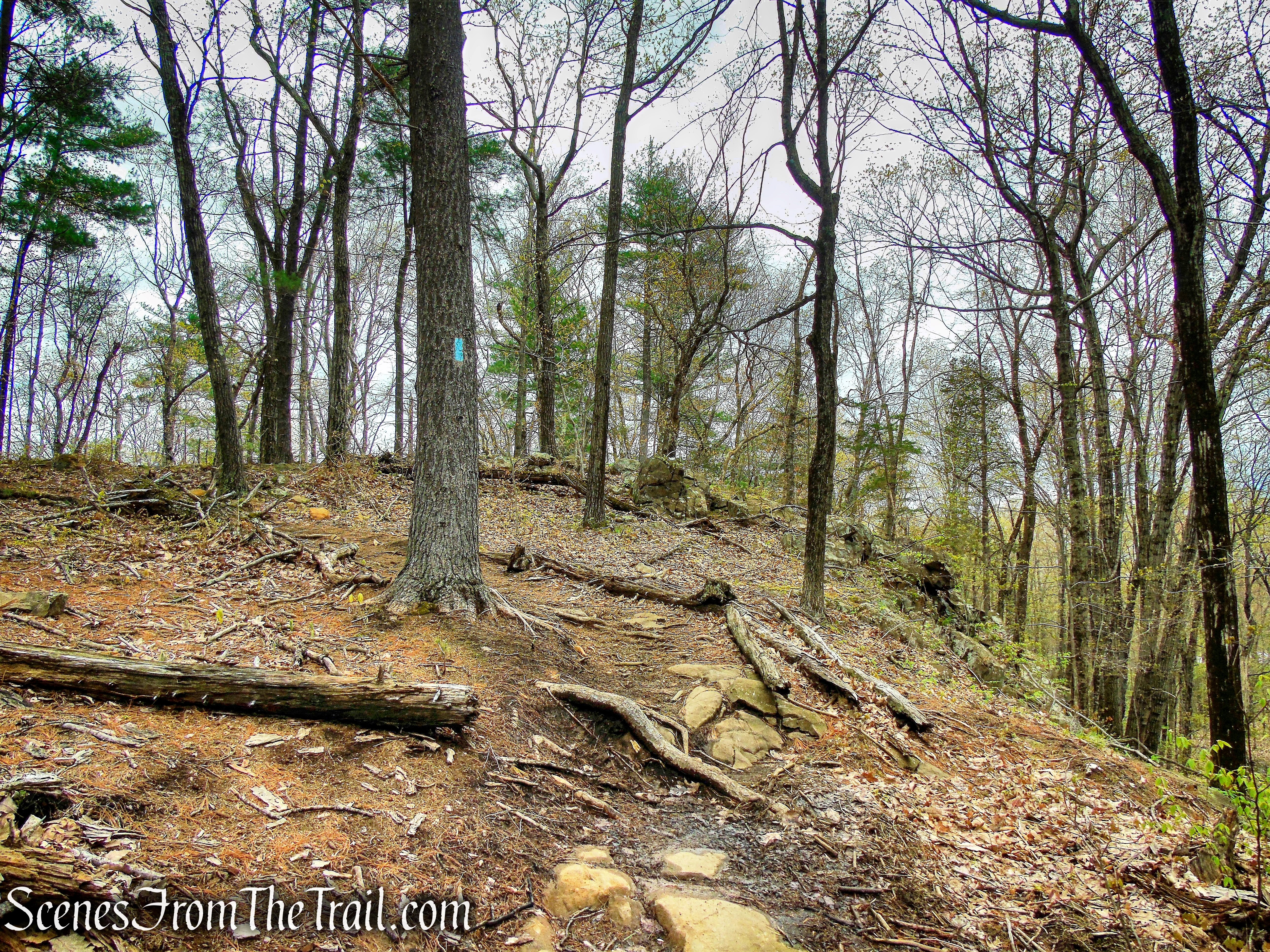
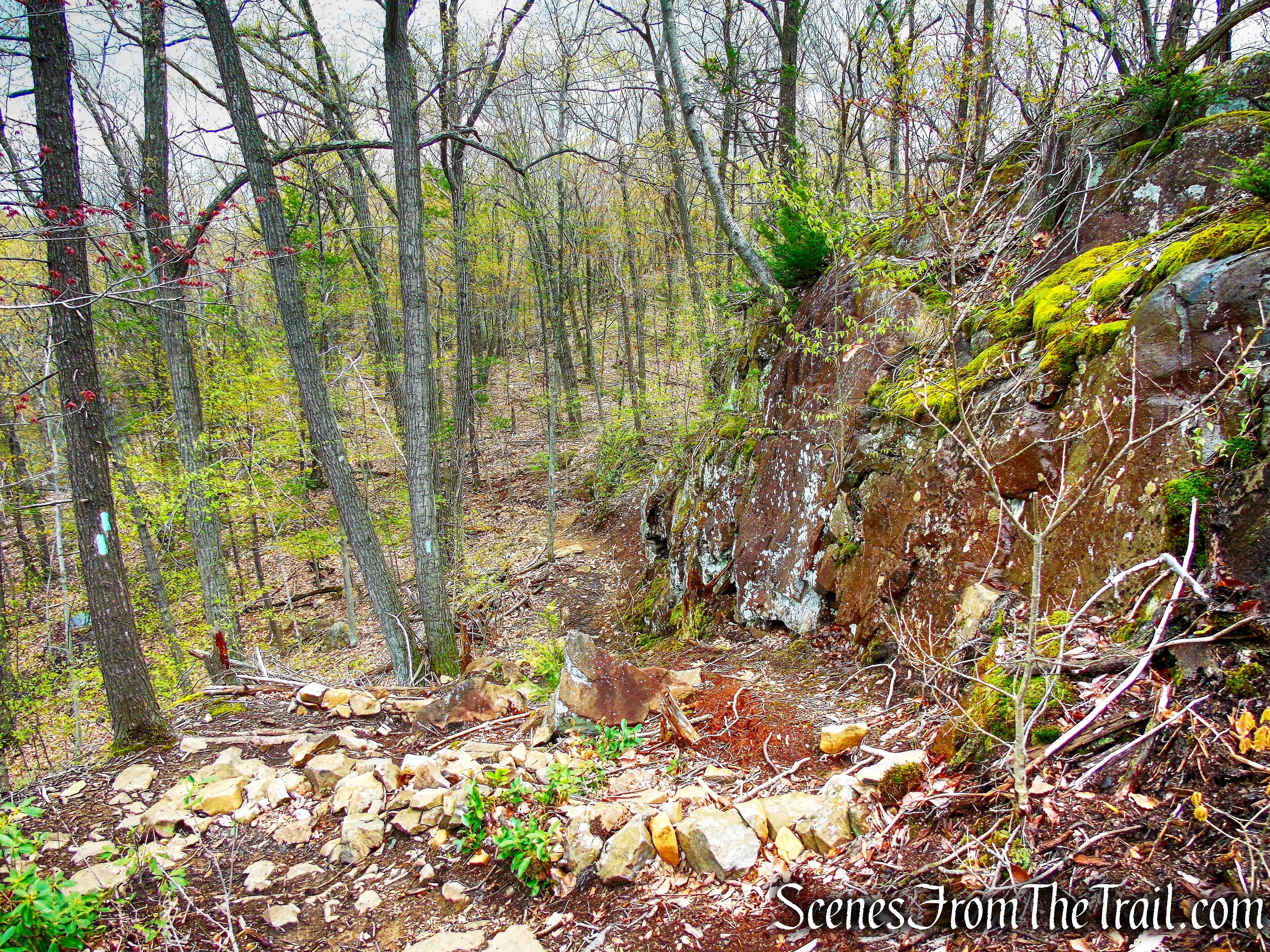
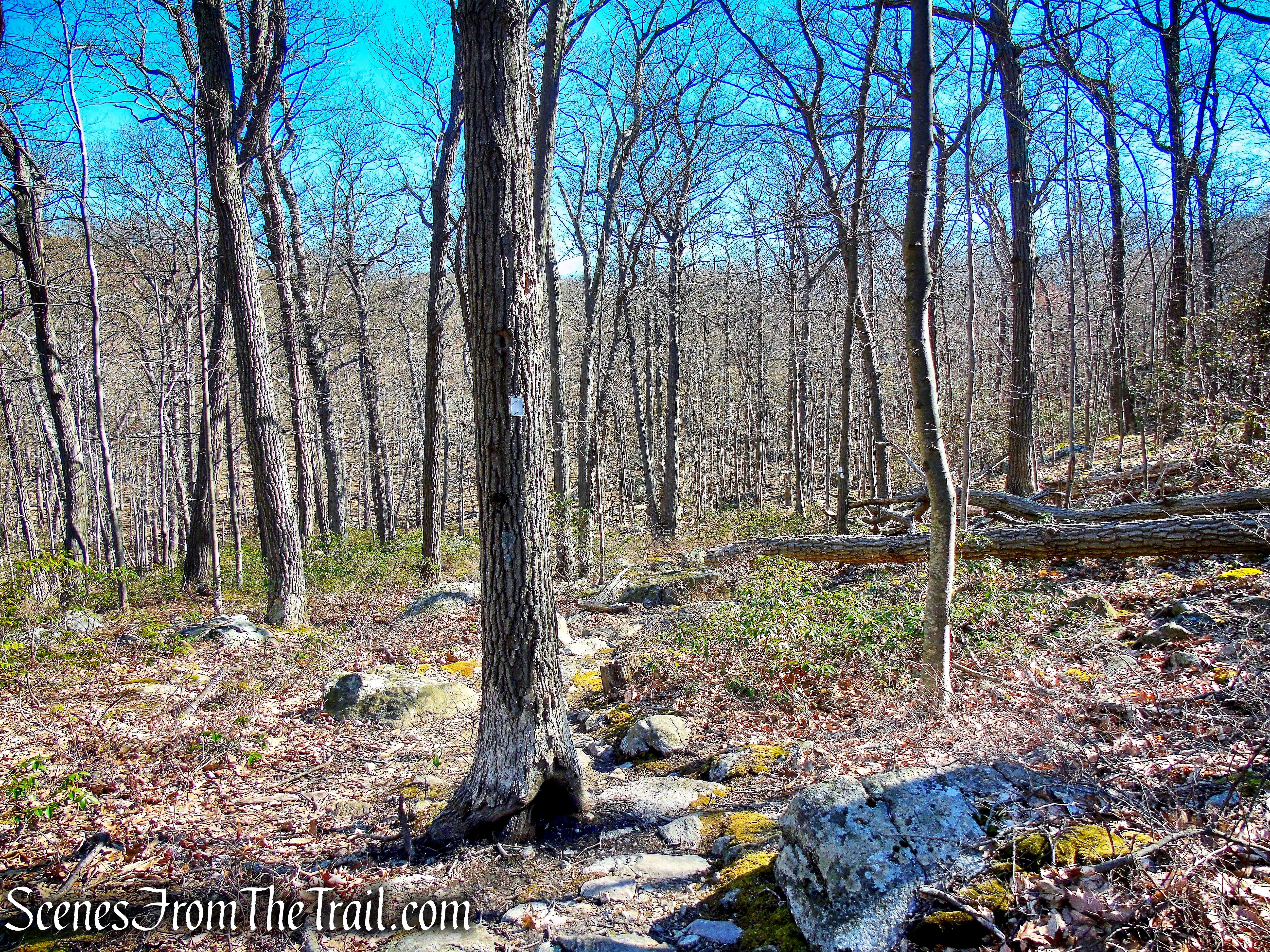
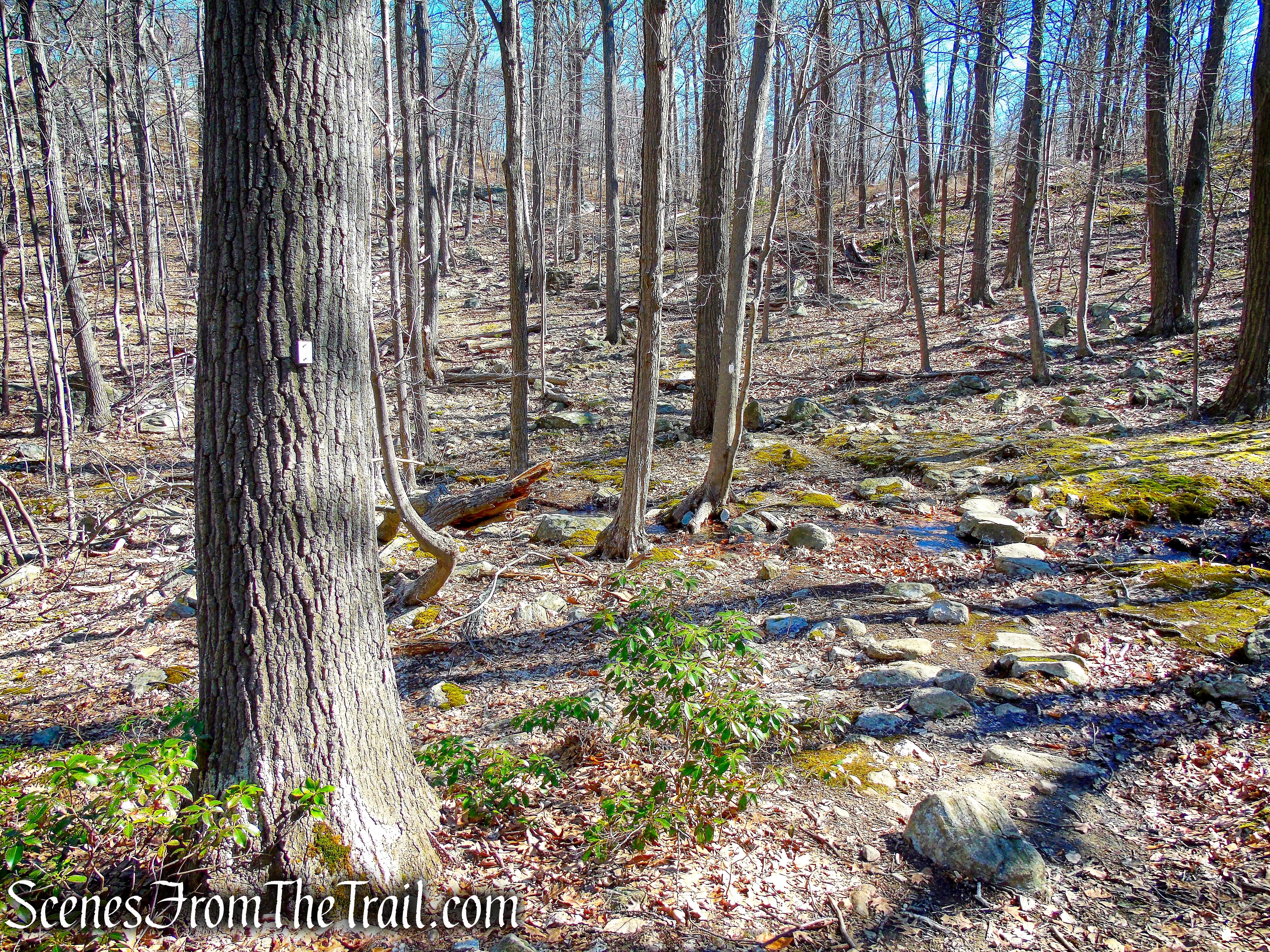
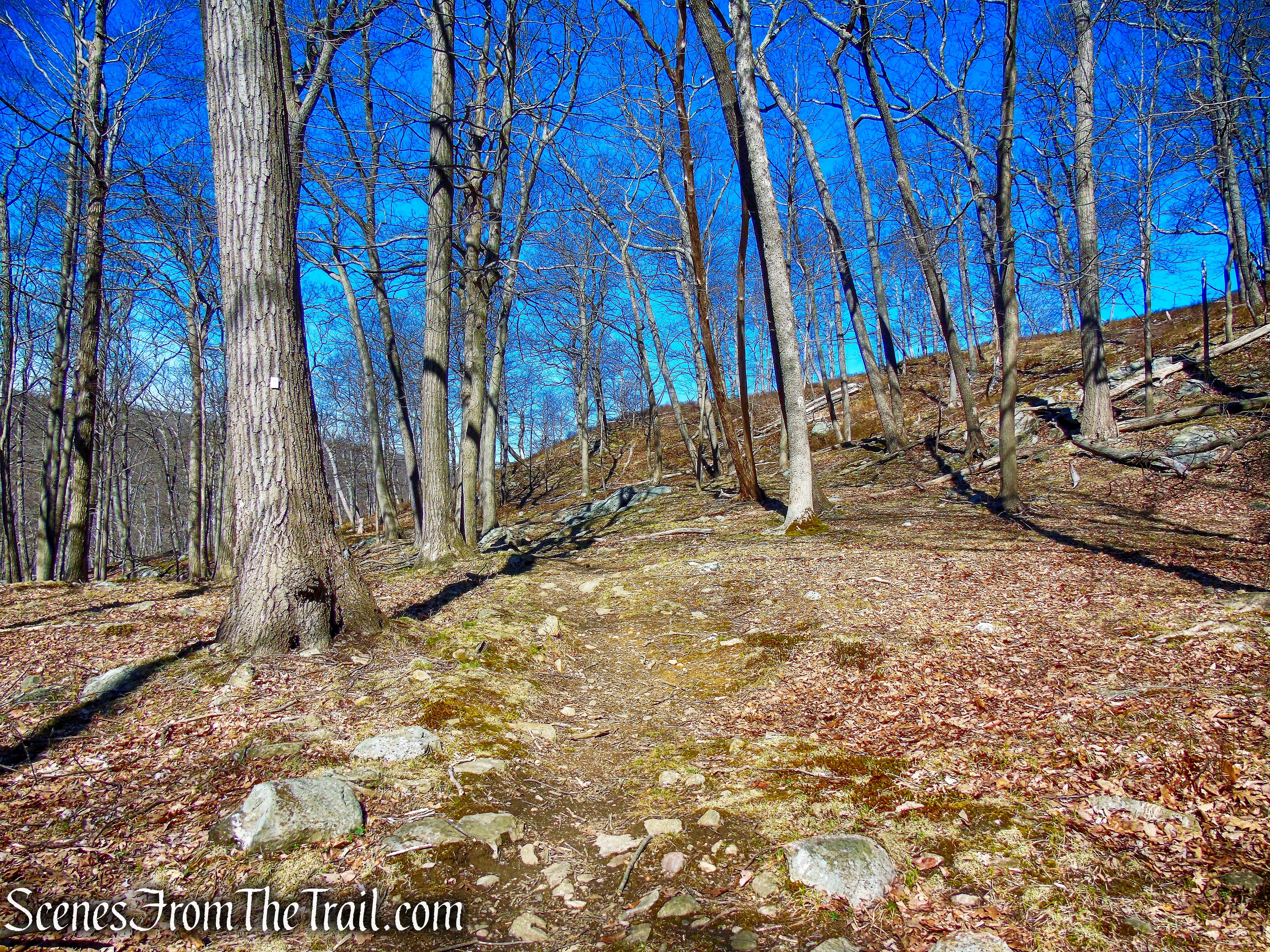
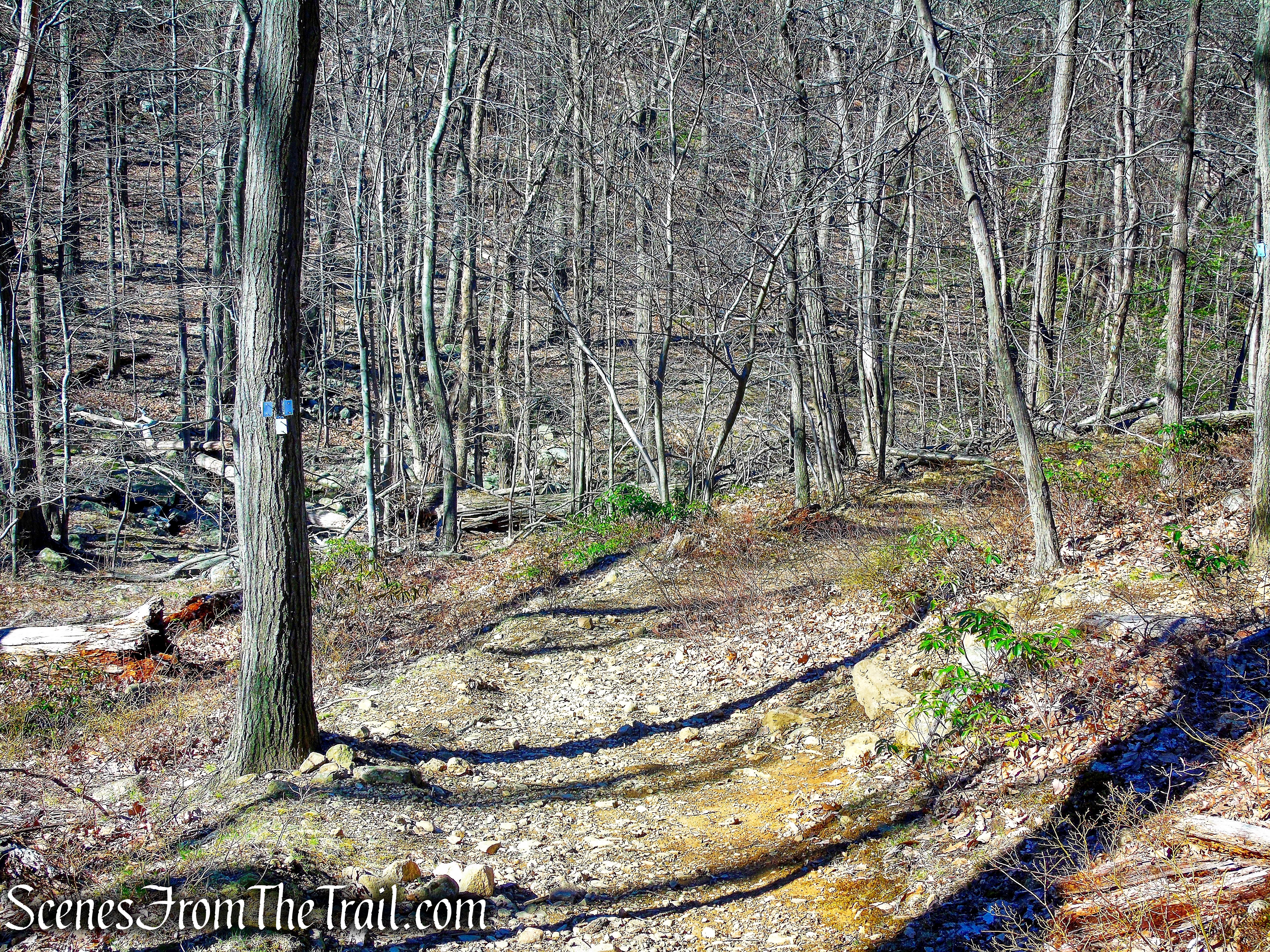
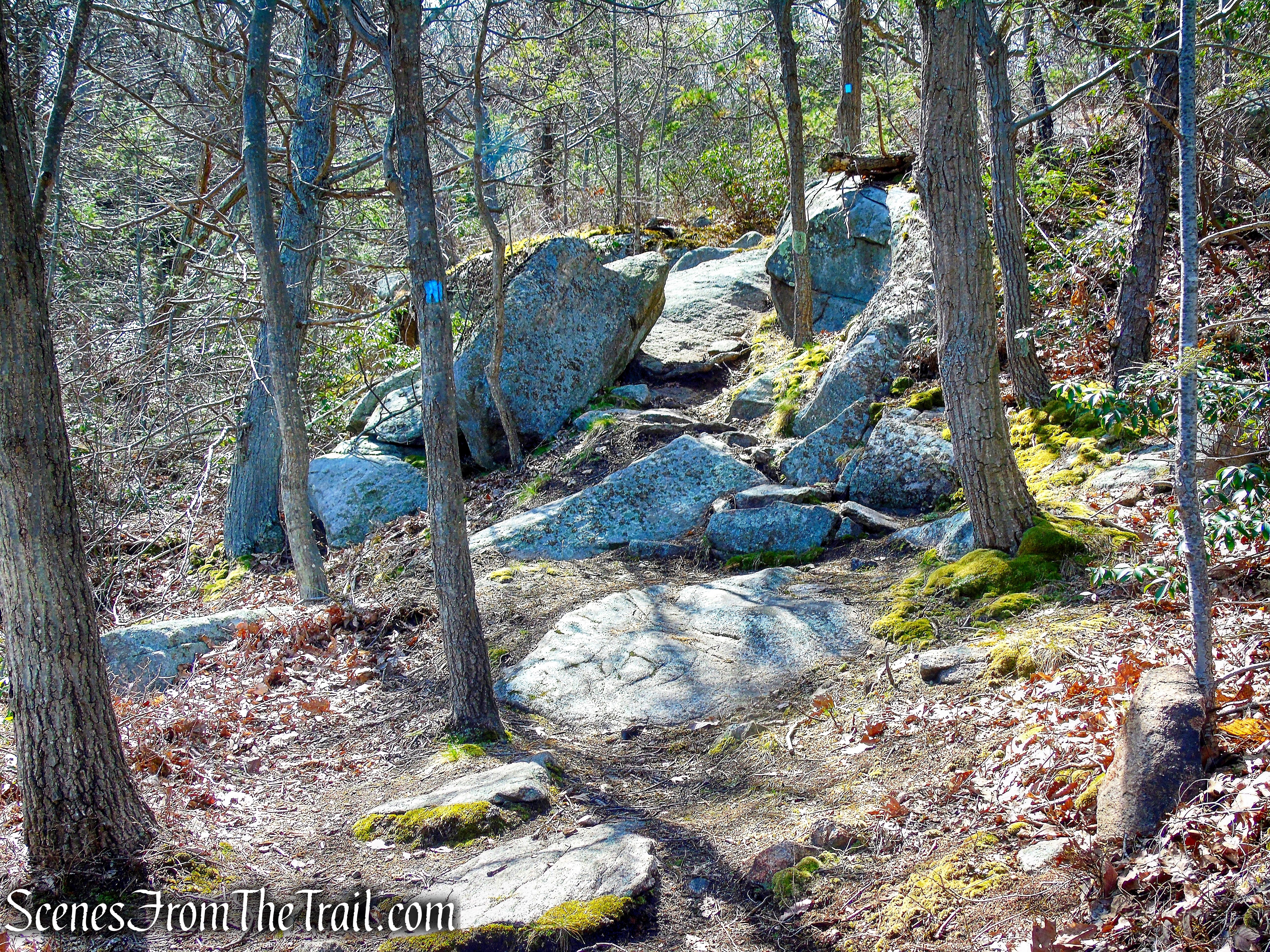
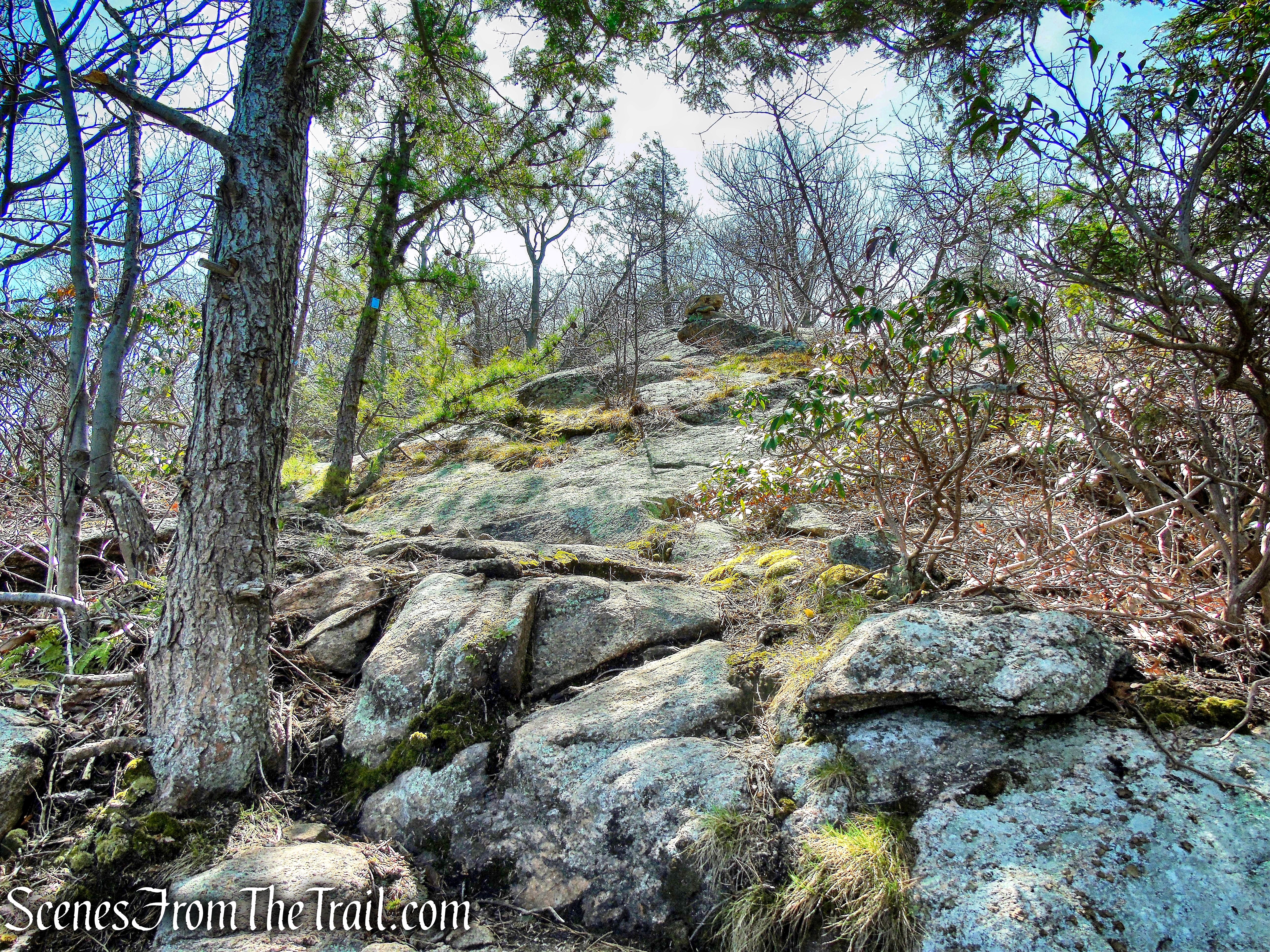
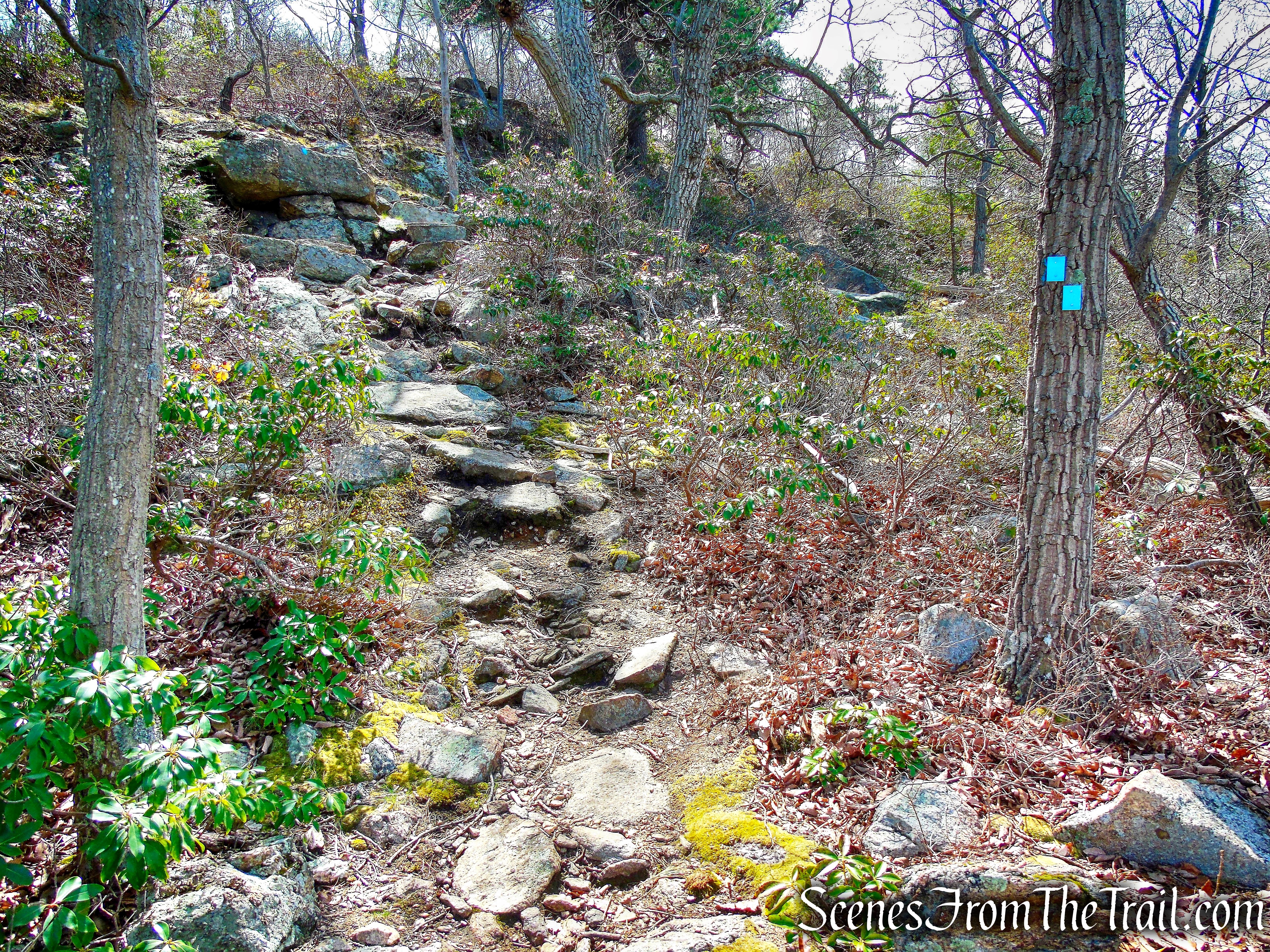
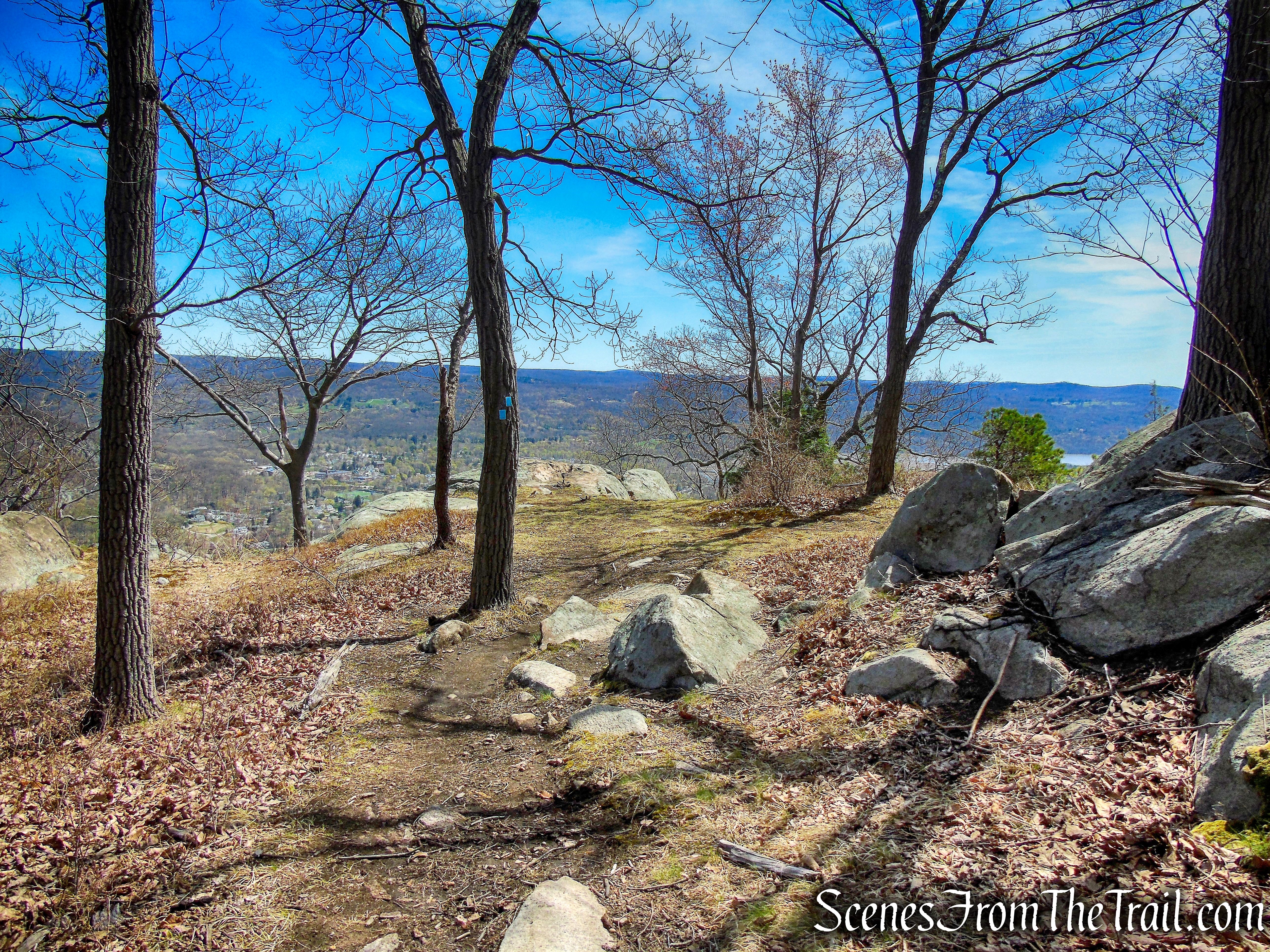
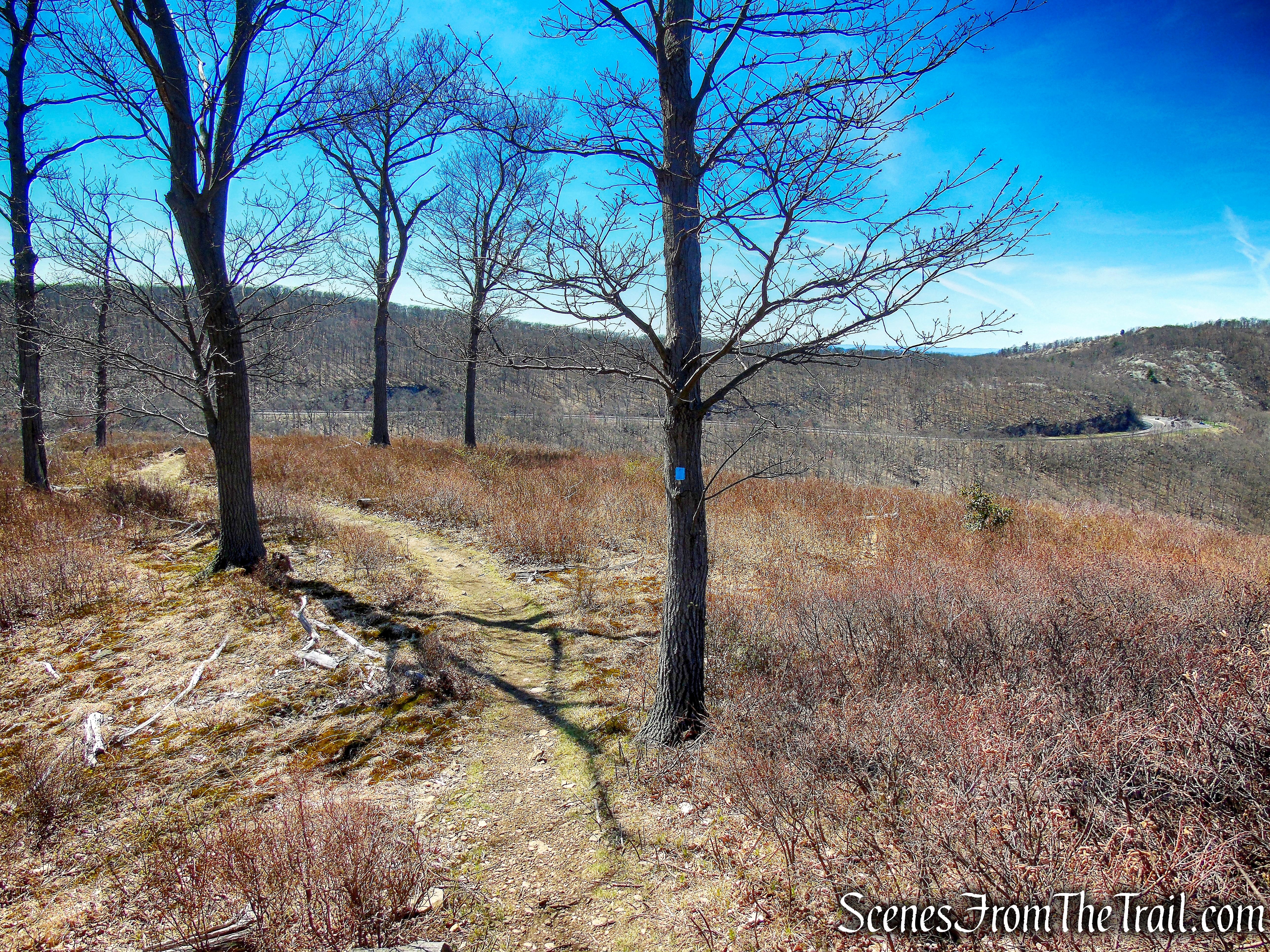
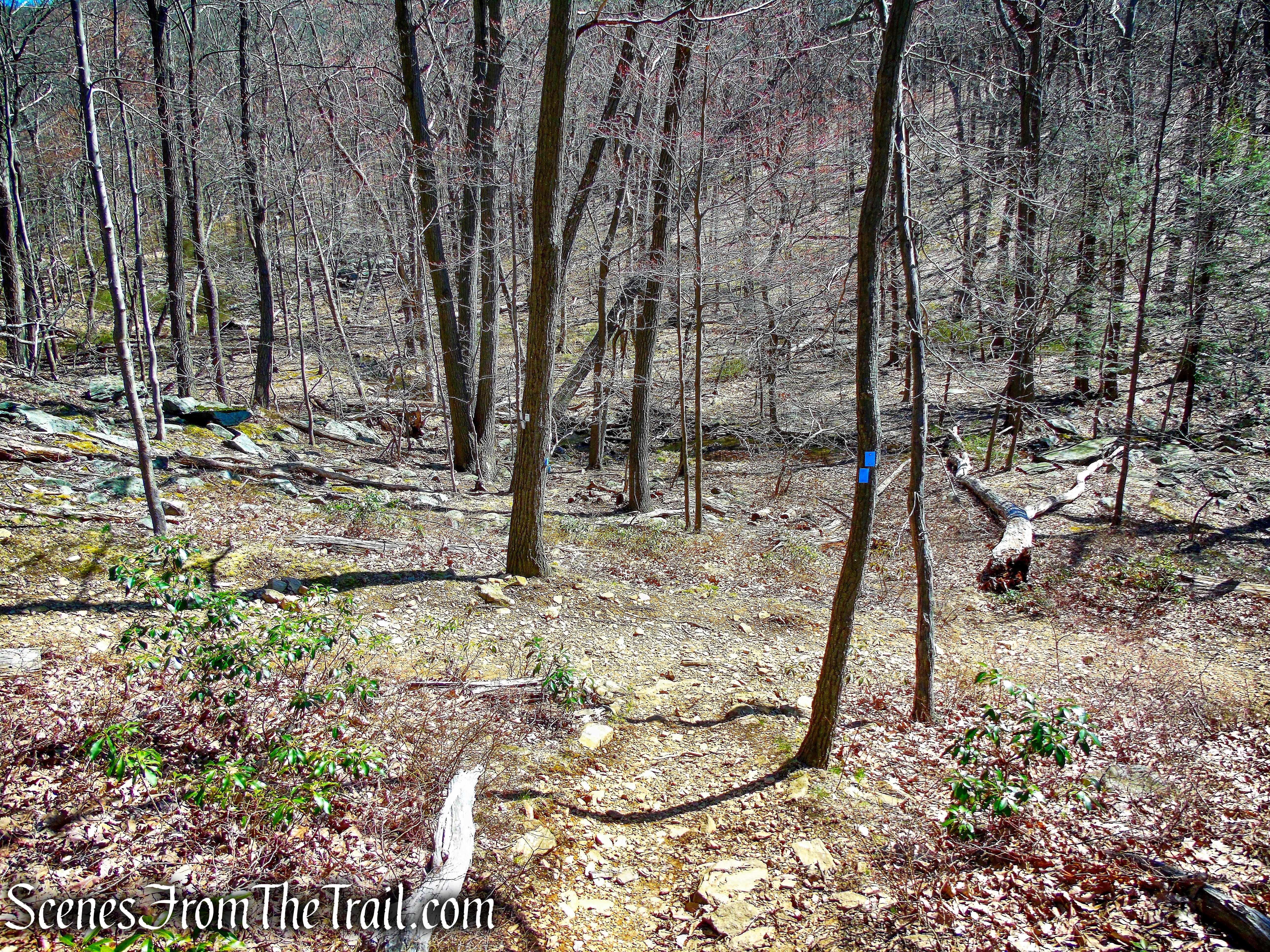
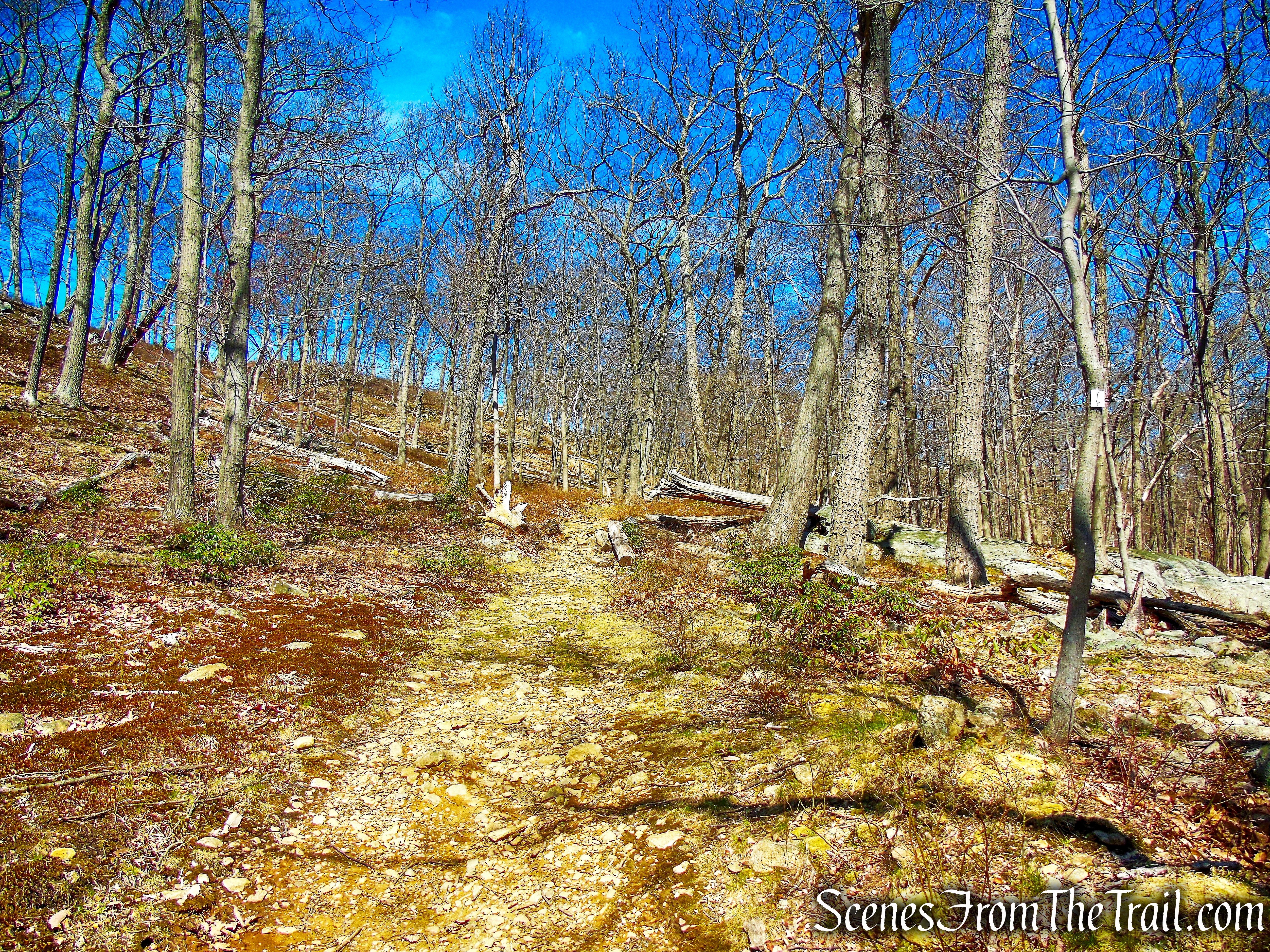
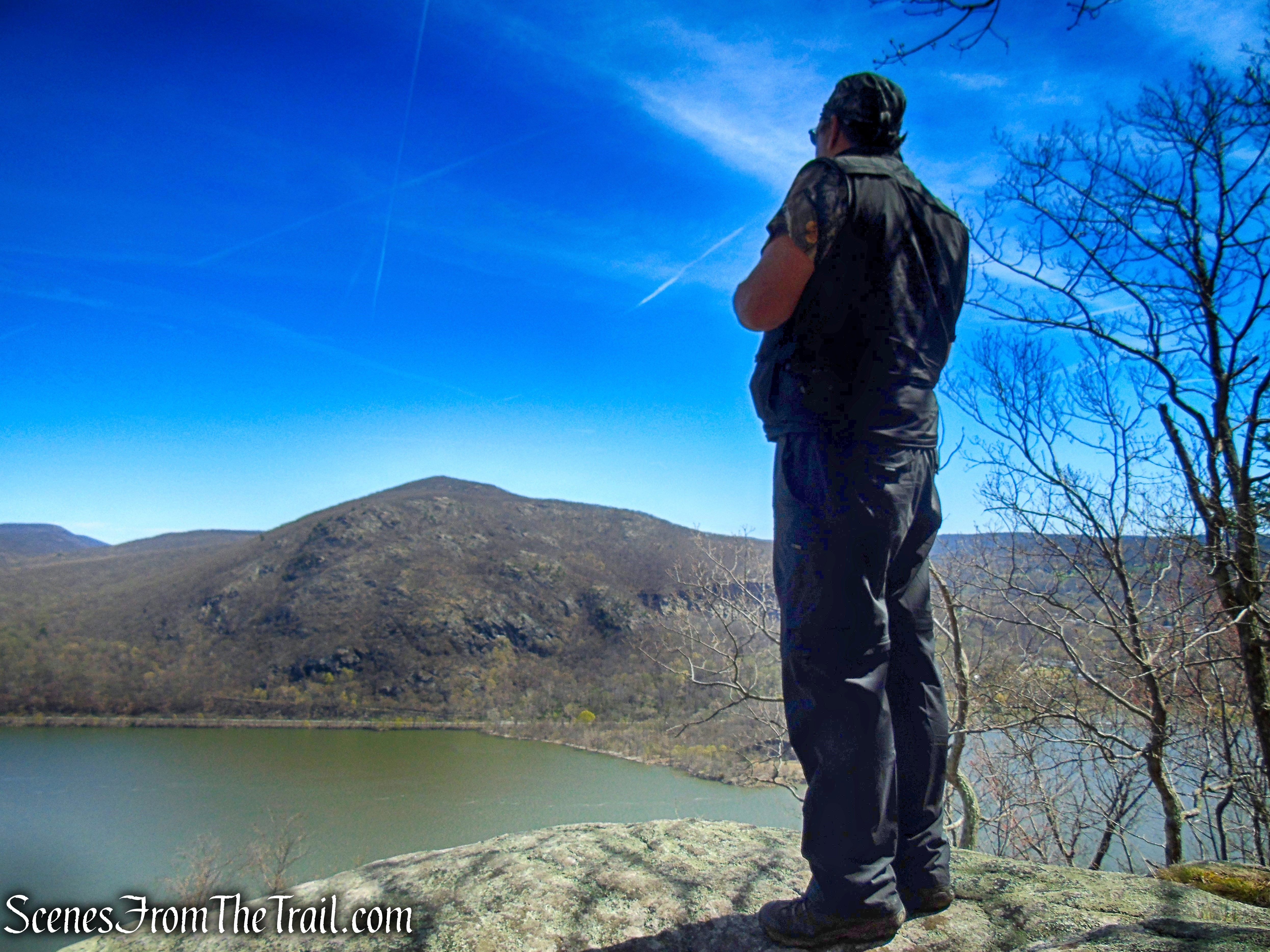
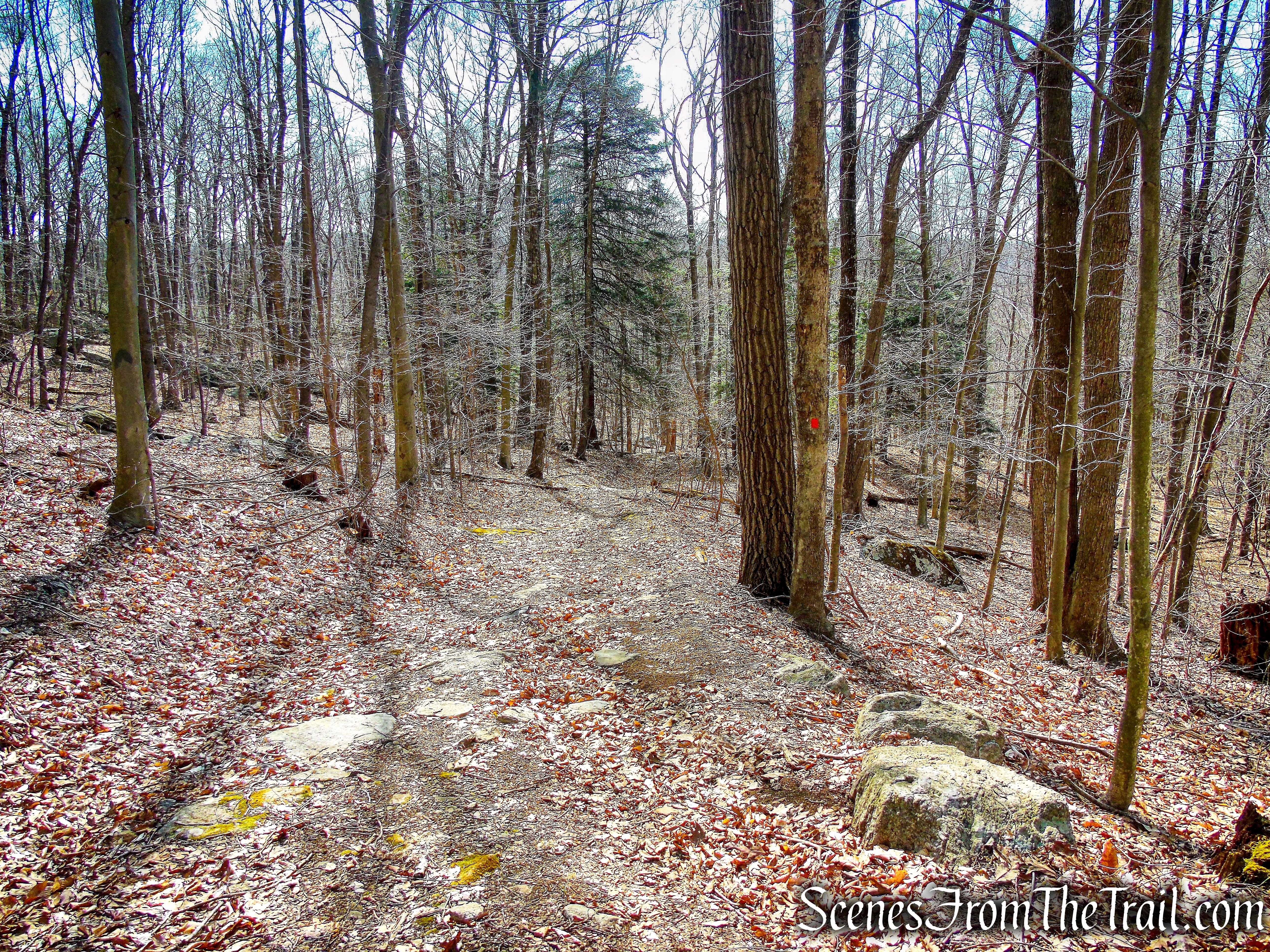
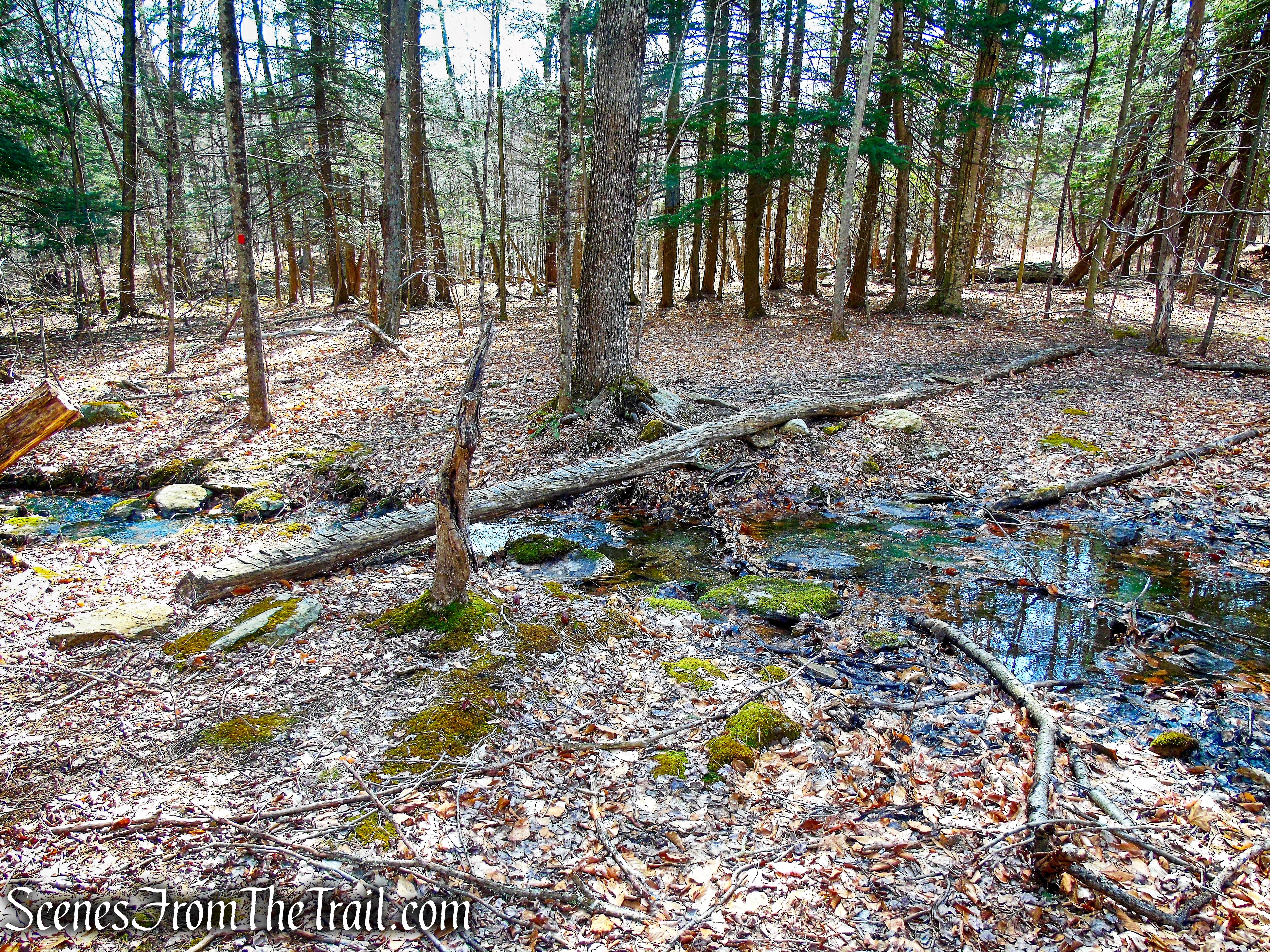
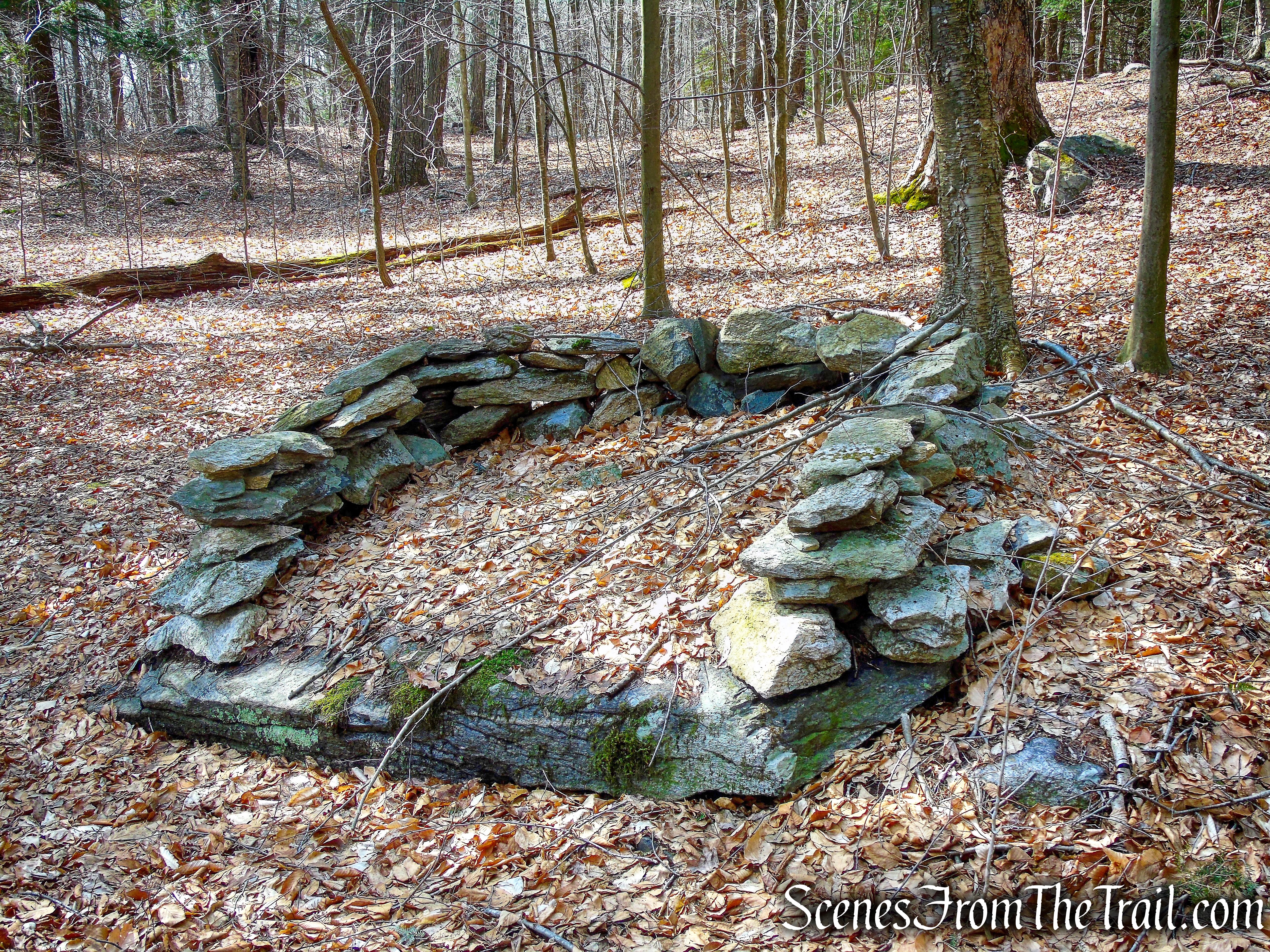
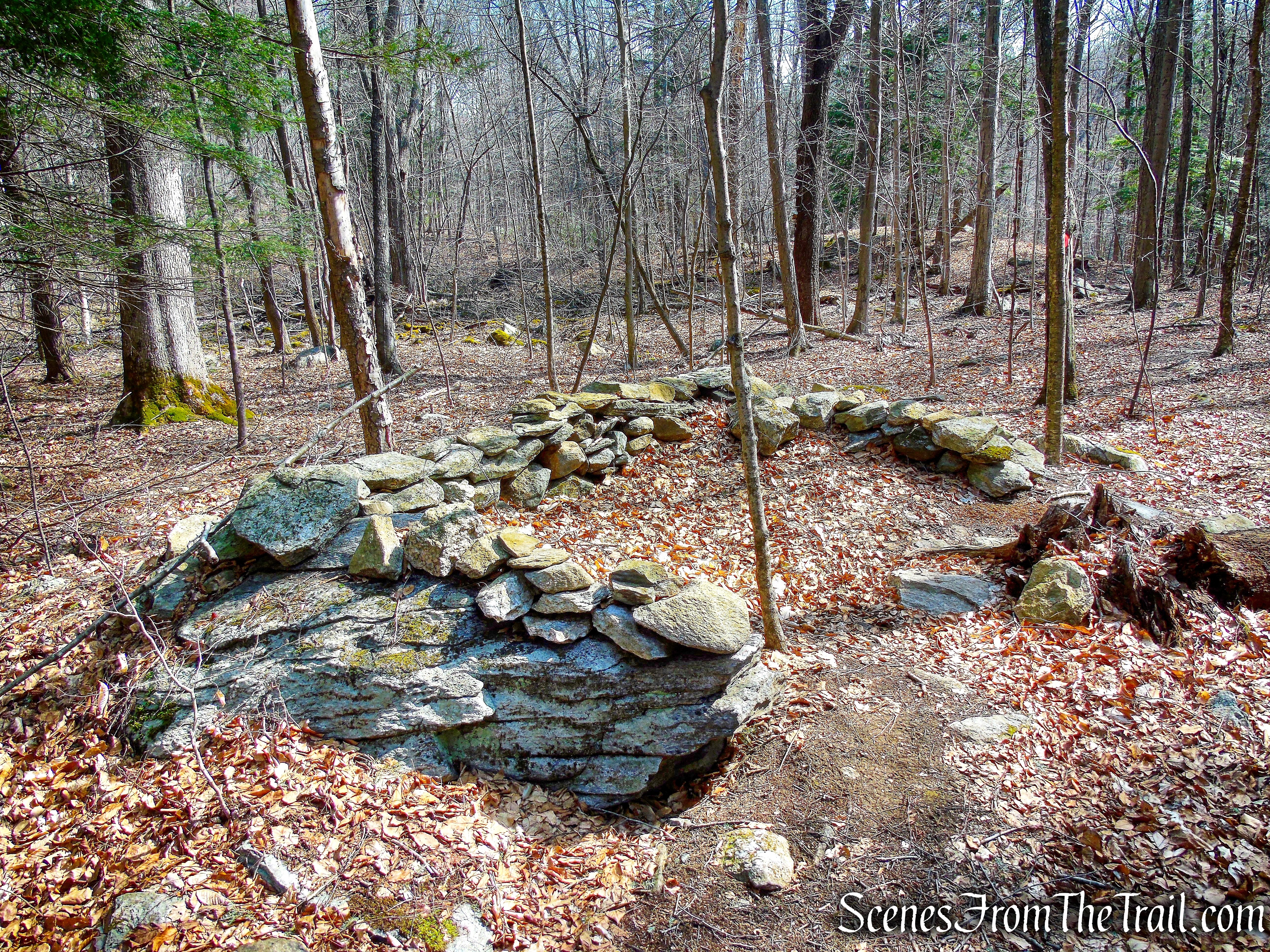
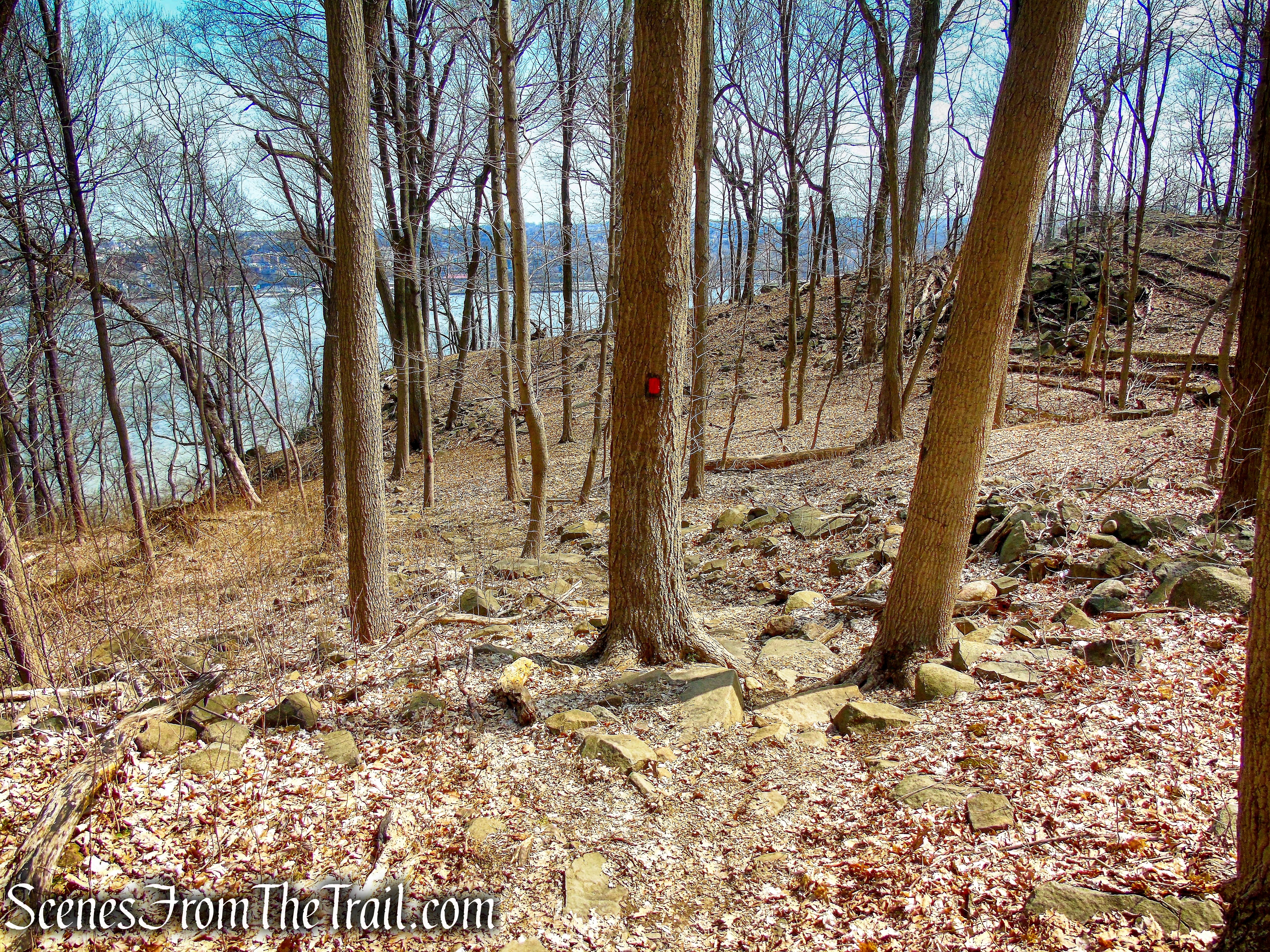
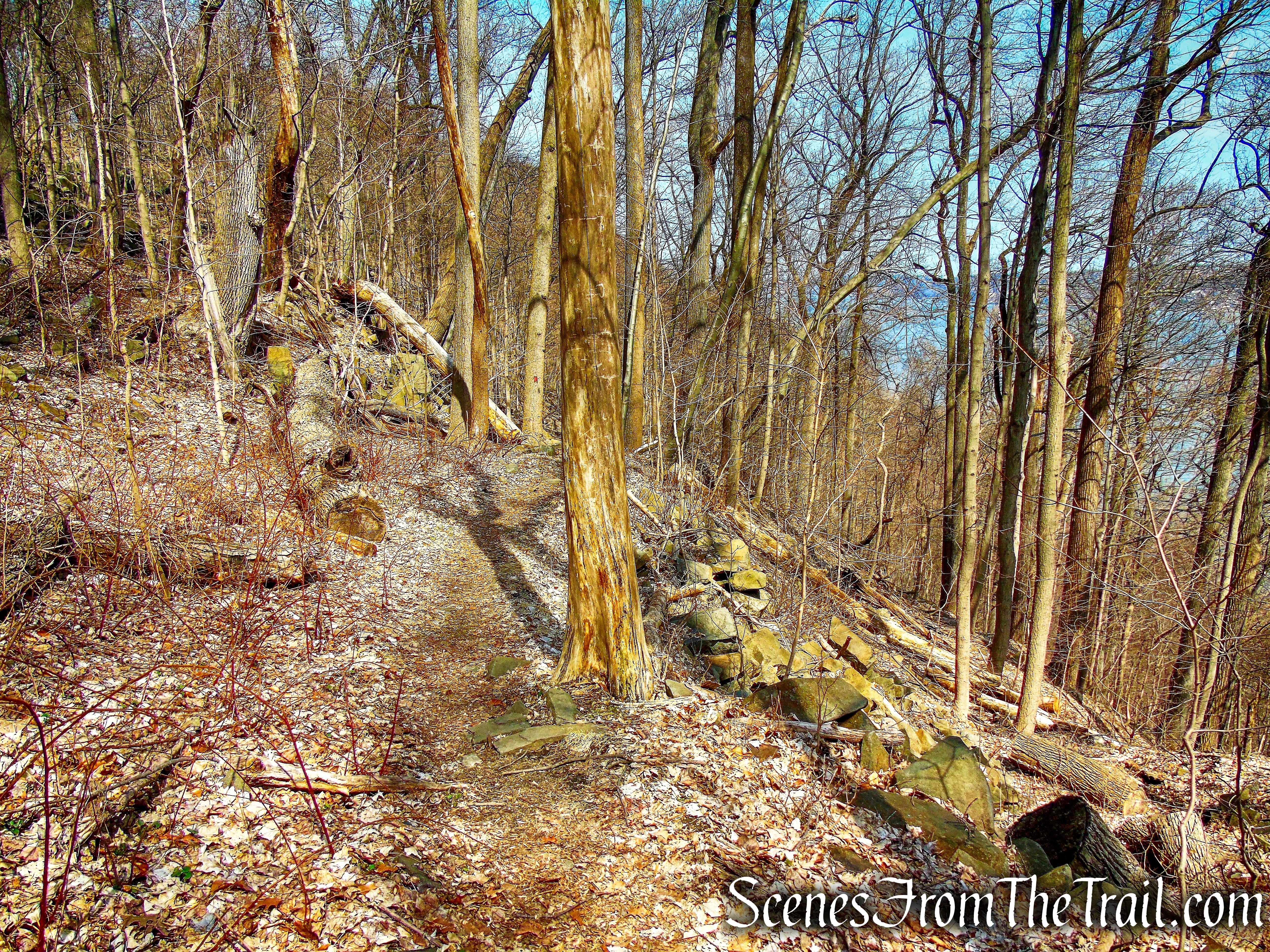
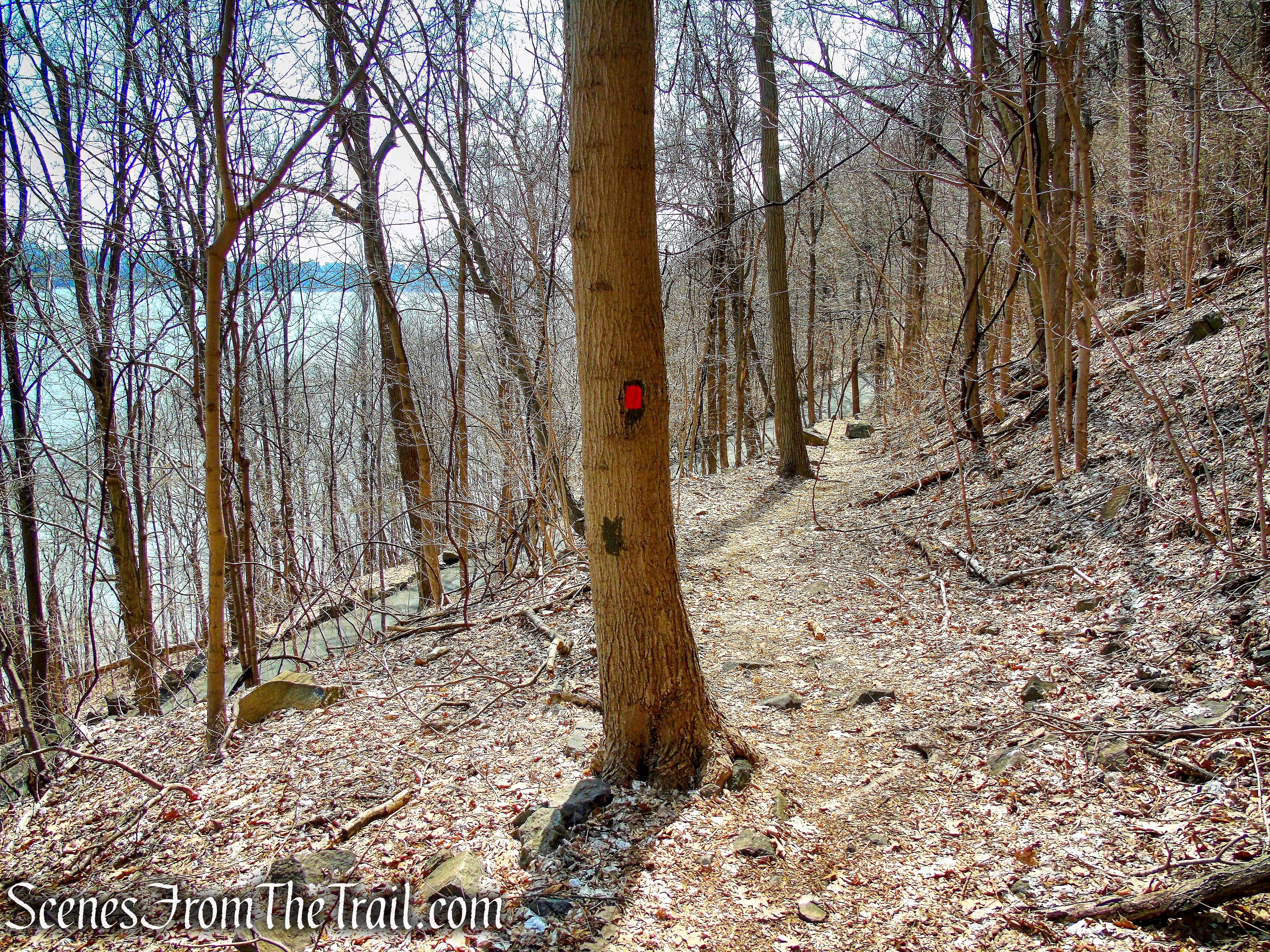
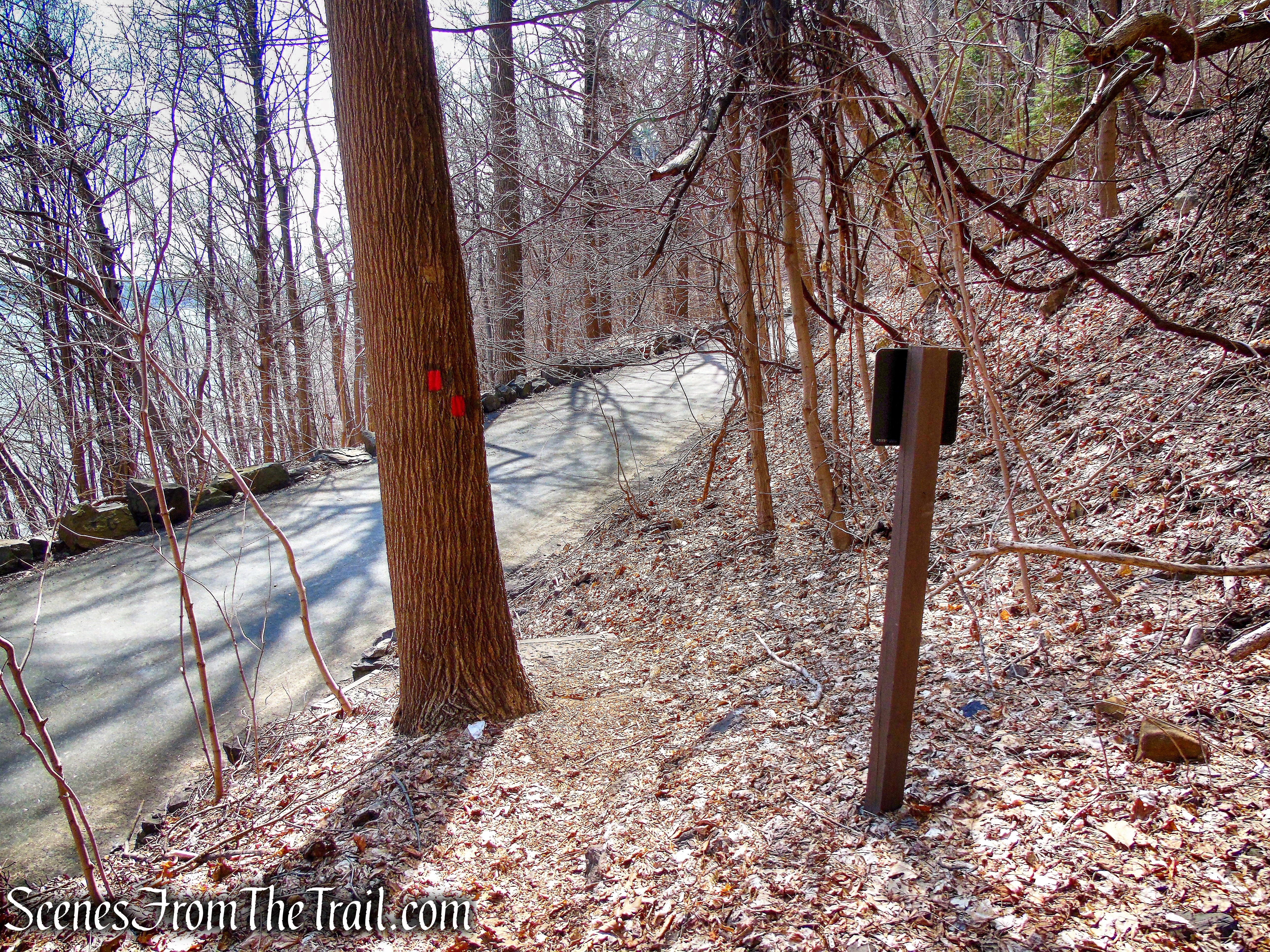
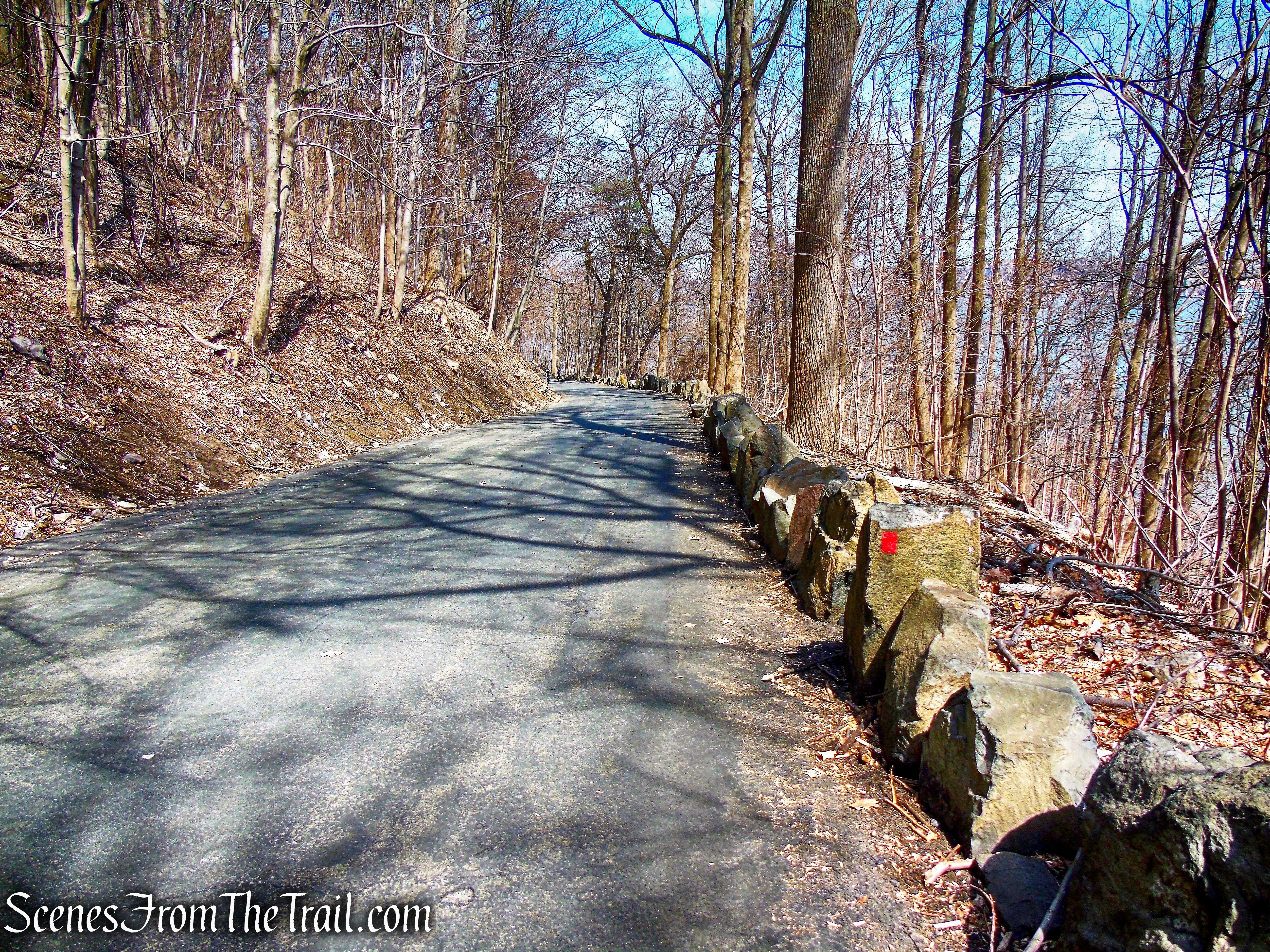
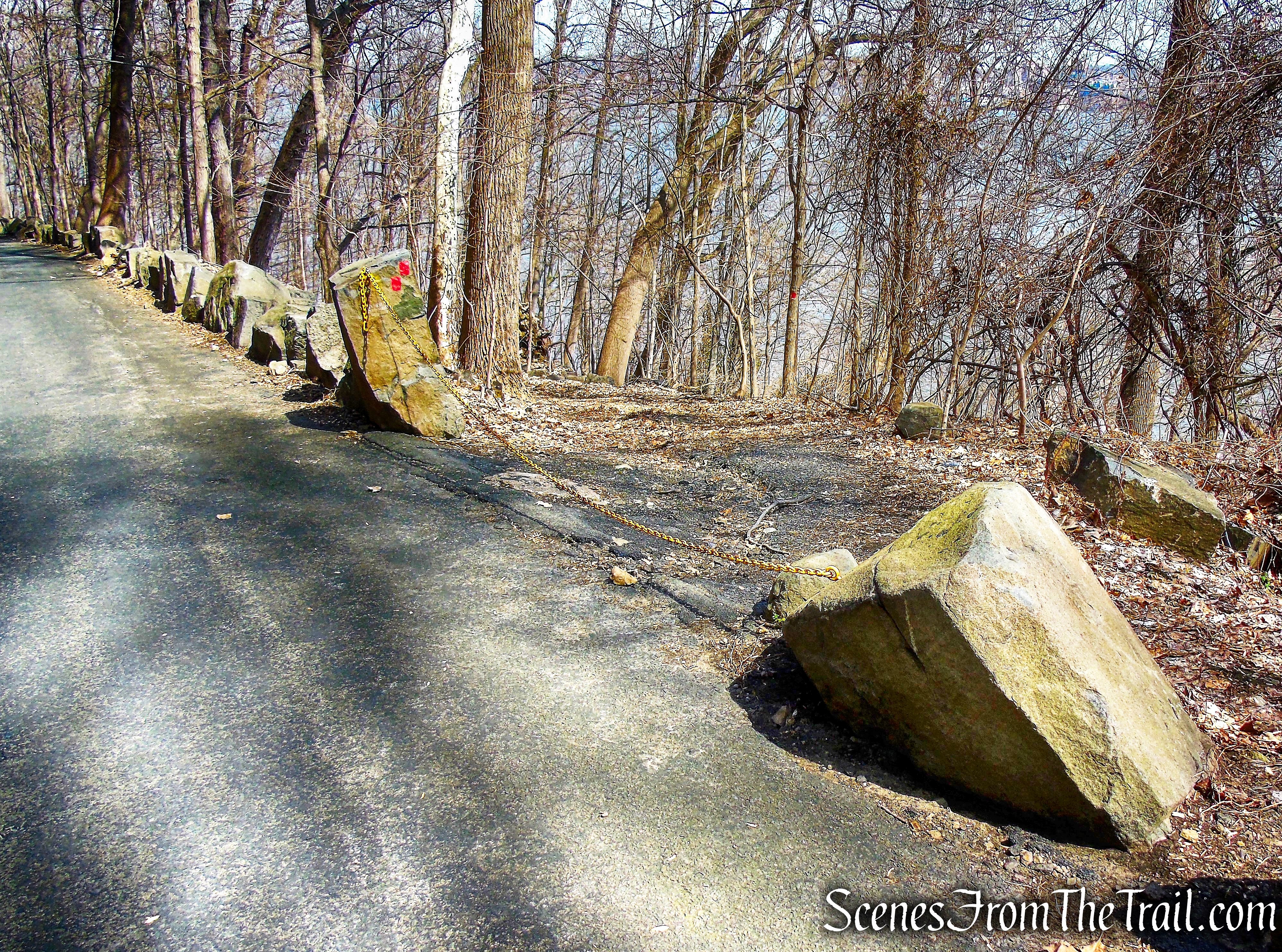
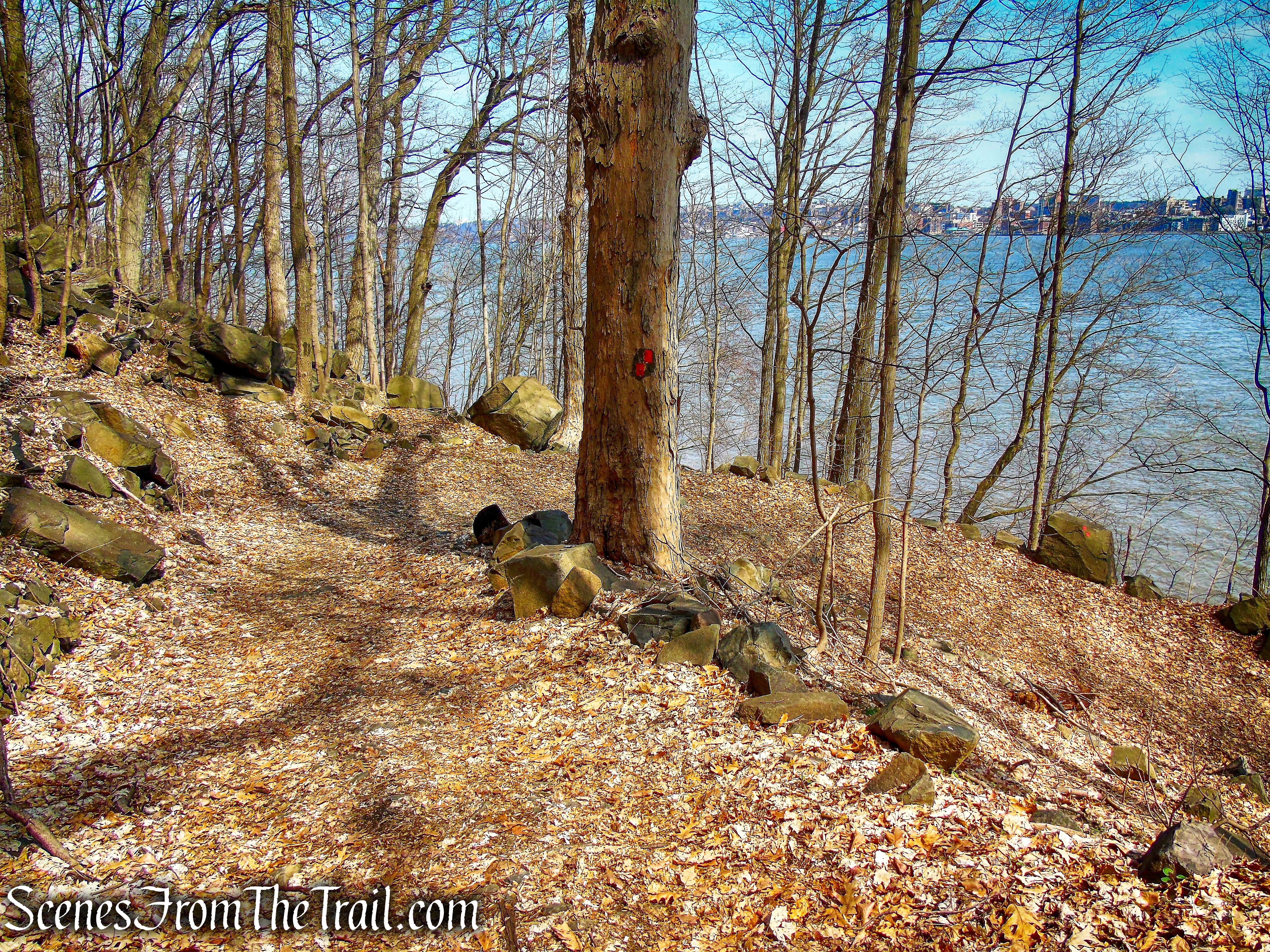
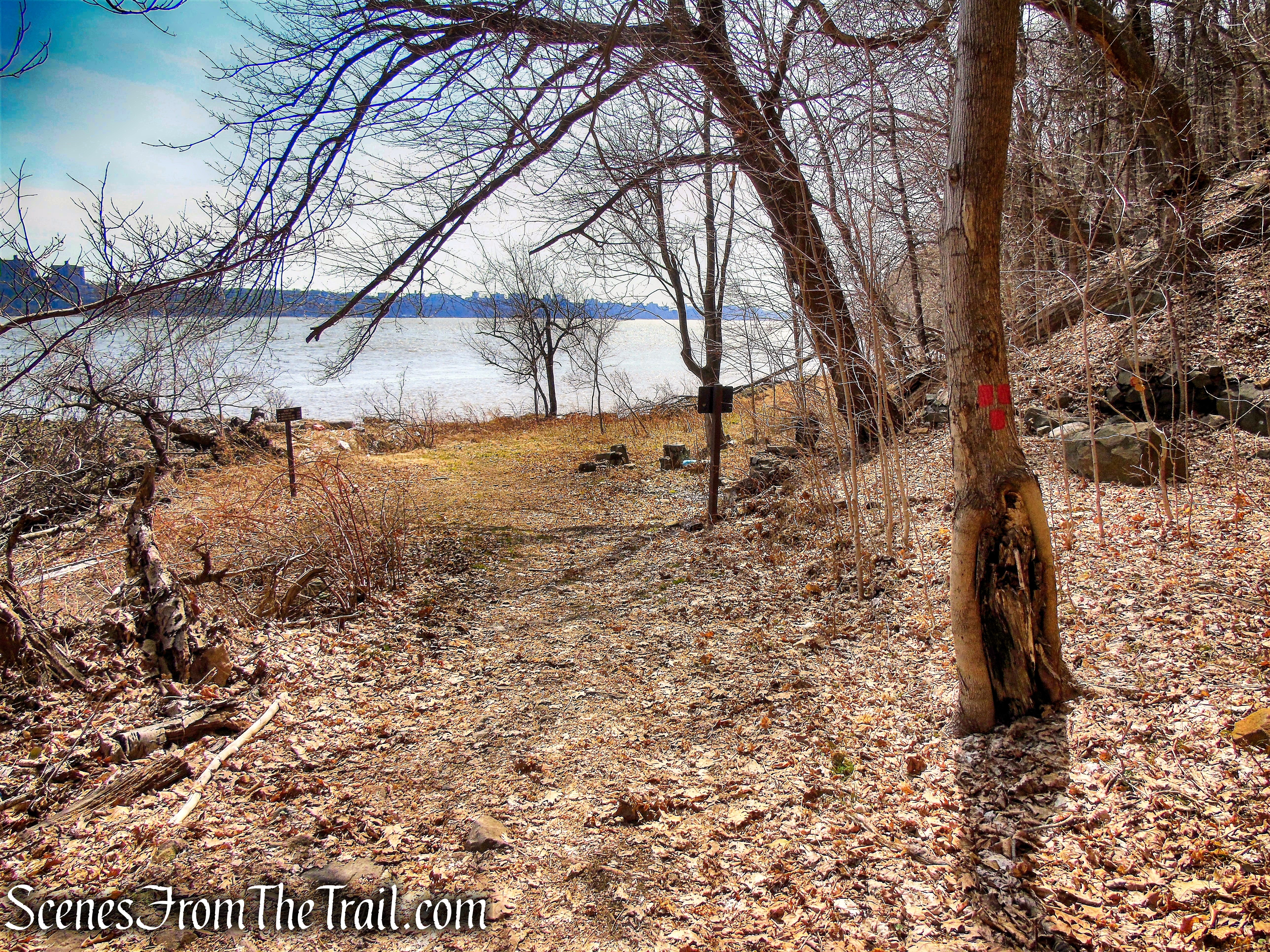
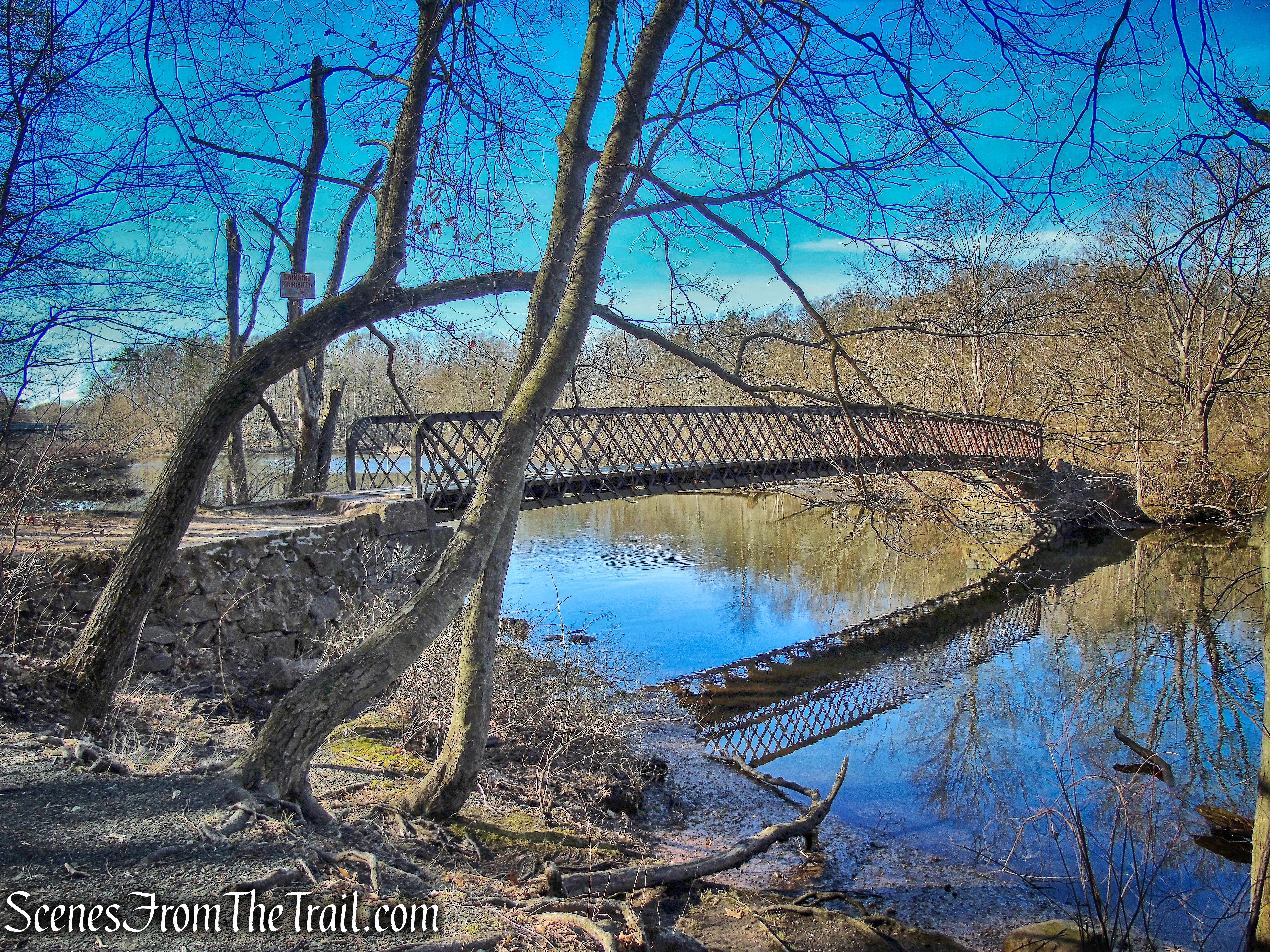
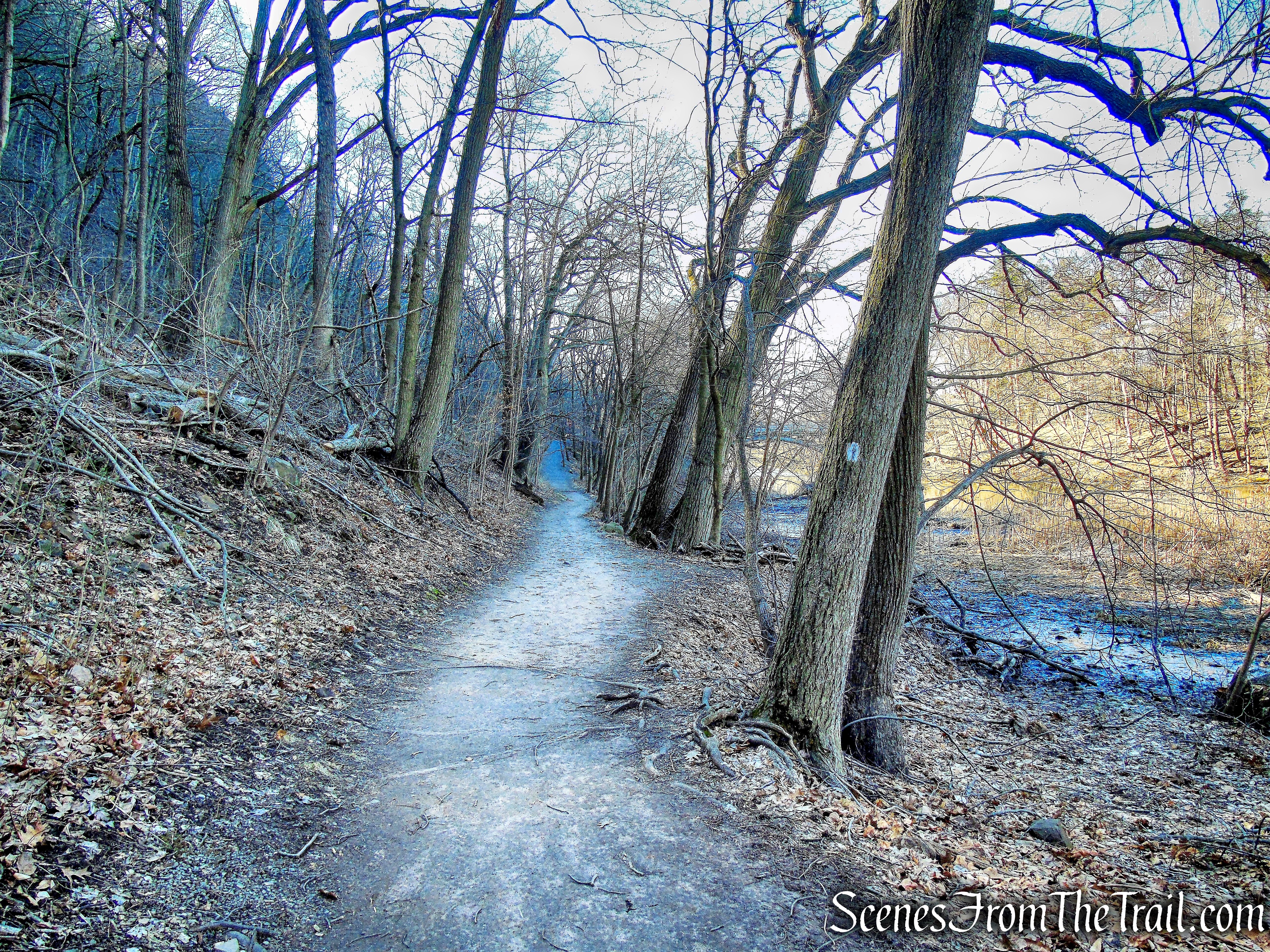
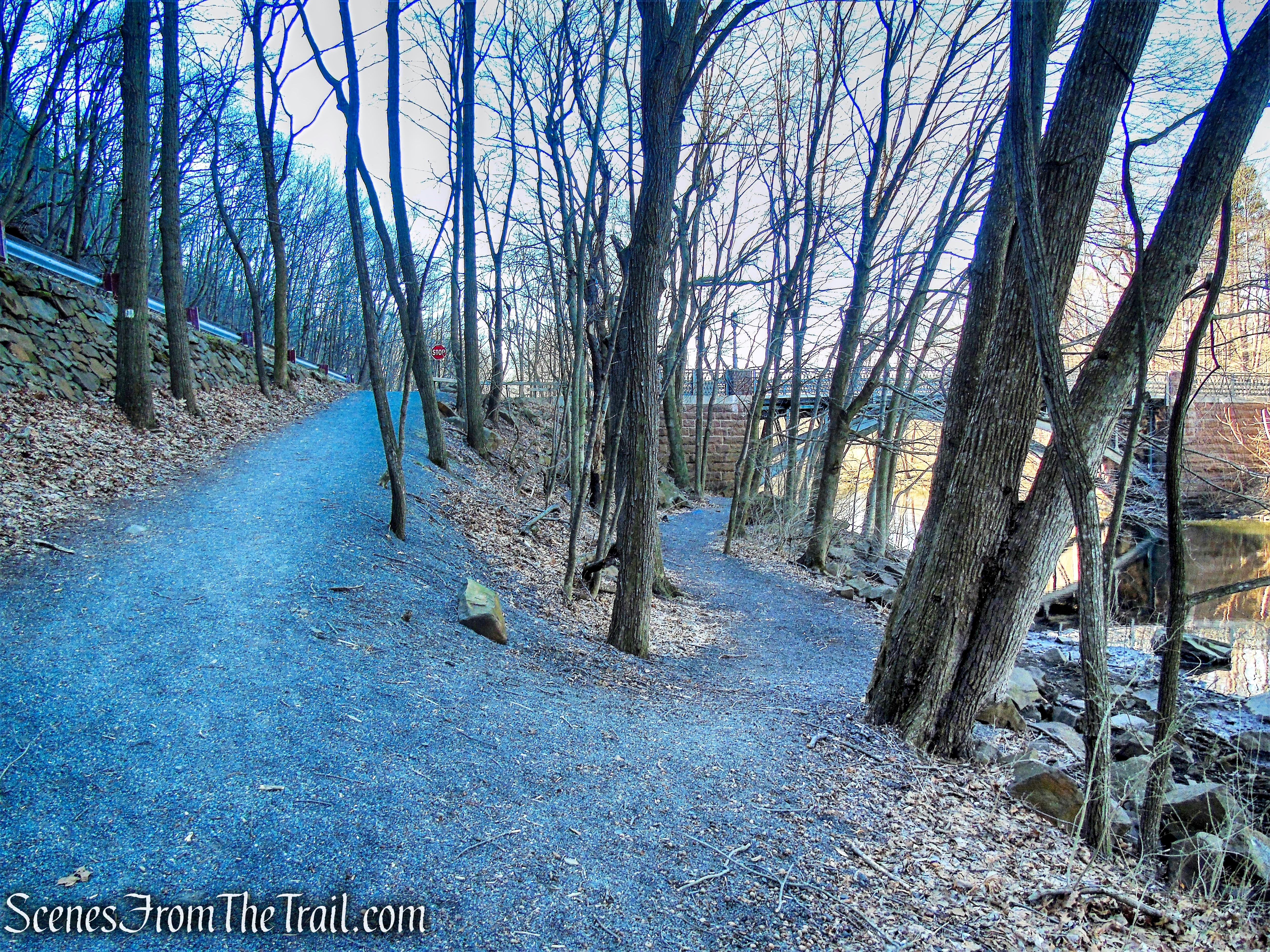
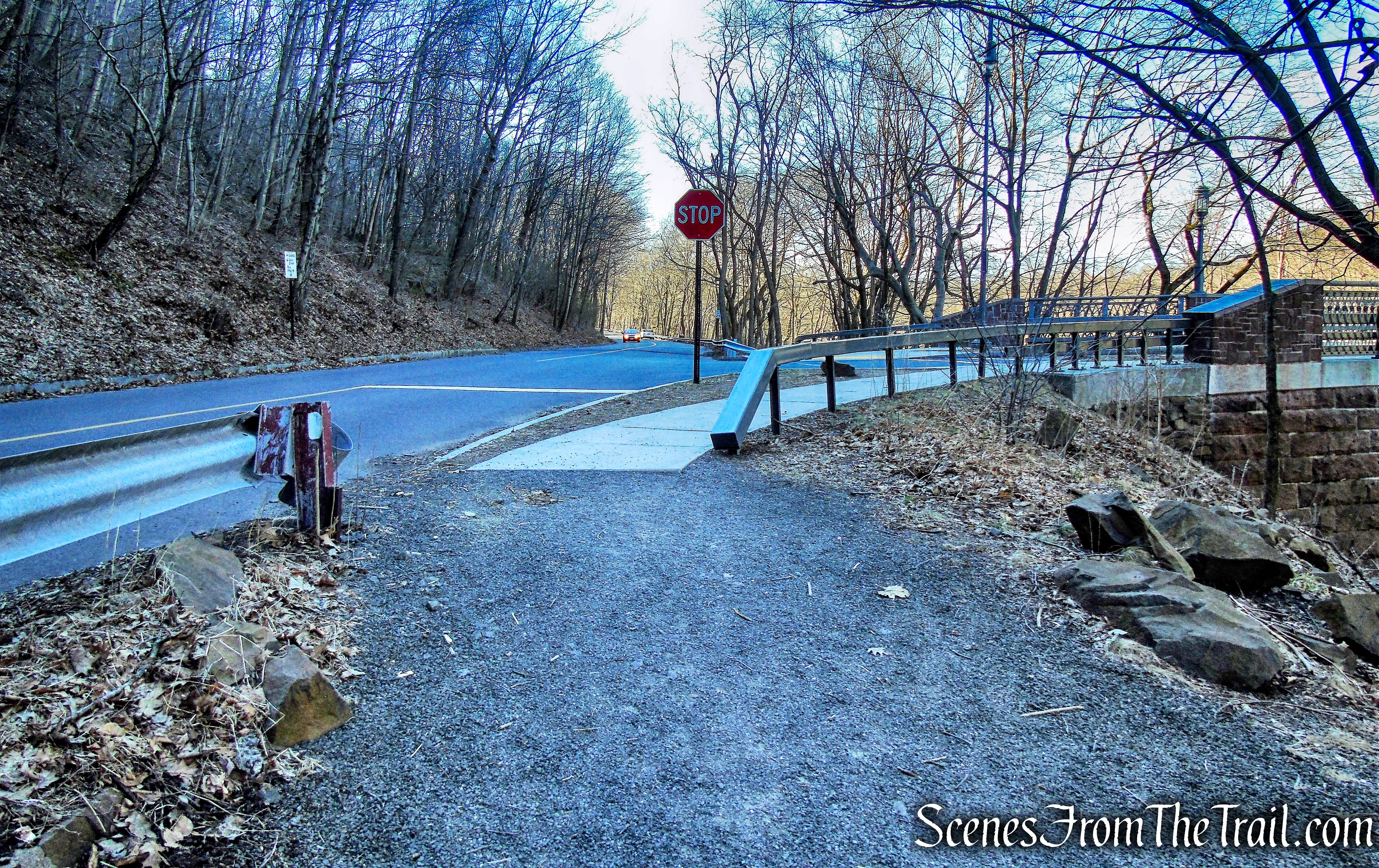
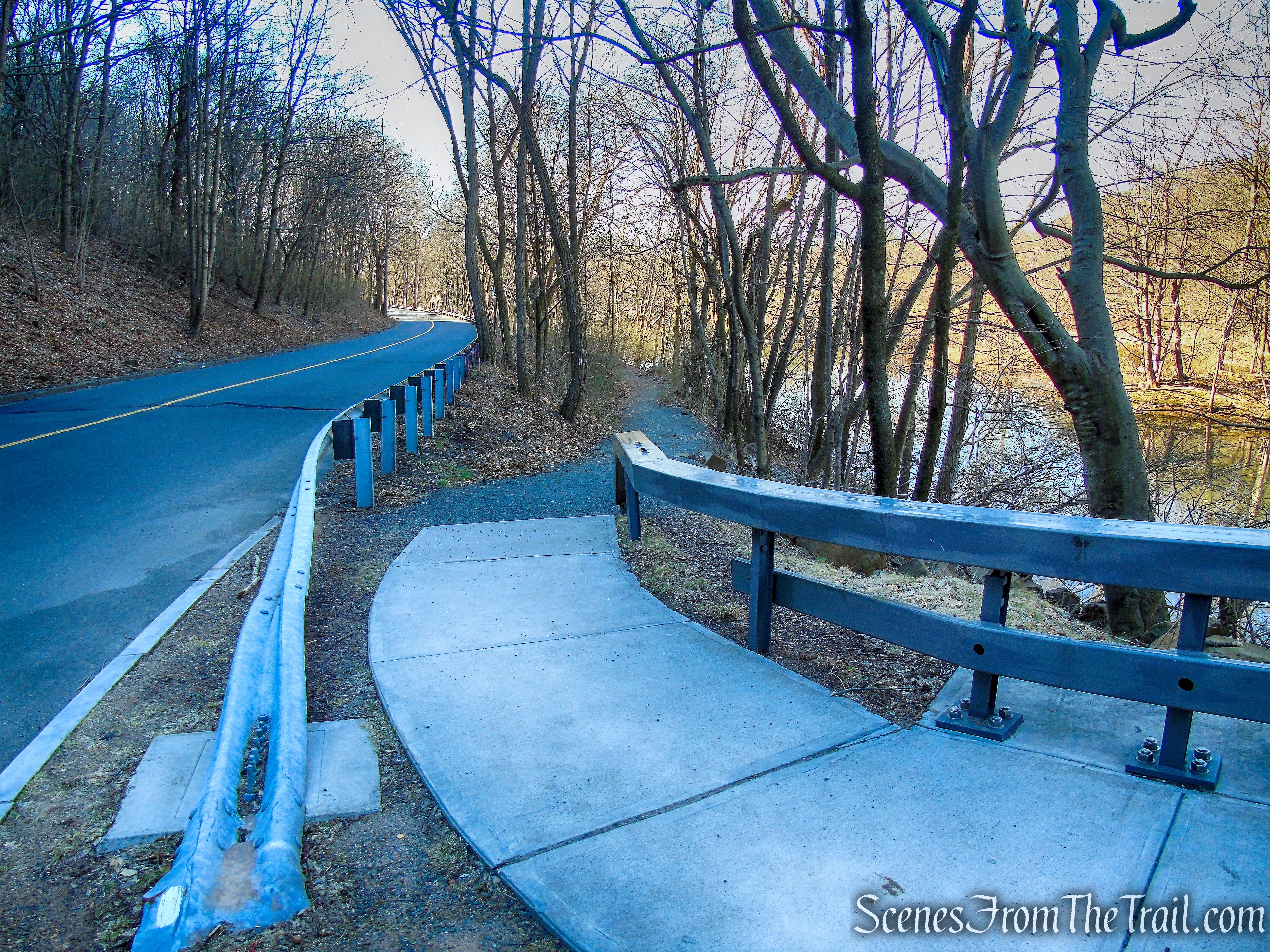
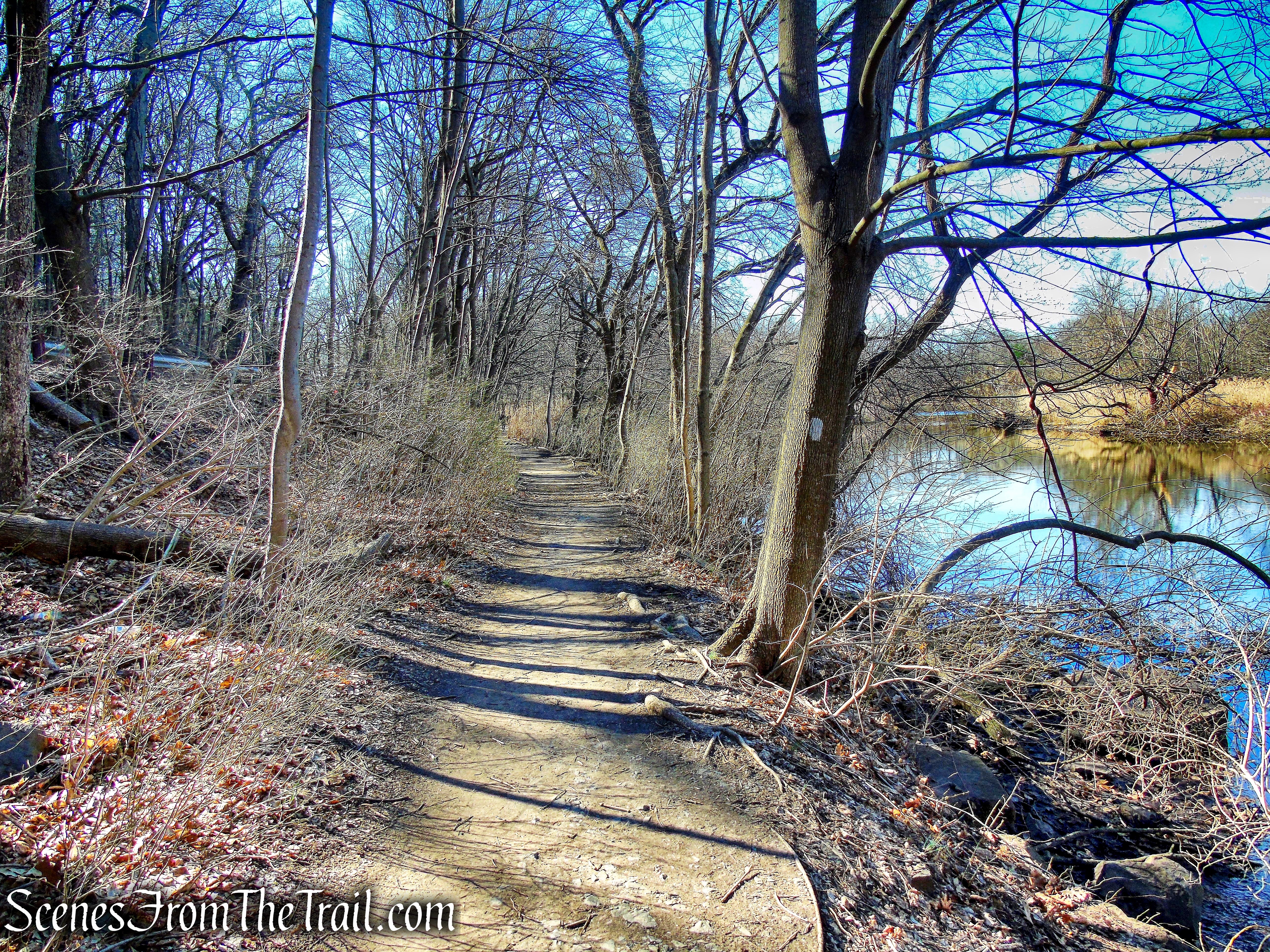
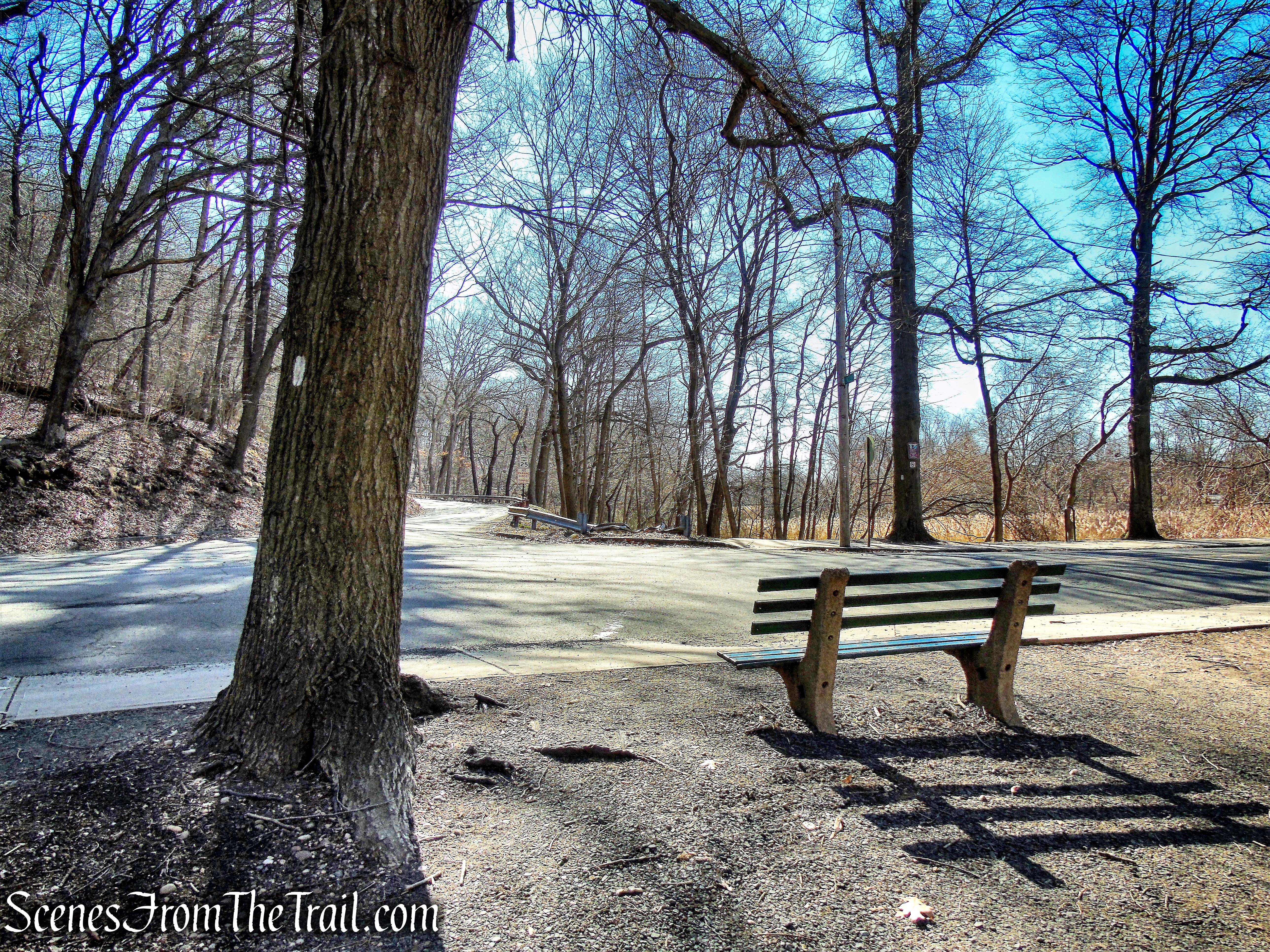
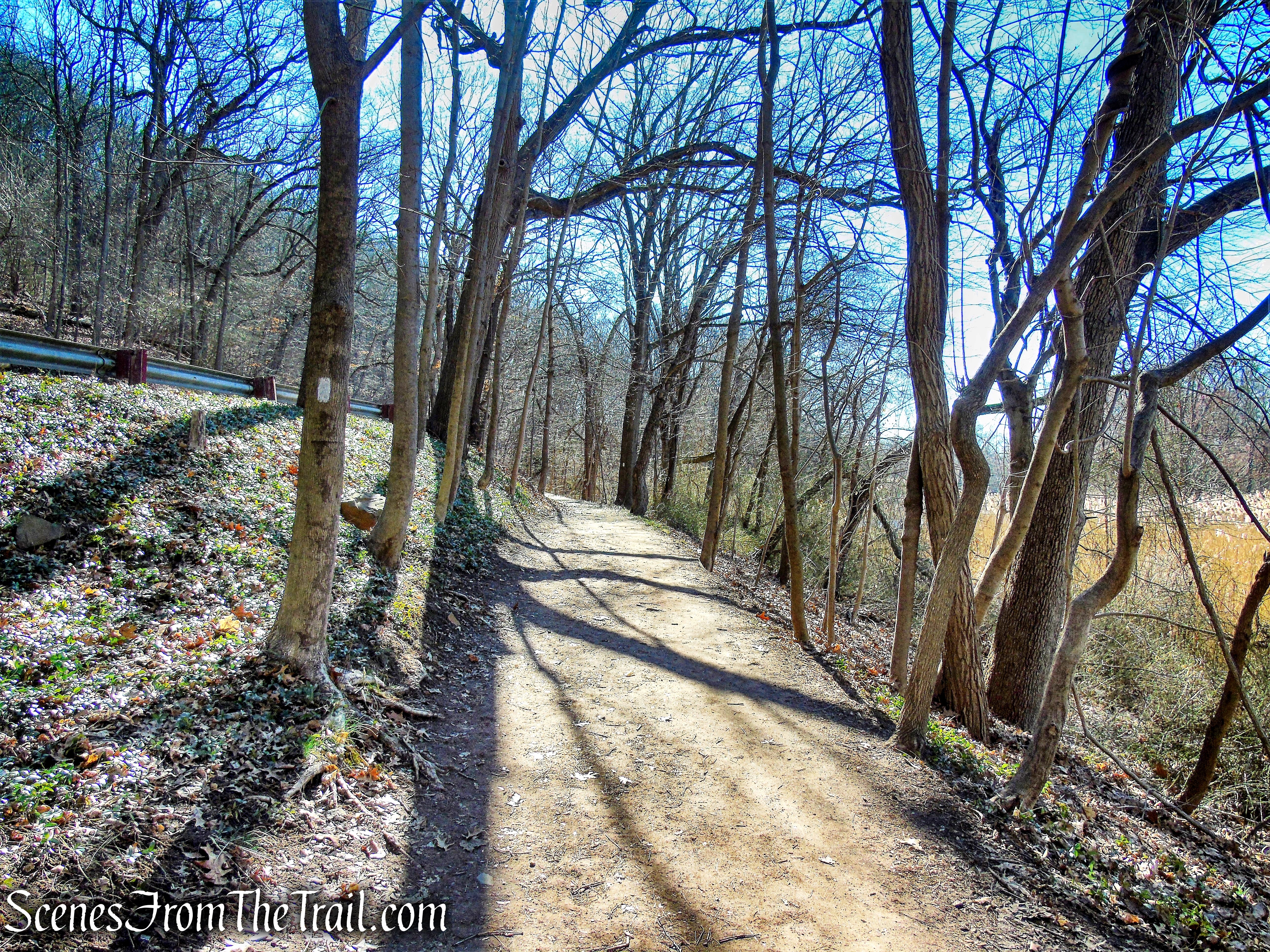
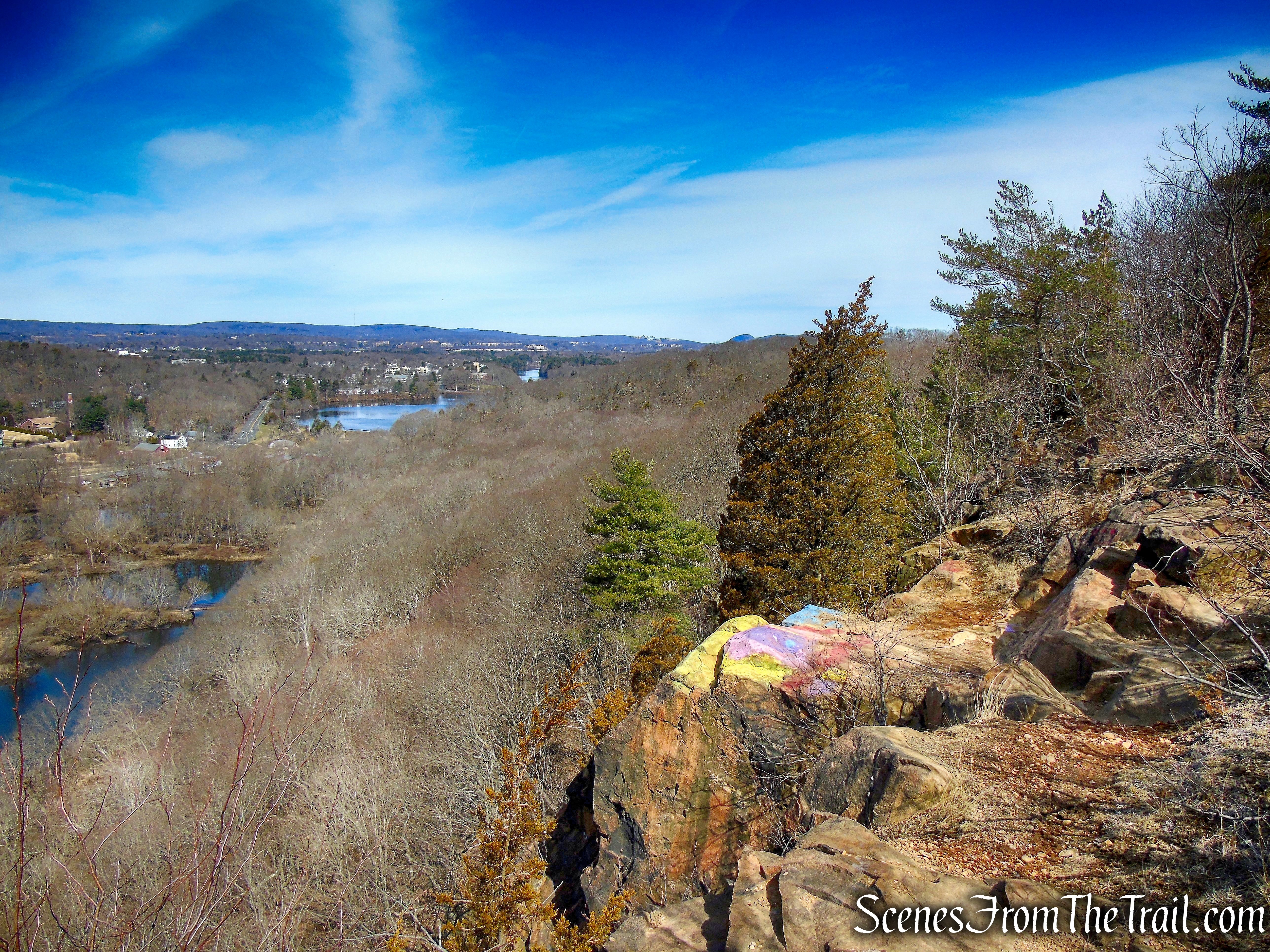
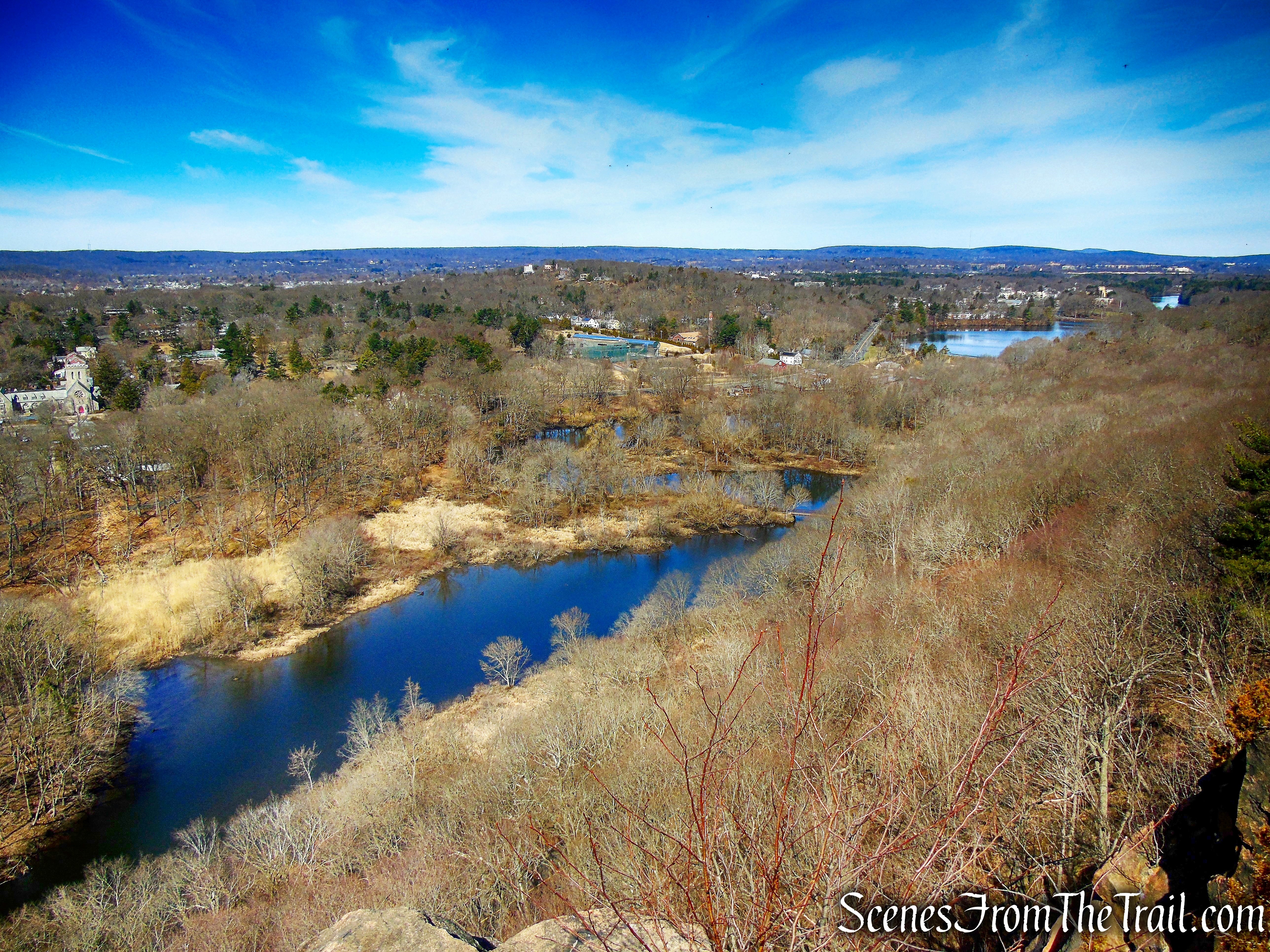
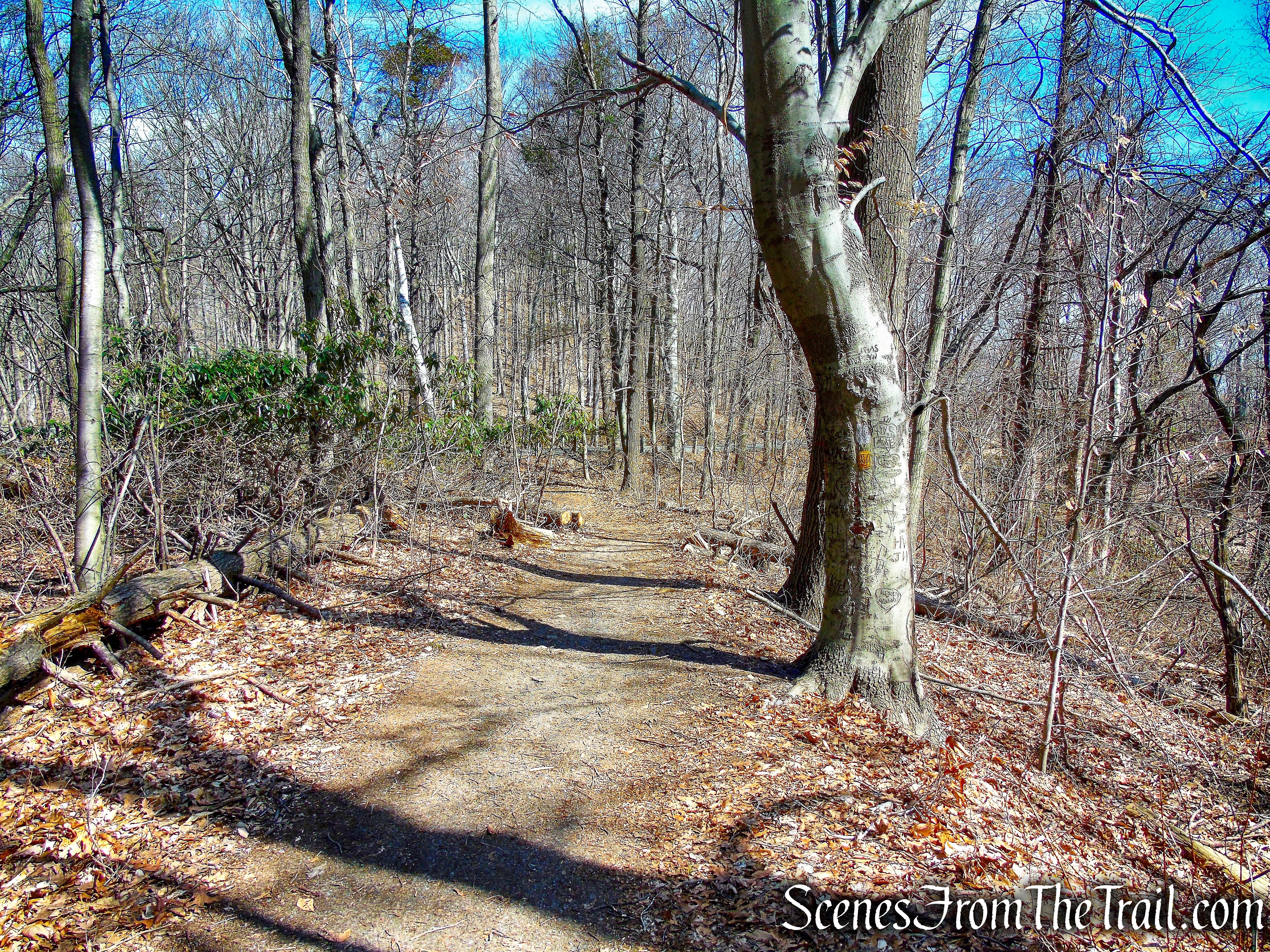
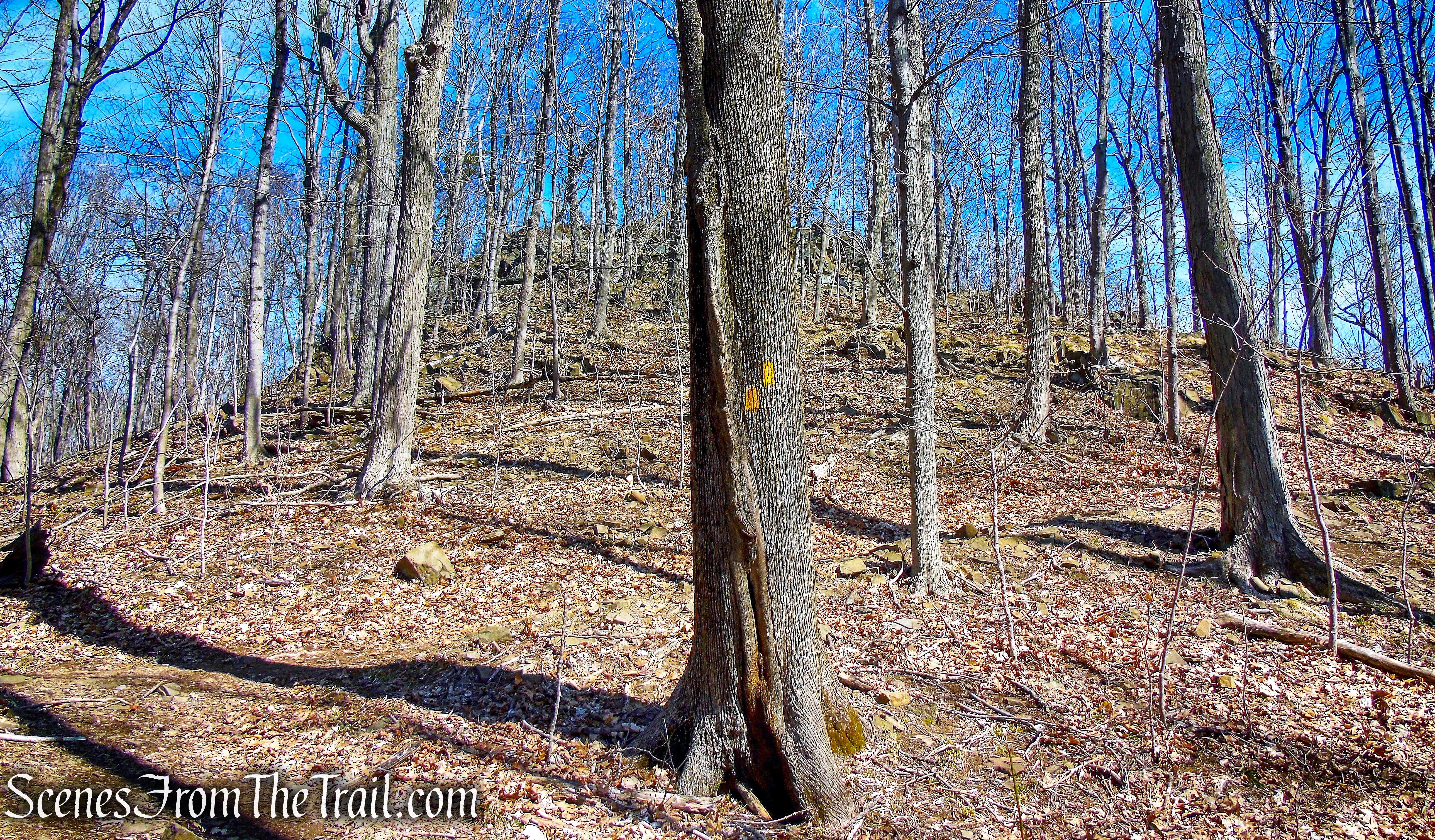
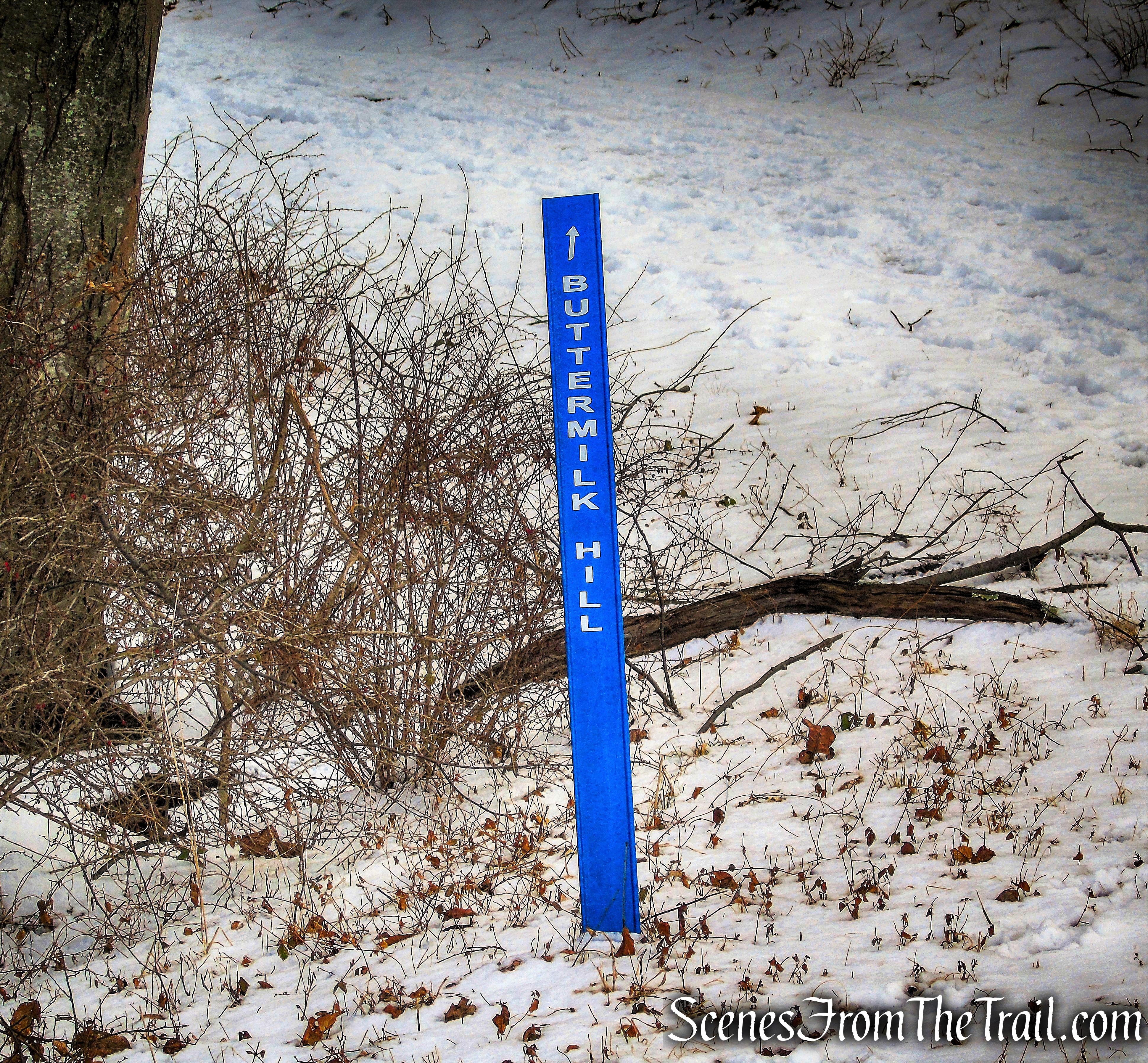
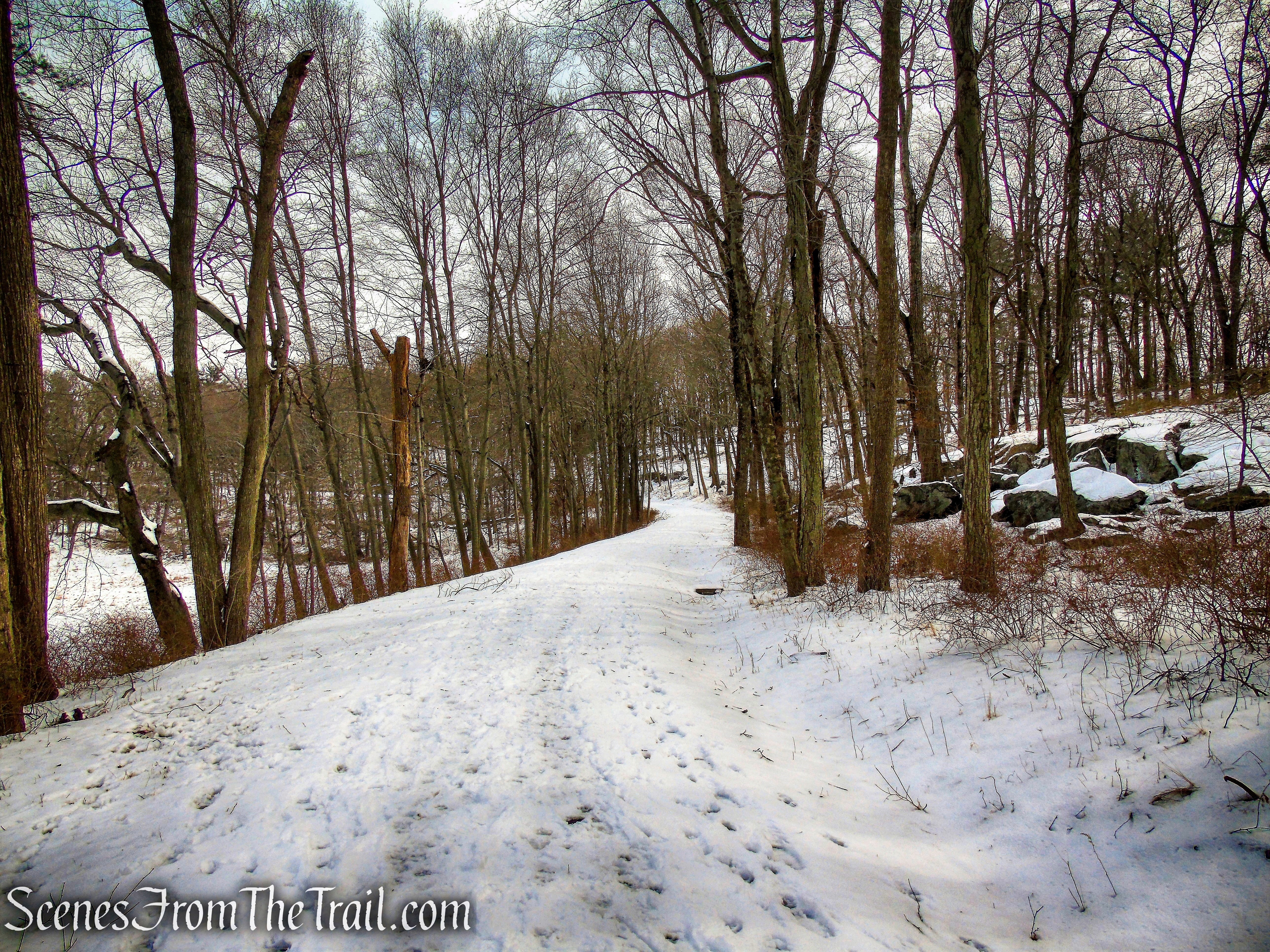
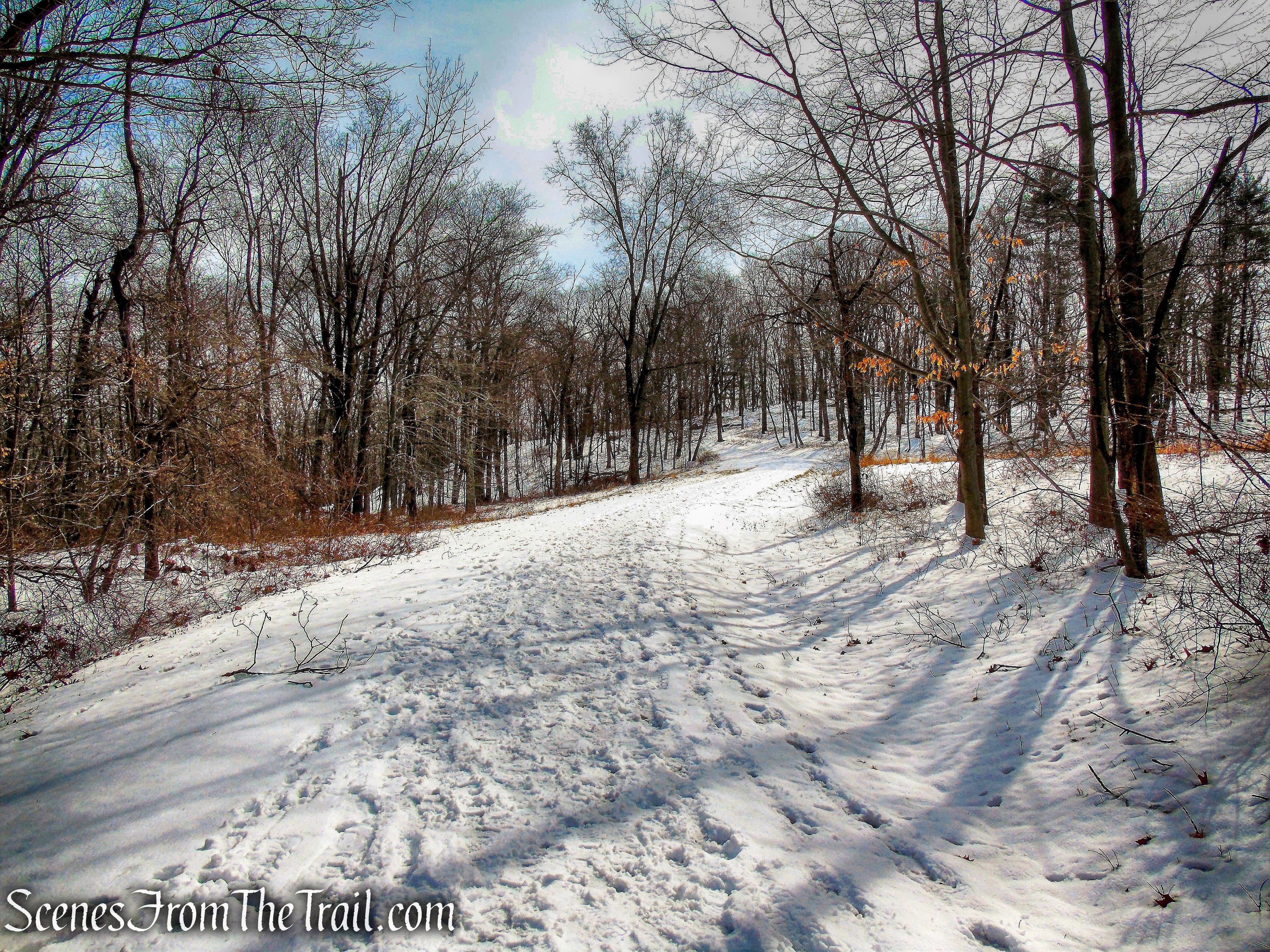
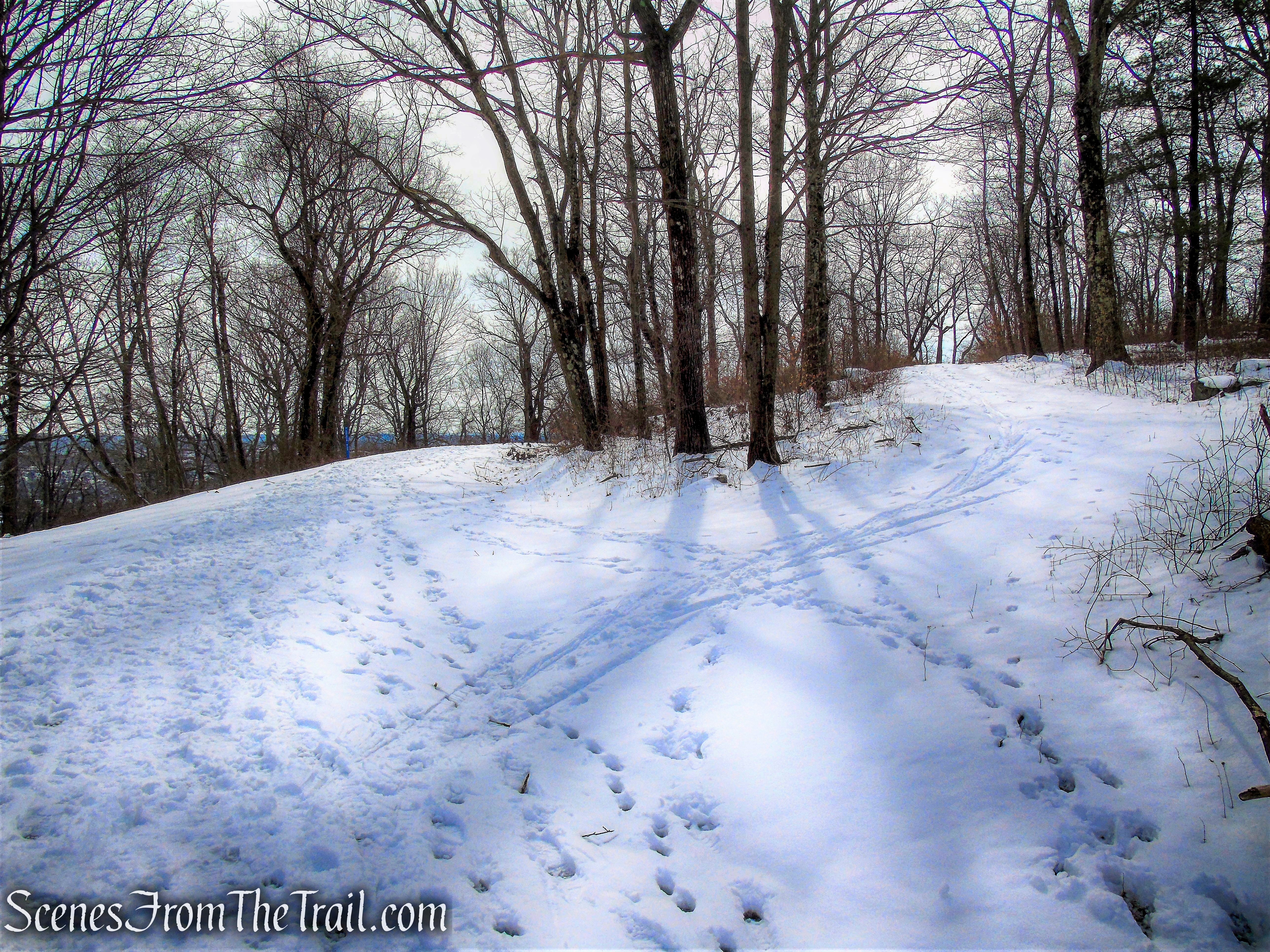
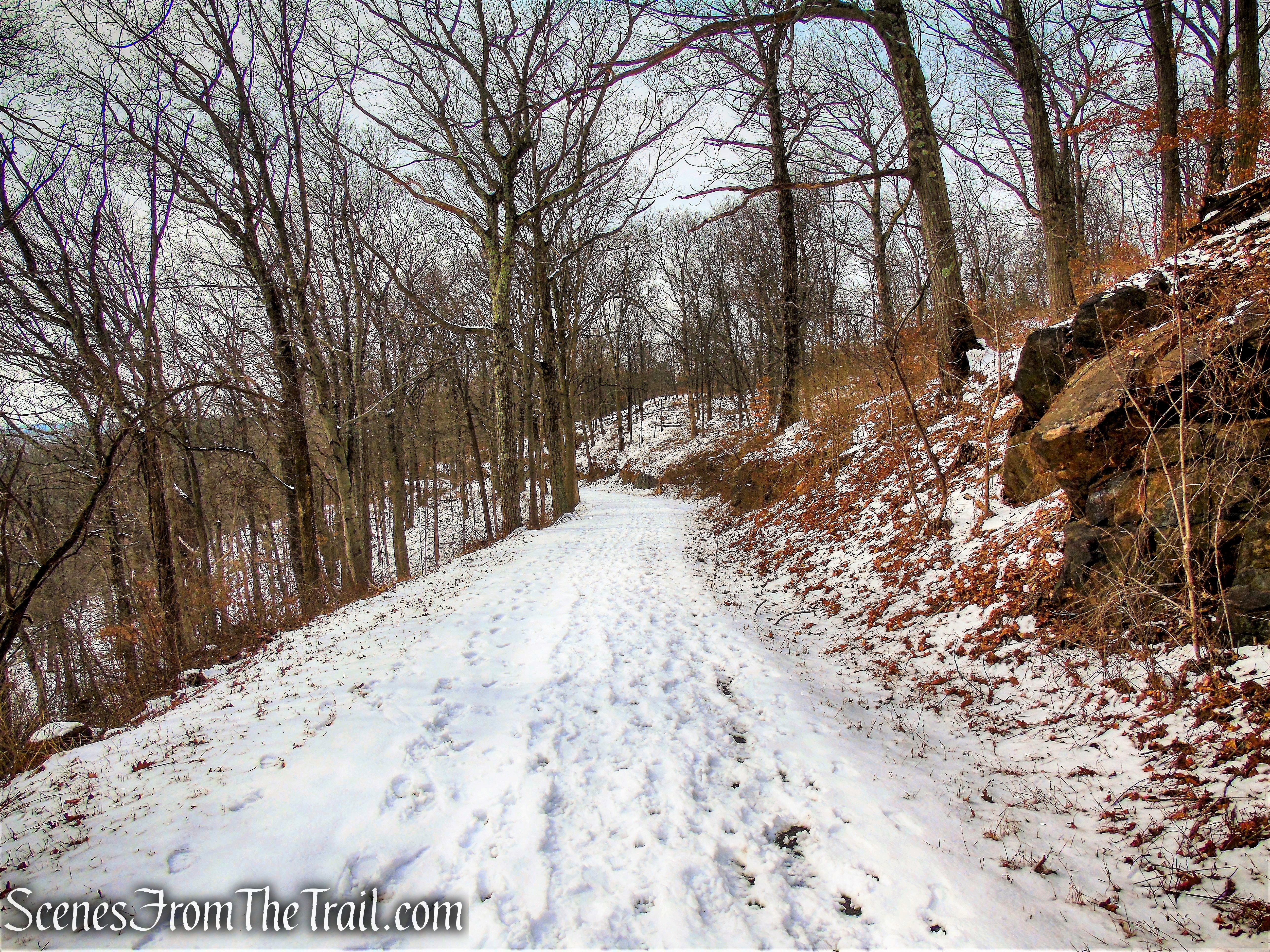
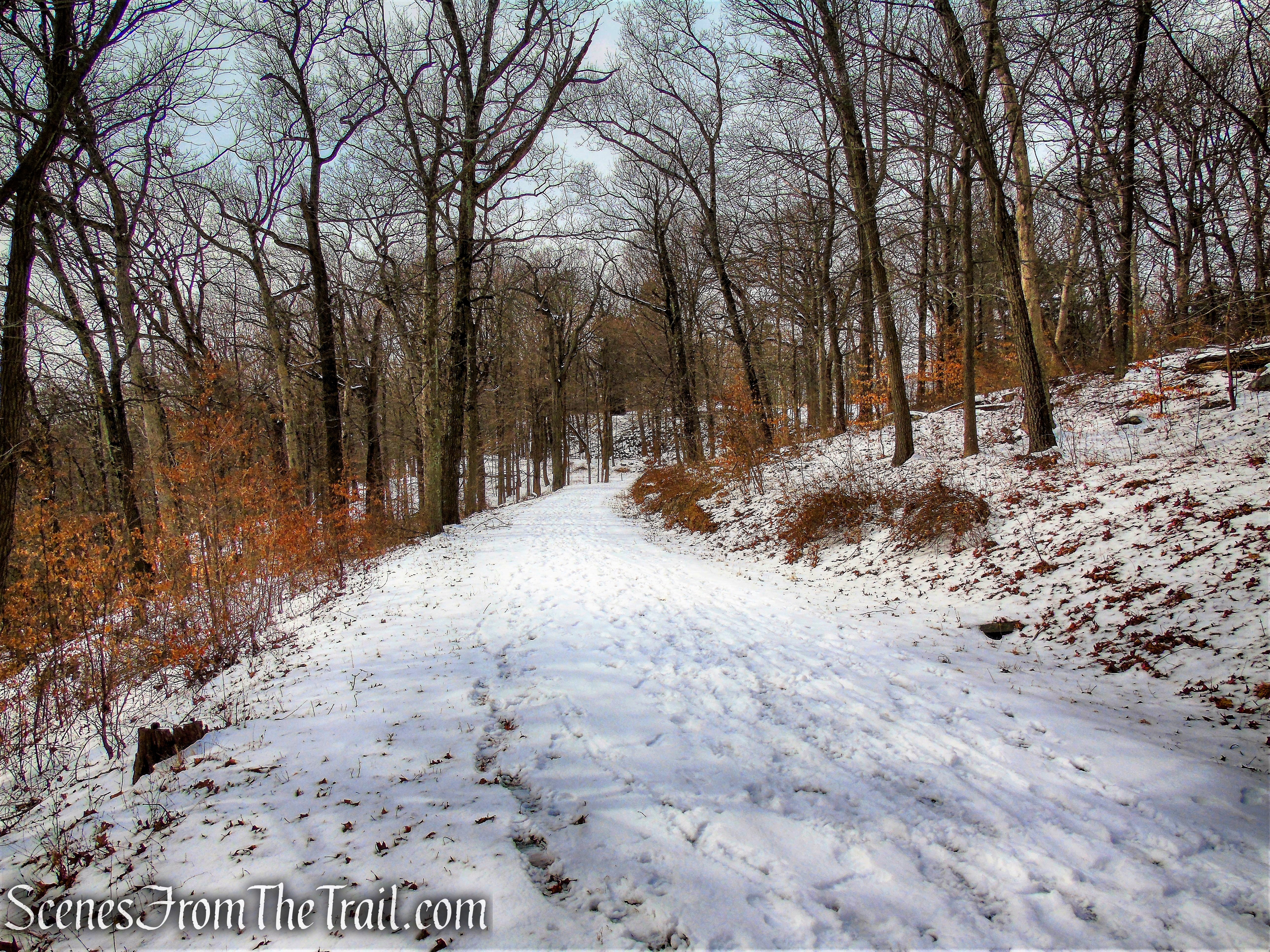
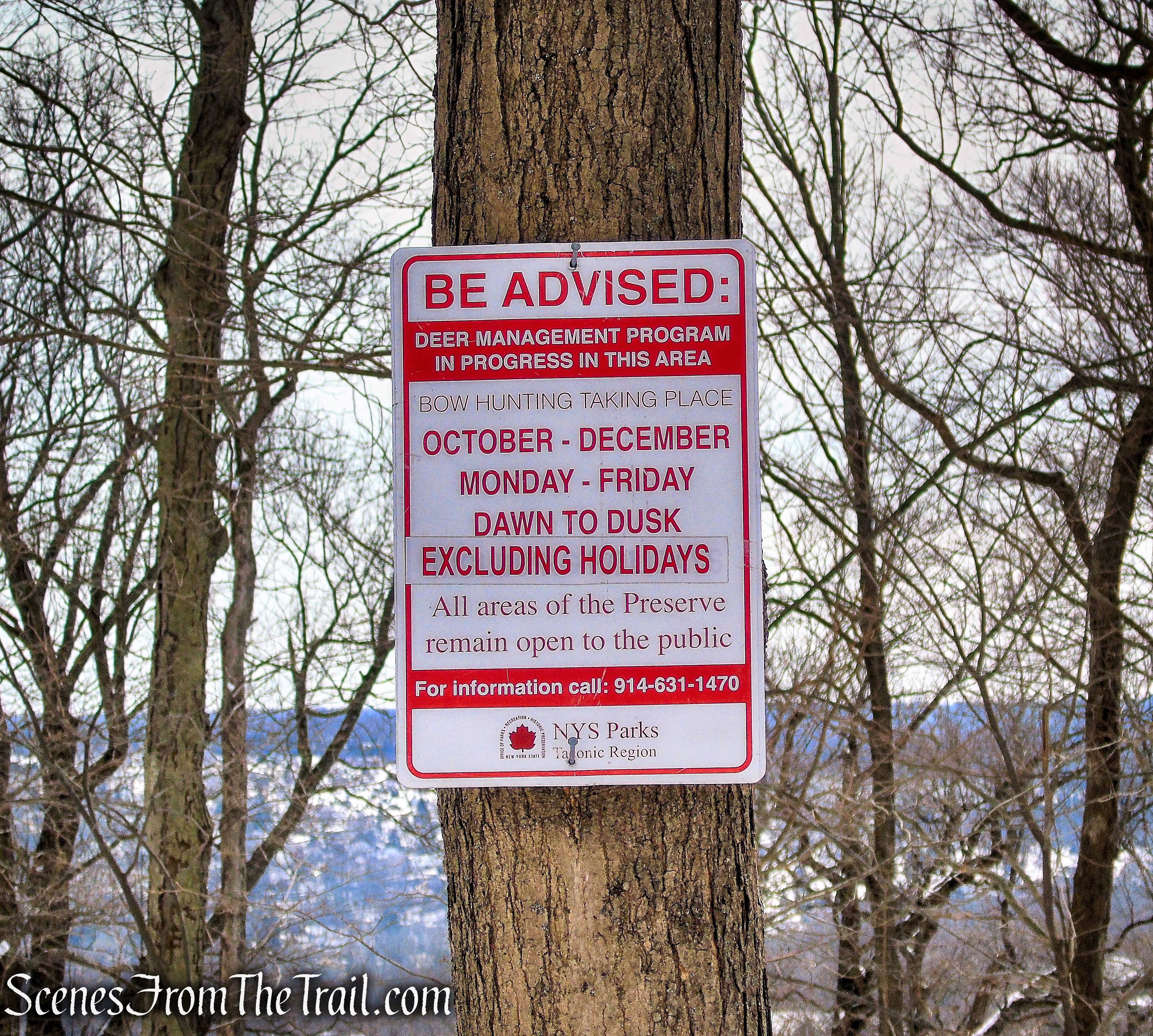
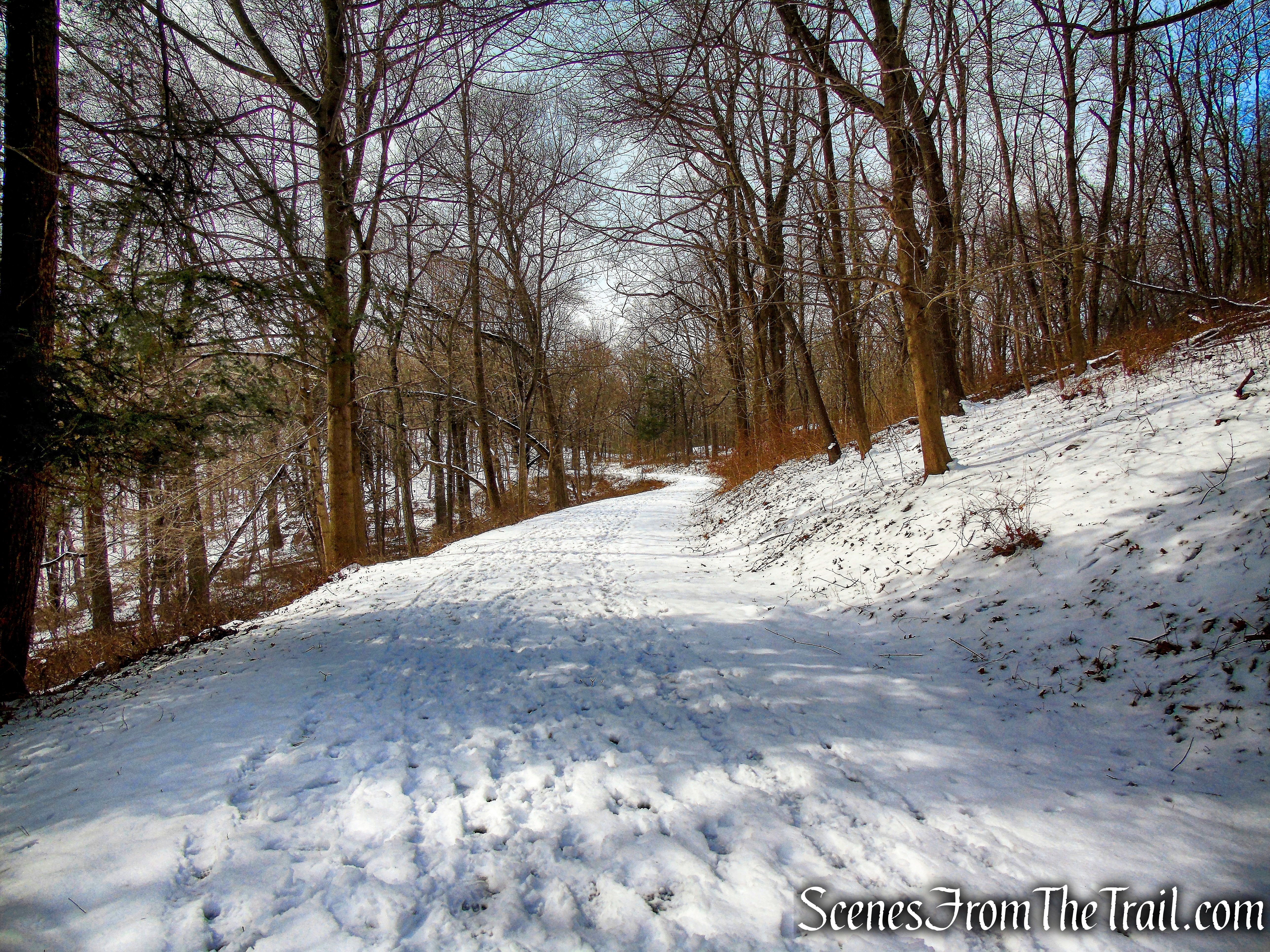
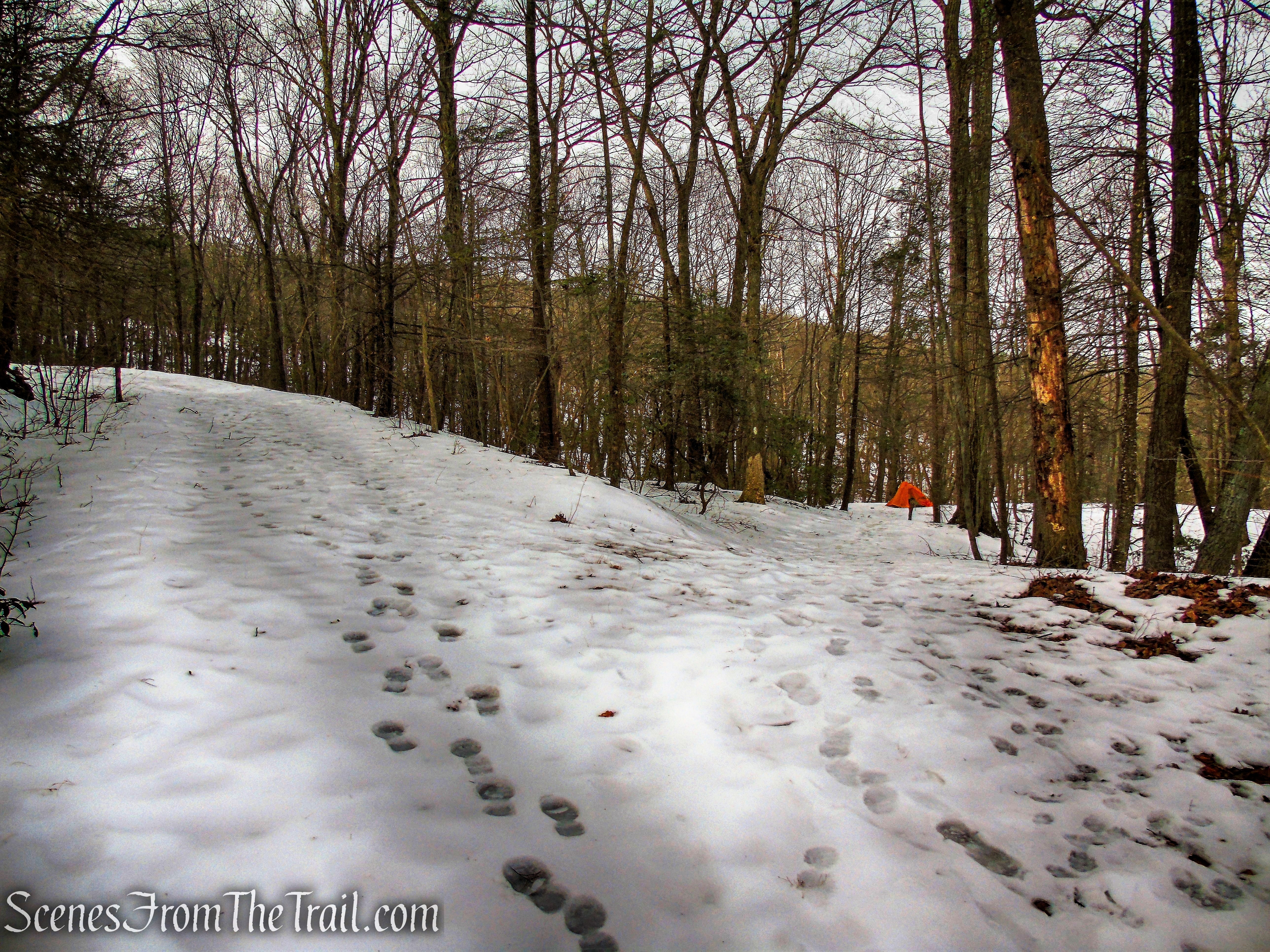
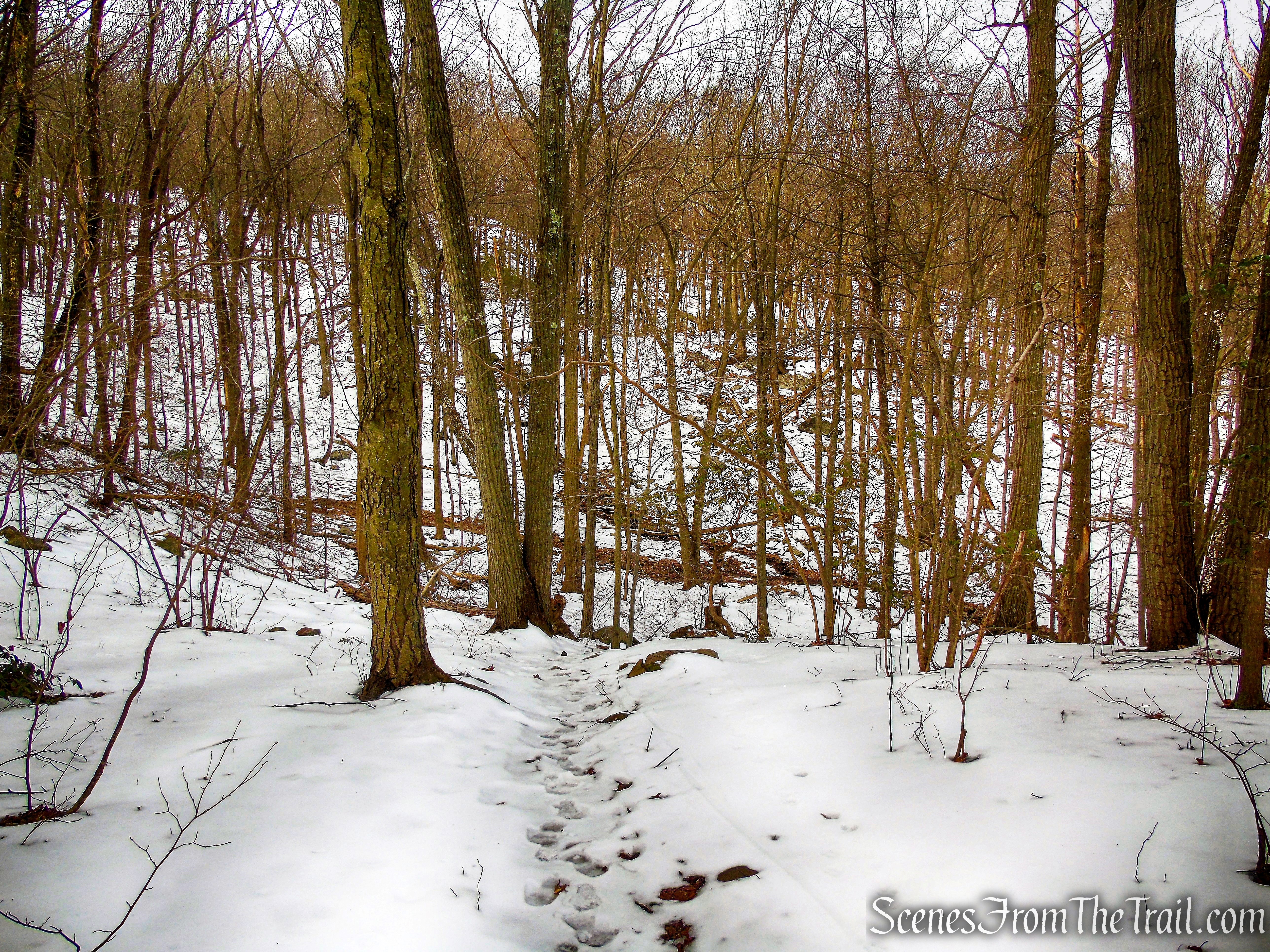
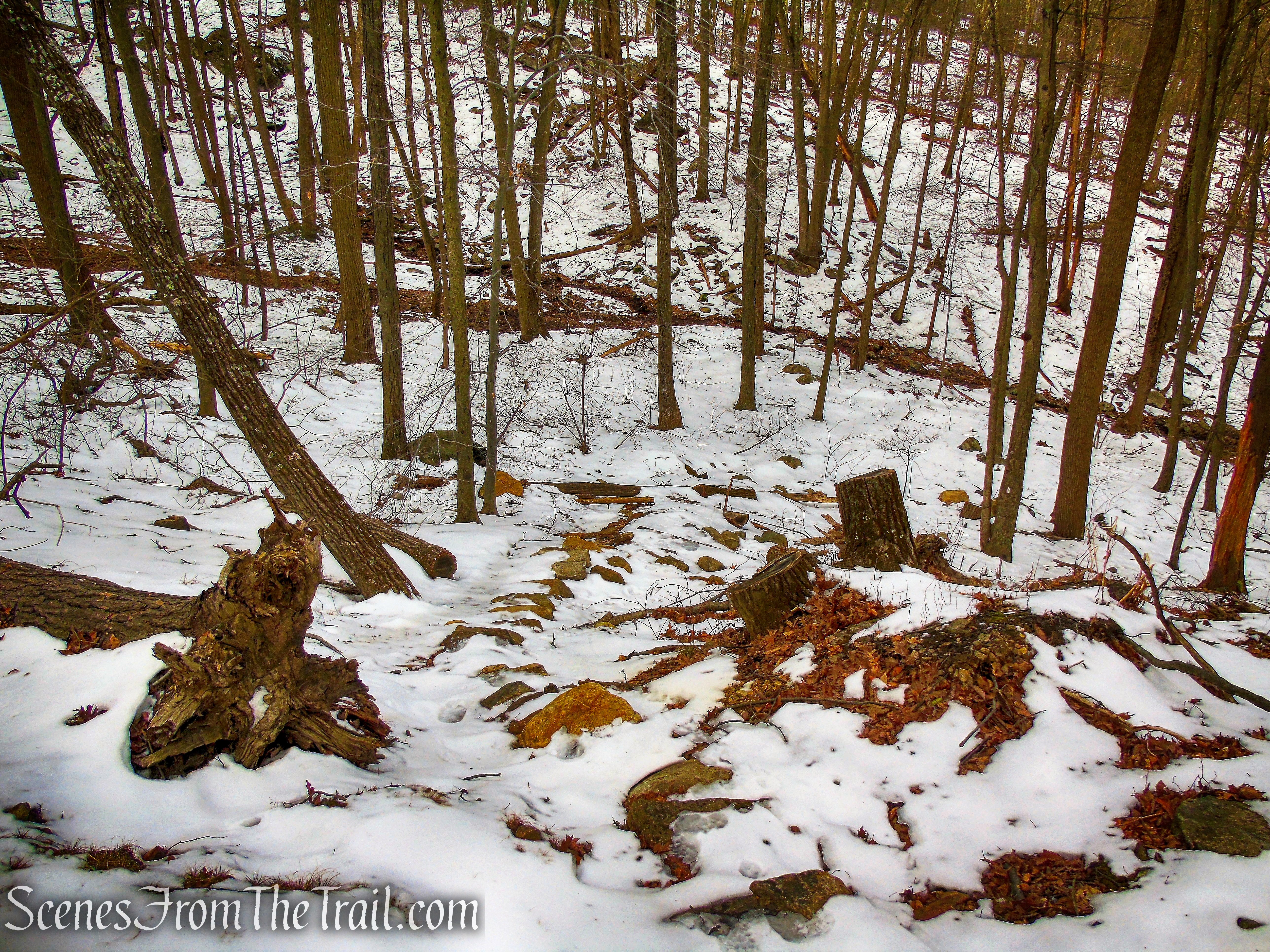
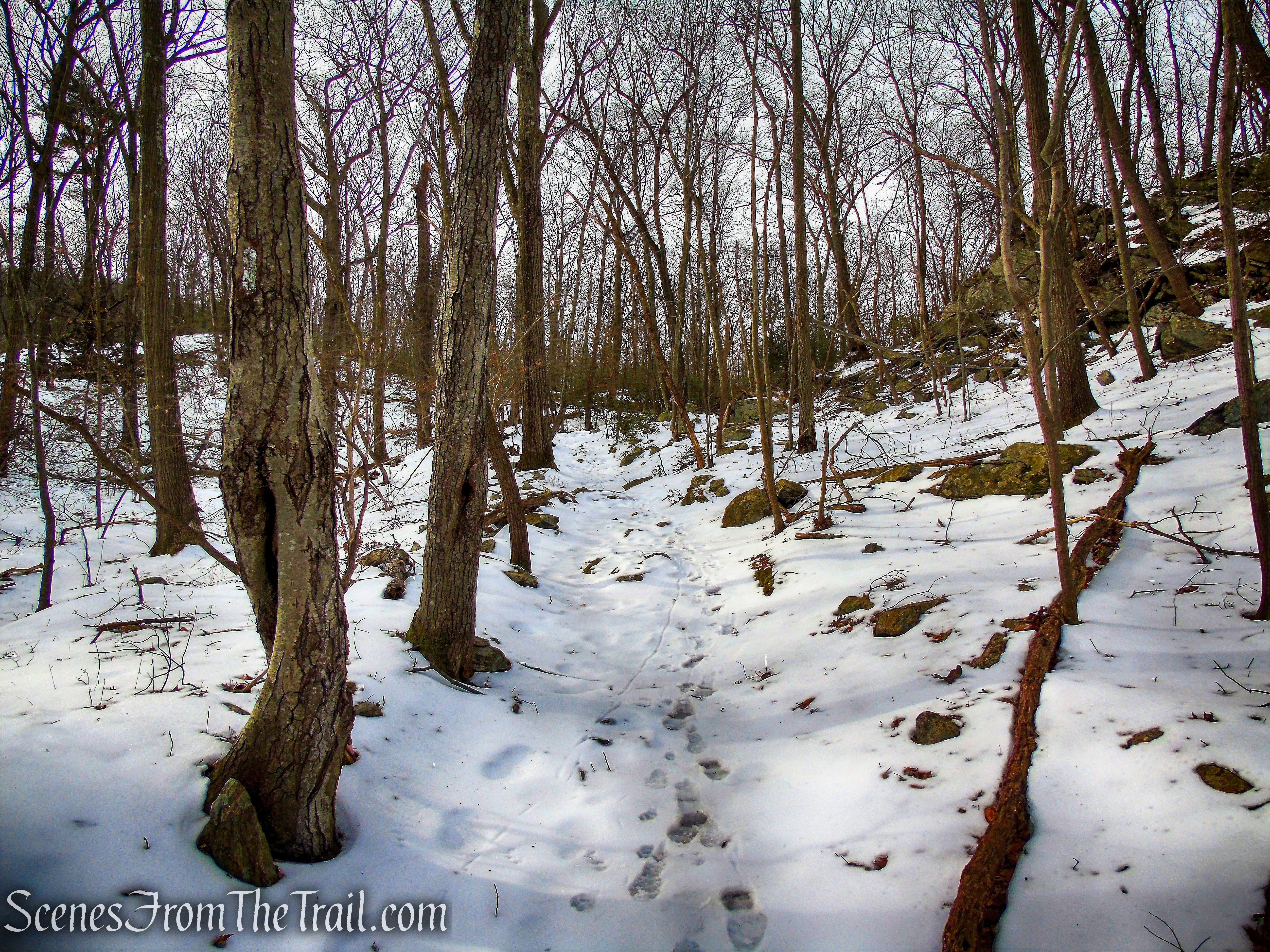
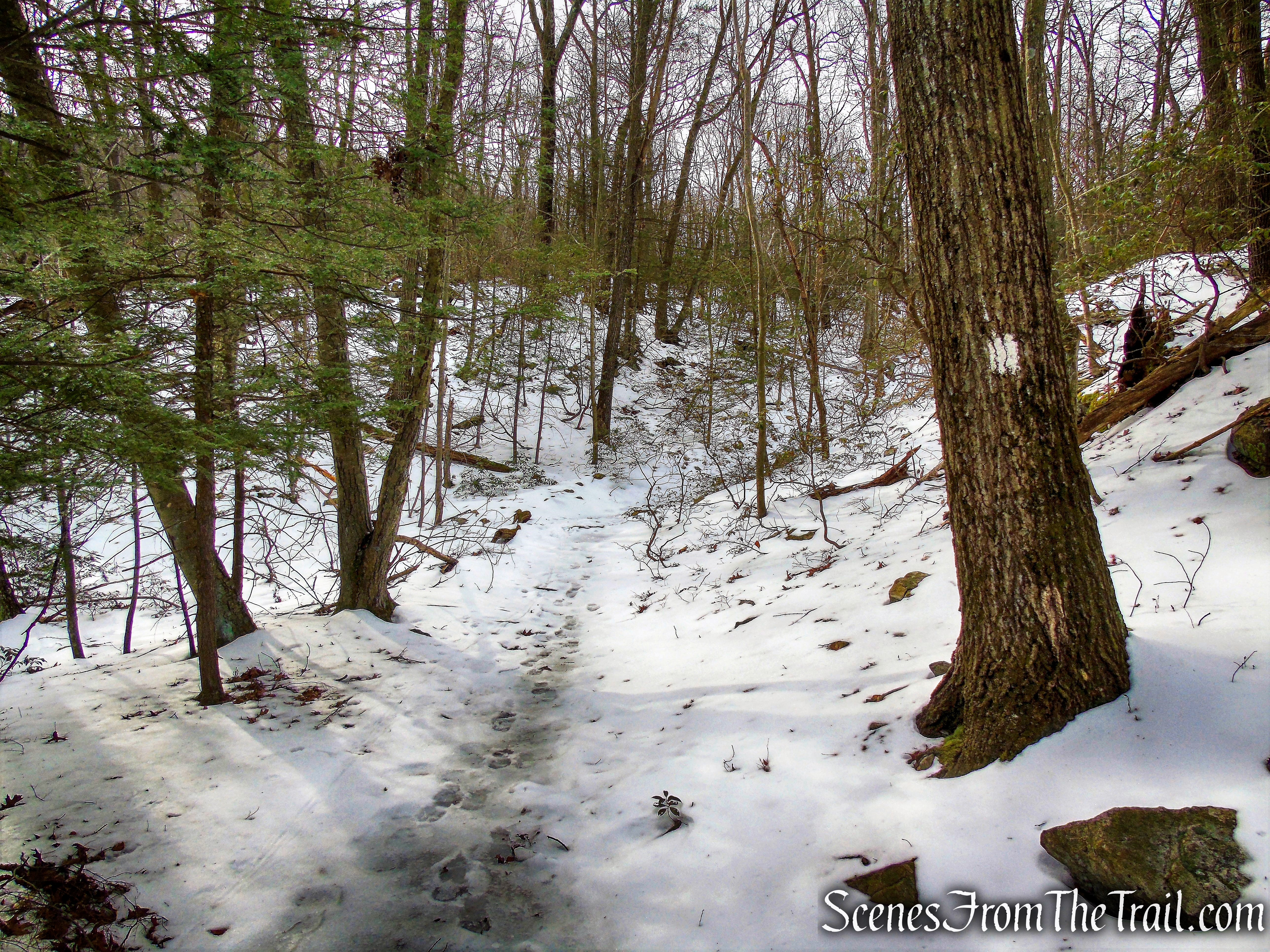
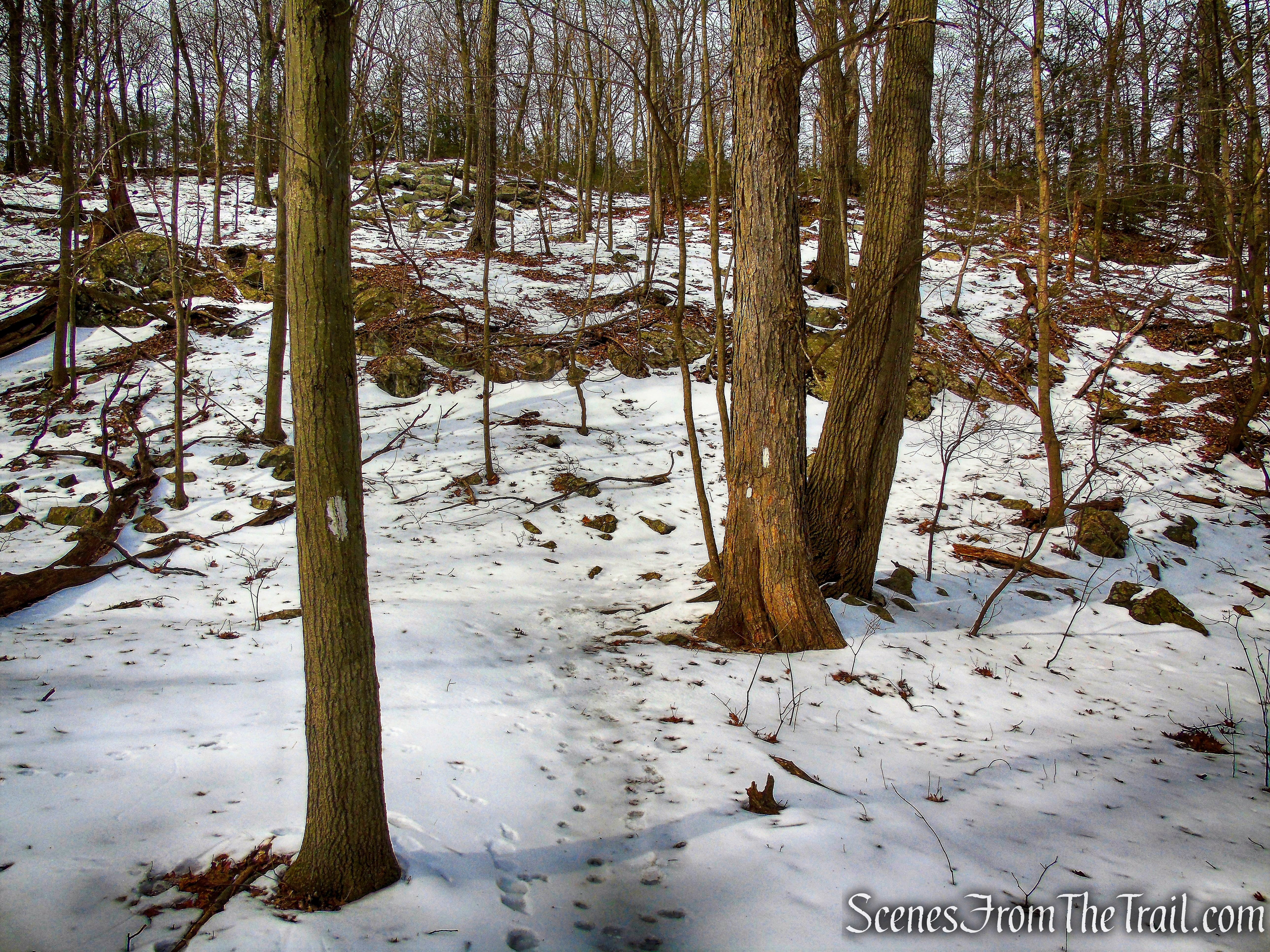
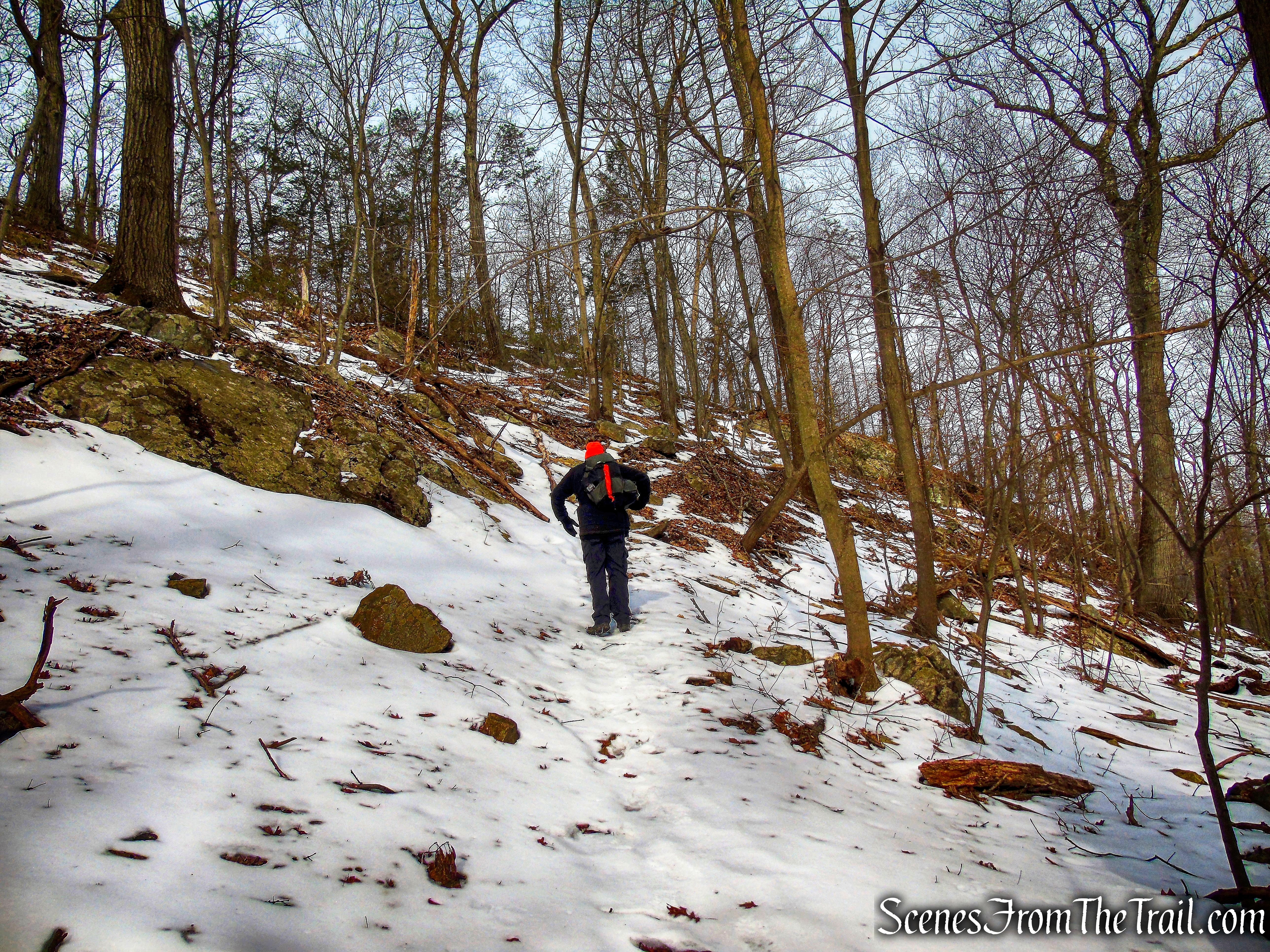
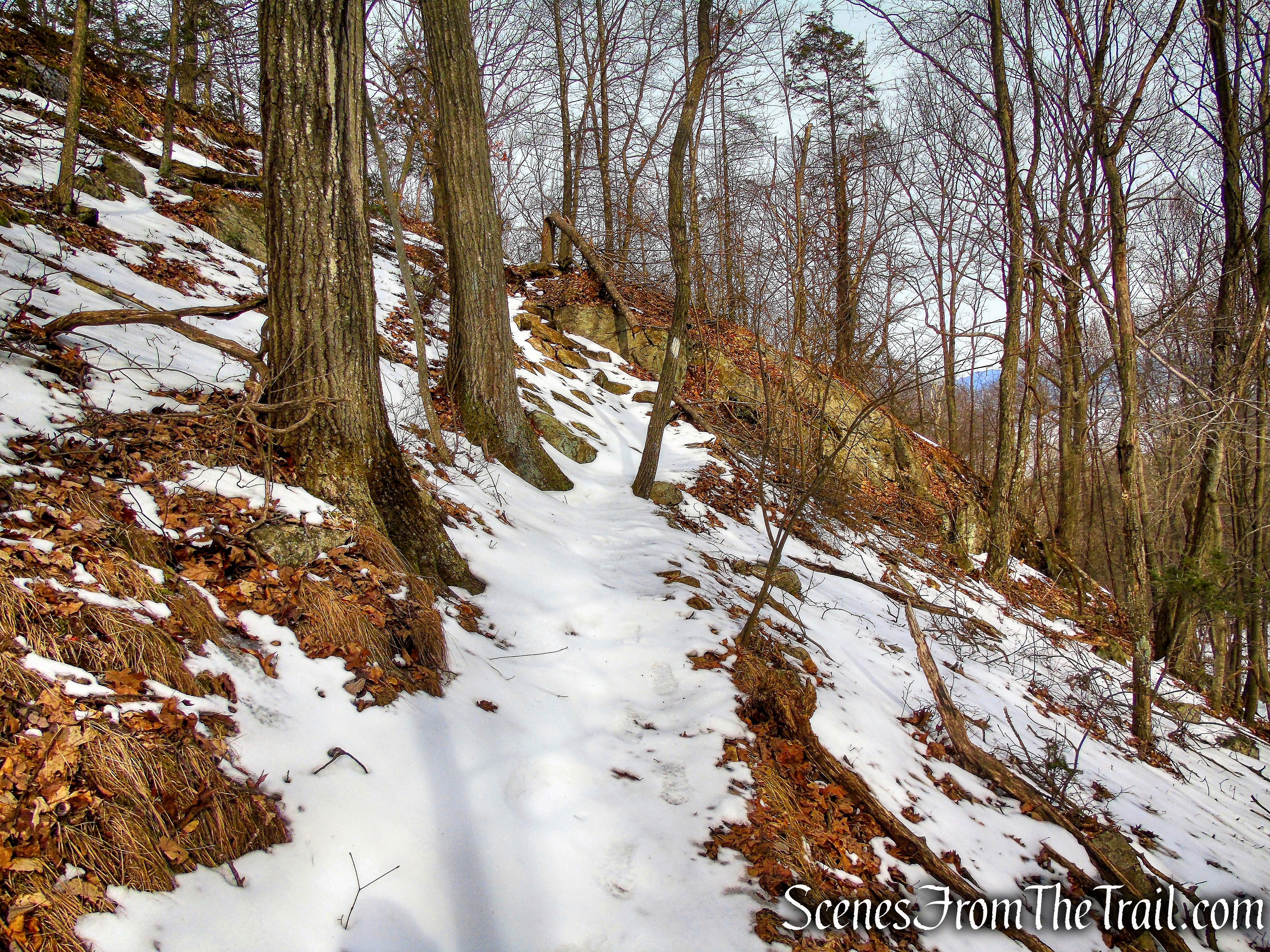
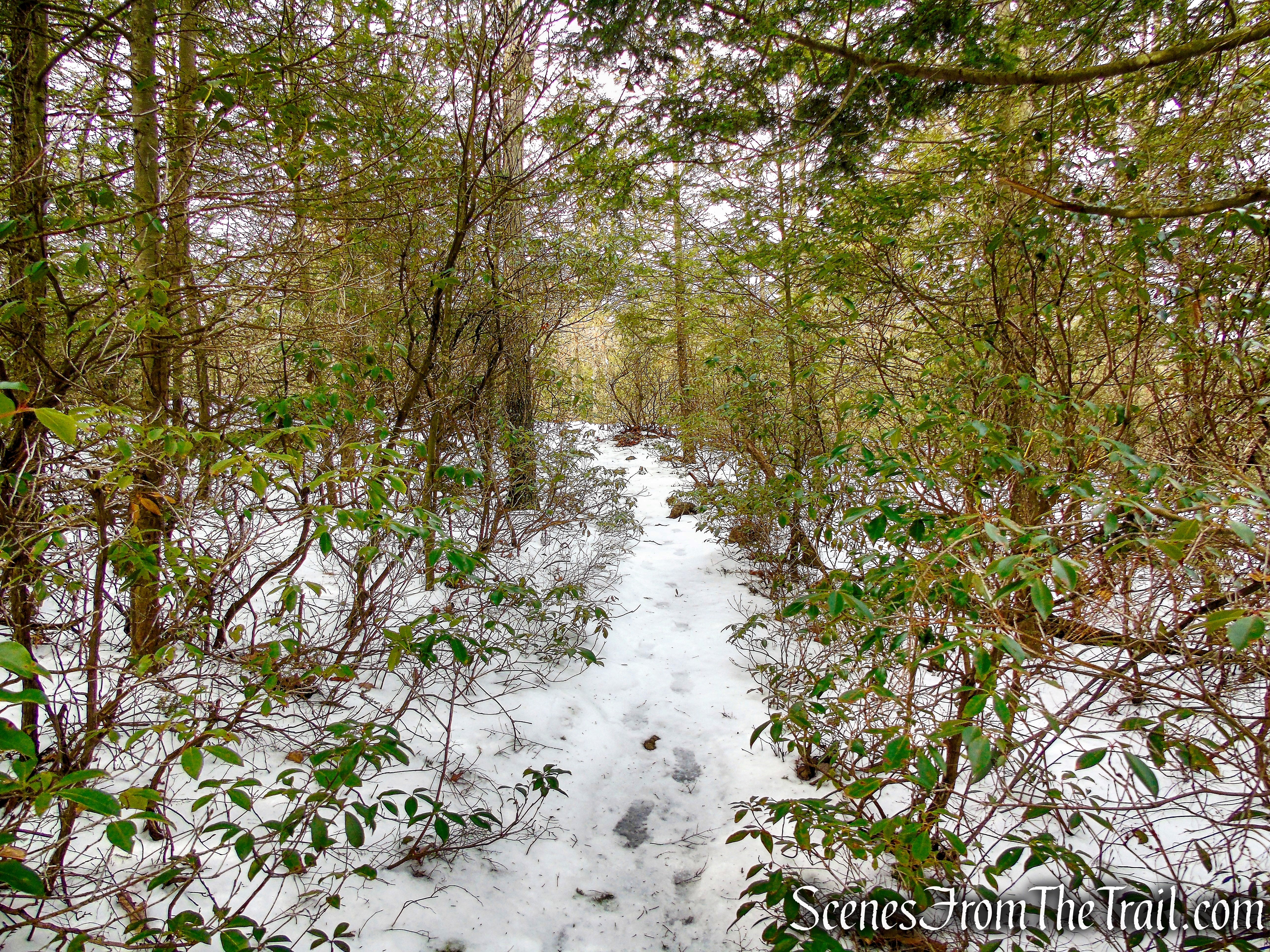
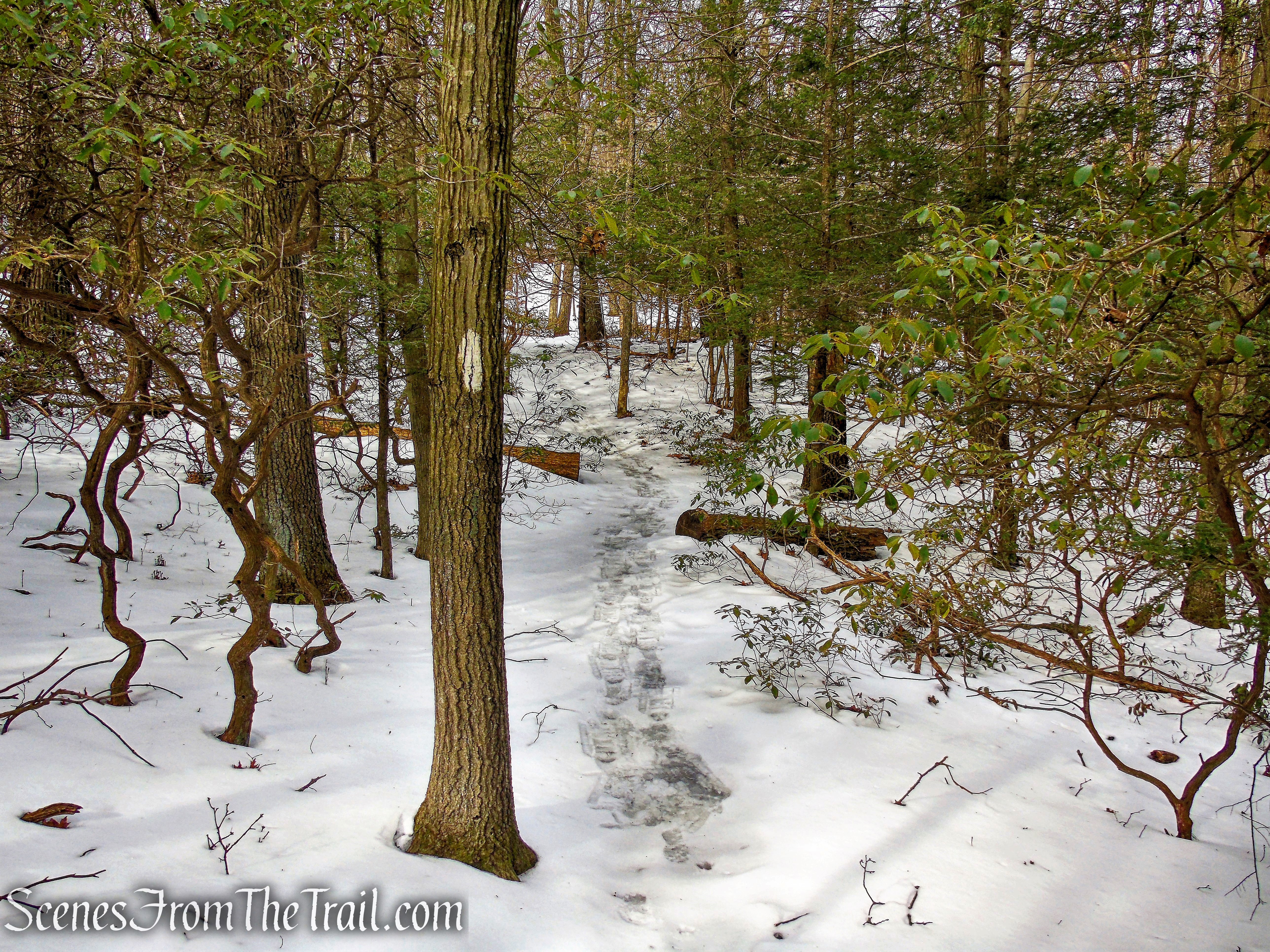
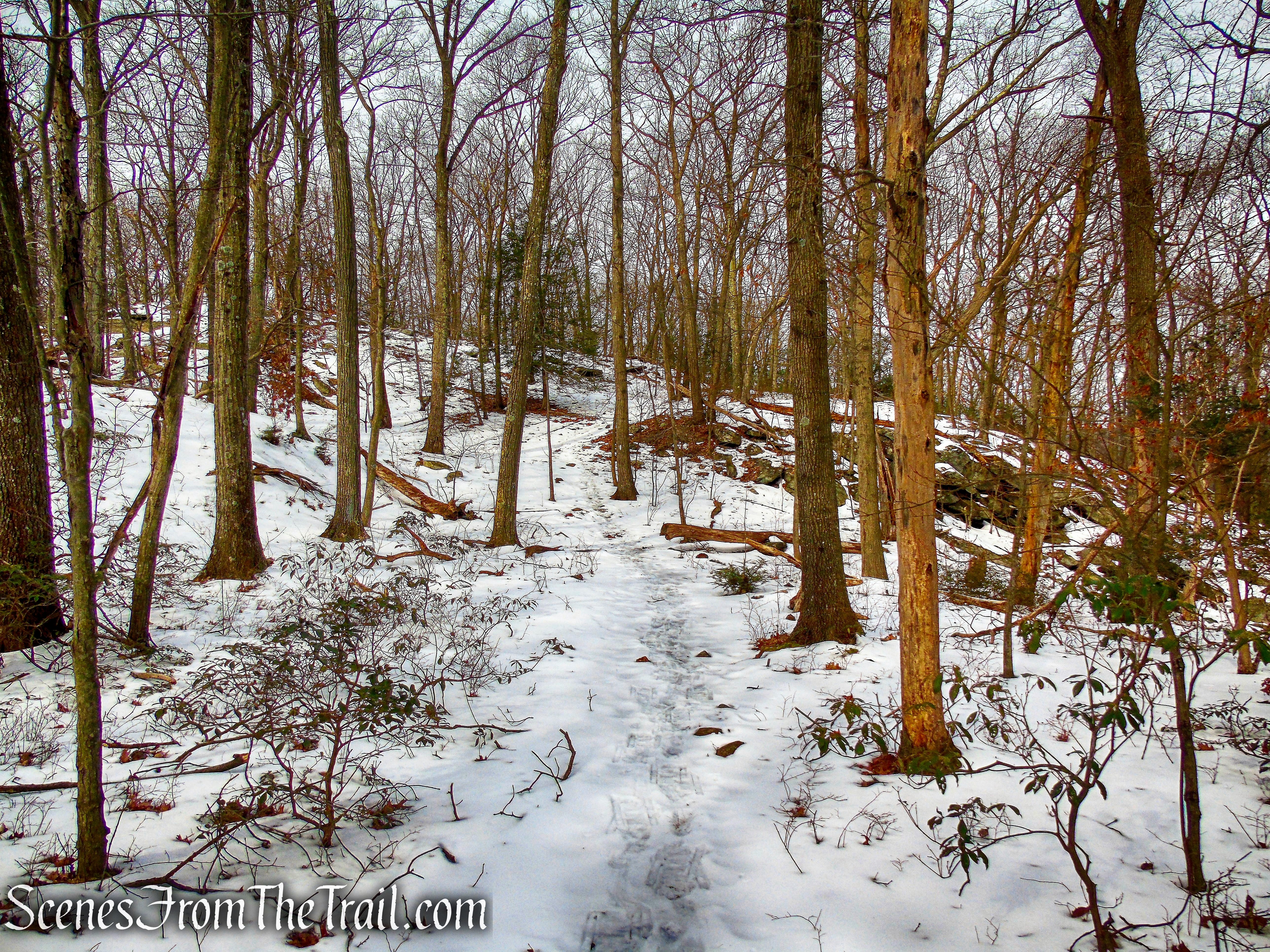
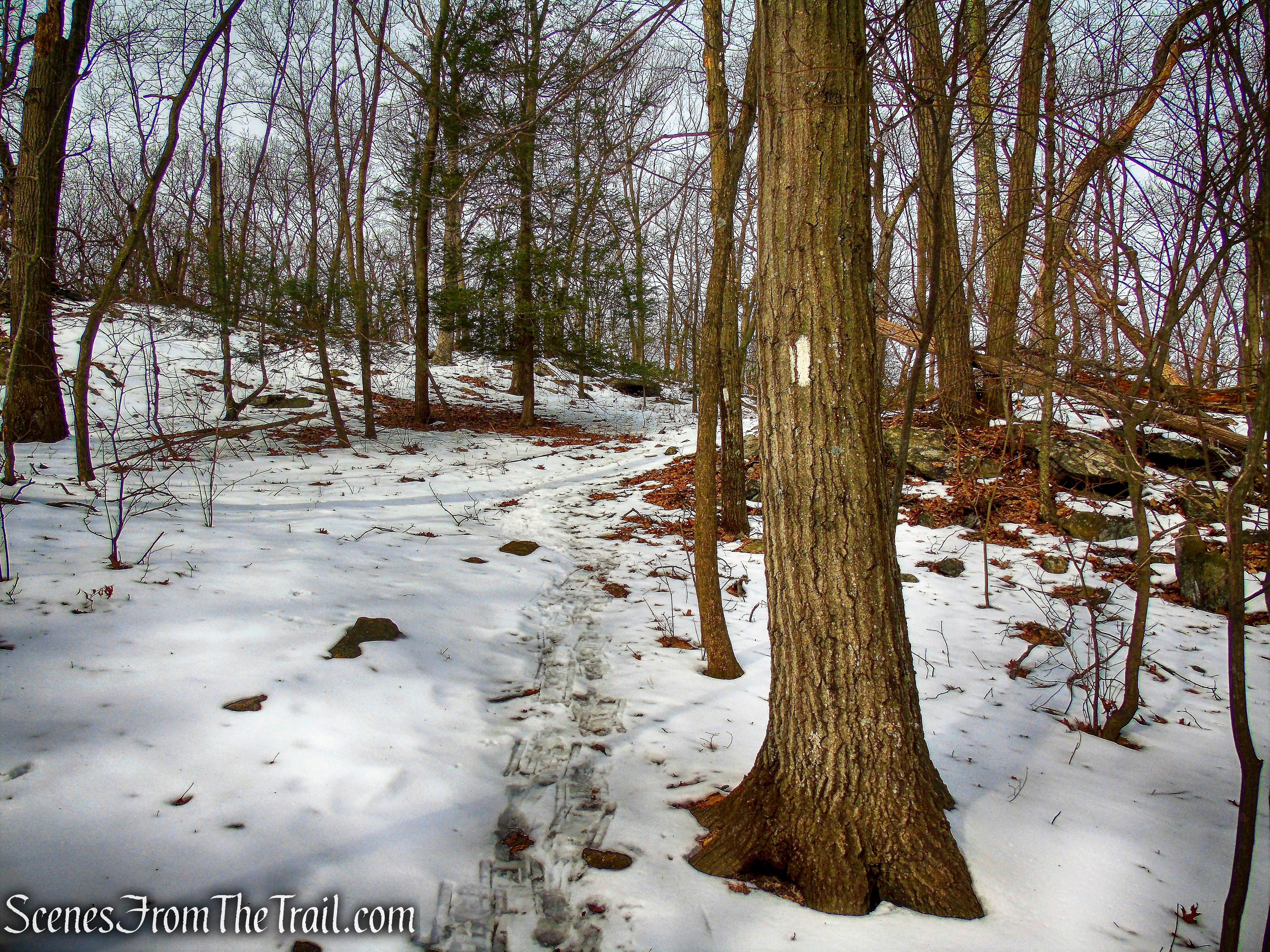
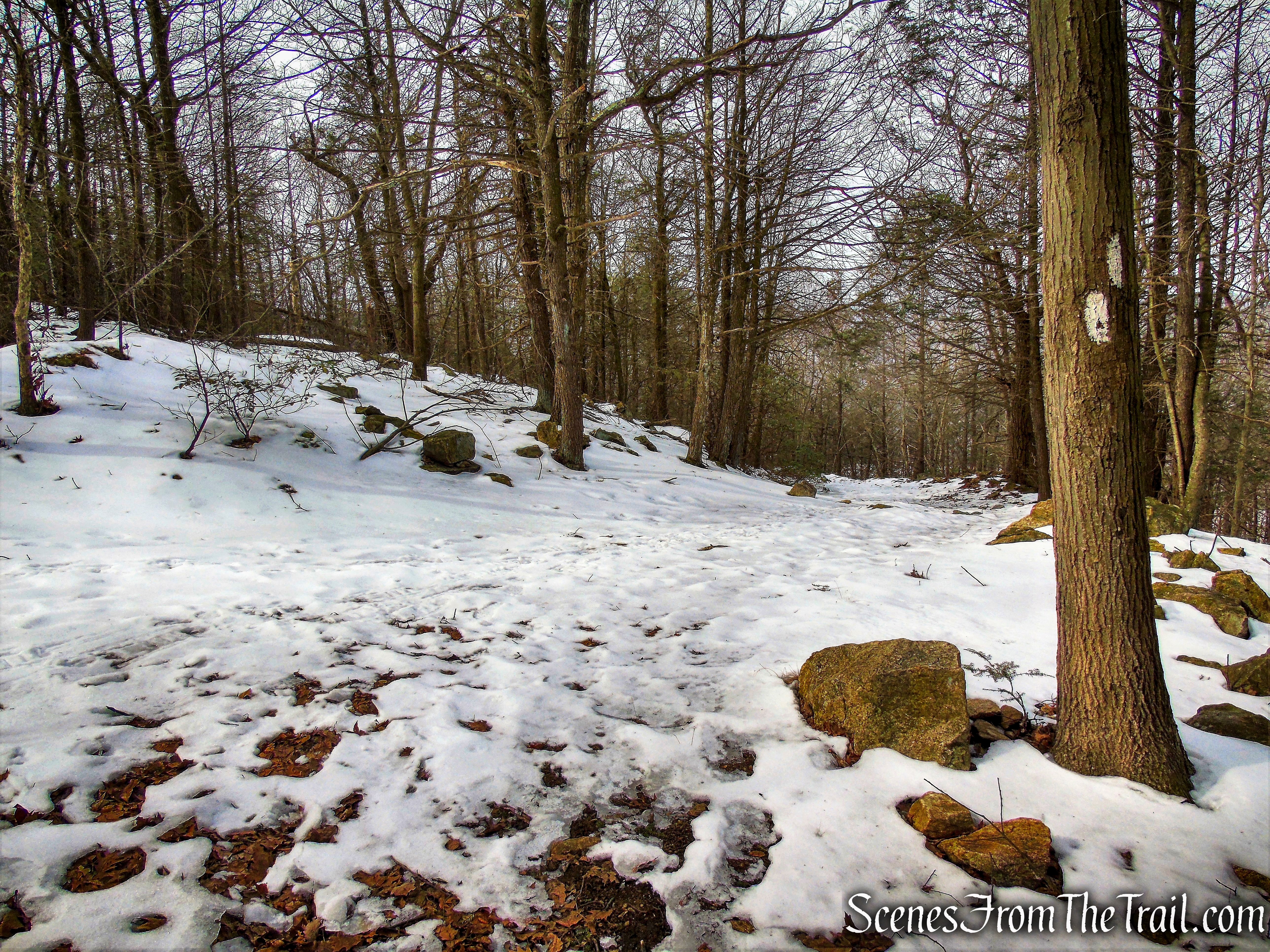
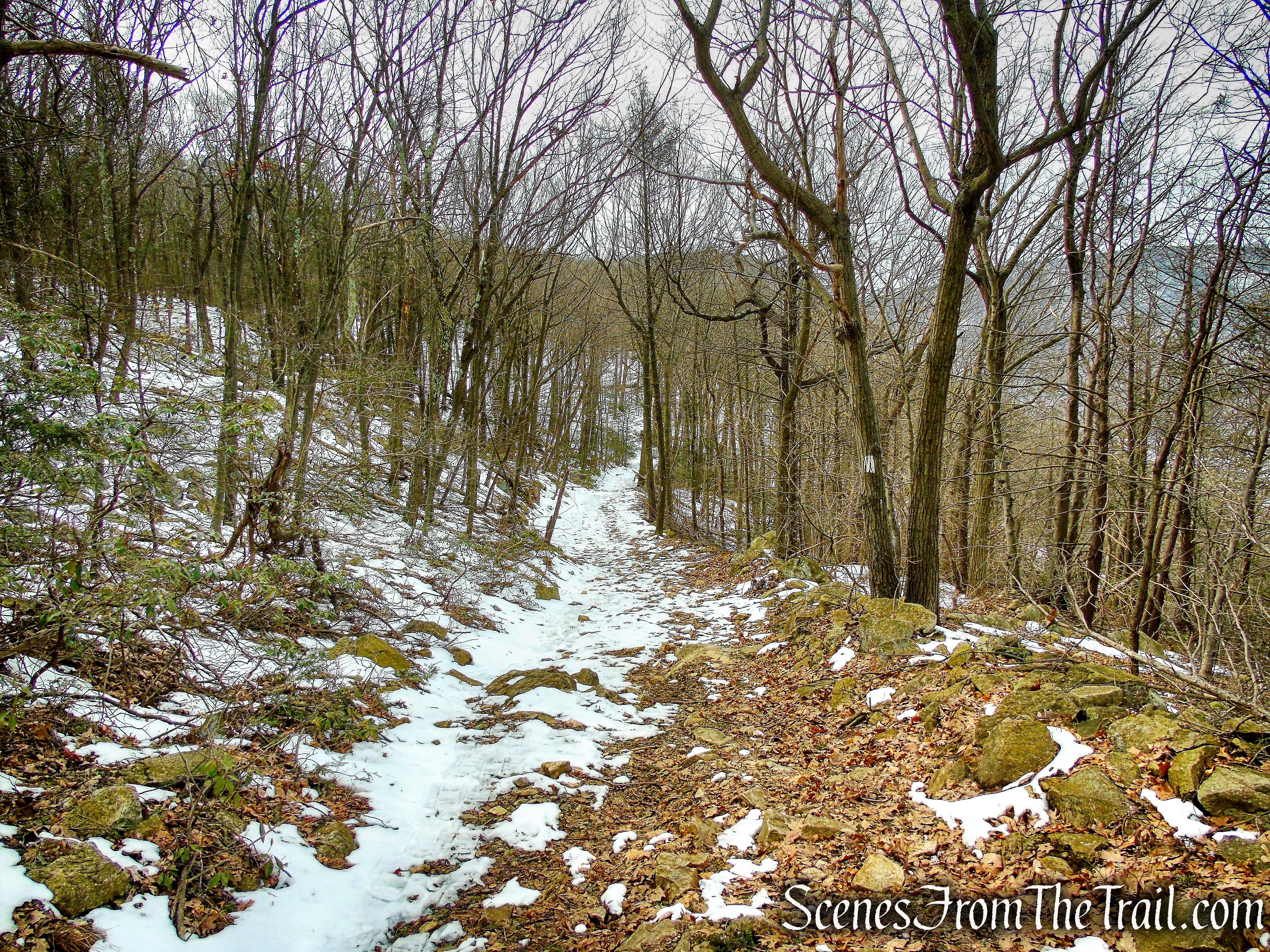
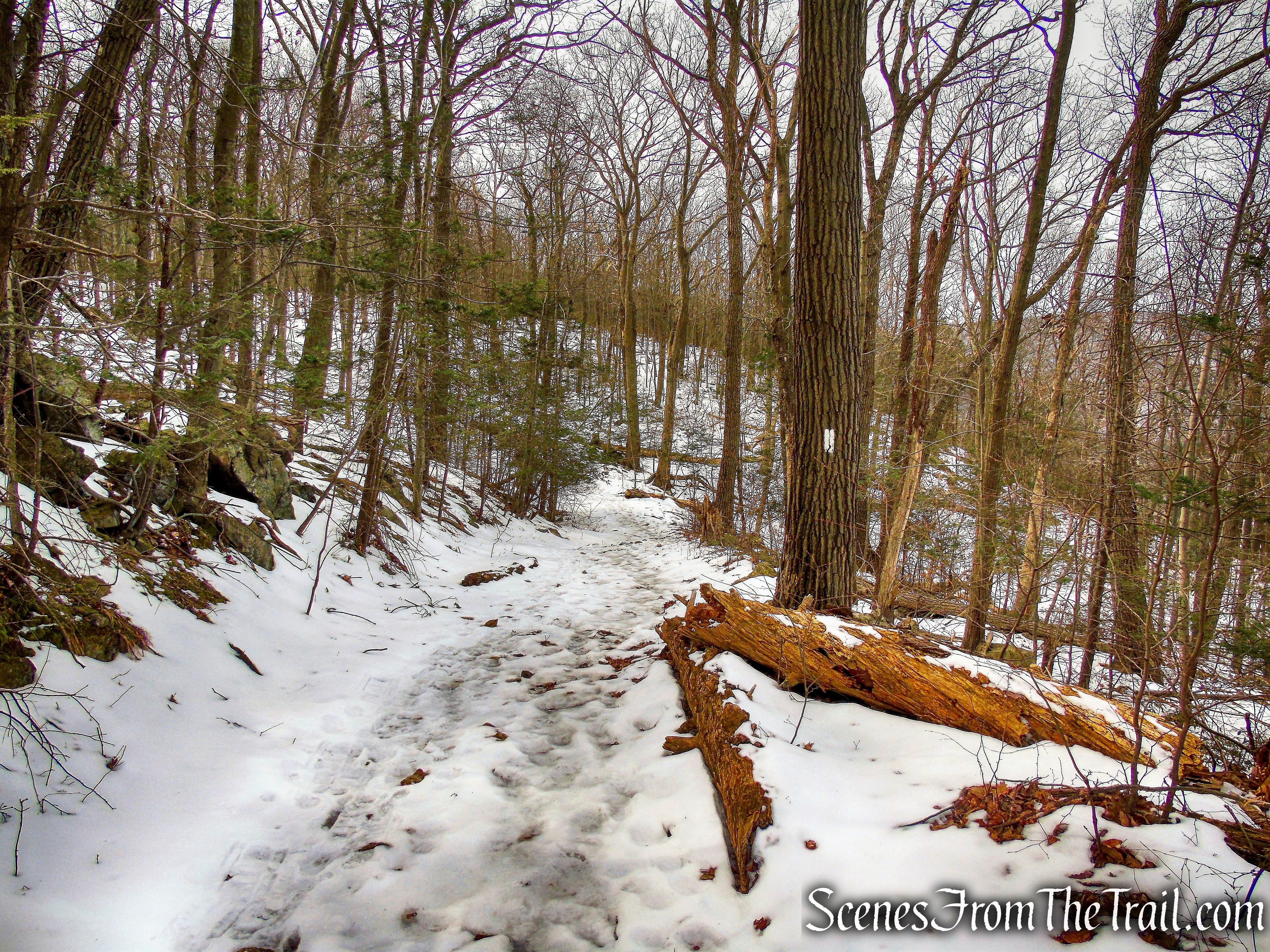
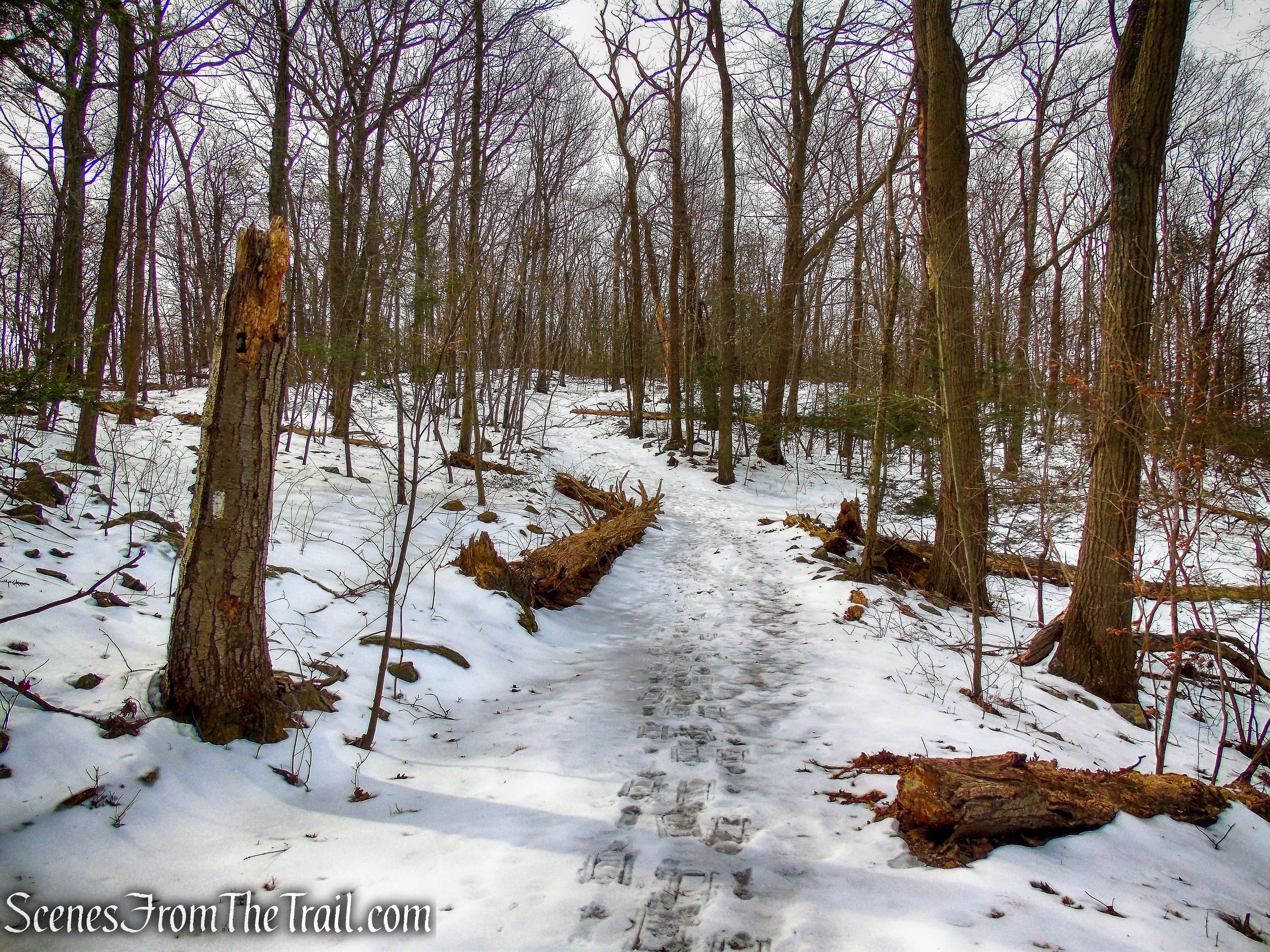
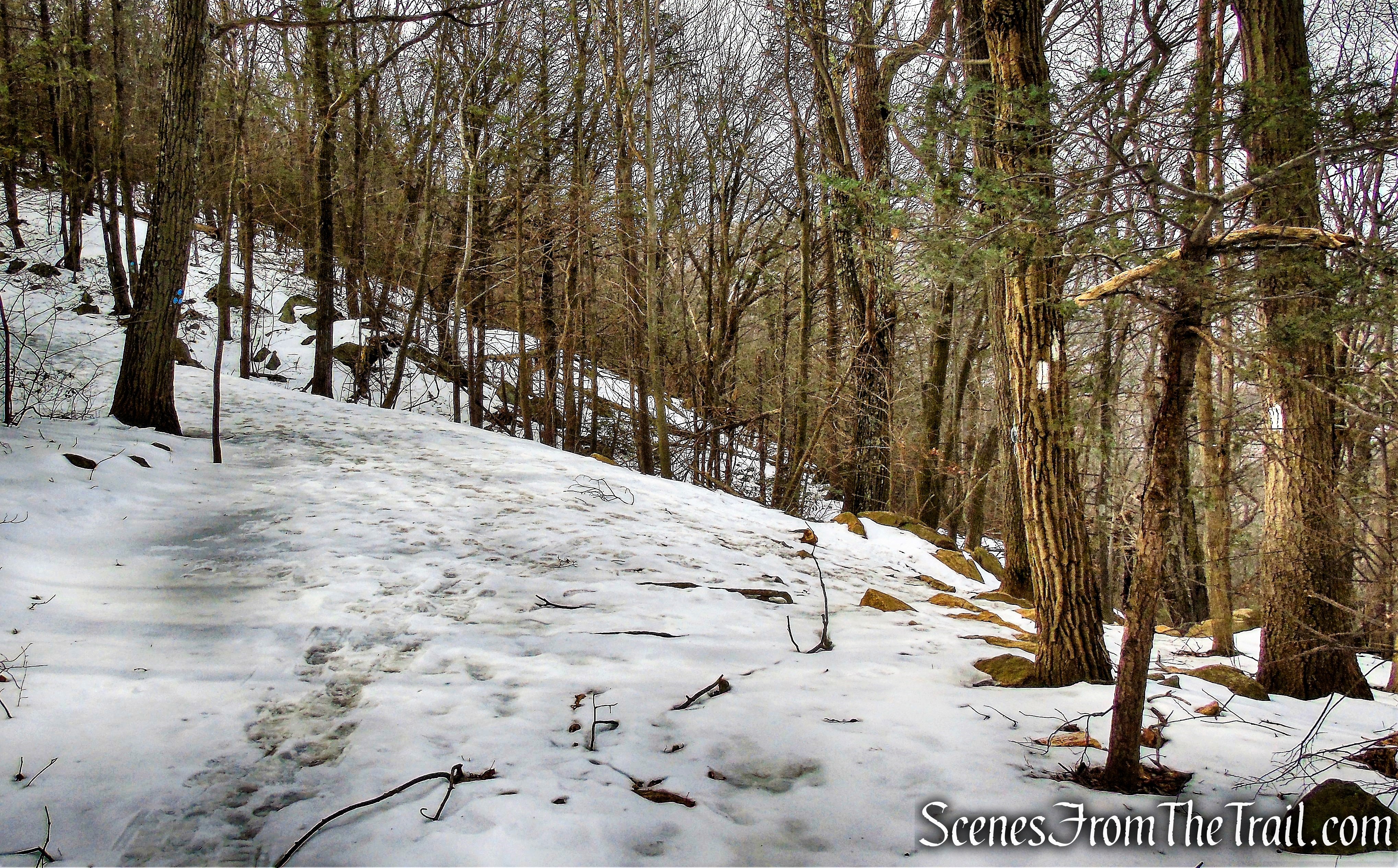
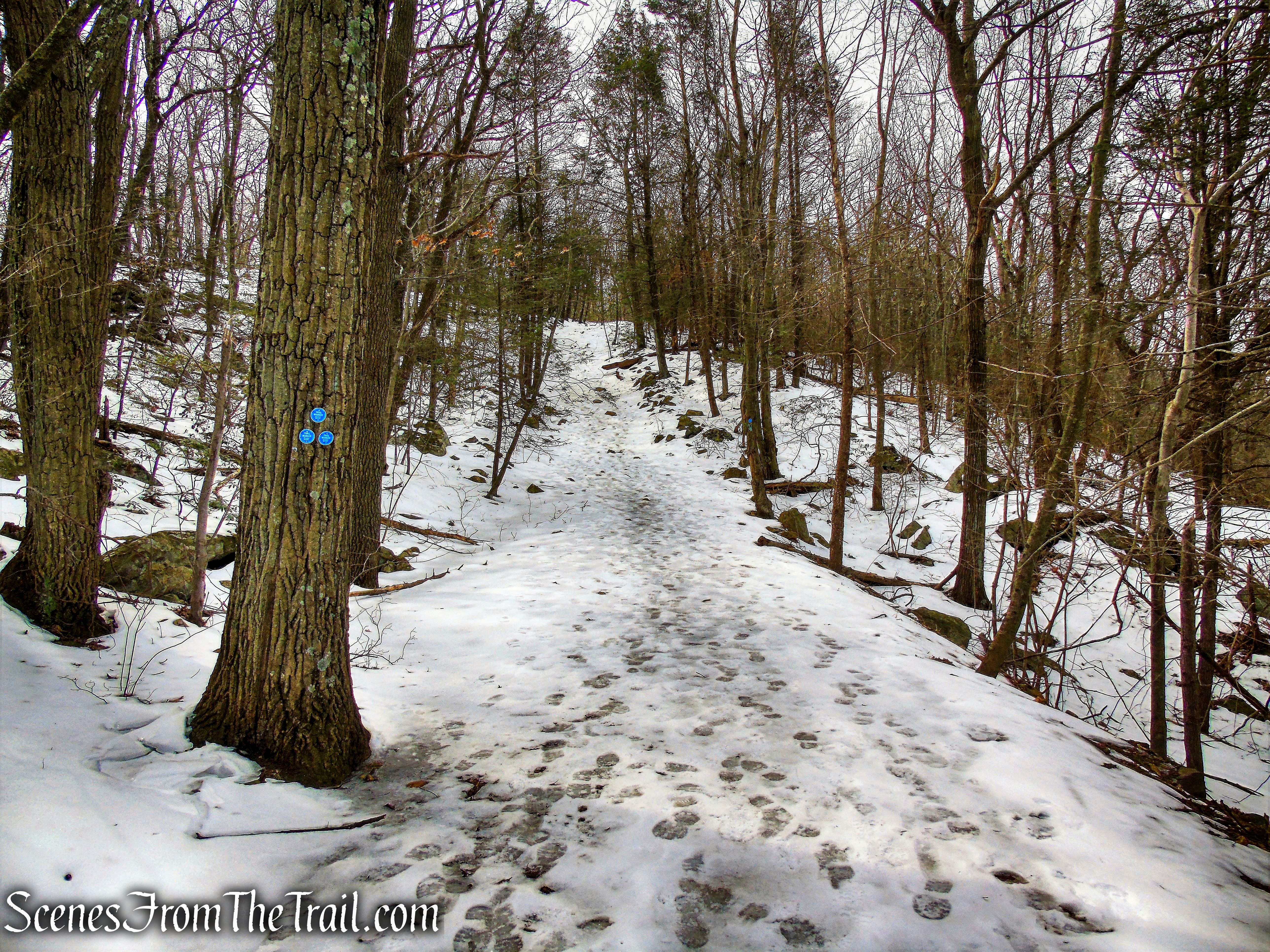
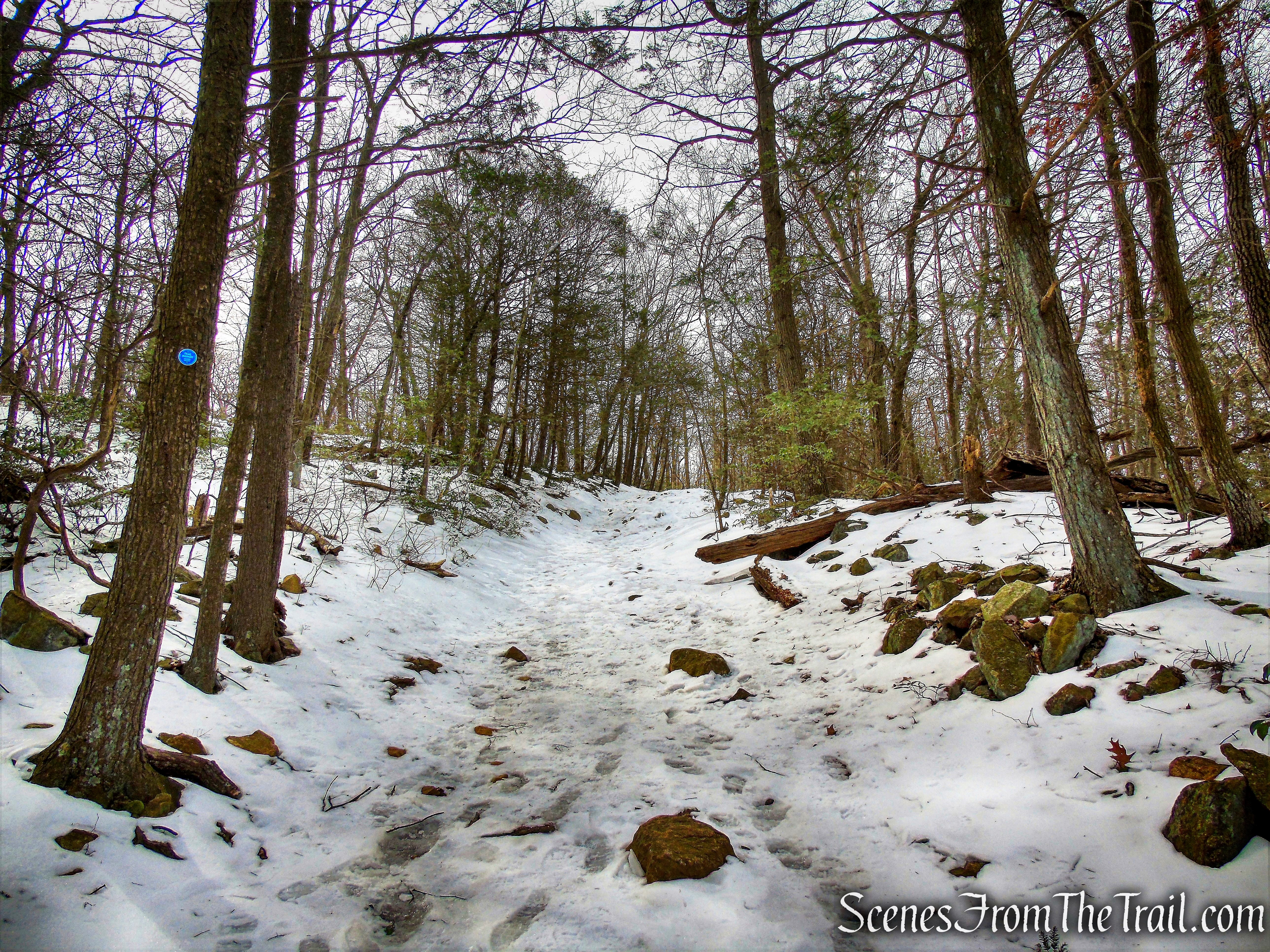
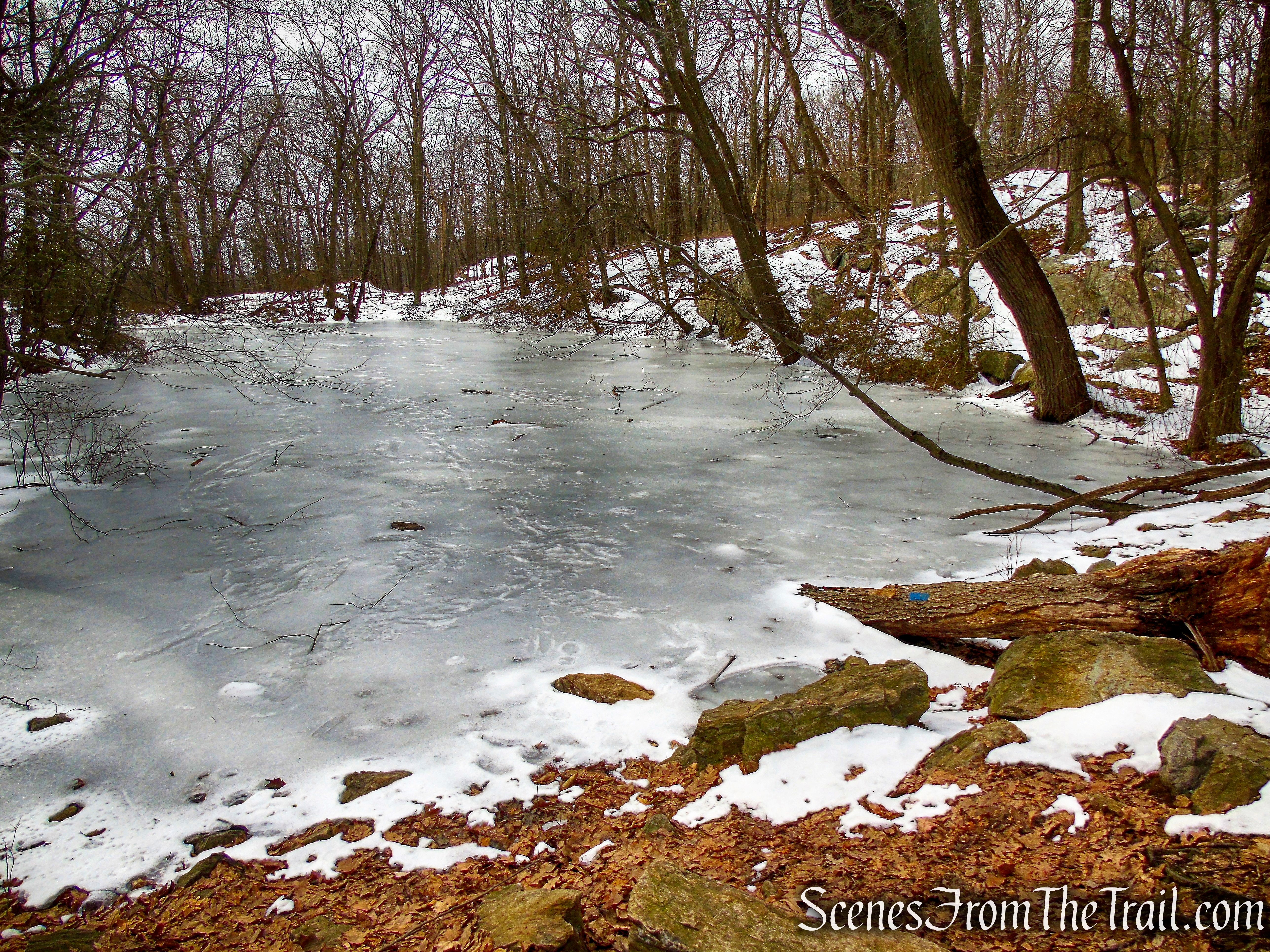
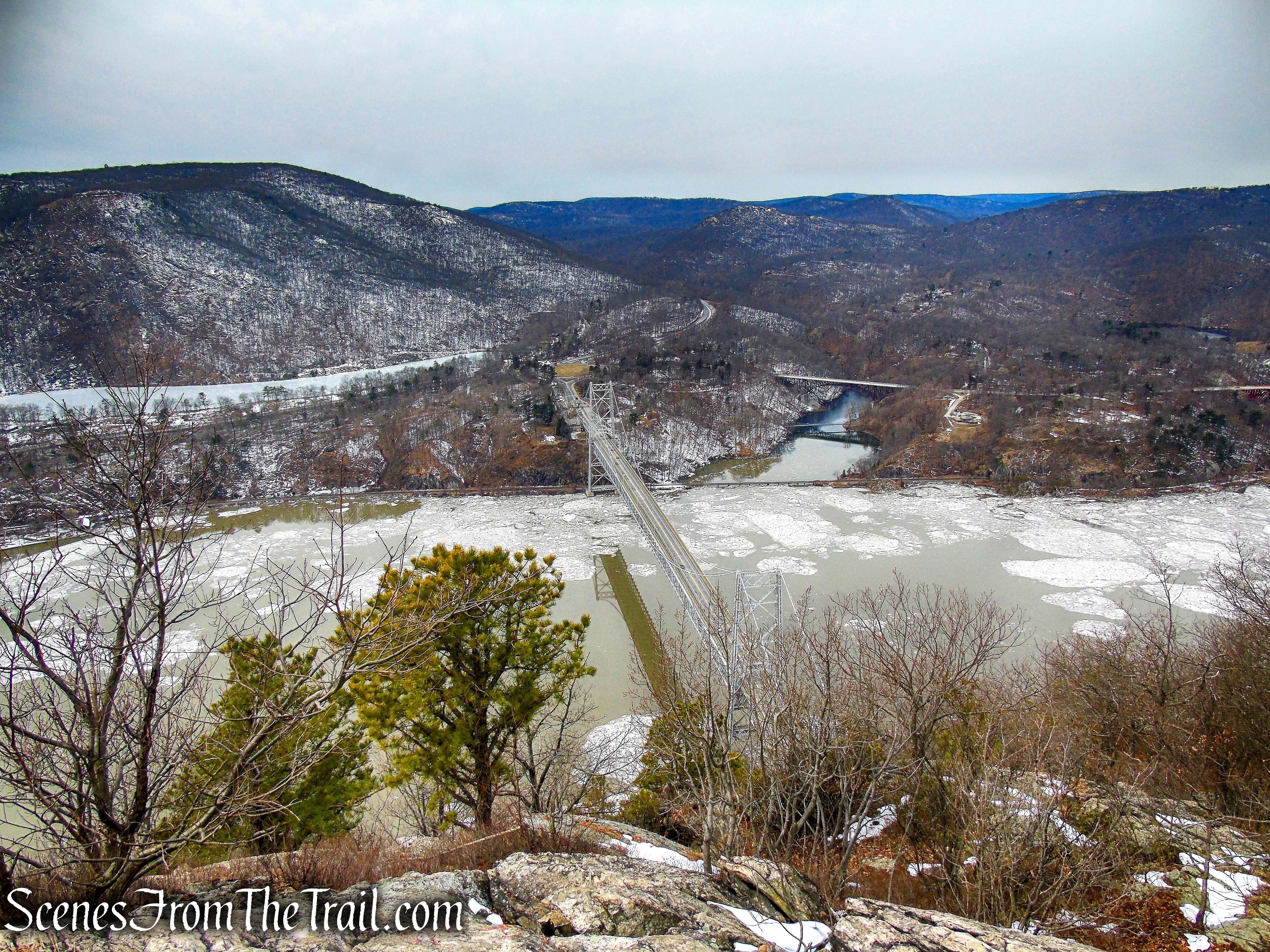
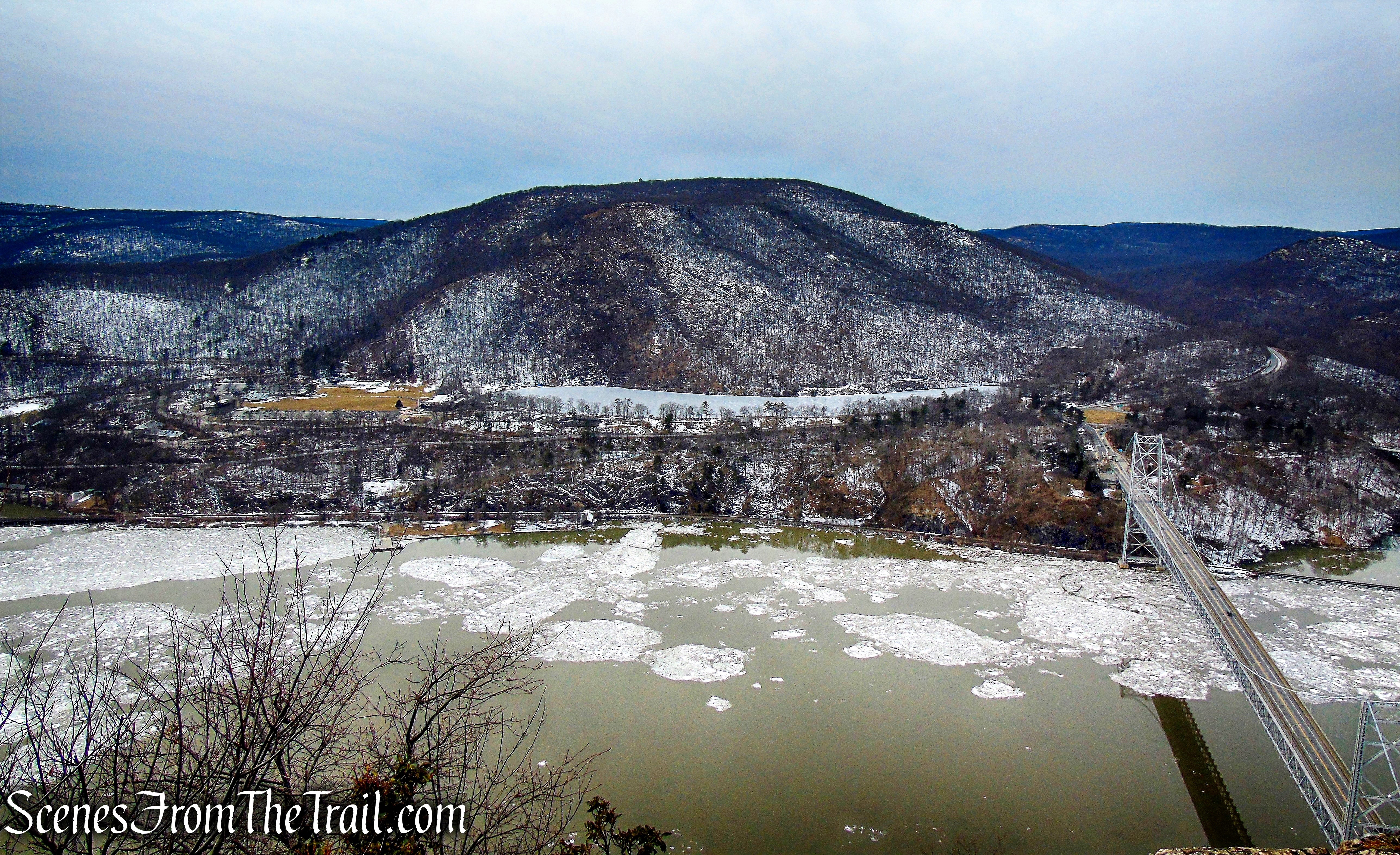
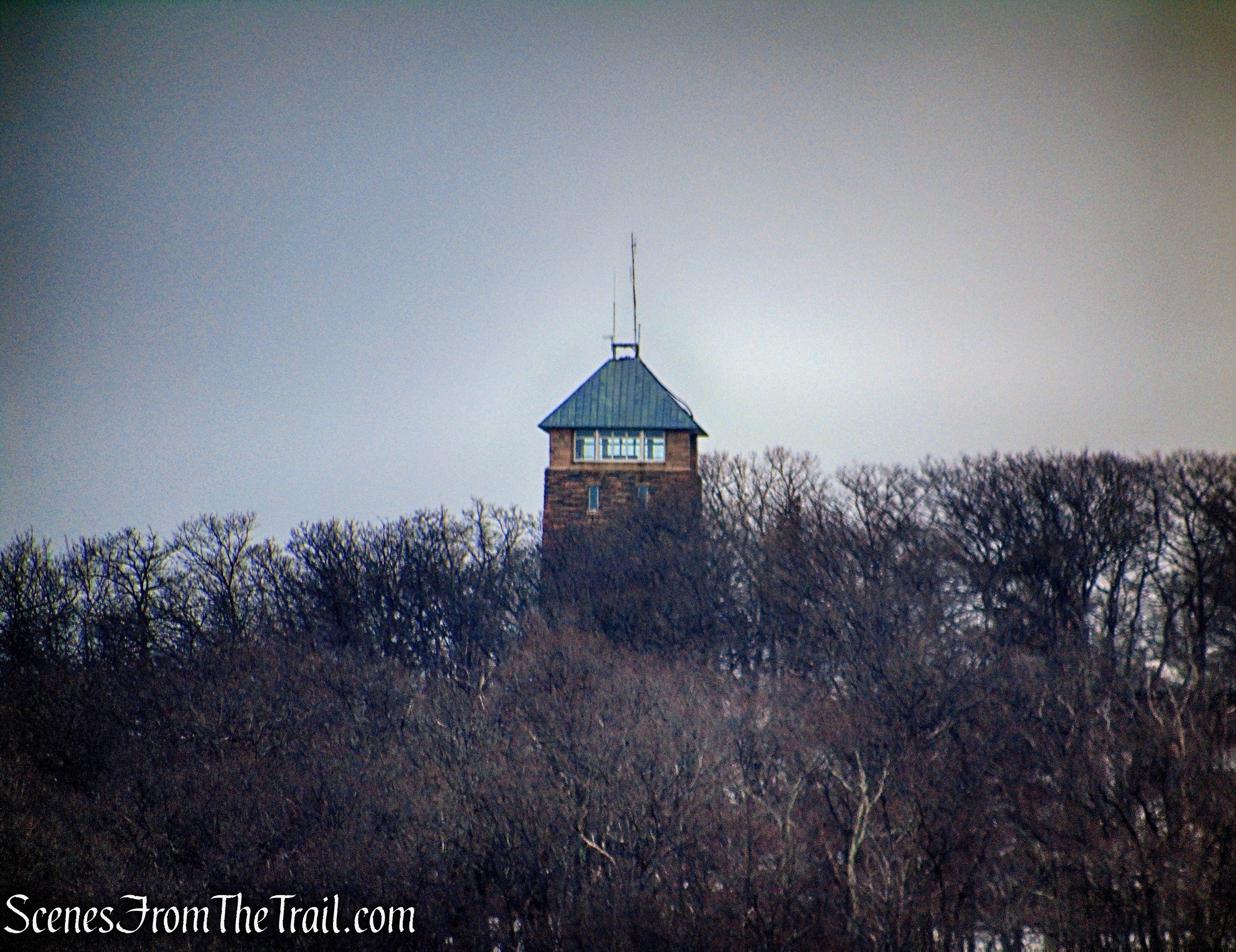
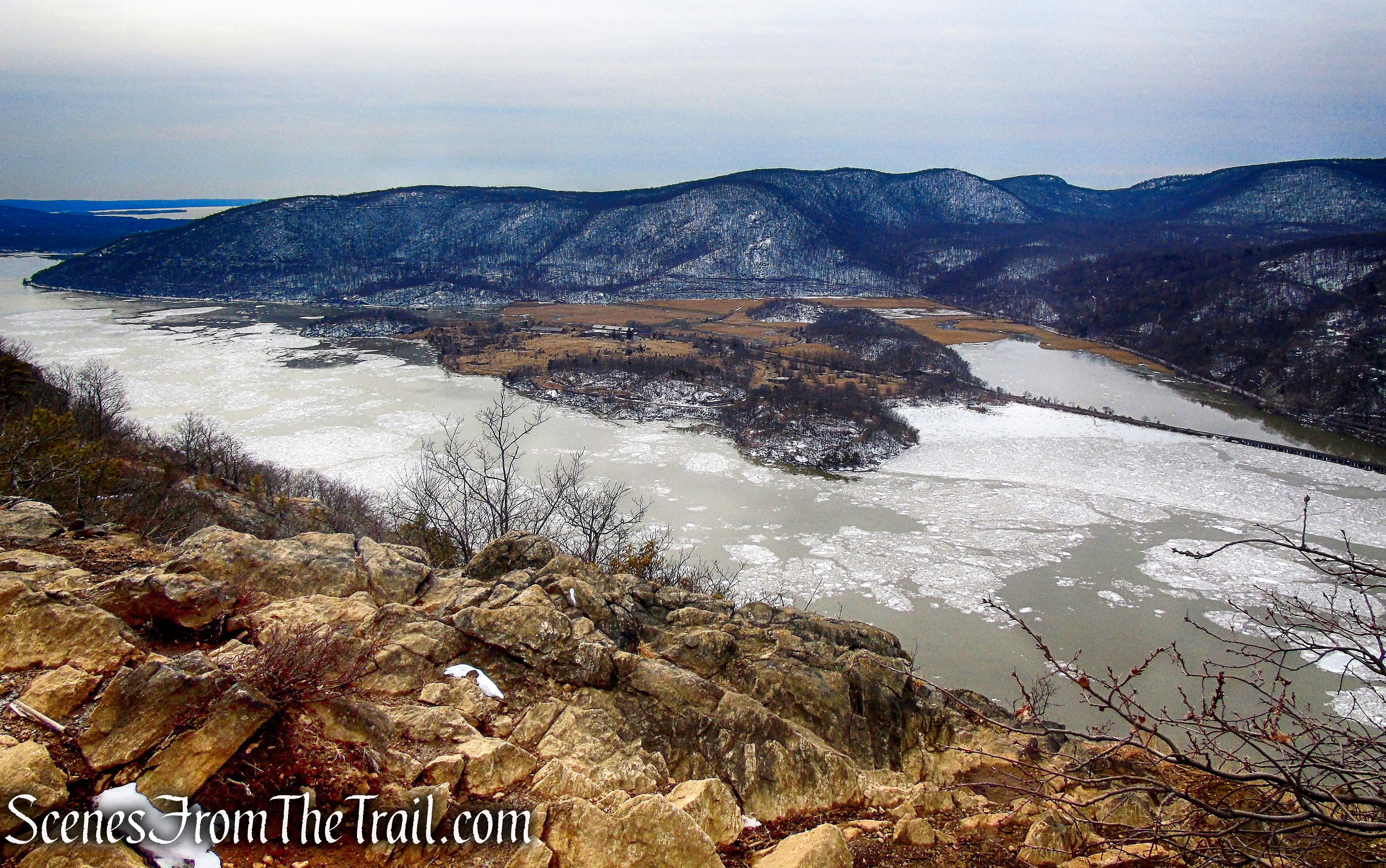
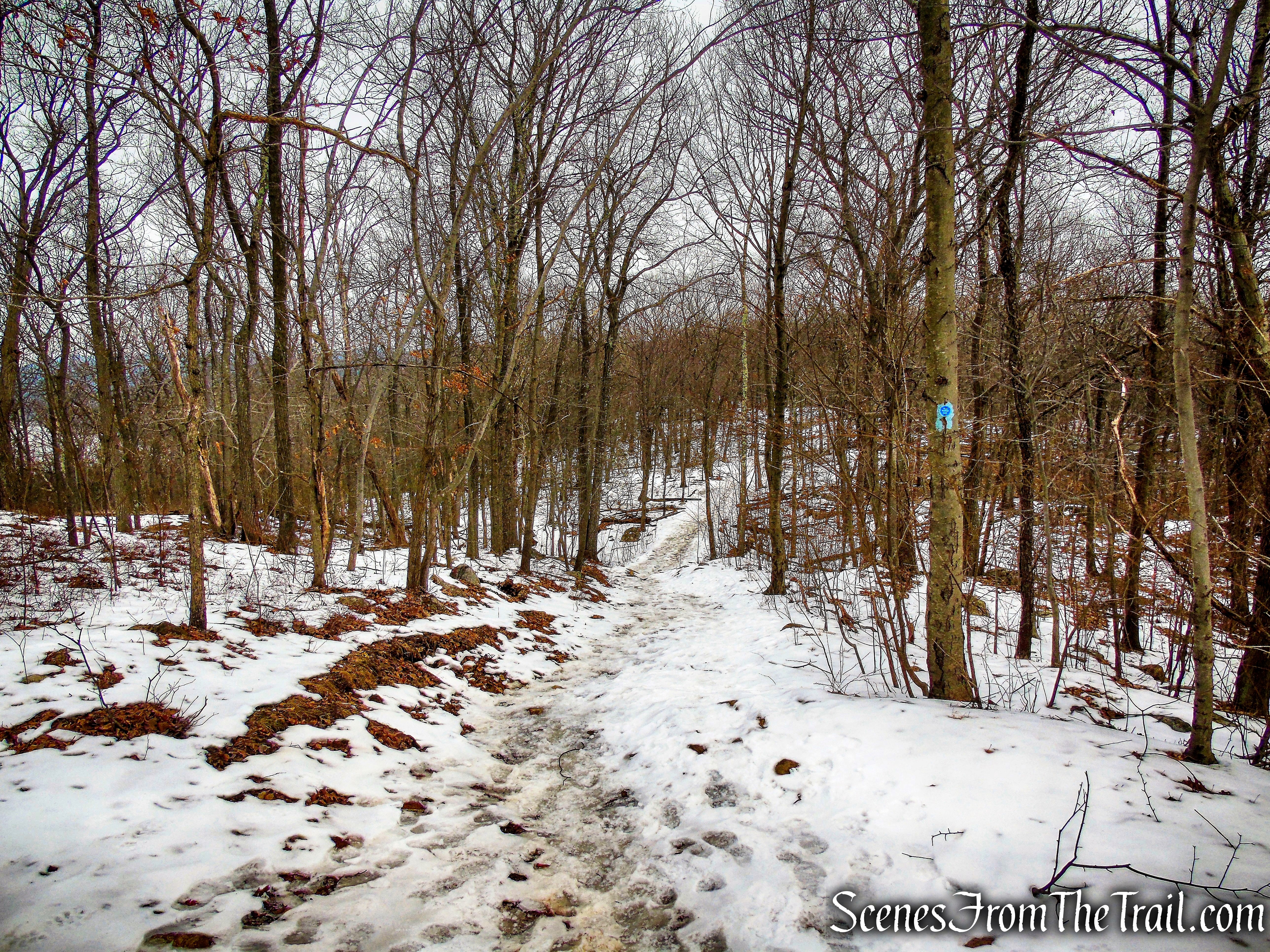
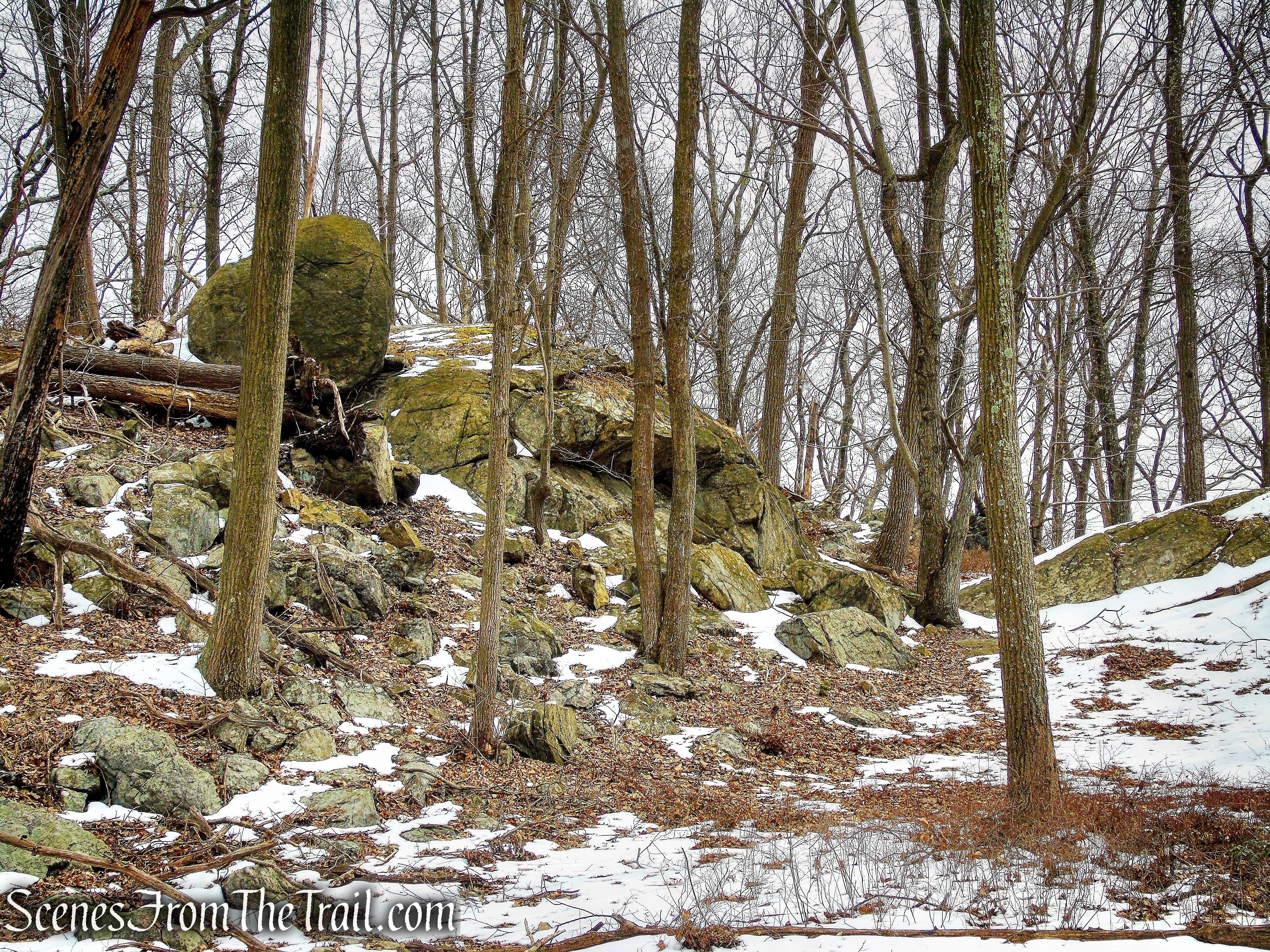
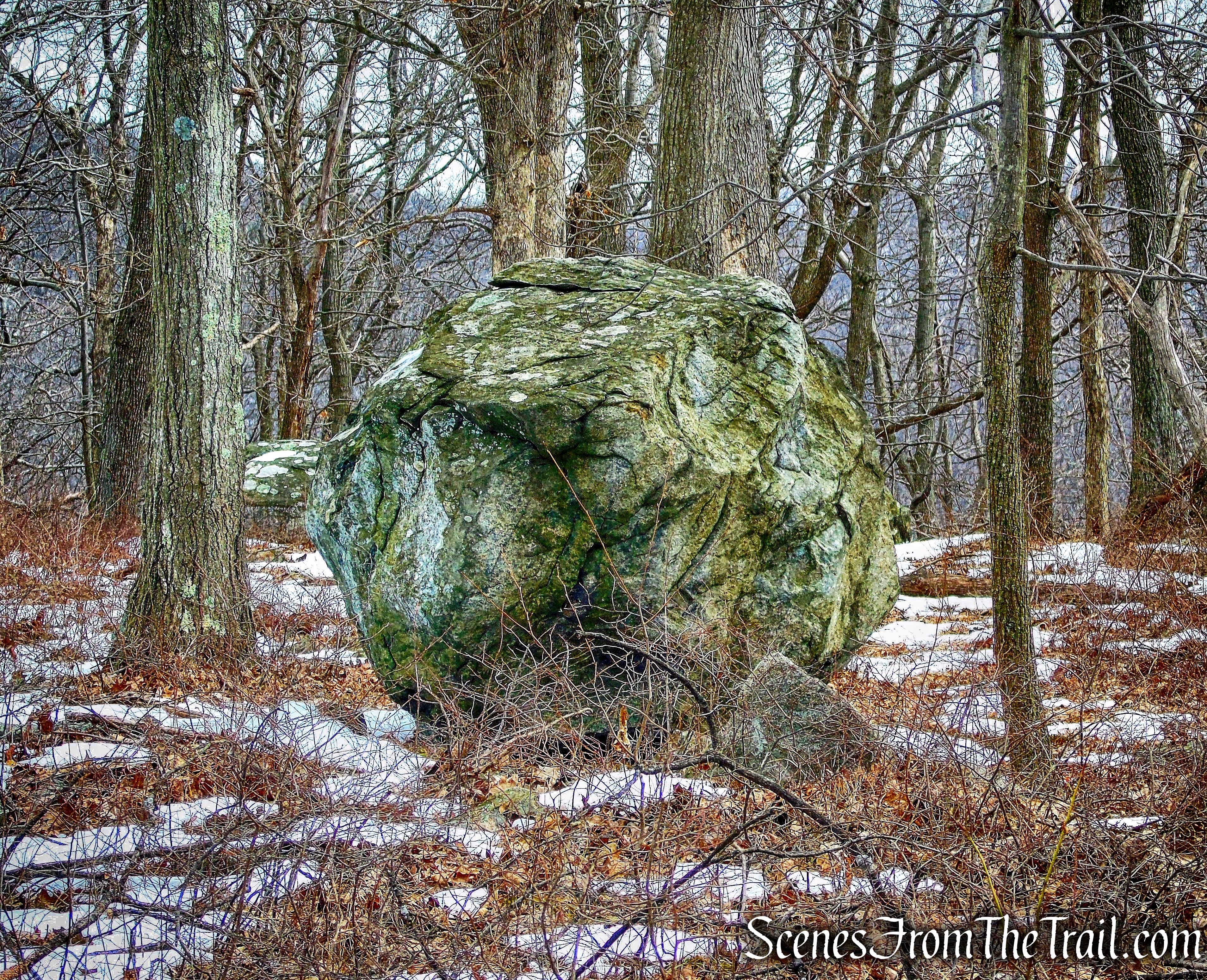
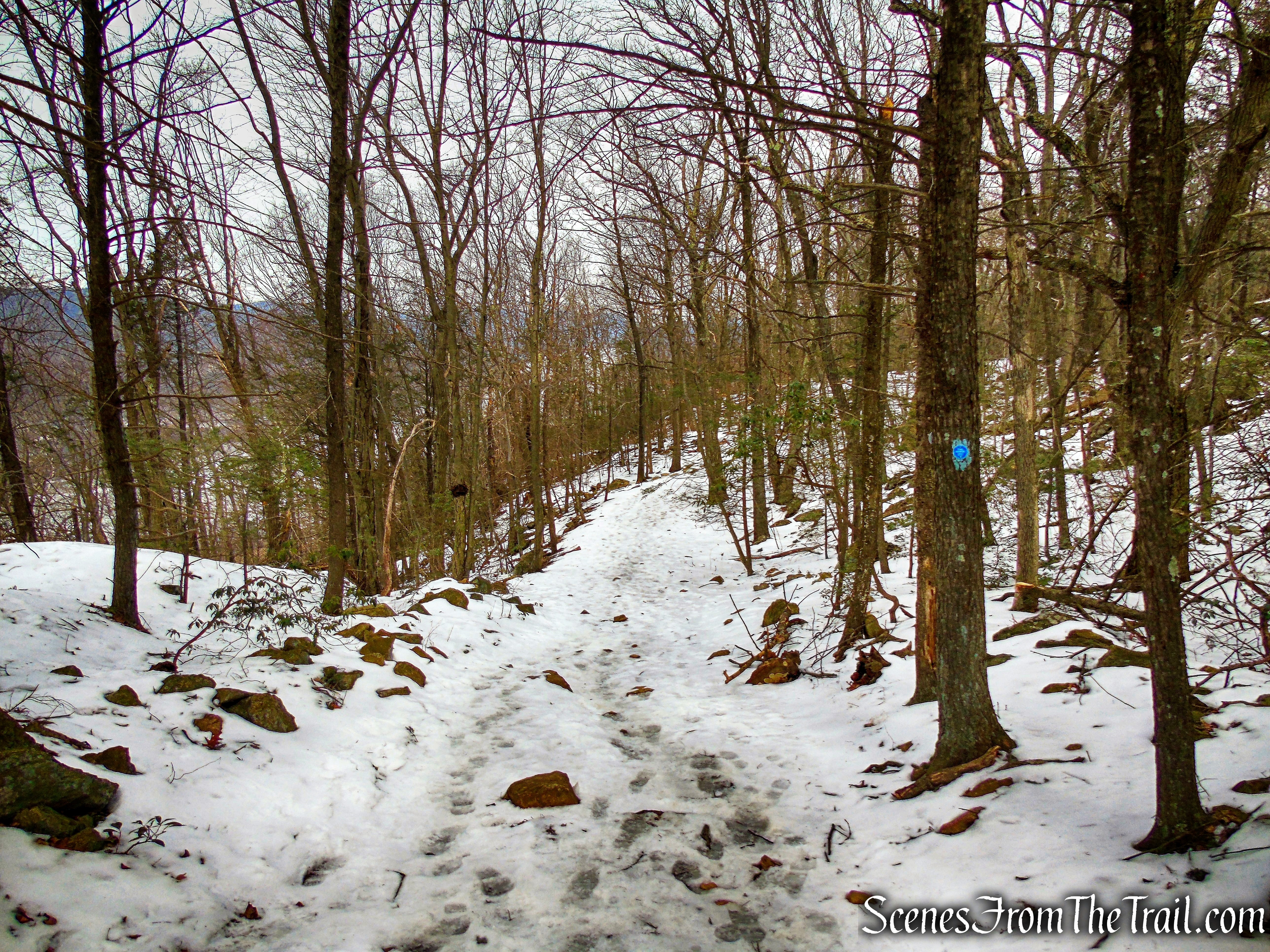
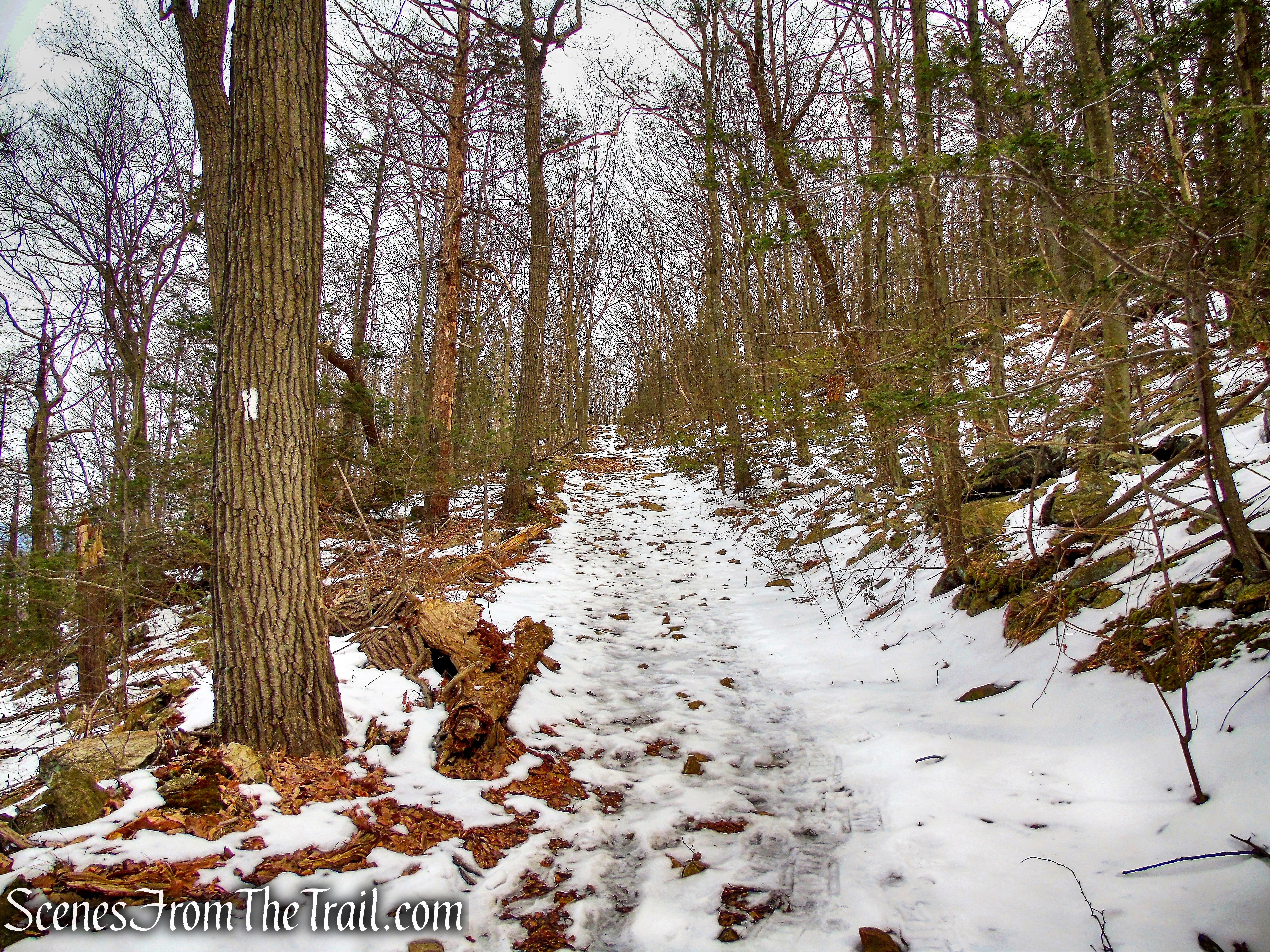
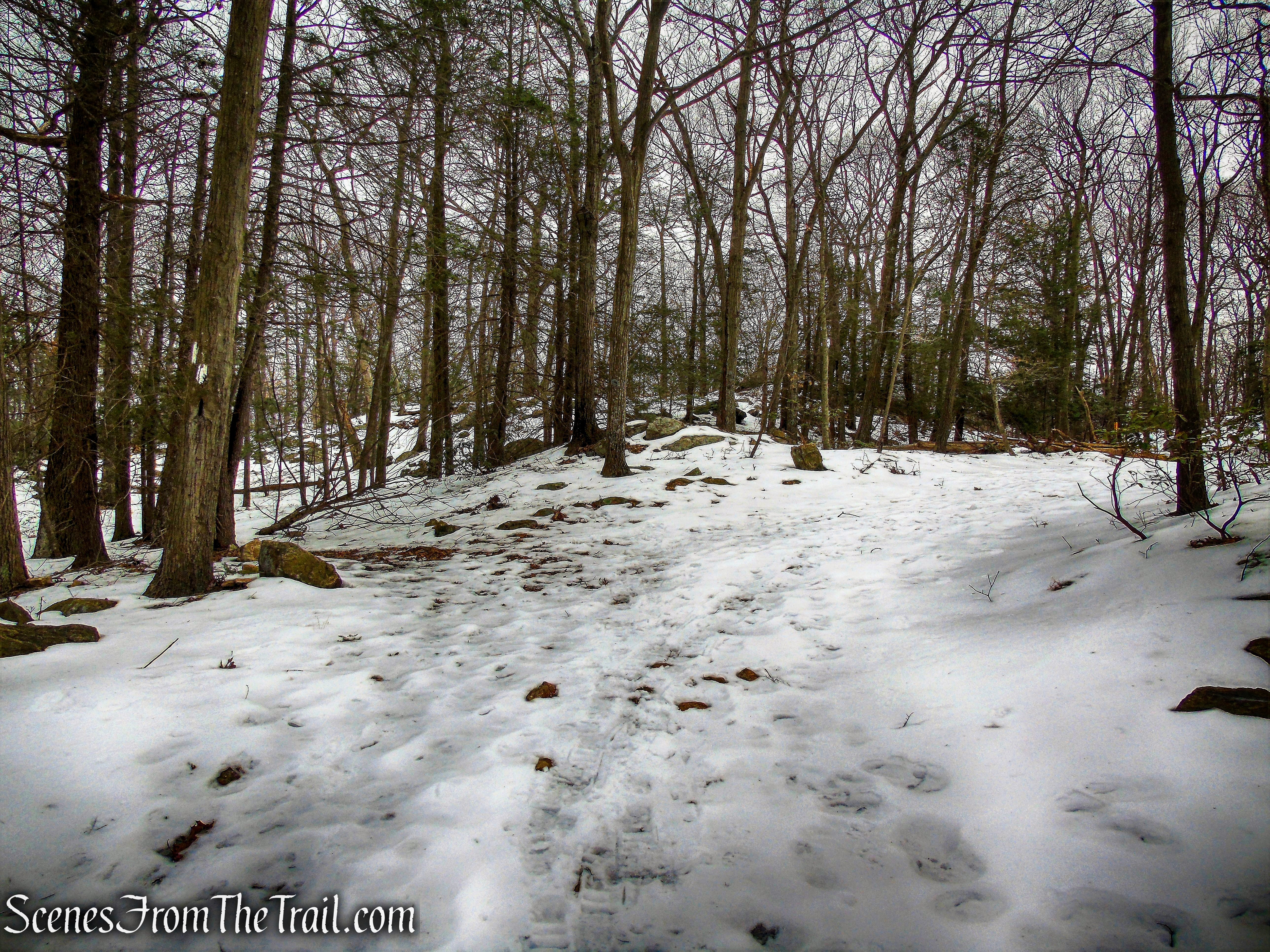
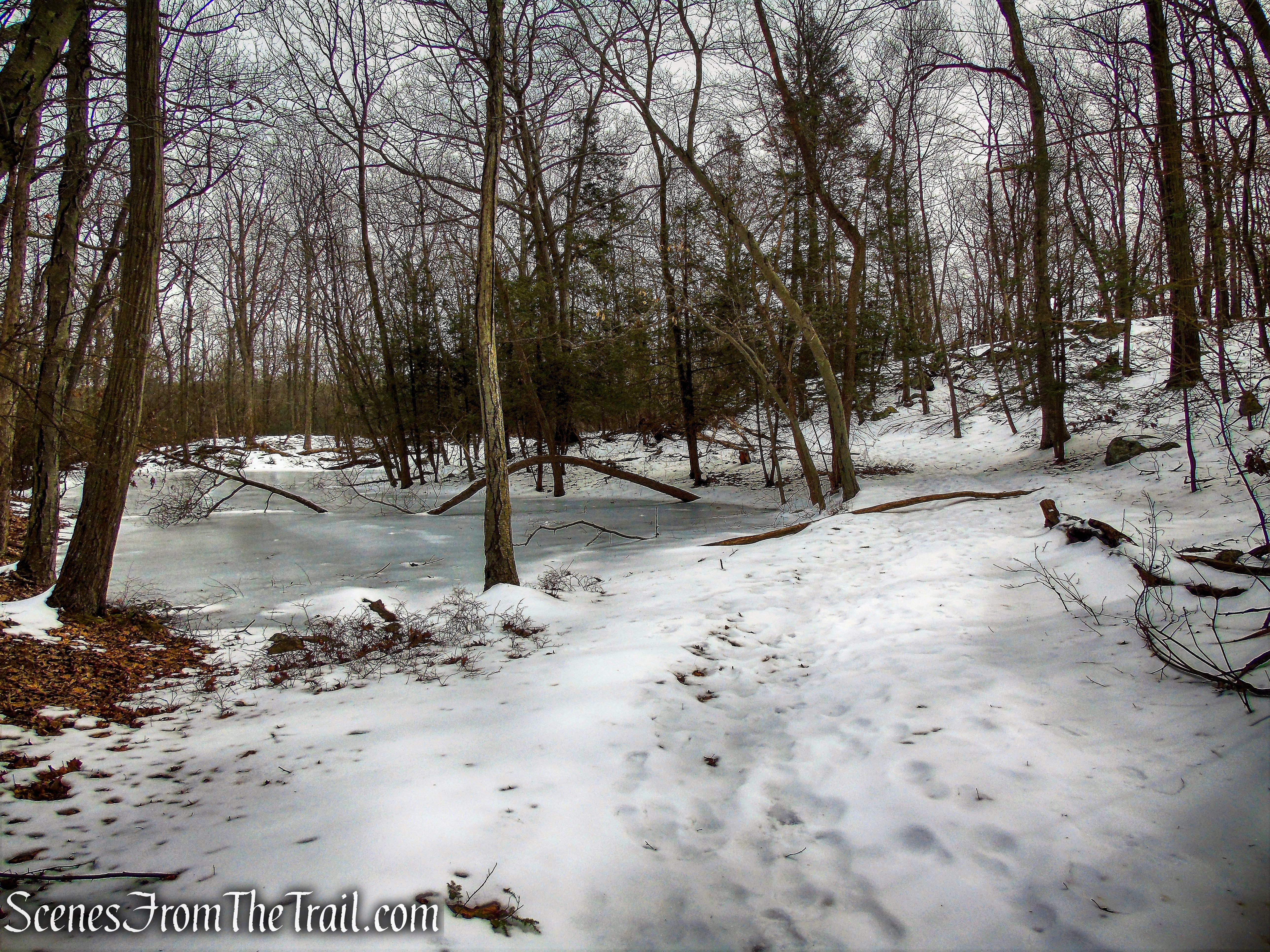
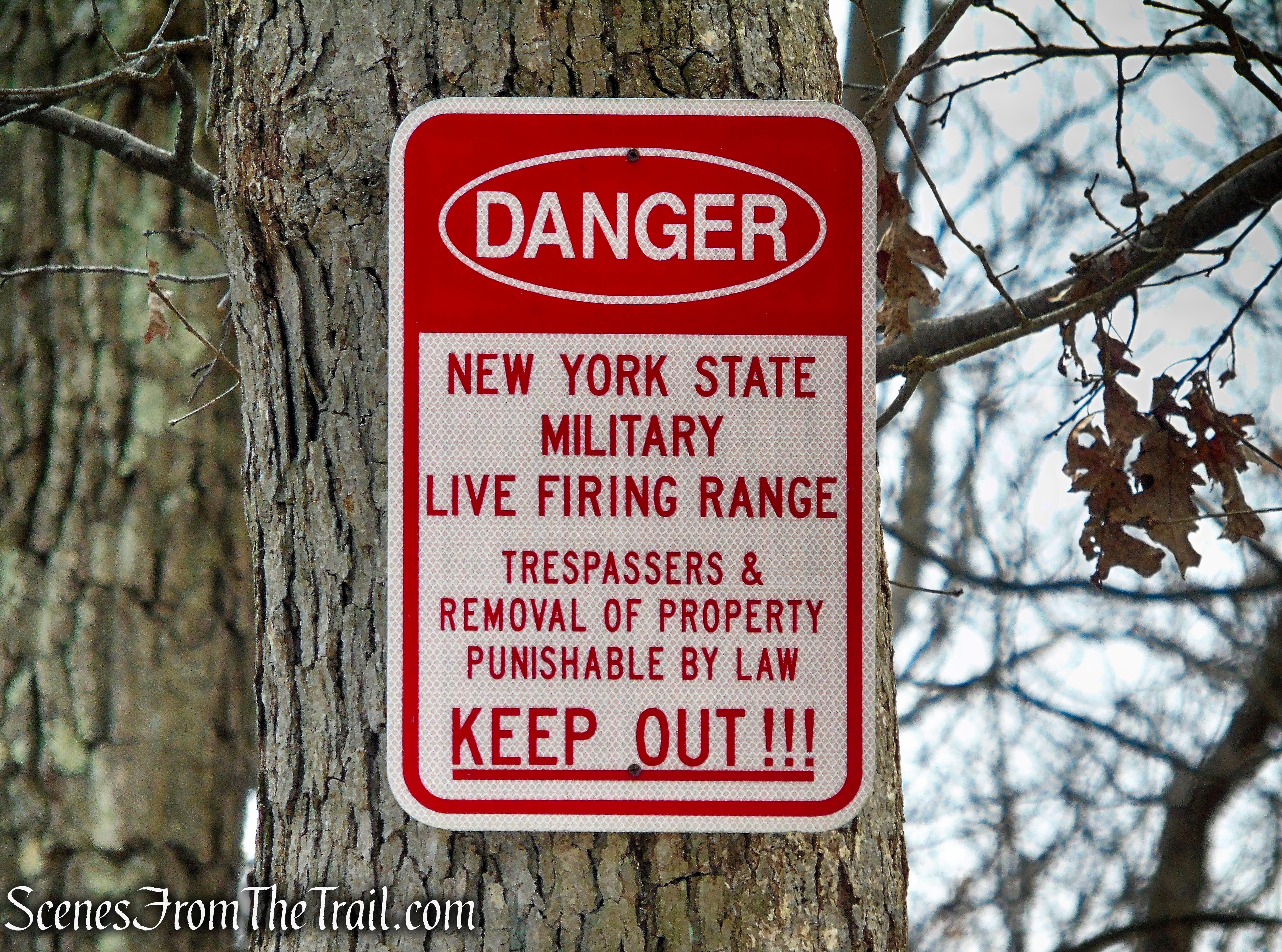
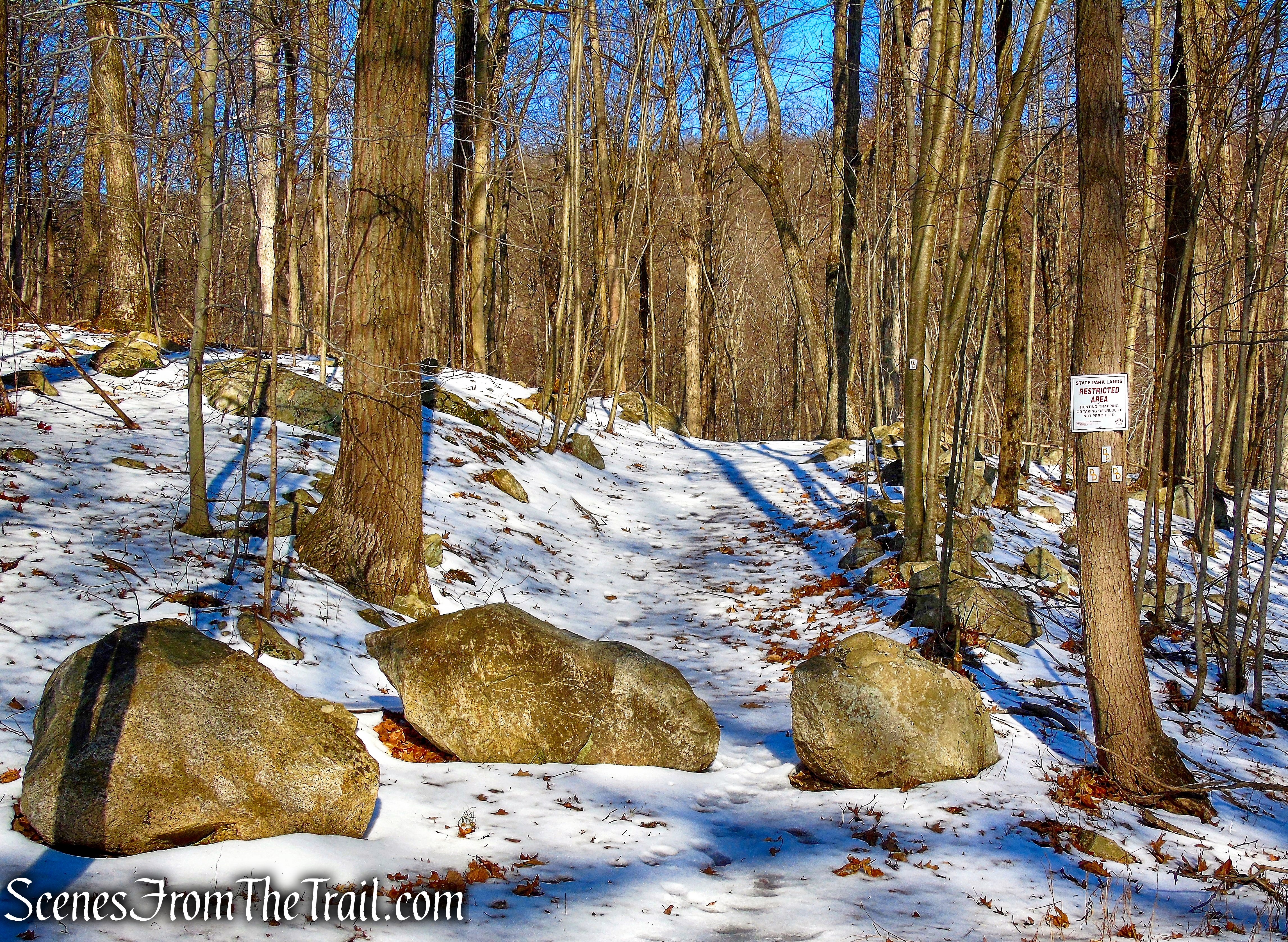
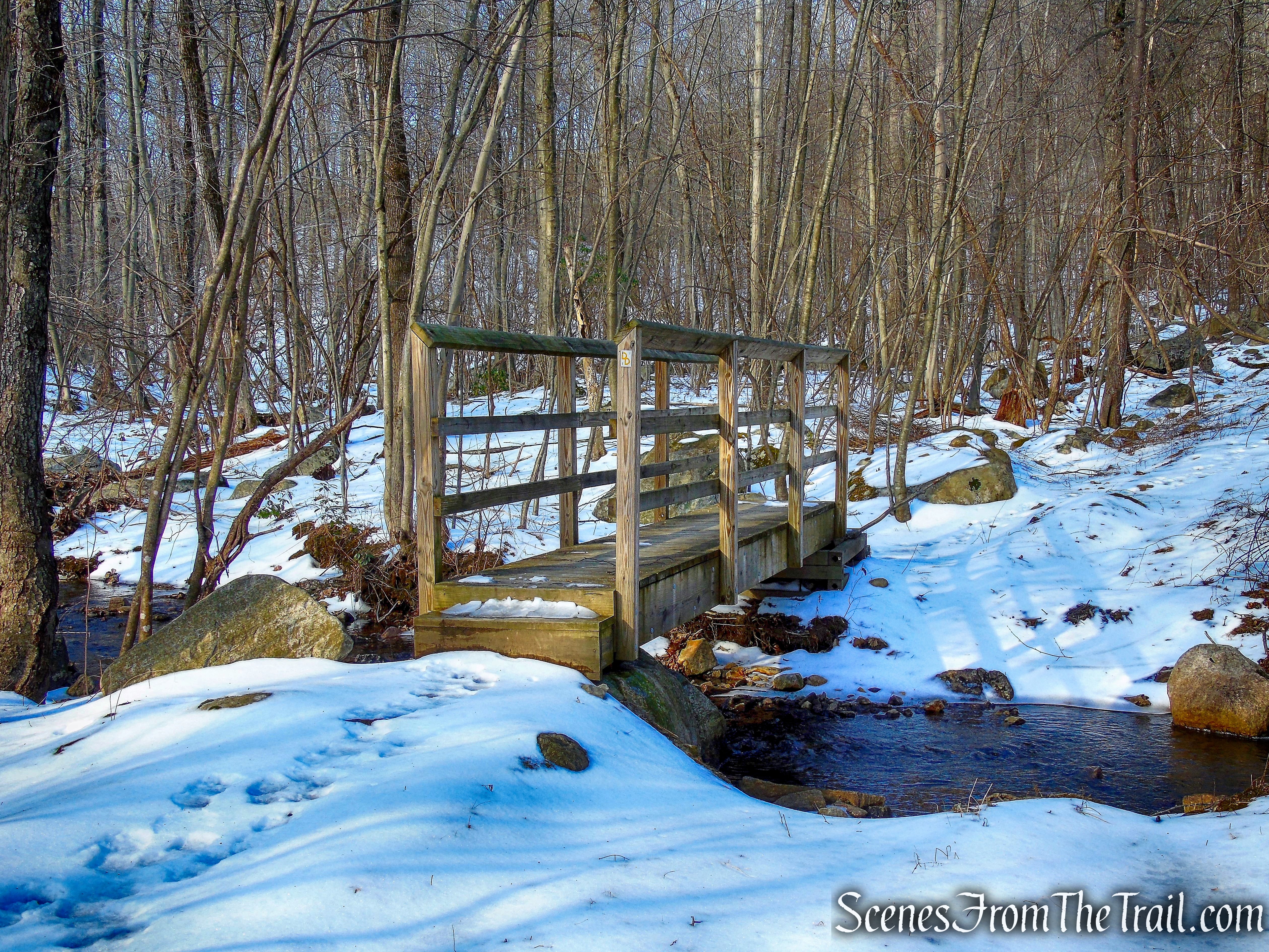
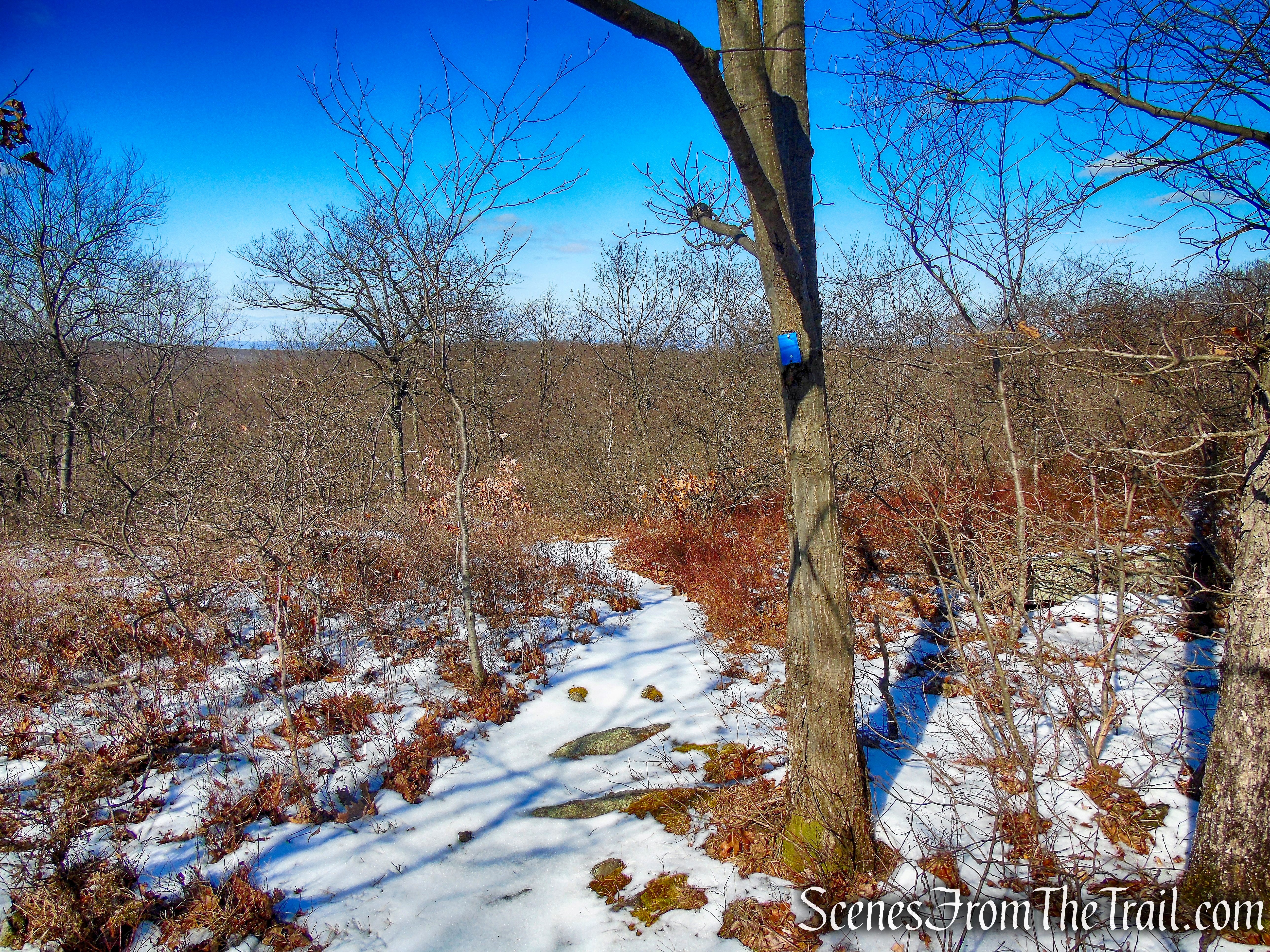
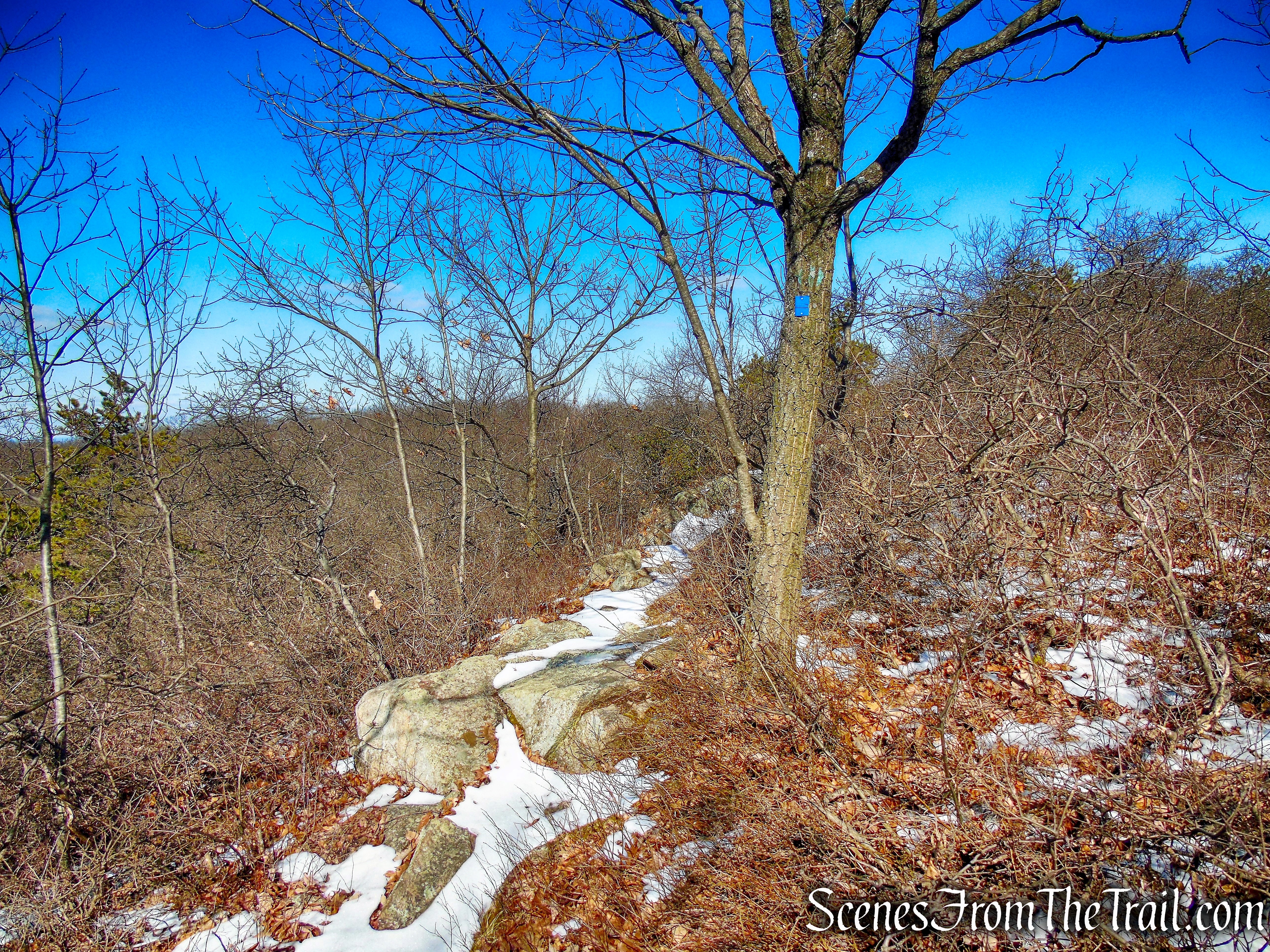
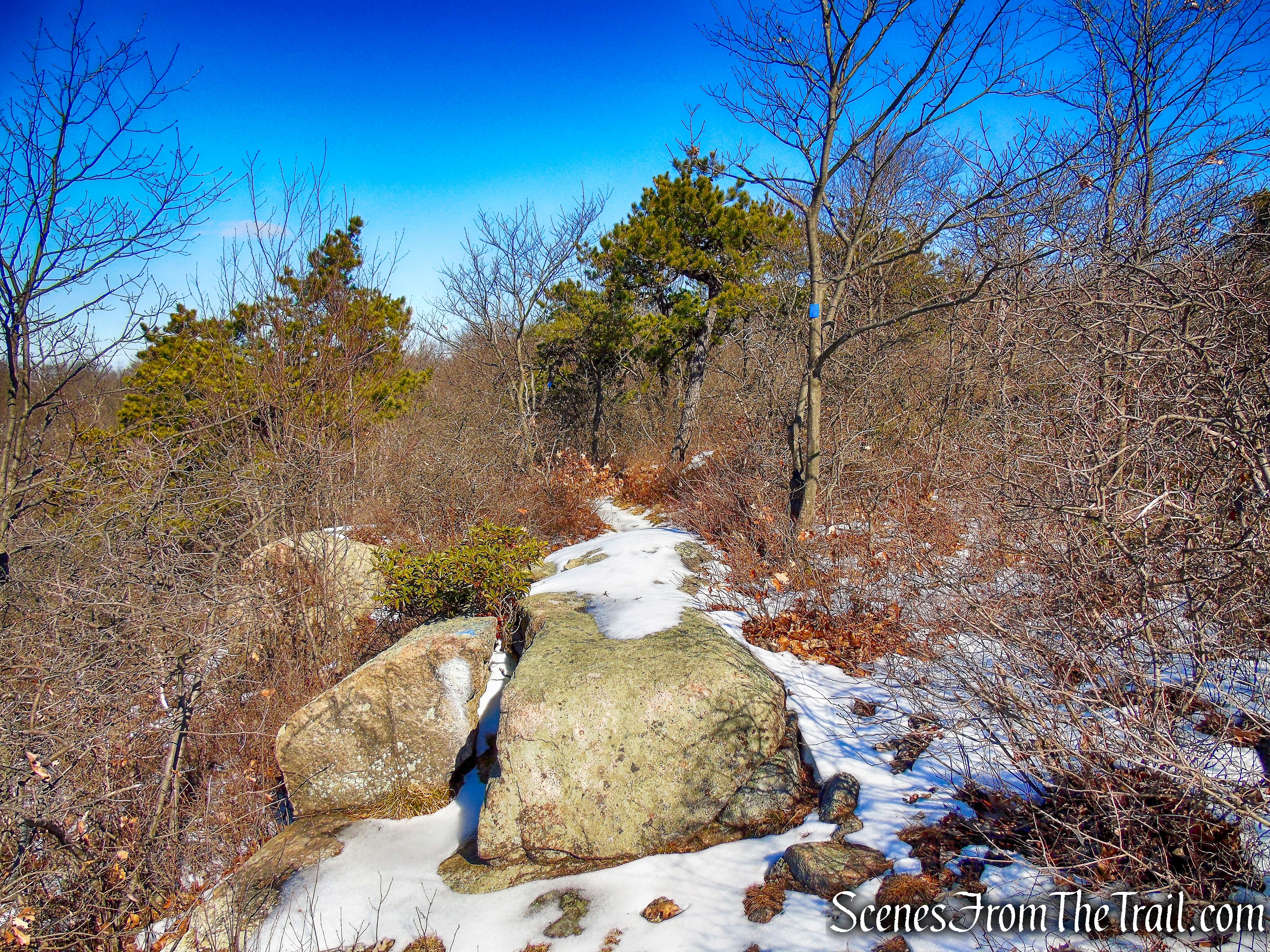
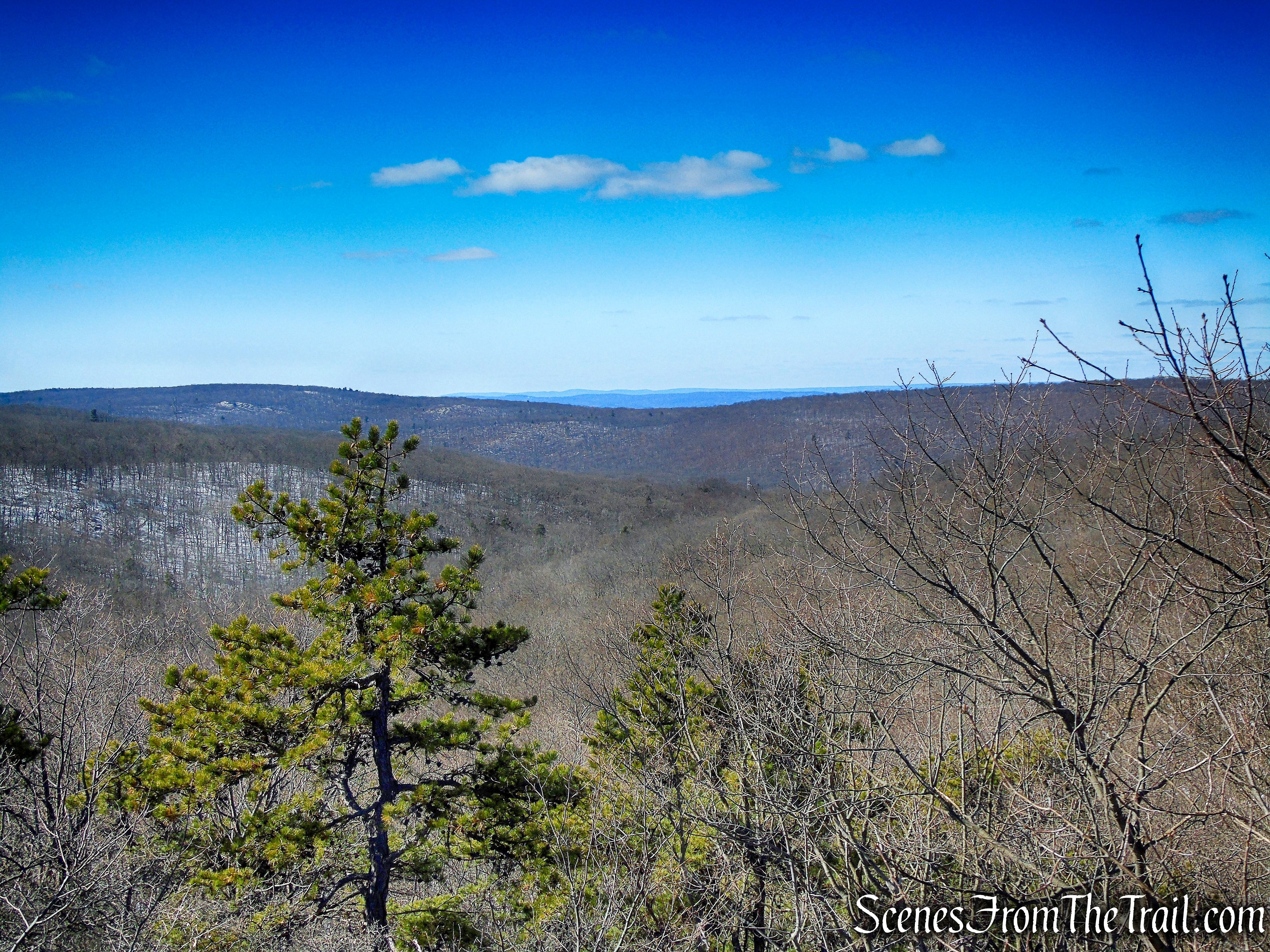
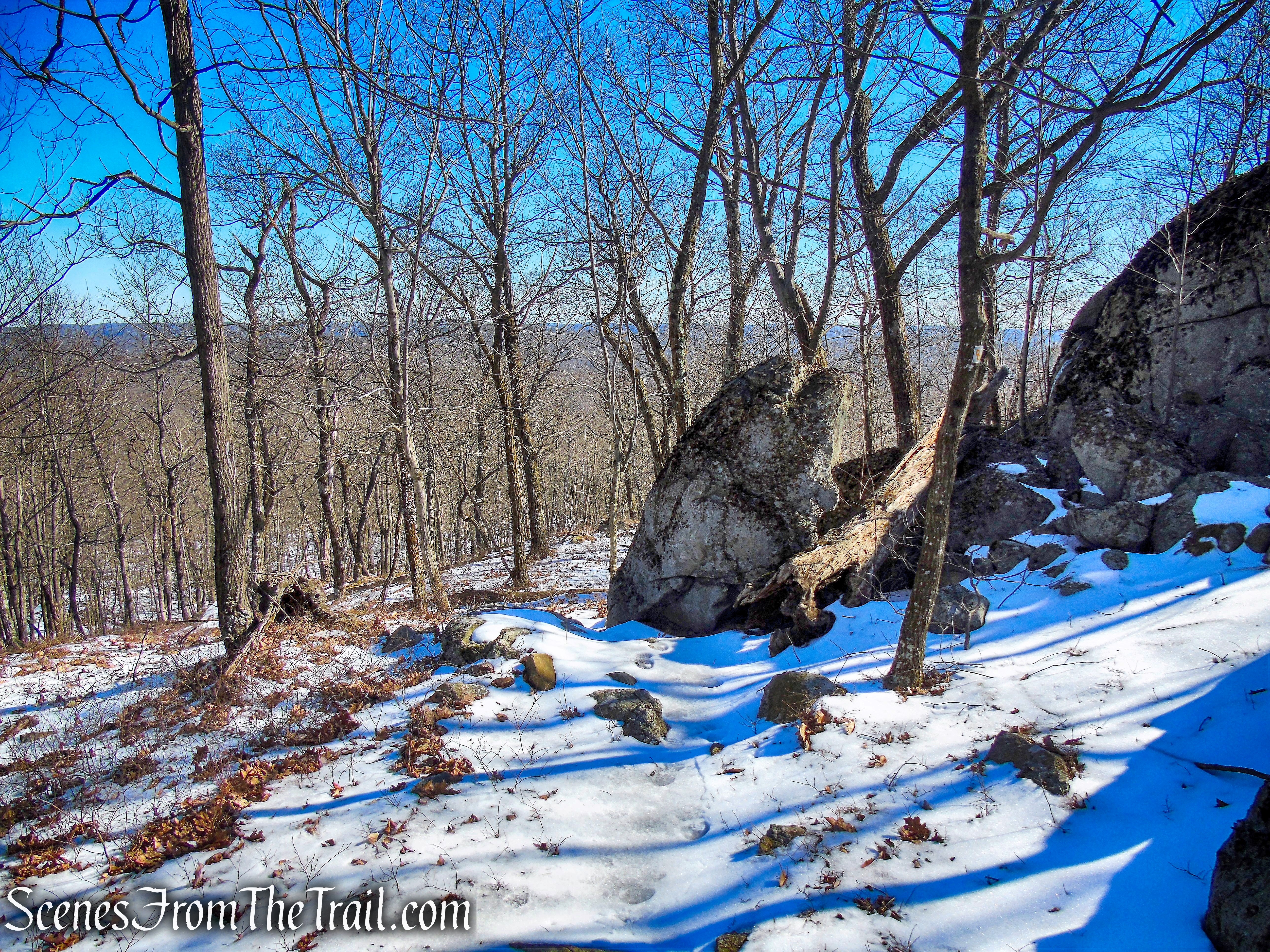
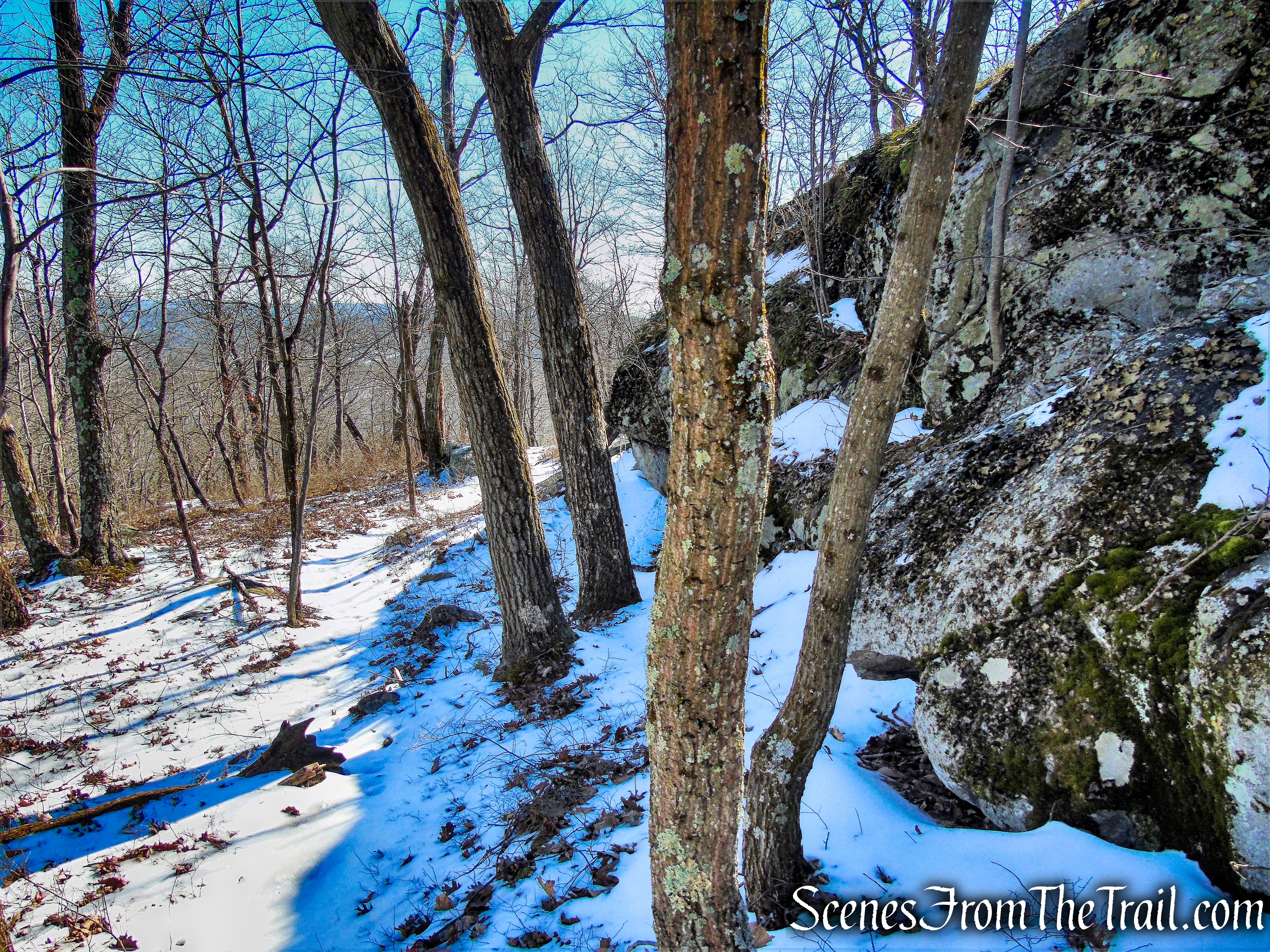
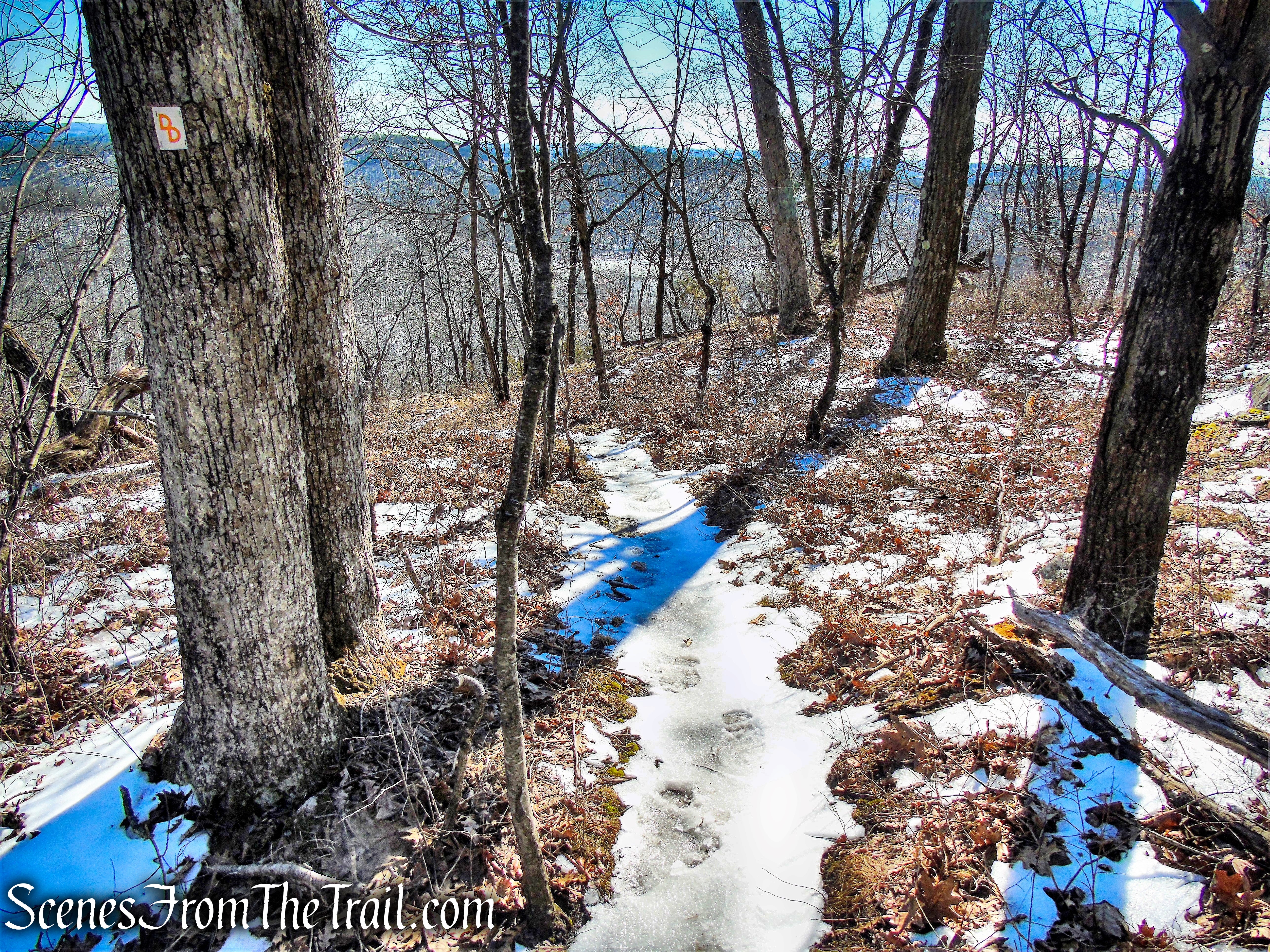
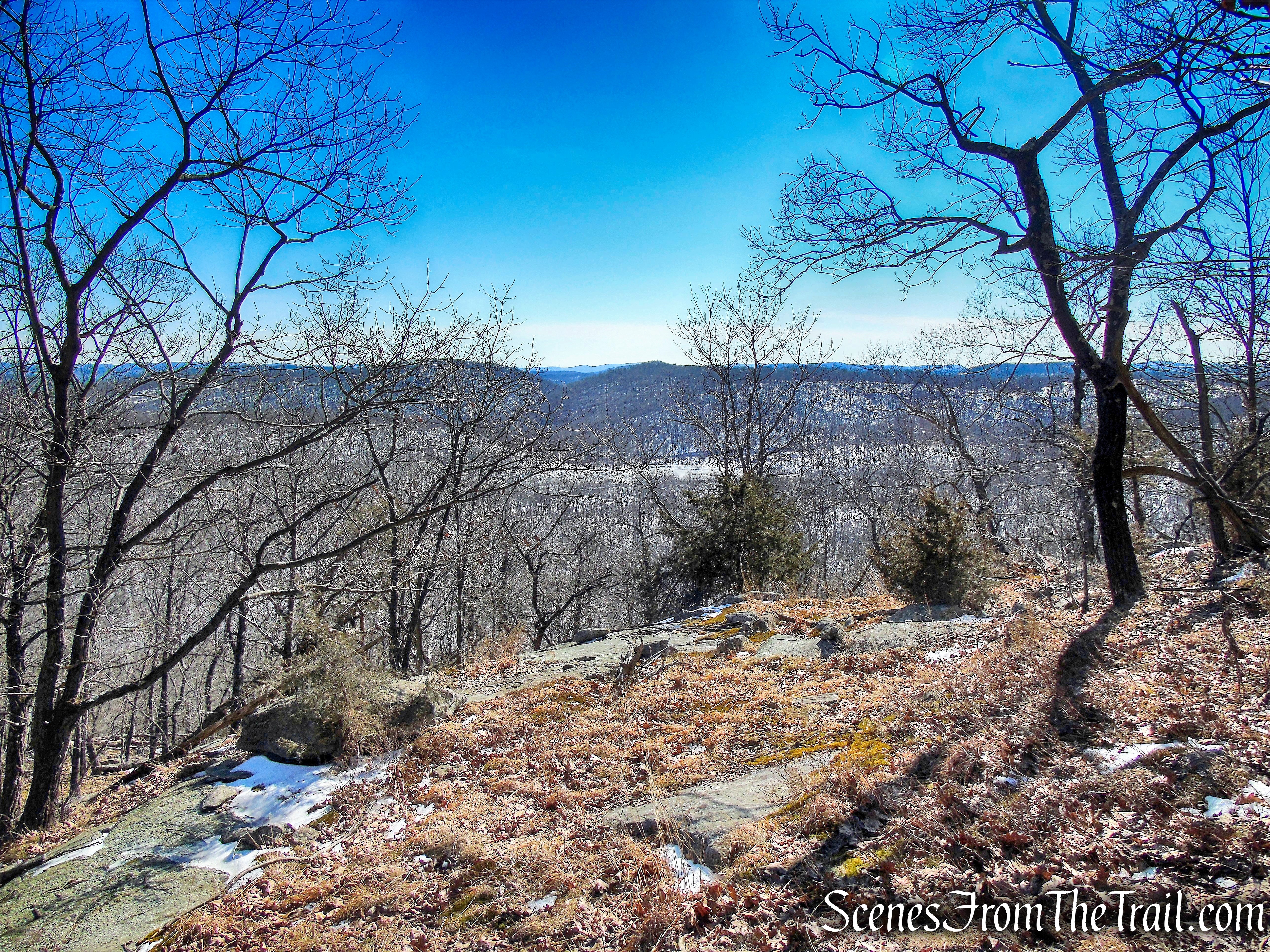
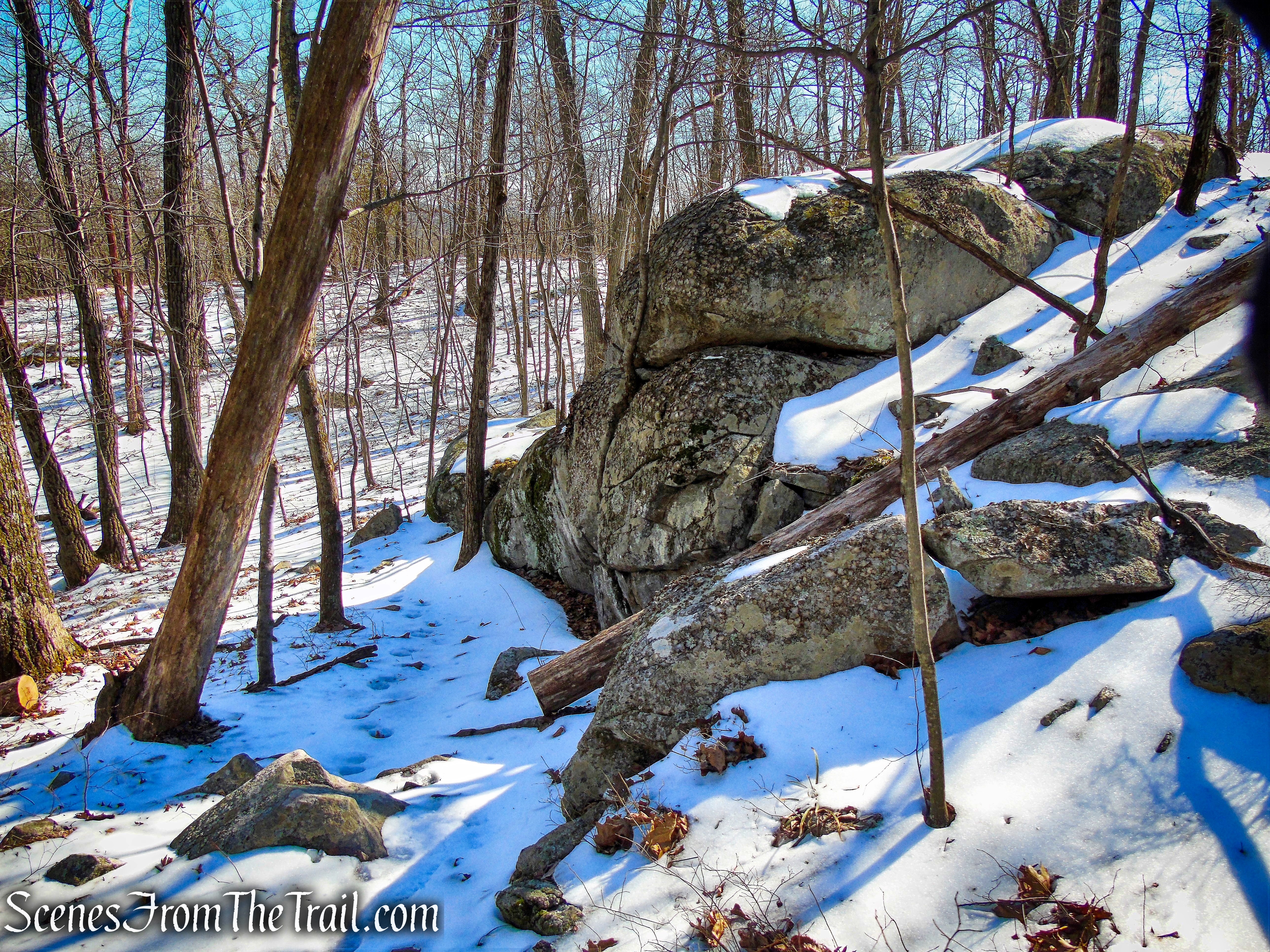
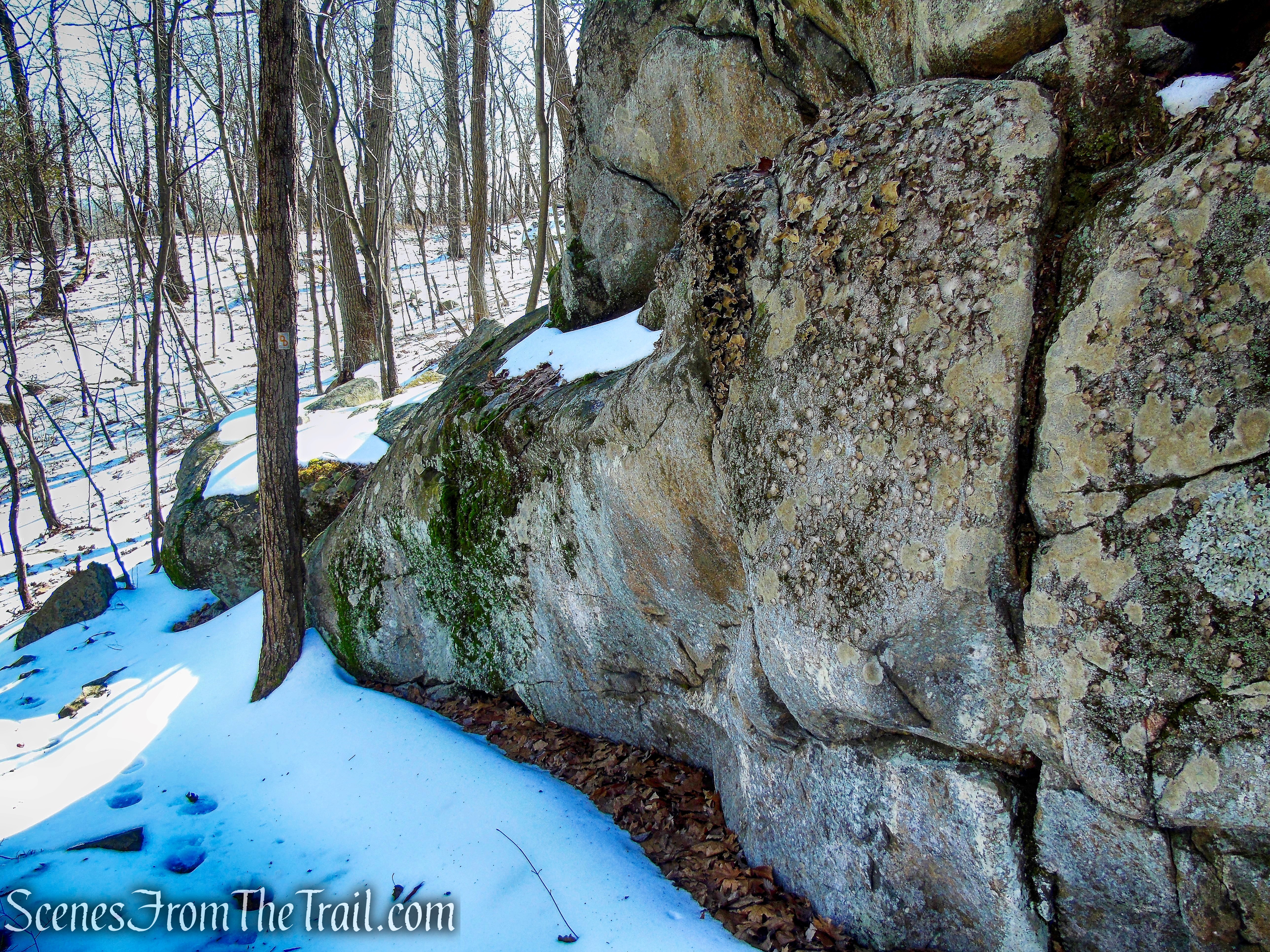
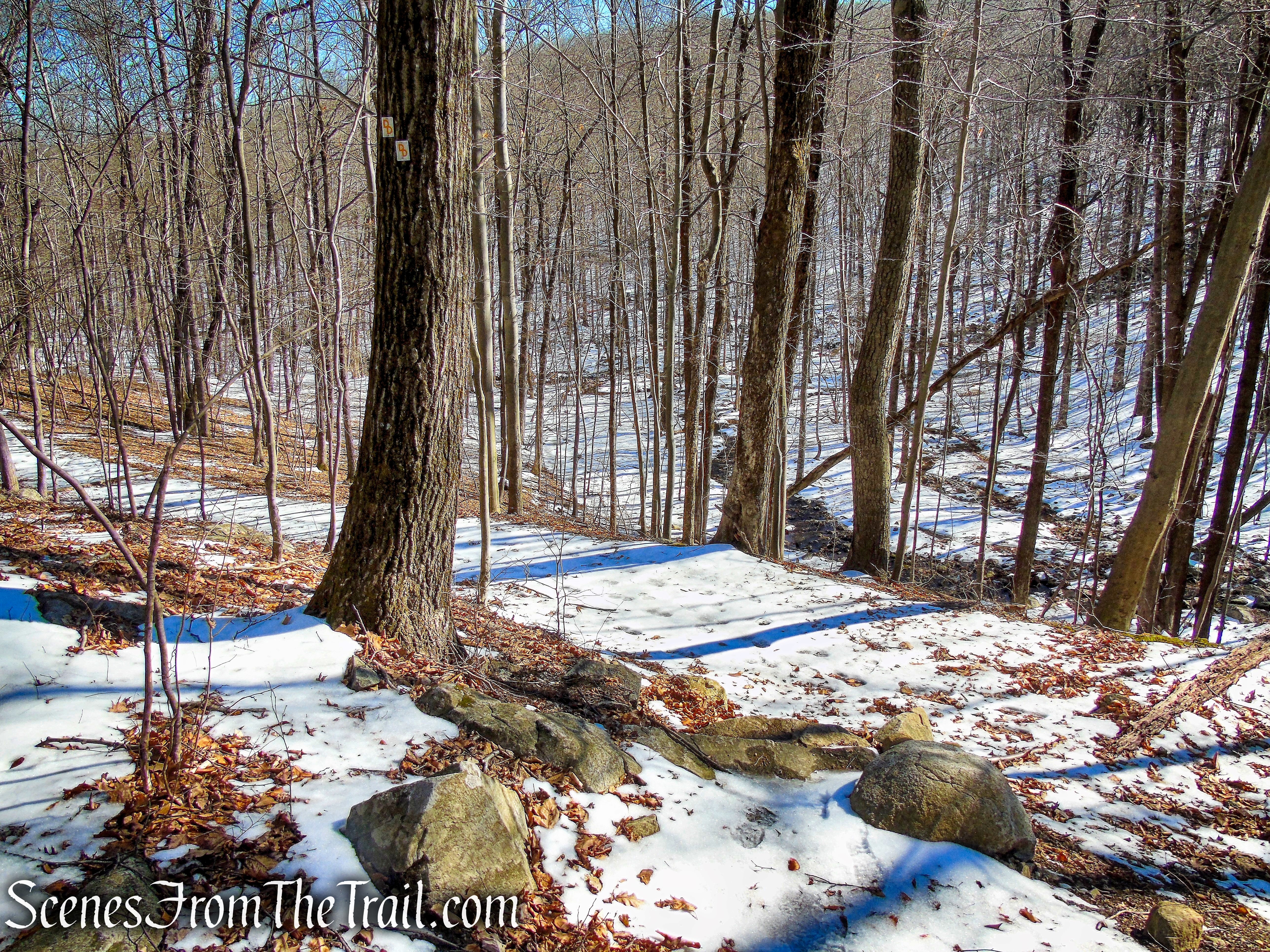
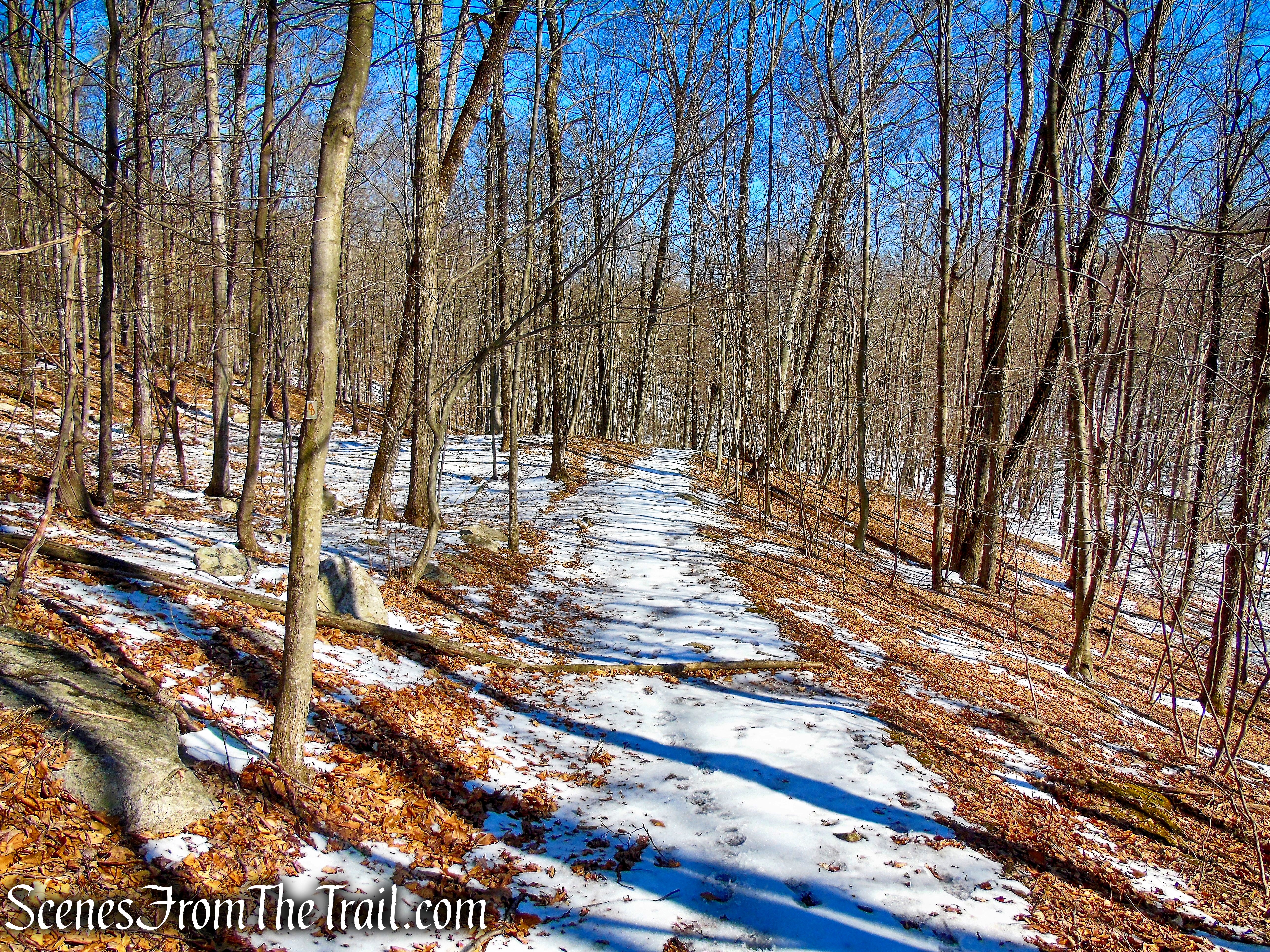
Overcliff Road and Old Minnewaska Trail Loop – Mohonk Preserve

September 29, 2019 – Gardiner, NY

Difficulty: Moderate

Length: Approximately 6.5 miles

Max elevation: 1,120 ft.– total elevation gain approximately 657 ft.

Route type: Circuit

Map: Shawangunk Trails #105

Fee: $15.00 day hiking fee (Non-Member) – Purchase Membership

Trailhead parking: Mohonk Preserve West Trapps Trailhead Parking Area 3142 US-44, Gardiner, NY 12525


Preserve Overview:

With over 8,000 acres on the Shawangunk Ridge, Mohonk Preserve is the largest member and visitor-supported nature preserve in New York State. The Mohonk Preserve is a private land conservation organization established to protect the Shawangunk Ridge, it is not public land funded by the government. Therefore, there is a day use fee to use the preserve which funds its maintenance and programs.

Mohonk Preserve

Mohonk Preserve

Trails Overview:

There are over 100 miles of carriage roads and trails. Walking in the preserve ranges from easy, scenic strolls on carriage roads to rough scrambles over boulders, through crevasses, and across open ledges. Only a brief indication of the possibilities can be suggested; hikers are encouraged to go maps in hand and make their own discoveries.

Please note: The distances shown in parentheses are the approximate distances traveled during this hike and not necessarily the total length of the actual trails.

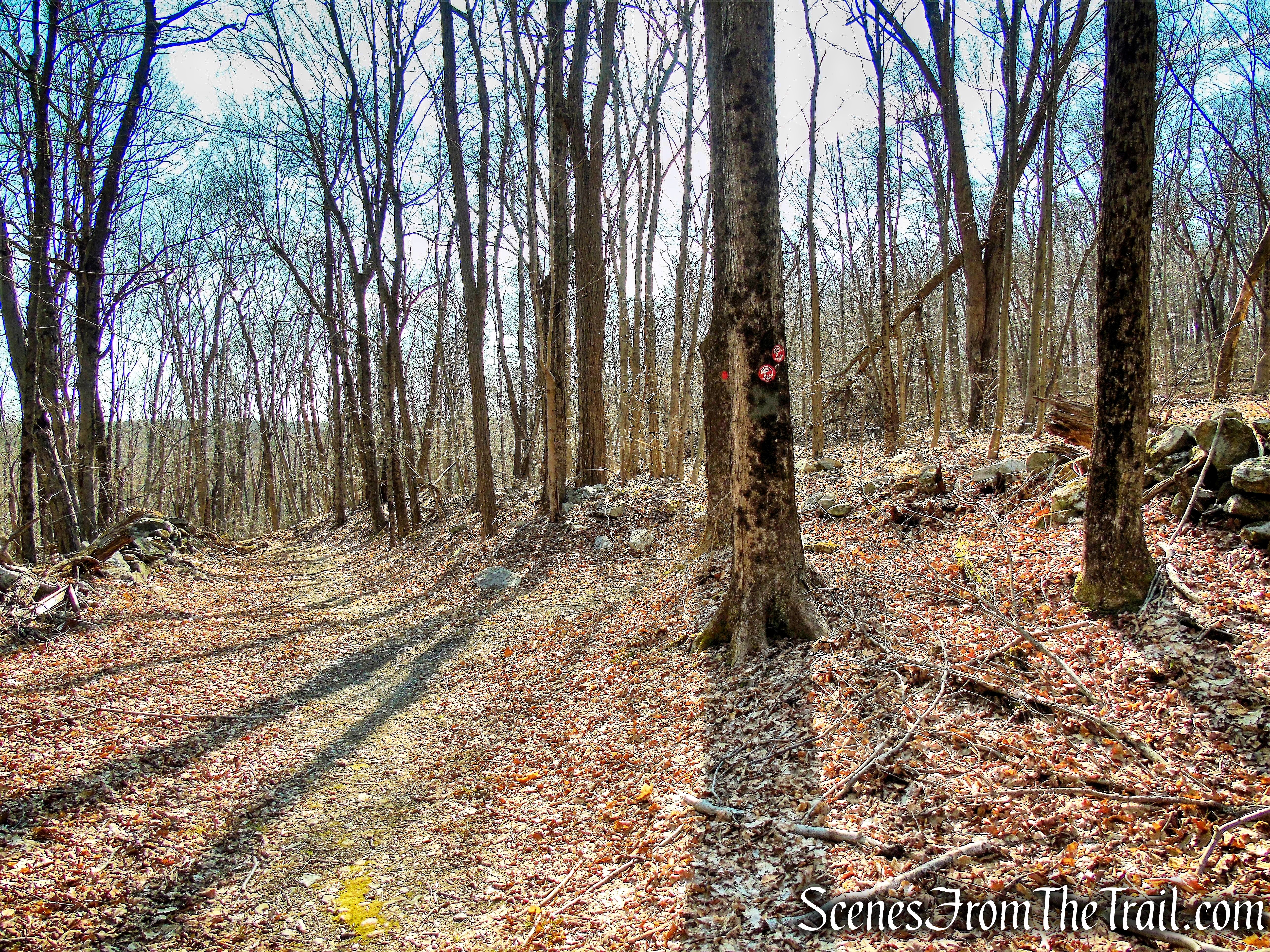
  • West Trapps Connector Trail (0.5 mile; yellow blazes) – This crushed stone road connects the West Trapps Trailhead parking area, to the Shongum Path, the Overcliff and Undercliff Roads and the Trapps Bridge.
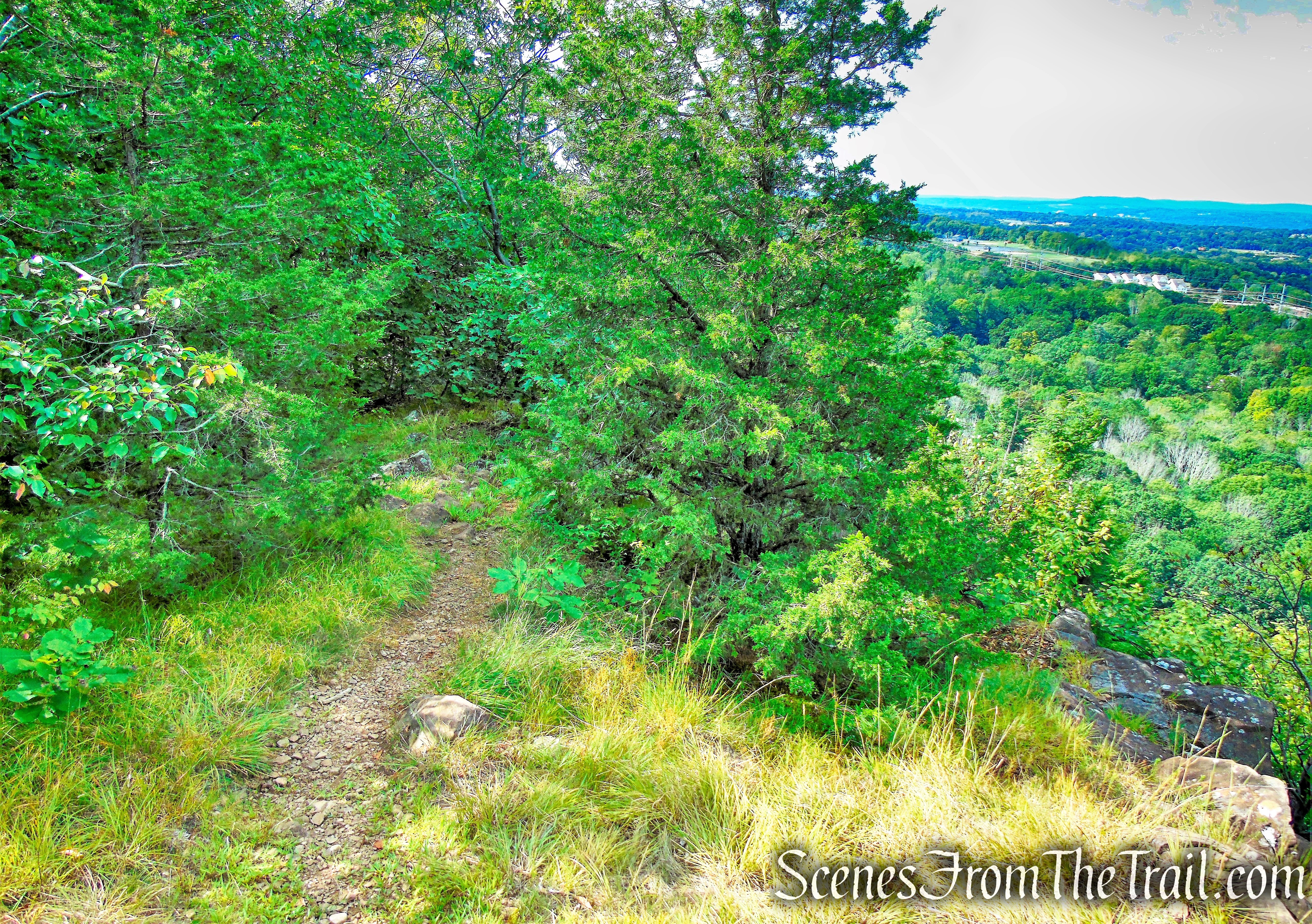
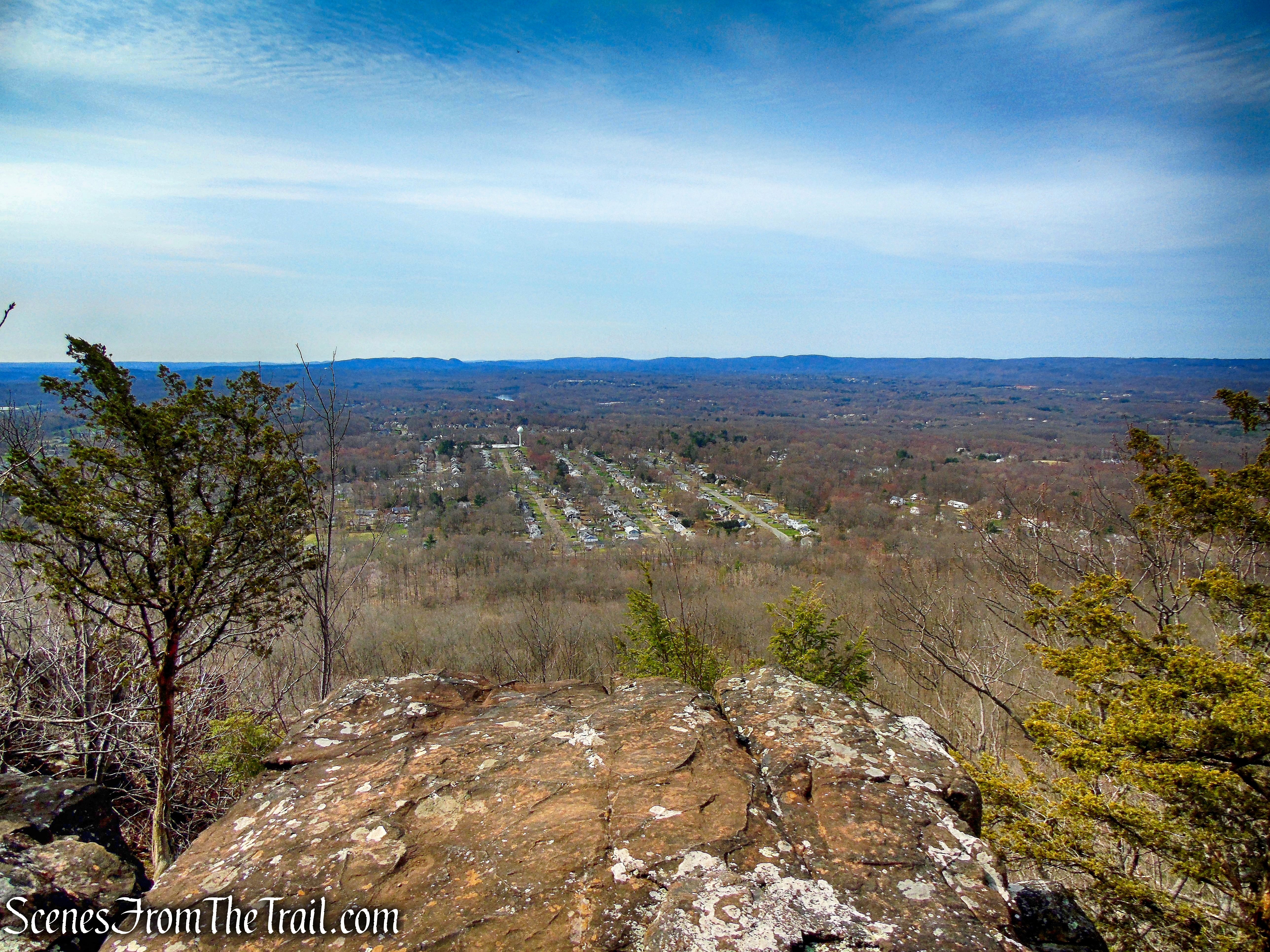
  • Overcliff Road (2.5 miles; directional signs at junctions only) – This easy, level walk on a wide and well maintained carriage road, runs on the west side of the Trapps Ridge. Along the way, it passes lichen-covered cliffs of Shawangunk Conglomerate. There are several viewpoints to the northwest of Ronde Barre and Dickie Barre. The Rondout Valley, with the peaks of the Catskills visible in the distance, may be seen to the north.
  • Laurel Ledge Road (0.4 mile; directional signs at junctions only) – This well maintained crushed stone road connects to Mohonk Mountain House lands, ending at Copes Lookout. It is intersected by numerous footpaths, making any number of loop hikes possible.
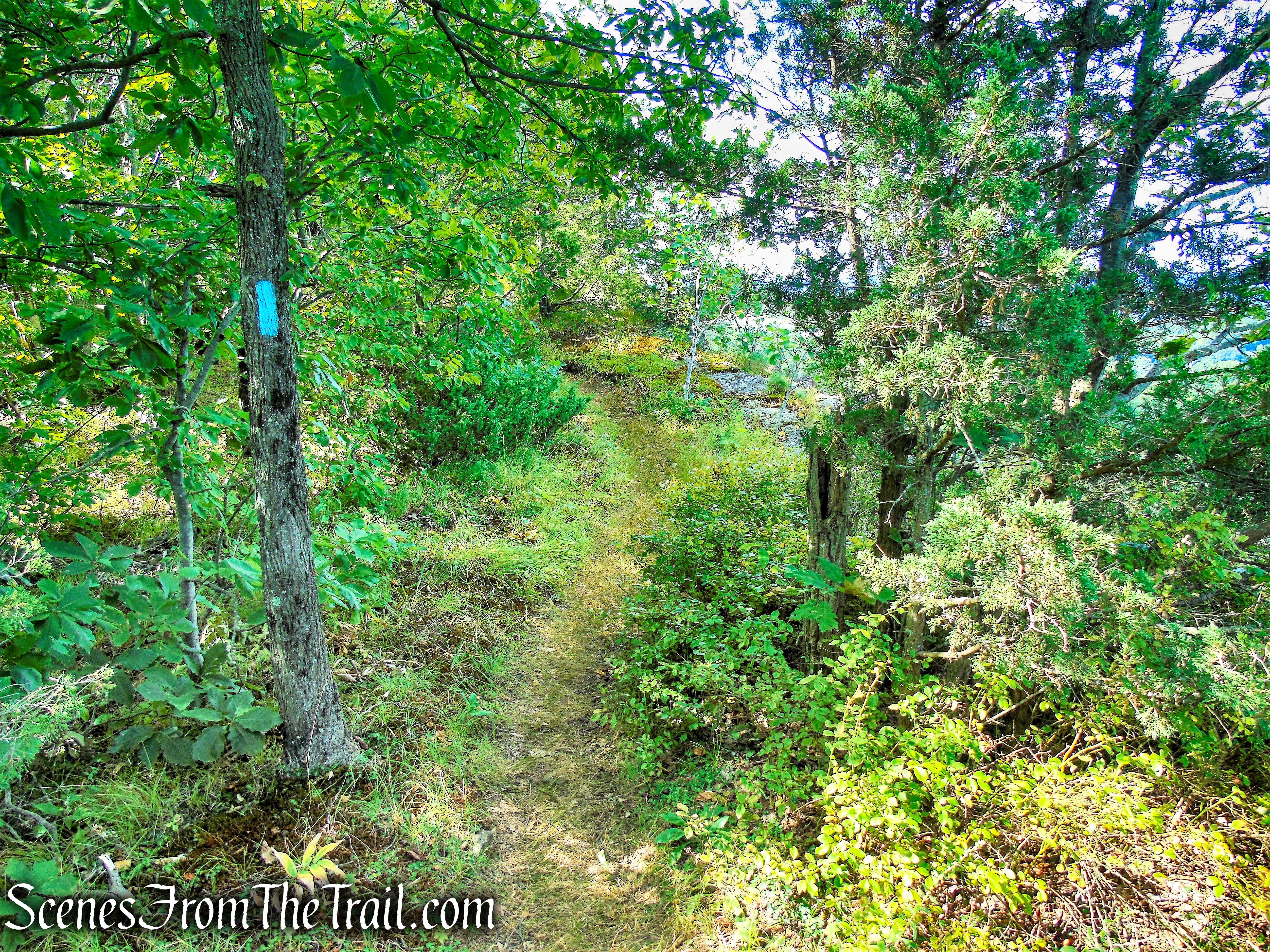
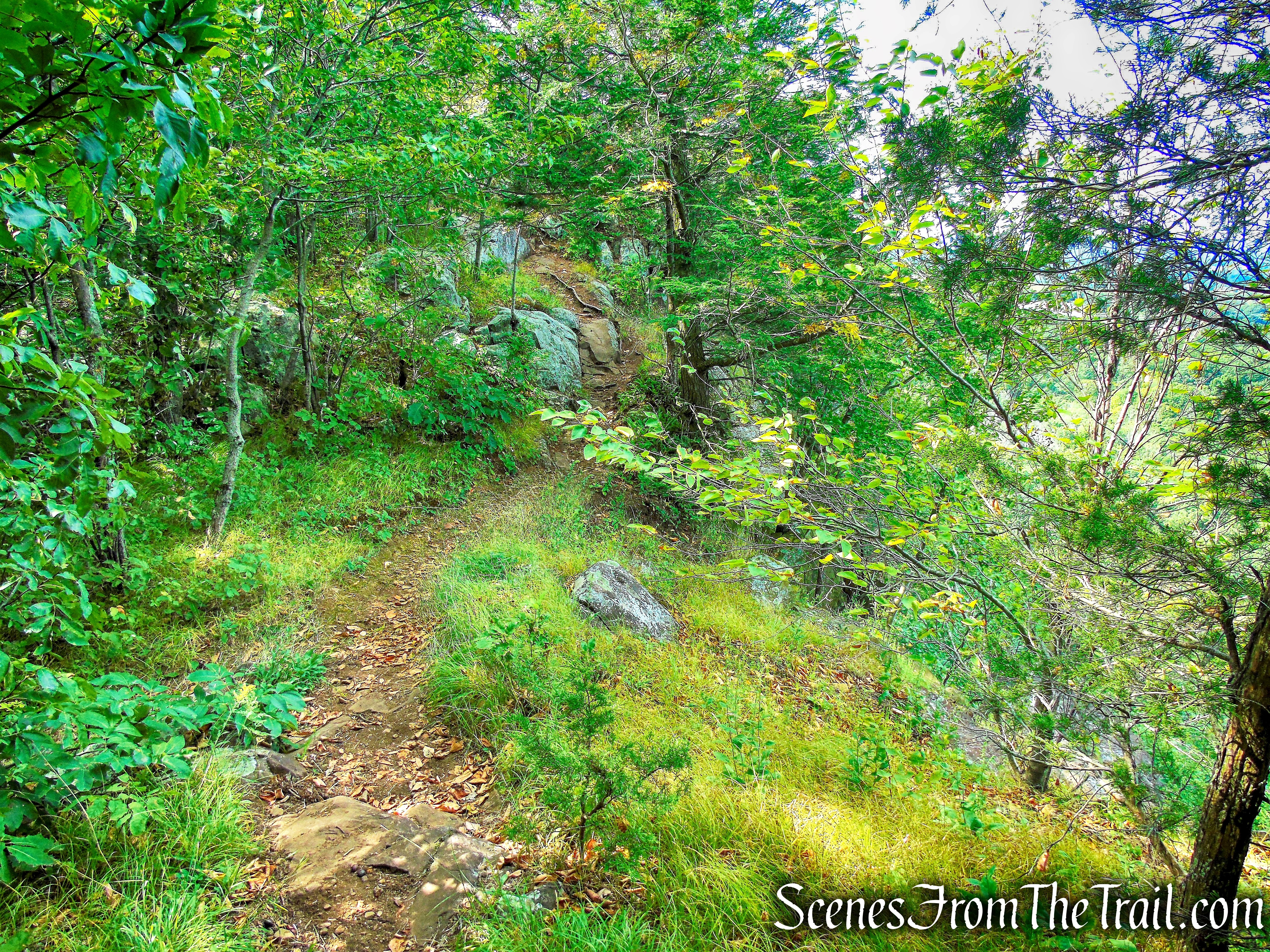
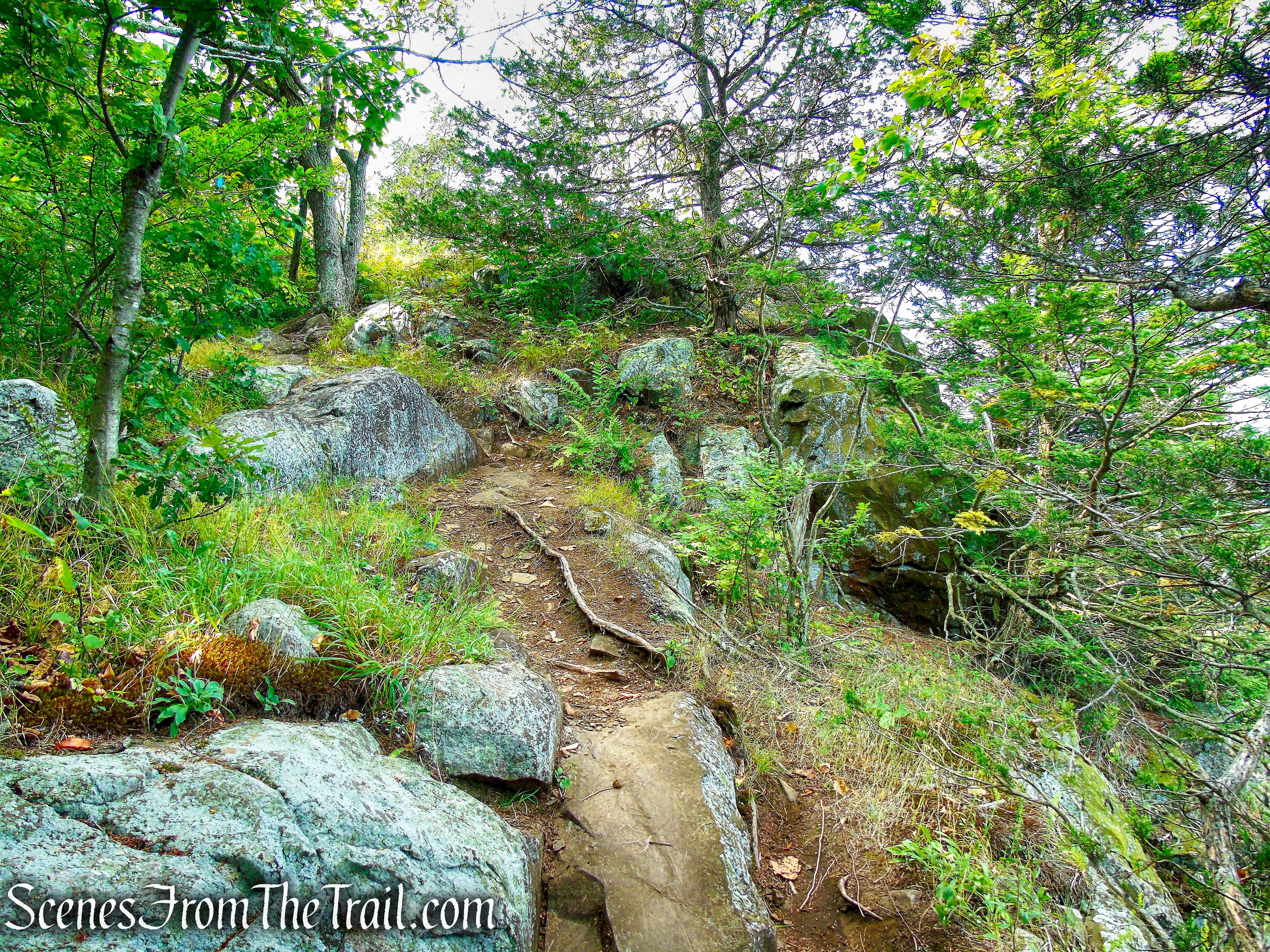
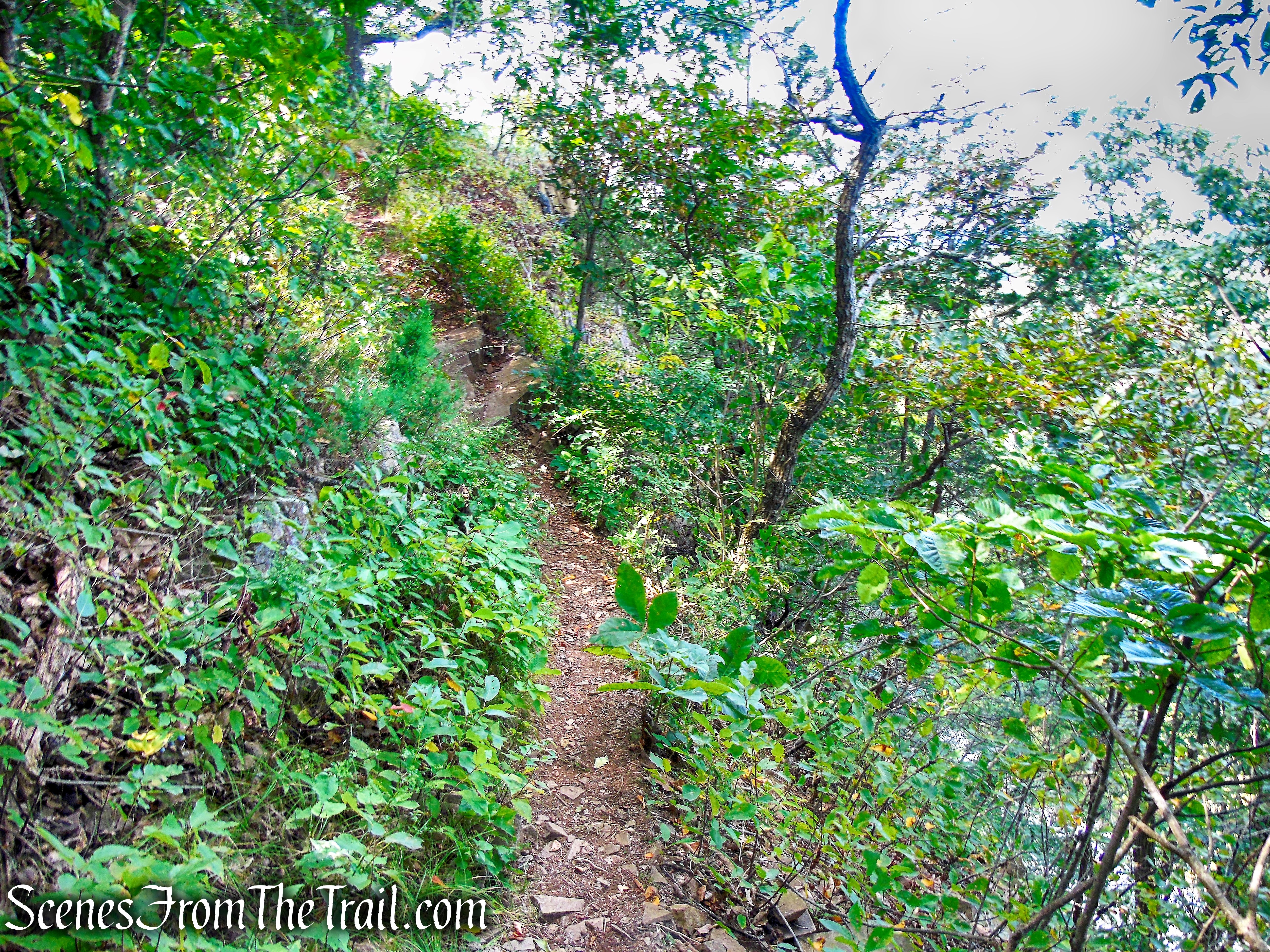
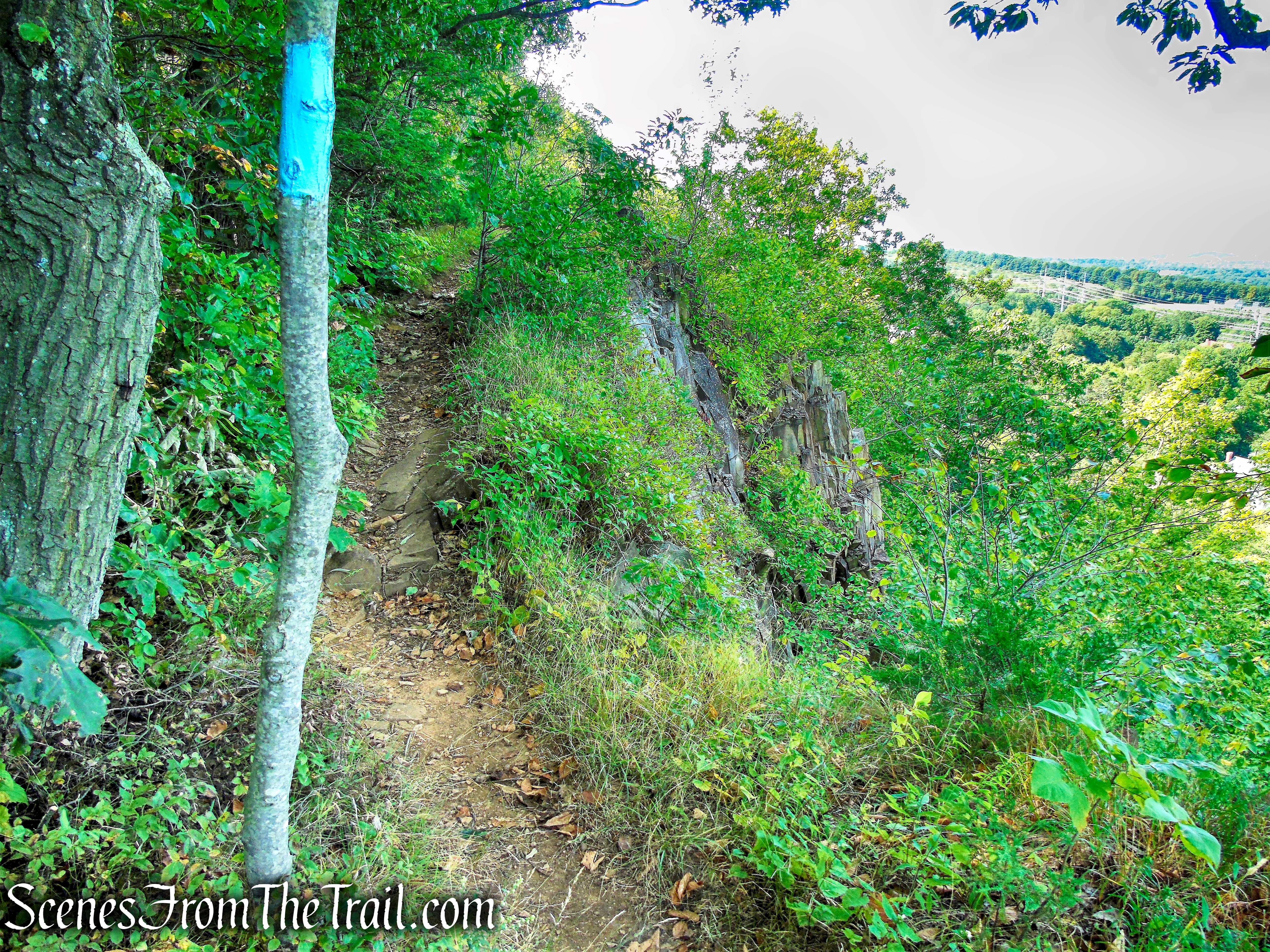
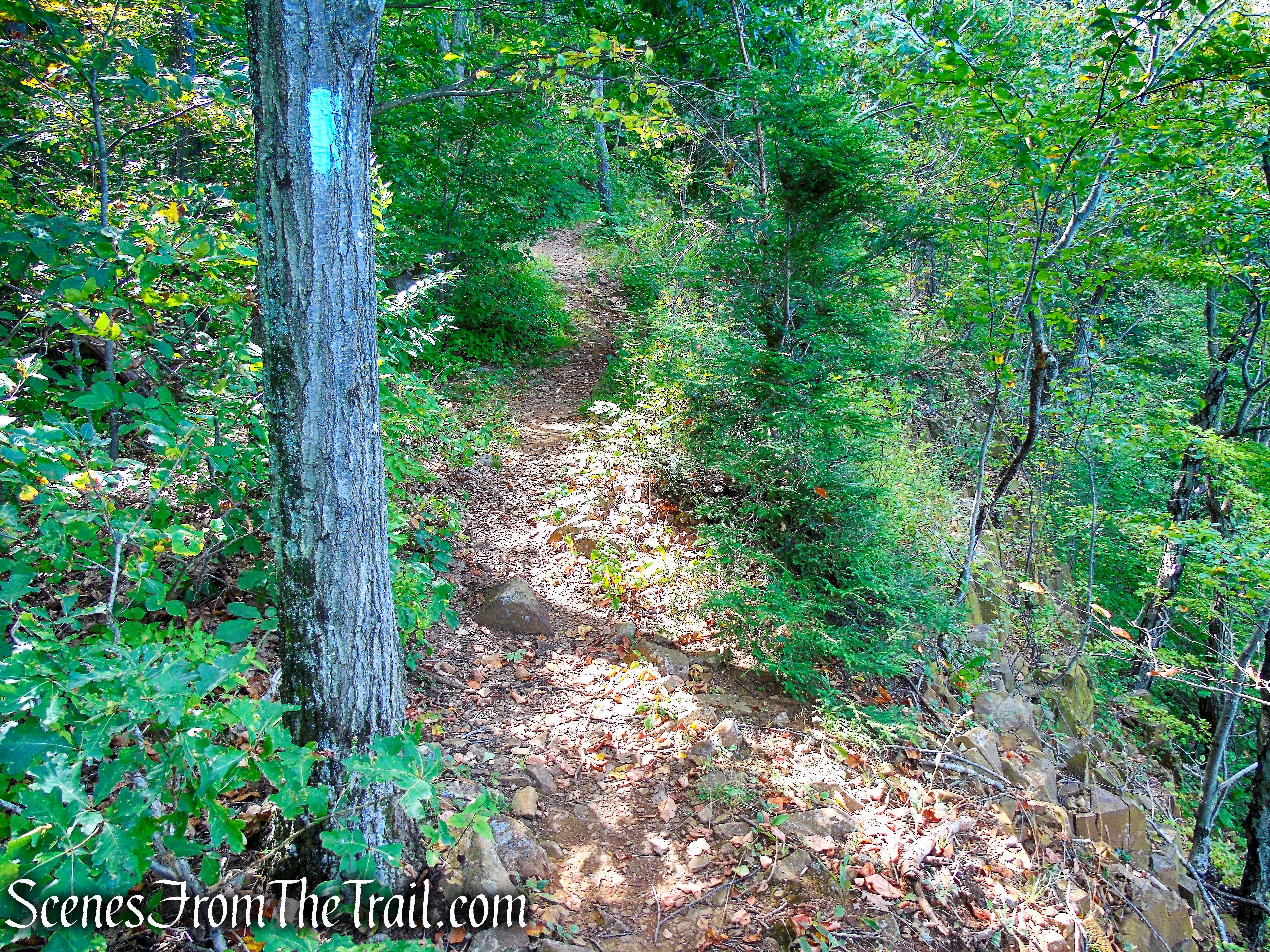
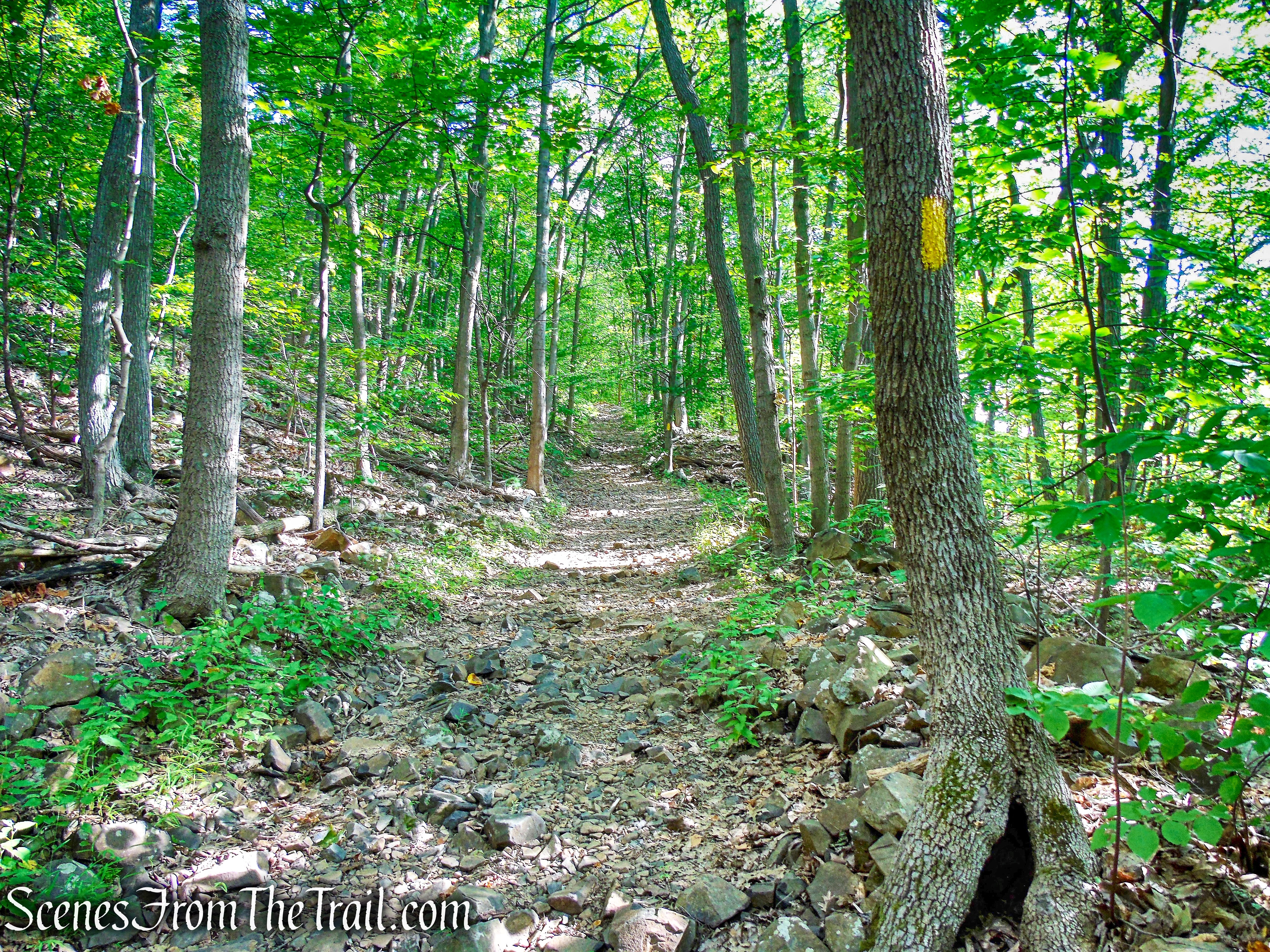
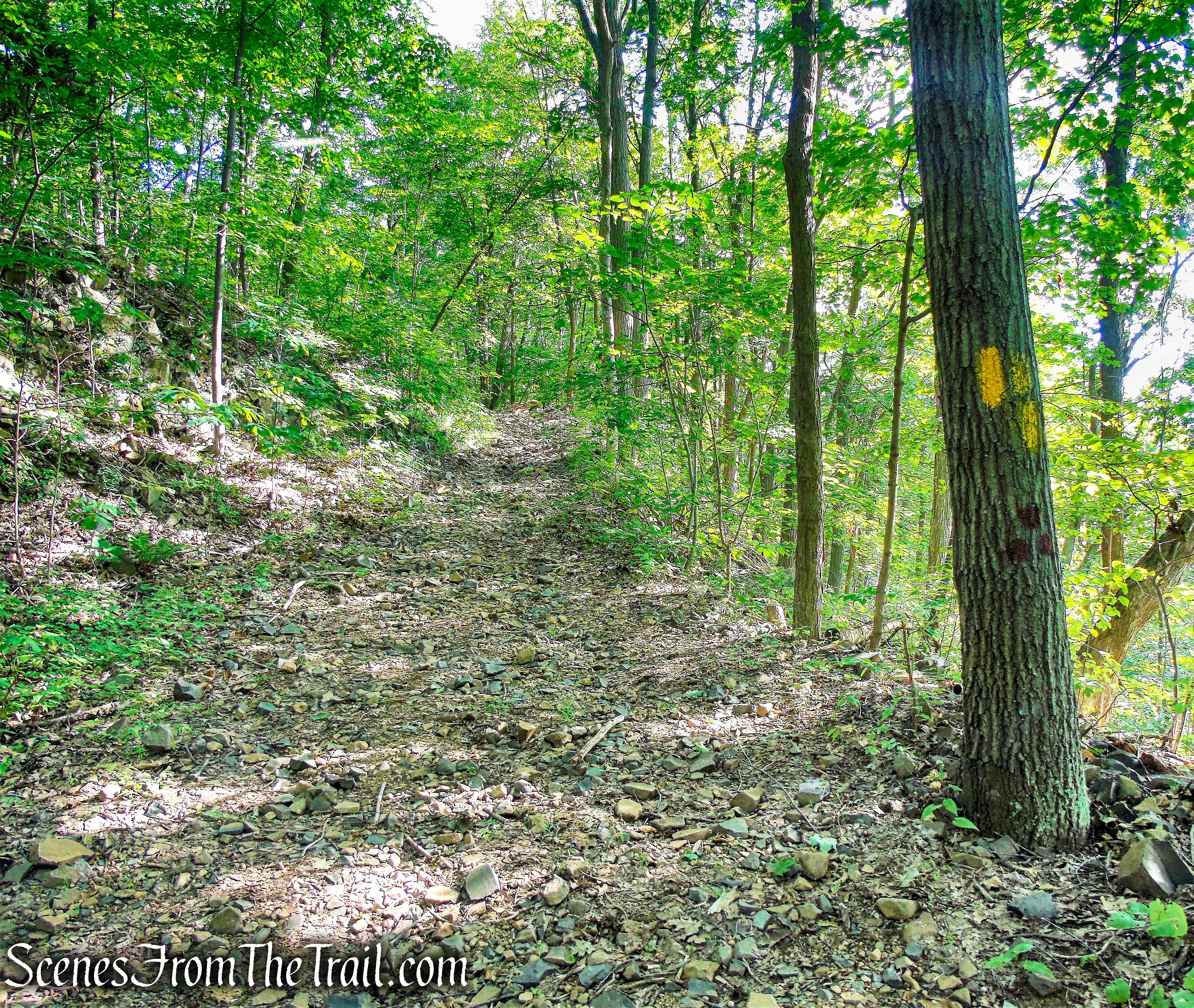
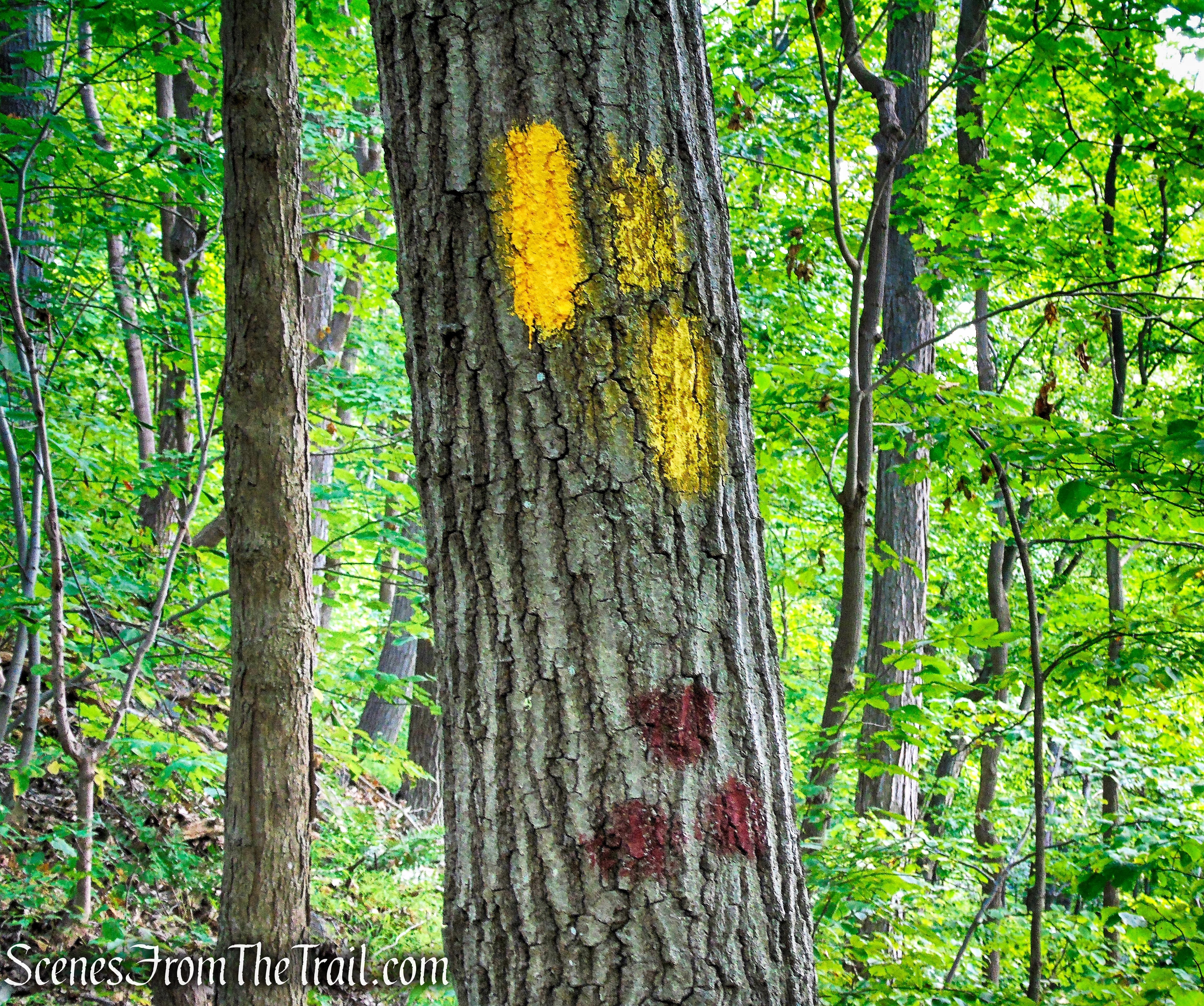
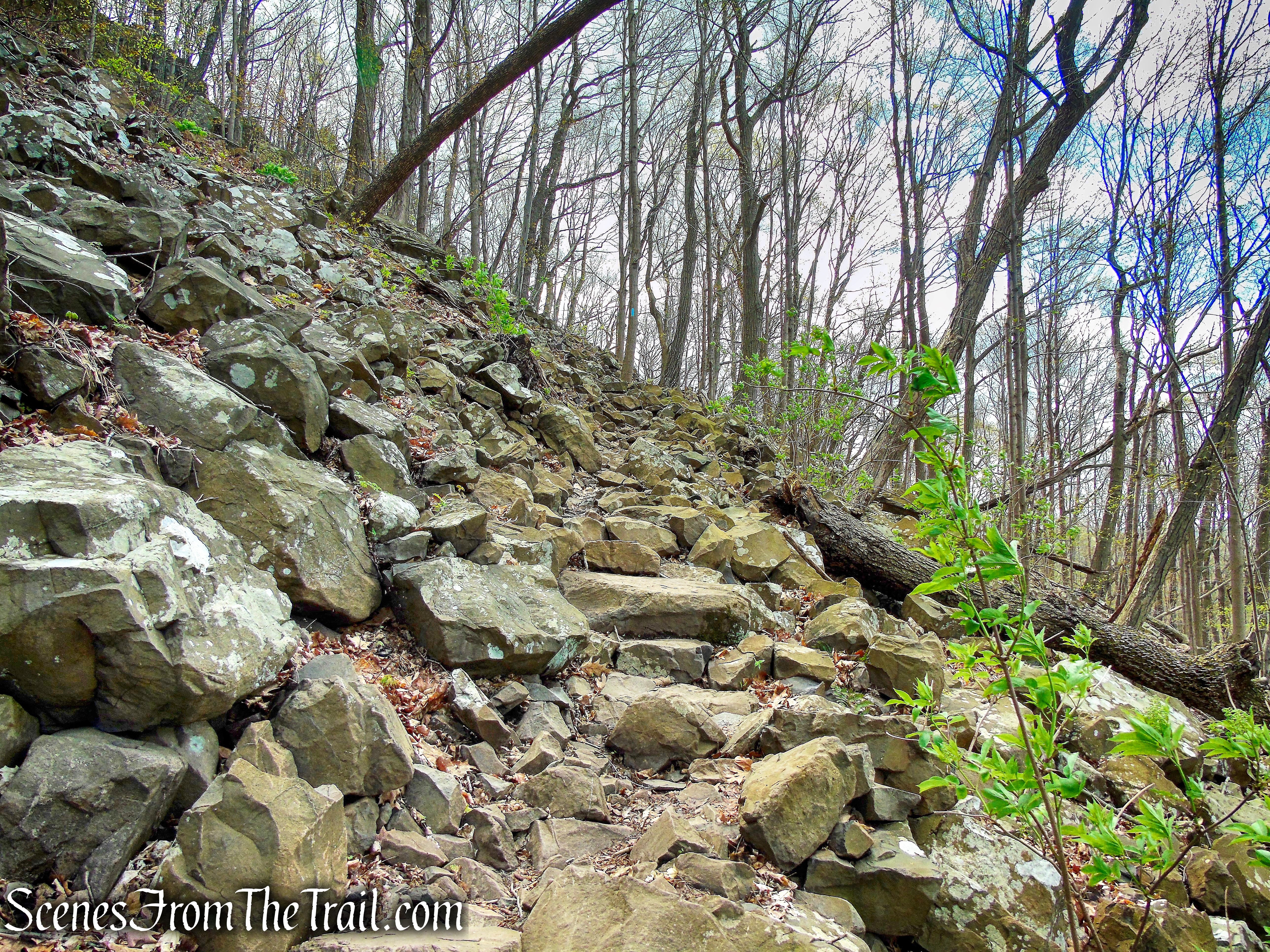
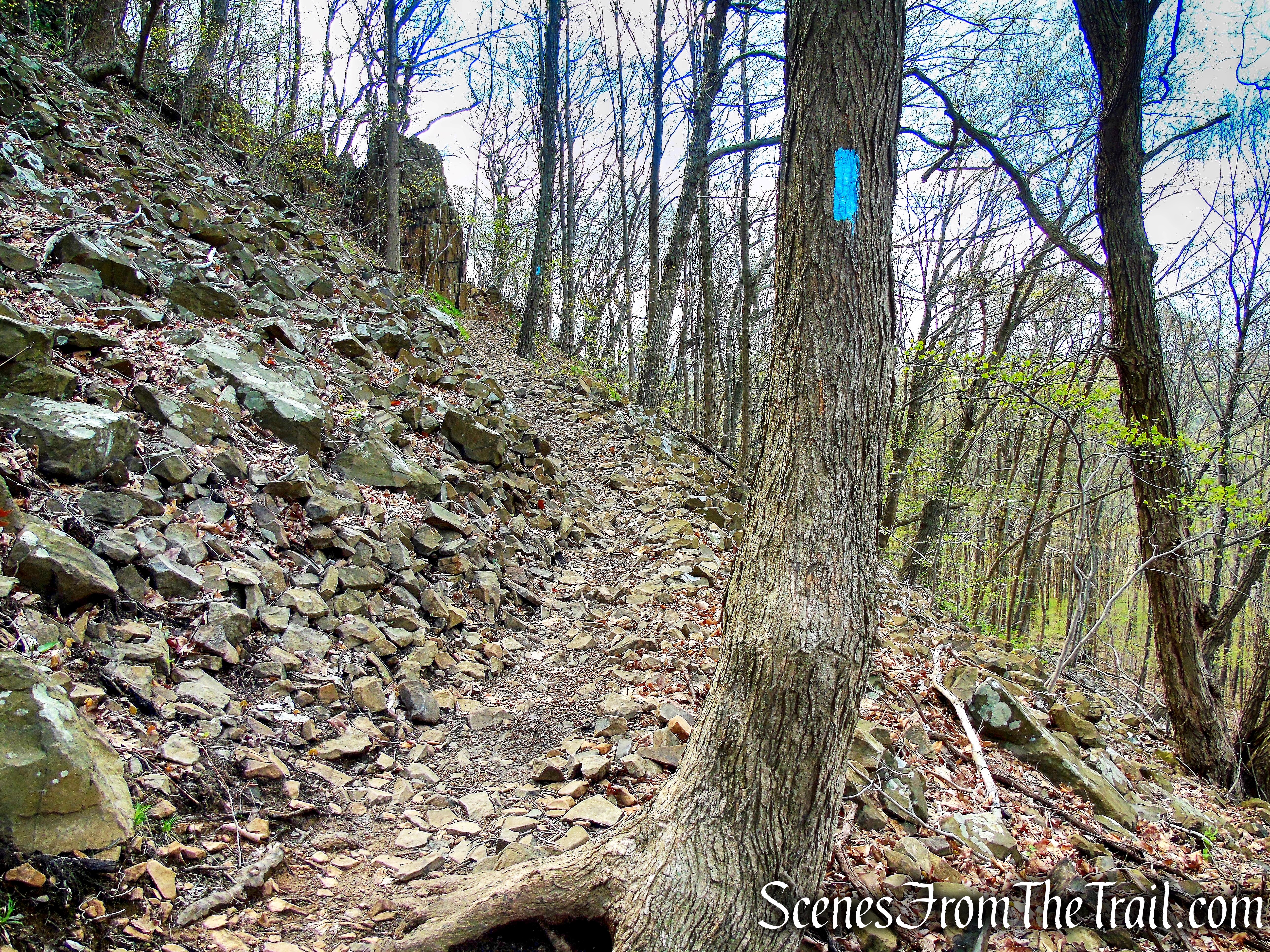
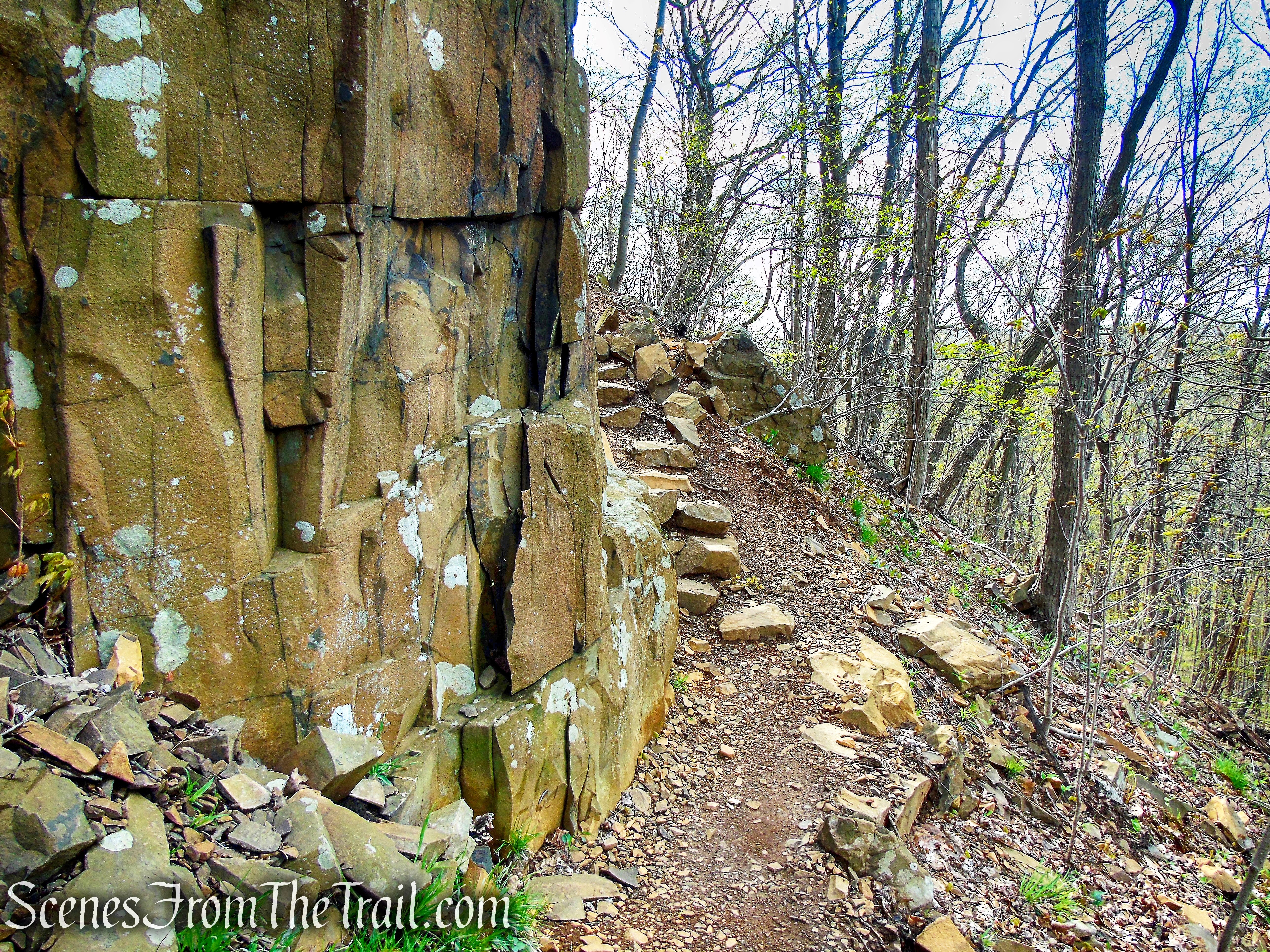
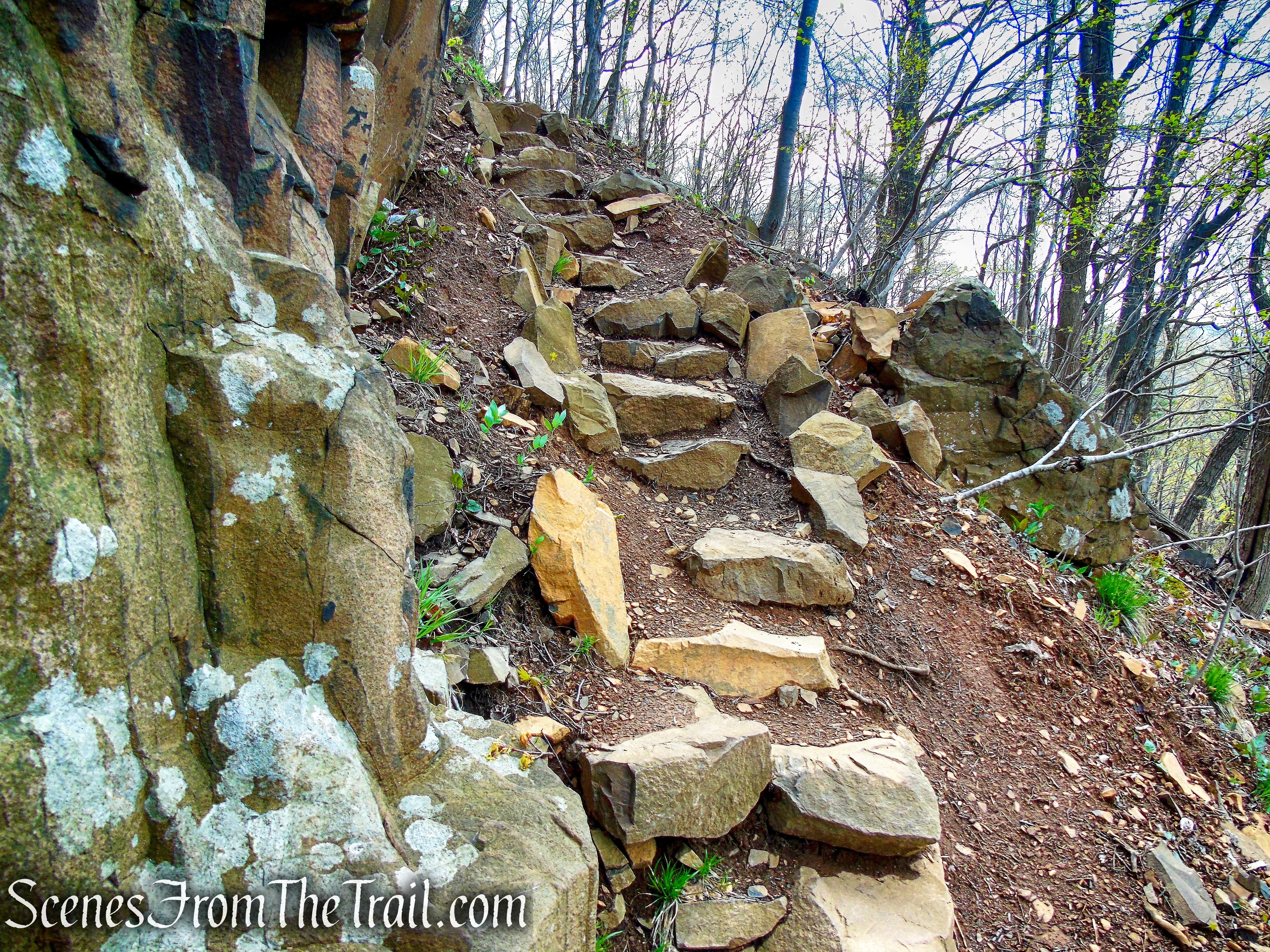
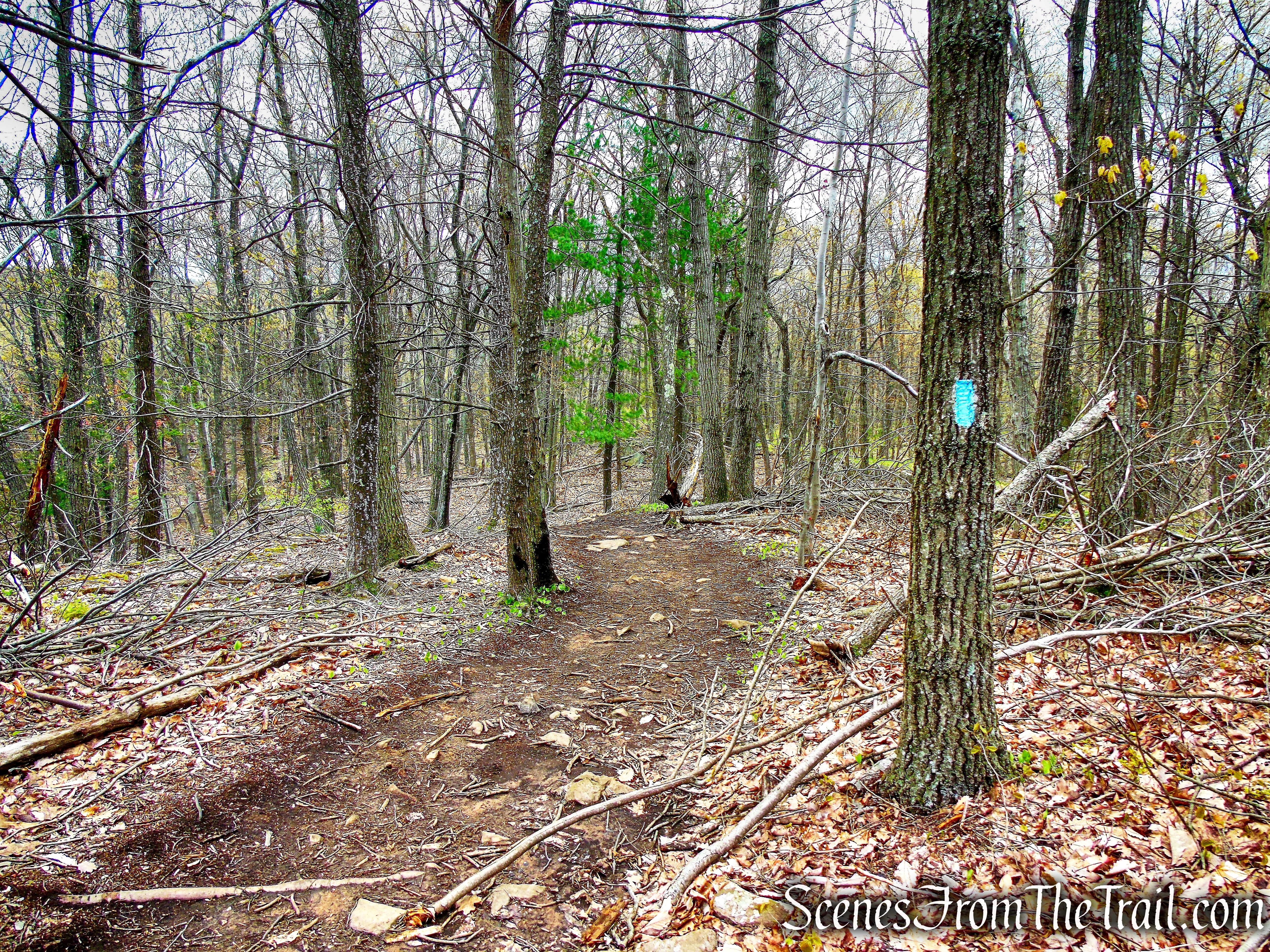
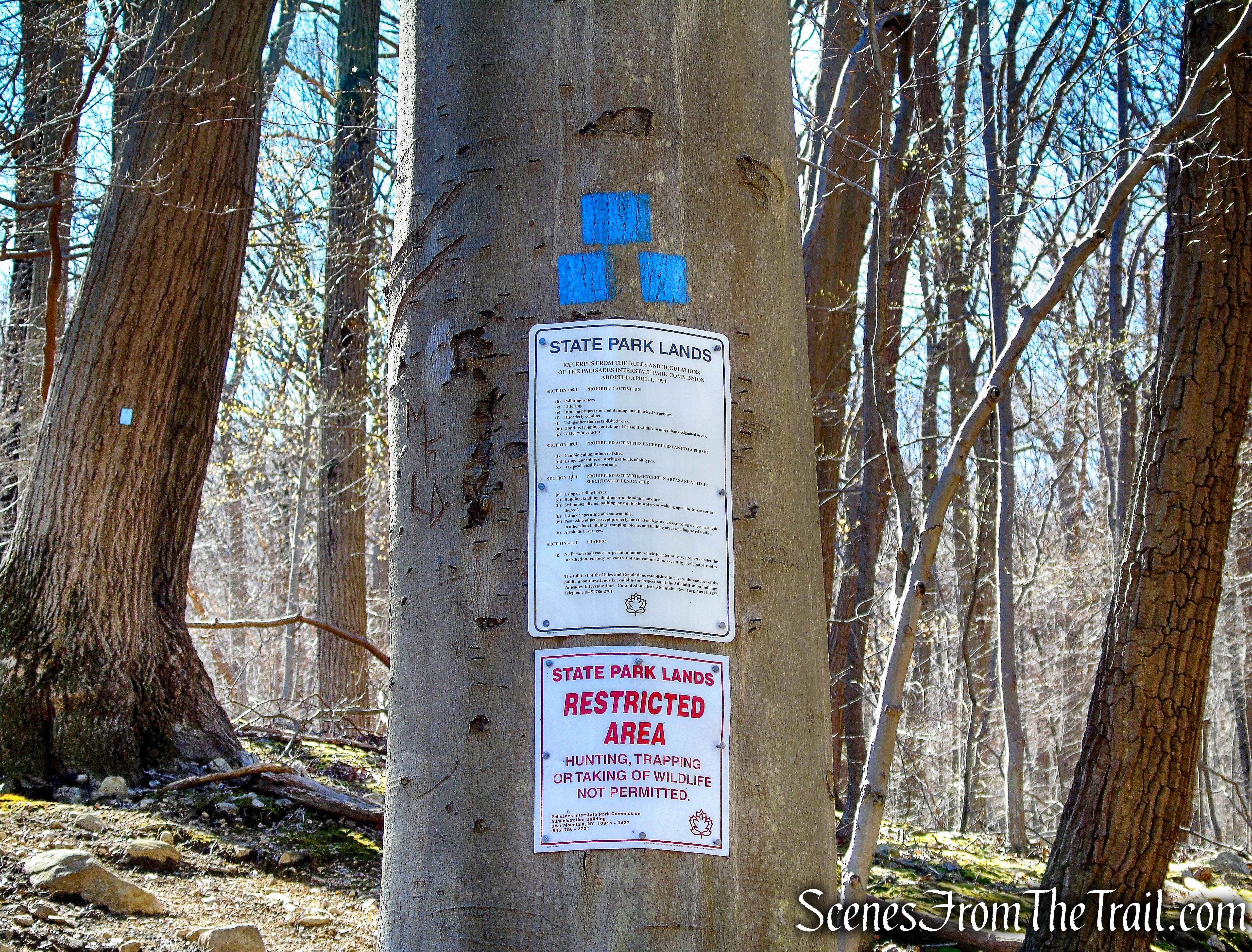
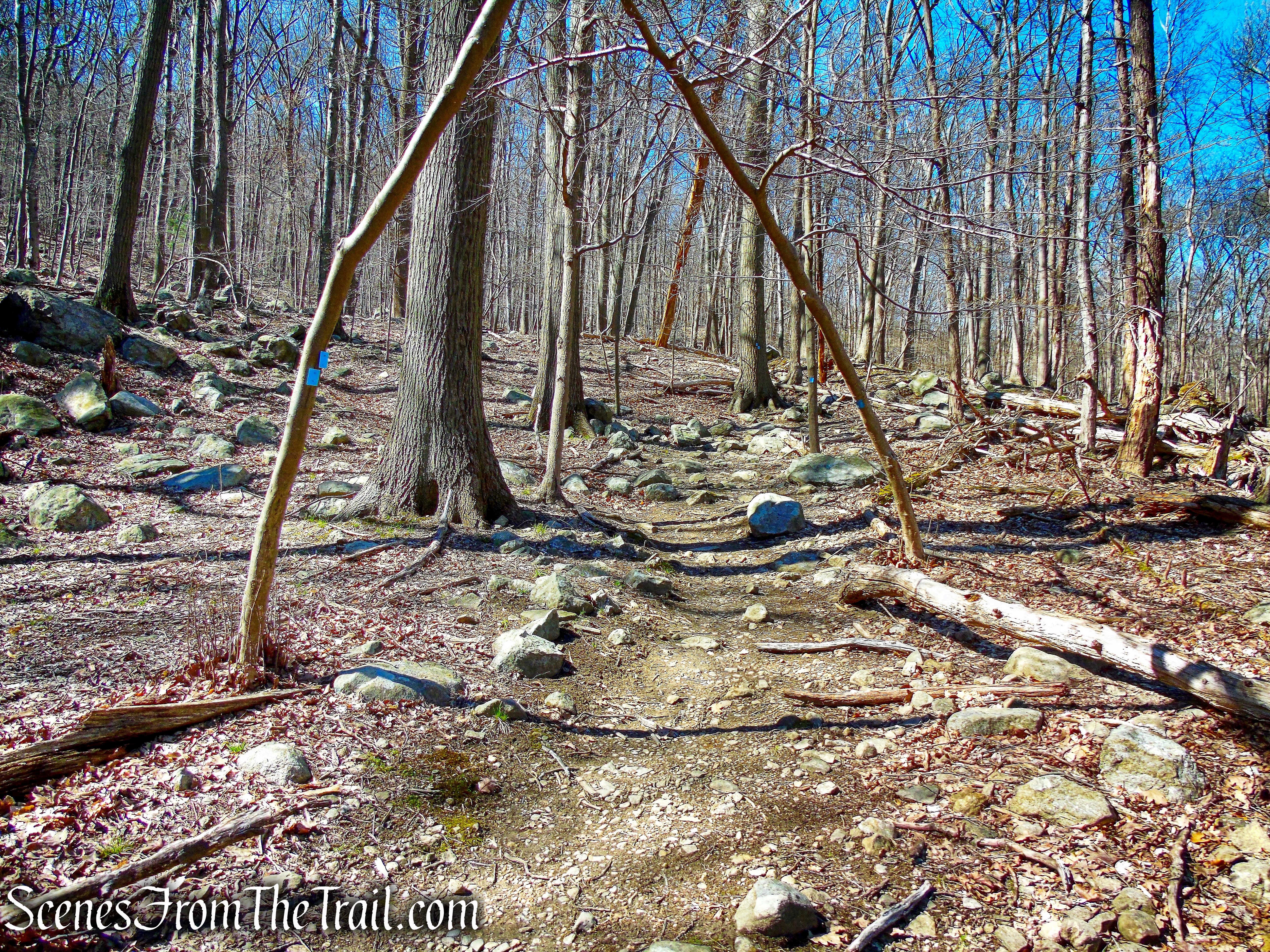
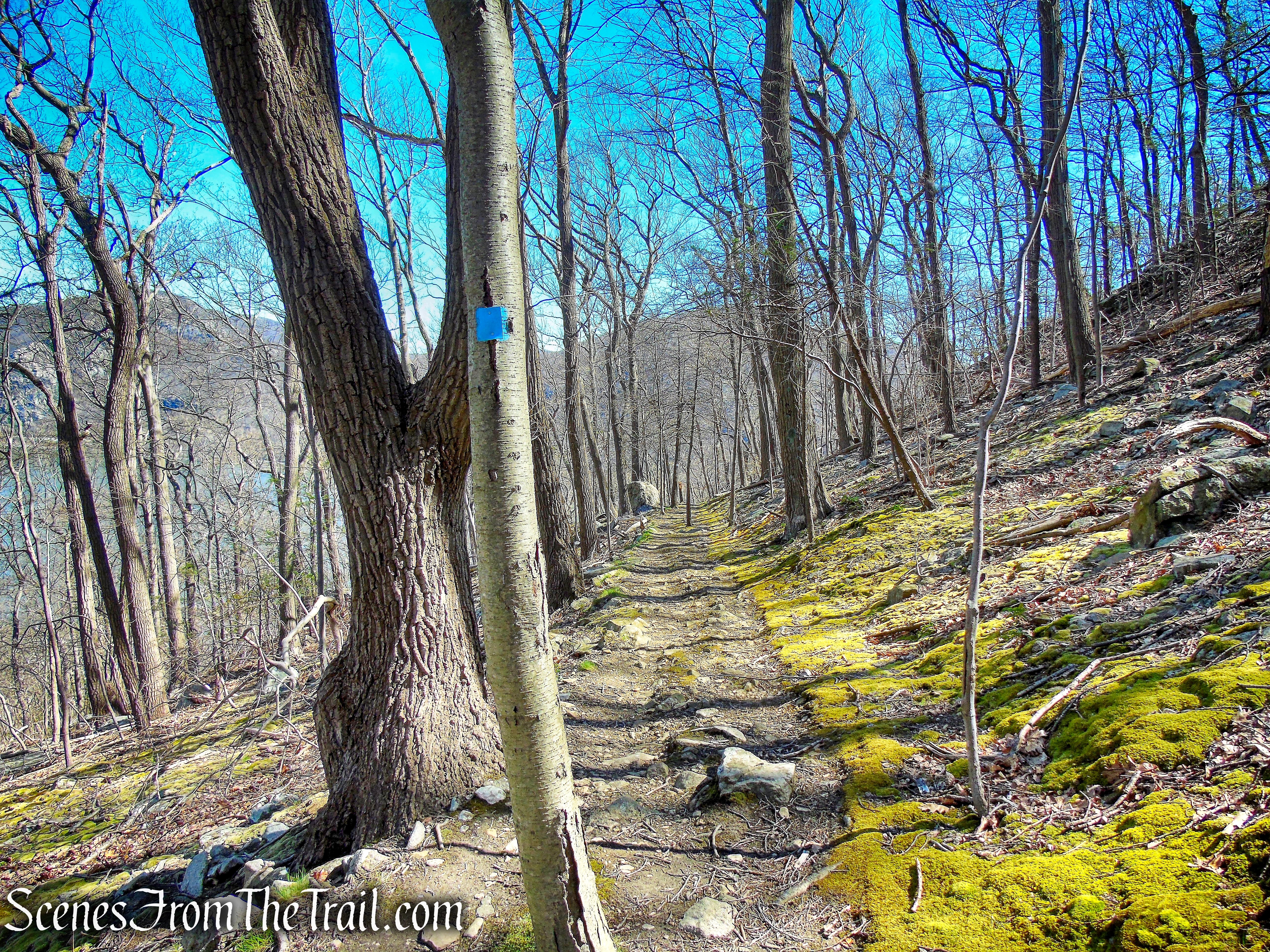
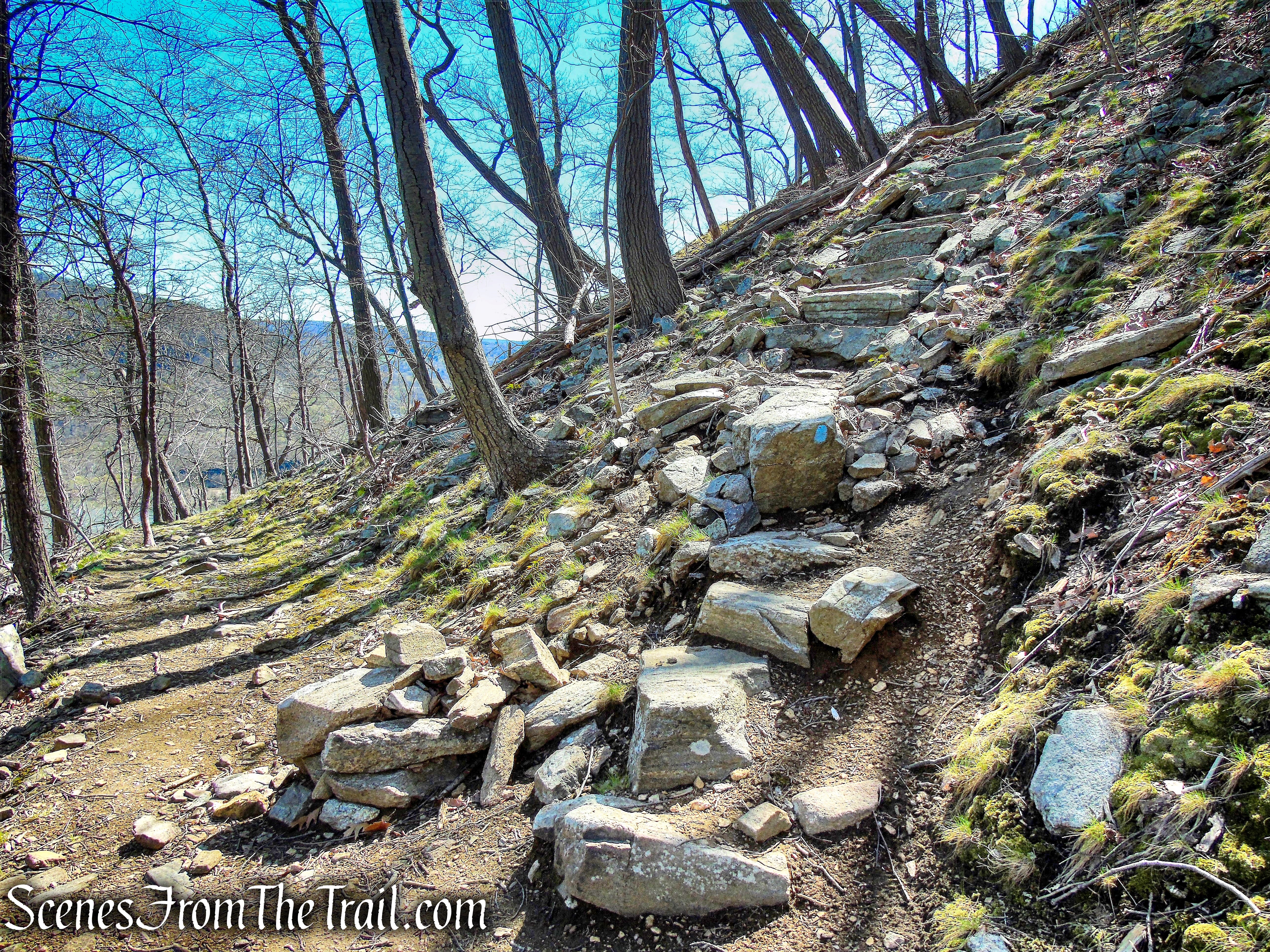
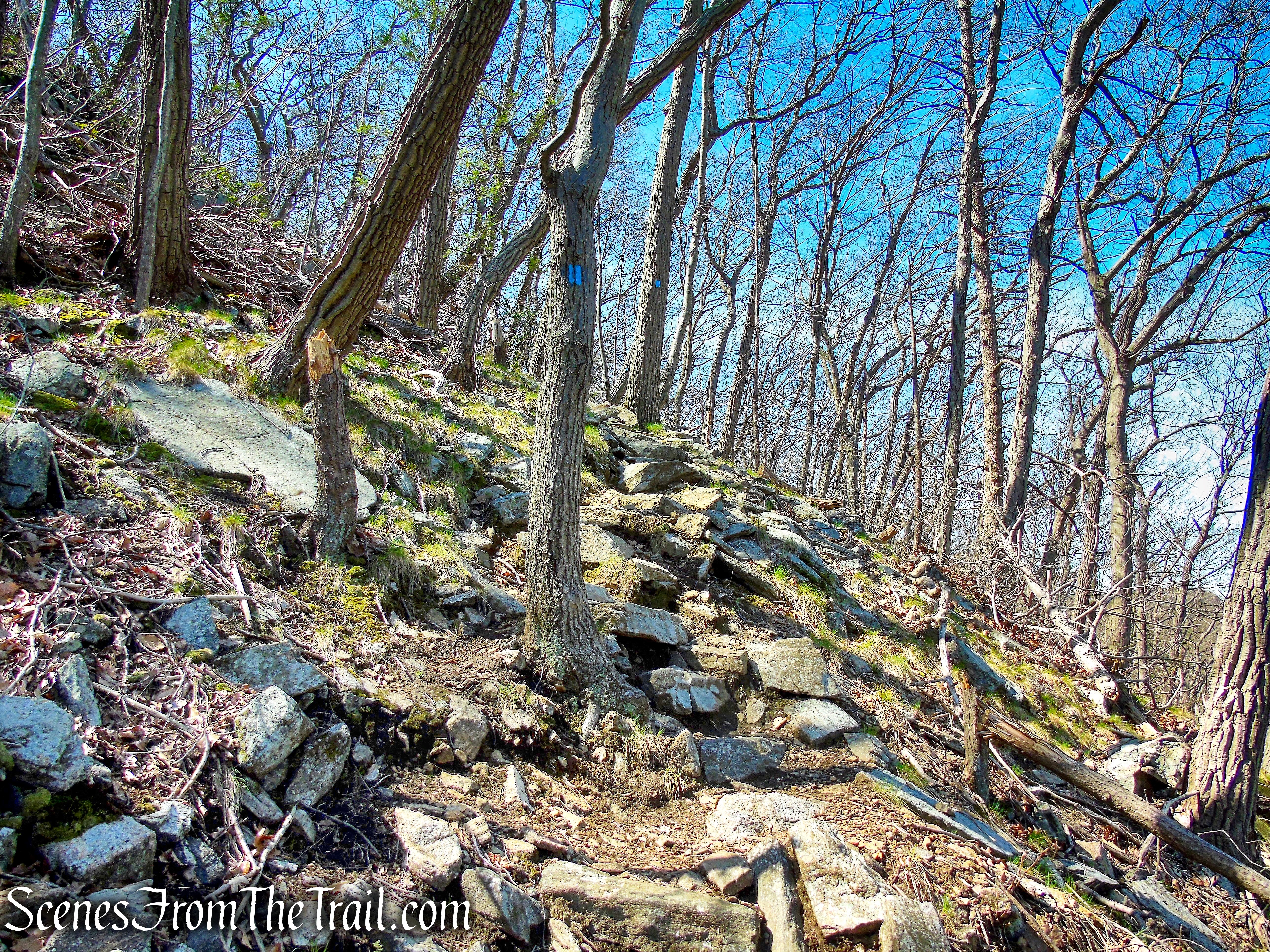
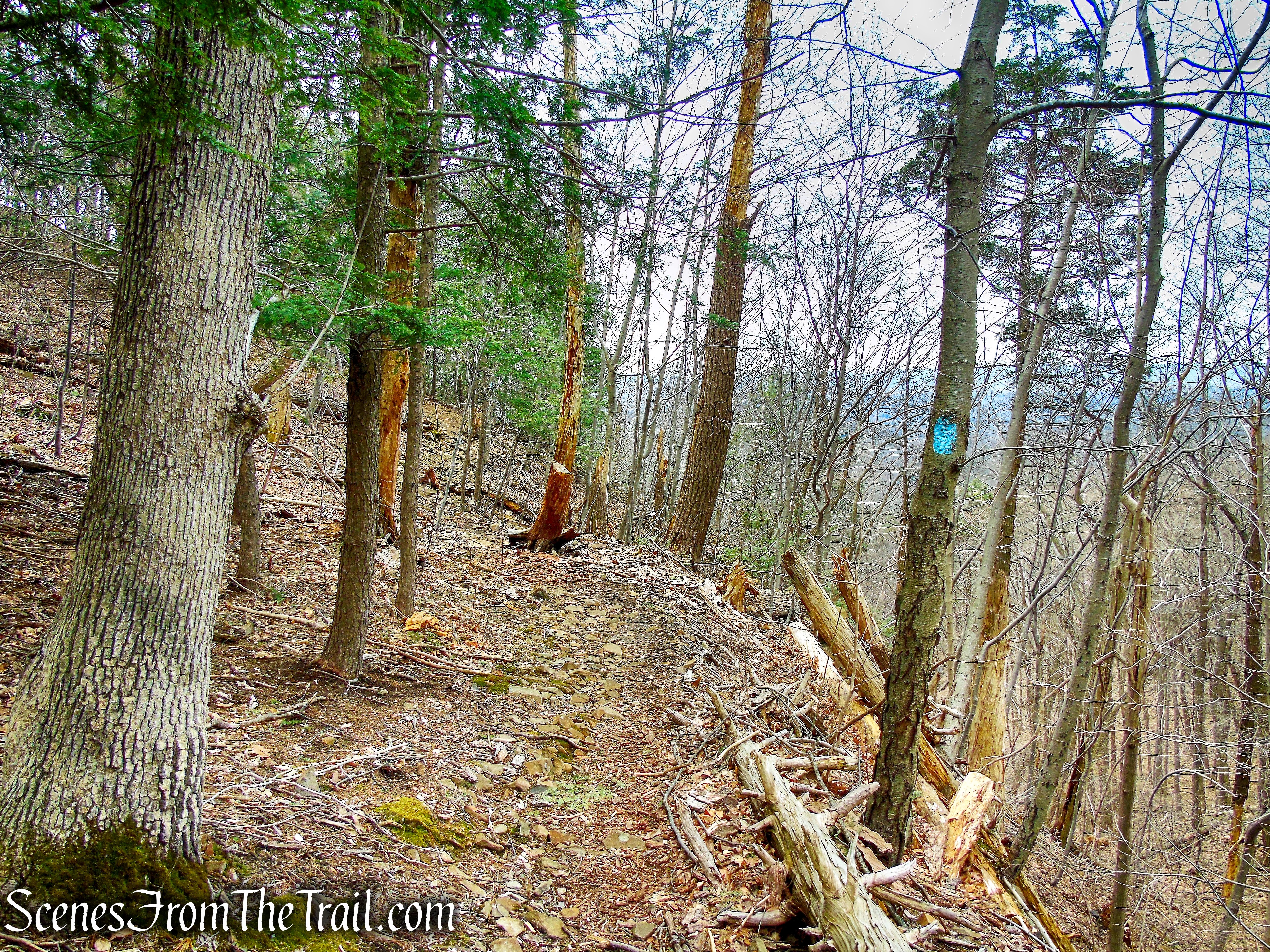
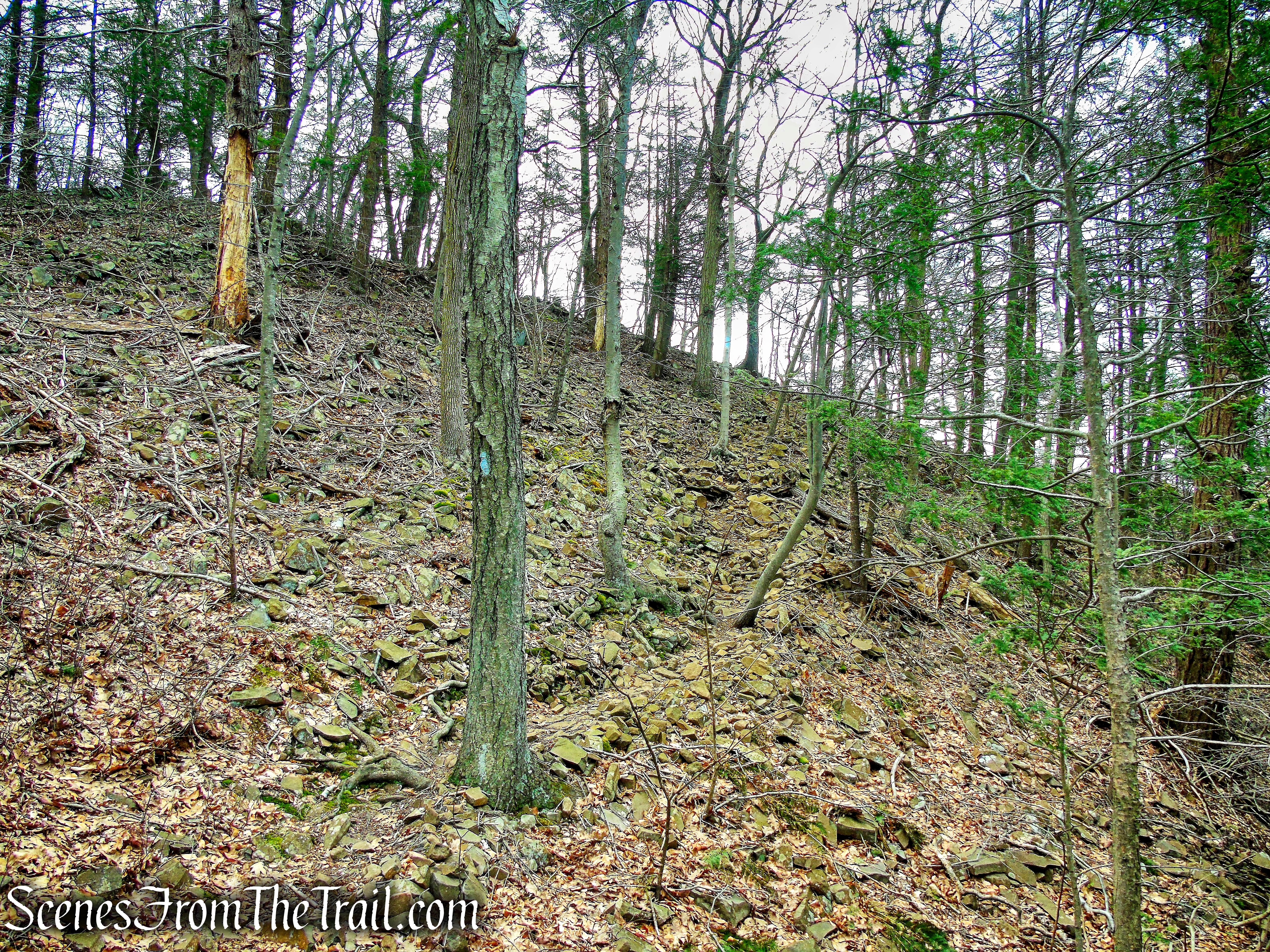
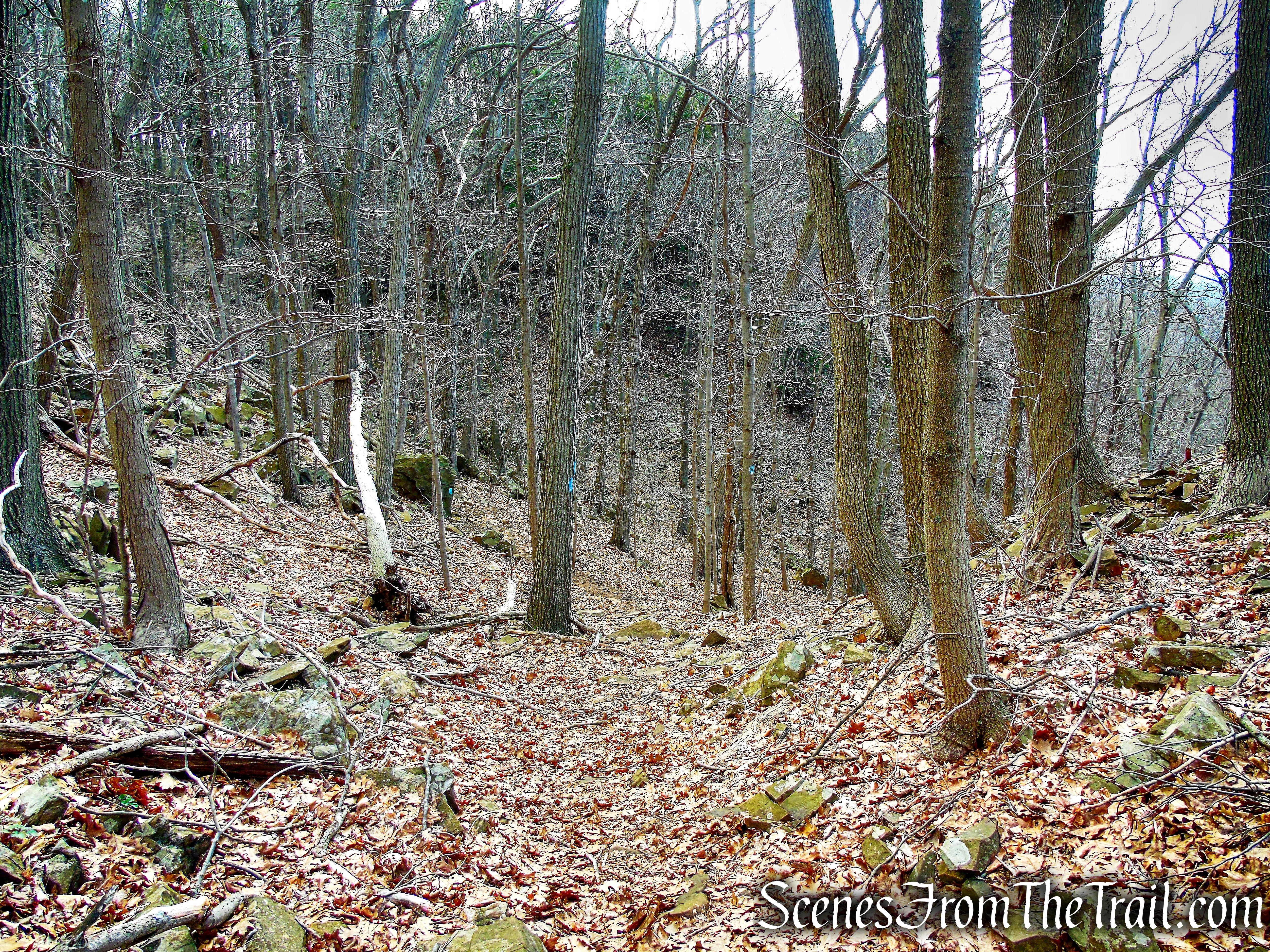
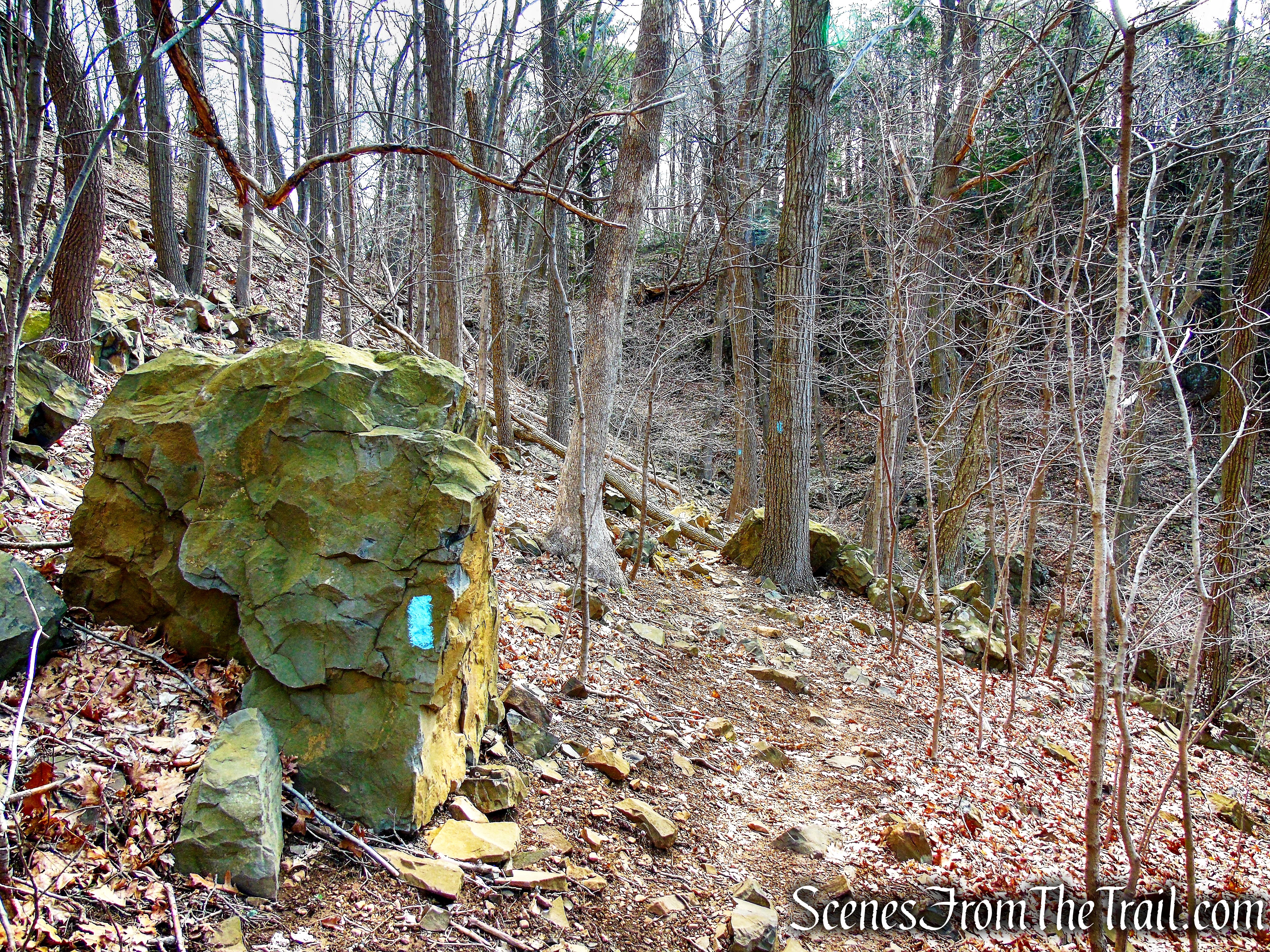
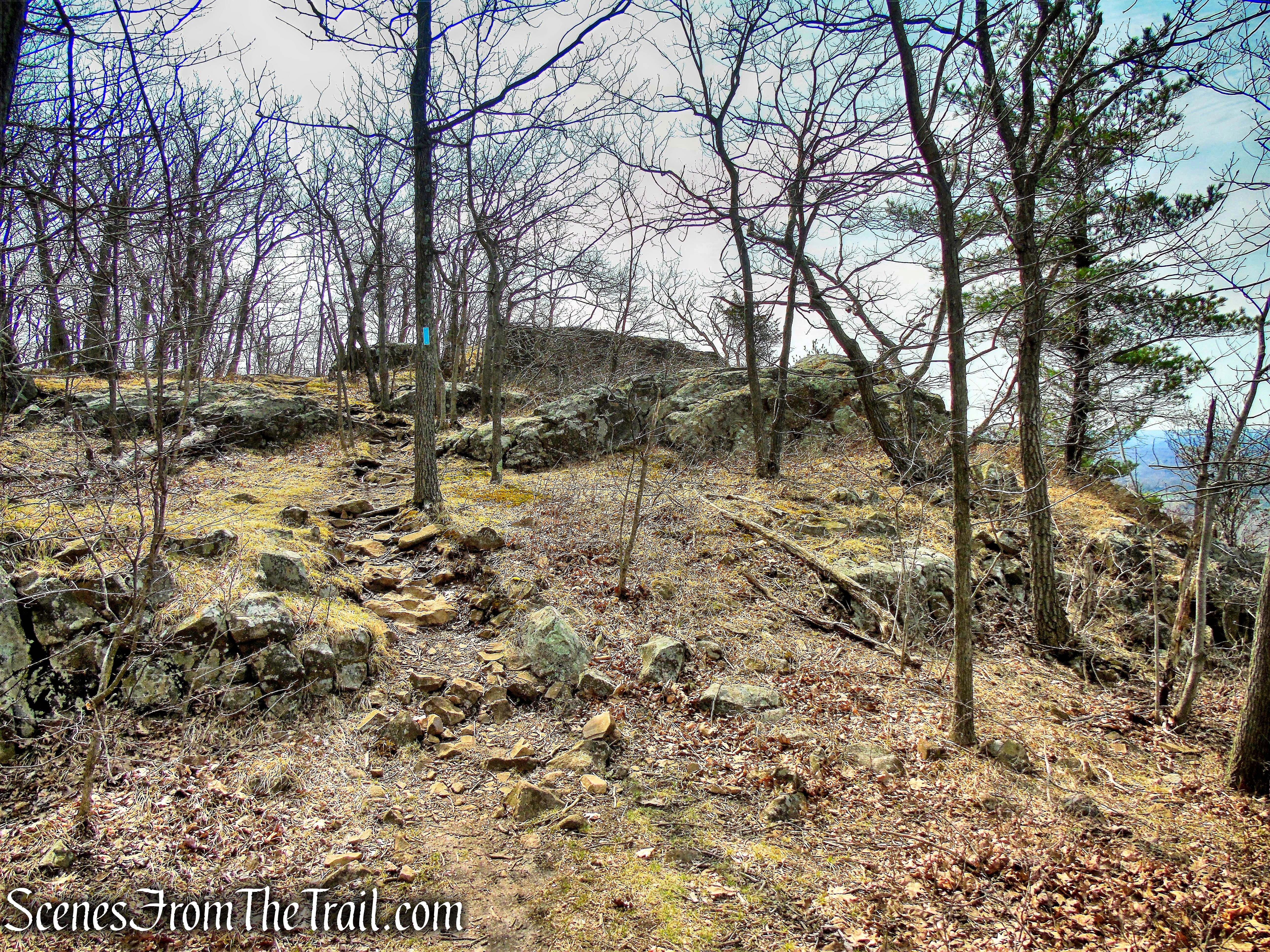
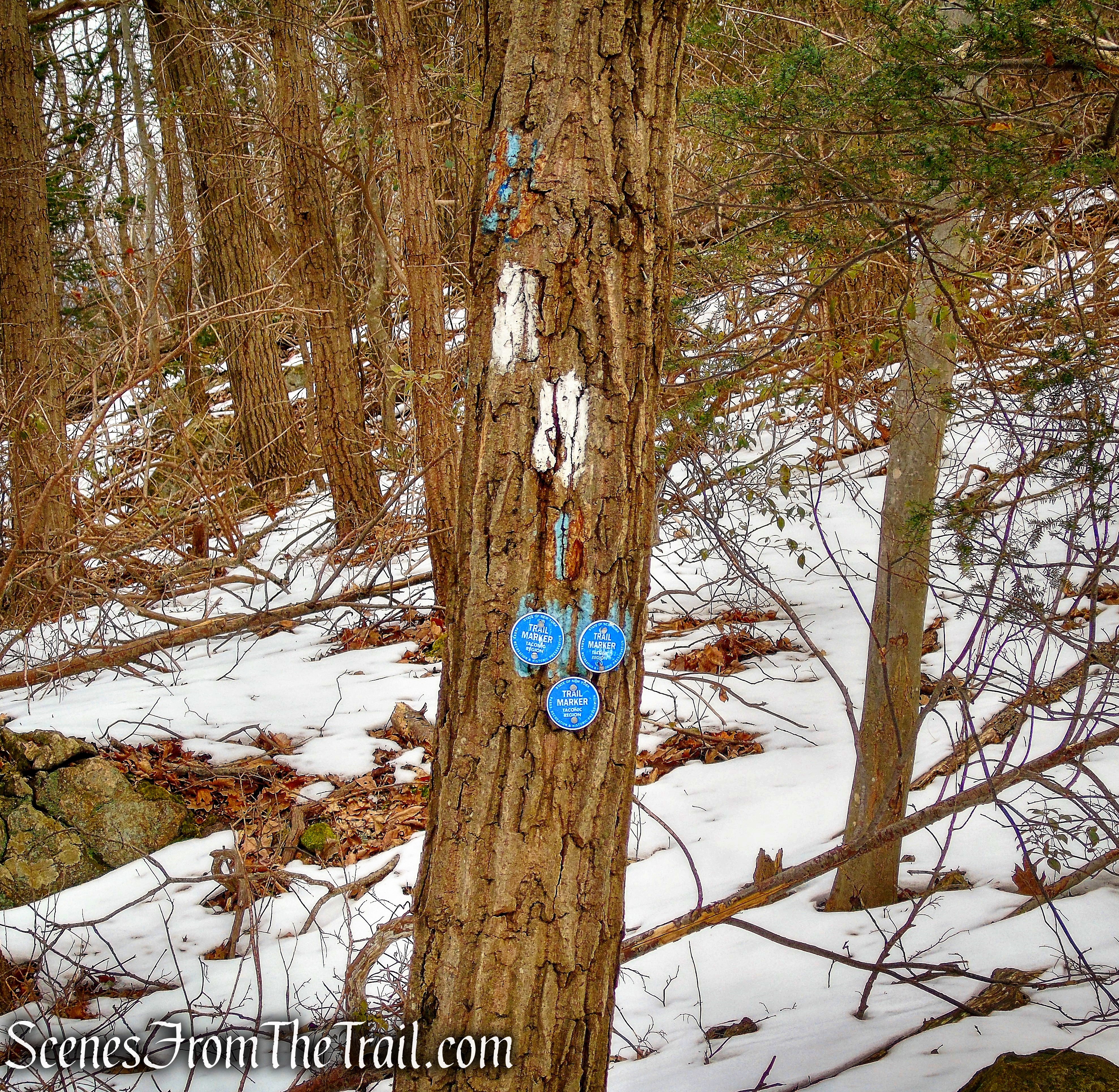
  • Old Minnewaska Trail (2.3 miles; blue blazes) – This old abandoned carriage road runs along the western edge of the escarpment and is the same route used by the famous Long Path and also the Shawangunk Ridge Trail (SRT). In places, the carriage road narrows to a footpath and it is maintained as a trail and not like the well manicured carriage roads in the interior of the preserve.
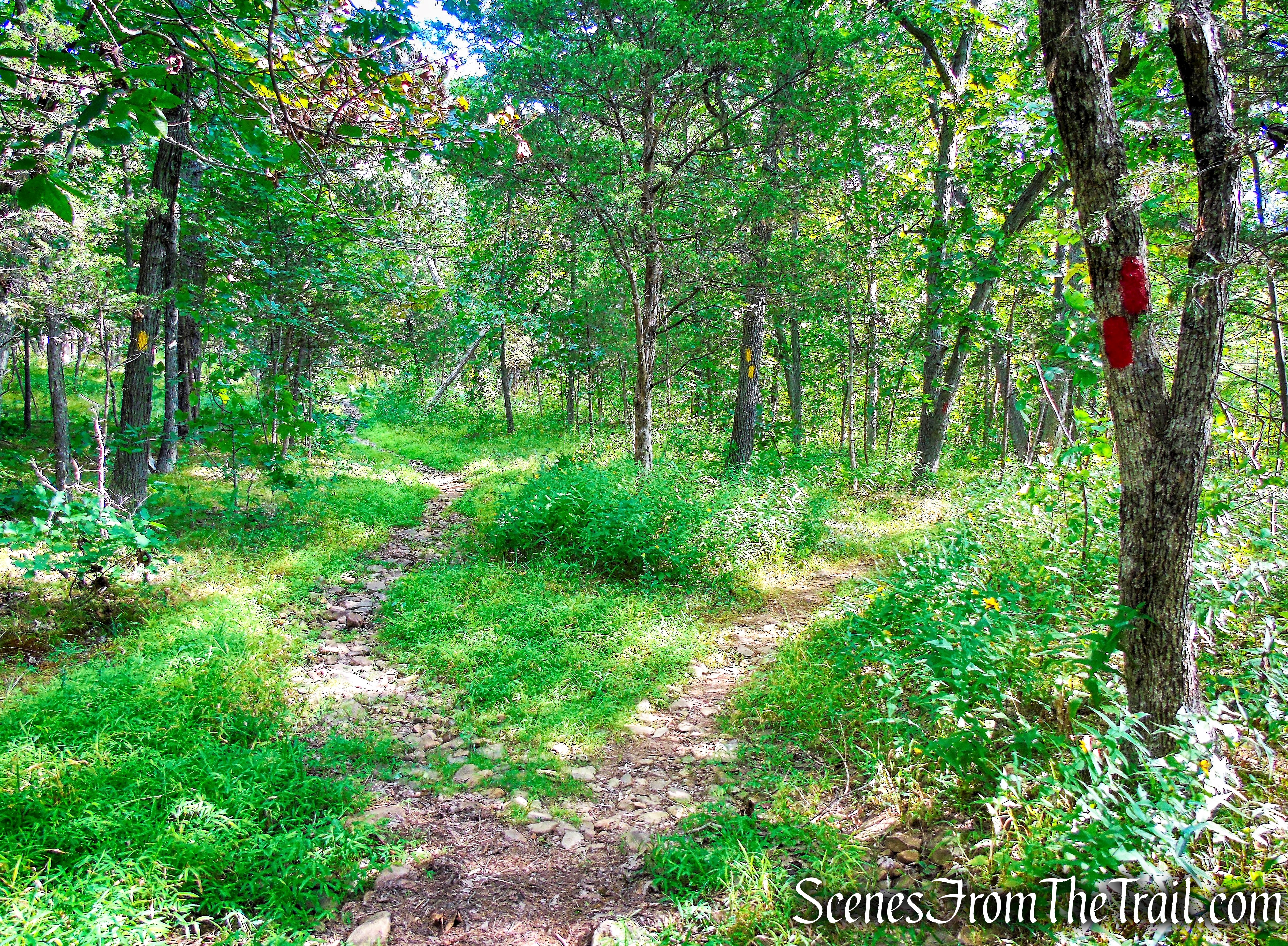
  • Shongum Path (0.6 mile; red blazes) – This footpath connects the Old Minnewaska Trail with the West Trapps Connector Trail, linking the Coxing Creek area with the West Trapps parking area.

Hike Overview:

I normally prefer to hike the Mohonk/Minnewaska area on weekdays due to the large crowds on weekends. Parking is always an issue when visiting the Mohonk Preserve, so it makes for an early rise. The preserve’s website lists the West Trapps Trailhead parking area as opening at 9:00am on weekends, but when we arrived at about 8:30am, it was near capacity.

Update: Please consult their website for information on the West Trapps Trailhead as protocols have changed in 2020.

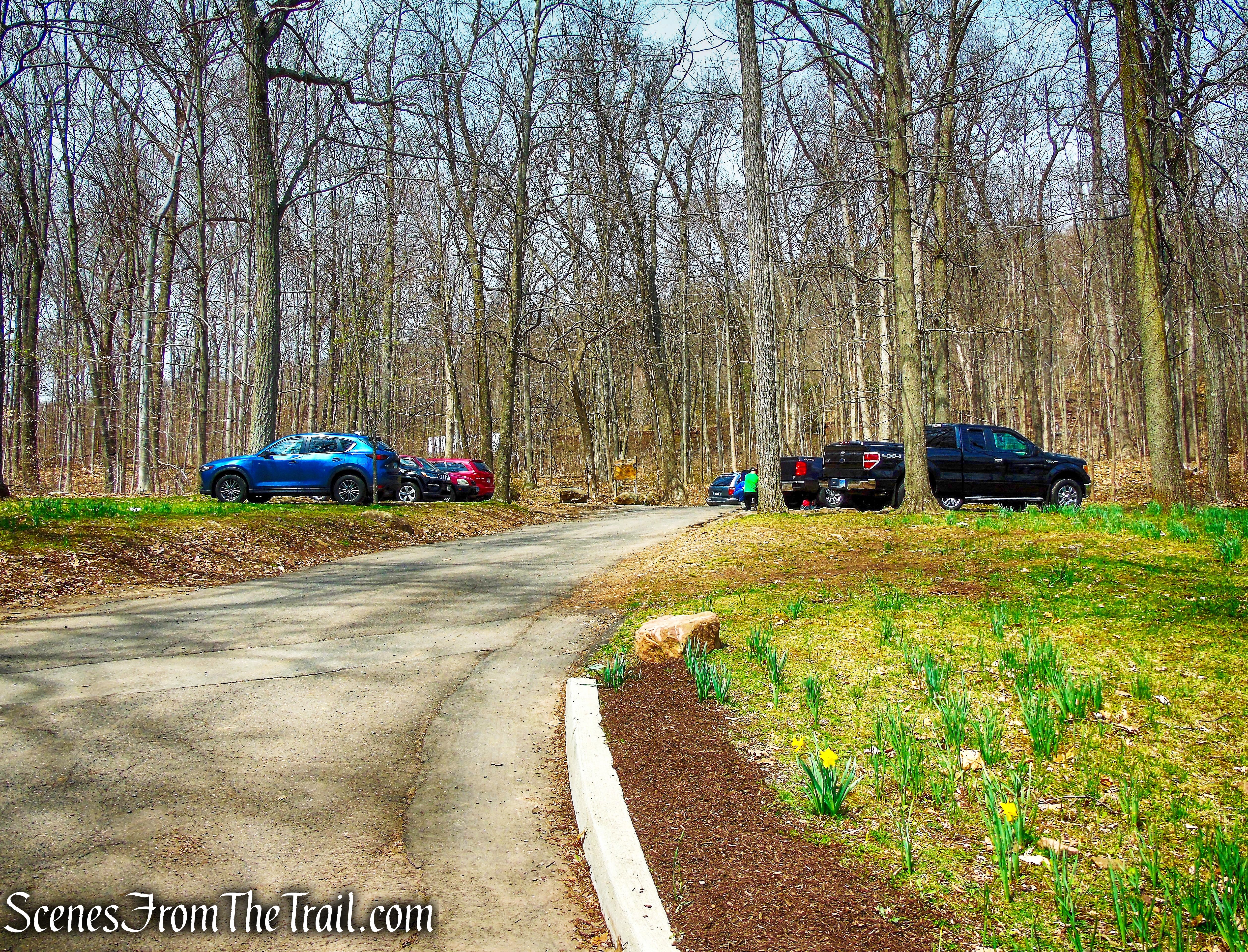
West Trapps Parking Area

West Trapps Parking Area

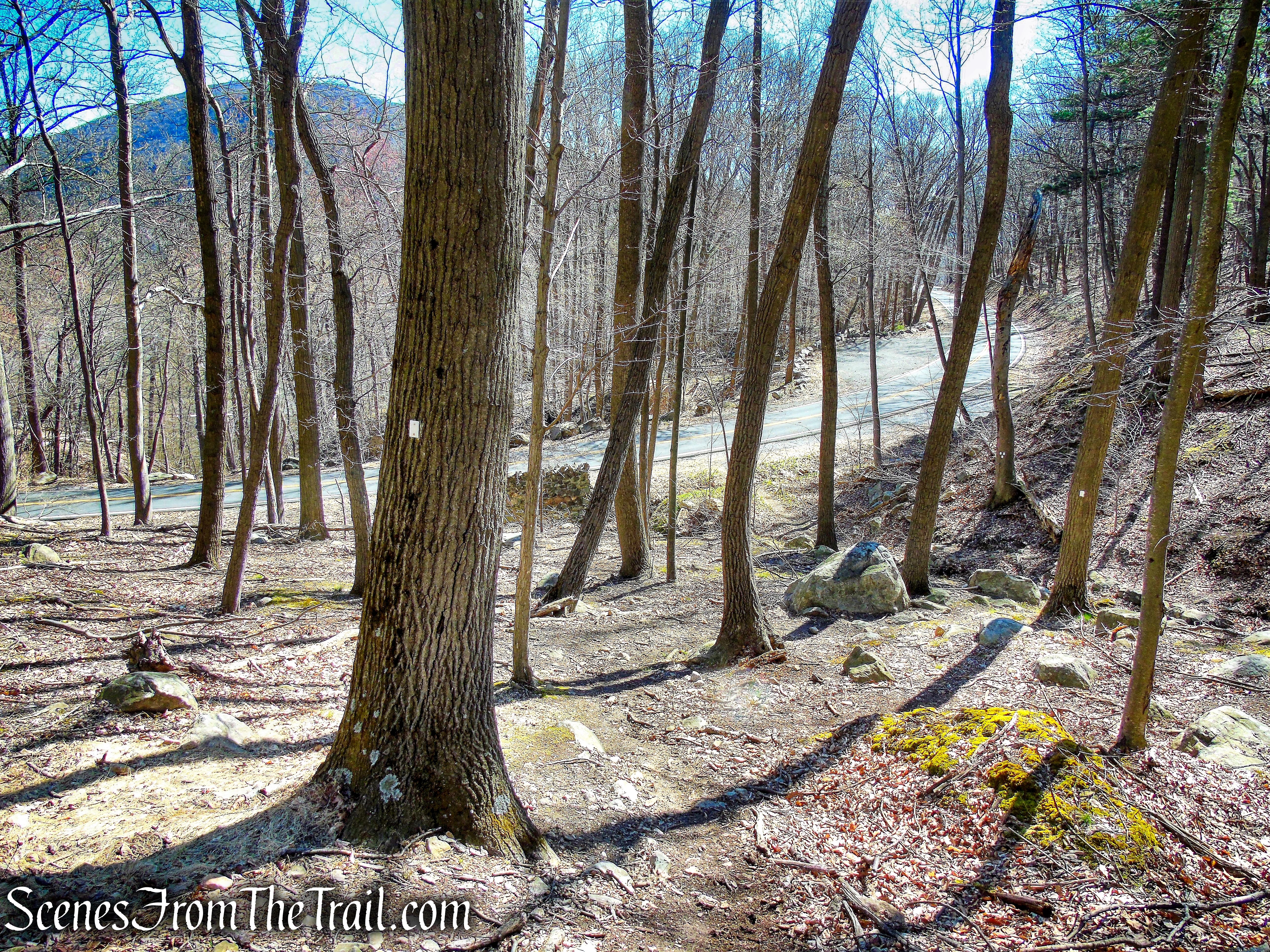
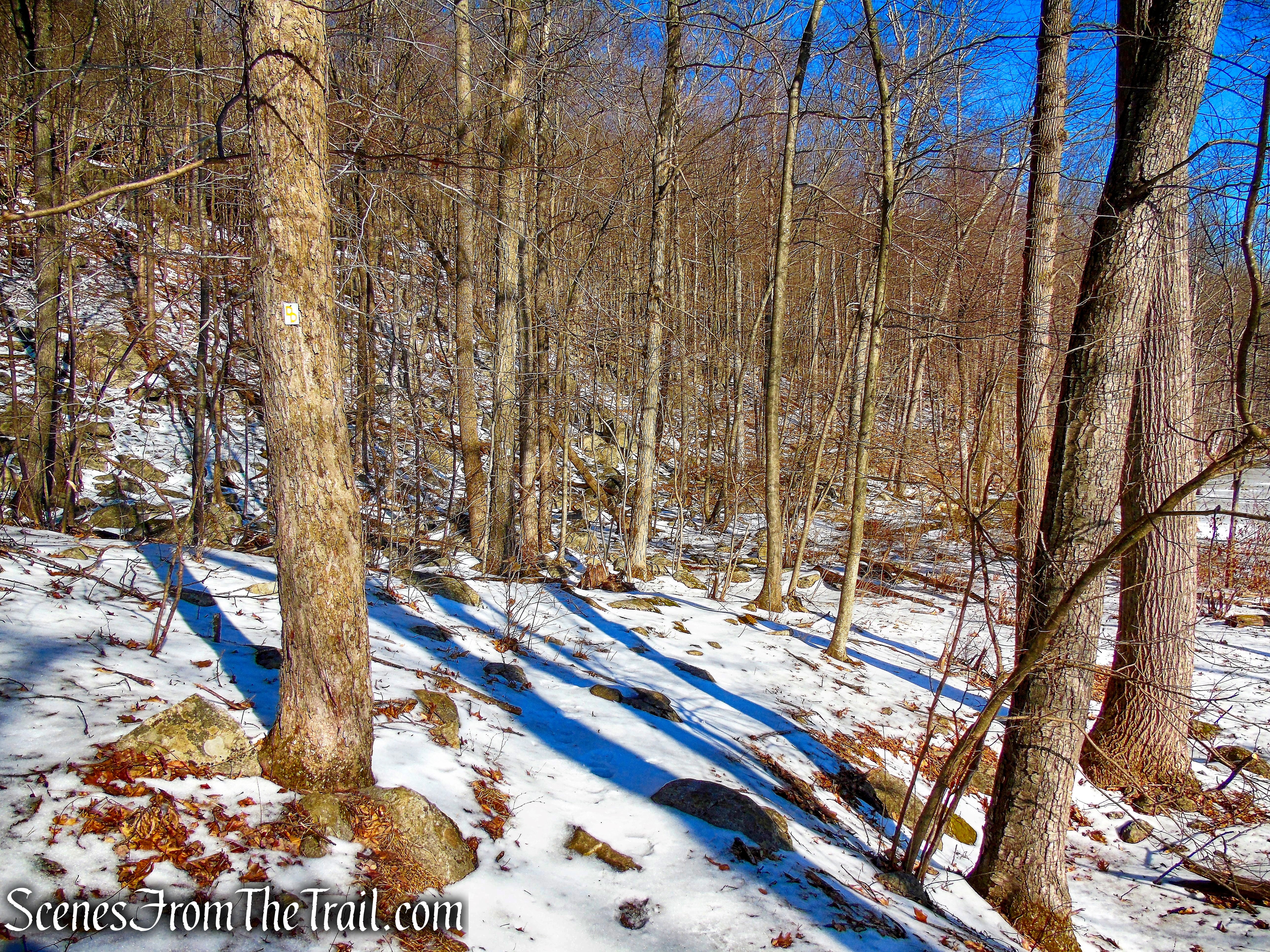
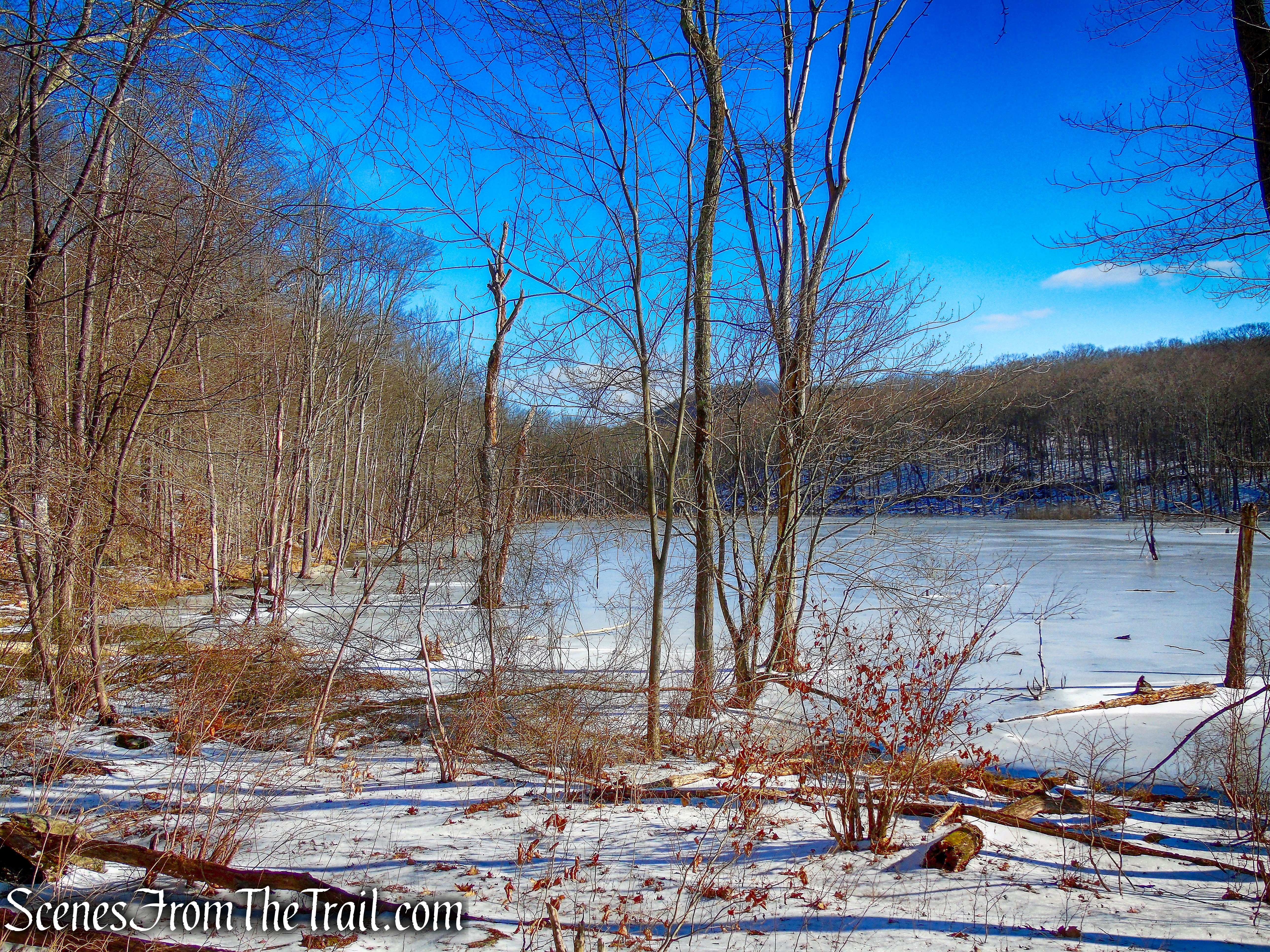
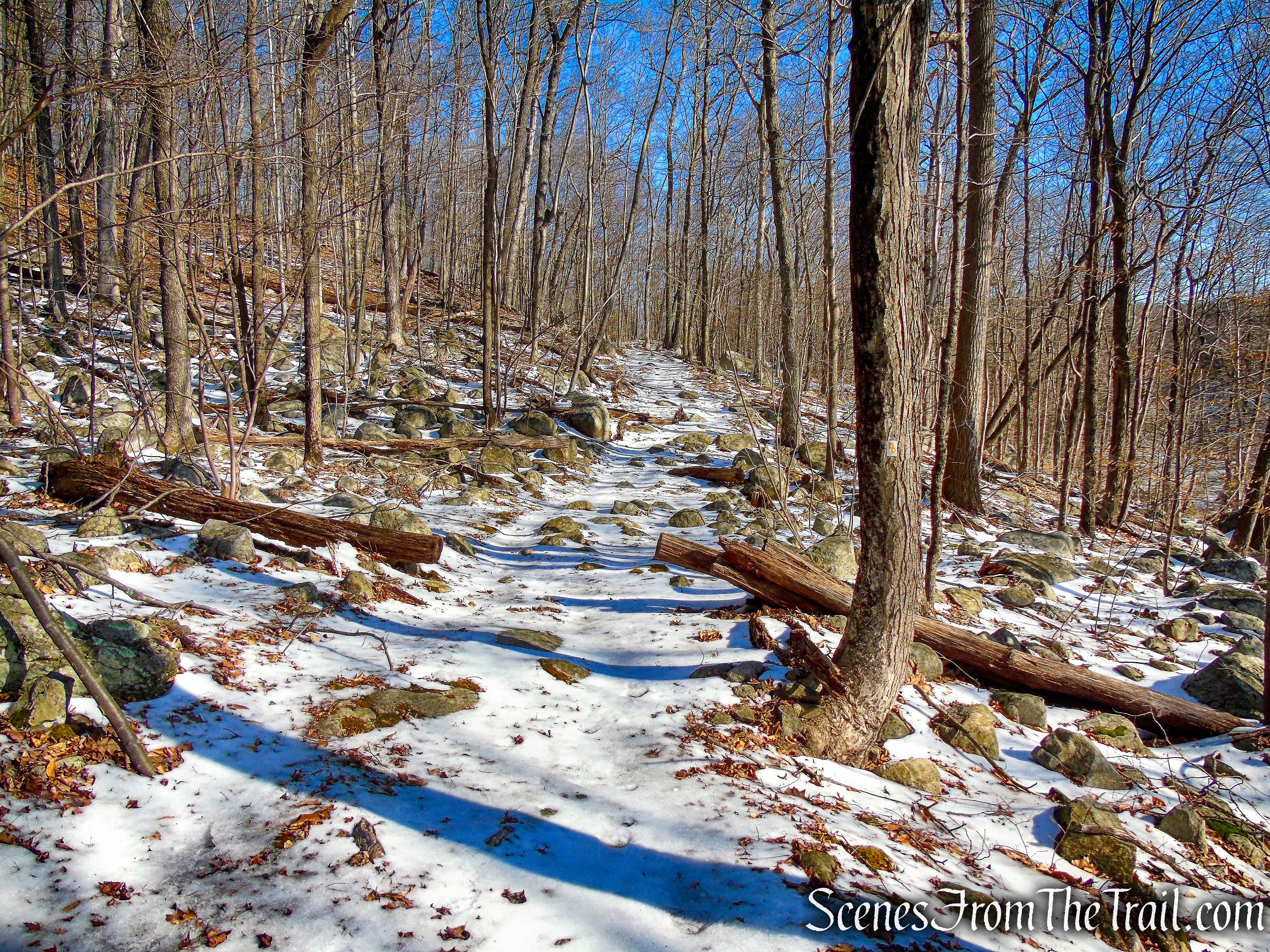
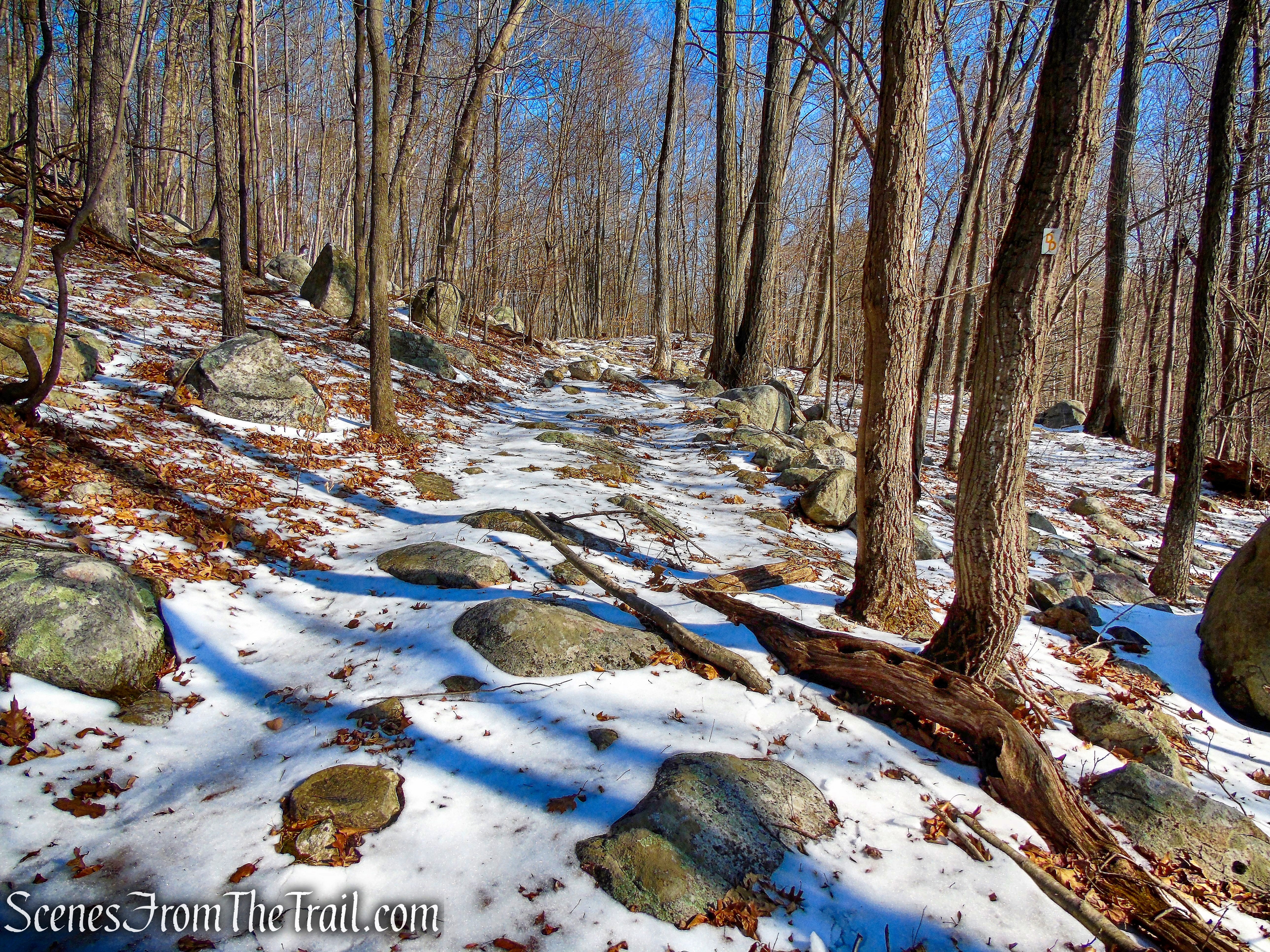
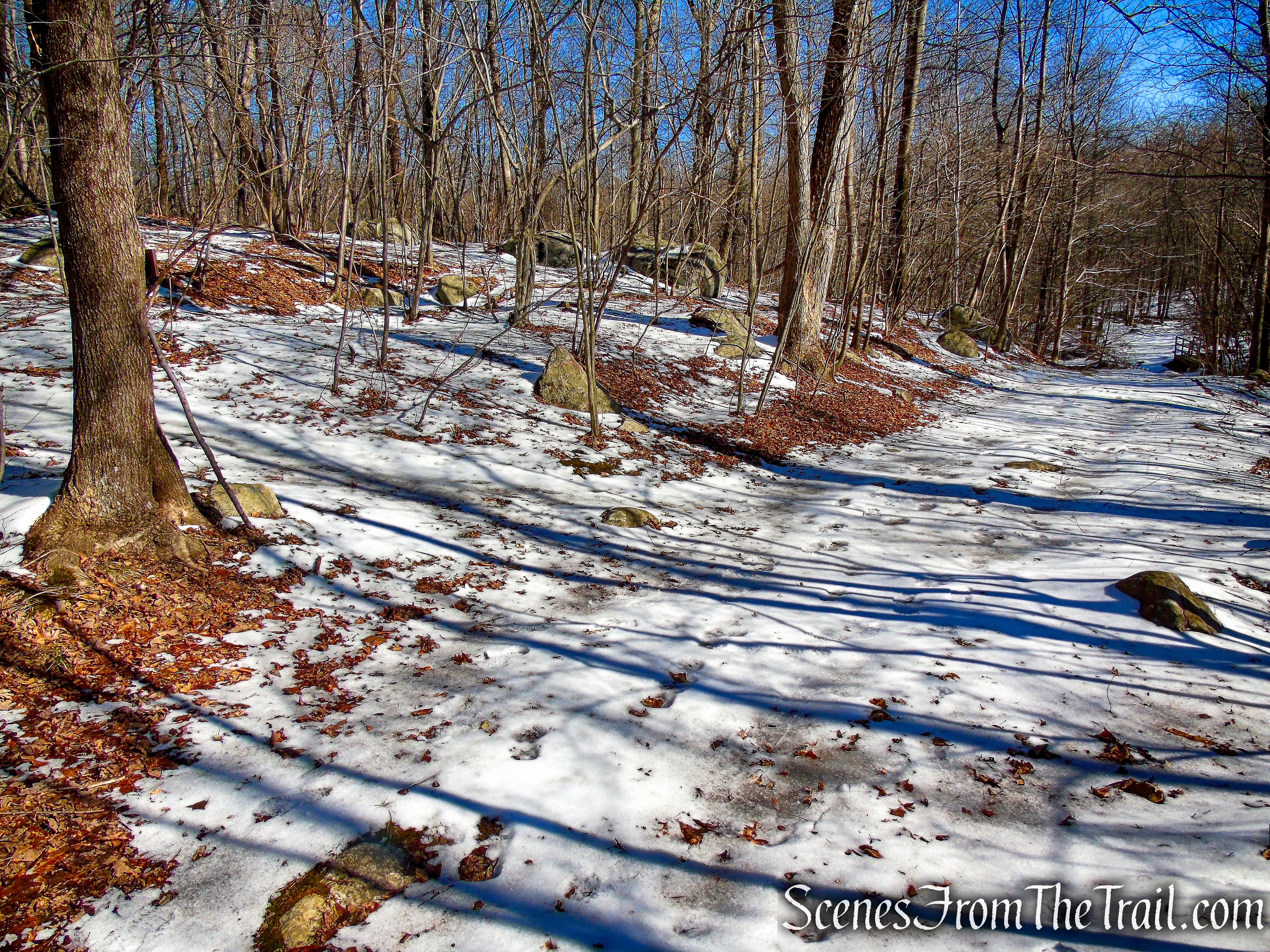
The first part of the hike can be done by using either Overcliff or Undercliff Road. We chose Overcliff Road as it is less traveled (Undercliff Road is popular for rock climbers) and the morning sun is shielded by the cliffs, thus avoiding sun glare while walking and/or capturing images.

This moderate loop hike travels mostly on wide carriage roads that are easy to follow, with only short stints on footpaths. The elevation gain is mostly at the beginning, but the last stretch along the Shongum Path is uphill. This hike was done counterclockwise starting from the West Trapps Trailhead.

Overcliff Road and Old Minnewaska Trail Loop - Mohonk Preserve

Overcliff Road and Old Minnewaska Trail Loop – Mohonk Preserve

The Hike:

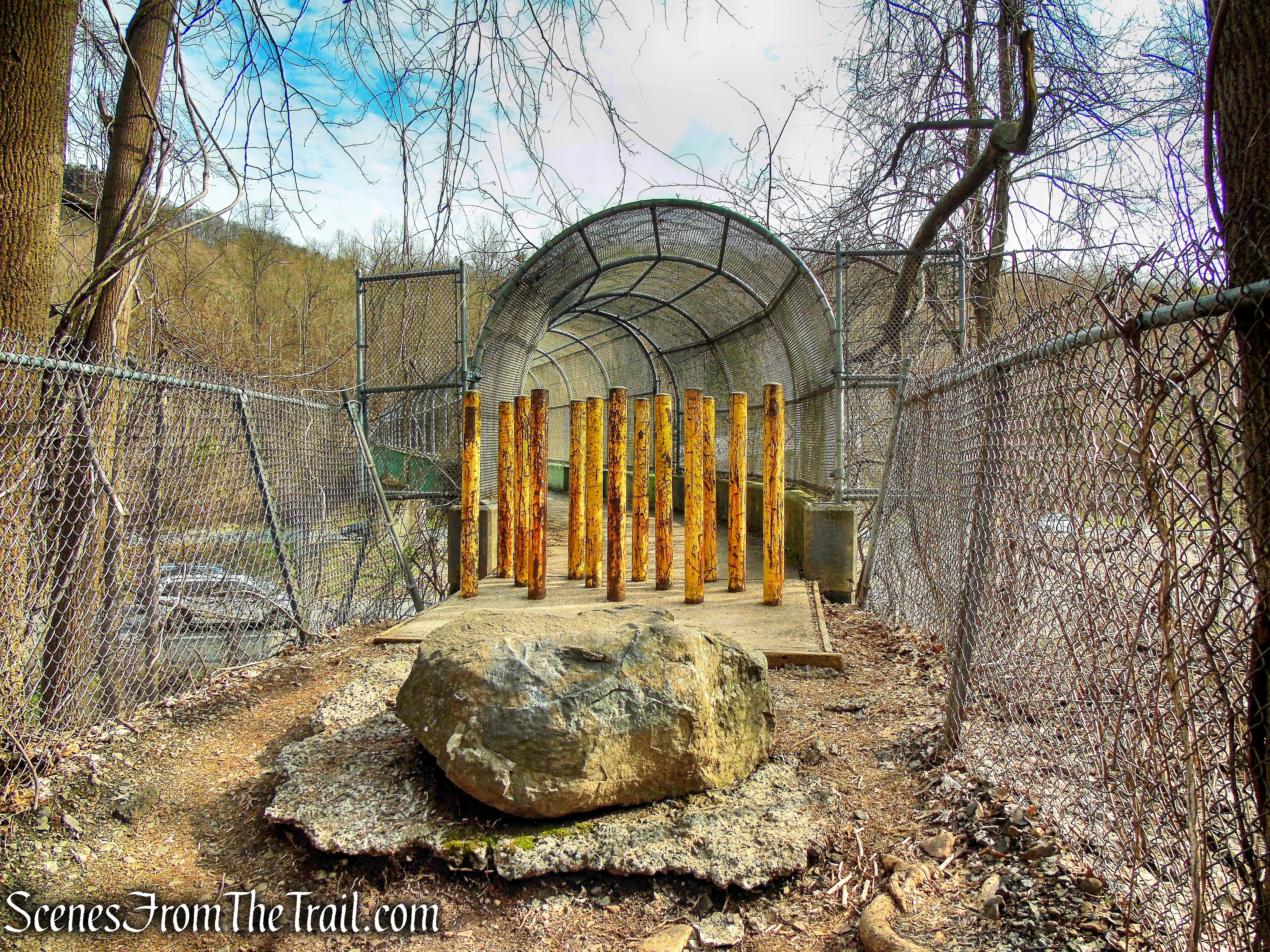
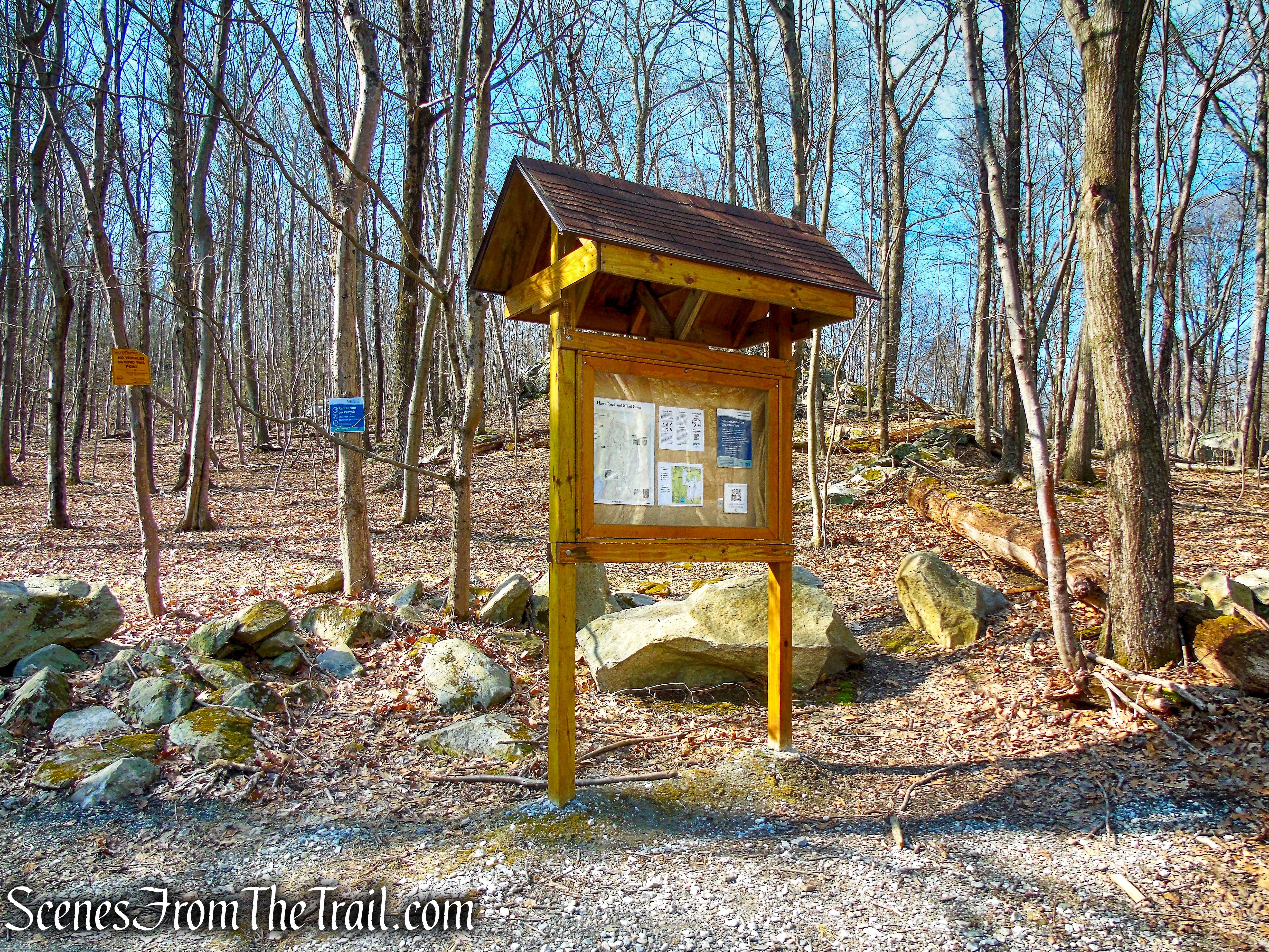
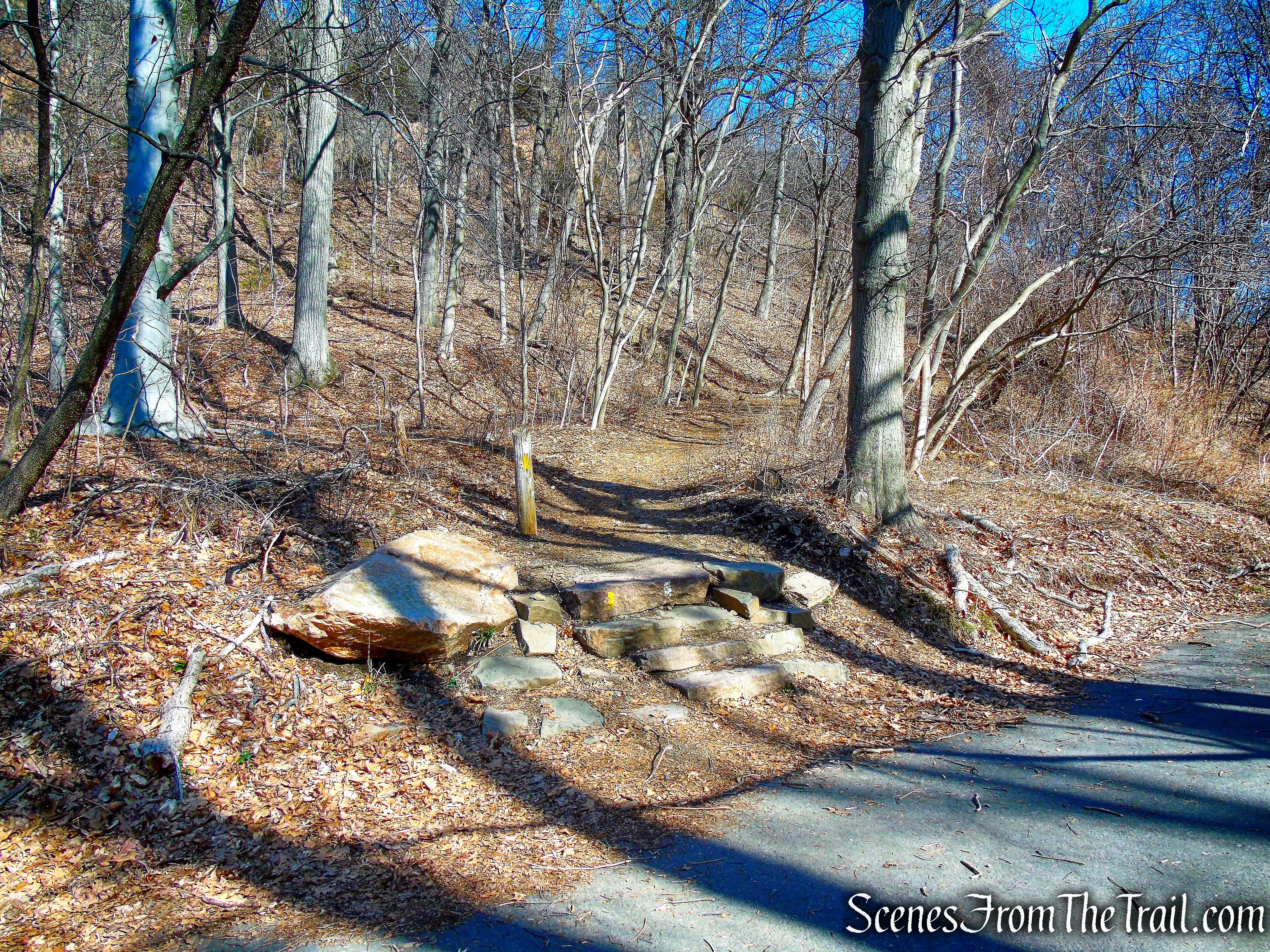
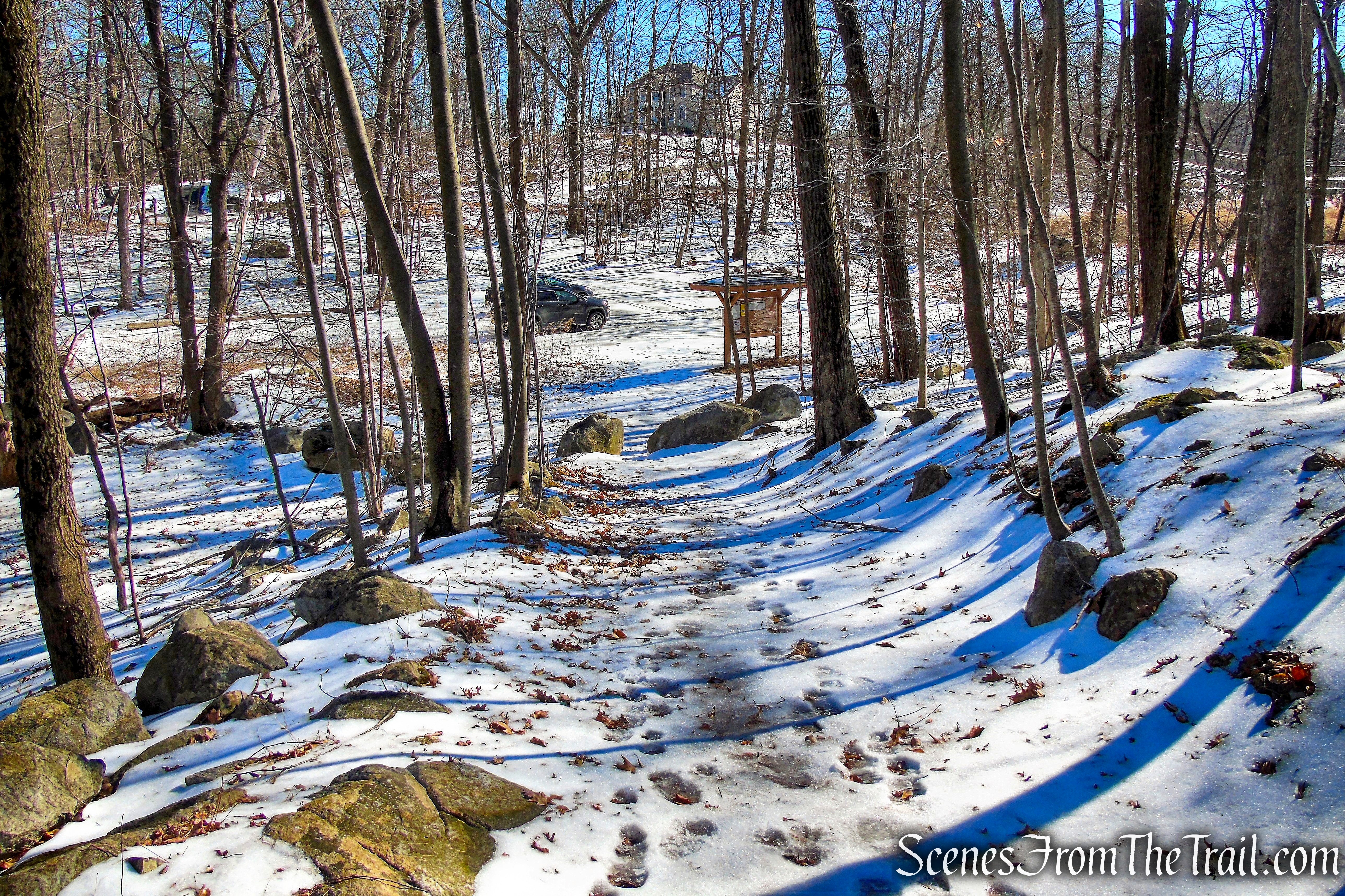
From the kiosk at the eastern end of the parking area, follow the yellow-blazed West Trapps Connector Trail which leads east, parallel to Route 44/55. In about 750 feet, a sign on the left marks the start of the red-blazed Shongum Path. This is your return route, but for now, continue ahead, following the yellow blazes. In about a quarter of a mile from the start, you’ll reach the Trapps Bridge, where a stairway leads up to the Undercliff and Overcliff Roads.

West Trapps Connector Trail - Mohonk Preserve

West Trapps Connector Trail – Mohonk Preserve

West Trapps Connector Trail - Mohonk Preserve

West Trapps Connector Trail – Mohonk Preserve

West Trapps Connector Trail - Mohonk Preserve

West Trapps Connector Trail – Mohonk Preserve

West Trapps Connector Trail - Mohonk Preserve

West Trapps Connector Trail – Mohonk Preserve

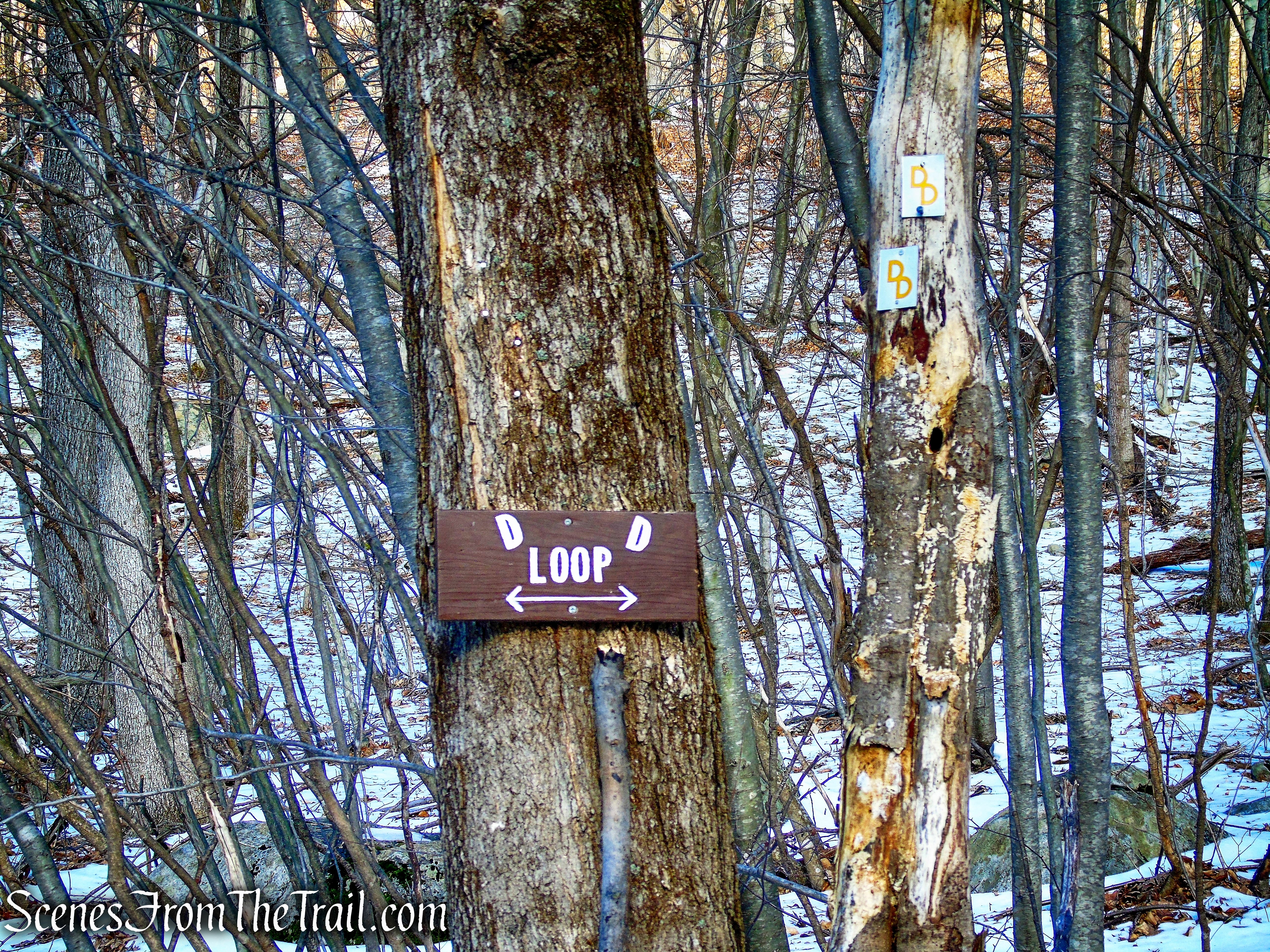
Overcliff and Undercliff Roads junction - Mohonk Preserve

Overcliff and Undercliff Roads junction – Mohonk Preserve

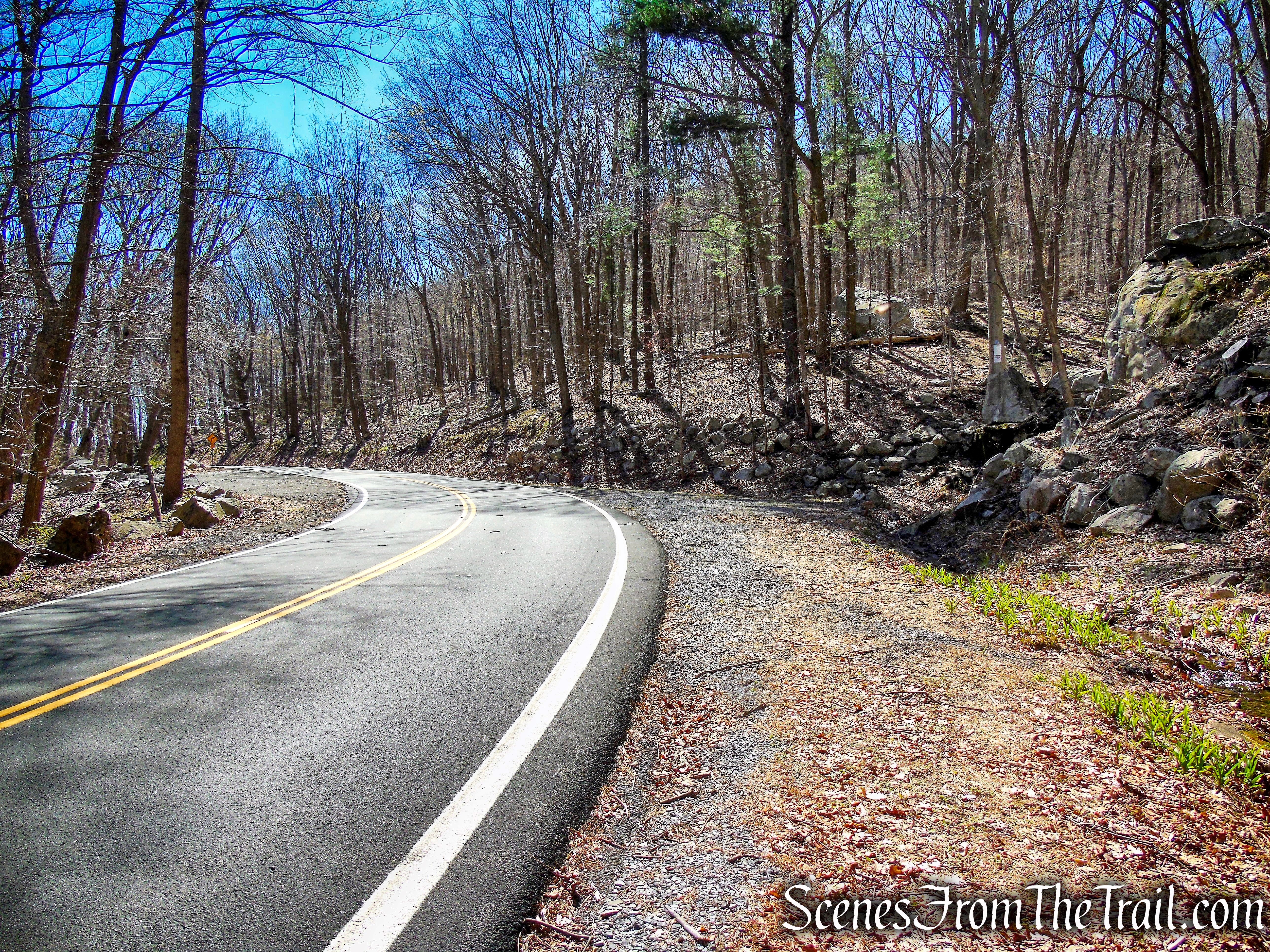
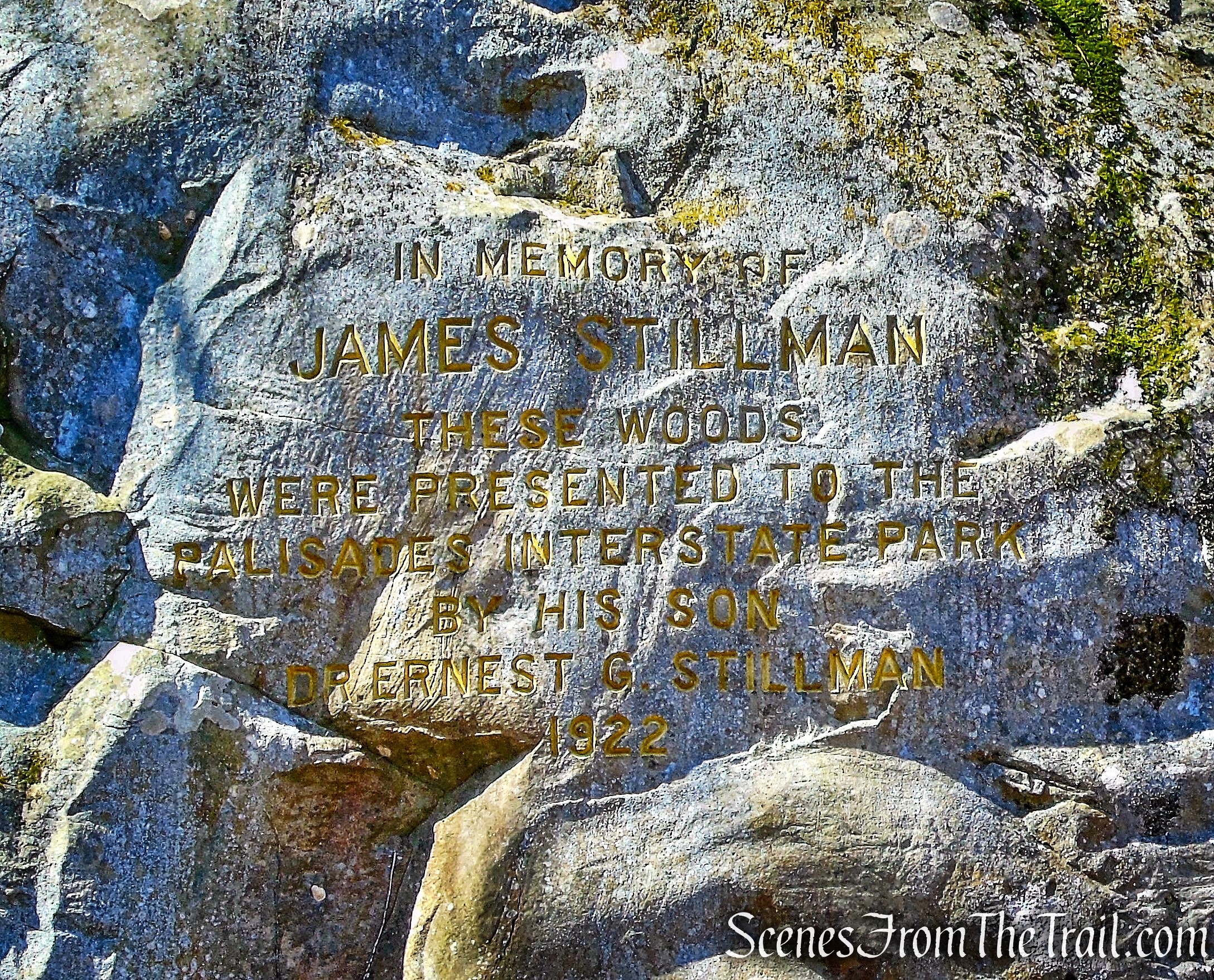
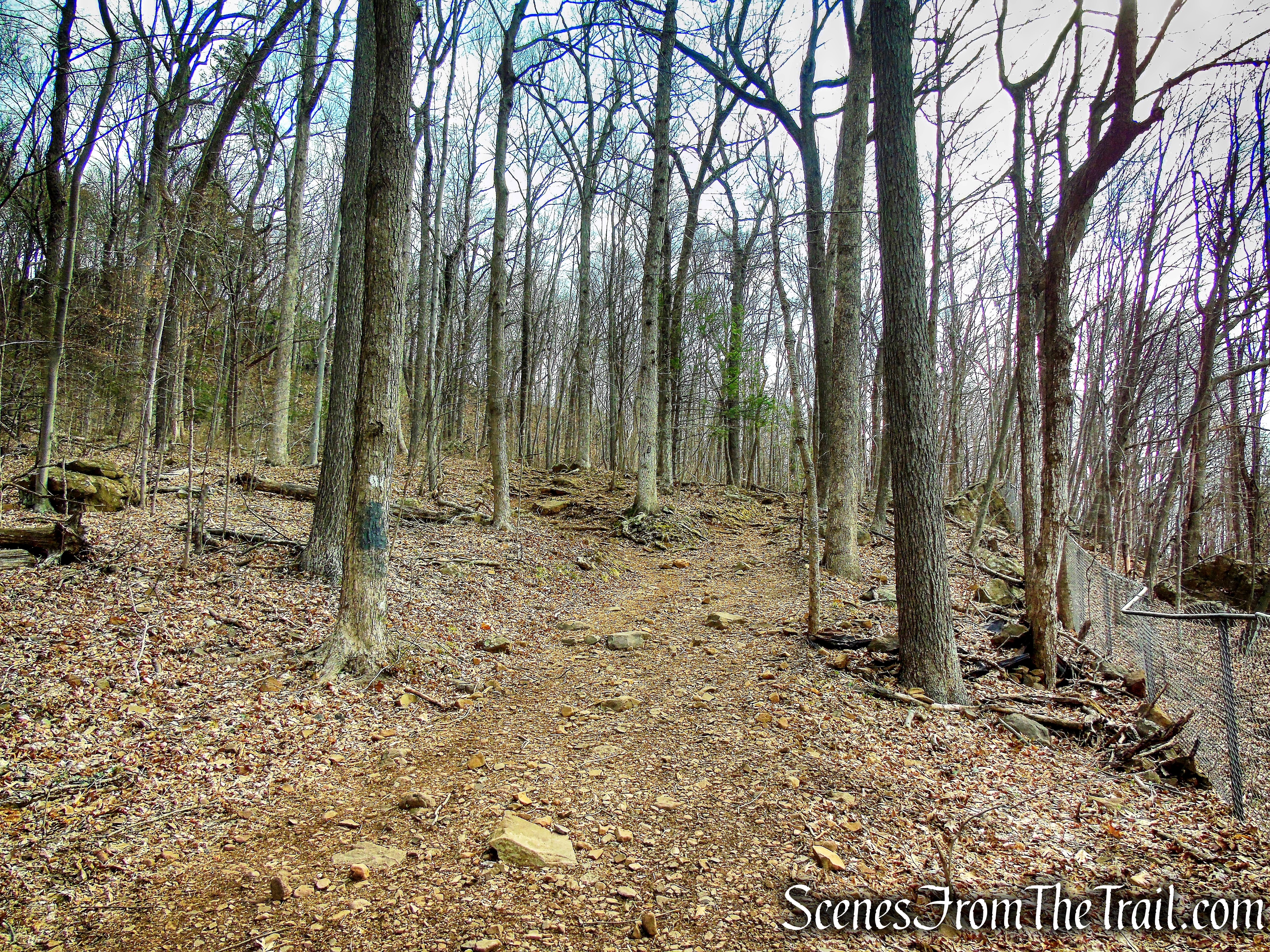
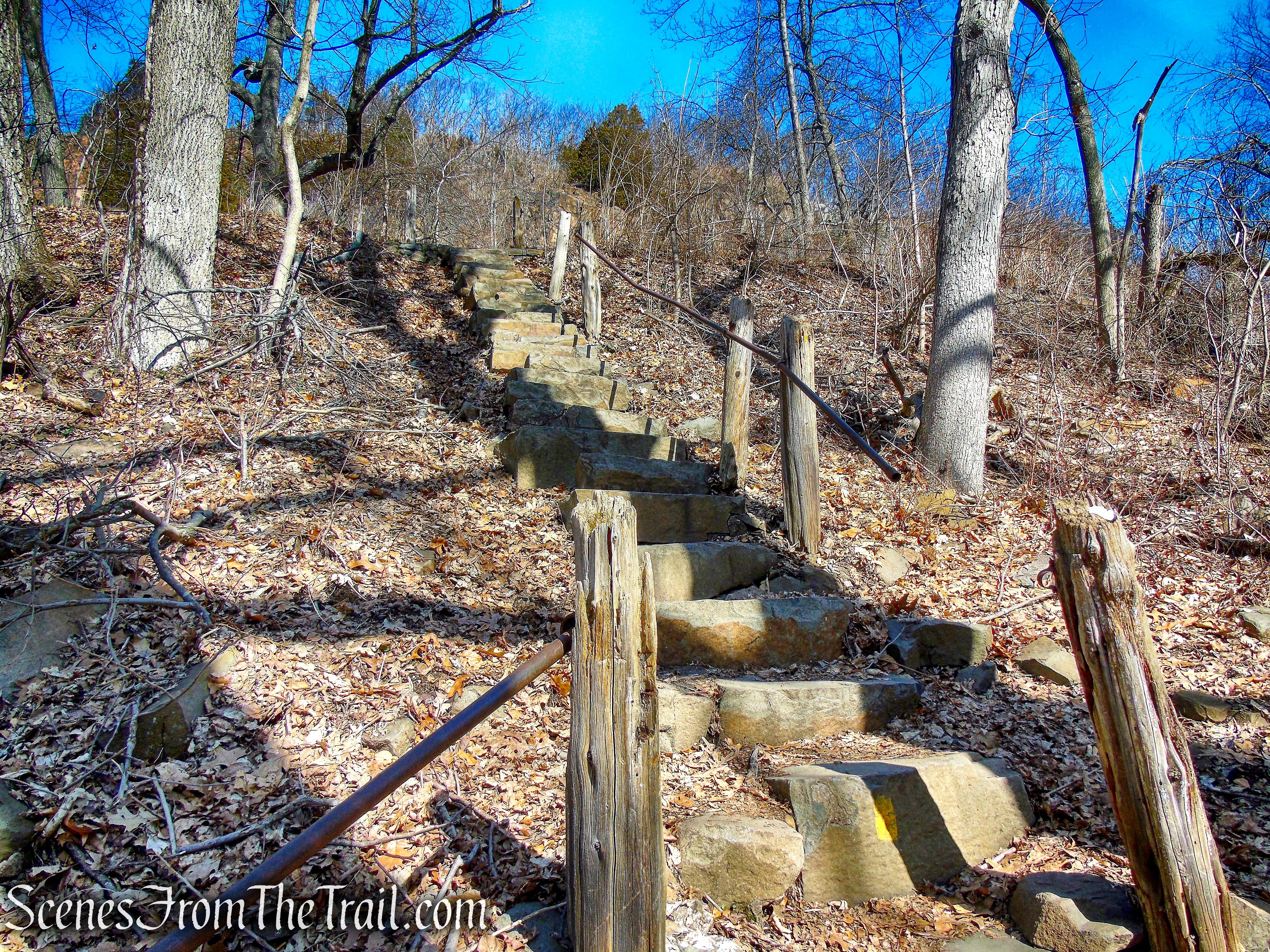
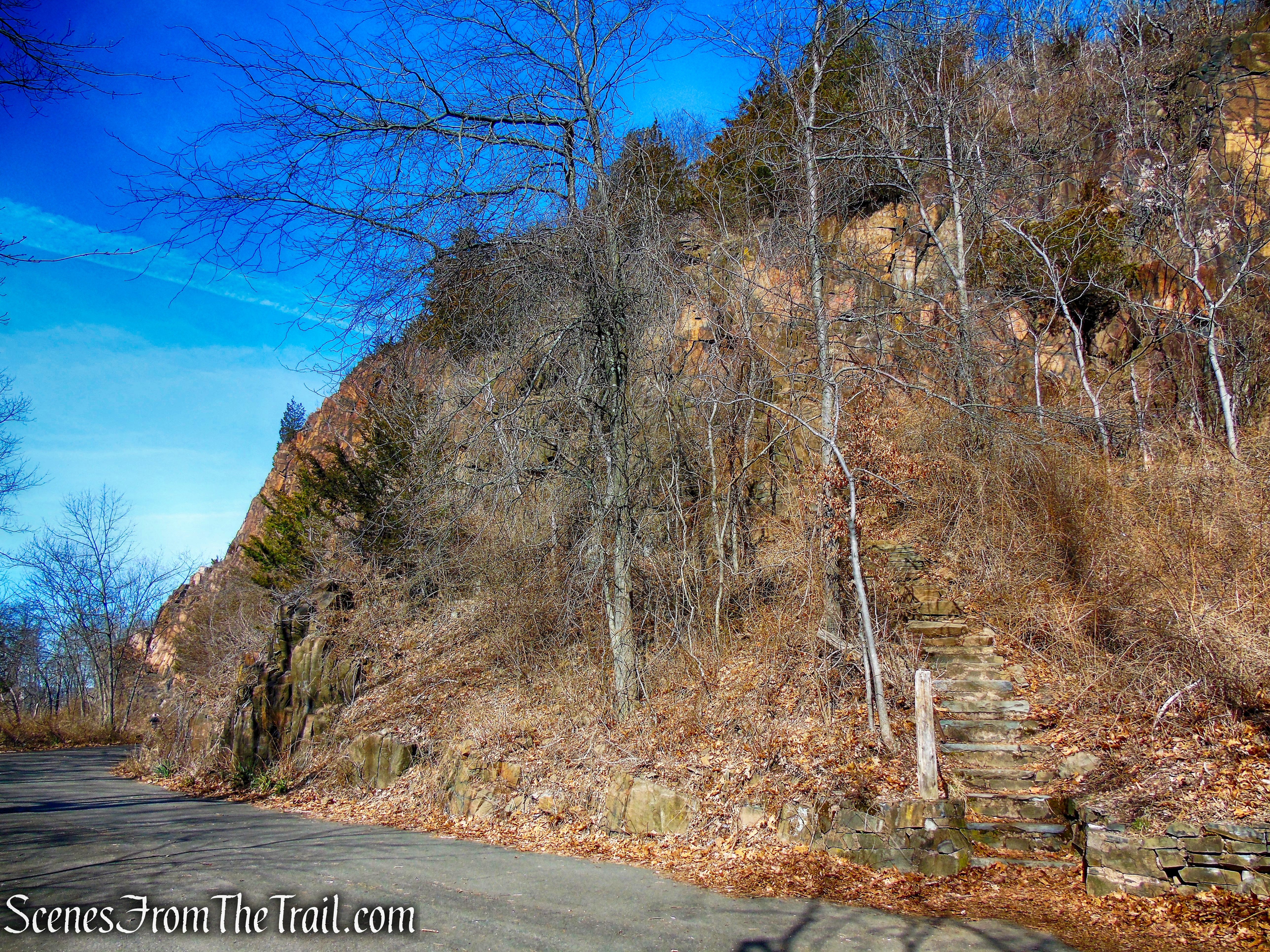
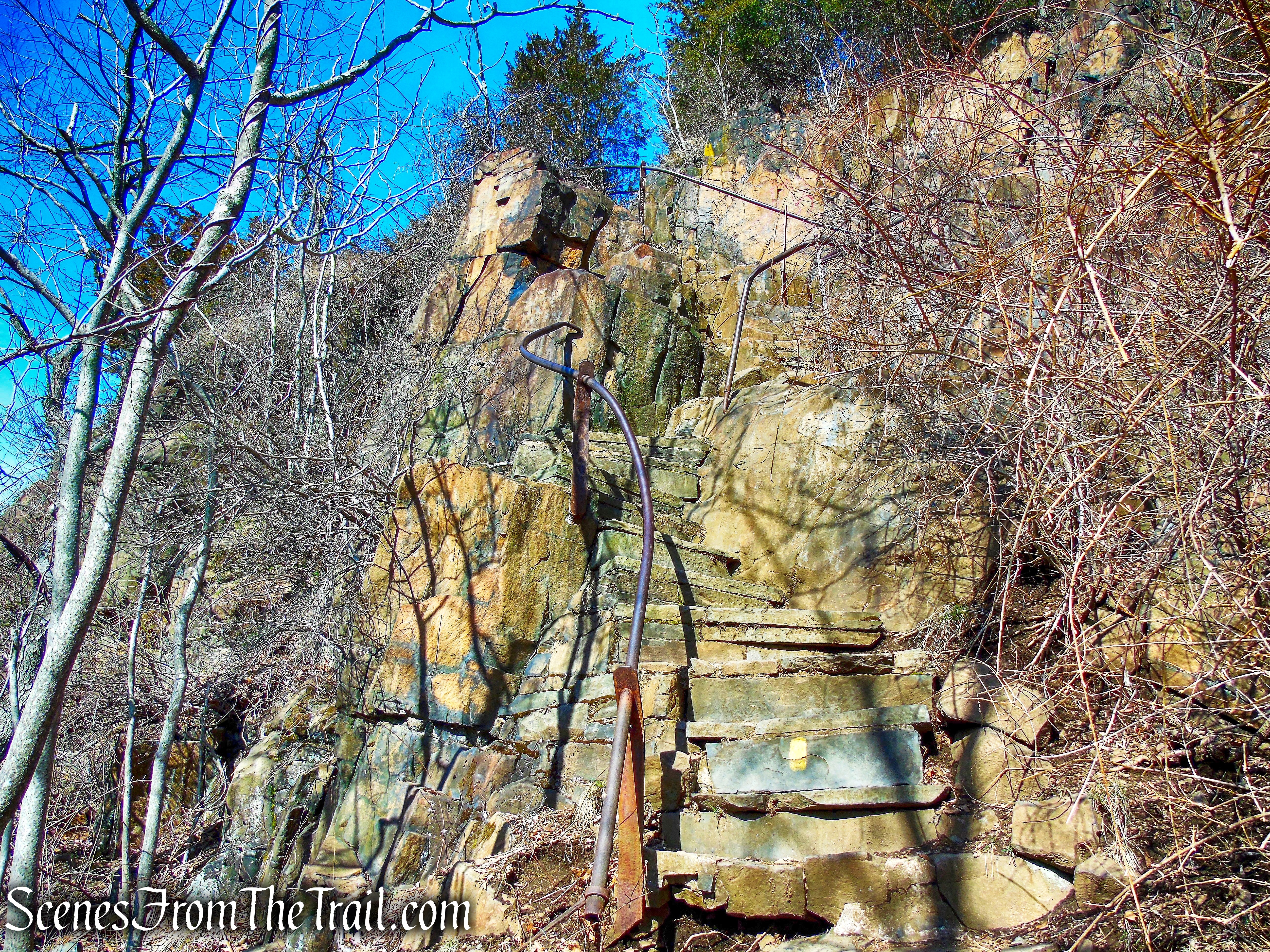
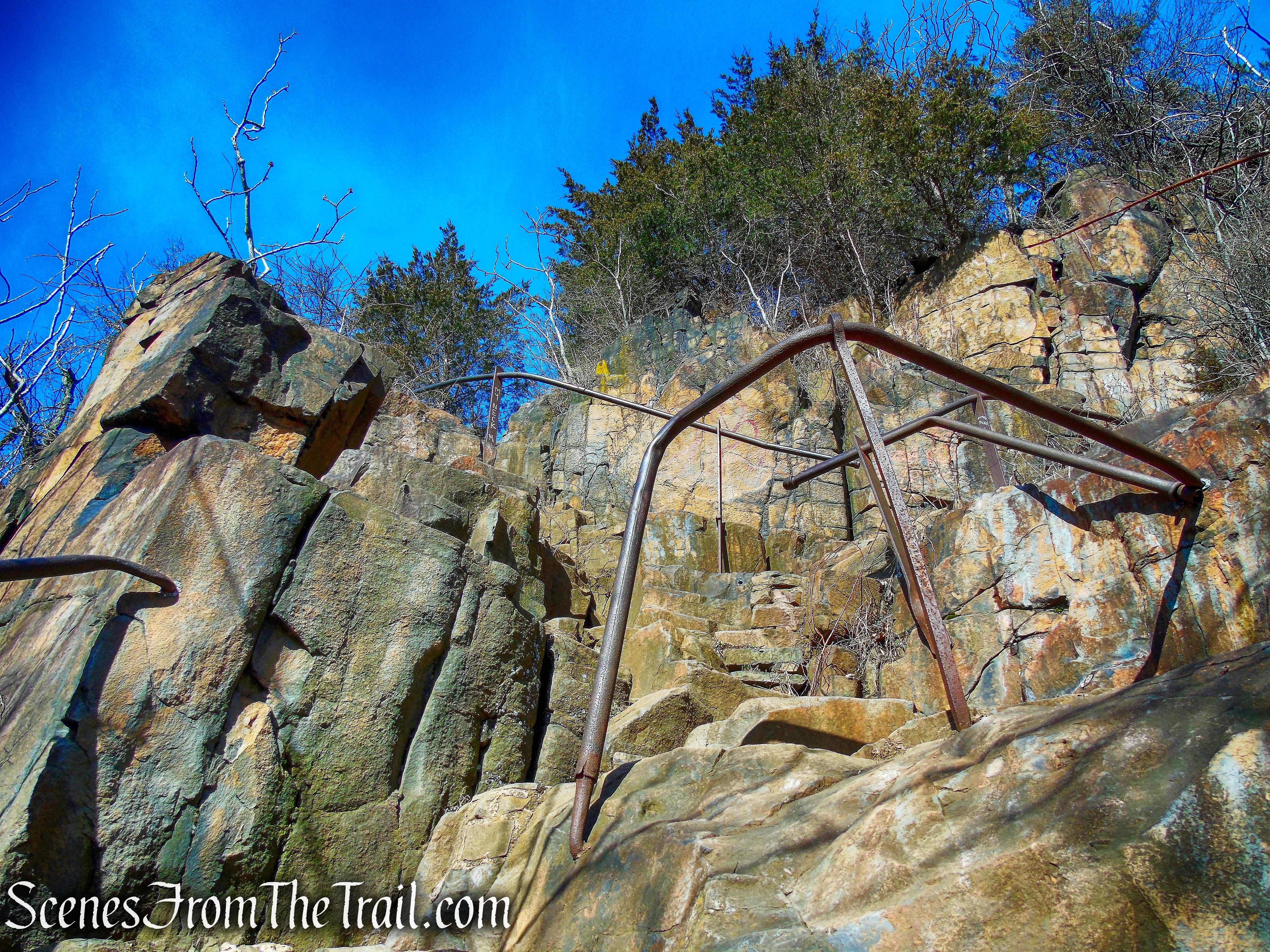
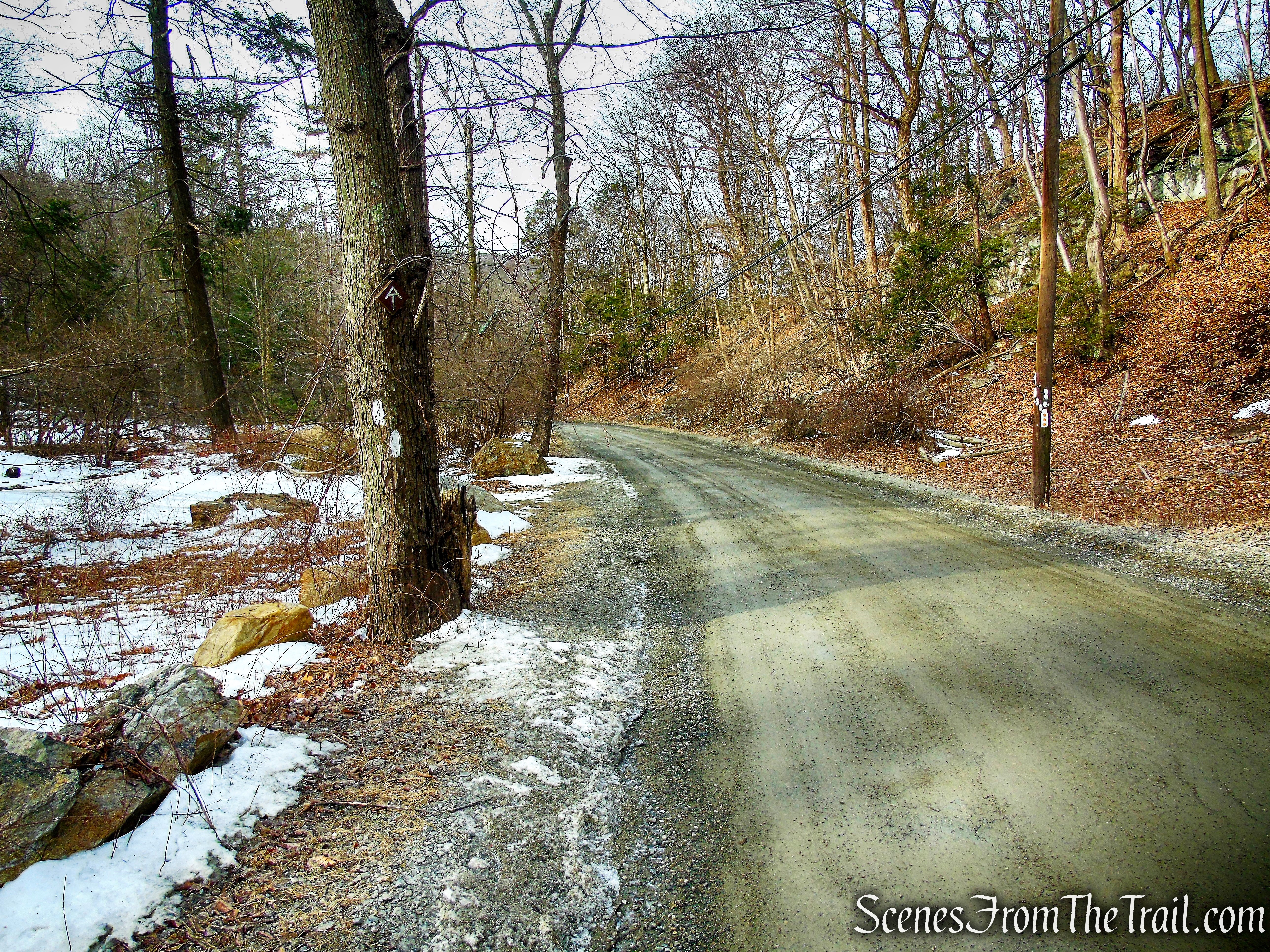
At the top of the stairs, turn left (do not cross the bridge), then immediately turn left again at the junction ahead. You’re now following Overcliff Road, completed in 1903 by the Smiley family, who owned and operated the nearby Mohonk and Minnewaska Mountain Houses. This road is part of an extensive network of gravel roads built by the Smileys for horse-drawn carriages, but used today for walking and bicycling (and, during the winter, for cross-country skiing and snowshoeing).

turn left on Overcliff Road

turn left on Overcliff Road

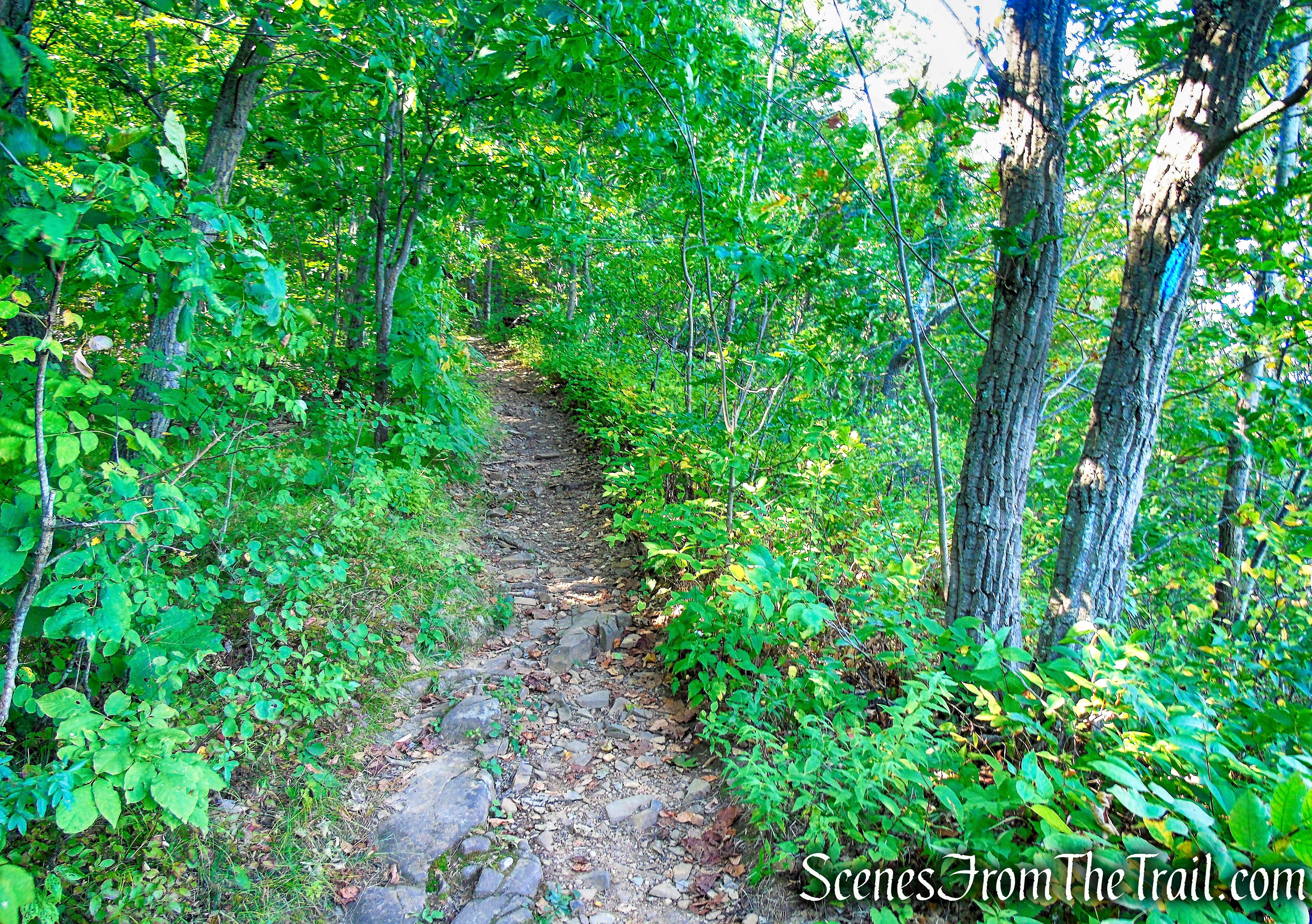
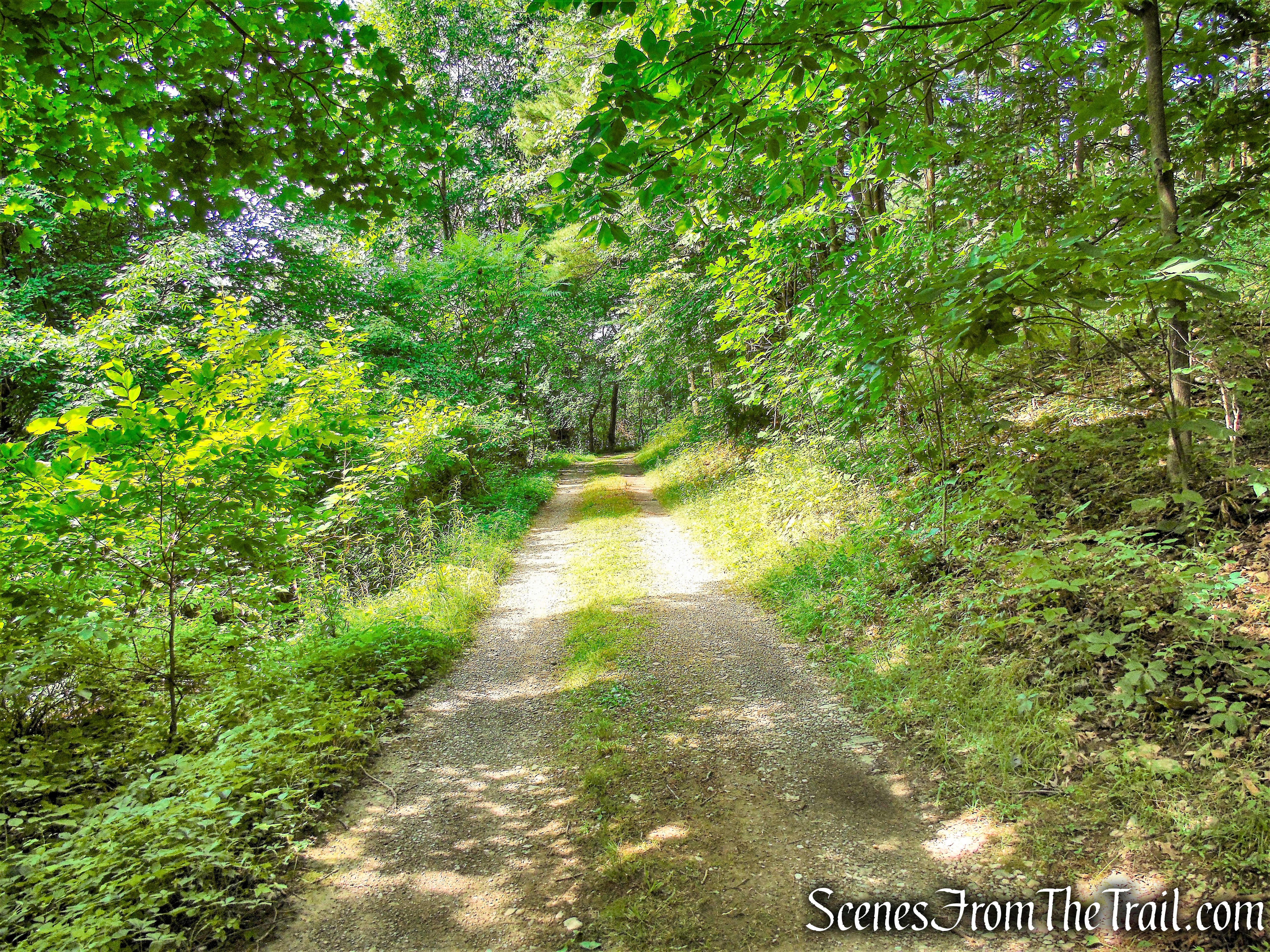
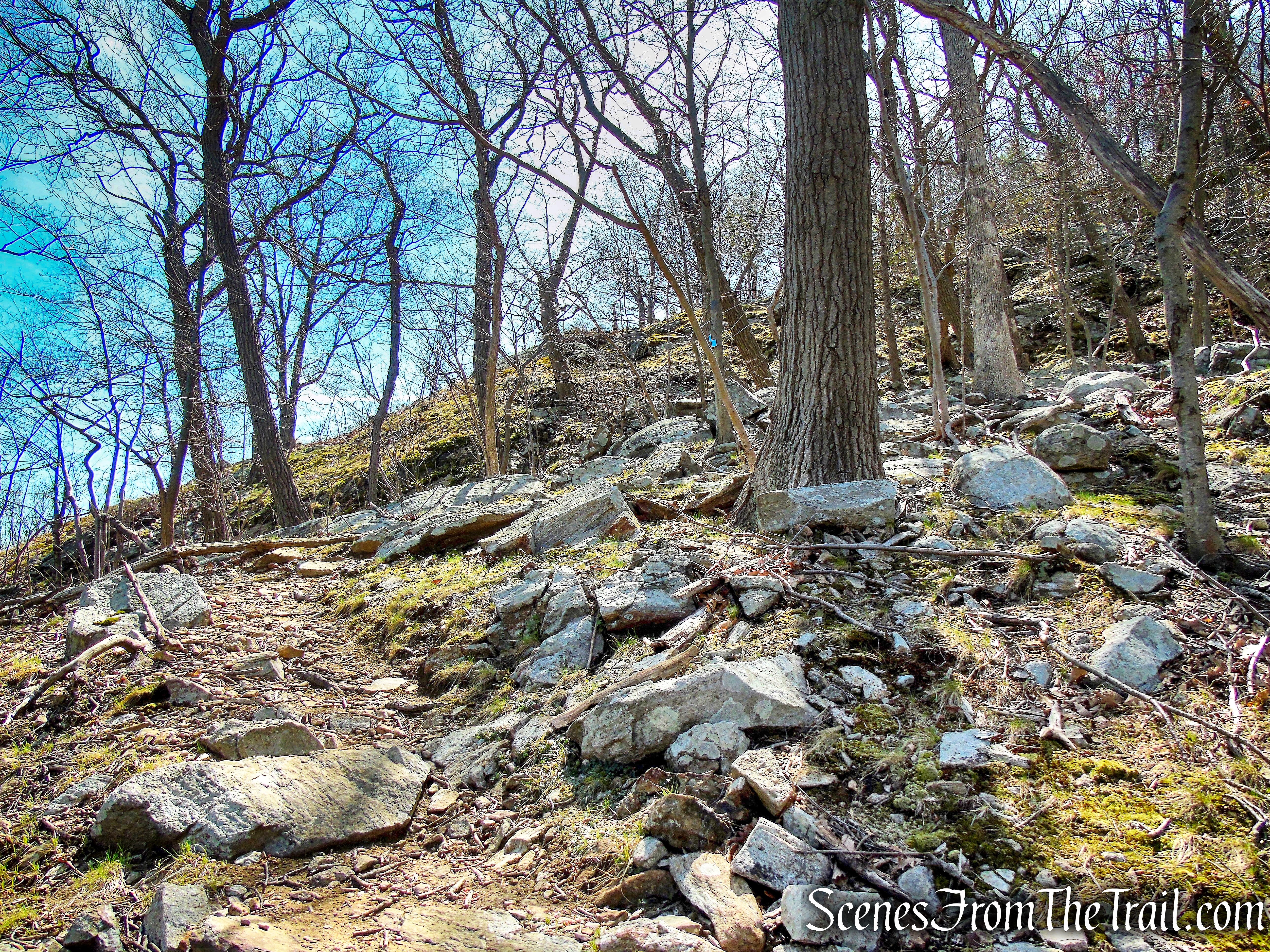
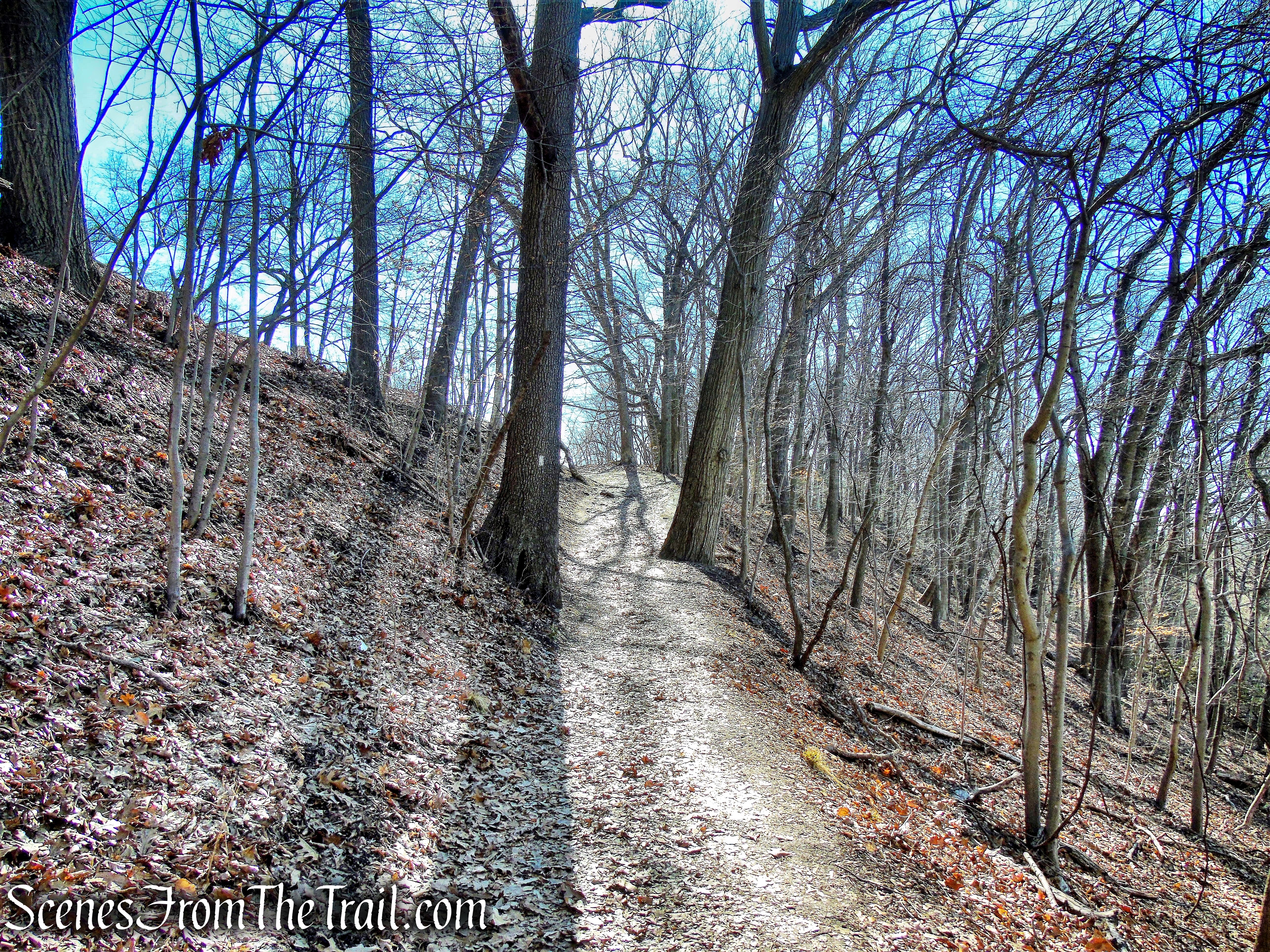
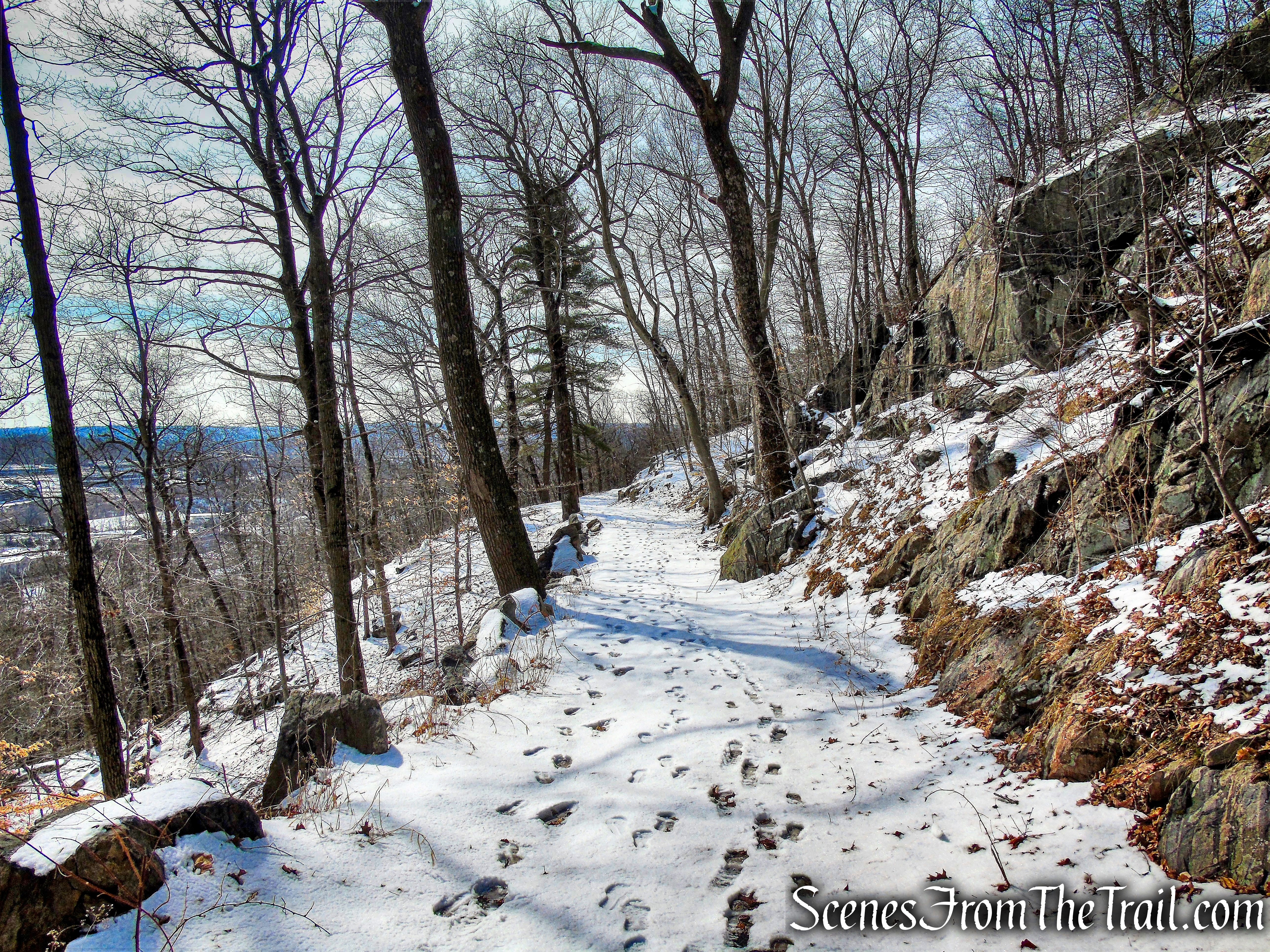
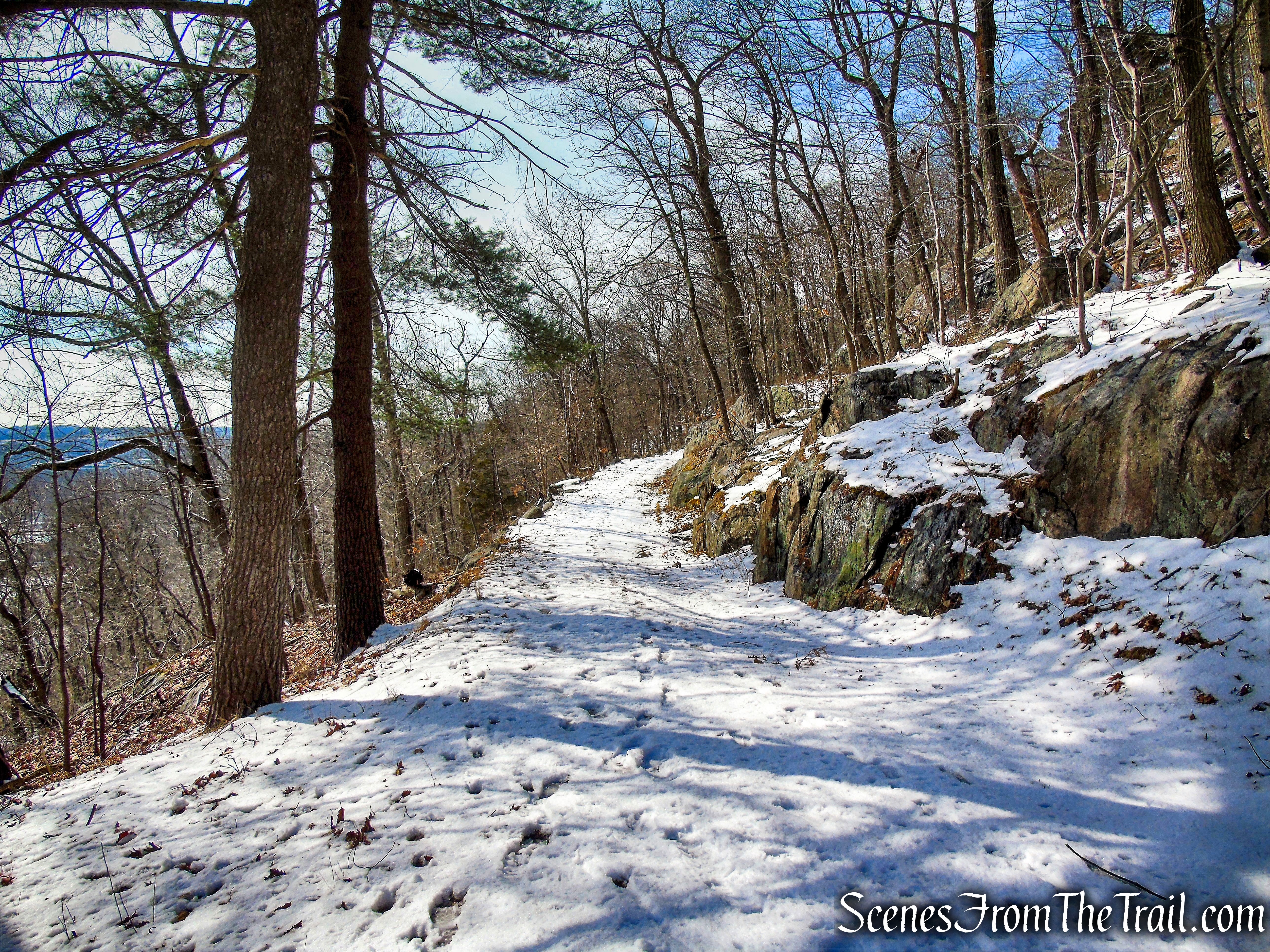
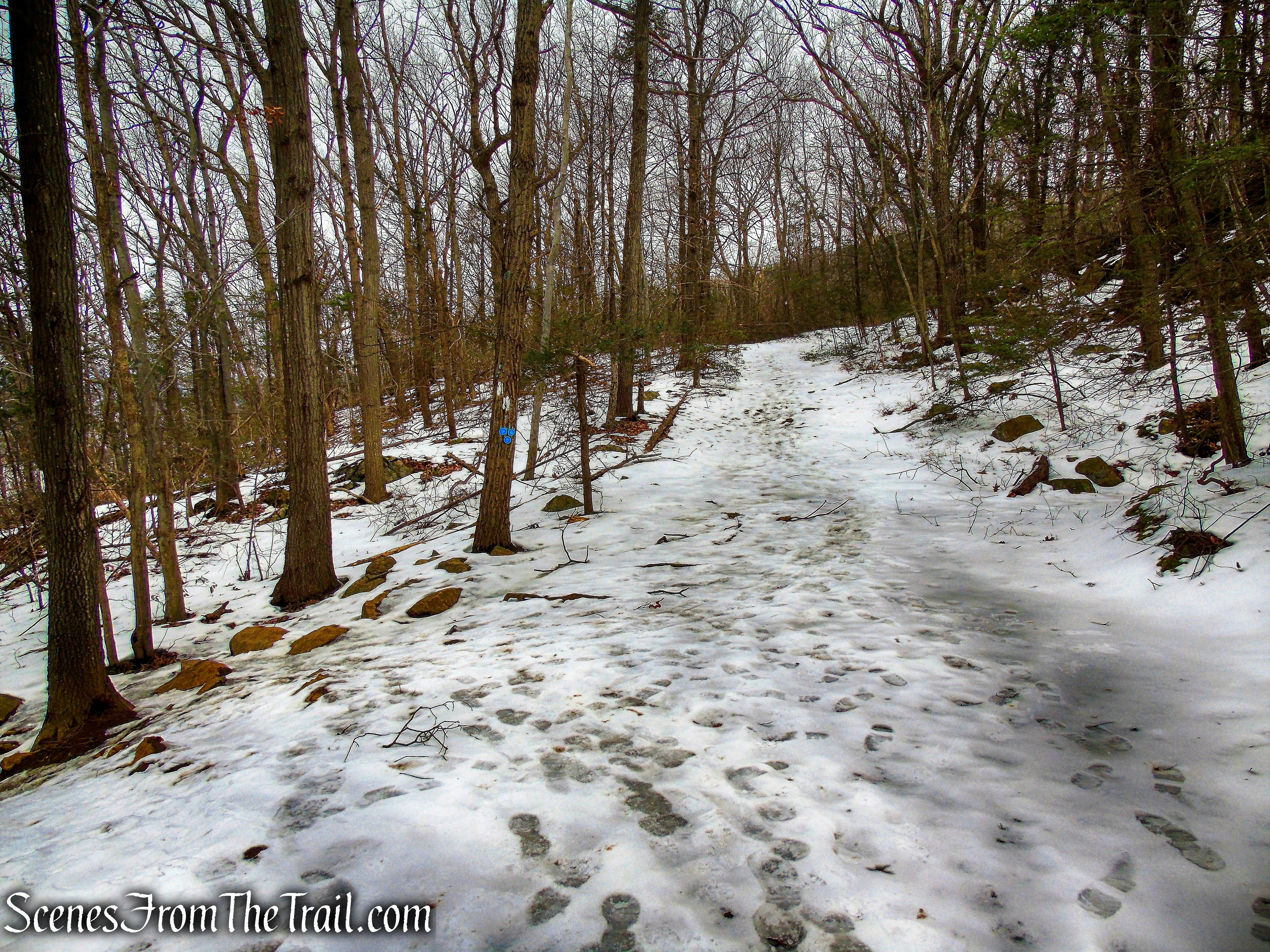
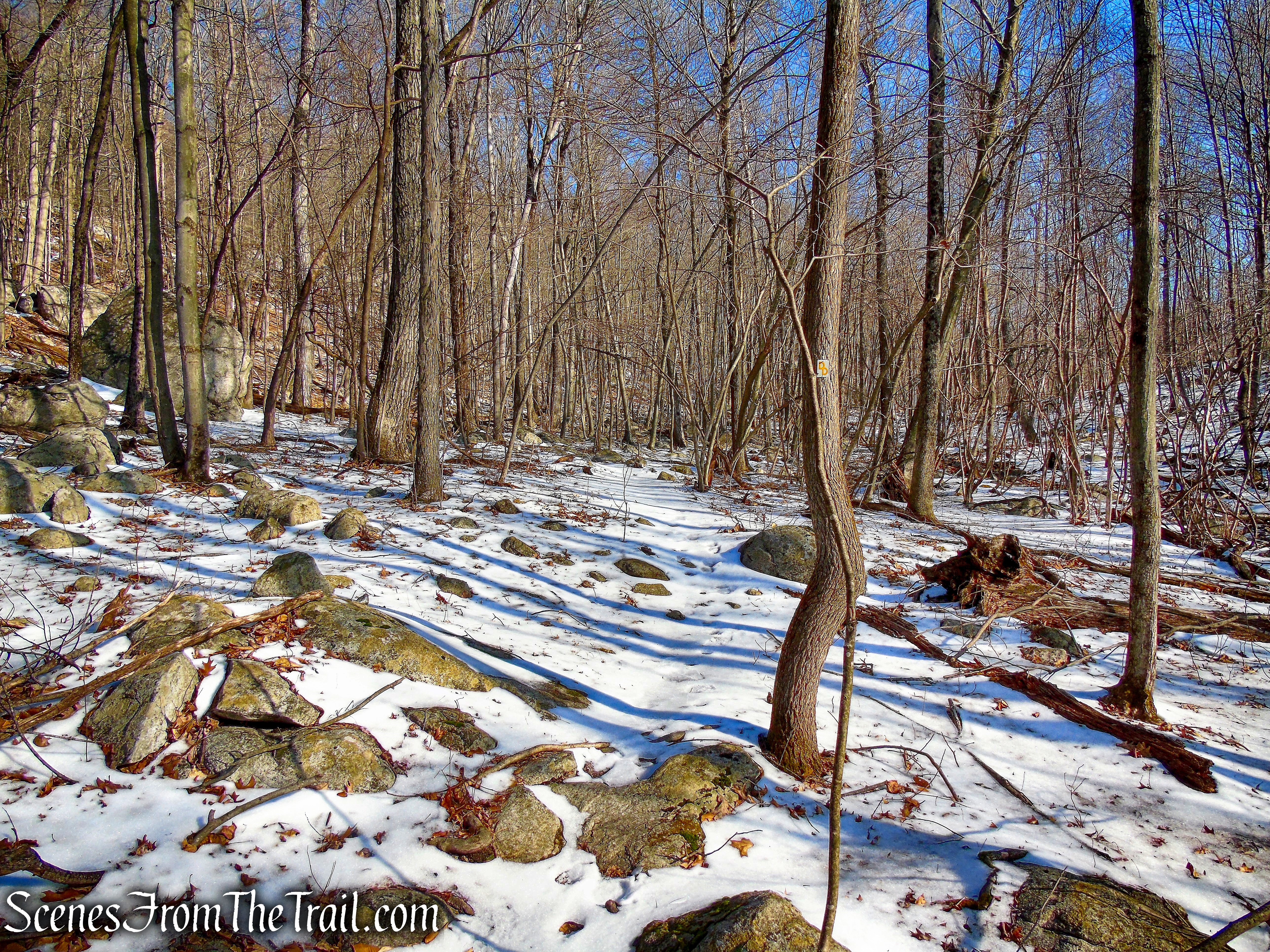
Overcliff Road climbs gently to reach the west side of the Trapps Ridge.

Overcliff Road - Mohonk Preserve

Overcliff Road – Mohonk Preserve

Overcliff Road - Mohonk Preserve

Overcliff Road – Mohonk Preserve

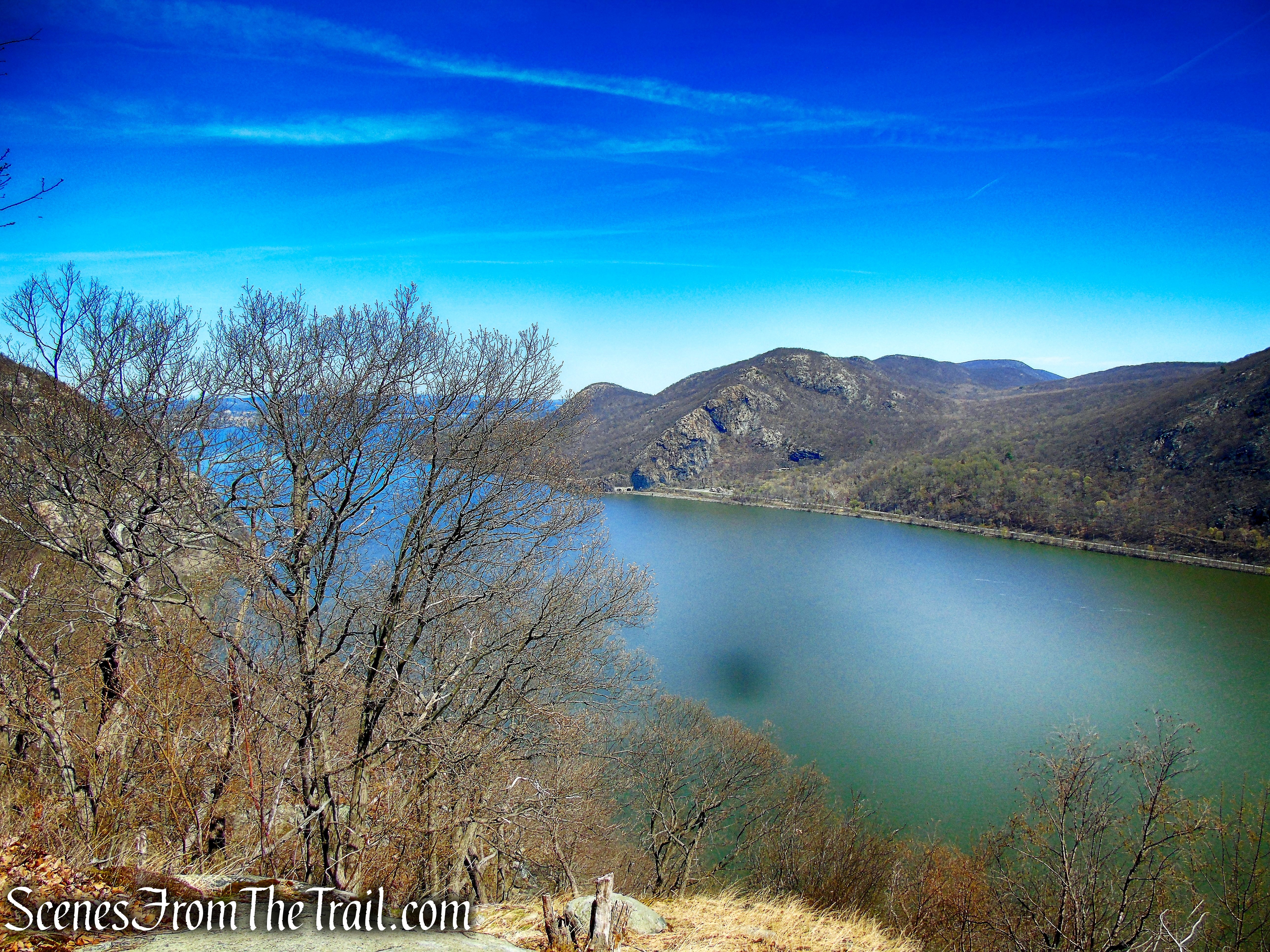
As Overcliff Road curves to the east, there is a west-facing viewpoint across Clove Valley, to the Lost City cliffs on Dickie Barre.

Overcliff Road - Mohonk Preserve

Overcliff Road – Mohonk Preserve

Overcliff Road - Mohonk Preserve

Overcliff Road – Mohonk Preserve

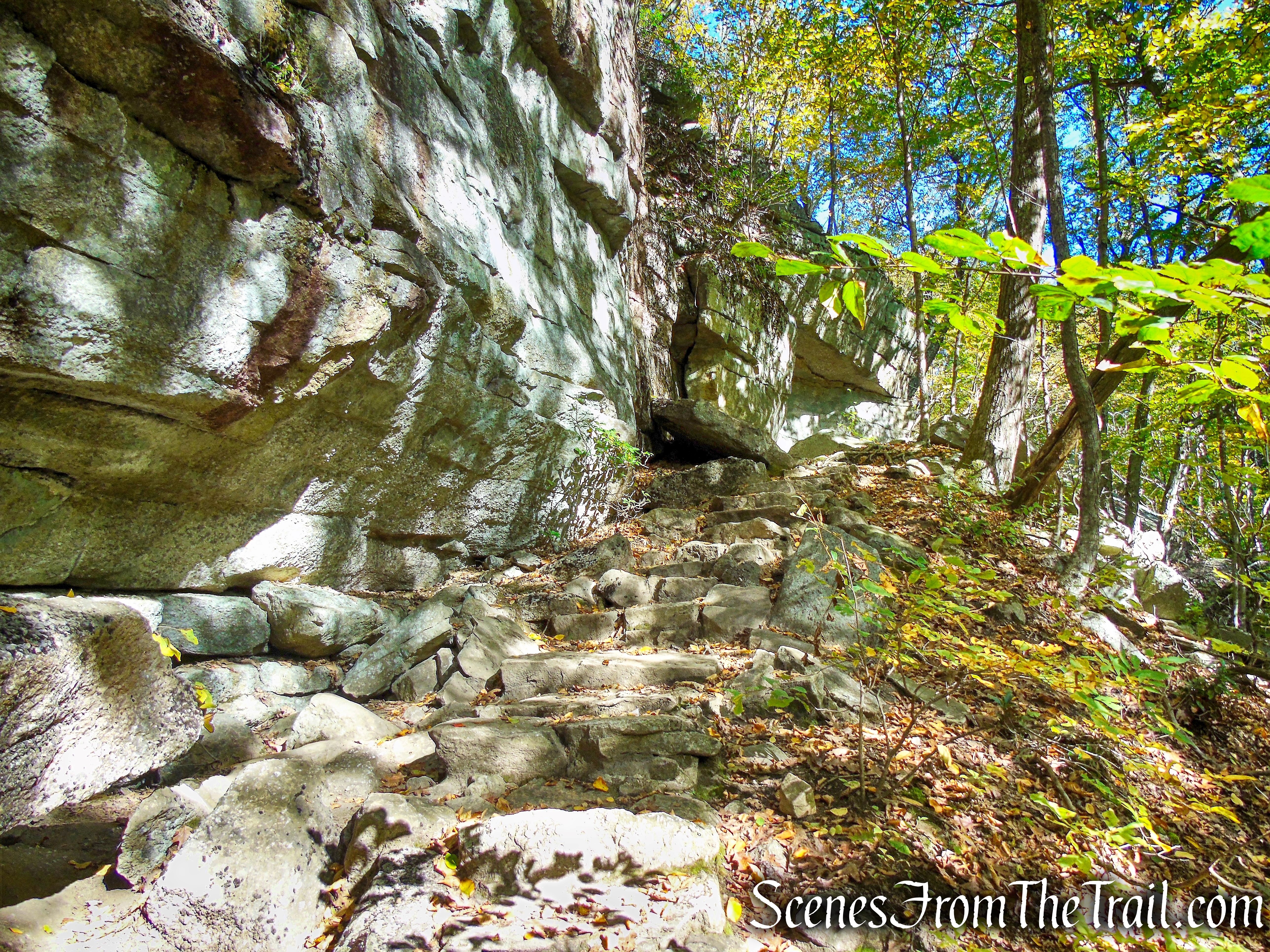
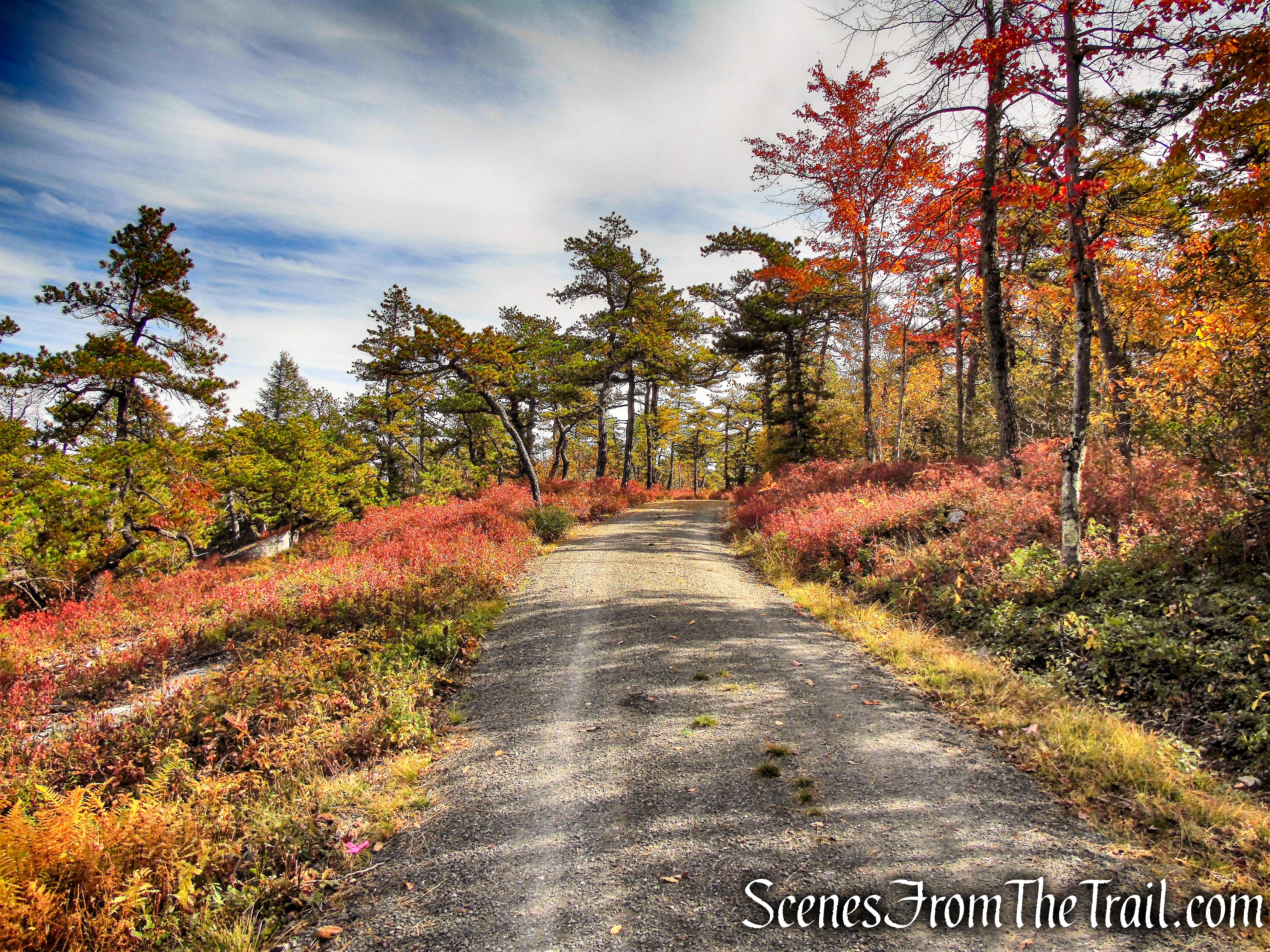
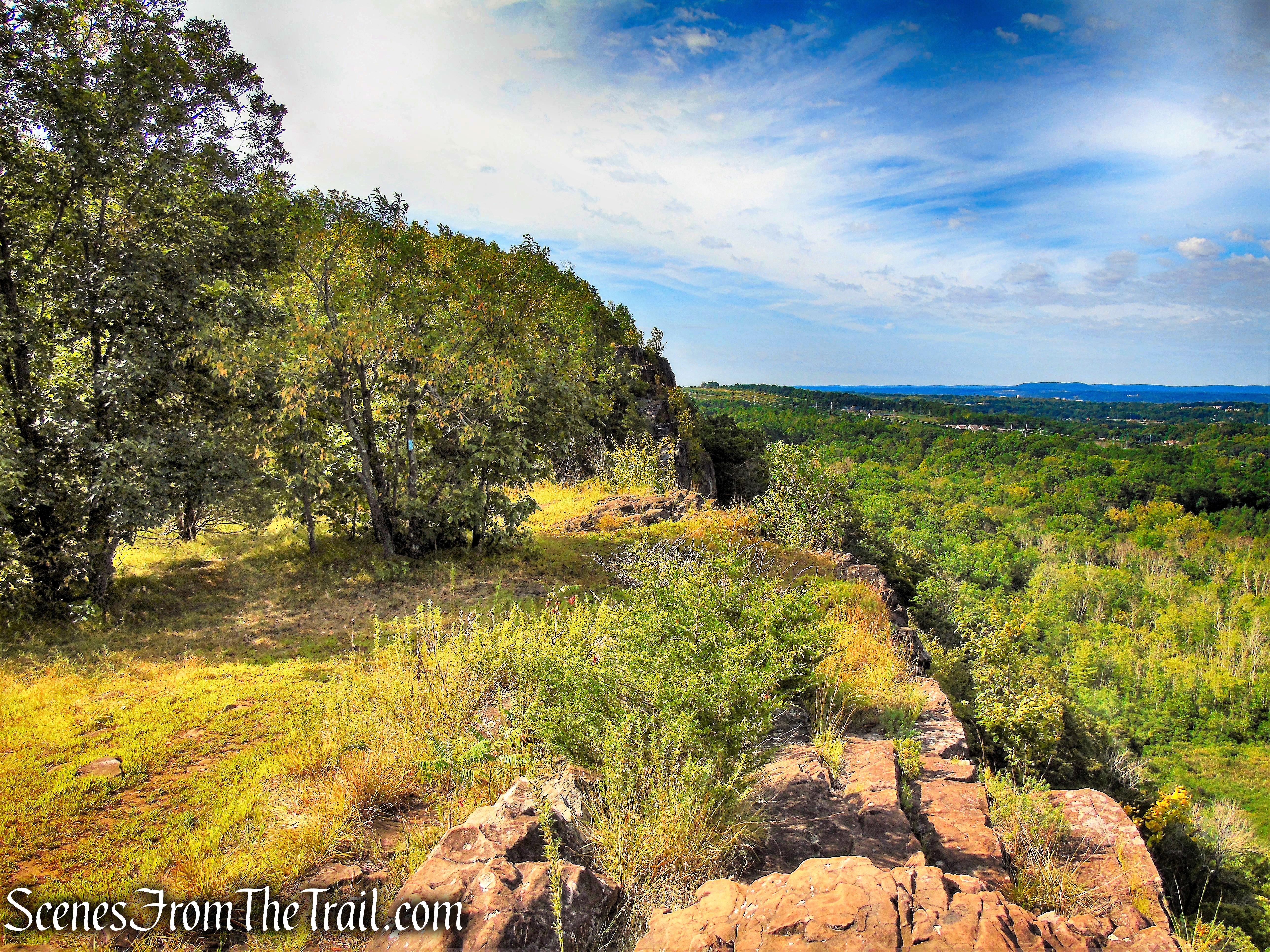
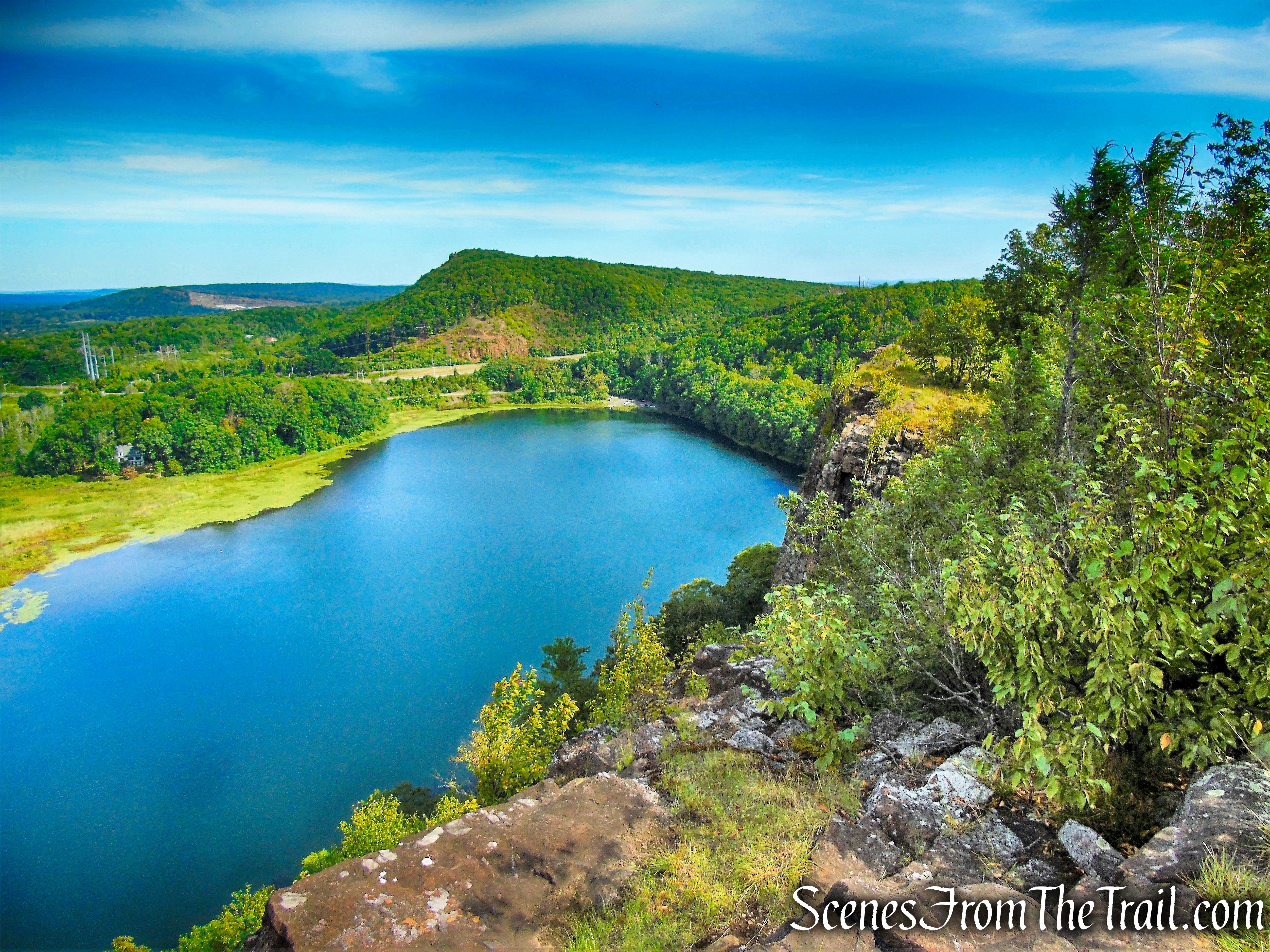
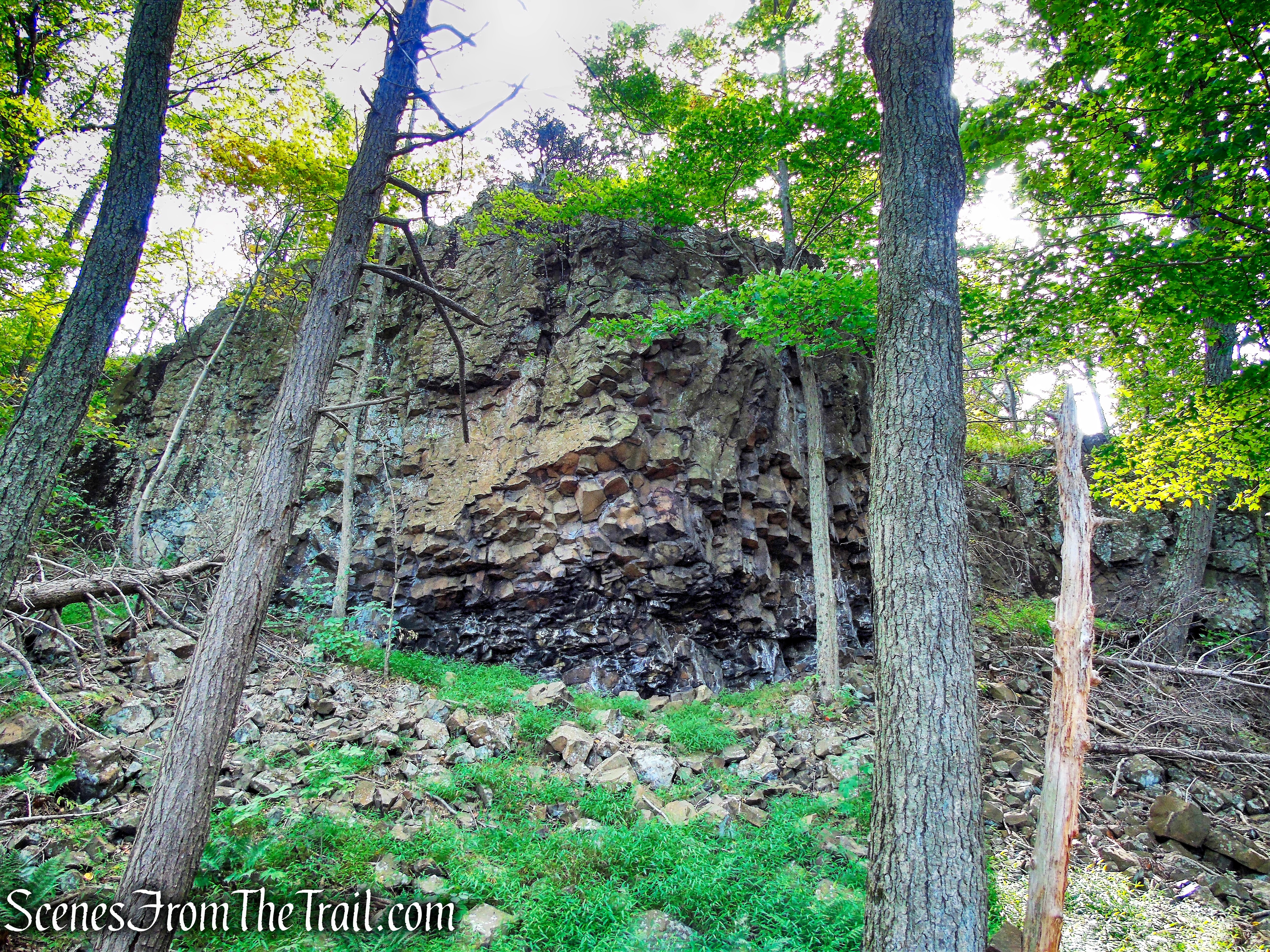
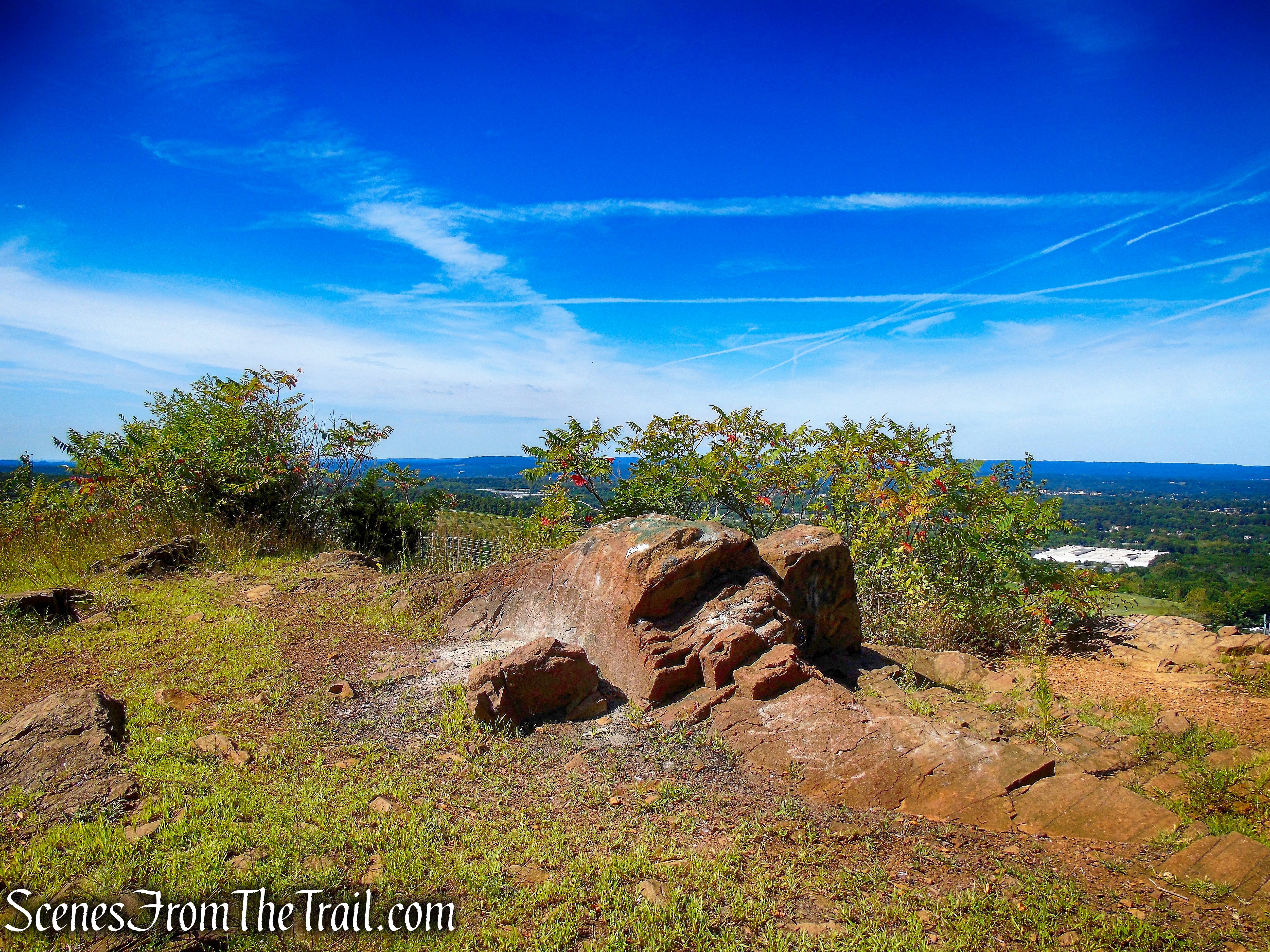
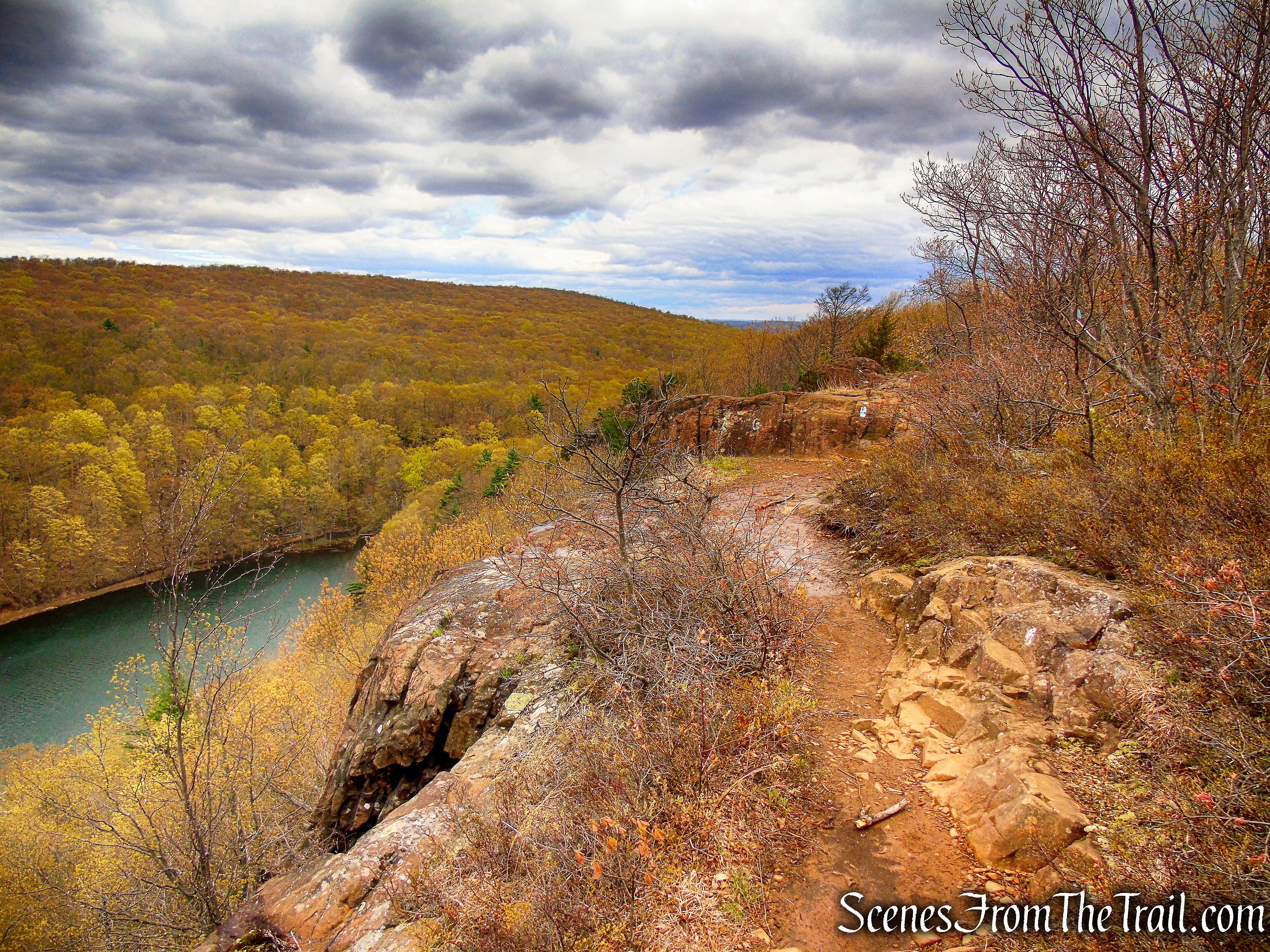
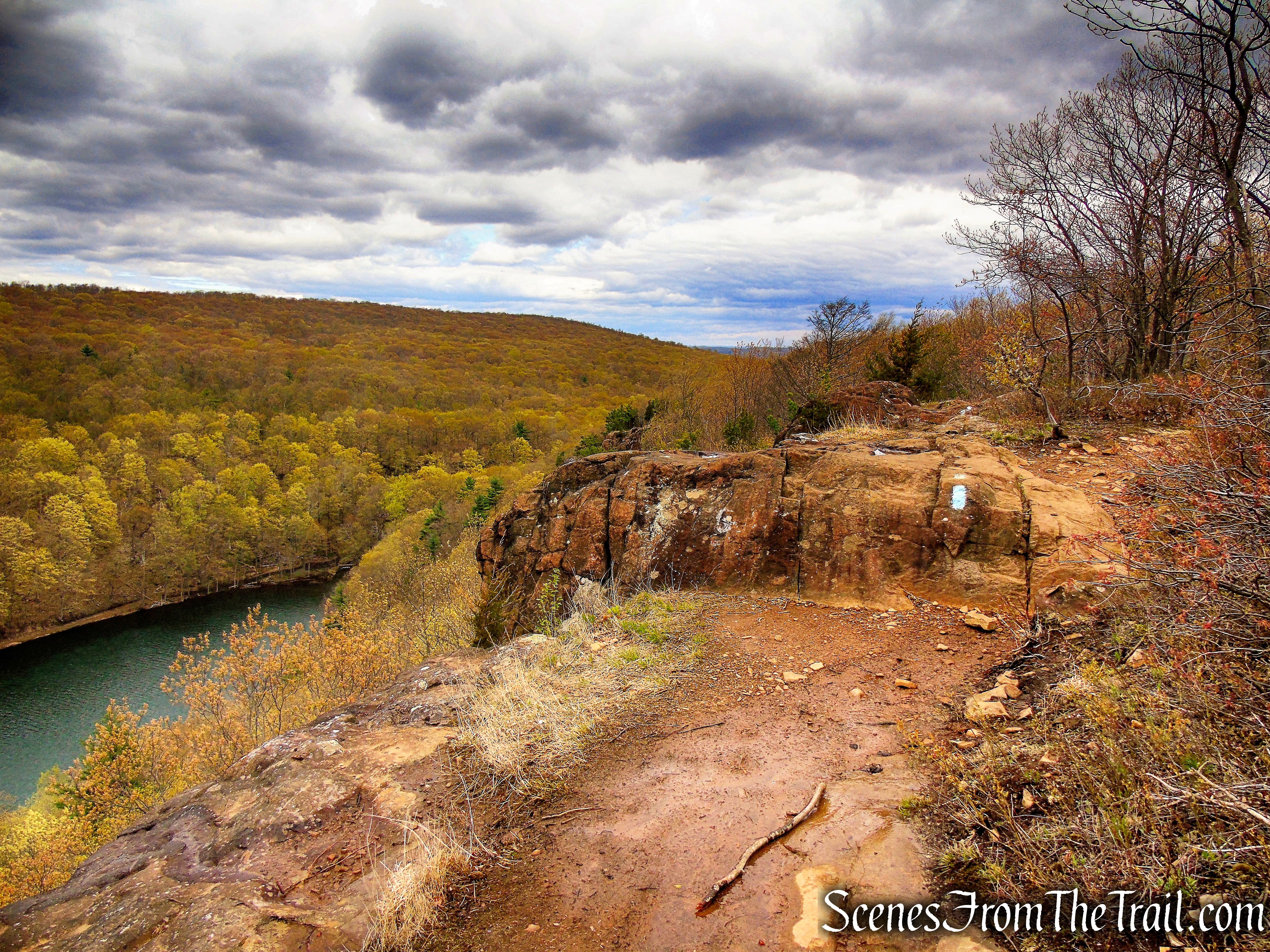
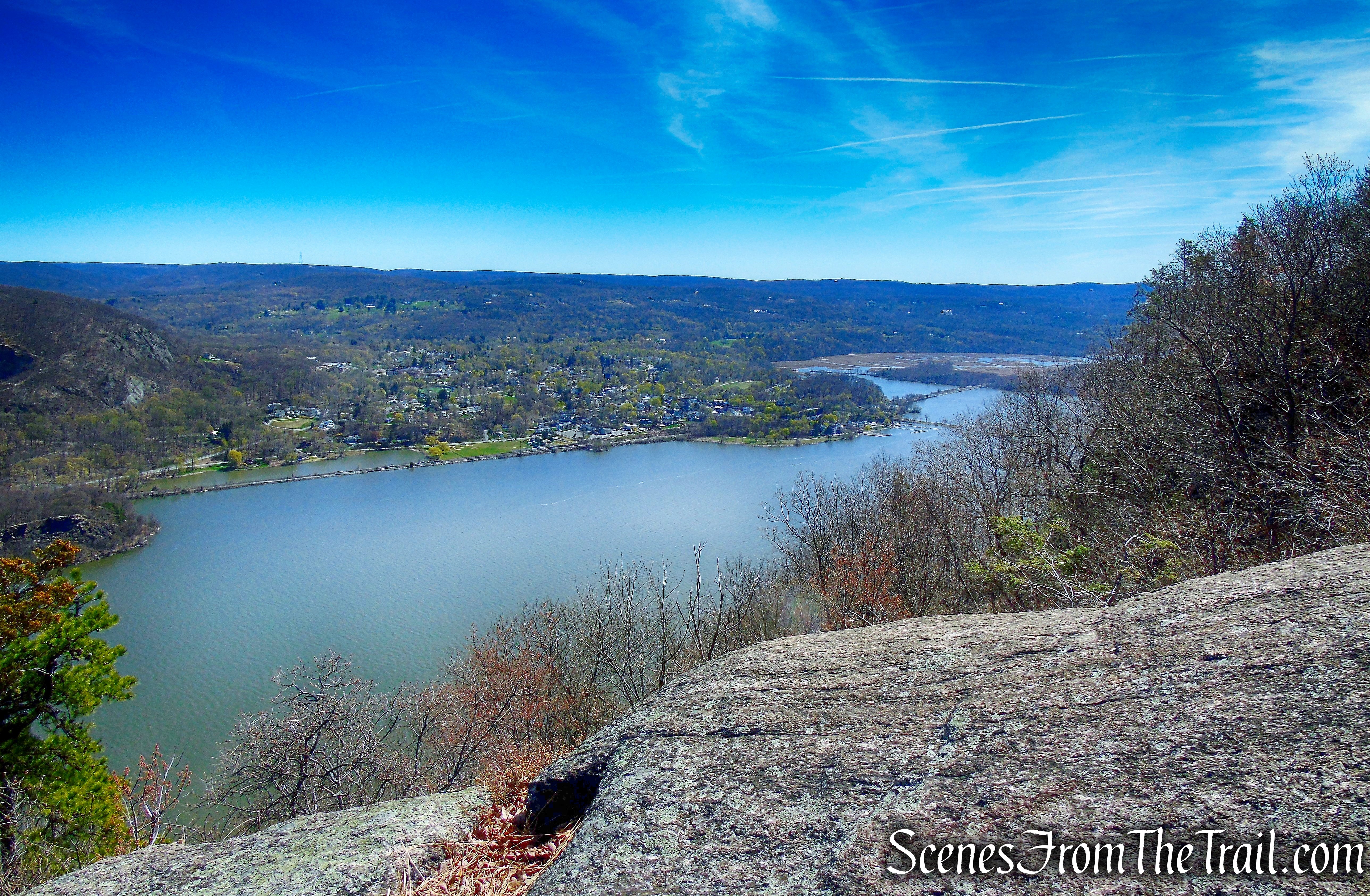
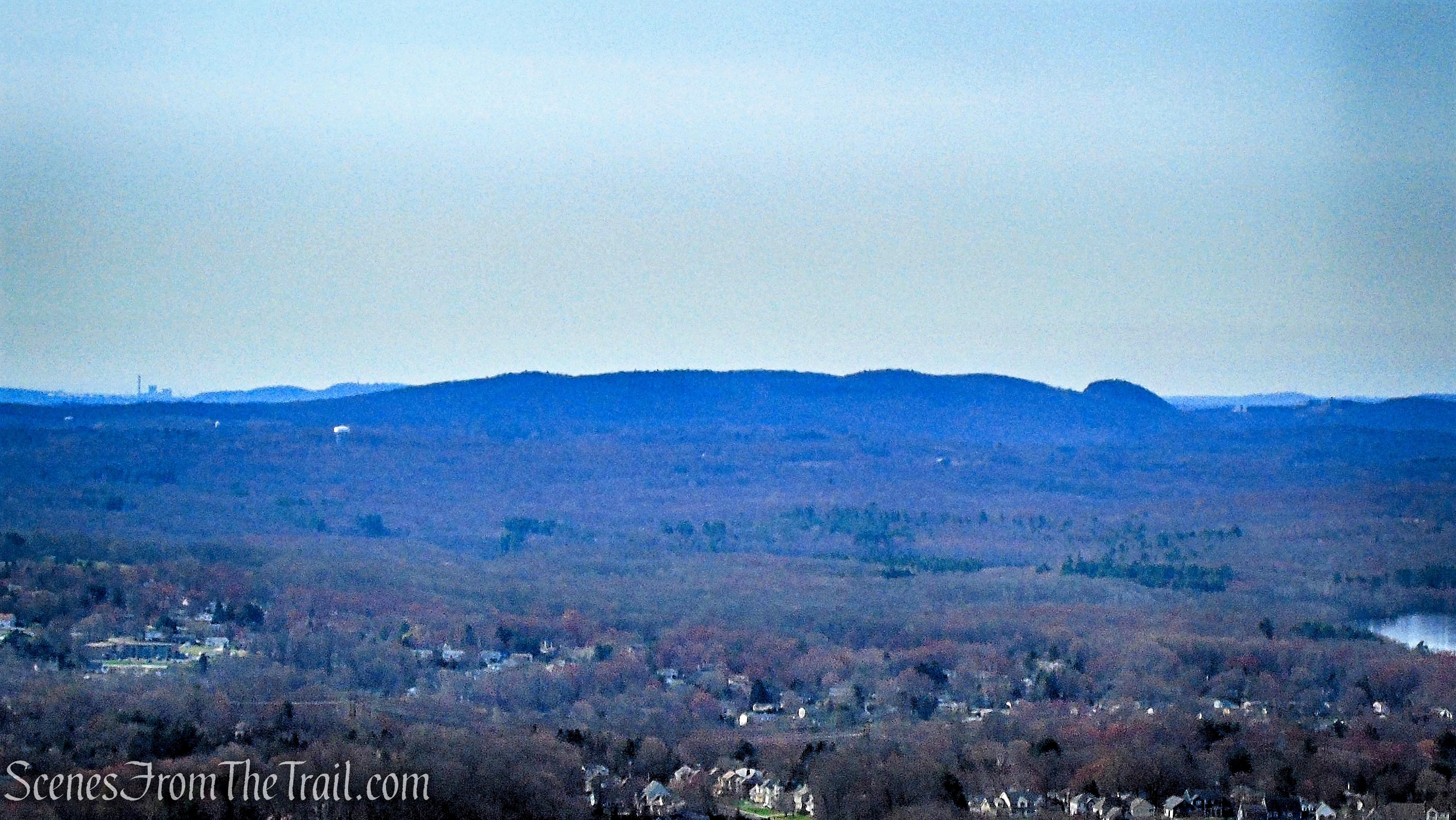
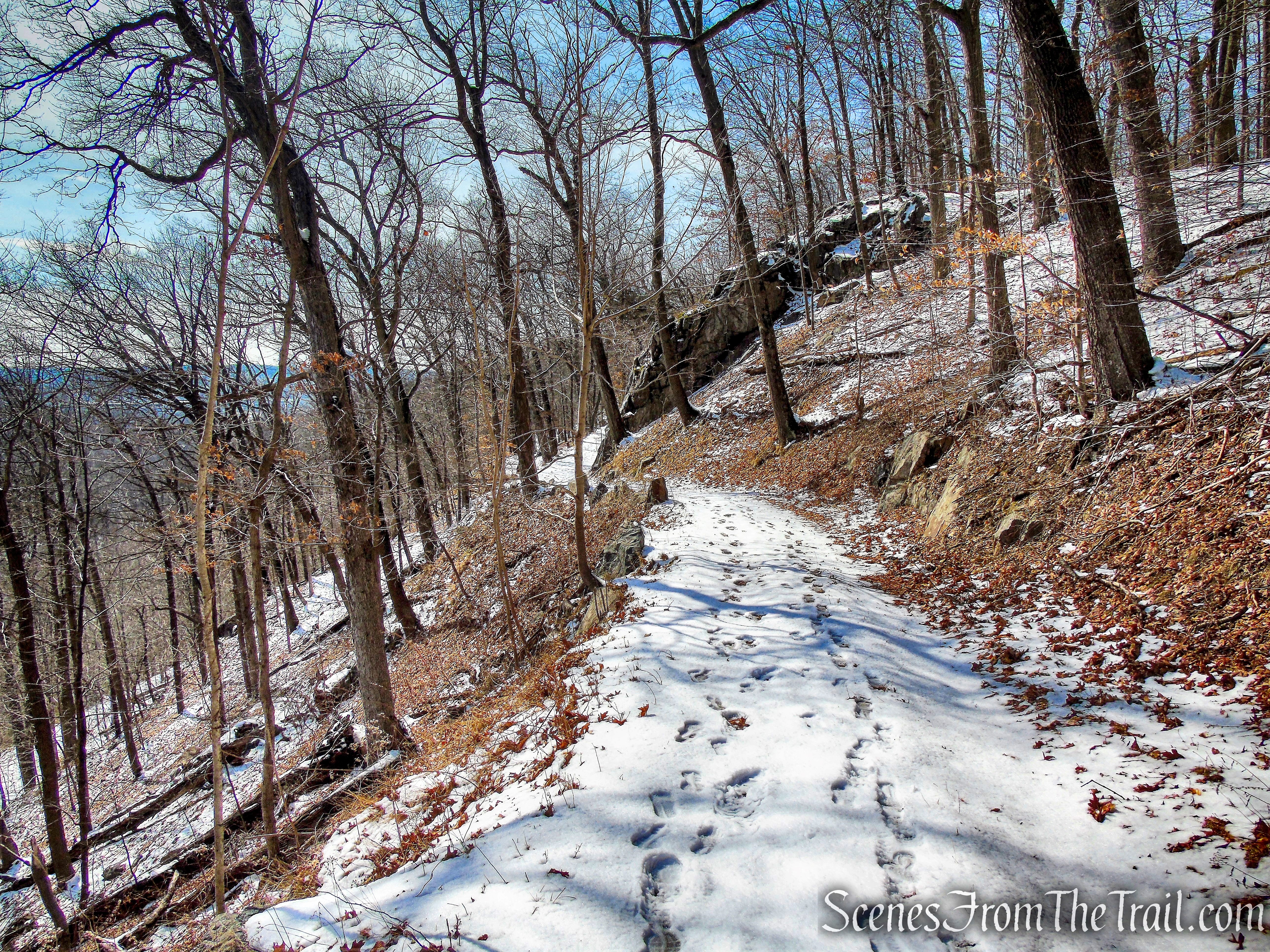
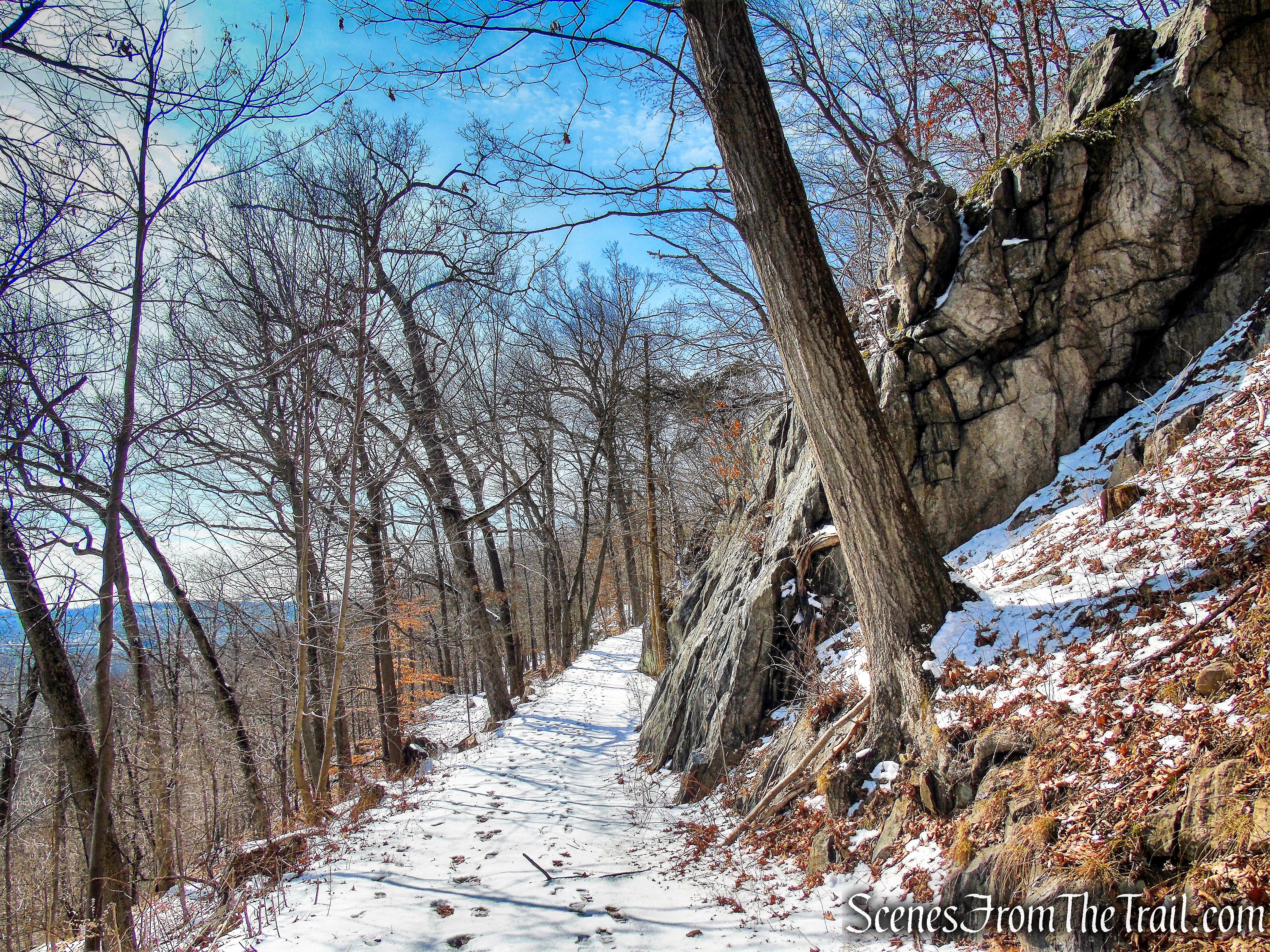
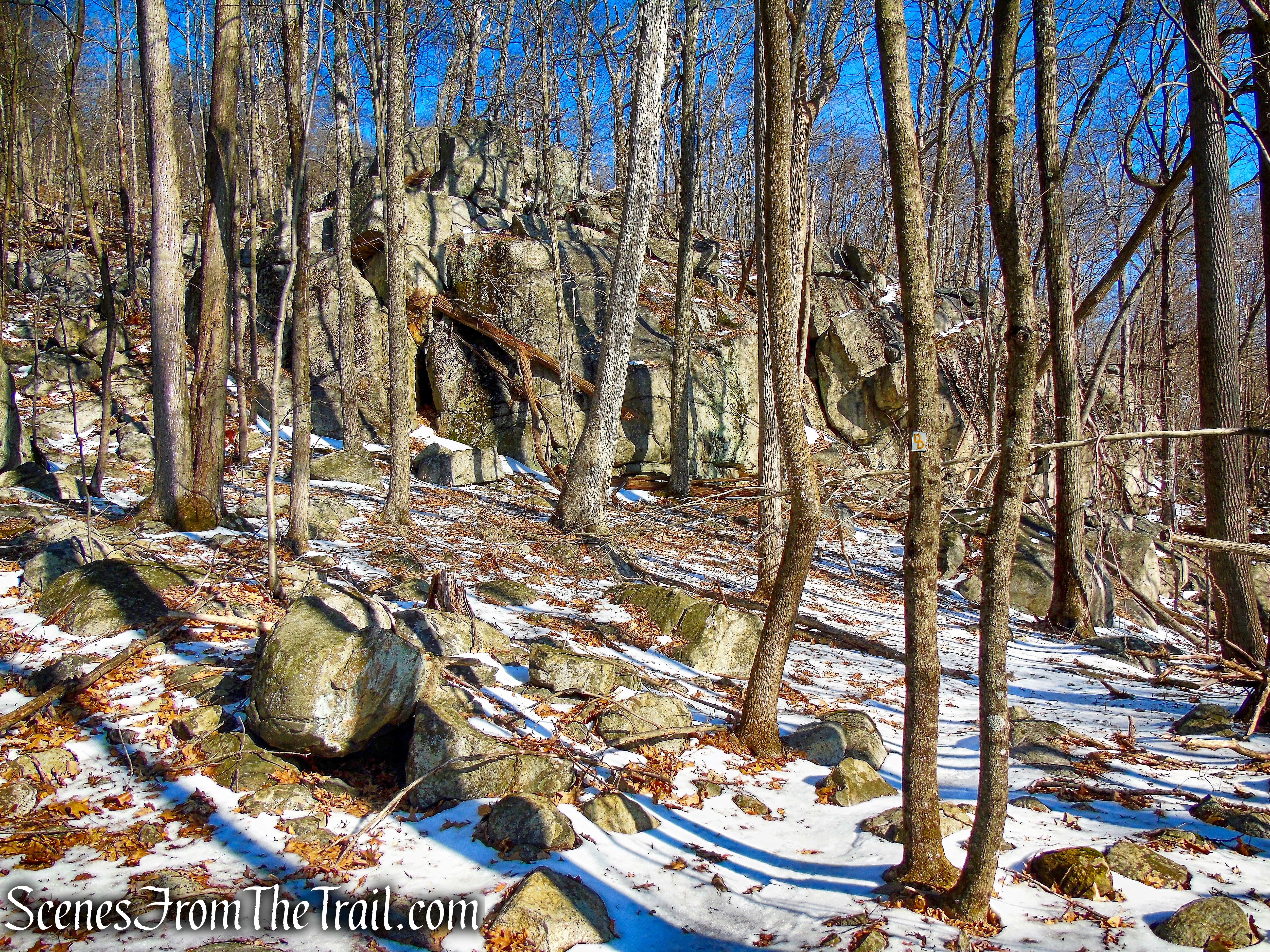
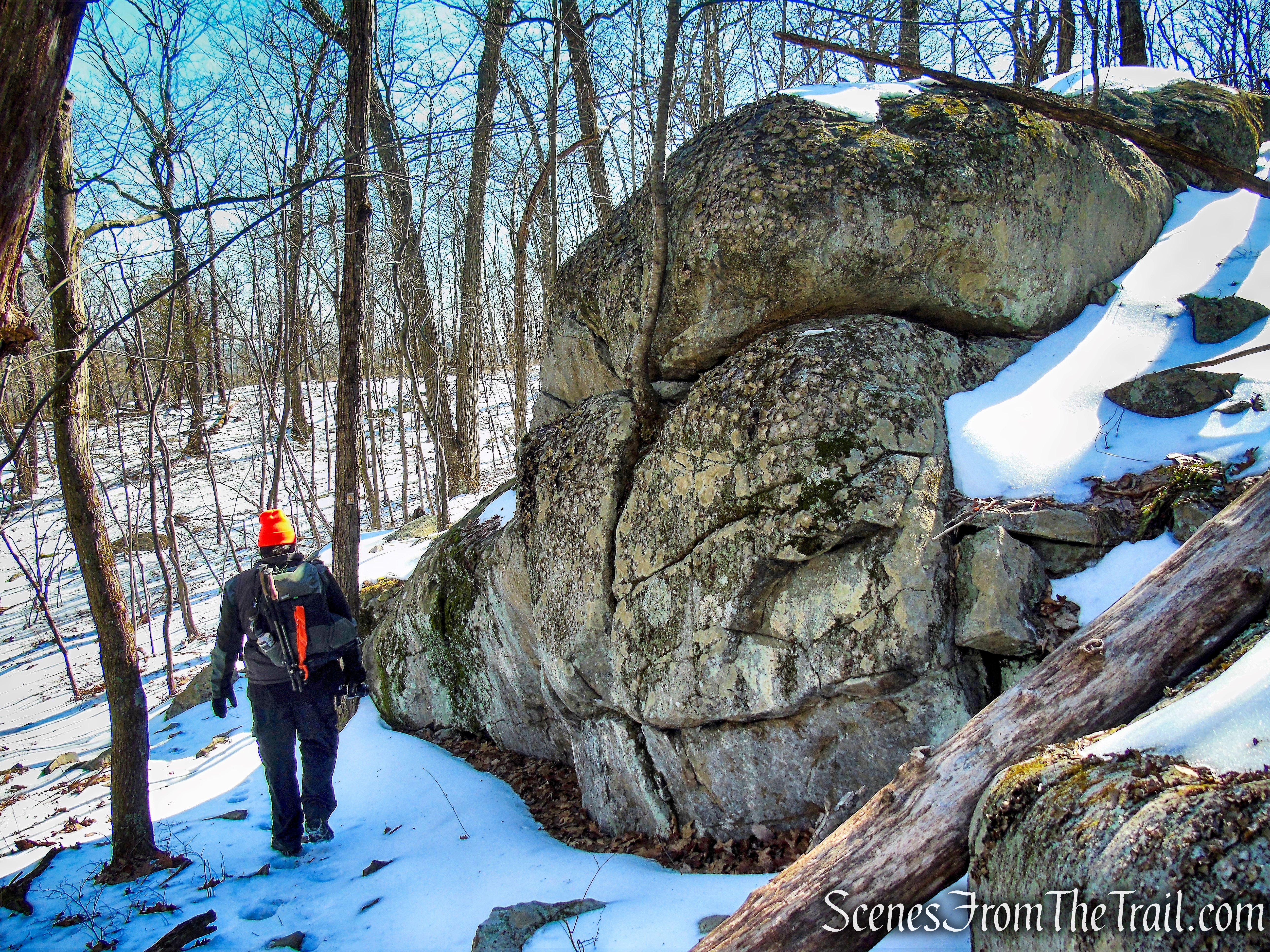
Along its route, Overcliff Road passes lichen-covered cliffs of Shawangunk Conglomerate. The name “overcliff” is somewhat of a misnomer, as the trail does not run atop the cliffs, but once it levels off, it passes several viewpoints to the north over the Rondout Valley, with the peaks of the Catskills visible in the distance. Dickie Barre and Ronde Barre may be seen to the northwest. The vegetation along Overcliff Road is largely a mix of pitch pines and scrub oak.

Overcliff Road - Mohonk Preserve

Overcliff Road – Mohonk Preserve

DSC04414_HDR_marked

Overcliff Road – Mohonk Preserve

Overcliff Road - Mohonk Preserve

Overcliff Road – Mohonk Preserve

Overcliff Road - Mohonk Preserve

Overcliff Road – Mohonk Preserve

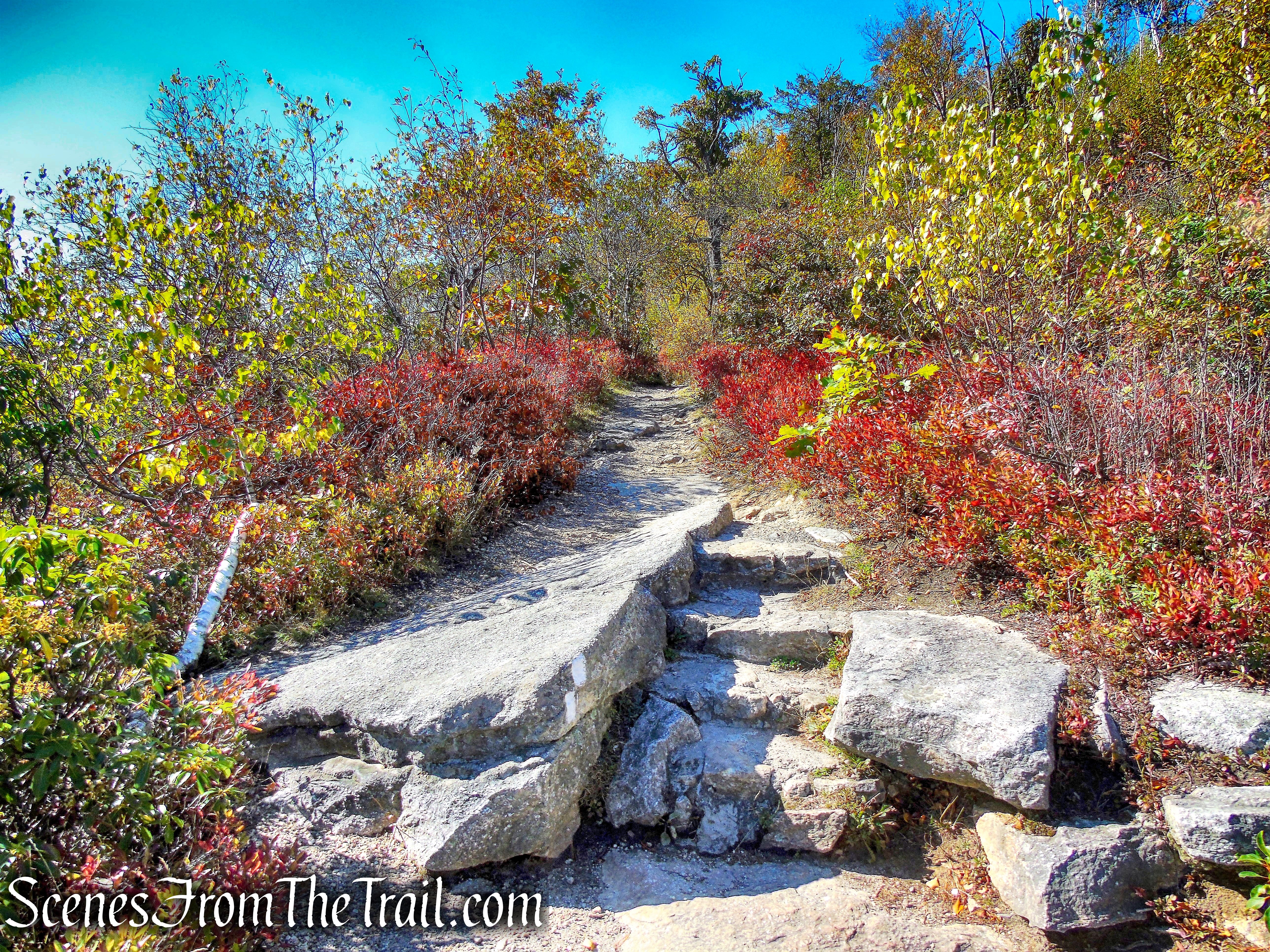
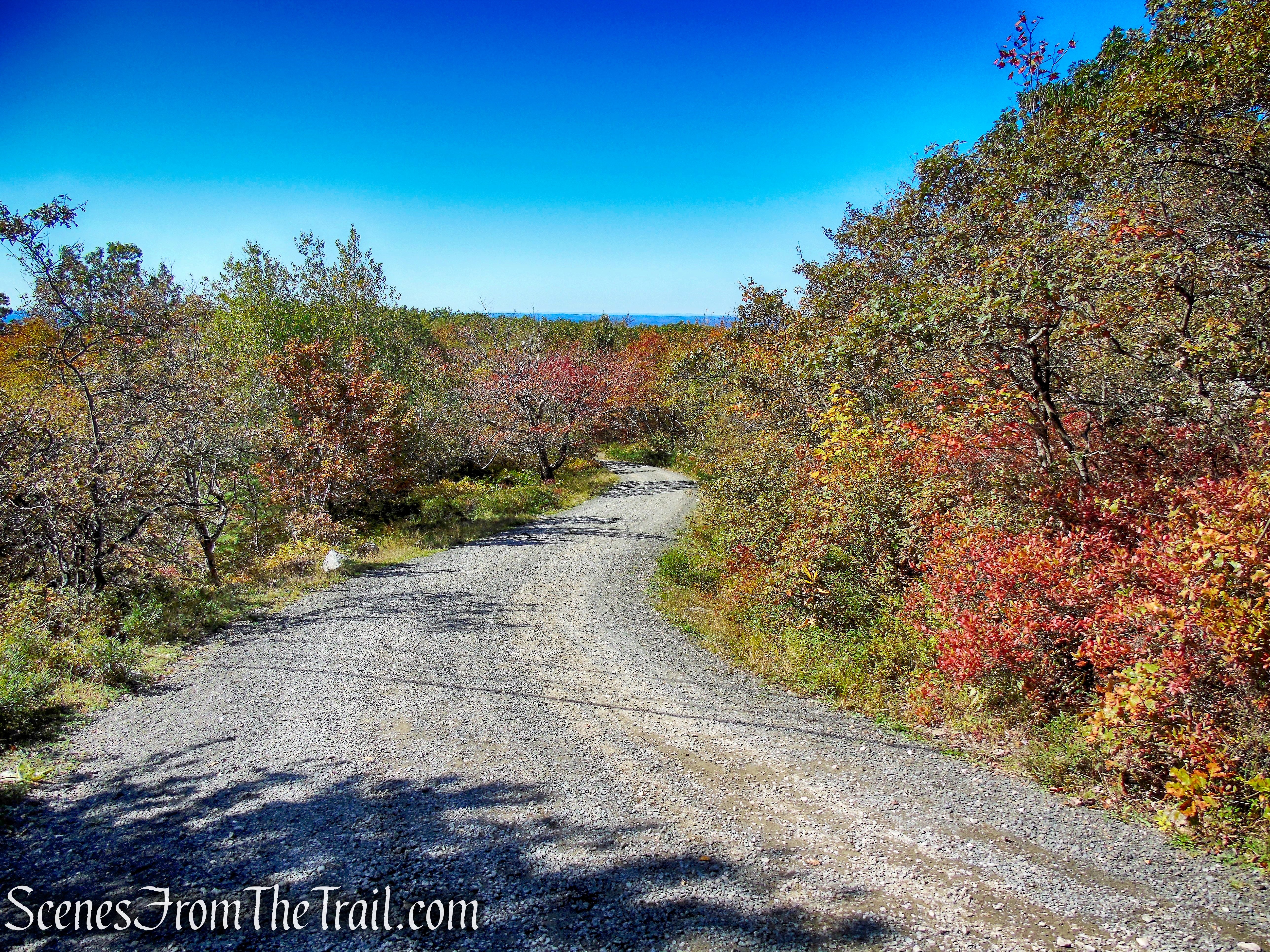
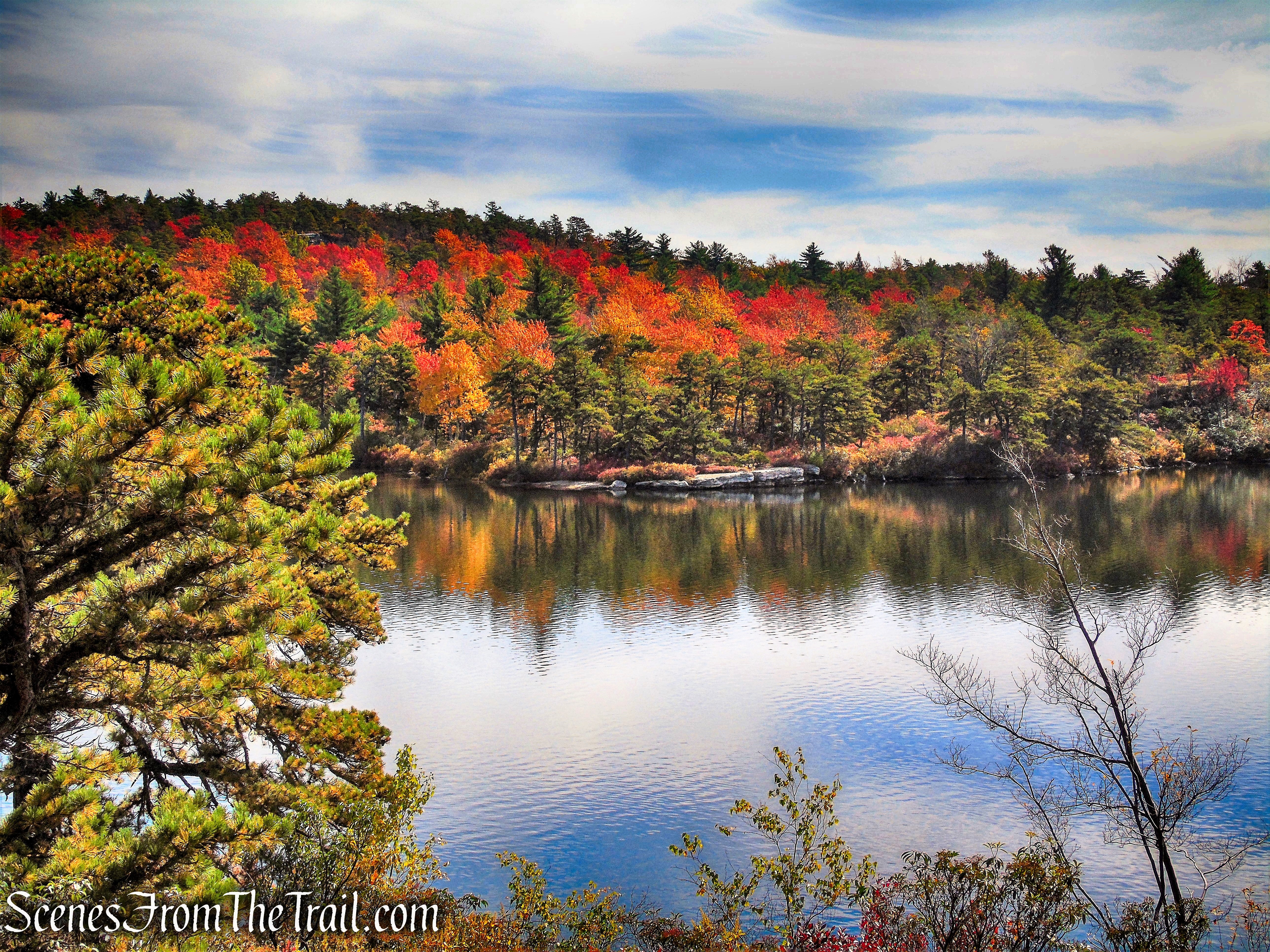
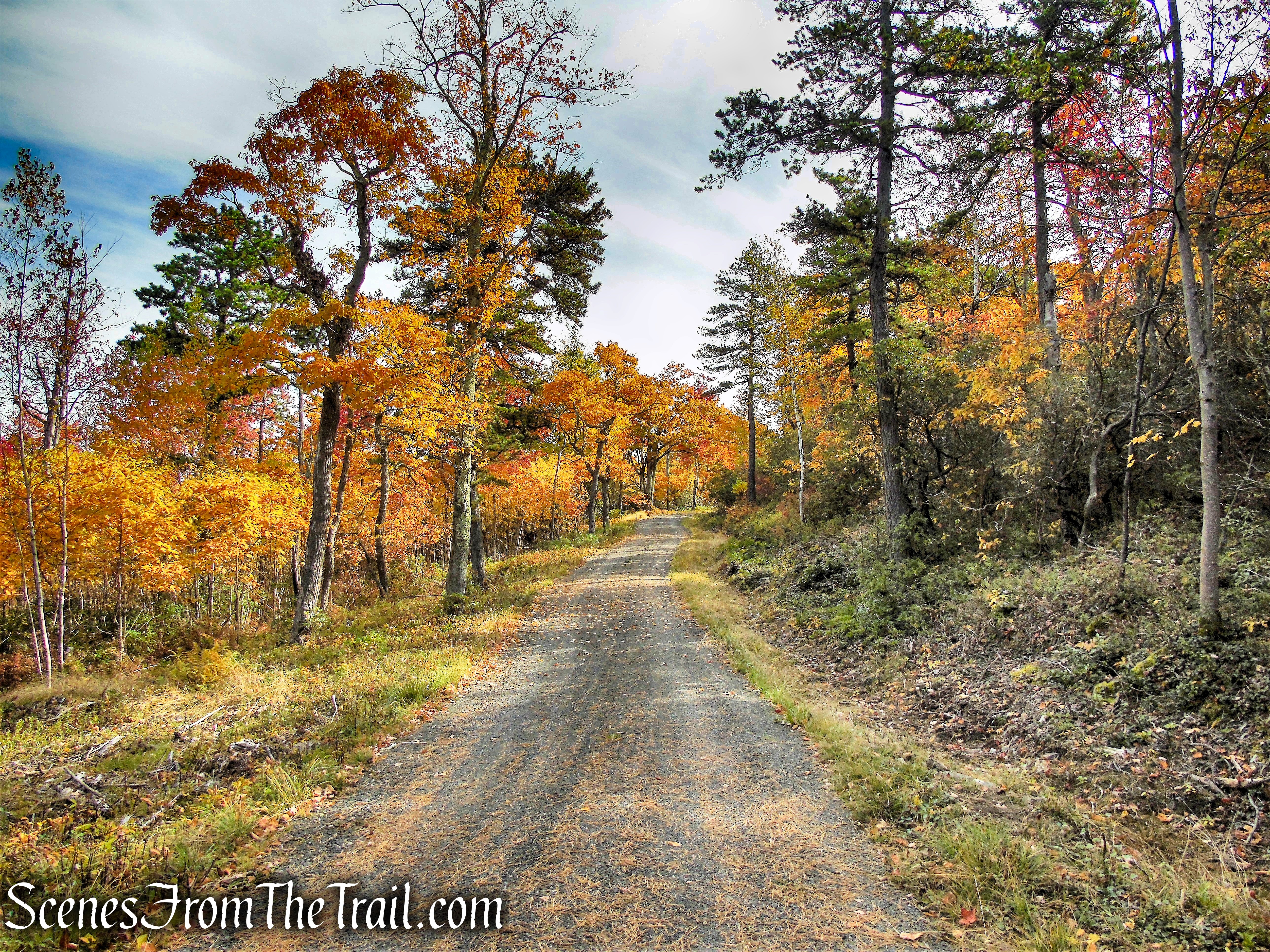
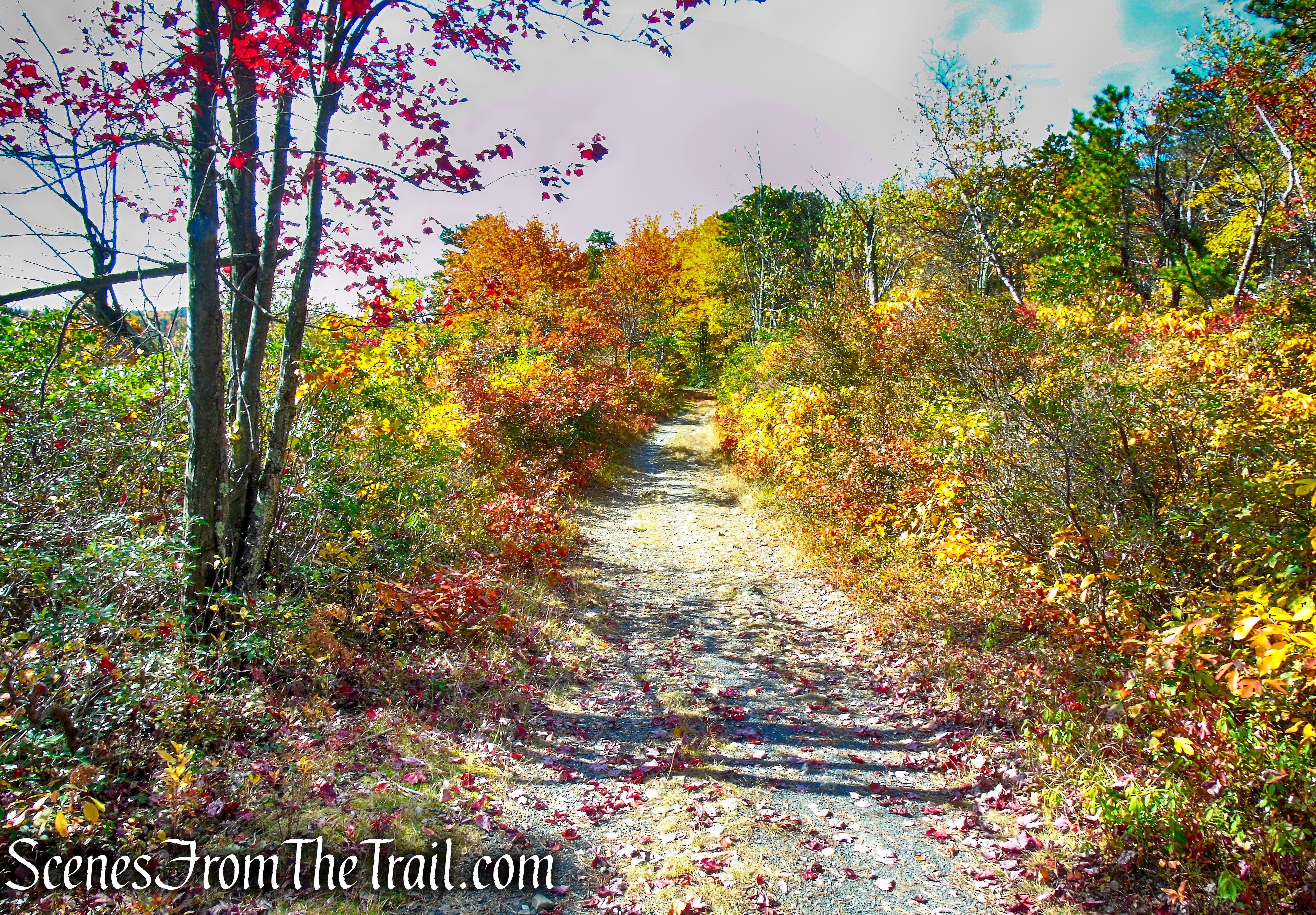
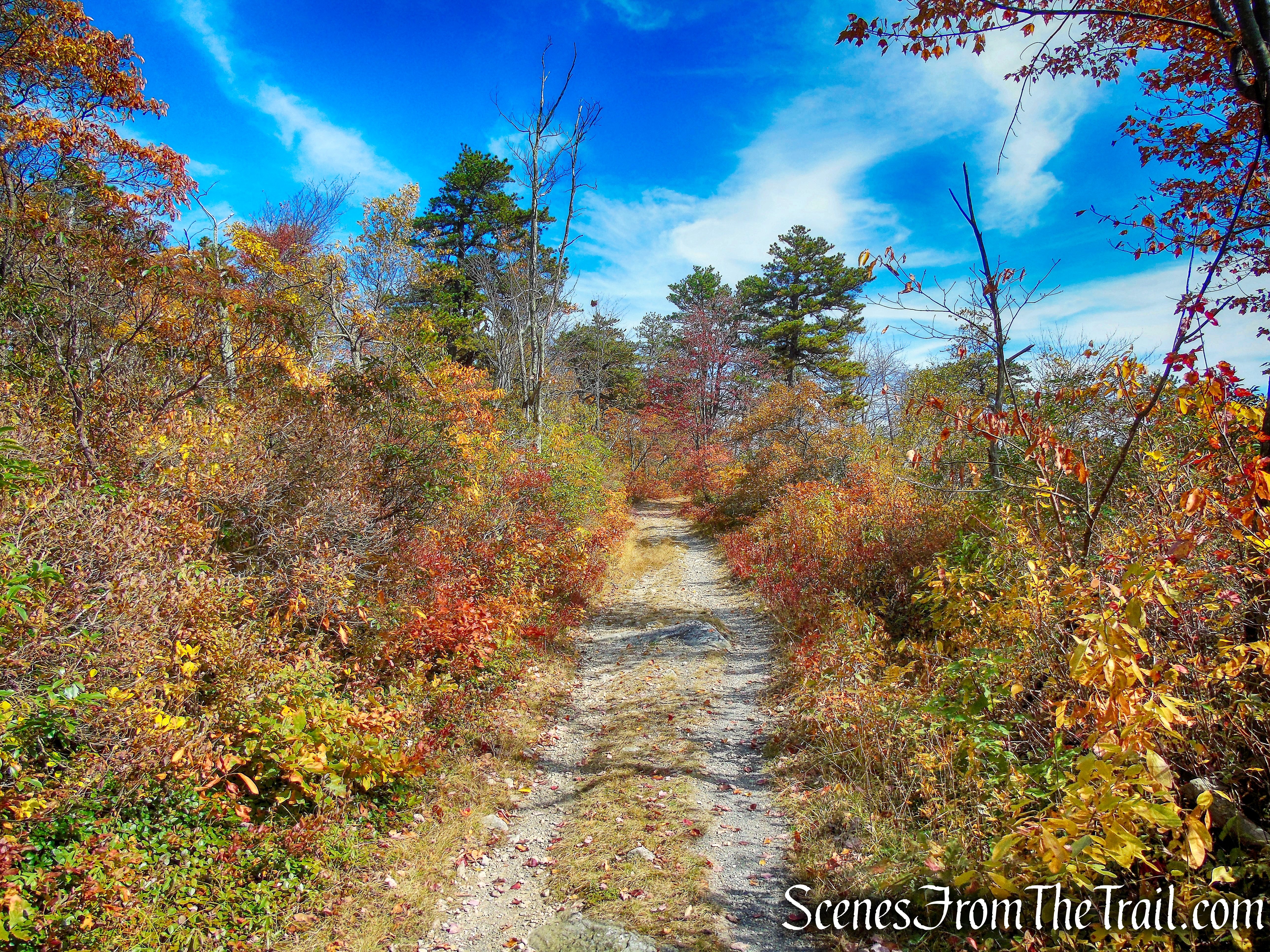
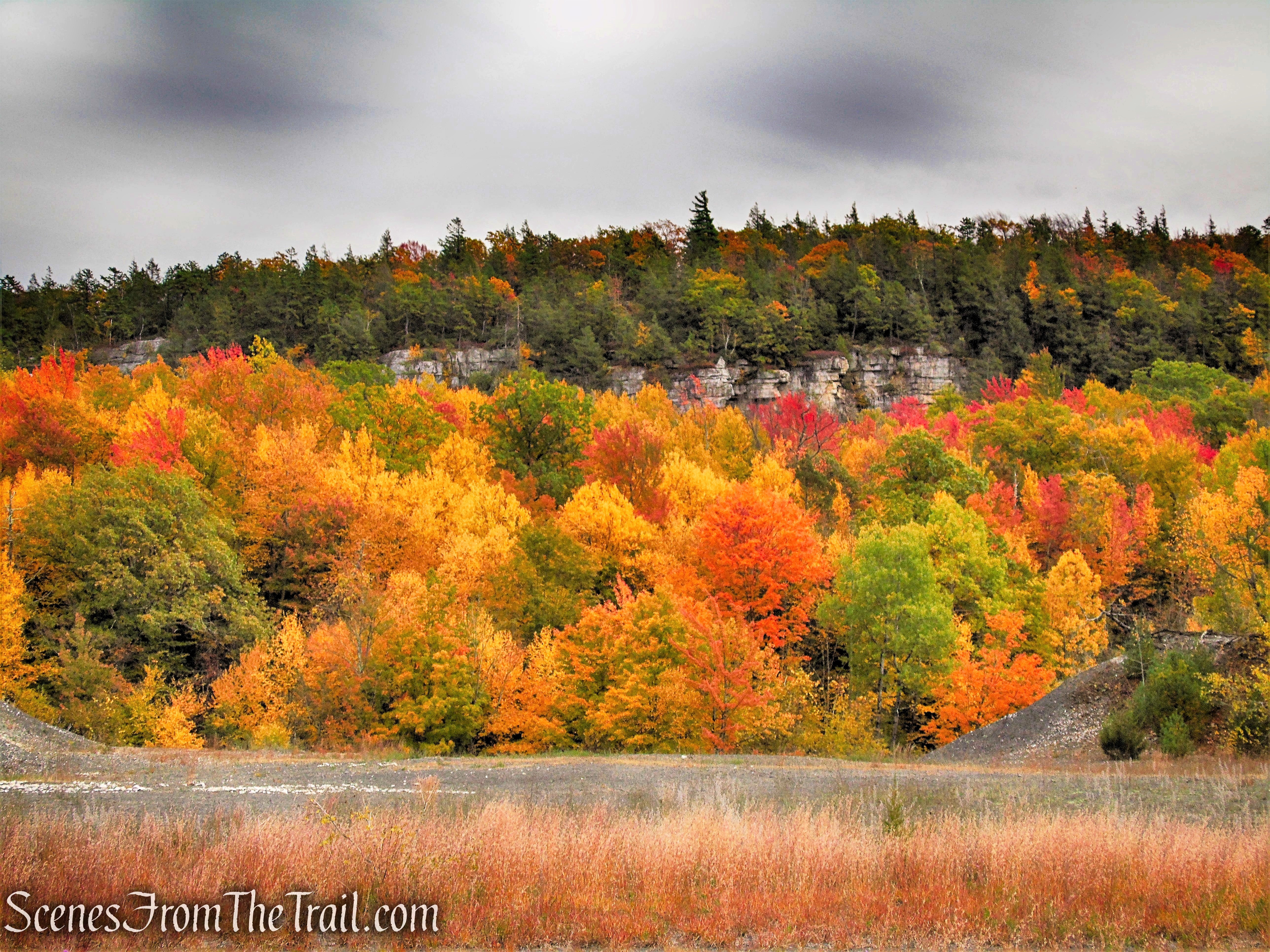
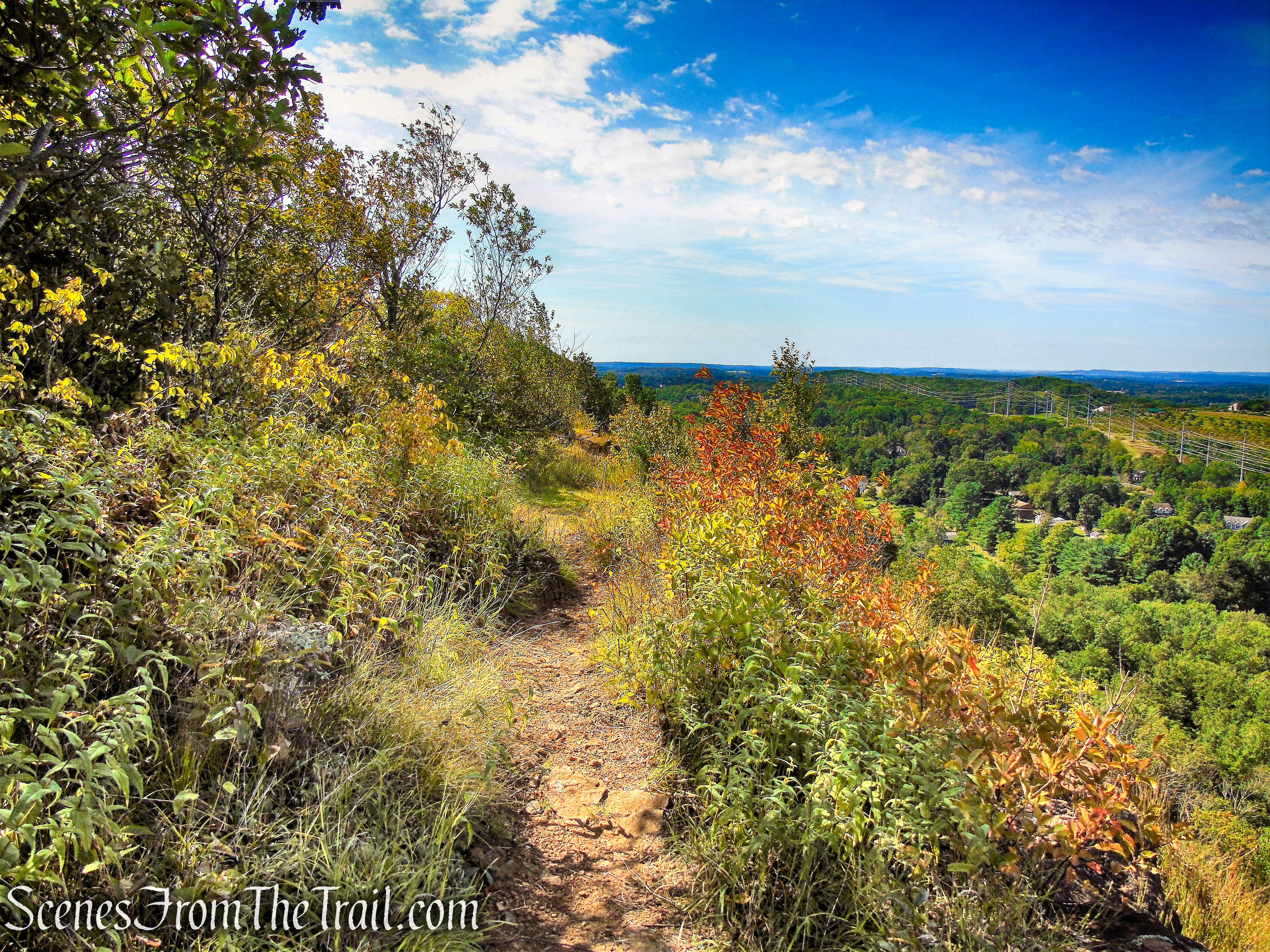
Overcliff Road is especially scenic during the Fall foliage season.

Overcliff Road - Mohonk Preserve

Overcliff Road – Mohonk Preserve

Overcliff Road - Mohonk Preserve

Overcliff Road – Mohonk Preserve

Overcliff Road - Mohonk Preserve

Overcliff Road – Mohonk Preserve

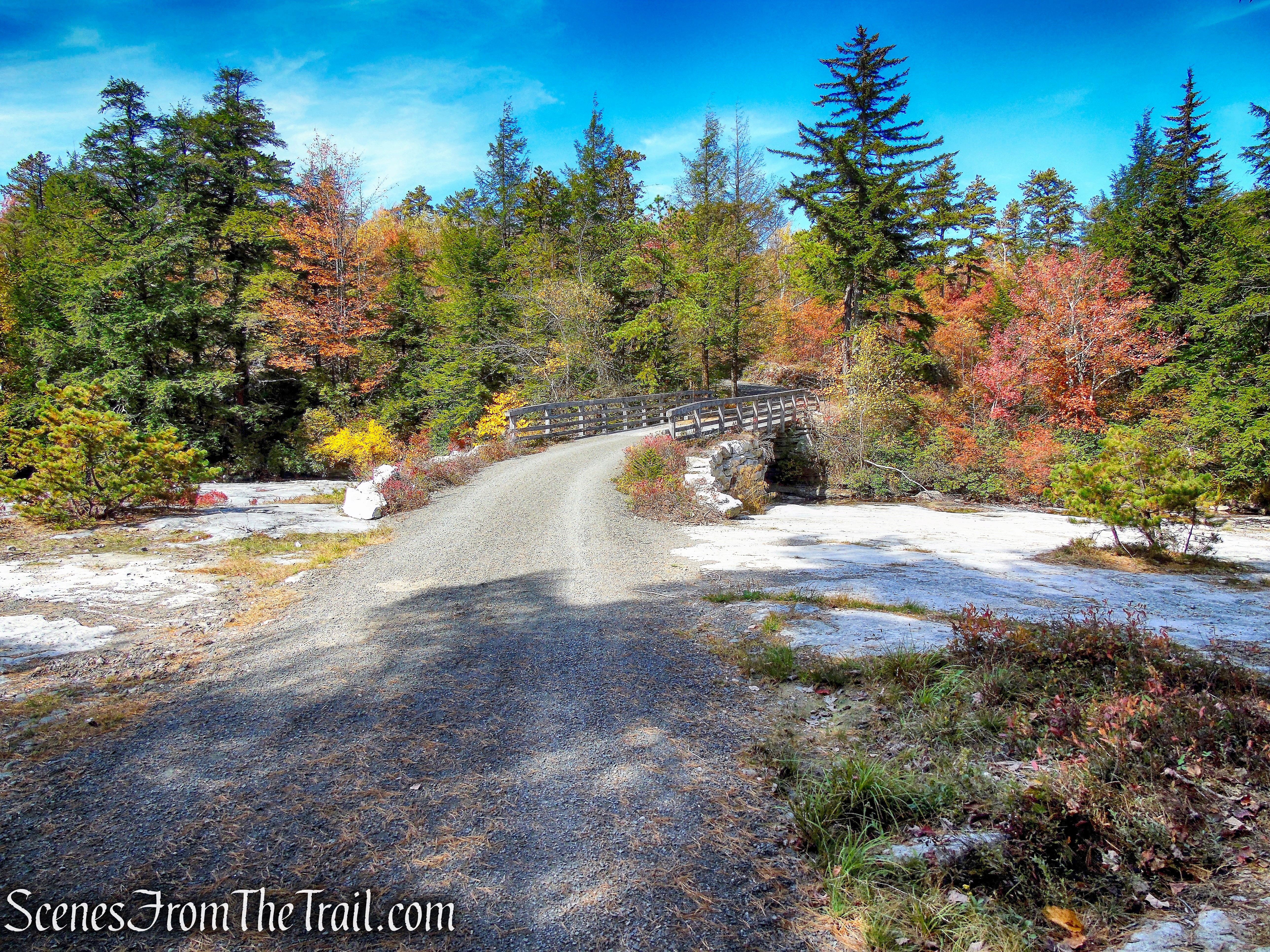
Overcliff Road then descends gently through a series of curves, and after almost 2.5 miles, ends at a complex junction of five carriage roads at the stone Rhododendron Bridge.

Overcliff Road - Mohonk Preserve

Overcliff Road – Mohonk Preserve

Overcliff Road - Mohonk Preserve

Overcliff Road – Mohonk Preserve

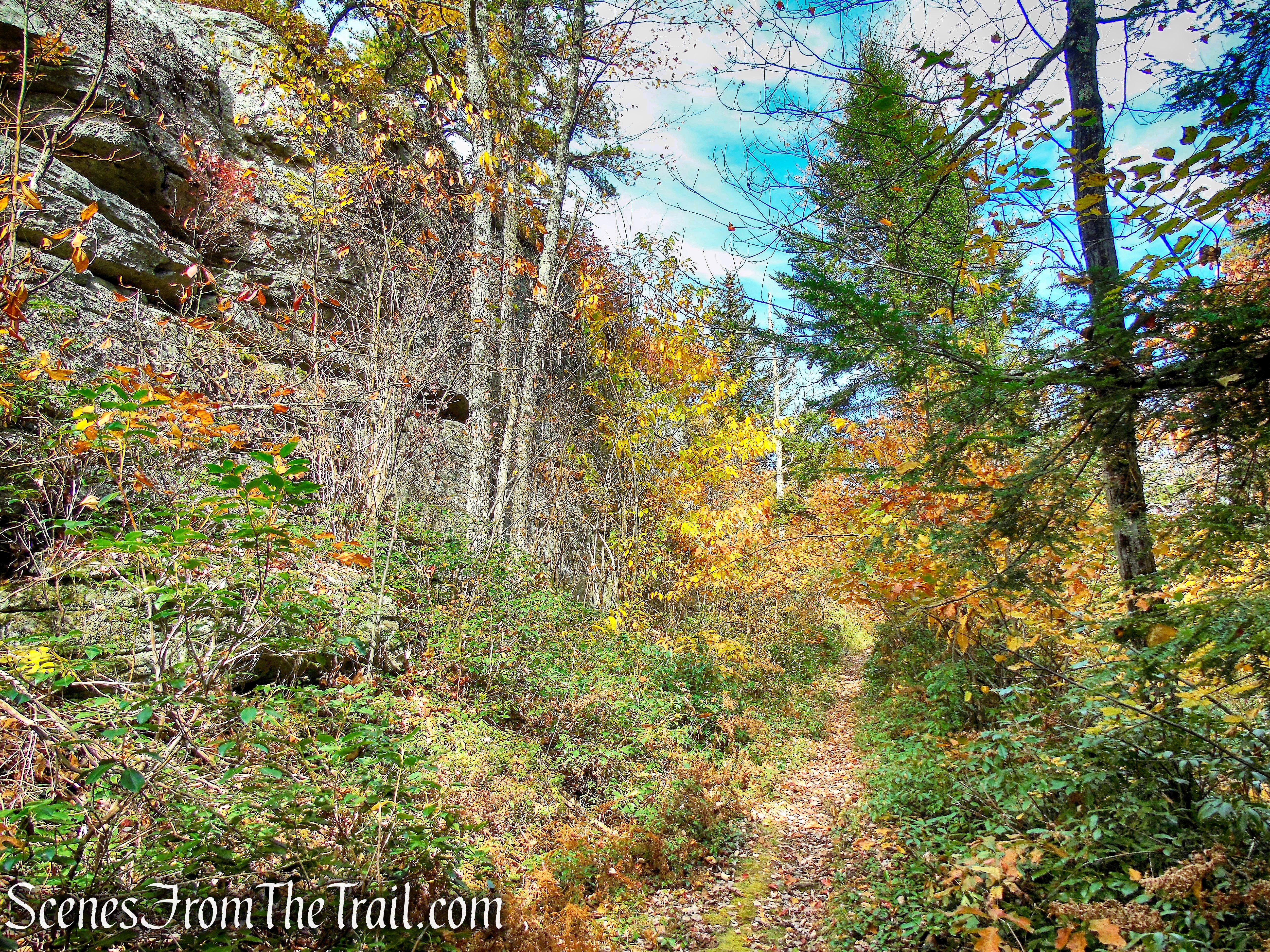
Turn left onto Laurel Ledge Road, a wide, maintained carriage road, which is open to bicyclists as well as hikers. Soon the road travels alongside steep cliffs on either side of the trail.

Laurel Ledge Road - Mohonk Preserve

Laurel Ledge Road – Mohonk Preserve

Laurel Ledge Road - Mohonk Preserve

Laurel Ledge Road – Mohonk Preserve

Laurel Ledge Road - Mohonk Preserve

Laurel Ledge Road – Mohonk Preserve

Laurel Ledge Road - Mohonk Preserve

Laurel Ledge Road – Mohonk Preserve

Laurel Ledge Road - Mohonk Preserve

Laurel Ledge Road – Mohonk Preserve

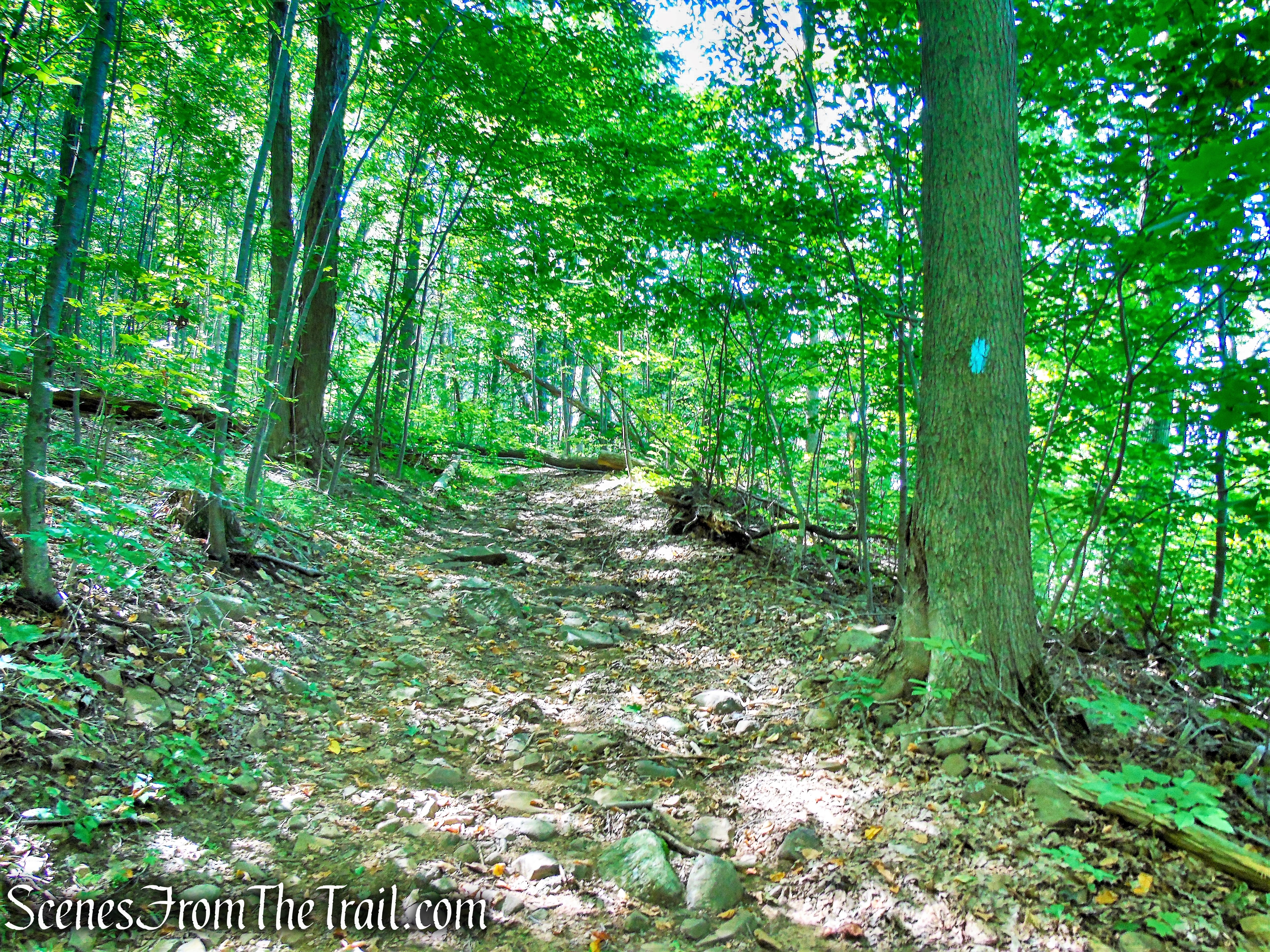
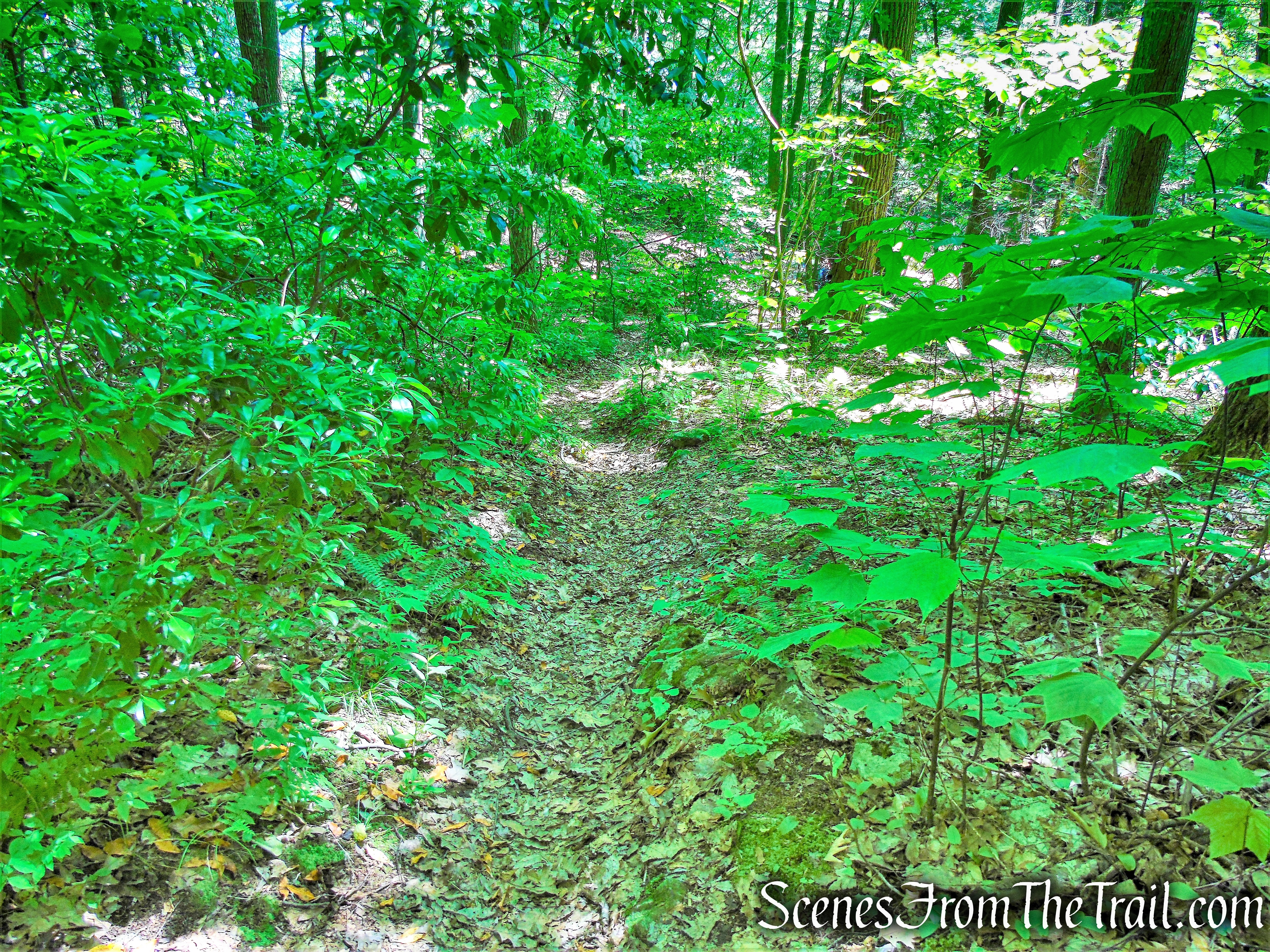
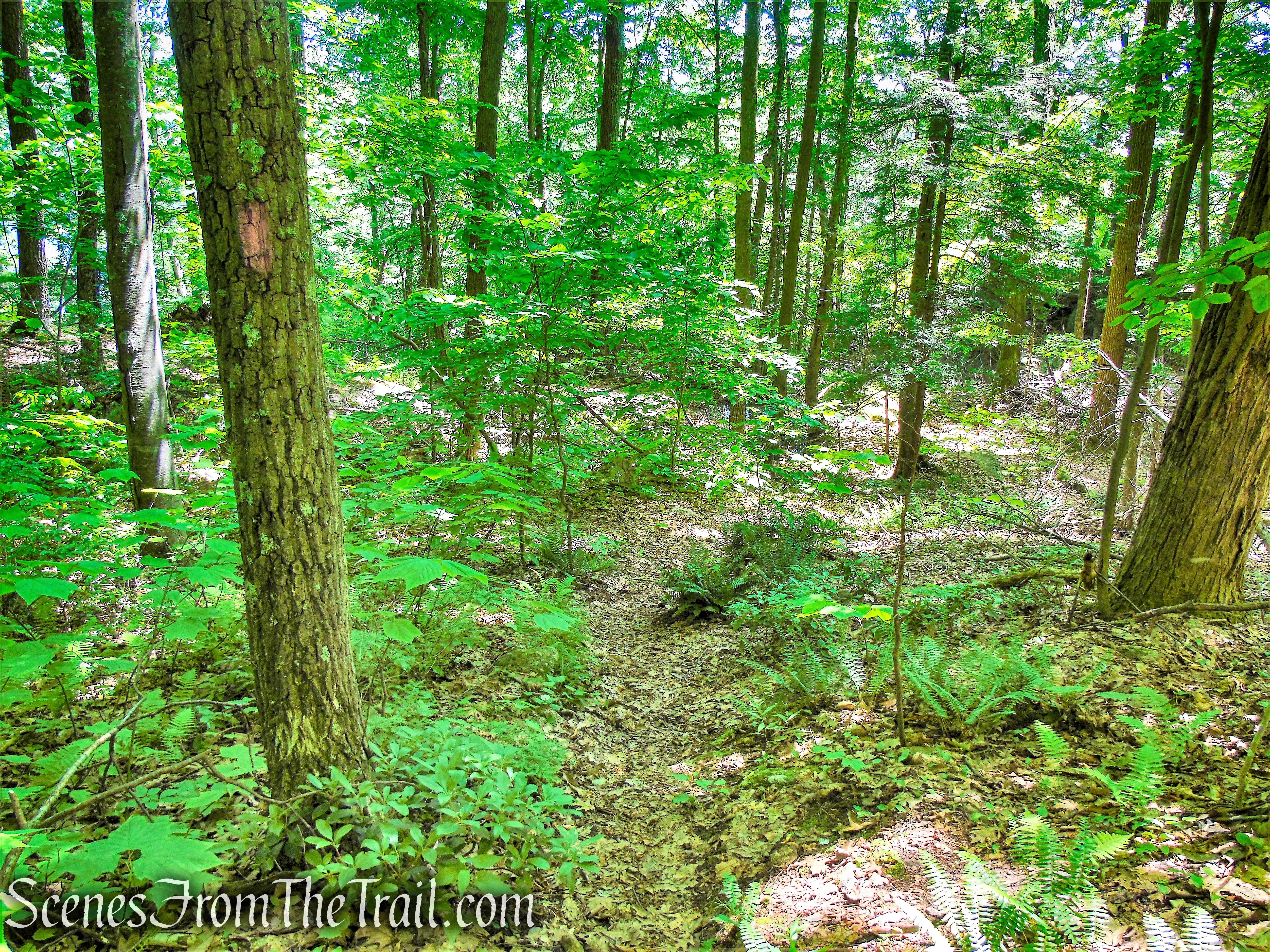
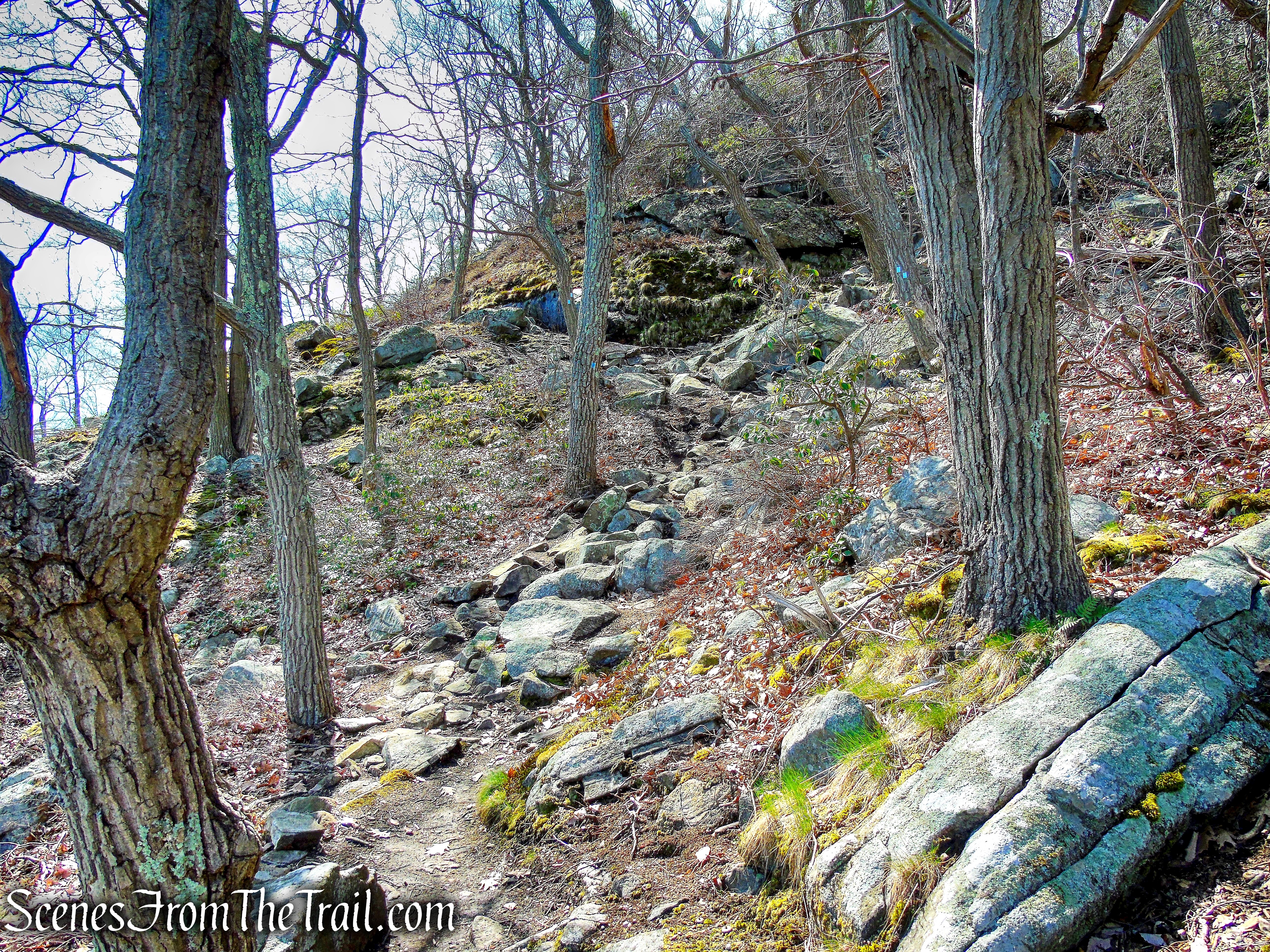
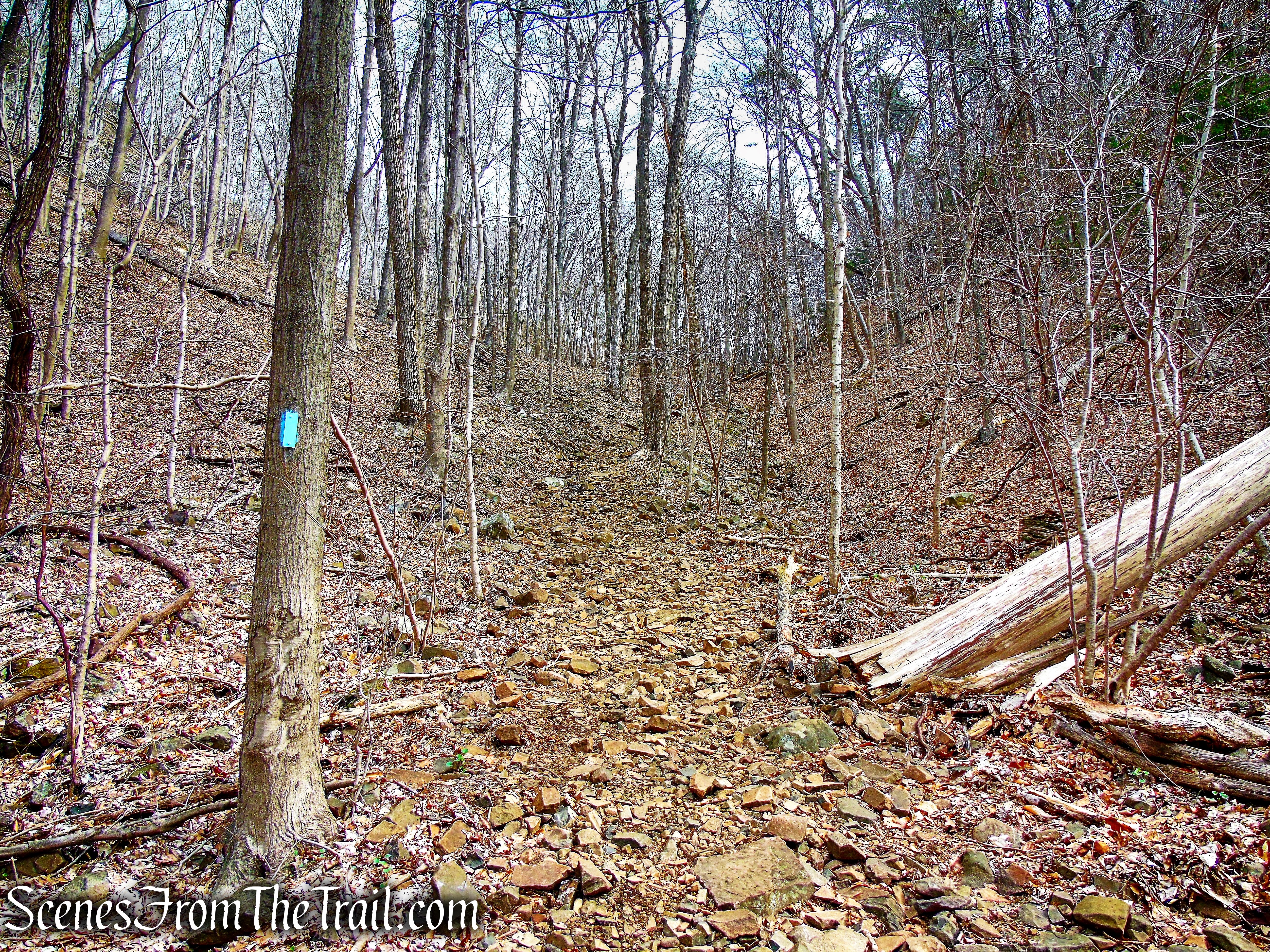
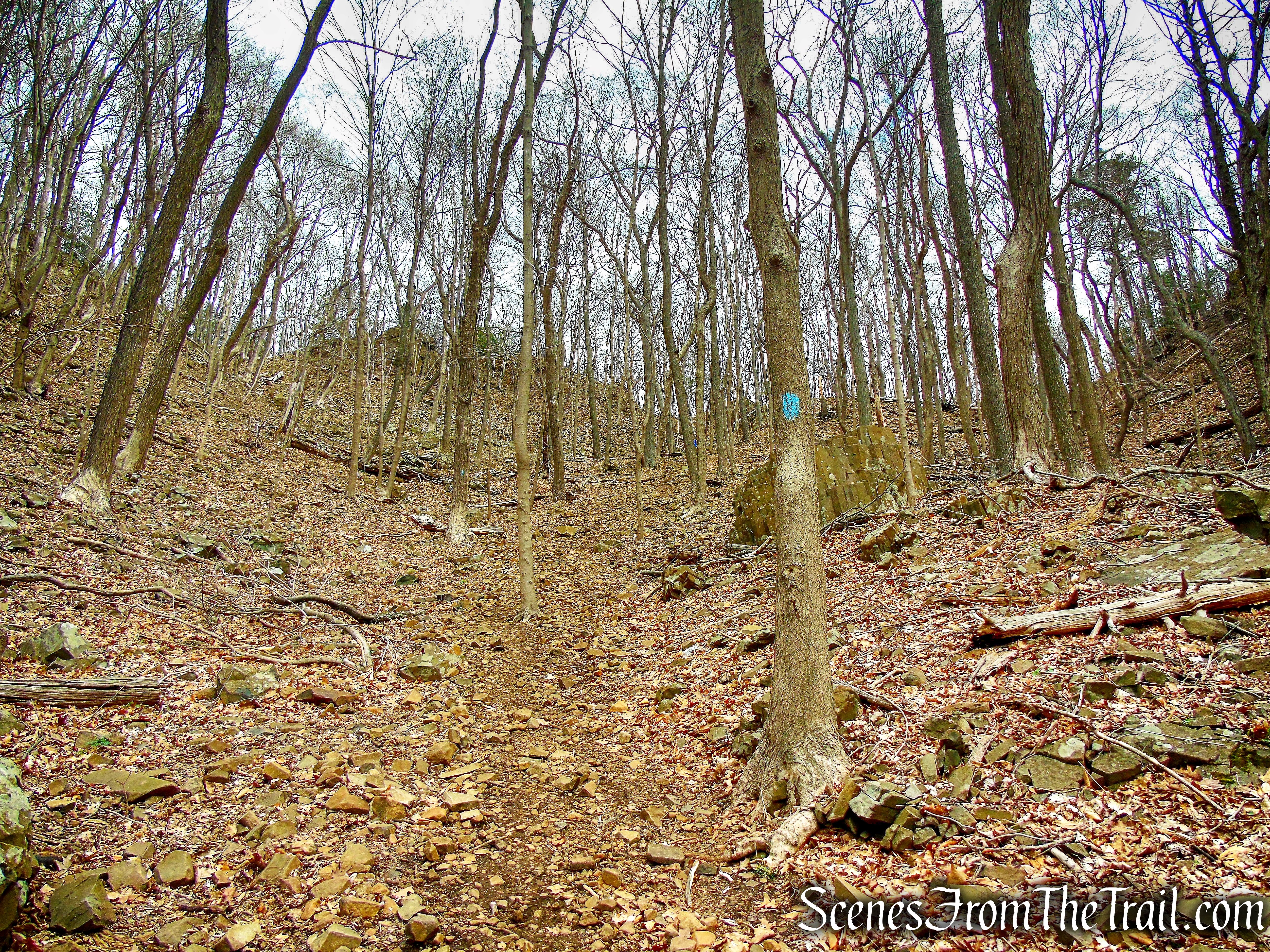
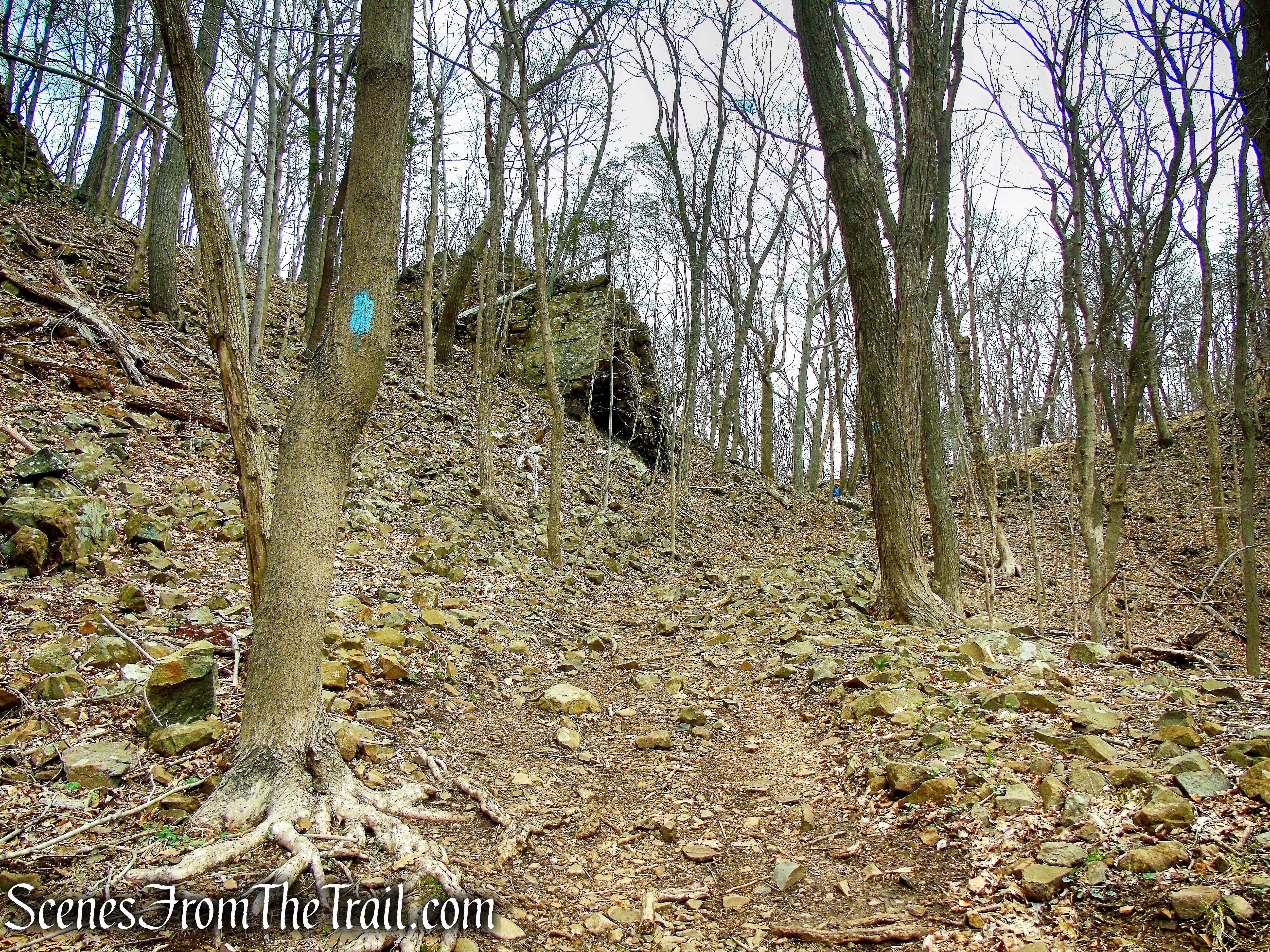
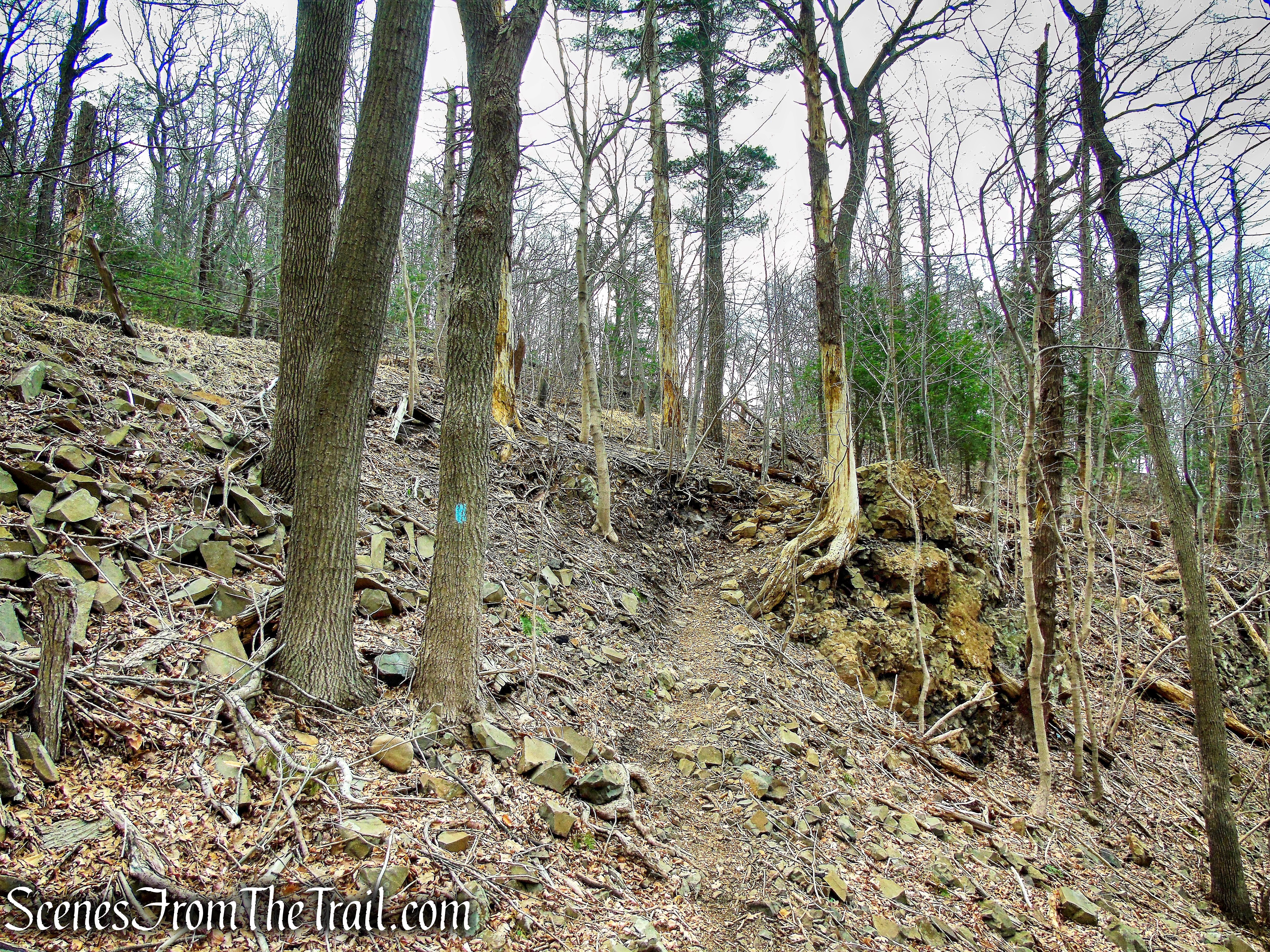
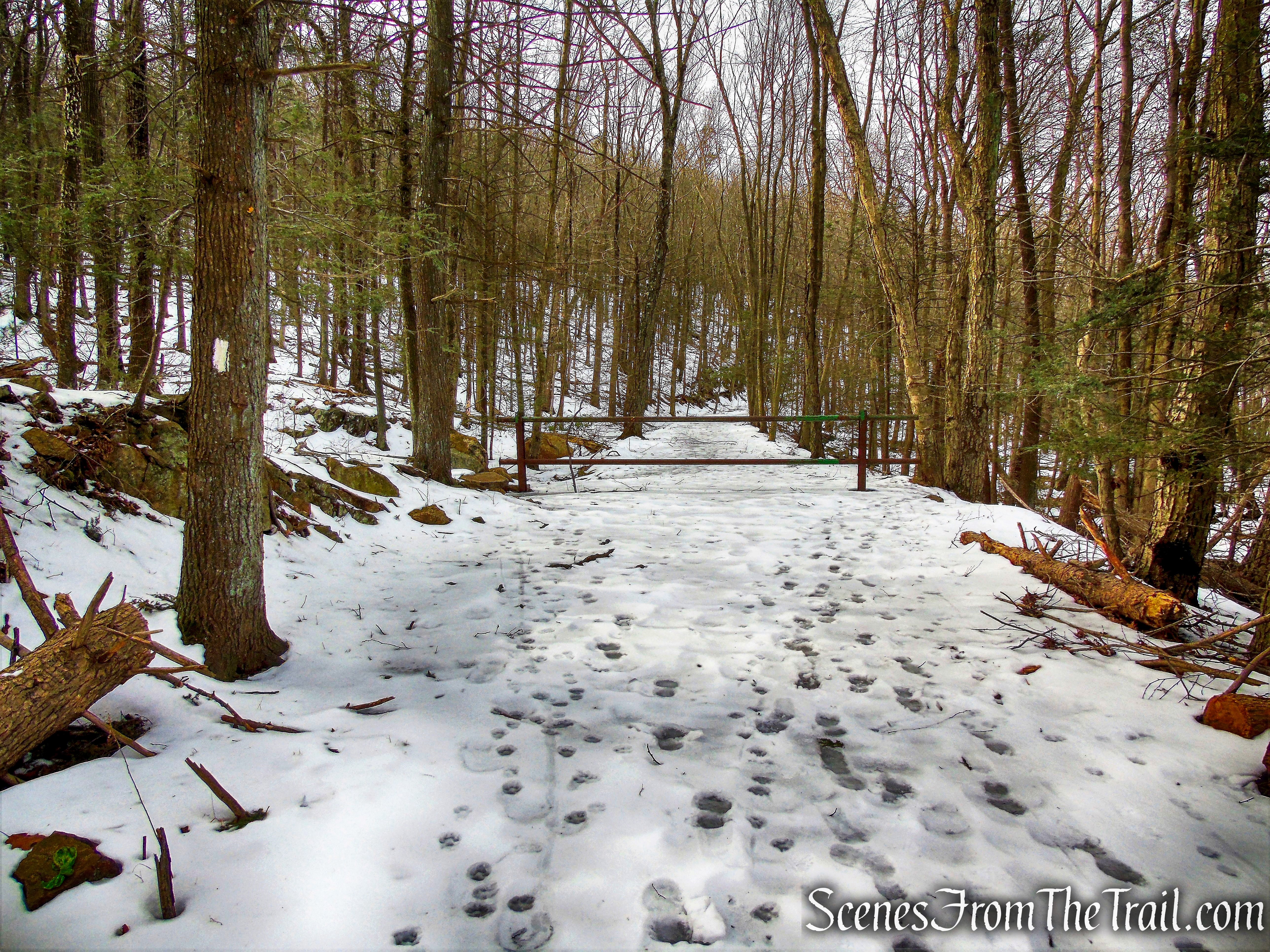
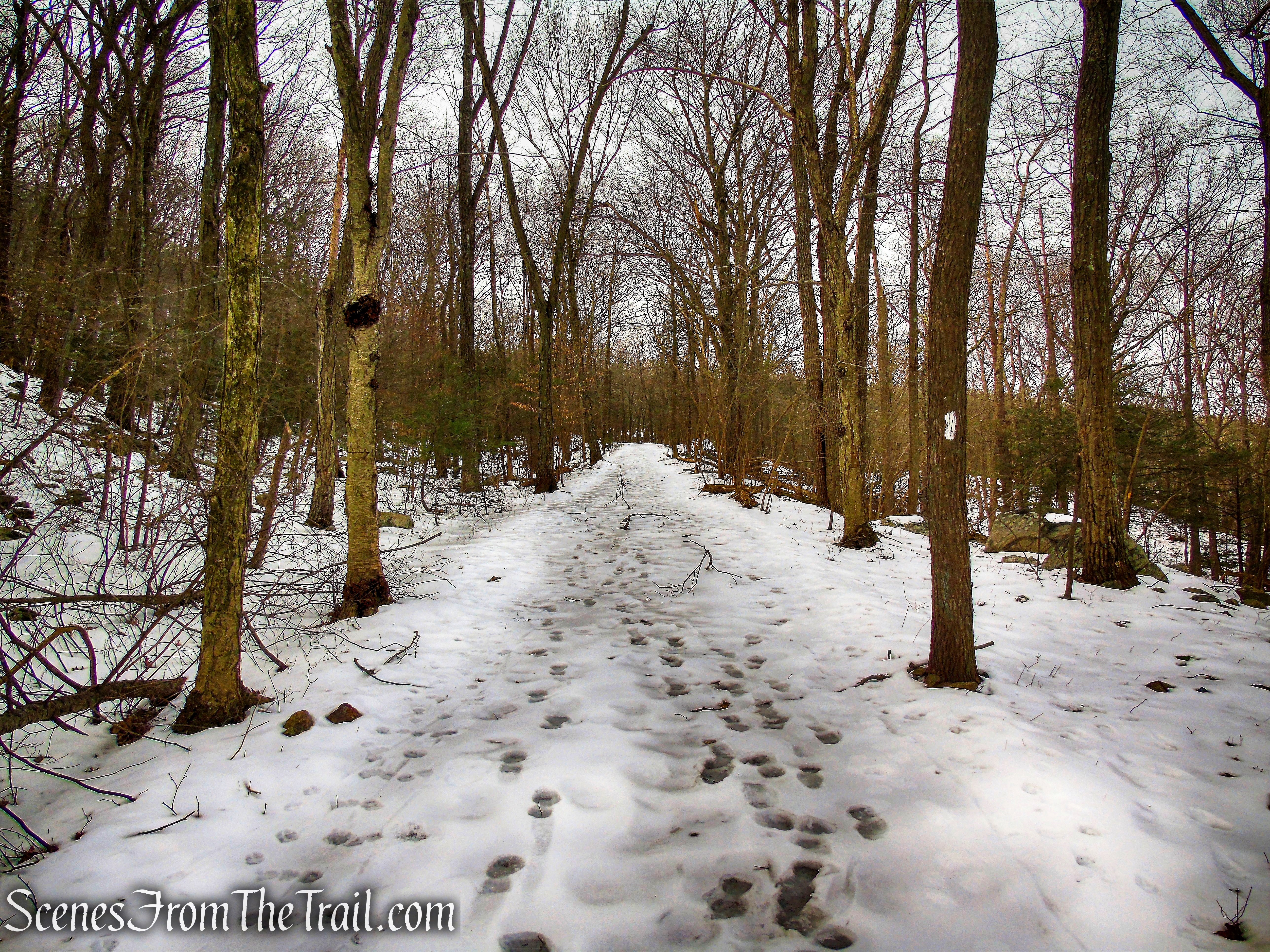
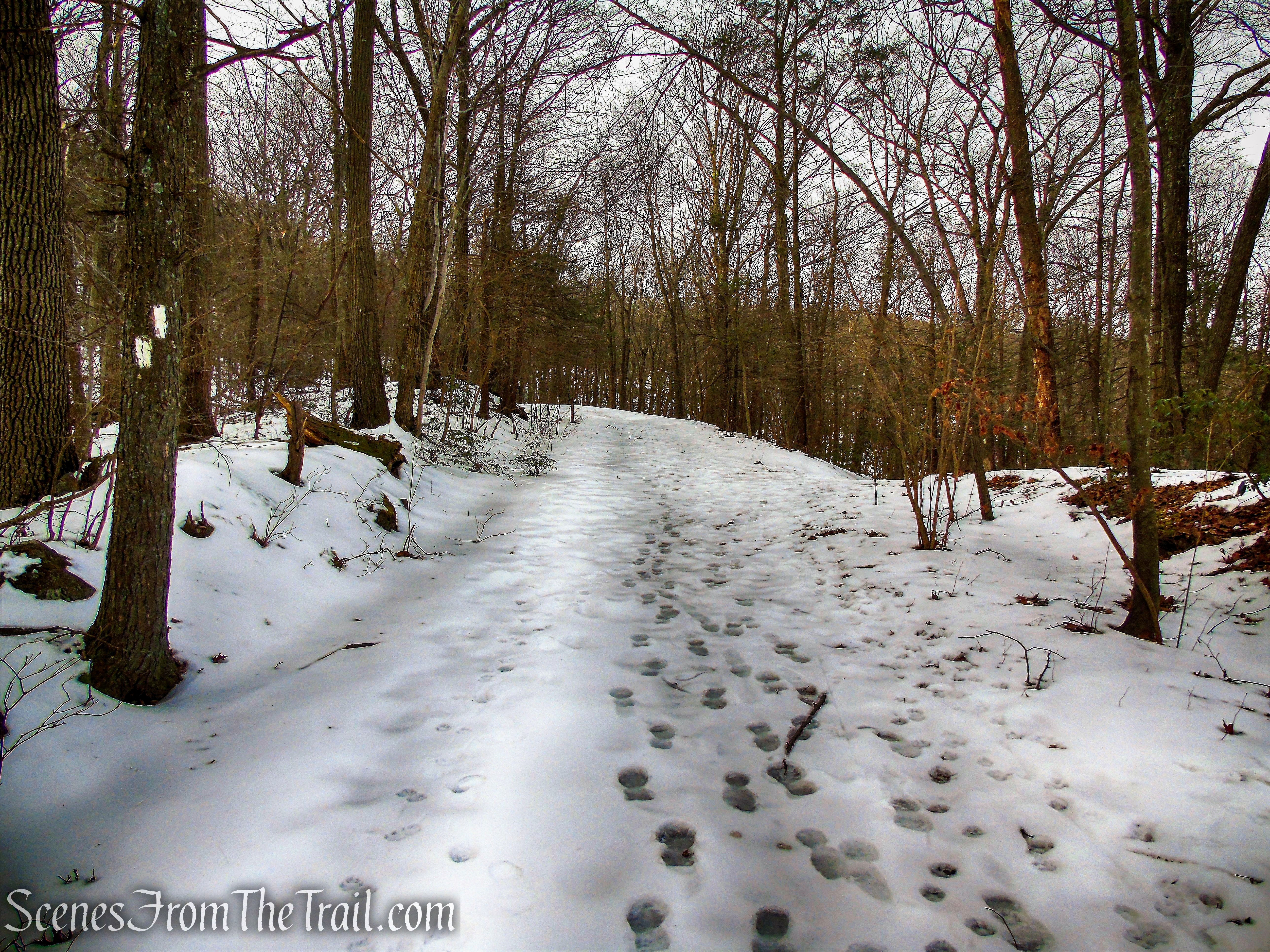
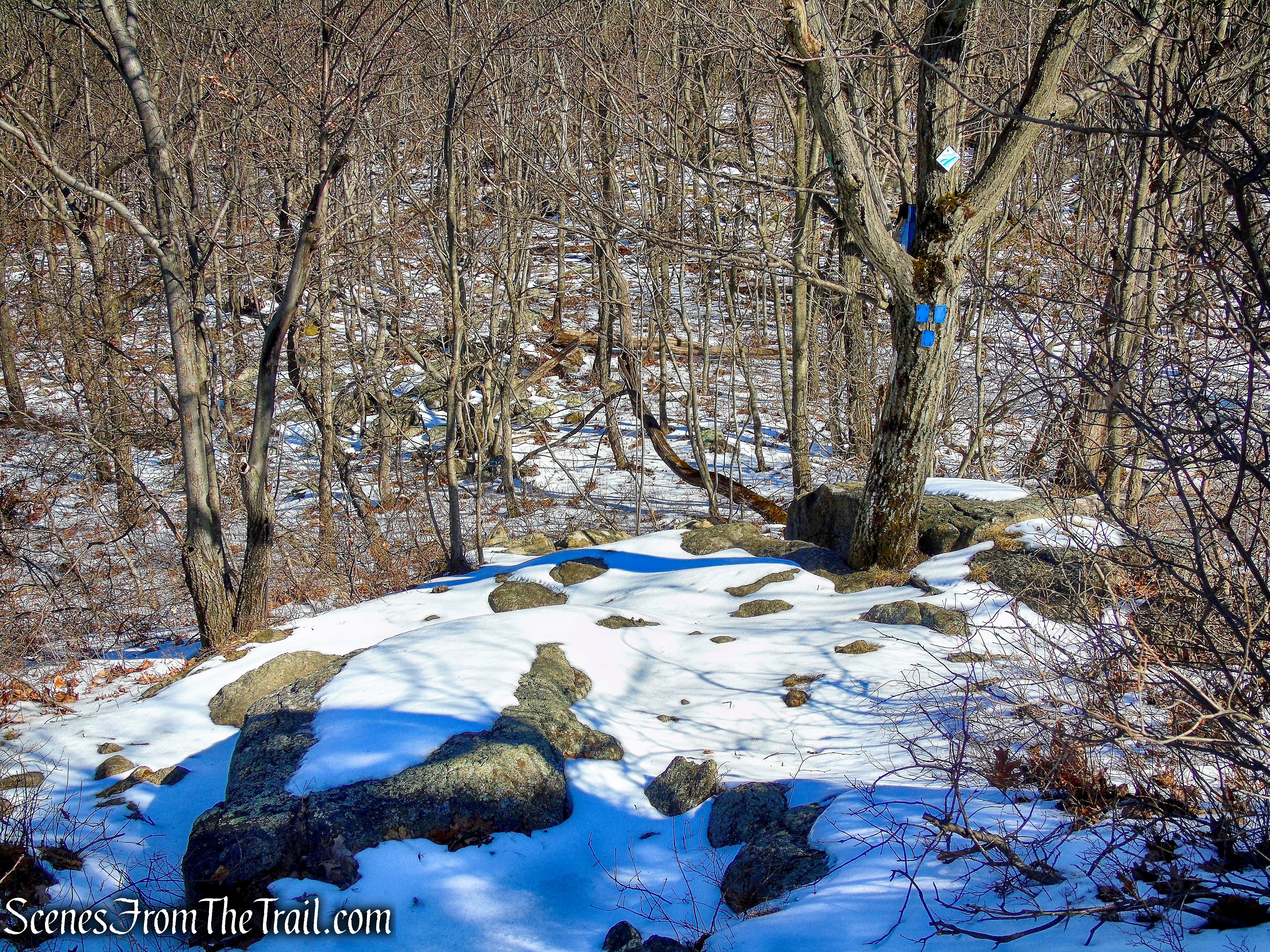
In about 0.4 mile, Laurel Ledge Road comes to a junction with the Old Minnewaska Trail, which begins on the left. Turn left on the blue-blazed Old Minnewaska Trail, which begins as a wide carriage road, but soon narrows as it descends.

turn left on Old Minnewaska Trail

turn left on Old Minnewaska Trail

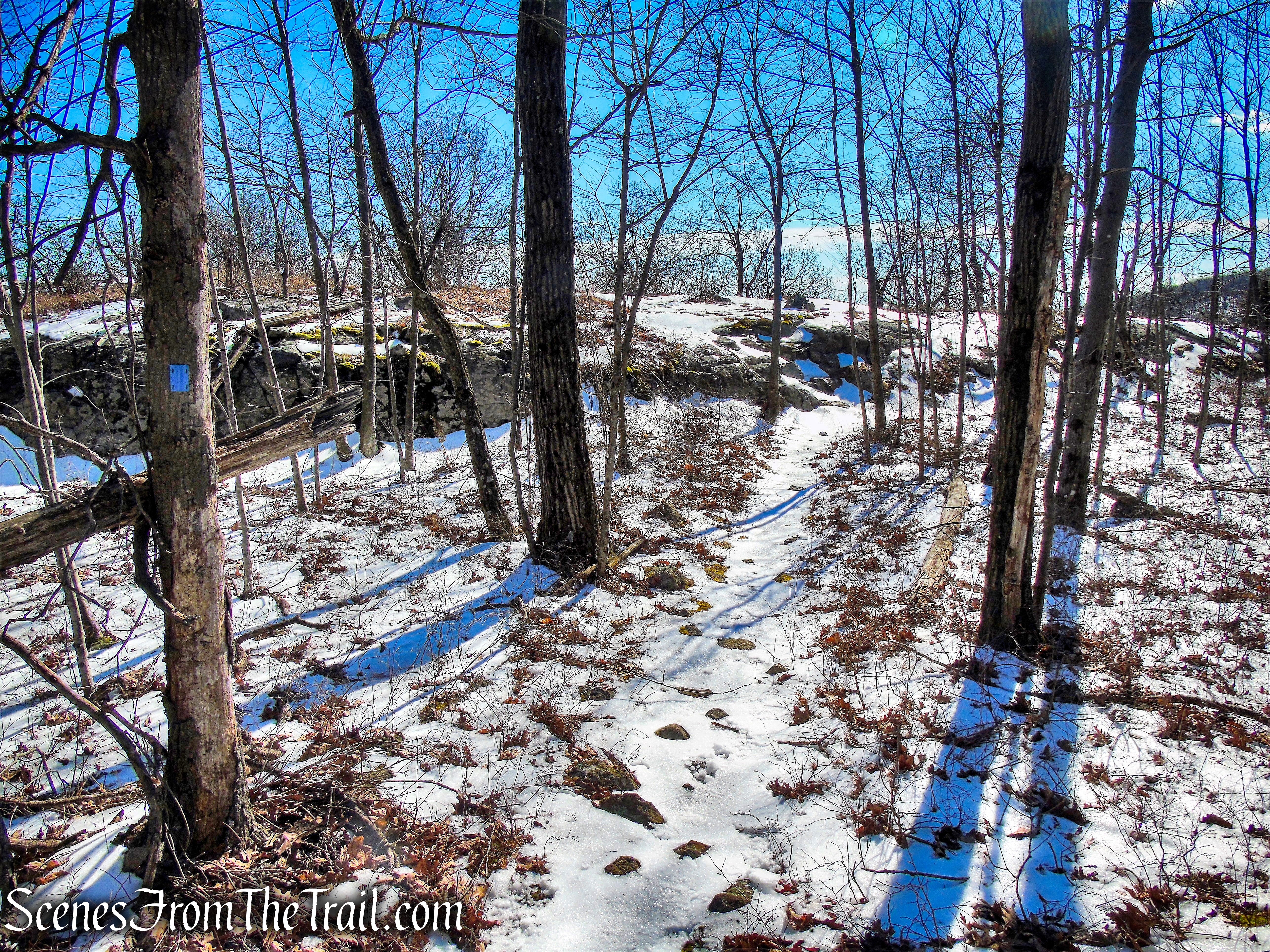
Old Minnewaska Trail - Mohonk Preserve

Old Minnewaska Trail – Mohonk Preserve

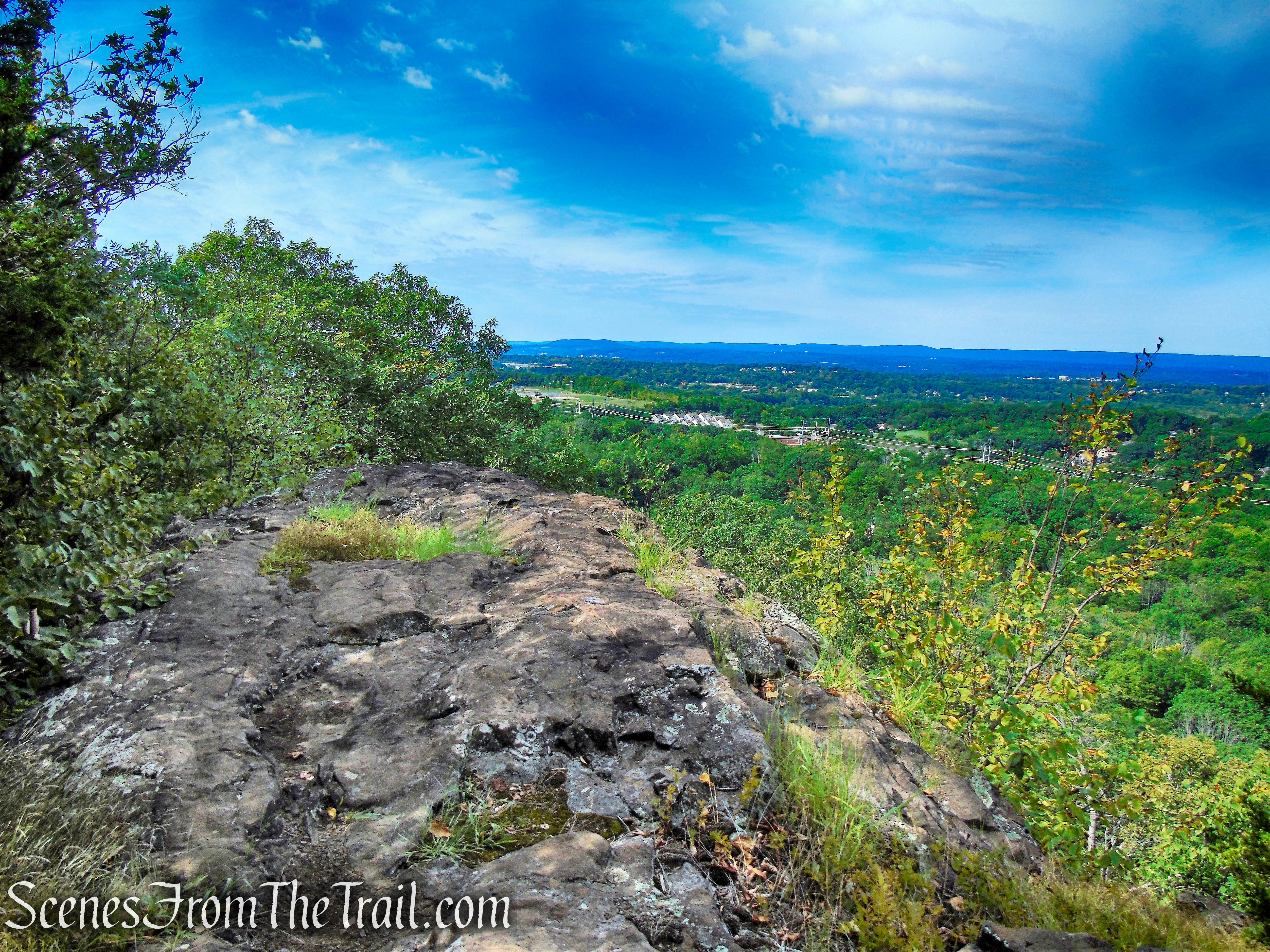
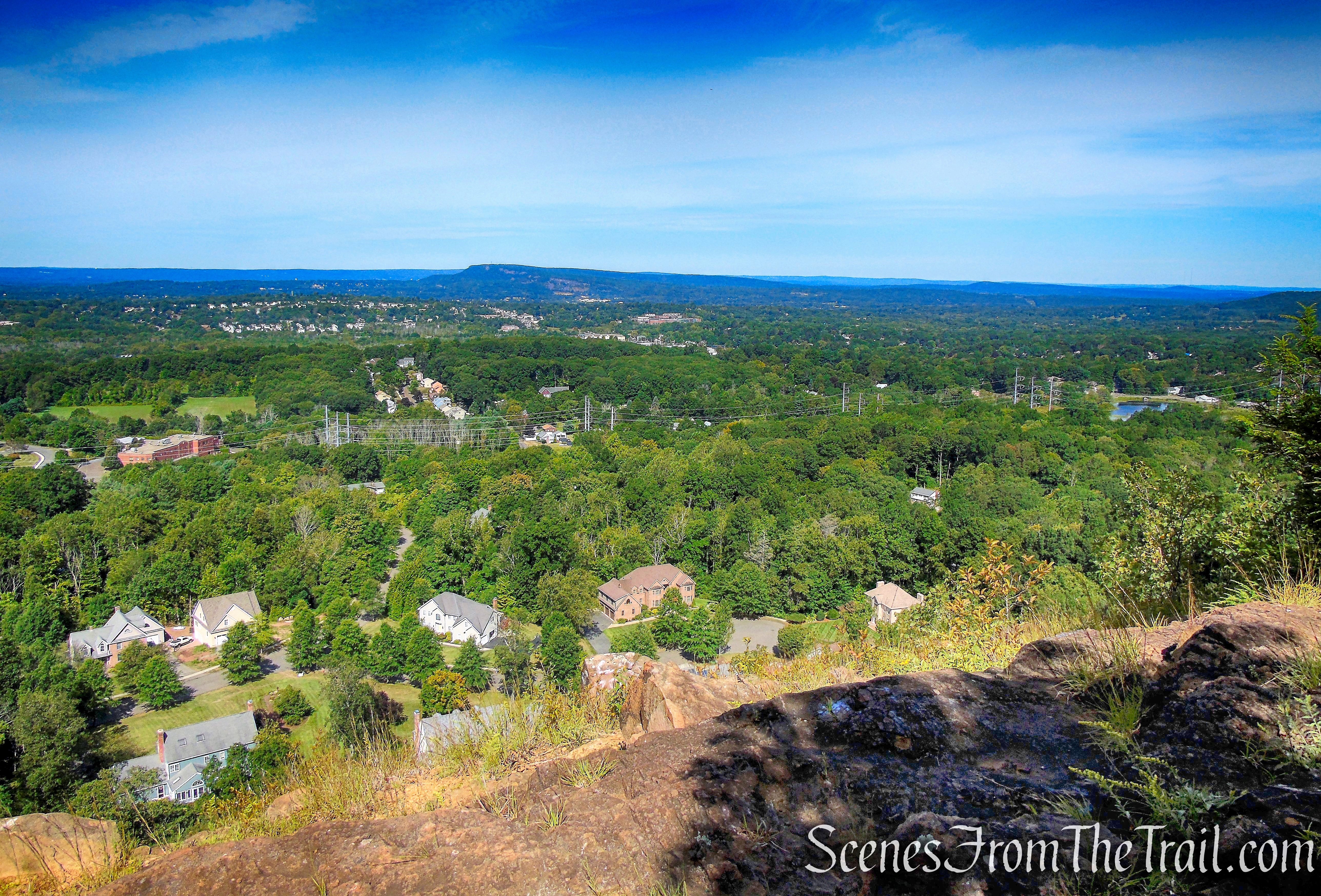
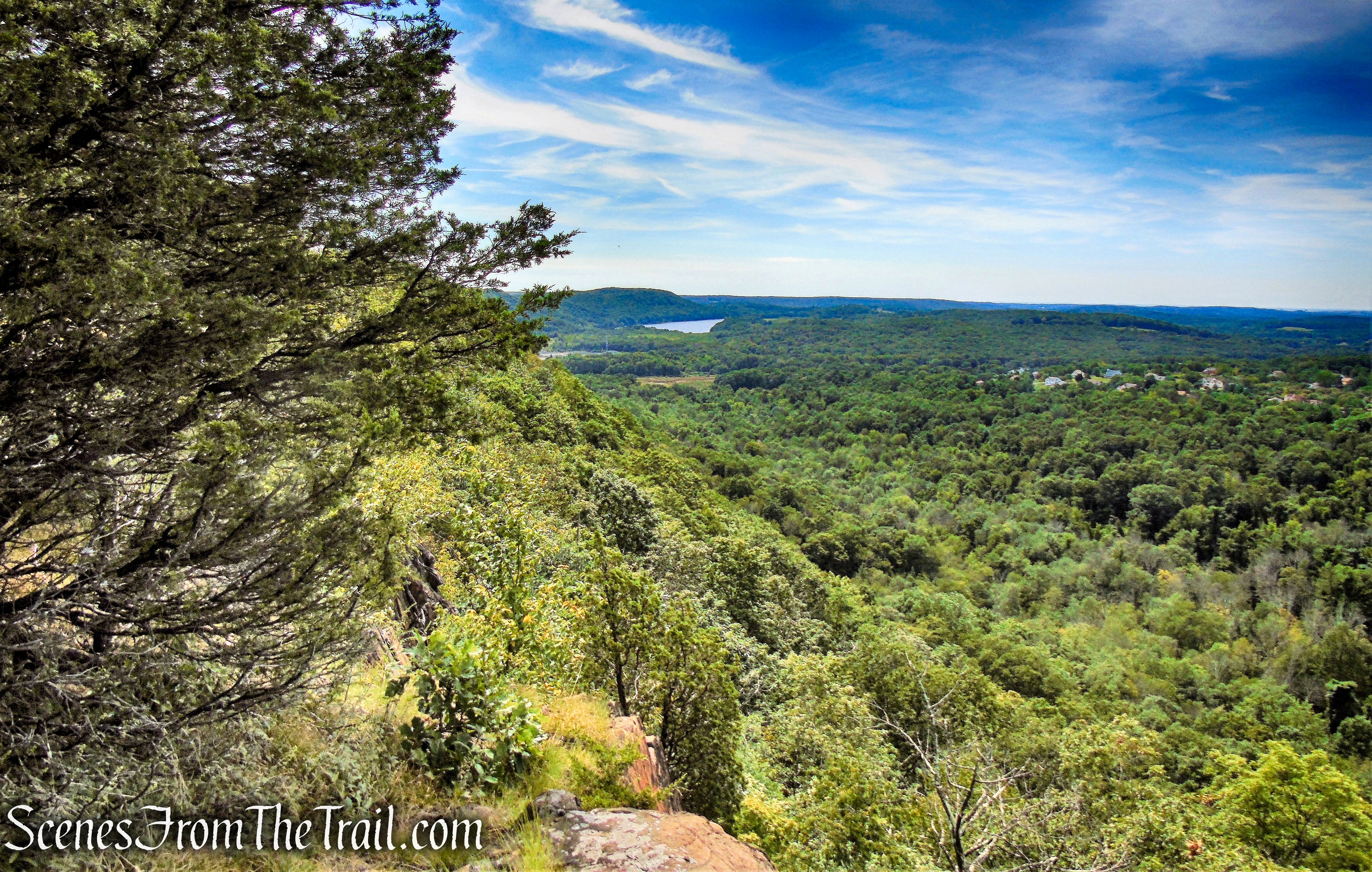
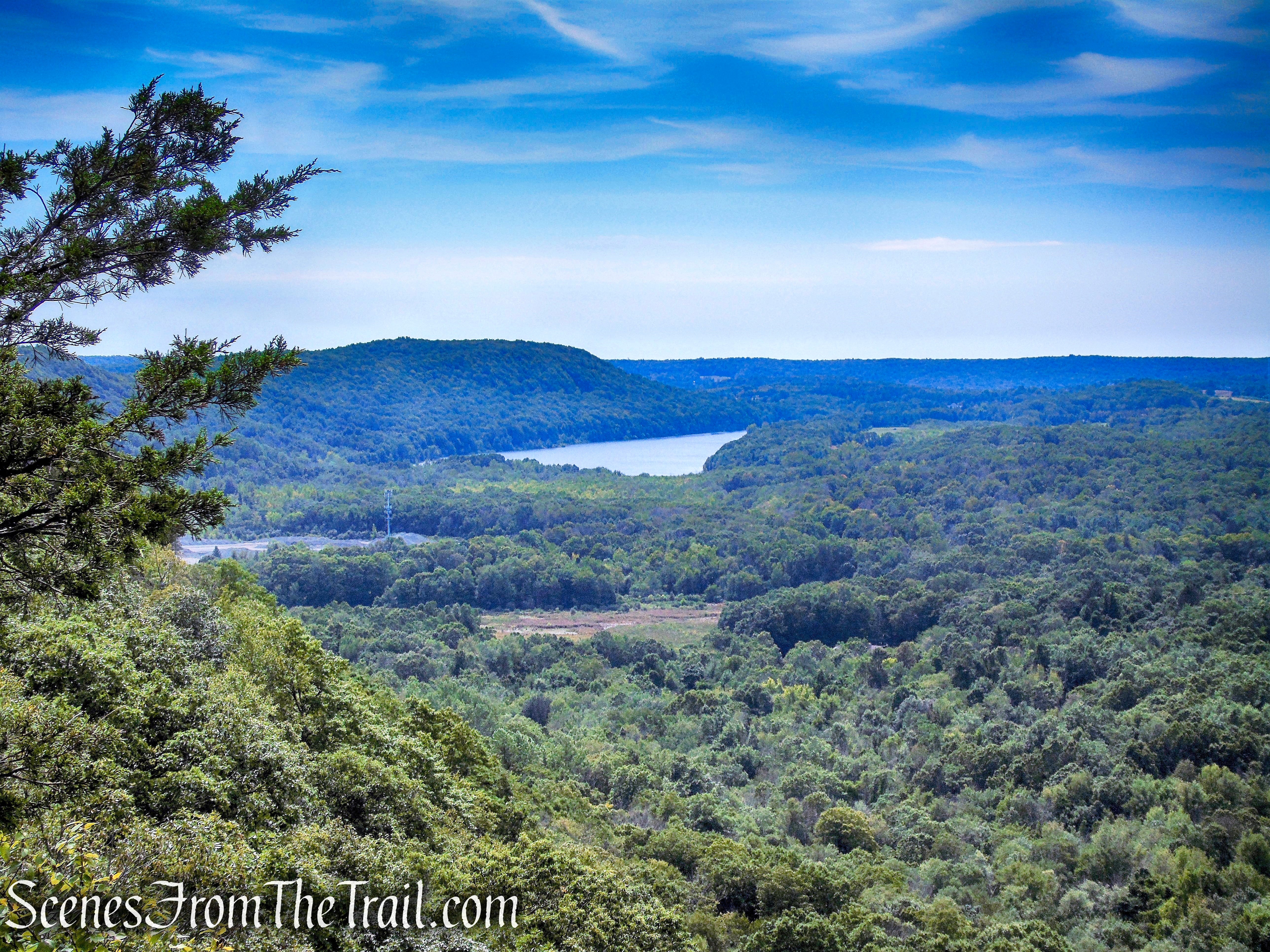
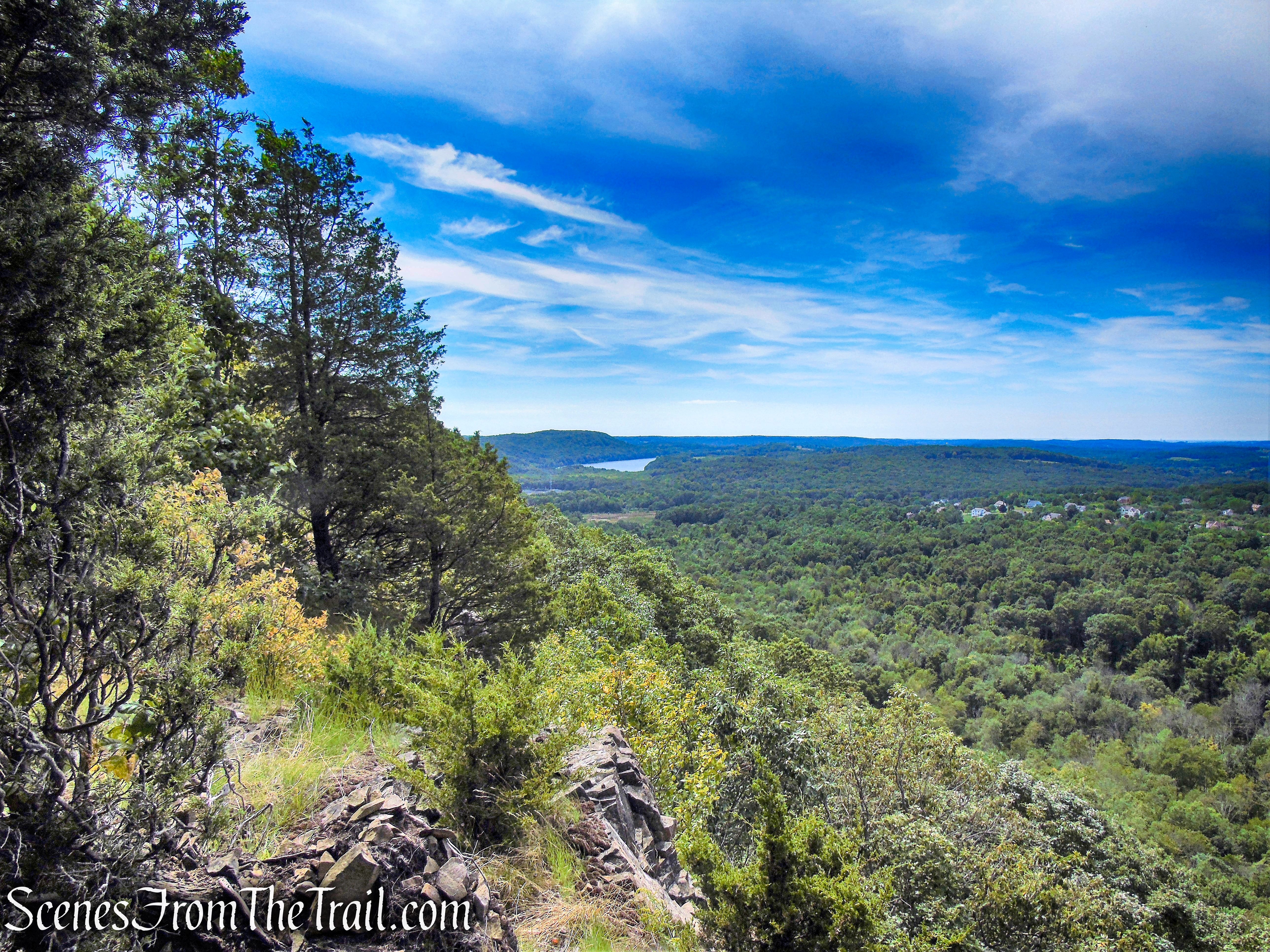
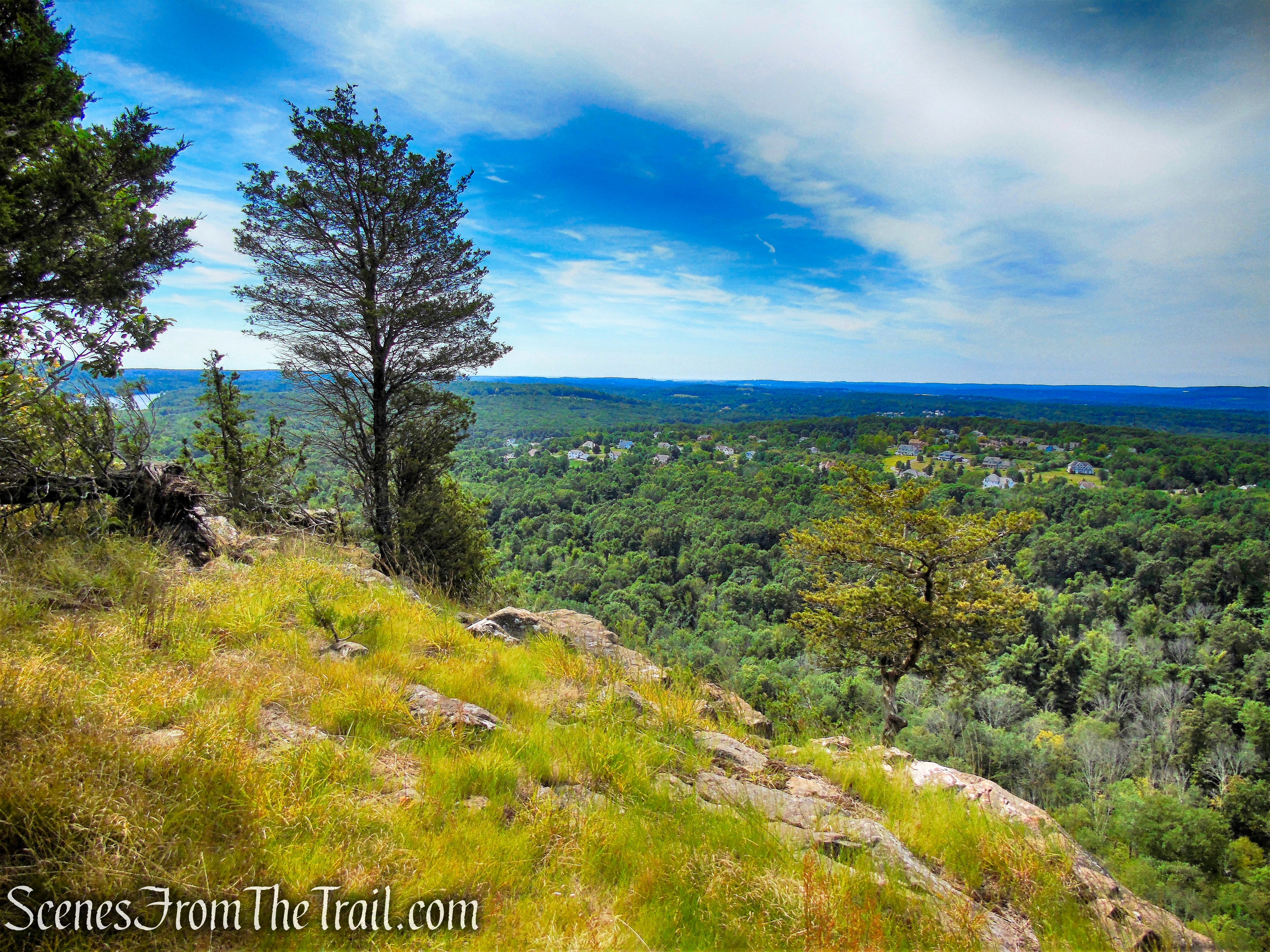
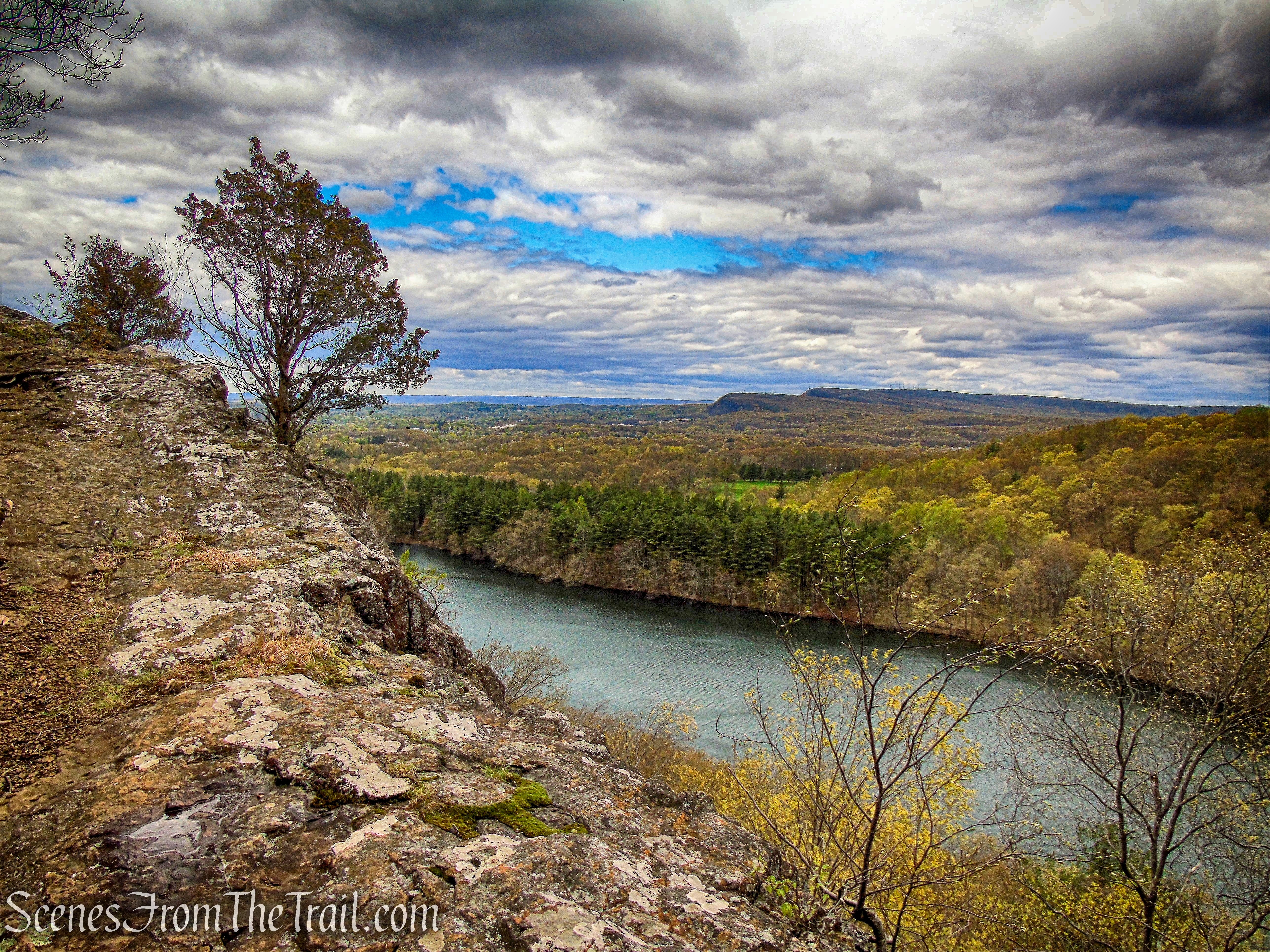
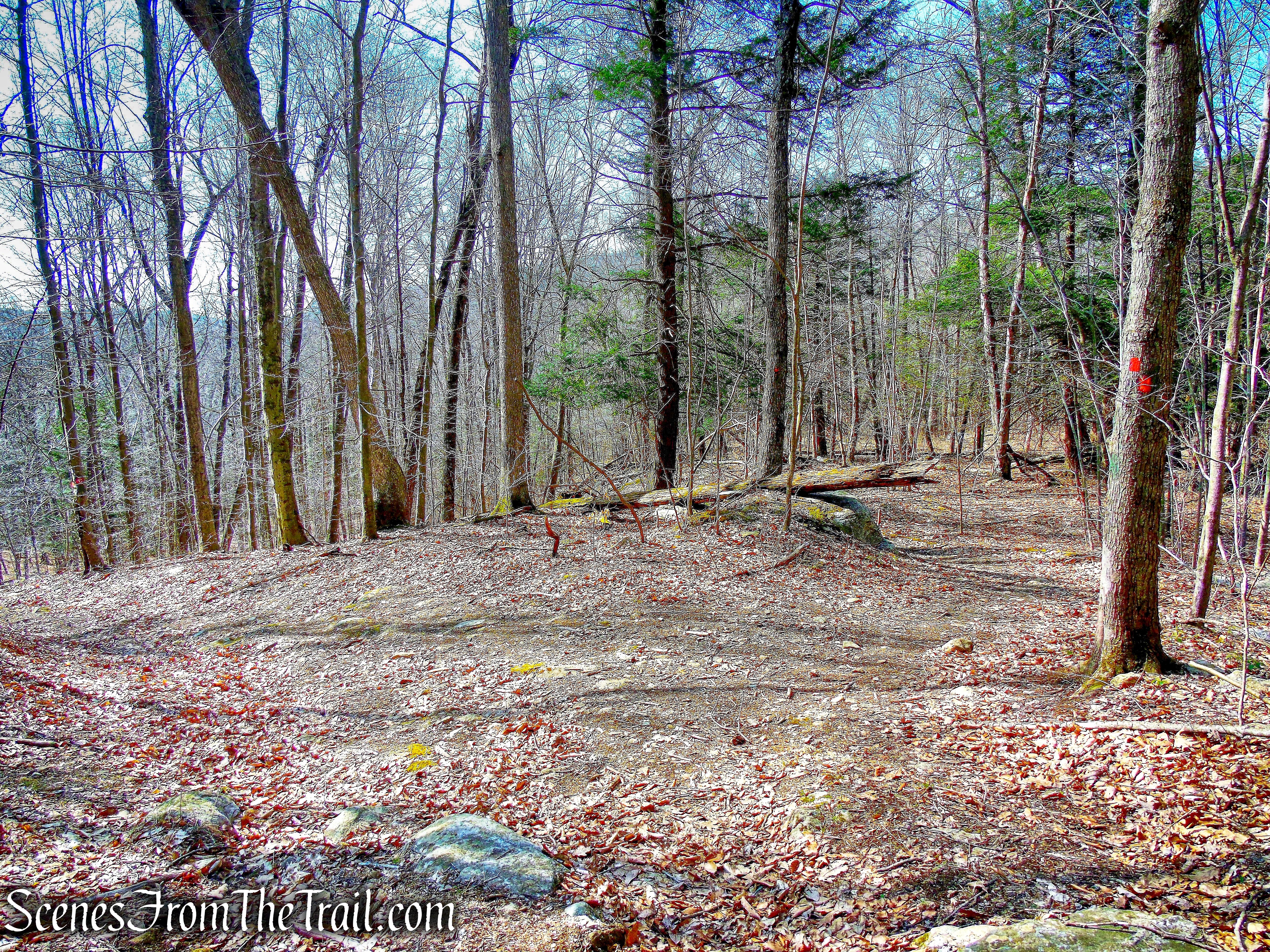
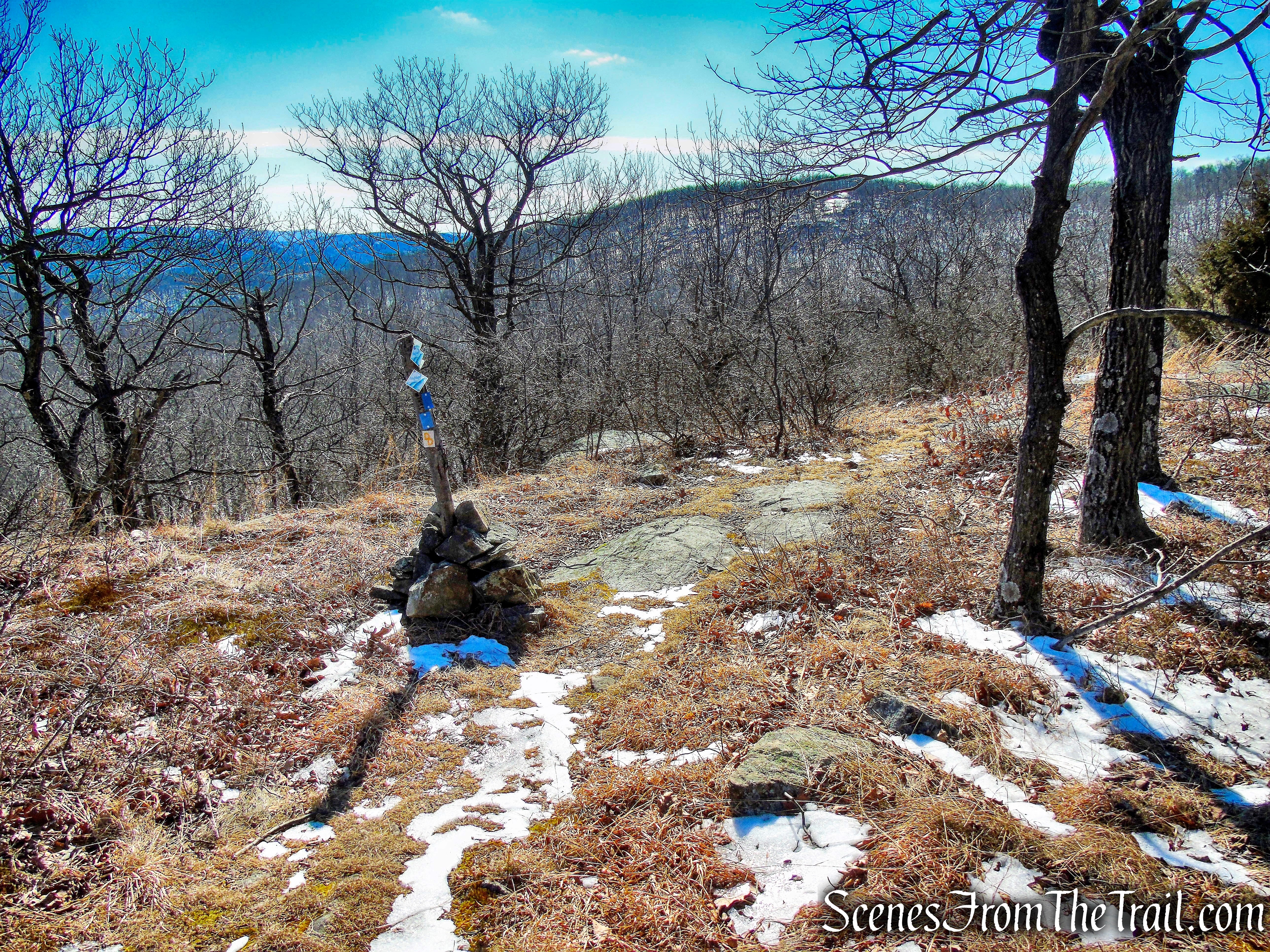
At the base of the descent, at a junction with the Undivided Lot Trail, you’ll come to a broad viewpoint, with pitch pines lining the slope below, and the Catskills visible in the distance.

Old Minnewaska Trail - Mohonk Preserve

Old Minnewaska Trail – Mohonk Preserve

Old Minnewaska Trail - Mohonk Preserve

Old Minnewaska Trail – Mohonk Preserve

Old Minnewaska Trail - Mohonk Preserve

Old Minnewaska Trail – Mohonk Preserve

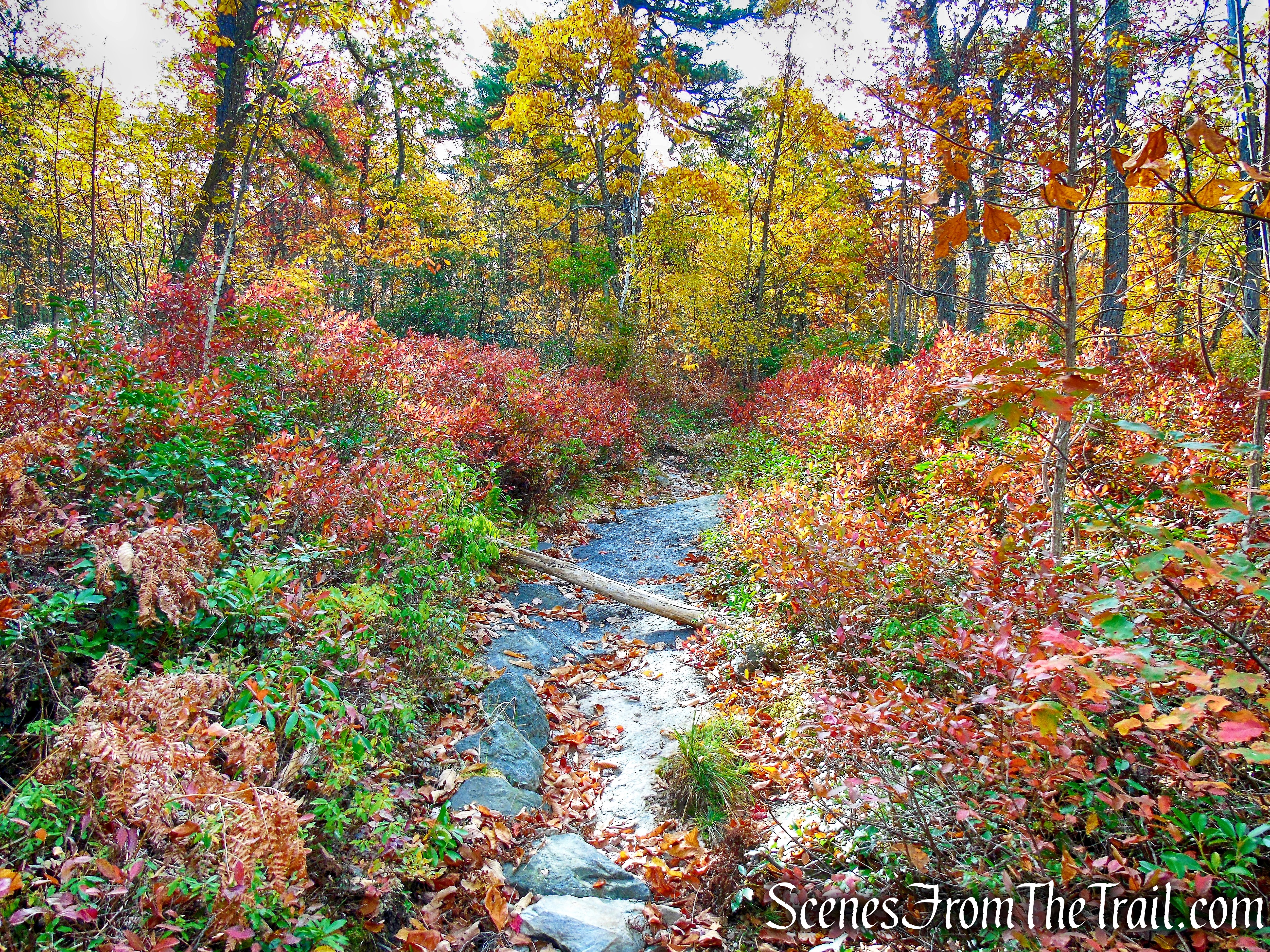
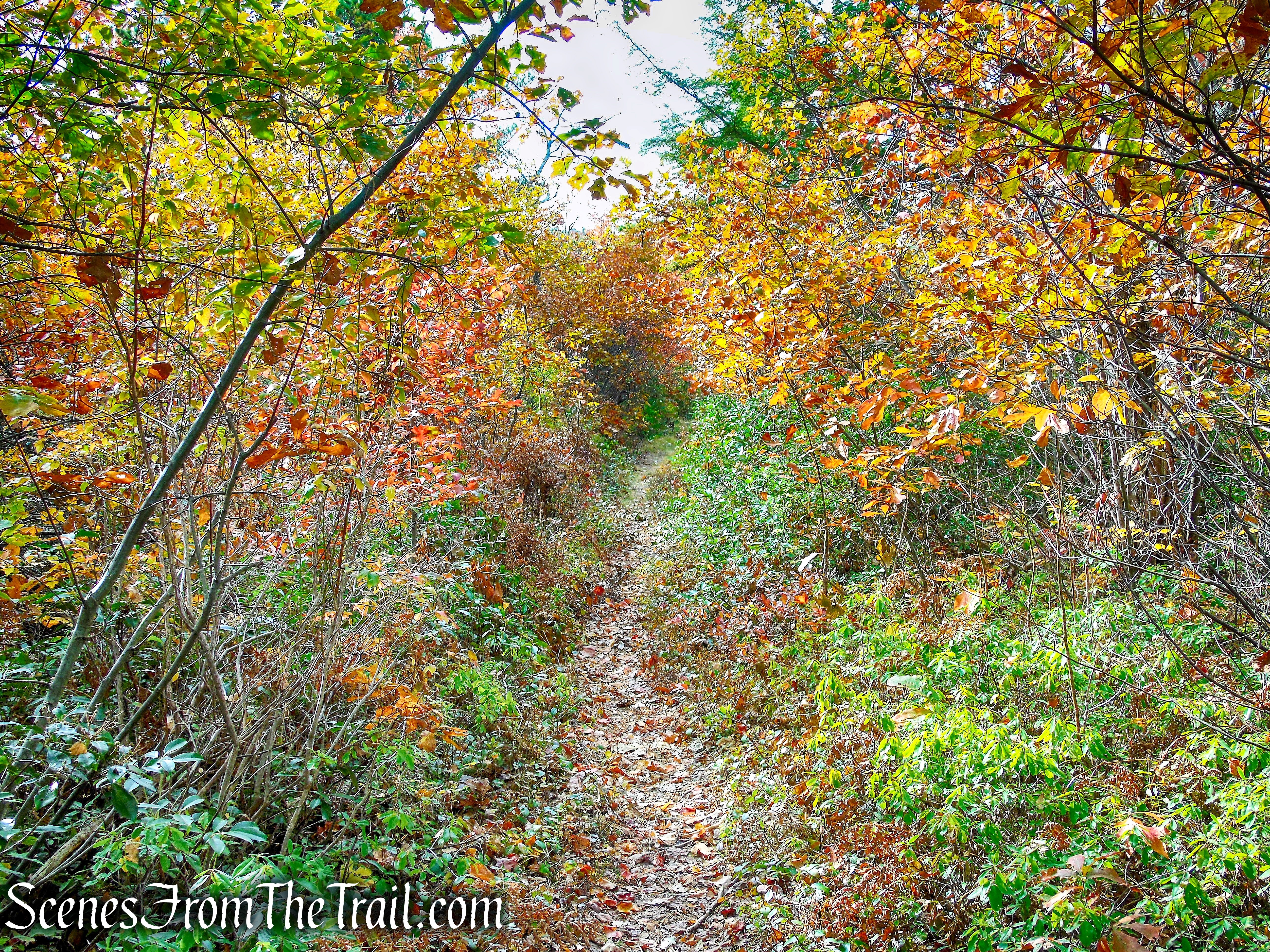
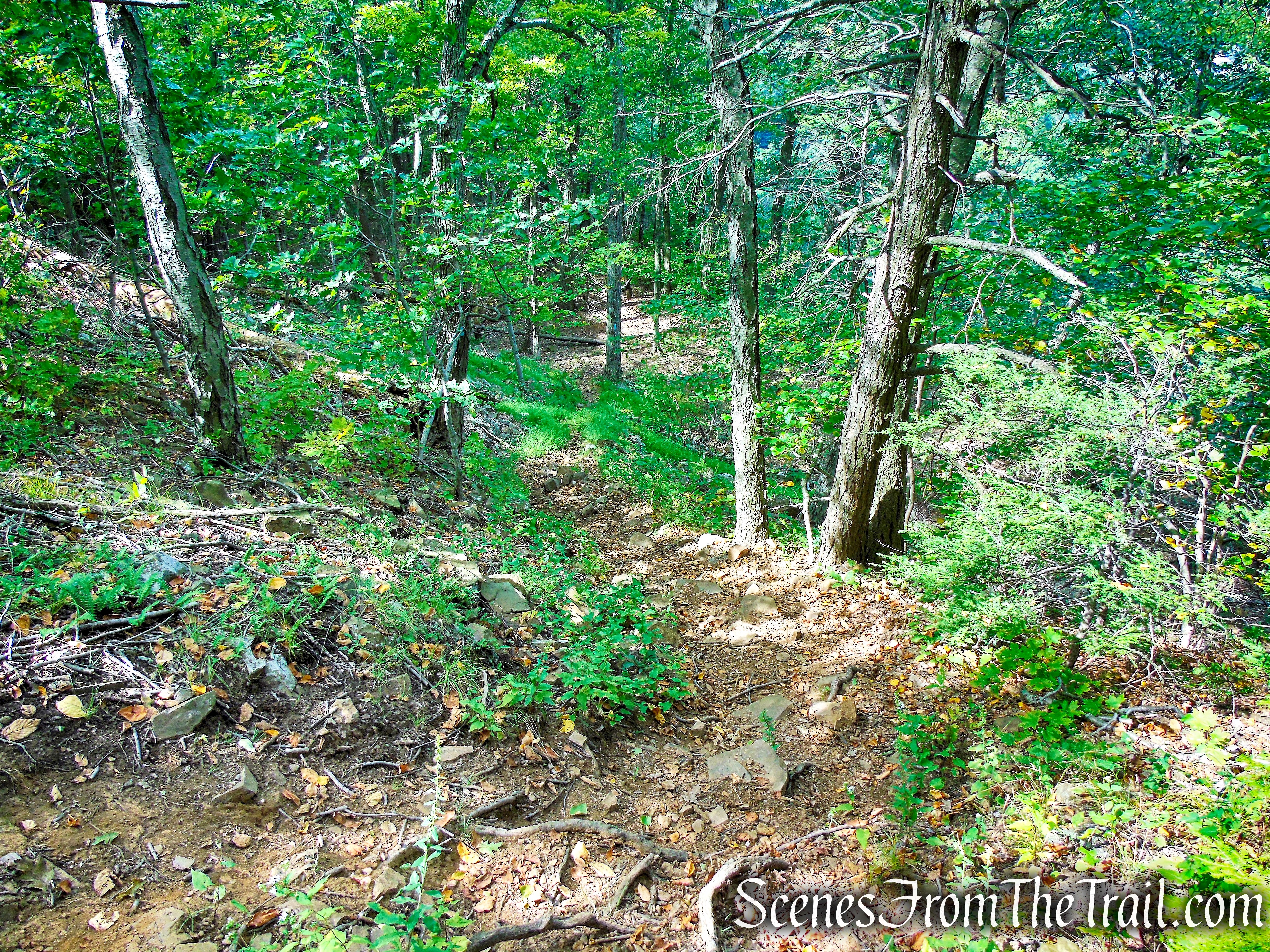
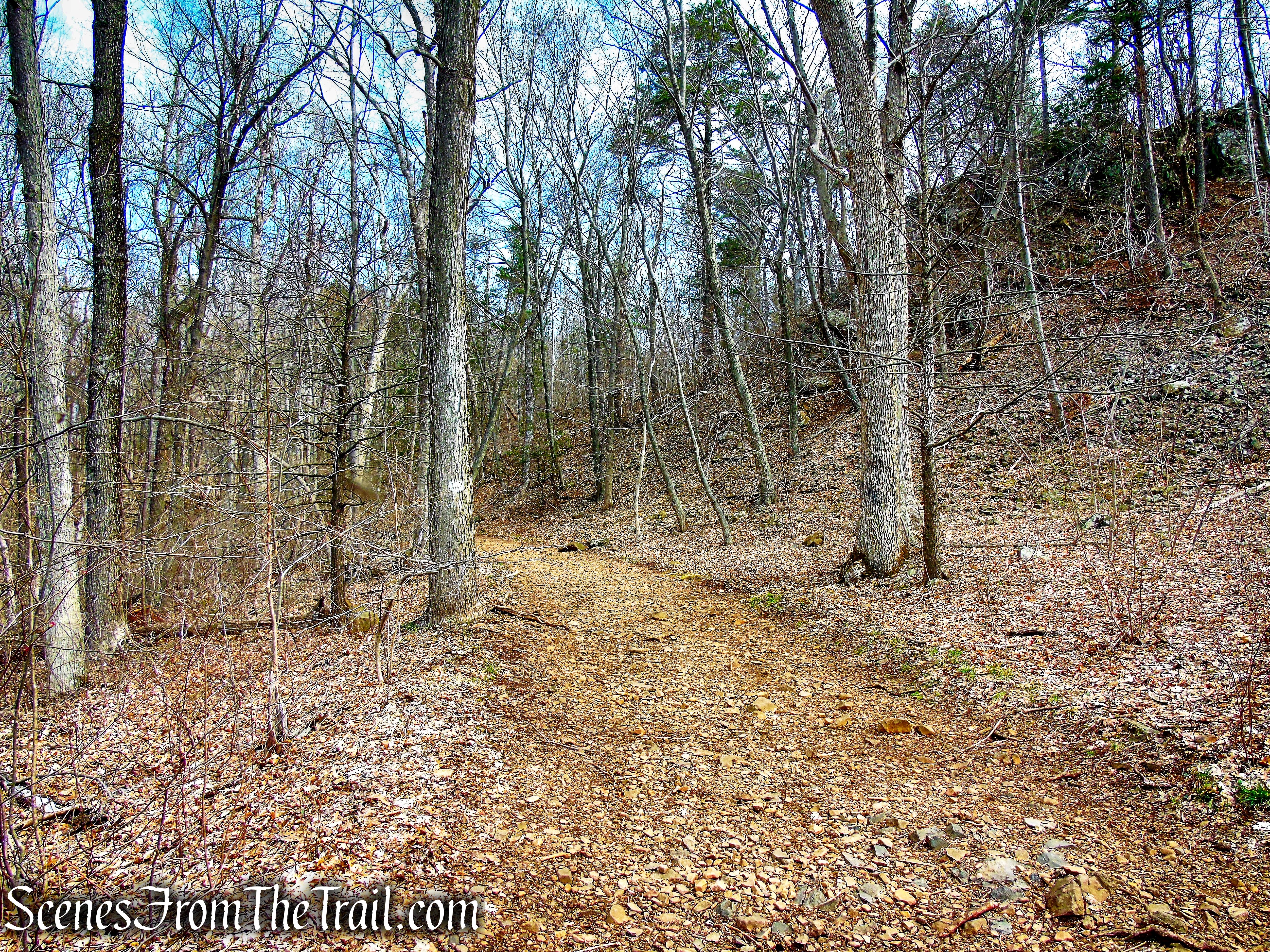
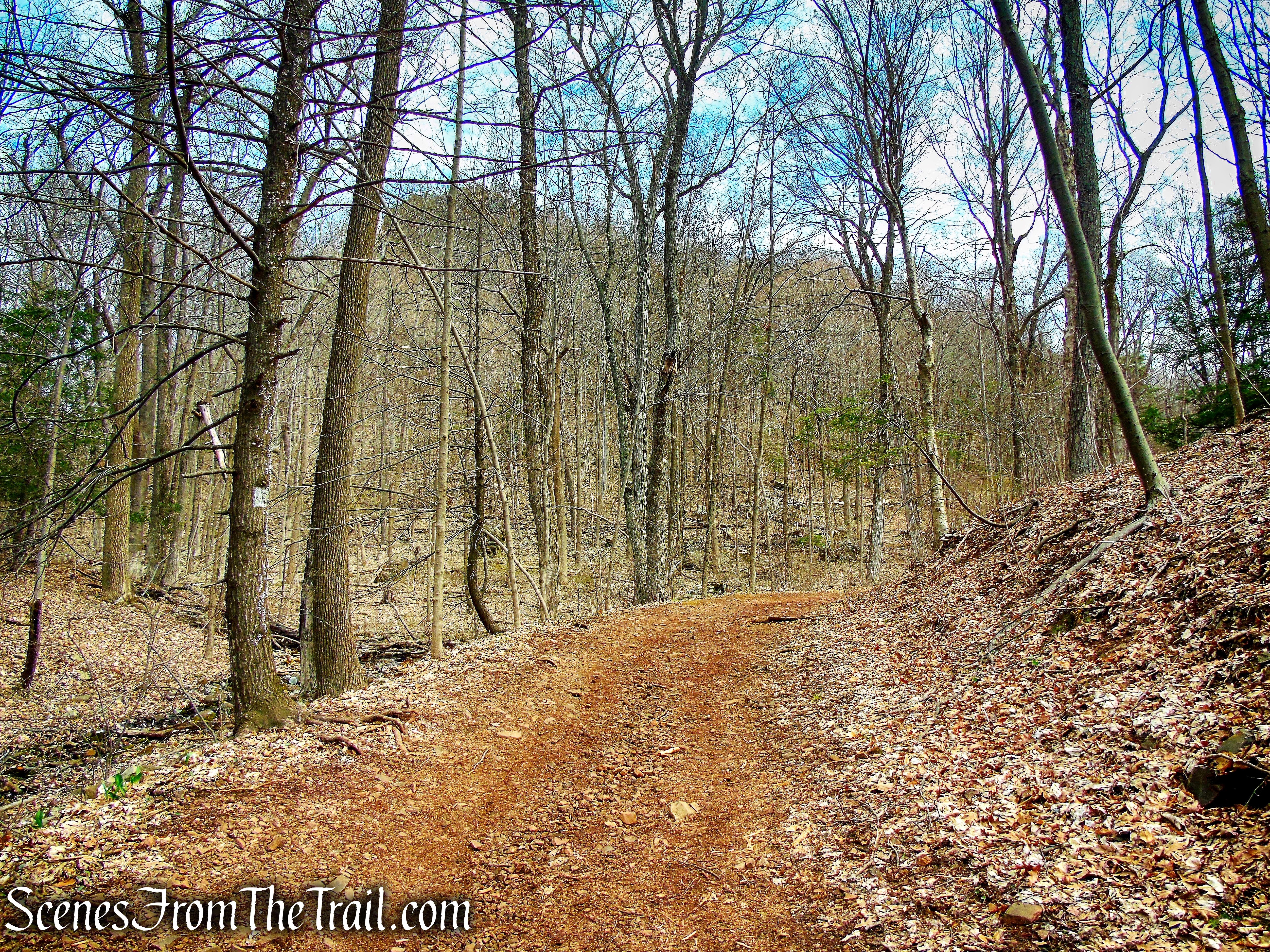
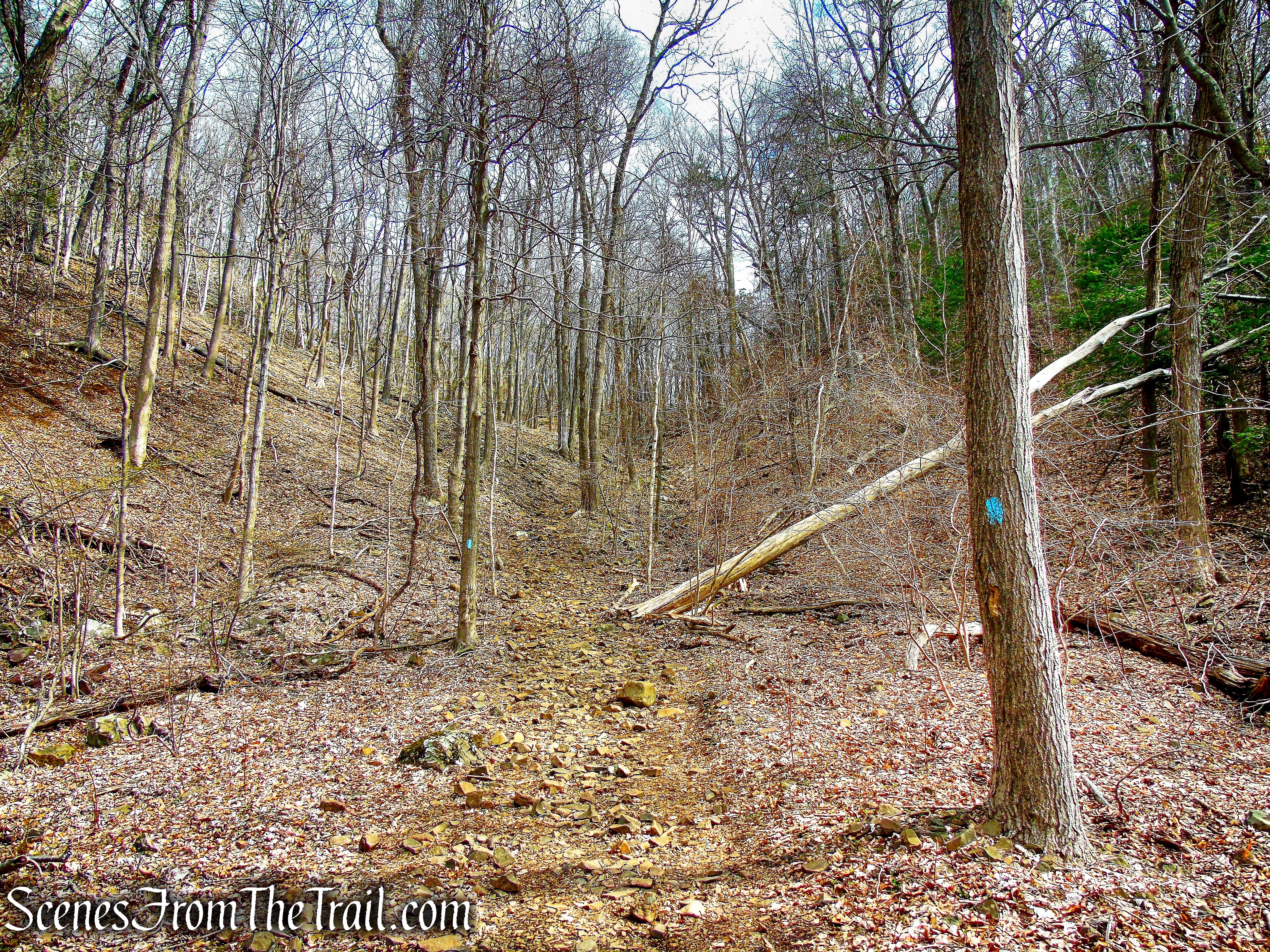
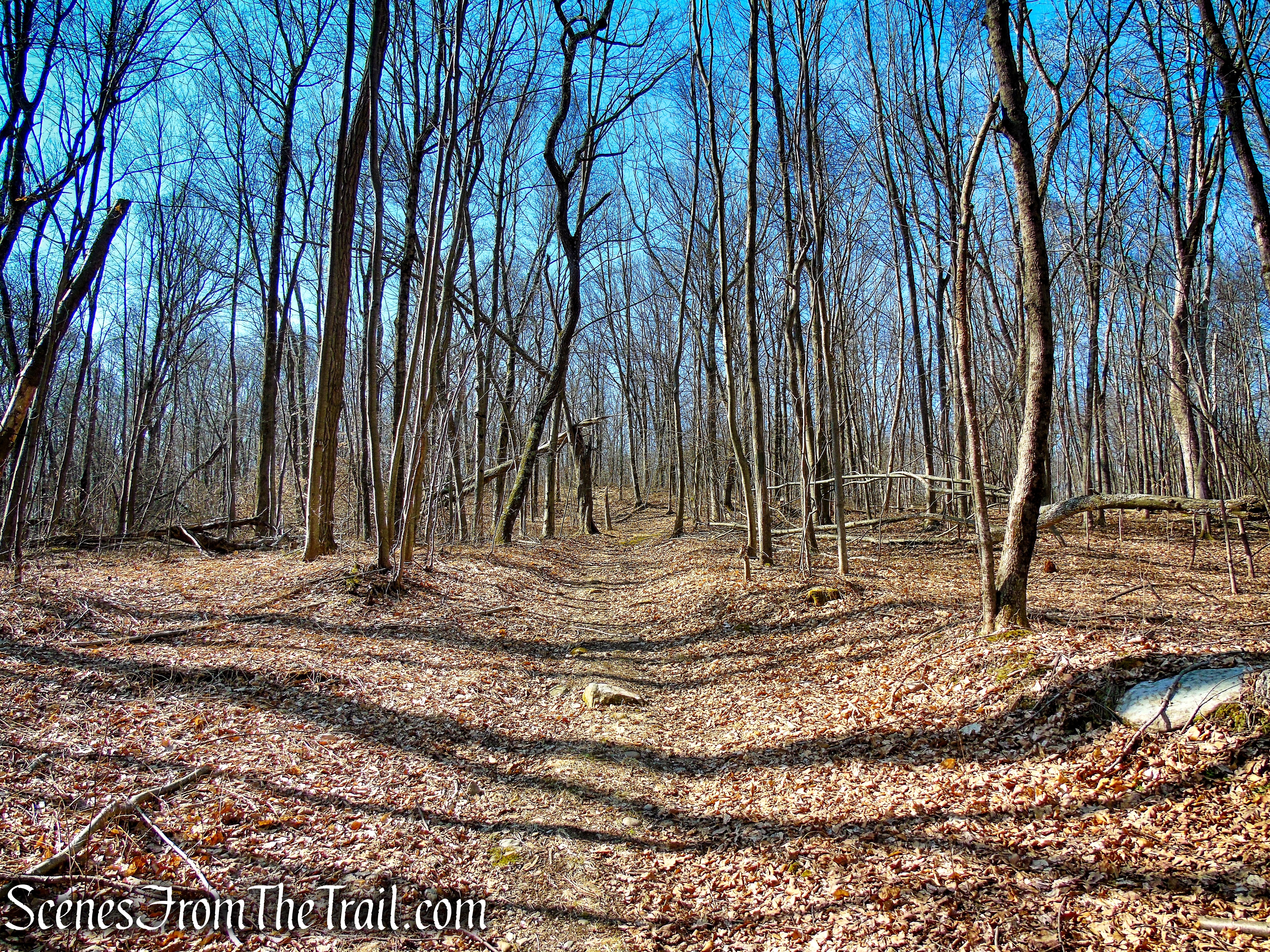
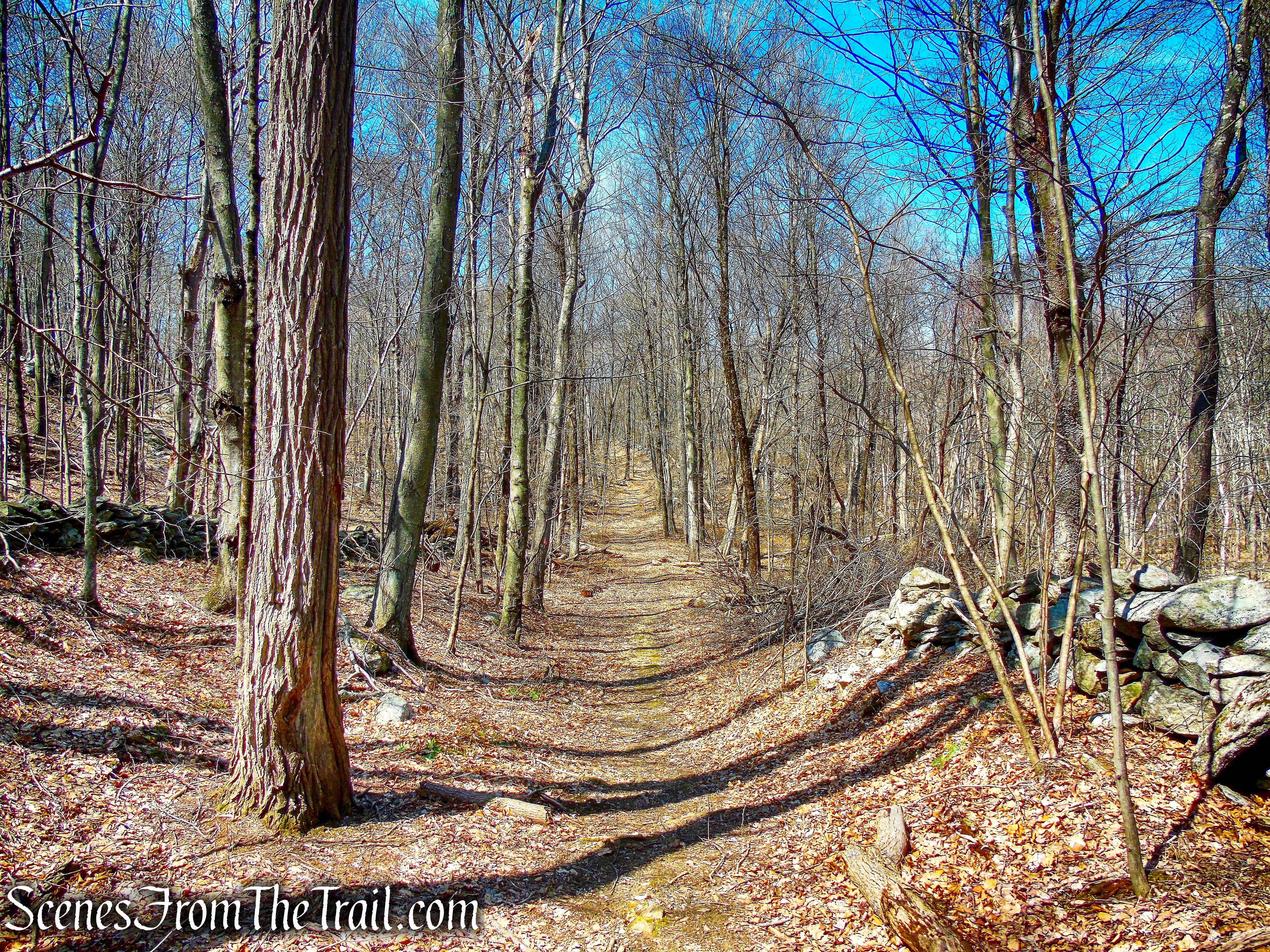
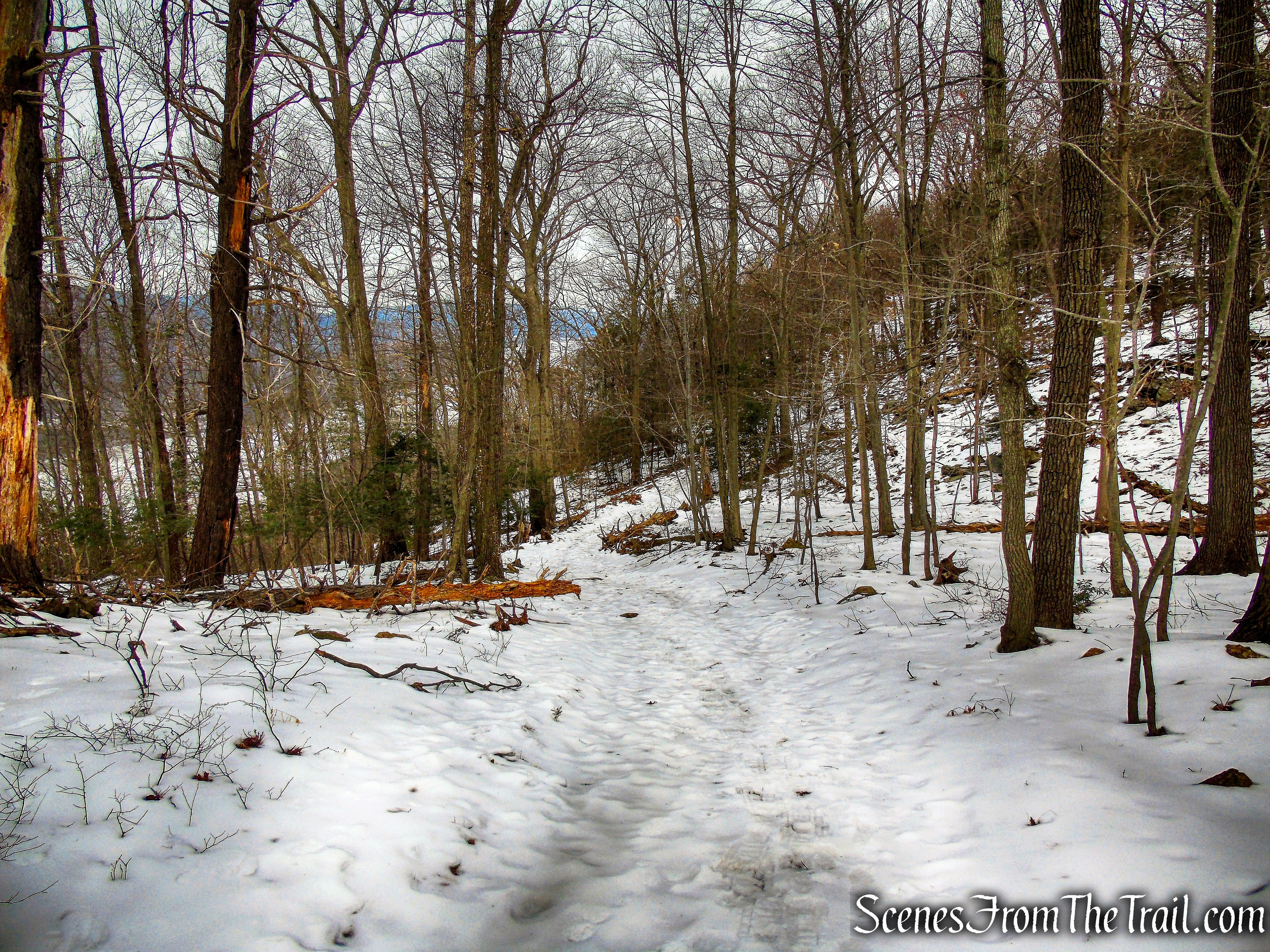
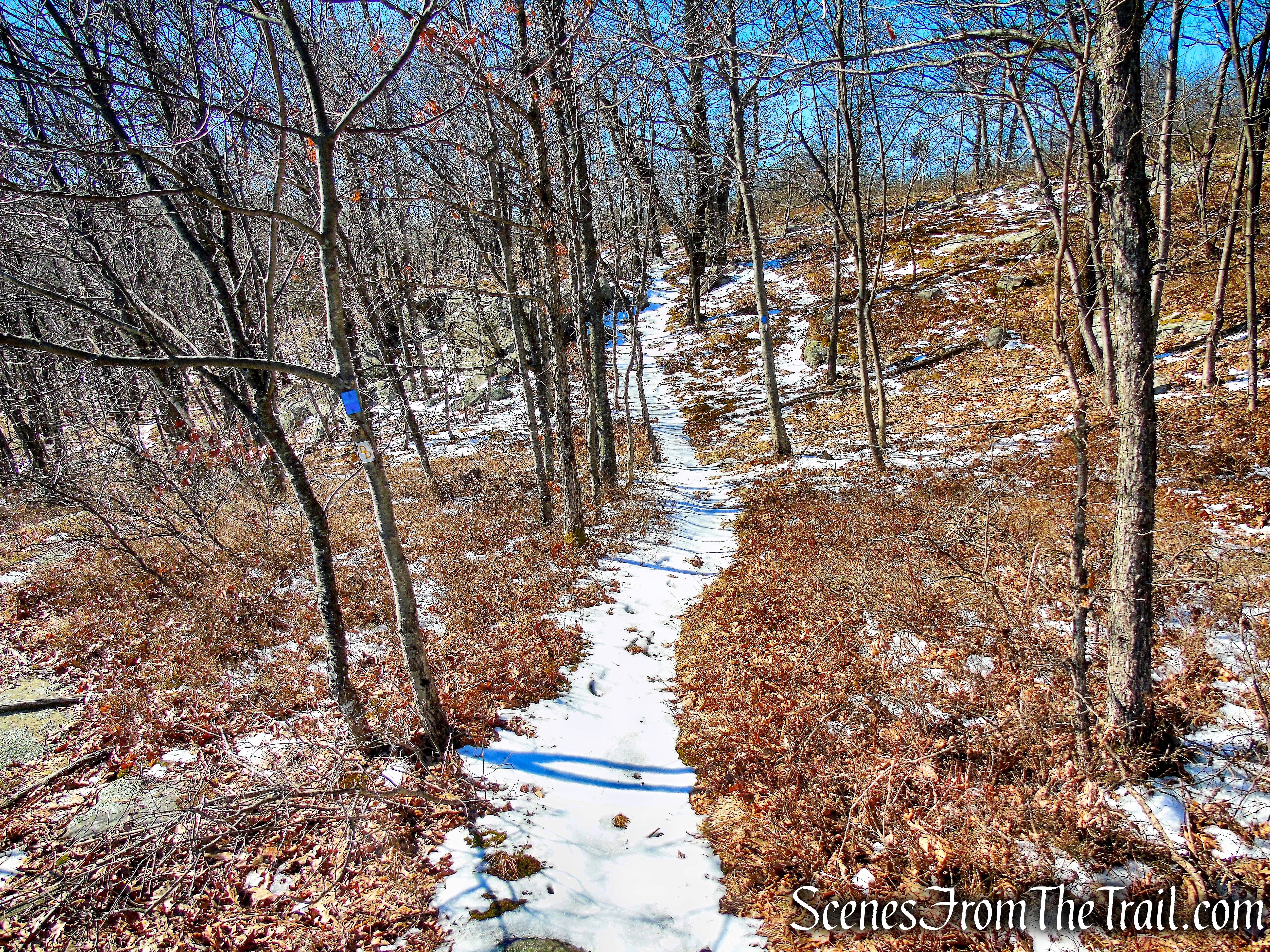
Turn left to remain on the Old Minnewaska Trail and follow this old carriage road as it heads downhill in a westerly direction.

Old Minnewaska Trail - Mohonk Preserve

Old Minnewaska Trail – Mohonk Preserve

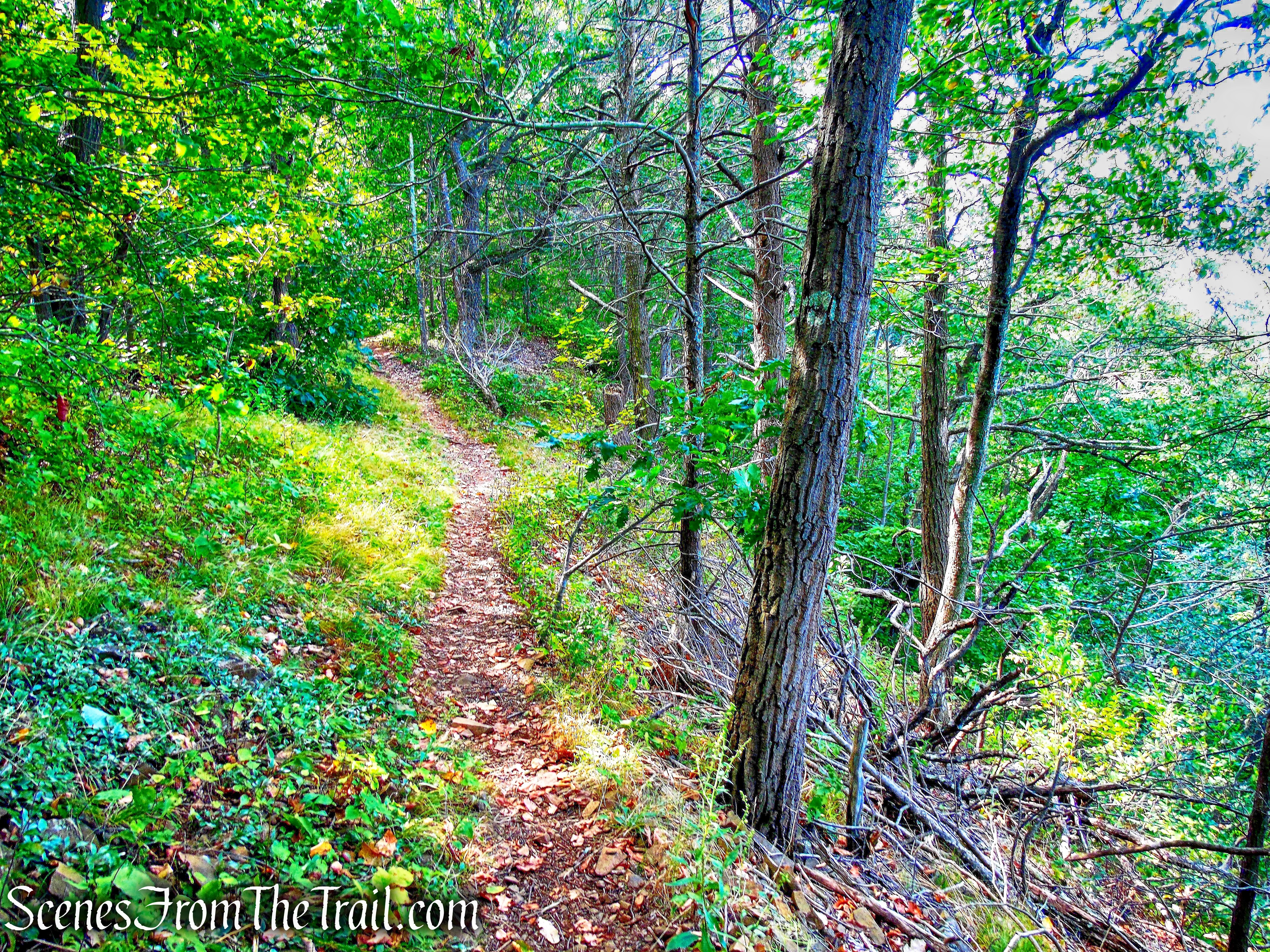
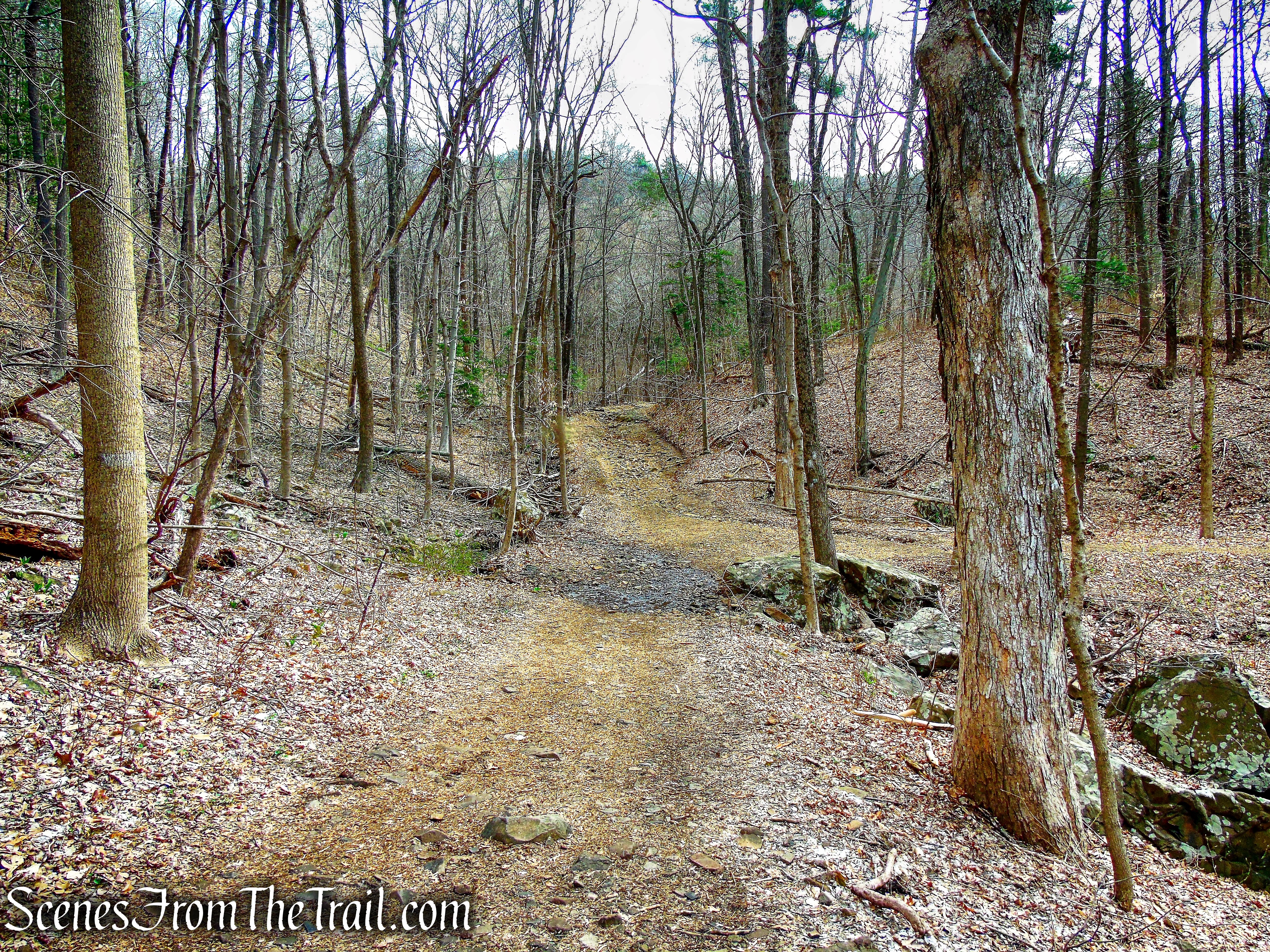
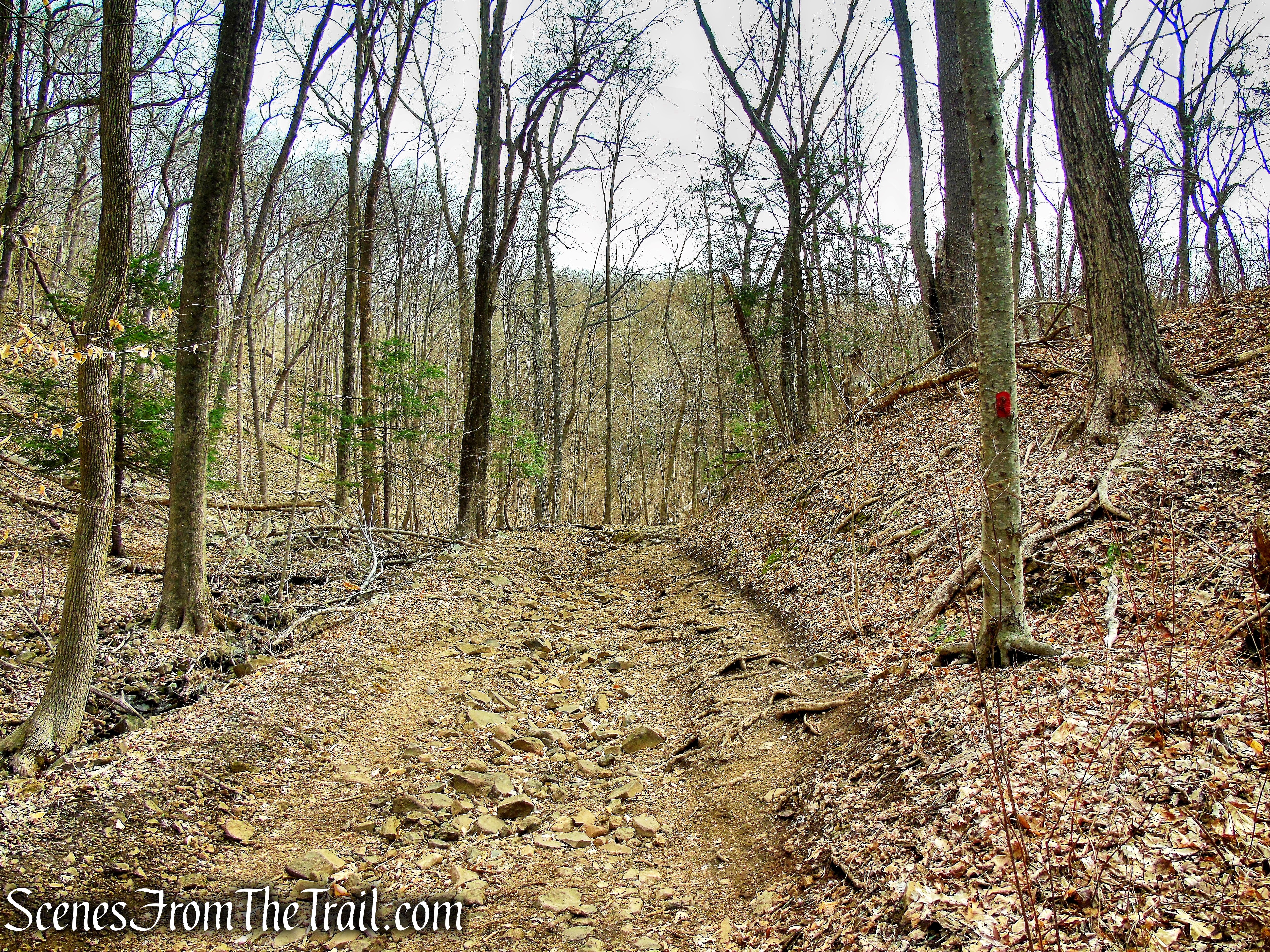
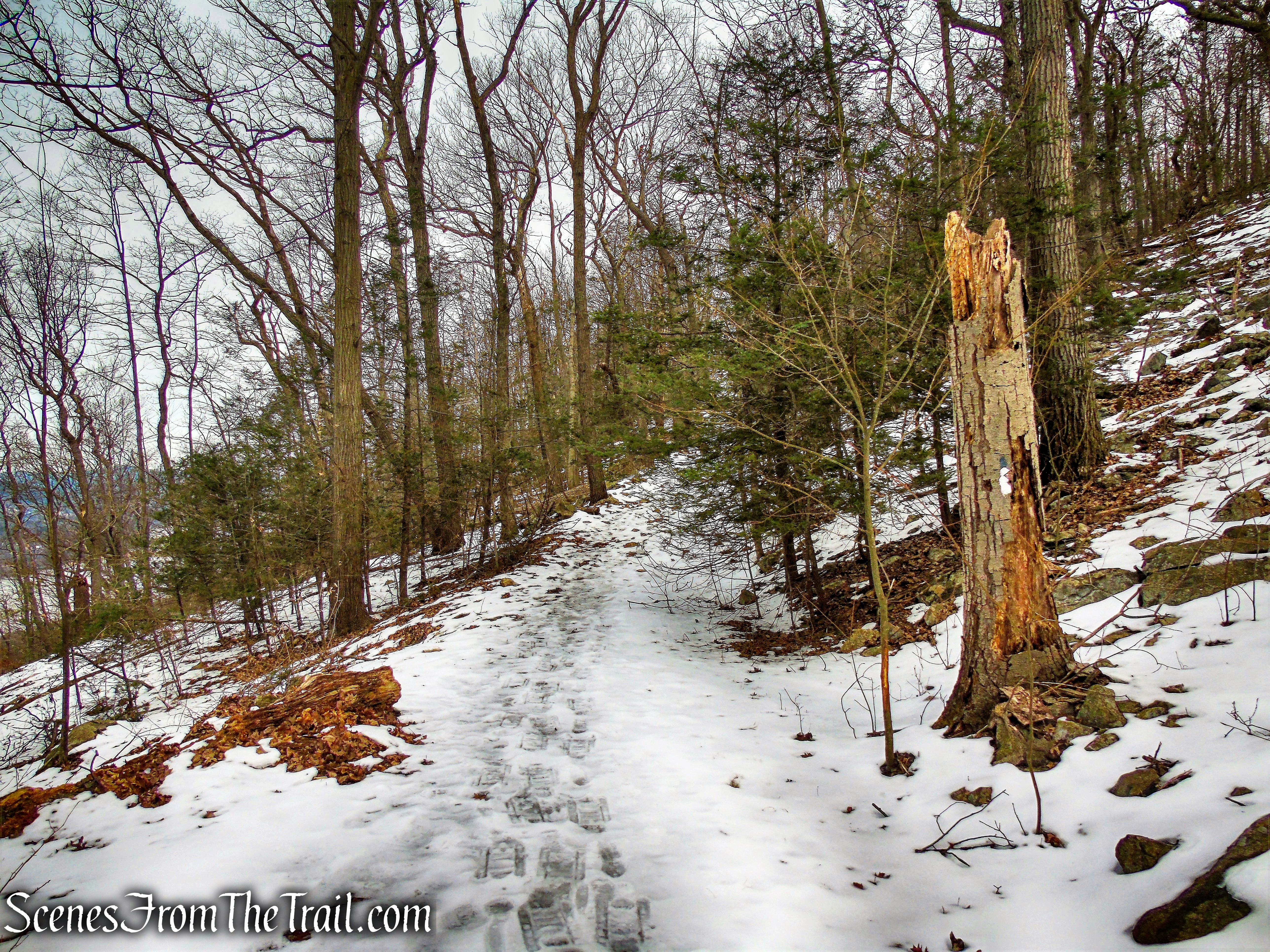
The Old Minnewaska Trail is a carriage road built by the Smileys in 1879 to connect the Mohonk Mountain House with the newly acquired Minnewaska property. A few decades later, other routes replaced this one for carriage traffic between the two resorts. The original route (this trail) was then poorly maintained and has narrowed to a footpath in places.

Old Minnewaska Trail - Mohonk Preserve

Old Minnewaska Trail – Mohonk Preserve

Old Minnewaska Trail - Mohonk Preserve

Old Minnewaska Trail – Mohonk Preserve

Old Minnewaska Trail - Mohonk Preserve

Old Minnewaska Trail – Mohonk Preserve

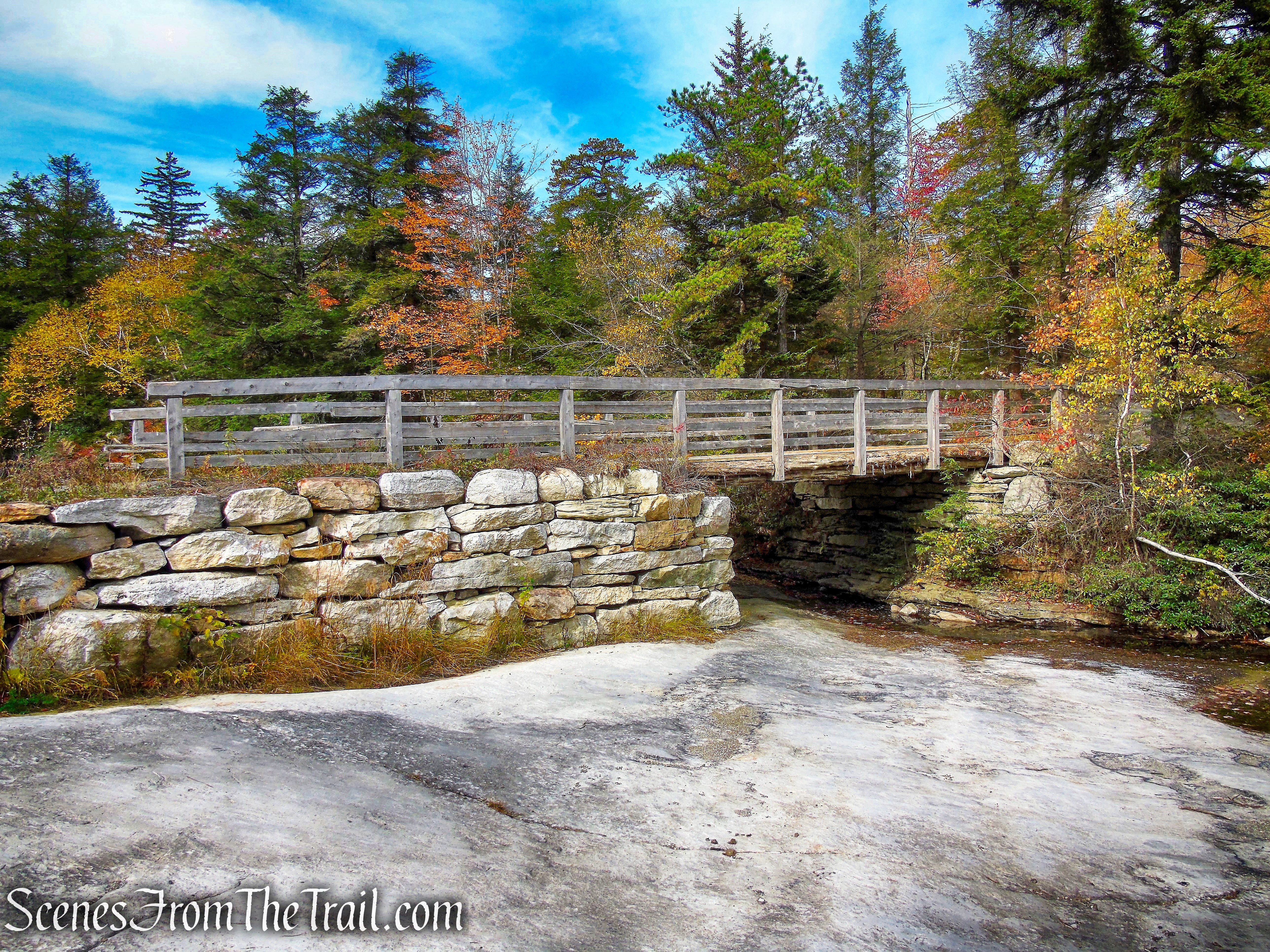
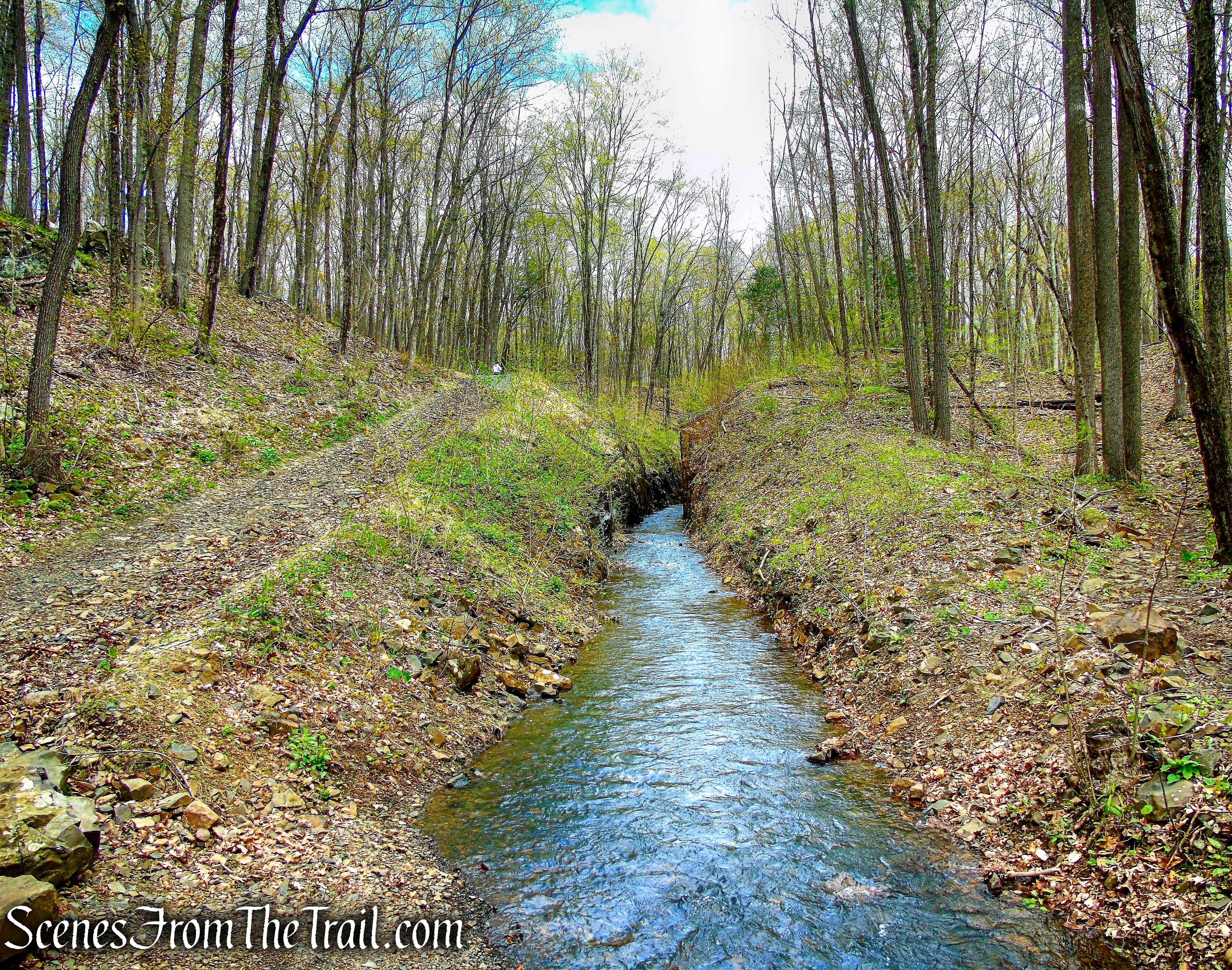
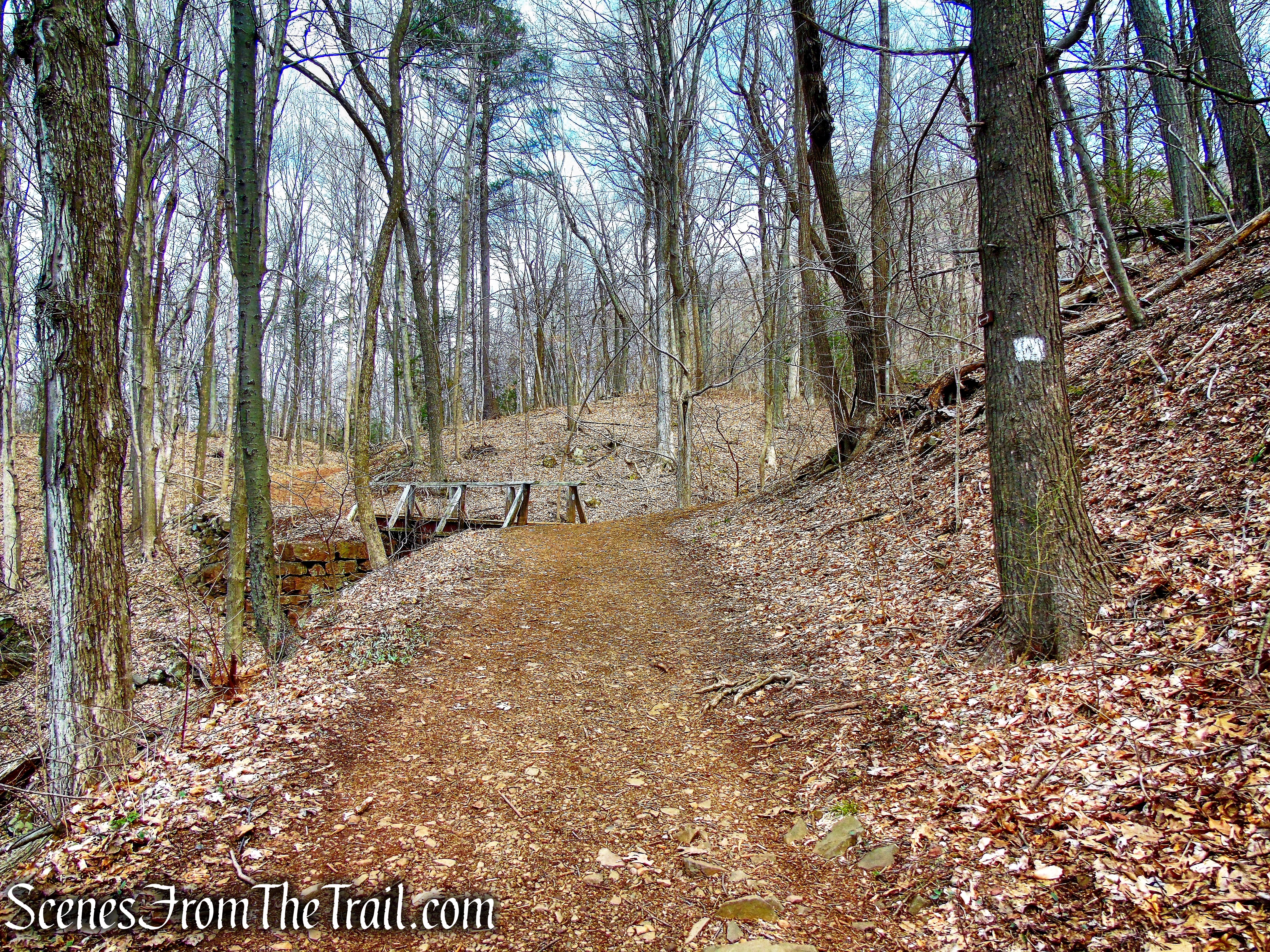
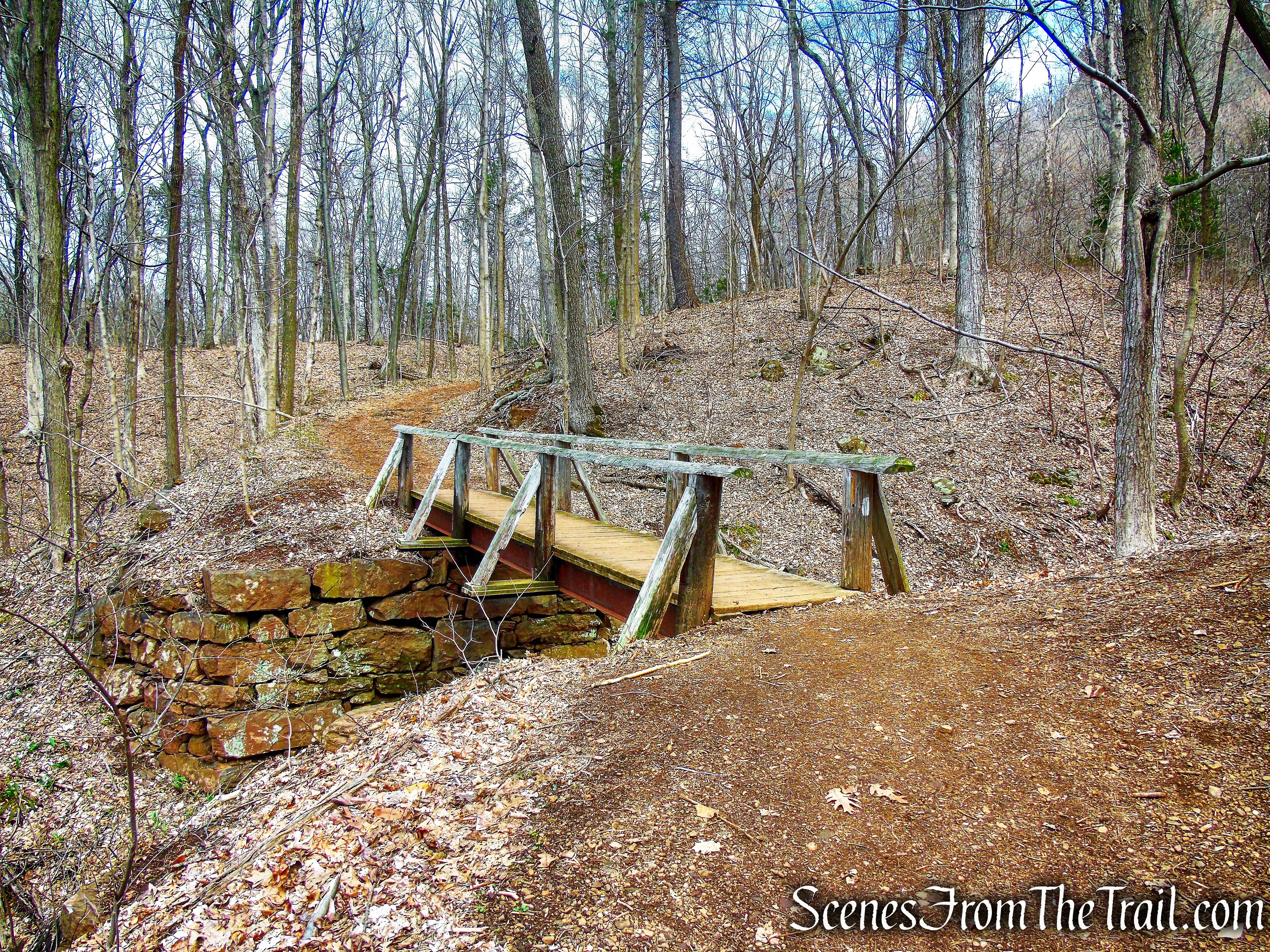
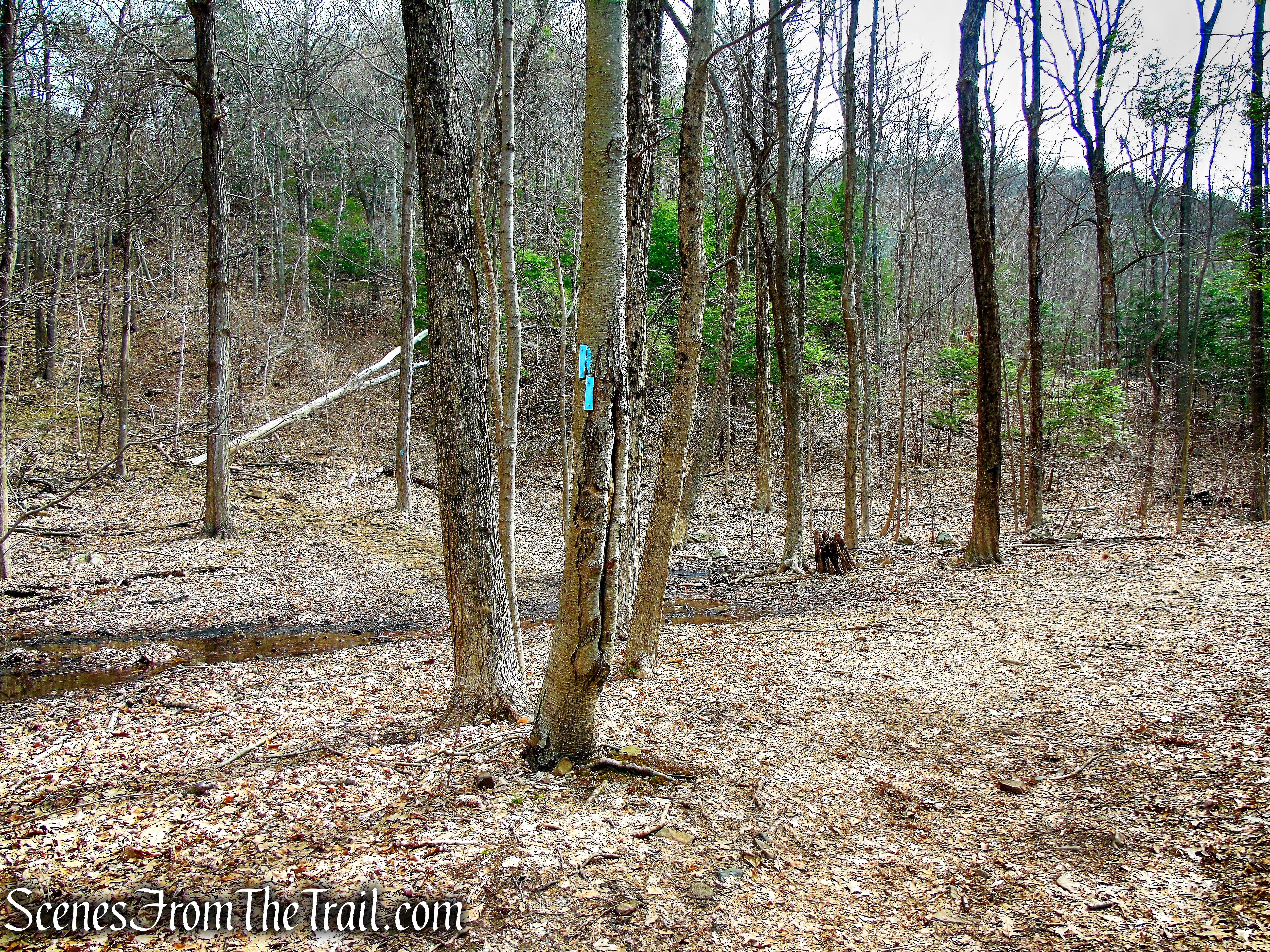
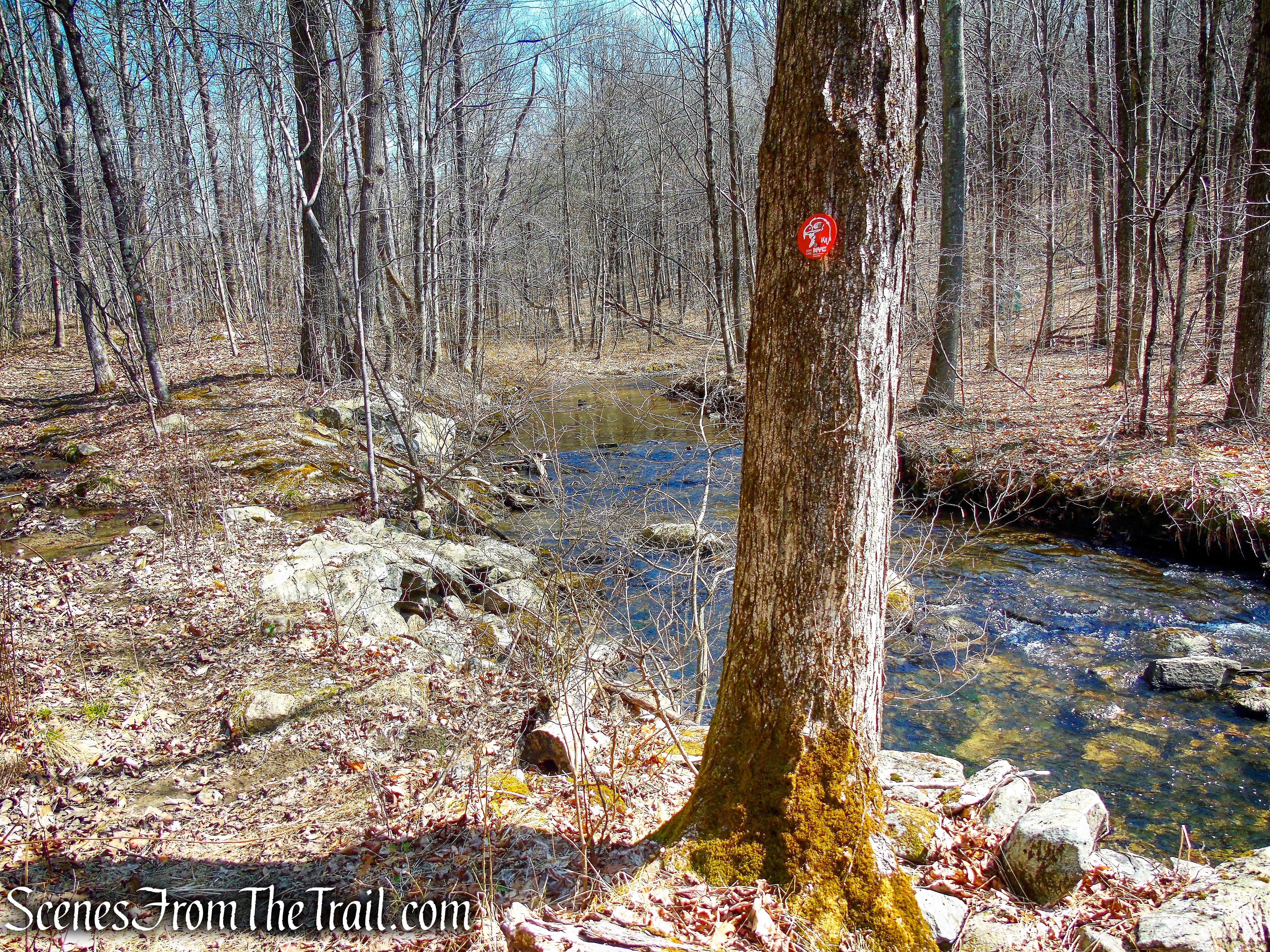
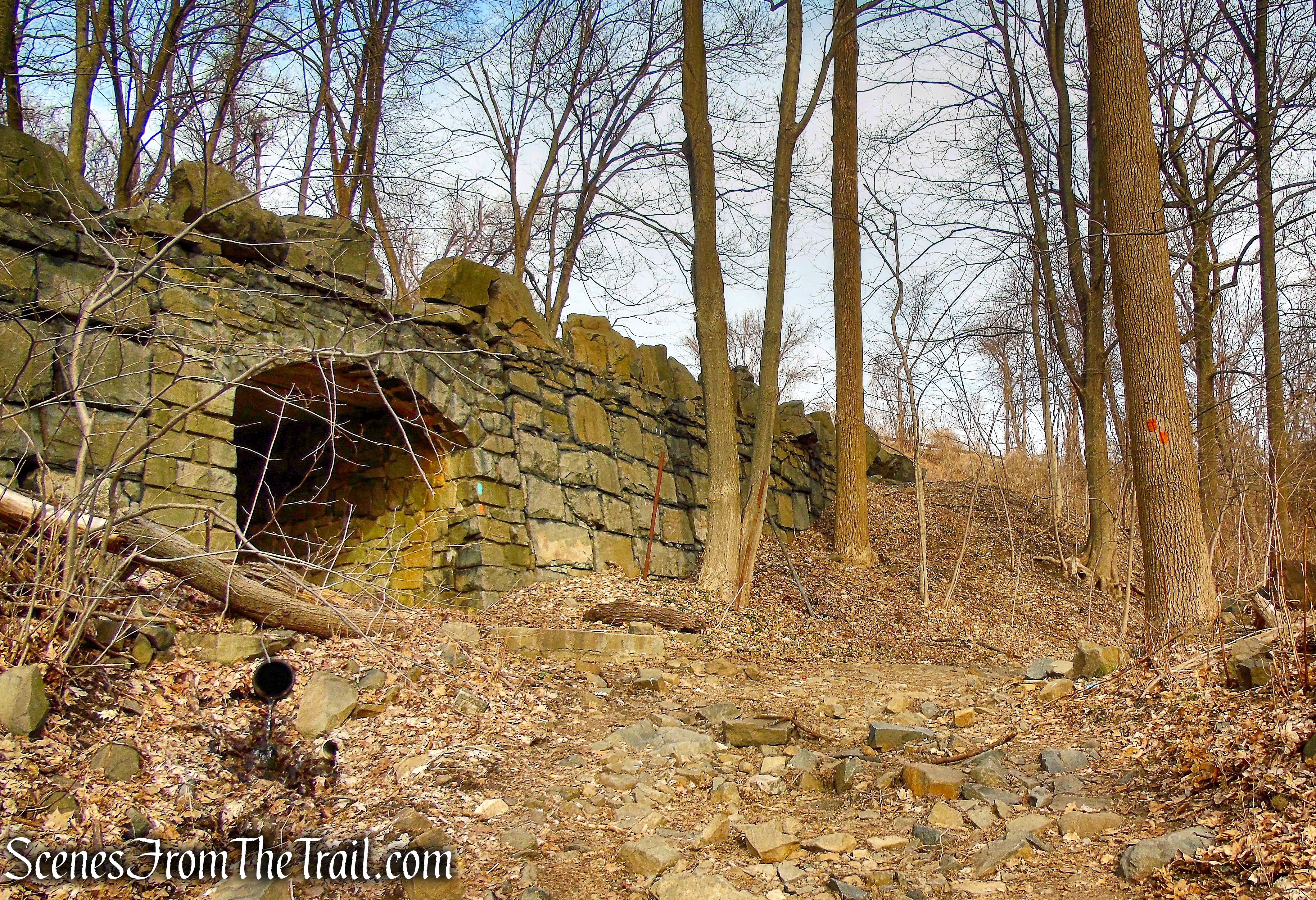
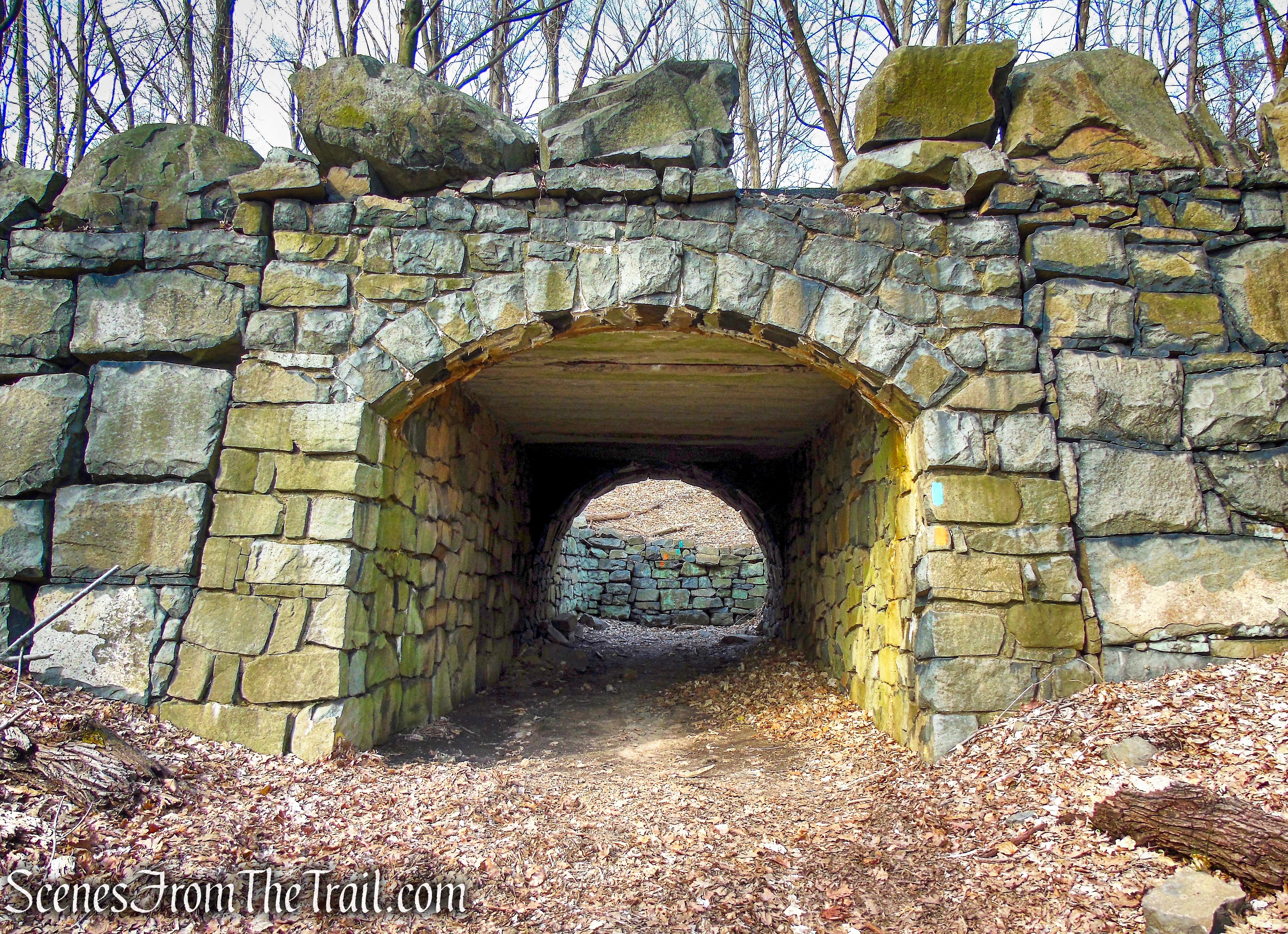
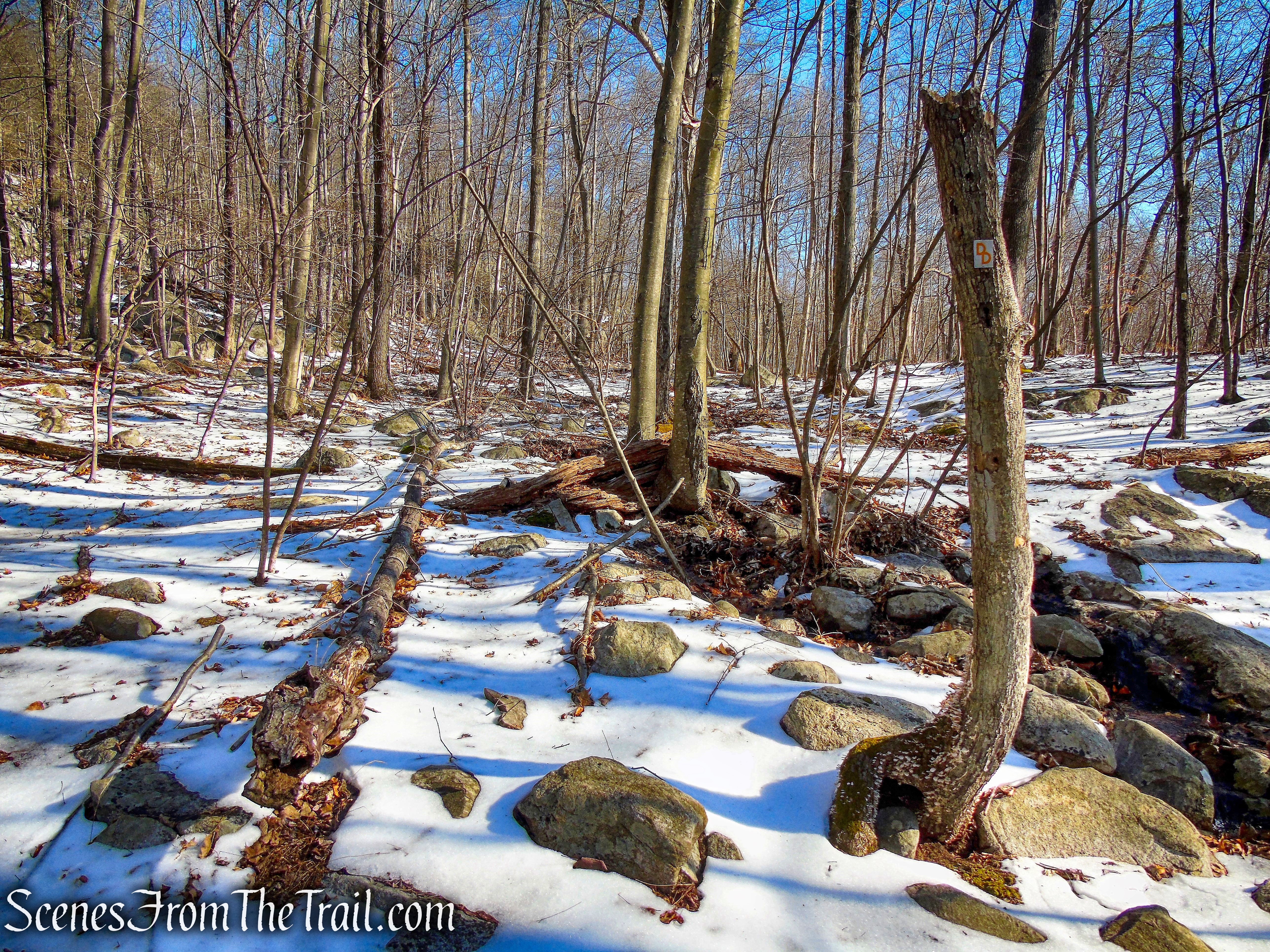
In about 1.8 miles from the start of the Old Minnewaska Trail, a deep cut in the road is reached. A small stream here was once crossed by a bridge. The bridge abutments of shaped conglomerate blocks may still be seen, but the footpath dips down to the stream, which It crosses on rocks. After this stream crossing, the roadway widens, narrows briefly, then widens again.

Old Minnewaska Trail - Mohonk Preserve

Old Minnewaska Trail – Mohonk Preserve

Old Minnewaska Trail - Mohonk Preserve

Old Minnewaska Trail – Mohonk Preserve

Old Minnewaska Trail - Mohonk Preserve

Old Minnewaska Trail – Mohonk Preserve

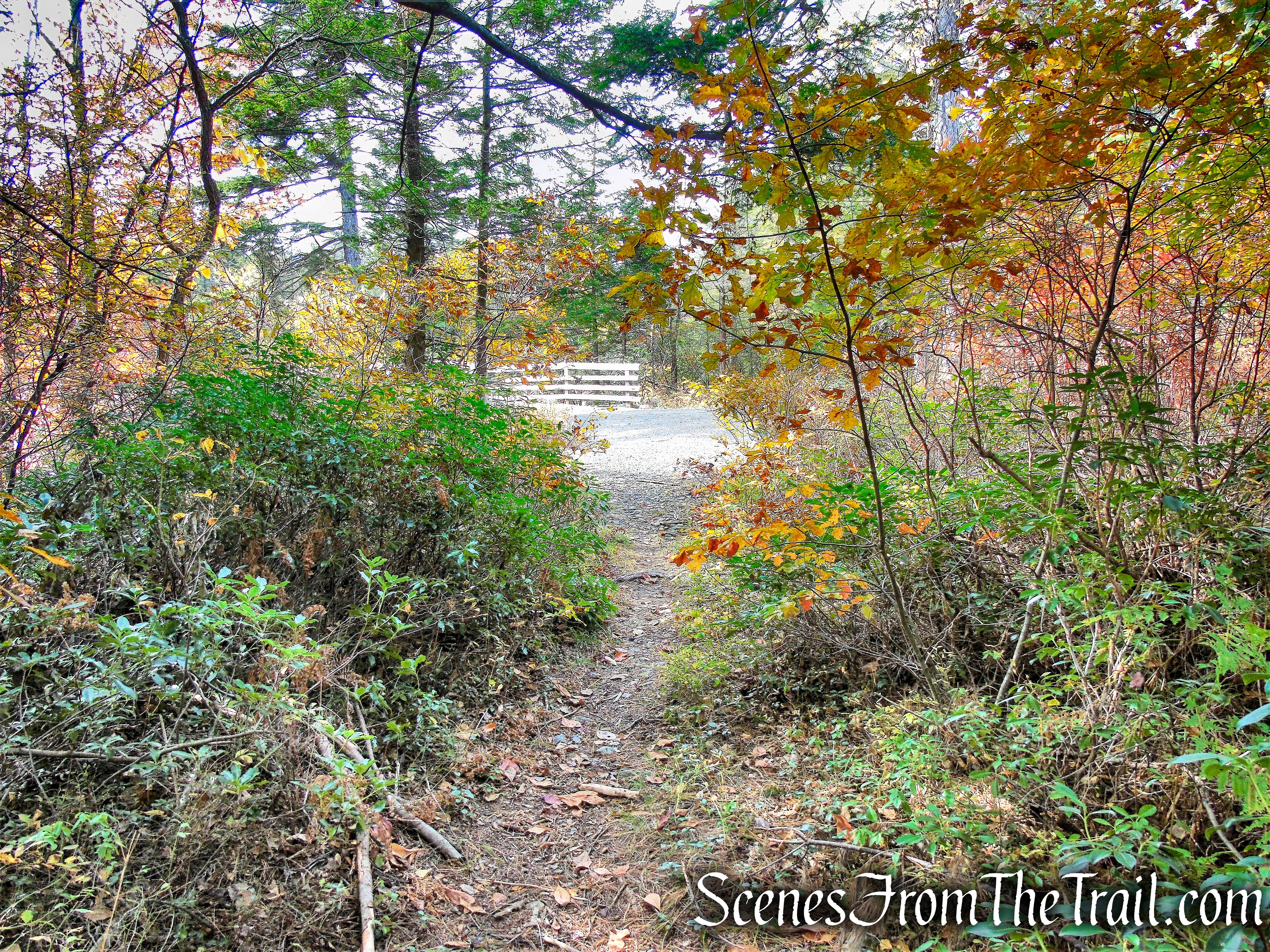
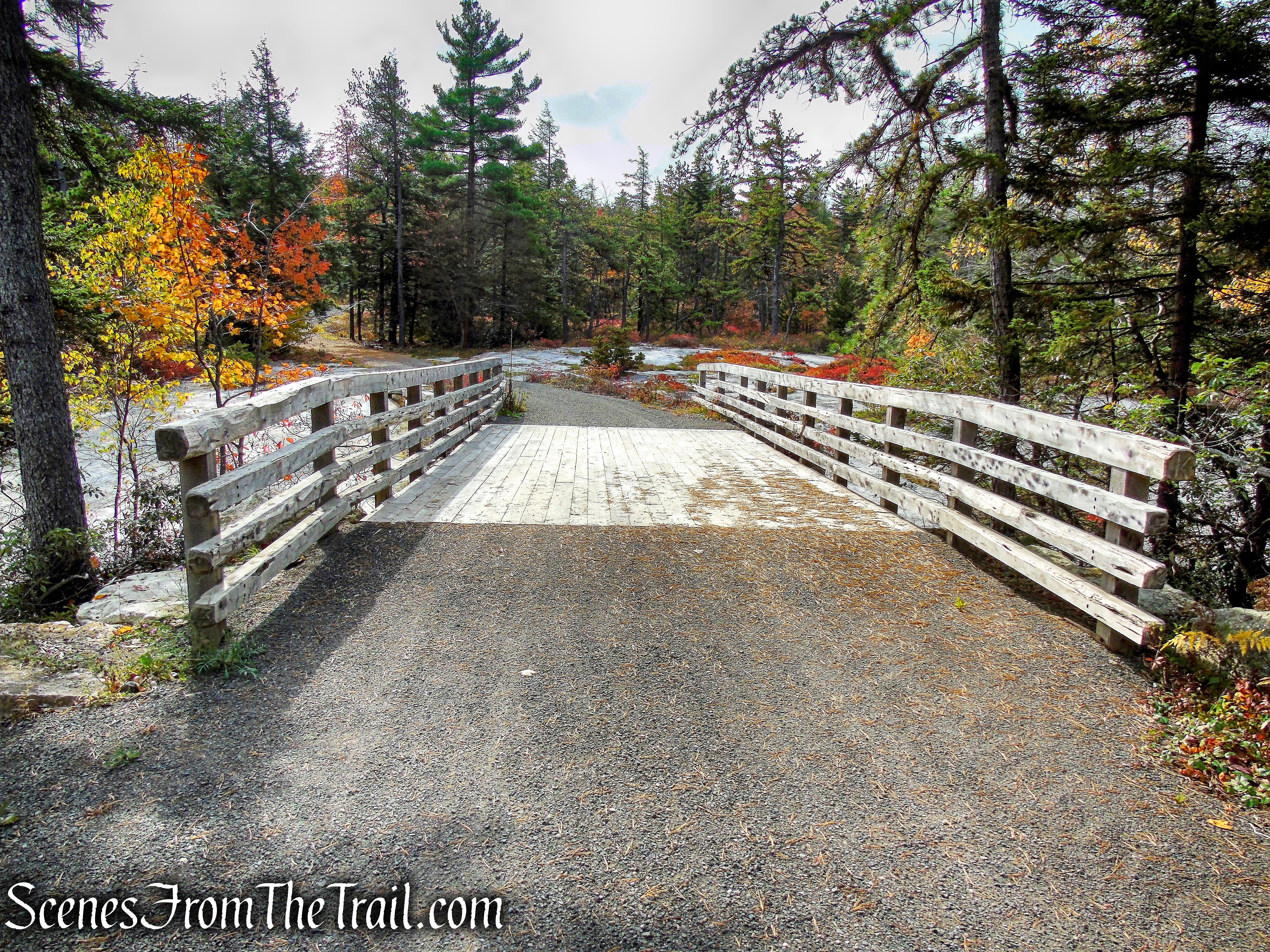
In another 0.4 mile, the Old Minnewaska Trail comes to a junction with the red-blazed Shongum Path, which begins on the left. You will come back to this junction, but for now, continue a short distance to a wooden bridge that spans the Coxing Kill and is also the terminus of the Old Minnewaska Trail.

Old Minnewaska Trail - Mohonk Preserve

Old Minnewaska Trail – Mohonk Preserve

Old Minnewaska Trail - Mohonk Preserve

Old Minnewaska Trail – Mohonk Preserve

Cross the wooden bridge and turn right at the kiosk towards Split Rock.

Old Minnewaska Trail - Mohonk Preserve

Old Minnewaska Trail – Mohonk Preserve

Split Rock Area - Mohonk Preserve

Split Rock Area – Mohonk Preserve

This rock formation is quite unique, and picturesque. There is a small waterfall under the bridge, which flows into a crevice, which is about 5-8 ft. deep. Very clear water that has turquoise highlights when the sun is bright.

Split Rock - Mohonk Preserve

Split Rock – Mohonk Preserve

Located at the site of the former Enderly family sawmill, the naturally tiered “rock beach” has long been a favorite place for picnicking by the Coxing Kill (stream).

Split Rock - Mohonk Preserve

Split Rock – Mohonk Preserve

The Coxing Kill plunges into a small gorge of solid rock and streams out on the other end into a pool.

Split Rock - Mohonk Preserve

Split Rock – Mohonk Preserve

When you are done at Split Rock, retrace your steps, recrossing the wooden bridge, returning to the junction with the Shongum Path and turn right. Ascend the log steps and follow the red blazes in a southerly direction.

Shongum Path - Mohonk Preserve

Shongum Path – Mohonk Preserve

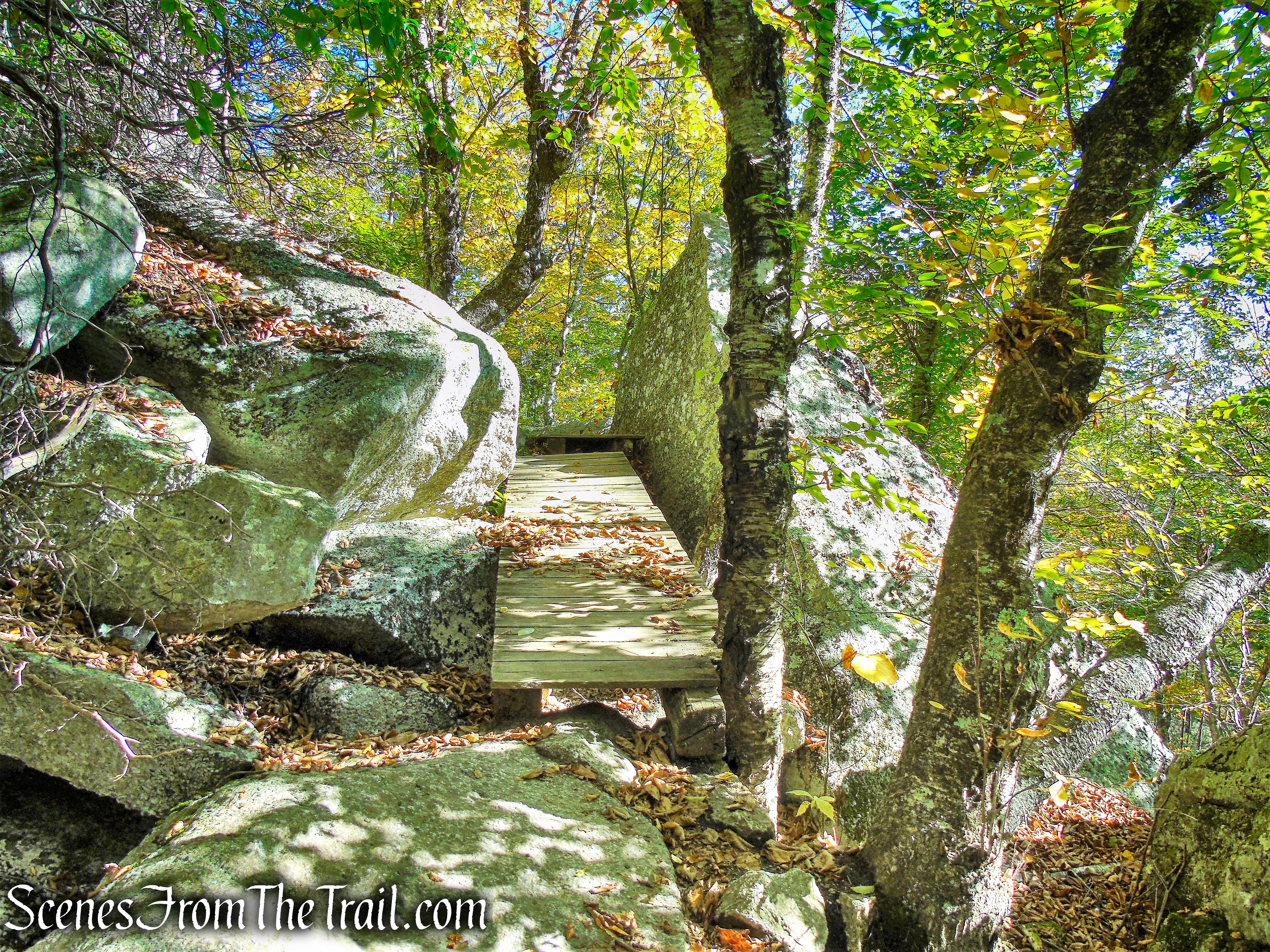
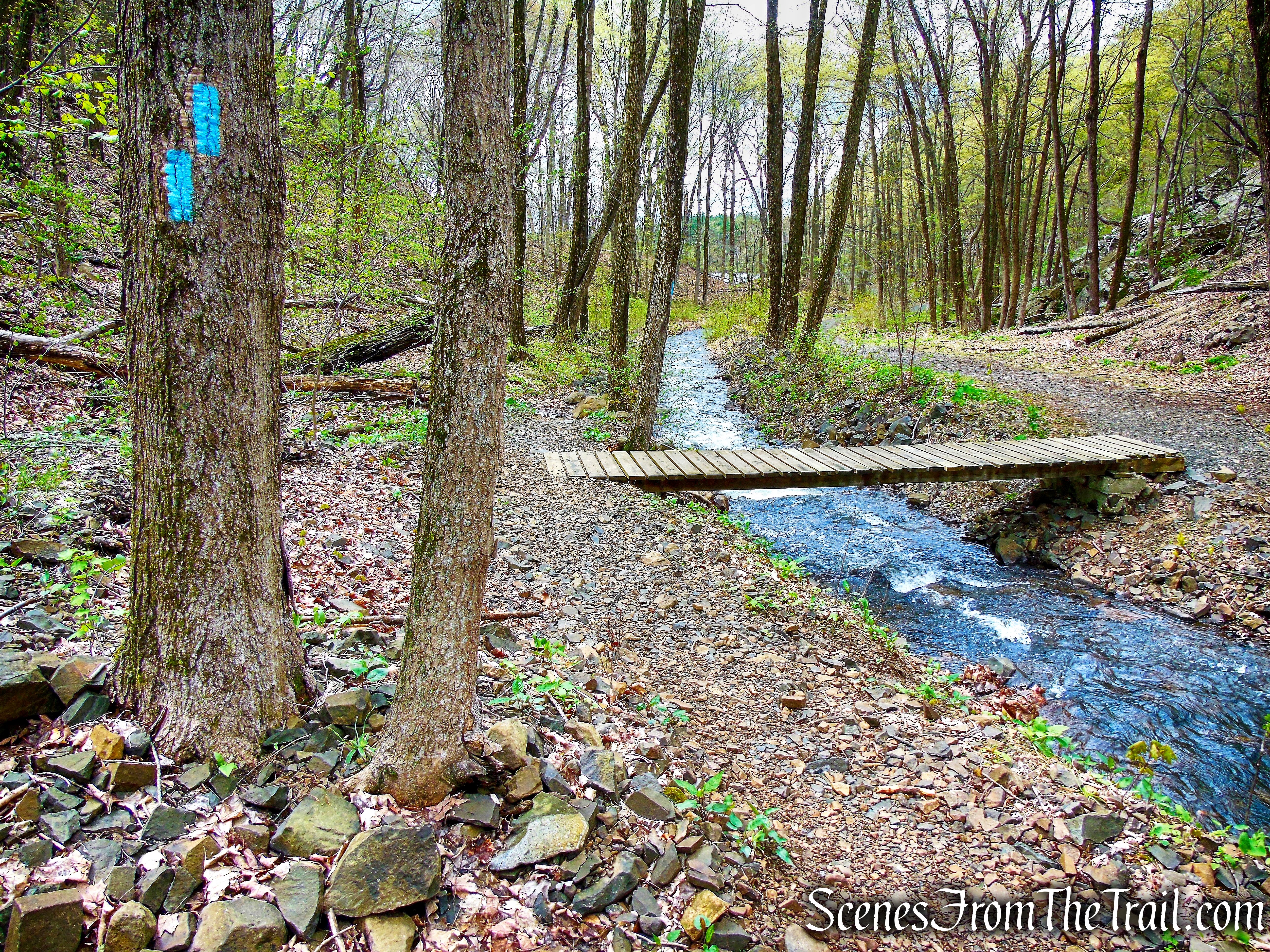
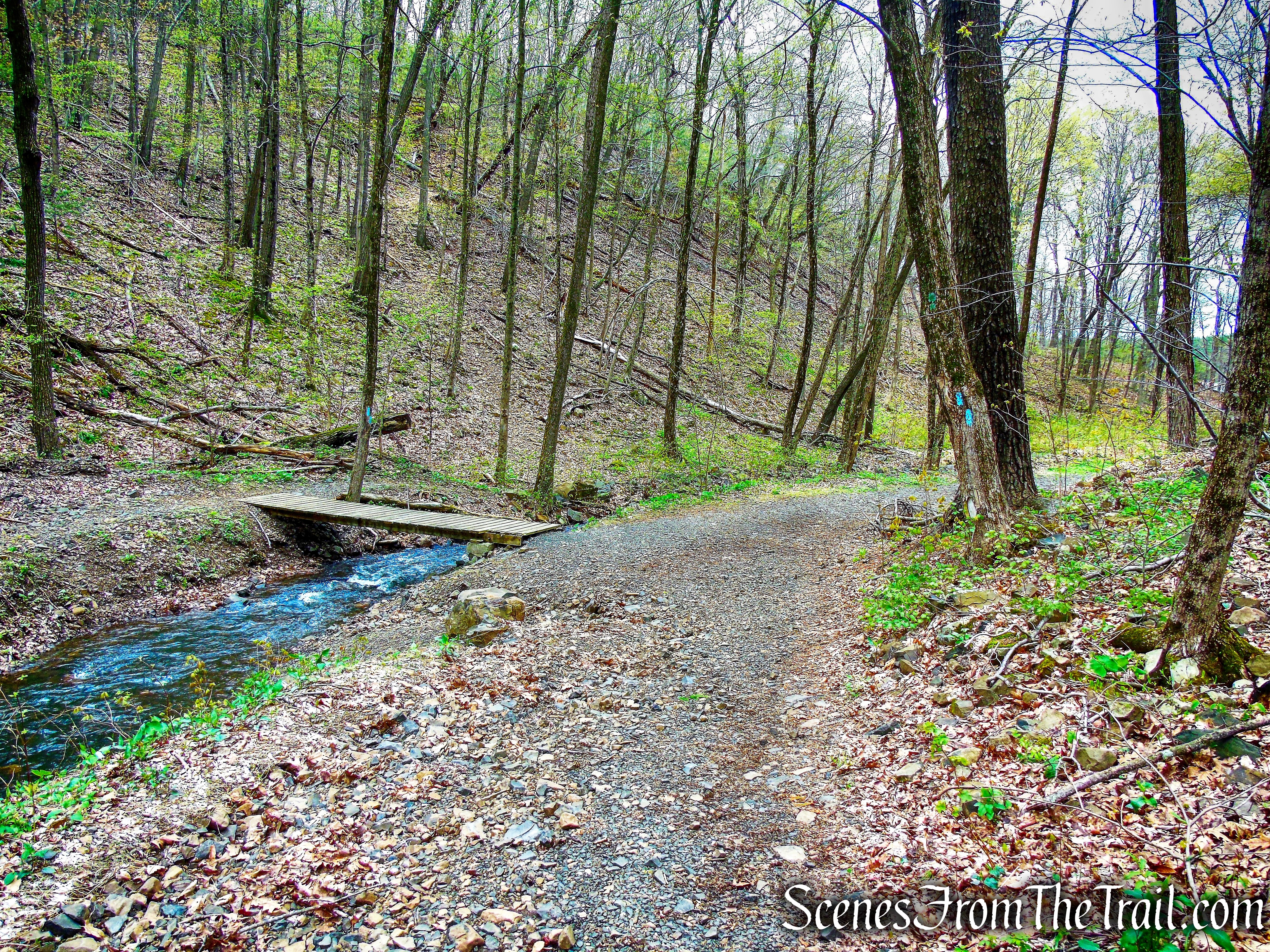
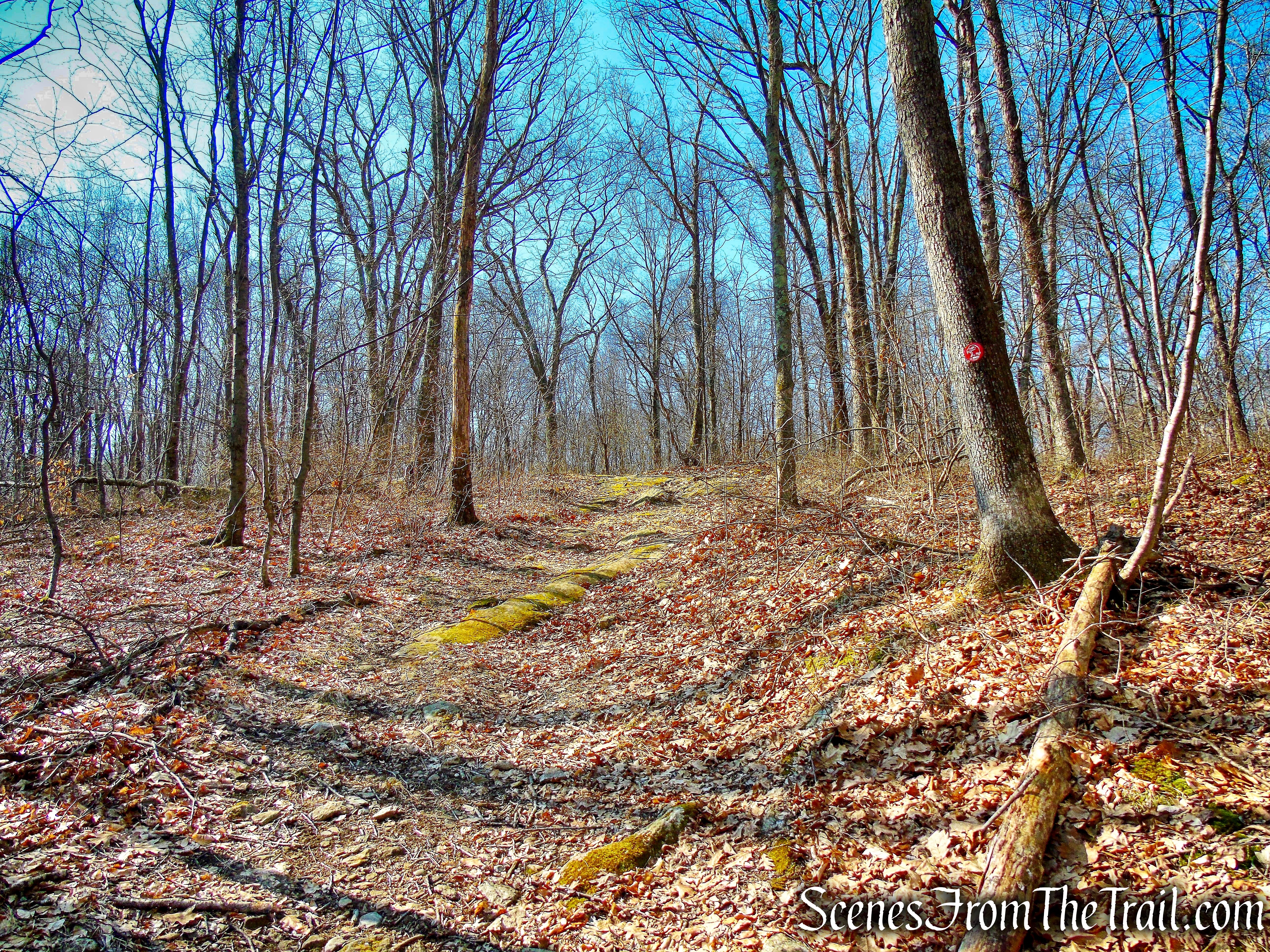
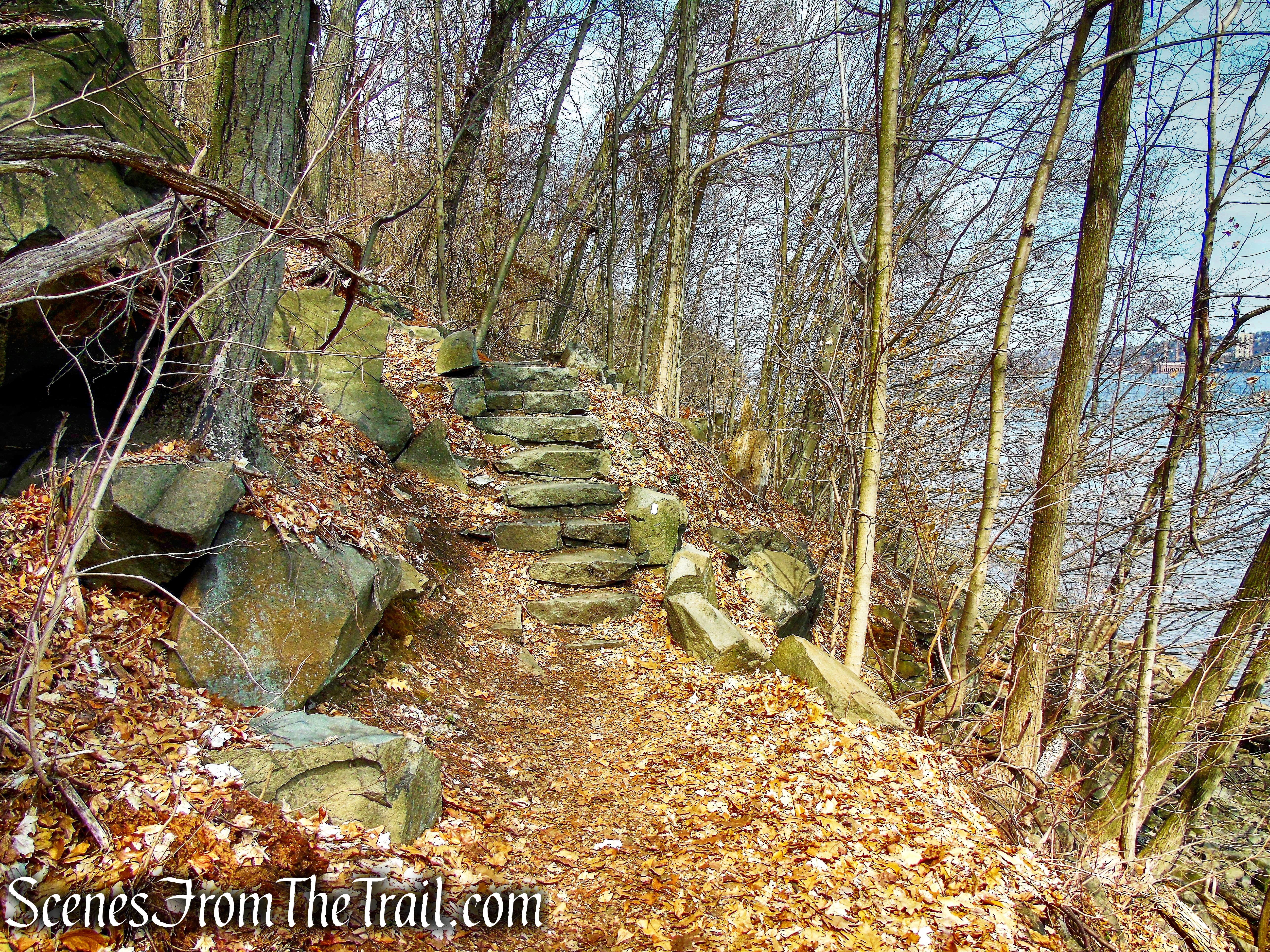
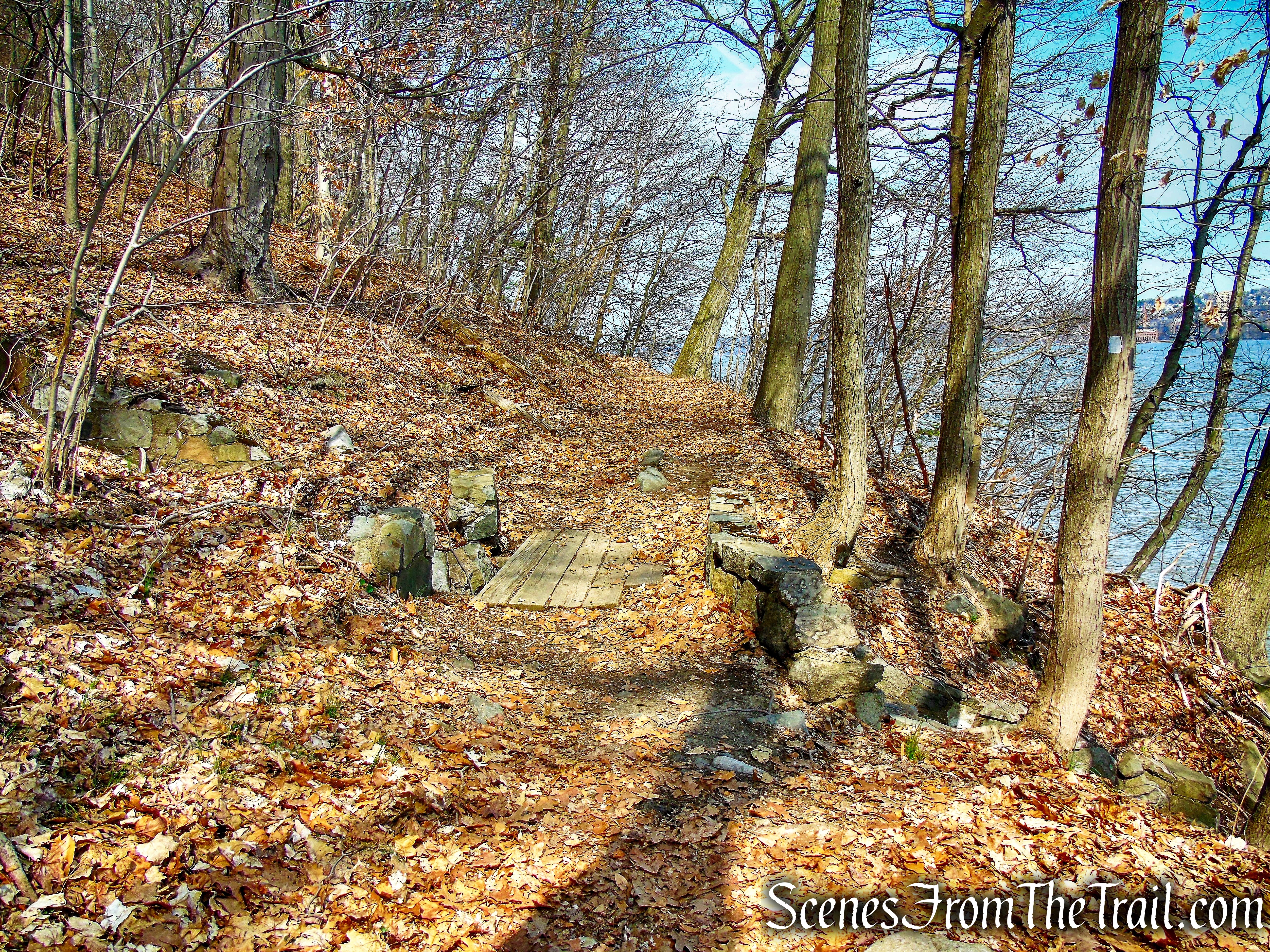
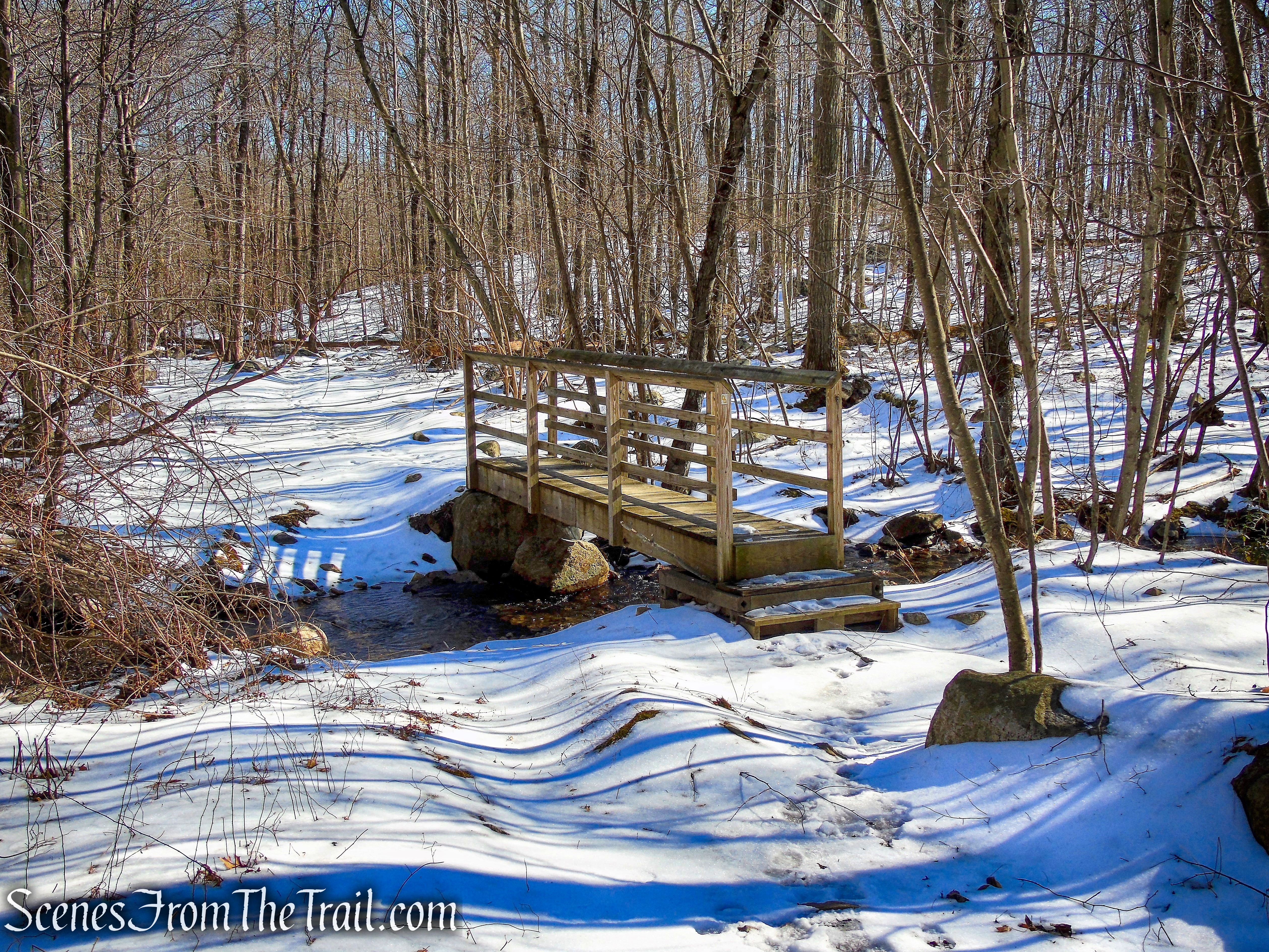
The Shongum Path continues along a gravel path bordered by rocks. The trail then follows a long stretch of narrow boardwalk across a wet area and soon crosses a stream on a wooden footbridge, followed by more wooden planks, then passing a junction with the yellow-blazed Enderly’s Path. Continue following the red blazes as they head uphill for another 0.3 mile, where the Shongum Path ends at a T-intersection with the yellow-blazed West Trapps Connector Trail.

Shongum Path - Mohonk Preserve

Shongum Path – Mohonk Preserve

Shongum Path - Mohonk Preserve

Shongum Path – Mohonk Preserve

Shongum Path - Mohonk Preserve

Shongum Path – Mohonk Preserve

Shongum Path - Mohonk Preserve

Shongum Path – Mohonk Preserve

Shongum Path - Mohonk Preserve

Shongum Path – Mohonk Preserve

Shongum Path - Mohonk Preserve

Shongum Path – Mohonk Preserve

Shongum Path - Mohonk Preserve

Shongum Path – Mohonk Preserve

Turn right on the West Trapps Connector Trail and follow the yellow blazes for approximately 750 feet to the West Trapps Trailhead Parking Area, where the hike began.

West Trapps Connector Trail - Mohonk Preserve

West Trapps Connector Trail – Mohonk Preserve

West Trapps Trailhead Parking Area - Mohonk Preserve

West Trapps Trailhead Parking Area – Mohonk Preserve

Review:

This is a really nice hike on well marked trails through an extremely scenic landscape. This hike is especially picturesque during the fall foliage season. The crushed stone carriage roads throughout the interior of the preserve, are well maintained and easy to walk. The Old Minnewaska Trail is a rougher carriage road which sees lesser foot traffic and feels removed from the preserve itself. Overall a very pleasant hike and if done early enough, few people will be encountered along the way.

Pros:

The Gunks, scenic views, Split Rock, cliffs, shaded trails, well marked trails.

Cons:

Very popular hiking area and attracts crowds.


Take a hike!

Overcliff Road and Old Minnewaska Trail Loop - Mohonk Preserve

Overcliff Road and Old Minnewaska Trail Loop – Mohonk Preserve

Sources:


Copake Iron Works Historic Site

September‎ ‎23‎, ‎2019 – Copake Falls, NY

Map: Copake Iron Works Trail MapCopake Iron Works Trail Map & Brochure

Address: 33 Valley View Rd, Copake Falls, NY 12517


Overview:

The Copake Iron Works was established by 19th century industrialist Lemuel Pomeroy in 1845 along the Bash Bish Brook, at the base of the Taconic Ridge. The Copake Iron Works Historic District comprises all of the buildings in the Iron Works area, the historic blast furnace, three workers’ houses, and the now-flooded ore pit, as well as the previously National Register-listed Church of St. John in the Wilderness. The public is welcome and urged to visit the Copake Iron Works Historic District.

Copake Iron Works Historic Site

Copake Iron Works Historic Site

New York State acquired the abandoned Copake Iron Works in 1928 when Taconic State Park was formed. In 2007, the Iron Works site and 18 acres surrounding the area were listed on the State and National Register of Historic Sites. Friends of Taconic State Park, established in 2008, has accomplished much important preservation work at the site.

Copake Iron Works Historic Site

Copake Iron Works Historic Site

The Copake Iron Works historic site in Taconic State Park was designated a Hudson River Valley National Heritage Area Site in 2016. The recognition, awarded through the Hudson River Valley National Heritage Area, in partnership with the National Park Service, recognizes the Copake Iron Works as a nationally-significant cultural and natural resource of the Hudson River Valley.

Copake Iron Works Historic Site

Copake Iron Works Historic Site

Details:

We recommend starting your visit at our Visitors Center and Museum (#6), open year round during daylight hours. Docent guided tours of the Iron Works Museum adjacent to the Visitors Center are available from 2pm to 4pm, Saturday, Sundays and holiday Mondays from Memorial Day through mid-November, or by appointment.

Visitors Center and Museum - Copake Iron Works

Visitors Center and Museum – Copake Iron Works


Visitors Center and Museum - Copake Iron Works

Visitors Center and Museum – Copake Iron Works

The brick building (Visitors Center) on the left was once the Blowing Engine House. Blowing engines are used to provide the air blast for furnaces.

On the right (Museum), was once the Machine Shop. On display are a series of iron artifacts, ranging from plow parts to chisels and unknown objects. Each one has been cataloged by the local historical society. 

Visitors Center and Museum - Copake Iron Works

Visitors Center and Museum – Copake Iron Works

The Visitor Center, adjacent to the Iron Works Museum, includes a highly detailed diorama of the Town of Copake Iron Works (as it was known until the turn of the century) and extensive interpretative displays about Taconic State Park and the nearby Bash Bish Falls.

Visitors Center and Museum - Copake Iron Works

Visitors Center and Museum – Copake Iron Works

The Iron Works Heritage Trail, described on the map, is an easy and scenic hike to Bash Bish Falls. There are two options for your return to the Iron Works: easy (return the way you came) or strenuous (return via the trail that runs west above Route 344).

From this point, a 1/2 mile-long trail leads to the lower Bash Bish Falls parking lot. From there, it is another 3/4 mile to the base of the falls. Along this trail you will see old railroad abutments and ponds that served the Copake Iron Works.

trail to Bash Bish Falls

trail to Bash Bish Falls

A three-mile loop trail circumnavigating the Copake Iron Works Historic District and Bash Bish Falls State Park is open year round. Extensive signage on the trail tells the story of this nationally registered historic site.

Copake Iron Works Historic Site

Copake Iron Works Historic Site

The centerpiece of this extraordinarily intact 19th century industrial complex is the rare Copake Blast Furnace with its water jacket hearth.

Copake Blast Furnace

Copake Blast Furnace

In its heyday, a total of 5,000 tons of iron ore were wheeled into Copake Falls each year from surrounding towns such as Pawling and Amenia.

Copake Blast Furnace

Copake Blast Furnace


Copake Blast Furnace

Copake Blast Furnace

Black Powder Storage Building (#15) – This building was likely constructed in the 1870’s, but may date back as early as the 1850’s. Built to store black powder that was used for blasting iron ore from bedrock, its wooden roof rests on top of brick walls, thus allowing any explosion inside the store room to direct the force upward rather than extend outward where it might do more damage to people and buildings in the area.

Black Powder Storage Building - Copake Iron Works

Black Powder Storage Building – Copake Iron Works

Iron Works Office & Company Store (#14) – The original portion of the Copake Iron Works Office has vertical board-and-batten siding and dates from at least 1858, when it first appears on maps. It is likely however, that it is one of the original structures built in 1845 by Lemuel Pomeroy II for conductiong business. Its gabled wing may have been added between 1873 and 1888 to serve as a company store.

Iron Works Office - Copake Iron Works

Iron Works Office – Copake Iron Works

Link House (#18) – This residence for Copake Iron Works employees likely dates to the 1860’s. Its last residents, Oscar and Lyman Link, continued to live in the house even after New York State acquired it and the surrounding property in the 1920’s.

Link House - Copake Iron Works

Link House – Copake Iron Works


Link House - Copake Iron Works

Link House – Copake Iron Works


Link House - Copake Iron Works

Link House – Copake Iron Works

There are numerous other points of interest located at the Copake Iron Works that are worth checking out.

Also located within the Copake Iron Works Historic District is the Church of St. John in the Wilderness. It is located at 261 Route 344 in Copake Falls, NY 12517

Church of St. John in the Wilderness

Church of St. John in the Wilderness

The church, designed by Richard Upjohn, is a one-story wood frame building clad with board and batten siding in the Gothic Revival style. Built in 1851, it was consecrated on June 29, 1852. The building is of much historical interest, for Upjohn designed many other churches, the most famous of which is New York’s Trinity on Wall Street.

Church of St. John in the Wilderness

Church of St. John in the Wilderness

The Church of St. John in the Wilderness has been a vital part of the village of Copake Falls and the surrounding region for more than 150 years. Some members of the early church were farmers, but many were involved in mining and smelting the iron ore deposit, just west of the church. Thus, the early history parallels that of the Copake Iron Works, which was established in 1845 by Lemuel Pomeroy of Pittsfield, Massachusetts.

Church of St. John in the Wilderness

Church of St. John in the Wilderness

Also on the property are a contributing parsonage (1853) and two cemeteries (1851-1911). It was listed on the National Register of Historic Places in 1995.

Church of St. John in the Wilderness

Church of St. John in the Wilderness

Copake Iron Works and the Church of St. John in the Wilderness is just down the road from the park entrance of the 7,000-plus-acre Taconic State Park, with its visitor welcome center located on Route 344 in Copake Falls, New York. The Harlem Valley Rail Trail, great for biking and on foot travel, passes through the park, which is also equipped for camping, with tent sites and cabins. The three-mile loop trail that circumnavigates the Copake Iron Works Historic District connects to other trails in the area, making any number of loop hikes of various lengths possible. 

Final Thoughts:

Staying for a few days at Lake Taghkanic State Park, we were looking to visit places that were nearby. We had just done the short hike to Bash Bish Falls and decided to stop by Copake Iron Works and the Church of St. John in the Wilderness, which is just down the road from the Bash Bish Falls NY Trailhead. The historic significance of this site, makes it worth a visit if in the area. 

Sources:


Bash Bish Falls from Taconic State Park

September‎ ‎23‎, ‎2019 – Mount Washington, Massachusetts

Difficulty: Easy

Length: Approximately 2 miles

Max elevation: 950 ft.– total elevation gain approximately 220 ft.

Route type: Out and back

Map: Taconic State Park Trail Map (North Section)

Trailhead parking: NY-344 – Copake Falls, NY 12517


Overview:

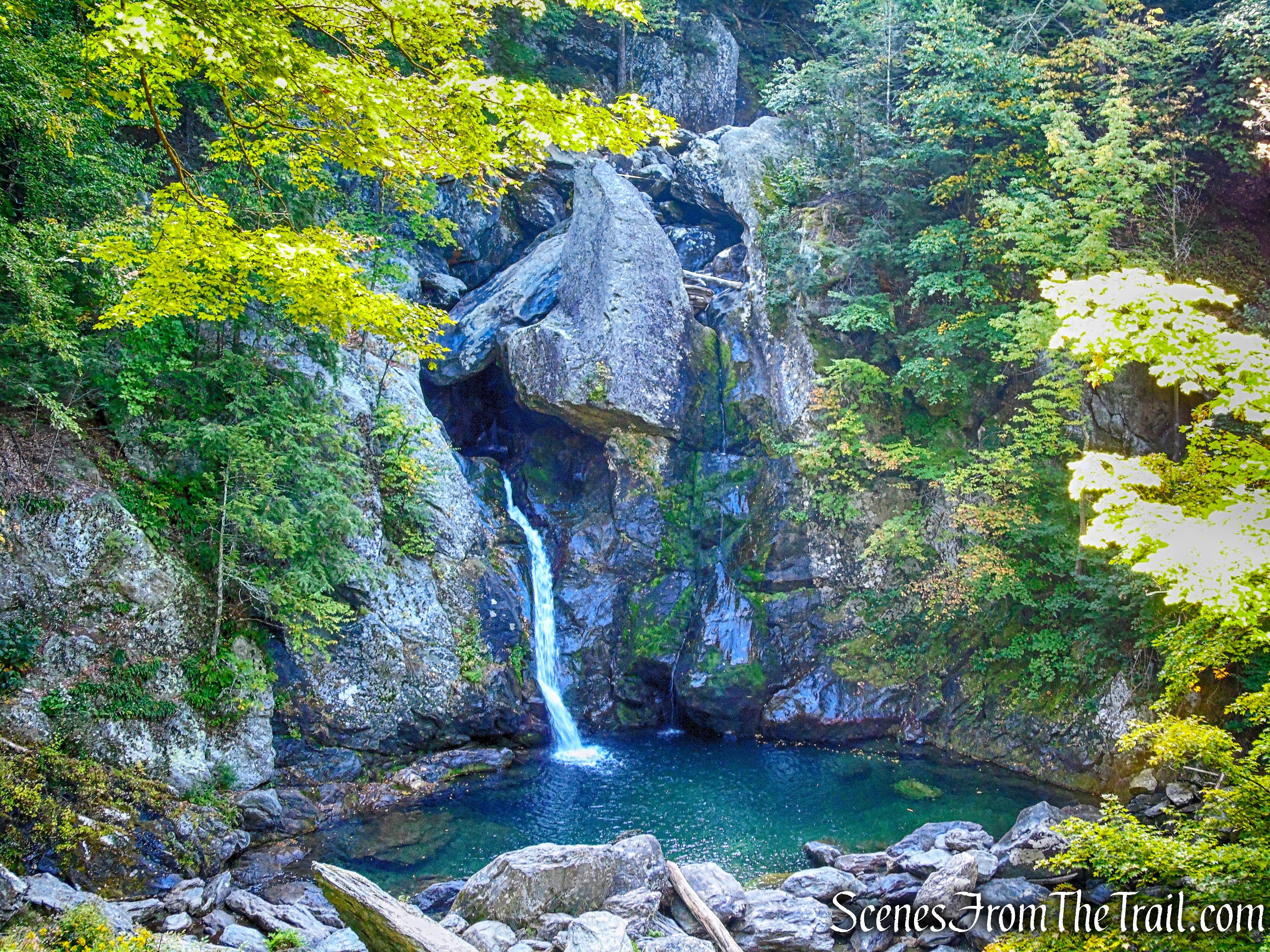
Bash Bish Falls is a chain of falls and cascades found in a deep gorge along Bash Bish Brook in Mount Washington, Massachusetts, about a quarter mile from the New York border. Topographic data suggests the series of falls descends a total of approximately 180 feet over a linear run of about 540 feet, with no individual section standing more than 50 feet tall. The falls consist of a series of flumes, cascades, and punchbowls in a deep, constricted, and highly inaccessible gorge which has claimed the lives of many who have attempted to find a view into the narrow entry of the gorge. While portions of the upper gorge can be seen from places along the trails leading to the falls, only the final tier, which splits around a huge boulder lodged in the canyon and falls 49 feet in parallel streams to a large pool below, is clearly visible.

Bash Bish Falls - ‎July ‎4, ‎2015

Bash Bish Falls – ‎July ‎4, ‎2015

Bash Bish Brook is a moderately large stream, draining a basin covering approximately 13 square miles. A handful of small ponds feed into the drainage, but the vast majority of the volume of the stream comes from ephemeral runoff and ground seep throughout the basin. 

Bash Bish Brook - ‎July ‎4, ‎2015

Bash Bish Brook – ‎July ‎4, ‎2015

Though the falls are occasionally known to be reduced to very low flow during periods of drought in the summer months, because New England commonly sees heavy precipitation through the summer and fall months, the falls are often flowing well, if not quite powerfully, and should be considered worthy of visitation during just about any time of year.

Bash Bish Falls - February ‎22, ‎2015

Bash Bish Falls – February ‎22, ‎2015

History:

Bash Bish (not Bish Bash, as is commonly mistaken) is said to be the name of an Indian maiden who was tied to a canoe and sent over the top of the falls as punishment for being unfaithful to her betrothed. In a twist of irony (or perhaps destiny), White Swan, the daughter of Bash Bish, is said to have suffered the same fate at the same waterfall. Given the geology of the gorge at the top of the falls, it seems unlikely that a canoe would be able to float downstream over the falls (lots of boulders getting in the way), so this tale is likely more legend than anything else.

Photography Tips:

Bash Bish Falls is perhaps the most well-known and frequently photographed waterfall in Massachusetts. The basin at the bottom of the falls is fairly wide open and the falls will see much direct sunlight during the afternoon hours, so best photography is had during the morning or late evening. Spray can be a problem during high water. Early mornings are preferable due to the amount of people that are usually scattered about near the base of the falls, especially in warm weather.

Hike Overview:

Bash Bish Falls is located in Mount Washington, Massachusetts but the most direct access is from Copake, New York. There are two parking areas, the first in Taconic State Park about one half of a mile before crossing into Massachusetts, and the other about a mile further up the road near the top of the falls on the Massachusetts side of the border. Both are connected to the same trail system. From the lower parking area in NY, the hike to the falls is an easy three-quarters of a mile stroll along an old road bed. From the upper parking area, the hike is about half the distance, but is also much steeper as it loses over 300 feet in elevation descending to the base of the falls.

This is a pretty straightforward out and back hike on a woods road  that begins and ends from the lower parking lot in New York.

Bash Bish Falls

Bash Bish Falls

The Hike:

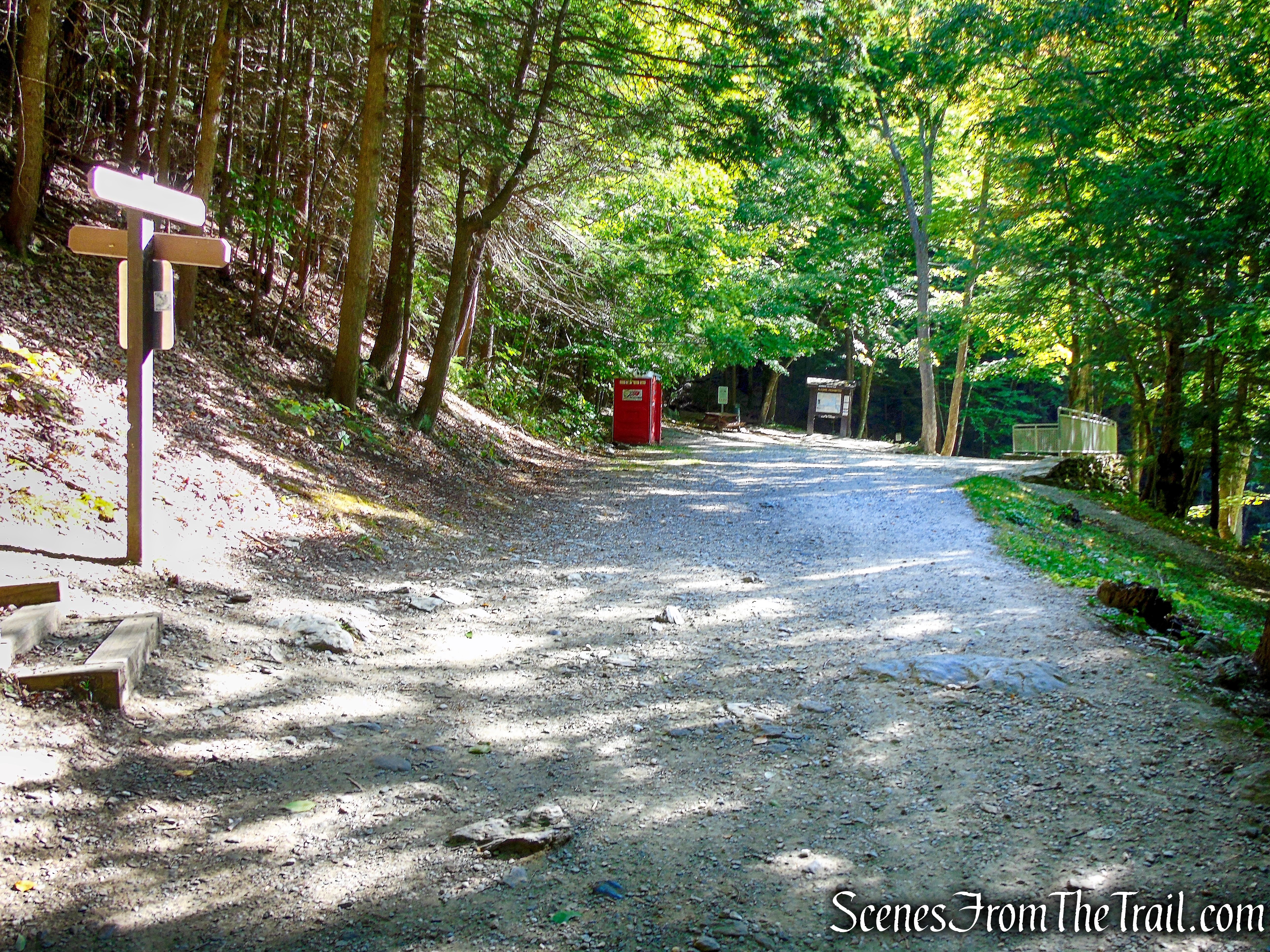
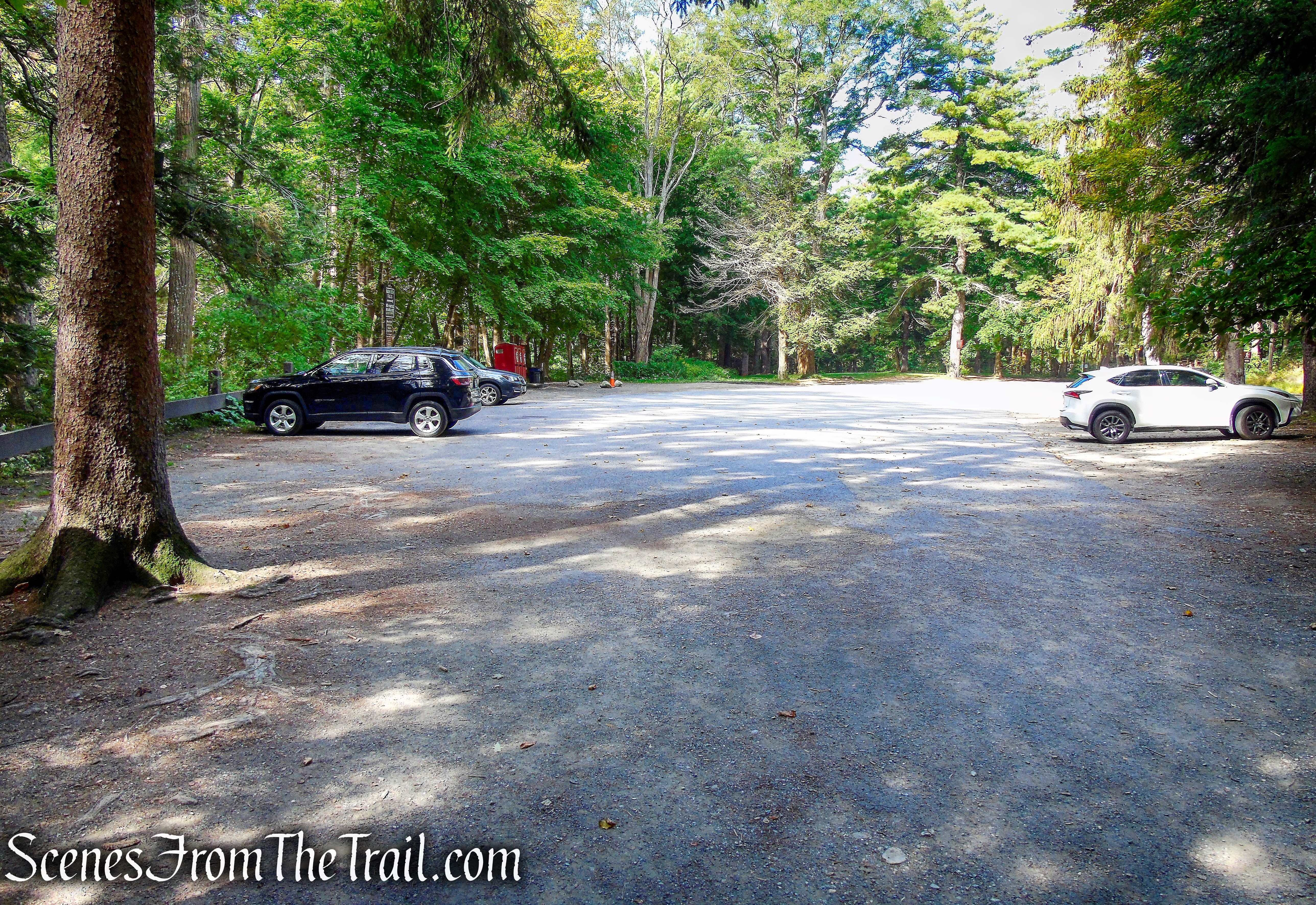
The parking area, which is just off NY-344, is marked by a small sign. Although the lot appears sizable, it does fill up. Arriving early will help to avoid the crowds.

Bash Bish Falls - NY Trailhead

Bash Bish Falls – NY Trailhead

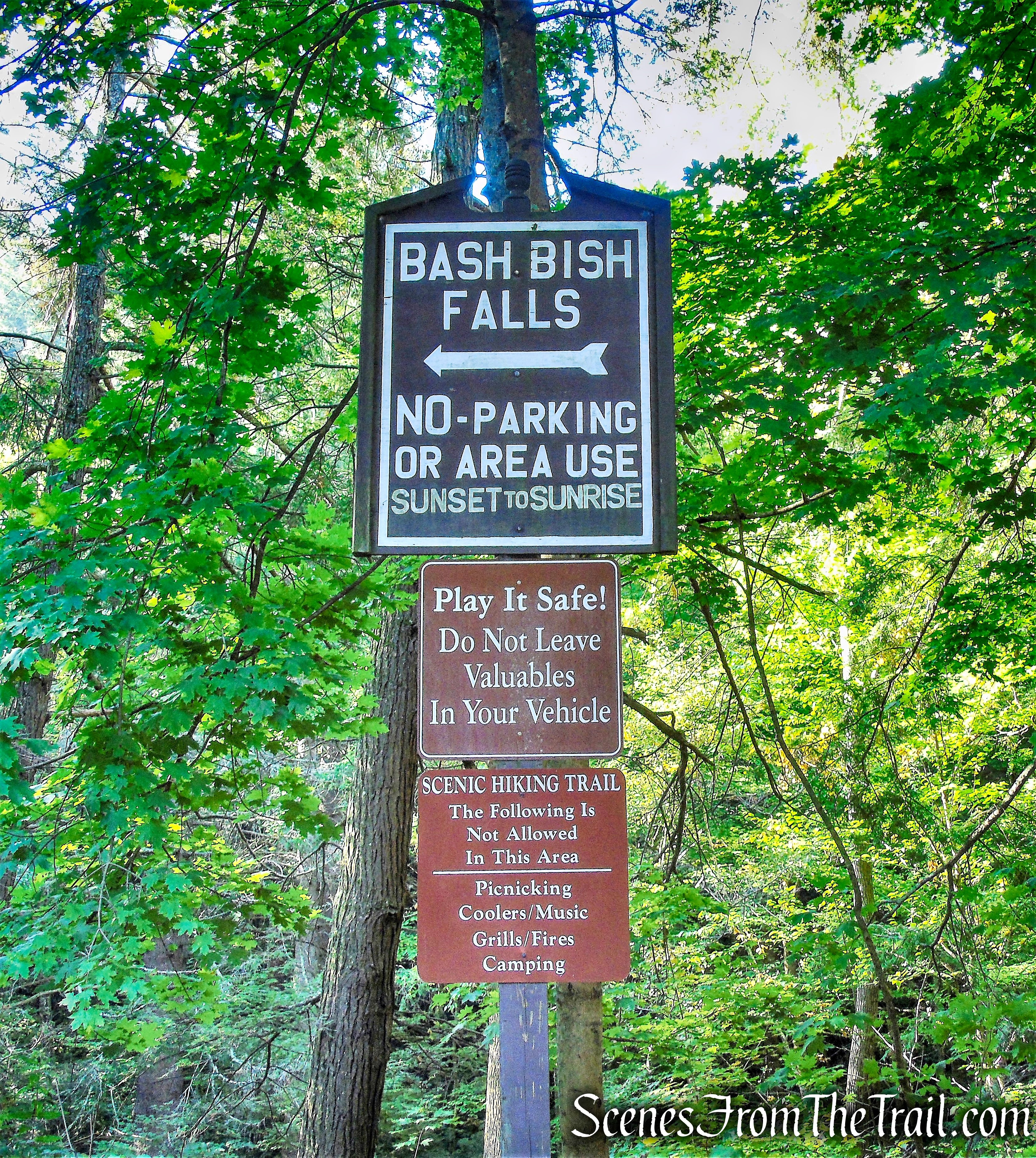
The parking lot is filled with signs, but the one that caught my attention is the one about not leaving valuables in your vehicle. I never do, but there are several of the same signs posted, which leads me to believe that there must have been issues with thefts here. 

Bash Bish Falls - NY Trailhead

Bash Bish Falls – NY Trailhead

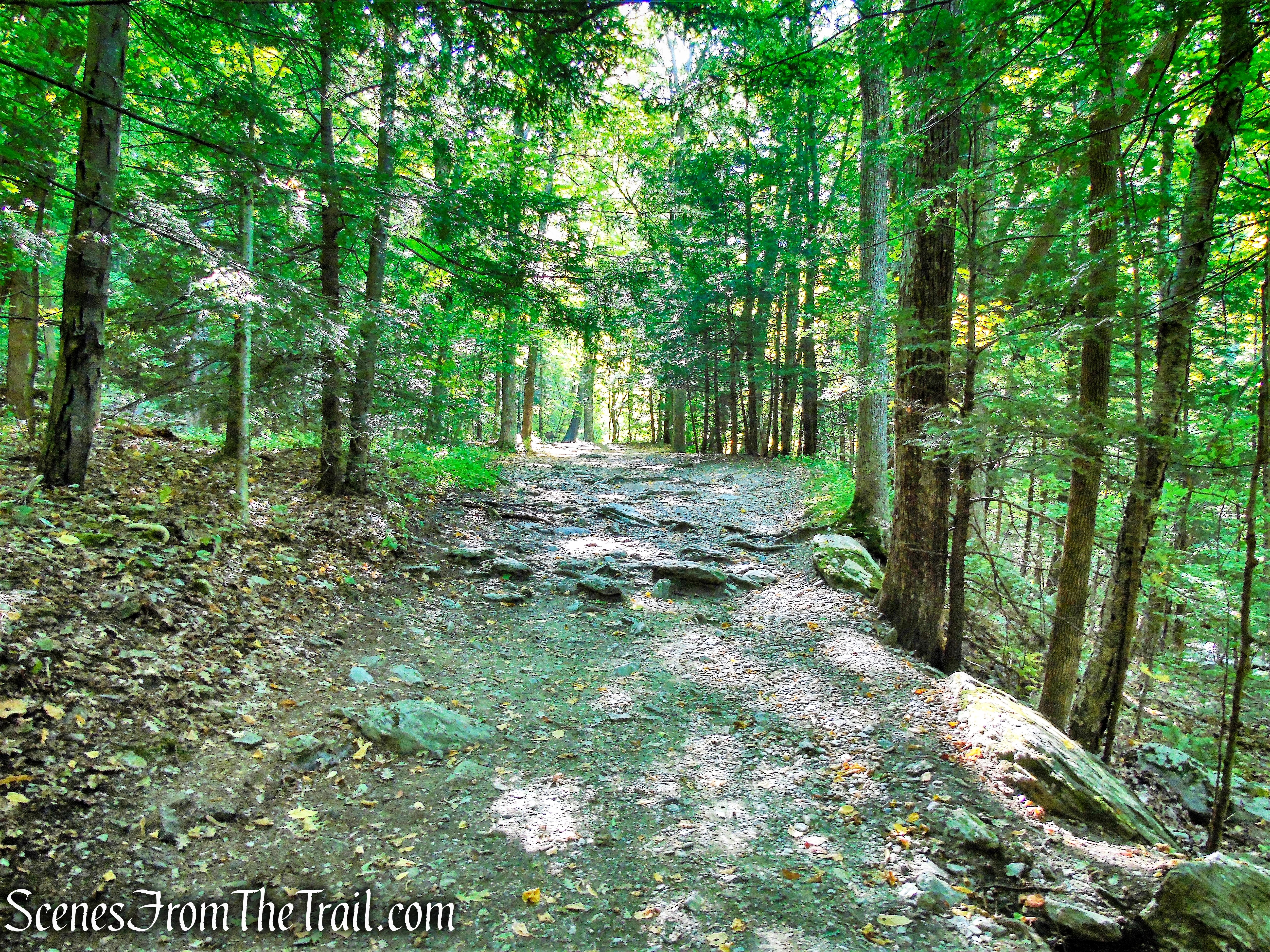
The trail begins at the eastern end of the parking lot on a woods road that descends slightly to reach the level of Bash Bish Brook, which is on the right. The woods road is well shaded throughout which helps when the sun is blazing during the summer. Soon the road begins to climb gradually through the ravine, with the brook visible through the trees below.

Bash Bish Falls - NY Trailhead

Bash Bish Falls – NY Trailhead

Bash Bish Falls - NY Trailhead

Bash Bish Falls – NY Trailhead

Bash Bish Falls Trail

Bash Bish Falls Trail

Bash Bish Falls Trail

Bash Bish Falls Trail

Bash Bish Falls Trail

Bash Bish Falls Trail

Bash Bish Falls Trail

Bash Bish Falls Trail

Bash Bish Falls Trail

Bash Bish Falls Trail

The road begins to climb steadily at a slightly steeper grade and in about a 1/2 mile, the woods road reaches the Massachusetts border and enters Bash Bish Falls State Park, marked by a sign. Go ahead and pose for a photograph, I’ll wait.

Bash Bish Falls Trail

Bash Bish Falls Trail

In another 3/10 of a mile, the Bash Bish Falls Trail passes the junction with the Blue Trail which leads to the Massachusetts parking lot. Just beyond is the viewing platform for Bash Bish Falls.

Bash Bish Falls Trail

Bash Bish Falls Trail

You can take in the splendor of the falls from the viewing platform, or you can descend a steep stone staircase with a center railing that leads to the base of Bash Bish Falls. Due to a relatively dry spell, only one side of the falls was flowing during our visit.

Bash Bish Falls

Bash Bish Falls

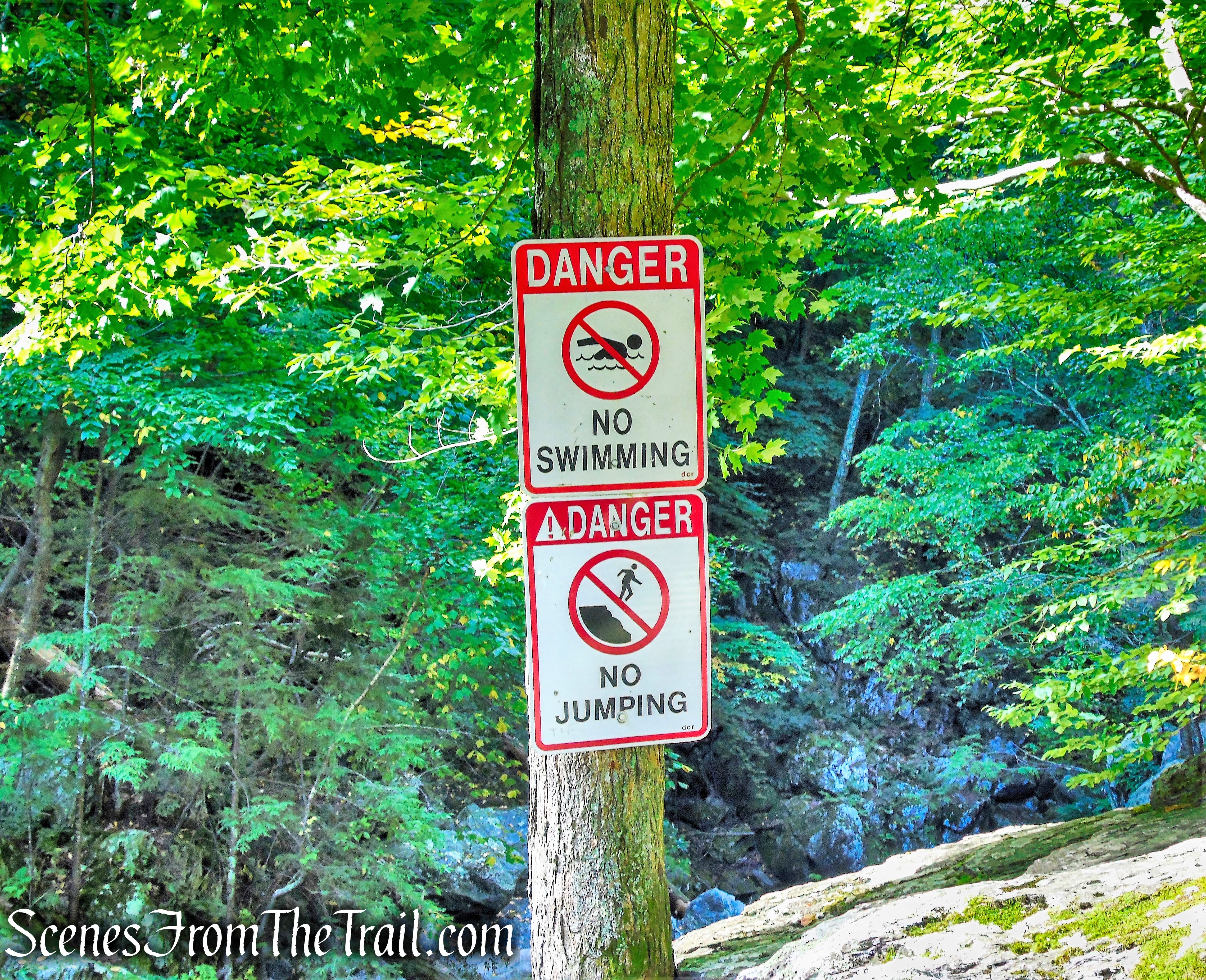
More signs…….

Bash Bish Falls

Bash Bish Falls

The falls splash into a beautiful pool of clear water, then travel down a stream bed of large rocks.

Bash Bish Falls

Bash Bish Falls

After viewing the falls, climb back up the stone staircase. We held on to the railing on the way down and the rust from the handrail got all over our hands. 

Bash Bish Falls

Bash Bish Falls

Retrace your steps on the woods road, and as the road comes to a fork, bear left. The right fork climbs steeply a short distance to Falls Road, the continuation of NY-344 in Massachusetts.

bear left at the fork - Bash Bish Falls Trail

bear left at the fork – Bash Bish Falls Trail

A short distance later, you will reenter NY and Taconic State Park. The Bash Bish Falls Trail continues to descend and in another 1/2 mile, returns to the parking lot, where the hike began. 

Bash Bish Falls Trail

Bash Bish Falls Trail

Bash Bish Falls Trail

Bash Bish Falls Trail

Bash Bish Falls - NY Trailhead

Bash Bish Falls – NY Trailhead

Review:

Bash Bish Falls is one of the most publicized waterfalls in the state. Just about every hiking guide to Massachusetts, whether online or in print form, mentions this waterfall. There is a downside to this immense popularity; large crowds often visit the falls on hot summer weekends. Bash Bish Falls is certainly one of the more scenic waterfalls in Massachusetts simply because the geology of the canyon which forms the falls is so extreme and pronounced compared to the other waterfalls found in the region. The short walk and considerable payoff, makes this waterfall worth the visit. If you are looking for solitude, you won’t find it here unless you visit early mornings and it won’t be for long. Nevertheless, one of nature’s wonders that has to be seen in person in order to be appreciated.

Pros: Scenic waterfall, relatively short walk on a woods road, the return trip is all downhill.

Cons: Tourist destination and does get crowded at times.

Take a hike!

Bash Bish Falls

Bash Bish Falls

Sources:


Anthony’s Nose Rock Scramble

September 11, 2019 – Garrison, NY

Rehiked: November 24, 2025

Difficulty: Moderate – strenuous

Length: Approximately 2 miles

Max elevation: 910 ft. – total elevation gain: approximately 722 ft.

Route type: Circuit

Map: East Hudson Trails Map #101

Trailhead parking: Anthony’s Nose Trailhead – 171-143 Bear Mountain-Beacon Hwy, Garrison, NY 10524

Please Note: Although this is a short hike, it should not be taken lightly and should not be done alone. The first part of this hike involves some rock scrambling and steep climbs with loose rock and dirt along an unofficial trail which doesn’t see much foot traffic.


Details on hikes to Anthony’s Nose via different routes:


Update:

I rehiked this route on November 24, 2025, and everything is largely the same. Some of the blue blazes have faded, but there are also newer paint blazes. Just keep an eye out for the next blaze before moving on, and you should be fine.

On the descent, the Appalachian Trail had some fresh white blazes.

At this time of year, fallen leaves cover much of the trail, making footing tricky in spots. Be sure to wear sturdy hiking boots.

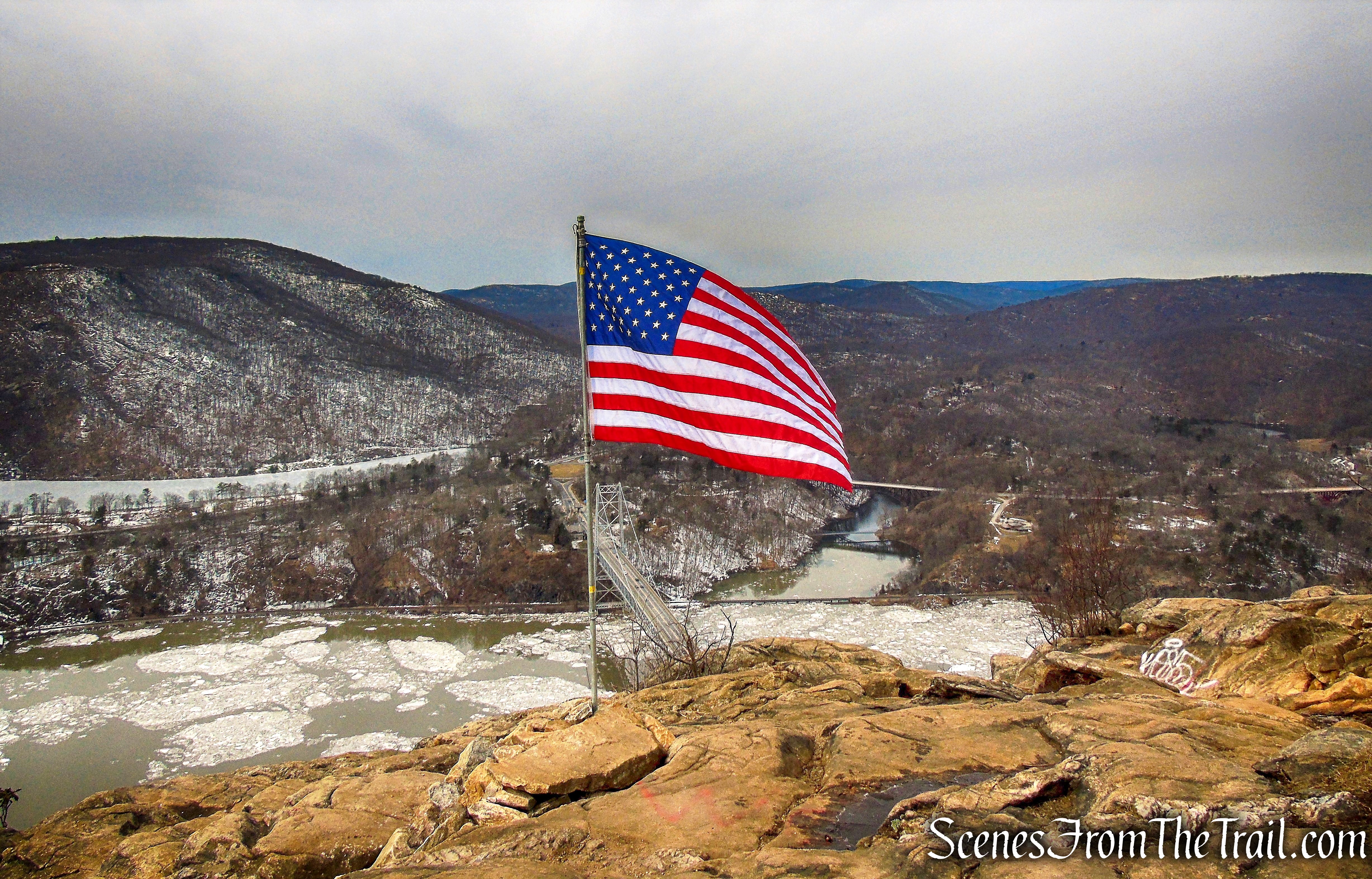
The one major change that I find disappointing, is that the American flag that flew at the overlook for years, is no longer there.


Overview:

Anthony’s Nose is a peak along the Hudson River at the north end of Westchester County, New York. Together with Dunderberg Mountain, it comprises the South Gate of the Hudson Highlands. The 910 ft. peak has been known as Anthony’s Nose since at least 1697, when the name appears on a grant patent. Pierre Van Cortlandt, who owned this mountain, said it was named for a pre-Revolutionary War sea captain, Anthony Hogan. This captain was reputed to have a Cyrano de Bergerac type nose.

Anthony’s Nose as viewed from Bear Mountain

Anthony’s Nose as viewed from Bear Mountain

Anthony’s Nose is one of the more popular hikes in the Hudson Valley and on weekends the cars are lined up along Route 9D as a testament to its popularity. The short, but steep hike to the summit offers some spectacular views up and down the Hudson River. There are several approaches to the summit with varying degrees of difficulty, but none are easy due to the sometimes rough terrain and/or sudden elevation gain. Due to the crowds, this is a hike better done on weekdays.

History:

Anthony’s Nose was strategically important during the American Revolution. The road at its base along the Hudson River (present day US 202) was a choke-point in the Hudson Highlands north of Peekskill. The only wagon road on the east side of the Hudson River, the Albany Post Road, ran from NYC to Albany, and passed along the river here. It could be easily defended from atop the steep rock face.

Anthony’s Nose as viewed from Bear Mountain

Anthony’s Nose as viewed from Bear Mountain

During 1777, George Washington ordered the construction of a large chain across the Hudson from the shore near Anthony’s Nose to the opposite shore below Fort Montgomery. Although meant to keep the British ships from passing, it didn’t work. The chain was sunk after several well placed British cannon shots. It was blown to bits and on October 6, 1777, the British sailed through the opening, destroyed Fort Constitution, attacked Forts Montgomery and Clinton and sailed up to Kingston and burned most of the city to the ground. During April 1780, the chain was again stretched across the river and taken out of the water on October 16 (after the defection of Benedict Arnold). On April 10, 1781 the chain was once more reinstalled across the river.

The Bear Mountain Bridge was constructed in 1924 along approximately the same alignment where the chain was laid out. An airway beacon was once located on the summit.

Hike Overview:

On the east side of the Bear Mountain Bridge, the Appalachian Trail used to go straight up the face of Anthony’s Nose, one of the best viewpoints along the Hudson Gorge. During World War II, the U.S. Military closed the trail from Bear Mountain to Manitou Springs, for fear that saboteurs would use it to destroy the Navy Arsenal at Iona Island, the New York Central Railroad, the Bear Mountain Bridge and the roadway leading to it. After the war, the Appalachian Trail on Anthony’s Nose reopened for a few years. It was subsequently rerouted along the side of Anthony’s Nose because the top came under the possession of Camp Smith Army National Guard base in the 1950’s.

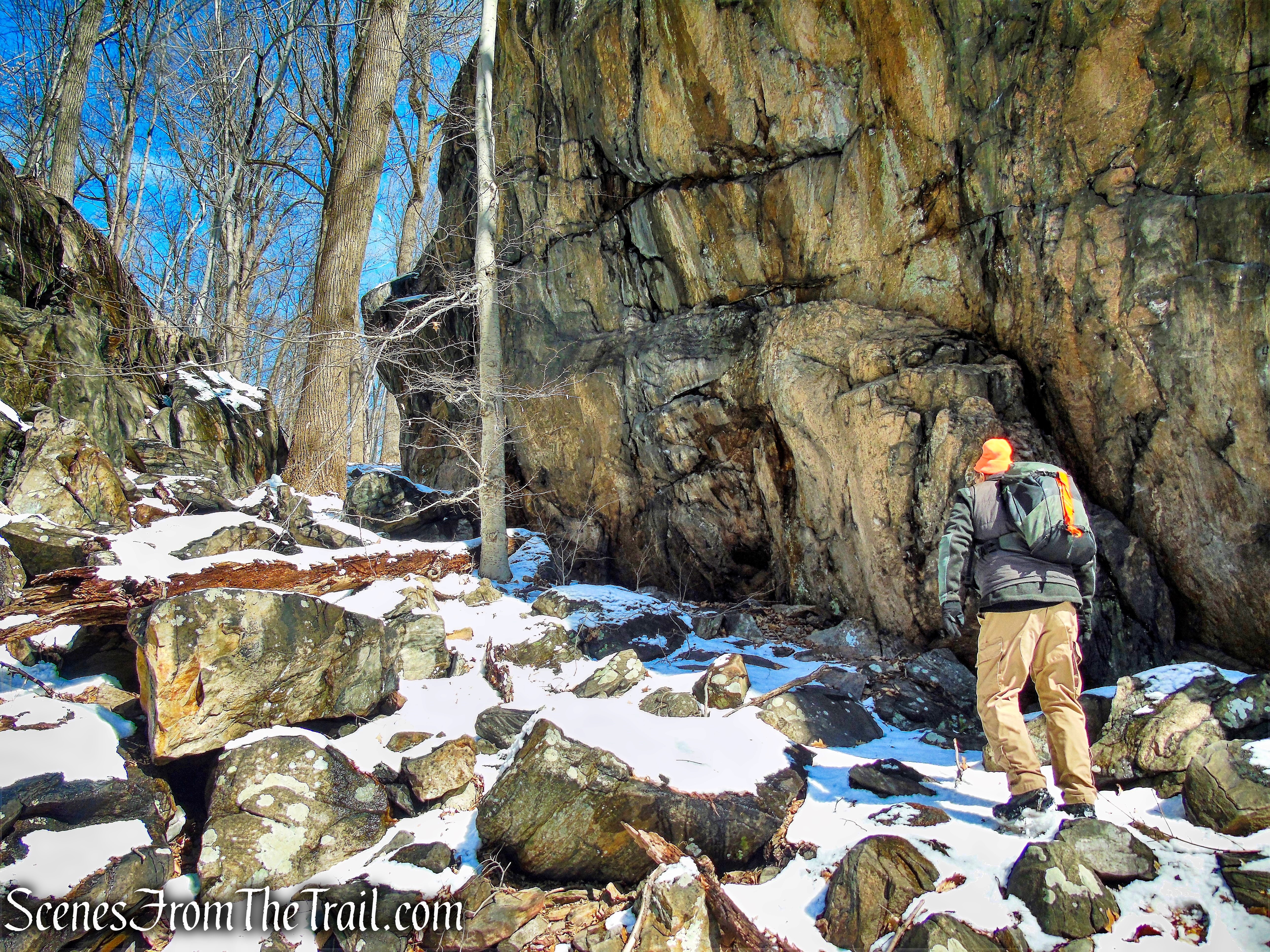
Although the seemingly abandoned trail is not listed on the NY-NJ Trail Conference maps, it is blazed and well trodden. Upon contacting someone from the Trail Conference in regards to the trail, I was told: “It was very steep and dangerous.” and “I definitely do not recommend that you hike this trail.” In actuality, the trail is similar in length and degree of difficulty (possibly a little less difficult) to the first section of the Breakneck Ridge Trail that leads to the flagpole. The first 1/2 mile gains about 700 feet of elevation and you’ll need to use both your hands and your feet in many places along the way.

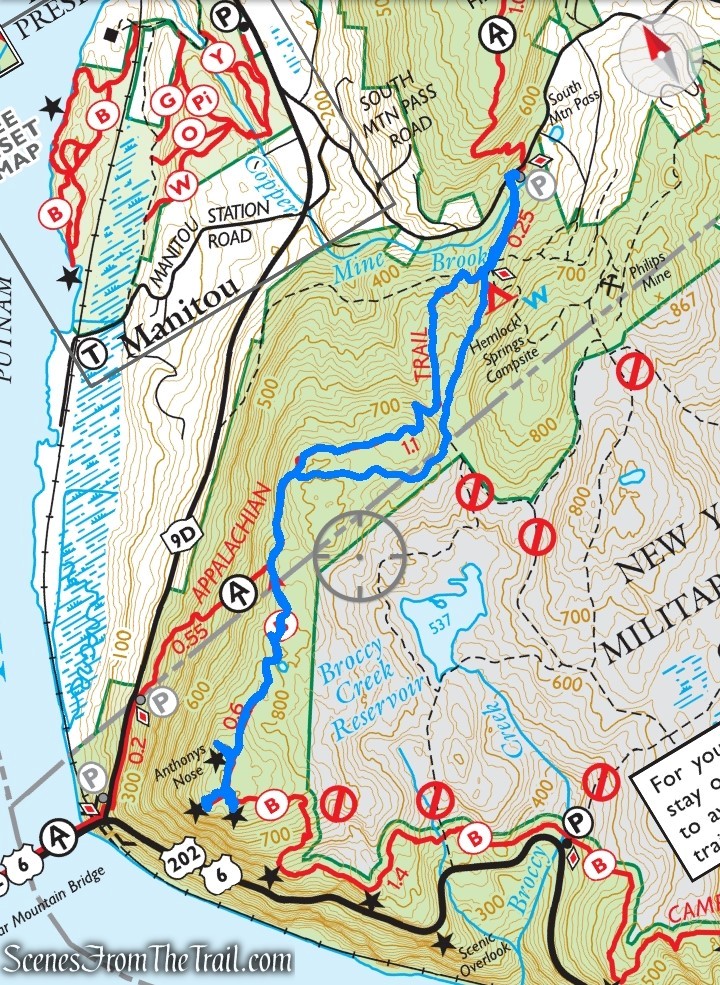
This hike incorporates the rock scramble along the no longer used portion of the AT, up the western face of Anthony’s Nose to its summit. The return route is the Camp Smith Trail (north) to a junction of the current route of the AT, turning left and descending steeply to Route 9D, with a short road walk back to the vehicle.

Please Note: This hike involves steep climbs over rock ledges that can be very slippery when wet. You’ll need to use both your hands and your feet in many places along the way. Proper footgear is essential for this hike, which is best done on weekdays, to avoid the weekend crowds.

Anthony’s Nose Rock Scramble

Anthony’s Nose Rock Scramble

Anthony’s Nose Rock Scramble

Anthony’s Nose Rock Scramble

Pull off parking is available along Route 9D and care should be taken when walking along the road to the trailhead and back to the vehicle.

The Hike:

The hike begins alongside the chain link fence. Follow the footpath along the fence, and once past the anchorages that hold the two main steel cables, the blue blazes appear. Follow the blue blazes as the trail steeply climbs the rocky ridge. Depending on the time of year, there may be views through the trees of the river as you climb.

Route 9D – Anthony’s Nose

Route 9D – Anthony’s Nose

Old AT - Anthony’s Nose

Old AT – Anthony’s Nose

Old AT - Anthony’s Nose

Old AT – Anthony’s Nose

Old AT - Anthony’s Nose

Old AT – Anthony’s Nose

Old AT - Anthony’s Nose

Old AT – Anthony’s Nose

Old AT - Anthony’s Nose

Old AT – Anthony’s Nose

Old AT - Anthony’s Nose

Old AT – Anthony’s Nose

As the trail climbs, there are sections where there is some loose rock and dirt, making one’s footing unstable.

Old AT - Anthony’s Nose

Old AT – Anthony’s Nose

Old AT - Anthony’s Nose

Old AT – Anthony’s Nose

Old AT - Anthony’s Nose

Old AT – Anthony’s Nose

The trail reaches a tall rock formation that you will have to climb. There are plenty of hand and footholds, which makes it easier than it appears.

Old AT - Anthony’s Nose

Old AT – Anthony’s Nose

Old AT - Anthony’s Nose

Old AT – Anthony’s Nose

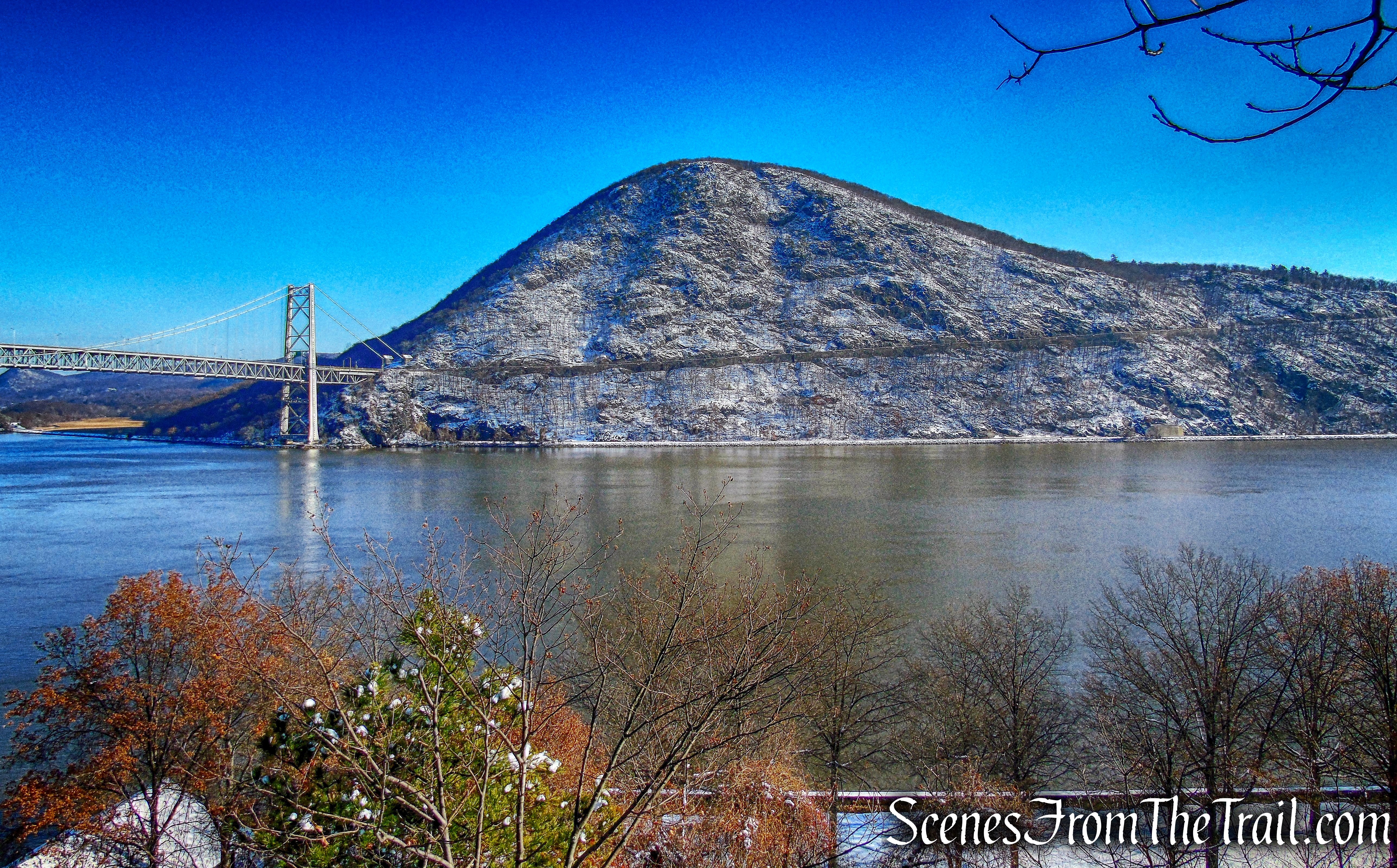
The trail reaches a large rock outcrop that overlooks the Hudson River, Bear Mountain Bridge, and the nearby hills of Bear Mountain State Park. This is a good place to take a break.

Old AT - Anthony’s Nose

Old AT – Anthony’s Nose

Old AT - Anthony’s Nose

Old AT – Anthony’s Nose

Old AT - Anthony’s Nose

Old AT – Anthony’s Nose

Old AT - Anthony’s Nose

Old AT – Anthony’s Nose

The blue blazes continue to steeply climb the face of Anthony’s Nose, with some more rock scrambling along the way.

Old AT - Anthony’s Nose

Old AT – Anthony’s Nose

Old AT - Anthony’s Nose

Old AT – Anthony’s Nose

Old AT - Anthony’s Nose

Old AT – Anthony’s Nose

Old AT - Anthony’s Nose

Old AT – Anthony’s Nose

Old AT - Anthony’s Nose

Old AT – Anthony’s Nose

Old AT - Anthony’s Nose

Old AT – Anthony’s Nose

Old AT - Anthony’s Nose

Old AT – Anthony’s Nose

Old AT - Anthony’s Nose

Old AT – Anthony’s Nose

Old AT - Anthony’s Nose

Old AT – Anthony’s Nose

Old AT - Anthony’s Nose

Old AT – Anthony’s Nose

Old AT - Anthony’s Nose

Old AT – Anthony’s Nose

At the top, the blue blazes end at a stealth campsite near the cliff’s edge. Turn right and walk over open rock slabs a short distance to panoramic views of the Hudson River, the Bear Mountain Bridge, and Bear Mountain-Harriman State Park. This makes a perfect spot to relax and take in the views.

Anthony’s Nose

Anthony’s Nose

Bear Mountain and Hessian Lake as viewed from Anthony’s Nose

Bear Mountain and Hessian Lake as viewed from Anthony’s Nose

Bear Mountain Bridge and the Hudson River as viewed from Anthony’s Nose

Bear Mountain Bridge and the Hudson River as viewed from Anthony’s Nose

CSX freight train traveling north between Iona Island and the Bear Mountain Bridge

CSX freight train traveling north between Iona Island and the Bear Mountain Bridge

Hudson River, Iona Island and the hills of Bear Mountain State Park as viewed from Anthony’s Nose

Hudson River, Iona Island and the hills of Bear Mountain State Park as viewed from Anthony’s Nose

Anthony’s Nose

Anthony’s Nose

To complete the loop, walk east (away from the river), turn left and follow the blue blazes of the Camp Smith Trail, which travels on a woods road. In a short distance there is an unmarked footpath to the left that leads to the concrete footings of an airway beacon that once stood guard on Anthony’s Nose.

site of an airway beacon that was once located at the summit of Anthony’s Nose

site of an airway beacon that was once located at the summit of Anthony’s Nose

site of an airway beacon that was once located at the summit of Anthony’s Nose

site of an airway beacon that was once located at the summit of Anthony’s Nose

Continue past the concrete footings a short distance to a large slanted rock slab with views to the north of the Hudson River.

view north of the Hudson River from Anthony’s Nose

view north of the Hudson River from Anthony’s Nose

When you are ready to proceed, retrace your steps along the unmarked footpath, back to the blue-blazed Camp Smith Trail and turn left.

footpath from viewpoint to Camp Smith Trail

footpath from viewpoint to Camp Smith Trail

Camp Smith Trail

Camp Smith Trail

Camp Smith Trail

Camp Smith Trail

Camp Smith Trail

Camp Smith Trail

The Camp Smith Trail ends at a junction with the white-blazed Appalachian Trail. Turn left and follow the white blazes of the AT as they lead steeply downhill.

turn left on Appalachian Trail

turn left on Appalachian Trail

Appalachian Trail

Appalachian Trail

Appalachian Trail

Appalachian Trail

Appalachian Trail

Appalachian Trail

Appalachian Trail

Appalachian Trail

At the base of the descent, The AT comes out on Route 9D and turns left. Follow the AT towards the Bear Mountain Bridge and back to the parking area, where the hike began.

Appalachian Trail

Appalachian Trail

Appalachian Trail along Route 9D

Appalachian Trail along Route 9D

Appalachian Trail along Route 9D

Appalachian Trail along Route 9D

Appalachian Trail along Route 9D

Appalachian Trail along Route 9D

Review:

This is a fun and challenging hike to do, with outstanding views of the Hudson River Valley as the payoff. The flagpole area at the summit is a popular spot for hikers, so if you’re looking for solitude, this may not be the hike for you. This hike is best done on a weekday when there are less people on the trails. Nevertheless it’s worth the time and effort. For a slightly longer hike, you can park near Hessian Lake in Bear Mountain and follow the Appalachian Trail as it winds it’s way through the Trailside Museums & Zoo, across the Bear Mountain Bridge, to Anthony’s Nose.

Pros: Anthony’s Nose, American Flag, Hudson Valley views, Hudson River, rock scramble.

Cons: Popular spot that does get crowded.

Take a hike!

Anthony's Nose Rock Scramble

Anthony’s Nose Rock Scramble


Mica Ledges Preserve

September 8, 2019 – Durham, Connecticut

Difficulty: Moderate

Length: Approximately 4 miles

Max elevation: 610 ft.– total elevation gain approximately 563 ft.

Route type: Circuit

Maps: Mica Ledges Preserve Trail Map

Trailhead parking: Cream Pot Road Parking Area – Durham, CT 06422


Preserve Overview:

The 100-acre Mica Ledges Preserve was purchased jointly by the Middlesex Land Trust and the Madison Land Conservancy for permanent protection in 1996.

Mica Ledges Preserve

Mica Ledges Preserve

With its exposed granite ledges rising 400 feet above the Coginichaug River Valley, Mica Ledges offers magnificent vistas south to Long Island Sound and west to the trap rock ridges. Notable features include a number of caves and fascinating rock formations created by the cliffs and boulder field on the eastern side of Mica Hill, as well as the beautiful 6-acre Whitney Pond.

Mica Ledges Preserve

Mica Ledges Preserve

The Mica Ledges trail complex is both challenging and rewarding. Special features include marvelous views from high granite ledges to the east and especially to the west along the Mattabasset Blue Trail, great rock jumbles, several streams, vernal pools and a beautiful pond. Most of the trails are in Durham as only 17 acres of the 100-acre preserve are in Madison. In Madison, a bit south of the Maria Schmidt Memorial Trail, a section dips south into Town of Madison open space. The Mattabesett Trail allows hikers to connect to adjoining lands and preserves.

Mica Ledges Preserve

Mica Ledges Preserve

Hike Overview:

This hike follows the blue-blazed Mattabesett Trail west, passing Pyramid Rock and then south along the exposed Mica Ledges. Then on the orange-blazed Maria Schmidt Memorial Trail to the red-blazed Mica Ledges Trail north, turning right on the Mattabesett Trail, briefly retracing steps, then turning right on the yellow-blazed Selectmen’s Path down to Whitney Pond and retracing steps back to the Cream Pot Road Parking Area.

Mica Ledges Preserve

Mica Ledges Preserve

The Hike:

From the trailhead, follow the blue/yellow blazes of the Cream Pot Road Access Trail as they head south. This short trail uses an unimproved section of Cream Pot Road in Durham to provide access to the Mattabesett Trail.

Cream Pot Road Trailhead - Mica Ledges Preserve

Cream Pot Road Trailhead – Mica Ledges Preserve

Cream Pot Road Access Trail - Mica Ledges Preserve

Cream Pot Road Access Trail – Mica Ledges Preserve

Follow the dirt road south marked with the blue and yellow blazes a short distance, turning right where the blue-blazed Mattabasset Trail leaves the dirt road and heads west (right) as the yellow blazes continue straight. Take care to follow the blue blazes as a number of woods roads and old trails cross the path. At the eastern base of a major north-south running ridge, the trail reaches Pyramid Rock, a large block of outcrop displaced from the ridge above by glacial forces 10,000 years ago.

Mattabesett Trail - Mica Ledges Preserve

Mattabesett Trail – Mica Ledges Preserve

Mattabesett Trail - Mica Ledges Preserve

Mattabesett Trail – Mica Ledges Preserve

Mattabesett Trail - Mica Ledges Preserve

Mattabesett Trail – Mica Ledges Preserve

Pyramid Rock - Mica Ledges Preserve

Pyramid Rock – Mica Ledges Preserve

Here, just past the rock, the red-blazed Mica Ledges Trail leads south (left). Continue steeply upward on the blue-blazed trail. At the ridge top, the trail swings southward and, at times, breaks out into openings on the high granitic ledges that give the Preserve its name. Splendid views to the west of the valley below and the basaltic trap rock ridge beyond can be had from these heights.

Pyramid Rock - Mica Ledges Preserve

Pyramid Rock – Mica Ledges Preserve

Mattabesett Trail - Mica Ledges Preserve

Mattabesett Trail – Mica Ledges Preserve

Mattabesett Trail - Mica Ledges Preserve

Mattabesett Trail – Mica Ledges Preserve

Mattabesett Trail - Mica Ledges Preserve

Mattabesett Trail – Mica Ledges Preserve

Mattabesett Trail - Mica Ledges Preserve

Mattabesett Trail – Mica Ledges Preserve

Mattabesett Trail - Mica Ledges Preserve

Mattabesett Trail – Mica Ledges Preserve

Mattabesett Trail - Mica Ledges Preserve

Mattabesett Trail – Mica Ledges Preserve

Mattabesett Trail - Mica Ledges Preserve

Mattabesett Trail – Mica Ledges Preserve

Mattabesett Trail - Mica Ledges Preserve

Mattabesett Trail – Mica Ledges Preserve

Mattabesett Trail - Mica Ledges Preserve

Mattabesett Trail – Mica Ledges Preserve

Mattabesett Trail - Mica Ledges Preserve

Mattabesett Trail – Mica Ledges Preserve

Mattabesett Trail - Mica Ledges Preserve

Mattabesett Trail – Mica Ledges Preserve

Mattabesett Trail - Mica Ledges Preserve

Mattabesett Trail – Mica Ledges Preserve

Mattabesett Trail - Mica Ledges Preserve

Mattabesett Trail – Mica Ledges Preserve

Mattabesett Trail - Mica Ledges Preserve

Mattabesett Trail – Mica Ledges Preserve

Mattabesett Trail - Mica Ledges Preserve

Mattabesett Trail – Mica Ledges Preserve

Mattabesett Trail - Mica Ledges Preserve

Mattabesett Trail – Mica Ledges Preserve

Mattabesett Trail - Mica Ledges Preserve

Mattabesett Trail – Mica Ledges Preserve

Mattabesett Trail - Mica Ledges Preserve

Mattabesett Trail – Mica Ledges Preserve

About 0.5 mile from Pyramid Rock, in a slight saddle along the ridge, the yellow-blazed Selectmen’s Path leads to the east (left) and down to Whitney Pond. This is an east-west cross-over trail. Continue on the blue-blazed Mattabesett Trail and just beyond this junction, a pile of stones marks the spot where the towns of Durham, Madison and Guilford share a common boundary.

Mattabesett Trail - Mica Ledges Preserve

Mattabesett Trail – Mica Ledges Preserve

Just south of the sparkling Mica Ledges is an area known as the Selectmen’s Stones. The rocks have dates and initials carved in them going back to the 1800’s. The stones were carved as proof town officials had inspected the boundaries of the three towns under a law known as “perambulating the bounds.”

Selectmen's Stones - Mica Ledges Preserve

Selectmen’s Stones – Mica Ledges Preserve

A few yards south of the cairn, the trail descends steeply and crosses a small stream, then ascends steeply once more to bare rock and dry oak forest. At times, understory of huckleberry and blueberry give way to dense mountain laurel. Eventually, the trail dips and then rises very steeply through another ravine.

Mattabesett Trail - Mica Ledges Preserve

Mattabesett Trail – Mica Ledges Preserve

Mattabesett Trail - Mica Ledges Preserve

Mattabesett Trail – Mica Ledges Preserve

Mattabesett Trail - Mica Ledges Preserve

Mattabesett Trail – Mica Ledges Preserve

Mattabesett Trail - Mica Ledges Preserve

Mattabesett Trail – Mica Ledges Preserve

Mattabesett Trail - Mica Ledges Preserve

Mattabesett Trail – Mica Ledges Preserve

Once again, the Mattabesett Trail emerges out on west facing ledges and continues south, passing a junction with the orange-blazed Maria Schmidt Memorial Trail. You can turn left here or continue about another 120 yards to another viewpoint. This viewpoint is not as good as the previous ones, but it is the last one before you leave the ridge.

Mattabesett Trail - Mica Ledges Preserve

Mattabesett Trail – Mica Ledges Preserve

Maria Schmidt Memorial Trail junction

Maria Schmidt Memorial Trail junction

Mattabesett Trail - Mica Ledges Preserve

Mattabesett Trail – Mica Ledges Preserve

The species of pine found here, pitch pine, is found in such places where moisture is limited and where fires occasionally occur. Heat helps the cones to open and disperse their seeds.

Mattabesett Trail - Mica Ledges Preserve

Mattabesett Trail – Mica Ledges Preserve

Mattabesett Trail - Mica Ledges Preserve

Mattabesett Trail – Mica Ledges Preserve

Mattabesett Trail - Mica Ledges Preserve

Mattabesett Trail – Mica Ledges Preserve

Mattabesett Trail - Mica Ledges Preserve

Mattabesett Trail – Mica Ledges Preserve

Mattabesett Trail - Mica Ledges Preserve

Mattabesett Trail – Mica Ledges Preserve

Mattabesett Trail - Mica Ledges Preserve

Mattabesett Trail – Mica Ledges Preserve

This is your turnaround spot, if you continue south on the Mattabesett Trail, eventually it crosses over to Bluff Head, the southern end of the trap rock ridge to the west.

Mattabesett Trail - Mica Ledges Preserve

Mattabesett Trail – Mica Ledges Preserve

Turn around and retrace your steps back to the junction with the orange-blazed trail. Turn east (right) onto this Land Trust trail.

Mattabesett Trail - Mica Ledges Preserve

Mattabesett Trail – Mica Ledges Preserve

Mattabesett Trail - Mica Ledges Preserve

Mattabesett Trail – Mica Ledges Preserve

turn right on Maria Schmidt Memorial Trail

turn right on Maria Schmidt Memorial Trail

Maria Schmidt Memorial Trail - Mica Ledges Preserve

Maria Schmidt Memorial Trail – Mica Ledges Preserve

This orange-blazed trail is the west end of the Maria Schmidt Memorial Trail. Follow it east a few hundred feet to where a loop of the trail branches right and eventually rejoins the main trail just a short distance ahead.

Maria Schmidt Memorial Trail - Mica Ledges Preserve

Maria Schmidt Memorial Trail – Mica Ledges Preserve

Maria Schmidt Memorial Trail - Mica Ledges Preserve

Maria Schmidt Memorial Trail – Mica Ledges Preserve

Maria Schmidt Memorial Trail - Mica Ledges Preserve

Maria Schmidt Memorial Trail – Mica Ledges Preserve

The loop trail descends into a protected valley strewn with boulders whose rounded edges attest to their glacial transport and deposit. Follow the trail into Town of Madison open space and then upward onto a flat outcrop where in 1998 a fire burned for several days. Dead trees and a heavy grass cover now bear witness to the event.

Maria Schmidt Memorial Trail - Mica Ledges Preserve

Maria Schmidt Memorial Trail – Mica Ledges Preserve

Town of Madison open space

Town of Madison open space

Maria Schmidt Memorial Trail - Mica Ledges Preserve

Maria Schmidt Memorial Trail – Mica Ledges Preserve

Maria Schmidt Memorial Trail - Mica Ledges Preserve

Maria Schmidt Memorial Trail – Mica Ledges Preserve

Continue back into Mica Ledges Preserve to where the loop rejoins the main trail and proceed north (right) and northeast through a forest with chestnut and red oaks now taller and of finer quality than on the ridge just traversed. As the trail descends into the sheltered, moist, northeast-facing valley, beech, red maple, and black and yellow birches become more abundant.

Maria Schmidt Memorial Trail - Mica Ledges Preserve

Maria Schmidt Memorial Trail – Mica Ledges Preserve

The Maria Schmidt Memorial Trail ascends once more through laurel thickets on the ridge before ending at a junction with the yellow-blazed Selectmen’s Path (east-west crossover trail) that connects with the Mattabasset trail to the west (left) and Whitney Pond to the east.

Maria Schmidt Memorial Trail - Mica Ledges Preserve

Maria Schmidt Memorial Trail – Mica Ledges Preserve

A few yards to the east is the south end of the north-south running red-blazed Mica Ledges Trail that leads back to Pyramid Rock.

Mica Ledges Trail - Mica Ledges Preserve

Mica Ledges Trail – Mica Ledges Preserve

The red-blazed Mica Ledges Trail ascends steadily through the woods, with views of Whitney Pond visible through the trees down below to the east. The trail levels off at times and passes through a wet area on wooden planks. After almost 0.5 mile, the trail reaches a high point and begins a steady descent.

Mica Ledges Trail - Mica Ledges Preserve

Mica Ledges Trail – Mica Ledges Preserve

Mica Ledges Trail - Mica Ledges Preserve

Mica Ledges Trail – Mica Ledges Preserve

Mica Ledges Trail - Mica Ledges Preserve

Mica Ledges Trail – Mica Ledges Preserve

Mica Ledges Trail - Mica Ledges Preserve

Mica Ledges Trail – Mica Ledges Preserve

Mica Ledges Trail - Mica Ledges Preserve

Mica Ledges Trail – Mica Ledges Preserve

The red-blazed Mica Ledges Trail travels down and to the north, passing near the eastern drop-off where a series of caves were formed by the fractured rock tallus.

Mica Ledges Trail - Mica Ledges Preserve

Mica Ledges Trail – Mica Ledges Preserve

Mica Ledges Trail - Mica Ledges Preserve

Mica Ledges Trail – Mica Ledges Preserve

Mica Ledges Trail - Mica Ledges Preserve

Mica Ledges Trail – Mica Ledges Preserve

Mica Ledges Trail - Mica Ledges Preserve

Mica Ledges Trail – Mica Ledges Preserve

Mica Ledges Trail - Mica Ledges Preserve

Mica Ledges Trail – Mica Ledges Preserve

Follow the Mica Ledges Trail to its terminus at Pyramid Rock and turn right on the blue-blazed Mattabesett Trail, now retracing your steps from earlier in the hike.

Mica Ledges Trail - Mica Ledges Preserve

Mica Ledges Trail – Mica Ledges Preserve

Mica Ledges Trail - Mica Ledges Preserve

Mica Ledges Trail – Mica Ledges Preserve

turn right at Pyramid Rock

turn right at Pyramid Rock

Mattabesett Trail - Mica Ledges Preserve

Mattabesett Trail – Mica Ledges Preserve

When you reach the woods road marked with yellow blazes (Selectmen’s Path), you can turn left and walk a short distance back to your vehicle or turn right and follow the yellow blazes to the scenic Whitney Pond. The walk to Whitney Pond and back to this junction is about 0.8 mile.

turn right on Selectmen's Path

turn right on Selectmen’s Path

The yellow-blazed Selectmen’s Path goes past a metal gate and then a kiosk. A short distance later, the trail reaches to Whitney Pond.

Selectmen's Path - Mica Ledges Preserve

Selectmen’s Path – Mica Ledges Preserve

Selectmen's Path - Mica Ledges Preserve

Selectmen’s Path – Mica Ledges Preserve

Selectmen's Path - Mica Ledges Preserve

Selectmen’s Path – Mica Ledges Preserve

From the south end of Whitney Pond, retrace your steps on the Selectmen’s Path for about 0.5 mile and back to the Cream Pot Road Parking Area, where the hike began.

Whitney Pond - Mica Ledges Preserve

Whitney Pond – Mica Ledges Preserve

Review:

A really good hike through diverse landscape. The ridge walk on the Mattabesett Trail is the highlight of the hike. The orange-blazed Maria Schmidt Memorial Trail is the lowlight due to it being overgrown in spots and a little hard to follow. Whitney Pond is worth the little extra mileage and it is quite picturesque and tranquil. The red-blazed Mica Ledges Trail with its jumble of large rocks is a must do, if hiking the preserve. On our visit we only ran into a family on their way back from Whitney Pond. Worth a visit.

Pros:

Whitney Pond, Pyramid Rock, Mattabesett Trail, Mica Ledges Trail, scenic views.

Cons:

Maria Schmidt Memorial Trail overgrown and hard to follow (September 8, 2019).


Take a hike!

Mica Ledges Preserve

Mica Ledges Preserve

Sources:


Mattabesett Trail – Beseck Mountain

August‎ 31‎‎, ‎2019 – Meriden, Connecticut

Difficulty: Moderate – strenuous

Length: Approximately 5 miles

Max elevation: 840 ft.– total elevation gain approximately 1137 ft.

Route type: Point-to-Point

Maps: Mount Higby – Beseck Mountain Trail Map

Trailhead parking: Black Pond State Wildlife Area – Mattabeseck Road, Meriden, CT 06450


Overview:

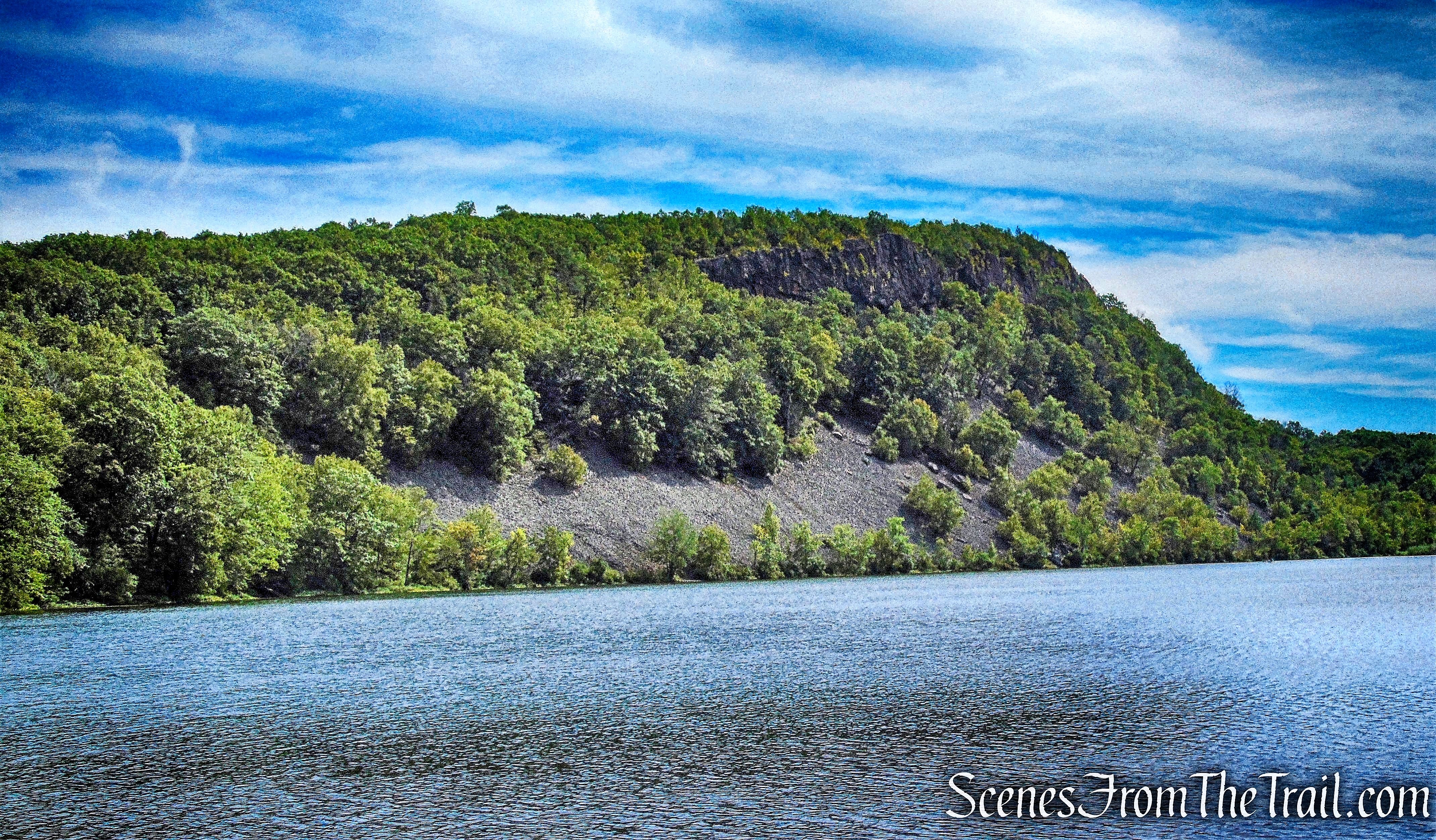
Beseck Mountain (sometimes spelled Besek), also known as Black Mountain, est. 840 feet, is a traprock mountain ridge located 4.75 miles southeast of Meriden, Connecticut. It is part of the narrow, linear Metacomet Ridge that extends from Long Island Sound near New Haven, Connecticut, north through the Connecticut River Valley of Massachusetts to the Vermont border. Besek Mountain is known for its 3-mile long line of open cliffs, unique microclimate ecosystems, and rare plant communities. The mountain is traversed by the 51-mile Mattabesett Trail, and is home to the Powder Ridge Ski Area. The Metacomet Ridge continues north from Besek Mountain as Higby Mountain and south as Trimountain.

The Wallingford Land Trust and the Middlesex Land Trust are active conservation partners in the area.

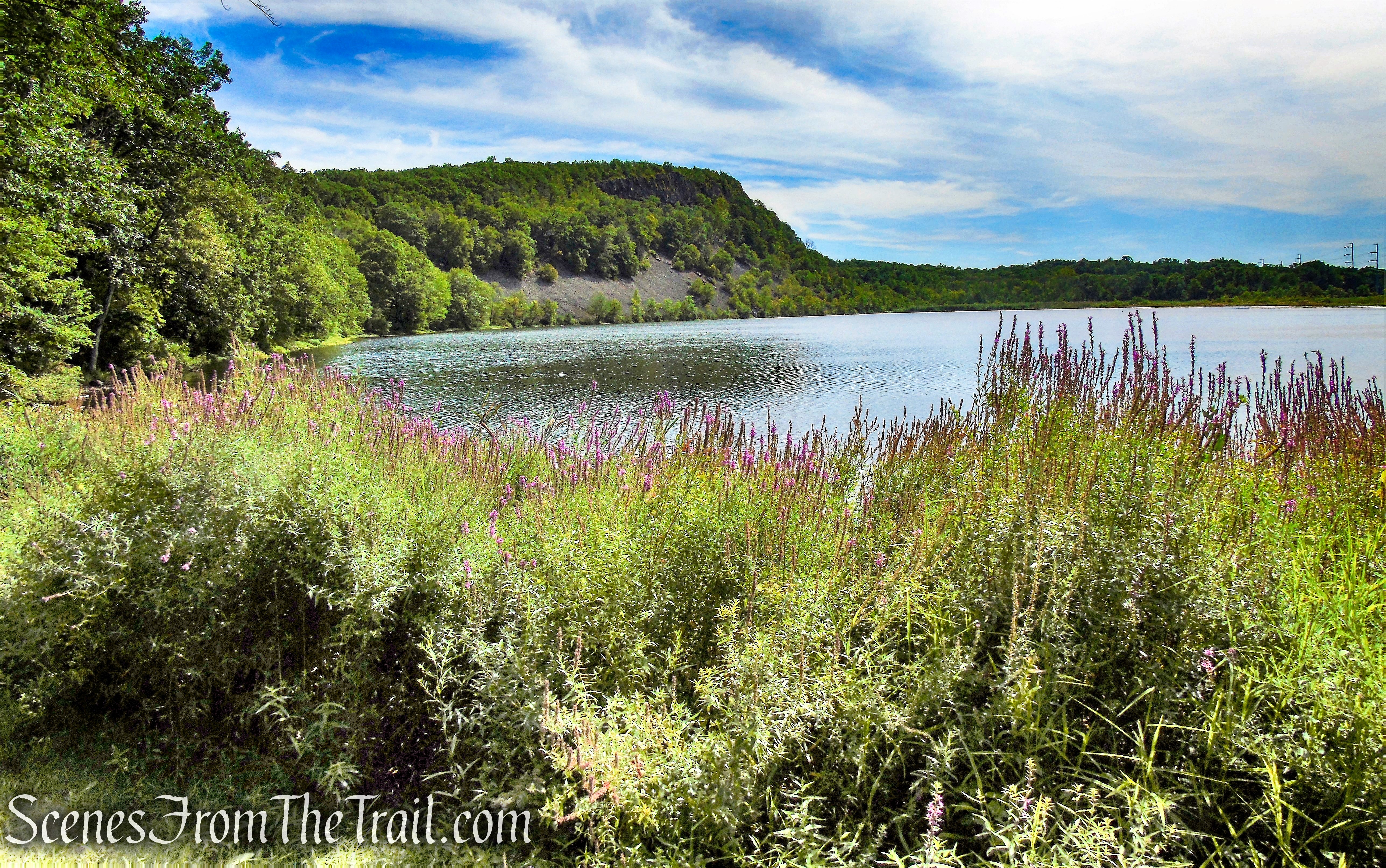
Besek Mountain as viewed from Black Pond State Wildlife Area

Besek Mountain as viewed from Black Pond State Wildlife Area

The Mattabesett Trail is a large, blue-blazed, U-shaped (51-mile), hiking trail that runs through the central parts of Connecticut; it is part of the New England National Scenic Trail. This section of the path features metamorphic rock, panoramic views atop Besek Mountain, Black Pond views and dense forests. Along the Besek Mountain ridge there are vistas displaying the Quinnipiac Valley. The trail runs through a ski resort and there are several suburbs and smaller towns observable from the trail. The forest is full of maple, hemlock, sycamore, beech, oak and birch trees. Be apprised that dogs must be kept on a leash while on the trail. Also, know that you can hike this as a one-way if you would like.

Mattabesett Trail

Mattabesett Trail

The New England National Scenic Trail (NET) is a National Scenic Trail in southern New England, which includes most of the three single trails Metacomet-Monadnock Trail, Mattabesett Trail and Metacomet Trail. The 215-mile route extends through 41 communities from Guilford, Connecticut at Long Island Sound over the Metacomet Ridge, through the highlands of the Pioneer Valley of Massachusetts, to the New Hampshire state border.

The trail is administered by the National Park Service, and managed by two non-profit and member-volunteer based organizations: the Connecticut Forest and Park Association in Connecticut, and the Appalachian Mountain Club in Massachusetts. The trail is maintained by the volunteers of these organizations.

Mattabesett Trail - New England National Scenic Trail

Mattabesett Trail – New England National Scenic Trail

Hike Overview:

Since this is a point-to-point hike, it is best to spot vehicles at both the start and the end of the hike. This hike was done from north to south, but can be done in reverse as well.

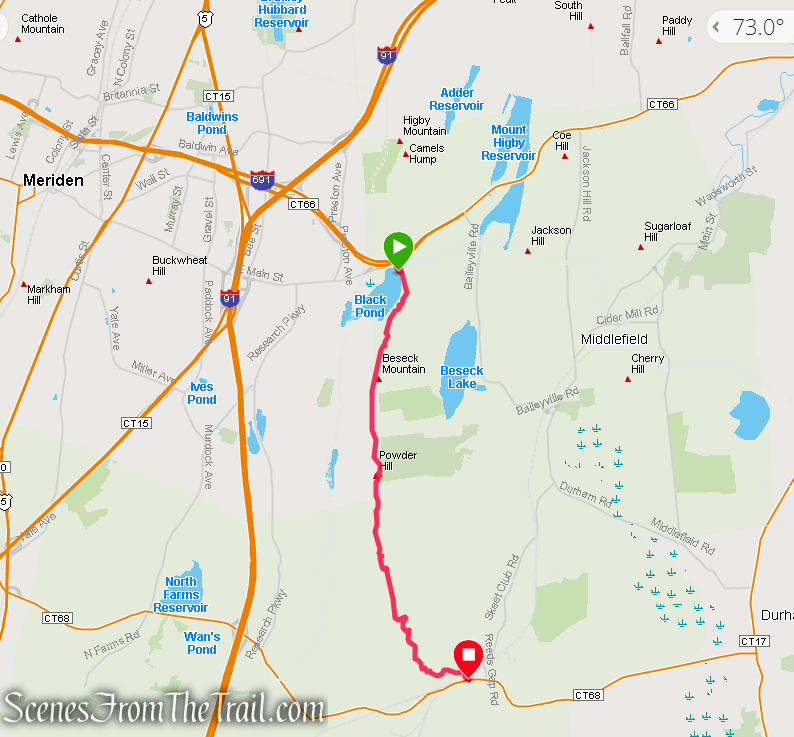
A trailhead for the Mattabesett Trail on Besek Mountain is located just west of the junction of Connecticut Route 68 and Connecticut Route 157 in Reeds Gap between Trimountain and Besek Mountain, 3 miles west of Durham center. Black Pond can be accessed via a small parking lot off East Main Street in Meriden, 1.2 miles east of Connecticut Route 15.

Black Pond State Wildlife Area

Black Pond State Wildlife Area

For a true “section hike,” the mountain may also be accessed via the parking area for Higby Mountain on Connecticut Route 66, just east of Black Pond.

This hike covers only the blue-blazed Mattabesett Trail, although there are a number of side trails, both blazed and unmarked that branch off the main trail, that one could explore.

On this stretch of trail enjoy ridge-walking with beautiful views. The climbs are moderately difficult, but once the ridge is reached the walking is relatively easy. The cliffs are dangerous in wet conditions, be sure to watch your footing. Views stretch to Talcott Mountain and Meriden to the northwest and Long Island Sound to the south. Black Pond sits at the base of the cliffs. While hiking you will also pass under the chair lifts at the Powder Ridge Ski Area.

Please Note: Beseck Mountain offers spectacular views of Meriden, including The Hanging Hills, Lamentation Mountain, and Chauncey Peak. These trap rock ridges are extremely steep, and care should be taken.

Mattabesett Trail - Besek Mountain

Mattabesett Trail – Besek Mountain

The Hike:

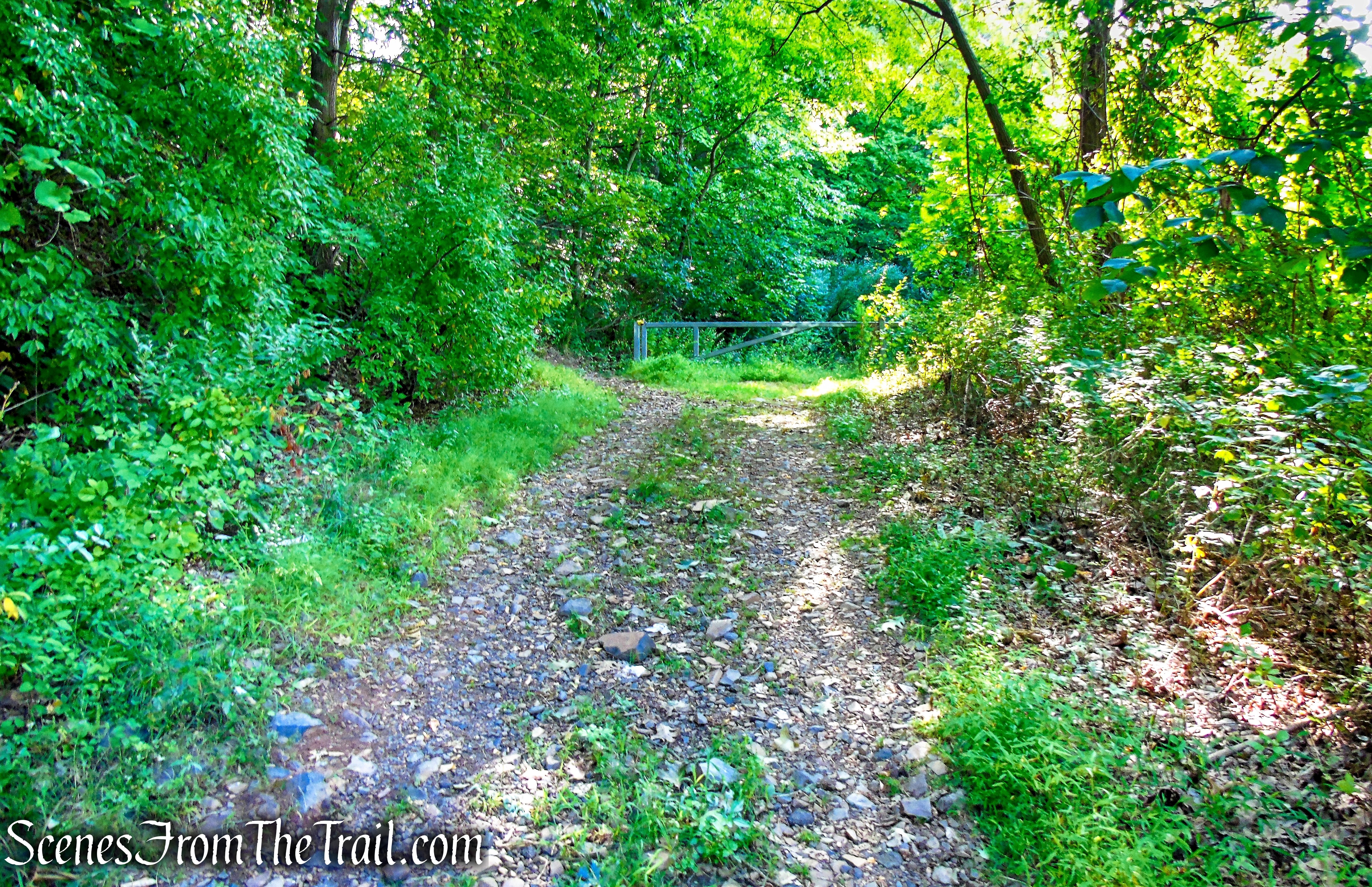
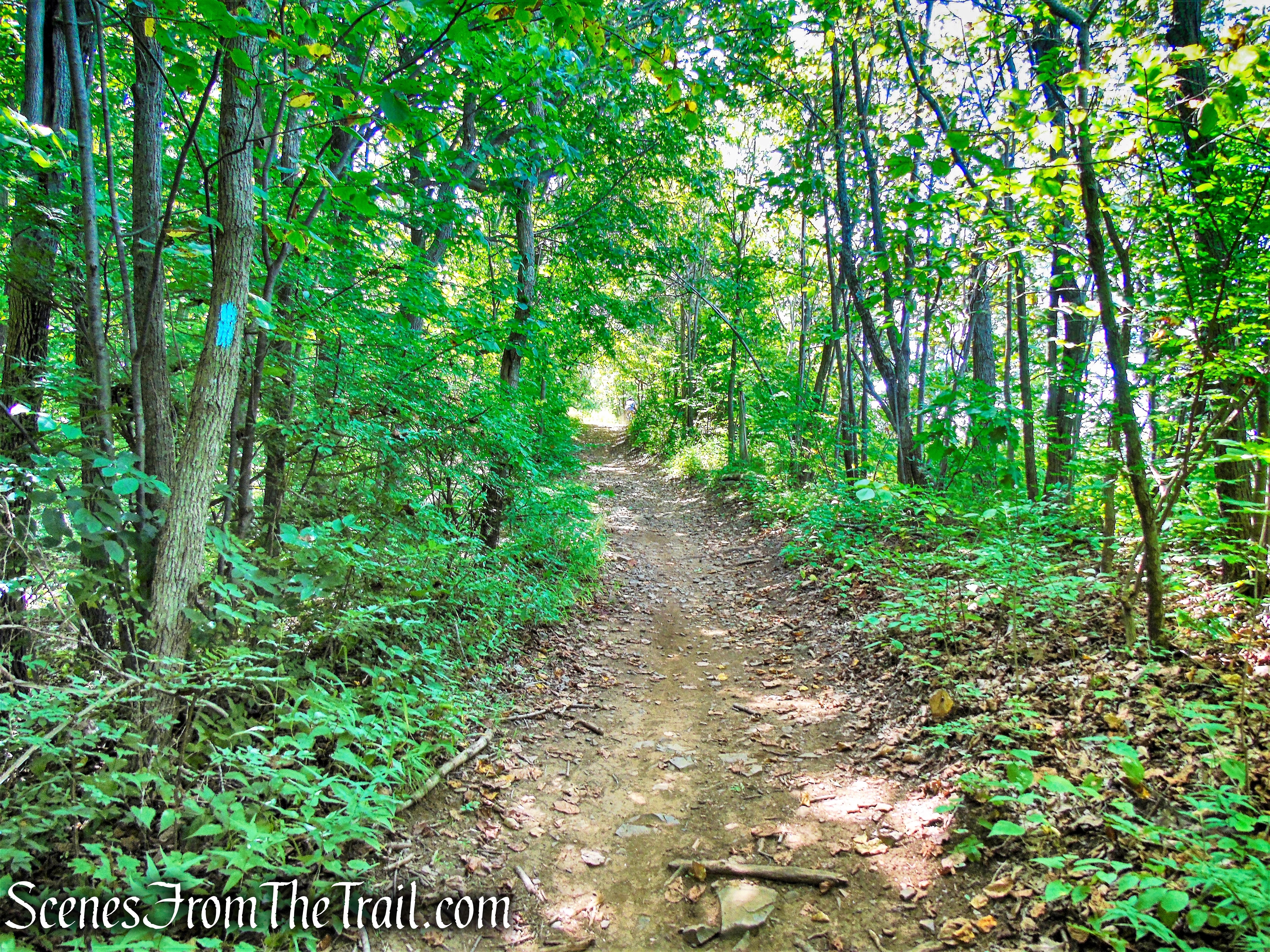
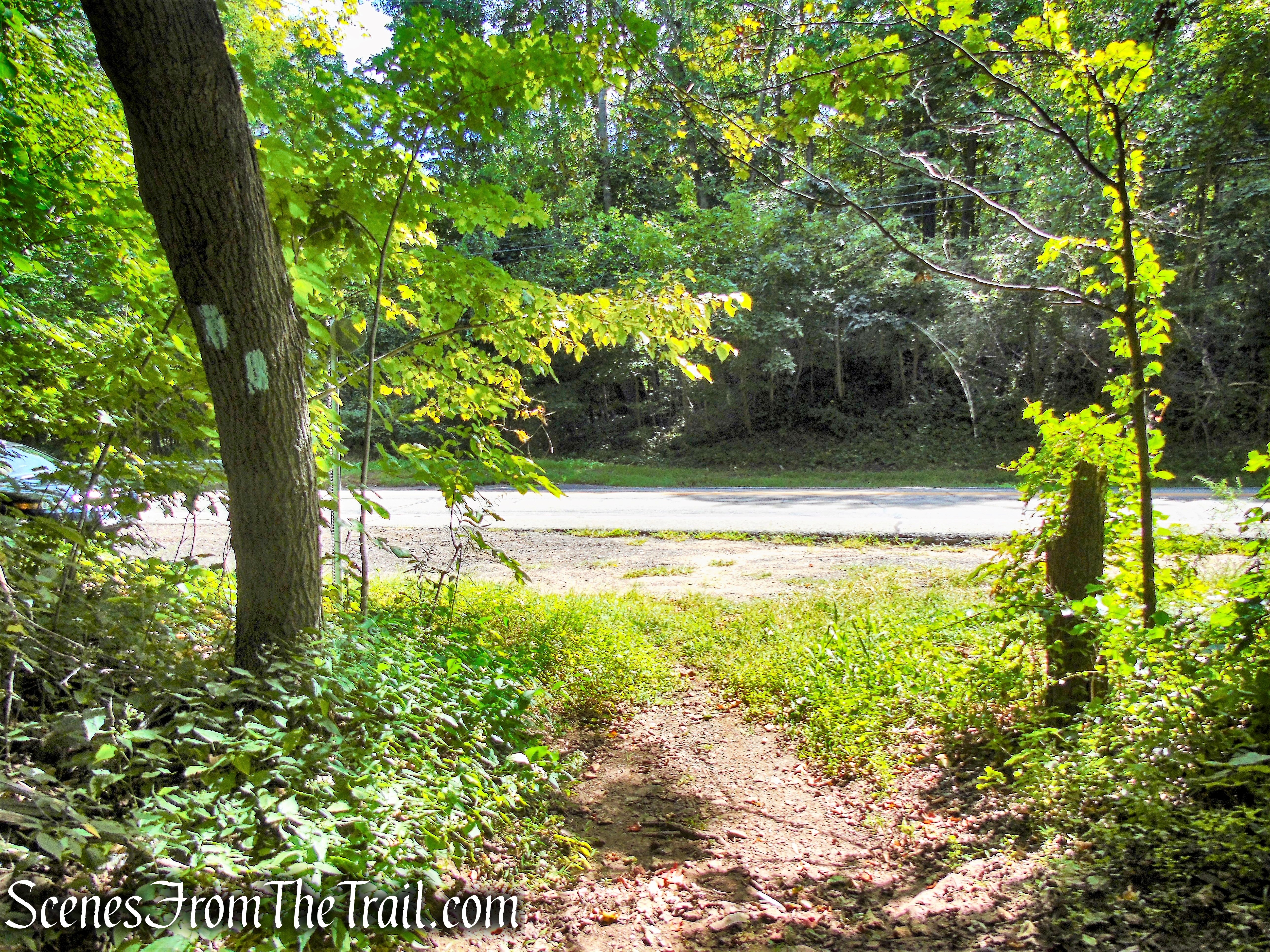
From the parking area of the Black Pond State Wildlife Area, head back towards the entrance road. In about 250 feet, turn sharp right and proceed uphill on a rocky woods road and around a metal gate. This unmarked road is shown on the trail map as the Black Pond Trail. The road heads southwest as it begins to ascend Besek Mountain, with Black Pond visible through the trees below on the right. In another 450 yards, the woods road comes to a four-way intersection with the blue-blazed Mattabesett Trail, which comes in from the left. Turn right and begin following the blue blazes as they lead uphill. You will be following the blue blazes for the remainder of the hike.

Black Pond looking towards Besek Mountain

Black Pond looking towards Besek Mountain

Black Pond Trail - Black Pond State Wildlife Area

Black Pond Trail – Black Pond State Wildlife Area

turn right on Mattabesett Trail - Besek Mountain

turn right on Mattabesett Trail – Besek Mountain

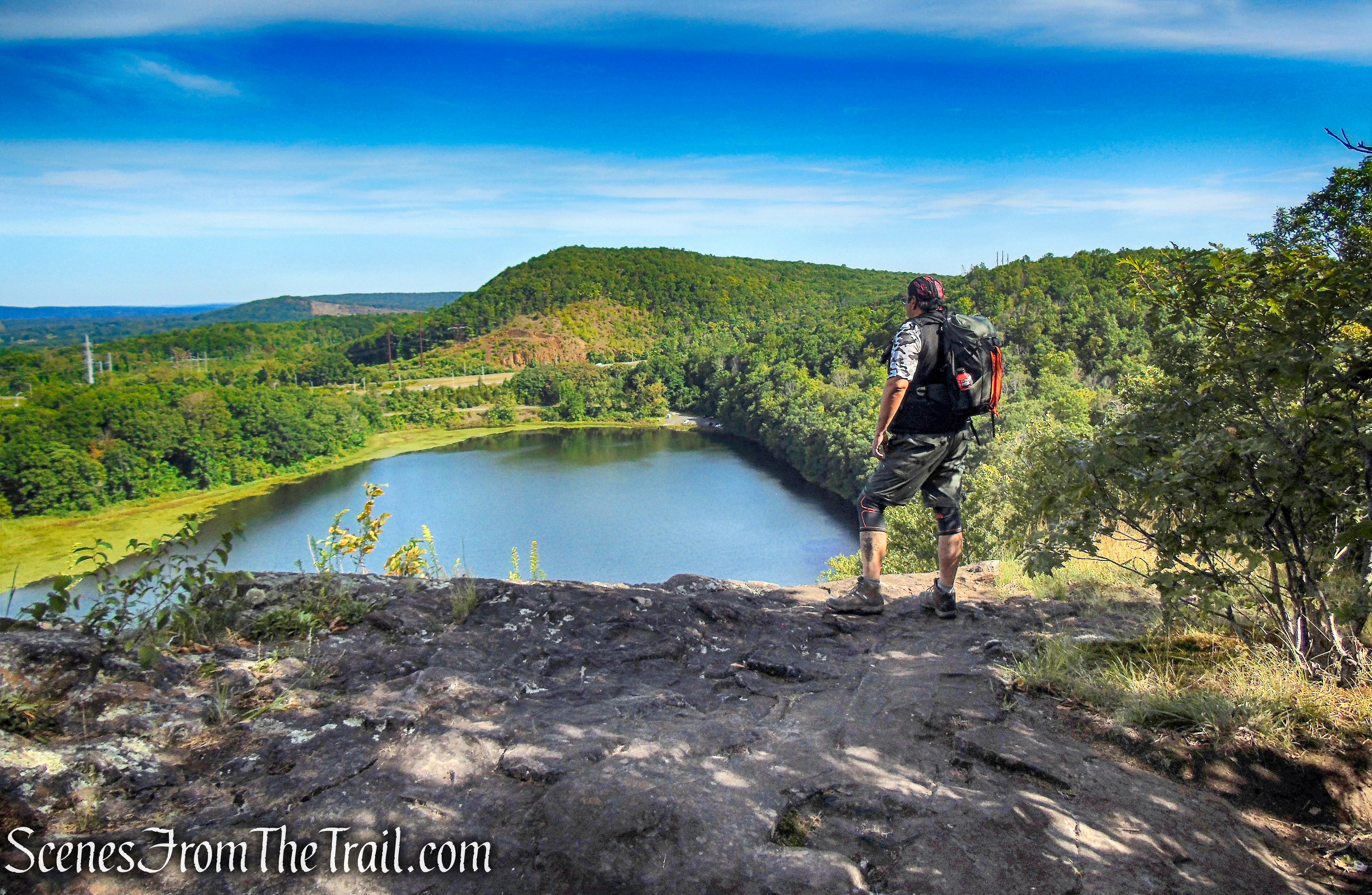
The Mattabesett Trail heads in a southerly direction as it climbs the ridge on a wide footpath. In another 400 yards, the trail comes to an open rock ledge with views north of Black Pond with Mount Higby just beyond. You have just traveled about 1/2 mile and gained about 230 feet in elevation. You may want to take a moment to enjoy the view.

Mattabesett Trail - Besek Mountain

Mattabesett Trail – Besek Mountain

Mattabesett Trail - Besek Mountain

Mattabesett Trail – Besek Mountain

Mattabesett Trail - Besek Mountain

Mattabesett Trail – Besek Mountain

Mattabesett Trail - Besek Mountain

Mattabesett Trail – Besek Mountain

When you are ready to proceed, head south along the ridge, following the blue blazes. In a short distance, the trail climbs to a similar viewpoint from another rock ledge. As the Mattabesett Trail continues along the ridge, there are multiple viewpoints of Black Pond with Mount Higby just beyond, and views to the west, of the city of Meriden and the Hanging Hills.

Mattabesett Trail - Besek Mountain

Mattabesett Trail – Besek Mountain

Mattabesett Trail - Besek Mountain

Mattabesett Trail – Besek Mountain

Mattabesett Trail - Besek Mountain

Mattabesett Trail – Besek Mountain

Mattabesett Trail - Besek Mountain

Mattabesett Trail – Besek Mountain

Mattabesett Trail - Besek Mountain

Mattabesett Trail – Besek Mountain

Mattabesett Trail - Besek Mountain

Mattabesett Trail – Besek Mountain

Mattabesett Trail - Besek Mountain

Mattabesett Trail – Besek Mountain

Mattabesett Trail - Besek Mountain

Mattabesett Trail – Besek Mountain

Mattabesett Trail - Besek Mountain

Mattabesett Trail – Besek Mountain

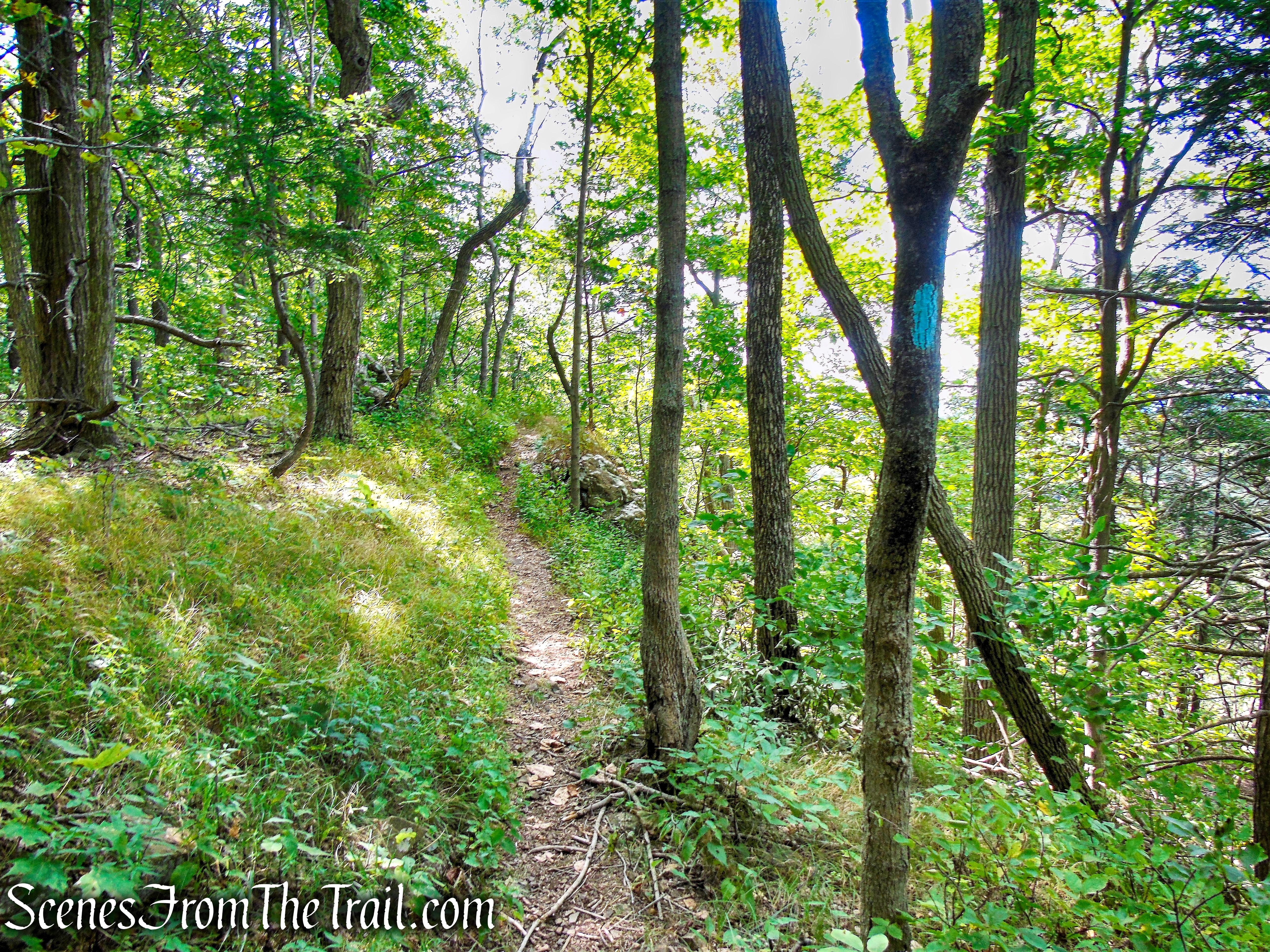
The trail meanders along the ridge, at times in close proximity to the cliff’s edge. Along these sections that are extremely close to the edge, there is a path that parallels the main trail about 10 feet away. After reaching a highpoint, the trail leads away from the cliffs and ducks into the forest. It soon makes a sharp right turn and descends steeply. At the base of the descent there is a massive rock ledge to the left of the trail. The trail now levels off and soon approaches the edge of the cliffs.

Mattabesett Trail - Besek Mountain

Mattabesett Trail – Besek Mountain

Mattabesett Trail - Besek Mountain

Mattabesett Trail – Besek Mountain

Mattabesett Trail - Besek Mountain

Mattabesett Trail – Besek Mountain

Mattabesett Trail - Besek Mountain

Mattabesett Trail – Besek Mountain

Mattabesett Trail - Besek Mountain

Mattabesett Trail – Besek Mountain

Mattabesett Trail - Besek Mountain

Mattabesett Trail – Besek Mountain

Mattabesett Trail - Besek Mountain

Mattabesett Trail – Besek Mountain

The trail travels over undulating terrain as it comes precariously close to the edge and there is a lot of loose rock and dirt in this area. Great care should be exercised along this section to avoid tripping or losing one’s footing. Soon the trail comes to an open area which makes for a good spot to take another break and perhaps spot some hawks or small planes flying overhead.

Mattabesett Trail - Besek Mountain

Mattabesett Trail – Besek Mountain

Mattabesett Trail - Besek Mountain

Mattabesett Trail – Besek Mountain

Mattabesett Trail - Besek Mountain

Mattabesett Trail – Besek Mountain

Mattabesett Trail - Besek Mountain

Mattabesett Trail – Besek Mountain

Mattabesett Trail - Besek Mountain

Mattabesett Trail – Besek Mountain

Mattabesett Trail - Besek Mountain

Mattabesett Trail – Besek Mountain

Mattabesett Trail - Besek Mountain

Mattabesett Trail – Besek Mountain

Mattabesett Trail - Besek Mountain

Mattabesett Trail – Besek Mountain

Mattabesett Trail - Besek Mountain

Mattabesett Trail – Besek Mountain

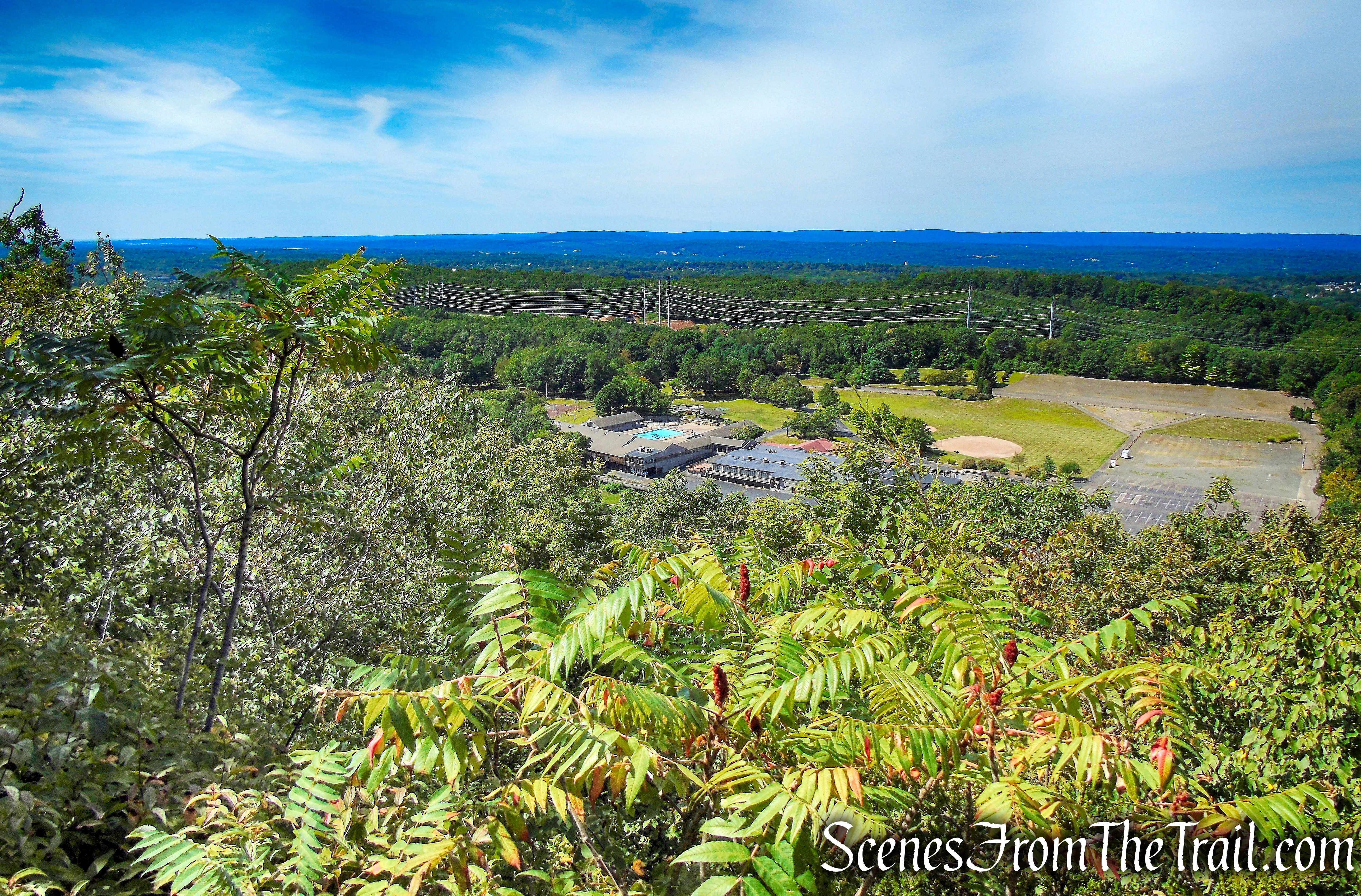
The Mattabesett Trail then veers away from the cliffs and soon joins a woods road. In another 0.5 mile, the trail reaches the Powder Ridge Ski Area. Powder Ridge was for many years one of the most popular ski areas south of Massachusetts. After a multi-year closure, Powder Ridge reopened in 2013 as the Powder Ridge Mountain Park & Resort.

Mattabesett Trail - Besek Mountain

Mattabesett Trail – Besek Mountain

Powder Ridge - Mattabesett Trail - Besek Mountain

Powder Ridge – Mattabesett Trail – Besek Mountain

Powder Ridge - Mattabesett Trail - Besek Mountain

Powder Ridge – Mattabesett Trail – Besek Mountain

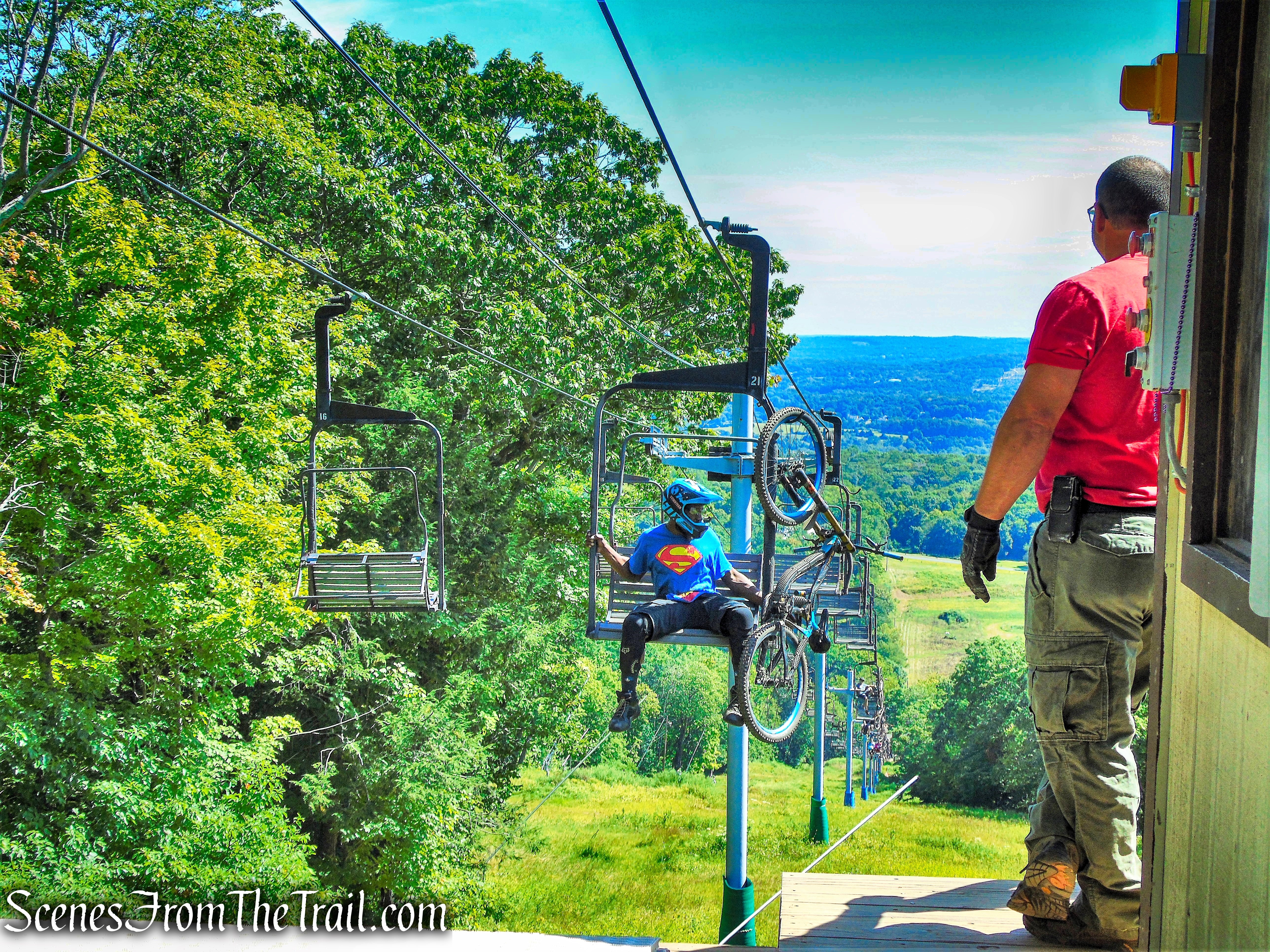
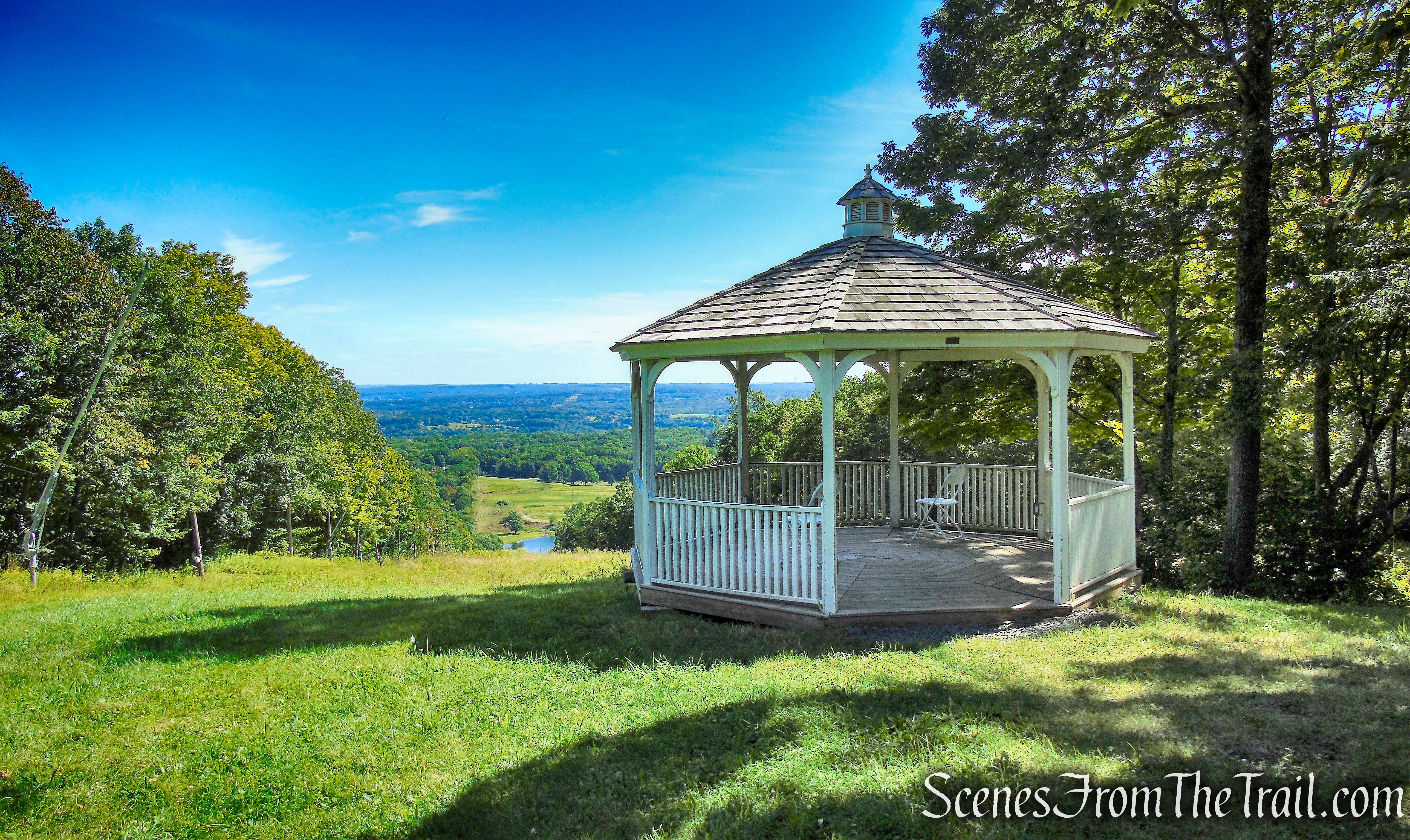
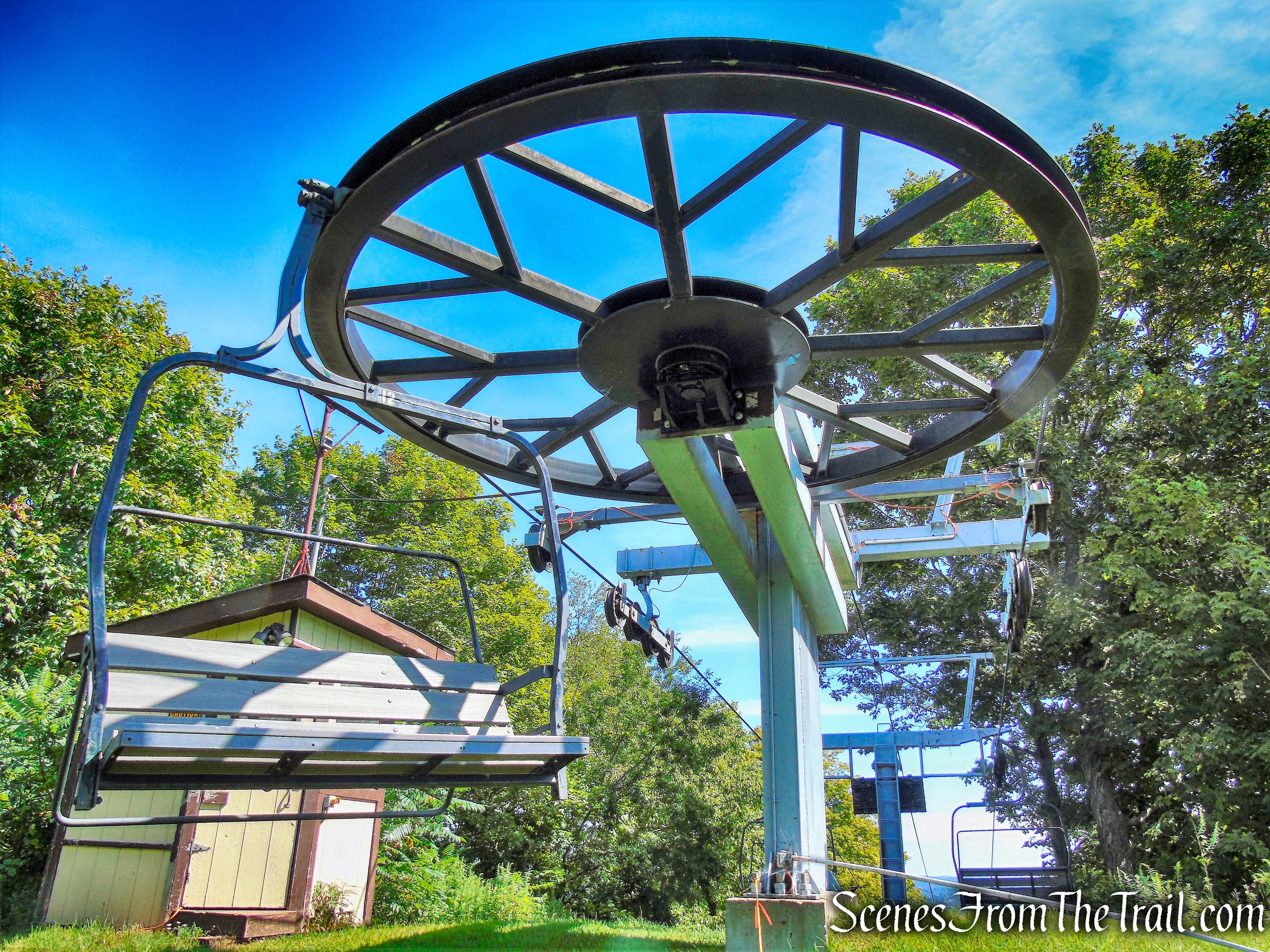
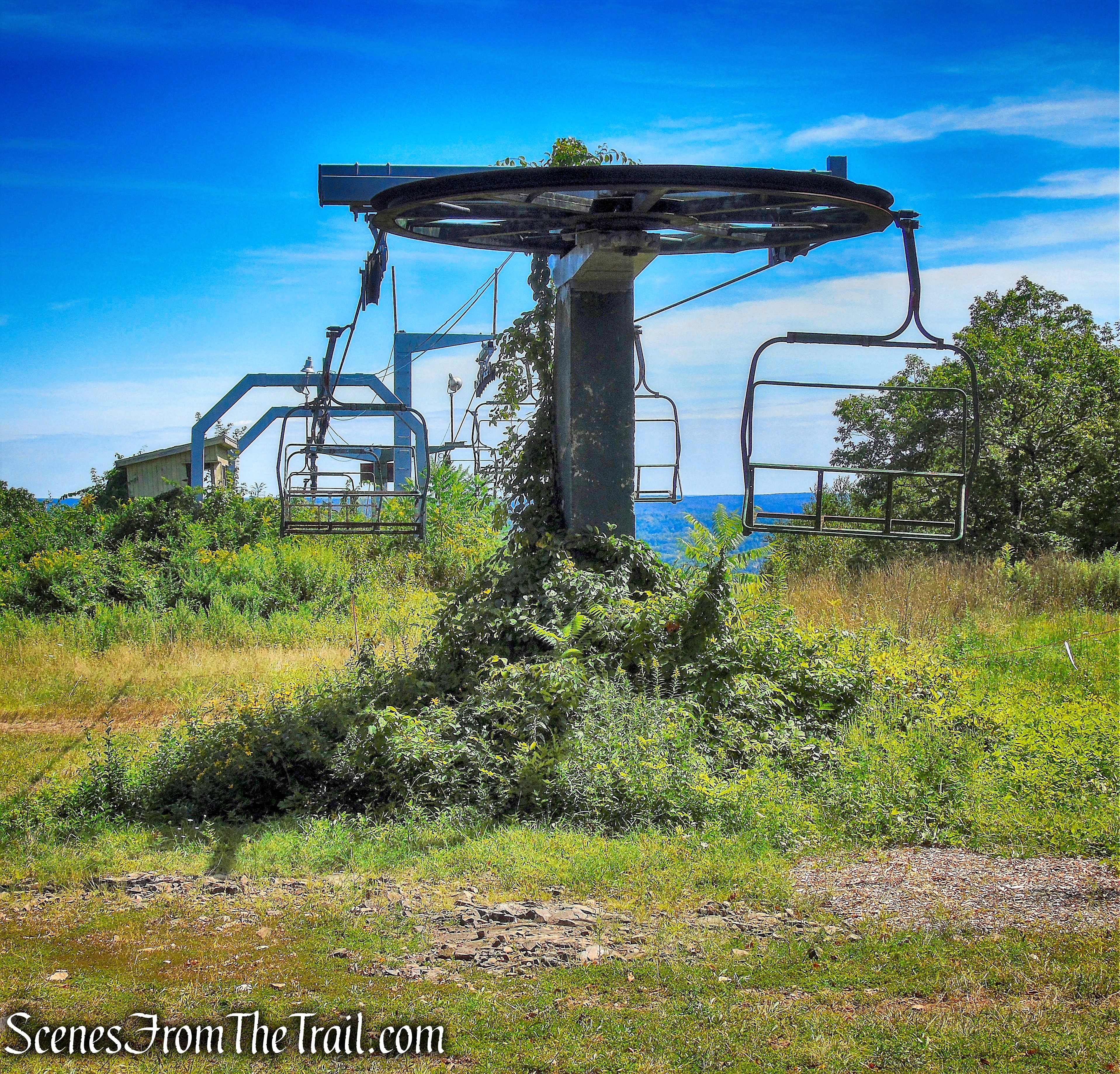
The trail continues under the chairlifts and passes by a gazebo that overlooks the ski slope. This is a good spot for lunch and also a good turnaround point if you are doing an out-and-back hike. You have now traveled approximately 2.5 miles from the start of the hike.

Powder Ridge - Mattabesett Trail - Besek Mountain

Powder Ridge – Mattabesett Trail – Besek Mountain

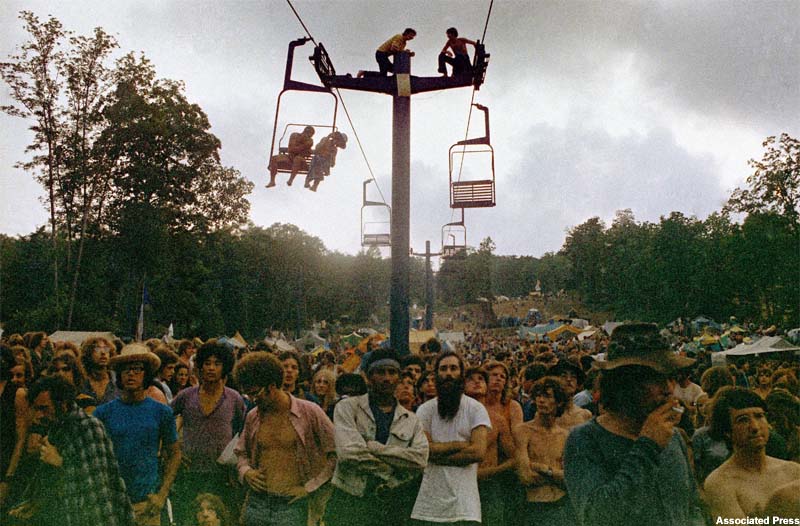
In 1970, the ski area made headlines as the venue for the Powder Ridge Rock Festival. A three day event one year after Woodstock, many popular artists of the era, including Fleetwood Mac, James Taylor, Joe Cocker, Van Morrison, Jethro Tull, Janis Joplin, John Sebastian, Chuck Berry, and possibly Led Zeppelin were expected to play. Connecticut newspapers projected crowds of up to 50,000 to attend the July 31-August 2, 1970 festival. After local opposition, the event was halted on July 27, 1970, just days before the projected start. Due to the short notice, up to 30,000 concert-goers showed up and proceeded to trash the area and cause drug-related legal issues that would plague the courts for months to come.

The cancelled Powder Ridge Rock Festival - image courtesy of New England History

The cancelled Powder Ridge Rock Festival – image courtesy of New England History

Powder Ridge - Mattabesett Trail - Besek Mountain

Powder Ridge – Mattabesett Trail – Besek Mountain

The Mattabesett Trail continues south past the ski area with a west-facing viewpoint, just to the right of the trail. The trail then enters the woods and travels on a gravel road. A short distance later, the trail passes over the true summit of Besek Mountain. The trail soon leaves the road and travels on a footpath with many ups and downs, passing a campsite, then climbs to pass underneath some powerlines.

Powder Ridge - Mattabesett Trail - Besek Mountain

Powder Ridge – Mattabesett Trail – Besek Mountain

Powder Ridge - Mattabesett Trail - Besek Mountain

Powder Ridge – Mattabesett Trail – Besek Mountain

Mattabesett Trail - Besek Mountain

Mattabesett Trail – Besek Mountain

Mattabesett Trail - Besek Mountain

Mattabesett Trail – Besek Mountain

Mattabesett Trail - Besek Mountain

Mattabesett Trail – Besek Mountain

Mattabesett Trail - Besek Mountain

Mattabesett Trail – Besek Mountain

There are views through the trees of the town of Wallingford. There are also several spots where Pistapaug Pond in Wallingford can be seen off in the distance. Compared to the views earlier in the hike, these are somewhat of a letdown.

Mattabesett Trail - Besek Mountain

Mattabesett Trail – Besek Mountain

Mattabesett Trail - Besek Mountain

Mattabesett Trail – Besek Mountain

Mattabesett Trail - Besek Mountain

Mattabesett Trail – Besek Mountain

Mattabesett Trail - Besek Mountain

Mattabesett Trail – Besek Mountain

Mattabesett Trail - Besek Mountain

Mattabesett Trail – Besek Mountain

Mattabesett Trail - Besek Mountain

Mattabesett Trail – Besek Mountain

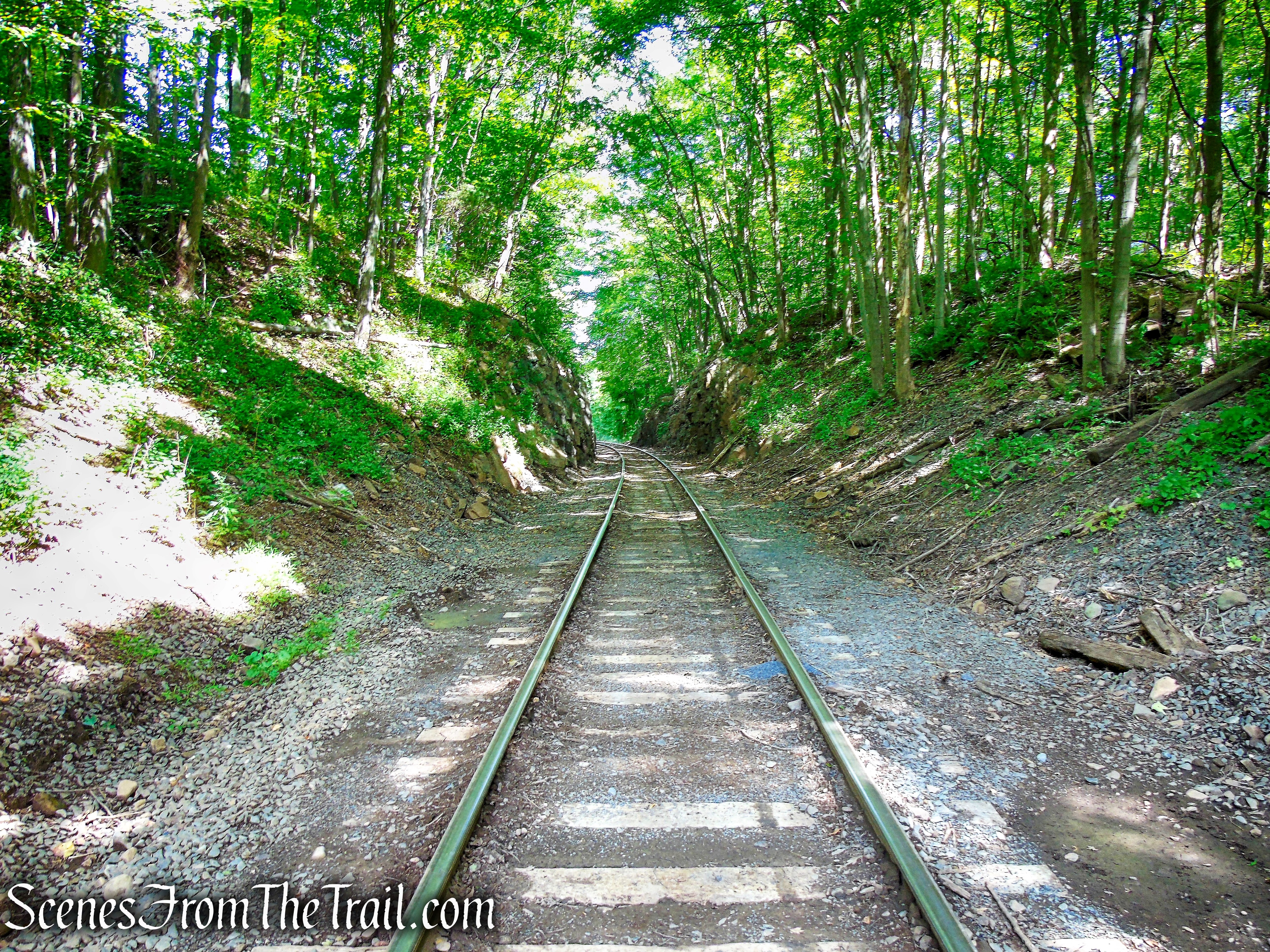
The trail leaves the ridgeline as it continues to weave through the woods with numerous ups and downs. After several miles of ridge walking, the trail turns east and heads down to Reed’s Gap and Route 68. The Mattabesett Trail then joins a woods road as it descends gradually. The trail then crosses train tracks as it nears the trailhead on Connecticut Route 68. 

Mattabesett Trail - Besek Mountain

Mattabesett Trail – Besek Mountain

Mattabesett Trail - Besek Mountain

Mattabesett Trail – Besek Mountain

Mattabesett Trail - Besek Mountain

Mattabesett Trail – Besek Mountain

Mattabesett Trail - Besek Mountain

Mattabesett Trail – Besek Mountain

This is an active rail line and care should be taken when crossing.

Mattabesett Trail - Besek Mountain

Mattabesett Trail – Besek Mountain

As the Mattabesett Trail reaches the road, you have now traveled about 5 miles. The blue blazes turn left and continue along the road before crossing Route 68 and ascending Tri-Mountain.

Mattabesett Trail - Connecticut Route 68

Mattabesett Trail – Connecticut Route 68

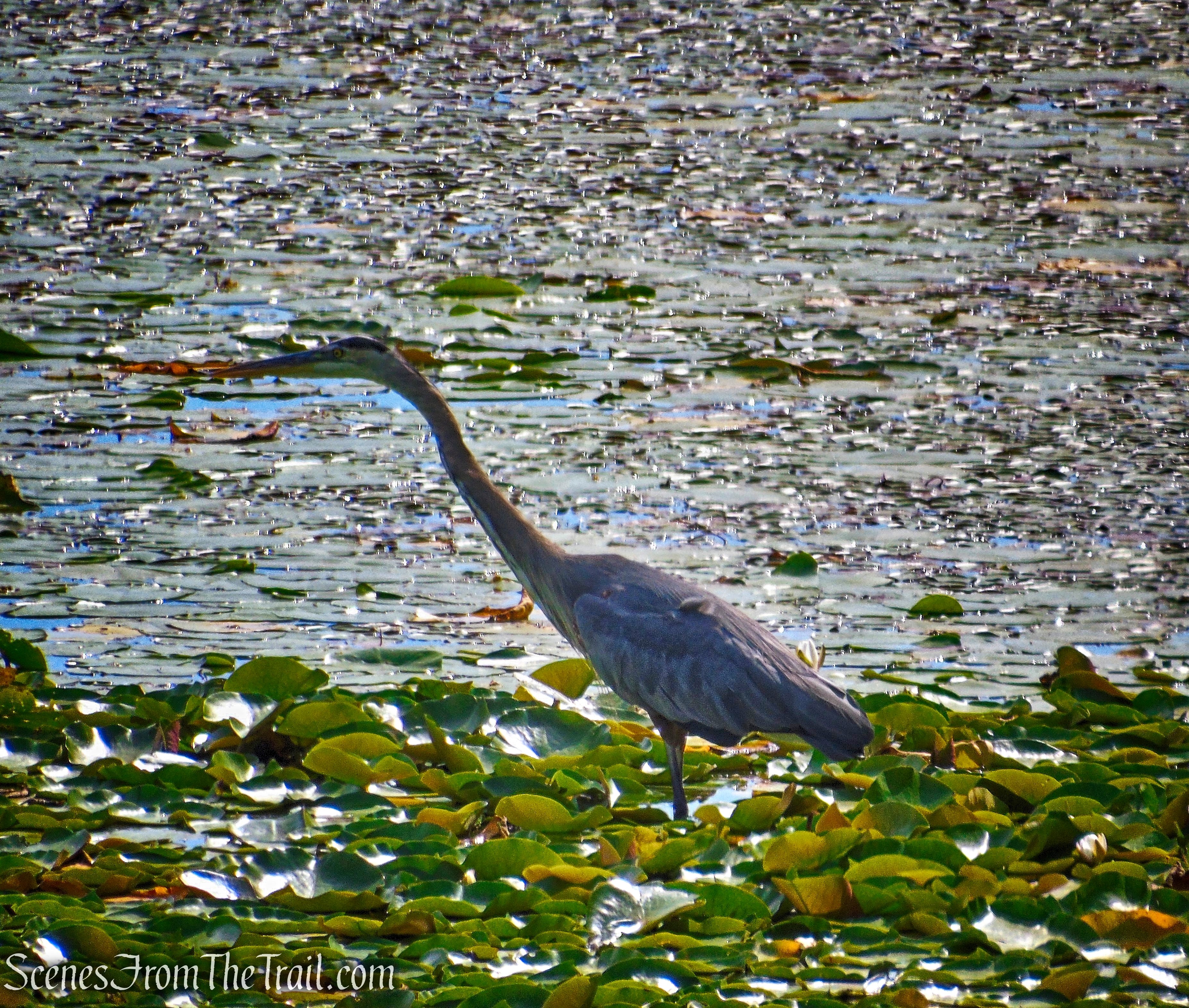
Back at Black Pond to retrieve the vehicle, we spotted a Great Blue Heron relaxing in the pond. 

Great Blue Heron - Black Pond State Wildlife Area

Great Blue Heron – Black Pond State Wildlife Area

Review:

This was a great hike with outstanding views and not many people on the trail. The ridge walk is the highlight of the hike. The best views are before the Powder Ridge Ski Area and if doing an out and back, a good place to turn around. From that point on, going south, the views don’t compare with those of the northern section. In retrospect, I would have turned around at the ski area, but I wanted to reach the true summit and was hoping for more southern views. In my opinion, from Powder Ridge to Route 68, felt redundant and drawn-out. 

Pros: Outstanding views, Mattabesett Trail is well blazed and maintained, lesser traveled area.

Cons: Point-to-point hike means two vehicles or a cab ride back to the start.

Take a hike!

Mattabesett Trail - Besek Mountain

Mattabesett Trail – Besek Mountain

Sources:

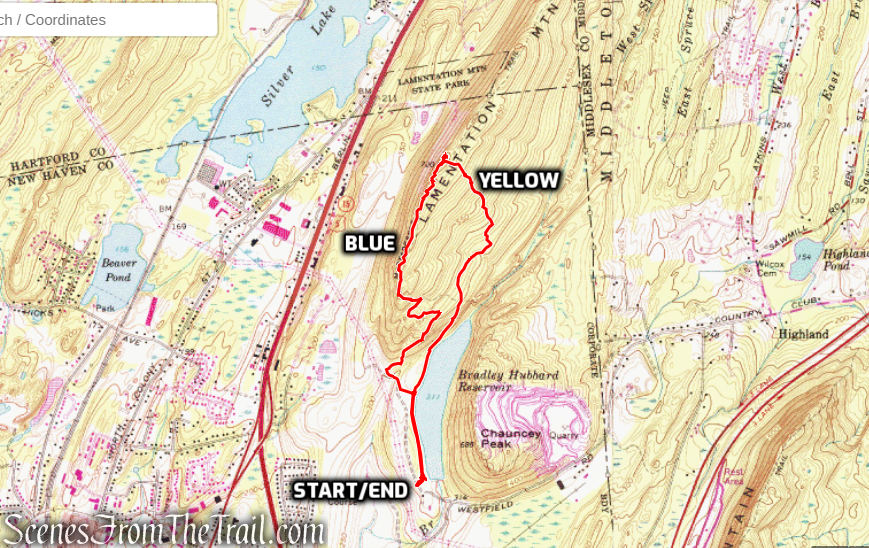
Mount Lamentation Loop from Giuffrida Park

August‎ ‎26‎‎, ‎2019 – Meriden, Connecticut

Difficulty: Easy – Moderate

Length: Approximately 3.5 miles

Max elevation: 720 ft.– total elevation gain approximately 474 ft.

Route type: Circuit

Maps: Neither map is up to date – Giuffrida ParkGiuffrida Park & Suggested Hikes

Trailhead parking: Doctor Francis Giuffrida Park – 800 Westfield Rd, Meriden, CT 06450

Overview:

Lamentation Mountain, or Mount Lamentation, at an elevation of 720 feet, is a traprock mountain located 2.5 miles north of Meriden, Connecticut. It is part of the narrow, linear Metacomet Ridge that extends from Long Island Sound near New Haven, Connecticut, north through the Connecticut River Valley of Massachusetts to the Vermont border. Lamentation Mountain is known for its scenic vistas, extensive cliff faces, unique microclimate ecosystems, and rare plant communities. It rises steeply 550 feet above the city of Meriden to the south with west-facing cliffs of 200 feet or more. The cliff line, described by the Connecticut Forest and Park Association as “perhaps the most scenic traprock ridge walk in the state” is a prominent landscape feature visible for miles. The mountain is traversed by the 50-mile Mattabesett Trail.

The Berlin Land Trust and the Meriden land Trust are active in the conservation of Lamentation Mountain and its viewshed.

Mount Lamentation as viewed from Chauncey Peak

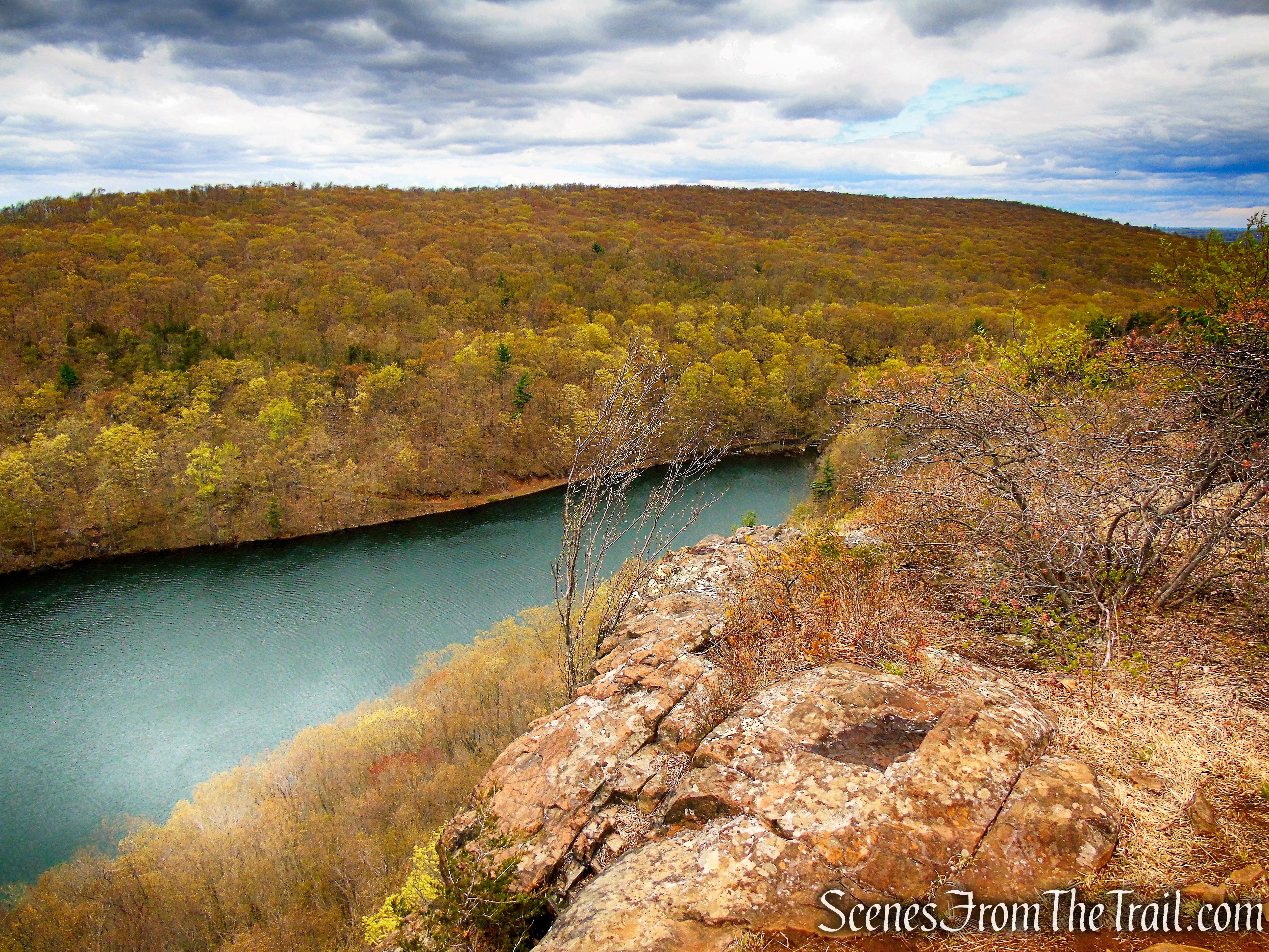
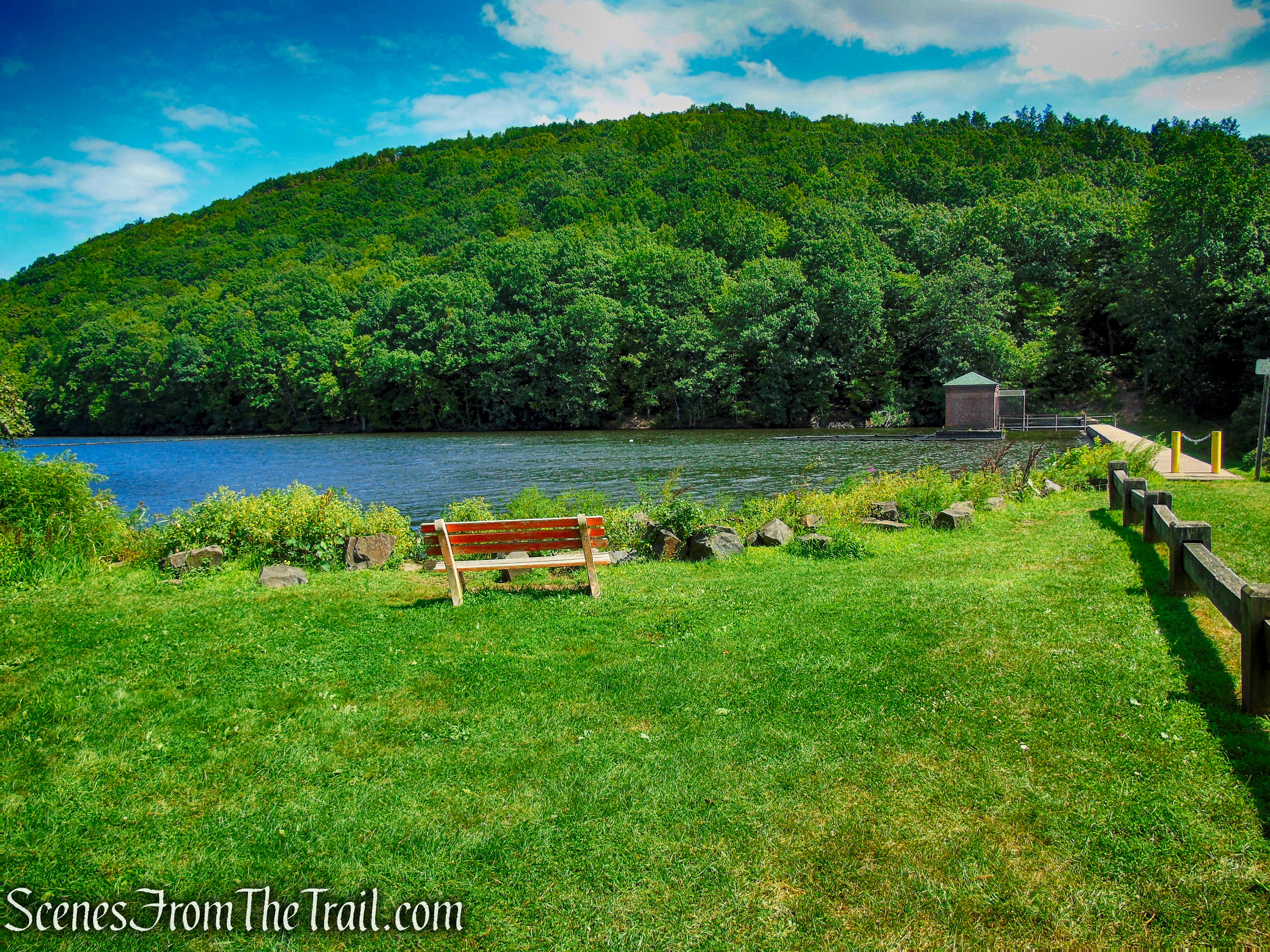
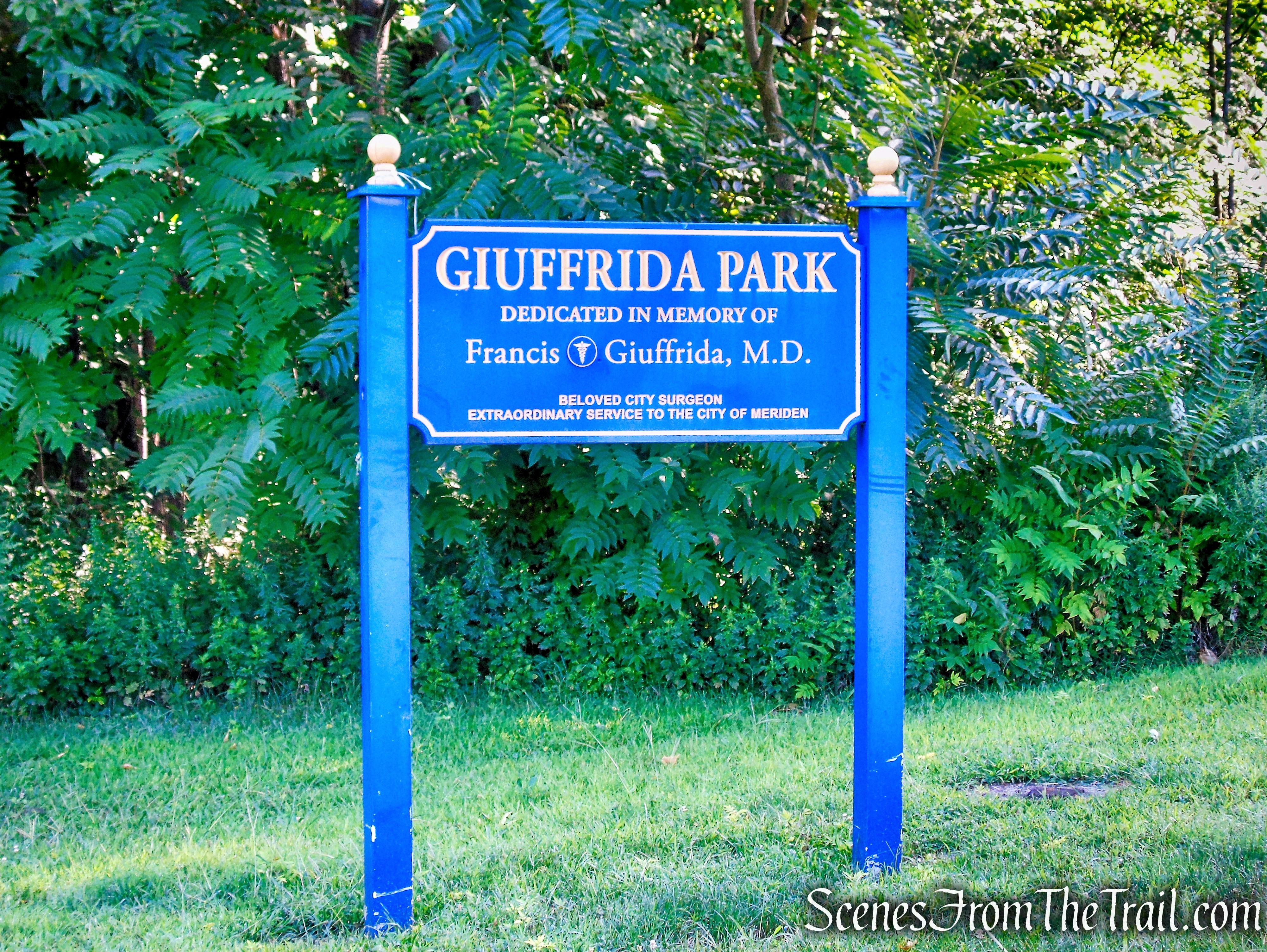
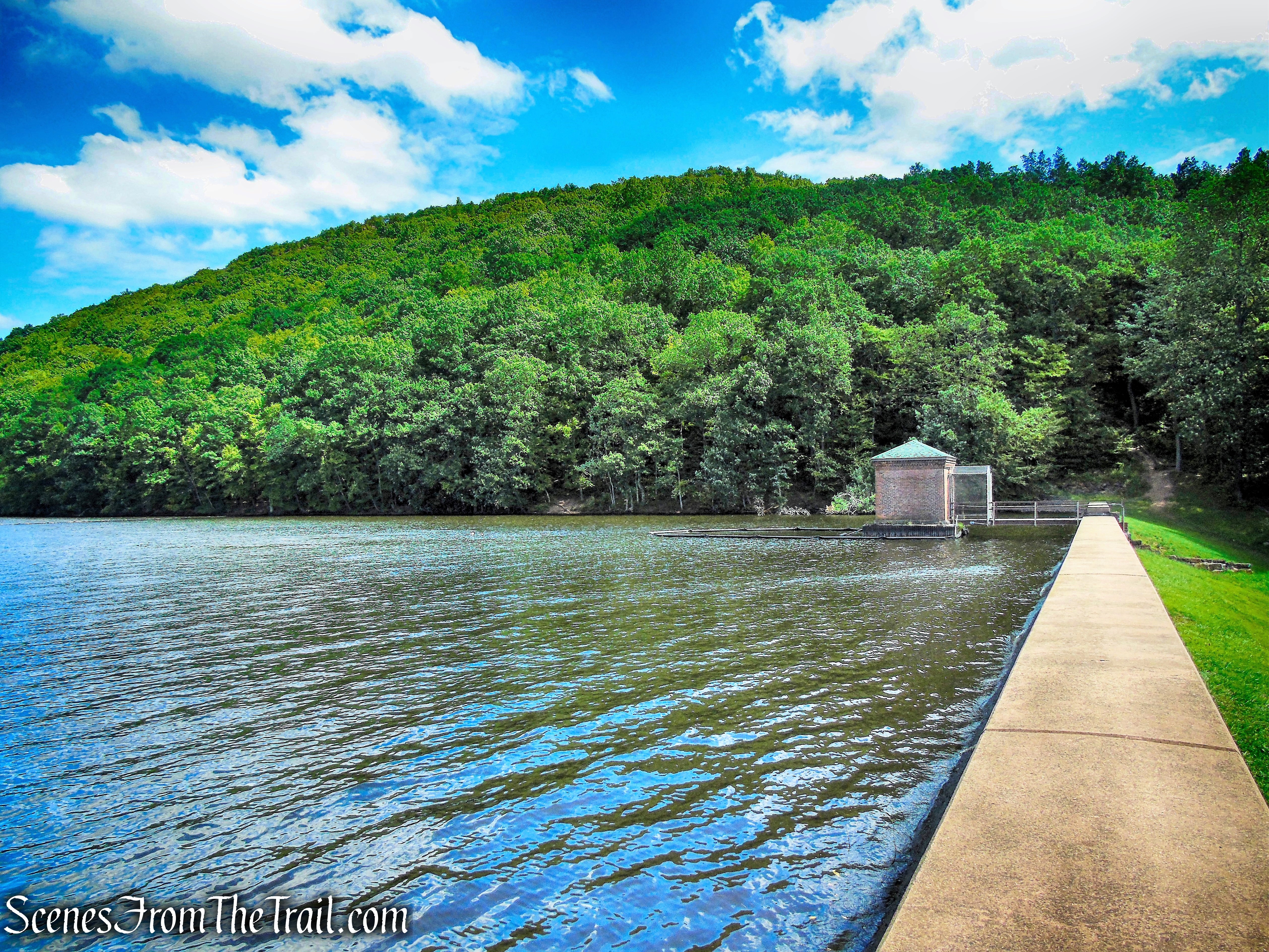
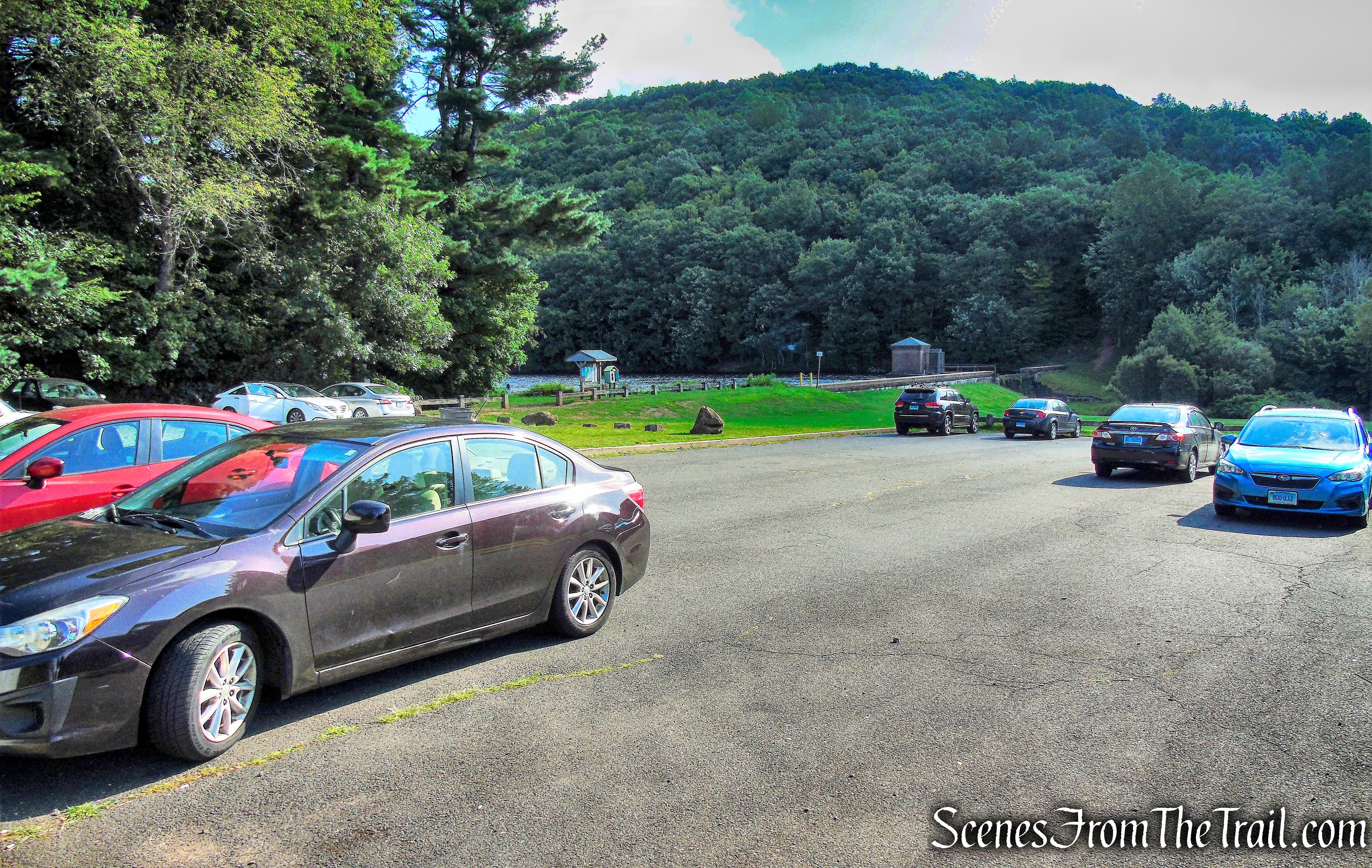
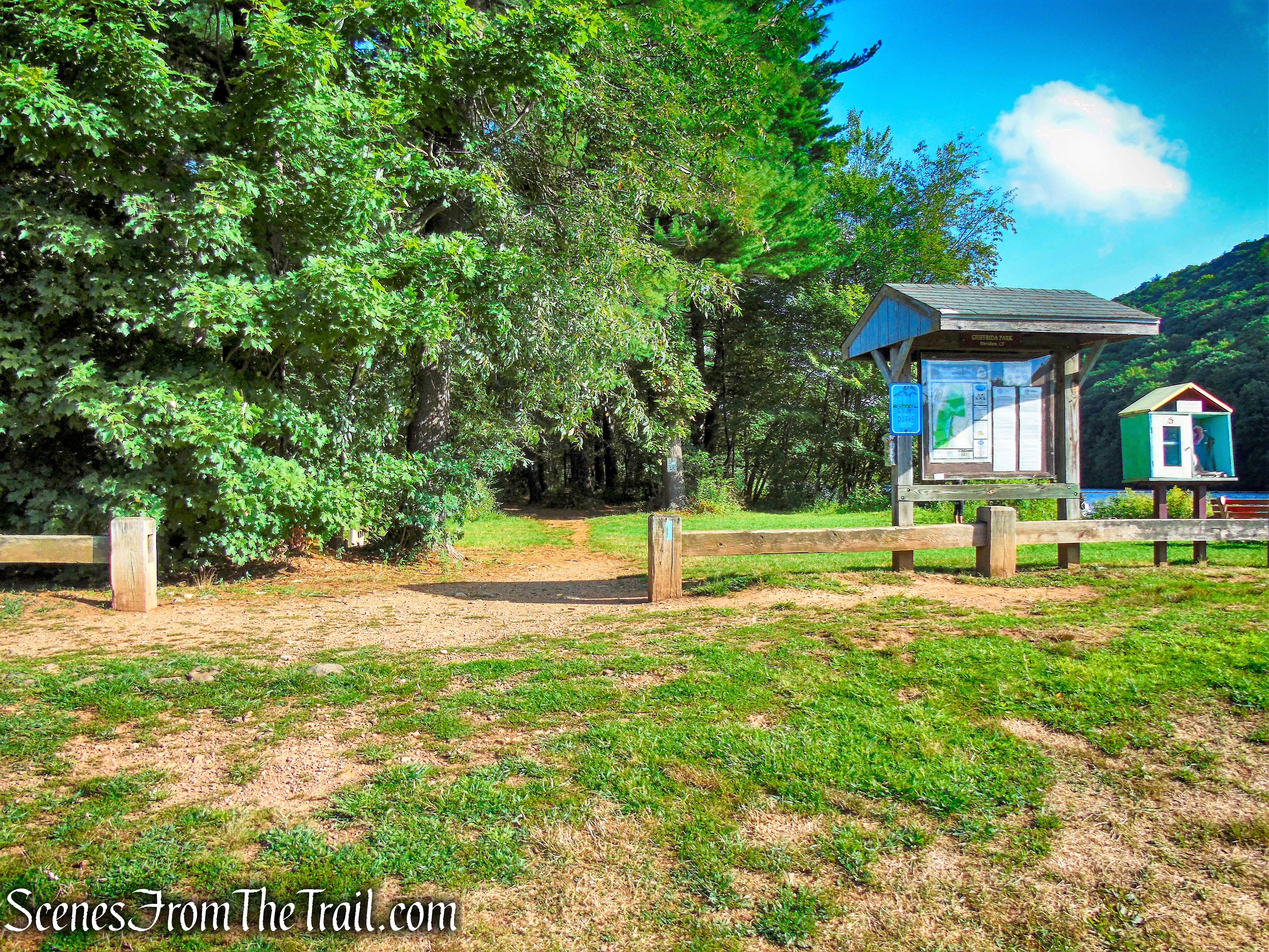
Giuffrida Park is located in Meriden’s northeast corner, with two entrances off of Westfield Road. Substantial parking is available within Giuffrida Park and at a commuter lot on Country Club Road, on the west side of I-91 (Exit 20). It consists of the former Bradley-Hubbard Reservoir, now known as Crescent Lake and the nearly 600-acres surrounding it.

Giuffrida Park
Giuffrida Park

History:

Mount Lamentation was named in 1636 when a member of Wethersfield Colony became lost and was found by a search party three days later on this ridge, twelve miles from home. There is some controversy whether the Lamentation refers to his behavior or that of those looking for him. Also known from a legend in the 1700’s when a Native American Girl committed suicide by jumping off the Mountaintop from the loss of her love. In 1735 a group of local men leased land on the western edge of this mountain in an attempt to find gold, as quartz formations there seemed promising. None was ever found.

Giuffrida Park was originally part of an area farmed in the late 1600’s and early 1700’s by Jonathan Gilbert and later Captain Andrew Belcher. This farm, the first European settlement in this region, became known as the “Meriden Farm” – from which the whole area eventually took its name. It was acquired by the city in 1965 and subsequently named for Dr. Francis Giuffrida, a beloved city surgeon who died in 1966 at the age of 56. Dr. Giuffrida was on active duty with the U.S. Navy and Marine Corps from 1941 to 1946, serving in both the Atlantic and Pacific theaters of war. He was awarded the bronze star and held the rank of Captain. Today, the Park contains 598 acres for passive recreation.

Giuffrida Park
Giuffrida Park

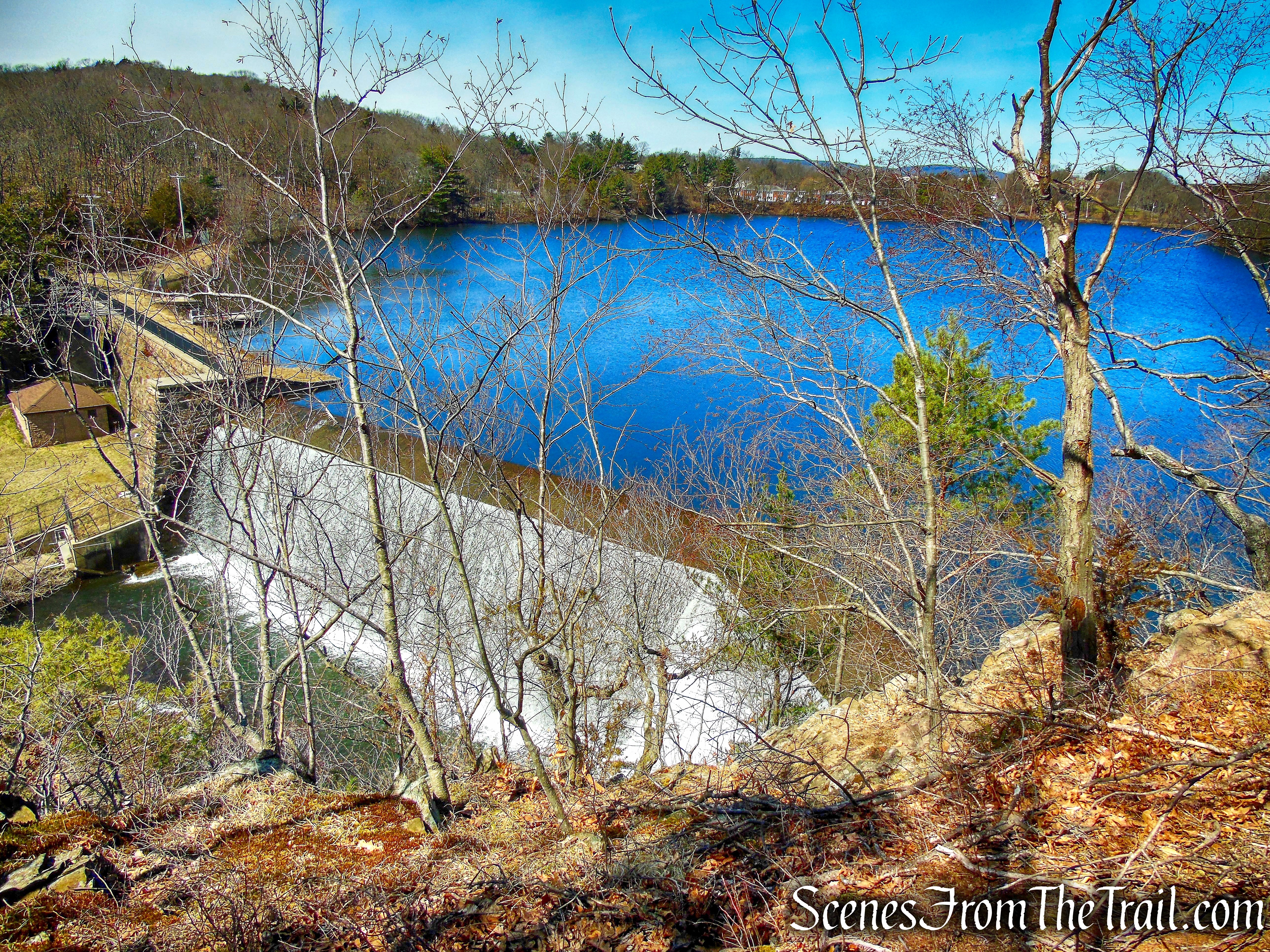
The reservoir, Crescent Lake (formerly called Bradley Hubbard Reservoir), lies nestled in the gap between Mount Lamentation and Chauncey Peak. It was built by the Bradley and Hubbard Manufacturing Company for its use in the late 1800’s. The dam was raised three feet in 1927. Then International Silver acquired the property for use as a reliable source of water for its manufacturing processes. When International Silver relocated, it gave the city of Meriden special permission to connect into their now unused reservoir. The reservoir remains a backup water source today.

Crescent Lake - Giuffrida Park
Crescent Lake – Giuffrida Park

Trails Overview:

Total trails distance is approx. 24.8 miles

Please Note: Some of the trails have been rerouted and the outdated maps do not reflect the current alignment of the trails. The kiosk at Giuffrida Park has a more up to date map and I would recommend that anyone hiking the area, take a photograph of it to take along on the hike.

From the parking lot, the blue-blazed Mattabesett Trail is coaligned with the White Trail and follows the shoreline of Crescent Lake (Bradley Hubbard Reservoir). It soon ascends and runs along the ridge of Mount Lamentation, with numerous views from open rock ledges to the south, west and north. Leaving Meriden, the trail descends to Spruce Brook Road in Berlin.

Mattabesett Trail - Giuffrida Park
Mattabesett Trail – Giuffrida Park

In addition to the blue-blazed Mattabesett Trail, both the red and yellow-blazed trails ascend to the ridgeline of Mount Lamentation. The Yellow Trail ascends from the white-blazed trail to a poorly marked intersection with the Mattabesett Trail near one of the best overlooks. The Red Trail turns sharply away from the blue trail as it passes a deep canal cut through stone, passes by an old shelter, and intersects the blue-blazed trail at the ridgeline.

With the vast network of trails, any number of loop hikes can be done, ranging from 1 – 7 miles round trip.

The Hike:

This lollipop loop was done in a counterclockwise fashion, beginning at the southern end of Crescent Lake.

Mount Lamentation Loop from Giuffrida Park

From the parking area, head towards the kiosk near the lake to snap a pic of the map before you proceed.

Giuffrida Park
Giuffrida Park

Just to the left of the kiosk, look for a blue blaze painted on a post at a break in the wooden barrier. Follow the blue-blazed Mattabesett Trail north as it runs along the western shore of Crescent Lake. Here the Mattabesett Trail is coaligned with the white-blazed Crescent Lake Loop Trail, although there are not any white blazes visible just yet. In just under 600 yards, the blue-blazed Mattabesett Trail leaves to the left. This will be your return route, but for now follow the white blazes as they continue along the shoreline.

Mattabesett Trail - Giuffrida Park
Mattabesett Trail – Giuffrida Park
Mattabesett Trail - Giuffrida Park
Mattabesett Trail – Giuffrida Park
Mattabesett Trail - Giuffrida Park
Mattabesett Trail – Giuffrida Park
Mattabesett Trail - Giuffrida Park
Mattabesett Trail – Giuffrida Park
Mattabesett Trail - Giuffrida Park
Mattabesett Trail – Giuffrida Park
Crescent Lake Loop Trail - Giuffrida Park
Crescent Lake Loop Trail – Giuffrida Park

In a short distance, the White Trail turns left and joins a woods road. The unmarked path (the route we took) joins up with the woods road (White Trail) a short distance later. Soon the White Trail comes to a junction with the Yellow Trail which begins on the left. Turn left, leaving the White Trail and begin following the yellow blazes as it begins to climb on a rocky woods road.

Crescent Lake Loop Trail - Giuffrida Park
Crescent Lake Loop Trail – Giuffrida Park
Crescent Lake Loop Trail - Giuffrida Park
Crescent Lake Loop Trail – Giuffrida Park
turn left on Yellow Trail
Yellow Trail
Yellow Trail
Yellow Trail
Yellow Trail

In about 800 feet, the Red Trail joins in from the left.

continue straight on Yellow Trail

The blazes can be a bit confusing here, but just continue ahead on the woods road, following the yellow blazes.

continue straight on Yellow Trail

In a short distance, the Red Trail leaves to the right, but you should bear left and continue to follow the yellow blazes. The Yellow Trail now climbs the mountain on switchbacks on a very moderate grade. In another 0.7 mile, the Yellow Trail reaches the 720 ft. summit of Mount Lamentation.

veer left on Yellow Trail
Yellow Trail
Yellow Trail
Yellow Trail
Yellow Trail

Continue straight ahead towards the edge of the cliffs. The Yellow Trail ends here and this is where the blue-blazed Mattabesett Trail crosses. Straight ahead there are panoramic views to the south, west and north.

Mattabesett Trail - Mount Lamentation
Mattabesett Trail – Mount Lamentation

Right below is Silver Lake in the town of Berlin and to the southwest, South Mountain and Castle Craig atop of East Peak can be seen in the distance.

Silver Lake from Mount Lamentation
view southwest from Mount Lamentation

A short distance to the north, there is a larger rock outcrop with similar views, but with better places to sit. This is a good spot to take a break and enjoy the views.

Silver Lake from Mount Lamentation

When you are ready to continue, retrace your steps back to the junction with the Yellow Trail and continue south along the edge of the cliffs, now following the blue blazes, passing several rock outcrops with more views.

Mattabesett Trail - Mount Lamentation
Mattabesett Trail – Mount Lamentation
Mattabesett Trail - Mount Lamentation
Mattabesett Trail – Mount Lamentation

The Mattabesett Trail veers slightly away from the edge of the cliffs, descends into the forest then climbs slightly and comes out on open rock and approaches another viewpoint.

Mattabesett Trail - Mount Lamentation
Mattabesett Trail – Mount Lamentation
Mattabesett Trail - Mount Lamentation
Mattabesett Trail – Mount Lamentation
Mattabesett Trail - Mount Lamentation
Mattabesett Trail – Mount Lamentation

In the field below there is an interesting looking tree house. Note how they used the existing trees for the corner posts.

Mattabesett Trail - Mount Lamentation
Mattabesett Trail – Mount Lamentation

The Mattabesett Trail again veers slightly away from the edge of the cliffs, enters the forest then returns to the escarpment and approaches another viewpoint. As the trail heads south along the ridge, the views are more to the southwest and Castle Craig can be better viewed as it sits high atop East Peak.

Mattabesett Trail - Mount Lamentation
Mattabesett Trail – Mount Lamentation
Mattabesett Trail - Mount Lamentation
Mattabesett Trail – Mount Lamentation
Mattabesett Trail - Mount Lamentation
Mattabesett Trail – Mount Lamentation
Mattabesett Trail - Mount Lamentation
Mattabesett Trail – Mount Lamentation
Mattabesett Trail - Mount Lamentation
Mattabesett Trail – Mount Lamentation

The Mattabesett Trail descends and soon comes to a junction with the Red Trail, on the left. One can take the Red Trail, which leads to an old shelter and connects with the Blue Trail a little farther down, but doing so would bypass several more overlooks.

Mattabesett Trail - Mount Lamentation
Mattabesett Trail – Mount Lamentation
Mattabesett Trail - Mount Lamentation
Mattabesett Trail – Mount Lamentation
Mattabesett Trail - Mount Lamentation
Mattabesett Trail – Mount Lamentation
Mattabesett Trail - Mount Lamentation
Mattabesett Trail – Mount Lamentation

The Mattabesett Trail descends, then climbs again and comes to a south facing viewpoint. The trail then begins a steady descent, this time more steeply. After passing the intersection where the Blue and Red Trails “kiss,” the Blue Trail continues its descent and soon emerges on a gravel road in a powerlines cut and turns left. The trail follows the gravel road for several hundred feet then turns left, leaving the gravel road and entering the woods.

Mattabesett Trail - Mount Lamentation
Mattabesett Trail – Mount Lamentation
Mattabesett Trail - Mount Lamentation
Mattabesett Trail – Mount Lamentation
Mattabesett Trail - Mount Lamentation
Mattabesett Trail – Mount Lamentation
Mattabesett Trail - Mount Lamentation
Mattabesett Trail – Mount Lamentation
Mattabesett Trail - Giuffrida Park
Mattabesett Trail – Giuffrida Park
turn left on Mattabesett Trail - Giuffrida Park
turn left on Mattabesett Trail – Giuffrida Park

The Mattabesett Trail soon comes out of the woods, crosses over a woods road and heads towards Crescent Lake. Across the lake is Chauncey Peak and its magnificent cliffs.

Mattabesett Trail - Giuffrida Park
Mattabesett Trail – Giuffrida Park
Mattabesett Trail - Giuffrida Park
Mattabesett Trail – Giuffrida Park
Mattabesett Trail - Giuffrida Park
Mattabesett Trail – Giuffrida Park
cliffs of Chauncey Peak

Turn right and follow the blue blazes for about 600 yards back to the parking lot, where the hike began.

Mattabesett Trail - Giuffrida Park
Mattabesett Trail – Giuffrida Park
Mattabesett Trail - Giuffrida Park
Mattabesett Trail – Giuffrida Park
Mattabesett Trail - Giuffrida Park
Mattabesett Trail – Giuffrida Park

Review:

This was a wonderful hike with almost constant views from the ridge. The ascent up to the ridgeline is relatively tame and doable by most. The trails are well blazed and for the most part, easy to follow. Giuffrida Park and the surrounding area is a very scenic spot to spend a warm sunny day. The day we visited was perfect hiking weather, yet we only encountered several people on the trails. I have read that there have been issues with ATVs and dirt bikes tearing up the trails. We encountered a group of dirt bikes at the summit, but when they saw me, they moved on. All in all, a lovely day on the trails. This hike can be combined with Chauncey Peak or they can be done separately.

Pros: Scenic landscape, gorgeous views, ridge walk, well marked trails.

Cons: Need an updated map for the public, dirt bikes at the summit.

Take a hike!

Mount Lamentation Loop from Giuffrida Park

Wilderstein Historic Site

August 11, 2019 – Rhinebeck, NY

Difficulty: Easy

Length: approximately 3 miles

Route type: Circuit

Trail Guide: Wilderstein Trail Map

Trailhead parking: Wilderstein Trails Parking – Rhinebeck, NY 12572


Overview:

Wilderstein is a not-for-profit house museum in Rhinebeck, NY. The 19th-century Queen-Anne-style country house on the Hudson River, was the home of Margaret Suckley, a cousin and confidante of Franklin D. Roosevelt, and is widely regarded as the Hudson Valley’s most important example of Victorian architecture.

Wilderstein Historic Site

Wilderstein Historic Site

The Wilderstein Historic Site is located on a wooded bluff overlooking the Hudson River. The estate consists of 40-acres created over a century ago in the American romantic style by landscape architect Calvert Vaux. During his career, Vaux enjoyed an important association with Frederick Law Olmsted.

Wilderstein Historic Site

Wilderstein Historic Site

At Wilderstein, Calvert Vaux created an intricate network of carriage drives, walks, and trails adorned with specimen trees and ornamental shrubs. The landscape plan entails well-chosen prospect points marked by rustic gazebos and sheltered garden seats.

Wilderstein Historic Site

Wilderstein Historic Site

Carriage House - Wilderstein Historic Site

Carriage House – Wilderstein Historic Site

footbridge - Wilderstein Historic Site

footbridge – Wilderstein Historic Site

Umbrella Point - Wilderstein Historic Site

Umbrella Point – Wilderstein Historic Site

gazebo - Wilderstein Historic Site

gazebo – Wilderstein Historic Site

The trail system that traverses the property is approximately three miles long and takes about one hour to hike. Vaux’s reverence for nature, always clearly and thoughtfully expressed in his work, is still evident.

Wilderstein Historic Site

Wilderstein Historic Site

Wilderstein Historic Site

Wilderstein Historic Site

Wilderstein’s grounds are open year-round, daily from 9am until 4pm. There is no charge to walk the grounds and trails. Parking for the trails is available off Morton Road near Wilderstein’s Gate Lodge during hours the mansion is not open for tours.

Wilderstein Historic Site Trails Parking

Wilderstein Historic Site Trails Parking

Wilderstein Historic Site

Wilderstein Historic Site

Some of the structures that can be viewed at Wilderstein Historic Site:

  • Wilderstein

The original Italianate country home designed by John Warren Ritch in 1852 was remodeled and enlarged in 1888. Poughkeepsie architect Arnout Cannon was hired to transform the two story villa into an elaborate Queen Anne style mansion. The renovated structure soared upward with the addition of a third floor, multi-gabled attic and a dramatic five story circular tower with commanding views of the surrounding landscape.

Wilderstein

Wilderstein

Wilderstein

Wilderstein

Wilderstein

Wilderstein

Wilderstein

Wilderstein

The fanciful, asymmetrical roof line of the house was complimented by the addition of an imposing porte cochere and an expansive verandah.

porte cochere - Wilderstein

porte cochere – Wilderstein

veranda - Wilderstein

veranda – Wilderstein

veranda - Wilderstein

veranda – Wilderstein

  • Carriage House

Designed in the Queen Anne style by Arnout Cannon, the first story of the Carriage House is constructed of brick ornamented with bands of rusticated brownstone. Above it rises the shingle-clad second story, enhanced with decorated gables. A large onion-shaped dome, the fanciful capping of one of the ventilators, dominates the massive roof. The first floor was designed for horses with stables, a tack room, and carriage wash. On the second floor was a hayloft and space to store sleighs in the summer and carriages in the winter. After the invention of the automobile, the Suckley family used the Carriage House primarily as a garage for their many motorized vehicles.

Carriage House - Wilderstein Historic Site

Carriage House – Wilderstein Historic Site

Carriage House - Wilderstein Historic Site

Carriage House – Wilderstein Historic Site

Carriage House - Wilderstein Historic Site

Carriage House – Wilderstein Historic Site

Carriage House - Wilderstein Historic Site

Carriage House – Wilderstein Historic Site

  • Ice House

During the winter, blocks of ice were cut from the Hudson River and Morton’s Pond. The ice was stored both above and underground and in the Ice House. The underground ice was in reserve for the summer. This was the first building constructed on the property and was filled with ice for the first time in January of 1853.

Ice House - Wilderstein Historic Site

Ice House – Wilderstein Historic Site

  • Root Cellar

The Root Cellar was a cool dry place used to store fruits and vegetables that were grown at Wilderstein. In the woods near it, you may notice locust posts. This is what remains of the barrier used to keep grazing animals off the lawn and away from the gardens.

Root Cellar - Wilderstein Historic Site

Root Cellar – Wilderstein Historic Site

Root Cellar - Wilderstein Historic Site

Root Cellar – Wilderstein Historic Site

  • Potting House

An important element in the design for Wildenstein’s landscape was the Potting House and adjoining Greenhouse manufactured by the Lord and Burnham Company of Irvington, NY. These buildings were constructed in 1890 and placed on the southern edge of the estate, where there were extensive gardens for both flowers and vegetables. American Colonial in character, the Potting House’s plan is square with its front door marked by a small portico framed in Doric columns. This building served as the entrance to the 82 ft. long Greenhouse, which survives today as only a brick foundation.

Potting House - Wilderstein Historic Site

Potting House – Wilderstein Historic Site

The Views:

Delightful Hudson River Valley views can be experienced from different areas of the grounds.

  • The Lawn

view south - Wilderstein Historic Site

view south – Wilderstein Historic Site

view south - Wilderstein Historic Site

view south – Wilderstein Historic Site

view south - Wilderstein Historic Site

view south – Wilderstein Historic Site

  • Cove Point

Cove Point - Wilderstein Historic Site

Cove Point – Wilderstein Historic Site

  • Umbrella Point

Umbrella Point - Wilderstein Historic Site

Umbrella Point – Wilderstein Historic Site

Umbrella Point - Wilderstein Historic Site

Umbrella Point – Wilderstein Historic Site

In addition to house tours and walking trails, special exhibitions are featured annually. A variety of activities and events are also scheduled at Wilderstein throughout the year.

Hans Van Meeuwen - "Melvin" 2018

Hans Van Meeuwen – “Melvin” 2018

Suprina - "Someone Elses Shoes" 2017

Suprina – “Someone Elses Shoes” 2017

Dave Channon - "Flaneur" 2016

Dave Channon – “Flaneur” 2016

Wilderstein Historic Site

Wilderstein Historic Site

Mansion Tours:

  • Thursday to Sunday – The first tour of the day begins at noon and the last tour begins at 3:30 pm. Tours start approximately every half-hour.
  • Admission Fees: $11 adults, $10 students/seniors, children under 12 free. Reservations are not necessary.
  • There is no charge to walk the grounds and trails.
  • Wilderstein’s grounds are open year-round, daily from 9am until 4pm.


Sources:


Winding Hills Park

July 28, 2019 – Montgomery, NY

Map: Winding Hills Park Map

Address: 76 Old Rte 17K, Montgomery, NY 12549


Park Overview:

Winding Hills Park is located off NY 17K in the Comfort Hills two miles west of the village of Montgomery, New York, United States, straddling the Montgomery-Crawford town line. It is a 508-acre area centered on 40-acre Diamond Lake that is primarily used for outdoor recreation.

Winding Hills Park

Winding Hills Park

A picturesque landscape with many amenities for anyone that enjoys what nature and the outdoors have to offer. Bring the entire family out for a day in the park to commune with nature, have a picnic in the grove, fish by the lake or walk the nature trails which loop through the various terrain in the park. You can also stay for the night or weekend at one of the 51 camp site destinations.

Diamond Lake - Winding Hills Park

Diamond Lake – Winding Hills Park

Much of the park is wooded, with some clear areas around the roads. The hills slope up to the east, and the terrain to the north and west remains gently rolling. Elevations range from 500 feet above sea level at the west, where Pine Swamp drains toward the Wallkill River via a short unnamed tributary, to 780 feet at the USGS Kimball benchmark.

Winding Hills Park

Winding Hills Park

Kimball benchmark - Winding Hills Park

Kimball benchmark – Winding Hills Park

Diamond Lake is available for paddleboat rental and angling in season, and two smaller ponds on the property are also open to fishermen.

Diamond Lake - Winding Hills Park

Diamond Lake – Winding Hills Park

A 10-mile trail system is open to hikers, as well as snowshoers in winter. The winding trails through the woods that pass along old stone walls, do not offer a lot of elevation change, but there are some hills to be traversed. Benches along the trails let hikers stop and enjoy the scenic landscape and wildlife.

Winding Hills Park

Winding Hills Park

Winding Hills Park

Winding Hills Park

Boathouse Trail - Winding Hills Park

Boathouse Trail – Winding Hills Park

Diamond Lake - Winding Hills Park

Diamond Lake – Winding Hills Park

Great Blue Heron - Winding Hills Park

Great Blue Heron – Winding Hills Park

A 20-acre picnic area overlooking a four-acre pond is available at no charge. The 40 individual picnic sites each contain a table and charcoal grill with a comfort station in the immediate area.

four-acre pond - Winding Hills Park

four-acre pond – Winding Hills Park

Winding Hills Park

Winding Hills Park

History:

Winding Hills Park covers 508 wooded acres. The county acquired 460-acres in 1968 for $302,000, with the state contributing 50 per cent of the cost. An additional 48-acres was acquired in 1972 for $250-per acre, with half of the cost paid by a federal grant.

The concept behind the development of Winding Hills was to leave it as natural as possible. Orange County had to build roads and parking areas, plus docks for boating, but tried to disturb as little as possible.

Boat Launch - Winding Hills Park

Boat Launch – Winding Hills Park

The 30-acre man-made Diamond Lake was enlarged by the constuction of a dam to deepen and expand the lake to 40-acres.

Diamond Lake Dam - Winding Hills Park

Diamond Lake Dam – Winding Hills Park

Winding Hills Park was dedicated in May of 1972 and is managed and maintained by the Orange County Department of Parks, Recreation and Conservation.

Winding Hills Park

Winding Hills Park

Review:

A picturesque setting to spend an enjoyable day in the outdoors. Whether you’re looking to grill some food, fish or hike the trails, Winding Hills Park has a little bit of everything. As always, you have to get there early to secure a good picnic spot. There’s nothing like grilling and eating breakfast in the outdoors.

Pros:

Diamond Lake, picnic tables and charcoal grills, scenic landscape, easy woods trails.

Cons:

Trail markings don’t necessarily correspond with those on the map.


Take a hike!

Winding Hills Park

Winding Hills Park

Sources:


Lake Taghkanic State Park

July 7‎‎, ‎2019 – Ancram, NY

Difficulty: Easy

Length: Approximately 5.4 miles

Max elevation: 716 ft.– total elevation gain approximately 258 ft.

Route type: Circuit

Maps: Lake Taghkanic Trail MapLake Taghkanic Trail Map & BrochureTrail Map for Avenza

Fee: $10.00 per vehicle Day Use (in season) – Empire Pass Accepted

Trailhead parking: 1528 New York 82, Ancram, NY 12502

Park Overview:

Lake Taghkanic State Park is located in the southern part of Columbia County, New York. The park is on the town line between the towns of Gallatin and Taghkanic, and is adjacent to the Taconic State Parkway. The park encompasses 1,569 acres of pristine wilderness in New York State’s Hudson Valley Region. Here you will find many species of flora and fauna that are indigenous to this climate. Elevations within the park range from 500 feet to 930 feet at some of the higher northern ridges.

Lake Taghkanic State Park

Lake Taghkanic State Park

Nestled next to Lake Taghkanic in the rolling hills and lush forests of Columbia County, the park offers a wonderful variety of recreational activities, including tent and trailer campsites along with cabin and cottage lodging facilities.

cottage - Lake Taghkanic State Park

cottage – Lake Taghkanic State Park

Lake Taghkanic itself covers 168 acres, is 1.5-mile-long and has a maximum depth of 42 feet with an average depth of 19 feet.

Lake Taghkanic

Lake Taghkanic

Lake Taghkanic picnic areas are located on both sides of the lake and are open to visitors all year round. The day use area is equipped with picnic tables and charcoal grills. There is a rental pavilion with electricity available. After paying the day use charges you can park your vehicle in the picnic area parking lot and enjoy lunch with your family in the grassy fields.

Lake Taghkanic State Park

Lake Taghkanic State Park

In total, the park comprises of over 10 miles of trails. Six miles of which are multi-use trails open for biking, skiing, snowmobiling, and skating. If you need time to rest during hiking or a place to relax there are benches fixed at different intervals. To get the best views of Lake Taghkanic the five-mile Lakeview trail will take you around the lake. There are other shorter trails which are well interconnected with each other and lead to various points of interest.

Lakeview Trail - Lake Taghkanic State Park

Lakeview Trail – Lake Taghkanic State Park

For general use the park is open daily, year round, from sunrise to sunset, except from Memorial Day to Labor Day, when it is open daily from 8am to sunset. Campers must stay within the campground, cabin & cottage areas outside of general use hours. A daily vehicle use fee is charged seasonally.

The park is managed and maintained by the New York State Office of Parks, Recreation and Historic Preservation.

History:

Mahican Indians, the first settlers along the shores of Lake Taghkanic, gave the lake its name, meaning “water enough.” Later it was called Cobies Pond, by the Palatine Jacobi family that settled there. Still later, it was named Lake Charlotte, supposedly after the housekeeper of the Livingston family, who made their home there. By the end of the 19th century, it had become a major resort.

Dr. McRae Livingston donated the lake and some surrounding land (150 acres in all) to New York State in 1929, with the provision that the name be changed to Lake Taghkanic. The State subsequently acquired additional land through purchase and the power of eminent domain in order to create the present Lake Taghkanic State Park of 1569 acres, mostly in Gallatin, but partly in the Town of Taghkanic. In 1933, members of the Civilian Conservation Corps, the New Deal public works project, cleaned up the 500 acre eastern section and constructed a beach, a bathhouse, cabins and a camping ground.

By 1954 the Taconic State Parkway had been extended as far north as Taghkanic and Route 82, giving easy access to the Park and making it a prime tourist attraction.

Our Experience:

Always on the lookout for new places to explore, I came across several photographs on social media of Lake Taghkanic State Park and decided to pay it a visit. This is a wonderful place to spend a warm sunny day. Depending on your preference, you can set up for the day at the western section of the park, which covers the beach, boat rentals and cottages. This area is more populated, but is closer to most of the recreational activities and the park office.

boat rental - Lake Taghkanic State Park

boat rental – Lake Taghkanic State Park

Rowboats, kayaks, paddleboats and canoes are available for rent from May through October.

boat rental - Lake Taghkanic State Park

boat rental – Lake Taghkanic State Park

boat rental - Lake Taghkanic State Park

boat rental – Lake Taghkanic State Park

The Bath House is located at the West Beach. It has showers, restrooms, changing areas and first aid room. It houses the Park Office & Concession.

West Beach concession - Lake Taghkanic State Park

West Beach concession – Lake Taghkanic State Park

West Beach - Lake Taghkanic State Park

West Beach – Lake Taghkanic State Park

Cottages are located at the west end of the park along the lake shore. Each unit has a kitchen, hot & cold water, and a bathroom with shower. These units have a drywall interior and some have electric heat or a fireplace.
Full–Service Vacation Cottages: Four cottages (C-157, 158, 167 & 171) have the luxuries of home. Additional amenities include: Eating/cooking utensils, pots & pans, glassware, microwave, deluxe furniture, electric heat, coffee maker, toaster, radio/clock, carpeted or hardwood floors, sofa, and bed linens. Access Passes are not valid for renting these units. A $100 condition deposit is due upon check-in.

cottage - Lake Taghkanic State Park

cottage – Lake Taghkanic State Park

We opted for the eastern section of the park which is much more secluded, but not as well maintained. The picnic tables are a bit worn down, but nothing a table cloth can’t fix.

Lake Taghkanic State Park

Lake Taghkanic State Park

Each picnic area has its own parking lot along with a very clean restroom with flush toilets and running water. It’s a longer walk from the car to a choice spot in this section, but if you’re looking for solitude, it’s a small price to pay.

restrooms Picnic Area F - Lake Taghkanic State Park

restrooms Picnic Area F – Lake Taghkanic State Park

Arriving early guarantees a prime picnic location, and as always, we arrived shortly after the park opened. With a 1.5 hour drive north, up the Taconic State Parkway, we had to get up early on this Sunday morning. The payoff was cooking up some breakfast lakeside.

breakfast - Lake Taghkanic State Park

breakfast – Lake Taghkanic State Park

After breakfast we relaxed for a bit enjoying the beauty of our surroundings. This is such a tranquil spot to bask in the great outdoors and well worth the trip. We then decided it was time for a hike.

Lake Taghkanic

Lake Taghkanic

The Trails:

The brochure and website boasts “well marked trails.” I didn’t find that to be the case nor did I find the trails too interesting. We decided to do a loop around the lake on the white-blazed Lakeview Trail. This trail passes just feet from where we set up for the day, so it was convenient and like the name implies, we’d have views of the lake. I referenced the Avenza Maps app frequently to determine that we were actually on the trail.

Lakeview Loop - Lake Taghkanic State Park

Lakeview Loop – Lake Taghkanic State Park

The Lakeview Trail runs mostly on a gravel park service road and in my opinion, a little boring.

Lakeview Trail - Lake Taghkanic State Park

Lakeview Trail – Lake Taghkanic State Park

We walked primarily along the grass near the lake’s edge which at times intersects with the actual trail. The northern perimeter of the lake which is mostly open grassy areas dotted with picnic tables and grills, provides panoramic views of Lake Taghkanic.

Lake Taghkanic

Lake Taghkanic

Lake Taghkanic State Park

Lake Taghkanic State Park

Lakeview Trail - Lake Taghkanic State Park

Lakeview Trail – Lake Taghkanic State Park

Lake Taghkanic State Park

Lake Taghkanic State Park

There are rock outcrops along the way where you can stop and take in the lovely surroundings and watch the boats on the lake.

Lake Taghkanic State Park

Lake Taghkanic State Park

The trail soon passes through the West Beach area on a paved walkway. This area is more heavily populated, a vast difference from the East Beach area, where we set up for the day.

Lakeview Trail - Lake Taghkanic State Park

Lakeview Trail – Lake Taghkanic State Park

West Beach - Lake Taghkanic State Park

West Beach – Lake Taghkanic State Park

After passing West Beach, the trail proceeds southwest along the shoreline through where the cottages are located. There are several clearings along this stretch with views of the lake. In hindsight, I would have turned back here and retraced my steps. To this point we had hiked close to 1.5 miles. Turning back here would make it a 3 mile out and back hike.

Lakeview Trail - Lake Taghkanic State Park

Lakeview Trail – Lake Taghkanic State Park

Once past the cottages, the trail once again joins the park service road and veers away from the lake, passes a swampy area and comes to a fork. We stayed left at the fork.

Lakeview Trail - Lake Taghkanic State Park

Lakeview Trail – Lake Taghkanic State Park

A short distance later, the Lakeview Trail turns left and leaves the gravel road and continues on a woods road. The sign and the white blaze attached to it were the first indicators that we were on the Lakeview Trail since we began the hike.

Lakeview Trail - Lake Taghkanic State Park

Lakeview Trail – Lake Taghkanic State Park

Lakeview Trail - Lake Taghkanic State Park

Lakeview Trail – Lake Taghkanic State Park

From here the trail is fairly well blazed, but overgrown in many spots. Just off trail, there is a bench with a nice view from the southern end of the lake. In the distance, West Beach is visible.

Lakeview Trail - Lake Taghkanic State Park

Lakeview Trail – Lake Taghkanic State Park

Lakeview Trail - Lake Taghkanic State Park

Lakeview Trail – Lake Taghkanic State Park

The trail then veers away from the lake and reaches one fork then another a short distance later. The left forks are shown on the trail map as LS and LN (Lookout Trail South and North). We ventured down the LS Trail to an obstructed view of the lake and didn’t bother on the next one. Both are short out and back spur trails, but at this point, between the overgrown trail and bugs, I just wanted to finish the hike.

Lakeview Trail - Lake Taghkanic State Park

Lakeview Trail – Lake Taghkanic State Park

After a prolonged overgrown section on a narrow footpath along a swamp, that included high grass, low hanging branches and large blowdowns across the trail, we passed a small boat launch and then arrived at East Beach. East Beach and the East Bathhouse were built around 1935 by the Civilian Conservation Corp (CCC) and are no longer used.

East Beach - Lake Taghkanic State Park

East Beach – Lake Taghkanic State Park

East Bathhouse - Lake Taghkanic State Park

East Bathhouse – Lake Taghkanic State Park

We then walked along the grassy picnic areas along the lake until we made it back to our picnic area, where the hike began. As I stated earlier, in hindsight, I would have retraced my steps from the cottages and avoided the overgrown and buggy swamp sections of this trail as there was nothing to really see in that area except woods.

There is a stone water tower up the hill where the rustic cabins are located, at the east end of the park, just beyond the camping area. We decided to drive up there to check it out. The Campground Loop Trail leads to the aforementioned stone tower, but as it turns out, that trail is actually the dirt road that runs through the campground. I believe that the tower is located right behind Cabin 11, but I am not certain. We drove around a little looking for it, but like most water towers, it is located on high ground and I spotted it through the trees, pulled over and took a short footpath uphill to it. Once there I saw the cabin that was right behind the tower and later pulled into the driveway of the cabin so that my friends could check out the tower as well. The cabin was vacant on our visit and I made sure of that before we entered the driveway

stone water tower - Lake Taghkanic State Park

stone water tower – Lake Taghkanic State Park

The stone water tower was built in 1935 by the Civilian Conservation Corp (CCC). A CCC camp was established at the park in 1933. C.C.C. projects in the park included construction of the East Bathhouse, the East Beach, the camping and cabin areas and the water tower.

stone water tower - Lake Taghkanic State Park

stone water tower – Lake Taghkanic State Park

stone water tower - Lake Taghkanic State Park

stone water tower – Lake Taghkanic State Park

stone water tower - Lake Taghkanic State Park

stone water tower – Lake Taghkanic State Park

stone water tower - Lake Taghkanic State Park

stone water tower – Lake Taghkanic State Park

stone water tower - Lake Taghkanic State Park

stone water tower – Lake Taghkanic State Park

stone water tower - Lake Taghkanic State Park

stone water tower – Lake Taghkanic State Park

stone water tower - Lake Taghkanic State Park

stone water tower – Lake Taghkanic State Park

Review of Trails:

The trails at Lake Taghkanic State Park leave a lot to be desired. Although I only hiked the Lakeview Trail and several of its spurs, I also drove on the Campground Loop. It appears to me that the park roads here also double as trails. The average hiker, looking for views and/or a deep woods experience, will be disappointed. The stone tower is a must if visiting the park, but it is easier to drive to than walk through all the populated campsites to get to. The area along the abandoned East Beach is worth a visit as well. The loop around the lake is not that enjoyable due to it not being maintained regularly. If you are looking to do some hiking, you are better off elsewhere.

Post Hike:

We got back to our picnic spot and relaxed for a bit and enjoyed the cool breeze coming off the lake. As far as I’m concerned, this is the best spot in the park. Away from everyone and as secluded as one could get to have an all day cookout. We spent the rest of the afternoon at this spot and it was quite a drag to have to get up and lug all of our stuff back to the vehicle.

Lake Taghkanic

Lake Taghkanic

I then lit the grill and we had some grilled marinated pork kabobs. They were very tasty if I do say so myself. Later, before the coals cooled off, we had some s’mores. All in all, it was a very good day.

Lake Taghkanic State Park

Lake Taghkanic State Park

Overall Review:

Although Lake Taghkanic State Park is about 1.5 hours north from where I live, it was worth the trip. The area around the lake is very tranquil and extremely scenic. As a matter of fact, we made reservations to stay there in one of the full service cottages as soon as we got back. Maybe we’ll try some kayaking or a row boat on our return visit. It will make a nice home base as we explore some trails elsewhere close by.

Pros: Lake Taghkanic, stone tower, historical features, scenic landscape, quiet and peaceful.

Cons: Poorly marked and maintained trails, park roads that double as trails.

.

Squantz Pond State Park

June 15‎‎, ‎2019 – New Fairfield, Connecticut

Difficulty: Easy – Moderate

Length: Approximately 2.5 miles

Max elevation: 649 ft.– total elevation gain approximately 346 ft.

Route type: Circuit

Maps: Squantz Pond State Park trail map

Trailhead parking: 178 Short Woods Rd, New Fairfield, CT 06812

Please note: Parking at Squantz Pond is limited to 250 vehicles. Once capacity is reached, the park is closed, and will remain closed for the rest of the day. There is no alternative parking, and cars parking or unloading on local roads and parking lots will be ticketed and/or towed.

Admission and Fees: Out-of-State Registered Vehicle Fee from Memorial Day Weekend through Labor Day – $22.00 weekends, $15.00 weekdays. There is no charge for Connecticut Registered Vehicles.

Park Overview:

Squantz Pond offers four season enjoyment with steep, wooded slopes, a cool, blue pond and colorful foliage to delight visitors throughout the year.

Squantz Pond immerses the visitor in a “mountain like” setting. Steep, wooded slopes disappear into the cool, blue pond below. In the fall, the park becomes a haven for photographers capturing the colorful reflection of the foliage in the mirrored surface of the water. The state park was established through the purchase of a 138-acre farm in 1926. The pond and state park are named for Chief Squantz, a leader of the Schaghticoke tribe.

The state park encompasses 172 acres on the southwestern shore of 270-acre Squantz Pond, offering opportunities for boating, swimming, fishing, and hiking. The park is bordered on the west by Pootatuck State Forest and is managed by the Connecticut Department of Energy and Environmental Protection.

The park also offers scuba diving as well as a launch for motorized boating. The park also has canoe and kayak rentals, picnicking facilities that include anchored charcoal grills, and a nature center. The park’s hiking trails grant access to the adjacent Pootatuck State Forest.

Squantz Pond State Park


Trails Overview:

Pootatuck State Forest and Squantz Pond State Park contain approximately 1,155 acres and offer the best hiking in New Fairfield. There are some wonderful walks through magical mountain settings with breathtaking vistas, steep, wooded slopes, rapidly flowing streams and many interesting rock formations (including Council Rock), all straddling the cool blue waters of Squantz Pond. There are many miles of trails to explore and any number of loop hikes can be done.

Squantz Pond State Park trail map


Hike Overview:

Recently I have started to explore parks that offer picnic areas with charcoal grills as well as some trails to explore. That means arriving at the park when it opens and claiming a choice spot. After cooking breakfast, while someone remains behind, we go for a short hike and then return to grill some lunch, relax and enjoy the day, then grilling an early dinner before departing. So this is more of a barbecue with a hike thrown in.

“A common geological feature throughout the hike are large boulder falls hugging the steep hillside as far as the eye can see upward and down to the water’s edge. In addition to stepping across and between boulders, the loop’s upper portion winds past large rock formations, some of them modest caves.”
~ Steve Mirsky, Best Easy Day Hikes: Fairfield County (Falcon Guides).

This hike follows the White Trail which travels north along the west shoreline of Squantz Pond to a rock outcrop with sweeping views of the pond. Turning left on the Red Trail which climbs steeply for a short distance then curves to the south. The Red Trail passes by Council Rock, a massive round slab of rock that rests above other rocks forming a natural canopy. The Red Trail then continues south, parallel to the White Trail which is just below. Turning left on the Purple Trail which descends towards the pond and connects to the White Trail, retracing our steps back to the picnic area.

Squantz Pond State Park Loop


The Hike:

The hike begins near the Park Office at the southern end of Squantz Pond. We headed in a westerly direction, past the small beach area and staying close to the edge of the pond. Near the western shore of the pond, there is an unmarked footpath, which may be the start of the White Trail, but I didn’t notice any blazes. The trail descends some railroad tie steps, crosses a wooden footbridge and continues to hug the shoreline.

Squantz Pond State Park
unmarked footpath
unmarked footpath
Squantz Pond
Squantz Pond

In a short distance, the trail again descends railroad tie steps and crosses another wooden footbridge. The trail then turns right and the white blazes begin to appear. The White Trail heads north hugging the shoreline with Squantz Pond on the right. The White Trail is surprisingly rugged as it travels over undulating terrain. It passes by some large boulders that are scattered near the water. The warning signs are due to numerous deaths in this area over the years from people diving from atop the boulders into the pond.

White Trail - Squantz Pond State Park
White Trail – Squantz Pond State Park
White Trail - Squantz Pond State Park
White Trail – Squantz Pond State Park
White Trail - Squantz Pond State Park
White Trail – Squantz Pond State Park
White Trail - Squantz Pond State Park
White Trail – Squantz Pond State Park
White Trail - Squantz Pond State Park
White Trail – Squantz Pond State Park
White Trail - Squantz Pond State Park
White Trail – Squantz Pond State Park
White Trail - Squantz Pond State Park
White Trail – Squantz Pond State Park
White Trail - Squantz Pond State Park
White Trail – Squantz Pond State Park
White Trail - Squantz Pond State Park
White Trail – Squantz Pond State Park
Looking south from White Trail - Squantz Pond State Park
Looking south from White Trail – Squantz Pond State Park

The trail continues to rise and fall as it travels along the western edge of the pond. A short distance later, the White Trail reaches a rock outcrop with sweeping views of Squantz Pond. This is a good spot for a break to take in the scenery. The White Trail continues north and a short distance later arrives at a junction with the Red Trail. This turn is easy to miss so keep an eye open for it.

White Trail – Squantz Pond State Park
looking north – White Trail – Squantz Pond State Park
looking south – White Trail – Squantz Pond State Park
White Trail – Squantz Pond State Park
Red Trail – Squantz Pond State Park

The Red Trail climbs steeply then curves to the left and begins to head south, paralleling the White Trail below. This area is scattered with jumbled boulders that have fallen down the mountain and is quite scenic. At the time of our visit there were numerous fallen trees across the trail that we had to climb over, but nothing too difficult. Like the White Trail, the Red Trail travels over undulating terrain.

Red Trail – Squantz Pond State Park

In just under 400 yards, the Red Trail reaches Council Rock, a massive round slab of rock that rests above other rocks forming a natural canopy. According to local traditions, the rock formation was a gathering place for the Schaghticoke tribe. Chief Squantz, who held sway over the Schaghticoke in the early 1700’s, could stand there, as if at a pulpit, and address a large gathering of his tribesmen.

Council Rock – Squantz Pond State Park

The Red Trail continues south through the many rock formations that line the trail. There are many crevices that form small caves throughout this area and rock slab walls. After about 0.6 mile from the start of the Red Trail, it comes to a junction with the Purple Trail on the left. This turn is easy to miss as well because there aren’t any visible blazes at the junction. I walked right by it, but my alert hiking partner spotted it.

Red Trail – Squantz Pond State Park
Purple Trail – Squantz Pond State Park

A few feet in, the blazes become visible as the Purple Trail descends the hillside. In just under 200 yards, the Purple Trail ends at a junction with the White Trail, at the shore of Squantz Pond. Here we turned right and retraced our steps on the White Trail, crossing the two footbridges and across the field, back to the picnic area, where the hike began.

Purple Trail – Squantz Pond State Park
White Trail – Squantz Pond State Park
Squantz Pond State Park

Once back at the picnic area, I lit the grill and cooked up some Marinated Flank Steak Fajitas, that were quite tasty. After relaxing for a while, I took a stroll down to the beach to cool off. Since we paid the $22.00 Out-of-State Registered Vehicle Fee, we made a day out of it and also grilled some Italian Sausage for dinner. All in all, it was a good day.

Grilled Marinated Flank Steak Fajitas

Review:

A gorgeous park with a number of activities available, including: Picnicking with charcoal grills, Hiking, Boating, Pond Fishing, Swimming and SCUBA Diving. Getting there early is the key to guaranteeing entry into the park. We arrived minutes after it opened and it quickly filled up. If you have never cooked eggs on the grill outdoors, you should try it. I am totally hooked on it now. The trails are surprisingly rugged and scenic. We didn’t encounter any other hikers during our time on the trails, which was a pleasant surprise. If you prefer a longer hike, the trails connect with those in Pootatuck State Forest. Definitely worth a visit on a warm sunny day.

Pros: Scenic landscape, well maintained picnic areas with many built in charcoal grills, historical features, Council Rock, Squantz Pond.

Cons: Trail blazes could use a fresh coat of paint and a little maintenance.

Take a hike!

Squantz Pond State Park Loop

Sources:

1945 Plane Crash Site – Bald Hill

May 26, 2019 – Beacon, NY

Difficulty: Moderate – Strenuous

Length: Approximately 2.5 miles

Max elevation: 1,111 ft.– total elevation gain approximately 781 ft.

Route type: Out and back

Map: East Hudson Trails Map #102Fishkill Ridge Web Map

Trailhead parking: Fishkill Ridge 32 Sunnyside Rd, Beacon, NY 12508


Overview:

Located in the East Hudson Highlands, Bald Hill features rugged, hilly-to-mountainous terrain, bearing scars of glaciation from 12,000 years ago. Bald Hill lies within the Fishkill Ridge Conservation Area also known as Fishkill Ridge Park, is owned by Scenic Hudson Land Trust, Inc. It is adjacent to the northeast border of Hudson Highlands State Park, and is managed by the New York State Office of Parks, Recreation and Historic Preservation as an extension of Hudson Highlands State Park.

Fishkill Ridge Conservation Area

Fishkill Ridge Conservation Area

On the shoulder of Bald Hill, just northeast of Mount Beacon, at an elevation of about 1,100 feet, there are the remains of a Navy transport plane that crashed on Nov. 11, 1945. A memorial has been erected at the site to honor the six servicemen who were killed in the crash.

1945 plane crash site - Bald Hill

1945 plane crash site – Bald Hill


History:

Please Note: Although most of the documented information related to this crash refers to it as having happened on Mount Beacon, the exact location is actually Bald Hill. Mount Beacon is the highest peak in the Hudson Highlands and is more well known. Bald Hill is approximately 2 miles northeast from Mount Beacon as the crow flies. See map below.

East Hudson Highlands Topo Map

East Hudson Highlands Topo Map

On Nov. 11, 1945, Commodore Dixie Kiefer, 49, and the five other servicemen were traveling aboard the Beechcraft Twin Engine Transport on a rainy morning from what is now Essex County Airport in New Jersey, to the Air Naval base at Quonset, Rhode Island, where Kiefer was commander. (Kiefer had been at Yankee Stadium the day before to watch the Army football team beat Notre Dame, 48-0). The Navy transport plane crashed into the woods near the western ridge of Bald Hill, killing all six men aboard.

Beechcraft Model 18-JRB-4

Beechcraft Model 18-JRB-4

With fog and swirling rain shrouding the area, the transport plane carrying the six men, left New Jersey at 11:33am. The flight would last less than 30 minutes. As the plane flew over Stewart Airfield in Newburgh, it radioed for directions and weather conditions, according to news reports. The plane sheared off treetops and scorched the ground. Some bodies were still in the burned fuselage. Others were found several hundred feet away. All had been scorched.

Later that morning, some Beacon residents reported hearing a plane flying low followed by the sound of an explosion. It took searchers 15 hours to reach the crash site in the fog near the heavily wooded peak about 60 miles north of New York City. Some of the wreckage remains there to this day.

Poughkeepsie New Yorker - 1945

Poughkeepsie New Yorker – 1945

Among the men killed on Nov. 11, 1945, on Bald Hill was a highly decorated World War II hero dubbed “the indestructible man” for the numerous combat wounds he suffered while in the Pacific. Commodore Dixie Kiefer, who earlier that year had survived an intense attack against the USS Ticonderoga, which he commanded. He was awarded the Silver Star for his heroism and ingenuity after two kamikazes set the ship afire and killed 144 of his men. Kiefer was second-in-command of the aircraft carrier USS Yorktown at the decisive Battle of Midway on June 4, 1942. The Yorktown was lost, and Kiefer remained in the hospital until January 1943. In April 1944, he took command of the Ticonderoga.

In all, he had survived 10 major wounds in two world wars, including being wounded in 65 places by shrapnel aboard the Ticonderoga. He had been featured as “Captain Dixie” in a Navy-produced film, “The Fighting Lady,” which won an Academy Award for Best Documentary in 1945.

Dixie Kiefer, circa 1941

Dixie Kiefer, circa 1941

The five other servicemen who perished that day were:

  • Lt. Cmdr. Dr. Ignatius Zielinski, 45, of Salem, Massachusetts. Zielinski was assistant medical officer at Quonset and a medical examiner in Salem County prior to entering the service.
  • Lt. Lloyd P. Heinzen, 23, of Colorado Springs, Colorado. Heinzen was the senior pilot of the plane. During eight months of combat in the Pacific, he shot down eight Japanese planes, earning the title of “Ace.”
  • Lt. Hans K. Kohler, 25, of Garfield, New Jersey, the plane’s co-pilot.
  • Clarence Hooper, 23, an aviation machinist’s mate third-class from Greensboro, North Carolina.
  • David O. Wood, 23, a seaman first-class from North Franklin, Connecticut.

All were stationed at Quonset Point Naval Air Station.

In 2017, a group called “Friends of the Mt. Beacon Eight,” led by David Rocco, erected a plaque at the site to honor the men who died that day. The group also honors two Navy reservists who died in a September 1935 crash of a “Helldiver” single-engine biplane. That site, which also has a plaque, is nearby on Scofield Ridge.


Hike Overview:

Not knowing the exact location of the site, I hiked up there with a group of “Friends of the Mt. Beacon Eight” on Memorial Day weekend. They were going up there to replace the flags and honor the six men for their service and sacrifice. They go up there several times a year, usually on Memorial Day and Veterans Day. If you would like to know more, you can visit their Facebook Page.

This hike is a basic out and back, almost entirely on an old wood road that climbs the side of Bald Hill very steeply. If one chooses to continue past the crash site, the woods road reaches the summit of Bald Hill that provides great views.

1945 Plane Crash Site – Bald Hill

1945 Plane Crash Site – Bald Hill

Although this is a short hike, it gains almost 800 feet in elevation in just over a mile. 

1945 Plane Crash Site – Bald Hill

1945 Plane Crash Site – Bald Hill


The Hike:

The trailhead is at the rear of the parking lot on Sunnyside Road. An information kiosk and three red markers on a tree, designate the start of the Overlook Trail.

Overlook Trail - Sunnyside Road trailhead

Overlook Trail – Sunnyside Road trailhead


Overlook Trail - Sunnyside Road trailhead

Overlook Trail – Sunnyside Road trailhead

Follow the red blazes along the footpath, which soon crosses a wooden footbridge and turns left on a woods road.

Overlook Trail - Bald Hill

Overlook Trail – Bald Hill


Overlook Trail - Bald Hill

Overlook Trail – Bald Hill

A short distance later, the trail comes to a Y-intersection with another woods road and the red blazes turn right. Veer left onto the unmarked woods road and follow it as it climbs steeply up Bald Hill. At some point, you may start to see small American Flags along either side of the road.

unmarked woods road - Bald Hill

unmarked woods road – Bald Hill


unmarked woods road - Bald Hill

unmarked woods road – Bald Hill


unmarked woods road - Bald Hill

unmarked woods road – Bald Hill

In just over a mile and about 800-ft. of elevation gain, you’ll see three flags strung across the woods road. The historical marker and memorial is on the right.

1945 Plane Crash Site – Bald Hill

1945 Plane Crash Site – Bald Hill

Over the years, hikers have gathered small parts of the plane wreckage and left them at the base of a tree that bears a small plaque and a laminated newspaper article. Included in the article is a now faded photo of Commodore Kiefer in dress uniform with his arm still in a cast from shrapnel wounds incurred during Japanese kamikaze attacks on the aircraft carrier USS Ticonderoga in 1945.

1945 Plane Crash Site – Bald Hill

1945 Plane Crash Site – Bald Hill


1945 Plane Crash Site – Bald Hill

1945 Plane Crash Site – Bald Hill


1945 Plane Crash Site – Bald Hill

1945 Plane Crash Site – Bald Hill

In 2017, the Friends of the Mt. Beacon Eight raised money for this historical marker and the group hiked up to this spot to install it.

1945 Plane Crash Site – Bald Hill

1945 Plane Crash Site – Bald Hill


1945 plane crash site - Bald Hill

1945 plane crash site – Bald Hill

There is a slight view of the Newburgh-Beacon Bridge through the trees.

1945 Plane Crash Site – Bald Hill

1945 Plane Crash Site – Bald Hill

The twisted metal remains of the aircraft, is scattered throughout the area. Please do not remove any of the items that you see from this hallowed ground.

1945 Plane Crash Site – Bald Hill

1945 Plane Crash Site – Bald Hill


1945 Plane Crash Site – Bald Hill

1945 Plane Crash Site – Bald Hill


1945 Plane Crash Site – Bald Hill

1945 Plane Crash Site – Bald Hill

On this day, the group took down the faded and weathered flags, replacing them with new ones.

1945 Plane Crash Site – Bald Hill

1945 Plane Crash Site – Bald Hill


1945 Plane Crash Site – Bald Hill

1945 Plane Crash Site – Bald Hill

The three flags draped across the woods road are from the US Navy, NY State and Old Glory.

1945 Plane Crash Site – Bald Hill

1945 Plane Crash Site – Bald Hill

The group also placed some new flags around the historical marker.

1945 Plane Crash Site – Bald Hill

1945 Plane Crash Site – Bald Hill

When you are ready to continue, proceed down the woods road, retracing your steps back to the parking area, where the hike began. 


Take a hike!

1945 Plane Crash Site – Bald Hill

1945 Plane Crash Site – Bald Hill


Sources:


Kowawese Unique Area at Plum Point

May 19, 2019 – New Windsor, NY

Map: Kowawese Unique Area Map

Address: 90 Plum Point Lane – New Windsor, NY 12553


Park Overview:

Kowawese Unique Area at Plum Point is a 102-acre park owned by New York State and managed by the Orange County Department of Parks, Recreation and Conservation. This park offers the public an idyllic natural resource for family recreation, i.e. boating, fishing, hiking, historic Revolutionary War cannon batteries, plus one of the most dramatic views of the Hudson River gorge that can be found. The park is open daily from dawn to dusk.

Kowawese Unique Area at Plum Point

Kowawese Unique Area at Plum Point

Located on the western banks of the Hudson River, this site boasts magnificent vistas of the Hudson River Valley, the surrounding Hudson Highlands and a 2,000 foot sandy river front.

Kowawese Unique Area at Plum Point

Kowawese Unique Area at Plum Point

Kowawese Unique Area at Plum Point

Kowawese Unique Area at Plum Point

Kowawese Unique Area at Plum Point

Kowawese Unique Area at Plum Point

Amenities include: Beach (swimming is not permitted), Fishing, Boating (car-top boats only), Benches, Picnic Tables, Grills, Parking and Interpretive Center (available for rentals) and nature trails.

Kowawese Unique Area at Plum Point

Kowawese Unique Area at Plum Point

Kowawese Unique Area at Plum Point

Kowawese Unique Area at Plum Point

Kowawese Unique Area at Plum Point

Kowawese Unique Area at Plum Point

Kowawese Unique Area at Plum Point

Kowawese Unique Area at Plum Point

Kowawese Unique Area at Plum Point

Kowawese Unique Area at Plum Point

Kowawese Unique Area at Plum Point

Kowawese Unique Area at Plum Point

Kowawese Unique Area at Plum Point

Kowawese Unique Area at Plum Point

History:

Kowawese, pronounced Kow-a-way-say, it meant “place of small pines” to the Woarenecks, a tribe associated with the Lenape Nation that once lived in this area of the Hudson Highlands. In 1685, it was the first place settled by Europeans in Orange County when Scottish immigrant Patrick MacGregorie built a log cabin and trading post here.

Plum Point

Plum Point

During the American Revolution, patriots attempted to prevent the British from passing upriver by placing 106 chevaux de frise (upright logs tipped with iron points) between Plum Point and Pollopel’s Island. Caissons from several chevaux de frise still rest at the river bottom. Also that year, a 14-gun battery, Manchin’s Battery, was set up on the bank to protect Pollopel’s Island. However, these obstructions did not stop a British flotilla from burning Kingston in 1777.

Manchin's Battery - Plum Point

Manchin’s Battery – Plum Point

Later, the landscape was radically reshaped when sand and gravel was quarried there and hauled off on barges until the 1970’s. Visitors walking through the wide trails of the park might still be able to see remnants left over from the quarry operations that once occupied the site.

Kowawese Unique Area at Plum Point

Kowawese Unique Area at Plum Point

In the late 1980’s, New York bought the Kowawese site for $13.3 million to preempt construction of 530 riverside condominiums. It was still inaccessible until 1995, when a sturdy, two-lane concrete bridge was built over dual railroad tracks. Now, nature has reclaimed Plum Point, with new growth covering the berms of gravel left from years ago. Bald eagles winter in the area and, depending on which quiet trail you hike, you’re likely to see black walnut trees, white oaks and cottonwoods that leave the park covered in white fluff in the spring.

Kowawese Unique Area at Plum Point

Kowawese Unique Area at Plum Point

Kowawese Unique Area at Plum Point

Kowawese Unique Area at Plum Point

Review:

A truly beautiful spot along the Hudson River to relax and grill some food. The park is small and fills up quickly on nice days. Getting there early is imperative in order to grab a prime spot with a table and grill. There is nothing like grilling breakfast by the Hudson River. The Hudson River views are awe-inspiring and make this park well worth the visit.

Pros:

Hudson River views, mountain views, picnic tables and charcoal grills, scenic landscape.

Cons:

None.


Chauncey Peak Loop – Giuffrida Park

April‎ ‎27‎‎, ‎2019 – Meriden, Connecticut

Difficulty: Easy – Moderate

Length: Approximately 3 miles

Max elevation: 688 ft.– total elevation gain approximately 410 ft.

Route type: Circuit

Maps: Neither map is up to date – Giuffrida Park – Giuffrida Park & Suggested Hikes

Trailhead parking: Doctor Francis Giuffrida Park – 800 Westfield Rd, Meriden, CT 06450


Park Overview:

Giuffrida Park is located in Meriden’s northeast corner. It consists of the former Bradley-Hubbard Reservoir, now known as Crescent Lake and the nearly 600-acres surrounding it. It was acquired by the city in 1965 and subsequently named for Dr. Francis Giuffrida, a beloved city surgeon who died in 1966 at the age of 56. Dr. Giuffrida was on active duty with the U.S. Navy and Marine Corps from 1941 to 1946, serving in both the Atlantic and Pacific theaters of war. He was awarded the bronze star and held the rank of Captain.

Chauncey Peak rises to an elevation of 688 feet and is a traprock mountain that is part of the narrow, linear Metacomet Ridge that extends from Long Island Sound near New Haven, Connecticut, north through the Connecticut River Valley of Massachusetts to the Vermont border. Chauncey Peak is known for its scenic vistas, vertical cliff faces overlooking Crescent Lake, unique microclimate ecosystems, and rare plant communities. It rises steeply 400 feet above the city of Meriden to the south with west-facing cliffs that plunge into Crescent Lake 300 feet below. The mountain is traversed by the 50-mile blue-blazed Mattabesett Trail, a New England National Scenic Trail.

Giuffrida Park offers everything from a peaceful reservoir to a beautiful wetland meadow to stunning views from Lamentation Mountain and Chauncey Peak. These trap rock ridges are extremely steep, and care should be taken. In addition to trails that climb to ridgelines, there are other trails that follow relatively level terrain.
Total trails distance is approx. 24.8 miles

Doctor Francis Giuffrida Park

Doctor Francis Giuffrida Park


Hike Overview:

The Meriden Land Trust provides a guide with a map and description of this hike (their hike description has not been updated since the trail reroute) and others. This hike, which is 3 miles with an elevation gain of approximately 410 feet, they have classified in their brochure as “moderate.” This trail was recently (in 2017) rerouted to make the initial ascent more gradual. The first 0.2-mile stretch used to be quite steep and required a little scrambling. Other than the initial climb and the descent at the north end of the mountain, which requires some care, the rest of the hike is relatively easy.

Please note: Some sections of the trail along the ridge come close to the edge of the cliffs and caution should be exercised along this area as there is loose rock and gravel, causing unstable footing. During wet periods, the rocks may be slick and care should be taken as well.

This hike was done counter clockwise, starting from the parking area.

Chauncey Peak Loop - Giuffrida Park

Chauncey Peak Loop – Giuffrida Park


The Hike:

From the parking area, head towards the kiosk near the edge of the lake, with Chauncey Peak visible just across the lake.

Giuffrida Park

Giuffrida Park

The blue blazed Mattabesett Trail comes in from the left and heads east along the base of the dam. To the left is your return route, for now continue towards Chauncey Peak through the grass field that descends slightly. You will be following the blue blazes for the first 1.7 miles of the hike, not including the short side trails that lead to several viewpoints.

Giuffrida Park

Giuffrida Park

Crescent Lake - Giuffrida Park

Crescent Lake – Giuffrida Park

The trail crosses North Branch Harbor Brook at the base of the spillway. There are rocks to hop across, but in times of high water or if you don’t want to risk getting wet, this section can be bypassed. You can walk out onto the park entrance road and once the road crosses over the brook, there is a trail to the left that will lead you in the same direction.

Mattabesett Trail - Giuffrida Park

Mattabesett Trail – Giuffrida Park

This is the bypass trail, if this is the chosen route, look for a right turn with blue blazes that lead uphill. If you continue straight, you will end up at the brook crossing that you avoided.

Mattabesett Trail - Giuffrida Park

Mattabesett Trail – Giuffrida Park

The Mattabesett Trail climbs steeply on switchbacks, with several shortcut trails, marked with blue blazes (probably the old route) that take a more direct and steeper route up Chauncey Peak.

Mattabesett Trail - Chauncey Peak

Mattabesett Trail – Chauncey Peak

As the Mattabesett Trail ascends the mountain the path becomes more rocky.

Mattabesett Trail - Chauncey Peak

Mattabesett Trail – Chauncey Peak

Mattabesett Trail - Chauncey Peak

Mattabesett Trail – Chauncey Peak

Mattabesett Trail - Chauncey Peak

Mattabesett Trail – Chauncey Peak

Mattabesett Trail - Chauncey Peak

Mattabesett Trail – Chauncey Peak

In many spots along the trail, stone steps have been constructed around the turns.

Mattabesett Trail - Chauncey Peak

Mattabesett Trail – Chauncey Peak

rock formation alongside Mattabesett Trail - Chauncey Peak

rock formation alongside Mattabesett Trail – Chauncey Peak

As the trail nears the top, it enters a ravine. A blue-and-red-blazed connector trail begins to the left, but you should turn right and continue following the blue-blazed Mattabesett Trail which continues to climb to the south and soon reaches a limited viewpoint.

Mattabesett Trail - Chauncey Peak

Mattabesett Trail – Chauncey Peak

Mattabesett Trail - Chauncey Peak

Mattabesett Trail – Chauncey Peak

In a short distance, as the trail climbs some more, it comes out to a panoramic viewpoint to the east, south and west from an open rock ledge.

Mattabesett Trail - Chauncey Peak

Mattabesett Trail – Chauncey Peak

Mattabesett Trail - Chauncey Peak

Mattabesett Trail – Chauncey Peak

You have gained about 350 of elevation in the first 0.7 mile of the hike. This is a good spot to take a break and enjoy the view.

Mattabesett Trail - Chauncey Peak

Mattabesett Trail – Chauncey Peak

Looking west, South Mountain, East Peak and West Peak can be seen in the distance.

view west from Mattabesett Trail - Chauncey Peak

view west from Mattabesett Trail – Chauncey Peak

view west from Mattabesett Trail - Chauncey Peak

view west from Mattabesett Trail – Chauncey Peak

The trail turns left, leaves the rock ledge and enters the woods.

view southeast from Mattabesett Trail - Chauncey Peak

view southeast from Mattabesett Trail – Chauncey Peak

Mattabesett Trail - Chauncey Peak

Mattabesett Trail – Chauncey Peak

As the trail turns left, there is a gravel path to the right, that leads to an east facing viewpoint over the quarry.

Mattabesett Trail - Chauncey Peak

Mattabesett Trail – Chauncey Peak

quarry - Chauncey Peak

quarry – Chauncey Peak

The blue blazes continue to climb as the trail heads north, with side trails that lead to the edge of the quarry.

Mattabesett Trail - Chauncey Peak

Mattabesett Trail – Chauncey Peak

Much of the east side of the mountain has been subject to quarrying. As of 2007, the quarry was .5 mile wide, roughly 3/4 the width of the entire mountain.

quarry - Chauncey Peak

quarry – Chauncey Peak

Soon the Mattabesett Trail reaches the summit of Chauncey Peak.

Mattabesett Trail - Chauncey Peak

Mattabesett Trail – Chauncey Peak

A short spur trail leads to a southwest facing viewpoint.

Mattabesett Trail - Chauncey Peak

Mattabesett Trail – Chauncey Peak

The trail now levels off somewhat as it heads north along the ridge.

Mattabesett Trail - Chauncey Peak

Mattabesett Trail – Chauncey Peak

Soon the trail begins to run close to the edge of the cliffs and views appear.

Mattabesett Trail - Chauncey Peak

Mattabesett Trail – Chauncey Peak

Looking southwest with Crescent Lake below, the parking area is visible at the southwest end of the lake. To the right is South Mountain and East Peak in the distance.

Crescent Lake from Mattabesett Trail - Chauncey Peak

Crescent Lake from Mattabesett Trail – Chauncey Peak

Looking west.

Crescent Lake from Mattabesett Trail - Chauncey Peak

Crescent Lake from Mattabesett Trail – Chauncey Peak

The trail then veers away from the cliffs and reenters the woods.

Mattabesett Trail - Chauncey Peak

Mattabesett Trail – Chauncey Peak

As the trail turns left, another short spur trail leads to a viewpoint overlooking the quarry.

Mattabesett Trail - Chauncey Peak

Mattabesett Trail – Chauncey Peak

Looking southeast.

quarry - Chauncey Peak

quarry – Chauncey Peak

Looking east over the quarry.

quarry - Chauncey Peak

quarry – Chauncey Peak

The Mattabesett Trail now begins to descend through the woods.

Mattabesett Trail - Chauncey Peak

Mattabesett Trail – Chauncey Peak

Mattabesett Trail - Chauncey Peak

Mattabesett Trail – Chauncey Peak

The trail soon returns to the edge of the cliffs with more views.

Mattabesett Trail - Chauncey Peak

Mattabesett Trail – Chauncey Peak

Crescent Lake from Mattabesett Trail - Chauncey Peak

Crescent Lake from Mattabesett Trail – Chauncey Peak

Looking northwest.

Mattabesett Trail - Chauncey Peak

Mattabesett Trail – Chauncey Peak

The blue blazes continue along the edge of the cliffs with more views.

Mattabesett Trail - Chauncey Peak

Mattabesett Trail – Chauncey Peak

Mattabesett Trail - Chauncey Peak

Mattabesett Trail – Chauncey Peak

Mattabesett Trail - Chauncey Peak

Mattabesett Trail – Chauncey Peak

The trail leaves the cliff’s edge, but soon returns to even more views.

Mattabesett Trail - Chauncey Peak

Mattabesett Trail – Chauncey Peak

Mattabesett Trail - Chauncey Peak

Mattabesett Trail – Chauncey Peak

view west from Mattabesett Trail - Chauncey Peak

view west from Mattabesett Trail – Chauncey Peak

The Mattabesett Trail soon descends and then climbs again.

Mattabesett Trail - Chauncey Peak

Mattabesett Trail – Chauncey Peak

Mattabesett Trail - Chauncey Peak

Mattabesett Trail – Chauncey Peak

The trail then bends to the west and descends on switchbacks along the northwest slope of Chauncey Peak.

Mattabesett Trail - Chauncey Peak

Mattabesett Trail – Chauncey Peak

At the base of the descent, the trail turns right and crosses North Branch Harbor Brook on a wooden footbridge.

Mattabesett Trail - Chauncey Peak

Mattabesett Trail – Chauncey Peak

After crossing the bridge, the blue blazes turn right onto a gravel road and head north along the brook.

Mattabesett Trail - Chauncey Peak

Mattabesett Trail – Chauncey Peak

Right after the Mattabesett Trail passes a junction with a red-blazed trail on the left and the blue blazes turn left and begin to climb Lamentation Mountain, there is a seasonal waterfall that is worth checking out.

waterfall alongside Mattabesett Trail - Giuffrida Park

waterfall alongside Mattabesett Trail – Giuffrida Park

After viewing the waterfall, retrace your steps back to the footbridge and continue past it on the gravel road. Do not recross the bridge.

Mattabesett Trail - Giuffrida Park

Mattabesett Trail – Giuffrida Park

This gravel road is listed on the trail map as the Black Trail, but it doesn’t seem to be blazed.

Black Trail - Giuffrida Park

Black Trail – Giuffrida Park

In a short distance, the Black Trail ends at a T-intersection with the White Trail at the northern end of Crescent Lake.

Black Trail - Giuffrida Park

Black Trail – Giuffrida Park

To the left is the ridge that you have just been walking.

Chauncey Peak and Crescent Lake - Giuffrida Park

Chauncey Peak and Crescent Lake – Giuffrida Park

The White Trail (no blazes) heads south along the western shore of Crescent Lake.

White Trail - Giuffrida Park

White Trail – Giuffrida Park

Soon the trail comes to a fork. Take the left fork to remain on the White Trail.

veer left on White Trail - Giuffrida Park

veer left on White Trail – Giuffrida Park

The White Trail returns to the water’s edge with more views of Chauncey Peak.

Chauncey Peak - Giuffrida Park

Chauncey Peak – Giuffrida Park

The White Trail continues south along Crescent Lake and may be wet after periods of heavy rain.

White Trail - Giuffrida Park

White Trail – Giuffrida Park

Soon the blue-blazed Mattabesett Trail comes in from the right and joins the White Trail as they continue south.

Mattabesett Trail - Giuffrida Park

Mattabesett Trail – Giuffrida Park

Mattabesett Trail - Giuffrida Park

Mattabesett Trail – Giuffrida Park

A short distance later, the trail reaches the parking area, where the hike began.

Mattabesett Trail - Giuffrida Park

Mattabesett Trail – Giuffrida Park


Review:

This is a great short hike that is doable by most people. After the initial steep ascent, the hike becomes easy. There are numerous views in all directions from the many rock outcrops and open ledges. On the day we visited, it was extremely windy in the low 50’s, with possible rain in the forecast. That may have kept fair weather hikers away. This seems to be a popular spot with locals, but we only ran into a handful of people along the ridge, going in the opposite direction. Most of the foot traffic we encountered was along the lake as we neared the parking area.

The 2 trail maps that have been provided have not been updated since the trail reroutes in 2017.

Pros: Great views, traprock ridge, Crescent Lake, Mattabesett Trail.

Cons: Trails can get crowded during nice weather, needs an updated trail map.


Take a hike!

Chauncey Peak Loop - Giuffrida Park

Chauncey Peak Loop – Giuffrida Park


Sources:


South Mountain Loop – Hubbard Park

April‎ 21‎‎, ‎2019 – Meriden, Connecticut

Difficulty: Easy – moderate

Length: Approximately 3 miles

Max elevation: 767 ft.– total elevation gain approximately 508 ft.

Route type: Circuit

Trail Map and Brochure: Hubbard Park Trails & Suggested Hikes – 2022

Trailhead parking: CT-71, Berlin, CT 06037

Please note: Park at the several roadside spaces where the Metacomet Trail crosses Rt-71, or at one of the spaces to the south.

Park Overview:

South Mountain, at 767 feet, is a prominent traprock peak in the Hanging Hills of Meriden, Connecticut. Rugged and scenic, the peak rises steeply above the city of Meriden 400 feet below and is characterized by its vertical cliffs and sweeping views of southern Connecticut and the Long Island Sound.

Merimere Reservoir, Mine Island and South Mountain as viewed from East Peak

Merimere Reservoir, Mine Island and South Mountain as viewed from East Peak

South Mountain actually lies just outside of the 1,800-acre Hubbard Park, but connects to their trail system. The 62.7-mile Metacomet Trail crosses the wooded backside of South Mountain. A poorly blazed, but easy to follow woods road leads to the southern cliff face, offering panoramic views over the City of Meriden and the Hanging Hills. Activities enjoyed on the mountain include hiking, and in the winter, snowshoeing and backcountry skiing.

South Mountain - Metacomet Trail

South Mountain – Metacomet Trail

Hike Overview:

This hike follows the blue-blazed Metacomet Trail west from where it crosses CT-71 and follows it for about 0.5 mile. Then turning left on a poorly marked, but easy to follow woods road, to the summit of South Mountain where there are panoramic views. The return is on another woods road that is also poorly marked, but easy to follow. The return trail is shown as black on the trail map, but you may see some faded red blazes. The map shows no connection from the Red Trail to the Black Trail, but there is a footpath through the open woods that does connect both woods roads.

South Mountain Loop

South Mountain Loop

There are only several roadside spaces available along Chamberlain Highway (CT-71), where the Metacomet Trail crosses the road. If those are filled, there is roadside parking slightly south along the highway.

Metacomet Trail - CT-71

Metacomet Trail – CT-71

Follow the blue blazes past a water tank and the scenic Elmere Reservoir. Ascend a small embankment past some concrete blocks and pass through the intersection with an unblazed (there may be some faded red blazes) side trail that goes to the Anderson Pond (to the right) or the cliffs that overlook Target and the Mall (that will be your return route).

Metacomet Trail - South Mountain

Metacomet Trail – South Mountain

Metacomet Trail - South Mountain

Metacomet Trail – South Mountain

Metacomet Trail - South Mountain

Metacomet Trail – South Mountain

Water Tank - Elmere Reservoir

Water Tank – Elmere Reservoir

Elmere Reservoir - South Mountain

Elmere Reservoir – South Mountain

Elmere Reservoir - South Mountain

Elmere Reservoir – South Mountain

Elmere Reservoir - South Mountain

Elmere Reservoir – South Mountain

Metacomet Trail - South Mountain

Metacomet Trail – South Mountain

Metacomet Trail - South Mountain

Metacomet Trail – South Mountain

Continue following the blue-blazes on a rocky and possibly wet woods road, a short distance past the first intersection until you come to an obvious junction with another woods road on the left.

Metacomet Trail - South Mountain

Metacomet Trail – South Mountain

Metacomet Trail - South Mountain

Metacomet Trail – South Mountain

Metacomet Trail - South Mountain

Metacomet Trail – South Mountain

There are faded red blazes on a tree indicating a left turn. Turn left on the woods road, which has occasional red blazes.

turn left on Red Trail

turn left on Red Trail

turn left on Red Trail

turn left on Red Trail

Follow the woods road as it gradually ascends South Mountain.

Red Trail - South Mountain

Red Trail – South Mountain

Although you’ll see some “POSTED’ signs along the trail, this land was acquired under the State Open Space and Watershed Land Acquisition Grant Program.

Red Trail - South Mountain

Red Trail – South Mountain

There are several signs like this throughout the area, indicating it as “Open Space” and for “Public Enjoyment.” You are NOT trespassing.

Red Trail – South Mountain

Red Trail – South Mountain

Red Trail - South Mountain

Red Trail – South Mountain

As you approach the top, follow a poorly marked side trail on the right, to an open grassy area with a expansive views.

view west - South Mountain

view west – South Mountain

You have now traveled about 1.2 miles and have been rewarded with a gorgeous view of Merimere Reservoir, Mine Island, and East Peak with Castle Craig on the far left of the ridge

Castle Craig, East Peak and Merimere Reservoir from South Mountain

Castle Craig, East Peak and Merimere Reservoir from South Mountain

The open ridge has 180° panoramic views to the south (below), west and north.

view south - South Mountain

view south – South Mountain

A zoomed in view of Castle Craig on an overcast and cloudy day.

Castle Craig from South Mountain

Castle Craig from South Mountain

A view of East Peak and the Metacomet Ridge. The blue-blazed Metacomet Trail runs along that ridge.

Castle Craig and East Peak from South Mountain

Castle Craig and East Peak from South Mountain

Castle Craig, East Peak and Merimere Reservoir from South Mountain

Castle Craig, East Peak and Merimere Reservoir from South Mountain

Merimere Reservoir, nestled between South Mountain and East Peak and punctuated by the rocky mass of Mine Island, is particularly scenic.

Castle Craig, East Peak and Merimere Reservoir from South Mountain

Castle Craig, East Peak and Merimere Reservoir from South Mountain

Continue to follow the woods road as it dips a little then rises again, eventually coming to a south-facing viewpoint over the City of Meriden.

Red Trail - South Mountain

Red Trail – South Mountain

Red Trail - South Mountain

Red Trail – South Mountain

On a clear day, the Long Island Sound is visible in the distance.

view south - South Mountain

view south – South Mountain

The developed area of Hubbard Park and its the centerpiece, Mirror Lake is visible down below.

Mirror Lake and Hubbard Park from South Mountain

Mirror Lake and Hubbard Park from South Mountain

Castle Craig to the west.

Castle Craig from South Mountain

Castle Craig from South Mountain

Looking south over downtown Meriden. On the map, the Red Trail ends here, but continue to follow the ridgeline through the open woods.

view south - South Mountain

view south – South Mountain

You’ll dip down into a hollow (there was an encampment there on our visit) then climb back up towards the ridge.

Red Trail - South Mountain

Red Trail – South Mountain

Red Trail - South Mountain

Red Trail – South Mountain

Now on the east side of the ridge, sometimes referred to as the “Target View,” Target department store is directly below with Interstate 691 on the far right. The profile of the Metacomet Range are the hills in the distance, including Lamentation Mountain, Chauncey Peak and Beseck Mountain.

view east - South Mountain

view east – South Mountain

The “Sleeping Giant” is visible to the southwest.

Sleeping Giant from South Mountain

Sleeping Giant from South Mountain

Now the woods road becomes easily discernible as depicted on the trail map as the “Black Trail.” Follow the road as it runs along the ridge and soon veers away and into the woods. Occasional red blazes appear on trees as the road descends.

Red Trail - South Mountain

Red Trail – South Mountain

Red Trail - South Mountain

Red Trail – South Mountain

In about 0.6 mile, the woods road reaches the junction with the blue-blazed Metacomet Trail. Turn right and retrace your steps, passing the Elmere Reservoir, water tank and back to Chamberlain Highway (CT-71), where the hike began.

Metacomet Trail - South Mountain

Metacomet Trail – South Mountain

Elmere Reservoir

Elmere Reservoir

Elmere Reservoir

Elmere Reservoir

Metacomet Trail - South Mountain

Metacomet Trail – South Mountain

Review:

A really good short hike with plenty of views. We had just done the Castle Craig Loop at Hubbard Park the week before and decided to come back and do this one. The Metacomet Trail allows for a longer hike if so inclined. We only saw one person on the trail during the hike. Definitely worth doing if you are looking for a short hike with a big payoff.

Pros:

Open views from the ridge, lesser traveled area, Metacomet Trail, Scenic landscape, Metacomet Ridge.

Cons:

Limited parking.

Take a hike!

South Mountain Loop – Hubbard Park

South Mountain Loop – Hubbard Park

Resources:

North Point Loop – Storm King State Park

April‎ ‎17‎, ‎2019 – Cornwall-On-Hudson, NY

Difficulty: Moderate – Strenuous (1 continuous steep climb)

Length: Approximately 4.3 miles

Max elevation: 1,173 ft.– total elevation gain approximately 1,276 ft.

Route type: Circuit

Map: West Hudson Trails Map #113Scenic Hudson Web Map

Trailhead parking: US Rte 9W, Cornwall-On-Hudson, NY 12520


Park Overview:

Storm King State Park is a 1,972-acre state park in Orange County, New York. The park is in the southeast part of the Town of Cornwall, next to the Hudson River. The park offers unsurpassed views of the Catskills and the Hudson Valley. Hikers and hunters enjoy this undisturbed green space. Park is undeveloped. There are no toilets and limited parking.

Crow’s Nest is a mountain along the west bank of the Hudson River in the Town of Highlands on the northern edge of the United States Military Academy (USMA) at West Point. US 9W passes just west of its summit and offers panoramic views of the Hudson River. A small portion of the northern slopes are within Storm King State Park, but most of the mountain is on USMA property and thus generally off limits to the public (it is fenced off along Route 9W). There is a television relay tower located near the summit.

Crow's Nest Mountain as viewed from Butter Hill

Crow’s Nest Mountain as viewed from Butter Hill

Trails Overview:

Aside from the Bobcat Trail, there is nothing easy about the trails in Storm King State Park. However, views of the Hudson Highlands and the Hudson River reward hikers far beyond the effort required to arrive at a viewpoint. Since the network of trails is small, hikers can minimize retracing their steps, and various loop hikes are possible.

Trails used on this hike:

Please note: distances denoted are approximate and relate to this hike only and may not be the total length of the trails.

  • Bobcat Trail (0.8 mile white) – This trail allows hikers wishing to enjoy the views from the North Ridge of Crows Nest without a climb. (This trail also provides access to the North Ridge of Crows Nest when NY 218 is closed.) It begins on the north side of a small parking lot off the northbound lanes of US 9W about two miles north of its intersection with NY 218 and NY 293 (there is no access to or from the southbound lanes of US 9W). After leaving the parking lot, the trail descends gently, loops to the left, and terminates at the Howell Trail (blue) in 0.4 mile.
  • Howell Trail (2.8 miles blue) – This trail steeply climbs the eastern slope of the North Ridge of Crows Nest Mountain, passing a series of panoramic viewpoints over the Hudson River, the East Hudson Highlands, and Storm King Mountain. Limited parking is available on the east side of the road at the trailhead (additional parking is also available both north and south of the trailhead).
  • Stillman Spring Trail (0.7 mile white) – Since many hikers do not wish to reclimb Crows Nest after hiking the Howell Trail, this trail offers a quick return to cars parked on NY 218.

Hike Overview:

The trailhead on Route 9W has room for about 6 – 8 vehicles. It is easy to miss and if you reach a larger parking area with a view (Butter Hill trailhead), you have gone too far. Access to the parking area via the northbound lanes of US 9W only.

Bobcat Trail parking area

Bobcat Trail parking area

This lollipop loop hike was done clockwise, with the Bobcat Trail being the stem (the only section that we hiked twice).

North Point Loop

North Point Loop

The Hike:

At the north side of the parking area, you will notice a triple blaze that marks the start of the Bobcat Trail. Follow this white-blazed trail, which descends steadily through an oak forest with an understory of blueberries. At the base of the descent, it crosses a stream on stepping stones, bears left, and soon begins to follow a faint woods road. About half a mile from the start, the Bobcat Trail ends at a junction with the blue-blazed Howell Trail.

start of Bobcat Trail

start of Bobcat Trail

Bobcat Trail

Bobcat Trail

Bobcat Trail

Bobcat Trail

Bobcat Trail

Bobcat Trail

Bobcat Trail

Bobcat Trail

terminus of Bobcat Trail

terminus of Bobcat Trail

Continue ahead on the woods road, which is now quite distinct, following the blue blazes. The trail descends steadily, paralleling a stream in the gorge on the left. As the trail curves to the right, views of Storm King Mountain appear through the trees to the left.

Howell Trail

Howell Trail

In another ten minutes, the blue-blazed Howell Trail leaves to the left, but you should proceed ahead on the woods road, now following the white blazes of the Stillman Spring Trail, which continues to descend. Soon after crossing a stream on a stone causeway, the trail bears right, crosses a stream on rocks, and turns left to reach the paved Storm King Highway (N.Y. Route 218). You’ve now gone about a mile and a half from the start of the hike – mostly downhill.

start of Stillman Spring Trail

start of Stillman Spring Trail

Stillman Spring Trail

Stillman Spring Trail

Stillman Spring Trail

Stillman Spring Trail

Stillman Spring Trail

Stillman Spring Trail

Turn right, and follow the road for about 100 feet to a rock with a carved inscription in memory of James Stillman. Just beyond the adjacent Stillman Memorial Spring, you’ll notice three blue blazes above on the hillside. They mark the start of the Howell Trail, which you will be following for the next two miles. Follow the blue blazes as they steeply climb the hillside. The trail bears left and ascends on switchbacks, but the climb remains quite steep.

turn right on N.Y. Route 218

turn right on N.Y. Route 218

Stillman Memorial

Stillman Memorial

start of the Howell Trail

start of the Howell Trail

Howell Trail

Howell Trail

After about a third of a mile of steep climbing, the trail turns left onto an old woods road that descends slightly. Just before the end of the road at a “pitching point” (once used to toss logs down to the Hudson River below), the trail turns sharply right and climbs stone steps.

Howell Trail

Howell Trail

Howell Trail

Howell Trail

After climbing some more on switchbacks, the trail comes out at an east-facing viewpoint over the Hudson River. Bull Hill is directly across the river, with Little Stony Point jutting into the river, and the village of Cold Spring is to the right.

Howell Trail

Howell Trail

Howell Trail

Howell Trail

Bull Hill & Little Stony Point from Howell Trail

Bull Hill & Little Stony Point from Howell Trail

view southeast towards Cold Spring

view southeast towards Cold Spring

As you continue your steep climb, more views appear. After following a curved set of rock steps through mountain laurel, you’ll reach a broader viewpoint over the river from a large rock ledge to the left of the trail. Breakneck Ridge is visible to the left, and Constitution Marsh (just south of Cold Spring) may be seen to the right.

Howell Trail

Howell Trail

Howell Trail

Howell Trail

view northeast from Howell Trail

view northeast from Howell Trail

Howell Trail

Howell Trail

view southeast from Howell Trail

view southeast from Howell Trail

Howell Trail

Howell Trail

Howell Trail

Howell Trail

Howell Trail

Howell Trail

Howell Trail

Howell Trail

view southeast from Howell Trail

view southeast from Howell Trail

Just beyond, as the trail curves to the right and begins to head west, a panoramic north-facing view appears. Storm King Mountain is directly ahead, and the gash carved into the mountain by the construction of the Storm King Highway in 1922 is particularly stark from this vantage point. Pollopel Island, with Bannerman’s Castle, may be seen a little farther upriver.

Howell Trail

Howell Trail

Howell Trail

Howell Trail

view north from Howell Trail

view north from Howell Trail

After some more climbing, the trail reaches another east-facing viewpoint over Bull Hill and Cold Spring from a rock ledge, with Constitution Island jutting into the river to the south. This point marks the end of the steep climb – you’ve climbed 800 vertical feet from the road below in less than a mile! The trail now turns right and descends slightly, then resumes its ascent of the North Ridge of Crows Nest Mountain, but at a much more gradual pace.

Howell Trail

Howell Trail

In about half a mile, before reaching the highest point on the ridge, the trail bears right and descends slightly. It continues through a valley, levels off, descends steadily, and finally climbs again to reach North Point, with views over the Hudson River and Breakneck Ridge to the east, and Butter Hill and Storm King Mountain to the north.

Howell Trail approaching North Point

Howell Trail approaching North Point

view northeast from North Point

view northeast from North Point

view from North Point

view from North Point

Butter Hill from North Point

Butter Hill from North Point

East Hudson Highlands from North Point

East Hudson Highlands from North Point

Turkey Vulture - North Point

Turkey Vulture – North Point

The trail now bears left and soon begins a steady descent through an open area, with an understory of blueberries, scarred by a forest fire in 1999. A curve on Route 9W is visible on the right.

North Point - Howell Trail

North Point – Howell Trail

Howell Trail

Howell Trail

At the base of the descent, you’ll reach the junction with the woods road that you encountered earlier in the hike. The Howell Trail turns right, but you should turn left and follow the white-blazed Bobcat Trail, retracing your steps to the parking area on Route 9W where the hike began.

turn left on Bobcat Trail

turn left on Bobcat Trail

Bobcat Trail

Bobcat Trail

Review:

This is one of the better hikes that I have done in the Hudson Valley. The steep ascent was offset by constant views, which gave us some respite from the climb. The trails were deserted on this day and we only ran into a lone female hiker at North Point. The views are some of the best around and we got to see all of the nearby hills that we have hiked. The trails are well blazed and maintained. I highly recommend this hike.

Pros: Well blazed trails, fantastic Hudson River Valley views, lesser traveled trails.

Cons: Some road noise from Route 9W can be heard near the trailhead.

Take a hike!

North Point Loop - Storm King State Park

North Point Loop – Storm King State Park

Sources:


Castle Craig Loop – Hubbard Park

April‎ ‎14‎‎, ‎2019 – Meriden, Connecticut

Difficulty: Moderate

Length: Approximately 4 miles

Max elevation: 976 ft.– total elevation gain approximately 831 ft.

Route type: Circuit

Trail Map and Brochure: Hubbard Park Trails & Suggested Hikes – 2022

Trailhead parking: Hubbard Park – Mirror Lake Dr, Meriden, CT 06451

Park Overview:

Hubbard Park has 1,800 acres of parkland available for year-round use. The park includes the East and West Peak which offer panoramic views for miles. On a clear day, an observer may see the Sleeping Giant Mountain Range to the south, and catch a glimpse of New Haven, the glistening water of Long Island Sound, and even the dim profile of Long Island. To the north, the foot hills of the Berkshires in Southern Massachusetts, vicinity of Mt. Tom, are discernible. These are also known as the Hanging Hills of Meriden and is part of the Metacomet Ridge that runs from Northhampton, MA to Branford, CT.

Hubbard Park

Hubbard Park

Down below, the park includes woodland, lake and stream, flower gardens, and picnic areas that were designed and constructed with the help of Frederick Law Olmstead (designer of New York’s Central Park). Mirror Lake, at the southerly area of the park, was also constructed as part of this design process. The band shell was built in 1956 and is the site of numerous concerts and outdoor festivals including the Daffodil Festival usually held in April.

Mirror Lake

Mirror Lake

Castle Craig is a stone observation tower atop East Peak in Meriden. The tower was given to the people of Meriden by Walter Hubbard, President of the Bradley & Hubbard Manufacturing Company.  At 1,002 feet above sea level, the top of Castle Craig offers spectacular views of the Greater Meriden area. There are hiking trails to the Tower as well as a road which is open from May 1st through October 31st from 10:00 a.m. to 4:45 p.m.

Castle Craig

Castle Craig

Park History:

Hubbard Park was donated to the people of Meriden in 1900 by Walter Hubbard, industrialist. He had spent years assembling tracts of land and followed through on his belief that great cities needed great parks with ample land dedicated to public use.
Working with the best landscape architects of his day, he planned out roads, ornamental Mirror Lake, the looming tower on East Peak known as Castle Craig (reminiscent of towers along the Rhine River), and Fairview Observatory (also known as Halfway House), a pavilion on the lower deck of the main mass of the mountain below East Peak.
For lovers of legend, the Hanging Hills were the occasional abode of a 19th century wanderer known as the Old Leather Man, who sometimes slept in a cave in the hills. It was said that there was a spot so deep in the hills that snow and ice were to be discovered in the shadows throughout the year.
The Black Dog of the Hanging Hills is an allegedly supernatural hound that appears in local folklore. Folklore holds that it has haunted the region since the early 19th century and that it manifests as a small black dog, often gregarious in nature, which leaves no footprints and makes no sound. According to the legend, to see the Black Dog the first time results in joy while a second sighting is a warning. Seeing the Black Dog a third time is said to be a death omen. At least six deaths have been blamed on third meetings with the Black Dog.

Trails Overview:

With the exception of the blue-blazed Metacomet Trail, the trails are not well marked. The blazes, when present are badly faded or far apart in some instances. At times you may have to turn around to check for blazes going in the other direction. There should be enough foot traffic on the trails to make it somewhat difficult to get lost. Nevertheless, a compass and a paper map is something a hiker should have with them on any hike.

According to their brochure, the total trails distance is approximately 15.5 miles. Any number of hikes can be completed, from easy to difficult, ranging between 1 and 6 miles.
Hubbard Park offers some of the most spectacular vistas available in Meriden, including views from West Peak, East Peak and South Mountain (which actually lies outside of the park). These trap rock ridges are extremely steep, and care should be taken. In addition to trails that climb to ridgelines, there are other trails that follow relatively level terrain.
The blue-blazed Metacomet Trail – The Meriden segment of this New England National Scenic Trail, ascends steeply to the ridgeline and is considered remarkably rugged and scenic, with many viewpoints along its route.

Hike Overview:

I visited Castle Craig several times in the past and hiked up to it once, several years ago. It was time for a return visit if the weather would cooperate. Rain was expected in the afternoon so I wanted to keep the hike short enough so that we didn’t get caught in a downpour. The paved road that leads up to the tower is closed from November 1st to May 1st and that played a factor in doing this hike while the road was closed. This is a popular spot and gets quite crowded when the road is open, and people are able to drive right up to the tower.

We parked in the trailhead lot adjacent to Mirror Lake. It is to the left of the road and slightly elevated with room for about 10 to 12 cars. If that lot is filled there is parking along the lake and a large lot at the northeast end of Mirror Lake.

This hike was done in a clockwise fashion from the northwest end of Mirror Lake.

Castle Craig Loop

Castle Craig Loop

This hike begins at the northern end of the parking area, just beyond several large rocks that block the trail. An old Boy Scout sign marks the entrance to the trail. Although I did not see any blazes right away, this wide woods road is the White Trail. The trail travels west through Crow Hollow, parallel to Interstate 691, which is on the right. In a short distance, another trail comes in from the right and joins the White Trail. There are several unmarked footpaths in this area as well. We ignored all of them and continued straight, staying on the White Trail.

Trailhead - Castle Craig Loop

Trailhead – Castle Craig Loop

Trailhead - Castle Craig Loop

Trailhead – Castle Craig Loop

White Trail - Hubbard Park

White Trail – Hubbard Park

White Trail - Hubbard Park

White Trail – Hubbard Park

In about 1/2 mile, the White Trail turns right and crosses a pedestrian bridge over I-691. After crossing the bridge, the trail veers right and begins to climb on a woods road. Soon the trail crosses a high footbridge and veers right again.

pedestrian bridge - White Trail - Hubbard Park

pedestrian bridge – White Trail – Hubbard Park

pedestrian bridge - White Trail - Hubbard Park

pedestrian bridge – White Trail – Hubbard Park

White Trail - Hubbard Park

White Trail – Hubbard Park

White Trail - Hubbard Park

White Trail – Hubbard Park

White Trail - Hubbard Park

White Trail – Hubbard Park

White Trail - Hubbard Park

White Trail – Hubbard Park

White Trail - Hubbard Park

White Trail – Hubbard Park

Bear right at the Beehive Spring, but do not follow the white blazes when they make a second sharp turn to the right. Continue straight on the red-blazed trail a short distance past the first blue-blazed trail that angles sharply back to the left toward West Peak. Turn left and follow the second blue-blazed trail that ascends steeply on the left toward East Peak.

White Trail - Hubbard Park

White Trail – Hubbard Park

The spring got its name from its beehive design and was once a source of spring water.

Beehive Spring - White Trail - Hubbard Park

Beehive Spring – White Trail – Hubbard Park

White Trail - Hubbard Park

White Trail – Hubbard Park

Red Trail - Hubbard Park

Red Trail – Hubbard Park

take the 2nd left on the blue-blazed Metacomet Trail

take the 2nd left on the blue-blazed Metacomet Trail

The blue-blazed Metacomet Trail climbs the notch between East and West Peak steeply. Just before the paved road, follow the blue blazes to the right, which drops down into a ravine then climbs steeply again and leads to spectacular overlooks of Meriden.

Metacomet Trail - Hubbard Park

Metacomet Trail – Hubbard Park

Metacomet Trail - Hubbard Park

Metacomet Trail – Hubbard Park

Metacomet Trail - Hubbard Park

Metacomet Trail – Hubbard Park

Metacomet Trail - Hubbard Park

Metacomet Trail – Hubbard Park

Metacomet Trail - Hubbard Park

Metacomet Trail – Hubbard Park

Metacomet Trail - Hubbard Park

Metacomet Trail – Hubbard Park

Metacomet Trail - Hubbard Park

Metacomet Trail – Hubbard Park

Metacomet Trail - Hubbard Park

Metacomet Trail – Hubbard Park

Metacomet Trail - Hubbard Park

Metacomet Trail – Hubbard Park

DSC09335 (2)_HDR_marked

Metacomet Trail - Hubbard Park

Metacomet Trail – Hubbard Park

Metacomet Trail - Hubbard Park

Metacomet Trail – Hubbard Park

Metacomet Trail - Hubbard Park

Metacomet Trail – Hubbard Park

view south from Metacomet Trail - Hubbard Park

view south from Metacomet Trail – Hubbard Park

To the south, one can see how Hamden’s Sleeping Giant State Park got its name. The prominent mountain looks like someone lying on their back from a distance.

view south from Metacomet Trail - Hubbard Park

view south from Metacomet Trail – Hubbard Park

The blue-blazed Metacomet Trail continues to climb and soon reaches more views from rock ledges. There are panoramic views of the surrounding area, with Mirror Lake, the lower section of Hubbard Park and I-691 visible below.

Metacomet Trail - Hubbard Park

Metacomet Trail – Hubbard Park

Mirror Lake as viewed from Metacomet Trail - Hubbard Park

Mirror Lake as viewed from Metacomet Trail – Hubbard Park

view southwest from Metacomet Trail - Hubbard Park

view southwest from Metacomet Trail – Hubbard Park

The trail continues along the ridge with more views from open rock ledges and soon passes straight across the parking lot for the 32 ft. Castle Craig tower.

Metacomet Trail - Hubbard Park

Metacomet Trail – Hubbard Park

view south - Metacomet Trail - Hubbard Park

view south – Metacomet Trail – Hubbard Park

Castle Craig

Castle Craig

Castle Craig

Castle Craig

Castle Craig Tower is one of the highlights of Hubbard Park. The tower was constructed from native trap rock by local masons in 1900 and sits atop Meriden’s East Peak. Donated by the park’s namesake, Walter Hubbard, the tower is 32 feet in height and 58 feet in circumference and is at an elevation of 976 feet above sea-level. An interior stairway provides access to an observation deck where on a clear day, views to the south are available of Sleeping Giant, Greater New Haven, and even Long Island Sound and Long Island.

Castle Craig

Castle Craig

Castle Craig

Castle Craig

Castle Craig

Castle Craig

view southeast from Castle Craig

view southeast from Castle Craig

Halfway House - Fairview Observatory

Halfway House – Fairview Observatory

view southeast - Castle Craig

view southeast – Castle Craig

To the east, there is a nice view of South Mountain, Mine
Island and Merimere Reservoir.

South Mountain and Merimere Reservoir from Castle Craig

South Mountain and Merimere Reservoir from Castle Craig

The blue-blazed Metacomet Trail continues east along the ridge, just past the end of the stone wall.

Castle Craig

Castle Craig

Follow the blue blazes down into a ravine to a junction with a steeply descending white-blazed trail. Continue straight on the blue-blazed trail for about a third of a mile to beautiful overlooks of Merimere Reservoir, Mine Island and South Mountain.

Metacomet Trail

Metacomet Trail

Merimere Reservoir, Mine Island and South Mountain as viewed from East Peak

Merimere Reservoir, Mine Island and South Mountain as viewed from East Peak

South Mountain as viewed from East Peak

South Mountain as viewed from East Peak

Retrace your steps back to the junction with the white-blazed trail, turn left and descend steeply to the carriage road. Instead of turning right, which would take you back the way you came, TURN LEFT. Follow the white-blazed road past the Halfway House, past the southern edge of Merimere Reservoir, and turn right on the paved road.

turn left on white-blazed trail

turn left on white-blazed trail

white-blazed trail

white-blazed trail

take the left fork of the white-blazed trail

take the left fork of the white-blazed trail

Halfway House - Hubbard Park

Halfway House – Hubbard Park

Castle Craig as viewed from Halfway House - Hubbard Park

Castle Craig as viewed from Halfway House – Hubbard Park

take the left fork to remain on the white-blazed trail

take the left fork to remain on the white-blazed trail

Merimere Reservoir

Merimere Reservoir

Turn right on the next road (Notch Rd.) and pass under I-691. Turn right at Mirror Lake, heading west, past the Spring House, and follow the paved park road to return to your starting point.

Notch Road

Notch Road

Mirror Lake - Hubbard Park

Mirror Lake – Hubbard Park

Hubbard Park

Hubbard Park

Hubbard Park

Hubbard Park

trailhead parking - Hubbard Park

trailhead parking – Hubbard Park

Review: 

This is a fantastic hike which features many points of interest. The views are outstanding and Castle Craig is, well a castle, and who doesn’t like castles? Overall the area is quite scenic and the trails are a mix of rugged terrain and easy walking. On the day of this hike, the road leading up to Castle Craig was not yet open to vehicular traffic, which meant only a handful of people came and went at the castle. When the road is open, Castle Craig becomes a very popular tourist attraction. The Metacomet Trail offers some rugged hiking as well as some open ridge walks with views aplenty. The area around Mirror Lake is beautiful, but is often crowded. This is a must do hike that has a little for everyone.

Pros: Castle Craig, Metacomet Trail, outstanding views.

Cons: Popular hiking spot and does attract crowds, some trails are poorly blazed.

Take a hike!

Castle Craig Loop - Hubbard Park

Castle Craig Loop – Hubbard Park

Hawk Rock Loop

April‎ ‎7‎, ‎2019 – Kent, NY

Rehiked: November 2, 2025

Difficulty: Easy – moderate

Length: Approximately 3.6 miles

Max elevation: 814 ft.– total elevation gain approximately 394 ft.

Route type: Circuit

Map: Hawk Rock/Mead Farm Trails

Trailhead parking: At the end of Whangtown Road, Carmel Hamlet, NY 10512

Please note: This hike takes place on NYC watershed property and requires a DEP Access Permit, which comes with a mirror hanger parking permit. There is no cost for the permit, which takes about five minutes to fill out, and can be printed off your home computer.


Update:

On November 2, 2025, I hiked the same route I took back in 2019. It looks a bit different now — many of the trail markers are missing, and some turns are easy to miss if you’re not paying close attention. I made a couple of wrong turns, but since I was familiar with the route, I was able to correct them without going too far off course. It’s important to stay alert for the next marker, as many junctions are poorly marked and there are numerous unmarked roads and trails in the area.


Overview:

What is commonly referred to as the Hawk Rock hike, is a loop trail through the 1,085-acre Horse Pound Brook Unit, a NYC Department of Environmental watershed property. You can explore the ruins of an old farm, as well as a few stone chambers along the way. At the far end of the loop, the landscape changes noticeably. A large patch of mountain laurel compliments two large boulders on either side of the trail that takes hikers down into a hemlock grove to Hawk Rock. Hawk Rock is a towering rock formation that bears a striking resemblance to a perching hawk.

Hawk Rock

Hawk Rock

A DEP permit is required to legally park and hike the land. It is free and easy to acquire. Without one, you can be ticketed and your vehicle is also subject to being ticketed and/or towed. Much of the property was off limits to hikers until 2000, when 785 of 1085-acres were finally opened to hikers. With the approval of the New York City DEP, a trail to Hawk Rock was established and preservation activities are still being conducted at the Mead Farm, a colonial homestead.

The Kent Conservation Advisory Committee has a permit from the DEP to maintain the Mead Farm site and the trails to Hawk Rock.


History:

The Mead Farm is on land that was originally part of the hunting grounds for the Nochpeem tribe of native Americans, a part of the Wappinger Confederacy. In 1697 the land became a part of the Upper Highland Patent which in turn was a part of the huge Philipse Patent. Sometime in the 1860’s Moses F. Mead (1813-1868) purchased the eastern part of the farm where the ruins are today. Eventually, long after it had last been farmed, the New York Department of Environmental Protection, purchased a large tract that included the land that had been the Brown-Barett-Mead Farm to protect it from development and preserve it as a part of New York City’s watershed.

Hawk Rock, located on the west side of Horse Pound Brook, is a 25-ft high monolithic glacial erratic that contains three carved designs, interpreted as a turtle, a beaver, and a bird. The Hawk Rock Site, long known to local residents, has been a source of speculation regarding its origin for many years. Documentary and oral history research and field analysis have determined that this petroglyph was carved in the late 1920’s by local residents. The local name of this prominent feature is appropriate; its likeness to a perched hawk is immediately apparent.


Trails Overview:

In the summer of 2015 for his Eagle Scout Leadership Service Project, Patrick LaFontaine renovated the trail in the Hawk Rock/Mead Farm area. He constructed and installed an informational kiosk at the Whangtown Road parking area, marked the trails with specially designed markers and blazes, created a brochure that includes a trail map, and removed the invasive Japanese Barberry from archeological sites. The project was possible due to a combined total of more than 300 volunteer hours by adults, Scouts, and other youth.

The trails, which run mostly along woods roads, are well blazed and relatively easy to follow. There are quite a few unmarked trails and old dirt roads that branch off from the main trails, some which lead to private property. There are signs posted throughout indicating the private lands.

Whangtown Road trailhead

Whangtown Road trailhead

Hawk Rock Trail

Hawk Rock Trail


Pre-Hike Detour:

On the way to the trailhead, we stopped by the Meads Corners Stone Chamber, located on Route 301 and near Farmers Mills Road.

Meads Corners Stone Chamber

Meads Corners Stone Chamber

The densest concentration of stone chambers are found in Putnam County, NY, on the east bank of the Hudson, just north of Westchester, where there are approximately 200 stone chambers within that county or immediately outside its borders.

Meads Corners Stone Chamber

Meads Corners Stone Chamber

Corbelled Stone Chambers are scattered throughout the Eastern part of North America. They were intricately built by overlapping stones to curve the wall inward, with a massive lintel stone placed across the top of the entranceway and capstones put in place to form the roof. They were often built into hillsides and near water sources. There is much debate over who built them and their original purpose. Some believe they are equivalent to root cellars built by the colonists while others believe they date back thousands of years.

Meads Corners Stone Chamber

Meads Corners Stone Chamber


The Hike: 

We arrived at the trailhead at about 8:40 am on a Sunday morning. The small parking area, which can accommodate about 4-5 cars, was empty.  We did the hike in a counter clockwise manner, beginning on the red-blazed Hawk Rock Trail. That is the suggested route on the brochure and the trail is blazed that way.

Hawk Rock Loop

Hawk Rock Loop

To the right of the kiosk, there are three red blazes on a tree that mark the start of the Hawk Rock Trail. The trail gradually ascends on a woods road that heads in a southerly direction. There are other woods roads all along the trail, but keeping an eye on the red blazes will keep you on the right path.

Hawk Rock/Mead Farm Trails

Hawk Rock/Mead Farm Trails

Dr. Morgan was a naturalist with the Kent Conservation Advisory Committee

Hawk Rock/Mead Farm Trails

Hawk Rock/Mead Farm Trails

Don’t forget to display your mirror hanger parking permit and carry your hiking permit.

Hawk Rock/Mead Farm Trails

Hawk Rock/Mead Farm Trails

Hawk Rock Trail

Hawk Rock Trail

Hawk Rock Trail

Hawk Rock Trail

Hawk Rock Trail

Hawk Rock Trail

Hawk Rock Trail

Hawk Rock Trail

Hawk Rock Trail

Hawk Rock Trail

Hawk Rock Trail

Hawk Rock Trail

In about a 1/2 mile from the start of the hike, the trail turns left onto another woods road bordered by stone walls. In about another 250 yards, the Hawk Rock Trail turns right, leaving the woods road and climbs another woods road.

Hawk Rock Trail

Hawk Rock Trail

Hawk Rock Trail

Hawk Rock Trail

Hawk Rock Trail

Hawk Rock Trail

Hawk Rock Trail

Hawk Rock Trail

Hawk Rock Trail

Hawk Rock Trail

In another 0.6 mile, the trail reaches a Y-intersection with the blazes turning left. The trail now heads downhill and soon crosses a small stream on rocks. The trail soon passes between two stone structures alongside the trail.

Hawk Rock Trail

Hawk Rock Trail

Hawk Rock Trail

Hawk Rock Trail

Hawk Rock Trail

Hawk Rock Trail

Hawk Rock Trail

Hawk Rock Trail

Hawk Rock Trail

Hawk Rock Trail

Soon the trail descends a little and reaches Balancing Rock, a huge glacial erratic that rests atop smaller boulders, forming a cave-like rock shelter.

Balancing Rock - Hawk Rock Trail

Balancing Rock – Hawk Rock Trail

Balancing Rock - Hawk Rock Trail

Balancing Rock – Hawk Rock Trail

A short distance from Balancing Rock, three red blazes on a tree, mark the end of the Hawk Rock Trail and just beyond is Hawk Rock.

terminus of Hawk Rock Trail

terminus of Hawk Rock Trail

A flat table rock many yards in diameter lies before the hawk like an altar stone, and it may be hard to avoid wondering how many Indian fires and ceremonies had been once held on the site. This was once sacred ground for the local Wappinger tribe.

Hawk Rock

Hawk Rock

Hawk Rock, located a short distance from Horse Pound Brook, is a 25-ft high slab of granite, swept there by a glacier and set in a grove of towering hemlocks, nearly void of underbrush.

Hawk Rock

Hawk Rock

“In Native American legend, it was a place that marked an entrance from another world into ours. There’s just a change in the feeling. You walk in there, and even the trees change. The vegetation changes. The foliage changes.”
~ Philip Imbrogno

Hawk Rock

Hawk Rock

Three designs are carved into the vertical north face of Hawk Rock. They are interpreted as a turtle, a beaver, and a bird. The turtle carving is 12 inches in length from head to tail, and its body is 5.75 inches in width. The bird is 12 inches in length from its beak to its tail. The figure of the beaver is 6 inches in length and 3.2 inches in width. A scale drawing of the designs is shown below (Figure 4).

Hawk Rock

Hawk Rock

Hawk Rock

Hawk Rock

Retrace your steps back to Balancing Rock and look for 3 orange-blazes on a log laying on the ground, directly across from Balancing Rock. This is the start of the orange-blazed Mead Farm Trail. Turn right on the narrow footpath and a short distance in, the orange blazes begin to appear. The blazes are a mix of paint and round plastic discs (that appear more red than orange).

start of Mead Farm Trail

start of Mead Farm Trail

Mead Farm Trail

Mead Farm Trail

Mead Farm Trail

Mead Farm Trail

Mead Farm Trail

Mead Farm Trail

The Mead Farm Trail begins heading east, then soon curves to the left and continues northeast. Soon the trail nears Horse Pound Brook and runs along the shoreline. The trail eventually moves away from the brook and begins to head northwest.

Mead Farm Trail

Mead Farm Trail

Mead Farm Trail

Mead Farm Trail

The trail levels off and begins to follow a wide woods road. After about 1.2 miles from the start of the Mead Farm Trail, the Mead Farm Stone Chamber can be seen on the left.

Mead Farm Trail

Mead Farm Trail

The mortarless vault that is cut into the hillside, is lined with corbeled stones and topped with stone slabs more than four feet wide and eight feet long, each weighing many tons.

Mead Farm Stone Chamber

Mead Farm Stone Chamber

The origin of these structures is unclear; speculation about who built them includes Viking, Celts, Phoenicians, Colonial settlers, Indians, and witches. The more questions asked about these structures, the fewer answers there are. A true Hudson Valley mystery!

Mead Farm Stone Chamber

Mead Farm Stone Chamber

There are two other stone chambers nearby, but I did not find them. A short distance past the stone chamber, the trail passes by the Mead Farm Ruins.

Mead Farm Trail

Mead Farm Trail

Sometime in the 1860’s Moses F. Mead (1813-1868) purchased the eastern part of the farm where the ruins are today. This land was farmed as far back as the late 1600’s.

Mead Farm Ruins

Mead Farm Ruins

The trail continues north on the woods road, then veers northwest. A short distance later, the trail arrives back at the parking area, where the hike began.

Mead Farm Trail

Mead Farm Trail

Mead Farm Trail

Mead Farm Trail

Mead Farm Trail

Mead Farm Trail

terminus of Mead Farm Trail

terminus of Mead Farm Trail


Review:

This was a really good hike through quiet woods with numerous points of interest, history and legend. On the day of our visit, we had the woods all to ourselves. A car pulled up as we returned to the trailhead, upon completion of the hike. A worthwhile hike that I would do again and hopefully find the other two stone chambers.

Pros: Hawk Rock, Mead Farm Stone Chamber, Balancing Rock, Mead Farm Ruins.

Cons: N/A


Take a hike!

Hawk Rock Loop

Hawk Rock Loop


Sources:


Zabriskie Ruins Loop from Alpine Boat Basin – Hudson River Palisades

March‎ ‎30‎, ‎2019 – Alpine, New Jersey

Difficulty: Moderate

Length: Approximately 5.2 miles (includes off trail exploration)

Max elevation: 446 ft.– total elevation gain approximately 613 ft.

Route type: Circuit

Map: Hudson Palisades Trails MapFree maps

Trailhead parking: Alpine Boat Basin – Alpine, NJ 07624


Park Overview:

Overlooking the Hudson River in Bergen County, NJ, Palisades Interstate Park is about 12 miles long, a half-mile wide, and encompasses 2,500 acres of wild Hudson River shorefront, uplands, and cliffs. There are over 30 miles of trails that range from easy to strenuous. The two main trails within the park are the Long Path, which runs along the top of the cliffs and the Shore Trail which runs along the banks of the Hudson River. Five short trails link the Long Path and the Shore Trail, ranging in classification from moderate to steep.

Palisades Interstate Park is a National Historic Landmark, and the Palisades Cliffs are a National Natural Landmark.

The Long Path and the Shore Trail are National Recreation Trails.

History:

Mansions that stretched for twelve miles along the cliffs of the New Jersey Palisades from Fort Lee to the N.Y. border was once known as Millionaires’ Row. The wealthy in the mid-19th century were drawn to the river views and summer breezes. Most of these estates were knocked down with the construction of the Palisades Interstate Parkway; all that now remains are a few stone walls, a scattering of foundations and steps leading nowhere.

The fifteen-room manor house called “Cliff Dale” that was built for George A. Zabriskie at Alpine in 1911 was constructed of native stone on a 25-acre estate high atop the cliffs of the Palisades. His was just one of many mansions that used to line “Millionaire’s Row.” Today all that remains of those stately mansions are some foundations, with the exception of Cliff Dale. The two-story ruins of the foundation, along with the man-made pond and the surrounding area, make for an interesting off trail exploration. Below are images of Cliff Dale, courtesy of of the Palisades Interstate Park Commission.

Image courtesy of the Palisades Interstate Park Commission

Image courtesy of the Palisades Interstate Park Commission

then - courtesy of the Palisades Interstate Park Commission

then – courtesy of the Palisades Interstate Park Commission

For most hikers familiar with the trails in the park, the signature former Palisades estate would have to be Zabriskie’s “Cliff Dale.” The imposing, two-story gray stone ruins of the manor house foundation — built in 1911, the upper floors torn down by the WPA in 1939 — still loom along the Long Path about half a mile north of Alpine Lookout.

Zabriskie Ruins - Cliff Dale

Zabriskie Ruins – Cliff Dale

Hike Overview:

I completed a similar hike a couple of years ago, but started from Park Headquarters. I decided to begin this hike by the river for two reasons, I wanted to get the steep ascent to the Long Path out of the way early and I wanted to end the hike by the river. There is a large picnic area with plenty of tables and some grills, and we wanted to grill some food at the conclusion of the hike.

This is a hike that is better done when there is no foliage or snow covering the ground. The ruins and the area around it becomes more visible and easier to explore during the cooler months. There is no parking fee off season at the Alpine Area.

Alpine Boat Basin and Picnic Area

Alpine Boat Basin and Picnic Area

This hike follows the white-blazed Shore Trail north a short distance to the orange-blazed Closter Dock Trail, which climbs steeply to the top of the cliffs. We then followed the aqua blazes of the Long Path south along the cliffs. We turned left on the red-blazed Huyler’s Landing Trail and followed it down to the river. We then turned left on the white-blazed Shore Trail and followed it north back to the Alpine Boat Basin and Picnic Area.

Zabriskie Ruins Loop from Alpine Boat Basin

Zabriskie Ruins Loop from Alpine Boat Basin

The Hike:

This hike begins at the northern end of the Alpine Boat Basin. Walk towards the river, turn left and continue north through the parking area for the boat basin. Here the white-blazed Shore Trail travels on a paved path. Proceed past the historic Kearney House, a small white building on the left. This house is the oldest building in the New Jersey section of the park. The oldest part of the house – which once served as headquarters for the park – dates back to the eighteenth century.

Shore Trail - Alpine Boat Basin

Shore Trail – Alpine Boat Basin

Shore Trail - Alpine Boat Basin

Shore Trail – Alpine Boat Basin

Kearney House

Kearney House

Just beyond the Kearney House, you’ll notice a plaque on the left entitled “Old Alpine Trail,” which states that the trail you are about to use to climb the Palisades was used by British troops in 1776 during the American Revolution. (As an adjacent sign points out, the information on this 85-year-old plaque is no longer considered to be historically accurate.) Bear left here and climb the old stone-paved road.

Shore Trail

Shore Trail

Old Alpine Trail plaque - Shore Trail

Old Alpine Trail plaque – Shore Trail

Shore Trail

Shore Trail

At the top of the rise, turn sharply left and continue uphill on the road, now marked with the orange blazes of the Closter Dock Trail. The trail climbs steeply on switchbacks and gains approximately 460 ft. in elevation.

turn left on Closter Dock Trail

turn left on Closter Dock Trail

Closter Dock Trail

Closter Dock Trail

Closter Dock Trail

Closter Dock Trail

Closter Dock Trail

Closter Dock Trail

Closter Dock Trail

Closter Dock Trail

Closter Dock Trail

Closter Dock Trail

When you reach the tunnel underpass on the left, proceed through the tunnel, and climb stone steps on the other side. You’re now following both the aqua blazes of the Long Path and the orange blazes of the Closter Dock Trail. Turn left at the T-intersection and continue ahead parallel to the Parkway on your right.

Closter Dock Trail turns left and joins the Long Path

Closter Dock Trail turns left and joins the Long Path

co-aligned Closter Dock Trail/Long Path

co-aligned Closter Dock Trail/Long Path

co-aligned Closter Dock Trail/Long Path

co-aligned Closter Dock Trail/Long Path

co-aligned Closter Dock Trail/Long Path

co-aligned Closter Dock Trail/Long Path

co-aligned Closter Dock Trail/Long Path

co-aligned Closter Dock Trail/Long Path

co-aligned Closter Dock Trail/Long Path

co-aligned Closter Dock Trail/Long Path

In a few minutes, you’ll notice a tunnel under the Parkway to the right. Here, the orange blazes turn off, but you should continue ahead, parallel to the parkway, following the aqua blazes. Soon, you’ll pass by old stone foundations and walls. These are the remains of large estates that once graced the Palisades cliffs. The properties on which these estates once stood was acquired by the Park for the construction of the Parkway.

turn left on Long Path

turn left on Long Path

turn left on Long Path

turn left on Long Path

Long Path

Long Path

A short unmarked footpath leads to views from the edge of the cliffs.

viewpoint just off the Long Path

viewpoint just off the Long Path

viewpoint just off the Long Path

viewpoint just off the Long Path

Just ahead is Pulpit Rock, large pillar of rock and a parapet that used to be part of the Anthony Fokker estate.

Pulpit Rock

Pulpit Rock

parapet near Pulpit Rock

parapet near Pulpit Rock

To the left of the Long Path, are the foundation ruins of the Fokker estate, “Pulpit Rock.”

Fokker ruins on the Long Path

Fokker ruins on the Long Path

Anthony Fokker bought a large property on the edge of the Palisades Park in New Jersey for $16,000 per acre. “Pulpit Rock,” as the location was called, was to become the spot for the construction of an enormous Fokker mansion. The house itself was to be laid out in the style of the classic British country houses and was to be of monumental proportions. With its nearly 300 ft. front, three stories and several towers. Toward the end of 1928, the first phases of construction began. After the death of his wife Violet Eastman in 1929, Fokker lost all interest in the project and abandoned it. The building activities did not extend beyond the foundations, groundwork, and walls that would enclose the house’s cellars. Construction ceased before the walls were more than three feet high. Anthony Fokker sold the property shortly thereafter.

Fokker ruins on the Long Path

Fokker ruins on the Long Path

Violet Eastman died in a fall from their hotel suite window on February 8, 1929 in New York City. The original police report said her death was a suicide, but this was later changed to ‘vertigo victim’ at the request of her husband’s staff.

Fokker ruins on the Long Path

Fokker ruins on the Long Path

The plans for this home called for a very complicated set of foundations.

Fokker ruins on the Long Path

Fokker ruins on the Long Path

You have now traveled just over a mile and this is a good place to take a break and enjoy the view.

parapet near Pulpit Rock

parapet near Pulpit Rock

Looking north up the Hudson River.

looking north from parapet near Pulpit Rock

looking north from parapet near Pulpit Rock

Looking south.

looking south from parapet near Pulpit Rock

looking south from parapet near Pulpit Rock

The Alpine Boat Basin, where the hike began, is visible below.

Alpine Boat Basin

Alpine Boat Basin

view north - Palisades cliffs

view north – Palisades cliffs

A Peregrine Falcon sits on a ledge some distance away, eating what appears to be a Northern Flicker Woodpecker.

Peregrine Falcon - Palisades cliffs

Peregrine Falcon – Palisades cliffs

Peregrine Falcon - Palisades cliffs

Peregrine Falcon – Palisades cliffs

The Glenwood Power Plant in Yonkers, is visible across the Hudson River. The Glenwood Power Plant (also known as the Yonkers Power Plant) in Yonkers, built between 1904 and 1906, is one of two power stations constructed for the electrification of the New York Central Railroad from Grand Central Terminal to the northern suburbs of New York City. The New York Central Railroad owned and operated the power station between 1907-1936, when it served the sole function of powering the railroad.

Glenwood Power Plant

Glenwood Power Plant

When you’re ready to proceed, continue south on the Long Path (keeping the river on your left).

Long Path

Long Path

Keep your eyes open for wildlife and birds. We spotted this Downy Woodpecker right along the trail.

Downy Woodpecker - Long Path

Downy Woodpecker – Long Path

In about another 375 yards, the Long Path appears as a well constructed road with border stones on both sides of the trail. This is part of the former “Glen Goin” Estate. To the east of the road are stone steps and a retaining wall that holds up the road.

Long Path

Long Path

Charles Nordhoff, a reporter for the Evening Post, built an estate here with an elaborate terraced garden. His wife is said to have named it Alpine. Later on, Manuel E. Rionda, the nephew of Manuel Rionda, a Cuban sugar dealer, built “Glen Goin” on the grounds of the Nordhoff estate. You may want to take a little time to explore this interesting area.

terraced gardens of Cliff Dale

terraced gardens of Cliff Dale

Below is an old aerial image of how it once looked.

Image courtesy of the Robert Yarnall Richie Photograph Collection

Image courtesy of the Robert Yarnall Richie Photograph Collection

In 1911 Manuel E. Rionda married Ellen Goin. The wedding took place under a large maple tree on the lawn of the Nordhoff residence. Two years later the newlyweds purchased 12.45 acres “at the edge of the steep rocks” (according to a deed dated February 24, 1913) and named their resultant estate GLEN GOIN. Mr. Rionda was elected mayor of Alpine in 1931 and served for 10 terms.

The terraced gardens adorned the cliff edge to the east.

terraced gardens of Cliff Dale

terraced gardens of Cliff Dale

Manuel E. Rionda died on February 8, 1950 at the age of 72 and his widow inherited the bulk of his large estate. Mrs. Rionda converted the outbuildings into attractive rental units, and gradually developed a 30-home colony occupied by young married couples at modest rates, which helped them to get started in life. Ellen Goin Rionda passed away in 1966.

A walkway right alongside the Long Path leads down to the garden.

terraced gardens of Cliff Dale

terraced gardens of Cliff Dale

In about another 300 yards from the terraced gardens, as the trail turns right at a T-intersection, you’ll notice the stone ruins of a large building on the left. This was the “Cliff Dale” estate of George Zabriskie, built in 1911 (the date is still visible in the stonework of the building). The ruins that remain are only the basement portion of the building. Use caution if you wish to explore the ruins of this once-magnificent structure.

Zabriskie Ruins - Cliff Dale

Zabriskie Ruins – Cliff Dale

Zabriskie Ruins - Cliff Dale

Zabriskie Ruins – Cliff Dale

The fifteen-room manor house that was built for Zabriskie at Alpine in 1911 was constructed of native stone on a 25-acre estate. In addition to the manor house, Zabriskie had a gate house built on the Boulevard (today’s U.S. Route 9W).

Zabriskie Ruins - Cliff Dale

Zabriskie Ruins – Cliff Dale

Zabriskie Ruins - Cliff Dale

Zabriskie Ruins – Cliff Dale

Zabriskie Ruins - Cliff Dale

Zabriskie Ruins – Cliff Dale

Zabriskie Ruins - Cliff Dale

Zabriskie Ruins – Cliff Dale

Zabriskie Ruins - Cliff Dale

Zabriskie Ruins – Cliff Dale

Daffodils - Zabriskie Ruins - Cliff Dale

Daffodils – Zabriskie Ruins – Cliff Dale

columns - Zabriskie Ruins - Cliff Dale

columns – Zabriskie Ruins – Cliff Dale

Zabriskie Ruins - Cliff Dale

Zabriskie Ruins – Cliff Dale

The property was purchased by John D. Rockefeller Jr. in 1930, along with much of the surrounding area, in an attempt to halt over-development of the cliffs spurred by the newly built George Washington Bridge.

Zabriskie Ruins - Cliff Dale

Zabriskie Ruins – Cliff Dale

In the natural hollow to the south of the manor house was a man-made pond.

pool - Zabriskie Ruins - Cliff Dale

pool – Zabriskie Ruins – Cliff Dale

pool - Zabriskie Ruins - Cliff Dale

pool – Zabriskie Ruins – Cliff Dale

A rock outcrop adjacent to the man-made pool provides Hudson River views.

viewpoint - Zabriskie Ruins - Cliff Dale

viewpoint – Zabriskie Ruins – Cliff Dale

After exploring the Zabriskie Ruins, continue south along the Long Path as it travels along the cliffs edge.

viewpoint just off the Long Path

viewpoint just off the Long Path

In another half mile, you’ll reach the Alpine Lookout, with outstanding views over the Hudson River. The trail follows a paved sidewalk along an iron railing around the perimeter of the lookout.

Long Path

Long Path

Long Path

Long Path

Alpine Lookout - Long Path

Alpine Lookout – Long Path

This was the site of the “Rio Vista” estate, the home of Manuel Rionda.

Alpine Lookout - Long Path

Alpine Lookout – Long Path

In 1904 Spanish-born Manuel Rionda, a Cuban sugar dealer, and his wife Harriet bought thirteen acres in Alpine. At the time of his death his property, which he called “Rio Vista,” extended to 200 acres, running from the center of Cresskill to the cliffs. The manor house was built where Alpine Lookout is today.

Alpine Lookout - Long Path

Alpine Lookout – Long Path

Its wrought iron fence remains along the cliff edge.

Alpine Lookout - Long Path

Alpine Lookout – Long Path

Alpine Lookout - Long Path

Alpine Lookout – Long Path

Alpine Lookout - Long Path

Alpine Lookout – Long Path

Alpine Lookout - Long Path

Alpine Lookout – Long Path

Alpine Lookout - Long Path

Alpine Lookout – Long Path

After reentering the woods, the trail reaches a fenced-in parapet that juts out over the river, with even better views up and down the river.

parapet - Long Path

parapet – Long Path

parapet - Long Path

parapet – Long Path

view north from parapet - Long Path

view north from parapet – Long Path

After taking in the view, continue heading south on the Long Path, passing more foundations.

Long Path

Long Path

foundation - Long Path

foundation – Long Path

Soon the trail approaches the Parkway. Just ahead, a sign and three red blazes mark the start of the Huyler’s Landing Trail. Turn left and follow this red-blazed trail, which descends to the river along the route of an old road (in places, the road has narrowed to a footpath).

Long Path

Long Path

turn left on Huyler’s Landing Trail

turn left on Huyler’s Landing Trail

Huyler’s Landing Trail

Huyler’s Landing Trail

Huyler’s Landing Trail

Huyler’s Landing Trail

Huyler’s Landing Trail

Huyler’s Landing Trail

Huyler’s Landing Trail

Huyler’s Landing Trail

Huyler’s Landing Trail

Huyler’s Landing Trail

After a sharp switchback to the right, the trail emerges on the paved Henry Hudson Drive. Turn left, follow the paved road for about 300 feet, then bear right at a chain and continue to descend on a wide woods road.

Huyler’s Landing Trail

Huyler’s Landing Trail

Huyler’s Landing Trail

Huyler’s Landing Trail

Huyler’s Landing Trail

Huyler’s Landing Trail

Huyler’s Landing Trail

Huyler’s Landing Trail

Huyler’s Landing Trail

Huyler’s Landing Trail

terminus of Huyler’s Landing Trail

terminus of Huyler’s Landing Trail

turn left on Shore Trail

turn left on Shore Trail

You’ll reach the river at an old picnic area, with an abandoned stone jetty just ahead named Huyler’s Landing. This makes a nice spot to take a break and enjoy the river view. In 1776, General Cornwallis landed 5,000 British Troops at Huyler’s Landing in order to head to Fort Lee, which is south of this hike and also within Palisades Interstate Park.

Huyler’s Landing

Huyler’s Landing

view north from Huyler’s Landing

view north from Huyler’s Landing

When you are ready to proceed, follow the white-blazed Shore Trail north, which follows a path between the cliffs on the left and the river on the right, passing several former beaches along the river.

Shore Trail

Shore Trail

Shore Trail

Shore Trail

In half a mile, the trail climbs stone steps and follows a path above the river level. After crossing a wooden bridge over a stream, you’ll pass a plaque affixed to a rock on the left in memory of John Jordan, the first Superintendent of the Park, who died here in 1915.

Shore Trail

Shore Trail

Shore Trail

Shore Trail

Shore Trail

Shore Trail

Shore Trail

Shore Trail

Shore Trail

Shore Trail

John Jordan Memorial - Shore Trail

John Jordan Memorial – Shore Trail

A short distance beyond, you’ll reach a grassy area at the southern end of the Alpine Boat Basin. Continue north to the parking area for the boat basin, where the hike began.

Shore Trail

Shore Trail

Alpine Boat Basin and Picnic Area

Alpine Boat Basin and Picnic Area

Review:

While not a truly remote wilderness experience, the Palisades offer a unique hike experience that every area hiker should check out at least once. The many points of interest, the spectacular cliff top views and the final stretch along the Hudson River make for a great day on the trails. There are plenty of picnic tables where the hike begins and ends for a post hike barbecue by the river if you are so inclined. By beginning the hike at the Alpine Boat Basin, we got the steep climb out of the way early and enjoyed a leisurely walk for most of the way. The only people we saw during the hike were near the parking area.

Pros: Hudson River views, Palisades cliffs, wildlife, historical ruins.

Cons: Sections of the Long Path and Shore Trail (near parking areas) get a lot of foot traffic in warm weather.

Take a hike!

Zabriskie Ruins Loop from Alpine Boat Basin

Zabriskie Ruins Loop from Alpine Boat Basin

Sources:


East Rock Park Loop

March‎ ‎24‎, ‎2019 – New Haven, Connecticut

Difficulty: Easy – Moderate

Length: Approximately 3.2 miles

Max elevation: 365 ft.– total elevation gain approximately 461 ft.

Route type: Circuit

Map: East Rock Park Map

Trailhead parking: Eli Whitney Museum – 915 Whitney Ave, Hamden, CT 06517


Park Overview:

East Rock was formed about 200 million years ago as the continents were in the process of moving away from each other. Molten rock from deep in the earth surged through stress cracks formed in the sandstone bedrock of the New Haven area. The molten rock cooled to form dolerite, also know as basalt or traprock. Dolerite is much more resistant to erosion than the surrounding sandstone. As glacial action and the forces of weathering eroded away the softer sandstone, East Rock (and other traprock ridges such as West Rock) became more prominent. The summit of East Rock Park now rises more than 350 feet above the floor of the Mill River valley at its base.

East Rock Park

East Rock Park

The 425-acre park is located on the New Haven / Hamden border. The park is roughly bounded by Livingston Street, Davis Street, State Street and the Mill River. It is administered by the New Haven Department of Parks, Recreation and Trees.

There are more than 10 miles of trails at East Rock Park, including an 800-foot self-guided nature trail constructed and maintained in part by students of Wilbur Cross High School in New Haven. The 365-foot summit, home to the Soldiers and Sailors Monument, affords views of neighboring downtown and Long Island Sound. The Giant Steps Trail to the summit provides a solid workout, with a convenient handrail.

The park surrounds and includes the mountainous ridge named East Rock and was developed with naturalistic landscaping. The park’s layout is the work of Donald Grant Mitchell and the Olmsted Brothers.

Soldiers and Sailors Monument - summit of East Rock

Soldiers and Sailors Monument – summit of East Rock

Trails Overview:

With about 12 miles of trails, paved park roads and gated fire roads available, any number of loop hikes can be done, ranging from an easy walk to more moderate and slightly challenging hikes.

The marked trails often parallel and cross paved park roads at various points, making getting lost a tough task.

The Giant Steps Trail provides a spectacular 285-foot climb to the Summit. It starts at the English Drive gate along the north side of Rice Field. The Giant Steps Trail is designated with yellow trail markers.

Please note: Some of the trails traveled on this hike are poorly marked and there are a number of unmarked footpaths that branch off the main trails that lead to the edge of the cliffs at various points throughout the park. There is loose gravel with steep drop-offs at  most of these “dead ends.” Proper footwear and extreme caution should be exercised in these areas.

Hike Overview:

East Rock Park has numerous access points and parking areas that surround it. While doing research for this hike, I discovered that there is a covered bridge and a dam with a waterfall at the Eli Whitney Museum and wanted to begin the hike there. I called the museum to inquire about parking and was told that I could park in their lot while hiking in East Rock Park.

This is a great place to begin and end a hike. The museum grounds are on the western banks of the Mill River with plenty of benches to sit on at the conclusion of the hike. The waterfall and covered bridge add to its charm.

This hike begins and ends at the Eli Whitney Museum. It crosses the Mill River on the covered bridge then heads south along the river. Upon reaching Rice Field, we turned left and began heading in a northerly direction, climbing to the summit of East Rock via the Giant Steps Trail. We then continued north along the escarpment of East Rock, descending and climbing Whitney Peak. From there we descended towards the west, returning to the parking area.

East Rock Park Loop

East Rock Park Loop

The Hike:

The Lake Whitney dam and waterfall is adjacent to the parking lot and the first place we checked out. A dam existed at a nearby site as early as 1798 and provided water to power a grist mill. The dam has undergone several periods of improvement and modification. Major changes around 1917 lengthened the spillway and adjusted its elevation to 33 feet.

Lake Whitney dam and waterfall

Lake Whitney dam and waterfall

From the parking area, we walked through the covered bridge which spans the Mill River.

A. Frederick Oberlin Bridge

A. Frederick Oberlin Bridge

The original bridge, located a distance north of the Whitney Site, was destroyed in flooding around the turn of the 20th century. In 1979, students from Eli Whitney Vocational-Technical High School reconstructed the bridge at its current site.

A. Frederick Oberlin Bridge

A. Frederick Oberlin Bridge

The 72 ft. bridge is named for Adam Frederick Oberlin (June 25, 1891 – July 10, 1938), a prominent citizen of Hamden, Connecticut who served with distinction in the United States Military during the First World War. He was awarded the Silver Star in 1918.

A. Frederick Oberlin Bridge

A. Frederick Oberlin Bridge

A. Frederick Oberlin Bridge

A. Frederick Oberlin Bridge

The Black Trail (unblazed) begins on the right just after crossing the bridge, but we walked a short distance ahead to check out the coal storage shed.

A. Frederick Oberlin Bridge

A. Frederick Oberlin Bridge

Black Trail

Black Trail

This coal storage shed is the original building and dates back to 1803.

coal storage shed

coal storage shed

We then began heading south on the Black Trail. It is shown and listed on the map as the Black Trail, but it is unmarked and easy to follow.

Black Trail

Black Trail

Black Trail

Black Trail

The trail runs along the Mill River, sometimes across berms that divide the river from a swamp to the east.

Black Trail

Black Trail

Black Trail

Black Trail

Black Trail

Black Trail

The Black Trail reaches a pedestrian bridge over the Mill River, joins the White Trail briefly then turns right and crosses the bridge. We continued straight and began following the white blazes south along the east side of the river.

Black Trail

Black Trail

White Trail

White Trail

The White Trail soon comes to a junction with a another gravel path that leads towards the river. We stayed left and continued on the White Trail as it ascends towards East Rock Road and then crosses it.

stay left on White Trail

stay left on White Trail

White Trail crosses East Rock Road

White Trail crosses East Rock Road

White Trail crosses East Rock Road

White Trail crosses East Rock Road

The White Trail continues along the edge of the Mill River and in a short distance crosses Orange Road. The trail then starts to veer away from the river and ascends gradually.

White Trail

White Trail

White Trail crosses Orange Road

White Trail crosses Orange Road

White Trail

White Trail

White Trail

White Trail

The White Trail passes by several sets of stone steps that lead to the paved park road which runs parallel to the trail. Soon the White Trail reaches Rice Field and turns left, climbing stone steps and crosses English Drive.

White Trail approaches Rice Field

White Trail approaches Rice Field

White Trail turns left and climbs stone steps

White Trail turns left and climbs stone steps

White Trail crosses English Drive

White Trail crosses English Drive

After crossing English Drive, the White Trail starts heading in a northerly direction. It soon reaches stone steps and joins the start of the Yellow Trail. A short distance later the White Trail turns right on a dirt road as the Yellow Trail climbs another set of stone steps. This is the start of the Giant Steps Trail.

White Trail joins the start of the Yellow Trail

White Trail joins the start of the Yellow Trail

Bear left on Yellow Trail

Bear left on Yellow Trail

Now following the Yellow blazes, we began ascending towards the summit of East Rock on several sets of stone steps.

Giant Steps Trail - Yellow Trail

Giant Steps Trail – Yellow Trail

Giant Steps Trail - Yellow Trail

Giant Steps Trail – Yellow Trail

Giant Steps Trail - Yellow Trail

Giant Steps Trail – Yellow Trail

The Giant Steps Trail (yellow blazes) crosses the paved English Drive twice as it climbs East Rock. It then comes to the base of the cliff and the steepest part of the climb.

Giant Steps Trail - Yellow Trail

Giant Steps Trail – Yellow Trail

The uneven stone steps climb almost straight up the side of the cliff. There are railings along the way for assistance, but the lower thinner railings are a little shaky. The bigger railings higher up are pretty solid and stable.

Giant Steps Trail - Yellow Trail

Giant Steps Trail – Yellow Trail

Giant Steps Trail - Yellow Trail

Giant Steps Trail – Yellow Trail

As the Giant Steps Trail nears the summit, views start to open up and the Long Island Sound can be seen on a clear day.

view south from Giant Steps Trail - Yellow Trail

view south from Giant Steps Trail – Yellow Trail

Giant Steps Trail - Yellow Trail

Giant Steps Trail – Yellow Trail

To the southeast, Indian Head, a smaller peak in the park, is visible.

Indian Head as viewed from Giant Steps Trail

Indian Head as viewed from Giant Steps Trail

Looking southwest, the city of New Haven and beyond can be seen.

view southwest from Giant Steps Trail

view southwest from Giant Steps Trail

After a short, but steep climb, the trail reaches the summit and follows the paved park road north. There are benches and picnic tables all around and this makes for a perfect spot to sit and enjoy the expansive views.

East Rock summit

East Rock summit

The 110-foot tall Soldiers’ and Sailors’ Monument high above New Haven, is visible for miles on a clear day. The monument, at the summit of East Rock Park, was dedicated in 1887 to honor soldiers and sailors who fought in the American Revolution, the War of 1812, the Mexican-American War and the Civil War.

Soldiers & Sailors Monument - East Rock Park

Soldiers & Sailors Monument – East Rock Park

The monument is topped by an 11-foot tall statue known as the Angel of Peace, which faces downtown New Haven and holds an olive branch in an outstretched left arm. The statue, originally installed in March 1887, was restored in 2006 and returned to the top of the monument.

Soldiers & Sailors Monument - East Rock Park

Soldiers & Sailors Monument – East Rock Park

The monument features a round granite column rising from a square base with allegorical bronze statues on all four corners, and bas relief sculptures depicting scenes from the highlighted wars.

Soldiers & Sailors Monument - East Rock Park

Soldiers & Sailors Monument – East Rock Park

There are  informational signs that detail the view below.

East Rock summit

East Rock summit

Looking southwest, Wilbur Cross High School is visible below, with the city of New Haven around it. Looking across the Long Island Sound, Long Island can be seen in the distance.

view southwest from East Rock summit

view southwest from East Rock summit

West Rock Ridge State Park is visible to the west.

view west from East Rock summit

view west from East Rock summit

East Rock summit

East Rock summit

Looking southwest over the city of New Haven.

view southwest from East Rock summit

view southwest from East Rock summit

The Yellow Trail leaves the paved park road and runs north along the escarpment, with constant views along the way. Soon the trail passes by the English Shelter.

Yellow Trail - East Rock Park

Yellow Trail – East Rock Park

Looking down Orange St. from Yellow Trail - East Rock Park

Looking down Orange St. from Yellow Trail – East Rock Park

The English Shelter is a locally unique Modernist design using an abstract geometry of the triangle in steel and stone, to integrate structure and site. The picnic shelter’s design made a radical departure from traditional rustic park architecture, modeled on stone and log structures erected during the 1930’s. Architects Robert and Jean Coolidge were trained at Harvard in the 1940’s.

English Shelter - East Rock Park

English Shelter – East Rock Park

Continuing north along the escarpment, I saw two Peregrine Falcons dancing near the cliffs. One of them landed and I was able to capture this image.

Peregrine Falcon - East Rock Park

Peregrine Falcon – East Rock Park

view northwest from Yellow Trail - East Rock Park

view northwest from Yellow Trail – East Rock Park

The Yellow Trail joins the park road then leaves the road just before the stone retaining wall. I would suggest to follow the park road until it meets back up with the yellow Trail a little further down.

Yellow Trail - East Rock Park

Yellow Trail – East Rock Park

We followed the yellow blazes that lead between the retaining wall and the cliff. There is a lot of loose gravel and sand in this area and the footing is hazardous.

Yellow Trail - East Rock Park

Yellow Trail – East Rock Park

Yellow Trail - East Rock Park

Yellow Trail – East Rock Park

The Yellow Trail veers away from the cliff’s edge and starts to descend.

Yellow Trail - East Rock Park

Yellow Trail – East Rock Park

The Yellow Trail crosses a paved park road then parallels it. It is then joined by the White Trail, crosses the paved road again, then the White Trail leaves to the left near the base of Whitney Peak as the Yellow Trail turns right.

Yellow Trail - East Rock Park

Yellow Trail – East Rock Park

The Yellow Trail climbs steeply around the eastern slope of Whitney Peak on a rocky footpath.

Yellow Trail - East Rock Park

Yellow Trail – East Rock Park

Yellow Trail - East Rock Park

Yellow Trail – East Rock Park

The trail levels off and comes to an open rock ledge with views to the southeast.

viewpoint at Whitney Peak - Yellow Trail - East Rock Park

viewpoint at Whitney Peak – Yellow Trail – East Rock Park

To the right (south), the Soldiers & Sailors Monument can be seen high atop East Rock.

viewpoint at Whitney Peak - Yellow Trail - East Rock Park

viewpoint at Whitney Peak – Yellow Trail – East Rock Park

The trail then heads northwest as it approaches the summit. A short unmarked trail leads to the actual summit of Whitney Peak.

approaching Whitney Peak summit - Yellow Trail - East Rock Park

approaching Whitney Peak summit – Yellow Trail – East Rock Park

There are seasonal views at the summit, mostly through the trees.

Whitney Peak summit - East Rock Park

Whitney Peak summit – East Rock Park

Looking west, West Rock Ridge State Park is visible in the distance.

view west from Whitney Peak summit - East Rock Park

view west from Whitney Peak summit – East Rock Park

Descending the summit, we turned left on the Yellow Trail and began heading downhill. When the Yellow Trail splits, we stayed left and continued heading northwest until this leg of the Yellow Trail ends at Farnam Drive, right in front of Whitney Circle.

Yellow Trail - East Rock Park

Yellow Trail – East Rock Park

We walked around the circle and took an unmarked footpath to the edge of a cliff to catch a glimpse of Lake Whitney, the dam and waterfall.

Lake Whitney

Lake Whitney

We then walked back up to Whitney Circle and followed the guardrail to the right. We turned right on the Blue Trail and continued downhill. The Blue Trail heads southeast and ends at a T-intersection with the White Trail.

Blue Trail - East Rock Park

Blue Trail – East Rock Park

After taking a sharp right on the White Trail, we followed the wide path downhill until we reached the coal storage shed and turned left. We then crossed the Mill River on the covered bridge, back to the parking area, where the hike began.

White Trail - East Rock Park

White Trail – East Rock Park

Black Trail - East Rock Park

Black Trail – East Rock Park

Review:

A great hike with many points of interest. For a city park that is located in an urban setting, at times I felt like I was in the deep woods. East Rock summit is reachable by car so it does attract crowds. The trails we hiked were almost deserted, but the paved park roads had plenty of walkers as the day wore on. Some trails could be better blazed in some areas and there are numerous unmarked spur trails that lead to steep drop offs.  There were some large blowdowns along the Mill River that we had to climb over. These could seem as a negative, but I prefer a more primitive trail and it made the hike more interesting. The views are expansive and there are many. There are so many things to see in this park that it is worth the visit. I plan on going back and explore some more of it.

Pros: Scenic views, covered bridge, waterfall, Mill River, Giant Steps Trail, East Rock summit, Yellow Trail.

Cons: Some trails poorly marked or not blazed at all, crowds at East Rock summit.

Take a hike!

East Rock Park Loop

East Rock Park Loop

Sources:


Raven Rock Loop – Rockefeller State Park Preserve

March‎ ‎3‎, ‎2019 – Pleasantville, NY

Difficulty: Easy – Moderate

Length: approximately 6.7 miles

Max elevation: 689 ft. – total elevation gain: approximately 653 ft.

Route type: Circuit

Map: 2018 Rockefeller State Park Preserve map  *New Trail Name and Marker Transition; Formerly unnamed trails now have names. This new map has been made available before the new trail makers have been installed.

Trailhead parking: North County Trailway Parking Lot – Pleasantville, NY 10570


Park Overview:

Rockefeller State Park Preserve offers quiet countryside walks of all lengths through forested hills and valleys surrounding sunlit pastoral fields. Managed by New York State Office of Parks, Recreation, and Historic Preservation, the Preserve is open to the public year-round, sunrise to sunset. The trails of the Preserve are crushed stone carriage roads laid out by John D. Rockefeller Sr. and Jr. in the first half of the 20th century. Designed to compliment the landscape, the 55 miles of scenic carriage roads are wide and easy to walk. Popular for walking, riding, jogging, and carriage driving, combinations of trails lead through varied landscapes and past natural and historical features, such as Swan Lake, the Pocantico River with its wood and stone bridges, gurgling streams, colonial stone walls and rock outcroppings. The carriage roads are the constant feature in what is otherwise a diverse and complex natural landscape of seemingly innumerable characteristics.

Bicycles, mechanized vehicles, drones, metal detectors, snowmobiling, camping, and open fires are strictly prohibited. Dogs must be leashed.

Please note: The carriage roads are not blazed and only have signs at most intersections. I would recommend downloading Avenza Maps and the Rockefeller State Park Preserve map. Both are free and will make navigating through the preserve much easier. I have been using the FREE version for several months now and it is a great navigational tool out on the trail.

Rockefeller State Park Preserve

Rockefeller State Park Preserve

Legend:

Nestled in a far corner of the Rockefeller estate is a massive rock formation known as Raven Rock. Local historians Jeff Canning and Wally Buxton describe three ghostly associations with this spot in their book, History of the Tarrytowns. It is far enough off the beaten path that its location has remained obscure even for most locals.

Raven Rock - Rockefeller State Park Preserve

Raven Rock – Rockefeller State Park Preserve

Raven Rock and one of its legendary ghosts make an appearance in “The Legend of Sleepy Hollow:” “Some mention was made also of the woman in white, that haunted the dark glen at Raven Rock, and was often heard to shriek on winter nights before a storm, having perished there in the snow.” ~ The Legend of Sleepy Hollow

Jeff Canning and Wally Buxton’s History of the Tarrytowns, gives some more details:
“Raven Rock is part of Buttermilk Hill in the northern reaches of the Rockefeller estate near the old Hawthorne Traffic Circle. Legend tells us that three ghosts, not just Irving’s lady in white, roam the area.

  1. The lady in white was a girl who got lost in a snowstorm and sought shelter from the fierce wind in a ravine by the rock. The snow drifted in and she perished during the night. It is believed that the spirit of the lady meets the wanderer with cries that resemble the howling of the wind, and gestures that remind one of drifting snow, warning all to stay away from the fatal spot.
  2. A more ancient legend tells of an Indian maiden who was driven to her death at Raven Rock by a jealous lover. Her spirit is believed to roam the area, lamenting her fate.
  3. The third spirit is that of a colonial girl who fled from the attentions of an amorous Tory raider during the Revolution and leaped from the rock to her death.”

Ichabod Crane riding past Raven Rock - illustration by Robert Van Nutt

Ichabod Crane riding past Raven Rock – illustration by Robert Van Nutt

Hike Overview:

Rockefeller State Park Preserve is my go to spot for winter hikes after a recent snowfall. The wide carriage roads and moderate hills make for an easier trek when the ground is covered with snow. After several inches of snow the previous day, it was decided that we would pay a return visit to Raven Rock. Although the landscape is quite scenic anytime of the year, there is a lot less foot traffic in the colder months.

The eastern section of Rockefeller State Park Preserve, which this hike covers, is characterized by a pronounced escarpment that rises above the Saw Mill River and follows the eastern boundary of the preserve. A segment of the carriage road system traverses that area, culminating at its northeastern extreme at Buttermilk Hill, which rises 700’ above sea level. The Buttermilk Hill Trail (formerly Laurance’s Ridge) and the Goat Trail both traverse the eastern escarpment. The vicinity of Raven Rock, is among the more remote parts of the carriage road system and the Rockefeller State Park Preserve landscape.

The return route is along the North County Trailway, part of the former Putnam Division of the New York Central Railroad. If so desired, one can remain in the preserve and follow any one of the many carriage roads back to the start.

Raven Rock Loop - Rockefeller State Park Preserve

Raven Rock Loop – Rockefeller State Park Preserve

On the way to the hike, we drove by the Tarrytown Lakes and I spotted a Bald Eagle sitting in a tree. I pulled over and was able to capture some images of the majestic raptor.

Bald Eagle - Tarrytown Lakes

Bald Eagle – Tarrytown Lakes

Bald Eagle - Tarrytown Lakes

Bald Eagle – Tarrytown Lakes

The Hike:

We parked in the lot for the North County Trailway which is on Route 117 in Pleasantville, just before reaching the interchange with Route 9A and the Taconic State Parkway (heading northeast). The lot offers ample parking, and on this day there was only one car in the lot when we arrived at about 9:30 am.

North County Trailway Parking lot

North County Trailway Parking lot

While doing the write up on this hike, I discovered that some of the trail names have changed on the new map. The old signs were still up at the time of this hike and should be replaced soon. I will use the new names of the trails, but include the old signs as they were, when I visited the preserve. The Avenza Maps app has the new map available for free and is a big help.

The hike begins at the southwest area of the parking area, marked by a sign for the Nature Trail. The footpath heads south a short distance, passes through an opening in a fence and ends at a T-intersection with a carriage road.

Nature Trail - Rockefeller State Park Preserve

Nature Trail – Rockefeller State Park Preserve

Nature Trail - Rockefeller State Park Preserve

Nature Trail – Rockefeller State Park Preserve

Nature Trail - Rockefeller State Park Preserve

Nature Trail – Rockefeller State Park Preserve

Nature Trail - Rockefeller State Park Preserve

Nature Trail – Rockefeller State Park Preserve

turn left on County Lane

turn left on County Lane

County Lane (old trail name is Lucy’s Loop) begins to the left which is the route we took. To the right, the carriage road leads back out to Route 117.

County Lane

County Lane

County Lane climbs gradually as it heads south near the eastern edge of the preserve. The trail turns right and descends a little and in about 0.6 mile, ends at a T-intersection with Lucy’s Loop, where we turned left. Lucy’s Loop heads southwest and gradually climbs, passing another leg of Lucy’s Loop, where we stayed left. Soon, Lucy’s Loop turns left and comes out into an open field with views of the surrounding countryside.

County Lane

County Lane

keep left on Lucy's Loop

keep left on Lucy’s Loop

Lucy's Loop

Lucy’s Loop

keep left on Lucy's Loop

keep left on Lucy’s Loop

head south through field

head south through field

view west from field

view west from field

view west from field

view west from field

Lucy’s Loop crosses the open field and ends at a T-intersection with the Buttermilk Hill Trail. We turned left and began heading east. As the road reaches the base of Buttermilk Hill, it turns left and begins to snake its way up on a moderate grade. At the top of the rise, there is a road that goes off to the right. That road leads to the true summit of Buttermilk Hill, but unfortunately there is no view.

head east towards Buttermilk Hill

head east towards Buttermilk Hill

turn left on Buttermilk Hill

turn left on Buttermilk Hill

turn left on Buttermilk Hill

turn left on Buttermilk Hill

Buttermilk Hill

Buttermilk Hill

Buttermilk Hill

Buttermilk Hill

stay left at Y-intersection

stay left at Y-intersection

The Buttermilk Hill Trail (previously ended here and Laurance’s Ridge began) levels off briefly, then continues along the escarpment with views through the trees to the east. The trail begins a steady descent as it heads south along the escarpment.

Buttermilk Hill Trail

Buttermilk Hill Trail

Buttermilk Hill Trail

Buttermilk Hill Trail

Buttermilk Hill Trail

Buttermilk Hill Trail

view east from Buttermilk Hill Trail

view east from Buttermilk Hill Trail

Buttermilk Hill Trail

Buttermilk Hill Trail

Buttermilk Hill Trail

Buttermilk Hill Trail

Buttermilk Hill Trail

Buttermilk Hill Trail

Buttermilk Hill Trail

Buttermilk Hill Trail

The Buttermilk Hill Trail comes to a junction with the Goat Trail where we turned left.

turn left on Goat Trail

turn left on Goat Trail

The Goat Trail descends gradually along the escarpment, with views through the trees to the east.

Goat Trail

Goat Trail

The landscape is dense, consisting of mature hardwood trees and dense undergrowth, and the margins of the road are less manicured in this area than at other points within the preserve. Notable among the features of this road is the extensive section of retaining wall which borders the roadway on its east side and which is crowned with “Rockefeller Teeth,” which guard the steep drop-off on that side.

Goat Trail

Goat Trail

Goat Trail

Goat Trail

After a left turn at a T-intersection, the Goat Trail continues along the escarpment ridge, gently rising before descending slightly as it passes a large stone outcrop to the west, the eastern downhill side protected by “Rockefeller Teeth” at a number of points.

Goat Trail

Goat Trail

Goat Trail

Goat Trail

Goat Trail

Goat Trail

Goat Trail

Goat Trail

At the base of the descent, just prior to a junction with Perry Road, the Raven’s Rock Trail begins on the left and heads north, just below and parallel to the Goat Trail.

turn left on Raven's Rock

turn left on Raven’s Rock

Raven’s Rock provides a link with one of the more remote areas of the preserve, it being a roadway which leads to an isolated location below the high point of the escarpment, which the Goat Trail traverses. The road leads downward from its intersection with the Goat Trail, through a largely unkempt landscape characterized by dense unchecked growth and considerable deadfall.

Raven's Rock

Raven’s Rock

Raven's Rock

Raven’s Rock

The Raven’s Rock Trail runs north for almost 1/2 mile, with the North County Trailway visible through the trees below. Road noise can be heard from the Saw Mill River Parkway and Route 9A.

Raven's Rock

Raven’s Rock

The trail ends at Raven Rock, a massive rock formation which is bordered to the immediate west by the tall wooded and rock-strewn eastern face of the escarpment. The roadway approaches the southern face of this natural feature, in front of which is a turnaround.

Raven Rock

Raven Rock

Raven Rock

Raven Rock

From the top of Raven Rock, there are views of White Plains and Hawthorne through the trees.

Raven Rock

Raven Rock

We stopped here for a break, waiting for any ghosts to make their presence known. The temperature rose enough so that the soft snow was balling underneath my microspikes. While stomping my feet to break up the clumps of snow, I turned my ankle and took a tumble. Was it a spirit that knocked me over? I’m not sure, but that put a damper on the rest of the hike. My intention was to loop around Fergusons Lake and then return via carriage roads back to the start. With my ankle starting to swell and aching, we decided to bushwack a short distance down the steep hillside to the North County Trailway.

Turning left on the North County Trailway, we began heading north along the bike path.

head north on North County Trailway

head north on North County Trailway

The bike path is level and parallels the Saw Mill River Parkway and Route 9A, at times coming close to the roadway.

North County Trailway

North County Trailway

North County Trailway

North County Trailway

North County Trailway

North County Trailway

After approximately 2.2 miles of walking on the North County Trailway, we veered left towards the parking area on Route 117, where the hike began.

turn left into parking area for North County Trailway

turn left into parking area for North County Trailway

After the hike, we decided to drive by the Tarrytown Lakes to check for eagles. I spotted an adult Bald Eagle (probably the same one from earlier) land in a tree and eat a fish.

Bald Eagle - Tarrytown Lakes

Bald Eagle – Tarrytown Lakes

That same eagle then flew over to another tree to where a Juvenile Bald Eagle was sitting. A perfect ending to a good day.

Bald Eagles - Tarrytown Lakes

Bald Eagles – Tarrytown Lakes

Review:

This was a really good hike through a more remote and extremely picturesque area of the preserve. We only encountered two pairs of hikers along the trails. Rockefeller State Park Preserve is famous for its well kept carriage roads, but the escarpment along Buttermilk Hill has a more rugged feel to it. I would have preferred to return back through the preserve instead of the North County Trailway. The bike path is level and somewhat boring, but made for a shorter and more direct route back to the parking lot.

Pros: Scenic area, rock formations, escarpment, Raven Rock, little foot traffic.

Cons: North County Trailway is rather boring.

Take a hike!

Raven Rock Loop - Rockefeller State Park Preserve

Raven Rock Loop – Rockefeller State Park Preserve

Sources:


Anthony’s Nose from South Mountain Pass

‎February‎ ‎23‎, ‎2019 – Garrison, NY

Difficulty: Moderate

Length: Approximately 4 miles

Max elevation: 910 ft. – total elevation gain: approximately 773 ft.

Route type: Out and back

Map: East Hudson Trails Map #101 – Free Map

Trailhead parking: South Mountain Pass Road – Garrison, NY 10524 (A 3-4 car lot and a wide shoulder is available for parking where the AT crosses South Mountain Pass Road).

Details on hikes to Anthony’s Nose via different routes:


Overview:

Anthony’s Nose is a peak along the Hudson River at the north end of Westchester County, New York. Together with Dunderberg Mountain, it comprises the South Gate of the Hudson Highlands. The 910 ft. peak has been known as Anthony’s Nose since at least 1697, when the name appears on a grant patent. Pierre Van Cortlandt, who owned this mountain, said it was named for a pre-Revolutionary War sea captain, Anthony Hogan. This captain was reputed to have a Cyrano de Bergerac type nose.

Anthony’s Nose as viewed from Trailside Museums and Zoo

Anthony’s Nose as viewed from Trailside Museums and Zoo

Anthony’s Nose is part of the mostly undeveloped Hudson Highlands State Park Preserve. With over 8,000-acres, this park encompasses the region’s most spectacular and popular trails. With broad views up and down the Hudson River, Anthony’s Nose is one of the more popular day hikes in the area. On weekends, the cars are lined up along Route 9D as a testament to its popularity.

Hike Overview:

This hike follows the Appalachian Trail from South Mountain Pass Road to the Camp Smith Trail to Anthony’s Nose. Once at Anthony’s Nose, we visited three different viewpoints that afforded expansive views of the Hudson River Valley. The return route was entirely on a woods road.

This is a lesser used route than the route from 9D via the Appalachian Trail. Nevertheless, don’t expect solitude near the main viewpoint (by the flag). This hike is better done on a weekday to avoid the crowds.

Please note: There is a pull-off (4 cars) on the south side of the road.

Anthony’s Nose from South Mountain Pass

Anthony’s Nose from South Mountain Pass

The Hike:

From the parking area, walk west a few feet and look for white blazes on a tree. This is where the Appalachian Trail crosses South Mountain Pass Road. Turn left and head south along the AT as it travels on a woods road, past a gate. In about 1000 feet, the AT turns right as it reaches the Hemlock Springs Campsite, leaving the woods road. Follow the white-blazed Appalachian Trail as it descends steeply into the clove between Anthony’s Nose and Mine Mountain.

Appalachian Trail - South Mountain Pass Road

Appalachian Trail – South Mountain Pass Road

Appalachian Trail

Appalachian Trail

Appalachian Trail

Appalachian Trail

Appalachian Trail

Appalachian Trail

Appalachian Trail leaves to the right

Appalachian Trail leaves to the right

Appalachian Trail

Appalachian Trail

Appalachian Trail

Appalachian Trail

The AT soon begins to climb the north face of Anthony’s Nose on a moderate grade, then steepens. The trail levels off briefly then continues to climb. After nearly a mile, the trail turns right, joining a woods road and descending rather steeply. In another 350 yards, the Appalachian Trail turns right, leaving the woods road and descends steeply to Route 9D. Continue straight on the woods road, now following the blue blazes of the Camp Smith Trail.

Appalachian Trail

Appalachian Trail

Appalachian Trail

Appalachian Trail

Appalachian Trail

Appalachian Trail

Appalachian Trail

Appalachian Trail

Appalachian Trail

Appalachian Trail

Appalachian Trail

Appalachian Trail

Appalachian Trail

Appalachian Trail

Appalachian Trail

Appalachian Trail

Appalachian Trail

Appalachian Trail

Appalachian Trail

Appalachian Trail

Appalachian Trail

Appalachian Trail

Appalachian Trail

Appalachian Trail

Appalachian Trail

Appalachian Trail

continue on to Camp Smith Trail as AT turns right

continue on to Camp Smith Trail as AT turns right

Continue ahead on the blue-blazed Camp Smith Trail as it ascends on the same woods road that you have been following. The trail levels off briefly, passing a pond to the left of the trail. The Camp Smith Trail then climbs again and in just under 1/2 mile, look for an unmarked footpath on the right. This footpath leads to the concrete footings of an airway beacon that once stood guard on Anthony’s Nose.

Camp Smith Trail

Camp Smith Trail

Camp Smith Trail

Camp Smith Trail

Camp Smith Trail

Camp Smith Trail

Camp Smith Trail

Camp Smith Trail

turn right on unmarked footpath

turn right on unmarked footpath

concrete footing for airway beacon

concrete footing for airway beacon

Continue past the concrete footings a short distance to a large slanted rock slab with views to the north of the Hudson River. This is a good spot to take a break and enjoy the view.

concrete footing for airway beacon

concrete footing for airway beacon

north-facing viewpoint - Anthony's Nose

north-facing viewpoint – Anthony’s Nose

north-facing viewpoint - Anthony's Nose

north-facing viewpoint – Anthony’s Nose

When you are ready to continue, retrace your steps to the Camp Smith Trail and turn right (south). Follow the blue blazes and in about another 120 feet, turn right towards a large rock outcrop with panoramic views of the Hudson River, the Bear Mountain Bridge, and Bear Mountain-Harriman State Park

Camp Smith Trail

Camp Smith Trail

Camp Smith Trail

Camp Smith Trail

view west - Anthony's Nose

view west – Anthony’s Nose

Bear Mountain as viewed from Anthony's Nose

Bear Mountain as viewed from Anthony’s Nose

Perkins Memorial Tower as viewed from Anthony's Nose

Perkins Memorial Tower as viewed from Anthony’s Nose

view southwest - Anthony's Nose

view southwest – Anthony’s Nose

American Flag - Anthony's Nose

American Flag – Anthony’s Nose

Retrace your steps, crossing the woods road that you took up here and follow the blue blazes as they climb a rock ledge to the summit of Anthony’s Nose. From the summit there are there are both seasonal and year-round views from open rock slabs.

Camp Smith Trail

Camp Smith Trail

view south - Camp Smith Trail

view south – Camp Smith Trail

When you are ready to continue, retrace your steps as the the trail drops down off the summit to join the woods road that you previously walked. Follow the blue blazes of the Camp Smith Trail north, now retracing your steps. Follow the Camp Smith Trail until it’s terminus at the junction with the white-blazed Appalachian Trail. Continue ahead on the AT, which follows the same woods road, as it ascends rather steeply.

Camp Smith Trail

Camp Smith Trail

Camp Smith Trail

Camp Smith Trail

rock formations - Camp Smith Trail

rock formations – Camp Smith Trail

boulder - Camp Smith Trail

boulder – Camp Smith Trail

Camp Smith Trail

Camp Smith Trail

terminus of Camp Smith Trail

terminus of Camp Smith Trail

terminus of Camp Smith Trail

terminus of Camp Smith Trail

Appalachian Trail

Appalachian Trail

Appalachian Trail

Appalachian Trail

Appalachian Trail

Appalachian Trail

When the Appalachian Trail turns left, leaving the woods road, continue on the woods road as it curves to the right bordering Camp Smith. Soon the road turns left (north) passing an entrance road (Military Road) with a locked gate (DO NOT GO BEYOND THE GATE). Bear left and continue on the unmarked woods road as it begins to descend.

continue on woods road as Appalachian Trail leaves to the left

continue on woods road as Appalachian Trail leaves to the left

Military Road

Military Road

Military Road

Military Road

Military Road

Military Road

Military Road

Military Road

Military Road

Military Road

Follow the woods road past the Hemlock Springs Campsite as the white-blazed Appalachian Trail comes in from the left. Continue ahead (north) and in a short distance, the AT reaches South Mountain Pass Road, where the hike began.

Military Road/AT

Military Road/AT

South Mountain Pass Road

South Mountain Pass Road

South Mountain Pass Road

South Mountain Pass Road

Review:

A hike to Anthony’s Nose is always a good one. A great winter hike as most fair weather hikers stay away this time of year. Don’t get me wrong, there were still plenty of people up by the flag, just nowhere nearly as much as in the warmer months. At one point, we actually had the lookout to ourselves for more than 20 minutes, until we left. The AT from South Mountain Pass Road is fun to hike with its many ups and downs. The return route, after the the AT leaves the woods road, is all downhill. The views are some of the best in the area and it’s cool to look out at all the Bear Mountain and Harriman hills that I have climbed.

Pros: Great Hudson River Valley views.

Cons: Some of the blazes on the AT are faded and difficult to see.

Take a hike!

Anthony’s Nose from South Mountain Pass

Anthony’s Nose from South Mountain Pass

Source:

Doris Duke Trail – Sterling Forest State Park

February‎ 16‎, ‎2019 – Tuxedo Park, NY

Difficulty: Moderate

Length: Approximately 4.4 miles

Max elevation: 1,386 ft. – total elevation gain: approximately 781 ft.

Route type: Circuit

Map: Sterling Forest State Park MapFree map

Trailhead parking: Doris Duke Trailhead Benjamin Meadow Rd, Tuxedo Park, NY 10987


Overview:

The 1,400-acre Doris Duke Wildlife Sanctuary was established through a $5 million donation from the Doris Duke Charitable Foundation during the fight to preserve Sterling Forest. Located in the northern end of the park and encompassing a portion of the Appalachian Trail Corridor, this no-hunting zone is a haven for many resident and migratory species, including rare invertebrates and plants. Nevertheless, hikers are advised to wear bright colors throughout all areas of the park during hunting season, which begins Oct. 1 in Sterling Forest.

Doris Duke Wildlife Sanctuary

Doris Duke Wildlife Sanctuary

Construction on the Doris Duke Trail began in 2013 as part of the Sterling Forest Back Country Trails program, a partnership between the New York-New Jersey Trail Conference and the New York State Office of Parks, Recreation, and Historic Preservation, which supports crews educated and supervised by the trail conference’s professional trail builders. The official opening of the trail was celebrated with a ribbon-cutting hike Sept. 20, 2015.

Doris Duke Trail

Doris Duke Trail

Trails Overview:

The Doris Duke Trail (yellow “DD” logo on white) loops through the Doris Duke Wildlife Sanctuary as it climbs through strands of deciduous forest, past cliffs and caves to a ridgeline, with views of Mombasha Lake and Schunemunk Mountain to the north. The Doris Duke Trail includes a section of the historic Allis Trail, which connects to the Appalachian Trail along the Sterling Ridge.

The trail itself is a model of modern sustainable trail-building techniques, showcasing bench-cut construction, stepping-stone crossings, rock stairs and other structures to harden the tread. For much of its length – where sustainable – no extensive work beyond brush removal was necessary at all: There are simply blazes on trees to keep hikers on track.

Doris Duke Trail

Doris Duke Trail

The Hike:

The 3.9 mile long loop trail was done counterclockwise, with a side trip on the Highlands/Allis Trail to a viewpoint near the junction with the Appalachian Trail.

Doris Duke Trail

Doris Duke Trail

From the eastern end of the parking area, enter the woods at a triple blaze for the Doris Duke Trail (yellow “DD” logo on white). The trail follows a woods road and soon crosses a wooden footbridge over a stream (built as an Eagle Scout project). About 200 feet beyond the bridge, you’ll notice a sign on the right “DD Loop.” Turn right, leaving the woods road, and head into the woods on a footpath, now following the loop of the Doris Duke Trail in a counterclockwise direction.

Doris Duke Trail begins to the right of the kiosk

Doris Duke Trail begins to the right of the kiosk

enter the woods at a triple blaze for the Doris Duke Trail

enter the woods at a triple blaze for the Doris Duke Trail

Doris Duke Trail follows a woods road

Doris Duke Trail follows a woods road

Doris Duke Trail crosses a wooden footbridge

Doris Duke Trail crosses a wooden footbridge

Turn right, leaving the woods road - Doris Duke Trail

Turn right, leaving the woods road – Doris Duke Trail

Turn right, leaving the woods road - Doris Duke Trail

Turn right, leaving the woods road – Doris Duke Trail

head into the woods on a footpath - Doris Duke Trail

head into the woods on a footpath – Doris Duke Trail

Soon, you’ll pass massive cliffs on the left. A short distance beyond, the trail begins to descend towards a wide marsh. It comes out on a rock outcrop overlooking the marsh (note the beaver lodge in the marsh), then bears left and continues along the base of the hill, parallel to the marsh.

Doris Duke Trail

Doris Duke Trail

massive cliffs - Doris Duke Trail

massive cliffs – Doris Duke Trail

massive cliffs - Doris Duke Trail

massive cliffs – Doris Duke Trail

massive cliffs - Doris Duke Trail

massive cliffs – Doris Duke Trail

Doris Duke Trail descends towards a marsh

Doris Duke Trail descends towards a marsh

Doris Duke Trail descends towards a marsh

Doris Duke Trail descends towards a marsh

rock outcrop overlooking the marsh - Doris Duke Trail

rock outcrop overlooking the marsh – Doris Duke Trail

Beaver Lodge - Doris Duke Trail

Beaver Lodge – Doris Duke Trail

Doris Duke Trail continues along the base of the hill

Doris Duke Trail continues along the base of the hill

Doris Duke Trail parallel to the marsh

Doris Duke Trail parallel to the marsh

After joining an old woods road, the trail bears left, leaving the road, and continues on a footpath. The trail curves to the left and begins to climb. It levels off, passes a balanced boulder on the left, then continues a gradual climb, soon joining a wide woods road.

Doris Duke Trail joins an old woods road

Doris Duke Trail joins an old woods road

Doris Duke Trail

Doris Duke Trail

Doris Duke Trail bears left, leaving the road, and continues on a footpath

Doris Duke Trail bears left, leaving the road, and continues on a footpath

Doris Duke Trail

Doris Duke Trail

balanced boulder - Doris Duke Trail

balanced boulder – Doris Duke Trail

balanced boulder - Doris Duke Trail

balanced boulder – Doris Duke Trail

Doris Duke Trail

Doris Duke Trail

Doris Duke Trail joins a woods road

Doris Duke Trail joins a woods road

Although the Doris Duke Wildlife Sanctuary does not allow hunting, it lies within Sterling Forest State Park, where hunting is allowed. The trail travels through a small section of the area where hunting is permitted. Although there are signs posted, the boundaries are unclear and bright colors should be worn.

Doris Duke Trail

Doris Duke Trail

Doris Duke Trail

Doris Duke Trail

The Doris Duke Trail follows the road uphill towards the crest of the ridge, with several detours to avoid eroded and overgrown sections. As it approaches the crest, the trail bears left and continues on a footpath. Rock steps have been placed in places along this section of the trail to improve the tread for the hiker.

Doris Duke Trail

Doris Duke Trail

Doris Duke Trail

Doris Duke Trail

Doris Duke Trail

Doris Duke Trail

Doris Duke Trail

Doris Duke Trail

Doris Duke Trail

Doris Duke Trail

Upon reaching the crest of the ridge, the trail heads southwest along the ridge. Soon, it climbs to a panoramic viewpoint from a rock outcrop (marked by a large cairn).

Doris Duke Trail

Doris Duke Trail

Doris Duke Trail southwest along the ridge

Doris Duke Trail southwest along the ridge

Doris Duke Trail climbs to a viewpoint

Doris Duke Trail climbs to a viewpoint

Doris Duke Trail

Doris Duke Trail

Mombasha Lake may be seen on the left, and the hills of Sterling Forest and Harriman State Park are visible in the distance. This is a good spot to take a break.

viewpoint from Doris Duke Trail

viewpoint from Doris Duke Trail

viewpoint from Doris Duke Trail

viewpoint from Doris Duke Trail

Just beyond, you’ll come to a junction with the blue-blazed Allis Trail (also the route of the Highlands Trail). If only doing the Doris Duke Trail loop, continue to head southwest along the ridge following the yellow “DD” logo on white blazes.

If you want to take a short side trip to another viewpoint (0.4 mile out and back to this spot), turn right and head north on the Allis Trail, now following the blue blazes.

junction with the blue-blazed Allis Trail

junction with the blue-blazed Allis Trail

The Allis Trail descends steeply then begins a short, but relatively steep ascent. The trail then levels off as it heads north along the ridge. In about 400 yards from the junction with the Doris Duke Trail, the Allis Trail reaches a west-facing viewpoint. A very short distance later, the Allis Trail ends at the junction with the Appalachian Trail. This is the turnaround spot.

Allis Trail

Allis Trail

Allis Trail

Allis Trail

Allis Trail

Allis Trail

Allis Trail

Allis Trail

Allis Trail

Allis Trail

Allis Trail

Allis Trail

Allis Trail

Allis Trail

view west from Allis Trail

view west from Allis Trail

terminus of Allis Trail

terminus of Allis Trail

Retrace your steps on the Allis Trail (about 400 yards), back to the junction with the Doris Duke Trail and turn right.

Allis Trail

Allis Trail

Just ahead is the junction with the Doris Duke Trail. Bear right and continue to head southwest along the ridge, now following the teal diamond blazes of the Highlands Trail, dark blue blazes of the Allis Trail and the yellow-on-white logo blazes of the Doris Duke Trail.

junction with the Doris Duke Trail

junction with the Doris Duke Trail

head southwest on Doris Duke Trail

head southwest on Doris Duke Trail

co-aligned Highlands/Allis/Doris Duke Trails

co-aligned Highlands/Allis/Doris Duke Trails

Doris Duke Trail

Doris Duke Trail

Soon, you’ll begin a steady climb and reach the highest point on the ridge (1,386′), marked by several white pines. Unfortunately, there are no views from this high point, but just before if you turn around as you near the top of the rise, there is a view to the northeast. The trail now begins to descend, with several steep sections. In about half a mile, you’ll cross a woods road and follow stepping stones across a wet area.

Doris Duke Trail climbs

Doris Duke Trail climbs

Doris Duke Trail

Doris Duke Trail

Doris Duke Trail climbs

Doris Duke Trail climbs

Doris Duke Trail climbs

Doris Duke Trail climbs

Doris Duke Trail climbs

Doris Duke Trail climbs

view near the high point of Doris Duke Trail

view near the high point of Doris Duke Trail

view near the high point of Doris Duke Trail

view near the high point of Doris Duke Trail

Doris Duke Trail

Doris Duke Trail

Doris Duke Trail

Doris Duke Trail

Doris Duke Trail

Doris Duke Trail

Doris Duke Trail

Doris Duke Trail

Doris Duke Trail

Doris Duke Trail

Doris Duke Trail

Doris Duke Trail

stepping stones - Doris Duke Trail

stepping stones – Doris Duke Trail

A short distance beyond, the Doris Duke Trail turns left, leaving the Allis Trail. Follow the yellow-on-white Doris Duke blazes, which head downhill, soon reaching an east-facing viewpoint with cedar trees. Beyond the viewpoint, the trail passes lichen-covered rocks on the right, goes by another viewpoint, and continues to descend. The trail approaches a stream on the left, with attractive cascades, then curves to the right and goes down to a woods road.

turn left on Doris Duke Trail

turn left on Doris Duke Trail

turn left on Doris Duke Trail

turn left on Doris Duke Trail

Doris Duke Trail

Doris Duke Trail

east-facing viewpoint - Doris Duke Trail

east-facing viewpoint – Doris Duke Trail

lichen-covered rocks - Doris Duke Trail

lichen-covered rocks – Doris Duke Trail

lichen-covered rocks - Doris Duke Trail

lichen-covered rocks – Doris Duke Trail

Doris Duke Trail

Doris Duke Trail

viewpoint - Doris Duke Trail

viewpoint – Doris Duke Trail

Doris Duke Trail

Doris Duke Trail

Doris Duke Trail

Doris Duke Trail

Doris Duke Trail turns left on woods road

Doris Duke Trail turns left on woods road

The Doris Duke Trail turns left on the road, but a short distance ahead, it bears left, leaving the road, and soon crosses the stream on stepping stones. It rejoins the road and follows it to back to the start of the loop. Turn right and retrace your steps across the footbridge and back to the parking area where the hike began.

Doris Duke Trail

Doris Duke Trail

Doris Duke Trail bears left, leaving the road

Doris Duke Trail bears left, leaving the road

Doris Duke Trail

Doris Duke Trail

Doris Duke Trail crosses the stream on stepping stones

Doris Duke Trail crosses the stream on stepping stones

Doris Duke Trail rejoins the road

Doris Duke Trail rejoins the road

Doris Duke Trail passes the start of the loop

Doris Duke Trail passes the start of the loop

retrace your steps across the footbridge - Doris Duke Trail

retrace your steps across the footbridge – Doris Duke Trail

back to the parking area - Doris Duke Trail

back to the parking area – Doris Duke Trail

Review:

This was a really good hike. The Doris Duke Trail is well laid out with plenty of blazes that makes it easy to follow, even with snow on the ground. The area is quite scenic with lots of rock formations and cliffs. The views aren’t that spectacular, but make for a nice spot for a break after the ascents. The side trip on the Allis Trail, to the junction with the AT, is a good option that extends the hike by just under 1/2 mile (out and back). It is an attractive section of trail that offers a different viewpoint.

We encountered a hiker with his dog near the start and two female hikers at the last viewpoint, all going in the opposite direction. I would like to revisit this hike in warmer weather to gain a different perspective of this beautiful trail.

This is also a good beginner hike, as you can choose to follow the same blazes for the entire hike by cutting out the side trip on the Allis Trail.

Pros: Well blazed trail, rock formations and cliffs, all around scenic area.

Cons: None.

Take a hike!

Doris Duke Trail

Doris Duke Trail

Sources:


Harris Mine – Harriman State Park

February 17‎, ‎2019 – Tuxedo, NY

Please note: This mine is located on private property and permission should be obtained by the property owner before visiting the site.

For many years, the location of the Harris Mine in Harriman State Park has been shrouded in mystery. The mine openings are less than 100 feet from Arden Valley Road on private land which is closed to the public.

Arden Valley Road

Arden Valley Road

The Harris Mine consists of two large workings: the first is a vertical oval-shaped shaft, nineteen feet by fifteen feet by five feet deep, which is filled with water. A small pile of tailings lies nearby.

Harris Mine

Harris Mine

Harris Mine

Harris Mine

The second opening is located fifty-eight feet to the south of the vertical shaft. It is an open cut or trench that is twenty-eight feet long and eight feet wide. At its easterly end, the trench is nine feet deep, filled with water, and extends further and deeper underground. A large pile of mine tailings is present adjacent to the westerly end of the trench.

Harris Mine

Harris Mine

Harris Mine

Harris Mine

Harris Mine

Harris Mine

Harris Mine

Harris Mine

Harris Mine

Harris Mine

Several shallow exploratory pits are present in the nearby area, and the trace of an old road extends northerly from the mine openings.

Documentary information regarding the operation of the Harris Mine is extremely sparse. A map on the inside cover of Ransom’s Vanishing Ironworks of the Ramapos shows the location of the mine around 1865. It was most likely opened and operated by the Parrott brothers to supply ore to their furnaces at present-day Arden, New York.

The Parrott brothers owned what is known as the Greenwood group of mines, that were opened and worked from around 1830 to 1880. The ore was smelted at the nearby Greenwood Furnace and the newer Clove Furnace.

Greenwood group of mines:

The West Point Foundry at Cold Spring depended upon pig iron from Clove Furnace for the manufacture of gun barrels. The famous Parrott Gun, was designed by Robert Parrott, was one of the most effective pieces of armament produced for the Union forces during the Civil War.

Parrott Rifle - Gettysburg National Military Park - June 16, 2016

Parrott Rifle – Gettysburg National Military Park – June 16, 2016

Parrott Rifle - Gettysburg National Military Park - June 16, 2016

Parrott Rifle – Gettysburg National Military Park – June 16, 2016

Sources:


Monks Mountain – Long Pond Ironworks State Park

February‎ ‎9‎, ‎2019 – Hewitt, NJ

Difficulty: Moderate

Length: Approximately 6.3 miles

Max elevation: 716 ft. – total elevation gain: approximately 812 ft.

Route type: Circuit

Map: North Jersey Trails Map #115Free map

Trailhead parking: 1334 Greenwood Lake Turnpike, Hewitt, NJ 07421


Overview:

Long Pond Ironworks State Park is located in the community of Hewitt, in West Milford, New Jersey. The Park contains the remnants of ironworks operating from 1766 to 1886, two other pre-Civil War furnaces and two waterwheels surviving to this day. A visitor center and museum are on site. The park is operated and maintained by the New Jersey Division of Parks and Forestry.

Long Pond Ironworks State Park

Long Pond Ironworks State Park

History:

The Monksville Reservoir dominates Long Pond Ironworks State Park. Historically, Long Pond, later called Greenwood Lake, gained prominence when Peter Hasenclever directed the construction of a dam across the southern end of Long Pond to provide water power for his ironworks downstream in the Hewitt area. Long Pond Ironworks was built in 1766 on Long Pond River, now known as the Wanaque. Just before the Civil War, two more furnaces were built with two waterwheels, and were in operation until 1882. The ruins of these structures survive in the park today, including several relocated historic frame buildings.

Trails Overview:

The trails of Long Pond Ironworks allow visitors to explore the ironworks ruins and surrounding area of the nearly 7,000-acre park. The park contains 10 trails that cross the rugged hillsides of Tranquility Ridge and Burnt Meadow Mountain as well as the swiftly flowing Wanaque River. Most trails are multi-use and range from old forest roads to single track paths.

Long Pond Ironworks State Park

Long Pond Ironworks State Park

Trails used on this hike:

  • Whritenour Mine Trail – Yellow – 0.41 mile
    Moderate • Short loop trail over hillside to mine pits
    Trailhead: South side of Route 511 across from Long Pond Ironworks Historic District.
    The Whritenour Mine Trail climbs a rocky hillside to reach a small saddle on the ridgeline then descends to Monksville Reservoir. Along the way, the trail passes a large pit and depression on the hillside. This is an old farm mine acquired by Mathias Whritenour in 1833. The trail returns to Route 511 along the water’s edge.

Please note: On the day of this hike, the Whritenour Mine Trail was difficult to follow and resembled more of a bushwack than an actual trail. The “farm mines” are just shallow ditches that are not very impressive. In my opinion, this trail is not worth the time and effort it takes to traverse the rocky hillside in its present state.

  • Monks Trail – White – 2.4 miles
    Moderate • Trail circles around Monks Mountain
    Trailhead Parking areas at Monksville North or South boat launches.
    Monks Trail circles Monks Mountain, a hilly tract of land bounded on three sides by the curve of the Monksville Reservoir. The trail follows along the lake’s edge on the northwest side of the loop and moves through the hillside forests on the south and east sides.
  • Unmarked Woods Road – 0.61 mile
    Trailhead: Southern end of North Boat Launch (same as Monks Trail)
    Easy • Mostly level, wide woods road that travels south along the foot of Monks Mountain.
    This woods road leads to the southernmost point of land, to the shore of the Monksville Reservoir.

The Hike:

This hike begins and ends at the Long Pond Ironworks Visitor Center/Museum, with the Whritenour Mine Trail directly across the street. Due to the poor condition of this trail and the road walk that follows to get to the Monks Trail, I would suggest skipping this trail altogether and parking at the Monksville Reservoir, North Boat Launch, which is just down the road.

I will describe the hike as it was done, but will split it in case you decide to start at the North Boat Launch.

Monks Mountain Hike Route

Monks Mountain Hike Route

Directly across the road from the Visitor Center, is a sign that marks the start of the yellow-blazed Whritenour Mine Trail. There is no discernible spot on either side of the sign that distinguishes the start of the trail. I couldn’t see any yellow blazes in the woods and the area around the sign is overgrown. The huge blowdown just beyond the sign may be blocking the way, but I am not sure. I found the clearest path I could find and entered the woods about 20 feet to the right of the sign.

Whritenour Mine Trail

Whritenour Mine Trail

We were using the Avenza Maps app and it guided us to where the trail is supposed to be. As we began heading up the hill, the yellow blazes appeared, lots of them.

Whritenour Mine Trail

Whritenour Mine Trail

It appears that they used up all the yellow paint in this area.

Whritenour Mine Trail

Whritenour Mine Trail

The trail soon descends towards the Monksville Reservoir and then no more yellow blazes. We then reached the farm mines that are alongside the trail.

Whritenour Mine Trail

Whritenour Mine Trail

The Whritenour Mine is a “farm mine,” an exploration that located small veins of ore on land leased from local farmers. The Whritenour Mine consists of a cluster of four pits located near the shore of the reservoir. One pit is situated on elevated ground not far from the water, while two others are located farther up the steep hillside to the west-northwest. The fourth mine pit is located at the shoreline of the reservoir and is completely filled with water. There are several piles of iron ore tailings around each mine hole. A fifth mine pit, once visible at the site, is also under water.

farm mine - Whritenour Mine Trail

farm mine – Whritenour Mine Trail

The Whritenour Mine was originally worked by a Mr. Henderson and was named the Henderson Mine, but the date of its opening is not known. The Geological Survey of New Jersey for 1881 states that the mine was “reopened” around 1880 by the Greenwood Lake Iron Company. The mine was abandoned after prospecting in the area failed to locate good quantities of ore.

farm mine - Whritenour Mine Trail

farm mine – Whritenour Mine Trail

Using the Avenza Maps app to guide us, we began heading in a northerly direction along the edge of the reservoir.

Whritenour Mine Trail

Whritenour Mine Trail

We soon reached Greenwood Lake Turnpike/CR 511 and turned right.

Whritenour Mine Trail

Whritenour Mine Trail

We began heading south on Greenwood Lake Turnpike/CR 511.

Greenwood Lake Turnpike/CR 511

Greenwood Lake Turnpike/CR 511

Along the way there are pleasant views of the Monksville Reservoir.

Monksville Reservoir

Monksville Reservoir

Monks Mountain, our destination, is visible just ahead.

Monks Mountain and Monksville Reservoir

Monks Mountain and Monksville Reservoir

It’s approximately a 0.4 mile walk along the turnpike.

Greenwood Lake Turnpike/CR 511

Greenwood Lake Turnpike/CR 511

We turned right into the Monksville Reservoir North Boat Launch and walked about 600 yards along the entrance road to the parking area.

Monksville Reservoir North Boat Launch

Monksville Reservoir North Boat Launch

Monksville Reservoir North Boat Launch

Monksville Reservoir North Boat Launch

Monksville Reservoir North Boat Launch

Monksville Reservoir North Boat Launch

There is plenty of parking available here during the winter months, but from what I read, this is a busy spot in the summer.

If beginning the hike from here, see below.

Monksville Reservoir North Boat Launch

Monksville Reservoir North Boat Launch

At the south end of the parking area, there is a yellow gate with a triple white blaze, which marks the start of the Monks Trail. Proceed ahead for 50 feet, then turn left, following the white-blazed trail into the woods (the trail to the right, also blazed white, will be your return route).

Start of Monks Trail

Start of Monks Trail

Monks Trail

Monks Trail

Monks Trail

Monks Trail

The trail continues along the hillside, parallel to the Monksville Reservoir (visible below through the trees). As it approaches Greenwood Lake Turnpike, the Monks Trail passes the start of the green-blazed Monks Connector Trail and turns right onto a woods road.

Monks Trail

Monks Trail

Monks Trail

Monks Trail

Monks Trail

Monks Trail

Monks Trail

Monks Trail

Soon, it turns right again on a wider woods road and begins to climb. After passing a large rock outcrop to the right, the trail levels off. It goes under a power line and then crosses a gas pipeline.

Monks Trail

Monks Trail

Monks Trail

Monks Trail

Monks Trail

Monks Trail

Monks Trail

Monks Trail

Monks Trail

Monks Trail

Just beyond the pipeline crossing, as the trail begins to descend, look carefully to the left. You will notice two large open pits, about 100 feet from the trail. These are the remnants of the Winston Iron Mine, which was opened shortly after the Civil War and abandoned by 1880. You will also see piles of tailings – discarded rocks that were a by-product of the mining operations – and other smaller pits nearby. Use extreme caution when exploring this area.

Winston Mine

Winston Mine

These are the principal workings of the Winston Mine complex, including two deep shafts, trenches, and exploratory pits and tailing piles. One vertical shaft measures forty feet in diameter and is about fifty feet deep. Water is present at the bottom of this shaft and a pillar of rock is visible in the entrance at the bottom.

Winston Mine

Winston Mine

Winston Mine

Winston Mine

A few feet to the southeast is a second deep rectangular pit which measures forty-five feet in length, twenty-five feet in width and twenty-five feet in depth. This shaft also contains water at the bottom.

Winston Mine

Winston Mine

There are five additional mine openings located in close proximity to the two main shafts. Traces of other small exploratory pits are present elsewhere along the slopes of Monks Mountain. Documentary information regarding the Winston Mines is sparse.

Winston Mine

Winston Mine

After taking some time to observe these interesting remnants of the past, return to the trail and turn left. Just ahead, the woods road that the trail has been following curves to the left. We took the unmarked woods road which rejoins the Monks Trail further up. For the sake of this hike description, we will describe the hike following the white blazes.

Monks Trail

Monks Trail

Follow the white-blazed trail as it turns right, leaving the road, and continues on a footpath through the woods. After crossing a stream, the trail proceeds along a narrow ridge, continues through a rocky area, and descends slightly. At the base of the descent, you will see two smaller mine openings to the left. The first is filled with water, while the other contains discarded tires.

Winston Mine

Winston Mine

As the trail continues ahead, the Monksville Reservoir is visible through the trees.

Monks Trail

Monks Trail

About a mile from the start of the Monks Trail, the trail turns right at a T-intersection. Soon, a short side trail leads left to the parking area at the southern boat launch site, and the Monks Trail turns right, crossing a wet area. The trail now begins a steady ascent of Monks Mountain on a winding footpath, climbing about 300 vertical feet in the next quarter of a mile.

Monks Trail

Monks Trail

Monks Trail

Monks Trail

As the trail levels off at the top of the climb, a side trail — blazed blue-on-white — leaves to the left. Follow this side trail, which passes a rocky cedar-studded high point and descends slightly to reach a viewpoint over the Monksville Reservoir in 300 feet. The Monksville Dam is visible to the left, with Harrison Mountain in the background.

Monks Trail

Monks Trail

turn left on blue-on-white-blazed trail

turn left on blue-on-white-blazed trail

blue-on-white-blazed trail

blue-on-white-blazed trail

terminus of blue-on-white-blazed trail

terminus of blue-on-white-blazed trail

viewpoint over the Monksville Reservoir

viewpoint over the Monksville Reservoir

Now return to the Monks Trail and turn left. After a relatively level stretch along the summit ridge, the trail climbs a little and passes just to the left of the rocky summit of Monks Mountain.

Monks Trail

Monks Trail

Monks Trail

Monks Trail

A short distance beyond, it begins a steady descent on a rocky footpath, rather steeply in places, passing a large lichen-covered rock outcrop on the right.

Monks Trail

Monks Trail

Monks Trail

Monks Trail

Monks Trail

Monks Trail

Monks Trail

Monks Trail

Monks Trail

Monks Trail

Monks Trail

Monks Trail

Monks Trail

Monks Trail

After leveling off in a broad valley, the trail bears right and continues to descend gradually.

Monks Trail

Monks Trail

Monks Trail

Monks Trail

The trail soon crosses under overhead power lines, bears right and begins to parallel the reservoir. A woods road is visible through the trees, the same woods road where the Monks Trail begins by the North Boat Launch. The Monks Trail crosses this woods road a little further up or you can choose to bushwack a short distance to it.

Please note: For a 2.5 mile loop (If beginning this hike from the North Boat Launch), remain on the white-blazed trail and follow it back to the parking area.

bushwack to woods road

bushwack to woods road

Turn left onto the unmarked woods road and head in a southerly direction, with the Monksville Reservoir visible through the trees on the right.

woods road

woods road

The road ascends gradually, then descends as the reservoir becomes visible through the trees on both sides of the road.

woods road

woods road

After approximately 0.6 mile, the road reaches a view of the Monksville Reservoir.

Monksville Reservoir

Monksville Reservoir

Monksville Reservoir

Monksville Reservoir

After enjoying the view from water’s edge, retrace your steps along the woods road. The woods road then comes to the point where the white-blazed Monks Trail crosses the road at a gas pipeline cut. The woods road can be followed all the way back to the North Boat Launch or for a more scenic walk, turn left on the Monks Trail and follow the white blazes along a footpath parallel to the shore of the reservoir through an attractive stand of beech trees.

woods road crosses a gas pipeline

woods road crosses a gas pipeline

In a quarter mile, you’ll return to the parking area at the North Boat Launch. If you began the hike at the North Boat Launch, you are done. If you began at the Visitor Center, continue to the end of the entrance road out to Greenwood Lake Turnpike/CR 511 and turn left. Walk along the side of the turnpike until you arrive back at the Visitor Center which will be on the right.

Monks Trail

Monks Trail

Review:

The first part of the hike on the Whritenour Mine Trail was a waste of time and effort. The mines are unimpressive and the road walk was mundane. If you decide to start the hike from the Visitor Center/Museum, I would recommend taking a walk through the Long Pond Ironworks Historic District, which begins there. It is much more interesting, with a lot to see. Otherwise, just begin the hike from the North Boat Launch which is what I would suggest. The Monks Trail is the highlight of the hike, with The Winston Mines and the view. Since it is only a 2.5 mile loop, the woods road out and back could be added in to lengthen the hike. This area doesn’t get much foot traffic as we saw an elderly gentleman at the end of the woods road and a couple passed us in the opposite direction along the Monks Trail as we neared the parking area.

Pros: Monksville Reservoir, Monks Trail, Winston Mine complex, scenic view.

Cons: Whritenour Mine Trail is hard to follow and more of a bushwack, road walk.

Take a hike!

Monks Mountain

Monks Mountain

Sources:


Halmi, Hearst-Mead, and O’Donohue Preserves

February‎ ‎3‎, ‎2019 – North Salem, NY

Difficulty: Moderate

Length: Approximately 4.2 miles

Max elevation: 732 ft.– total elevation gain approximately 663 ft.

Route type: Circuit

Map: Halmi, Hearst-Mead, O’Donohue Preserves
Trail MapMountain Lakes Park Brochure and trail map

Trailhead parking: 698-640 NY-121, North Salem, NY 10560


Overview:

Halmi Preserve – This 53 acre parcel was donated in 2002 by Mr. Robert Halmi, Jr. and can be accessed from Grant Road in between its intersections of Route 116 and June Road. An extensive trail system provides terrific walking and riding opportunities.

From the very highest point, there is a stone outcropping surrounded by wild blueberry bushes where one can see the Titicus Reservoir. This parcel has created a corridor of preserved space in the center of North Salem and provides access to the Hearst-Mead Parcel.

Halmi Preserve

Halmi Preserve

Hearst-Mead Preserve – In 1976, William and Austine Hearst donated almost 62 acres of land to the North Salem Open Land Foundation, the second parcel of their generous gift (the other is the 6.6 acre Hearst Preserve). One year later, in December 1977, Eugenie Mead donated the adjacent 8 acres, giving NSOLF 70 acres of contiguous open space.

With the Halmi Preserve acquisition in 2002 and the O’Donohue Preserve in 2006, it brings the total of uninterrupted open space in the center of North Salem to 135 acres.

The Hearst-Mead Preserve is steeply sloped and fully wooded and includes an old road bed and plenty of stone walls, a great walking spot for the energetic enthusiast. This parcel is accessed through the Halmi Preserve.

Hearst-Mead Preserve

Hearst-Mead Preserve

O’Donohue Preserve – Acquired in 2006, this 11 acre parcel located along Grant Road is almost entirely wooded with wetlands, vernal pools and is bordered on 2 sides with streams. A bridle path runs near the eastern property line. With its proximity adjacent to the Halmi Preseve, which connects to the 70 acre Hearst Mead Preserve, this acquisition has extended a corridor of preserved space in the center of North Salem. Named the O’Donohue Preserve in honor of the leadership contribution made by Kevin and Laura O’Donohue.

The Trails:

The three adjoining preserves have four marked hiking trails totaling 3 miles. The Red Trail in the Hearst-Mead Preserve connects to the North Salem (NS) Trail in the adjacent Mountain Lakes Park, making longer hikes possible.

Halmi, Hearst-Mead, O’Donohue Preserves

Halmi, Hearst-Mead, O’Donohue Preserves

Less than a mile from the Halmi Preserve Trailhead, on New York State Route 116, is a worthwhile stop. Balanced Rock is easy to find and visit since it’s located right on the side of the road. There is a small parking area in front of a barn, alongside the rock.

Balanced Rock

Balanced Rock

The address for Balanced Rock is 667 Titicus Road, North Salem, NY 10560.

Balanced Rock

Balanced Rock

Trailhead Parking:

We drove right by the trailhead without seeing it. I was expecting some kind of an entrance that leads to a small parking area, but that is not the case. There is a small pull-off parking area with room for several cars and it is easy to miss. The Google Map coordinates listed above are correct and you need to keep an eye out for the parking area. There were no cars when we visited, which made it easier to miss. A small sign is located about 30 feet from the parking area, set back from the road, which is also easy to miss.

Halmi Preserve

Halmi Preserve

The Hike:

Since there are only a combined three miles worth of marked hiking trails in the three preserves, we hit every section of trail with the exception of a short stretch of the Yellow Trail that is sandwiched between the White Trail. We also included a short walk to the scenic Pine Lake in Mountain Lakes Park to lengthen the hike.

The track below shows the hike as done in a counterclockwise fashion, retracing our steps from Mountain Lakes Park and also on a section of the Yellow Trail.

Halmi, Hearst-Mead, and O'Donohue Preserves

Halmi, Hearst-Mead, and O’Donohue Preserves

The White Trail begins at the back of the parking area and enters the woods. In a short distance, the white blazes become visible and there is also a small sign there to let you know you are in the right place. In about 280 feet, the White Trail splits. We veered right and followed the white blazes as they head south, with a stone wall on the left and horse farms to the right.

White Trail - Halmi Preserve

White Trail – Halmi Preserve

White Trail - Halmi Preserve

White Trail – Halmi Preserve

White Trail - Halmi Preserve

White Trail – Halmi Preserve

White Trail - Halmi Preserve

White Trail – Halmi Preserve

The trail soon turns left, goes through a break in the stone wall and heads southeast. The White Trail then turns right and then left, paralleling a stone wall, now heading northeast.

White Trail - Halmi Preserve

White Trail – Halmi Preserve

White Trail - Halmi Preserve

White Trail – Halmi Preserve

White Trail - Halmi Preserve

White Trail – Halmi Preserve

White Trail - Halmi Preserve

White Trail – Halmi Preserve

The White Trail soon joins the Yellow Trail that comes in from the left. The co-aligned White and Yellow Trails climb gradually and cross a stream on a wooden footbridge with a bench alongside it. The trail continues to climb and passes by some interesting looking rock formations.

turn right on White and Yellow Trails - Halmi Preserve

turn right on White and Yellow Trails – Halmi Preserve

White and Yellow Trails - Halmi Preserve

White and Yellow Trails – Halmi Preserve

White and Yellow Trails - Halmi Preserve

White and Yellow Trails – Halmi Preserve

White and Yellow Trails - Halmi Preserve

White and Yellow Trails – Halmi Preserve

White and Yellow Trails - Halmi Preserve

White and Yellow Trails – Halmi Preserve

White and Yellow Trails - Halmi Preserve

White and Yellow Trails – Halmi Preserve

The co-aligned trails then split, with the Yellow Trail going to the right as the White Trail leaves to the left. Now following the yellow blazes, the trail begins to head south. It climbs a little, then descends into a small valley and passes through several stone walls and enters the Hearst-Mead Preserve. The boundary of the preserves are not marked and it is hard to tell when exactly one enters or leaves the preserves.

White and Yellow Trails - Halmi Preserve

White and Yellow Trails – Halmi Preserve

bear right on Yellow Trail - Halmi Preserve

bear right on Yellow Trail – Halmi Preserve

Yellow Trail - Halmi Preserve

Yellow Trail – Halmi Preserve

Yellow Trail - Hearst-Mead Preserve

Yellow Trail – Hearst-Mead Preserve

Yellow Trail - Hearst-Mead Preserve

Yellow Trail – Hearst-Mead Preserve

Yellow Trail - Hearst-Mead Preserve

Yellow Trail – Hearst-Mead Preserve

The Yellow Trail comes to a T-intersection with the Red Trail, marked with a wooden chair. Turning right at the junction, the Red Trail descends gradually and soon climbs. It heads west at first, turns left then heads south, passing through a stone wall. The Red Trail passes through another stone wall, then turns left and heads east.

turn right on Red Trail - Hearst-Mead Preserve

turn right on Red Trail – Hearst-Mead Preserve

turn right on Red Trail - Hearst-Mead Preserve

turn right on Red Trail – Hearst-Mead Preserve

Red Trail - Hearst-Mead Preserve

Red Trail – Hearst-Mead Preserve

Red Trail - Hearst-Mead Preserve

Red Trail – Hearst-Mead Preserve

Red Trail - Hearst-Mead Preserve

Red Trail – Hearst-Mead Preserve

Red Trail - Hearst-Mead Preserve

Red Trail – Hearst-Mead Preserve

Red Trail - Hearst-Mead Preserve

Red Trail – Hearst-Mead Preserve

Red Trail - Hearst-Mead Preserve

Red Trail – Hearst-Mead Preserve

A short distance after passing through yet another stone wall, the Red Trail comes to a T-Intersection. To the right (blazed red), is a short spur trail that leads to another stone wall. The back of a small sign is visible just before the wall which marks the boundary of the Hearst-Mead Preserve. To continue to Mountain Lakes Park, turn right. (To stay in the preserve and complete a shorter loop, turn left and continue following the Red Trail back to the junction with the Yellow Trail.)

Red Trail - Hearst-Mead Preserve

Red Trail – Hearst-Mead Preserve

Red Trail - Hearst-Mead Preserve

Red Trail – Hearst-Mead Preserve

After passing through the stone wall, the trail crosses a power-lines cut. Just beyond the cut, the “NS” blazes appear. This is the North Salem Trail and part of Mountain Lakes Park. The NS Trail heads in southerly direction, passes through another stone wall, parallels a stream then crosses the same stream.

North Salem (NS) Trail - Mountain Lakes Park

North Salem (NS) Trail – Mountain Lakes Park

North Salem (NS) Trail - Mountain Lakes Park

North Salem (NS) Trail – Mountain Lakes Park

North Salem (NS) Trail - Mountain Lakes Park

North Salem (NS) Trail – Mountain Lakes Park

North Salem (NS) Trail - Mountain Lakes Park

North Salem (NS) Trail – Mountain Lakes Park

North Salem (NS) Trail - Mountain Lakes Park

North Salem (NS) Trail – Mountain Lakes Park

Soon the trail bends to the left and a short distance later, reaches a park road, the route of the Orange Trail in Mountain Lakes Park.

North Salem (NS) Trail - Mountain Lakes Park

North Salem (NS) Trail – Mountain Lakes Park

Here we turned right and followed the orange blazes down the hill.

Orange Trail - Mountain Lakes Park

Orange Trail – Mountain Lakes Park

The road was a sheet of ice on this day so I hitched a ride to cross the road.

Orange Trail - Mountain Lakes Park

Orange Trail – Mountain Lakes Park

Orange Trail - Mountain Lakes Park

Orange Trail – Mountain Lakes Park

The Orange Trail turns left at a Y-intersection with another park road, heads south along Pine Lake and reaches the Big Pine Campsite. This would be our turn around spot.

Orange Trail - Mountain Lakes Park

Orange Trail – Mountain Lakes Park

Big Pine Campsite - Mountain Lakes Park

Big Pine Campsite – Mountain Lakes Park

We sat at a picnic table here and enjoyed a snack while admiring the view.

Pine Lake - Mountain Lakes Park

Pine Lake – Mountain Lakes Park

Pine Lake - Mountain Lakes Park

Pine Lake – Mountain Lakes Park

A beaver lodge directly across the lake.

Pine Lake - Mountain Lakes Park

Pine Lake – Mountain Lakes Park

Pine Lake - Mountain Lakes Park

Pine Lake – Mountain Lakes Park

Retracing our steps on the Orange Trail, we headed uphill.

Orange Trail - Mountain Lakes Park

Orange Trail – Mountain Lakes Park

Orange Trail - Mountain Lakes Park

Orange Trail – Mountain Lakes Park

Turning left at the NS Trail, we continued retracing our steps. Recrossing the stream, passing through the stone wall and crossing the power-line cut.

North Salem (NS) Trail - Mountain Lakes Park

North Salem (NS) Trail – Mountain Lakes Park

North Salem (NS) Trail - Mountain Lakes Park

North Salem (NS) Trail – Mountain Lakes Park

North Salem (NS) Trail - Mountain Lakes Park

North Salem (NS) Trail – Mountain Lakes Park

North Salem (NS) Trail - Mountain Lakes Park

North Salem (NS) Trail – Mountain Lakes Park

We then reentered the Hearst-Mead Preserve and followed the red blazes as they lead north, passing the junction of the Red Trail on the left, where we walked previously.

Red Trail - Hearst-Mead Preserve

Red Trail – Hearst-Mead Preserve

Red Trail - Hearst-Mead Preserve

Red Trail – Hearst-Mead Preserve

Red Trail - Hearst-Mead Preserve

Red Trail – Hearst-Mead Preserve

An interesting looking boulder along the Red Trail.

Red Trail - Hearst-Mead Preserve

Red Trail – Hearst-Mead Preserve

Red Trail - Hearst-Mead Preserve

Red Trail – Hearst-Mead Preserve

In about 400 yards, the Red Trail comes to the junction with the Yellow Trail, where we turned right. Now following the yellow blazes, where we previously walked, earlier in the hike, we passed through several stone walls and reentered the Halmi Preserve.

turn right on Yellow Trail - Hearst-Mead Preserve

turn right on Yellow Trail – Hearst-Mead Preserve

Yellow Trail - Hearst-Mead Preserve

Yellow Trail – Hearst-Mead Preserve

Yellow Trail - Halmi Preserve

Yellow Trail – Halmi Preserve

Yellow Trail - Halmi Preserve

Yellow Trail – Halmi Preserve

Yellow Trail - Halmi Preserve

Yellow Trail – Halmi Preserve

In about another 550 yards, the Yellow Trail comes to a junction with the White Trail. Turning right here, we now followed the white blazes as they lead around the eastern perimeter of the preserve. At one point the trail parallels a stone wall that borders private property.

turn right on White Trail - Halmi Preserve

turn right on White Trail – Halmi Preserve

White Trail - Halmi Preserve

White Trail – Halmi Preserve

White Trail - Halmi Preserve

White Trail – Halmi Preserve

White Trail - Halmi Preserve

White Trail – Halmi Preserve

The White Trail descends and comes to a junction with the orange-blazed Vernal Pool Loop Trail. We turned right, entering the O’Donohue Preserve now following the orange blazes.

White Trail - Halmi Preserve

White Trail – Halmi Preserve

turn right on Orange Trail - O'Donohue Preserve

turn right on Orange Trail – O’Donohue Preserve

Orange Trail - O'Donohue Preserve

Orange Trail – O’Donohue Preserve

Orange Trail - O'Donohue Preserve

Orange Trail – O’Donohue Preserve

The Orange Trail heads in an easterly direction as it heads uphill.

Orange Trail - O'Donohue Preserve

Orange Trail – O’Donohue Preserve

Orange Trail - O'Donohue Preserve

Orange Trail – O’Donohue Preserve

Orange Trail - O'Donohue Preserve

Orange Trail – O’Donohue Preserve

The trail then curves left and descends as it borders private property.

Orange Trail - O'Donohue Preserve

Orange Trail – O’Donohue Preserve

Orange Trail - O'Donohue Preserve

Orange Trail – O’Donohue Preserve

The Orange Trail then ends at the White Trail, where we turned right.

terminus of Orange Trail - O'Donohue Preserve

terminus of Orange Trail – O’Donohue Preserve

The White Trail descends gradually as it heads southwest and crosses a stream on rocks.

White Trail - Halmi Preserve

White Trail – Halmi Preserve

White Trail - Halmi Preserve

White Trail – Halmi Preserve

White Trail - Halmi Preserve

White Trail – Halmi Preserve

The White Trail passes through a stone wall, turns right, then passes through another stone wall and turns right again. The White Trail then leads a short distance back to the parking area, where the hike began.

White Trail - Halmi Preserve

White Trail – Halmi Preserve

White Trail - Halmi Preserve

White Trail – Halmi Preserve

White Trail - Halmi Preserve

White Trail – Halmi Preserve

Review:

This is a really nice hike in the woods. Although the NSOLF description states that there is a view, I didn’t see one, but it’s a serene place to spend a few hours. We didn’t encounter anyone else while we were there and the woods were quiet. The trails are well marked, with a few easy stream crossings. The gently rolling hills make it a good winter hike when there is snow or ice on the ground. A visit to Pine Lake is a worthwhile detour. It is a very scenic spot with picnic tables, grills and lean-tos.

Pros: Well blazed trails, stone walls, rock formations.

Cons: No formal entrances to the preserves.

Take a hike!

Halmi, Hearst-Mead, and O'Donohue Preserves

Halmi, Hearst-Mead, and O’Donohue Preserves

Sources:


Mountain Lakes Park

January‎ ‎27‎, ‎2019 – North Salem, NY

Difficulty: Moderate

Length: Approximately 5.2 miles

Max elevation: 982 ft.– total elevation gain approximately 629 ft.

Route type: Circuit

Map: Brochure and trail map – Maps available at Visitor Center

Park hours: Open seven days a week, dawn to dusk, year-round.
Phone: (914) 864-7312

Trailhead parking: 201 Hawley Road, North Salem, NY 10560


Overview:

The 1,082-acre Mountain Lakes Park is Westchester’s northernmost county park. It is characterized by a rugged landscape and native hardwood forest with miles of trails. The park boasts five lakes and a spectacular overlook, which makes for breathtaking hiking destinations. Although located in North Salem, 68-acres of the park are in Lewisboro. The highest point in Lewisboro, at 850 feet, offers a view of the three lakes. The highest elevation in Westchester County, Bailey Mountain, at 982 feet is also inside the park.

Mountain Lakes Park

Mountain Lakes Park

Mountain Lakes Park offers the total outdoor experience including camping, fishing, ice skating, hiking, nature exploration, snow-shoeing, cross-country skiing, picnicking and a high/low ropes challenge course.

Mountain Lakes Park

Mountain Lakes Park

During July and August, the park is home to Camp Morty, a traditional camp experience for underprivileged children residing in Westchester County. Camp Morty is the county’s sleep-away summer camp for boys and girls who live in foster homes or are receiving assistance from the Department of Social Services. It is named in memory of Morton Hyman, who served for nearly 20 years as supervisor of camping for Westchester County Parks.

Camp Morty - Mountain Lakes Park

Camp Morty – Mountain Lakes Park

History:

Mountain Lakes Park was purchased by Westchester County in 1961. Part of a tract of land originally settled as Ridgefield, it was purchased sometime in the early 1700’s from Chief Catoonah of the Long Pond Indians. When the CT-NY border was changed in 1731, this was part of the “oblong lands” given to New York. Part of the property was once owned by George F. Bailey of circus fame. Later it belonged to Henry B. Anderson, a prominent attorney who built ten miles of road in the park in anticipation of developing a rival to Tuxedo Park. Until its close in the 1930’s, it attracted more than 20,000 visitors who enjoyed the view to the Hudson River. In 1956, the property was sold to a developer, but then bought by the county to establish an overnight camp for youngsters.

Trails Overview:

The park features seven well blazed trails plus several connecting trails that travel through hardwood forests, rock outcrops and cross meandering streams.

  • The 3.6-mile-long Orange Trail loops around the park, following woods roads for most of its length (the first 0.7 mile east of the park office is paved).
  • The 1.7-mile-long Yellow Trail loops around the northeast corner of the park.
  • The 2.0-mile-long Blue Trail loops around the eastern end of the park.
  • The 1.2-mile-long White Trail leads to a panoramic south-facing viewpoint and can be combined with a portion of the Orange Trail to make a 1.7-mile-long loop.
  • The 1.9-mile-long Old Sib Trail, the newest trail in the park, traverses its northern section. It features rolling terrain and passes through an area with an abundance of old stone walls. The Old Sib Trail can be combined with the Yellow, Orange and Blue Trails to form a loop.
  • The 0.3-mile-long Green Trail leads to the summit of Bailey Mountain, the highest point in Westchester County (unfortunately, there is no view).
  • The 1.5-mile-long Red Trail goes around Hemlock Lake and Spruce Lake.

Mountain Lakes Park Trail Map

Mountain Lakes Park Trail Map

The Hike:

This 5.2 mile loop hike was done counterclockwise and involves some bushwacking and off trail exploration. Hikers can choose to stick to the marked trails if so desired. Longer or shorter loop hikes can be done using this guide as a reference.

Mountain Lakes Park

Mountain Lakes Park

From the park office, we proceeded ahead on the paved road, passing a gate. The road is marked with orange blazes and passes the entrance to Camp Morty on the left.

Orange Trail

Orange Trail

Orange Trail

Orange Trail

Orange Trail

Orange Trail

Near the the top of the hill, there is a gravel parking area on the right. The White Trail begins just past a locked gate in the back of the parking area onto a woods road that heads uphill in a southerly direction. Seeing white blazes throught the trees, a short distance away, we took a shortcut on an unmarked path to the White Trail.

unmarked path to the White Trail

unmarked path to the White Trail

We followed the woods road, the route of the White Trail, which climbs gradually and reaches a turnaround at the crest of the rise. Bearing right here and leaving the White Trail, we continued to a viewpoint by a cedar tree. A bench has been placed here for hikers to take a break to enjoy the panoramic south-facing view over Lakes Waccabuc (to the right) and Oscaleta (to the left).

White Trail - Mountain Lakes Park

White Trail – Mountain Lakes Park

White Trail - Mountain Lakes Park

White Trail – Mountain Lakes Park

Lookout Point - Mountain Lakes Park

Lookout Point – Mountain Lakes Park

Lookout Point - Mountain Lakes Park

Lookout Point – Mountain Lakes Park

Lookout Point - Mountain Lakes Park

Lookout Point – Mountain Lakes Park

After taking in the view, we went back to the White Trail and continued ahead. The trail now follows a footpath through a ravine and bears left to climb stone steps below a large rock outcrop.

White Trail - Mountain Lakes Park

White Trail – Mountain Lakes Park

White Trail - Mountain Lakes Park

White Trail – Mountain Lakes Park

White Trail - Mountain Lakes Park

White Trail – Mountain Lakes Park

After bearing right and continuing to climb, the trail reaches a seasonal viewpoint over Lakes Rippowam and Oscaleta from a rock ledge.

seasonal viewpoint - Mountain Lakes Park

seasonal viewpoint – Mountain Lakes Park

From the viewpoint, the trail bears left and continues to climb. At the crest of the rise (910 feet), this hike has climbed about 300 vertical feet from the park office. The trail now levels off and soon joins a woods road that runs along the park boundary, with private property on the right. The woods road descends gradually, curves to the left and ends at the park road which is the Orange Trail.

White Trail - Mountain Lakes Park

White Trail – Mountain Lakes Park

White Trail - Mountain Lakes Park

White Trail – Mountain Lakes Park

White Trail - Mountain Lakes Park

White Trail – Mountain Lakes Park

White Trail - Mountain Lakes Park

White Trail – Mountain Lakes Park

White Trail - Mountain Lakes Park

White Trail – Mountain Lakes Park

White Trail - Mountain Lakes Park

White Trail – Mountain Lakes Park

White Trail - Mountain Lakes Park

White Trail – Mountain Lakes Park

terminus of White Trail - Mountain Lakes Park

terminus of White Trail – Mountain Lakes Park

We turned right and followed the Orange Trail, which begins a steady, gentle climb. After curving to the right, the trail passes a trail on the left that leads to the Larch Lean-to, as well as an interesting rock outcrop. The trail now curves to the left and descends slightly to reach a junction. We veered right at the fork and continued on the Blue Trail, soon reaching the start of the Green Trail on the left.

Orange Trail - Mountain Lakes Park

Orange Trail – Mountain Lakes Park

veer right onto Blue Trail

veer right onto Blue Trail

Blue Trail - Mountain Lakes Park

Blue Trail – Mountain Lakes Park

Green Trail - Mountain Lakes Park

Green Trail – Mountain Lakes Park

The Green Trail climbs gradually towards the summit of Bailey Mountain, the highest point in Westchester County at 982 feet. After a brief climb, the trail levels off and reaches the highest point, marked by a Witness Post. Previously there was a sign there, but it is frequently stolen and according to a park employee, it is replaced about every six months.

Green Trail - Mountain Lakes Park

Green Trail – Mountain Lakes Park

Green Trail - Mountain Lakes Park

Green Trail – Mountain Lakes Park

Green Trail - Mountain Lakes Park

Green Trail – Mountain Lakes Park

Green Trail - Mountain Lakes Park

Green Trail – Mountain Lakes Park

From the summit, the Green Trail is relatively level as it heads northwest along the ridge. It then turns left, descends steeply and ends at a gravel road, the route of the Orange Trail.

Green Trail - Mountain Lakes Park

Green Trail – Mountain Lakes Park

terminus of Green Trail - Mountain Lakes Park

terminus of Green Trail – Mountain Lakes Park

We turned right on the Orange Trail which heads northwest on the gravel road and passes the Cedar Campsite on the right. In about 630 yards the Orange Trail comes to a junction with the Blue Trail, which crosses the road. Here we turned left.

Orange Trail - Mountain Lakes Park

Orange Trail – Mountain Lakes Park

Cedar Campsite - Orange Trail - Mountain Lakes Park

Cedar Campsite – Orange Trail – Mountain Lakes Park

Orange Trail - Mountain Lakes Park

Orange Trail – Mountain Lakes Park

The Blue Trail enters the woods and heads southwest. In about 280 yards, the Blue Trail comes to a fork with an unmarked woods road. That road leads to the northern side of Hemlock Lake. We veered left to remain on the Blue Trail.

Blue Trail - Mountain Lakes Park

Blue Trail – Mountain Lakes Park

Blue Trail - Mountain Lakes Park

Blue Trail – Mountain Lakes Park

stay left on Blue Trail - Mountain Lakes Park

stay left on Blue Trail – Mountain Lakes Park

The Blue Trail begins a steady descent through a valley with some interesting rock formations. At the base of the descent, the trail levels off and crosses Crook Brook alongside a lovely cascade.

rock formation - Blue Trail - Mountain Lakes Park

rock formation – Blue Trail – Mountain Lakes Park

Blue Trail - Mountain Lakes Park

Blue Trail – Mountain Lakes Park

Blue Trail - Mountain Lakes Park

Blue Trail – Mountain Lakes Park

Crook Brook - Blue Trail - Mountain Lakes Park

Crook Brook – Blue Trail – Mountain Lakes Park

Just before the trail begins to climb and veer to the east, we left the trail and began to bushwack in a westerly direction towards Hemlock Lake. In about 200 yards we reached the Hemlock Lake (HL) Trail and turned left. The trail comes close to the shore of the lake and runs along its edge, soon reaching a lean-to at the Hemlock South Campsite, which overlooks the lake. We stopped here to take a break and have a snack.

Hemlock Lake Trail - Mountain Lakes Park

Hemlock Lake Trail – Mountain Lakes Park

Hemlock Lake Trail - Mountain Lakes Park

Hemlock Lake Trail – Mountain Lakes Park

Hemlock Lake Trail - Mountain Lakes Park

Hemlock Lake Trail – Mountain Lakes Park

Hemlock Lake Campsite - Mountain Lakes Park

Hemlock Lake Campsite – Mountain Lakes Park

Hemlock Lake - Mountain Lakes Park

Hemlock Lake – Mountain Lakes Park

The Hemlock Lake Trail passes alongside the mess hall and a moss covered area with some rock outcrops along the shore of the lake. We then left the trail and walked the park road to the western end of Hemlock Lake.

Mess Hall - Hemlock Lake Trail - Mountain Lakes Park

Mess Hall – Hemlock Lake Trail – Mountain Lakes Park

Hemlock Lake Trail - Mountain Lakes Park

Hemlock Lake Trail – Mountain Lakes Park

Hemlock Lake Trail - Mountain Lakes Park

Hemlock Lake Trail – Mountain Lakes Park

Hemlock Lake - Mountain Lakes Park

Hemlock Lake – Mountain Lakes Park

Directly in front of the lake is a gravel road that is not listed on the trail map. We took this road past the swimming pool and onto an open field. We then entered the woods and began bushwacking towards Spruce Lake. Along the way we saw a cluster of small cabins and a stone wall that leads all the way to the lake’s shore.

park road - Mountain Lakes Park

park road – Mountain Lakes Park

swimming pool - Mountain Lakes Park

swimming pool – Mountain Lakes Park

open field - Mountain Lakes Park

open field – Mountain Lakes Park

bushwack - Mountain Lakes Park

bushwack – Mountain Lakes Park

bushwack - Mountain Lakes Park

bushwack – Mountain Lakes Park

bushwack - Mountain Lakes Park

bushwack – Mountain Lakes Park

Once near the shore of the lake, We reached the Spruce Lake Trail and turned left. The trail crosses a stone wall and runs close to the edge of the lake. It then crosses Crook Brook on a small wooden footbridge, with another lovely cascade to the left.

Spruce Lake Trail - Mountain Lakes Park

Spruce Lake Trail – Mountain Lakes Park

Spruce Lake Trail - Mountain Lakes Park

Spruce Lake Trail – Mountain Lakes Park

Spruce Lake - Mountain Lakes Park

Spruce Lake – Mountain Lakes Park

Spruce Lake Trail - Mountain Lakes Park

Spruce Lake Trail – Mountain Lakes Park

Spruce Lake Trail - Mountain Lakes Park

Spruce Lake Trail – Mountain Lakes Park

In about 210 yards, we reached the start of the Red Trail, which begins on the left. The Red Trail climbs gradually through the woods as it heads east and parallels Crook Brook, passing another cascade. The trail soon reaches a stone chamber to the right of the trail.

Red Trail - Mountain Lakes Park

Red Trail – Mountain Lakes Park

Crook Brook - Red Trail - Mountain Lakes Park

Crook Brook – Red Trail – Mountain Lakes Park

Red Trail - Mountain Lakes Park

Red Trail – Mountain Lakes Park

Corbelled Stone Chambers are scattered throughout the Eastern part of North America. They were intricately built by overlapping stones to curve the wall inward, with a massive lintel stone placed across the top of the entranceway and capstones put in place to form the roof. They were often built into hillsides and near water sources. There is much debate over who built them and their original purpose. Some believe they are equivalent to root cellars built by the colonists while others believe they date back thousands of years.

Corbelled Stone Chamber - Mountain Lakes Park

Corbelled Stone Chamber – Mountain Lakes Park

We then took a small footpath next to the stone chamber, passing the infirmary and out to the paved road, the route of the Orange Trail.

infirmary - Mountain Lakes Park

infirmary – Mountain Lakes Park

We turned right on the Orange Trail and began heading downhill. We passed through a gate, with a small gravel parking area on the left (the start of the White Trail from earlier), now retracing our steps past Camp Morty (on the right) and continuing downhill on the paved road back to the parking area, where the hike began.

Orange Trail - Mountain Lakes Park

Orange Trail – Mountain Lakes Park

Orange Trail - Mountain Lakes Park

Orange Trail – Mountain Lakes Park

Review:

This is one of Westchester’s best kept secrets (maybe not anymore). The trails are rugged enough to make it interesting and the meandering streams with their many cascades make for an enjoyable hike. We only explored a small section of the park and look forward to a return visit. This is a better place to hike in the winter months as it probably gets quite crowded in the summer with all the activities they offer.

Pros: Scenic trails, rock formations, Lookout Point, many stream crossings, lesser traveled.

Cons: No view on Bailey Mountain.

Take a hike!

Mountain Lakes Park

Mountain Lakes Park

Sources: