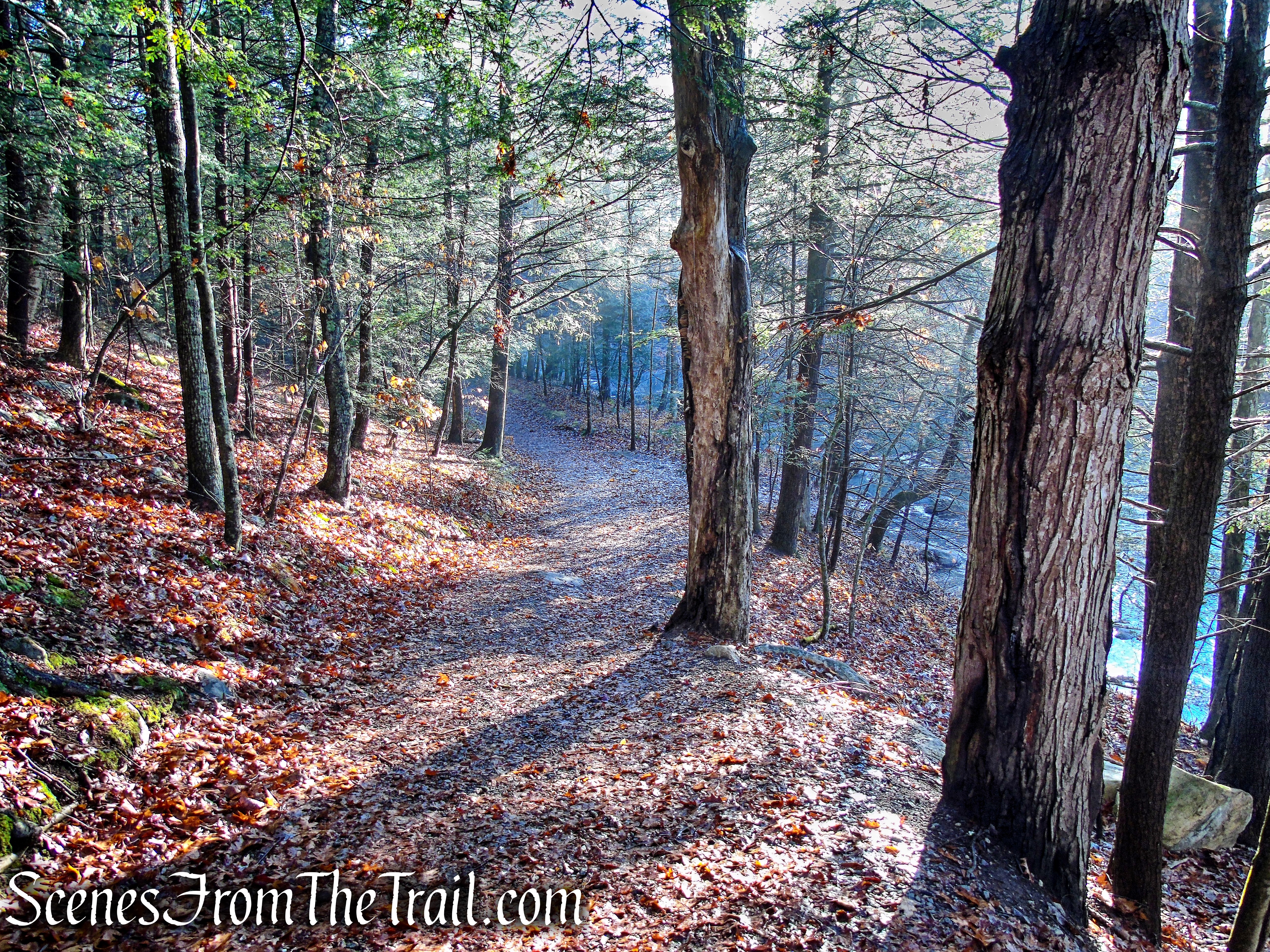
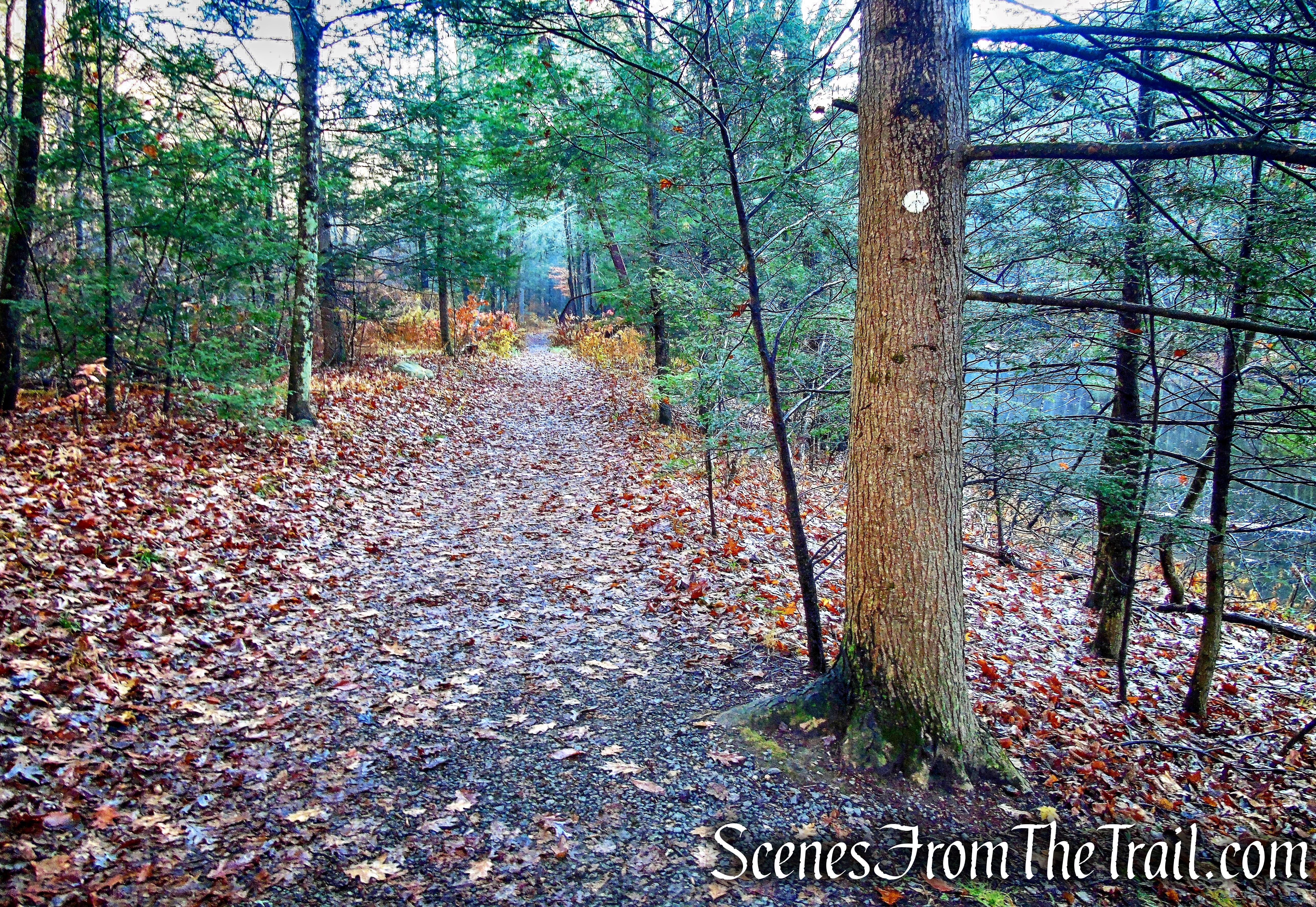
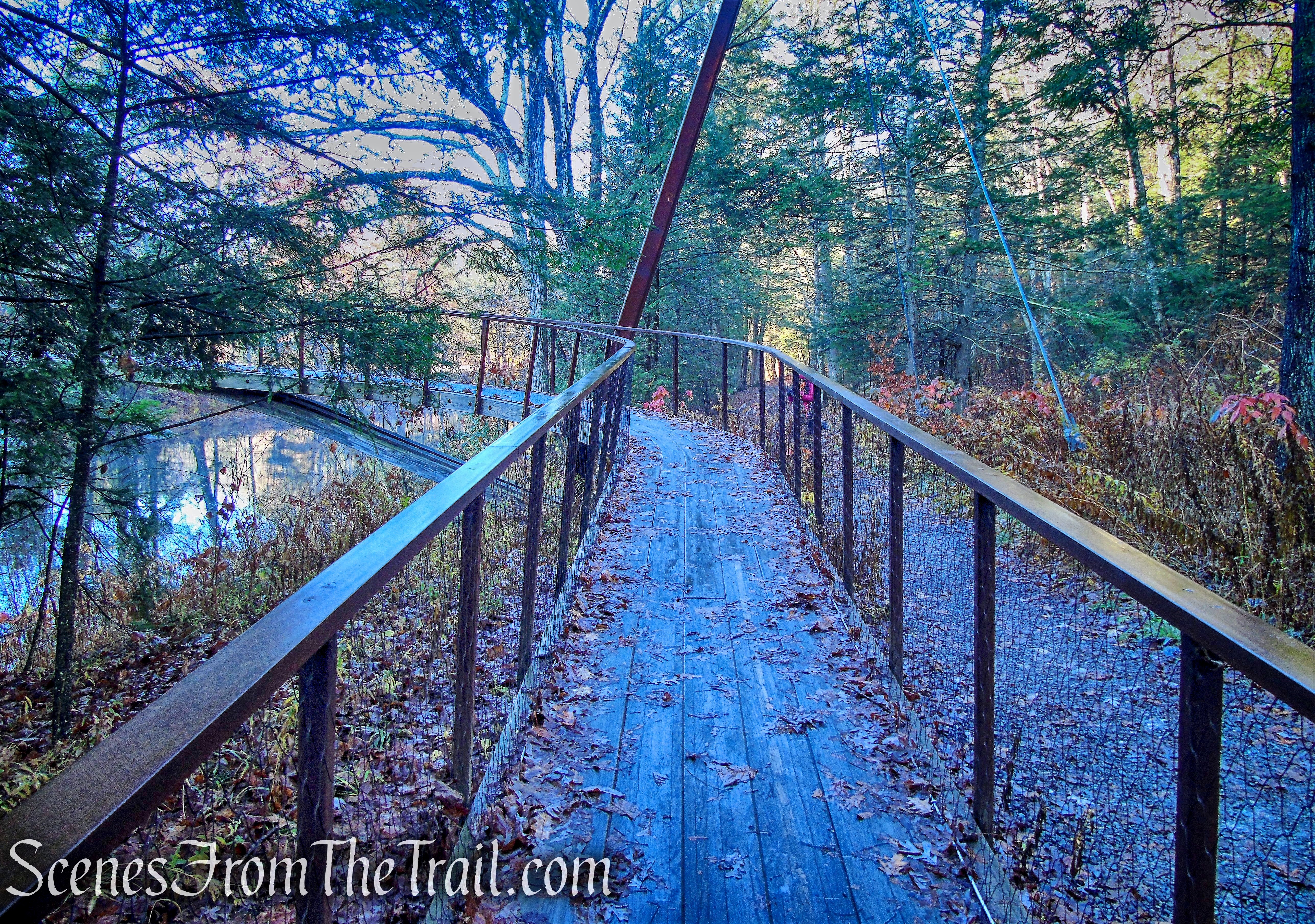
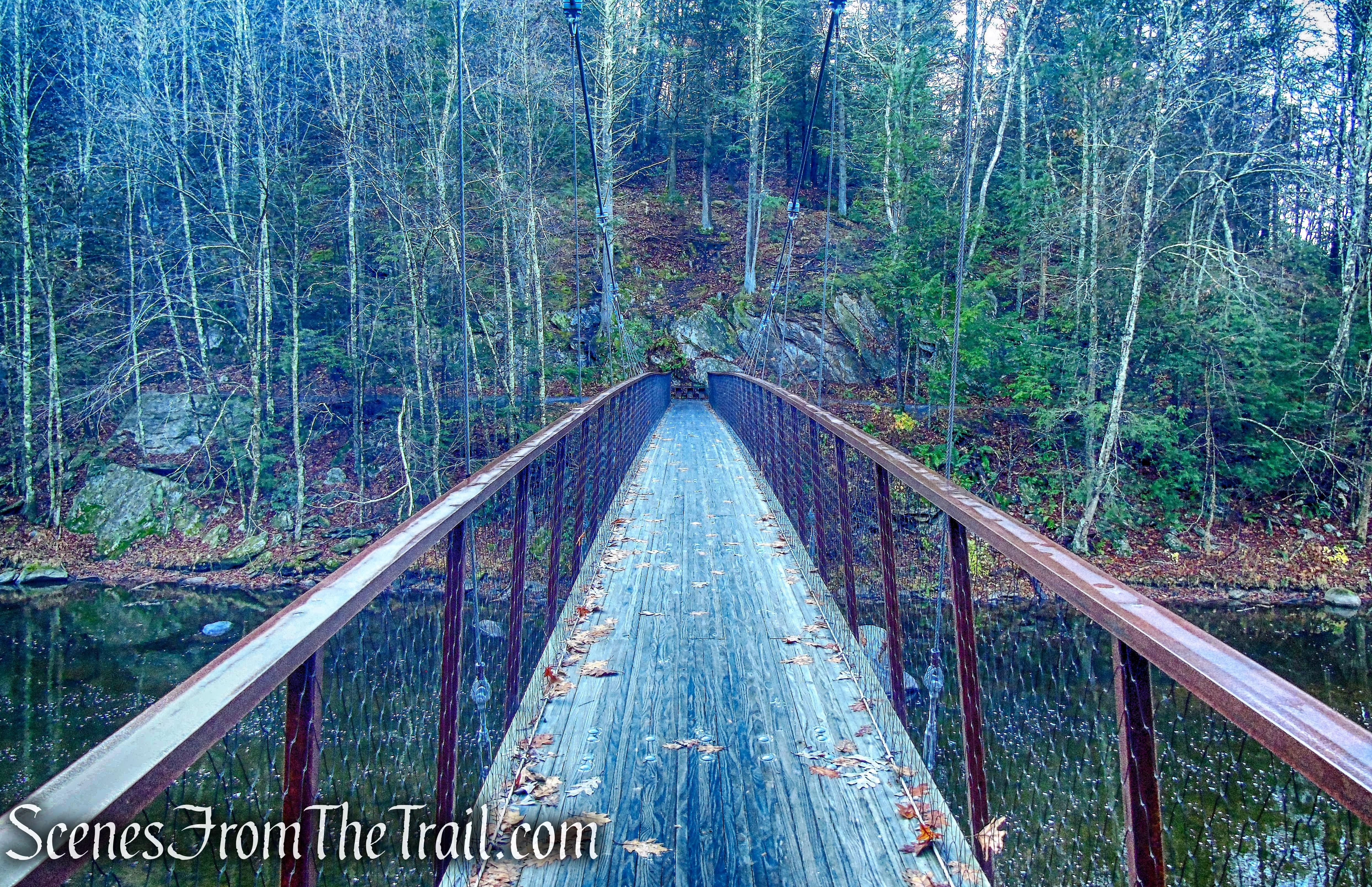
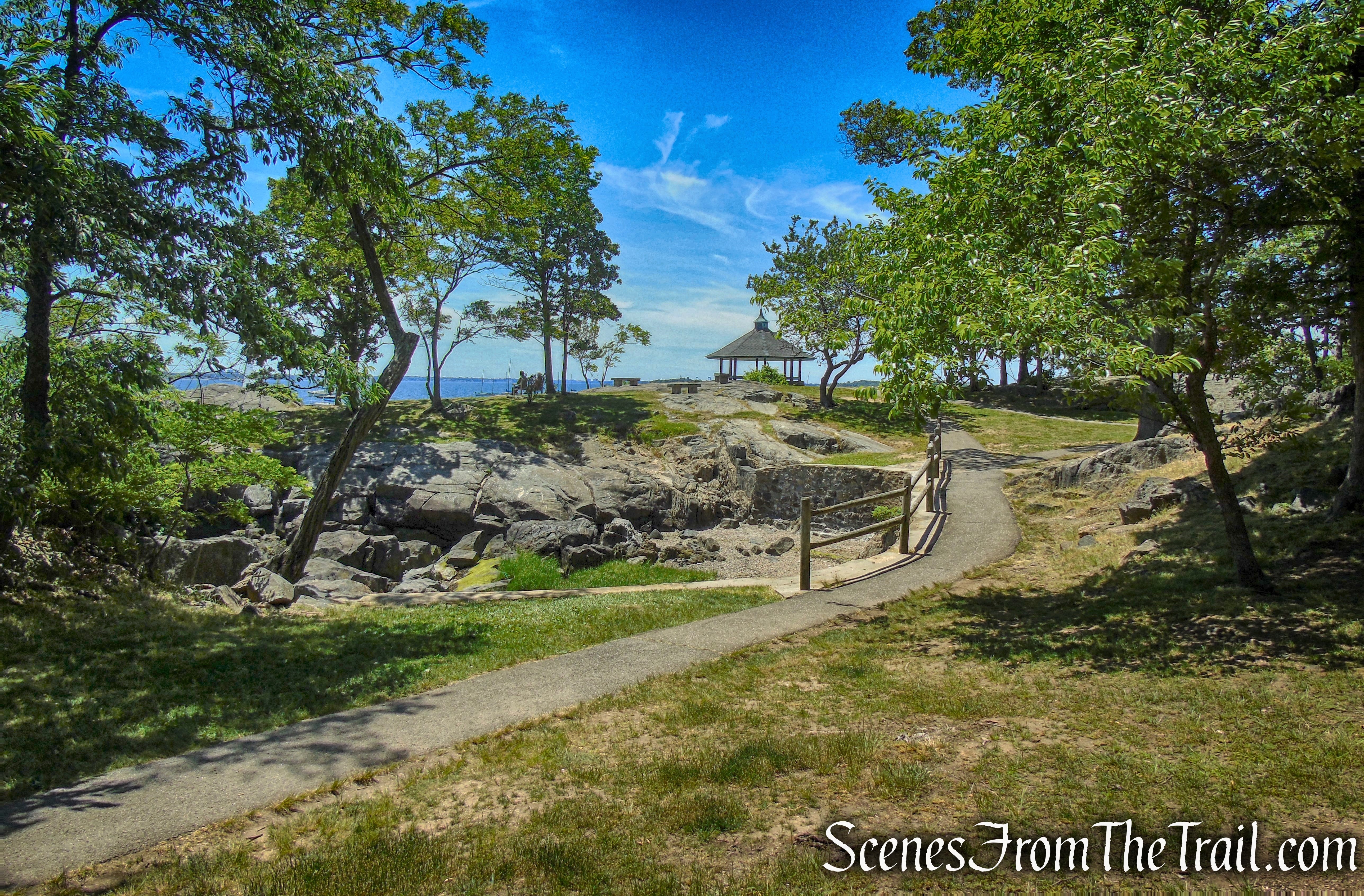
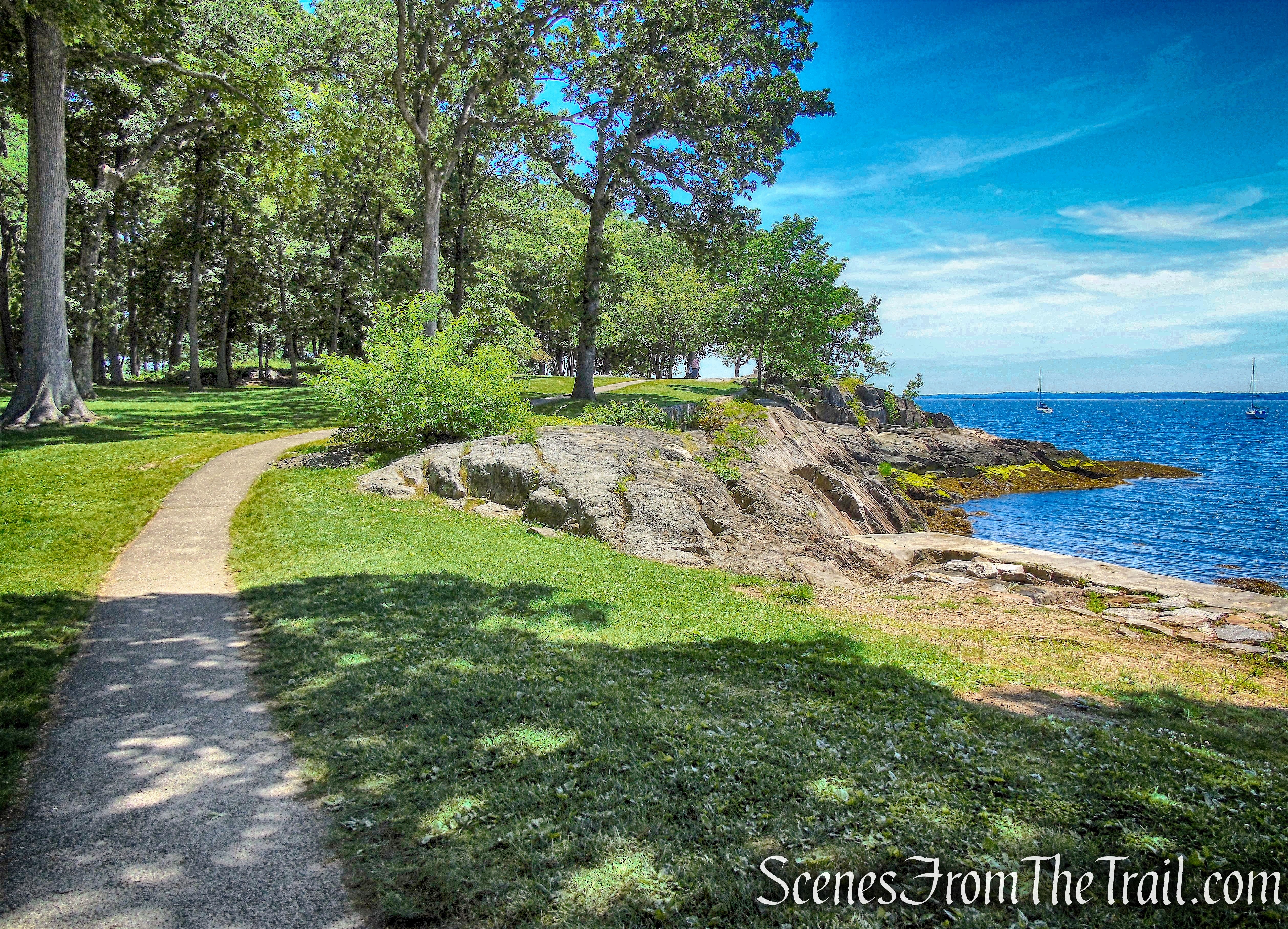
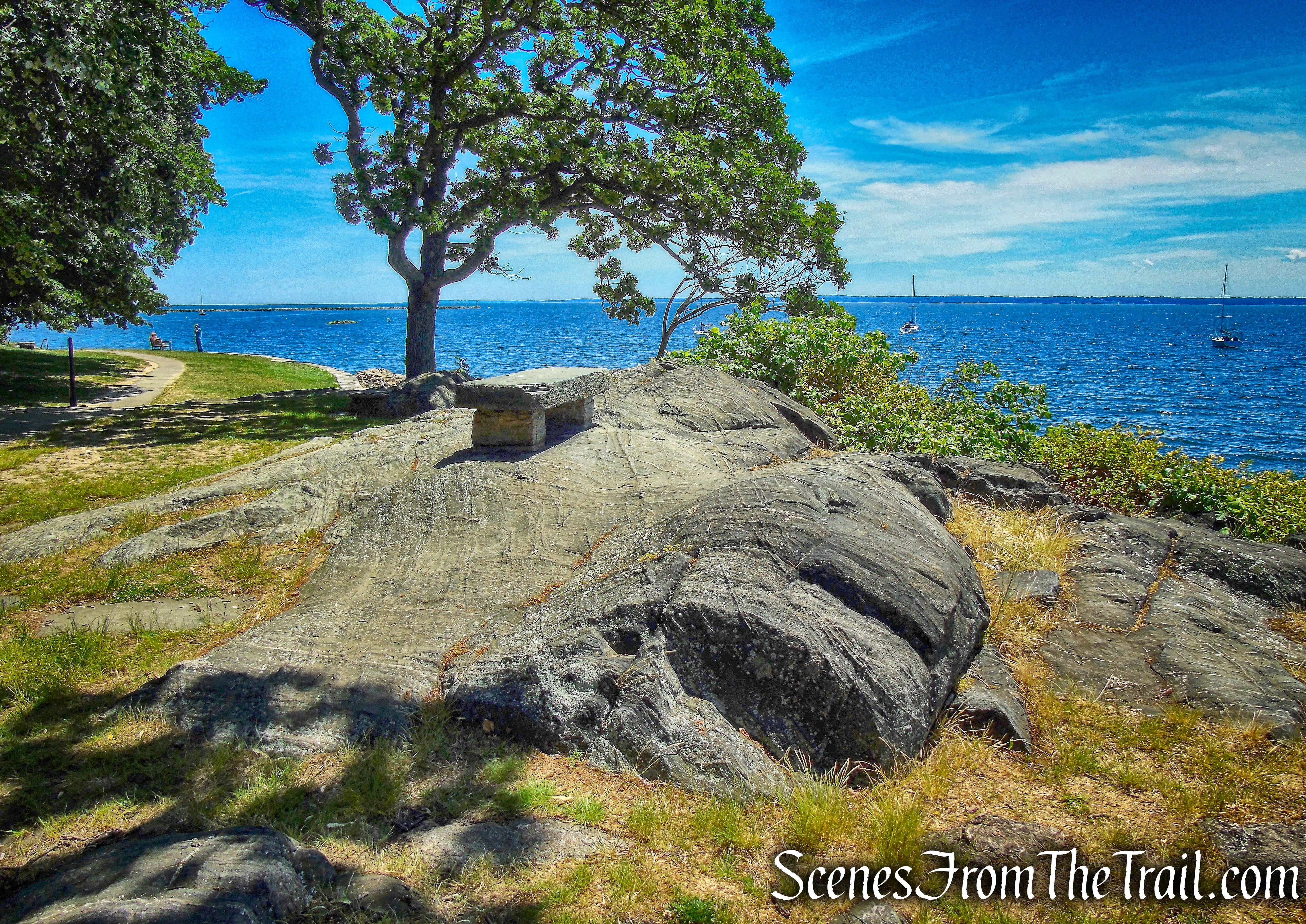
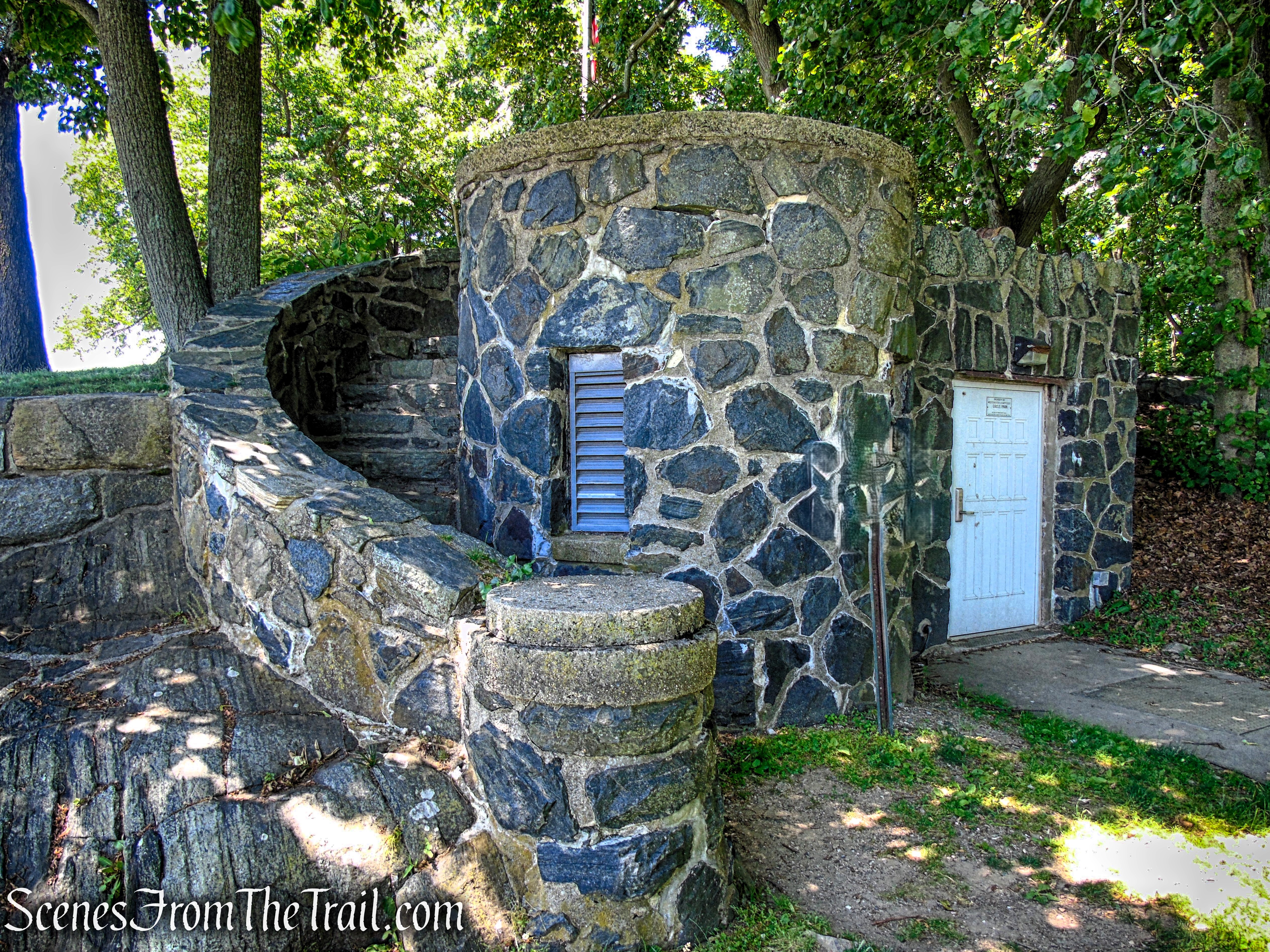
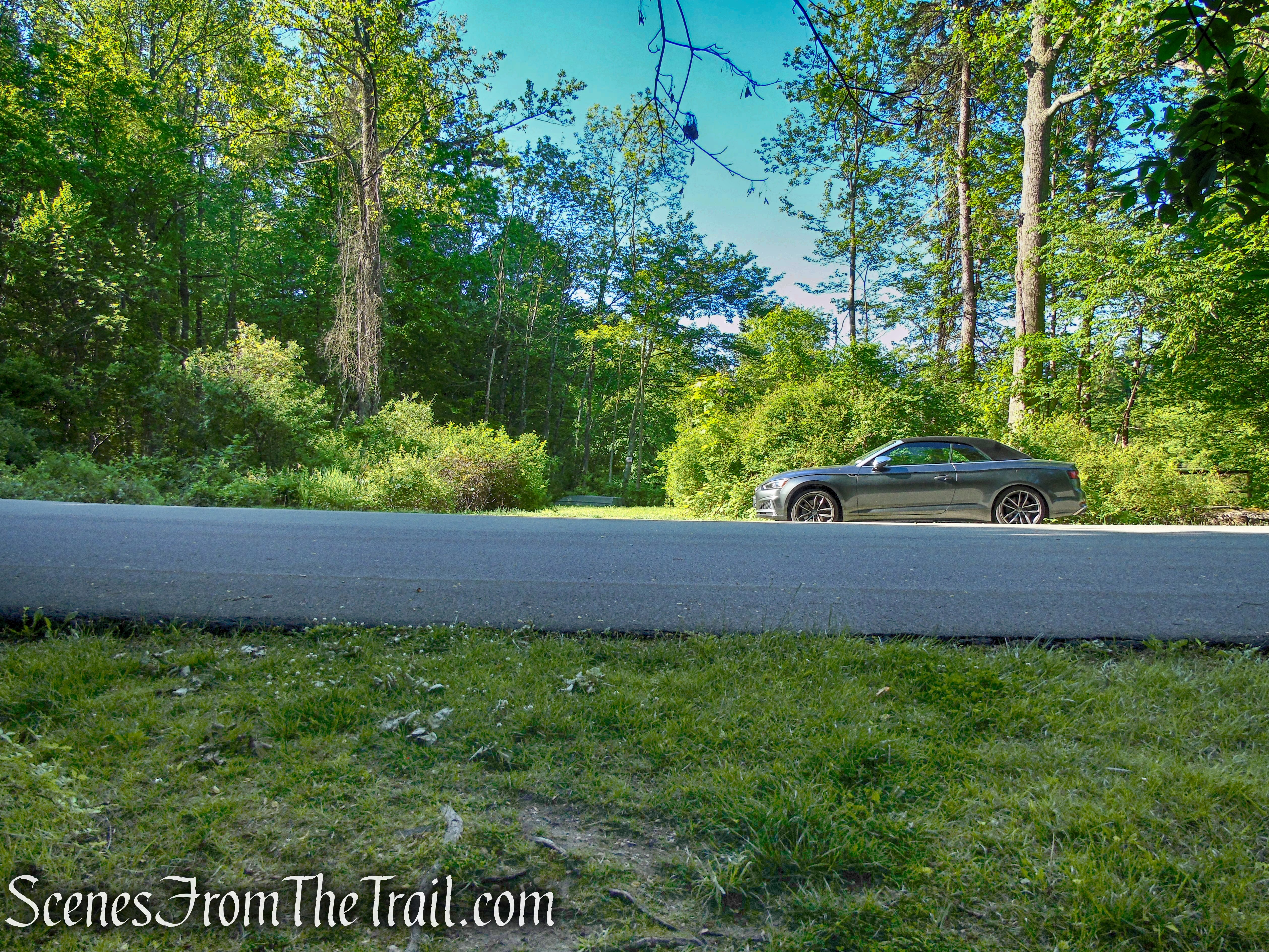
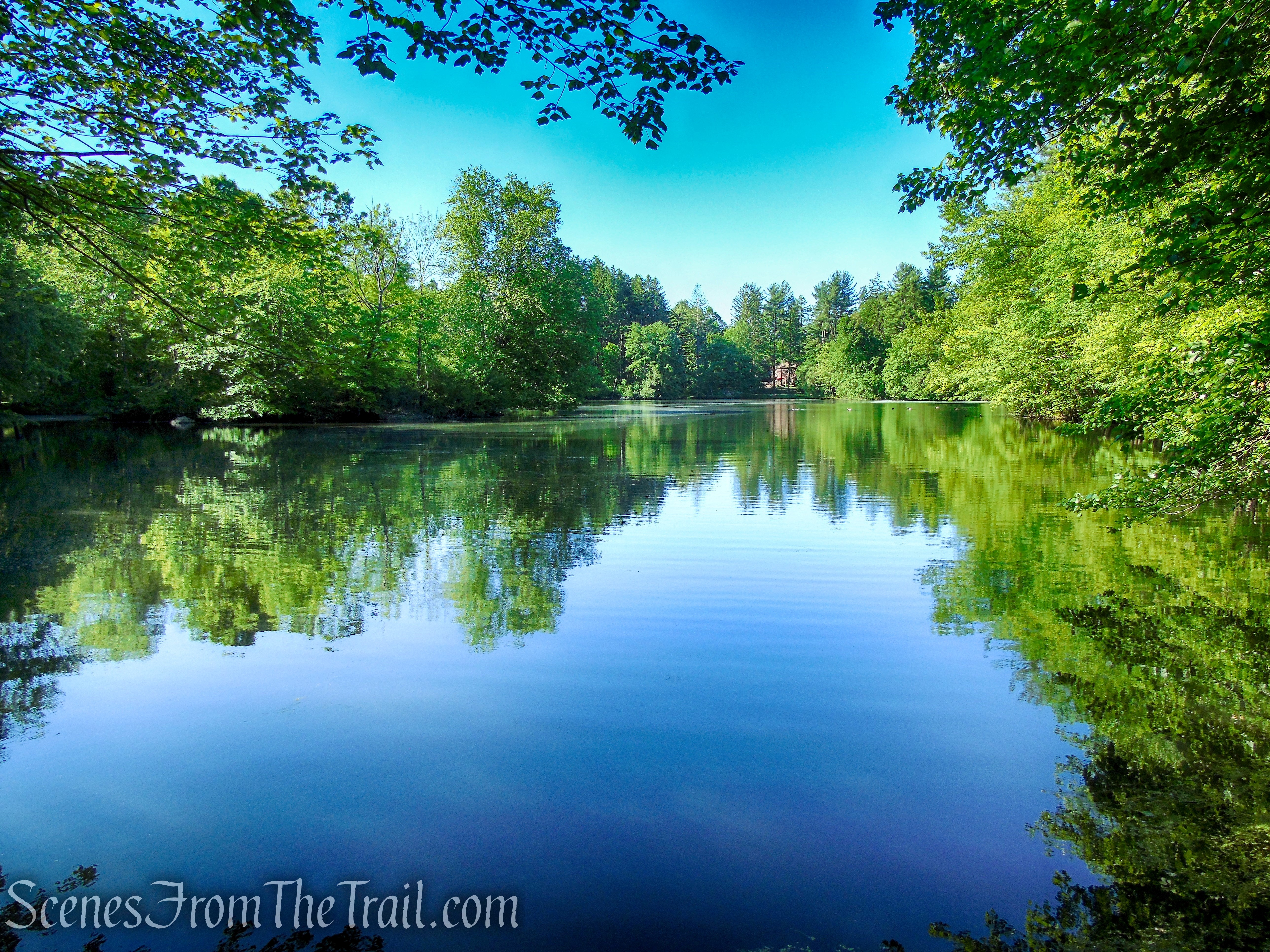
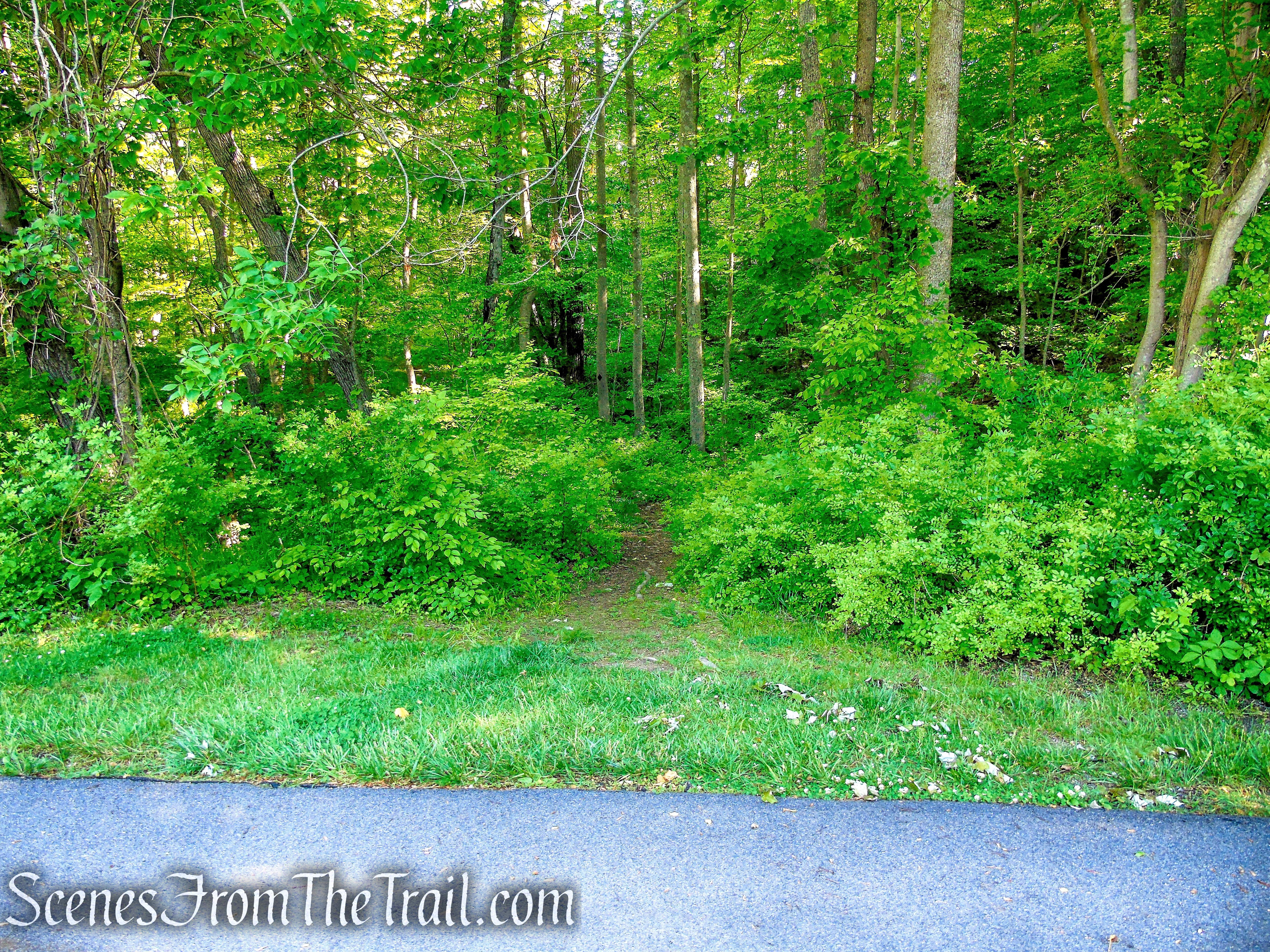
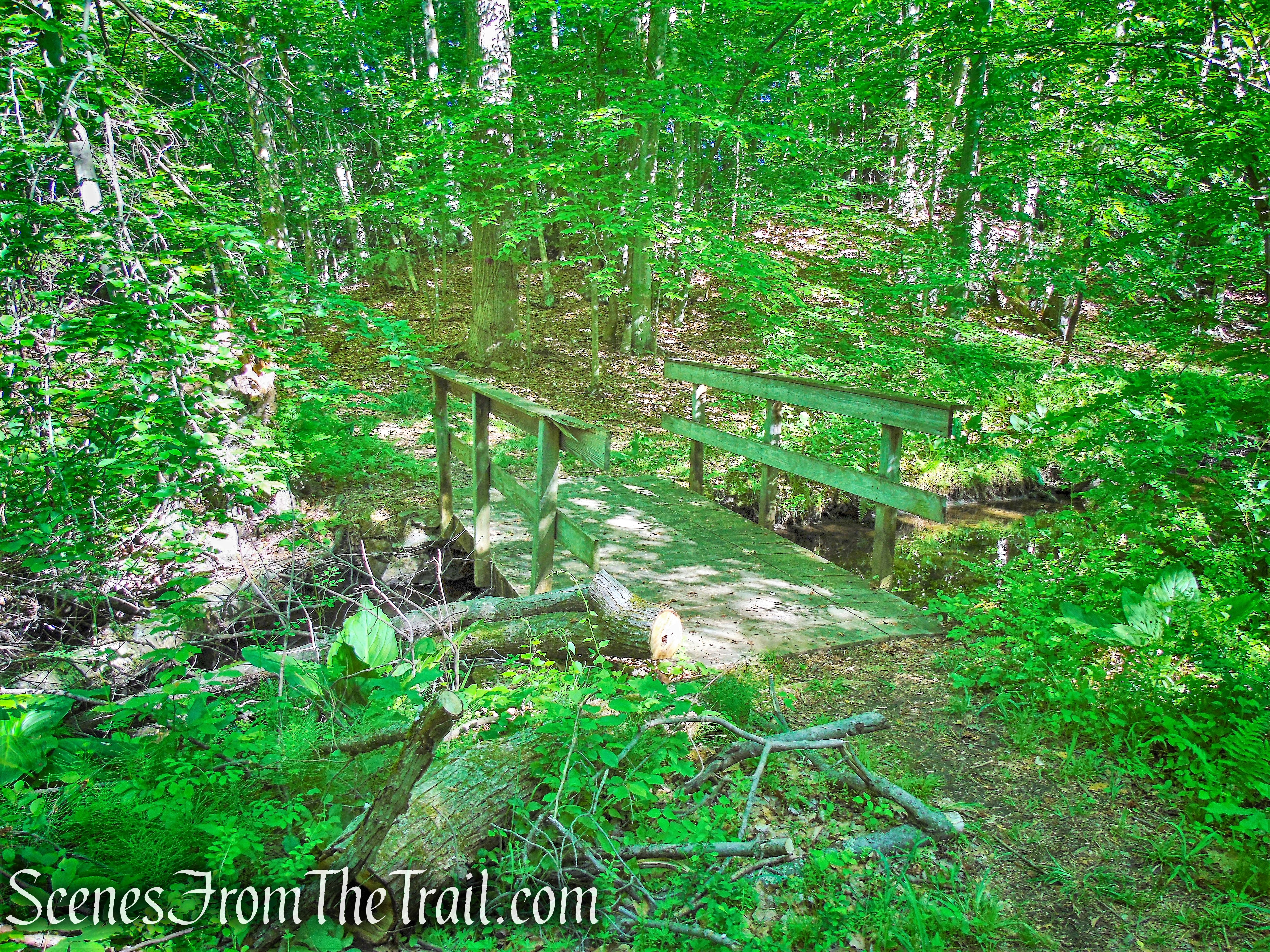
Putnam Memorial State Park

December 13, 2020 – Redding, Connecticut

Difficulty: Easy

Max elevation: 780 ft.

Free Web Map: Putnam Memorial State Park Trail Map (DEEP)

Avenza App Map (FREE): Putnam Memorial State Park Trail Map

Trailhead parking: 73-79 Putnam Park Rd, Redding, CT 06896


Park Overview:

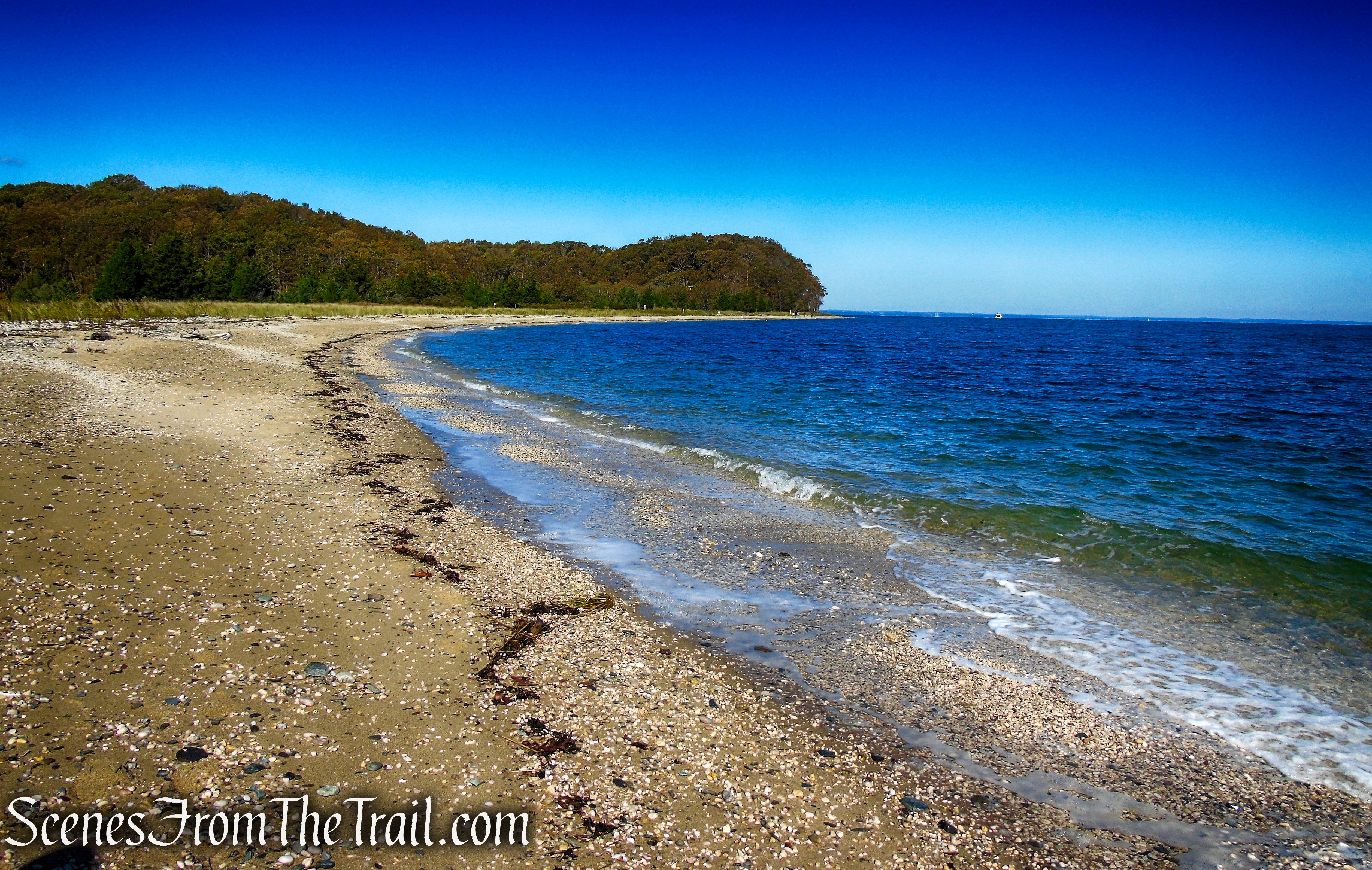
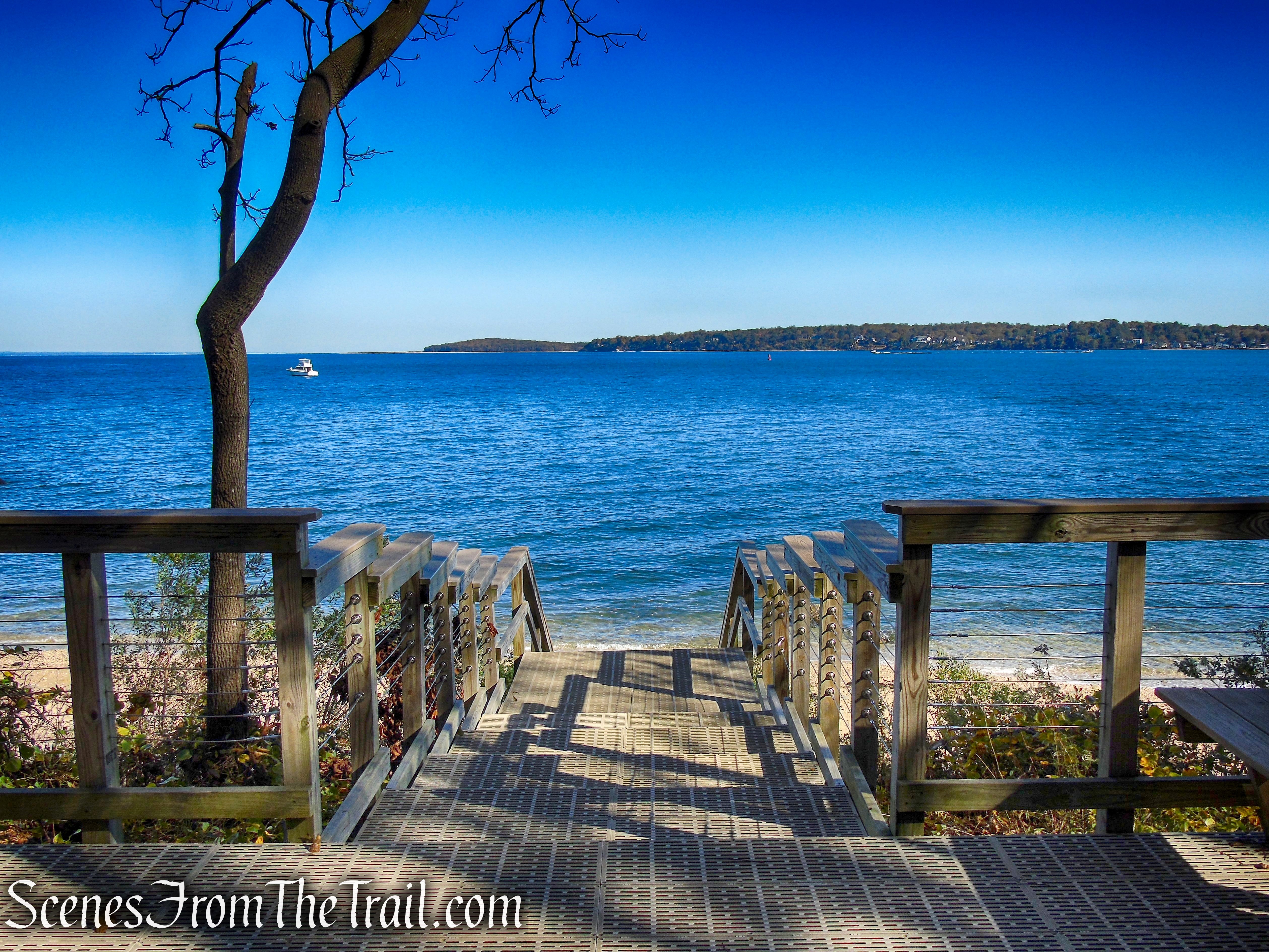
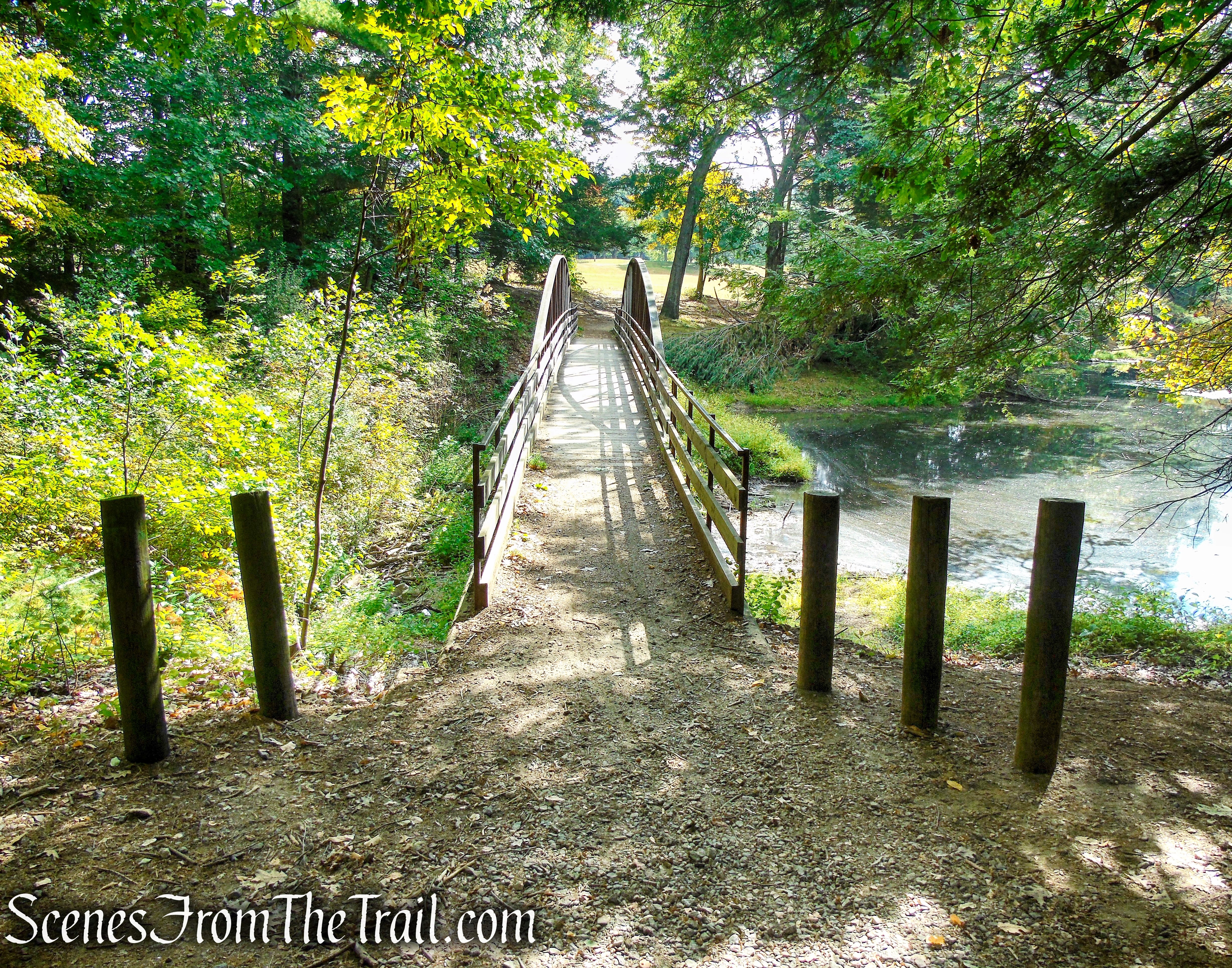
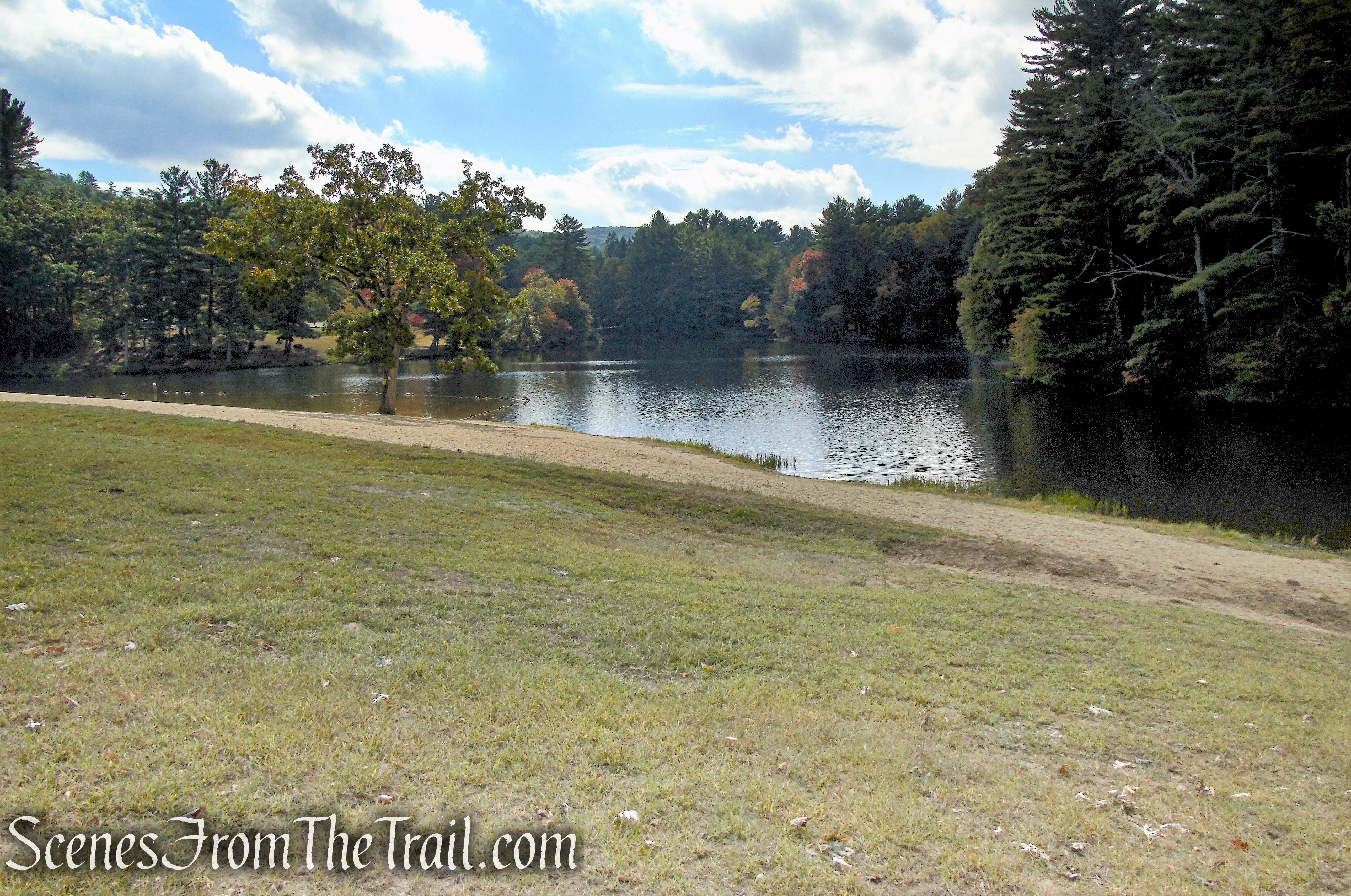
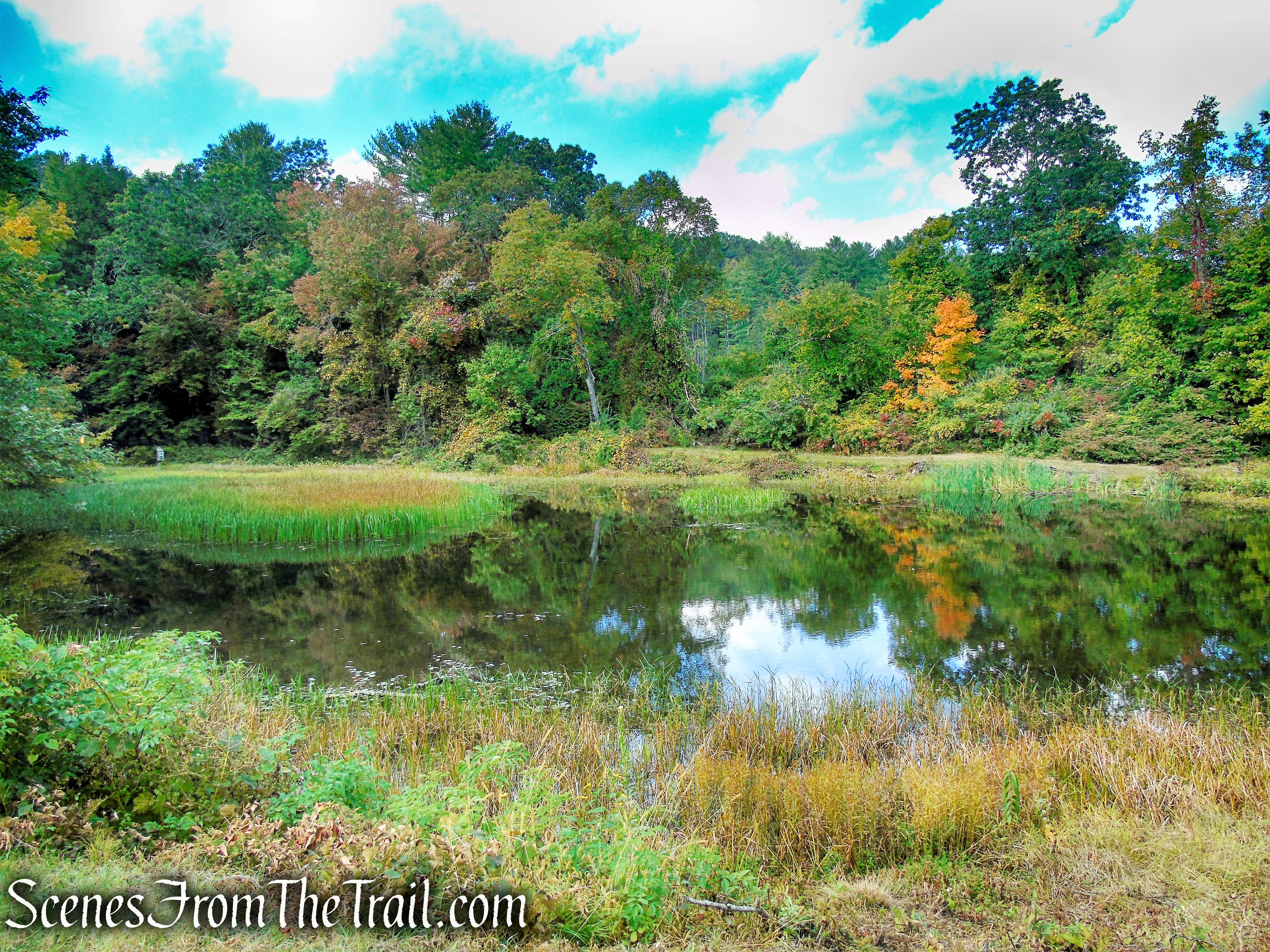
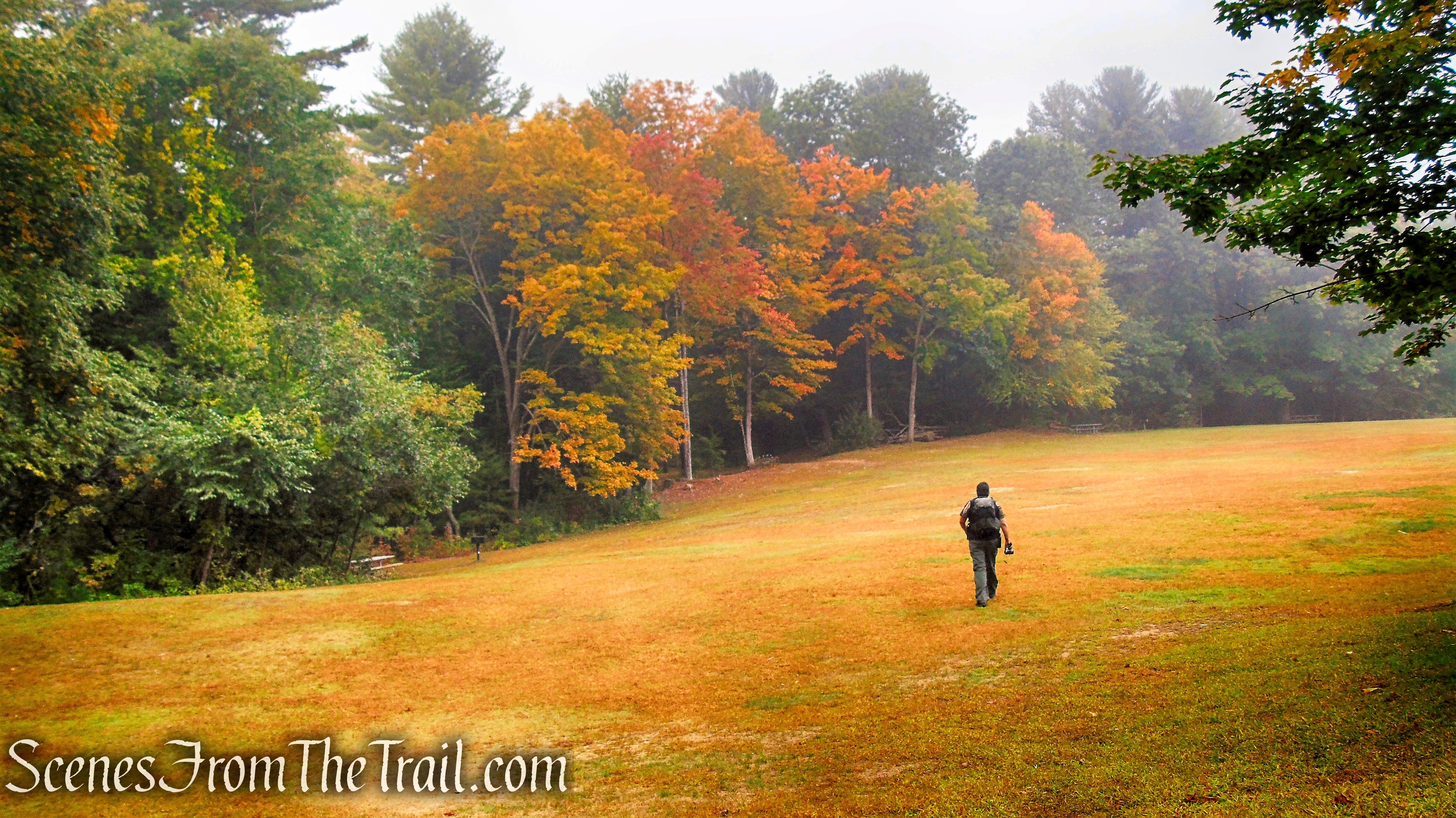
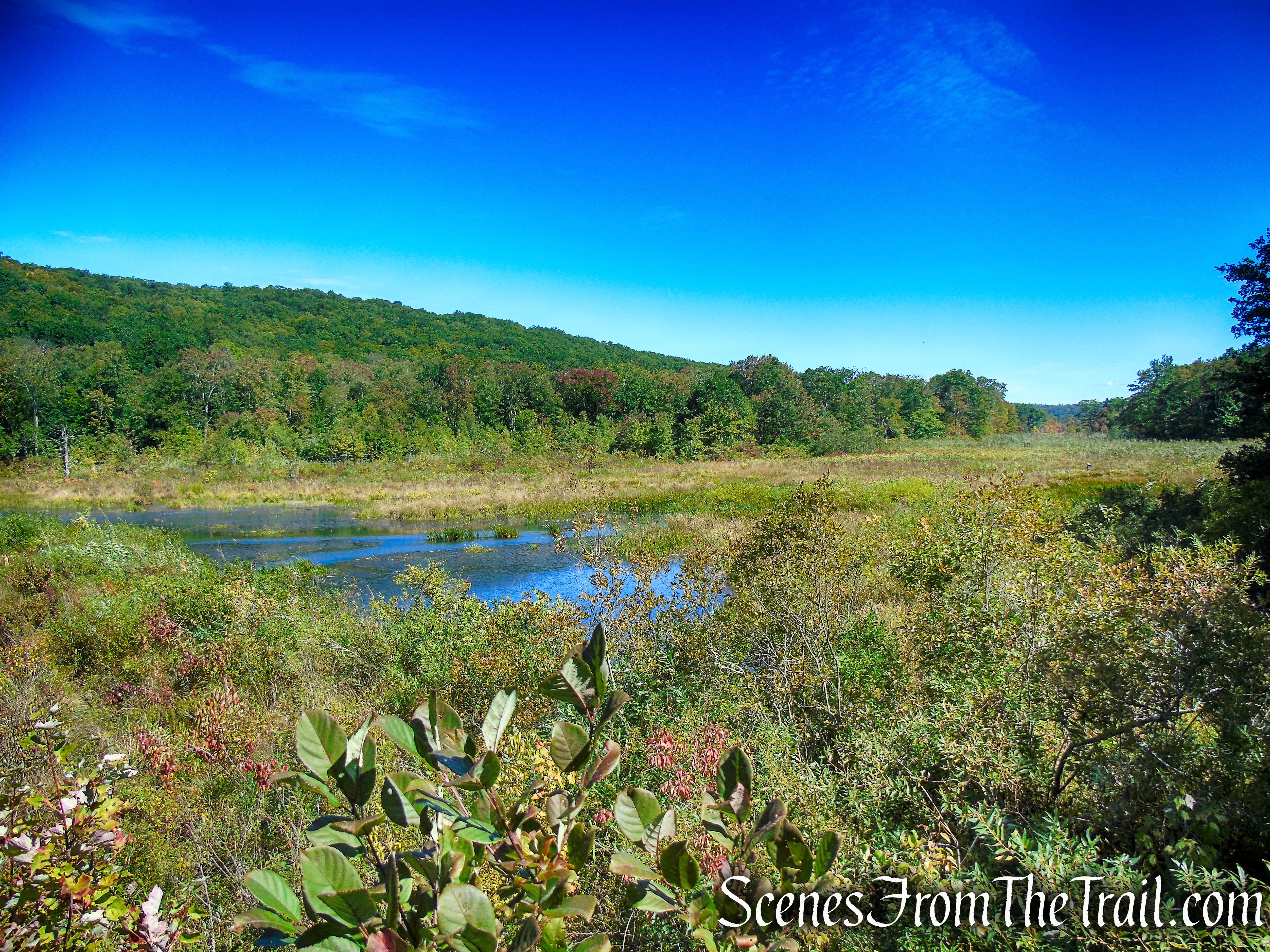
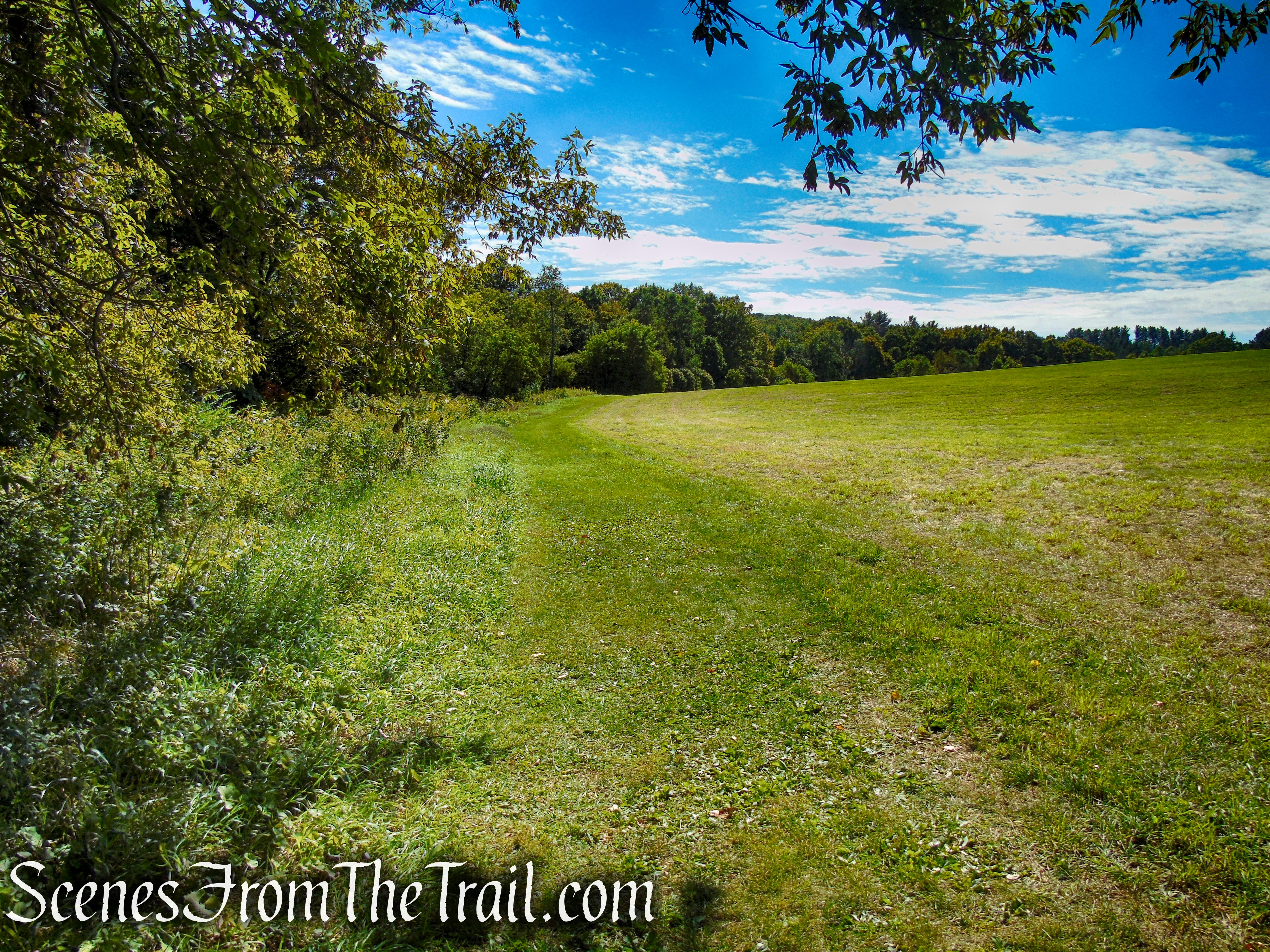
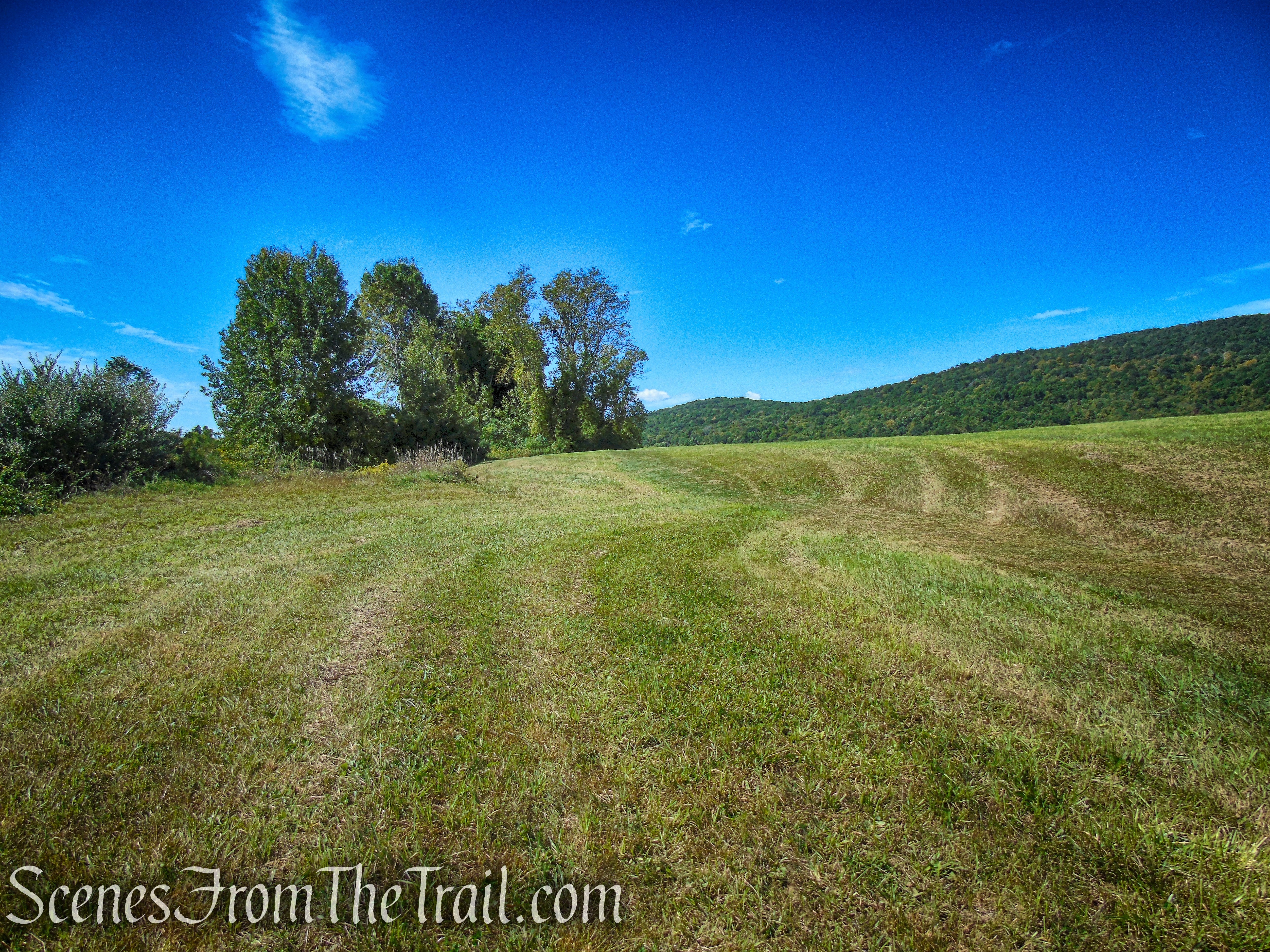
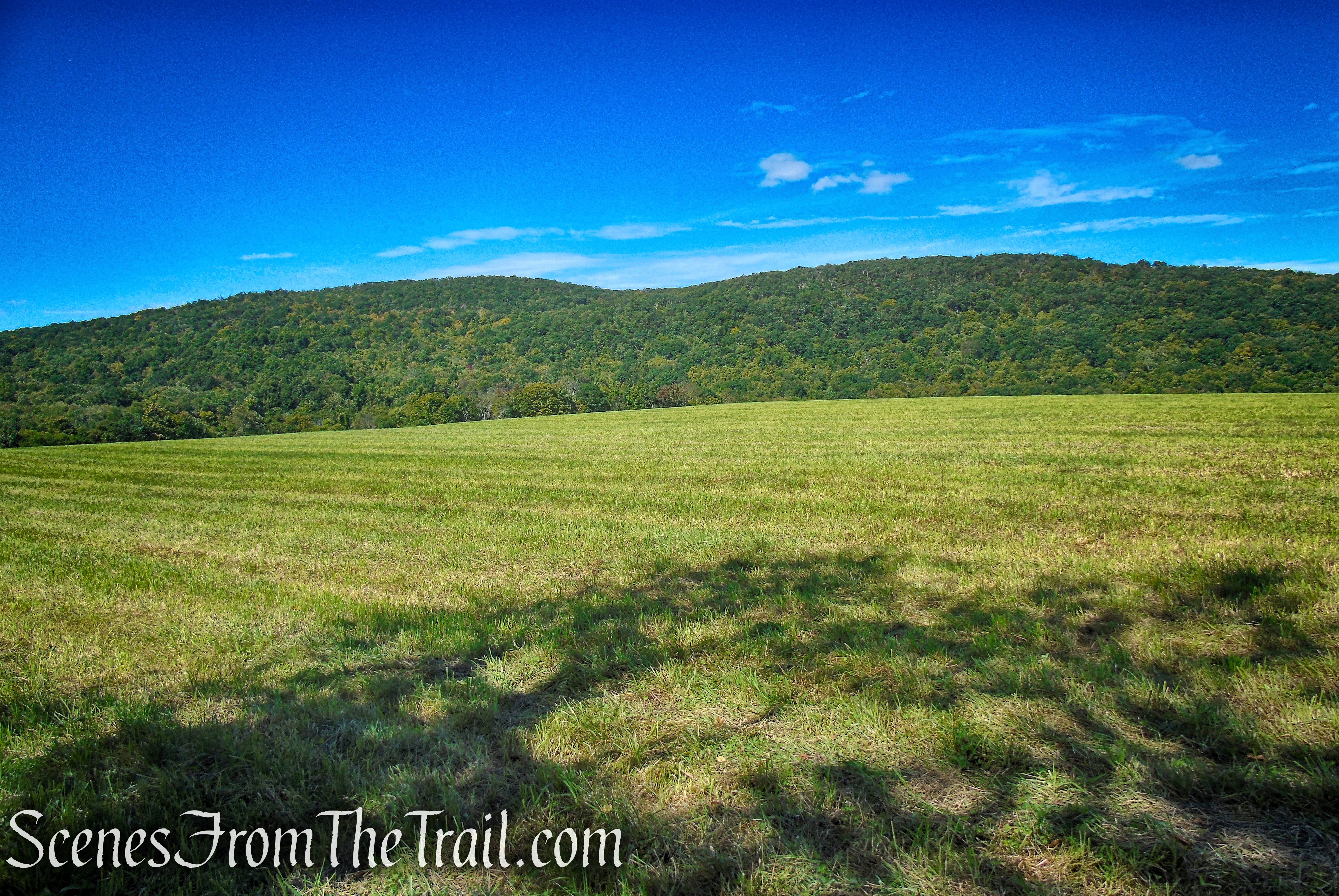
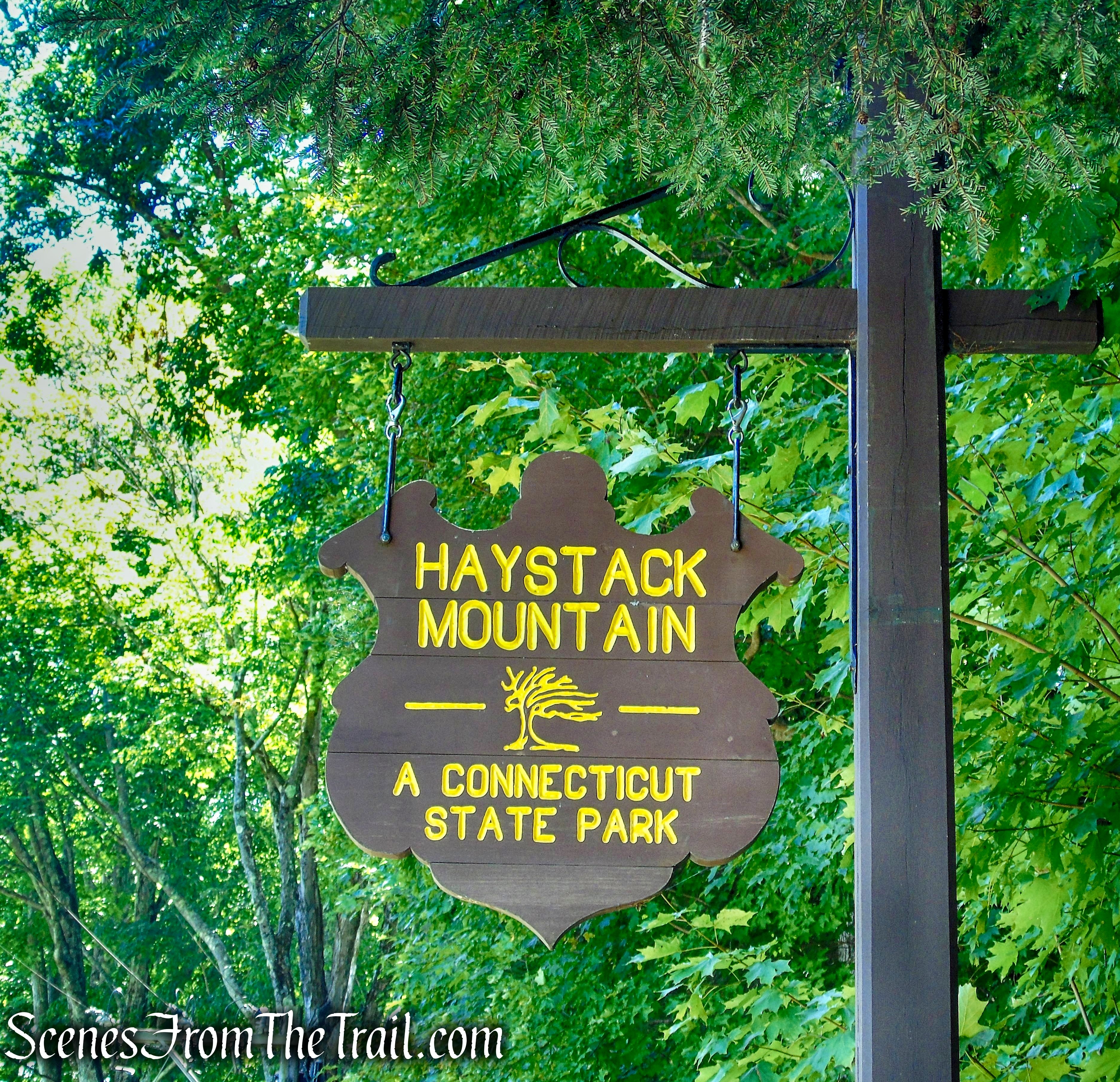
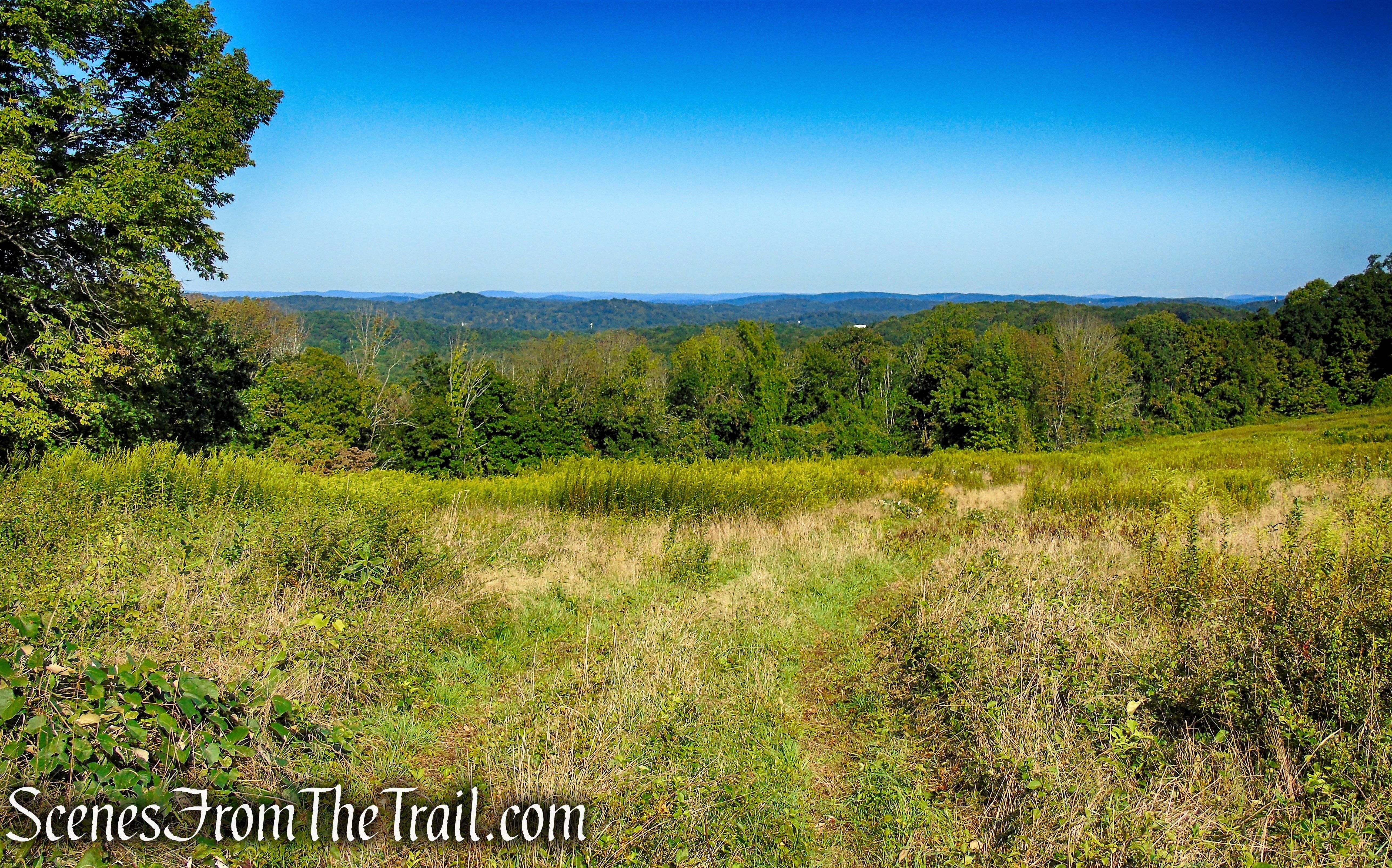
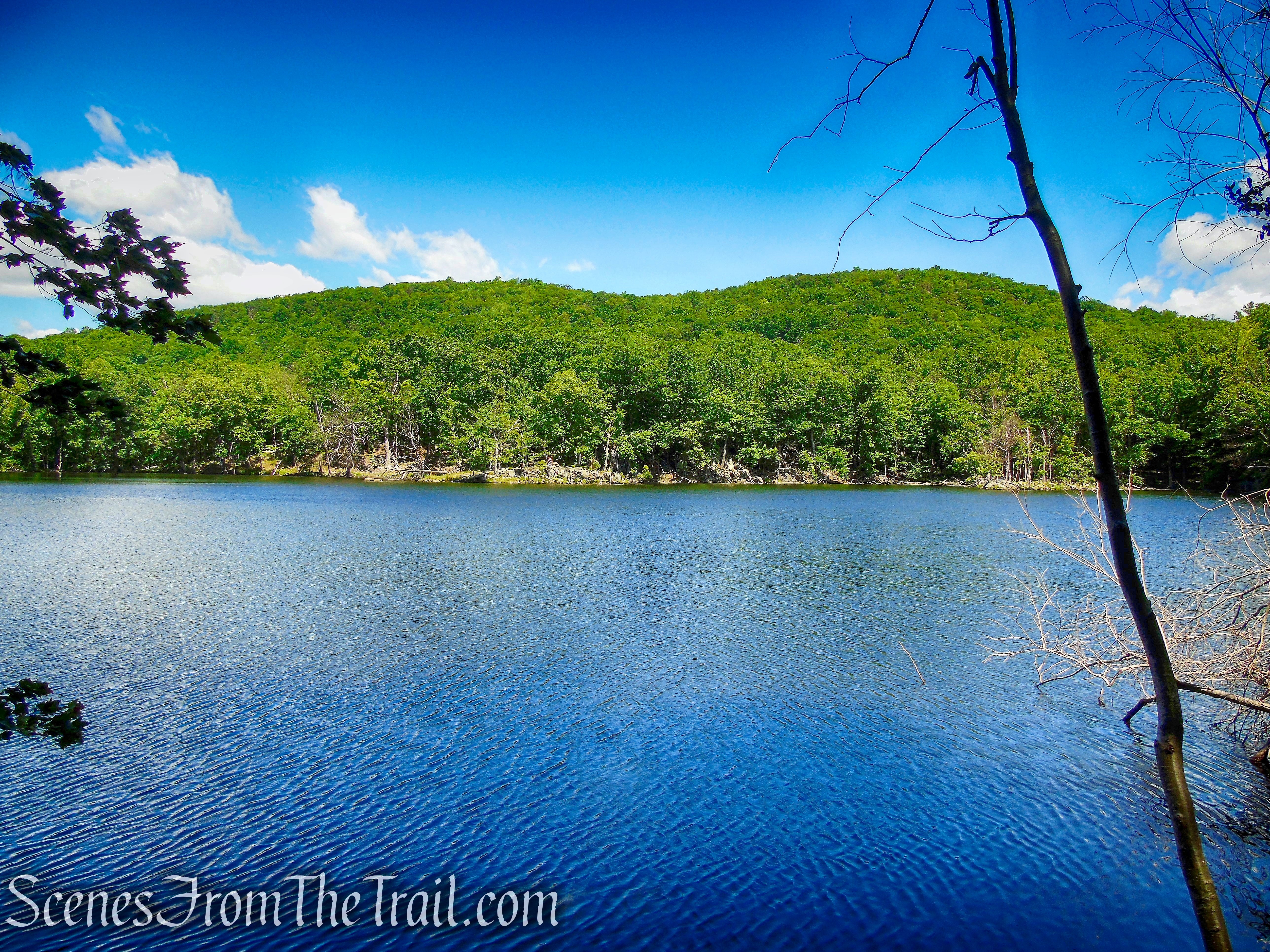
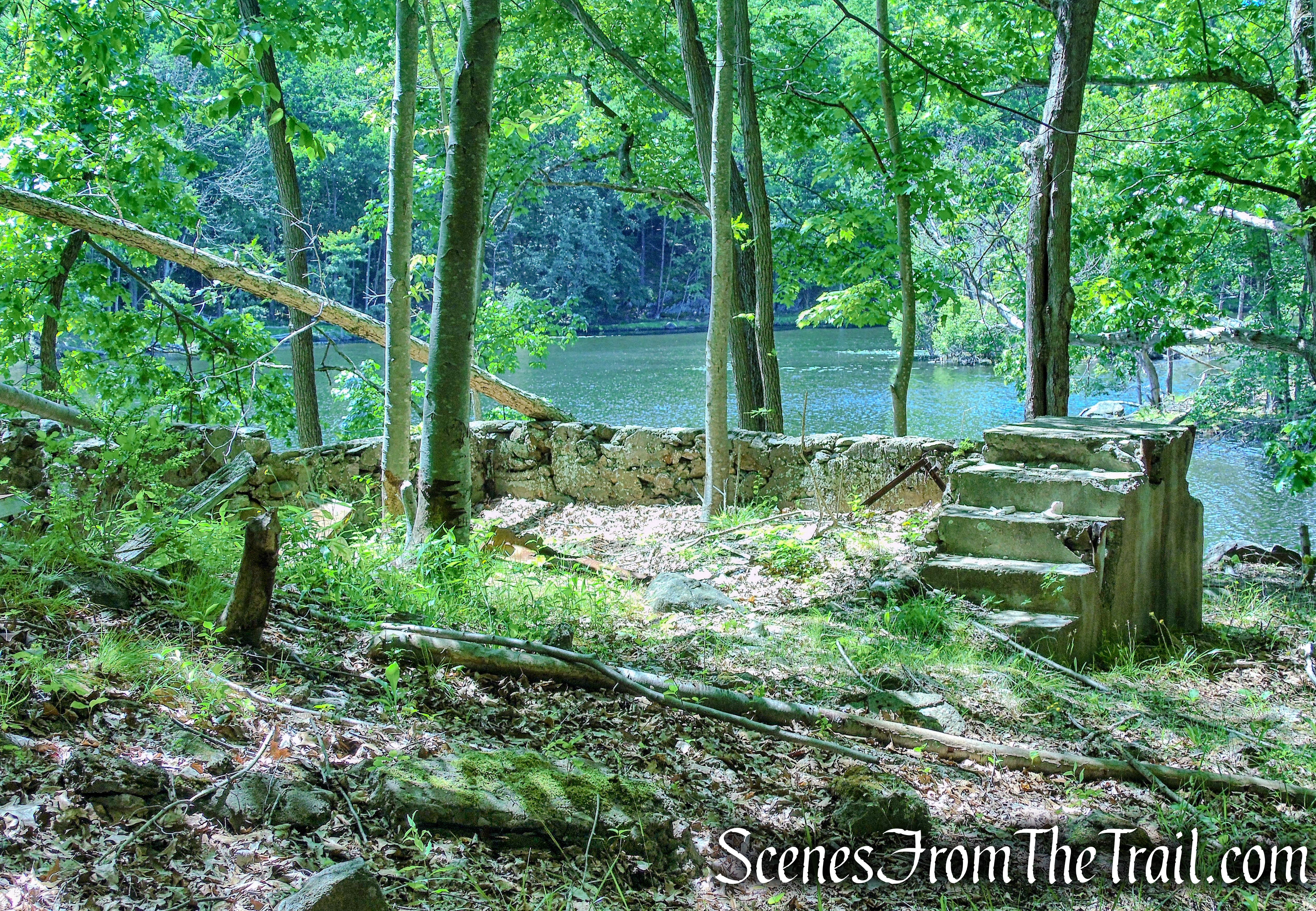
Putnam Memorial State Park is a history-oriented public recreation area in the town of Redding, Connecticut. The state park preserves the site that Major General Israel Putnam chose as the winter encampment for his men in the winter of 1778-1779 during the American Revolutionary War. Putnam Memorial State Park, sometimes referred to as “Connecticut’s Valley Forge” in view of the fact that the conditions that winter were more severe than the previous Winter at Valley Forge. It is Connecticut’s oldest state park, created in 1887 at the instigation of Redding town residents. The park was listed on the National Register of Historic Places in 1970.
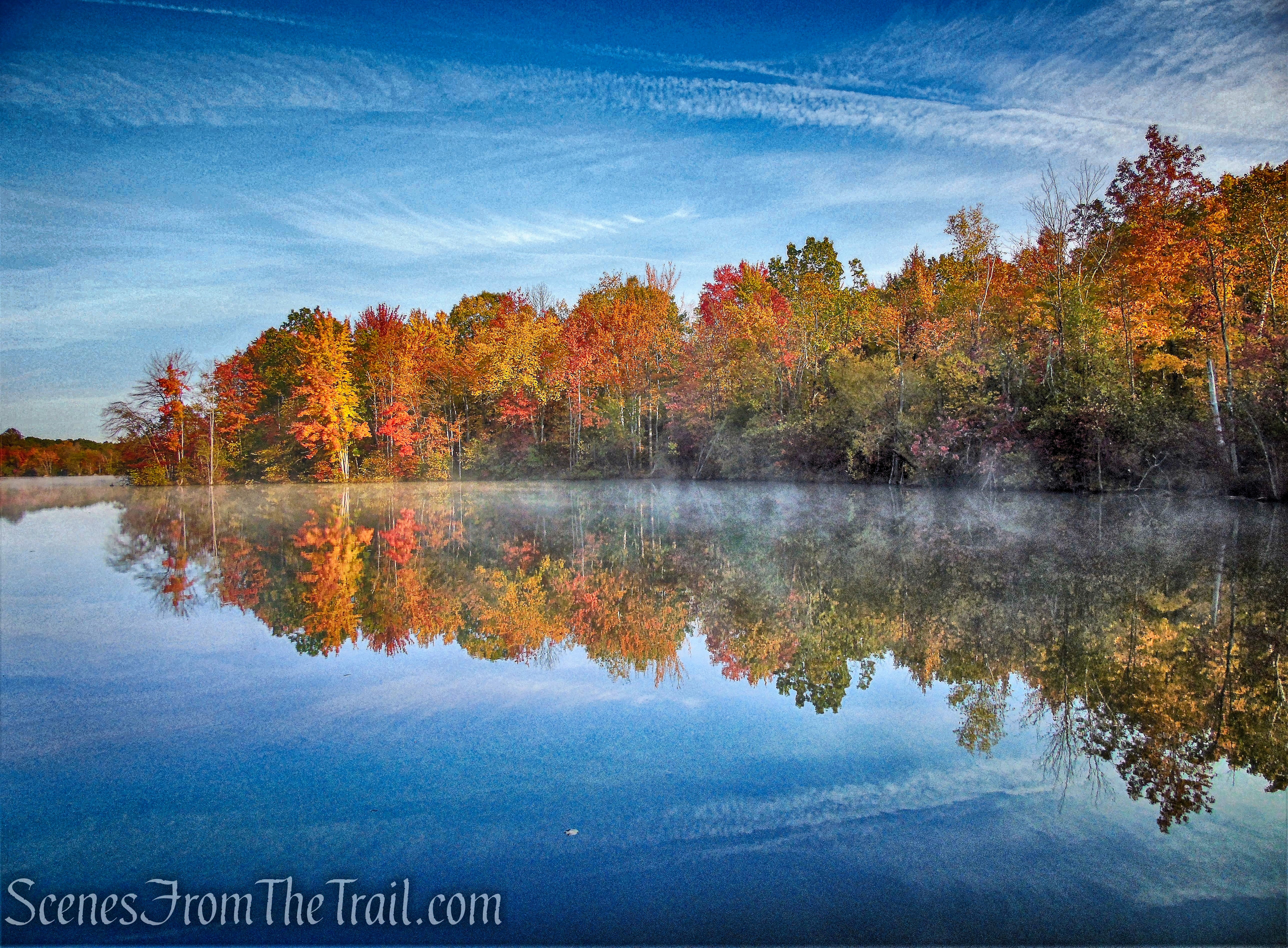
Putnam Memorial State Park

Putnam Memorial State Park

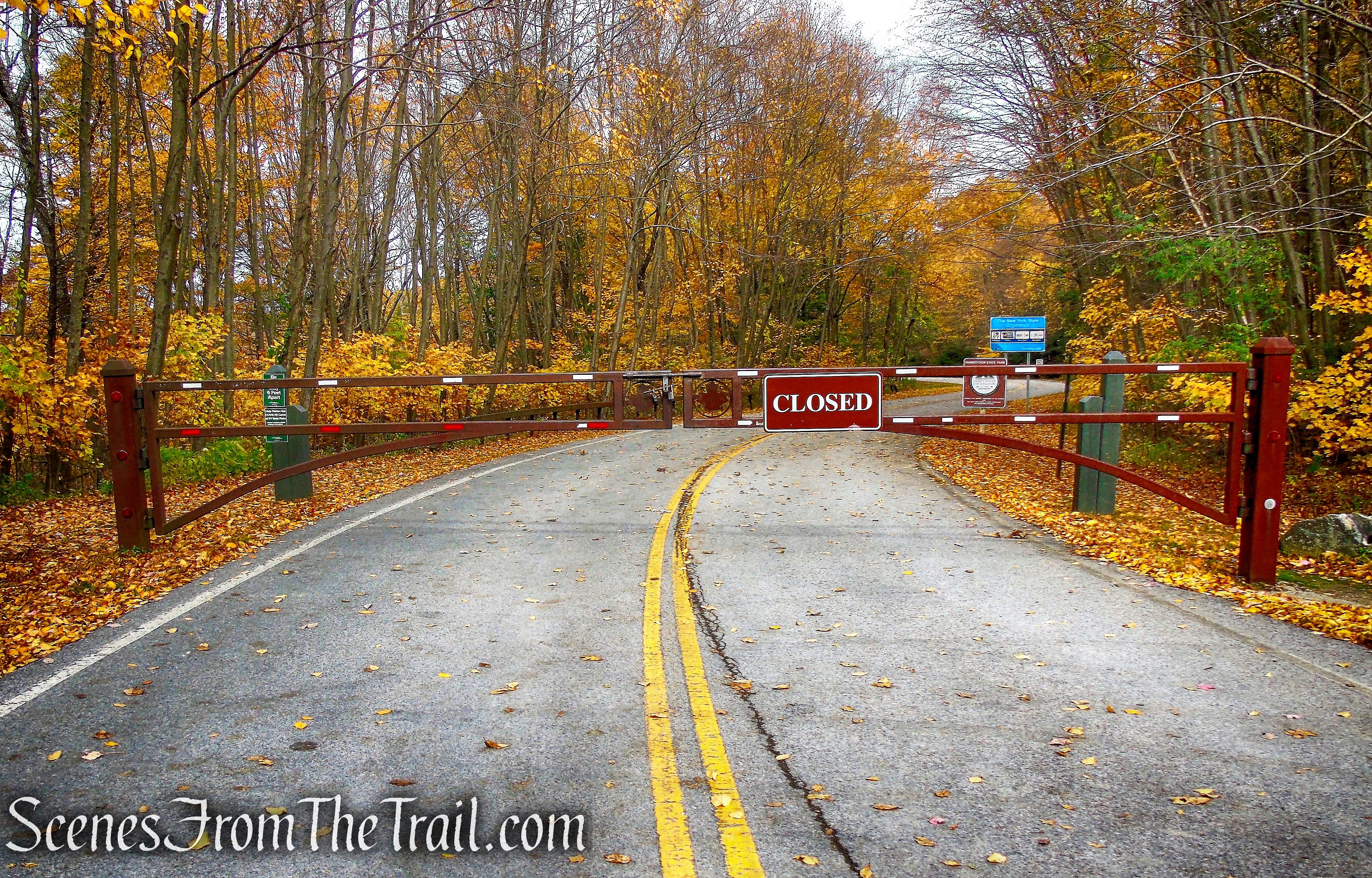
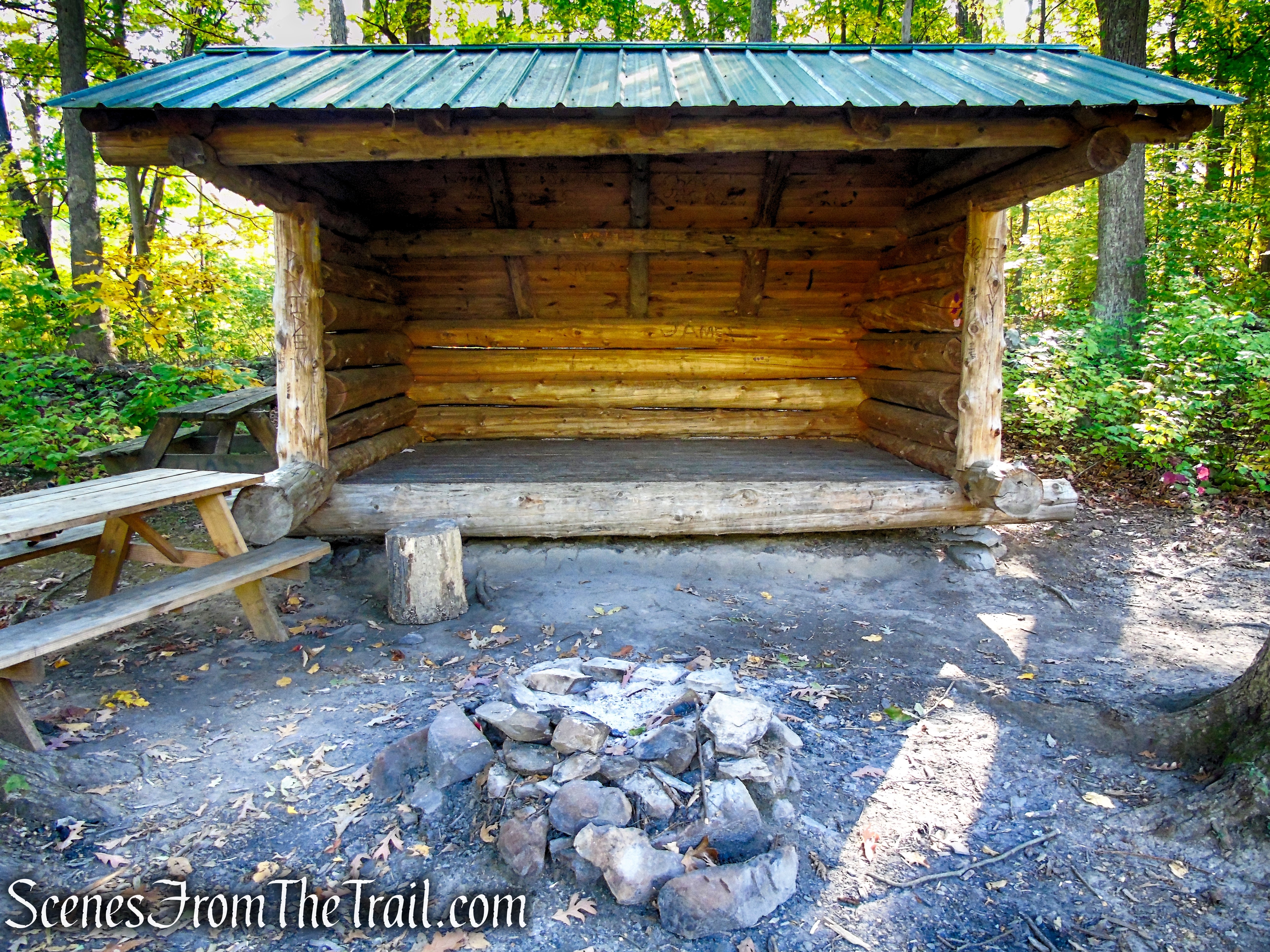
In addition to the remains of the encampment, reconstructed log buildings, and a museum, the park’s 183 acres include facilities for hiking, picnic tables, charcoal grills, pond fishing, and winter sports. The park is located at the intersection of Route 107 and Route 58 and is managed by the Connecticut Department of Energy and Environmental Protection. The park is open from 8am to sunset. Visitors Center and Museum is open daily 10am – 5pm.

Putnam Memorial State Park

Putnam Memorial State Park


History Of The Park:

The movement to preserve and memorialize the site of the winter quarters of 1778-1779 in Redding began in the late 19th century. Although the details of this movement are not recorded, it is likely that the initial efforts were made by local citizens of Redding, especially Charles B. Todd, the local historian, and Aaron Treadwell, the landowner who donated the first tract of land that would become the Israel Putnam Memorial Camp Ground.
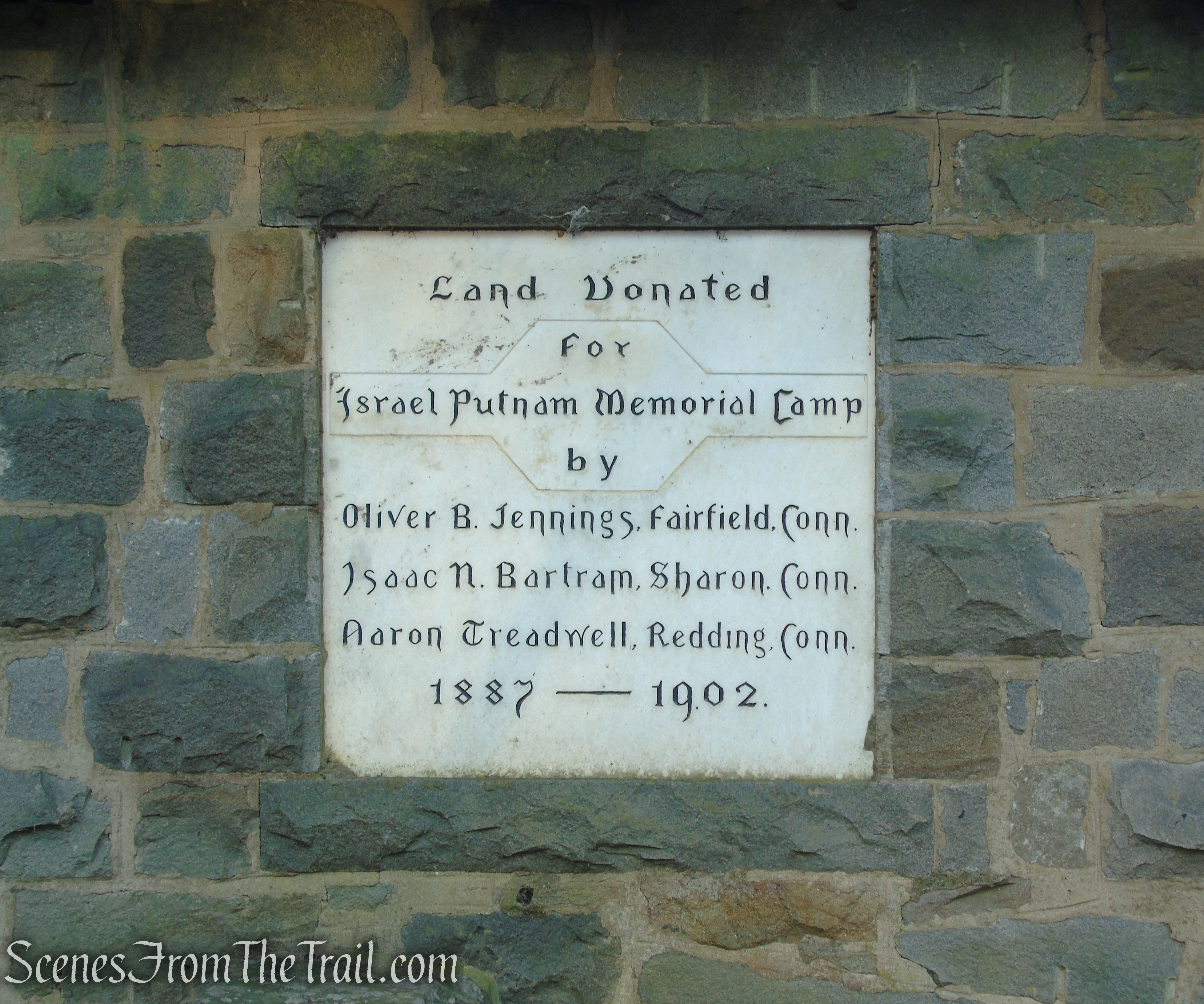
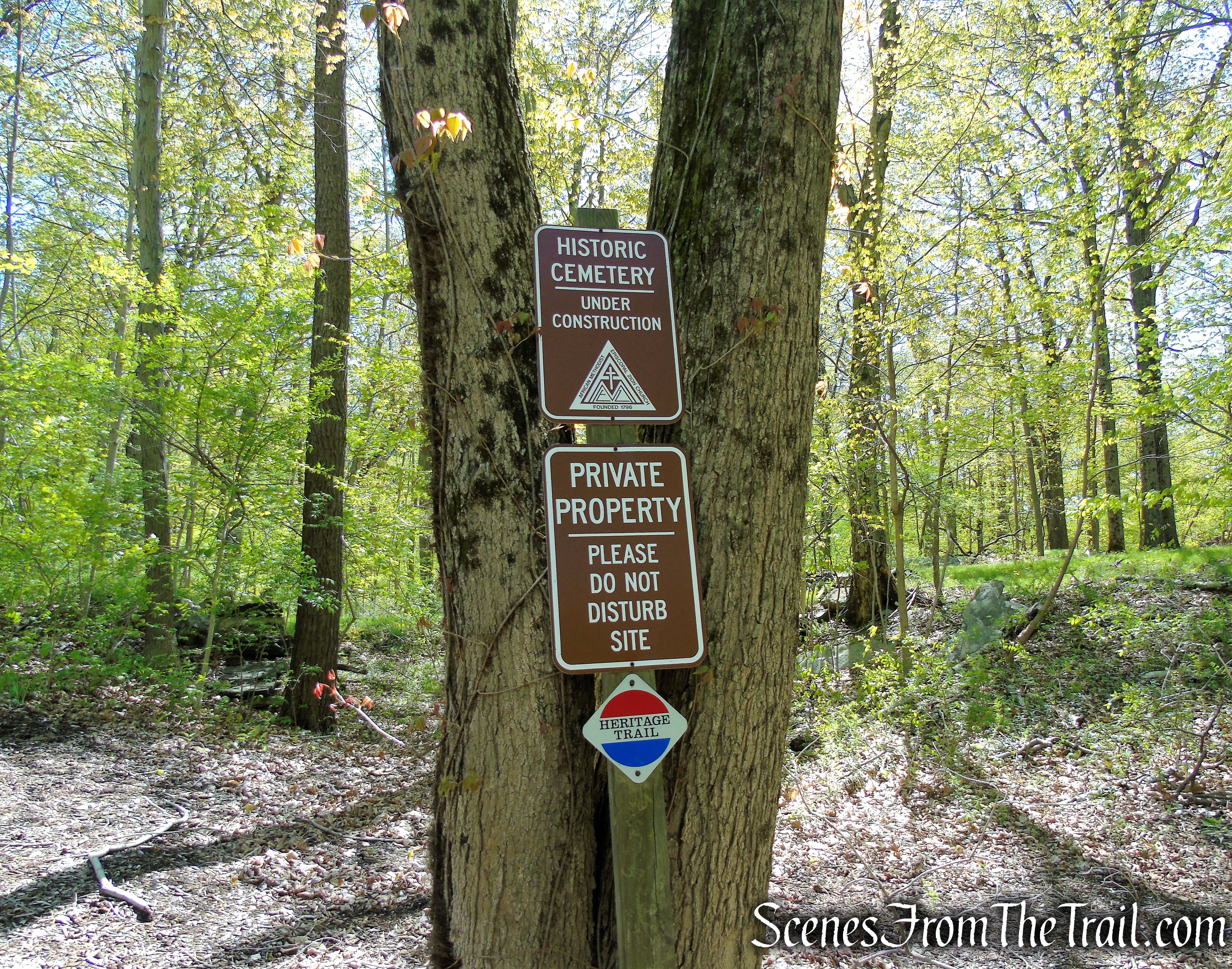
Putnam Memorial State Park

Putnam Memorial State Park

From the beginning, the purpose of preserving the site of the encampment was to commemorate the winter quarters, not to create an area for recreation. Charles B. Todd explained, It is not proposed to erect a pleasure park, but a memorial. The men it is designed to commemorate were strong, rugged, simple. Its leading features, therefore, should be of similar character and of such an historical and antiquarian cast as to direct the thought to the men and times it commemorates. The rugged natural features in which the proposed site abounds should be retained.

Putnam Memorial State Park

Putnam Memorial State Park

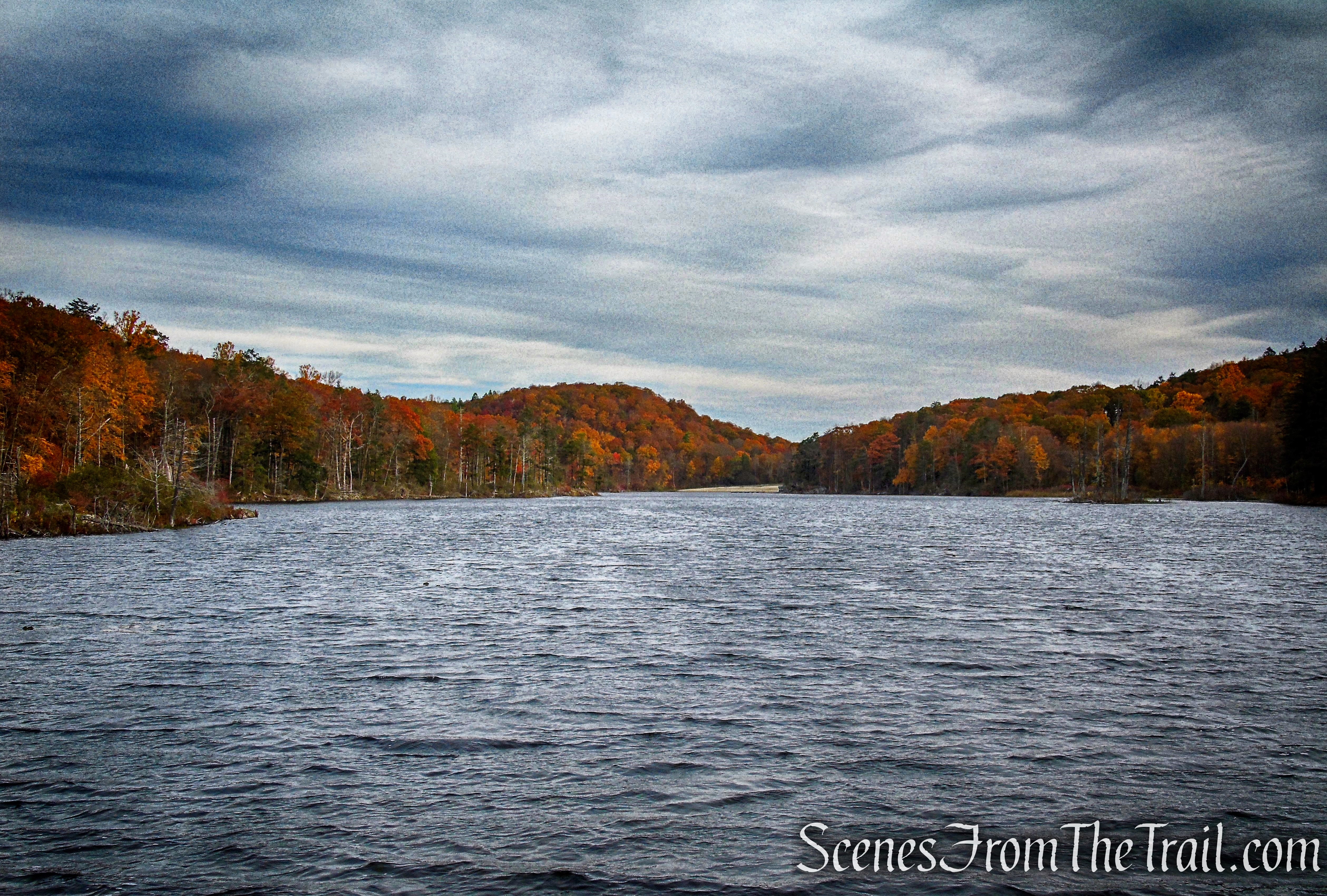
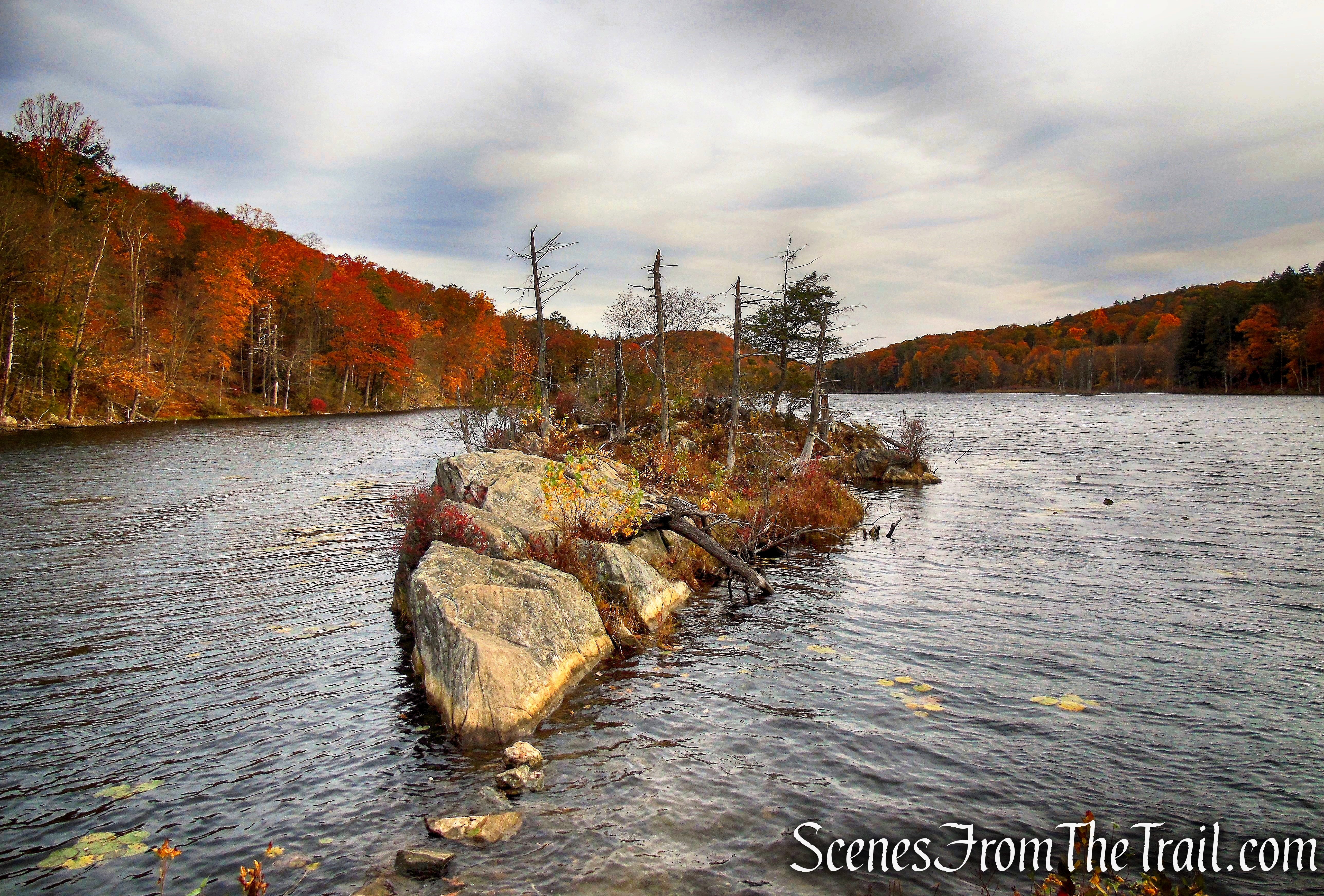
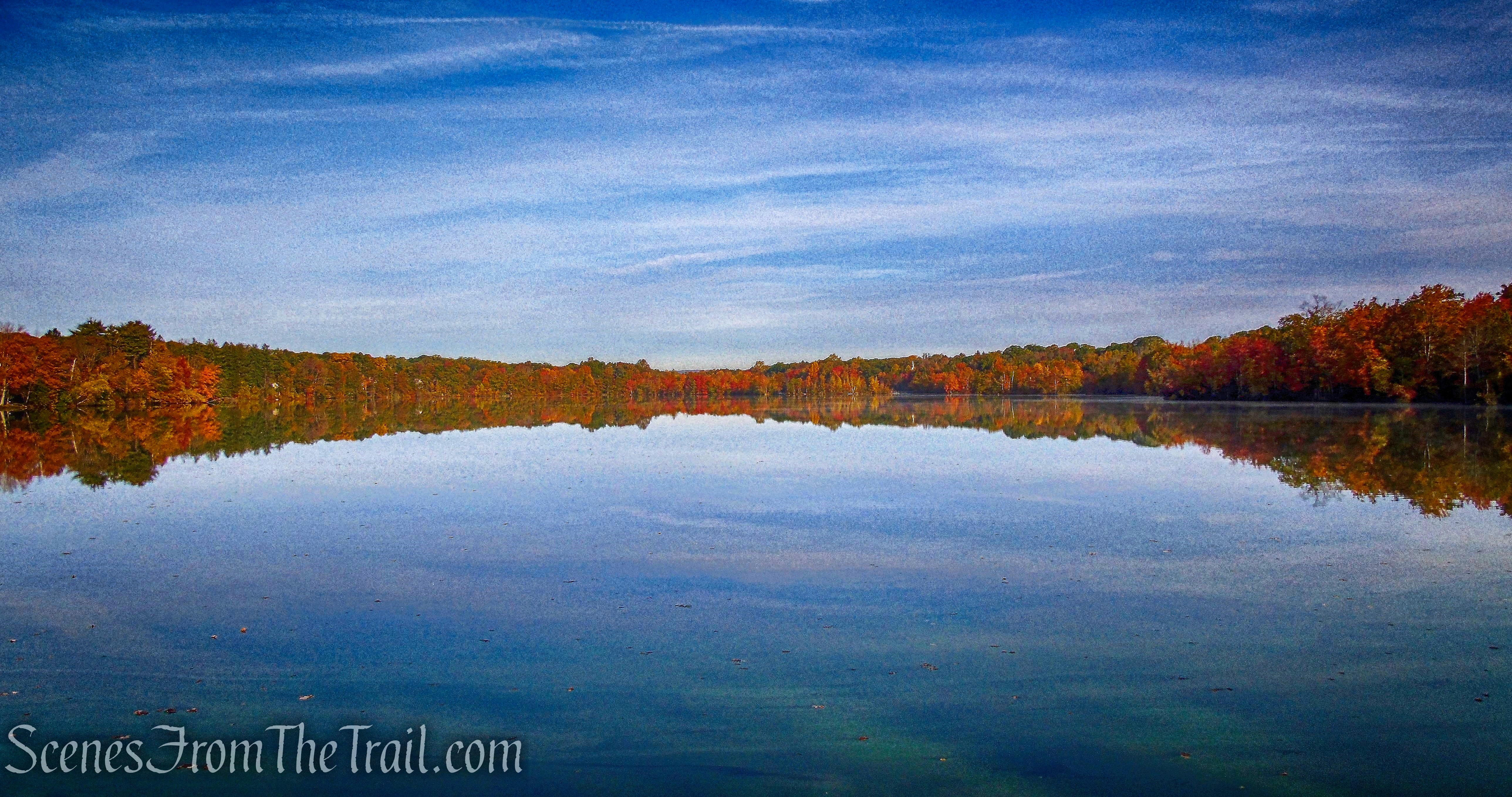
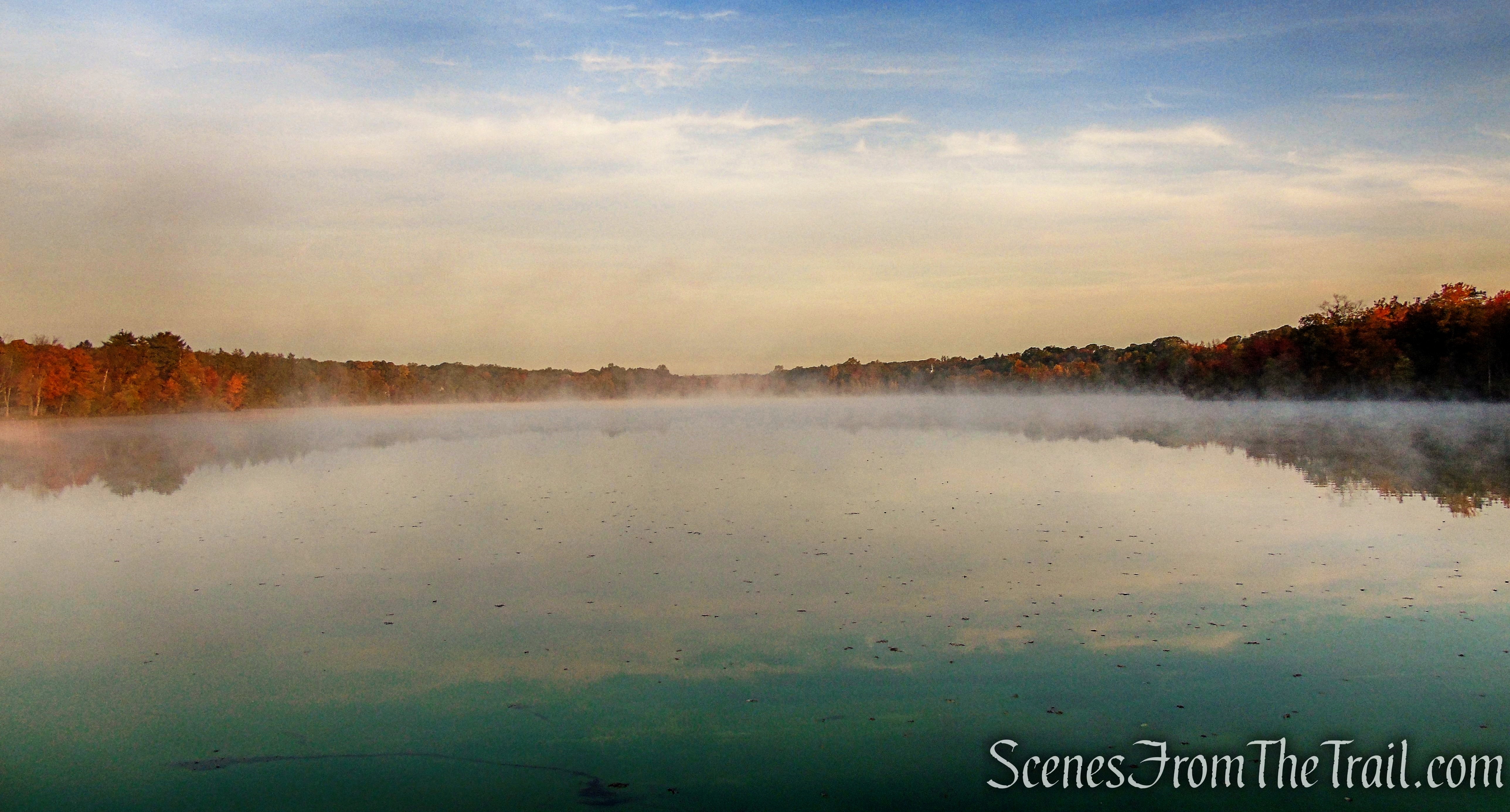
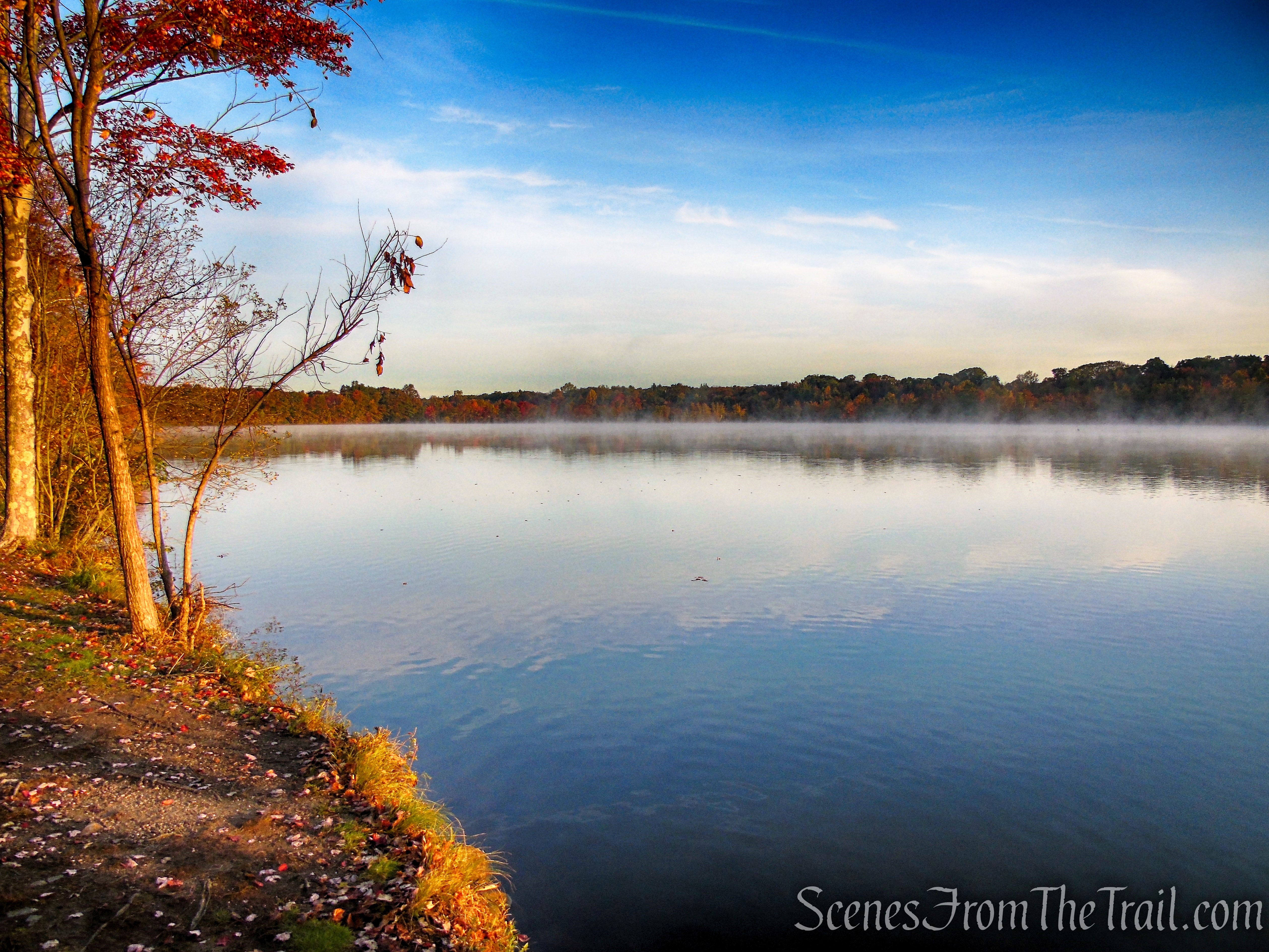
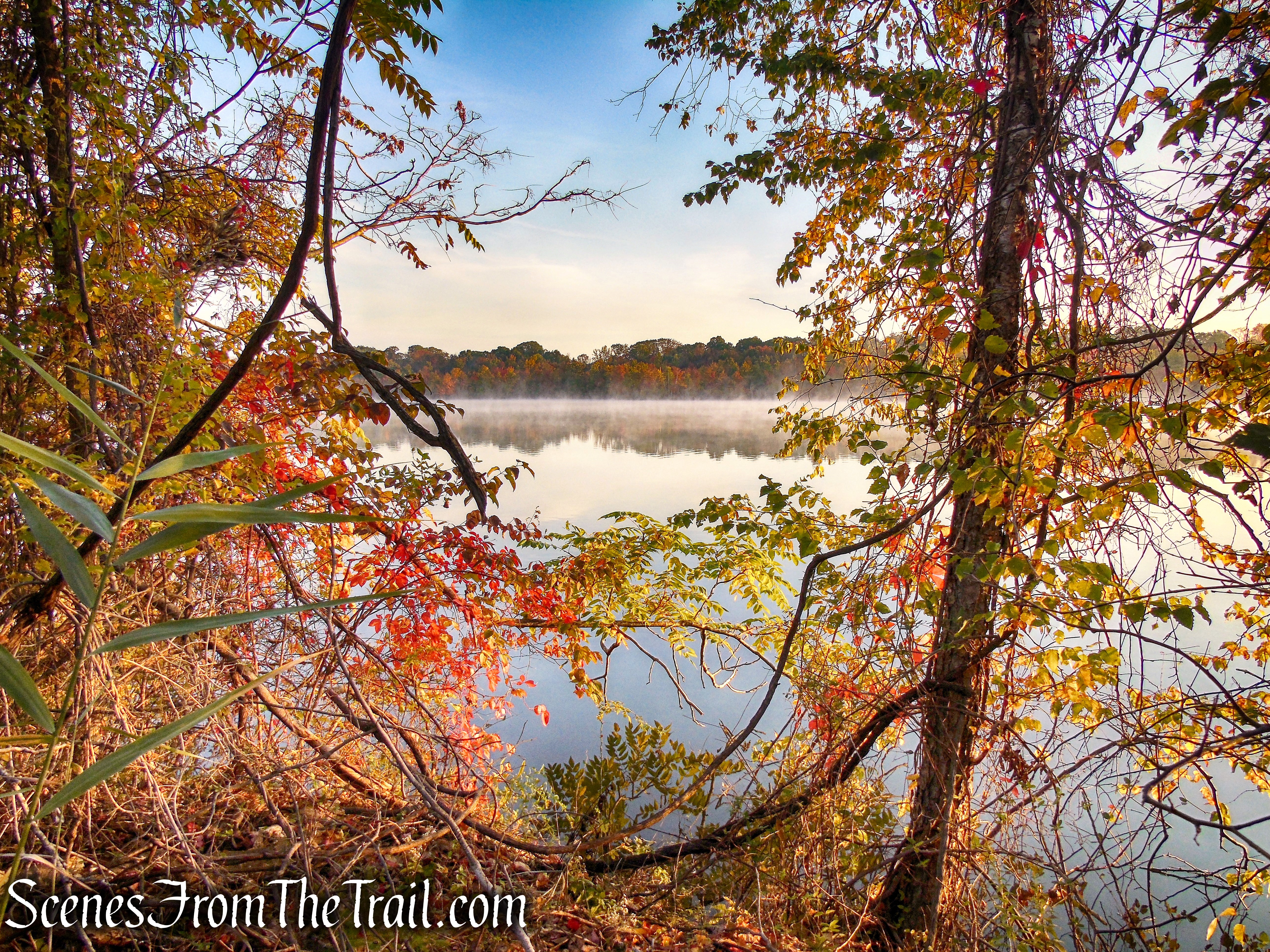
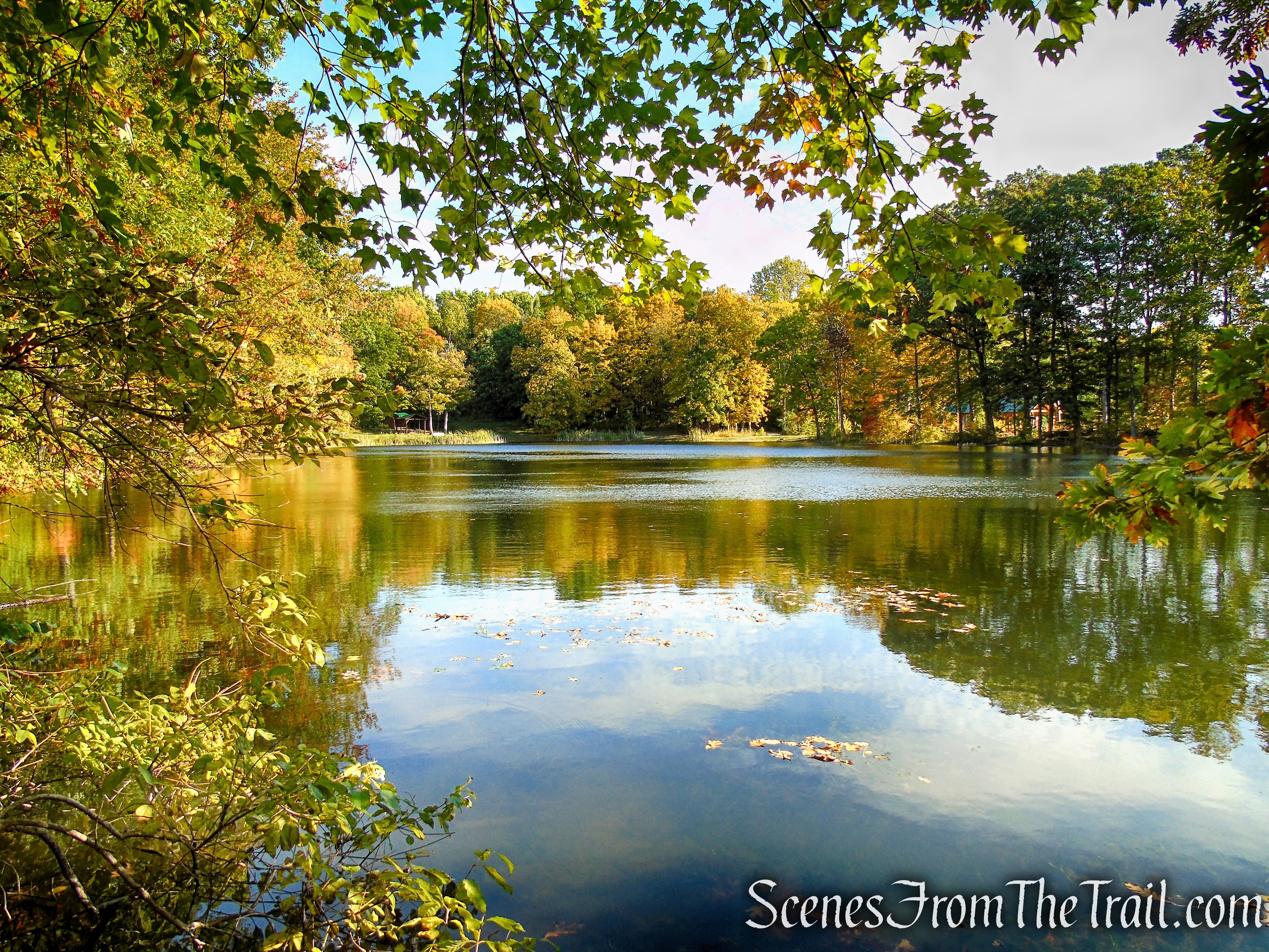
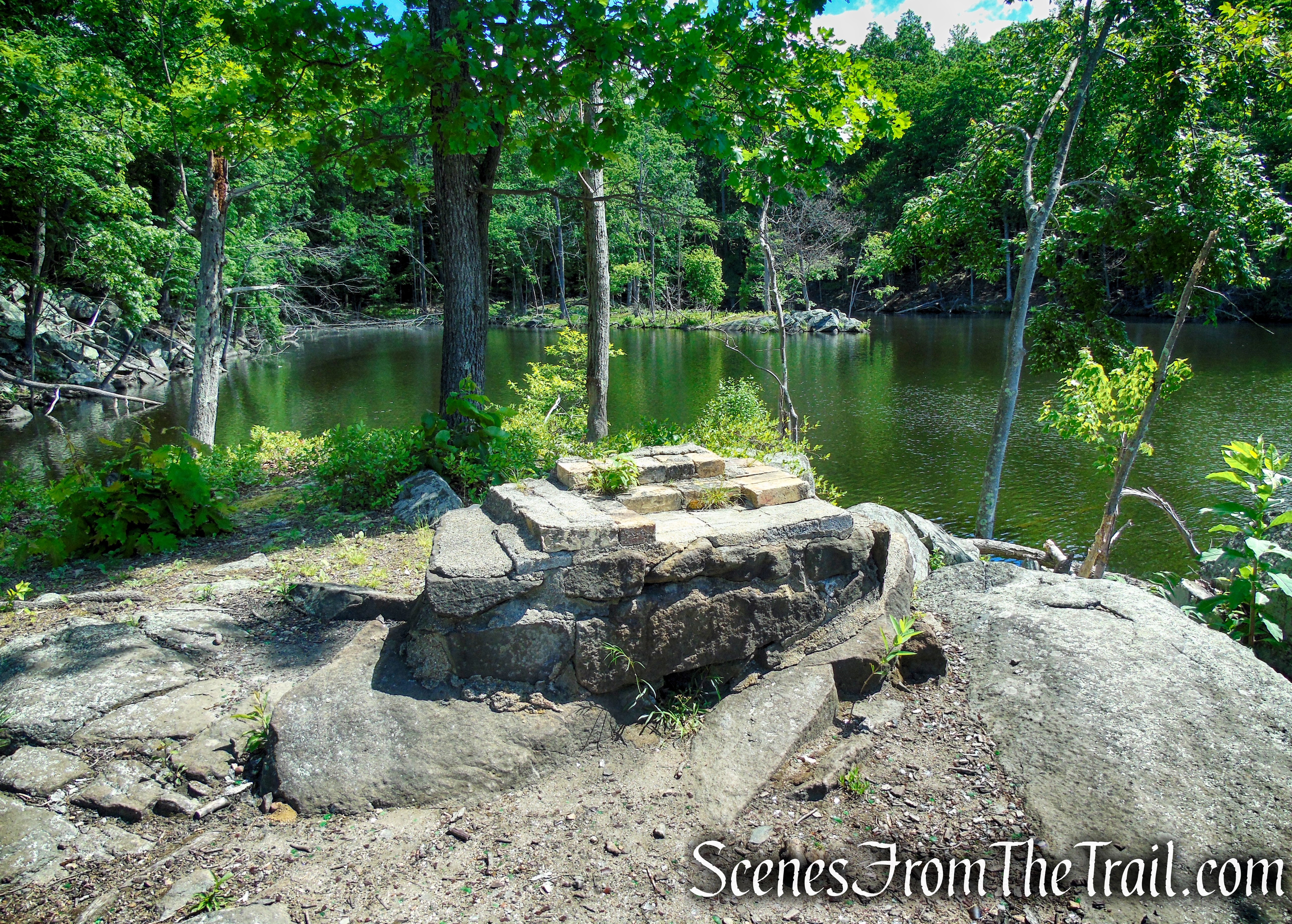
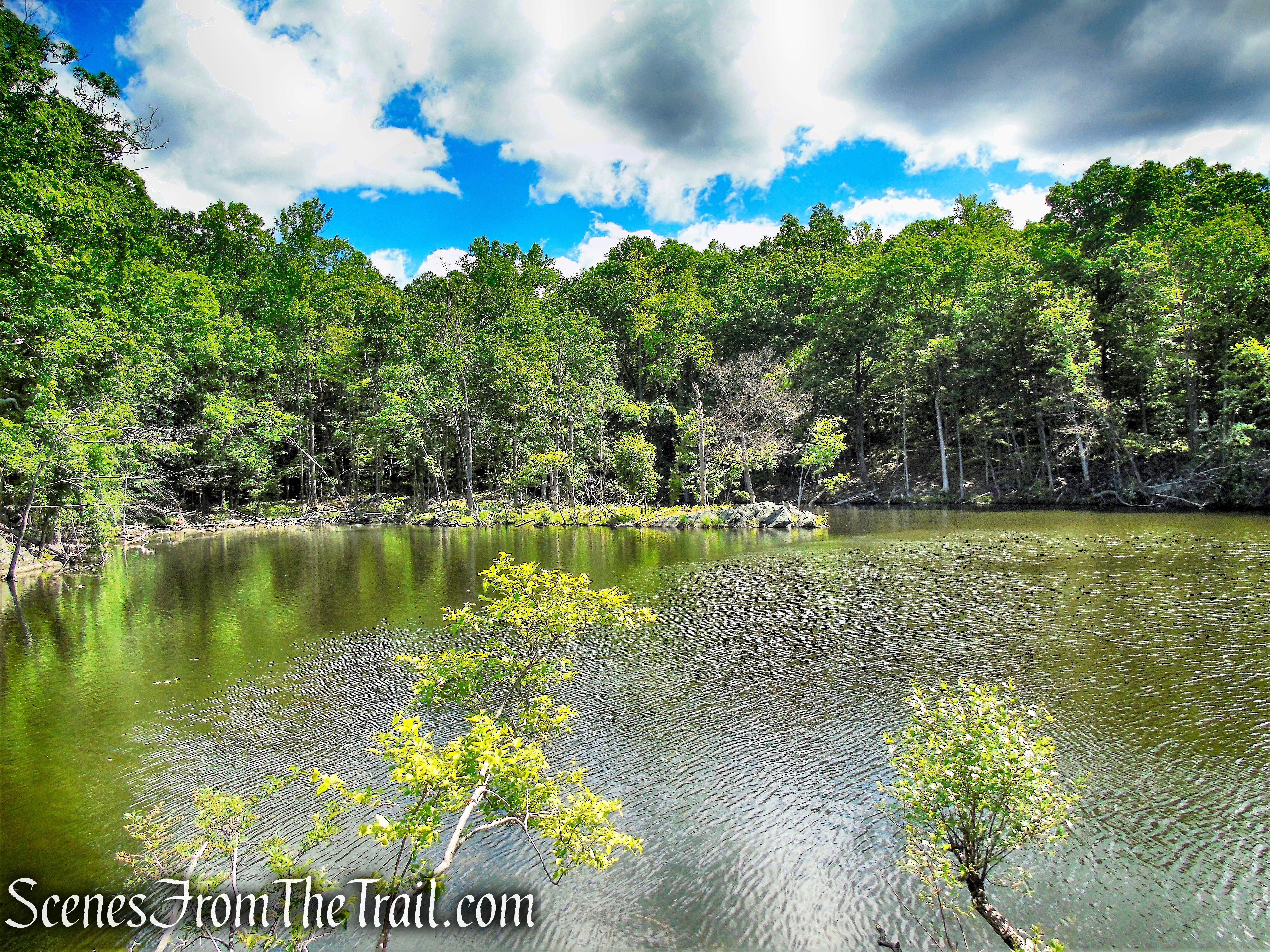
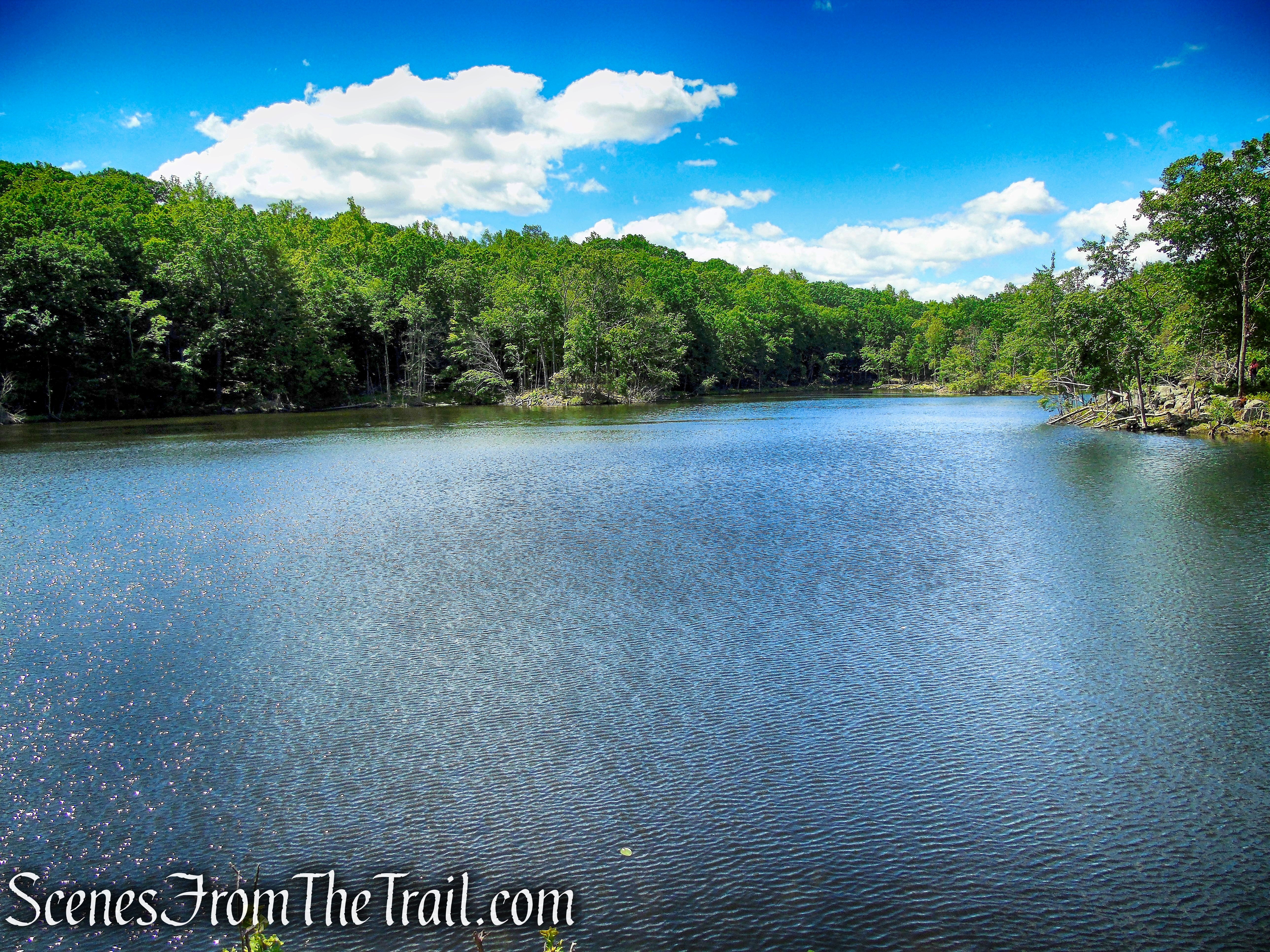
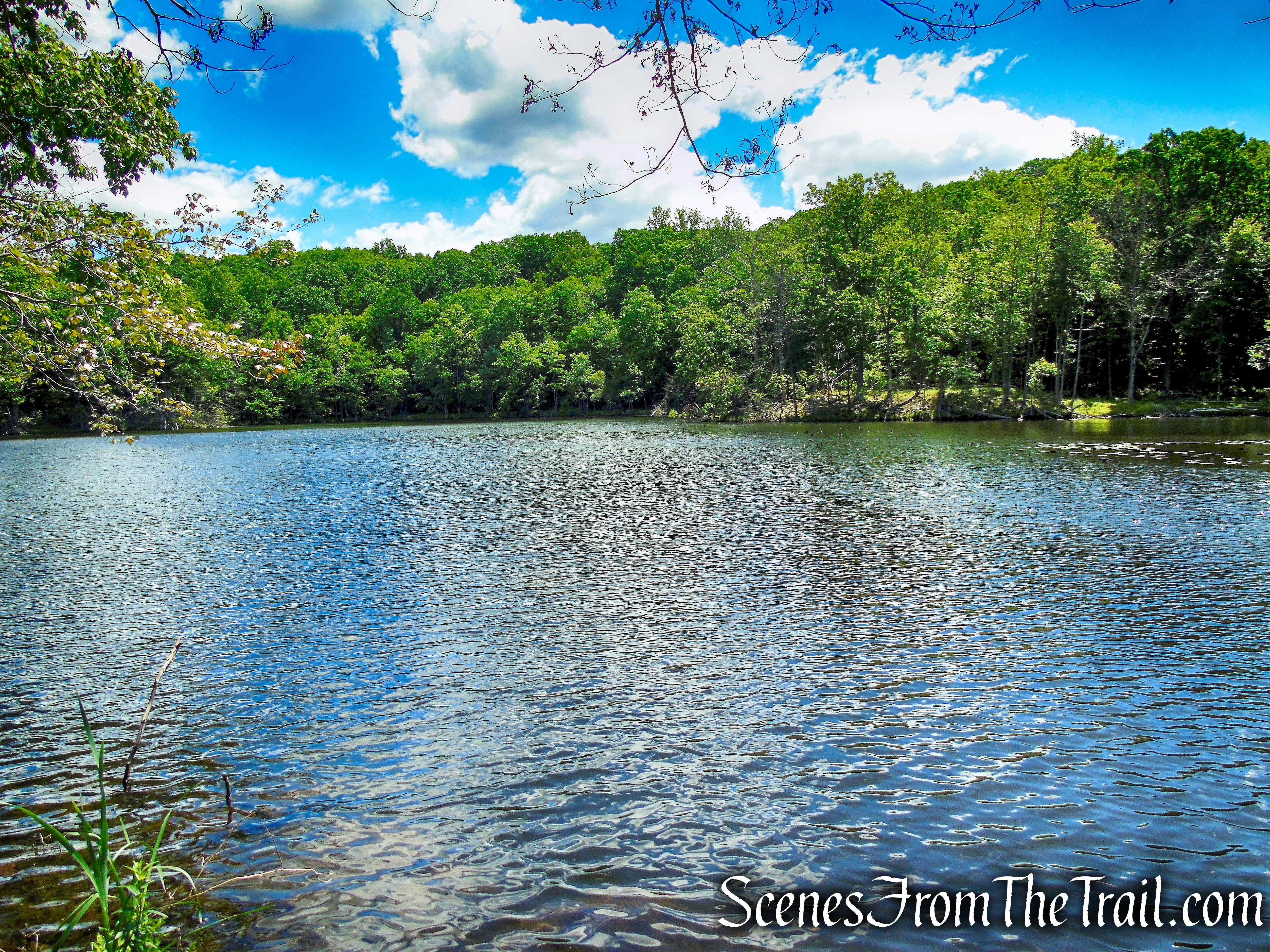
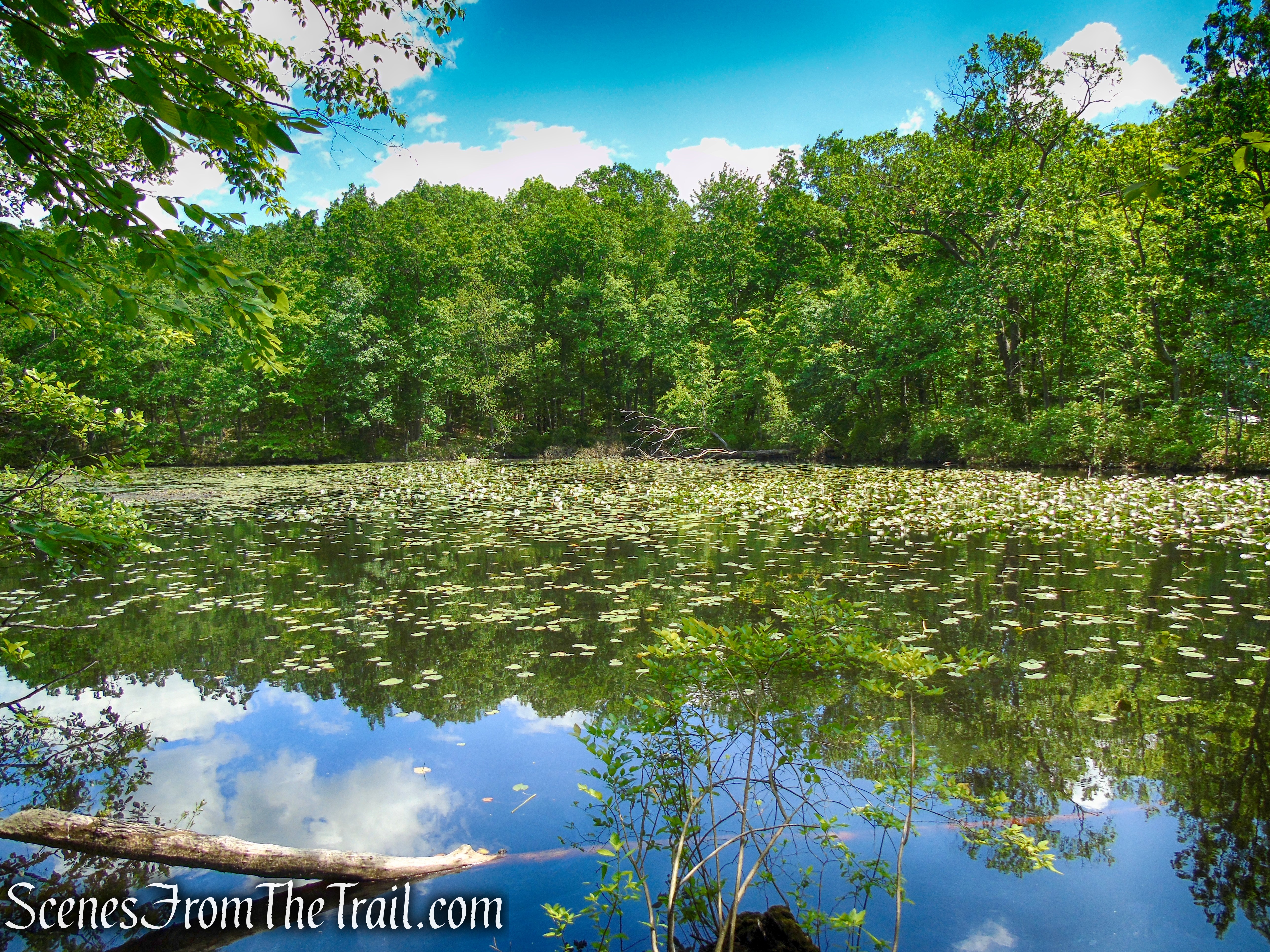
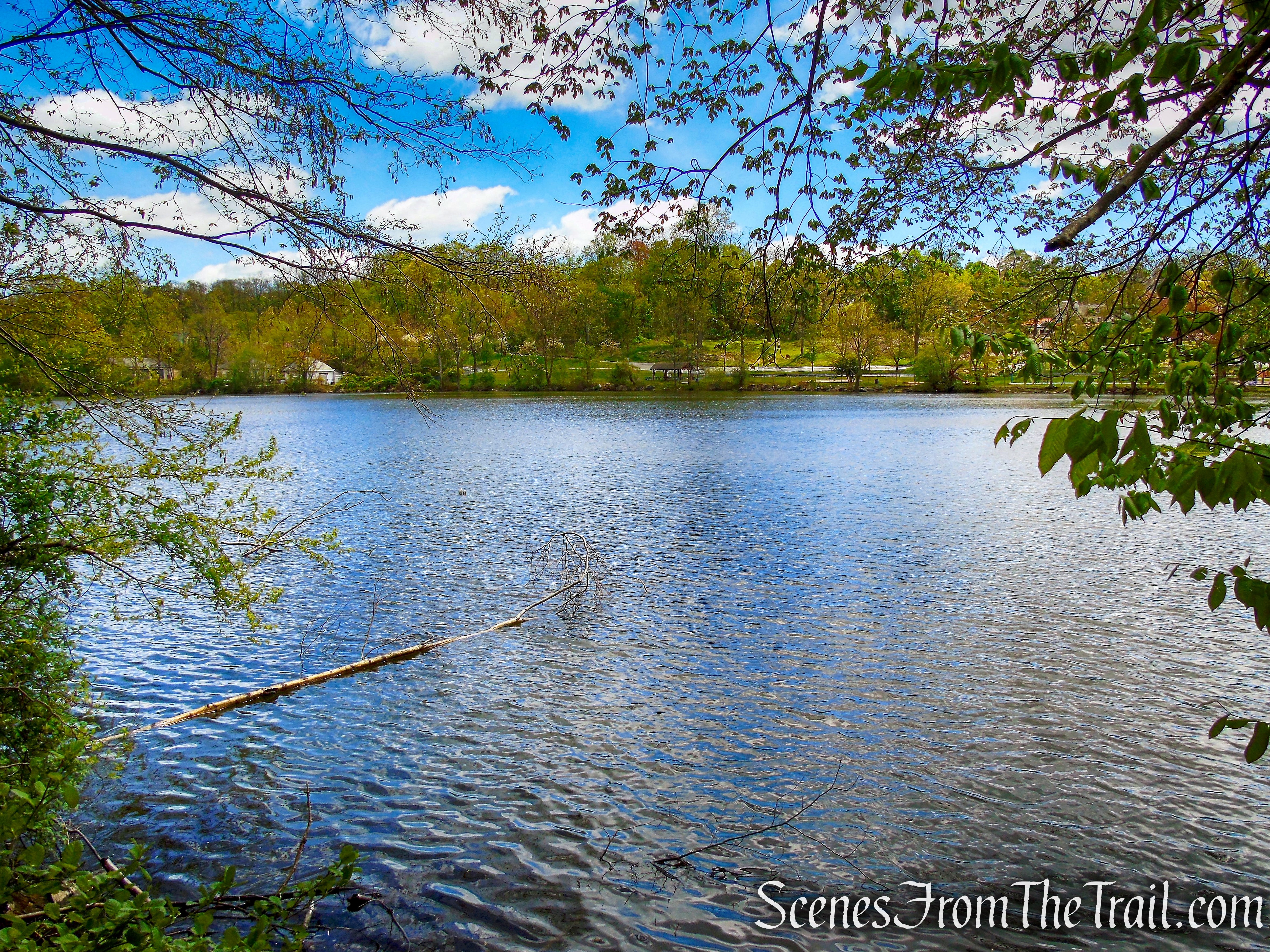
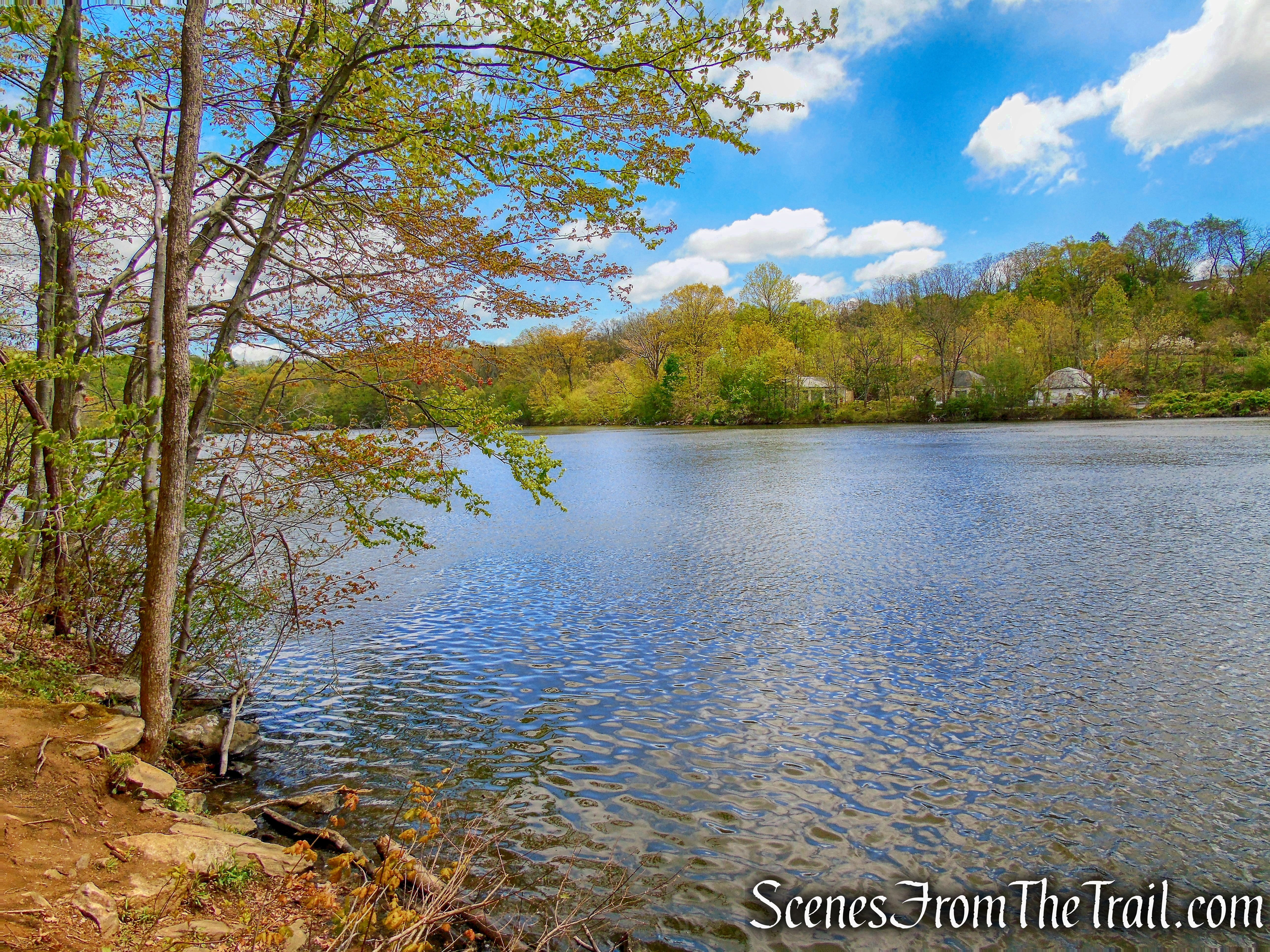
As early as the turn of the century, the park commission had determined to acquire the grounds of the “Old Put Club” on the east side of the main encampment. The possession of “Old Put Lake” is in every way desirable for the camp grounds, it is one of the most beautiful sheets of water in Western Connecticut, lying just over the eastern boundary line of the park and for quite a distance is less than one hundred feet from it. The park commissioners envisioned a fundamental separation of the park into two areas: one, on the west side, preserving the historical remains of the encampment, and the other, on the east side, offering recreational and scenic resources. This functional division of the park has remained to the present.
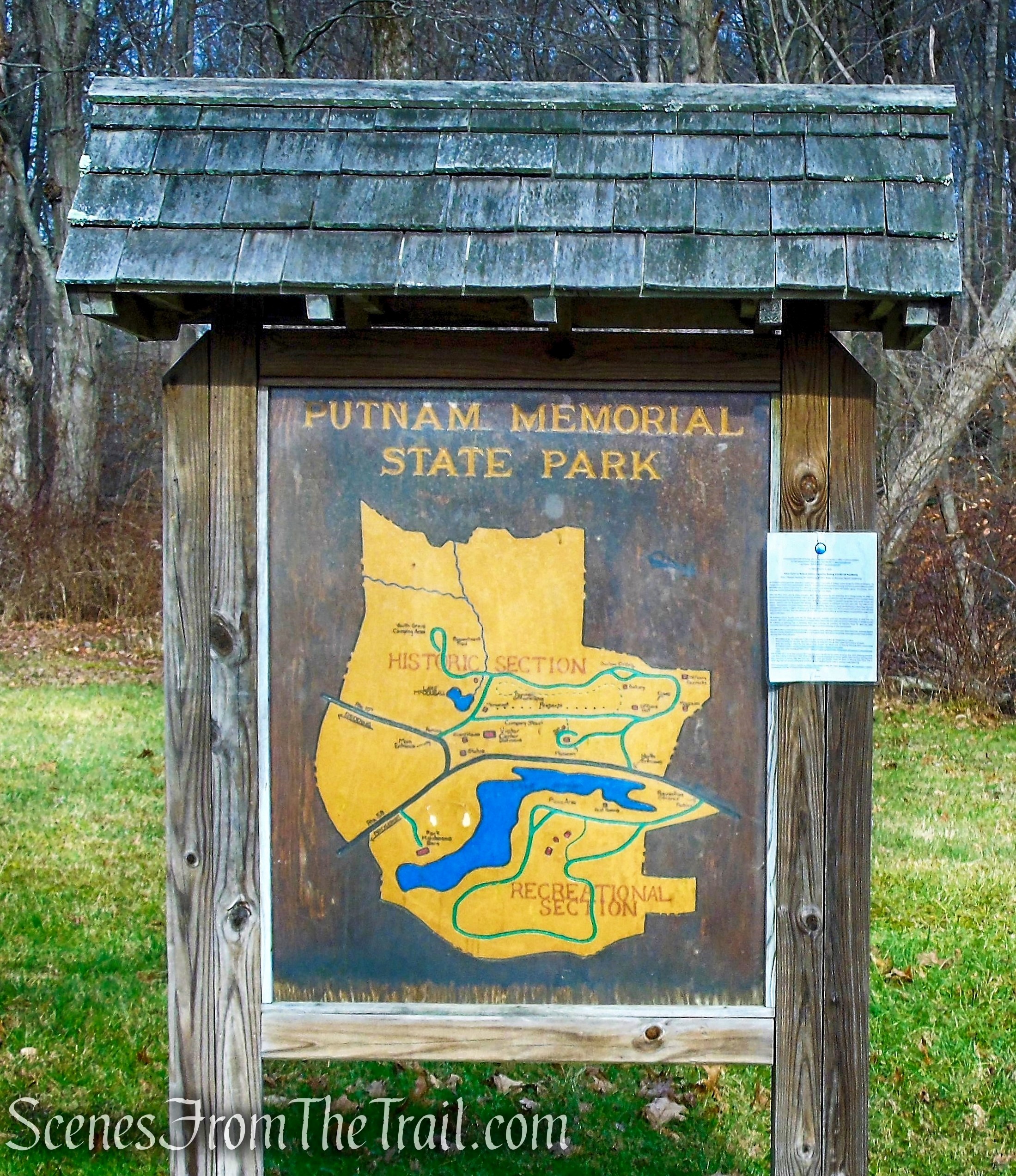
Putnam Memorial State Park

Putnam Memorial State Park


Trails Overview:

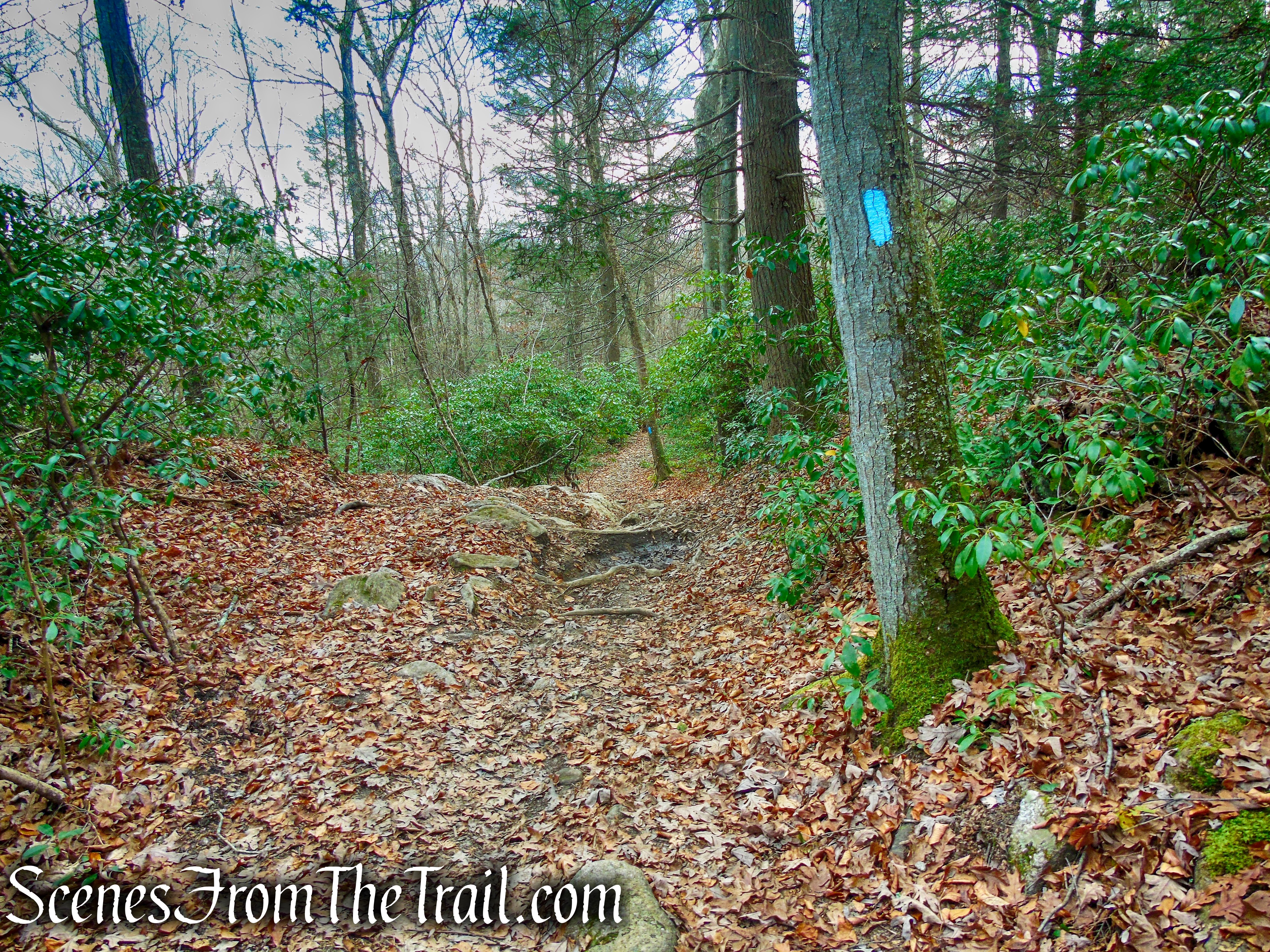
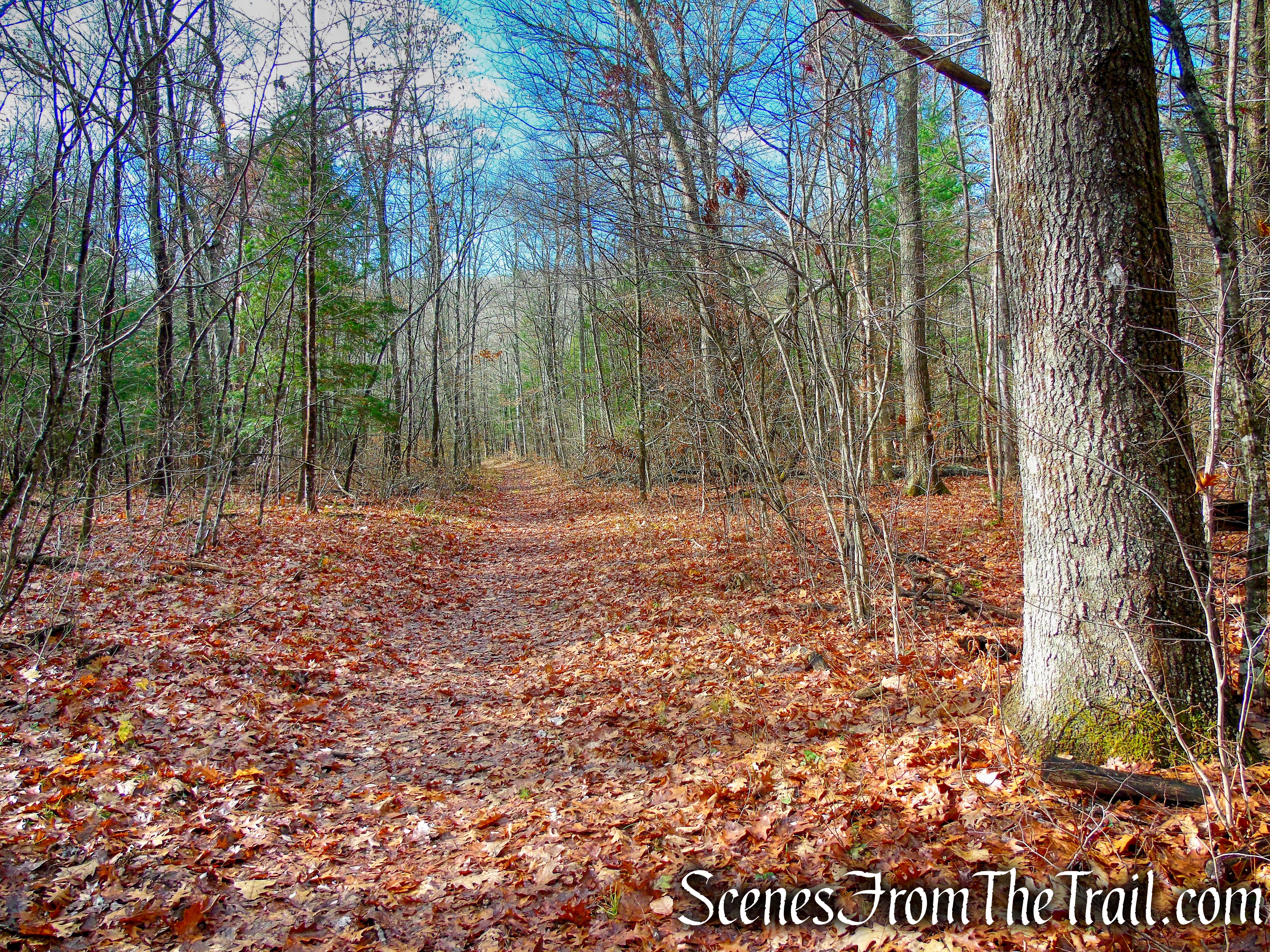
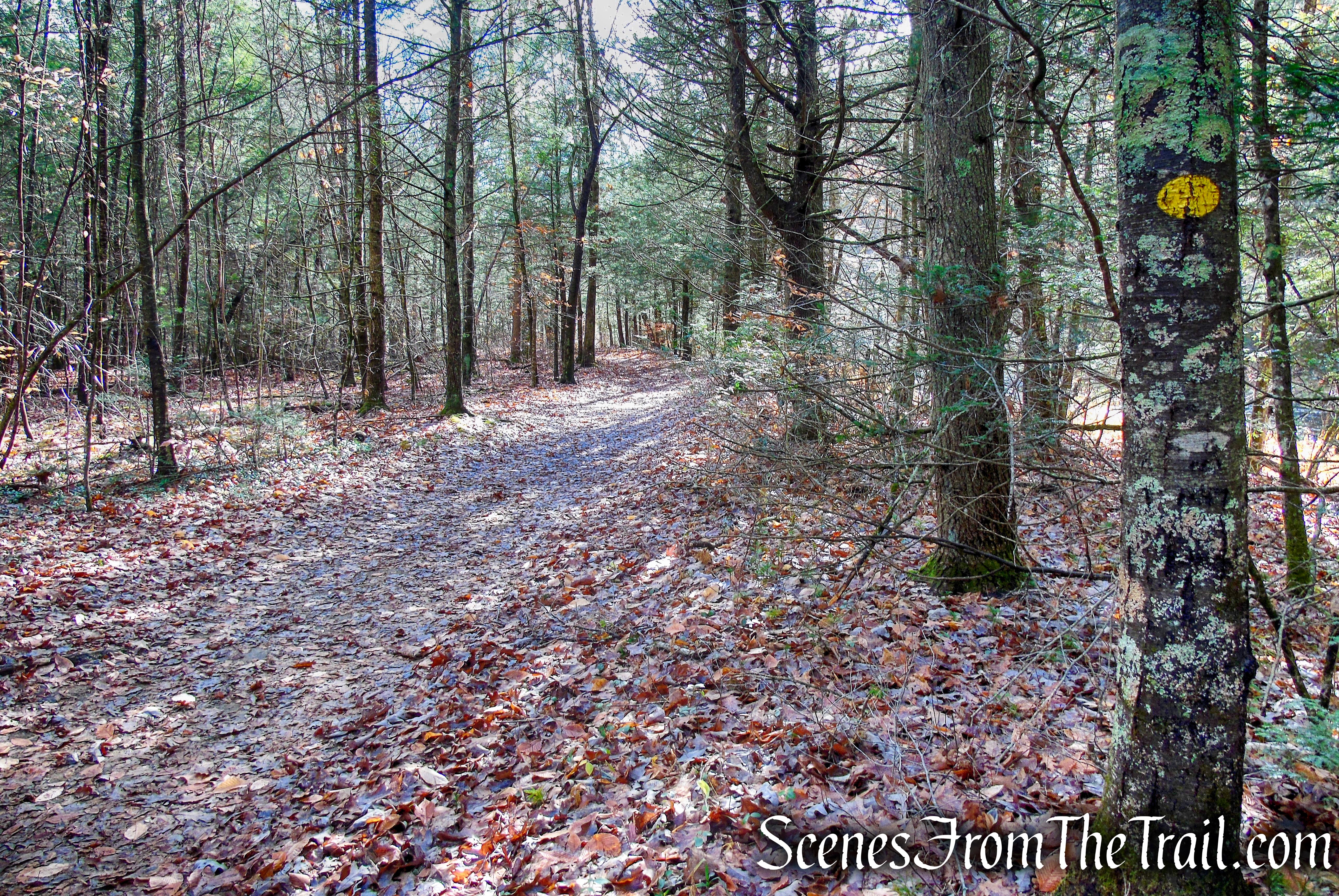
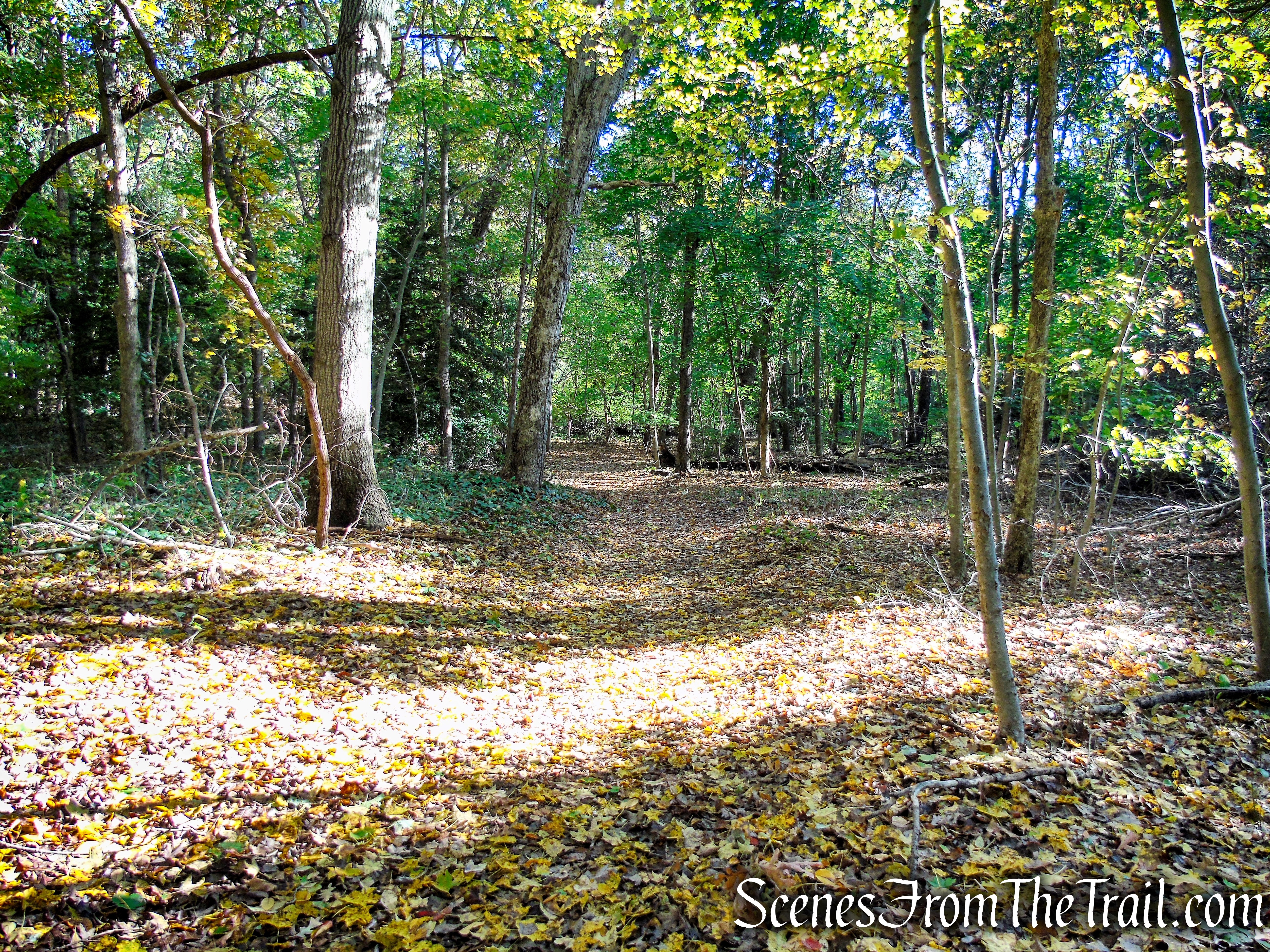
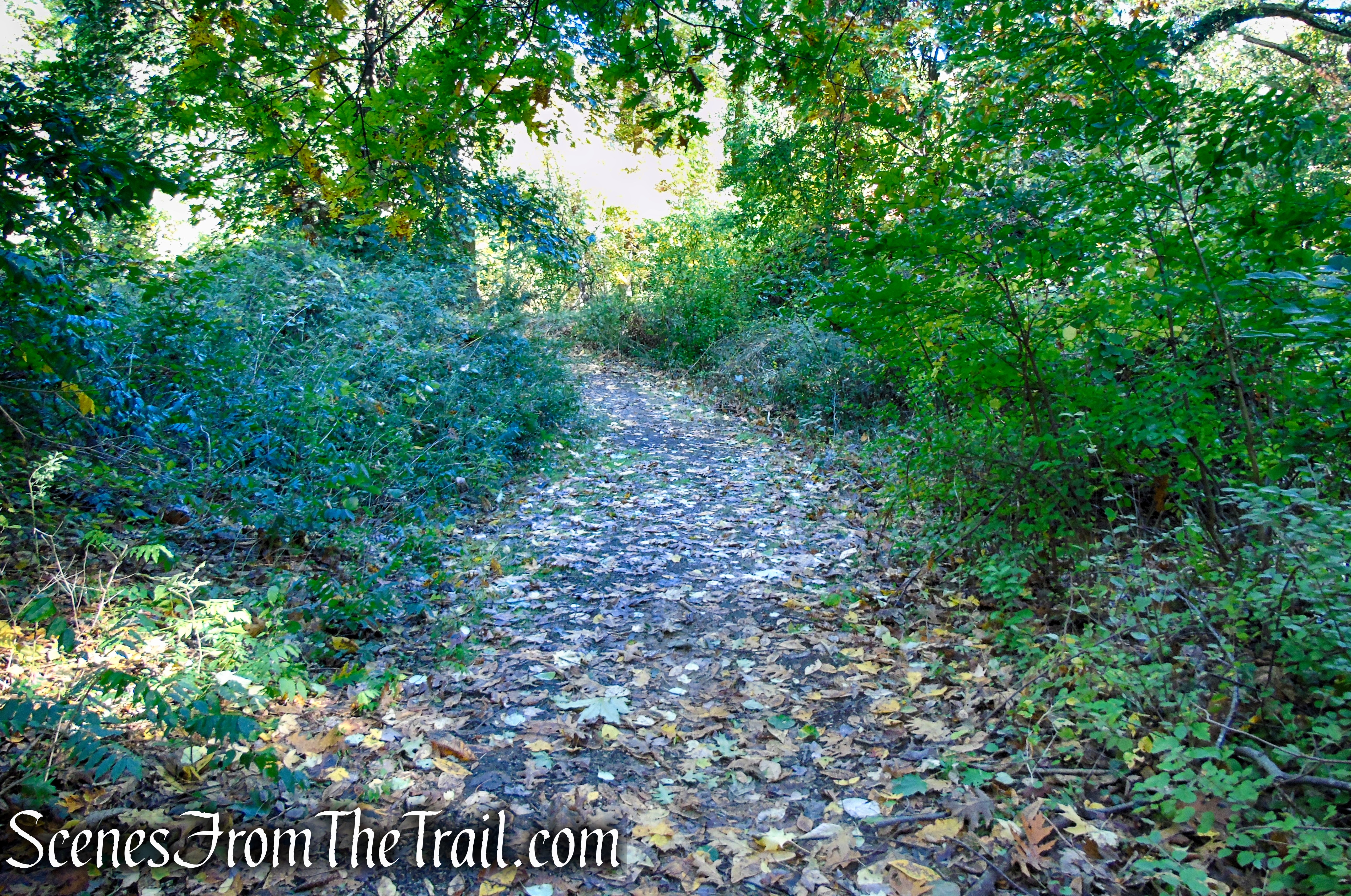
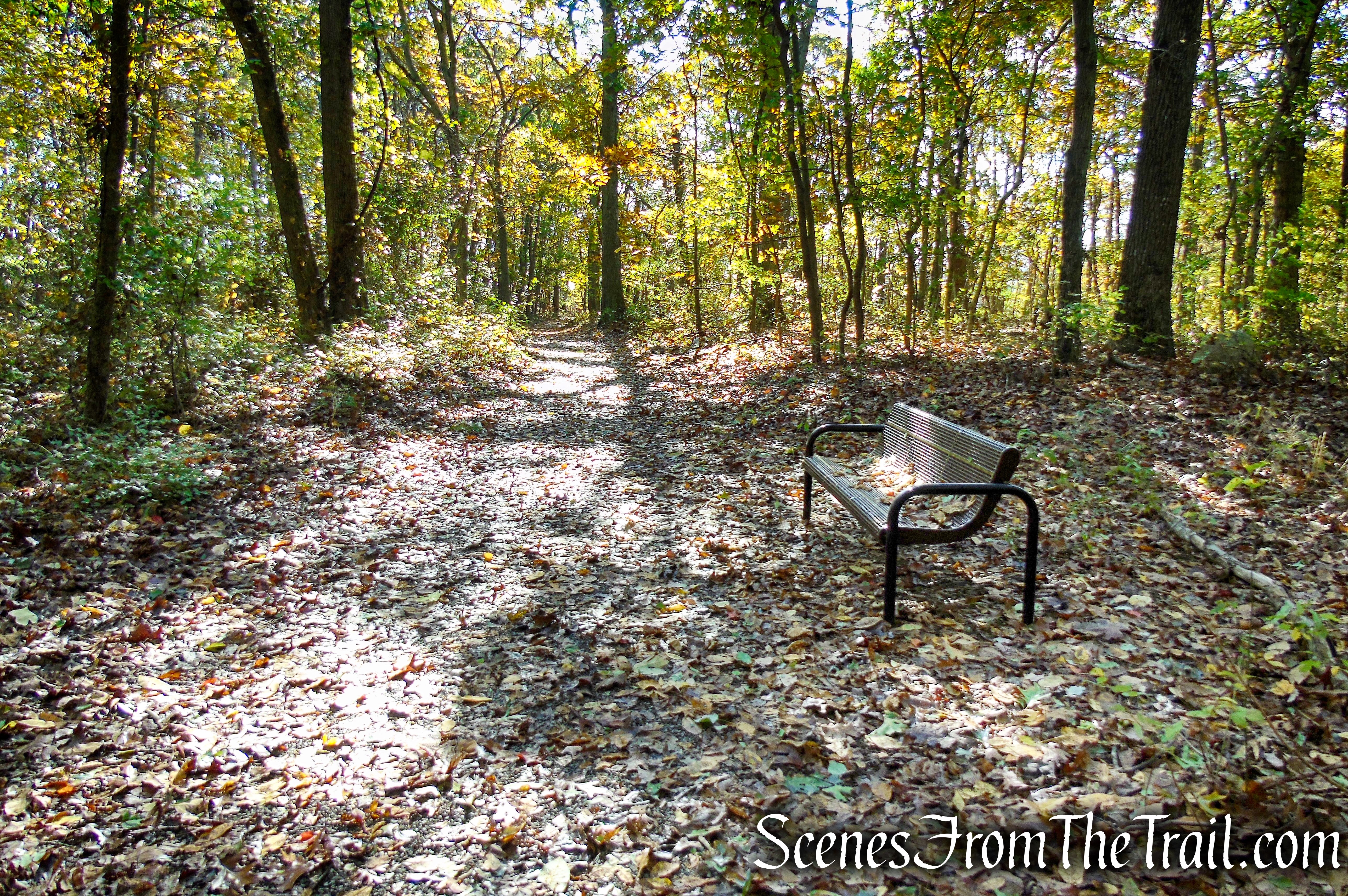
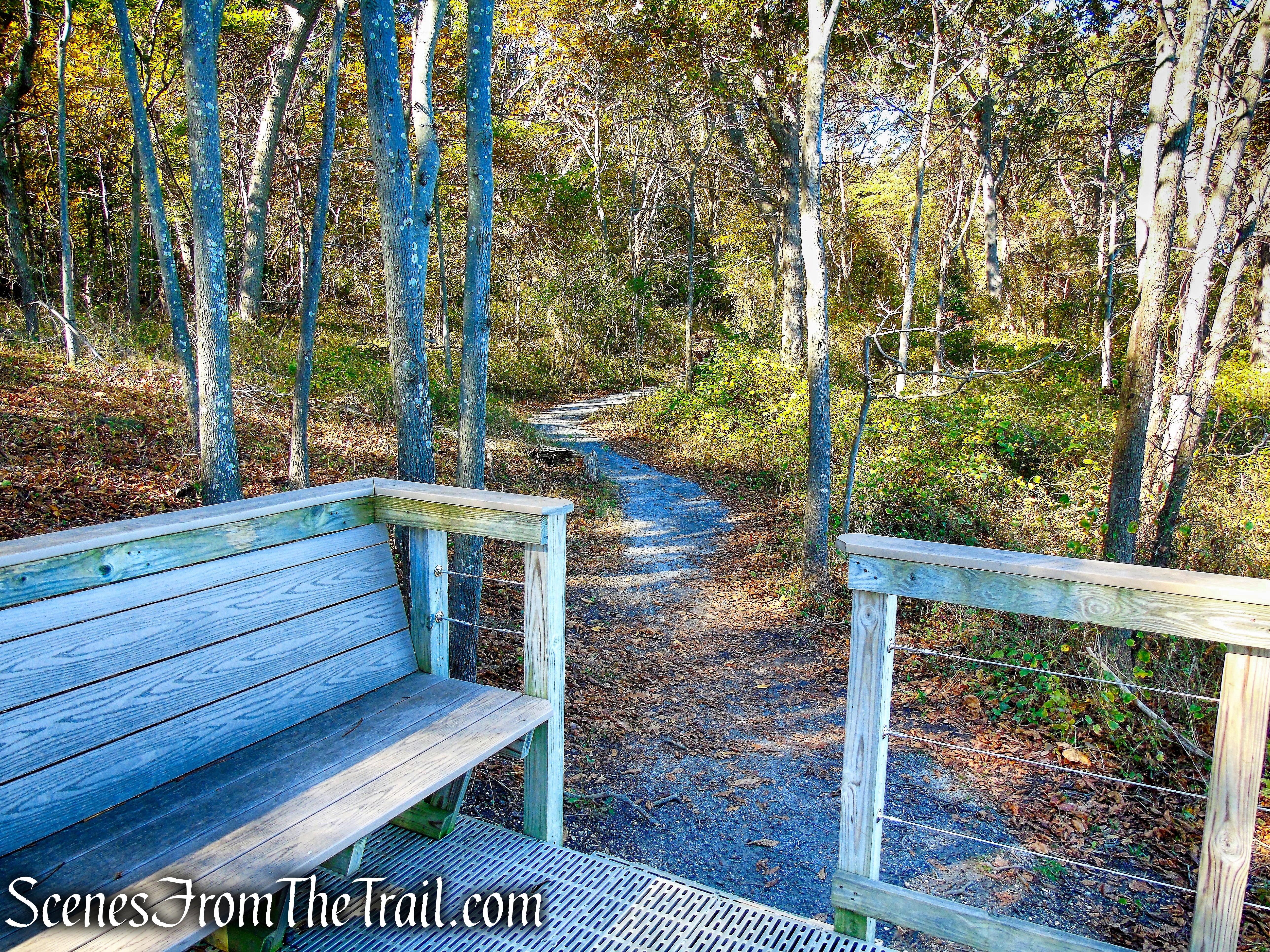
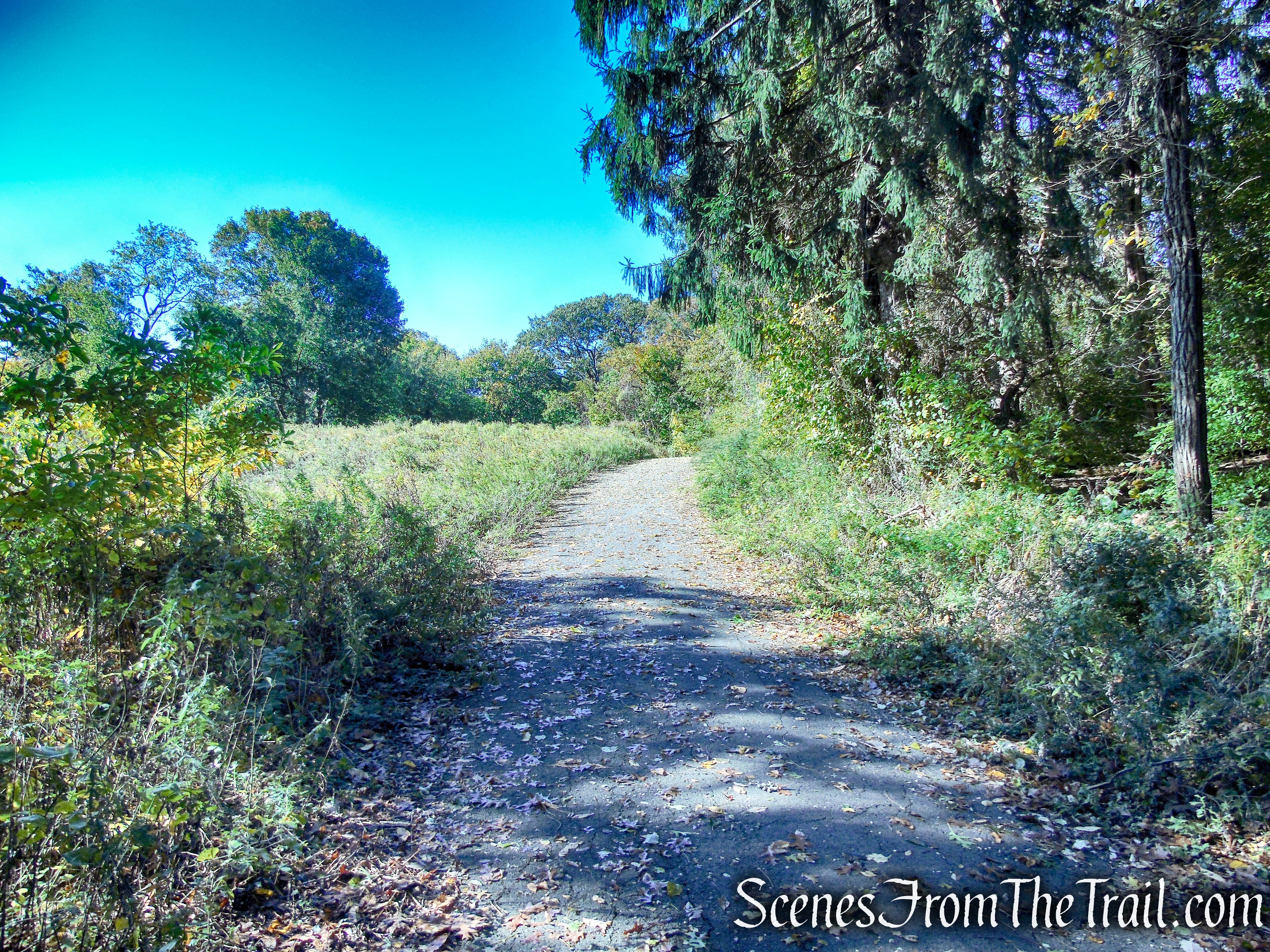
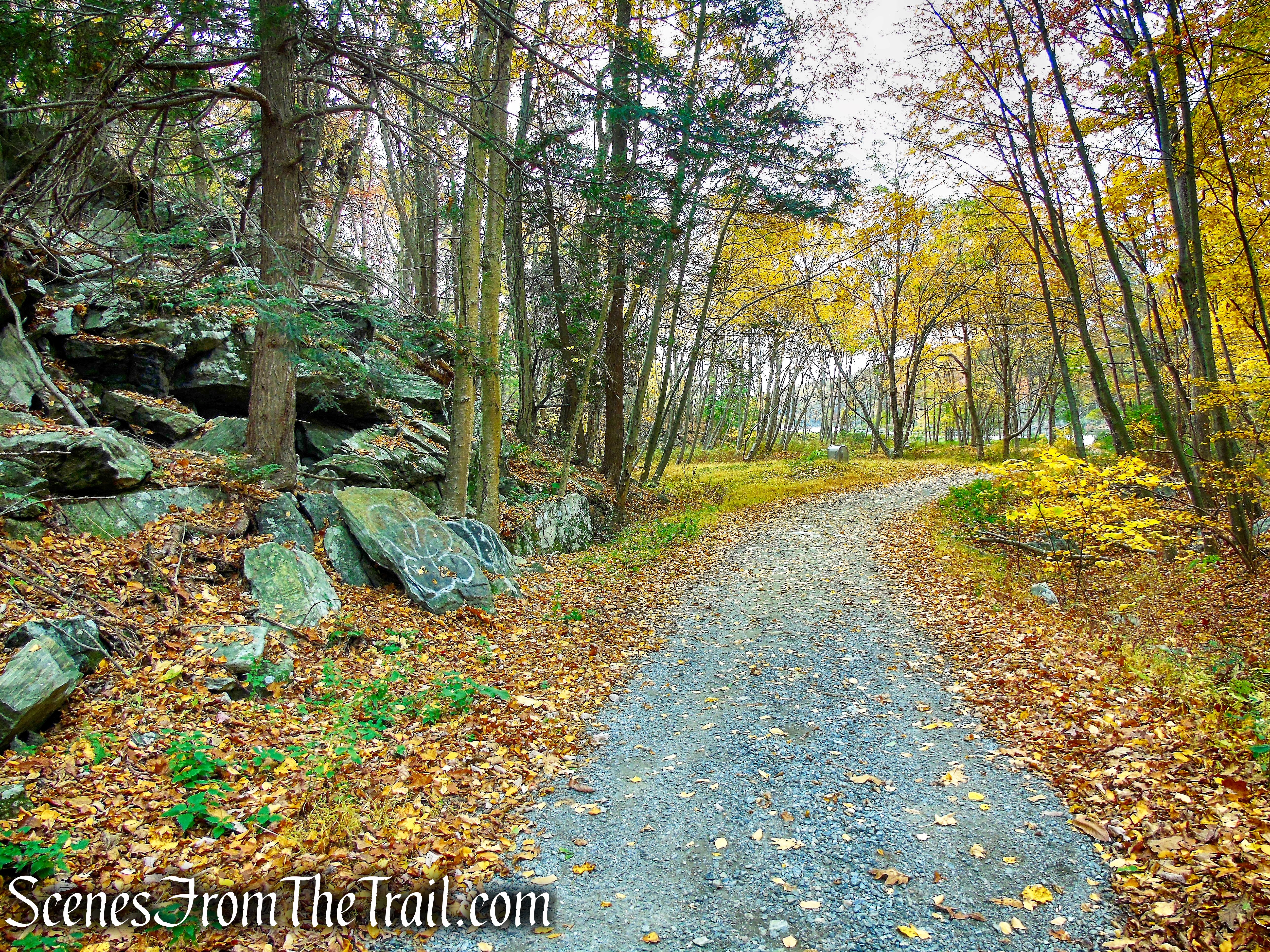
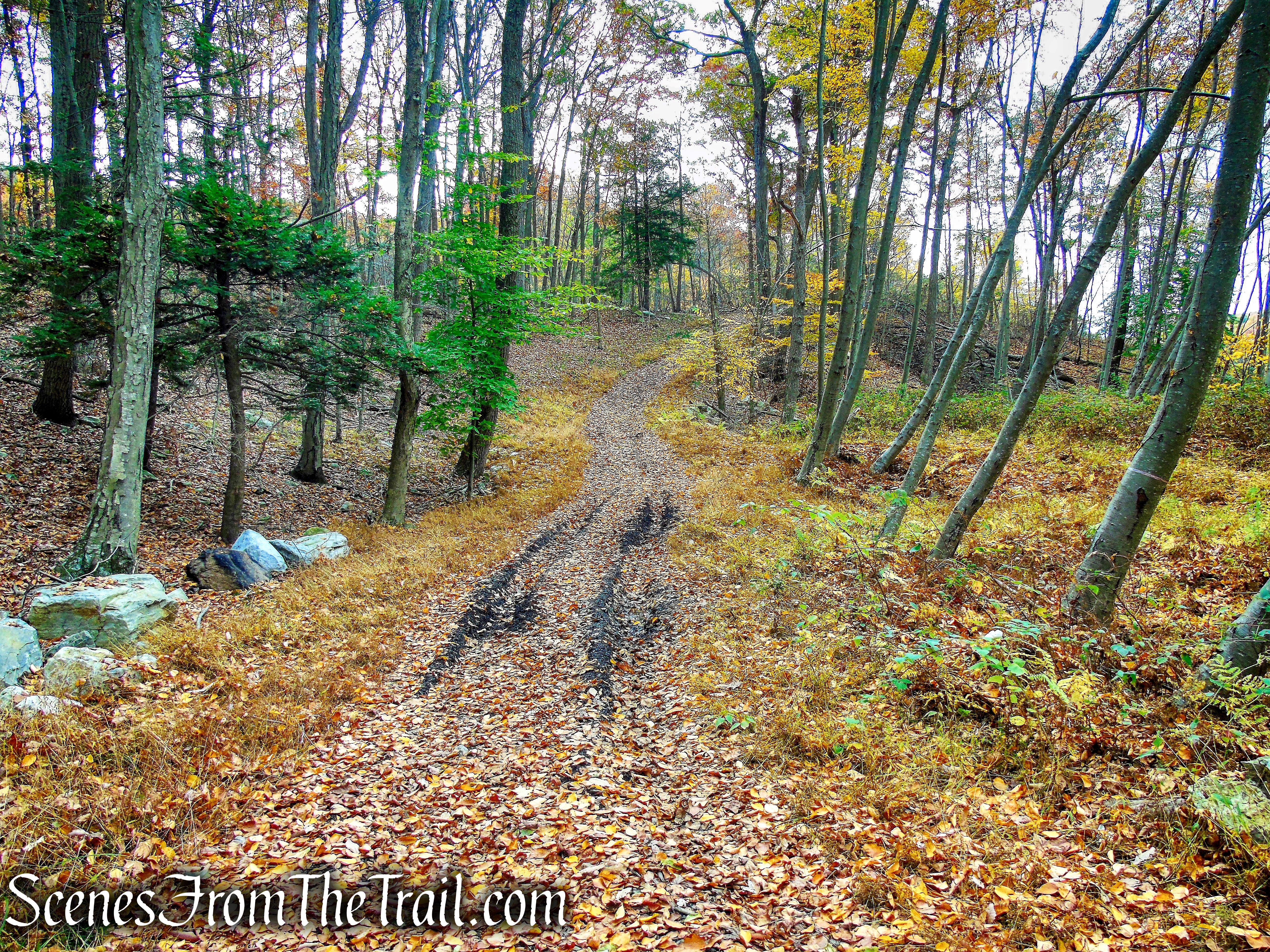
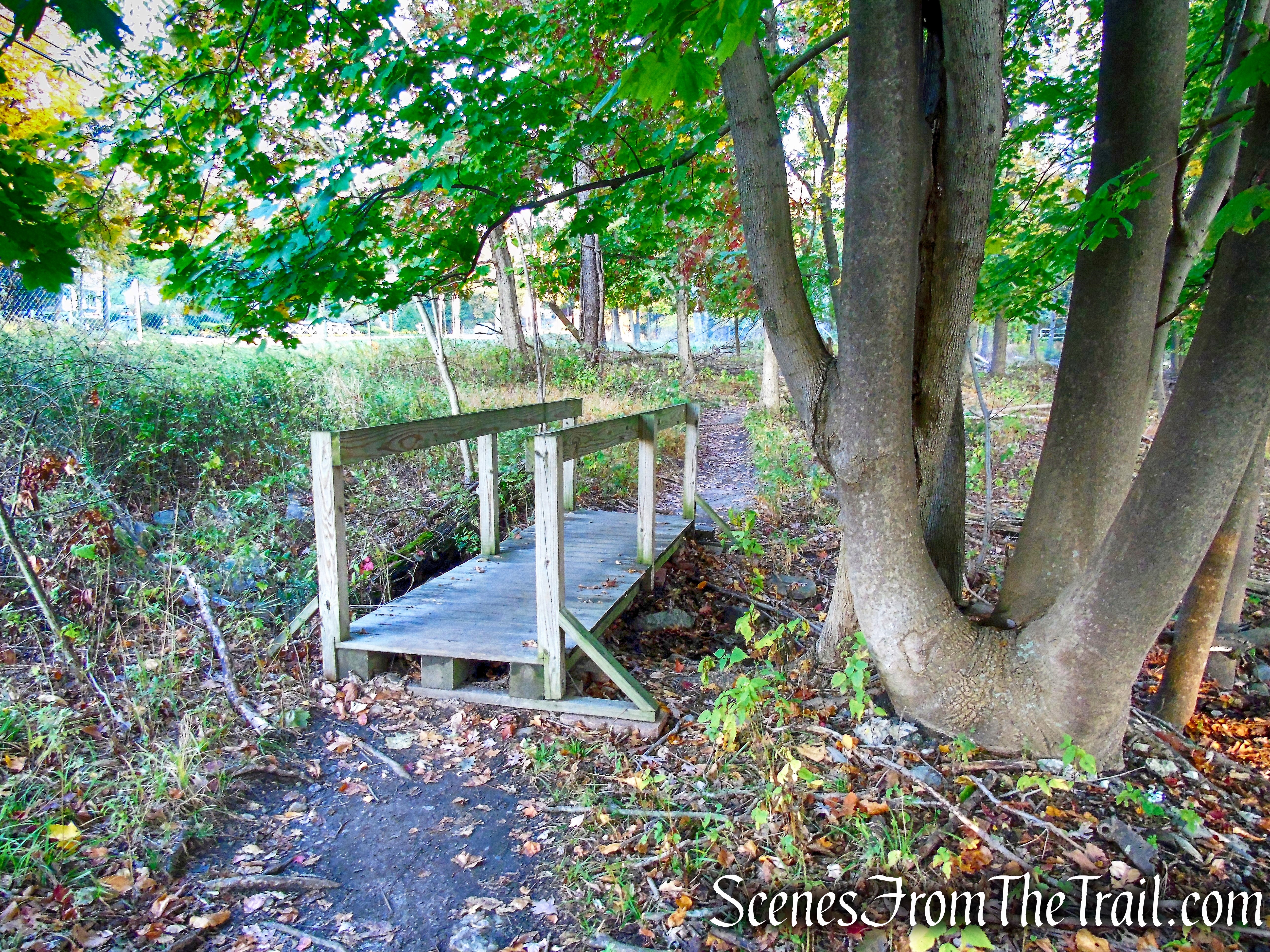
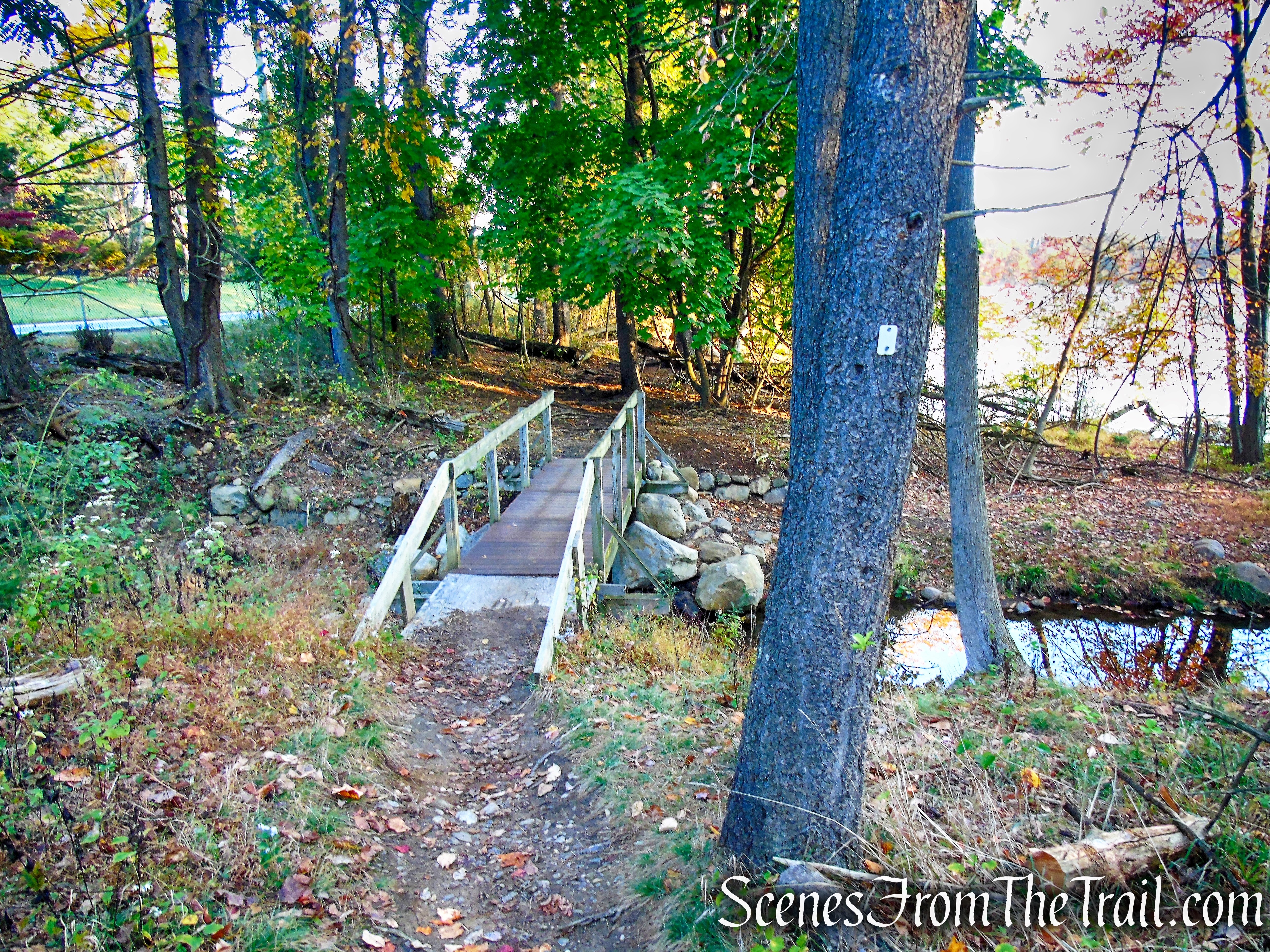
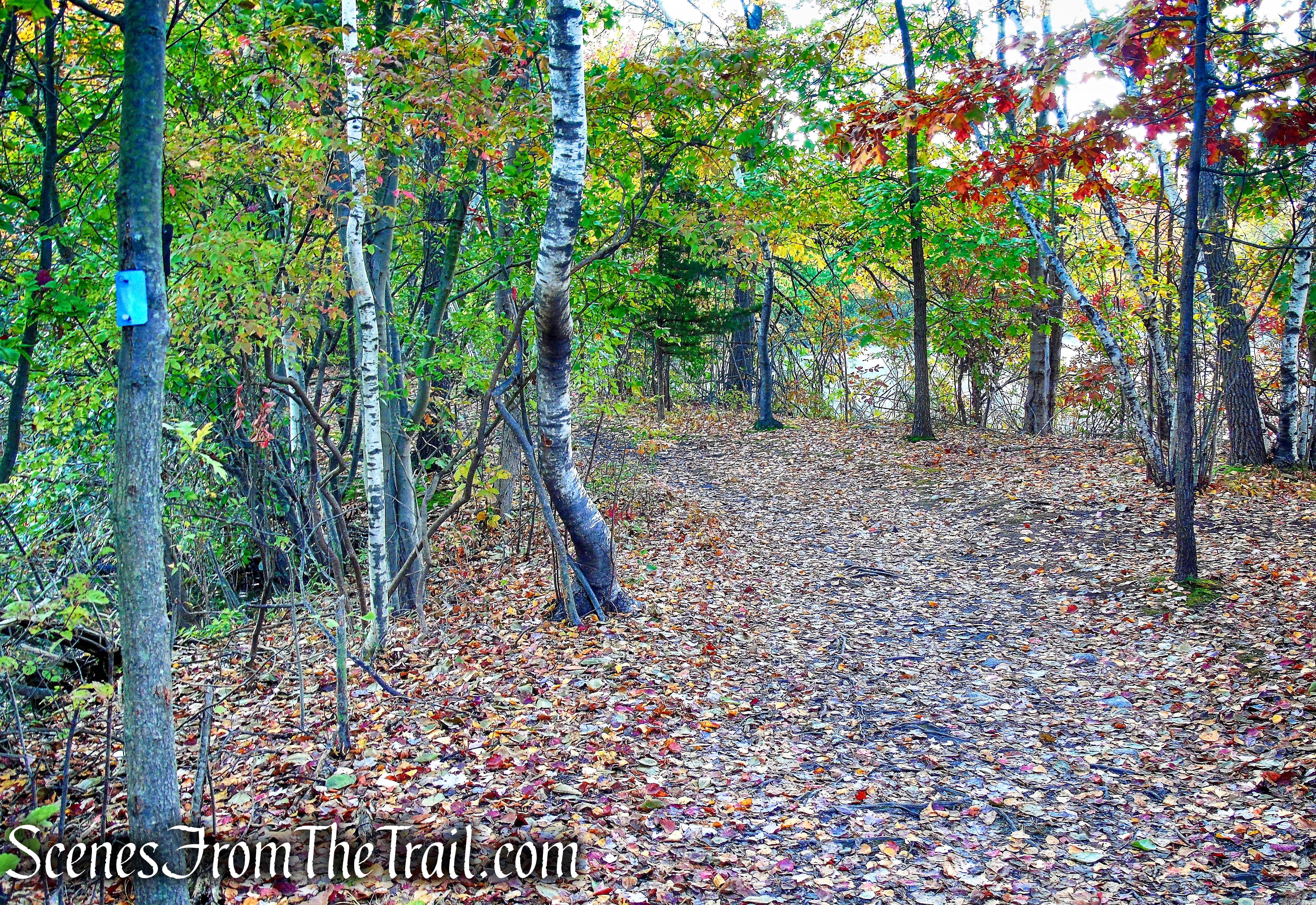
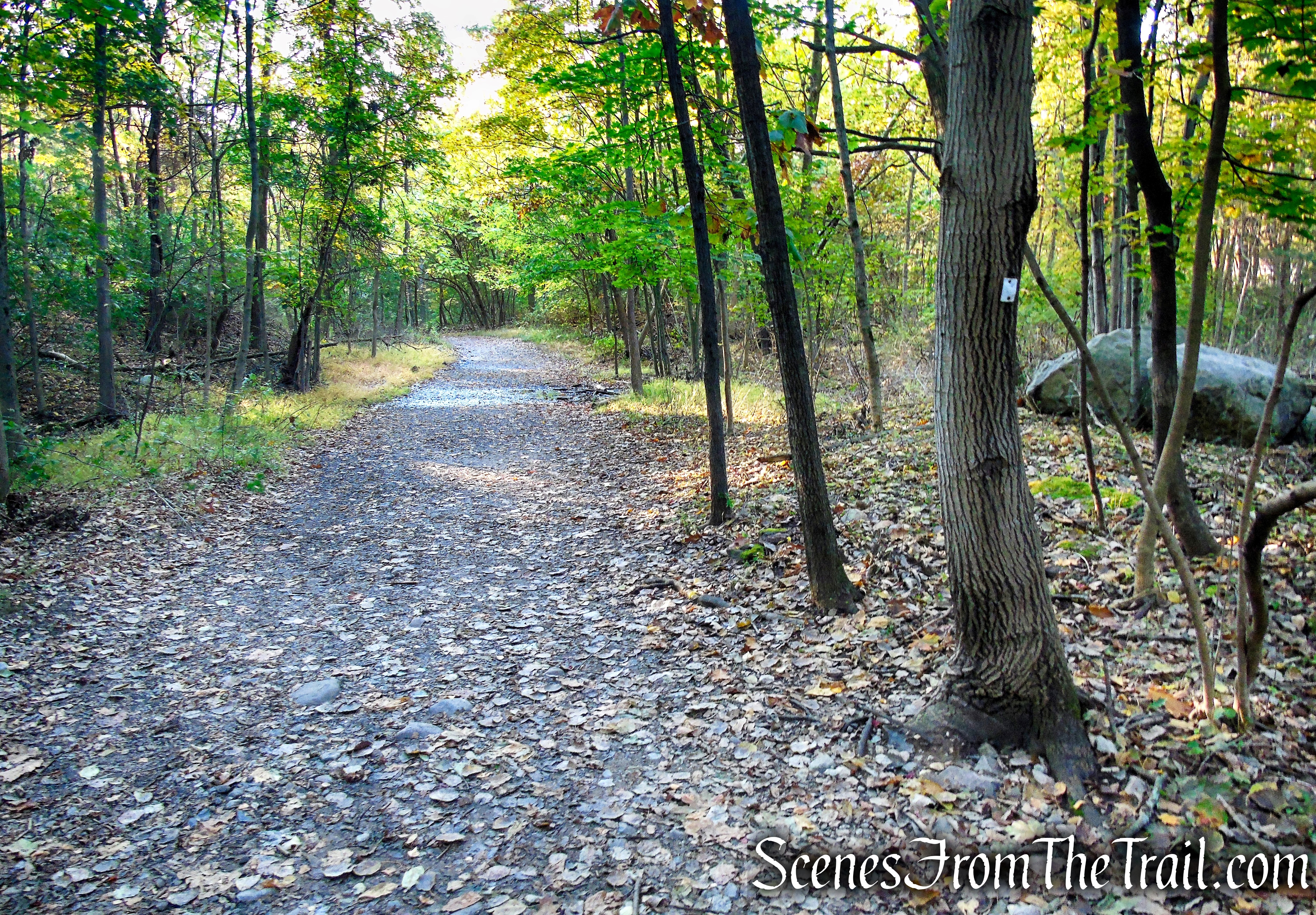
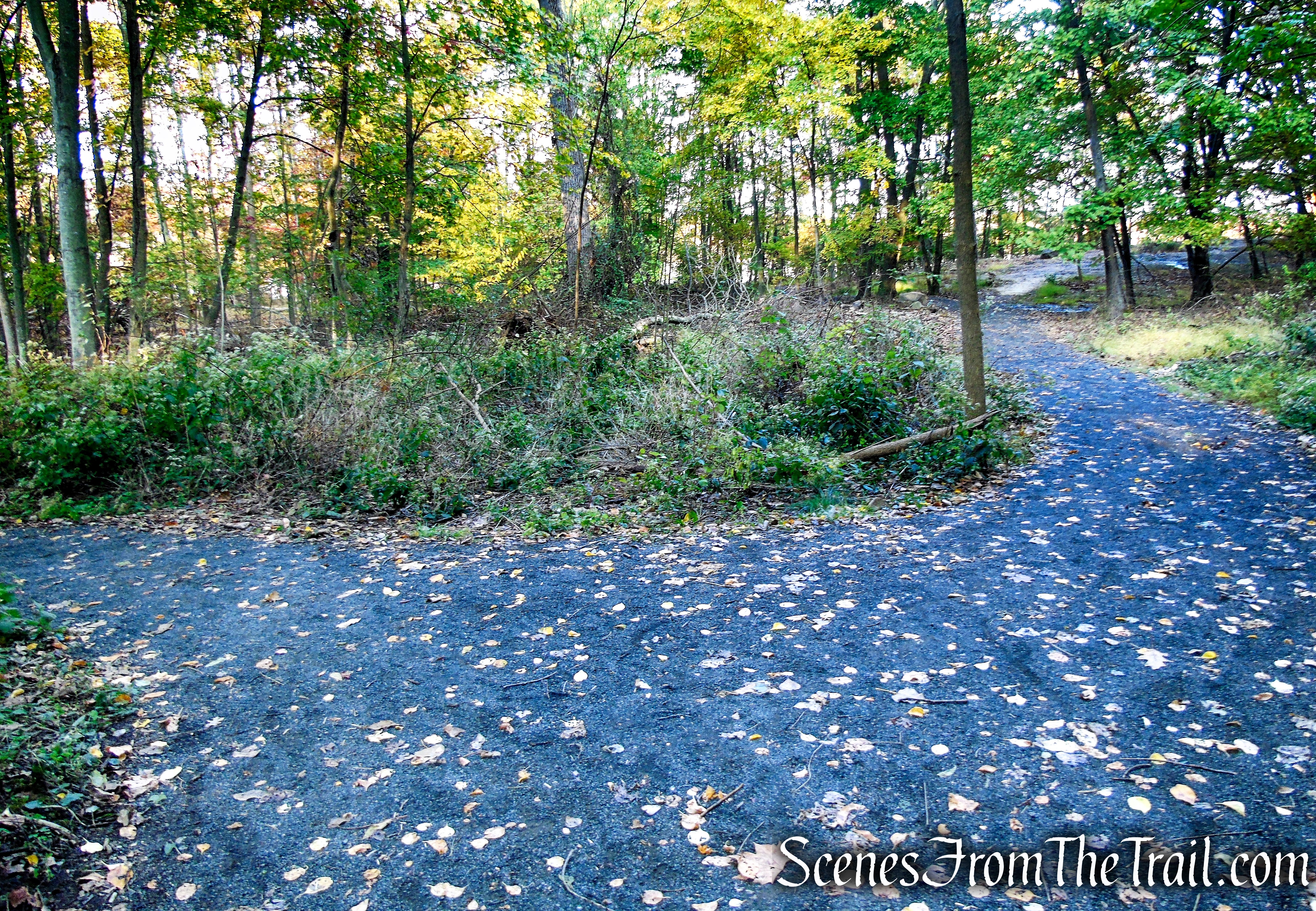
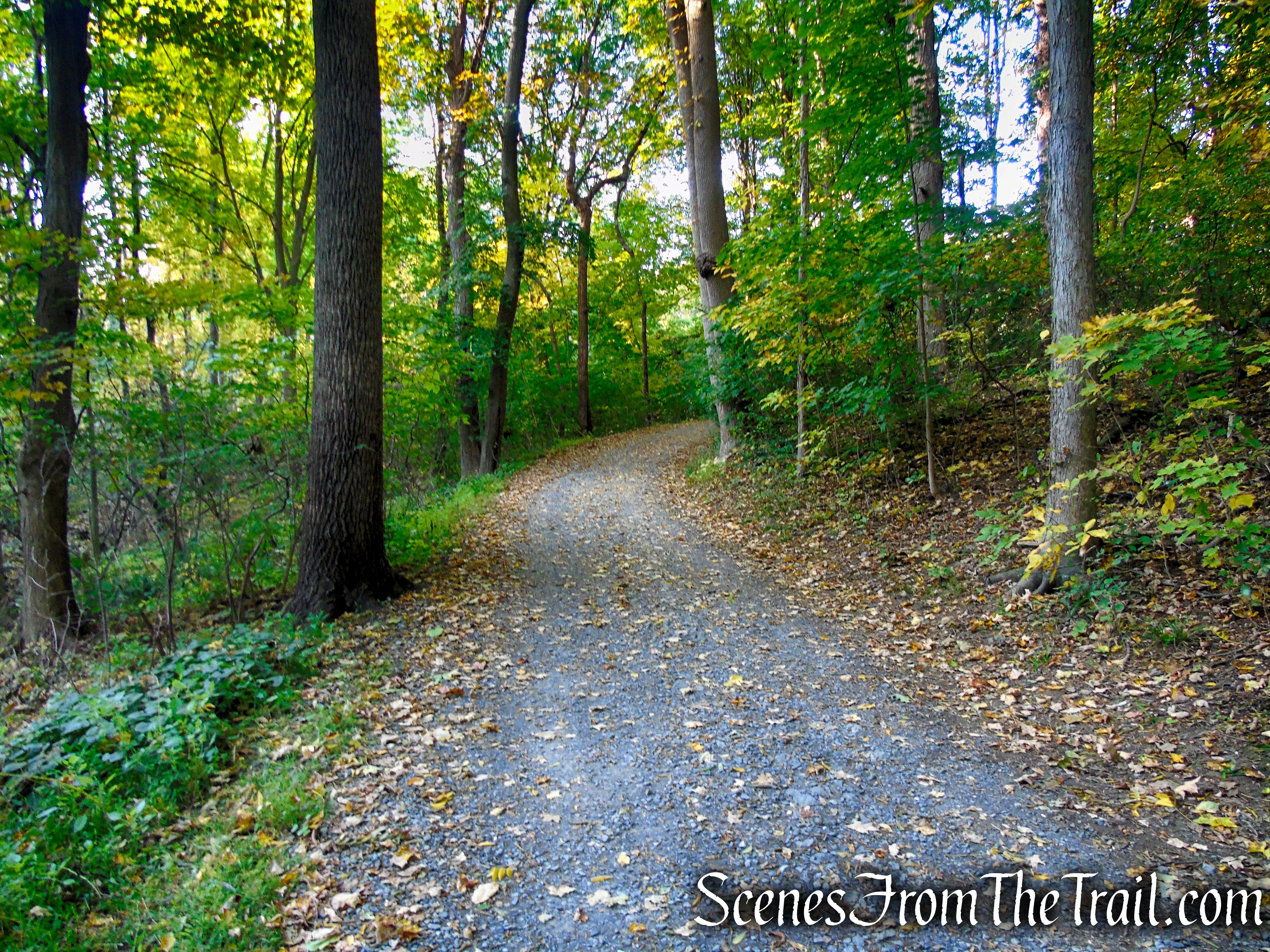
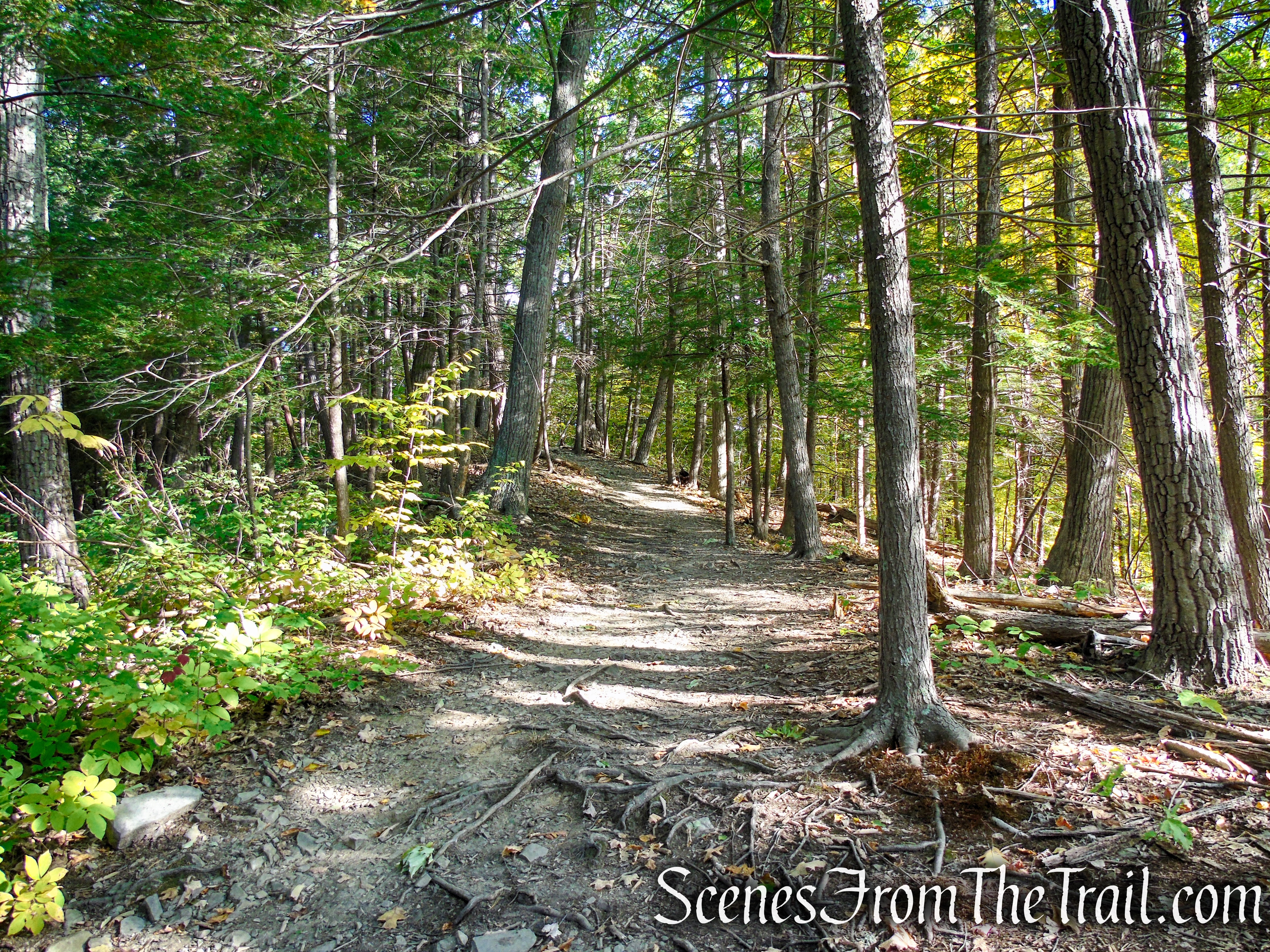
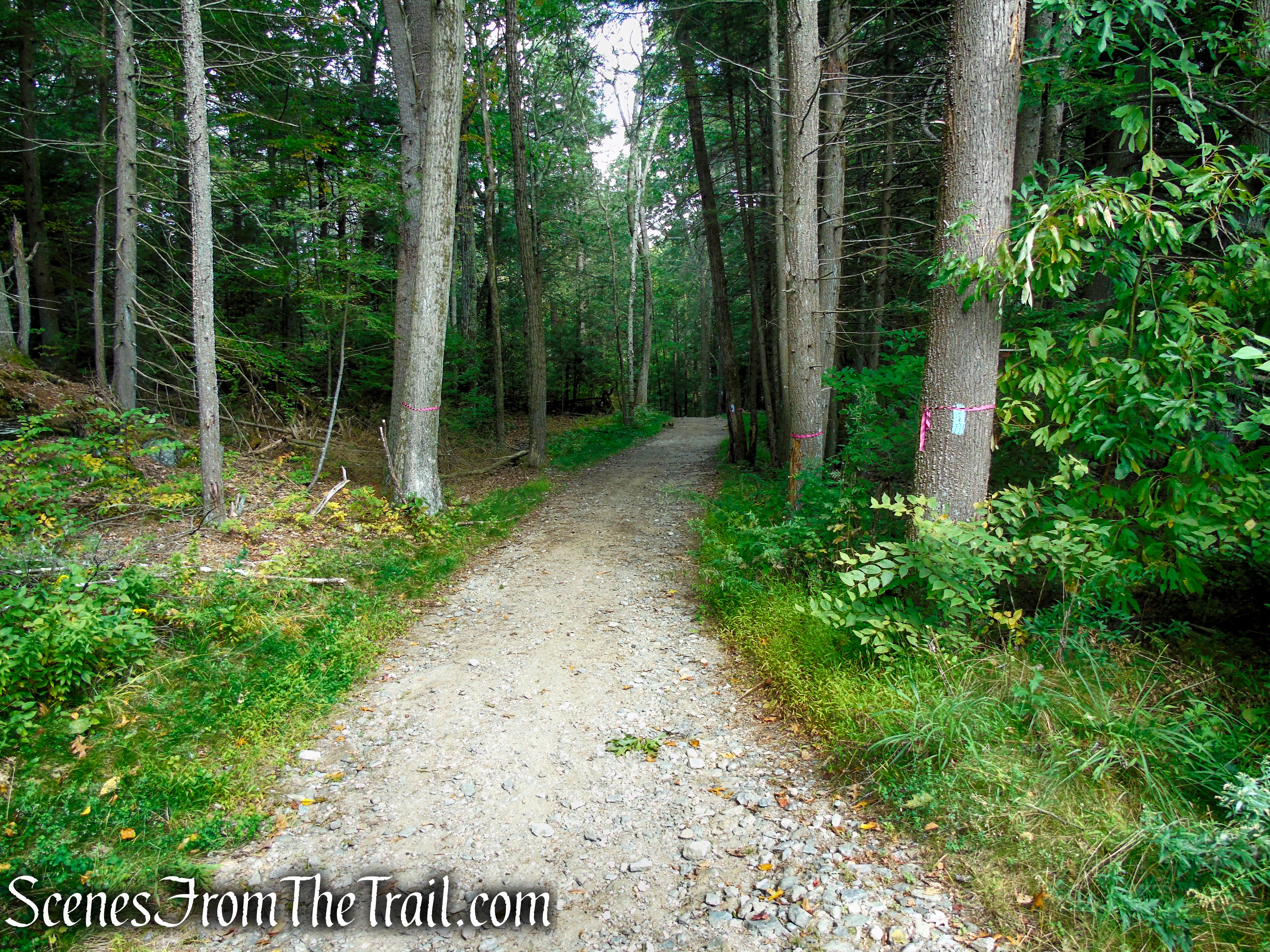
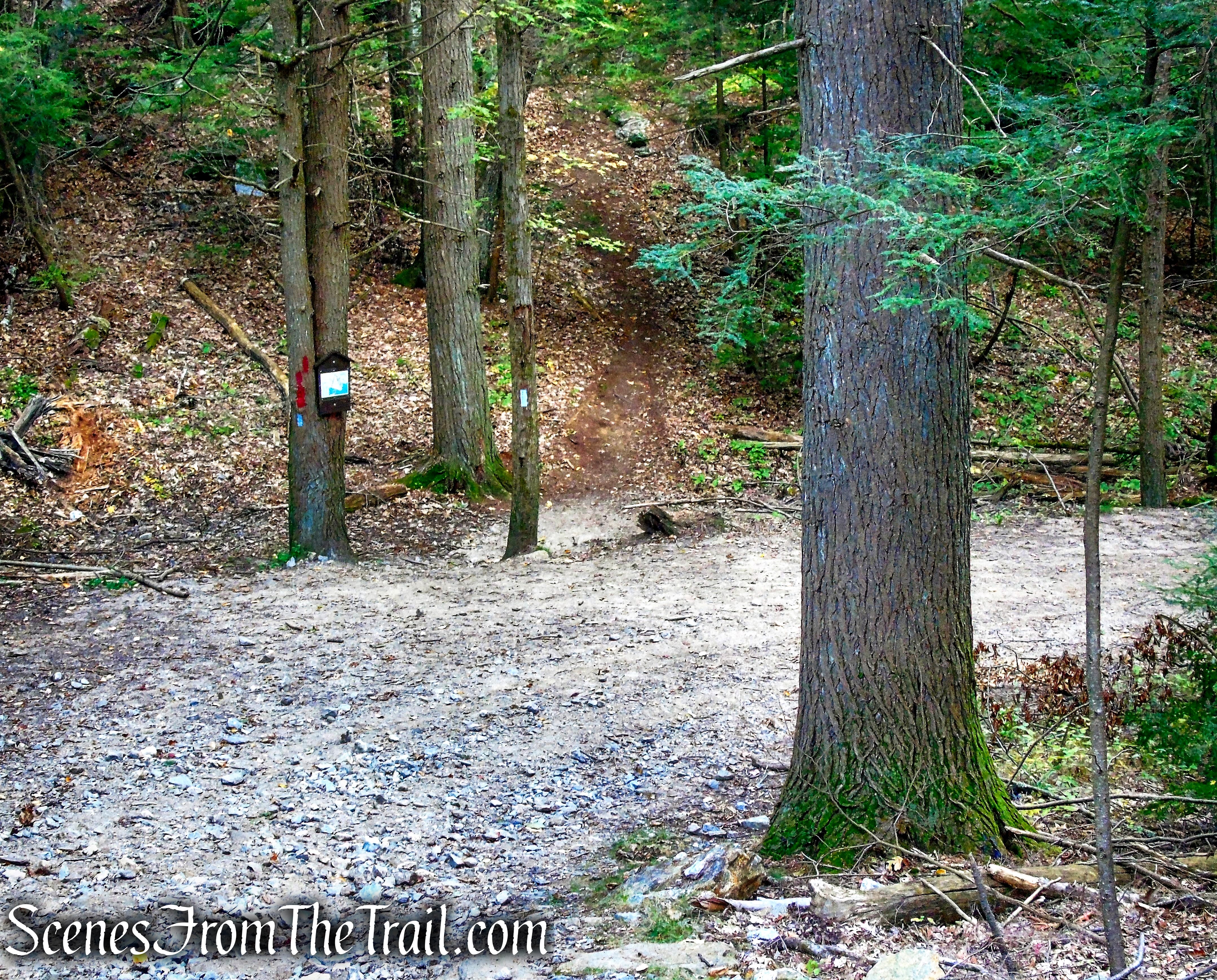
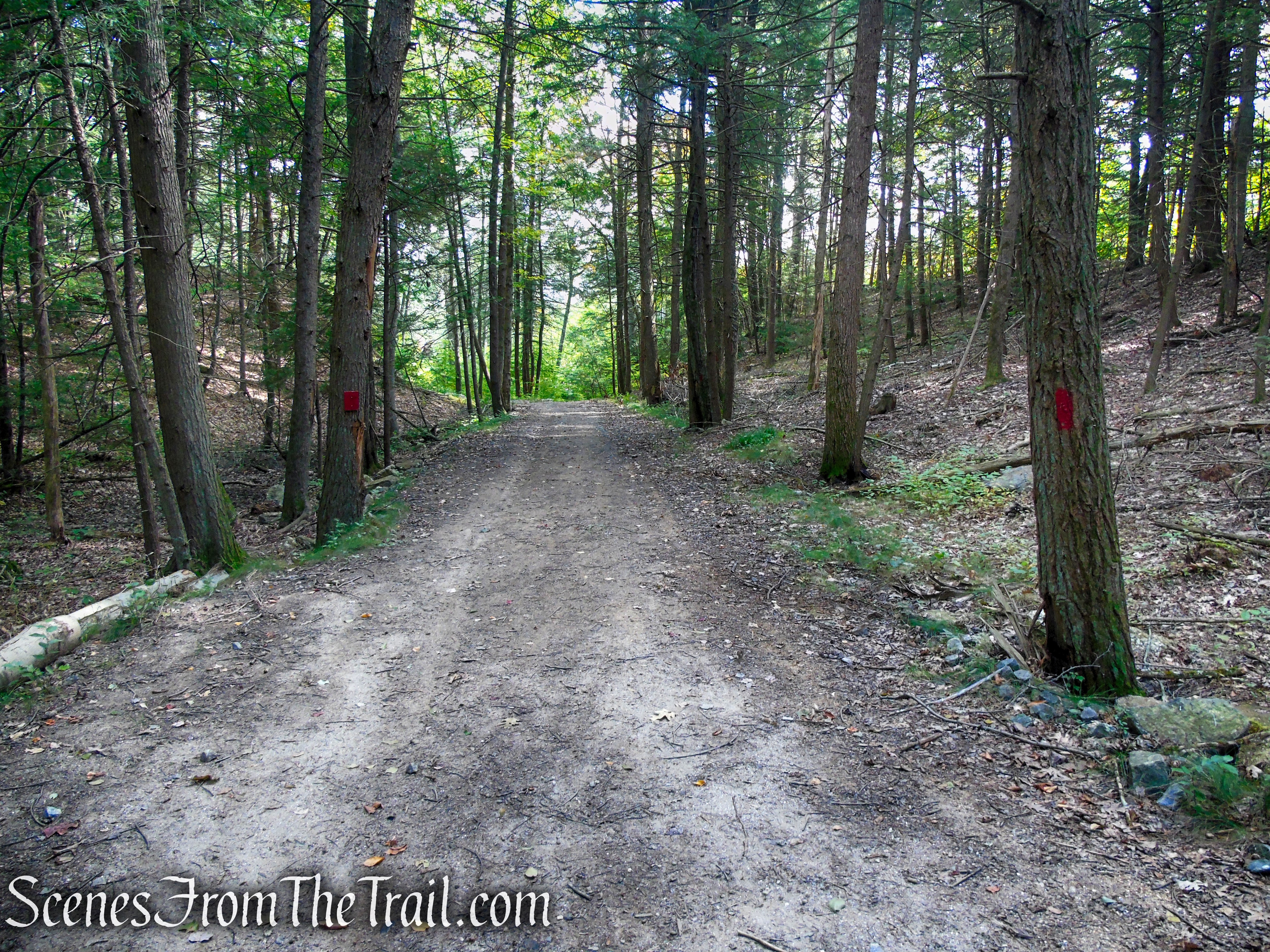
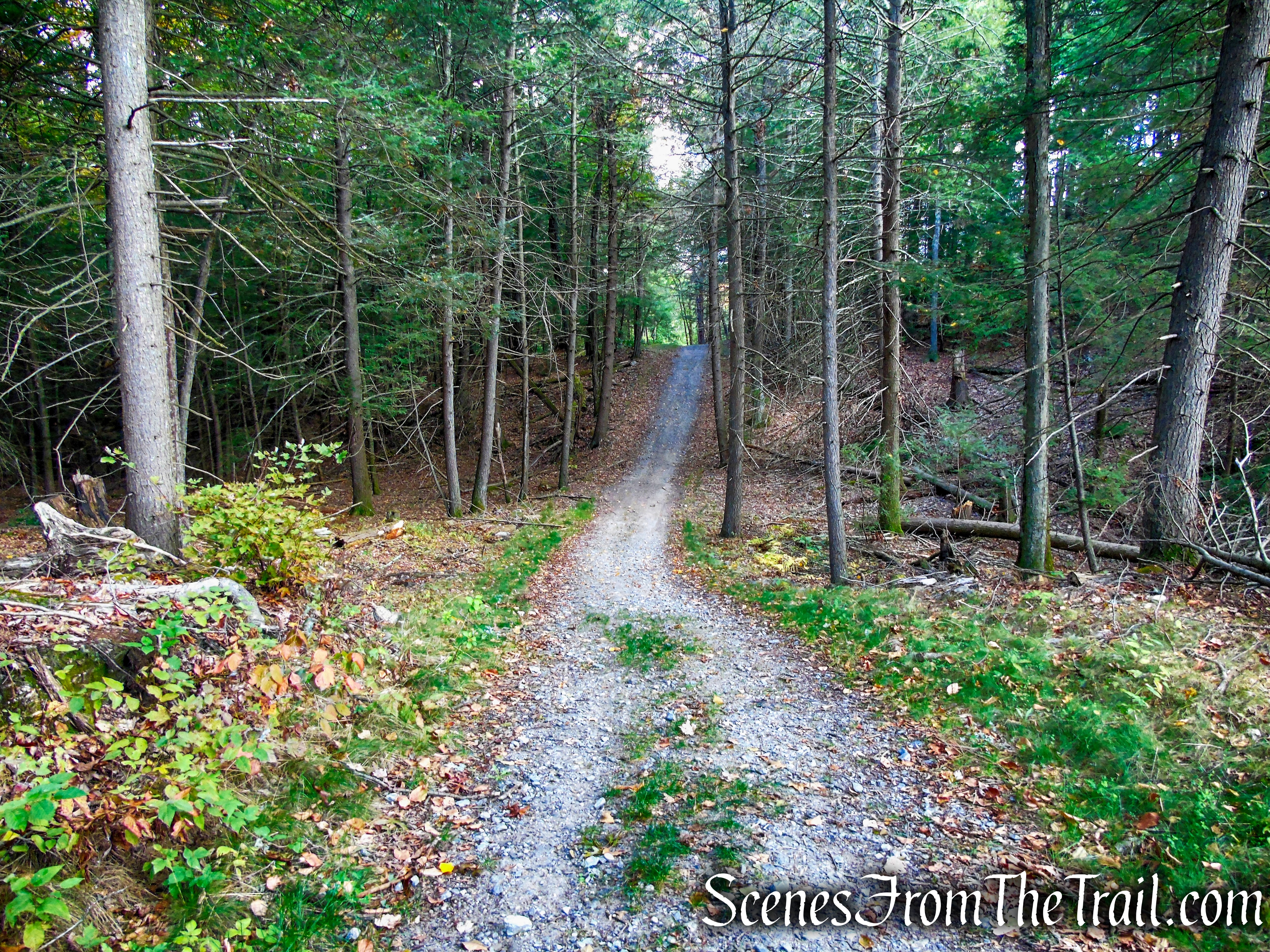
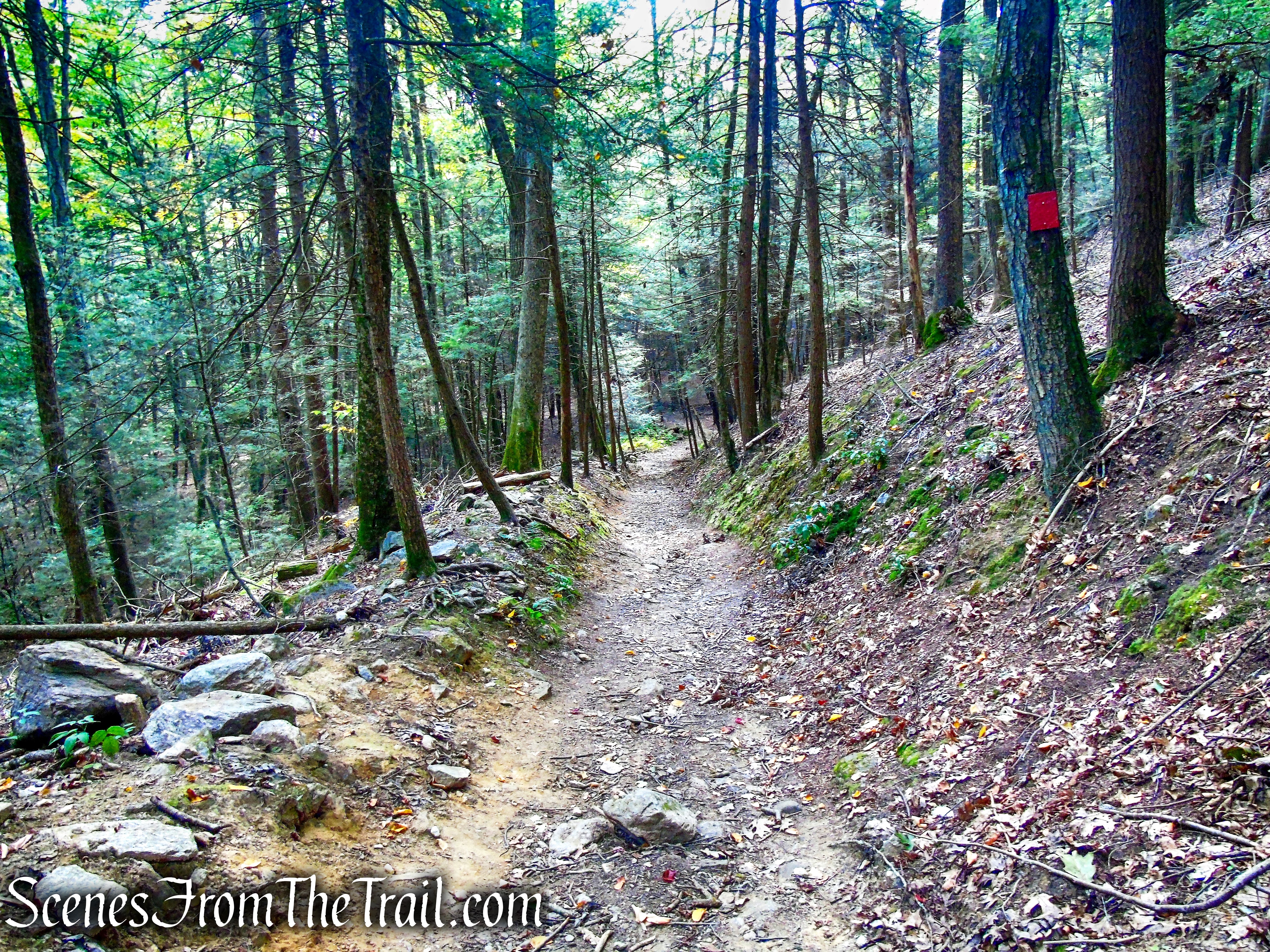
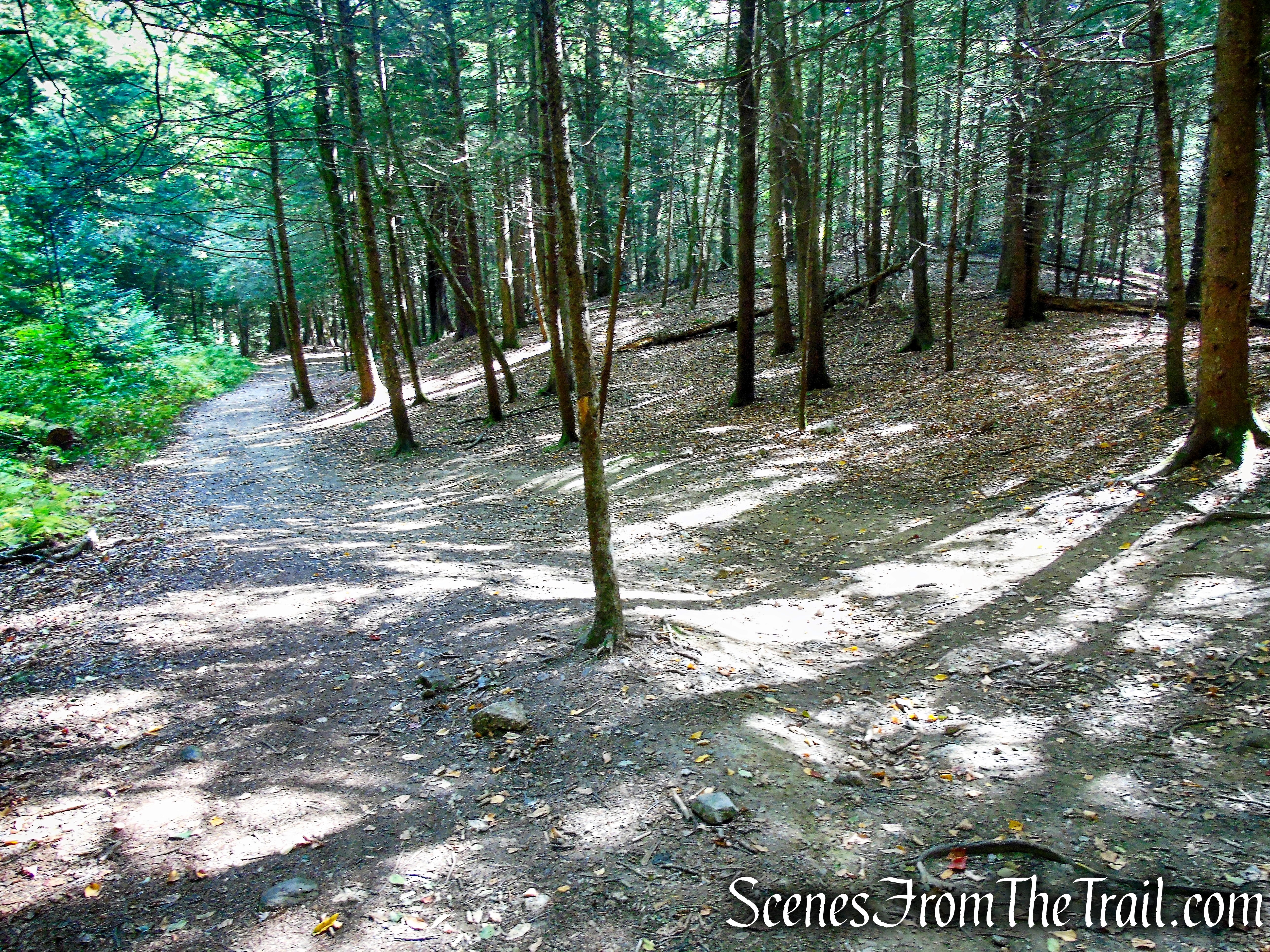
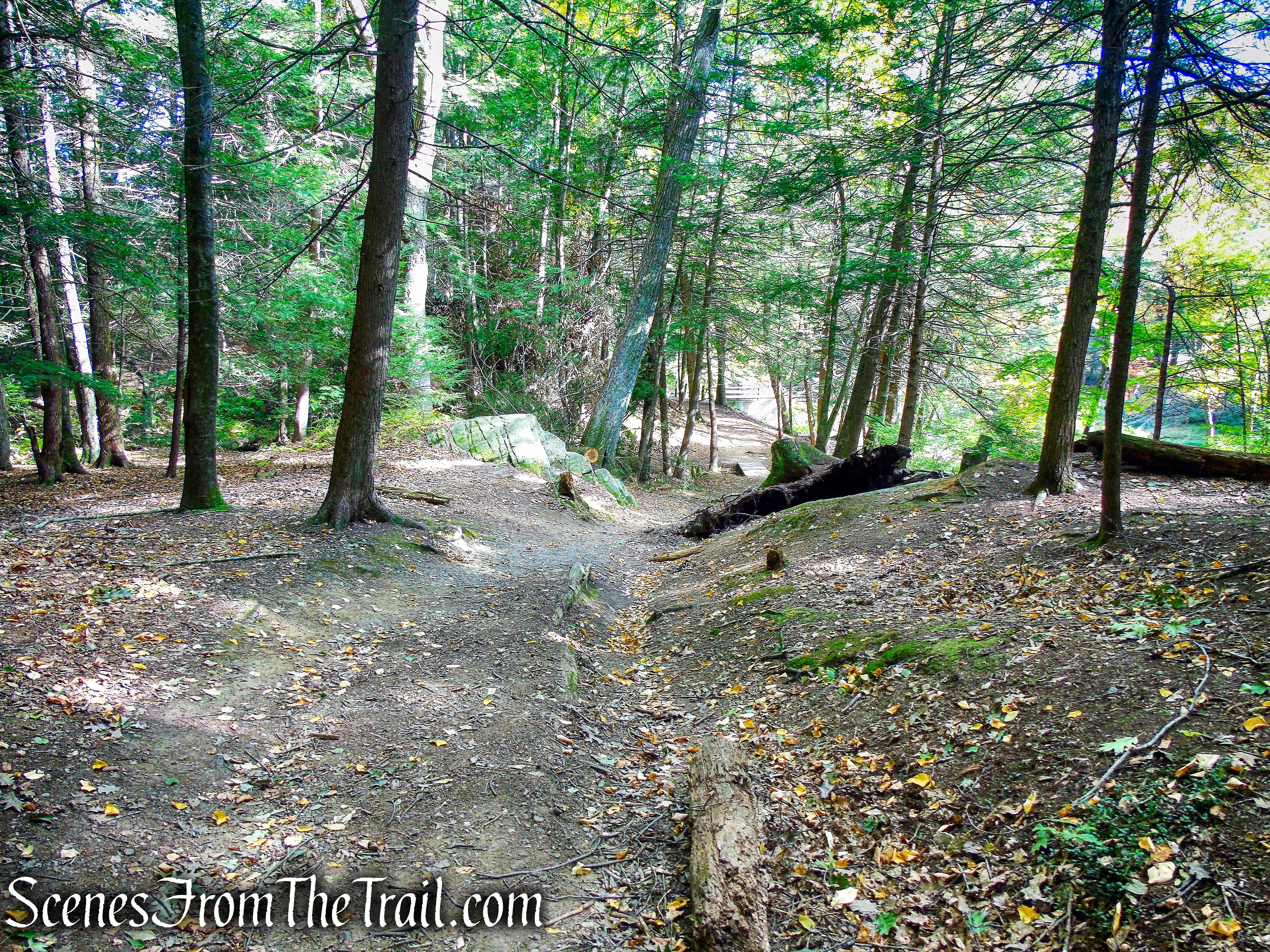
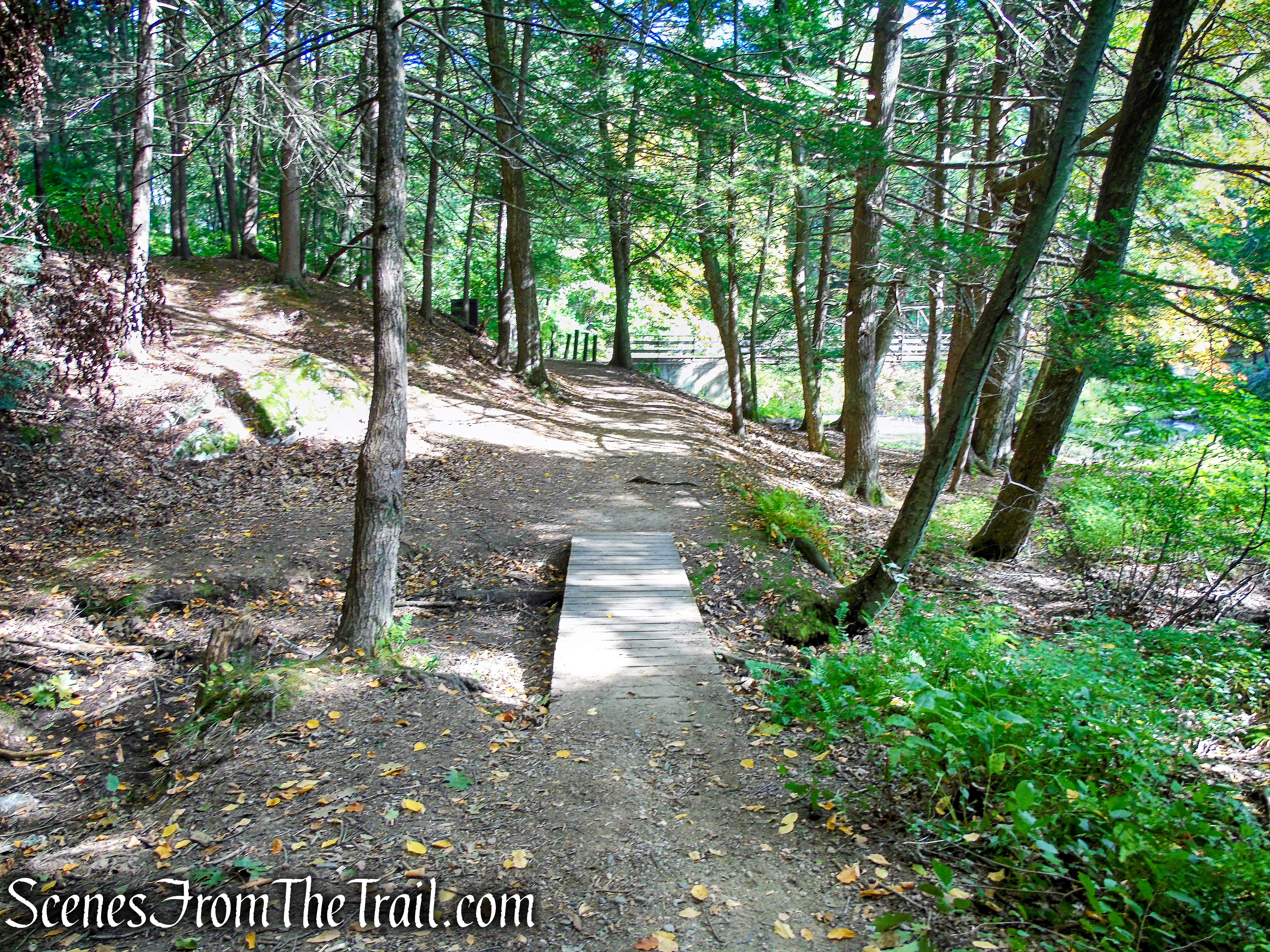
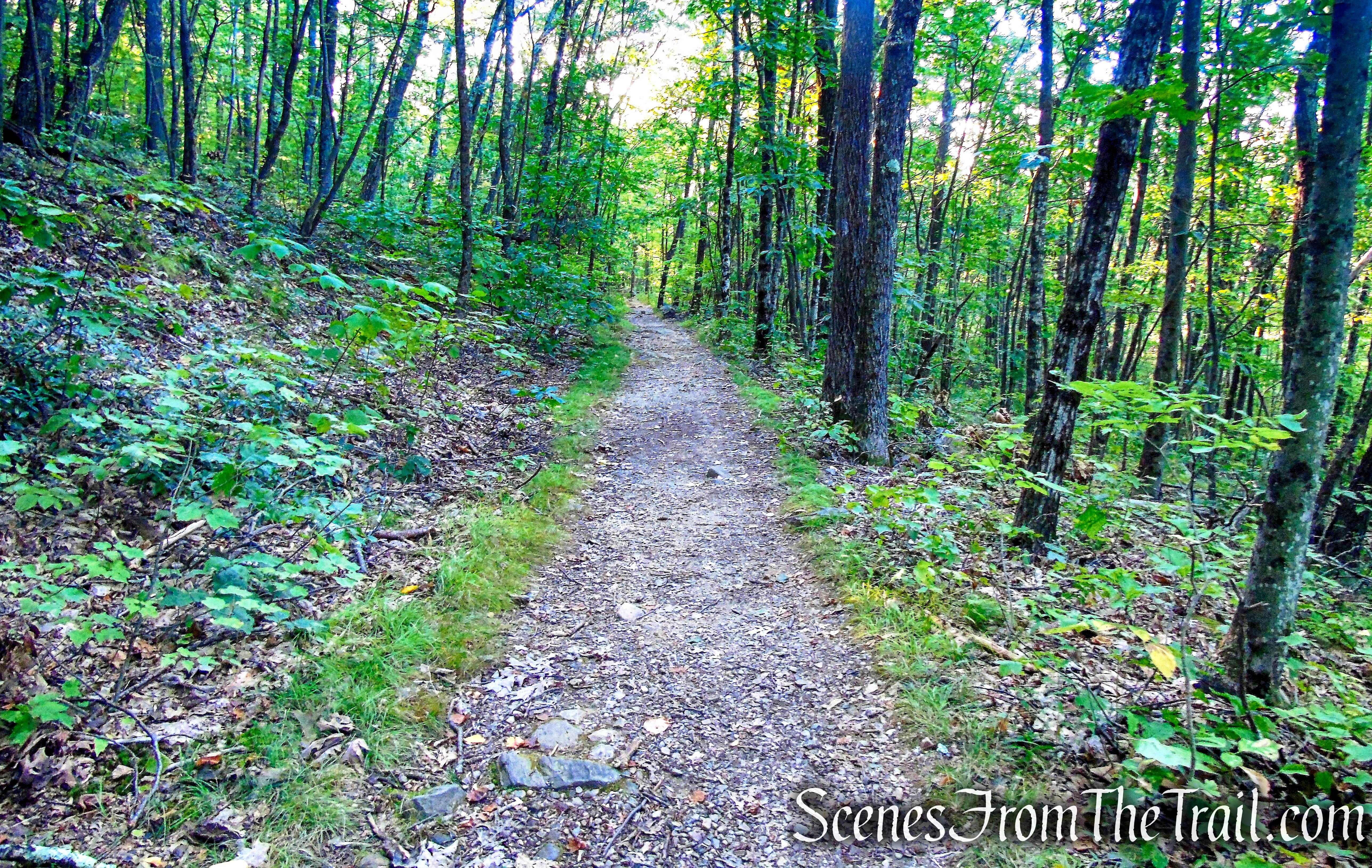
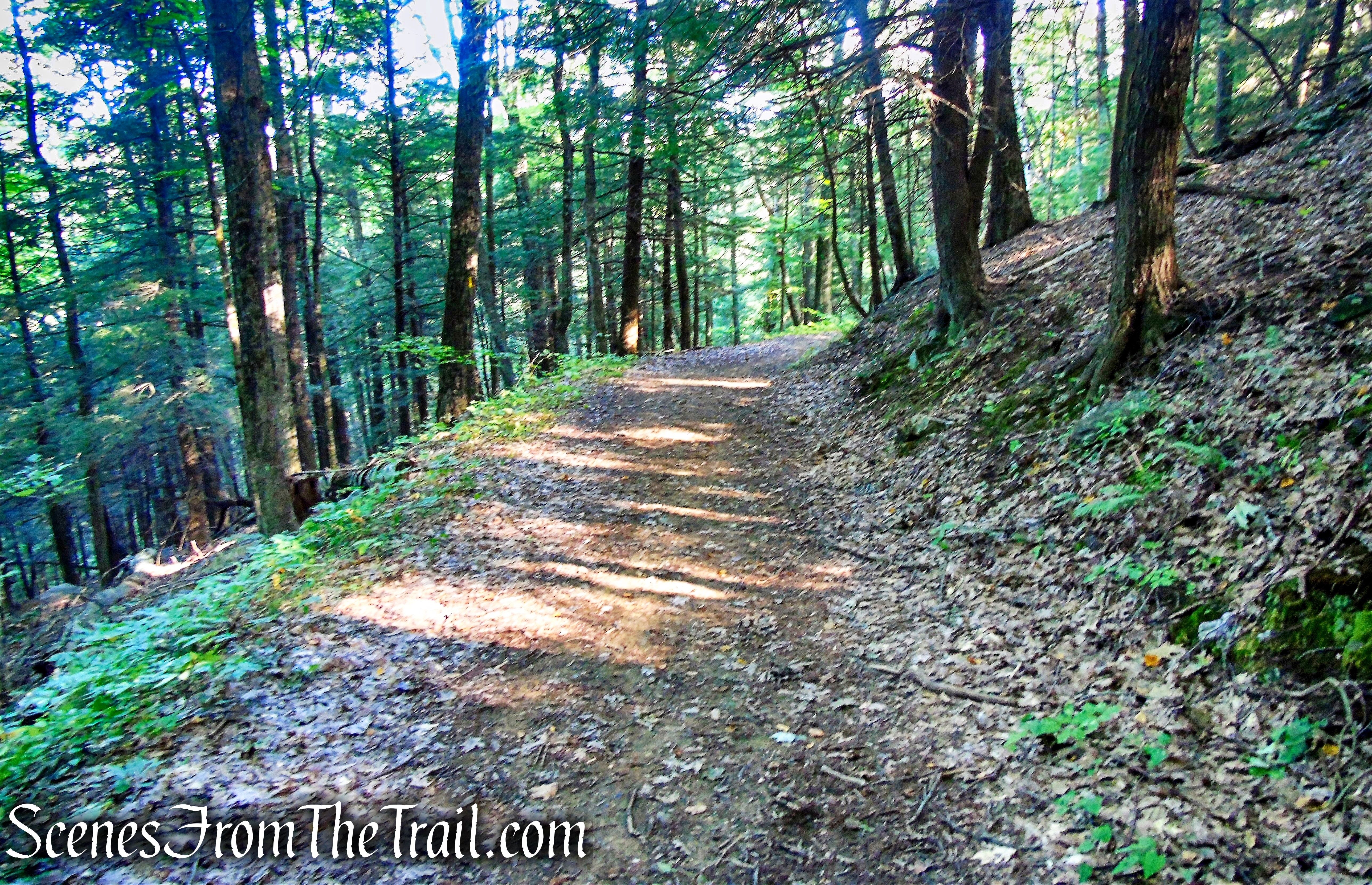
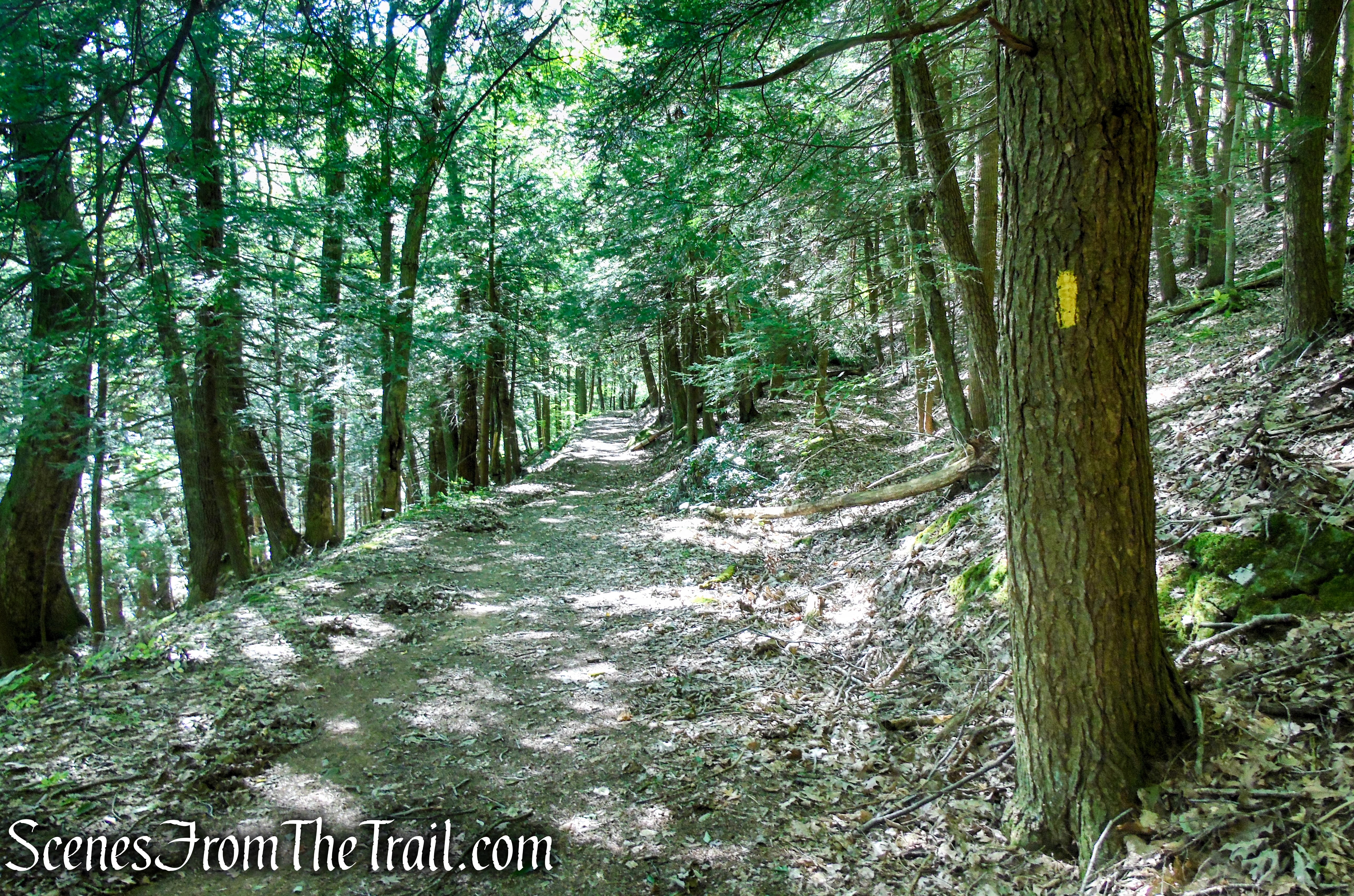
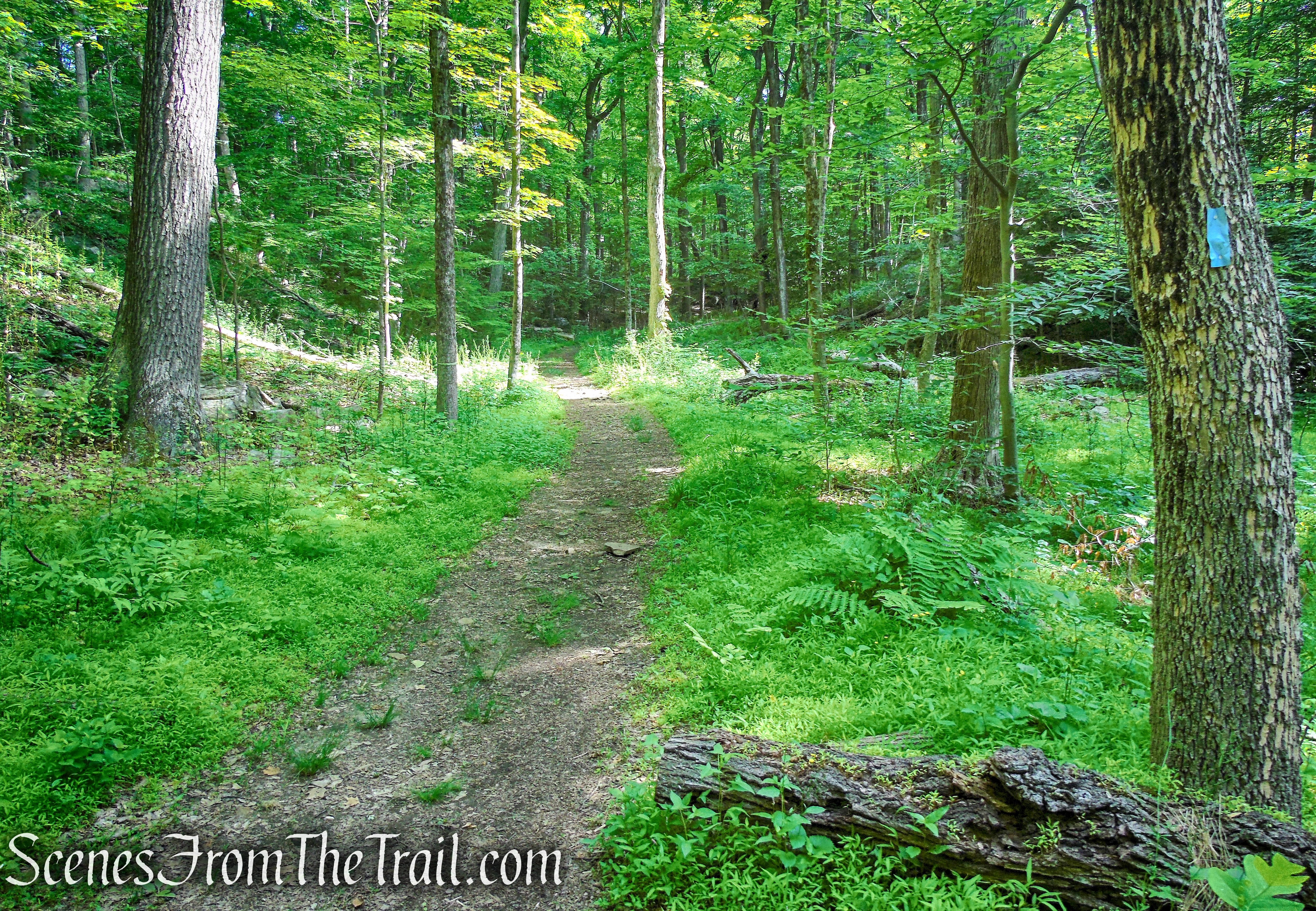
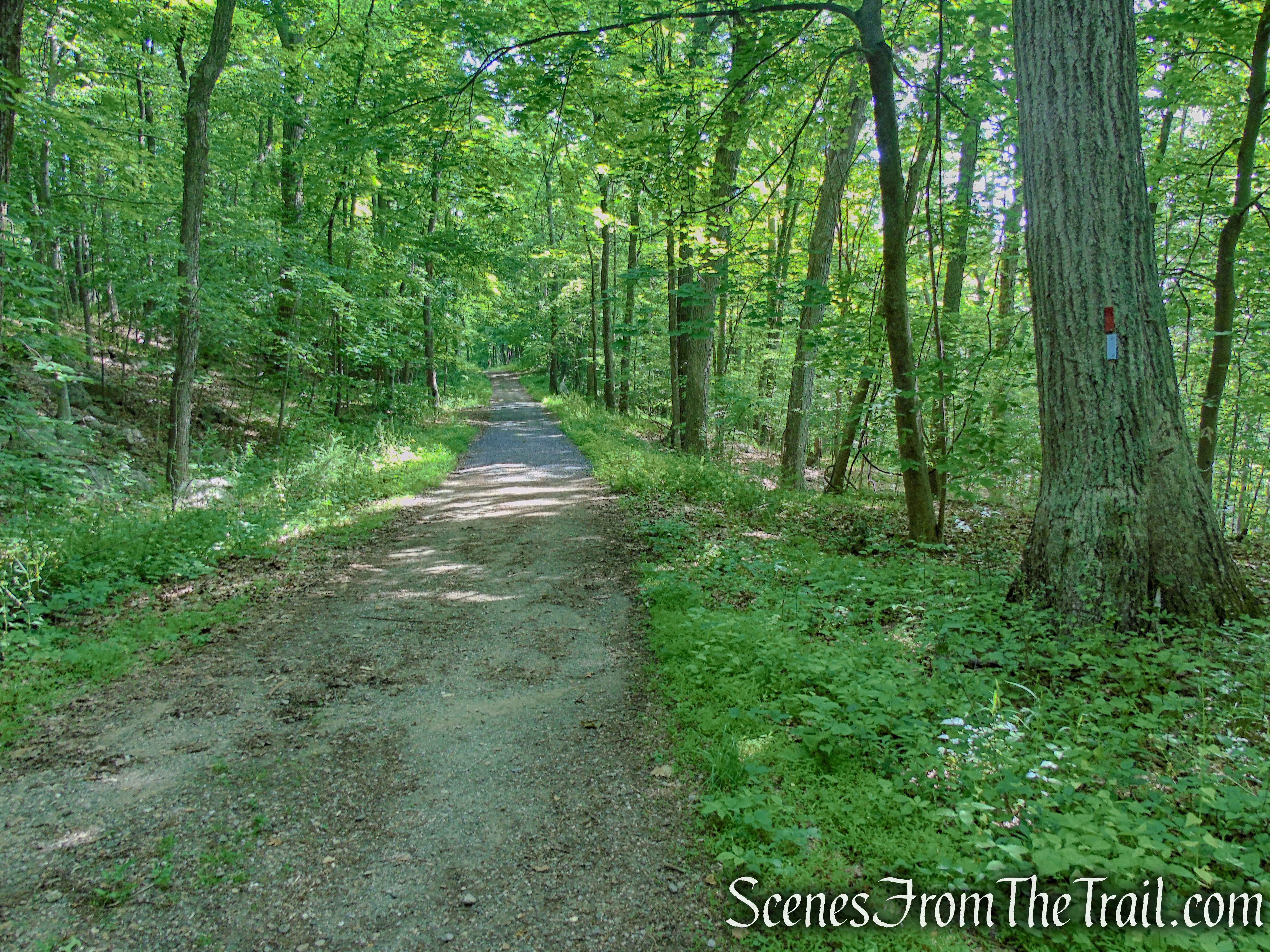
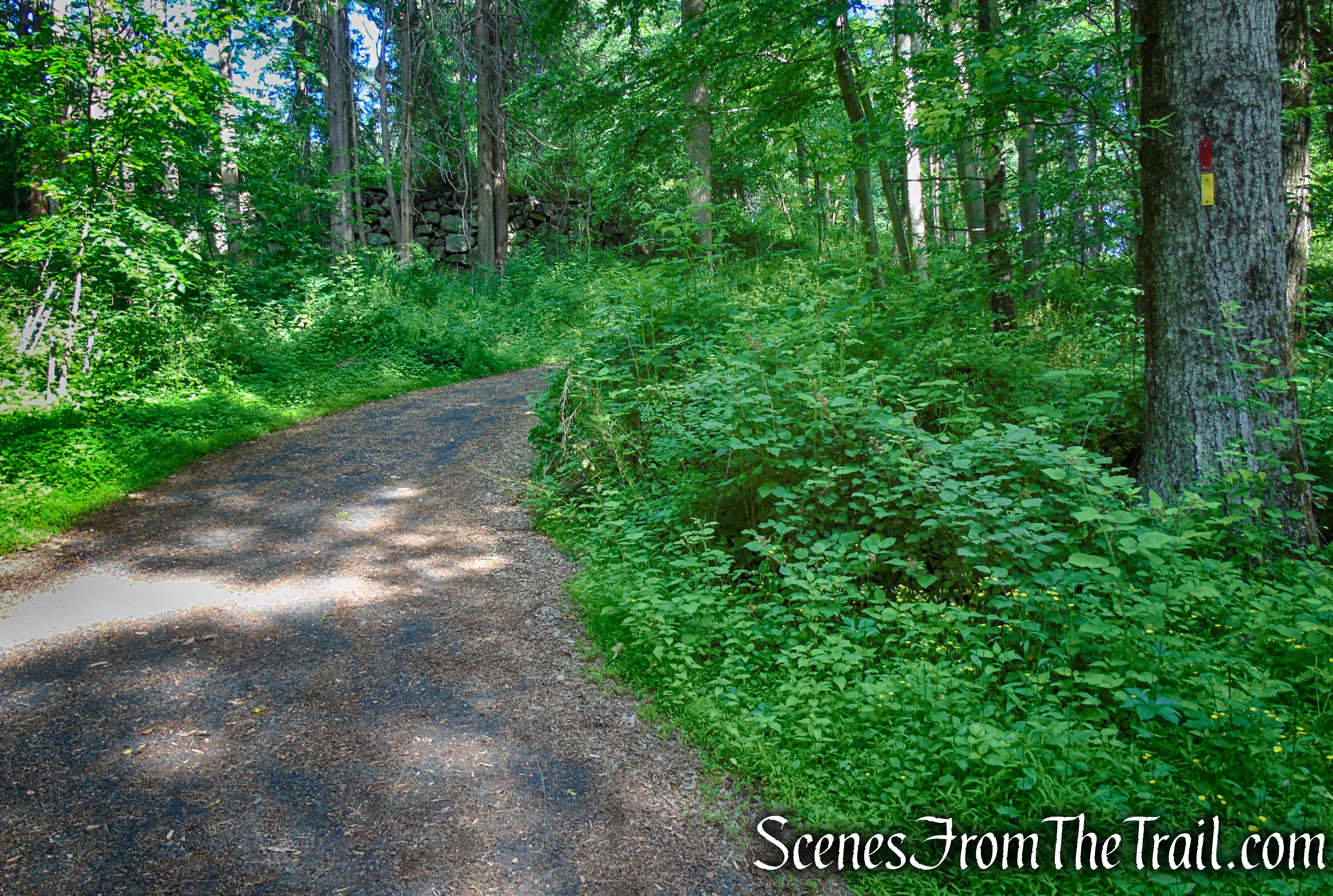
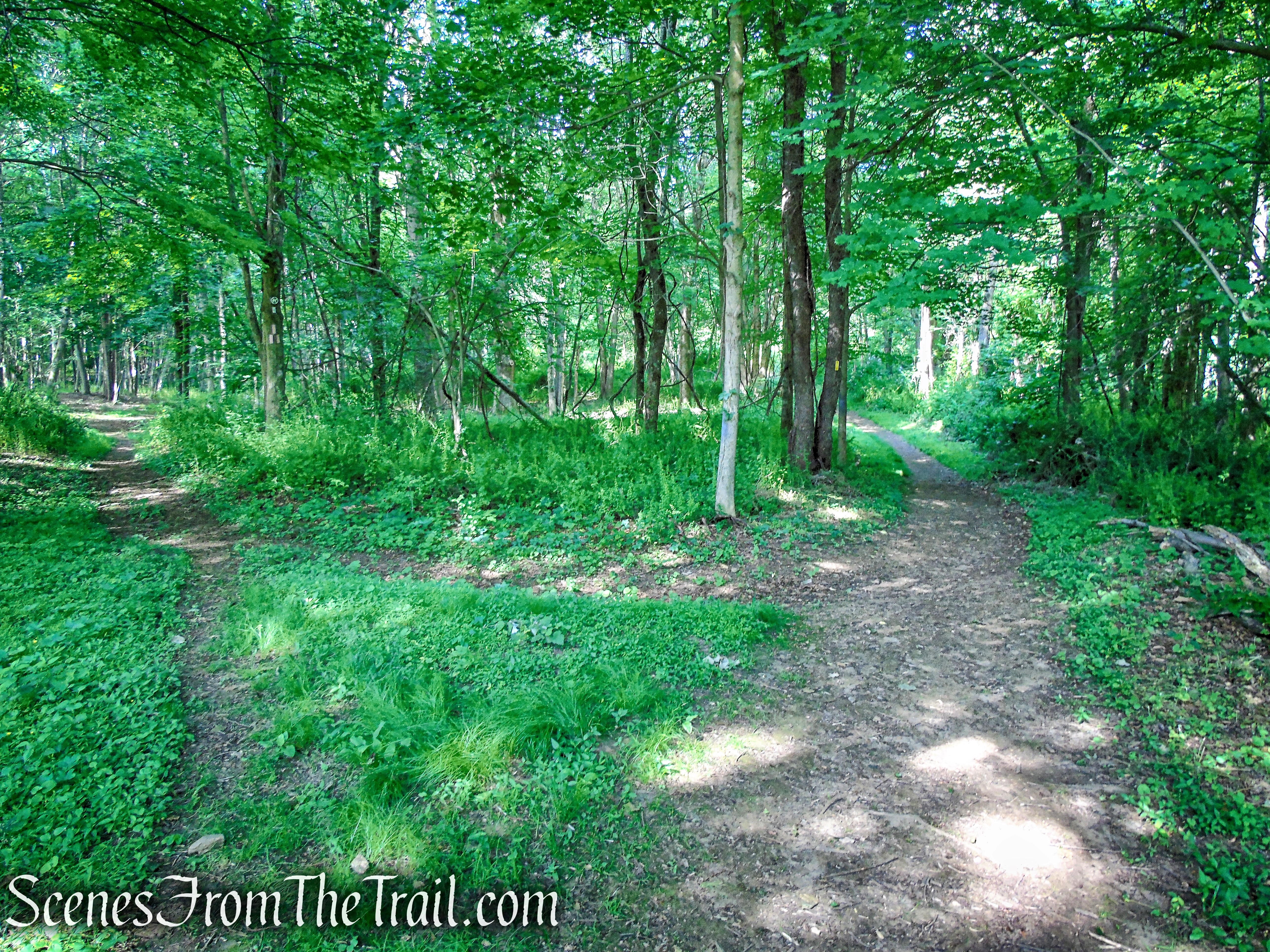
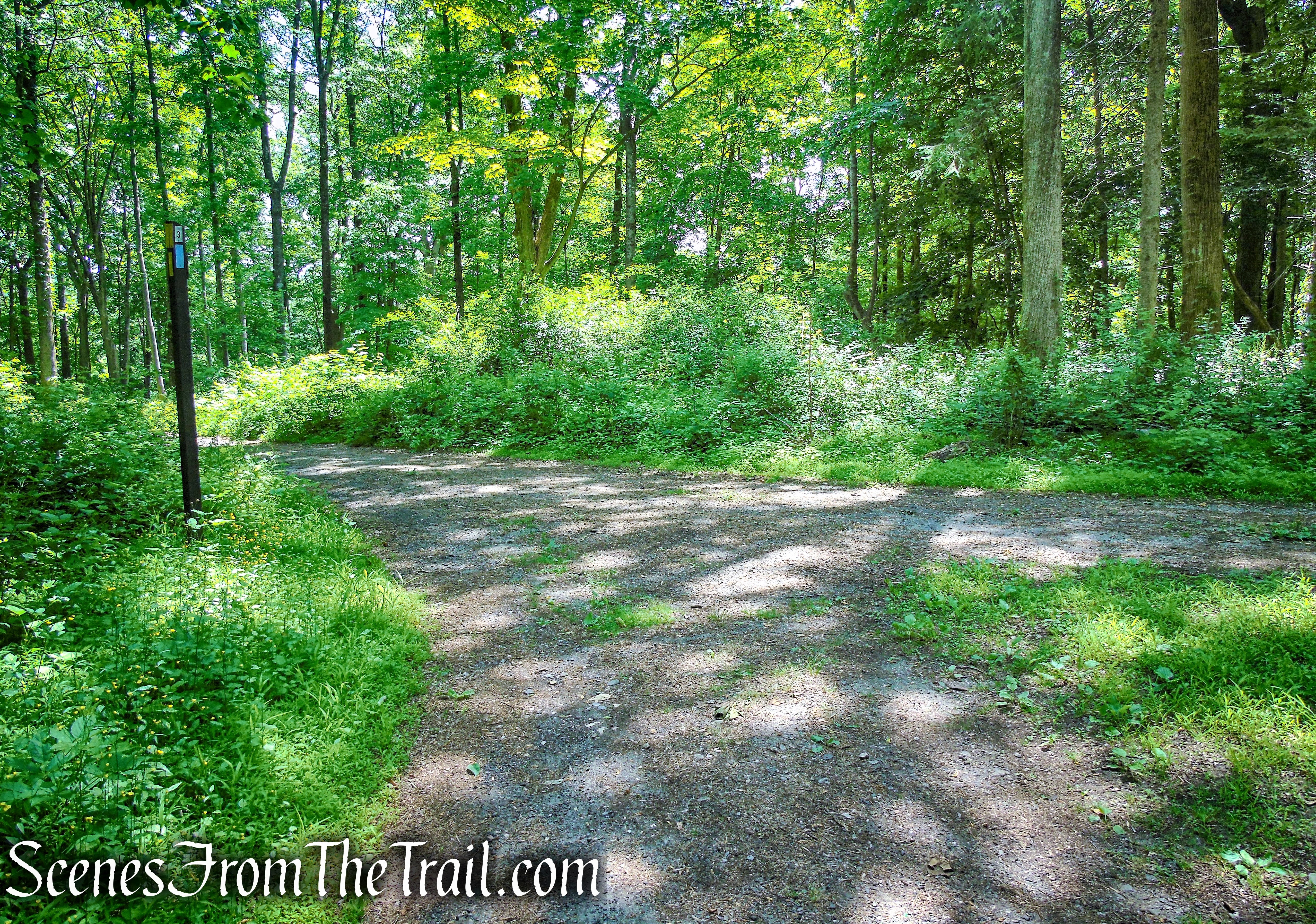
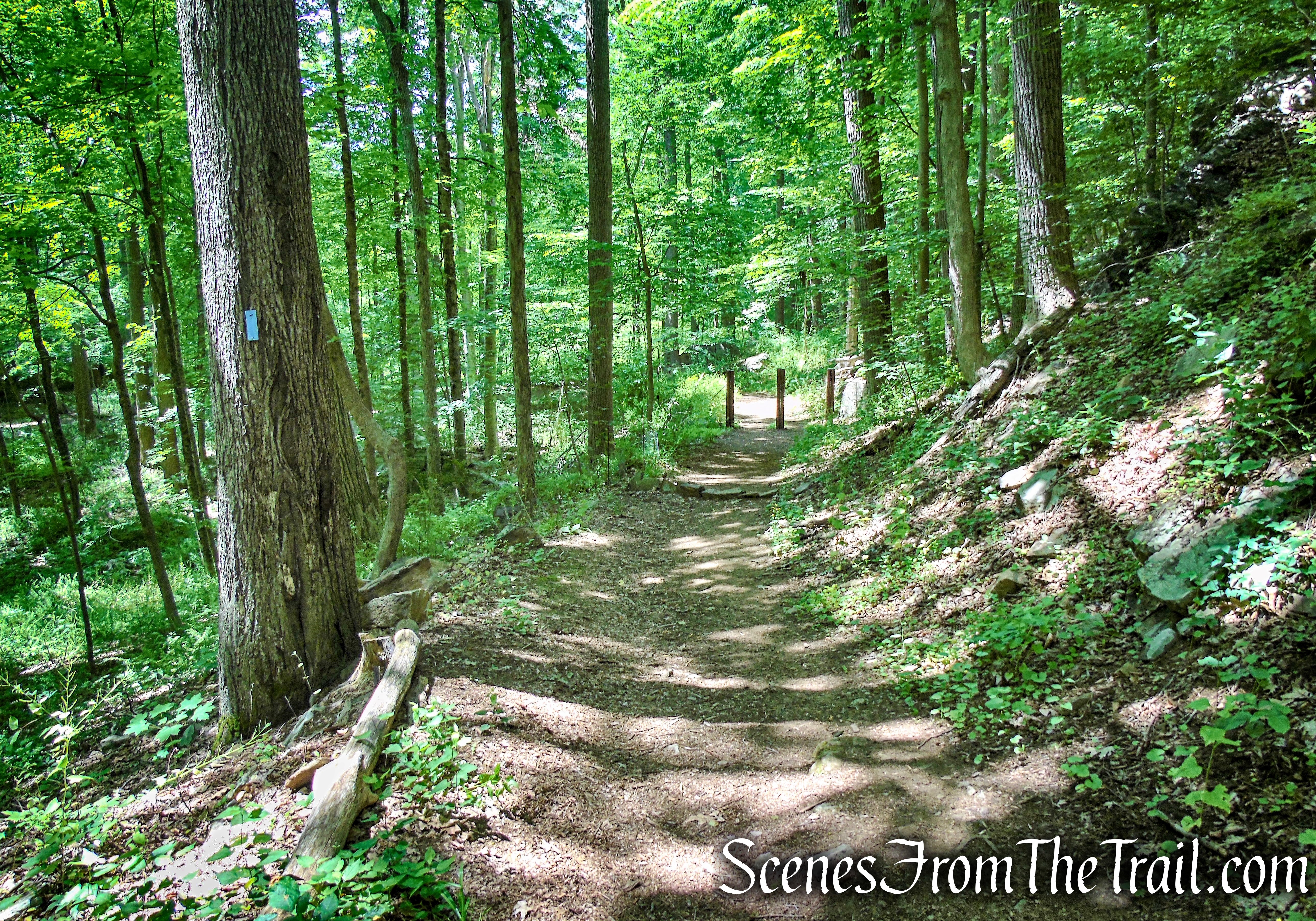
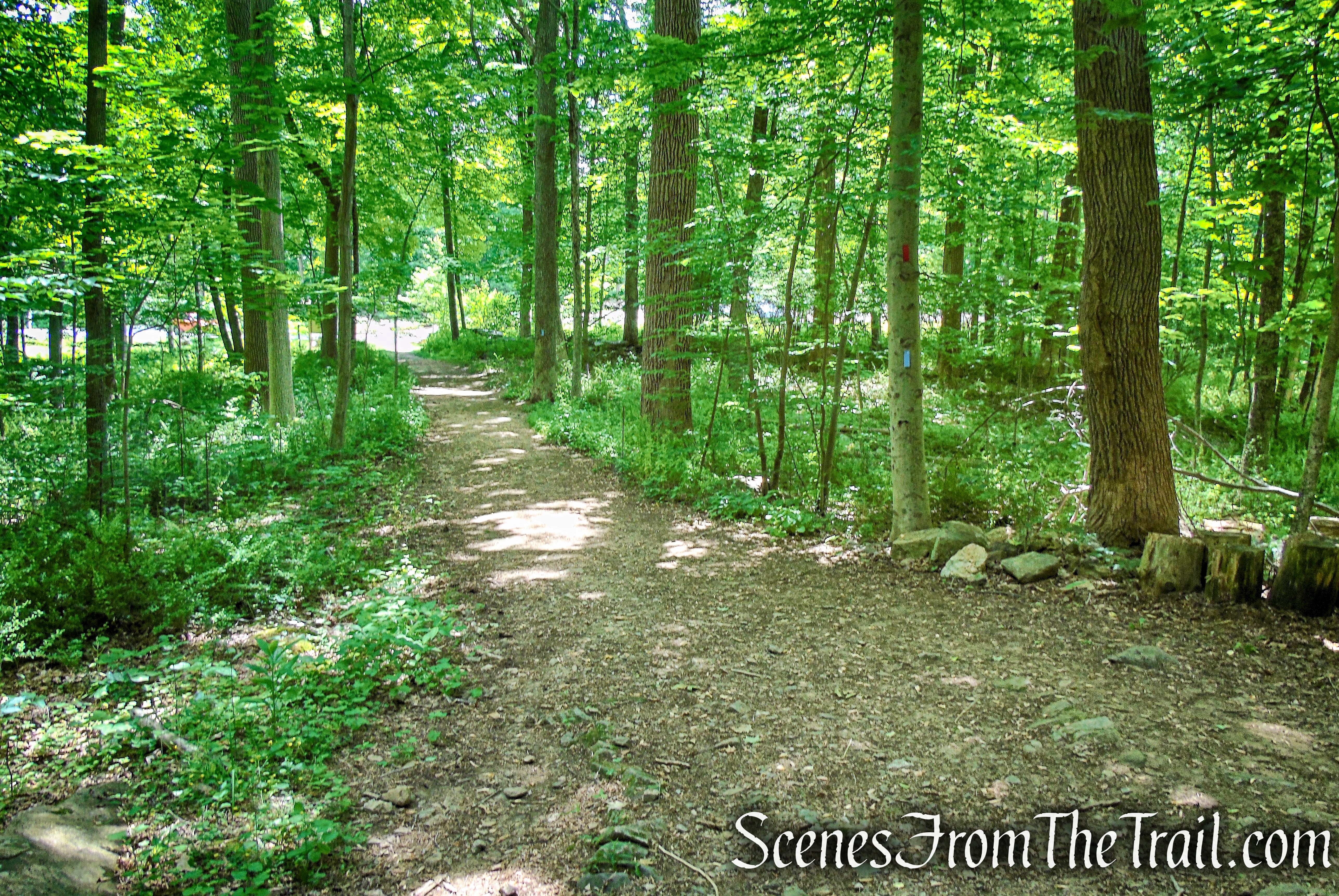
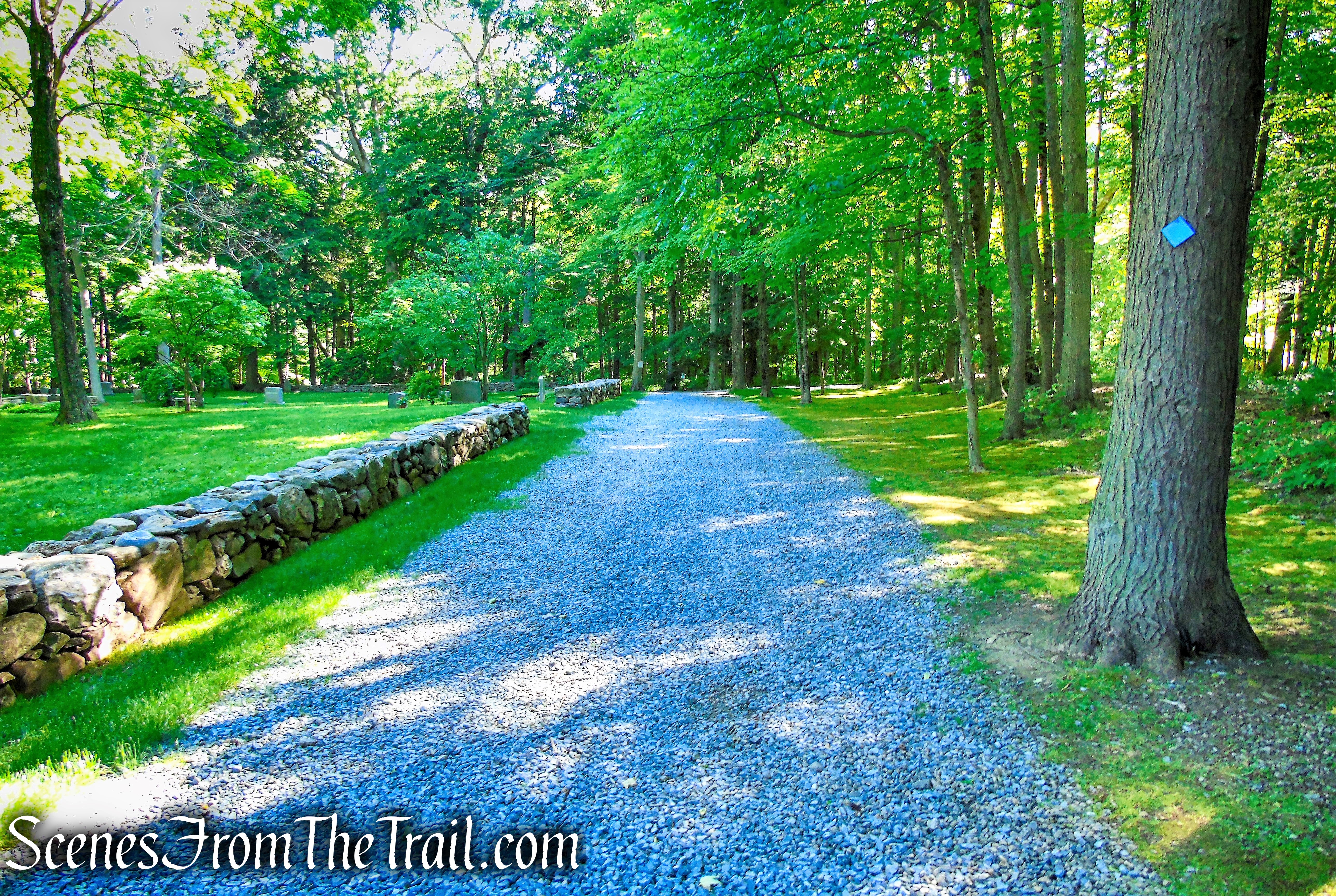
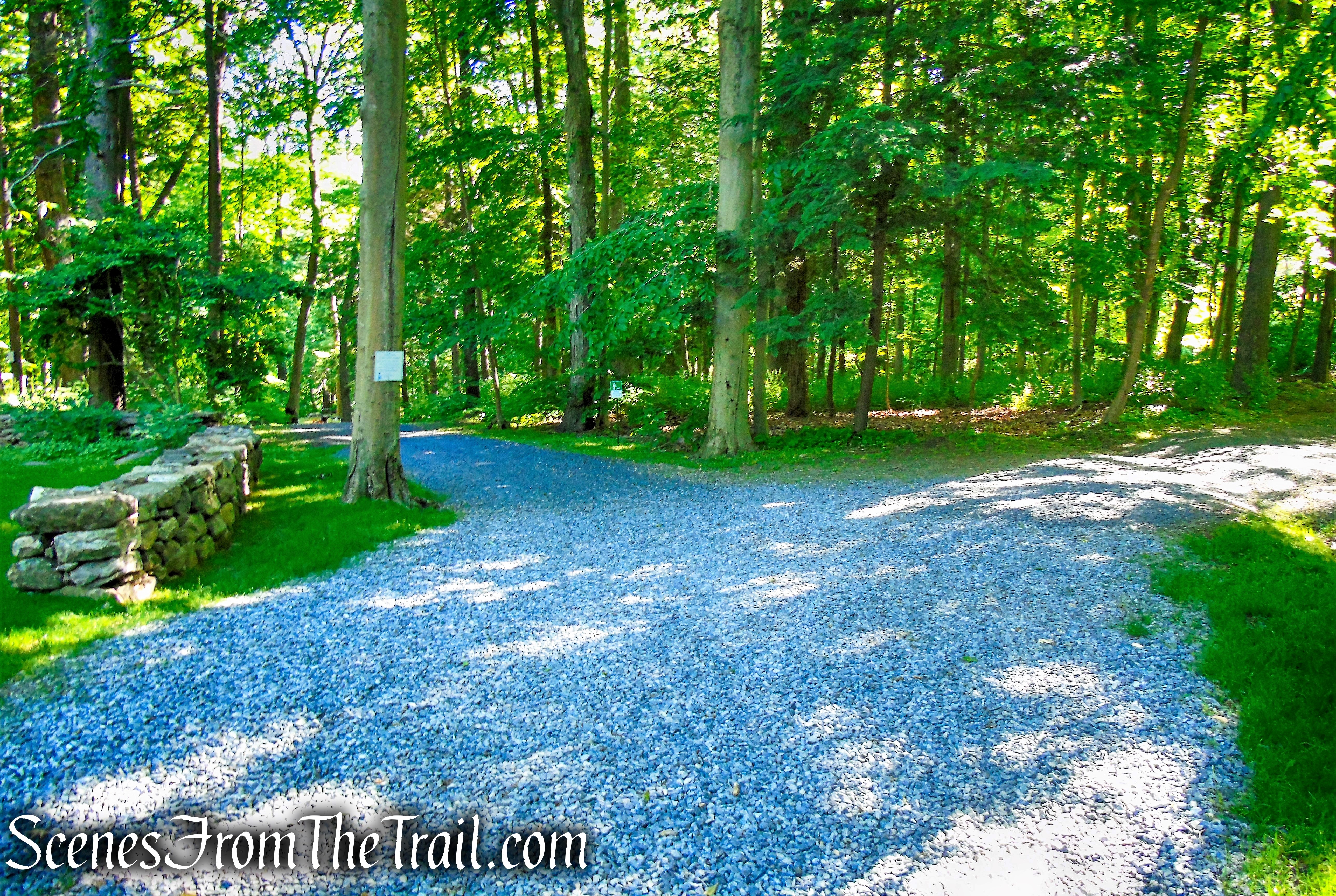
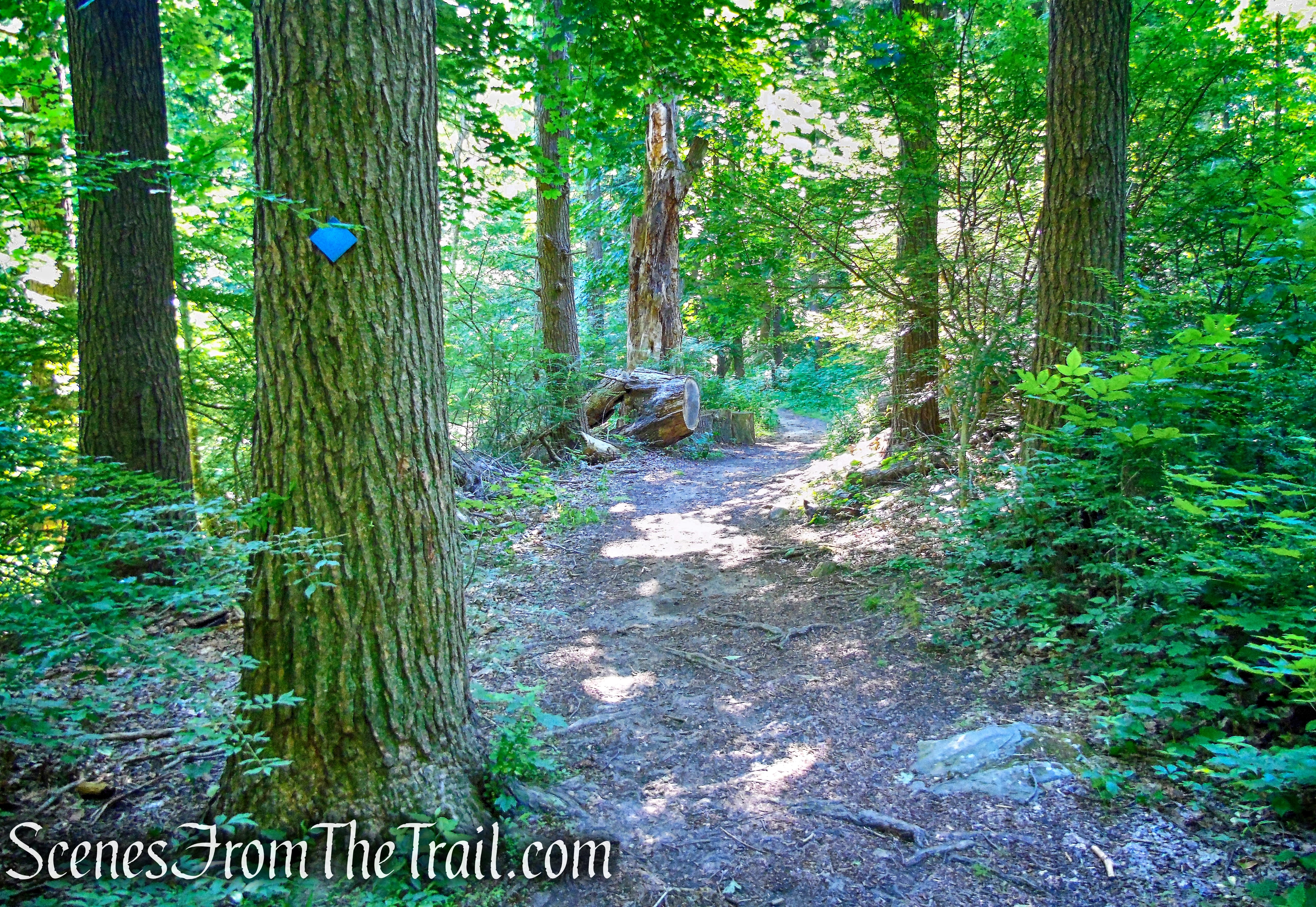
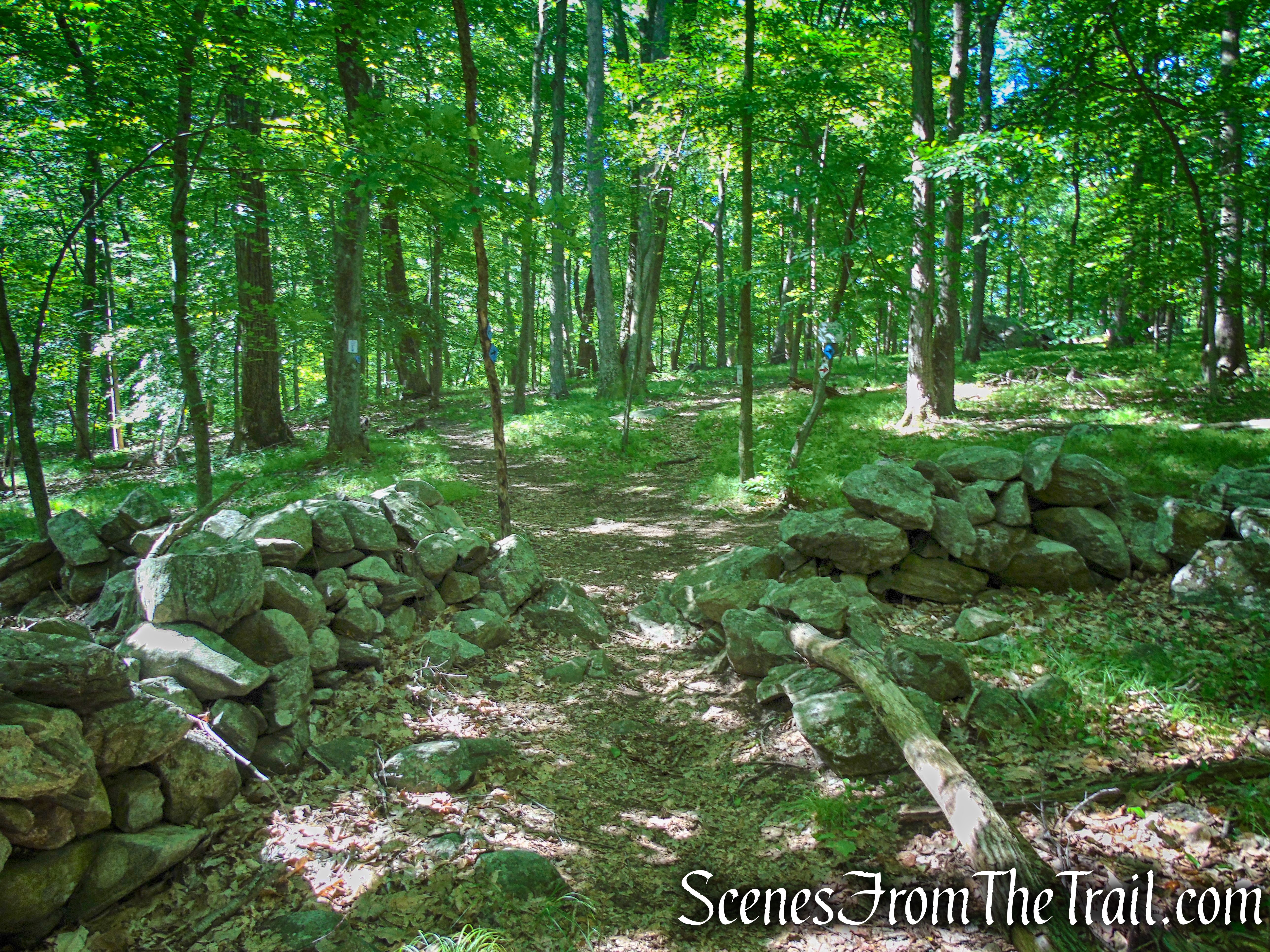
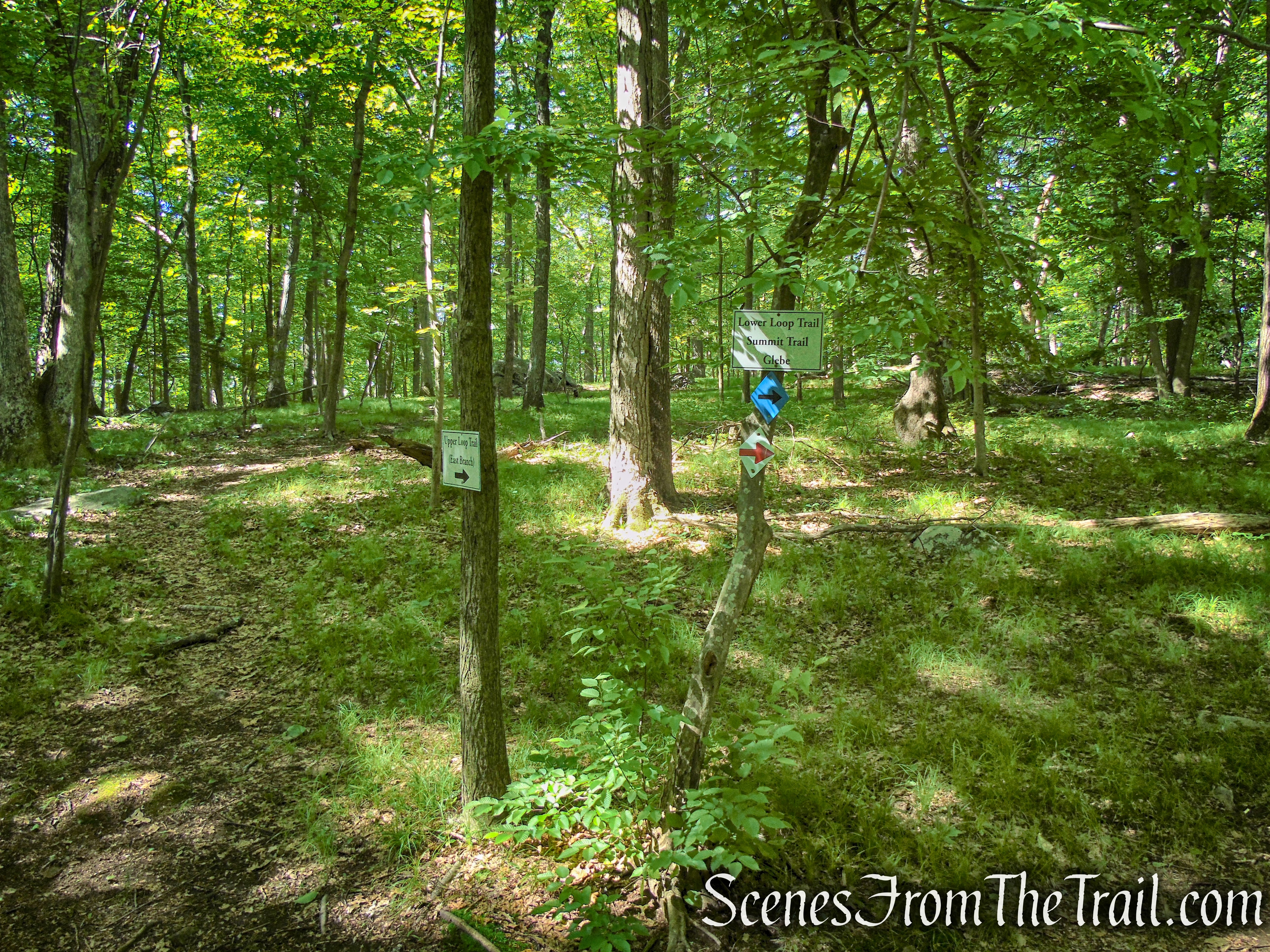
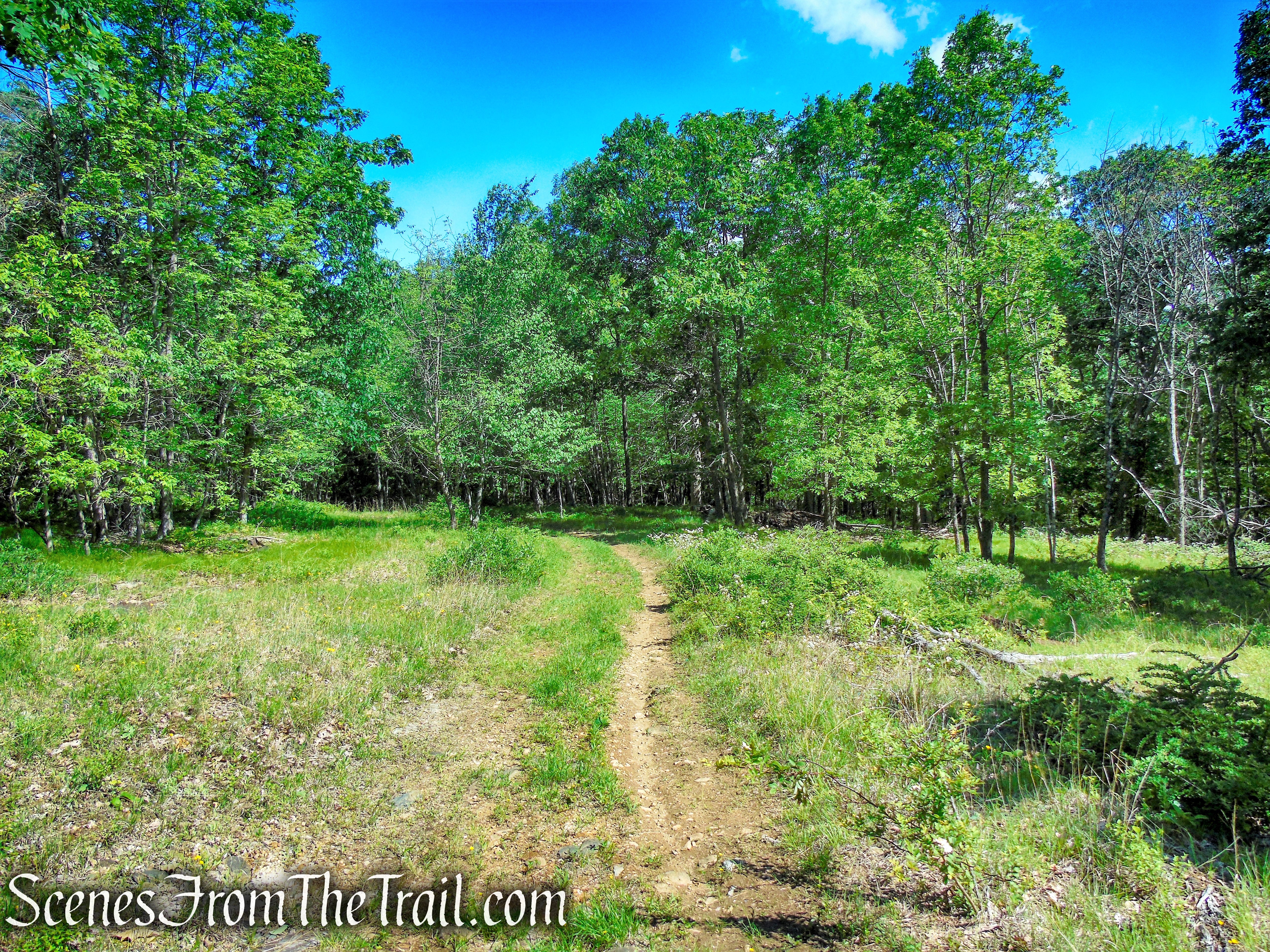
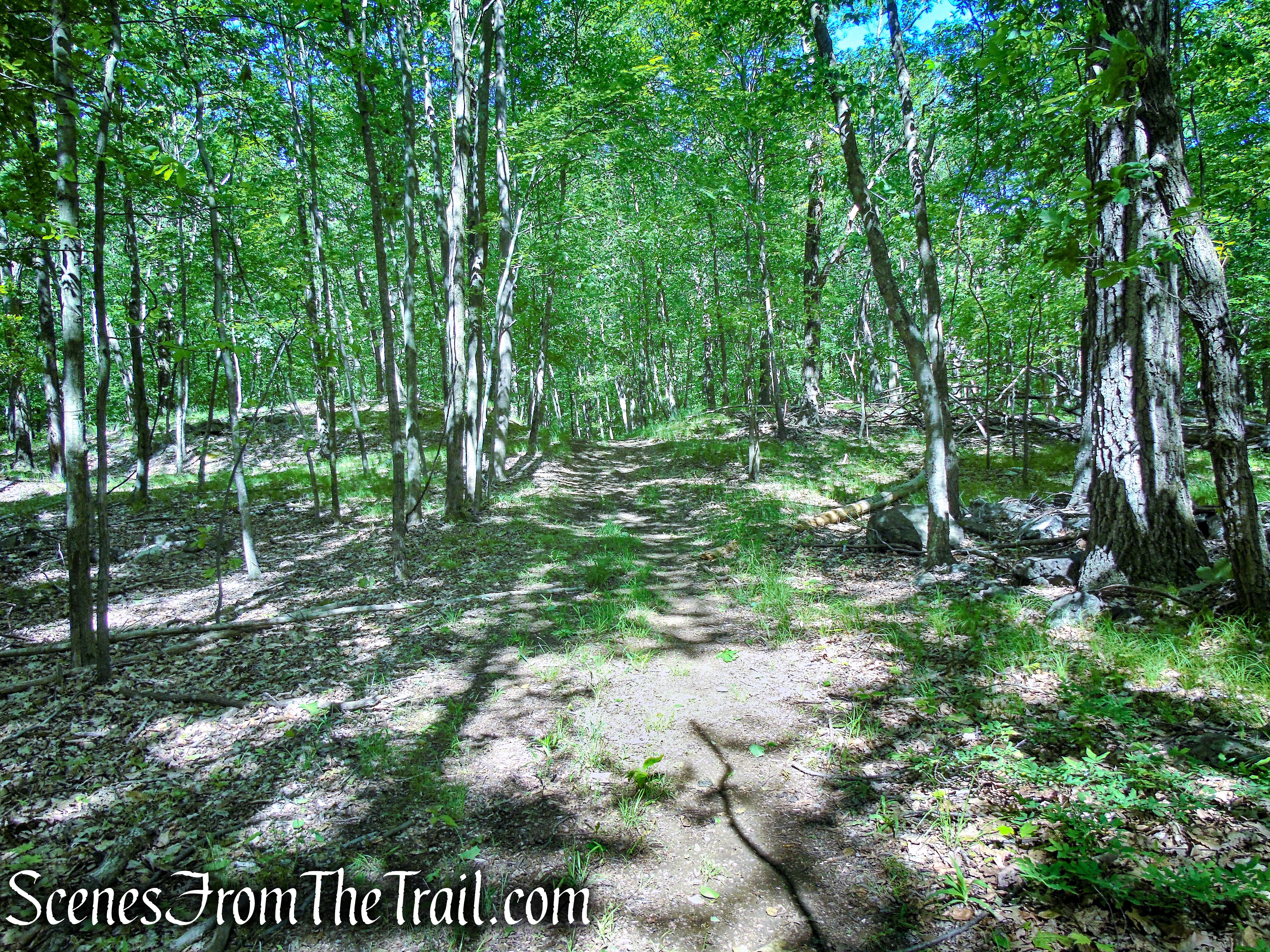
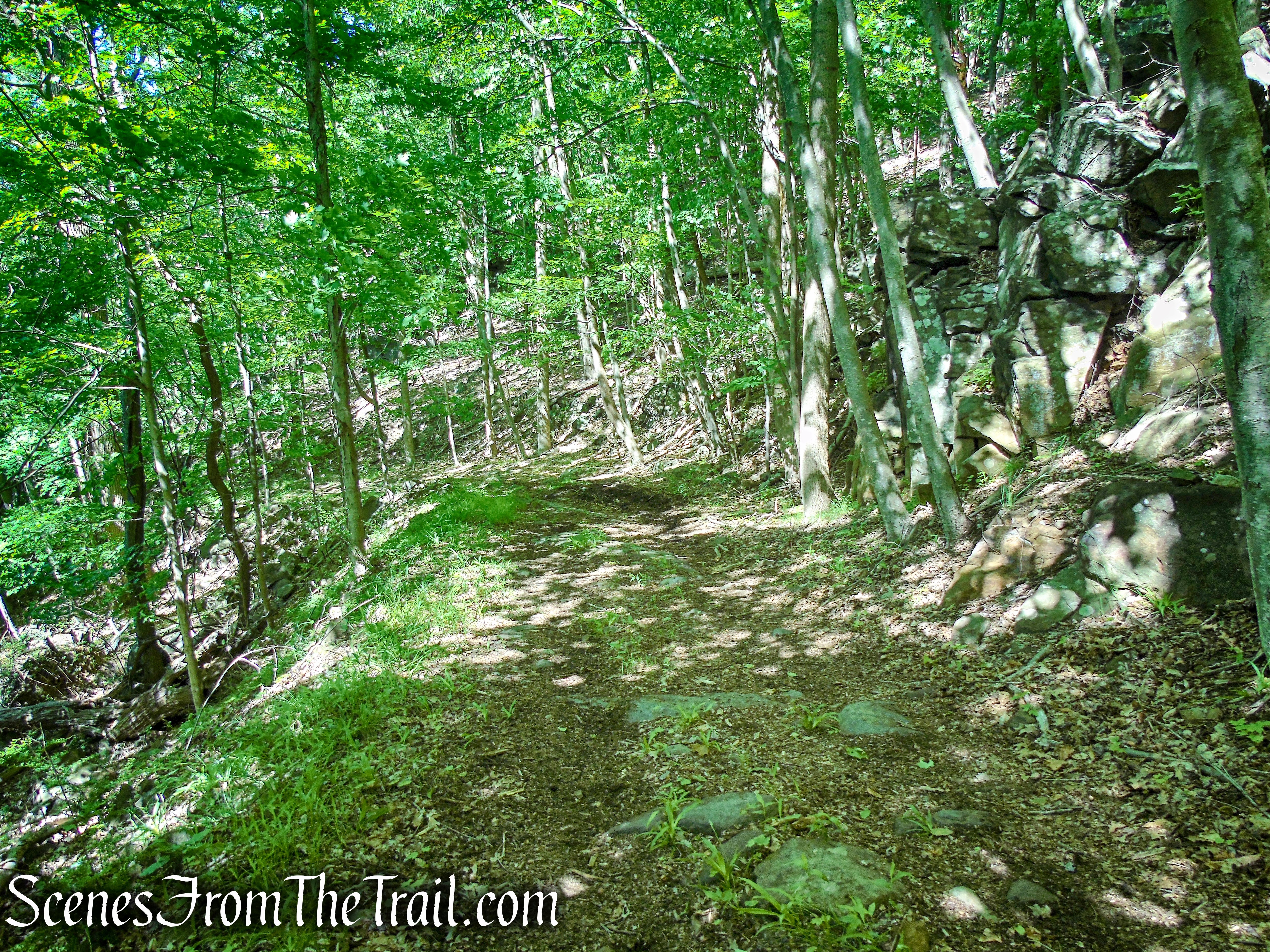
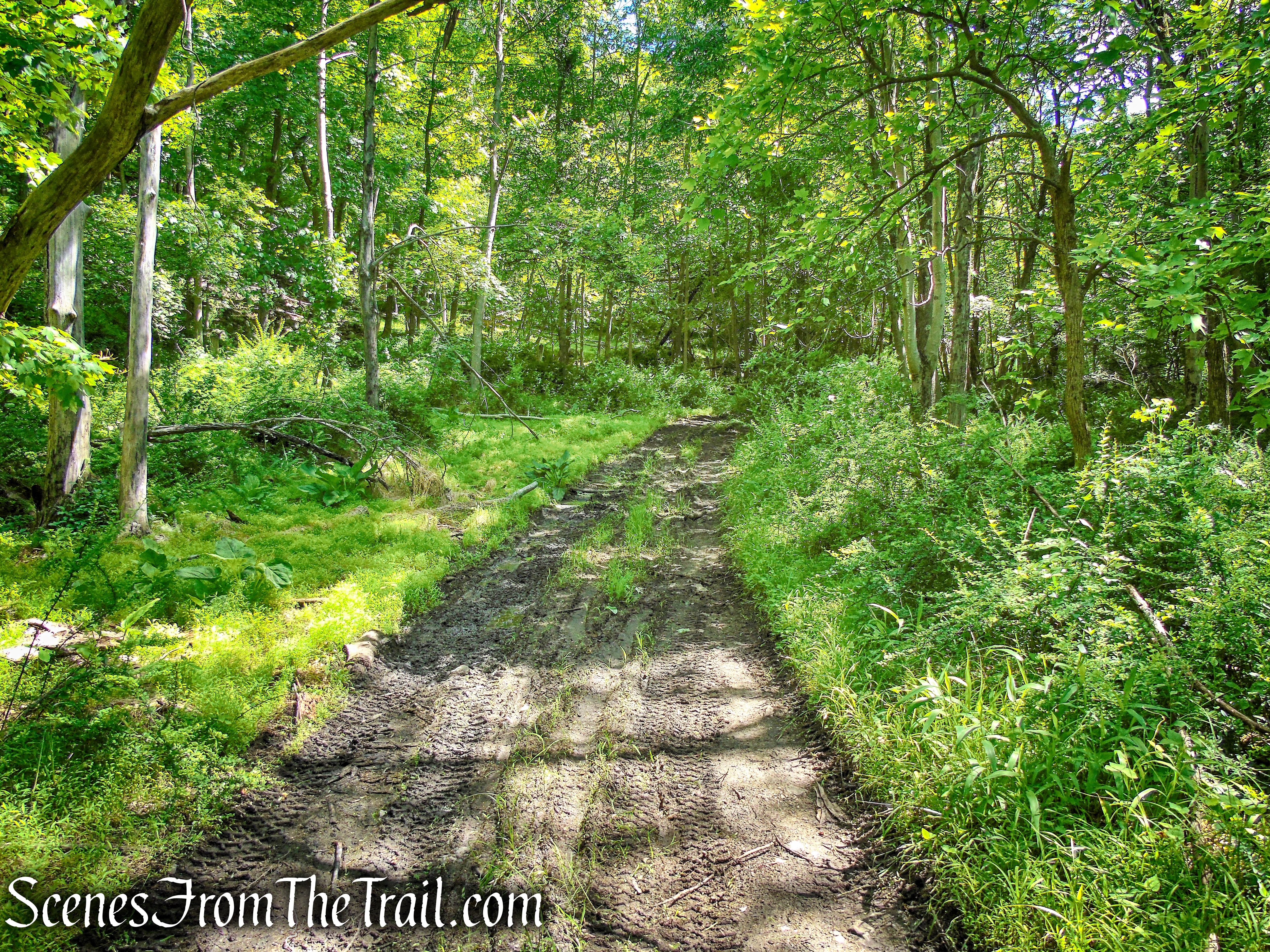
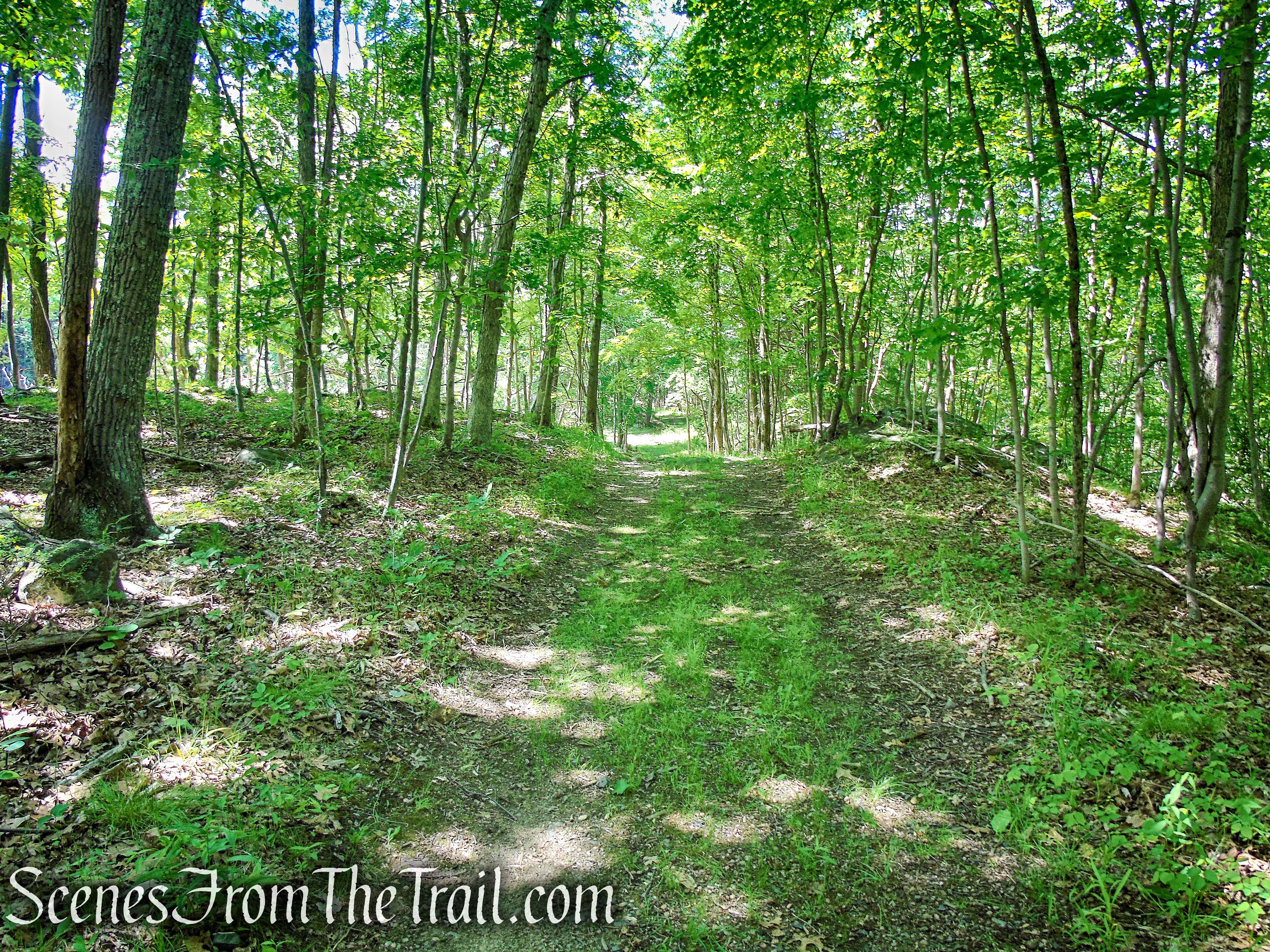
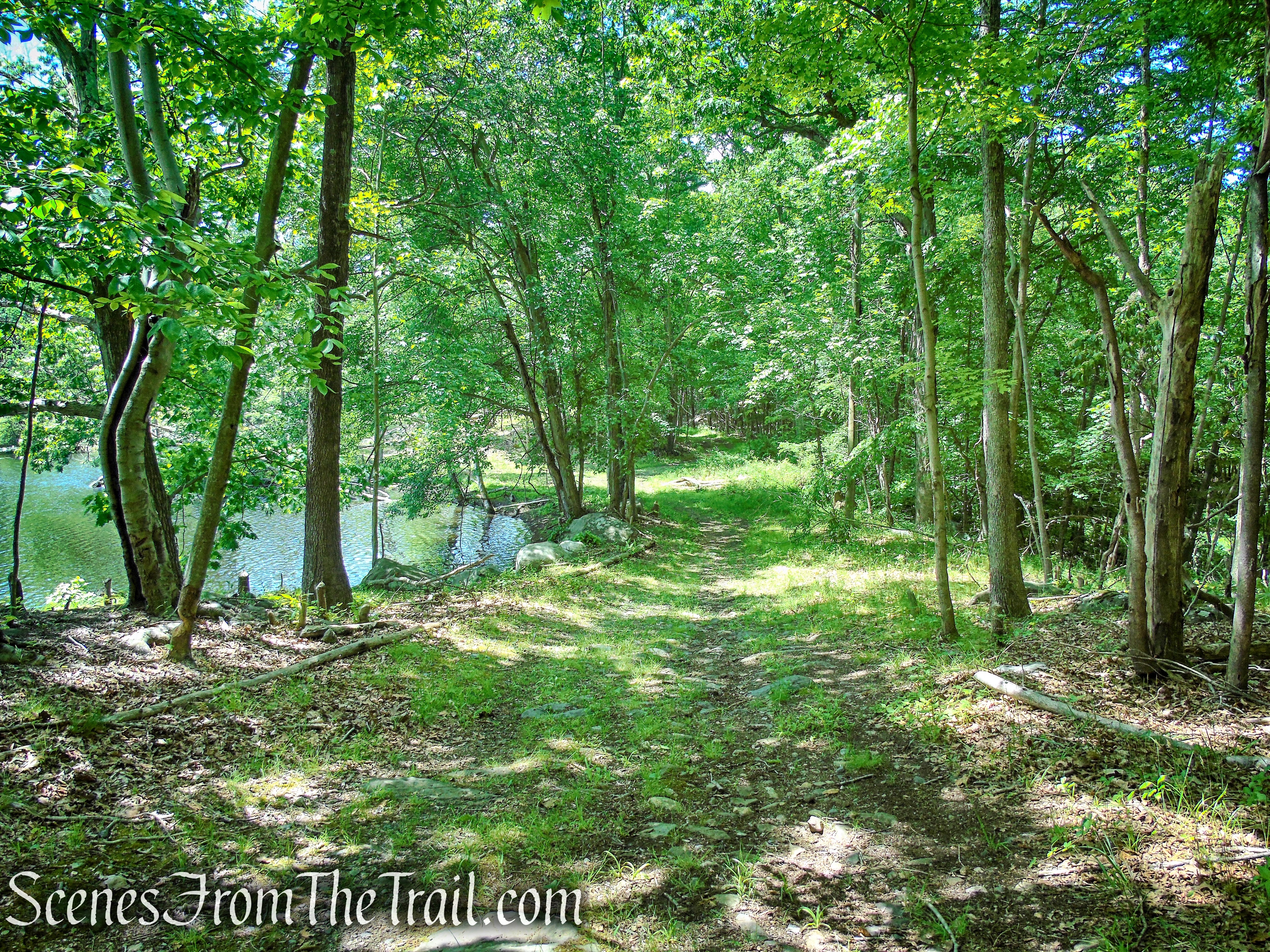
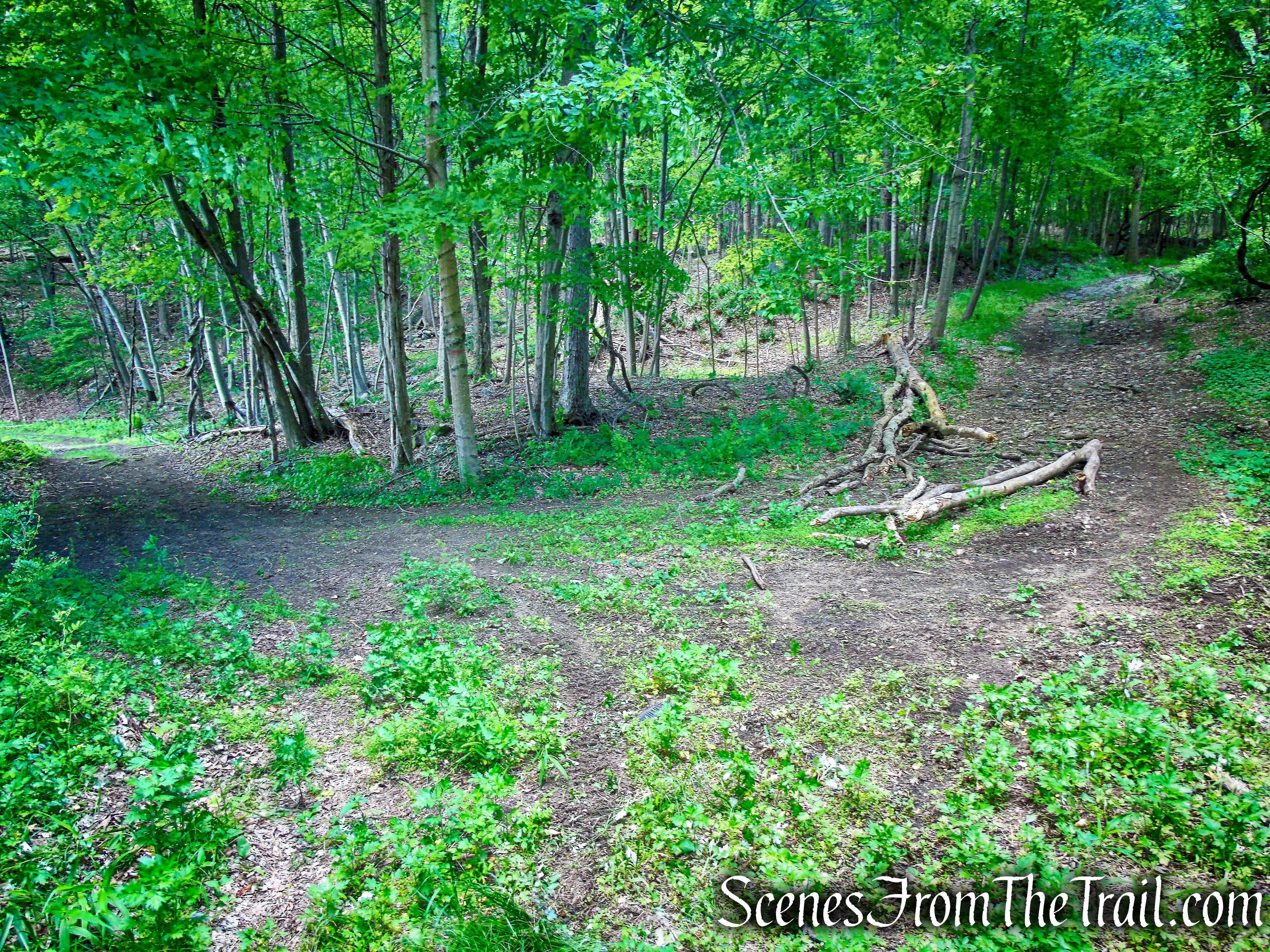
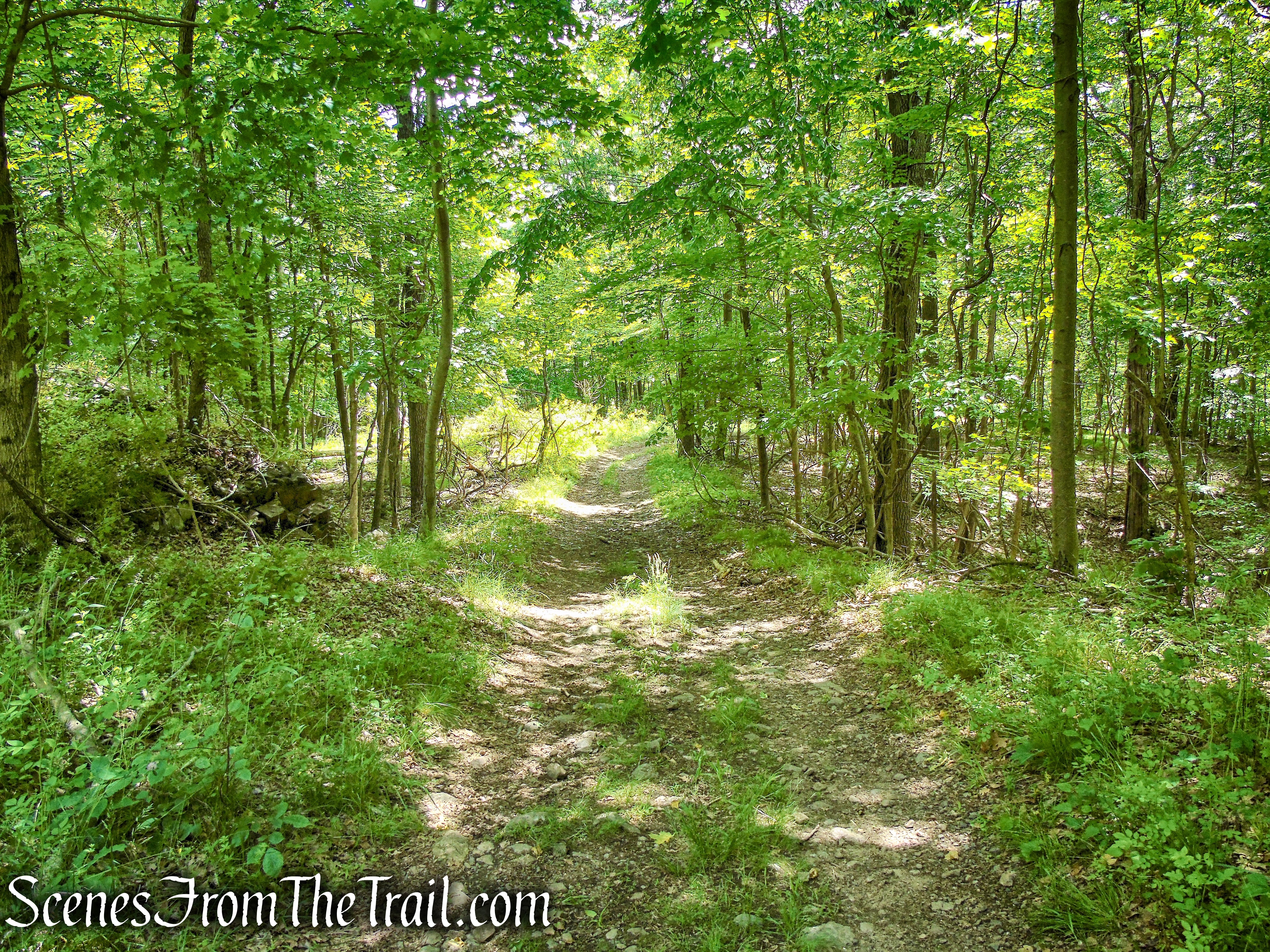
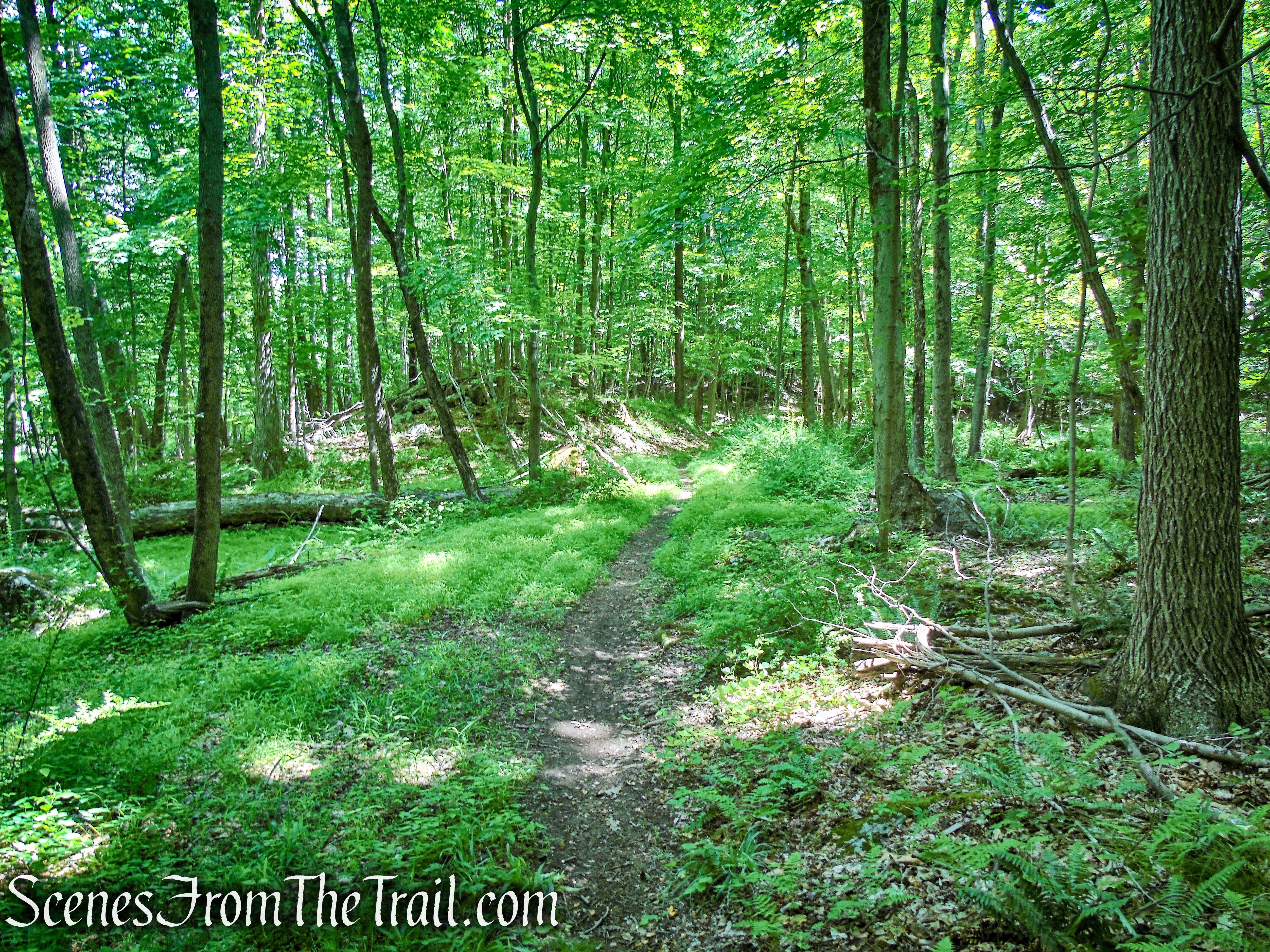
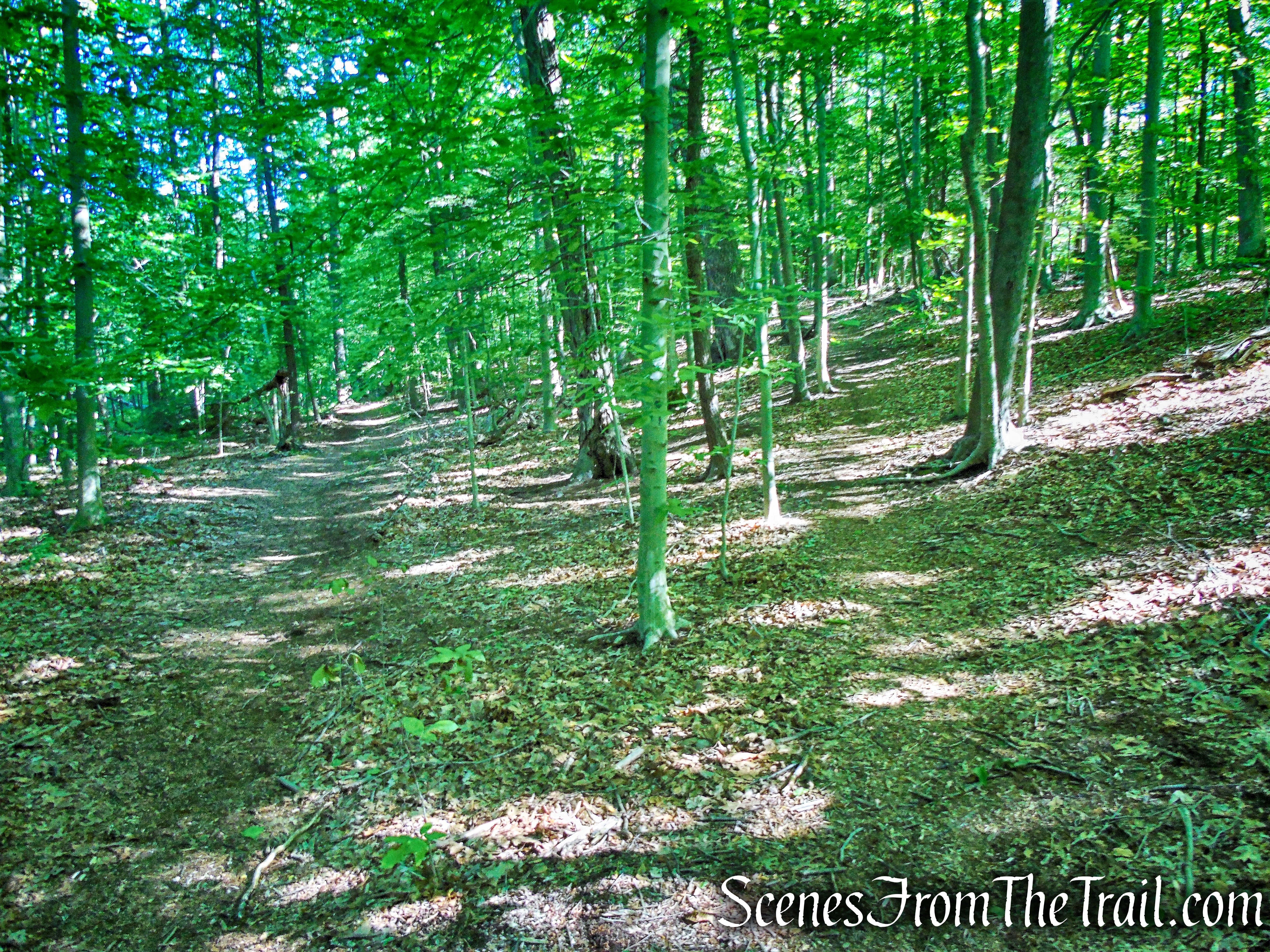
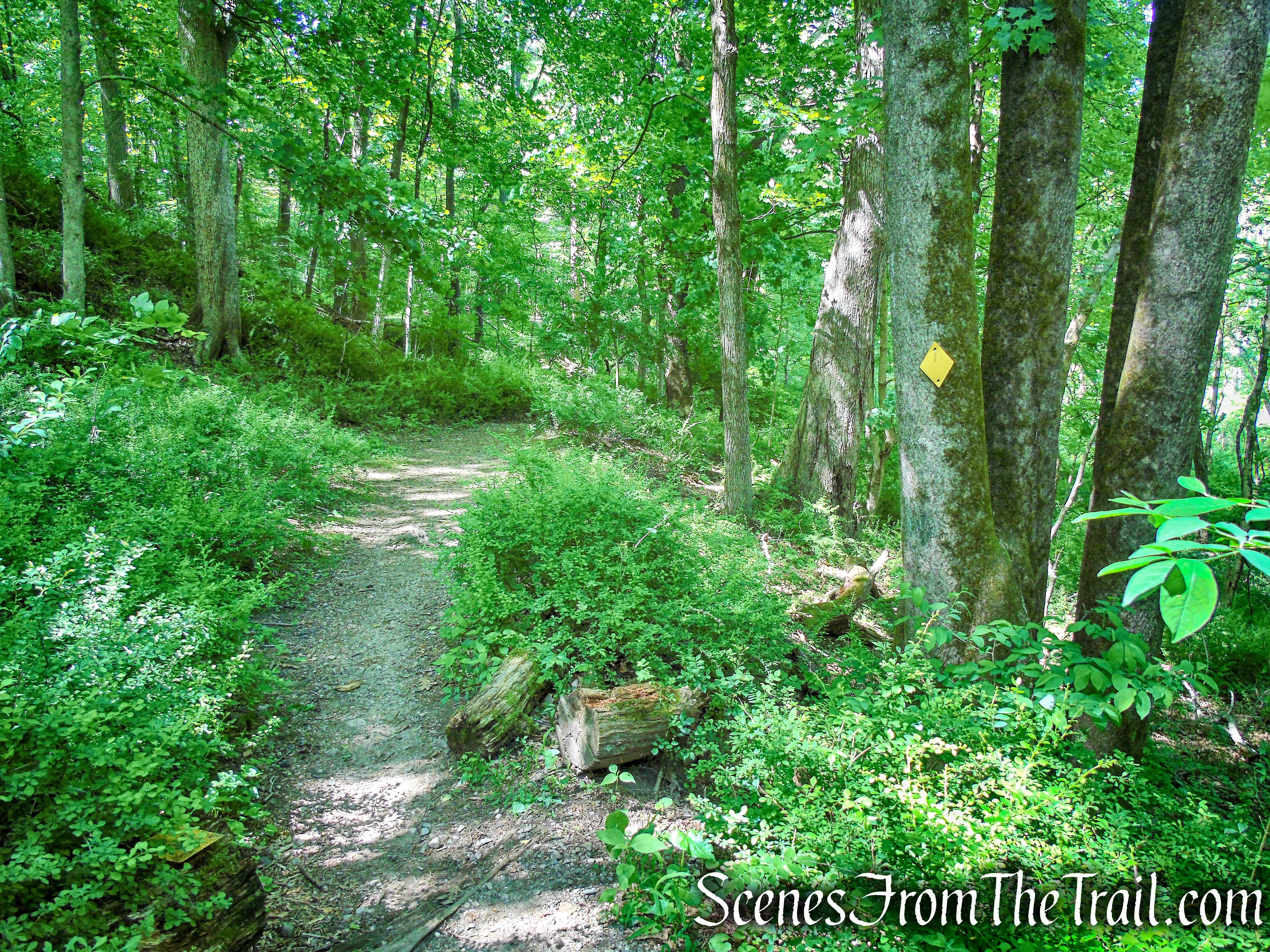
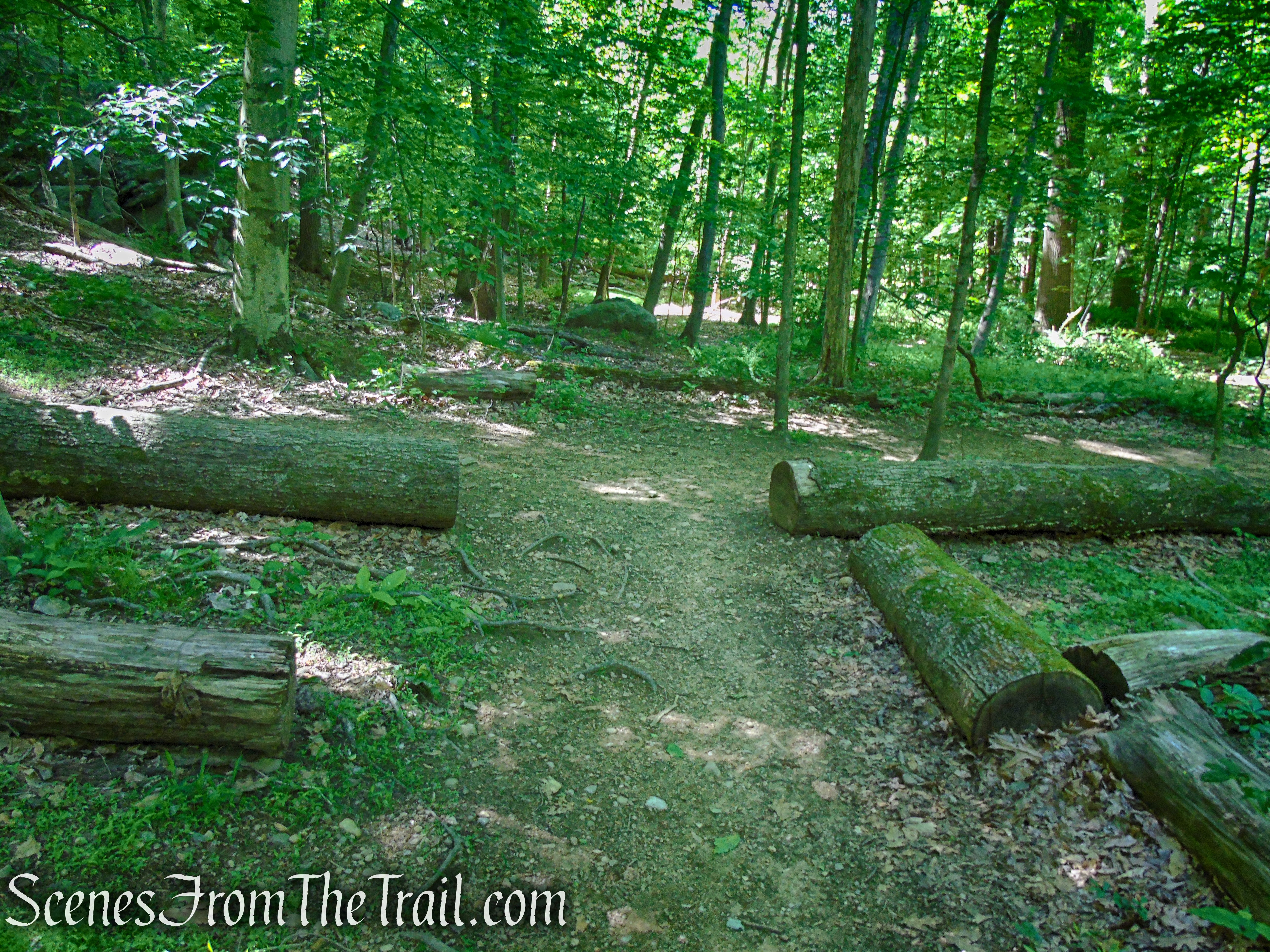
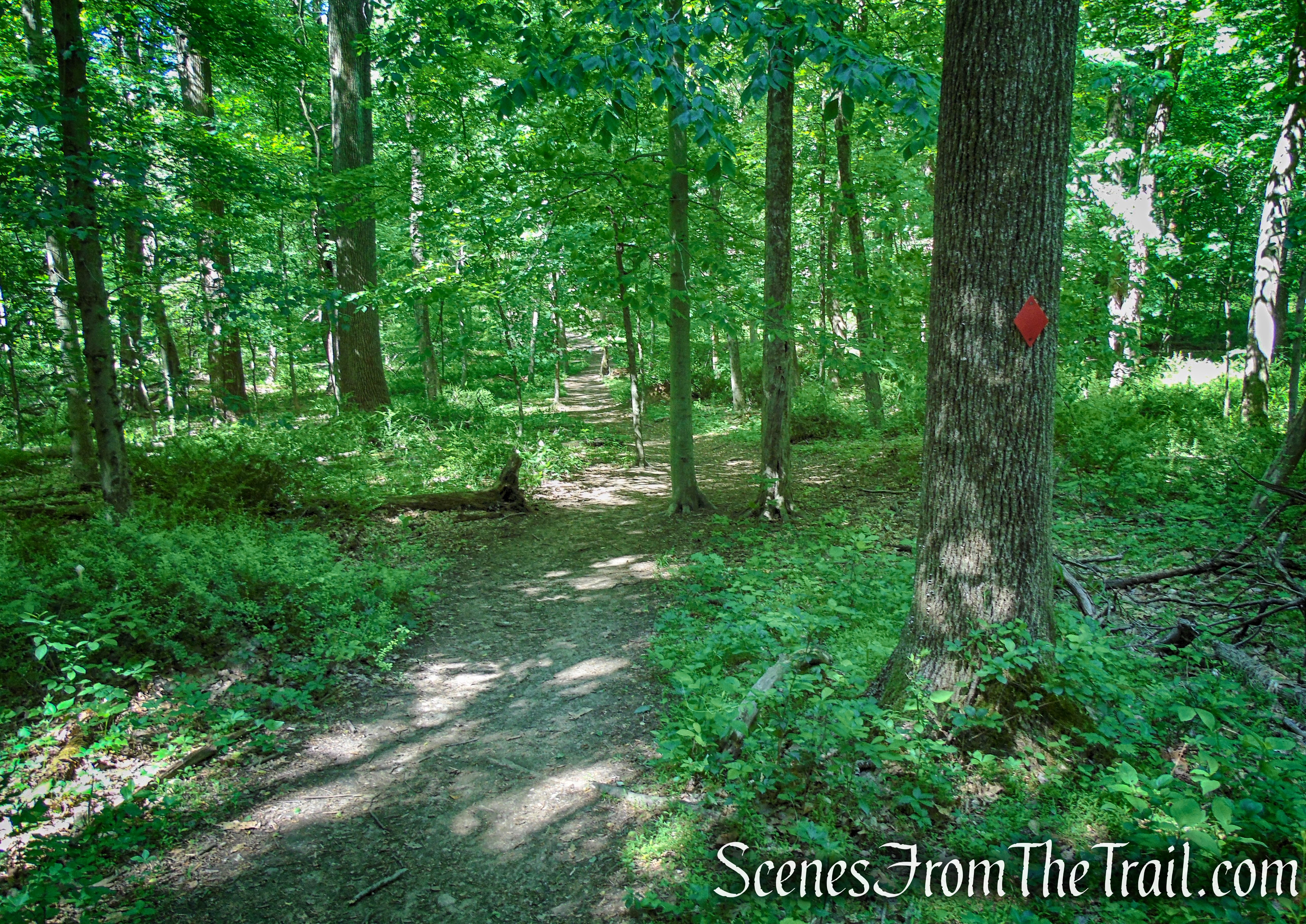
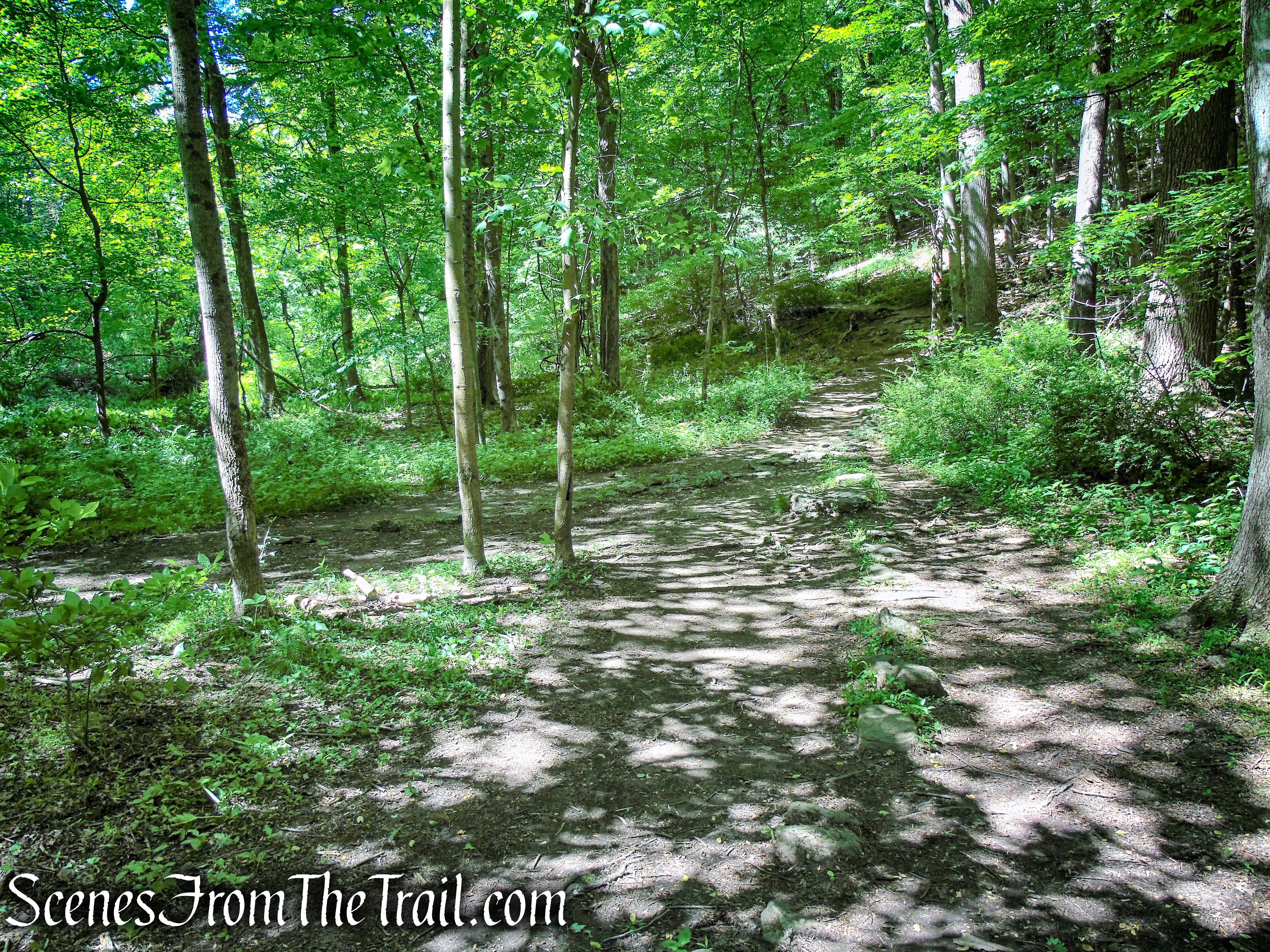
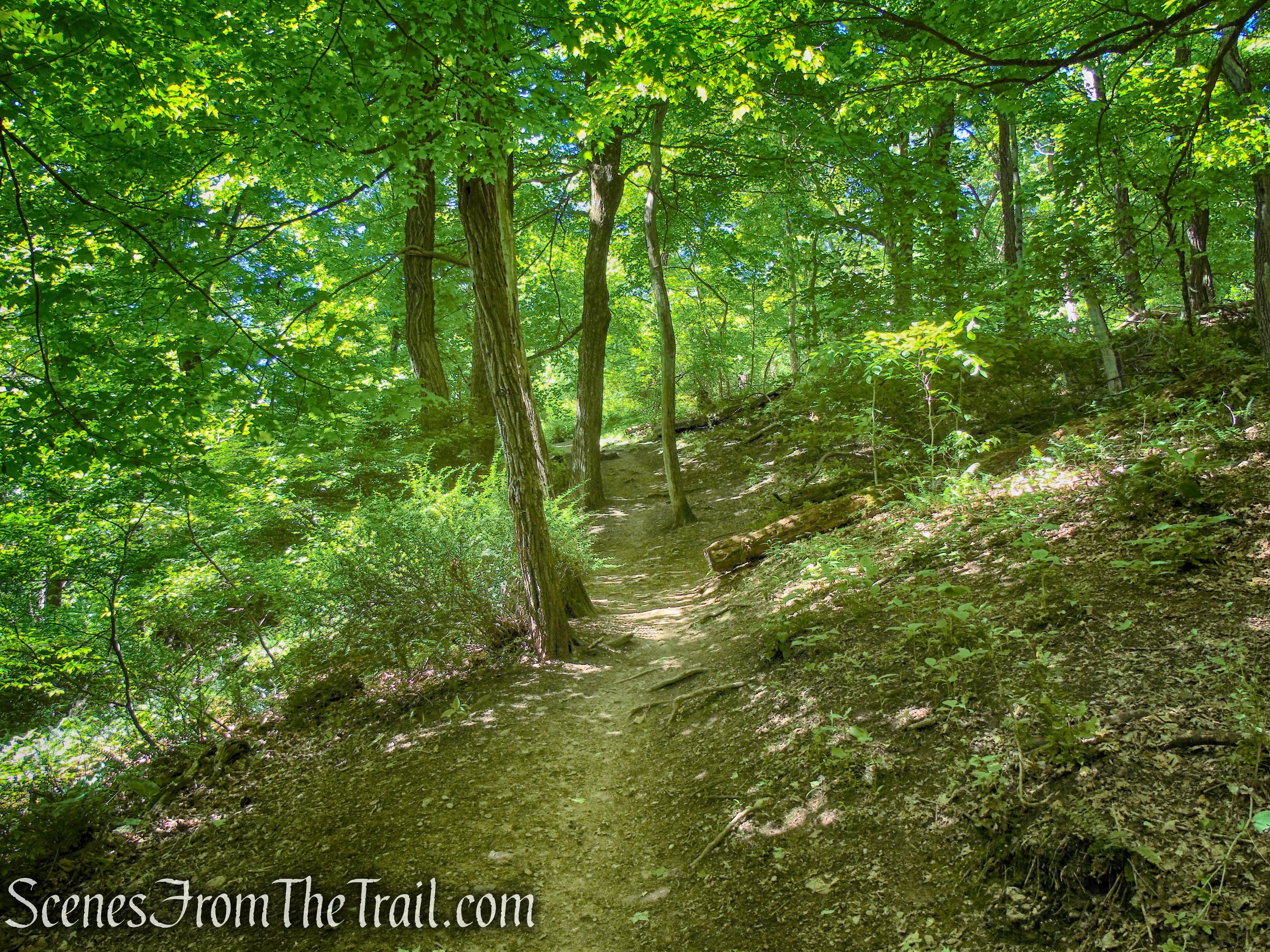
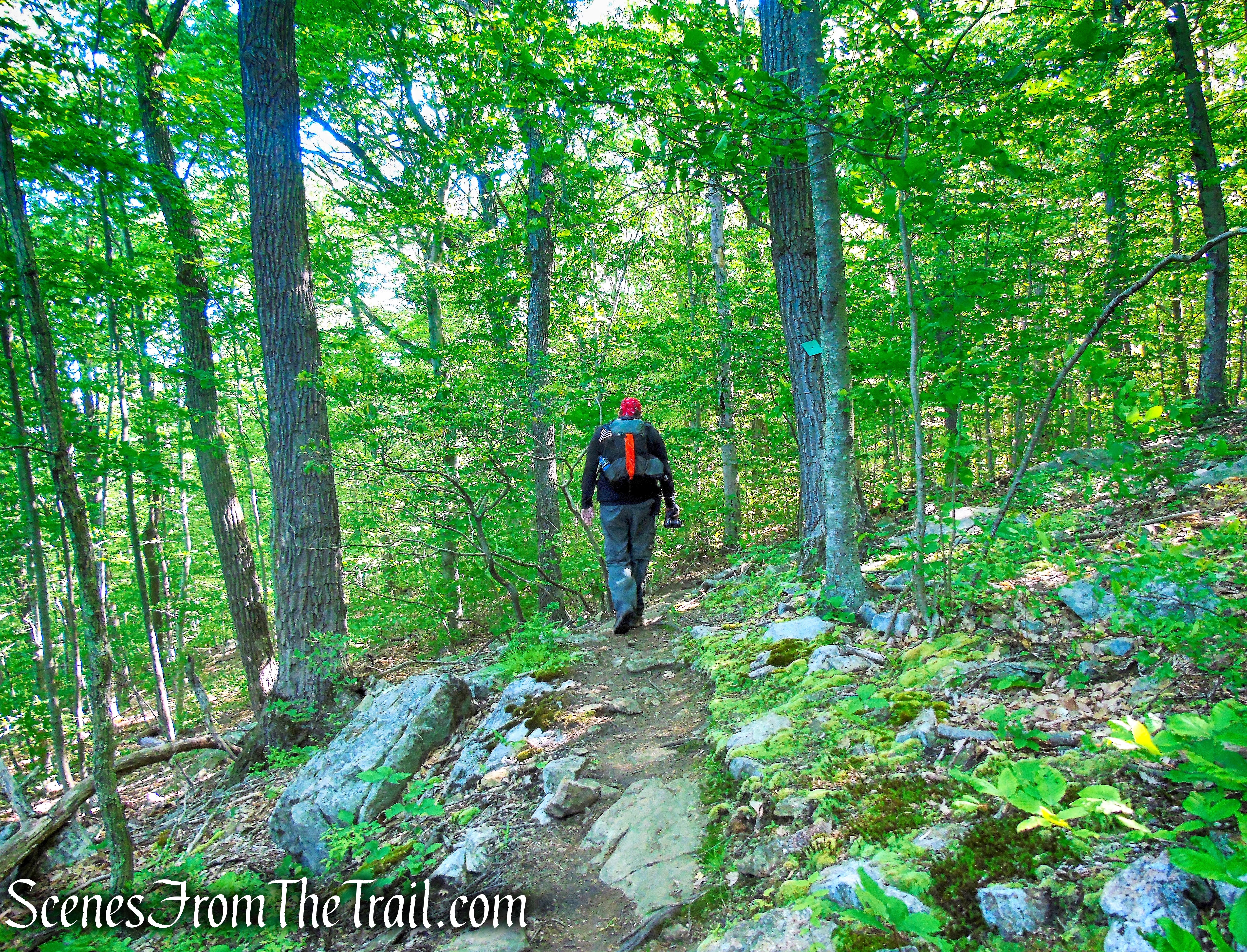
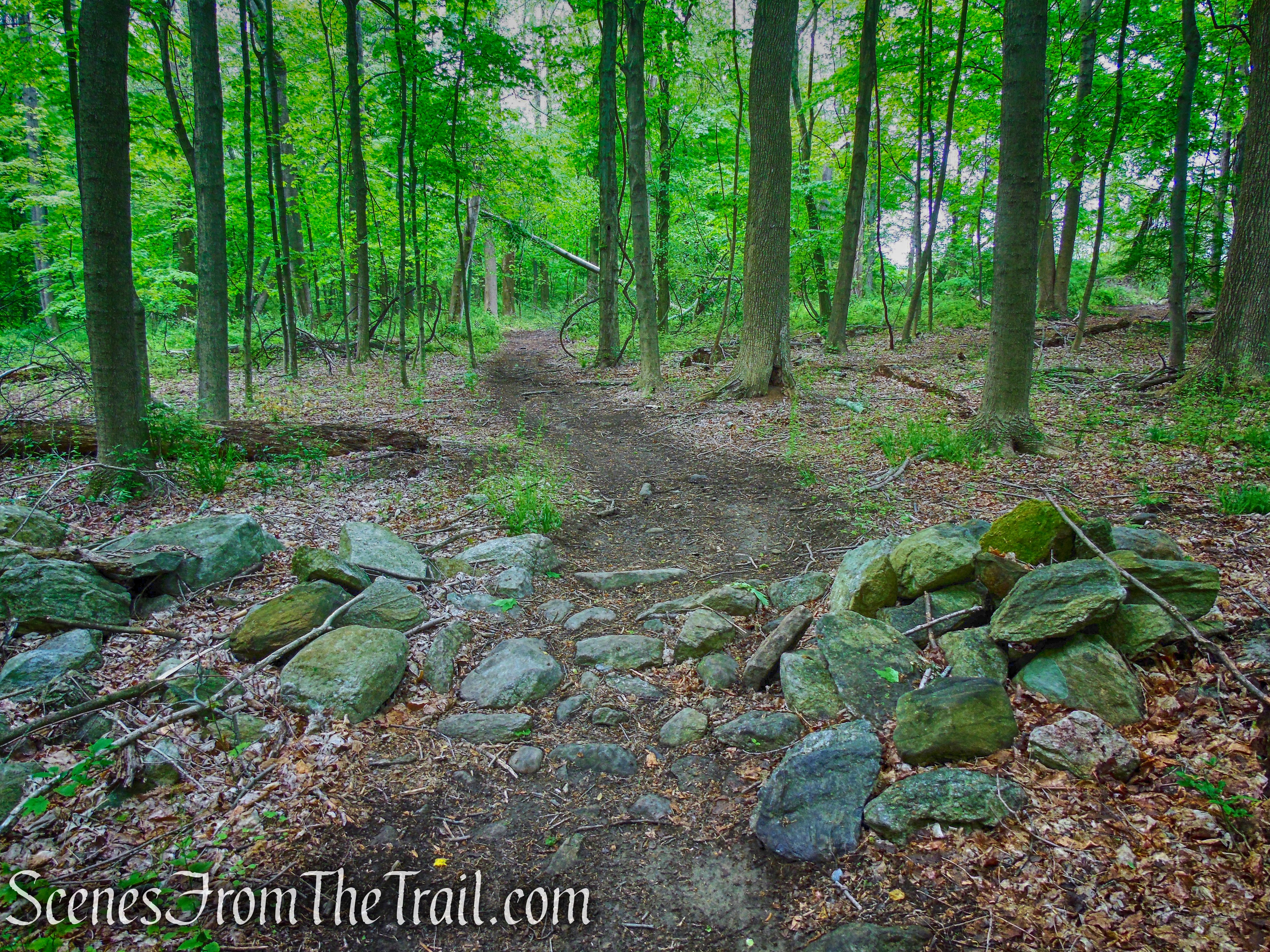
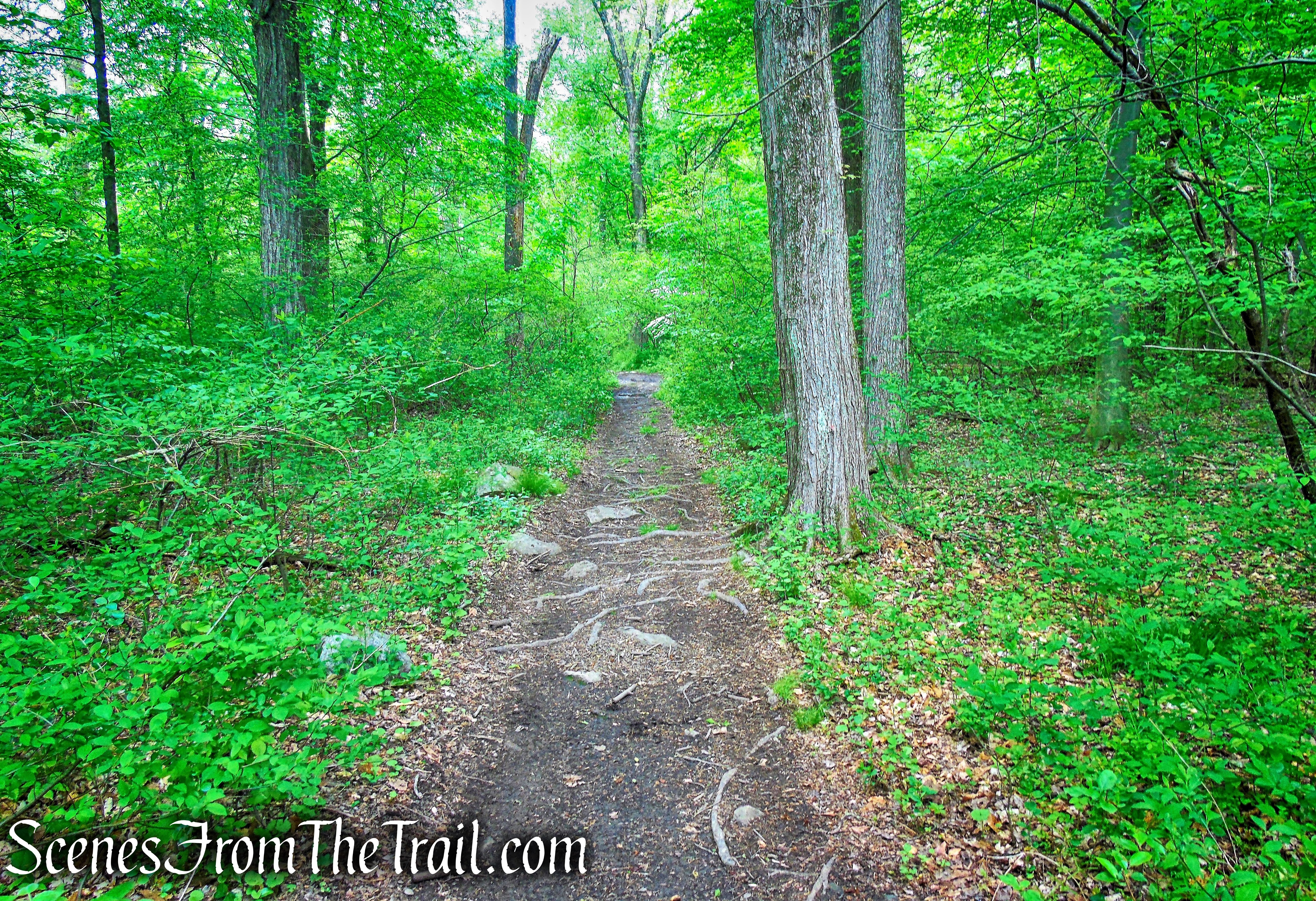
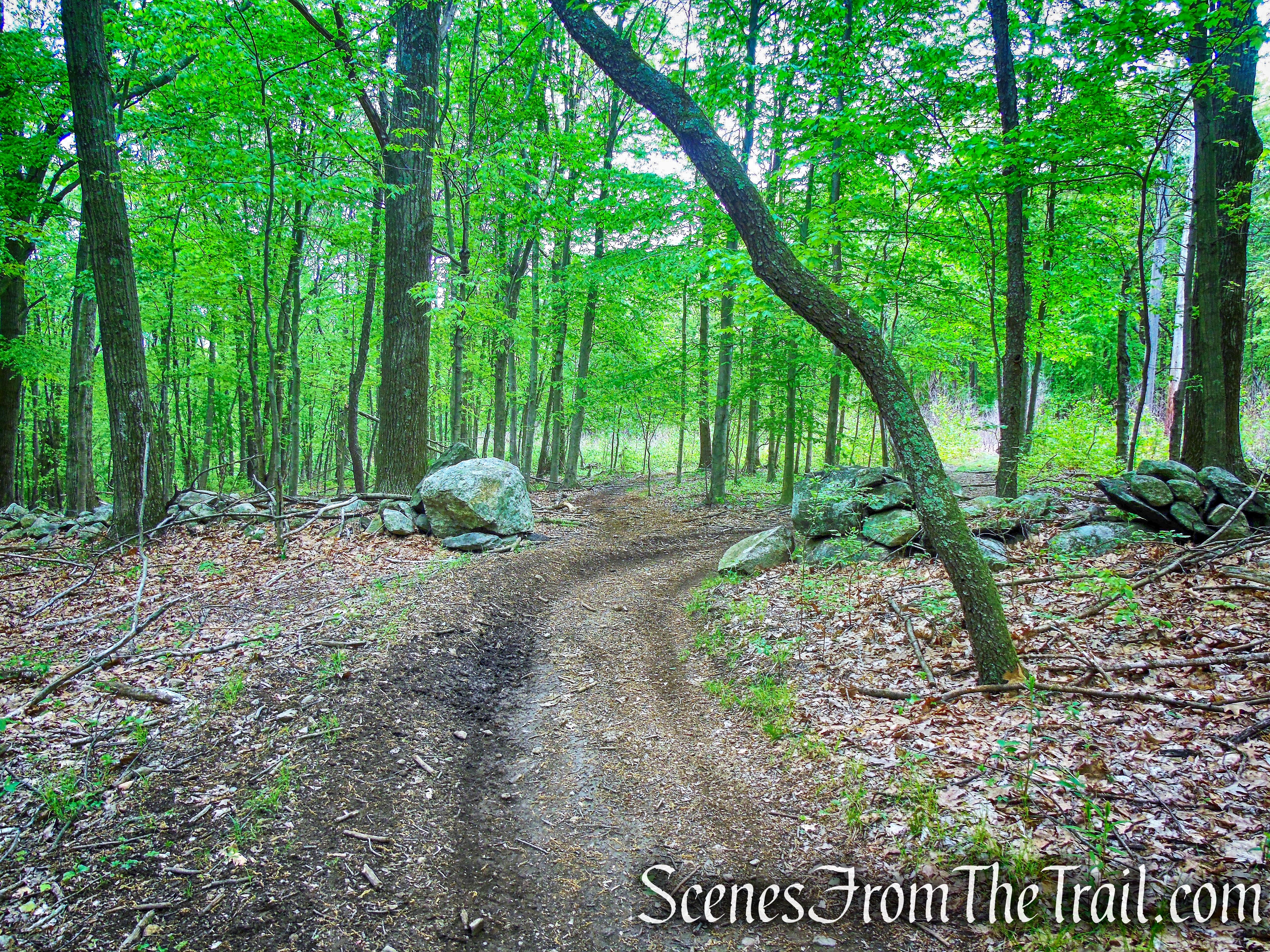
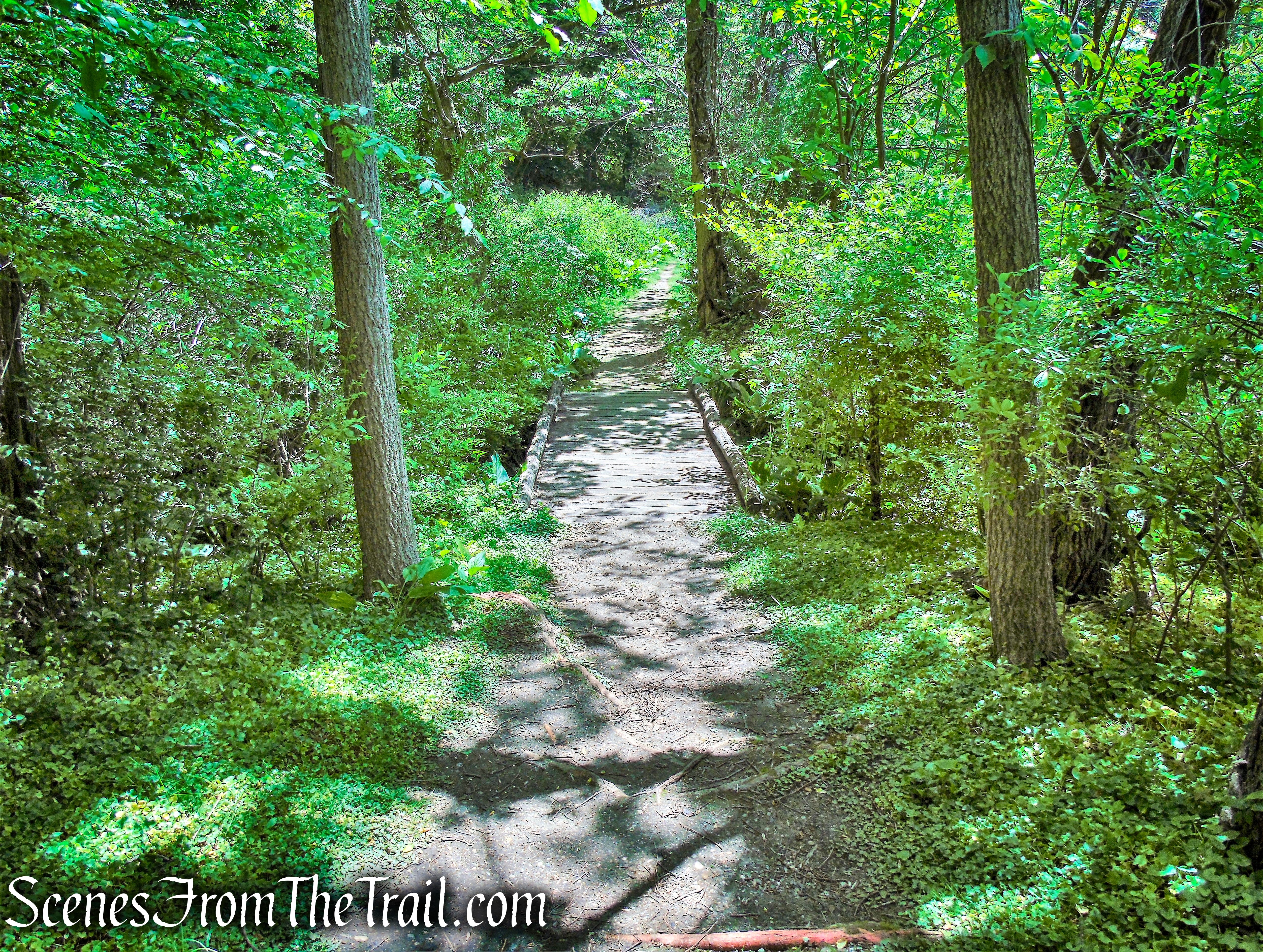
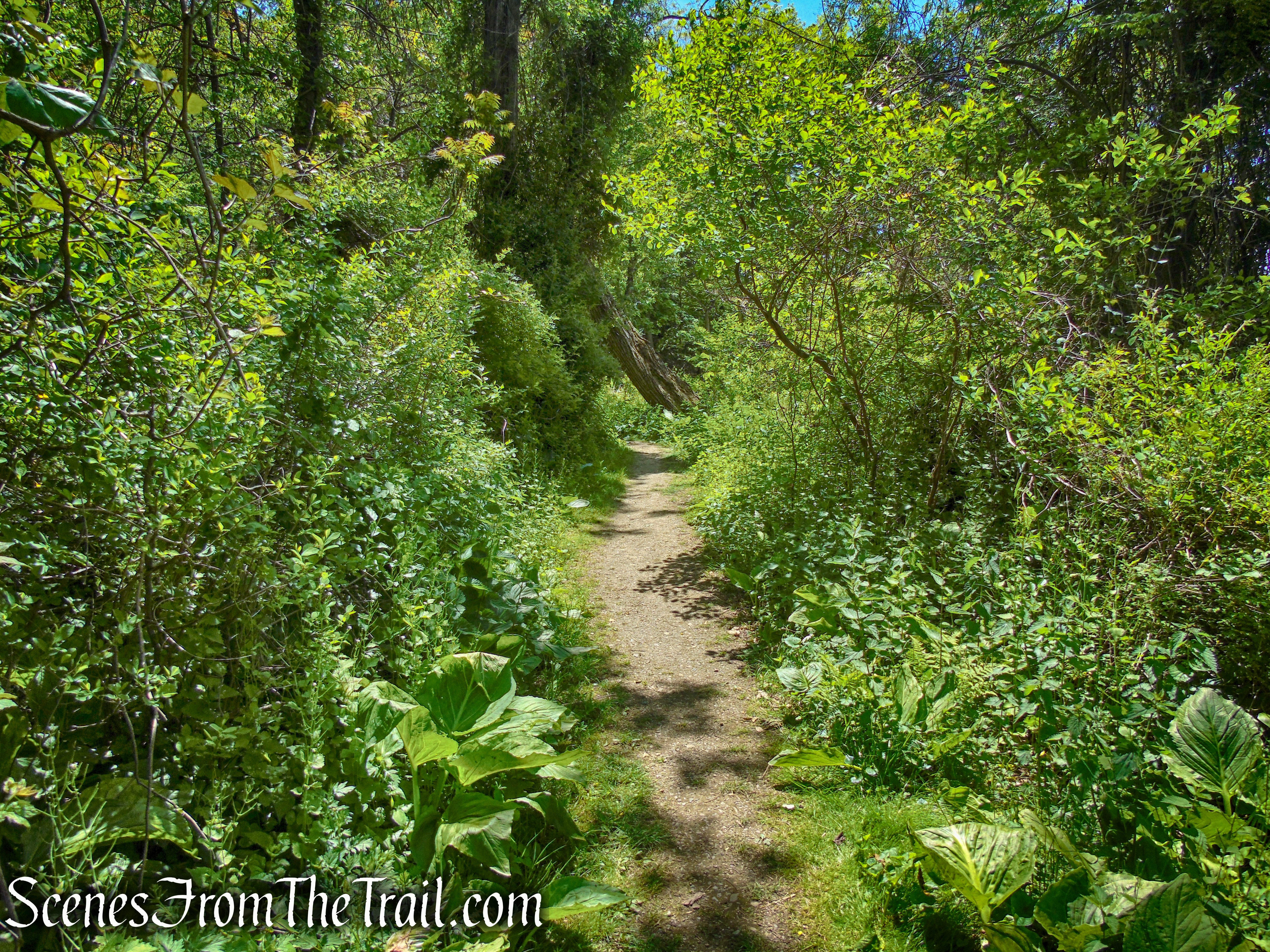
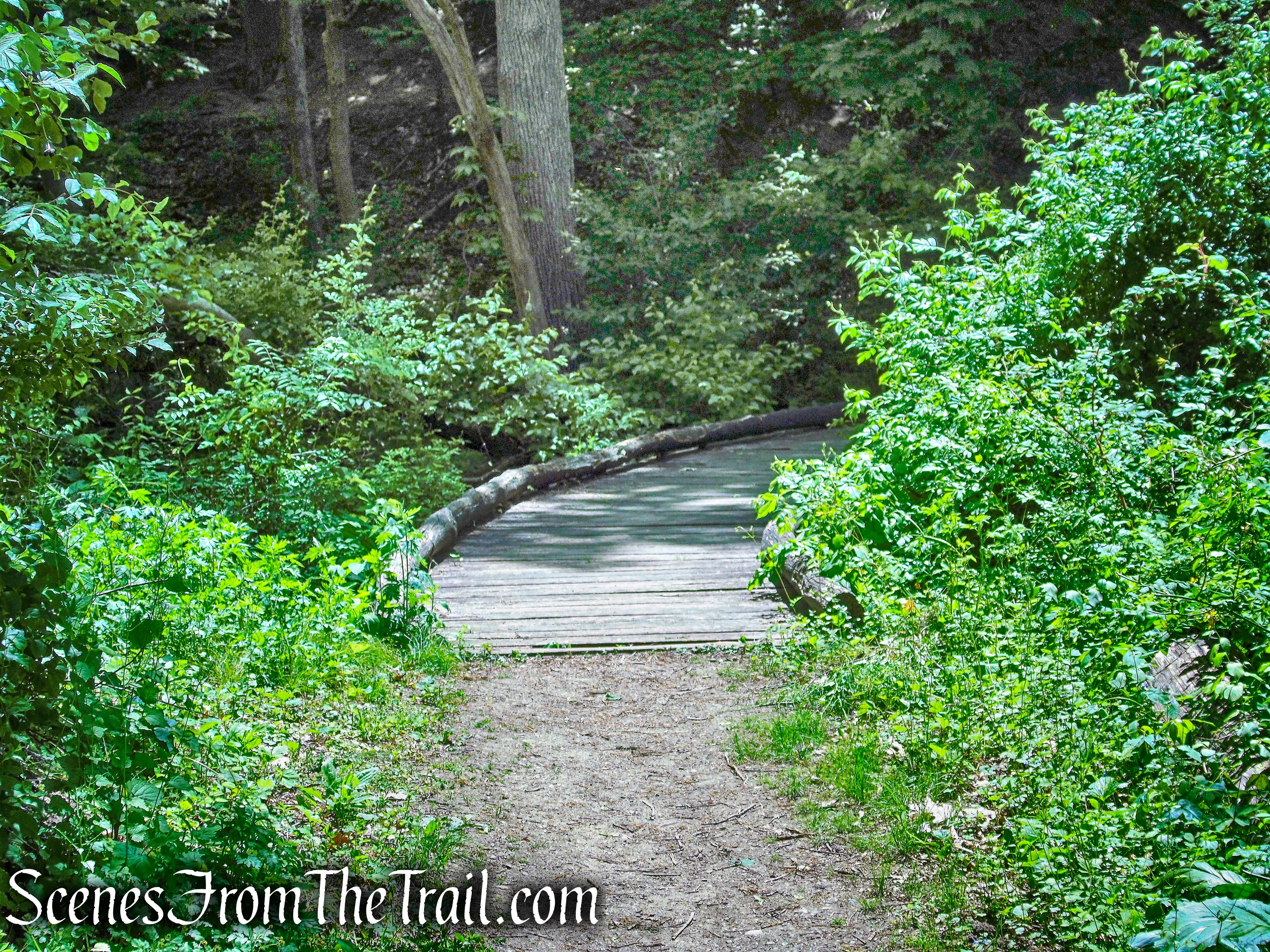
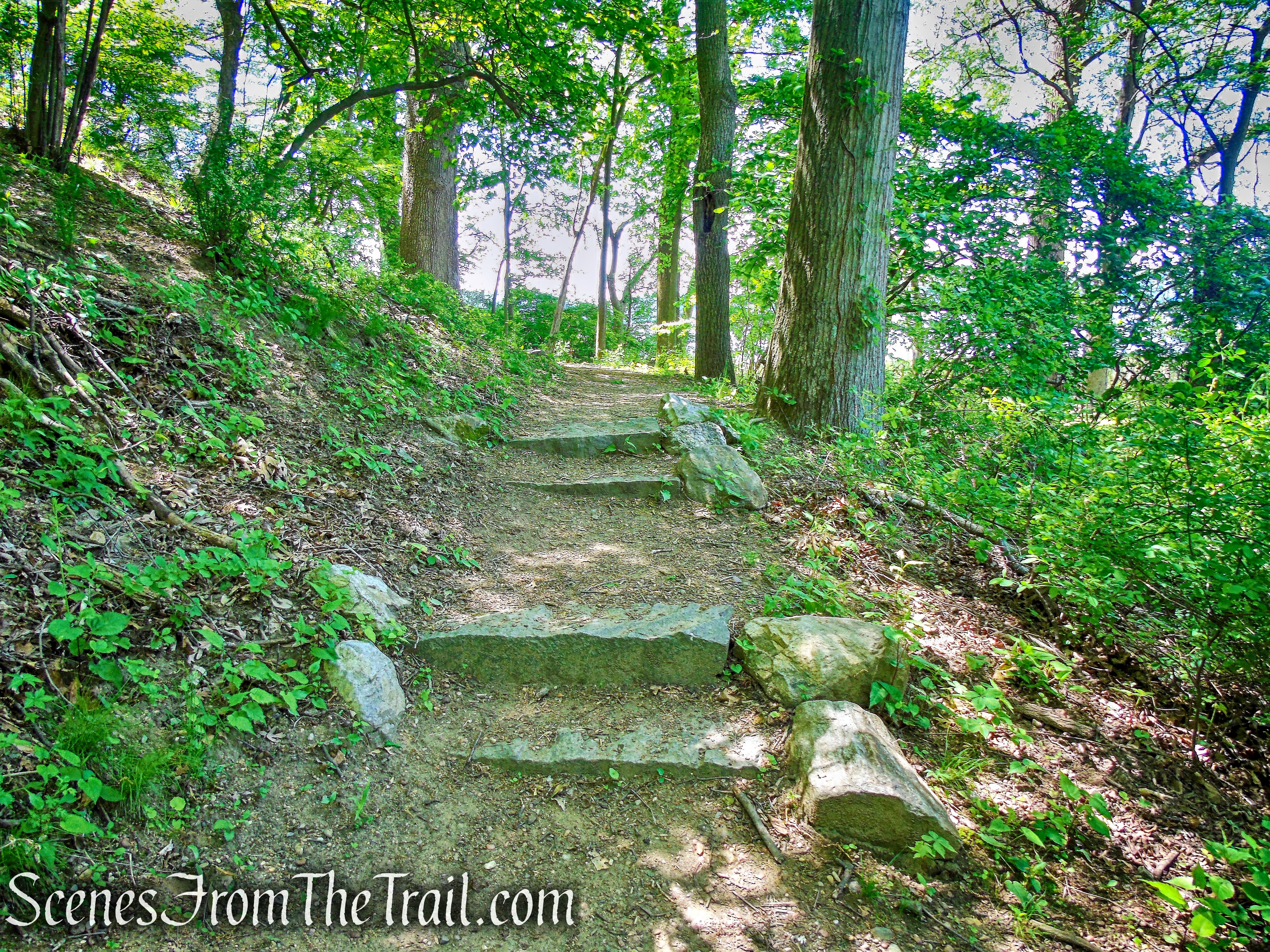
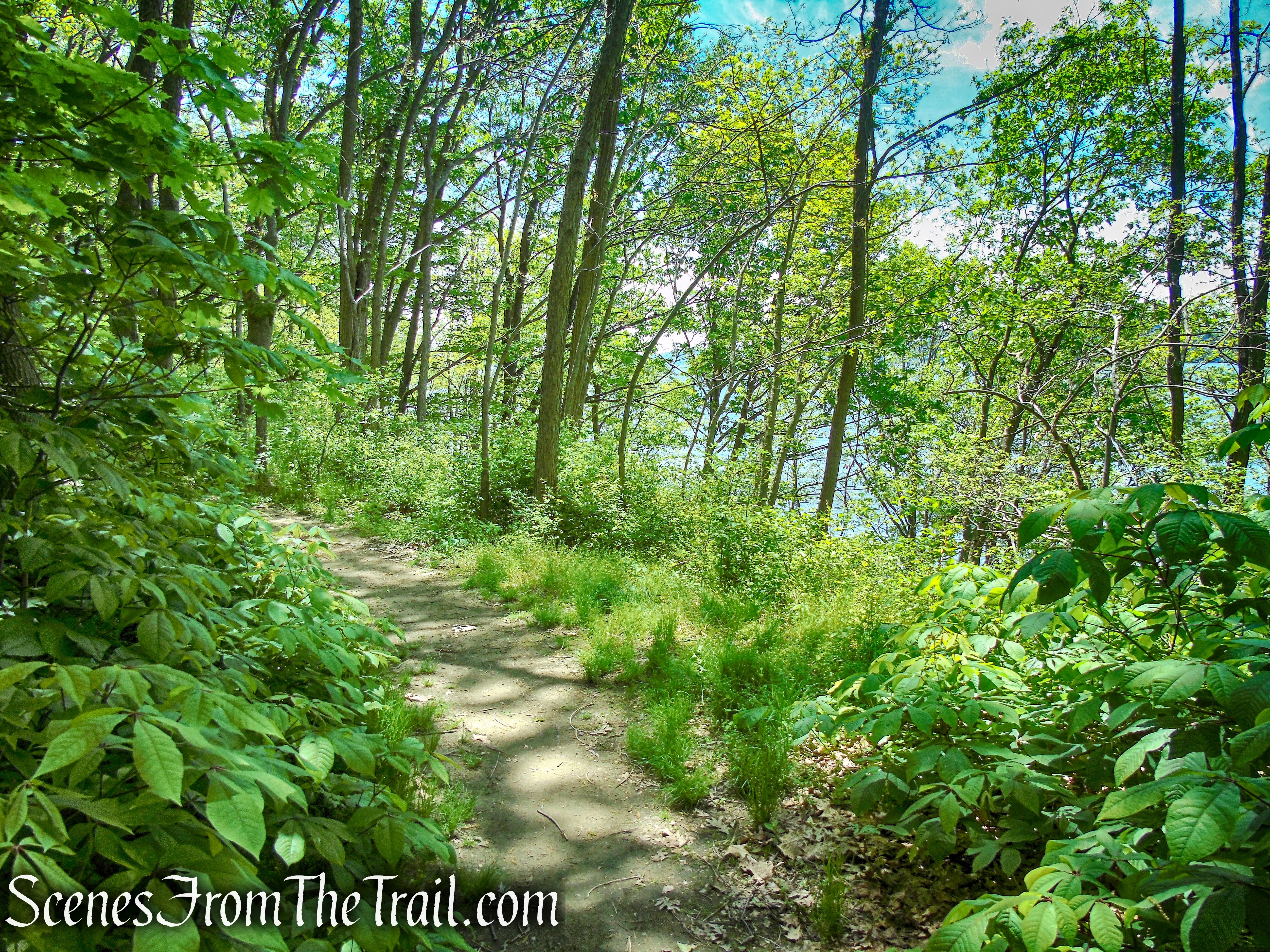
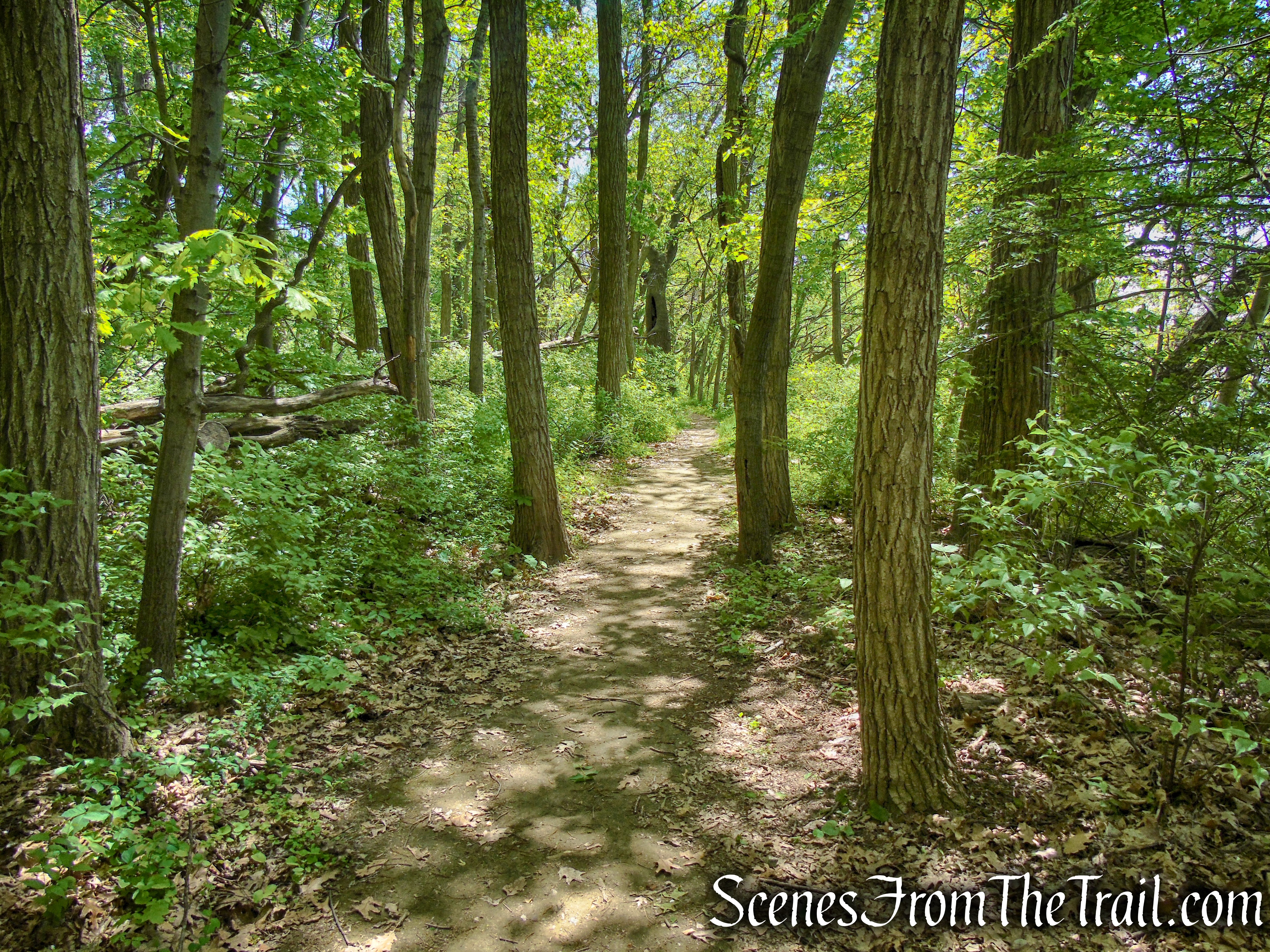
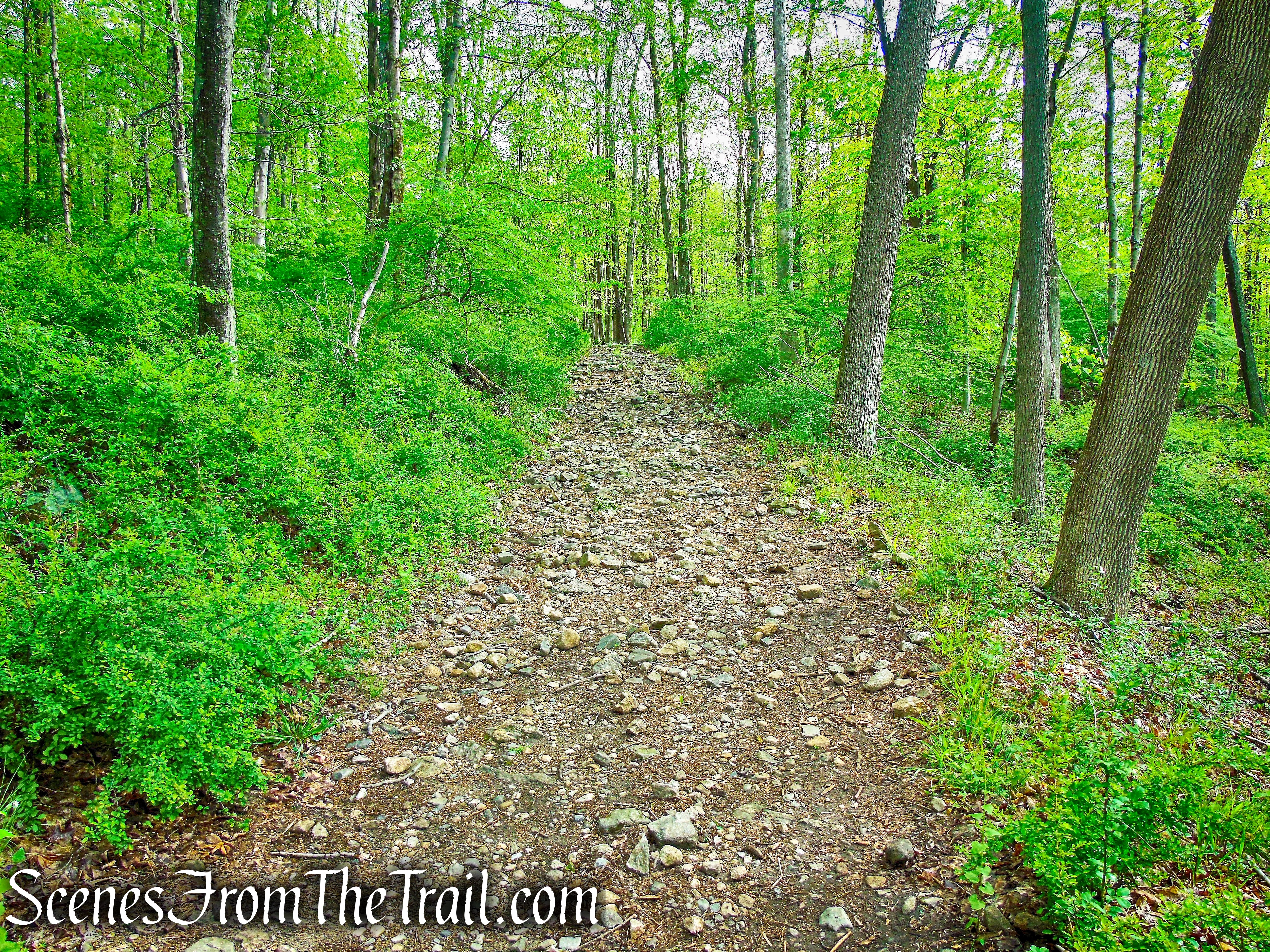
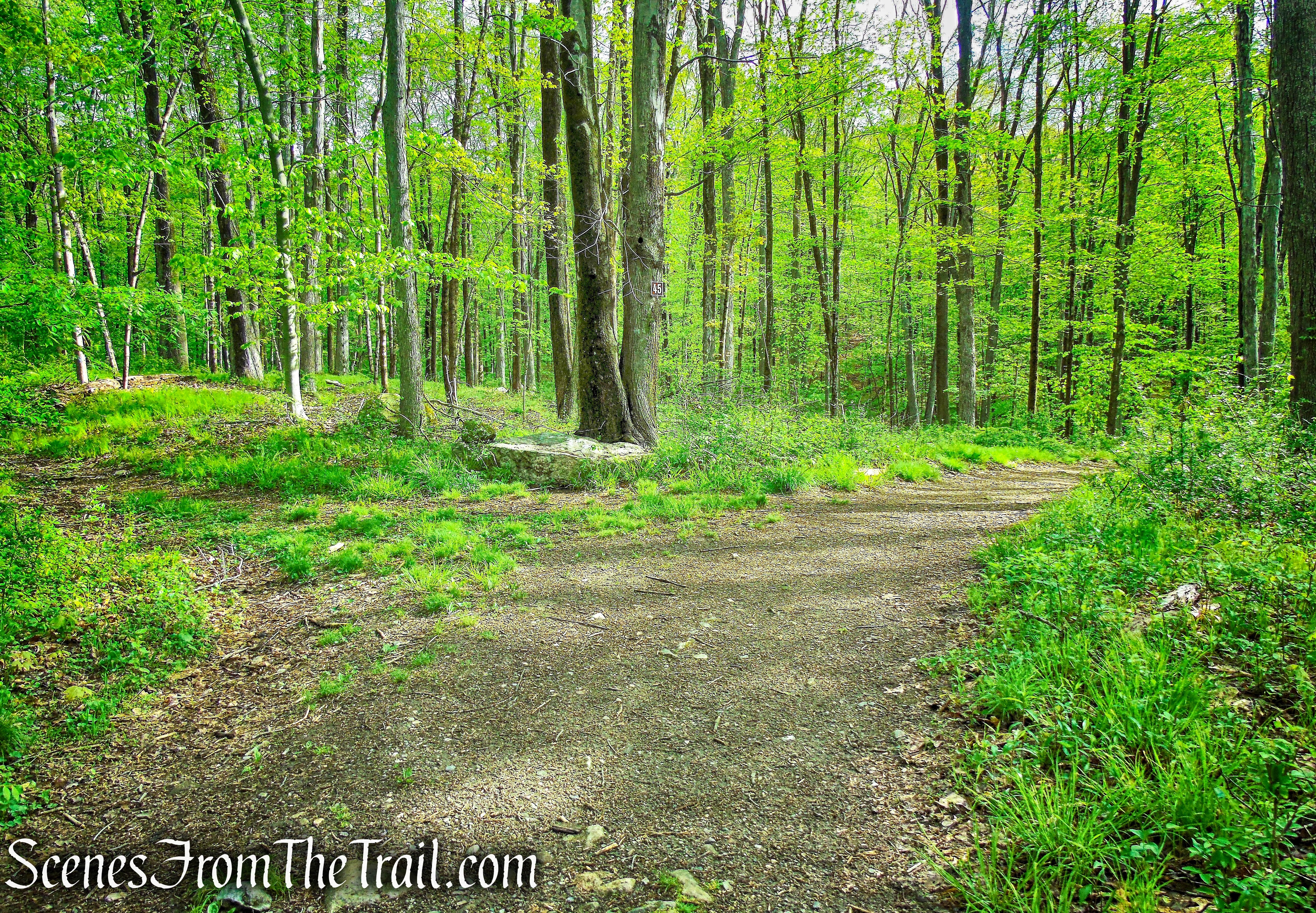
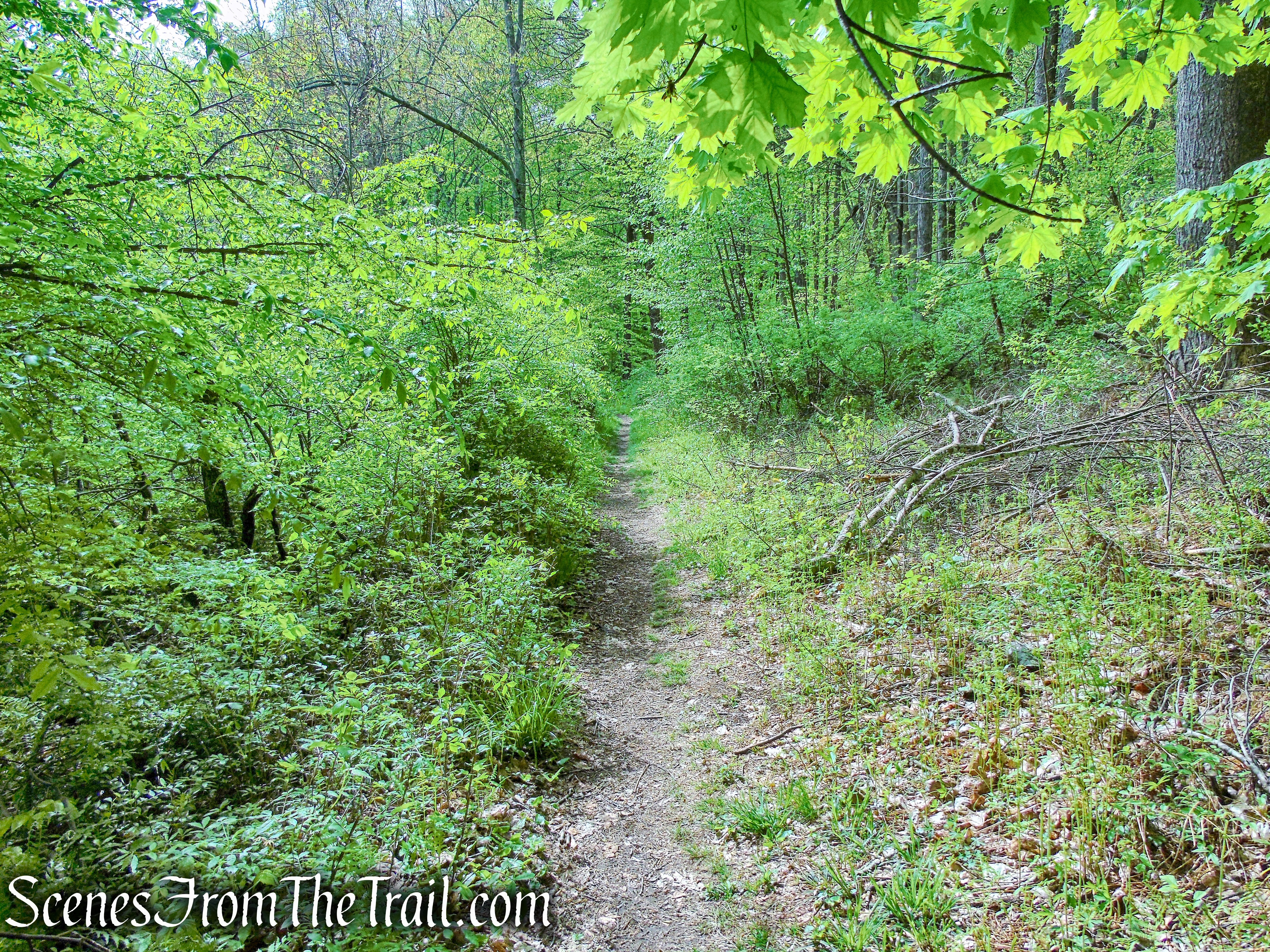
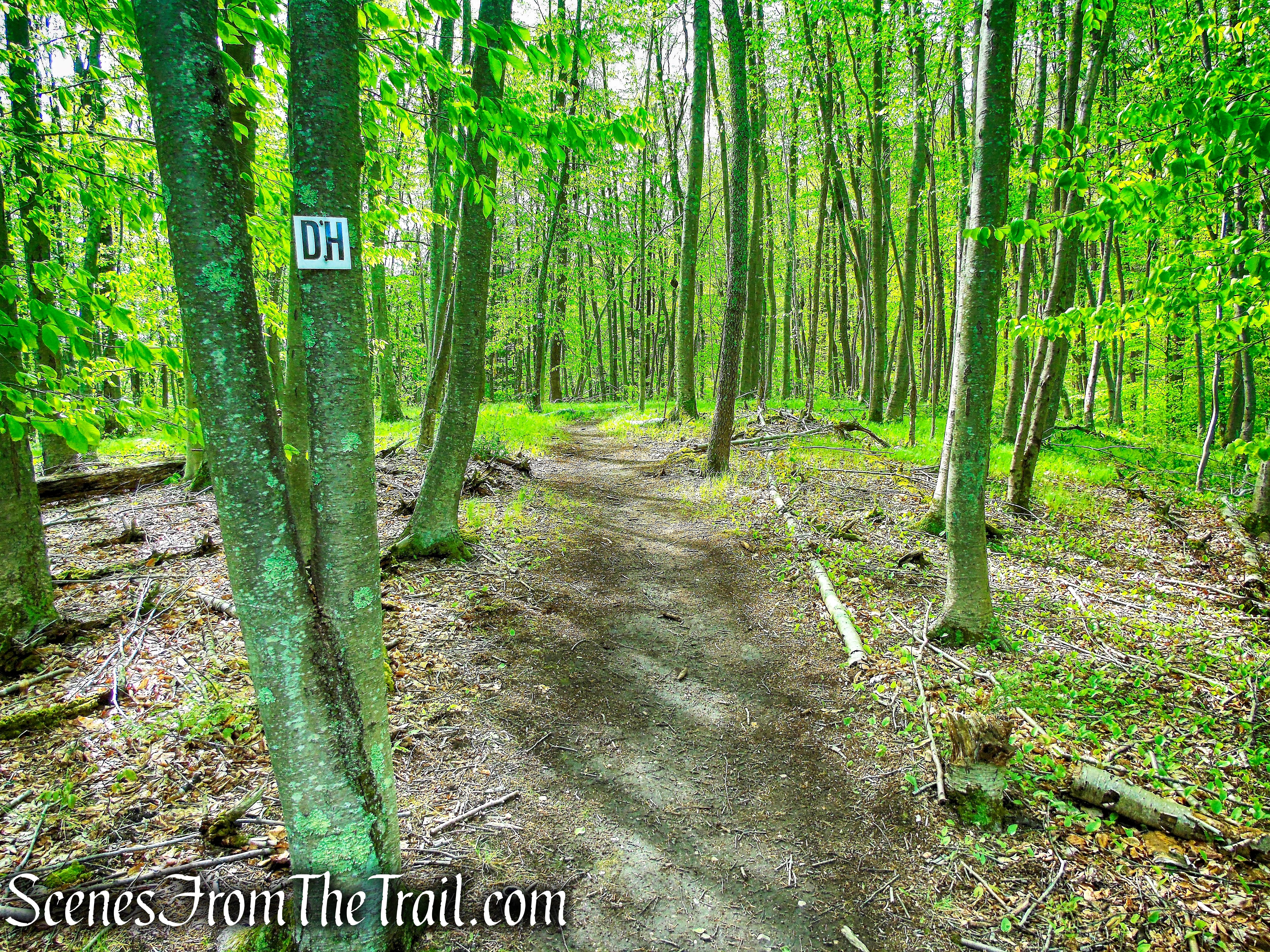
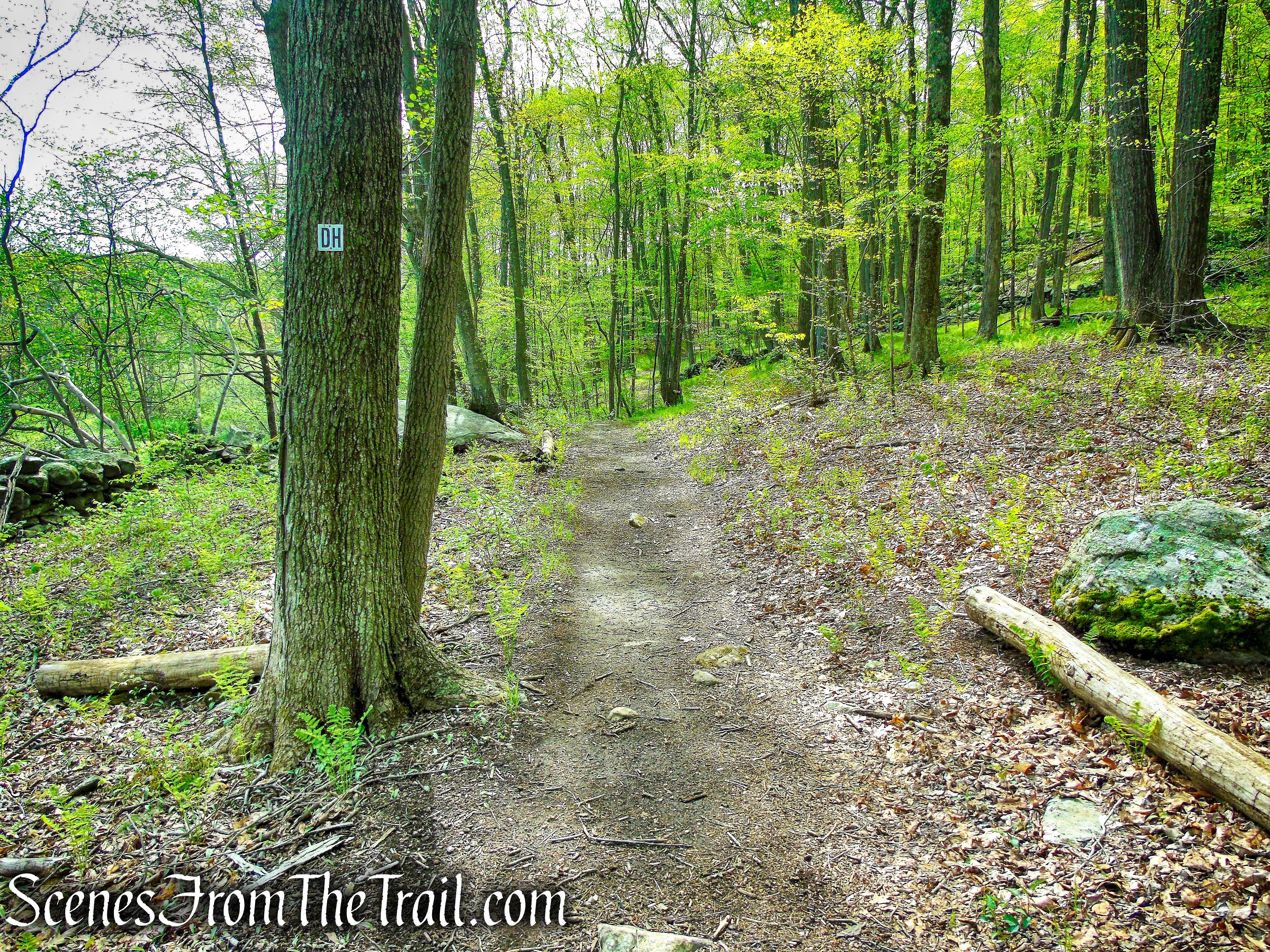
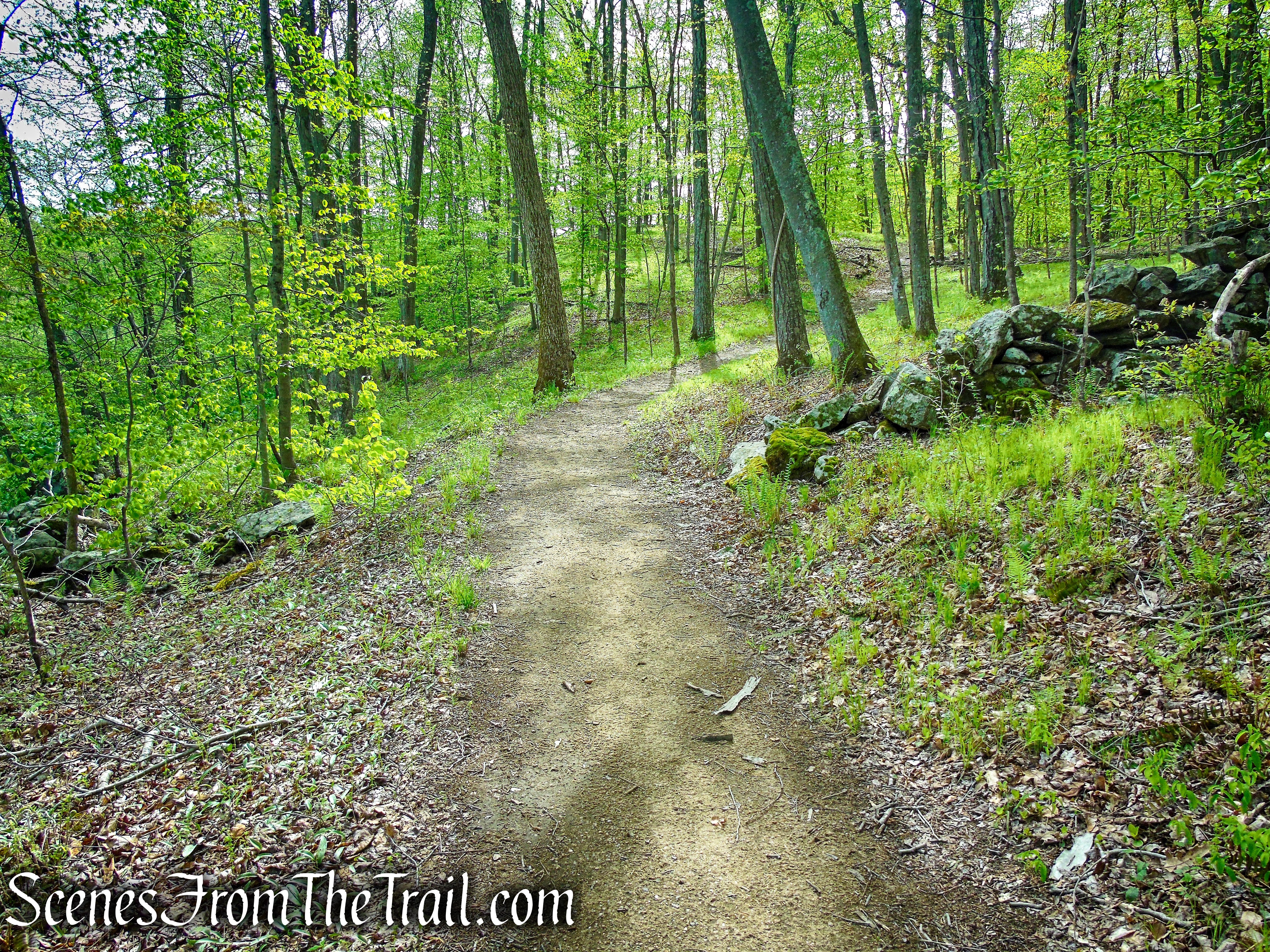
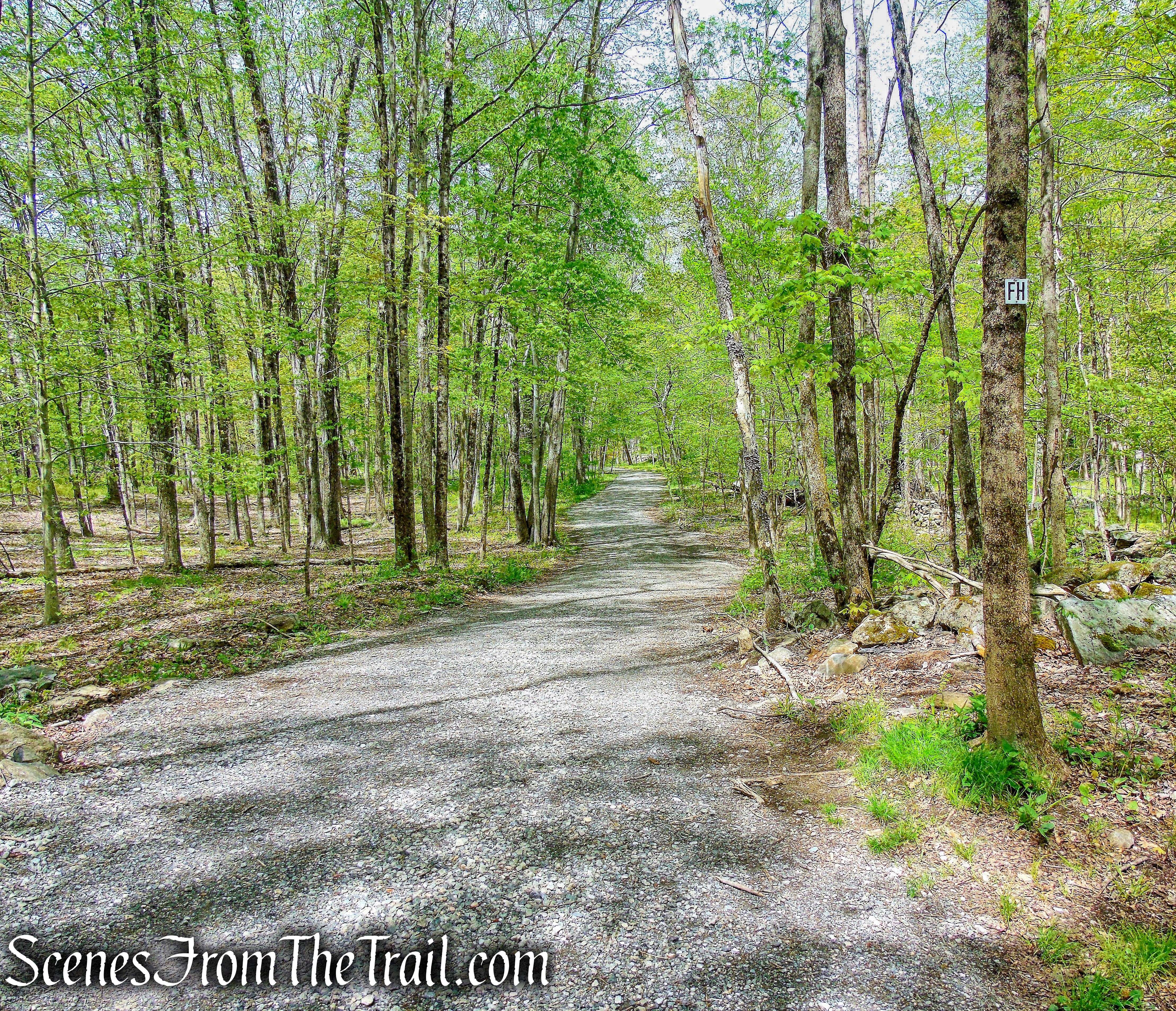
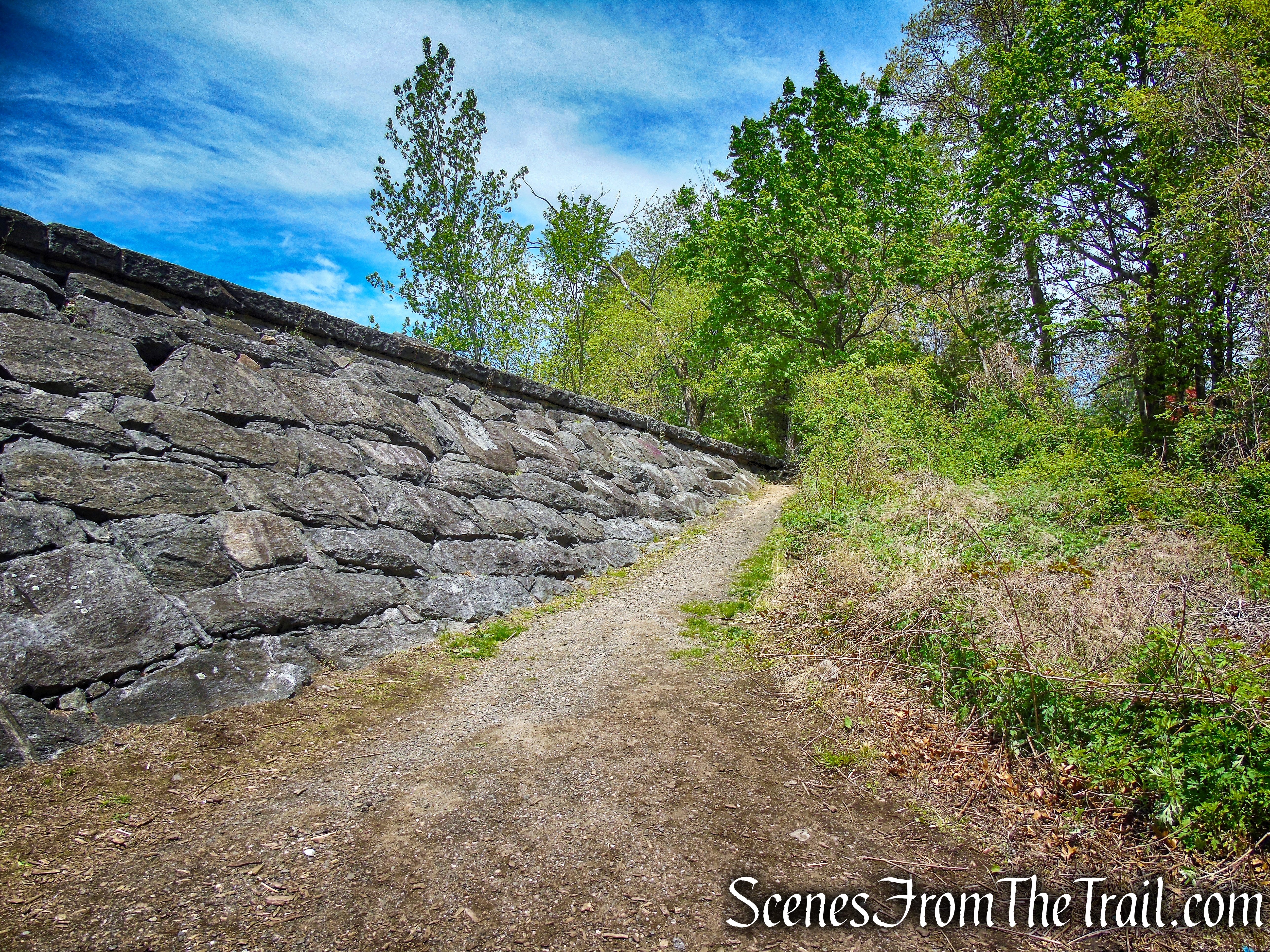
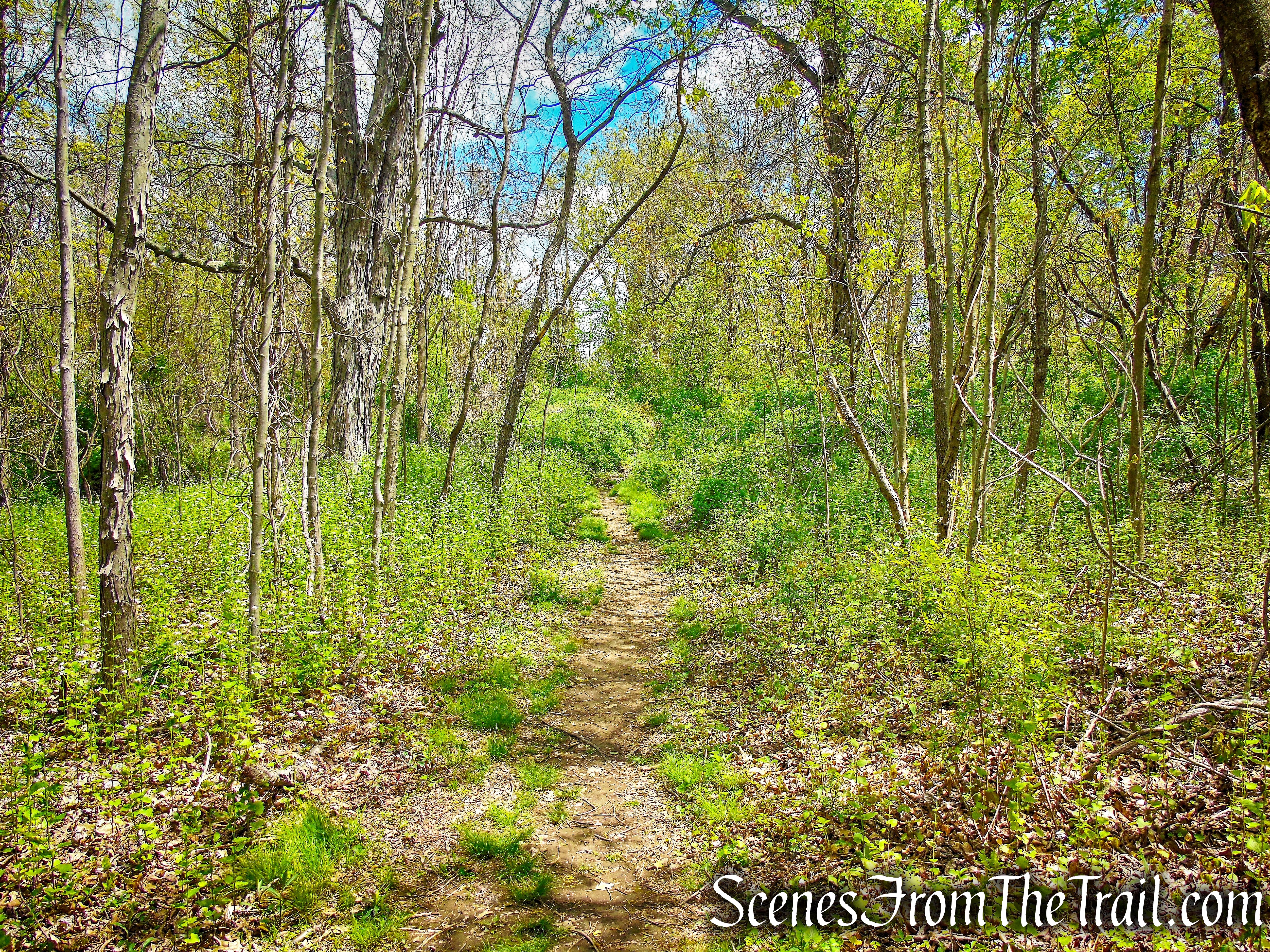
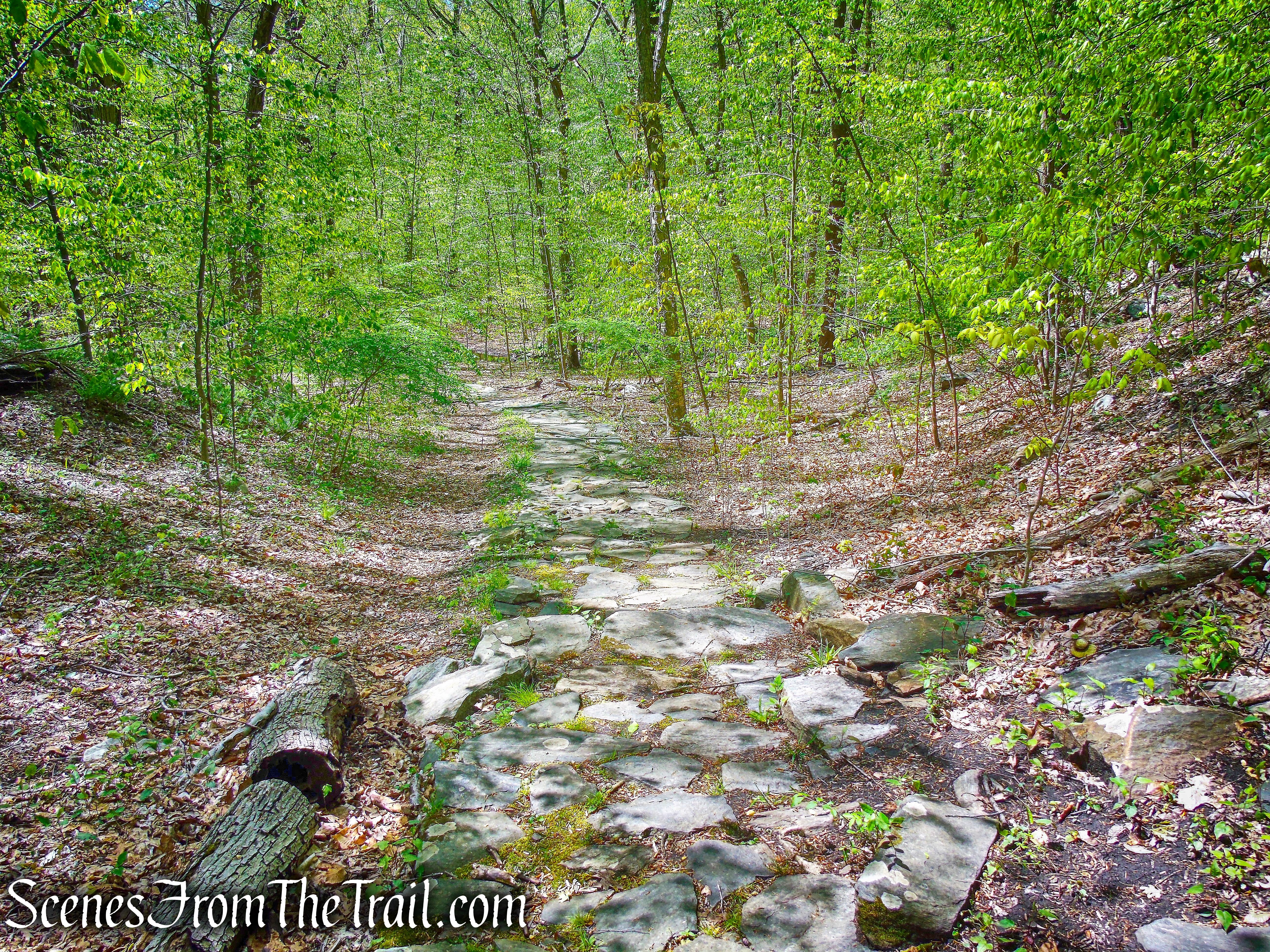
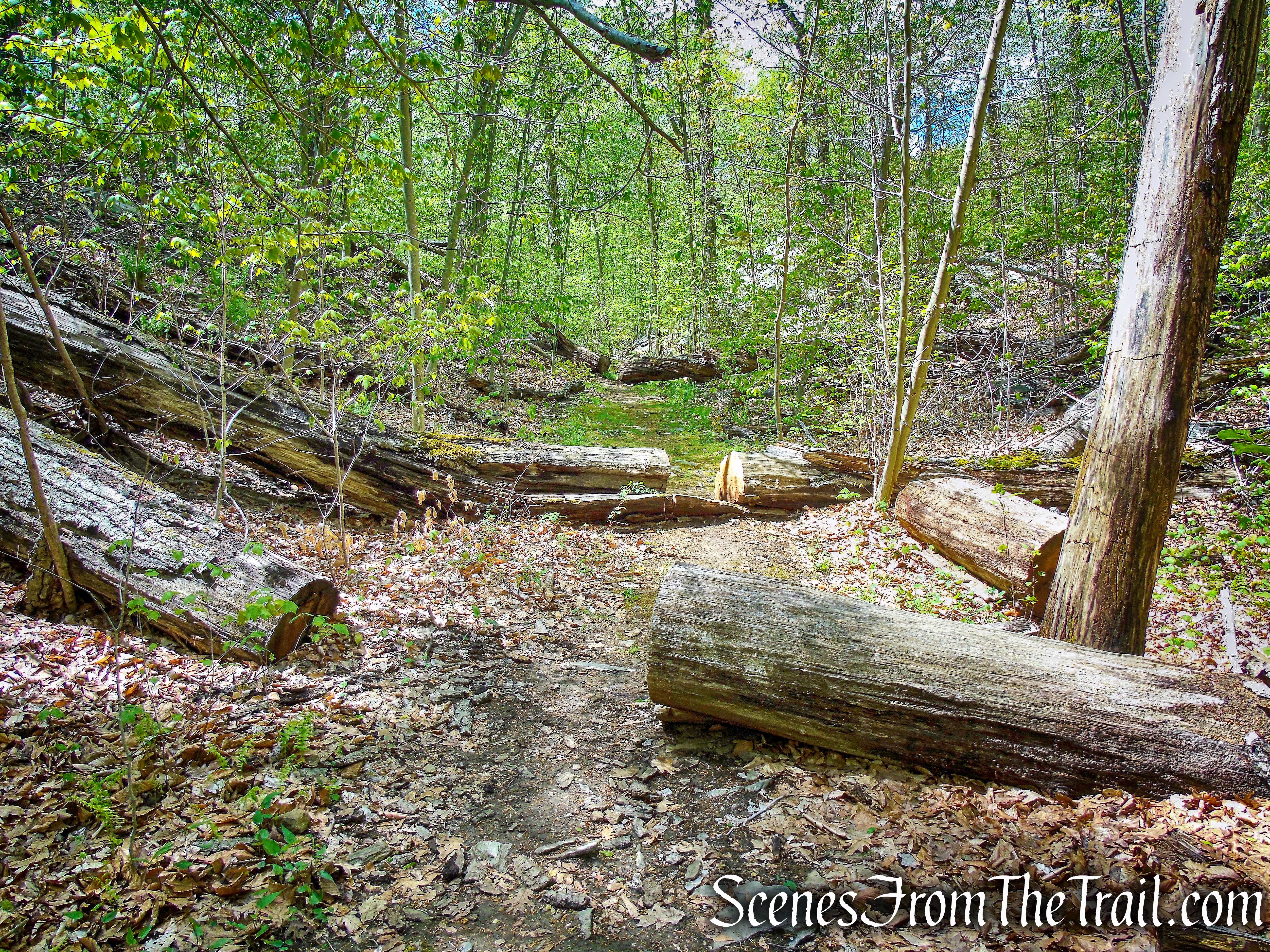
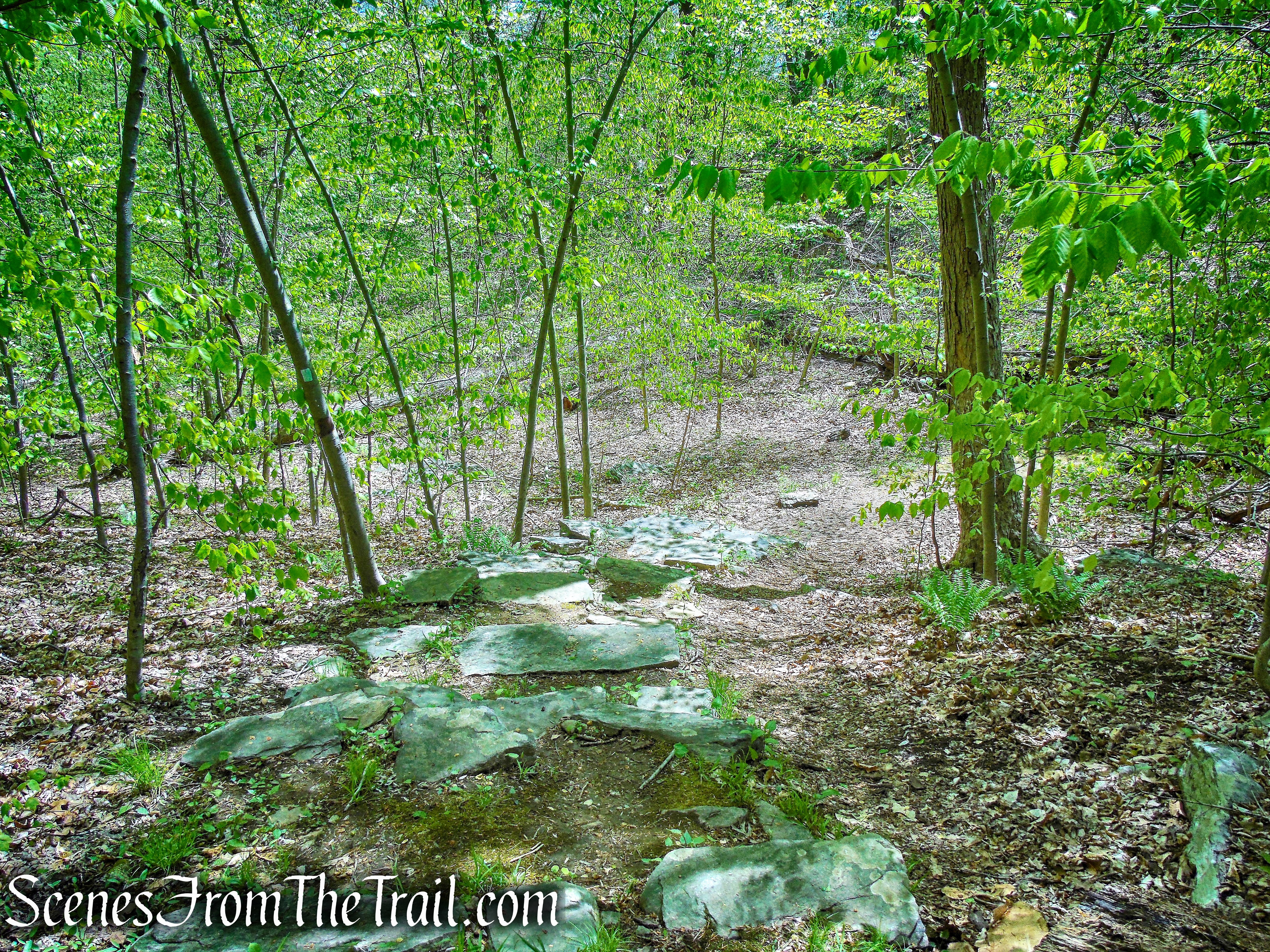
The trails at Putnam Memorial State Park are mostly gravel roads which served as the camp roads during the encampment. These roads are an Interpretive Trail, with signs posted at all of the points of interest with historical information. There are unmarked footpaths, as shown on the map, which can be walked as well. 
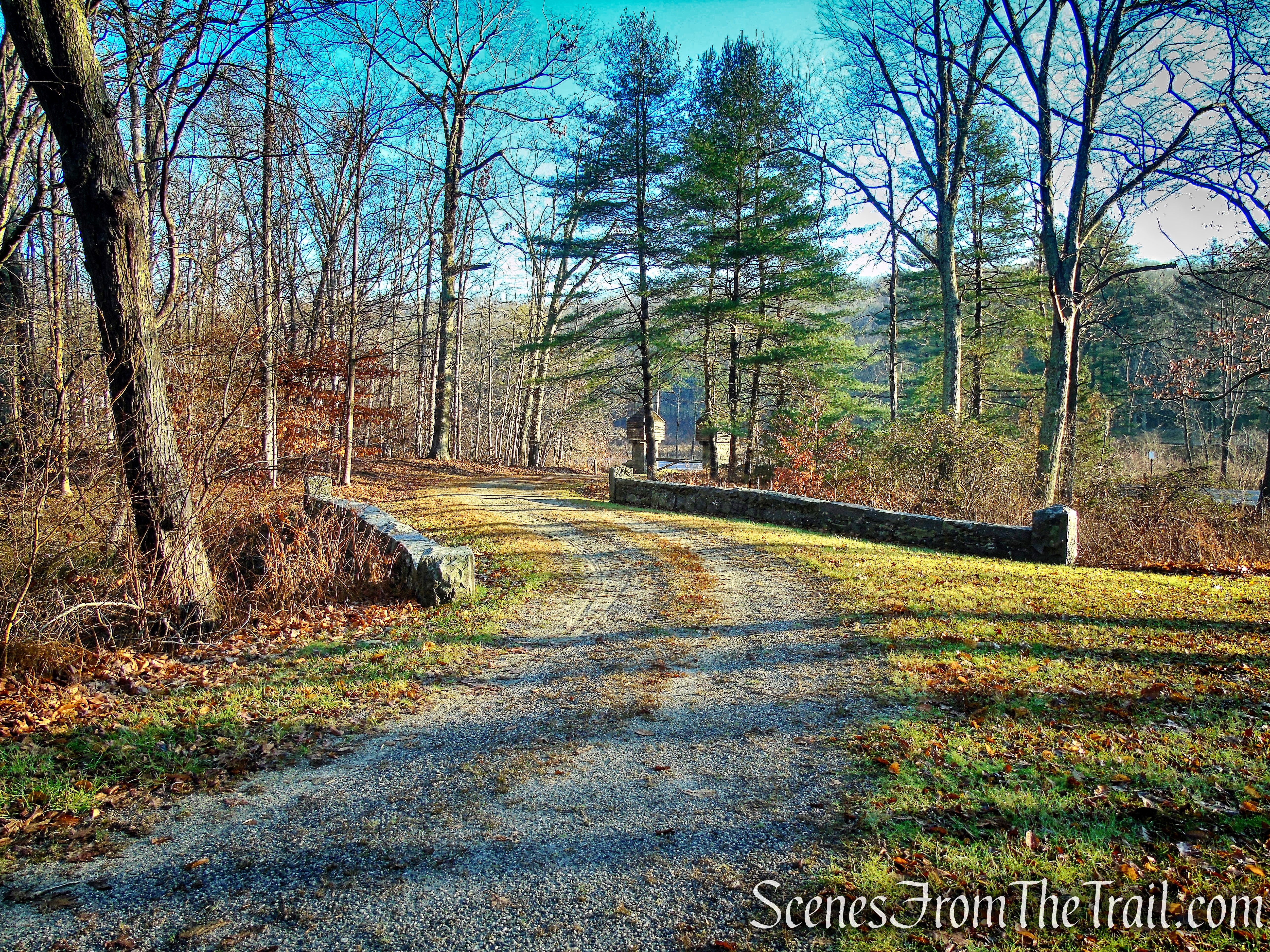
gravel road - Putnam Memorial State Park

gravel road – Putnam Memorial State Park

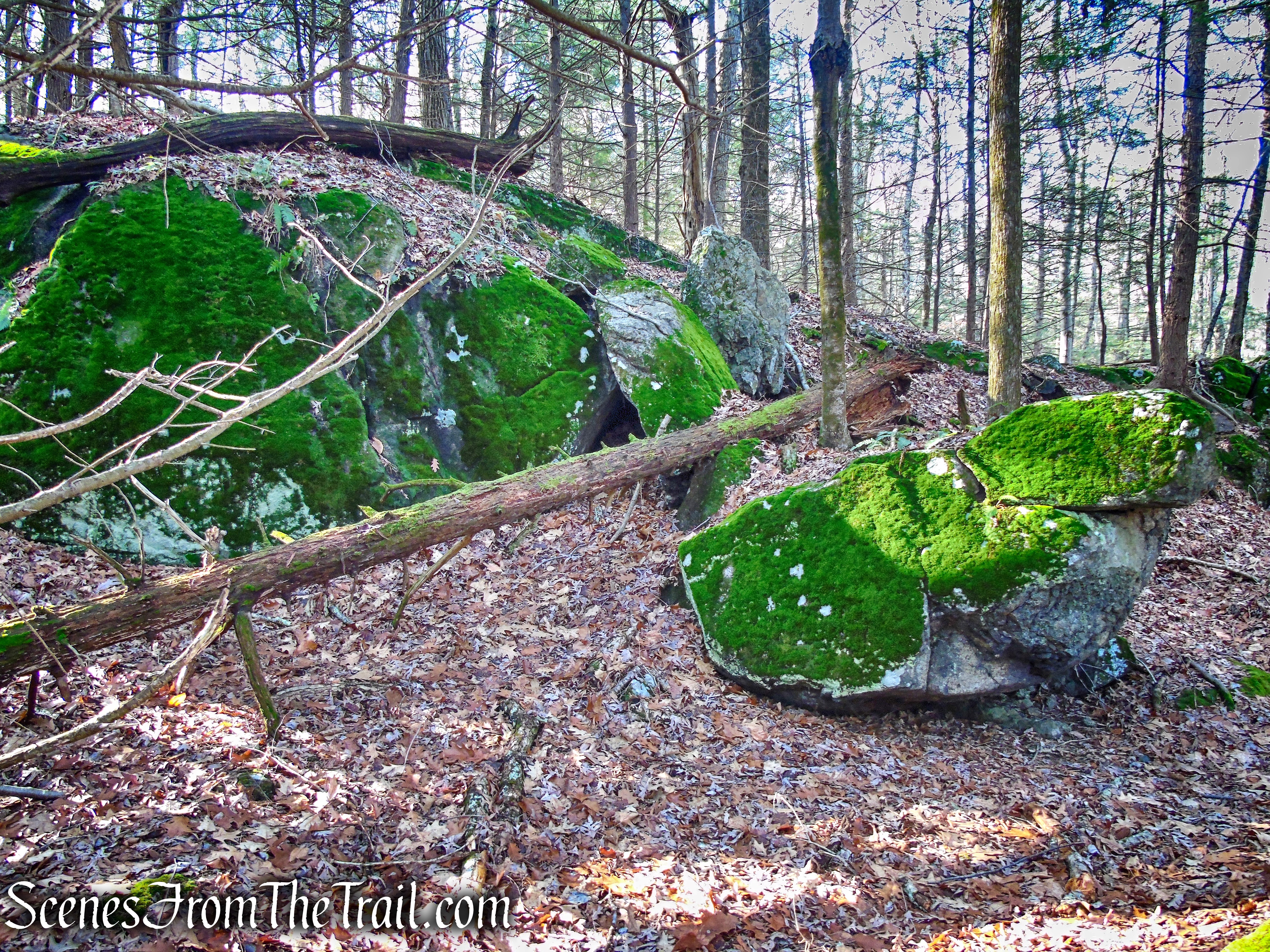
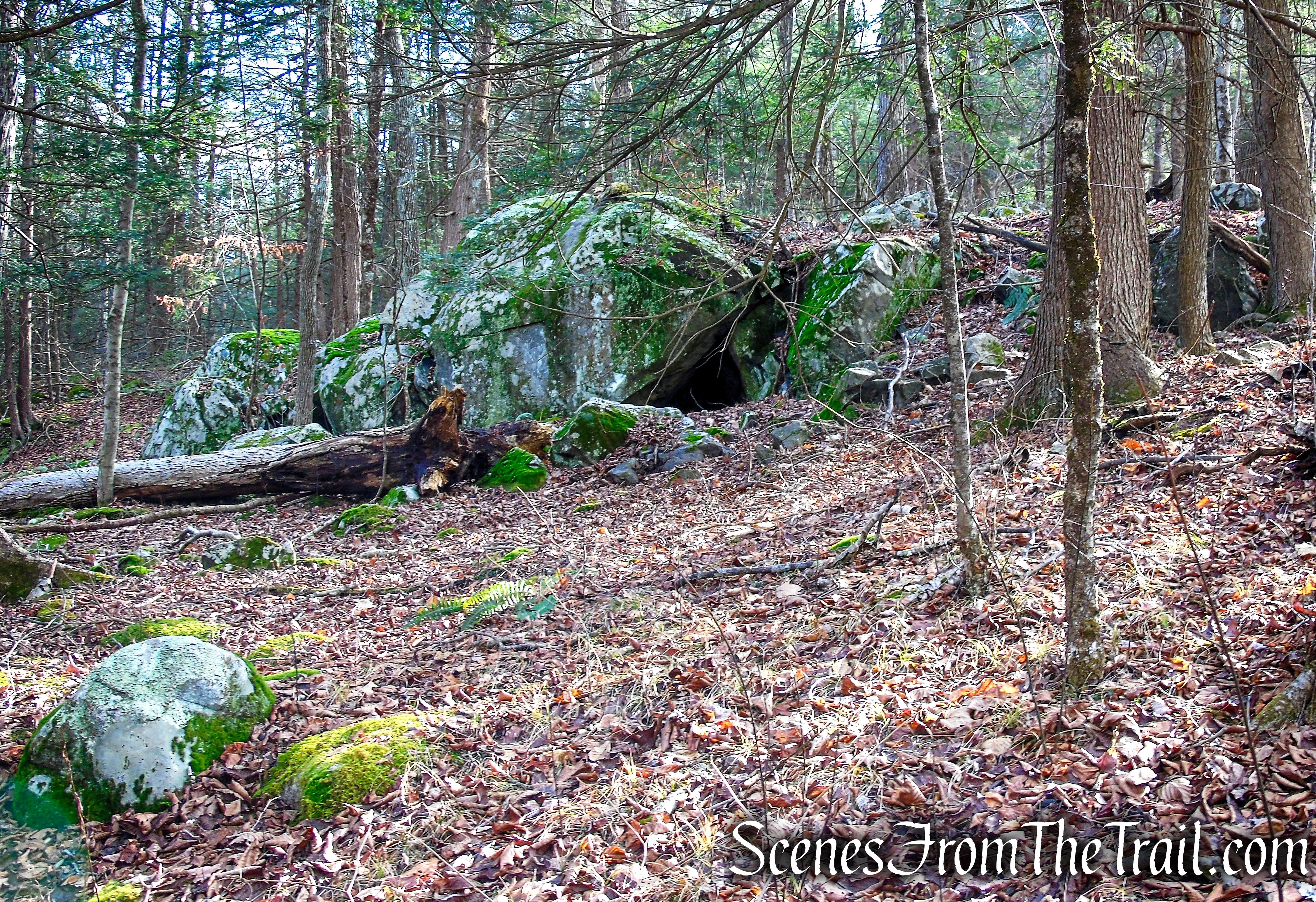
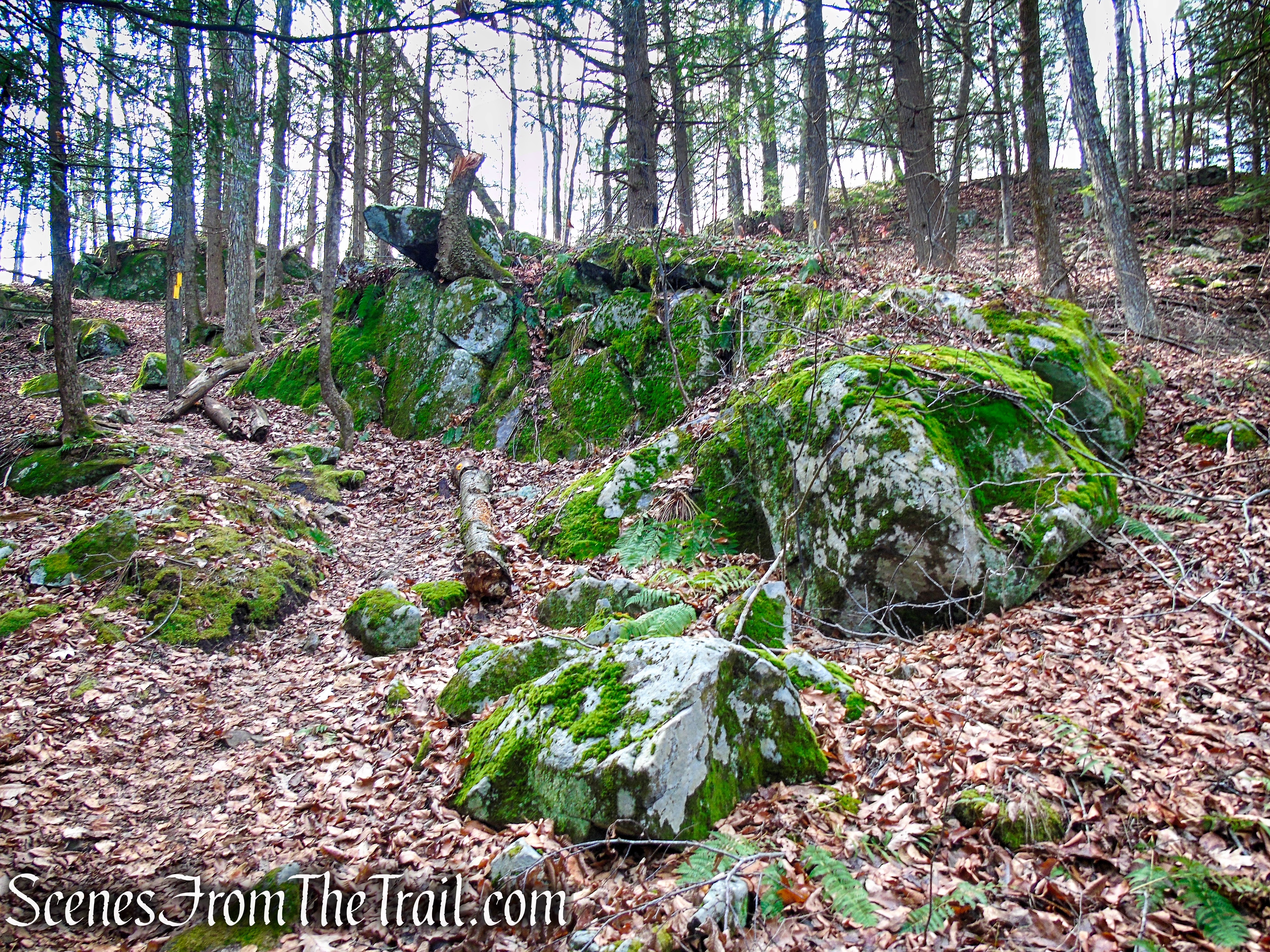
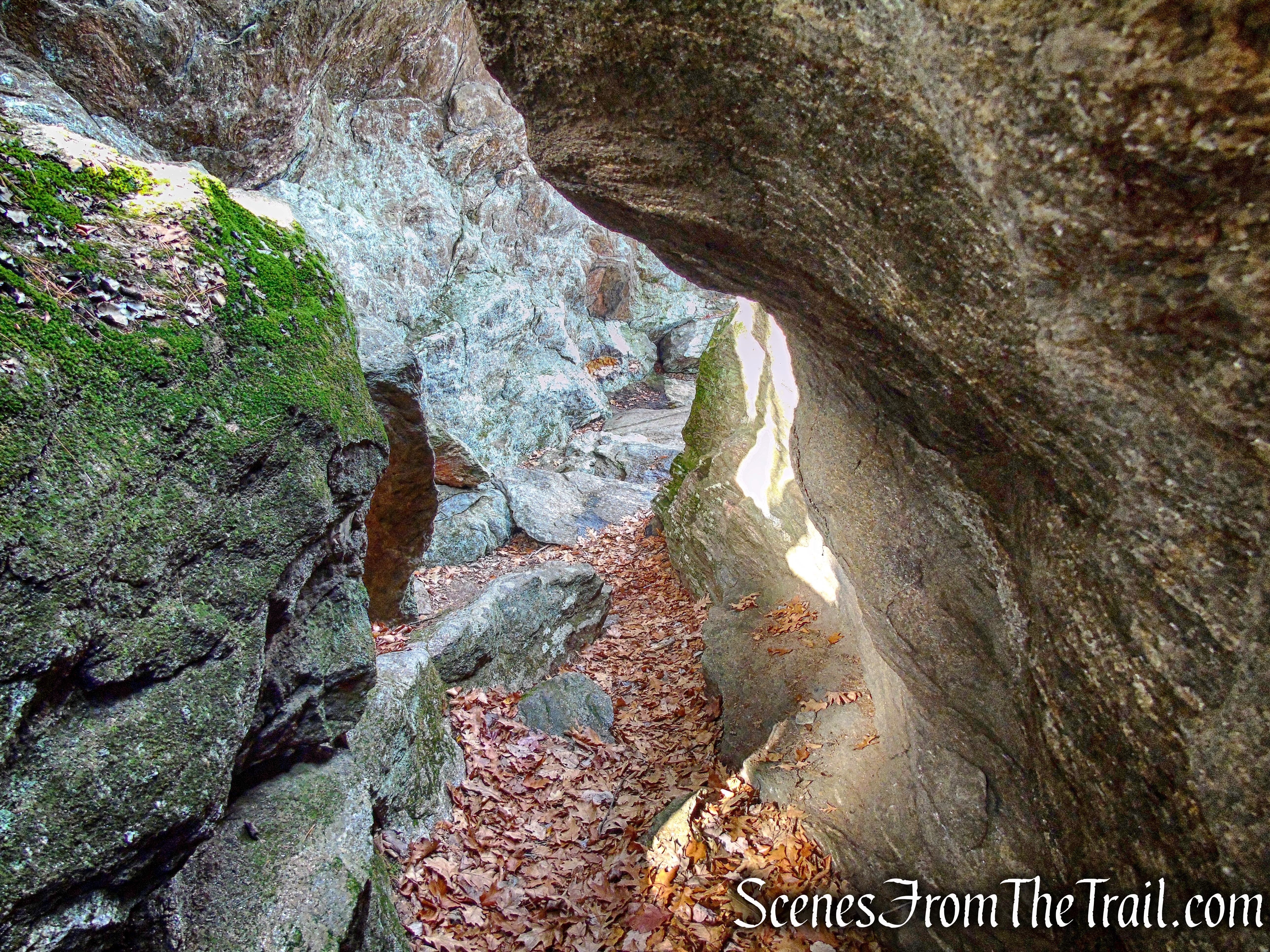
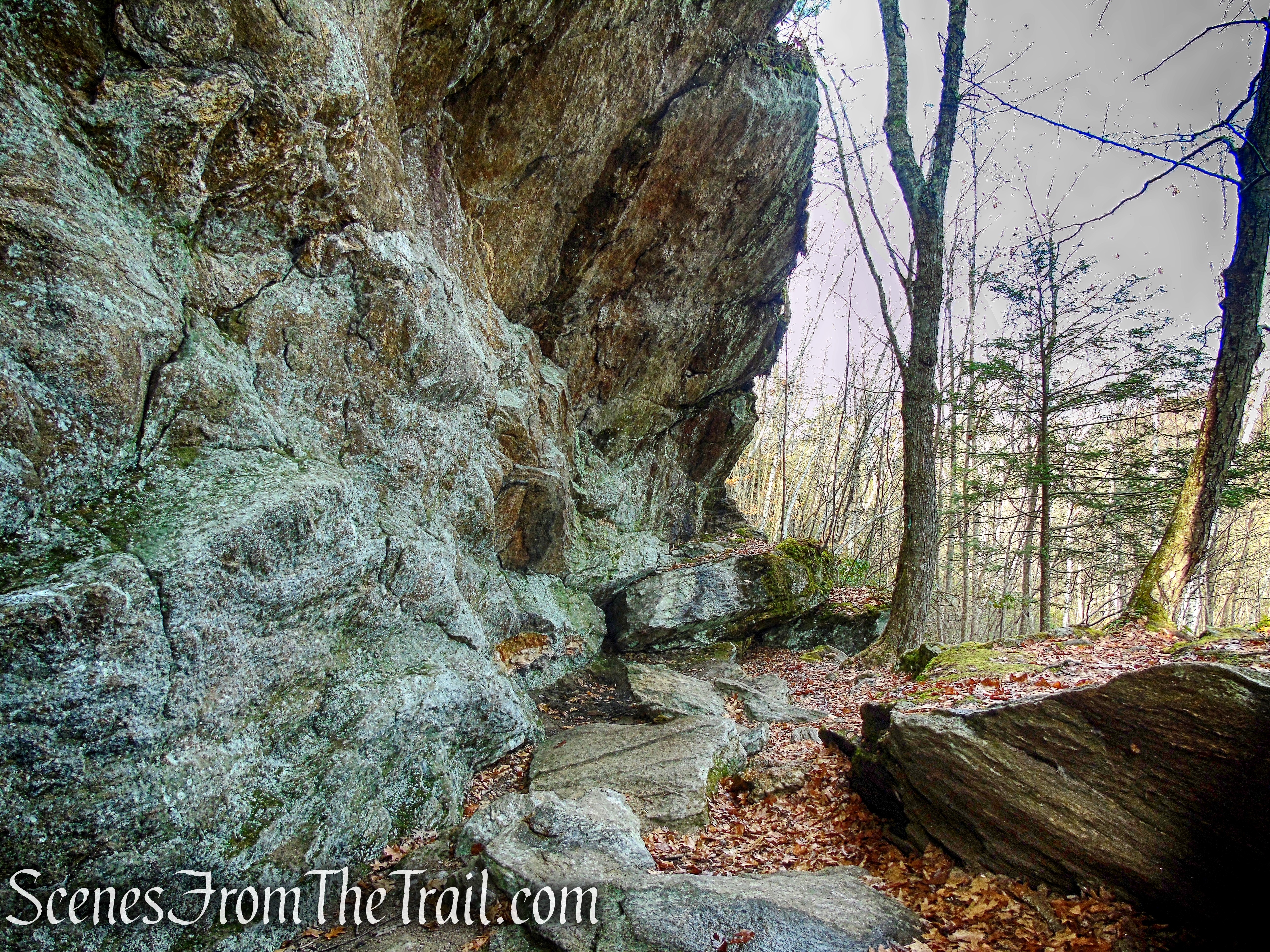
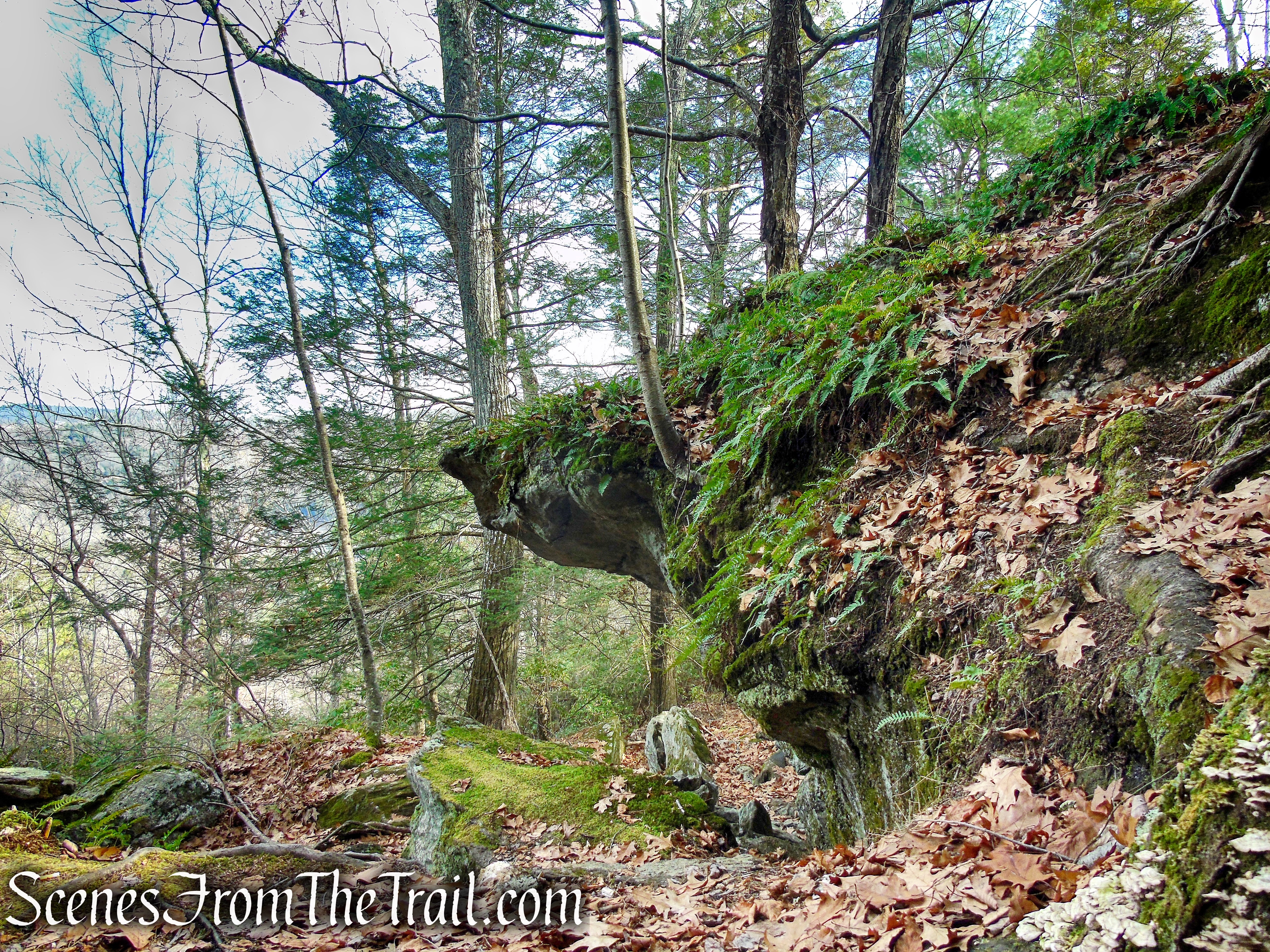
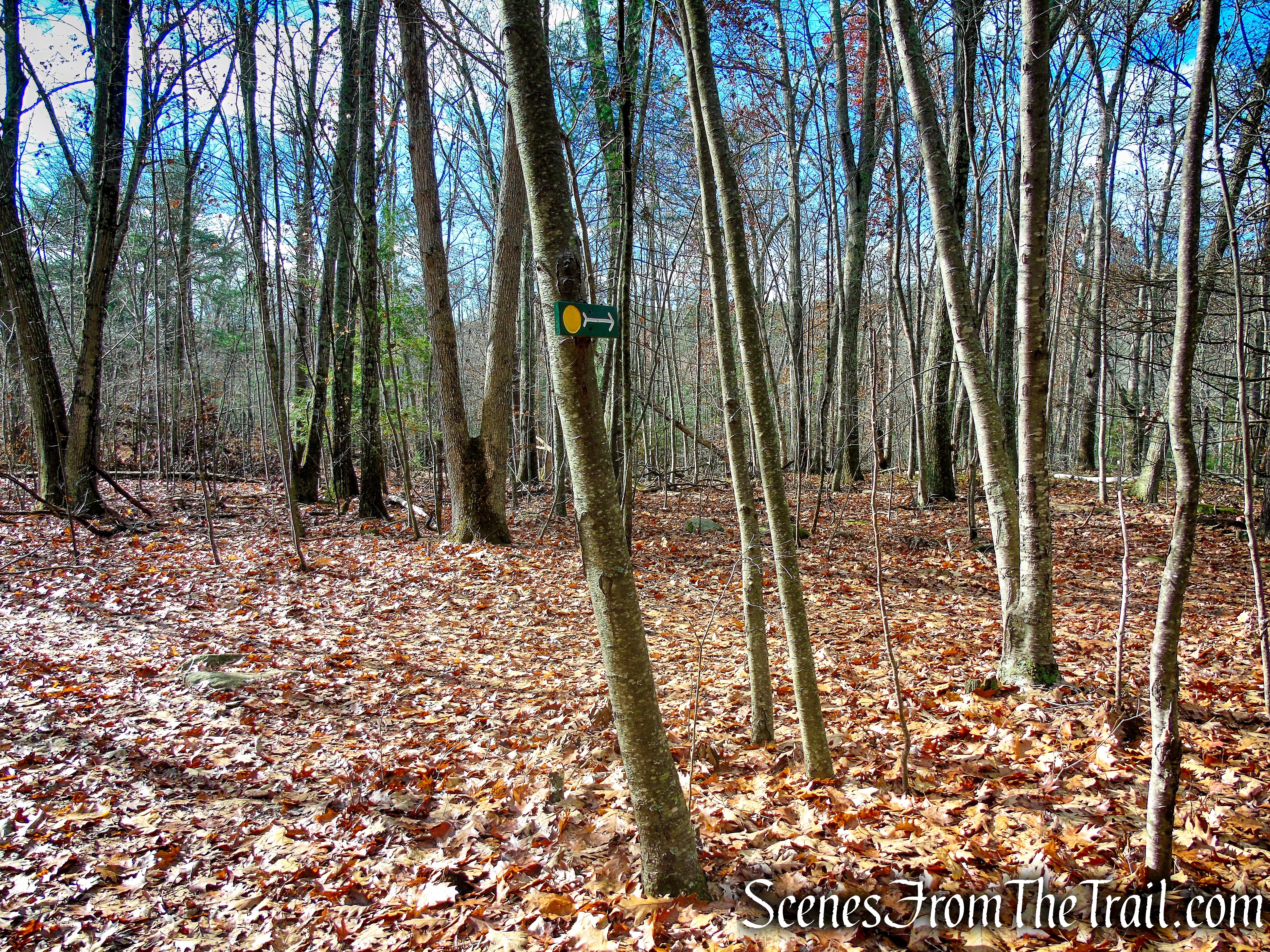
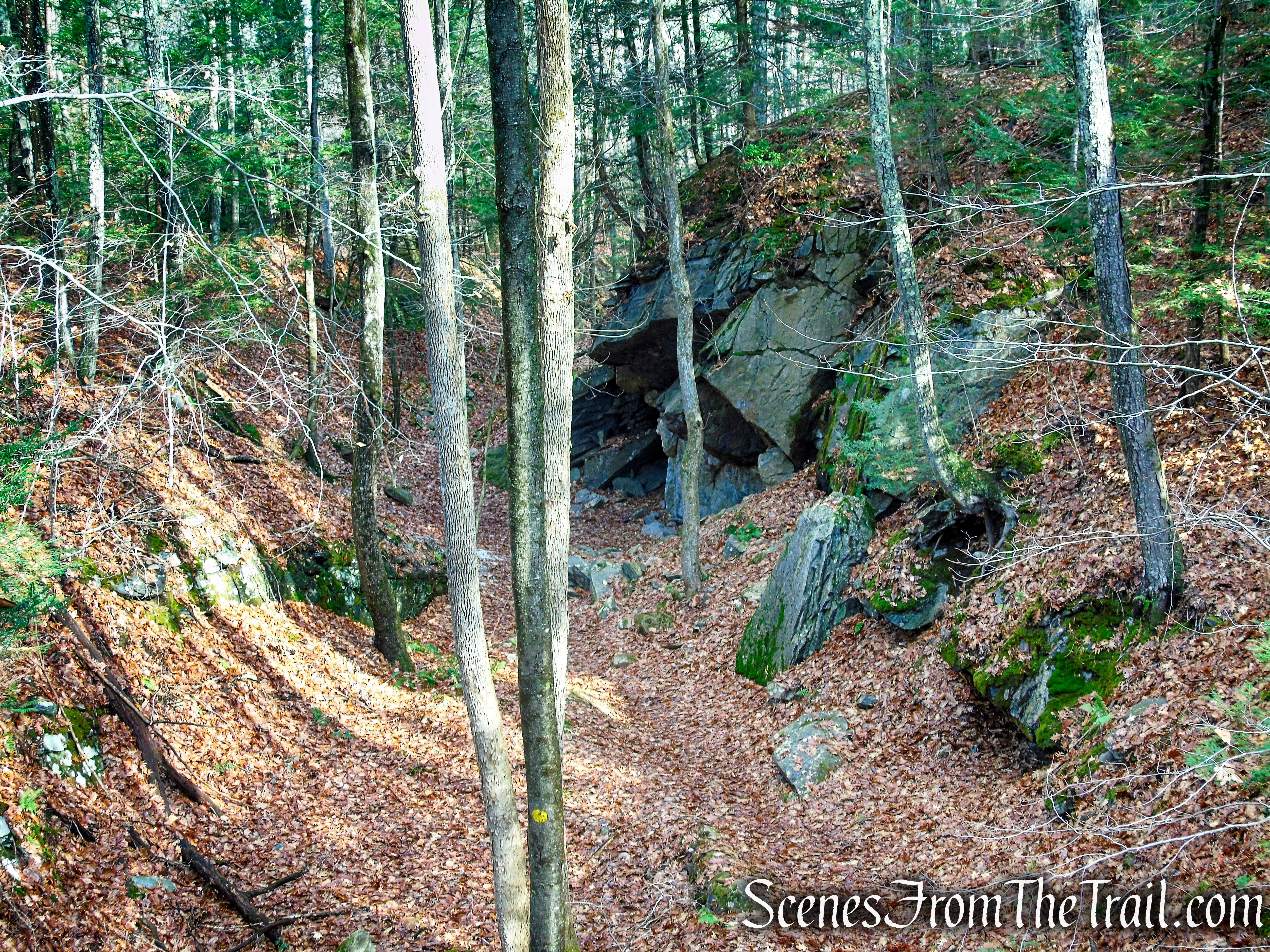
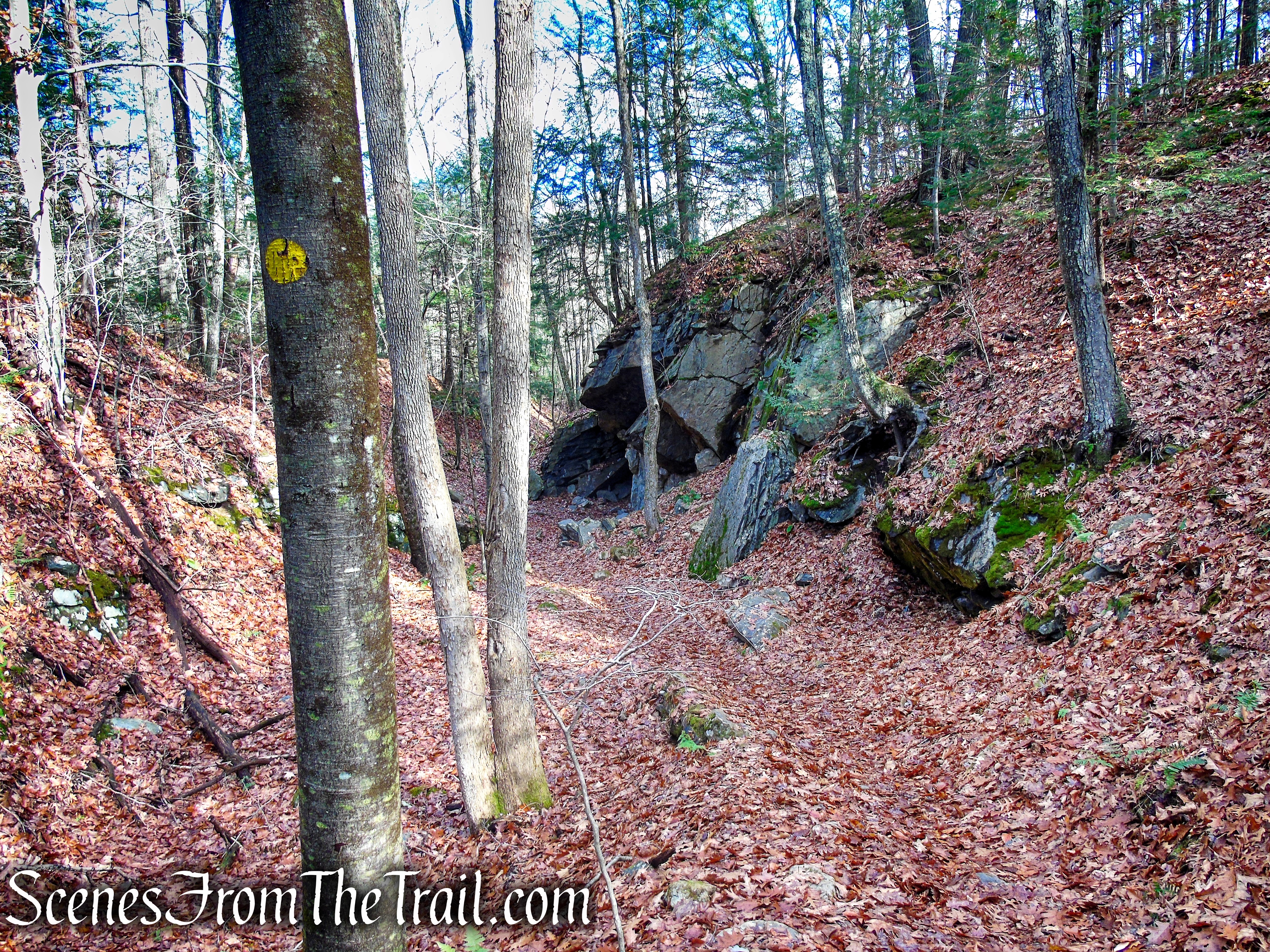
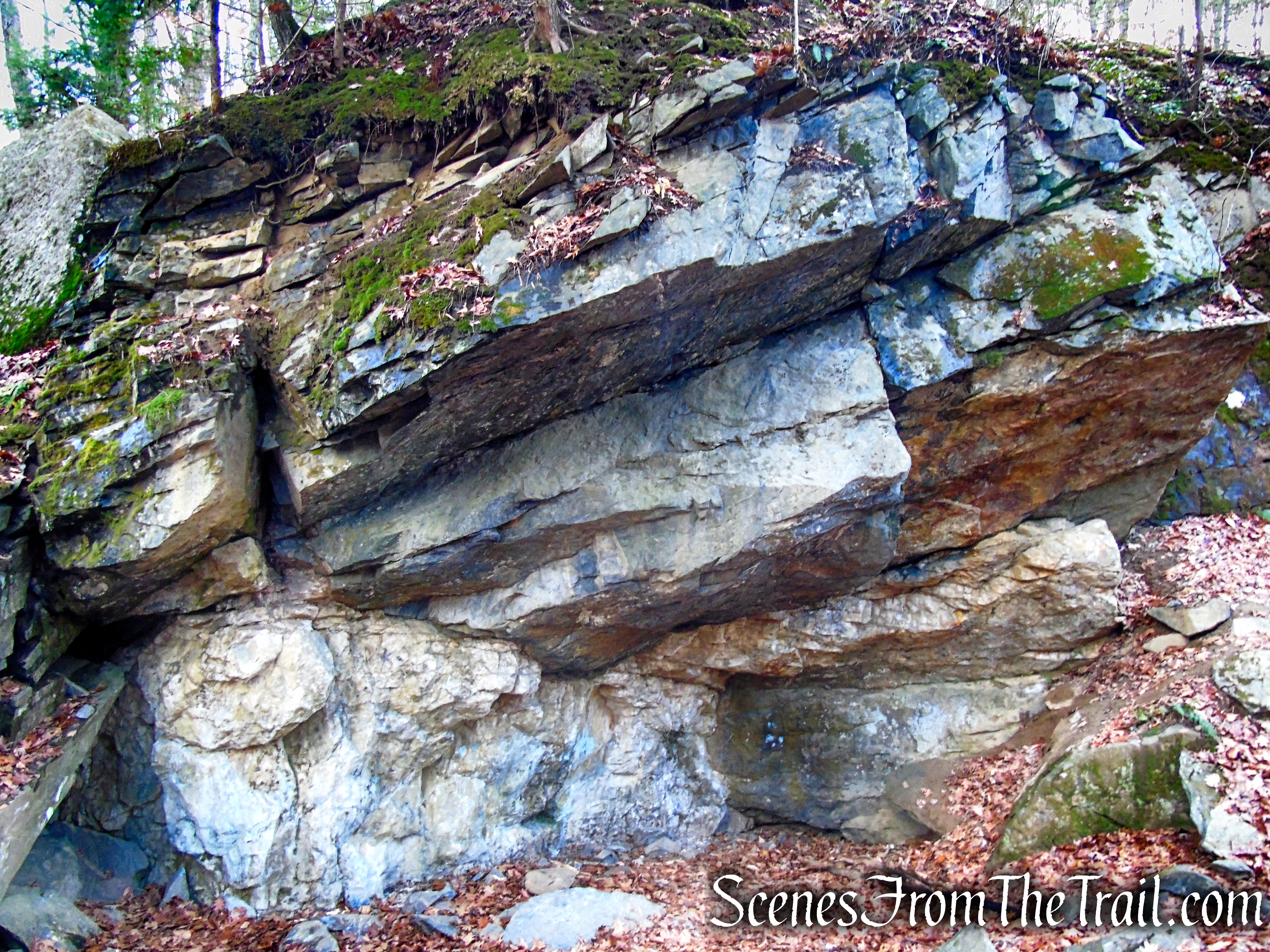
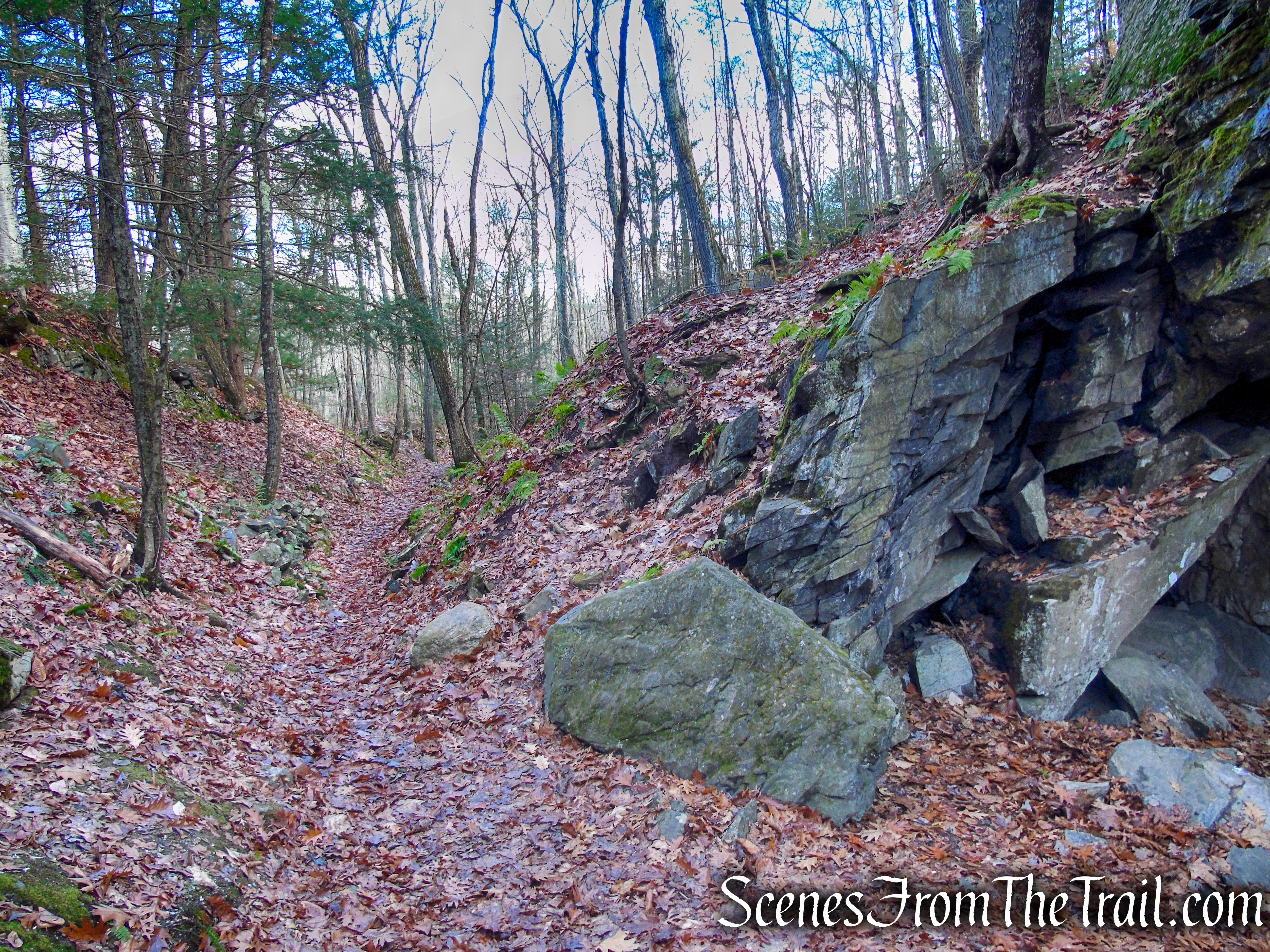
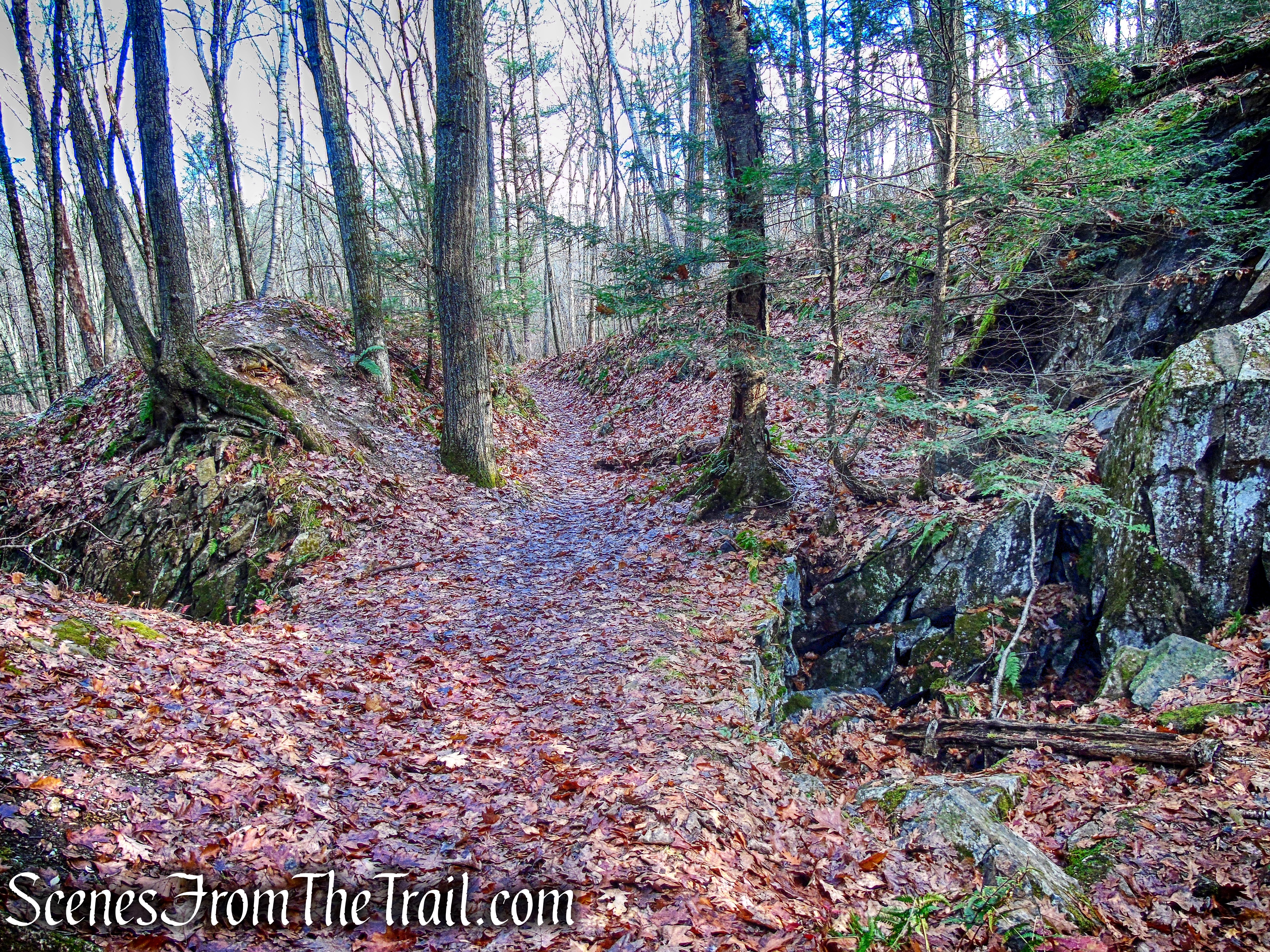
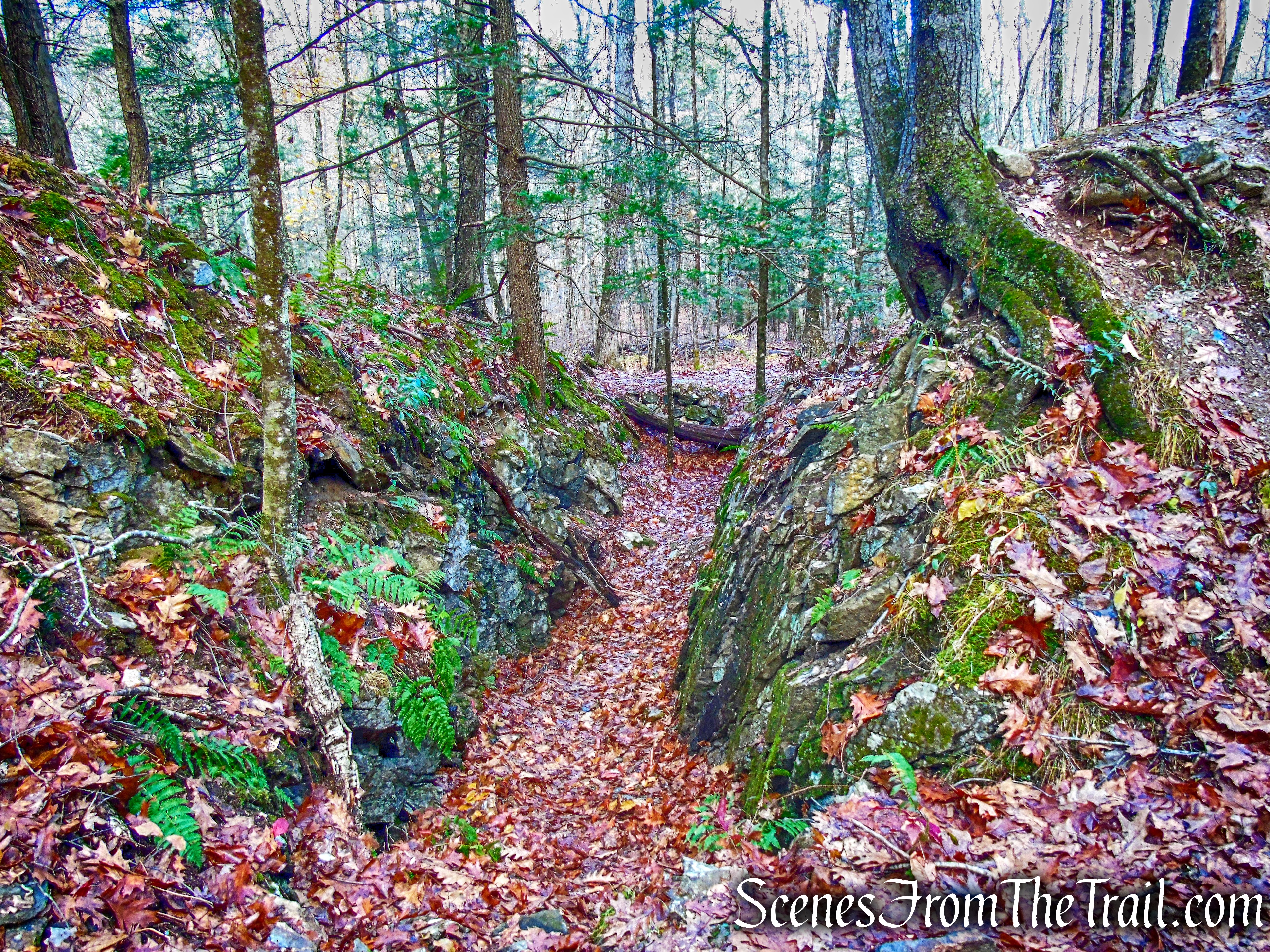
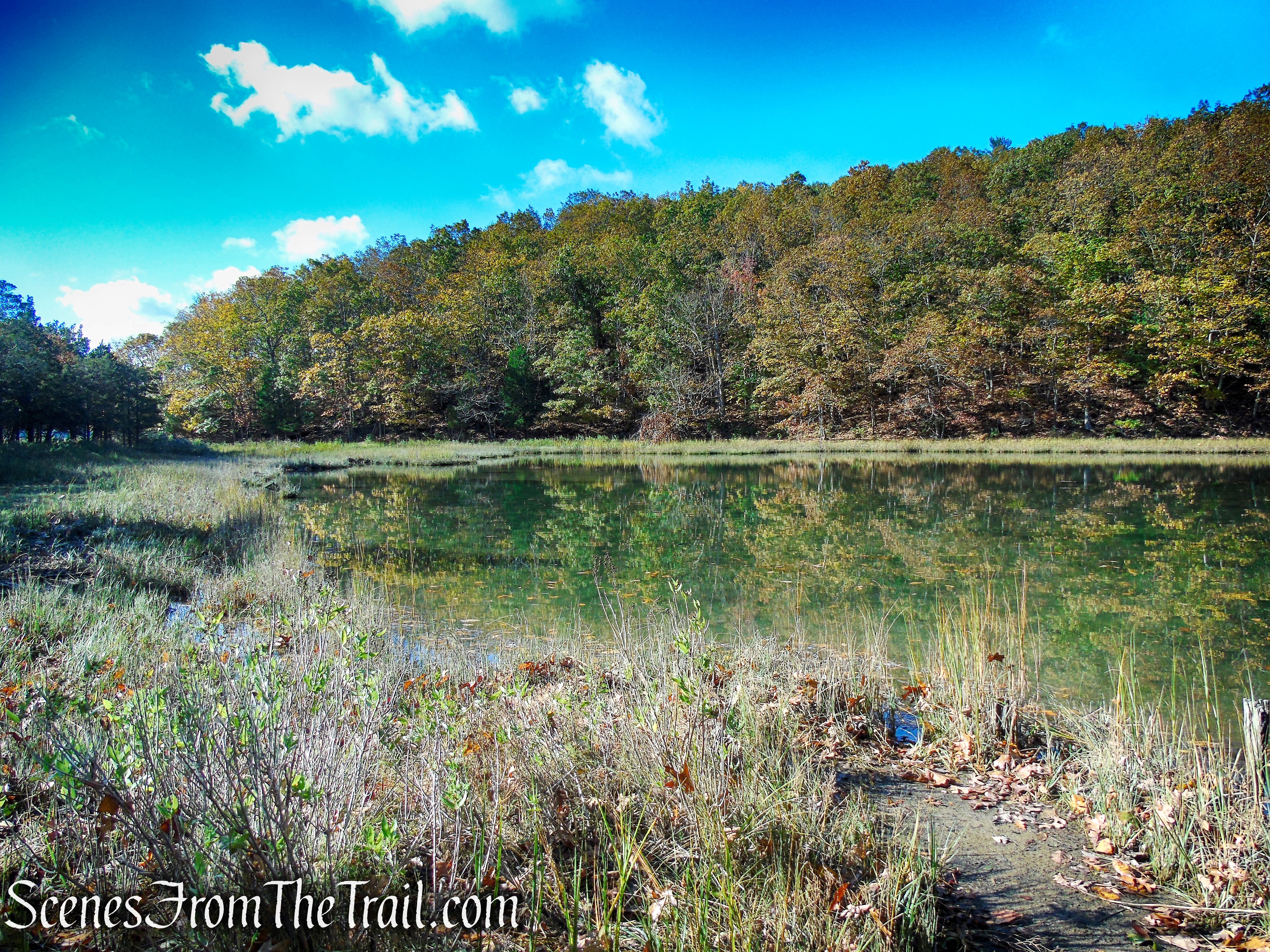
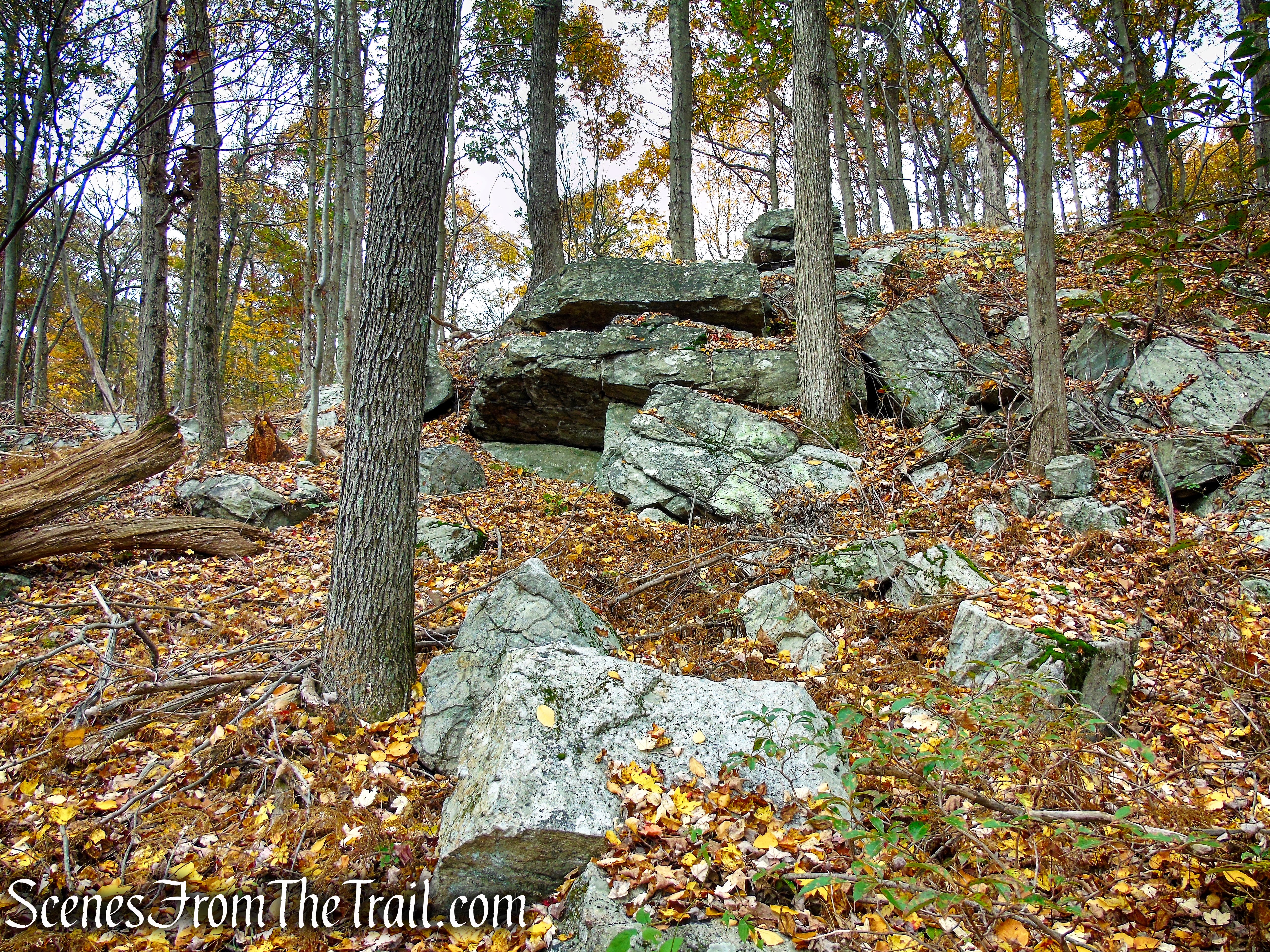
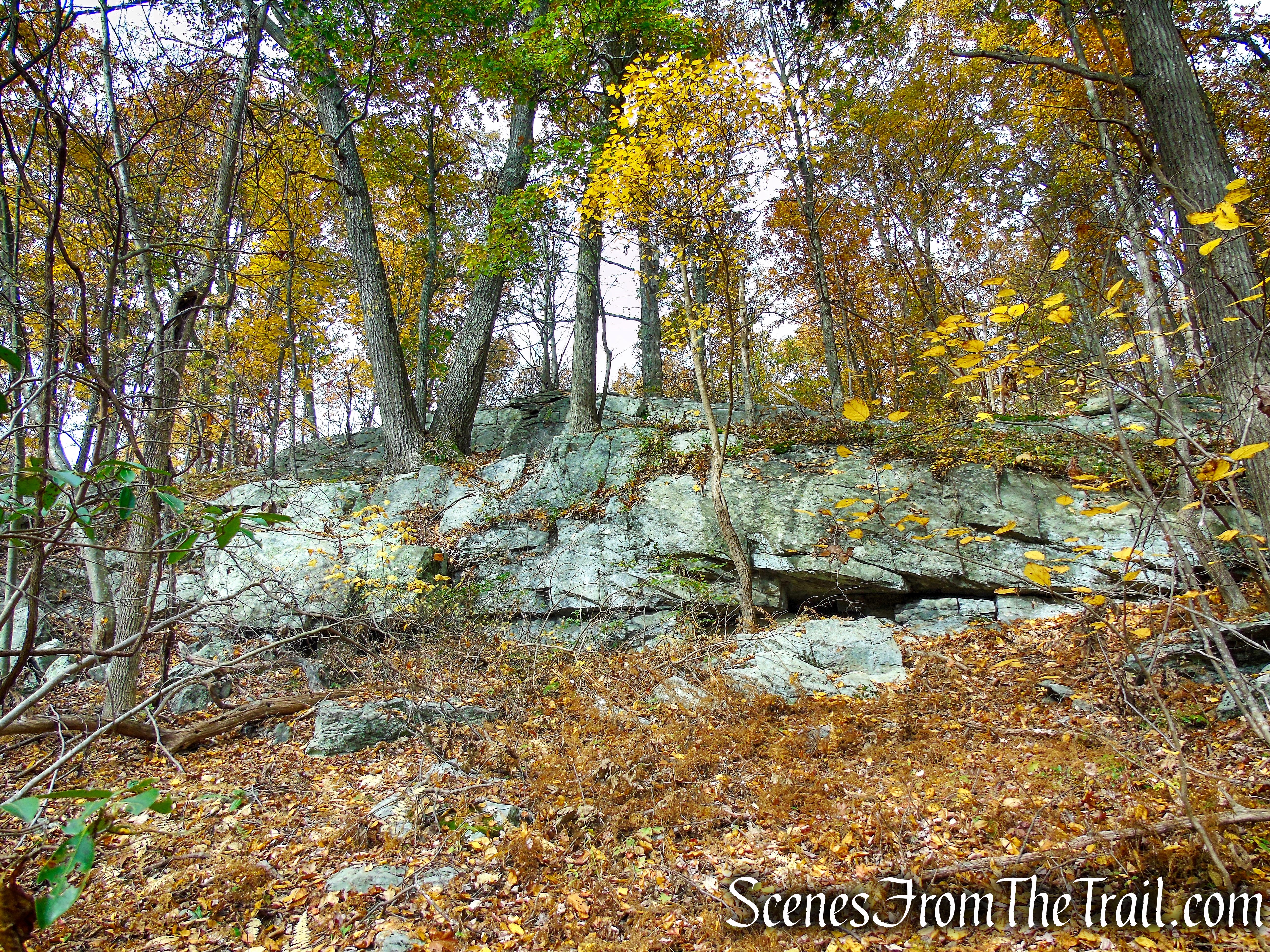
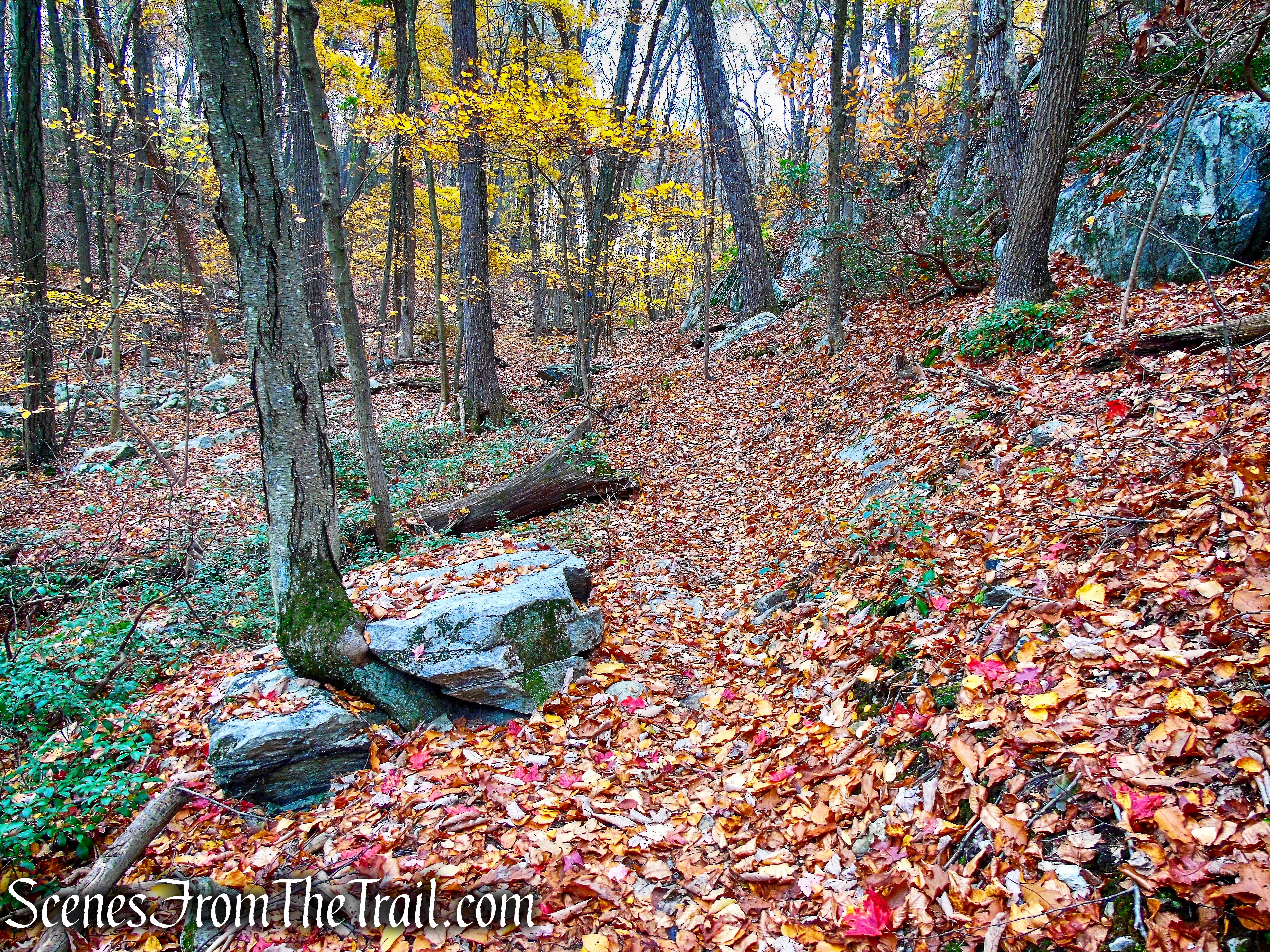
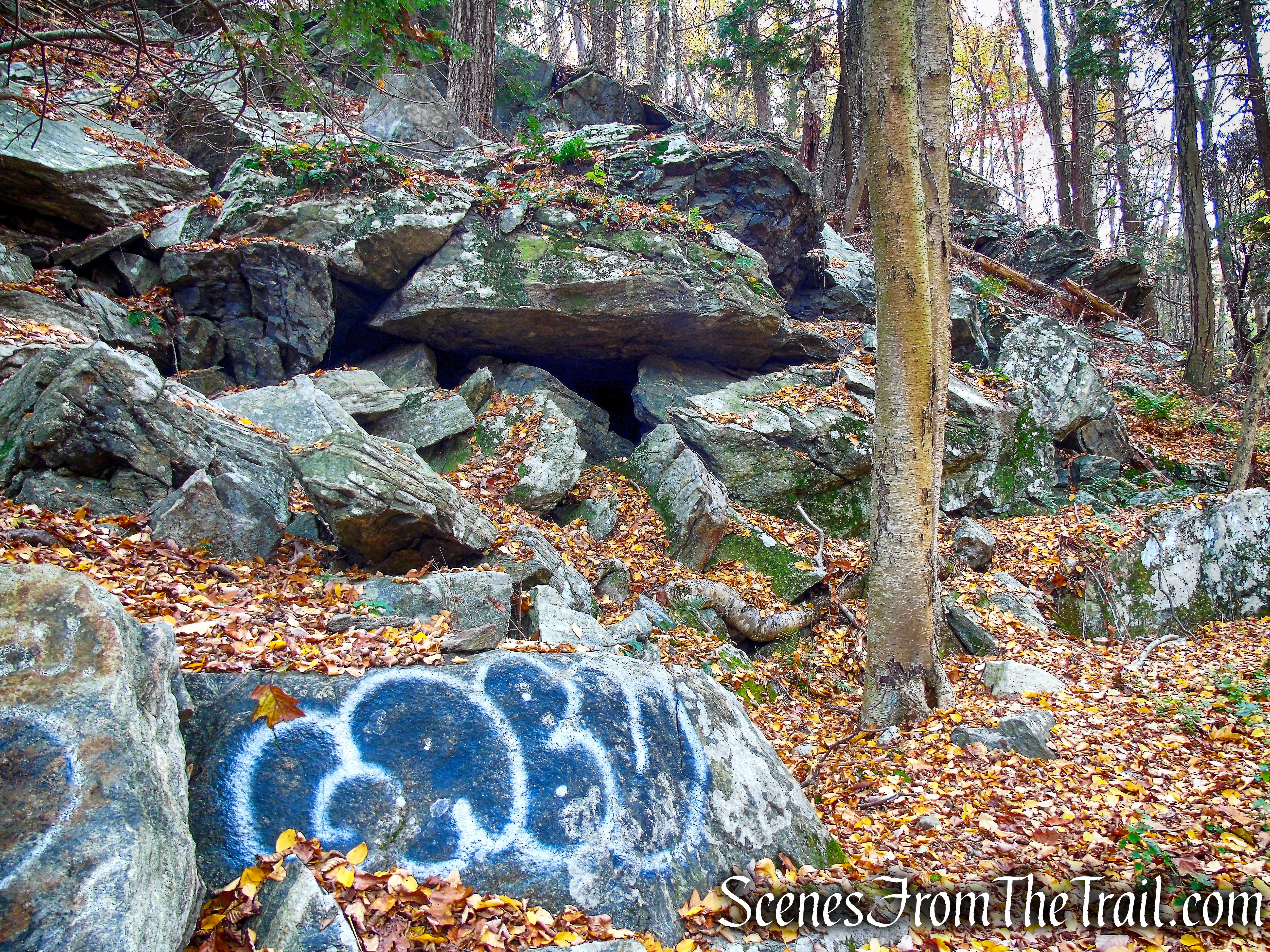
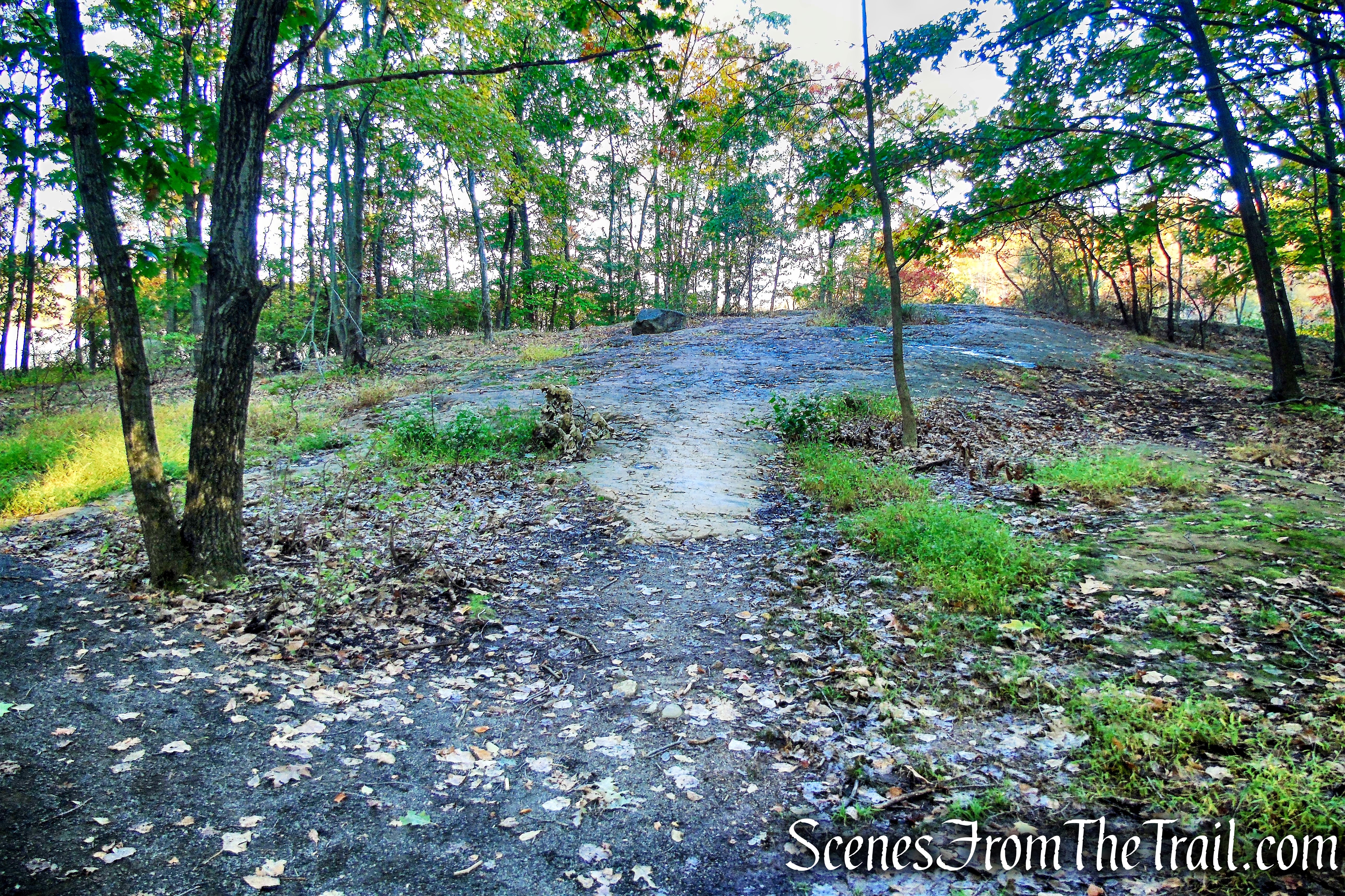
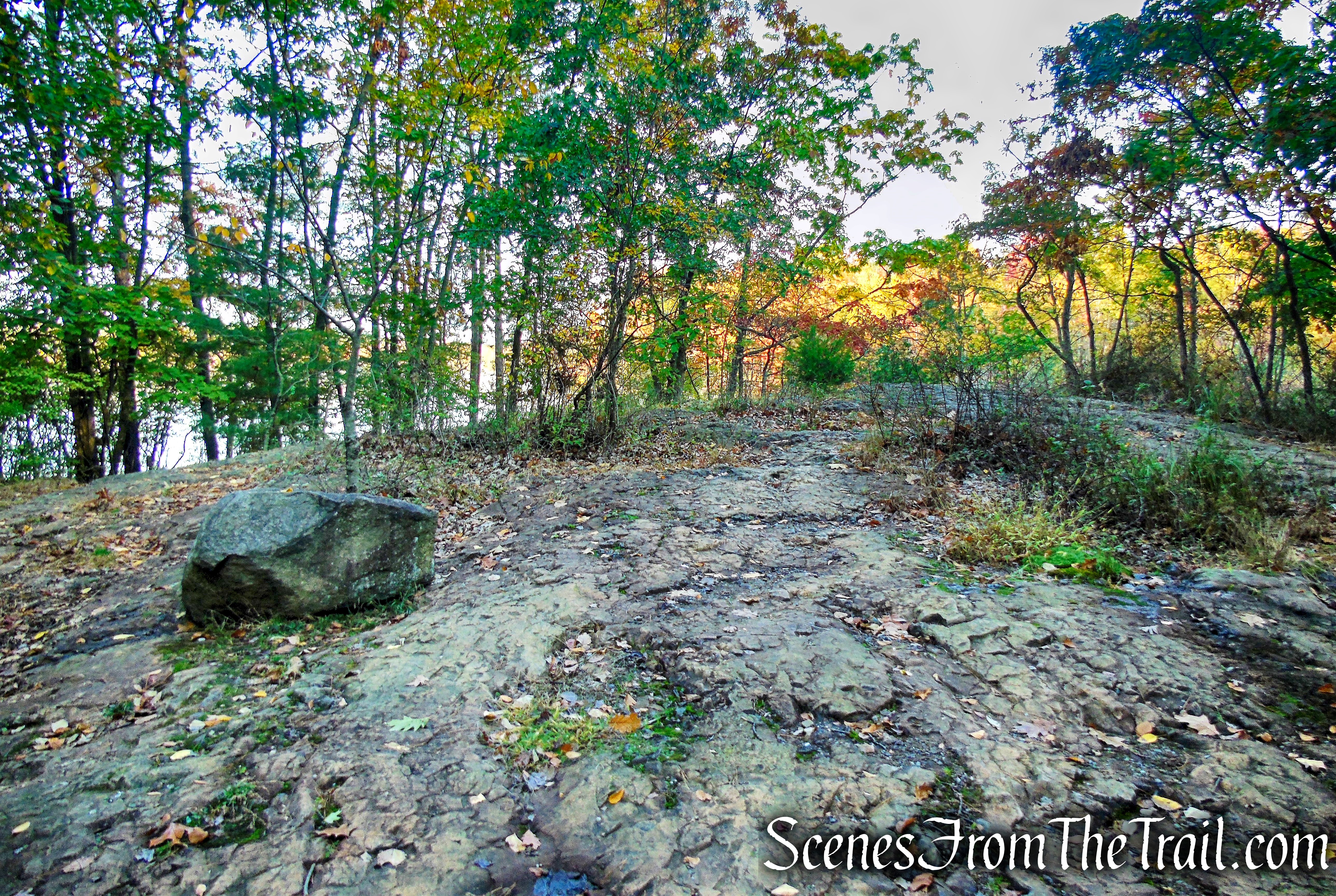
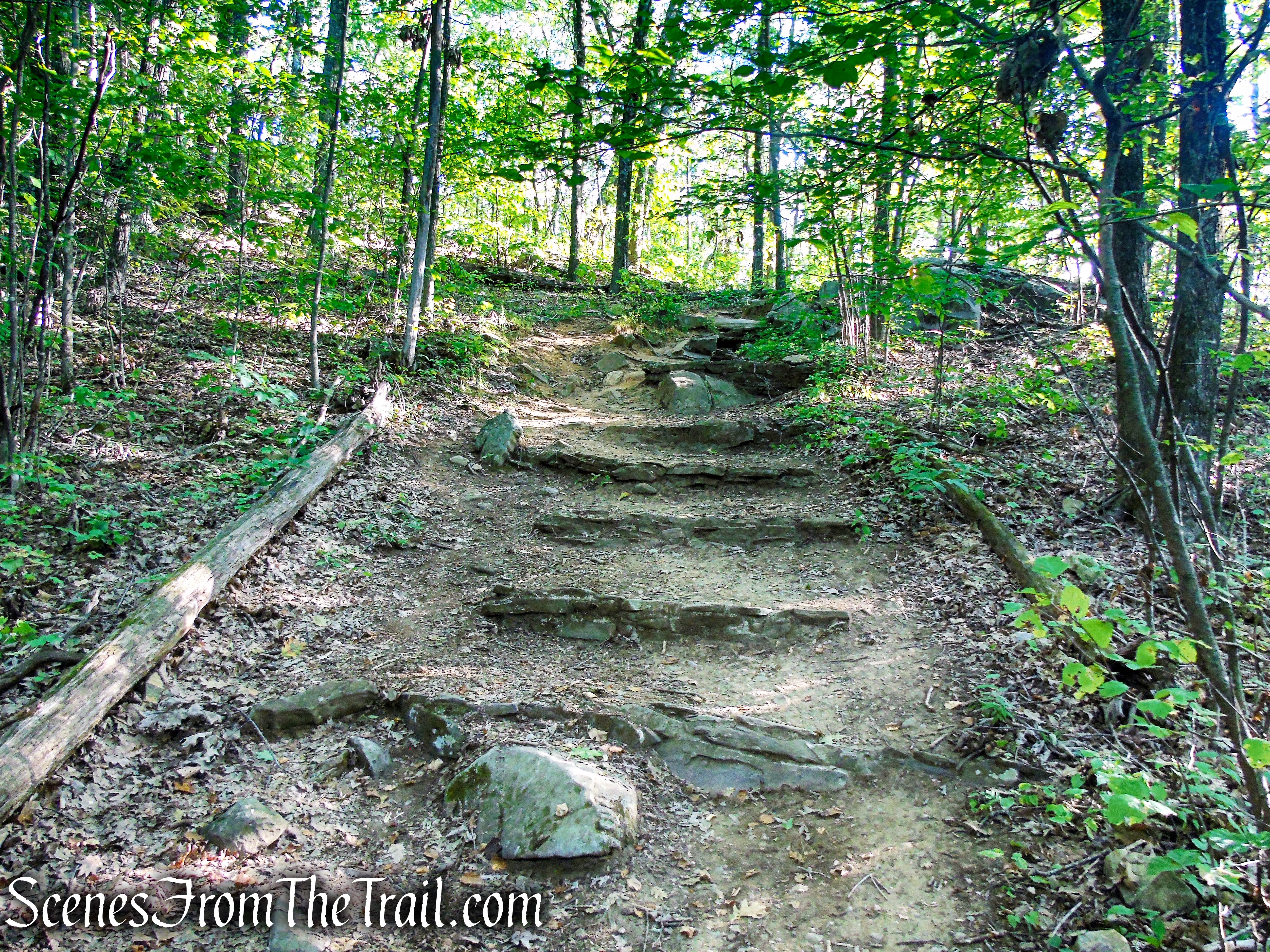
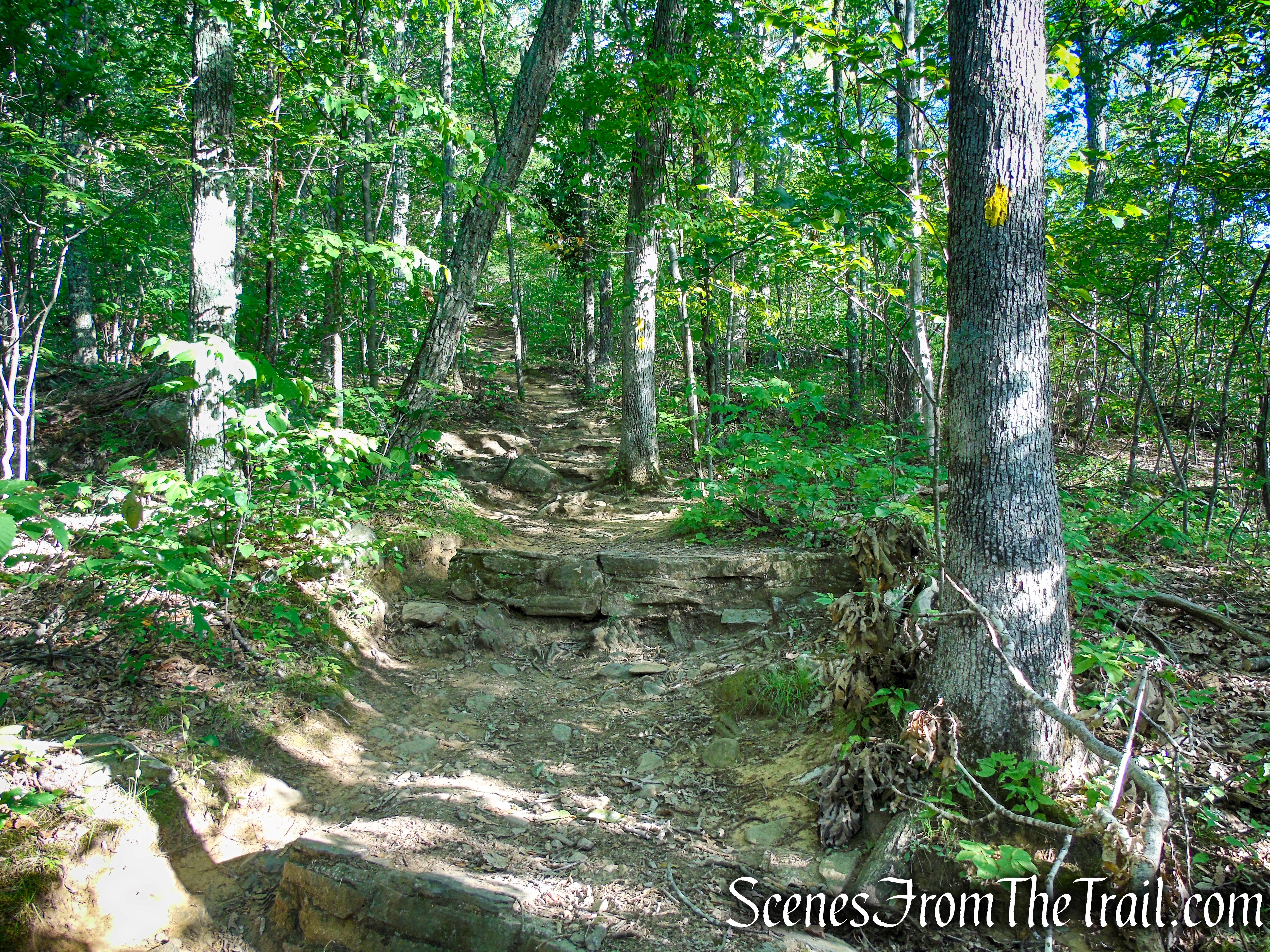
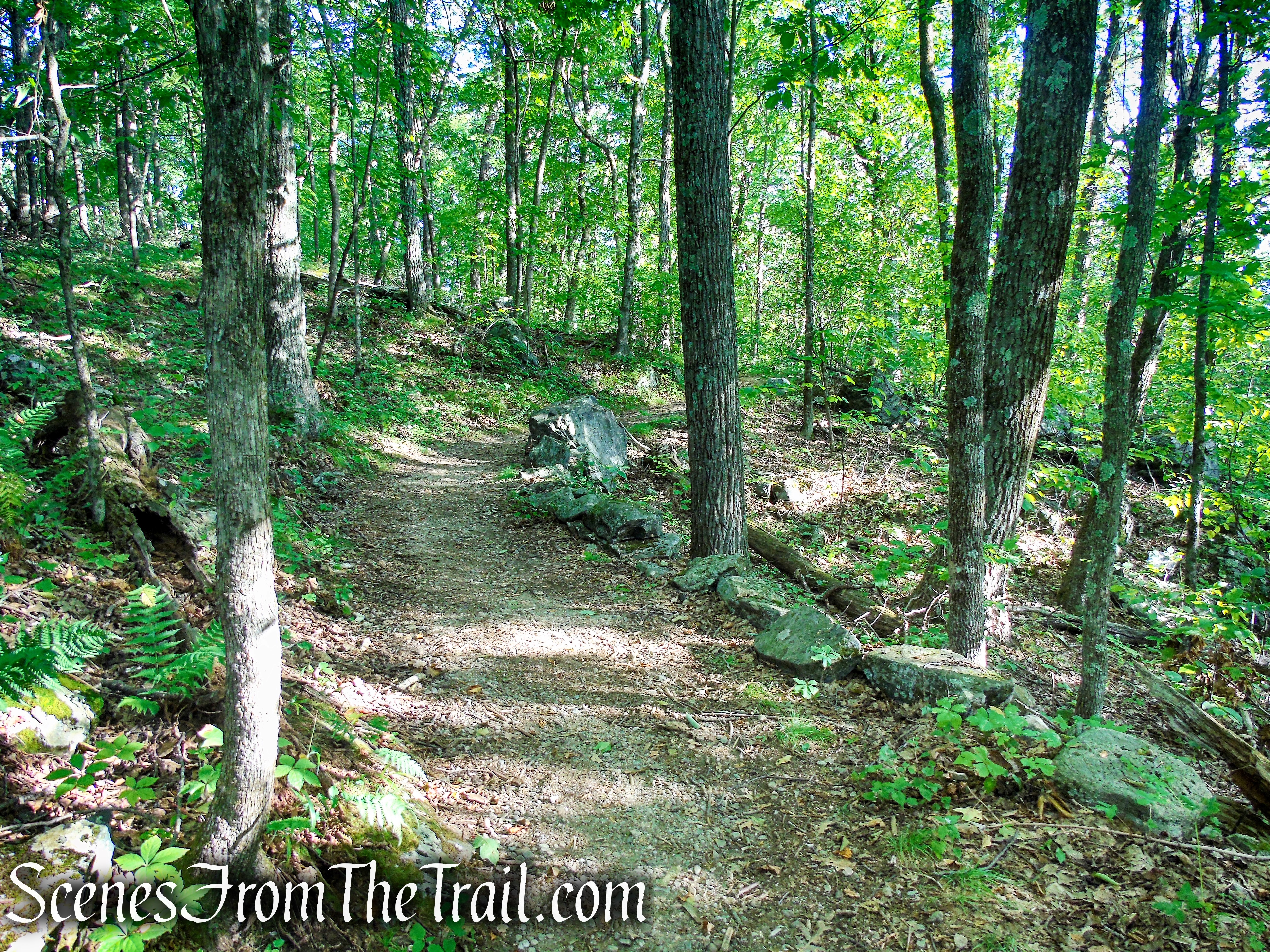
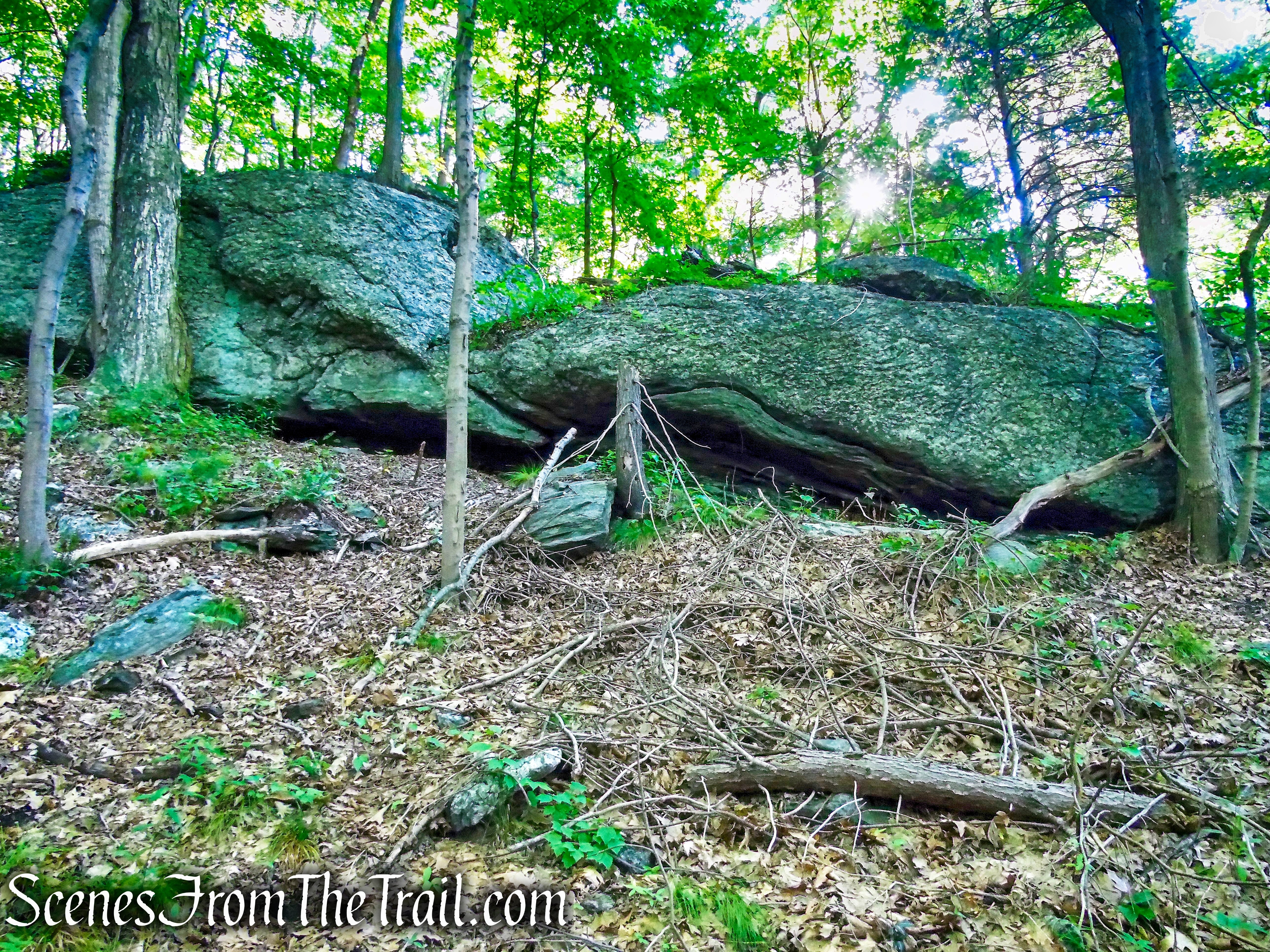
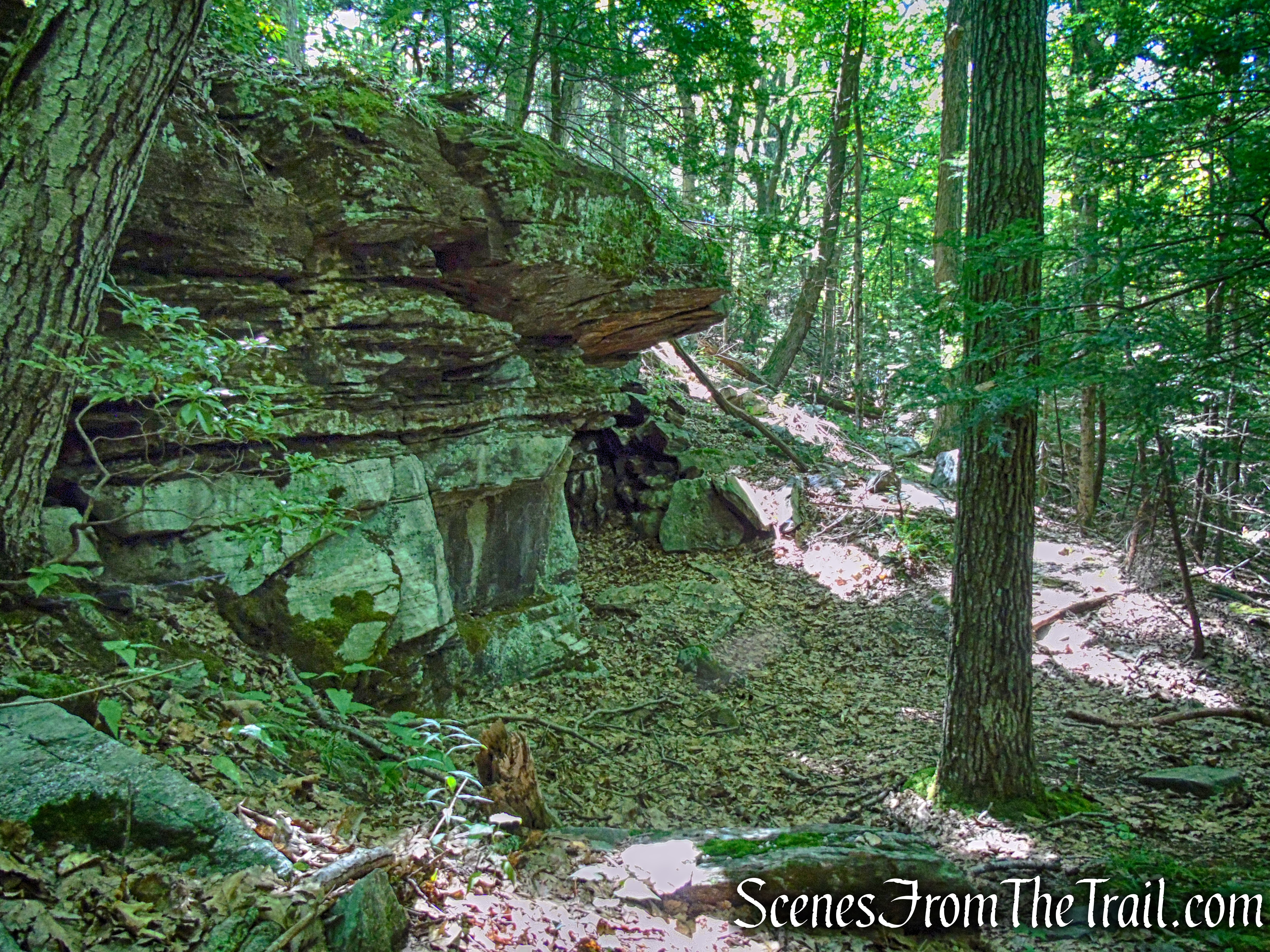
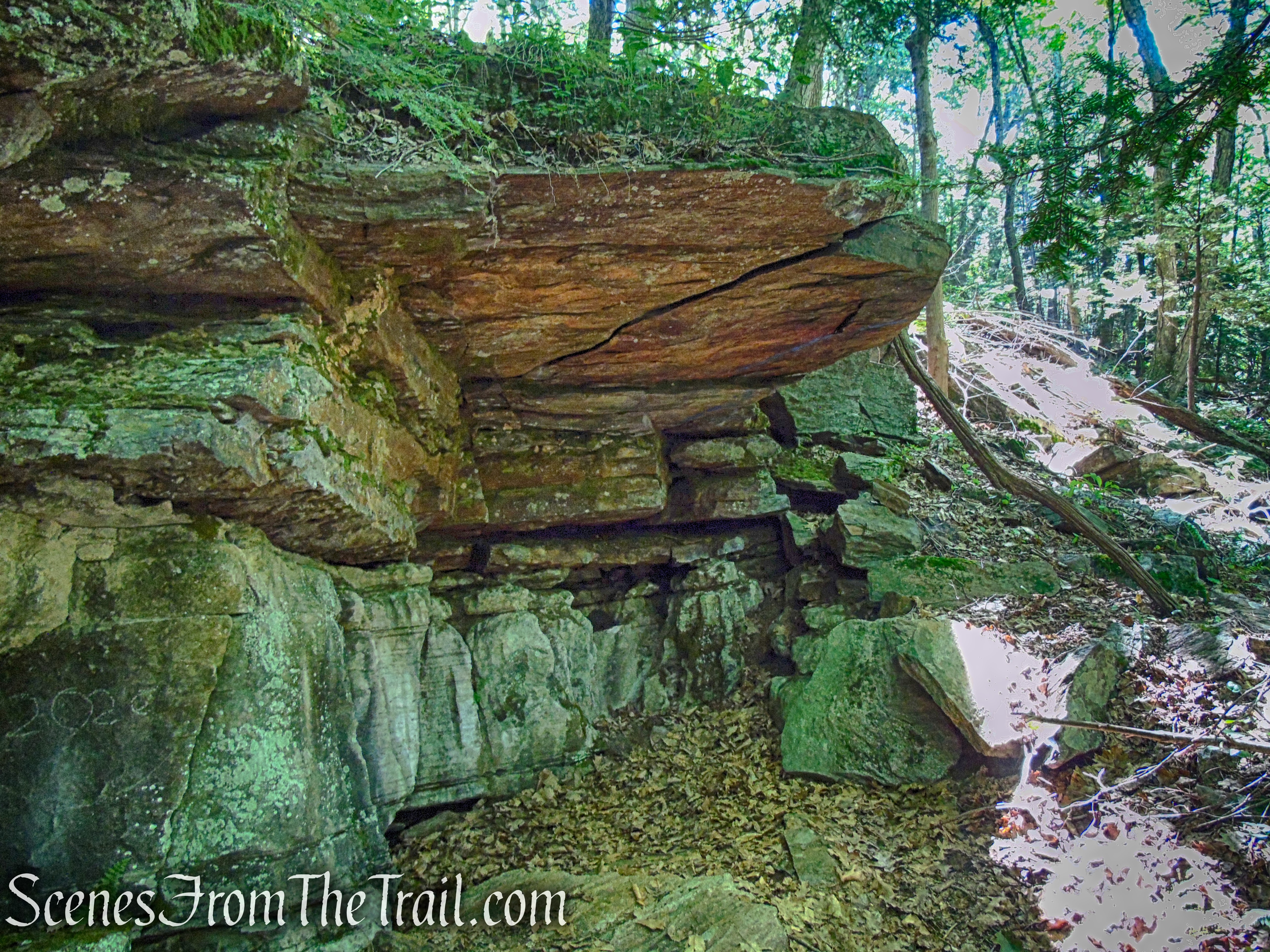
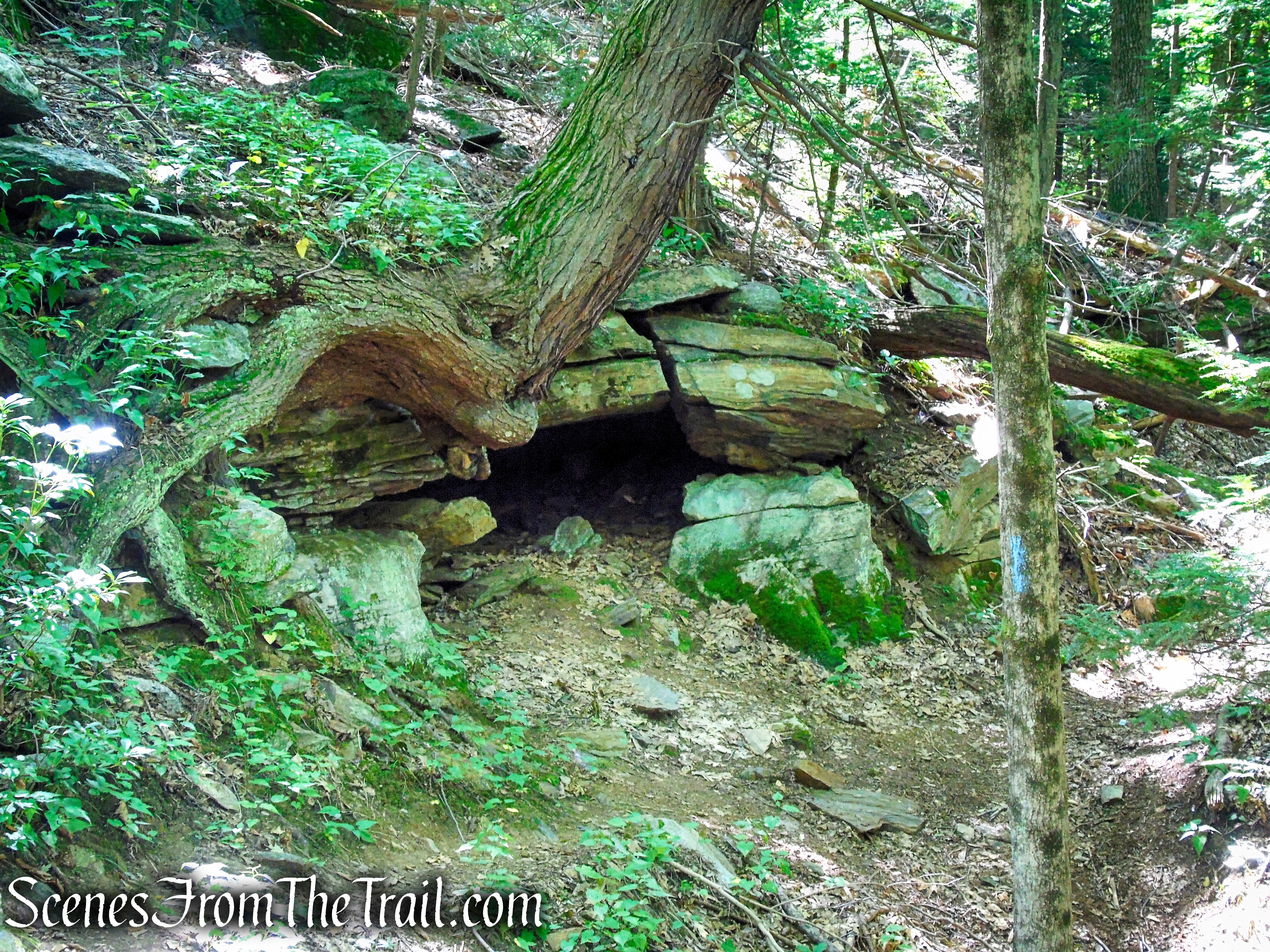
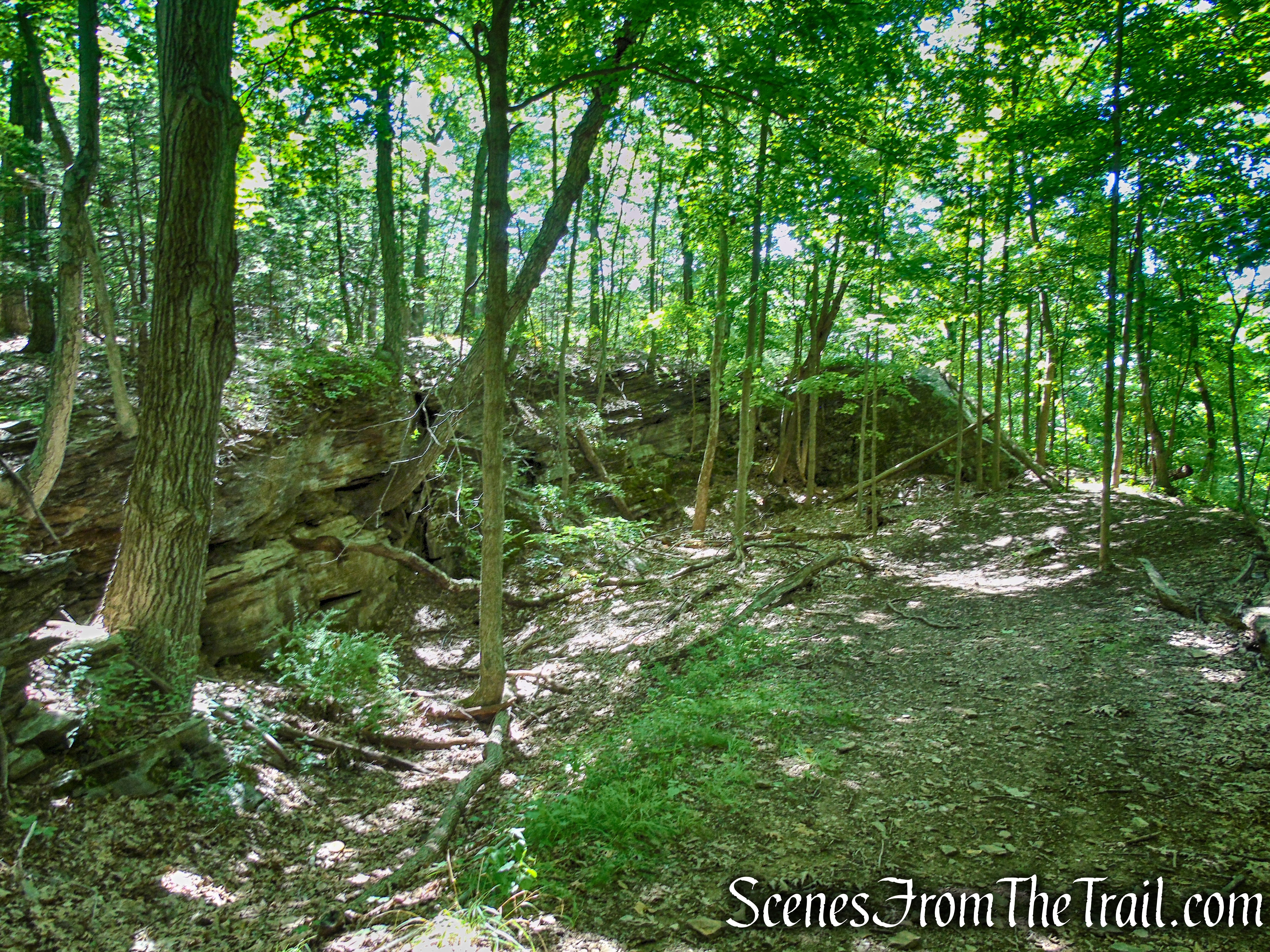
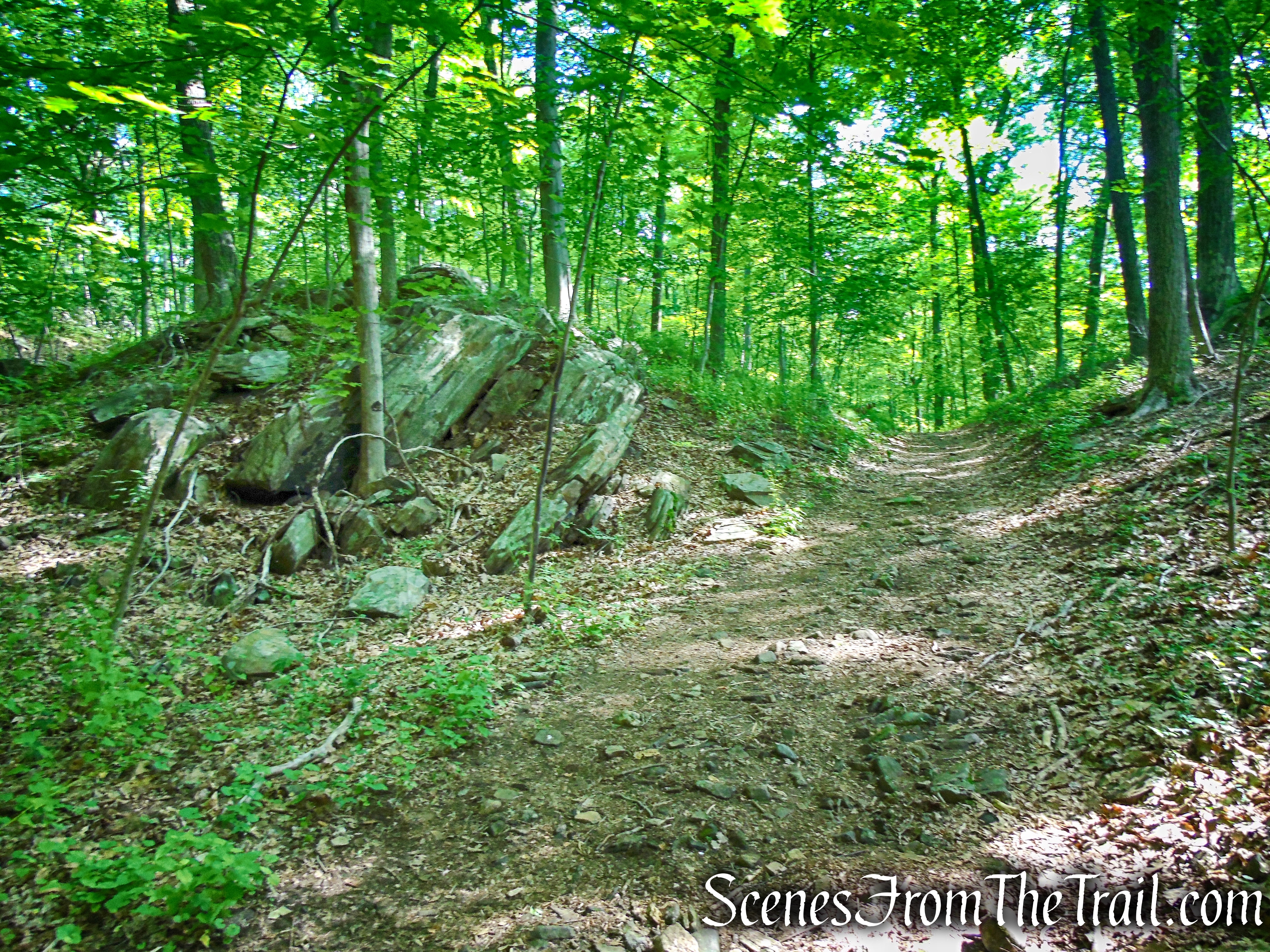
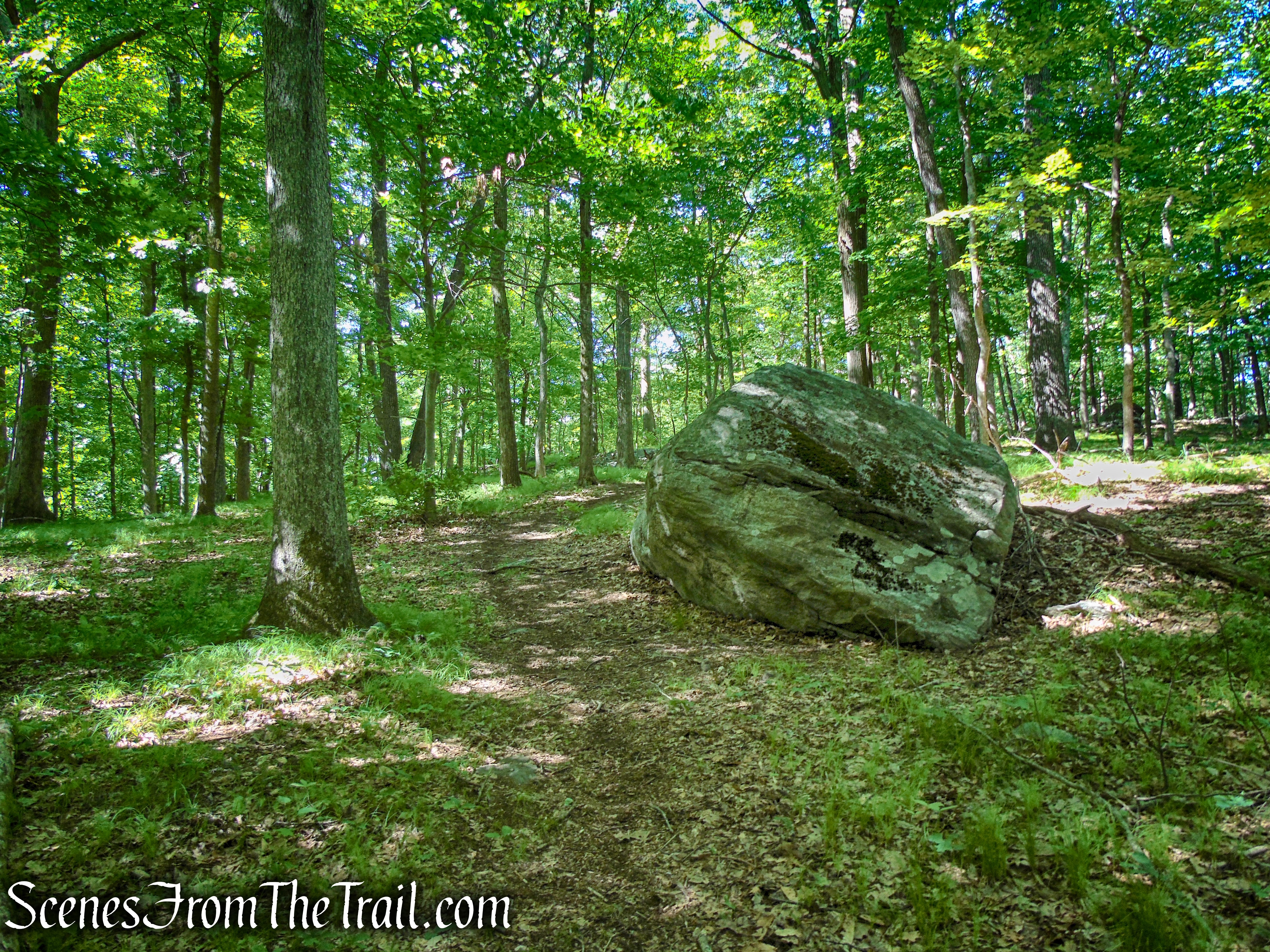
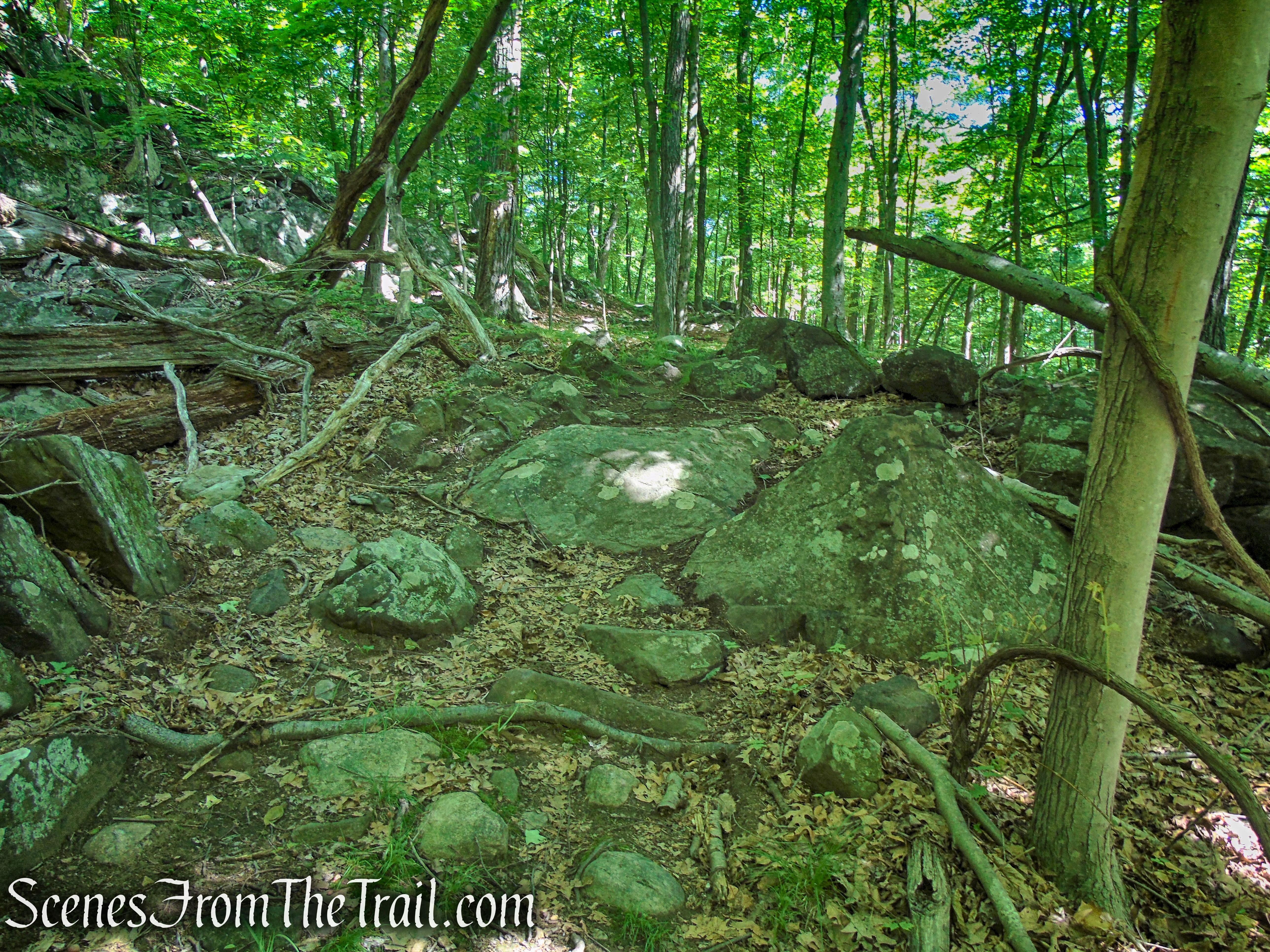
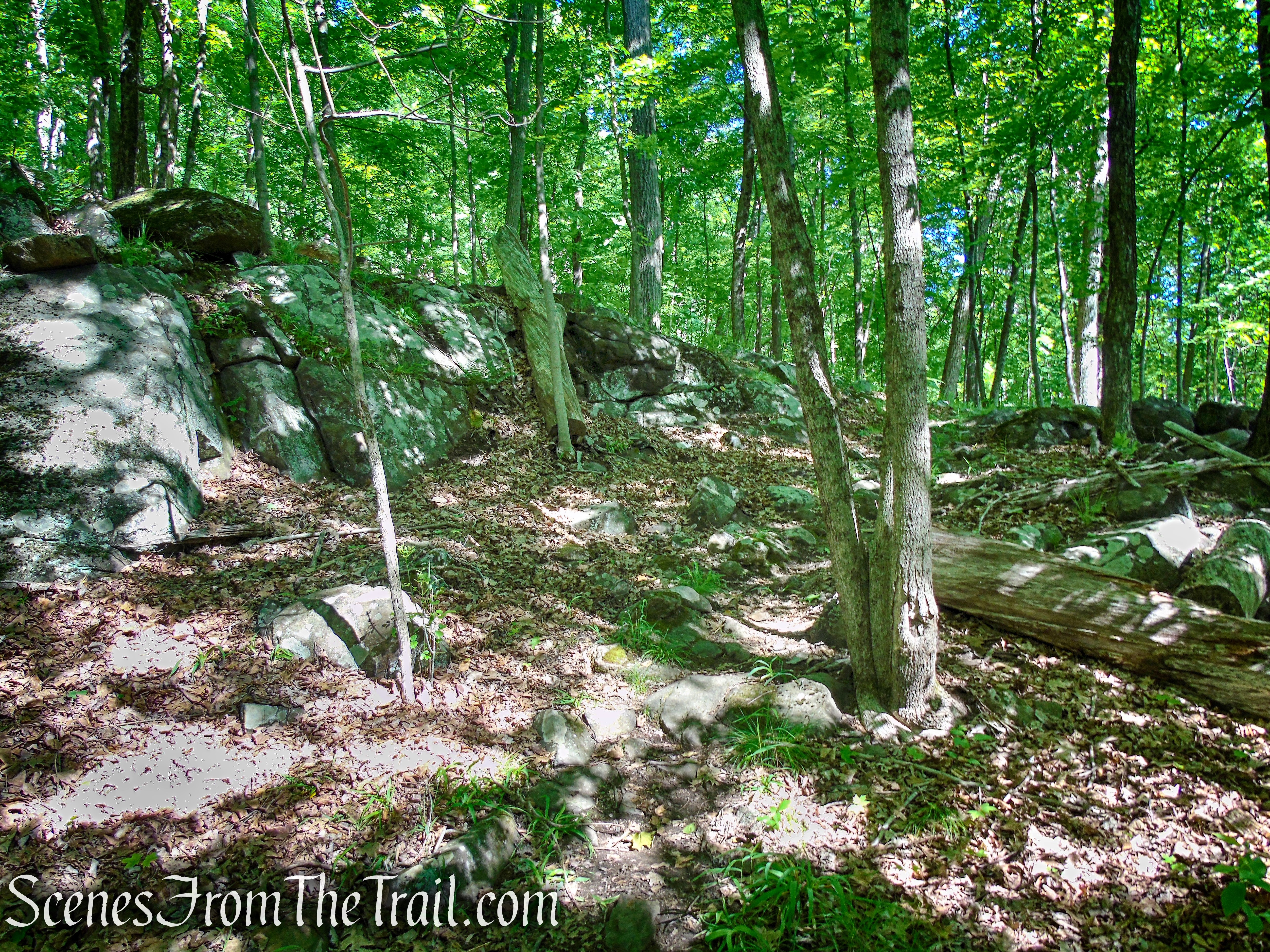
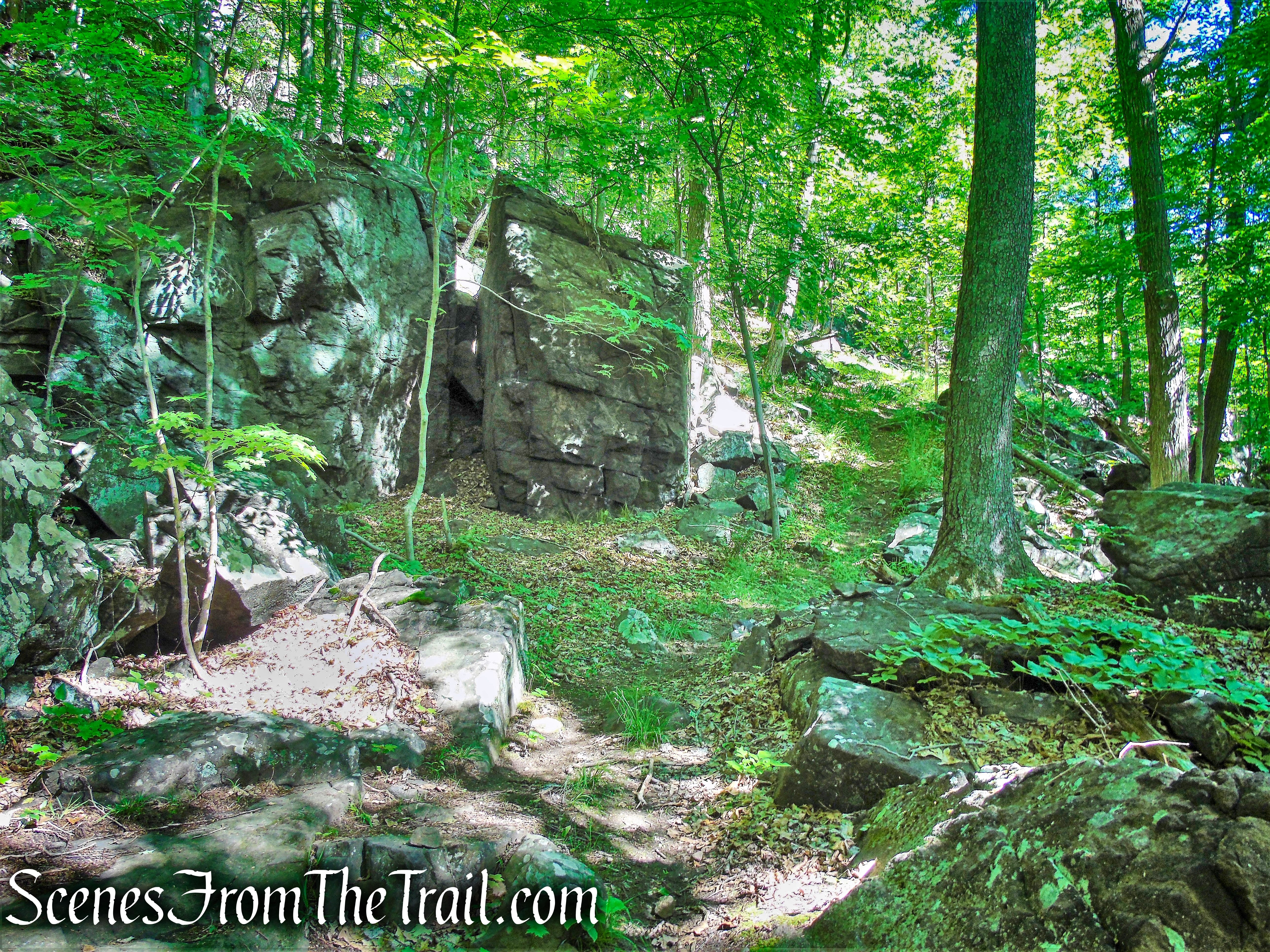
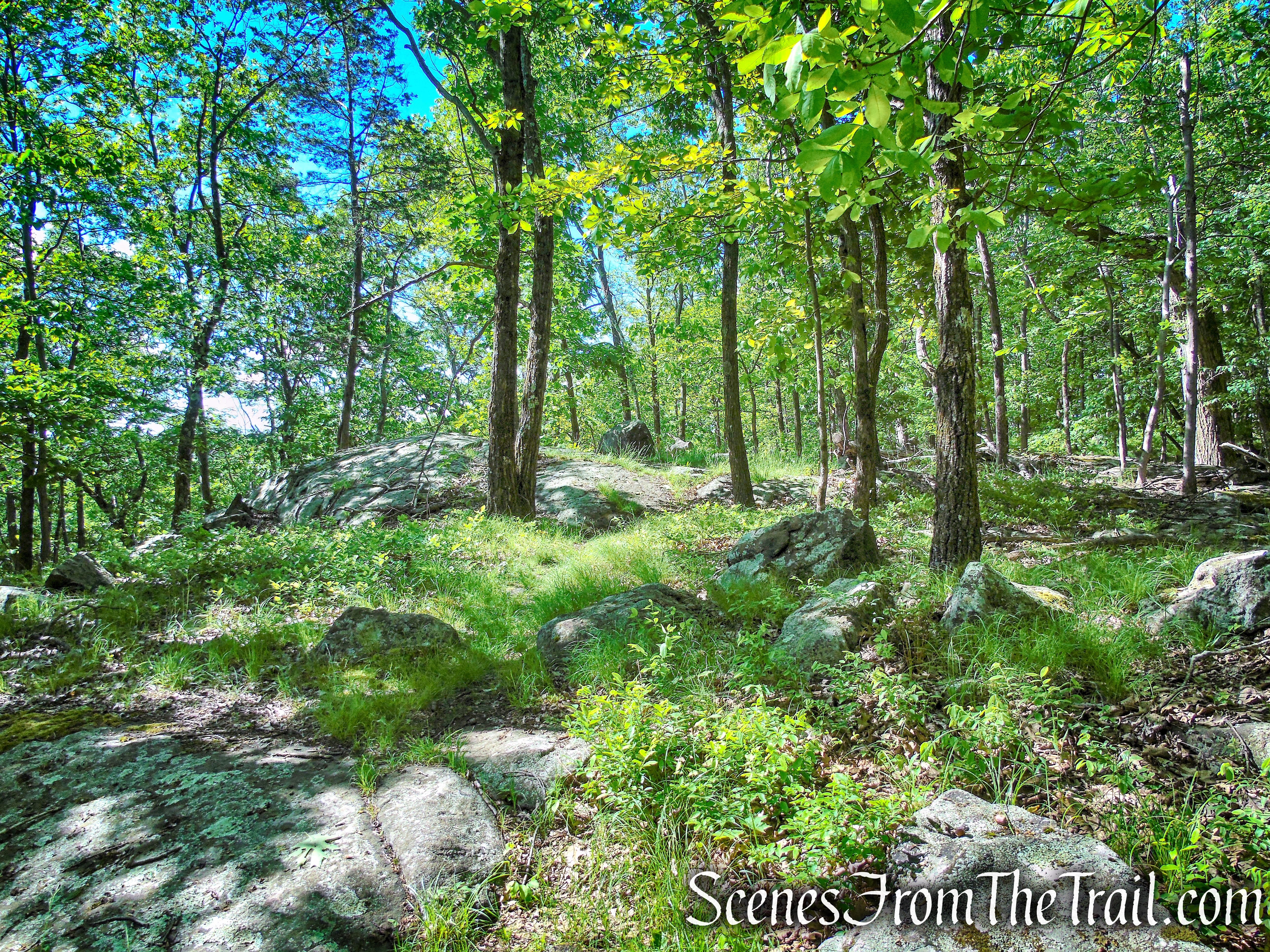
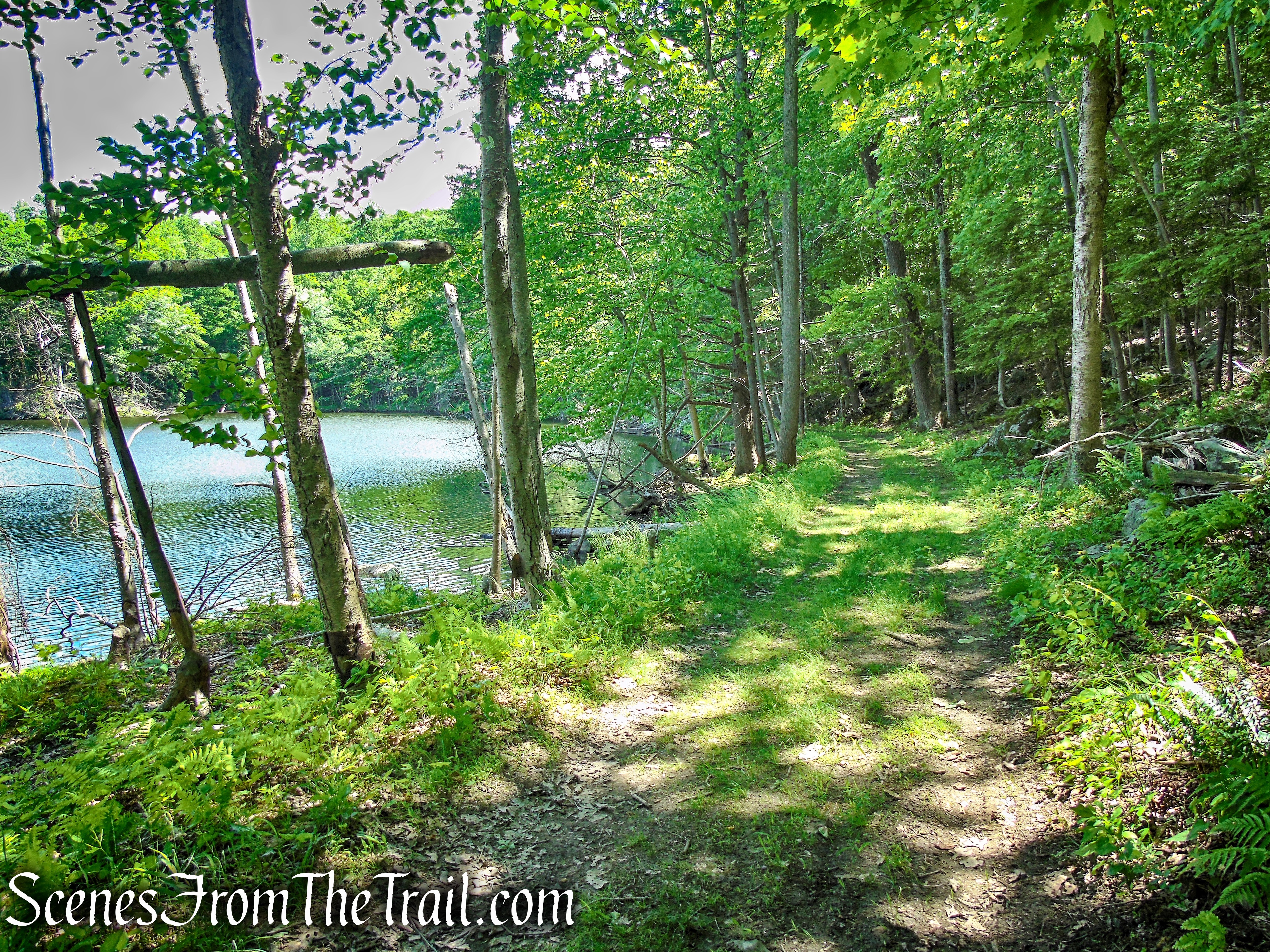
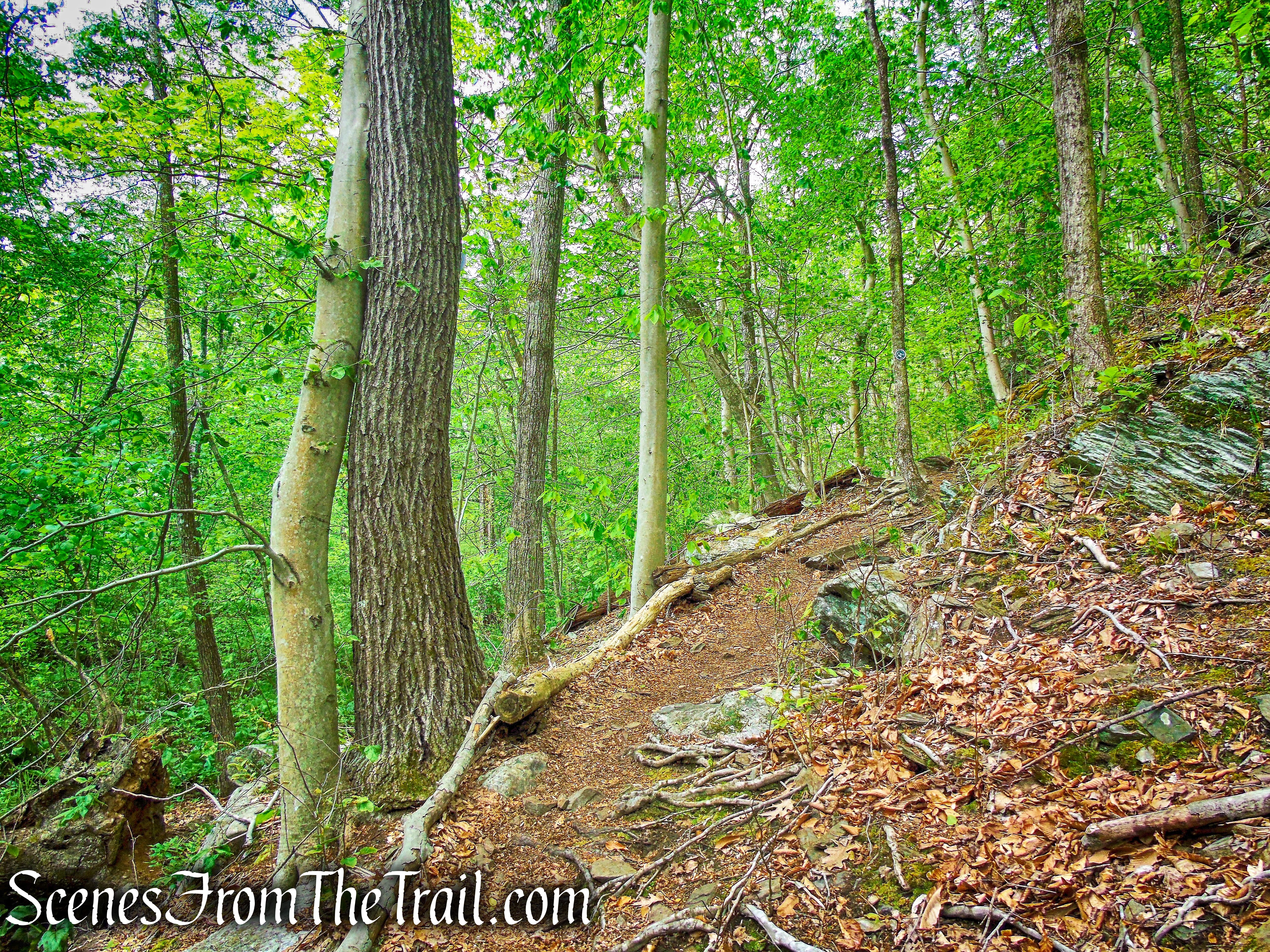
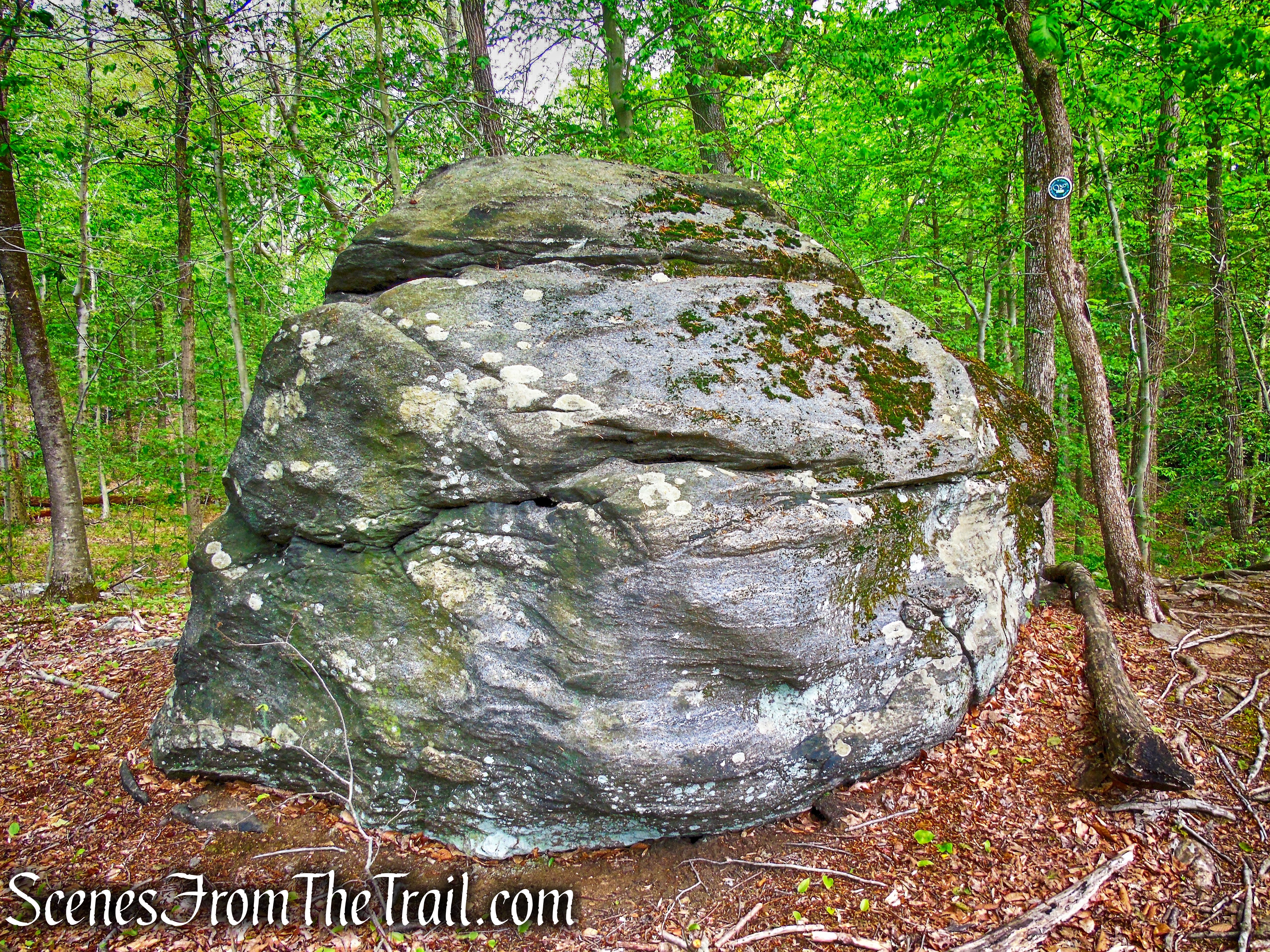
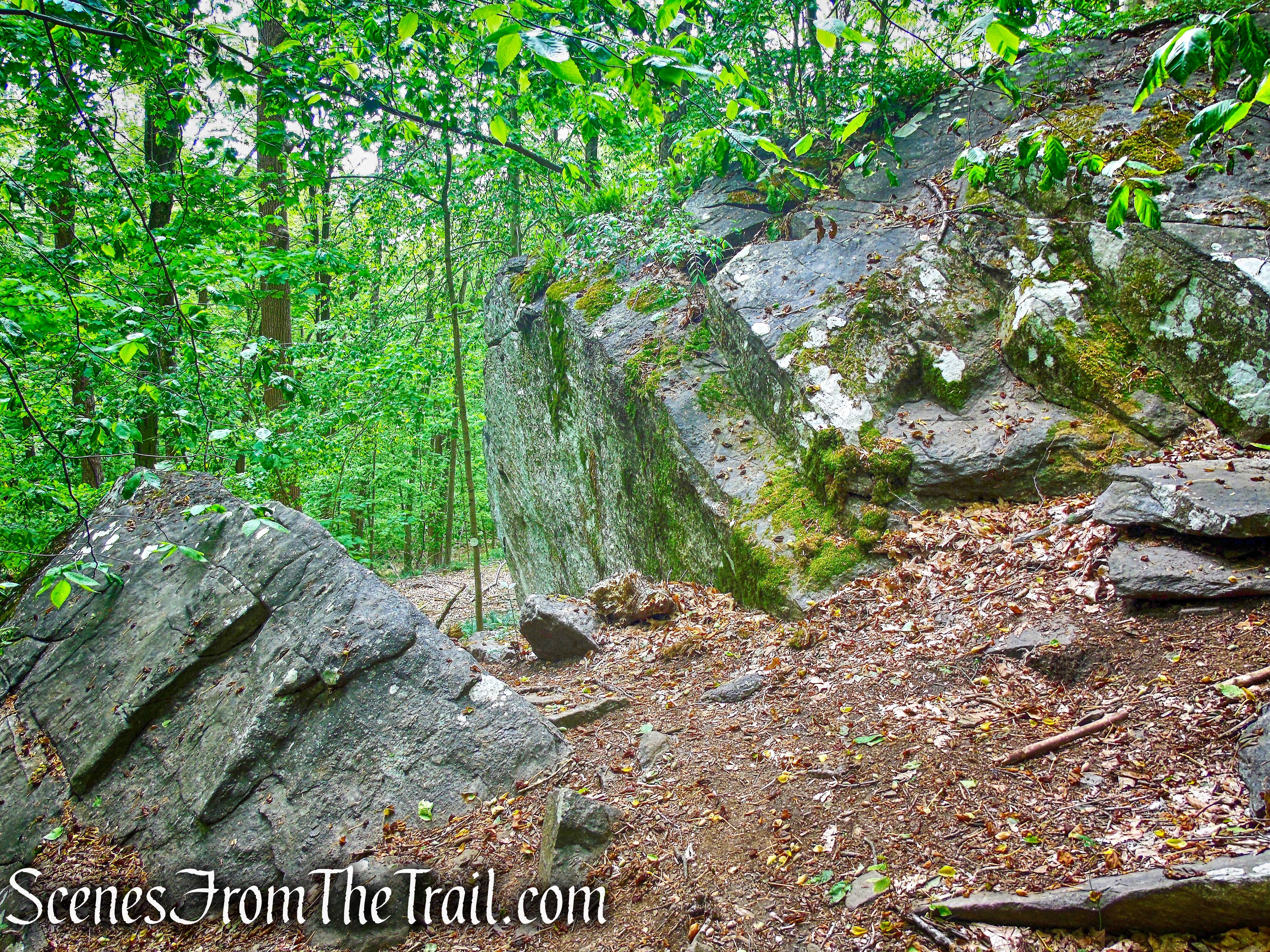
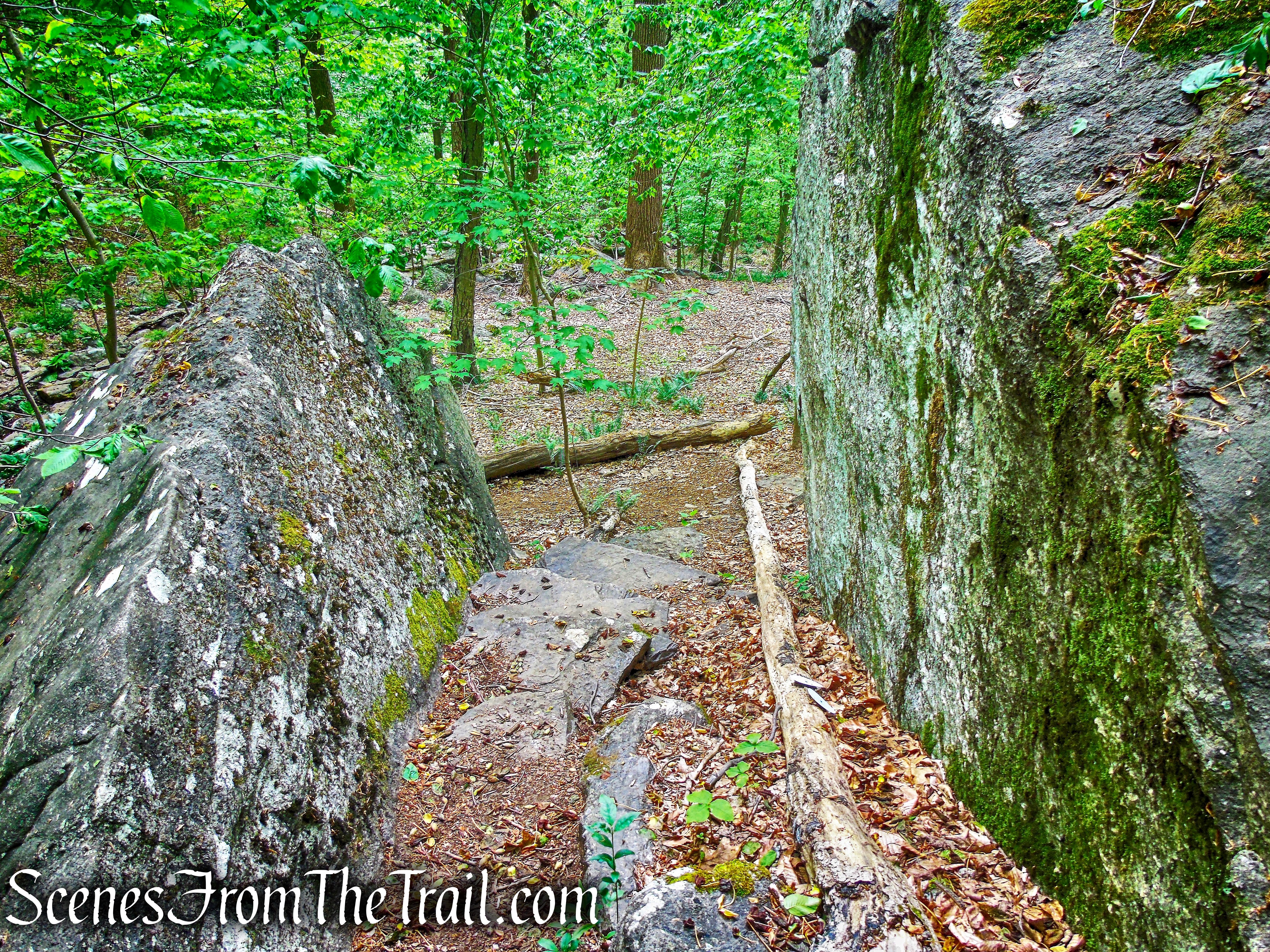
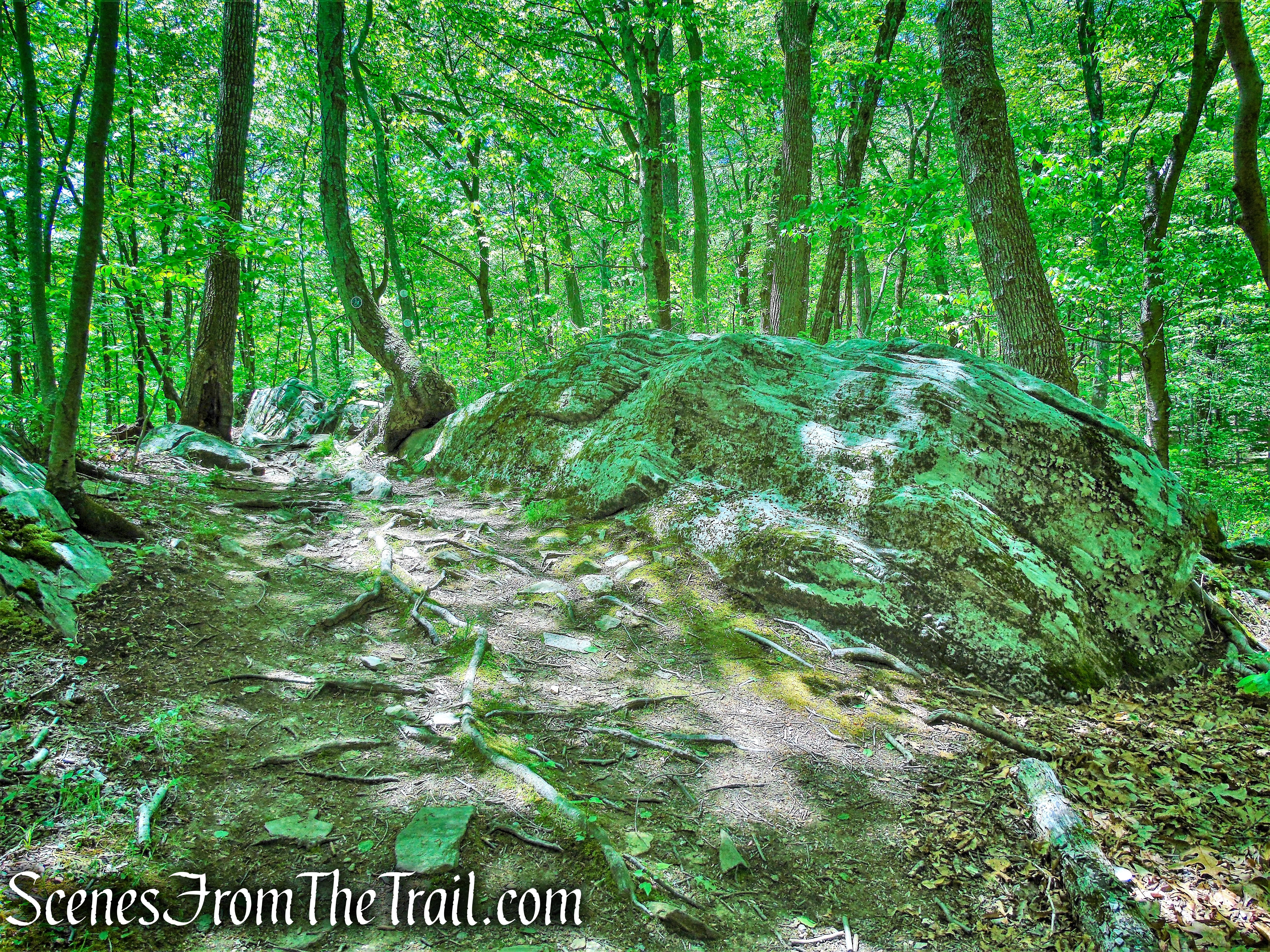
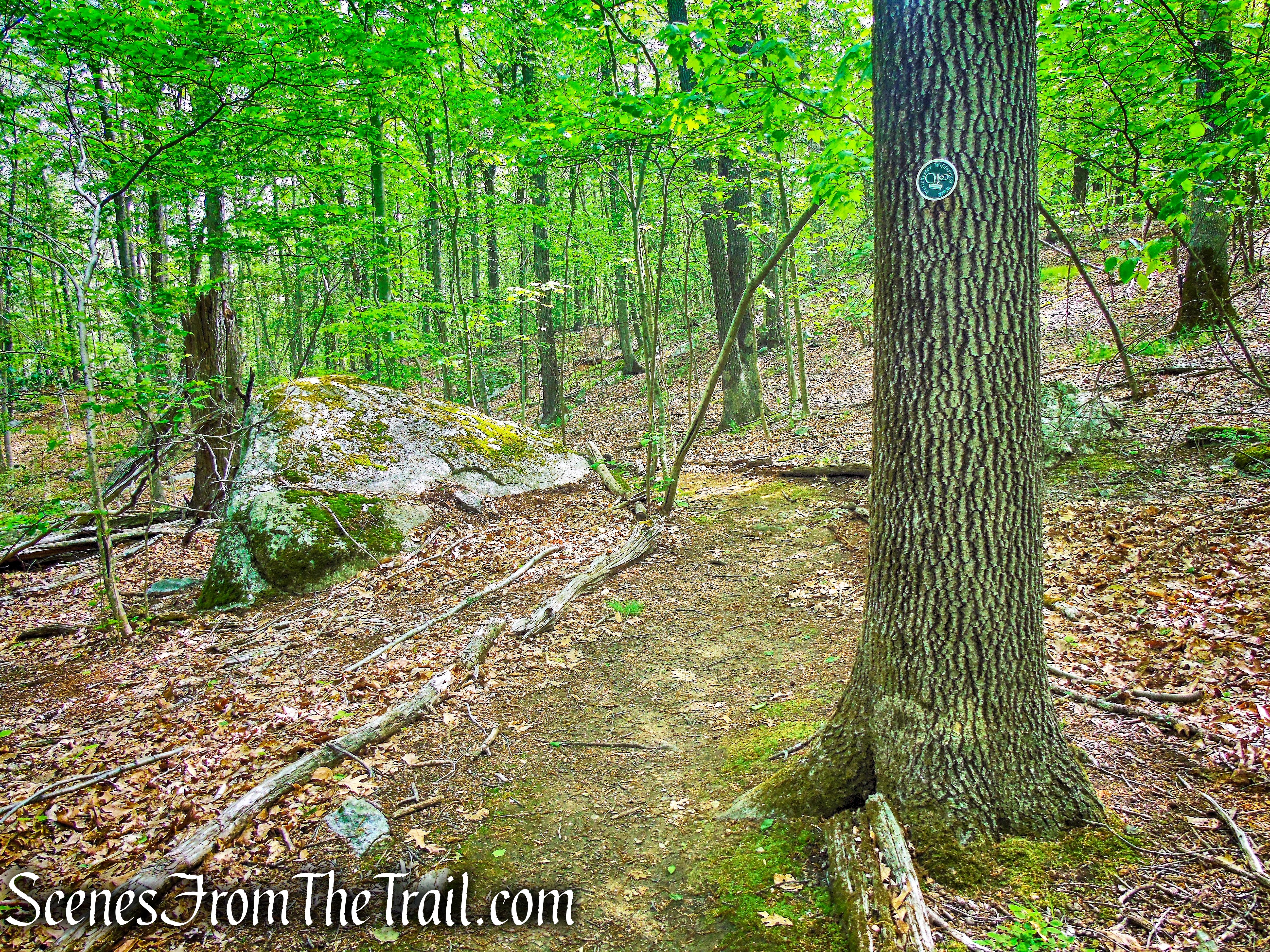
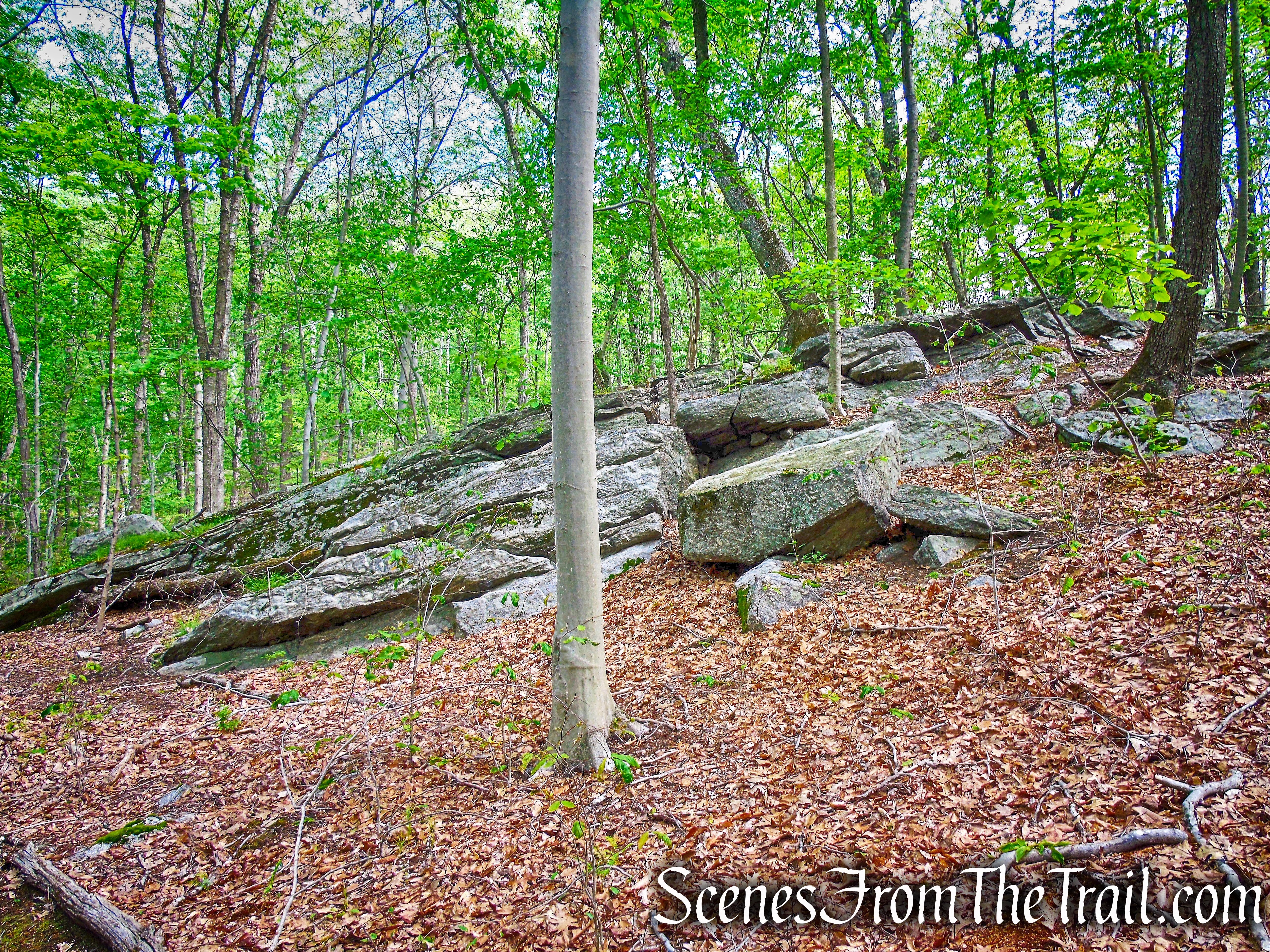
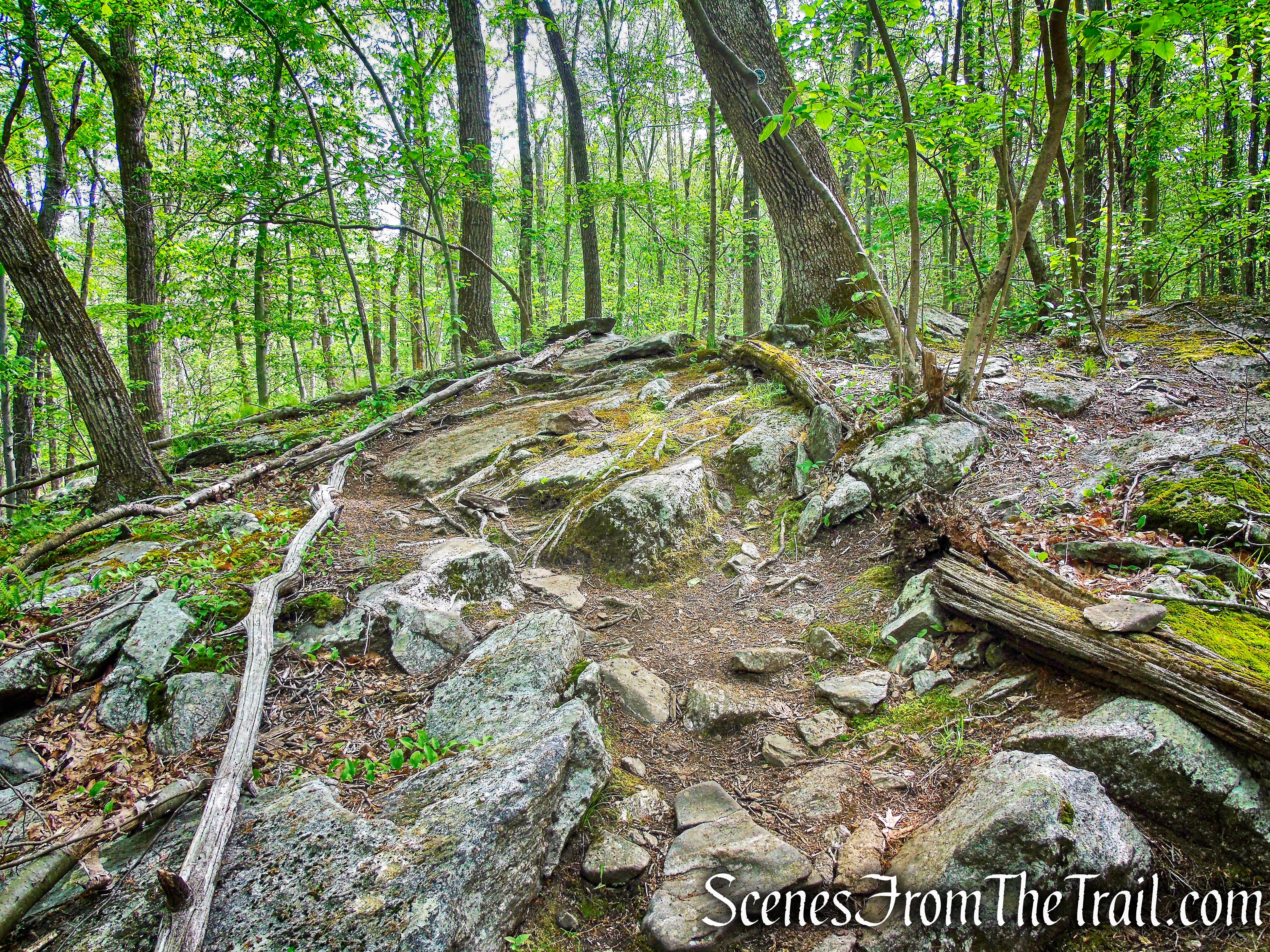
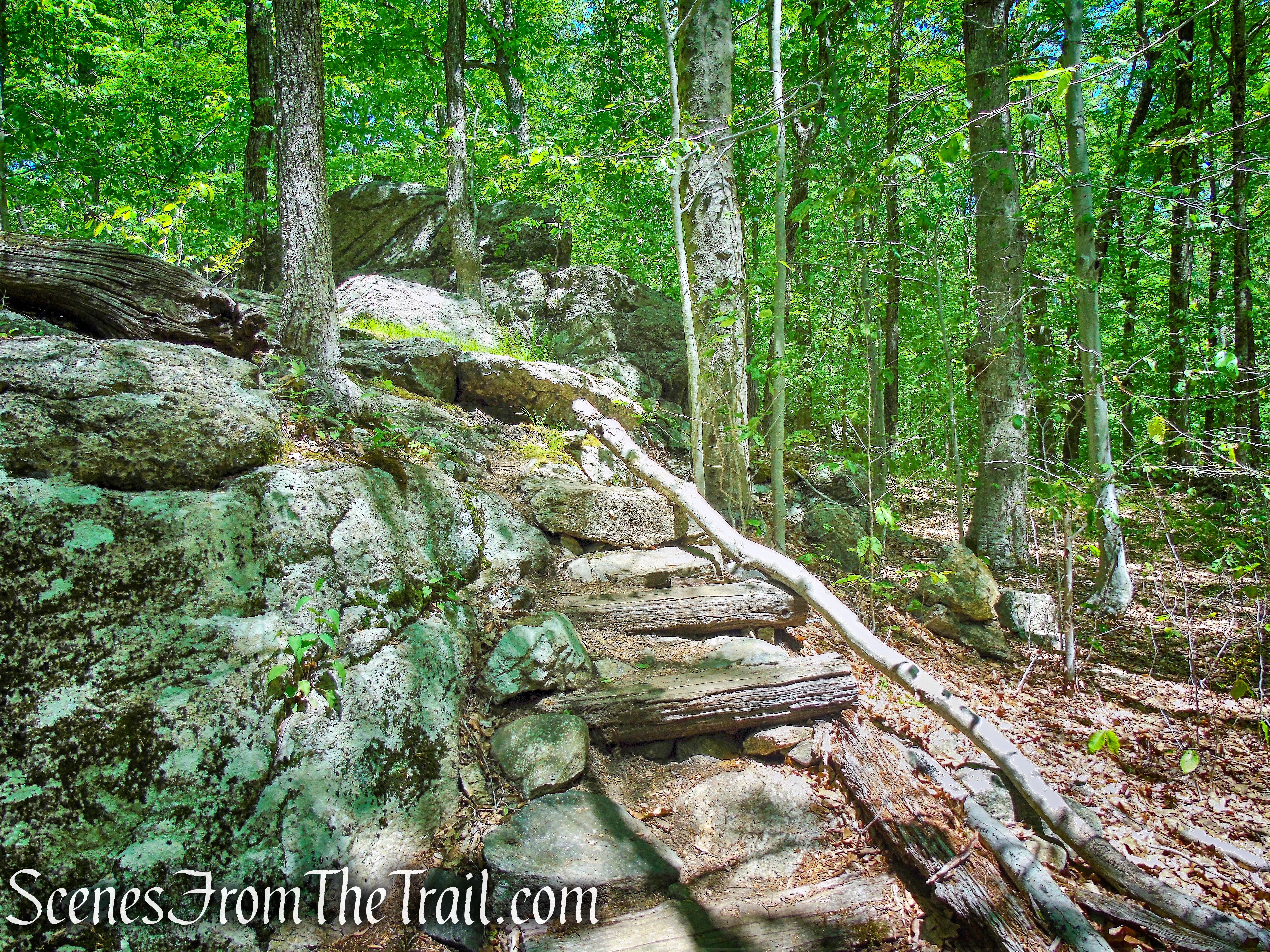
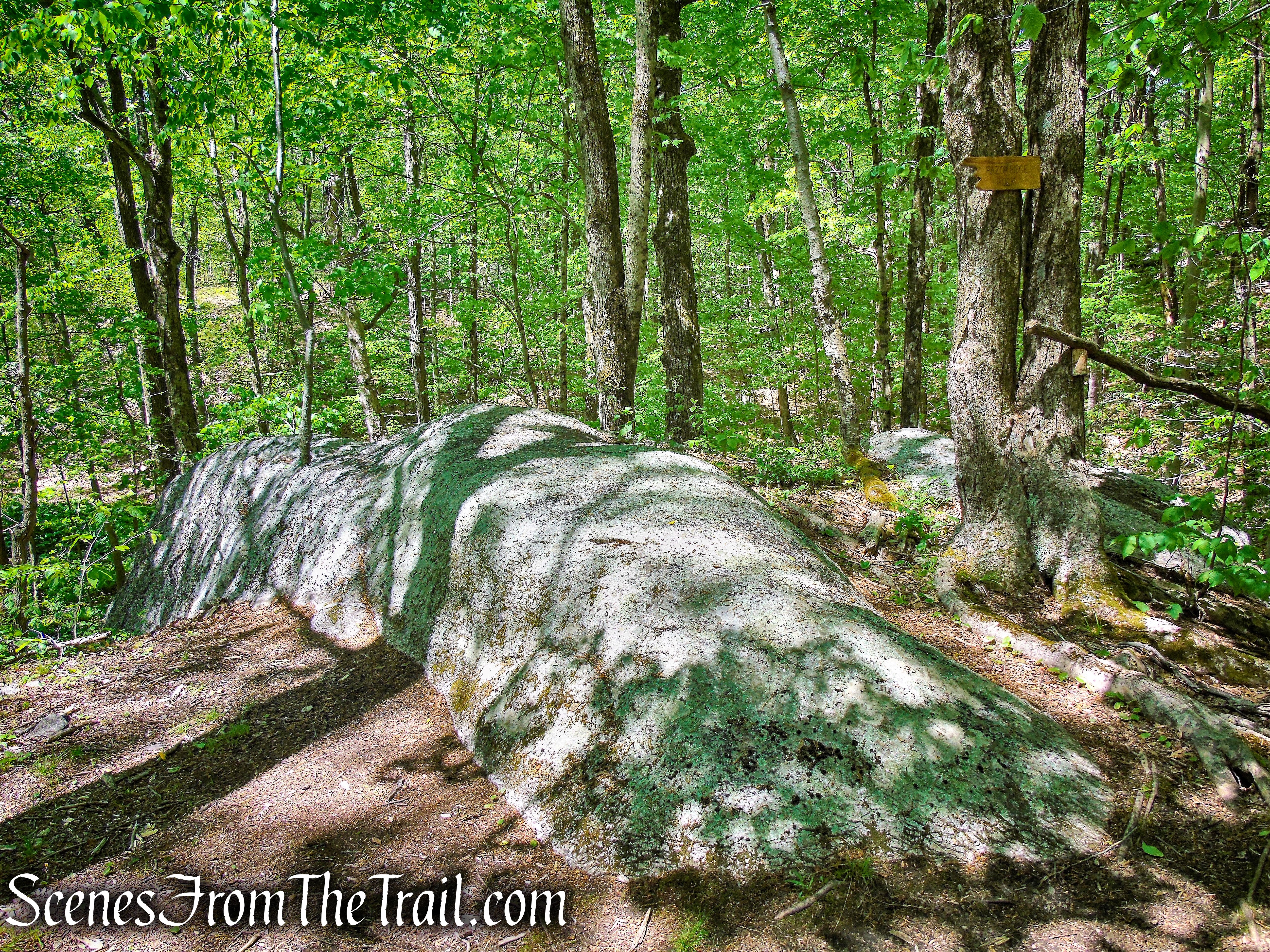
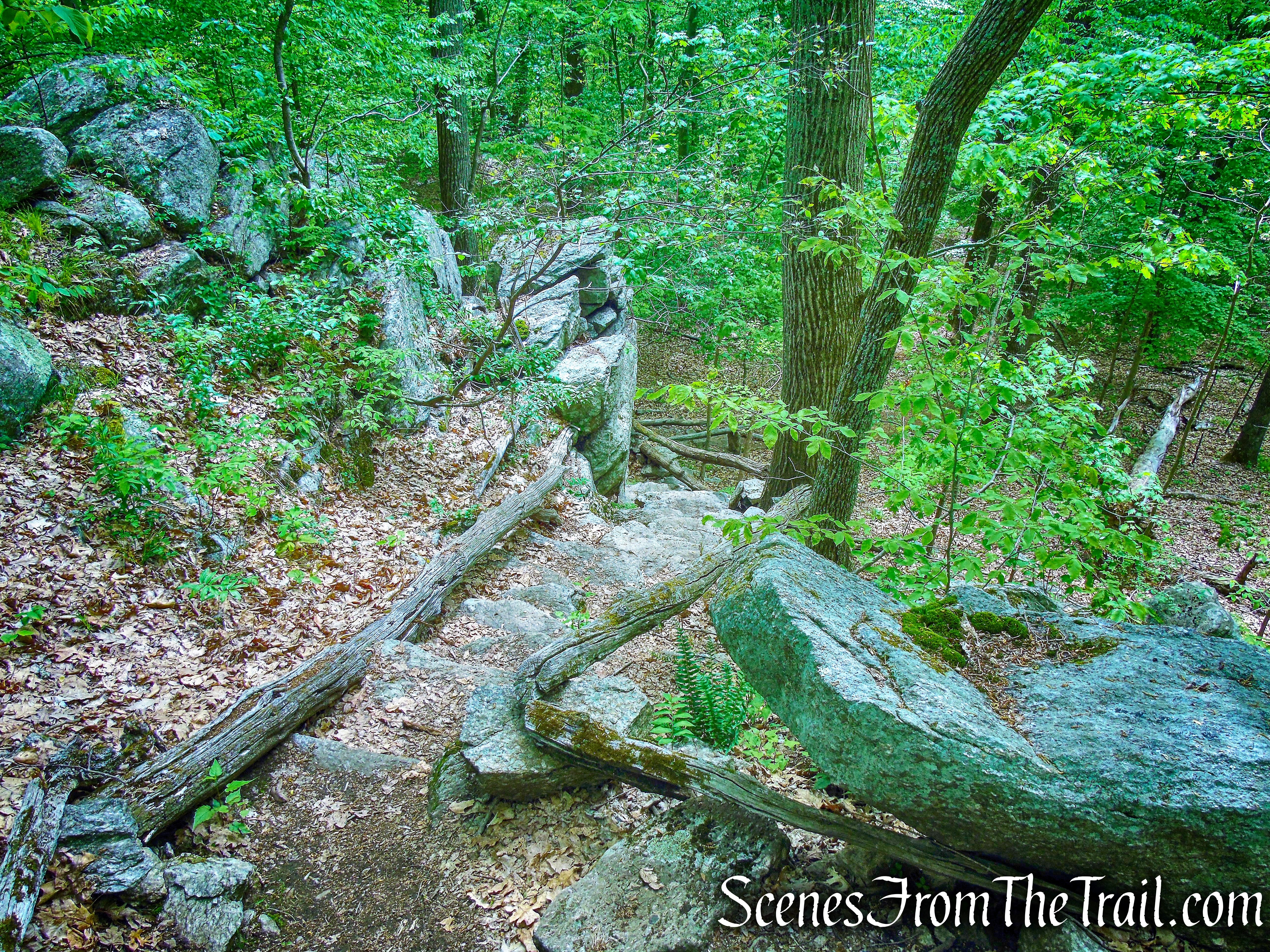
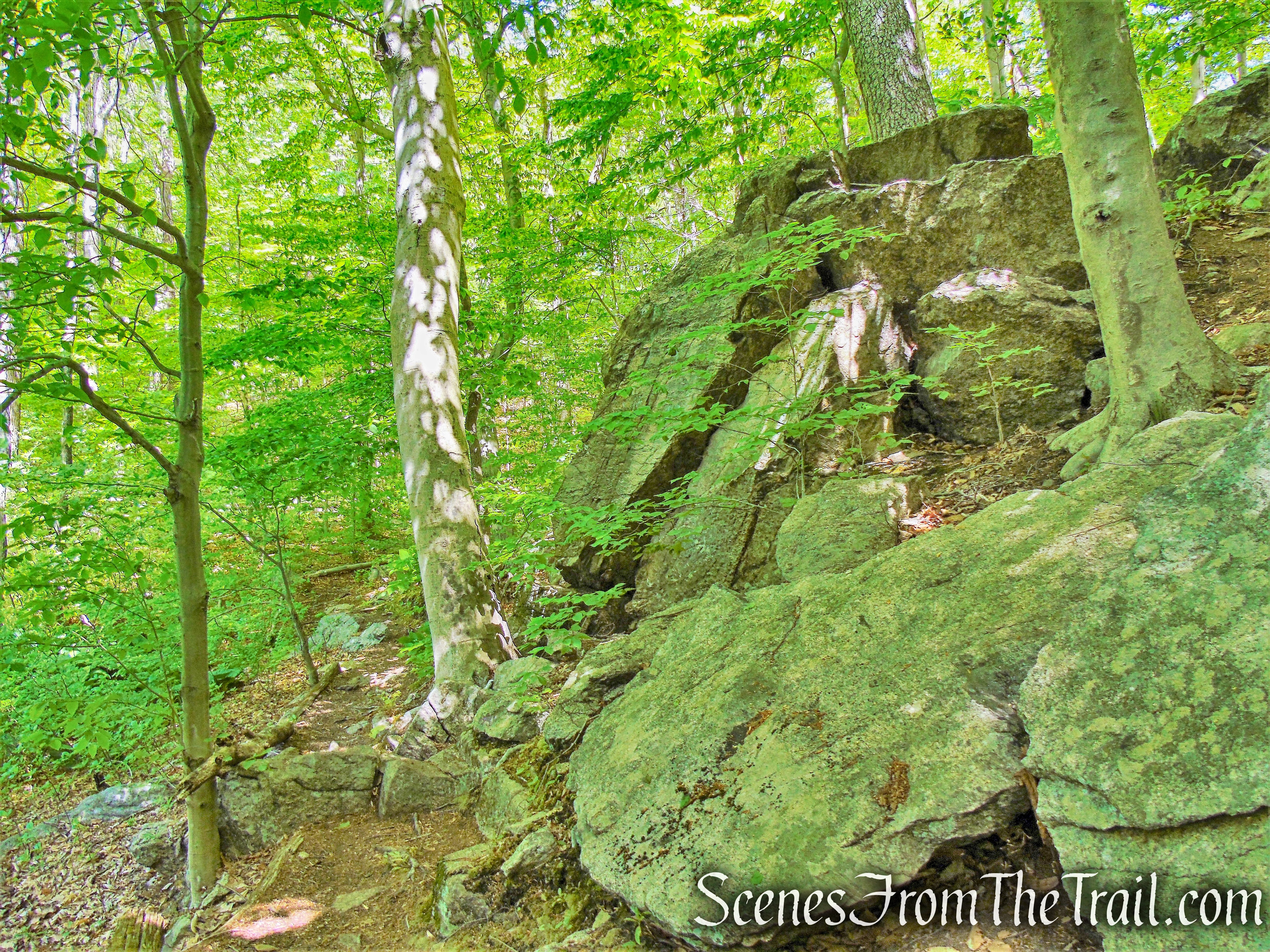
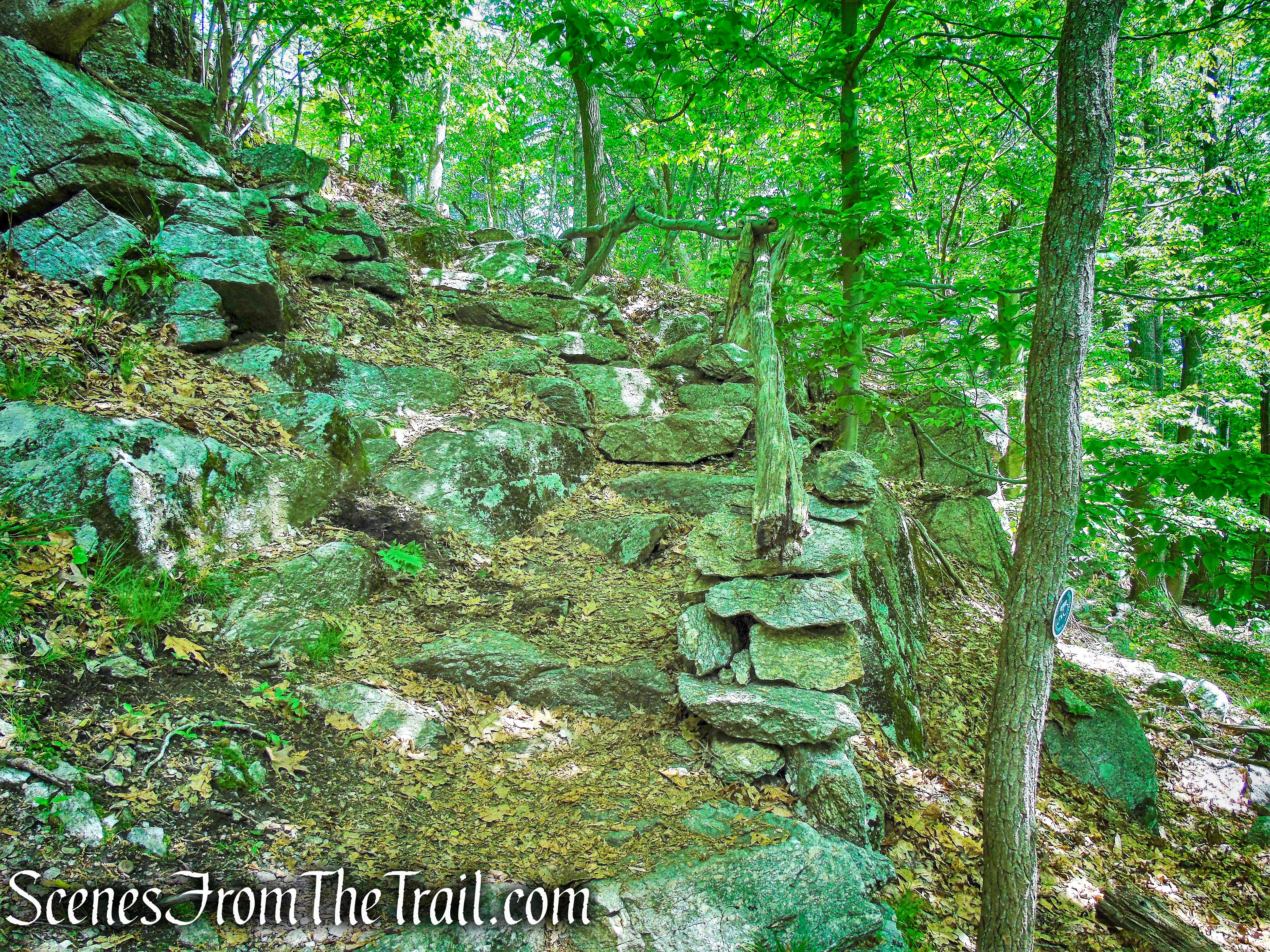
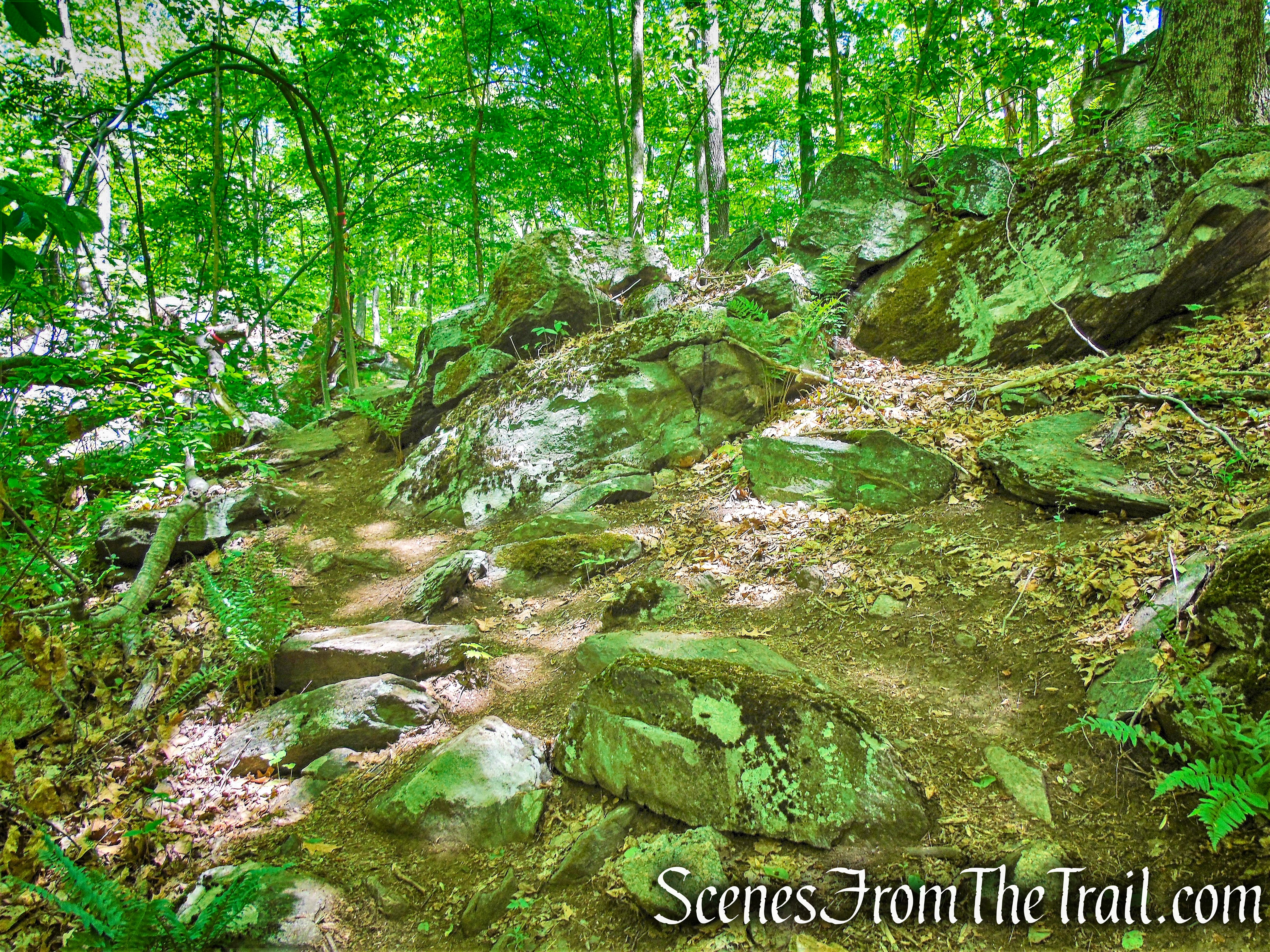
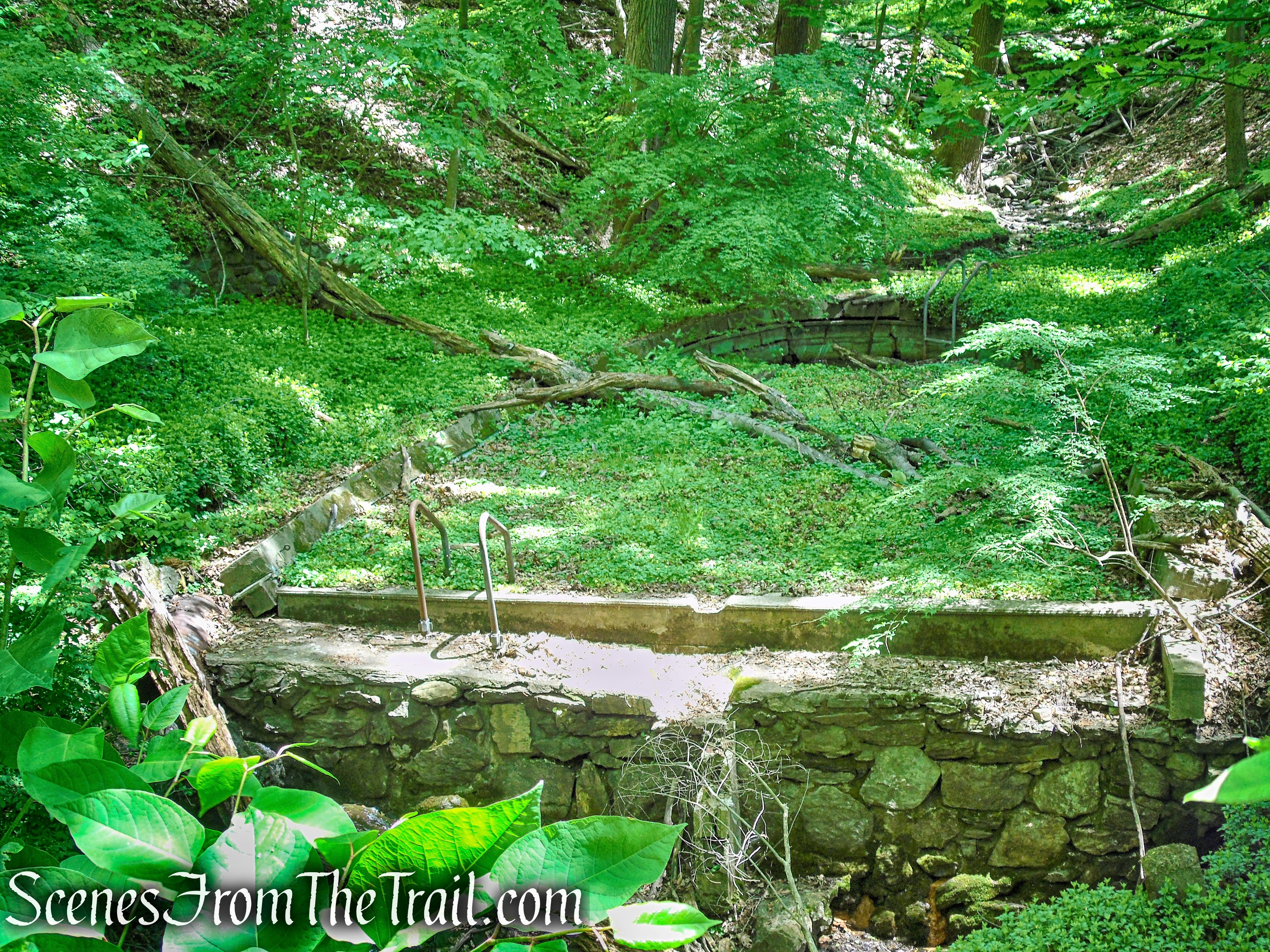
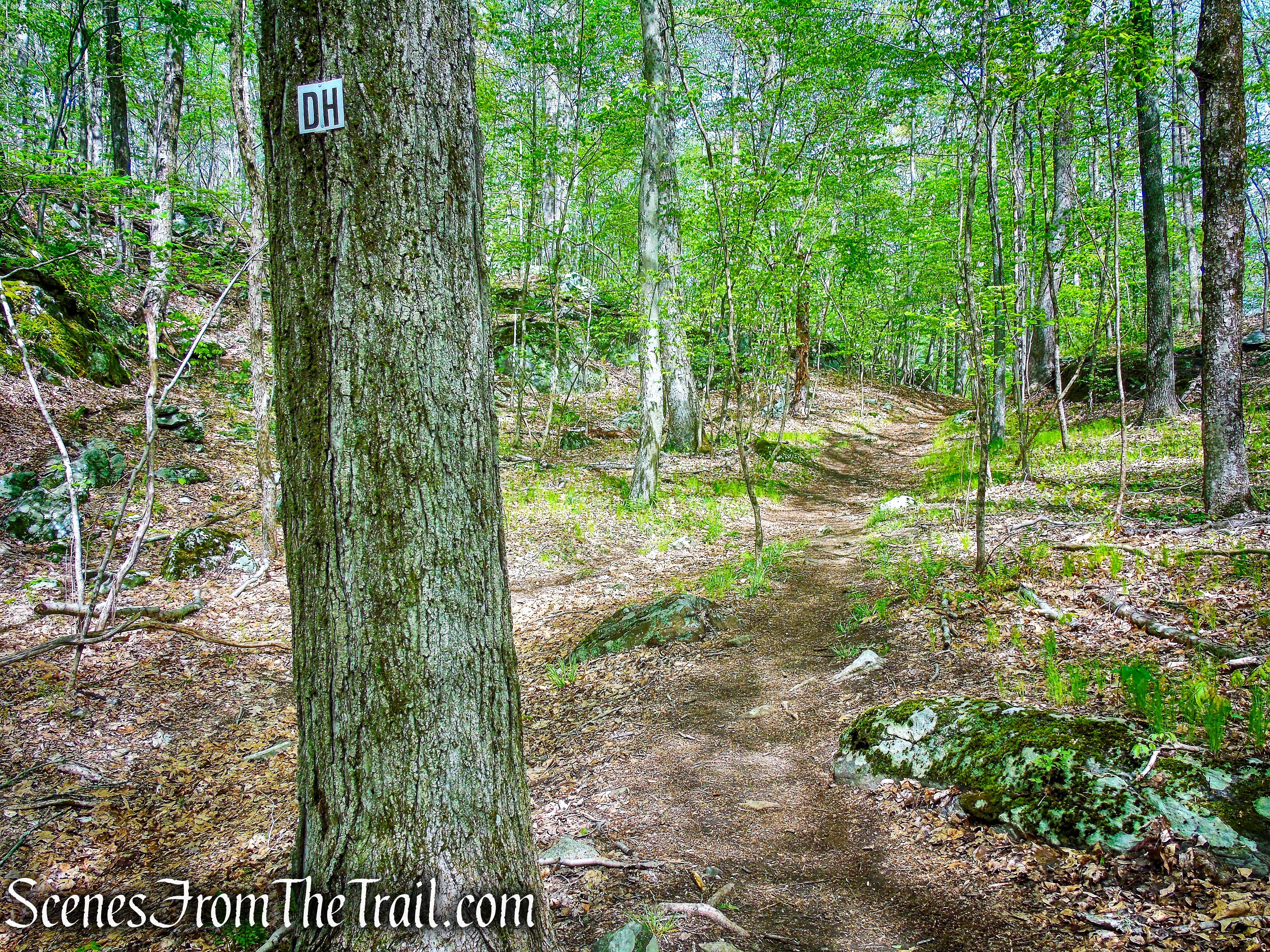
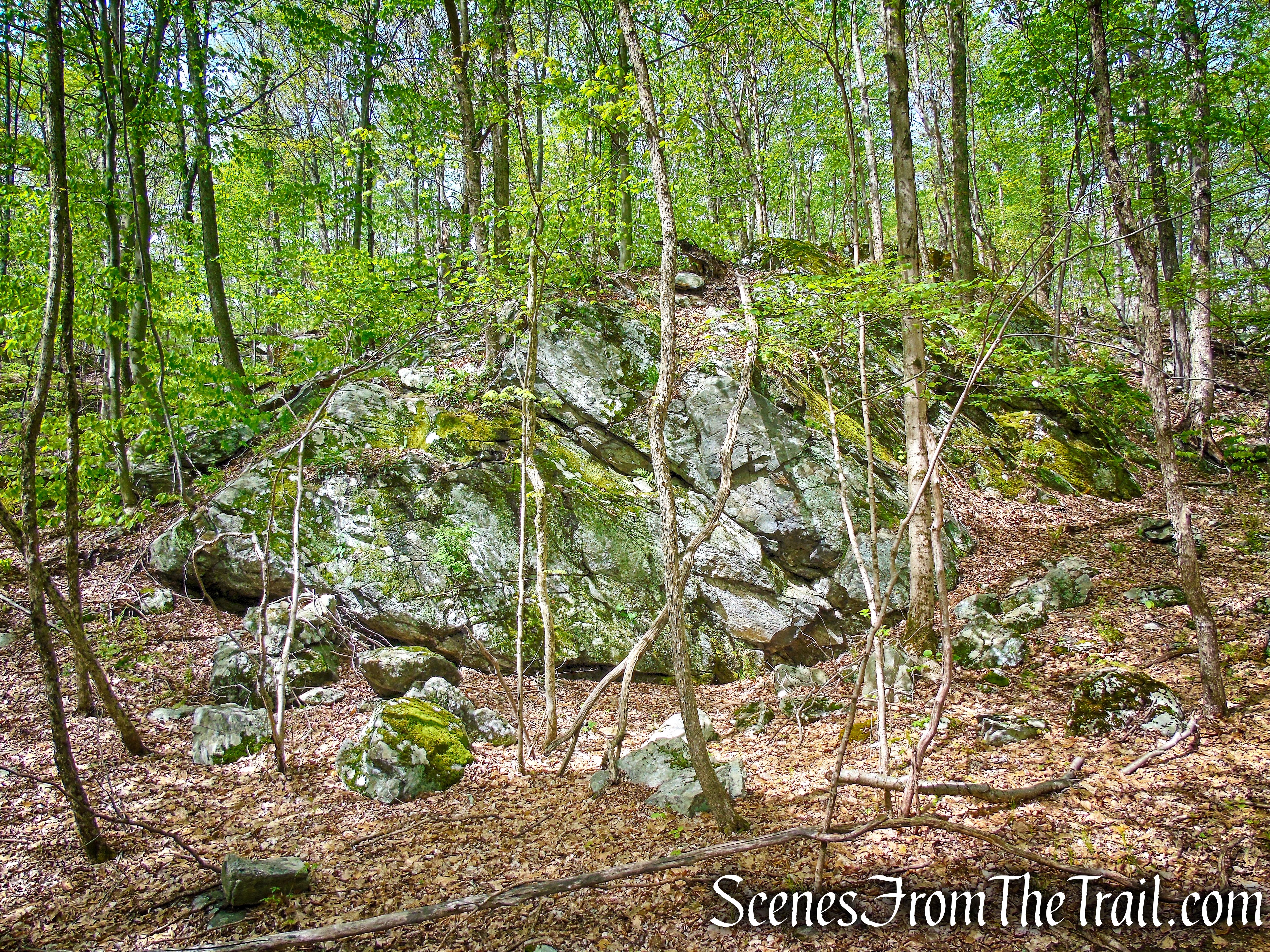
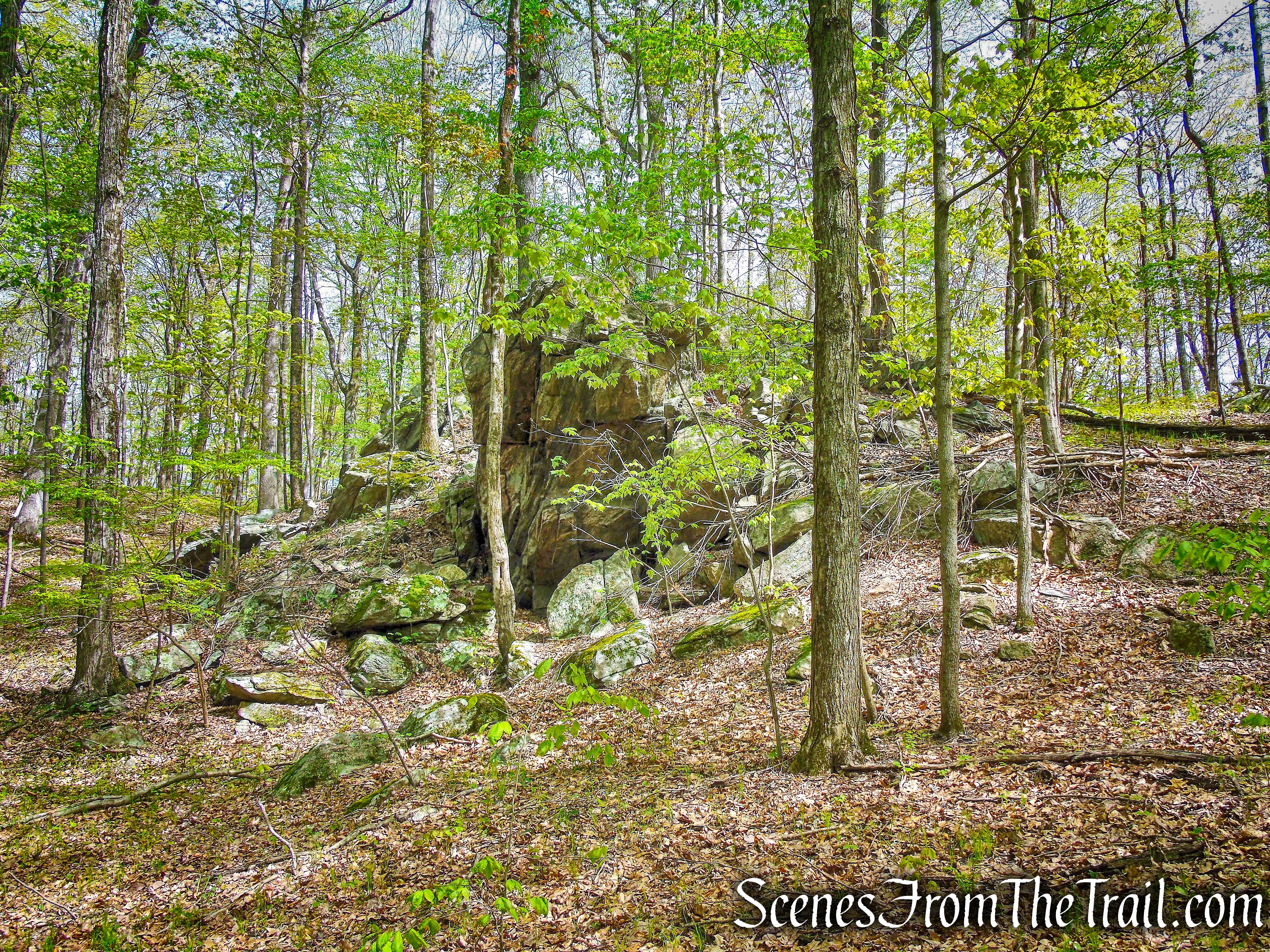
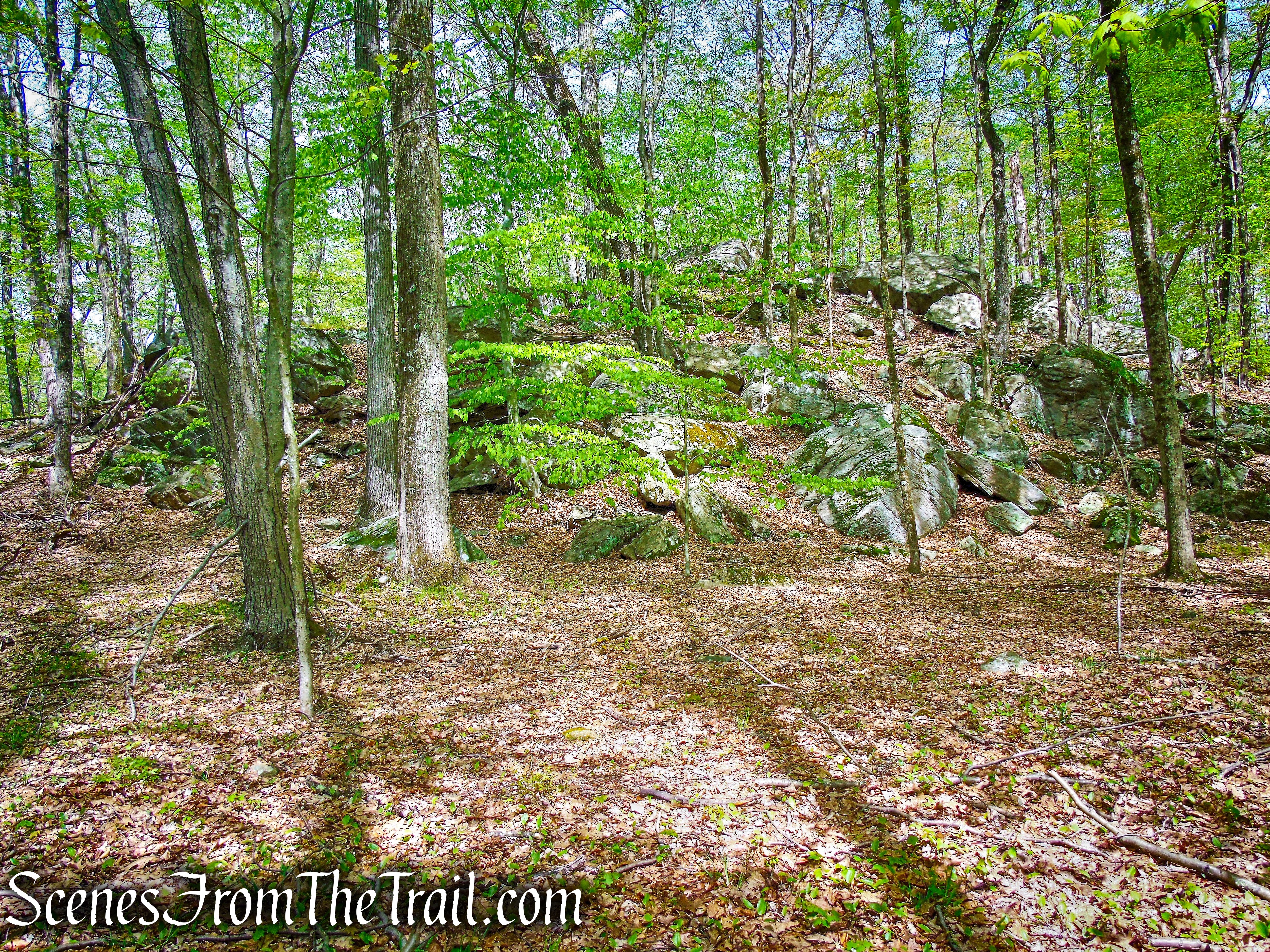
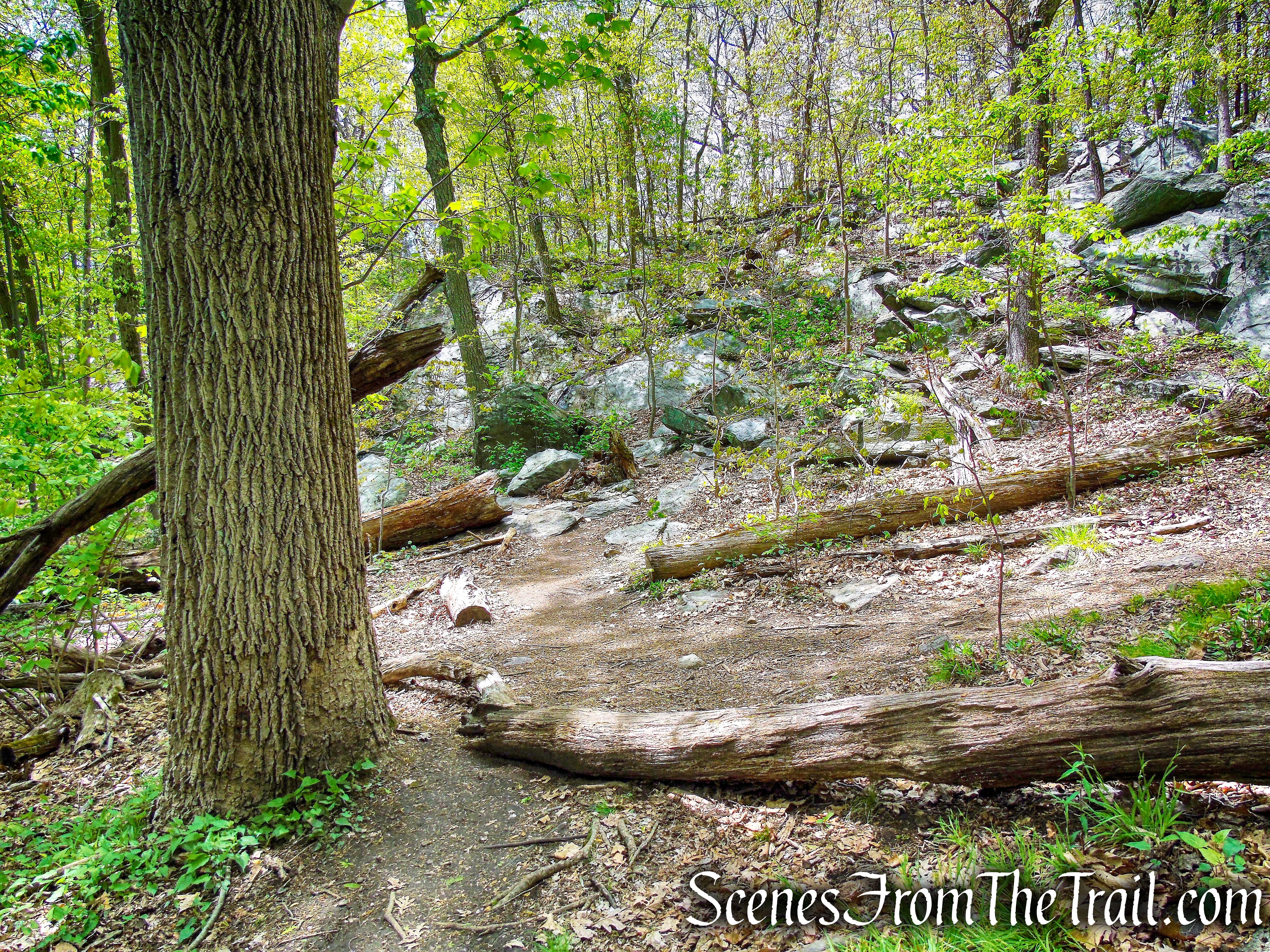
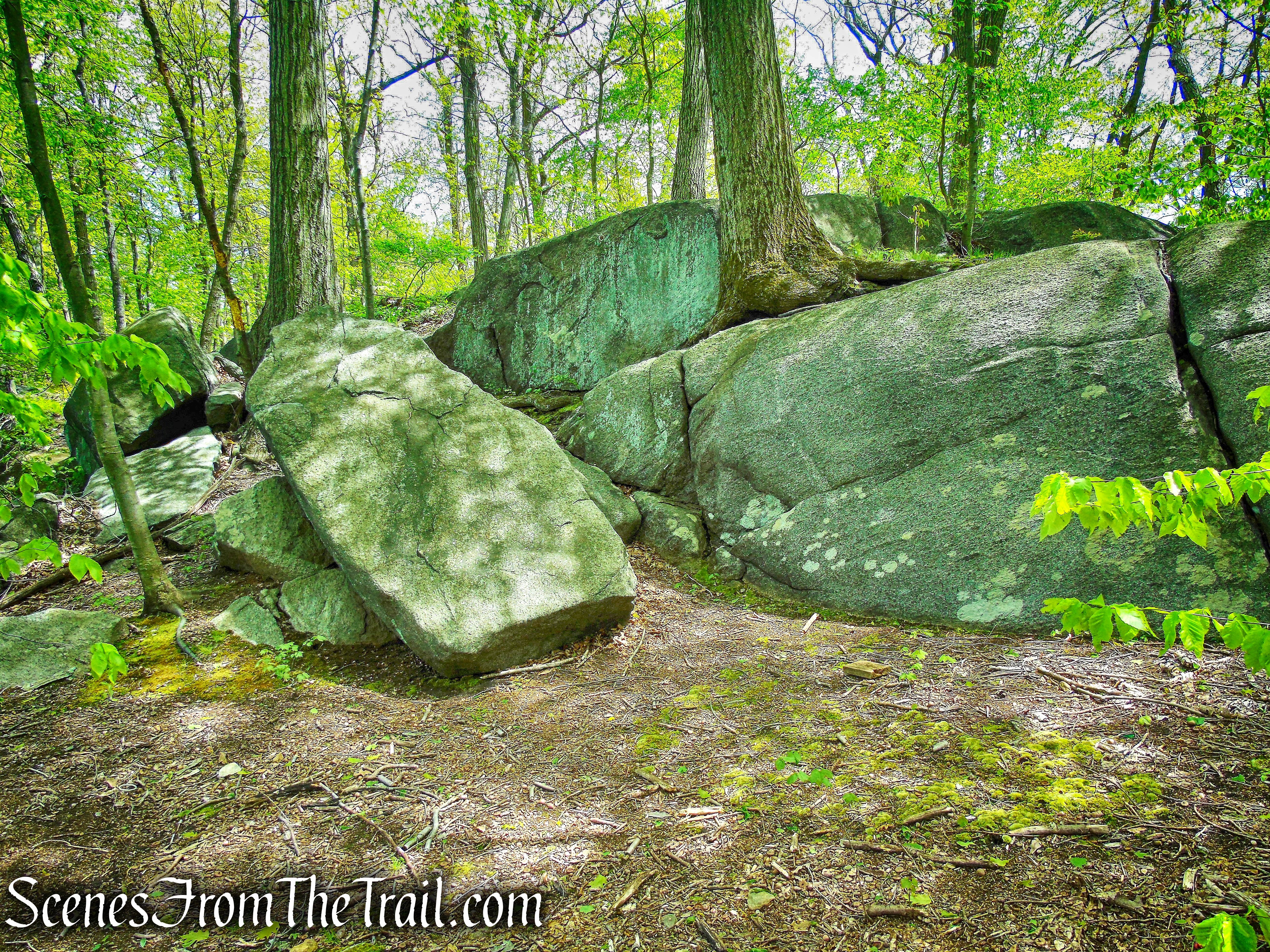
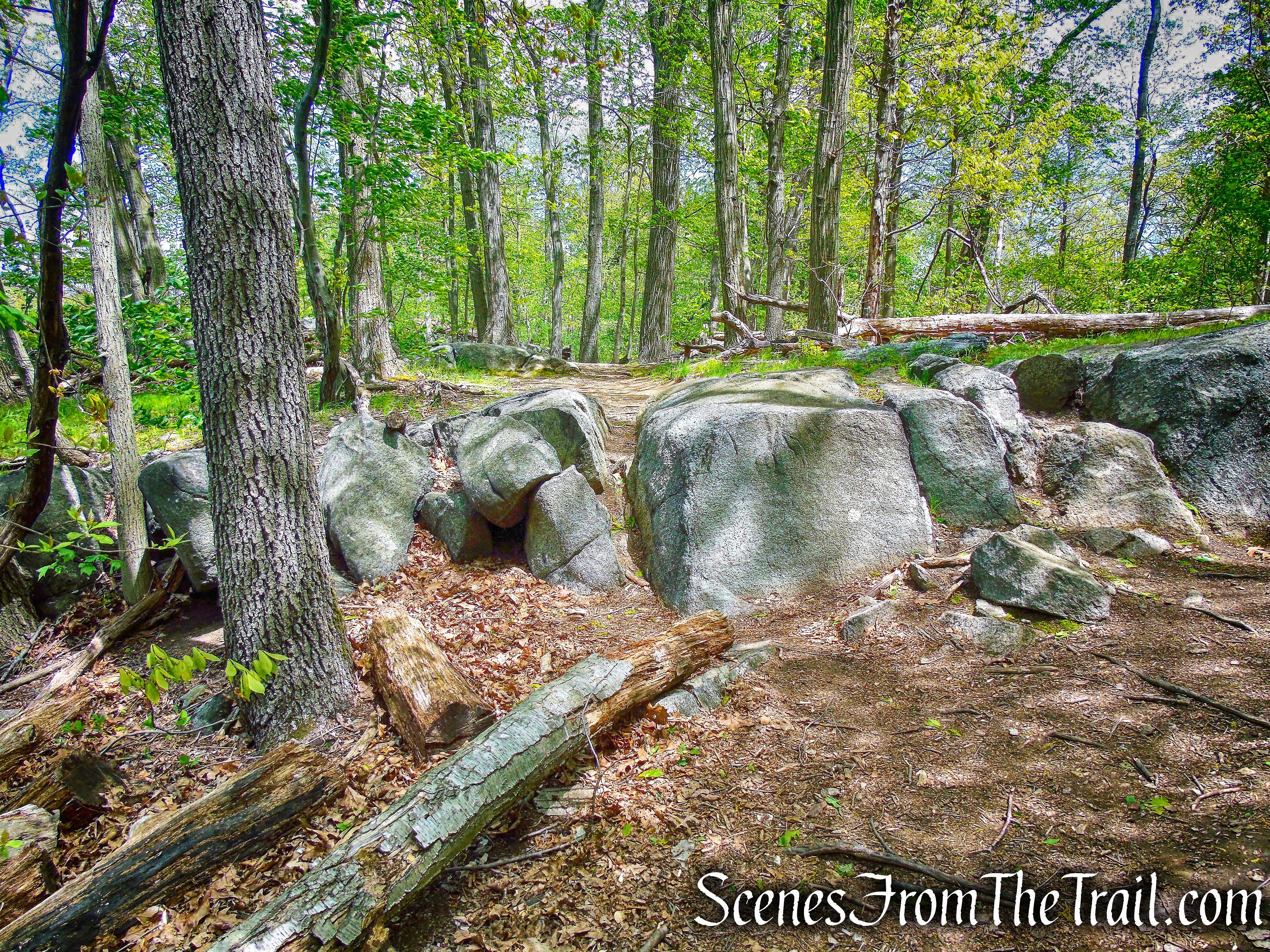
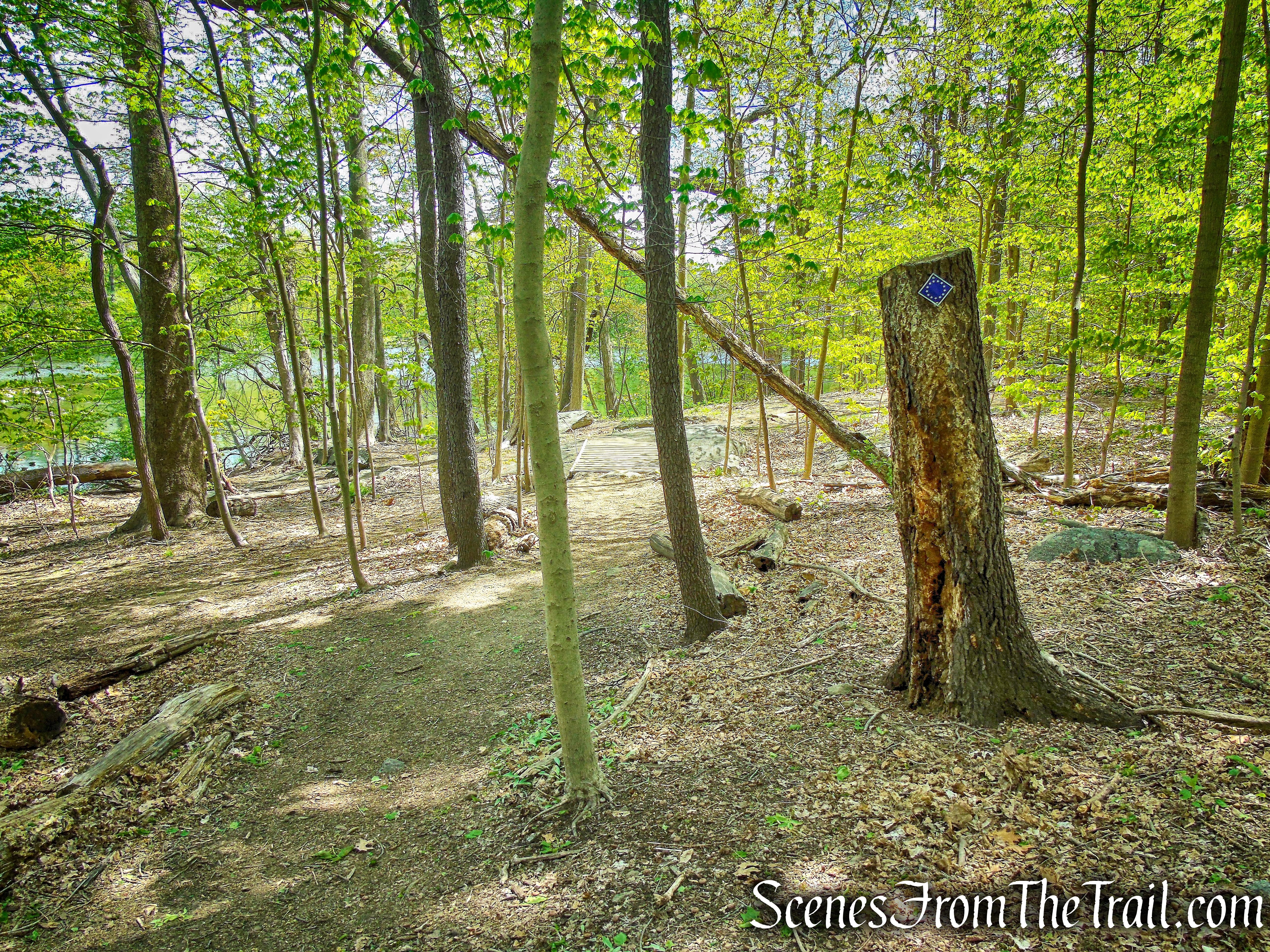
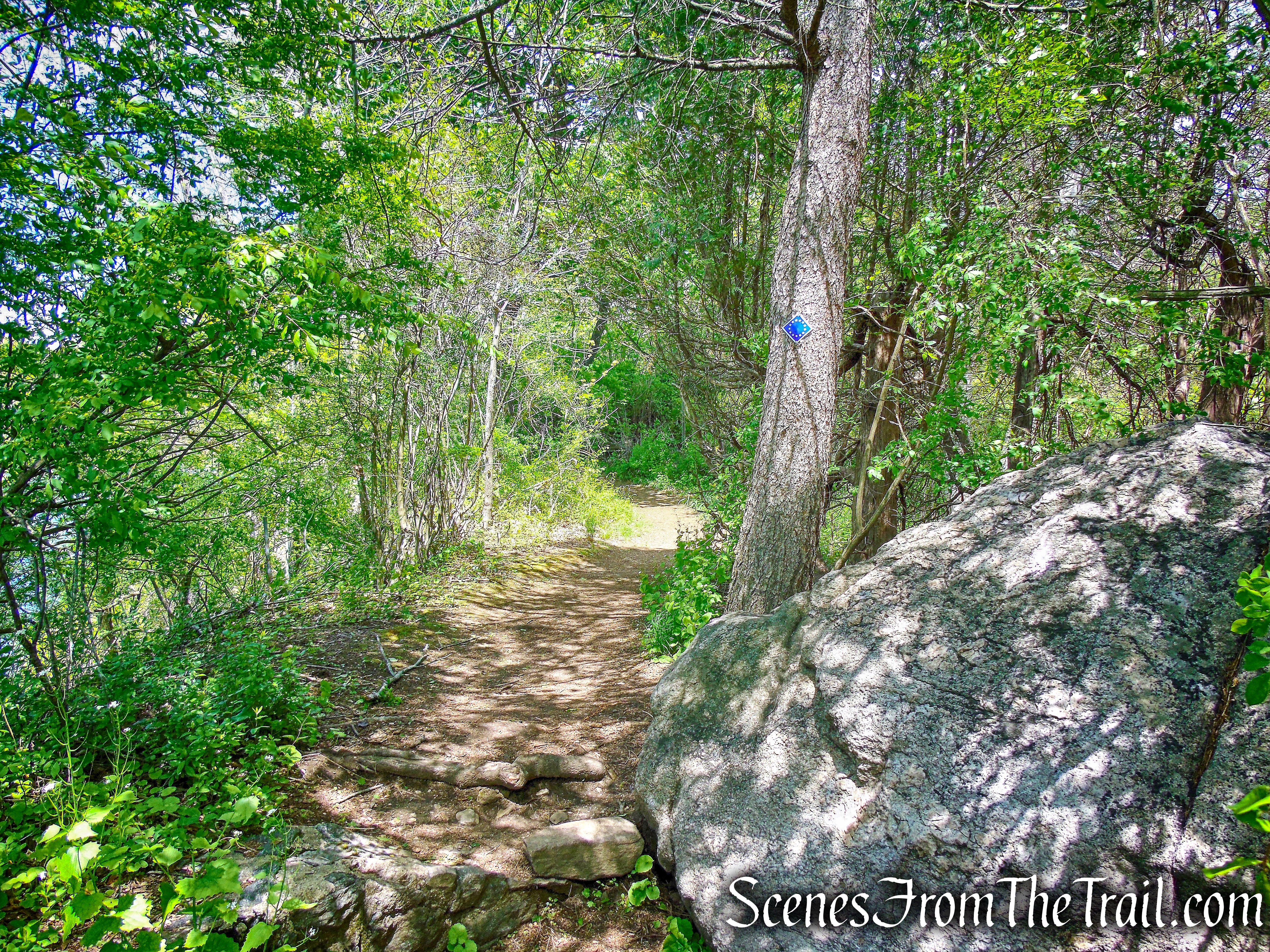
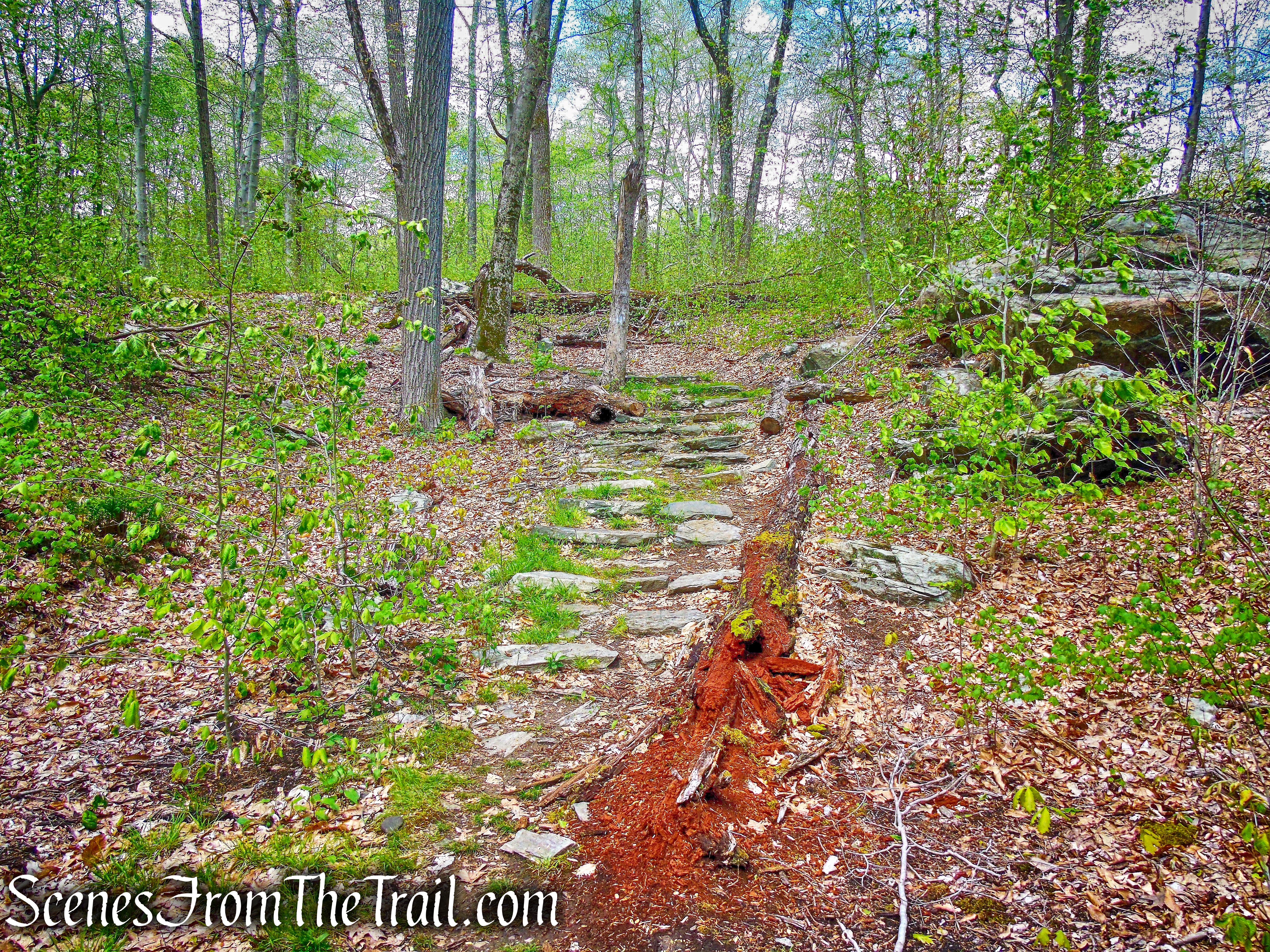
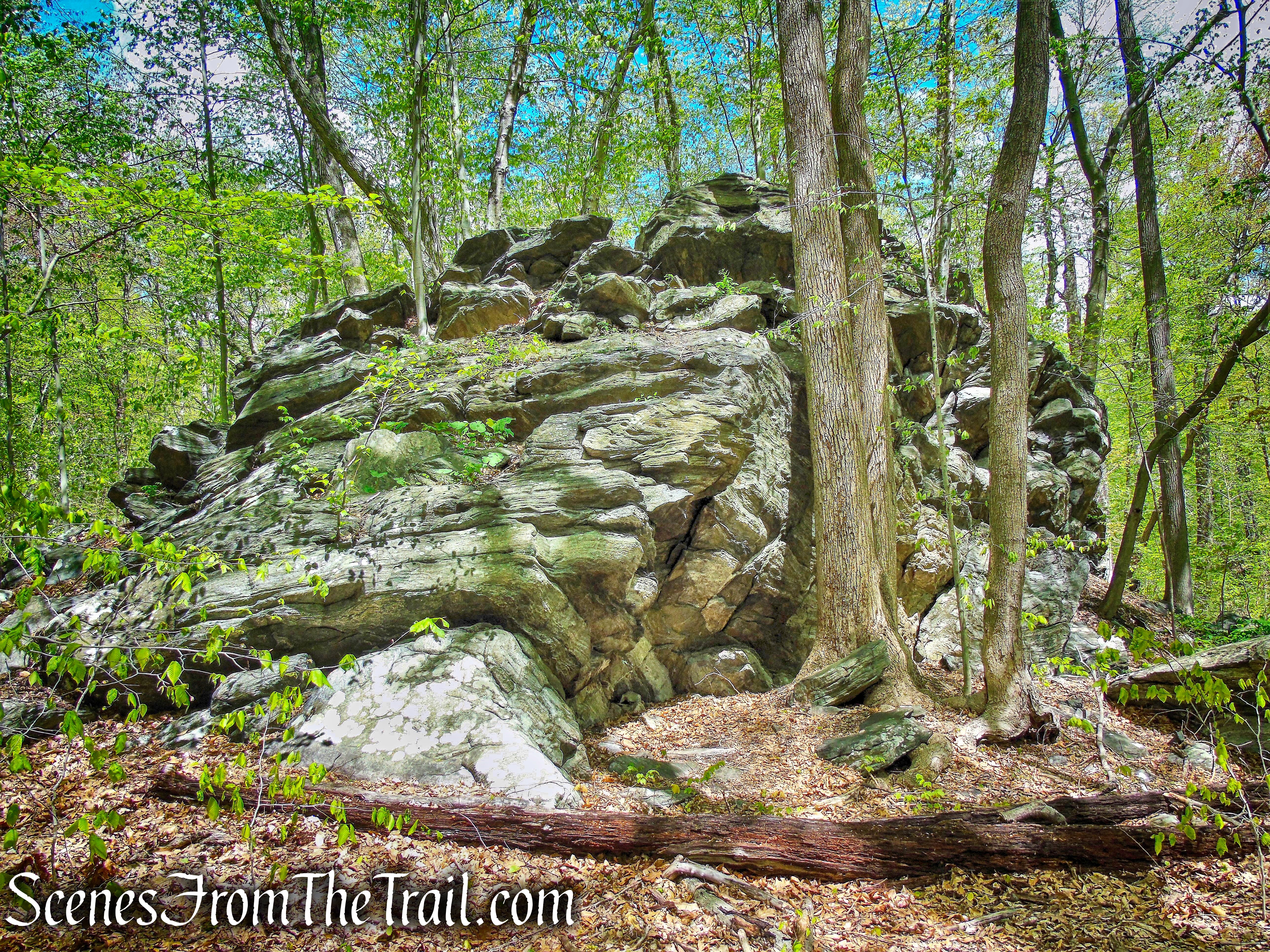
The area around Philips Cave provides a short trail over and around jumbled rocks. On the east side of Putnam Park Pond, there are more trails as well.
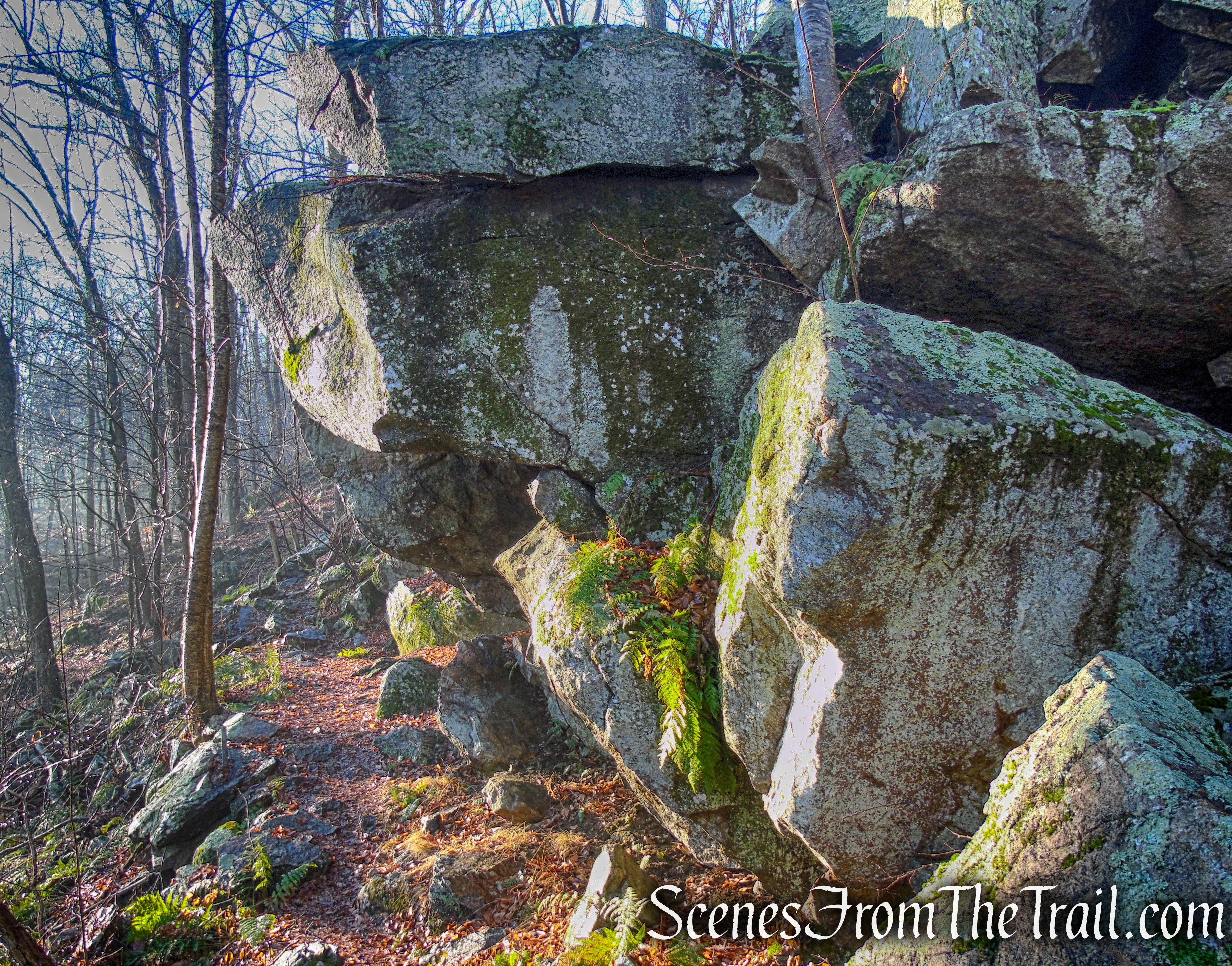
area near Philips Cave
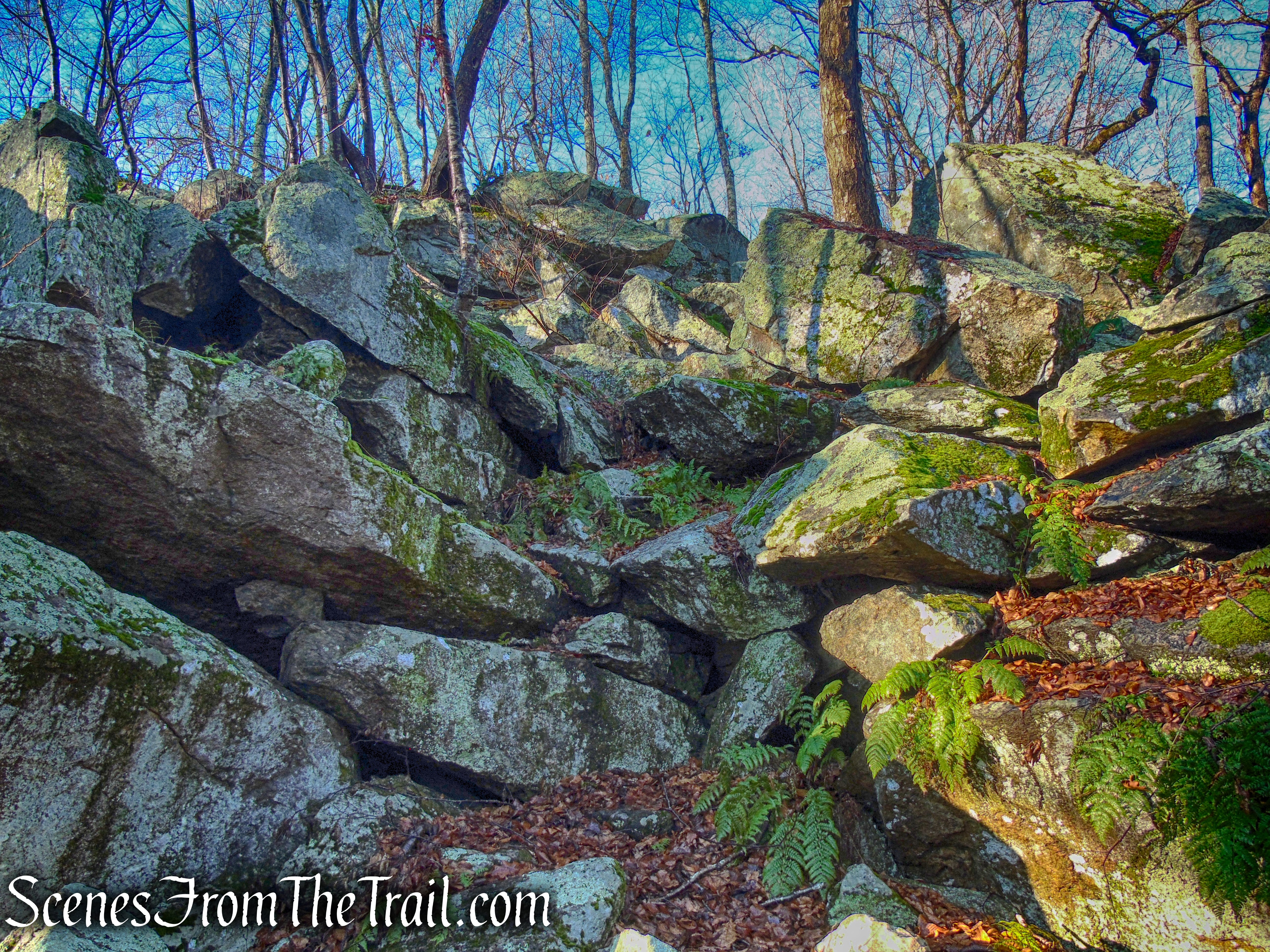
area near Philips Cave
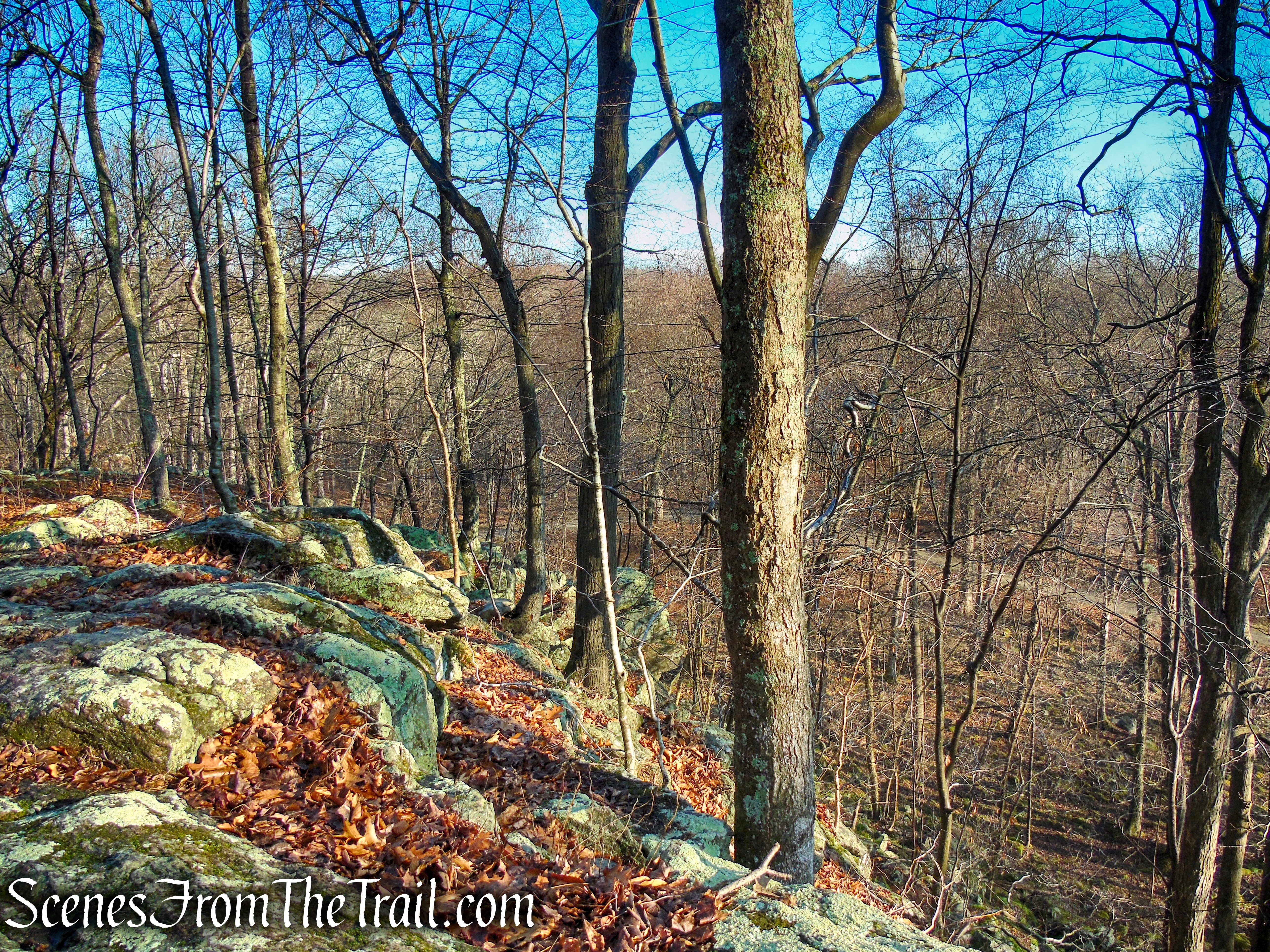
 

area near Philips Cave

area near Philips Cave


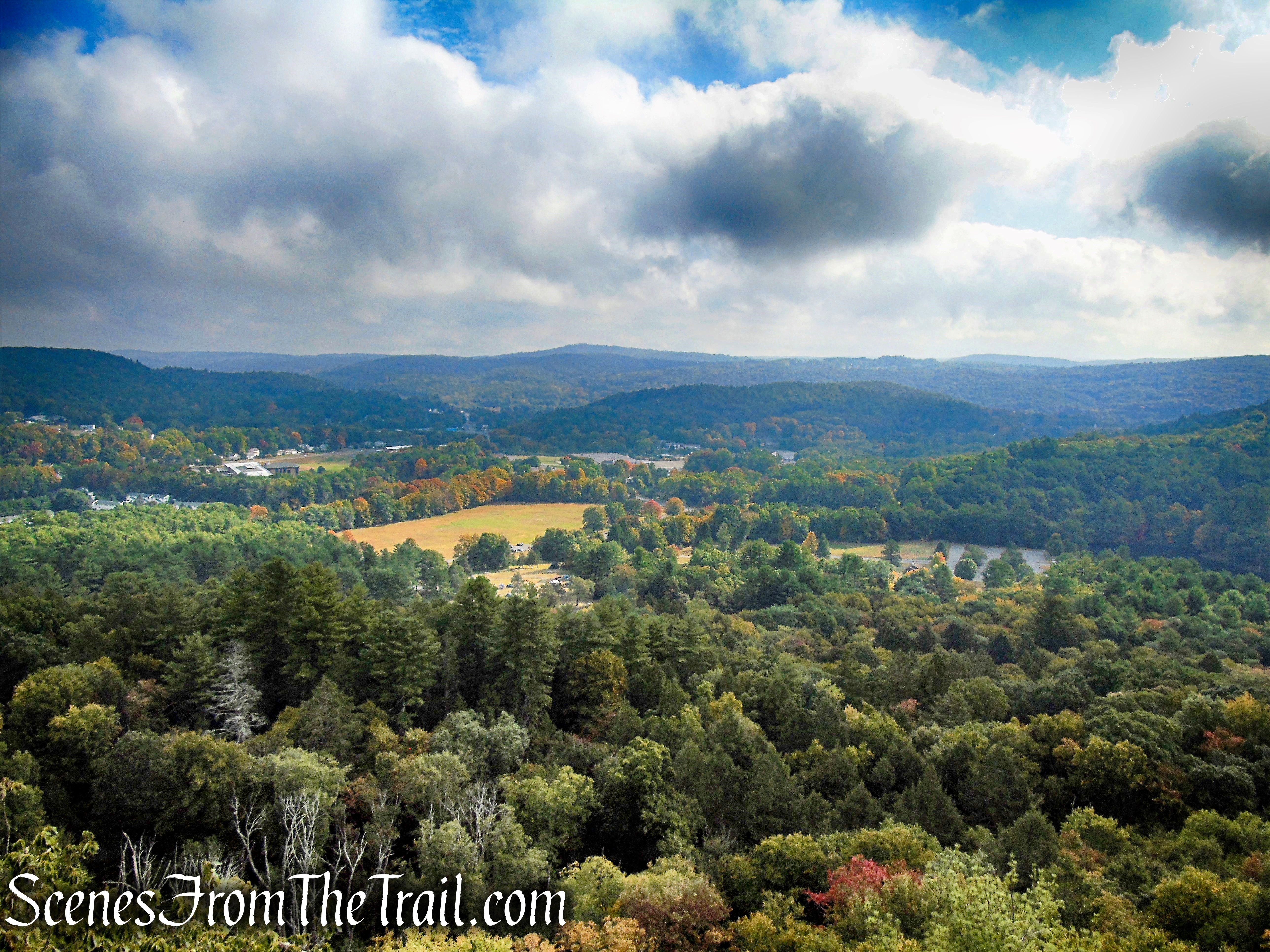
cliff above Philips Cave

cliff above Philips Cave

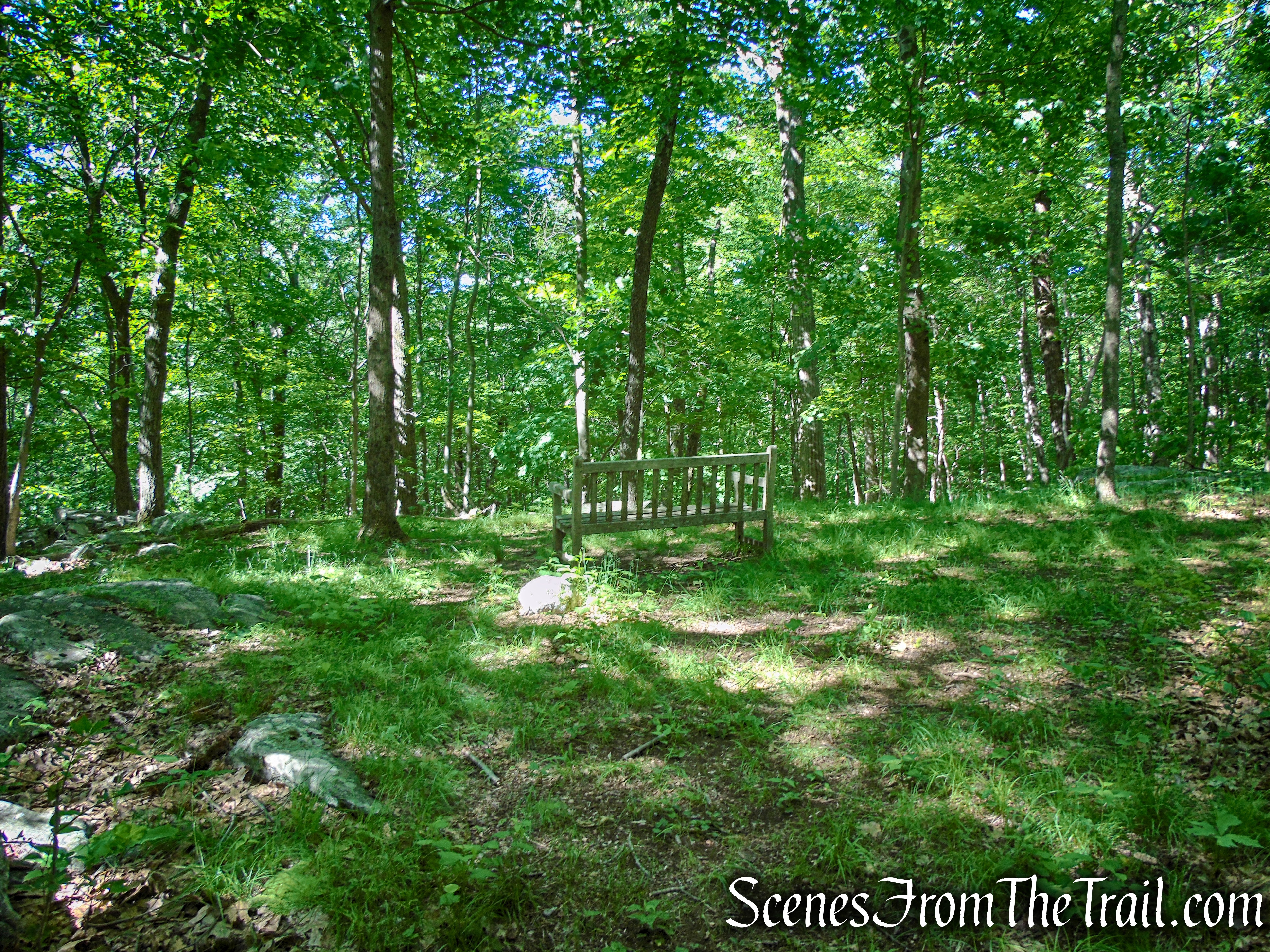
Near the northern end of the park, just south of the Officers Quarters/Magazine, is a white/blazed trail that leads to the 36-acre Joan Plishner Wildlife Preserve. This Double loop, 1.3 miles long trail through mostly open woods, provides hikers the opportunity to tack on additional mileage if so desired.
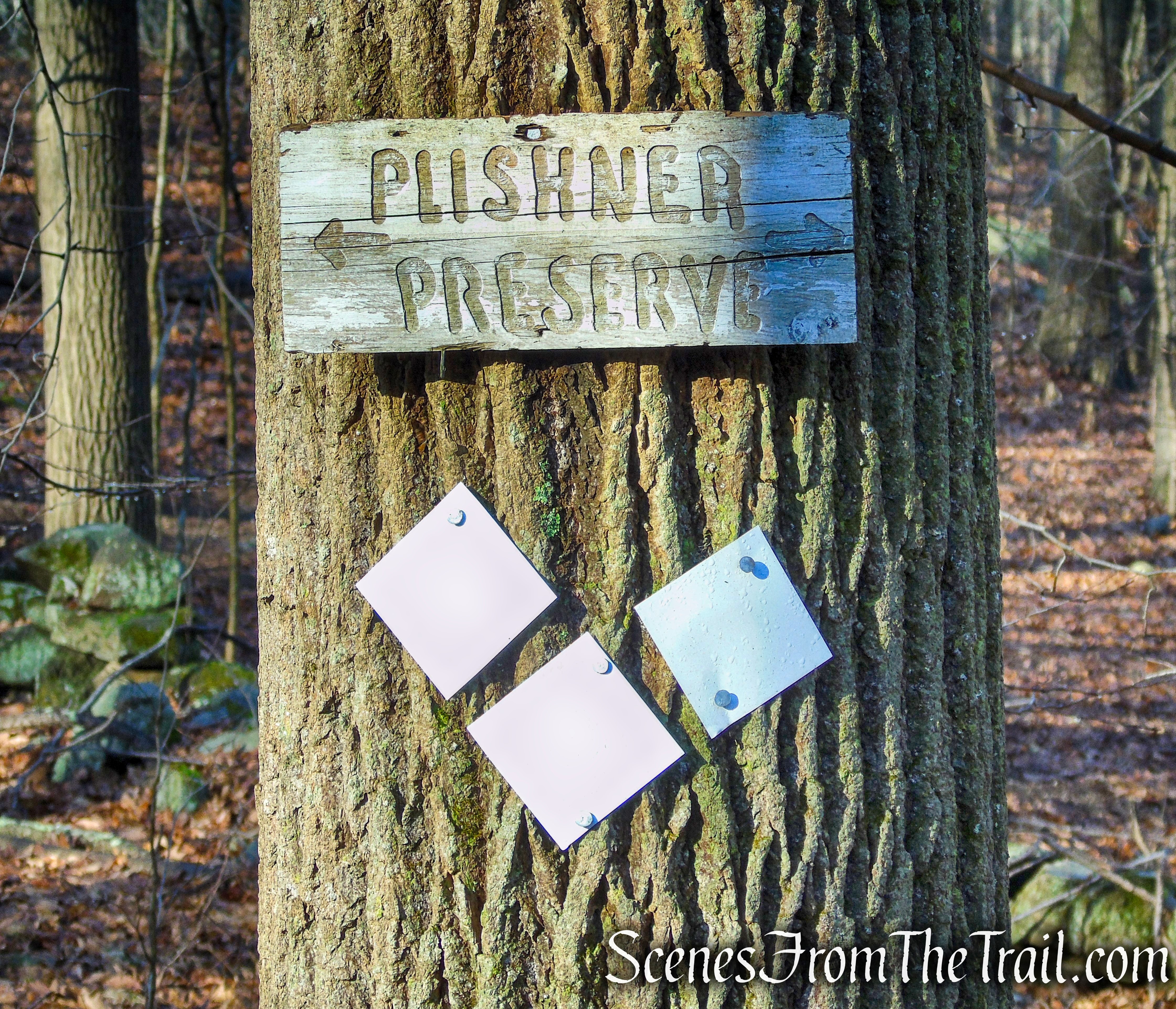
Joan Plishner Wildlife Preserve

Joan Plishner Wildlife Preserve


Points of Interest:

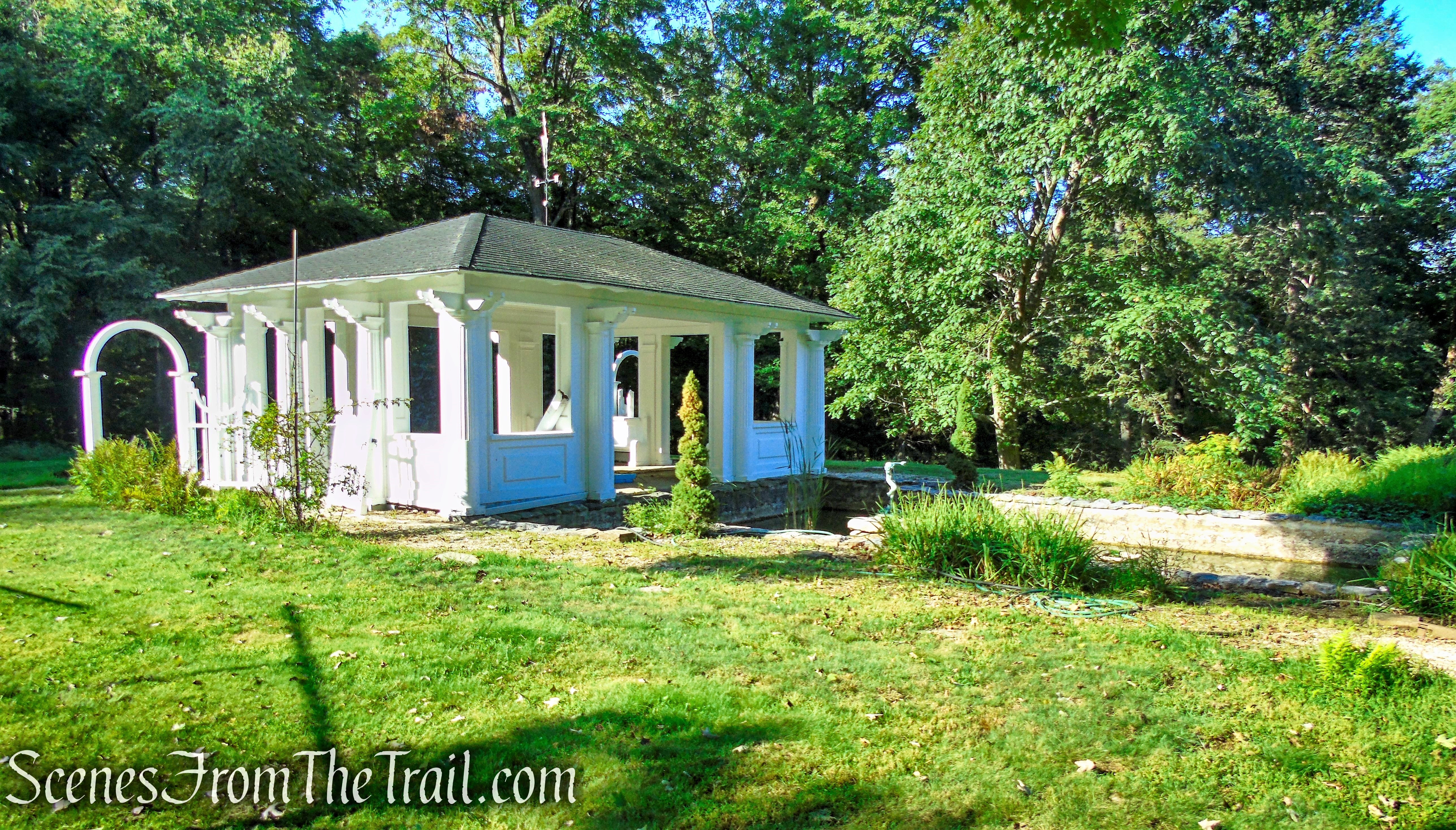
  • Visitor Center – this building was originally built in 1893 as the park pavilion. It was used as a shelter during inclement weather, for dances and picnics, and for town events. The upstairs was used as the original park museum. The building was dismantled board by board in 2005, and reconstructed into a 4-season climate controlled visitor center where visitors can get a park orientation prior to entering the historic encampment.
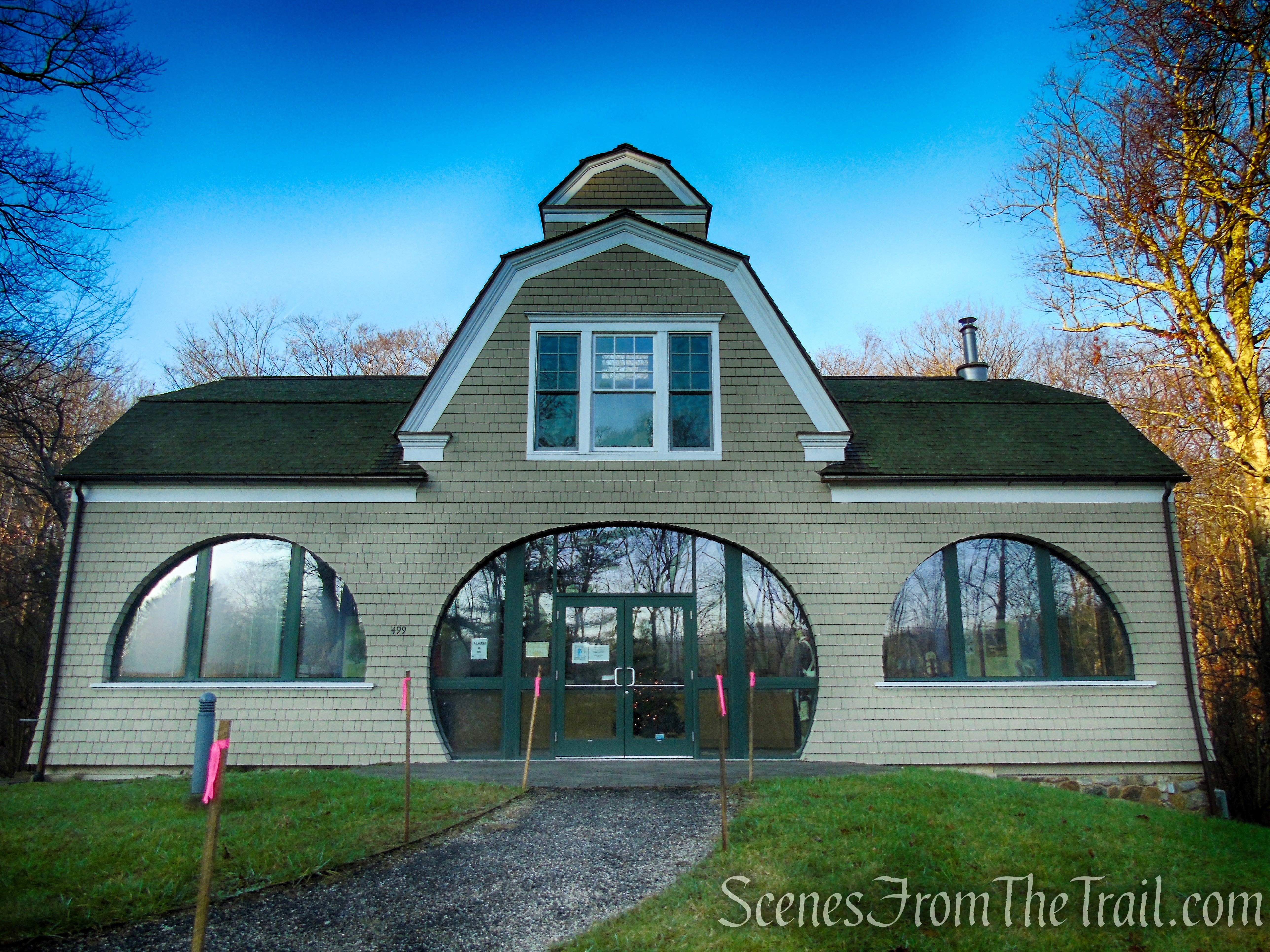
Visitor Center - Putnam Memorial State Park

Visitor Center – Putnam Memorial State Park

  • Camp Guardhouse – A log hut which was reconstructed about 1890 on the remains of a hut from 1778. The actual purpose of the original structure is in question, although local lore said it was the Guard House. The construction and size of the hut gives the visitor an approximation of one of the 116 enlisted men’s soldiers huts. Each hut contained 12 soldiers.
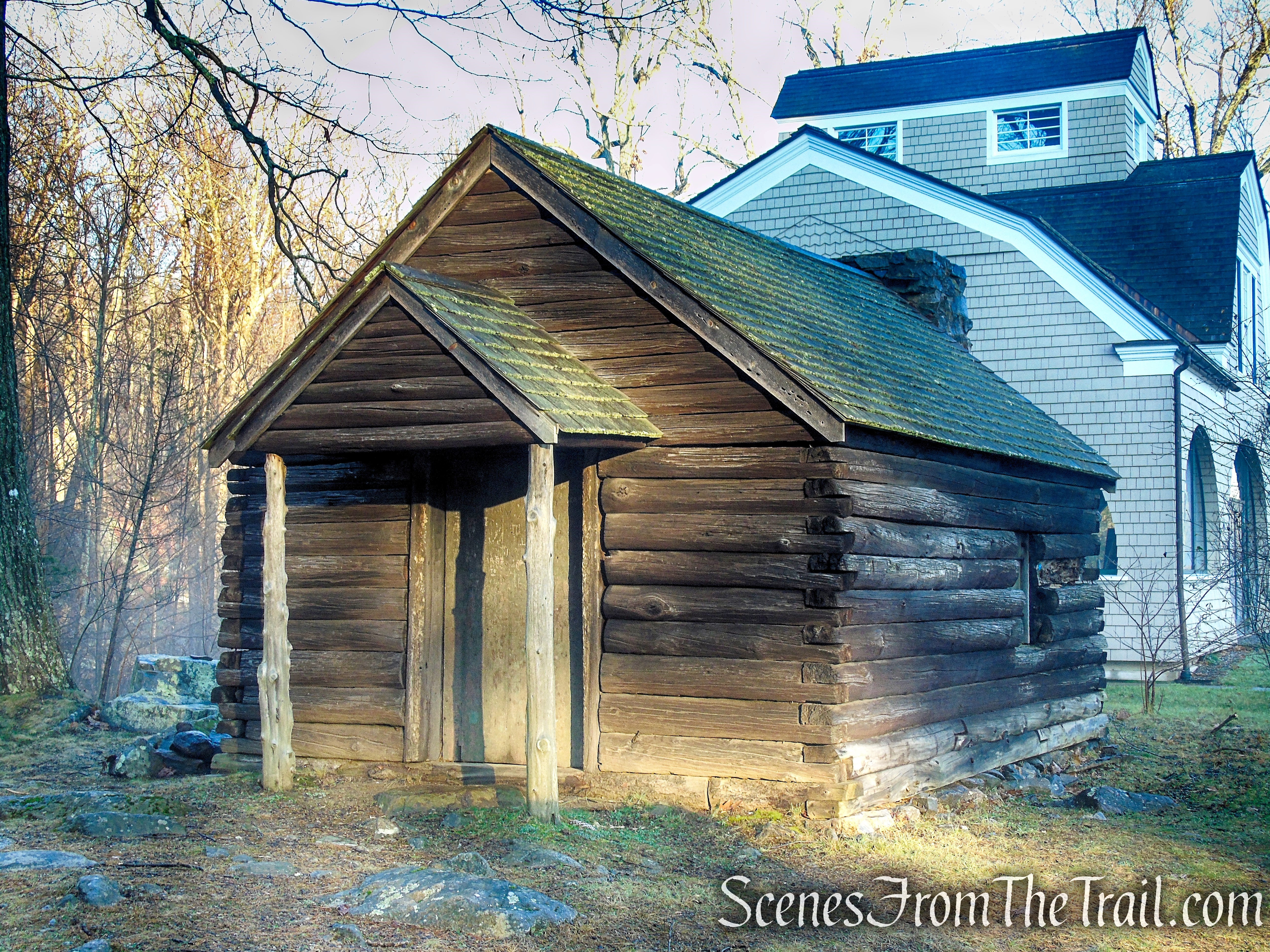
Camp Guardhouse - Putnam Memorial State Park

Camp Guardhouse – Putnam Memorial State Park
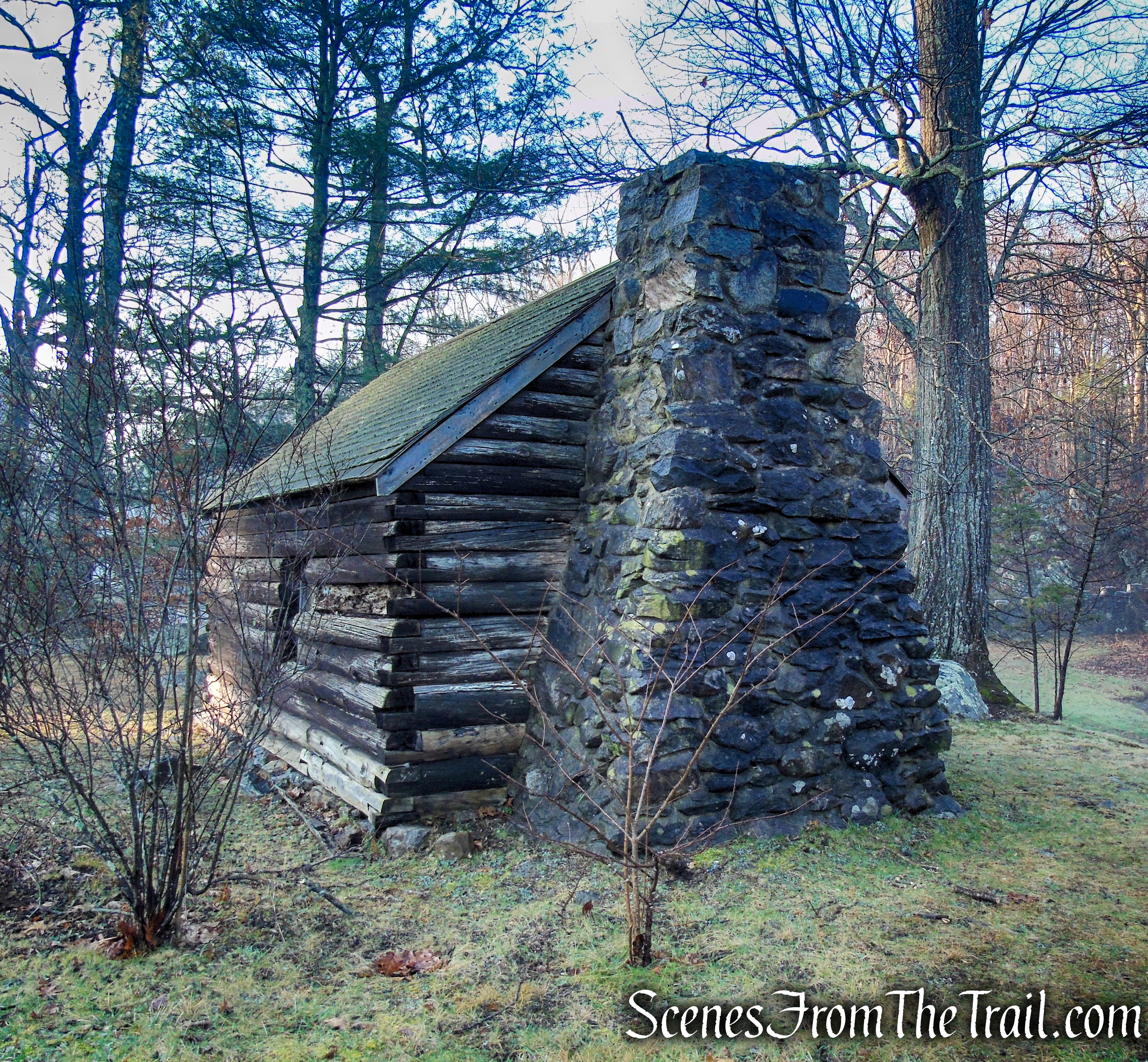
 

Camp Guardhouse - Putnam Memorial State Park

Camp Guardhouse – Putnam Memorial State Park

  • Putnam’s Escape at Horseneck Bronze Statue – is on the front lawn of the Visitor Center. It was sculpted by renowned local artist Anna Hyatt Huntington at her estate just a few miles from the park. Ms. Huntington was 94 when she completed the statue for its 1969 dedication at the park. The bronze depicts General Israel Putnam’s legendary ride down the stone steps in Greenwich, then called” Horseneck,” where he narrowly escaped from the British dragoons.
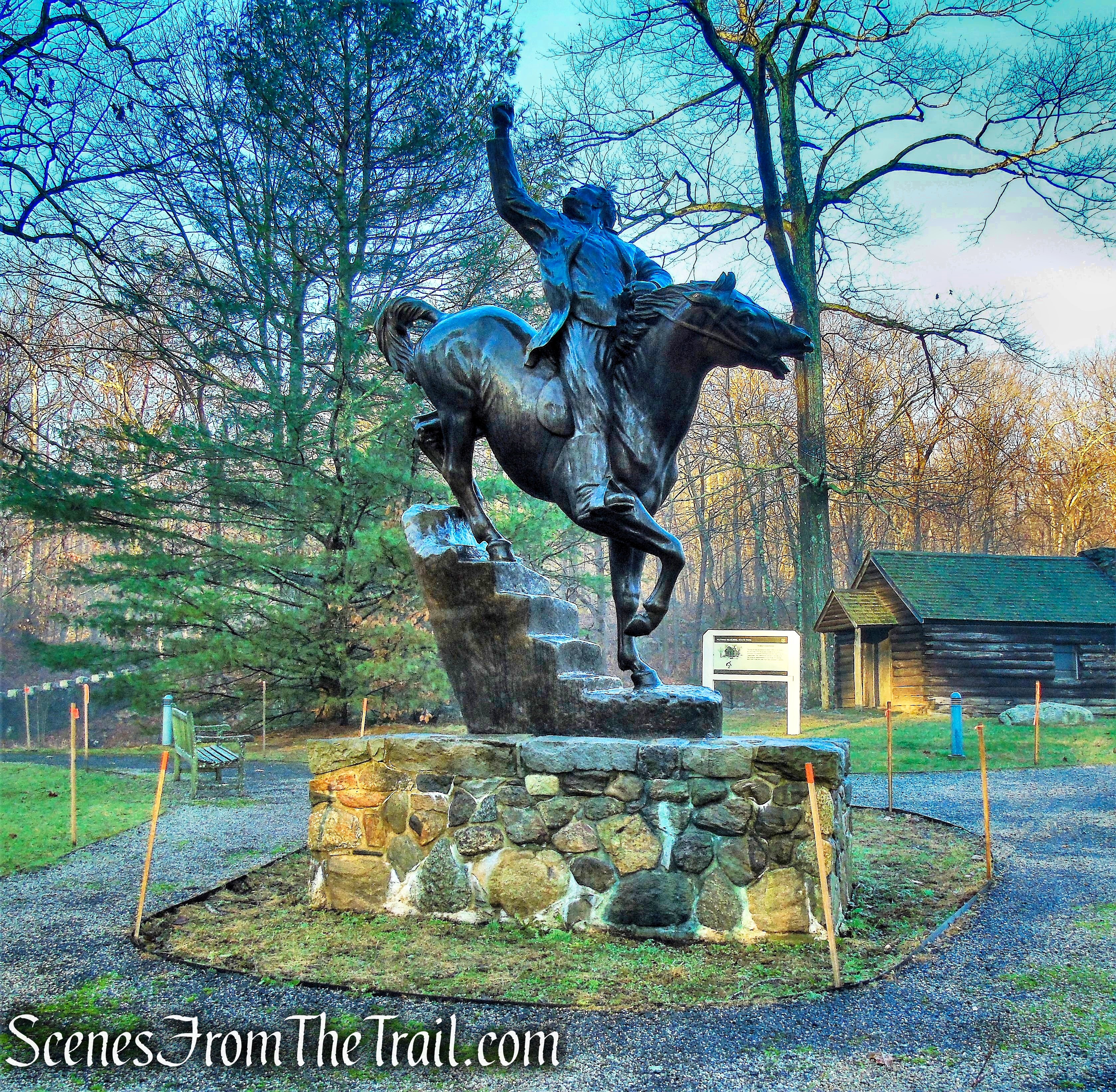
Putnam's Escape at Horseneck Bronze Statue

Putnam’s Escape at Horseneck Bronze Statue
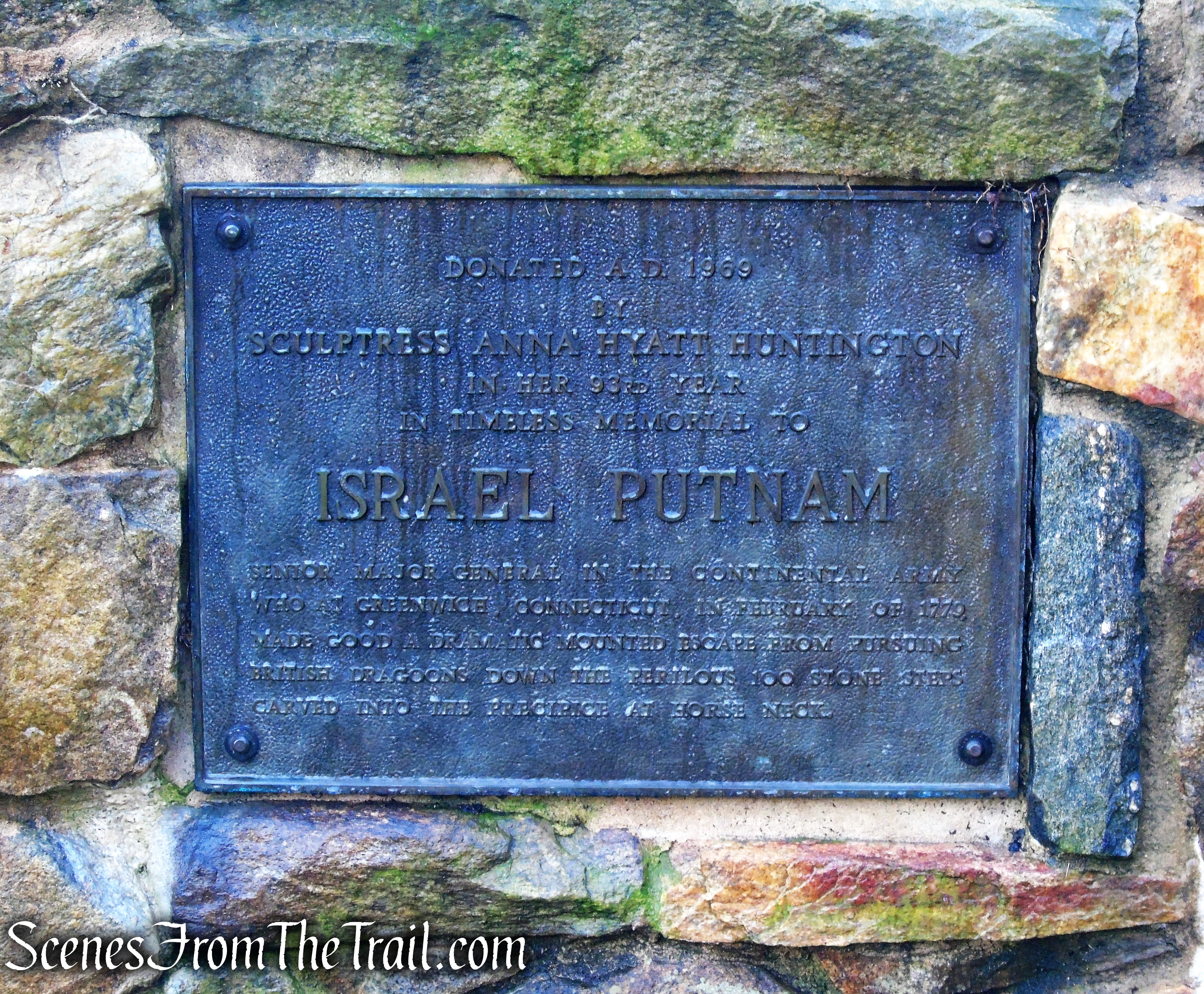
 

Putnam's Escape at Horseneck Bronze Statue

Putnam’s Escape at Horseneck Bronze Statue
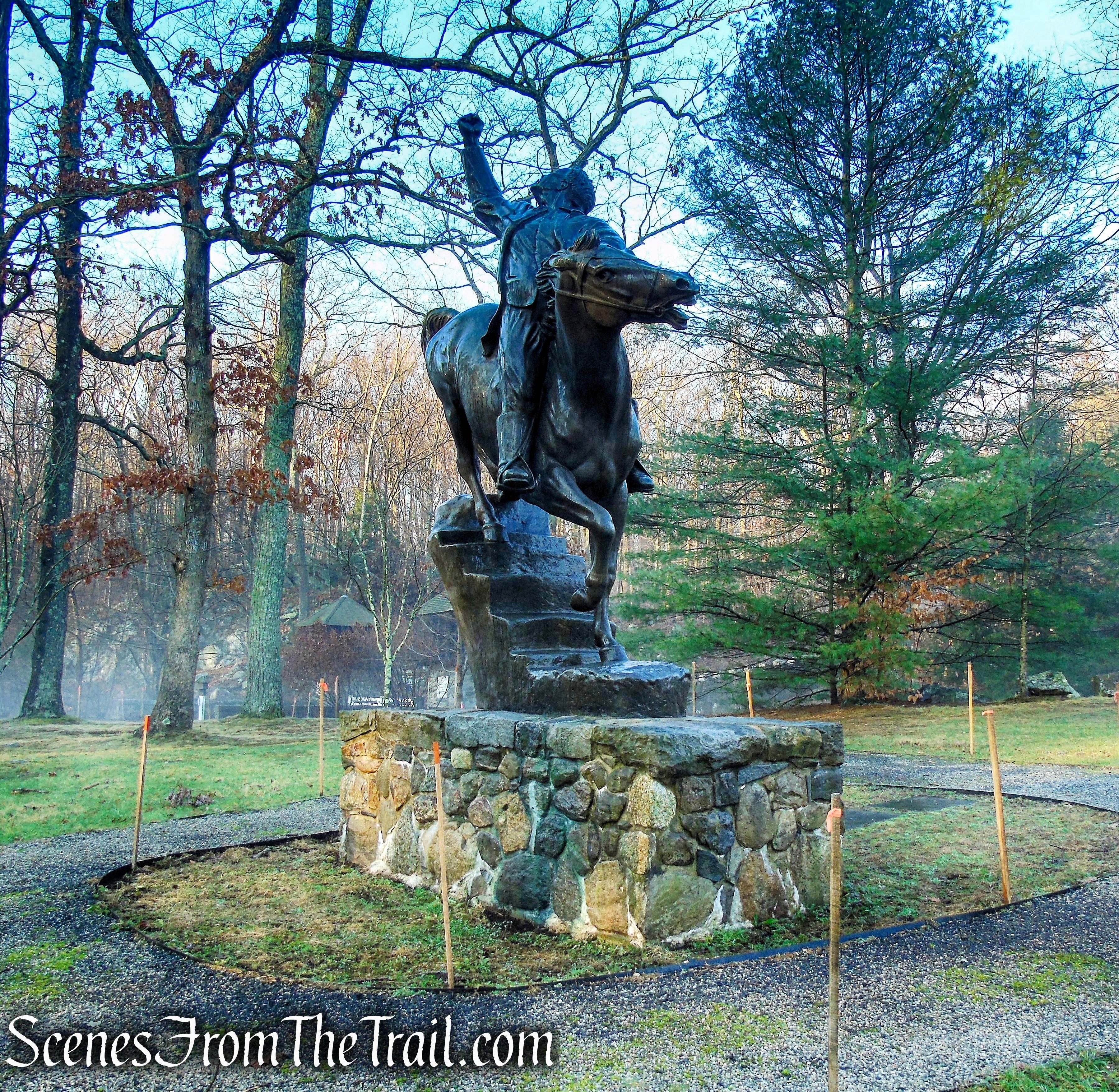
 

Putnam's Escape at Horseneck Bronze Statue

Putnam’s Escape at Horseneck Bronze Statue

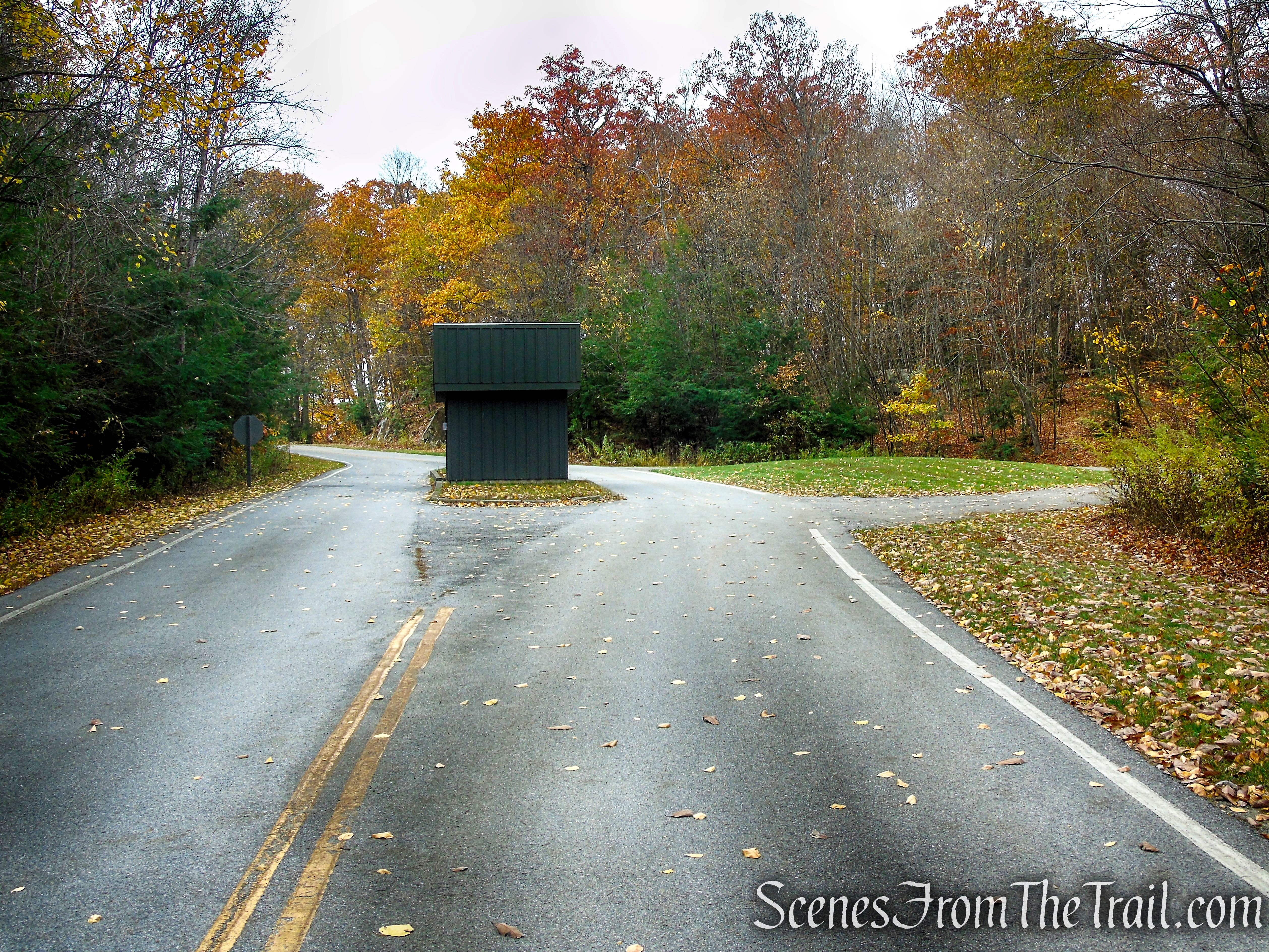
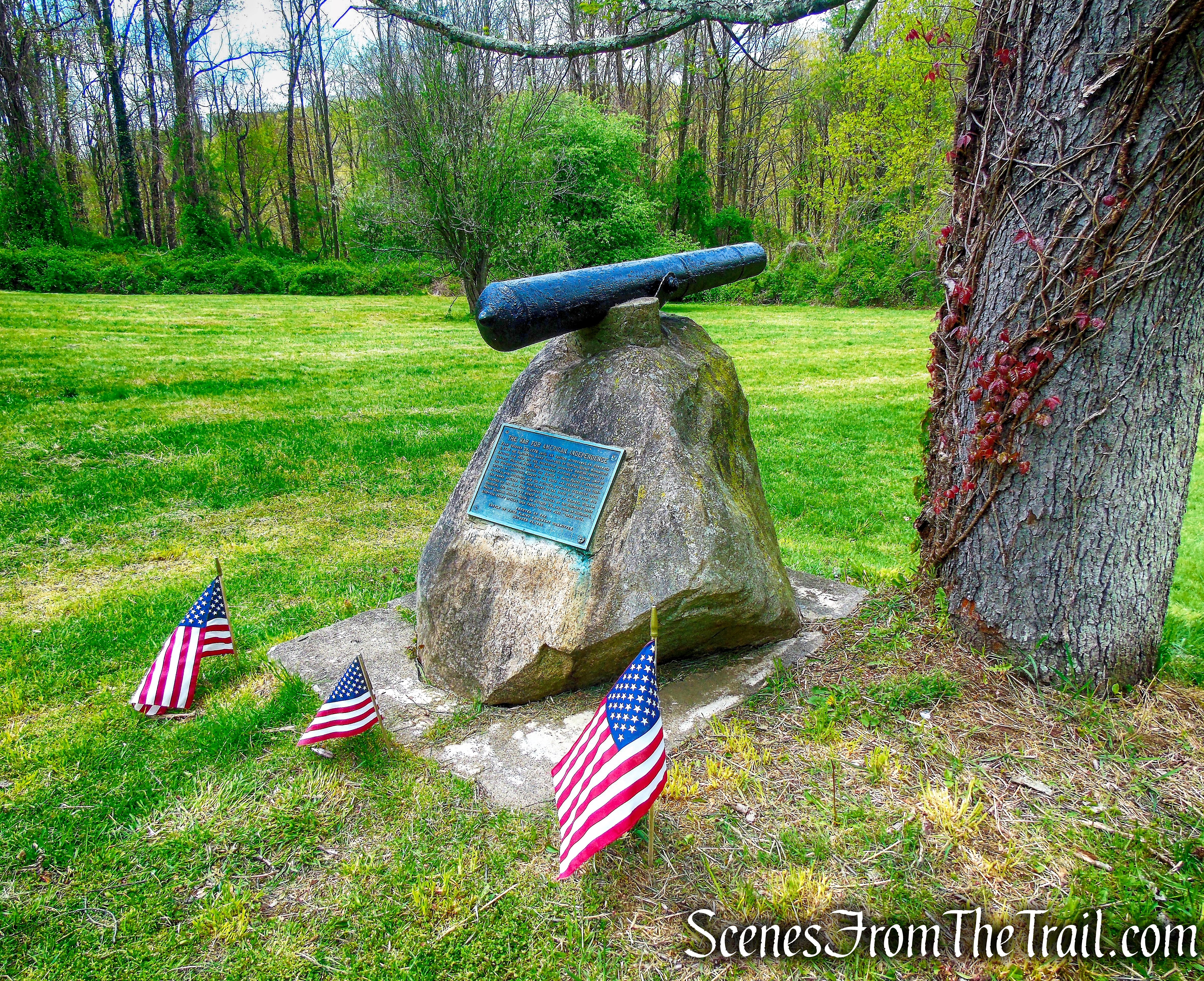
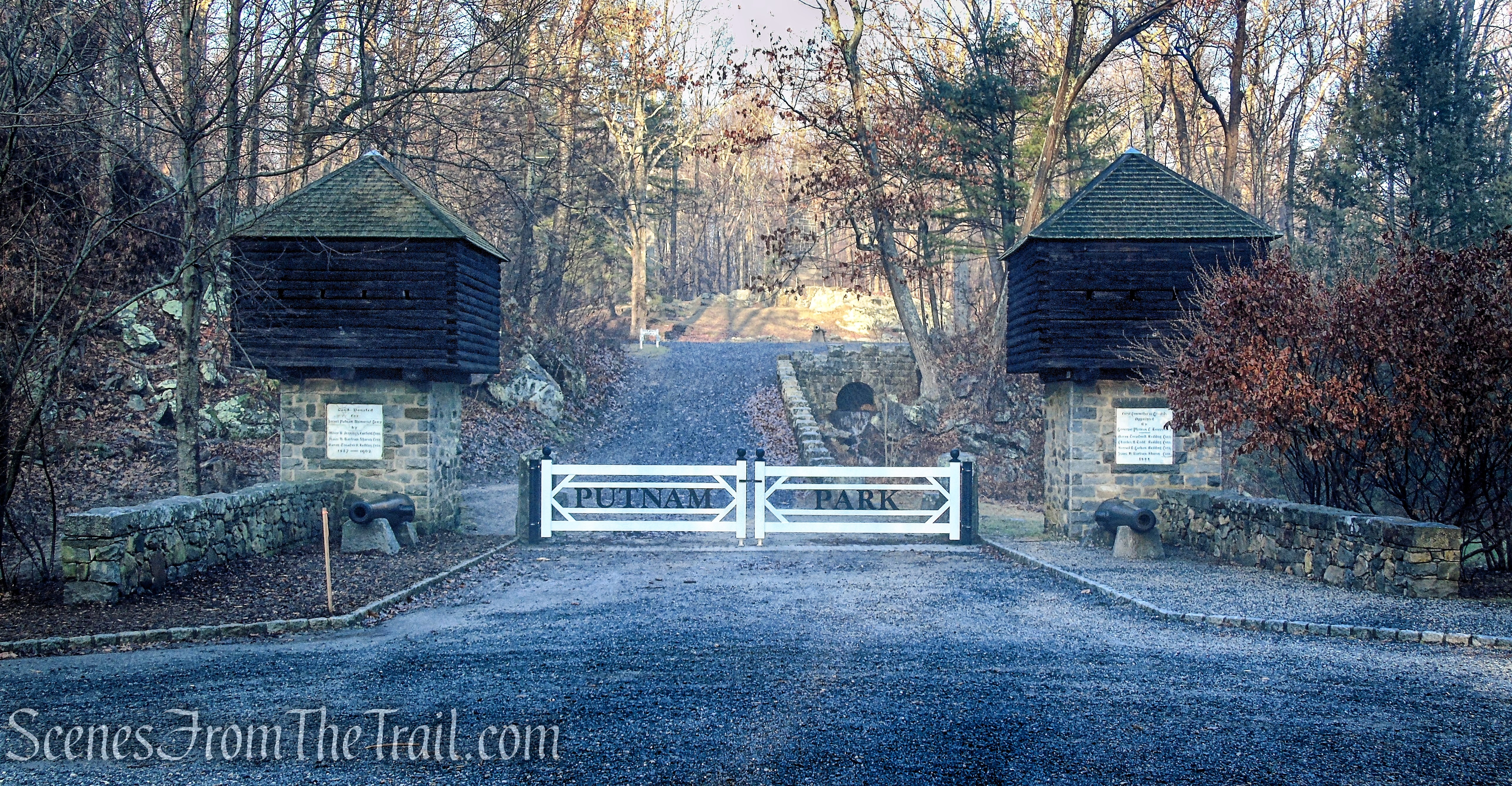
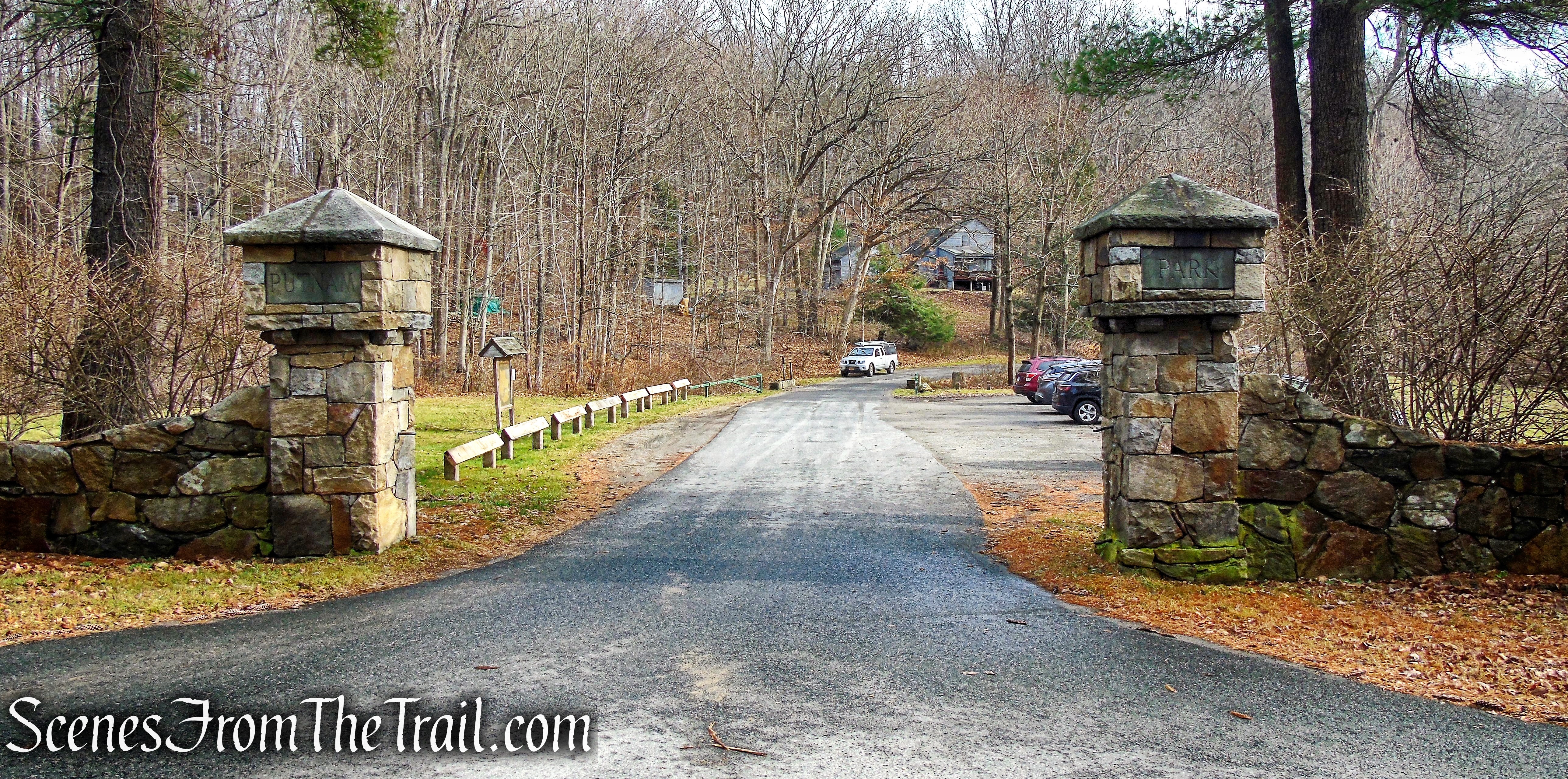
  • Main Entrance Area – Civil War cannons and miniature blockhouses flank the road. Blockhouses were used in frontier areas during the French and Indian War where Israel Putnam achieved fame for his courageous exploits. There are several other Civil War cannons inside the park. These weapons were surplus arms from the Civil War which ended only a few years prior to the park’s commissioning. The gateway view focuses on the Monument.
Main Entrance Area - Putnam Memorial State Park

Main Entrance Area – Putnam Memorial State Park
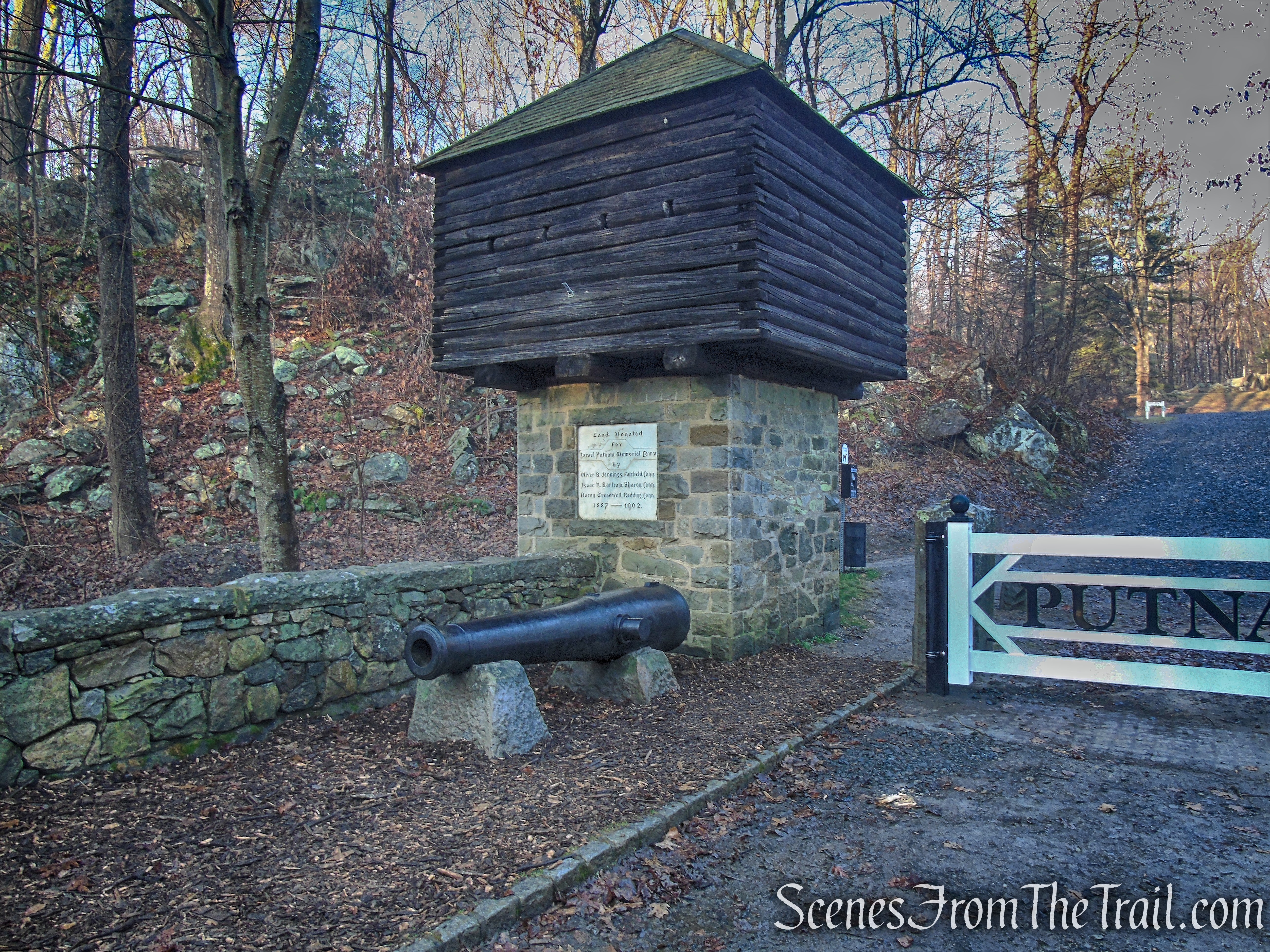
 

Main Entrance Area - Putnam Memorial State Park

Main Entrance Area – Putnam Memorial State Park
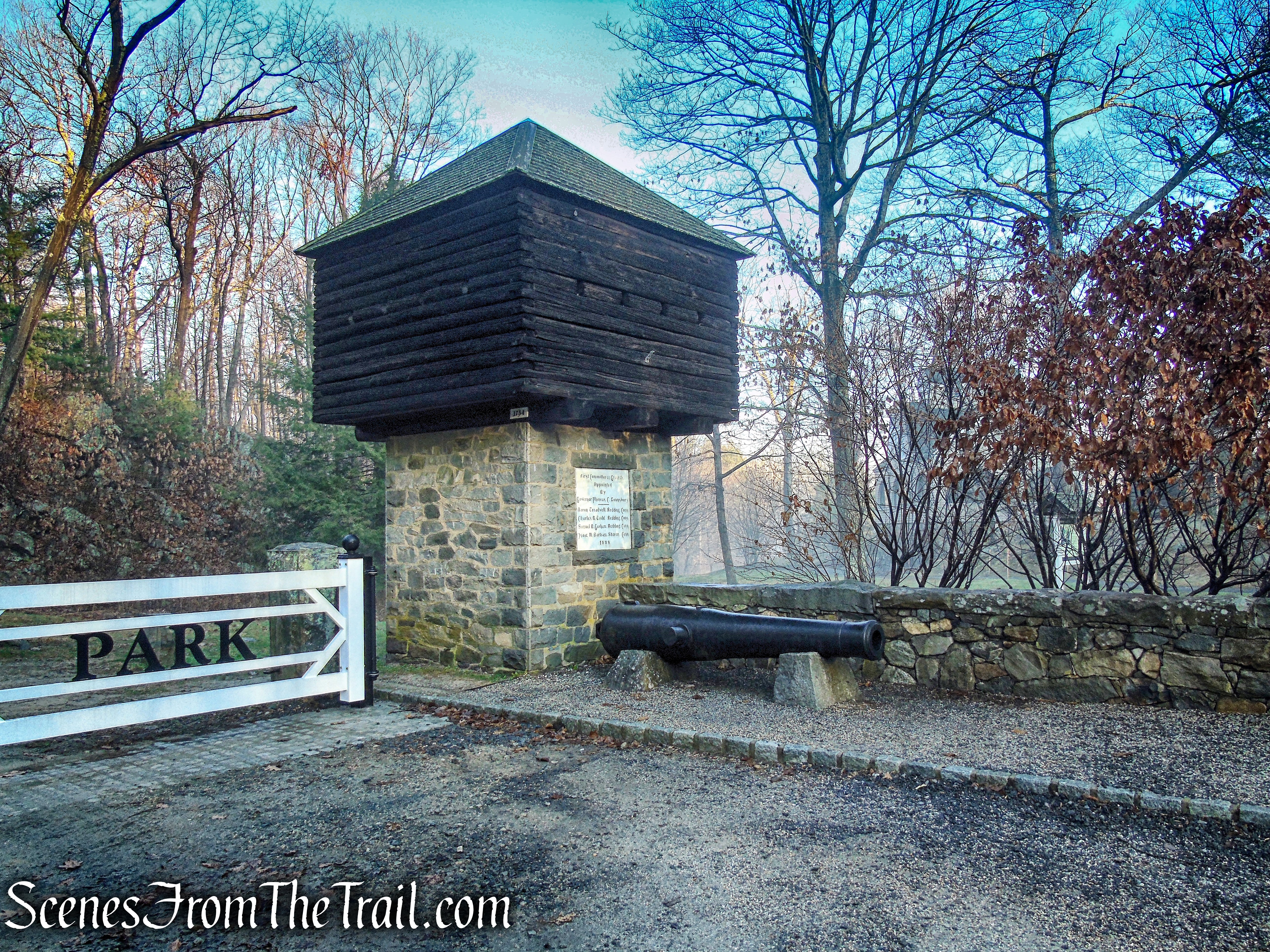
 

Main Entrance Area - Putnam Memorial State Park

Main Entrance Area – Putnam Memorial State Park

  • Memorial Monument – Constructed in 1888, one year after the commissioning of the memorial park, this monument honors the men of the three different camps in Redding during that winter of 1778-79. The monument was the very first structure erected at the park. The visitor can read the names of the different brigade generals who commanded the camps under Major General Israel Putnam’s command.
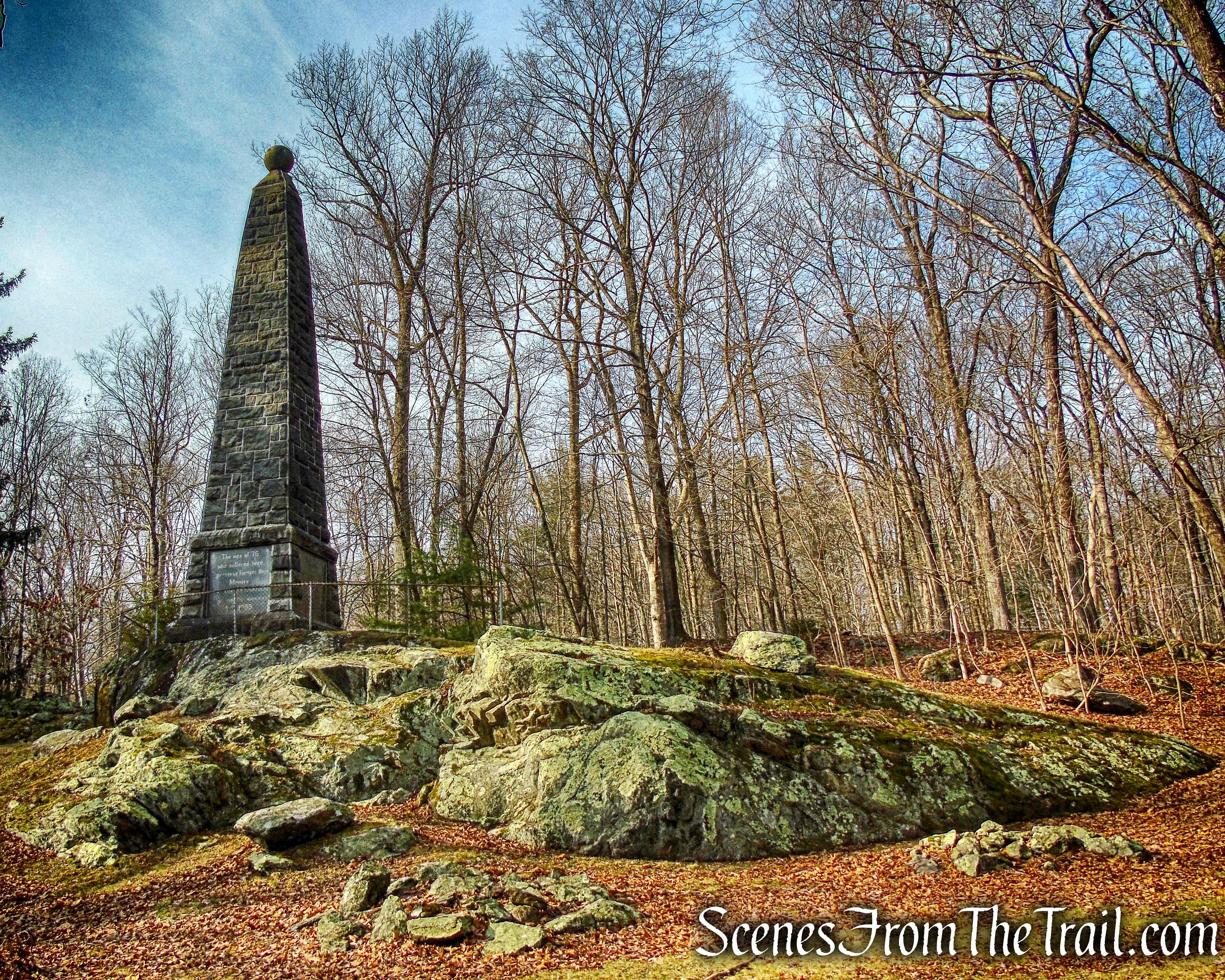
Memorial Monument - Putnam Memorial State Park

Memorial Monument – Putnam Memorial State Park
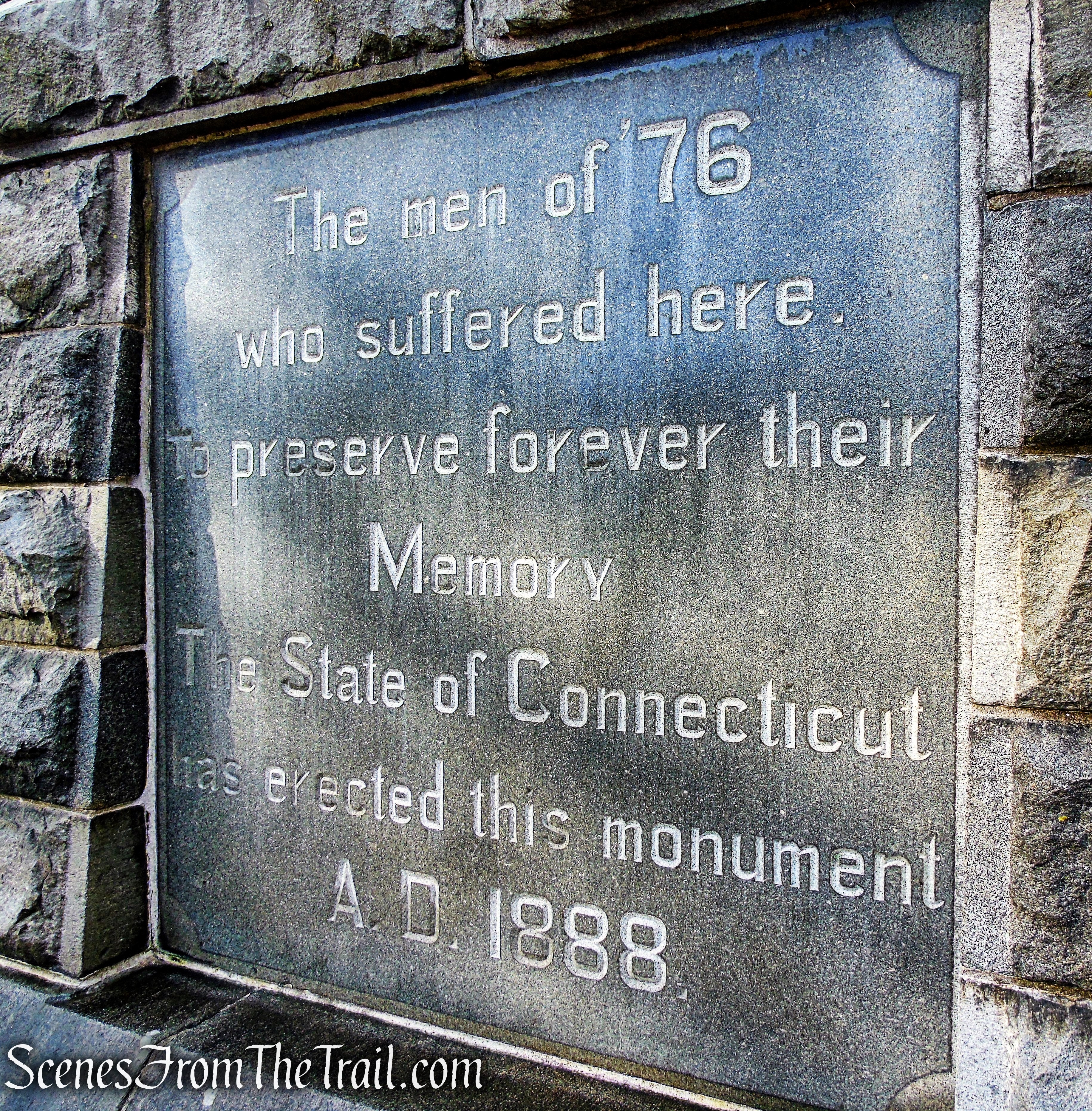
 

Memorial Monument - Putnam Memorial State Park

Memorial Monument – Putnam Memorial State Park

The 44-ft. tall granite obelisk was built in the summer of 1888 under the supervision of a committee appointed by the governor.
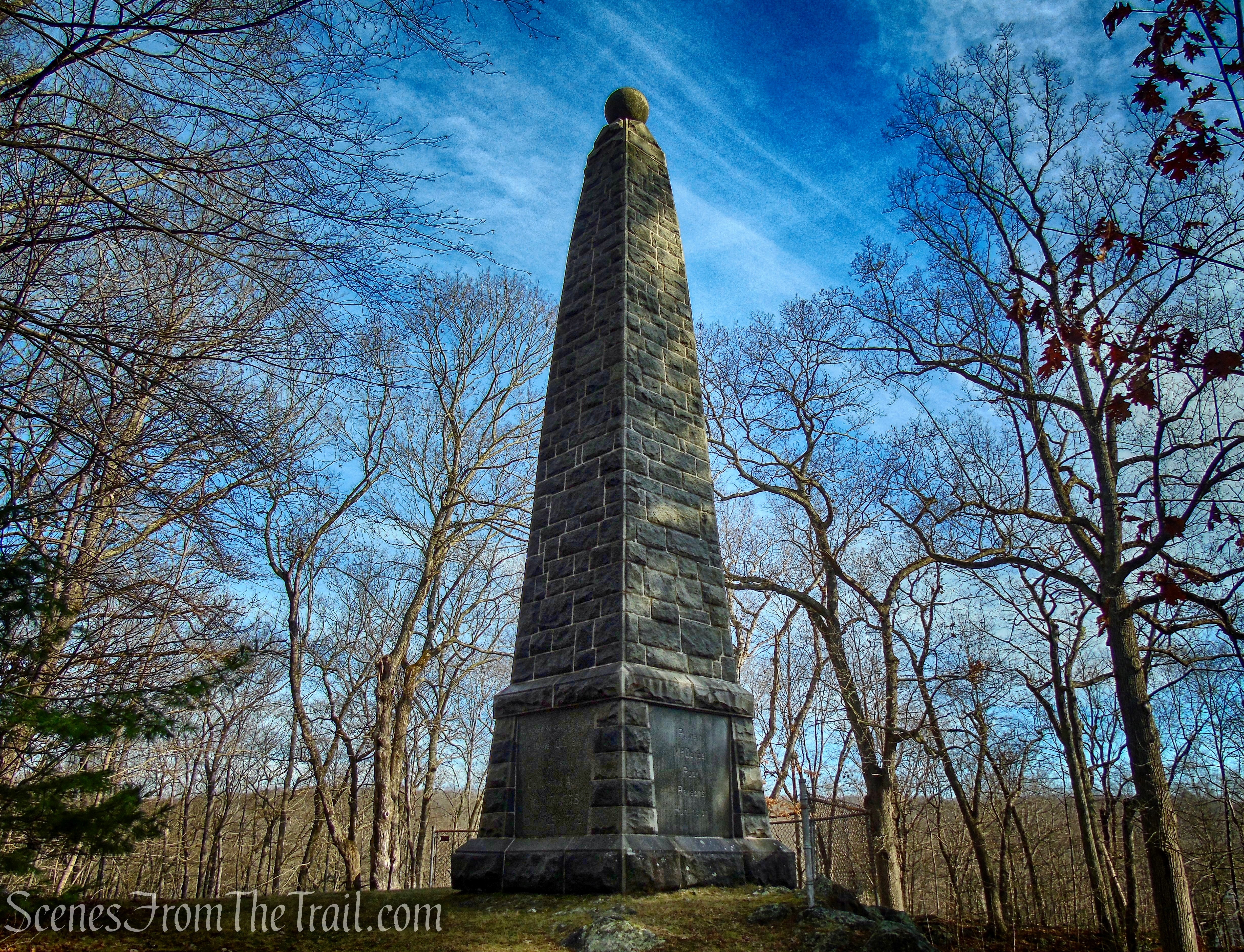
Memorial Monument - Putnam Memorial State Park

Memorial Monument – Putnam Memorial State Park
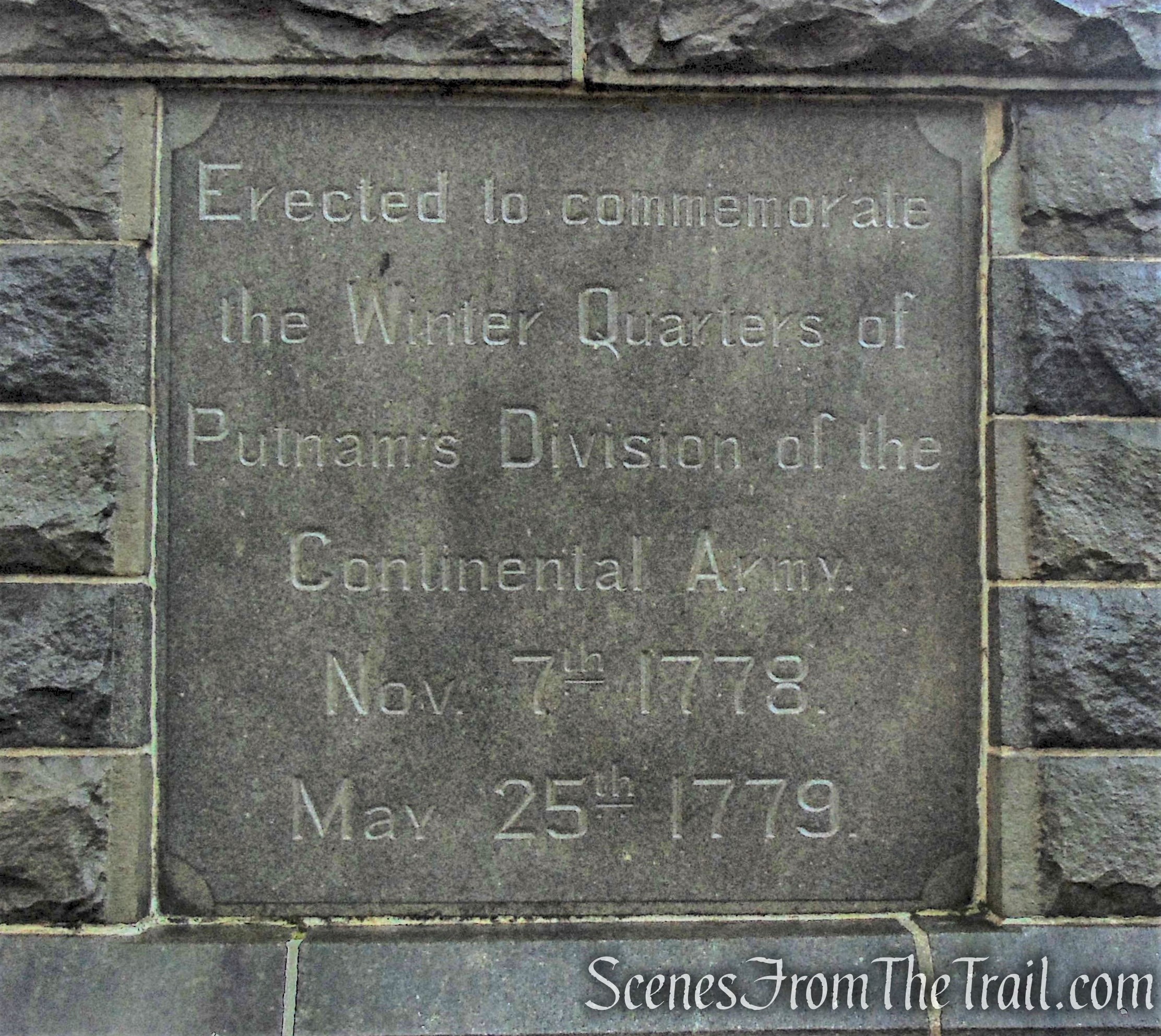
 

Memorial Monument - Putnam Memorial State Park

Memorial Monument – Putnam Memorial State Park
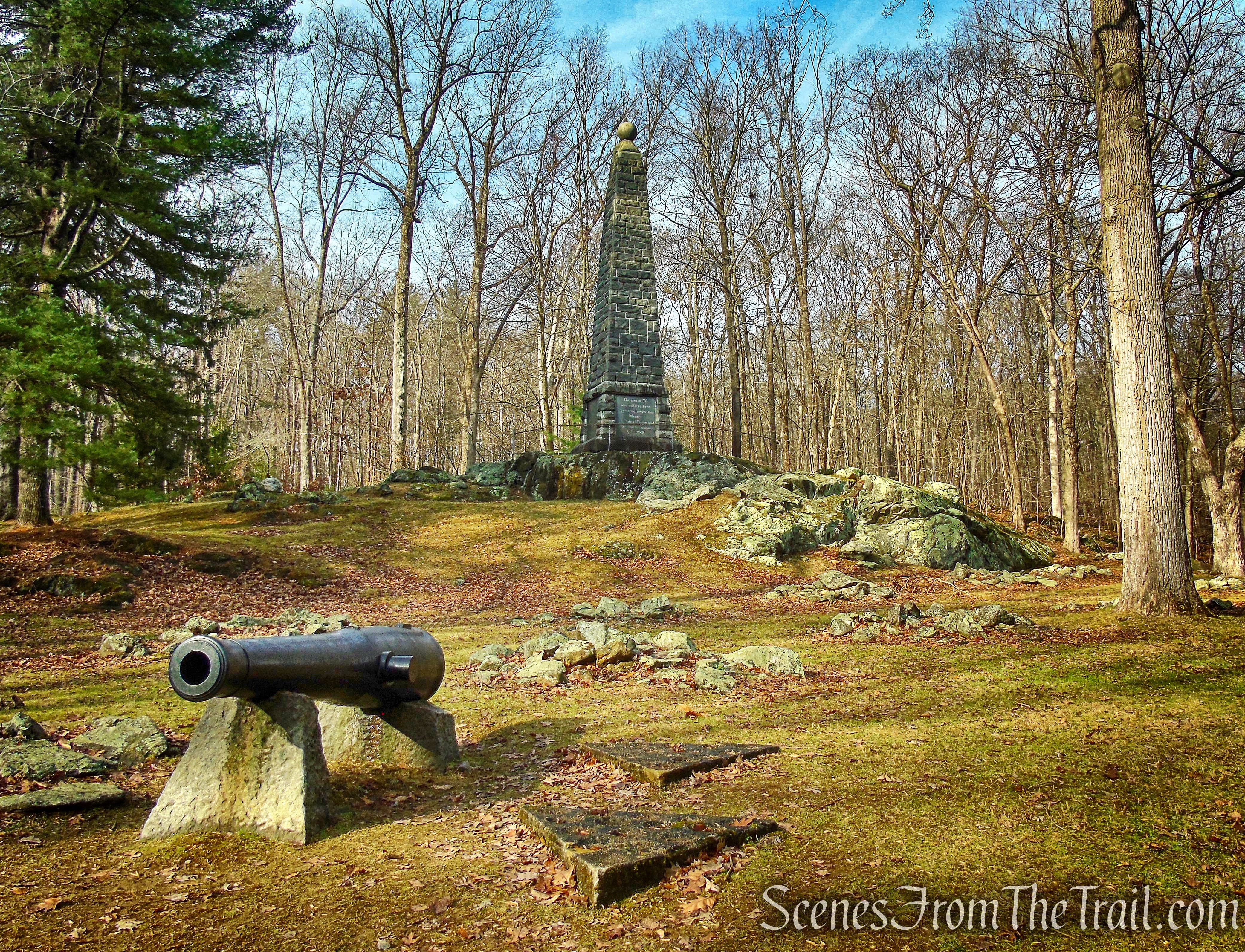
 

Memorial Monument - Putnam Memorial State Park

Memorial Monument – Putnam Memorial State Park

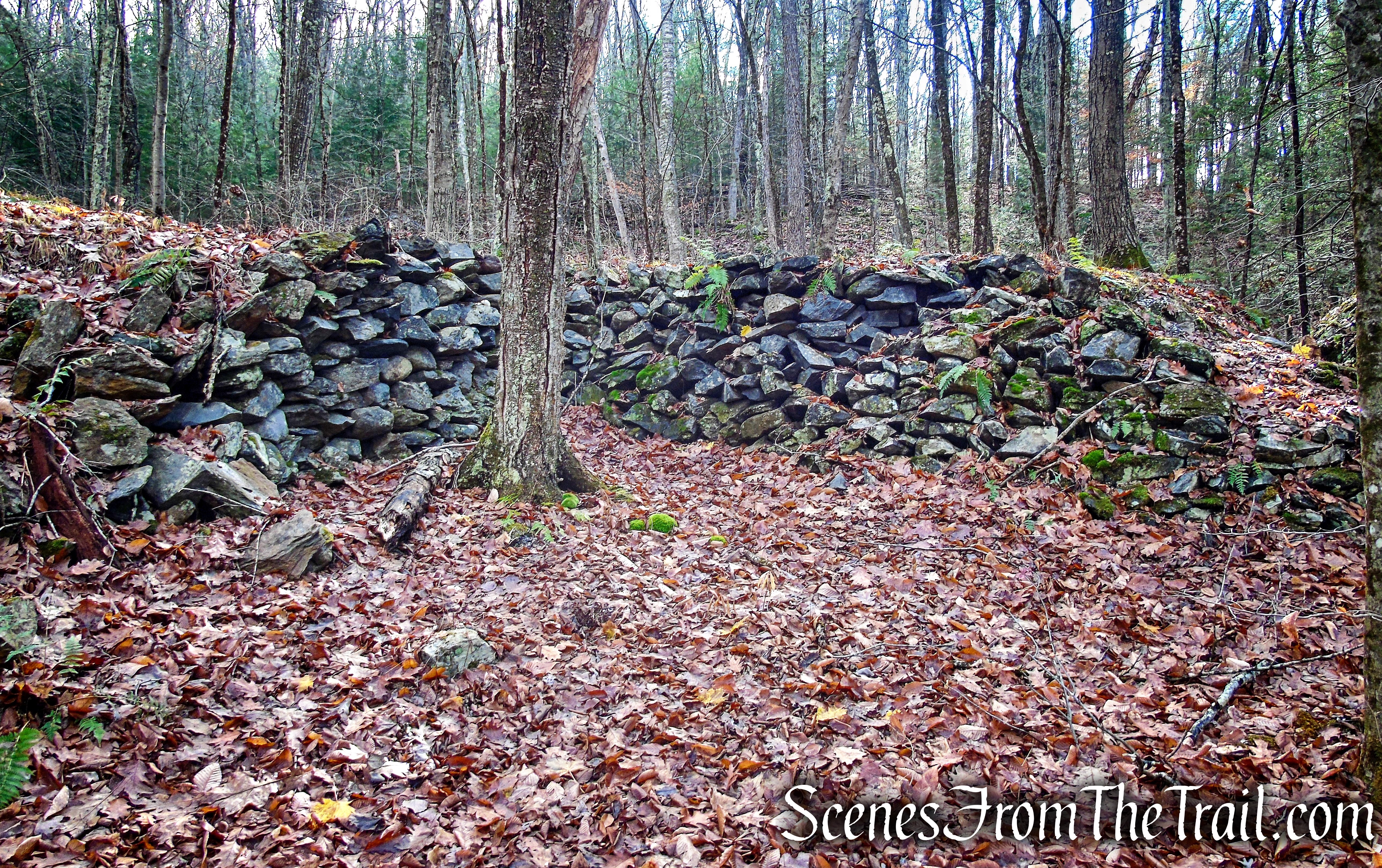
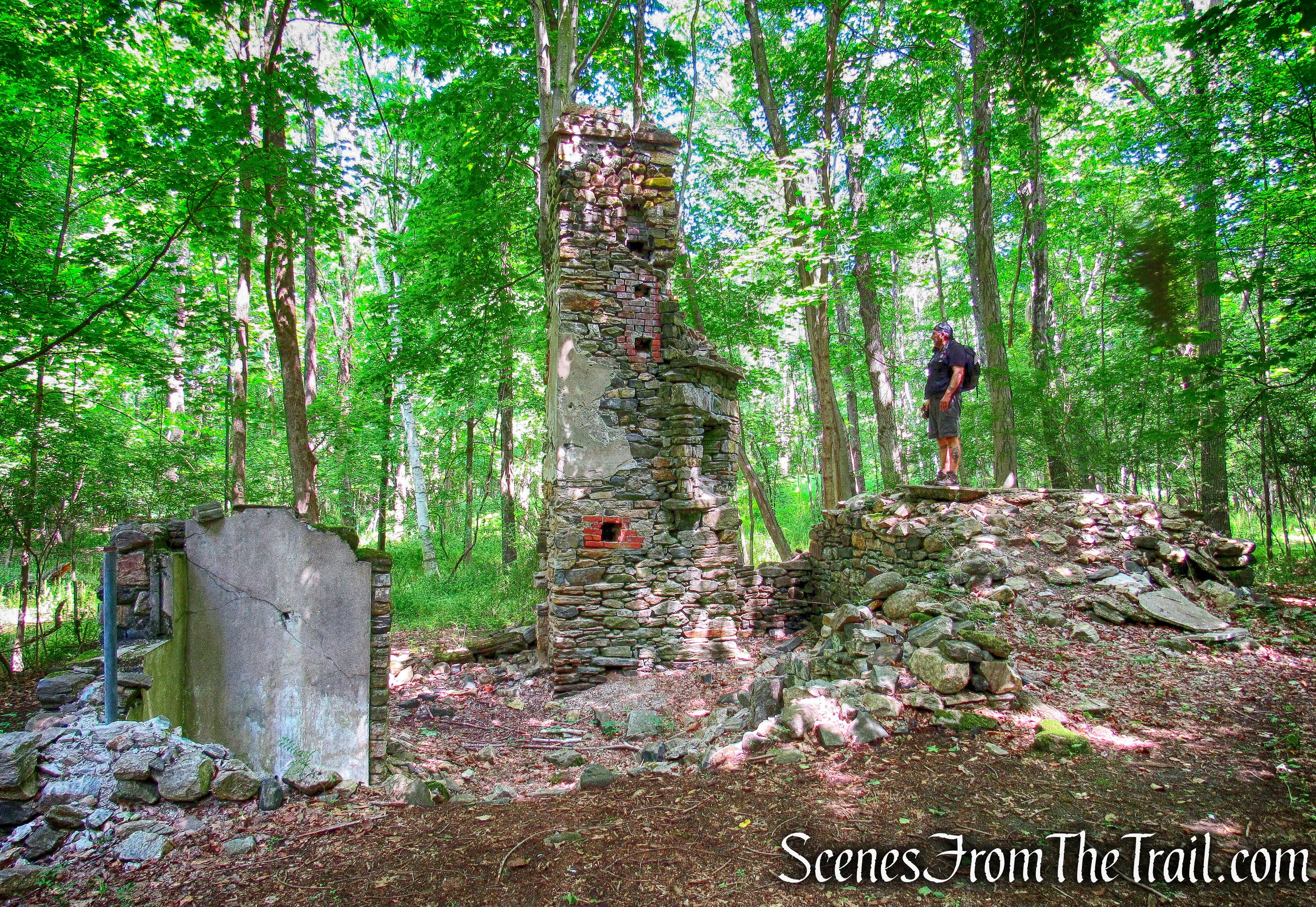
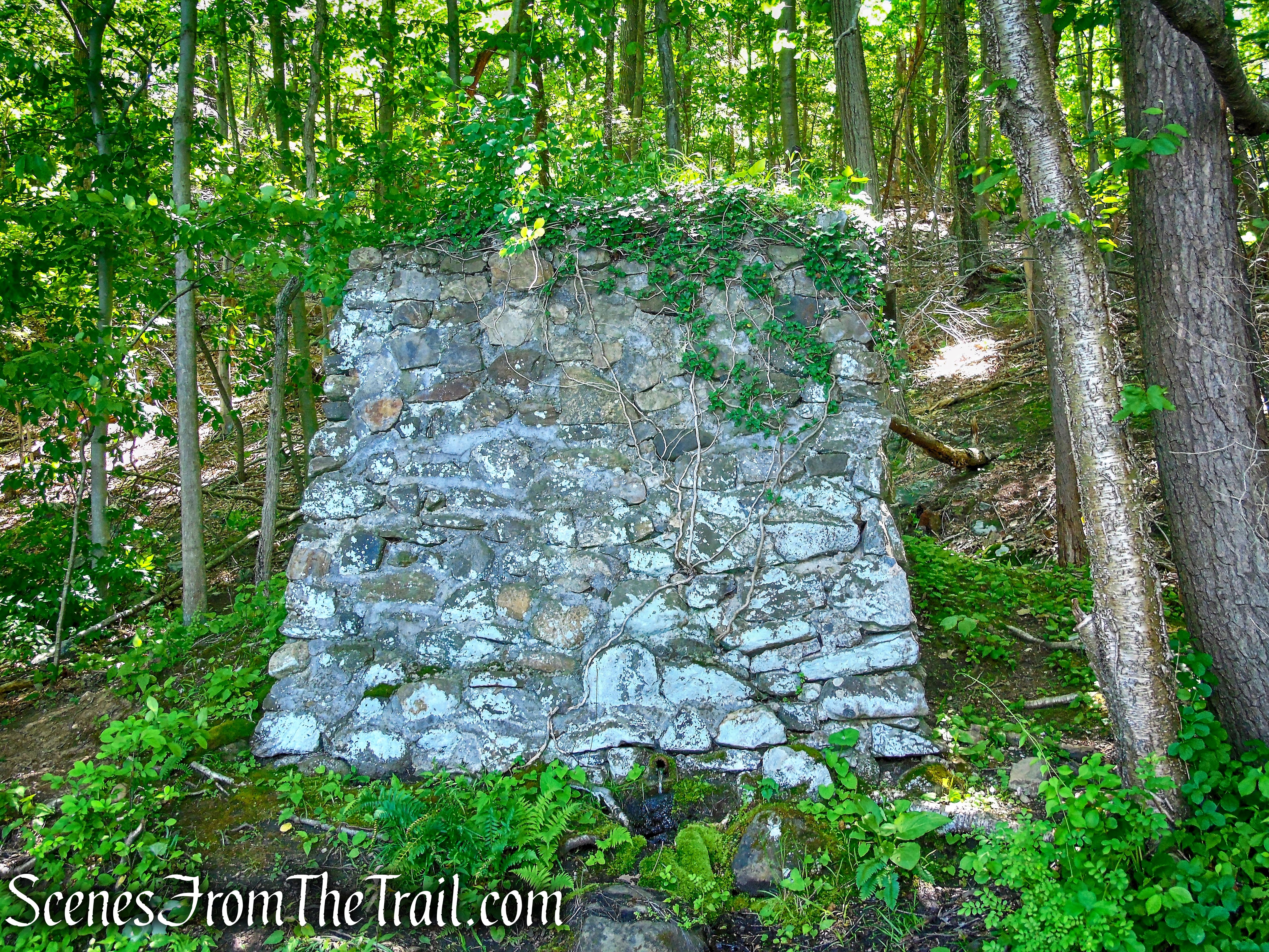
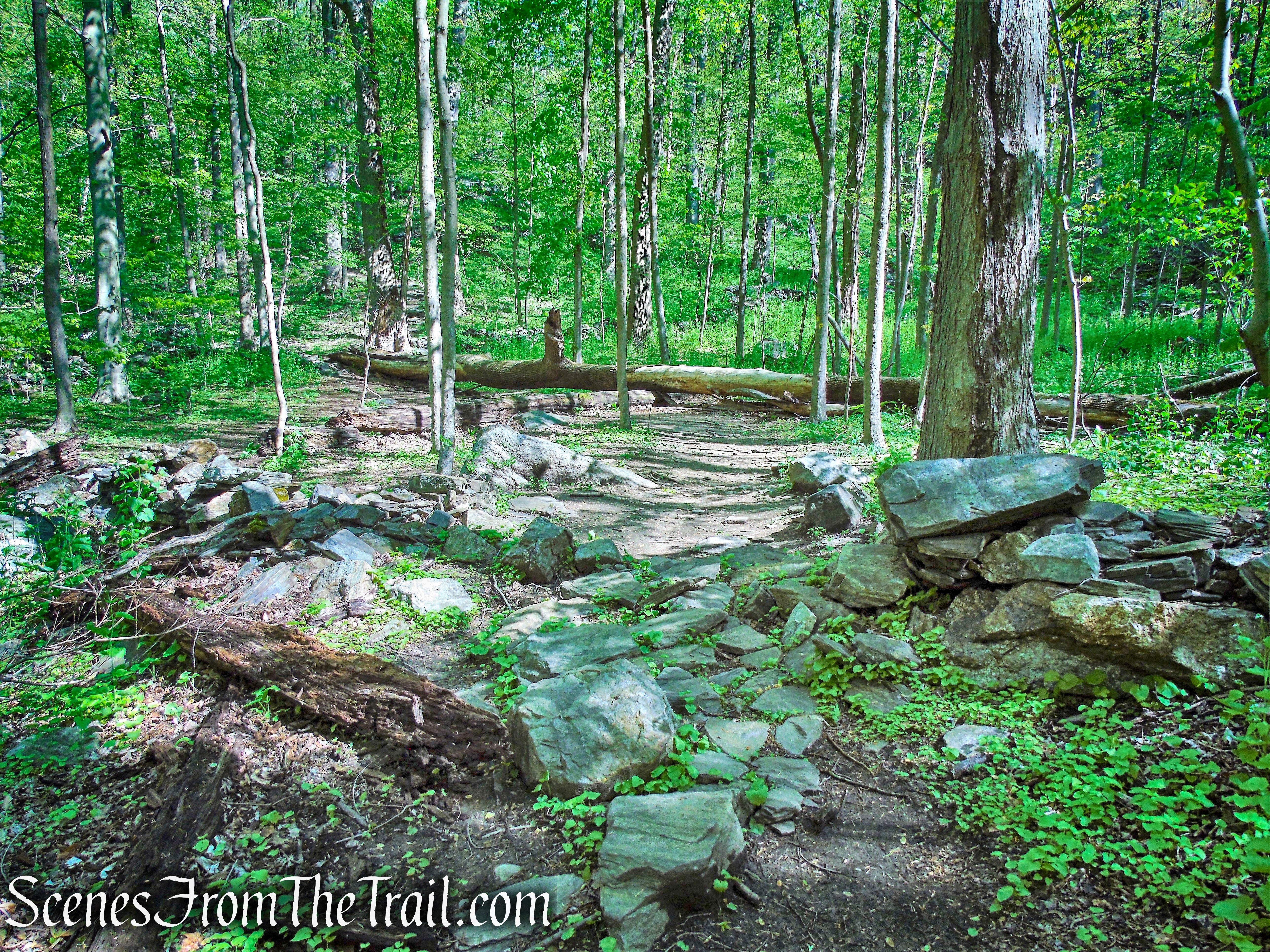
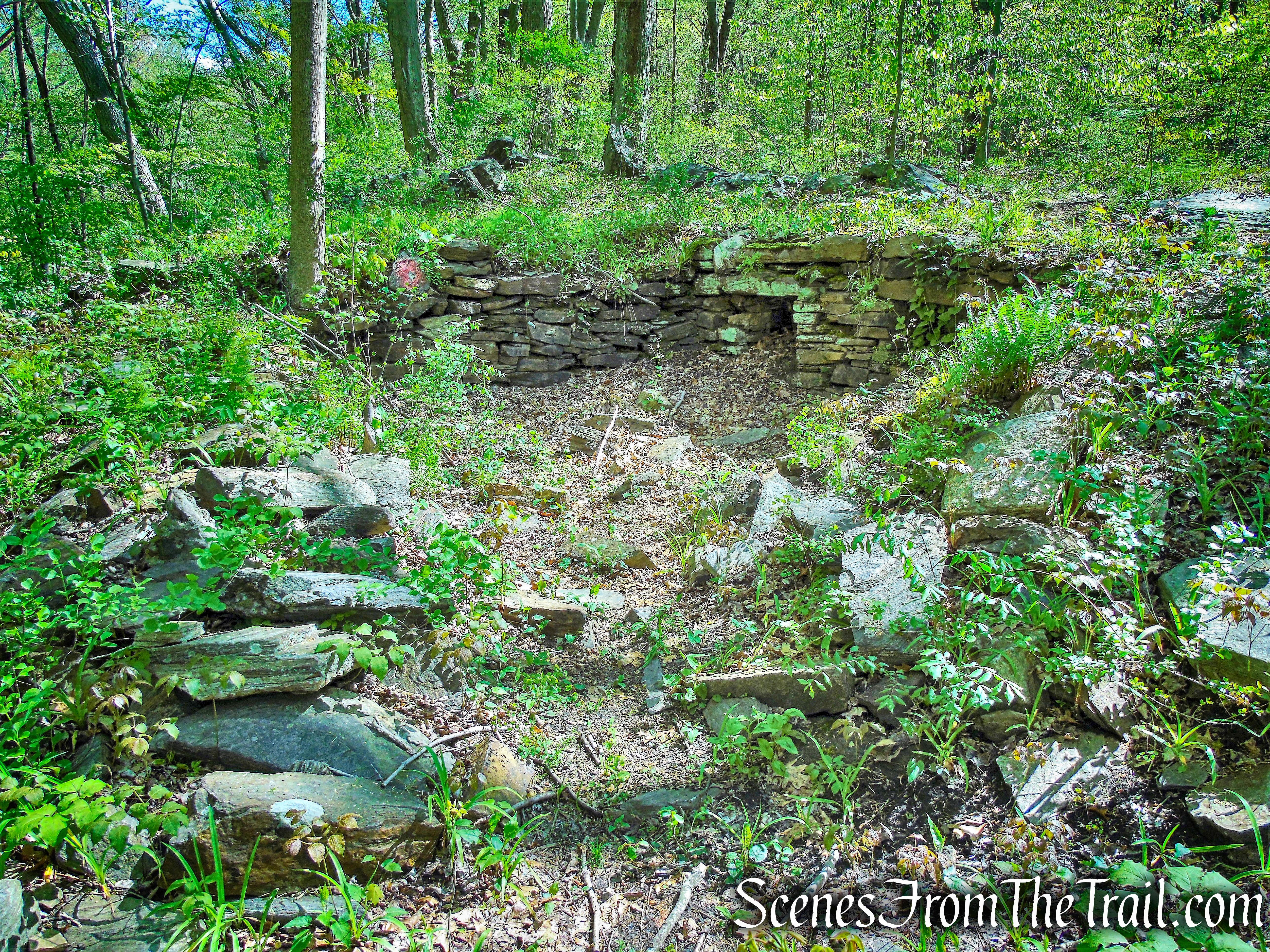
  • Collapsed Chimney Remains (Firebacks) and Company Street – The enlisted men’s encampment consisted of 116 log huts set in a double row for almost a quarter mile down the company street. The only above ground remains of those huts today are the piles of collapsed stone chimneys. Each stone pile, or fireback, marks the location of a 1778 hut. The men camped in this location belonged to Brig. Gen. Enoch Poor’s New Hampshire Brigade and the 2nd Canadian Regiment under Col. Moses Hazen. The fireplaces and chimneys were made of local fieldstone. The huts had dimensions of 16 x 12 feet. Each hut held the 12 soldiers who built their own hut. The troops lived in tents until their huts were completed in late December. Ongoing archaeological field work has told us much about the huts and their occupants.
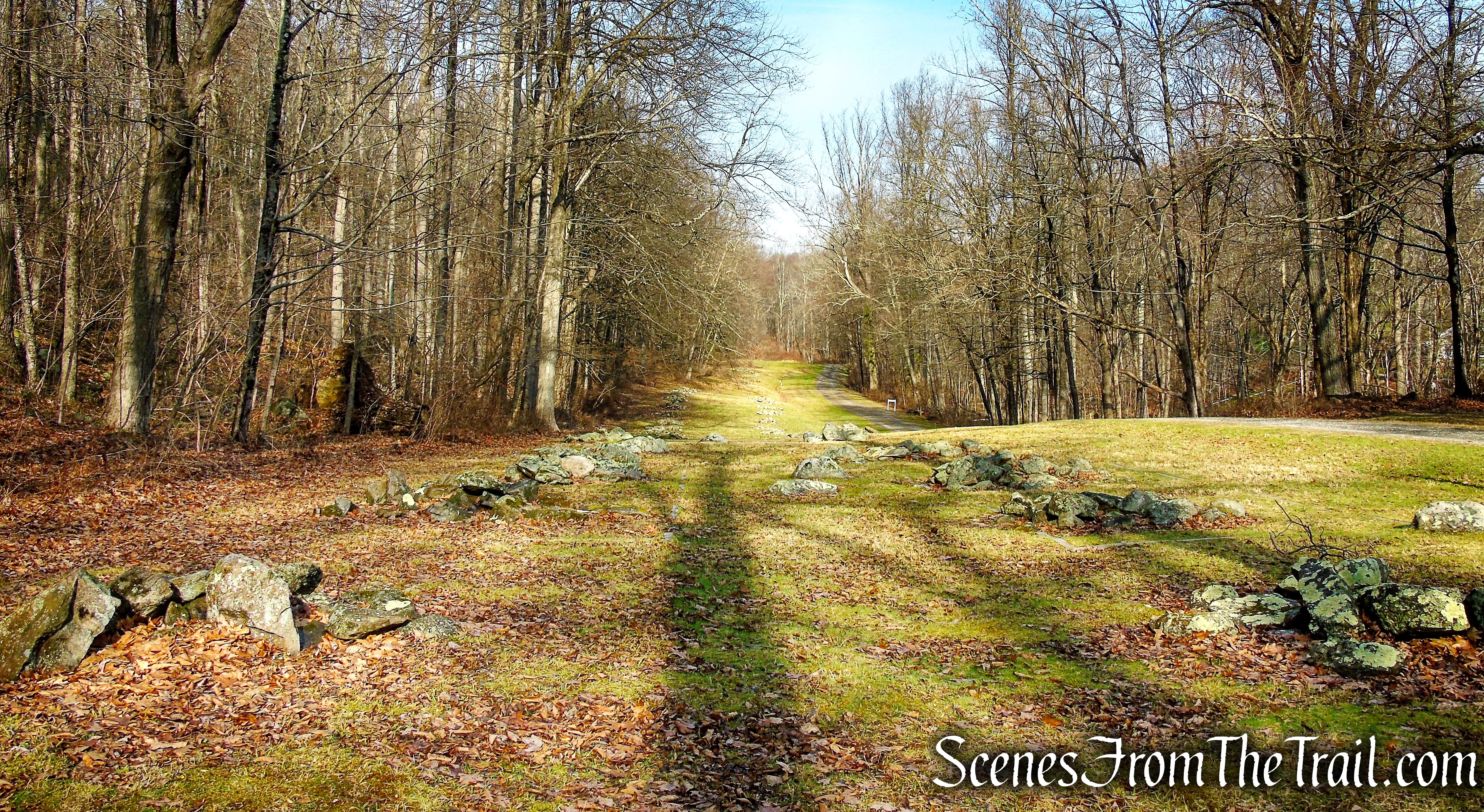
Firebacks - Putnam Memorial State Park

Firebacks – Putnam Memorial State Park

  • Museum – This building contains exhibits and historical materials including artifacts unearthed at the campsite during archaeological excavations. The museum was built in 1921 by long time Redding Town Historian Margaret Wixted’s father. This building replaced the original museum housed on the second floor of the old 1893 Pavilion. Park Guides are present to tell visitors about the park and answer questions. Hours are posted at the park gates or at the Visitor Center.
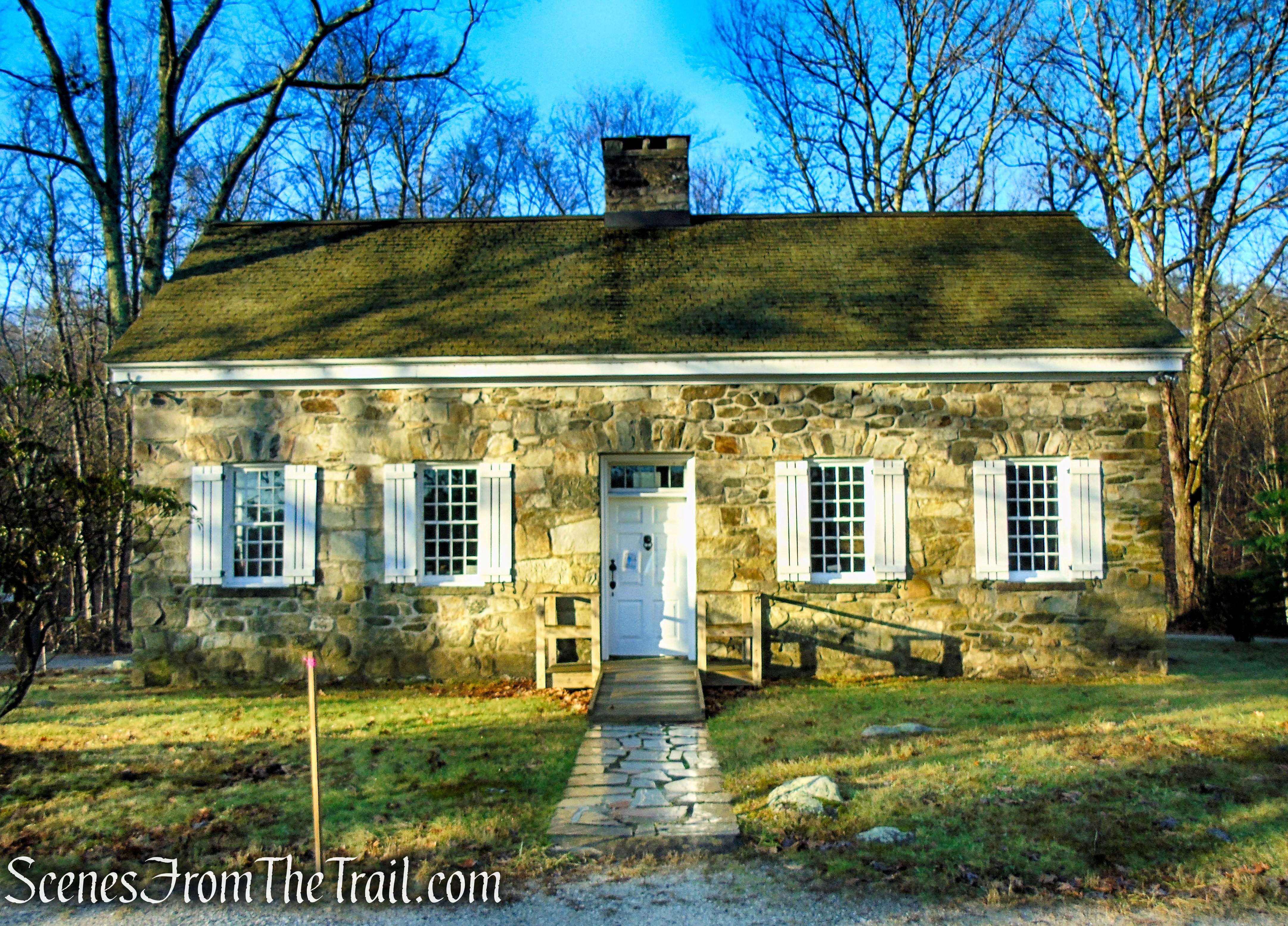
Museum - Putnam Memorial State Park

Museum – Putnam Memorial State Park

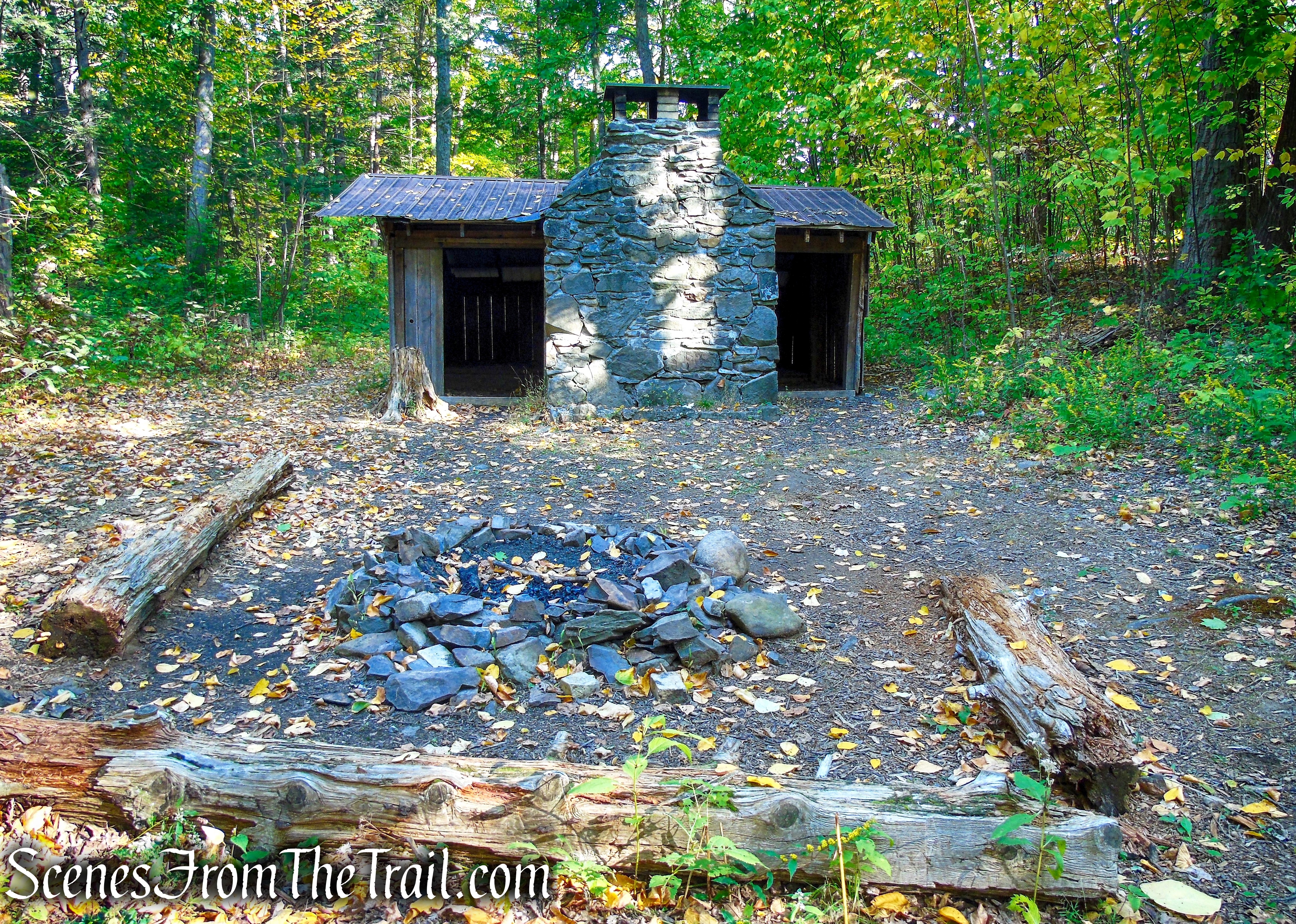
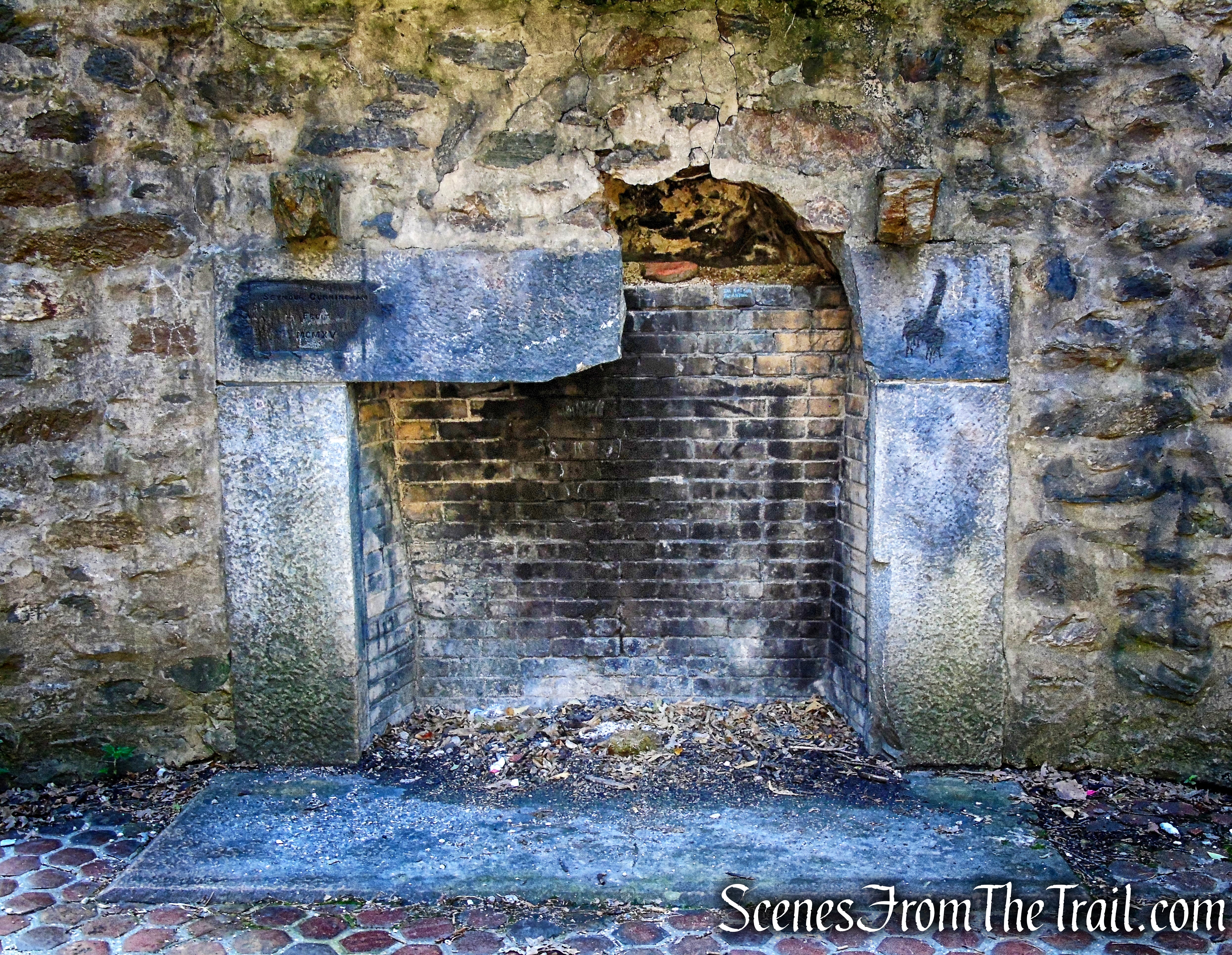
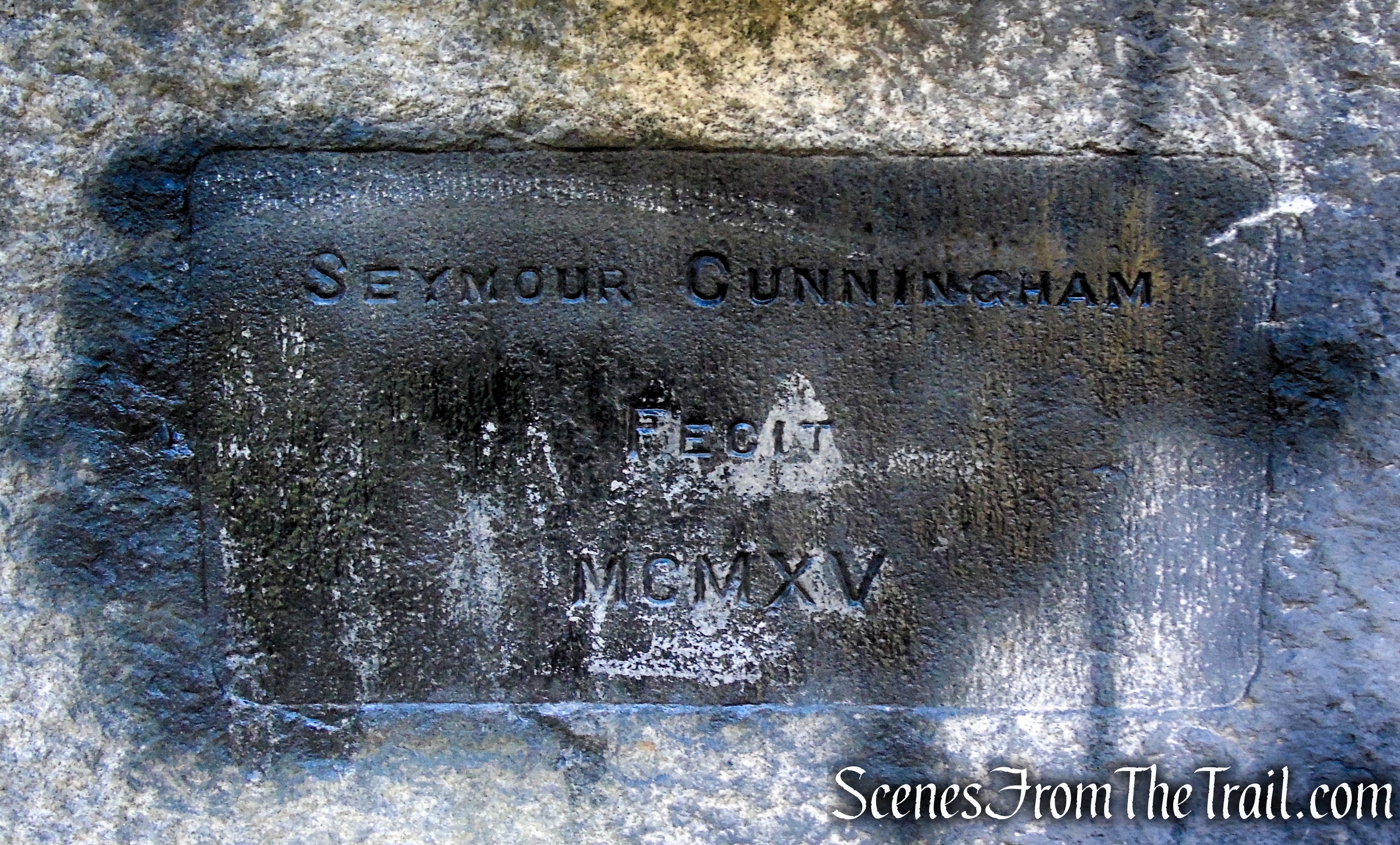
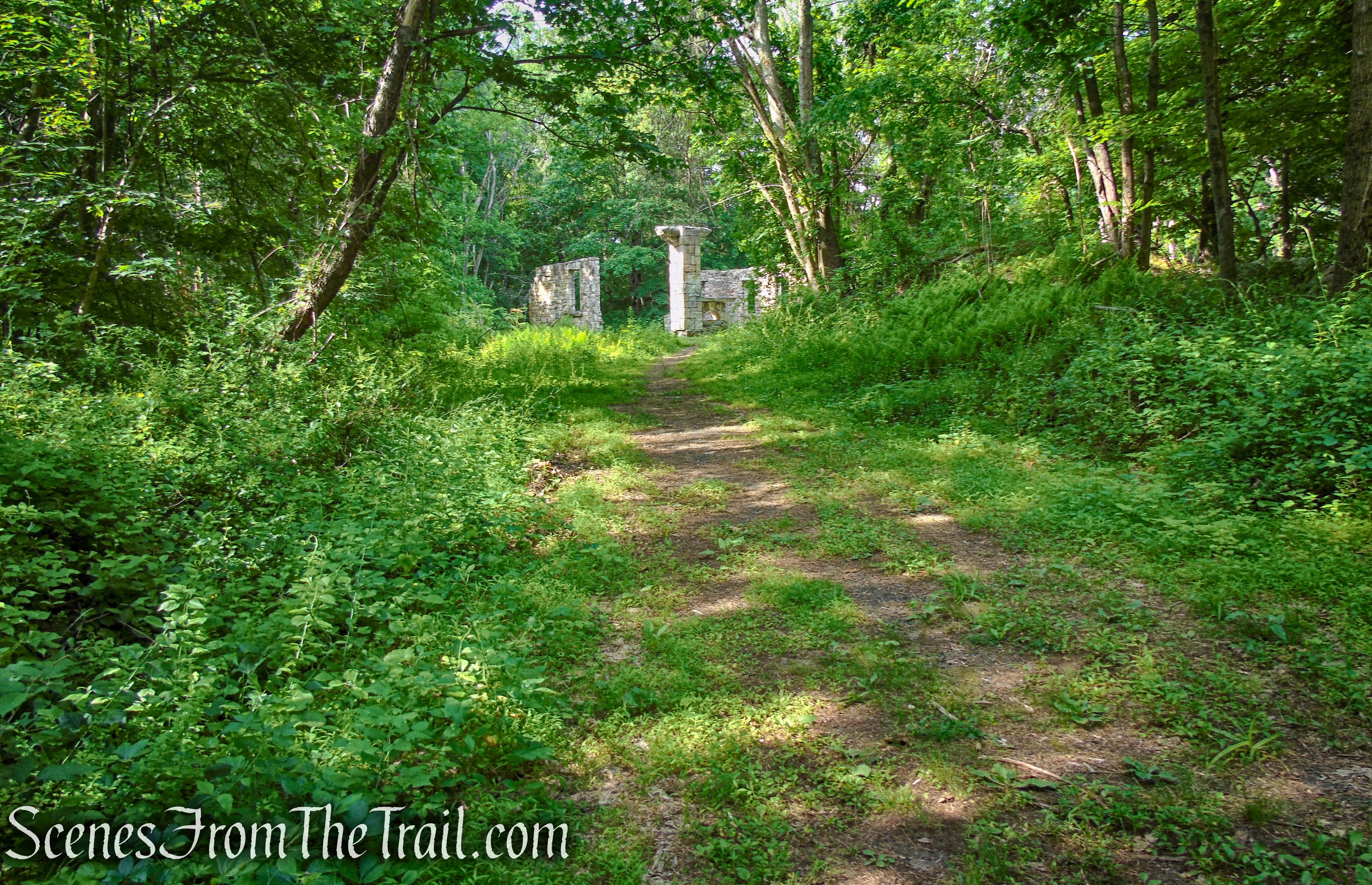
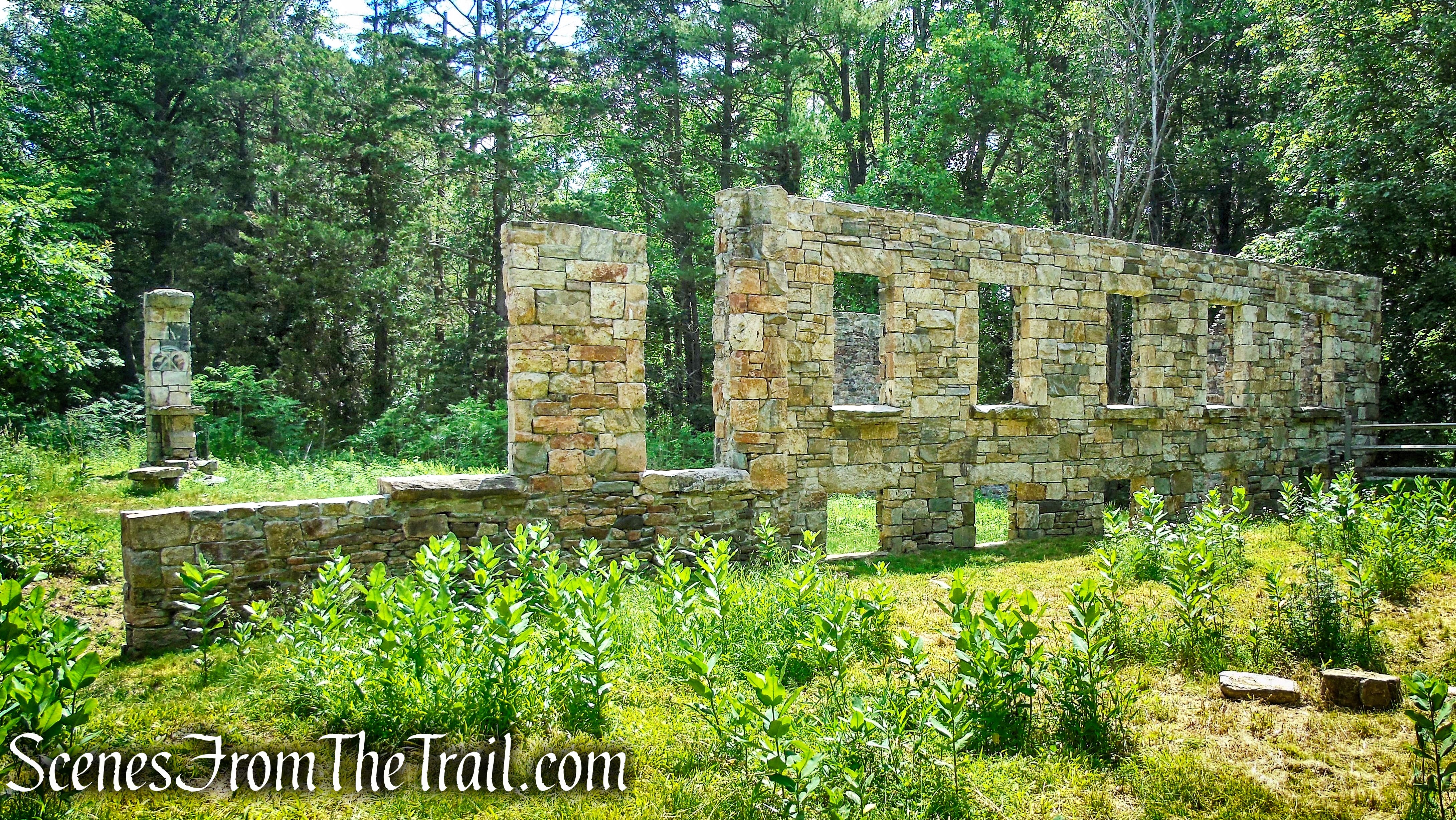
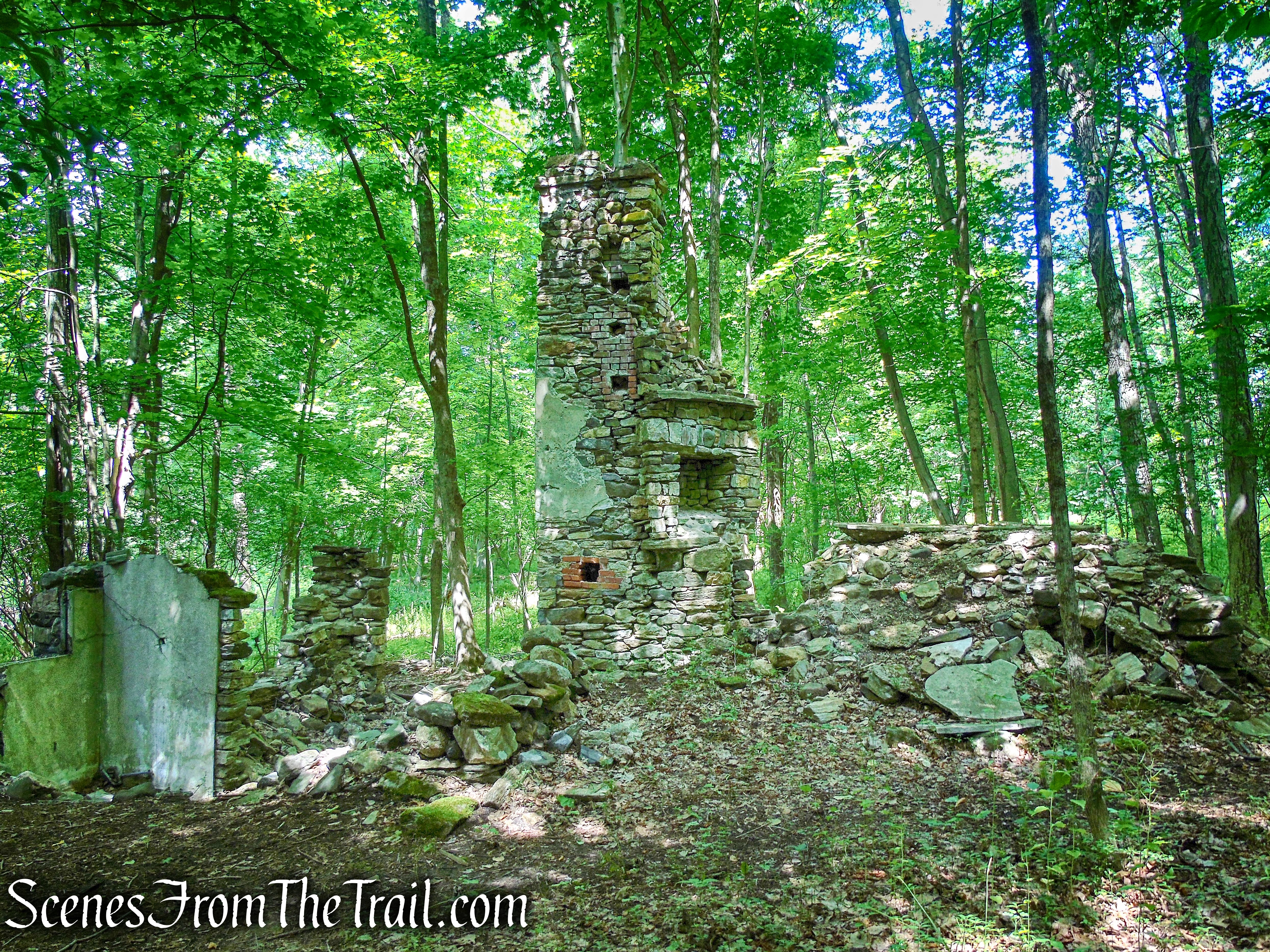
  • Officers Quarters – The chimney remains mark the site of a company officer’s hut. The hut was an 1890 replica built on the original site. The hut was destroyed by fire years ago. The company-level officer’s huts were located behind the enlisted hut line. There are several other firebacks of these junior officer hut remains in the woods behind the enlisted hut line.
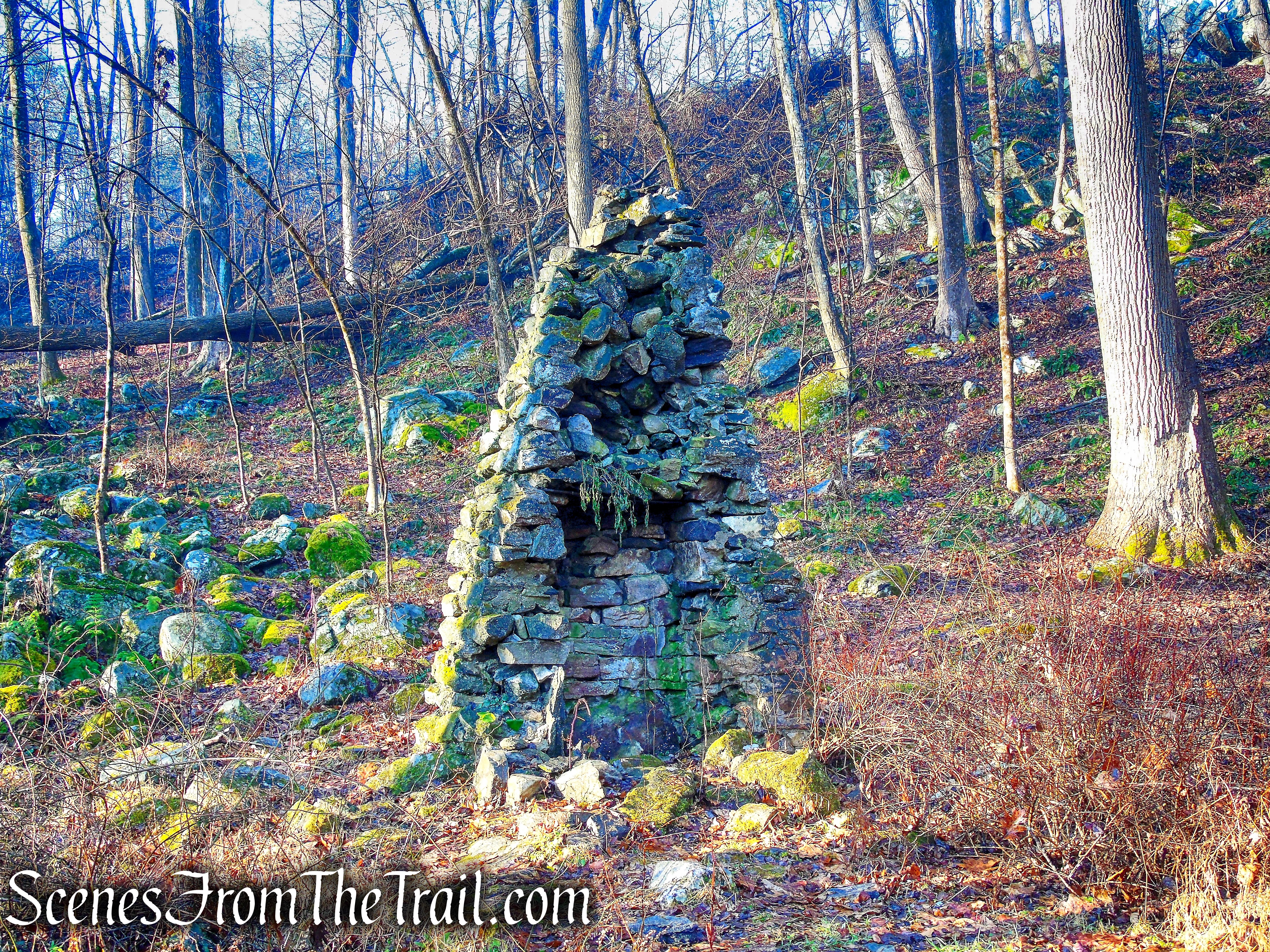
Officers Quarters - Putnam Memorial State Park

Officers Quarters – Putnam Memorial State Park

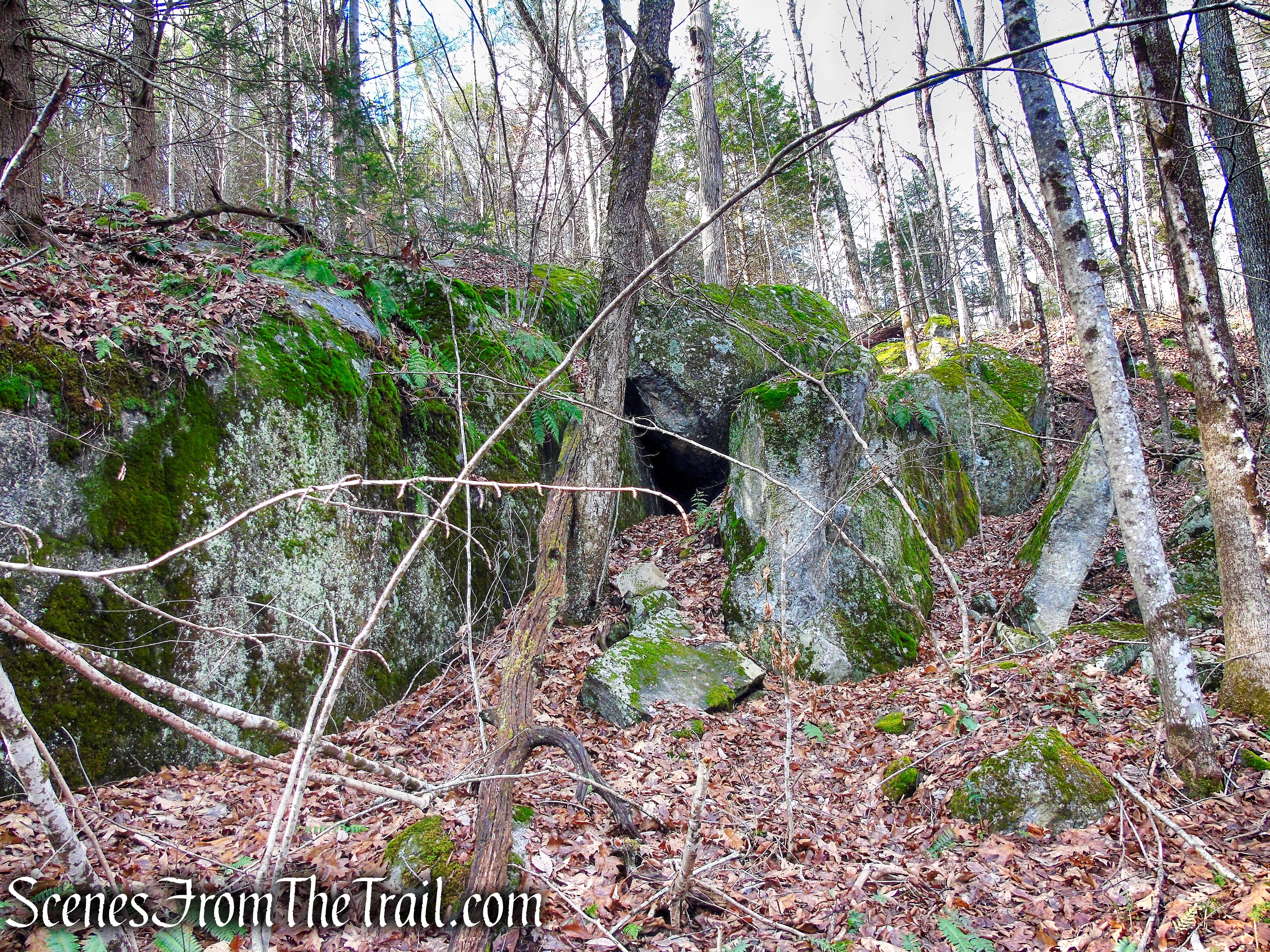
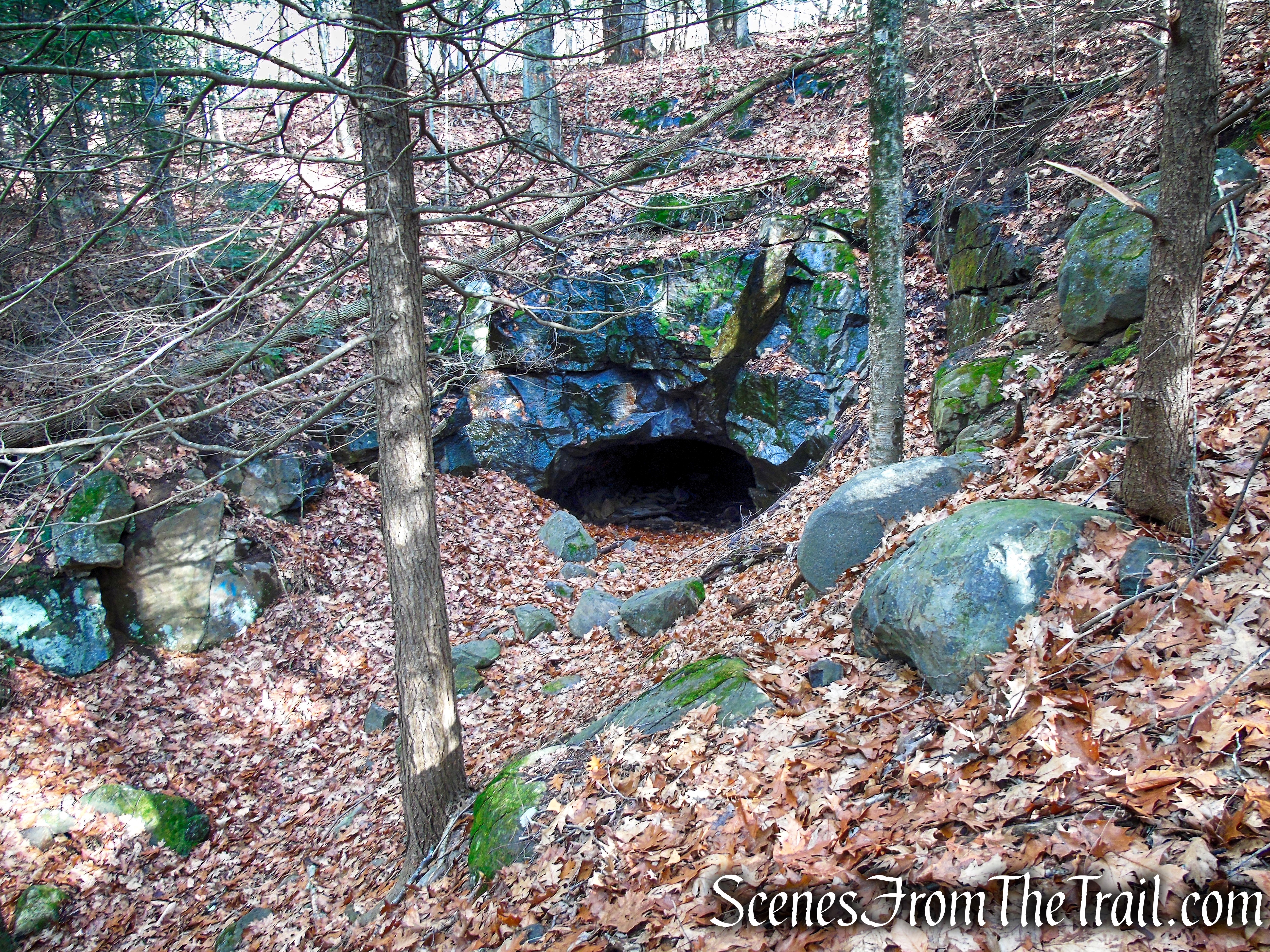
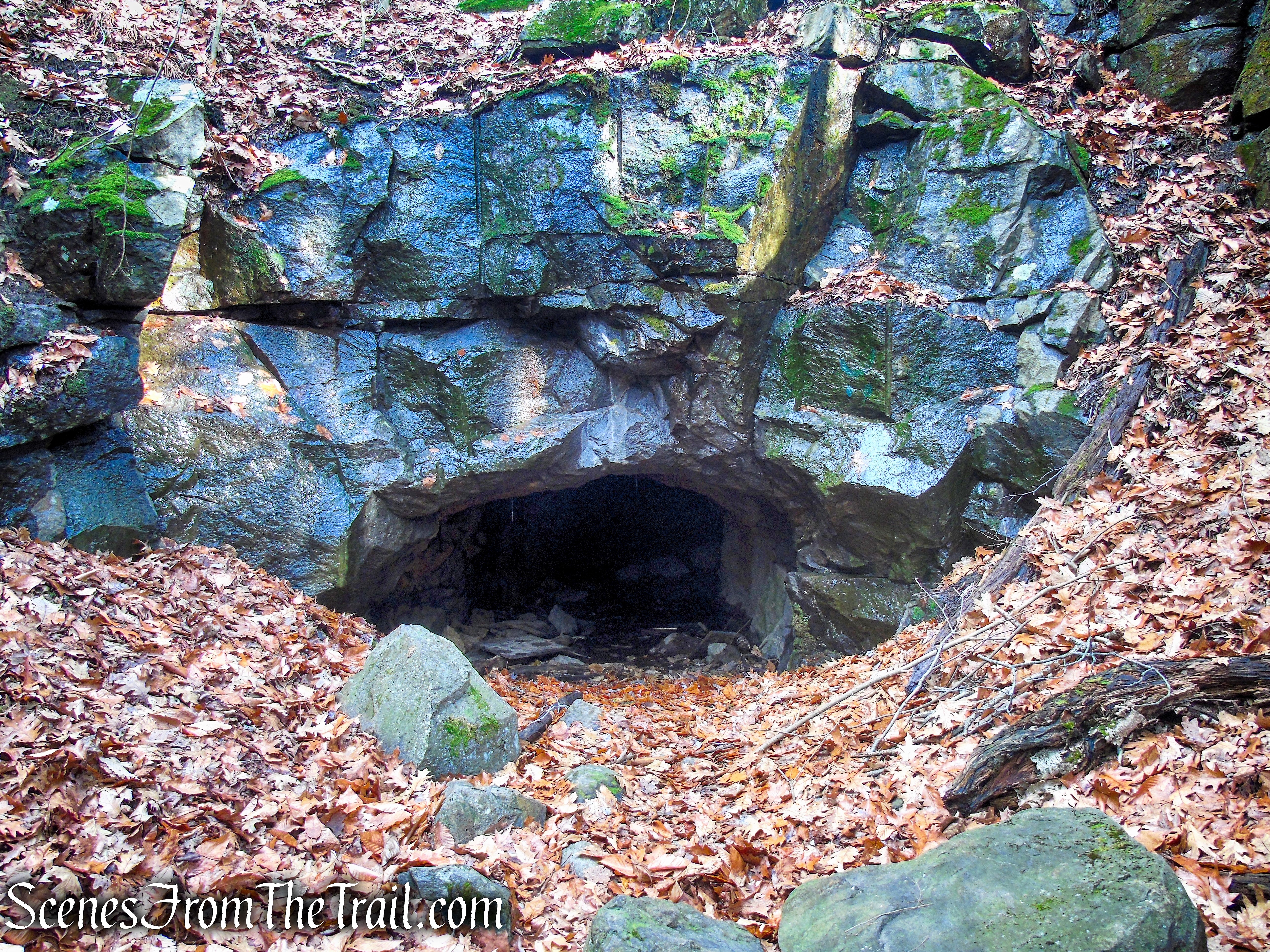
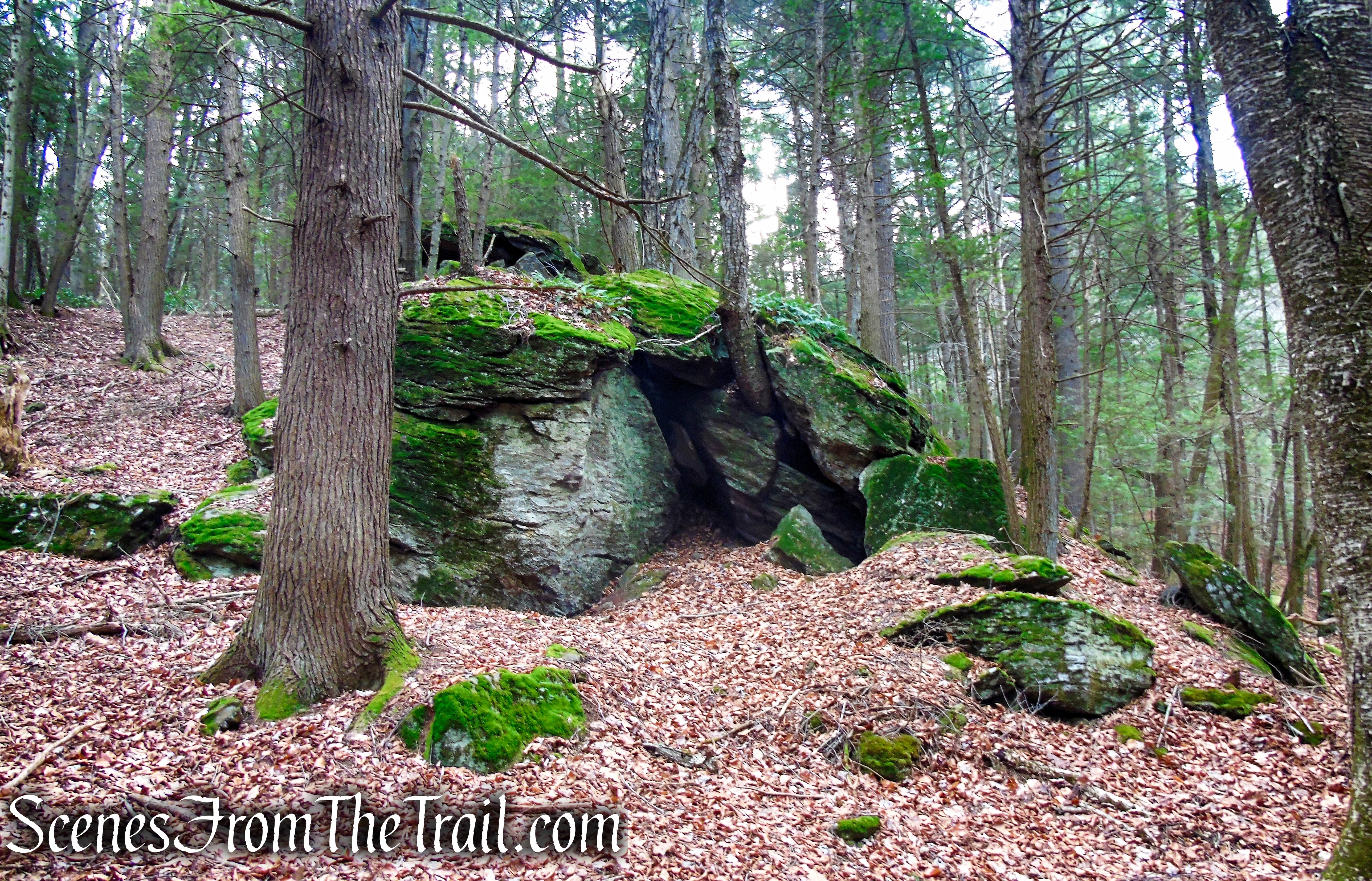
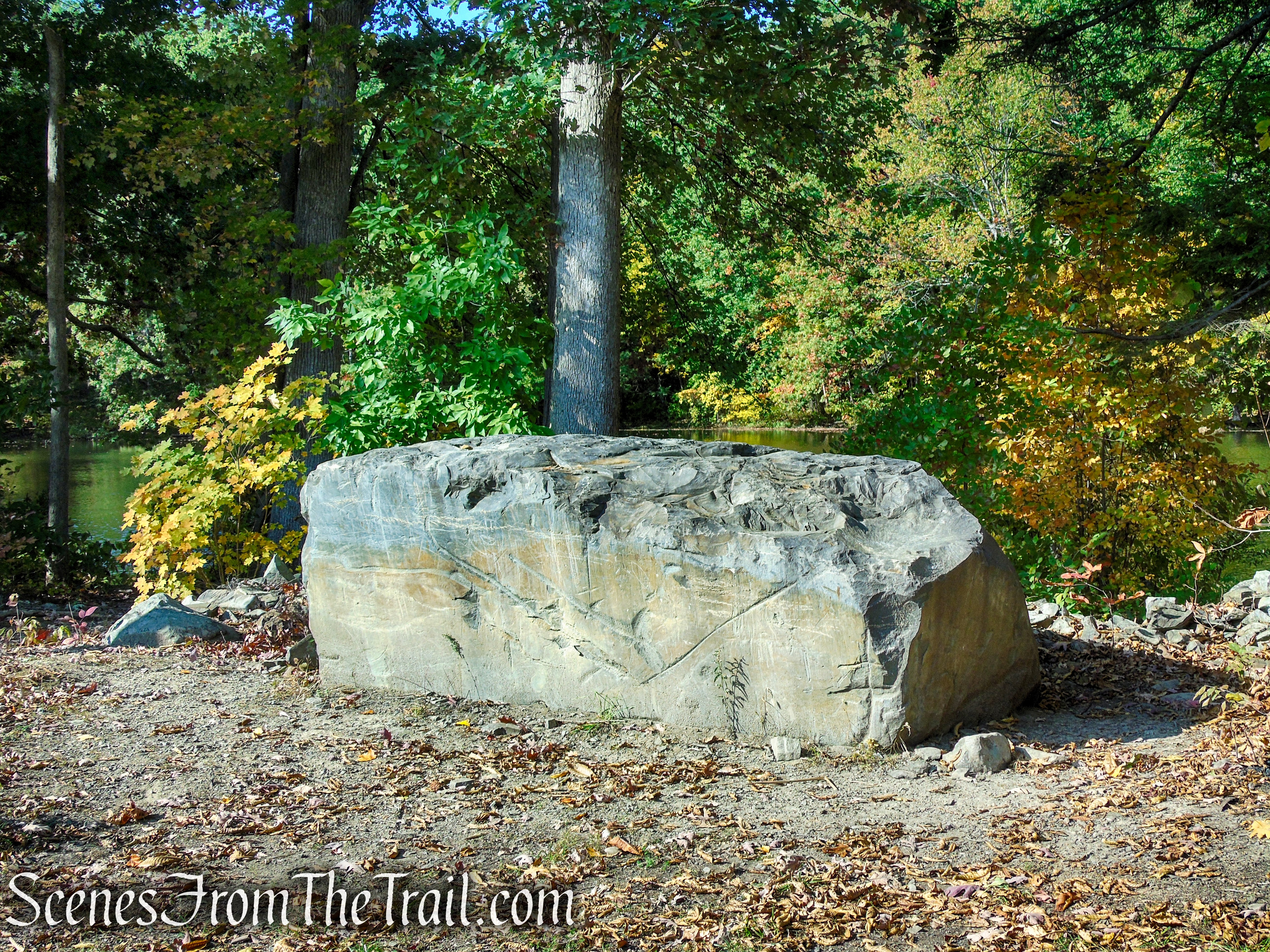
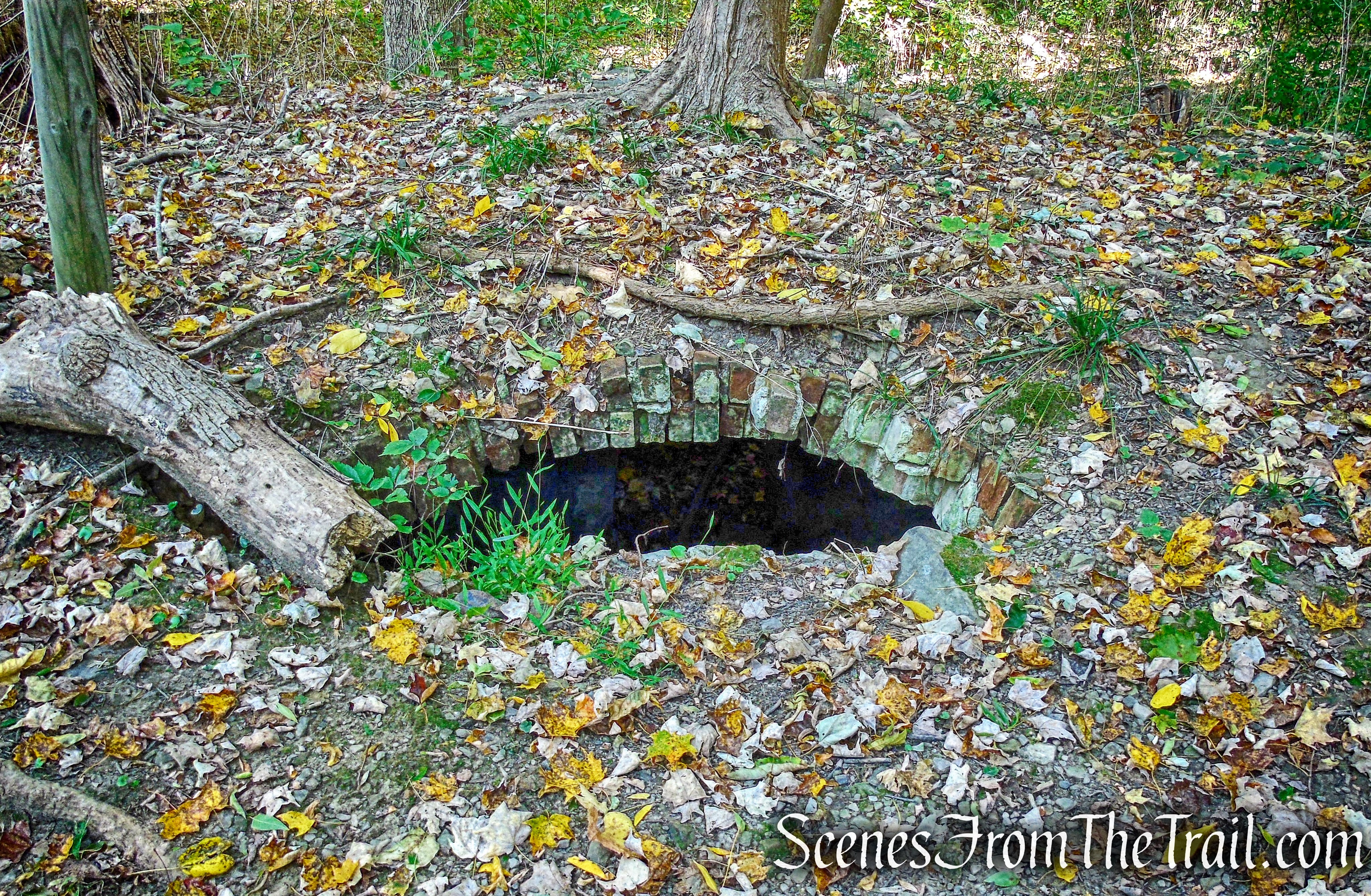
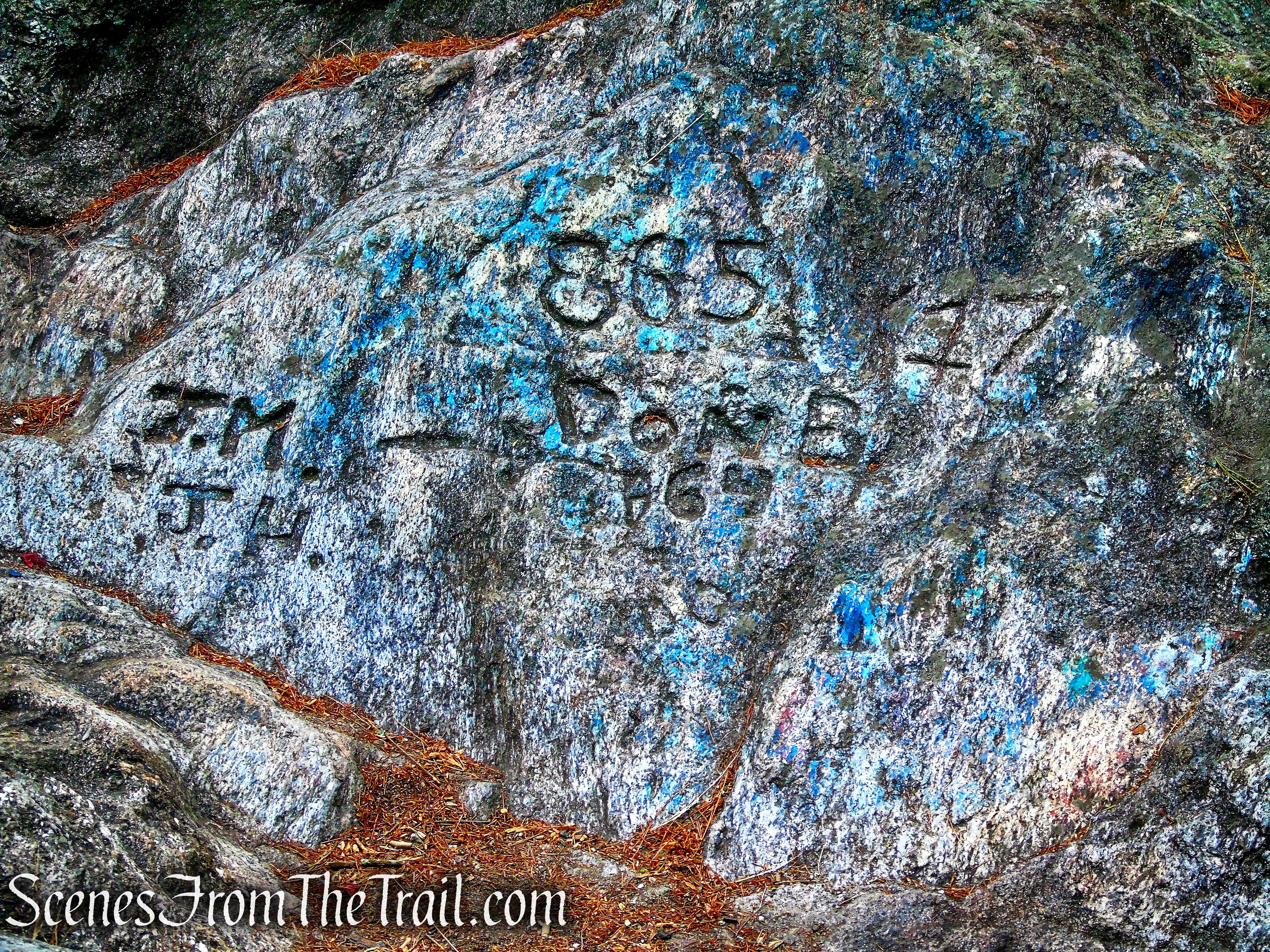
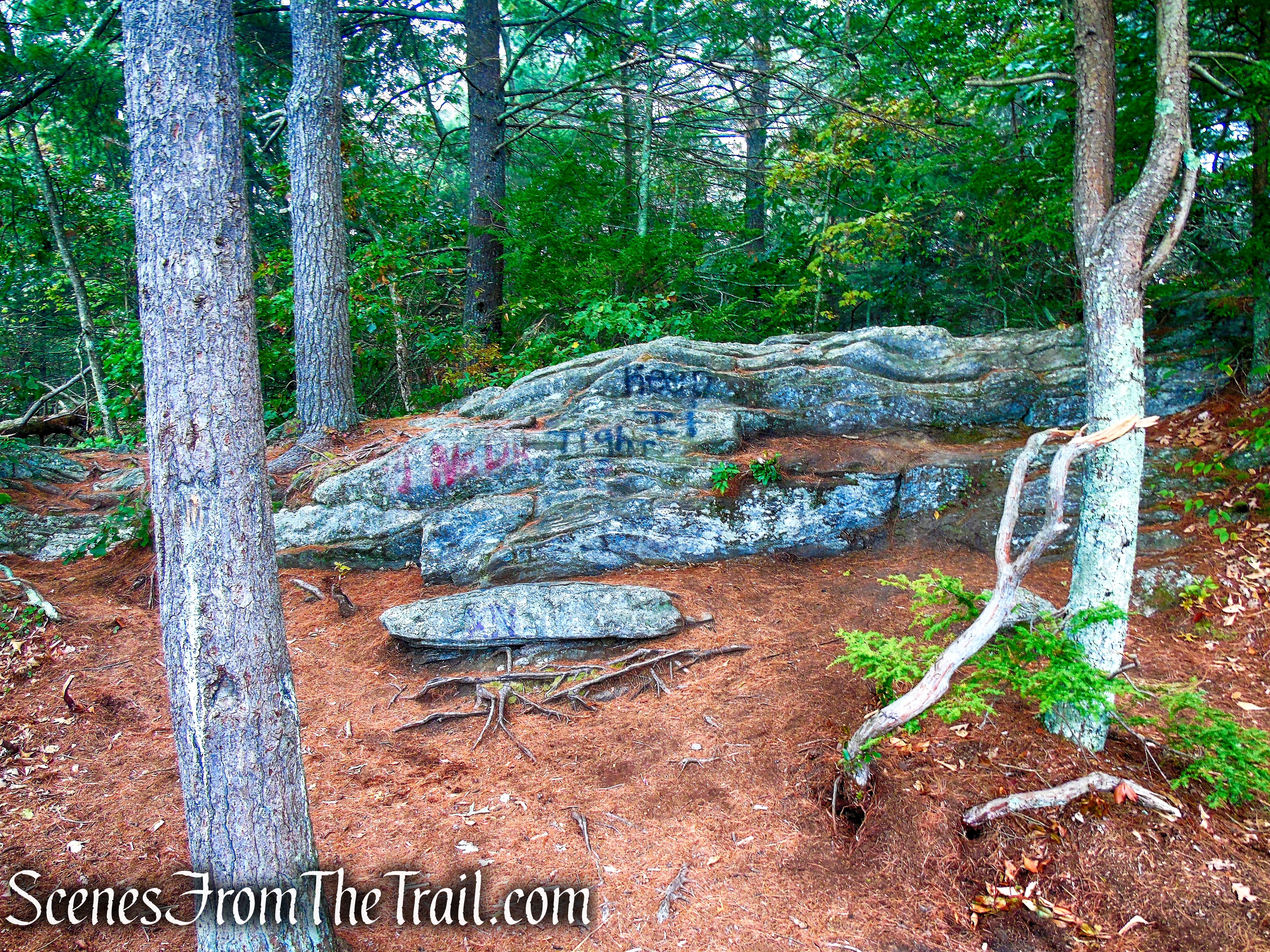
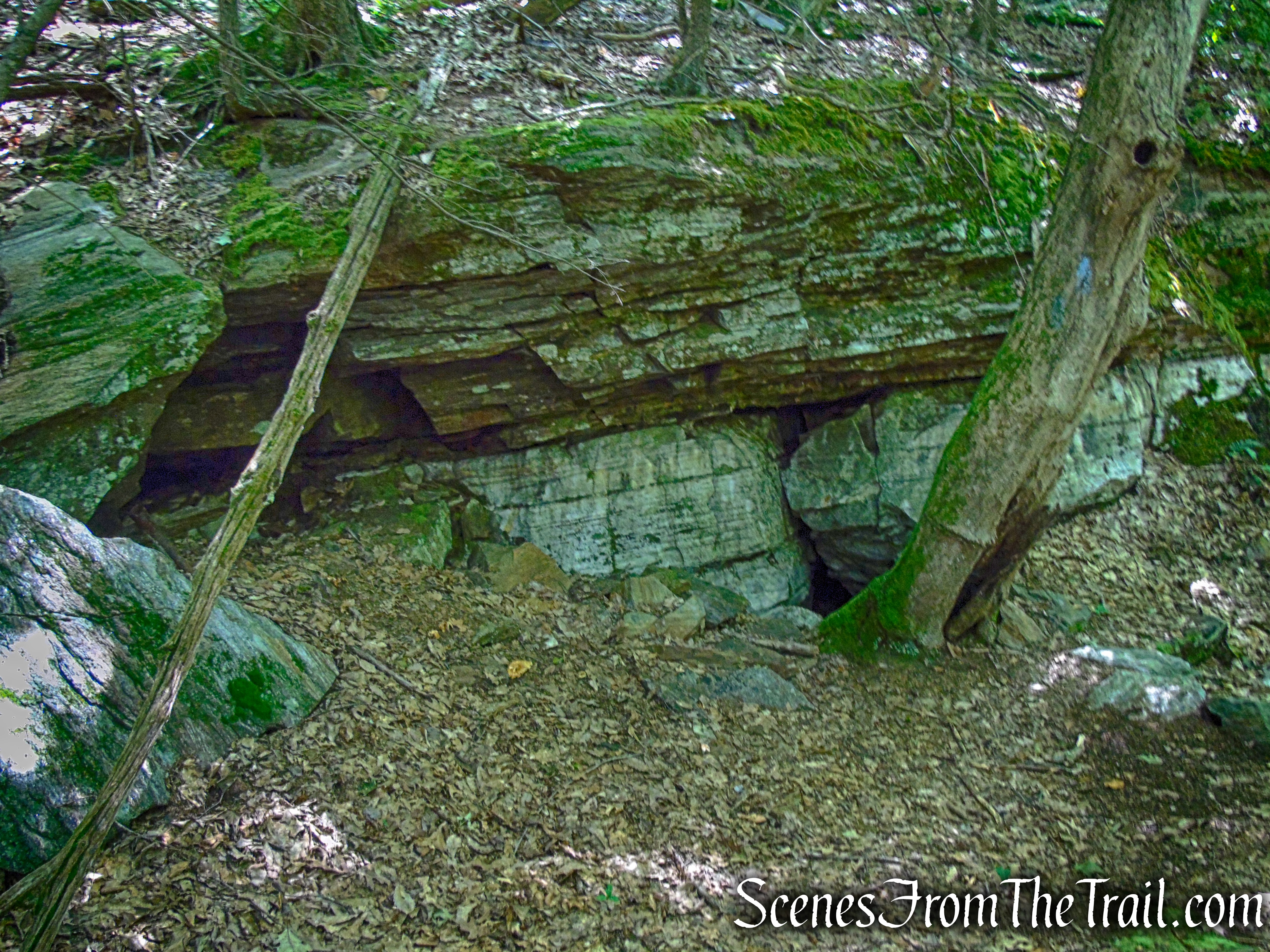
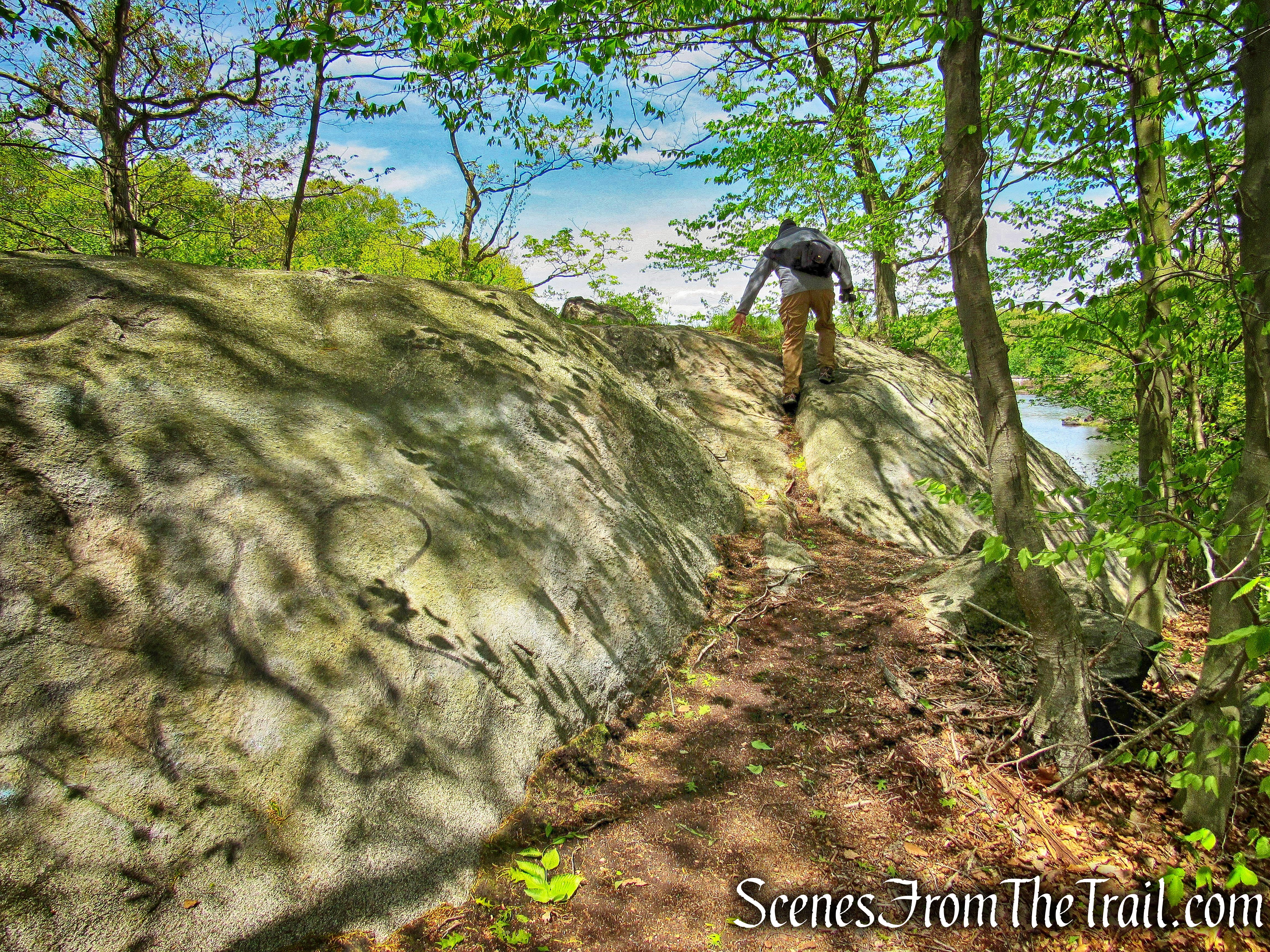
  • Philips Cave – Local legend says a shallow cave in this rock outcrop was used by one Mr. Philips. Philips was a soldier who returned after the war to live in this cave. He led the life of a hermit, including liberating an occasional chicken or produce from local farmers. He was evicted by the community. Another version said he was “permanently removed.”
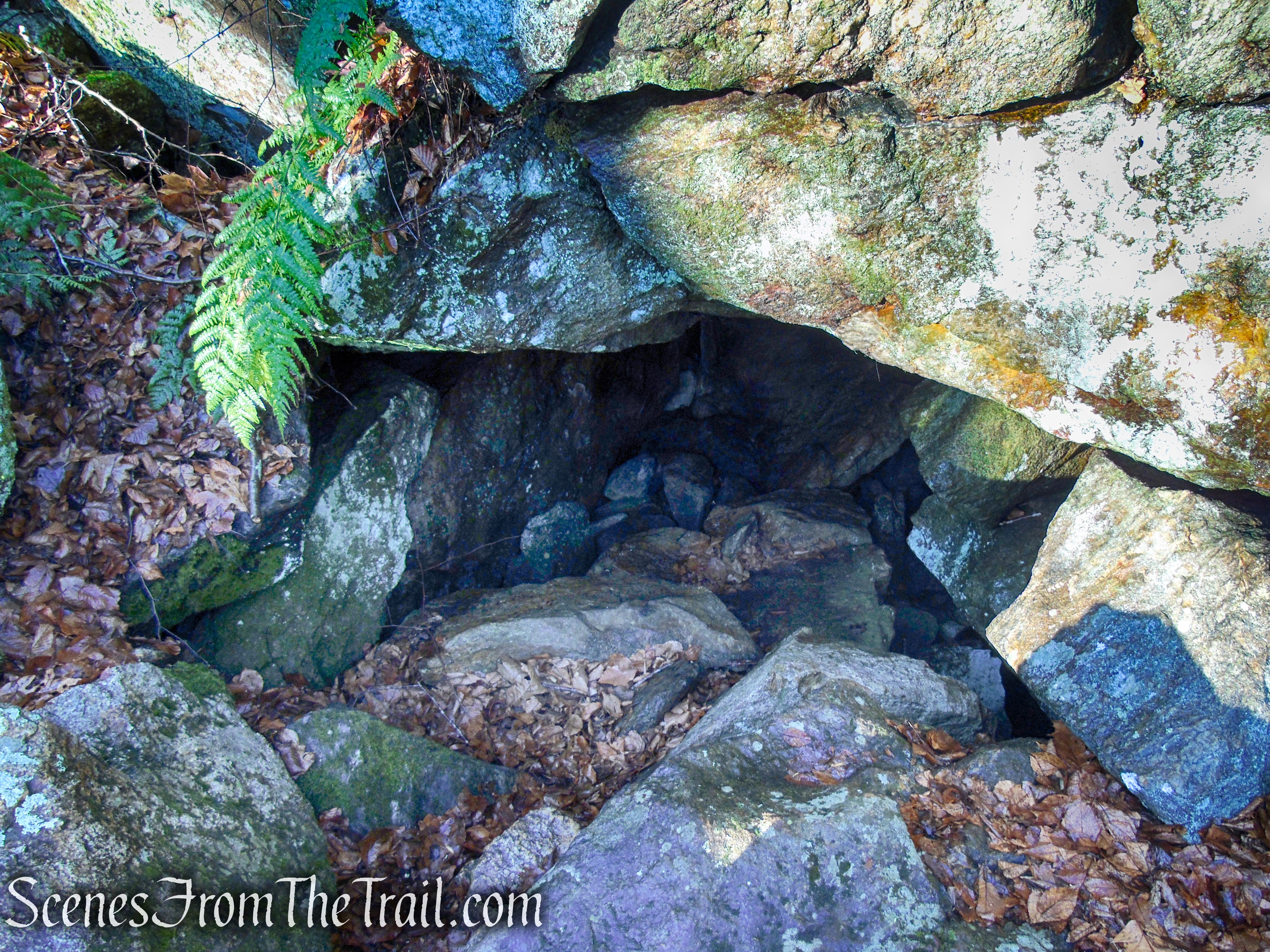
Philips Cave - Putnam Memorial State Park

Philips Cave – Putnam Memorial State Park

There are several cave-like openings throughout this area. 
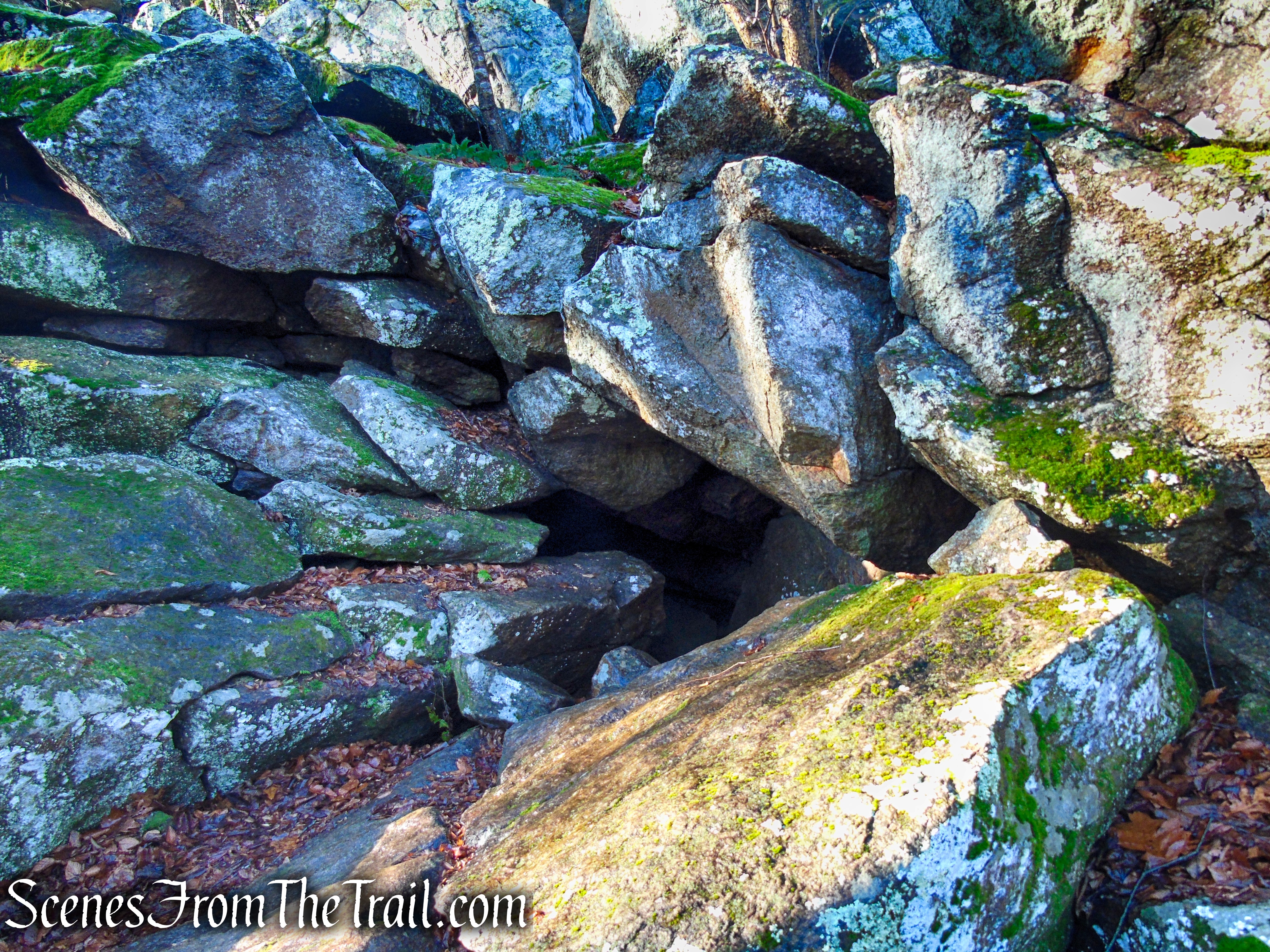
cave - Putnam Memorial State Park

cave – Putnam Memorial State Park


cave - Putnam Memorial State Park

cave – Putnam Memorial State Park

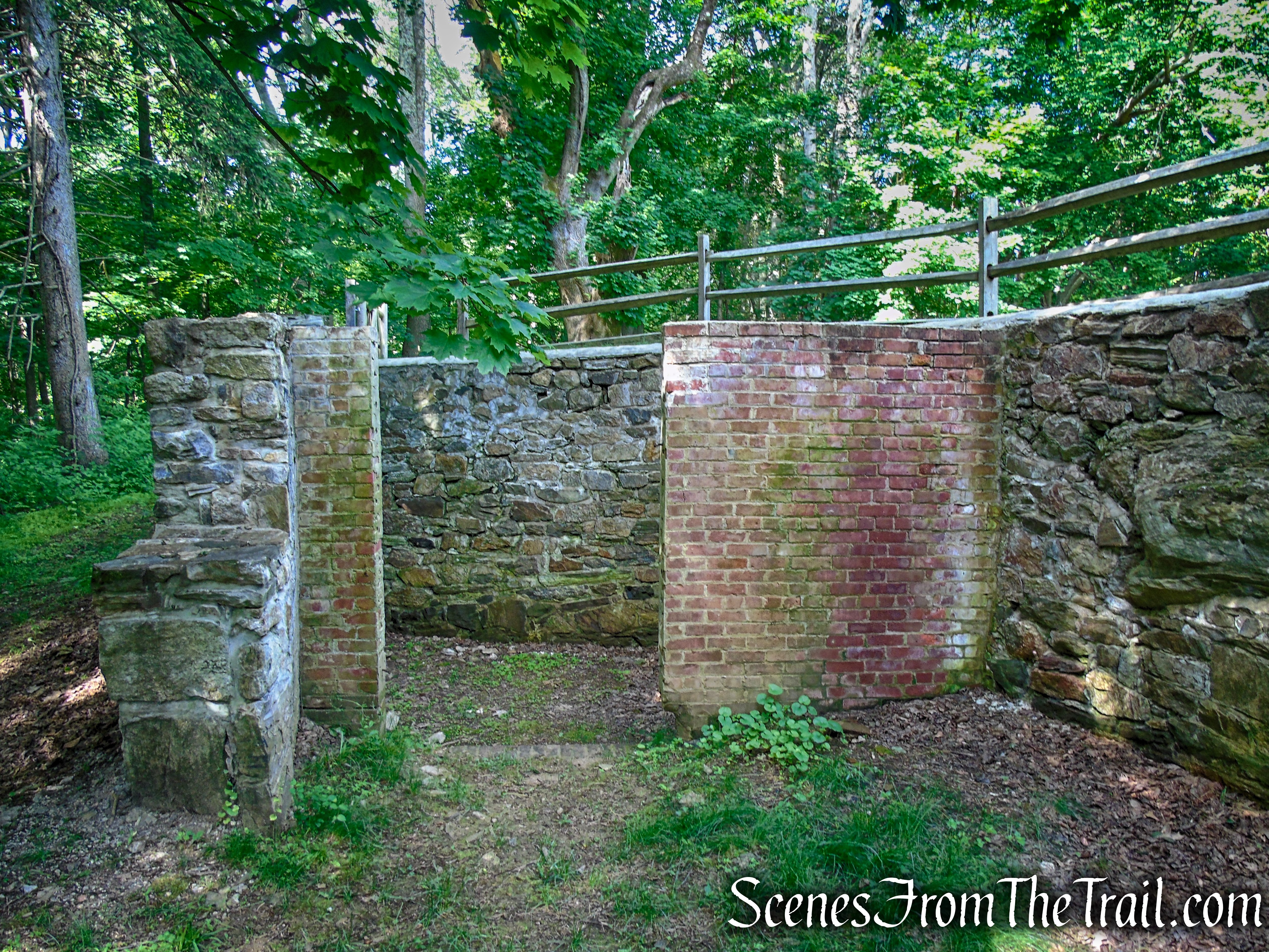
  • Officers Quarters/Magazine – This structure was reconstructed on the original foundations that are cut into the hillside. Long thought to be an officer’s barracks, recent information is now leading archaeologists to believe it was actually the camp magazine which held the kegs of gunpowder. The location far away from troop quarters and being semi-enclosed in the earthen bank support this theory. More research will be done on this site.
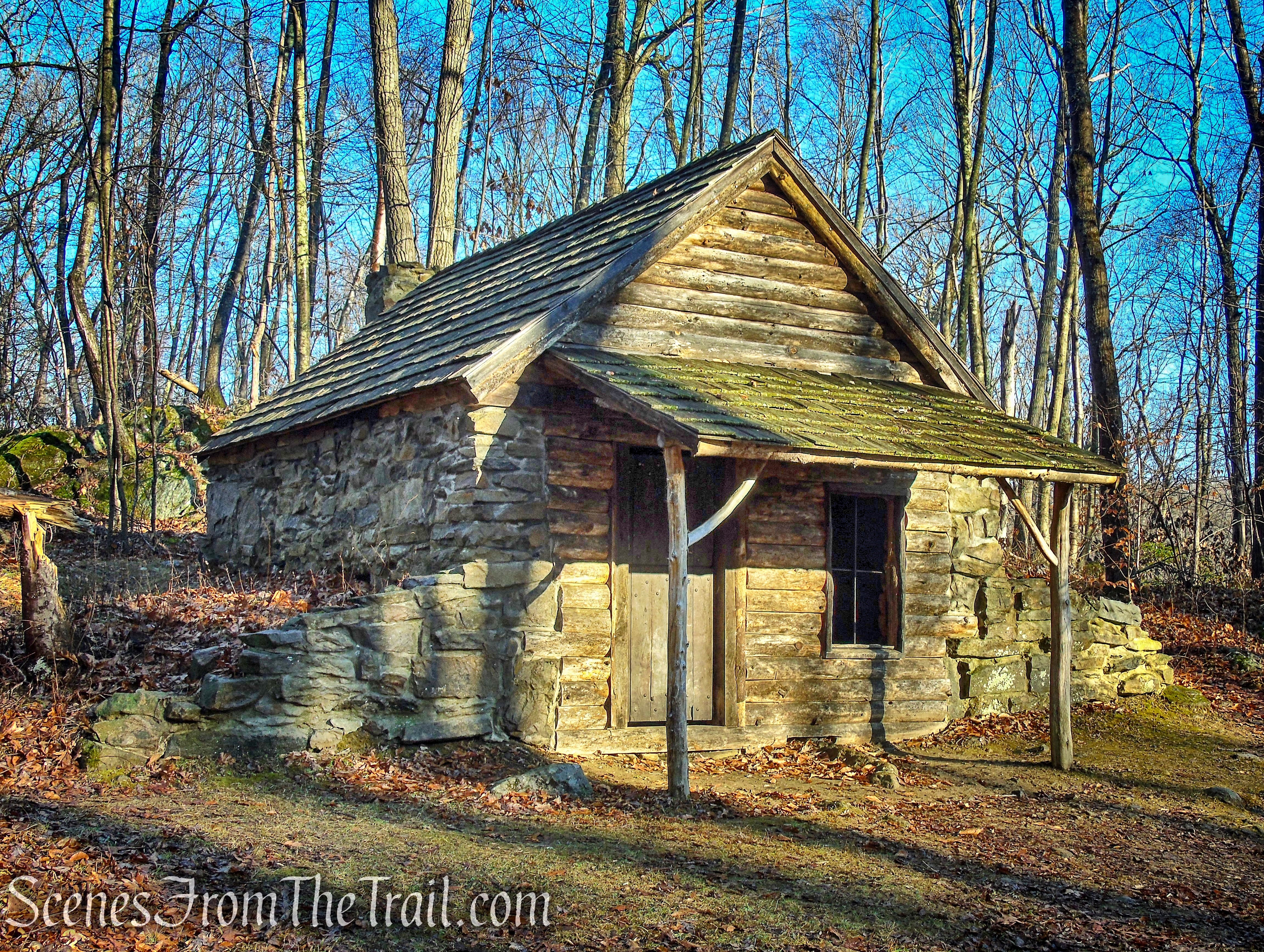
Officers Quarters/Magazine - Putnam Memorial State Park

Officers Quarters/Magazine – Putnam Memorial State Park

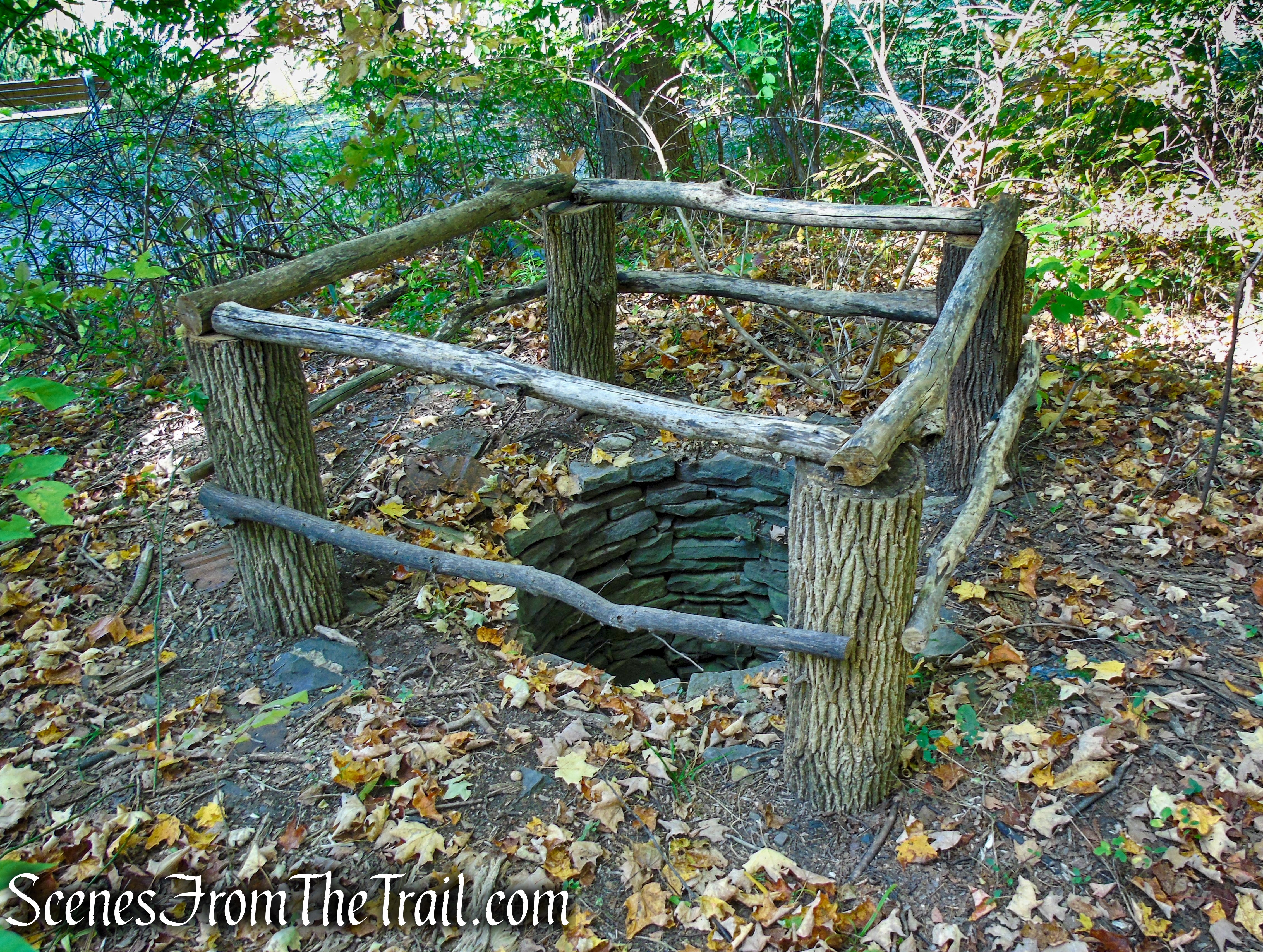
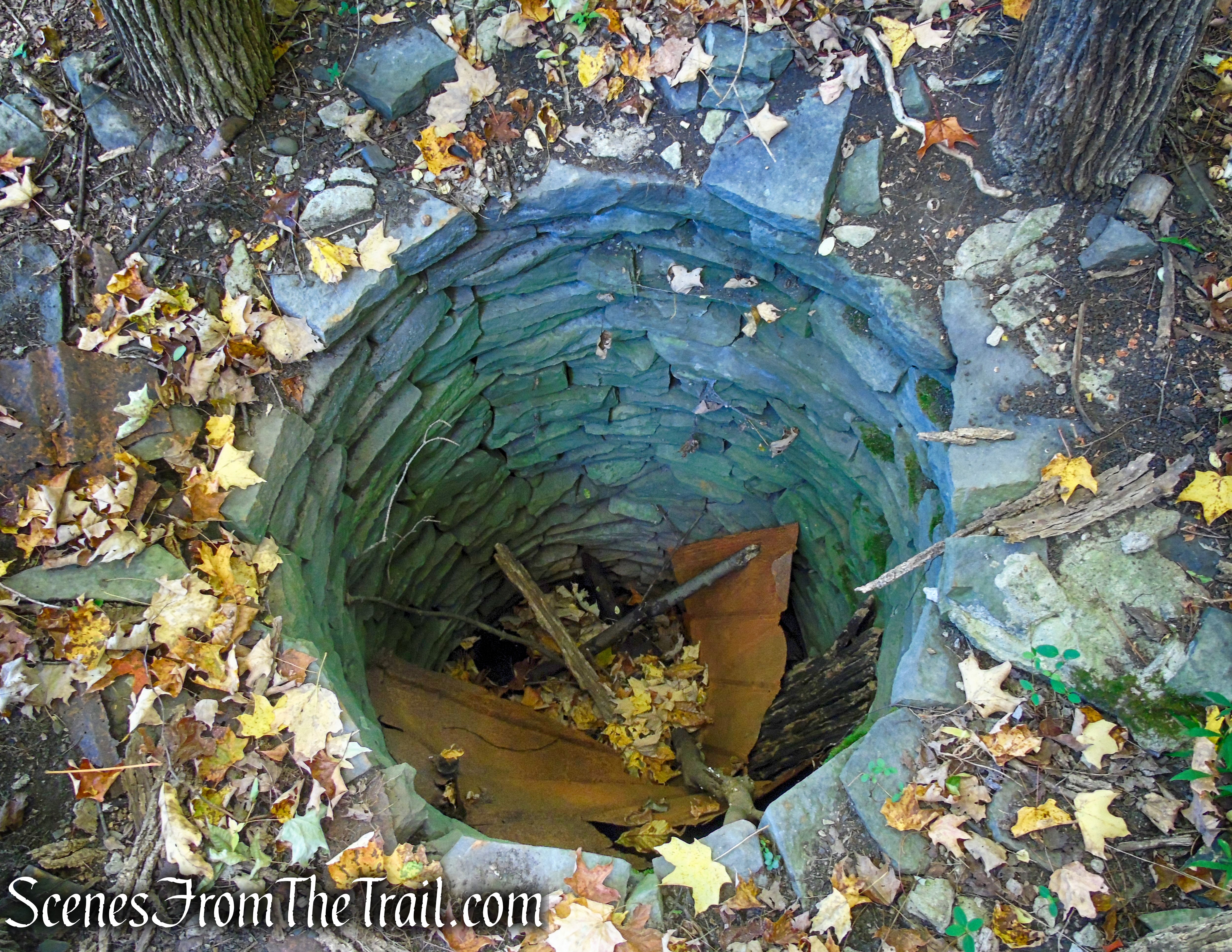
  • Cemetery/Command Officer’s Quarters – Another bit of hand-me-down lore at the time the park was created in the 1880’s was that the two mounds of stones, inside the square formed by the granite posts, were thought to be the camp cemetery. Accordingly, a memorial monument was erected to mark the site circa 1890. Archaeology work from the 2002-04 seasons has proven the site actually to be a double-ended (two chimneys) Field Officers quarters. Further research has pointed to the distinct probability that the hut belonged to Lt. Col. Henry Dearborn who was the ranking officer living at the camp (Some senior officers were quartered at area homes).
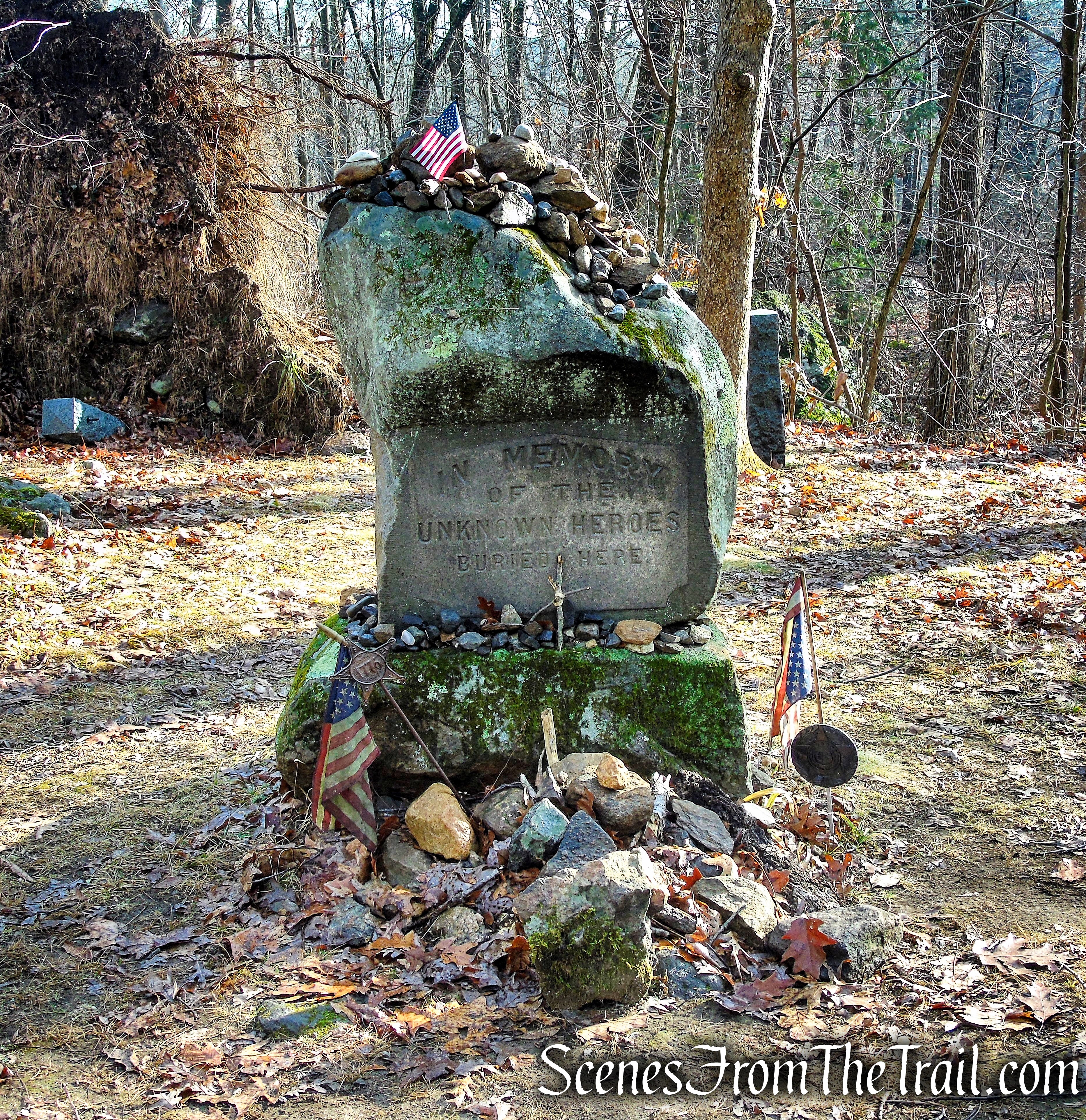
memorial monument - Putnam Memorial State Park

memorial monument – Putnam Memorial State Park

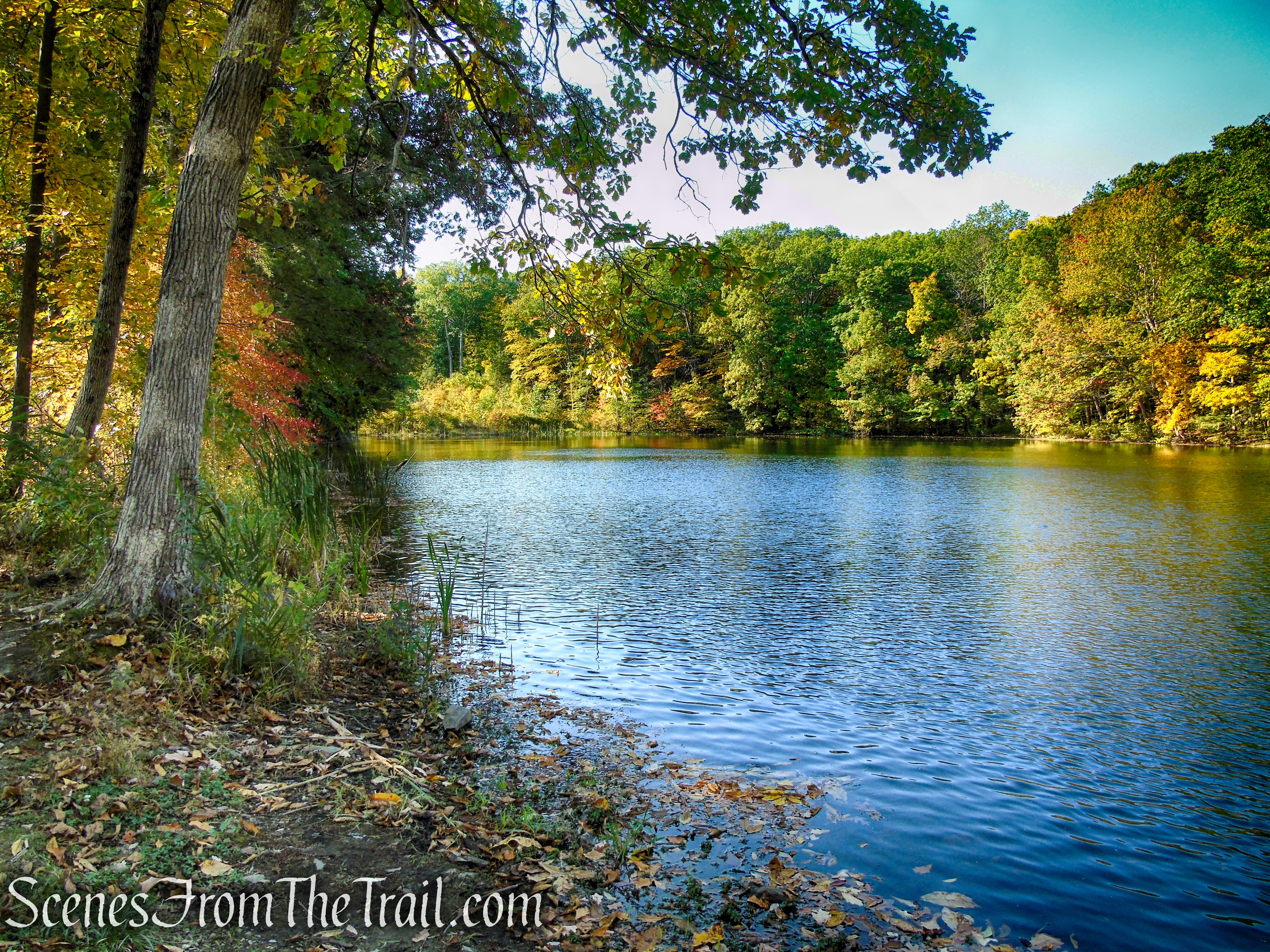
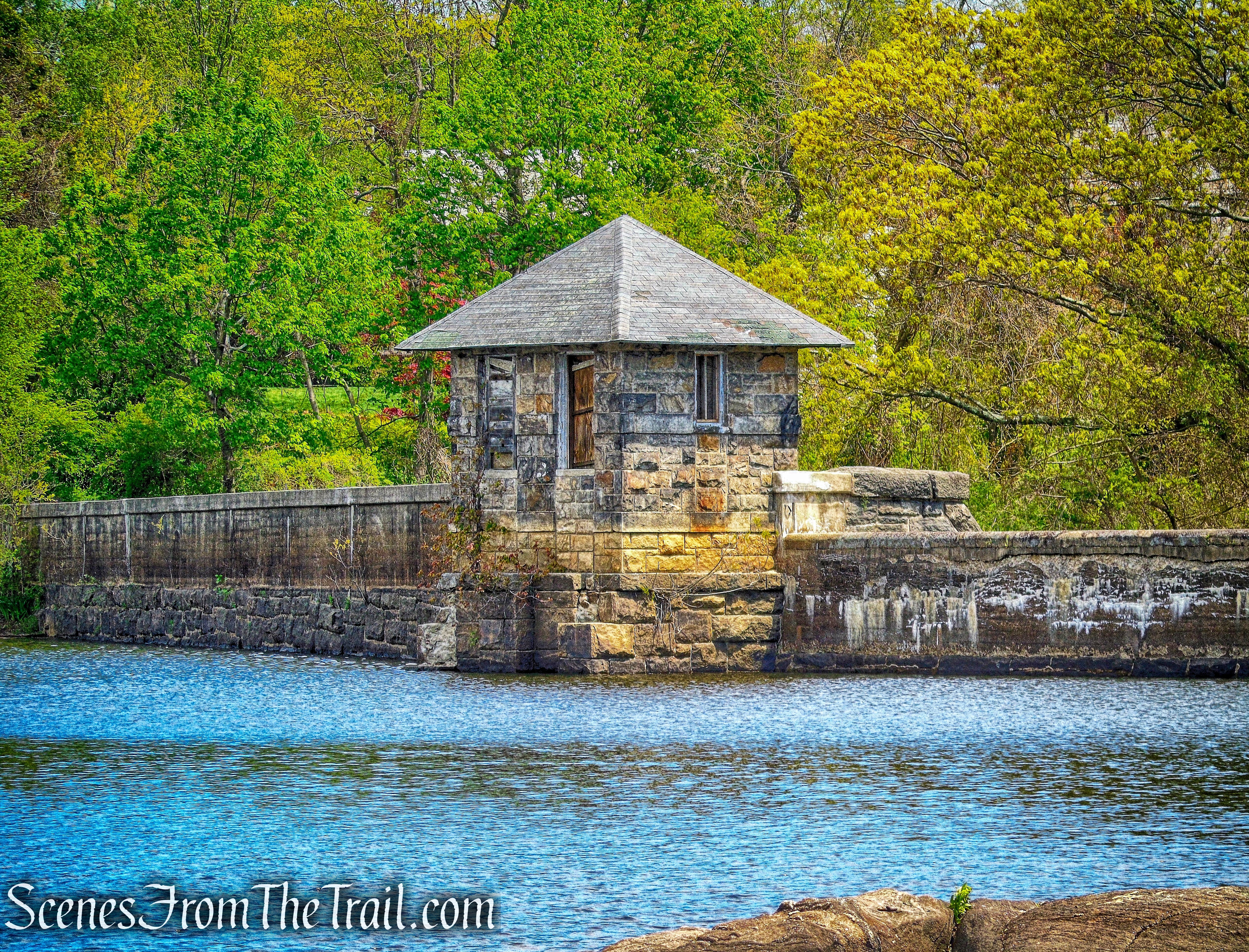
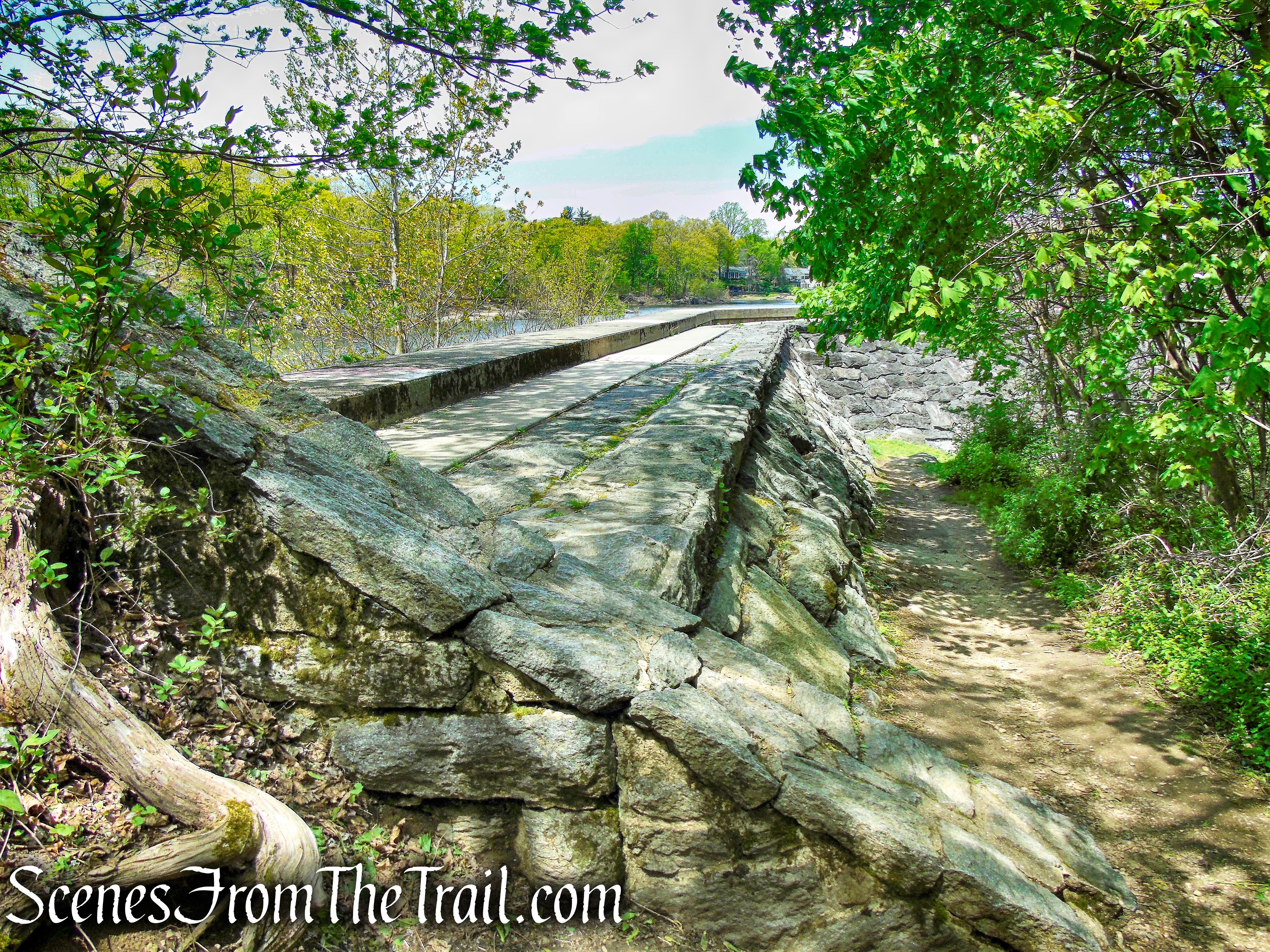
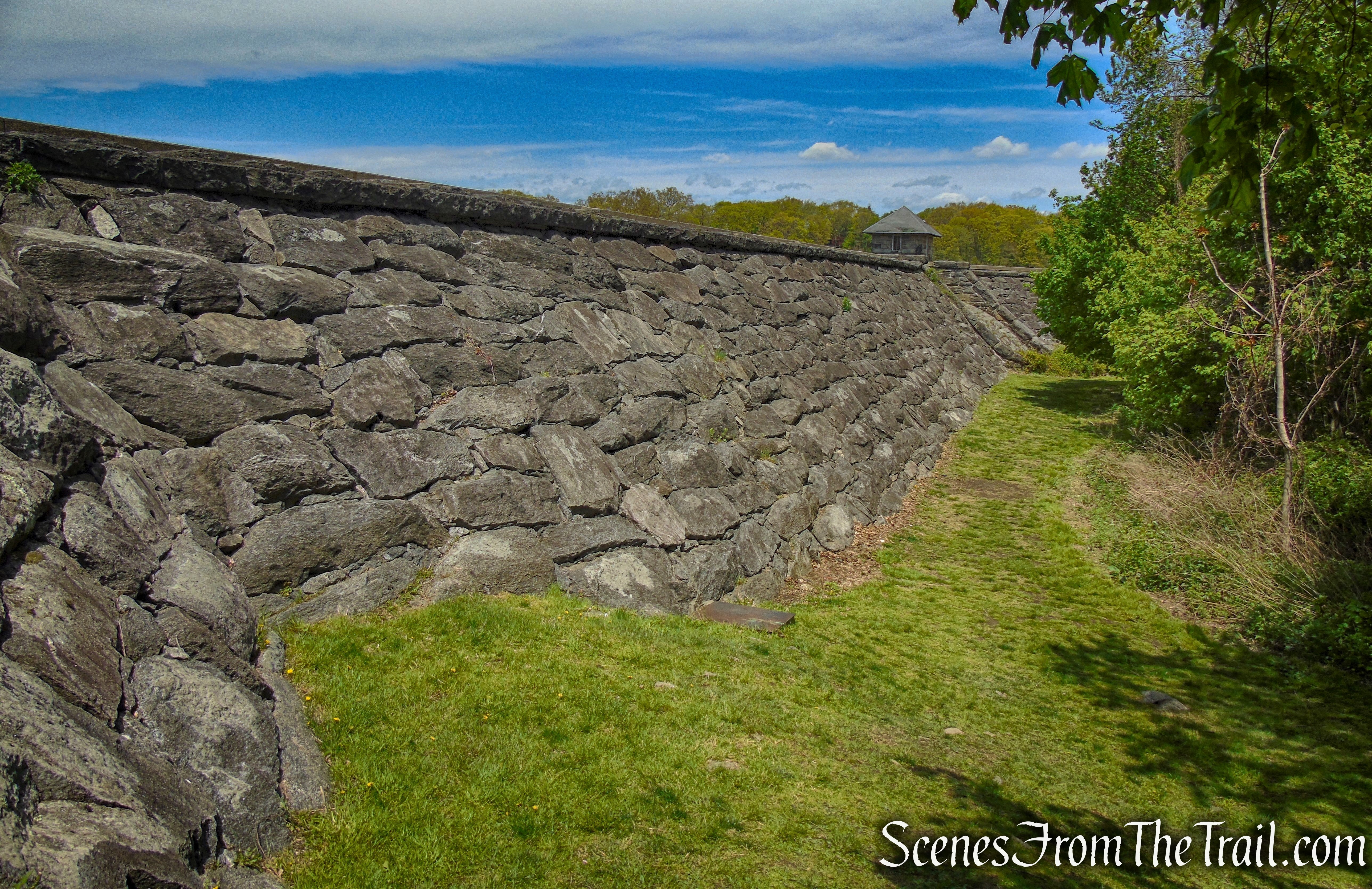
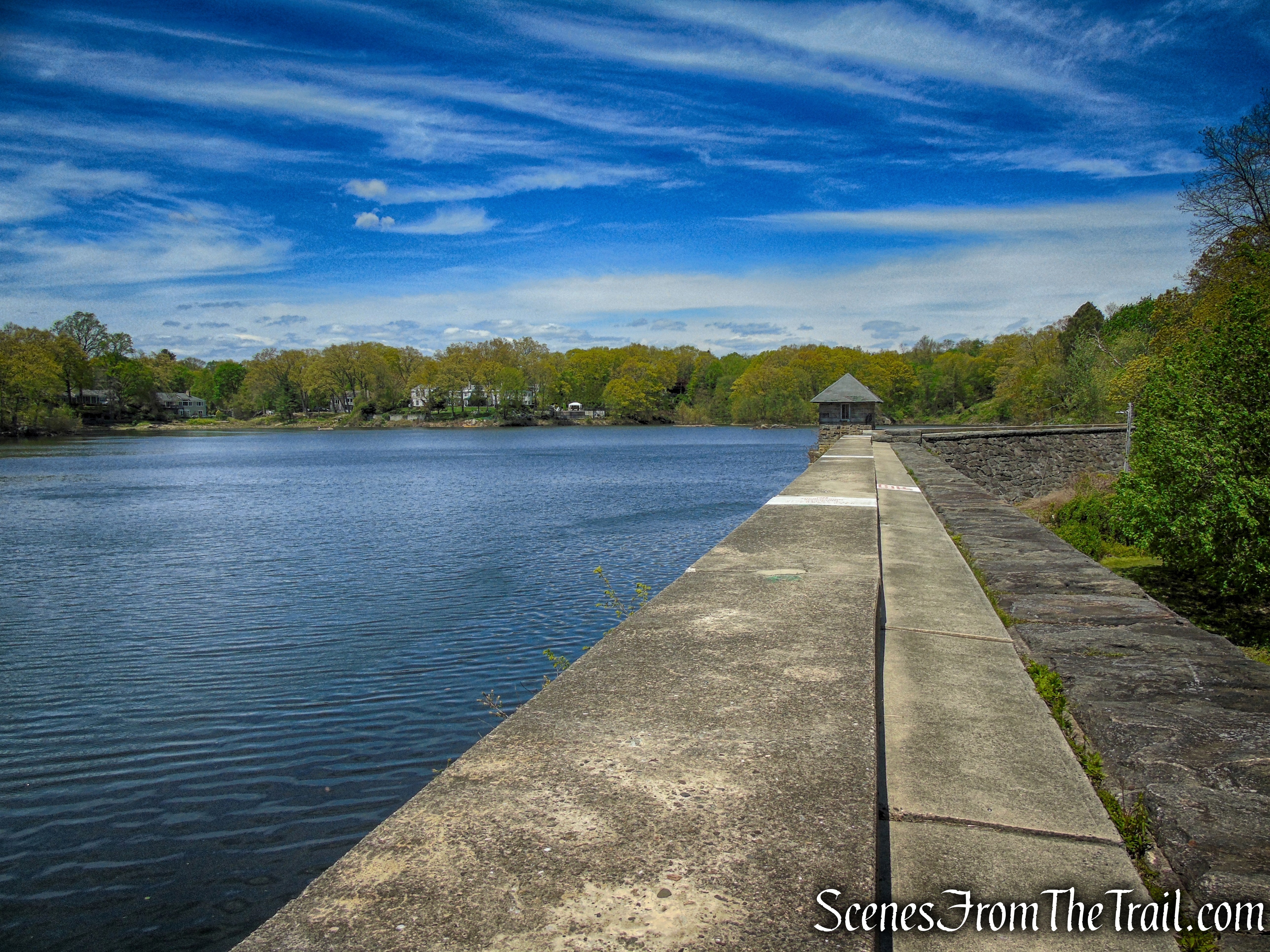
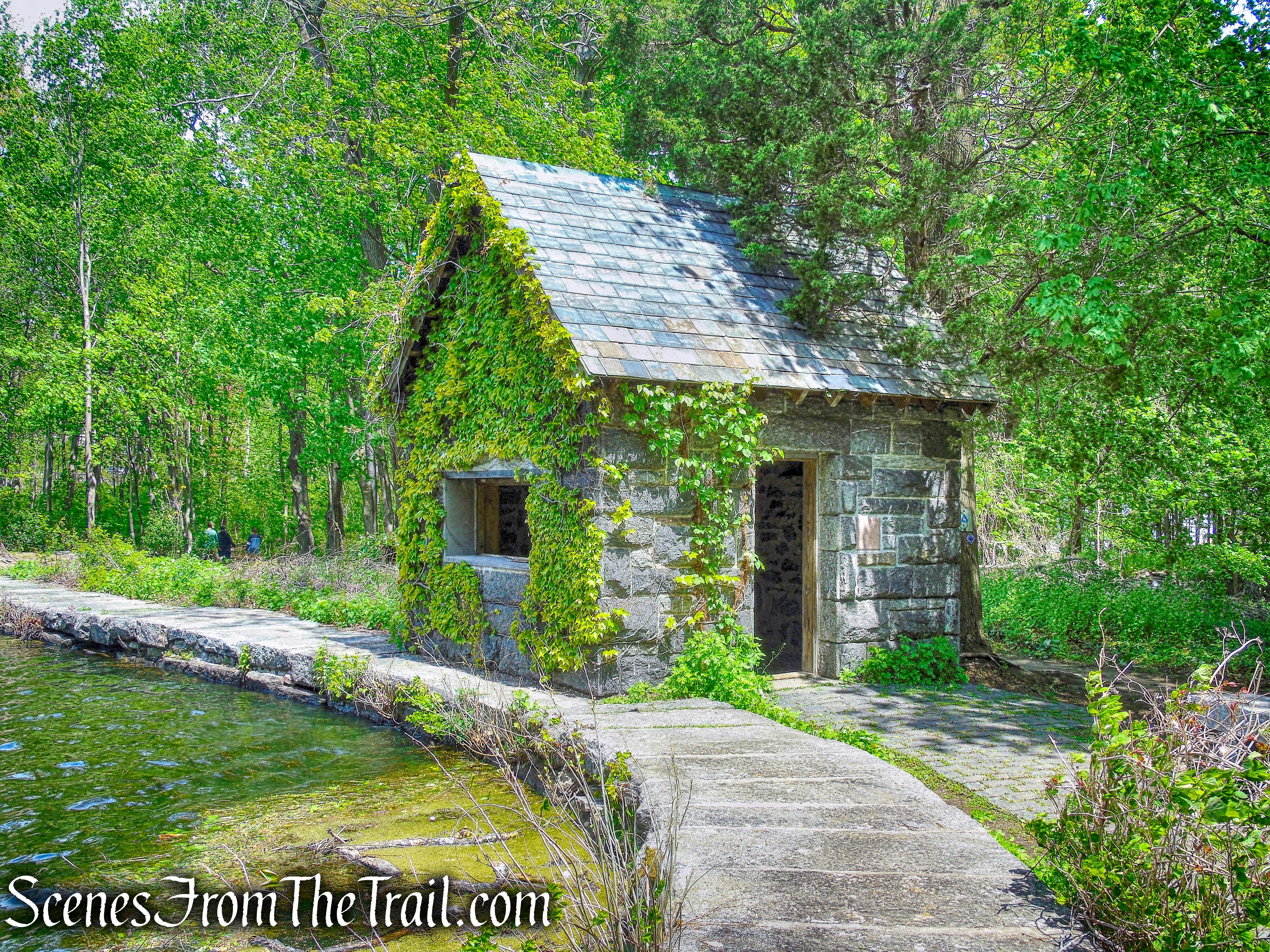
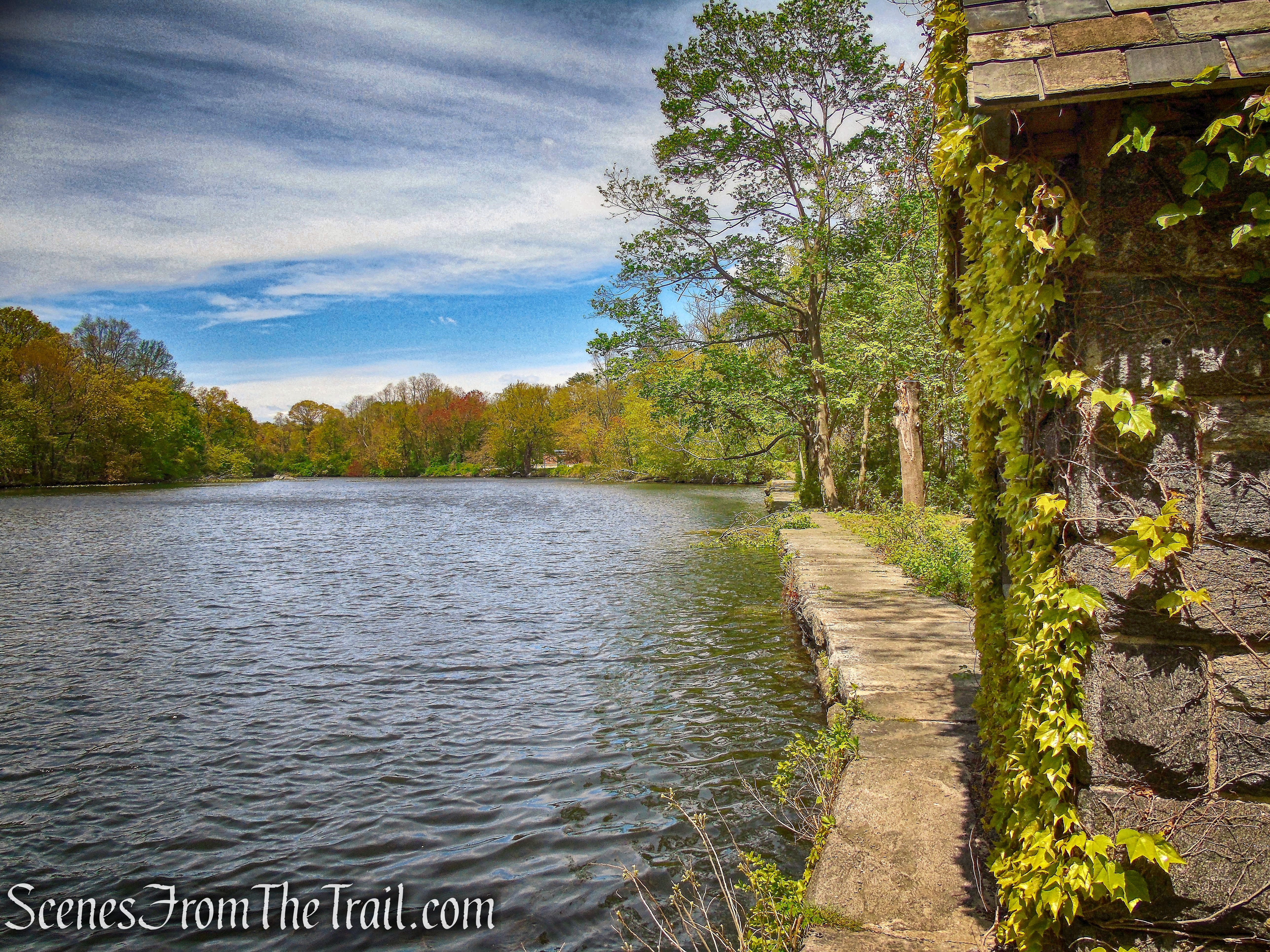
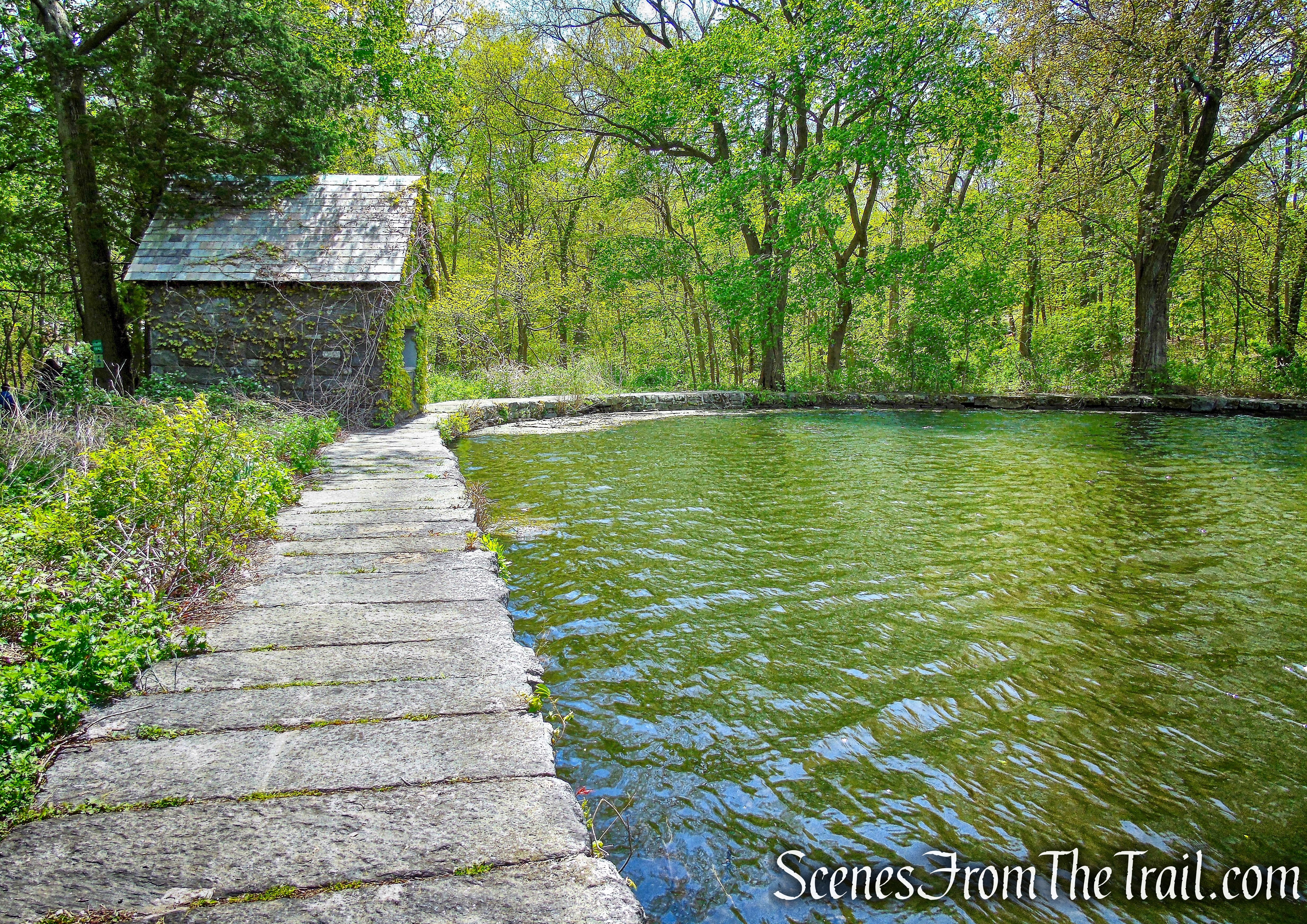
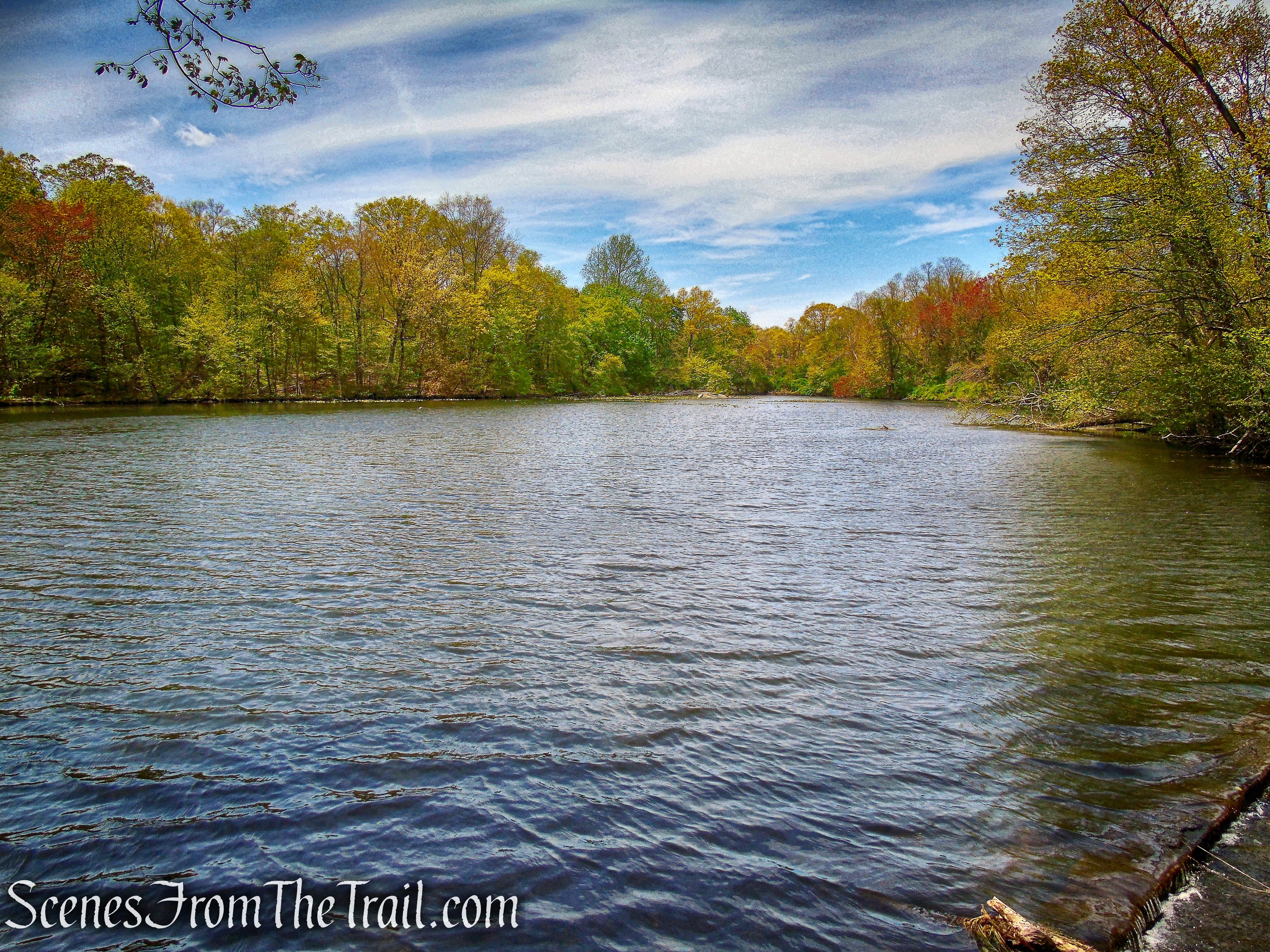
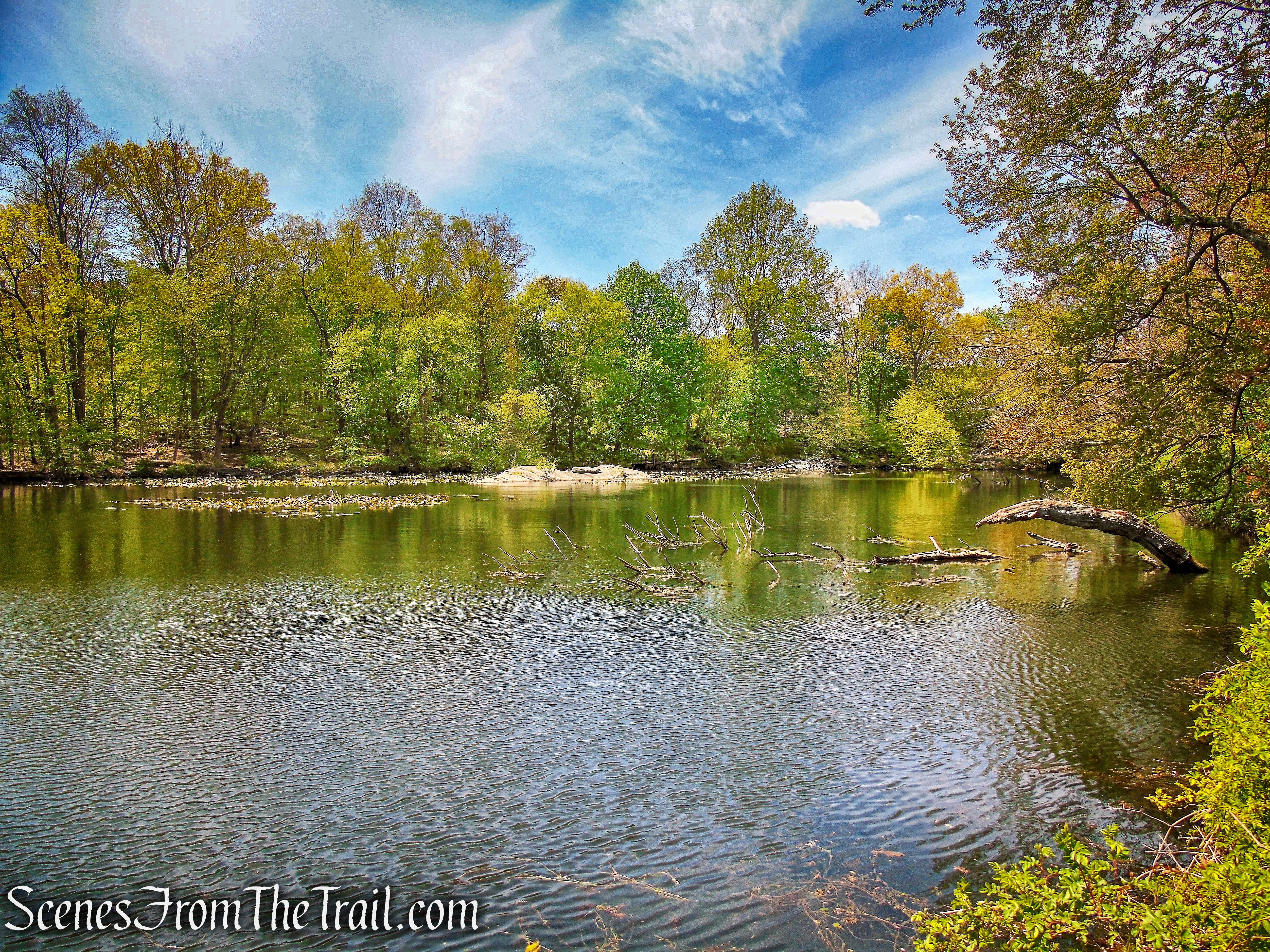
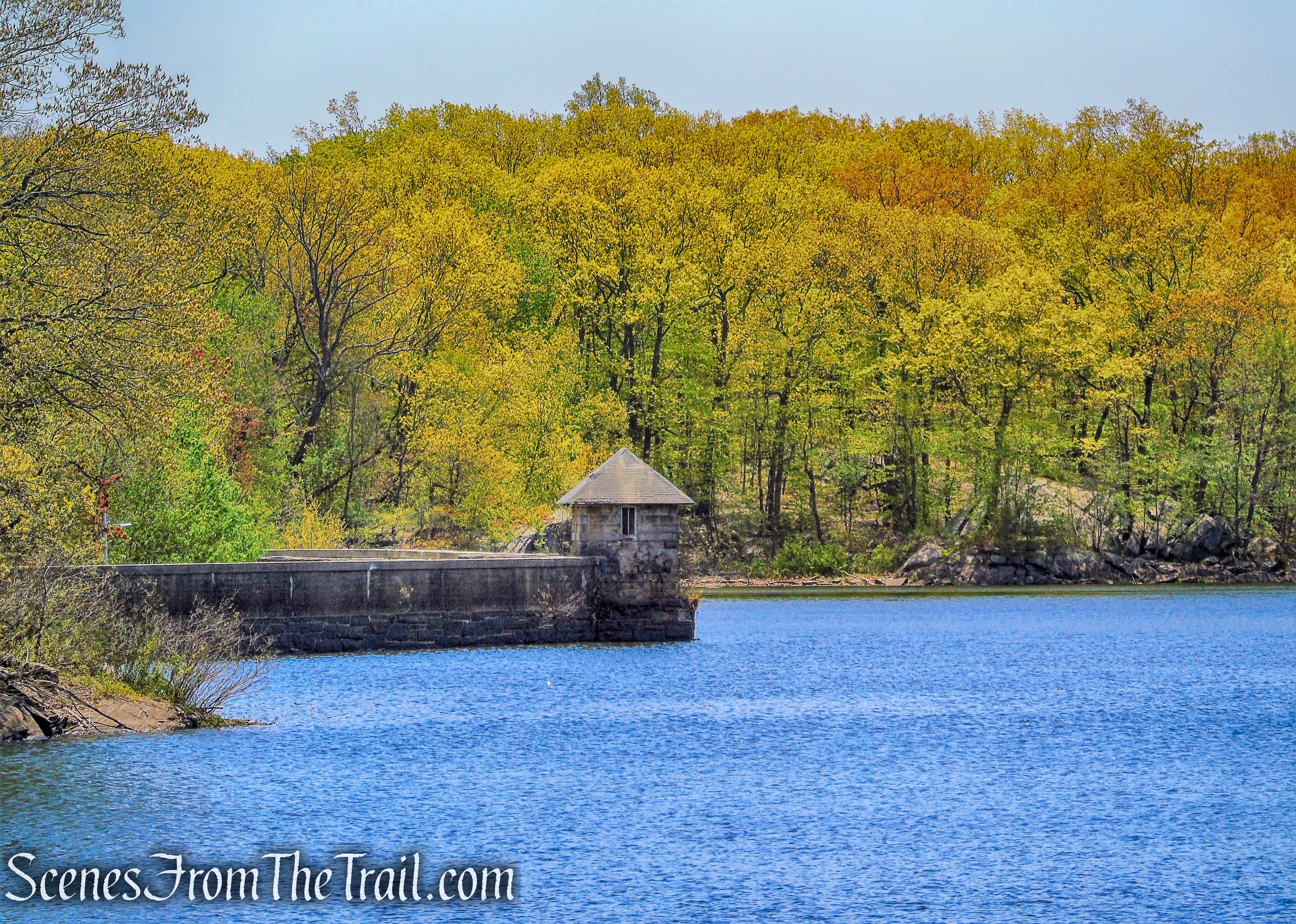
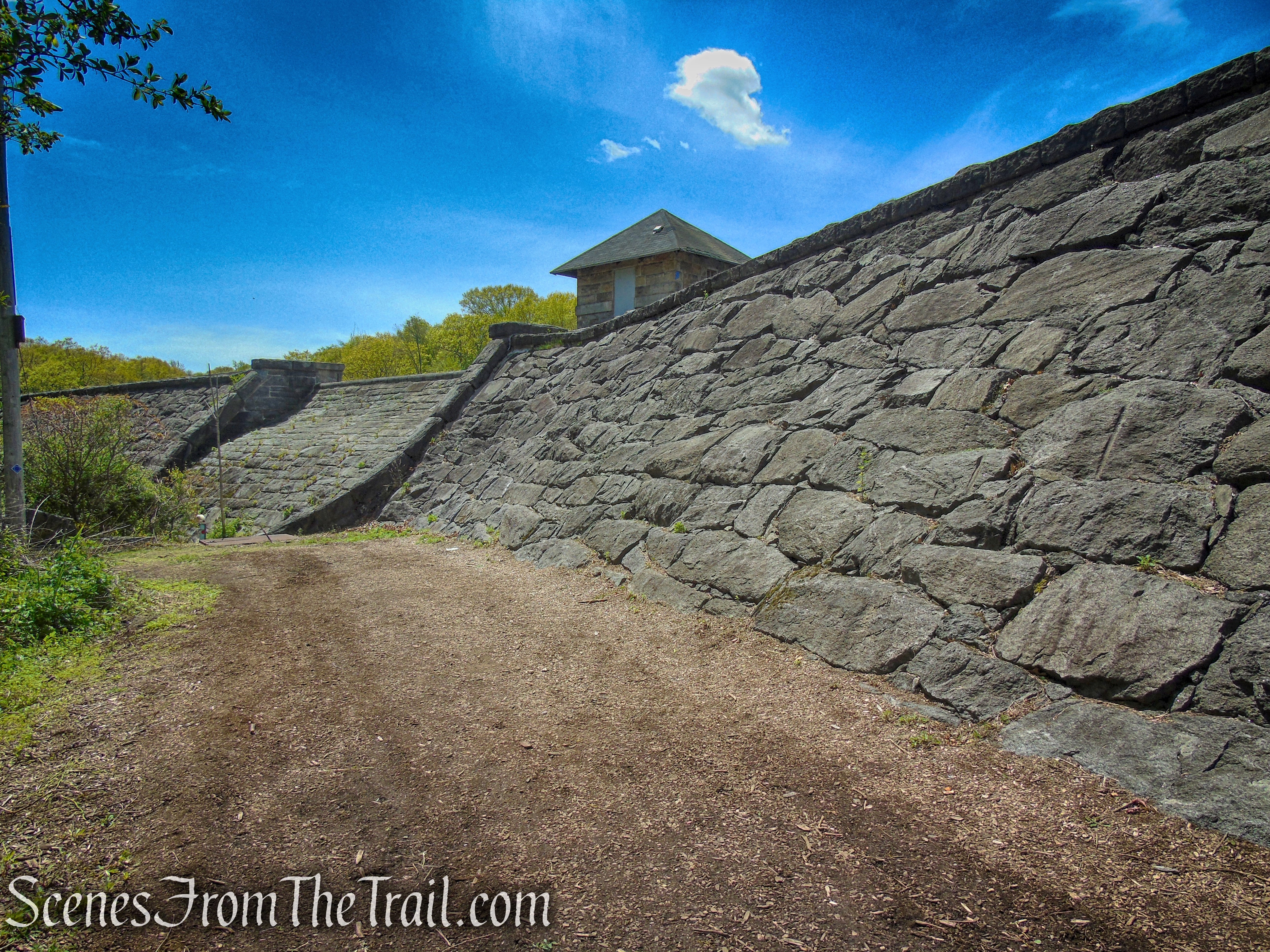
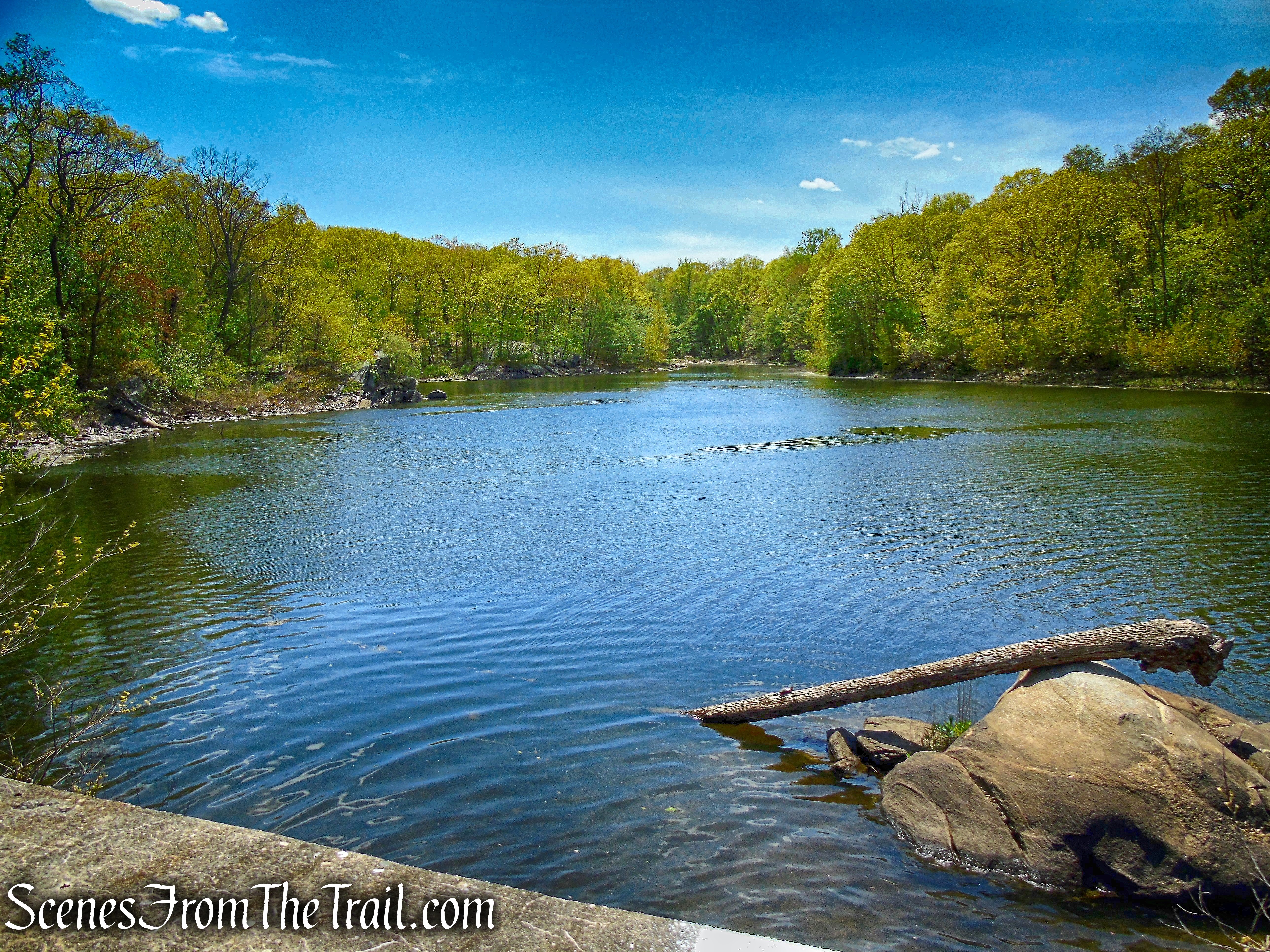
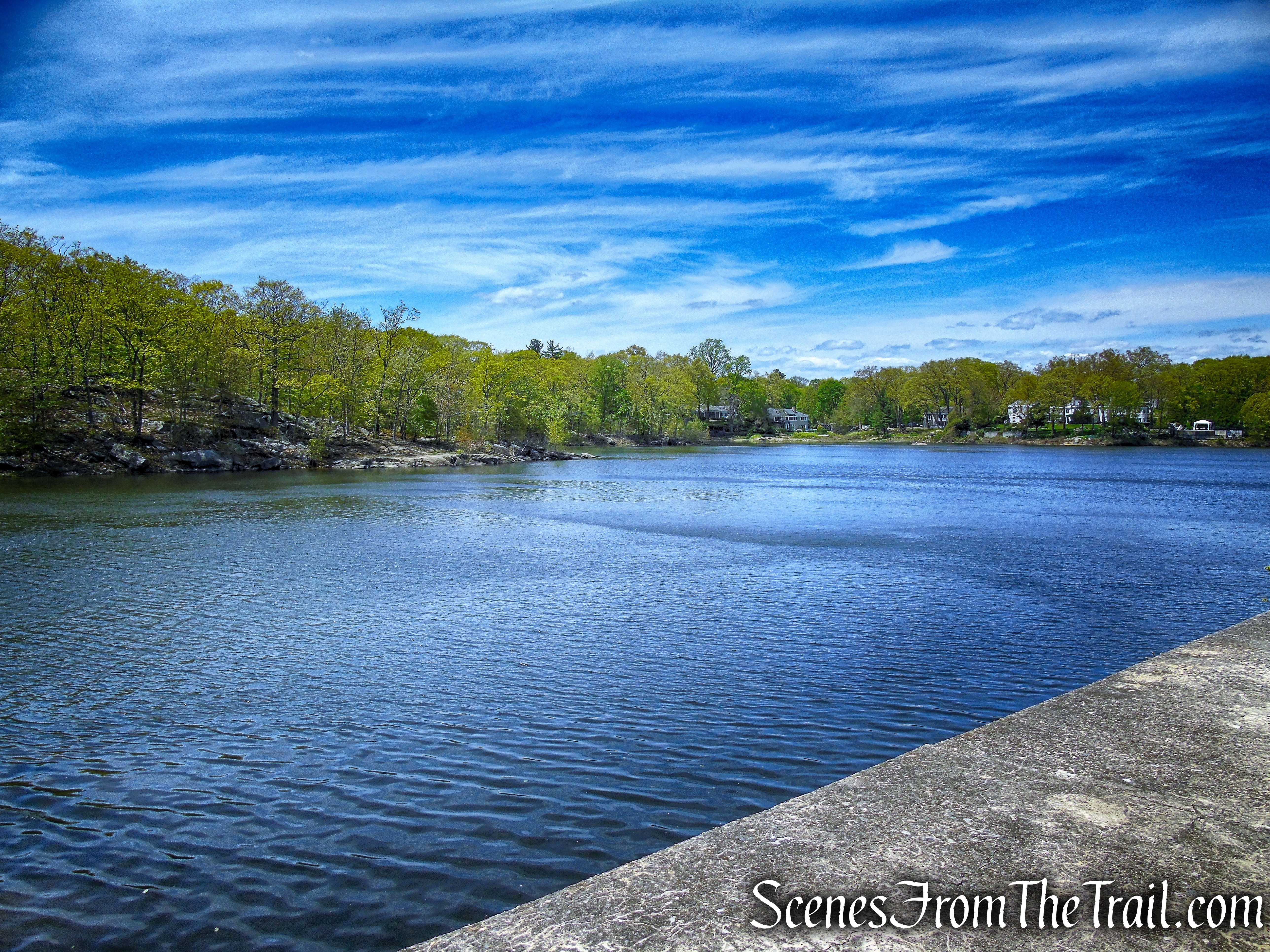
  • Lake McDougall – The stone damn which creates this pond was installed at the time of the park’s creation. But the stream was very much in in existence during the 1778-79 army encampment. It is one of two main streams, one at each end of the camp, which provided water for the troops. Gen. Alexander McDougall’s name is listed on the memorial monument as one of the commanders at the Reading camps. Actually, McDougall had been the commander of Putnam’s Division prior to going into winter quarters. Gen. Washington placed the division under Israel Putnam and kept Gen. McDougall in command of the Hudson Highlands which included the all important fortress West Point.
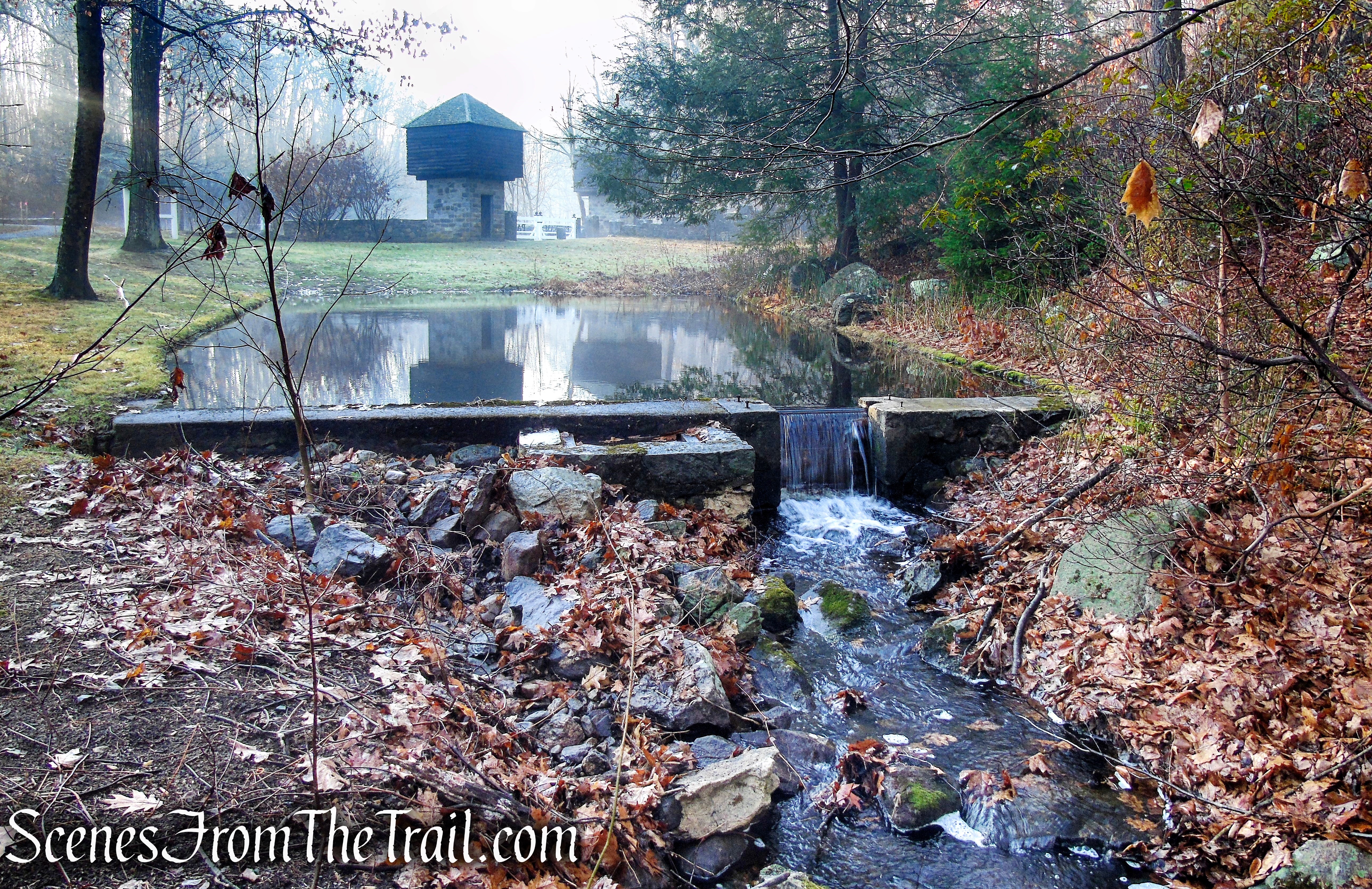
Lake McDougall - Putnam Memorial State Park

Lake McDougall – Putnam Memorial State Park

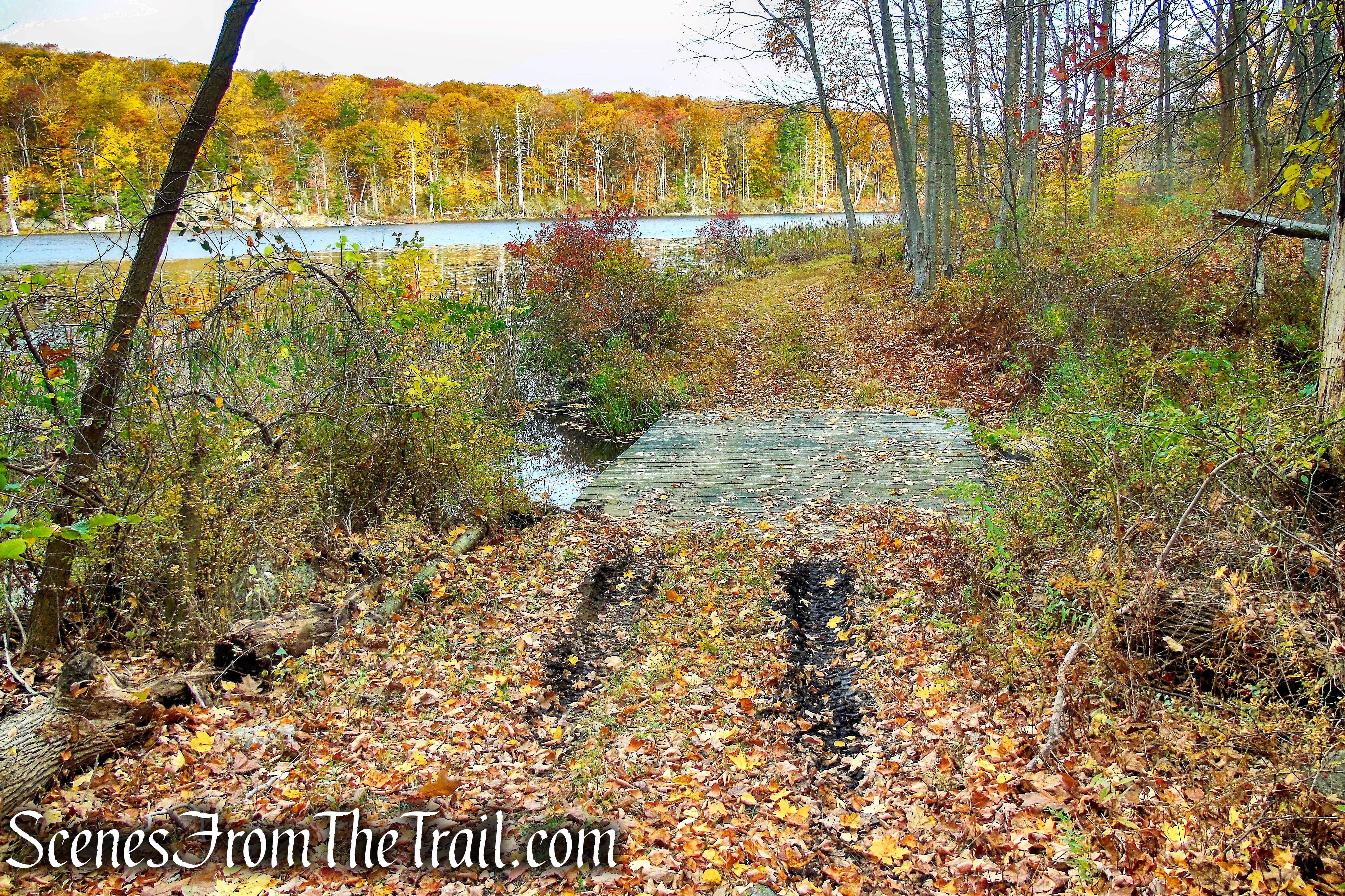
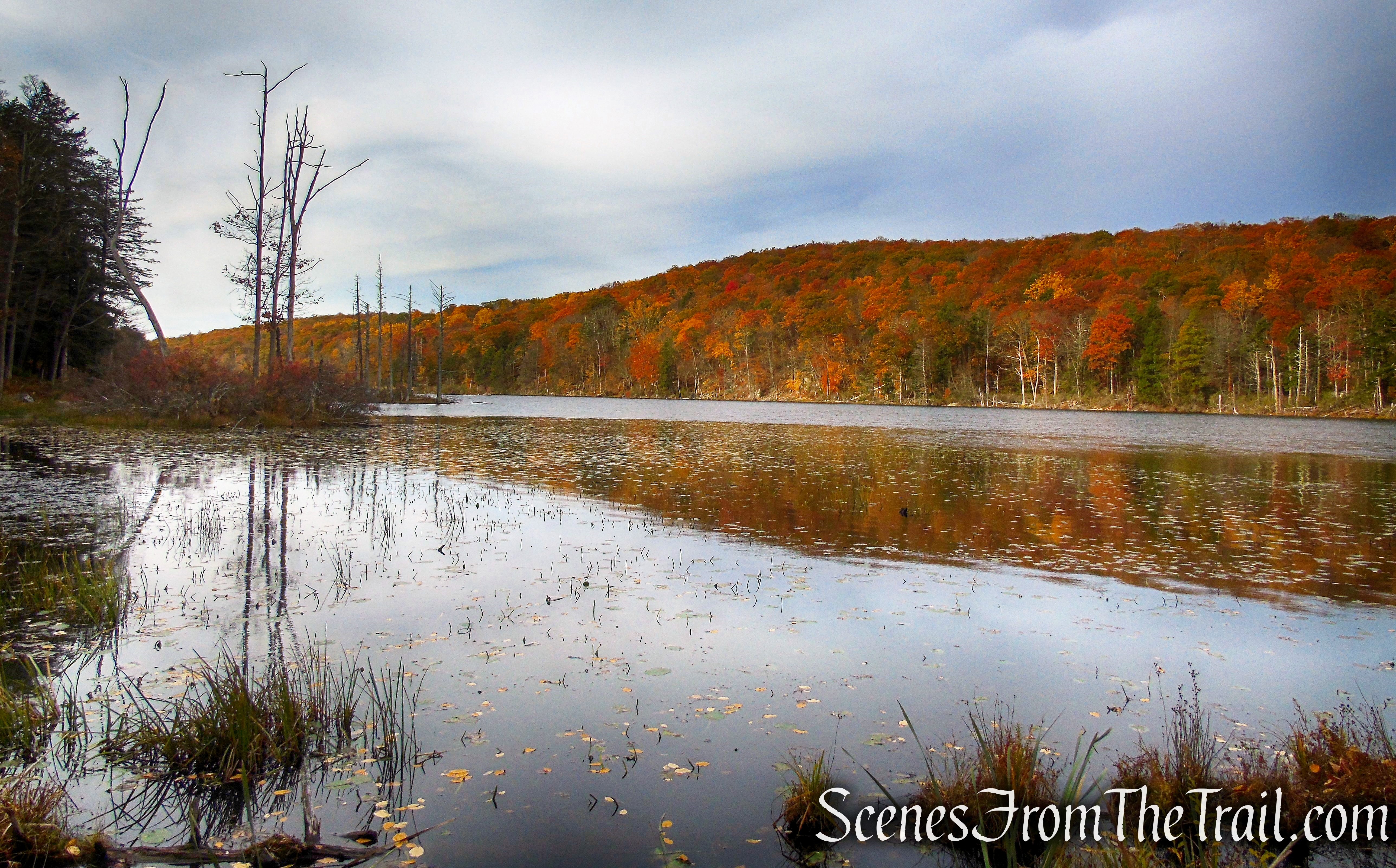
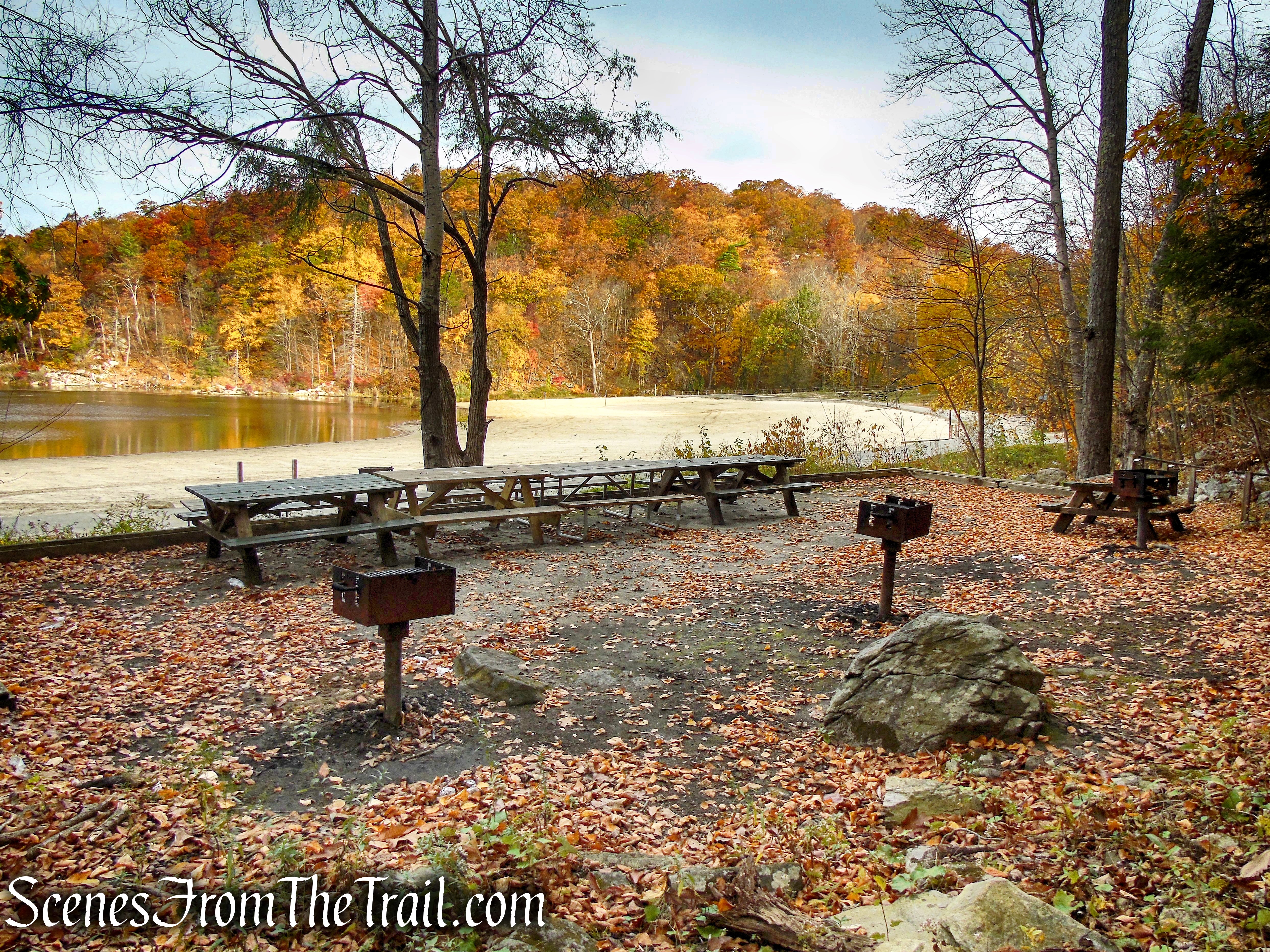
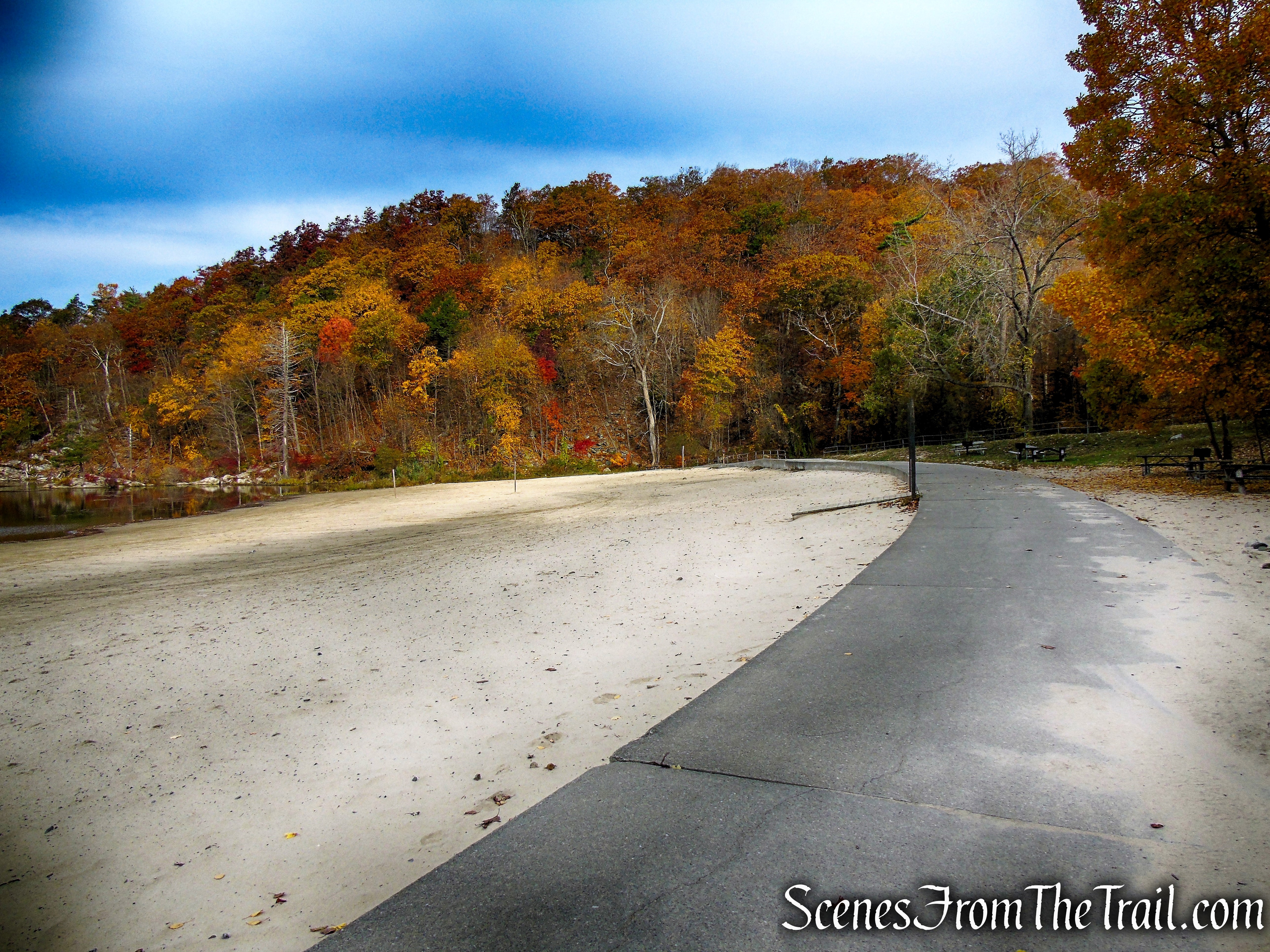
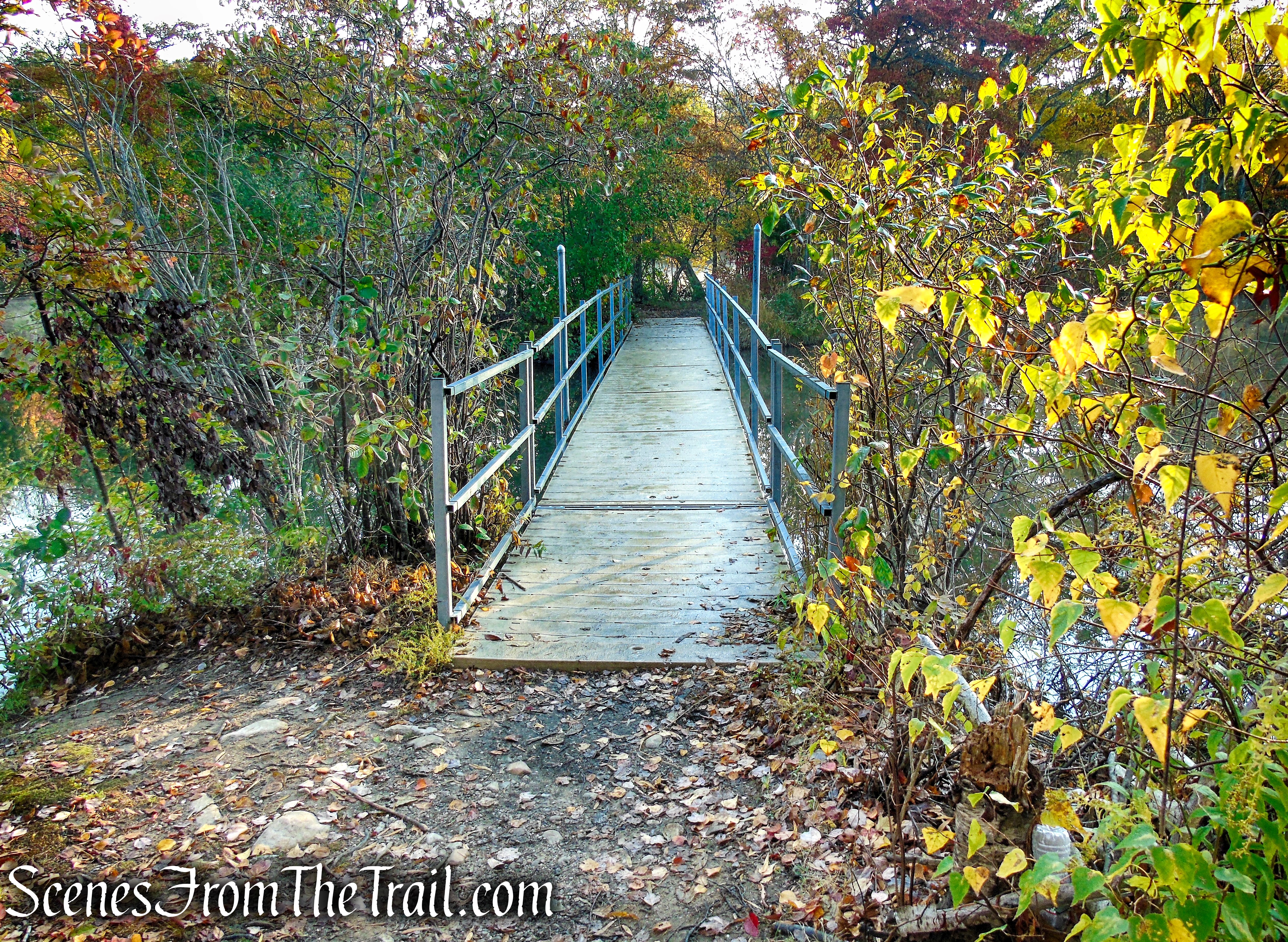
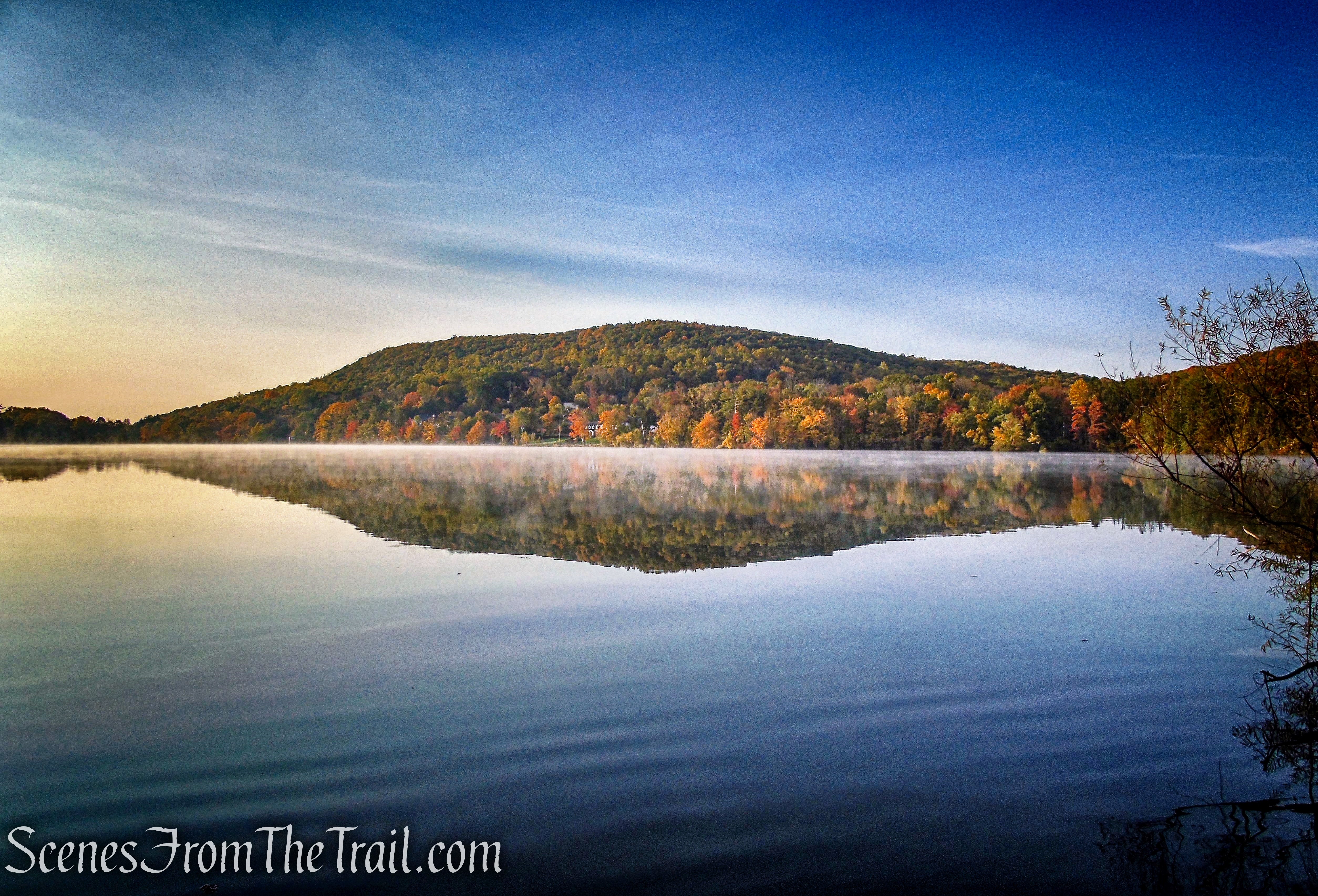
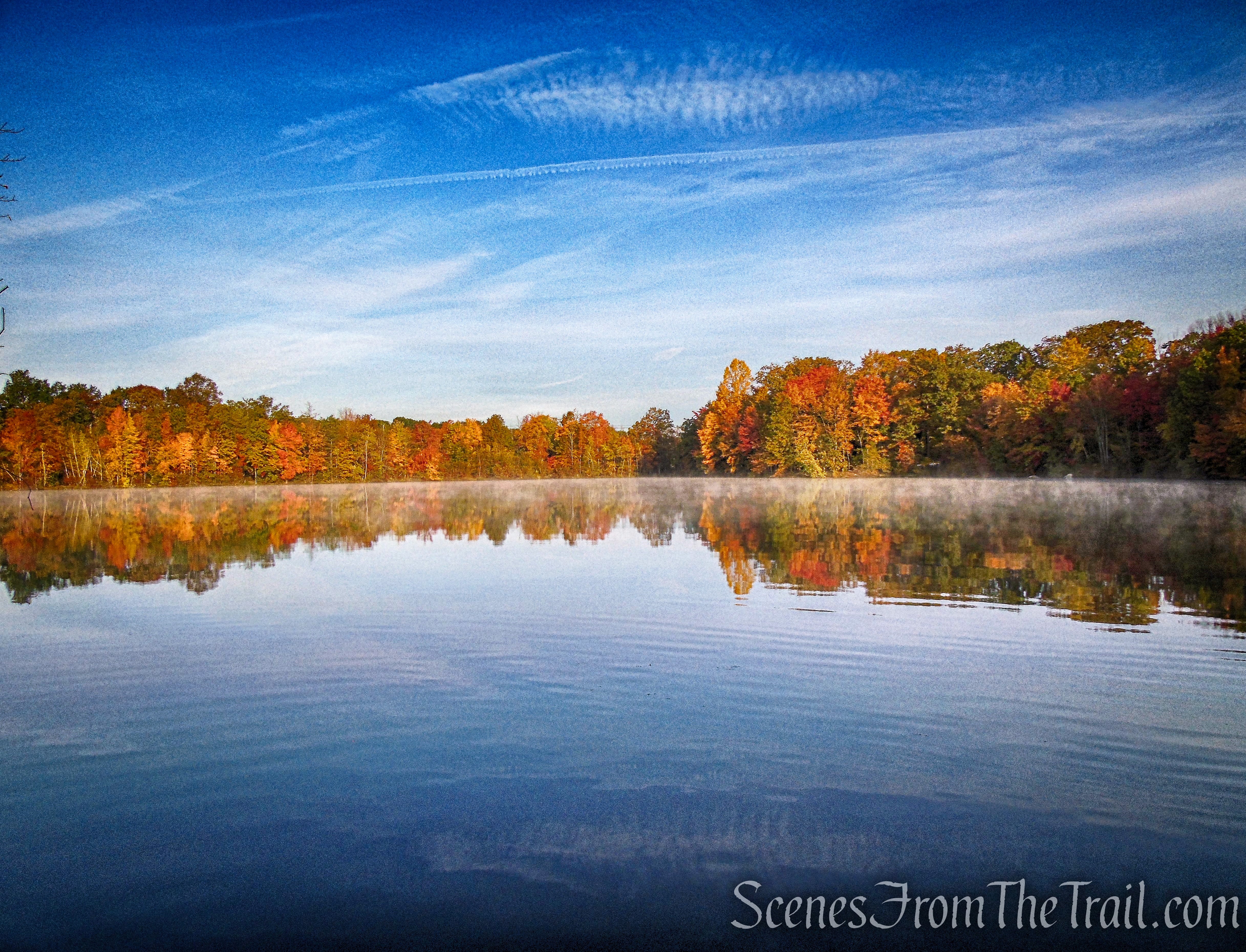
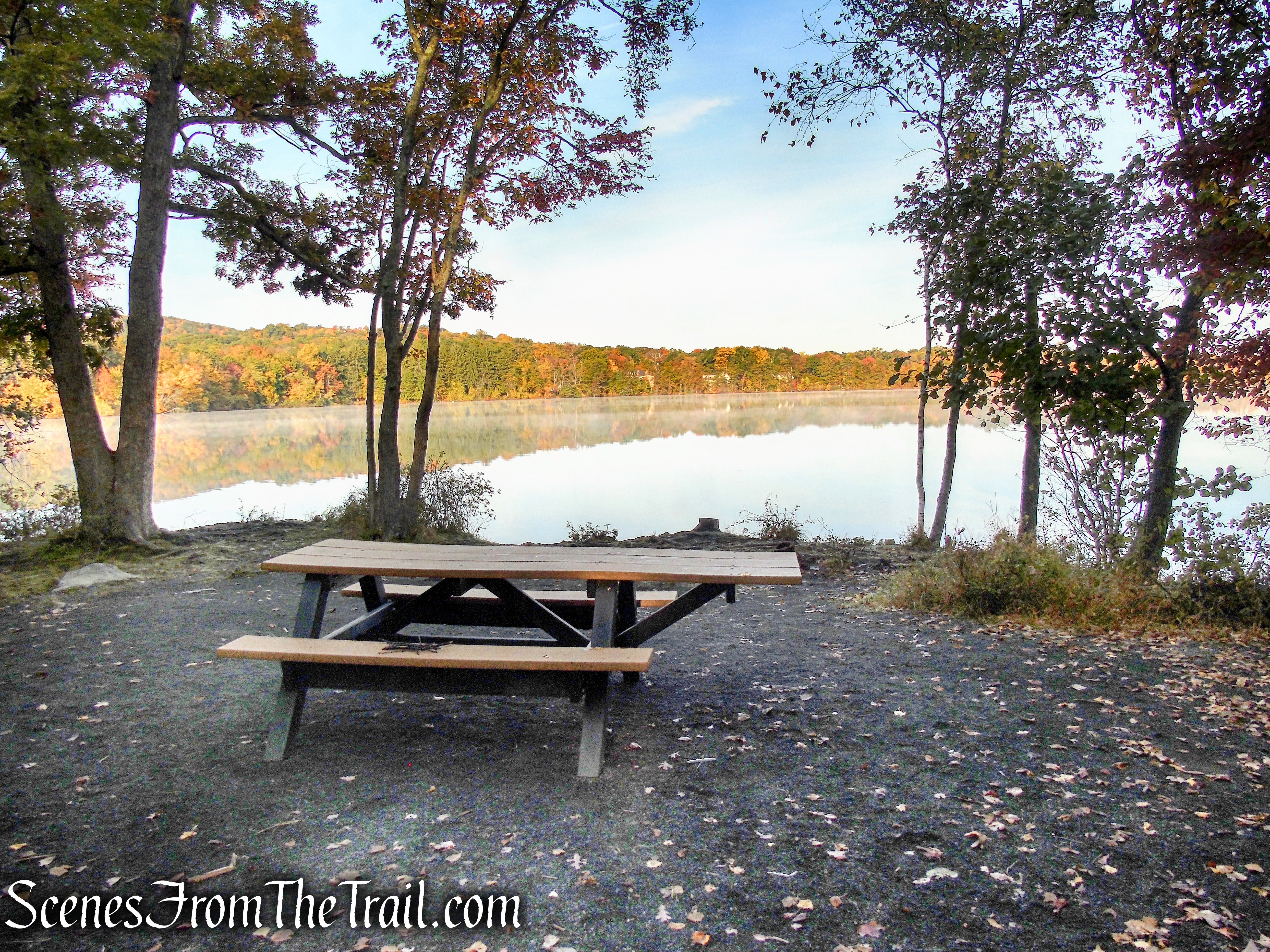
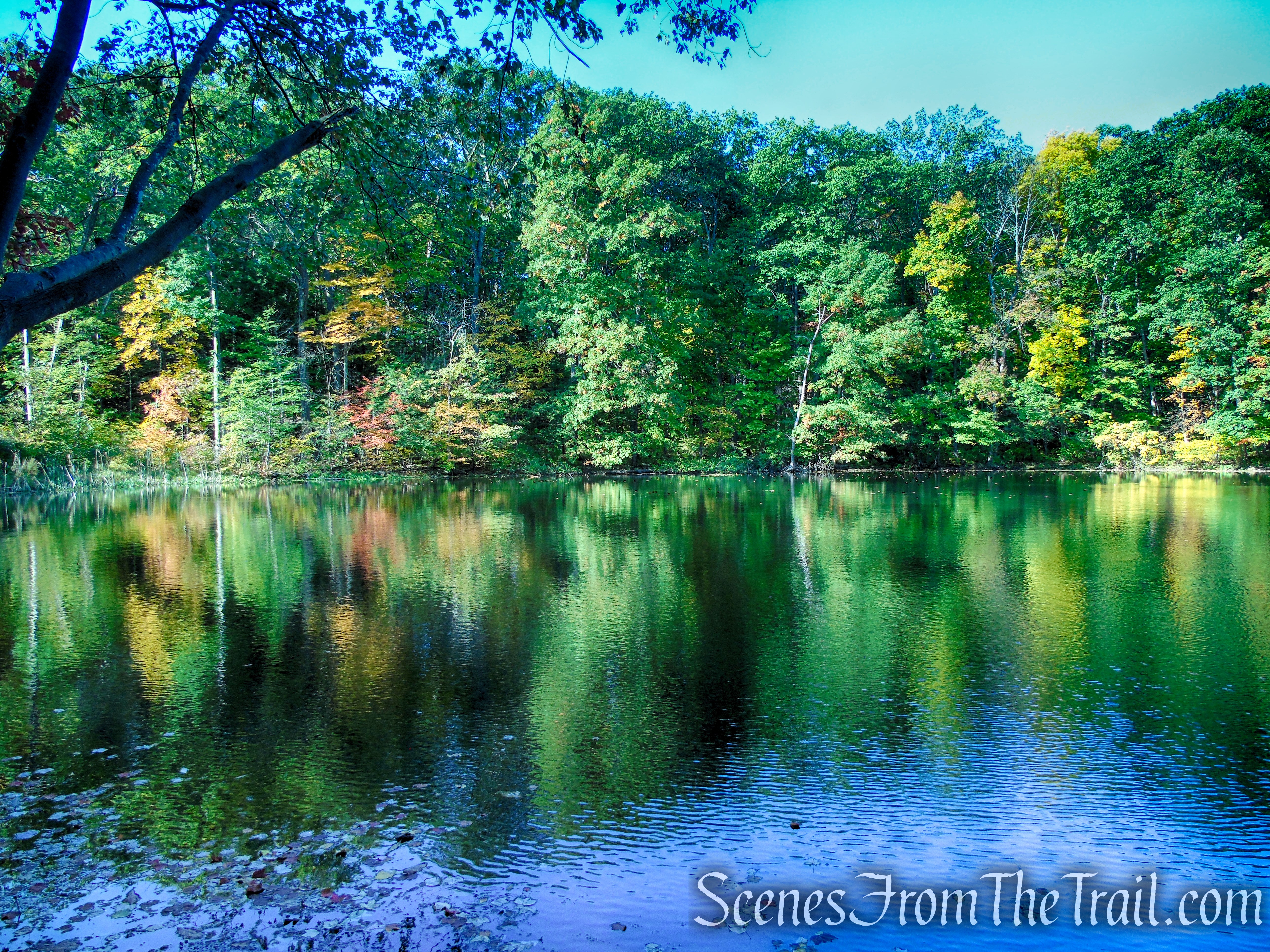
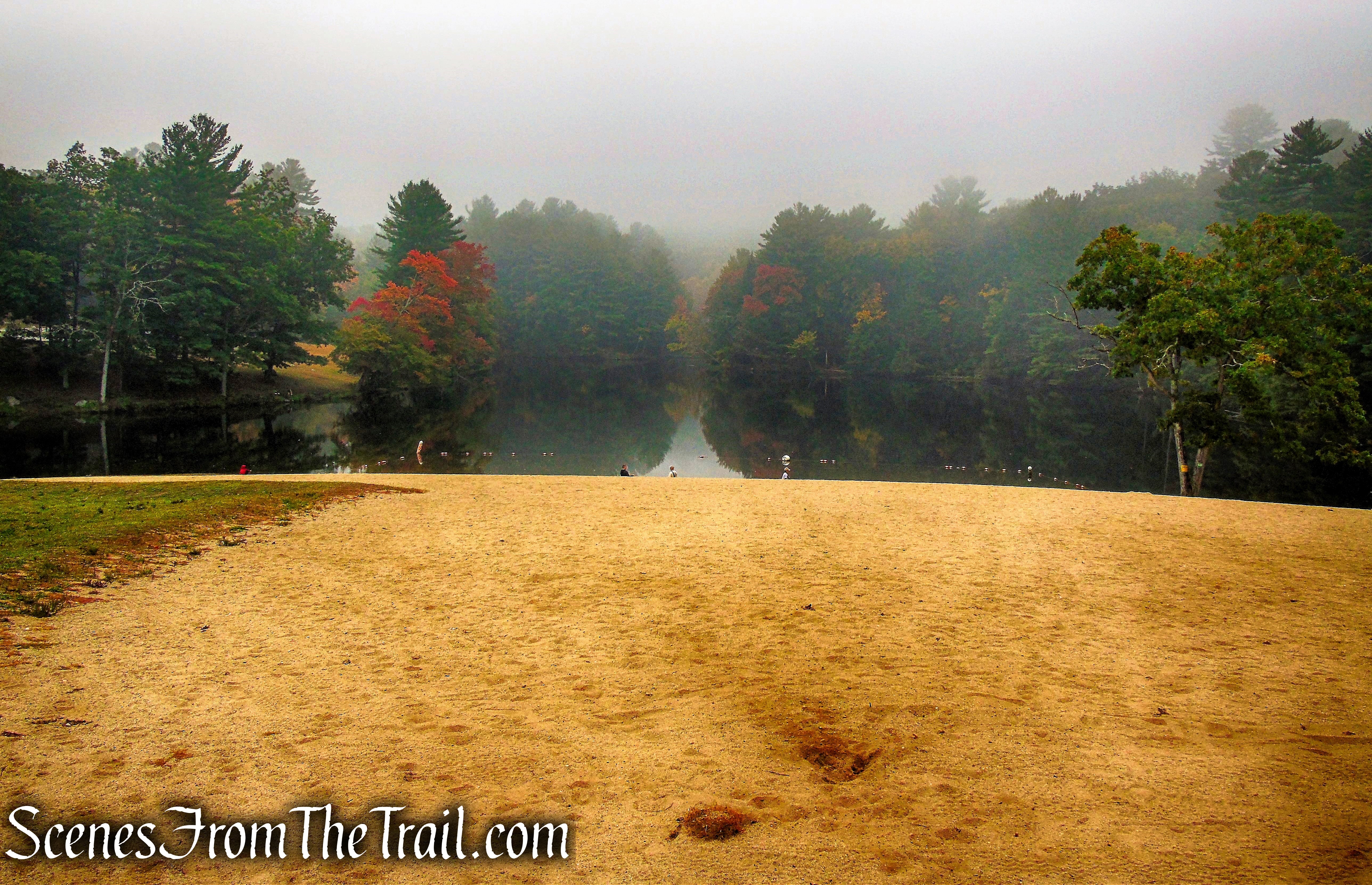
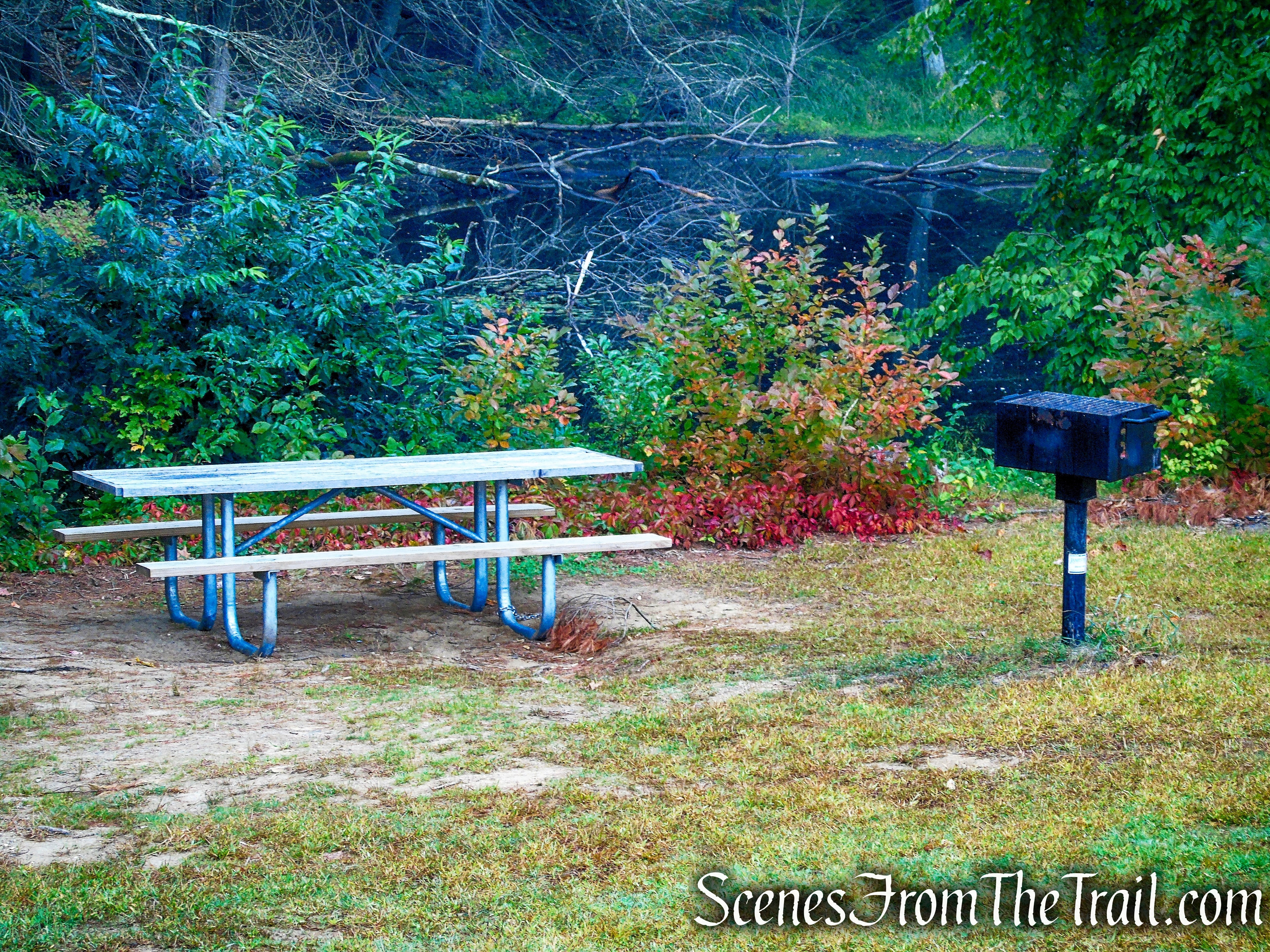
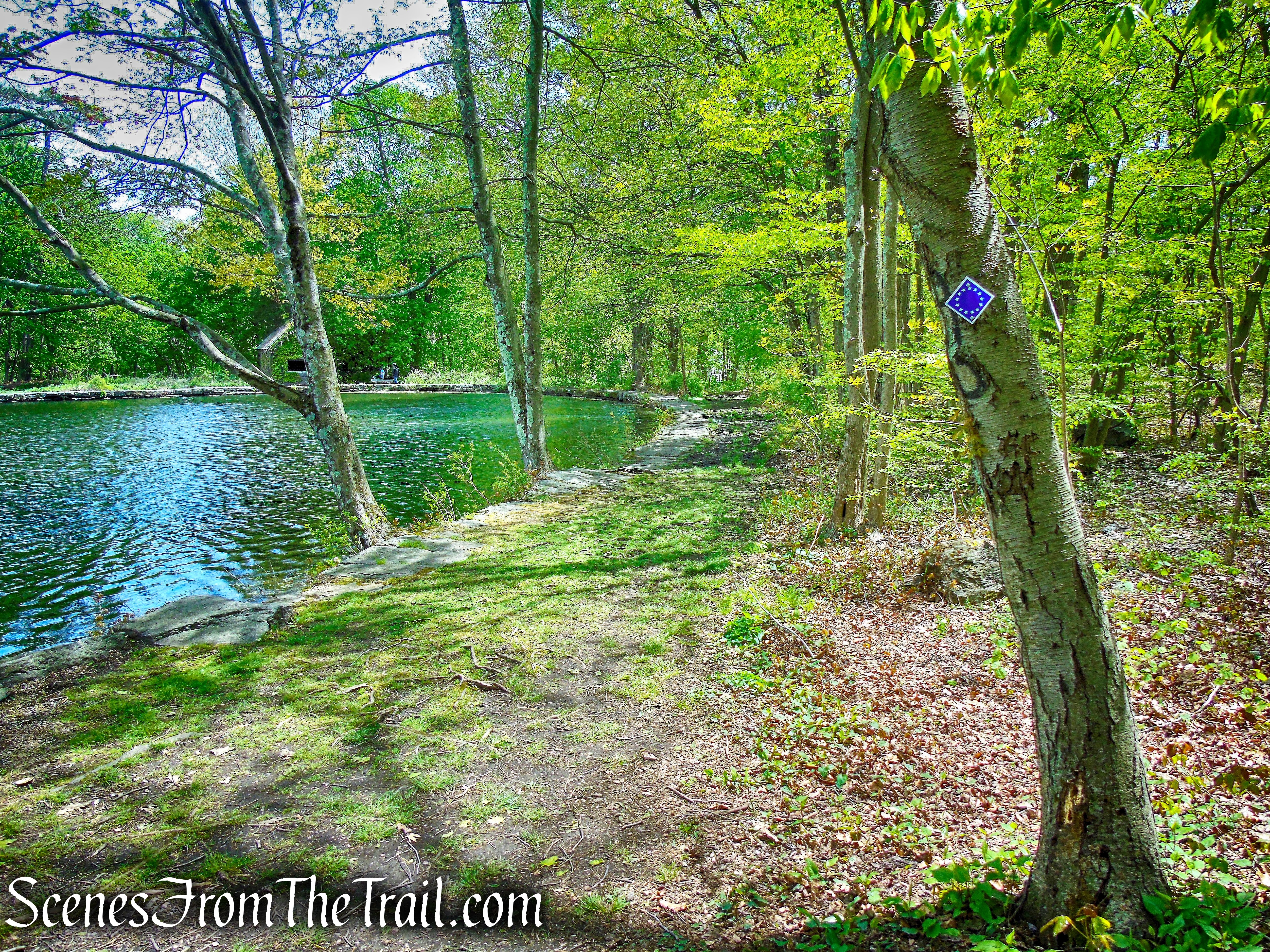
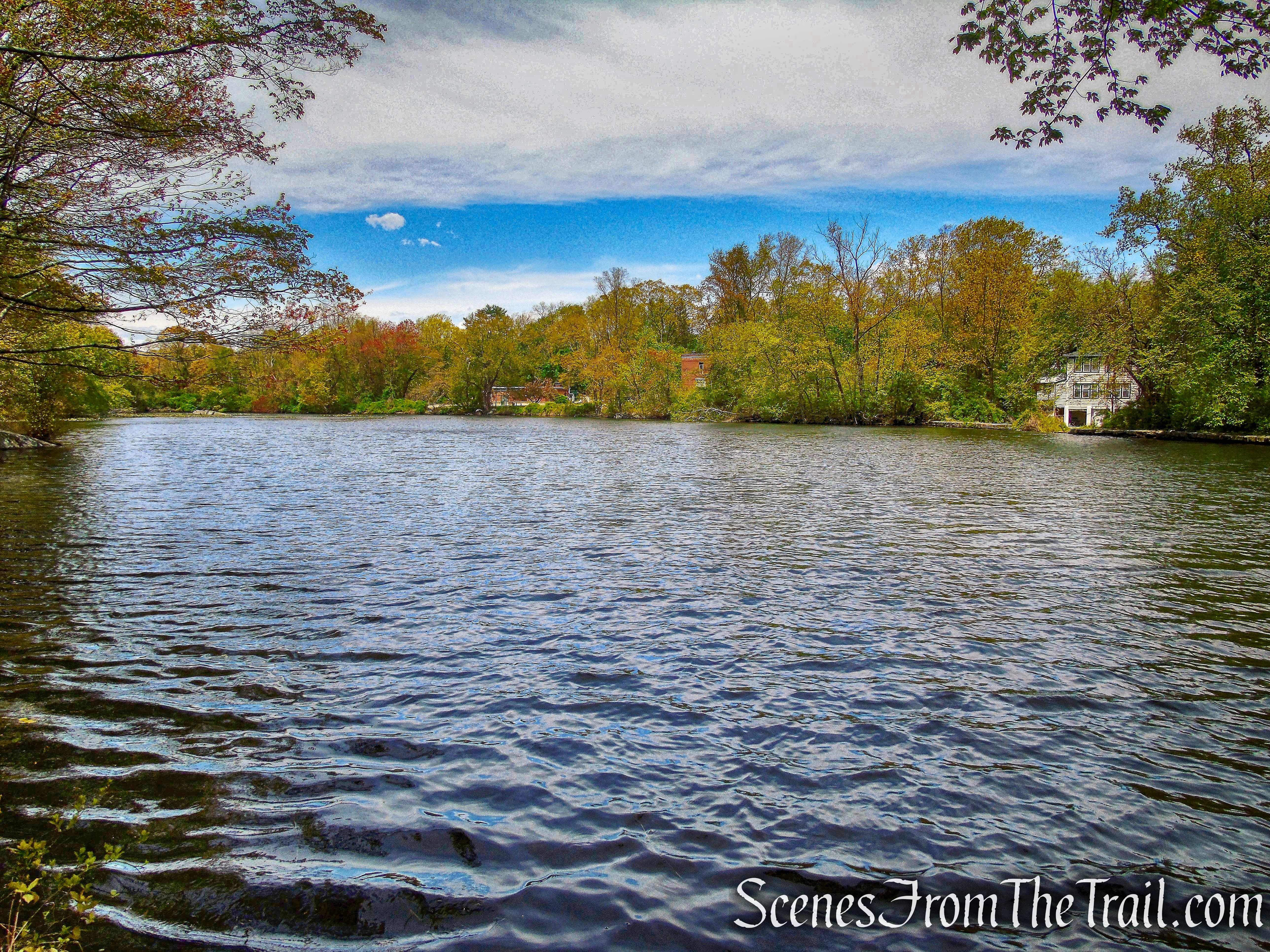
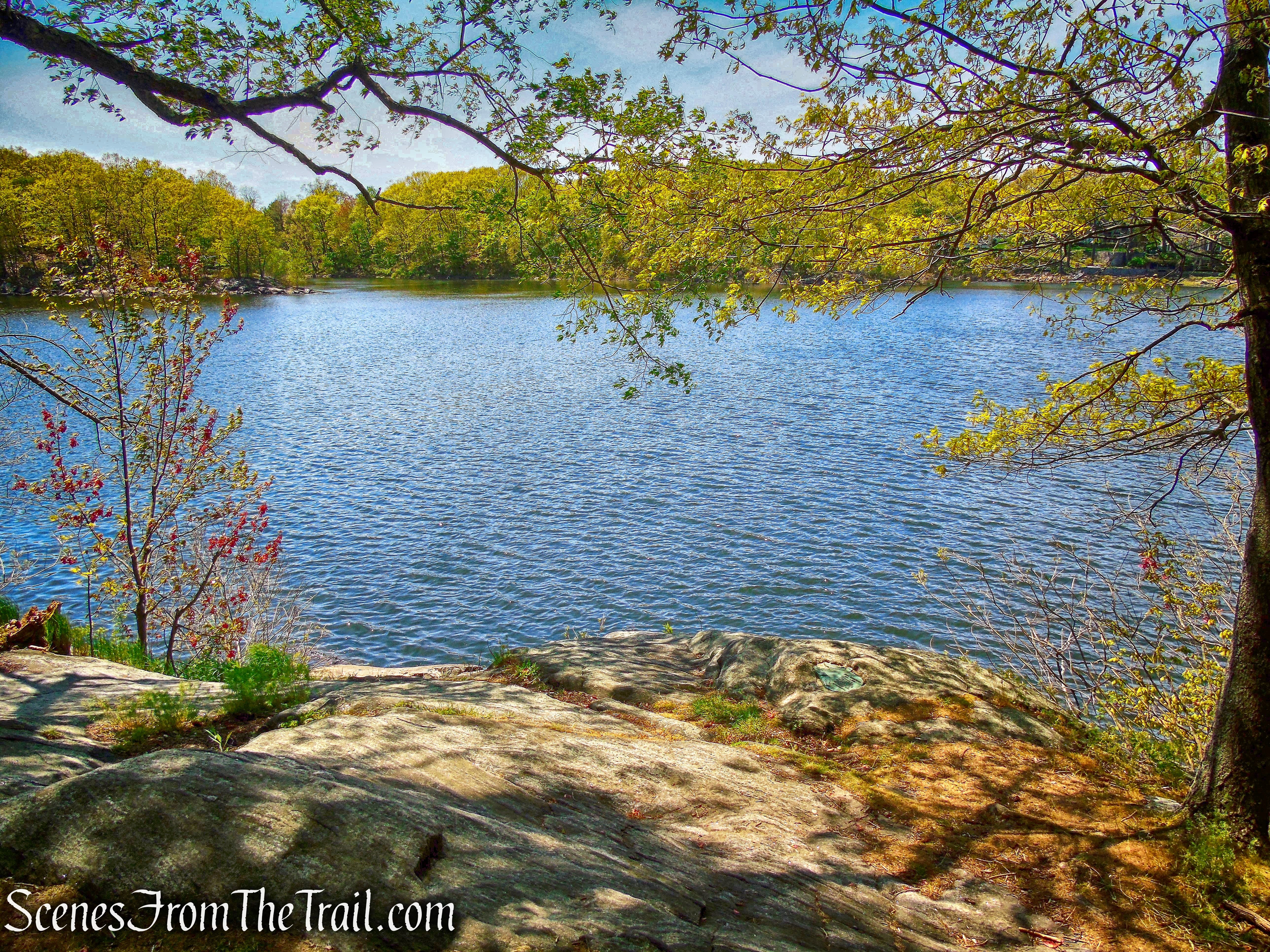
  • The Recreational Section –  provides access to Putnam Park Pond, picnic tables and charcoal grills as well as more walking trails. 
Recreational Section - Putnam Memorial State Park

Recreational Section – Putnam Memorial State Park
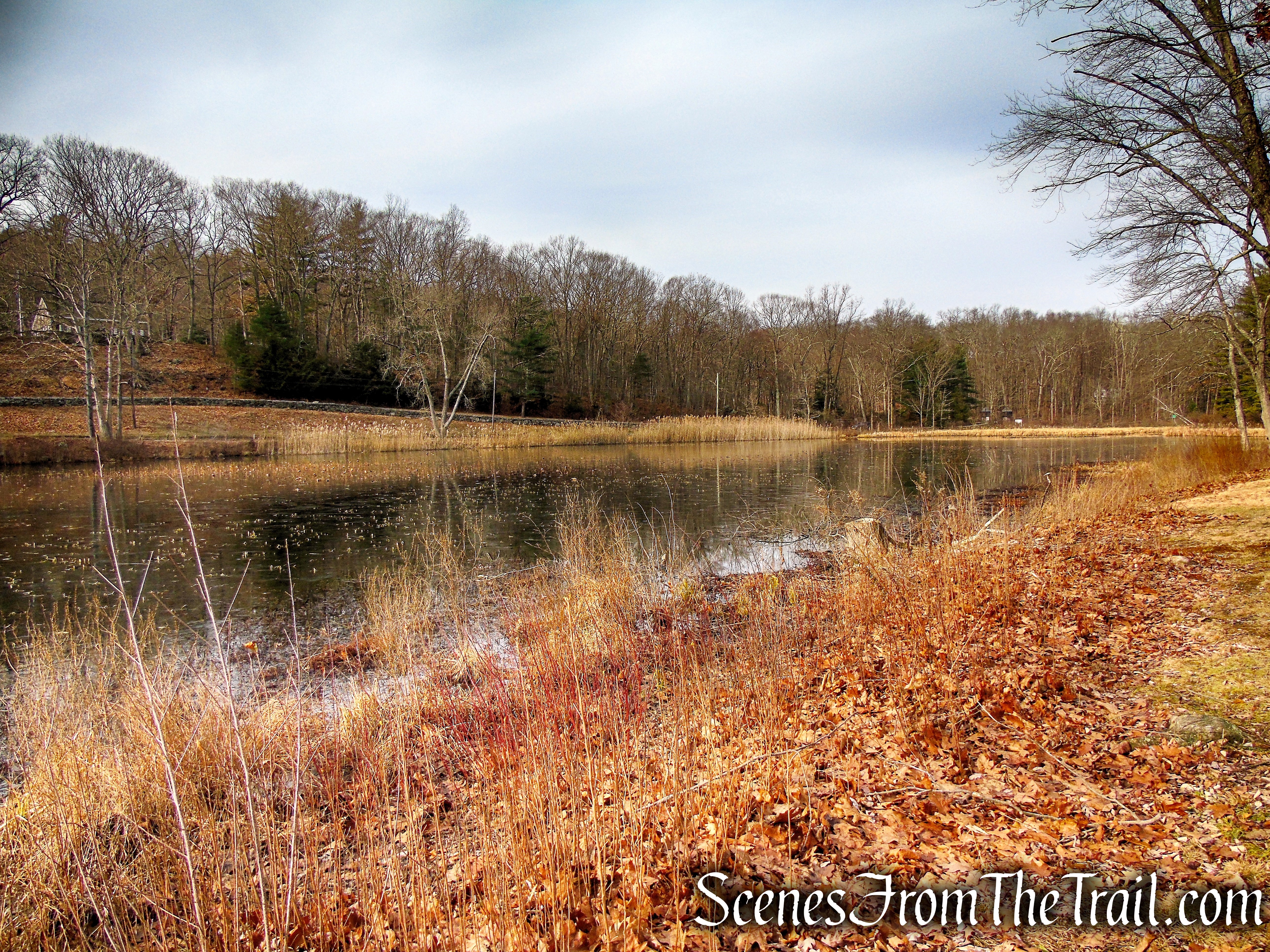
 

Recreational Section - Putnam Memorial State Park

Recreational Section – Putnam Memorial State Park
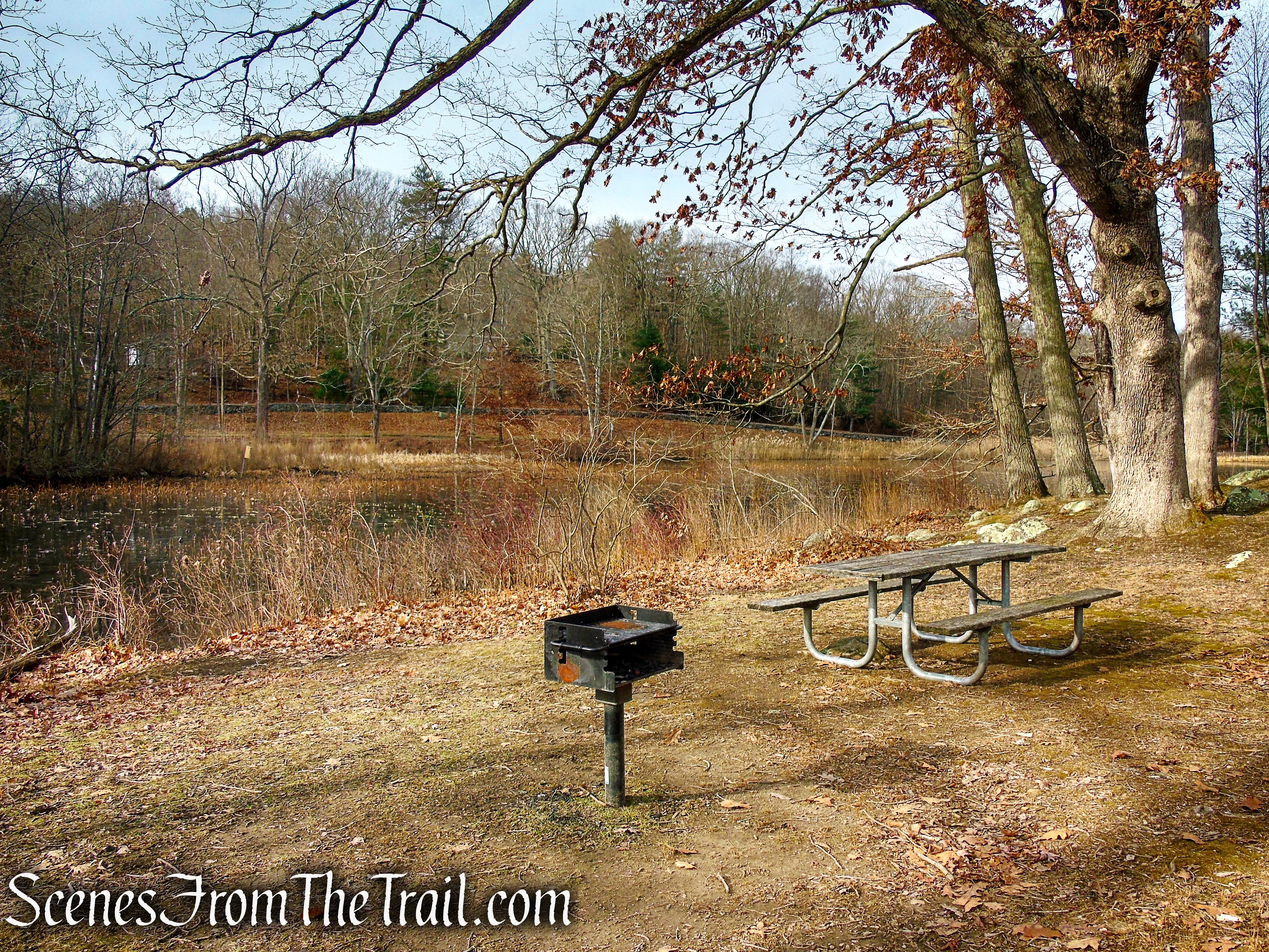
 

Recreational Section - Putnam Memorial State Park

Recreational Section – Putnam Memorial State Park


Review:

A truly beautiful park that is well laid out and loaded with history. One can spend quite some time here walking around capturing images of the historical features as well as the landscape. Well worth a visit anytime of year to get a hands-on history lesson of the American Revolution and the hardships that those soldiers endured during their winter encampment from 1778 – 1779.

Pros:

Historical site, scenic landscape, well maintained park.

Cons:

The park is bisected by Connecticut Route 58, some road noise can be heard throughout the park.


Sources:
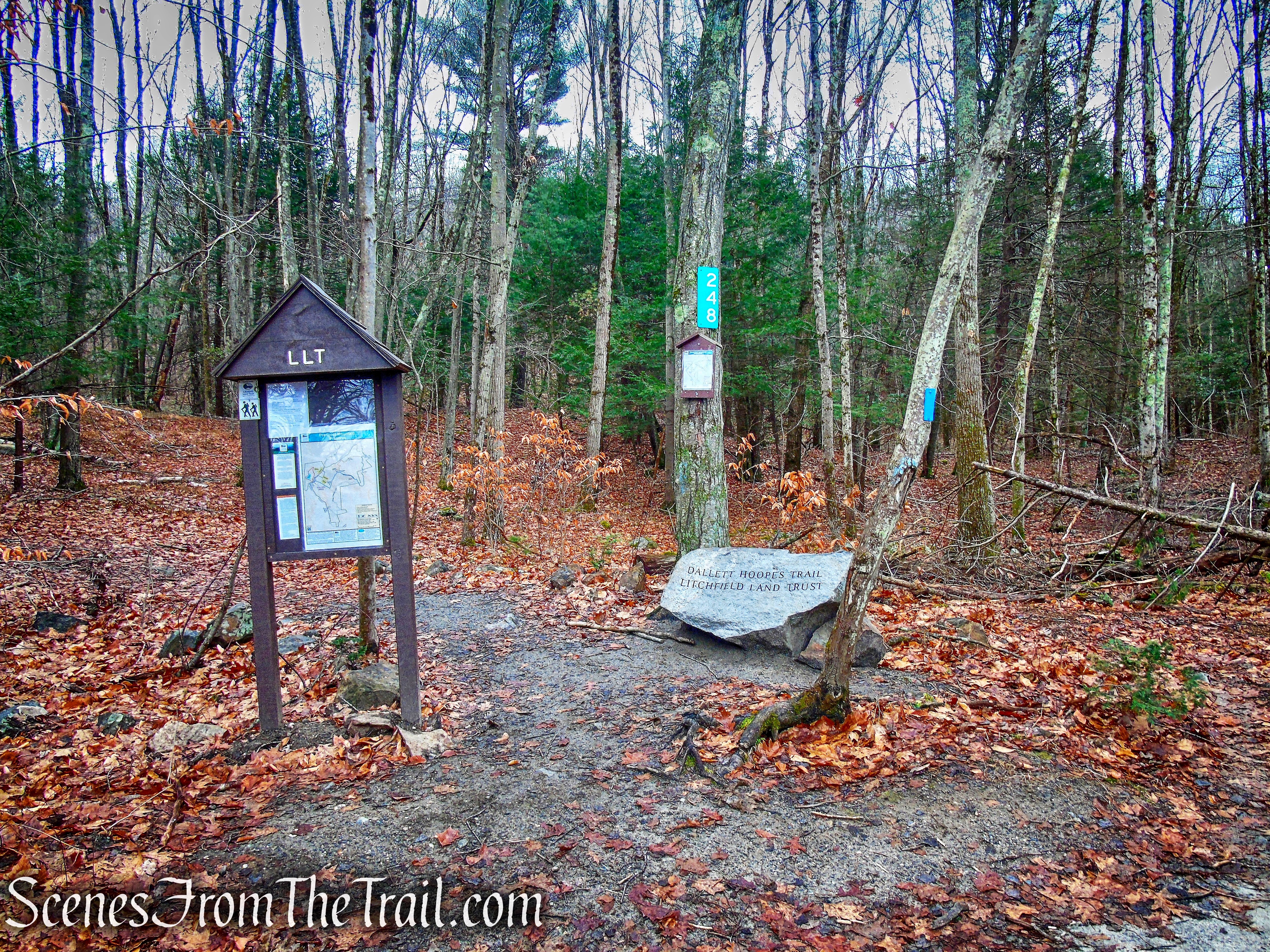
Prospect Mountain Preserve – Litchfield Land Trust

November 28, 2020 – Bantam, Connecticut

Difficulty: Moderate – strenuous (steep ascents, steep descents)

Length: Approximately 4.1 miles

Max elevation: 1,350 ft.– total elevation gain approximately 811 ft.

Route type: Circuit

Free Web Map: Prospect Mountain Preserve Trail Map

Trailhead parking: 213-127 Prospect Mountain Rd, Bantam, CT 06750


Preserve Overview:

Located in the Litchfield Hills Region of Connecticut, the Prospect Mountain Preserve includes 340 acres, west of the Borough of Litchfield. The preserve features most of a locally prominent hill with a nice viewpoint near its 1,350-foot summit, as well as a large pond to the west. The property is mostly forested, with several meadows indicating past agricultural uses. The area was subject to significant nickel-mining explorations in the nineteenth century. A number of mine shafts still exist on the property. Many are filled with water and visitors are cautioned to approach them with care.

Prospect Mountain Preserve

Prospect Mountain Preserve

There are three access points to the preserve, Cathole Road, lower Prospect Mountain Road (no parking), and the main trailhead on upper Prospect Mountain Road, where there is room for 6-8 cars. There are no restrooms available on site. Prospect Mountain is preserved by the Litchfield Land Trust and open to the public for hiking and recreational enjoyment. No hunting, ATVs, or vehicles are permitted on the property.

Prospect Mountain Preserve

Prospect Mountain Preserve


History:

Prospect Mountain was an area of exploration and excavation for mineral riches from the town’s earliest days. Between the mid-1700’s and the mid 1800’s, people used the land here for farming, grazing, logging, and mining (for iron ore, copper and nickel ore). Connecticut’s early history is full of mines. Litchfield’s Prospect Mountain is part of that mining history, and remnants of its copper and nickel excavations are still evident along the nearly 5 miles of trails that wind across the 1,350-foot summit. Industrial activity which had grown during the Revolution continued in the years that followed.

The area of most of the mining activity in Litchfield, in the mid-to-late 19th century, was Mount Prospect, where at least six mines or prospects were worked. Various companies were incorporated to do mining in the town of Litchfield, chiefly on Prospect Mountain, sometimes called Prospect Hill or Mount Prospect. The three principle mines were the Granniss Mine just west of Prospect Mountain, Buck’s Mine on the southwest slope of the hill, and the Connecticut Nickel Company’s mine, one mile south of the summit. The mines were worked intermittently from 1835 until 1880, but were too small and too low a grade to be commercially exploitable.

In 1860 the Connecticut Mining Company bought two mining rights on Prospect Mountain. They promised an abundant return for funds invested and labor performed.

Connecticut Mining Company

Connecticut Mining Company

In 1864, the Nickel Mining and Smelting Company purchased the rights to mine on the west slope of Prospect Mountain. Some nickel was indeed taken out of the mountain, and it is said that it was sold to the Government and used to make the nickel cents which were in circulation before the nickel five-cent piece was placed in use. Eventually, the venture shared the fate of the other Litchfield mines.

Image courtesy of the Litchfield Historical Society

Image courtesy of the Litchfield Historical Society

In 1983, 481 acres on Prospect Mountain were titled to the Litchfield Land Trust from the Nature Conservancy, a gift from Mr. and Mrs. Andrew Gagarin, the James J. Porter Trust and Mr. Thurston Green. Since then additional parcels on Prospect Mountain have been obtained and LLT has established and maintains 4 scenic trails on its Prospect Mountain Preserve offering views from the highest elevation in Litchfield.


Trails Overview:

  • Prospect Mountain Trail – blue blazes – 1.9 miles – is rated moderate/challenging as it includes a 400-ft. elevation gain to the summit, as well as some steep and rocky areas. The Prospect Mountain Trail transects the preserve. This trail was once a portion of the blue-blazed Mattatuck Trail. Highlights include rocky terrain, mountain laurel, a stand of young black birch (regeneration from tornado destruction in 1989), a steep ravine, and Prospect Mountain’s south and north summits, each with long views.
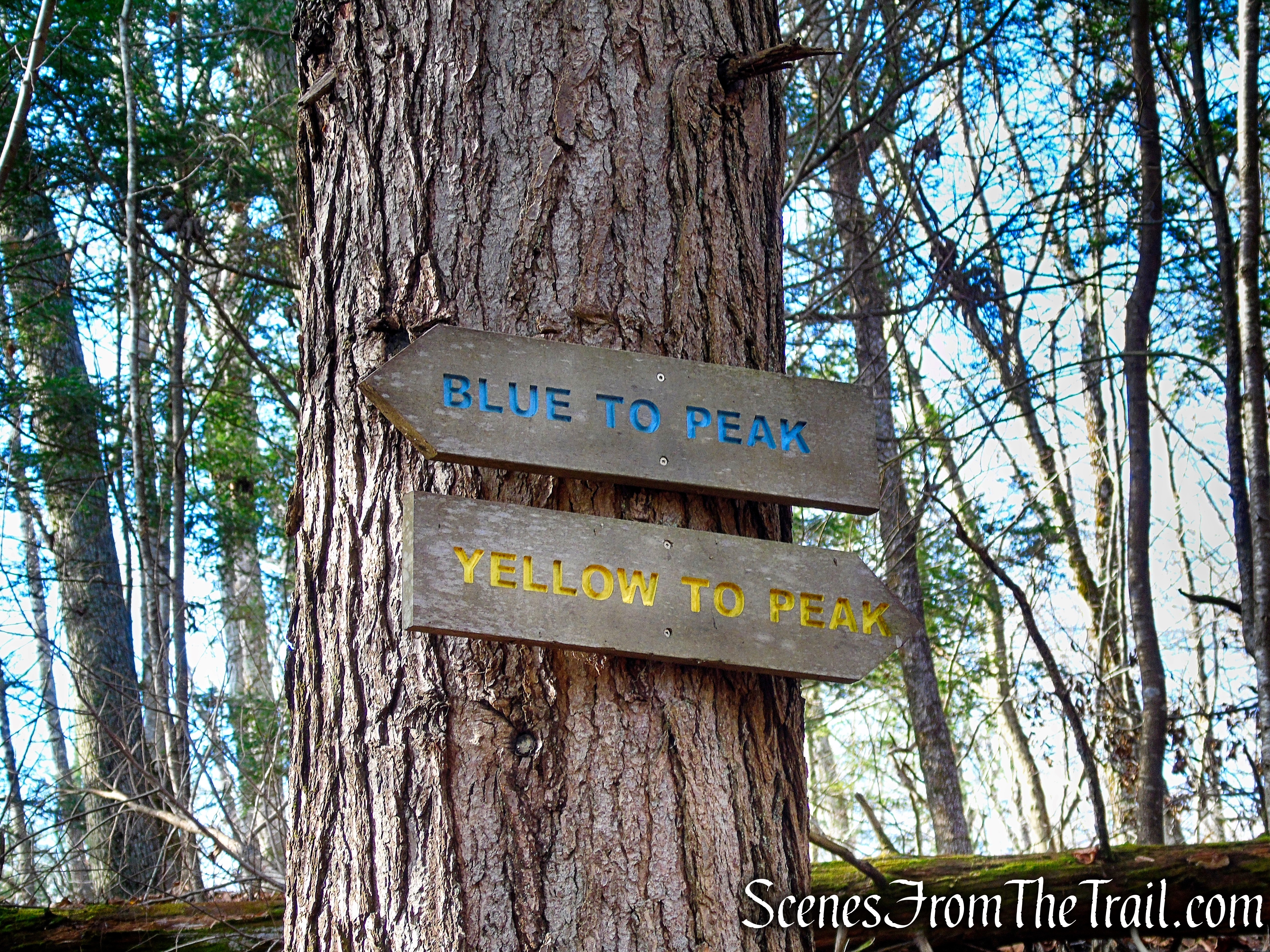
  • Yellow Trail – 0.7 mile – is rated moderate/challenging. This trail forms a loop with the blue-blazed trail, traveling through a predominantly birch forest. It crosses seasonal wetlands and ascends steeply to meet the Prospect Mountain Trail near the mountain’s 1,350-foot summit.
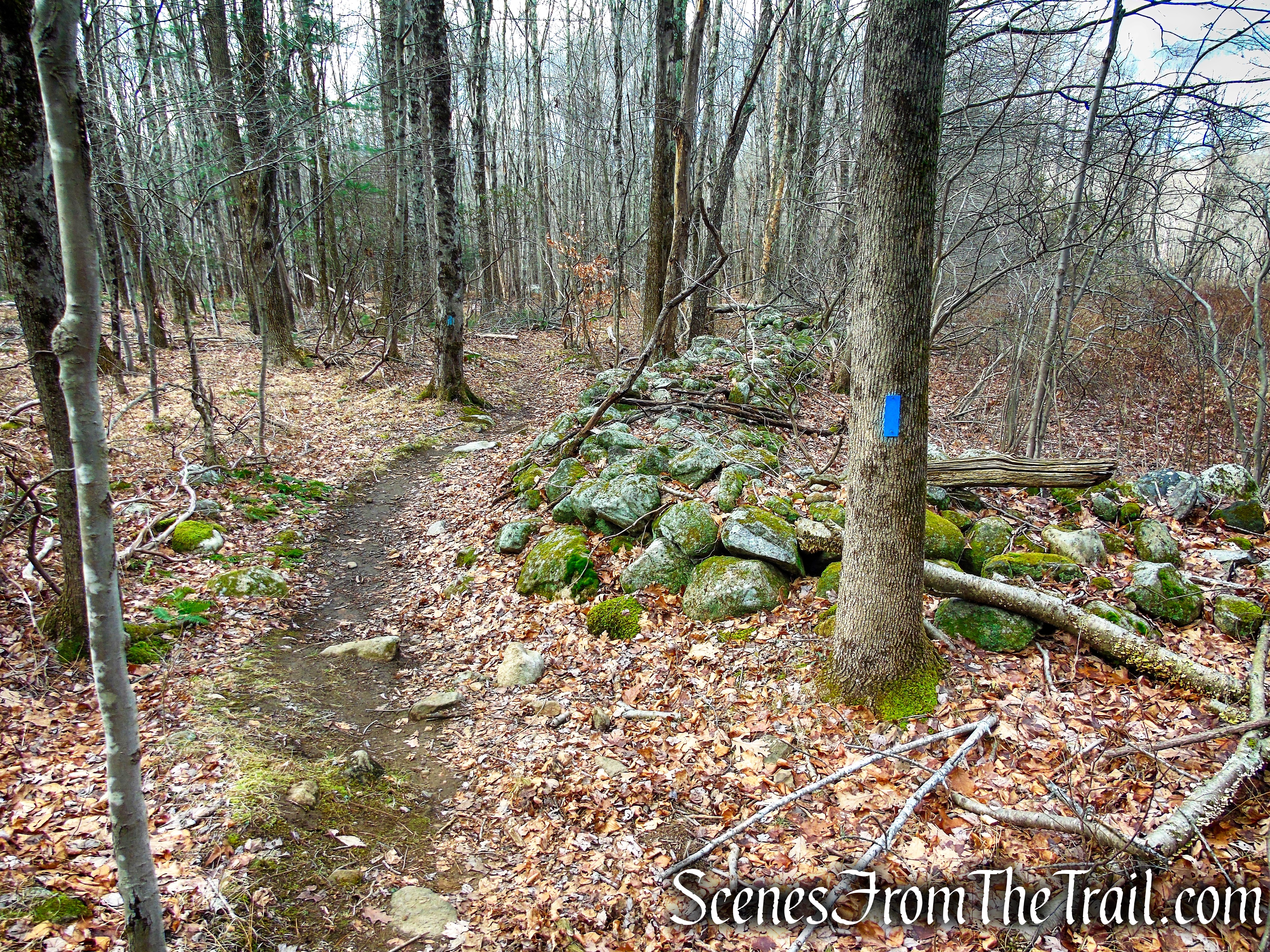
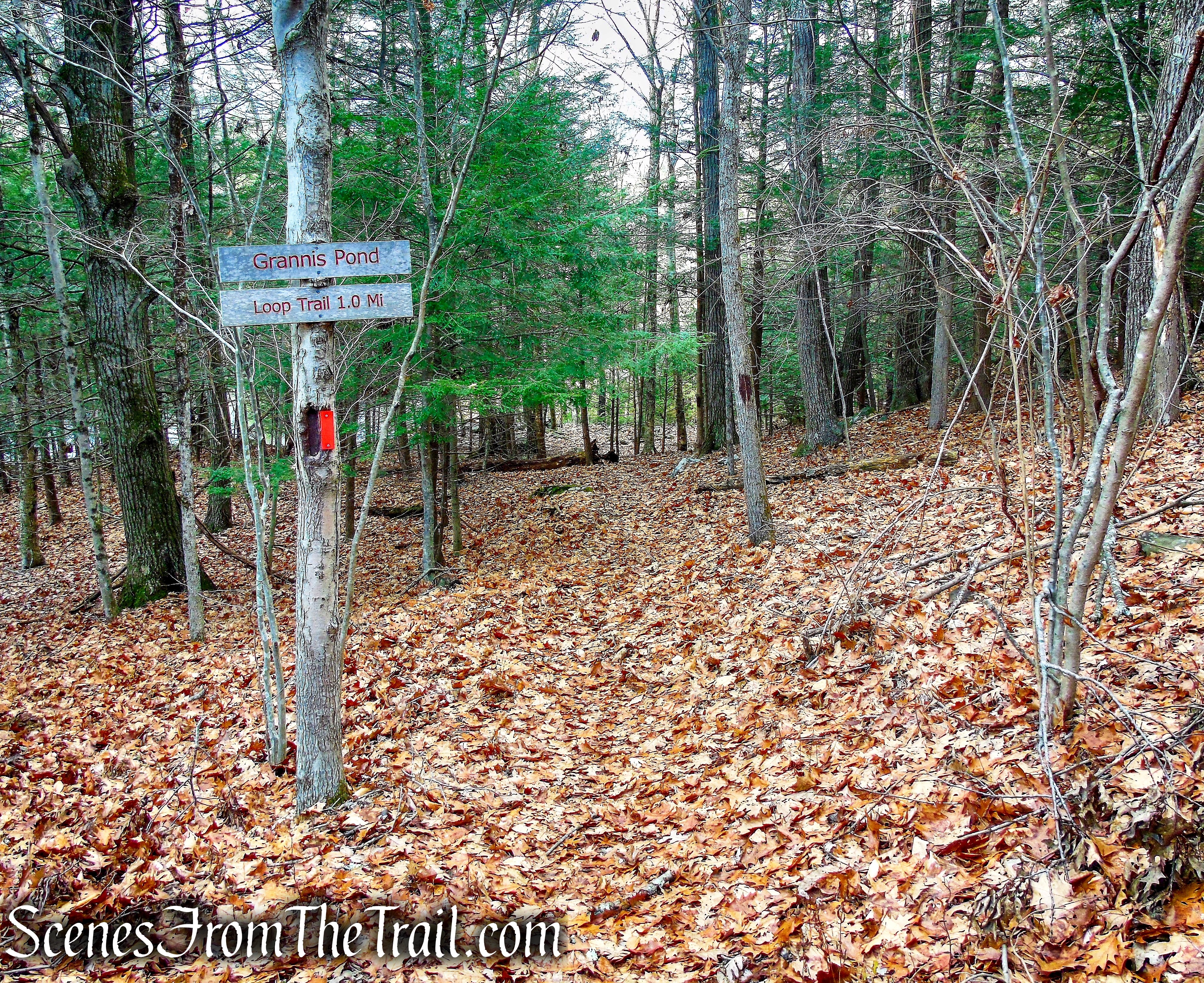
  • Grannis Pond Loop Trail – red blazes – 1 mile – west of Prospect Mountain Road, is relatively easy. It passes along the south shore of Granniss Pond then turns north, crossing a footbridge, below the pond along its western shore on a boardwalk. This loop trail continues on through a pine plantation, old stone walls, an old farm road, an old high meadow, and back down towards the pond’s eastern side. The last feature before completion of the loop is an old horizontal mine shaft opening and a pond overlook.
  • Graham Thompson Trail – white blazes – 1.2 miles – is of moderate difficulty. The trail begins at Prospect Mountain Road, initially loops southeast, passing through wetlands and an old pine plantation, then recrossing the wetlands before turning sharply to the right and through barway. It continues in a northerly direction through mostly open forest of moderate inclines and descents. Finally, the trail bears more easterly, becoming steeper until it meets the Blue trail near the south summit.

The entire Prospect Mountain Preserve trail system is part of Connecticut Forest and Park Association’s (CFPA) statewide system of trails, and is jointly administered by CFPA and Litchfield Land Trust (LLT).


Hike Overview:

Always looking for interesting places to hike, I came across this preserve on social media and became interested. This hidden gem packs a lot of enjoyment for the novice and avid hiker alike. A novice hiker will enjoy its well marked and easy to follow trails. The avid hiker will enjoy the relentless ups and downs throughout the rugged landscape. There aren’t too many level stretches of trail to be found at Prospect Mountain Preserve. The views are enjoyable enough as is the scenic Granniss Pond. The mines provide another point of interest to search out along the trails.

Not knowing much about this place and not being able to find much info online, I was hoping to take in as much of what it has to offer. Unfortunately, we missed a mine or two during our visit and we did not hike the White Trail.

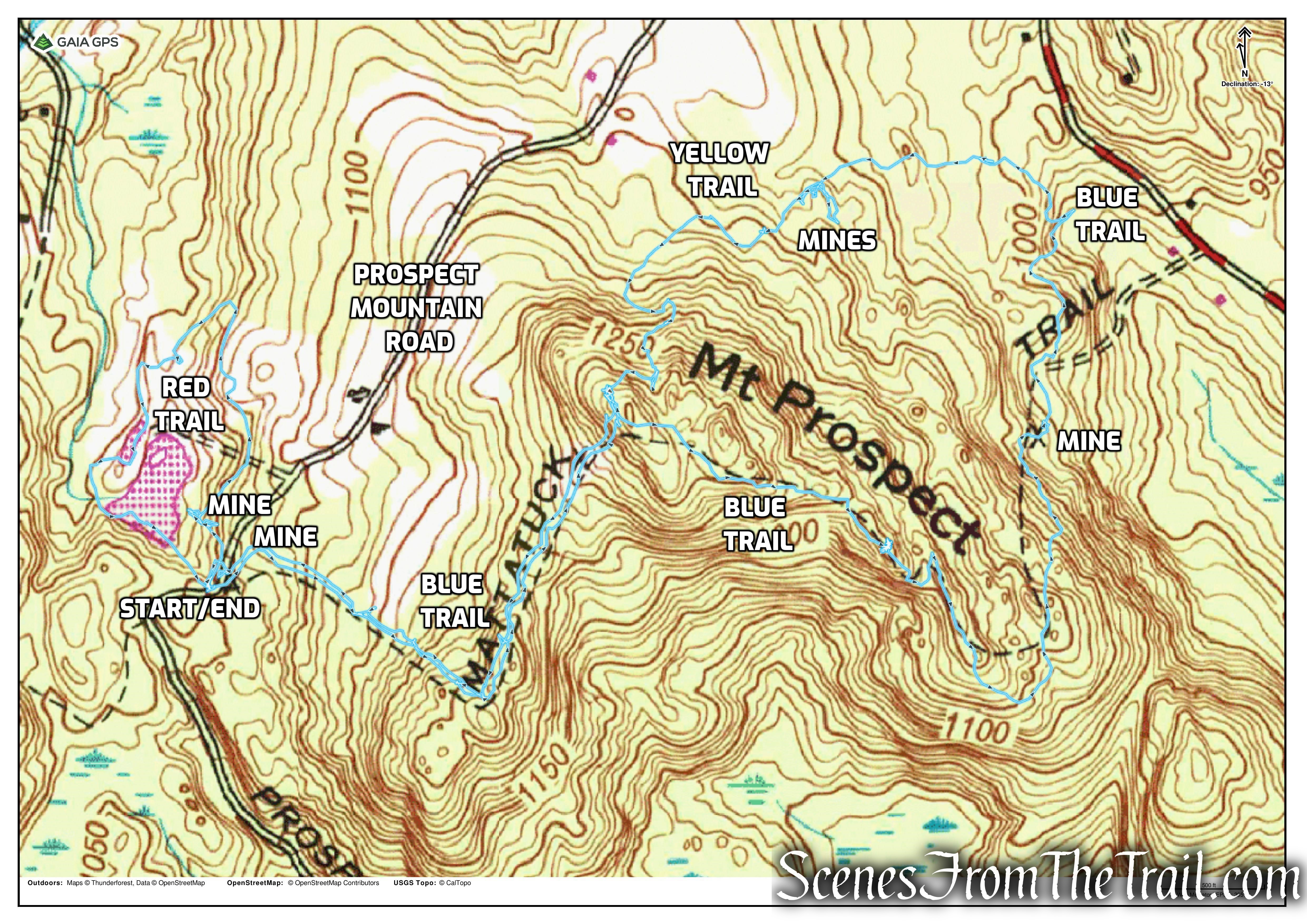
This hike follows the Blue Trail from Prospect Mountain Road (main trailhead), in a counterclockwise lollipop loop (Blue, Yellow, then Blue back to trailhead). Then following the Grannis Pond Loop Trail counterclockwise around Grannis Pond and back to the trailhead.

Prospect Mountain Preserve – Litchfield Land Trust

Prospect Mountain Preserve – Litchfield Land Trust

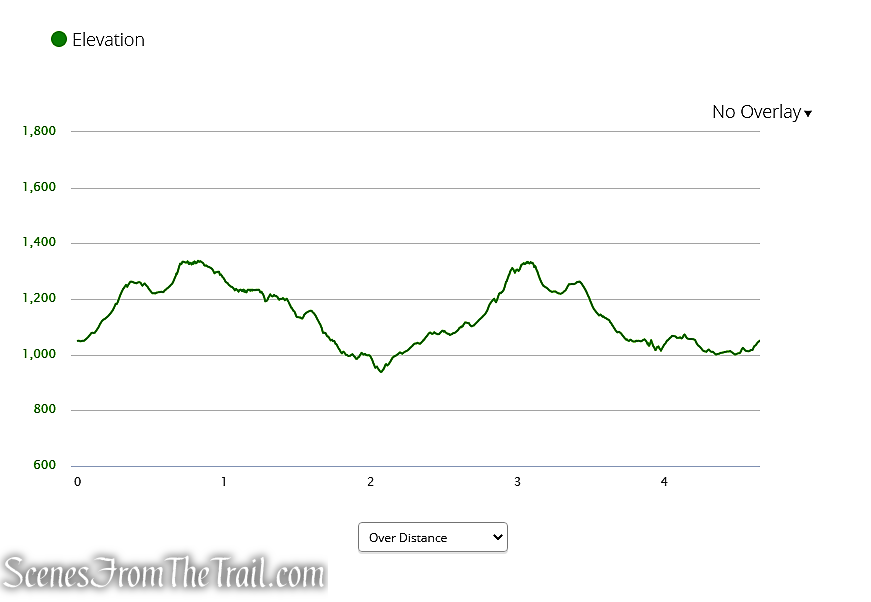
This hike climbs to the North Summit of Prospect Mountain twice and both routes are steep.

Prospect Mountain Preserve elevation profile

Prospect Mountain Preserve elevation profile


The Hike:

From the main trailhead on Prospect Mountain Road, follow the blue-blazed Prospect Mountain Trail as it heads northeast. To the left of the trail, mere feet from the trailhead, is an old water filled mine. Hikers should use caution in the vicinity of the mines, as their deep water filled pits, especially when covered with leaves, can be dangerous.

Main Trailhead - Prospect Mountain Preserve

Main Trailhead – Prospect Mountain Preserve

Blue Trail - Prospect Mountain Preserve

Blue Trail – Prospect Mountain Preserve

This water filled shaft, near the trailhead, is part of the Granniss Mine.

mine - Prospect Mountain Preserve

mine – Prospect Mountain Preserve

mine – Prospect Mountain Preserve

mine – Prospect Mountain Preserve

In a short distance, the Blue Trail turns right, crosses a small stream on rocks and soon runs along a stone wall that borders a meadow.

Blue Trail – Prospect Mountain Preserve

Blue Trail – Prospect Mountain Preserve

Blue Trail – Prospect Mountain Preserve

Blue Trail – Prospect Mountain Preserve

At the end of the stone wall, the trail begins a steep ascent. For about 300 yards, the trail climbs straight up the mountain, no switchbacks.

Blue Trail – Prospect Mountain Preserve

Blue Trail – Prospect Mountain Preserve

Blue Trail – Prospect Mountain Preserve

Blue Trail – Prospect Mountain Preserve

Blue Trail – Prospect Mountain Preserve

Blue Trail – Prospect Mountain Preserve

Blue Trail – Prospect Mountain Preserve

Blue Trail – Prospect Mountain Preserve

Blue Trail – Prospect Mountain Preserve

Blue Trail – Prospect Mountain Preserve

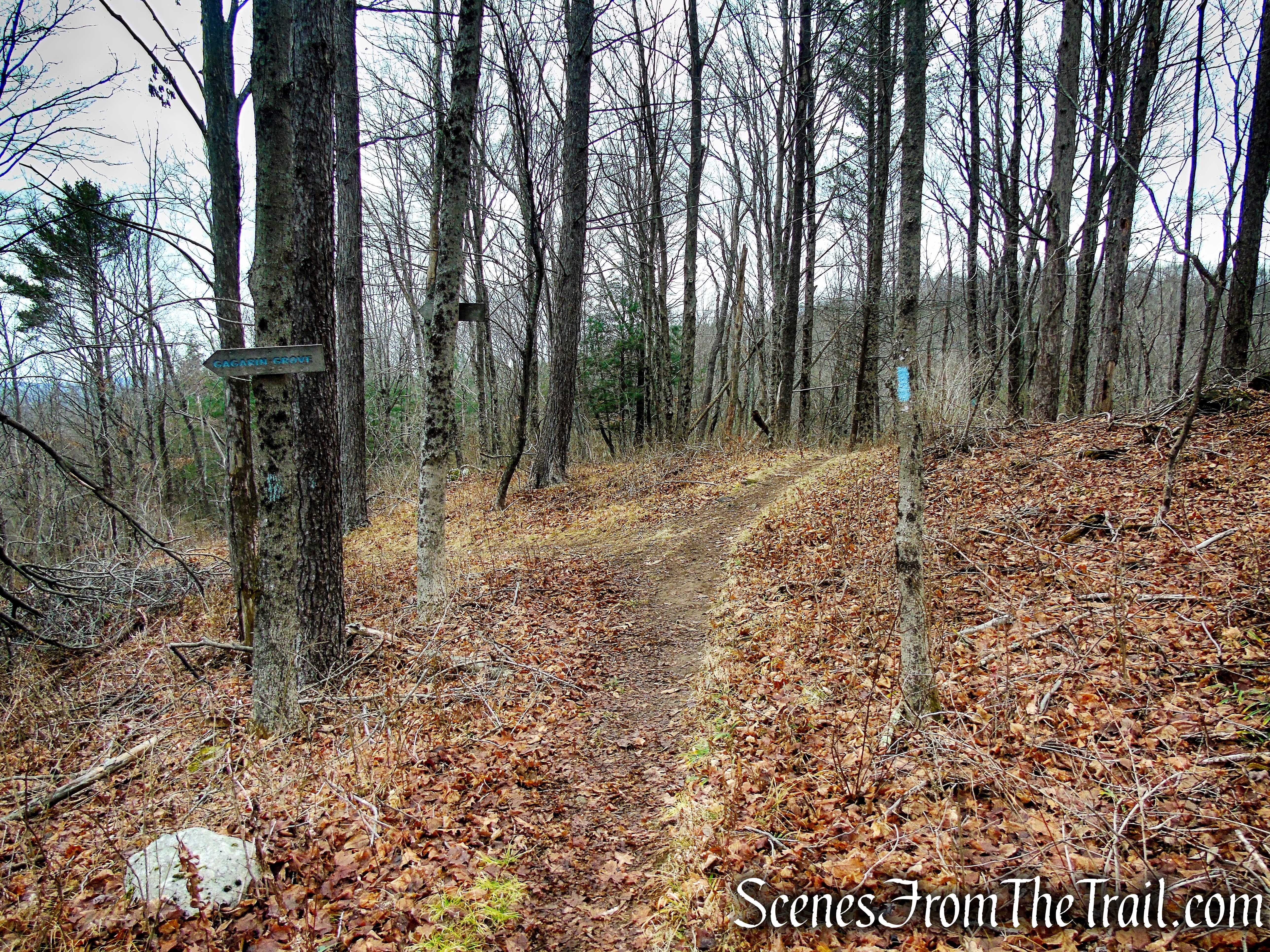
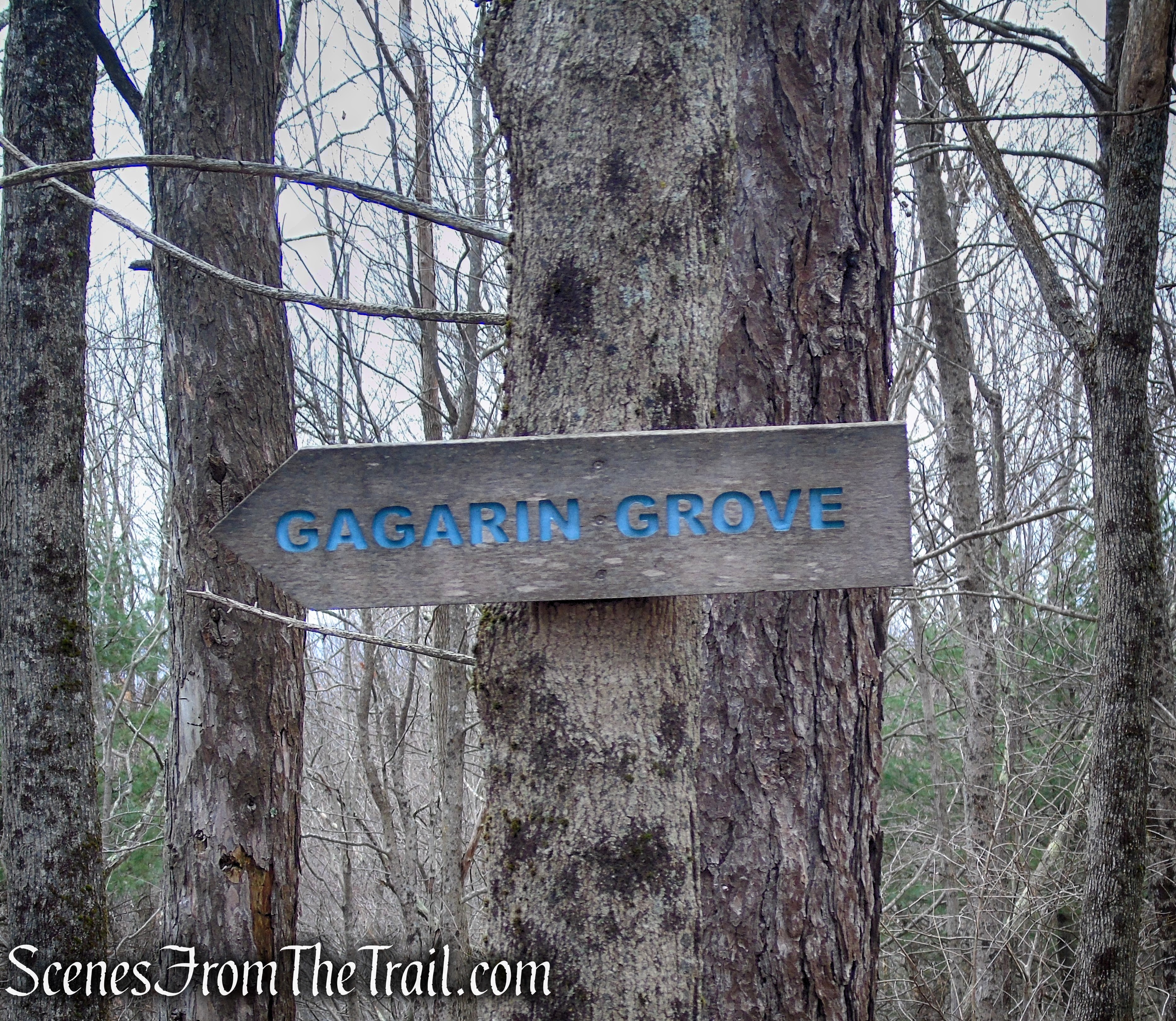
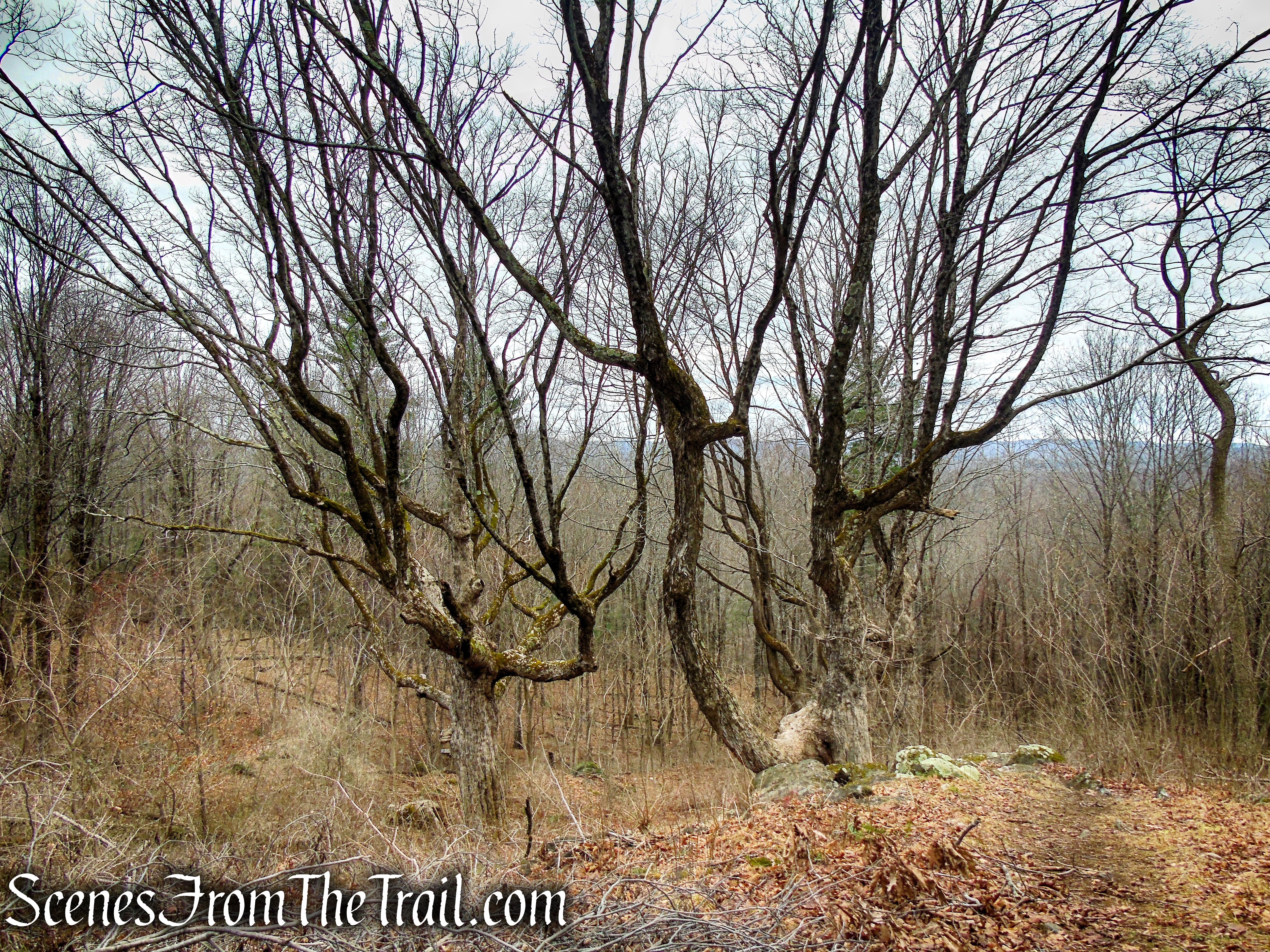
At the top of the rise, the trail turns left, dips down a little and climbs again. To the left is a short spur trail that leads to Gagarin Grove, where there is a small grove of giant, 200-plus-year-old Sugar Maples. You may want to stop a minute to catch your breath as you view these ancient trees.

Blue Trail – Prospect Mountain Preserve

Blue Trail – Prospect Mountain Preserve

Gagarin Grove – Prospect Mountain Preserve

Gagarin Grove – Prospect Mountain Preserve

Gagarin Grove – Prospect Mountain Preserve

Gagarin Grove – Prospect Mountain Preserve

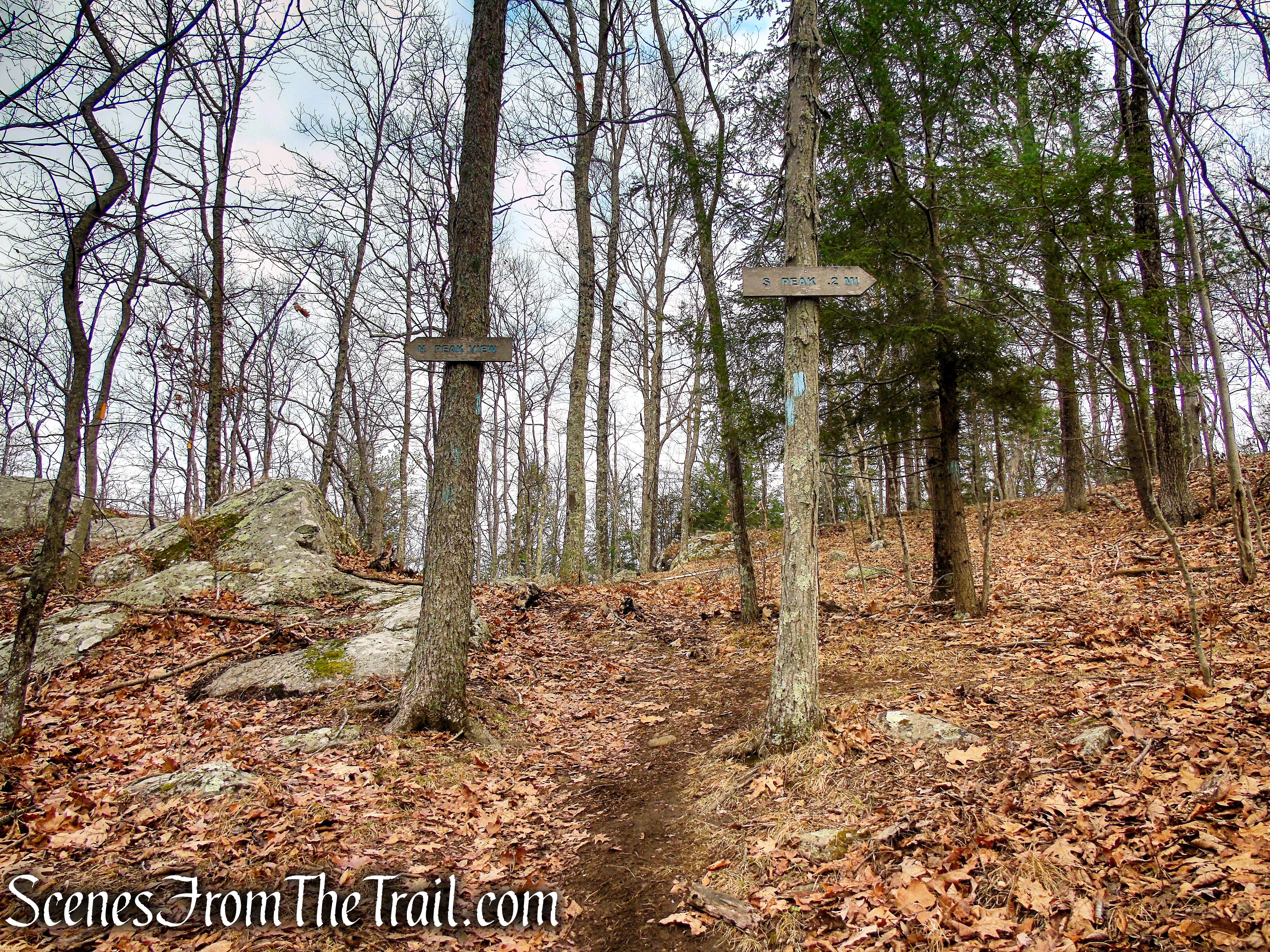
The trail continues northeast, descending into a hollow, then climbs out of the hollow, gradually at first, then the climb steepens. In about another 420 yards (from Gagarin Grove), The Blue Trail reaches the North Summit of Prospect Mountain and turns right.

Blue Trail – Prospect Mountain Preserve

Blue Trail – Prospect Mountain Preserve

Blue Trail – Prospect Mountain Preserve

Blue Trail – Prospect Mountain Preserve

Blue Trail – Prospect Mountain Preserve

Blue Trail – Prospect Mountain Preserve

Turn left on the Yellow Trail and walk a short distance to a rock outcrop, furnished with a bench, to north and west-facing viewpoints of the surrounding countryside.

turn left to North Summit view

turn left to North Summit view

Yellow Trail - Prospect Mountain Preserve

Yellow Trail – Prospect Mountain Preserve

At the summit of Prospect Mountain, you will see a welcoming bench dedicated “In loving memory of Peter and Tekla Litwin from their son Ted Litwin.” This is a good place to take a break. Up to this point, you have hiked about 0.8 mile with more than 350 feet of elevation gain.

North Summit - Prospect Mountain Preserve

North Summit – Prospect Mountain Preserve

The north and west views were opened in spring 2011, when the Litchfield Land Trust created the yellow-blazed trail from Cathole Road to the summit.

North Summit view - Prospect Mountain Preserve

North Summit view – Prospect Mountain Preserve

North Summit view - Prospect Mountain Preserve

North Summit view – Prospect Mountain Preserve

North Summit view from bench - Prospect Mountain Preserve

North Summit view from bench – Prospect Mountain Preserve

When you are ready to continue, retrace your steps back to the junction with the Blue Trail and proceed ahead, now going southeast along the ridge. The trail climbs a little, descends into another hollow, passing a vernal pool on the left then gradually climbs until reaching the South Summit.

continue ahead on Blue Trail

continue ahead on Blue Trail

Blue Trail – Prospect Mountain Preserve

Blue Trail – Prospect Mountain Preserve

South Summit – Prospect Mountain Preserve

South Summit – Prospect Mountain Preserve

The South Summit affords a south-facing viewpoint and another place to stop along the way.

South Summit view – Prospect Mountain Preserve

South Summit view – Prospect Mountain Preserve

The mountain visible to the far left is Mount Tom. If you zoom in with your camera or binoculars, you can see the stone tower at the summit.

South Summit view – Prospect Mountain Preserve

South Summit view – Prospect Mountain Preserve

The Blue Trail descends from the summit, rather steeply in places. In about 300 feet, the Blue Trail comes to a T-intersection with the White Trail, which begins on the right. The Blue Trail turns left in front of a large rock cliff and a short distance later, turns right, and climbs up and across the same cliff, heading in a southerly direction.

Blue Trail – Prospect Mountain Preserve

Blue Trail – Prospect Mountain Preserve

Blue Trail – Prospect Mountain Preserve

Blue Trail – Prospect Mountain Preserve

Blue Trail – Prospect Mountain Preserve

Blue Trail – Prospect Mountain Preserve

turn left to remain on Blue Trail

turn left to remain on Blue Trail

turn left to remain on Blue Trail

turn left to remain on Blue Trail

rock formations at junction of Blue/White Trails

rock formations at junction of Blue/White Trails

Blue Trail – Prospect Mountain Preserve

Blue Trail – Prospect Mountain Preserve

The trail soon begins a steady descent on what appears to be an old mining road. Stay alert for the “Pool Mine” which is in this area. We missed this mine when we got distracted stopping to talk to the president of the Litchfield Land Trust, who was hiking with a small group. He commented that they are working on a new trail. By the time we realized that we had passed the mine, we did not feel like climbing back up to look for it.

Blue Trail – Prospect Mountain Preserve

Blue Trail – Prospect Mountain Preserve

The trail soon makes a left turn, leaving the road and passes through Mountain Laurel thickets.

Blue Trail turns left

Blue Trail turns left

Blue Trail turns left

Blue Trail turns left

Blue Trail – Prospect Mountain Preserve

Blue Trail – Prospect Mountain Preserve

The Blue Trail passes some interesting looking rock formations and a short distance later, at the base of the descent, reaches a junction with the start of the Yellow Trail. Turning right on the Blue Trail here will lead to the Cathole Road trailhead. Continue straight, now following the yellow blazes.

Blue Trail – Prospect Mountain Preserve

Blue Trail – Prospect Mountain Preserve

Cathole Road trailhead junction

Cathole Road trailhead junction

The Yellow Trail soon crosses a small stream on rocks and begins a steady ascent of Prospect Mountain.

Yellow Trail – Prospect Mountain Preserve

Yellow Trail – Prospect Mountain Preserve

Yellow Trail – Prospect Mountain Preserve

Yellow Trail – Prospect Mountain Preserve

Yellow Trail – Prospect Mountain Preserve

Yellow Trail – Prospect Mountain Preserve

In about 375 yards from the start of the Yellow Trail, there is a pile of mine tailings (waste rock) to the left of the trail. Just past the pile is one of the vertical shafts of the Smith Mine. The other water filled shaft is about 200 feet south.

Yellow Trail – Prospect Mountain Preserve

Yellow Trail – Prospect Mountain Preserve

The Smith Mine, located in the upper northeast area of the mountain, was first worked by the Connecticut Mining Company in the late 1850’s. In the late summer of 1859, they had a twenty-foot shaft dug with “a beautiful show of mineral wealth” according to a company prospectus. Two years later, the shaft had been increased to fifty feet and had produced well over 400 tons of ore analyzed at three percent and more of nickel content.

Smith Mine - Yellow Trail – Prospect Mountain Preserve

Smith Mine – Yellow Trail – Prospect Mountain Preserve

Please exercise extreme caution in the vicinity of these mines. They are deep water filled pits and the ground around them may be unstable, which could cave-in without warning.

Smith Mine - Yellow Trail – Prospect Mountain Preserve

Smith Mine – Yellow Trail – Prospect Mountain Preserve

As there are two shafts at this location, it is assumed the second one was started around this time also.

Smith Mine (2nd shaft) - Yellow Trail – Prospect Mountain Preserve

Smith Mine (2nd shaft) – Yellow Trail – Prospect Mountain Preserve

Yellow Trail – Prospect Mountain Preserve

Yellow Trail – Prospect Mountain Preserve

After passing the mines, the trail levels off briefly, then resumes its climb, gradually at first then becomes much more steep.

Yellow Trail – Prospect Mountain Preserve

Yellow Trail – Prospect Mountain Preserve

Yellow Trail – Prospect Mountain Preserve

Yellow Trail – Prospect Mountain Preserve

Yellow Trail – Prospect Mountain Preserve

Yellow Trail – Prospect Mountain Preserve

Yellow Trail – Prospect Mountain Preserve

Yellow Trail – Prospect Mountain Preserve

Yellow Trail – Prospect Mountain Preserve

Yellow Trail – Prospect Mountain Preserve

Yellow Trail – Prospect Mountain Preserve

Yellow Trail – Prospect Mountain Preserve

Yellow Trail – Prospect Mountain Preserve

Yellow Trail – Prospect Mountain Preserve

Yellow Trail – Prospect Mountain Preserve

Yellow Trail – Prospect Mountain Preserve

Yellow Trail – Prospect Mountain Preserve

Yellow Trail – Prospect Mountain Preserve

After about 0.7 mile from its start, the Yellow Trail reaches the North Summit. You may want to take a break and enjoy the views here once again.

North Summit – Prospect Mountain Preserve

North Summit – Prospect Mountain Preserve

North Summit view – Prospect Mountain Preserve

North Summit view – Prospect Mountain Preserve

North Summit view – Prospect Mountain Preserve

North Summit view – Prospect Mountain Preserve

When you are ready to continue, follow the yellow blazes a short distance to the junction with the Blue Trail and turn right. Now retrace your steps along the Blue Trail as it descends Prospect Mountain, steeply in places, and follow the blue blazes all the way back to the Prospect Mountain Road trailhead, where you began the hike.

turn right on Blue Trail

turn right on Blue Trail

Blue Trail – Prospect Mountain Preserve

Blue Trail – Prospect Mountain Preserve

Blue Trail – Prospect Mountain Preserve

Blue Trail – Prospect Mountain Preserve

If you would like to continue the hike, look for the red-blazed Grannis Pond Trail which is directly across the road. This trail can be hiked in either direction, but we chose to do it counterclockwise because the Granniss Mine would be at the beginning and the skies were threatening rain. Walk a few feet up the road until you see the start of the other end of the Red Trail. Follow the red blazes down the hill and in a short distance, the Granniss Mine is on the right.

Red Trail – Prospect Mountain Preserve

Red Trail – Prospect Mountain Preserve

Granniss Mine - Prospect Mountain Preserve

Granniss Mine – Prospect Mountain Preserve

The Granniss Mine was part of a 12-acre tract on the western slope of the mountain that was begun in 1864 by the NY based Nickel Mining & Smelting Company. Here, a tunnel was extended some 75 feet under Prospect Mountain Road with the intent of reaching a nearby vertical shaft, but was never completed. It stands today as a dead end horizontal shaft leading to nowhere. It has the distinction of being the only mine on Prospect Mountain that over 150 years later, can still be entered.

Granniss Mine - Prospect Mountain Preserve

Granniss Mine – Prospect Mountain Preserve

Granniss Mine - Prospect Mountain Preserve

Granniss Mine – Prospect Mountain Preserve

Just ahead is the scenic Granniss Pond.

Granniss Pond – Prospect Mountain Preserve

Granniss Pond – Prospect Mountain Preserve

Follow the Red Trail as it climbs the hillside, veering away from the pond and crosses a small stream on a wooden footbridge. The trail travels through an area with interesting rock formations and if the leaves are down, you may be able to see Granniss Pond down below on the left.

Red Trail – Prospect Mountain Preserve

Red Trail – Prospect Mountain Preserve

Red Trail – Prospect Mountain Preserve

Red Trail – Prospect Mountain Preserve

Red Trail – Prospect Mountain Preserve

Red Trail – Prospect Mountain Preserve

Red Trail – Prospect Mountain Preserve

Red Trail – Prospect Mountain Preserve

Red Trail – Prospect Mountain Preserve

Red Trail – Prospect Mountain Preserve

Red Trail – Prospect Mountain Preserve

Red Trail – Prospect Mountain Preserve

The Red Trail passes through several stone walls as it wraps around the pond then goes through a pine plantation.

Red Trail – Prospect Mountain Preserve

Red Trail – Prospect Mountain Preserve

Red Trail – Prospect Mountain Preserve

Red Trail – Prospect Mountain Preserve

Red Trail – Prospect Mountain Preserve

Red Trail – Prospect Mountain Preserve

Red Trail – Prospect Mountain Preserve

Red Trail – Prospect Mountain Preserve

As the trail comes close to the edge of the pond, it runs on wooden planks, passing a Beaver Lodge.

Red Trail – Prospect Mountain Preserve

Red Trail – Prospect Mountain Preserve

Beaver Lodge - Granniss Pond

Beaver Lodge – Granniss Pond

Red Trail – Prospect Mountain Preserve

Red Trail – Prospect Mountain Preserve

Red Trail – Prospect Mountain Preserve

Red Trail – Prospect Mountain Preserve

In a short distance, the Red Trail crosses an outlet stream of the pond and turns left, soon reaching the south shore of Grannis Pond. The trail now runs along a grassy woods road, passing a bench and continues uphill to its terminus on Prospect Mountain Road, where the hike began.

Red Trail – Prospect Mountain Preserve

Red Trail – Prospect Mountain Preserve

Granniss Pond – Prospect Mountain Preserve

Granniss Pond – Prospect Mountain Preserve

Red Trail – Prospect Mountain Preserve

Red Trail – Prospect Mountain Preserve

Main Trailhead – Prospect Mountain Preserve

Main Trailhead – Prospect Mountain Preserve


Review:

This hike and preserve far exceeded my expectations. It is surprisingly rugged with its endless ups and downs. The trails are well marked and easy to follow. We only ran into a group of about 6 people and a solo hiker on our visit and for the most part, had the place to ourselves. The scenic landscape with its interesting rock formations, mines and viewpoints, make it a worthwhile destination for a day hike. Prospect Mountain Preserve has a little bit of everything that most outdoor lovers will enjoy.

Pros:

Historical features, scenic views, mines, rock formations, not much foot traffic, well marked trails, well maintained.

Cons:

Would be helpful to have informational signs about the mines and/or history of the preserve.


Take a hike!

Prospect Mountain Preserve – Litchfield Land Trust

Prospect Mountain Preserve – Litchfield Land Trust


Sources:

Leatherman’s Cave Loop – Mattatuck State Forest

November 21, 2020 – Watertown, Connecticut

Difficulty: Moderate – strenuous (steep ascents, steep descents)

Length: Approximately 4 miles

Max elevation: 780 ft.– total elevation gain approximately 719 ft.

Route type: Circuit

Free Web Map: Mattatuck State Forest Trail Map (DEEP)

Avenza App Map (FREE): Mattatuck State Forest Trail Map

Trailhead parking: Black Rock State Park 2065 Thomaston Rd, Watertown, CT 06795

There is a $15.00 daily parking fee in season for non-residents on weekends and holidays. $10.00 on weekdays.

Hunting is permitted in State Forests intersected by this trail. Please use caution and wear orange during hunting season.


Overview:

Mattatuck State Forest is a Connecticut state forest spread over twenty parcels in the towns of Waterbury, Plymouth, Thomaston, Watertown, Litchfield, and Harwinton. The Naugatuck River runs through a portion of the forest. Of the many land parcels that make up this forest, the largest, 1,327 acres, adjoins Black Rock State Park and is accessible from the park’s trails. Additionally, the well-marked, 42-mile long Mattatuck Trail passes through several portions of the forest. The forest is managed by the Connecticut Department of Energy and Environmental Protection (DEEP).

Mattatuck State Forest

Mattatuck State Forest


History:

Originally, the area that is now Mattatuck State Forest was inhabited by the Paugasuck (a sub-nation of the Paugussett) Indians. The Paugassett roamed the entire Naugatuck Valley and had a vibrant society. They lived in wigwams and hunted, fished, and raised crops for food. The Algonquin name for the area was “Matetacoke” meaning “place without trees.” It appeared as “Mattatock” in 1673, and “Mattatuck” in the General Court record of May 18, 1674. In 1684, Thomas Judd and 35 prospective landowners purchased the land from the natives.

With the arrival of European pioneers came the onset of farming. That meant clear-cutting huge sections of land, cutting down trees that had never before felt an ax or a saw. In the 1880’s, when the farming boom subsided, industries took charge. Mattatuck State Forest and Black Rock State Park were deforested; the wood being used as fuel for foundries and brass milling in the nearby Naugatuck Valley.

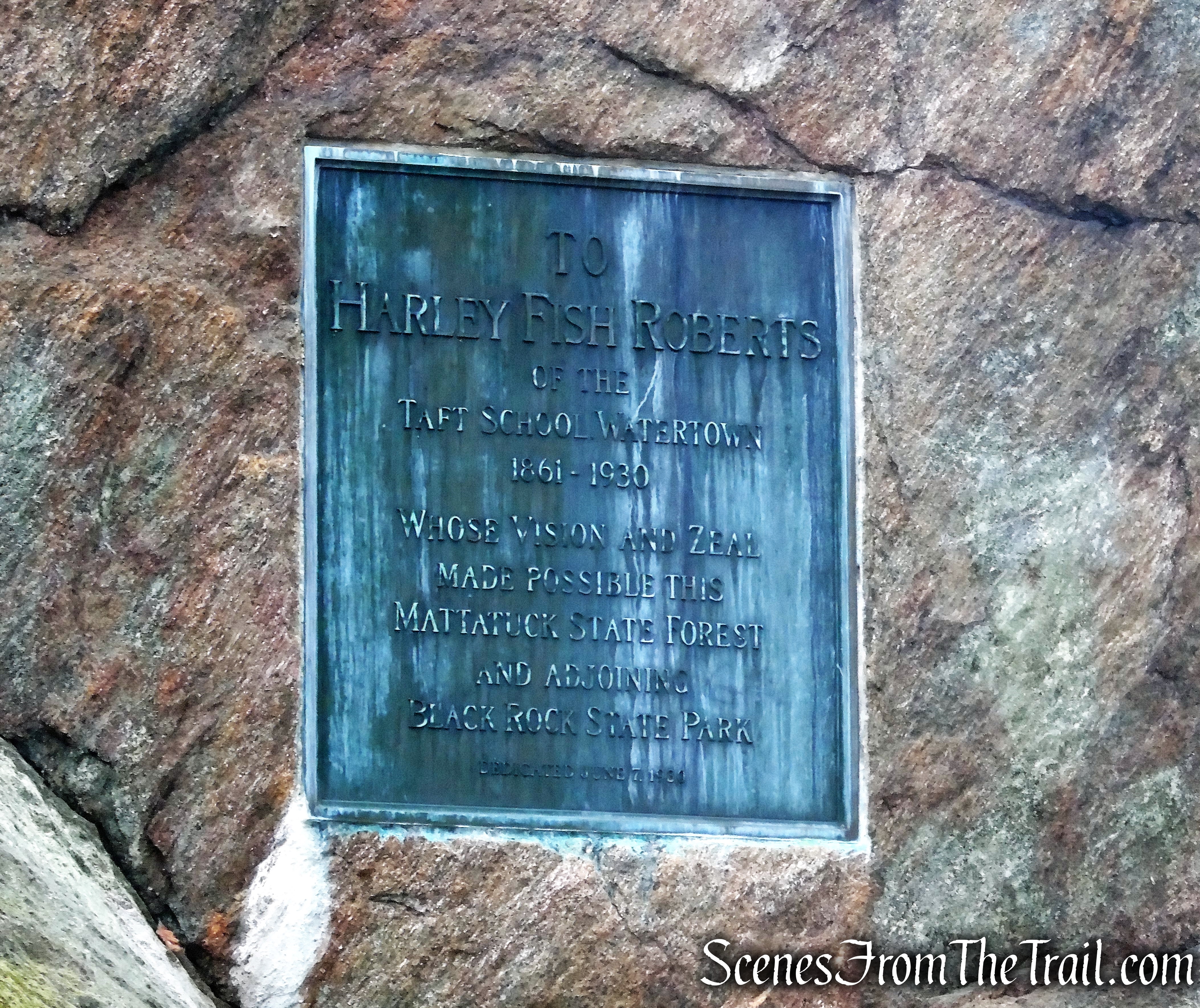
By the time Harley F. Roberts had the idea to conserve some of his local area for a state forest, the land was in rough shape. Probably no one man accomplished more for Connecticut state forests than Mr. Harley F. Roberts, Master of the Taft School in Watertown. It was through him that in 1925 the Black Rock Forest, Inc. was organized for the sole purpose of acquiring and giving to the State, Black Rock park and Mattatuck forest. Mattatuck’s initial 723 acres were gifted to the state in 1926. By 1930, through a combination of continued land donations by the Black Rock Association and purchases by the state, the forest had grown to 2,578 acres. Mr. Roberts’s vision of land conservation has been well respected, for in the years since his original gift, Mattatuck has grown to encompass 4,510 acres in 20 different parcels within the towns of Waterbury, Plymouth, Thomaston, Watertown, Litchfield, and Harwinton.

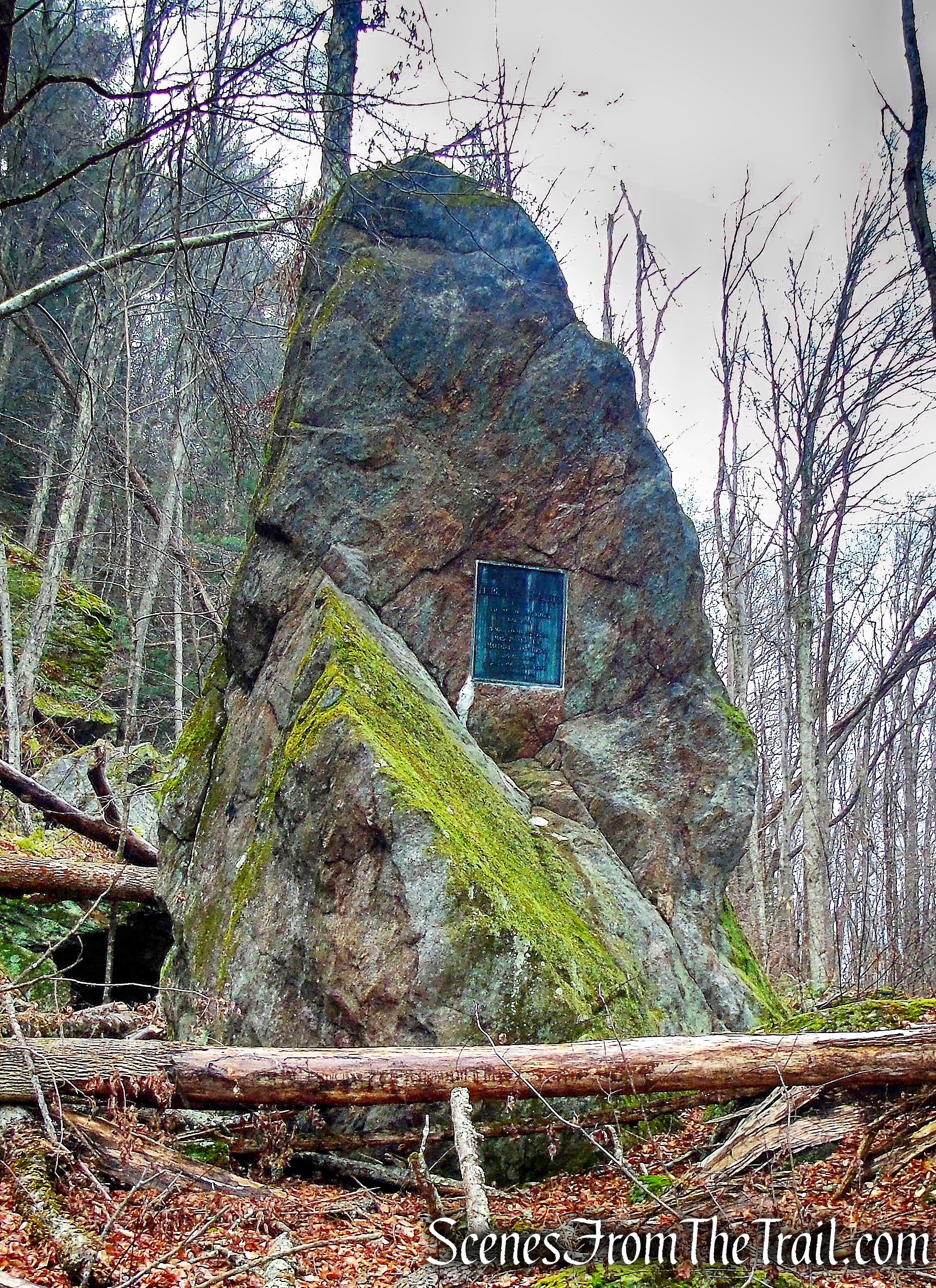
Mr. Roberts died in the spring of 1930. His friends appreciative of his service to the State, presented a tablet which was dedicated June 7, 1930 by Mr. Horace Taft.

Harley F. Roberts Memorial - Mattatuck State Forest

Harley F. Roberts Memorial – Mattatuck State Forest

The tablet was placed upon a remarkable boulder, a natural monolith in the forest, not far from Bidwell Hill Road. This grove was partially thinned and was supposed to be maintained as the Roberts Memorial Grove. It now sits forgotten in the woods.

Harley F. Roberts Memorial - Mattatuck State Forest

Harley F. Roberts Memorial – Mattatuck State Forest

The Civilian Conservation Corps (CCC) Camp Roberts, which housed Company #175, was stationed at Black Rock State Park in Thomaston, Connecticut. The camp was established May 30, 1933 and was discontinued Sept. 28, 1937. The camp’s main projects were: building miles of truck trails, survey and boundary work, gypsy moth removal and tree planting. The CCC embarked on a massive reforestation project, planting tens of thousands of trees and instituting erosion control. The forest began to improve under the practices of the CCC, which turned the abused landscape into productive woodlands.

Signs of the region’s industrial history and resource exploitation abound on the landscape, but today’s forest hides much of the evidence. Remains of quarries, lime kilns, house foundations, agricultural fields, and charcoal mounds can still be found.

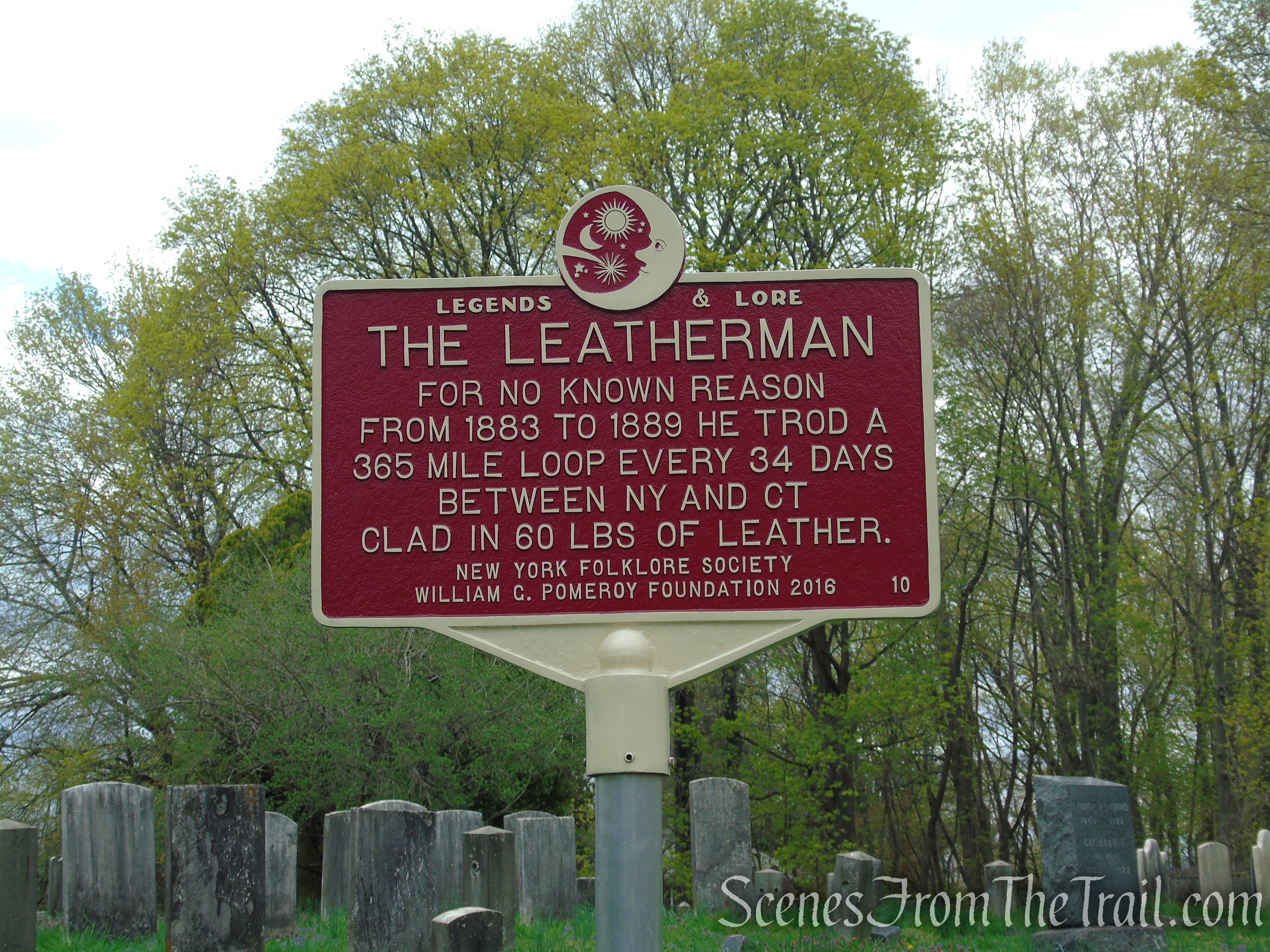
The Leatherman: The complete story of this legendary vagabond will never be known, but the Connecticut Legend of the Leatherman is alive and well in Mattatuck State Forest. This renowned tramp wore a 60 pound, leather patchwork suit and carried two bags in one hand and a walking stick in the other. Among his belongings were an ax, pail, hatchet, jack-knife, awl and scraps of leather.

The Leatherman

The Leatherman

The Leatherman had a 34 day, 365 mile, clockwise loop through western Connecticut and eastern New York. He faithfully followed this loop for roughly three decades until his death in 1889. He completed the circuit 11 times each year.

The Leatherman's circuit

The Leatherman’s circuit

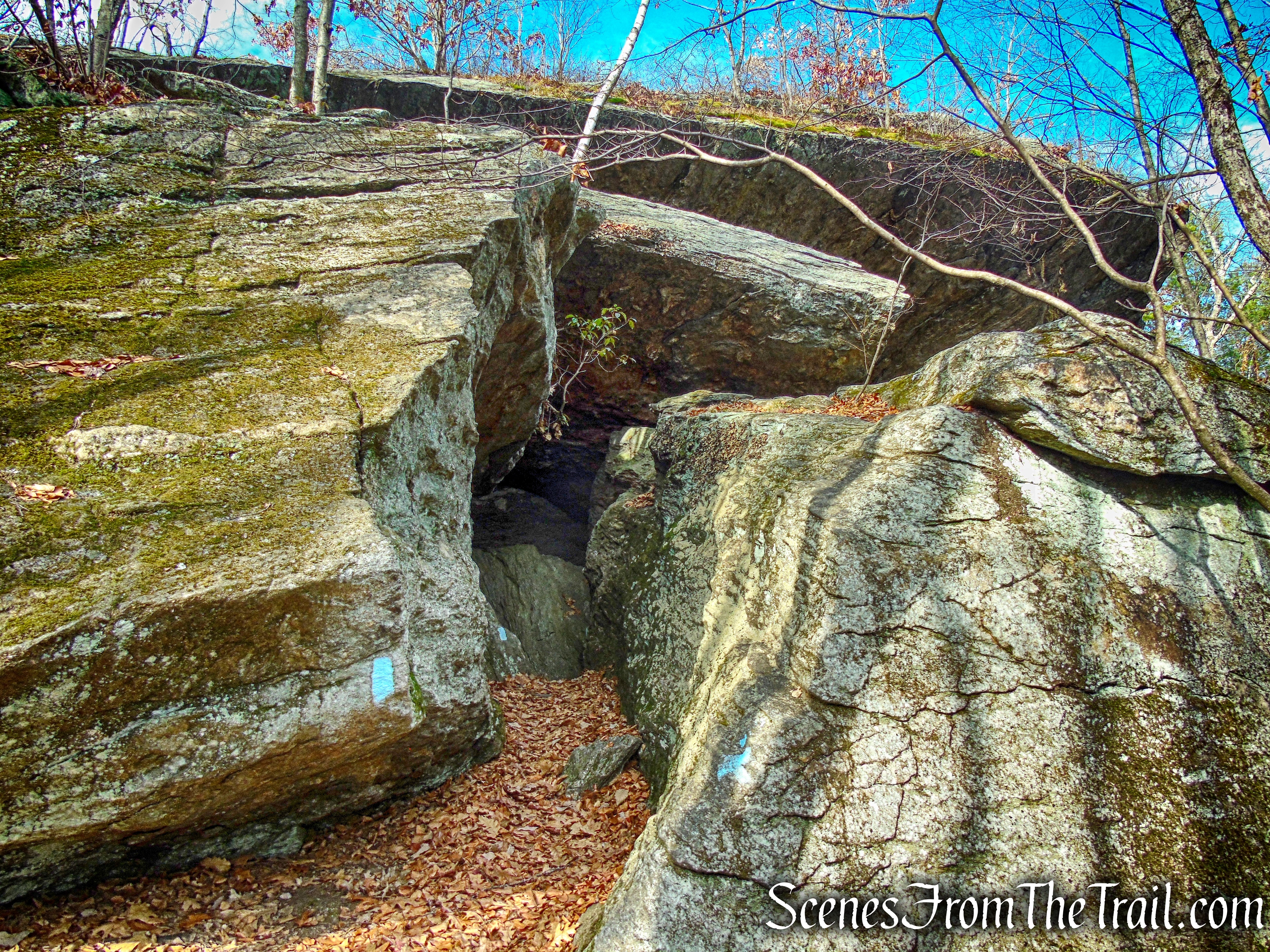
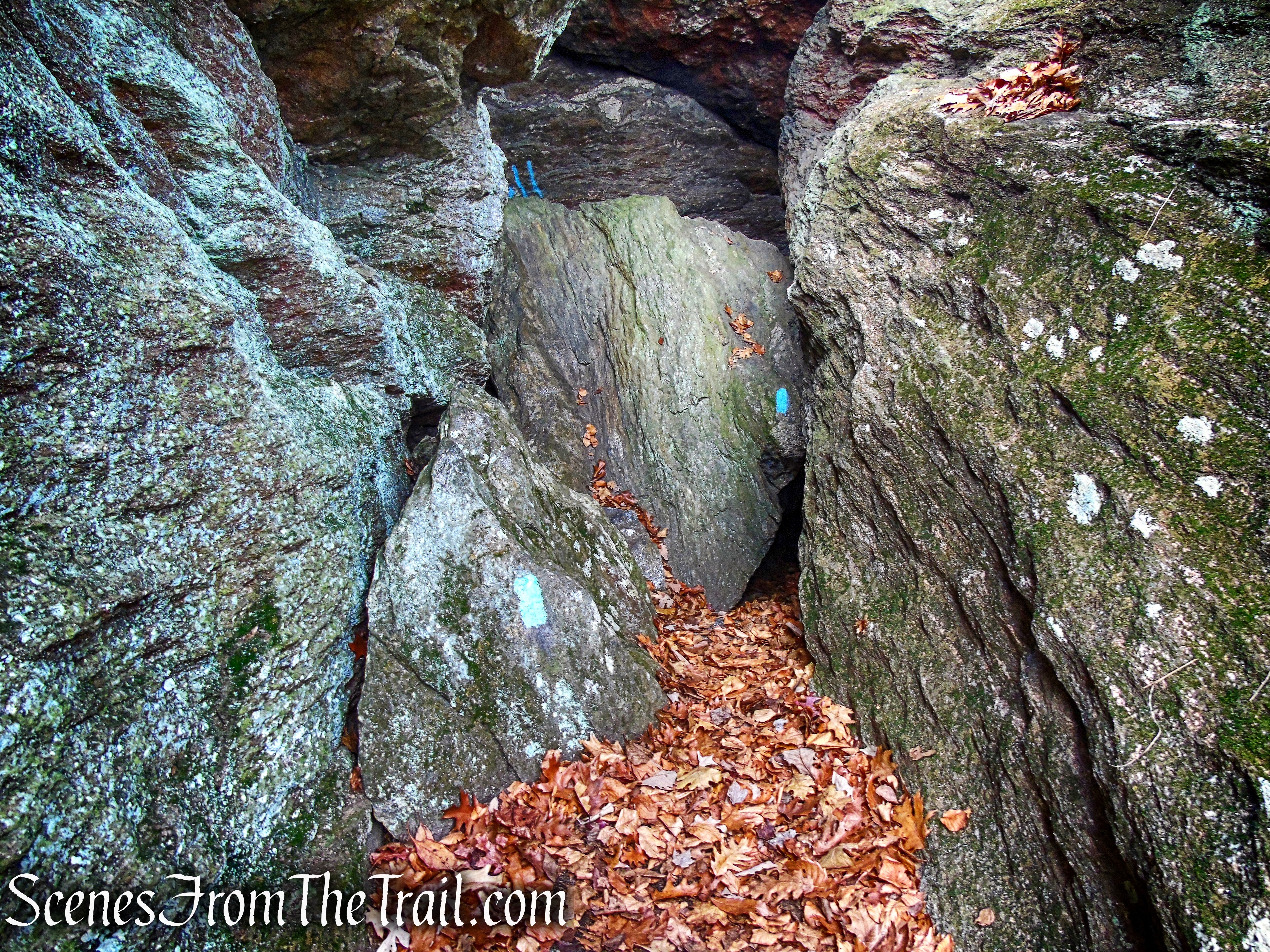
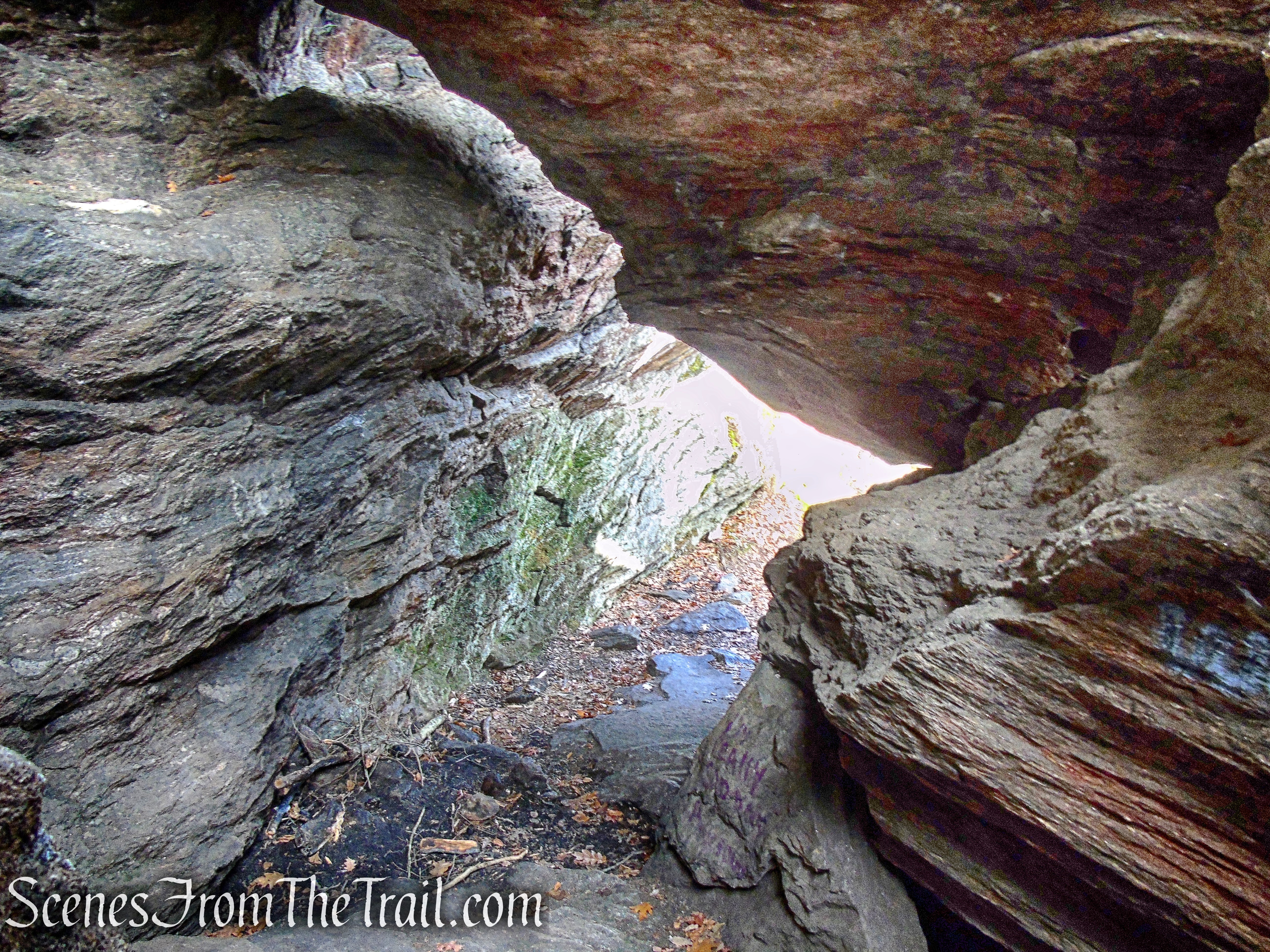
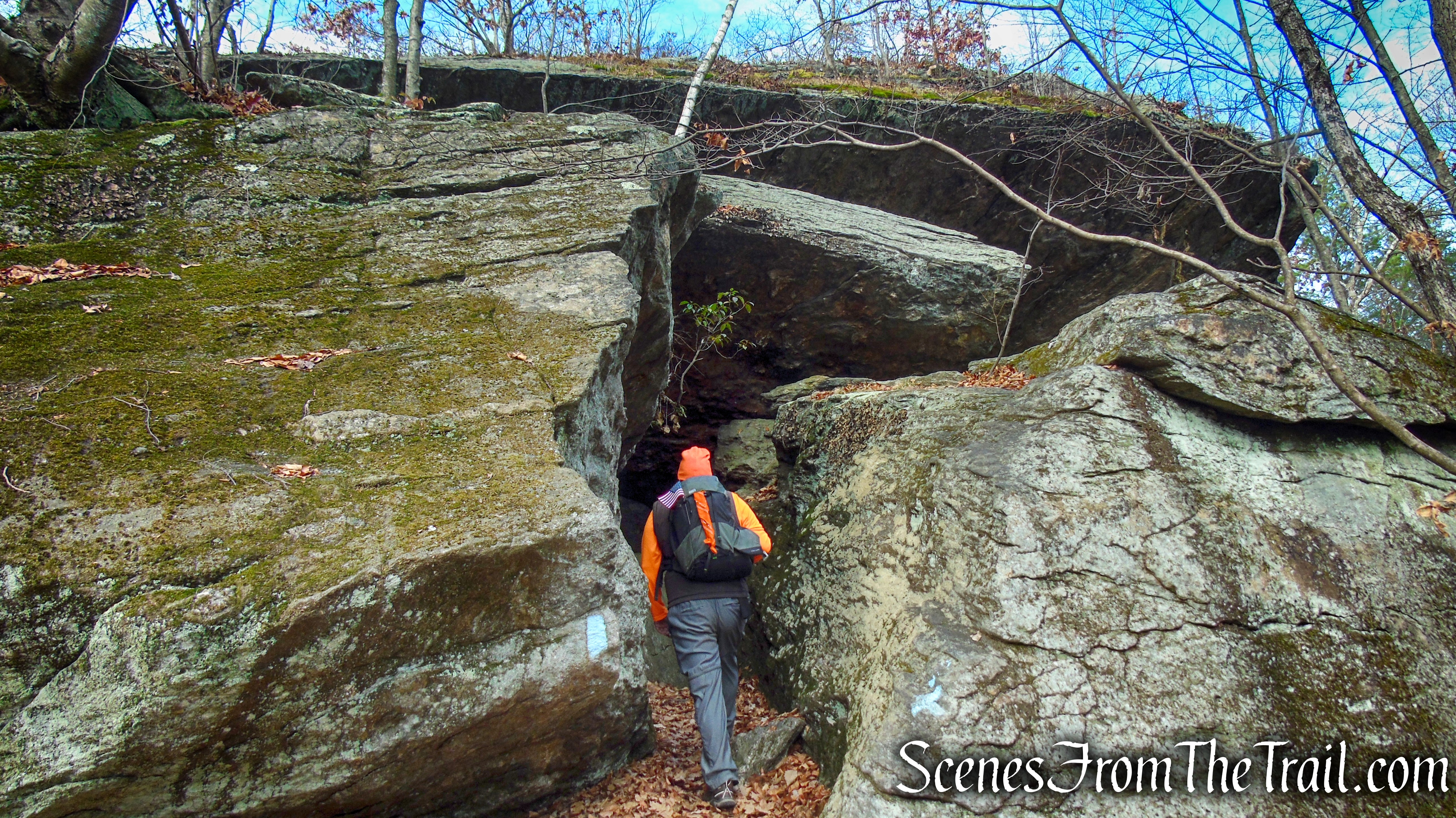
Each day ended 10-11 miles from the last, and his long series of evening rest areas included many cave shelters and rock overhangs. One of his rest stops was in Mattatuck State Forest, that today is known as the Leatherman’s Cave. Although it’s not a true cave, it’s more of a fissure cave. Fissure caves are formed by movements of the earth – earthquakes and other shifts – as opposed to erosion, which forms most caves. This jumble of massive rocks under a ledge known as Crane’s Lookout, is probably the most well known and spectacular of all the Leatherman’s Caves.

Leatherman's Cave - Mattatuck State Forest

Leatherman’s Cave – Mattatuck State Forest

He survived the blizzard of 1888, but the next winter was found dead in his cave in Briarcliff, NY. His bag contained heavy leather equipment as well as a crucifix and a small French prayer book from 1840. He was buried at the Sparta Cemetery in Ossining, New York.

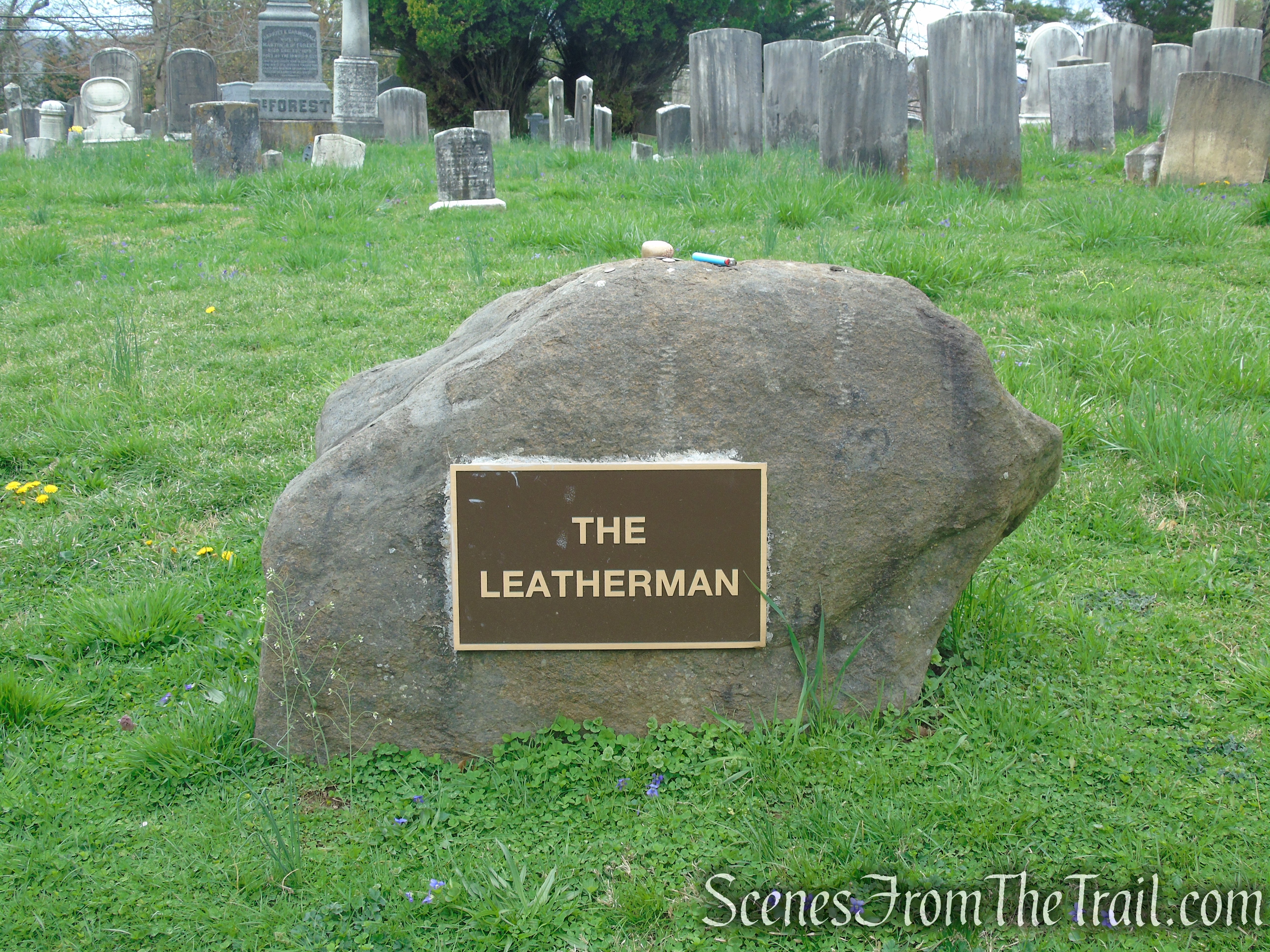
The grave site was situated right next to Route 9 and so many people visited his grave that concerns arose that someone could get hurt. So the local historical society decided to exhume the remains of the Old Leatherman and move his grave farther away from the road. The historians thought that while they were at it, they could also take the opportunity to do forensic tests on the remains, to learn more about him. In late May 2011, when the grave was dug up, they did not find any remains, just dirt and some iron nails. They re-buried the dirt and iron nails in a plain pine box, on higher ground in the middle of the cemetery. Visitors can see the boulder, which is his gravesite with a plaque that reads: The Leatherman.

The Leatherman - Sparta Cemetery - April 2021

The Leatherman – Sparta Cemetery – April 2021

The Leatherman - Sparta Cemetery - April 2021

The Leatherman – Sparta Cemetery – April 2021

The Leatherman - Sparta Cemetery - April 2021

The Leatherman – Sparta Cemetery – April 2021

The band Pearl Jam recorded a song about him, “Leatherman.” His leather bag is on exhibit at the Connecticut Historical Society in Hartford.


Trails Overview:

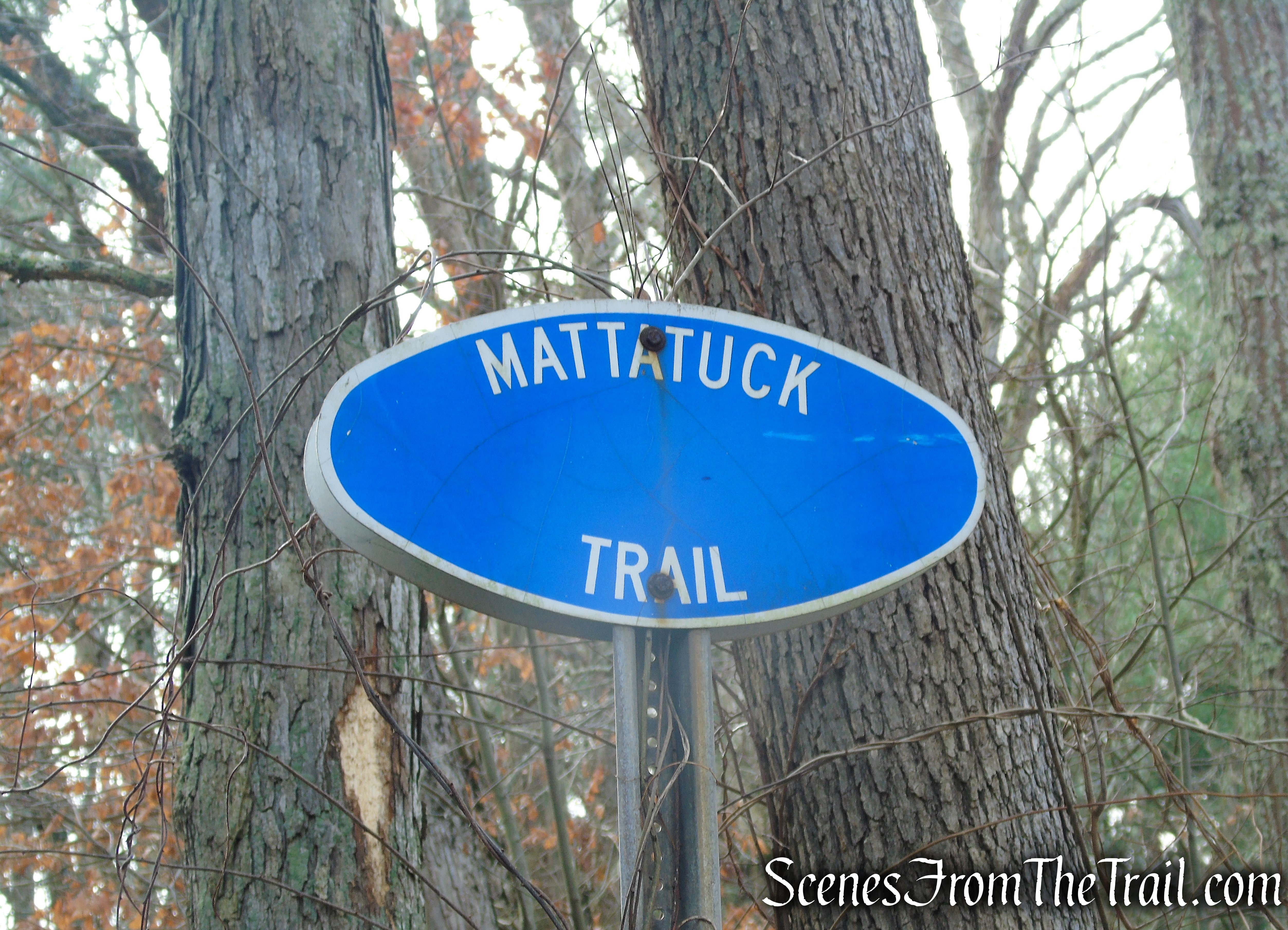
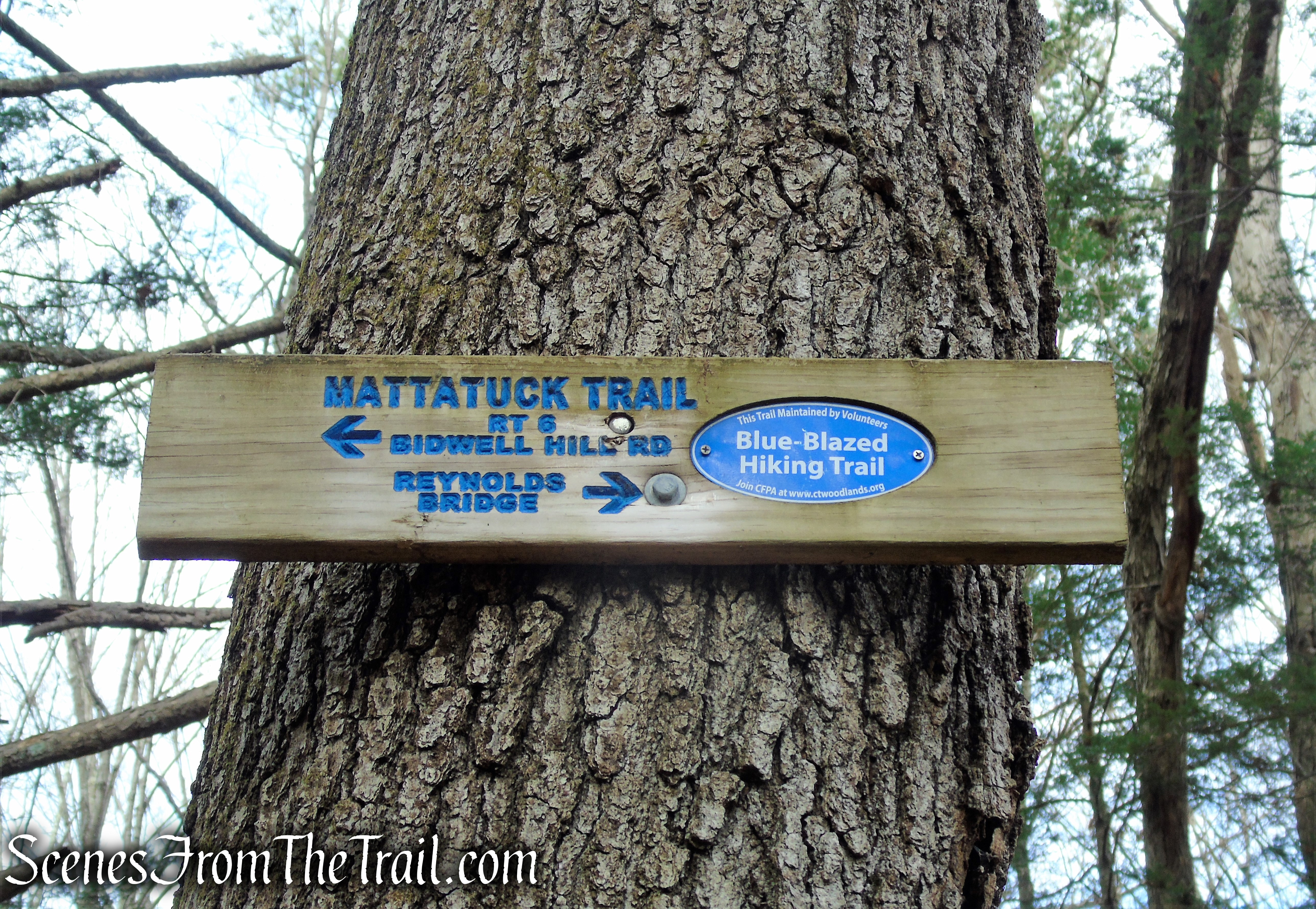
  • Mattatuck Trail – The 42 mile-long Mattatuck Trail, is part of the Blue-Blazed Hiking Trail system. It travels across Black Rock State Park from west to east, crossing Bidwell Hill Road and entering Mattatuck State Forest. The trail then crosses US-6 and climbs steeply to Crane’s Lookout and descends steeply, passing through the Leatherman’s Cave.

Mattatuck Trail - Mattatuck State Forest

Mattatuck Trail – Mattatuck State Forest

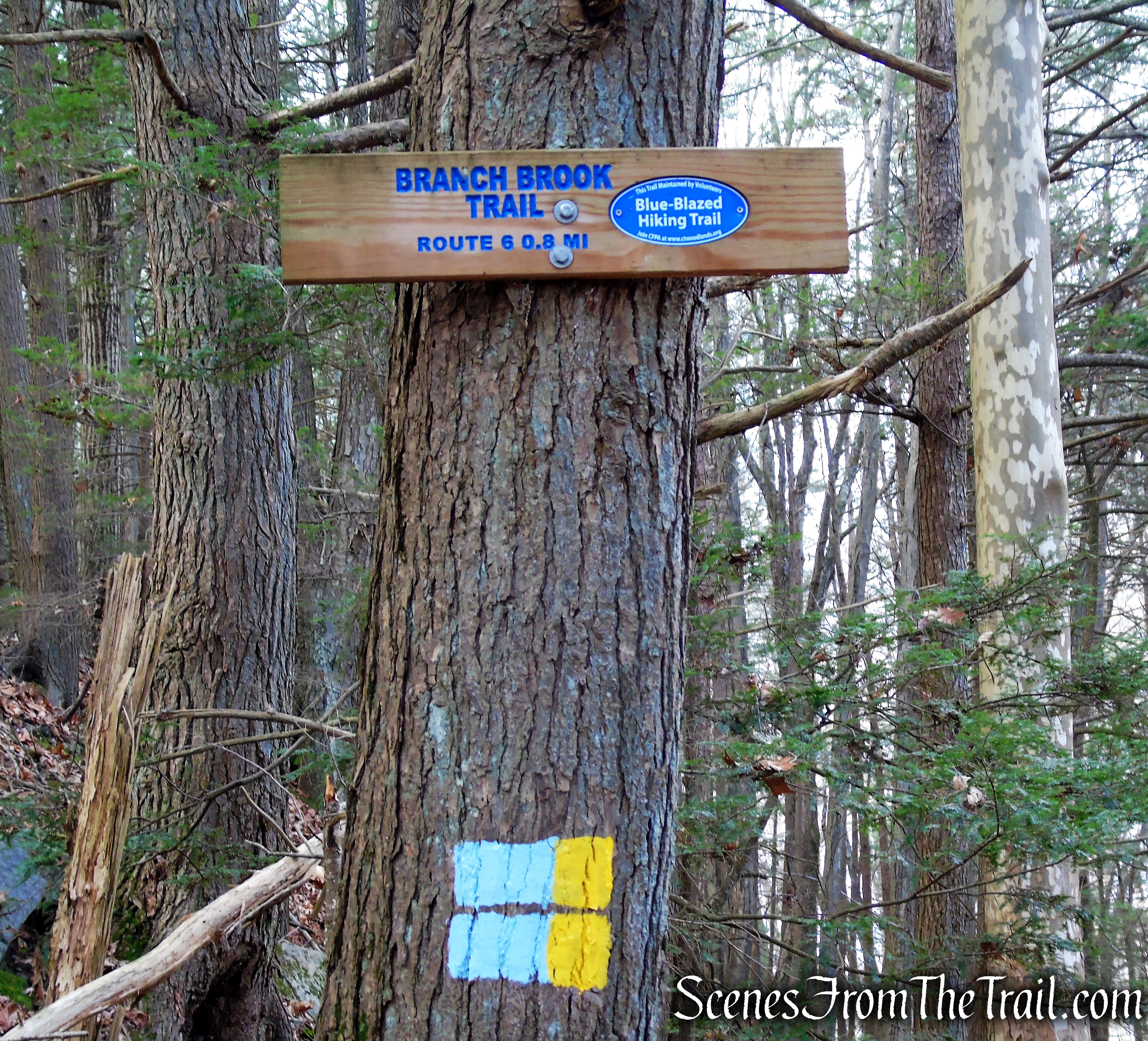
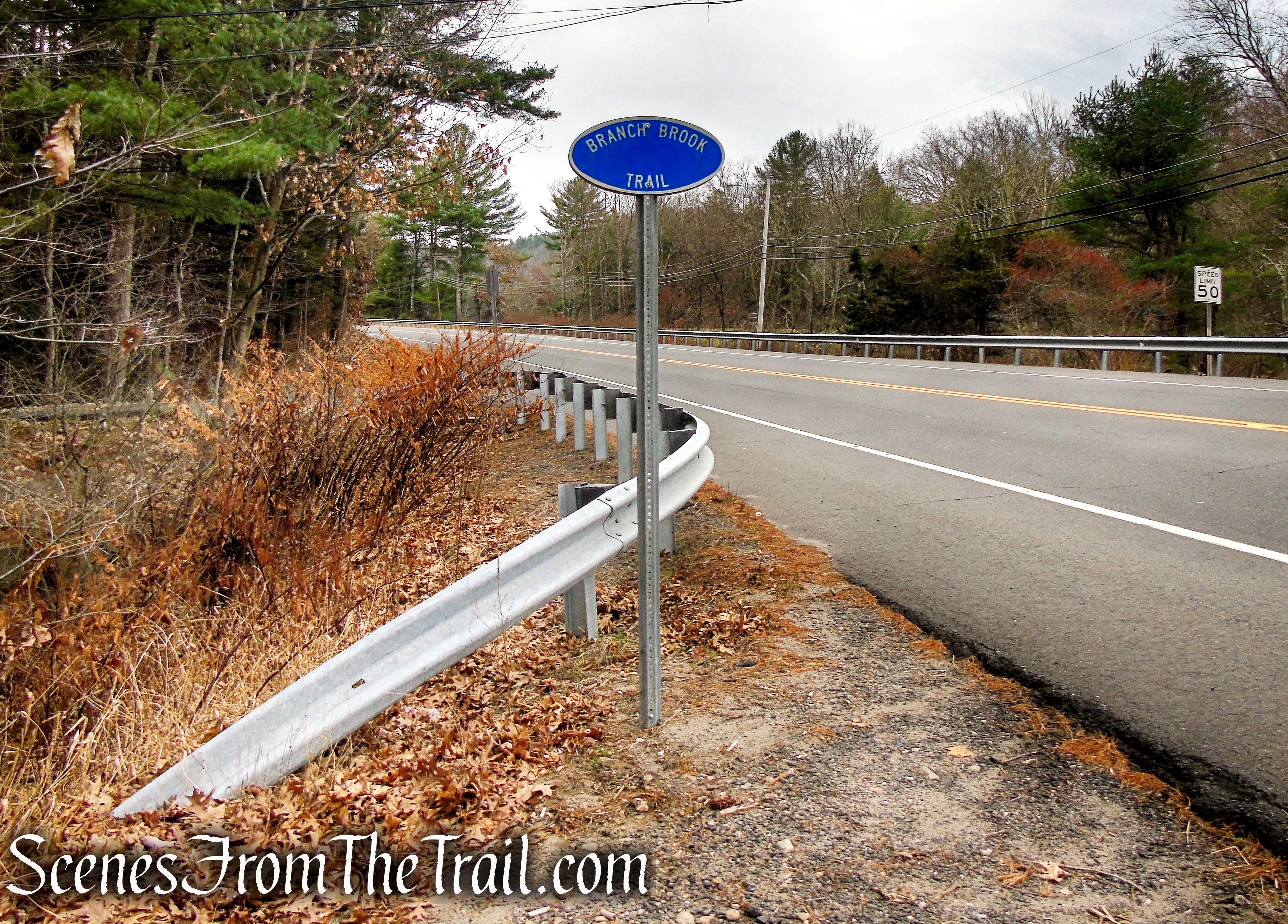
  • Branch Brook Trail – Most of the 0.8-mile Branch Brook Trail is located in the forest, south of Reynolds Bridge Road in the town of Watertown. It is used to form a loop hike to return back to Black Rock State Park. An almost level woods road that makes a nice finish to this challenging hike.

Branch Brook Trail - Mattatuck State Forest

Branch Brook Trail – Mattatuck State Forest

These trails can be combined with the trails in Black Rock State Park to form a longer loop hike.


Hike Overview:

This is one of those “must do” hikes in Connecticut. If the history and the lore is not enough, the sheer beauty of the area makes it a worthwhile trek. The Leatherman’s Cave itself is massive and the Mattatuck Trail goes right through it. The area around the cave is also quite impressive with all the overhanging ledges and rock formations. One of the most resplendent sections of trail that I have hiked.

This loop begins and ends in Black Rock State Park, where there is plenty of parking. There is no out-of-state parking fee after Labor Day or before Memorial Day weekend.

A lot of people do this hike in reverse of how it is described here, but by doing the hike counterclockwise, the last mile of the hike is on an almost entirely level woods road. It is preferable to this writer, to do the more strenuous sections early on and finish with an easy stroll along the brook.

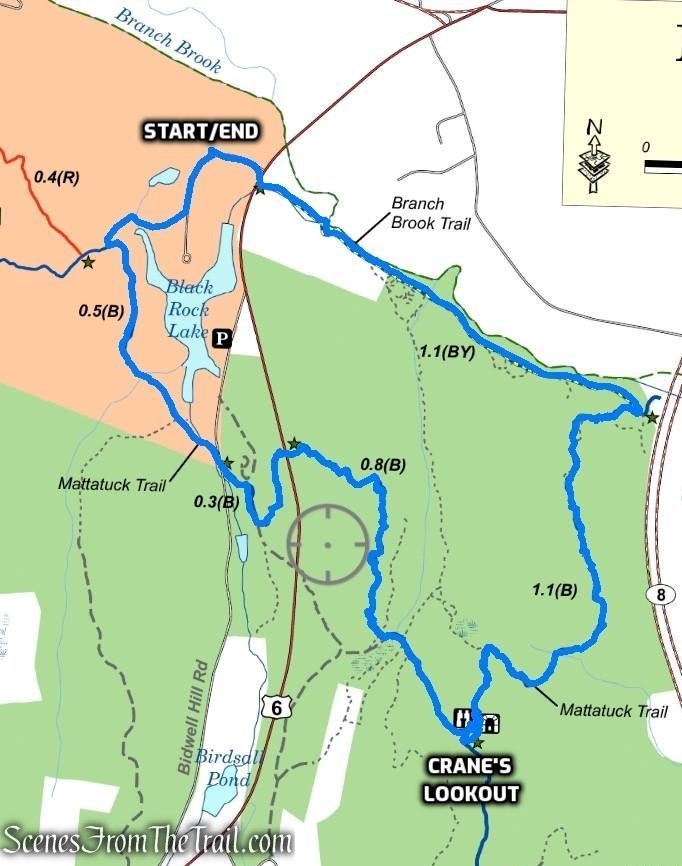
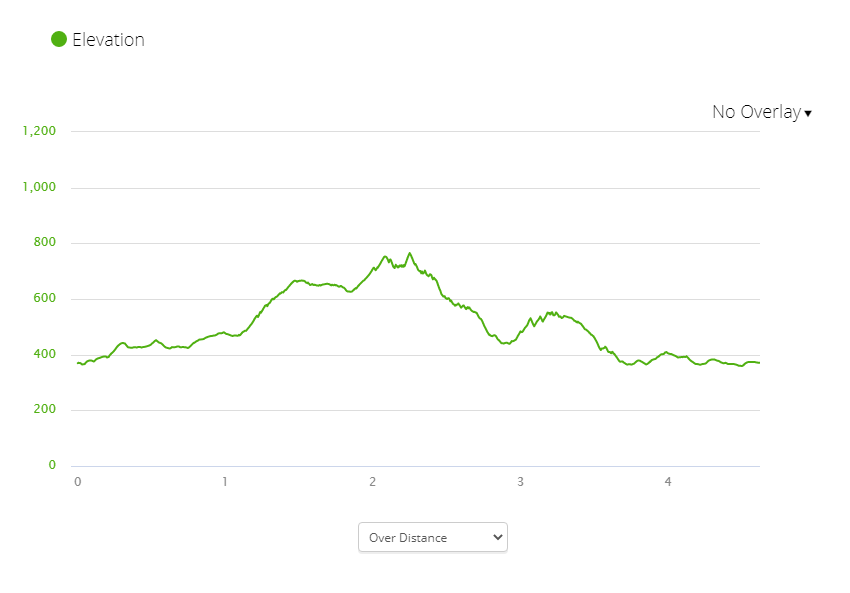
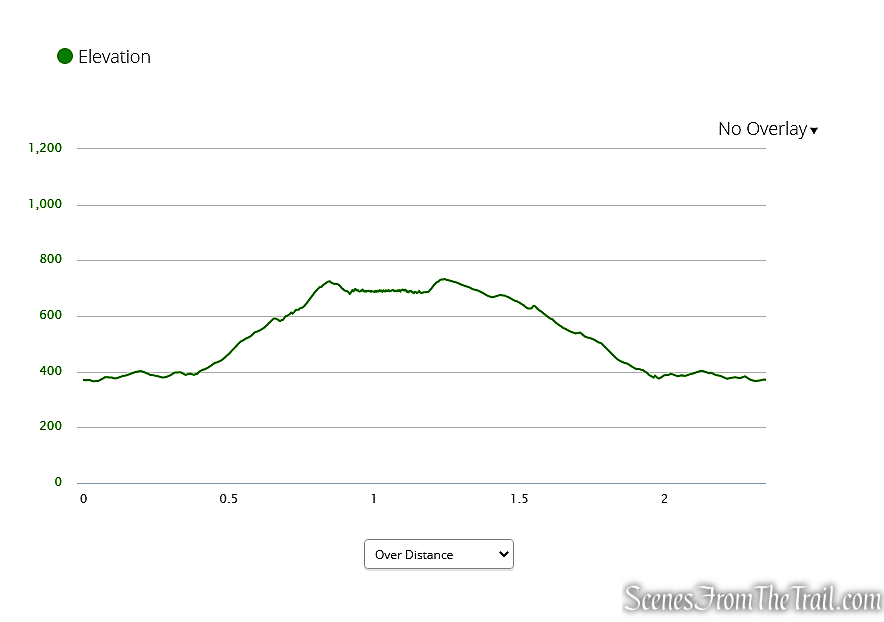
The Mattatuck trail has varying easy-to-difficult sections. Starting in Black Rock State Park, it’s an easy walk through the woods. As the trail climbs the ridge towards Crane’s Lookout, it becomes steep and rocky. Most of the elevation is gained in under a mile, from US-6 (Thomaston Road) to Crane’s Lookout. From there, the descent is rather steep in sections, sometimes over open rock slabs. The last mile on the Branch Brook Trail is an almost level woods road.

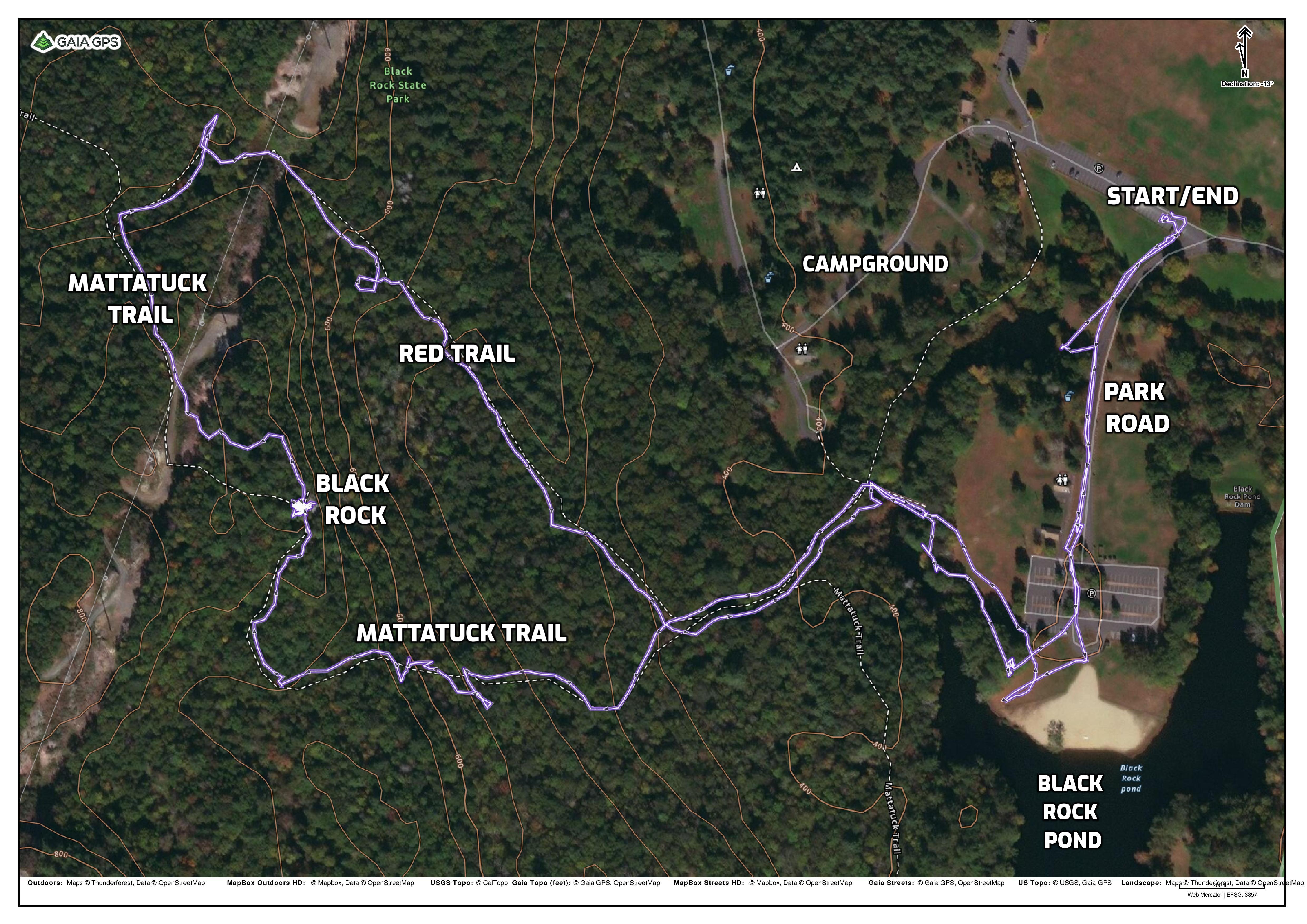
Leatherman’s Cave Loop – Mattatuck State Forest

Leatherman’s Cave Loop – Mattatuck State Forest

There is some light rock scrambling along steep sections of the Mattatuck Trail, where you may have to use both your hands and feet while ascending and descending.

Leatherman’s Cave Loop – Mattatuck State Forest

Leatherman’s Cave Loop – Mattatuck State Forest

Please Note: This hike should not be attempted if there is rain, ice or snow. The Mattatuck Trail travels up and over steep sections of open rock slabs and ledges with steep dropoffs. Poor weather conditions and/or wet leaves resulting in poor traction, could be dangerous.


The Hike:

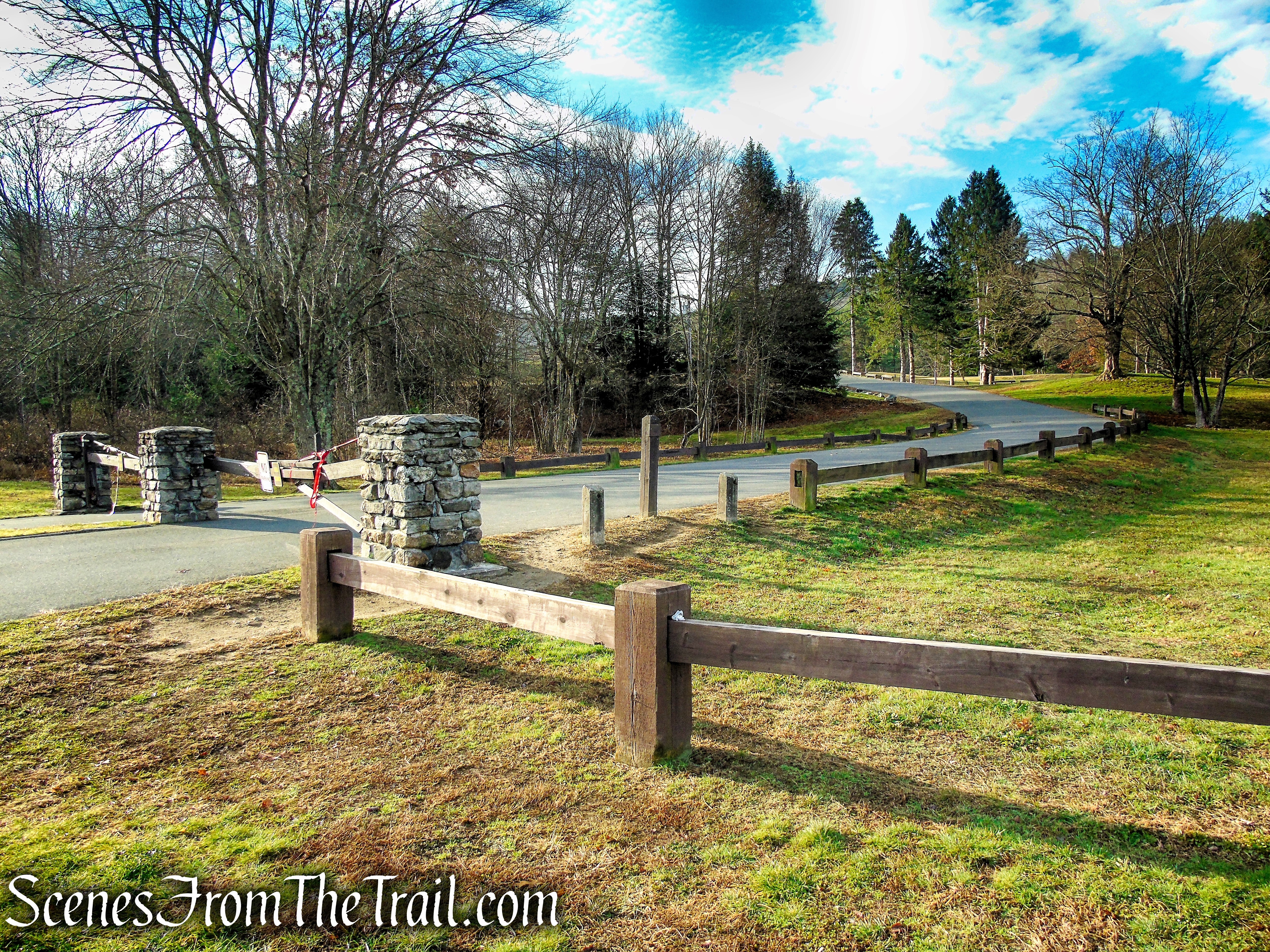
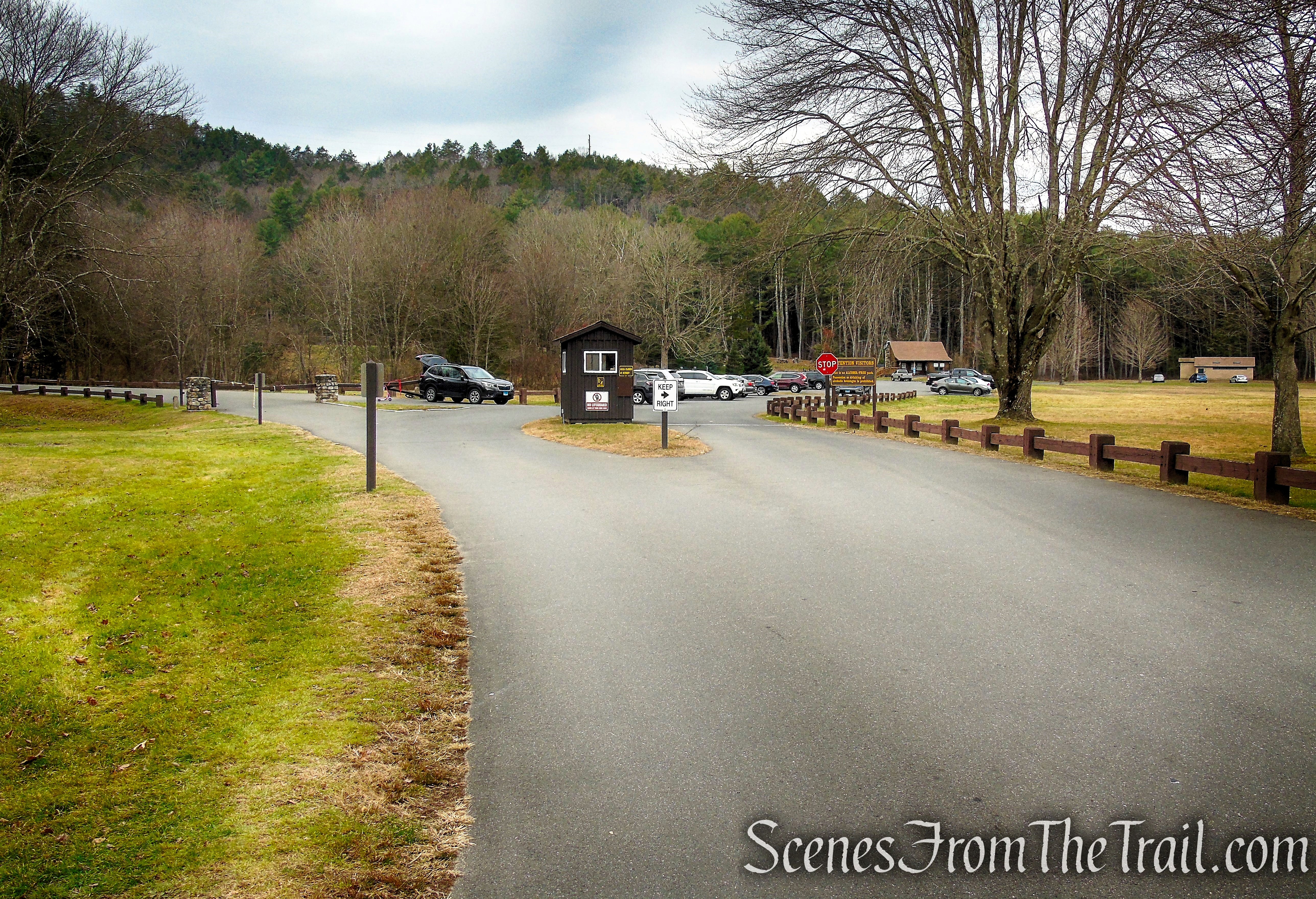
After entering Black Rock State Park, park just past the ticket booth, by the paved park road that leads to the beach (Black Rock Pond). If the gate is open, there is parking closer to the pond.

paved park road – Black Rock State Park

paved park road – Black Rock State Park

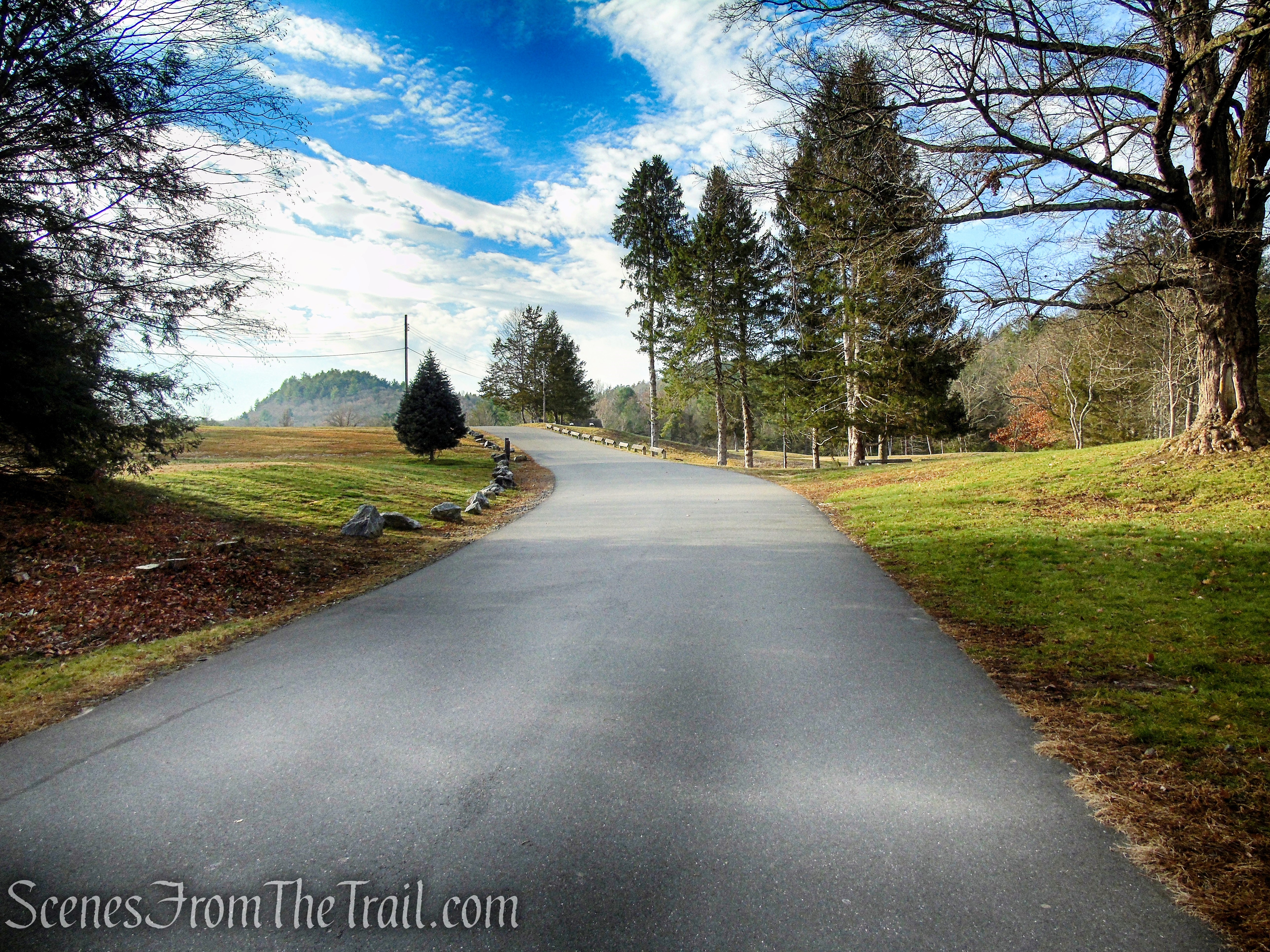
Walk past the gate and proceeded up the paved park road towards Black Rock Pond. Just before the restrooms, turn right, leaving the park road, walk across the field and cross the steel footbridge.

paved park road – Black Rock State Park

paved park road – Black Rock State Park

turn right and walk across the field - Black Rock State Park

turn right and walk across the field – Black Rock State Park

steel footbridge – Black Rock State Park

steel footbridge – Black Rock State Park

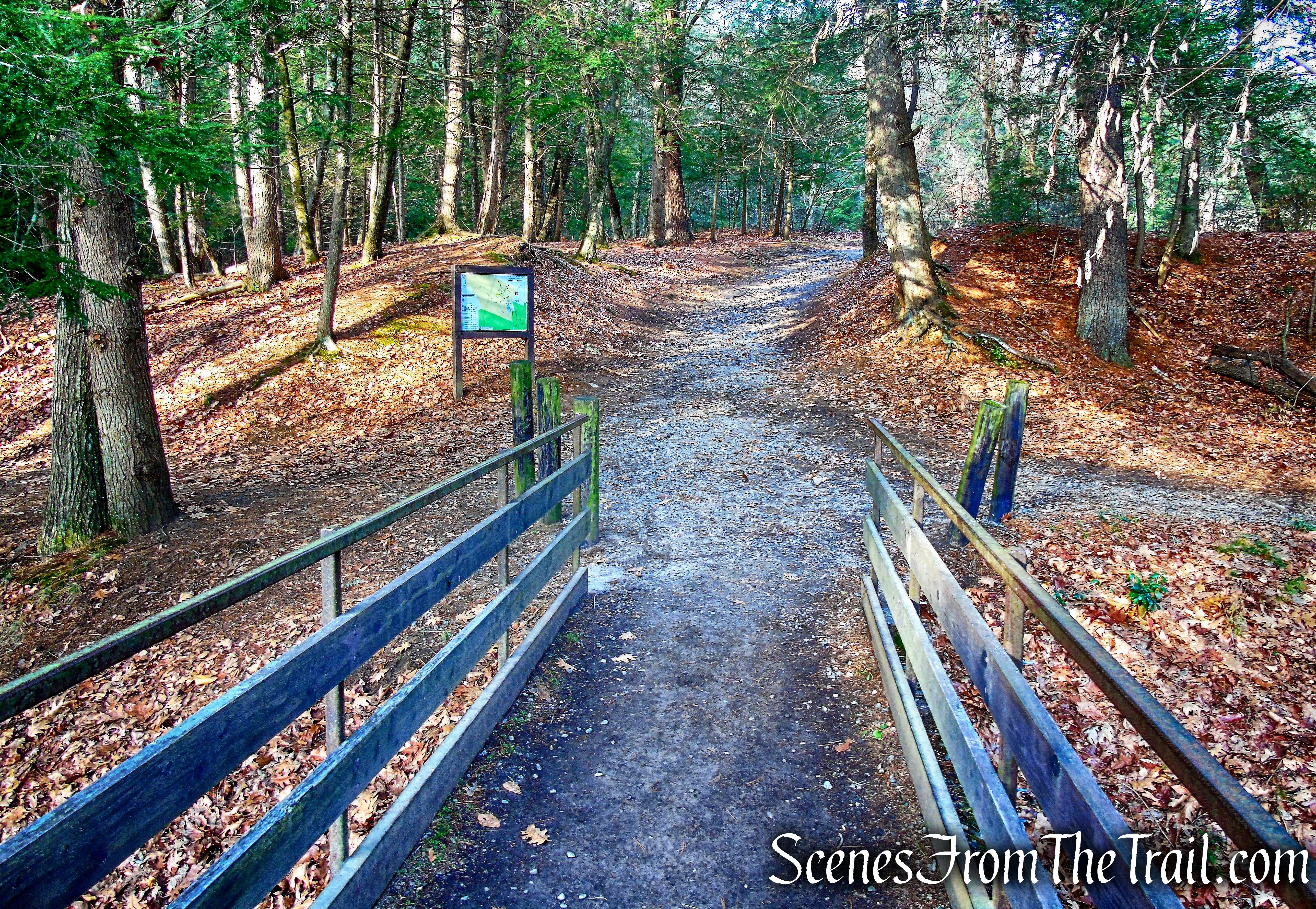
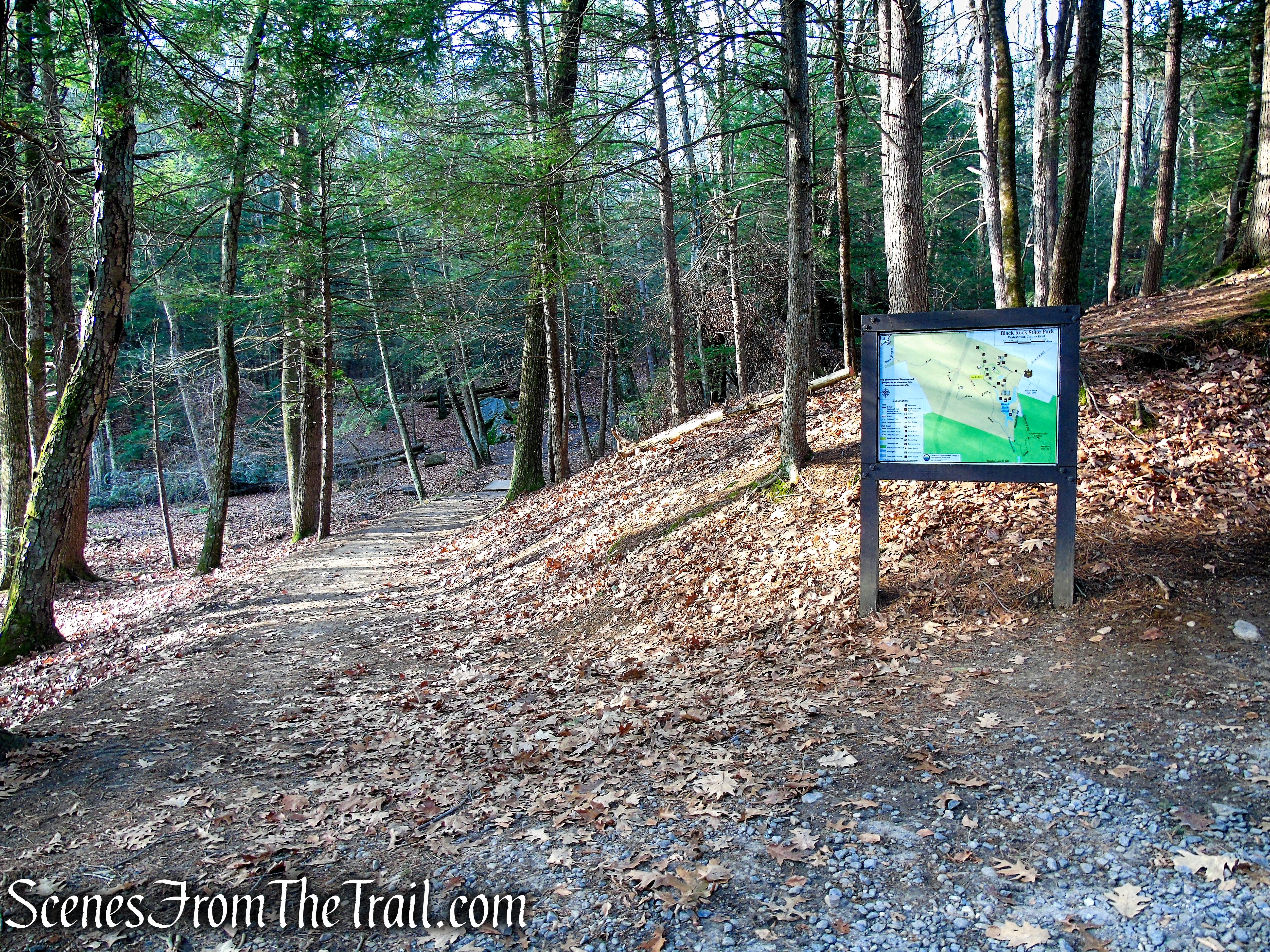
After crossing the bridge, turn left by the large park map, on a woods road, crossing a small wooden footbridge and proceed uphill.

turn left after crossing the steel footbridge

turn left after crossing the steel footbridge

woods road – Black Rock State Park

woods road – Black Rock State Park

woods road – Black Rock State Park

woods road – Black Rock State Park

In just under 300 feet, the woods road joins the blue-blazed Mattatuck Trail, which continues uphill towards Black Rock. This turn is easy to miss as you have to make a hard left, almost making a U-turn. Follow the blue blazes as they immediately turn right and begin heading in a southeasterly direction on another woods road.

turn sharp left on Mattatuck Trail

turn sharp left on Mattatuck Trail

Mattatuck Trail – Black Rock State Park

Mattatuck Trail – Black Rock State Park

The Mattatuck Trail travels along the southern end of Black Rock State Park, near Black Rock Pond. It crosses a series of small wooden footbridges over outlet streams of Black Rock Pond.

Mattatuck Trail – Black Rock State Park

Mattatuck Trail – Black Rock State Park

Mattatuck Trail – Black Rock State Park

Mattatuck Trail – Black Rock State Park

Mattatuck Trail – Black Rock State Park

Mattatuck Trail – Black Rock State Park

Mattatuck Trail – Black Rock State Park

Mattatuck Trail – Black Rock State Park

Mattatuck Trail – Black Rock State Park

Mattatuck Trail – Black Rock State Park

Mattatuck Trail – Black Rock State Park

Mattatuck Trail – Black Rock State Park

In about 0.75 mile, from the start of the hike, the Mattatuck Trail crosses Bidwell Hill Road, leaving Black Rock State Park. The trail crosses the road diagonally to the right and reenters the woods, entering Mattatuck State Forest.

Mattatuck Trail – Bidwell Hill Road

Mattatuck Trail – Bidwell Hill Road

Mattatuck State Forest

Mattatuck State Forest

The trail heads uphill on a woods road and in another 540 feet, turns left leaving the woods road and weaves its way through the woods, crossing a small stream, turning left (heading north) then turning right and crossing US-6 (Thomaston Rd). Care should be taken while crossing this road

Mattatuck Trail – Mattatuck State Forest

Mattatuck Trail – Mattatuck State Forest

Mattatuck Trail – US 6

Mattatuck Trail – US 6

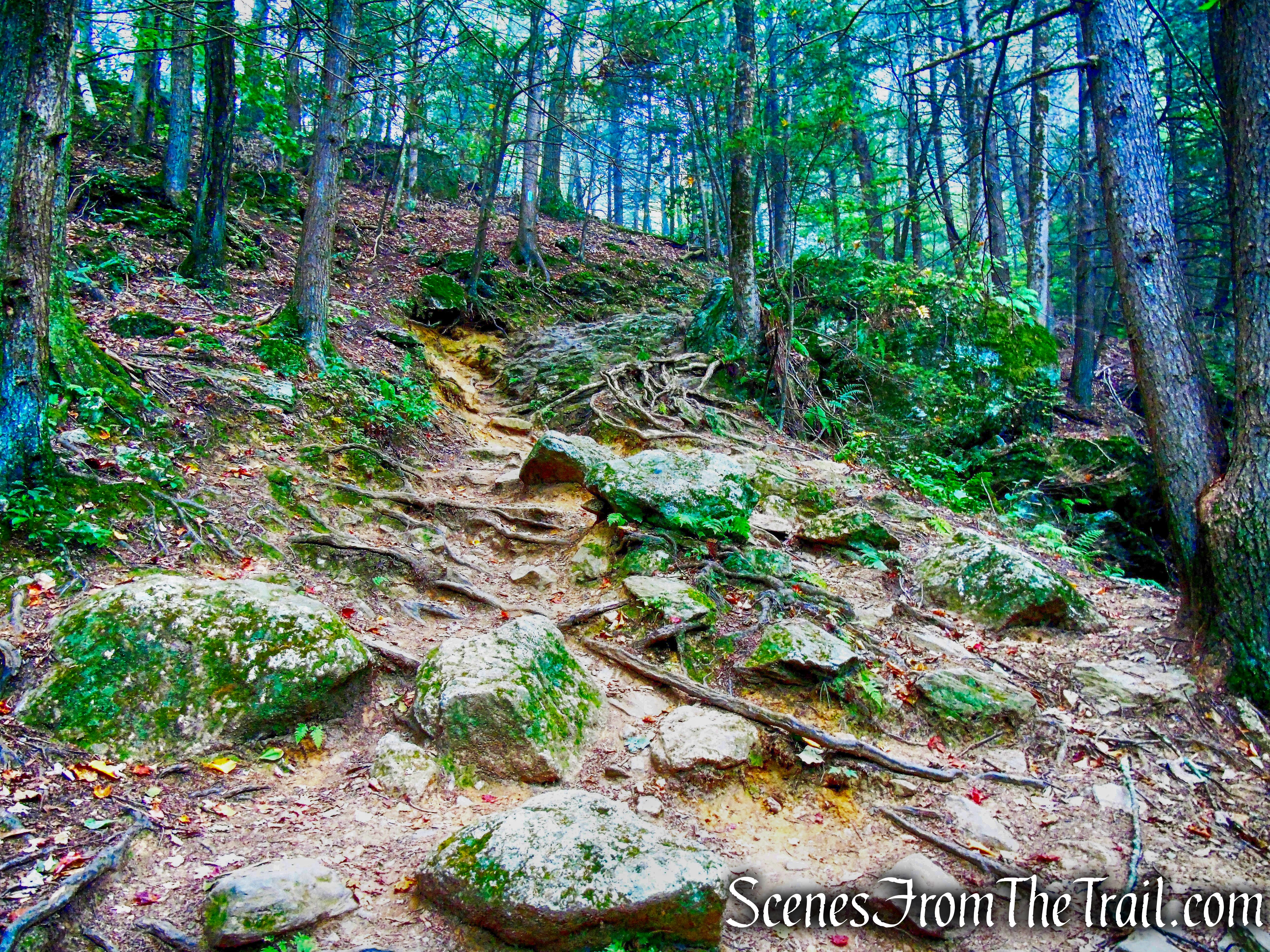
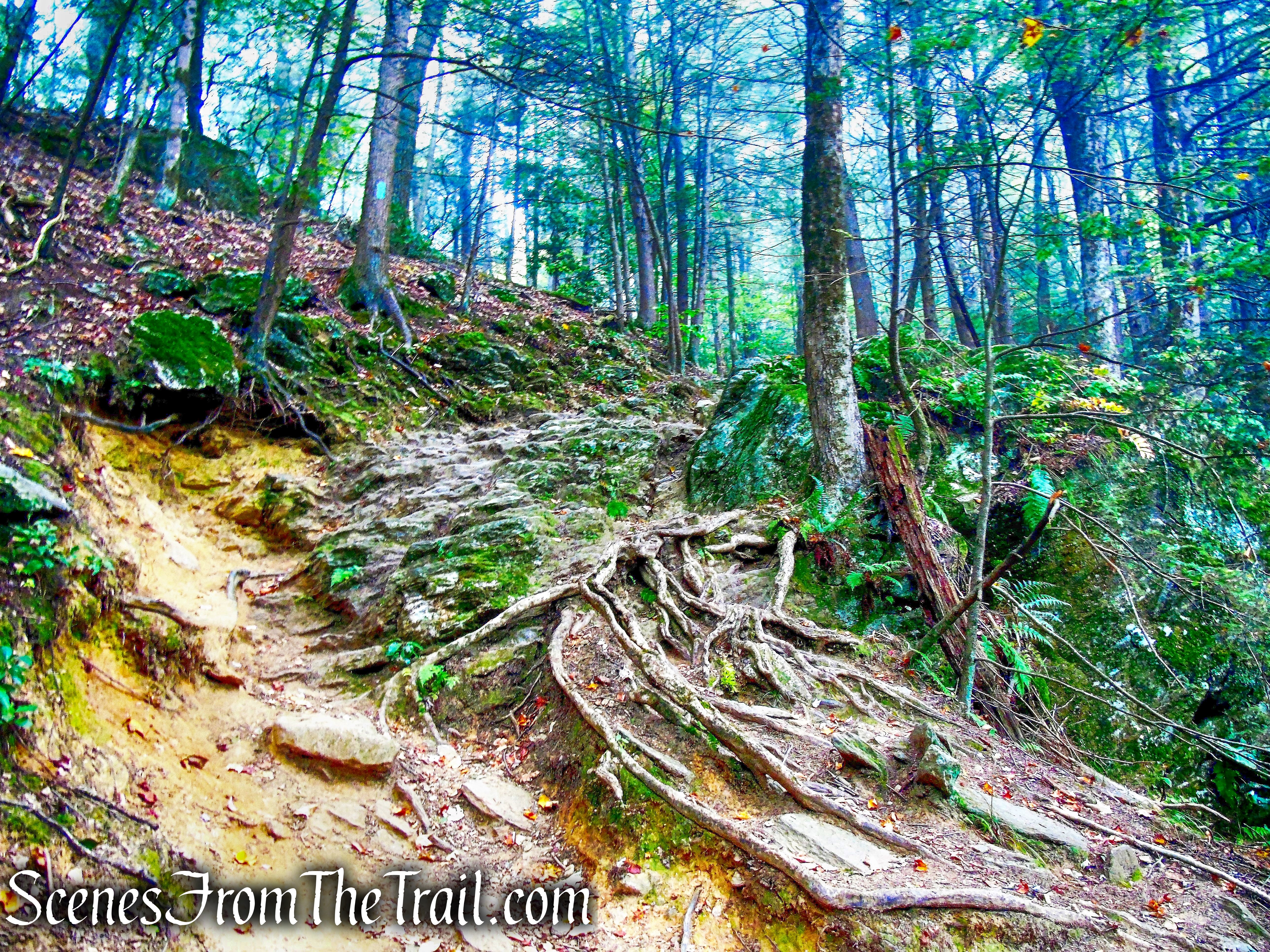
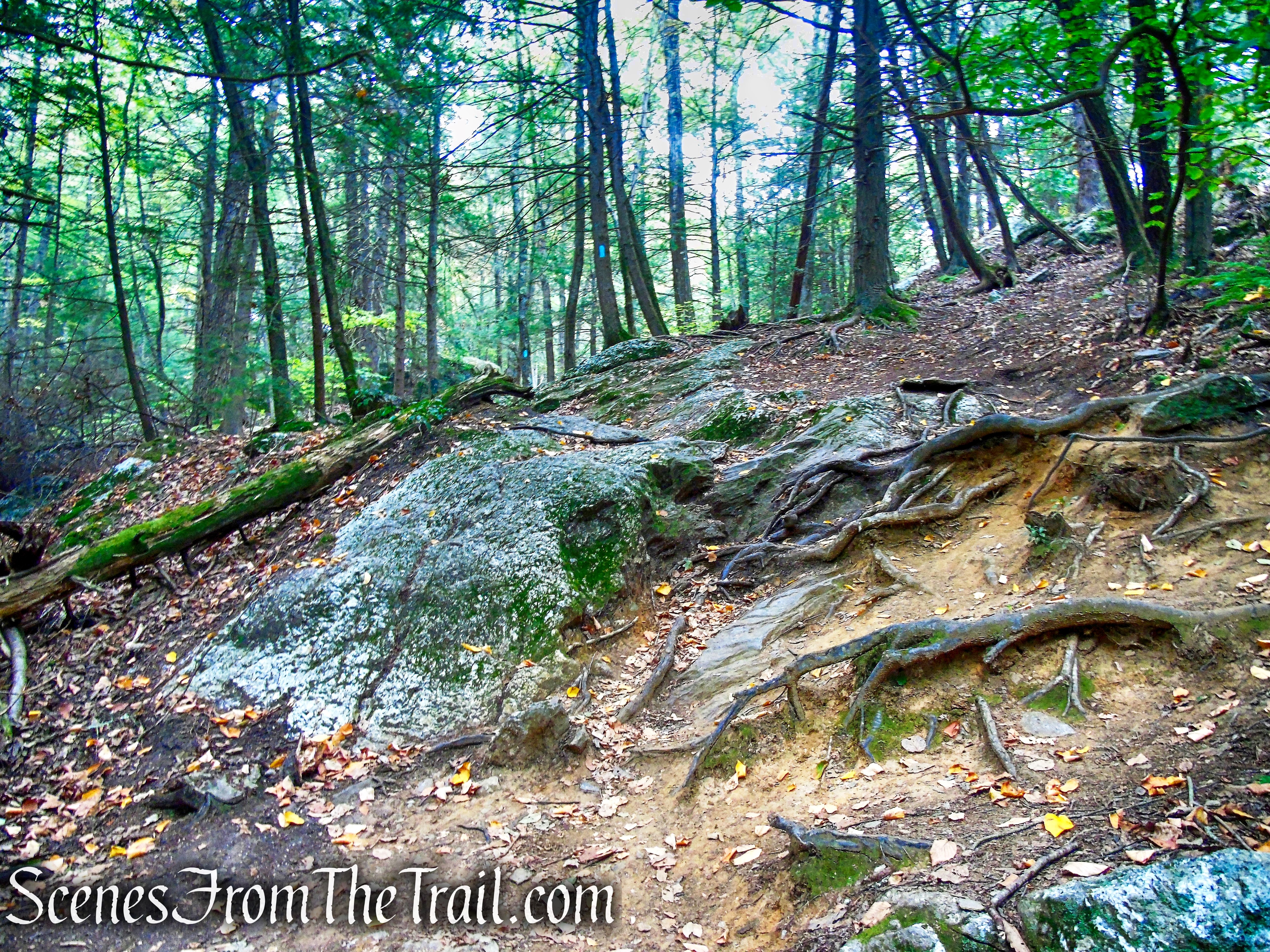
The trail reenters the woods and now begins a steady climb. At times the trail climbs steeply over rock slabs which could be slick, if wet or covered with leaves.

Mattatuck Trail – Mattatuck State Forest

Mattatuck Trail – Mattatuck State Forest

Mattatuck Trail – Mattatuck State Forest

Mattatuck Trail – Mattatuck State Forest

Mattatuck Trail – Mattatuck State Forest

Mattatuck Trail – Mattatuck State Forest

Mattatuck Trail – Mattatuck State Forest

Mattatuck Trail – Mattatuck State Forest

The trail levels off briefly then resumes its steep ascent over a large rock formation. Once at the top of the rock formation, looking back, some partial views can be had. The trail levels off a little, traveling along slanted rock slabs with steep drop offs to the left.

Mattatuck Trail – Mattatuck State Forest

Mattatuck Trail – Mattatuck State Forest

Mattatuck Trail – Mattatuck State Forest

Mattatuck Trail – Mattatuck State Forest

Mattatuck Trail – Mattatuck State Forest

Mattatuck Trail – Mattatuck State Forest

Mattatuck Trail – Mattatuck State Forest

Mattatuck Trail – Mattatuck State Forest

Mattatuck Trail – Mattatuck State Forest

Mattatuck Trail – Mattatuck State Forest

Mattatuck Trail – Mattatuck State Forest

Mattatuck Trail – Mattatuck State Forest

The trail descends a little, climbs slightly then descends steeply into the valley, intersecting several woods roads as it passes through a wet area on wooden planks.

Mattatuck Trail – Mattatuck State Forest

Mattatuck Trail – Mattatuck State Forest

Mattatuck Trail – Mattatuck State Forest

Mattatuck Trail – Mattatuck State Forest

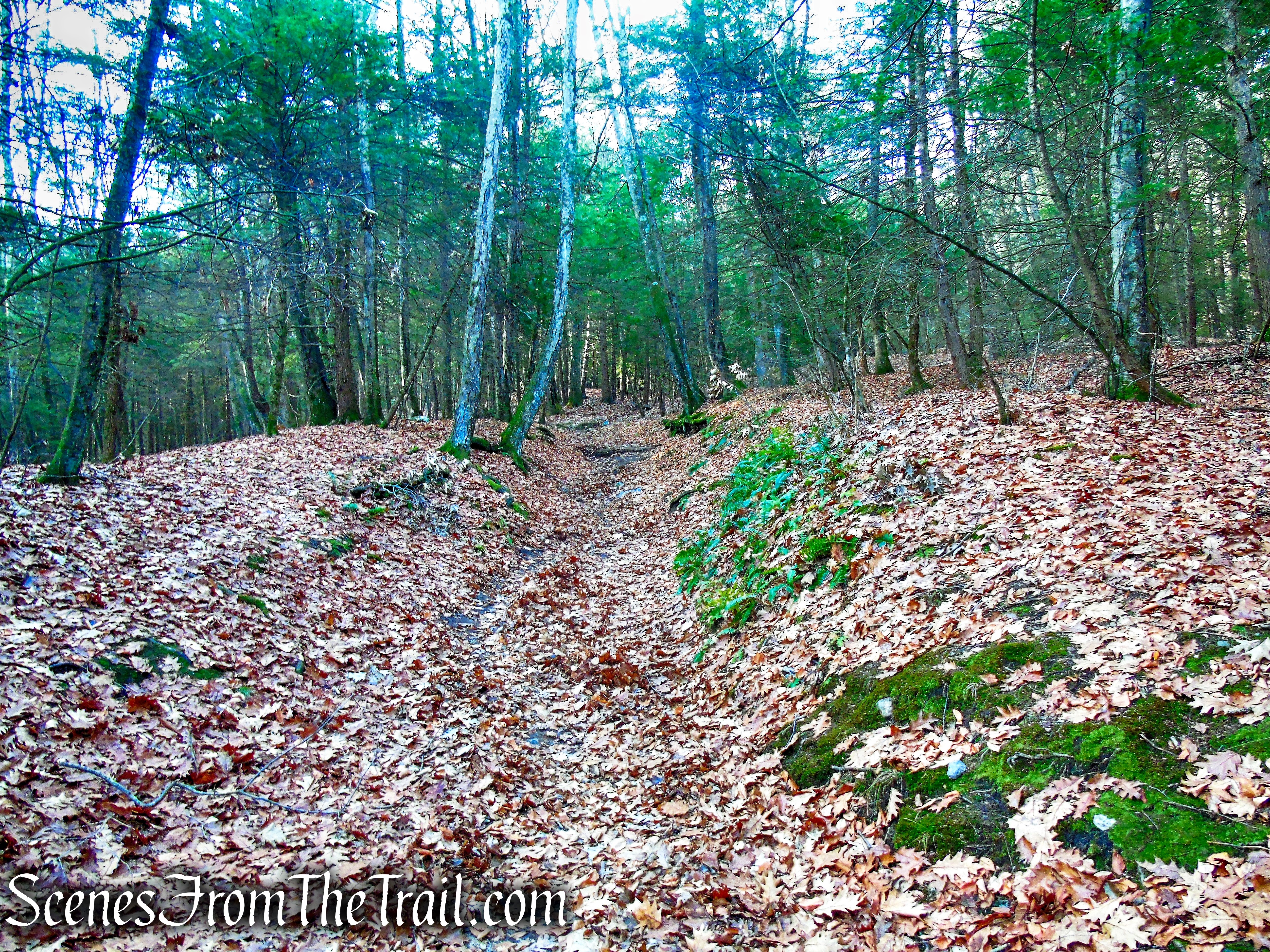
The trail turns left and begins to climb more steeply on rock slabs, then through a section of trail that is extremely rutted. At the top of the rise, the trail turns left as it reaches a junction with an unmarked trail.

Mattatuck Trail – Mattatuck State Forest

Mattatuck Trail – Mattatuck State Forest

Mattatuck Trail – Mattatuck State Forest

Mattatuck Trail – Mattatuck State Forest

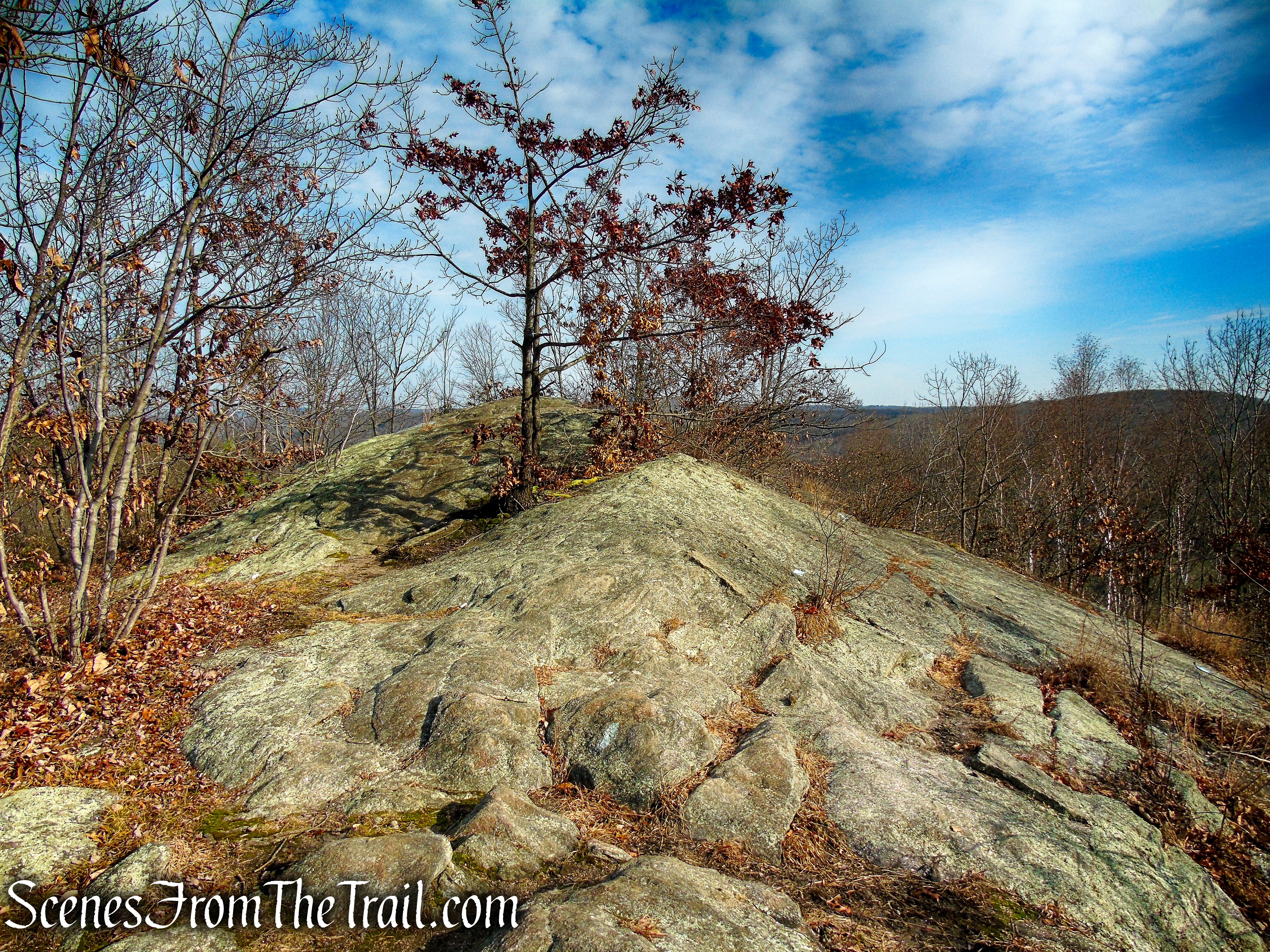
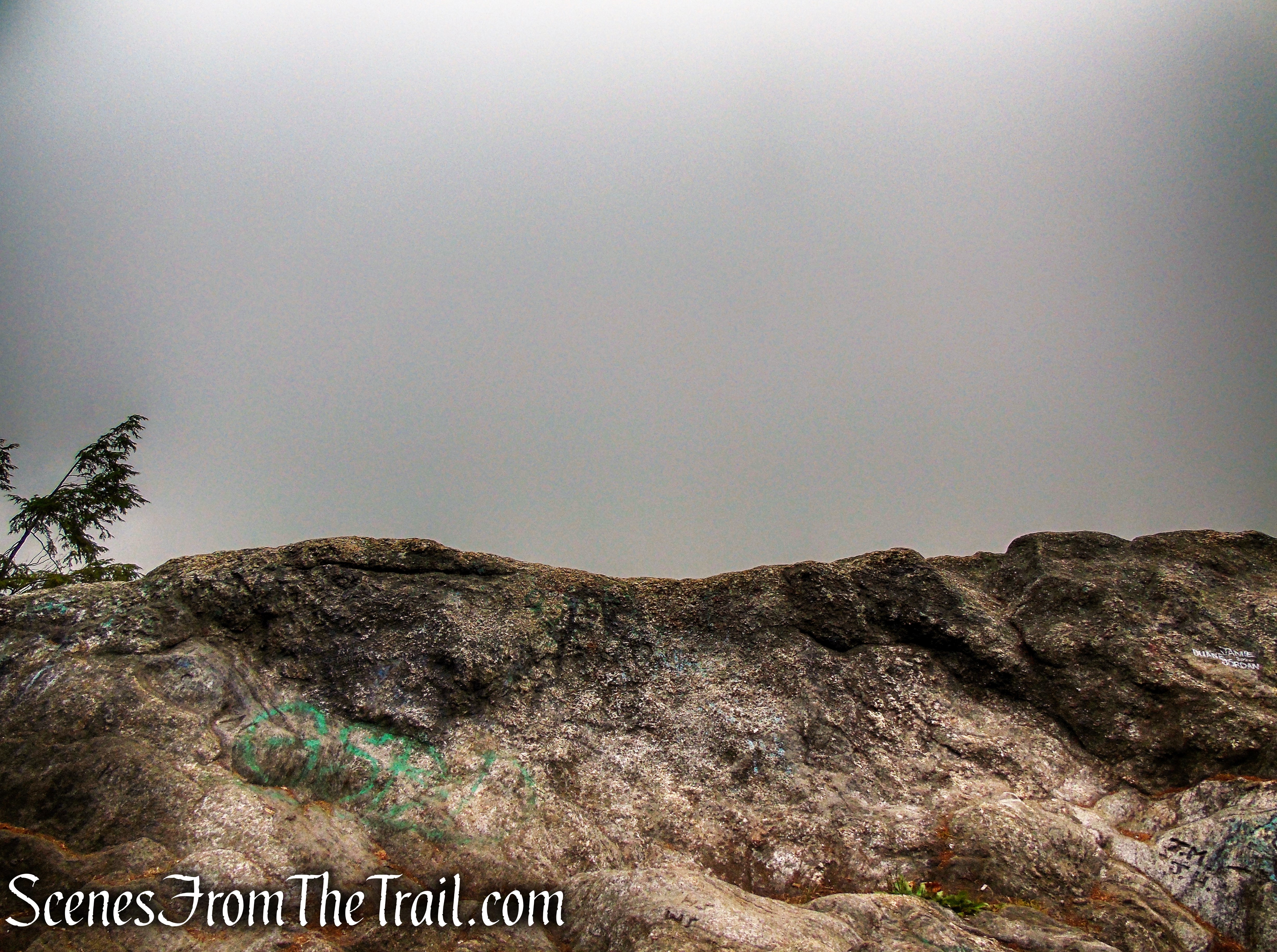
The Mattatuck Trail comes out on open rock at Crane’s Lookout. From here, you can see the countryside about 270 degrees all around you. You are now standing above the Leatherman’s Cave.

Crane's Lookout – Mattatuck State Forest

Crane’s Lookout – Mattatuck State Forest

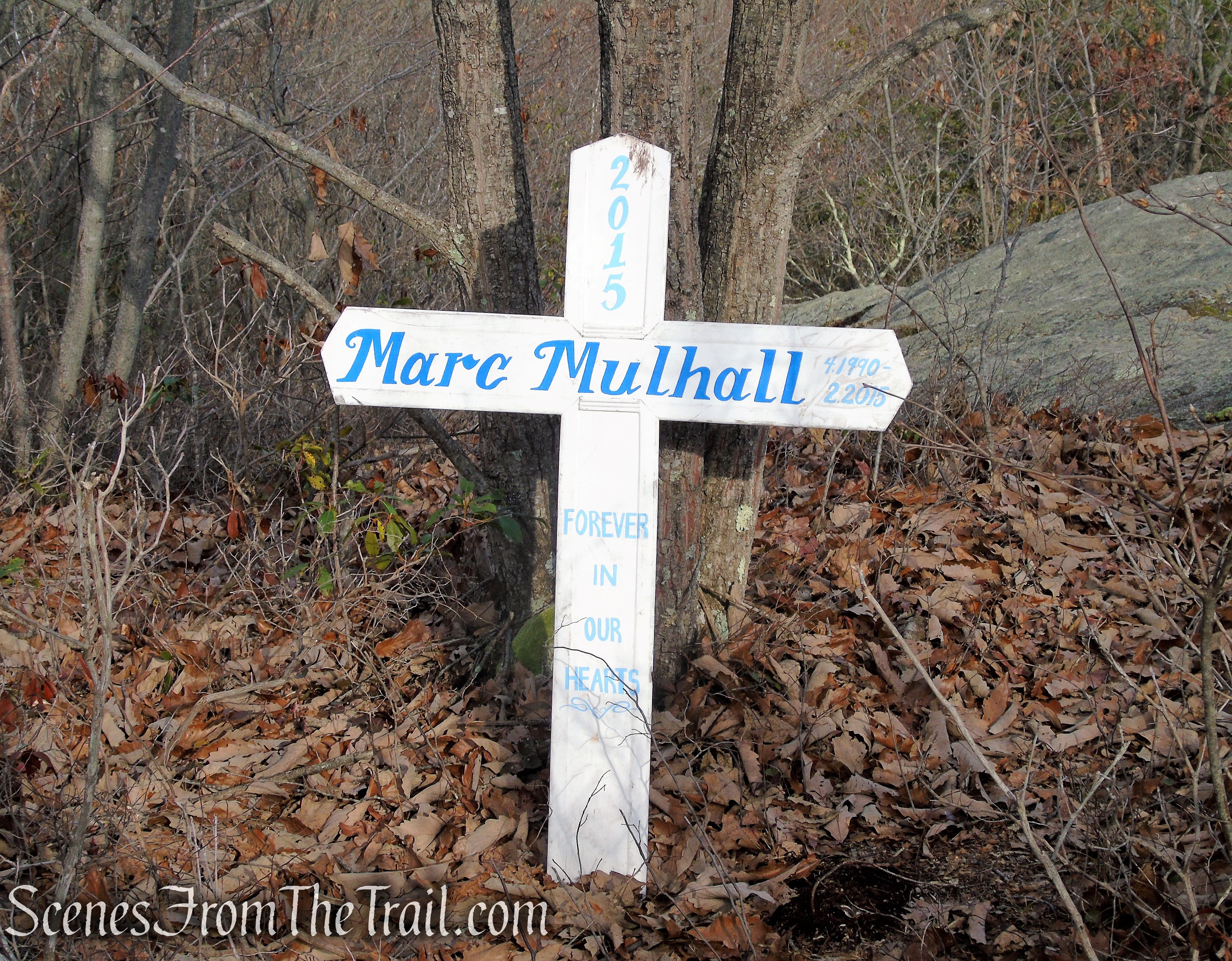
A memorial for a 24 year old man that was killed in 2015, in a tragic automobile accident.

Crane's Lookout – Mattatuck State Forest

Crane’s Lookout – Mattatuck State Forest

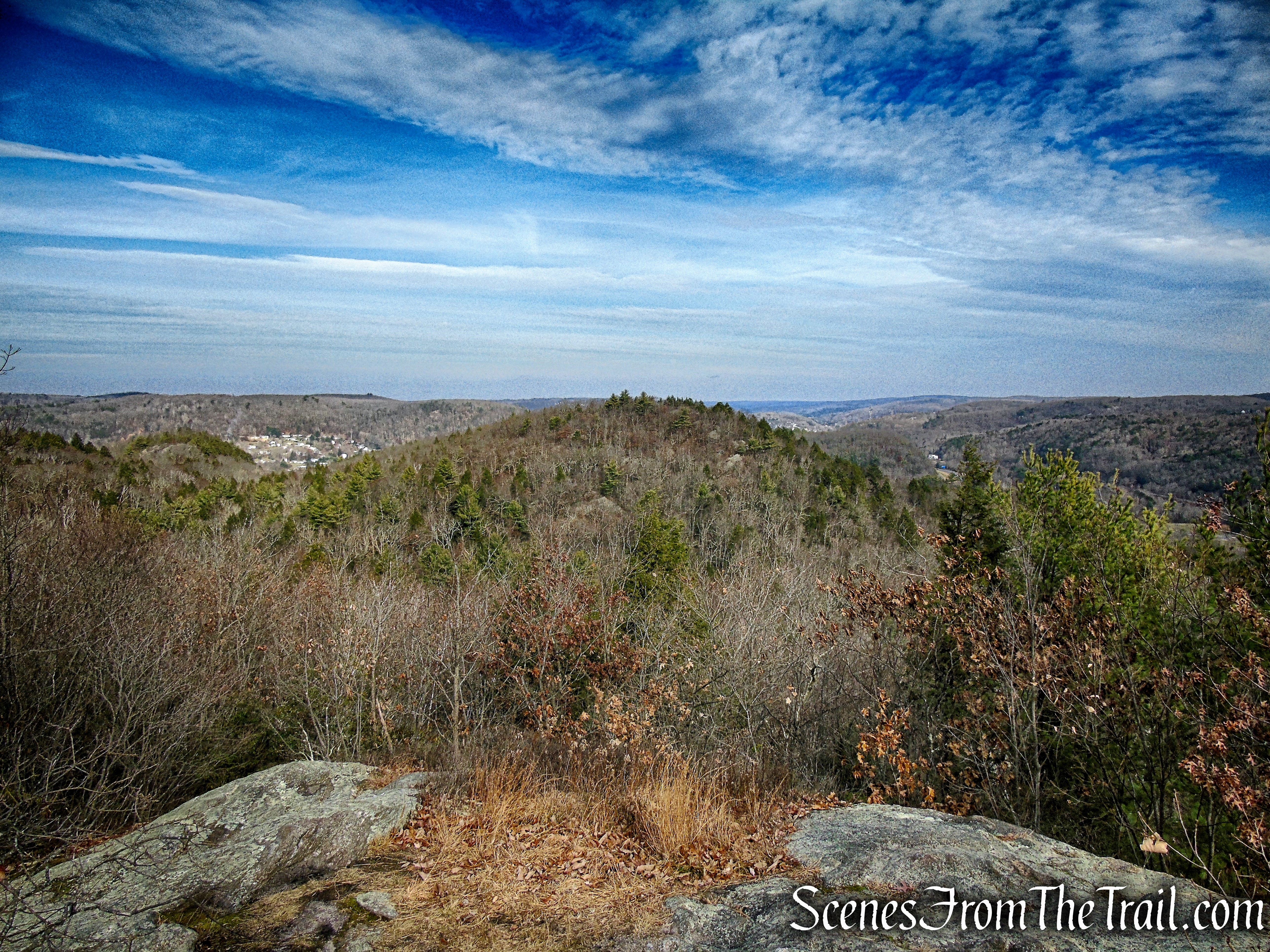
At an elevation of 780 feet, views of Thomaston and Watertown’s hills and valleys

Crane's Lookout – Mattatuck State Forest

Crane’s Lookout – Mattatuck State Forest

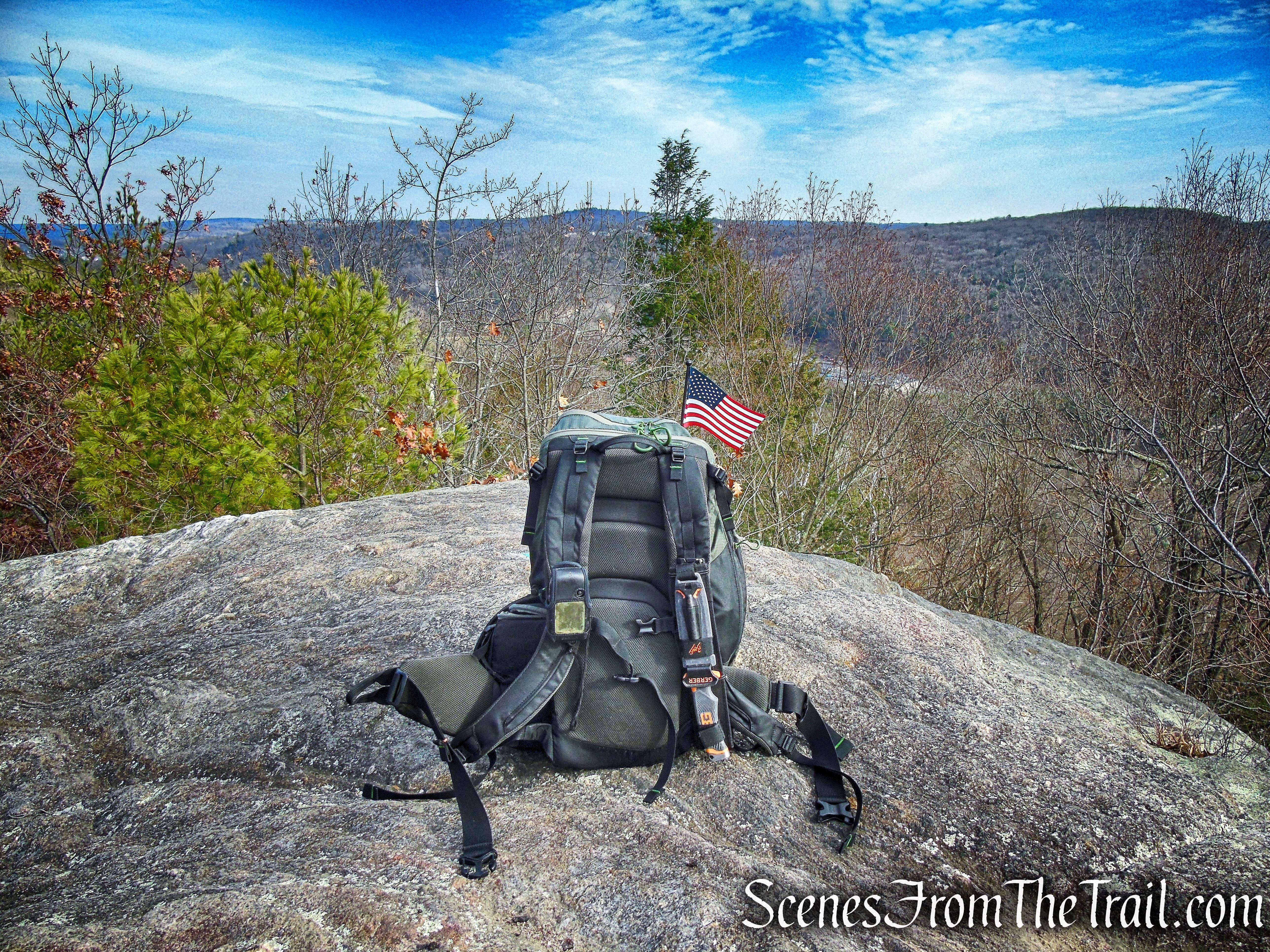
You have now hiked almost 2 miles. This makes for a good spot to remove your pack and rest up from the climb, while you take in the views.

Crane's Lookout – Mattatuck State Forest

Crane’s Lookout – Mattatuck State Forest

The next part can be confusing. There is a forked arrow painted on the rock that points down the side of the Crane’s Lookout, to the left. The blue blazes will soon appear as you descend. When you come to a Y-intersection with the Jericho Trail (also blue blazed), which begins on the right, bear left to stay on the Mattatuck Trail.

Crane’s Lookout – Mattatuck State Forest

Crane’s Lookout – Mattatuck State Forest

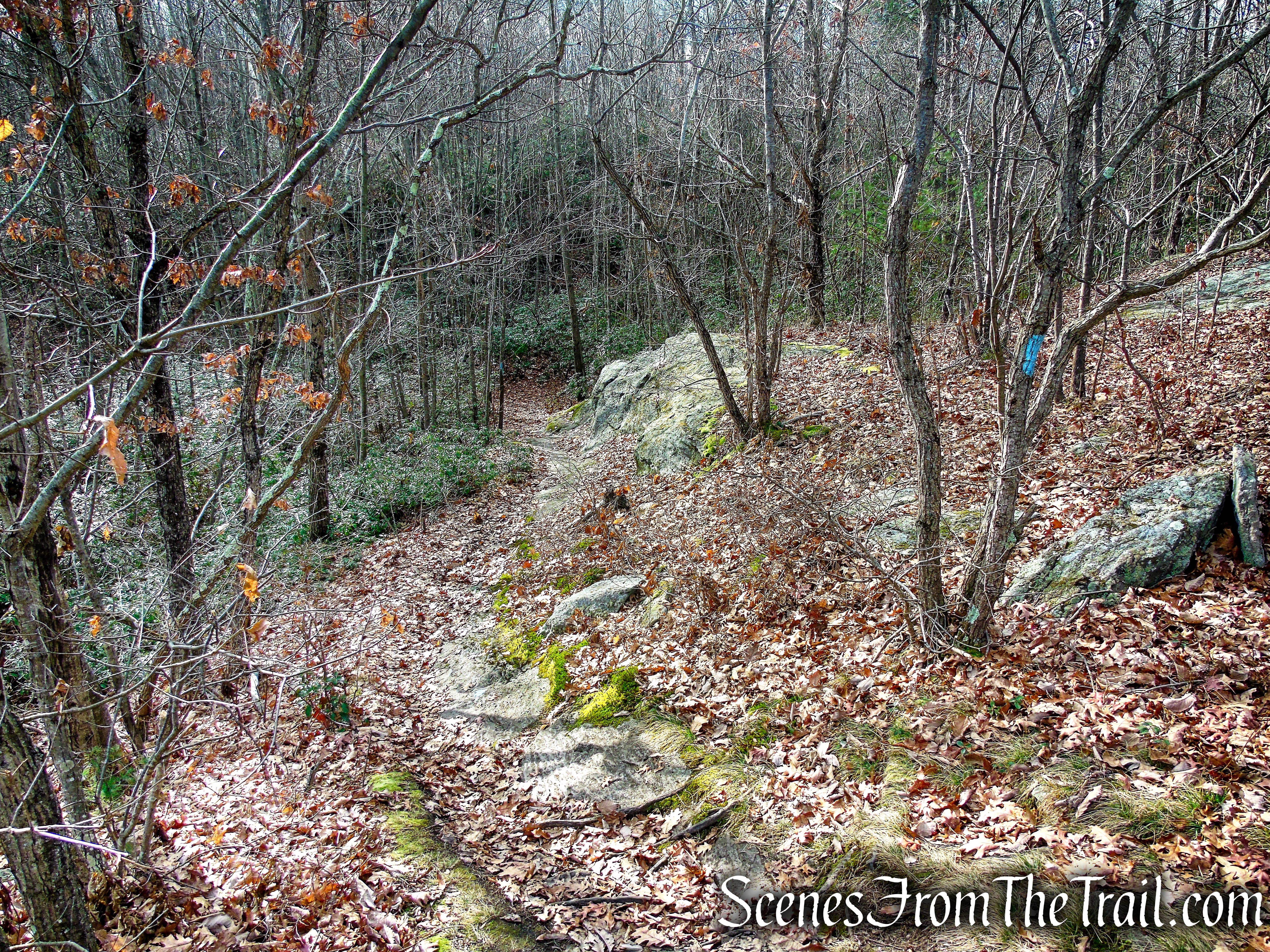
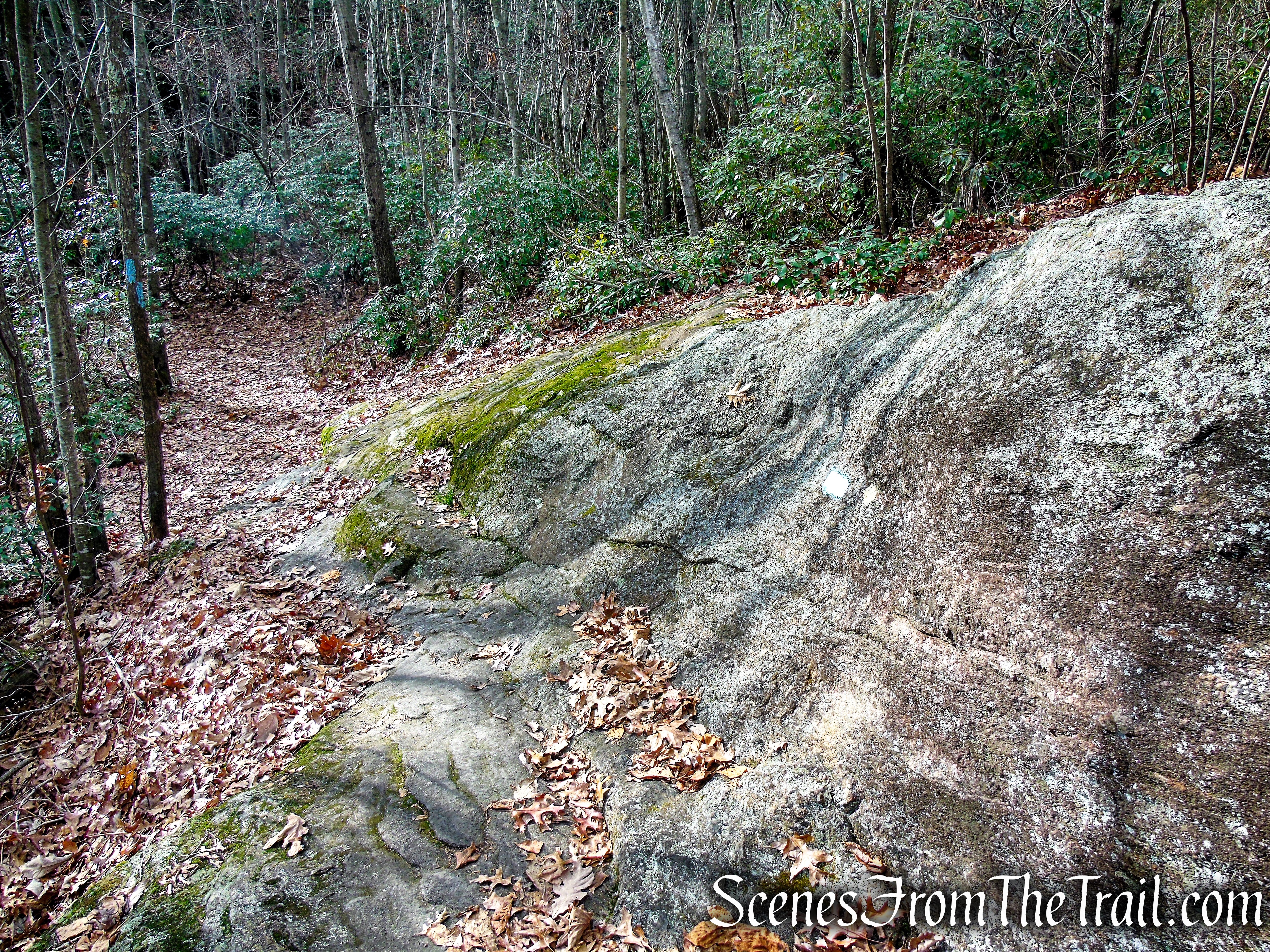
Mattatuck Trail – Mattatuck State Forest

Mattatuck Trail – Mattatuck State Forest

Mattatuck Trail – Mattatuck State Forest

Mattatuck Trail – Mattatuck State Forest

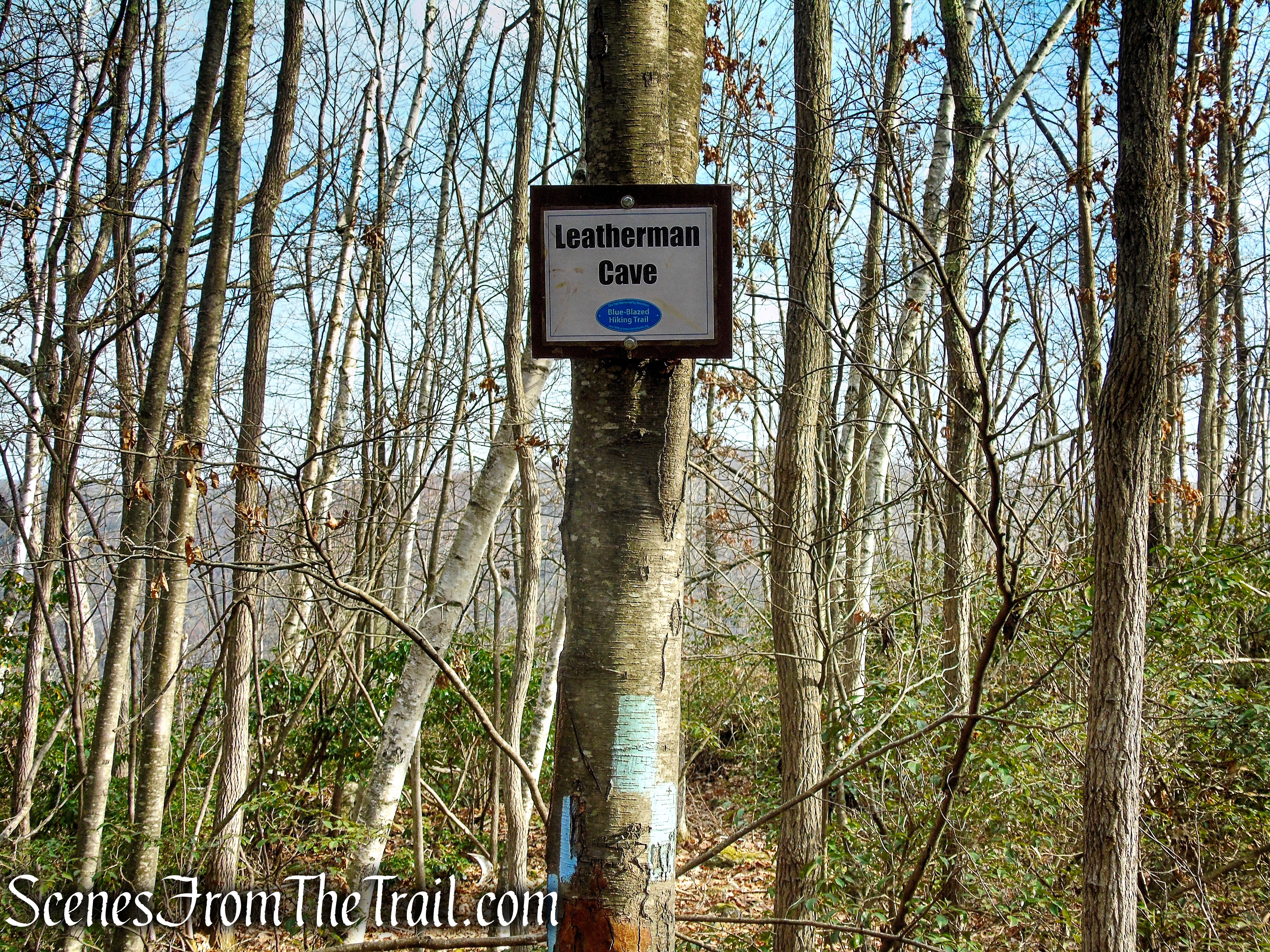
The trail hugs the side of the rock formation that you just descended and in a short distance, reaches the Leatherman’s Cave. The Mattatuck Trail passes through the cave and exits the other end. You may want to take some time to explore this area.

Leatherman’s Cave – Mattatuck State Forest

Leatherman’s Cave – Mattatuck State Forest

Leatherman’s Cave – Mattatuck State Forest

Leatherman’s Cave – Mattatuck State Forest

Leatherman’s Cave – Mattatuck State Forest

Leatherman’s Cave – Mattatuck State Forest

Leatherman’s Cave – Mattatuck State Forest

Leatherman’s Cave – Mattatuck State Forest

Leatherman’s Cave – Mattatuck State Forest

Leatherman’s Cave – Mattatuck State Forest

Leatherman’s Cave – Mattatuck State Forest

Leatherman’s Cave – Mattatuck State Forest

Looking back at the Leatherman’s Cave after exiting the other end.

Leatherman’s Cave – Mattatuck State Forest

Leatherman’s Cave – Mattatuck State Forest

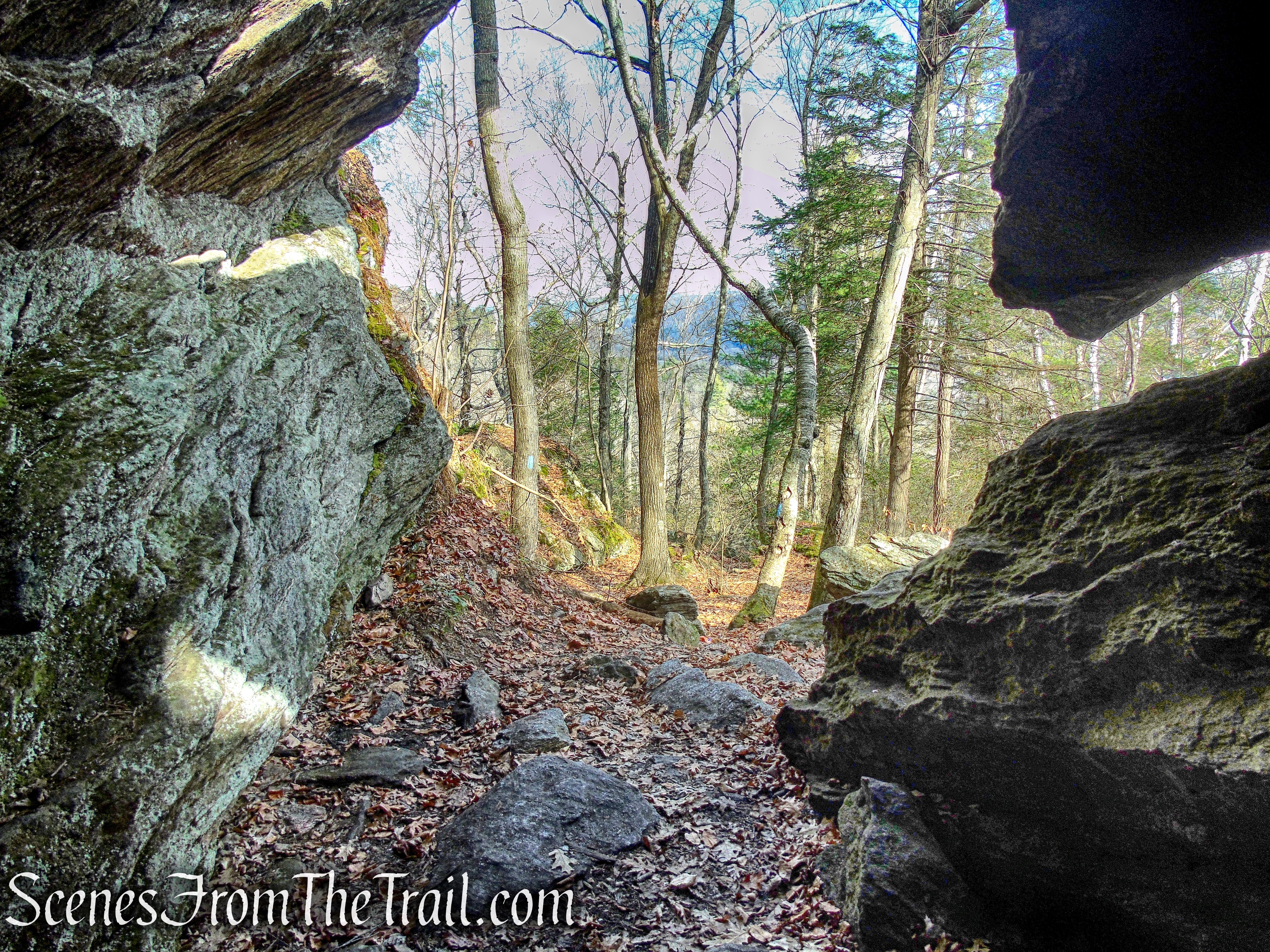
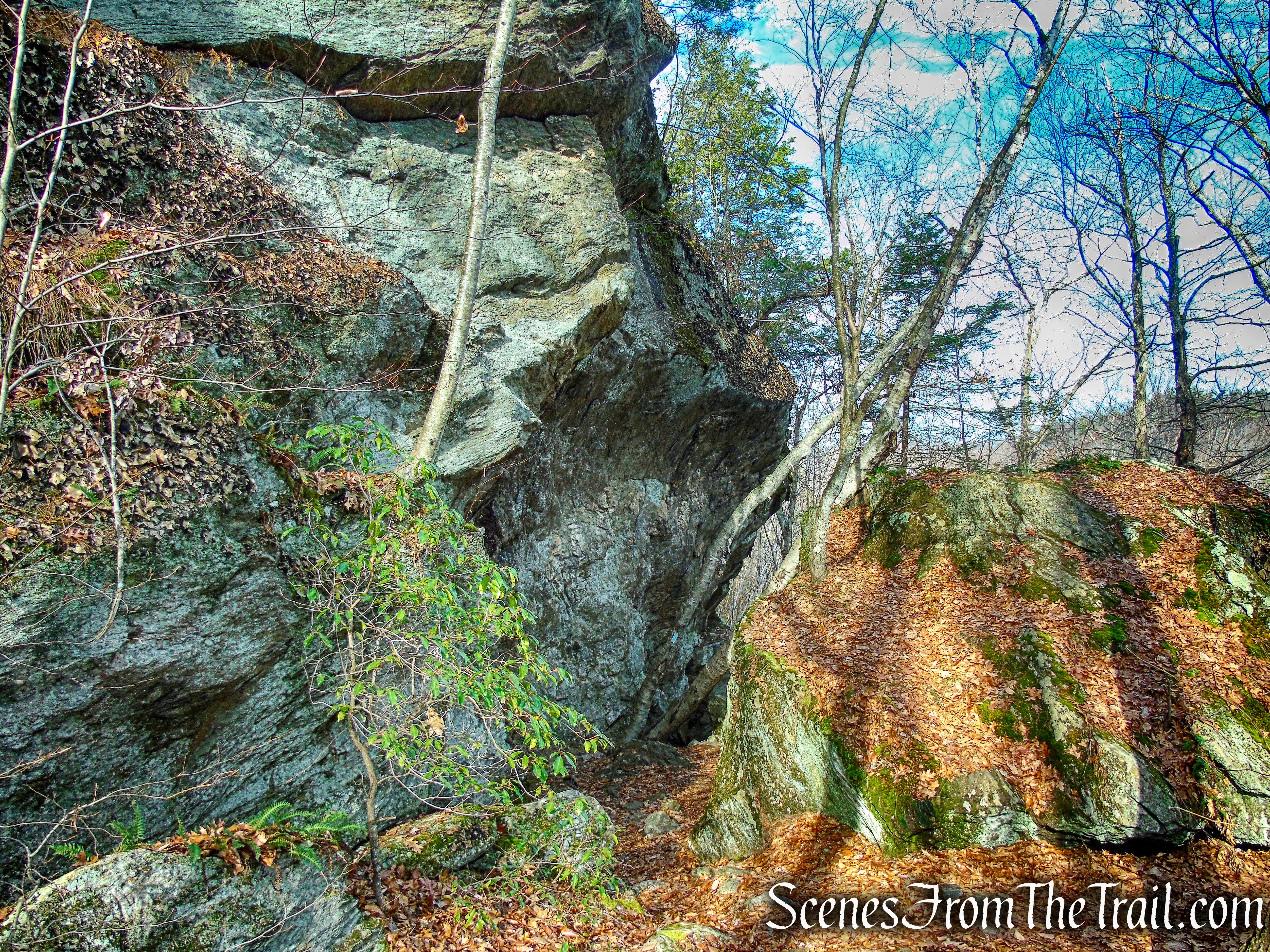
After exiting the cave, the trail passes through another interesting area of high overhanging ledges and rock formations. You may have to climb over some small boulders as you make your way through this section of trail.

Mattatuck Trail – Mattatuck State Forest

Mattatuck Trail – Mattatuck State Forest

Mattatuck Trail – Mattatuck State Forest

Mattatuck Trail – Mattatuck State Forest

Mattatuck Trail – Mattatuck State Forest

Mattatuck Trail – Mattatuck State Forest

Mattatuck Trail – Mattatuck State Forest

Mattatuck Trail – Mattatuck State Forest

Mattatuck Trail – Mattatuck State Forest

Mattatuck Trail – Mattatuck State Forest

Mattatuck Trail – Mattatuck State Forest

Mattatuck Trail – Mattatuck State Forest

The trail descends steeply, losing about 350 feet of elevation in about 500 yards. The trail climbs again, gaining about another 100 feet of elevation in the next 500 yards or so. The trail descends again, losing another 150 feet of elevation before the grade lessens.

Mattatuck Trail – Mattatuck State Forest

Mattatuck Trail – Mattatuck State Forest

Mattatuck Trail – Mattatuck State Forest

Mattatuck Trail – Mattatuck State Forest

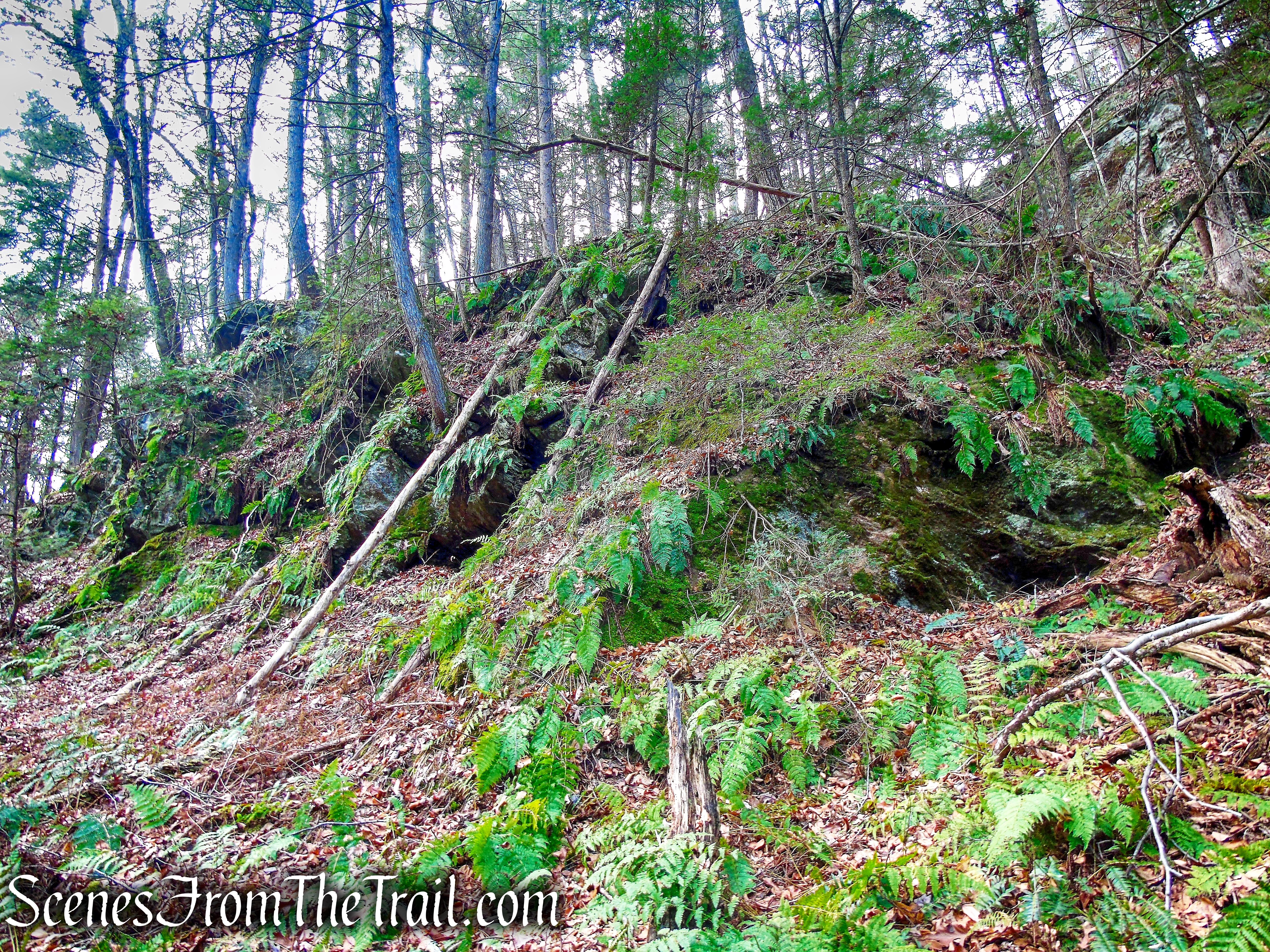
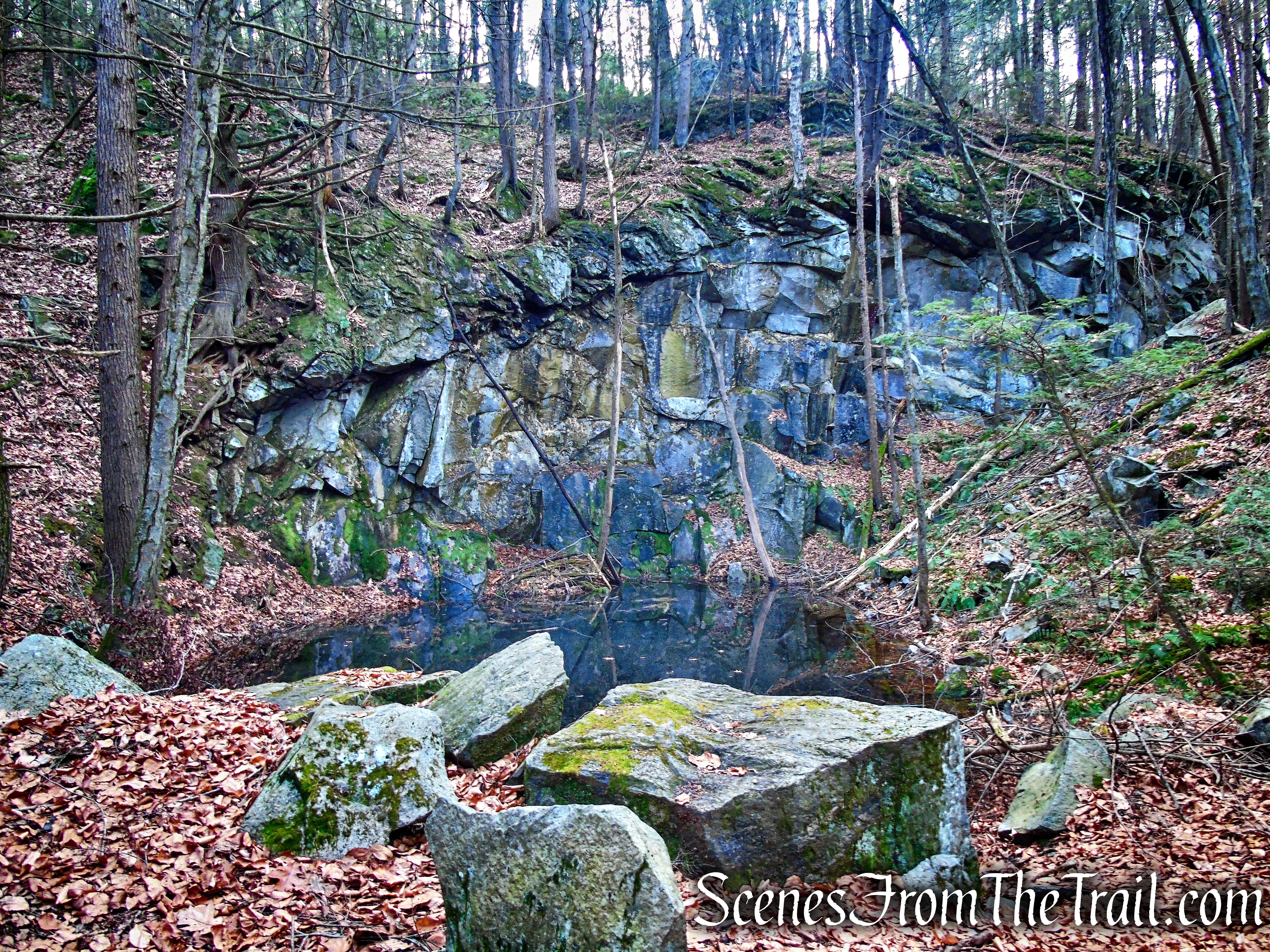
Near the base of the final descent, the trail passes an old quarry.

Mattatuck Trail – Mattatuck State Forest

Mattatuck Trail – Mattatuck State Forest

After about a mile from the Leatherman’s Cave, the Mattatuck Trail reaches a junction with the Branch Brook Trail, which begins on the left.

Mattatuck Trail – Mattatuck State Forest

Mattatuck Trail – Mattatuck State Forest

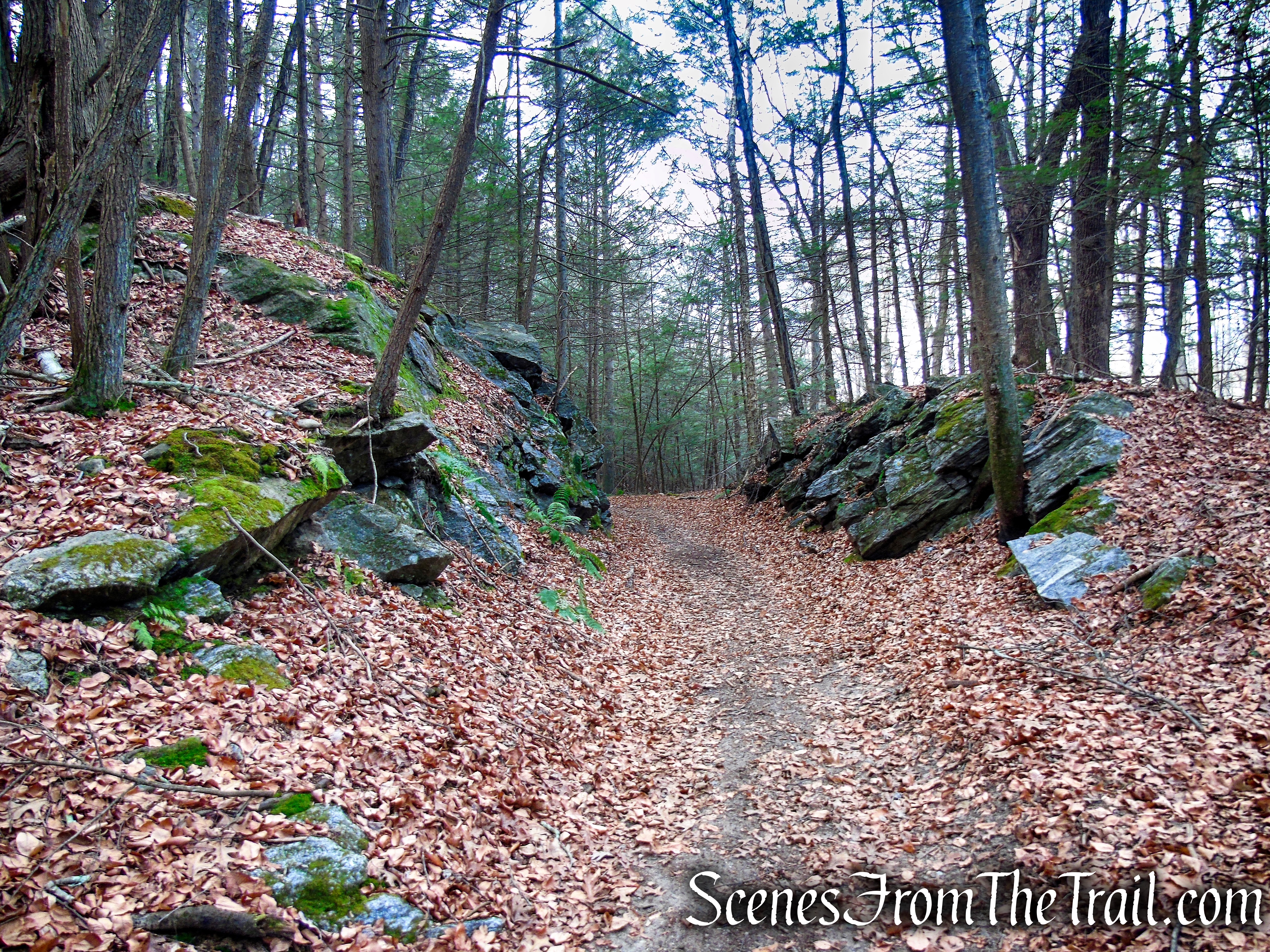
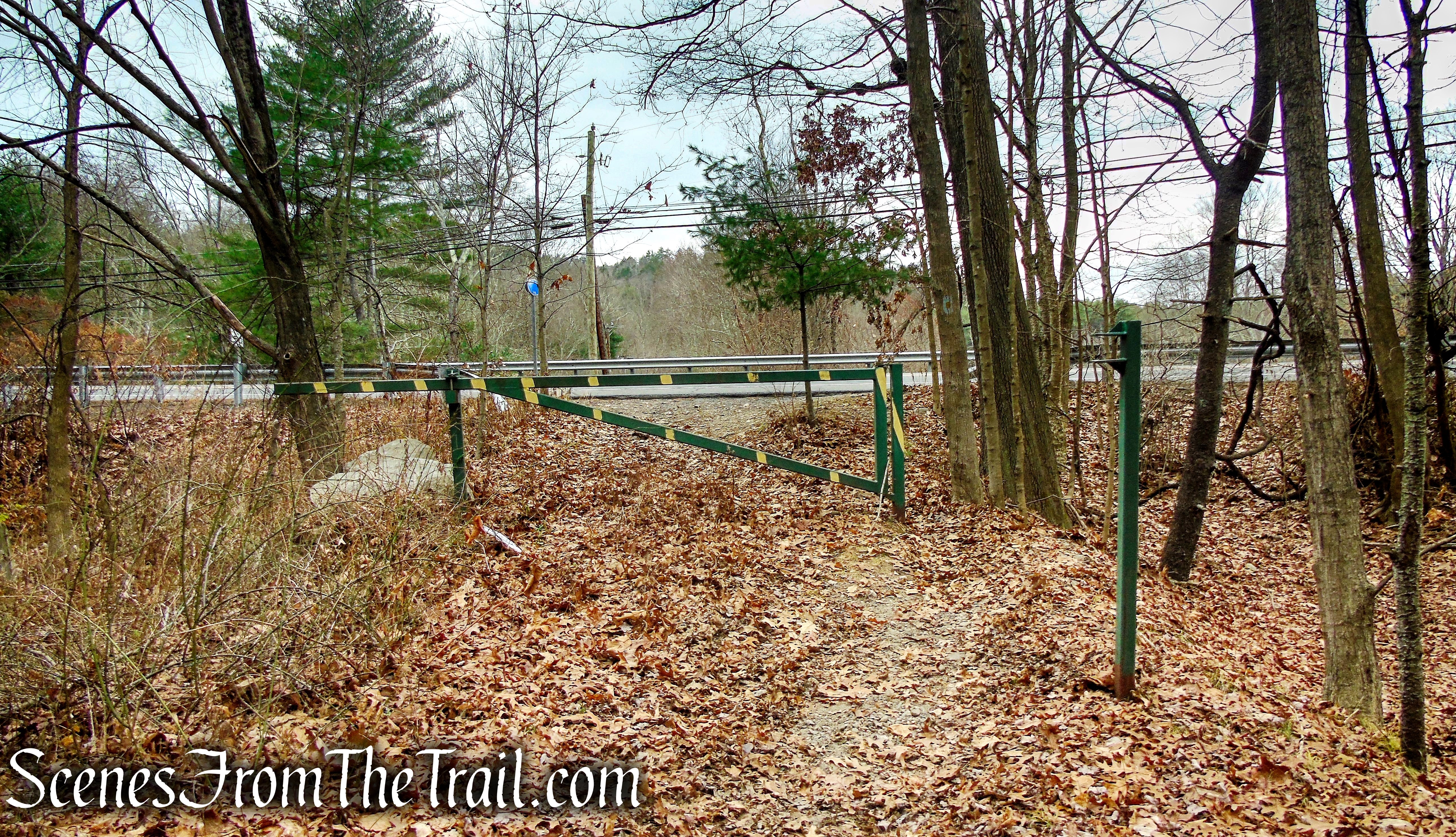
Turn left and follow this almost level woods road in a westerly direction as it heads towards US-6.

Branch Brook Trail – Mattatuck State Forest

Branch Brook Trail – Mattatuck State Forest

Branch Brook Trail - Mattatuck State Forest

Branch Brook Trail – Mattatuck State Forest

I read that this trail was once a trolley track from Waterbury to Black Rock at the turn of the century. By the looks of the amount of effort it took to construct it, by blasting the rock and raising the road bed, I tend to believe it.

Branch Brook Trail – Mattatuck State Forest

Branch Brook Trail – Mattatuck State Forest

Branch Brook Trail – Mattatuck State Forest

Branch Brook Trail – Mattatuck State Forest

Branch Brook Trail – Mattatuck State Forest

Branch Brook Trail – Mattatuck State Forest

In about 0.7 mile, the trail turns right, crossing the Branch Brook on a wooden footbridge, and a short distance later, reaches US-6.

Branch Brook Trail – Mattatuck State Forest

Branch Brook Trail – Mattatuck State Forest

Branch Brook Trail – Mattatuck State Forest

Branch Brook Trail – Mattatuck State Forest

Branch Brook Trail – Mattatuck State Forest

Branch Brook Trail – Mattatuck State Forest

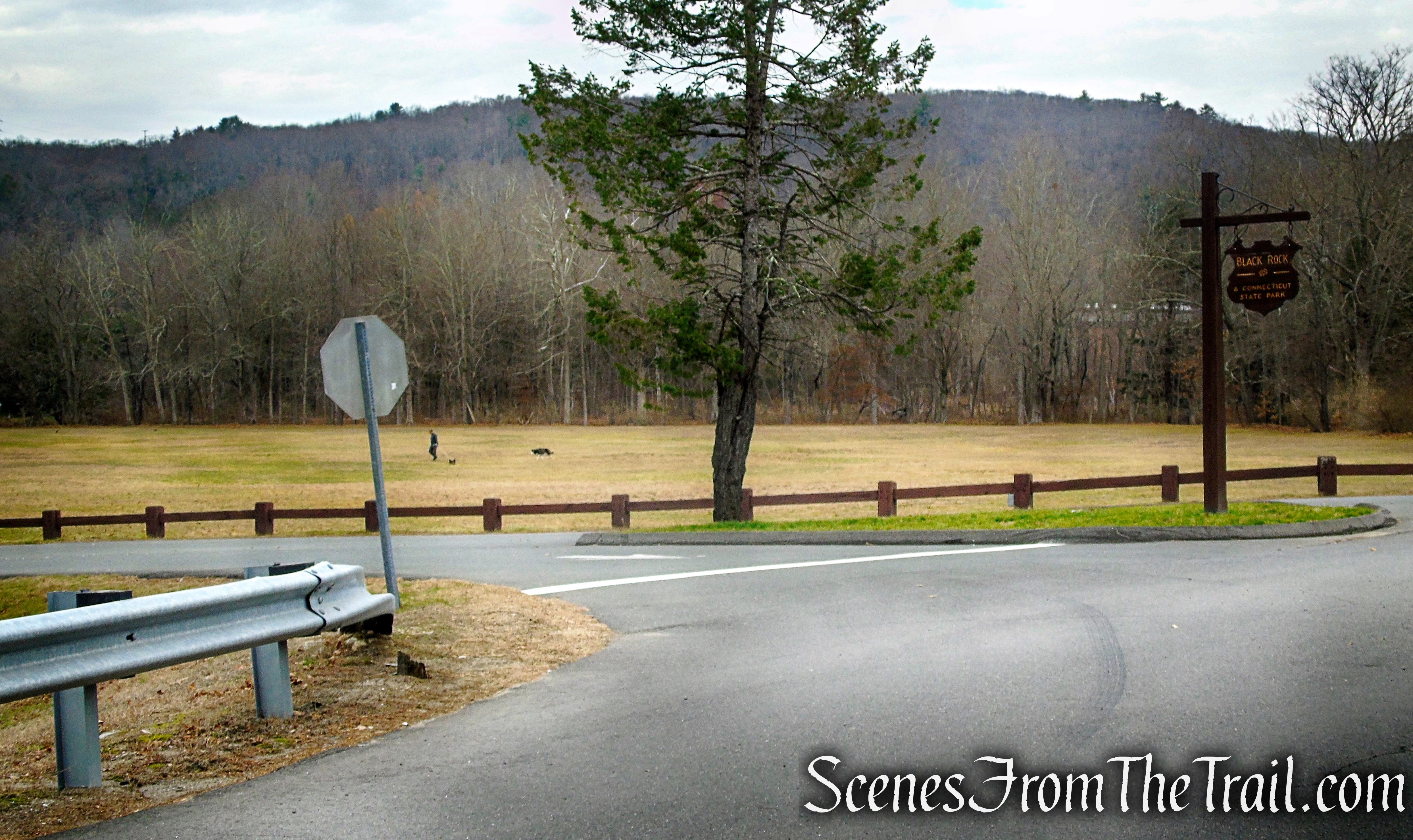
Cross the road carefully and walk down the entrance road of Black Rock State Park, past the ticket booth, to the parking lot, where the hike began.

US 6 - Black Rock State Park

US 6 – Black Rock State Park

Black Rock State Park

Black Rock State Park


Review:

A somewhat challenging hike at times with the steep climbs and descents, but very rewarding and a good workout. The area around the Leatherman’s Cave is awe-inspiring and has a prehistoric feel to it. The Mattatuck Trail passes underneath massive overhanging ledges and climbs around rock formations. The Leatherman’s Cave is most impressive of all and exceeded my expectations. I have been to the Leatherman’s Cave In Ward Pound Ridge and this is by far on a much grander scale.

Pros:

Historical features, Leatherman’s Cave, Crane’s Lookout, scenic views, well marked trails, rock formations.

Cons:

Road crossings, some road noise can be heard.


Take a hike!

Leatherman’s Cave Loop – Mattatuck State Forest

Leatherman’s Cave Loop – Mattatuck State Forest


Sources:

Hidden Valley Preserve Loop

November 14, 2020 – Washington Depot, Connecticut

Difficulty: Moderate

Length: Approximately 4.5 miles

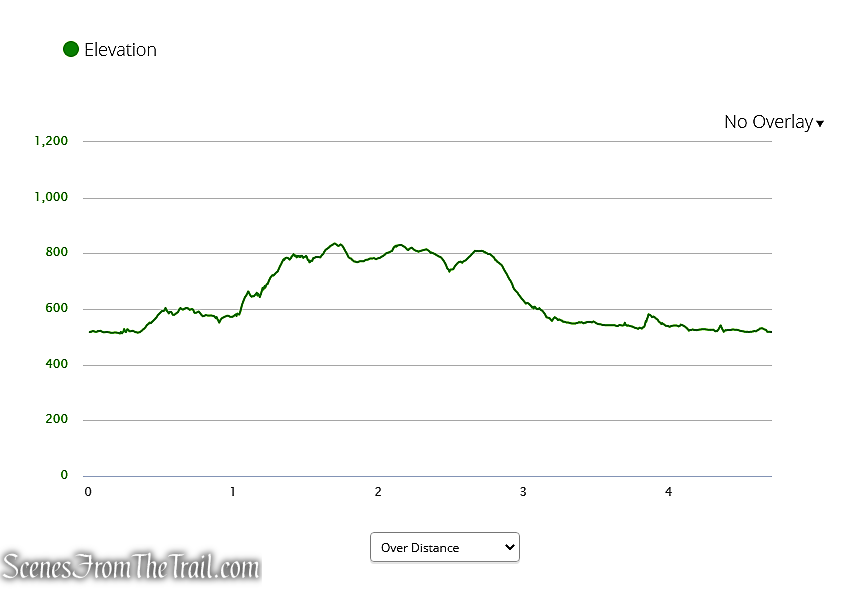
Max elevation: 841 ft.– total elevation gain approximately 509 ft.

Route type: Circuit

Free Web Map: Hidden Valley Preserve Trail Map 2019

Avenza App Map (FREE): Hidden Valley Preserve Trail Map

Trailhead parking: 198 Bee Brook Rd, Washington Depot, CT 06794

The preserve is open daily, Sunrise to Sunset

Please Note: There are neither restrooms nor drinking water at the preserve.

Hidden Valley Preserve is “Carry in-Carry out,” Do not litter.


Overview:

Hidden Valley Preserve is a 727-acre tract located northeast of Washington Depot, Connecticut. The property is characterized by densely wooded hillsides cascading into the meandering river below, providing views from the Lookout and Pinnacle. The preserve is crisscrossed by nearly 17 miles of trails that offer a variety of terrain for hiking.

Hidden Valley Preserve

Hidden Valley Preserve

Hidden Valley Preserve is one of three public preserves owned by Steep Rock Association (SRA). Steep Rock Preserve and Macricostas Preserve are the other two. SRA is is a non-profit land trust whose mission is to conserve ecologically and historically significant landscapes in and around Washington, CT and the Shepaug River Valley and to enhance the community’s connection with nature. SRA is entirely funded by donations from visitors.


History:

In the Spring of 1889, just as he was about to break ground on his own country house in Washington, Connecticut, a well-known architect of the period, Ehrick Rossiter discovered that the wooded hillsides in his dramatic view to the west were slated for clear cutting. He bought the threatened land from the timber company and saved forever the 100 acres that now form the heart of the Steep Rock Reservation. During his 36 years of ownership, Rossiter built carriage roads and small river crossings and invited his friends and fellow townspeople to enjoy the wild beauty of this section of the Shepaug River Valley.

In 1925, Rossiter no longer wished to be the sole custodian of Steep Rock and gave the property over to the care of nine of his friends. One of those was Adrian van Sinderen who, at this time, undoubtedly inspired by Rossiter’s preservation motives and civic generosity, was taking similar steps to preserve the natural lands around his home.

By 1928, Adrian Van Sinderen had accumulated 650 acres and named the property “Hidden Valley” after a place in the mountains of Utah, which he had visited on a trip out West.

For the rest of his life, Adrian Van Sinderen remained an active Trustee of Steep Rock, guiding the preserve through many changes, the acquisition of new lands, the planting of new trees and the transition of Steep Rock into a public land trust. It is thus not surprising that in 1963 Adrian Van Sinderen donated 650 acres of Hidden Valley as a gift to Steep Rock Association for the continual enjoyment of the public.


Trails Overview:

Hidden Valley Preserve offers nearly 17 miles of connecting hiking trails, making it a perfect spot for hikers of all levels. The level trail lying alongside the eastern bank of the river, runs along the old railroad bed. Passenger and freight trains once rumbled through the entire length of the reservation from 1872 to 1948. Trails and woods roads remaining from the Van Sinderens’ equestrian and carriage-driving days criss-cross this tract of hardwoods, pine groves, and hemlocks. The trails are well marked and for the most part, easy to follow. There are some unmarked trails throughout the property that may not appear on the trail map.

An easy loop hike of about 1.5 miles can be done utilizing the Bee Brook Loop and the old railroad bed, crossing both bridges over the Shepaug River.

Please Note: Trails may be periodically closed due to their conditions or to protect plants and wildlife. 


Points of Interest:

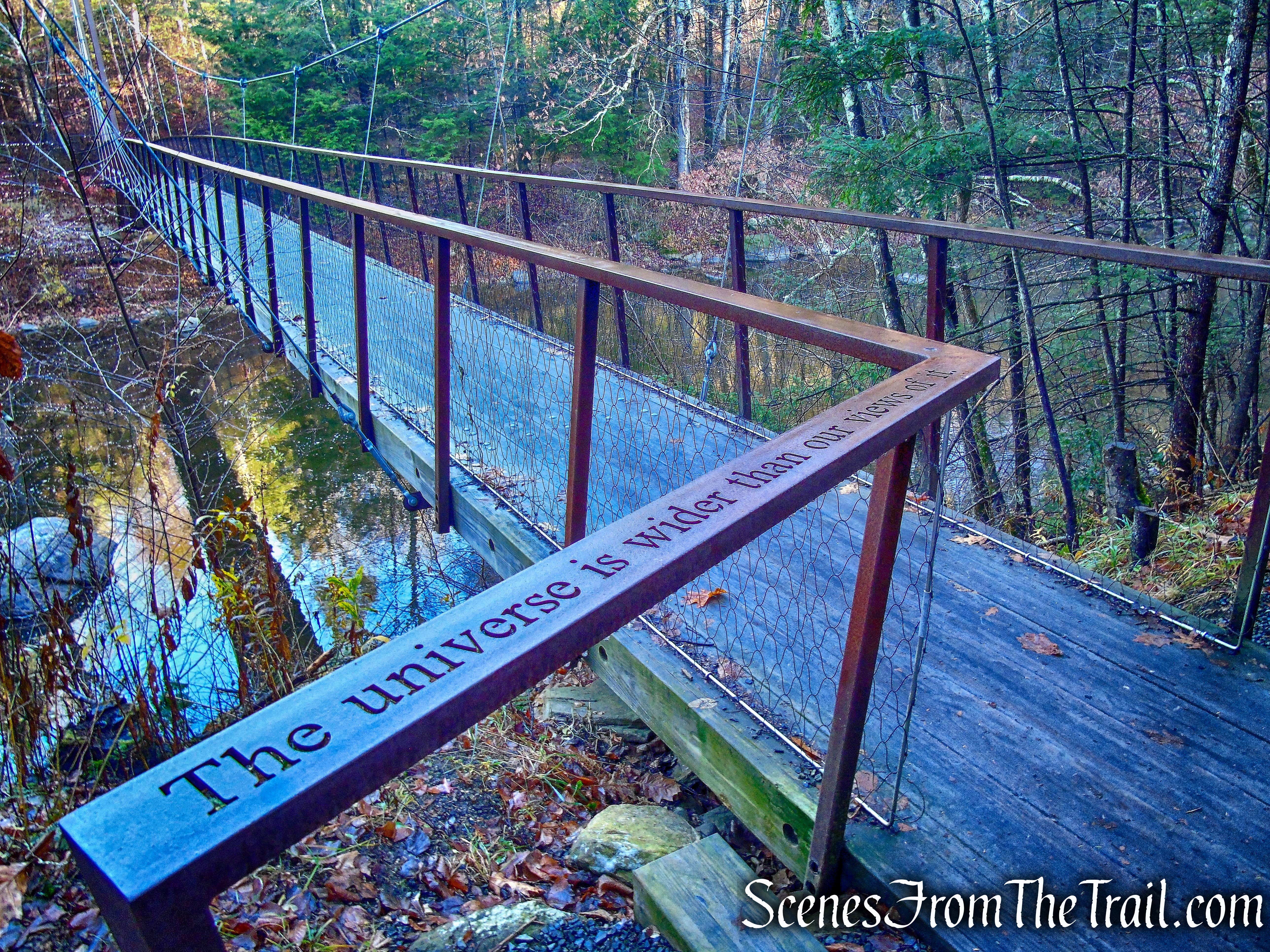
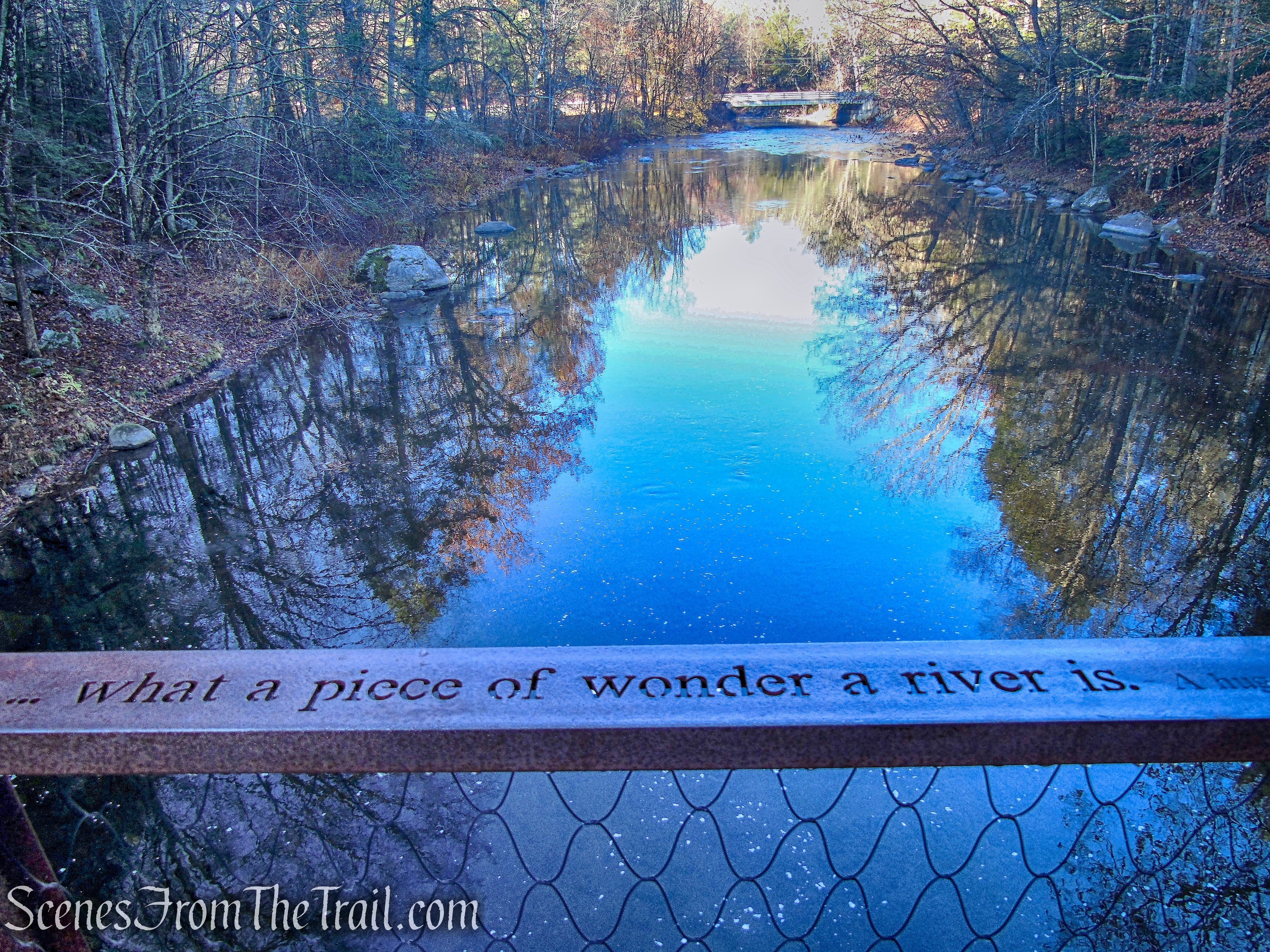
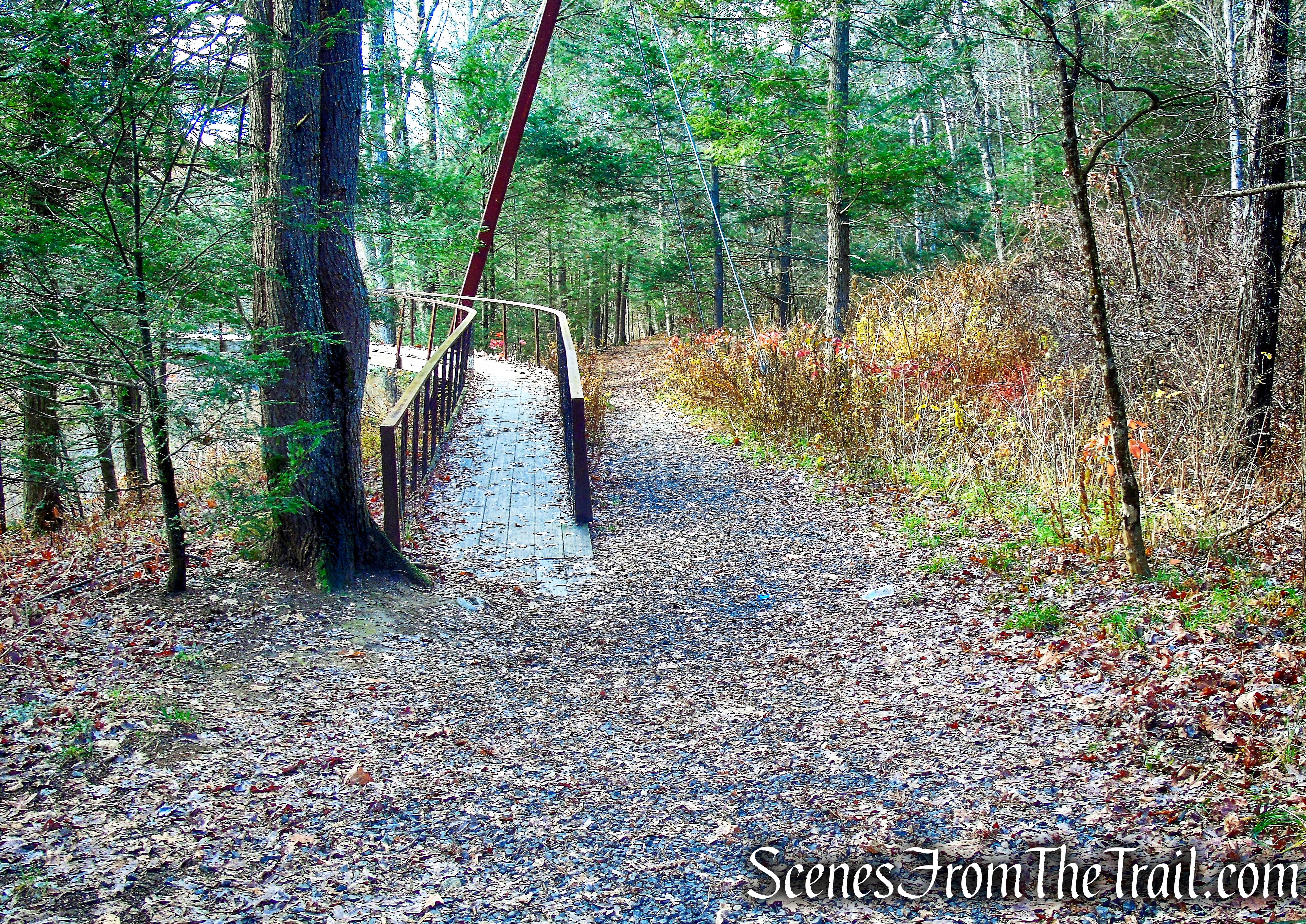
  • The Thoreau Footbridge: A cable stayed, mass timber suspension bridge spanning 134′ across the Shepaug River. The bridge deck rises to clear the 500 year flood level and then sweeps 90 degrees as it gently ramps down to the north side of the river. Quotes from Thoreau’s seminal writings, inscribed by water jet into a bench at the cliff base and along the bridge’s steel handrails, offer moments for reflection.

Thoreau Footbridge - Hidden Valley Preserve

Thoreau Footbridge – Hidden Valley Preserve

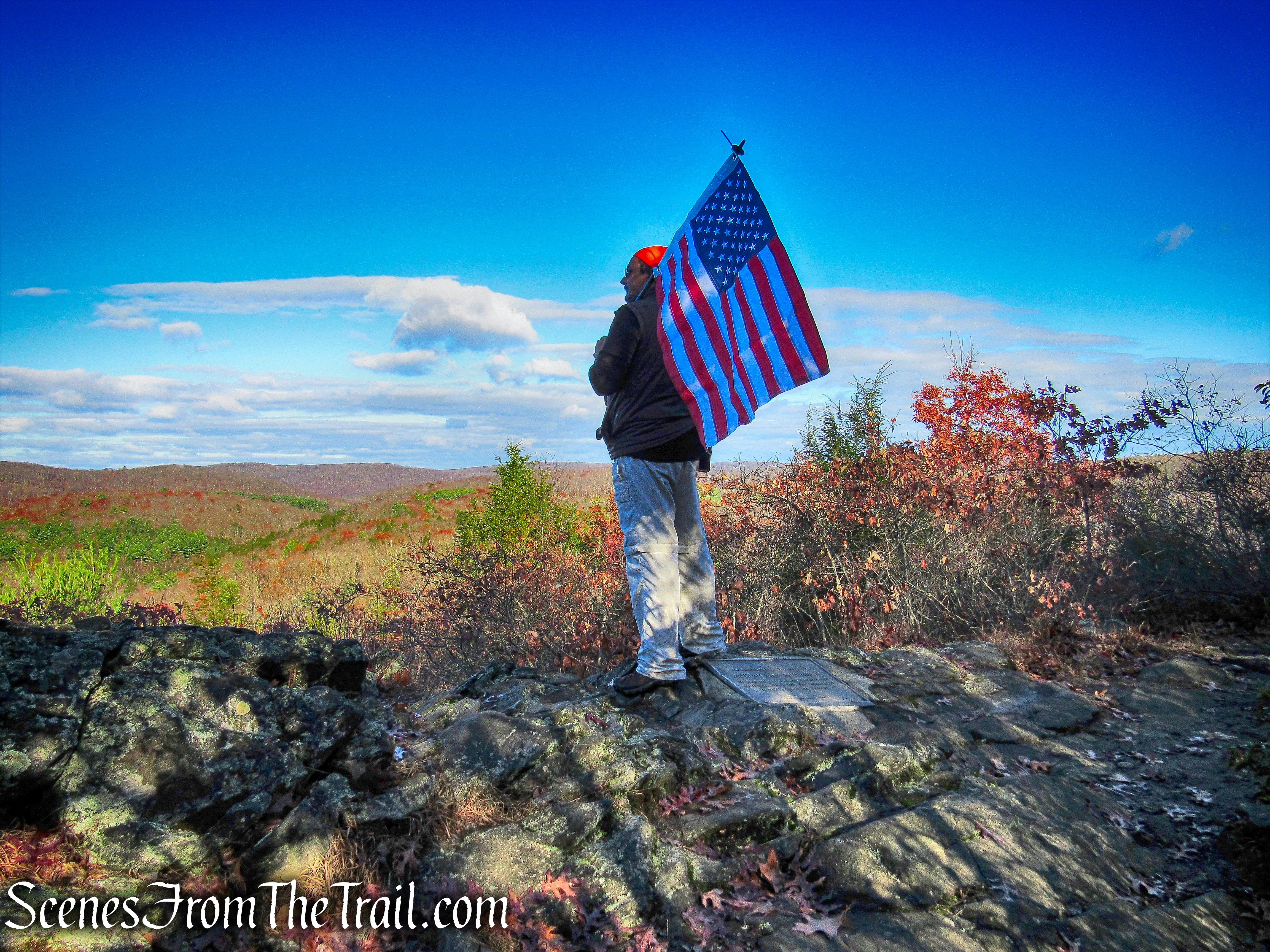
  • Pinnacle: A rocky high point that rises to about 841 feet above sea level. The view is stunning with patches of fields and forest placed among the distant hills. A plaque honors Van Sinderen’s donation of the property.

Pinnacle - Hidden Valley Preserve

Pinnacle – Hidden Valley Preserve

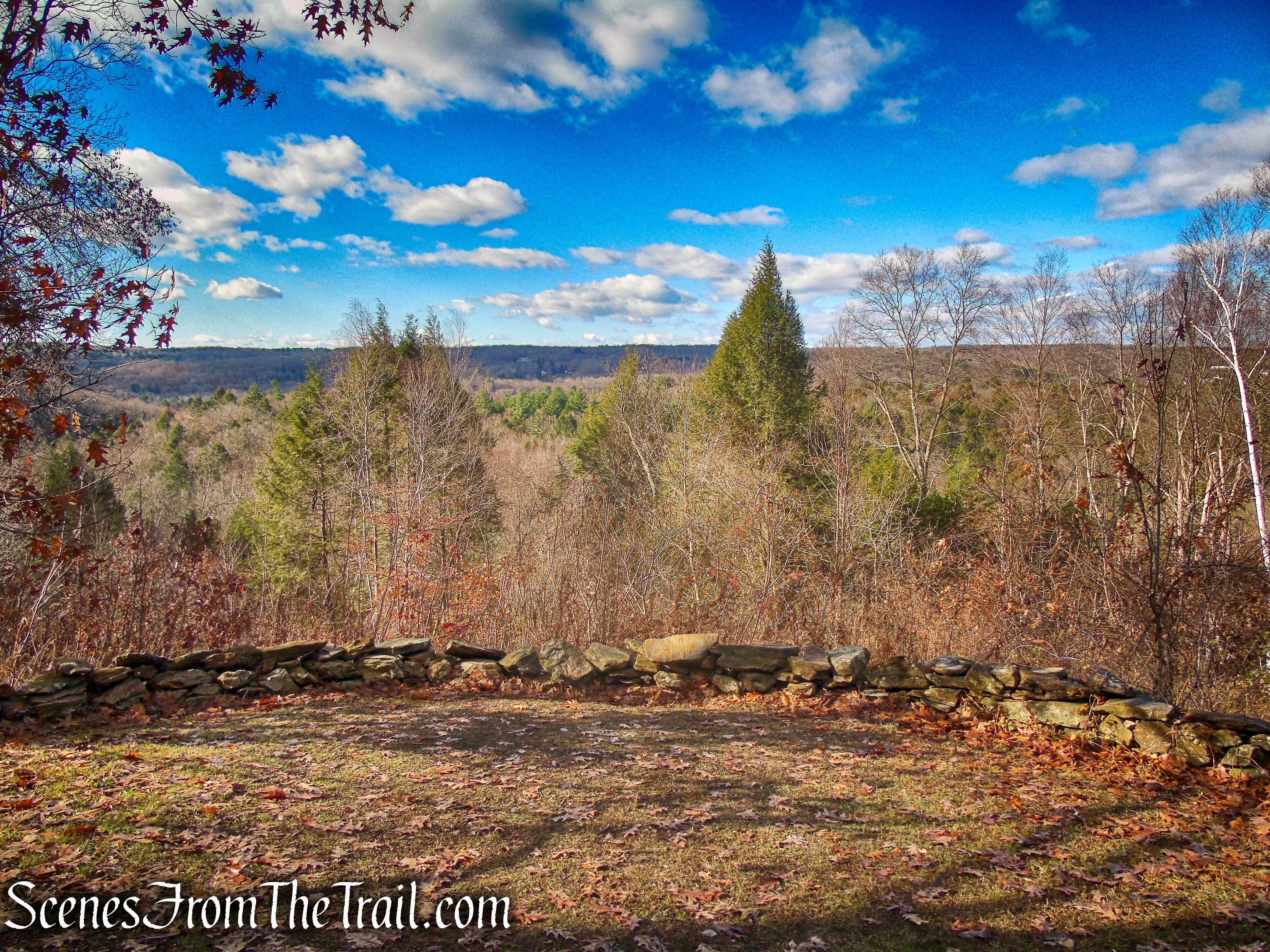
  • The Lookout: is a semi-circular terrace providing scenic views of the valley to the west. It was constructed as a lookout and rest spot along the carriage roads built by Adrian Van Sinderen. Overhung by trees in places, this is a great spot for a picnic.

The Lookout - Hidden Valley Preserve

The Lookout – Hidden Valley Preserve

  • The Quartz Mine: once helped support a small mining industry in the 19th Century. This surface mine was active from the 1800’s until it was abandoned in 1915. The quartz, used as a filler in paint and as an abrasive, was initially transported from here to the Hudson River by wagon and, later, by train. Quartz normally forms beautiful hexagonal crystals, but the mineral developed at Hidden Valley Preserve as a massive white vein.

Quartz Mine - Hidden Valley Preserve

Quartz Mine – Hidden Valley Preserve

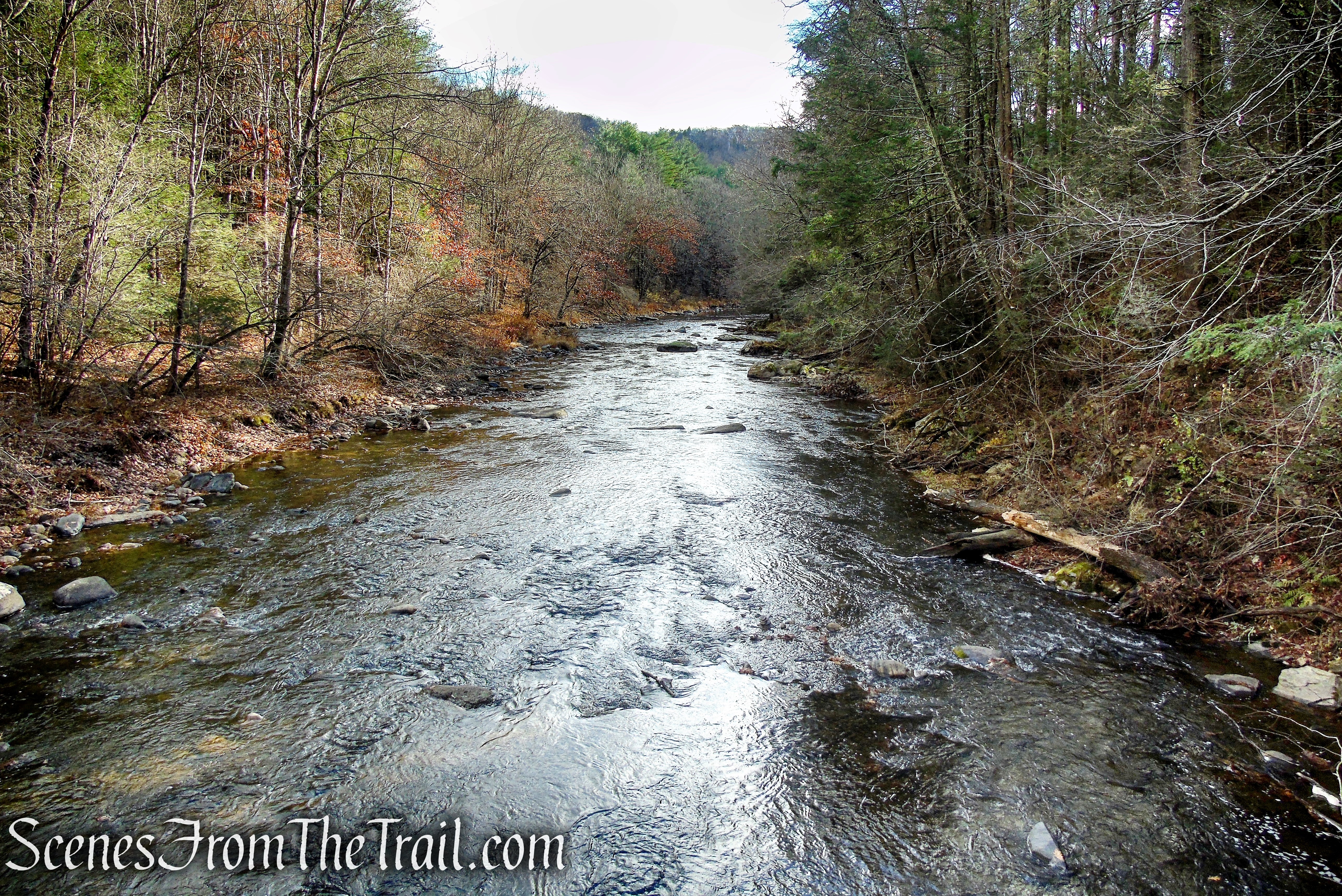
  • Shepaug River: Deriving its name from the Mohegan word for “rocky water,” the Shepaug River extends for 26 miles across northwestern Connecticut. It originates in Warren and runs south through Washington, Roxbury, and Southbury where it finally joins the Housatonic River.

Shepaug River - Hidden Valley Preserve

Shepaug River – Hidden Valley Preserve

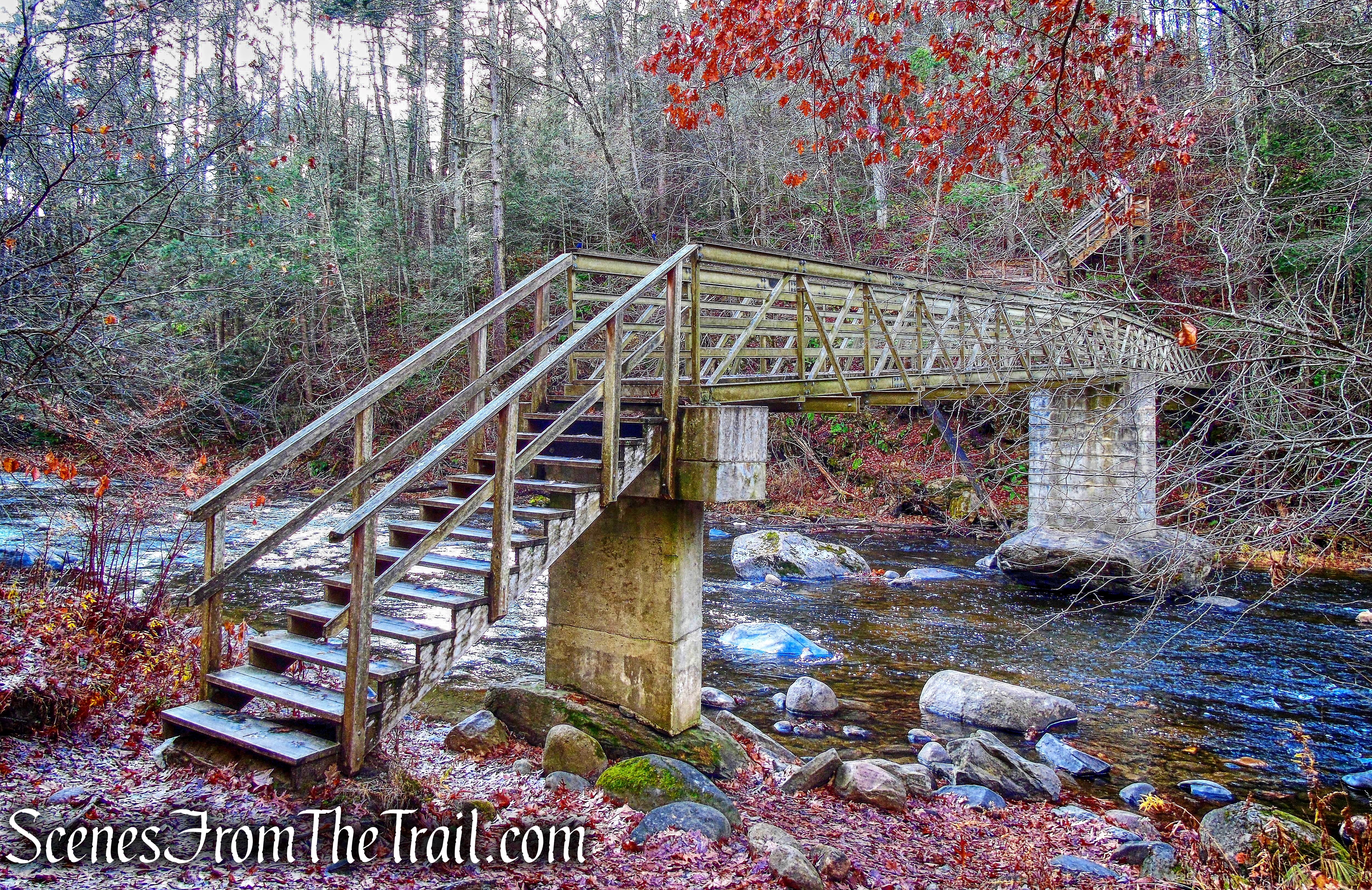
  • Stephen C. Reich Memorial Bridge: In 2007, a new footbridge, replacing the 1987 bridge (which in turn replaced one from 1977) washed away in 2005 flooding, was dedicated to the memory of Major Stephen C. Reich, on New Year’s Day. Major Reich grew up in Washington, graduated from Shepaug Valley High School in 1989 and the United States Military Academy at West Point in 1993. He was commanding a U.S. Army Special Forces rescue operation in eastern Afghanistan when his Chinook helicopter was shot down June 28, 2005, killing all 16 aboard.

Reich Memorial Bridge - Hidden Valley Preserve

Reich Memorial Bridge – Hidden Valley Preserve


Hike Overview:

This particular hike is a good introduction to Hidden Valley Preserve as it hits all of the main points of interest. This hike begins at the smaller parking area, just north of the main entrance. This parking lot can fit about 12 vehicles if everyone parks correctly. The reason for beginning here was to cross the Thoreau Footbridge early before the place got busy. This hike can also be done from the main parking lot, crossing the Thoreau Footbridge at the end.

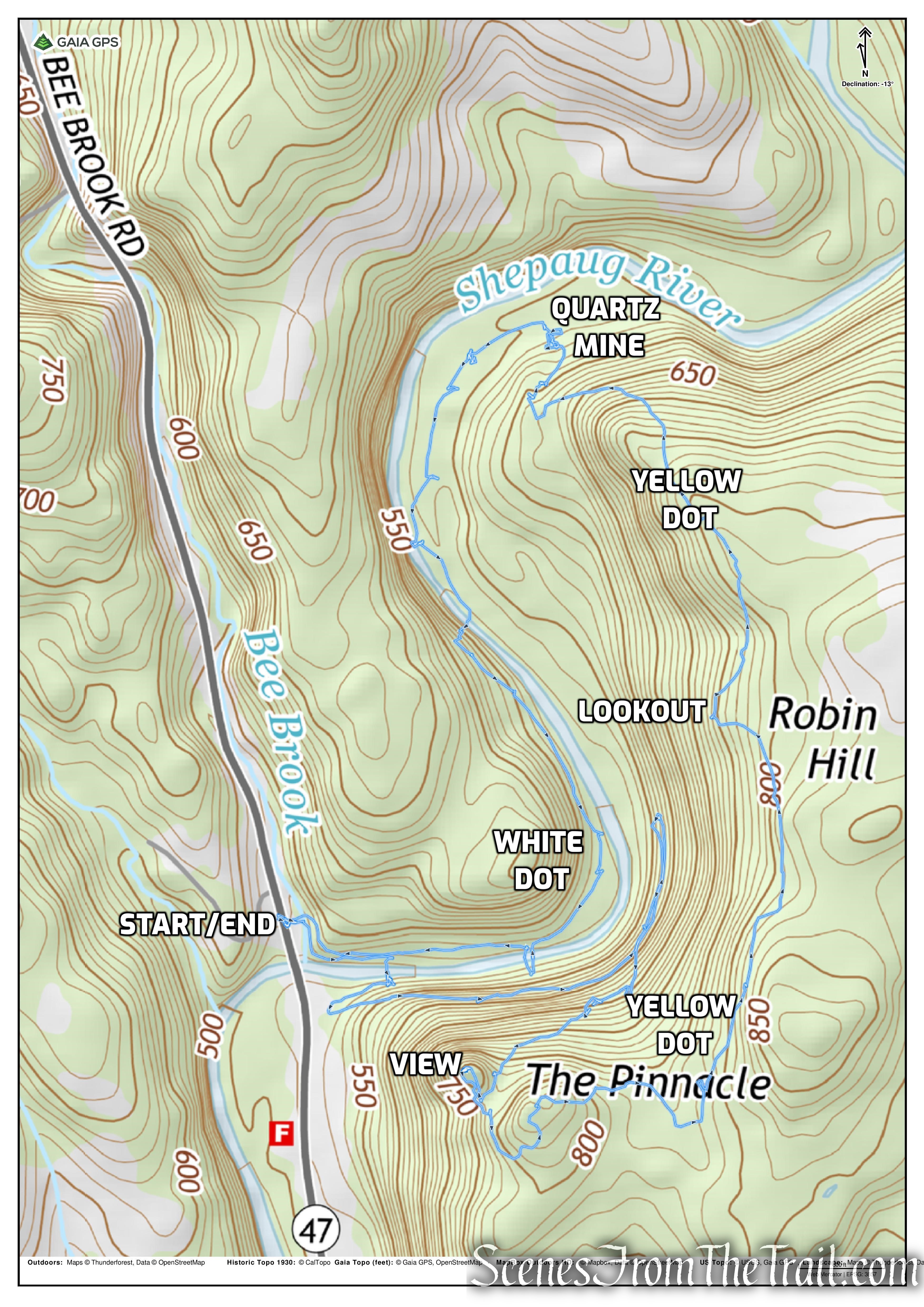
We began and ended the hike on the white-circle-blazed Bee Brook Loop Trail. For most of the hike, we followed the yellow-circle-blazed Van Sinderen Loop Trail. Which climbs to the Pinnacle then heads north across the Lookout and through the Quartz Mine. We also followed the blue-circle-blazed Pinnacle Trail briefly to the viewpoint and utilized the white-diamond-blazed connector trail to reach the river after passing through the Quartz Mine.

This hike was done counterclockwise from Bee Brook Road, just north of the Rt. 47 highway bridge.

Hidden Valley Preserve Loop

Hidden Valley Preserve Loop

elevation profile - Hidden Valley Preserve Loop

elevation profile – Hidden Valley Preserve Loop


The Hike:

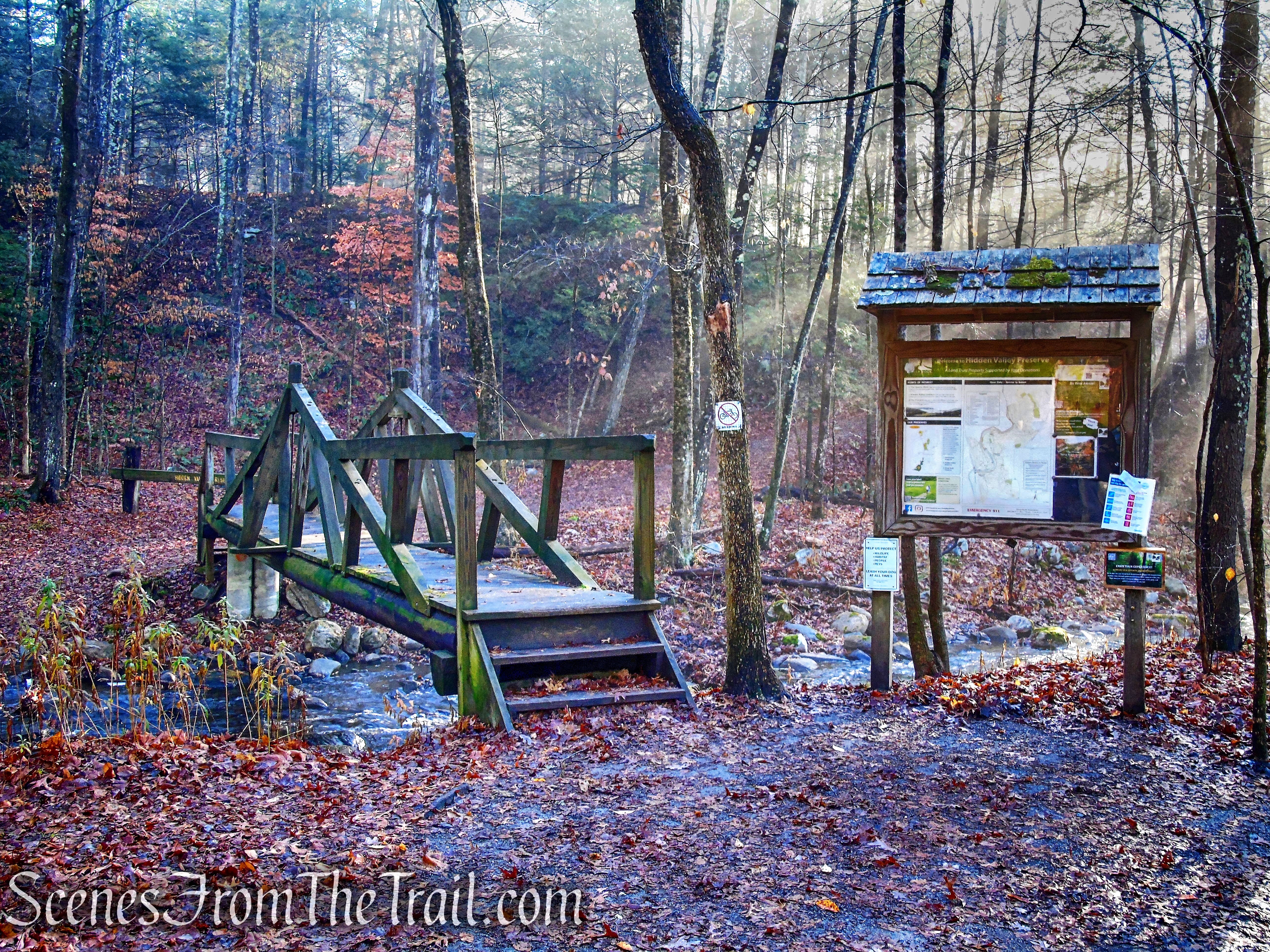
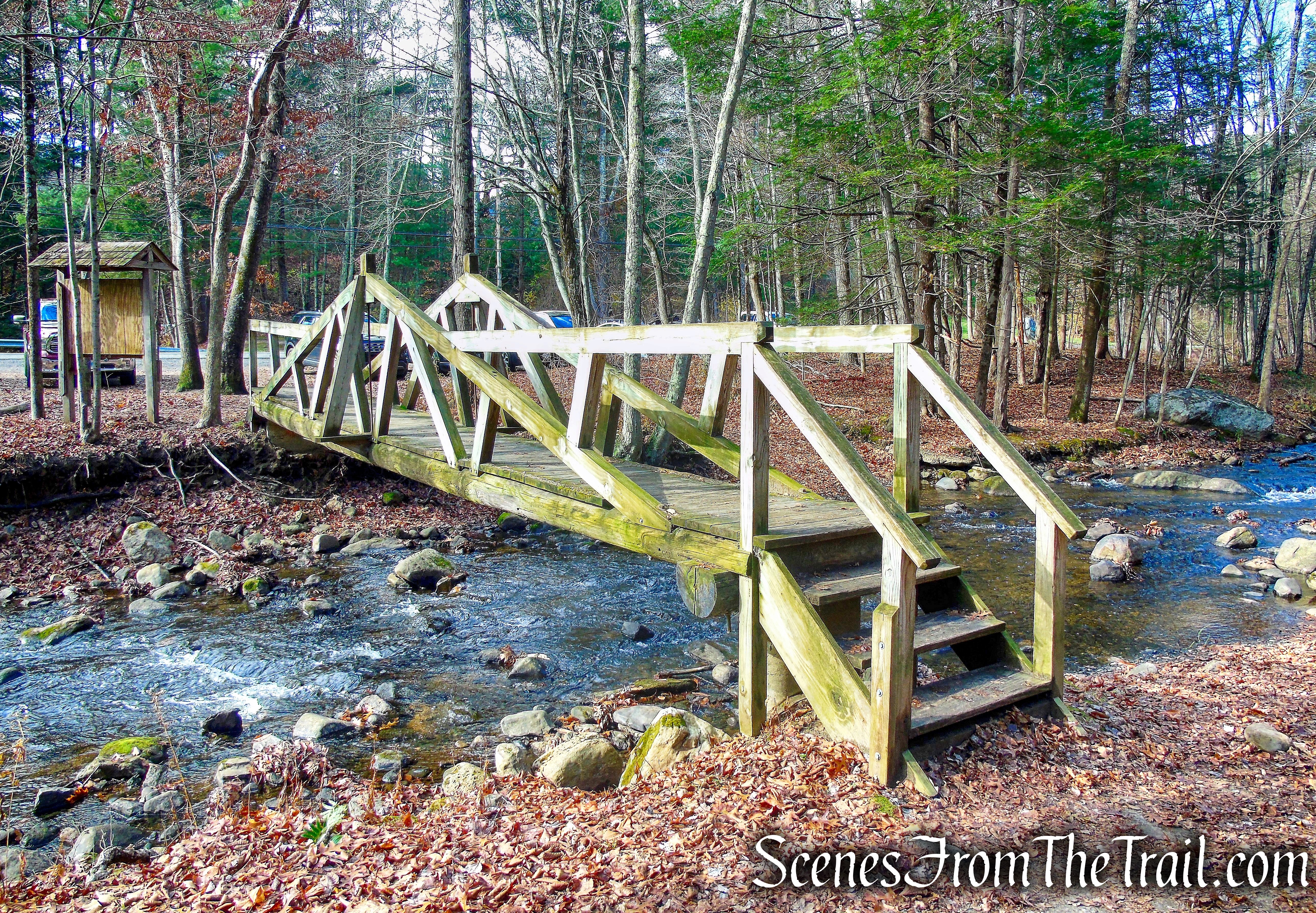
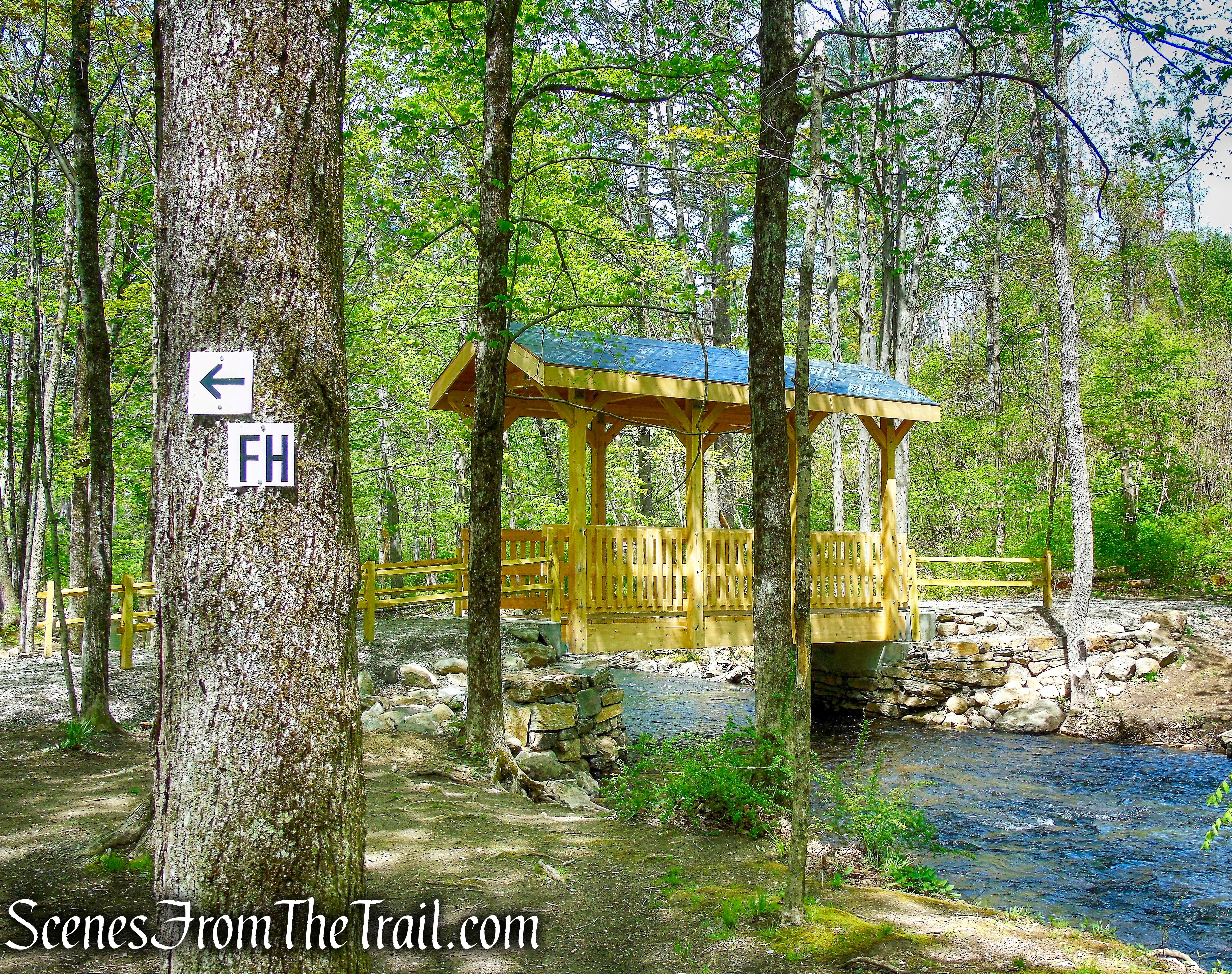
The hike begins by crossing the footbridge that spans Bee Brook. In 1976, this small wooden footbridge was built over Bee Brook to allow dry access to the Hidden Valley entrance just north of the Rt. 47 highway bridge.

wooden footbridge over Bee Brook

wooden footbridge over Bee Brook

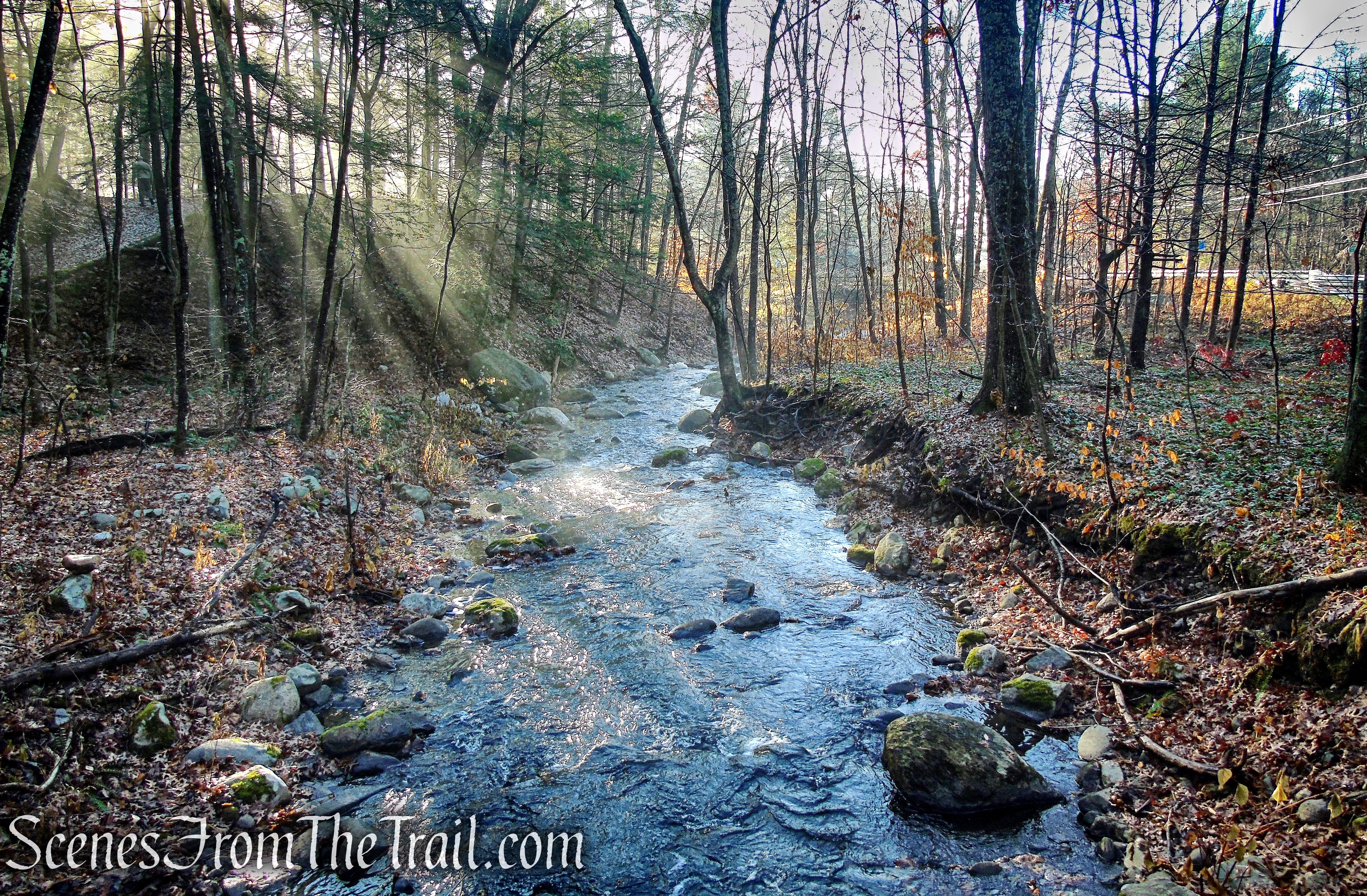
Bee Brook - Hidden Valley Preserve

Bee Brook – Hidden Valley Preserve

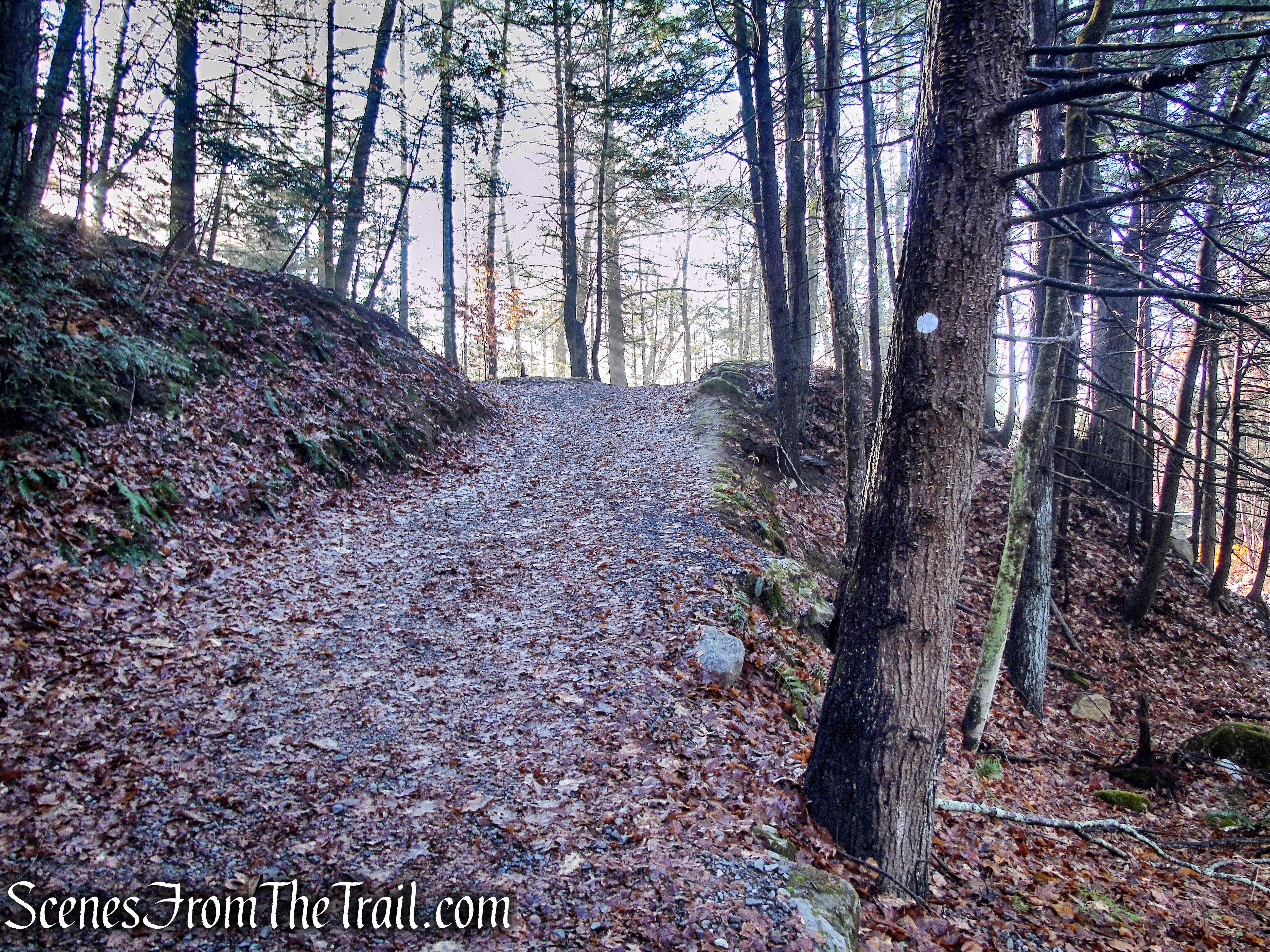
After crossing the small footbridge over Bee Brook, we turned right on the white-circle-blazed Bee Brook Loop Trail which heads uphill on a woods road then descends and parallels the Shepaug River. In about 250 yards, the Bee Brook Loop Trail reaches the Thoreau Bridge. Leaving the Bee Brook Loop Trail, we crossed the 134-ft. suspension bridge to the eastern section of Hidden Valley Preserve.

Bee Brook Loop - Hidden Valley Preserve

Bee Brook Loop – Hidden Valley Preserve

Bee Brook Loop - Hidden Valley Preserve

Bee Brook Loop – Hidden Valley Preserve

Bee Brook Loop - Hidden Valley Preserve

Bee Brook Loop – Hidden Valley Preserve

Thoreau Footbridge - Hidden Valley Preserve

Thoreau Footbridge – Hidden Valley Preserve

Thoreau Footbridge - Hidden Valley Preserve

Thoreau Footbridge – Hidden Valley Preserve

Thoreau Footbridge - Hidden Valley Preserve

Thoreau Footbridge – Hidden Valley Preserve

Thoreau Footbridge - Hidden Valley Preserve

Thoreau Footbridge – Hidden Valley Preserve

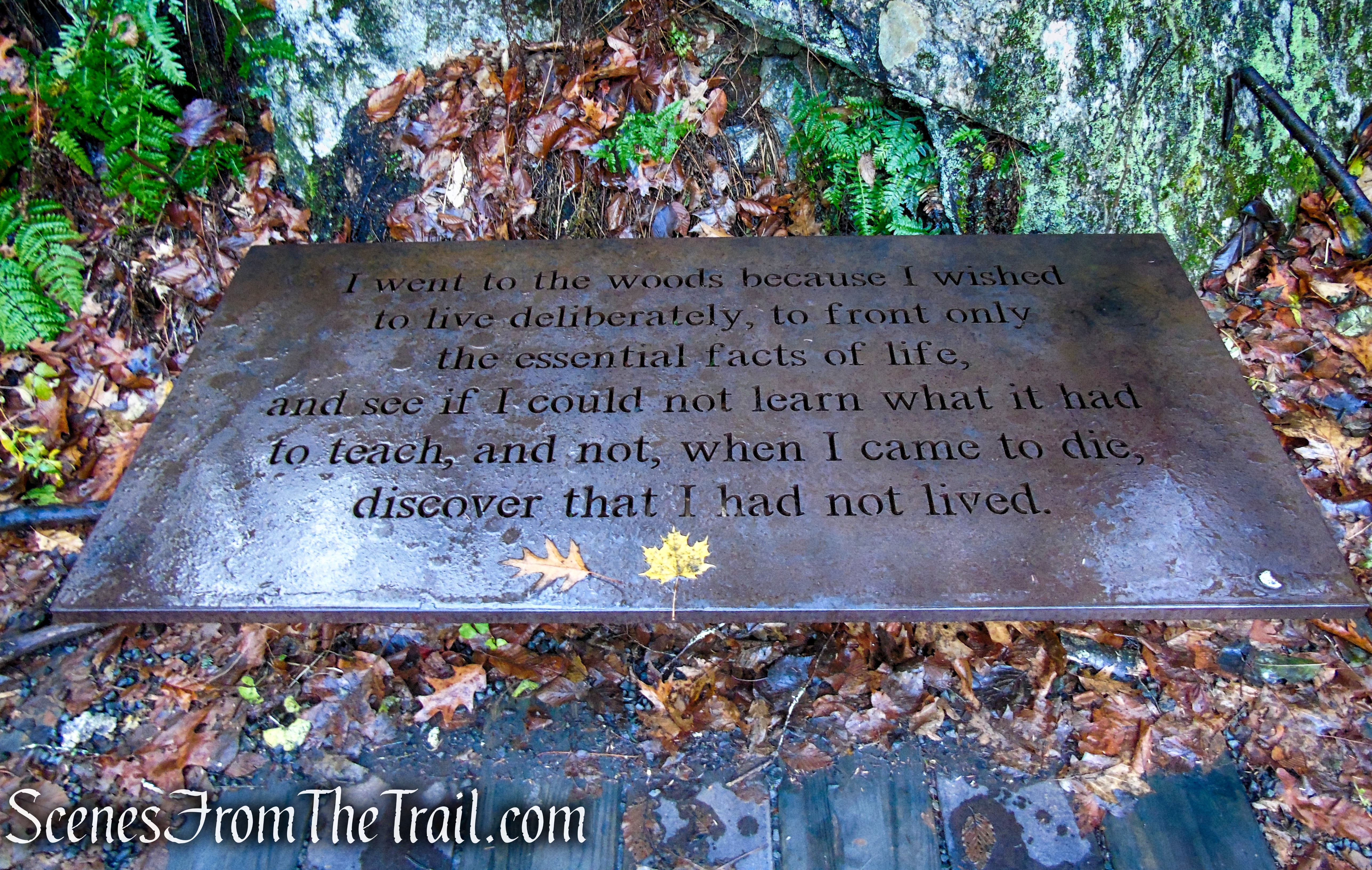
A cast iron bench on the eastern side of the bridge has a Henry David Thoreau quote that anyone who has explored the woods can relate to: “I went to the woods because I wished to live deliberately, to front only the essential facts of life, and see if I could not learn what it had to teach, and not, when I came to die, discover that I had not lived.”

bench on the eastern end of the Thoreau Bridge

bench on the eastern end of the Thoreau Bridge

“The universe is wider than our views of it.”

Thoreau Footbridge - Hidden Valley Preserve

Thoreau Footbridge – Hidden Valley Preserve

After crossing Thoreau Bridge, we turned right and headed south towards the main entrance. The yellow-circle-blazed Van Sinderen Loop begins here. If starting the hike from this parking lot, this is where you would begin. The Van Sinderen Loop climbs on a woods road, passes through a wooden barrier and continues north with Thoreau Bridge visible through the trees below.

Van Sinderen Loop Trail - Hidden Valley Preserve

Van Sinderen Loop Trail – Hidden Valley Preserve

Van Sinderen Loop Trail - Hidden Valley Preserve

Van Sinderen Loop Trail – Hidden Valley Preserve

Van Sinderen Loop Trail - Hidden Valley Preserve

Van Sinderen Loop Trail – Hidden Valley Preserve

Van Sinderen Loop Trail - Hidden Valley Preserve

Van Sinderen Loop Trail – Hidden Valley Preserve

A short distance later, the trail comes to a fork and the Van Sinderen Loop Trail splits. This is where the loop portion of the Van Sinderen Loop begins. If you were to follow only the yellow circle blazes, you would end up back at this spot. Although there are no visible blazes on the right fork, it is coaligned with the white-diamond-blazed Connector Trail. I misread the map and continued straight and used an unmarked trail to back track. Take the right fork as it climbs steeply.

bear right at the fork

bear right at the fork

In about another 520 feet, the two coaligned trails split. We turned right to continue following the yellow circle blazes, which continue to climb towards the Pinnacle.

bear right at the fork

bear right at the fork

Van Sinderen Loop Trail - Hidden Valley Preserve

Van Sinderen Loop Trail – Hidden Valley Preserve

In about another 275 feet, the Van Sinderen Loop Trail comes to a junction with the blue-blazed Pinnacle Trail. We turned right on the Pinnacle Trail which climbs steeply for about 210 feet and comes out onto a rock outcrop with views to the northwest.

turn right on Pinnacle Trail - Hidden Valley Preserve

turn right on Pinnacle Trail – Hidden Valley Preserve

Pinnacle Trail - Hidden Valley Preserve

Pinnacle Trail – Hidden Valley Preserve

A plaque honors Van Sinderen’s donation of “this hidden valley woodland with gratitude for his foresight in developing its beauty.”

Pinnacle Trail - Hidden Valley Preserve

Pinnacle Trail – Hidden Valley Preserve

Pinnacle - Hidden Valley Preserve

Pinnacle – Hidden Valley Preserve

We retraced our steps back to the Van Sinderen Loop Trail which is now coaligned for a short distance with the Pinnacle Trail. When the two trails split, we veered left, following the yellow blazes which descend gradually through the dense woods, soon passing one of the white diamond connector trails on the left.

Van Sinderen Loop Trail - Hidden Valley Preserve

Van Sinderen Loop Trail – Hidden Valley Preserve

Van Sinderen Loop Trail - Hidden Valley Preserve

Van Sinderen Loop Trail – Hidden Valley Preserve

Van Sinderen Loop Trail - Hidden Valley Preserve

Van Sinderen Loop Trail – Hidden Valley Preserve

Van Sinderen Loop Trail - Hidden Valley Preserve

Van Sinderen Loop Trail – Hidden Valley Preserve

Van Sinderen Loop Trail - Hidden Valley Preserve

Van Sinderen Loop Trail – Hidden Valley Preserve

In about 0.4 mile, the Van Sinderen Loop Trail passes through an open field with a private residence to the right and a west-facing viewpoint to the left. The trail reenters the woods, descends, levels off slightly, then climbs again, soon reaching the Lookout, with more west-facing views.

Van Sinderen Loop Trail - Hidden Valley Preserve

Van Sinderen Loop Trail – Hidden Valley Preserve

Van Sinderen Loop Trail - Hidden Valley Preserve

Van Sinderen Loop Trail – Hidden Valley Preserve

The circular terrace marked with a small stone wall, showcases a scenic view across the hills of Washington. According to the Steep Rock Association, the Lookout was built by Adrian Van Sinderen as a resting spot along his carriage road. Old houses, fields and farms can be seen in the distant hills.

The Lookout - Hidden Valley Preserve

The Lookout – Hidden Valley Preserve

The Van Sinderen Loop Trail descends then levels off, passing junctions with several trails. It then turns left and descends again, heading in a westerly direction. At the base of the descent, the trail turns right and passes through the area of the Quartz Mine.

Van Sinderen Loop Trail - Hidden Valley Preserve

Van Sinderen Loop Trail – Hidden Valley Preserve

Van Sinderen Loop Trail - Hidden Valley Preserve

Van Sinderen Loop Trail – Hidden Valley Preserve

Van Sinderen Loop Trail - Hidden Valley Preserve

Van Sinderen Loop Trail – Hidden Valley Preserve

Quartz Mine - Van Sinderen Loop Trail

Quartz Mine – Van Sinderen Loop Trail

Quartz Mine - Van Sinderen Loop Trail

Quartz Mine – Van Sinderen Loop Trail

Quartz Mine - Hidden Valley Preserve

Quartz Mine – Hidden Valley Preserve

According to the Steep Rock Association, the mine was active from the 1800’s until 1915, transporting quartz to the Hudson River by wagon and train. The quartz was used as a filler in paint and as an abrasive. A huge vein of quartz remains exposed, and the trail is littered with snow-white tailings that crunch under your boots.

Quartz Mine - Van Sinderen Loop Trail

Quartz Mine – Van Sinderen Loop Trail

The trail passes through an area that is built up with stone walls and possibly foundations that were associated with the abandoned Quartz Mine.

Van Sinderen Loop Trail - Hidden Valley Preserve

Van Sinderen Loop Trail – Hidden Valley Preserve

Van Sinderen Loop Trail - Hidden Valley Preserve

Van Sinderen Loop Trail – Hidden Valley Preserve

Van Sinderen Loop Trail - Hidden Valley Preserve

Van Sinderen Loop Trail – Hidden Valley Preserve

Van Sinderen Loop Trail - Hidden Valley Preserve

Van Sinderen Loop Trail – Hidden Valley Preserve

The yellow-circle-blazed Van Sinderen Loop Trail comes to a T-intersection and turns right. We turned left on a poorly blazed white-diamond-blazed connector trail which heads in a southerly direction.

turn left on White Diamond Connector Trail

turn left on White Diamond Connector Trail

In just under 500 yards, the connector trail ends at a T-intersection with the Van Sinderen Loop Trail. Here we turned left and followed the trail south. This section of the trail runs along the old Shepaug Valley Railroad bed. The 32-mile railroad once known as the “crookedest east of California” with its 200 curves and 32-mile length to cover a route 18 miles long as the crow flies.

turn left on Van Sinderen Loop Trail

turn left on Van Sinderen Loop Trail

A short distance later, the trail reaches the Stephen C. Reich Memorial Bridge. Major Reich was a Washington resident who died in 2005 as part of an Army Night Stalker team that was trying to rescue an eight-member Navy Seal team in Afghanistan. The mission was depicted in the 2014 movie, “Lone Survivor.” A plaque dedicates the bench and bridge to Reich with the quote, “If you would seek his monument, look about you.”

Reich Memorial Bridge - Hidden Valley Preserve

Reich Memorial Bridge – Hidden Valley Preserve

We crossed the bridge and climbed the wooden steps on the western side of the Shepaug River. The bridge connects the Van Sinderen Loop Trail with the Bee Brook Loop.

Reich Memorial Bridge – Hidden Valley Preserve

Reich Memorial Bridge – Hidden Valley Preserve

Shepaug River - Hidden Valley Preserve

Shepaug River – Hidden Valley Preserve

Reich Memorial Bridge – Hidden Valley Preserve

Reich Memorial Bridge – Hidden Valley Preserve

After crossing the bridge and climbing the stairs, we turned left on the Bee Brook Loop Trail which soon descends to river level as it heads south.

Bee Brook Loop - Hidden Valley Preserve

Bee Brook Loop – Hidden Valley Preserve

Shepaug River – Hidden Valley Preserve

Shepaug River – Hidden Valley Preserve

In about 0.6 mile (from the Reich Memorial Bridge), the Bee Brook Loop Trail passes the Thoreau Bridge. If you parked in the main lot, you would cross the bridge, turn right and head for the parking lot.

Bee Brook Loop - Hidden Valley Preserve

Bee Brook Loop – Hidden Valley Preserve

If you began the hike where we did, continue past the bridge for another 250 yards, up and down the hill, cross the small wooden footbridge over Bee Brook and back to the parking area where the hike began.

wooden footbridge over Bree Brook - Hidden Valley Preserve

wooden footbridge over Bree Brook – Hidden Valley Preserve


Review:

A really good hike in a well maintained preserve. The points of interest are plentiful and the landscape is quite scenic. The trails are well marked with the exception of most of the junctions, which could use some blazes closer to the turnoffs. By using the free Avenza Maps app, it makes it much easier to navigate the trails. This is a popular hiking location on weekends, especially on nice days and can get crowded. An early start is recommended or even weekdays to avoid any crowds. The preserve was litter free on the day of our visit, let’s keep it that way. Do not litter, please carry out what you carry in.

Pros:

Scenic landscape, well maintained trails, historical features, scenic views, Thoreau Bridge, Quartz Mine, Pinnacle, Shepaug River.

Cons:

Some junctions are not well marked, can hear some road noise, attracts crowds on nice days.


Take a hike!

Hidden Valley Preserve Loop

Hidden Valley Preserve Loop

Sources:

Canopus Lake Overlook from Long Hill Road – Fahnestock State Park

November 8, 2020 – Hopewell Junction, NY

Difficulty: Moderate

Length: Approximately 4.7 miles

Max elevation: 1,282 ft.– total elevation gain approximately 701 ft.

Route type: Out and back

Buy Map: East Hudson Trails Map

Free Web Map: Fahnestock State Park Trail Map

Avenza App Map (FREE): Fahnestock State Park Map for Avenza

Trailhead parking: 101-91 Long Hill Rd, Hopewell Junction, NY 12533


Overview:

Clarence Fahnestock Memorial State Park, also known as Fahnestock State Park, is a 14,337-acre state park located in north central Putnam County with portions in the towns of Carmel, Kent, Philipstown and Putnam Valley. The park is traversed by the Taconic State Parkway, US Route 9, NYS Route 301 and several local roads. Rail stations operated by Metro North Railroad are within ten miles of the park at Garrison, Cold Spring and Beacon. The park does not have a single, formal entrance. The park is managed and maintained by the New York State Office of Parks, Recreation and Historic Preservation.

Clarence Fahnestock Memorial State Park

Clarence Fahnestock Memorial State Park

Fahnestock is characterized by parallel ridges and hills that trend in a southwest to northeast direction. Steep slopes are often found on the southeast and northwest aspects of some of these ridges. Elevations range from approximately 400 feet in the lowest area of the park along Clove Creek in the vicinity of U.S. Route 9, to a maximum of over 1300 feet on a ridge west of Canopus Lake. The majority of the park is at elevations greater than 600 feet. The Appalachian National Scenic Trail crosses the park in a southwest-northeast direction for over ten miles. The park receives substantial local use, and serves the New York City Metropolitan area to the south, as well as out-of-state users.


Trail Overview:

The Appalachian Trail traverses Fahnestock State Park for 10.24 miles, entering from the southern boundary of the park east of Catfish Pond, north across Route 301 past Canopus Lake, and exiting the northern end of the park at Long Hill Road, near the Dutchess-Putnam County boundary. There is parking on Long Hill Road where the trail crosses. The AT within state parkland is cooperatively managed by the Appalachian Trail Conservancy and the NYNJTC, under a formal Memorandum of Understanding with OPRHP and other entities.


Hike Overview:

Two weeks earlier, we did a hike to Canopus Lake Overlook, but due to circumstances beyond our control, we had to improvise and created a different hike on the fly. Long Hill Road is a good spot to do an out and back hike, entirely on the Appalachian Trail (AT). Please keep in mind that the approach to the parking area on Long Hill Road is not paved, steep, and in places, rutted. The road itself climbs on switchbacks with some extremely sharp curves. I would not recommend a low-lying vehicle to travel along this road. I would be hesitant as well if there is snow or heavy rain. There is room for about 8-10 cars, right where the AT crosses the road.

Long Hill Road trailhead

Long Hill Road trailhead

This is a straightforward out and back hike, entirely on the AT, that leads to several good scenic viewpoints. This long ridge is Shenandoah Mountain although the highpoint (1282 ft. above sea level), near Long Hill Road, is labeled as Looking Benchmark (Mountain?) on the USGS survey benchmark. The AT is well blazed and easy to follow, and for the most part, an unfrequented section of trail. We encountered three southbound through-hikers and several day hikers

Canopus Lake Overlook from Long Hill Road – Fahnestock State Park

Canopus Lake Overlook from Long Hill Road – Fahnestock State Park

Once the initial steep climb to the ridge is completed, it’s mostly a gradual downhill until the trail nears Canopus Lake, then it’s uphill to the Canopus Lake Overlook. From there, it’s simply a matter of retracing your steps back the way you came, to Long Hill Road.

Canopus Lake Overlook from Long Hill Road – Fahnestock State Park

Canopus Lake Overlook from Long Hill Road – Fahnestock State Park


The Hike:

From the parking area, cross the road and head south on the white-blazed Appalachian Trail, which you will be following for the entire hike. Here, the trail enters Fahnestock State Park at its northern end and climbs Shenandoah Mountain, gradually at first then more steeply on rock steps.

Appalachian Trail - Shenandoah Mountain

Appalachian Trail – Shenandoah Mountain

Appalachian Trail - Shenandoah Mountain

Appalachian Trail – Shenandoah Mountain

Appalachian Trail – Shenandoah Mountain

Appalachian Trail – Shenandoah Mountain

The trail levels off briefly, then continues its steep ascent. In about 0.4 mile, the AT reaches the 1282-ft. open summit of Shenandoah Mountain, marked by a USGS survey benchmark.

Appalachian Trail – Shenandoah Mountain

Appalachian Trail – Shenandoah Mountain

Appalachian Trail – Shenandoah Mountain

Appalachian Trail – Shenandoah Mountain

Appalachian Trail – Shenandoah Mountain

Appalachian Trail – Shenandoah Mountain

Appalachian Trail – Shenandoah Mountain

Appalachian Trail – Shenandoah Mountain

Appalachian Trail – Shenandoah Mountain

Appalachian Trail – Shenandoah Mountain

Appalachian Trail – Shenandoah Mountain

Appalachian Trail – Shenandoah Mountain

Looking Benchmark - Appalachian Trail

Looking Benchmark – Appalachian Trail

If you look closely, it is stamped LOOKING 1933. I have heard this spot referred to as Looking Rock and/or Looking Mountain, but on maps it is labeled as Shenandoah Mountain. When I inquired about it to the NY-NJ Trail Conference, I was told that the long ridge is all Shenandoah Mountain.

Looking Benchmark - Appalachian Trail

Looking Benchmark – Appalachian Trail

At the summit of Shenandoah Mountain, there is an American flag painted on the rock, in memory of September 11, 2001.

Appalachian Trail – Shenandoah Mountain

Appalachian Trail – Shenandoah Mountain

You have now hiked about 0.4 mile, with more than 250-ft. of elevation gain. This makes a good spot to take a breather and enjoy the views. The view southeast from the summit of Shenandoah Mountain.

Appalachian Trail – Shenandoah Mountain

Appalachian Trail – Shenandoah Mountain

The view northeast towards Dutchess County from the summit of Shenandoah Mountain.

Appalachian Trail – Shenandoah Mountain

Appalachian Trail – Shenandoah Mountain

South-facing view of the East Hudson Highlands.

Appalachian Trail – Shenandoah Mountain

Appalachian Trail – Shenandoah Mountain

When you are ready to continue, proceed south on the AT as it leaves the summit and reenters the woods. The trail descends, dipping down into the valley and turns left on an old woods road, bordered by a stone wall. As you continue along the AT, you may notice more stone walls and some cellar holes from homesteads long ago. Imagine folks that called this home, cultivating the rugged landscape in order to survive.

Appalachian Trail – Shenandoah Mountain

Appalachian Trail – Shenandoah Mountain

In just over a mile from the summit, the AT comes to a junction with a blue-blazed trail and turns right. Continue to follow the white blazes as they begin a steady climb, gradually at first, then more steeply, passing some interesting rock formations along the way.

turn right to remain on Appalachian Trail

turn right to remain on Appalachian Trail

Appalachian Trail – Shenandoah Mountain

Appalachian Trail – Shenandoah Mountain

Appalachian Trail – Shenandoah Mountain

Appalachian Trail – Shenandoah Mountain

Appalachian Trail – Shenandoah Mountain

Appalachian Trail – Shenandoah Mountain

In another 0.6 mile, look for a short unmarked spur trail to the right that leads to a west-facing view of the surrounding hills.

Appalachian Trail – Shenandoah Mountain

Appalachian Trail – Shenandoah Mountain

When you are ready to proceed, continue south on the AT about another 750 feet to the Canopus Lake Overlook.

Appalachian Trail – Shenandoah Mountain

Appalachian Trail – Shenandoah Mountain

From this south-facing viewpoint, you can see most of Canopus Lake. Canopus Lake at an elevation of 915 feet, is a 104-acre lake with a shoreline of approximately 3.7 miles. The lake was created in the mid-1930’s by the Civilian Conservation Corps (CCC). If you look down below to the left, Canopus Beach is visible through the trees. This is your turn around spot and makes an excellent place to relax and enjoy a snack.

Canopus Lake Overlook Loop - Appalachian Trail

Canopus Lake Overlook Loop – Appalachian Trail

When you are done soaking in the scenery, retrace your steps along the AT (heading north), and in about 1.8 miles, you will be back at the Looking Rock Benchmark, where you may want to snap some more pics.

Appalachian Trail – Shenandoah Mountain

Appalachian Trail – Shenandoah Mountain

Appalachian Trail – Shenandoah Mountain

Appalachian Trail – Shenandoah Mountain

Appalachian Trail – Shenandoah Mountain

Appalachian Trail – Shenandoah Mountain

From the summit, it’s only 0.4 mile to the parking area on Long Hill Road, where the hike began.

Appalachian Trail - Long Hill Road trailhead

Appalachian Trail – Long Hill Road trailhead

While eating and drinking post hike, we ran into an AT south bounder, trail name “Trouble.” We had a nice conversation and offered him some food and drink. A nice guy, hope he made it to his destination.

Trouble - AT south bounder

Trouble – AT south bounder


Review:

A very enjoyable hike along the Appalachian Trail. No crowds, great views and a September 11 Memorial at the summit. Even though I prefer loop hikes, this out and back was quite nice. The best thing about it was that we mostly had the trail to ourselves as well as the viewpoints. A good alternative to some of the more popular (and crowded) trails in the Hudson Valley.

Pros:

Appalachian Trail, scenic views, Shenandoah Mountain, lesser trafficked area.

Cons:

Long Hill Road can be treacherous in bad weather or with the wrong vehicle.


Take a hike!

Canopus Lake Overlook from Long Hill Road – Fahnestock State Park

Canopus Lake Overlook from Long Hill Road – Fahnestock State Park


Sources:

Target Rock National Wildlife Refuge

October 31, 2020 – Lloyd Harbor, NY

Difficulty: Easy

Length: Approximately 3.5 miles

Max elevation: 163 ft.– total elevation gain approximately 186 ft.

Route type: Circuit

Free Web Map: Target Rock National Wildlife Refuge Trail MapTarget Rock Trail Guide

Trailhead parking: 12 Target Rock Rd, Lloyd Harbor, NY 11743

Overview:

The Target Rock National Wildlife Refuge is located on the north shore of Long Island, 25 miles east of New York City. This 80-acre refuge is composed of mature oak-hickory forest, a half-mile rocky beach, a brackish pond, and several vernal ponds. The land and waters support a variety of songbirds (particularly warblers during spring migration), mammals, shorebirds, fish, reptiles and amphibians. During the colder months, diving ducks are common offshore, while harbor seals occasionally use the beach and nearby rocks as resting sites. NY State and Federally protected piping plover, least tern, and common tern depend on the Refuge’s rocky shore for foraging and rearing young. The spring bloom at Target Rock is a reminder of its days as a garden estate, with flowering rhododendrons and mountain laurel.

Target Rock National Wildlife Refuge

Target Rock National Wildlife Refuge

The Target Rock National Wildlife Refuge is part of the Long Island National Wildlife Refuge Complex, which consists of seven national wildlife refuges, two refuge sub-units and one wildlife management area. Collectively, the ten units are approximately 6,500 acres in size. Wertheim National Wildlife Refuge is home to the refuge complex headquarters and visitor center. These units are part of the National Wildlife Refuge System.

Founded by President Theodore Roosevelt in 1903 and administered by the U.S. Fish and Wildlife Service, the National Wildlife Refuge System is a diverse network of lands and waters dedicated to conserving America’s rich fish and wildlife heritage.

National Wildlife Refuge System

National Wildlife Refuge System

Visitor Activities:

  • Fishing – Fishing is allowed from the shoreline. A free New York state salt water fishing license is required. Common fish species include striped bass (striper or rockfish), weakfish, summer flounder (fluke), bluefish, blackfish (tautog) and porgy (scup).
    Please clean your fish at home. The refuge does NOT maintain a fish cleaning station.
  • Wildlife Viewing – Most wildlife viewing is done from one of three hiking trails. Catbirds, cardinals, common yellowthroats and Carolina wrens use the dense understory formed by azaleas, rhododendrons and yews.
  • Environmental Education – Limited interactive, student oriented activities are offered. Please contact the headquarters office in order to set up programming for your private group. (631) 286-0485.
  • Photography – Nature based photography is permitted along any of the trails and along the beach. Please stay on marked trails and do not disturb resting wildlife.

The refuge is managed by the U.S. Fish and Wildlife Service.

Target Rock National Wildlife Refuge

Target Rock National Wildlife Refuge

History:

The 80-acre refuge is named for the massive shoreline rock, one of the island’s boulders that remain from the glacial deposits. Legend has it the British Navy used the 14-foot high “Target Rock” for target practice during the War of 1812. Long Island’s geography was carved out by glaciers thousands of years ago, forming bluffs, dunes, necks and bays. At the time of the Revolutionary War, Target Rock was part of the bluffs that overlook Huntington Bay. Over the centuries, constant movement of the winds and waters eroded the massive boulder away from the bluff, consigning it to stand individually just offshore. 

Target Rock

Target Rock

In 1654, the Matinecock Native Americans sold 3,000 acres of what is now called Lloyd Neck to English settlers from Oyster Bay. In 1676, James Lloyd acquired the neck, which was then taken over by his son Henry. Henry Lloyd farmed the land and erected a house, which still survives in Caumsett State Park.

During the Revolutionary War, the town of Huntington along with the village of Lloyd Neck was occupied by the British. A fort (Fort Franklin 1777-1780, now known as Fort Hill) was built by the British on the western end of Lloyd Neck overlooking the entrance to Cold Spring Harbor. Another fortification (East Fort) was built on the east side of Lloyd Neck near the site of Target Rock. The forts were designed by the British to defend the harbors from French and American forces who attacked the forts several times. Despite the bloody battles there, the Revolutionaries never took Fort Franklin, and it was eventually abandoned after the war.

Target Rock was known to have been a target for cannon practice by British warships during the War of 1812. This glacial erratic which once sat on the side of the cliff, along with the ground that East Fort stood on, receded into the ocean over time, due to erosion.

In the 1880’s, Lloyd Neck became a stop for steamboats coming from New York City, bringing tourists and wealthy New Yorkers.

The 1900’s ushered the era of the Long Island Gold Coast, and various wealthy families began to buy land and build seaside mansions and estates.

In the early 20th century, an estate with 300 acres and 2 miles of waterfront, was established at the eastern end of Lloyd Neck, the site where East Fort once stood. Originally built by Rudolph and Olga (Von Neufville) Flinsch, it was called Target Rock Farm. It was then purchased from the Flinsches by Ambassador James W. Gerard in 1921 who made extensive improvements to the property.

In 1936 the property was sold to Investment Banker and pioneering mutual fund proprietor Ferdinand Eberstadt who constructed a new 40,000 square ft. Georgian style home, designed by Delano and Aldrich in 1937-1938. Under Eberstadt’s ownership Target Rock Farm would become known for its magnificent gardens. 

In 1967 he donated this property to the Federal government under the Migratory Bird Conservation Act. Although it was first considered as the potential site of a future nuclear power plant, the estate was ultimately destined for use as a wildlife refuge with the goal of preserving endangered plant and animal species and promoting a migratory route for birds. The donated land was to be the formal legal basis that halted the proposed construction of a nuclear power plant by the Long Island Lighting Company (LILCO) in 1970.

After being declared too deteriorated to be repaired and despite attempts by preservationists to save the mansion, it was demolished in 1995 by the Fish and Wildlife Service, which said that it had deteriorated and that repairing it was “not the purpose the refuge was established for.”

Trails Overview:

The Target Rock National Wildlife Refuge has about 1.5 miles of woodland trails plus a half-mile of rocky beach. The adjacent East Beach provides almost another mile of continuous shoreline to walk on if one wants to extend the distance. 

  • Gardener’s Path (0.3 mile) is a wide, gentle walk past the former vegetable and cutting garden of Ferdinand and Mary Eberstadt. Access to this trail is from the Rocky Beach Trail.
  • Warbler’s Loop (0.5 mile) descends gradually from the parking area, through the woods and ends at a junction with the Rocky Beach Trail.
  • Rocky Beach Trail (0.5 mile) descends gradually from the parking lot, passing the two access points for the Gardener’s Path, the terminus of the Warbler’s Loop and ends at the Rocky Beach.
  • Beach Access Trail (500 feet) can be accessed from the Rocky Beach Trail or the Rocky Beach, near the area of the Beach Access Stairs.
  • Rocky Beach (0.5 mile) although not a trail, provides an area for walking along the shoreline or just for sitting on the sand.
  • East Beach (0.9 mile) technically not part of Target Rock National Wildlife Refuge, but provides some extra shoreline for walking along if so desired. 

Hike Overview:

We arrived shortly before 10:30am on a cool Halloween morning. The temperature was hovering around 40° and there was only one car in the parking lot, which left as we were pulling in. We planned on doing a loop incorporating East Beach to lengthen the walk. We began on the Warbler’s Loop Trail, connecting to the Rocky Beach Trail towards the beach, and walking south as far as possible along East Beach. Retracing our steps along East Beach to Rocky Beach for a view of Target Rock, then returning via the Beach Access Stairs to the upper portion of the Rocky Beach Trail and back to the parking area. We did not walk on the Gardener’s Path during our visit.

Target Rock National Wildlife Refuge

Target Rock National Wildlife Refuge

The Hike:

From the parking area, we proceeded east on the Warbler’s Loop Trail which leads gradually downhill on a wide path.

Warbler's Loop

Warbler’s Loop

Warbler's Loop Trail

Warbler’s Loop Trail

Warbler's Loop Trail

Warbler’s Loop Trail

Warbler's Loop Trail

Warbler’s Loop Trail

In about 0.5 mile, The Warbler’s Loop Trail ends at a T-intersection with the Rocky Beach Trail, marked by a bench and a sign. Here we turned right and followed the Rocky Beach Trail downhill. 

turn right on Rocky Beach Trail

turn right on Rocky Beach Trail

Rocky Beach Trail

Rocky Beach Trail

Rocky Beach Trail

Rocky Beach Trail

In approximately another 200 yards, the Rocky Beach Trail comes to another T-intersection, marked by a kiosk. To the left is the Beach Access Trail, which would be our return route. We stayed right to continue on the Rocky Beach Trail.

turn right on Rocky Beach Trail

turn right on Rocky Beach Trail

turn right on Rocky Beach Trail

turn right on Rocky Beach Trail

Rocky Beach Trail

Rocky Beach Trail

In about another 215 yards (past the kiosk), the trail reaches the Brackish Pond. Here, a bird blind is positioned overlooking the pond to observe wildlife.

Brackish Pond

Brackish Pond

bird blind - Brackish Pond

bird blind – Brackish Pond

The tide from Huntington Bay floods this pond daily and mixes with the freshwater from the surrounding watershed. The result is a pond with salinity lower than that of the Bay, teeming with life from plants to birds, turtles, mammals, and fish.

Brackish Pond

Brackish Pond

Brackish Pond

Brackish Pond

A short distance from the Brackish Pond, the Rocky Beach Trail ends at the beach. We turned right and began to walk the shoreline in a southerly direction.

Rocky Beach

Rocky Beach

Rocky Beach

Rocky Beach

After about 550 feet, we reached the boundary of the refuge and continued past it, Now walking on East Beach.

boundary of Target Rock National Wildlife Refuge

boundary of Target Rock National Wildlife Refuge

East Beach

East Beach

East Beach

East Beach

To the south, off in the distance, is the Huntington Harbor Lighthouse which was completed in 1912.

Huntington Harbor Lighthouse

Huntington Harbor Lighthouse

East Beach

East Beach

We continued following the shoreline of East Beach, stopping to observe the tidal flats of Lloyd Harbor, to the west.

tidal flats - Lloyd Harbor

tidal flats – Lloyd Harbor

We walked as far south as the sand and tide would let us.

East Beach

East Beach

Just ahead, the remains of the Lloyd Harbor Light (1857-1912) can be seen. The lighthouse once marked the entrance to Lloyd Harbor. In lower tides, these ruins may be able to be reached on foot.

Lloyd Harbor Light ruins

Lloyd Harbor Light ruins

Lloyd Harbor Lighthouse was finished in 1857 and consisted of a two-story, wood-frame dwelling built on a brick foundation and attached at one corner to a square brick tower. A kitchen, dining room, and sitting room were found on the dwelling’s first floor, and three bedrooms on the second. The original beacon was a fifth-order, Henry-Lepaute Fresnel lens showing a fixed white light at a focal plane of forty-eight feet.

Lloyd Harbor Light - 1885

Lloyd Harbor Light – 1885

We then retraced our steps along East Beach, passing the junction with the Rocky Beach Trail and the Beach Access Stairs.

East Beach

East Beach

East Beach

East Beach

Rocky Beach

Rocky Beach

Just past the stairs, is Target Rock. During low tide, one can walk right up to the 14-ft. glacial erratic. 

Target Rock

Target Rock

We then ascended the Beach Access Stairs and stopped on the platform that overlooks Huntington Bay.

Beach Access Stairs

Beach Access Stairs

Beach Access Stairs

Beach Access Stairs

We walked along the Beach Access Trail and after about 100 feet, there is a spur trail that leads to a viewing area overlooking the beach. 

Beach Access Trail

Beach Access Trail

The overlook is equipped with two benches and a viewing scope that lets you easily see birds perched atop Target Rock or the beach houses across the harbor.

Overlook

Overlook

Heading west, the Beach Access Trail ends at the junction with the Rocky Beach Trail (marked by a kiosk), where we veered right. Soon the trail passes the junction with the Warbler’s Loop Trail and the two access points of the Gardener’s Path. We stayed right each time to remain on the Rocky Beach Trail.

Beach Access Trail

Beach Access Trail

Soon the trail passes by an overgrown field. I believe that this was the site of the Eberstadt mansion. 

Rocky Beach Trail

Rocky Beach Trail

A short distance later, the trail passes a kiosk and two private residences on either side of the trail, and then reaches the parking area, where the hike began.

Rocky Beach Trail

Rocky Beach Trail

Target Rock National Wildlife Refuge

Target Rock National Wildlife Refuge

Review:

A well kept area that is far enough off the beaten path that it doesn’t see a lot of foot traffic. We had the place mostly to ourselves for the duration of our visit. Walking along East Beach was a bonus with only one other person in that area while we were there. The area around the Beach Access Stairs and Target Rock was a little busier, but still nowhere near crowded. This is definitely worth the road trip to spend a few hours outdoors.

Pros:

Historical features, Target Rock, Brackish Pond, well maintained trails, lovely landscape, scenic shoreline.

Cons:

With the exception of a hawk, a few deer and a dead raccoon, not much wildlife was moving around on the day that we visited.

Take a walk!

Target Rock National Wildlife Refuge

Target Rock National Wildlife Refuge

Sources:

Canopus Lake Overlook Loop – Fahnestock State Park

October 25, 2020 – Cold Spring, NY

Difficulty: Moderate

Length: Approximately 4.6 miles

Max elevation: 1156 ft.– total elevation gain approximately 568 ft.

Route type: Circuit

Buy Map: East Hudson Trails Map

Free Web Map: Fahnestock State Park Trail Map

Avenza App Map (FREE): Fahnestock State Park Map for Avenza

Trailhead parking: Pelton Pond Picnic Area – Cold Spring, NY 10516


Park Overview:

Clarence Fahnestock Memorial State Park, also known as Fahnestock State Park, is a 14,337-acre state park located in north central Putnam County with portions in the towns of Carmel, Kent, Philipstown and Putnam Valley. The park is traversed by the Taconic State Parkway, US Route 9, NYS Route 301 and several local roads. Rail stations operated by Metro North Railroad are within ten miles of the park at Garrison, Cold Spring and Beacon. The park does not have a single, formal entrance.

Clarence Fahnestock Memorial State Park

Clarence Fahnestock Memorial State Park

The Canopus Beach, Winter Park and the campground are located in close proximity to the intersection of Route 301 and the Taconic State Parkway. Other developed parts of the park are accessed from the parkway (Stillwater Lake), Route 301 (Pelton Picnic Area and Park Office), Indian Brook Road (Taconic Outdoor Education Center) and Route 9 (Hubbard Lodge). Access to the park’s trail network is provided at small parking areas throughout the park. The Appalachian National Scenic Trail crosses the park in a southwest-northeast direction for over ten miles. The park receives substantial local use, and serves the New York City Metropolitan area to the south, as well as out-of-state users.

Pelton Pond Picnic Area - Fahnestock State Park

Pelton Pond Picnic Area – Fahnestock State Park

The Canopus Lake Area in Fahnestock State Park is a high-use area year-round. During the warmer months, the beach and camping areas are very popular and often filled to capacity. In addition, the lake is used for fishing.

Canopus Beach - Fahnestock State Park

Canopus Beach – Fahnestock State Park

Fahnestock is characterized by parallel ridges and hills that trend in a southwest to northeast direction. Steep slopes are often found on the southeast and northwest aspects of some of these ridges. Elevations range from approximately 400 feet in the lowest area of the park along Clove Creek, in the vicinity of U.S. Route 9, to a maximum of over 1,300 feet on a ridge west of Canopus Lake. The majority of the park is at elevations greater than 600 feet.

There are eight lakes and ponds located wholly within Fahnestock and two that are partially located within the park’s boundaries. All are man-made lakes constructed either prior to the park’s beginning or early in its history.

Canopus Lake at an elevation of 915 feet, is a 104-acre lake with a shoreline of approximately 3.7 miles. The maximum depth is about 19 feet and averages about 7 feet. The lake is used for swimming, boating, and fishing. A section of the lake’s shoreline is directly adjacent to Route 301 and the the Appalachian Trail parallels the west side of the lake.

Canopus Lake - Fahnestock State Park

Canopus Lake – Fahnestock State Park


History:

The park was established in conjunction with the design and construction of the Eastern (Taconic) State Parkway. It was the first State Park in Putnam County and the second park on the parkway. In 1929, a 300-acre parcel containing an attractive stretch of Roaring Brook was acquired north of Peekskill Hollow Road for the parkway alignment entering the Highlands of central Putnam County, and the surrounding area was briefly known as Roaring Brook State Park. The following year, Dr. Ernest Fahnestock and his wife donated nearly 2,400 acres for the parkway and a park in memory of Dr. Clarence Fahnestock. Development of the park for picnicking, hiking and equestrian trails, fishing and camping commenced in 1931 and coincided with the ground-breaking for the first section of the parkway at the Westchester-Putnam boundary. Civilian Conservation Corps camps established in the park in 1933, advanced the park development, reconstruction of the Carmel-Cold Spring Road (Route 301), and the parkway. The parkway was opened as a two lane drive to Route 301 in 1936. The park began expanding in the 1960’s and is now one of New York’s larger State Parks at 14,337 acres.

Canopus Lake was created in the mid-1930’s by the Civilian Conservation Corps (CCC) with the construction of a dam at the southern end. Route 301 was relocated on top of this dam. In the 1970’s, a swimming beach was constructed on the northern end of Canopus Lake. This was undertaken by the placement of another dam structure near the midpoint of the lake which would serve to raise the water level in the north end. This structure was to have included pumps to increase circulation, however these were never installed. A large beach and bathhouse was constructed on the northeast side of “Upper Canopus” to complete the project.


Trails Overview:

Fahnestock State Park has more than 51 miles (including AT) of designated trails. All designated trails in the park are marked with colored markers or blazes. Designated trailheads and designated trail intersections are generally well marked with signage and the trails well maintained because of the on-going efforts of New York-New Jersey Trail Conference (NYNJTC) volunteers, other user groups and OPRHP staff.

Appalachian Access Trail - Canopus Lake

Appalachian Access Trail – Canopus Lake

There are many undesignated trails throughout the park consisting of wood roads and narrower singletrack trails (trails with a tread width of approximately 18-30 inches). These trails are generally in poor condition as they are not maintained and they are unmarked which causes disorientation for visitors unfamiliar with the parks’ trail systems.

The Appalachian Trail traverses Fahnestock State Park for 10.24 miles, entering from the southern boundary of the park east of Catfish Pond, north across Route 301 past Canopus Lake along the long ridge of Shenandoah Mountain, and exiting the park at Long Hill Road, near the Dutchess-Putnam County boundary. The AT within state parkland is cooperatively managed by the Appalachian Trail Conservancy and the NYNJTC, under a formal Memorandum of Understanding with OPRHP and other entities.

Appalachian Trail - Fahnestock State Park

Appalachian Trail – Fahnestock State Park


Hike Overview:

Originally this hike was supposed to begin at Canopus Lake Beach, connecting to the AT from there, and following the AT north towards Long Hill Road, then returning to the Canopus Lake Beach parking area. Unfortunately, when we arrived at Canopus Lake Beach, the parking area was closed. We were informed by a park employee that it will remain closed until 2021.

Canopus Lake Recreation Area - Fahnestock State Park

Canopus Lake Recreation Area – Fahnestock State Park

That certainly threw a monkey wrench in our plans, but not to be deterred, we drove down the road to the Pelton Pond Picnic Area to figure out our next move. We decided that we would begin the hike from Pelton Pond, and play it by ear on the route that we would take. This lot holds about 80 cars, but fills up quickly on nice days, especially when Canopus Beach is open. People often park here (no parking fee) to avoid paying for parking at the Canopus Lake Beach Complex.

Pelton Pond Picnic Area - Fahnestock State Park

Pelton Pond Picnic Area – Fahnestock State Park

Looking at the map, I thought that if we made our way across the dam, we could bushwack up to the AT, which follows the ridge above Canopus Lake, and head north. I was hoping that maybe there was a footpath that others may have used, but that was not the case. Once we got there, I decided to abandon that idea due to the thick brush and brambles that blanket the hillside. The AT is only about 500 feet up the steep rocky slope, with about 130 feet of elevation gain from the western end of the Canopus Lake Dam, but it didn’t seem worth the effort.

So using a combination of woods roads, unmarked footpaths and a short bushwack, we made our way back towards Canopus Lake Beach, eliminating as much of the 0.8 mile road walk along Route 301 as possible. From there we took the Appalachian Trail Connector (ATC) to the AT and headed north to a great south facing viewpoint of Canopus Lake. We continued north on the AT, turning right on the other end of the ATC and made our way back to Pelton Pond. This hike does include a short roadwalk of about 700 feet, which can be eliminated by using a woods road that I didn’t realize was there.

Not the exact hike that I had originally mapped out, but it turned out to be a good hike nonetheless, considering that it was done on the fly.

This hike was done clockwise from the Pelton Pond Picnic Area.

Canopus Lake Overlook Loop – Fahnestock State Park

Canopus Lake Overlook Loop – Fahnestock State Park


The Hike:

From the parking lot, we walked out of the entrance, directly across from the Park Office, crossed the road and turned right on NYS Route 301. In about 425 feet, there is a woods road on the left (west) that leads downhill behind the Park Office and to the Canopus Lake Dam.  In just over 300 ft., another woods road comes in from the right. We continued straight, following the road downhill. In about 800 ft. from NYS Route 301, we turned sharp right onto another woods road that leads to the dam. We walked across the dam, which provides excellent views of Canopus Lake.

woods road - Fahnestock State Park

woods road – Fahnestock State Park

Canopus Lake Dam - Fahnestock State Park

Canopus Lake Dam – Fahnestock State Park

Canopus Lake - Fahnestock State Park

Canopus Lake – Fahnestock State Park

Canopus Lake - Fahnestock State Park

Canopus Lake – Fahnestock State Park

We then retraced our steps back up the hill on the woods road. When we came to the junction we had passed just moments earlier, we veered left on another woods road which runs parallel to the lake, then descends to its shoreline, providing more views of Canopus Lake.

woods road - Fahnestock State Park

woods road – Fahnestock State Park

woods road - Fahnestock State Park

woods road – Fahnestock State Park

Canopus Lake - Fahnestock State Park

Canopus Lake – Fahnestock State Park

Canopus Lake - Fahnestock State Park

Canopus Lake – Fahnestock State Park

The woods road then veers away from the lake and begins to climb. As the road turns a sharp right to ascend towards NYS Route 301, we left the road and continued straight on a faint footpath. Soon the footpath becomes hard to follow and we began bushwacking in a northwesterly direction towards Canopus Lake Beach. We came to a picnic area complete with tables and grills. We stopped here briefly to take a break.

woods road - Fahnestock State Park

woods road – Fahnestock State Park

faint footpath - Fahnestock State Park

faint footpath – Fahnestock State Park

Canopus Lake Beach - Fahnestock State Park

Canopus Lake Beach – Fahnestock State Park

We then proceeded towards the northern end of Canopus Lake Beach on the paved walkway. Just before reaching the woods, there is a sign that directs hikers to the Appalachian Trail Connector. This blue-blazed trail turns left after entering the woods and sidehills Shenandoah Mountain, going south. Along the way, there is a massive rock overhang that looks like an indian rock shelter. Soon the trail dips down to the edge of the lake then turns right and begins to climb, steeply at times.

Canopus Lake Beach - Fahnestock State Park

Canopus Lake Beach – Fahnestock State Park

Canopus Lake Beach - Fahnestock State Park

Canopus Lake Beach – Fahnestock State Park

Appalachian Access Trail - Canopus Lake Beach

Appalachian Access Trail – Canopus Lake Beach

Appalachian Access Trail - Canopus Lake Beach

Appalachian Access Trail – Canopus Lake Beach

Appalachian Access Trail - Canopus Lake Beach

Appalachian Access Trail – Canopus Lake Beach

Appalachian Access Trail - Canopus Lake Beach

Appalachian Access Trail – Canopus Lake Beach

rock overhang - Appalachian Access Trail

rock overhang – Appalachian Access Trail

Appalachian Access Trail - Canopus Lake Beach

Appalachian Access Trail – Canopus Lake Beach

Appalachian Access Trail - Canopus Lake Beach

Appalachian Access Trail – Canopus Lake Beach

Appalachian Access Trail - Canopus Lake Beach

Appalachian Access Trail – Canopus Lake Beach

Appalachian Access Trail - Canopus Lake Beach

Appalachian Access Trail – Canopus Lake Beach

In about 400 yards (0.25 mile), the Appalachian Trail Connector reaches a junction with the white-blazed Appalachian Trail where we turned right, heading north. We passed a couple of AT Southbounders in this area. The AT climbs gradually at first, turns right, then climbs more steeply as it ascends through the heavily wooded Shenandoah Mountain. After a short, but steep climb, the trail levels off briefly and Canopus Lake may be visible through the trees. Soon, the AT turns left at a junction with an unmarked footpath and climbs steeply. At the top of the rise, is the Canopus Lake Overlook.

turn right on Appalachian Trail

turn right on Appalachian Trail

Appalachian Trail - Fahnestock State Park

Appalachian Trail – Fahnestock State Park

Appalachian Trail - Fahnestock State Park

Appalachian Trail – Fahnestock State Park

Appalachian Trail - Fahnestock State Park

Appalachian Trail – Fahnestock State Park

This rock outcrop which looks south over Canopus Lake is a great place to take a break and enjoy the view. In the distance, the Canopus Lake Dam is visible as it bisects the lake. While we were here, which was a long while, only a jogger with his dog came by. Other than that we had this spot all to ourselves for the entire time.

Canopus Lake Overlook - Appalachian Trail

Canopus Lake Overlook – Appalachian Trail

Canopus Lake Overlook - Appalachian Trail

Canopus Lake Overlook – Appalachian Trail

When we were done relaxing, we continued north on the AT, along the long ridge of Shenandoah Mountain. In about 760 feet, to the left of the trail, is a west-facing viewpoint. Not as dramatic as the one we just left, but worth a stop. I actually walked right past it, but was alerted by my hiking partners that I had missed it.

Appalachian Trail - Fahnestock State Park

Appalachian Trail – Fahnestock State Park

Appalachian Trail - Fahnestock State Park

Appalachian Trail – Fahnestock State Park

view west from Appalachian Trail - Fahnestock State Park

view west from Appalachian Trail – Fahnestock State Park

The area around this viewpoint is the highest point of elevation reached on this hike, 1156 ft. From this point, heading north, the AT descends steadily, steeply at times. In about another 0.6 mile (from the west-facing viewpoint), The AT reaches a junction with the blue-blazed Appalachian Trail Connector. We turned right, leaving the AT and began following the blue blazes.

Appalachian Trail - Fahnestock State Park

Appalachian Trail – Fahnestock State Park

Appalachian Trail - Fahnestock State Park

Appalachian Trail – Fahnestock State Park

Appalachian Trail - Fahnestock State Park

Appalachian Trail – Fahnestock State Park

Appalachian Trail - Fahnestock State Park

Appalachian Trail – Fahnestock State Park

Appalachian Trail - Fahnestock State Park

Appalachian Trail – Fahnestock State Park

Appalachian Trail - Fahnestock State Park

Appalachian Trail – Fahnestock State Park

turn right on Blue Trail

turn right on Blue Trail

This blue-blazed trail heads in a southerly direction back towards the Canopus Lake Beach Area. The trail climbs a little then levels off slightly before climbing again. It soon begins a steady descent through the woods.

Appalachian Way - Fahnestock State Park

Appalachian Way – Fahnestock State Park

Appalachian Way - Fahnestock State Park

Appalachian Way – Fahnestock State Park

Appalachian Way - Fahnestock State Park

Appalachian Way – Fahnestock State Park

The trail then climbs a little before descending towards a field, which is the Appalachian Trail through hikers camping area. Here the blue-blazed trail skirts the field on the right and a yellow-blazed trail skirts the field to the left. We continued straight and walked through the field. There are several picnic tables and grills in this area. Either way leads back towards the Canopus Lake parking area.

Appalachian Way - Fahnestock State Park

Appalachian Way – Fahnestock State Park

AT through hiker camping - Fahnestock State Park

AT through hiker camping – Fahnestock State Park

We stayed to the right after crossing the field and began walking on a gravel road, the route of the Appalachian Trail Connector.

Appalachian Way - Fahnestock State Park

Appalachian Way – Fahnestock State Park

Appalachian Way - Fahnestock State Park

Appalachian Way – Fahnestock State Park

Appalachian Way - Fahnestock State Park

Appalachian Way – Fahnestock State Park

We then made our way to the Canopus Lake Beach Entrance Road and out to NYS Route 301.

Canopus Lake Beach Entrance Road - Fahnestock State Park

Canopus Lake Beach Entrance Road – Fahnestock State Park

We turned right and walked along the road for about 700 feet then turned left onto a woods road. In hindsight, we could have crossed the road and entered the campground, which is directly across from the Canopus Lake Beach Entrance, and turned right on another woods road which connects to the woods road that we took. This eliminates the 700 ft. roadwalk along Route 301. I didn’t bother to look at the map and discovered my error later.

NYS Route 301 - Fahnestock State Park

NYS Route 301 – Fahnestock State Park

woods road - Fahnestock State Park

woods road – Fahnestock State Park

The woods road comes to a junction where we veered right. To the left is the woods road that connects to the campgrounds entrance.

turn right at the junction

turn right at the junction

When we reached a junction with the yellow blazed Pelton Pond Nature Trail, we walked a few feet to the left to check out the ruins of an old stone pump house at the northern end of Pelton Pond. We then followed the yellow-blazed trail along the western side of the pond, passing by the public bathrooms, then leaving the trail and taking a short dirt road back to the parking area, where the hike began.

pumphouse ruins - Pelton Pond

pumphouse ruins – Pelton Pond

Pelton Pond - Fahnestock State Park

Pelton Pond – Fahnestock State Park

Pelton Pond Picnic Area

Pelton Pond Picnic Area


Review:

This was a great improvised hike through very scenic woods and a fantastic viewpoint over Canopus Lake. The woods were quiet and we only encountered several people until we returned back to the Pelton Pond area. The marked trails were well maintained and well blazed.

Pros:

Well maintained and blazed trails, scenic views of Canopus Lake, very quiet area, not much foot traffic during our visit, interesting rock formations, pump house ruins.

Cons:

Not a big fan of roadwalks, although with the exception of crossing NYS Route 301 twice, all of the roadwalk can be eliminated.

After the hike, we had some good eats and sweets.

Take a Hike

Take a Hike


Take a hike!

Canopus Lake Overlook Loop – Fahnestock State Park

Canopus Lake Overlook Loop – Fahnestock State Park


Sources:

Franklin Lakes Nature Preserve

October 18, 2020 – Franklin Lakes, NJ

Difficulty: Easy

Length: Approximately 2 miles

Max elevation: 430 ft.– total elevation gain approximately 24 ft.

Route type: Circuit

Web Map: Franklin Lakes Nature Preserve

Avenza App Map (FREE): Franklin Lakes Nature Preserve

Trailhead parking: 1 Nature Preserve Way, Franklin Lakes, NJ 07417

Preserve Overview:

Franklin Lakes Nature Preserve is a 147-acre public nature reserve, located mostly within Franklin Lakes, New Jersey, with a tiny portion extending into North Haledon, New Jersey. Situated between the First and Second ridges of the northern Watchung Mountains, the preserve occupies the site of the former Haledon Reservoir, which previously supplied water to North Haledon, Haledon, and Prospect Park. Passive recreation opportunities include hiking, fishing, boating and bird watching.

Franklin Lakes Nature Preserve

Franklin Lakes Nature Preserve

The preserve is truly an amazing crown jewel amid attractive surrounding suburbs. The 75-acre scenic lake is an eye catcher, with fishing, birding, and picnic opportunities, along with plenty of scenery for photography. The forests, islands, dikes, dams and smaller ponds provide a wide variety of terrain and habitat to amble along with family and friends.

The Franklin Lakes Nature Preserve is open to the public from dawn to dusk.

Franklin Lakes Nature Preserve

Franklin Lakes Nature Preserve

History:

The area of the Franklin Lakes Nature Preserve was once used as a reservoir and watershed to supply downstream municipalities with drinking water. To this end, Molly Ann Brook, which flows through the preserve, was dammed in 1919 to form the large Haledon Reservoir and an accompanying smaller basin. This gravity dam is 25-feet tall and 625-feet long. However, by the mid-2000’s, the Haledon Reservoir and its surrounding property were disused and no longer maintained.

In 2006, the borough of Franklin Lakes, the host municipality of the majority of the property, purchased the reservoir facility in part with funds provided by the New Jersey Green Acres Program and the Bergen County Open Space Program. At the time, the site represented the largest land acquisition in the history of Franklin Lakes. After making extensive improvements to the property, including repairing roads and completing much needed maintenance on the property’s two dams, the newly christened Franklin Lakes Nature Preserve was opened to the public in June, 2011.

In early 2012, the New York–New Jersey Trail Conference began cutting and blazing trails in the preserve. The preserve’s main path, which previously only ran along the eastern shore, was extended to make a complete loop around the reservoir. In October, 2013 two floating bridges were constructed across the gaps in the earthen dikes, allowing the Island Bridges Trail to extend completely across the lake.

Trails Overview:

The Preserve Shoreline Loop (white blaze; 1.5 miles) – trailhead at the parking area – encircles the former reservoir. This trail links to a network of 12.3 miles of trails at the High Mountain Park Preserve in Wayne, NJ. Its trailhead is roughly 0.2 mile from the parking area on the loop trail, on the west side of the reservoir.

The Island Bridges Trail (blue blaze; 0.5 mile) follows earthen dikes and bridges that cut across the lake near its northern end.

The handicapped accessible trail includes an ADA compliant pathway from the parking lot, a new ADA compliant trail that follows the water’s edge, boardwalk sections across wet sections, and ADA compliant picnic tables. The trail connects to the existing 2.3 mile trail system within the Nature Preserve.

The New York-New Jersey Trail Conference has maintained the trails at the Franklin Lakes Nature Preserve in Bergen County since December 2011.

Hike Overview:

Still dealing with some foot issues, I was looking for an easy and scenic hike where I could capture some images of the fall foliage. This turned out to be a great choice. We arrived slightly before 8am on a Sunday morning and there was only one other vehicle in the sizeable parking lot. Upon our return, about an hour or so later, there were about a 1/2 dozen cars in the lot and people walking about. I could see this preserve, just like most places these days, become crowded as the day wears on.

Franklin Lakes Nature Preserve

Franklin Lakes Nature Preserve

The Hike:

From the parking area, climb up the road leading to the dam, passing to the left of the locked gate. When you reach the top of the dam, you’ll notice (on the fence to the left) a triple white blaze that marks the start of the Preserve Shoreline Loop Trail. You’ll be following this white-blazed trail around the lake.

Franklin Lakes Nature Preserve

Franklin Lakes Nature Preserve

Shoreline Loop Trail - Franklin Lakes Nature Preserve

Shoreline Loop Trail – Franklin Lakes Nature Preserve

Turn left and cross the dam, with views of the lake to the right and of the Lower Pond to the left. At the end of the dam, turn right and follow a narrow dirt path between a chain-link fence (with High Mountain Road beyond) on the left and the lake on the right. Several short side trails on the right lead to viewpoints over the lake, and benches have been provided for those who wish to rest while admiring the views. Soon, you’ll reach an opening in the fence where the Red Trail to High Mountain Park Preserve begins on the left. The white-blazed trail now crosses an open grassy expanse and enters a wooded area.

Shoreline Loop Trail - Franklin Lakes Nature Preserve

Shoreline Loop Trail – Franklin Lakes Nature Preserve

Shoreline Loop Trail - Franklin Lakes Nature Preserve

Shoreline Loop Trail – Franklin Lakes Nature Preserve

Shoreline Loop Trail - Franklin Lakes Nature Preserve

Shoreline Loop Trail – Franklin Lakes Nature Preserve

Shoreline Loop Trail - Franklin Lakes Nature Preserve

Shoreline Loop Trail – Franklin Lakes Nature Preserve

Shoreline Loop Trail - Franklin Lakes Nature Preserve

Shoreline Loop Trail – Franklin Lakes Nature Preserve

Shoreline Loop Trail - Franklin Lakes Nature Preserve

Shoreline Loop Trail – Franklin Lakes Nature Preserve

Shoreline Loop Trail - Franklin Lakes Nature Preserve

Shoreline Loop Trail – Franklin Lakes Nature Preserve

Shoreline Loop Trail - Franklin Lakes Nature Preserve

Shoreline Loop Trail – Franklin Lakes Nature Preserve

Shoreline Loop Trail - Franklin Lakes Nature Preserve

Shoreline Loop Trail – Franklin Lakes Nature Preserve

Shoreline Loop Trail - Franklin Lakes Nature Preserve

Shoreline Loop Trail – Franklin Lakes Nature Preserve

Shoreline Loop Trail - Franklin Lakes Nature Preserve

Shoreline Loop Trail – Franklin Lakes Nature Preserve

Shoreline Loop Trail - Franklin Lakes Nature Preserve

Shoreline Loop Trail – Franklin Lakes Nature Preserve

Shoreline Loop Trail - Franklin Lakes Nature Preserve

Shoreline Loop Trail – Franklin Lakes Nature Preserve

After crossing a wooden footbridge over a culvert, the trail reaches the intersection of High Mountain Road and Ewing Avenue. Here, it bears right and begins to parallel Ewing Avenue. The trail crosses an inlet of the lake on another wooden footbridge and continues beneath tall evergreen trees.

Shoreline Loop Trail - Franklin Lakes Nature Preserve

Shoreline Loop Trail – Franklin Lakes Nature Preserve

Shoreline Loop Trail - Franklin Lakes Nature Preserve

Shoreline Loop Trail – Franklin Lakes Nature Preserve

Shoreline Loop Trail - Franklin Lakes Nature Preserve

Shoreline Loop Trail – Franklin Lakes Nature Preserve

Shoreline Loop Trail - Franklin Lakes Nature Preserve

Shoreline Loop Trail – Franklin Lakes Nature Preserve

Shoreline Loop Trail - Franklin Lakes Nature Preserve

Shoreline Loop Trail – Franklin Lakes Nature Preserve

Shoreline Loop Trail - Franklin Lakes Nature Preserve

Shoreline Loop Trail – Franklin Lakes Nature Preserve

Upon reaching the intersection with Waterview Drive, go through an opening in the fence on the left and use the road bridge to cross the outlet of a wetland to the northwest. At the end of the chain-link fence, turn right and reenter the preserve (just beyond a large sign for the Franklin Lakes Nature Preserve).

Shoreline Loop Trail - Franklin Lakes Nature Preserve

Shoreline Loop Trail – Franklin Lakes Nature Preserve

Shoreline Loop Trail - Franklin Lakes Nature Preserve

Shoreline Loop Trail – Franklin Lakes Nature Preserve

Shoreline Loop Trail - Franklin Lakes Nature Preserve

Shoreline Loop Trail – Franklin Lakes Nature Preserve

Just ahead, a signpost marks the start of the blue-blazed Island Bridges Trail. Turn right and follow this trail along a dike that juts into the lake, forming a lagoon on the left. Short paths lead out to the water on both sides of the trail, and there are fine views of High Mountain to the right (southwest). Along the way, the trail crosses two floating pontoon bridges over gaps in the dike.

Island Bridges Trail - Franklin Lakes Nature Preserve

Island Bridges Trail – Franklin Lakes Nature Preserve

Island Bridges Trail - Franklin Lakes Nature Preserve

Island Bridges Trail – Franklin Lakes Nature Preserve

Island Bridges Trail - Franklin Lakes Nature Preserve

Island Bridges Trail – Franklin Lakes Nature Preserve

Island Bridges Trail - Franklin Lakes Nature Preserve

Island Bridges Trail – Franklin Lakes Nature Preserve

Island Bridges Trail - Franklin Lakes Nature Preserve

Island Bridges Trail – Franklin Lakes Nature Preserve

Island Bridges Trail - Franklin Lakes Nature Preserve

Island Bridges Trail – Franklin Lakes Nature Preserve

Island Bridges Trail - Franklin Lakes Nature Preserve

Island Bridges Trail – Franklin Lakes Nature Preserve

Island Bridges Trail - Franklin Lakes Nature Preserve

Island Bridges Trail – Franklin Lakes Nature Preserve

Island Bridges Trail - Franklin Lakes Nature Preserve

Island Bridges Trail – Franklin Lakes Nature Preserve

Island Bridges Trail - Franklin Lakes Nature Preserve

Island Bridges Trail – Franklin Lakes Nature Preserve

Island Bridges Trail - Franklin Lakes Nature Preserve

Island Bridges Trail – Franklin Lakes Nature Preserve

Just past the second bridge, you’ll notice an open area on the shoreline across the lagoon to the left. This feature, known as Basalt Beach, is a large expanse of basalt rock (characteristic of the Watchung range). In another 500 feet, as the trail bears left, an expanse of basalt rock may be seen just to the right of the trail.

Island Bridges Trail - Franklin Lakes Nature Preserve

Island Bridges Trail – Franklin Lakes Nature Preserve

Island Bridges Trail - Franklin Lakes Nature Preserve

Island Bridges Trail – Franklin Lakes Nature Preserve

Soon, you’ll reach the end of the Island Bridges Trail at a junction with the Preserve Shoreline Loop Trail, marked by several jagged basalt boulders on the right. Turn right and follow the white-blazed Shoreline Loop Trail along a wide dirt-and-gravel woods road. After a while, you’ll pass homes on the left. Just beyond, you’ll notice a sign on the right for an Accessible Trail. The wide path on the right is a “lollipop”-loop trail that leads to a viewpoint over the lake. You can take this loop if you want to lengthen your hike a little.

terminus of Island Bridges Trail

terminus of Island Bridges Trail

Shoreline Loop Trail - Franklin Lakes Nature Preserve

Shoreline Loop Trail – Franklin Lakes Nature Preserve

Accessible Trail - Franklin Lakes Nature Preserve

Accessible Trail – Franklin Lakes Nature Preserve

Accessible Trail - Franklin Lakes Nature Preserve

Accessible Trail – Franklin Lakes Nature Preserve

expanse of basalt rock along the Accessible Trail

expanse of basalt rock along the Accessible Trail

expanse of basalt rock along the Accessible Trail

expanse of basalt rock along the Accessible Trail

view from shoreline from expanse of basalt rock along the Accessible Trail

view from shoreline from expanse of basalt rock along the Accessible Trail

Accessible Trail - Franklin Lakes Nature Preserve

Accessible Trail – Franklin Lakes Nature Preserve

view of High Mountain from Accessible Trail - Franklin Lakes Nature Preserve

view of High Mountain from Accessible Trail – Franklin Lakes Nature Preserve

Just ahead on the woods road, as you come to a pine grove, you’ll notice a continuation of the Accessible Trail on the right. You can either continue ahead on the road (the official route of the Preserve Shoreline Loop Trail) or follow the Accessible Trail, which winds through the pine forest and crosses a wetland on a pontoon bridge. Either way, you’ll reach the kiosk adjacent to the parking area where the hike began, completing the loop.

turn right on Accessible Trail - Franklin Lakes Nature Preserve

turn right on Accessible Trail – Franklin Lakes Nature Preserve

Accessible Trail - Franklin Lakes Nature Preserve

Accessible Trail – Franklin Lakes Nature Preserve

Accessible Trail - Franklin Lakes Nature Preserve

Accessible Trail – Franklin Lakes Nature Preserve

Accessible Trail - Franklin Lakes Nature Preserve

Accessible Trail – Franklin Lakes Nature Preserve

Accessible Trail - Franklin Lakes Nature Preserve

Accessible Trail – Franklin Lakes Nature Preserve

view from Accessible Trail - Franklin Lakes Nature Preserve

view from Accessible Trail – Franklin Lakes Nature Preserve

Review:

A really easy and scenic hike that is almost entirely flat. Road noise can be heard from the western leg of the Shoreline Loop Trail as it runs along a narrow strip of land, close to the road. Once away from the road, it feels more removed from civilization. The constant views of the lake and the chance to see wildlife, makes this a worthwile spot for a walk.

Pros:

Scenic landscape, a lot of bird activity, good place for an easy stroll around the reservoir.

Cons:

Road noise along the Shoreline Loop Trail. Since the preserve is surrounded by a residential area, it probably sees a lot of foot traffic.

Take a walk!

Sources:

Ferncliff Forest Fire Tower

October 10, 2020 – Rhinebeck, NY

Difficulty: Easy

Length: Approximately 2.6 miles

Max elevation: 350 ft.– total elevation gain approximately 189 ft.

Route type: Circuit

Map: Ferncliff Forest Trail Map 2019

Map: Ferncliff Forest Trail Map (Official)

Trailhead parking: 68 Mt. Rutsen Rd, Rhinebeck, NY 12572

Overview:

Ferncliff Forest Game Refuge and Forest Preserve is a 200-acre old-growth forest preserve of deciduous and hemlock trees located in Rhinebeck, in the northern part of Dutchess County, NY. It is a free public recreation area offering hiking, mountain biking, skiing, fishing, camping and picnicking.

Ferncliff Forest Game Refuge and Forest Preserve

Ferncliff Forest Game Refuge and Forest Preserve

More commonly known as Ferncliff Forest, it bills itself as “Rhinebeck’s Number-One Free Attraction.” Ferncliff Forest today remains one of the few areas of old-growth forest in the region that is open to the public. Because the woodlands have never been clear cut, the plant life is quite varied, with many outstanding examples of large deciduous trees and numerous wildflower species. It’s an excellent spot for bird watching and nature study, especially in the spring.

Ferncliff Forest

Ferncliff Forest

At the highest point in the preserve, about 350 feet above sea level, stands an 80-ft. steel observation tower. Those who climb it, are rewarded with spectacular views of the Hudson River, Catskill Mountains and the Kingston-Rhinecliff Bridge. Ferncliff Forest also offers miles of woodland trails to explore, along with a pond and a recently completed pavilion.

Ferncliff Forest Fire Tower

Ferncliff Forest Fire Tower


Mt. Rutsen Pond - Ferncliff Forest

Mt. Rutsen Pond – Ferncliff Forest


Pavilion - Ferncliff Forest

Pavilion – Ferncliff Forest

Ferncliff Forest is open year-round from dawn to dusk and is used by a number of local organizations, including scouting groups, conservation organizations, senior citizens and schools. It is managed and maintained by Ferncliff Forest, Inc.

History:

The land that is now Ferncliff Forest was too remote, hilly, and heavily wooded to be settled, and it stayed largely untouched until the early 1800’s. Small farms eventually grew up on land that is now part of the forest. In the 1850’s William Backhouse Astor, Jr., the grandson of John Jacob Astor (the richest man in America at the time and the fourth-richest American ever) bought up several of the farms on that part of the Forest and consolidated them into an estate called Ferncliff Farm. Over the years, William added more acres to the Ferncliff estate, eventually acquiring holdings that spread east of River and Mt. Rutsen roads all the way to the Old Post Road and what is now Route 9.

Another part of the land that is now Ferncliff Forest was owned by Thomas Suckley, known locally as the man who built Wilderstein, the Queen Anne style mansion on Morton Road that is now open to the public. In 1878, Suckley donated the farm on his property to the New York Methodist Conference as a retreat for retired clergy. The clergymen built cottages and a chapel and tried their hand at agriculture. They were notably unsuccessful as farmers, however, and by 1900, the colony was shut down.

In the meantime, William Backhouse Astor’s son John Jacob Astor IV had decided to increase his family’s holdings in the area; the 106 acres of the Methodist colony were sold to him in 1900 for $5,500 and incorporated into Ferncliff Farm. The Methodist chapel continued in use as a Sunday school for a few years beginning in 1902, but the cottage homes were torn down. The chapel fell into disuse and was eventually demolished. When Jack Astor went down with the Titanic in 1912, Ferncliff Farm went to his son Vincent, who continued to expand the family holdings until, by 1940, the estate had grown to 2,800 acres.

Vincent Astor died in 1959, leaving Ferncliff Farm to his wife, Brooke. Mrs. Astor (1902-2007) decided to break up the land, selling some of it and donating the rest. In 1963, Homer K. Staley, a local real estate broker who had spent some of his boyhood on the estate, asked Mrs. Astor to donate the 190-acre area known as Mt. Rutsen. She agreed, giving the land to the Rhinebeck Rotary for a forest preserve and game refuge that would remain forever wild. Homer K. Staley was named Ferncliff’s first Forest Ranger, a voluntary post he held for 30 years. In 1988, Ferncliff Forest was transferred from the Rotary, and became a nonprofit corporation known as Ferncliff Forest, Inc., funded entirely by donations.

History of the Fire Tower:

Ferncliff Forest has been the home of several towers over the last century. Each Tower has served a special purpose of its own. The first tower was a stone tower built by the Astors. That tower, now reduced to a pile of rocks perched high atop Mt. Rutsen, served as a point of reference for all who visited. The second tower was erected by the Geodetic Survey to aid in map-making. The third tower was built by the Army Corp of Engineers during World War II and served as a strategic watch tower to provide early warning of attacks, particularly on President Roosevelt’s home and planes that could be headed to New York City. That tower sadly, after serving its noble purpose, was deemed unsafe, and had to be removed in 2006. John Ochs came to Rhinebeck in 1942 with 5 other men from the Army Air Corp to serve on the Ferncliff Observation Tower. They manned the tower 24 hours a day until the day of President Roosevelt’s death.

Ferncliff Forest’s current tower was constructed in the summer of 2007. The tower, a 1933 International Derrick fire tower made of Carnegie steel, was moved from its original site in Orangeburg, South Carolina. The tower is 80 feet tall and offers spectacular views of the Hudson River, Catskill Mountains and the surrounding area.

Looking northwest - Ferncliff Forest Fire Tower

Looking northwest – Ferncliff Forest Fire Tower

Trails Overview:

Alongside the 11 miles of marked trails you can find the remains of the former chapel, as well as hand-dug wells, cisterns, root cellars and old foundations from the land’s farmsteading days. The trails are easy to moderate and can be covered in a few hours, making this a great place for hiking with kids. Overnight camping is allowed by permit.

The tower is a very popular attraction and the highlight of any visit to Ferncliff Forest. The Ferncliff Forest Fire Tower can be climbed by visitors to enjoy the 360° views. The tower is open everyday all year long and is an easy hike of about 0.6 mile from the Ferncliff Forest parking lot, on the Yellow Circle Trail.

Yellow Circle Trail - Ferncliff Forest

Yellow Circle Trail – Ferncliff Forest

Hike Overview:

I hiked to the Fire Tower in 2014 and the trails were poorly marked and a little confusing to navigate. Fast forward to 2020, the trails are now well blazed and well maintained. I’ve been wanting to get up here for some time and with most of the popular trails in the Hudson Valley being overly crowded in recent months, I decided to make the 1-1/2 hour drive from the lower Hudson Valley.

Arriving shortly before 8:30am on a Saturday morning, there were several vehicles in the parking lot. We didn’t encounter any other hikers during our visit, only a lone fisherman at Mt. Rutsen Pond near the end of our hike. 

Although we kept the hike on the short side, with about 11 miles of trails available, one can log some more mileage if desired.

This hike was done counterclockwise from the Mt. Rutsen Parking lot.

Ferncliff Forest Fire Tower

Ferncliff Forest Fire Tower

The Hike:

From the parking area, walk towards the kiosk and past the gate, this is the start of the yellow-blazed trail. It has been called by different names (Circle Trail, East Tower Trail etc.) For the purpose of this hike description, I will refer to it as the Yellow Circle Trail. Proceed ahead on the Yellow Circle Trail as it climbs gradually on a gravel road.

start of Yellow Circle Trail - Ferncliff Forest

start of Yellow Circle Trail – Ferncliff Forest


Yellow Circle Trail - Ferncliff Forest

Yellow Circle Trail – Ferncliff Forest


Yellow Circle Trail - Ferncliff Forest

Yellow Circle Trail – Ferncliff Forest

In about 700 feet from the gate, the Yellow Circle Trail crosses a gravel road (a white-blazed trail) with Mt. Rutsen Pond just beyond. You may want to stop for a moment and take in the beauty of this scenic spot.

Mt. Rutsen Pond - Ferncliff Forest

Mt. Rutsen Pond – Ferncliff Forest


Mt. Rutsen Pond - Ferncliff Forest

Mt. Rutsen Pond – Ferncliff Forest

When you are ready to continue, stay right, past the lean-to, and continue to follow the yellow blazes. The road continues to climb gradually and soon passes another lean-to. In about 0.6 mile from the start of the hike, there is a short footpath on the left that climbs to the site of the fire tower. This is a shortcut to the tower, but if you miss it, don’t worry because the Yellow Circle Trail continues ahead and turns left, passing right by the tower.

Yellow Circle Trail - Ferncliff Forest

Yellow Circle Trail – Ferncliff Forest


Yellow Circle Trail - Ferncliff Forest

Yellow Circle Trail – Ferncliff Forest


Yellow Circle Trail - Ferncliff Forest

Yellow Circle Trail – Ferncliff Forest


veer left on footpath

veer left on footpath

There are no views from the base of the tower, so you’ll have to climb it if you want to see some.

Ferncliff Forest Fire Tower

Ferncliff Forest Fire Tower

This International Derrick Model 1933, was developed through a cooperative effort between the Aermotor Company and the U.S. Forest service. The model 1933 was made by each of the major fire tower manufacturers inluding the International Derrick Company. The Aermotor MC-39 is essentially the same design as the 1933 model. This 80-ft. steel tower has 7 flights of stairs and a 7’x7’ metal cab.

Ferncliff Forest Fire Tower

Ferncliff Forest Fire Tower

The 1933 design of the International Derrick Fire Towers is arranged so that the flights of stairs, except for the lowest and highest, are oriented from one corner of the tower towards the corner diagonally opposite from it.

Ferncliff Forest Fire Tower

Ferncliff Forest Fire Tower

The Ferncliff Forest Fire Tower was never used for forest fire detection in NY State.

Ferncliff Forest Fire Tower

Ferncliff Forest Fire Tower


Ferncliff Forest Fire Tower

Ferncliff Forest Fire Tower

The panoramic views from the cab of the tower are outstanding.

Looking northwest - Ferncliff Forest Fire Tower

Looking northwest – Ferncliff Forest Fire Tower

Looking northwest, the Hudson River, Catskill Mountains and the Kingston-Rhinecliff Bridge.

Looking northwest – Ferncliff Forest Fire Tower

Looking northwest – Ferncliff Forest Fire Tower


Looking northwest – Ferncliff Forest Fire Tower

Looking northwest – Ferncliff Forest Fire Tower

Looking southwest.

Looking southwest – Ferncliff Forest Fire Tower

Looking southwest – Ferncliff Forest Fire Tower

Looking northeast.

Looking northeast – Ferncliff Forest Fire Tower

Looking northeast – Ferncliff Forest Fire Tower

Once you are done enjoying the views, turn left after leaving the tower and continue on the Yellow Circle Trail as it weaves its way through the woods.

Yellow Circle Trail - Ferncliff Forest

Yellow Circle Trail – Ferncliff Forest


Yellow Circle Trail - Ferncliff Forest

Yellow Circle Trail – Ferncliff Forest


Yellow Circle Trail - Ferncliff Forest

Yellow Circle Trail – Ferncliff Forest


Yellow Circle Trail - Ferncliff Forest

Yellow Circle Trail – Ferncliff Forest


Yellow Circle Trail - Ferncliff Forest

Yellow Circle Trail – Ferncliff Forest


Yellow Circle Trail - Ferncliff Forest

Yellow Circle Trail – Ferncliff Forest


wetlands - Yellow Circle Trail

wetlands – Yellow Circle Trail


Yellow Circle Trail - Ferncliff Forest

Yellow Circle Trail – Ferncliff Forest


Yellow Circle Trail - Ferncliff Forest

Yellow Circle Trail – Ferncliff Forest

After another mile (from the fire tower), the Yellow Circle Trail reaches the southwest shore of Mt. Rutsen Pond and turns left. Leave the Yellow Circle Trail and bear right onto the orange-blazed Scout Trail, soon crossing a small wooden footbridge. When the trail comes to a fork, veer left and follow the orange blazes until you come to a junction with the White Trail. Turn left on the White Trail, now heading north.

Orange Trail - Ferncliff Forest

Orange Trail – Ferncliff Forest


Mt. Rutsen Pond - Ferncliff Forest

Mt. Rutsen Pond – Ferncliff Forest


Orange Trail - Ferncliff Forest

Orange Trail – Ferncliff Forest

In a short distance, the White Trail passes a lean-to with a fireplace along Mt. Rutsen Pond. As you continue north, you will pass another lean-to as well. 

White Trail - Ferncliff Forest

White Trail – Ferncliff Forest


White Trail - Ferncliff Forest

White Trail – Ferncliff Forest


White Trail - Ferncliff Forest

White Trail – Ferncliff Forest


Mt. Rutsen Pond - Ferncliff Forest

Mt. Rutsen Pond – Ferncliff Forest

Continue north on the White Trail and near the northeast shore of the pond is a large pavilion with a fireplace.

Pavilion - Ferncliff Forest

Pavilion – Ferncliff Forest


White Trail - Ferncliff Forest

White Trail – Ferncliff Forest


Mt. Rutsen Pond - Ferncliff Forest

Mt. Rutsen Pond – Ferncliff Forest

When you reach the northern end of Mt. Rutsen Pond, the White Trail crosses the the Yellow Circle Trail. Turning right will lead you back to the parking lot. Continue straight through the intersection on the White Trail and a short distance up ahead is an old root cellar and a stone lined well. Relics from the 1825 farm colony that was owned by Thomas Suckley. The root cellar has filled in over the last six years since the last time I visited.

root cellar - Ferncliff Forest

root cellar – Ferncliff Forest

This is how it looked in December of 2014.

root cellar in December 2014

root cellar in December 2014


old well - Ferncliff Forest

old well – Ferncliff Forest


old well - Ferncliff Forest

old well – Ferncliff Forest

Retrace your steps back to the intersection with the Yellow Circle Trail and turn left. Follow the yellow blazes for about 700 feet down the hill, back to the parking lot, where the hike began.

Yellow Circle Trail - Ferncliff Forest

Yellow Circle Trail – Ferncliff Forest

Review:

A quiet and lesser traveled area with well blazed trails that are easy to follow. The area is well maintained with no trash in sight. The highlight of the hike is the fire tower, with its outstanding Hudson River Valley views. The area around Mt. Rutsen Pond is very scenic and worth spending a little time at. This place is definitely worth a visit.

Pros:

Fire Tower, Mt. Rutsen Pond, scenic views, little foot traffic, picturesque landscape, well maintained property, well marked and easy to follow trails.

Cons:

None

Take a hike!

Ferncliff Forest Fire Tower

Ferncliff Forest Fire Tower

Sources:

Black Rock State Park

September 26, 2020 – Watertown, Connecticut

Difficulty: Easy – moderate

Length: Approximately 2.3 miles

Max elevation: 709 ft.– total elevation gain approximately 409 ft.

Route type: Circuit

Free Web Maps: Black Rock State Park Trail Map (DEEP)

Avenza App Map (FREE): Black Rock State Park Trail Map

Trailhead parking: 2065 Thomaston Rd, Watertown, CT 06795

There is a $15.00 daily parking fee in season for non-residents on weekends and holidays. $10.00 on weekdays. Campsite fees are charged separately.

The park is open from 8am to sunset. Gates are open on weekends only, from the second Saturday in April until Memorial Day, 8am to sunset. From Memorial Day to October 1st, they are open daily between 8am and sunset.


Park Overview:

Black Rock State Park is a seasonal public recreation area adjoining Mattatuck State Forest in the town of Watertown, Connecticut. The state park covers 439 acres and is known for its large rock face, Black Rock, that affords views of Thomaston, Watertown, and portions of Waterbury.

Black Rock

Black Rock

Black Rock State Park offers excellent swimming, hiking, scenic views, and Indian legend all tucked into the scenic rolling hills of the western highlands of Connecticut. Black Rock Campground has 96 sites in a wooded setting. The camping season is mid-April through September 30. This is a designated trout park. Activities include picnicking, field sports, swimming, and pond fishing.

Facilities: bathrooms, food concessions, picnic tables and charcoal grills. The park is managed by the Connecticut Department of Energy and Environmental Protection (DEEP).

Black Rock State Park

Black Rock State Park


History:

The land that is now Black Rock State Park, was originally home to several Native American Tribes such as the Paugussett, Mohegan, and Tunxis. In fact, tribal artifacts such as arrowheads and carved stone tools are still being found in the park today.

In 1657, the tribes granted early settlers to the Naugatuck Valley, access to their lands and gave them permission to mine the area for “black rock,” more commonly known today as graphite lead. This dark black mineral inspired the park’s name and it stuck throughout the years.

Black Rock was given to the people of Connecticut in 1926 through the efforts of Black Rock Forest, Incorporated, a citizen’s conservation group interested in woodland preservation. Development of access roads and facilities later became part of the Civilian Conservation Corps’ economic recovery program.

The Civilian Conservation Corps (CCC) Camp Roberts, which housed Company #175, was stationed at Black Rock State Park in Thomaston, Connecticut. The camp was established May 30, 1933 and was discontinued Sept. 28, 1937. The camp’s main projects were: building miles of truck trails, survey and boundary work, gypsy moth removal, tree planting.


Trails Overview:

The park is crossed by the Mattatuck Trail, part of the Blue-Blazed Hiking Trail system, managed by the Connecticut Forest & Park Association (CFPA). The Mattatuck Trail offers scenic views of the Naugatuck Valley; side trails have views of Black Rock Lake and Black Rock Pond.

There is one other marked trail in the park, blazed red (0.4 mile), that can be combined with the Mattatuck Trail to form a short loop hike. There are numerous unmarked woods roads and footpaths throughout the park and around Black Rock Pond that one can explore as well.

Hiking trails are maintained in cooperation with the Connecticut Forest and Park Association (CFPA), which provides volunteer assistance.


Hike Overview:

Dealing with some foot issues, I was looking for a short hike with some decent views. This hike fit the bill perfectly. Since we visited after Labor Day, we didn’t have to pay the out-of-state vehicle fee. It was extremely foggy in the morning and when we got up to Black Rock, there was no view. We decided to wait out the fog and it eventually dissipated, displaying the view that we came here for. The entire time that we were there, not another soul around.

Black Rock

Black Rock

Black Rock

Black Rock

After the hike, we found a picnic table by a small pond and enjoyed a nice lunch.

Black Rock State Park

Black Rock State Park

We walked to Black Rock Pond both at the start and at the end of the hike.

Black Rock State Park

Black Rock State Park

Please keep in mind that most of the elevation gained during this hike occurs in less than a 1/2 mile section of the Mattatuck Trail.

Black Rock State Park Elevation Graph

Black Rock State Park Elevation Graph


The Hike:

We drove in and parked just past the paved park road that leads to the beach (Black Rock Pond). You can see the closed gate to the left of the booth. If the gate is open, there is parking closer to the pond.

ticket booth - Black Rock State Park

ticket booth – Black Rock State Park

We walked past the gate and proceeded up the paved park road towards Black Rock Pond. Since it was extremely foggy, we were in no hurry to get to the viewpoint.

paved park road - Black Rock State Park

paved park road – Black Rock State Park

paved park road - Black Rock State Park

paved park road – Black Rock State Park

beach parking area - Black Rock State Park

beach parking area – Black Rock State Park

Black Rock Pond (9.5 acres), is a popular spot for fishing and swimming. From the “Report of the State Park and Forest Commission to the Governor – 1926” – “a small pond of clean water, known locally as the “Sand Dam.” It was a popular swimming “hole” before it came into the State park system.”

Black Rock Pond

Black Rock Pond

A nice spot to grill some food.

Black Rock State Park

Black Rock State Park

After lingering about, we made our way across the steel footbridge and turned left on a woods road, crossing a small wooden footbridge.

footbridge - Black Rock State Park

footbridge – Black Rock State Park

footbridge - Black Rock State Park

footbridge – Black Rock State Park

woods road - Black Rock State Park

woods road – Black Rock State Park

woods road - Black Rock State Park

woods road – Black Rock State Park

In about 280 feet (from the steel bridge), the blue-blazed Mattatuck Trail crosses the woods road. We turned right and began following the blue blazes, which run along another woods road. In a short distance, The Red Trail begins on the right. That would be our return route, for now, we followed the blue blazes all the way to Black Rock.

Mattatuck Trail - Black Rock State Park

Mattatuck Trail – Black Rock State Park

Mattatuck Trail - Black Rock State Park

Mattatuck Trail – Black Rock State Park

Mattatuck Trail - Black Rock State Park

Mattatuck Trail – Black Rock State Park

The Mattatuck Trail climbs gradually at first then the grade steepens on the extremely eroded and rocky woods road. The more the trail climbs, the steeper it gets.

Mattatuck Trail - Black Rock State Park

Mattatuck Trail – Black Rock State Park

Mattatuck Trail - Black Rock State Park

Mattatuck Trail – Black Rock State Park

Mattatuck Trail - Black Rock State Park

Mattatuck Trail – Black Rock State Park

Mattatuck Trail - Black Rock State Park

Mattatuck Trail – Black Rock State Park

Mattatuck Trail - Black Rock State Park

Mattatuck Trail – Black Rock State Park

After a particularly steep section, the trail levels off briefly, turns right and continues to climb, then levels off again.

Mattatuck Trail - Black Rock State Park

Mattatuck Trail – Black Rock State Park

Mattatuck Trail - Black Rock State Park

Mattatuck Trail – Black Rock State Park

Mattatuck Trail - Black Rock State Park

Mattatuck Trail – Black Rock State Park

Mattatuck Trail - Black Rock State Park

Mattatuck Trail – Black Rock State Park

Mattatuck Trail - Black Rock State Park

Mattatuck Trail – Black Rock State Park

The trail steepens again just before reaching Black Rock.

Mattatuck Trail - Black Rock State Park

Mattatuck Trail – Black Rock State Park

Mattatuck Trail - Black Rock State Park

Mattatuck Trail – Black Rock State Park

When we got to Black Rock, it was so foggy that you couldn’t see anything beyond Black Rock itself. We were a little bummed, but decided to see if we could wait out the fog.

Black Rock

Black Rock

Black Rock

Black Rock

This rock made a good spot to sit and gaze out at the fog.

Black Rock

Black Rock

In due time, the fog began to roll away and the views opened up. The field in the distance, is alongside the entrance road, adjacent to where we parked. On the far right is Black Rock Pond, looking like a small dot.

Black Rock

Black Rock

Black Rock

Black Rock

When we were ready to go, we continued ahead on the Mattatuck Trail as it descends Black Rock.

Mattatuck Trail - Black Rock State Park

Mattatuck Trail – Black Rock State Park

Mattatuck Trail - Black Rock State Park

Mattatuck Trail – Black Rock State Park

Mattatuck Trail - Black Rock State Park

Mattatuck Trail – Black Rock State Park

Mattatuck Trail - Black Rock State Park

Mattatuck Trail – Black Rock State Park

In about 500 feet, the Mattatuck Trail crosses a power line corridor and reenters the woods on a woods road.

Mattatuck Trail - Black Rock State Park

Mattatuck Trail – Black Rock State Park

Mattatuck Trail - Black Rock State Park

Mattatuck Trail – Black Rock State Park

In about 400 feet, the Mattatuck Trail crosses another woods road. The Red Trail begins here, so we turned right, leaving the Mattatuck Trail and now following the red blazes. In another 400 feet, the Red Trail crosses the power line corridor again as it heads southeast.

turn right on Red Trail

turn right on Red Trail

Red Trail - Black Rock State Park

Red Trail – Black Rock State Park

Red Trail - Black Rock State Park

Red Trail – Black Rock State Park

Red Trail - Black Rock State Park

Red Trail – Black Rock State Park

Red Trail - Black Rock State Park

Red Trail – Black Rock State Park

Red Trail - Black Rock State Park

Red Trail – Black Rock State Park

An interesting rock formation along the Red Trail.

Red Trail - Black Rock State Park

Red Trail – Black Rock State Park

Red Trail – Black Rock State Park

Red Trail – Black Rock State Park

We followed the Red Trail until its terminus, at a junction with the Mattatuck Trail, where we turned left, now retracing our steps from earlier in the hike.

turn left on Mattatuck Trail

turn left on Mattatuck Trail

As the blue blazes veer right, we turned left on the unmarked woods road, crossing the small wooden footbridge, then turning right and crossing the steel footbridge.

turn left on woods road

turn left on woods road

woods road - Black Rock State Park

woods road – Black Rock State Park

footbridge – Black Rock State Park

footbridge – Black Rock State Park

We took a walk over by Black Rock Pond to get another look then made our way back to the parking lot via the paved park road.

Black Rock Pond

Black Rock Pond

On the way back down the park road, Black Rock is visible in the distance.

Black Rock

Black Rock

After walking to the vehicle and gathering up our lunch supplies. We walked back to this spot and spent a few hours here. There are several picnic tables and grills scattered about for one to enjoy a picnic or a barbecue.

Black Rock State Park

Black Rock State Park

Black Rock Pond

Black Rock Pond  


Review:

A truly beautiful park with lots of available activities. The marked trails in the park don’t provide a lot of distance, but the Mattatuck Trail offers hikers choosing to extend their hike, an option. Although the majority of the hike is on woods roads, it is still rugged enough to keep you focused. The view from Black Rock is first-rate as is the surrounding landscape. This park is definitely worth a visit if only for the view.

Pros:

Black Rock, Black Rock Pond, scenic views, rugged terrain, well marked trails.

Cons:

N/A


Take a hike!

Black Rock State Park

Black Rock State Park


Sources:

Macricostas Preserve

September 20, 2020 – Washington, Connecticut

Difficulty: Moderate

Length: Approximately 5 miles

Max elevation: 1,280 ft.– total elevation gain approximately 712 ft.

Route type: Circuit

Free Web Map: Macricostas Preserve Trail Map 2020

Avenza App Map (FREE): Macricostas Preserve Trail Map

Trailhead parking: 124 Christian St, New Preston, CT 06777

The preserve is open daily, Sunrise to Sunset

Macricostas Preserve is “Carry in-Carry out,” Do not litter.


Overview:

The Macricostas Preserve is home to 490 acres of breathtaking landscapes, rare species of birds and blooming wildflowers. This patchwork of contrasting terrains; forest, ridges, swamplands, meadows, and running water, encompass a taste of all those landscapes that hikers have come to love. All starting from a single trailhead tucked away in the hills of Washington, Connecticut.

Meeker Swamp is located in the center of the preserve and essentially splits the remainder of Macricostas Preserve in two halves. The rocky ridge and woodlands to the north and the meadows to the south. The swamp itself acts as the headwaters of Bee Brook, which emerges from the wetlands to meander throughout the southern half of the Preserve on its way to feed the nearby Shepaug River.

Macricostas Preserve

Macricostas Preserve

Macricostas Preserve is one of three public preserves owned by Steep Rock Association (SRA). Steep Rock Preserve and Hidden Valley Preserve are the other two. SRA is is a non-profit land trust whose mission is to conserve ecologically and historically significant landscapes in and around Washington, CT and the Shepaug River Valley and to enhance the community’s connection with nature. SRA is entirely funded by donations from visitors.


History:

At one time, the property was slated for subdivision, destined to hold hundreds of private homes. In a 1978 development project known as The Washington Glen, investors envisioned an adult community of 265 one to three bedroom homes, 190 acres of shared recreational space and a community waste treatment plant.

Purchased in 2000 in a “bargain sale” from Constantine Macricostas, the 238-acre parcel was also commonly known as “Meeker Swamp.” It was bought with a combination of funds from the Town of Washington, Connecticut’s Open Space and Watershed Land Acquisition Program, and the Steep Rock Association, via individual contributions. Contiguous to four other previously donated parcels and subsequent adjacent land acquisitions, have expanded Macricostas Preserve to its current 490 acres.

Constantine “Dino” Macricostas is a Greek-born, award-winning entrepreneur who has held private business in Brookfield since 1960, before which he attended University in Hartford and served in the US Army. He is no stranger to philanthropy, and has given generously to Western Connecticut State University, The American School of Classical Studies in Athens and to the Steep Rock Association.


Trails Overview:

There are 6 miles of trails in Macricostas Preserve, with some new trails being established which would add to the total in the near future.

Hiking trails in the northern section of Macricostas Preserve ascend the slope of Waramaug’s Rock, a forested ridge that rises to an elevation of 1280 feet and rewards those who reach the summit with an excellent overlook of picturesque Lake Waramaug in the distance.

In the southern section, the trails loop around a hay field, with a short spur trail leading to a viewing platform over Meeker Swamp.


Hike Overview:

I happen to see an image of the view from Waramaug’s Rock online and decided that I wanted to hike to that spot. I was not disappointed, as this was worth the 70 minute drive from the Lower Hudson Valley in New York. As usual in this day and age of trails being crowded, we got an early start and arrived at the trailhead shortly after 8am on a Sunday morning. There were several cars in the ample parking lot when we arrived, but when we returned to the trailhead at approximately 12:30pm, the lot was full, and vehicles waiting to park.

The plan was to hit as many of the trails and points of interest as possible. With the exception of the Pinnacle Valley Trail (0.5 mile) and the Waramaug’s Trail (1 mile), we did just that.

This hike is mostly a loop that was done clockwise, but several times we did retrace our steps.

Macricostas Preserve Loop

Macricostas Preserve Loop

Macricostas Preserve Elevation Graph

Macricostas Preserve Elevation Graph


The Hike:

On the day of our hike, they were working on a new section of boardwalk from the parking lot to the kiosk. The work has since been completed.

trailhead - Macricostas Preserve

trailhead – Macricostas Preserve

trailhead - Macricostas Preserve

trailhead – Macricostas Preserve

Macricostas Preserve Boardwalk

Macricostas Preserve Boardwalk

At the northern end of the parking lot, proceed ahead on a footpath that leads to the boardwalk. At the end of the boardwalk there is a kiosk marked with a yellow circle blaze. This is the start of the Meeker Trail. You will be following the yellow circles for the next 1.6 miles until you reach Waramaug’s Rock.

Meeker Trail - Macricostas Preserve

Meeker Trail – Macricostas Preserve

Continue ahead on the Meeker Trail which starts out level, crosses Bee Brook on a small footbridge and meanders through a large wildlife meadow. In about 450 feet after crossing the footbridge, The Meeker Trail reaches the hayfield and turns left, skirting the hayfield along the edge of the forest.

Meeker Trail - Macricostas Preserve

Meeker Trail – Macricostas Preserve 

Bee Brook - Macricostas Preserve

Bee Brook – Macricostas Preserve

Meeker Trail - Macricostas Preserve

Meeker Trail – Macricostas Preserve

Meeker Trail - Macricostas Preserve

Meeker Trail – Macricostas Preserve

Meeker Trail - Macricostas Preserve

Meeker Trail – Macricostas Preserve

In another 620 yards, the Meeker Trail turns left and passes through Meeker Swamp on wooden planks, crosses Bee Brook again on a wooden footbridge and continues on a boardwalk and more planks.

turn left to stay on Meeker Trail

turn left to stay on Meeker Trail

turn left to stay on Meeker Trail

turn left to stay on Meeker Trail

Meeker Trail - Macricostas Preserve

Meeker Trail – Macricostas Preserve

Meeker Trail - Macricostas Preserve

Meeker Trail – Macricostas Preserve

Meeker Trail - Macricostas Preserve

Meeker Trail – Macricostas Preserve

In about another 860 feet, the Meeker Trail comes to a junction with the orange-circle-blazed Ridgeline Trail, which begins on the right. The Ridgeline Trail is your return route, for now, bear left at this junction and continue following the yellow circles.

turn left to remain on Meeker Trail

turn left to remain on Meeker Trail

turn left to remain on Meeker Trail

turn left to remain on Meeker Trail

The Meeker Trail ascends gradually at first and in about 460 yards, passes a junction with the white-square-blazed Pinnacle Valley Trail (this trail can be used as a shortcut to Waramaug’s Rock, bypassing the first viewpoint). The Meeker Trail turns right and climbs steeply along a series of switchbacks before emerging at the Lookout.

Meeker Trail - Macricostas Preserve

Meeker Trail – Macricostas Preserve

Meeker Trail - Macricostas Preserve

Meeker Trail – Macricostas Preserve

Meeker Trail - Macricostas Preserve

Meeker Trail – Macricostas Preserve

Meeker Trail - Macricostas Preserve

Meeker Trail – Macricostas Preserve

Meeker Trail - Macricostas Preserve

Meeker Trail – Macricostas Preserve

Meeker Trail - Macricostas Preserve

Meeker Trail – Macricostas Preserve

The Lookout is a rock outcrop that provides southeast-facing views over the hayfield below and the surrounding countryside. You have now hiked just over a mile and gained about 440 feet in elevation. This is a good place to take a break and enjoy the view.

Lookout - Macricostas Preserve

Lookout – Macricostas Preserve

Lookout - Macricostas Preserve

Lookout – Macricostas Preserve

Lookout - Macricostas Preserve

Lookout – Macricostas Preserve

When you are ready to proceed, follow the yellow circle blazes of the Meeker Trail which turn left and continue to climb, but now more gradually.

Meeker Trail - Macricostas Preserve

Meeker Trail – Macricostas Preserve

In a short distance, the Meeker Trail comes to a junction with the other end of the Ridgeline Trail. You will return back to this spot on your way back from Waramaug’s Rock. For now continue following the yellow circles as they head in a westerly direction.

Meeker Trail - Macricostas Preserve

Meeker Trail – Macricostas Preserve

Meeker Trail - Macricostas Preserve

Meeker Trail – Macricostas Preserve

In another 250 feet, the Meeker Trail passes a junction with the other end of the Pinnacle Valley Trail, which begins on the left. In about another 590 feet, the Meeker Trail turns left and heads in a southwesterly direction.

continue past the junction with the Pinnacle Valley Trail

continue past the junction with the Pinnacle Valley Trail

Meeker Trail - Macricostas Preserve

Meeker Trail – Macricostas Preserve

Meeker Trail - Macricostas Preserve

Meeker Trail – Macricostas Preserve

The Meeker Trail climbs a little over rock slabs and ends at the bald summit of Waramaug’s Rock.

Meeker Trail - Macricostas Preserve

Meeker Trail – Macricostas Preserve

Waramaug’s Rock - Macricostas Preserve

Waramaug’s Rock – Macricostas Preserve

At an elevation of 1,280 feet, Waramaug’s Rock rewards hikers with panoramic views of Lake Waramaug and the surrounding countryside. The open summit has few trees so if visiting on a hot day, be prepared to be exposed to the sun while you’re here.

Lake Waramaug from Waramaug’s Rock

Lake Waramaug from Waramaug’s Rock

Looking southwest from Waramaug’s Rock.

view southwest from Waramaug’s Rock

view southwest from Waramaug’s Rock

Lake Waramaug is a 656-acre lake occupying parts of the towns of Kent, Warren and Washington in Litchfield County. Waramaug is the name of an Indian chief (1650-1735) of the Wyantenock tribe who had hunting grounds near falls on the Housatonic River, now referred to as “Lover’s Leap,” in the town of New Milford. Chief Waramaug and his followers wintered in the area now covered by Lake Lillinonah, which was later created by damming the Housatonic, and made Lake Waramaug their summer residence.

Lake Waramaug from Waramaug’s Rock

Lake Waramaug from Waramaug’s Rock

Possibly a summit marker.

Waramaug’s Rock - Macricostas Preserve

Waramaug’s Rock – Macricostas Preserve

When you are ready to continue, retrace your steps on the Meeker Trail.

turn left on Meeker Trail

turn left on Meeker Trail

In about 0.4 mile, the trail reaches the junction with the Ridgeline Trail that you passed earlier.

turn left on Ridgeline Trail

turn left on Ridgeline Trail

To continue on this loop hike, bear left, leaving the Meeker Trail and follow the orange-circle-blazed Ridgeline Trail. If you want to cut the hike short, bear right and continue following the yellow circles and retrace your steps the rest of the way back to the parking lot.

turn left on Ridgeline Trail

turn left on Ridgeline Trail

The Ridgeline Trail (1.1 miles) climbs briefly over rocks, then begins a steady descent along the rocky ridge, losing the elevation that you gained on the way up. For the next mile or so, you will be following the orange circles as they descend the ridge, sometimes steeply.

Ridgeline Trail - Macricostas Preserve

Ridgeline Trail – Macricostas Preserve

Ridgeline Trail - Macricostas Preserve

Ridgeline Trail – Macricostas Preserve

Ridgeline Trail - Macricostas Preserve

Ridgeline Trail – Macricostas Preserve

Ridgeline Trail - Macricostas Preserve

Ridgeline Trail – Macricostas Preserve

Along the way, you’ll pass some interesting rock formations and boulders.

Ridgeline Trail - Macricostas Preserve

Ridgeline Trail – Macricostas Preserve

Ridgeline Trail - Macricostas Preserve

Ridgeline Trail – Macricostas Preserve

Ridgeline Trail - Macricostas Preserve

Ridgeline Trail – Macricostas Preserve

Ridgeline Trail - Macricostas Preserve

Ridgeline Trail – Macricostas Preserve

In 1.1 miles, the Ridgeline Trail ends at the junction with the Meeker Trail, that you passed at the beginning of the hike. Continue ahead, now following the yellow circle blazes as they lead gradually downhill.

terminus of Ridgeline Trail

terminus of Ridgeline Trail

Cross the wooden planks, boardwalk and footbridge through Meeker Swamp until you come out to the hayfield.

Meeker Trail - Macricostas Preserve

Meeker Trail – Macricostas Preserve

To continue on the loop, turn left and follow the Hay Field Loop along the edge of the woods. To return to the parking lot, turn right and follow the Meeker Trail.

turn left on Hay Field Loop

turn left on Hay Field Loop

The Hay Field Loop runs along the edge of the woods on a mowed path. In about 900 feet, the trail comes to the entrance of Meeker Swamp.

Hay Field Loop - Macricostas Preserve

Hay Field Loop – Macricostas Preserve

turn left to Meeker Swamp

turn left to Meeker Swamp

This short spur trail is part of the Hay Field Loop and is only about 400 feet long. The trail runs on wooden planks and leads to a wooden viewing platform that was closed due to unsafe structural conditions.

Meeker Swamp - Macricostas Preserve

Meeker Swamp – Macricostas Preserve

Meeker Swamp - Macricostas Preserve

Meeker Swamp – Macricostas Preserve

Meeker Swamp - Macricostas Preserve

Meeker Swamp – Macricostas Preserve

Meeker Swamp - Macricostas Preserve

Meeker Swamp – Macricostas Preserve

Meeker Swamp is a unique calcareous wetland, a chalky limestone-based geology rarely found east of the Appalachian Mountains. One of the last significant calcareous ecosystems in the Northeast Hills, it encompasses over 300 acres and includes part of the Bee Brook stream, wet meadows and agricultural fields as well as an adjacent ridge of talus slopes and rocky outcroppings. An excellent habitat for a variety of wildlife, the preserve overlies one of Washington’s largest aquifers and protects the town’s drinking water supply.

Meeker Swamp - Macricostas Preserve

Meeker Swamp – Macricostas Preserve

Meeker Swamp - Macricostas Preserve

Meeker Swamp – Macricostas Preserve

Retrace your steps back out to the hayfield and turn left. The Hay Field Loop continues along the edge of the woods and in about 420 yards, cuts across the field, heading west along another wooded section.

Hay Field Loop - Macricostas Preserve

Hay Field Loop – Macricostas Preserve

Hay Field Loop - Macricostas Preserve

Hay Field Loop – Macricostas Preserve

Looking north across the field, you can see the ridge that you just hiked.

Hay Field Loop - Macricostas Preserve

Hay Field Loop – Macricostas Preserve

Continue heading west on the Hay Field Loop. When you reach a wooded area in front of you, turn right then take the next left on the StoryWalk Trail.

Hay Field Loop - Macricostas Preserve

Hay Field Loop – Macricostas Preserve

turn left on Story Walk Trail

turn left on Story Walk Trail

Story Walk Trail - Macricostas Preserve

Story Walk Trail – Macricostas Preserve

At the end of the StoryWalk Trail, turn left on the Meeker Trail, and follow it back through the meadow, crossing the footbridge and returning back to the parking lot, where the hike began.

Meeker Trail - Macricostas Preserve

Meeker Trail – Macricostas Preserve

Meeker Trail - Macricostas Preserve

Meeker Trail – Macricostas Preserve

trailhead - Macricostas Preserve

trailhead – Macricostas Preserve


Review:

An excellent hike through a very diverse topography. The climb up to Waramaug’s Rock is rugged, but doable by most novice hikers. The view speaks for itself and is the highlight of the hike. The bald summit is expansive enough that even with other groups up there, one can find a quiet spot to relax. The Ridgeline Trail is rocky and steep, but once you reach the Hay Field Loop, it becomes a casual stroll around the field. Meeker Swamp is worth a visit as well. It’s best to get here early or visit on a weekday as this place can get crowded on nice days. All in all, a great place for a hike and worth the drive.

Pros:

Diverse topography, Waramaug’s Rock, scenic views, Meeker Swamp, well maintained and free of trash, well marked trails.

Cons:

Meeker Swamp viewing platform in need of repair and closed on the day of our visit.


Take a hike!

Macricostas Preserve

Macricostas Preserve


Sources:

Haystack Mountain State Park

September 12, 2020 – Norfolk, Connecticut

Difficulty: Easy – Moderate

Length: Approximately 2.5 miles

Max elevation: 1716 ft.– total elevation gain approximately 495 ft.

Route type: Circuit

Free Web Maps: Haystack Mountain State Park Trail Maps (DEEP)

Avenza App Map (FREE): Haystack Mountain State Park Trail Map

Trailhead parking: Route 272 – North St, Norfolk Historic District, CT 06058

Please Note: From November 1st through the third weekend in April, this park is a “walk-in” facility with limited parking available at the entrance.


Park Overview:

Haystack Mountain is a 1,716-ft. high mountain topped with a stone observation tower that is the main feature of the 292-acre Haystack Mountain State Park, a public recreation area in the Litchfield Hills region of northwestern Connecticut, in the town of Norfolk. The mountain is called Haystack from a fancied resemblance to a stack of hay. The park is managed and maintained by the Department of Energy and Environmental Protection. The Norfolk Land Trust maintains the trails.

Haystack Mountain State Park

Haystack Mountain State Park

The park has hiking trails, a pond, picnic tables and a compost toilet at the upper trailhead.

Haystack Park Pond

Haystack Park Pond

compost toilet - Haystack Mountain State Park

compost toilet – Haystack Mountain State Park

The 50-ft. high stone tower at the summit of Haystack Mountain (1716 feet above sea level) allows visitors to see the Berkshires, and peaks in Massachusetts, New York, and the Green Mountains of Vermont.

Haystack Mountain Tower

Haystack Mountain Tower

Travel the twisting mountain road or hike the rugged trail to the top, either way you will be astounded at the beauty of mountain laurel in June and the spectacular colors of foliage in the fall.

Haystack Mountain State Park

Haystack Mountain State Park


History:

In the nineteenth century, a Norfolk resident, Robbins Battell (1819-1895), bought the mountaintop in order to preserve it. In 1886, Battell, a philanthropist and adviser to Abraham Lincoln, built a carriage road (now part of the Tower Loop Trail) to the summit and had a wooden tower erected which he called the Haystack Belvedere. He granted public access to climb the hill and admire the views, which was a very unusual move for the time. The original tower was destroyed during a storm and was no longer standing by 1924.

A single acre on the summit of Haystack Mountain was purchased for $1,200 in 1917 from Mr. and Mrs. Carl Stoeckel, in the hope that upon that slender foothold it might sometime be possible to erect a suitable observation tower to replace the earlier one constructed in 1886 by Mrs. Stoeckel’s father, Robbins Battell.

Subsequent acquisitions by the state of Connecticut of adjoining lands, increased the size of Haystack Mountain State Park to 292 acres.

After the passing of Carl Stoeckel (1858-1925), his wife Ellen donated $50,000 in 1929 to the state, to build a stone tower with a beacon light at the top. The beacon no longer exists. The Haystack Mountain Tower is also known as the Stoeckel Memorial Tower.

Haystack Mountain Tower is a stone lookout tower 22 feet in diameter and 50 feet high. It has eight window openings at the top. Erected in 1929 (the date is incised to the right of the door), it is now the centerpiece of Haystack Mountain State Park. From the first floor, which is 4 feet, 6 inches above grade, helical concrete steps three feet, three inches wide hug the wall on the way to a middle landing and an upper landing. The walls are 30 inches thick.

Haystack Mountain Tower

Haystack Mountain Tower

A plaque hangs over the entrance to the tower, its verse written in Latin and translated: “To thy God, state and town be thou ever faithful.” The plaque, dedicated in memory of Robbins Battell, was moved from the original wooden tower.

Haystack Mountain Tower

Haystack Mountain Tower

A second plaque, dedicated to Mrs. Stoeckel’s husband, Carl Stoeckel, was attached to a wall inside the tower, but is now missing. It read: “Requiem Anternam dona els Domine et lux perpetua luceat els” (Eternal rest give unto him, 0 Lord, and may perpetual light shine upon him).

Stepped stone piers flank the six stone risers that lead to the 3×7 ft. doorway, which no longer has its original red oak door hung on wrought-iron butts and hinges.

Haystack Mountain Tower

Haystack Mountain Tower

Haystack Mountain Tower is significant architecturally because it is a good example of a monumental Tudor Revival-style structure, showing medieval influence, designed by a well-known architect of the period, Erick K. Rossiter, who had a summer home nearby.

The paved parked road, called Stoeckel Drive, was built by the Civilian Conservation Corps in the 1930’s, runs from State Route 272 (North Street) through the grounds and up the mountain to a parking area.

Haystack Mountain Tower was struck by lightning on the evening of July 3rd, 2002, setting the roof and supporting timbers on fire. While people gathered in front of the National Iron Bank to watch the flames, the volunteer firemen climbed the mountain in full gear and saved most of the structure.

Haystack Mountain Tower was listed on the National Register of Historic Places in 1993.


Trails Overview:

There are two ways to get to the tower. The park’s road is open the third weekend in April until the end of October and brings visitors to a parking area. The tower is a half-mile hike from the parking area. The road is closed Nov. 1 until late April so visitors can hike about two miles up the paved road or take a mile-long path along the yellow-blazed Tower Loop Trail that runs along parts of an old carriage road to the tower and sometimes rocky terrain.

The upper trailhead is at the end of the paved park road as you follow it up the mountain. There is a small parking area with a compost toilet nearby.

The lower trailhead is located to the right of the entrance gate to Haystack Mountain State Park on Route 272. Please park so as not to block the entrance gate.

Haystack Mountain State Park

Haystack Mountain State Park


The Hike:

At the rear of the parking area is the start of the connector trail. I have seen it referred to as the White Trail, but I did not notice any blazes. In about 320 yards, the connector trail comes to a T-intersection with the yellow blazed Tower Loop Trail. Here we veered left and followed the yellow blazes as they lead up towards the summit of Haystack Mountain.

upper trailhead - Haystack Mountain State Park

upper trailhead – Haystack Mountain State Park

connector trail - Haystack Mountain State Park

connector trail – Haystack Mountain State Park

Tower Loop Trail - Haystack Mountain State Park

Tower Loop Trail – Haystack Mountain State Park

Tower Loop Trail - Haystack Mountain State Park

Tower Loop Trail – Haystack Mountain State Park

Tower Loop Trail - Haystack Mountain State Park

Tower Loop Trail – Haystack Mountain State Park

In another 300 yards, the Tower Loop Trail reaches a T-intersection with a woods road. We turned left and in another 65 feet, turned right on a short footpath that leads to the summit of Haystack Mountain and the stone tower.

Tower Loop Trail - Haystack Mountain State Park

Tower Loop Trail – Haystack Mountain State Park

Haystack Mountain Tower

Haystack Mountain Tower

Haystack Mountain

Haystack Mountain

Haystack Mountain Tower

Haystack Mountain Tower

We climbed the tower and were greeted with outstanding views.

Haystack Mountain Tower

Haystack Mountain Tower

Haystack Mountain Tower

Haystack Mountain Tower

Haystack Mountain Tower

Haystack Mountain Tower

Haystack Mountain Tower

Haystack Mountain Tower

Haystack Mountain Tower

Haystack Mountain Tower

Haystack Mountain Tower

Haystack Mountain Tower

When we were done enjoying the majestic views from the top of Haystack Mountain Tower, we walked back to the woods road and turned right, walking around the back (northern side) of the tower. The Tower Loop Trail runs along this old woods road and descends Haystack Mountain gradually. This is the original road that was used to access the tower, built by Robbins Battell in 1886.

Tower Loop Trail - Haystack Mountain State Park

Tower Loop Trail – Haystack Mountain State Park

Tower Loop Trail - Haystack Mountain State Park

Tower Loop Trail – Haystack Mountain State Park

Tower Loop Trail - Haystack Mountain State Park

Tower Loop Trail – Haystack Mountain State Park

Tower Loop Trail - Haystack Mountain State Park

Tower Loop Trail – Haystack Mountain State Park

In about 0.9 mile, The Tower Loop Trail comes to a 3-way junction where the yellow blazes go both left and right. The left leg of the trail descends toward the main entrance of the park by Route 272. We turned right, leaving the woods road and began following the yellow blazes uphill on a footpath.

Tower Loop Trail - Haystack Mountain State Park

Tower Loop Trail – Haystack Mountain State Park

Tower Loop Trail - Haystack Mountain State Park

Tower Loop Trail – Haystack Mountain State Park

Tower Loop Trail - Haystack Mountain State Park

Tower Loop Trail – Haystack Mountain State Park

In about another 0.3 mile, The yellow-blazed Tower Loop Trail turns right, marked by two blazes on a tree. Here we turned left and followed the unmarked connector trail downhill, back to the parking area, where the hike began.

Tower Loop Trail - Haystack Mountain State Park

Tower Loop Trail – Haystack Mountain State Park

connector trail - Haystack Mountain State Park

connector trail – Haystack Mountain State Park

connector trail - Haystack Mountain State Park

connector trail – Haystack Mountain State Park


Review:

Although short, this was a really good hike, with the payoff being the 360° views from the top of the stone tower. Even though we got an early start, about 8:00am, we saw several couples in the vicinity of the tower. However, we did not see anyone else after leaving the tower until we arrived back at the trailhead. When we were done, we had a picnic lunch by the pond and spent a few hours there. All in all, a great day spent at Haystack Mountain State Park.

Pros:

Well marked trails, Haystack Mountain Tower, scenic views, not much foot traffic.

Cons:

Blue spray paint all over the trees on a section of the Tower Loop Trail.


Take a hike!

Haystack Mountain State Park

Haystack Mountain State Park


Sources:

Merestead

September 6, 2020 – Mount Kisco, NY

Difficulty: Easy

Length: Approximately 3 miles

Max elevation: 720 ft. – total elevation gain: approximately 371 ft.

Route type: Circuit

Map: Merestead Trail Map

Trailhead parking: 455 Byram Lake Road, Mount Kisco, NY 10549

Restrooms: None available


Overview:

Merestead is a Westchester County park, that is located in the Town of Bedford and Mount Kisco. It is comprised of a Georgian Revival mansion, designed by Delano and Aldrich and built in 1907. There are twelve additional out buildings on the 130-acre property, including an historic farmhouse (1850), carriage house and barn. The estate grounds includes woodlands and rolling hills that overlook the surrounding valley.

Merestead

Merestead

Access to the trail system is located across the street from the main driveway to the property. Follow the signs to the parking lot. Their website states that the grounds and trails are open seven days a week, 8am to dusk. The sign below reads differently.

Merestead

Merestead


History:

Merestead, Scottish for farmland, is the former estate of William Sloane (1873-1922), who was President of the W&J Sloane Furniture Company and his daughter Margaret Sloane Patterson (1910-2000).

On December 6, 1905, William Sloane purchased the deeds to two pieces of property, the Joseph Sarles estate and the E.V. Weeks estate on Byram Lake Road in Mount Kisco to be his legal residence. Merestead was a country estate designed for a gracious, and elegant lifestyle. Built at a time when automobiles were replacing the horse.

It includes a neo-Georgian mansion completed in 1907. It was designed by Delano and Aldrich and is a ​2-1⁄2-story, rectangular mansion with open porches on the ends and a ​1-1⁄2-story service wing. Also on the 130-acre property are 12 other contributing buildings.

Merestead mansion - 1981

Merestead mansion – 1981

In 1967 and 1973, the Pattersons deeded portions of their original estate, including a parcel given to the Nature Conservancy and another which led to the creation of the nearby Marsh Sanctuary. 

In 1982, the Pattersons deeded the property to Westchester County for use as a park, and upon Mrs. Patterson’s death in August of 2000, Westchester took full possession of the property.

In 2019, The Westchester County Board of Legislators approved $2.05 million in funding to repair and preserve Merestead.

Merestead mansion - 2020

Merestead mansion – 2020

Merestead mansion - 2020

Merestead mansion – 2020

It was added to the National Register of Historic Places in 1984.


Trails Overview:

The more than 3 miles of trails meander through woodlands, open fields and gardens that offer attractive scenery. Some of the trails are original to the property and were utilized by the Patterson family during the early part of the century and follow along old farm roads. Thanks to the efforts of park staff and the County’s Youth Conservation Corps, these old trails were rehabilitated and several new trails were developed during the summer of 2003.

Blue Trail - Merestead

Blue Trail – Merestead

Red Trail - Merestead

Red Trail – Merestead

Hill to Meadow Trail - Merestead

Hill to Meadow Trail – Merestead

Garden Trail - Merestead

Garden Trail – Merestead

Farm Road - Merestead

Farm Road – Merestead

Farm Road - Merestead

Farm Road – Merestead  

Highlights along the trails include bridges that are remnants of 100-year-old farm bridges, restored fieldstone root cellars, the masonry milk spring, the old pet cemetery, and two Chinese lantern statuaries that lead the way to a magnificent vista of the Hudson Highlands. With its high terrain and varying habitats, Merestead is also an ideal site for watching local resident birds and migrating species throughout the year.

root cellar - Merestead

root cellar – Merestead

old pet cemetery - Merestead

old pet cemetery – Merestead

Chinese lantern statuary - Merestead

Chinese lantern statuary – Merestead

Hudson Highlands view - Merestead

Hudson Highlands view – Merestead

The trails at Merestead connect to the adjacent Marsh Sanctuary and the Arthur W. Butler Memorial Sanctuary.


Buildings:

The estate buildings and the entire original estate lands have remained virtually unchanged since the early twentieth century. Below are some of the buildings that are listed National Register of Historic Places. 

  • Mansion, 1906-1907

The mansion is the centerpiece of the estate. It was designed in the neo-Georgian style by the noted architectural firm of Delano and Aldrich and was completed in 1907. It is currently undergoing renovations.

Merestead mansion – 2020

Merestead mansion – 2020

  • Garden House, circa 1907

A single story frame garden pavilion with a hipped roof is located a short distance south of the mansion at the opposite side of the croquet court. Surrounded by gardens and a small rectangular pool, it has engaged columns and a paneled wainscot.

Garden House - Merestead

Garden House – Merestead

  • Carriage House, circa 1907

South of the mansion on the south side of Byram Lake Road stands a single story carriage house. The structure consists of a rectangular block with two flanking, projecting pavilions at the main (north) facade. The building is sheathed in stucco and covered by a hipped, slate roof which has several dormers, a chimney, and a rooftop octagonal cupola with a dome. Door openings are located at the center of the north facade beneath a large semi-circular fanlight which projects above the eaves of the roof.

Carriage House - Merestead

Carriage House – Merestead

Carriage House - Merestead

Carriage House – Merestead

  • Garage, circa 1907

A modest, three-bay, hipped roof garage is located immediately west of the carriage house. It includes three segmentally arched openings at the main facade, each opening filled with a pair of wooden garage doors, glazed in the upper halves. The roof is covered with slate.

Garage - Merestead

Garage – Merestead

  • Tenant Farmhouse, mid-19th century

A two-story mid-nineteenth century frame farmhouse built prior to the development of Merestead is located southeast of the mansion on the north side of Byram Lake Road. It forms the nucleus of the extant farm complex purchased by William Sloane to augment his Merestead estate. Originally built as a simple, vernacular structure at an undetermined date, it was modified around 1907 by the addition of dormer windows and a central pediment with lunette in order to make the house more architecturally compatible with the new buildings erected on the estate. The house is rectangular in form and features a full width (five-bay) front porch, a small, two-story east side extension, and gable roofs. An entrance with sidelights occurs at the center of the first story on the main facade which is flanked by two-over-two windows with shutters. The structure is sheathed with clapboard siding.

Tenant Farmhouse - Merestead

Tenant Farmhouse – Merestead

  • Cow Barn, circa 1907

North of the tenant farmhouse stands a large frame cow barn with a jerkin head gable roof. The barn is constructed above a raised stone foundation with primary entry gained through sliding barn doors at the center of the east side. A ramp with stone retaining walls leads directly to this entrance from the farmyard. The walls of the barn above the foundation are sheathed in clapboard siding and the roof is covered with asphalt shingles. Octagonal ventilation cupolas rise at each end of the roof ridge, which is itself ventilated by a low, full-length monitor.

Cow Barn - Merestead

Cow Barn – Merestead

The design of Merestead is the product of Delano & Aldrich (William A. Delano 1874-1960, Chester Holmes Aldrich 1871-1940), a New York architectural partnership established in 1903.

Please note: There are more buildings and structures not listed or pictured here that may be of interest.


Review:

A very pleasant walk through the woods, fields and rolling hills of a once grand estate. The property can be traversed in several hours at a leisurely pace, taking in all it has to offer. The old buildings and root cellars make  the trek through the grounds worthwhile. A nice day trip for families.

Pros:

Historical features, scenic landscape, mansion.

Cons:

Ongoing construction around the mansion.

Take a hike!


Sources:


Mohawk Overlook and Cunningham Tower – Mohawk State Forest

August 30, 2020 – Litchfield, Connecticut

Maps: Mohawk Mountain State Forest Maps

Parking: Toumey Rd, Litchfield, CT 06759


Overview:

From atop the 1,683-ft. Mohawk Mountain, the view is literally forever on a clear day. The summit offers panoramic views of the Taconic Mountains and Berkshire Mountains to the north and northwest including Bear Mountain, Canaan Mountain, and Cream Hill in Connecticut as well as peaks in Massachusetts (Race Mountain, Mount Everett, Mount Greylock) and the eastern Catskills in New York State.

Mohawk Overlook - Mohawk State Forest

Mohawk Overlook – Mohawk State Forest

Mohawk State Forest, also known as Mohawk Mountain State Park, encompasses over 4,000 acres in the towns of Cornwall, Goshen, and Litchfield, in the southern Berkshires of Litchfield County, Connecticut. As overseen by the Connecticut Department of Energy and Environmental Protection, the area is used for hiking, picnicking, and winter sports by the public, while being actively managed to produce timber and other forest products.

  • The forest recreation areas are open from 8 am to sunset. Other forest areas are open one-half hour before sunrise to one-half hour after sunset.
  • Gates remain open between April-November. They close during the winter. Dates vary with the first snowfall and the end of mud season.

Mohawk State Forest

Mohawk State Forest


Trails Overview:

Both the Mattatuck and Mohawk Trails, major arteries of the Connecticut Blue Trail system, weave through Mohawk State Forest, unveiling its quiet beauty. Rustic Adirondack-style shelters, scattered about, serve thru-hikers. The forest trails brush past the Mohawk Mountain Ski Area.

Mohawk Mountain is the highest point on the blue-blazed Mattatuck Trail, which passes over the summit. The northernmost section of the 42 mile long Mattatuck Trail, travels through the Mohawk State Forest in Cornwall, one of the most scenic woodland areas in Connecticut. Meandering beside streams and through rock walls, the trail climbs Mohawk Mountain and offers outstanding panoramic views from the Mohawk Overlook. The Mattatuck’s northern terminus is at its junction with the blue-blazed Mohawk Trail.

Mattatuck Trail - Mohawk State Forest

Mattatuck Trail – Mohawk State Forest

The Mohawk Trail (24.3 miles), established as a Blue-Blazed Hiking Trail on May 8, 1988, follows the former eastern route of the Appalachian Trail. The Mohawk Trail crosses Mohawk Mountain and Housatonic Meadows State Parks and the Mohawk, Wyantenock and Housatonic State Forests. The Mohawk Trail intersects the Mattatuck Trail on Mohawk Mountain in Cornwall. Distinctive features such as Cathedral Pines, Mohawk Mountain, Red Mountain, Dean Ravine, and Lookout Point on Barrack Mountain, as well as spectacular views from many points along the trail, make it a popular hiking destination.

Mohawk Trail - Mohawk State Forest

Mohawk Trail – Mohawk State Forest


History:

In 1882, a little over one acre of land on the mountain’s peak was purchased from the Hunts Lyman Iron Company by Cynthia J. “Nina” White and Henry Norton in order to build a tower for sightseeing. Outdoor recreation and the enjoyment of nature had become popular all over the country.

Mohawk Tower opened with great fanfare on July 4, 1883 and quickly became a popular picnic site. For twenty-five cents, visitors could climb the 40-ft. tower and use a telescope to enjoy the view. By 1890, interest in maintaining the tower dwindled, and it fell into disrepair. By 1892 the tower was unsafe to climb, and the cabin was looted and began to fall into ruin. The wooden tower was finally knocked down by a strong wind in 1898.

Mohawk Tower 1883 - Cornwall Historical Society

Mohawk Tower 1883 – Cornwall Historical Society

In 1912, Litchfield resident Seymour Cunningham began acquiring land on Mohawk Mountain. After acquiring the land, Cunningham erected a new circular stone tower on the northwestern side of Mohawk Mountain, just below the summit. The new structure was thirty feet in circumference and thirty feet high, and referred to as “Aerie.”

Cunningham Tower - Cornwall Historical Society

Cunningham Tower – Cornwall Historical Society

In 1917, Cunningham’s neighbor on Mohawk, Andrew Clark, donated five acres of woodland to the Connecticut State Park Commission, the first tract of what was to become Mohawk State Forest. It was known as Mohawk Mountain Park until the 1920’s.

In 1921, the White Memorial Foundation donated approximately 1,200 acres of land on Mohawk Mountain to Connecticut. This included Seymour Cunningham’s property, which had been acquired by White Memorial in 1920. Mohawk Mountain Park was joined with this larger tract to form Mohawk State Forest. In total, the White Memorial Foundation contributed over 2,900 acres to the acquisition of the forest. One of the conditions of the gift of this forest was that a lookout station should be erected and maintained on the summit of the mountain.

During the spring of 1922, with the assistance of the White Memorial Foundation, a rough 35-ft. timber lookout tower with an enclosed cab, was constructed by contract on the summit of Mohawk Mountain. Braced by four legs on the bare glacial rock, it was ungainly looking, but it stood firm for ten years. Cornwall’s first Fire Warden, Henry J. Bouteiller walked to the tower daily during fire season.

Mohawk Mountain Fire Tower 1922 - Cornwall Historical Society

Mohawk Mountain Fire Tower 1922 – Cornwall Historical Society

The Civilian Conservation Corps’ (C.C.C.) Camp Toumey was stationed at Mohawk State Forest from June 25, 1933 to July 26, 1941. Named for James W. Toumey, Dean of the Yale School of Forestry, this camp was originally designed as a camp exclusively for veterans of World Was I and, as such, the enrollees were older. But as the veterans’ need for employment waned, younger enrollees were gradually added to the camp. Some of the projects and accomplishments included: fighting forest fires; making improvements on the Old Farm House and renovations to the Old Hart House; construction of the Western District saw mill, a sawdust storage shed, a warehouse, and the lumber shed that served the entire western half of Connecticut. The camp also included a carpentry and cabinet shop which produced furniture, doors, and trim wood.

Camp Toumey - Mohawk State Forest

Camp Toumey – Mohawk State Forest

In 1937, the Civilian Conservation Corps (C.C.C.) took down the wooden 1922 tower and erected a new steel lookout tower that was 37-ft. high with a cab for fire watchers. For the next sixteen years, the public could enjoy climbing the tower on weekends and holidays for much of the year. Ted Starr served in the tower from 1945 to1953.

steel fire tower - Mohawk State Forest

steel fire tower – Mohawk State Forest

The structure, which was located by the parking area at Mohawk Overlook (at the end of Toumey Road), is no longer standing, but the concrete pillars can still be seen.

concrete pillars - 1937 fire tower

concrete pillars – 1937 fire tower

In 1953, the State of Connecticut made an arrangement with AT&T to place a booster microwave repeater at the summit. They took down the CCC tower and in order to receive permission to build one on state land, AT&T agreed to put a cab on the top of the tower for the fire lookout and the fire detection apparatus. The new 65-ft. AT&T tower was kept locked at all times and was surrounded by a ten-ft. mesh fence. On the ground floor, in the building, are the instruments for the relay station. Since repair crews must be able to reach the tower at all times, throughout the winter, Tower Road is kept plowed by Connecticut State Highway crews. This tower has changed ownership over the years and has been modified, but still stands today and is still off limits to the public.

AT&T Tower - August 2020

AT&T Tower – August 2020

During the 1960’s, a group led by Cornwall residents complained that there was no way that the public could enjoy the views from the summit of Mohawk Mountain. The vegetation was growing, blocking the view and the AT&T tower was always locked. Eventually the protest was noticed and around 1974, the former 40-ft. lookout tower on Booth Hill in Hartland was moved to the Mohawk summit. A new wooden cab was built by Edwin Palmer of Cornwall, a State Forest carpenter. An area to the south was cleared so that people could again look down on Mohawk Lake and out at the Litchfield Hills.

Booth Hill tower

Booth Hill tower

This tower was removed from Mohawk Mountain in September of 2008.

Booth Hill tower - date unknown

Booth Hill tower – date unknown

The concrete footings are still visible at the summit.

concrete footings - Booth Hill tower

concrete footings – Booth Hill tower

In 1979, a 180-ft. self-supporting telecommunication tower was erected on Mohawk summit. The tower provides emergency communications for the Department of Public safety (a division of the State Police), the Department of Energy and Environmental Protection (DEEP) and the Connecticut Department of Public Health.

Presently, there are two towers at the Mohawk Overlook that are off limits to the general public. The now gutted Cunningham Tower sits below the summit, and offers no views.


Today:

Although there are no accessible towers at the summit, the Mohawk Overlook provides visitors with outstanding views. One can drive right up to the summit (April – November) and enjoy the scenic vistas while enjoying a picnic.

Mohawk Overlook

Mohawk Overlook

Mohawk Overlook

Mohawk Overlook

If you arrive early and are lucky enough to secure the lone grill at the summit, you can grill some breakfast while enjoying the panoramic views.

Grilling breakfast - Mohawk Overlook

Grilling breakfast – Mohawk Overlook

From atop the 1,683-foot Mohawk Mountain, the view is literally forever on a clear day.

Mohawk Overlook – Mohawk State Forest

Mohawk Overlook – Mohawk State Forest

View northwest.

Mohawk Overlook – Mohawk State Forest

Mohawk Overlook – Mohawk State Forest

View southeast.

Mohawk Overlook – Mohawk State Forest

Mohawk Overlook – Mohawk State Forest

When you are done admiring the views, you can drive down the road and check out Cunningham Tower. There is a gate with two stone pillars and shown on Google Maps as Cunningham Tower Trailhead. There is room for several cars along the road.

Cunningham Tower Trailhead

Cunningham Tower Trailhead

Cunningham Tower Trailhead

Cunningham Tower Trailhead

Proceed past the gate and follow the old road into the woods. Soon the road curves to the left and joins the blue-blazed Mohawk Trail, a short distance later, the tower will come into view.

Cunningham Tower trail

Cunningham Tower trail

Just ahead is the two-story fieldstone structure.

Cunningham Tower – Mohawk State Forest

Cunningham Tower – Mohawk State Forest

The trees around the tower have grown tall, so there is no view of the surrounding area.

Cunningham Tower – Mohawk State Forest

Cunningham Tower – Mohawk State Forest

The tower is open for all to explore, although it is mostly just a shell.

Cunningham Tower – Mohawk State Forest

Cunningham Tower – Mohawk State Forest

The red tiled floor seems to have weathered well.

Cunningham Tower – Mohawk State Forest

Cunningham Tower – Mohawk State Forest

The fireplace is still used on occasion.

Cunningham Tower – Mohawk State Forest

Cunningham Tower – Mohawk State Forest

A keystone in the wall next to the fireplace reads: “Seymour Cunningham, Fecit, MCMXV.” Translated from Latin, the word “Fecit” is used on artwork (such as a painting, sculpture, engraving, or building) to identify its creator. “MCMXV” = 1915, the year it was built.

Cunningham Tower – Mohawk State Forest

Cunningham Tower – Mohawk State Forest

The second floor and roof are long gone, just steel beams where the second floor and roof used to be.

Cunningham Tower – Mohawk State Forest

Cunningham Tower – Mohawk State Forest

The stone steps leading to the second floor have been broken off and all that is left is the twisted steel railing that climbs the wall.

Cunningham Tower – Mohawk State Forest

Cunningham Tower – Mohawk State Forest


If you are in the area, or just want to take a day trip, the Mohawk Overlook in Mohawk State Forest is definitely a great place to visit. Hikers and tourists alike will enjoy the panoramic views and the historic stone tower.


Sources:
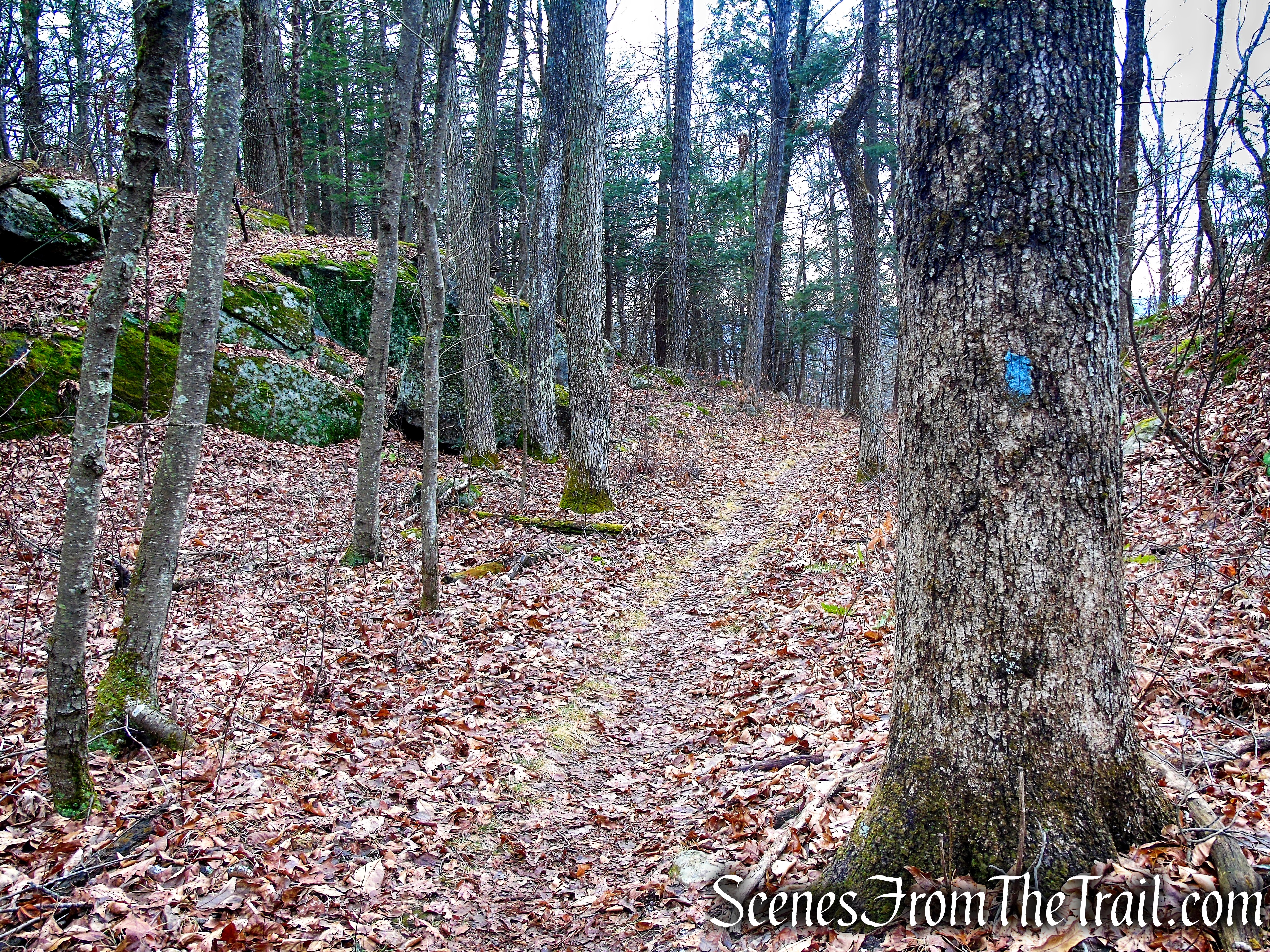
Little-Laurel Lime Ridge Park

August 1, 2020 – Seymour, Connecticut

Difficulty: Moderate

Length: Approximately 2.3 miles

Max elevation: 547 ft.– total elevation gain approximately 314 ft.

Route type: Circuit

Maps: Little-Laurel Lime Ridge Park Trail Map 2022

Trailhead parking: At the end of the road, just past 99 Tibbets Road, Seymour, CT 06483


Park Overview:

Little-Laurel Lime Ridge Park is a 209-acre park that is owned and managed by the town of Seymour. Part of the Seymour Land Trust, the park features a unique ridge-top ecosystem dominated by chestnut oak, pitch pine and mountain laurel. The old mining roads lead to the ruins of an early 1800’s colonial limestone kiln, marble caves, stone shelters and quarries. The topography is characterized by rolling hills with intermittent steep slopes that offer spectacular views of the Housatonic River Valley from rock outcrops. There is no park signage currently, at the end of Tibbets Road (the main access point) and there are no facilities. This is a Carry In – Carry Out park.

view of the Housatonic River - Little-Laurel Lime Ridge Park

view of the Housatonic River – Little-Laurel Lime Ridge Park

History:

Two hundred million years ago, the state was covered by an ocean that included a large coral reef that surrounded a volcanic island. Eventually, the reef metamorphosed into the marble that can still be seen in the park today. Local farmers in the late 18th and early 19th centuries made use of this marble to “sweeten” their crop fields and enhance plant growth by lowering soil acidity. But first they had to burn the marble in a kiln for six to seven days to drive off carbon dioxide and produce “burnt lime.” Two local lime kilns were constructed for this purpose, with one remaining in Seymour.

lime kiln ruins - Little-Laurel Lime Ridge Park

lime kiln ruins – Little-Laurel Lime Ridge Park

Little-Laurel Lime Ridge Park was purchased by the Town of Seymour in 1977 with Federal and state grants. Further funding was obtained by members of the Seymour Land Trust, a nonprofit that conserves nature in the Naugatuck River Valley in Connecticut. It was named for Jane Little, a local conservationist who saw the unique historical and ecological importance of preserving the area, the abundance of mountain laurel, the marble (lime) found on the property, and for the ridge that runs above the Housatonic River.


Trails Overview:

Little-Laurel Lime Ridge Park has an extensive network of blazed and unblazed woods roads and footpaths. The trail guide lists three main trails: The Southern Loop, Northern Loop and the Boundary Loop Trails, which total about 5.1 miles. There are other ATV trails and footpaths which are not depicted on the map that is provided by the Seymour Land Trust. The blazed trails are not clearly marked and are at times, hard to follow.

To better navigate this park, download the free Gaia GPS app on your smartphone and use the “Gaia Streets” or “Open Street Map” layers. As you zoom in, the points of interest will come into view. There are intersecting trails/woods roads that lead to public streets and by using the app, you are less likely to take a wrong turn or get lost.

Below is an image from the Gaia GPS app that was used during our visit. Some of the points of interest can only be seen when you zoom in while using the app.

Little-Laurel Lime Ridge Park

Little-Laurel Lime Ridge Park

Hike Overview:

This is a great place to visit and explore. On our visit, we did not encounter any other hikers, nor were there any cars in the parking area at the end of Tibbetts Road when we arrived or when we left. Although I have read reports of unauthorized ATV use, we didn’t encounter any, nor did we hear any motorized vehicles in the park. We arrived shortly before 8:30 am on a Saturday morning and it was very quiet and peaceful throughout our visit.


The Hike:

Normally I do turn by turn descriptions of my hikes. With so many poorly blazed and unmarked trails and woods roads in the park, it is difficult to direct others. Even using the paper map and the app, I was confused at times which way to go.

The hike was done clockwise from Tibbetts Road and I will list the points of interest in that order.

The start of the Blue Trail at the end of Tibbets Road.

Blue Trail - Little-Laurel Lime Ridge Park

Blue Trail – Little-Laurel Lime Ridge Park

Blue Trail - Little-Laurel Lime Ridge Park

Blue Trail – Little-Laurel Lime Ridge Park

In about 500 yards, the Blue Trail splits. We took the left leg of the Blue Trail, doing the loop clockwise. The right leg was our return route, but if you just want to visit the “caves” and the view, it’s a much shorter distance if you take the right leg.

Blue Trail - Little-Laurel Lime Ridge Park

Blue Trail – Little-Laurel Lime Ridge Park

The area of the south quarry.

south quarry - Little-Laurel Lime Ridge Park

south quarry – Little-Laurel Lime Ridge Park

south quarry - Little-Laurel Lime Ridge Park

south quarry – Little-Laurel Lime Ridge Park

Interesting rock formation on the hillside above the Blue Trail.

rock formation - Little-Laurel Lime Ridge Park

rock formation – Little-Laurel Lime Ridge Park

A wrecked car just below the Blue Trail.

car wreck - Little-Laurel Lime Ridge Park

car wreck – Little-Laurel Lime Ridge Park

The Blue Trail descending in a southerly direction, in the center of the park, near its southern boundary.

Blue Trail - Little-Laurel Lime Ridge Park

Blue Trail – Little-Laurel Lime Ridge Park

A moss covered rock formation along the Blue Trail.

moss covered boulder - Little-Laurel Lime Ridge Park

moss covered boulder – Little-Laurel Lime Ridge Park

The Blue Trail descends more steeply as it heads west, along a seasonal streaming cascade.

Blue Trail - Little-Laurel Lime Ridge Park

Blue Trail – Little-Laurel Lime Ridge Park

An unmarked trail that heads in a northerly direction towards the area of the viewpoint. The Blue Trail continues its steep descent, but since we were headed to the viewpoint, We turned right onto the unmarked trail. The Blue Trail after descending steeply, ascends to the viewpoint. By taking the unmarked trail, we eliminated some elevation gain.

unmarked trail - Little-Laurel Lime Ridge Park

unmarked trail – Little-Laurel Lime Ridge Park

After climbing steeply along an unmarked footpath, a large open rock outcrop appears.

rock outcrop - Little-Laurel Lime Ridge Park

rock outcrop – Little-Laurel Lime Ridge Park

Spent fireworks left behind from previous visitors.

rock outcrop - Little-Laurel Lime Ridge Park

rock outcrop – Little-Laurel Lime Ridge Park

Looking north, up the Housatonic River. This is a good place to take a break and relax.

view of the Housatonic River - Little-Laurel Lime Ridge Park

view of the Housatonic River – Little-Laurel Lime Ridge Park

view of the Housatonic River – Little-Laurel Lime Ridge Park

view of the Housatonic River – Little-Laurel Lime Ridge Park

view of the Housatonic River – Little-Laurel Lime Ridge Park

view of the Housatonic River – Little-Laurel Lime Ridge Park

The Blue Trail passes by the viewpoint, and heads northeast near the park’s northern boundary, as it ducks back into the woods.

Blue Trail – Little-Laurel Lime Ridge Park

Blue Trail – Little-Laurel Lime Ridge Park

The Blue Trail runs along an old mining road, leading to the ruins of an early 1800’s colonial limestone kiln.

lime kiln ruins - Little-Laurel Lime Ridge Park

lime kiln ruins – Little-Laurel Lime Ridge Park

As the Blue Trail heads south, not far from the kiln ruins, it passes alongside the northen quarry.

marble quarry - Little-Laurel Lime Ridge Park

marble quarry – Little-Laurel Lime Ridge Park

marble quarry - Little-Laurel Lime Ridge Park

marble quarry – Little-Laurel Lime Ridge Park

The Blue Trail continues south, through the center of the park……..

Blue Trail – Little-Laurel Lime Ridge Park

Blue Trail – Little-Laurel Lime Ridge Park

…..soon passing some interesting rock formations, rock shelters and marble caves.

Blue Trail – Little-Laurel Lime Ridge Park

Blue Trail – Little-Laurel Lime Ridge Park

Blue Trail – Little-Laurel Lime Ridge Park

Blue Trail – Little-Laurel Lime Ridge Park

Blue Trail – Little-Laurel Lime Ridge Park

Blue Trail – Little-Laurel Lime Ridge Park

Blue Trail – Little-Laurel Lime Ridge Park

Blue Trail – Little-Laurel Lime Ridge Park

If you’re expecting some deep caverns to walk into and explore, you will be sorely disappointed. These “holes in the rock” are still a very interesting geological feature to see.

Blue Trail – Little-Laurel Lime Ridge Park

Blue Trail – Little-Laurel Lime Ridge Park

Blue Trail – Little-Laurel Lime Ridge Park

Blue Trail – Little-Laurel Lime Ridge Park

Review:

A quiet place to explore with many points of interest. With the myriad of trails and old mining roads, along with ATV trails, one can spend a good deal of time in this park. The rock formations, quarries, caves and views of the Housatonic River make Little-Laurel Lime Ridge Park a worthwhile place to check out. The trails could be better blazed and an up-to-date trail map would be helpful, but all in all, a few hours well spent on the trails.


Pros:

Scenic views, rock formations, historical features, quarries, marble caves, not much foot traffic.


Cons:

Trails are not well marked and no updated trail map.


Sources:
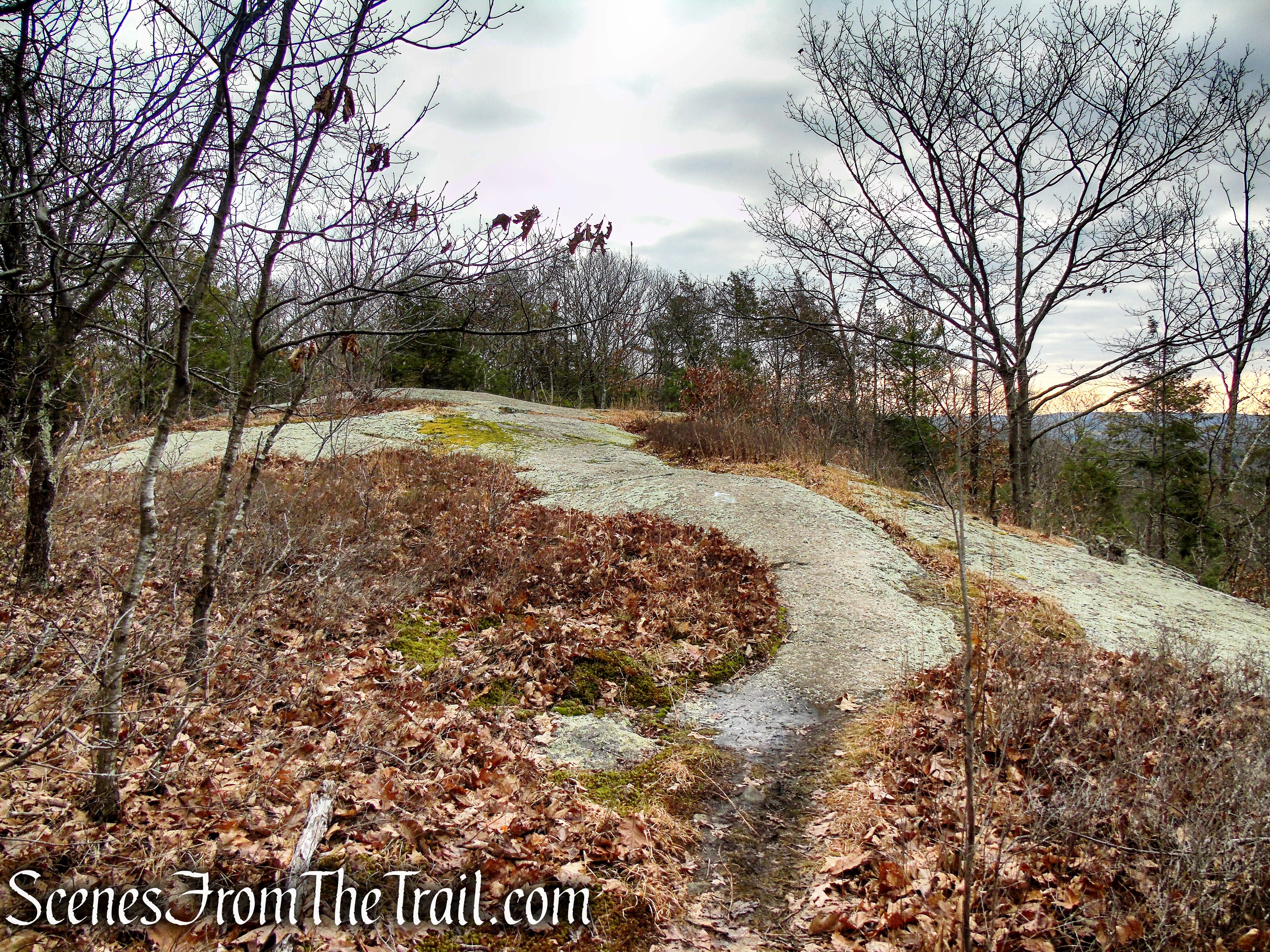
Leon Levy Preserve

June 20, 2020 – South Salem, NY

Difficulty: Easy – moderate

Length: Approximately 4 miles

Max elevation: 764 ft. – total elevation gain: approximately 485 ft.

Route type: Circuit

Map: Leon Levy Preserve Trail Map

Trailhead parking: Smith Ridge Rd (NY-123) South Salem, NY 10590

The main entrance and parking lot is on Route 123 (Smith Ridge Road), just south of the intersection with Route 35. A white sign marks the entrance.

For an updated version of this hike, click HERE


Preserve Overview:

The Leon Levy Preserve, formerly the Bell property, is 370 acres of forest and wetlands, located in the watersheds of both New York City and Stamford. About 90 acres lie within the watershed of New York City’s Croton Reservoir system, and the rest of the land drains into Stamford’s reservoirs. Leon Levy Preserve is owned by the Town of Lewisboro.

Leon Levy Preserve

Leon Levy Preserve

The preserve is maintained by the Lewisboro Trail Volunteers, of the town Open Space and Preserves Advisory Committee. They work over 1,000 hours yearly, building, improving and maintaining the trails and features at Leon Levy Preserve.

Lewisboro Trail Volunteers

Lewisboro Trail Volunteers

The preserve features wetlands rich in wildlife, a ravine with 75’ cliffs, diverse hardwood forest, rare plants such as Purple Milkweed and Blue Cohosh and a native plant garden adjacent to parking lot. The preserve has an extensive trail system, the ruins of the Black Mansion (1899-1979) and other outbuildings. In 2015, the Leon Levy Native Plant Garden was added by Lewisboro Land Trust.

Black Mansion ruins - Leon Levy Preserve

Black Mansion ruins – Leon Levy Preserve

History:

Long before there was a Leon Levy Preserve, the area was home to bands of Algonkian-speaking Kitchawancs. Lake Kitchawan and streams provided a water source; Native Peoples were gone by the early 1700’s.

Part of the property, known in Revolutionary times as Keeler’s Ridge, was the encampment of Colonel Elisha Sheldon and his Second Continental Regiment of Light Dragoons.

  • Circa 1790 – 1874 ~ First recorded property owner was Sgt. Jeremiah Keeler (1760 – 1835) who saw much action in the Revolutionary War. The property passed to his son Thaddeus at Jeremiah’s death in 1853.
  • Circa 1890 – 1923 ~ Dr. James M. Crafts (1839 – 1917) purchased the property from the Keeler heirs and built the house on the hilltop between 1890 and 1900. He was called the first of the “City People” to build a summer home in South Salem.
  • 1923 – 1959 ~ Abram I. Kaplan purchased the property from the Crafts heirs. The Kaplan family spent one season in the house and moved full time to another house on the property.
  • 1959 ~ The property was purchased by the Bell/Lyden Partnership as an investment. No development followed.
  • Circa Early 1960’s to 1979 ~ Mansion remained unoccupied and acquired the name “Black Mansion” by locals.
  • January 28, 1979 ~ Black Mansion was destroyed by fire.
  • 2005 ~ The property was purchased by Town of Lewisboro with contributions from the Jerome Levy Foundation, NYCDEP, and the Dextra Baldwin McGonagle Foundation.

Professor James Mason Crafts was an organic chemist and the fifth president of Massachusetts Institute of Technology from 1897 to 1900. Crafts was a professor of chemistry at Cornell College (1867-1870) and at MIT (1870-1880 and 1892-1897). He was one of the most highly regarded chemists of his era.

James Mason Crafts - image courtesy of Maureen Koehl

James Mason Crafts – image courtesy of Maureen Koehl

It was Dr. Crafts who built the mansion and many of the property’s enhancements. The Black Mansion, as it is known today, sat atop the hill, about 700 feet above sea level, one of the highest spots in Lewisboro, but so far up a winding drive that it was not easily seen from the highways.

In addition to the mansion, Professor Crafts built a coach house, a garage, an ice house and a laboratory. A cottage was built later for Mrs. Crafts’ daughter to spend weekends. The garage had six bays and a grease pit. The Keeler-era cow barn survived until about 2000, when it mysteriously burned as it was being restored.

In 1923, Mr. Crafts’ heirs sold the property to Mr. Abram Kaplan. The Kaplan family fortunes were tied to the sugar and molasses business in the Caribbean and to lumbering in New Mexico. Mrs. Kaplan did not like the house because the only heat in the mansion was generated from the fireplaces and she found it cold and drafty.

For whatever reason, the grand house on top of the hill was abandoned by the family and left derelict with all its furnishings and accessories in place. This made the empty house a target for vandals and adventure seekers out for a good time and a few souvenirs. Perhaps it was during this period that the house started being known as The Black Mansion. During the forties and fifties, it was called the Kaplan place.

Black Mansion - Leon Levy Preserve taken by Carol Gracie circa 1973

Black Mansion – Leon Levy Preserve taken by Carol Gracie circa 1973

The Kaplans, in turn, sold the property to Robert Bell and his partner, Mr. Leyden. The acreage at the time reached from Route 35, all the way to Lake Kitchawan, and wandered along Ridgefield Avenue. Little by little parts were sold off, until it stood as it does today. Several attempts were made to develop the land, but none were successful. On a very cold winter night, January 28, 1979, at 12:35 a.m., the alarm bell rang at the South Salem fire house, the mansion is on fire! By the time the firemen arrived, the Black Mansion was “totally involved.” There was little to do but pump water on the blaze and try to contain the flames. The cause of the fire was never determined.

Black Mansion - January 28, 1979 - image courtesy of Maureen Koehl

Black Mansion – January 28, 1979 – image courtesy of Maureen Koehl

Black Mansion Aerial - image courtesy of Maureen Koehl

Black Mansion Aerial – image courtesy of Maureen Koehl

In 2005, a partnership of public and private organizations succeeded in buying the former “Bell Property” and the Leon Levy Preserve came into existence. Lewisboro and Westchester Land Trusts worked with the Town of Lewisboro to negotiate the $8.3 million acquisition. The purchase was made possible because of a $5 million contribution from the Jerome Levy Foundation; $1 million each from the Town of Lewisboro and the New York City Department of Environmental Protection; and $500,000 over five years from the Dextra Baldwin McGonagle Foundation.

The land was named the Leon Levy Preserve in honor of the well-known Wall Street investor and founder of Oppenheimer Funds. The late Mr. Levy was the Jerome Levy Foundation’s primary benefactor. His widow, Shelby White, arranged the gift. “Our involvement in the project is a fitting tribute to Leon’s love for Lewisboro, and he would have been proud and pleased to see this land protected.”

An interesting side-note involving a member of the Kaplan family:

Joel David Kaplan, one of Abram’s sons, was arrested in Mexico in November 1961, at the age of 35. He was convicted in 1962 of killing a man, and sentenced to 28 years in Acatitla prison. After nine years in the Mexican prison, on August 19, 1971, a helicopter landed in the prison yard. The guards mistakenly thought this was an official visit. In two minutes, Kaplan and Kaplan’s cellmate Carlos Antonio Contreras Castro, a Venezuelan counterfeiter, boarded the craft and were piloted away. No shots were fired. Both men were flown to Texas and then different planes flew Kaplan to California and Castro to Guatemala.

Joel David Kaplan

Joel David Kaplan

The Mexican government never initiated extradition proceedings against Kaplan. The escape is recounted in a book, “The 10-Second Jailbreak: The Helicopter Escape of Joel David Kaplan.” It also inspired the 1975 action movie “Breakout” which starred Charles Bronson and Robert Duvall.

The 10-Second Jailbreak - image courtesy of Maureen Koehl

The 10-Second Jailbreak – image courtesy of Maureen Koehl

Trails Overview:

A combination of footpaths and carriage roads make up the approximately 5.5 miles of hiking trails that are within the preserve. They will be adding more trails over the next few years.

Some of the carriage roads on this former estate are wide enough to allow walking two or three abreast. Extensive stonework is apparent on the many at-grade raised roadbeds. The narrower footpaths require walking single file.

The trails are well marked as are the junctions, which are numbered and some have maps. The numbered trail junctions correspond with those on the trail map, making the trails easy to follow. The trail blazes consist of 2” x 6” pieces of colored aluminum of the appropriate trail color. Red blazes appear co-aligned with some of the marked carriage roads sporadically throughout the preserve, but there isn’t a Red Trail listed on the map. The red blazes are Lewisboro Horsemen’s Association permissible trails.

Silver Trail - Leon Levy Preserve

Silver Trail – Leon Levy Preserve

As of 2018, there are new trails on the east side of Route 123, directly across from the main entrance. Cross the road carefully, and ascend the steps on the other side to access these new trails.

Leon Levy Preserve

Leon Levy Preserve

Hike Overview:

I visited the Leon Levy Preserve in May of 2016, when I first started this blog and enjoyed the experience. In keeping with the recent trend of hiking local, I decided to pay it a return visit. The preserve is well maintained, the trails are mostly all shaded and the landscape is quite scenic.

Due to Covid, the parking has been reduced to 14 cars and the preserve is only open to NYS residents.

Leon Levy Preserve

Leon Levy Preserve

This hike is mostly a loop, with only retracing of steps on short sections of trails. It covers all of the main points of interest, including the Black Mansion ruins.

Leon Levy Preserve

Leon Levy Preserve

The Hike:

The hike begins at the northwest end of the parking lot, to the left of the kiosk. The three blue blazes on the tree, mark the start of the Blue Trail (Main Trail). Follow the blue blazes as they head west into the preserve. In about 200 feet, the trail reaches Junction 1, where the Blue Trail turns right, which will be your return route. For now, turn left on the White Entrance Trail as it leads southwest on a woods road, gradually climbing the hillside. The White Entrance Trail curves to the north and in 0.3 mile, ends at Junction 19 (Blue Trail).

Trailhead - Leon Levy Preserve

Trailhead – Leon Levy Preserve

start of Blue Trail - Trailhead - Leon Levy Preserve

start of Blue Trail – Trailhead – Leon Levy Preserve

Junction 1 - Leon Levy Preserve

Junction 1 – Leon Levy Preserve

Junction 1 - White Entrance Trail - Leon Levy Preserve

Junction 1 – White Entrance Trail – Leon Levy Preserve

White Entrance Trail - Leon Levy Preserve

White Entrance Trail – Leon Levy Preserve

White Entrance Trail - Leon Levy Preserve

White Entrance Trail – Leon Levy Preserve

Junction 19 - White Entrance Trail - Leon Levy Preserve

Junction 19 – White Entrance Trail – Leon Levy Preserve

Turn right on the Blue Trail as it heads northeast on another woods road. The Blue Trail is joined by another road that comes in from the left (not on trail map). Continue straight on the Blue Trail, soon passing Junction 23 (pink-blazed Cottage Trail). Stay on the Blue Trail and approximately 0.3 mile from where you began on the Blue Trail, it reaches Junction 3 (Yellow Trail). Turn left here, leaving the Blue Trail and now follow the yellow blazes up the hill.

Blue Trail - Leon Levy Preserve

Blue Trail – Leon Levy Preserve

Blue Trail - Leon Levy Preserve

Blue Trail – Leon Levy Preserve

Blue Trail - Leon Levy Preserve

Blue Trail – Leon Levy Preserve

Blue Trail - Leon Levy Preserve

Blue Trail – Leon Levy Preserve

turn left on Yellow Trail

turn left on Yellow Trail

Yellow Trail - Leon Levy Preserve

Yellow Trail – Leon Levy Preserve

In about 210 feet, there is an unmarked woods road on the left with the Black Mansion ruins visible about 130 feet away. You may want to take some time to view this interesting structure.

Black Mansion ruins - Leon Levy Preserve

Black Mansion ruins – Leon Levy Preserve

Black Mansion ruins - Leon Levy Preserve

Black Mansion ruins – Leon Levy Preserve

This 3-story fieldstone and shingle mansion was built as a luxurious summer home, the only heat was from large fireplaces. On the main floor were several large reception rooms, a grand entry, a paneled library and a music room with an Aeolian organ.

Black Mansion ruins - Leon Levy Preserve

Black Mansion ruins – Leon Levy Preserve

This is the lone remaining column, of the pair that once adorned the front entrance.

Black Mansion ruins - Leon Levy Preserve

Black Mansion ruins – Leon Levy Preserve

This brick enclosure may have been a root cellar. The roof, which was collapsing, was removed in recent years.

Black Mansion ruins - Leon Levy Preserve

Black Mansion ruins – Leon Levy Preserve

Black Mansion ruins - Leon Levy Preserve

Black Mansion ruins – Leon Levy Preserve

The ceiling was decorated with blue sky and birds. To the rear was an elevator encircled by a staircase. On the second floor, a long hall led to the bedrooms and an art gallery. From the attic the view extended to Long Island Sound. The electricity was produced by acetylene gas.

Black Mansion ruins - Leon Levy Preserve

Black Mansion ruins – Leon Levy Preserve

Black Mansion ruins - Leon Levy Preserve

Black Mansion ruins – Leon Levy Preserve

Black Mansion ruins - Leon Levy Preserve

Black Mansion ruins – Leon Levy Preserve

Black Mansion ruins - Leon Levy Preserve

Black Mansion ruins – Leon Levy Preserve

On the north end, there was a circular atrium or garden room/porch.

Black Mansion ruins - Leon Levy Preserve

Black Mansion ruins – Leon Levy Preserve

When you are done examining the Black Mansion ruins, continue on the Yellow Trail near the north end of the ruins, passing Junction 4 (pink-blazed Cottage Trail). In just under 700 feet, the Yellow Trail reaches Junction 5 (Green Trail). Turn right here, leaving the Yellow Trail and turn right on the Green Trail. Follow the green blazes downhill as they head north then gradually curve to the south. When you reach Junction 6, continue straight (turning right leads to Ridgefield Ave.). The Green Trail winds its way through the woods as it descends into the valley, crossing through, then bordering a stone wall.

Yellow Trail - Leon Levy Preserve

Yellow Trail – Leon Levy Preserve

turn right on Green Trail

turn right on Green Trail

Green Trail - Leon Levy Preserve

Green Trail – Leon Levy Preserve

Green Trail - Leon Levy Preserve

Green Trail – Leon Levy Preserve

Green Trail - Leon Levy Preserve

Green Trail – Leon Levy Preserve

At the base of the descent, the Green Trail reaches Junction 7 (purple-blazed West Valley Trail). Turn right here, leaving the Green Trail and proceed ahead on the Purple Trail. The Purple Trail (West Valley Trail), travels through a remote and tranquil valley with wetlands, along the western edge of preserve.

Junction 7 - turn right on Purple Trail

Junction 7 – turn right on Purple Trail

Purple Trail - Leon Levy Preserve

Purple Trail – Leon Levy Preserve

Purple Trail - Leon Levy Preserve

Purple Trail – Leon Levy Preserve

The Purple Trail crosses a small stream on a log bridge and a short distance later, reaches Junction 25 (White Stream Trail). Continue straight, still following the Purple Trail and crossing another small stream on a log bridge. The trail then borders a stone wall as it continues south.

Purple Trail - Leon Levy Preserve

Purple Trail – Leon Levy Preserve

Purple Trail - Leon Levy Preserve

Purple Trail – Leon Levy Preserve

Purple Trail - Leon Levy Preserve

Purple Trail – Leon Levy Preserve

Purple Trail - Leon Levy Preserve

Purple Trail – Leon Levy Preserve

Purple Trail - Leon Levy Preserve

Purple Trail – Leon Levy Preserve

Purple Trail - Leon Levy Preserve

Purple Trail – Leon Levy Preserve

In about 0.3 mile, the Purple Trail turns left, climbs a little, then turns left again, crossing through a stone wall at Junction 9 (Yellow-Purple Trail). Stay to the right bordering the stone wall to remain on the Purple Trail, which turns right as it passes a high section of the stone wall.

Purple Trail - Leon Levy Preserve

Purple Trail – Leon Levy Preserve

Purple Trail - Leon Levy Preserve

Purple Trail – Leon Levy Preserve

The trail heads in a southerly direction and soon crosses through another stone wall. Next to the stone wall is the Shepherd’s Hut ruins.

Purple Trail - Leon Levy Preserve

Purple Trail – Leon Levy Preserve

According to Maureen Koehl, Lewisboro Town Historian: The “Shepherd’s Hut” is another fanciful name given by the trails’ head just for want of what else to call the ruin. I don’t think there was ever a bona fide herdsman on the land! It may have been some sort of animal enclosure when the property was more used for farmland during the Keeler ownership.

Shepherd's Hut ruins - Leon Levy Preserve

Shepherd’s Hut ruins – Leon Levy Preserve

Soon the Purple Trail veers southeast and ends at Junction 10 (Blue Trail). Turn left on the Blue Trail which heads northeast on a woods road. In about 140 yards, the Blue Trail reaches Junction 12 (Yellow Trail – South Gorge Rim Trail).

terminus of Purple Trail at Junction 10 - Leon Levy Preserve

terminus of Purple Trail at Junction 10 – Leon Levy Preserve

Blue Trail - Leon Levy Preserve

Blue Trail – Leon Levy Preserve

The Yellow Trail (South Gorge Rim Trail) travels on a footpath along the edge of the cliffs, high above the gorge. The map shows that there is a view of the gorge (★), but perhaps only during leaf-off season. The trail curves around and ends at Junction 13 (Blue Trail). Turn right on the Blue Trail and follow it as it crosses over the gorge on a stone bridge.

Junction 12 - South Gorge Rim Trail

Junction 12 – South Gorge Rim Trail

Yellow Trail - Leon Levy Preserve

Yellow Trail – Leon Levy Preserve

Blue Trail - Leon Levy Preserve

Blue Trail – Leon Levy Preserve

The Blue Trail ascends a little and soon reaches Junction 14 (silver-blazed Gorge Overlook Trail). Turn right on the Silver Trail and follow it to the end. There is an interesting rock formation near the edge of cliffs that is worth seeing. Again, the map shows that there are two viewpoints from this trail, but only during leaf-off season. Follow the silver blazes as the trail loops around and returns to Junction 14 (Blue Trail).

Blue Trail - Leon Levy Preserve

Blue Trail – Leon Levy Preserve

Junction 14 - Leon Levy Preserve

Junction 14 – Leon Levy Preserve

Gorge Overlook Trail Loop - Leon Levy Preserve

Gorge Overlook Trail Loop – Leon Levy Preserve

Gorge Overlook Trail Loop - Leon Levy Preserve

Gorge Overlook Trail Loop – Leon Levy Preserve

Gorge Overlook Trail Loop - Leon Levy Preserve

Gorge Overlook Trail Loop – Leon Levy Preserve

Junction 14 - Leon Levy Preserve

Junction 14 – Leon Levy Preserve

Proceed northeast on the Blue Trail for about 0.4 mile, passing Junction 19 (White Trail) and then reaching Junction 23 (pink-blazed Cottage Trail).

Blue Trail - Leon Levy Preserve

Blue Trail – Leon Levy Preserve

Blue Trail - Leon Levy Preserve

Blue Trail – Leon Levy Preserve

Turn left on the Pink Trail and follow the footpath in a northerly direction, soon arriving at the Cottage ruins.

Junction 23 - Cottage Trail

Junction 23 – Cottage Trail

Cottage Trail - Leon Levy Preserve

Cottage Trail – Leon Levy Preserve

Cottage Trail - Leon Levy Preserve

Cottage Trail – Leon Levy Preserve

The “cottage” appears to be a dwelling that at one time had a small patio on the NE side, probably built late 19th or early 20th century. We did find ‘modern’ heating and plumbing debris when we did an exploratory dig several years ago, but who lived there is another unknown. ~Maureen Koehl – Lewisboro Town Historian

Cottage ruins - Leon Levy Preserve

Cottage ruins – Leon Levy Preserve

The Pink Trail continues around the southwest side of the ruins and soon ends at Junction 4 (Yellow Trail). Turn right on the Yellow Trail, passing the Black Mansion ruins and continue downhill on the road.

Cottage Trail - Leon Levy Preserve

Cottage Trail – Leon Levy Preserve

Cottage Trail - Leon Levy Preserve

Cottage Trail – Leon Levy Preserve

Junction 4 - Leon Levy Preserve

Junction 4 – Leon Levy Preserve

Black Mansion ruins - Leon Levy Preserve

Black Mansion ruins – Leon Levy Preserve

Black Mansion ruins – Leon Levy Preserve

Black Mansion ruins – Leon Levy Preserve

Yellow Trail - Leon Levy Preserve

Yellow Trail – Leon Levy Preserve

The Yellow Trail ends at Junction 3 (Blue Trail). Continue downhill, now following the blue blazes and turn right at Junction 2 (Blue Trail). Follow the blue blazes downhill and in a very short distance, the trail passes another set of ruins.

Continue straight past junction 3 onto Blue Trail

Continue straight past junction 3 onto Blue Trail

Turn right at junction 2, remaining on Blue Trail

Turn right at junction 2, remaining on Blue Trail

The ruins with the tall chimney along the Blue Trail was a small house with an attached garage on the north side. It was surrounded by a flagstone walk/patio so we believe it was used as a dwelling at one time. During the ownership of Dr. Crafts, the builder of the mansion, the building was quite likely used as his chem lab in the early 1900’s. We did not find any lab detritus (debris) during several digs in this area, but found mid-century plumbing and heating artifacts and lots of burned and melted glass. This structure may have burned in the 1970’s as well. I have been told that it was rented during the 1950’s as a dwelling. ~Maureen Koehl – Lewisboro Town Historian

stone ruins on Blue Trail

stone ruins on Blue Trail

Continue downhill on the Blue Trail turning left at Junction 1 and returning to the parking area, where the hike began.

Blue Trail - Leon Levy Preserve

Blue Trail – Leon Levy Preserve

Turn left at junction 1

Turn left at junction 1

Review:

This is a really good hike with a very interesting history. The combination of woods roads and footpaths compliment each other. The hike is almost entirely shaded, with the exception of the Black Mansion ruins, which is perfect for a hot and humid day. The scenic woods, stone walls, rock formations and ruins make this lovely preserve worth a visit. This hike was done on a Saturday morning and although there were several cars in the lot when we arrived at about 9:00 am, we only saw a couple of people on the trails during our visit. Extremely quiet and a very enjoyable day on the trails.

Pros:

Historical features, Black Mansion ruins, rock formations, well marked trails and junctions, lightly trafficked and well maintained preserve.

Cons:

None.

Take a hike!

Leon Levy Preserve

Leon Levy Preserve

Sources:


Larchmont Manor Park

June 16, 2020 – Larchmont, NY

Difficulty: Easy

Address: 65 Park Ave, Larchmont, NY 10538


Park Overview:

Larchmont Manor Park is located in the Village of Larchmont and encompasses roughly 13 acres of waterfront land with more than 5,000 feet of shoreline along Long Island Sound and Larchmont Harbor. Known for its striking striated rocks, winding walking paths, scenic viewpoints, and open gazebos, the park blends natural shoreline geology with carefully maintained landscape design. It offers a peaceful coastal retreat where open lawns, shaded seating areas, and rugged rock formations come together, inviting quiet strolls and moments of reflection. With gentle sea breezes, passing boats, and wide views across the water, it remains a tranquil escape tucked just beyond the surrounding residential neighborhood.

Larchmont Manor Park

Larchmont Manor Park

North Gazebo - Larchmont Manor Park

North Gazebo – Larchmont Manor Park

It’s one of the most beautiful and scenic places to visit in the Village of Larchmont. Located along Park Avenue, this lovely tree-lined masterpiece overlooks the Long Island Sound. Walk along its pathways, or relax on one of its many benches, it’s sure to be a time that you won’t soon forget!

Larchmont Manor Park

Larchmont Manor Park

Larchmont Manor Park

Larchmont Manor Park

Larchmont Manor Park

Larchmont Manor Park

Larchmont Manor Park

Larchmont Manor Park

This small stone structure is actually the restored housing for an old freshwater well—an unusual feature given its proximity to Long Island Sound. Historically, this well provided fresh drinking water just a short distance from the shoreline, a rare and valuable resource when the park and surrounding area were first developed. While the well itself has since been filled in, the rustic stone building remains as a preserved nod to the park’s early infrastructure and coastal history.

stone structure - Larchmont Manor Park

stone structure – Larchmont Manor Park

At the far end of the park, the stonework takes on a more intentional, crafted feel, blending human design with the rugged shoreline. Stone walls, steps, and retaining edges have been carefully built into the natural contours of the coast, guiding footpaths and framing quiet overlooks toward Long Island Sound. Weathered and timeworn, the masonry softens into the landscape, giving the impression that it has always belonged there—an understated transition between manicured park space and raw coastal rock.

Larchmont Manor Park

Larchmont Manor Park

Larchmont Manor Park is privately owned and maintained by the Larchmont Manor Park Society, a not-for-profit organization. This park was formed as a contemplation and passive use park. Although Manor Park is privately owned, it is open to the public year-round, from dawn to dusk.

Larchmont Manor Park

Larchmont Manor Park

South Gazebo - Larchmont Manor Park

South Gazebo – Larchmont Manor Park

The gazebos are simple, open-air structures designed to complement the park’s relaxed, coastal setting. Positioned to take advantage of the waterfront, they offer shaded spots to sit and enjoy views of Long Island Sound, with sea breezes and the sound of the water adding to the experience. Unassuming in design, they blend into the landscape while providing quiet places for reflection, conversation, or just a break from the sun along the shoreline.

South Gazebo - Larchmont Manor Park

South Gazebo – Larchmont Manor Park

South Gazebo - Larchmont Manor Park

South Gazebo – Larchmont Manor Park

Larchmont Manor Park is one of the most picturesque settings in all of New York, located on a beautiful stretch of the Long Island Sound.

Umbrella Point - Larchmont Manor Park

Umbrella Point – Larchmont Manor Park

Umbrella Point - Larchmont Manor Park

Umbrella Point – Larchmont Manor Park

The umbrella-like structure is a small open-air gazebo, designed to provide shade and a place to sit while taking in the views of Long Island Sound. Its simple, slightly whimsical design stands out against the more traditional elements of the park, offering a quiet spot to relax, read, or watch the water. Positioned near the shoreline, it’s one of those understated features that adds to the park’s charm without drawing too much attention to itself.

Umbrella Point - Larchmont Manor Park

Umbrella Point – Larchmont Manor Park

Umbrella Point - Larchmont Manor Park

Umbrella Point – Larchmont Manor Park

Bordered by a private beach, a yacht club and the stately Victorian homes that line the street, Manor Park is the only place in the village where the public can go, to admire the scenery and walk along the water.

Larchmont Manor Park

Larchmont Manor Park

Larchmont Manor Park

Larchmont Manor Park

The sweeping views of the Long Island Sound, make this park an idyllic place to spend a few hours.

Larchmont Manor Park

Larchmont Manor Park

Larchmont Manor Park

Larchmont Manor Park

Larchmont Manor Park

Larchmont Manor Park

Great Egret - Larchmont Manor Park

Great Egret – Larchmont Manor Park

The melting glaciers left behind the rocks that you see today. All along the Park’s coastline, you will see deposits of sandstone, limestone and shale, but most evident are the deposits of granite.

South Gazebo - Larchmont Manor Park

South Gazebo – Larchmont Manor Park

Along the shoreline, the exposed bedrock tells a quiet story of deep time and glacial movement. The smooth, striated rocks were carved and polished by advancing ice sheets during the last Ice Age, as glaciers scraped across the region and dragged sand, gravel, and boulders over the surface. These scratches and grooves—known as glacial striations—record the direction of ice flow and are a visible reminder that this calm stretch of Long Island Sound was once beneath a massive, moving sheet of ice.

Larchmont Manor Park

Larchmont Manor Park

Larchmont Manor Park

Larchmont Manor Park

If you visit:

  • On street parking only, please park only where permissible. The area is heavily patrolled and vehicles parked illegally will be ticketed or towed.
  • Larchmont Manor Park does not have restroom facilities so please plan accordingly. Both Manor Beach and HHYC Yacht Club are not permitted to allow outsiders to enter their facility for this purpose. There are no exceptions.

For the rest of the park rules and there are quite a few, click HERE.

Take a walk!

Larchmont Manor Park

Larchmont Manor Park

Sources:
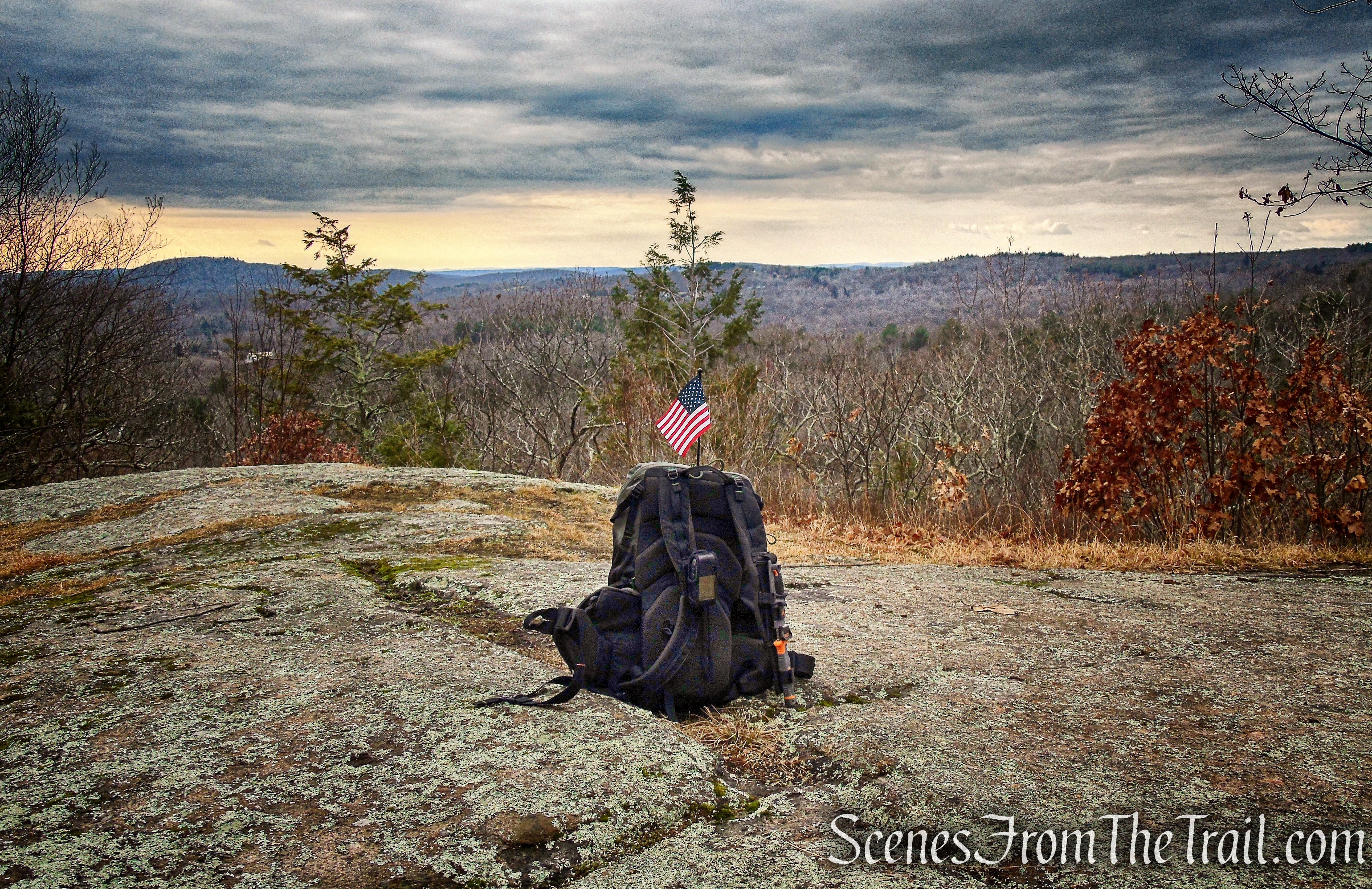
St. Matthew’s Church Woodlands

June 13, 2020 – Bedford, NY

Difficulty: Moderate

Length: Approximately 3 miles

Max elevation: 618 ft. – total elevation gain: approximately 500 ft.

Route type: Triple Lollipop Loop

Map: Glebe and Ketchum Trails Map

Trailhead parking: 382 Cantitoe St, Bedford, NY 10506


Overview:

St. Matthew’s Church Woodlands in Bedford, NY, consists of The Glebe and the Ketchum Sanctuary, totaling 67-acres, that are nestled between ridges and surrounded by private estates. These two parcels of land were set aside for reflection and the quiet enjoyment of nature. The Glebe and Ketchum Trails are privately owned by St. Matthew’s Church but are open to the public for the enjoyment of nature and contemplation. They do ask that visitors respect the beauty of the flora and fauna. Please keep dogs on leashes and the trails clean.

St. Matthew's Church Woodlands

St. Matthew’s Church Woodlands

History:

In 1803 forty acres of land (the Glebe) was purchased and construction began on “the Brick Church” that would lead to the consecration of St. Matthew’s Episcopal Church in 1810. The rectory was built the following year.

St. Matthew's Church

St. Matthew’s Church

The Churchyard, the burial ground for St. Matthew’s, was officially established in the northwest corner of the property in 1812, and has been extended several times toward the eastern edge of the glebe, bordered by the Beaver Dam River. In 2004, a new memorial garden was built and consecrated in the Churchyard.

The Churchyard

The Churchyard

The Churchyard

The Churchyard

The Children’s Chapel, consecrated on September 14, 2013, was built for worship by the youngest children in the parish. Every child in the church school contributed a stone that is incorporated into the stonework.

The Children’s Chapel

The Children’s Chapel

The Children’s Chapel

The Children’s Chapel

The Children’s Chapel

The Children’s Chapel

The 25-acre Ketchum Preserve was given to the Church in 2003 by the Nature Conservancy. Along with the Parsonage Glebe, St. Matthew’s owns a total of 67 acres and maintains both properties.

For a more detailed history of the church, click here.

Trails Overview:

There are approximately 3 miles of hiking trails in St. Matthew’s Church Woodlands. They are well blazed with directional signs at the junctions. The Glebe and Ketchum Sanctuary’s trails are marked with blue blazes except for the Summit Trail in the Ketchum Sanctuary, which is blazed in red. The Summit Trail bisects the Lower and Upper Loop sections of the trail and can be used to create a shorter loop.

Glebe and Ketchum Sanctuary Trails

Glebe and Ketchum Sanctuary Trails

The trail that connects the two pieces of land is a BRLA horse trail marked in yellow and blue.

Glebe and Ketchum Sanctuary Trails

Glebe and Ketchum Sanctuary Trails

There are other BRLA horse trails in both parcels that are marked in yellow. Except for the the trail between the two parcels, hikers should only follow the red and blue trail markers.

BRLA horse trail

BRLA horse trail

Hike Overview:

Keeping with the recent trend of hiking local, I decided to give this place a try. We got there fairly early, about 8:30 am on a Saturday morning. The large parking lot had one car in the lot and the groundskeepers were working on the main church property. It was very quiet an peaceful. When we walked over to take a look at the Children’s Chapel, one of the groundskeepers told us that we could go inside and have a look, so we did.

The Blue Trails consist of three loops, with the trail that connects the two parcels, the stick. We did the hike clockwise, doing the west leg of the three loops on the way up and returning on the east leg. We stopped at the summit (no views) twice, where there is a bench. Once on the way up and again on the way back. We were the only ones in the woods during our hike and the scenic woods were quiet. Once back at the parking lot, where we stayed for a bit, several cars pulled up with persons that headed off on the trails.

This is a hike that is probably better done on any day other than a Sunday, when they hold services.

St. Matthew's Church Woodlands

St. Matthew’s Church Woodlands

The Hike:

The hike begins at the northwest end of the parking lot on a gravel road. Follow the road a short distance in and you will see a large sign with a map and description of the trails, along with a mailbox containing trail maps (always print one at home just in case). This is the start of the Glebe Trail. Follow the gravel road as it heads downhill past the cemetery. When the road comes to a fork, bear left and continue downhill, soon passing the outdoor chapel, with wooden benches and a large bell.

Glebe Trail - St. Matthew's Church Woodlands

Glebe Trail – St. Matthew’s Church Woodlands

Glebe Trail - St. Matthew's Church Woodlands

Glebe Trail – St. Matthew’s Church Woodlands

Glebe Trail - St. Matthew's Church Woodlands

Glebe Trail – St. Matthew’s Church Woodlands

bear left - Glebe Trail - St. Matthew's Church Woodlands

bear left – Glebe Trail – St. Matthew’s Church Woodlands

Glebe Trail - St. Matthew's Church Woodlands

Glebe Trail – St. Matthew’s Church Woodlands

In 1939, Rector Arthur Ketchum had a vision for an outdoor chapel to further capture the beauty of St. Matthew’s. The result was the rustic Chapel in the Woods with its rough-hewn benches and an altar made of fieldstone slab. The Chapel is used for summer services and for weddings, baptisms, and special events.

Outdoor Chapel - Glebe Trail - St. Matthew's Church Woodlands

Outdoor Chapel – Glebe Trail – St. Matthew’s Church Woodlands

Outdoor Chapel - Glebe Trail - St. Matthew's Church Woodlands

Outdoor Chapel – Glebe Trail – St. Matthew’s Church Woodlands

Continue downhill past the chapel and after 0.2 mile, the Glebe Trail reaches the Beaver Dam River. Cross the wooden footbridge and turn right as the trail leads steeply uphill on the Glebe – Ketchum Connector Trail, marked with both yellow BRLA and blue blazes.

Glebe Trail - St. Matthew's Church Woodlands

Glebe Trail – St. Matthew’s Church Woodlands

Glebe Trail - St. Matthew's Church Woodlands

Glebe Trail – St. Matthew’s Church Woodlands

Foley Bridge - St. Matthew's Church Woodlands

Foley Bridge – St. Matthew’s Church Woodlands

Foley Bridge - St. Matthew's Church Woodlands

Foley Bridge – St. Matthew’s Church Woodlands

Foley Bridge - St. Matthew's Church Woodlands

Foley Bridge – St. Matthew’s Church Woodlands

Glebe - Ketchum Connector

Glebe – Ketchum Connector

Glebe - Ketchum Connector

Glebe – Ketchum Connector

Glebe - Ketchum Connector

Glebe – Ketchum Connector

Glebe - Ketchum Connector

Glebe – Ketchum Connector

Glebe - Ketchum Connector

Glebe – Ketchum Connector

In another 0.2 mile, the Glebe – Ketchum Connector Trail comes to the start of the Lower Loop Trail, marked with arrows and signs. There is a bench to the left of the trail. The right leg of the loop is your return route, for now stay left and follow the Lower Loop Trail as it climbs steeply. The trail soon passes a rock outcrop with a bench that overlooks the woods, you may want to stop here and catch your breath.

Lower Loop - St. Matthew's Church Woodlands

Lower Loop – St. Matthew’s Church Woodlands

Lower Loop - St. Matthew's Church Woodlands

Lower Loop – St. Matthew’s Church Woodlands

Lower Loop - St. Matthew's Church Woodlands

Lower Loop – St. Matthew’s Church Woodlands

Lower Loop - St. Matthew's Church Woodlands

Lower Loop – St. Matthew’s Church Woodlands

Continue following the blue blazes uphill and at 0.3 mile from the start of the Lower Loop, the trail comes to a Y-intersection with the Upper Loop and Summit trails. Turn right and follow the red-blazed Summit Trail for 0.1 mile, to its terminus where there is another wooden bench.

Lower Loop - St. Matthew's Church Woodlands

Lower Loop – St. Matthew’s Church Woodlands

Lower Loop/Upper Loop junction - St. Matthew's Church Woodlands

Lower Loop/Upper Loop junction – St. Matthew’s Church Woodlands

Summit Trail - St. Matthew's Church Woodlands

Summit Trail – St. Matthew’s Church Woodlands

Summit Trail - St. Matthew's Church Woodlands

Summit Trail – St. Matthew’s Church Woodlands

Summit Trail - St. Matthew's Church Woodlands

Summit Trail – St. Matthew’s Church Woodlands

When you are ready to proceed, retrace your steps back to the Y-intersection and turn right, leaving the Lower Loop Trail and proceed ahead on the Upper Loop Trail (also blue). The Upper Loop Trail crosses through a stone wall and soon approaches private property, but veers right, away from it and heads downhill and through a wet area on rocks. The trail curves to the south and soon crosses two short footbridges in quick succession and heads to higher ground. The trail climbs gradually, crosses through a stone wall, turning left and soon parallels a stone wall. In about 0.8 mile from the start of the Upper Loop Trail, it goes through another stone wall and reaches a junction with the Lower Loop/Summit Trails.

Upper Loop - St. Matthew's Church Woodlands

Upper Loop – St. Matthew’s Church Woodlands

Upper Loop - St. Matthew's Church Woodlands

Upper Loop – St. Matthew’s Church Woodlands

Upper Loop - St. Matthew's Church Woodlands

Upper Loop – St. Matthew’s Church Woodlands

Upper Loop - St. Matthew's Church Woodlands

Upper Loop – St. Matthew’s Church Woodlands

Upper Loop - St. Matthew's Church Woodlands

Upper Loop – St. Matthew’s Church Woodlands

Upper Loop - St. Matthew's Church Woodlands

Upper Loop – St. Matthew’s Church Woodlands

Upper Loop - St. Matthew's Church Woodlands

Upper Loop – St. Matthew’s Church Woodlands

Upper Loop - St. Matthew's Church Woodlands

Upper Loop – St. Matthew’s Church Woodlands

Lower Loop/Upper Loop/Summit Trail junction - St. Matthew's Church Woodlands

Lower Loop/Upper Loop/Summit Trail junction – St. Matthew’s Church Woodlands

Straight ahead is an unmarked trail that leads to the wooden bench at the summit. You can choose to take or bypass this detour. If visiting this spot, when you are done, retrace your steps back to the junction and turn right, now following the Lower Loop Trail.

unmarked footpath to summit - St. Matthew's Church Woodlands

unmarked footpath to summit – St. Matthew’s Church Woodlands

summit - St. Matthew's Church Woodlands

summit – St. Matthew’s Church Woodlands

The eastern leg of the Lower Loop Trail parallels a stone wall and soon descends steeply. If you look up to the right, that large rock formation that you see, is the summit where the bench is located. Follow the Lower Loop Trail downhill to where a wooden bench is located at the junction with Glebe – Ketchum Connector Trail closing the loop. Turn left and retrace your steps on the Glebe – Ketchum Connector Trail for 0.2 mile, crossing the Foley Bridge and turn left on the Glebe Trail.

Lower Loop - St. Matthew's Church Woodlands

Lower Loop – St. Matthew’s Church Woodlands

Lower Loop - St. Matthew's Church Woodlands

Lower Loop – St. Matthew’s Church Woodlands

Glebe - Ketchum Connector

Glebe – Ketchum Connector

Glebe - Ketchum Connector

Glebe – Ketchum Connector

The Glebe Trail heads upstream on a woods road, along the Beaver Dam River, passing a bench along the way. The trail soon climbs a little, passing a BRLA wooden bridge. Do not cross the bridge. Continue uphill on the woods road, passing a lovely cascade. The trail soon turns right, leaving the woods road and enters the woods. In a short distance, the Glebe Trail turns right, paralleling the parking lot and in a couple of hundred feet, ends at the northeast end of the parking lot. Continue across the parking lot, back to where you parked your vehicle.

Lower Loop - St. Matthew's Church Woodlands

Lower Loop – St. Matthew’s Church Woodlands

Lower Loop - St. Matthew's Church Woodlands

Lower Loop – St. Matthew’s Church Woodlands

Lower Loop - St. Matthew's Church Woodlands

Lower Loop – St. Matthew’s Church Woodlands

Lower Loop - St. Matthew's Church Woodlands

Lower Loop – St. Matthew’s Church Woodlands

Lower Loop - St. Matthew's Church Woodlands

Lower Loop – St. Matthew’s Church Woodlands

Lower Loop - St. Matthew's Church Woodlands

Lower Loop – St. Matthew’s Church Woodlands

terminus of Lower Loop - St. Matthew's Church Woodlands

terminus of Lower Loop – St. Matthew’s Church Woodlands

Review:

A really nice hike through a quiet and peaceful area. The heavily forested woods offers respite from the sun on a hot day. Although there are no views, the summit makes a nice place to sit and relax for a bit. The well manicured grounds as well as the architecture are worth exploring as well. The Upper Loop Trail was somewhat uninteresting, wet and a little overgrown in spots, but since there are only three miles of trails, it is worth doing. I would recommend wearing long pants as your shins would be brushing up against the overgrowth in certain areas. The well marked trails and junctions make this a good hike for the novice hiker.

Pros:

Scenic landscape, well marked trails, shaded trails, Beaver Dam River, small waterfall, quiet and peaceful, not heavily trafficked.

Cons:

No views.


Take a hike!

St. Matthew's Church Woodlands

St. Matthew’s Church Woodlands

Sources:
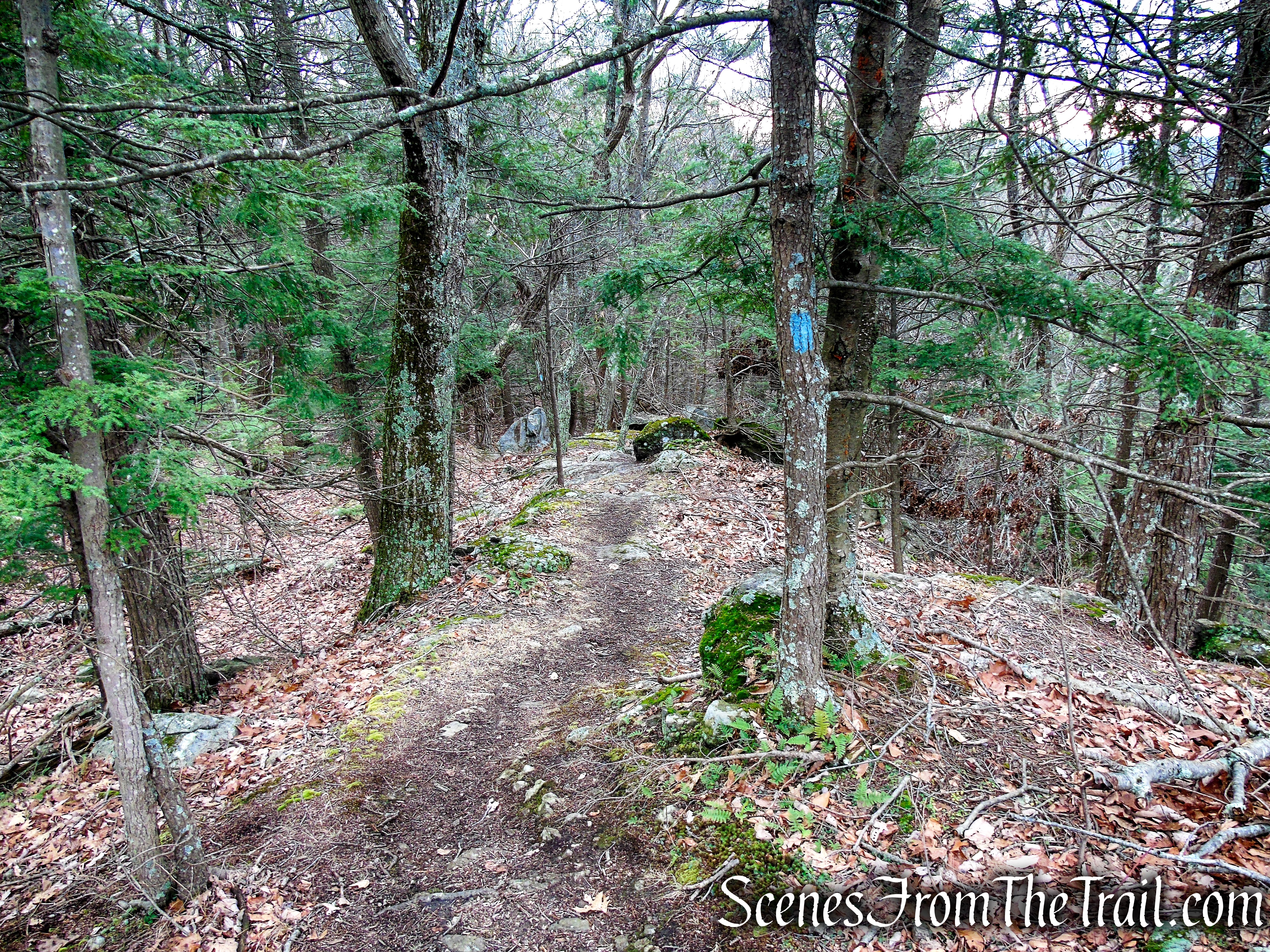


Salt Hill State Forest

June 7, 2020 – Cortlandt, NY

Difficulty: Moderate

Length: Approximately 6 miles

Max elevation: 699 ft. – total elevation gain: approximately 680 ft.

Route type: Circuit

Map: None available

Trailhead parking: Croton Ave, Cortlandt, NY 10567

Please note: There is only room for 3 cars at the GPS location listed above. Pull-off parking for two cars on the western side of Croton Avenue and pull-off parking for one car directly opposite. There is more pull-off parking available, both north and south of the GPS location listed above.

Please note: A portion of this hike takes place on NYC watershed property and may require a DEP Access Permit, which comes with a mirror hanger parking permit. It is free and takes about five minutes to fill out and can be printed off your home computer.


Overview:

Salt Hill State Forest consists of 269.7-acres of rocky ridgelines cloaked in a green forest, with wetlands, fields, and associated wildlife and plant communities. The tract of land is bounded to the east by the Croton Reservoir, making it part of the New York City water supply system’s Croton Watershed. It is otherwise surrounded by dense residential development, and forms the nexus of a major corridor that ecologically links the Town of Cortlandt with Yorktown. There are roughly 15-acres of New York State protected wetlands on the property.

Salt Hill State Forest

Salt Hill State Forest

Salt Hill State Forest is a deciduous forest that climbs unbroken from Croton Avenue and Route 129, to the 699 ft. summit of Salt Hill, encompassing rocky outcrops, rolling hills, brooks, vernal pools and swamps. The centerpiece of Salt Hill State Forest is the picturesque Blue Lake, with its variety of fish including perch, brown trout and rainbow trout. Blue Lake is approximately 8-acres and was created/enhanced by a low dam. The area is peppered with old stone walls and some root cellars, as well as remnants of stone cottages.

Blue Lake - Salt Hill State Forest

Blue Lake – Salt Hill State Forest

History:

Most of Salt Hill was owned by a man named John R. Nelson for many years until his death on October 2, 1971. Mr. Nelson also owned other lands in the area, including the Croton Airpark, just across Route 129. Mining for emery (corundum) was done on the property at some time and John Nelson operated the Cortlandt Complex emery mines for two years, just southwest of Salt Hill. The area was logged by Mr. Nelson and and as early as 1930 and through WW II, a sawmill was being operated for lumbering purposes and the cutting of large timber for sale. One of his customers was the U.S. Government. Mr. Nelson also constructed the small summer cottages, the foundations of which can still be seen, along the shore of Blue Lake, which he would rent out during the summer.

Blue Lake - Salt Hill State Forest

Blue Lake – Salt Hill State Forest

In 1950, the NYS Department of Environmental Conservation erected a fire tower at the summit of Salt Hill. Known as the Nelson Mountain Fire Tower at Salt Hill, the tower was placed into service in 1951, reporting 22 fires and 70 visitors. With the advent of aerial detection, this tower was closed at the end of the 1971 season. Some time following that date, the tower was cut down or pulled over by persons unknown, and its twisted remains are still at the summit of Salt Hill.

Nelson Mountain Fire Tower at Salt Hill - image courtesy of Westchester County Historical Society

Nelson Mountain Fire Tower at Salt Hill – image courtesy of Westchester County Historical Society

The 73′ Aermotor LS-40 tower had 11 flights of stairs. The LS-40 was the preferred fire tower of the officials in the Bureau of Forest Fire Control.

73′ Aermotor LS40 - Copyright 1984 - 2010 Unpublished Work by Bill Starr

73′ Aermotor LS40 – Copyright 1984 – 2010 Unpublished Work by Bill Starr

The Roster of the NYS Forest Fire Observers that were employed during its time in service.

Nelson Mountain Fire Tower - Copyright 1984 - 2010 Unpublished Work by Bill Starr

Nelson Mountain Fire Tower – Copyright 1984 – 2010 Unpublished Work by Bill Starr

After John R. Nelson died in 1971, the land was sold off to developers, but opposition from locals and conservation groups, the land stood idle and switched ownership several times. In 1997, Gov. George E. Pataki pledged $7.5 million to acquire environmentally sensitive lands in the Croton Watershed. In 2002, NY State purchased the 269-acre parcel for $2,940,000. The New York City Department of Environmental Protection (DEP) and NYSDEC hold conservation easements restricting development on this property.

The NYSDEC bought the property for transfer to the NY City Dept of Environmental Protection (DEP) to protect its watershed. However, property transfer has been delayed due to a lack of funding and the difficulty of access to the site, especially to the summit of Salt Hill where a building and collapsed firetower are located.

The property is open to hiking, fishing and hunting. Because of the ongoing intent to transfer the property to the NYC DEP, NY State is not advertising the property.

Trails Overview:

There are several footpaths throughout the forest, some with faded blazes, but mostly unmarked. The trails climb Salt Hill in big looping switchbacks and possibly connect to other properties. The trails were probably cut by mountain bikers, which I have encountered there in the past. An old woods road winds its way down from the summit. This old road was used to access the fire tower and passes by Blue Lake and comes out on Route 129. Another woods road circles the lake.

Hike Overview:

If you enjoy navigating your own path through the open woods with little undergrowth, this is an ideal hike. We basically bushwacked west up the rocky hillside, occasionally jumping on a trail when the cliffs became too steep. We stopped at the the summit, where there are no views, to see the mangled fire tower. From there we took the the woods road down to Blue Lake and enjoyed an early lunch. We circled the lake, exploring the stone ruins then made our way to Route 129 via the woods road. Approximately a 1 mile road walk along Route 129, Short Hill Road and Croton Avenue took us back to the vehicle. In hindsight, a bushwack would have been preferable to the road walk, but at the time, we didn’t know where the woods road would come out at. This hike was done counterclockwise.

UPDATED: The road walk is not necessary and this post has been updated to reflect that. 

A good app for this hike is Gaia GPS with the USGS Topo map (see image below). It is the only map that I found that shows the location of the fire tower, Blue Lake and the woods road that connects them. It is very helpful with the bushwack to make sure you are headed in the right direction. The small black squares around Blue Lake depicts the ruined structures.

Salt Hill State Forest

Salt Hill State Forest

The Hike:

From the parking area, walk south along the road a short distance until you see a narrow footpath that leads into the woods. Follow this unblazed trail as it heads southwest. Although the trail is unmarked, it is well defined at the start. As the trail starts to head more south, you can follow it or do as we did, leave the trail and bushwack west. During this bushwack, we crossed several trails along the way, but we continued west, climbing over and around rocks, trying to hike the shortest (albeit more difficult) distance to the summit.

Salt Hill State Forest

Salt Hill State Forest

Salt Hill State Forest

Salt Hill State Forest

Salt Hill State Forest

Salt Hill State Forest

Salt Hill State Forest

Salt Hill State Forest

Salt Hill State Forest

Salt Hill State Forest

Salt Hill State Forest

Salt Hill State Forest

Salt Hill State Forest

Salt Hill State Forest

Salt Hill State Forest

Salt Hill State Forest

Salt Hill State Forest

Salt Hill State Forest

Salt Hill State Forest

Salt Hill State Forest

Salt Hill State Forest

Salt Hill State Forest

Salt Hill State Forest

Salt Hill State Forest

Once we got to an area where the cliffs were really steep, we jumped on the trail and headed in a southwesterly direction. The footpath curves around the cliffs as it continues to climb. In leaf off season there are views of the Croton Reservoir from rock outcrops along the way.

Salt Hill State Forest

Salt Hill State Forest

Salt Hill State Forest

Salt Hill State Forest

If you continue to follow the footpath, it will take you the long way to the summit. Once we saw the rusty top of the fire tower, we left the trail and made a beeline for it, climbing over some rock formations.

Salt Hill State Forest

Salt Hill State Forest

Nelson Mountain Fire Tower at Salt Hill

Nelson Mountain Fire Tower at Salt Hill

The concrete footings make a good spot to take a break. You have now hiked (bushwacked) about a mile and gained well over 500 feet of elevation. The hard part of the hike is over and the rest of the hike is a breeze.

Nelson Mountain Fire Tower at Salt Hill

Nelson Mountain Fire Tower at Salt Hill

Nelson Mountain Fire Tower at Salt Hill

Nelson Mountain Fire Tower at Salt Hill

Nelson Mountain Fire Tower at Salt Hill

Nelson Mountain Fire Tower at Salt Hill

Nelson Mountain Fire Tower at Salt Hill

Nelson Mountain Fire Tower at Salt Hill

All along the woods, on either side of the open summit, there is scattered debris, including barrels, steel and foundations of structures that once stood near the fire tower. You may want to take some time to explore the woods in this area.

Salt Hill summit

Salt Hill summit

ruins - Salt Hill summit

ruins – Salt Hill summit

ruins - Salt Hill summit

ruins – Salt Hill summit

When you are ready to proceed, follow the woods road that begins near the northern end of the summit.

start of woods road - Salt Hill summit

start of woods road – Salt Hill summit

woods road - Salt Hill State Forest

woods road – Salt Hill State Forest

The front end of an old truck, perhaps Mr. Nelson’s, that was used to haul materials to build what now lies in ruins at the summit.

truck ruins on woods road - Salt Hill State Forest

truck ruins on woods road – Salt Hill State Forest

The woods road descends on big looping switchbacks, that were created to reduce the steepness of the road, in order to make it easier for vehicles to ascend and descend Salt Hill.

woods road - Salt Hill State Forest

woods road – Salt Hill State Forest

woods road - Salt Hill State Forest

woods road – Salt Hill State Forest

We saw a Box Turtle crossing the road on the way down.

Box Turtle on woods road - Salt Hill State Forest

Box Turtle on woods road – Salt Hill State Forest

Soon the road borders some wetlands and levels off a bit. Some sections of the road are rutted, wet and muddy in this area.

woods road - Salt Hill State Forest

woods road – Salt Hill State Forest

In about 1.4 miles from the summit, the woods road reaches Blue Lake. This scenic lake makes a perfect setting to enjoy a picnic.

Blue Lake - Salt Hill State Forest

Blue Lake – Salt Hill State Forest

What appears to be what is left of an old BBQ grill, makes a good place to sit and take in the view.

Blue Lake - Salt Hill State Forest

Blue Lake – Salt Hill State Forest

Looking east.

Blue Lake - Salt Hill State Forest

Blue Lake – Salt Hill State Forest

Follow the road counter clockwise along the shore of Blue Lake.

woods road around Blue Lake - Salt Hill State Forest

woods road around Blue Lake – Salt Hill State Forest

You may want to stop and explore the old stone structures that line the northern shore of Blue Lake.

ruins at Blue Lake - Salt Hill State Forest

ruins at Blue Lake – Salt Hill State Forest

Looking northeast.

Blue Lake - Salt Hill State Forest

Blue Lake – Salt Hill State Forest

The road hugs the shoreline, offering many views of the lake.

woods road around Blue Lake - Salt Hill State Forest

woods road around Blue Lake – Salt Hill State Forest

Looking north with Salt Hill in the background.

Blue Lake - Salt Hill State Forest

Blue Lake – Salt Hill State Forest

This stone structure appears to have been a pump house that was used to supply water to the cottages around the lake.

ruins at Blue Lake - Salt Hill State Forest

ruins at Blue Lake – Salt Hill State Forest

ruins at Blue Lake - Salt Hill State Forest

ruins at Blue Lake – Salt Hill State Forest

There is a trail to the left of this stone structure that ascends the hill steeply. At the top of the rise, the trail comes to a T-intersection. If you turn left at the intersection, you can take this trail all the way back to your starting point, eliminating the road walk. This trail is somewhat rugged with lots of ups and downs, but is only about 0.6 miles compared to the 1 mile road walk. There is an easier trail a little farther, at the eastern side of the lake that is less than 0.5 mile to the parking area.

unmarked trail alongside ruin

unmarked trail alongside ruin

Blue Lake - Salt Hill State Forest

Blue Lake – Salt Hill State Forest

At the eastern end of the lake, if you look to the right, you’ll see a faint footpath that leads into the woods. This footpath which is well defined once entering the woods and easy to follow, is a more direct and mostly level route back to your starting point. It eliminates the road walk and also the elevation gain of the unmarked trail next to the stone ruin.

unmarked trail at east end of Blue Lake

unmarked trail at east end of Blue Lake

truck hood - Salt Hill State Forest

truck hood – Salt Hill State Forest

Blue Lake - Salt Hill State Forest

Blue Lake – Salt Hill State Forest

Blue Lake - Salt Hill State Forest

Blue Lake – Salt Hill State Forest

ruins at Blue Lake - Salt Hill State Forest

ruins at Blue Lake – Salt Hill State Forest

After looping around the lake, continue on the road to the southern end of the lake. When you come to a fork, veer right and follow the road uphill past more stone ruins.

woods road around Blue Lake - Salt Hill State Forest

woods road around Blue Lake – Salt Hill State Forest

Blue Lake - Salt Hill State Forest

Blue Lake – Salt Hill State Forest

bear right at the fork

bear right at the fork

woods road - Salt Hill State Forest

woods road – Salt Hill State Forest

ruins near Blue Lake - Salt Hill State Forest

ruins near Blue Lake – Salt Hill State Forest

ruins near Blue Lake - Salt Hill State Forest

ruins near Blue Lake – Salt Hill State Forest

ruins near Blue Lake - Salt Hill State Forest

ruins near Blue Lake – Salt Hill State Forest

From this point you can retrace your steps and walk along the south side of Blue Lake and take the trail alongside the pump house ruin, climbing the hill and turning left, following the unmarked trail back to your starting point or take the easier trail which is about 270 feet past the pump house ruins. You can also choose to continue ahead as described below.

Follow the road as it goes through an overgrown field, which at one time was a driving range.

woods road - Salt Hill State Forest

woods road – Salt Hill State Forest

Soon the road climbs a little and joins a paved road. Follow the paved road a short distance and turn left near another set of ruins and follow the unpaved road.

asphalt road - Salt Hill State Forest

asphalt road – Salt Hill State Forest

woods road - Salt Hill State Forest

woods road – Salt Hill State Forest

Soon the road passes alongside a pond and a short distance later ends at Route 129. Turn left then veer left onto Short Hill Road, then left on Croton Avenue and follow it until you return to the parking area, where the hike began. The road is very narrow, with not much of a shoulder so great care should be taken while walking on the road. If you would prefer to avoid the road walk, retrace your steps back to Blue Lake and follow the directions below.

woods road - Salt Hill State Forest

woods road – Salt Hill State Forest

pond - Salt Hill State Forest

pond – Salt Hill State Forest

terminus of woods road at Route 129

terminus of woods road at Route 129

When you return to Blue Lake, turn right and walk along the south side of the lake. When you get to the pump house ruins, you can take the trail just to the left and climb steeply up the hill or take the easier route by walking approximately 270 feet past the stone pump house, turn right on an unmarked footpath, that was pointed out earlier.

ruins at Blue Lake - Salt Hill State Forest

ruins at Blue Lake – Salt Hill State Forest

I will call this the Blue Lake Trail, as it leads directly from Blue Lake to Croton Avenue.

Blue Lake Trail - Salt Hill State Forest

Blue Lake Trail – Salt Hill State Forest

Once in the woods, the trail becomes well defined and you may occasionally see a red blaze on the trees. There is minimal elevation gain as this trail goes through the valley. The trail proceeds in a northeasterly direction through the woods. In about 300 yards, the trail turns left and there is an old car door on the left. Almost immediately, the trail turns right, passes a stone structure and continues northeast.

Blue Lake Trail - Salt Hill State Forest

Blue Lake Trail – Salt Hill State Forest

Blue Lake Trail - Salt Hill State Forest

Blue Lake Trail – Salt Hill State Forest

Blue Lake Trail - Salt Hill State Forest

Blue Lake Trail – Salt Hill State Forest

Blue Lake Trail - Salt Hill State Forest

Blue Lake Trail – Salt Hill State Forest

Soon the trail passes through wetlands, climbs slightly then descends gradually, bordering a seasonal stream. In just under 0.5 mile from Blue Lake, the trail reaches Croton Avenue. Turn left on Croton Avenue and walk about 225 feet back to the parking area, where the hike began.

Blue Lake Trail - Salt Hill State Forest

Blue Lake Trail – Salt Hill State Forest

Blue Lake Trail - Salt Hill State Forest

Blue Lake Trail – Salt Hill State Forest

Blue Lake Trail - Salt Hill State Forest

Blue Lake Trail – Salt Hill State Forest

Blue Lake Trail - Salt Hill State Forest

Blue Lake Trail – Salt Hill State Forest

Blue Lake Trail - Salt Hill State Forest

Blue Lake Trail – Salt Hill State Forest

Croton Avenue

Croton Avenue

Review:

With the exception of the road walk (which can be averted), this is a great hike with lots to see. The woods were real quiet on our visit with hardly a soul around. We saw two mountain bikers coming down on a trail some distance away as we were bushwacking and a father and his sons fishing at Blue Lake. With the limited roadside parking along Croton Avenue, which is mostly used by fisherman, this place should never see crowds. The canopied forest makes this a good hike when the sun is hot. Blue Lake with its interesting stone ruins, makes it worth the trip on its own.

Pros:

Fire tower ruins, stone ruins, Blue Lake, off the beaten path.

Cons:

No trail map or official trails, road walk.


Take a hike!

Salt Hill State Forest

Salt Hill State Forest


Whippoorwill Park Loop

May 31, 2020 – Chappaqua, NY

Difficulty: Easy – moderate

Length: Approximately 3.5 miles

Max elevation: 650 ft. – total elevation gain: approximately 447 ft.

Route type: Circuit

Map: Whippoorwill Park Trail Map

Trailhead parking: 403-399 Whippoorwill Rd, Chappaqua, NY 10514


Park Overview:

Whippoorwill Park, New Castle’s largest park, encompasses 169-acres. The topography is primarily heavily forested hillsides and steep slopes with rocky ridges and valleys. The Woodlands are primarily hardwoods, with some mature trees and some areas of young growth. The low elevation areas include wetlands, streams and a pond that is dammed at its north end. The higher elevations are more rugged terrain with rock outcroppings and glacial erratics.

Whippoorwill Park

Whippoorwill Park

History:

Originally part of the Henry Berol Estate, it was purchased by the town in 1964 for $270,415.73, in part with State funds and designated as passive parkland. Berol’s 500-acre estate, used primarily as a game preserve, was broken up after 1966 into Whippoorwill park (169 acres) and the Stornawaye residential area.

Henry Berol (Berolzheimer until 1947) (1896-1976), was the fifth generation of his family to run the Eagle Pencil Company, later called the Berol Corporation, which was founded by Mr. Berol’s great-grandfather, Heinrich Berolzheimer, in Bavaria, and was moved to New York City in 1856.

Henry Berol

Henry Berol

The Eagle Pencil Co. was one of the world’s leading manufacturers and suppliers of Pencils. The company produced many writing instruments, including Copying, Indelible, and Woodcase graphite pencils. It also produced erasers, and other drawing/writing accesories.

Eagle Pencil Company

Eagle Pencil Company

After the Depression drastically lowered property values, Charles T. Butler found himself obliged to sell 57-acres on Whippoorwill Road at a loss to Henry Berol in 1932. Mr. Berol named the house “Berol Lodge” and acquired much additional property in the area, ultimately creating a 500-acre game preserve. He made several improvements of his own to the estate, such as facilities for raising game pheasants, exotic birds, English Pointers, and Cocker Spaniels. He donated part of the property to the town to create Whippoorwill Park. All the rest was sold in the 1960’s, and has been subsequently developed into such neighborhoods as Stornawaye and Whippoorwill Lake. The house which is located just west of Whippoorwill Lake, has since had four owners, but has changed little since it belonged to Mr. Berol.

Henry Berol was a man who adored Cocker Spaniels and along with his wife Gem, contributed greatly to Cocker field trials following World War II. He was one of the most important breeders of dogs that performed exceptionally well in trials and he was a respected leader who, as head of the Field Trial Committee of the American Spaniel Club for many years, organized the first National Cocker Field Trial Championship in 1953.

According to Sports Illustrated, by 1954 Berol Lodge Kennels had 75 cockers in its kennel in Chappaqua, NY. All of his cockers were large, strong, field-bred American Cockers, a type that no longer exists and they were known to be marvelous hunting companions and/or field trial competitors. Eleven became field trial champions, including three which won the National Cocker Field Trial Championships in 1957, 1960 and 1961.

GUNS Magazine August 1962

GUNS Magazine August 1962

By the late 1950’s, Henry Berol decided to relocate from New York to the other bird dog capital of the world besides Grand Junction, Waynesboro, Georgia. There Mr. Berol purchased a plantation which he named Di-Lane Plantation in honor of his two daughters, Diane and Elaine, and he became actively involved in pointer/setter field trials. Today the plantation is a public wildlife area and on it is a cemetery where over 70 of Mr. Berol’s dogs are laid to rest, each with its own headstone.

Di-Lane Plantation

Di-Lane Plantation

Trails Overview:

The trails are a combination of footpaths and old dirt roads from the former estate. The trails are relatively well marked with the exception of a few turns that are lacking blazes. The trail map accurately represents the trails, which are marked with colored diamond blazes. The trail map shows the park as having 4 miles of trails, but there are some unmarked trails within the property that one can explore as well.

Hike Overview:

With all the popular hiking spots being overwhelmed these days, I have been exploring some smaller and more local parks and preserves. Trying to keep the driving within 30 minutes of home, I have discovered some nice places to spend a little time in the woods. There are no stunning views or notable points of interests, but each of these local jaunts have their own allure. From the history to the charming woods, they are all worth a visit. The smaller parking areas assure that some of these places do not become overcrowded as some of the larger and more well-known parks.

Whippoorwill Park has a gravel parking area with room for about 10 vehicles. It is surrounded by private property which means that the local residents frequent the park via the connecting trails from residential streets.

We tried to hit every trail in the park and tried to make it as long a loop as feasible, retracing our steps as little as possible. This hike was done counterclockwise, beginning on the Red Trail.

Whippoorwill Park Loop

Whippoorwill Park Loop

The Hike:

There is a call box at the trailhead in case of an emergency or maybe if you spot a Coyote.

call box - Whippoorwill Park

call box – Whippoorwill Park

Whippoorwill Park

Whippoorwill Park

The Red Trail begins at the northeast corner of the parking lot and heads downhill on a narrow footpath. At the base of the descent, the Red Trail reaches a fork with the Blue Trail, that begins on the right.

Trailhead - Whippoorwill Park

Trailhead – Whippoorwill Park

Red Trail - Whippoorwill Park

Red Trail – Whippoorwill Park

Red Trail - Whippoorwill Park

Red Trail – Whippoorwill Park

turn right on Blue Trail

turn right on Blue Trail

Turn right on the Blue Trail, heading south, which skirts an extensive wetland and parallels a stone wall on the right. Soon the trail climbs a little and comes to a Y-intersection with the Purple Trail. There are no visible purple blazes until you walk a short distance in. Follow the Purple Trail which soon crosses a wooden footbridge over a stream.

Blue Trail - Whippoorwill Park

Blue Trail – Whippoorwill Park

Blue Trail - Whippoorwill Park

Blue Trail – Whippoorwill Park

turn right on Purple Trail

turn right on Purple Trail

Purple Trail - Whippoorwill Park

Purple Trail – Whippoorwill Park

Purple Trail - Whippoorwill Park

Purple Trail – Whippoorwill Park

Purple Trail - Whippoorwill Park

Purple Trail – Whippoorwill Park

A short distance after crossing the stream, the Purple Trail ends at Whippoorwill Lake Road, a residential street. Cross the road to the northern edge of the scenic Whippoorwill Lake. The area around the lake is private property, so it’s a good idea to take in the view and keep it moving.

Purple Trail - Whippoorwill Park

Purple Trail – Whippoorwill Park

Whippoorwill Lake Road

Whippoorwill Lake Road

Whippoorwill Lake

Whippoorwill Lake

Whippoorwill Lake

Whippoorwill Lake

Return to the Purple Trail and retrace your steps. Shortly after recrossing the footbridge, there is a footpath that veers off to the right and heads uphill. This is the other leg of the Purple Trail. You may see some faded purple blazes on several trees. Follow the trail a short distance to its terminus at the Blue Trail.

Purple Trail - Whippoorwill Park

Purple Trail – Whippoorwill Park

Purple Trail - Whippoorwill Park

Purple Trail – Whippoorwill Park

veer right on Purple Trail - Whippoorwill Park

veer right on Purple Trail – Whippoorwill Park

Purple Trail - Whippoorwill Park

Purple Trail – Whippoorwill Park

Turn right on the Blue Trail as it heads downhill. In a short distance, at the base of the descent, the Blue Trail splits. Take the right leg of the Blue Trail which passes through a large fallen tree. Soon the Blue Trail crosses a stream on a wooden footbridge and immediately turns sharp left.

Blue Trail - Whippoorwill Park

Blue Trail – Whippoorwill Park

Blue Trail - Whippoorwill Park

Blue Trail – Whippoorwill Park

Blue Trail - Whippoorwill Park

Blue Trail – Whippoorwill Park

After crossing a wet section on rocks along the stream, the Blue Trail ascends on a woods road. In about 0.25 mile, as the Blue Trail turns left, the Orange Trail begins on the right. This junction is easy to miss as there was an orange marker hanging on a thin branch and covered by leaves on our visit.

Blue Trail - Whippoorwill Park

Blue Trail – Whippoorwill Park

Blue Trail - Whippoorwill Park

Blue Trail – Whippoorwill Park

The Orange Trail climbs along the hillside on an old woods road, heading southwest. In about 0.4 mile, the Orange Trail ends at a junction with the Green Trail. If you continue straight on the Green Trail (south), you will come out on Whippoorwill Lake Road. Instead, turn left on the Green Trail and follow it as it climbs the hill rather steeply.

turn right on Orange Trail - Whippoorwill Park

turn right on Orange Trail – Whippoorwill Park

Orange Trail - Whippoorwill Park

Orange Trail – Whippoorwill Park

Orange Trail - Whippoorwill Park

Orange Trail – Whippoorwill Park

After a short but steep ascent, the trail levels off briefly, then continues to climb on a rocky footpath. At the top of the rise, there is a balanced boulder alongside the trail.

Green Trail - Whippoorwill Park

Green Trail – Whippoorwill Park

Green Trail - Whippoorwill Park

Green Trail – Whippoorwill Park

Green Trail - Whippoorwill Park

Green Trail – Whippoorwill Park

Green Trail - Whippoorwill Park

Green Trail – Whippoorwill Park

Green Trail - Whippoorwill Park

Green Trail – Whippoorwill Park

Green Trail - Whippoorwill Park

Green Trail – Whippoorwill Park

From here, the trail descends on a footpath along the rocky ridge. The Green Trail ends at a junction with the Blue Trail, a few feet from where the Orange Trail starts.

Green Trail - Whippoorwill Park

Green Trail – Whippoorwill Park

Turn right on the Blue Trail which heads north on an extremely eroded and rocky woods road. In about 240 yards, the Blue Trail turns left, leaving the woods road and proceeds on a footpath. This turn is also easy to miss.

Blue Trail - Whippoorwill Park

Blue Trail – Whippoorwill Park

The Blue Trail turns left again, joining another woods road, crosses an intermittent stream on rocks, then crosses the outlet stream of the pond on rocks.

Blue Trail - Whippoorwill Park

Blue Trail – Whippoorwill Park

Blue Trail - Whippoorwill Park

Blue Trail – Whippoorwill Park

Almost immediately after crossing the stream, the Yellow Trail crosses the Blue Trail just before the Blue Trail turns left. Turn left on the Yellow Trail which follows the stream up to the ruined dam of the pond. The Yellow Trail then hugs the shoreline of the pond (there are no good views of the pond from the trail) and soon ends at a T-intersection with the Blue Trail.

turn left on Yellow Trail

turn left on Yellow Trail

Yellow Trail - Whippoorwill Park

Yellow Trail – Whippoorwill Park

Yellow Trail - Whippoorwill Park

Yellow Trail – Whippoorwill Park

Yellow Trail - Whippoorwill Park

Yellow Trail – Whippoorwill Park

Yellow Trail - Whippoorwill Park

Yellow Trail – Whippoorwill Park

Yellow Trail - Whippoorwill Park

Yellow Trail – Whippoorwill Park

Turn right on the Blue Trail and follow it a short distance to the intersection with the yellow Trail. When the Blue Trail turns right, proceed ahead on the Yellow Trail. A short distance later, there is a footpath on the right. This is the start of the White Trail. It is not marked at the junction, but you will see white markers a short distance in.

Blue Trail - Whippoorwill Park

Blue Trail – Whippoorwill Park

Yellow Trail - Whippoorwill Park

Yellow Trail – Whippoorwill Park

The White Trail parallels the outlet stream of the pond, then veers away and crosses through stone walls. There are white informational signs along the trail which you may want to stop and read. Soon the trail passes an unmarked footpath on the right that leads to Kitchel Road. A short distance later, with houses visible through the trees on the right, the trail crosses an intermittent stream on rocks. The trail soon begins a steady climb through the woods then ends at a T-intersection with the Yellow Trail.

White Trail - Whippoorwill Park

White Trail – Whippoorwill Park

White Trail - Whippoorwill Park

White Trail – Whippoorwill Park

Turn right on the Yellow Trail and follow the footpath as it heads southwest. In about 0.2 mile, the Yellow Trail ends at a T-intersection with the Red Trail.

Yellow Trail - Whippoorwill Park

Yellow Trail – Whippoorwill Park

Yellow Trail - Whippoorwill Park

Yellow Trail – Whippoorwill Park

Turn right on the Red Trail and in about 175 yards, it passes the junction with the Blue Trail, which is on the left. Continue following the red blazes, now retracing your steps, and returning back to the parking area, where the hike began.

Red Trail - Whippoorwill Park

Red Trail – Whippoorwill Park

Red Trail - Whippoorwill Park

Red Trail – Whippoorwill Park

Red Trail - Whippoorwill Park

Red Trail – Whippoorwill Park

Review:

This is a nice hike through some scenic woods. The terrain is rugged enough to keep it interesting. The Green Trail is steep and rocky, and in my opinion, the highlight of the hike. The walk out to Whippoorwill Lake is a nice detour and quite scenic, the pond, not so much. There were quite a few people with dogs, a lot of them unleashed, that were probably from the adjacent neighborhoods. The park was more crowded than the previous places I have written about, but not in an uncomfortable way. I for one, go into the woods to get away from people and prefer not to see anyone while I’m there. When we arrived at about 8:20 am on a Sunday morning, the lot was just about full. When we arrived back at 10:30 am, the lot was full and there were several cars along the road.

Pros:

Well marked trails, scenic landscape, stream crossings.

Cons:

Some junctions can be better blazed, a lot of unleashed dogs, popular local spot which can get crowded.


Take a hike!

Whippoorwill Park Loop

Whippoorwill Park Loop

Sources:
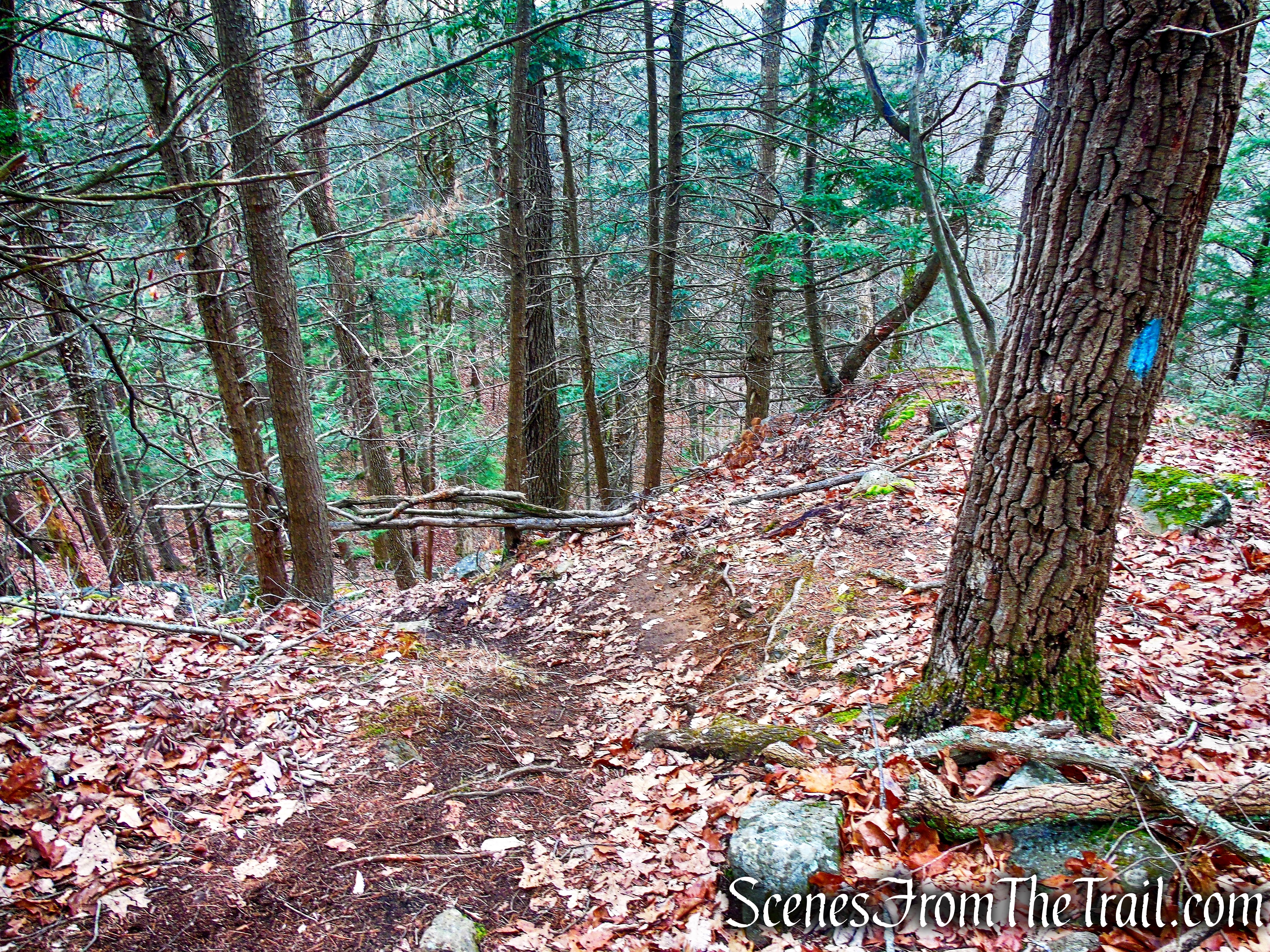


Donald J. Trump State Park – Indian Hill Section

May 25, 2020 – Putnam Valley, NY

Difficulty: Easy

Length: Approximately 3 miles

Max elevation: 758 ft. – total elevation gain: approximately 151 ft.

Route type: Out and back

Map: None available

Trailhead parking: Indian Hill Rd, Mahopac, NY 10541

Park Overview:

There are two sections of Donald J. Trump State Park, the French Hill Section and the Indian Hill Section. Both are adjacent to the Taconic State Parkway, but are almost 7 miles apart with separate entrances.

The 282-acre Indian Hill property in northern Jefferson Valley, straddles the Westchester County/Putnam County border with 54 acres in the Town of Yorktown, Westchester County, and 228 acres in the Town of Putnam Valley, Putnam County. It is situated east of the Taconic State Parkway, in close proximity to both the Clarence Fahnestock and Franklin Delano Roosevelt (FDR) State Parks. The new parkland is a mix of heavily wooded lands, large open meadows, and a large wetland running north/south along the eastern boundary.

Donald J. Trump State Park – Indian Hill Section

Donald J. Trump State Park – Indian Hill Section

It has a gravel parking lot (16 car capacity) and a kiosk with a stone slab bench, but no restrooms. The property has never been developed into a full-fledged park. It was briefly closed along with other parks in 2010 during a NY State cash flow crisis and has remained largely undeveloped since. Some recent improvements in 2019 to the entrance include an asphalt driveway, gravel parking lot, entrance gates and wood fencing, native tree and shrub plantings, an access path from the parking lot to the kiosk area and gravel spread out on the main walking path behind the kiosk.

Donald J. Trump State Park – Indian Hill Section

Donald J. Trump State Park – Indian Hill Section

Donald J. Trump State Park – Indian Hill Section

Donald J. Trump State Park – Indian Hill Section

Donald J. Trump State Park – Indian Hill Section

Donald J. Trump State Park – Indian Hill Section

While the park remains officially open, it isn’t listed on the official NY State Parks website. It is managed as an undeveloped, passive park to preserve open space and provide low-impact recreation, such as hiking and birdwatching. For someone who loves to take quiet walks in the woods, the Indian Hill Section provides opportunities for walking miles on relatively level unmarked woods roads and ATV trails.

History:

Indian Hill is an expansive mountain stretching from Osceola Lake and Route 6 on the south, to almost Bryant Pond Road on the north in Putnam County. It borders the Taconic State Parkway on the west and parts of Wood Street on the east. The highest point is listed at 758 feet above sea level.

Yorktown’s first inhabitants were deer, wild turkeys, other wild animals and Indians. These Indians were subdivisions of the great Mohegan Tribe and the last known Indian encampment in Westchester County, was on Indian Hill.

By the early 18th century, white settlers of Yorktown had forced the native Mohegan Indians to withdraw to high ground above Osceola Lake. There on the elevation known as Indian Hill, a band of Indians made their final stand on Westchester soil. It is said that on the south side of Indian Hill, there is an Indian burial ground.

There is not a lot of later history readily available on the lands that make up this park. The stone walls that criss-cross the property is an indication that the park is made up of many farmsteads that once occupied the land. Below is a Frederick W. Beers map from 1867, of southeastern Putnam Valley, just above the Westchester County line. The area below Barger Pond and east of Barger Road is the area of the current park today. As you can see there are numerous landowners on the map. Notice at the bottom, just right of center is “Indian Hill.”

Frederick Beers map - Yorktown 1867

Frederick Beers map – Yorktown 1867

In the years that followed, the property, at various times, hosted a mink farm, cattle ranch and an equestrian center.

In 1998 Donald Trump bought the first parcel, 282 acres known as Indian Hill that straddle Westchester and Putnam counties, from an estate sale for $1.75 million. He also bought 154 acres in Westchester County known as French Hill, also part of an estate sale, for $750,000. In 2000, he bought 58 acres of a nearby “surplus” stretch of the Taconic State Parkway from the New York State Department of Transportation for $250,000.

By 2002, local authorities had rejected his plans for two 18-hole championship golf courses on Indian Hill and French Hill, on the grounds that the courses would drain the area’s water supply as well as affect the water supply of New York City downstream.

In 2006 Donald Trump donated the two parcels in Westchester and Putnam counties that became New York’s 174th state park. As part of the deal, New York State agreed that Trump’s name “will be prominently displayed at least, at each entrance to each property.”

In 2010, a budget crisis leads to closings at 58 parks and historic sites across the state, Donald J. Trump State Park, still mostly wetlands and forest, is included on the chopping block. The park eventually reopened and remains open to present day.

As of May 2020, at the time of this writing, the park remains open with some maintenance evident, such as grass mowing, downed trees cut and cleared.

Trails Overview:

The former farm fields in the 282-acre Indian Hill section are thick with brush and brambles which are, in places, quite dense. It is possible to walk along rutted ATV tracks or on former farm roads. In spring, the flowering apple trees and an occasional dogwood add a splash of color to the vast expanse of green. Birding opportunities abound for birders who are intrepid enough to venture into the expanse of invasive plants. These fields provide habitat for shrub-dependent bird species whose number have declined.

Hike Overview:

Not knowing what to expect, we had no real plan going in. We figured that we would just wander around and explore a bit. Knowing it was previously farmland, we didn’t expect much elevation gain. The mostly level main road that travels north through the overgrown field, eventually enters the woods and continues north. We walked as far as the power lines and then headed back. At the time I wasn’t sure how far the property extends, but the main road goes past the power lines and continues through the woods. We also ventured a bit on two other roads that branch off the main road and head towards the Taconic State Parkway. It was quiet in the woods and we only saw two dog walkers while we were there.

Donald J. Trump State Park – Indian Hill Section

Donald J. Trump State Park – Indian Hill Section

The Hike:

There are no formal trails in the Indian Hill section of Donald J. Trump State Park. There is however, a wide gravel road that leads into the property from the kiosk.

Donald J. Trump State Park – Indian Hill Section

Donald J. Trump State Park – Indian Hill Section

The gravel road heads west from the kiosk to a hilltop field from where there is a limited view over the trees of the Hudson Highlands.

Donald J. Trump State Park – Indian Hill Section

Donald J. Trump State Park – Indian Hill Section

Donald J. Trump State Park – Indian Hill Section

Donald J. Trump State Park – Indian Hill Section

Donald J. Trump State Park – Indian Hill Section

Donald J. Trump State Park – Indian Hill Section

There are ATV trails that have been cut through the head high brush, and in places forming tunnel-like trails.

Donald J. Trump State Park – Indian Hill Section

Donald J. Trump State Park – Indian Hill Section

Donald J. Trump State Park – Indian Hill Section

Donald J. Trump State Park – Indian Hill Section

The main farm road bisects the center of the property south to north. It begins from the open field as a grassy surfaced road and soon becomes a crater filled dirt road as it travels across the farm land, bordered by thick brush.

Donald J. Trump State Park – Indian Hill Section

Donald J. Trump State Park – Indian Hill Section

Donald J. Trump State Park – Indian Hill Section

Donald J. Trump State Park – Indian Hill Section

The road eventually leaves the overgrown former farm fields and enters into an open and verdant forest. There are trails that lead west, towards the Taconic State Parkway that one could explore.

Donald J. Trump State Park – Indian Hill Section

Donald J. Trump State Park – Indian Hill Section

Donald J. Trump State Park – Indian Hill Section

Donald J. Trump State Park – Indian Hill Section

Donald J. Trump State Park – Indian Hill Section

Donald J. Trump State Park – Indian Hill Section

Donald J. Trump State Park – Indian Hill Section

Donald J. Trump State Park – Indian Hill Section

Or Continue north along the main woods road, which crosses numerous stone walls.

Donald J. Trump State Park – Indian Hill Section

Donald J. Trump State Park – Indian Hill Section

Donald J. Trump State Park – Indian Hill Section

Donald J. Trump State Park – Indian Hill Section

Donald J. Trump State Park – Indian Hill Section

Donald J. Trump State Park – Indian Hill Section

Donald J. Trump State Park – Indian Hill Section

Donald J. Trump State Park – Indian Hill Section

Donald J. Trump State Park – Indian Hill Section

Donald J. Trump State Park – Indian Hill Section

The old dirt road will eventually come out to a power lines cut that runs west to east. This was our turn around point, but the road continues past the power lines cut and there are more woods to explore. At the time I was not sure of the park boundary, but as you can tell from the map above, the park continues for some distance past the power lines.

Donald J. Trump State Park – Indian Hill Section

Donald J. Trump State Park – Indian Hill Section

Review:

A nice place to take a walk in the woods. Although at times, road noise from the parkway can be heard, it’s not too much of a bother. It’s seems to be a lightly trafficked area, at least on the day that I was there. The area was known for ATV riding, but I am not sure if that is still the case. I did not hear any motorized vehicles or bikes while we were there.

Pros: 

Quiet place for a walk, lush green forest, the woods have a lot of tree cover for hot days.

Cons:

No real views, overgrown fields, could use more trails.

Take a hike!

Donald J. Trump State Park – Indian Hill Section

Donald J. Trump State Park – Indian Hill Section

Sources:
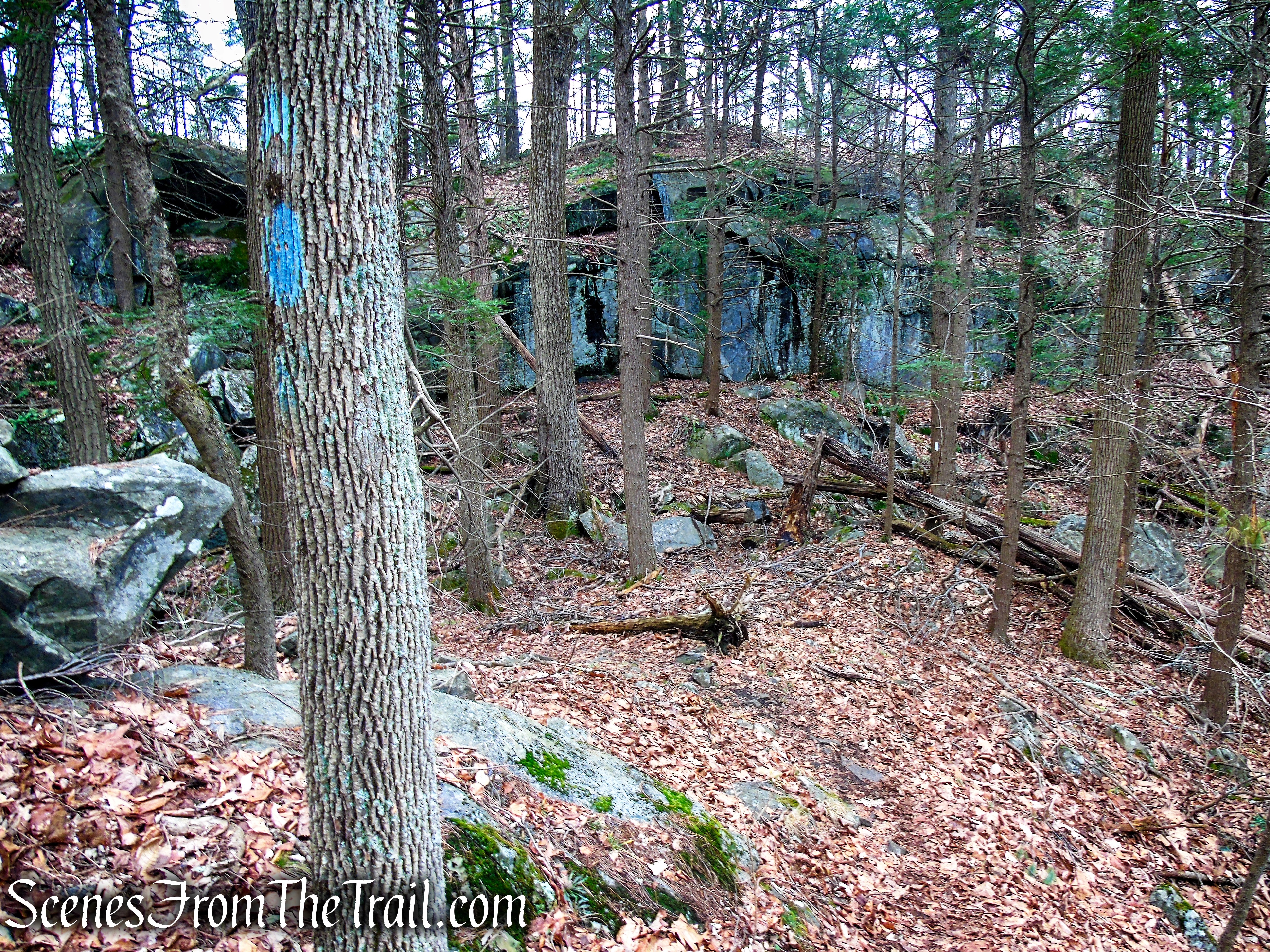
Westchester Wilderness Walk – Zofnass Family Preserve

May 25, 2020 – Pound Ridge, NY

Difficulty: Moderate

Length: Approximately 6 miles

Max elevation: 579 ft. – total elevation gain: approximately 600 ft.

Route type: Circuit

Maps: Westchester Wilderness Walk – Zofnass Family Preserve Trail Map

Trailhead parking: Upper Shad Rd, Pound Ridge, NY 10576


Preserve Overview:

Westchester Wilderness Walk – Zofnass Family Preserve is the largest of Westchester Land Trust’s preserves. Its 150-acres encompasses rocky woods, hillside streams, lakes and wetlands. The preserve is shoehorned between residential lots in Pound Ridge, a mile from the Connecticut border, but rarely will you catch a glimpse of a house, road or car. Although it is dwarfed by the Ward Pound Ridge Reservation a few miles to the north, it has a similar look and feel. The large rock formations and glacial erratics that are predominant in this section of Westchester, forms a rugged and picturesque landscape. The Westchester Wilderness Walk – Zofnass Family Preserve is owned and maintained by the Westchester Land Trust.

Westchester Wilderness Walk - Zofnass Family Preserve

Westchester Wilderness Walk – Zofnass Family Preserve

The Westchester Wilderness Walk might not fit the dictionary definition of “wilderness.” The area is criss-crossed with stone walls, remnants of the early settlements in the area, and houses may occasionally be seen from the trails. But remarkably, for nearly the entire hike, one is entirely removed from the surrounding civilization of Westchester County.

Northern Loop - Westchester Wilderness Walk

Northern Loop – Westchester Wilderness Walk

ATTENTION: The Westchester Wilderness Walk – Zofnass Family Preserve has two parking lots. One lot is on Upper Shad Road, about a quarter mile from Long Ridge Road. The lot can be muddy after rain and there are a few extra spots on the road shoulder.

Upper Shad Road parking lot

Upper Shad Road parking lot

The second lot is a five-car gravel lot on Joshua Hobby Lane, just off Upper Shad Road. Visitors must follow parking regulations. Signs have been installed by the Pound Ridge Police Department. If the lots are full, please come back another time or visit a different trail. Vehicles that ignore the signs will be ticketed or towed.

Joshua Hobby Road parking lot

Joshua Hobby Road parking lot

FYI: When we returned to our cars at the conclusion of the hike, there was a police officer that drove by us, turned around and parked a short distance from us, watching us like a hawk. We were parked legally along the very narrow shoulder and the tires may have been partially on the road surface. Not sure what the issue was, but be forewarned that there is police presence in the area and given all the “No Parking” signs, they will most likely either ticket or tow your vehicle if you choose to park illegally.


History:

Paul Zofnass, a Manhattan investment banker, Pound Ridge resident and a member of the Westchester Land Trust’s Board of Directors, first conceived the idea of creating a trail preserve here and worked for over 10 years to put the project together. Paul and his family donated land, persuaded their neighbors to donate land, and created the impressive trail system.

Mr. Zofnass, who bought his six-acre place in 1982, would walk through the woods behind the house on weekends and began seeing surveyors’ markers in the trees. He and a neighbor bought several small parcels from a developer in order to preserve the land. Mr. Zofnass did not stop there, in the following years he hammered together a patchwork of property fragments trimmed from the abutting ends of neighboring lots, some donated through easements, some sold or given away.

Paul Gallay, executive director (Feb 2000 – Jun 2008) of the Westchester Land Trust, which was founded in 1988 and which now owns or holds easements on 8,600 acres across the county, said this project which received no county or state assistance, was “one of the most complex and rewarding” the trust had ever tackled.

In October 2019 with funding from the Land Trust Alliance/New York State Conservation Partnership Program, a five-car gravel parking opened on Joshua Hobby Road providing access to the Eastern Loop section.

In December 2019 Westchester Land Trust announced the acquisition of a 3-acre parcel adjacent to Westchester Wilderness Walk – Zofnass Family Preserve. The new acquisition features an arboretum established by Zofnass over the past 10 years. It includes roughly 250 different species of trees, plants and grasses, all identified, along a winding foot path which will become part of the Southern Loop Trail.


Trails Overview:

The trails have been routed, often quite circuitously, to pass many unusual and interesting natural features, resulting in a hike that will probably seem longer than the map appears to indicate. There are a number of named natural features along the trail, many of which are marked by signs.

Total walking distance in the preserve is listed as 10 miles. The trails in the preserve form five loops and are shown on the map in various colors, but the entire trail system is blazed with the same green Westchester Land Trust markers and some blue paint blazes on rocks.

Westchester Wilderness Walk - Zofnass Family Preserve

Westchester Wilderness Walk – Zofnass Family Preserve

The junctions are clearly marked with wooden signs that correspond with those on the map, along with a copy of the trail map with a “You Are Here” written on it.

Westchester Wilderness Walk - Zofnass Family Preserve

Westchester Wilderness Walk – Zofnass Family Preserve

There are white circular markers throughout the preserve. These are not trail markers, they are used to provide information about certain points of interest or a helpful hint about the trail, such as an alternate route, if available.

Westchester Wilderness Walk - Zofnass Family Preserve

Westchester Wilderness Walk – Zofnass Family Preserve

Many of the trails are bordered by logs. However, the hiker should be alert for sharp turns, some of which are easily missed, especially if the ground is covered with snow.

Westchester Wilderness Walk - Zofnass Family Preserve

Westchester Wilderness Walk – Zofnass Family Preserve

Even in places that the trail travels over rocks, such as the “streambed steps,” it is bordered by logs. This is good to know as it took us several wrong turns to figure this out. There are a lot of unmarked trails throughout the preserve, but the main trails are well blazed. If you don’t see a green marker or logs bordering the trail, there is a good chance that you have strayed from the main trail.

Streambed Steps - Southern Loop

Streambed Steps – Southern Loop

Hike Overview:

The goal was to hike all of the main trails, but unfortunately, a section of the Western Loop was closed on our visit, so we skipped that entire trail.

Westchester Wilderness Walk - Zofnass Family Preserve

Westchester Wilderness Walk – Zofnass Family Preserve

Nevertheless, the remaining trails were enough and we were exhausted afterwards. The terrain is rugged enough for even the more seasoned hiker and the way the loops are designed, make it easy to do shorter hikes if so desired. With the limited parking, don’t expect to see crowds swarming the trails like at Ward Pound Ridge Reservation.

We started out at the parking area on Upper Shad Road and took the west leg of the Southern Loop (blue on map) to the Central Roundabout (yellow on map). We intended to take the eastern leg of the Southern Loop, but after crossing “Becky’s Brook,” we lost the main trail (which climbs over rocks) and took an unmarked trail instead. That was before we figured out the log border system. We turned right on the Central Roundabout (yellow on map) and then right on the Eastern Loop (purple on map) going counter clockwise. After returning to the Central Roundabout and turning right, we turned right again onto the Northern Loop (green on map) going counter clockwise, then returned to the Central Roundabout, turned right and proceeded past the first junction with the Southern Loop (that’s the way we came up) and turned right at “Jessica’s Junction” and onto the east leg of the Southern Loop and back to Upper Shad Road, where the hike began.

Westchester Wilderness Walk - Zofnass Family Preserve

Westchester Wilderness Walk – Zofnass Family Preserve

There are a lot of rocks, roots, wet and/or muddy areas, uneven stone stairs and stepping stones on this hike. A good pair of boots is highly recommended. There are also numerous points of interest on this hike, some of which we missed. As this hike can be a little difficult to guide someone through, I will highlight some of the scenes and points of interest that we encountered on our hike. For a detailed description (The one that I partially followed) click HERE.


The Hike:

A brief description of the various loops and some of the more interesting sights along the various trails.

  • Southern Loop ~ 2.7 miles

The trail begins at a kiosk just beyond the parking area, where a map of the preserve is posted. It continues along a woods road, with a wetland on the left, soon passing the start of the West Loop. A short distance beyond, a sign on the right (behind a deer exclosure) marks the Princess Pine Grove – named for the tiny club moss found in the area. This is the first of a number of named natural features along the trail, many of which are marked by signs.

Southern Loop Trailhead - Upper Shad Road

Southern Loop Trailhead – Upper Shad Road

Southern Loop Trailhead - Upper Shad Road

Southern Loop Trailhead – Upper Shad Road

Southern Loop - Westchester Wilderness Walk

Southern Loop – Westchester Wilderness Walk

Soon, the trail narrows to a footpath and crosses several streams on rocks. When you reach a T-intersection, with a wooden bridge on the right, turn left and cross a rock causeway, with a wooden handrail, over a stream.

Southern Loop - Westchester Wilderness Walk

Southern Loop – Westchester Wilderness Walk

Southern Loop - Westchester Wilderness Walk

Southern Loop – Westchester Wilderness Walk

Southern Loop - Westchester Wilderness Walk

Southern Loop – Westchester Wilderness Walk

Just beyond, you’ll come to a junction, where the South Loop begins. You can go either way here, to either follow the loop clockwise or in a counter-clockwise direction. The suggested route is counter-clockwise, but we lost the trail after Becky’s Brook, and ended up on an unmarked trail. We ended up catching the main trail up by Lichen Ledge and proceeded clockwise. I will just show some of the points of interest in this area.

Southern Loop - Westchester Wilderness Walk

Southern Loop – Westchester Wilderness Walk

Southern Loop - Westchester Wilderness Walk

Southern Loop – Westchester Wilderness Walk

Southern Loop - Westchester Wilderness Walk

Southern Loop – Westchester Wilderness Walk

Lichen Ledge - Southern Loop

Lichen Ledge – Southern Loop

Layer Cake Rock - Westchester Wilderness Walk

Layer Cake Rock – Westchester Wilderness Walk

The trail runs near the edge of an escarpment, with views over a wetland below, passes Jurassic Rock, Pauley’s Point Rock and Fowler Rock then descends rock steps.

Southern Loop - Westchester Wilderness Walk

Southern Loop – Westchester Wilderness Walk

Southern Loop - Westchester Wilderness Walk

Southern Loop – Westchester Wilderness Walk

Jurassic Rock - Southern Loop

Jurassic Rock – Southern Loop

Fowler Rock - Southern Loop

Fowler Rock – Southern Loop

Fowler Rock - Southern Loop

Fowler Rock – Southern Loop

This section of the trail is called the Streambed Steps and is marked with blue paint blazes.

Streambed Steps - Southern Loop

Streambed Steps – Southern Loop

Campfire Rock - Southern Loop

Campfire Rock – Southern Loop

The trail goes through Wedge Walk Rock, a narrow passage between two boulders.

Wedge Walk Rock - Southern Loop

Wedge Walk Rock – Southern Loop

After descending through Wedge Walk Rock, the western leg of the Southern Loop Trail ends at the Central Roundabout. Turn right and walk about 300 feet to Jessica’s Junction and turn right again to resume the Southern Loop.

Central Roundabout - Westchester Wilderness Walk

Central Roundabout – Westchester Wilderness Walk

Jessica's Junction - Westchester Wilderness Walk

Jessica’s Junction – Westchester Wilderness Walk

Crossing a wet area on rocks.

Southern Loop - Westchester Wilderness Walk

Southern Loop – Westchester Wilderness Walk

The arboretum, a new addition to the Southern Loop Trail.

arboretum - Southern Loop

arboretum – Southern Loop

arboretum - Southern Loop

arboretum – Southern Loop

A short distance beyond, you’ll ascend a small hill, reach Trudeau’s Point of View and descend rock steps in a narrow passage between two rocks.

Trudeau’s Point of View - Southern Loop

Trudeau’s Point of View – Southern Loop

Trudeau’s Point of View - Southern Loop

Trudeau’s Point of View – Southern Loop

Southern Loop - Westchester Wilderness Walk

Southern Loop – Westchester Wilderness Walk

Southern Loop - Westchester Wilderness Walk

Southern Loop – Westchester Wilderness Walk

The ruins of Tom’s Cabin.

Tom’s Cabin - Southern Loop

Tom’s Cabin – Southern Loop

Southern Loop - Westchester Wilderness Walk

Southern Loop – Westchester Wilderness Walk

Southern Loop - Westchester Wilderness Walk

Southern Loop – Westchester Wilderness Walk

  • Central Roundabout ~ 1 mile

Forming a hub, the Central Roundabout connects the Southern, Eastern and Northern Loops. Beginning at a junction with the Southern Loop called Jessica’s Junction, follow the Roundabout in a counter-clockwise direction. The trail heads uphill, climbs a knoll with a stone bench and at 0.2 mile, passes through a stone wall and reaches the junction of the Eastern Loop. Turning left to continue on the Central Roundabout, the trail heads downhill, paralleling a stone wall.

Jessica's Junction - Westchester Wilderness Walk

Jessica’s Junction – Westchester Wilderness Walk

Central Roundabout - Westchester Wilderness Walk

Central Roundabout – Westchester Wilderness Walk

Central Roundabout - Westchester Wilderness Walk

Central Roundabout – Westchester Wilderness Walk

Central Roundabout - Westchester Wilderness Walk

Central Roundabout – Westchester Wilderness Walk

Mossy Knoll - Central Roundabout

Mossy Knoll – Central Roundabout

Central Roundabout - Westchester Wilderness Walk

Central Roundabout – Westchester Wilderness Walk

The trail descends to cross a stream on large rocks. A short distance beyond, it climbs to Over the Top (a rock outcrop to the left of the trail) and descends to Moss Falls, a huge boulder covered with moss. It then climbs to Razor Ridge Rock.

stream crossing - Central Roundabout

stream crossing – Central Roundabout

Over the Top - Central Roundabout

Over the Top – Central Roundabout

Over the Top - Central Roundabout

Over the Top – Central Roundabout

Over the Top - Central Roundabout

Over the Top – Central Roundabout

Moss Falls - Central Roundabout

Moss Falls – Central Roundabout

Moss Falls - Central Roundabout

Moss Falls – Central Roundabout

Central Roundabout - Westchester Wilderness Walk

Central Roundabout – Westchester Wilderness Walk

Razor Ridge Rock - Central Roundabout

Razor Ridge Rock – Central Roundabout

After paralleling a stone wall, the trail turns left, making a sharp U-turn, and descends. The trail circles the interesting Roundabout Rock and soon arrives at another junction, the start of the Northern Loop. Turning left, immediately, you’ll cross a stream on rocks. After briefly paralleling the stream, the trail bears left and begins to head south. The trail comes to another junction, the western leg of the Southern Loop at Wedge Walk Rock then continues southwest on stepping stones. At approximately 1 mile, it closes the loop at Jessica’s Junction.

Roundabout Rock - Central Roundabout

Roundabout Rock – Central Roundabout

Central Roundabout - Westchester Wilderness Walk

Central Roundabout – Westchester Wilderness Walk

  • Eastern Loop ~ 1 mile

Beginning from the Central Roundabout, this is the “lollipop stick” of the Eastern Loop. After a relatively level section, the trail crosses through a stone wall and reaches the top of the Grand Stone Staircase. Two routes are provided to descend this interesting feature, with the left route designated as “easier” and the right route “harder.” Neither route is particularly difficult, but you will be returning this way, so you may wish to select the “harder” route for the descent and the “easier” route for the ascent on the return.

Eastern Loop - Westchester Wilderness Walk

Eastern Loop – Westchester Wilderness Walk

Eastern Loop - Westchester Wilderness Walk

Eastern Loop – Westchester Wilderness Walk

Eastern Loop - Westchester Wilderness Walk

Eastern Loop – Westchester Wilderness Walk

approach to the Grand Stone Staircase

approach to the Grand Stone Staircase

Grand Stone Staircase - Eastern Loop

Grand Stone Staircase – Eastern Loop

Grand Stone Staircase - Eastern Loop

Grand Stone Staircase – Eastern Loop

After a short descent, you’ll reach an intersection where the Eastern Loop proper begins. Bear right to follow the loop in a counter-clockwise direction. Cross a wet area on large rocks, climb a little, then turn left onto a woods road, with a large wetland to the left. When you reach a sign “Out to Upper Shad .1 mile,” turn left to continue along the trail. At the end of the wetland, you’ll come to another paved private road. Turn left and follow the road for 250 feet, crossing the outlet of the wetland on the road bridge, then turn left, cross a small stream on a rock bridge, and reenter the woods.

Eastern Loop - Westchester Wilderness Walk

Eastern Loop – Westchester Wilderness Walk

wetland - Eastern Loop

wetland – Eastern Loop

The trail now follows a rather rugged footpath along the northeast shore of the wetland, with several cliffs looming above to the right. We saw two hawks in this area. They were making quite a racket as they soared just above the treeline, landed on a tree briefly, then flew off.

Eastern Loop - Westchester Wilderness Walk

Eastern Loop – Westchester Wilderness Walk

wetland - Eastern Loop

wetland – Eastern Loop

Eastern Loop - Westchester Wilderness Walk

Eastern Loop – Westchester Wilderness Walk

Eastern Loop - Westchester Wilderness Walk

Eastern Loop – Westchester Wilderness Walk

Eastern Loop - Westchester Wilderness Walk

Eastern Loop – Westchester Wilderness Walk

When you reach the end of the loop at the northwest corner of the wetland, turn right, following the sign for the Central Roundabout. You’re now retracing your steps along the “lollipop stick” of the loop, going back up the Grand Stone Staircase and continuing to the junction with the Roundabout.

Grand Stone Staircase - Eastern Loop

Grand Stone Staircase – Eastern Loop

Grand Stone Staircase - Eastern Loop

Grand Stone Staircase – Eastern Loop

Eastern Loop - Westchester Wilderness Walk

Eastern Loop – Westchester Wilderness Walk

  • Northern Loop ~ 1 mile

From the northwest portion of the Central Roundabout, the Northern Loop heads uphill along a stone wall, crosses through another stone wall and descends. It reaches the loop portion of the Northern Loop at 0.2 mile. Continuing to the right, the trail is on easy terrain and reaches the far end of the loop at 0.4 mile. Descending, the Northern Loop reaches the corner of Bedford and Mallard Lake Roads at 0.5 mile (no parking).

Northern Loop - Westchester Wilderness Walk

Northern Loop – Westchester Wilderness Walk

Northern Loop - Westchester Wilderness Walk

Northern Loop – Westchester Wilderness Walk

Northern Loop - Westchester Wilderness Walk

Northern Loop – Westchester Wilderness Walk

Northern Loop - Westchester Wilderness Walk

Northern Loop – Westchester Wilderness Walk

Northern Loop - Westchester Wilderness Walk

Northern Loop – Westchester Wilderness Walk

Northern Loop - Westchester Wilderness Walk

Northern Loop – Westchester Wilderness Walk

Northern Loop - Westchester Wilderness Walk

Northern Loop – Westchester Wilderness Walk

On the return trip, turning right at the trail junction, the Northern Loop passes the Awesome Oak and the south end of the loop to arrive at the junction that leads back to the Central Roundabout. The trip out and back to the Central Roundabout is about 1 mile.

Awesome Oak - Northern Loop

Awesome Oak – Northern Loop

Review:

This is a great hike through very scenic woods and the forest canopy offers lots of shade on a hot day. The varied terrain keeps you on your toes and at becomes a little challenging the longer you hike. The trails are well thought out and pass by or very near many points of interest. In this hiker’s opinion, the best trails are the Southern Loop, Central Roundabout and Eastern Loop in that order. The Northern Loop was my least favorite, but was done to tack on mileage. The stick portion of the Western Loop was closed so we did not hike that trail. With limited parking, we only ran into several small groups, mostly going in the opposite direction. For the most part, we had the woods to ourselves. If you like the rocky landscape of Ward Pound Ridge Reservation, you’ll like this place.

P.S. Bring bug spray.

Pros:

Well marked junctions, scenic landscape, quiet place to hike, well laid out trails.

Cons:

No hilltop views, buggy in the wetlands areas.


Take a hike!

Westchester Wilderness Walk – Zofnass Family Preserve

Westchester Wilderness Walk – Zofnass Family Preserve

Sources:


Croton Landing Park

May 21, 2020 – Croton-on-Hudson, NY

Difficulty: Easy

Length: Approximately 2 miles

Max elevation: 14 ft. – total elevation gain: approximately 13 ft.

Route type: Out and back

Maps: Westchester RiverWalk Map
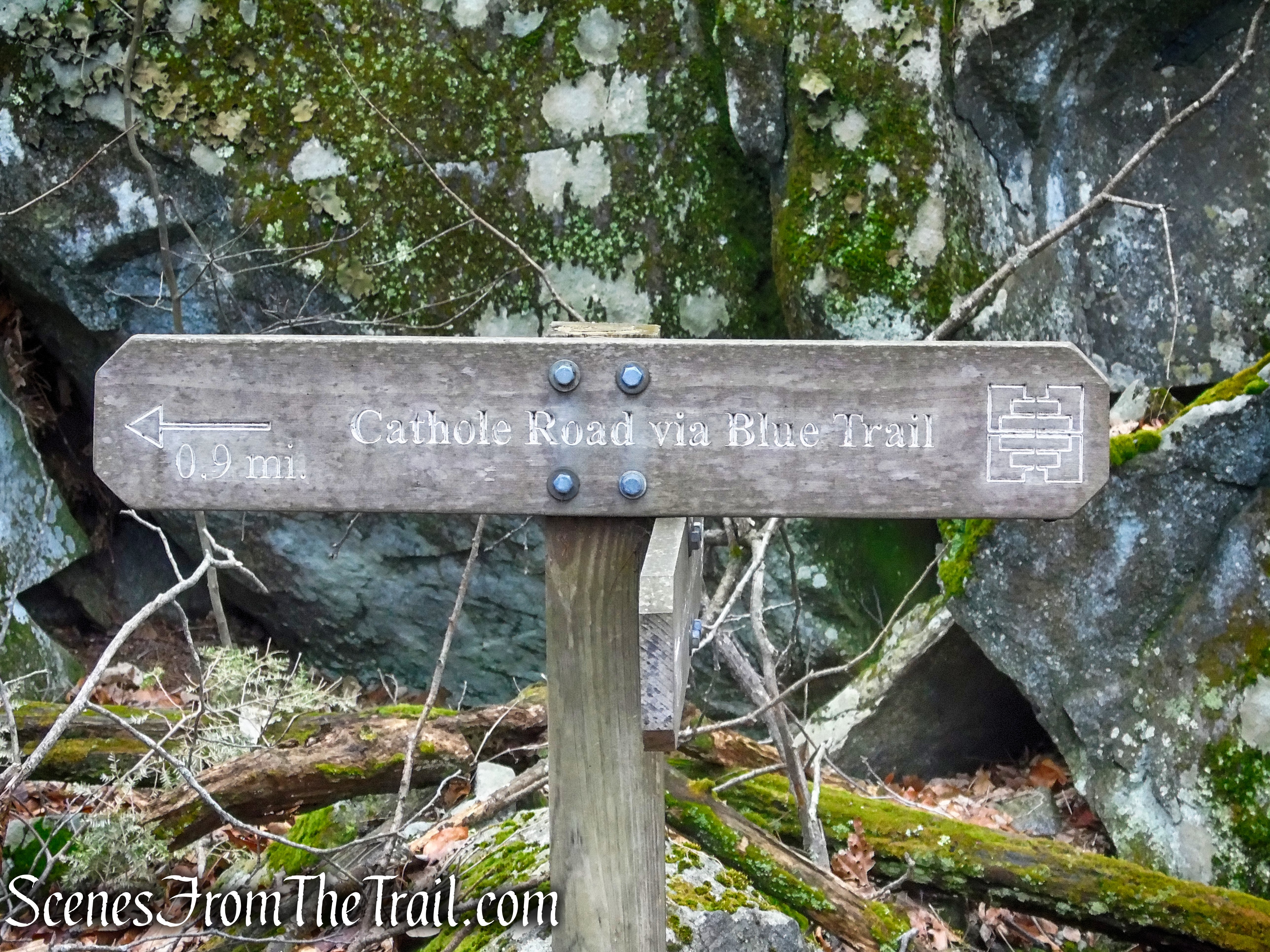
Trailhead parking: 1 Senasqua Road, Croton-On-Hudson, NY 10520
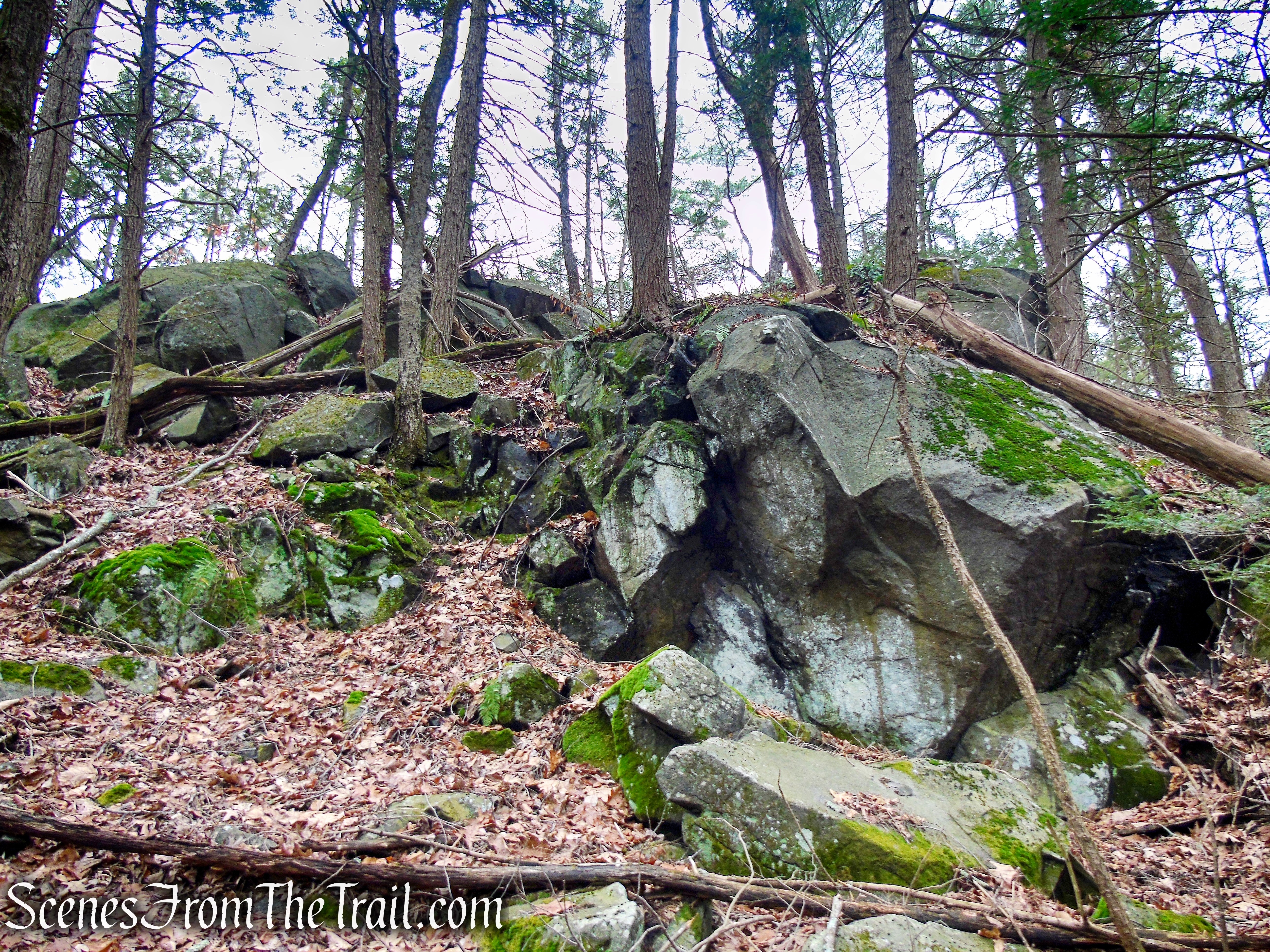
Park Overview:

Croton Landing Park stretches over a mile along the Hudson River and is located north of Senasqua Park, beyond the Yacht Club. Its paved walkway is part of the 51-mile Westchester RiverWalk (33 miles are complete). The park has an athletic field, a restroom, and a 9/11 memorial. The paved pathway extends along the river with benches, a footbridge and informational signage explaining about the river. This is a popular destination with the local community. Croton Landing Park is open to all New York State residents.

Croton Landing Park

Croton Landing Park

History:

Croton Landing Park was the site of a former asphalt batching plant and at various times in its past, the land had been the site of brick works and a location for depositing fill from construction done in NYC. This property is a 30-acre site bounded on the west by the Hudson River and on the east by the Metro North/Amtrak railroad.

The property was formerly owned by the Ottaviano family and was referred to as the Seprieo property. The letters in “Seprieo” represented the initials of the Ottaviano children.

Before Route 9 was created, several streets in the Village led to the Hudson River, although the railroad tracks had to be crossed to get there. With the advent of Route 9, the property was almost impossible to reach or to utilize except by some determined fishermen. Over time, it became overgrown and strewn with trash both dumped there and washed up from the river.

In the late 1980’s a ten-story residential development named Mariner’s Cove was proposed for the property, but the problem of access to the site was not solved.

In 1995, the property was subdivided into two lots. Lot 1 is 16.6 acres (of which 9.7 acres are underwater) and Lot 2 is 13.4 acres (of which 6.0 acres are underwater). Lot 2 was conveyed to the Village of Croton-on-Hudson and Lot 1 was conveyed to the Beaverkill Conservancy, Inc., a nonprofit land acquisition affiliate of the Open Space Institute.

Croton Landing Park

Croton Landing Park

In 2002, the former Seprieo property is officially named Croton Landing based on historic maps showing that name for the area dating back to 1865.

Croton Landing

Croton Landing

In early 2003 the Open Space Institute transferred its title of the Beaverkill portion (the northern section) of Croton Landing to the Village. The nothern section is now unofficially named North Cove.

In 2006, Westchester County and Croton agree to combine their efforts and funds for Croton Landing improvements, including the County’s proposed Riverwalk trail addition in the northern portion of the park. The 2300-foot trail addition is part of the County’s 51.5-mile RiverWalk trail system along the Hudson River from NYC to Putnam County.

In 2008, thirteen years after the initial purchase of the property, Croton Landing Park officially opened.

The Stroll:

You don’t need a map or a compass for this place. Just head towards the river and follow the paved path (the route of the Westchester RiverWalk), stopping as often as you like to capture images with your trusty camera. Or sit on a bench and soak in the gorgeous Hudson River Valley.

Westchester RiverWalk - Croton Landing Park

Westchester RiverWalk – Croton Landing Park

Hudson River - Croton Landing Park

Hudson River – Croton Landing Park

Westchester RiverWalk - Croton Landing Park

Westchester RiverWalk – Croton Landing Park

Westchester RiverWalk - Croton Landing Park

Westchester RiverWalk – Croton Landing Park

When the path splits, follow the arrows to the right, and walk across a boardwalk that spans a wetland. There are three benches for one to sit and spot some birds, if you have the patience.

Westchester RiverWalk - Croton Landing Park

Westchester RiverWalk – Croton Landing Park

Westchester RiverWalk - Croton Landing Park

Westchester RiverWalk – Croton Landing Park

Westchester RiverWalk - Croton Landing Park

Westchester RiverWalk – Croton Landing Park

As you continue on the paved path, there are some more benches that look out on the Hudson and across to Rockland County.

Westchester RiverWalk - Croton Landing Park

Westchester RiverWalk – Croton Landing Park

The Westchester RiverWalk continues north along the wide park road.

Westchester RiverWalk - Croton Landing Park

Westchester RiverWalk – Croton Landing Park

Looking south towards Croton Point Park (left) and Hook Mountain (right).

Hudson River - Croton Landing Park

Hudson River – Croton Landing Park

If you look between Croton Point Park (left) and Hook Mountain (right) on a clear day, you can see the new Tappan Zee Bridge.

Hudson River - Croton Landing Park

Hudson River – Croton Landing Park

Looking out across Haverstraw Bay, with Hook Mountain State Park (the long ridge on the left) and High Tor State Park on the right.

Hudson River - Croton Landing Park

Hudson River – Croton Landing Park

Westchester RiverWalk - Croton Landing Park

Westchester RiverWalk – Croton Landing Park

At the end of this section of the Westchester RiverWalk is “Reaching Through the Shadow,” a September 11 Memorial built around a 14-ft. steel beam from the World Trade Center. This section of the Westchester RiverWalk ends here. Eventually it will continue along the tracks to connect with Oscawana Island Nature Preserve.

September 11 Memorial - Croton Landing Park

September 11 Memorial – Croton Landing Park

Recovered steel from the twin towers has been used as a memorial in each of the fifty states.

September 11 Memorial - Croton Landing Park

September 11 Memorial – Croton Landing Park

“Reaching Through the Shadow,” a Buchanan – Cortlandt – Croton-On-Hudson 9/11 Remembrance Memorial was created by Lauren Davis from Croton. The bronze was cast using the lost-wax technique at Modern Art Foundry in Queens.

September 11 Memorial - Croton Landing Park

September 11 Memorial – Croton Landing Park

Across Haverstraw Bay, Rockland County’s Hudson River Palisades undulate on the horizon.

Hudson River - Croton Landing Park

Hudson River – Croton Landing Park

Looking north up the Hudson River.

Hudson River - Croton Landing Park

Hudson River – Croton Landing Park

Looking west towards Rockland County. Haverstraw Bay’s physical and biological characteristics make it one of the most significant estuarine areas in the Hudson River. The bay is deeper on its western side with a shipping channel of minimum 32 feet in depth and 300 feet in width. The bay’s eastern side is shallower with most of that section of bay not more than 10 feet deep. Look across the river and see if you can spot the “Sleeping Indian” there among the hills. His head is downstream (left), toes pointing the way to Albany.

Hudson River - Croton Landing Park

Hudson River – Croton Landing Park

On the return walk, one can wander along the sandy beach.

Hudson River - Croton Landing Park

Hudson River – Croton Landing Park

Looking south towards the Tappan Zee Bridge.

Hudson River - Croton Landing Park

Hudson River – Croton Landing Park

A Killdeer along the shore. Shallow depths with ample sunlight lead to robust aquatic vegetation. Inflows of brackish Atlantic Ocean water overlaid with fresh stream water promote a nutrient rich environment for myriad invertebrate, fish, and bird species.

Killdeer - Croton Landing Park

Killdeer – Croton Landing Park

A powerboat on the Hudson, with Croton Point Park just beyond.

Hudson River - Croton Landing Park

Hudson River – Croton Landing Park

There are interrupted sections of beach along the way.

Hudson River - Croton Landing Park

Hudson River – Croton Landing Park

Hudson River - Croton Landing Park

Hudson River – Croton Landing Park

You may want to take a break along the beach, perhaps on a well placed length of driftwood.

Hudson River - Croton Landing Park

Hudson River – Croton Landing Park

Or catch some shade in a driftwood hut on the beach.

driftwood hut - Croton Landing Park

driftwood hut – Croton Landing Park

The best seat in the house.

driftwood hut - Croton Landing Park

driftwood hut – Croton Landing Park

At the time that it was acquired, the park was not particularly “park like.” A former industrial site, the property was littered with trash and access was hampered by the presence of the Amtrak/Metro North railroad corridor in Croton-on-Hudson.

Westchester RiverWalk - Croton Landing Park

Westchester RiverWalk – Croton Landing Park

Croton Landing Park celebrates the rehabilitated Hudson River, on the east shore of Haverstraw Bay. The park is a good example of reclaiming the beauty of the Hudson River Valley, that was almost lost.

Westchester RiverWalk - Croton Landing Park

Westchester RiverWalk – Croton Landing Park

A different persepective as you retrace your steps back to the parking lot. If you wish to extend your walk, you can follow the Westchester RiverWalk to Senasqua Park and beyond.

Westchester RiverWalk - Croton Landing Park

Westchester RiverWalk – Croton Landing Park

Review:

Gorgeous Hudson River views, what more can you ask for? Been here numerous times and have enjoyed every one of my visits. The change of seasons gives the park different looks. Great for a leisurely stroll or just to have lunch, picture perfect every time. For extended walks, one can park by Senasqua Park and begin from there or walk south on the Westchester RiverWalk to Croton Point Park and beyond.

Pros:

Hudson River views, well maintained park, plenty of benches to sit on, ample parking.

Cons:

Does see a lot of foot traffic in nice weather.

Take a stroll!

Croton Landing Park

Croton Landing Park

Sources:
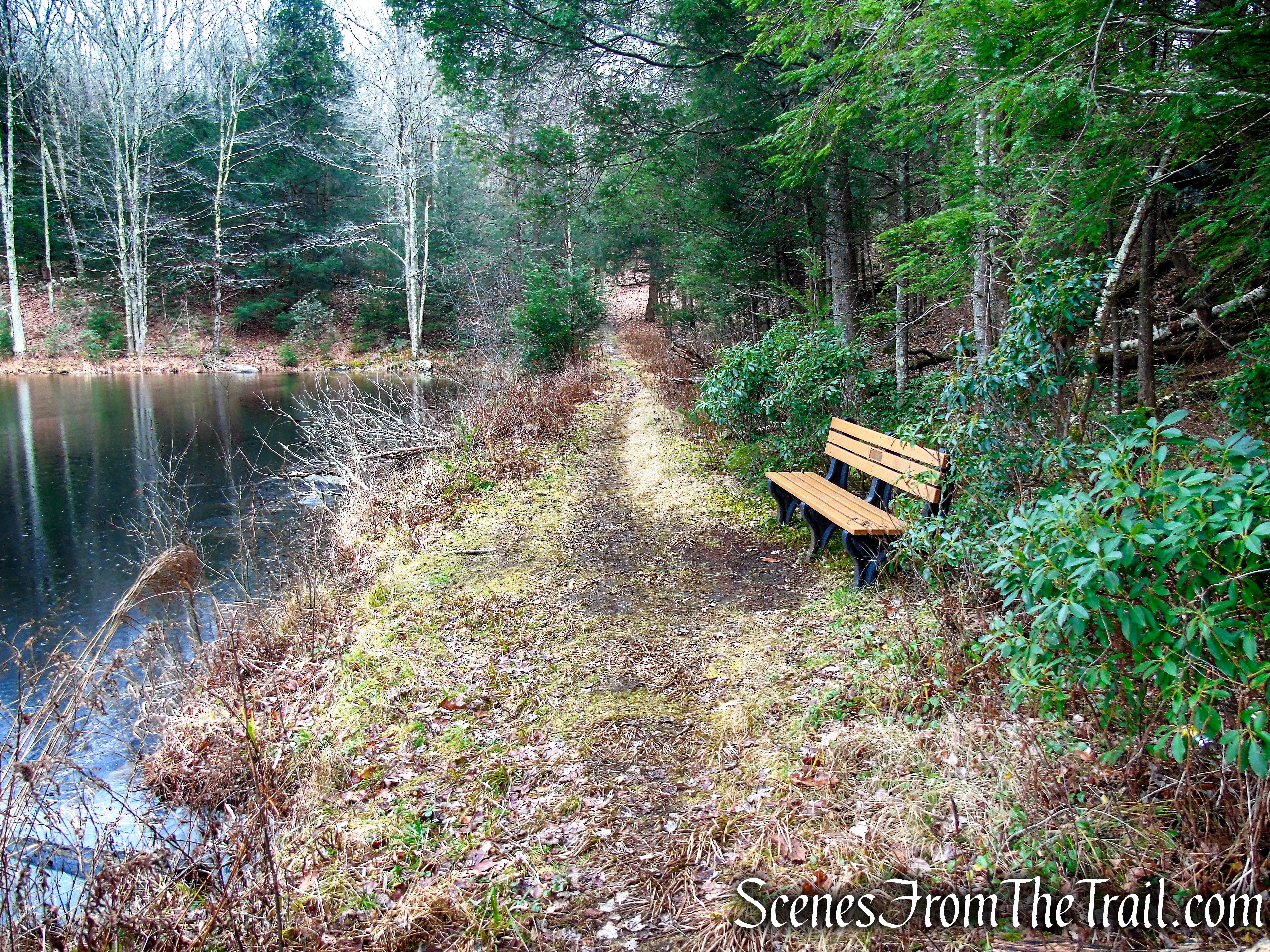
Crawbuckie Nature Preserve

May 20, 2020 – Ossining, NY

Difficulty: Easy

Length: Approximately 1.5 miles

Max elevation: 101 ft. – total elevation gain: approximately 98 ft.

Route type: Circuit

Maps: None available

Trailhead parking: End of Beach Rd, Ossining, NY 10562


Park Overview:

The Edward M. Wheeler Crawbuckie Nature Preserve is a 26-acre passive Village park that is located at the end of Beach Road on the river side of the roadway. The trails within the preserve will eventually be part of the Ossining segment of the larger Westchester RiverWalk trail system that will extend from Yonkers to the border of Putnam County when completed.

Edward M. Wheeler Crawbuckie Nature Preserve

Edward M. Wheeler Crawbuckie Nature Preserve

The preserve contains a number of unique trees and shrubs, making it of special interest to both naturalists and casual hikers. A person walking through the Crawbuckie Nature Preserve quickly forgets its proximity to development and feels the peace and tranquility of the woods while enjoying occasional glimpses of the river through the trees.

Crawbuckie Nature Preserve

Crawbuckie Nature Preserve

History:

It is believed that Crawbuckie, also spelled Crawbucky, is of Dutch origin meaning “Crab Cove.” It was used to describe the mile of Hudson River shoreline in Ossining, south of the Croton River.

In the 1800’s, the property was owned by Benjamin Brandreth (1807-1880), a pioneer in the early use of mass advertising to build consumer awareness of his product, the “Vegetable Universal Pill,” a purgative that allegedly cured many ills by purging toxins out of the blood. He became a successful and wealthy businessman, bank president, and New York State Senator.

Dr. Brandreth's Pills

Dr. Brandreth’s Pills

In 1837 he constructed a factory along the Hudson River in what was then the village of Sing Sing. The Brandreth Pill Works expanded and absorbed Allcock’s Porous Plaster in 1848 and eventully became the Allcock Manufacturing Company, producing pills and porous plaster, a medicated plaster bandage that was said to bring relief from aching muscles, rheumatism, neuralgia, sprains and bruises. The Allcock Manufacturing Company, manufactured the Havahart Trap, an animal trap that captures rather than kills. The factory was demolished in 2015.

Brandreth Pill Factory

Brandreth Pill Factory

Between 1862 and 1863 Brandreth’s average annual gross income surpassed $600,000. For fifty years Brandreth’s name was a household word in the United States. Indeed, the Brandreth pills were so well known they received mention in Herman Melville’s classic “Moby Dick.”

Brandreth's Pills ad

Brandreth’s Pills ad

Glyndon, the Brandreth mansion was built on the property next to the factory. This Frederick W Beers map from 1867 shows roughly some of the area of the Crawbuckie Nature Preserve in Ossining. Glyndon, the home of Dr. Benjamin Brandreth no longer stands but some of the large trees of the estate still do.

Glyndon - Brandreth property

Glyndon – Brandreth property

Calvin Pollard (1797-1850) designed Brandreth’s second home ‘Glyndon” in 1848. Influenced by the decorative ironwork of homes in New Orleans, Benjamin Brandreth incorporated large verandas with fanciful gingerbread trim into the design of Glyndon. Situated close to the railroad tracks, the mansion contained 35 rooms and 18 baths, unheard of in a house built in 1850. The mansion was demolished in 1930.

Glyndon - image courtesy of the Ossining Historical Society

Glyndon – image courtesy of the Ossining Historical Society

In 1967 the Crawbuckie property was purchased by the Village of Ossining from the federal government to provide a publicly-owned recreational area. The land had been intended as an interchange of the proposed Hudson River Expressway (I-487), but in 1961 the plan was scrapped and I-684 was built instead. More adjacent land was added over the years to bring it to its present total of 26-acres.

Hudson River Expressway

Hudson River Expressway

In 2010, the Village of Ossining renamed Crawbuckie Nature Preserve the Edward M. Wheeler Crawbuckie Nature Preserve. The Hon. Edward M. Wheeler served the Village in many capacities and areas of service, including as Trustee of the Village from January, 1971 through December of 1974, and as Mayor of the Village from January 1, 1975 through December 31, 1982. In honor of his long and dedicated service to the Village, the Board of Trustees of the Village of Ossining has determined that it would be fitting and appropriate to rename Crawbuckie Nature Preserve in his honor.


Trails Overview:

The work at the Edward M. Wheeler Crawbuckie Nature Preserve provides a great example of using trails to get the most out of a relatively small yet diverse piece of land. Obtained in 1967, the land remained largely unused by the public until 2012, when a grant allowed the town to contract Tahawus Trails LLC to design and build a trail system to access the park land’s unique attributes along the Hudson River. The project was funded by the Village of Ossining and the New York Department of State’s Local Waterfront Revitalization Program.

Crawbuckie Nature Preserve

Crawbuckie Nature Preserve

The natural surface trail takes visitors through wetlands and forested tracts of willow, beech and massive ginko trees. To allow sustainable travel through this varied terrain, 65 stone steps, a 65-foot boardwalk and 2 observation platforms (both made from locally sourced black locust) were installed along with over 400 square feet of stone crib retaining walls.

stone steps - Crawbuckie Nature Preserve

stone steps – Crawbuckie Nature Preserve

boardwalk - Crawbuckie Nature Preserve

boardwalk – Crawbuckie Nature Preserve

observation platform - Crawbuckie Nature Preserve

observation platform – Crawbuckie Nature Preserve

The project also features a 300-foot long accessible trail that provides an additional viewing area of the river with access from the main parking lot. To provide a place to enjoy these numerous viewpoints, 7 wooden benches were crafted from black locust trees and constructed on-site. The finished product provides the user with several opportunities for a quick loop hike or a quiet picnic overlooking the Hudson River.

additional viewing area - Crawbuckie Nature Preserve

additional viewing area – Crawbuckie Nature Preserve

Hike Overview:

Since this is a small preserve, it is easy to walk every section of trail. We began on the main trail that leads down towards the railroad tracks, climbed the stone steps then walked past the two viewing platforms. We then followed the loop out to a driveway and walked down Beach Road back to the parking area. We walked a short distance down the handicapped accessible trail and back. We then followed the trail that branches off from the main trail, that loops around and returns to the parking area.

Crawbuckie Nature Preserve

Crawbuckie Nature Preserve

Just past the entrance, the trail splits and to the left is the handicapped accessible trail.

handicapped accessible trail - Crawbuckie Nature Preserve

handicapped accessible trail – Crawbuckie Nature Preserve

handicapped accessible trail - Crawbuckie Nature Preserve

handicapped accessible trail – Crawbuckie Nature Preserve

handicapped accessible trail - Crawbuckie Nature Preserve

handicapped accessible trail – Crawbuckie Nature Preserve

handicapped accessible trail - Crawbuckie Nature Preserve

handicapped accessible trail – Crawbuckie Nature Preserve

To the right, the trail reaches a fork, bearing left, the trail heads downhill, passes a view and crosses streams. First on a short wooden footbridge, then on the 65-ft. boardwalk, from where an old dam is visible to the left.

bear left at fork

bear left at fork

Crawbuckie Nature Preserve

Crawbuckie Nature Preserve

Crawbuckie Nature Preserve

Crawbuckie Nature Preserve

Crawbuckie Nature Preserve

Crawbuckie Nature Preserve

Crawbuckie Nature Preserve

Crawbuckie Nature Preserve

Crawbuckie Nature Preserve

Crawbuckie Nature Preserve

Crawbuckie Nature Preserve

Crawbuckie Nature Preserve

boardwalk - Crawbuckie Nature Preserve

boardwalk – Crawbuckie Nature Preserve

dam - Crawbuckie Nature Preserve

dam – Crawbuckie Nature Preserve

The trail reaches a flight of stone steps which curve gracefully around to ascend the hill. The trail reaches the top of the bluff, where at a trail junction, a loop goes to two viewing platforms with the second one on a dead spur. Along the way there are short connector trails on the left.

stone steps - Crawbuckie Nature Preserve

stone steps – Crawbuckie Nature Preserve

stone steps - Crawbuckie Nature Preserve

stone steps – Crawbuckie Nature Preserve

stone steps - Crawbuckie Nature Preserve

stone steps – Crawbuckie Nature Preserve

stone steps - Crawbuckie Nature Preserve

stone steps – Crawbuckie Nature Preserve

Crawbuckie Nature Preserve

Crawbuckie Nature Preserve

viewing platform - Crawbuckie Nature Preserve

viewing platform – Crawbuckie Nature Preserve

viewing platform - Crawbuckie Nature Preserve

viewing platform – Crawbuckie Nature Preserve

Crawbuckie Nature Preserve

Crawbuckie Nature Preserve

viewing platform - Crawbuckie Nature Preserve

viewing platform – Crawbuckie Nature Preserve

viewing platform - Crawbuckie Nature Preserve

viewing platform – Crawbuckie Nature Preserve

The trail dead ends at this bench where there are limited views through the trees. To the left there is a footpath that descends to North Water Street, the area of the former Brandreth Pill Factory.

Crawbuckie Nature Preserve

Crawbuckie Nature Preserve

Retracing steps back to the viewing platform, the trail to the right continues and soon ends at Sandy Drive. Turn left and follow the road north. Near the end of the road, look to the right for an old stone swimming pool that has been partially filled in. Turn left on Beach Road where the entrance to the preserve is downhill 0.2 mile on the left.

observation platform - Crawbuckie Nature Preserve

observation platform – Crawbuckie Nature Preserve

Crawbuckie Nature Preserve

Crawbuckie Nature Preserve

Crawbuckie Nature Preserve

Crawbuckie Nature Preserve

Crawbuckie Nature Preserve

Crawbuckie Nature Preserve

Crawbuckie Nature Preserve

Crawbuckie Nature Preserve

Crawbuckie Nature Preserve

Crawbuckie Nature Preserve

swimming pool ruins

swimming pool ruins

Beach Road

Beach Road

Crawbuckie Nature Preserve

Crawbuckie Nature Preserve

Continue through the entrance back to the fork and this time veer right. This side trail travels north through an overgrown field with tree cover, passes a pond behind the Avalon housing development and turns right onto a woods road. The road heads south and ends at a gate near the parking area where the hike began. Just before the gate there is a footpath to the left (east) that leads uphill about 0.3 mile to the Old Croton Aqueduct.

bear right at fork

bear right at fork

Crawbuckie Nature Preserve

Crawbuckie Nature Preserve

Crawbuckie Nature Preserve

Crawbuckie Nature Preserve

Crawbuckie Nature Preserve

Crawbuckie Nature Preserve

Crawbuckie Nature Preserve

Crawbuckie Nature Preserve

Crawbuckie Nature Preserve

Crawbuckie Nature Preserve

Review:

This is a nice small preserve to take a walk in the woods. The foliage at the overlooks need to be cut back a bit to open up the views. I saw one person going in the opposite direction while I was there and a couple arriving to do some planting as I was leaving. I probably wouldn’t go back, but I’m glad that I visited it.

Pros:

Ample parking, not much foot traffic, nice trails.

Cons:

Foliage needs trimming at viewpoints.


Take a hike!

Crawbuckie Nature Preserve

Crawbuckie Nature Preserve

Sources:
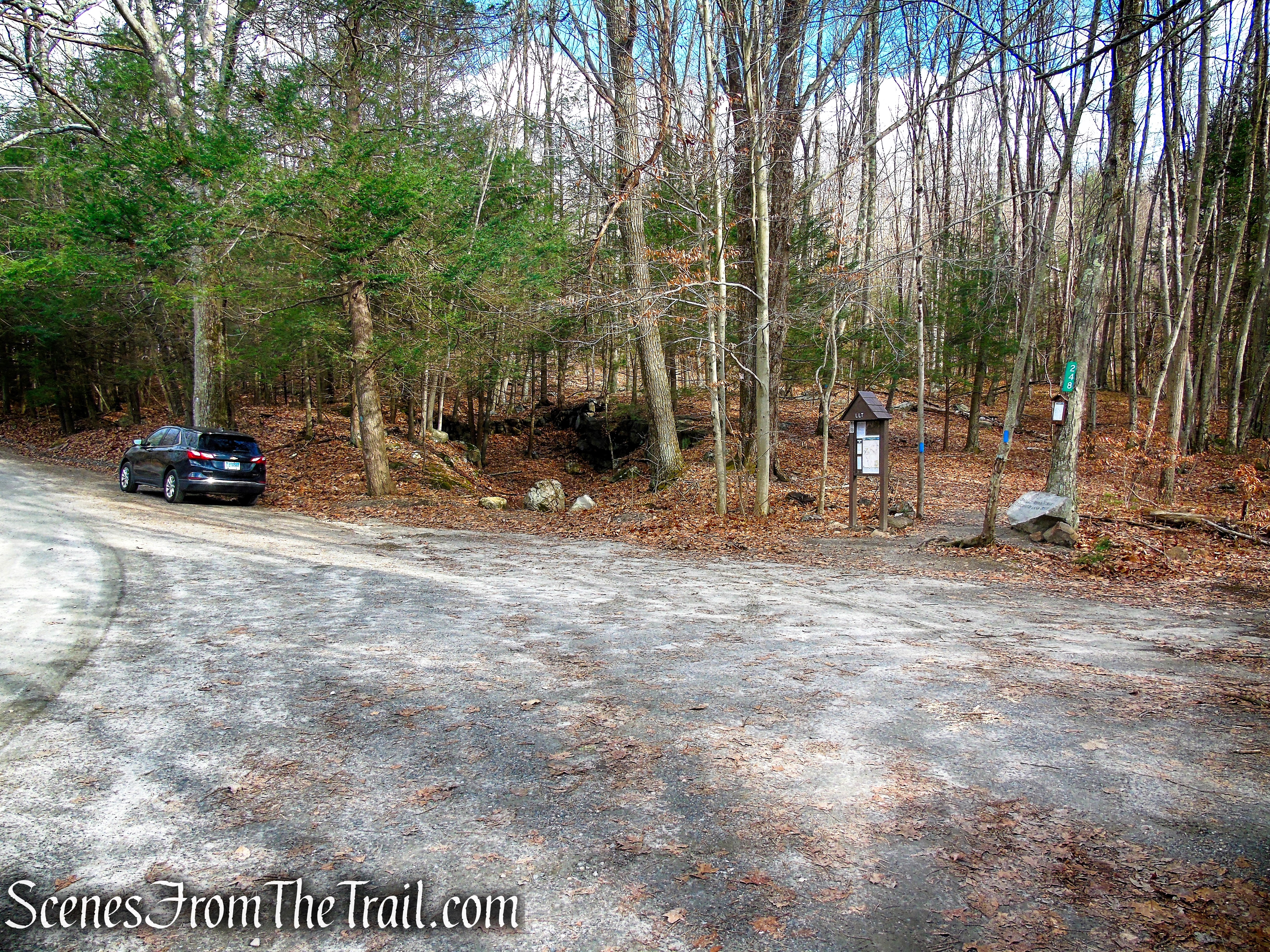


Northern Loop – Ward Pound Ridge Reservation

May 16, 2020 – Cross River, NY

Difficulty: Moderate

Length: Approximately 5 miles

Max elevation: 605 ft. – total elevation gain: approximately 566 ft.

Route type: Circuit

Maps: Westchester Trails MapWard Pound Ridge Reservation Trail Map

Trailhead parking: Meadows Parking Lot – Cross River, NY 10518

Park Overview:

Ward Pound Ridge Reservation’s 4,700-acres, makes it the largest park in Westchester County. The hilly terrain is a mix of second-growth hardwood forest, hemlock, laurel, bold rock outcroppings, steep ravines, wetlands, and open meadows. With its varied terrain and landscapes, ranging from deep hollows to ridges 800 feet high, the park provides a variety of activities in all seasons. Brown, Rainbow and Brook trout inhabit the Cross River and Waccabuc River, which flow through the park. There are areas for picnicking, lean-to camping, fishing and cross-country skiing. It is managed by the Westchester County Department of Parks, Recreation and Conservation.

Ward Pound Ridge Reservation

Ward Pound Ridge Reservation

History:

The name Pound Ridge (originally spelled “Poundridge”) is credited to the Indians who originally lived in the area. They had a local pound in which they kept game on the hoof until they needed it for food. The Indians built an enclosure of saplings driven into the ground and drove their game into the pound.

Originally part of Cortlandt Manor, the reservation was settled by farmers from Connecticut. The low stone walls that crisscross the forest floor indicate that more than thirty farms once existed within the park’s boundaries.

In 1925 Westchester County purchased over 4,000 acres of land in northern Pound Ridge and adjacent Lewisboro to create the Pound Ridge Reservation. The park was renamed the Ward-Pound Ridge Reservation in 1938 after the park planner and longtime Republican county leader William L. Ward. From 1933 to 1940 the Reservation was host to a Civilian Conservation Corp camp known variously as Camp SP-9, Camp No. 24 and Camp Merkel after the parks superintendent for Westchester County. The camp had about 200 enrollees at any one time. Workers improved roads and built bridges, planted trees and constructed shelters, picnic areas, walls, latrines and a museum.

Trails Overview:

There are 42 miles of wooded trails, mostly on the old farm roads that bisect the property. This gives hikers many options for either short strolls or longer and more rugged hikes.

North of Reservation Road, the Brown Trail offers a pleasant 3.8-mile walk along the Cross River. It is accessible from the picnic areas along Reservation Road.

The trails and junctions are well marked and easy to follow.

Hike Overview:

This hike loops around the northern section of the park and parallels the scenic Cross River upon returning. It is done clockwise and although there are many turns and junctions, it’s an easy hike to follow. All the junctions in this area of the park are marked with numbered signs. The links supplied above for the trail maps have the corresponding junction numbers as well.

Northern Loop - Ward Pound Ridge Reservation

Northern Loop – Ward Pound Ridge Reservation

Helpful Hint: My advice is to print out the trail map (always carry a paper map) and download the Avenza Maps app (FREE). You can then download the free Ward Pound Ridge Reservation Trails Map through the app or purchase the NY-NJ Trail Conference Map for Avenza (more detailed), which can be purchased as a set or just a single map. This will tell you exactly where you are on the trail and you can record your track and mileage. I have found that this is a great resource when hiking on unfamiliar trails and helps avoids wrong turns and missing points of interest.

The Hike:

From the kiosk at the northwest corner of the parking area, proceed north on a wide path, following the Fox Hill Trail, marked with “FH” blazes. After crossing a wet area on a boardwalk and a stream on a bridge, the trail continues between stone walls. When the “FH” blazes turn right, continue ahead and cross a bridge over the Cross River. Just beyond, you’ll reach junction 1, where you turn left onto the Brown Trail.

Fox Hill Trail - Ward Pound Ridge Reservation

Fox Hill Trail – Ward Pound Ridge Reservation

Fox Hill Trail - Ward Pound Ridge Reservation

Fox Hill Trail – Ward Pound Ridge Reservation

Fox Hill Trail - Ward Pound Ridge Reservation

Fox Hill Trail – Ward Pound Ridge Reservation

Fox Hill Trail - Ward Pound Ridge Reservation

Fox Hill Trail – Ward Pound Ridge Reservation

bridge over the Cross River

bridge over the Cross River

bridge over the Cross River

bridge over the Cross River

Cross River - Ward Pound Ridge Reservation

Cross River – Ward Pound Ridge Reservation

Brown Trail - Ward Pound Ridge Reservation

Brown Trail – Ward Pound Ridge Reservation

Brown Trail - Ward Pound Ridge Reservation

Brown Trail – Ward Pound Ridge Reservation

At junction 46, turn right and follow the Brown Trail uphill on a wide woods road. The trail levels off, then resumes its climb. When you reach the top of the climb at junction 45, bear right to continue along the Brown Trail, which now descends. After traversing a relatively level section, the trail climbs steadily.

Brown Trail - Ward Pound Ridge Reservation

Brown Trail – Ward Pound Ridge Reservation

Brown Trail - Ward Pound Ridge Reservation

Brown Trail – Ward Pound Ridge Reservation

Brown Trail - Ward Pound Ridge Reservation

Brown Trail – Ward Pound Ridge Reservation

Brown Trail - Ward Pound Ridge Reservation

Brown Trail – Ward Pound Ridge Reservation

Brown Trail - Ward Pound Ridge Reservation

Brown Trail – Ward Pound Ridge Reservation

bear right at junction 45

bear right at junction 45

Brown Trail - Ward Pound Ridge Reservation

Brown Trail – Ward Pound Ridge Reservation

Brown Trail - Ward Pound Ridge Reservation

Brown Trail – Ward Pound Ridge Reservation

Continue ahead at junction 44, where another road joins from the left. Just ahead, at junction 5 (marked by a cairn on a stump), turn left, leaving the Brown Trail, and follow the Deer Hollow Trail, marked with “DH” blazes. This trail follows along the hillside, with Deer Hollow below on the right.

Brown Trail - Ward Pound Ridge Reservation

Brown Trail – Ward Pound Ridge Reservation

turn left at junction 5

turn left at junction 5

Deer Hollow Trail - Ward Pound Ridge Reservation

Deer Hollow Trail – Ward Pound Ridge Reservation

Deer Hollow Trail - Ward Pound Ridge Reservation

Deer Hollow Trail – Ward Pound Ridge Reservation

In a quarter mile, the Deer Hollow Trail begins to descend, passing a trail register on the right (please sign) and a blue trail on the left that leads into the Lewisboro Town Park. At the base of the descent, it crosses an intermittent stream, then climbs again, passing a yellow trail on the left. From the crest of the rise, the trail descends steeply, then more gradually. It soon begins to parallel a stream on the right and passes the start of another blue trail on the left.

Deer Hollow Trail - Ward Pound Ridge Reservation

Deer Hollow Trail – Ward Pound Ridge Reservation

Deer Hollow Trail - Ward Pound Ridge Reservation

Deer Hollow Trail – Ward Pound Ridge Reservation

Deer Hollow Trail - Ward Pound Ridge Reservation

Deer Hollow Trail – Ward Pound Ridge Reservation

Deer Hollow Trail - Ward Pound Ridge Reservation

Deer Hollow Trail – Ward Pound Ridge Reservation

Deer Hollow Trail - Ward Pound Ridge Reservation

Deer Hollow Trail – Ward Pound Ridge Reservation

Deer Hollow Trail - Ward Pound Ridge Reservation

Deer Hollow Trail – Ward Pound Ridge Reservation

Deer Hollow Trail - Ward Pound Ridge Reservation

Deer Hollow Trail – Ward Pound Ridge Reservation

Deer Hollow Trail - Ward Pound Ridge Reservation

Deer Hollow Trail – Ward Pound Ridge Reservation

Deer Hollow Trail - Ward Pound Ridge Reservation

Deer Hollow Trail – Ward Pound Ridge Reservation

After passing a fenced-off horse farm, with Route 35 visible in the distance, the trail crosses a stream, goes through a gap in a stone wall, and passes a wetland on the left. At junction 40, a white-blazed trail comes in from the right, but you should continue ahead on the Deer Hollow Trail.

Deer Hollow Trail - Ward Pound Ridge Reservation

Deer Hollow Trail – Ward Pound Ridge Reservation

Deer Hollow Trail - Ward Pound Ridge Reservation

Deer Hollow Trail – Ward Pound Ridge Reservation

Deer Hollow Trail - Ward Pound Ridge Reservation

Deer Hollow Trail – Ward Pound Ridge Reservation

Deer Hollow Trail - Ward Pound Ridge Reservation

Deer Hollow Trail – Ward Pound Ridge Reservation

Deer Hollow Trail - Ward Pound Ridge Reservation

Deer Hollow Trail – Ward Pound Ridge Reservation

The trail now follows a relatively level route, with some minor ups and downs. It passes rock outcrops to the right, continues to parallel the wetland on the left, and goes through an area with thick barberry bushes. After paralleling a stone wall for some distance, it climbs a little, then makes a short, steep descent. You are now about a quarter mile from Route 124, which may be heard and seen through the trees.

Deer Hollow Trail - Ward Pound Ridge Reservation

Deer Hollow Trail – Ward Pound Ridge Reservation

Deer Hollow Trail - Ward Pound Ridge Reservation

Deer Hollow Trail – Ward Pound Ridge Reservation

Deer Hollow Trail - Ward Pound Ridge Reservation

Deer Hollow Trail – Ward Pound Ridge Reservation

Soon, the trail begins to climb, passing more rock outcrops on the right. When it reaches a point where the road ahead is badly eroded, the trail bears right and continues on a footpath. It turns sharply right, rejoins the road, and soon bends left to reach junction 8.

Deer Hollow Trail - Ward Pound Ridge Reservation

Deer Hollow Trail – Ward Pound Ridge Reservation

Deer Hollow Trail - Ward Pound Ridge Reservation

Deer Hollow Trail – Ward Pound Ridge Reservation

Deer Hollow Trail - Ward Pound Ridge Reservation

Deer Hollow Trail – Ward Pound Ridge Reservation

Deer Hollow Trail - Ward Pound Ridge Reservation

Deer Hollow Trail – Ward Pound Ridge Reservation

Deer Hollow Trail - Ward Pound Ridge Reservation

Deer Hollow Trail – Ward Pound Ridge Reservation

Deer Hollow Trail - Ward Pound Ridge Reservation

Deer Hollow Trail – Ward Pound Ridge Reservation

Deer Hollow Trail - Ward Pound Ridge Reservation

Deer Hollow Trail – Ward Pound Ridge Reservation

Deer Hollow Trail - Ward Pound Ridge Reservation

Deer Hollow Trail – Ward Pound Ridge Reservation

Deer Hollow Trail - Ward Pound Ridge Reservation

Deer Hollow Trail – Ward Pound Ridge Reservation

Deer Hollow Trail - Ward Pound Ridge Reservation

Deer Hollow Trail – Ward Pound Ridge Reservation

Deer Hollow Trail - Ward Pound Ridge Reservation

Deer Hollow Trail – Ward Pound Ridge Reservation

Deer Hollow Trail - Ward Pound Ridge Reservation

Deer Hollow Trail – Ward Pound Ridge Reservation

Deer Hollow Trail - Ward Pound Ridge Reservation

Deer Hollow Trail – Ward Pound Ridge Reservation

Deer Hollow Trail - Ward Pound Ridge Reservation

Deer Hollow Trail – Ward Pound Ridge Reservation

Deer Hollow Trail - Ward Pound Ridge Reservation

Deer Hollow Trail – Ward Pound Ridge Reservation

Deer Hollow Trail - Ward Pound Ridge Reservation

Deer Hollow Trail – Ward Pound Ridge Reservation

Deer Hollow Trail - Ward Pound Ridge Reservation

Deer Hollow Trail – Ward Pound Ridge Reservation

Here, you should turn right onto a white-blazed trail and follow it for a third of a mile to junction 7, passing large rock formations on both sides of the trail.

turn right at junction 8

turn right at junction 8

turn right at junction 8

turn right at junction 8

White Trail - Ward Pound Ridge Reservation

White Trail – Ward Pound Ridge Reservation

White Trail - Ward Pound Ridge Reservation

White Trail – Ward Pound Ridge Reservation

White Trail - Ward Pound Ridge Reservation

White Trail – Ward Pound Ridge Reservation

White Trail - Ward Pound Ridge Reservation

White Trail – Ward Pound Ridge Reservation

White Trail - Ward Pound Ridge Reservation

White Trail – Ward Pound Ridge Reservation

Turn left at junction 7 onto the Brown Trail, which soon descends – first steeply, then more gradually. At junction 3, turn right, briefly rejoining the Deer Hollow Trail, but when the two trails diverge (at a sign for junction marker 42), bear left to stay on the Brown Trail, which descends to cross a wet area on a wide boardwalk.

turn left at junction 7

turn left at junction 7

Brown Trail - Ward Pound Ridge Reservation

Brown Trail – Ward Pound Ridge Reservation

Brown Trail - Ward Pound Ridge Reservation

Brown Trail – Ward Pound Ridge Reservation

Brown Trail - Ward Pound Ridge Reservation

Brown Trail – Ward Pound Ridge Reservation

turn right at junction 3

turn right at junction 3

turn right at junction 3

turn right at junction 3

turn right at junction 3

turn right at junction 3

take left fork to remain on Brown Trail

take left fork to remain on Brown Trail

take left fork to remain on Brown Trail

take left fork to remain on Brown Trail

Brown Trail - Ward Pound Ridge Reservation

Brown Trail – Ward Pound Ridge Reservation

For the next three-quarters of a mile, the Brown Trail follows a woods road along the Cross River, below on the left (to avoid several wet sections, it detours slightly to the right). This is a particularly scenic section, with the trail paralleling the cascading stream. Most of the way, the trail is elevated above the stream, but it dips down in places to approach the stream.

Brown Trail - Ward Pound Ridge Reservation

Brown Trail – Ward Pound Ridge Reservation

Brown Trail - Ward Pound Ridge Reservation

Brown Trail – Ward Pound Ridge Reservation

Brown Trail - Ward Pound Ridge Reservation

Brown Trail – Ward Pound Ridge Reservation

Cross River - Ward Pound Ridge Reservation

Cross River – Ward Pound Ridge Reservation

Brown Trail - Ward Pound Ridge Reservation

Brown Trail – Ward Pound Ridge Reservation

Brown Trail - Ward Pound Ridge Reservation

Brown Trail – Ward Pound Ridge Reservation

Cross River - Ward Pound Ridge Reservation

Cross River – Ward Pound Ridge Reservation

Cross River - Ward Pound Ridge Reservation

Cross River – Ward Pound Ridge Reservation

Brown Trail - Ward Pound Ridge Reservation

Brown Trail – Ward Pound Ridge Reservation

Brown Trail - Ward Pound Ridge Reservation

Brown Trail – Ward Pound Ridge Reservation

Brown Trail - Ward Pound Ridge Reservation

Brown Trail – Ward Pound Ridge Reservation

Brown Trail - Ward Pound Ridge Reservation

Brown Trail – Ward Pound Ridge Reservation

Cross River - Ward Pound Ridge Reservation

Cross River – Ward Pound Ridge Reservation

Brown Trail - Ward Pound Ridge Reservation

Brown Trail – Ward Pound Ridge Reservation

Cross River - Ward Pound Ridge Reservation

Cross River – Ward Pound Ridge Reservation

When you reach junction 2, turn left, cross the bridge over the river, then immediately turn right to proceed west on the Fox Hill Trail, which continues to parallel the stream. After passing high above the stream, below on the right, the trail goes by a playground and picnic area on the left. A short distance beyond, the Fox Hill Trail reaches another bridge over the river. Turn left (do not cross the bridge) and retrace your steps on the Fox Hill Trail back to the parking area.

turn left and cross the bridge over the river

turn left and cross the bridge over the river

cross the bridge over the river

cross the bridge over the river

Cross River - Ward Pound Ridge Reservation

Cross River – Ward Pound Ridge Reservation

Fox Hill Trail - Ward Pound Ridge Reservation

Fox Hill Trail – Ward Pound Ridge Reservation

Fox Hill Trail - Ward Pound Ridge Reservation

Fox Hill Trail – Ward Pound Ridge Reservation

Fox Hill Trail - Ward Pound Ridge Reservation

Fox Hill Trail – Ward Pound Ridge Reservation

Fox Hill Trail - Ward Pound Ridge Reservation

Fox Hill Trail – Ward Pound Ridge Reservation

turn left to remain on Fox Hill Trail

turn left to remain on Fox Hill Trail

Meadows Parking Lot - Ward Pound Ridge Reservation

Meadows Parking Lot – Ward Pound Ridge Reservation

Review:

This is a really good hike through scenic woods with interesting rock formations. With many of the popular trails being overcrowded as of late, this is a good spot to avoid the masses. we began the hike about 8:30 am on a Saturday morning and only encountered the occasional jogger until we were walking along the Cross River, near the end of the hike, at about 11:30 am. There are no hilltop views on this hike, but if you are looking for a relaxing walk in the woods, this is worth doing.

Pros:

Cross River, rock formations, well marked trails.

Cons:

Some road noise can be heard on Deer Hollow Trail.

Take a hike!

Northern Loop - Ward Pound Ridge Reservation

Northern Loop – Ward Pound Ridge Reservation

Sources:

.

Larchmont Reservoir

May 10, 2020 – New Rochelle, NY

Difficulty: Easy

Length: Approximately 2.5 miles

Max elevation: 163 ft. – total elevation gain: approximately 100 ft.

Route type: Lollipop Loop

Map: Larchmont Reservoir Trail Map

Trailhead parking: Pinebrook Tennis Center – 1-99 Albert Leonard Place, New Rochelle, NY 10804


Overview:

The Larchmont Reservoir (James G. Johnson, Jr. Conservancy) is a 60-acre wildlife sanctuary and nature study area with lakeside trails and quiet woodland paths. The entire Conservancy is owned by the Village of Larchmont although 12.76 acres lies within the Town of Mamaroneck and the rest within the City of New Rochelle. The property is maintained and managed by the Town of Mamaroneck under Village of Larchmont supervision and in cooperation with the City of New Rochelle. The property is open daily from dawn to dusk.

Larchmont Reservoir

Larchmont Reservoir

The Mamaroneck Environmental Resource Center, located adjacent to the Reservoir, houses the Sheldrake Environmental Center and the Monroe summer camp. The Sheldrake Environmental Center offers nature programs for adults and children throughout the year.

Mamaroneck Environmental Resource Center

Mamaroneck Environmental Resource Center

There are several parking areas that can be used to access the trails at the reservoir.

My recommendation is to park at the Pinebrook Tennis Center which has a larger parking lot than the others.

History:

Larchmont Reservoir is actually two bodies of water that are separated by a dam and spillway. The upper reservoir is known as Sheldrake Lake and the lower reservoir as Goodliffe Pond.

It is believed that traces of post-Revolutionary building sites remain on the Mamaroneck side of the Larchmont Reservoir property. Three quarry sites have also been identified at the Reservoir property. In addition, the Reservoir was the site of a saw mill, grist mill and ice-harvesting business.

The reservoir was created in the 18th century to harness water power for mills along the Sheldrake River. A saw mill and a grist mill were built in the 1750’s and by 1800, a cotton mill was operating there as well. In 1876, John T. Goodliffe constructed a dam to create a pond for his ice business. In the 1880’s, the Larchmont Water Company purchased the the pond for use as a water source.

Goodliffe Pond dam - Larchmont Reservoir

Goodliffe Pond dam – Larchmont Reservoir

Flood control of the Sheldrake River and the increased demand for drinking water resulted in construction of a dam to create what is now Sheldrake Lake. The original dam was completed in 1903 and in 1934, the original masonry dam was capped with concrete to raise the crest an additional 5 feet.

Sheldrake Lake dam - Larchmont Reservoir

Sheldrake Lake dam – Larchmont Reservoir

The reservoir ceased being the source of Larchmont’s drinking water in 1975, when the village discovered that it was less expensive to connect to New York City’s Aqueduct system (a blend of the Catskill and Delaware watersheds). It was then maintained as a conservation area and flood control facility. Even though the reservoir was closed to the public, walkers and birders continued to use the site. Since the the property is physically removed from the village, Larchmont wanted to sell it.

Larchmont Reservoir

Larchmont Reservoir

James G. Johnson Jr. (1915 – 2011) an environmental activist and namesake of the James G. Johnson Conservancy at the Larchmont Reservoir, served as president of Friends of the Reservoir Inc., a conservation group that led the efforts to preserve the Larchmont Reservoir. In October 1984, this property was dedicated in perpetuity by the Village of Larchmont for specified public purposes including conservation, nature study, wildlife preserve, flood control, standby water supply, and environmental and historical education.

James G. Johnson Conservancy at the Larchmont Reservoir

James G. Johnson Conservancy at the Larchmont Reservoir

In 1993, the National Institute for Urban Wildlife certified the Larchmont Reservoir as an “Urban Wildlife Sanctuary.”

Beginning in the early 1980’s, Friends of the Reservoir, a local nonprofit organization, exercised a stewardship role in the Conservancy, helping to develop and maintain its walking trails and buildings in cooperation with the Town of Mamaroneck and the Village of Larchmont, and producing, together with the L.I.F.E. Center, educational events and entertainments there. These functions were taken over in 2001 by the newly formed Sheldrake Environmental Center, created by a merger between the L.I.F.E. Center and Friends of the Reservoir.

Hike & Trails Overview:

Co-aligned trails are the name of the game at Larchmont Reservoir. The Colonial Greenway (blue with white stars) is co-aligned with three different trails as it goes through the park. This 15-mile unpaved trail loop system links numerous open spaces and spans five municipalities, utilizing the Hutchinson River Pathway and the Leatherstocking Trail, as well as existing trail systems within the County and local parks and nature preserves.

Colonial Greenway - Larchmont Reservoir

Colonial Greenway – Larchmont Reservoir

Although the numerous blazed trails and unmarked paths that bisect the property can be daunting, it’s really not very difficult to find your way around. Rule of thumb is to stay on the trails that are close to the shoreline of the lake and pond, and you can’t go wrong. After all, even though the woods are scenic, the real views are along the water.

Please note: A loop around the entire property (approximately 2.35 miles) can be done utilizing the streets from Dennis Drive to the Pinebrook Tennis Center (see inset on map).

This 2.5 mile hike begins at the Pinebrook Tennis Center (far left on the map) and winds its way through the woods, following the contour of Sheldrake Lake. When the trail reaches the southern end of the Sheldrake Lake dam, we turned right and followed the trail around Goodliffe Pond to the northern end of the Sheldrake Lake dam. From there we walked along the eastern side of the lake to its northern point, crossing a long wooden boardwalk. Where the Colonial Greenway Trail makes a sharp left uphill to Dennis Drive, we turned around and made our way back.

Larchmont Reservoir Trail Map

Larchmont Reservoir Trail Map

The Hike:

From the east end of the Pinebrook Tennis Center, proceed past the kiosk for the James G. Johnson, Jr. Conservancy. Follow the sign that reads “Upper Trail.” Proceed past the tennis courts that are on the right, and towards the woods. Climb the steps and follow the red-triangle-on-white blazes.

Pinebrook Tennis Center

Pinebrook Tennis Center

Pinebrook Tennis Center Trailhead

Pinebrook Tennis Center Trailhead

Upper Trail - Larchmont Reservoir

Upper Trail – Larchmont Reservoir

Pay careful attention to the blazes at the start of the hike as there is a myriad of unmarked trails in this area. The trail heads northeast at first, turns right, heading in a southerly direction and soon descends.

Upper Trail - Larchmont Reservoir

Upper Trail – Larchmont Reservoir

A Scarlet Tanager spotted along the Upper Trail.

Upper Trail - Larchmont Reservoir

Upper Trail – Larchmont Reservoir

An unmarked footpath on the left affords views of Sheldrake Lake and the dam.

Upper Trail - Larchmont Reservoir

Upper Trail – Larchmont Reservoir

Upper Trail - Larchmont Reservoir

Upper Trail – Larchmont Reservoir

Upper Trail - Larchmont Reservoir

Upper Trail – Larchmont Reservoir

The trail ascends slightly then descends again to the southern end of Sheldrake Lake.

Upper Trail - Larchmont Reservoir

Upper Trail – Larchmont Reservoir

Upper Trail - Larchmont Reservoir

Upper Trail – Larchmont Reservoir

southern end of Sheldrake Lake

southern end of Sheldrake Lake

Follow the trail through a mass of jumbled boulders and rock slabs. At times you may have to use both your hands and feet to navigate this section of trail.

Upper Trail - Larchmont Reservoir

Upper Trail – Larchmont Reservoir

Upper Trail - Larchmont Reservoir

Upper Trail – Larchmont Reservoir

Upper Trail - Larchmont Reservoir

Upper Trail – Larchmont Reservoir

Upper Trail - Larchmont Reservoir

Upper Trail – Larchmont Reservoir

Upper Trail - Larchmont Reservoir

Upper Trail – Larchmont Reservoir

Upper Trail - Larchmont Reservoir

Upper Trail – Larchmont Reservoir

In about 0.5 mile, the Upper Trail comes to the southern end of the Sheldrake Lake Dam.

Upper Trail - Larchmont Reservoir

Upper Trail – Larchmont Reservoir

The dam was designed by George B. Burbank and Louis L. Tribus in 1897. In 1900, expert stonemasons from Italy began construction on the Dam and spillway (Larchmont Water Company Dam #2), which was completed by 1903. In 1924, Hazen and Wipple, Civil Engineers from New York City, designed flashboards for the existing structure.

turn right to remain on Upper Trail

turn right to remain on Upper Trail

In 1934, the original masonry dam was capped with a concrete structure and rock fill was placed behind the existing stone masonry to raise the crest an additional 5 feet. This work was designed by Fuller and Everett, Civil Engineers, 22 East 40th Street, New York City. The top width is 10 ft wide; 6 ft of this width is composed of the reinforcing rock fill while the upstream 4 feet Is made up of the concrete cap which Is placed above the original masonry structure..

Sheldrake Lake Dam - Larchmont Reservoir

Sheldrake Lake Dam – Larchmont Reservoir

The original portion of the dam is a masonry structure of cut and hand laid stone. The present length of the dam is approximately 1,000 feet and 30 feet tall.

turn right to remain on Upper Trail

turn right to remain on Upper Trail

The splllway is an ogee stone masonry structure.

Sheldrake Lake Dam - Larchmont Reservoir

Sheldrake Lake Dam – Larchmont Reservoir

Turn right at the southern end of the dam and follow the Upper Trail as it soon joins the Colonial Greenway and Cliff Emanuelson Trail. The three co-aligned trails run along the western side of Goodliffe Pond.

Colonial Greenway - Larchmont Reservoir

Colonial Greenway – Larchmont Reservoir

Follow the trail as it circles Goodliffe Pond, taking time to view the wildlife.

Goodliffe Pond - Larchmont Reservoir

Goodliffe Pond – Larchmont Reservoir

Goodliffe Pond - Larchmont Reservoir

Goodliffe Pond – Larchmont Reservoir

Goodliffe Pond - Larchmont Reservoir

Goodliffe Pond – Larchmont Reservoir

Colonial Greenway - Goodliffe Pond

Colonial Greenway – Goodliffe Pond

Colonial Greenway - Goodliffe Pond

Colonial Greenway – Goodliffe Pond

Colonial Greenway - Goodliffe Pond

Colonial Greenway – Goodliffe Pond

Goodliffe Pond - Larchmont Reservoir

Goodliffe Pond – Larchmont Reservoir

The stone gatehouse (pumping station or pumphouse) at the edge of Goodliffe Pond is now used as a bird blind.

Goodliffe Pond - Larchmont Reservoir

Goodliffe Pond – Larchmont Reservoir

Goodliffe Pond - Larchmont Reservoir

Goodliffe Pond – Larchmont Reservoir

Goodliffe Pond - Larchmont Reservoir

Goodliffe Pond – Larchmont Reservoir

Goodliffe Pond - Larchmont Reservoir

Goodliffe Pond – Larchmont Reservoir

Goodliffe Pond - Larchmont Reservoir

Goodliffe Pond – Larchmont Reservoir

As the Colonial Greenway and Upper Trail leave to the right (they go to the parking area on Weaver St.), continue ahead and cross the wooden footbridge which spans the Sheldrake River as it falls from the Goodliffe Pond Dam.

Leddy Trail - Larchmont Reservoir

Leddy Trail – Larchmont Reservoir

Goodliffe Pond dam - Larchmont Reservoir

Goodliffe Pond dam – Larchmont Reservoir

Continue on the footpath, now on the east side of Goodliffe Pond and head towards the Sheldrake Lake Dam.

Leddy Trail - Larchmont Reservoir

Leddy Trail – Larchmont Reservoir

Goodliffe Pond - Larchmont Reservoir

Goodliffe Pond – Larchmont Reservoir

Leddy Trail - Larchmont Reservoir

Leddy Trail – Larchmont Reservoir

Turn right on a footpath along the dam, the route of the Colonial Greenway (also the Cliff Emanuelson Trail) and head northeast along the lake.

turn right at the north end of the dam

turn right at the north end of the dam

Take a look back across the dam.

Sheldrake Lake dam - Larchmont Reservoir

Sheldrake Lake dam – Larchmont Reservoir

Follow the mostly level footpath along the eastern side of the lake, a short distance to a rock outcrop that looks out over Sheldrake Lake.

Colonial Greenway - Larchmont Reservoir

Colonial Greenway – Larchmont Reservoir

Colonial Greenway - Larchmont Reservoir

Colonial Greenway – Larchmont Reservoir

Sheldrake Lake - Larchmont Reservoir

Sheldrake Lake – Larchmont Reservoir

Sheldrake Lake - Larchmont Reservoir

Sheldrake Lake – Larchmont Reservoir

To the west, a stone arch bridge that carries Pinebrook Blvd over the Sheldrake River.

Sheldrake Lake - Larchmont Reservoir

Sheldrake Lake – Larchmont Reservoir

Sheldrake Lake - Larchmont Reservoir

Sheldrake Lake – Larchmont Reservoir

Continue heading north on the Colonial Greenway with views of the lake through the trees. As the trail rounds the northern end of the lake, views open up over the entire lake.

Colonial Greenway - Larchmont Reservoir

Colonial Greenway – Larchmont Reservoir

Sheldrake Lake - Larchmont Reservoir

Sheldrake Lake – Larchmont Reservoir

Sheldrake Lake - Larchmont Reservoir

Sheldrake Lake – Larchmont Reservoir

Sheldrake Lake - Larchmont Reservoir

Sheldrake Lake – Larchmont Reservoir

Follow the Colonial Greenway as it veers away from the lake, enters the woods and crosses a long wooden boardwalk. At the end of the boardwalk, the Colonial Greenway turn sharp left, climbs the hill to the Dennis Drive cul-de-sac parking area.

Colonial Greenway - Larchmont Reservoir

Colonial Greenway – Larchmont Reservoir

Continue ahead on another boardwalk (Cliff Emanuelson Trail) just ahead that curves to the right. This boardwalk loops around and rejoins the Colonial Greenway near Sheldrake Lake. Now retrace your steps along the lake and when you get to the dam, continue straight along the grassy area at the base of the dam, soon connecting with the Upper Trail. Retrace your steps on the Upper Trail, passing by the southern end of Sheldrake Lake, past the tennis courts and back to the parking area, where the hike began.

Cliff Emanuelson Trail - Larchmont Reservoir

Cliff Emanuelson Trail – Larchmont Reservoir

Sheldrake Lake Dam - Larchmont Reservoir

Sheldrake Lake Dam – Larchmont Reservoir

Sheldrake Lake - Larchmont Reservoir

Sheldrake Lake – Larchmont Reservoir

Sheldrake Lake - Larchmont Reservoir

Sheldrake Lake – Larchmont Reservoir

Review:

I was really impressed by this place. I was expecting a leisurely walk around the reservoir on paved paths with benches, but some of the area is surprisingly rugged. The Upper Trail is a must do if visiting. The jumbled boulders and giant rock slabs that must have been strewn about while constructing the reservoir, makes for an interesting hike. The area around Goodliffe Pond is also very picturesque and a good spot to linger and check out the wildlife. The Sheldrake Lake Dam is quite impressive and walking alongside the lake makes for a pleasant day outdoors.

Pros:

Picturesque setting, Upper Trail, Goodliffe Pond, Sheldrake Lake Dam, lots of bird activity and quite a few Chipmunks.

Cons:

None.


Take a hike!

Larchmont Reservoir

Larchmont Reservoir

Sources:


Silver Lake Preserve

May 9, 2020 – West Harrison, NY

Difficulty: Easy – moderate

Trailhead parking: Silver Lake Preserve 1-59 Old Lake St, West Harrison, NY 10604


Park Overview:

Silver Lake Preserve, which is a predominantly unimproved passive open space, features trails through woodlands and fields, some small streams and old stone foundations throughout its 236 acres. The topography is rugged, rising in steep rock outcrops from the scenic 43-acre lake. Fishing is not permitted. The preserve stretches across the borders of Harrison, North Castle, and White Plains. It is managed by the Westchester County Department of Parks, Recreation and Conservation.

Silver Lake Preserve

Silver Lake Preserve

History:

According to Michael R. Casarella, the Harrison Town Historian: “Some people say the trees around the lake once had silver leaves and that’s how Silver Lake got it’s name.”

During the colonial era, Silver Lake was known at Horton’s Pond, then later St. Mary’s, before the name was finally changed to Silver Lake. The Horton’s Pond title was designated as such because the Horton family used to operate a grain mill powered by pond water here, which was formed through the damming of the Mamaroneck River. That mill is still there today, but it’s used as a private residence separate from the park.

Horton's Grist Mill

Horton’s Grist Mill

It was during October 1776 that one of the final engagements of the Battle of White Plains took place on Merritt Hill, bordering Lake Street in West Harrison.

Merritt Hill - Silver Lake Preserve

Merritt Hill – Silver Lake Preserve

This historic site is Merritt Hill which marks one of the actions in the Battle of White Plains on October 28, 1776. Lt. Fenno fired a cannonball directly into 20 British horsemen approaching Hatfield Hill. This single shot caused the British to retreat back towards White Plains.

Merritt Hill - Silver Lake Preserve

Merritt Hill – Silver Lake Preserve

Merritt Hill - Silver Lake Preserve

Merritt Hill – Silver Lake Preserve

In the late 1800’s and early 1900’s, the Stony Hill community extended at least 26 homes and outbuildings along Stony Hill Road. At its steepest point, the road was paved with cobblestones, ending with a footpath that joined Buckhout Road. Although the park was created in 1925, the last family did not leave until 1941. Several prehistoric and archeological resources have been identified within Silver Lake Preserve.

cobblestones - Silver Lake Preserve

cobblestones – Silver Lake Preserve

Stony Hill Cemetery on Buckhout Road dates back to Revolutionary times. Buried here are many former slaves, freed by the Quakers of Purchase, who settled them on land near the cemetery during the 18th century. Many Civil War veterans are buried here. Foundations of the church are still visible. There are many unmarked graves scattered about in Stony Hill Cemetery, decorated with flags to honor their memory.

Stony Hill Cemetery

Stony Hill Cemetery

One of the few marked graves belongs to Harvey Seymour, April 1, 1805 – March 10, 1904 (98 years old at the time of his death).

Harvey Seymour

Harvey Seymour

In 1924 and 1925, Westchester County acquired the site in two parcels. In the northern section, you can find the ruins of the old Stony Hill Settlement, which was founded by the Purchase meeting of the Quakers.

stone ruins - Silver Lake Preserve

stone ruins – Silver Lake Preserve

The preserve’s trails, including stone steps that lead up steep inclines, were constructed by members of the Depression-era Work Projects Administration and Civilian Conservation Corps programs. There was a C.C.C. camp in the northwest portion of the preserve during the 1930’s.

Yellow Trail - Silver Lake Preserve

Yellow Trail – Silver Lake Preserve

Trails Overview:

There are three marked trails in Silver Lake Preserve, blazed Blue, Yellow and White, and all three are loops. They are sparsely blazed in some areas and well marked in others. There are also unmarked trails that connect to the blazed trails.  Part of the Heritage Trail, which opened in 1969 and passes by significant Revolutionary War era landmarks in Harrison, White Plains and North Castle, runs through the preserve as well. The Heritage Trail is difficult to follow in the area of Stony Hill Cemetery. There is no official trail map available.

Silver Lake Preserve Map

Silver Lake Preserve Map

Parking:

There are several access points to the preserve, but the best place to park is on Old Lake Street. The gravel parking lot is easy to miss as the sign is partially obscured.

Silver Lake Preserve

Silver Lake Preserve

Trail Descriptions:
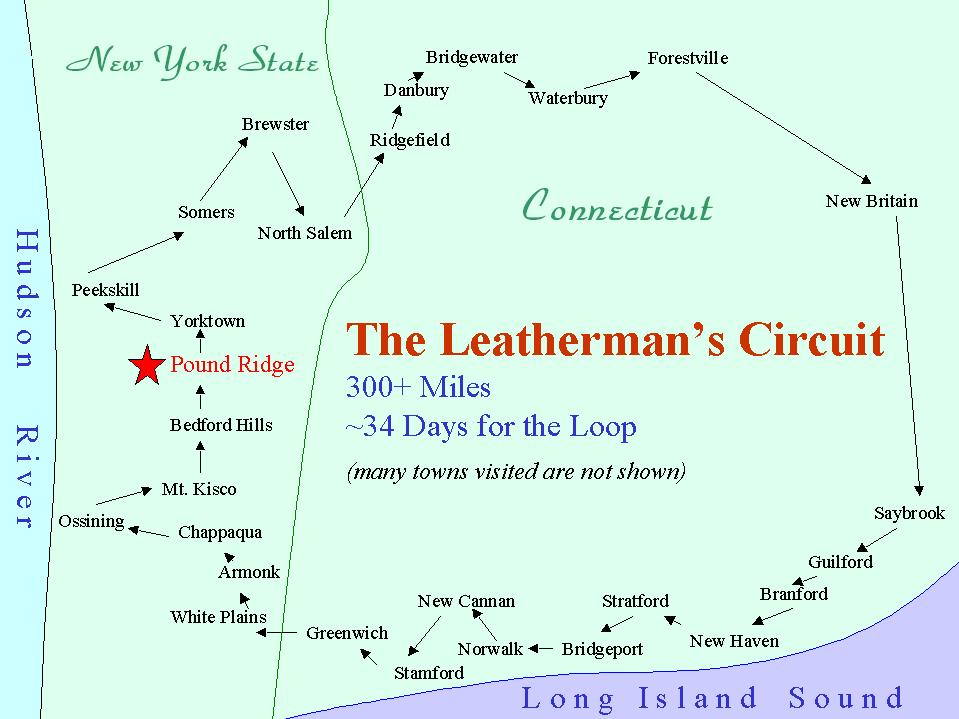
  • Blue Trail – 0.6 mile ~ Beginning at the north end of the parking lot, the Blue Trail heads downhill into the woods. At a T-intersection, the Blue Trail turns left and joins the left leg of the Yellow Trail. The co-aligned trails descend and reach a trail junction at a double Tulip tree. The Blue Trail turns left and the Yellow Trail goes straight.

Blue Trail - Silver Lake Preserve

Blue Trail – Silver Lake Preserve

Blue Trail - Silver Lake Preserve

Blue Trail – Silver Lake Preserve

Blue Trail - Silver Lake Preserve

Blue Trail – Silver Lake Preserve

Heading gradually uphill, the Blue Trail enters a field and turns left. It follows the edge of the field as it ascends Merritt Hill. To the right is a cannon marking where a British flank attack was thwarted during the Revolutionary War. The trail reenters the woods on a narrow path at 0.5 mile. It parallels the road and closes the loop near the parking lot entrance.

Blue Trail - Silver Lake Preserve

Blue Trail – Silver Lake Preserve

Blue Trail - Silver Lake Preserve

Blue Trail – Silver Lake Preserve

Blue Trail - Silver Lake Preserve

Blue Trail – Silver Lake Preserve

Blue Trail - Silver Lake Preserve

Blue Trail – Silver Lake Preserve

terminus of Blue Trail - Silver Lake Preserve

terminus of Blue Trail – Silver Lake Preserve

  • Yellow Trail – 1 mile ~ Beginning on the Blue Trail that heads north from the parking lot, the Yellow Trail is a loop with sections co-aligned with the White and Blue Trails. To go counterclockwise around the loop, turn right and leave the Blue Trail. The Yellow Trail skirts the base of a hill and turns left when an unmarked trail heads north towards private property. After descending several stone steps, the Yellow Trail turns right at an intersection where an unmarked trail descends 250 feet downhill to the lake. As the Yellow Trail ascends on uneven stone steps, it passes, to the right, rock outcroppings with surfaces marked by flowing water.

Yellow Trail - Silver Lake Preserve

Yellow Trail – Silver Lake Preserve

Yellow Trail - Silver Lake Preserve

Yellow Trail – Silver Lake Preserve

Yellow Trail - Silver Lake Preserve

Yellow Trail – Silver Lake Preserve

Yellow Trail - Silver Lake Preserve

Yellow Trail – Silver Lake Preserve

Yellow Trail - Silver Lake Preserve

Yellow Trail – Silver Lake Preserve

Yellow Trail - Silver Lake Preserve

Yellow Trail – Silver Lake Preserve

Yellow Trail - Silver Lake Preserve

Yellow Trail – Silver Lake Preserve

The trail continues uphill and reaches an unmarked woods road leading 0.2 mile through a valley. Heading downhill, the Yellow Trail enters a network of old ATV trails. The Heritage Trail, on the right, leads 0.2 mile to the Stony Hill Cemetery. At 0.5 mile, the White Trail joins from the left and large flat rocks pave the treadway of the co-aligned trails. The two trails pass a fireplace surrounded by a stone wall and then cross a stream on large flat stones. At a T-intersection at 0.6 mile, the Yellow Trail turns left as the White Trail continues straight.

Yellow Trail - Silver Lake Preserve

Yellow Trail – Silver Lake Preserve

Yellow Trail - Silver Lake Preserve

Yellow Trail – Silver Lake Preserve

ruins - Yellow Trail - Silver Lake Preserve

ruins – Yellow Trail – Silver Lake Preserve

Yellow Trail - Silver Lake Preserve

Yellow Trail – Silver Lake Preserve

cobblestones - Silver Lake Preserve

cobblestones – Silver Lake Preserve

stone ruins - Yellow Trail - Silver Lake Preserve

stone ruins – Yellow Trail – Silver Lake Preserve

Yellow Trail - Silver Lake Preserve

Yellow Trail – Silver Lake Preserve

Yellow Trail - Silver Lake Preserve

Yellow Trail – Silver Lake Preserve

Yellow Trail - Silver Lake Preserve

Yellow Trail – Silver Lake Preserve

After descending stone steps at 0.7 mile, the Yellow Trail reaches lake level and turns left, joining the White Trail, which comes in from the right. Now at lake level, the co-aligned trails cross two inlet streams on rocks and the White Trail leaves to the left. At 0.8 mile, the Yellow Trail reaches a T-intesection with the Blue Trail. The Yellow Trail joins the left leg of the Blue Trail and climbs the hill. At 1.0 mile, the Yellow Trail closes the Loop as the Blue Trail continues uphill to the north end of the parking lot.

Yellow/White Trails - Silver Lake Preserve

Yellow/White Trails – Silver Lake Preserve

Yellow/White Trails - Silver Lake Preserve

Yellow/White Trails – Silver Lake Preserve

Yellow/White Trails - Silver Lake Preserve

Yellow/White Trails – Silver Lake Preserve

Yellow/White Trails - Silver Lake Preserve

Yellow/White Trails – Silver Lake Preserve

Yellow Trail - Silver Lake Preserve

Yellow Trail – Silver Lake Preserve

Yellow Trail - Silver Lake Preserve

Yellow Trail – Silver Lake Preserve

  • White Trail – 1.6 miles ~ Beginning at the top of the hill, where the White Trail joins the Yellow Trail from the left and large flat rocks pave the treadway of the co-aligned trails. The two trails pass a fireplace surrounded by a stone wall and then cross a stream on large flat stones. At a T-intersection at 0.1 mile, the Yellow Trail turns left as the White Trail continues straight.

Yellow/White Trails - Silver Lake Preserve

Yellow/White Trails – Silver Lake Preserve

stone ruins - Yellow/White Trails - Silver Lake Preserve

stone ruins – Yellow/White Trails – Silver Lake Preserve

Yellow/White Trails - Silver Lake Preserve

Yellow/White Trails – Silver Lake Preserve

Yellow/White Trails - Silver Lake Preserve

Yellow/White Trails – Silver Lake Preserve

Yellow/White Trails - Silver Lake Preserve

Yellow/White Trails – Silver Lake Preserve

The White Trail continues southwest on a woods road and passes an unmarked trail on the left that descends to the lake. The trail soon ascends uneven stone steps then levels off. At 0.3 mile, the trail turns left, descends stone steps, levels off then descends more stone steps.

White Trail - Silver Lake Preserve

White Trail – Silver Lake Preserve

White Trail - Silver Lake Preserve

White Trail – Silver Lake Preserve

White Trail - Silver Lake Preserve

White Trail – Silver Lake Preserve

White Trail - Silver Lake Preserve

White Trail – Silver Lake Preserve

White Trail - Silver Lake Preserve

White Trail – Silver Lake Preserve

White Trail - Silver Lake Preserve

White Trail – Silver Lake Preserve

White Trail - Silver Lake Preserve

White Trail – Silver Lake Preserve

White Trail - Silver Lake Preserve

White Trail – Silver Lake Preserve

White Trail - Silver Lake Preserve

White Trail – Silver Lake Preserve

After leveling off briefly, the White Trail passes some large rock formations as it ascends stone steps. At about 0.5 mile, the trail levels off again and passes a vernal pool.

White Trail - Silver Lake Preserve

White Trail – Silver Lake Preserve

White Trail - Silver Lake Preserve

White Trail – Silver Lake Preserve

White Trail - Silver Lake Preserve

White Trail – Silver Lake Preserve

White Trail - Silver Lake Preserve

White Trail – Silver Lake Preserve

At about 0.6 mile, the trail begins to descend steeply on uneven stone steps, with Silver Lake visible through the trees below. At 0.75 mile, the trail reaches the shore of Silver Lake and turns left. The unmarked trail that continues south along the lake, leads to Liberty Park. The Trail now travels in a northerly direction along the lake, with occasional open views of Silver Lake. This lower section of the White Trail is vastly different than the more rugged topography of the upper section.

White Trail - Silver Lake Preserve

White Trail – Silver Lake Preserve

White Trail - Silver Lake Preserve

White Trail – Silver Lake Preserve

White Trail - Silver Lake Preserve

White Trail – Silver Lake Preserve

White Trail - Silver Lake Preserve

White Trail – Silver Lake Preserve

White Trail - Silver Lake Preserve

White Trail – Silver Lake Preserve

White Trail - Silver Lake Preserve

White Trail – Silver Lake Preserve

White Trail - Silver Lake Preserve

White Trail – Silver Lake Preserve

White Trail - Silver Lake Preserve

White Trail – Silver Lake Preserve

White Trail - Silver Lake Preserve

White Trail – Silver Lake Preserve

At 1.4 miles, the Trail reaches a junction with the Yellow trail that joins in from the left. The co-aligned trails cross two inlet streams on rocks and at 1.5 miles, the White Trail leaves to the left, climbs stone steps and closes the loop at a junction with the Yellow Trail at 1.6 miles.

Yellow/White Trails - Silver Lake Preserve

Yellow/White Trails – Silver Lake Preserve

Yellow/White Trails - Silver Lake Preserve

Yellow/White Trails – Silver Lake Preserve

Yellow/White Trails - Silver Lake Preserve

Yellow/White Trails – Silver Lake Preserve

Yellow/White Trails - Silver Lake Preserve

Yellow/White Trails – Silver Lake Preserve

Yellow Trail - Silver Lake Preserve

Yellow Trail – Silver Lake Preserve

  • Heritage Trail – red-white-blue ~ The Heritage Trail blazes appear sporadically throughout the preserve and the section that leads to Stony Hill Cemetery is especially difficult to follow.

Heritage Trail - Silver Lake Preserve

Heritage Trail – Silver Lake Preserve

It is more of a bushwack than following a trail. It is recommended that if you plan on visiting Stony Hill Cemetery, that you carry a compass or GPS device to help with navigation. The cemetery can easily be reached from Buckhout Road.

Stony Hill Cemetery

Stony Hill Cemetery

Stony Hill Cemetery is a 6.5-acre parcel and is the last remaining identifiable element of “The Hills.” The property on which the cemetery sits was part of a land grant given by the Purchase Friends (Quakers) to slaves they voluntarily freed in the 18th century. The remains (approximately 200) of “The Hills’” residents and those of several African American Civil War veterans are buried in the cemetery, mostly in unmarked graves.

Stony Hill Cemetery

Stony Hill Cemetery

In 1983 the Stony Hill Cemetery was listed as a Westchester County Tricentennial Historic Site. The cemetery was listed on the National Register of Historic Places in 1999.

Stony Hill Cemetery

Stony Hill Cemetery

The Hike:
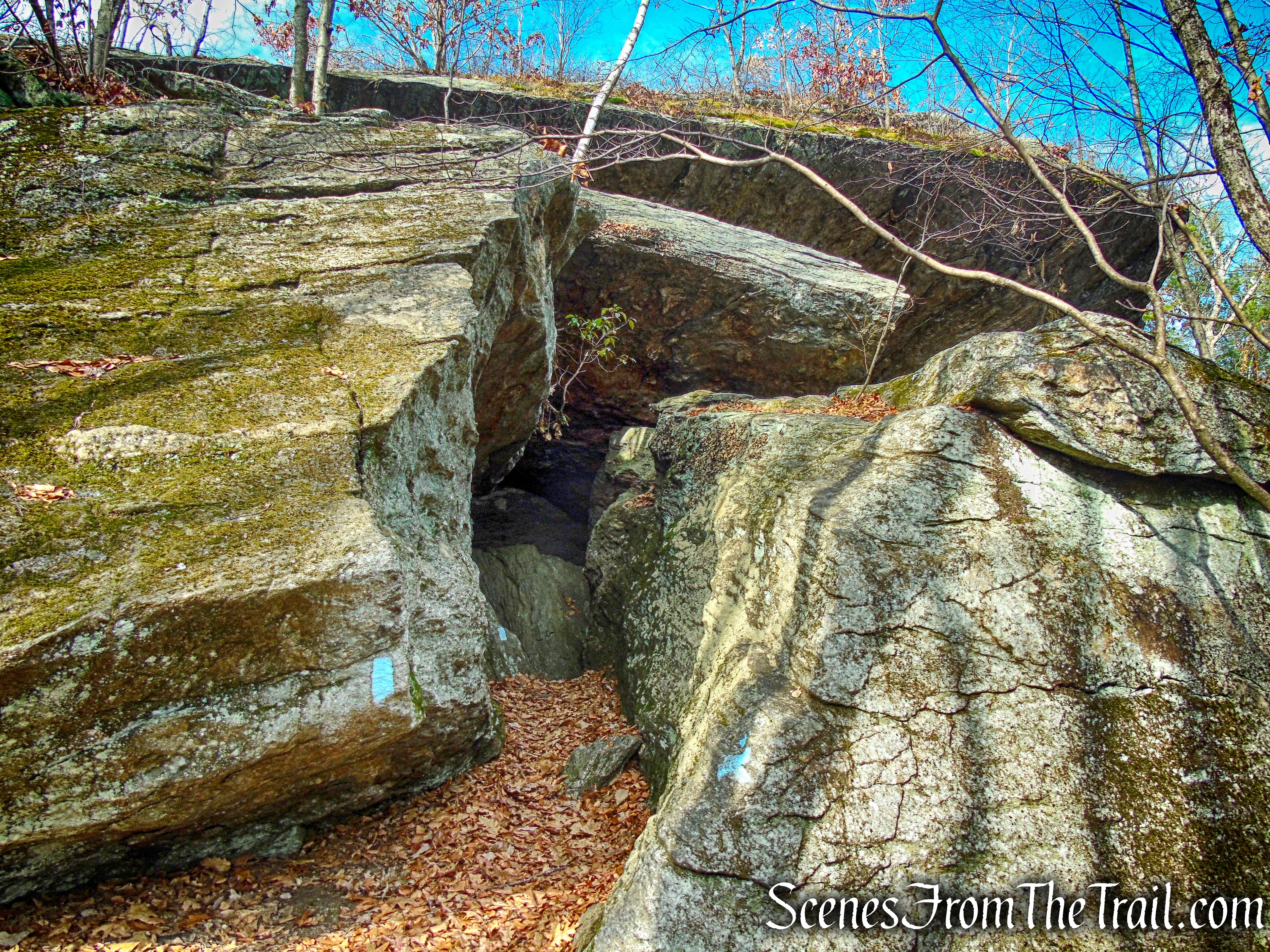
We followed the Blue Trail from the north end of the parking area to the Yellow Trail. We then took the Yellow Trail and turned right on the Heritage Trail. After crossing several small streams and passing through stone walls, the Heritage Trail became hard to follow. Having a GPS device and knowledge of the general vicinity of the Stony Hill Cemetery, we bushwacked down and up several steep slopes until we ran into a dirt road that leads right to the cemetery.

We retraced our steps back to the Yellow Trail, turned right and began following the Yellow Trail and continued straight on the White Trail as it traverses the upper slopes. Descending on White to Silver Lake, turning left and heading north around the lake, connecting with the right leg of the Blue Trail and ascending Merritt Hill, past the cannon and returning to the parking area.

The hike we did was about 4.5 miles, with approximately 600 feet of elevation gain, including off trail exploration, bushwacking and one missed turn. This hike was done clockwise from the parking area on Old Lake Street.

Silver Lake Preserve

Silver Lake Preserve

Depending on your navigational abilities and/or desire, you can bypass the Stony Hill Cemetery altogether. You can also choose to explore some of the unmarked trails that bisect the property. It is possible to create any number of loop hikes within the preserve of desired length and level of difficulty.

Review:

This is a great place to hike if you’re not expecting dramatic cliff top views. With many of the popular parks and trails being overwhelmed by people getting outdoors these days, Silver Lake Preserve gives hikers a respite from the madness. We saw several people down by the lake, but nowhere else during our visit. Definitely a good place to explore off trail and test out your navigational skills, using a map and compass. 

Pros:

Rugged slopes, historical features, Silver Lake, Stony Hill Cemetery, not heavily trafficked, shaded trails.

Cons:

No official trail map.


Take a hike!

Silver Lake Preserve

Silver Lake Preserve

Sources: