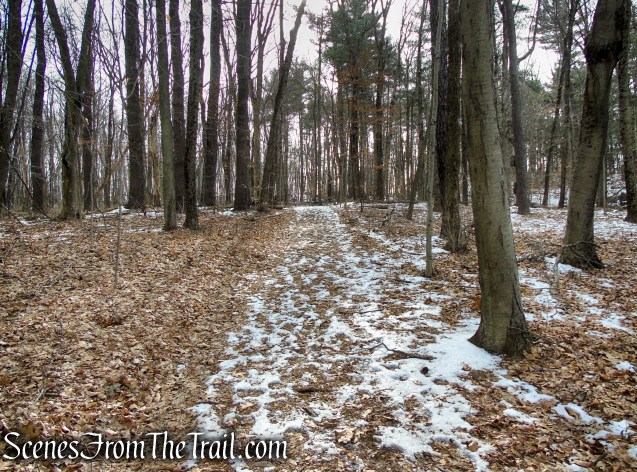
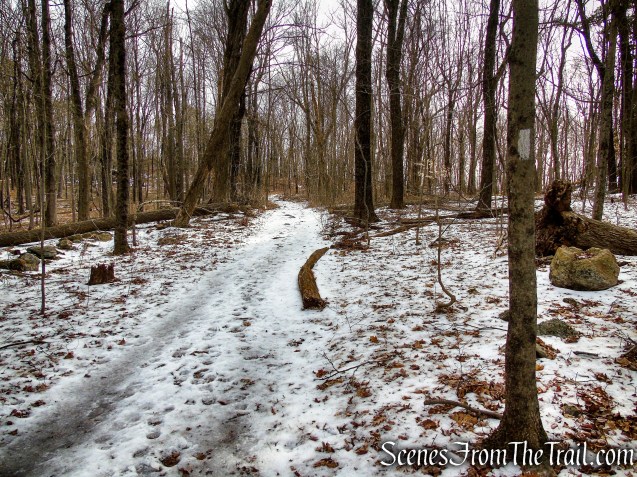
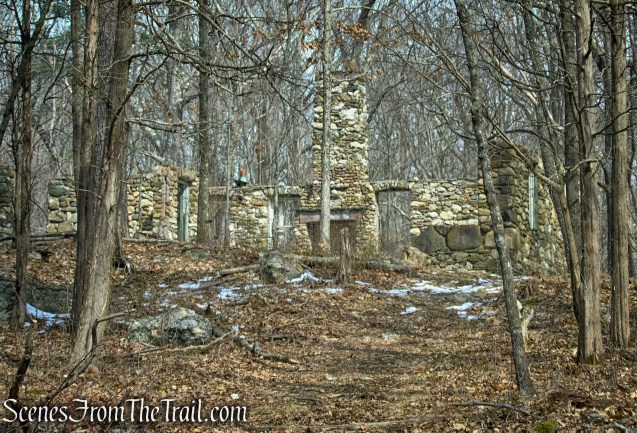
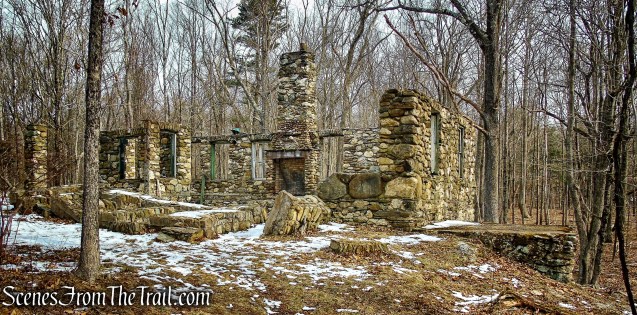
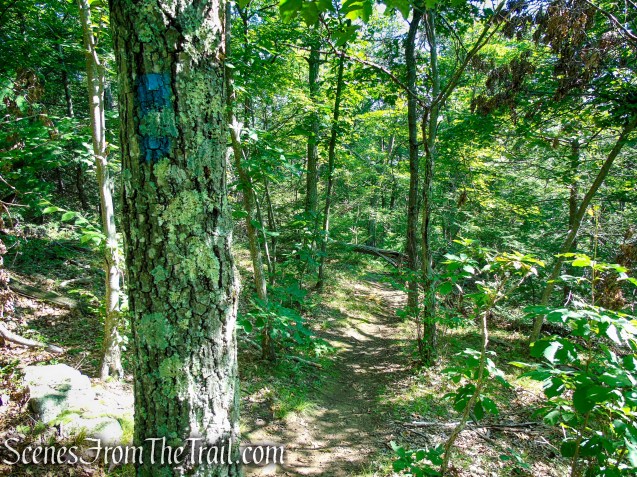
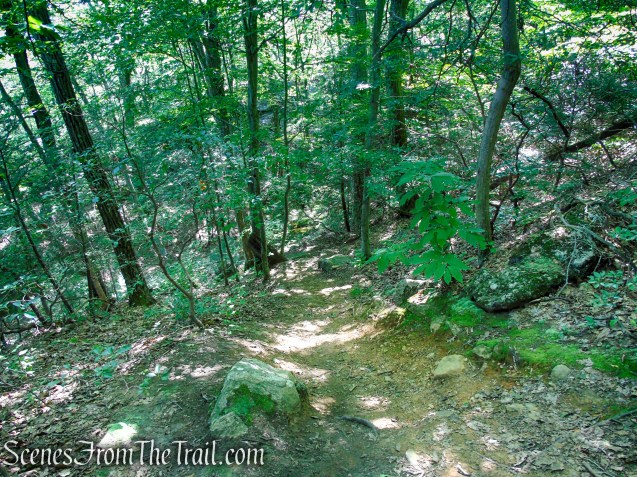
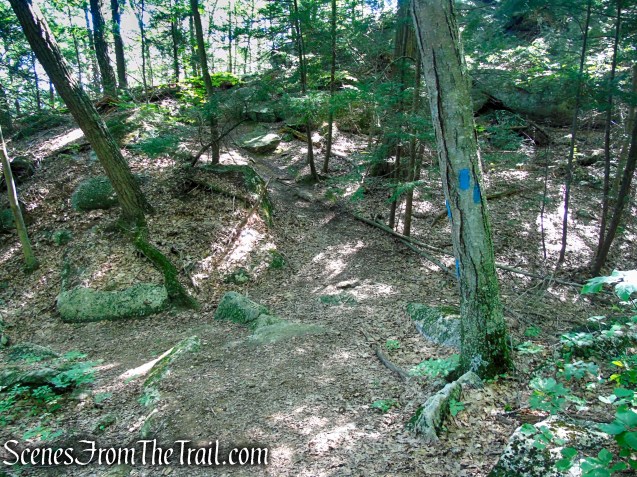
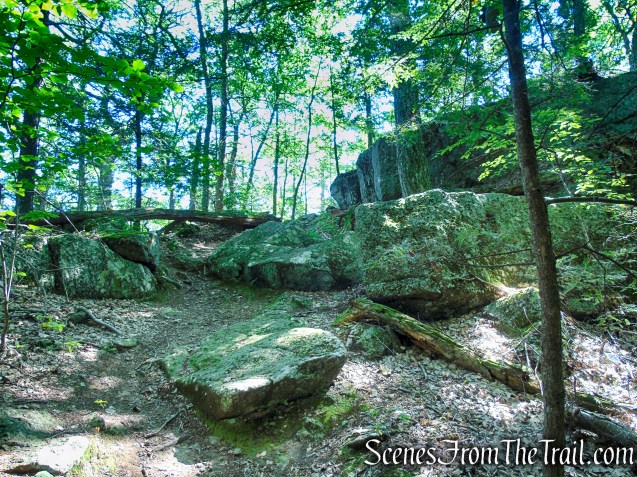
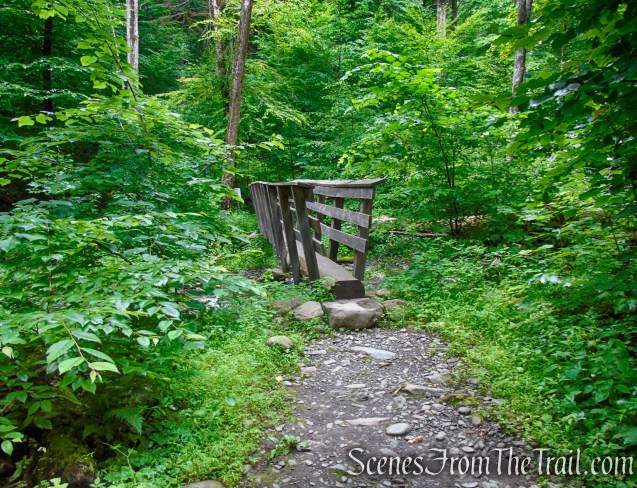
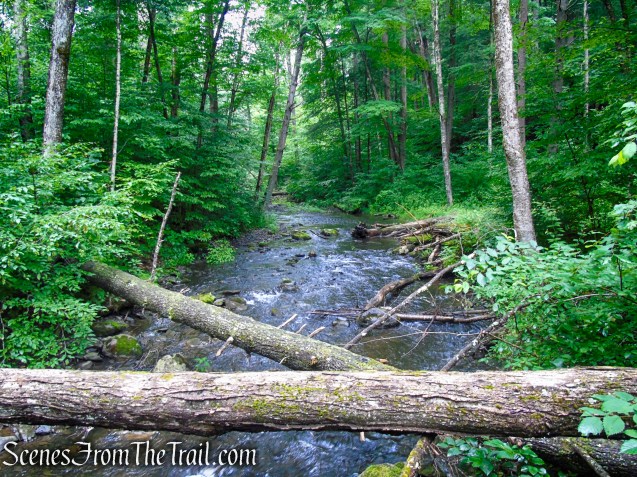
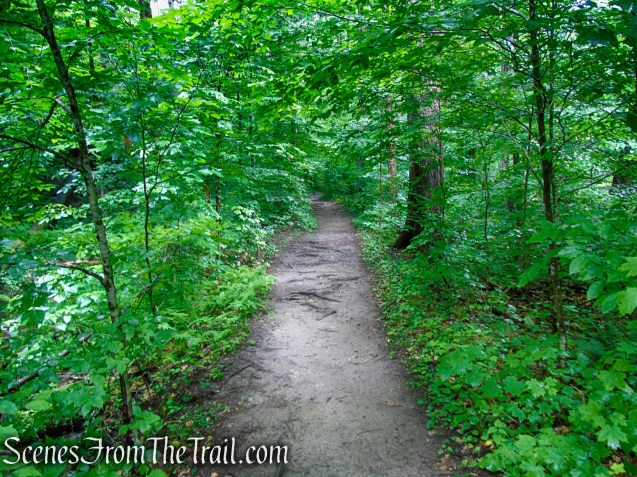
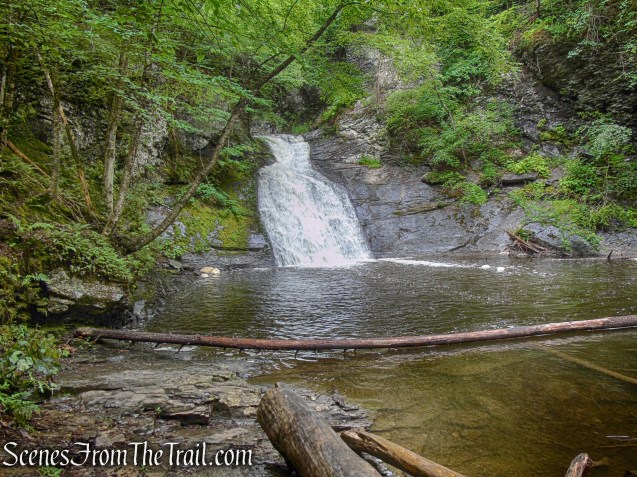
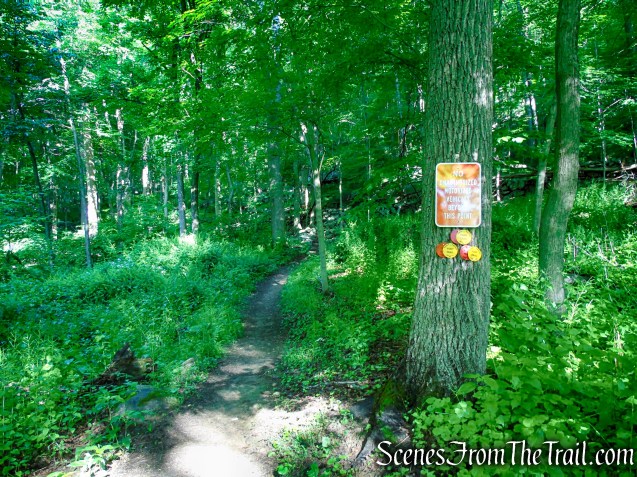
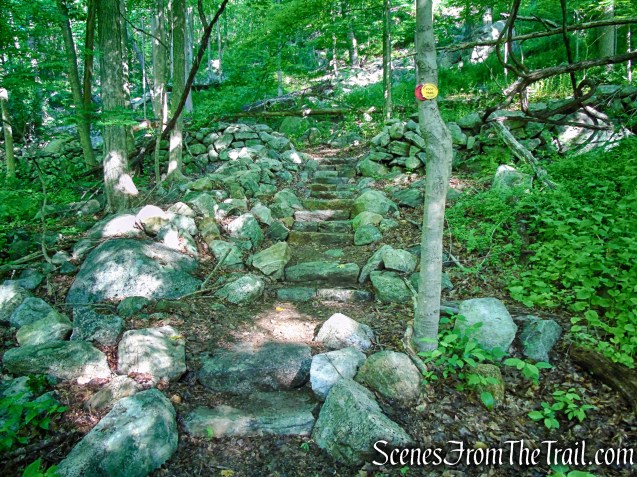
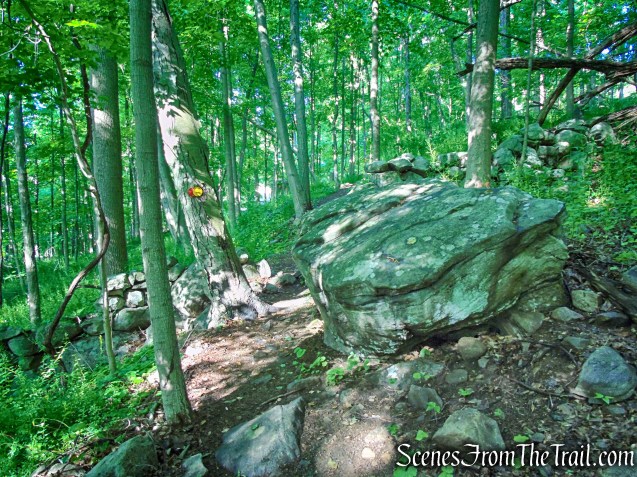
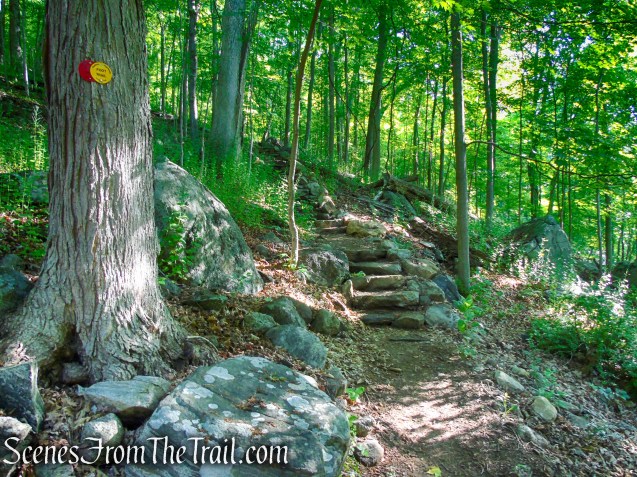
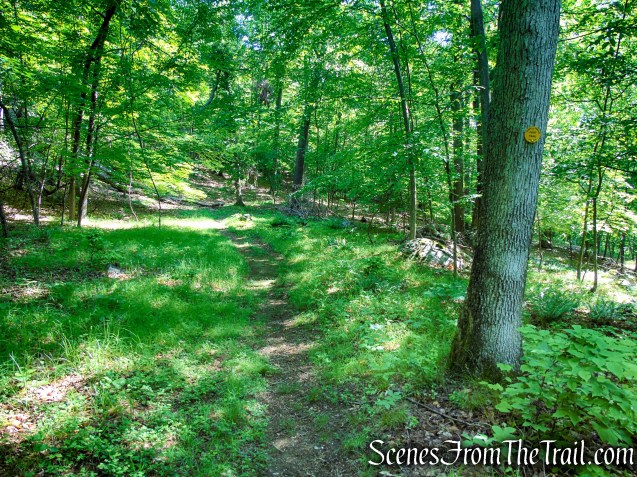
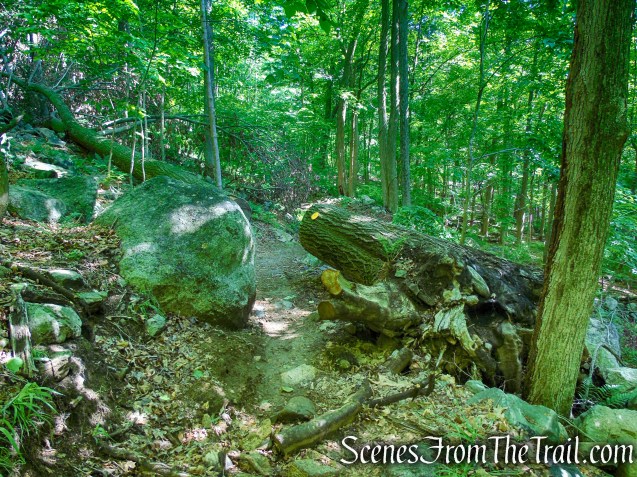
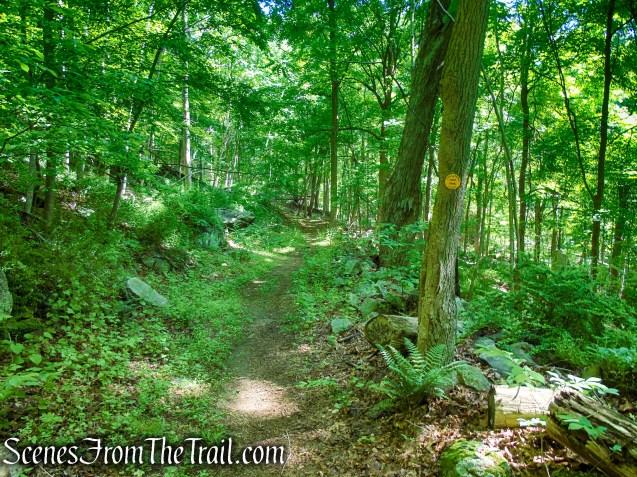
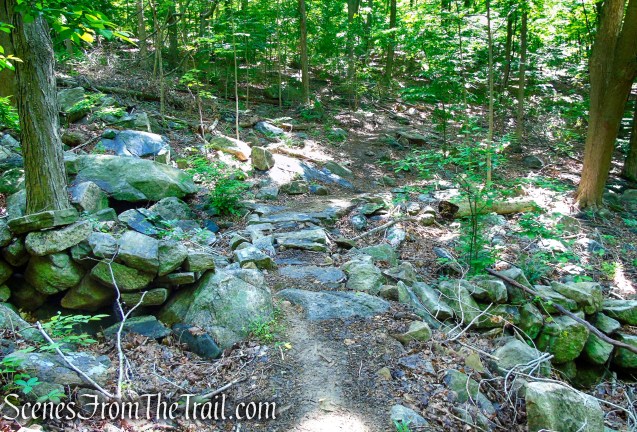
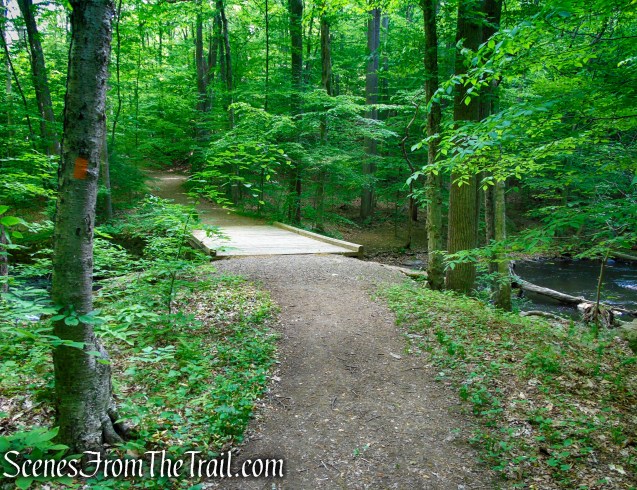
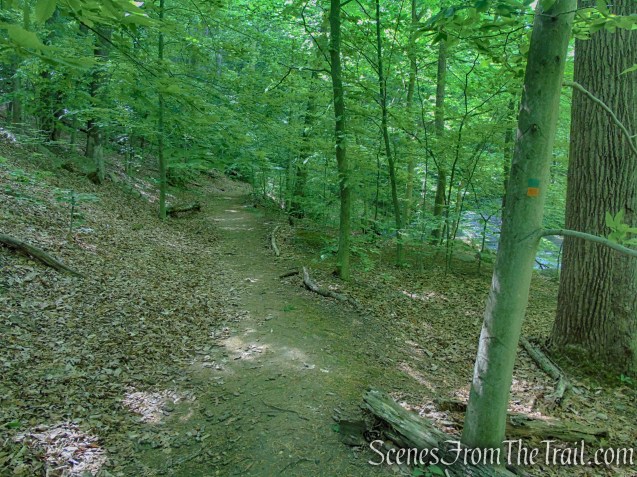
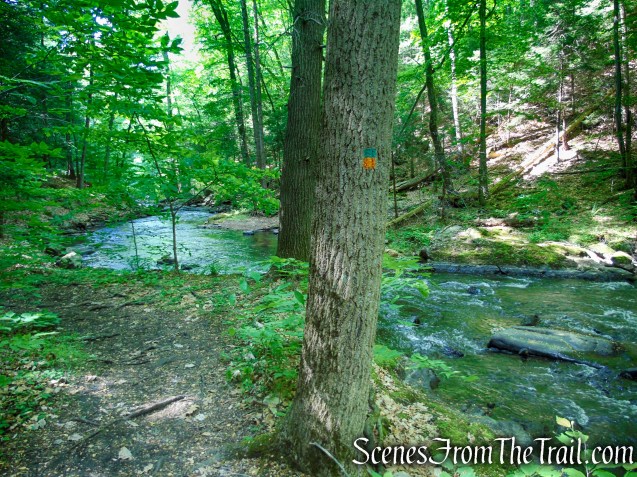
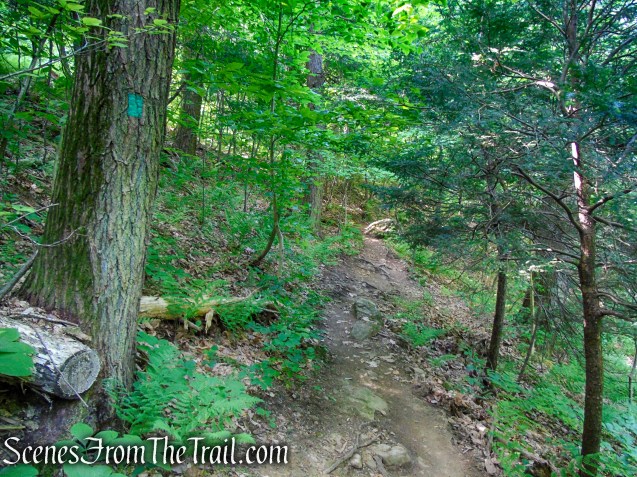
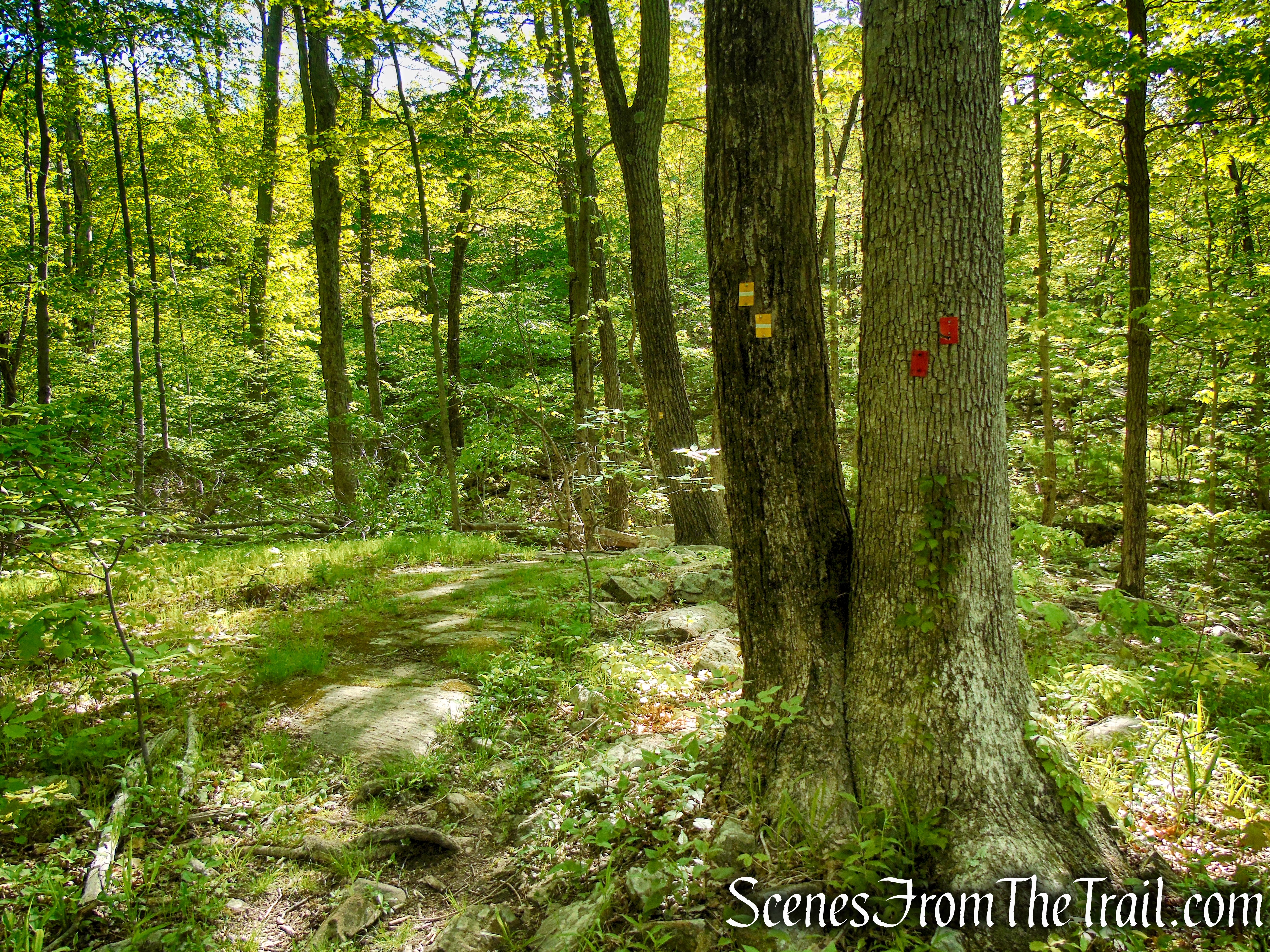
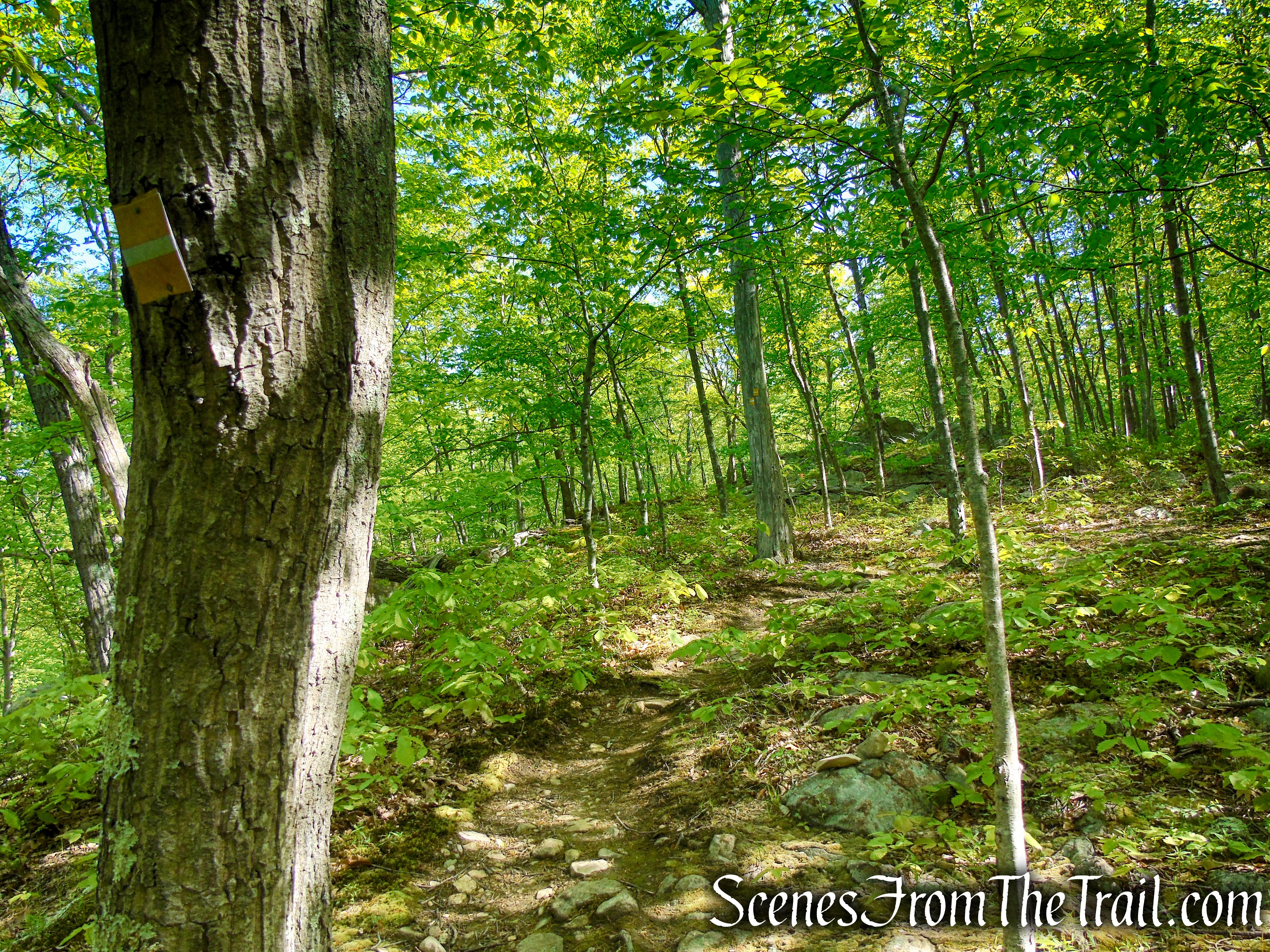
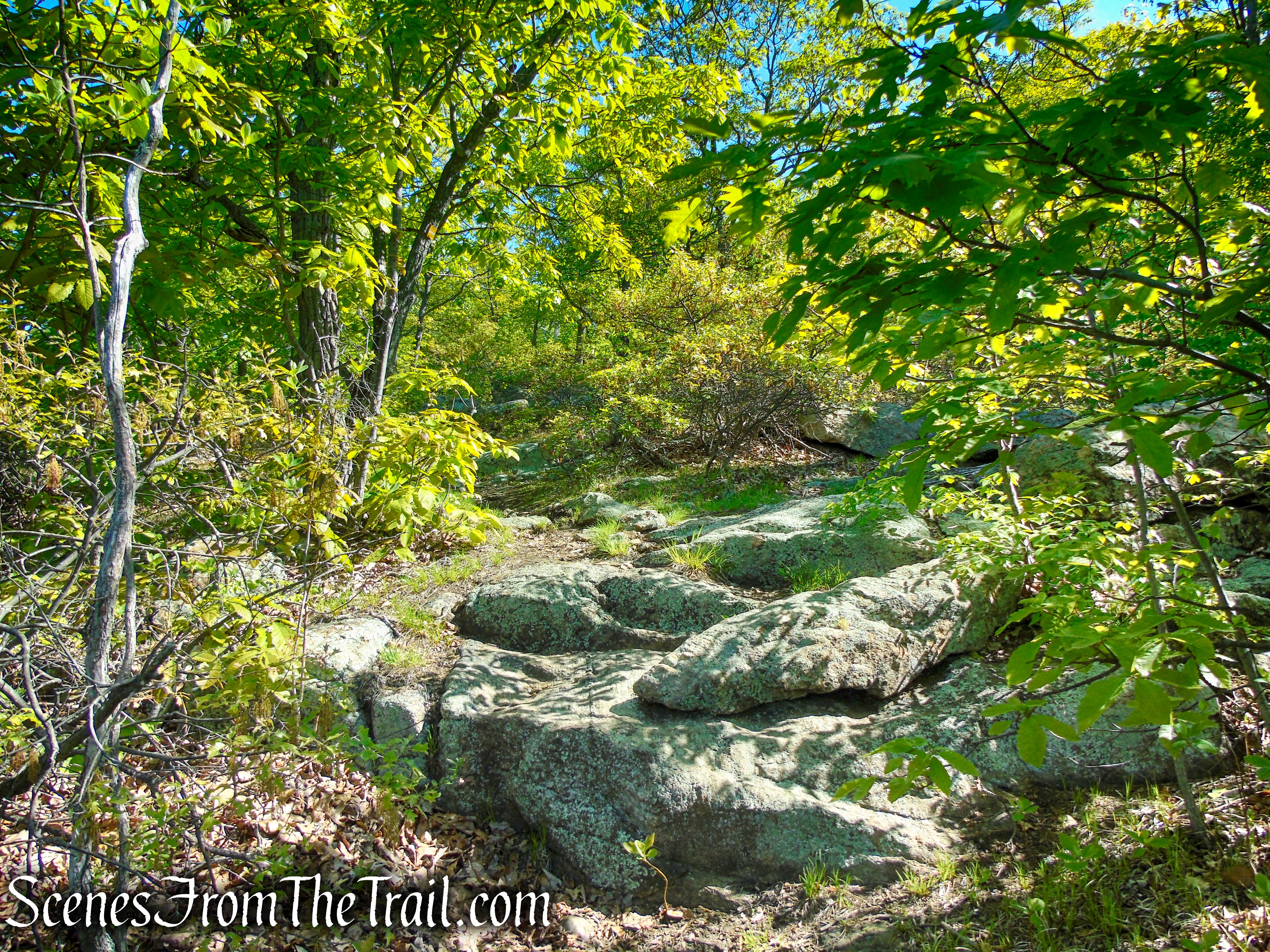
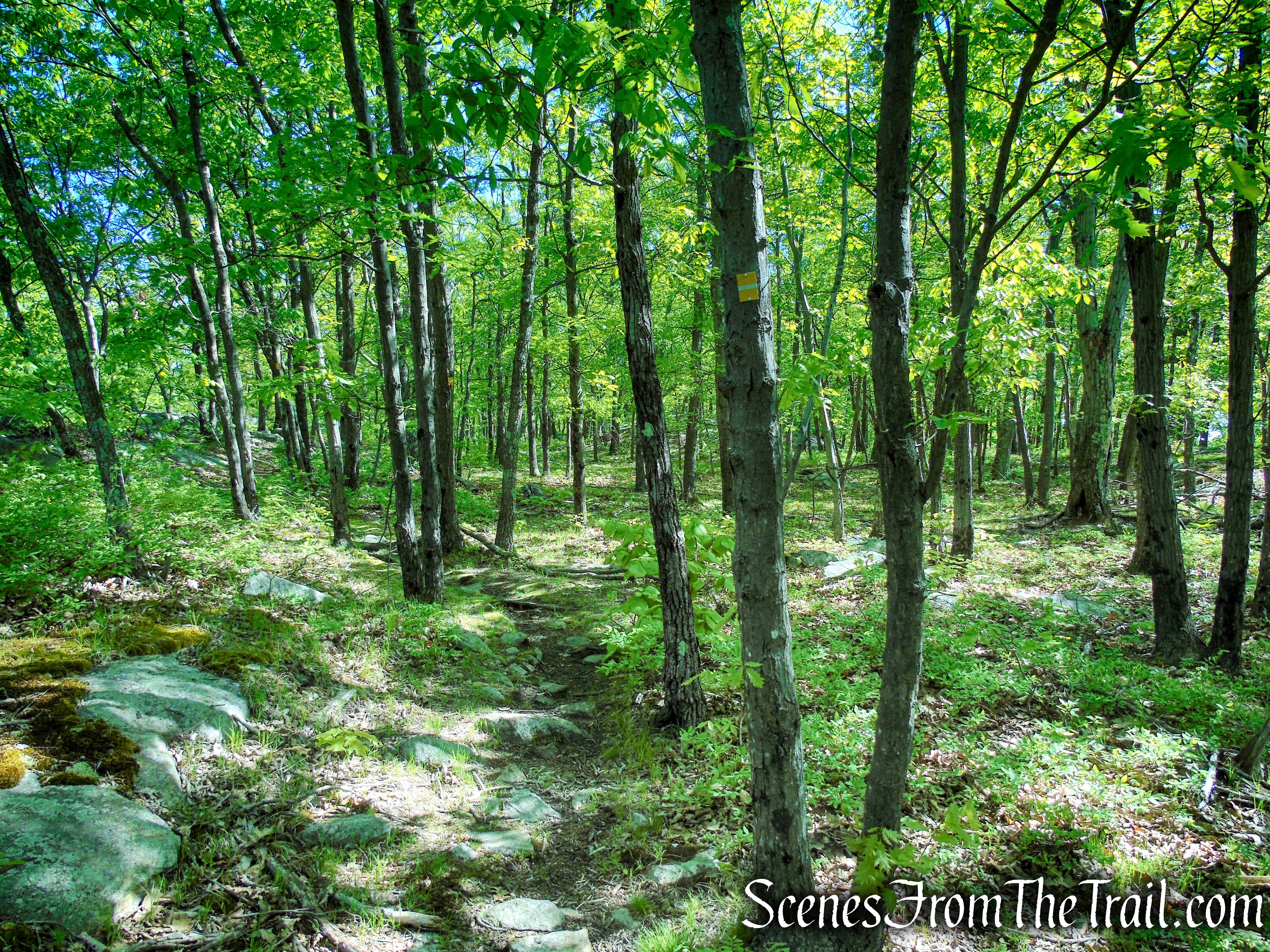
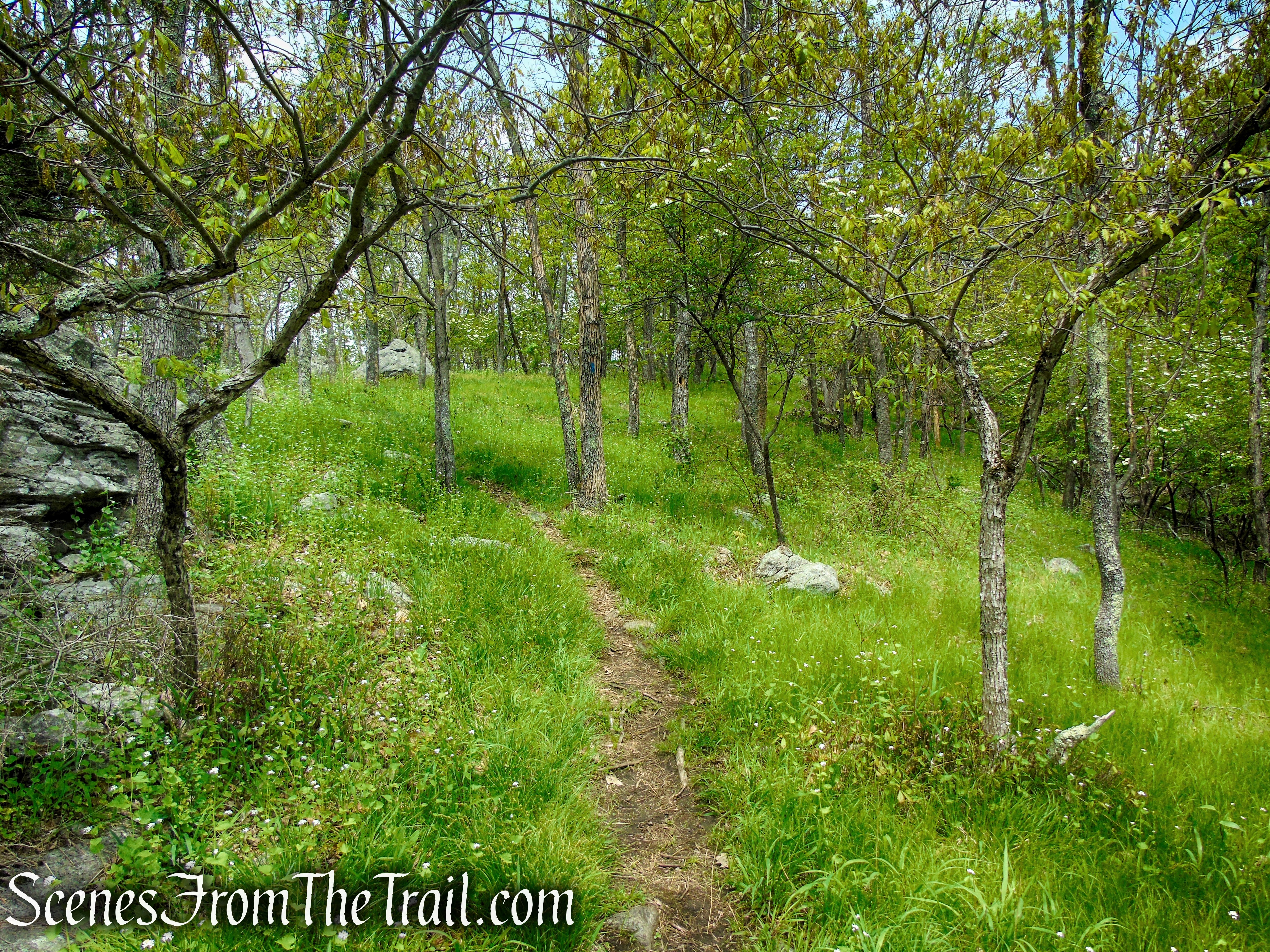
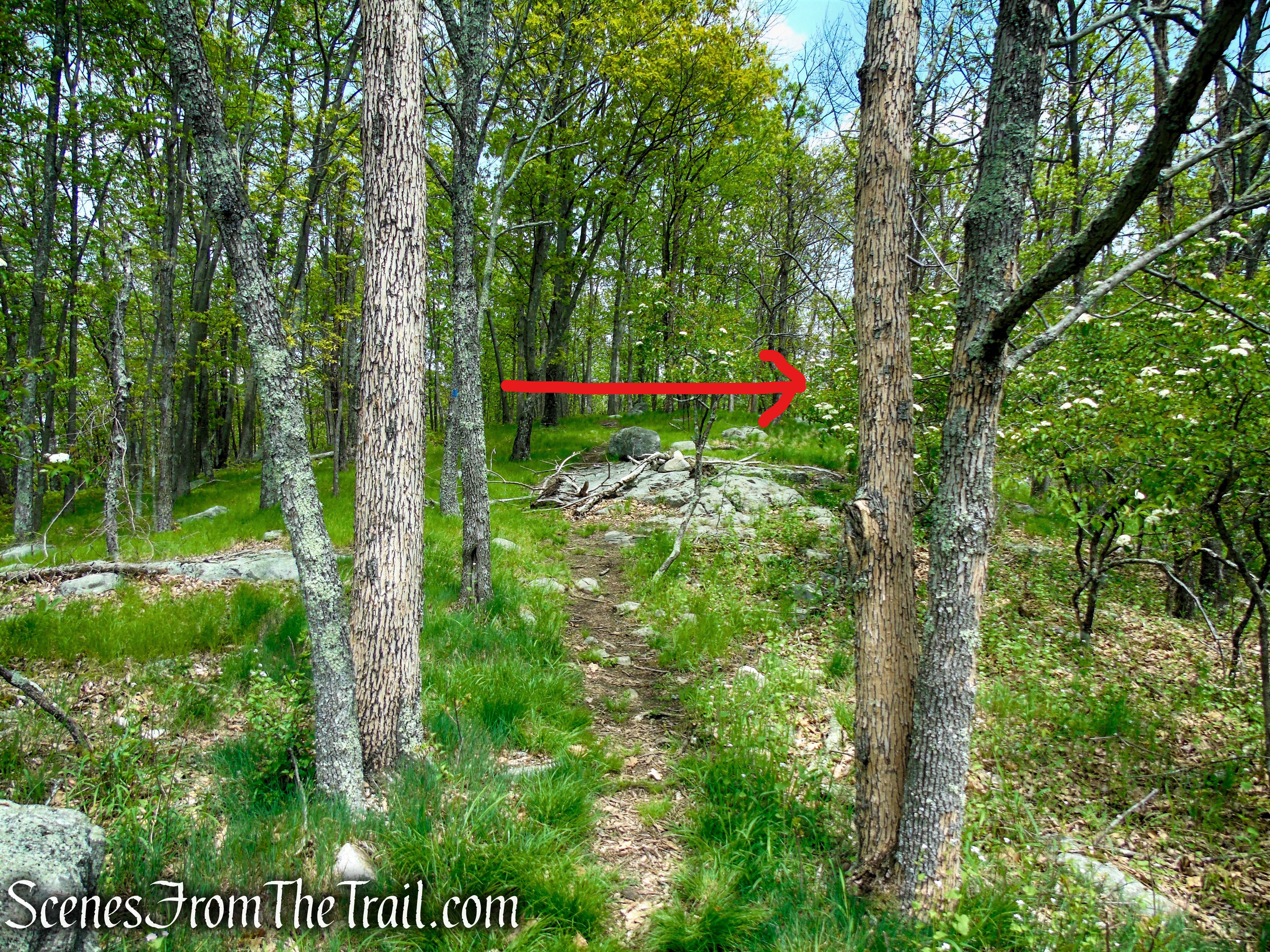
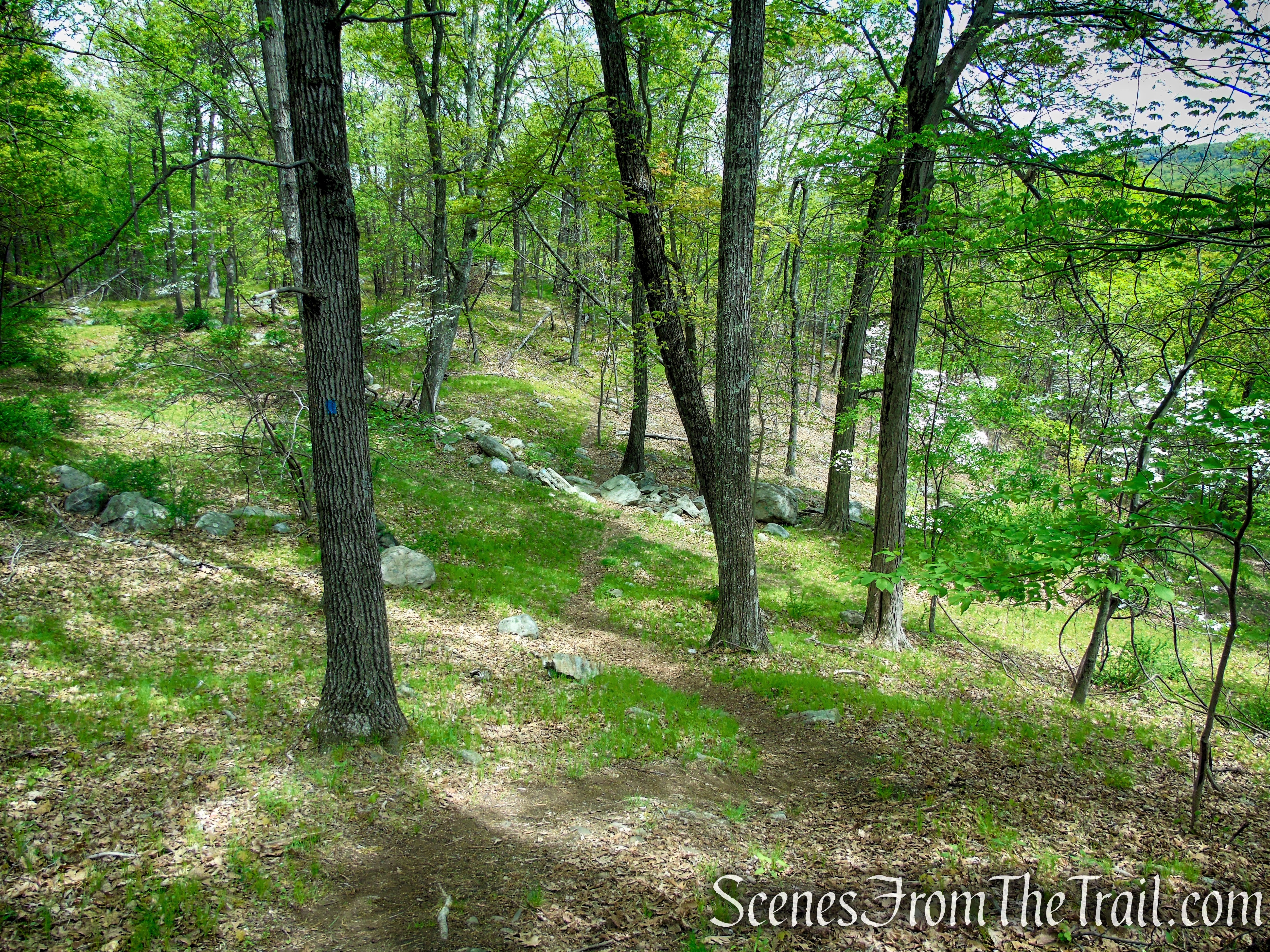
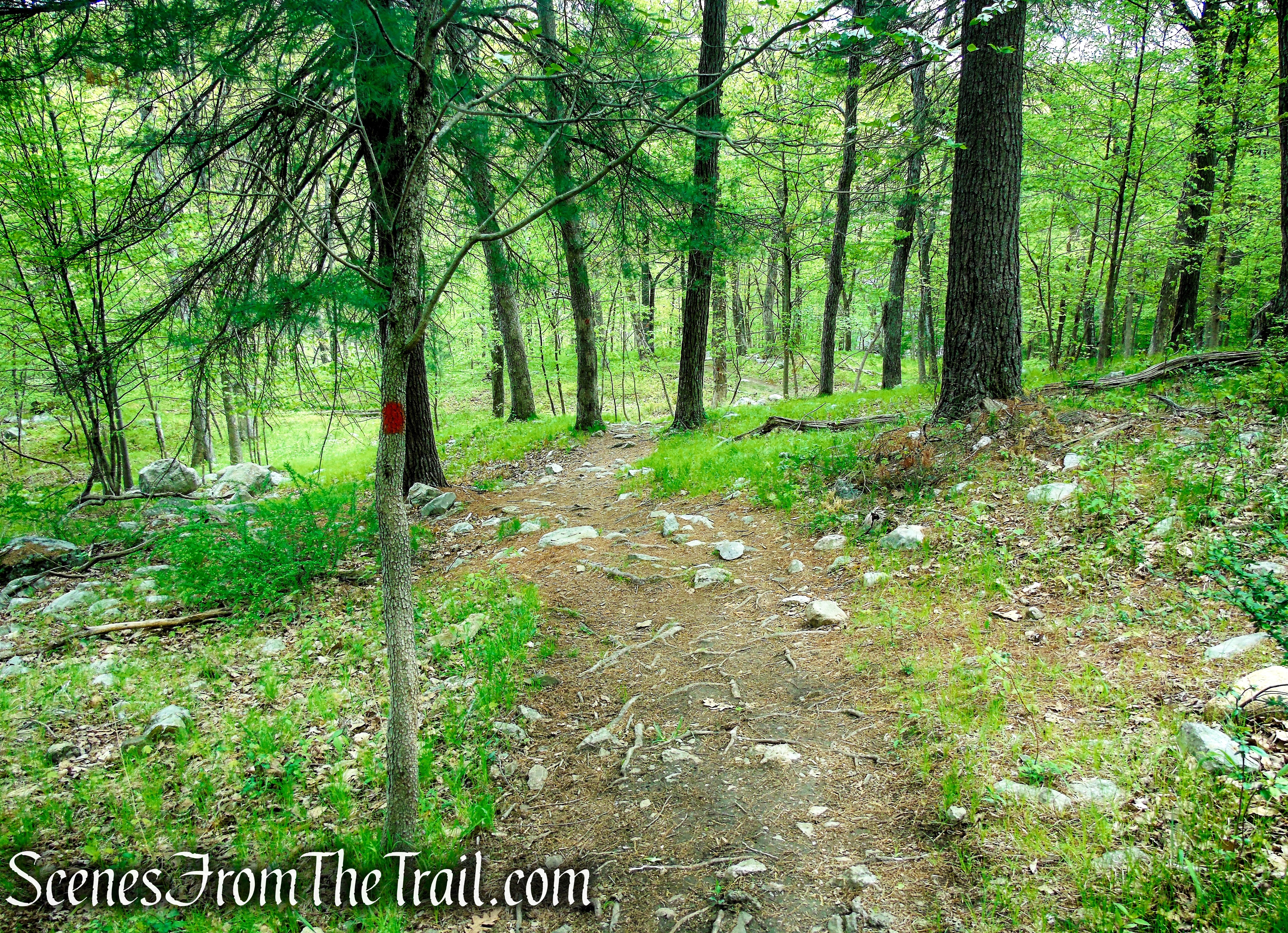
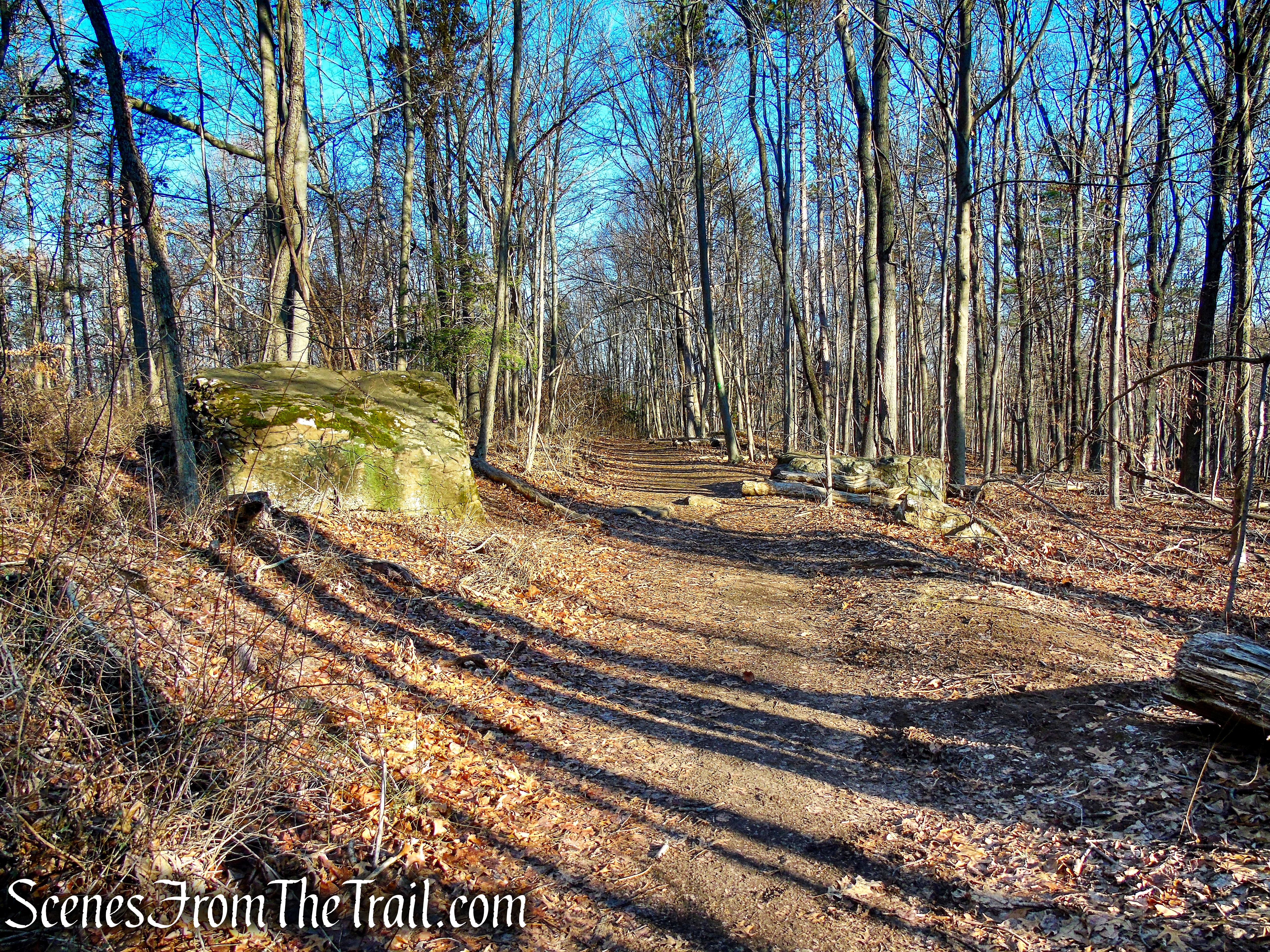
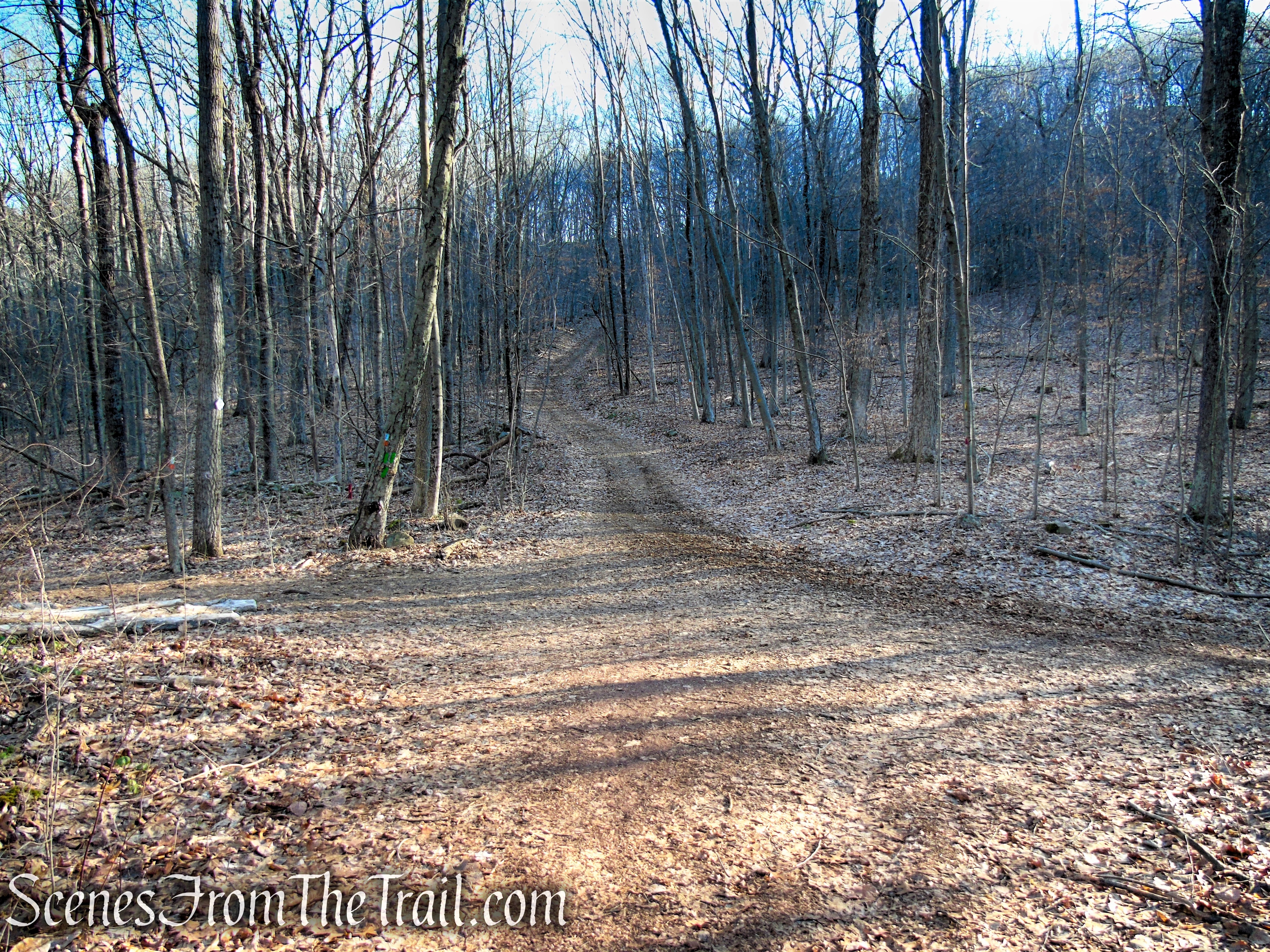
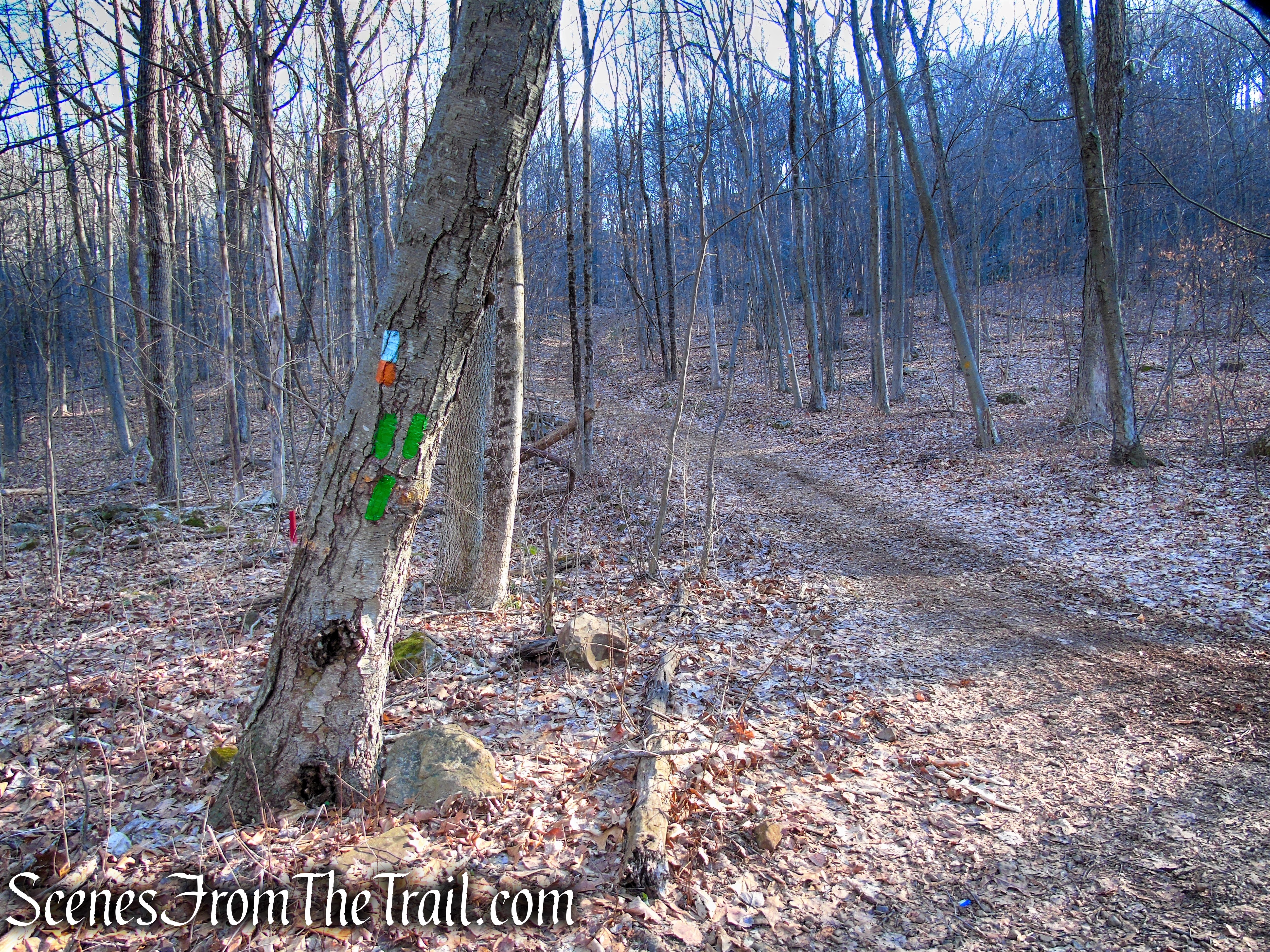
Tidal Marsh Trail – North Haven

April 10, 2022 – North Haven, Connecticut

Difficulty: Easy

Length: Approximately 3.1 miles

Max elevation: 30 ft.– total elevation gain approximately 70 ft.

Route type: Out and Back

Map: Tidal Marsh Trail Map

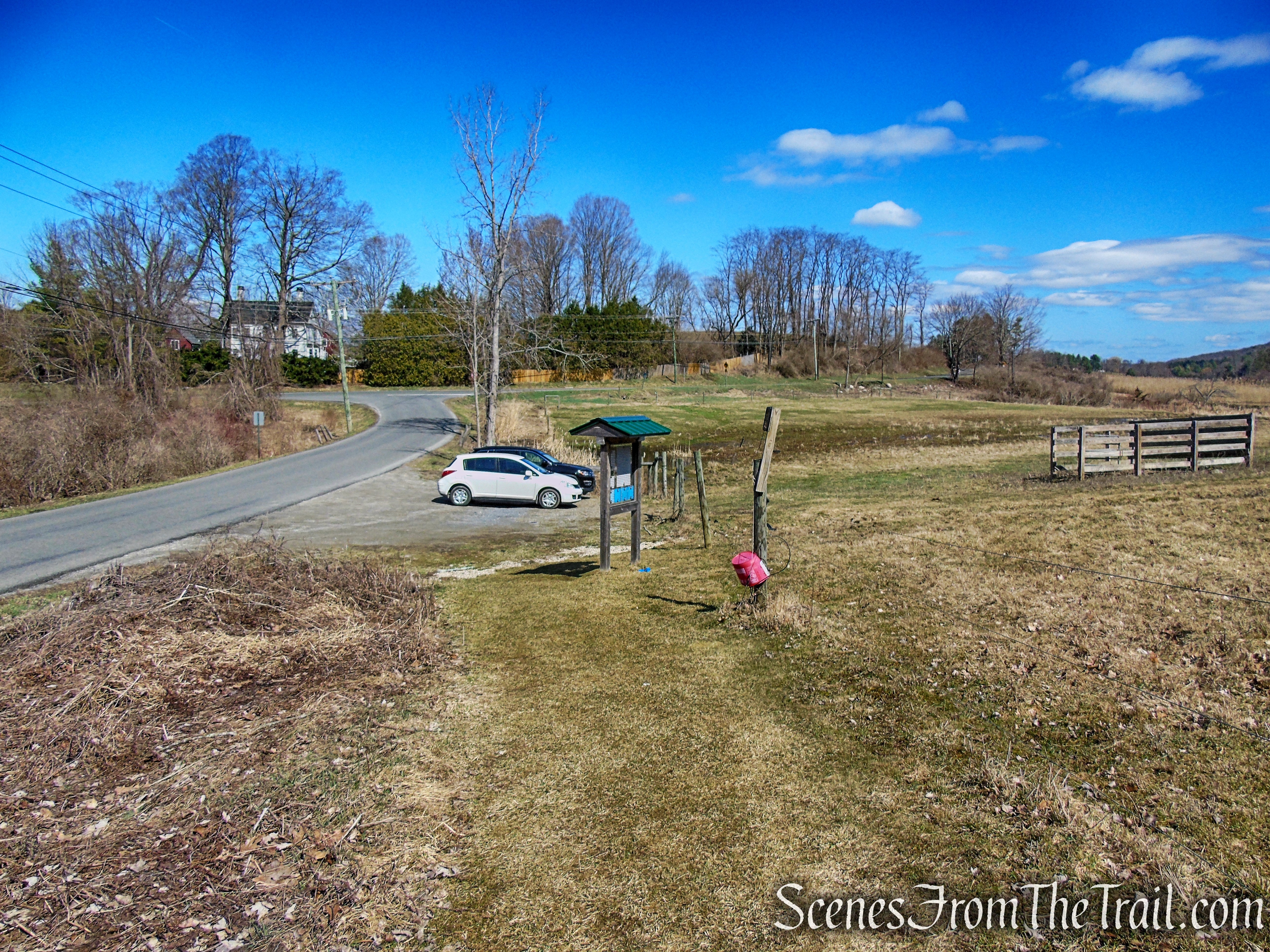
Trailhead parking: 200 Universal Drive, North Haven, CT 06473 (Behind Target)

No bathrooms on site – No entrance or parking fees

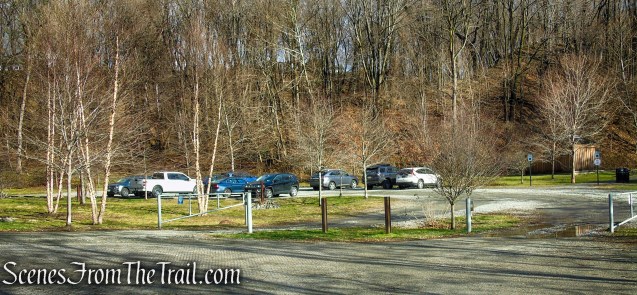
Plenty of parking at the trailhead.

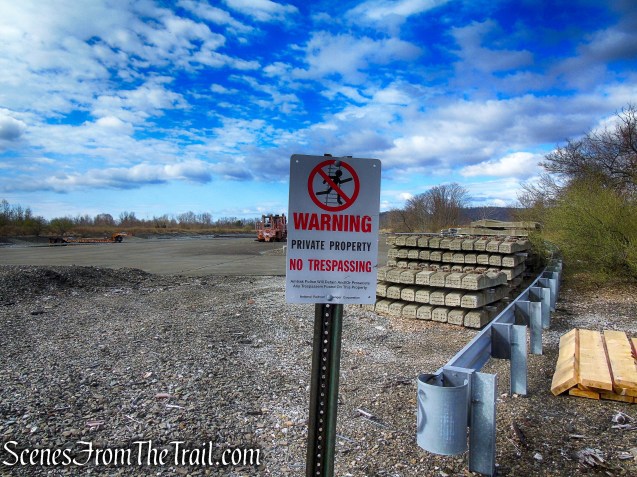
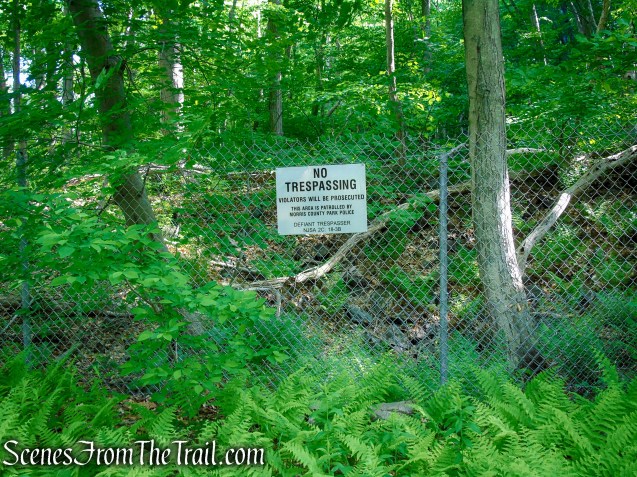
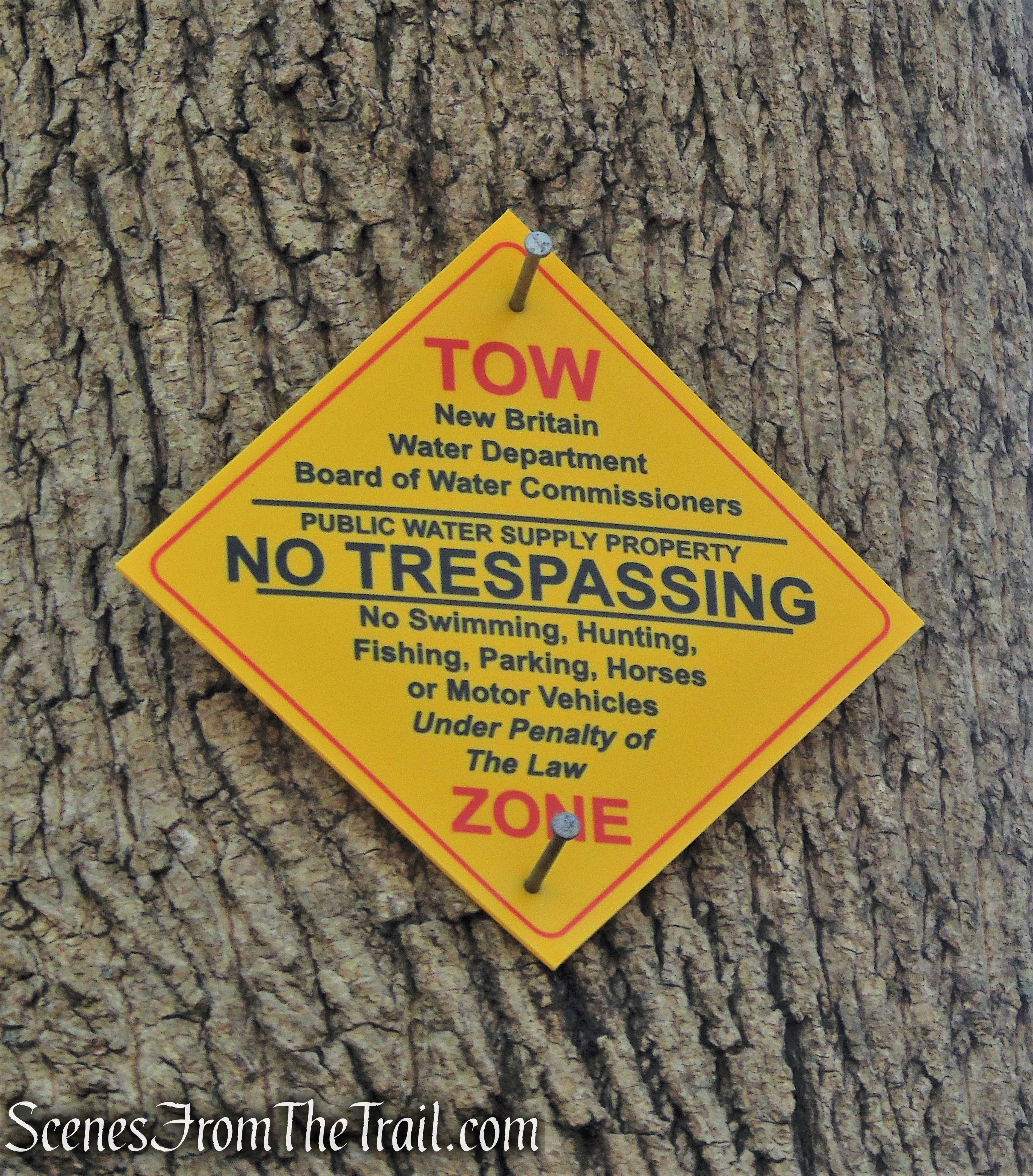
Please Note: This hike is no longer possible due to the property being fenced off.

North Haven Trail Association: We regret to inform you that, until further notice, the Tidal Marsh Trail, behind Target on Universal Drive, is no longer open to the public. The property’s owners have advised us that, due to contaminated wetlands on the property, they no longer can allow the public to use the Tidal Marsh Trail until such time as they have cleaned up the property. We will share more information as we receive it.


Overview:

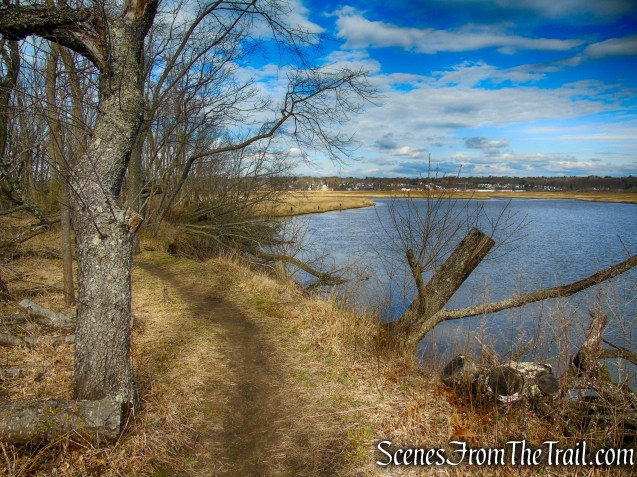
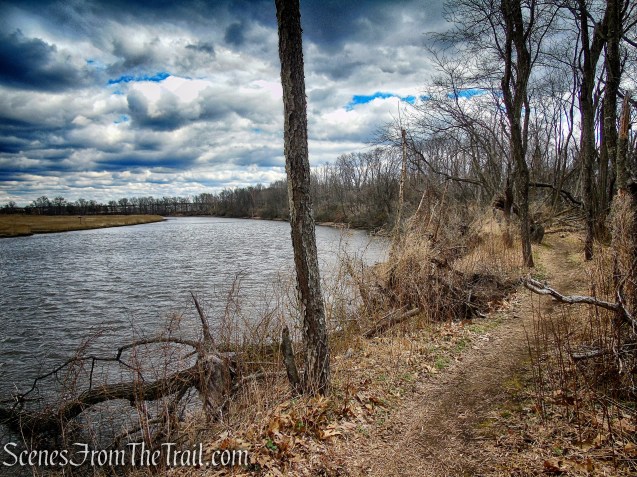
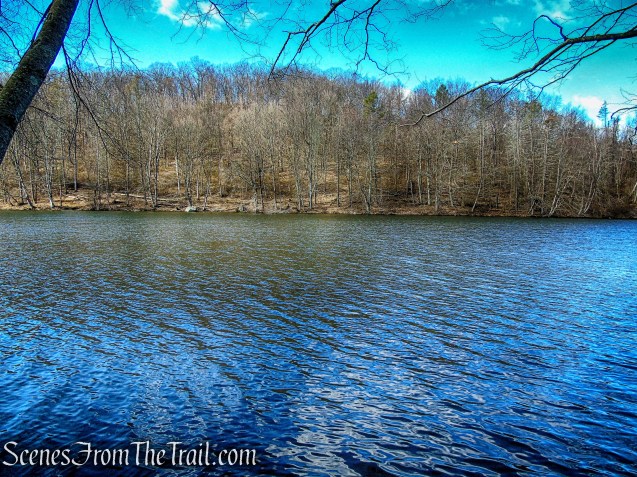
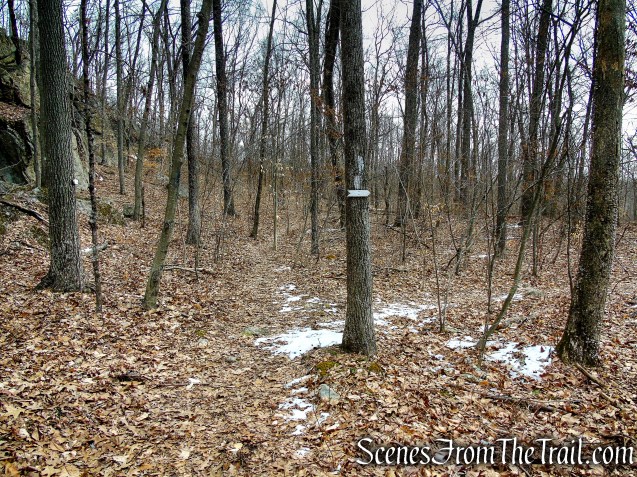
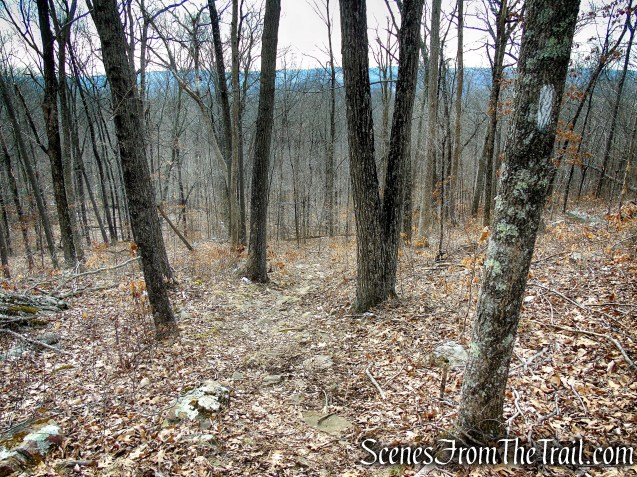
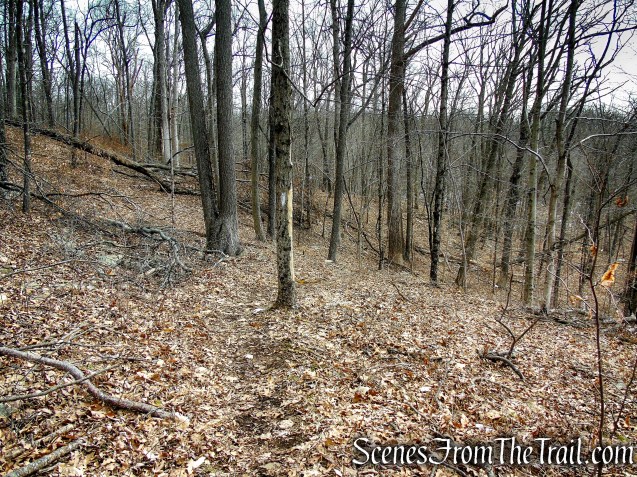
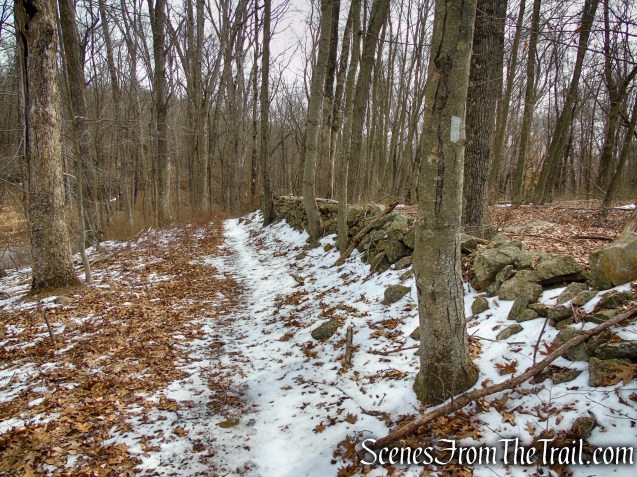
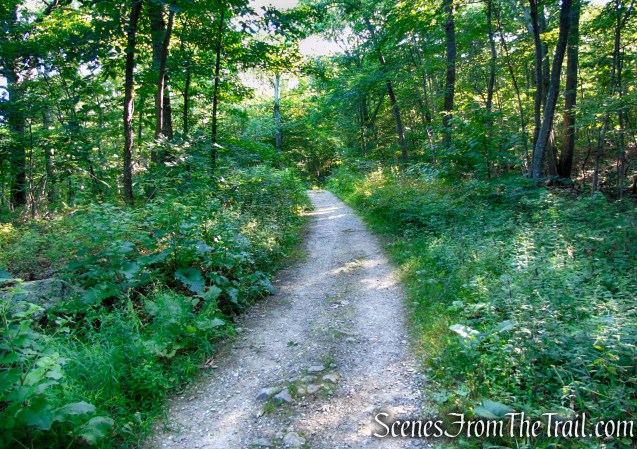
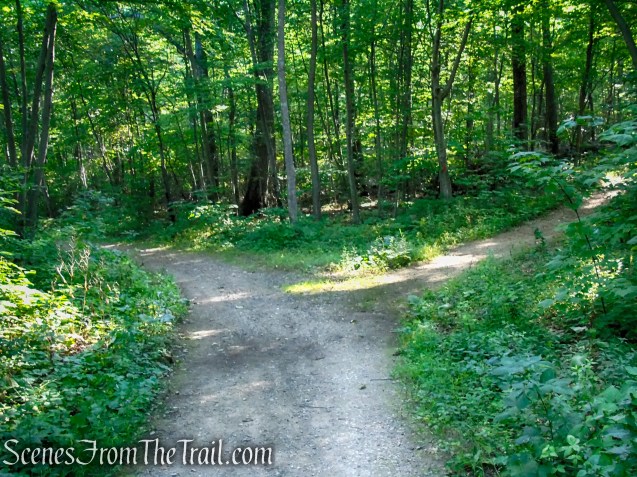
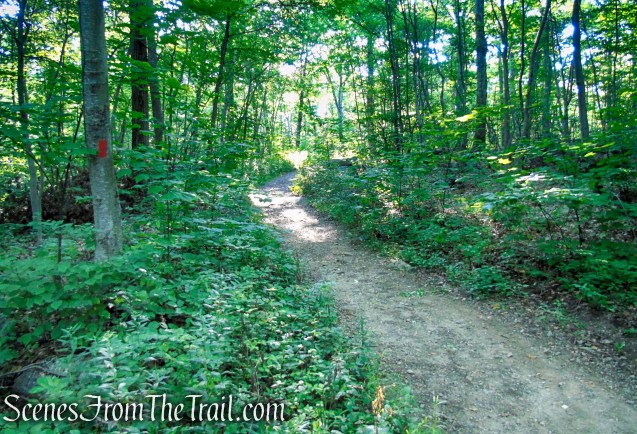
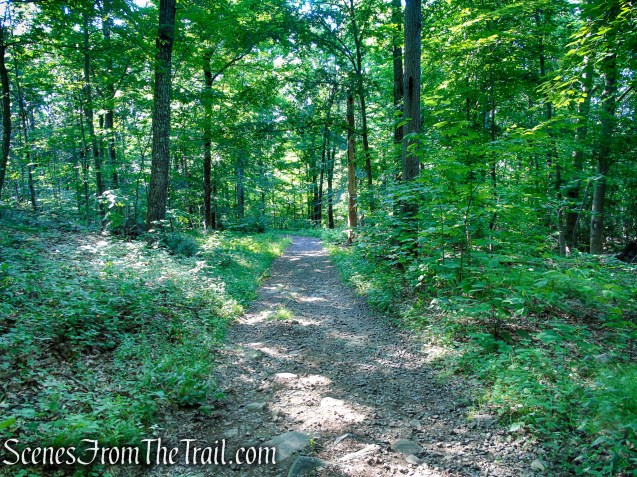
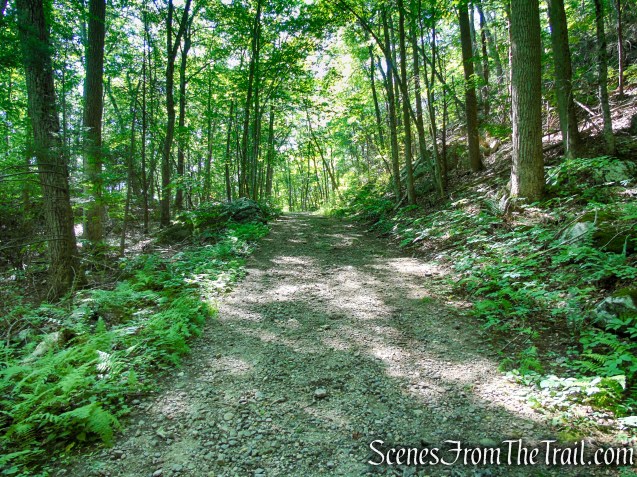
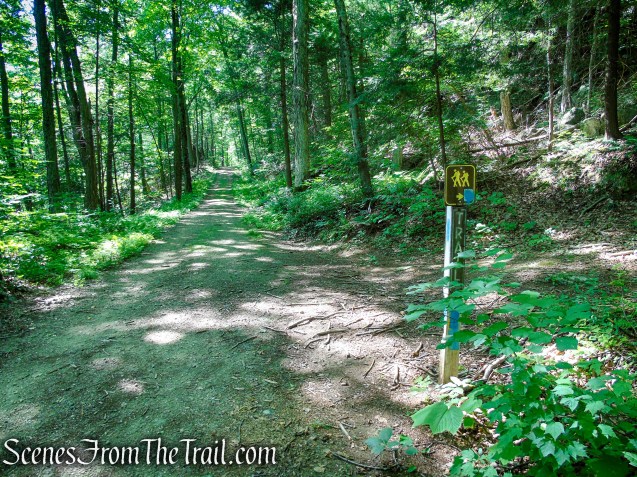
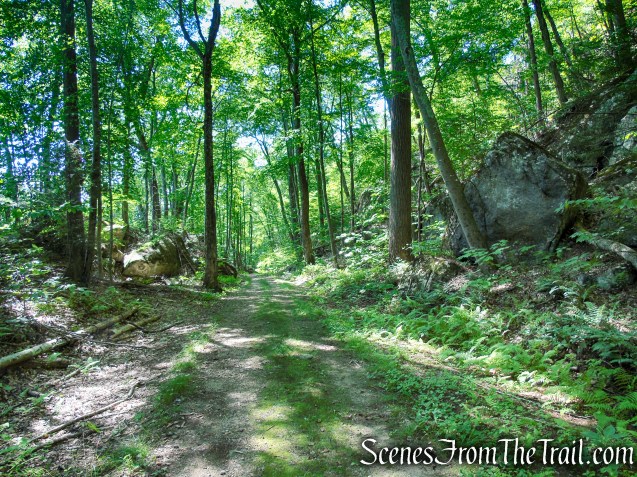
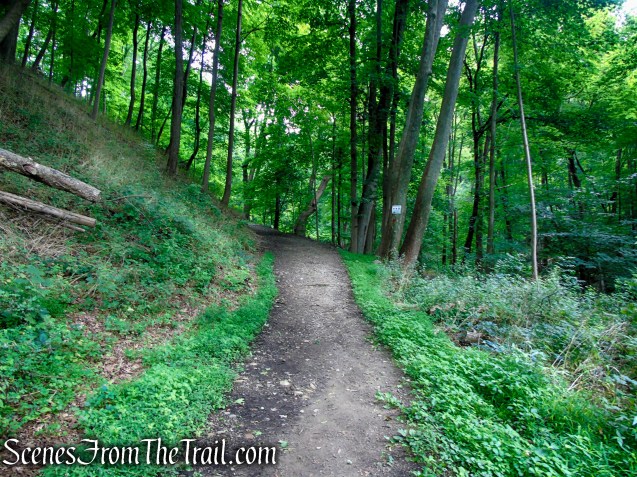
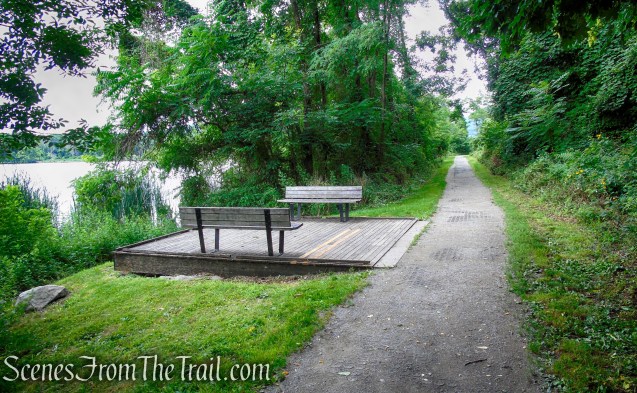
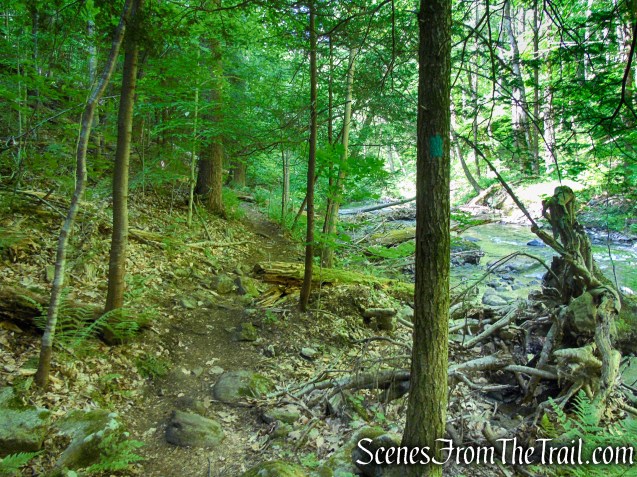
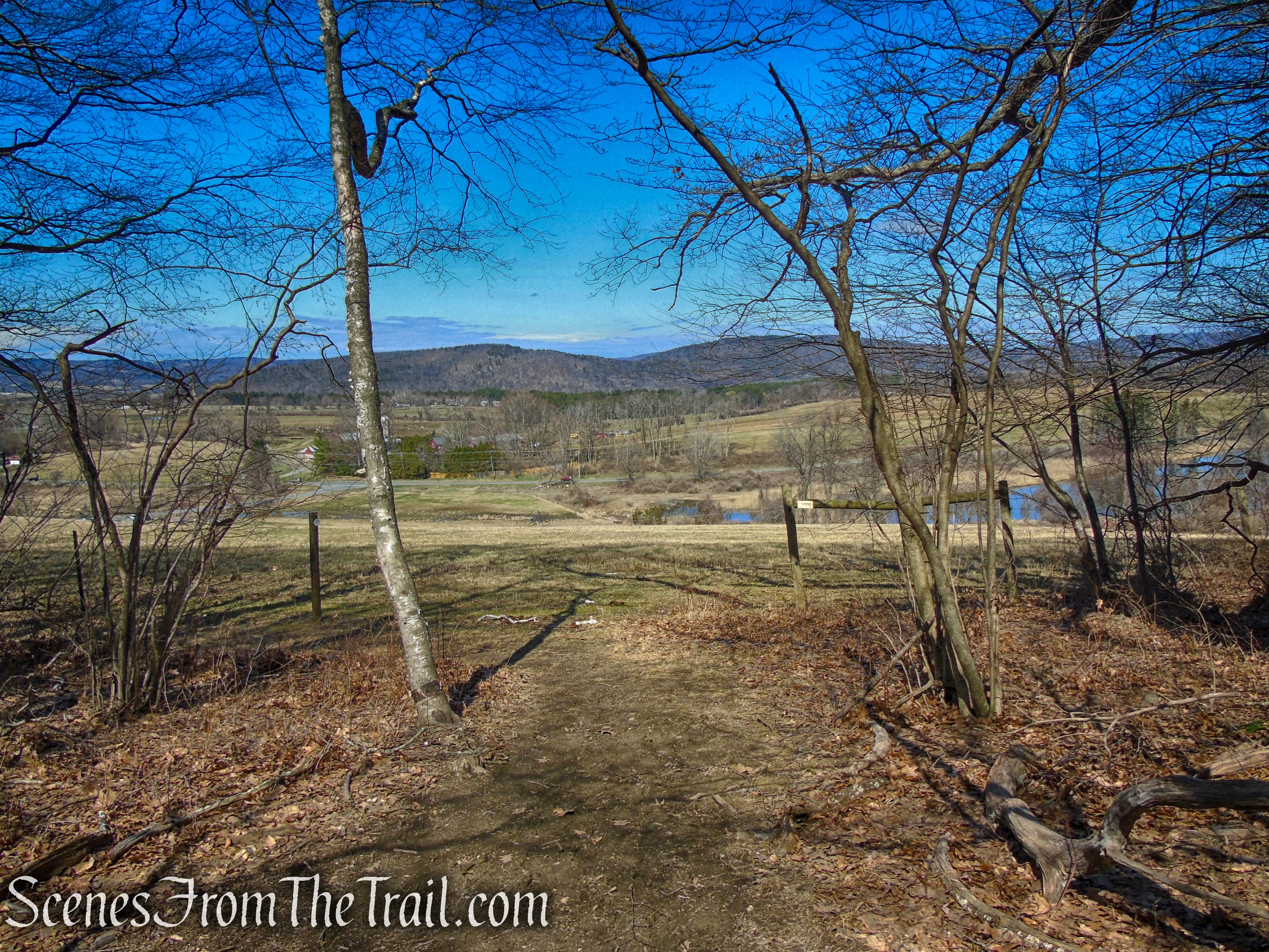
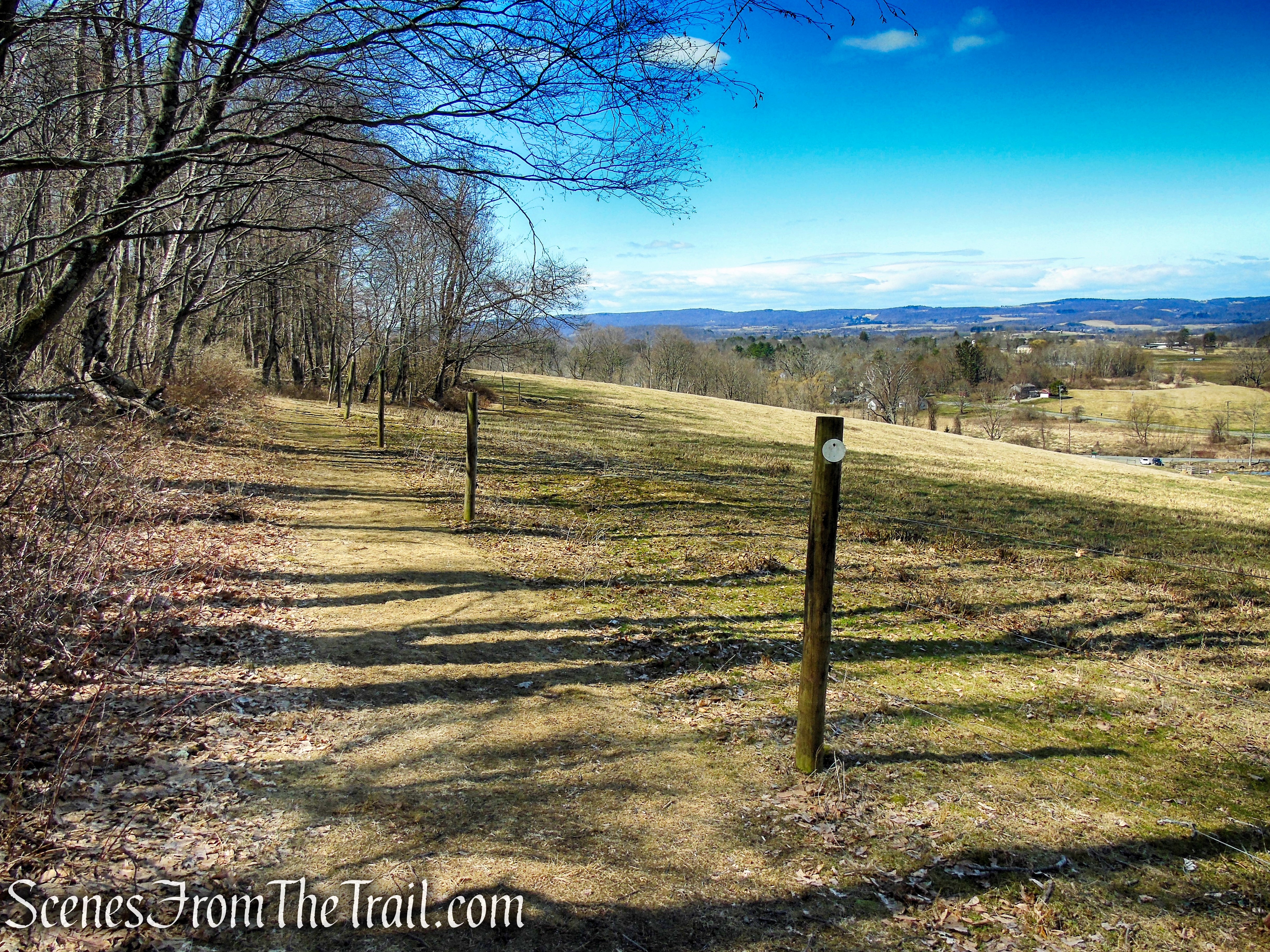
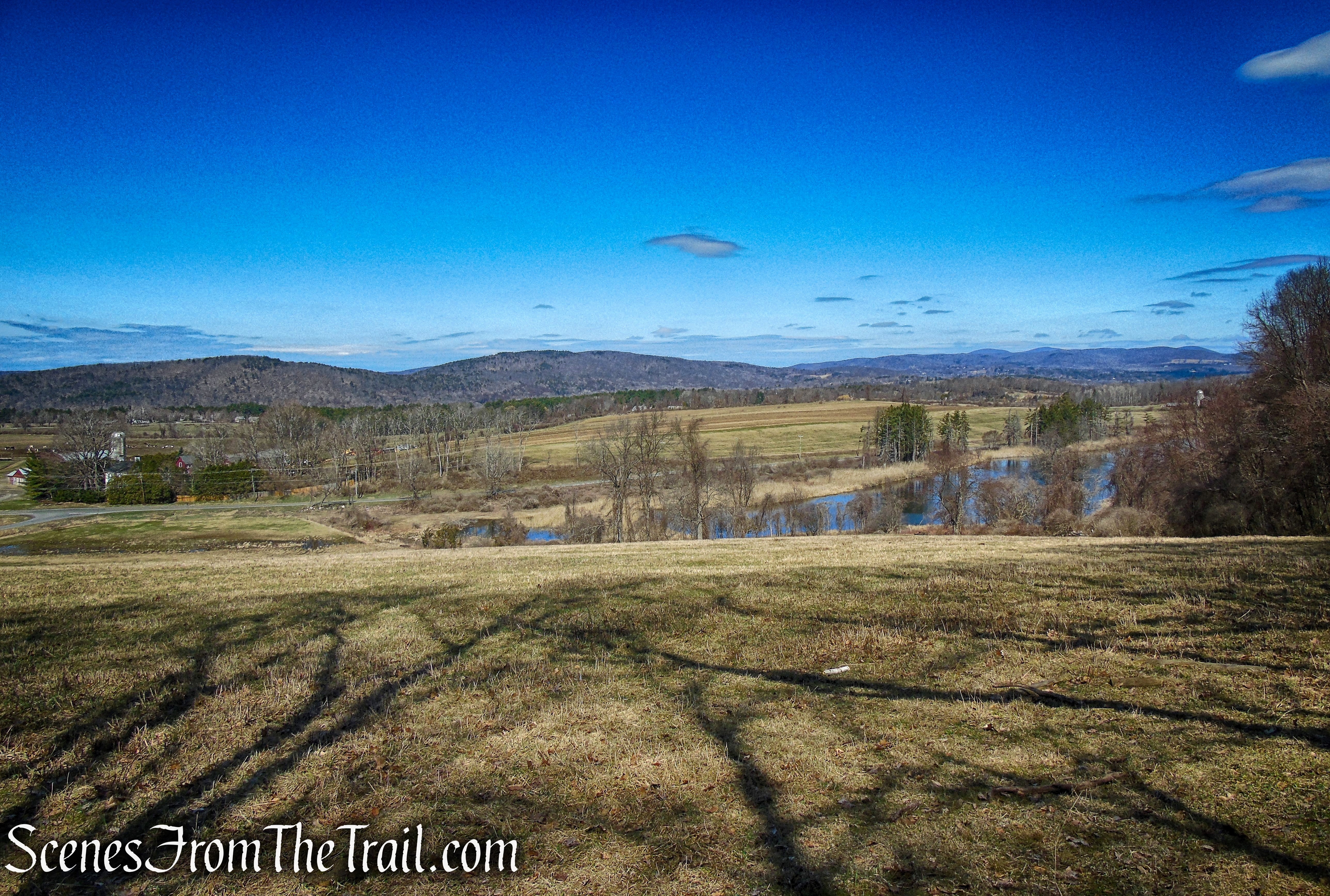
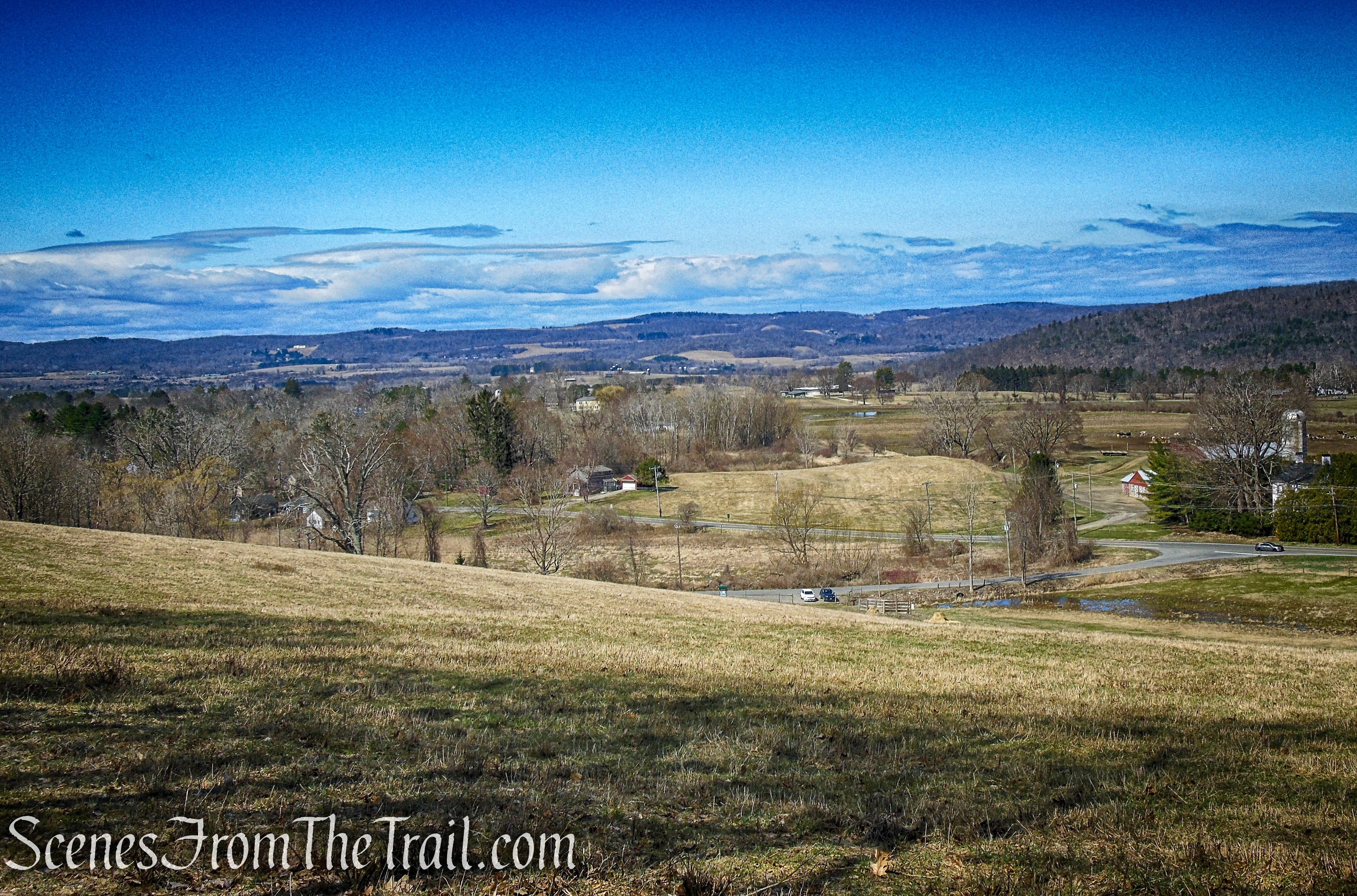
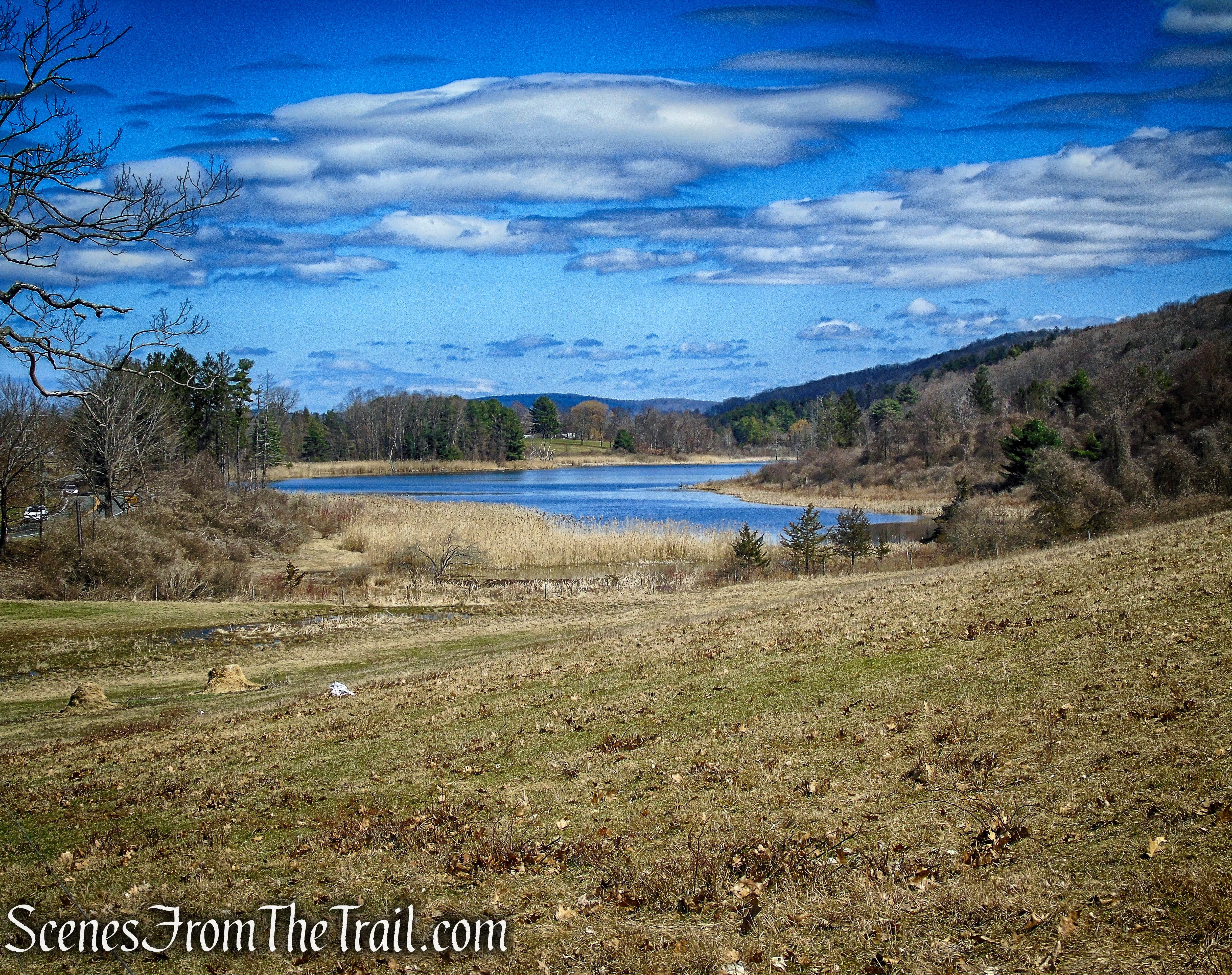
Tucked behind the Target Department Store on Universal Drive in North Haven, the Tidal Marsh Trail offers visitors a rewarding experience. A leisurely stroll on a trail along the Quinnipiac River. Starting on a small bluff above the river, with stunning views of Sleeping Giant, lower Hamden, and the river’s marshes. The trail meanders south through stands of different species of trees between the river and abandoned train tracks. The trail is maintained by the North Haven Trail Association.

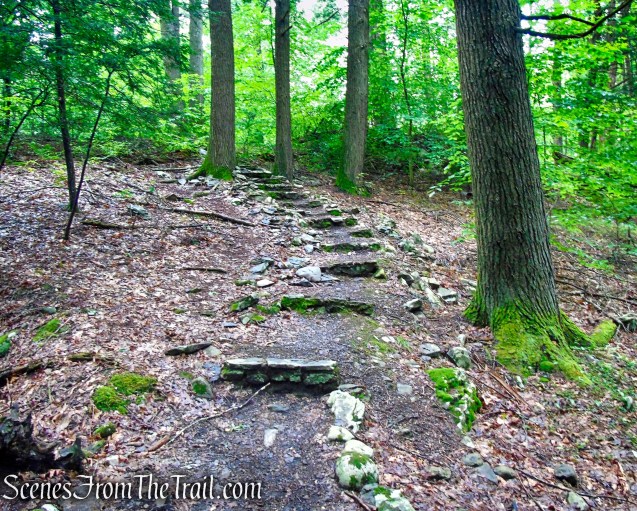
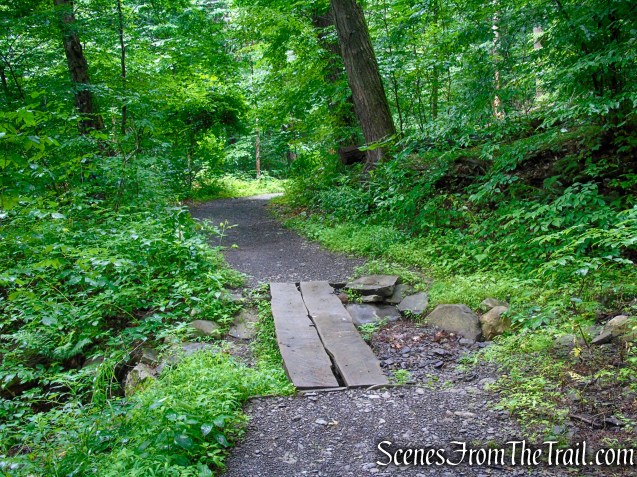
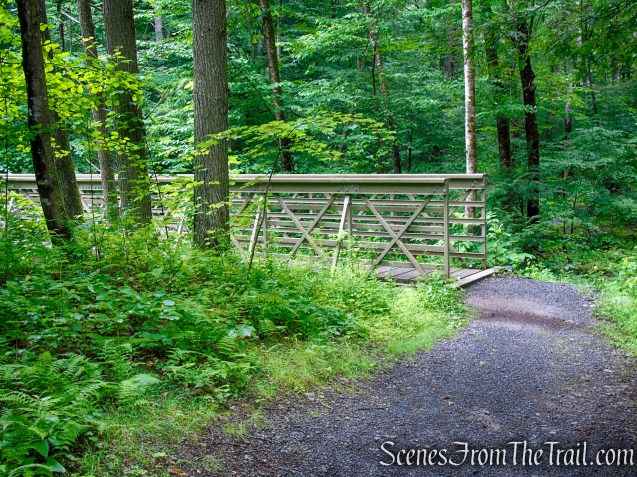
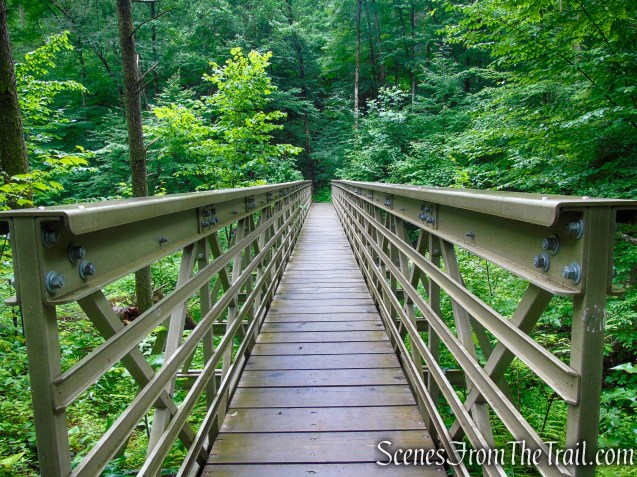
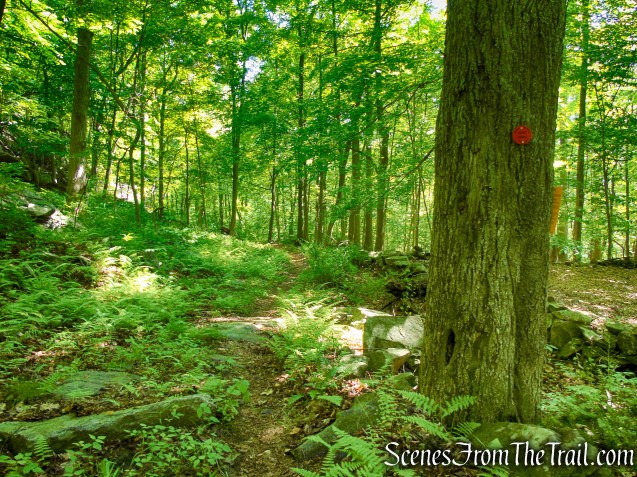
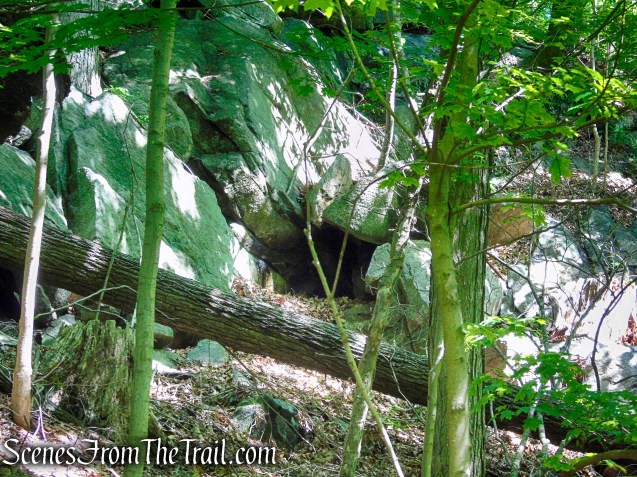
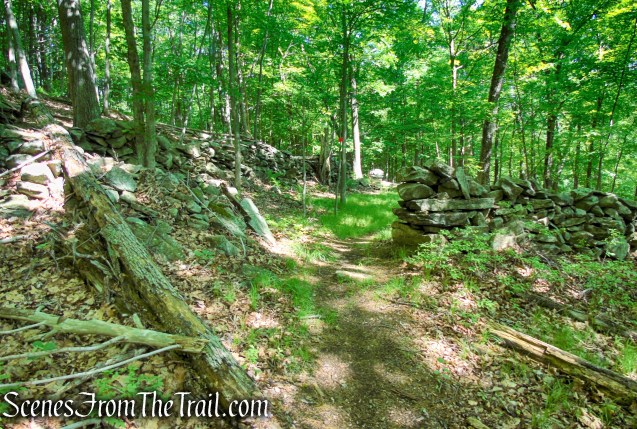
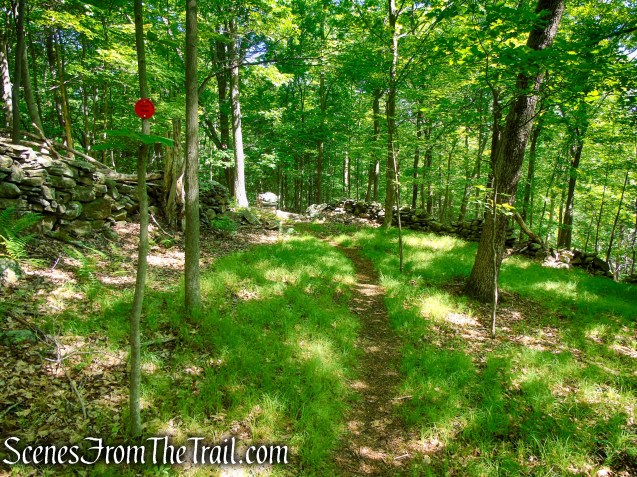
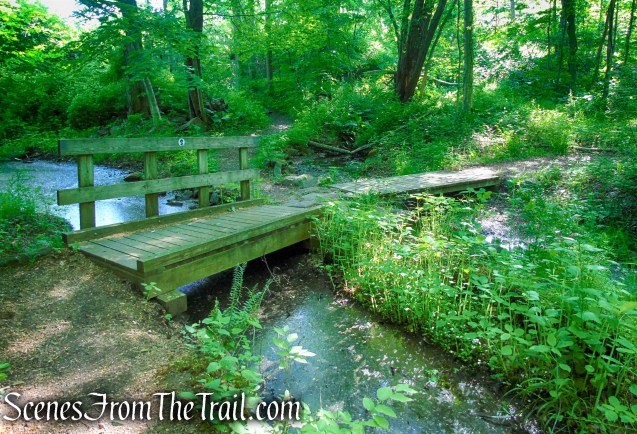
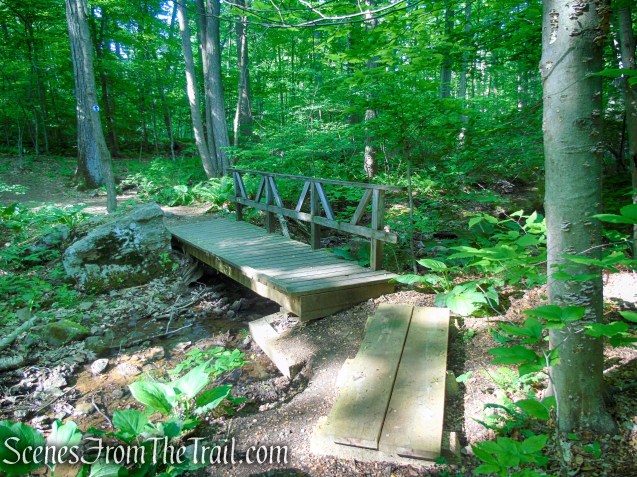
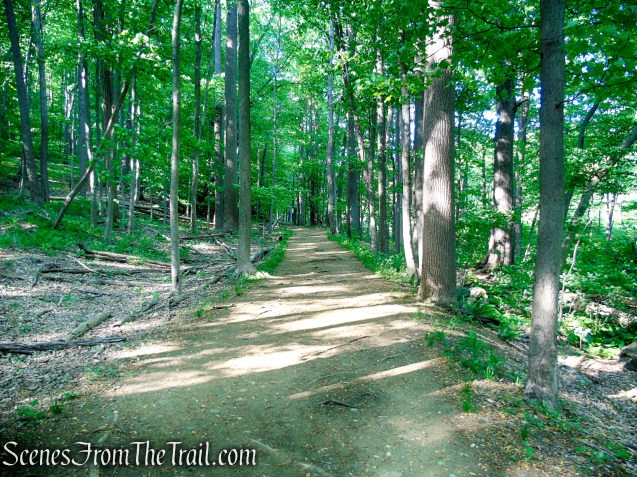
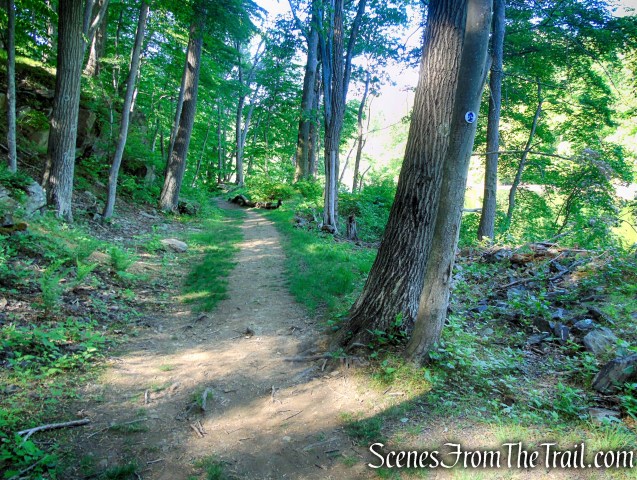
Tidal Marsh Trail - North Haven

Tidal Marsh Trail – North Haven

The Tidal Marsh Trail offers wonderful opportunities to bird watch. You may spot Bald Eagles, Hawks, Ospreys, ducks, geese, and other migratory birds in or near the water, or riding the thermals high in the sky.

Ospreys - Tidal Marsh Trail

Ospreys – Tidal Marsh Trail

If you follow the sporadic blazes Just beyond, into the abandoned Cedar Hill Rail Yard, You will come across a 14-ft. tall Polar Bear sculpture made from wood, sheet metal and other items reclaimed from the dilapidated building that it rests in. The sculpture was created by Connecticut artist Michael DeAngelo.

Polar Bear sculpture - Cedar Hill Rail Yard

Polar Bear sculpture – Cedar Hill Rail Yard


History:

The North Haven Trail Association began developing the Tidal Marsh Trail in 2012 with the help of private and public funds to secure easements along the Quinnipiac River to provide North Haven residents access to the River for recreational purposes and to ensure protection of the River and its surrounding watershed.

The Quinnipiac River is a 45.5-mile long river located entirely in the state of Connecticut. The river rises in West Central Connecticut from Dead Wood Swamp near the city of New Britain. It flows roughly southward to Plainville, Southington, and Cheshire, west of the city of Meriden, through Wallingford and Yalesville, North Haven, and flows into New Haven Harbor, an inlet of Long Island Sound, east of downtown New Haven. The name “Quinnipiac” comes from an Algonquian phrase meaning “long water land.”

According to the 1928 issue of Railway Age magazine, there were once 14 yards at Cedar Hill with a capacity of 15,000 rail cars. The yard covered 880 acres and extended more than seven miles from New Haven into North Haven. It was 1.5 miles wide at its widest point.

The Cedar Hill Rail Yard was built by the New York, New Haven and Hartford Railroad (known simply as The New Haven) and first opened for service in December 1894, with a capacity of approximately 400 railroad cars in and around New Haven’s Cedar Hill neighborhood, which gave the yard its name. At its peak during World War II, Cedar Hill Yard handled more than 5,000 railroad cars per day. Following the end of the war, the yard’s importance began to decline as freight traffic across New England shifted to road transport, and heavy industry left the region. Much of the yard began to fall into decay following the New Haven Railroad’s bankruptcy in 1961.

In 1969, the bankrupt New Haven Railroad was merged into newly-formed Penn Central Transportation Company, which inherited the yard. Just one year after acquiring Cedar Hill Yard with the rest of the New Haven, Penn Central declared bankruptcy. The company was merged into Conrail in 1976, along with many other bankrupt or troubled railroads in the Northeast, making Conrail the yard’s new owner. Conrail began efforts to bring portions of Cedar Hill into a state of good repair, spending over $3 million (equivalent to $14,300,000 in 2021) on track resurfacing and tie replacement in 1976 alone between Cedar Hill and Hartford Yard. In 1978, two years into Conrail’s tenure, Cedar Hill was processing roughly 300 cars a day, significantly less than it had in the New Haven days. At this point the yard employed 200 workers, down from its peak of 1,000.

In 1999, Conrail’s lines in New England were purchased by CSX Transportation. As of 2021, CSX remains the owner and main operator at Cedar Hill Yard. Presently much of the yard now lies abandoned and is an attraction for urban explorers, despite the dangers of the old buildings and facilities which contain lead paint and asbestos.


Trail Overview:

Although the trail map (2016) shows the trail as blazed orange, it is marked with white blazes. The map indicates that the trail is about a 1/2 mile long (1 mile round trip), but it is approximately 1.5 miles to the Polar Bear sculpture. The intermittent white blazes are an indication that the trail was extended since the map was published.

Please note: I contacted the North Haven Trail Association and the reply that I received was “The trail is about 1 mile long. There is no “Polar Bear” sculpture on this trail.” Apparently the “Polar Bear” sculpture is on the abandoned Cedar Hill Rail Yard property and not part of the Tidal Marsh Trail. Since the entire route is blazed white, for the purpose of this guide, the entire trail will be referred to as the “Tidal Marsh Trail.”

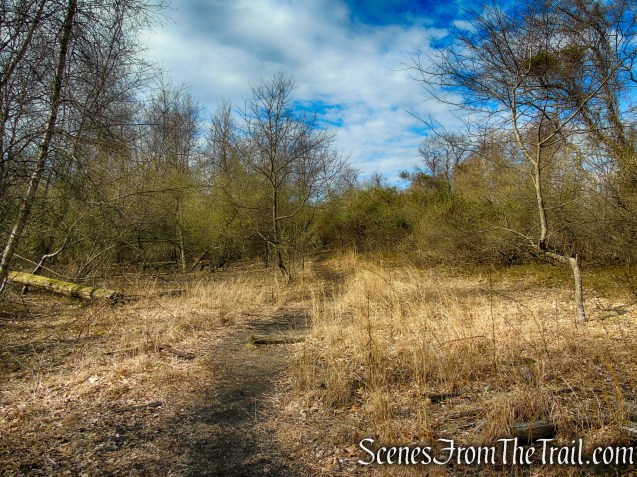
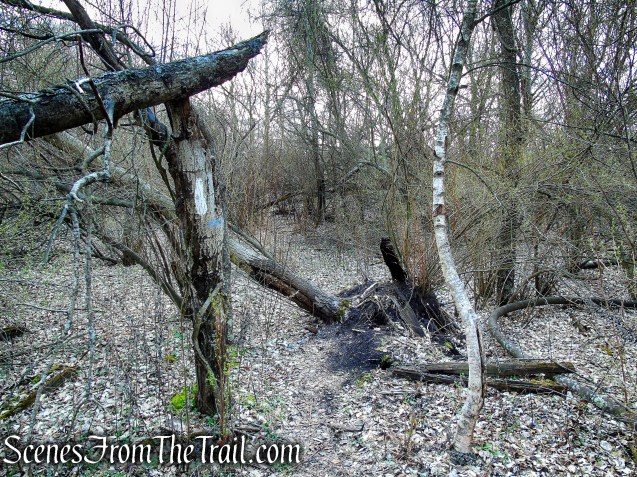
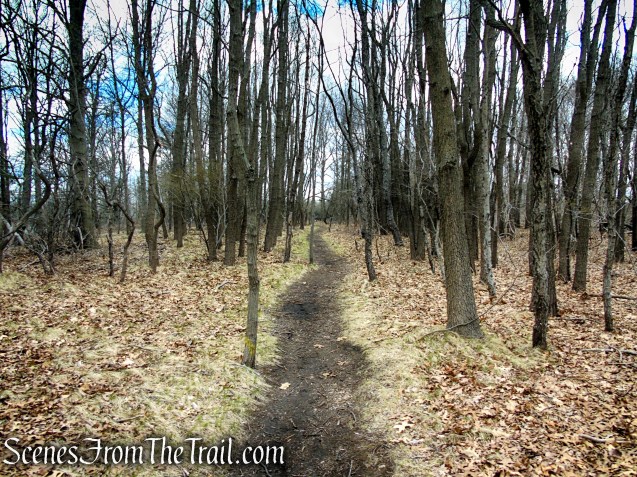
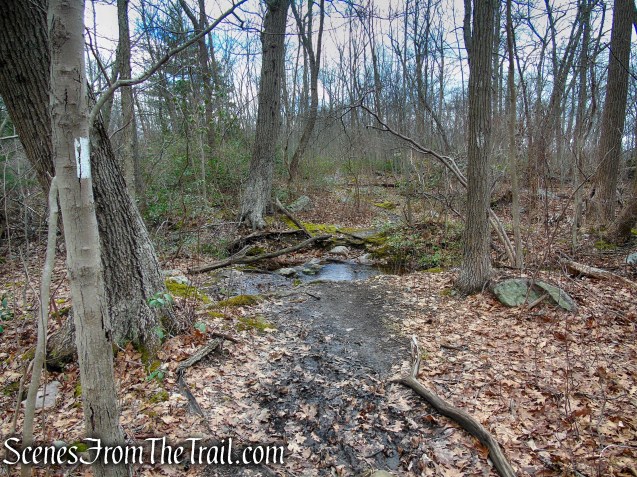
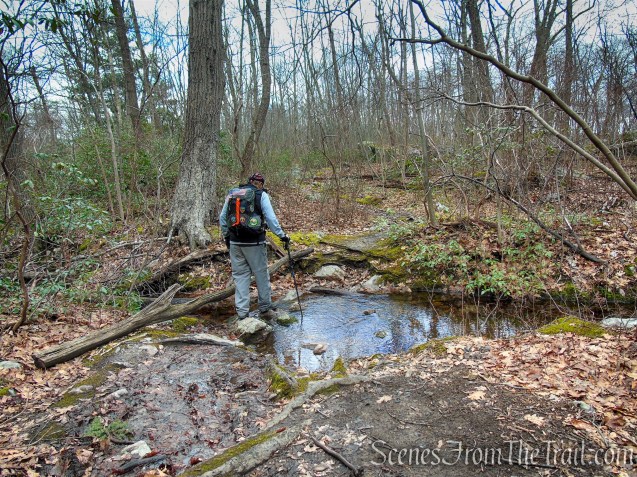
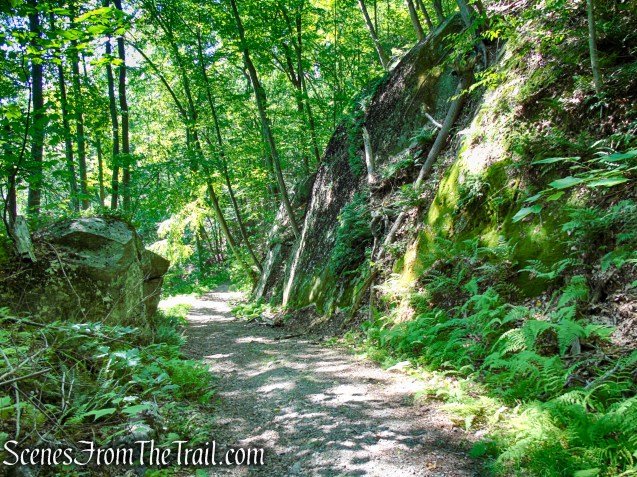
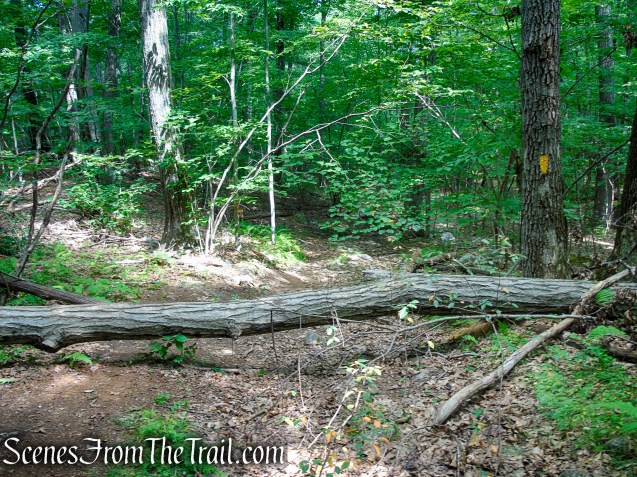
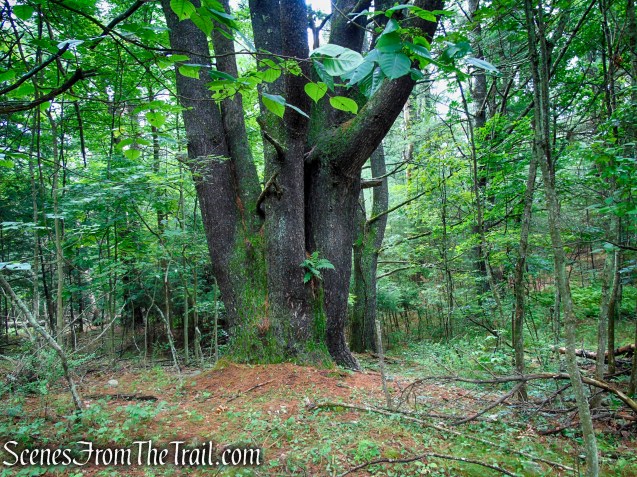
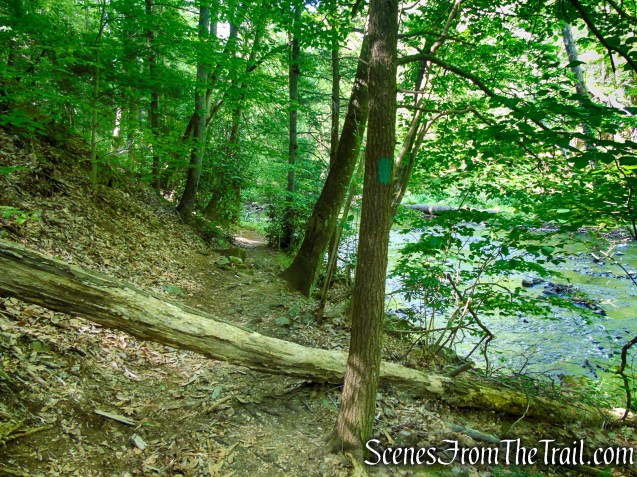
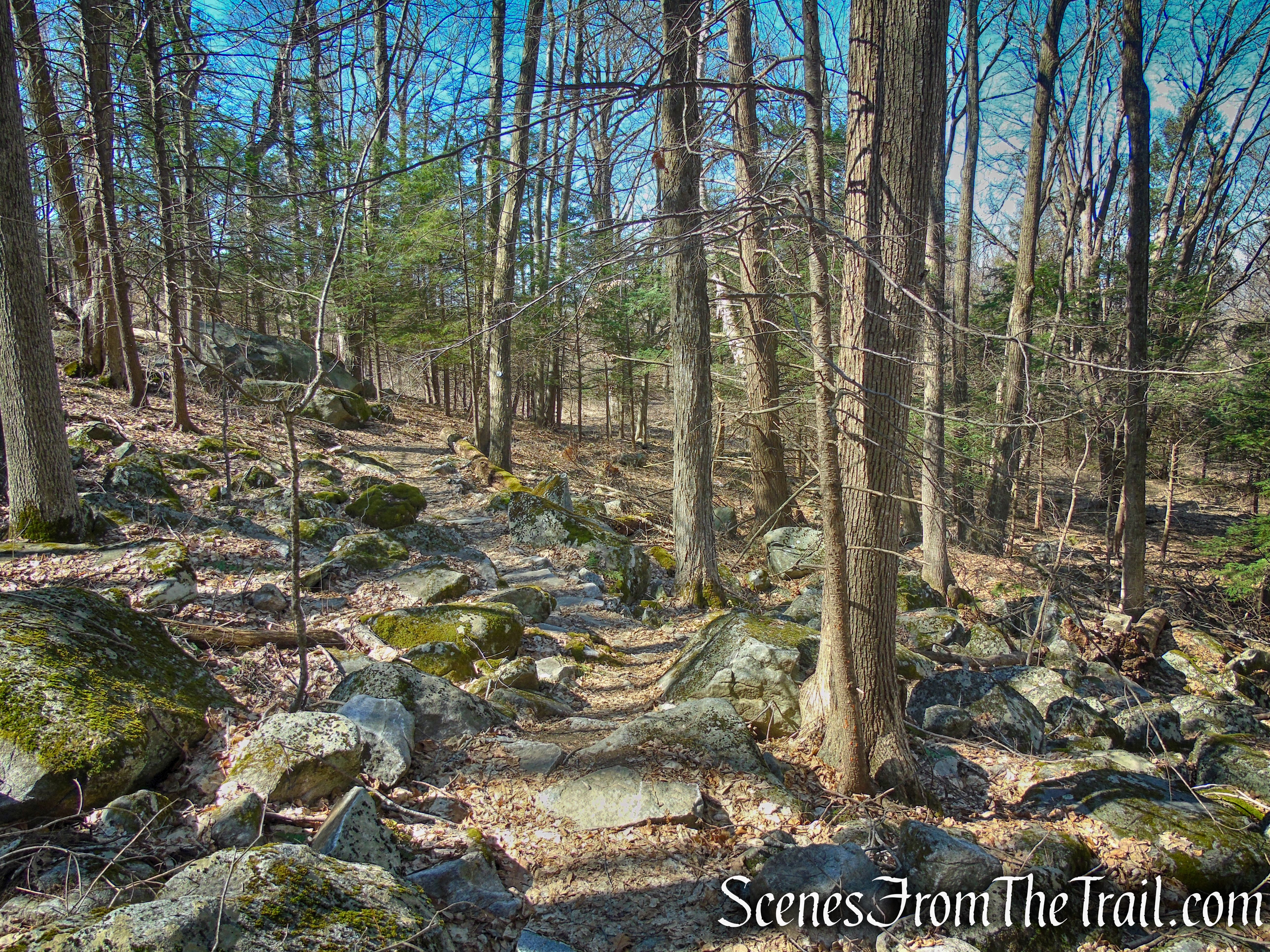
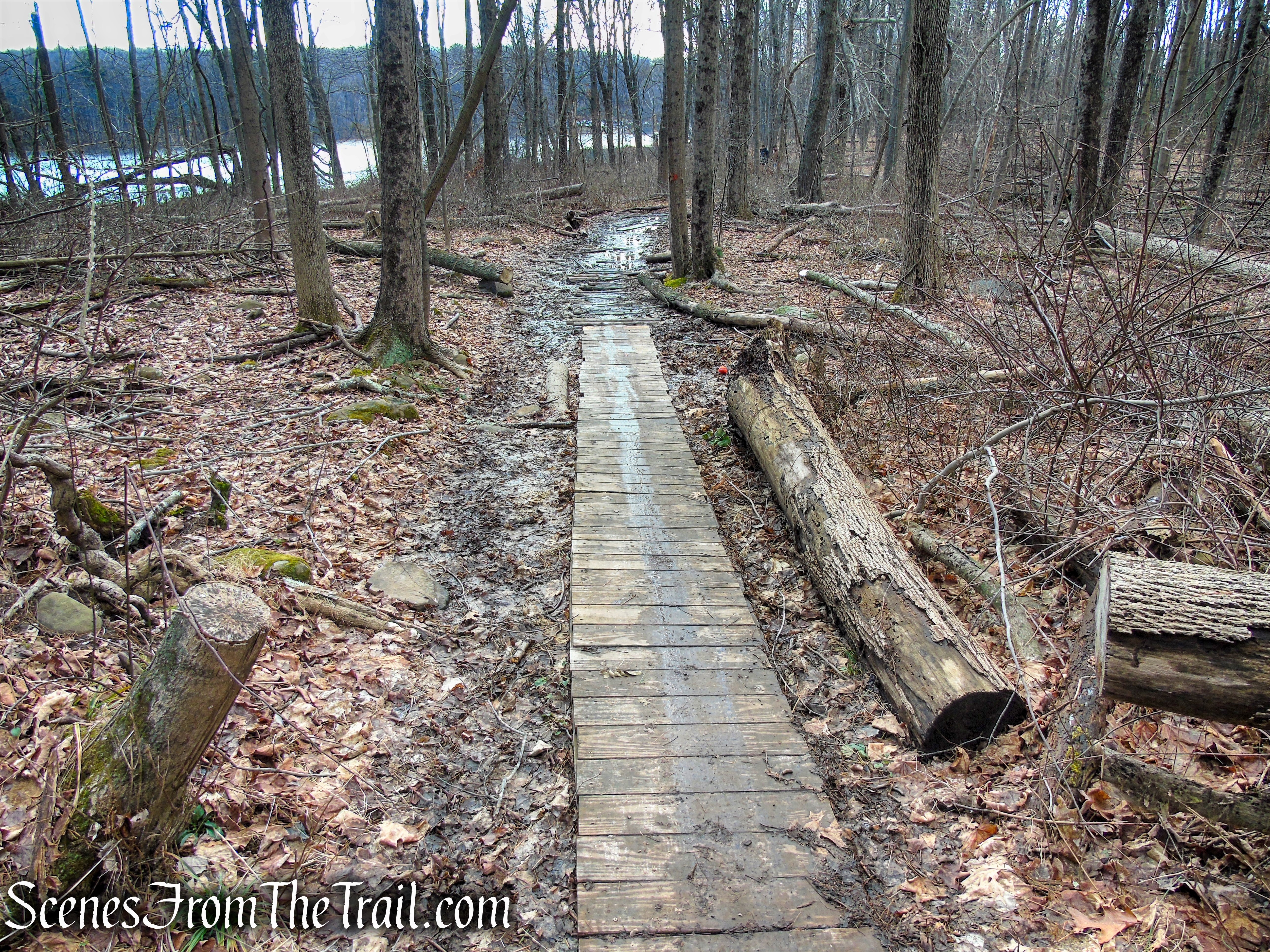
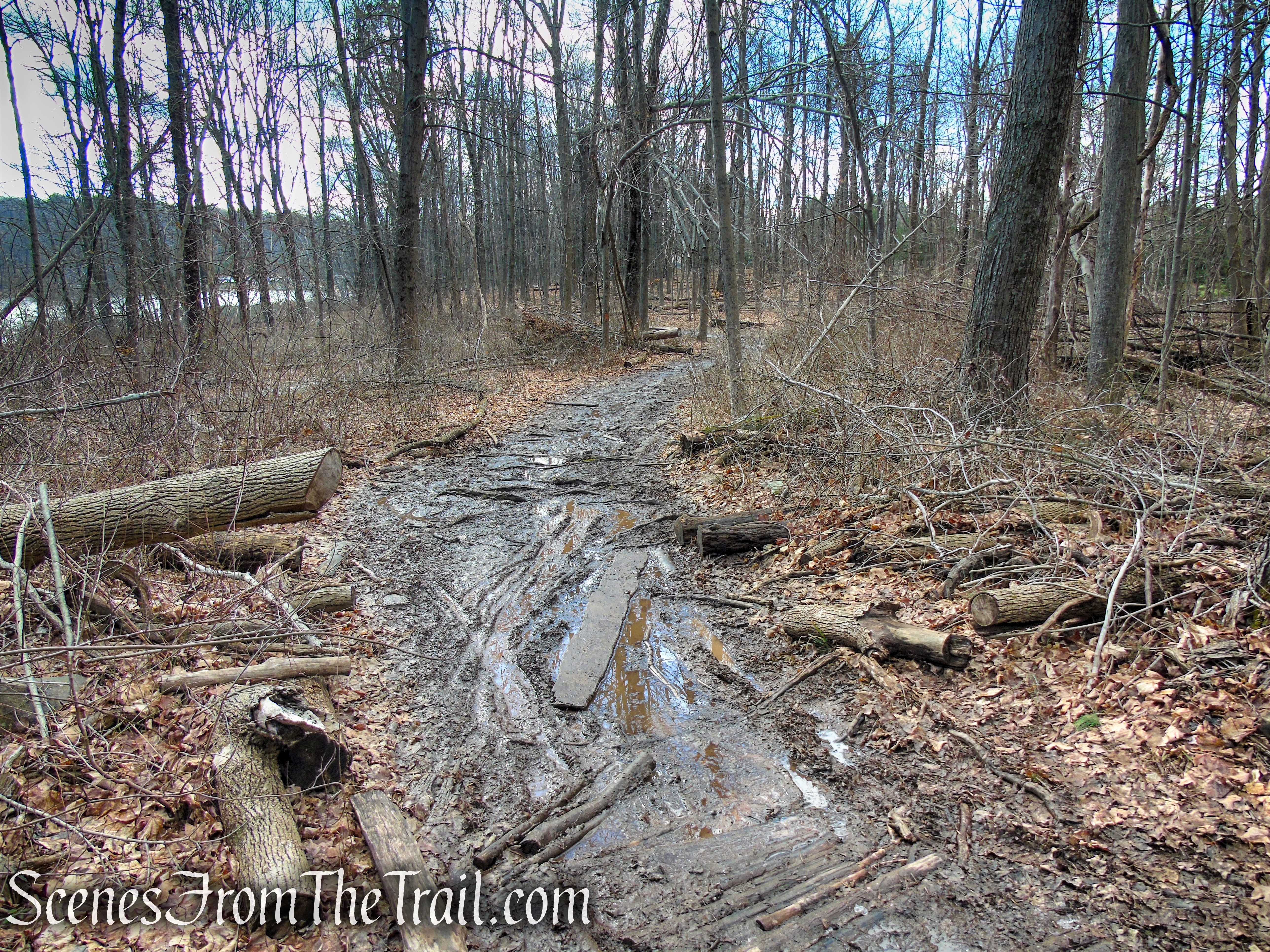
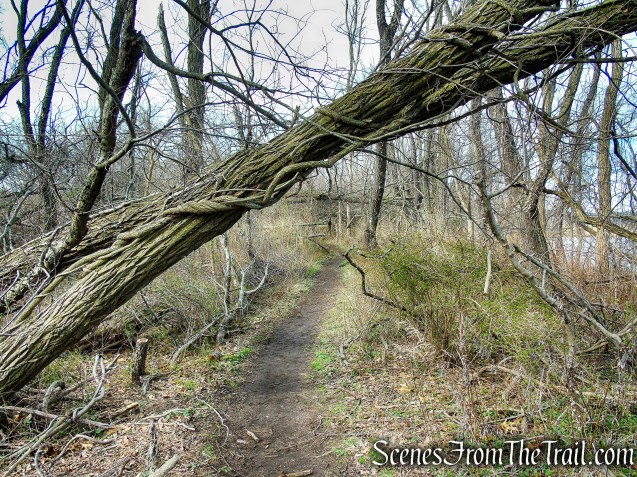
There are a lot of leaning/fallen trees along the trail that you will have to step over or duck under.
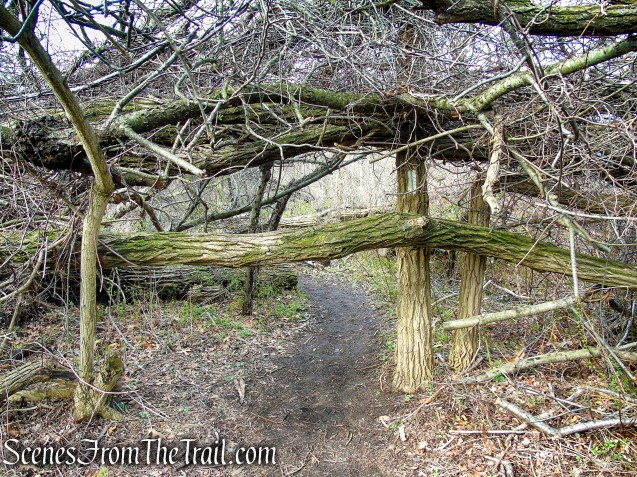
Tidal Marsh Trail - North Haven

Tidal Marsh Trail – North Haven

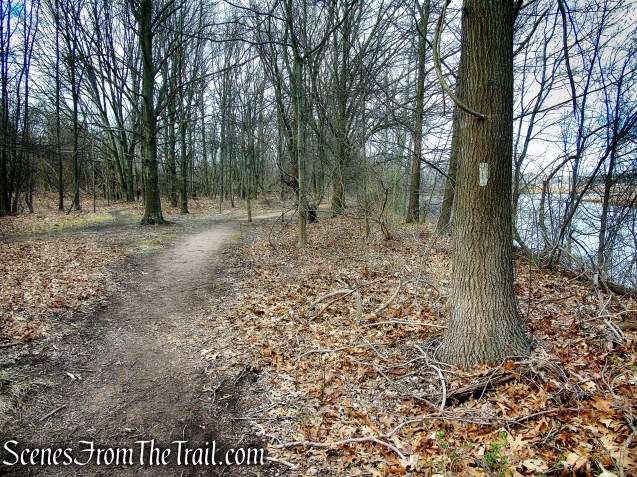
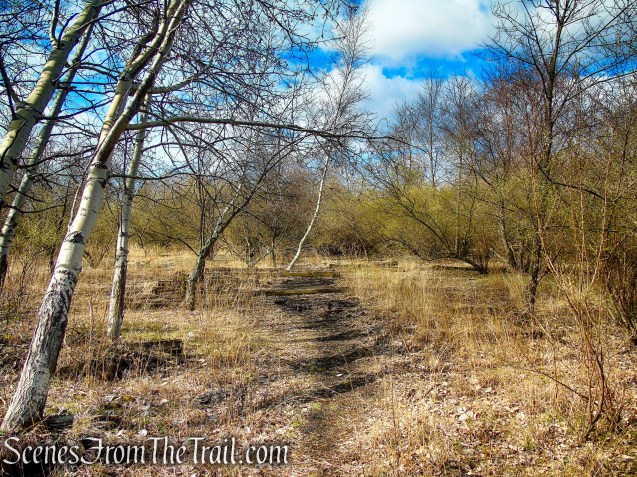
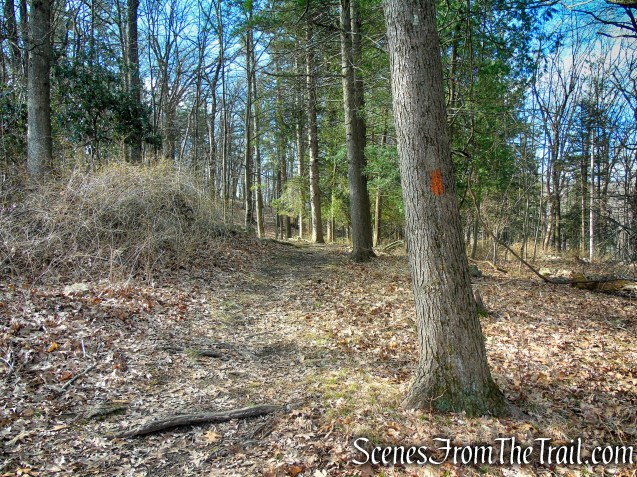
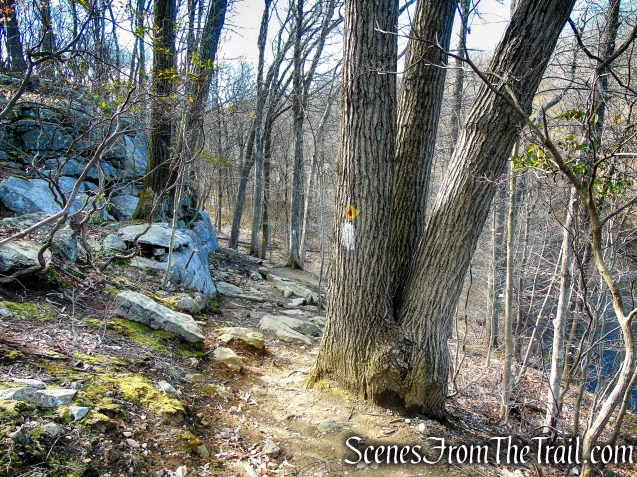
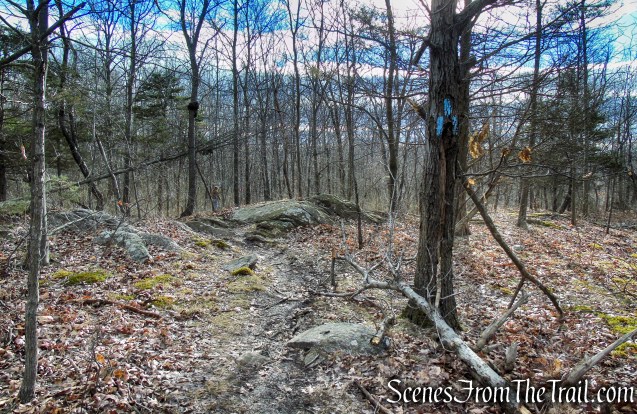
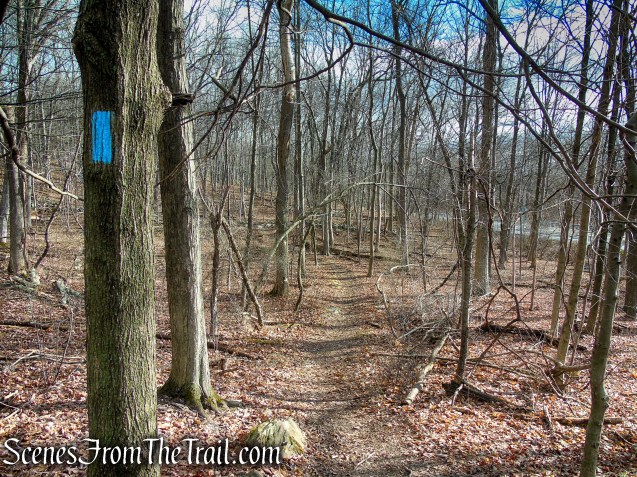
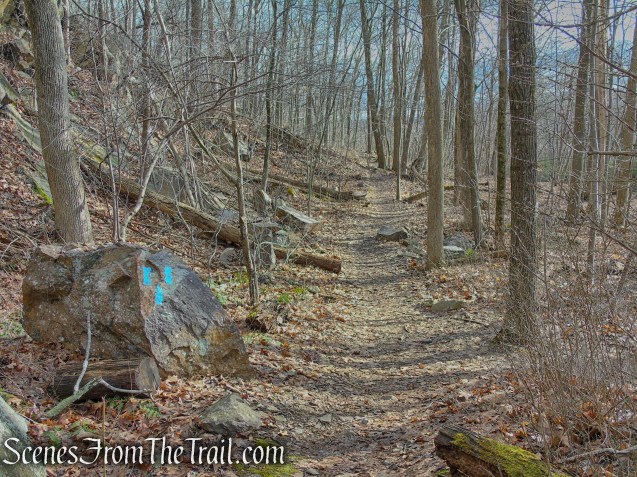
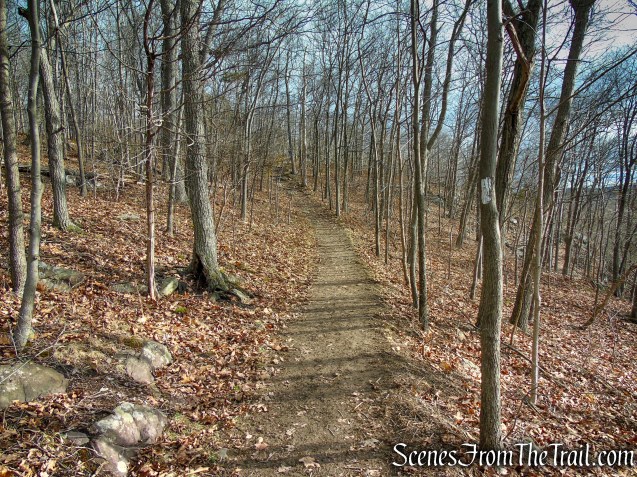
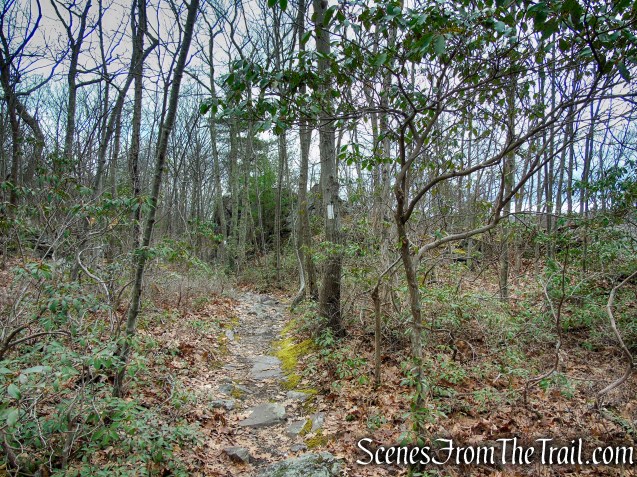
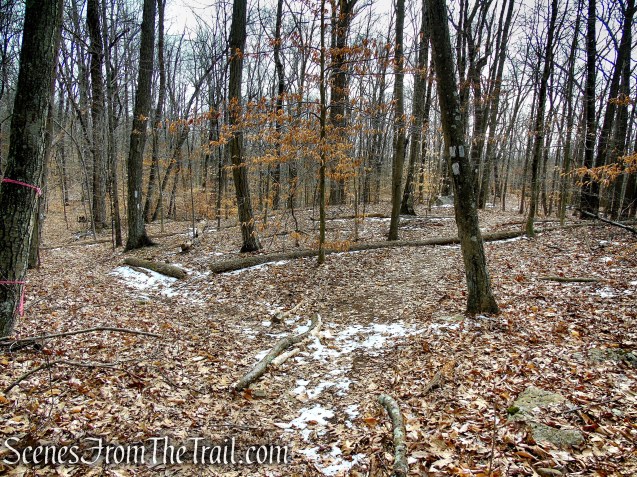
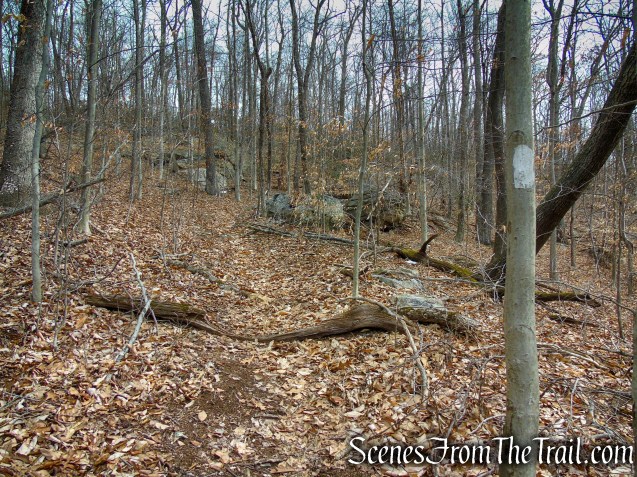
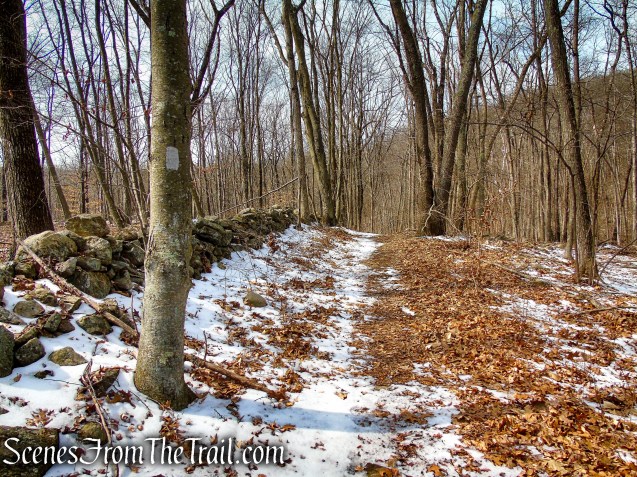
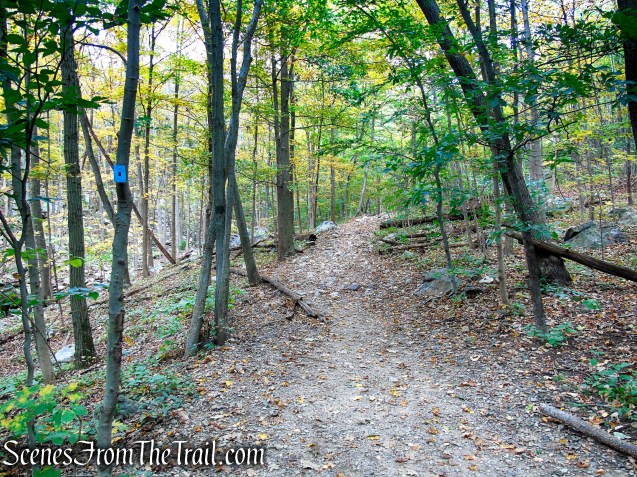
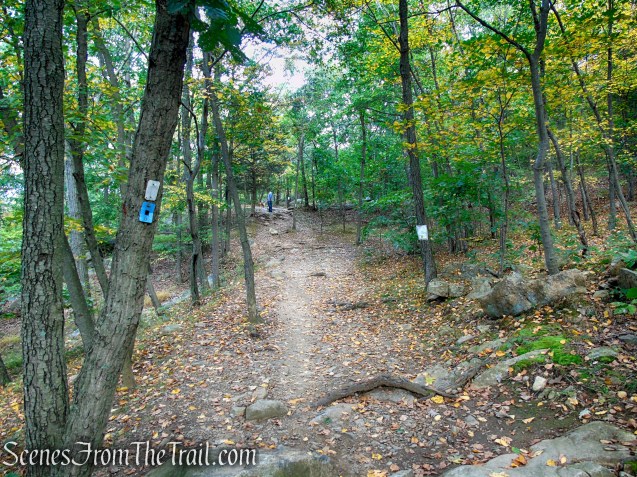
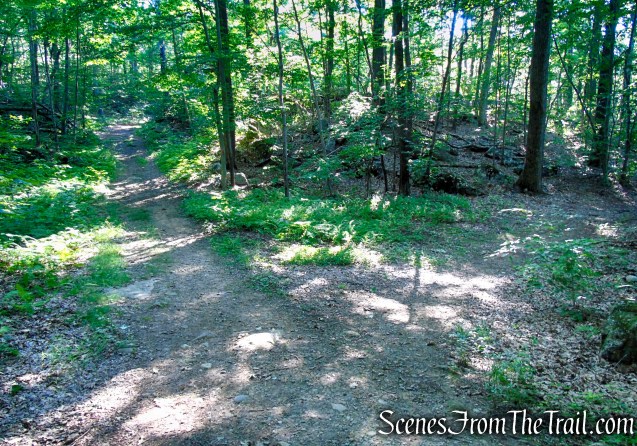
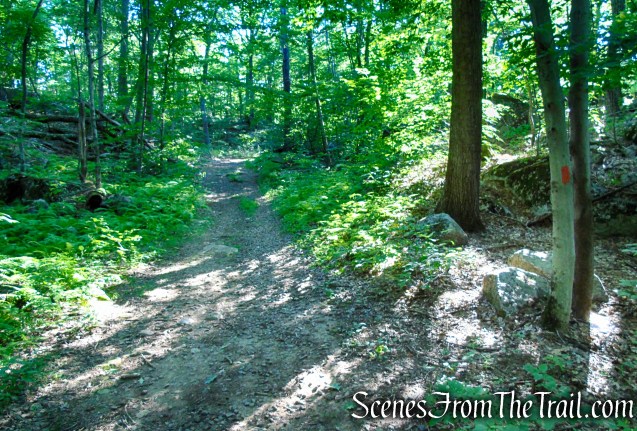
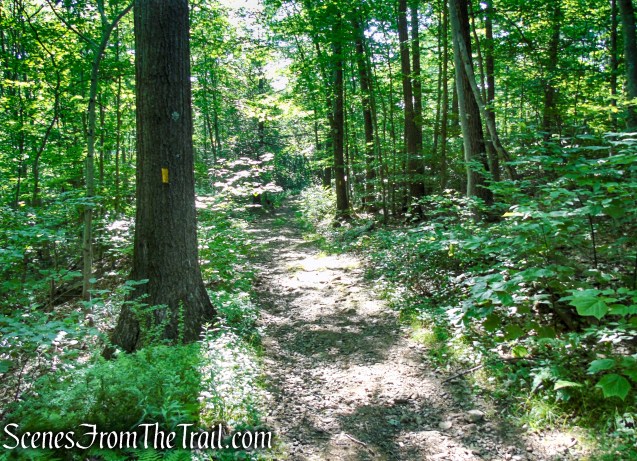
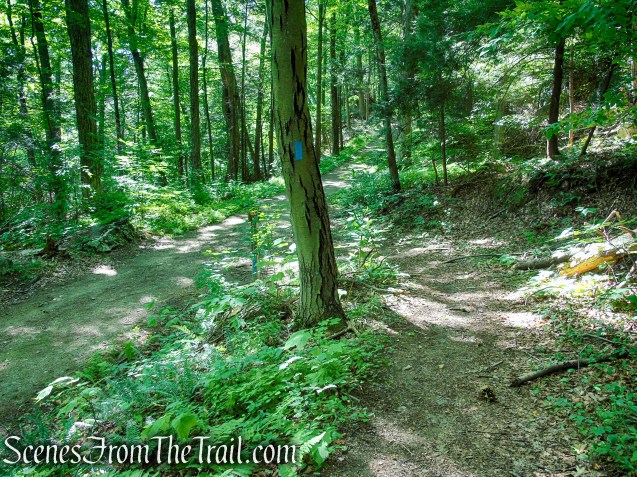
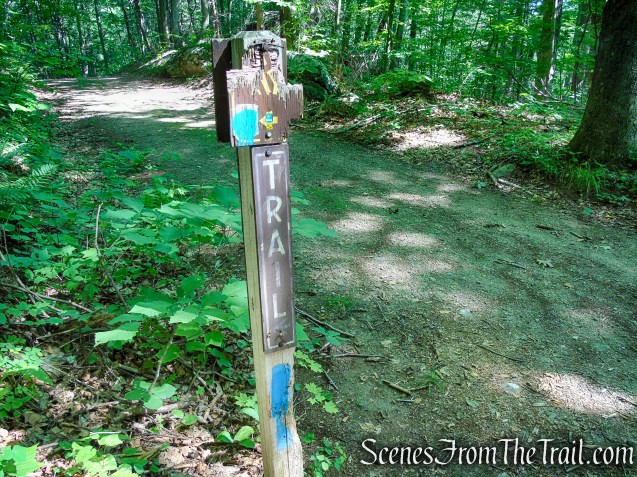
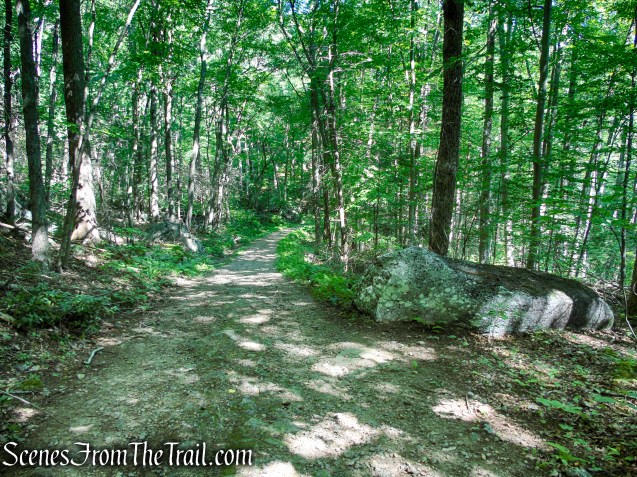
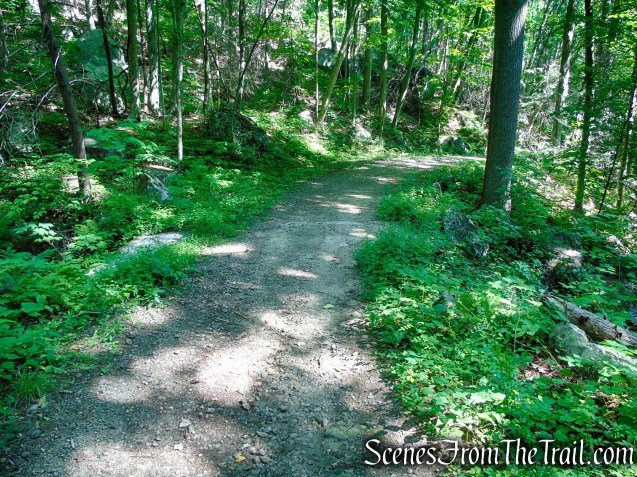
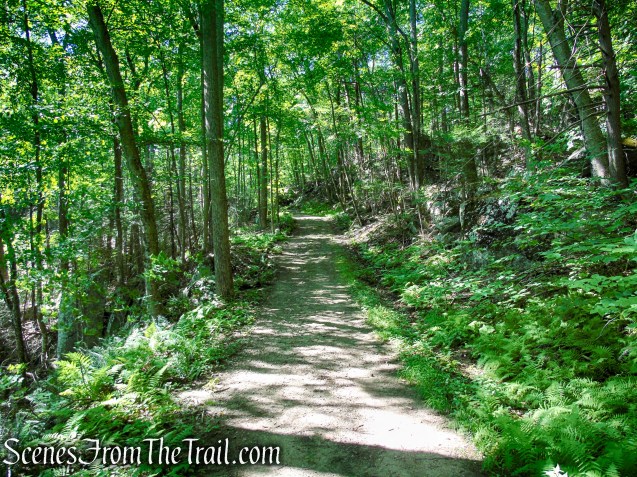
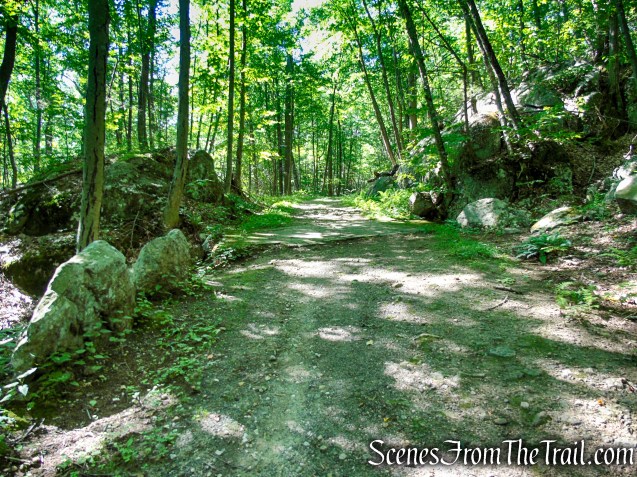
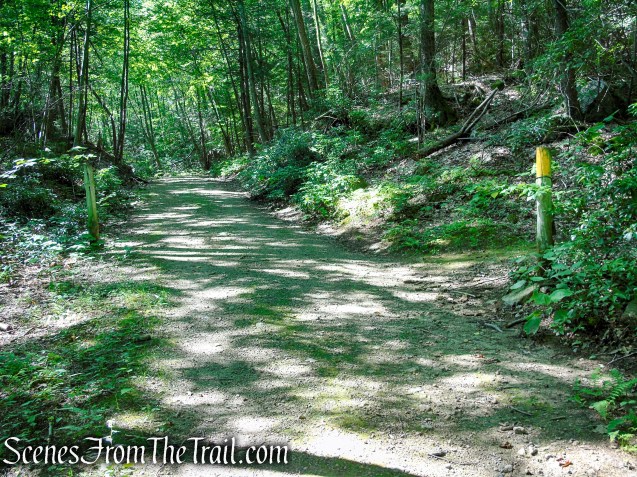
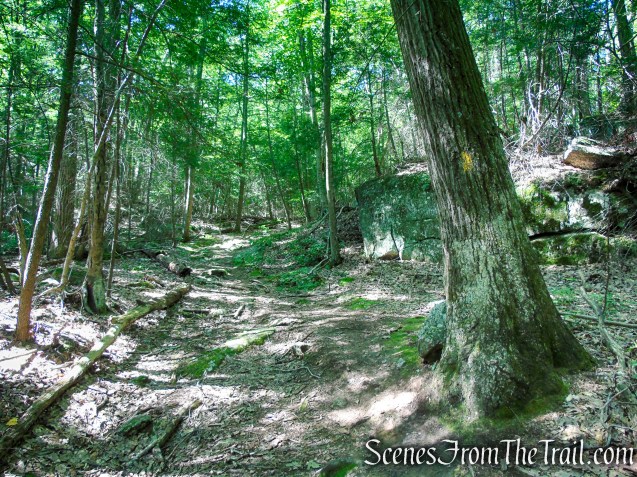
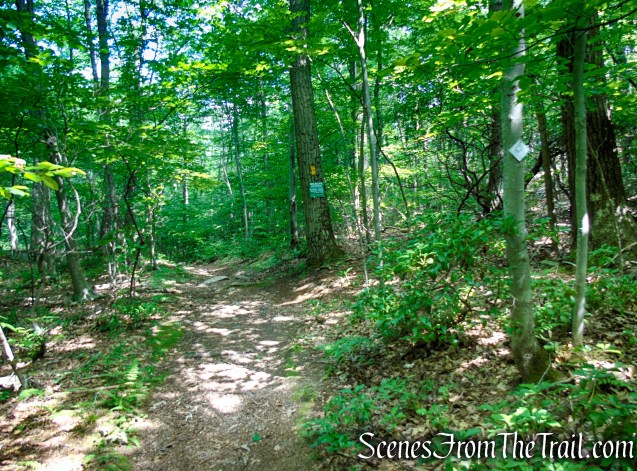
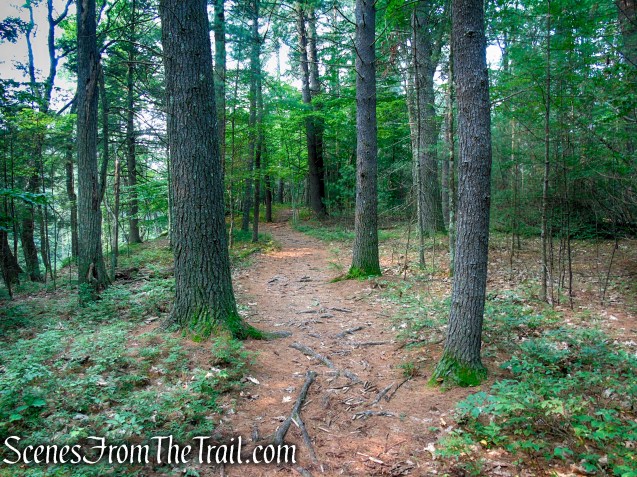
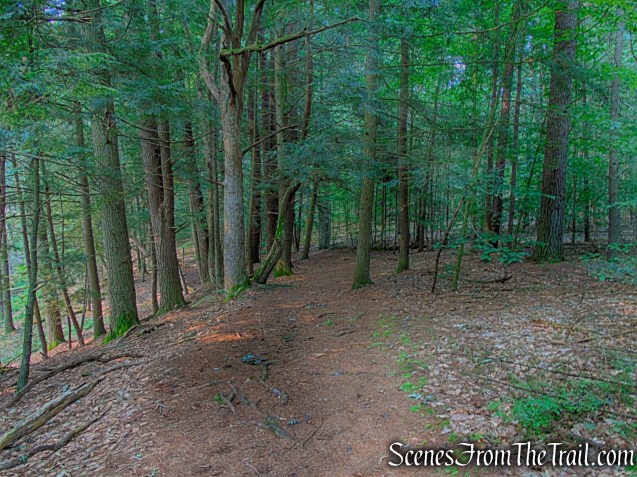
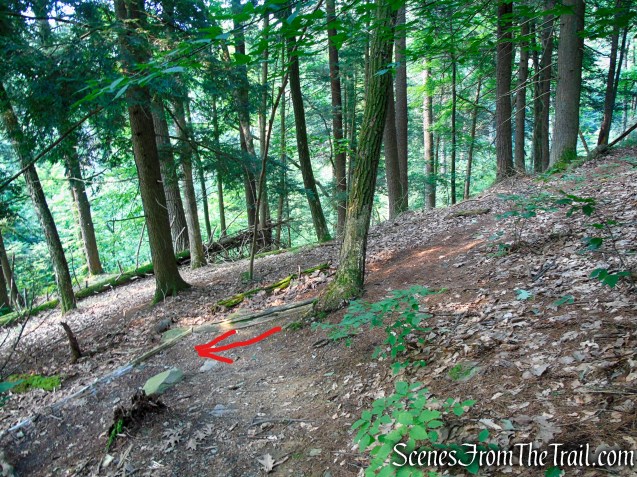
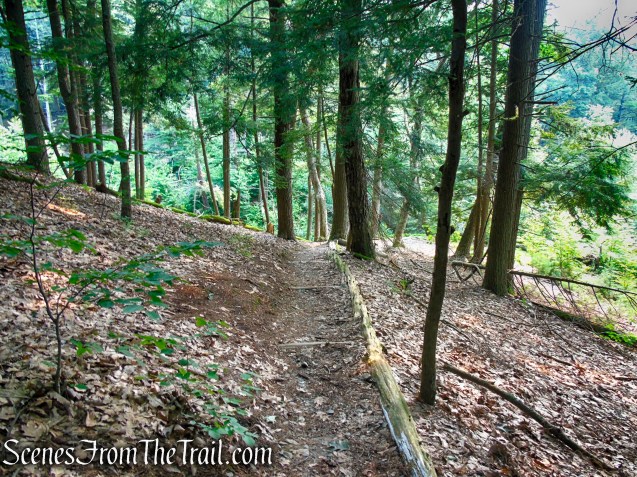
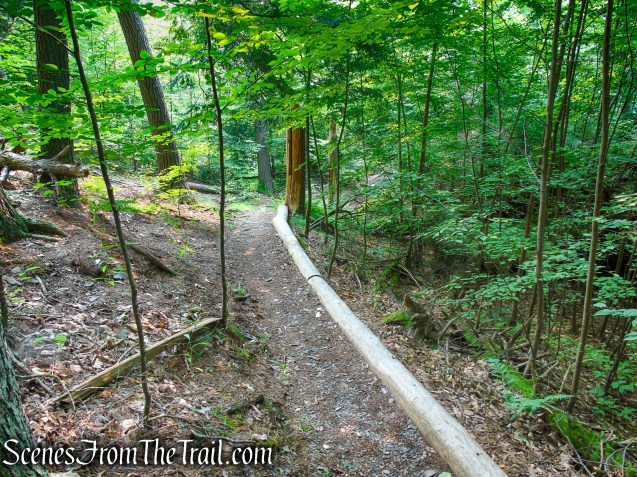
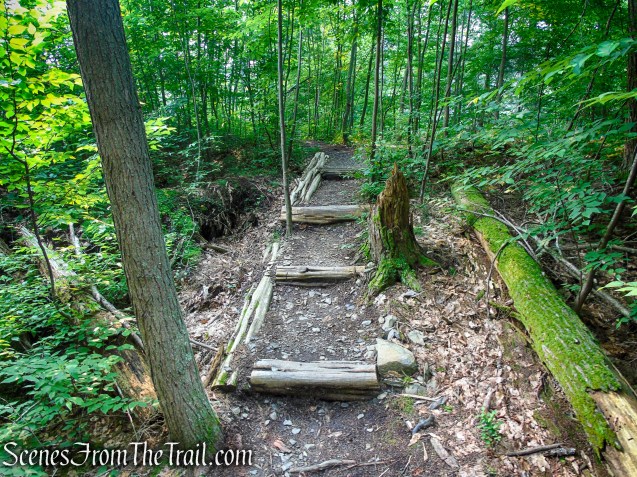
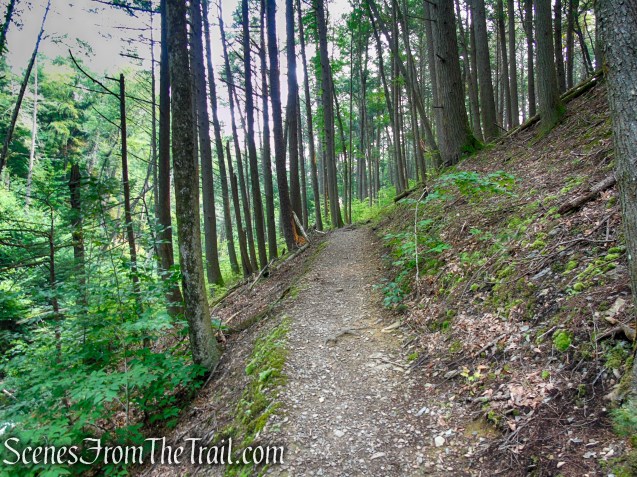
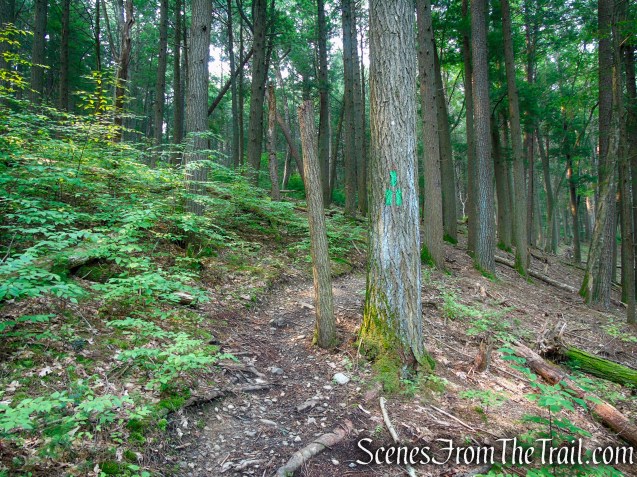
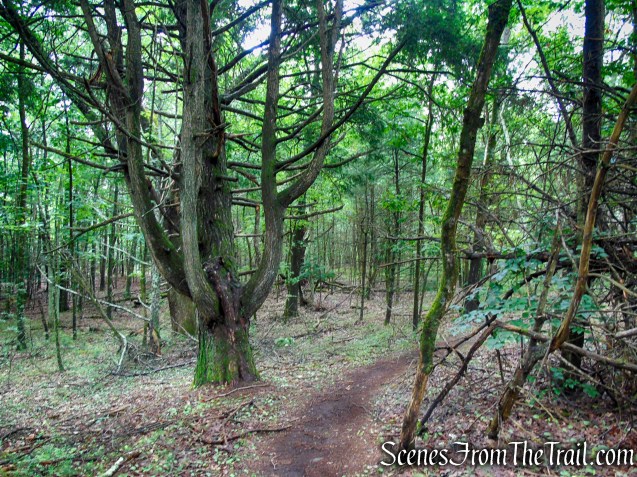
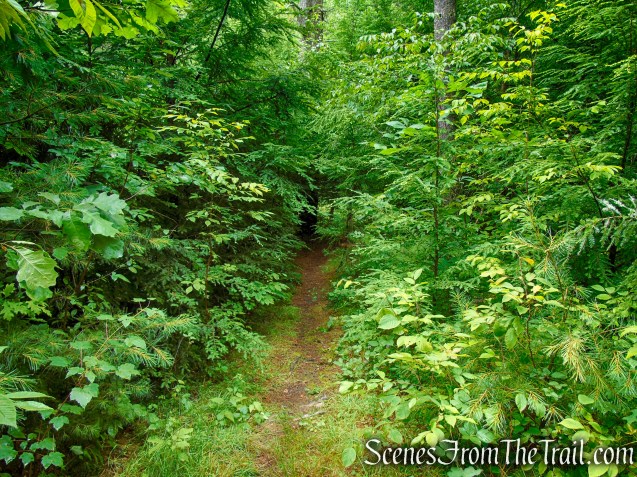
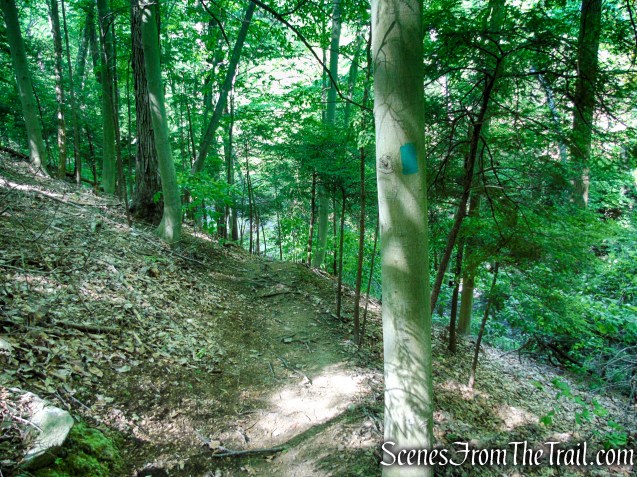
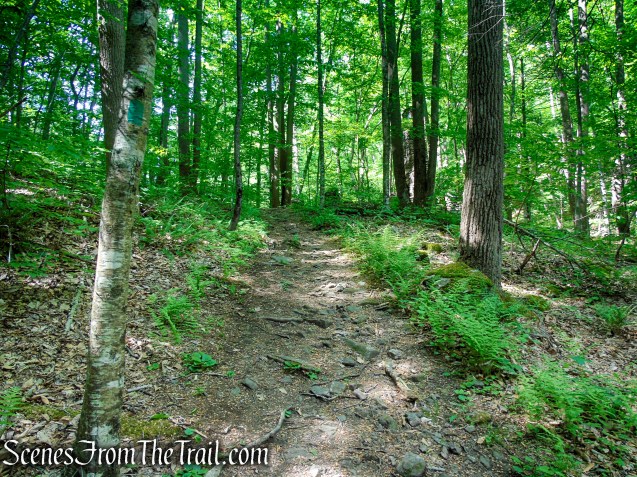
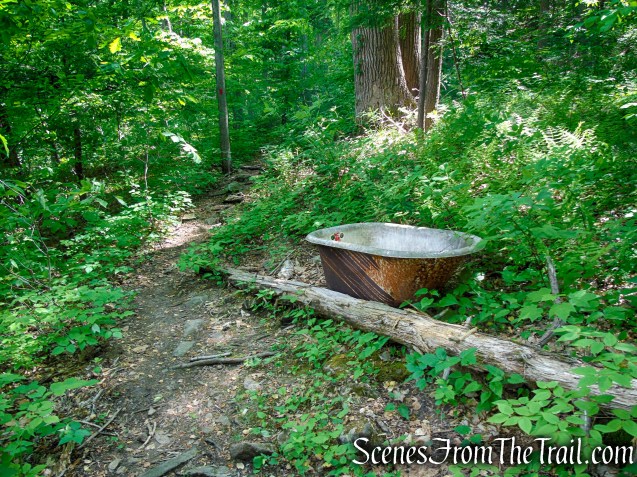
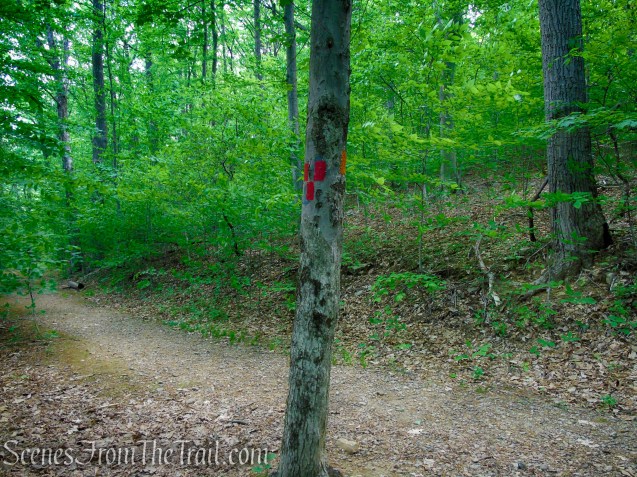
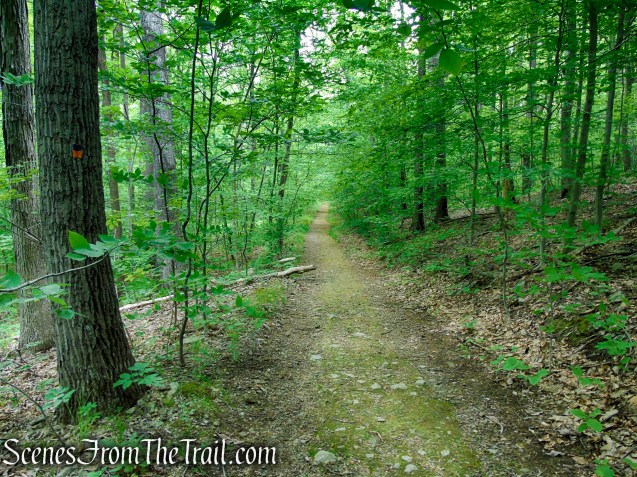
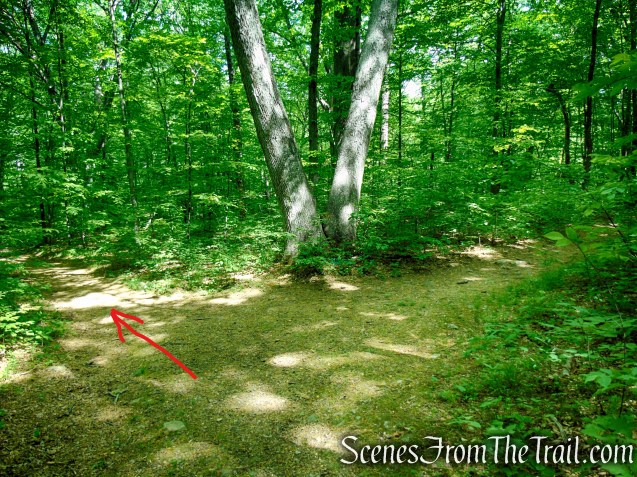
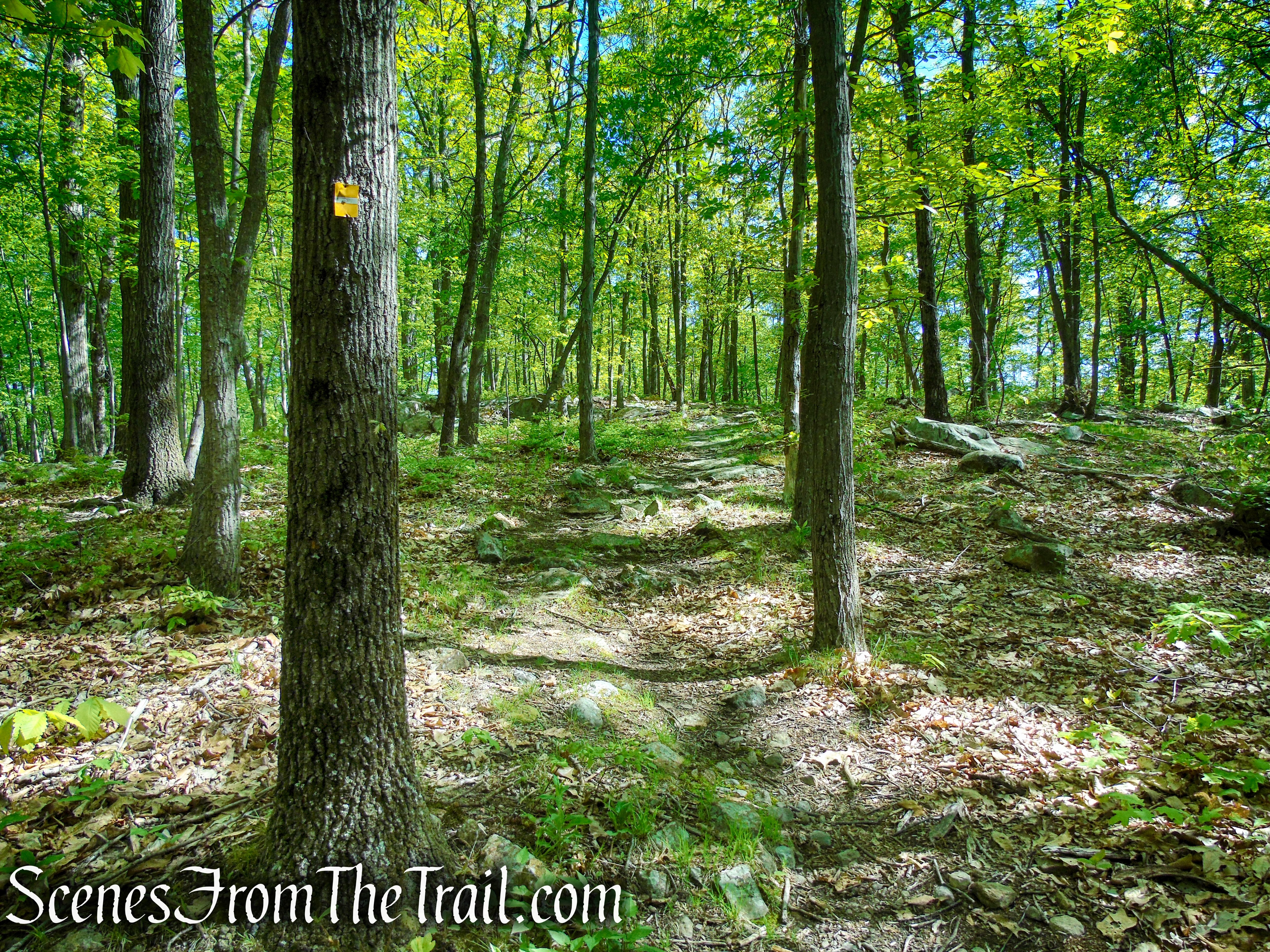
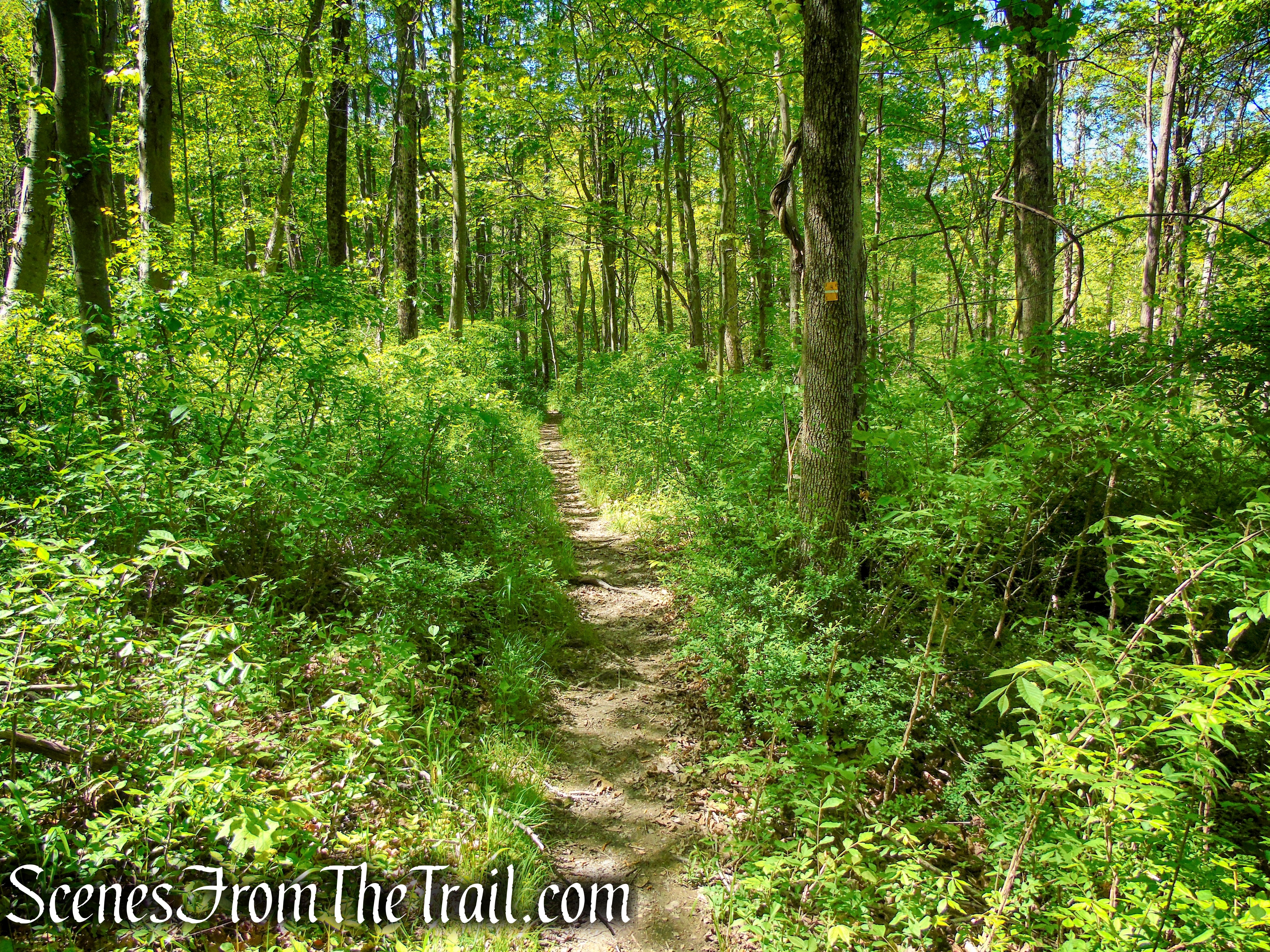
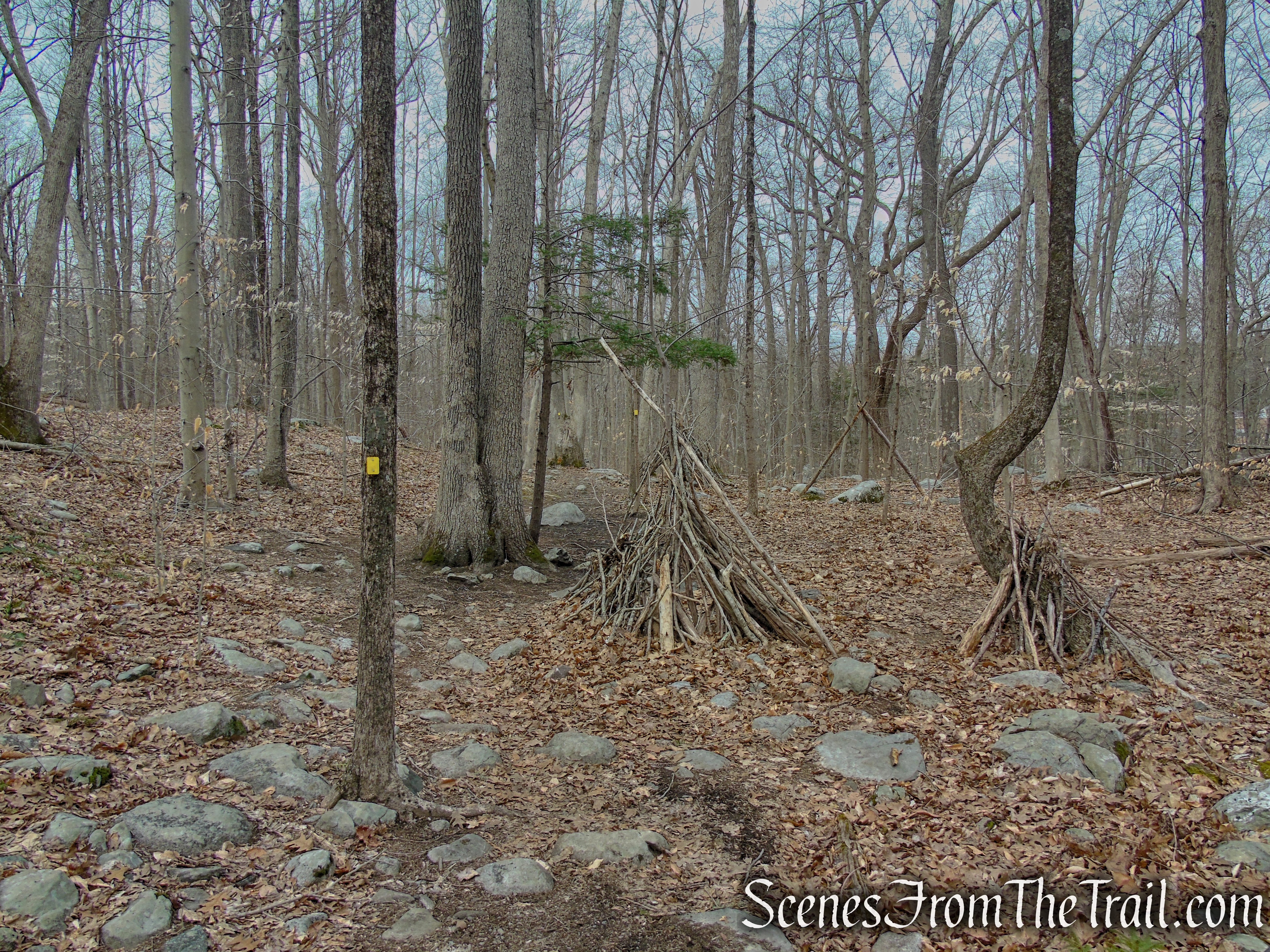
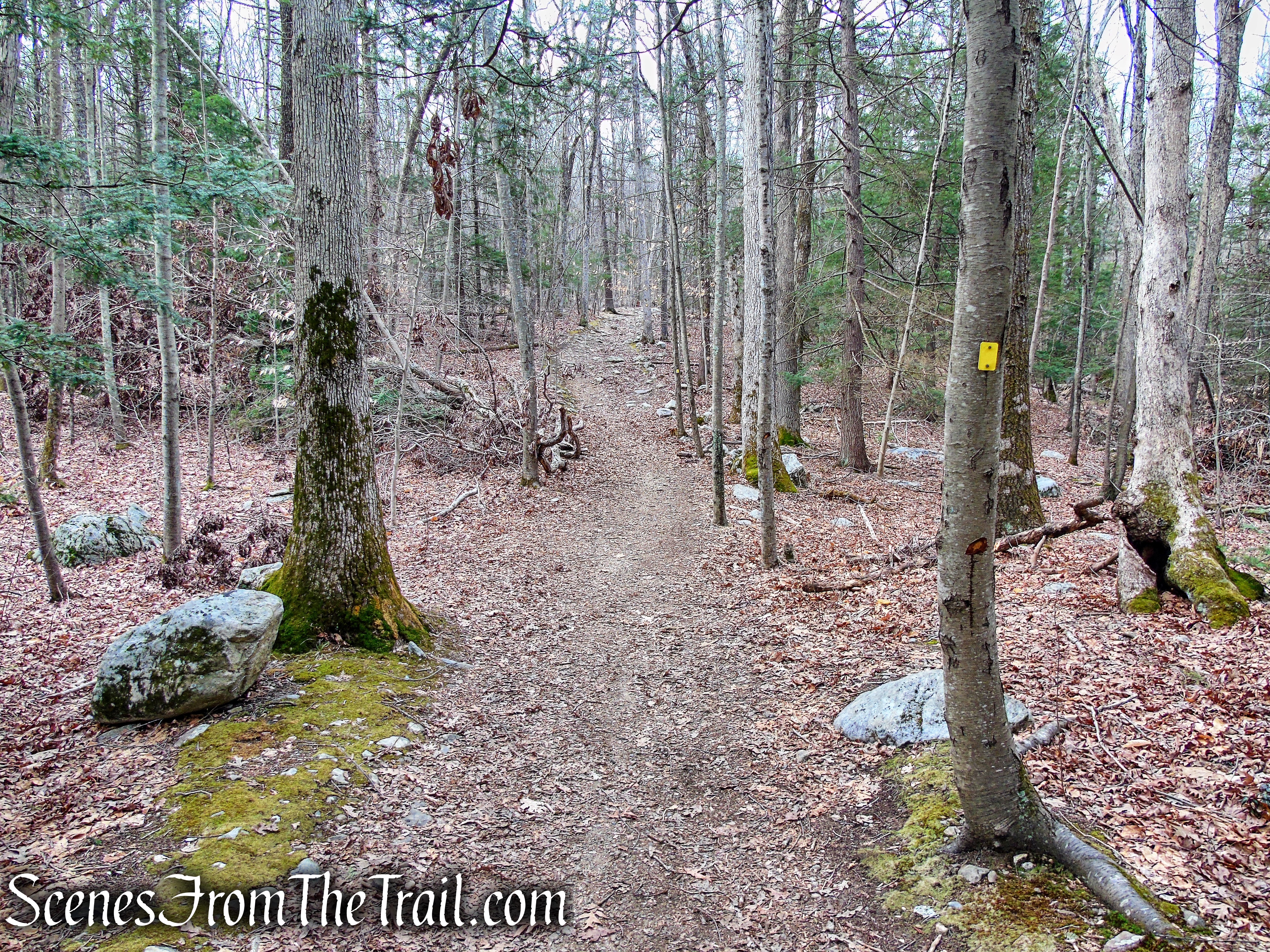
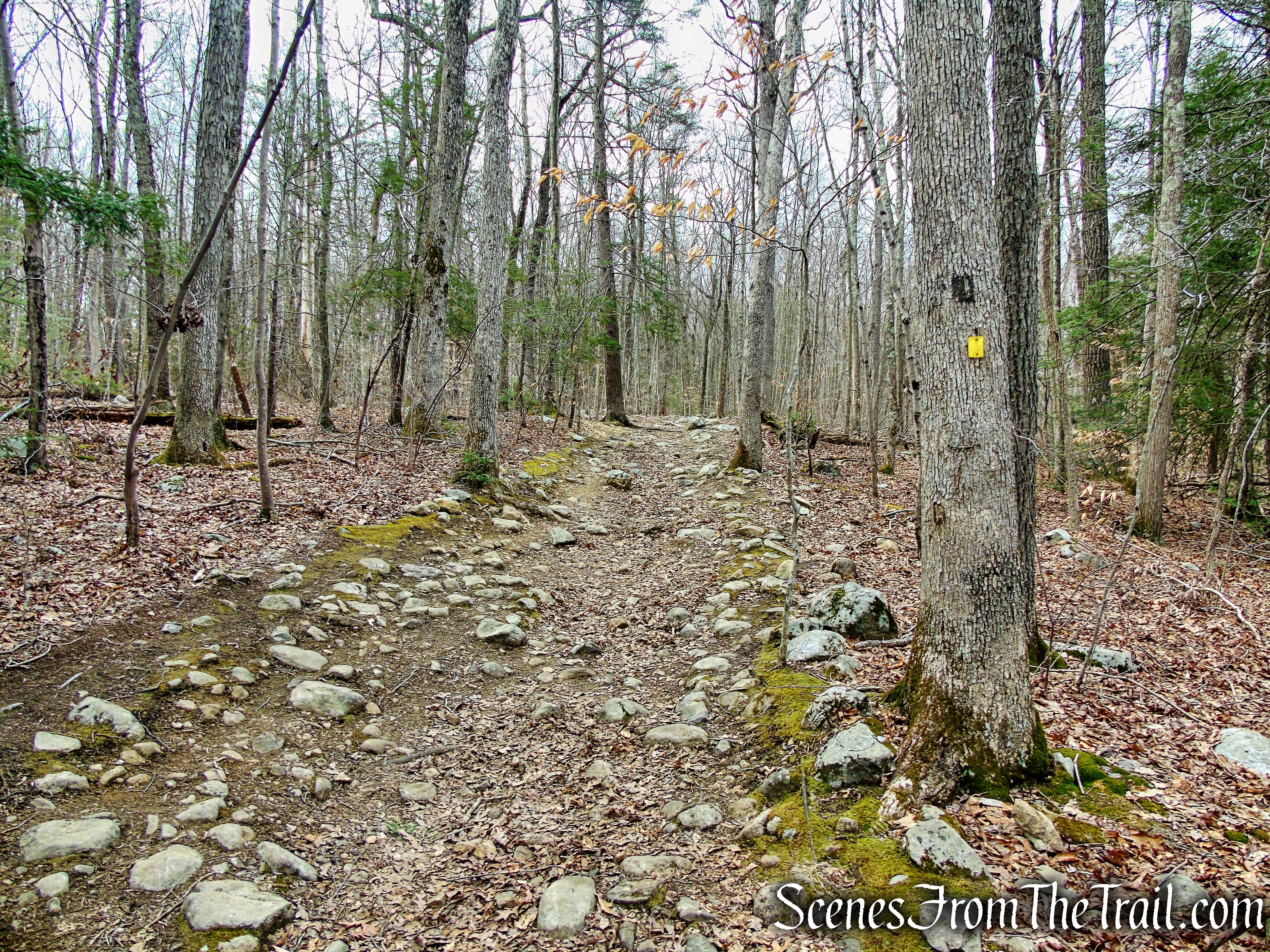
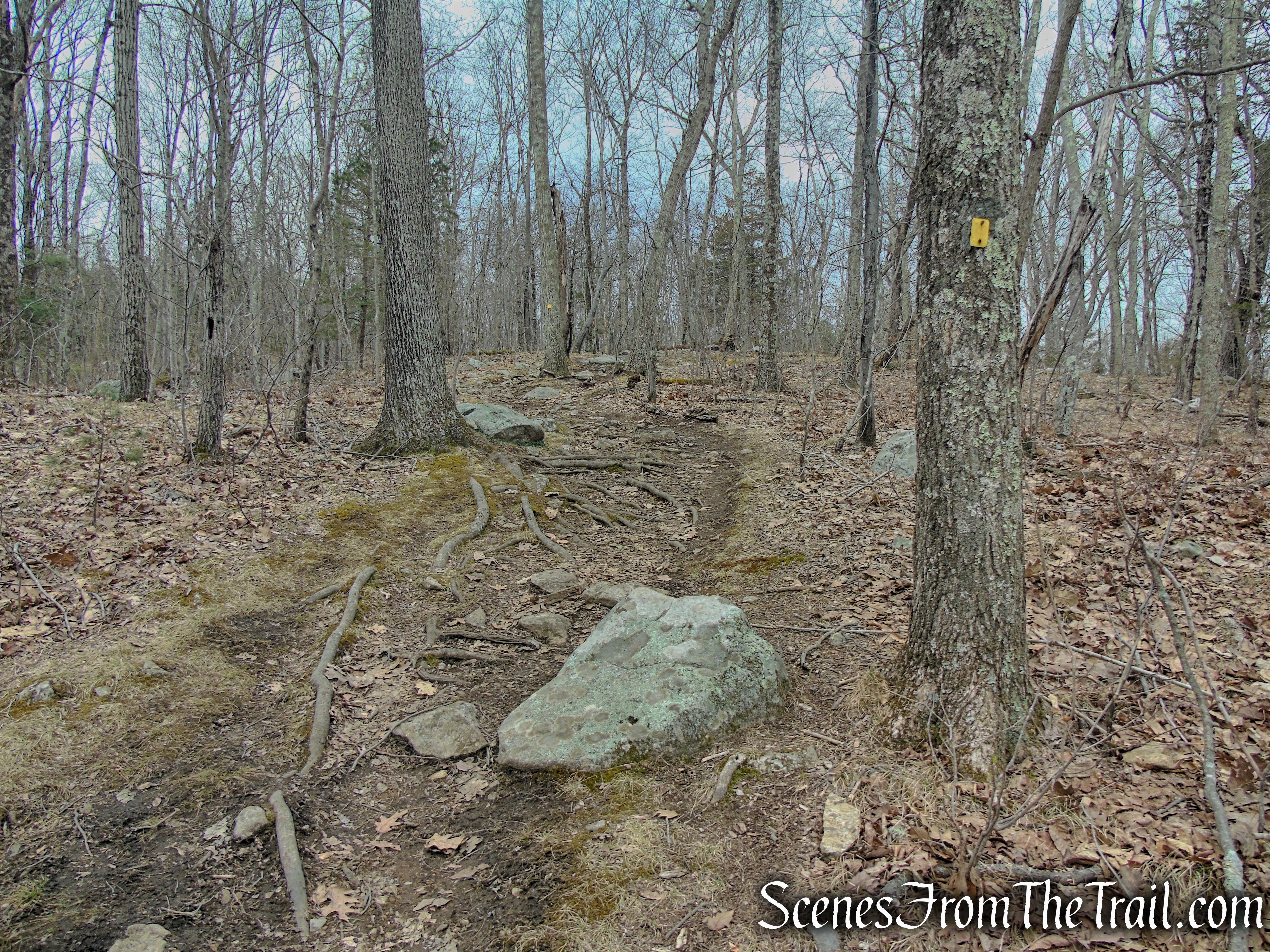
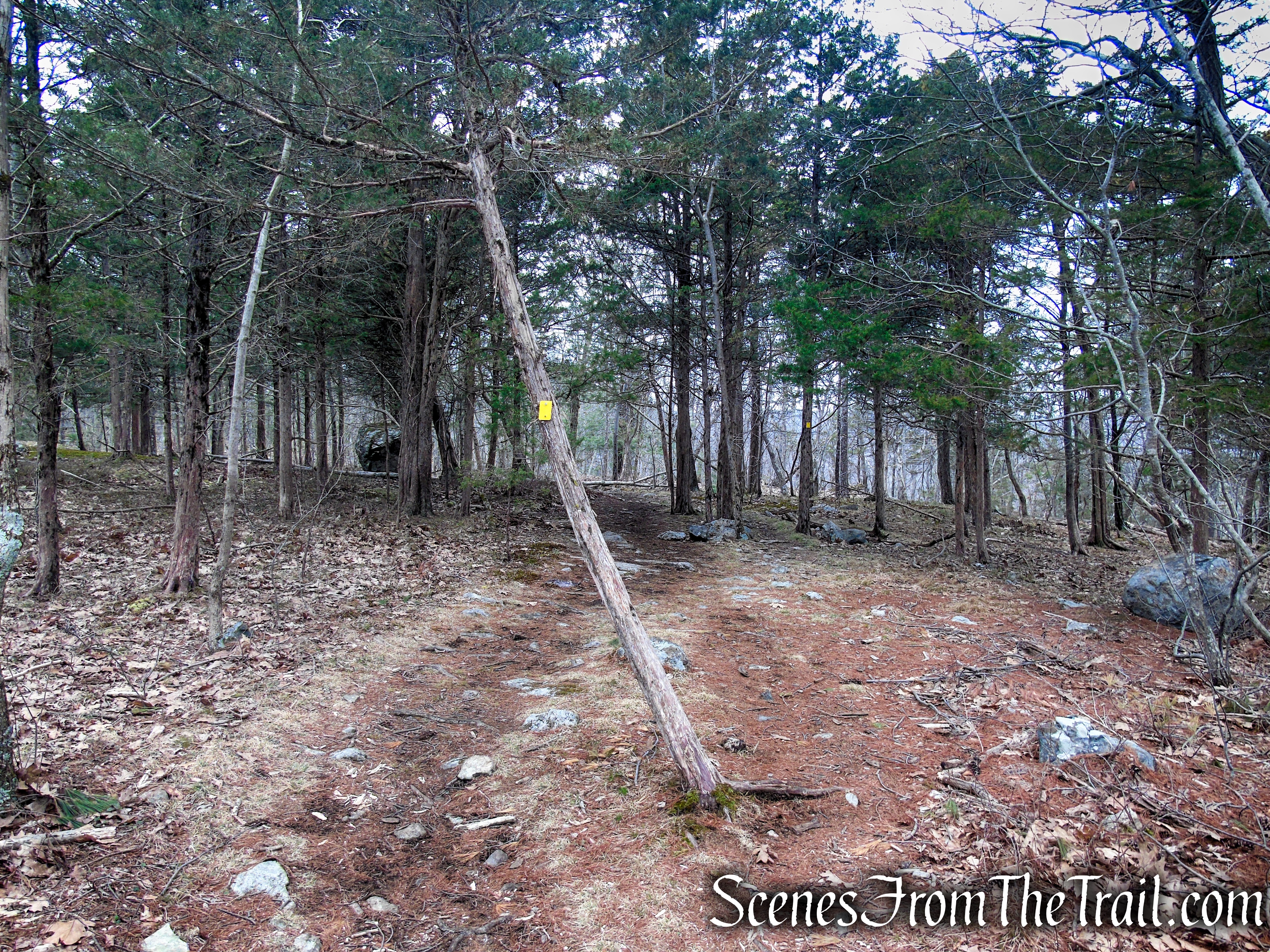
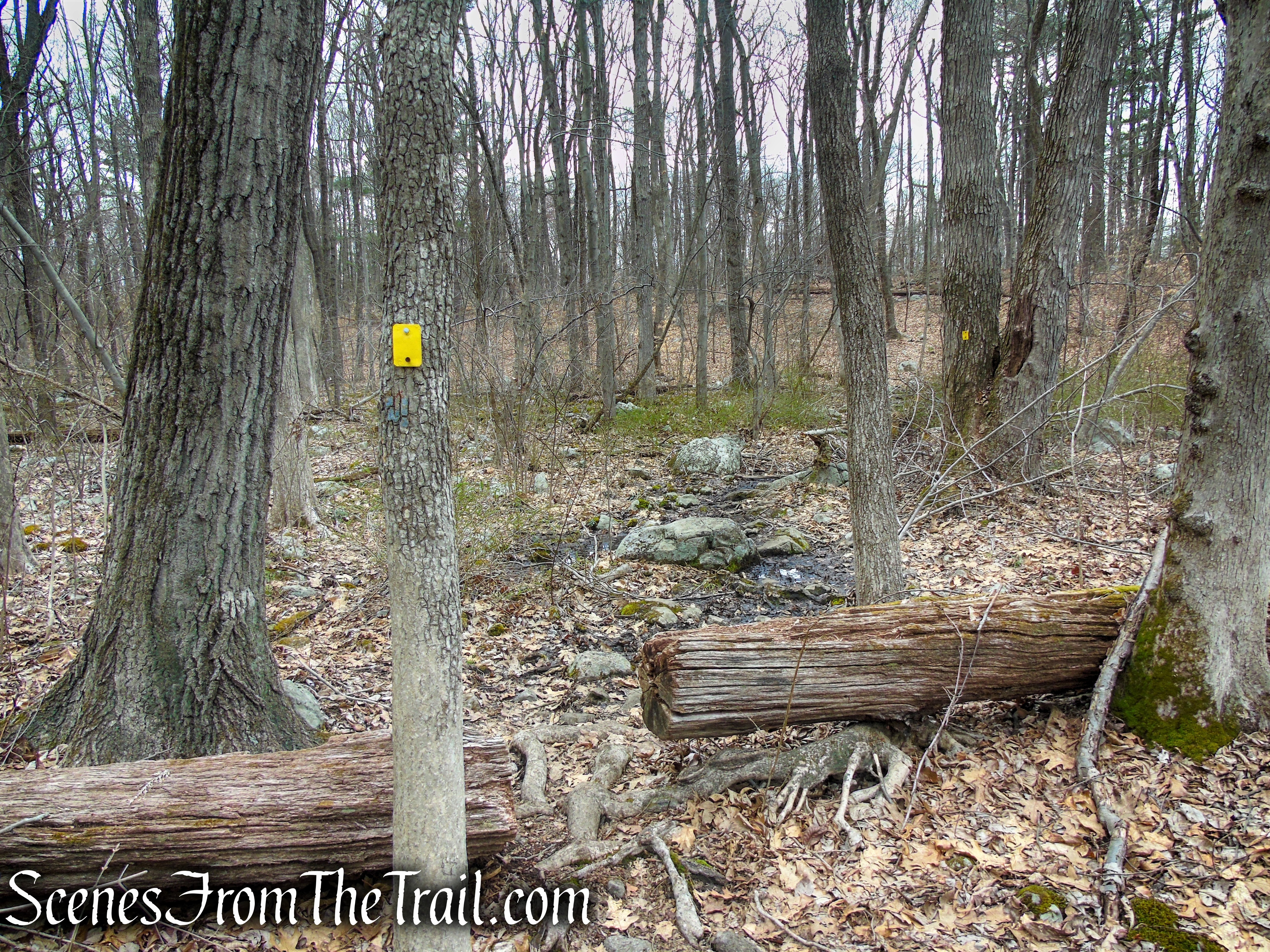
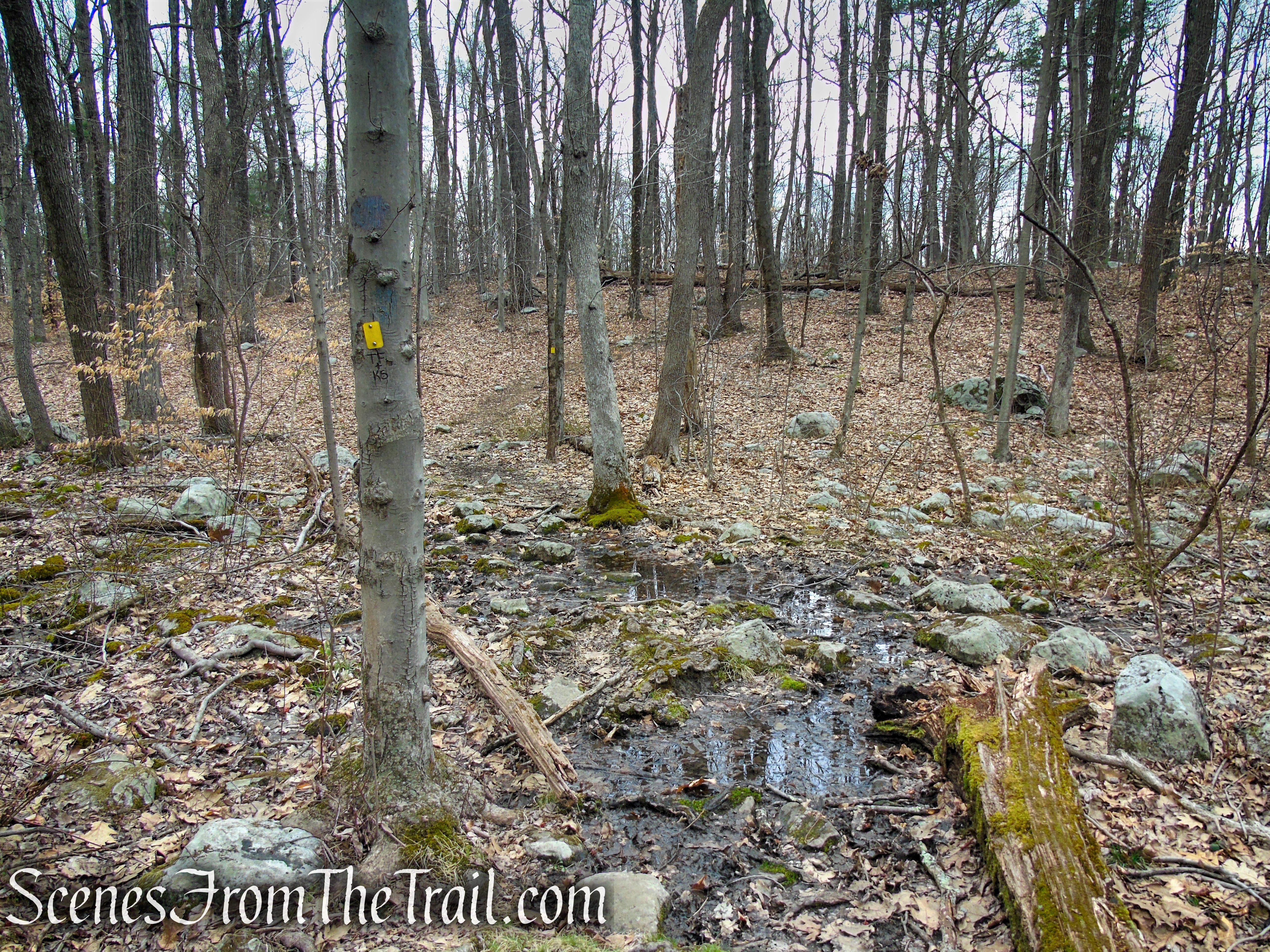
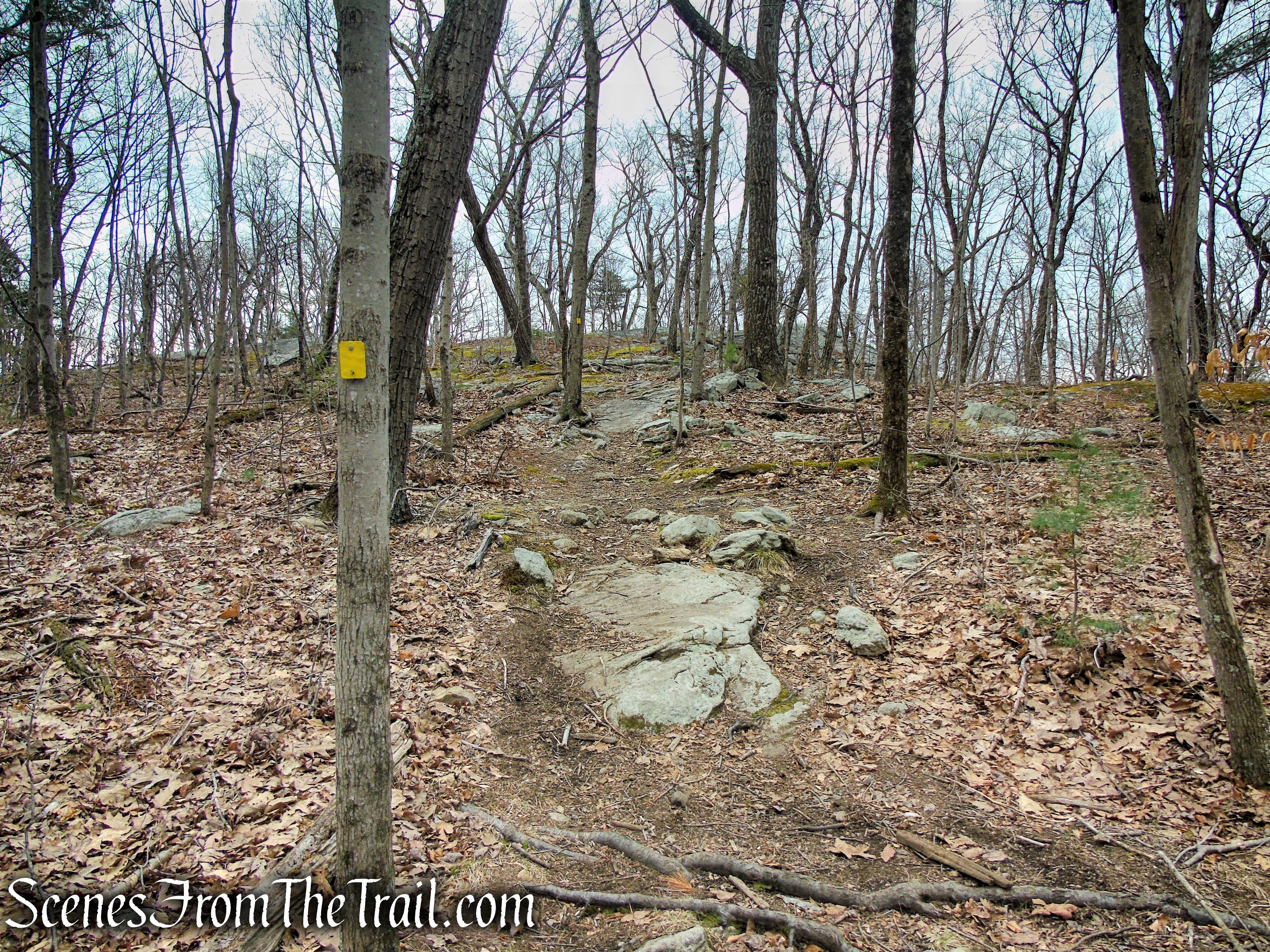
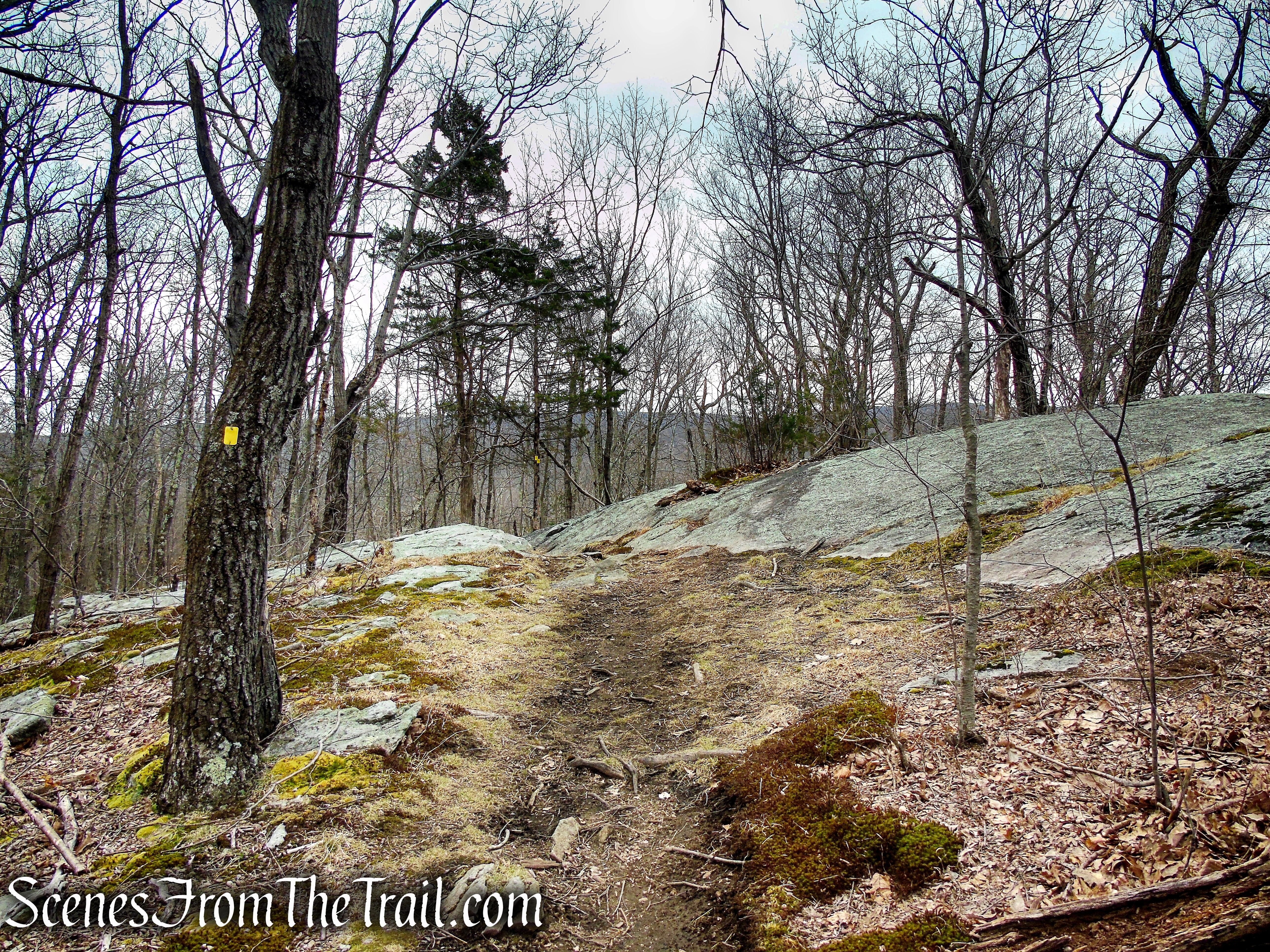
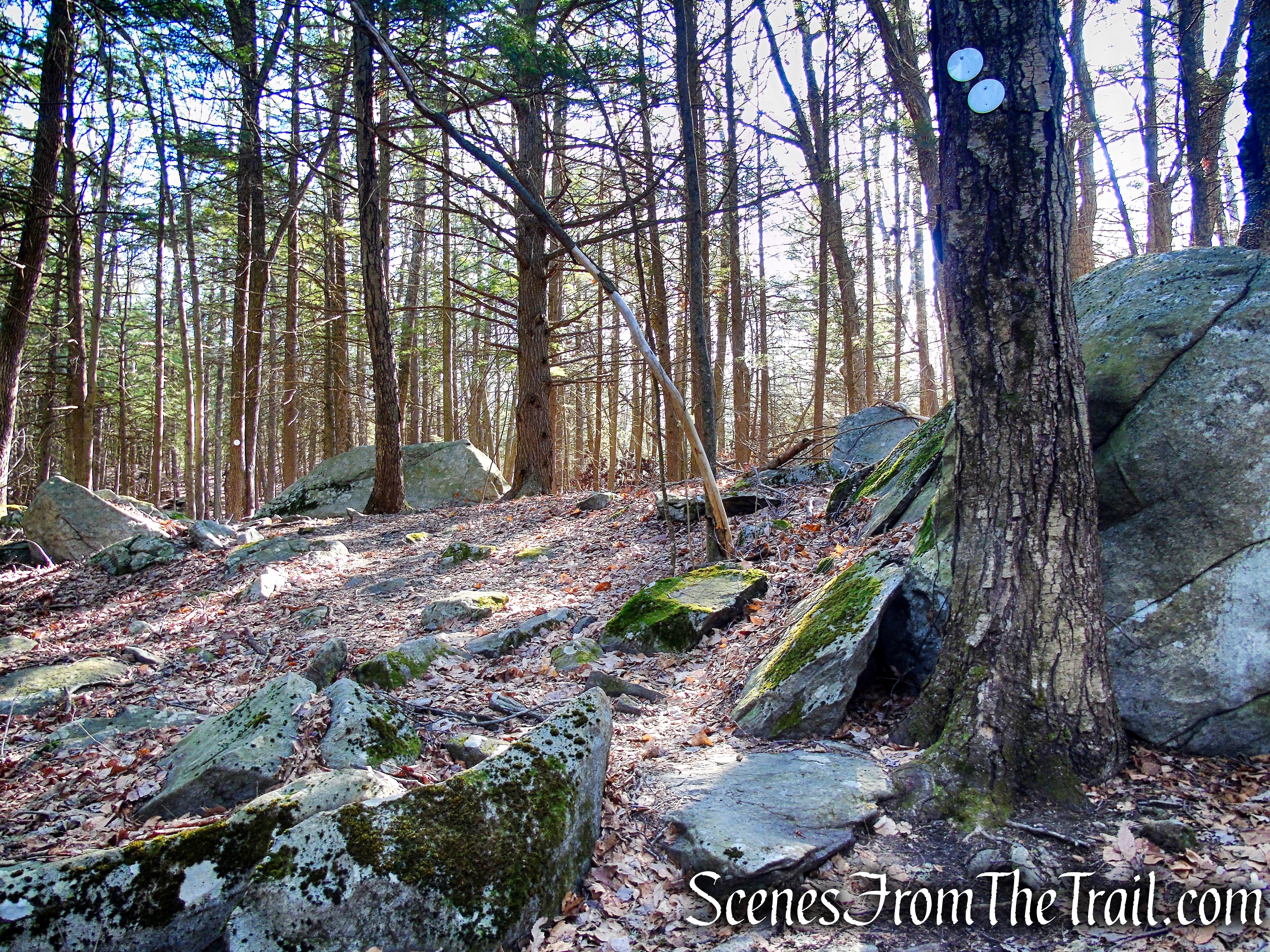
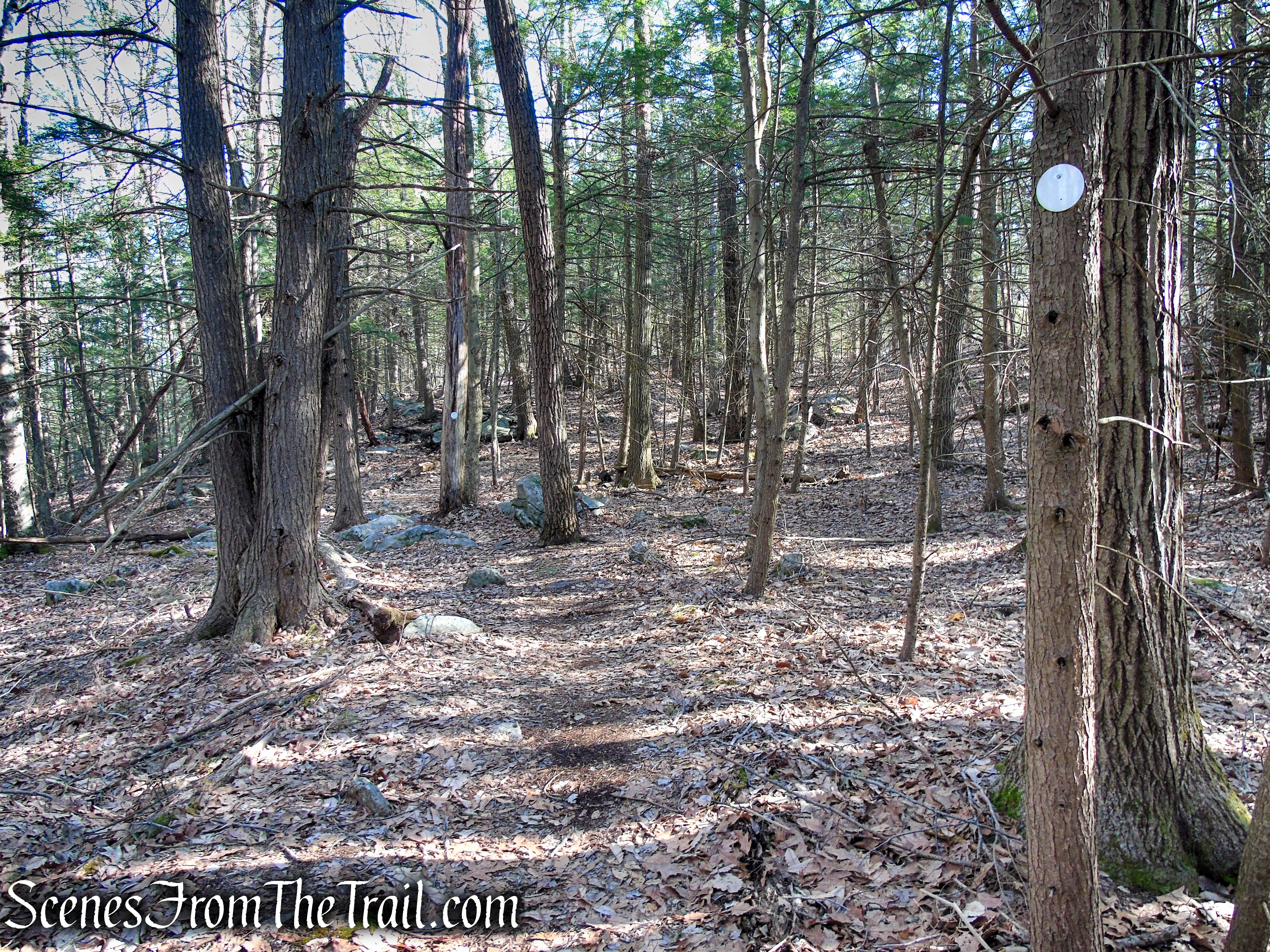
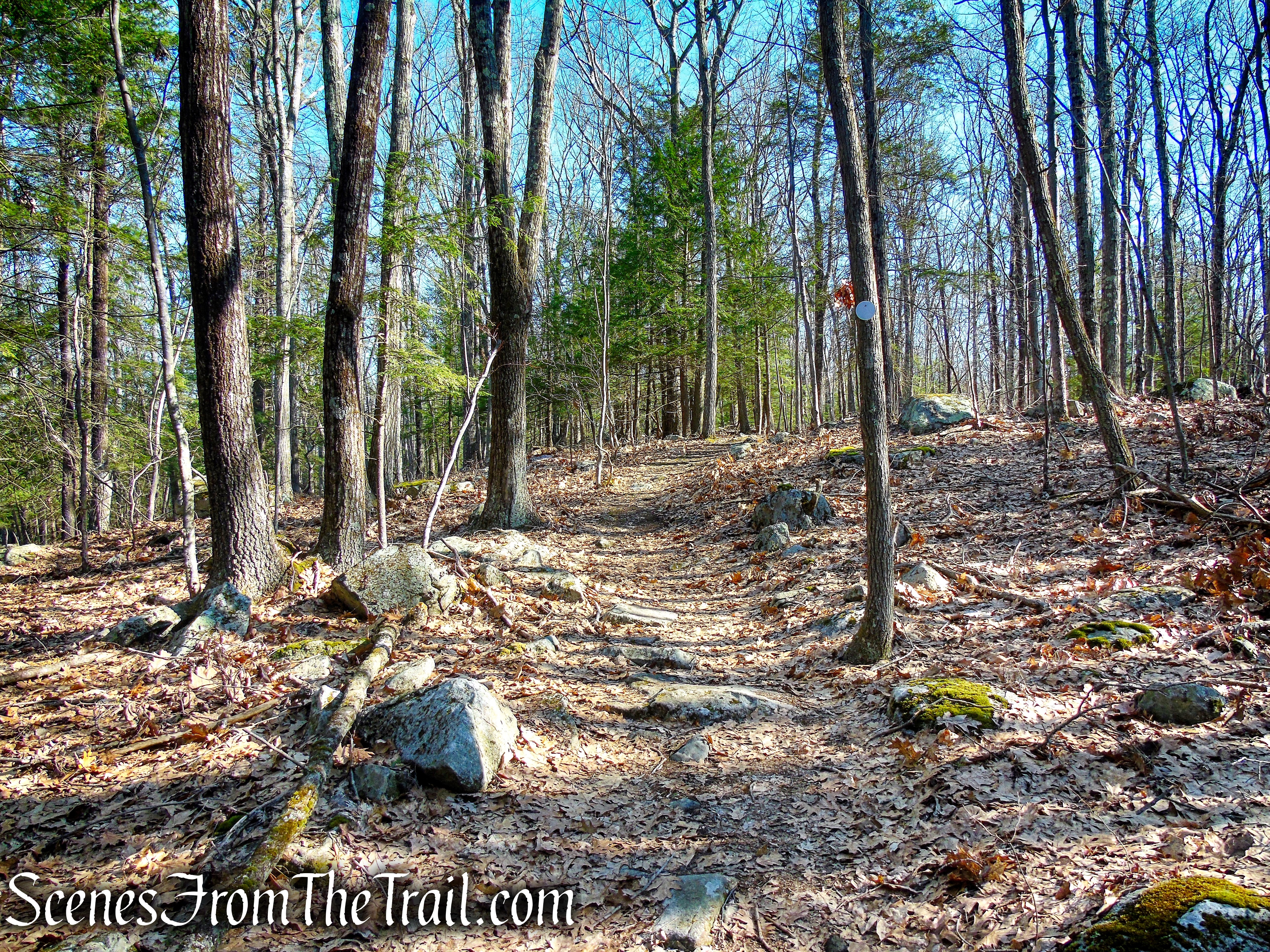
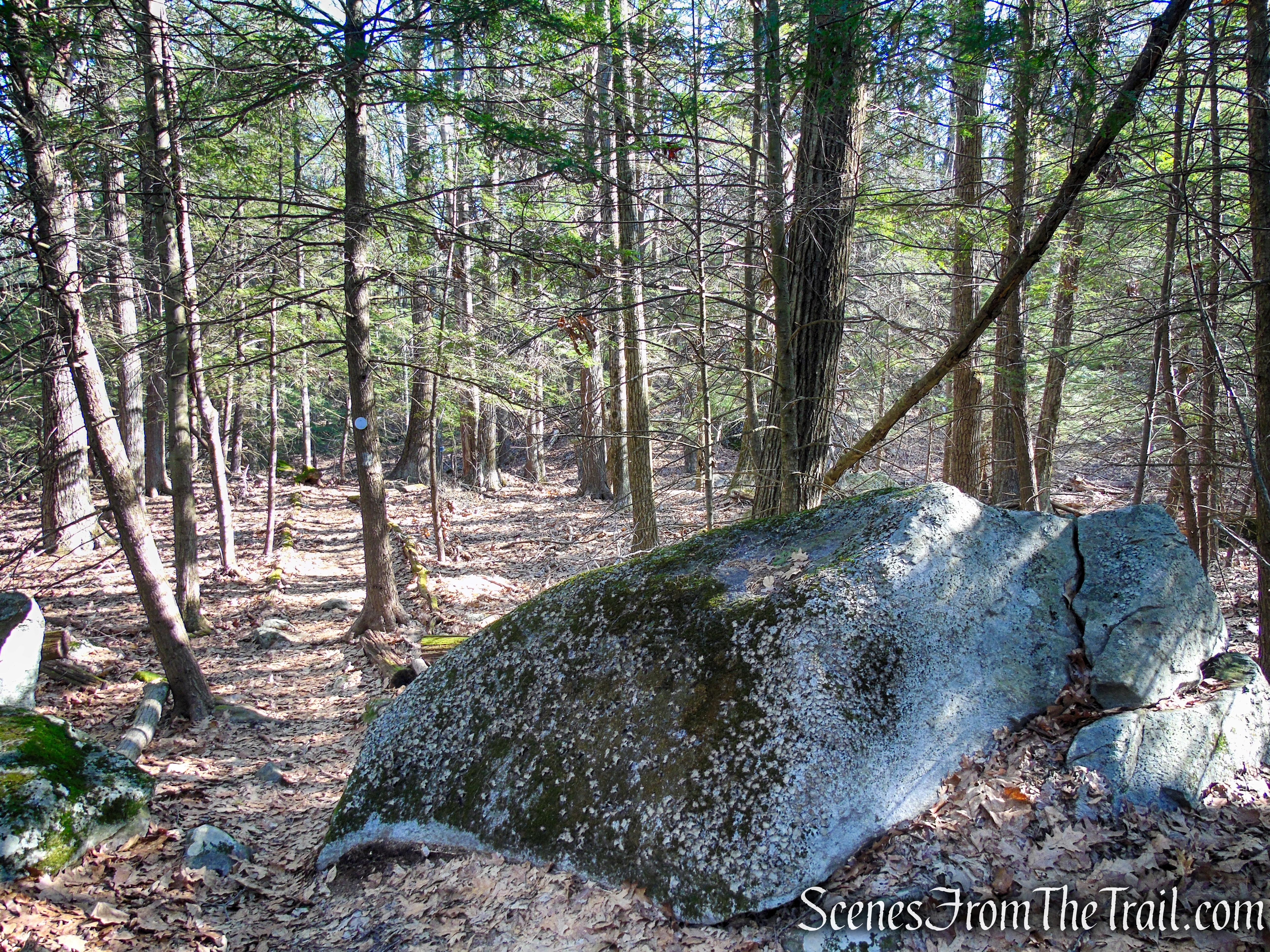
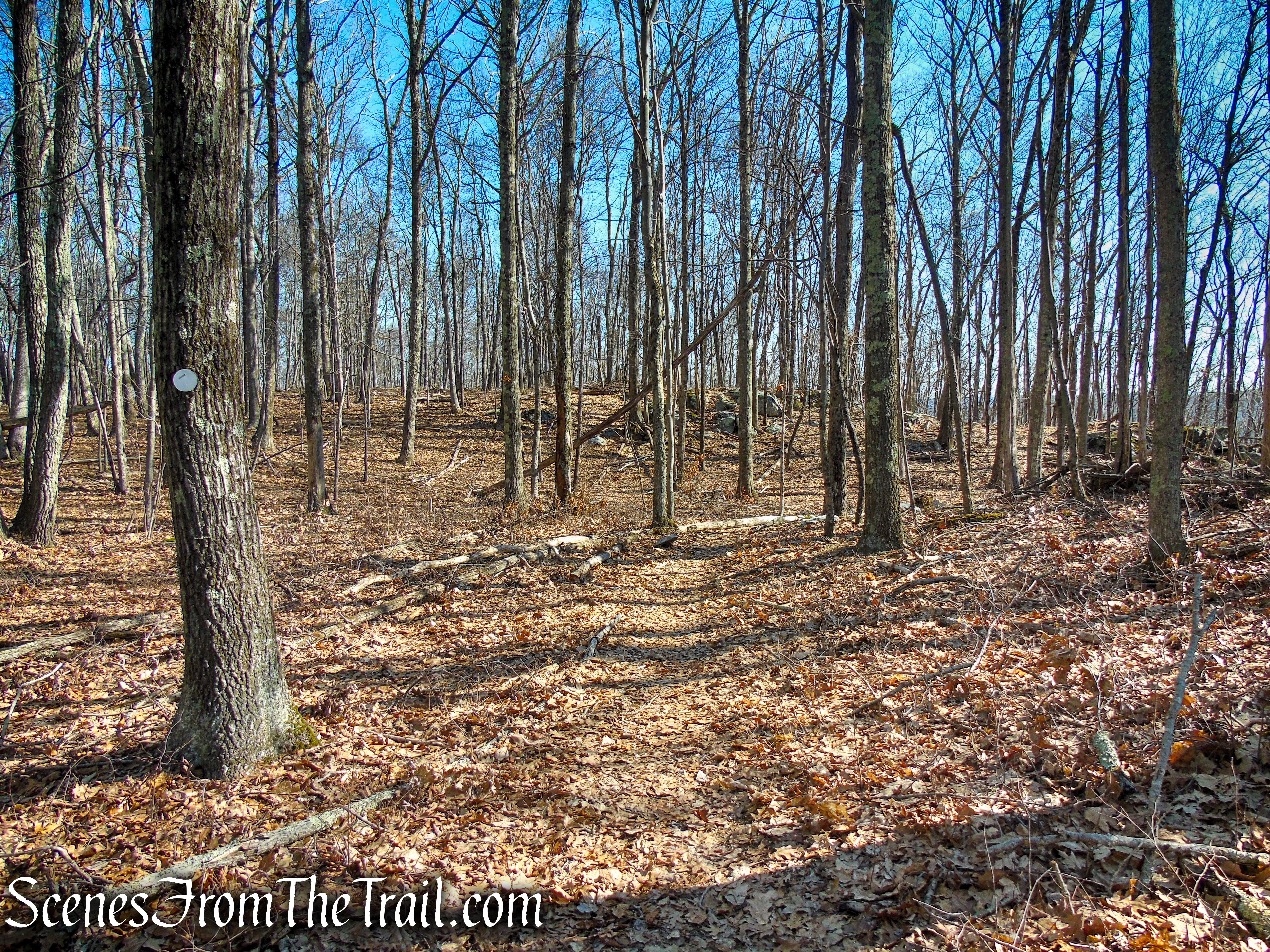
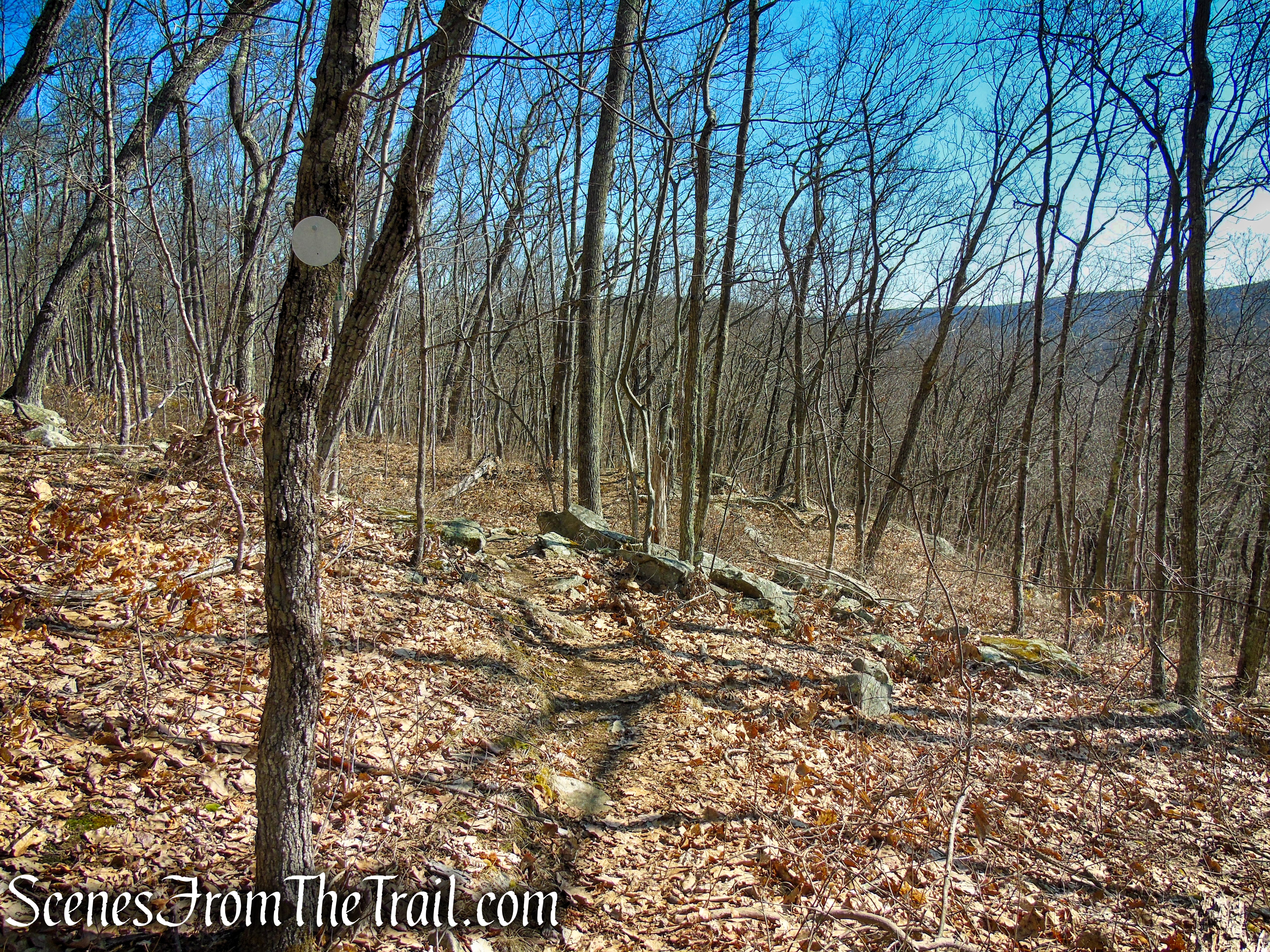
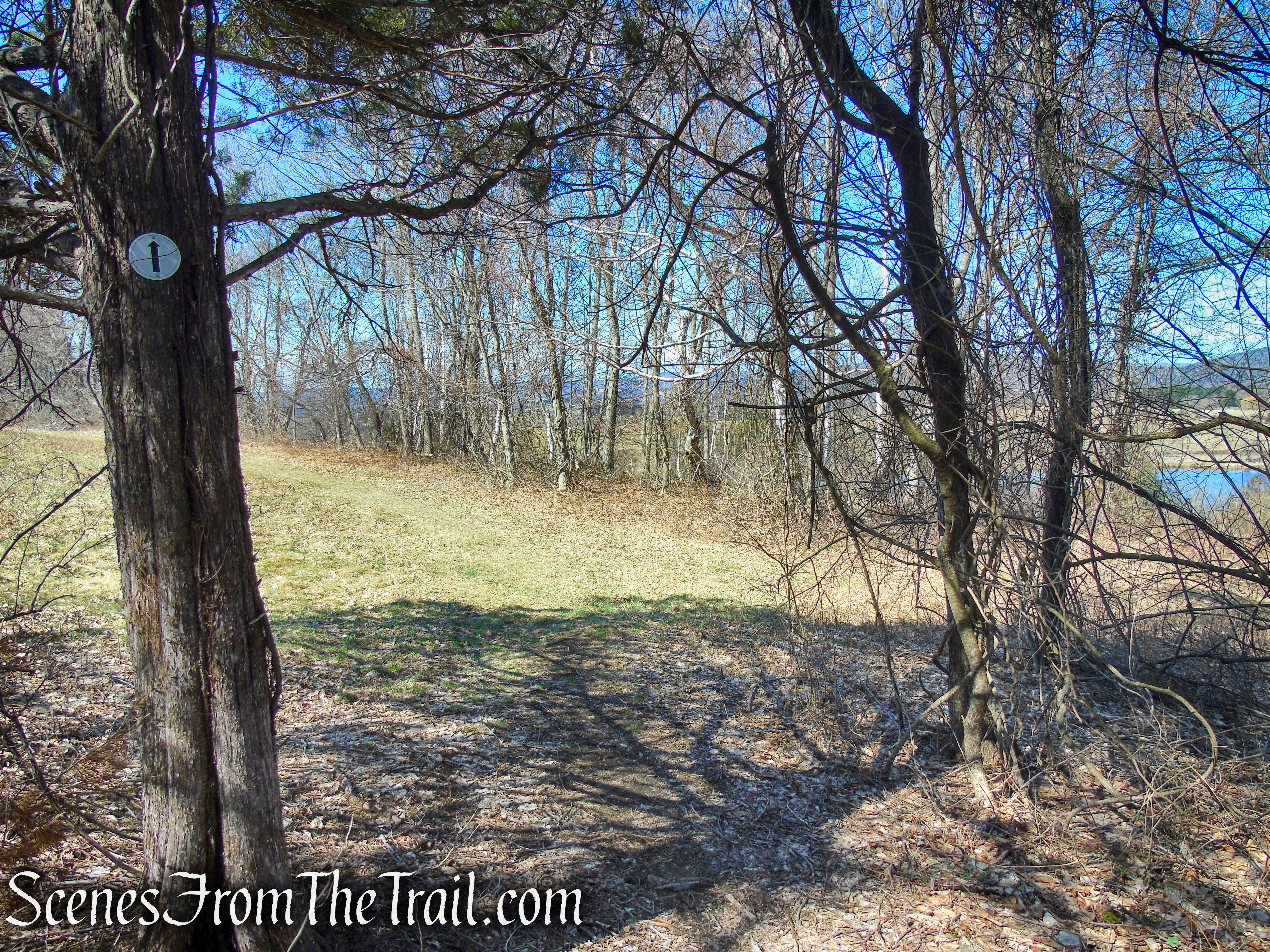
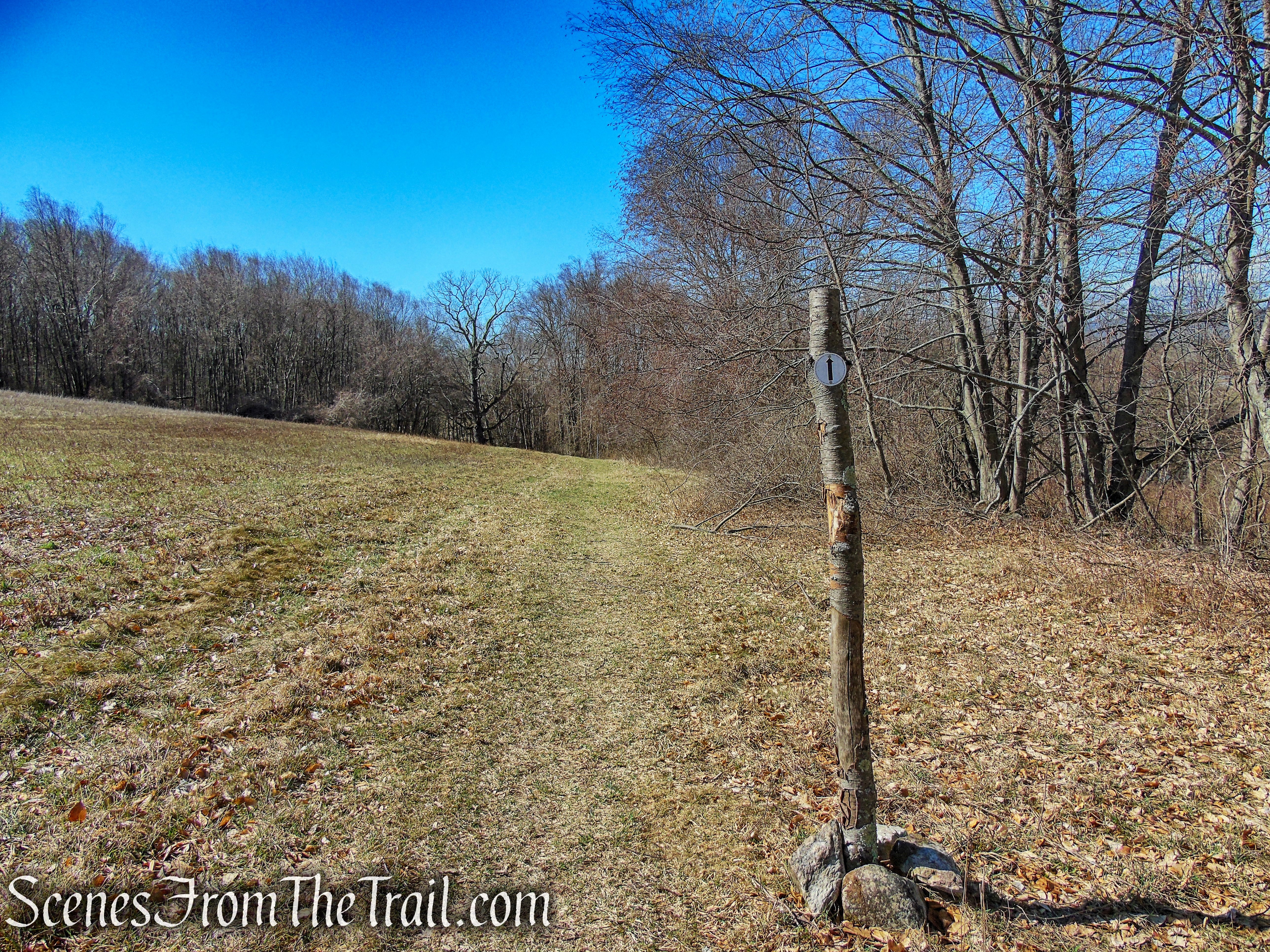
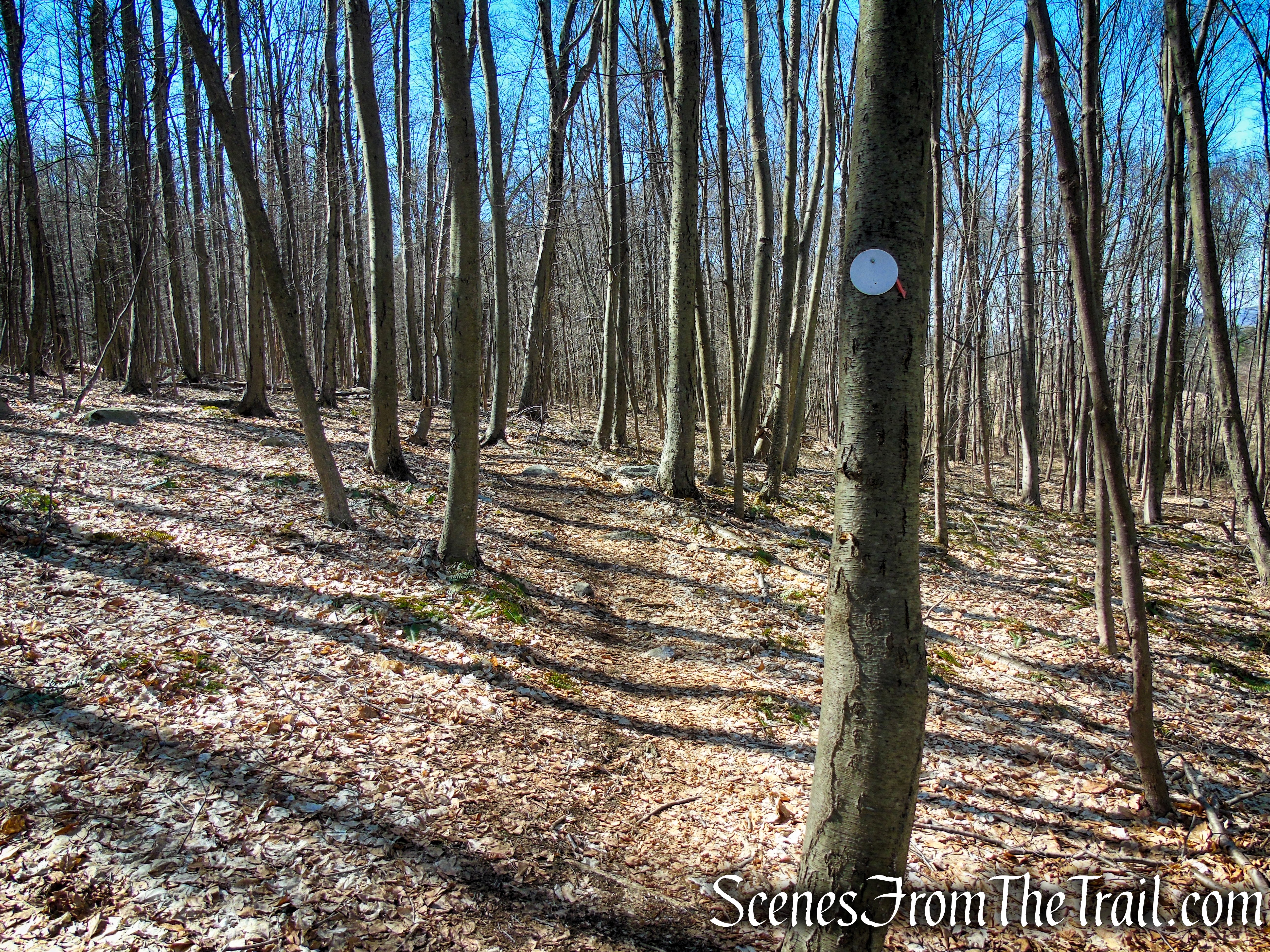
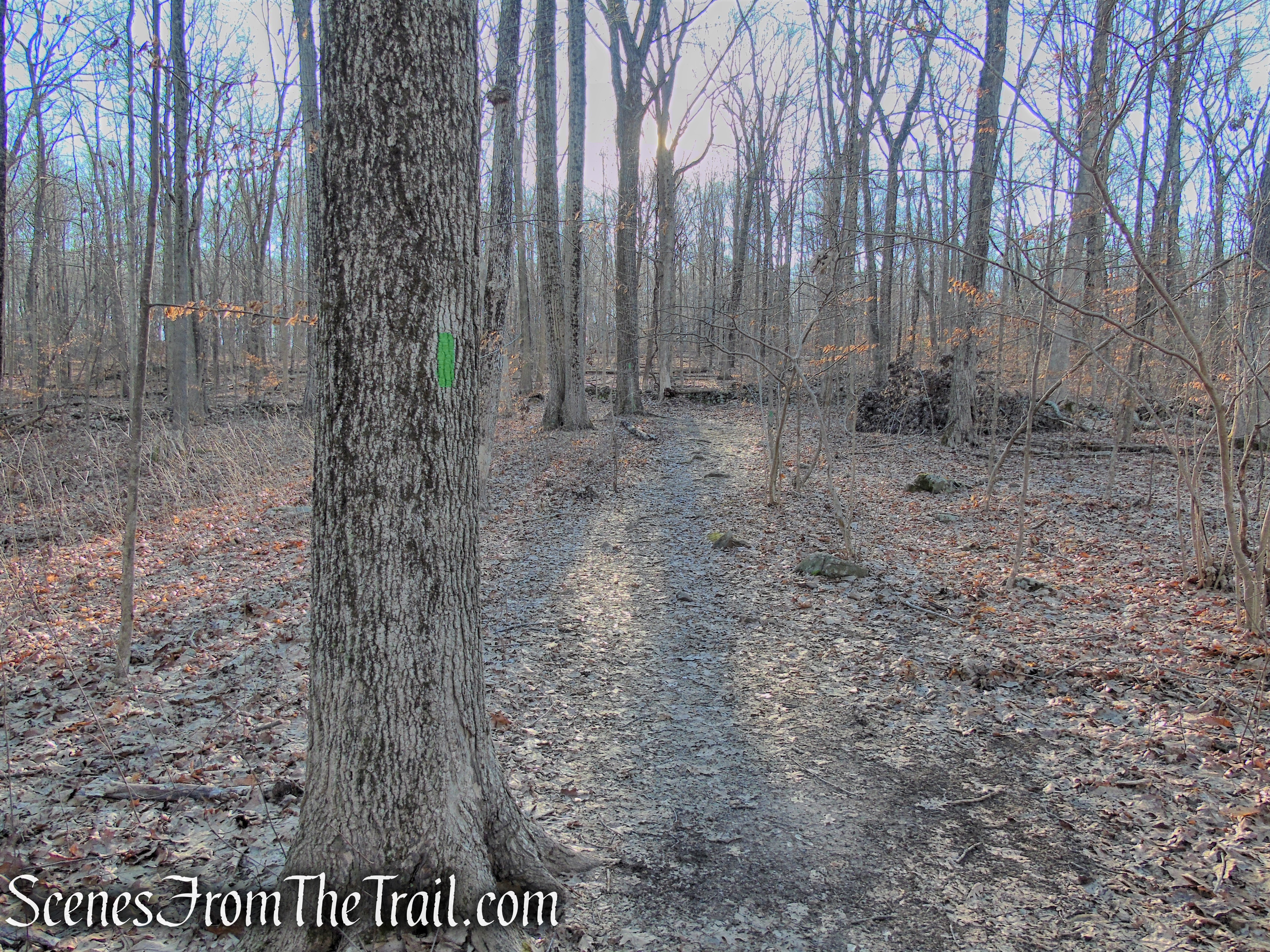
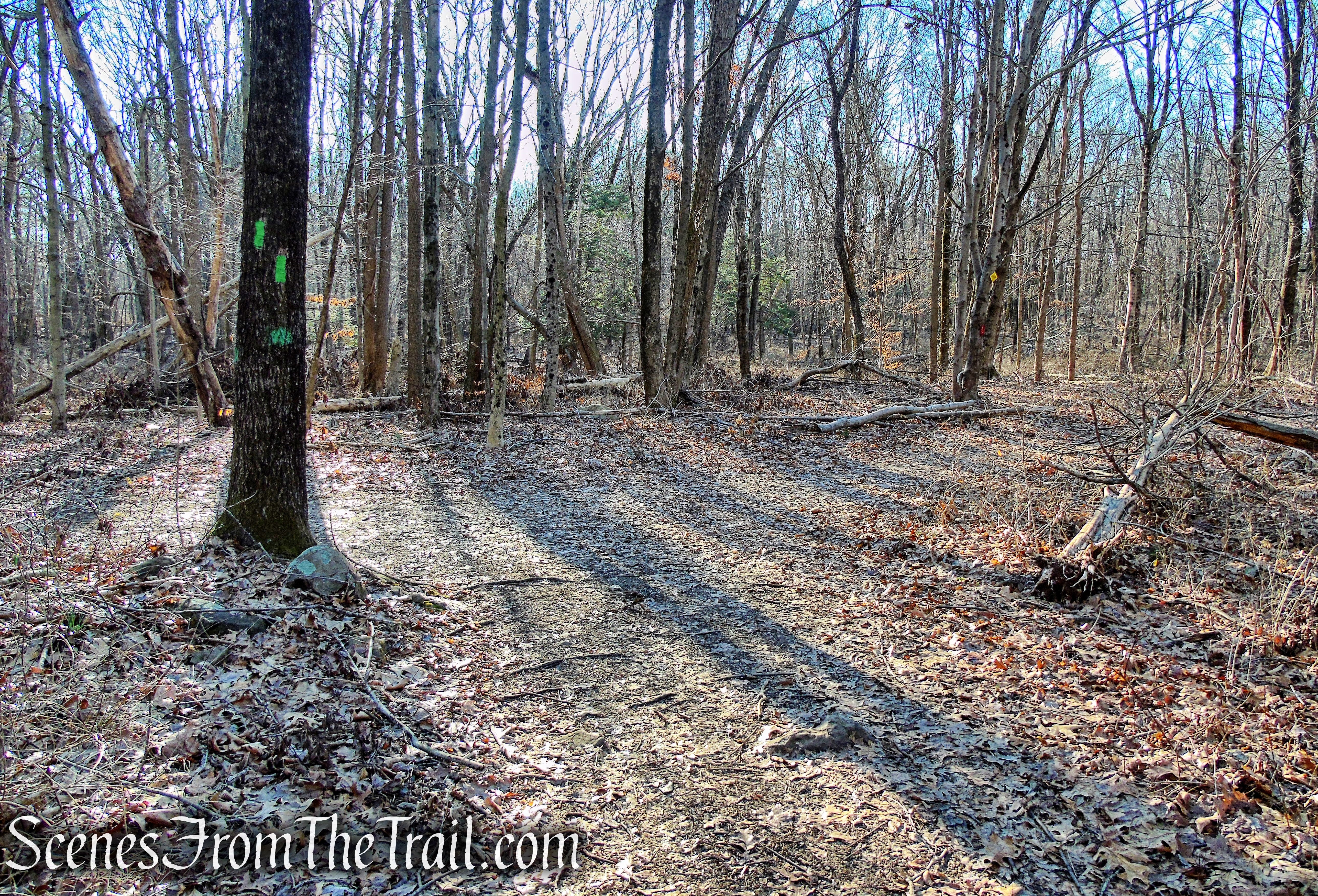
The well trodden trail is relatively easy to follow although most of the blazes are faded or the trees that they are painted on, have fallen.
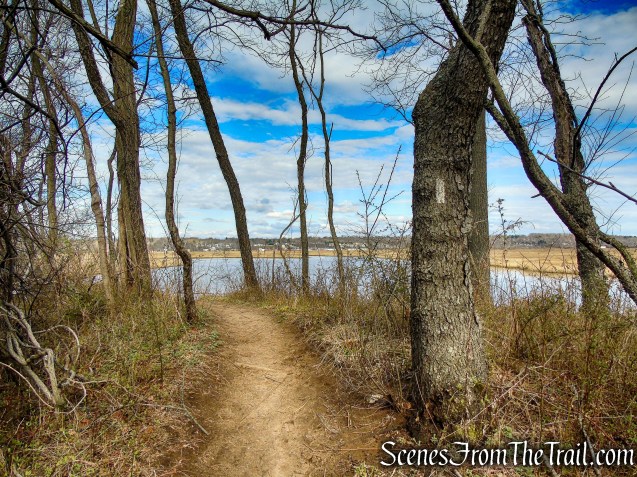
Tidal Marsh Trail - North Haven

Tidal Marsh Trail – North Haven


Hike Overview:

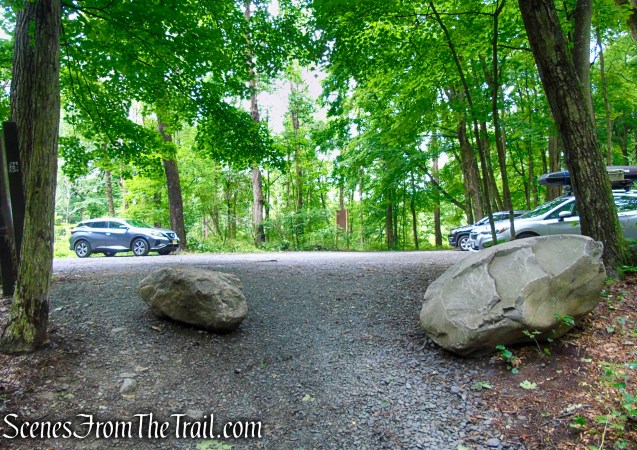
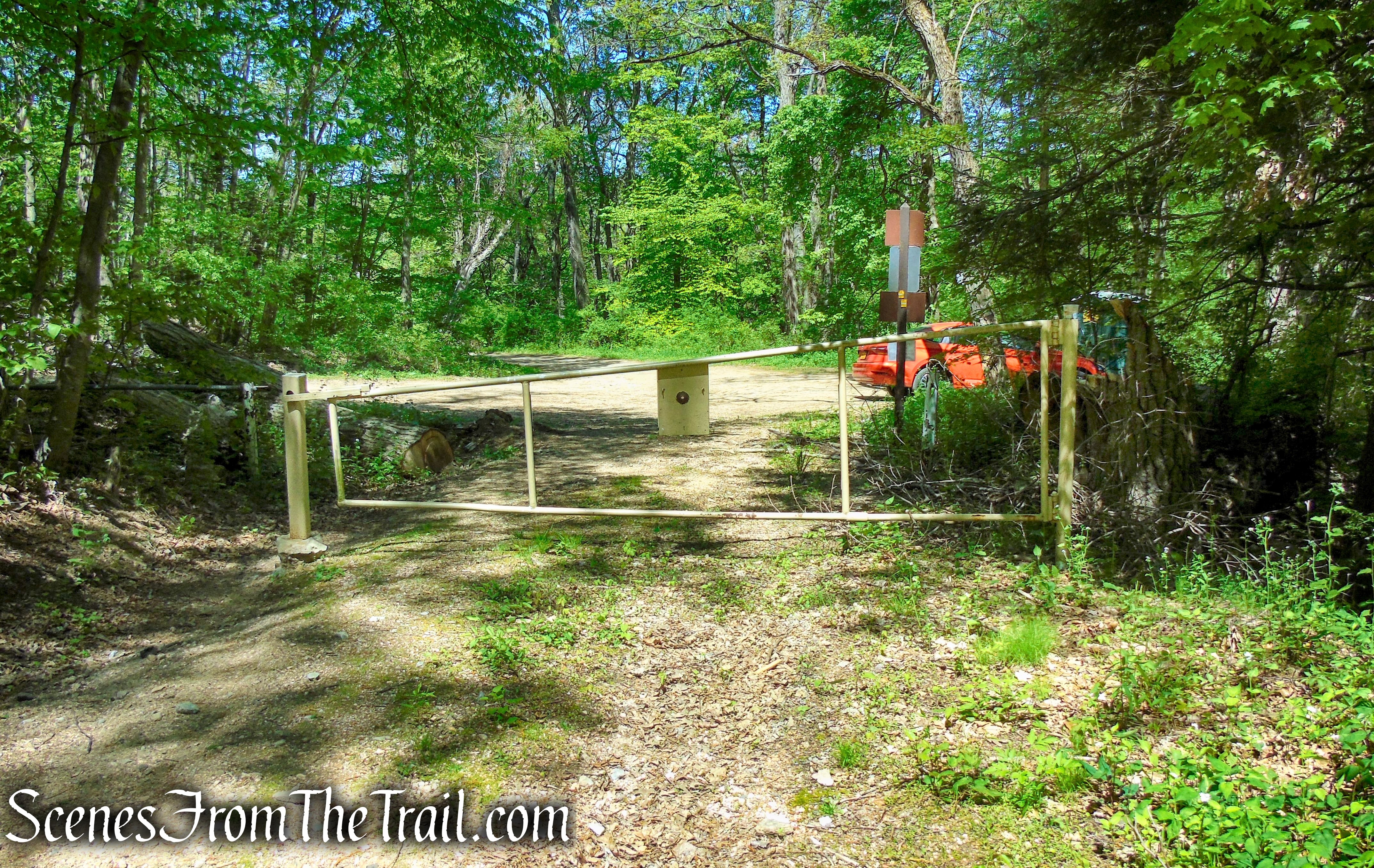
There is plenty of parking at the trailhead which is behind Target.
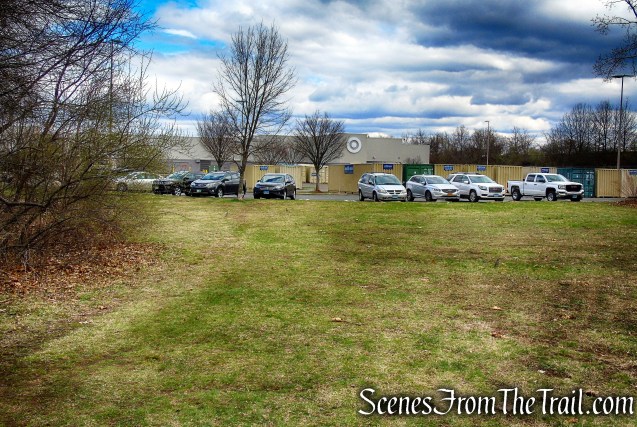
Tidal Marsh Trail - North Haven

Tidal Marsh Trail – North Haven

Although this is an easy hike, from what I have read on Facebook, many people never find the Polar Bear sculpture, which is one of the highlights of the hike. When I was reading the comments on someone’s post, what stuck with me was “If you think you went too far for the bear… keep going farther. You’ll eventually come across the old rail building with the bear inside.” That comment was helpful in not turning back too soon.

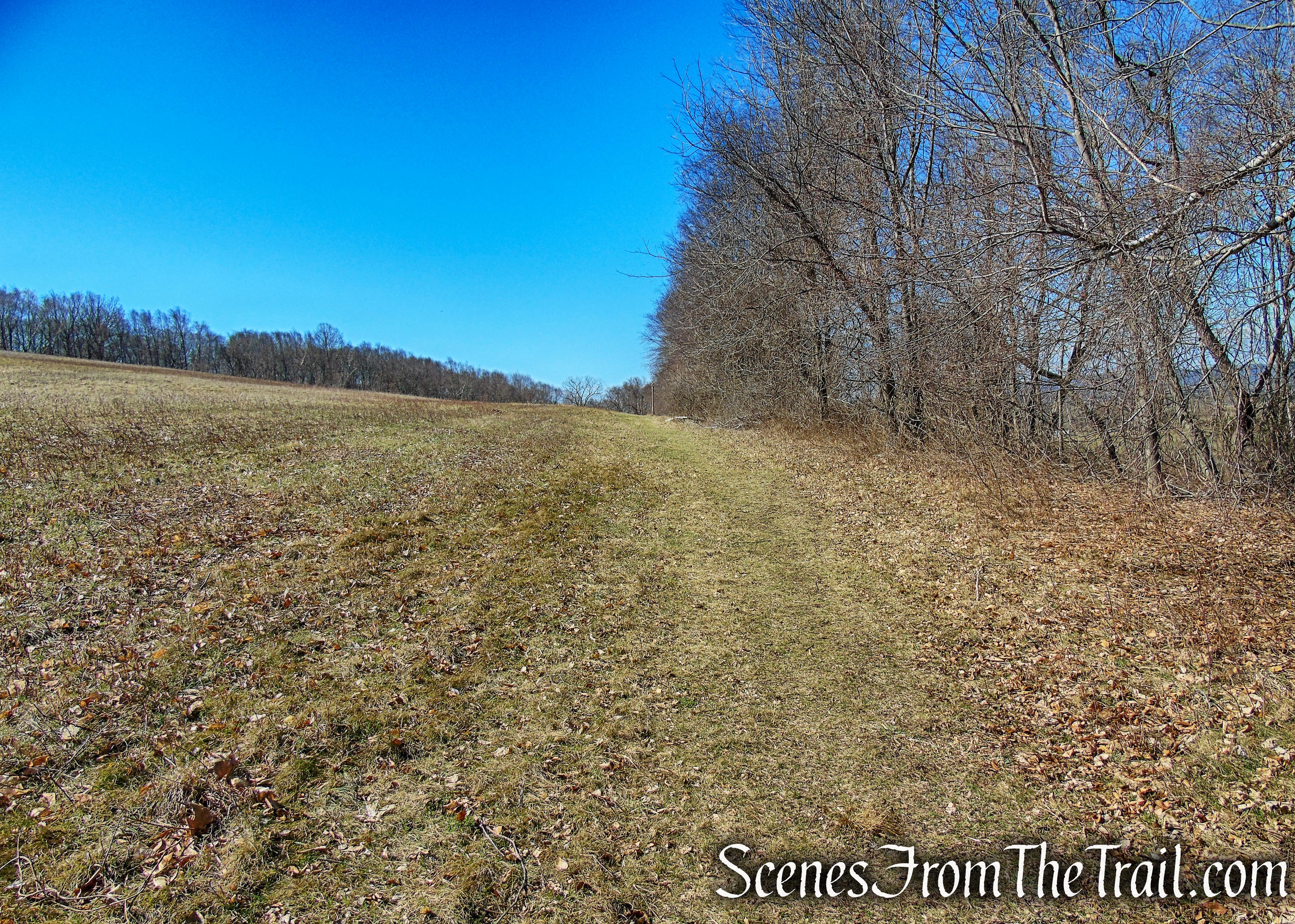
The map below shows the route that we took. The trail is mostly flat with minimal elevation gain.
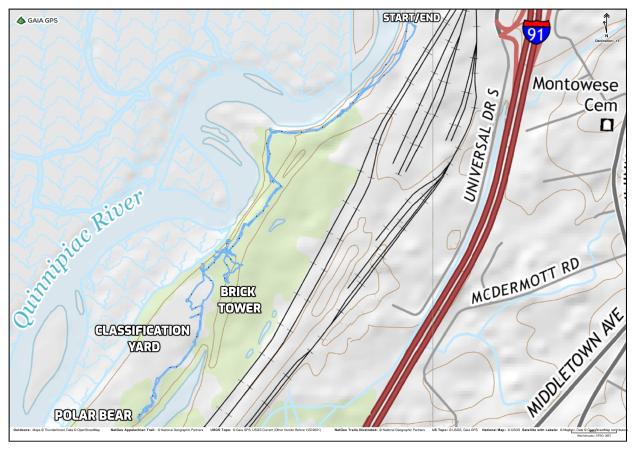
Tidal Marsh Trail - North Haven

Tidal Marsh Trail – North Haven

This hike, from what I read, is better done during leaf off season. According to those that have visited, the trail gets overgrown, making the trail harder to follow. There are also a lot of bugs and ticks during the warmer months. Also, since it is located in an industrial area, it is probably better not to hike alone. We did not encounter any of these issues on our visit.


The Hike:

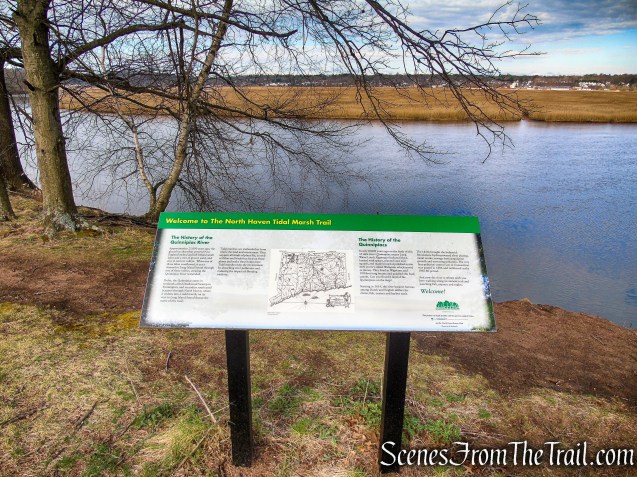
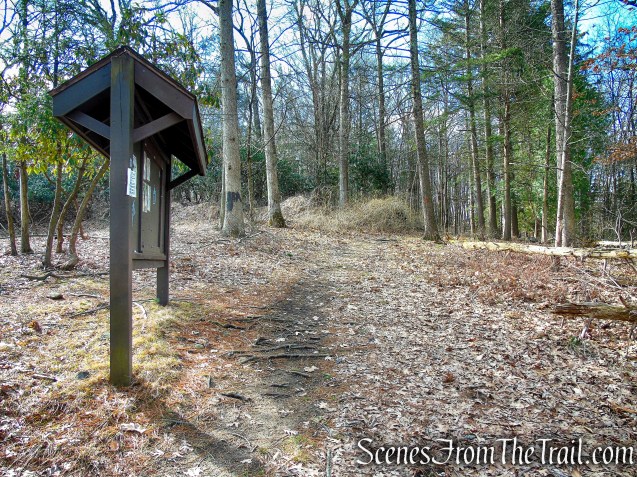
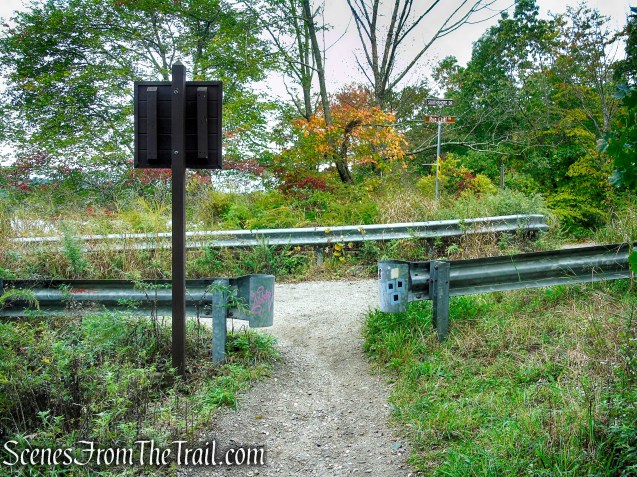
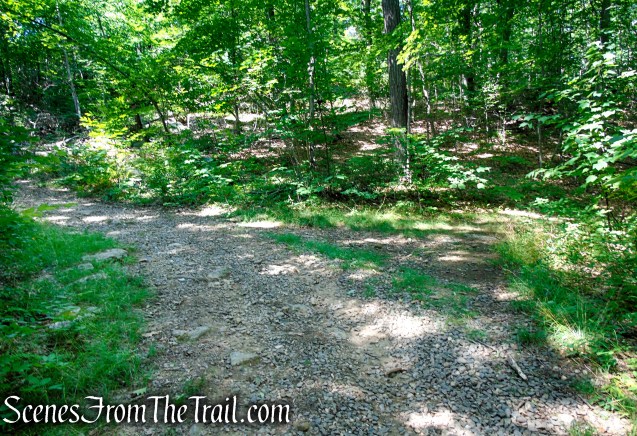
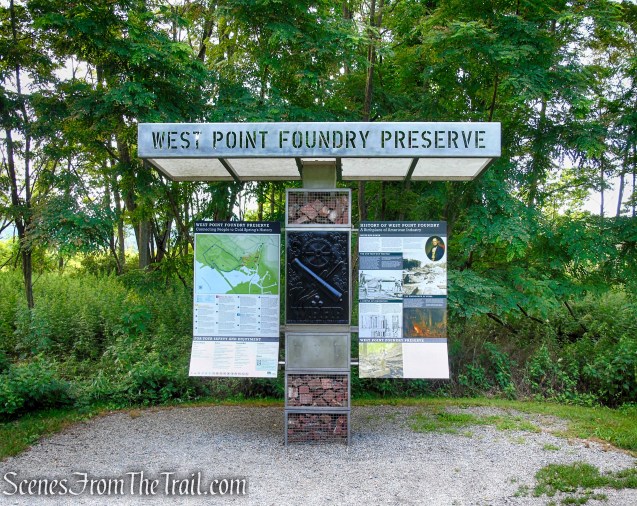
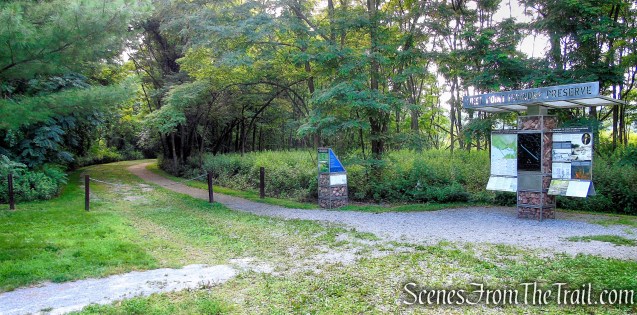
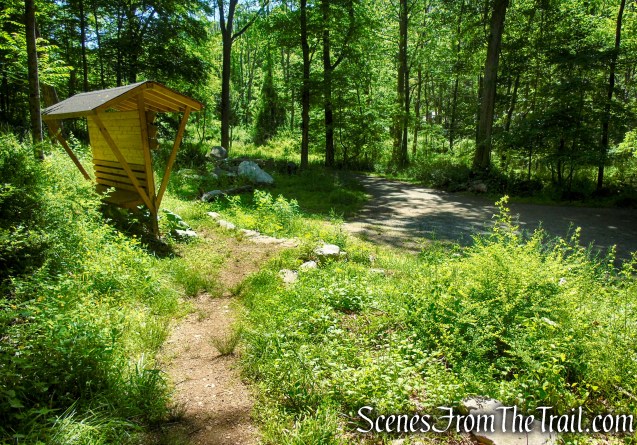
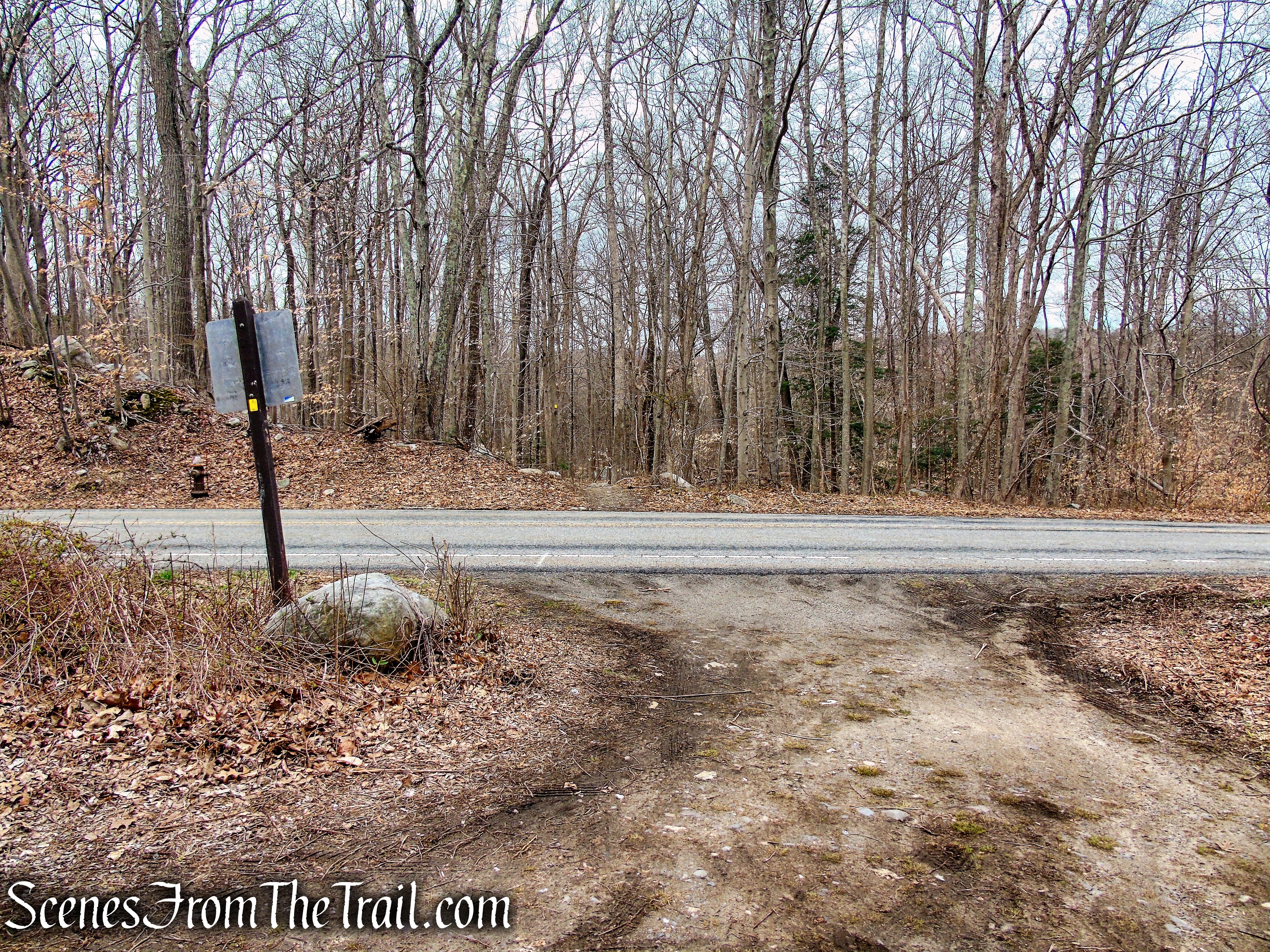
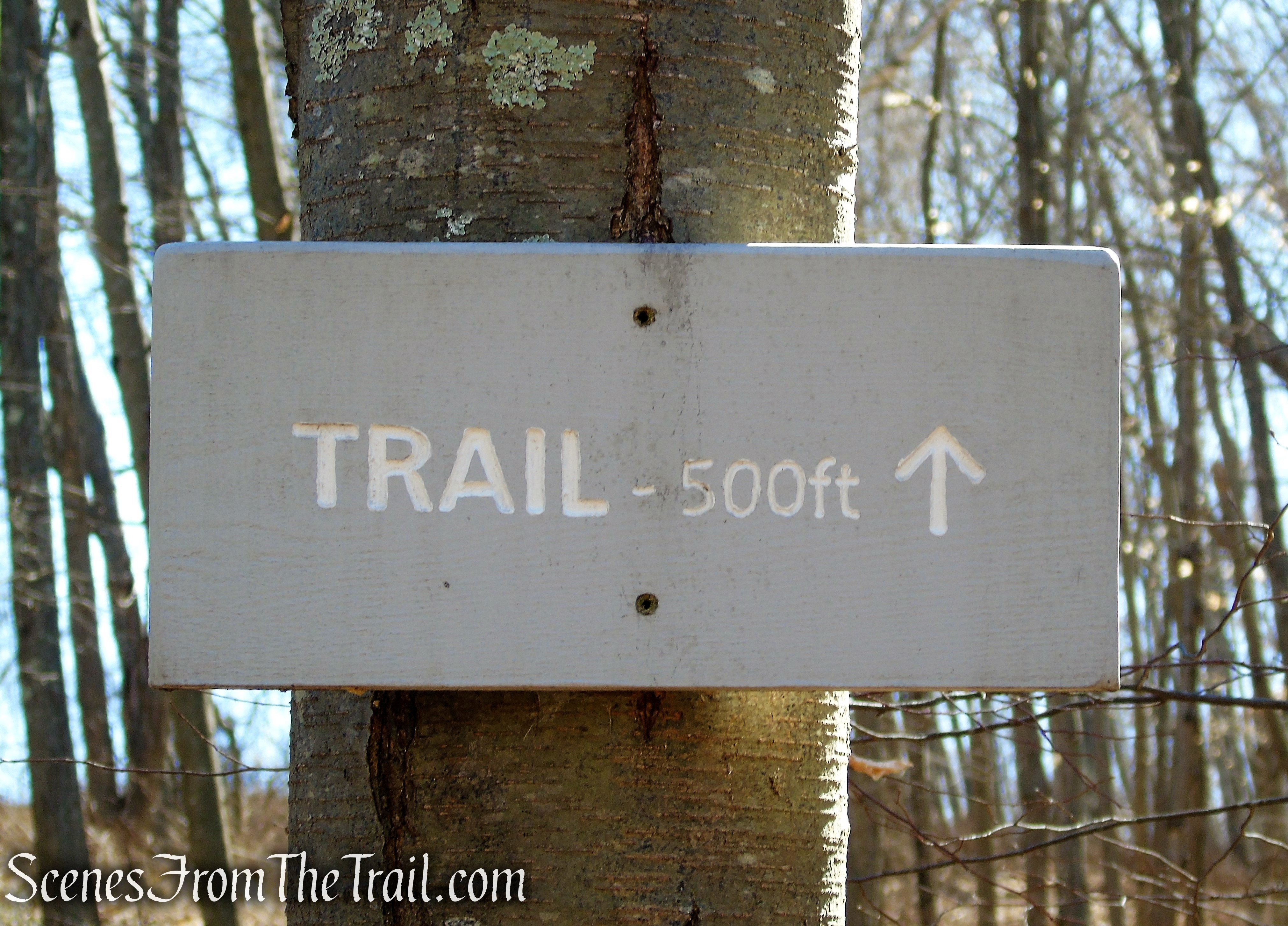
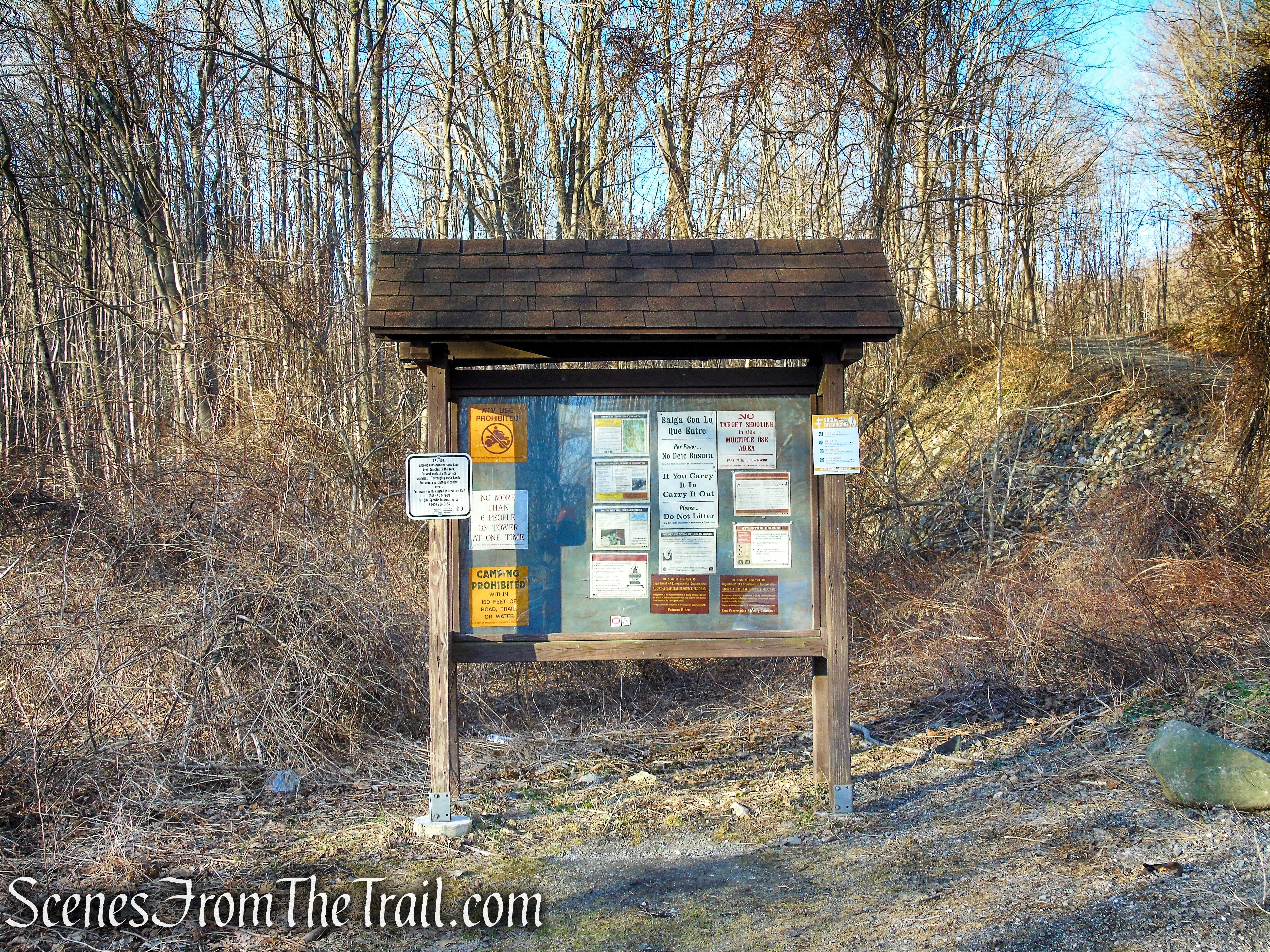
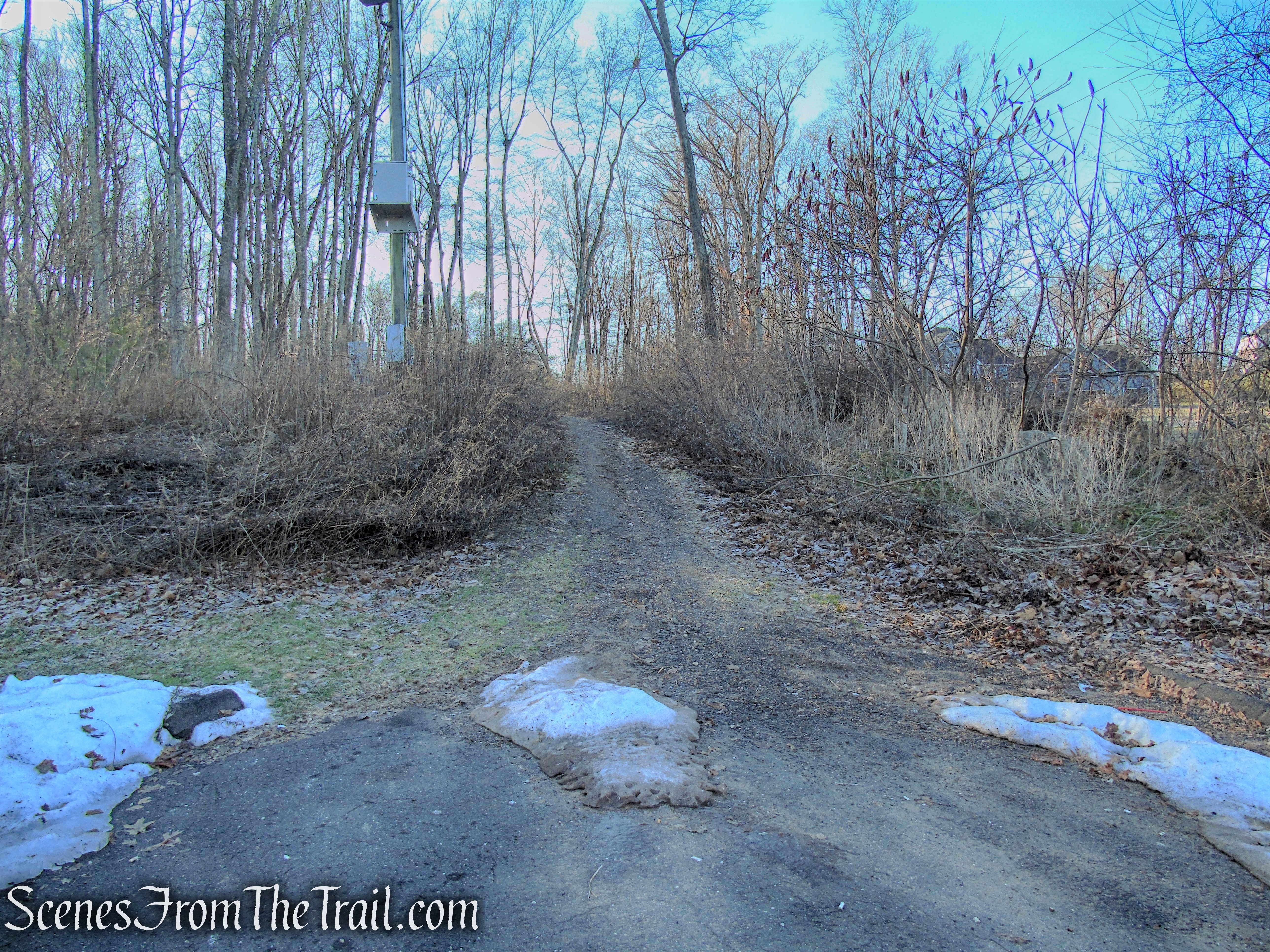
The hike begins in the parking lot behind the Target Department Store. The trailhead is clearly marked with a large sign and there are informational signs detailing the history of the Quinnipiac River. There is a bench for relaxing right at the trailhead.
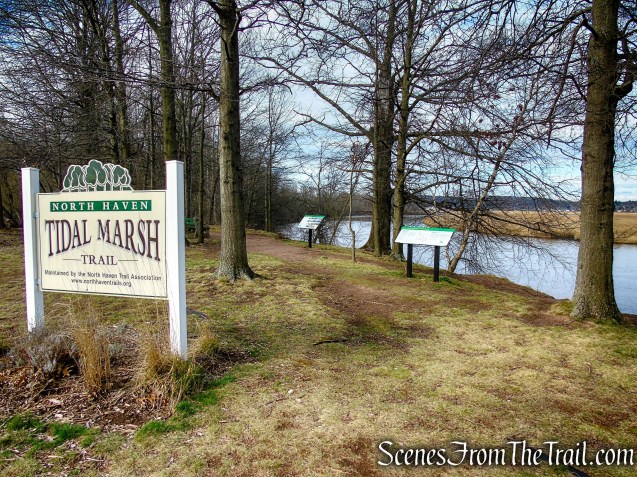
Tidal Marsh Trail - North Haven

Tidal Marsh Trail – North Haven

Tidal Marsh Trail - North Haven

Tidal Marsh Trail – North Haven

Tidal Marsh Trail - North Haven

Tidal Marsh Trail – North Haven

Tidal Marsh Trail - North Haven

Tidal Marsh Trail – North Haven

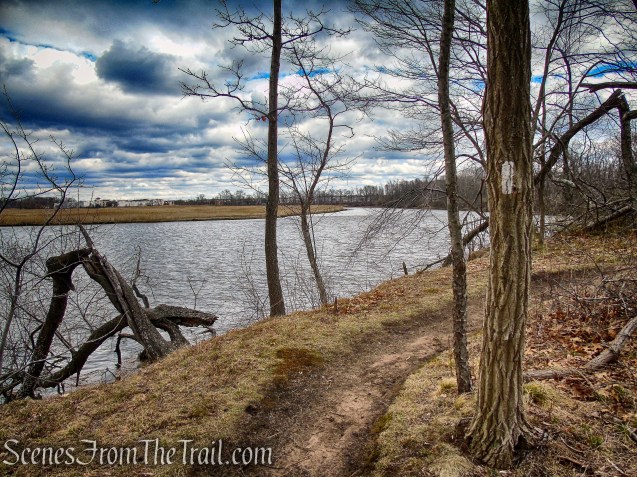
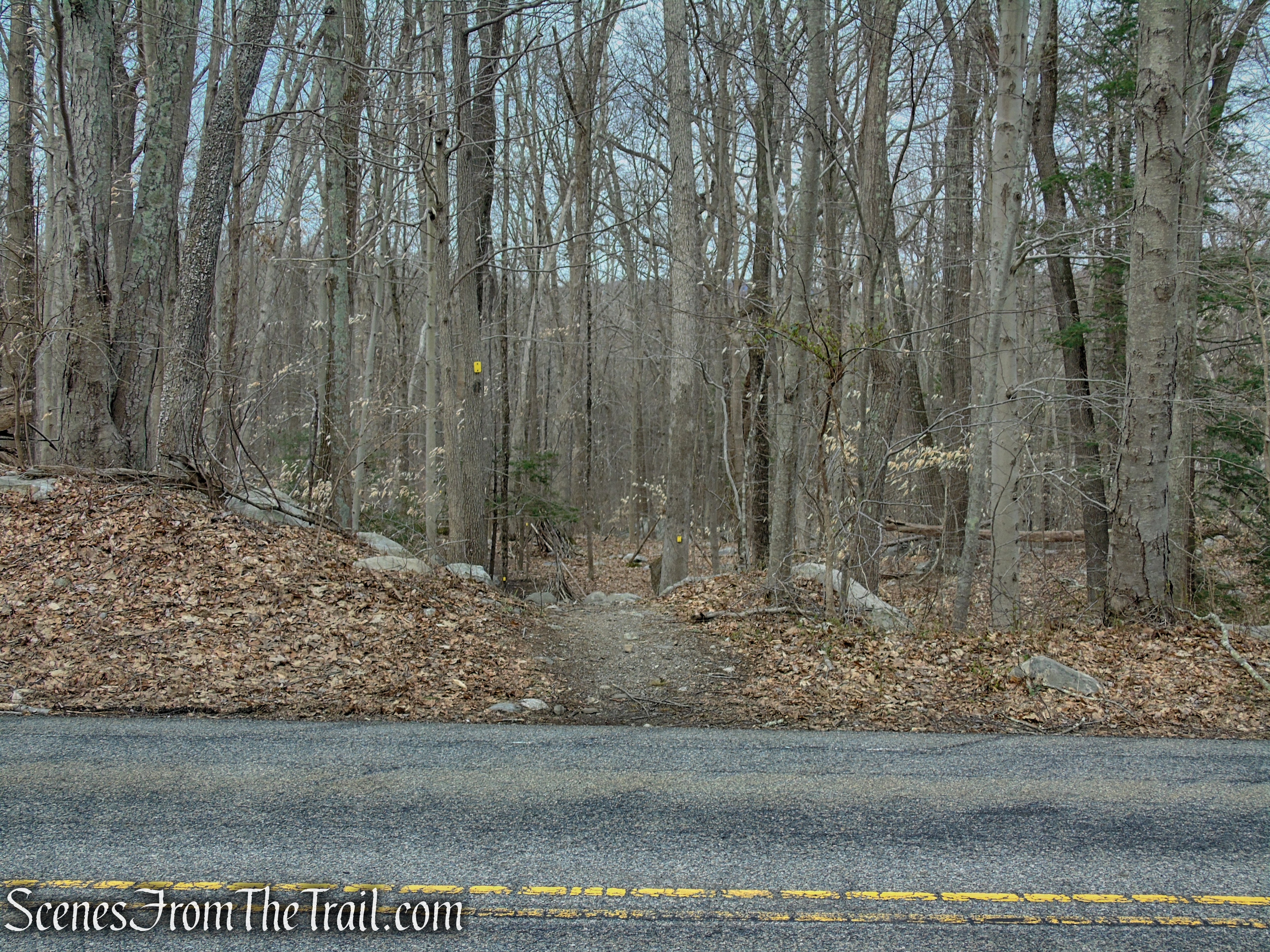
Proceed ahead on the white-blazed trail which heads in a southwesterly direction along a bluff above the Quinnipiac River. As you walk along the trail, look for an Osprey stand on the edge of the marsh. We saw an Osprey fly overhead and land, joining the one that was already there.

Tidal Marsh Trail - North Haven

Tidal Marsh Trail – North Haven

Tidal Marsh Trail - North Haven

Tidal Marsh Trail – North Haven

Tidal Marsh Trail - North Haven

Tidal Marsh Trail – North Haven

Tidal Marsh Trail - North Haven

Tidal Marsh Trail – North Haven

Ospreys - Tidal Marsh Trail

Ospreys – Tidal Marsh Trail

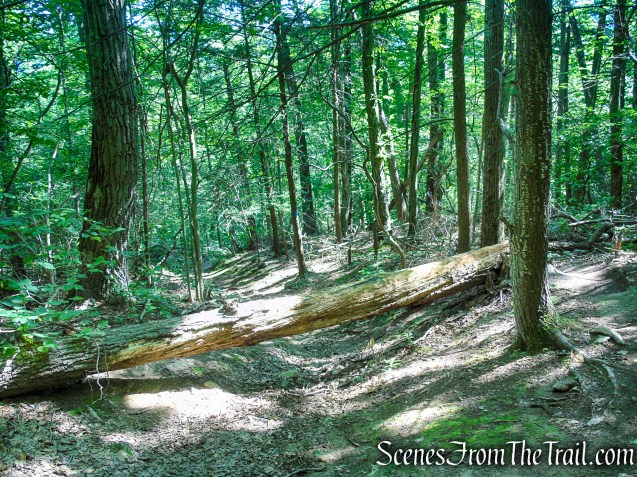
You will probably have to do some ducking along the way as there are numerous trees laying across the trail. In August 2020, the area was hit by a tornado that barreled through Hamden, North Haven, and Bethany.

Tidal Marsh Trail - North Haven

Tidal Marsh Trail – North Haven

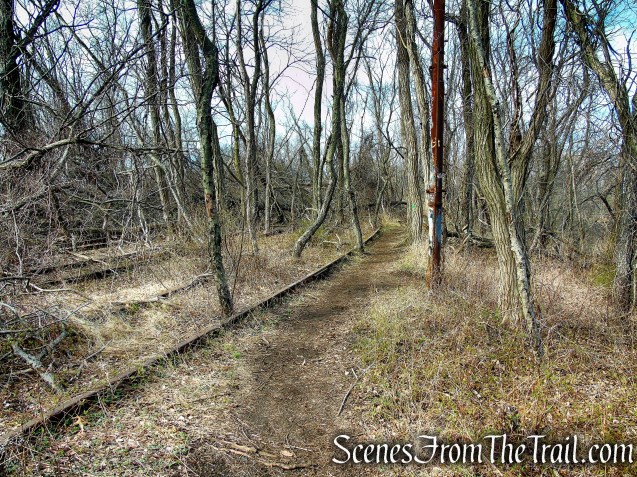
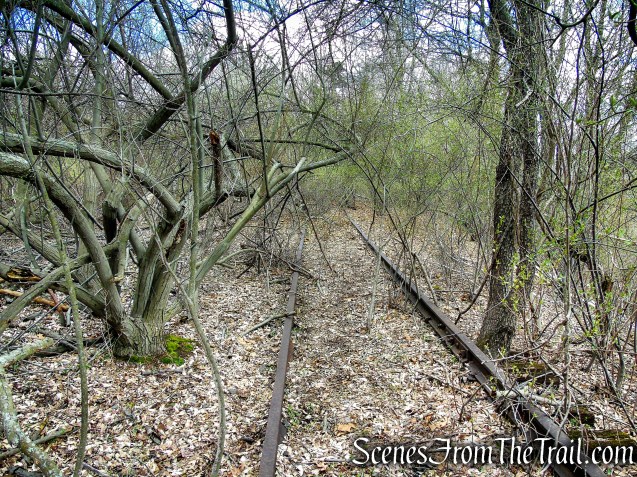
Next to the trail are lines of rusted tracks with large trees growing between the rails.

Tidal Marsh Trail - North Haven

Tidal Marsh Trail – North Haven

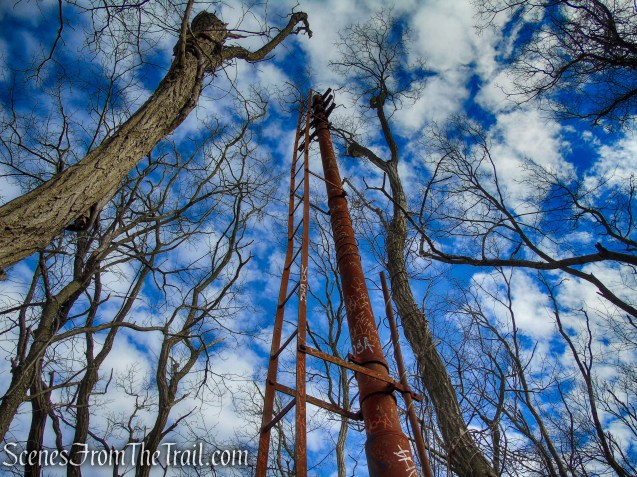
A rusty ladder on a steel pole stretch high into the canopy.

Tidal Marsh Trail - North Haven

Tidal Marsh Trail – North Haven

Tidal Marsh Trail - North Haven

Tidal Marsh Trail – North Haven

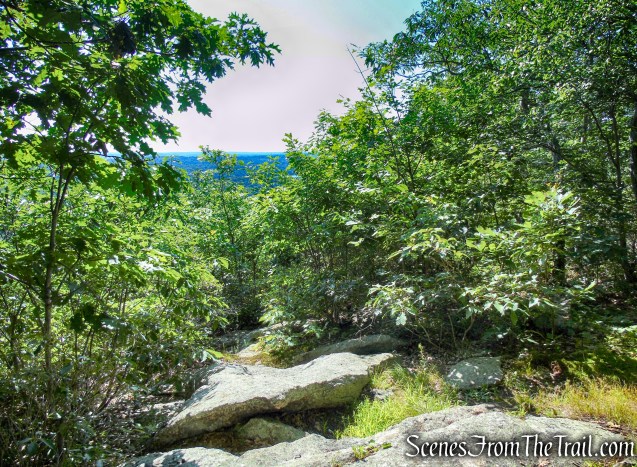
There are wide gaps in the trees that afford open westerly views across the river into Hamden.

Tidal Marsh Trail - North Haven

Tidal Marsh Trail – North Haven

To the north, Sleeping Giant is visible in the distance.

Tidal Marsh Trail - North Haven

Tidal Marsh Trail – North Haven

Tidal Marsh Trail - North Haven

Tidal Marsh Trail – North Haven

Tidal Marsh Trail - North Haven

Tidal Marsh Trail – North Haven

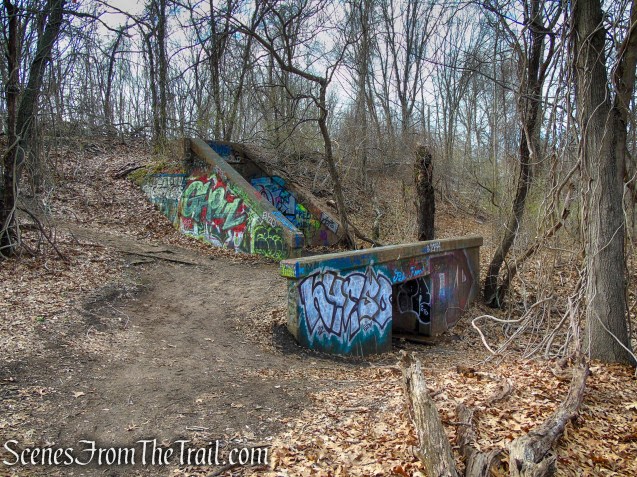
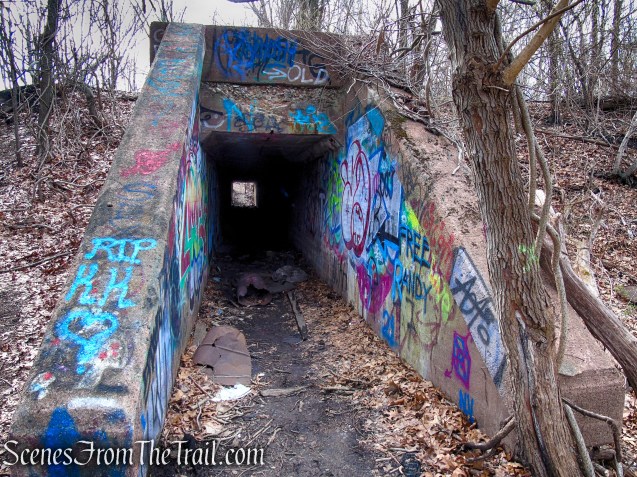
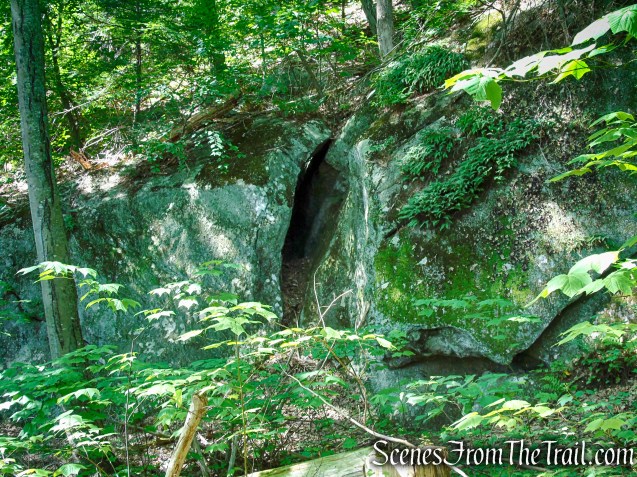
I believe that this marks the end of the Tidal Marsh Trail, which is about a 1/2 mile from the start. To continue on to the Cedar Hill Rail Yard and the Polar Bear sculpture, follow the trail to the left of the concrete culvert. Do not walk through the tunnel.

Tidal Marsh Trail - North Haven

Tidal Marsh Trail – North Haven

Tidal Marsh Trail - North Haven

Tidal Marsh Trail – North Haven

Tidal Marsh Trail - North Haven

Tidal Marsh Trail – North Haven

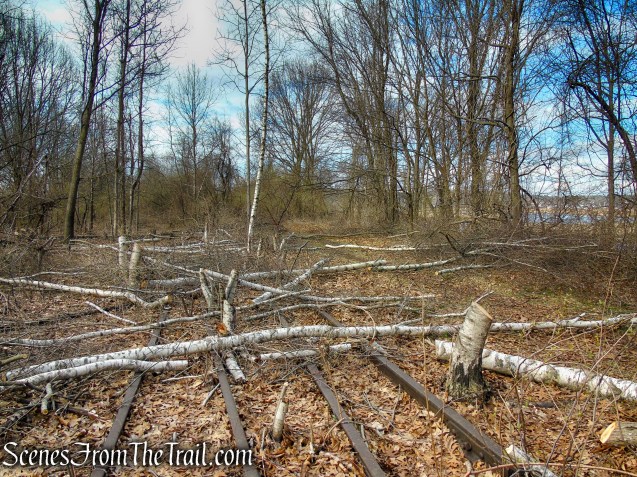
Once above the culvert, turn right and follow the train tracks. You may see some fallen Birch trees laying across the tracks. Proceed ahead and you will pick up the trail a short distance later.

Tidal Marsh Trail - North Haven

Tidal Marsh Trail – North Haven

Tidal Marsh Trail - North Haven

Tidal Marsh Trail – North Haven

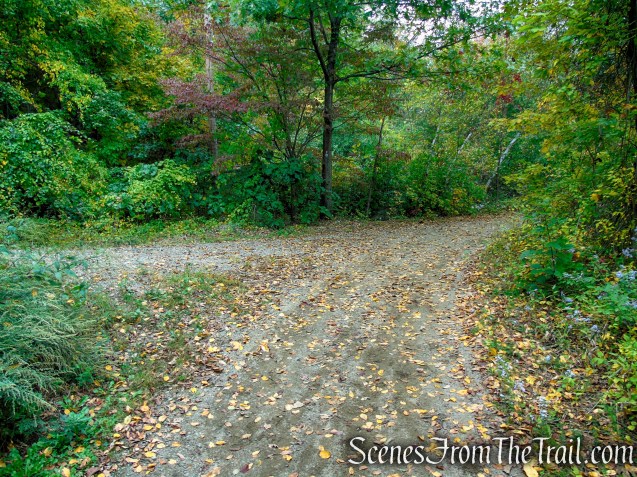
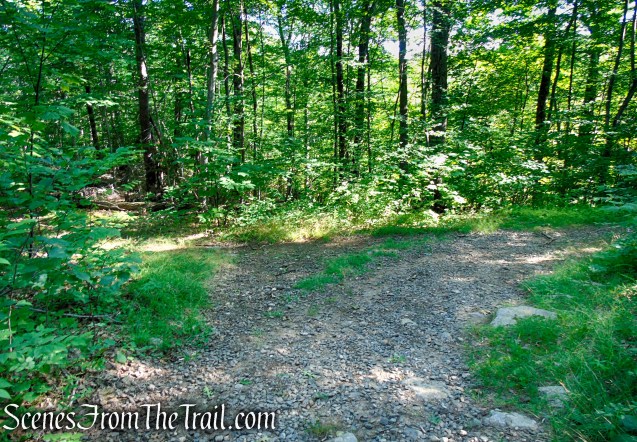
There are no visible blazes in this area, but continue southwest along the well beaten path. When the trail splits, taking the left fork will take you directly to the Polar Bear sculpture. We did not know that at the time so we stayed right which led us to a paved area of the rail yard that was interesting to check out.

Tidal Marsh Trail - North Haven

Tidal Marsh Trail – North Haven

Tidal Marsh Trail - North Haven

Tidal Marsh Trail – North Haven

Tidal Marsh Trail - North Haven

Tidal Marsh Trail – North Haven

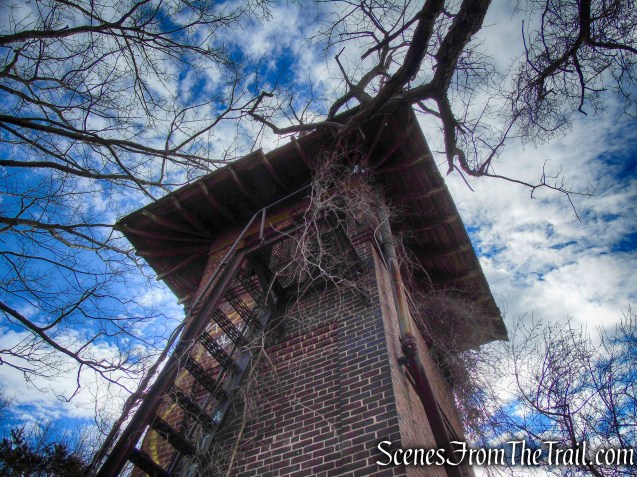
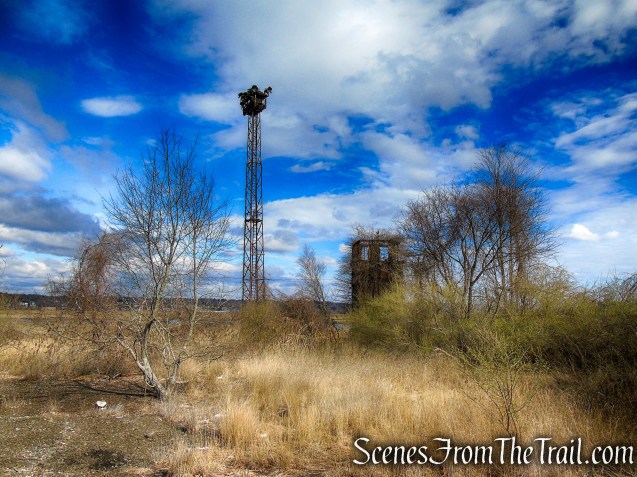
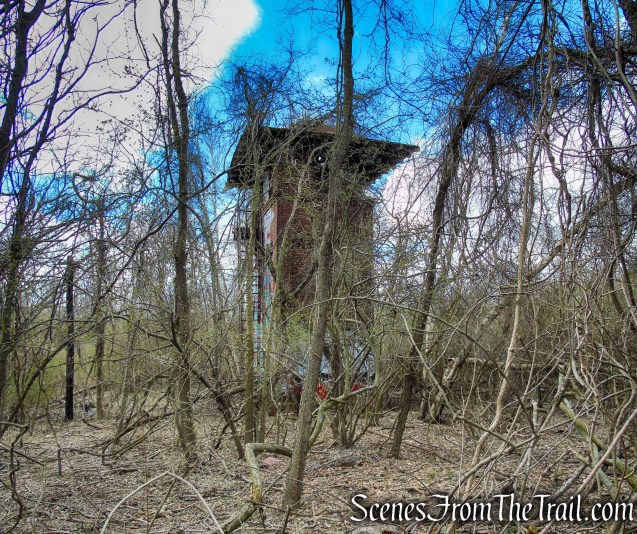
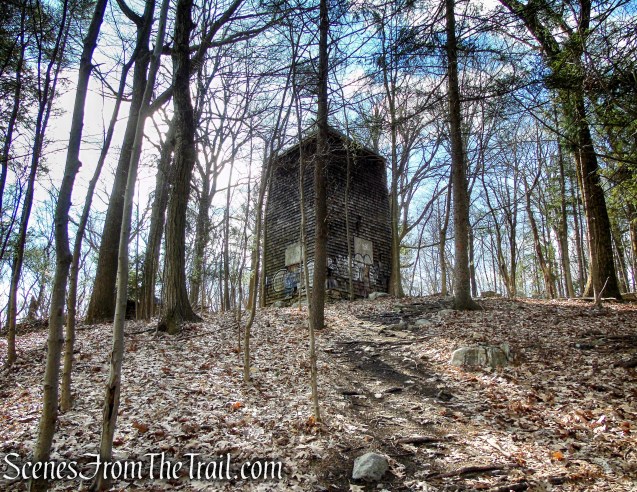
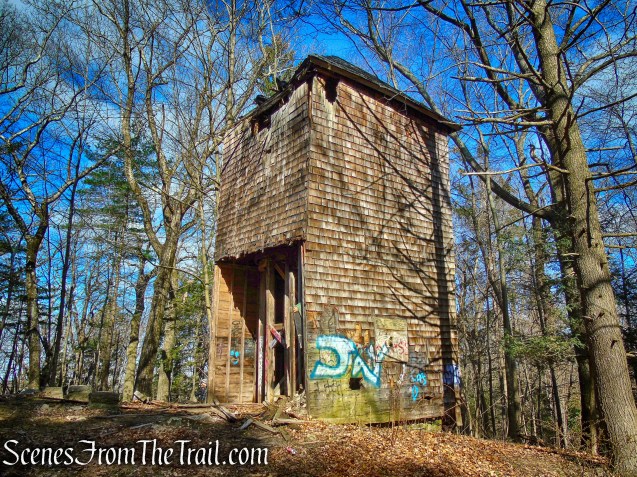
An old abandoned switch tower, that once guided trains into the Cedar Hill Rail Yard.

Tidal Marsh Trail - North Haven

Tidal Marsh Trail – North Haven

Tidal Marsh Trail - North Haven

Tidal Marsh Trail – North Haven

Tidal Marsh Trail - North Haven

Tidal Marsh Trail – North Haven

The old light towers now serve as nests for raptors.

Tidal Marsh Trail - North Haven

Tidal Marsh Trail – North Haven

Tidal Marsh Trail - North Haven

Tidal Marsh Trail – North Haven

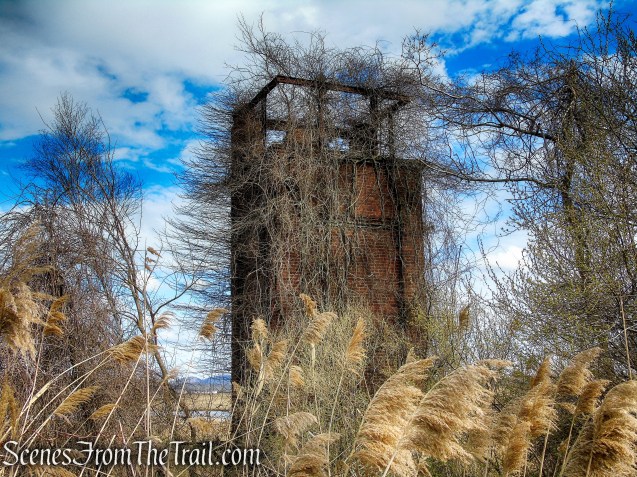
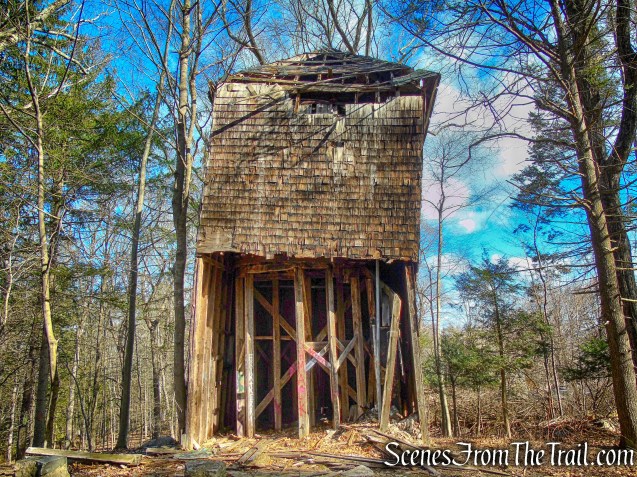
A roofless switch tower.

Tidal Marsh Trail - North Haven

Tidal Marsh Trail – North Haven

Classification Yard.

Tidal Marsh Trail - North Haven

Tidal Marsh Trail – North Haven

Heavy machinery for rail maintenance.

Cedar Hill Rail Yard

Cedar Hill Rail Yard

The 110-foot tall Soldiers’ and Sailors’ Monument high above New Haven, is visible for miles on a clear day. The monument, at the summit of East Rock Park, was dedicated in 1887 to honor soldiers and sailors who fought in the American Revolution, the War of 1812, the Mexican-American War and the Civil War.

Soldiers and Sailors Monument - East Rock Park

Soldiers and Sailors Monument – East Rock Park

We took this unmarked path a short distance east until we hooked back up with the White Trail, where we turned right.

Tidal Marsh Trail - North Haven

Tidal Marsh Trail – North Haven

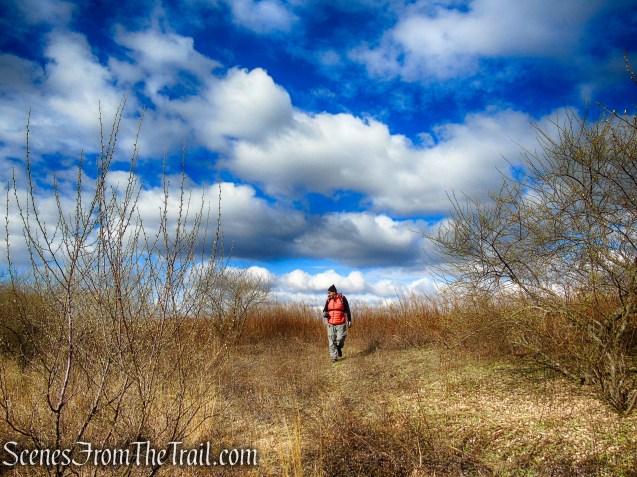
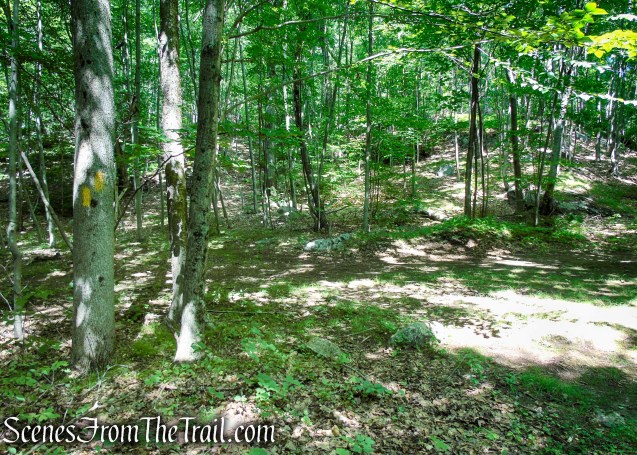
The trail is obvious although it is sparsely blazed, but as you proceed southwest, white blazes start to appear.

Tidal Marsh Trail - North Haven

Tidal Marsh Trail – North Haven

Tidal Marsh Trail - North Haven

Tidal Marsh Trail – North Haven

Tidal Marsh Trail – North Haven

Tidal Marsh Trail – North Haven
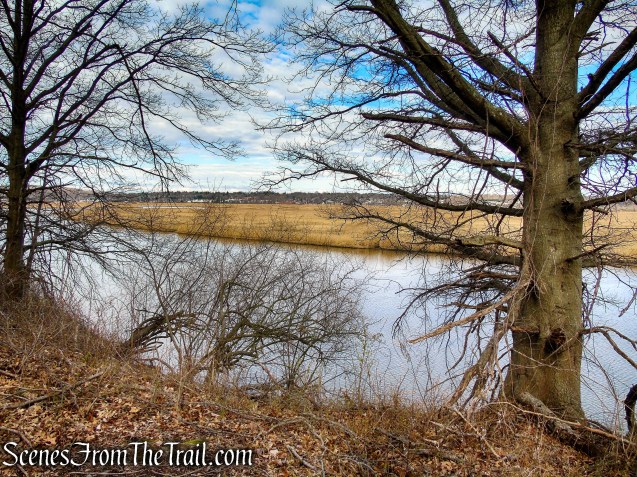
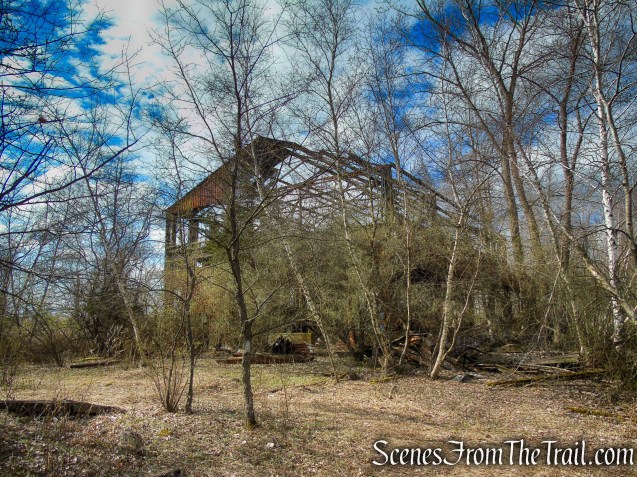
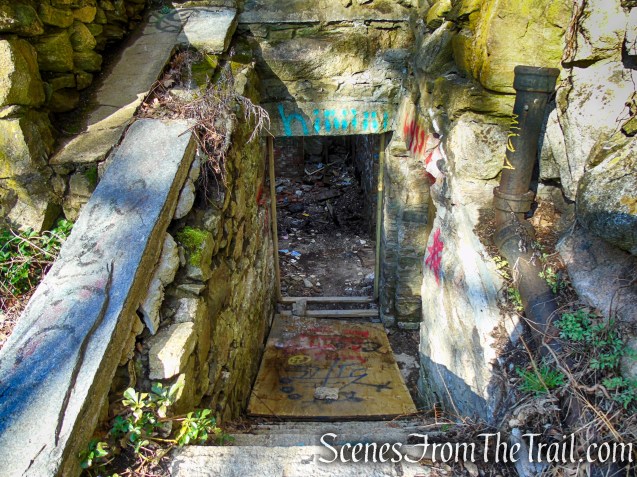
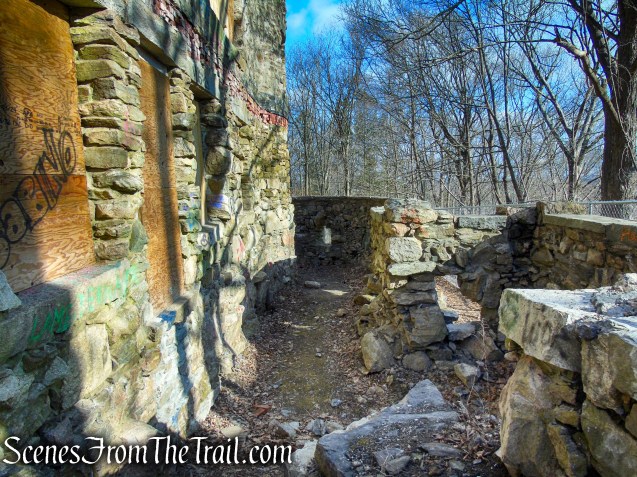
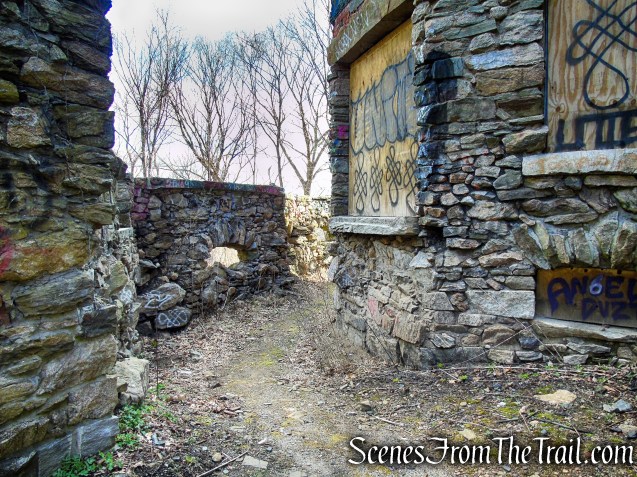
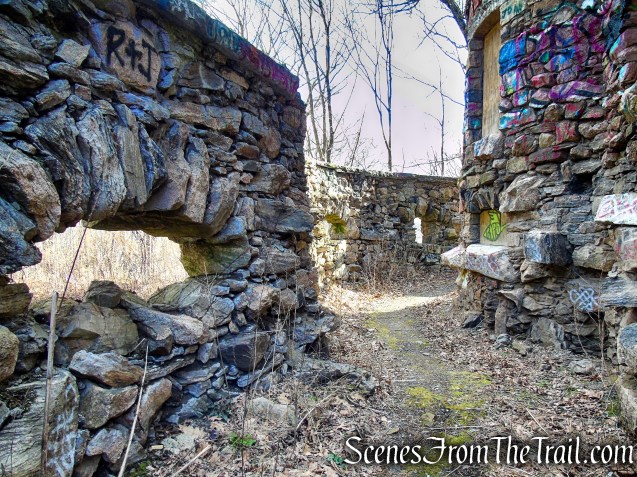
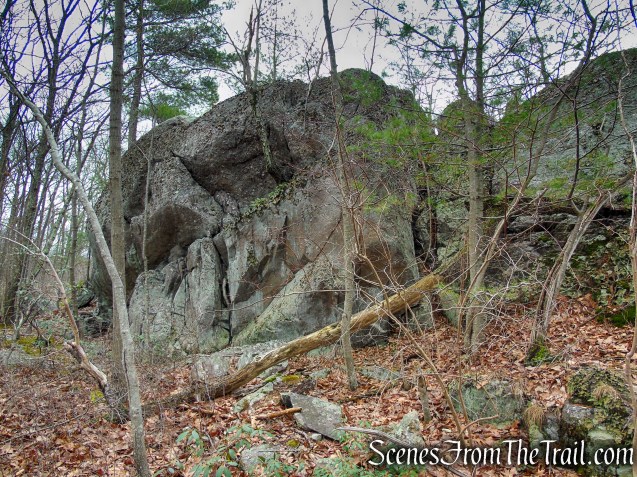
When you come to a metal, roofless building that is where the Polar Bear sculpture resides. This building is approximately 1.5 miles from the start of the hike.

Tidal Marsh Trail – North Haven

Tidal Marsh Trail – North Haven
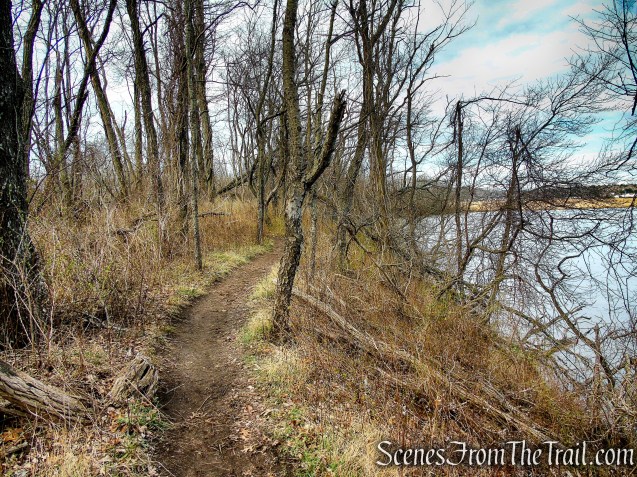
If you enter from the south, you will see the back of the Polar Bear first. Continue past the white sheet metal until you are face to face with the work of art that is hidden in the ruins of an old rail yard.

Polar Bear sculpture - Cedar Hill Rail Yard

Polar Bear sculpture – Cedar Hill Rail Yard

The bear is the work of New Haven-based artist M.J. DeAngelo. “This guy is made from reclaimed wood and metal falling off of the decaying building he sits in, 14 feet tall, smashed, nailed together, sprayed with a fire extinguisher, and spray painted deep in the woods.”

Polar Bear sculpture - Cedar Hill Rail Yard

Polar Bear sculpture – Cedar Hill Rail Yard

Cedar Hill Rail Yard

Cedar Hill Rail Yard

Polar Bear sculpture - Cedar Hill Rail Yard

Polar Bear sculpture – Cedar Hill Rail Yard

Polar Bear sculpture - Cedar Hill Rail Yard

Polar Bear sculpture – Cedar Hill Rail Yard

A very cool Instagram video from May 2020 of the sculpture being created.

Cedar Hill Rail Yard

Cedar Hill Rail Yard

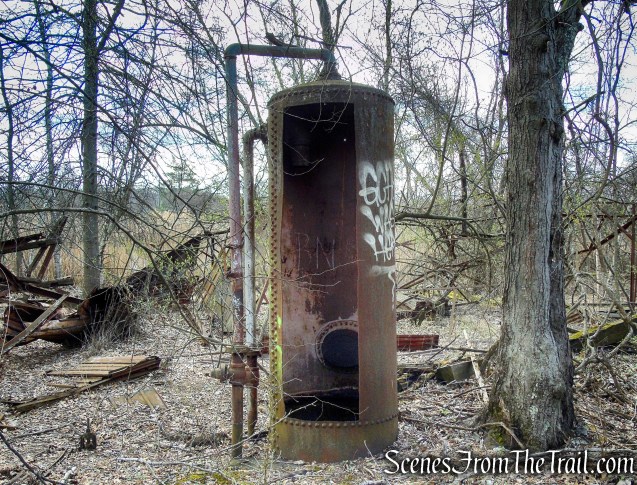
This was our turnaround point and we began retracing our steps. At times we wandered around a bit exploring the numerous railyard remnants scattered throughout the woods.

Cedar Hill Rail Yard

Cedar Hill Rail Yard

Cedar Hill Rail Yard

Cedar Hill Rail Yard

Cedar Hill Rail Yard

Cedar Hill Rail Yard

Cedar Hill Rail Yard

Cedar Hill Rail Yard

Cedar Hill Rail Yard

Cedar Hill Rail Yard

Cedar Hill Rail Yard

Cedar Hill Rail Yard

Cedar Hill Rail Yard

Cedar Hill Rail Yard

Cedar Hill Rail Yard

Cedar Hill Rail Yard

Cedar Hill Rail Yard

Cedar Hill Rail Yard

Cedar Hill Rail Yard

Cedar Hill Rail Yard

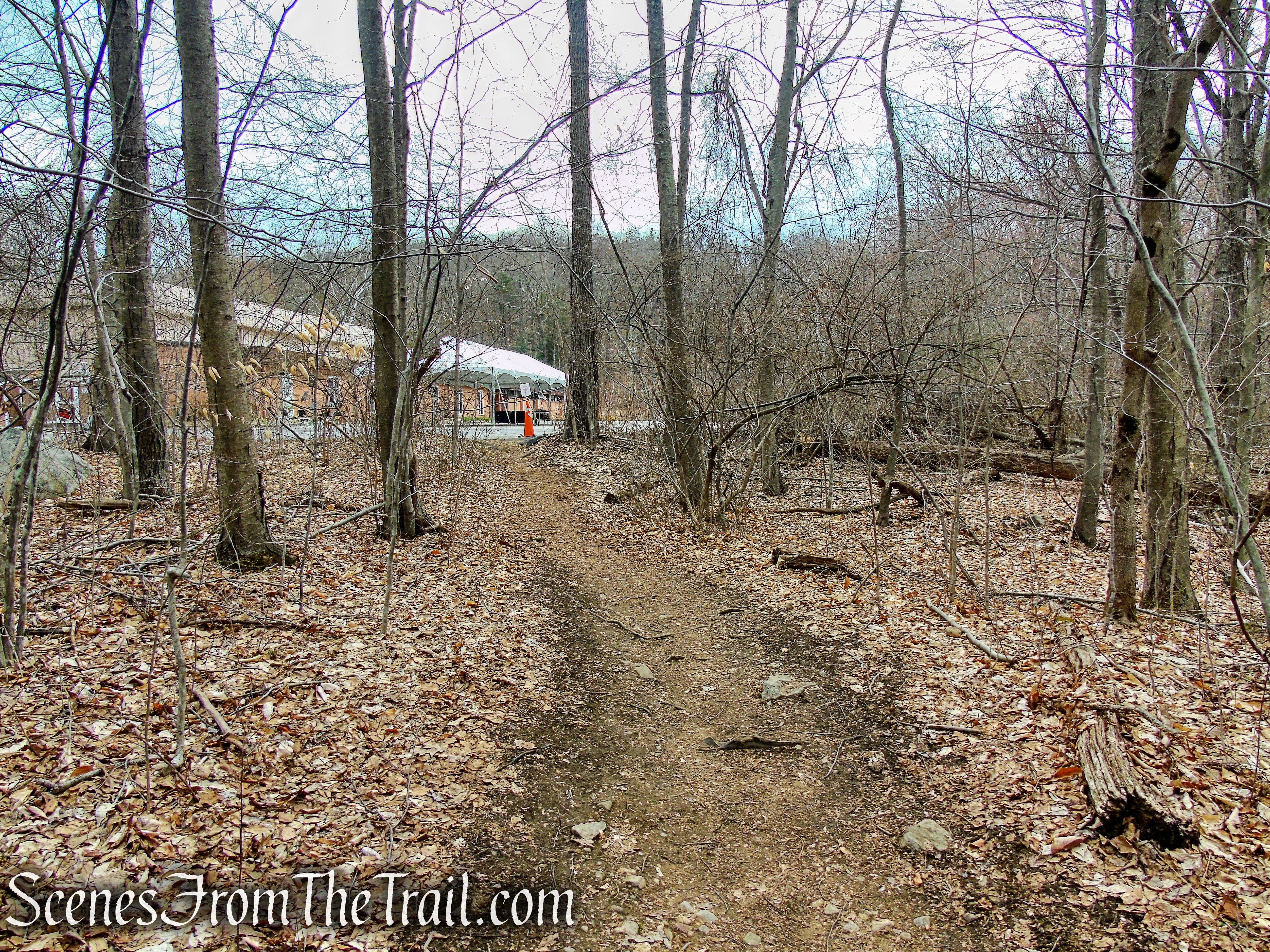
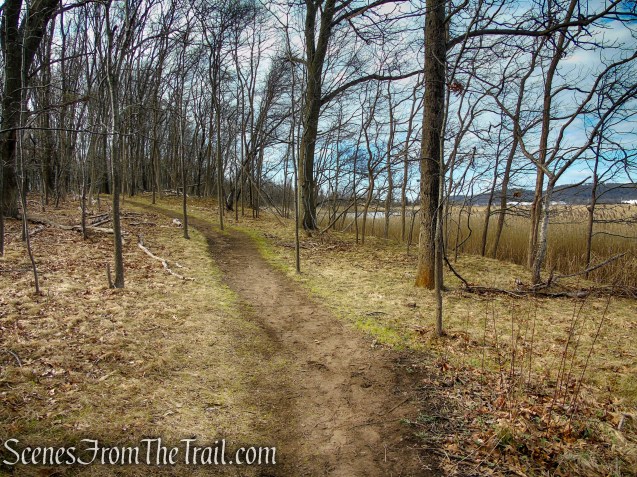
We turned left at the concrete culvert, descended back to the “official” section of the Tidal Marsh Trail and continued northeast along the Quinnipiac River, back to the parking area, where the hike began.

Tidal Marsh Trail - North Haven

Tidal Marsh Trail – North Haven
Tidal Marsh Trail - North Haven

Tidal Marsh Trail – North Haven
Tidal Marsh Trail - North Haven

Tidal Marsh Trail – North Haven

Tidal Marsh Trail - North Haven

Tidal Marsh Trail – North Haven
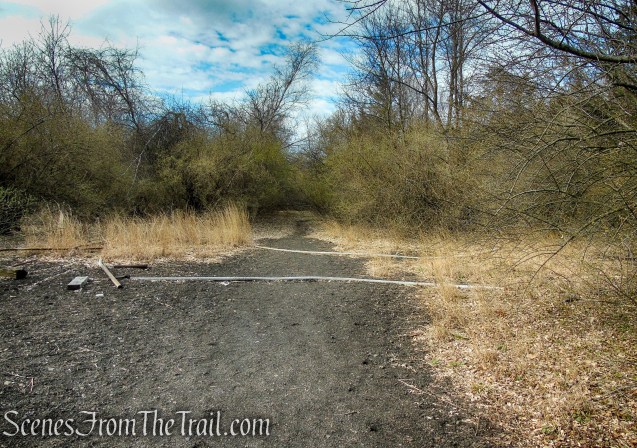
Tidal Marsh Trail - North Haven

Tidal Marsh Trail – North Haven
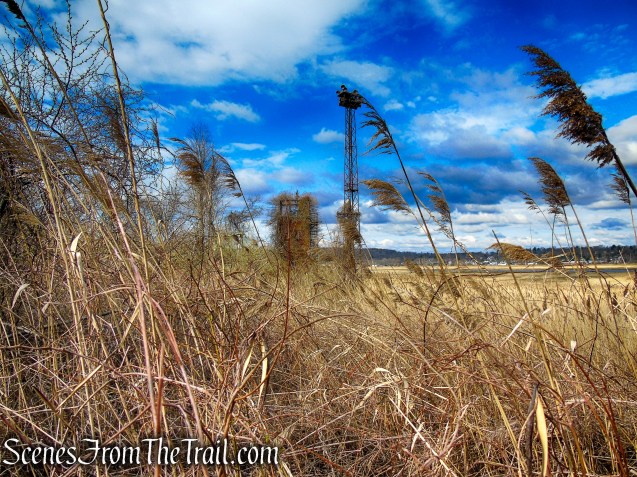
Tidal Marsh Trail - North Haven

Tidal Marsh Trail – North Haven
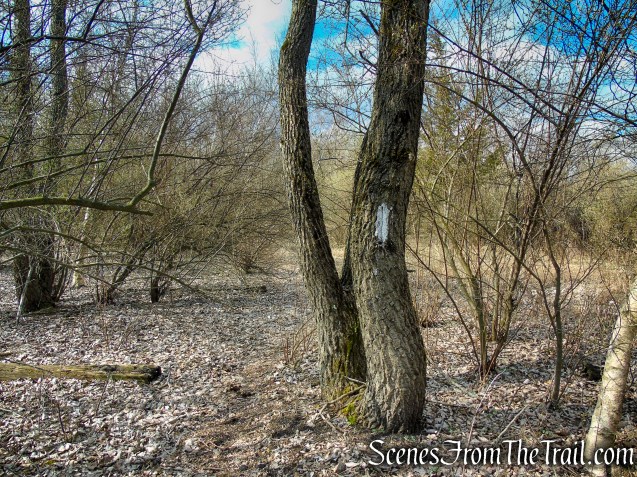
Review:

A really good walk through the woods with lots to see. The Polar Bear sculpture is a worthy destination on its own. We got there early enough that we didn’t encounter anyone on the way in. As we were making our way back (about 1/2 mile from the trailhead), we did pass several small groups going in the opposite direction. All in all a nice hike with many points of interest to see and photograph.

Pros:

Scenic area, Polar Bear sculpture, First 1/2 mile of the trail is well marked, a lot of bird activity, plenty of parking.

Cons:

A lot of leaning trees which means a lot of ducking.


Take a hike!

Tidal Marsh Trail - North Haven

Tidal Marsh Trail – North Haven


Sources:


Tarrywile Park

April 2, 2022 – Danbury, Connecticut

Difficulty: Moderate

Length: Approximately 4 miles

Max elevation: 710 ft.– total elevation gain approximately 587 ft.

Route type: Figure-8 Loop

Maps: Tarrywile Park Trail Map

Trailhead parking: 70 Southern Blvd, Danbury, CT 06810

Portable toilets on site – No entrance or parking fees

Parking in paved lot


Park Overview:

Tarrywile Park is the largest municipally owned town Park in the State of Connecticut. The park consists of 722 acres of woodlands, fields, dense forests and steep hillsides punctuated by dramatic outcrops of granite, and glistening streams and ponds.

Within the boundaries of Tarrywile Park stand both the Tarrywile Mansion and Hearthstone Castle. These structures are listed on the National Register for Historic Preservation.

The park has a variety of trails, and is open for hiking, picnicking, and other outdoor activities. The mansion can be toured by appointment, and is rentable for private functions.


History:

Located approximately one mile from downtown Danbury, Tarrywile Park was once an active dairy farm and fruit orchard. The City purchased the parcel from the Charles D. Parks Estate in 1985. The family had offered the land to the City and was turned down several times. When the family looked to sell the acreage for a condo development, neighbors took action and through a grass roots effort forced the purchase question to a referendum. The citizens of Danbury voted to approve the purchase of 535 acres of meadows, forests, mountains, lakes and ponds as well as 19 buildings and all at a cost of 4.7 million dollars.

The voters of Danbury, in November 1999, continued to support the Park and the conservation of open-space lands with the approval of the purchase of 100 acres of land adjacent to Tarrywile Lake. In August 2000 an additional 18 acres located near the beacon was purchased, bringing the total to 653 acres. Additional acres were added to the Park over the nest several years bringing the total acerage to 722 acres.

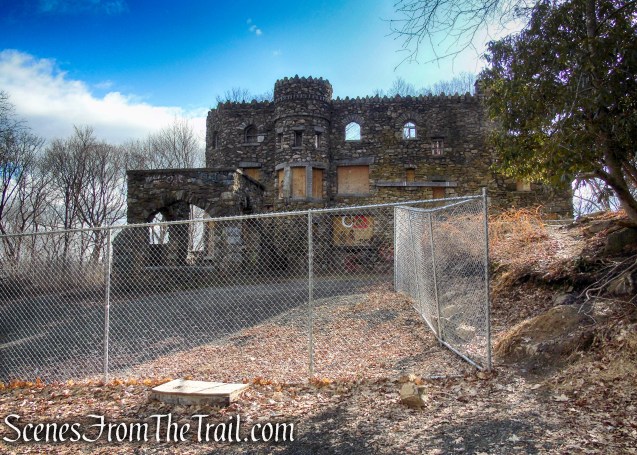
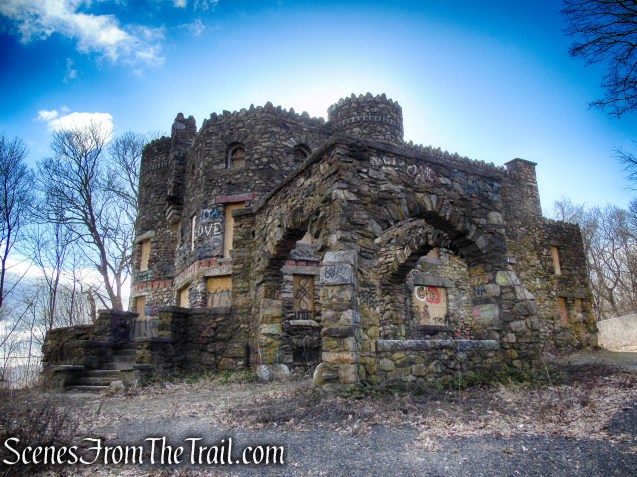
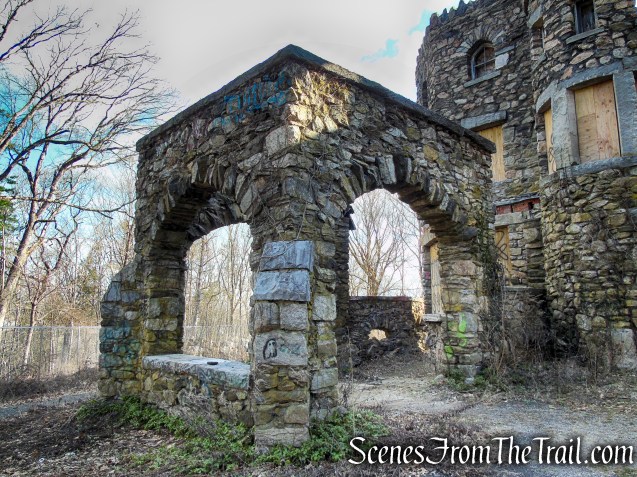
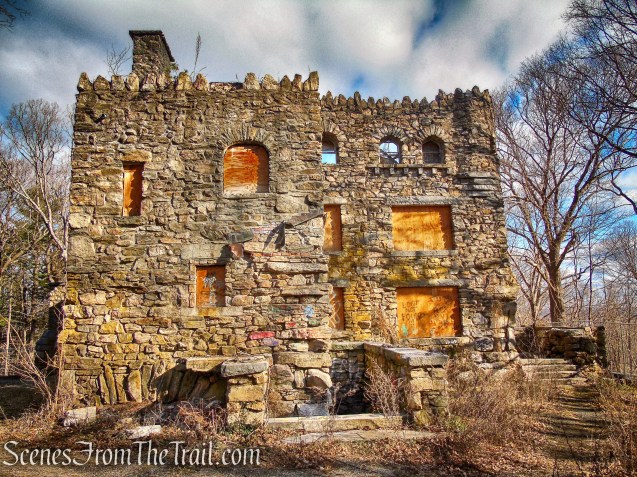
Hearthstone Castle was a three-story, sixteen room stone castle with associated outbuildings built between 1895 and 1899. It is located in a wooded setting at the crest of a hill to the east of Brushy Hill Road.


Trails Overview:

There are twenty-one miles of marked hiking trails along with numerous other unmarked footpaths that are not on the trail map. The trail map, produced in 2010, doesn’t accurately represent the current layout of the marked trails. For instance, the Red Trail near Back Pond is shown as a spur trail that ends at a lookout. It actually descends steeply from the lookout and and runs along the eastern shore of Back Pond. A stream crossing connects the Red Trail to the Blue Trail at the southern end of Back Pond.

That is one example, but to be honest following the trail map is quite confusing and at times a little frustrating. We felt like we were wandering around trying to figure out what trail went where more than just enjoying the hike. For the average day hiker with little or no experience, it would be helpful to have an up to date trail map.


Hike Overview:

Having visited the park several times just to visit Hearthstone Castle, we never ventured much farther than the area around it. We decided to explore the trails on this visit. The areas closest to the mansion are well maintained more suited for the casual walker/hiker. The southwestern section of the park is more remote and rugged, with steep slopes that require more effort and sturdy footwear.

Tarrywile Park

Tarrywile Park

elevation profile - Tarrywile Park

elevation profile – Tarrywile Park

I don’t want to discourage anyone from visiting this park. Hearthstone Castle is worth checking out and the more maintained sections of the park are quite scenic as well.


The Hike:

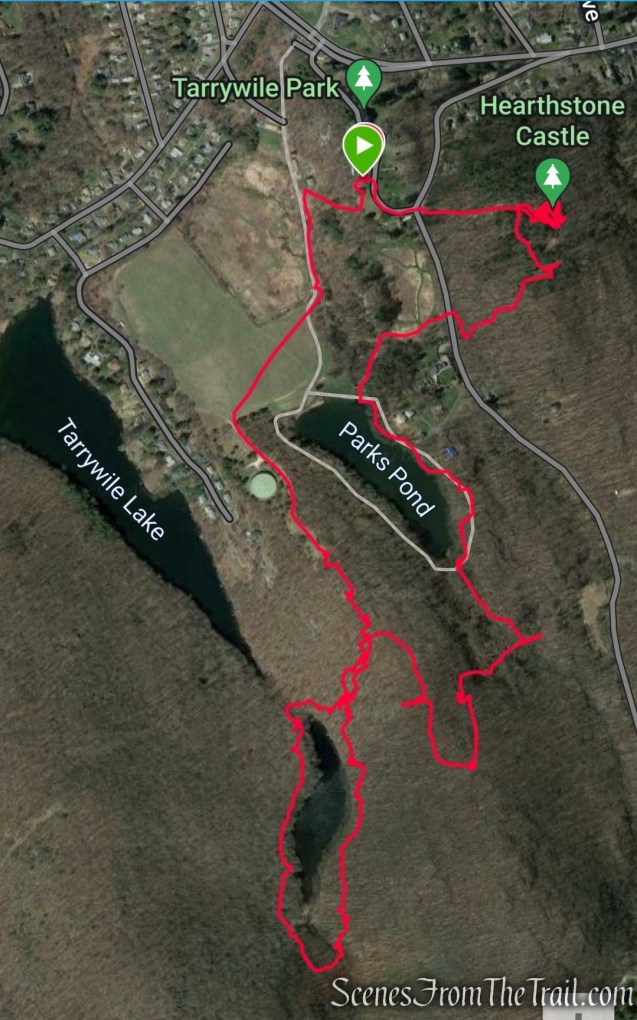
Rather than try to describe the route that we took and risk getting you lost. I will point out the highlights and lowlights of the sections of trails that we hiked.

  • Hearthstone Castle

Please Note: Hearthstone Castle is currently lying in ruins and may be unstable. Visitors are not allowed inside the fenced-in area for their own safety. Trespassing is not allowed.

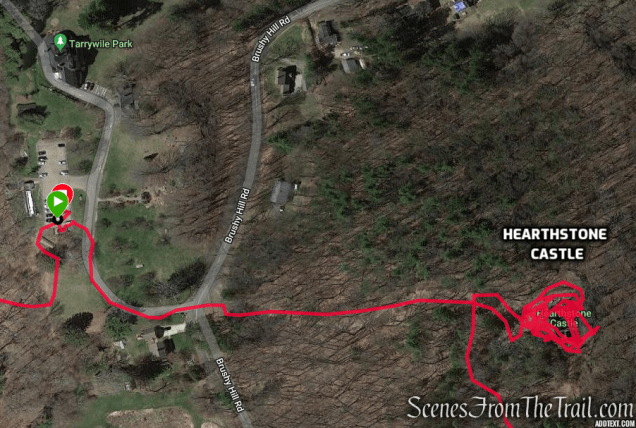
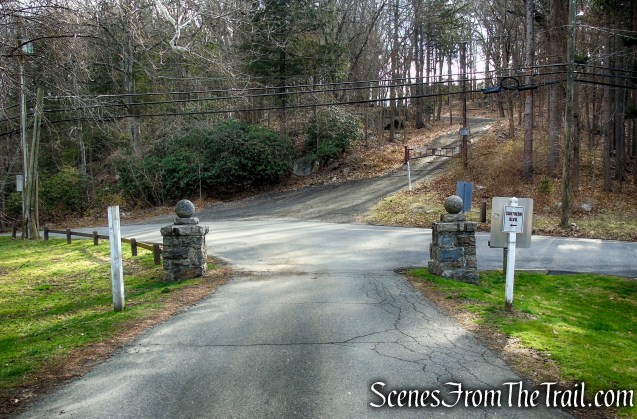
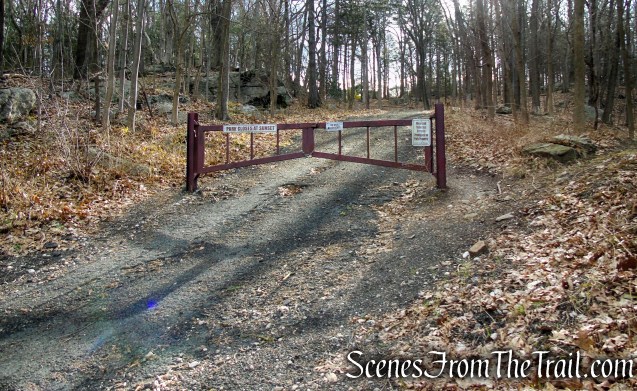
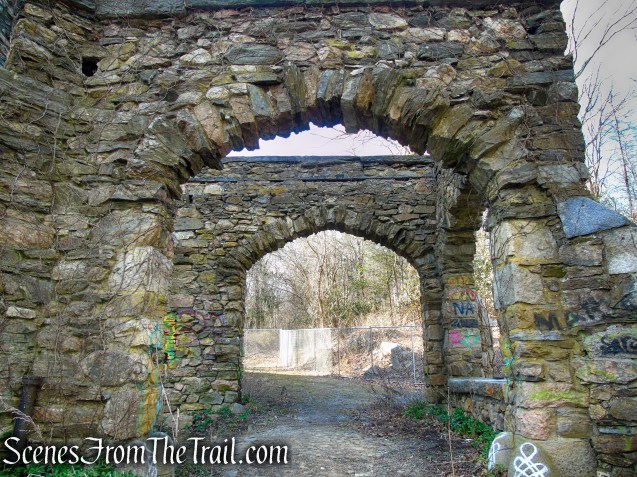
From the main parking lot, walk out to the road and turn right. Follow the road down to Brushy Hill Road. Carefully cross the road and proceed up the driveway past the gate. Walk up the hill about 245 yards to the site of Hearthstone Castle.

Tarrywile Park to Hearthstone Castle

Tarrywile Park to Hearthstone Castle

entrance at Brushy Hill Road

entrance at Brushy Hill Road

entrance to castle at Brushy Hill Road

entrance to castle at Brushy Hill Road

First known as “Sanford Castle,” Hearthstone was designed and constructed as a summer estate between 1895 and 1899 by architect Ernest G.W. Dietrich for Elias Starr Sanford, and his wife Emma.

Hearthstone Castle

Hearthstone Castle

In 1895, at the height of his success, Sanford purchased eighteen acres of woodland at “Mountain End,” a rocky promontory that overlooks the southern part of Danbury. Two acres were cleared but the property was left ungraded except in the immediate vicinity of the building. Construction of the castle commenced in the fall of 1895 and was completed in June 1899.

Hearthstone Castle

Hearthstone Castle

The castle was intended to be a honeymoon “cottage” for Sanford’s wife. Sanford and his family owned the castle for only five years before selling it to Victor Buck, a retired New York industrialist. Mrs. Sanford is reported to have disliked the castle.

Hearthstone Castle

Hearthstone Castle

When the Buck family moved in, they renamed the castle “Buck’s Castle.” The Bucks used it as a summer residence until 1918.

Hearthstone Castle

Hearthstone Castle

In 1910, Charles Darling Parks bought the neighboring Tarrywile Mansion from Dr. William C. Wiles. Later, in 1918, C.D. Parks then bought “Buck’s Castle” for his oldest daughter, Irene Parks, as a wedding gift. During this time the castle was renamed “Hearthstone Castle.” The name was possibly changed due to the eight fireplaces, which were all made out of stone, as was the rest of the castle.

Hearthstone Castle

Hearthstone Castle

All of the rock that was used to build the castle was quarried on-site and transported the short distance across the property on a small railroad which was built solely for this purpose. All of the woodwork throughout the building of the castle was brought in from Italy.

Hearthstone Castle

Hearthstone Castle

Hearthstone Castle was listed on the National Register of Historic Places in 1987.

Hearthstone Castle

Hearthstone Castle

Hearthstone Castle

Hearthstone Castle

Hearthstone Castle

Hearthstone Castle

Hearthstone Castle

Hearthstone Castle

Hearthstone Castle

Hearthstone Castle

Hearthstone Castle

Hearthstone Castle

Hearthstone Castle

Hearthstone Castle

Hearthstone Castle

Hearthstone Castle

Hearthstone Castle

Hearthstone Castle


  • Water Tower & Pump-House

Just before reaching the castle, there is a kiosk on the right. Follow the footpath beside the kiosk up the hill to the site of an old water tower and a pumphouse nearby. You may notice orange blazes on the trees. This little section of trail is not on the trail map, but it connects to the Orange Trail that is shown on the map.

kiosk near Hearthstone Castle

kiosk near Hearthstone Castle

Orange Trail - Tarrywile Park

Orange Trail – Tarrywile Park

Water Tower - Hearthstone Castle

Water Tower – Hearthstone Castle

Water Tower - Hearthstone Castle

Water Tower – Hearthstone Castle

Water Tower - Hearthstone Castle

Water Tower – Hearthstone Castle

Water Tower & Pump-House - Hearthstone Castle

Water Tower & Pump-House – Hearthstone Castle

Black Vulture on the Water Tower

Black Vulture on the Water Tower


  • Parks Pond

Parks Pond offers a place for quiet reflection with benches and picnic tables scattered around for those who just want to enjoy nature. It is home to multiple species of fish as well as Snapping Turtles and the occasional Swan or Blue Heron. Fishing is allowed during fishing season with a fishing permit.

Parks Pond - Tarrywile Park

Parks Pond – Tarrywile Park

Parks Pond - Tarrywile Park

Parks Pond – Tarrywile Park

The White Trail (also the route of the Ives Trail), is a lovely stretch of trail that runs along the eastern shore of the pond. I didn’t hike the opposite side of the pond, but it would make for a nice scenic loop.

Parks Pond - Tarrywile Park

Parks Pond – Tarrywile Park

Parks Pond - Tarrywile Park

Parks Pond – Tarrywile Park

White Trail - Parks Pond

White Trail – Parks Pond

White Trail - Parks Pond

White Trail – Parks Pond


  • Back Pond

The area around Back Pond is more remote and wild. The Blue Trail leads from Parks Pond to Back Pond, descending steeply down the eroded hillside to the northern end of the pond. The section of Red Trail (not on the trail map) which runs along the eastern banks of Back Pond, at times feels more like a bushwack rather than an actual trail. It is extremely rocky and looks like it doesn’t get much foot traffic. There is a stream crossing at the southern end of Back Pond between the Blue and Red Trails which can be challenging in times of high water and the area near the stream is a little swampy.

Blue Trail to Back Pond

Blue Trail to Back Pond

Back Pond - Tarrywile Park

Back Pond – Tarrywile Park

Red Trail - Back Pond - Tarrywile Park

Red Trail – Back Pond – Tarrywile Park


  • Miscellaneous Trails:

Blue Trail ~ At the southern end of Parks Pond, the Blue Trail climbs the hillside on a woods road. At times it is coaligned with the Ives Trail.

Blue Trail - Tarrywile Park

Blue Trail – Tarrywile Park

Blue Trail - Tarrywile Park

Blue Trail – Tarrywile Park

Green Trail ~ This is a short connector trail that allows hikers to bypass the steeper section of the Blue Trail that connects with the Yellow Trail at the southwest end of the park.

Green Trail - Tarrywile Park

Green Trail – Tarrywile Park


In Conclusion:

While doing this write-up, I started thinking about visiting the park again. Since we never made it to any of the viewpoints, that would be my objective. I do not want to discourage anyone from visiting this lovely park, but enlighten them to what awaits them if they venture to certain areas of the park. If you want solitude, then the farther away you get from the mansion, the more alone you will be. We passed several people in the area of Back Pond, but were alone for most of the time. The park merits a visit just for the castle ruins alone, but explore other parts of the park. You can make it a lovely stroll or an adventure, it’s up to you.


Take a hike!

Tarrywile Park

Tarrywile Park


Sources:


Eastern Pinnacles & Cat Rocks from Route 17A

March 20, 2022 – Warwick, NY

Difficulty: Moderate

Length: Approximately 4 miles

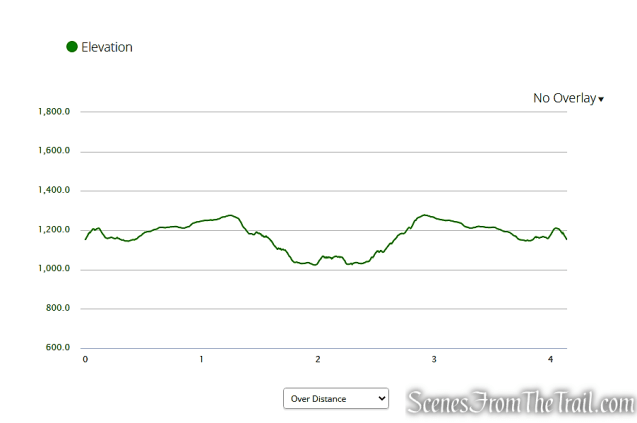
Max elevation: 1,278 ft.– total elevation gain approximately 584 ft.

Route type: Out and Back

Map: Sterling Forest Trails MapAvenzaSterling Forest State Park (FREE)

Trailhead parking: 385 NY-17A, Warwick, NY 10990

No bathrooms on site – No entrance or parking fees

Ample Parking in two parking lots on North side of 17A and two parking lots across the road


Overview:

This moderate out-and-back hike travels along the Appalachian Trail, the most famous marked footpath in the world. It climbs to two fascinating puddingstone rock outcrops, with panoramic views north and east over the hills of Sterling Forest.

Eastern Pinnacles - Appalachian Trail

Eastern Pinnacles – Appalachian Trail


History:

The Appalachian Trail is a 2,180+ mile long public footpath that traverses the scenic, wooded, pastoral and wild lands of the Appalachian Mountains, from Georgia to Maine. When Congress passed the National Trails System Act in 1968, the Appalachian National Scenic Trail was federally established as a unit of the National Park System that was to be “administered primarily as a footpath.”

Approximately 40 miles of that famous foot trail are in Orange County, NY and include some of the most beautiful, wild and challenging hiking in all of the Northeast. In fact, the Appalachian Trail, the most famous foot trail in the Western Hemisphere, was conceived, planned and born right in Orange County.

It began back in 1921, when forester, planner and conservationist Benton MacKaye, living in Arden Valley at the time, began promoting an idea for a trail that would wind along the mountaintops of the Appalachians. Shortly thereafter, the newly formed Palisades Interstate Park Trail Conference adopted the plan and just two years later, on Oct. 7, 1923, the first official section of the Appalachian Trail opened between Bear Mountain and Arden Valley.

The Town of Warwick, NY, in Orange County, was designated an official Appalachian Trail Community by the Appalachian Trail Conservancy in 2012. Appalachian Trail Communities are noted for promoting and protecting the Appalachian Trail, in addition to being good neighbors to those who hike the AT.


Trails Overview:

Although this hike is almost entirely on the Appalachian Trail (AT), there are short stints on blue-blazed trails. A Blue Blaze is a spur, bypass or connector trail branching off of the Appalachian Trail that can be used as an alternate route of the AT that rejoins it further down the path.

The trails on this hike are well marked and easy to follow. The only challenging sections are where the AT climbs over the Eastern Pinnacles and Cat Rocks. In both instances there is a blue-blazed trail that lets you bypass the rock scramble. By bypassing the scramble over the two rock formations, you would also be bypassing the views as well.


Hike Overview:

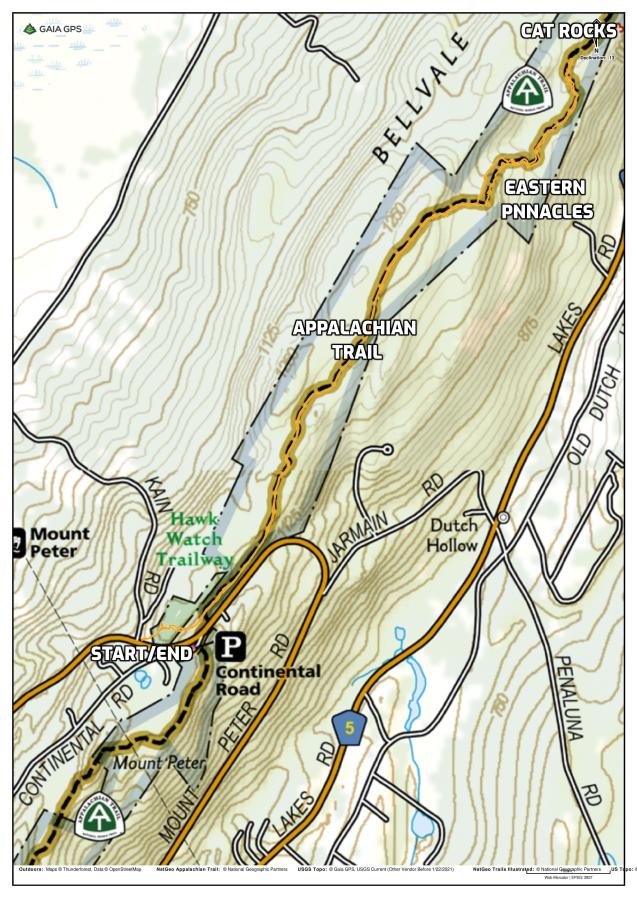
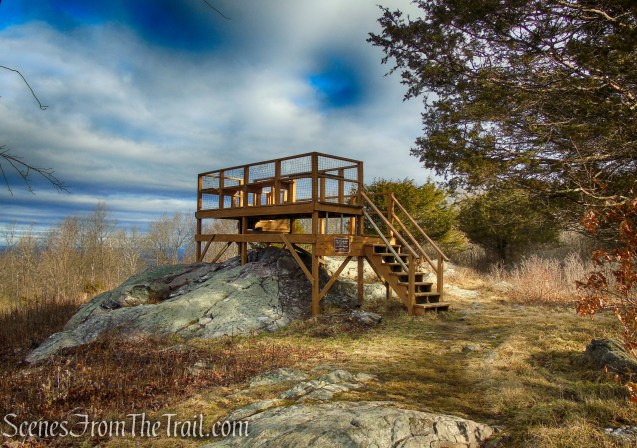
This hike begins at the parking lot that is adjacent to the Bellvale Farms Creamery. This is the parking area for the Mount Peter Hawk Watch. I chose beginning the hike from here to avoid having to cross Route 17A. There are additional gravel parking lots on the opposite side of Route 17A, directly across from the Creamery.

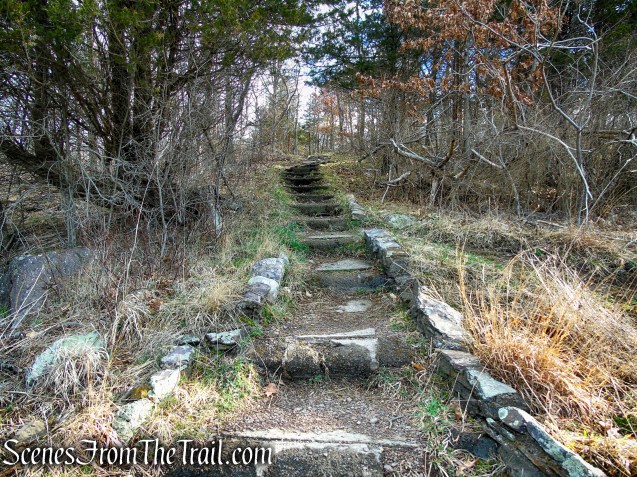
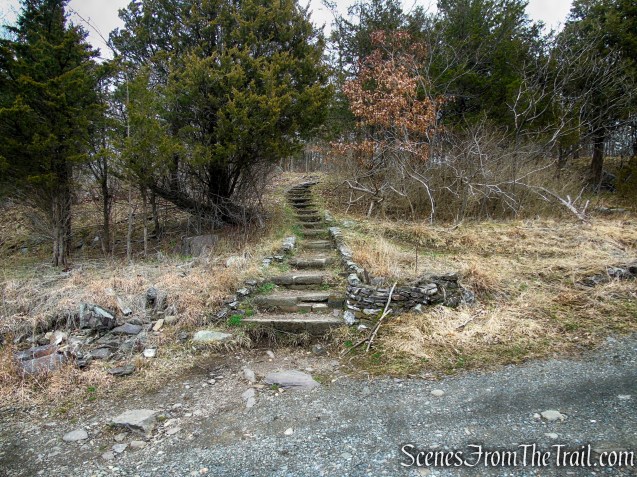
From the parking lot on the same side as the Bellvale Farms Creamery, there are stone steps that lead up to the viewing platform for the Mount Peter Hawk Watch. A blue-blazed connector trail begins just to the right of the platform that connects to the AT in about 1,000 feet.

stone steps - Mount Peter Hawk Watch

stone steps – Mount Peter Hawk Watch

The AT travels along the ridge of Bellvale Mountain in the Town of Warwick.  Along the way it climbs and crosses over the Eastern Pinnacles, a puddingstone rock formation with dramatic views to the north and east.

The trail descends, then climbs to Cat Rocks, another fascinating puddingstone rock formation that protrudes out of the forest like a tower. Cat Rocks is the turn around spot for this hike. From there it’s just retracing your steps along the AT, using the Blue Bypass Trails if you don’t feel like reclimbing the rock formations.

Eastern Pinnacles & Cat Rocks from Route 17A

Eastern Pinnacles & Cat Rocks from Route 17A

Eastern Pinnacles & Cat Rocks from Route 17A

Eastern Pinnacles & Cat Rocks from Route 17A


The Hike:

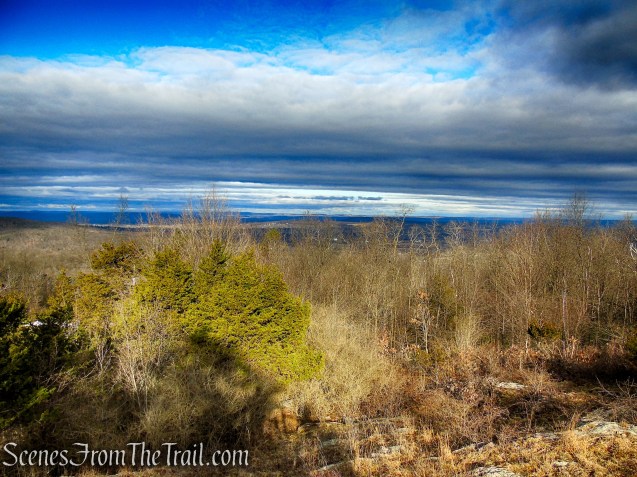
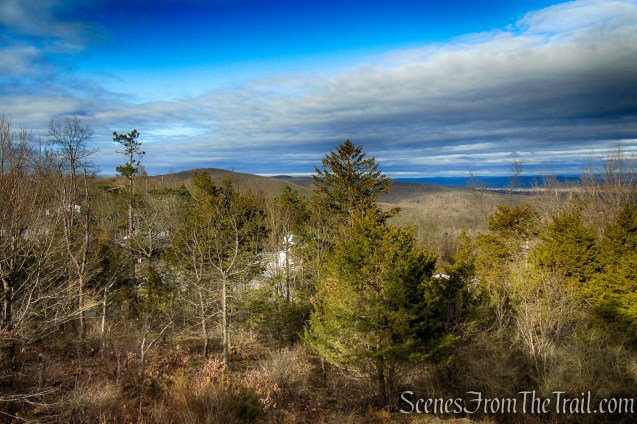
From the gravel parking area, climb the stone steps about 150 feet to the start of the Blue Connector Trail. To the left is the Mount Peter Hawk Watch viewing platform. Take a moment here if you like to check out the west-facing views.

stone steps – Mount Peter Hawk Watch

stone steps – Mount Peter Hawk Watch

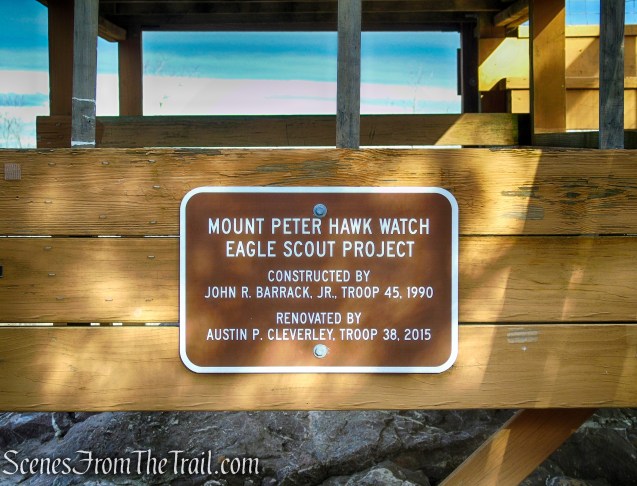
Mount Peter Hawk Watch is one of several famous hawk watches in the northeast and is the third oldest in the country. This scenic overlook provides an expansive view of the Warwick Valley through which record numbers of migrating raptors pass during fall migration.

Mount Peter Hawk Watch

Mount Peter Hawk Watch

Mount Peter Hawk Watch

Mount Peter Hawk Watch

Mount Peter Hawk Watch

Mount Peter Hawk Watch

Mount Peter Hawk Watch

Mount Peter Hawk Watch

When you are ready to continue, look for three blue blazes on a tree and proceed ahead on the Blue Trail. The Blue Trail descends towards Route 17A then turns left paralleling the road. In about a 1,000 feet there are three blue blazes on a rock signaling the end of the Blue Trail. Just ahead is the Appalachian Trail (AT), which comes in from the right. Continue straight (Do not turn right. If you cross the road you are going the wrong way.), now following the white blazes of the AT.

Blue Connector Trail

Blue Connector Trail

Blue Connector Trail

Blue Connector Trail

terminus of Blue Connector Trail

terminus of Blue Connector Trail

At first, the trail parallels the noisy Route 17A, but the road soon bends to the right, away from the trail, and the sounds of traffic disappear. The A.T. proceeds gently uphill, crosses a gas pipeline, and continues through an area with dense hemlock and mountain laurel. It then begins a gradual descent.

Appalachian Trail - Bellvale Mountain

Appalachian Trail – Bellvale Mountain

Appalachian Trail - Bellvale Mountain

Appalachian Trail – Bellvale Mountain

Appalachian Trail - Bellvale Mountain

Appalachian Trail – Bellvale Mountain

Appalachian Trail - Bellvale Mountain

Appalachian Trail – Bellvale Mountain

Appalachian Trail – Bellvale Mountain

Appalachian Trail – Bellvale Mountain

About 1.4 miles from the start, you’ll notice the start of a blue-blazed side trail. You’re now just below a spectacular outcrop of puddingstone rock known as the Eastern Pinnacles, and the side trail is provided so that A.T. thru-hikers won’t have to climb up the rock outcrop in bad weather (the rocks can be very slippery when wet). Hopefully, you’ve picked a day with good weather for your hike, and you’ll want to follow the white blazes ahead and scramble up the rock outcrop, which offers magnificent views to the north and east over the hills of Sterling Forest.

junction of AT and Blue Bypass Trail

junction of AT and Blue Bypass Trail

Eastern Pinnacles – Bellvale Mountain

Eastern Pinnacles – Bellvale Mountain

As you begin the climb of the Eastern Pinnacles, there is a shorter bypass trail on the left (also marked blue) that lets hikers skip the first steep climb.

Eastern Pinnacles – Bellvale Mountain

Eastern Pinnacles – Bellvale Mountain

Eastern Pinnacles – Bellvale Mountain

Eastern Pinnacles – Bellvale Mountain

Eastern Pinnacles – Bellvale Mountain

Eastern Pinnacles – Bellvale Mountain

Eastern Pinnacles – Bellvale Mountain

Eastern Pinnacles – Bellvale Mountain

The A.T. continues along the exposed rocks, with more views. You’ll have to use both your hands and your feet to negotiate this trail section.

Eastern Pinnacles – Bellvale Mountain

Eastern Pinnacles – Bellvale Mountain

Eastern Pinnacles – Bellvale Mountain

Eastern Pinnacles – Bellvale Mountain

Eastern Pinnacles – Bellvale Mountain

Eastern Pinnacles – Bellvale Mountain

Eastern Pinnacles - Appalachian Trail

Eastern Pinnacles – Appalachian Trail

Eastern Pinnacles – Bellvale Mountain

Eastern Pinnacles – Bellvale Mountain

That rock tower that protrudes out of the forest to the north, is Cat Rocks.

view of Cat Rocks and beyond from Eastern Pinnacles

view of Cat Rocks and beyond from Eastern Pinnacles

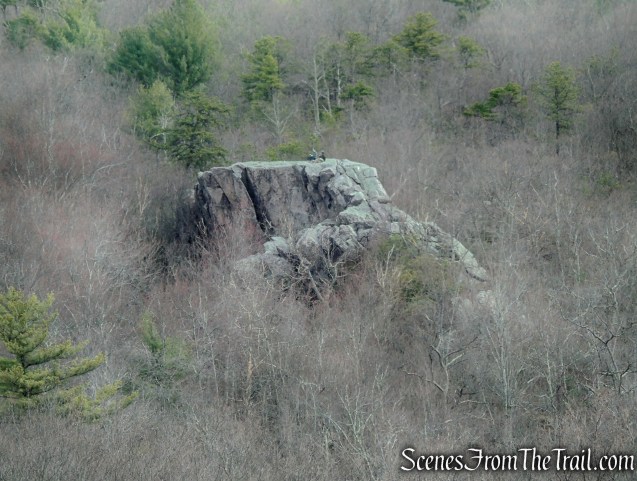
A zoomed in view shows two hikers sitting at the top of Cat Rocks enjoying a break.

Cat Rocks as viewed from Eastern Pinnacles

Cat Rocks as viewed from Eastern Pinnacles

At the end of the Eastern Pinnacles, the trail comes to the northern junction of the Blue Bypass Trail.

Eastern Pinnacles – Appalachian Trail

Eastern Pinnacles – Appalachian Trail

Eastern Pinnacles – Appalachian Trail

Eastern Pinnacles – Appalachian Trail

Eastern Pinnacles – Bellvale Mountain

Eastern Pinnacles – Bellvale Mountain

Eastern Pinnacles – Bellvale Mountain

Eastern Pinnacles – Bellvale Mountain

junction of AT and Blue Bypass Trail

junction of AT and Blue Bypass Trail

The white-blazed A.T. now heads gently downhill. It goes through dense mountain laurel thickets and traverses a wet area, crossing several streams as it levels off.

Appalachian Trail – Bellvale Mountain

Appalachian Trail – Bellvale Mountain

Appalachian Trail – Bellvale Mountain

Appalachian Trail – Bellvale Mountain

Appalachian Trail – Bellvale Mountain

Appalachian Trail – Bellvale Mountain

Soon the trail begins to climb moderately then levels off somewhat.

Appalachian Trail – Bellvale Mountain

Appalachian Trail – Bellvale Mountain

The AT passes a skull-like rock formation along the way.

Appalachian Trail – Bellvale Mountain

Appalachian Trail – Bellvale Mountain

The AT then climbs to Cat Rocks, another dramatic rock formation. Again, there is a blue-blazed trail that bypasses this feature, but you’ll want to follow the white blazes to the top of these fascinating puddingstone rocks. The east-facing view from Cat Rocks has largely grown in, but this outcrop is even more spectacular than the Eastern Pinnacles because of the sheer drop from the top of the outcrop and the deep crevice on the left at the north end.

Appalachian Trail – Bellvale Mountain

Appalachian Trail – Bellvale Mountain

Cat Rocks - Bellvale Mountain

Cat Rocks – Bellvale Mountain

Cat Rocks - Bellvale Mountain

Cat Rocks – Bellvale Mountain

Cat Rocks - Bellvale Mountain

Cat Rocks – Bellvale Mountain

Cat Rocks - Bellvale Mountain

Cat Rocks – Bellvale Mountain

Cat Rocks - Bellvale Mountain

Cat Rocks – Bellvale Mountain

Cat Rocks - Bellvale Mountain

Cat Rocks – Bellvale Mountain

Cat Rocks - Bellvale Mountain

Cat Rocks – Bellvale Mountain

At the top of Cat Rocks, the AT levels off (this is the same spot where we saw hikers sitting in the zoomed in view). Soon the trail begins to descend steeply to a junction with the other end of the Blue Bypass Trail.

Cat Rocks – Bellvale Mountain

Cat Rocks – Bellvale Mountain

Looking back at the route from which we just descended.

Cat Rocks – Bellvale Mountain

Cat Rocks – Bellvale Mountain

This is the turn around spot for this hike. Turn right on the Blue Bypass Trail and follow it to its terminus at a junction with the AT and turn left.

Blue Bypass Trail - Cat Rocks

Blue Bypass Trail – Cat Rocks

Blue Bypass Trail - Cat Rocks

Blue Bypass Trail – Cat Rocks

Now you’ll be heading in a southerly direction on the AT, retracing your steps.

Appalachian Trail – Bellvale Mountain

Appalachian Trail – Bellvale Mountain

When you reach the Eastern Pinnacles, veer right onto the Blue Bypass Trail (unless of course you want to do the rock scramble again) and follow the blue blazes as they lead uphill with the Eastern Pinnacles visible through the trees on the left.

AT & Blue Bypass Trail junction

AT & Blue Bypass Trail junction

Blue Bypass Trail - Eastern Pinnacles

Blue Bypass Trail – Eastern Pinnacles

At the end of the Blue Bypass Trail, turn right, rejoining the AT. In about another mile, The AT turns left to cross Route 17A at a junction with the Blue Connector Trail. Continue straight, now following the blue blazes until its terminus near the Mount Peter Hawk Watch. Turn left and descend the stone steps that you climbed at the beginning of the hike, returning to the gravel parking lot, where the hike began.

Blue Bypass Trail - Eastern Pinnacles

Blue Bypass Trail – Eastern Pinnacles

AT & Blue Connector Trail junction

AT & Blue Connector Trail junction

Blue Connector Trail - Mount Peter Hawk Watch

Blue Connector Trail – Mount Peter Hawk Watch

You may want to stop at the Bellvale Farms Creamery which is adjacent to the parking lot. They have some of the best ice cream around. They are open from April 1st to October. Unfortunately for us, it wasn’t yet open for the season when we did this hike.

Bellvale Farms Creamery

Bellvale Farms Creamery


Review: 

This hike was very enjoyable and a lot of fun. Although we crossed paths with quite a few hikers, it didn’t feel crowded. In most cases they were going in the opposite direction. The AT is well marked and maintained. The Blue Bypass Trails make it easy for anyone that doesn’t want to do the rock scrambles to skip those sections. The views from the Eastern Pinnacles are some of the best around. A must do hike in the Hudson Valley.

Pros:

Eastern Pinnacles, Cat Rocks, Appalachian Trail, outstanding views.

Cons:

Some road noise at the beginning and end of the hike near Route 17A.

Take a hike!

Eastern Pinnacles & Cat Rocks from Route 17A

Eastern Pinnacles & Cat Rocks from Route 17A


Sources:


Spiderweed Preserve

March 5, 2022 – Middletown, Connecticut

Difficulty: Moderate

Length: Approximately 3.2 miles

Max elevation: 596 ft.– total elevation gain approximately 700 ft.

Route type: Lollipop Loop

Map: Spiderweed Preserve Trail Map

Trailhead parking: 1-147 Dripps Rd, Middletown, CT 06457

No bathrooms on site – No entrance or parking fees

Parking for approximately 5 vehicles alongside road at the trailhead.


Overview:

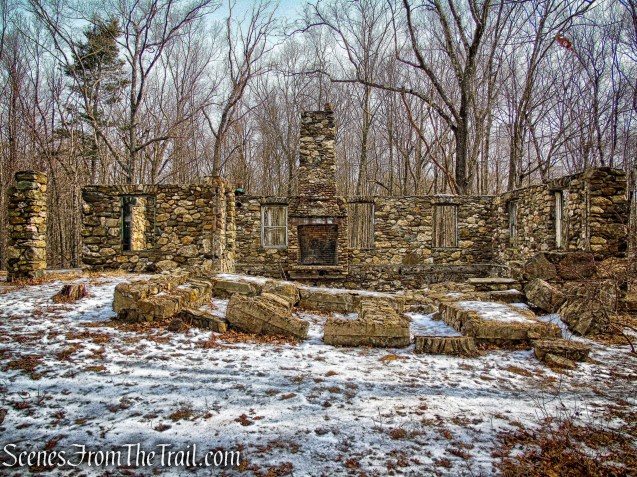
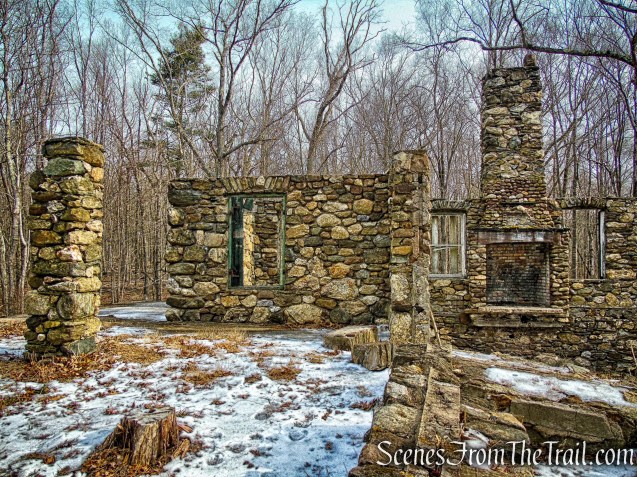
Spiderweed Preserve offers a three-mile hike through dry oak woods, along massive rock outcrops to a rock bluff with a view toward the south of the Connecticut River Valley. Along the way the stone ruins of Helen Lohman’s rustic country retreat are there for hikers to explore.

Spiderweed ruins

Spiderweed ruins

This 157-acre property is owned and managed by The Nature Conservancy and the Middlesex Land Trust.


History:

Spiderweed Preserve was created by a donation from Helen Lohman of Middletown in 1975; she named the area after the sad state in which she found her gardens every spring.

Located in Maromas (the original Indian name Regowset), a district in the Town of Middletown. Maromas is situated in the southeastern section of Middletown on the western bank of the Connecticut River. Maromas is an area of hills, valleys and ridges. The highest point is Bear Hill (650 ft.), which is sometimes spelled “Bare” because of its steep slopes and numerous areas of exposed bedrock.

Spiderweed, historically known as the “Soloman Hubbard Farm,” was originally built as the homestead of Soloman Hubbard in the mid 18th century. His father, also named Soloman Hubbard had also farmed in the “Great tier of Lotts,” and his house stood nearby. The younger Soloman Hubbard, builder of this house, accumulated land from his father’s estate and from his neighbors. In 1817 Soloman Hubbard deeded the house and land to the Town of Middletown for the payment of debts, reserving life tenancy for himself and his wife. Hubbard is said to have been prevented from operating the farm due to an injury suffered in the Revolutionary War.

After Hubbard’s death, the Town of Middletown sold the 2-1/2 story, 27 ft. x 31 ft. Center-Chimney Colonial to the Bailey family. It was then sold to the Dripps family in 1866. The house primarily remained in the hands of the Dripps and Meader families (related by marriage) until purchased by Miss Helen Lohman in 1936. Miss Lohman kept intact the acreage which had been acquired through the years of the home’s use as a farm. Renaming it Spiderweed, Miss Lohman used the property as a rustic country retreat. The home never had modern heat or plumbing.

Helen Lohman demonstrated her concern for the house and land by deeding it to the Connecticut Chapter of The Nature Conservancy in 1975. Today the property reflects the continued use of the land for over 200 years, both as farm and as a country retreat. It is now mostly heavily wooded with overgrown fields. The Nature Conservancy maintains the 157-acre property as a nature preserve.

The Nature Conservancy

The Nature Conservancy


Trails Overview:

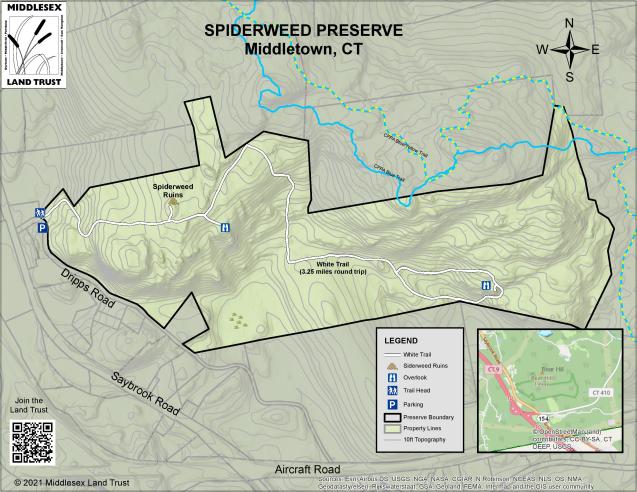
Spiderweed Preserve has one official trail that is blazed white and runs through the property using a combination of old farm roads and footpaths. There are three short spur trails, one leading to the stone ruins of Helen Lohman’s rustic retreat, and the other two leading to viewpoints over the Connecticut River Valley.

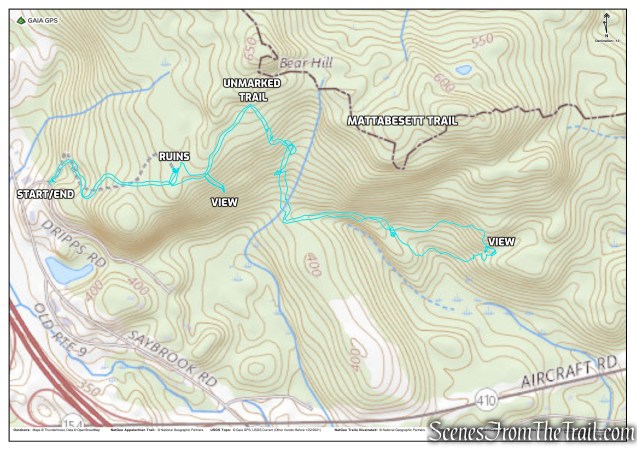
An unmarked trail (not shown on map), leaves the preserve and heads towards the summit of Bear Hill and the Mattabesett Trail (New England National Scenic Trail) which allows hikers to form longer loop hikes.

Spiderweed Trail Map

Spiderweed Trail Map


Hike Overview:

This hike is entirely in the Spiderweed Preserve utilizing the White Trail and the short spurs that branch off of it. We arrived at the trailhead on a Saturday morning shortly before 9am. The temperature was in the low to mid 20’s and there were no other vehicles when we arrived. We only saw two other hikers the entire time we were there, as we were nearing the end of the hike. It was a quiet and peaceful day in the woods, not even the birds were chirping.

This is a moderate hike with several short, steep ascents. Although it’s technically a “Lollipop Loop,” the loop is small and the “stick” is long, making it more of an out and back.

Spiderweed Preserve

Spiderweed Preserve

elevation profile - Spiderweed Preserve

elevation profile – Spiderweed Preserve

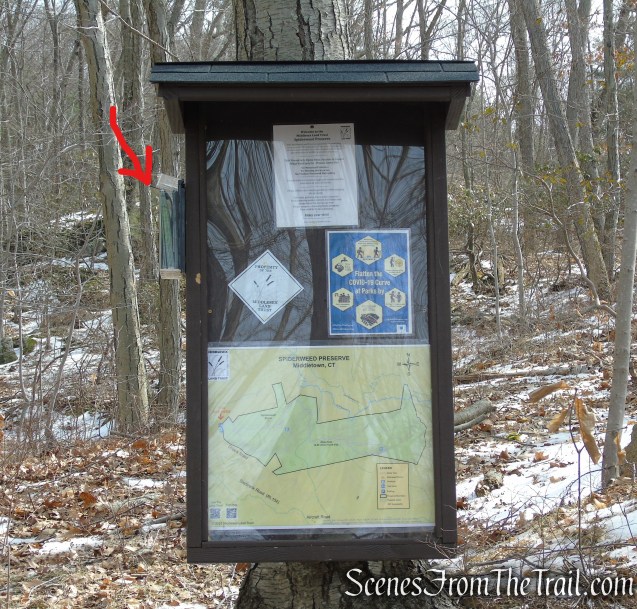
There were plenty of maps in the kiosk at the trailhead, but it is a good idea to print one beforehand just in case.

kiosk - Spiderweed Preserve

kiosk – Spiderweed Preserve


The Hike:

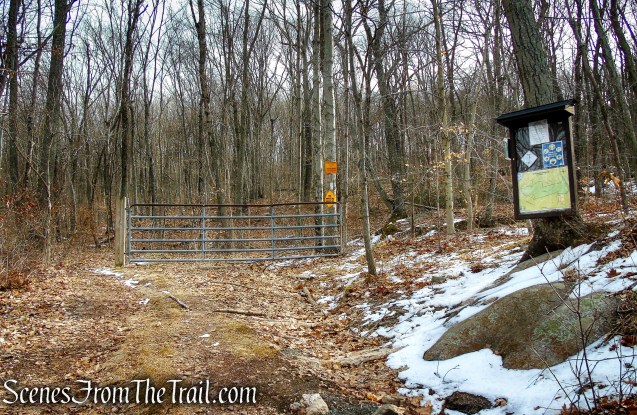
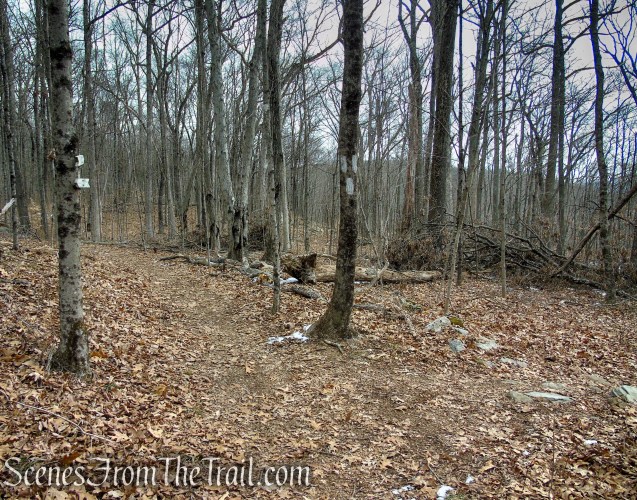
This hike begins at the trailhead on Dripps Road. Proceed past the gate onto the woods road as it leads uphill on a moderate grade. This is the White Trail, which you will be following for the entire hike. The White Trail follows what was once the entrance road or driveway to the Helen Lohman house.

Trailhead - Spiderweed Preserve

Trailhead – Spiderweed Preserve

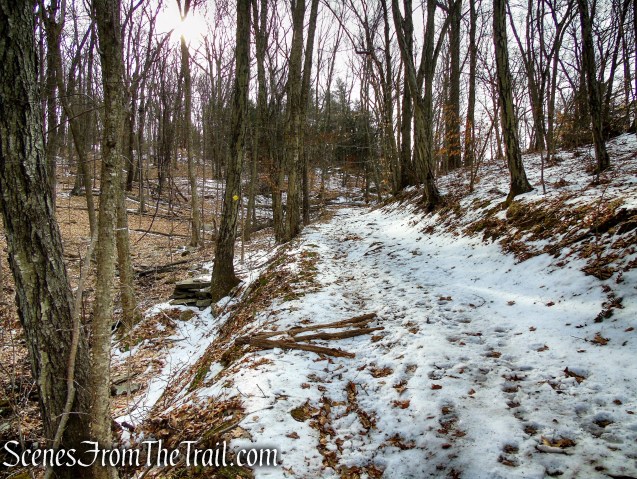
White Trail - Spiderweed Preserve

White Trail – Spiderweed Preserve

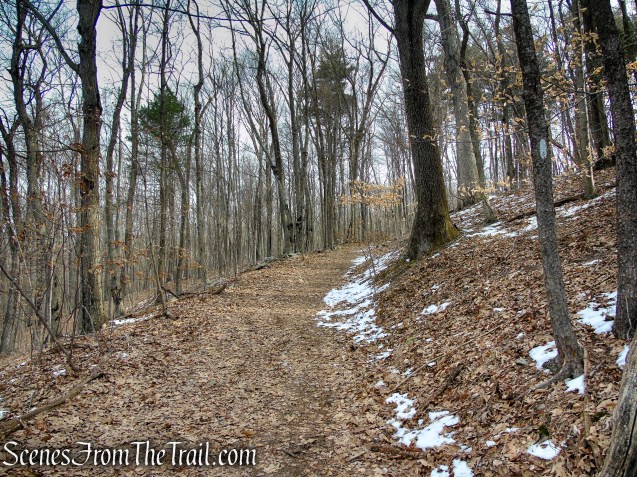
White Trail - Spiderweed Preserve

White Trail – Spiderweed Preserve

White Trail - Spiderweed Preserve

White Trail – Spiderweed Preserve

White Trail - Spiderweed Preserve

White Trail – Spiderweed Preserve

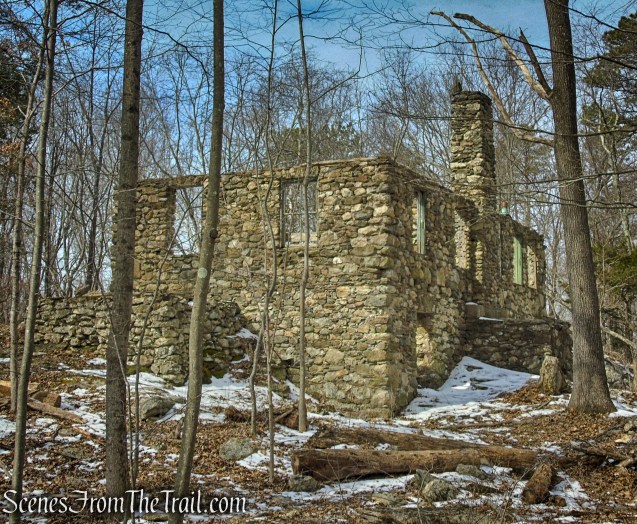
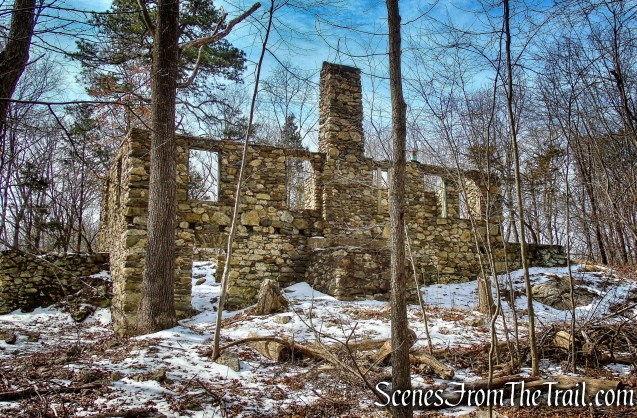
In about 0.5 mile from the start, there is a short spur trail (a wide woods road) on the left that leads to the Spiderweed Ruins. You may want to take some time to explore this interesting historical feature. Please use caution as the walls can be unstable.

Spiderweed stone ruins

Spiderweed stone ruins

Spiderweed stone ruins

Spiderweed stone ruins

The front wall has collapsed and now lays on the ground of what once was a 2-1/2 story, 27 ft. x 31 ft. Center-Chimney Colonial farmhouse.

Spiderweed stone ruins

Spiderweed stone ruins

Spiderweed stone ruins

Spiderweed stone ruins

When you are ready to continue, return to the White Trail and turn left. A short distance later, you will see three white blazes on a tree. Turn right on this spur trail (also blazed white) and walk about 200 feet to a rock outcrop with southeast-facing views over the Connecticut River Valley.

turn right on spur trail to viewpoint

turn right on spur trail to viewpoint

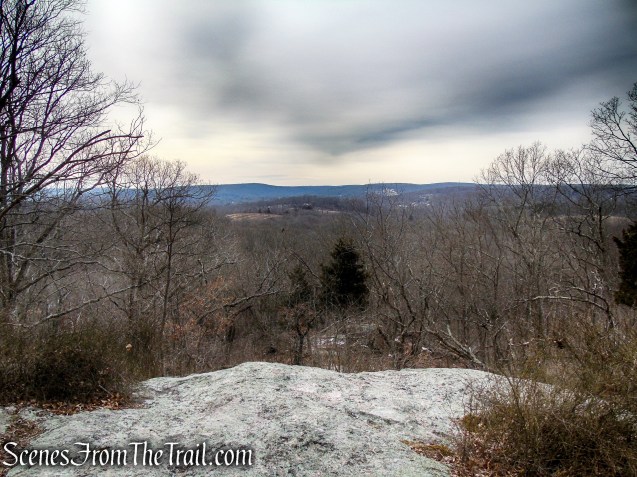
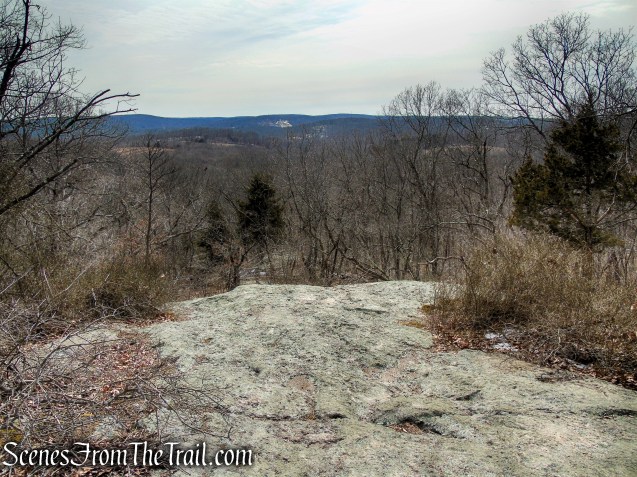
The view is not the greatest, but it is better during leaf-off season.

first viewpoint - Spiderweed Preserve

first viewpoint – Spiderweed Preserve

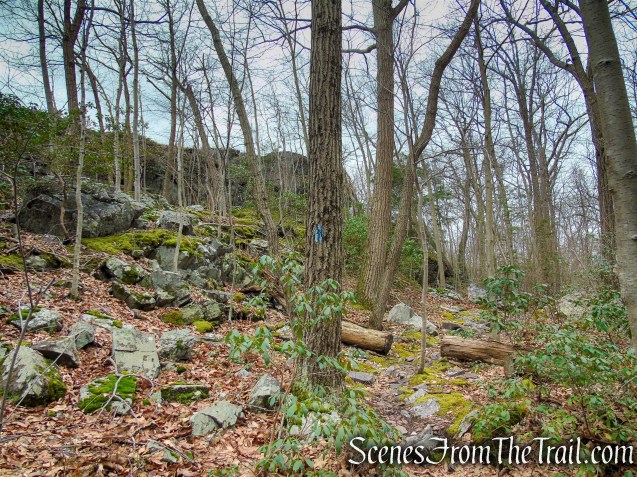
When you are done admiring the view, retrace your steps, rejoining the main artery of the White Trail and turn right. Now heading northeast, the White Trail snakes through the woods with some magnificent rock formations that loom high overhead to the left of the trail.

turn right on White Trail

turn right on White Trail

White Trail - Spiderweed Preserve

White Trail – Spiderweed Preserve

White Trail - Spiderweed Preserve

White Trail – Spiderweed Preserve

White Trail - Spiderweed Preserve

White Trail – Spiderweed Preserve

About 0.8 mile from the start, the White Trail turns right. The unmarked trail that is straight ahead, leads to Bear Hill and the Mattabesett Trail, leaving the Spiderweed Preserve. Turn right to remain on the White Trail which soon descends steeply.

turn right to remain on White Trail

turn right to remain on White Trail

White Trail - Spiderweed Preserve

White Trail – Spiderweed Preserve

White Trail - Spiderweed Preserve

White Trail – Spiderweed Preserve

Near the base of the descent, the trail levels off briefly, travels through a wet area and soon continues to descend, now more gradually. The White Trail then crosses a small stream.

White Trail - Spiderweed Preserve

White Trail – Spiderweed Preserve

A short distance after crossing the stream, the White Trail turns left and follows an old farm lane bordered by a Colonial era stone wall.

White Trail - Spiderweed Preserve

White Trail – Spiderweed Preserve

In about 1.5 miles from the start of the hike, the White Trail comes to the loop section. Going in either direction will bring you back to this spot. We opted to go left and soon the trail begins to climb. The ascent is somewhat steep, but it is short lived. At the top of the rise, the trail turns right and reaches a rock bluff that overlooks the countryside.

start of loop section - Spiderweed Preserve

start of loop section – Spiderweed Preserve

White Trail - Spiderweed Preserve

White Trail – Spiderweed Preserve

2nd viewpoint - Spiderweed Preserve

2nd viewpoint – Spiderweed Preserve

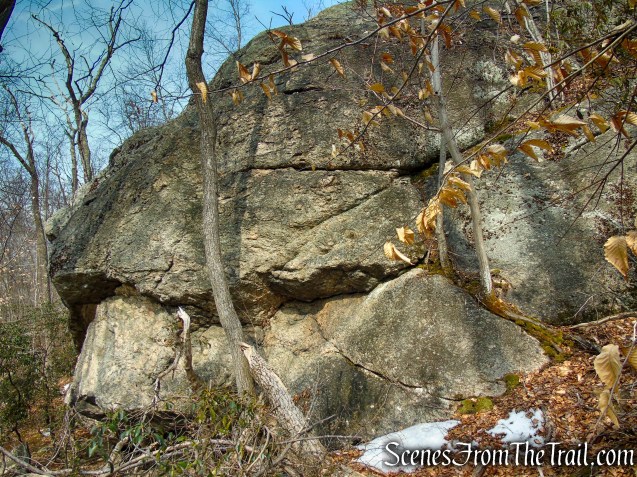
The trail then descends steeply alongside that same rock formation. As you descend you can see the mammoth proportions of the rock formation that you were just standing on.

White Trail - Spiderweed Preserve

White Trail – Spiderweed Preserve

massive rock formation - Spiderweed Preserve

massive rock formation – Spiderweed Preserve

massive rock formation - Spiderweed Preserve

massive rock formation – Spiderweed Preserve

massive rock formation - Spiderweed Preserve

massive rock formation – Spiderweed Preserve

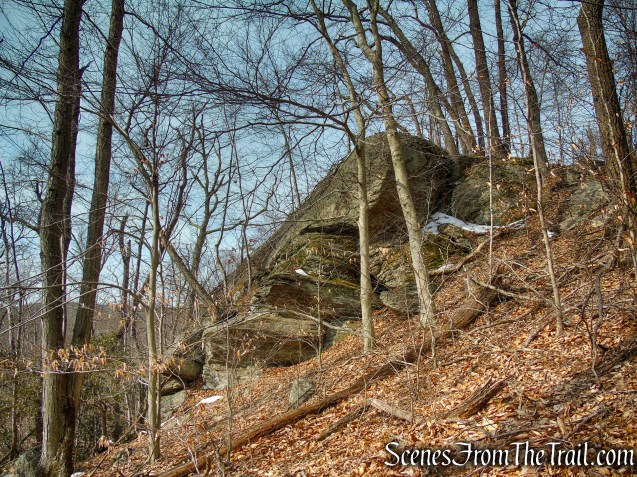
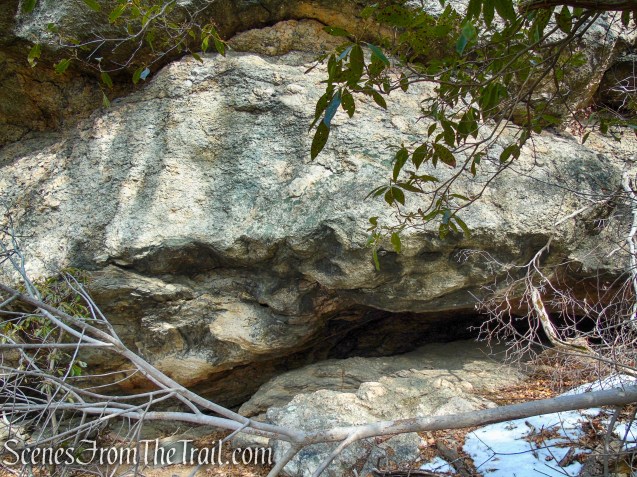
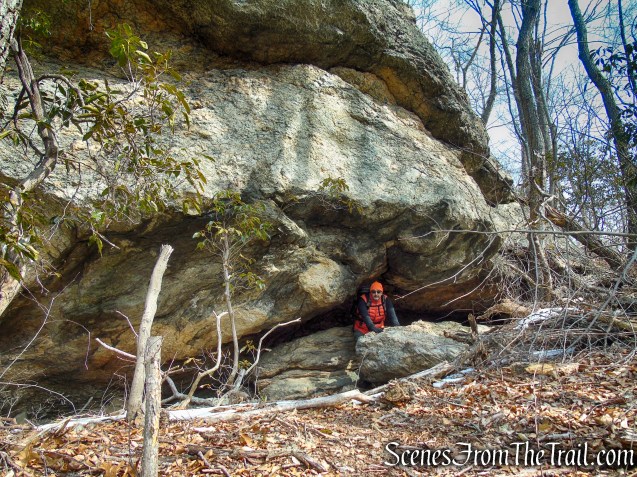
At the base of the rock formation there is an overhang that qualifies as a rock shelter.

massive rock formation - Spiderweed Preserve

massive rock formation – Spiderweed Preserve

massive rock formation - Spiderweed Preserve

massive rock formation – Spiderweed Preserve

The trail continues to descend, but now more gently. To the right of the trail, up on the hillside is another rock shelter that is worth checking out. During the warmer months, it may be obscured by foliage to some degree and thus harder to see.

White Trail - Spiderweed Preserve

White Trail – Spiderweed Preserve

rock shelter - Spiderweed Preserve

rock shelter – Spiderweed Preserve

rock shelter - Spiderweed Preserve

rock shelter – Spiderweed Preserve

rock shelter - Spiderweed Preserve

rock shelter – Spiderweed Preserve

The White Trail continues its descent, soon skirting private property. As the trail levels off, it crosses a small stream, passes through an area with some boulders scattered about then closes the loop.

White Trail - Spiderweed Preserve

White Trail – Spiderweed Preserve

After closing the loop, you are now retracing your steps along the stone wall, crossing another stream and turning left at the junction with the unmarked trail.

White Trail - Spiderweed Preserve

White Trail – Spiderweed Preserve

turn left to remain on White Trail

turn left to remain on White Trail

You may want to pay a return visit to the first viewpoint and if the leaves are down, you can venture slightly off trail for a different angle of the Spiderweed Ruins.

first viewpoint – Spiderweed Preserve

first viewpoint – Spiderweed Preserve

Spiderweed ruins

Spiderweed ruins

Spiderweed stone ruins

Spiderweed stone ruins

Continuing on the White Trail in a westerly fashion, it descends on the woods road soon returning to the trailhead where the hike began.

White Trail - Spiderweed Preserve

White Trail – Spiderweed Preserve

White Trail - Spiderweed Preserve

White Trail – Spiderweed Preserve


Review:

A great hike through a very scenic area. The views are nothing to speak of, but the stone ruins, massive rock formations, including the rock shelters, make this a worthwhile hike. This is a hike better done when the leaves are down. The views are more expansive and the rock formations that border the trail are more clearly visible. Some of the more narrow sections of the trail can become overgrown during the warmer months. On colder days, you are less likely to see many people. The trails are well marked, but there are some soggy sections. Appropriate footwear is advisable. I highly recommend the Spiderweed Preserve to anyone that is looking for an interesting moderate hike.

Pros:

Spiderweed Ruins, massive rock formations, rock shelters, well marked trail, not much foot traffic.

Cons: 

Views are uninspiring.


Take a hike!

Spiderweed Preserve

Spiderweed Preserve


Highbridge Water Tower

December 12, 2021 – New York, NY

Brochure & Map: Highbridge Park: A Visitors Guide

Street parking available near Highbridge Recreation Center – 2301 Amsterdam Ave, New York, NY 10033

Please note: There are multiple access points to reach the tower. The address above will leave you closest to the tower.

Bathrooms on site – No entrance fees


History:

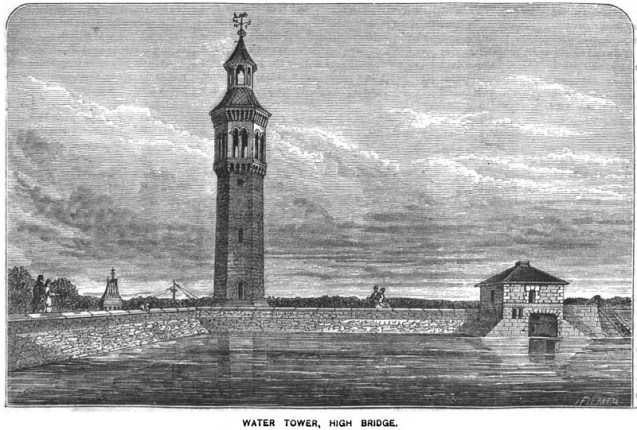
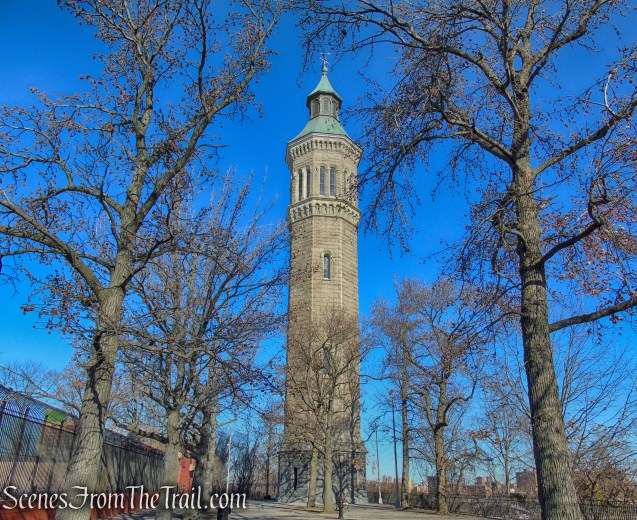
The tower in Highbridge Park near the west end of High Bridge was built in 1872 as part of the Croton Water System that brought fresh water to Manhattan. It was the first water tower to be built in Manhattan as part of this system and the only tower that survives. The octagonal structure is made of rough-cut stone and is almost 400 feet above the high water level of the nearby Harlem River. The Highbridge Water Tower stopped being used for the water supply system in 1949. The tower became a New York City Landmark in 1967 and was listed in the National Register of Historic Places in 1972. The tower was renovated in 1989 to 1990 and was closed again for renovations around 2011, but reopened for scheduled tours beginning in November 2021.

Highbridge Water Tower - 1872

Highbridge Water Tower – 1872

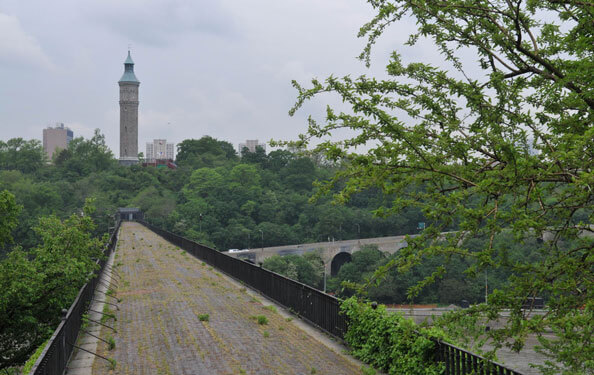
Highbridge Tower - December 2021

Highbridge Tower – December 2021

The High Bridge Tower is at the Manhattan end of the famed High Bridge, originally named the Aqueduct Bridge. It opened as part of the Croton Aqueduct in 1848 and reopened as a pedestrian walkway in 2015 after being closed for over 45 years. High Bridge is New York City’s oldest standing bridge and connects Manhattan and the Bronx, spanning the Harlem River. The High Bridge connects the neighborhoods of Washington Heights in Manhattan and Highbridge in the Bronx, and is accessible from both boroughs.

High Bridge during construction

High Bridge during construction

The walkway was completed in 1864, making it a popular spot to promenade on a nice day. After construction of the Major Deegan Expressway in 1956 and Harlem River Drive in 1964, public use of the waterfront faded. The river became polluted, paths were blocked, and the pull of the parks on the water’s edge vanished. In the 1970’s, public access to the bridge was discontinued.

High Bridge

High Bridge

Local pressure to reopen the bridge began soon after, and eventually, groups such as The High Bridge Coalition were able to coalesce that support into a citizen-led campaign to restore the High Bridge and its neighboring parks. In 2012, NYC began rehabilitating the bridge, and it was reopened in June 2015, but the tower remained off limits.

High Bridge & Tower - 2015

High Bridge & Tower – 2015

The 200-foot tall octagonal Tower was built to bring fresh drinking water to the highest points in northern Manhattan. Water from the Croton Aqueduct started flowing in the lower and middle sections of the island in 1842 and the High Bridge was completed in 1848, as a permanent means to carry the aqueduct across the Harlem River.

Upper Manhattan was not served by the aqueduct that passed through it due to the area’s hilly terrain. The system provided water pressure by means of gravity and therefore locations higher than the Central Park Reservoir were left high and dry.

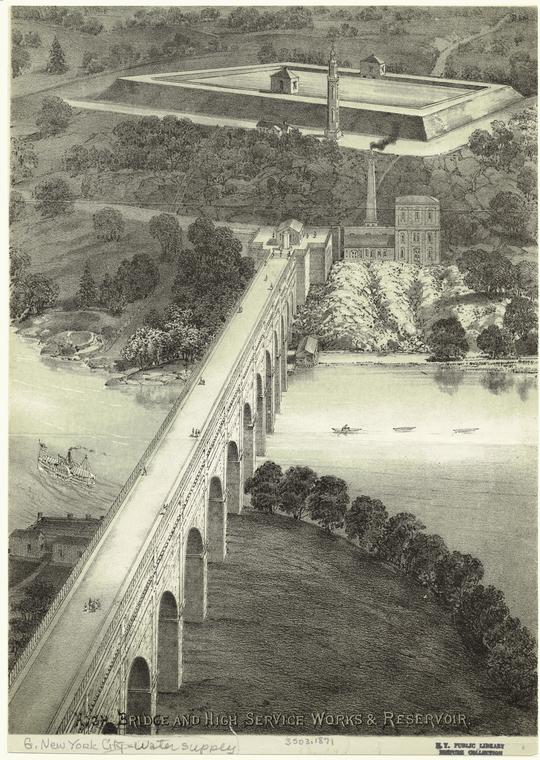
To remedy this, New York City built the High Service Water Works near the High Bridge, consisting of several facilities. The Highbridge Tower, completed in the summer of 1872, is all that remains. Other components that are now long gone and mostly forgotten, included a reservoir, opened in 1870 and replaced by the Highbridge Park pool in the mid 1930’s, plus pumping stations, a coal dock, and a coal shed.

High Bridge, High Service Water Works and Reservoir - 1871

High Bridge, High Service Water Works and Reservoir – 1871

The octagonal tower once held a 47-thousand gallon water tank. A steam powered pumping station near the base of the tower pumped water into the tank from an adjacent reservoir, now a public swimming pool. As the water flowed back down from the tower down into city pipes, gravity created water pressure.

The Tower operated until December 15, 1949, when it was rendered unnecessary by a new electric powered pumping station on Amsterdam Avenue. The Department of Water Supply, Gas, and Electricity wanted to raze the Tower, but it was preserved thanks to, of all people, Robert Moses in his capacity as Parks Commissioner. Along with the High Bridge, also mothballed in 1949, it was transferred to Parks jurisdiction in 1955.

Since then, it has hosted an electric carillon, been designated a New York City Landmark, and was damaged by a 1984 fire and Hurricane Sandy in 2012.


Present Day:

Standing on a bluff 200 feet above the Harlem River, the recently restored High Bridge Water Tower is an iconic, yet enigmatic landmark for many New Yorkers. Built to bring Croton water to the highest points in northern Manhattan, the 200-foot tall structure is celebrating its 150th anniversary in 2022.

Highbridge Tower - 2015

Highbridge Tower – 2015

Described in 1967 by the Landmarks Preservation Commission as “one of Manhattan’s most picturesque architectural monuments,” the Highbridge Water Tower reopened in October 2021 following a 5 million dollars restoration project. While it no longer is part of the city’s water system, the 200-foot landmark is the only one of its kind that remains today.

Starting November 2021, the NYC Urban Park Rangers will lead free public tours inside the Highbridge Water Tower, which will remain closed to the public at all other times. The tour takes participants inside the iconic tower while learning about the history of the city’s water supply from 200 feet above the Harlem River. Registration is required.


Tour Overview:

Public tours of the inside of the newly renovated Highbridge Tower began on November 21, 2021. We registered and attended a tour that was given on December 12, 2021. It was a blustery Saturday with temps in the high 30’s and having arrived early, we decided to walk around a little to stay warm.

Highbridge Tower - December 2021

Highbridge Tower – December 2021

We waited patiently for the NYC Urban Park Rangers to arrive, and unlock the door so we could tour the inside of this historic structure.

Highbridge Tower - December 2021

Highbridge Tower – December 2021

Highbridge Tower - December 2021

Highbridge Tower – December 2021

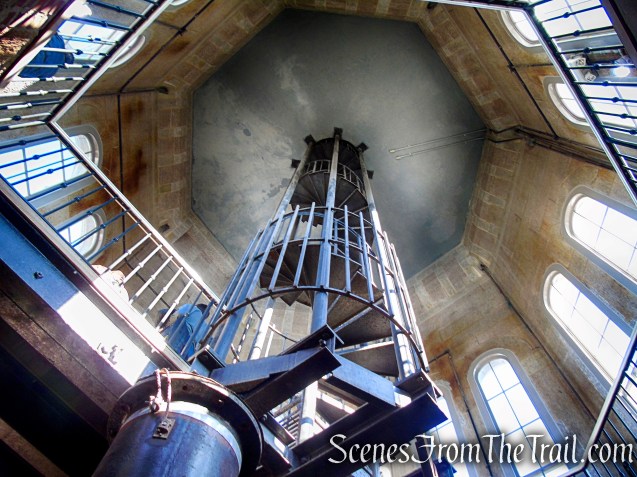
What is now the Tower’s observation level originally housed a 47,000-gallon tank at an elevation of 336 feet. It is a light-filled space, with two large arch-shaped windows on each of the tower’s eight walls, facilitating tank inspections and repairs in an era before electric lighting. Today they offer expansive vistas.

Highbridge Tower - December 2021

Highbridge Tower – December 2021

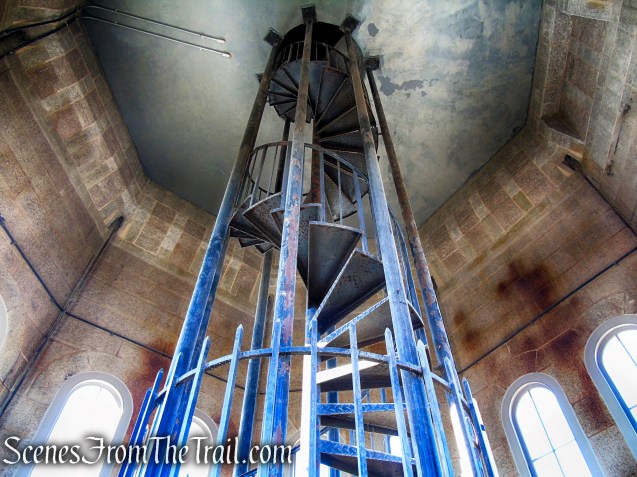
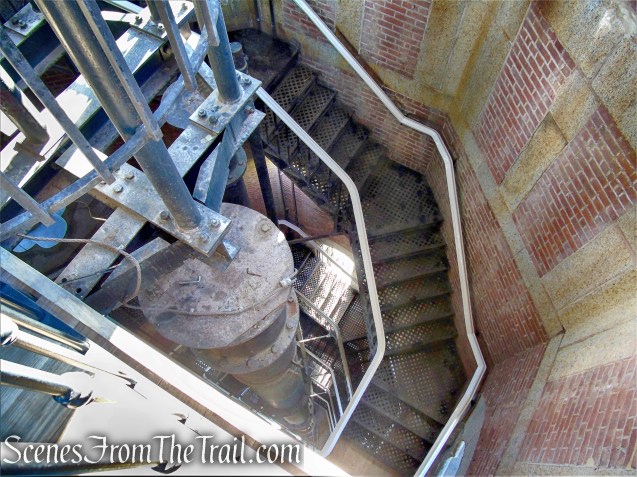
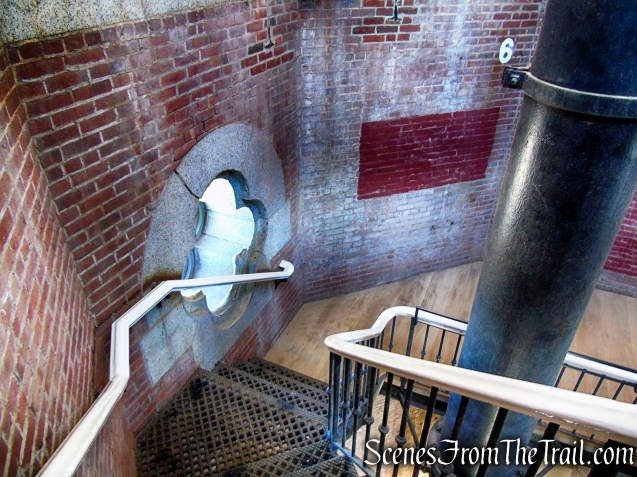
The recent renovation project included restoration of cracked granite, repointing, restoration of the iron staircase and iron railings, new 15-Foot-high windows, repairs to the roof and weathervane, and several safety measures.

Highbridge Tower - December 2021

Highbridge Tower – December 2021

Highbridge Tower - December 2021

Highbridge Tower – December 2021

Highbridge Tower - December 2021

Highbridge Tower – December 2021

A view of High Bridge from the base of the tower.

High Bridge – December 2021

High Bridge – December 2021

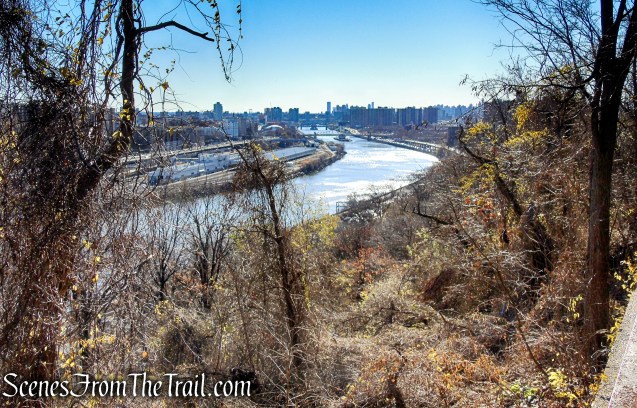
View south of the Harlem River, with the Bronx on the left and Manhattan on the right.

looking south from the base of Highbridge Tower

looking south from the base of Highbridge Tower


The Tour:

In the center of the tower are the pipes that once transported water up and down the tower. We climbed the 174 steps to the top of the Highbridge Water Tower to enjoy 360° views of NYC and parts of NJ.

Highbridge Tower Tour – December 2021

Highbridge Tower Tour – December 2021

All the views are through glass, so bringing glass cleaning wipes is a good idea.

Highbridge Tower Tour – December 2021

Highbridge Tower Tour – December 2021

Looking north up the Harlem River to the Alexander Hamilton Bridge with the Washington Bridge just beyond.

Highbridge Tower Tour – December 2021

Highbridge Tower Tour – December 2021

Looking southwest over the Highbridge Park Pools and Washington Heights. A sliver of the Hudson River can be seen in the upper left.

Highbridge Tower Tour – December 2021

Highbridge Tower Tour – December 2021

Looking west at the George Washington Bridge.

Highbridge Tower Tour – December 2021

Highbridge Tower Tour – December 2021

Highbridge Tower Tour – December 2021

Highbridge Tower Tour – December 2021

A smaller spiral staircase, off limits to the public, was originally a public lookout in the Tower’s narrow cupola, but the current use of the old tank room provides a more spacious vantage point.

Highbridge Tower Tour – December 2021

Highbridge Tower Tour – December 2021

Highbridge Tower Tour – December 2021

Highbridge Tower Tour – December 2021

Highbridge Tower Tour – December 2021

Highbridge Tower Tour – December 2021

Highbridge Tower Tour – December 2021

Highbridge Tower Tour – December 2021

The chapel style windows near the top offer views of the George Washington Bridge, the swimming pool, and the Manhattan skyline.

Highbridge Tower Tour – December 2021

Highbridge Tower Tour – December 2021

If you would like to attend a free tour, led by the Urban Park Rangers, visit NYC Parks for more information.


John T. Brush Stairway:

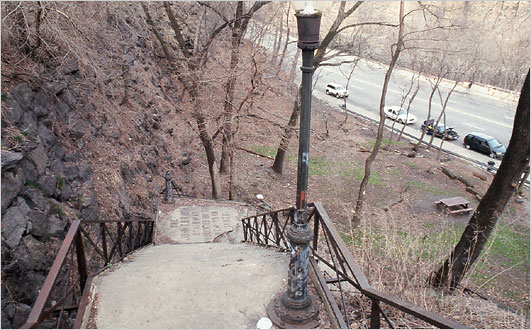
If you get a chance to visit the Highbridge Water Tower, you may want to check out the John T. Brush Stairway. It’s just under a mile walk through one of the park’s trails. You can also walk down Edgecombe Avenue as well.

Near the southern end of Highbridge Park is a promontory near the western shore of the Harlem River named Coogan’s Bluff. A deep escarpment descends 175 feet from Edgecombe Avenue to the river, creating a sheltered area between the bluff and river known as Coogan’s Hollow. For 73 years, the hollow was home to the Polo Grounds stadium.

Fans on Coogan's Bluff watch a game between the Giants and Cubs at the Polo Grounds, September 23, 1908

Fans on Coogan’s Bluff watch a game between the Giants and Cubs at the Polo Grounds, September 23, 1908

From 1890 until 1963, the bluff overlooked the Polo Grounds, a professional sports venue that served as home field for Major League Baseball’s New York Giants from 1891 until the franchise’s move to San Francisco at the end of the 1957 season. Sportswriters commonly used Coogan’s Bluff as a nickname for the Polo Grounds, as Chavez Ravine now refers to Dodger Stadium, although the ballpark was actually situated in Coogan’s Hollow, the bottomland between the bluff and the river.

Coogan’s Bluff had long been a sort of Tightwad Hill for local fans, a place where those unwilling or unable to pay the stadium’s entrance fee had a clear, if distant, view of the proceedings at no charge.

For nearly a half-century, the stairway played a different role, carrying tenants to a high-rise housing project that replaced the Polo Grounds, and until recently they had crumbled into a dim reminder of a once-proud, bygone era.

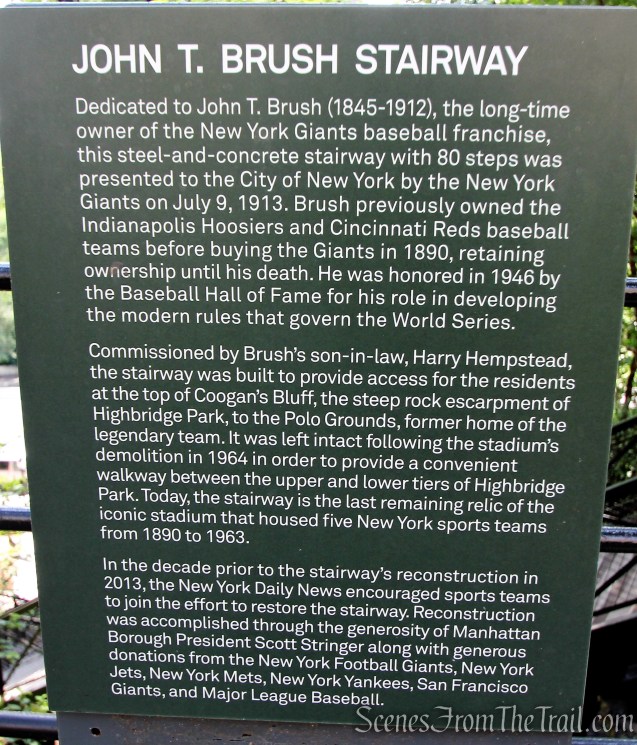
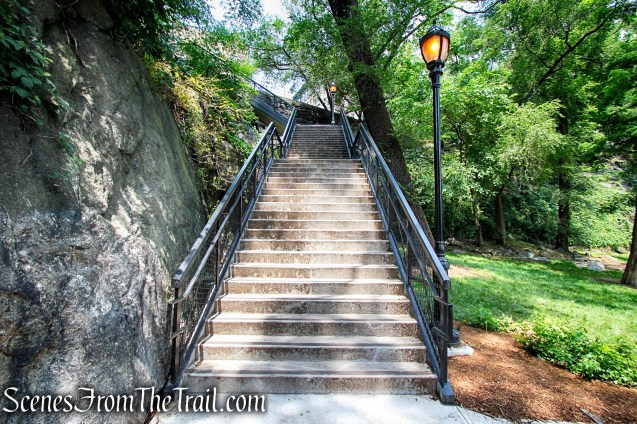
John T. Brush Stairway

John T. Brush Stairway

John T. Brush Stairway

John T. Brush Stairway

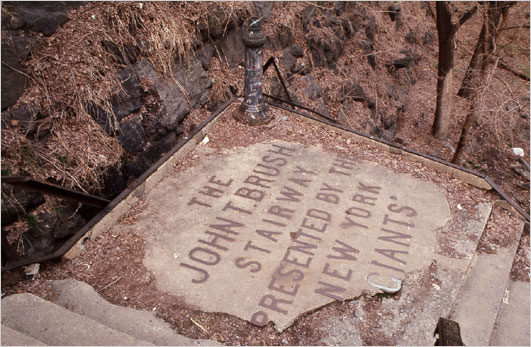
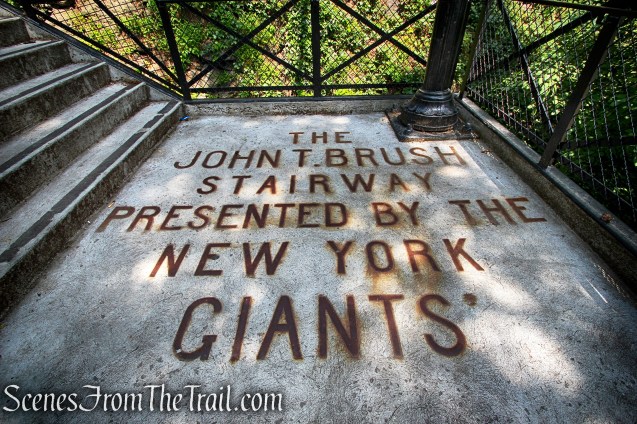
The original steel lettering remained intact for the past century, although corners of the landing had broken away. During restoration, the landing was returned to its original look.

John T. Brush Stairway

John T. Brush Stairway

In 2011, the New York City Parks and Recreation Department launched a $950,000 restoration project and the stairway reopened in 2013. Major League Baseball gave $50,000 to the project, along with other old Polo Grounds tenants, the San Francisco Giants; the Yankees, who played there from 1913-23; the Mets; the New York Jets (nee Titans), who played their first four AFL seasons there, and the New York football Giants, who played there from 1925-55.

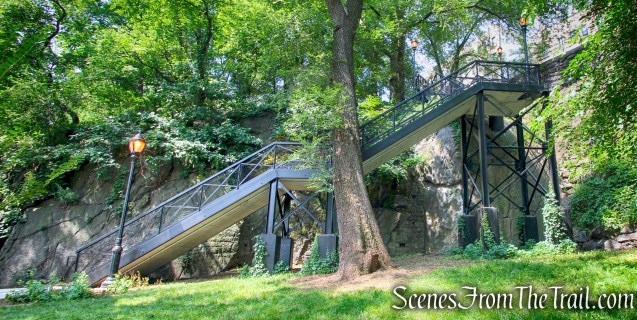
John T. Brush Stairway - High Bridge Park

John T. Brush Stairway – High Bridge Park

John T. Brush Stairway - High Bridge Park

John T. Brush Stairway – High Bridge Park

John T. Brush Stairway - High Bridge Park

John T. Brush Stairway – High Bridge Park

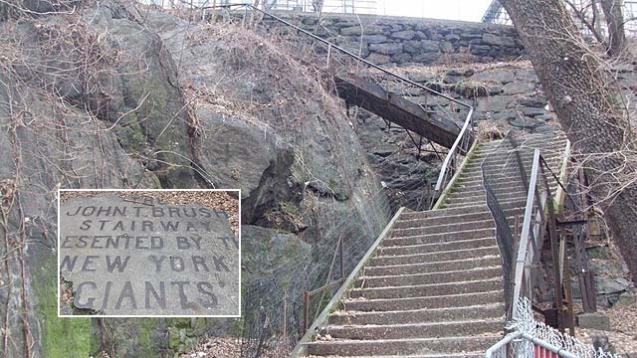
About halfway up the stairway there is a landing, before the steps turn left to the top of Coogan’s Bluff (Edgecombe Avenue). Steel letters in the concrete landing read: “The John T. Brush Stairway. Presented by the New York Giants.”

John T. Brush Stairway - High Bridge Park

John T. Brush Stairway – High Bridge Park

John T. Brush Stairway - High Bridge Park

John T. Brush Stairway – High Bridge Park


Sources:


Ramapo Lake Loop – Ramapo Mountain State Forest

October 9, 2021 – Oakland, New Jersey

Difficulty: Easy

Length: Approximately 4 miles

Max elevation: 590 ft.– total elevation gain approximately 317 ft.

Route type: Lollipop Loop

Buy Map: Northern New Jersey Highlands Trails Map 2021

Free Map: Ramapo Mountain State Forest Map 2021

Avenza Maps: Northern New Jersey Highlands (#150 Ramapos Only) 2021

Trailhead parking: Ramapo Lake Trailhead – 67 Skyline Drive, Oakland, NJ 07436

No entrance or parking fees – parking lot often fills up early on weekends


Overview:

Ramapo Mountain State Forest located in Bergen and Passaic Counties in New Jersey, is a rugged 4,269-acre area, with elevations ranging from about 200 to 1,100 feet, offering hikers nearly 30 miles of trails for their enjoyment. From meandering old roads, to historic trails, to more challenging rock scrambles, the area offers something for outdoor enthusiasts of all skill levels.

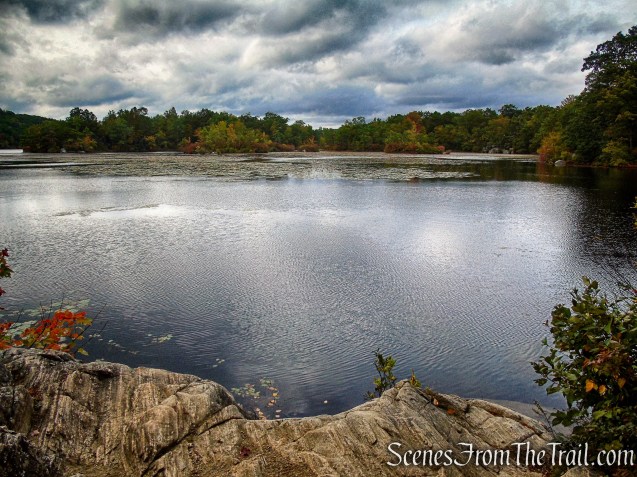
The central feature of the area is the scenic 120-acre Ramapo Lake, which has spectacular views from numerous rock outcroppings and ledges, and offers excellent opportunities for fishermen. The ponds, streams and marshes found within the forest provide the perfect habitat for birds and other wildlife species.

Ramapo Lake - Ramapo Mountain State Forest

Ramapo Lake – Ramapo Mountain State Forest

The Ramapo Mountain State Forest, which includes wild lands in the municipalities of Oakland (Bergen County), Pompton Lakes, Ringwood and Wanaque, borders Ringwood State Park and the Ramapo Valley County Reservation, a part of the Bergen County Park System. The park is operated and maintained by the New Jersey Division of Parks and Forestry.

Ramapo Mountain State Forest

Ramapo Mountain State Forest


Trails Overview:

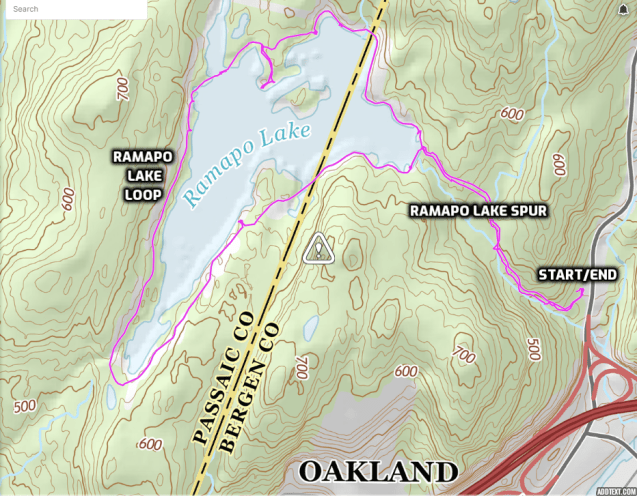
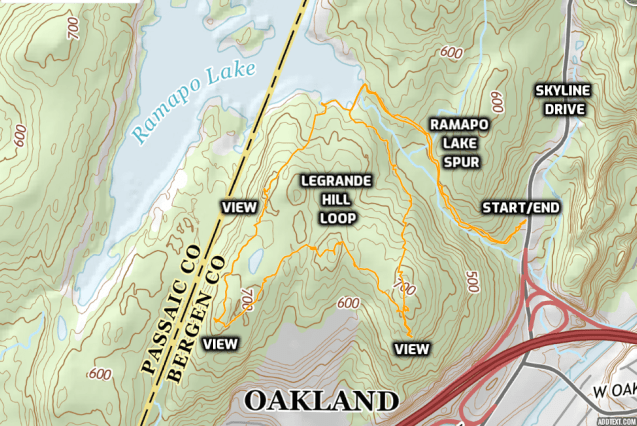
The Ramapo Lake Loop Trail (2.6 miles), which encircles the man-made lake, is a popular hike, accessed from the lower parking lot on Skyline Drive via the Ramapo Lake Spur (0.6 mile). The trail around the lake is a mostly level woods road with a few minor ups and downs. Ramapo Lake is the hub of the trail system in the 1,400-acre Ramapo Lake Natural Area within the forest.

The Ramapo Lake Spur Trail is an uphill walk from the parking lot on an eroded and rocky woods road, gaining about 190 feet of elevation in about 0.6 mile.


Hike Overview:

Dealing with some health issues, I was looking for a relaxing walk where I could just soak in some nature on a mild October day. This hike was perfect and it really fit the bill. Knowing that the parking lot fills up early on weekends, we arrived shortly before 9am on a Saturday morning. The lot was already nearly full, but we managed to find a spot to park. We did the loop clockwise stopping often to take photographs and take in the scenery.

Ramapo Lake Loop - Ramapo Mountain State Forest

Ramapo Lake Loop – Ramapo Mountain State Forest

Besides the initial uphill, the rest of the hike was an easy stroll around the lake. The elevation graph below illustrates the gentle ups and downs for most of the hike.

elevation profile - Ramapo Lake Loop

elevation profile – Ramapo Lake Loop

This hike can be combined with the LeGrande Hill Loop or the Van Slyke Castle Loop.


The Hike:

At the southern end of the parking area, a triple black-square-on-blue blaze marks the start of the Ramapo Lake Spur. Follow the trail into the woods, passing stone ruins. After going up a steep pitch, the trail continues to climb on a wide, rocky path, paralleling a cascading brook (particularly attractive after heavy rains).

Ramapo Lake Spur - Ramapo Mountain State Forest

Ramapo Lake Spur – Ramapo Mountain State Forest

Ramapo Lake Spur - Ramapo Mountain State Forest

Ramapo Lake Spur – Ramapo Mountain State Forest

Ramapo Lake Spur - Ramapo Mountain State Forest

Ramapo Lake Spur – Ramapo Mountain State Forest

Ramapo Lake Spur - Ramapo Mountain State Forest

Ramapo Lake Spur – Ramapo Mountain State Forest

Ramapo Lake Spur - Ramapo Mountain State Forest

Ramapo Lake Spur – Ramapo Mountain State Forest

As you approach the crest of the rise, you’ll cross a stream on rocks. A short distance beyond, the white-blazed Castle Loop joins from the right. Just ahead, the trails bear left at a fork and descend to a trail junction at Ramapo Lake, where the Ramapo Lake Spur ends (there are street signs at the junction for South Shore Drive, North Shore Drive and Rye Cliff Road). Here, you should turn left, crossing the dam of Ramapo Lake.

Ramapo Lake Spur - Ramapo Mountain State Forest

Ramapo Lake Spur – Ramapo Mountain State Forest

Ramapo Lake Spur - Ramapo Mountain State Forest

Ramapo Lake Spur – Ramapo Mountain State Forest

Ramapo Lake Spur - Ramapo Mountain State Forest

Ramapo Lake Spur – Ramapo Mountain State Forest

Ramapo Lake Spur - Ramapo Mountain State Forest

Ramapo Lake Spur – Ramapo Mountain State Forest

terminus of Ramapo Lake Spur

terminus of Ramapo Lake Spur

turn left on Ramapo Lake Loop

turn left on Ramapo Lake Loop

Ramapo Lake Loop - Ramapo Mountain State Forest

Ramapo Lake Loop – Ramapo Mountain State Forest

Ramapo Lake Loop - Ramapo Mountain State Forest

Ramapo Lake Loop – Ramapo Mountain State Forest

On the other side of the dam, a triple blue-on-white blaze marks the start of the Ramapo Lake Loop. You will be following this trail in a clockwise direction around the lake. Just ahead, the red-on-white-blazed LeGrande Hill Loop begins on the left, and for the next 500 feet, the route is co-blazed with red-on-white markers. Continue to follow the blue-on-white blazes along the wide gravel road, which runs close to the lakeshore, with views across the lake. To the north, atop a hill with several pines, you can see the ruins of Foxcroft, a mansion built in 1910 which fell into disrepair in the 1950’s. (The Castle Loop, which leads to the ruins of this mansion, is another great hike in this area.)

Ramapo Lake Loop - Ramapo Mountain State Forest

Ramapo Lake Loop – Ramapo Mountain State Forest

Ramapo Lake Loop - Ramapo Mountain State Forest

Ramapo Lake Loop – Ramapo Mountain State Forest

Ramapo Lake Loop - Ramapo Mountain State Forest

Ramapo Lake Loop – Ramapo Mountain State Forest

Ramapo Lake Loop - Ramapo Mountain State Forest

Ramapo Lake Loop – Ramapo Mountain State Forest

The road proceeds through dense vegetation, crosses a causeway over an arm of the lake, and passes a swamp on the left and several interesting rock outcrops. It then moves away from the lakeshore but continues to parallel it, with views over the lake through the trees.

Ramapo Lake Loop - Ramapo Mountain State Forest

Ramapo Lake Loop – Ramapo Mountain State Forest

Ramapo Lake Loop - Ramapo Mountain State Forest

Ramapo Lake Loop – Ramapo Mountain State Forest

Just past the southern end of the lake, about a mile from the dam, the road reaches a T-intersection. Here, the red/blue LeGrande-Lake Connector begins on the left, but you should turn right to continue on the Ramapo Lake Loop. Then, in another 300 feet, bear right at a Y-intersection where the Cannonball Trail, marked by white-“C”-on-red blazes, joins from the left.

Ramapo Lake Loop - Ramapo Mountain State Forest

Ramapo Lake Loop – Ramapo Mountain State Forest

Ramapo Lake Loop - Ramapo Mountain State Forest

Ramapo Lake Loop – Ramapo Mountain State Forest

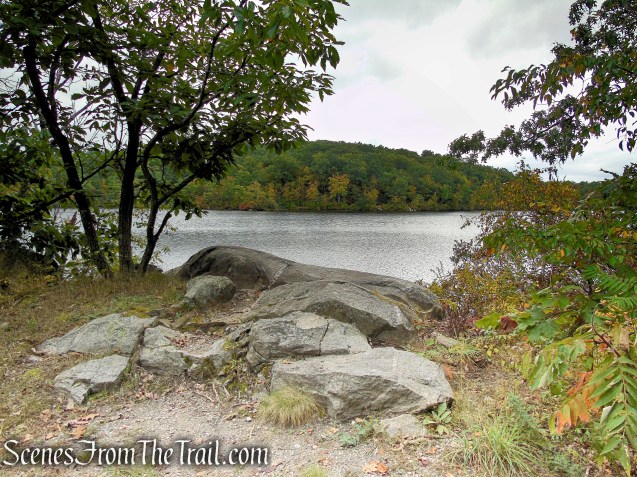
You’re now heading north through dense vegetation, paralleling the western shore of Ramapo Lake. At first, the road runs some distance from the water, but after a while, the lake can be seen through the trees. In half a mile, you’ll pass a building on the hillside to the left (formerly used as a ranger station) and, a short distance beyond, a rock ledge to the right of the trail offers a pleasant view of the lake.

Ramapo Lake Loop - Ramapo Mountain State Forest

Ramapo Lake Loop – Ramapo Mountain State Forest

Ramapo Lake Loop - Ramapo Mountain State Forest

Ramapo Lake Loop – Ramapo Mountain State Forest

Ramapo Lake Loop - Ramapo Mountain State Forest

Ramapo Lake Loop – Ramapo Mountain State Forest

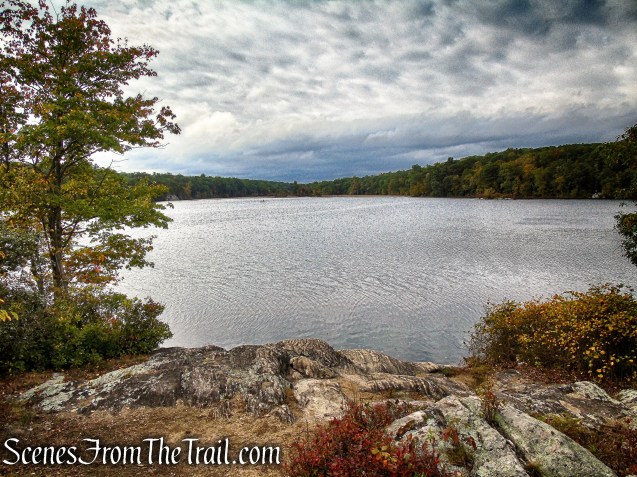
Soon, another gravel road joins from the left. Follow the road ahead, crossing a stone causeway that isolates a quiet pond on the left from the main body of the lake. Next, you’ll reach another Y-intersection. Here, the Cannonball Trail turns left onto an intersecting gravel road, but you should bear right and continue to follow the blue-on-white blazes. A short distance ahead, you’ll notice a triple-blue blaze on the right. Follow this blue-blazed side trail for 500 feet to a rock outcrop overlooking the lake. After taking in the view, return to the Ramapo Lake Loop and turn right.

Ramapo Lake Loop - Ramapo Mountain State Forest

Ramapo Lake Loop – Ramapo Mountain State Forest

Ramapo Lake Loop - Ramapo Mountain State Forest

Ramapo Lake Loop – Ramapo Mountain State Forest

Ramapo Lake Loop - Ramapo Mountain State Forest

Ramapo Lake Loop – Ramapo Mountain State Forest

Ramapo Lake Loop - Ramapo Mountain State Forest

Ramapo Lake Loop – Ramapo Mountain State Forest

Ramapo Lake Loop - Ramapo Mountain State Forest

Ramapo Lake Loop – Ramapo Mountain State Forest

Ramapo Lake Loop - Ramapo Mountain State Forest

Ramapo Lake Loop – Ramapo Mountain State Forest

Ramapo Lake Loop - Ramapo Mountain State Forest

Ramapo Lake Loop – Ramapo Mountain State Forest

Ramapo Lake Loop - Ramapo Mountain State Forest

Ramapo Lake Loop – Ramapo Mountain State Forest

Ramapo Lake Loop - Ramapo Mountain State Forest

Ramapo Lake Loop – Ramapo Mountain State Forest

Ramapo Lake Loop - Ramapo Mountain State Forest

Ramapo Lake Loop – Ramapo Mountain State Forest

After passing a small, abandoned stone building on the right, there are open views of Ramapo Lake from the shoreline.

Ramapo Lake Loop - Ramapo Mountain State Forest

Ramapo Lake Loop – Ramapo Mountain State Forest

Ramapo Lake Loop - Ramapo Mountain State Forest

Ramapo Lake Loop – Ramapo Mountain State Forest

Ramapo Lake Loop - Ramapo Mountain State Forest

Ramapo Lake Loop – Ramapo Mountain State Forest

Ramapo Lake Loop - Ramapo Mountain State Forest

Ramapo Lake Loop – Ramapo Mountain State Forest

Ramapo Lake Loop - Ramapo Mountain State Forest

Ramapo Lake Loop – Ramapo Mountain State Forest

A short distance later, you’ll come to another intersection. Here, you should bear right, once more joining the white-blazed Castle Loop. Follow the white and blue-on-white-blazed gravel road that runs close to the shore along the northern end of the lake, passing a viewpoint over the lake from a rock ledge on the right.

Ramapo Lake Loop - Ramapo Mountain State Forest

Ramapo Lake Loop – Ramapo Mountain State Forest

Ramapo Lake Loop - Ramapo Mountain State Forest

Ramapo Lake Loop – Ramapo Mountain State Forest

Ramapo Lake Loop - Ramapo Mountain State Forest

Ramapo Lake Loop – Ramapo Mountain State Forest

Ramapo Lake Loop - Ramapo Mountain State Forest

Ramapo Lake Loop – Ramapo Mountain State Forest

Ramapo Lake Loop - Ramapo Mountain State Forest

Ramapo Lake Loop – Ramapo Mountain State Forest

Ramapo Lake Loop - Ramapo Mountain State Forest

Ramapo Lake Loop – Ramapo Mountain State Forest

Ramapo Lake Loop - Ramapo Mountain State Forest

Ramapo Lake Loop – Ramapo Mountain State Forest

Ramapo Lake Loop - Ramapo Mountain State Forest

Ramapo Lake Loop – Ramapo Mountain State Forest

Soon, you’ll pass a private residence on a ledge to the left. At the end of the lake, a triple blue-on-white blaze marks the end of the Ramapo Lake Loop. Continue ahead to a T-intersection with street signs, proceed through a gap in the guardrail at a sign for the Castle Loop Trail and the Ramapo Lake Spur Trail, and continue along the black-square-on-blue-blazed Ramapo Lake Spur, retracing your steps back to the parking area where the hike began.

Ramapo Lake Loop - Ramapo Mountain State Forest

Ramapo Lake Loop – Ramapo Mountain State Forest

Ramapo Lake Loop - Ramapo Mountain State Forest

Ramapo Lake Loop – Ramapo Mountain State Forest

Ramapo Lake Loop - Ramapo Mountain State Forest

Ramapo Lake Loop – Ramapo Mountain State Forest

Ramapo Lake Loop - Ramapo Mountain State Forest

Ramapo Lake Loop – Ramapo Mountain State Forest

Ramapo Lake Loop - Ramapo Mountain State Forest

Ramapo Lake Loop – Ramapo Mountain State Forest

Ramapo Lake Loop - Ramapo Mountain State Forest

Ramapo Lake Loop – Ramapo Mountain State Forest

Ramapo Lake Loop - Ramapo Mountain State Forest

Ramapo Lake Loop – Ramapo Mountain State Forest

Ramapo Lake Loop - Ramapo Mountain State Forest

Ramapo Lake Loop – Ramapo Mountain State Forest

Ramapo Lake Loop - Ramapo Mountain State Forest

Ramapo Lake Loop – Ramapo Mountain State Forest

Ramapo Lake Loop - Ramapo Mountain State Forest

Ramapo Lake Loop – Ramapo Mountain State Forest


Review:

A beautiful area to spend a few hours. More like a stroll than a hike, but worth a visit nonetheless. Especially scenic in Autumn when the leaves change. Although there was quite a few people here on a Saturday, it didn’t feel crowded. Many viewpoints over the lake to relax and enjoy a snack.

Pros:

Extremely scenic landscape, well marked trails.

Cons:

Can get crowded on weekends, no overflow parking.


Take a hike!

Ramapo Lake Loop - Ramapo Mountain State Forest

Ramapo Lake Loop – Ramapo Mountain State Forest


Sources:


LeGrande Hill Loop – Ramapo Mountain State Forest

September 19, 2021 – Oakland, New Jersey

Difficulty: Moderate

Length: Approximately 4 miles

Max elevation: 716 ft.– total elevation gain approximately 564 ft.

Route type: Lollipop Loop

Buy Map: Northern New Jersey Highlands Trails Map 2021

Free Map: Ramapo Mountain State Forest Map 2021

Avenza Maps: Northern New Jersey Highlands (#150 Ramapos Only) 2021

Trailhead parking: Ramapo Lake Trailhead – 67 Skyline Drive, Oakland, NJ 07436

No entrance or parking fees – parking lot often fills up early on weekends


Overview:

Ramapo Mountain State Forest located in Bergen and Passaic Counties in New Jersey, is a rugged 4,269-acre area, with elevations ranging from about 200 to 1,100 feet, offering hikers nearly 30 miles of trails for their enjoyment. From meandering old roads, to historic trails, to more challenging rock scrambles, the area offers something for outdoor enthusiasts of all skill levels.

The central feature of the area is the scenic 120-acre Ramapo Lake, which has spectacular views from numerous rock outcroppings and ledges, and offers excellent opportunities for fishermen. The ponds, streams and marshes found within the forest provide the perfect habitat for birds and other wildlife species.

Ramapo Lake - Ramapo Mountain State Forest

Ramapo Lake – Ramapo Mountain State Forest

The Ramapo Mountain State Forest, which includes wild lands in the municipalities of Oakland (Bergen County), Pompton Lakes, Ringwood and Wanaque, borders Ringwood State Park and the Ramapo Valley County Reservation, a part of the Bergen County Park System. The park is operated and maintained by the New Jersey Division of Parks and Forestry.

Ramapo Mountain State Forest

Ramapo Mountain State Forest


Trails Overview:

A system of marked hiking and multi-use trails are available for the public to explore. The nearly 30 miles of trails offer visitors opportunities to hike interior woodlands and rocky vistas. Sweeping views of the New York City Skyline and the surrounding hillsides await outdoor enthusiasts.

The Ramapo Lake Spur Trail is an uphill walk from the parking lot on an eroded and rocky woods road, gaining about 190 feet of elevation in about 0.6 mile.

Ramapo Lake Spur – Ramapo Mountain State Forest

Ramapo Lake Spur – Ramapo Mountain State Forest

The LeGrande Hill Loop Trail (1.9 mi) is a short loop trail southeast of Ramapo Lake. The trail follows a creek then winds through hillsides above the Ramapo River.

LeGrande Hill Loop – Ramapo Mountain State Forest

LeGrande Hill Loop – Ramapo Mountain State Forest


Hike Overview:

This is a good moderate loop hike through a picturesque area. Views of the lake and from the viewpoints make this hike worth the minimal effort. The trails are well marked and easy to follow. This Lollipop-Loop was done in a clockwise manner, with the “stick” being the Ramapo Lake Spur.

LeGrande Hill Loop – Ramapo Mountain State Forest

LeGrande Hill Loop – Ramapo Mountain State Forest

There are a couple of steep sections, but mostly just gradual ups and downs.

elevation profile - LeGrande Hill Loop

elevation profile – LeGrande Hill Loop


The Hike:

At the southern end of the parking area, a triple black-square-on-blue blaze marks the start of the Ramapo Lake Spur. Follow the trail into the woods, passing stone ruins. After going up a steep pitch, the trail continues to climb on a wide, rocky path, paralleling a cascading brook (particularly attractive after heavy rains).

Ramapo Lake Spur – Ramapo Mountain State Forest

Ramapo Lake Spur – Ramapo Mountain State Forest

Ramapo Lake Spur – Ramapo Mountain State Forest

Ramapo Lake Spur – Ramapo Mountain State Forest

Ramapo Lake Spur – Ramapo Mountain State Forest

Ramapo Lake Spur – Ramapo Mountain State Forest

Ramapo Lake Spur – Ramapo Mountain State Forest

Ramapo Lake Spur – Ramapo Mountain State Forest

Ramapo Lake Spur – Ramapo Mountain State Forest

Ramapo Lake Spur – Ramapo Mountain State Forest

Ramapo Lake Spur – Ramapo Mountain State Forest

Ramapo Lake Spur – Ramapo Mountain State Forest

Ramapo Lake Spur – Ramapo Mountain State Forest

Ramapo Lake Spur – Ramapo Mountain State Forest

Ramapo Lake Spur – Ramapo Mountain State Forest

Ramapo Lake Spur – Ramapo Mountain State Forest

Ramapo Lake Spur – Ramapo Mountain State Forest

Ramapo Lake Spur – Ramapo Mountain State Forest

Ramapo Lake Spur – Ramapo Mountain State Forest

Ramapo Lake Spur – Ramapo Mountain State Forest

As you approach the crest of the rise, you’ll cross a stream on rocks. A short distance beyond, the white-blazed Castle Loop joins from the right. Just ahead, the trails bear left at a fork and descend to a trail junction at Ramapo Lake, where the Ramapo Lake Spur ends (there are street signs at the junction for South Shore Drive, North Shore Drive and Rye Cliff Road). Here, you should turn left, crossing the dam of Ramapo Lake.

Ramapo Lake Spur – Ramapo Mountain State Forest

Ramapo Lake Spur – Ramapo Mountain State Forest

Ramapo Lake Spur – Ramapo Mountain State Forest

Ramapo Lake Spur – Ramapo Mountain State Forest

Ramapo Lake Spur – Ramapo Mountain State Forest

Ramapo Lake Spur – Ramapo Mountain State Forest

Ramapo Lake Spur – Ramapo Mountain State Forest

Ramapo Lake Spur – Ramapo Mountain State Forest

Ramapo Lake Spur – Ramapo Mountain State Forest

Ramapo Lake Spur – Ramapo Mountain State Forest

terminus of Ramapo Lake Spur

terminus of Ramapo Lake Spur

Ramapo Lake Loop - Ramapo Mountain State Forest

Ramapo Lake Loop – Ramapo Mountain State Forest

Ramapo Lake Dam – Ramapo Mountain State Forest

Ramapo Lake Dam – Ramapo Mountain State Forest

Ramapo Lake – Ramapo Mountain State Forest

Ramapo Lake – Ramapo Mountain State Forest

On the other side of the dam, a triple blue-on-white blaze marks the start of the Ramapo Lake Loop. Just ahead, a sign marks the start of the red-on-white-blazed LeGrande Hill Loop. Turn left, leaving the lakeshore road, and follow the red-on-white trail, which rises briefly, then dips down to parallel a stream (the other side of the stream that you followed on the way up to the lake). Soon, it turns away from the stream and begins a steady climb for about a quarter of a mile. At the crest of the rise, the trail levels off, descends slightly and soon turns sharply right.

Ramapo Lake Loop – Ramapo Mountain State Forest

Ramapo Lake Loop – Ramapo Mountain State Forest

Ramapo Lake Loop – Ramapo Mountain State Forest

Ramapo Lake Loop – Ramapo Mountain State Forest

LeGrande Hill Loop – Ramapo Mountain State Forest

LeGrande Hill Loop – Ramapo Mountain State Forest

LeGrande Hill Loop – Ramapo Mountain State Forest

LeGrande Hill Loop – Ramapo Mountain State Forest

LeGrande Hill Loop – Ramapo Mountain State Forest

LeGrande Hill Loop – Ramapo Mountain State Forest

LeGrande Hill Loop – Ramapo Mountain State Forest

LeGrande Hill Loop – Ramapo Mountain State Forest

LeGrande Hill Loop – Ramapo Mountain State Forest

LeGrande Hill Loop – Ramapo Mountain State Forest

LeGrande Hill Loop – Ramapo Mountain State Forest

LeGrande Hill Loop – Ramapo Mountain State Forest

LeGrande Hill Loop – Ramapo Mountain State Forest

LeGrande Hill Loop – Ramapo Mountain State Forest

LeGrande Hill Loop – Ramapo Mountain State Forest

LeGrande Hill Loop – Ramapo Mountain State Forest

At the spot where the trail turns sharp right, there is a faint footpath straight ahead which offers some nice views south of Bergen County and beyond.

south-facing viewpoint just off the LeGrande Hill Loop Trail

south-facing viewpoint just off the LeGrande Hill Loop Trail

south-facing viewpoint just off the LeGrande Hill Loop Trail

south-facing viewpoint just off the LeGrande Hill Loop Trail

Return to the trail and bear left. Just beyond the sharp right turn, you’ll notice a rock outcrop on the left. Turn left and climb this outcrop, which offers a panoramic southwest-facing view. Pompton Lake is visible on the left, and the ridge of Pyramid Mountain may be seen on the right. We missed this view.

LeGrande Hill Loop – Ramapo Mountain State Forest

LeGrande Hill Loop – Ramapo Mountain State Forest

Return to the trail and turn left. The red-on-white trail continues at about the same elevation, with several short but steep ups and downs, for two-thirds of a mile. Along the way, a side trail on the left (reached after a short climb) leads to another rock ledge with a limited east-facing view.

LeGrande Hill Loop – Ramapo Mountain State Forest

LeGrande Hill Loop – Ramapo Mountain State Forest

limited east-facing view - LeGrande Hill Loop

limited east-facing view – LeGrande Hill Loop

Then, after passing a cliff on the right and climbing around to the top of the cliff, you’ll reach a junction with the red/blue-blazed LeGrande-Lake Connector amidst pine trees. Turn left at this junction and follow the red/blue trail. A few steps ahead along this trail is a rock outcrop, with pitch pines. At the base of the outcrop, a short trail leads to a west-facing viewpoint. The Wyanokies stand out in sharp contrast against the horizon.

LeGrande Hill Loop – Ramapo Mountain State Forest

LeGrande Hill Loop – Ramapo Mountain State Forest

turn left red/blue-blazed LeGrande-Lake Connector Trail

turn left red/blue-blazed LeGrande-Lake Connector Trail

west-facing viewpoint - LeGrande-Lake Connector Trail

west-facing viewpoint – LeGrande-Lake Connector Trail

west-facing viewpoint - LeGrande-Lake Connector Trail

west-facing viewpoint – LeGrande-Lake Connector Trail

Return to the junction and bear left on the red-on-white-blazed LeGrande Hill Loop. Soon, you’ll reach a rock ledge with a broader view over the Wyanokies in the distance.

LeGrande Hill Loop – Ramapo Mountain State Forest

LeGrande Hill Loop – Ramapo Mountain State Forest

LeGrande Hill Loop – Ramapo Mountain State Forest

LeGrande Hill Loop – Ramapo Mountain State Forest

view over the Wyanokies - LeGrande Hill Loop

view over the Wyanokies – LeGrande Hill Loop

Then, after crossing a seasonal stream, the trail climbs to pass a vernal pool, below on the right. After climbing some more, you’ll reach a rock outcrop with an expansive view over the Wyanokies and Ramapo Lake below. You’ll want to pause here to enjoy the view.

LeGrande Hill Loop – Ramapo Mountain State Forest

LeGrande Hill Loop – Ramapo Mountain State Forest

LeGrande Hill Loop – Ramapo Mountain State Forest

LeGrande Hill Loop – Ramapo Mountain State Forest

LeGrande Hill Loop – Ramapo Mountain State Forest

LeGrande Hill Loop – Ramapo Mountain State Forest

LeGrande Hill Loop – Ramapo Mountain State Forest

LeGrande Hill Loop – Ramapo Mountain State Forest

The prominent peak behind Ramapo Lake is Windbeam Mountain.

view over the Wyanokies and Ramapo Lake - LeGrande Hill Loop

view over the Wyanokies and Ramapo Lake – LeGrande Hill Loop

From the viewpoint, the trail descends steadily, passing another vernal pool on the right, and soon ends at the gravel road that runs along the shore of the lake.

LeGrande Hill Loop – Ramapo Mountain State Forest

LeGrande Hill Loop – Ramapo Mountain State Forest

LeGrande Hill Loop – Ramapo Mountain State Forest

LeGrande Hill Loop – Ramapo Mountain State Forest

LeGrande Hill Loop – Ramapo Mountain State Forest

LeGrande Hill Loop – Ramapo Mountain State Forest

Ramapo Lake - Ramapo Mountain State Forest

Ramapo Lake – Ramapo Mountain State Forest

Turn right onto the gravel road. The LeGrande Hill Loop is now co-aligned with the blue-on-white-blazed Ramapo Lake Loop Trail. In about 500 feet, the LeGrande Hill Loop Trail ends, closing the loop. Proceed ahead on the blue-on-white-blazed Ramapo Lake Loop Trail, crossing the dam.

LeGrande Hill Loop – Ramapo Mountain State Forest

LeGrande Hill Loop – Ramapo Mountain State Forest

Ramapo Lake Loop – Ramapo Mountain State Forest

Ramapo Lake Loop – Ramapo Mountain State Forest

Ramapo Lake Dam – Ramapo Mountain State Forest

Ramapo Lake Dam – Ramapo Mountain State Forest

Ramapo Lake – Ramapo Mountain State Forest

Ramapo Lake – Ramapo Mountain State Forest

When you reach the north end of the dam, turn right at a sign for the Castle Loop Trail and the Ramapo Lake Spur Trail, proceed through a gap in the guardrail, and continue along the black-square-on-blue-blazed Ramapo Lake Spur, retracing your steps back to the parking area where the hike began.

turn right on Ramapo Lake Spur Trail

turn right on Ramapo Lake Spur Trail

Ramapo Lake Spur – Ramapo Mountain State Forest

Ramapo Lake Spur – Ramapo Mountain State Forest

Ramapo Lake Spur – Ramapo Mountain State Forest

Ramapo Lake Spur – Ramapo Mountain State Forest


Review:

Although the views are less than spectacular, it was a nice hike. We did not see anyone on the LeGrande Hill Loop and a handful near the lake. As always, we got an early start to beat the crowds. The lot was full when we returned to the parking lot at approximately 11:30 am. This hike can be combined with the Ramapo Lake Loop or the Van Slyke Castle Loop for a longer hike.

Pros:

Well marked trails that are easy to follow, scenic area.

Cons:

Parking lot fills up early on weekends, views are not that great.


Take a hike!

LeGrande Hill Loop – Ramapo Mountain State Forest

LeGrande Hill Loop – Ramapo Mountain State Forest


Sources:


Mineral Springs Falls and Jupiter’s Boulder – Black Rock Forest

September 6, 2021 – Highland Mills, NY

Difficulty: Moderate

Length: Approximately 3 miles

Max elevation: 1325 ft.– total elevation gain approximately 636 ft.

Route type: Out and back

Maps: West Hudson Trails Map #113Black Rock Forest trails

Trailhead parking: Old Mineral Springs Road – Highland Mills, NY 10930

No bathrooms on site – No entrance or parking fees

Roadside parking for approximately 8-10 vehicles.

Please note: There is no entry to Black Rock Forest during deer-rifle season.


Overview:

Black Rock Forest in Cornwall, N.Y., features dramatic topography, numerous lakes and streams, and a high diversity of species and habitat, making it a valuable place for research as well as hikes. Located just north of Harriman and west of Storm King state parks, it functions as a 3,914-acre “living laboratory” dedicated to advancing the scientific understanding of the natural world through programs in research, education, and conservation. As a scientific field station that is also open to the public for day use, Black Rock Forest is an incredible resource for exploring and learning about nature in the Hudson Valley.

Linked to Storm King State Park by the Stillman Trail, Black Rock Forest is the largest area in the Highlands with a sustained elevation over 1,200 feet. Here the mountains plunge for more than 1,000 feet to the west, north and south, providing the hiker with sweeping vistas and strongly contrasting habitats.


History:

Since at least the 1690’s, European settlers used Black Rock Forest lands for subsistence farming, livestock grazing, and production of wood products. Commercial farming and lumbering peaked between 1790 and 1880. Homesteaders cultivated wheat, created orchards, and dairy farmed on Forest lands, while continuing to cut timber for cordwood and charcoal. Some Forest lands were also mined for iron ore. Two of the abandoned mines are still visible today on Whitehorse Mountain and on Sackett Ridge.

During the American Revolution. The Continental Army used Continental Road, which bisects the forest, as a route across the mountains from West Point to New Windsor and Newburgh. From Spy Rock, sentinels from Washington’s camp at Newburgh monitored British vessels sailing up the Hudson from Haverstraw Bay.

In the late 1800’s, the Stillman family, drawn by the beauty of the Highlands, began to purchase tracts of mountain land in Cornwall, including homesteaders’ farms that had fallen into disuse. From these lands, Dr. Ernest G. Stillman created Black Rock Forest in 1929, designating it as a resource for forest research and demonstration. Stillman’s forest crew implemented plantings, fertilization trials, and selective logging, and weeded out “undesirable” species. The Forest, much of which had been logged and/or farmed for two centuries, steadily improved in health.

Dr. Ernest G. Stillman, who was dedicated to science, left the forest to Harvard University, his alma mater, by bequest in 1949 and it remained the property of Harvard University until 1989. Black Rock Forest Consortium (now known simply as Black Rock Forest) was formed in 1989 by William T. Golden, following his purchase of the Forest from Harvard, and by 15 founding institutional members.

The forest is now administered by a group of public and private educational and research institutions whose mission is to promote scientific research and excellence in education while carefully managing the ecosystem of the forest. Despite this primary educational emphasis, the Consortium is dedicated to keeping Black Rock Forest open to the public for recreational pursuits such as hiking.


Trails Overview:

There are 23 blazed trails within the forest along with a network of old logging and mining roads, including the Continental Road. Together with cut footpaths, they provide over 30 miles of trails in Black Rock Forest and can be used to form interesting loop hikes.

The white-blazed Scenic Trail, the longest in the forest at 5.9 miles, runs from its western trailhead on Old Mineral Springs Road near Mineral Spring Falls, atop the ridge past Spy Rock to end at a junction with the Stillman Trail near Mount Misery.


Hike Overview:

The Scenic Trail on the west side of the forest is a very rewarding out-and-back hike option for moderate effort. Co-aligned with the Highlands Trail, it’s a 1.35-mile (each way) trek that packs in a magnificent seasonal waterfall, diverse habitat, and views that stretch to the Catskills. It also features the work of the Trail Conference’s Hudson Nor’Westers Trail Crew, who have remediated several wet and/or eroded areas of the trail over the years.

Mineral Springs Falls and Jupiter’s Boulder – Black Rock Forest

Mineral Springs Falls and Jupiter’s Boulder – Black Rock Forest

elevation profile - Mineral Springs Falls and Jupiter’s Boulder

elevation profile – Mineral Springs Falls and Jupiter’s Boulder


The Hike:

You’ll find the trailhead on Old Mineral Springs Road, where there is pull-off parking for about 8-10 cars. This road is owned and maintained by the town and clearly marks where parking ends.

Old Mineral Springs Road

Old Mineral Springs Road

The coaligned Scenic Trail (white blazes) and Highlands Trail (teal diamond blazes) starts on an old woods road. Walk beyond the gate as it heads gradually uphill and past a wooden informational kiosk. Soon the trail heads downhill on the woods road and you should be able to hear the sound of rushing water (depending on the amount of water flow) as the trail parallels Mineral Springs Brook, which is down below on the right.

Old Mineral Springs Road Trailhead

Old Mineral Springs Road Trailhead

Old Mineral Springs Road Trailhead

Old Mineral Springs Road Trailhead

Scenic Trail - Black Rock Forest

Scenic Trail – Black Rock Forest

Scenic Trail - Black Rock Forest

Scenic Trail – Black Rock Forest

Scenic Trail - Black Rock Forest

Scenic Trail – Black Rock Forest

In just about a quarter mile, as the white blazes veer left and start to climb, bear right on an unmarked footpath to reach the base of Mineral Springs Falls, a lovely spot for both quiet meditation and a photo opp.

Scenic Trail - Black Rock Forest

Scenic Trail – Black Rock Forest

Mineral Springs Falls - Black Rock Forest

Mineral Springs Falls – Black Rock Forest

Turn back about 100 feet, and continue following the marked trail to your right, up alongside the waterfall. You may see tall, black mesh fencing as you climb this section, a reminder that Black Rock Forest is an active research center. The fencing is in place to keep deer out and to encourage recovery of native species that have been trampled from overuse.

Scenic Trail - Black Rock Forest

Scenic Trail – Black Rock Forest

Scenic Trail - Black Rock Forest

Scenic Trail – Black Rock Forest

Scenic Trail - Black Rock Forest

Scenic Trail – Black Rock Forest

Scenic Trail - Black Rock Forest

Scenic Trail – Black Rock Forest

The trail skirts walls of rock as it climbs along the waterfall. Hikers are asked to remain on the trail and not venture near the falls to avoid both injury and the impacts of erosion. In an effort to create a safe experience and sustainable trail that will last decades, the Hudson Nor’Westers Crew built a beautiful stone staircase along this section in 2019.

Upper Mineral Springs Falls - Black Rock Forest

Upper Mineral Springs Falls – Black Rock Forest

Scenic Trail - Black Rock Forest

Scenic Trail – Black Rock Forest

Scenic Trail - Black Rock Forest

Scenic Trail – Black Rock Forest

After enjoying the view of the upper falls and the splendidly built trail, continue your rolling ascent along the stream through hemlock groves, mountain laurel, and a young birch forest. Along the way you’ll encounter additional handiwork of the Nor’Westers Crew in the form of two stepping stone bridges that cross Mineral Springs Brook.

Scenic Trail - Black Rock Forest

Scenic Trail – Black Rock Forest

Scenic Trail - Black Rock Forest

Scenic Trail – Black Rock Forest

Scenic Trail - Black Rock Forest

Scenic Trail – Black Rock Forest

Scenic Trail - Black Rock Forest

Scenic Trail – Black Rock Forest

Scenic Trail - Black Rock Forest

Scenic Trail – Black Rock Forest

After crossing the brook a second time, the trail begins a steady ascent on a rocky footpath. In just under another 0.7 mile, Jupiter’s Boulder will appear to your left, marking the turnaround point for this hike. Pausing at this glacial erratic, enjoy the views of Schunnemunk Mountain to your right, the Shawangunk Ridge beyond it, and the Catskill Mountains rising in the distance. This makes for a good spot to take a break and connect with nature. When you are ready to turn back, retrace your steps, following the white and teal blazes back to the trailhead, where the hike began.

Scenic Trail - Black Rock Forest

Scenic Trail – Black Rock Forest

Scenic Trail - Black Rock Forest

Scenic Trail – Black Rock Forest

Scenic Trail - Black Rock Forest

Scenic Trail – Black Rock Forest

Scenic Trail - Black Rock Forest

Scenic Trail – Black Rock Forest

Scenic Trail - Black Rock Forest

Scenic Trail – Black Rock Forest

Jupiter’s Boulder - Black Rock Forest

Jupiter’s Boulder – Black Rock Forest

Jupiter’s Boulder - Black Rock Forest

Jupiter’s Boulder – Black Rock Forest

Jupiter’s Boulder - Black Rock Forest

Jupiter’s Boulder – Black Rock Forest

Jupiter’s Boulder - Black Rock Forest

Jupiter’s Boulder – Black Rock Forest


Review:

A splendid out and back hike through a lesser traveled area of Black Rock Forest. As with most waterfalls, it is better to visit after rainfall for a stronger flow. A good pair of hiking boots is strongly recommended as the trail is rocky and the rocks become quite slick when wet. This writer slipped and fell at Jupiter’s Boulder due to wet conditions. The views are not the best and are probably better during leaf-off season, but still a good hike. We got an early start and only ran in to a pair of hikers at Jupiter’s Boulder, but on the way back passed several small groups near the waterfall.

Pros:

Mineral Springs Falls, Jupiter’s Boulder, lightly trafficked, well marked trails.

Cons:

Rocky trails become very slick when wet.


Take a hike!

Mineral Springs Falls and Jupiter’s Boulder – Black Rock Forest

Mineral Springs Falls and Jupiter’s Boulder – Black Rock Forest


Sources:


Pine Hill Loop – Pootatuck State Forest

July 31, 2021 – New Fairfield, Connecticut

Difficulty: Moderate

Length: Approximately 3.6 miles

Max elevation: 1,224 ft.– total elevation gain approximately 719 ft.

Route type: Figure-8 Loop

Map: Pootatuck State Forest Trail Map – DEEP

Avenza App Map (Free): Pootatuck State Forest Trail Map for Avenza

Trailhead parking: 230 Pine Hill Road – New Fairfield, CT 06812

No bathrooms on site – No entrance or parking fees

Parking for approximately 15 vehicles in a gravel lot at the Pine Hill trailhead.


Overview:

Pootatuck State Forest is almost 1,200 acres. It is located primarily in New Fairfield, with a small portion in Sherman. The main block of the Forest rises steeply from the western shore of Squantz Pond. The trails can be accessed from Squantz Pond State Park trails as well as from the Pine Hill Trailhead, off of Pine Hill Road. Recreational activities include hiking, mountain biking, letterboxing, hunting, birdwatching, snowmobiling, and cross-country skiing.

Pine Hill Trailhead - Pootatuck State Forest

Pine Hill Trailhead – Pootatuck State Forest

There are two smaller Pootatuck State Forest property parcels in New Fairfield, near to but disconnected from the main property and Squantz Pond State Park.

  • The Western Pootatuck State Forest parcel is located north of Beaver Bog Road just west of the intersection of Beaver Bog Road and Short Woods Road.
  • The Southern Pootatuck State Forest parcel is located between Short Woods Road and CT Route 39 slightly south of the intersection of Beaver Bog Road and Short Woods Road.

Pootatuck State Forest is comprised of steep wooded slopes, interesting rock formations and seasonal mountain streams with a scenic view from a rock outcrop, overlooking Squantz Pond and Candlewood Lake.

Blue Trail - Pootatuck State Forest

Blue Trail – Pootatuck State Forest


History:

Pootatuck (also Pohtatuck, Potatuck) is an Algonquian term translating to “river of the falls,” “falls in river,” or “river with many falls,” depending on where you look.

Most of the Forest was acquired in the 1920’s for about $10 per acre. In the 1930’s, the Civilian Conservation Corps (CCC) established a work camp (Camp Hook – May 24, 1933 to Oct. 30, 1935) at the adjacent Squantz Pond State Park. The CCC was very active in the Forest. They planted trees, built roads and fire ponds, salvaged dying chestnut trees for posts and poles, and did forest thinnings to produce firewood. The Civilian Conservation Corps (CCC) left a legacy of hiking trails and fire roads in Pootatuck State Forest that are still in use today.


Trails Overview:

Pootatuck State Forest offers five miles of trails “with various degrees of difficulty.” The official trails are a combination of marked footpaths/old charcoal-wagon roads and wider unmarked fire roads that were constructed by the Civilian Conservation Corps (CCC) in the 1930’s. The scenic view of Squantz Pond and Candlewood Lake from a large rock outcrop, makes for a worthy destination. The trails in Pootatuck State Forest can be combined with those in Squantz Pond State Park. The trails that were hiked on this day were almost entirely shaded by dense tree cover.

Pootatuck State Forest Map

Pootatuck State Forest Map

The marked trails are well blazed and maintained. The fire roads, although not blazed are in great shape and easy to follow.


Hike Overview:

Still dealing with some knee issues, I was searching for a moderate short hike with decent views and no crowds. Having hiked Squantz Pond State Park in 2019, I decided to check out the upper trails that connect the State Park and Forest. I was not disappointed. This is a beautiful forest with slightly challenging uphills and a gorgeous view. Getting an early start and hitting the trail by 8:15am on a Saturday morning in July, we did not encounter any other hikers until we were on the last stretch of the Fire Road, less than 1/4 mile from the parking area.

This hike is a Figure 8 Loop, beginning at the Pine Hill Trailhead.

Pine Hill Loop - Pootatuck State Forest

Pine Hill Loop – Pootatuck State Forest

This hike descends from the top of the mountain at the start, leaving a lot of the elevation gain towards the back end. Although I have rated it as moderate, there are some short steep descents on the Blue Trail and a sustained ascent along the Yellow Trail from the Fire Road.

elevation profile - Pootatuck State Forest

elevation profile – Pootatuck State Forest


The Hike:

At the back end of the parking lot, walk past the metal barrier onto the fire road, labeled on the trail map as “Forest/CCC Road.” Proceed ahead on the Forest/CCC Road for about 300 feet until you reach the start of the Orange Trail which begins on the right.

Pine Hill Trailhead – Pootatuck State Forest

Pine Hill Trailhead – Pootatuck State Forest

Pine Hill Trailhead – Pootatuck State Forest

Pine Hill Trailhead – Pootatuck State Forest

This area was hit pretty hard by a tornado back in May 2018. Always stay alert for “widow-makers.”

Pine Hill Trailhead – Pootatuck State Forest

Pine Hill Trailhead – Pootatuck State Forest

Fire Road - Pootatuck State Forest

Fire Road – Pootatuck State Forest

The Forest/CCC Road continues ahead and will be your return route, but for now turn right on the Orange Trail as it heads in an easterly direction. In about 475 yards, the Orange Trail passes an unmarked woods road which begins on the right. Continue ahead following the orange blazes.

Turn right on Orange Trail

Turn right on Orange Trail

Orange Trail - Pootatuck State Forest

Orange Trail – Pootatuck State Forest

Orange Trail - Pootatuck State Forest

Orange Trail – Pootatuck State Forest

Continue straight on Orange Trail

Continue straight on Orange Trail

Orange Trail - Pootatuck State Forest

Orange Trail – Pootatuck State Forest

In just under a 1/2 mile (from the start of the Orange Trail), the Orange Trail ends at a T-intersection with the Yellow Trail. Turn right on the Yellow Trail and follow it for about 265 feet until you reach a junction with the Blue Trail, which begins on the left.

Turn right on Yellow Trail

Turn right on Yellow Trail

Yellow Trail - Pootatuck State Forest

Yellow Trail – Pootatuck State Forest

Turn left on the Blue Trail which dips down a little then climbs gradually on a wide rocky path. Follow the blue blazes for approximately 400 yards until you reach a rocky outcrop that overlooks Squantz Pond and Candlewood Lake.

Turn left on Blue Trail

Turn left on Blue Trail

Blue Trail - Pootatuck State Forest

Blue Trail – Pootatuck State Forest

Blue Trail - Pootatuck State Forest

Blue Trail – Pootatuck State Forest

Blue Trail - Pootatuck State Forest

Blue Trail – Pootatuck State Forest

Blue Trail - Pootatuck State Forest

Blue Trail – Pootatuck State Forest

Squantz Pond is down below on the left and Candlewood Lake in the distance.

Blue Trail - Pootatuck State Forest

Blue Trail – Pootatuck State Forest

This makes for a good spot to take a break and enjoy the view.

Blue Trail - Pootatuck State Forest

Blue Trail – Pootatuck State Forest

The beach at Squantz Pond State Park is visible down below.

Blue Trail - Pootatuck State Forest

Blue Trail – Pootatuck State Forest

A zoomed in view of the picnic area at Squantz Pond State Park with Candlewood Lake just beyond.

Blue Trail - Pootatuck State Forest

Blue Trail – Pootatuck State Forest

When you are ready to continue, proceed ahead on the Blue Trail which begins a steady descent, steeply at times.

Blue Trail - Pootatuck State Forest

Blue Trail – Pootatuck State Forest

Blue Trail - Pootatuck State Forest

Blue Trail – Pootatuck State Forest

Blue Trail - Pootatuck State Forest

Blue Trail – Pootatuck State Forest

At the base of the steep descent, the Blue Trail splits. The trail map shows a viewpoint if you continue straight. We followed the trail seeking out the viewpoint, but did not find one. We even ventured off trail a bit, but no luck. Perhaps it is a seasonal view or we missed it entirely.

Blue Trail - Pootatuck State Forest

Blue Trail – Pootatuck State Forest

Blue Trail - Pootatuck State Forest

Blue Trail – Pootatuck State Forest

Seasonal view?

Blue Trail - Pootatuck State Forest

Blue Trail – Pootatuck State Forest

If you skipped the seasonal view, turn left and continue downhill on the Blue Trail. If you decided to seek out the view, return to the junction and turn right. The Blue Trail continues its rather steep descent for another 510 yards until its terminus at the Forest/CCC Road.

Blue Trail - Pootatuck State Forest

Blue Trail – Pootatuck State Forest

Blue Trail - Pootatuck State Forest

Blue Trail – Pootatuck State Forest

Blue Trail - Pootatuck State Forest

Blue Trail – Pootatuck State Forest

Blue Trail - Pootatuck State Forest

Blue Trail – Pootatuck State Forest

The trail map shows that there are several mountain streams that flow down into Squantz Pond. I have seen images taken by others of lovely cascades flowing over large rocks. On this day the streams were dry, but after a heavy rain or during Spring thaw, you may have better luck. Nevertheless, we turned left and walked north a short distance to where the stream flows under the road. Finding the stream bone dry, we turned around and retraced our steps on the Forest/CCC Road.

End of Blue Trail - Pootatuck State Forest

End of Blue Trail – Pootatuck State Forest

Forest/CCC Road - Pootatuck State Forest

Forest/CCC Road – Pootatuck State Forest

Forest/CCC Road - Pootatuck State Forest

Forest/CCC Road – Pootatuck State Forest

Forest/CCC Road - Pootatuck State Forest

Forest/CCC Road – Pootatuck State Forest

From the junction of the Blue Trail proceed south on the Forest/CCC Road which descends gradually, passing interesting rock formations and massive boulders along the way.

Forest/CCC Road - Pootatuck State Forest

Forest/CCC Road – Pootatuck State Forest

Forest/CCC Road - Pootatuck State Forest

Forest/CCC Road – Pootatuck State Forest

Forest/CCC Road - Pootatuck State Forest

Forest/CCC Road – Pootatuck State Forest

Forest/CCC Road - Pootatuck State Forest

Forest/CCC Road – Pootatuck State Forest

Forest/CCC Road - Pootatuck State Forest

Forest/CCC Road – Pootatuck State Forest

Forest/CCC Road - Pootatuck State Forest

Forest/CCC Road – Pootatuck State Forest

Forest/CCC Road - Pootatuck State Forest

Forest/CCC Road – Pootatuck State Forest

Soon the Forest/CCC Road begins to climb gradually and passes over another dry stream. A short distance later, the road comes to a junction with the Yellow Trail which begins on the right, marked by a post.

Forest/CCC Road - Pootatuck State Forest

Forest/CCC Road – Pootatuck State Forest

Turn right on Yellow Trail

Turn right on Yellow Trail

Turn right on the Yellow Trail and follow it as it heads uphill, gaining all the elevation that you lost on the way down. For the next 1/2 mile, the trail consists of short steep ascents followed by relatively level stretches on switchbacks.

Yellow Trail - Pootatuck State Forest

Yellow Trail – Pootatuck State Forest

Keep your eyes on the yellow blazes as several unmarked woods roads converge with the trail.

Yellow Trail - Pootatuck State Forest

Yellow Trail – Pootatuck State Forest

Yellow Trail - Pootatuck State Forest

Yellow Trail – Pootatuck State Forest

Yellow Trail - Pootatuck State Forest

Yellow Trail – Pootatuck State Forest

In just over a 1/2 mile, the Yellow Trail passes the junction with the Blue Trail from earlier in the hike. Continue ahead on the Yellow Trail (the short section that you took early in the hike) for another 265 feet.

Yellow Trail - Pootatuck State Forest

Yellow Trail – Pootatuck State Forest

The blazes signaling a right turn are partially hidden by foliage. At the junction turn right to remain on the Yellow Trail. The Orange Trail which you began your hike on, is on the left.

Yellow Trail - Pootatuck State Forest

Yellow Trail – Pootatuck State Forest

Turn right to remain on Yellow Trail

Turn right to remain on Yellow Trail

The Yellow Trail descends gradually through the forest, heading north.

Yellow Trail - Pootatuck State Forest

Yellow Trail – Pootatuck State Forest

The Yellow Trail temporarily leaves the State Forest and enters property owned by the Candlewood Valley Regional Land Trust.

Yellow Trail - Pootatuck State Forest

Yellow Trail – Pootatuck State Forest

Yellow Trail - Pootatuck State Forest

Yellow Trail – Pootatuck State Forest

Yellow Trail - Pootatuck State Forest

Yellow Trail – Pootatuck State Forest

Yellow Trail - Pootatuck State Forest

Yellow Trail – Pootatuck State Forest

Yellow Trail - Pootatuck State Forest

Yellow Trail – Pootatuck State Forest

The Yellow Trail ends at the Forest/CCC Road. Turn left and follow the fire road uphill for about a 1/2 mile, passing the junction with the Orange Trail and back to the parking lot, where the hike began.

Turn left on Forest/CCC Road

Turn left on Forest/CCC Road

Forest/CCC Road - Pootatuck State Forest

Forest/CCC Road – Pootatuck State Forest

Forest/CCC Road - Pootatuck State Forest

Forest/CCC Road – Pootatuck State Forest

Pine Hill Trailhead – Pootatuck State Forest

Pine Hill Trailhead – Pootatuck State Forest


Review:

A really good hike that sees little foot traffic. The trails we took were entirely shaded which makes it a great hike for hot sunny days. The view is worth a visit on its own, but the geological makeup of the area keeps the hike interesting as well. The trails are well marked and the fire roads are easy to follow. The trails at Pootatuck State Forest can be combined with those at Squantz Pond State Park to form longer loop hikes. The area was free of trash, if you visit, please keep it that way.

Pros:

Very beautiful forest, rock formations, scenic view, quiet area.

Cons:

None.


Take a hike!

Pine Hill Loop – Pootatuck State Forest

Pine Hill Loop – Pootatuck State Forest


Sources:


Upper Hornbecks Creek Trail – Delaware Water Gap

July 20, 2021 – Delaware Township, Pennsylvania

Difficulty: Easy

Length: Approximately 2 miles

Max elevation: 835 ft.– total elevation gain approximately 275 ft.

Route type: Out and back

Buy Map: *New 2021* Delaware Water Gap & Kittatinny Trails Map

Avenza App Map: 2021 – Delaware Water Gap & Kittatinny North #122

Trailhead parking: Hornbecks Trail – Emery Road, Delaware Township, PA 18328

No bathrooms on site – limited roadside parking

Please note: Waterfall conditions are dynamic, changing with weather and seasons. Stay on the trail when possible and be cautious of your surroundings, like slippery or rocky terrain, fast moving water, or steep drops.


Overview:

The Delaware Water Gap National Recreation Area (DWGNRA) straddles a stretch of the Delaware River on the New Jersey and Pennsylvania border. It encompasses forested mountains, grassy beaches and the Delaware Water Gap, which slices through the Kittatinny Ridge. The DWGNRA encompasses more than 70,000 acres and has over 150 miles of trails.

Delaware Water Gap National Recreation Area

Delaware Water Gap National Recreation Area

The DWGNRA is on the eastern edge of the Pocono Mountains in Northeastern Pennsylvania, where 40 miles of the Delaware River runs briskly between high bluffs and forested shores. There is almost nowhere with a higher concentration of great waterfalls than the Pocono Mountains. The region is home to some truly stunning waterfalls. Some of these waterfalls are located along well-established trails and are popular tourist attractions, while others are hidden away in relative obscurity. The waterfalls of Hornbecks Creek (which flows into the Delaware River) might be the best hidden gem in the Poconos, with its scenic cascades and deep gorge. While it might not have the height that the more well known waterfalls have, Indian Ladder Falls is one that shouldn’t be missed when hiking in the Delaware Water Gap National Recreation Area.

Indian Ladder Falls – Delaware Water Gap

Indian Ladder Falls – Delaware Water Gap


History:

Hornbecks Creek had an early grist mill at the base of the mountain by 1775. In 1870, Jacob Hornbeck bought the property along the stream that eventually took on his name. The creek cascades over stair-step layers of shale between two larger drops. This gave the stream its 19th-century name of Indian Ladders Creek. The name also applied to a tourist boarding house in the valley.


Trails Overview:

At one time Upper & Lower Hornbecks Creek Trails were one continuous trail from US Route 209 to Emery Road. Due to severe storm damage over the years, the middle section along the steep gorge was closed by the National Park Service. That section of trail in the gorge area has sloughed off and has caused a hazardous condition. There are numerous downed trees blocking the trail along the steep hillside. The closed section should be avoided and instead the trail can be accessed from separate trailheads on US Route 209 and Emery Road.

Please Note: On some apps and trail maps, the Upper and Lower Hornbecks Creek Trail are shown as one continuous trail. The closed section of the trail does not appear to have any signs, but it is dangerous and should not be attempted. 


Hike Overview:

A week earlier we visited the Lower Hornbecks Creek Trail and afterwards came up to the upper section as well. We ended up walking on the wrong side of the creek on another unmarked trail, thinking we were on the Upper Hornbecks Creek Trail. Although we got a good view of one of the upper falls, it was not the trail that we were seeking. We returned the following week and got it right.

This short trail although relatively easy to follow, is unmarked and is intersected by several other trails. Staying close to the creek is the obvious course of action, because after all you are searching out a waterfall. Using the Avenza Maps app is a good choice for this hike because it will keep you on the right trail. With that being said, This short out and back hike starts out relatively level then descends steeply to the base of a magnificent waterfall where you may want to spend some time enjoying the cascading water. Keep in mind that the volume of water varies throughout the year and the best times for viewing most waterfalls are during the Spring thaw and after heavy or prolonged rainfall.


The Hike:

The hike begins on Emery Road, on the eastern side of Hornbecks Creek where there is pull-off parking for about 3-4 cars on the south side of the road. Walk west along the road, crossing the road bridge over Hornbecks Creek. There is more parking available on the other side of the bridge, closer to the actual trailhead. You may see a footpath on the left (south) after crossing the road bridge. That is a fisherman’s trail that runs close to the creek, but ends a short distance in. Continue a little farther up Emery Road until you see a wider opening with a kiosk to the left (south).

Emery Road - Delaware Water Gap

Emery Road – Delaware Water Gap

Upper Hornbecks Creek Trail – Emery Road

Upper Hornbecks Creek Trail – Emery Road

Upper Hornbecks Creek Trail - Emery Road

Upper Hornbecks Creek Trail – Emery Road

Upper Hornbecks Creek Trail - Emery Road

Upper Hornbecks Creek Trail – Emery Road

Continue past the sign and head south on the unmarked, but well worn trail, with Hornbecks Creek down below on the left. As you walk along the trail, there are some spots that allow you to view some attractive cascades. Care should be taken if you choose to do this as there are steep drop offs and some of the ground can be unstable and rocks slippery.

Upper Hornbecks Creek Trail – Delaware Water Gap

Upper Hornbecks Creek Trail – Delaware Water Gap

Upper Hornbecks Creek Trail – Delaware Water Gap

Upper Hornbecks Creek Trail – Delaware Water Gap

Upper Hornbecks Creek Trail – Delaware Water Gap

Upper Hornbecks Creek Trail – Delaware Water Gap

Along the way there are strategically placed benches if you choose to take a break.

Upper Hornbecks Creek Trail – Delaware Water Gap

Upper Hornbecks Creek Trail – Delaware Water Gap

When you reach a fork in the trail, go left to reach the waterfall. The trail is bordered by logs which helps to guide the way. The trail will lead to a set of steep stairs with metal handrails (always check any handrails for sturdiness before leaning on them). Follow the stairs down to the base of the waterfall and you will be rewarded for your effort.

Turn left at the fork

Turn left at the fork

Upper Hornbecks Creek Trail – Delaware Water Gap

Upper Hornbecks Creek Trail – Delaware Water Gap

Upper Hornbecks Creek Trail – Delaware Water Gap

Upper Hornbecks Creek Trail – Delaware Water Gap

Upper Hornbecks Creek Trail – Delaware Water Gap

Upper Hornbecks Creek Trail – Delaware Water Gap

Upper Hornbecks Creek Trail – Delaware Water Gap

Upper Hornbecks Creek Trail – Delaware Water Gap

Upper Hornbecks Creek Trail – Delaware Water Gap

Upper Hornbecks Creek Trail – Delaware Water Gap

Upper Hornbecks Creek Trail – Delaware Water Gap

Upper Hornbecks Creek Trail – Delaware Water Gap

Indian Ladder Falls, the unofficial name, is a 35-40 ft. tall waterfall and about 75 feet wide at its base and is described as a Veiling Horsetail waterfall. During the Spring thaw and after prolonged and/or heavy rain, the volume of water is much more impressive.

Indian Ladders Fall - Delaware Water Gap

Indian Ladder Falls – Delaware Water Gap

The Upper Hornbecks Creek Trail continues downstream, climbing the hillside and ends at a junction with the Green Connector Trail that leads into the Pocono Environmental Education Center (PEEC), another great place to visit.

Upper Hornbecks Creek Trail – Delaware Water Gap

Upper Hornbecks Creek Trail – Delaware Water Gap

Upper Hornbecks Creek Trail – Delaware Water Gap

Upper Hornbecks Creek Trail – Delaware Water Gap

This is the end of the Upper Hornbecks Creek Trail. Hikers should not go beyond this point. To reach the Lower Hornbecks Creek Trail, return to your vehicle and drive to the other trailhead on U.S. Route 209.

Upper Hornbecks Creek Trail – Delaware Water Gap

Upper Hornbecks Creek Trail – Delaware Water Gap

If you would like to extend the hike, you can enter Pocono Environmental Education Center (PEEC) utilizing this trail.

Connector Trail for PEEC

Connector Trail for PEEC

Retrace your steps back to Indian Ladders Falls, climb the wooden steps, turn right at the junction and head north back to Emery Road.

Indian Ladder Falls – Delaware Water Gap

Indian Ladder Falls – Delaware Water Gap

Upper Hornbecks Creek Trail – Delaware Water Gap

Upper Hornbecks Creek Trail – Delaware Water Gap

Upper Hornbecks Creek Trail – Delaware Water Gap

Upper Hornbecks Creek Trail – Delaware Water Gap

Upper Hornbecks Creek Trail – Delaware Water Gap

Upper Hornbecks Creek Trail – Delaware Water Gap

Upper Hornbecks Creek Trail – Delaware Water Gap

Upper Hornbecks Creek Trail – Delaware Water Gap

Upper Hornbecks Creek Trail – Delaware Water Gap

Upper Hornbecks Creek Trail – Delaware Water Gap

Upper Hornbecks Creek Trail – Emery Road

Upper Hornbecks Creek Trail – Emery Road

Turn right on Emery Road and return to your vehicle.

Emery Road – Delaware Water Gap

Emery Road – Delaware Water Gap

The unmarked trail begins on the eastern side of Hornbecks Creek. It is a short hike to an attractive waterfall that can’t be safely viewed from the Upper Hornbecks Creek Trail.

Unmarked trail – Upper Hornbecks Creek

Unmarked trail – Upper Hornbecks Creek

The trail begins at a narrow opening by the end of the guardrail in the small parking area. It can get overgrown in the summer and becomes hard to see. If you go through the narrow opening, it soon leads to a wide path which is easy to follow.

Unmarked trail - Upper Hornbecks Creek

Unmarked trail – Upper Hornbecks Creek

Unmarked trail - Upper Hornbecks Creek

Unmarked trail – Upper Hornbecks Creek

Unmarked trail - Upper Hornbecks Creek

Unmarked trail – Upper Hornbecks Creek

Although the trail is easy to follow, there are numerous blowdowns along the way that one has to navigate around. This area has been ravaged by storms in recent years and care should be taken where there are leaning trees or dangling branches (widowmakers).

Unmarked trail - Upper Hornbecks Creek

Unmarked trail – Upper Hornbecks Creek

Unmarked trail - Upper Hornbecks Creek

Unmarked trail – Upper Hornbecks Creek

Unmarked trail - Upper Hornbecks Creek

Unmarked trail – Upper Hornbecks Creek

There are some massive trees along the trail that appear to be hundreds of years old.

Unmarked trail - Upper Hornbecks Creek

Unmarked trail – Upper Hornbecks Creek

Unmarked trail - Upper Hornbecks Creek

Unmarked trail – Upper Hornbecks Creek

Soon the trail narrows, but in a short distance comes out into an open area with a large keyhole view of one of the Upper Indian Ladder Falls.

Unmarked trail - Upper Hornbecks Creek

Unmarked trail – Upper Hornbecks Creek

Unmarked trail - Upper Hornbecks Creek

Unmarked trail – Upper Hornbecks Creek

After about 0.4-mile from the road, this attractive 25 ft. waterfall comes into view. The unmarked trail continues downstream, but this is as far as we went. If you are done exploring, retrace your steps back to Emery Road.

Upper Indian Ladder Falls – Delaware Water Gap

Upper Indian Ladder Falls – Delaware Water Gap


Review:

A nice short hike on lesser traveled trails to beautiful waterfalls and cascades. Definitely worth a day trip to the Delaware Water Gap that can be combined with other trails in the area if so desired. If you like waterfalls, this is the hike for you. Combine this hike with Lower Hornbecks Creek Trail for 2 short hikes with great payoffs.

Pros:

A little off the beaten path, scenic cascades and attractive waterfalls, Delaware Water Gap.

Cons:

None.


Take a hike!

Upper Hornbecks Creek Trail – Delaware Water Gap

Upper Hornbecks Creek Trail – Delaware Water Gap


Sources:


West Point Foundry Preserve

July 17, 2020 – Cold Spring, NY

Difficulty: Easy

Trail miles: Approximately 2 miles (additional connecting trails)

Free Web Map: West Point Foundry Preserve Trail Map

Buy Map: East Hudson Trails Map

Brochure and Trail Guide: WPFP Brochure and Trail Guide

Trailhead parking: 80 Kemble Ave, Cold Spring, NY 10516

Amenities: Restrooms on site

Fees and hours: Entrance and parking is free.  The preserve is open year-round, dawn to dusk.


Overview:

Located on the Hudson River, in the heart of the majestic Hudson Highlands, West Point Foundry Preserve encompasses 90 acres of forested land and the abandoned site of a Civil War artillery foundry and ironworks on a tidal marsh in Cold Spring, New York. The Scenic Hudson Land Trust obtained the site in 1996 in order to prevent development. Now open to the public for recreational use as an interpretive park and preserve, the property has been transformed into an outdoor museum.

West Point Foundry Preserve

West Point Foundry Preserve

A detailed map at the Preserve’s trailhead kiosk guides visitors along the exhibit installations and along the major trails of the 90-acre Preserve. The map is adapted from an 1853 fire insurer’s map of the Foundry and Cold Spring Village. Throughout the preserve, content is illustrated with period photographs, stereoscopic images, and etchings from the Foundry’s own archives, now housed in the collection of the Putnam History Museum, located adjacent to the site.

West Point Foundry Preserve

West Point Foundry Preserve

Today nearly 2 miles of trails follow old rail beds and pass extensive foundry remains that led to the preserve’s inclusion on the National Register of Historic Places. Interpretive features, including a full-scale sculptural model of a 36-foot water wheel that tells the site’s intriguing story.

Water Wheel - West Point Foundry Preserve

Water Wheel – West Point Foundry Preserve

At the center of the preserve is the foundry’s 1865 Office Building. Today, it is the only building remaining on the Foundry grounds.

1865 Office Building - West Point Foundry Preserve

1865 Office Building – West Point Foundry Preserve

Two miles of additional trails pass more foundry ruins and take visitors to related sites in Cold Spring, including Scenic Hudson’s Foundry Dock Park. Visitors can explore the foundry’s history, its role in the Civil War and the land’s remarkable ecological renewal.

Scenic Hudson periodically offers free guided foundry tours, call 845-473-4440 for more information.

The preserve is free and there is plenty of parking in the large gravel lot.

West Point Foundry Preserve

West Point Foundry Preserve

Restrooms are available on site.

West Point Foundry Preserve

West Point Foundry Preserve


History:

Established in 1818 in Cold Spring, New York by Gouverneur Kemble and others, the West Point Foundry became one of the major industrial sites in the United States manufacturing iron products. Its most notable period was during the Civil War, when it produced the Parrott cannon designed by Robert Parker Parrott. The foundry closed in 1911.

The foundry was busiest during the American Civil War due to military orders. At that time it had a workforce of 1,400 people and produced 2,000 cannons and three million shells. Parrott also invented an incendiary shell which was used in an 8-inch Parrott rifle cannon (the “Swamp Angel”) to bombard Charleston. The importance of the foundry for the war effort can be measured by the fact that President Abraham Lincoln visited and inspected it in June of 1862.

With the advent of steel, iron quickly fell out of favor, and The West Point Foundry floundered and died in the early 20th century. Fallen to ruins and reclaimed by nature, it sat mostly unappreciated, except by day-trippers who often hiked among the pretty surroundings.

A plant making batteries close to the former ironworks contaminated the area by dumping toxic waste into nearby Foundry Cove. The cove was declared a Superfund site by the U.S. Environmental Protection Agency in 1989, but the resulting cleanup succeeded in making what Scenic Hudson describes as a “remarkable ecological renewal.”

In 1996, Scenic Hudson, a Hudson Valley environmental-preservation group, purchased the property and in 2006, began a $3.6 million renovation. The effort included trying to preserve and stabilize the foundry ruins, wetland scientists, preservation architects, exhibit designers and engineers. Scenic Hudson also commissioned Michigan Technological University’s industrial archaeology program to conduct a seven-year study of the ruins to ascertain how the foundry operated.

In 2013, The West Point Foundry Preserve opened to the public. Many of the foundry’s ruins have been stabilized, interpretive signage was installed, and audiovisual tours are available. An easily accessible half-mile trail connects the preserve directly to the Metro-North train station at Cold Spring.

In 2010, The West Point Foundry Preserve was added to National Register of Historic Places.

West Point Foundry Preserve

West Point Foundry Preserve

In 2019, it was designated a Historic Mechanical Engineering Landmark.

West Point Foundry Preserve

West Point Foundry Preserve


Trails Overview:

Trails follow old rail beds and pass the remains of foundry buildings and interpretive features that tell the story of the site’s contribution to the Industrial Revolution and the Civil War, as well as the land’s astonishing ecological renewal. The Blue Trail links the preserve to the Cold Spring Metro-North station and the Village of Cold Spring.

West Point Foundry Preserve Trail Map

West Point Foundry Preserve Trail Map

The trails are a combination of well groomed, wide walking paths and rougher footpaths that weave their way through the property. The three official trails are marked with Scenic Hudson round plastic discs of varying colors.

Scenic Hudson trail marker

Scenic Hudson trail marker

Yellow Foundry Trail~ This yellow-blazed trail is a loop that takes visitors to many of the preserve’s key sites. The trail is lightly graded. The trail begins at the southeast end of the parking lot, near the informational kiosk, makes its way past several points of interest and climbs stairs before making its way back to the parking area.

Yellow Foundry Trail - West Point Foundry Preserve

Yellow Foundry Trail – West Point Foundry Preserve

Yellow Foundry Trail - West Point Foundry Preserve

Yellow Foundry Trail – West Point Foundry Preserve

Yellow Foundry Trail - West Point Foundry Preserve

Yellow Foundry Trail – West Point Foundry Preserve

Yellow Foundry Trail - West Point Foundry Preserve

Yellow Foundry Trail – West Point Foundry Preserve

  • Red Trail~ is not one continuous trail, instead it has several legs all branching off of the Yellow Trail in different areas. It heads upstream from the boring mill and water wheel, leading to additional foundry ruins as well as related sites in Cold Spring. It follows a steeper elevation; special care should be taken around unstabilized archaeological ruins.
Red Trail - West Point Foundry Preserve

Red Trail – West Point Foundry Preserve

Red Trail - West Point Foundry Preserve

Red Trail – West Point Foundry Preserve

Red Trail - West Point Foundry Preserve

Red Trail – West Point Foundry Preserve

  • Blue Marsh Trail~ This trail begins at the southwest end of the preserve and heads in a westerly direction along Foundry Cove, passing benches and stairs that lead to the Kemble Bluff Overlook viewing platform. Past the stairs, it links the preserve to the Cold Spring Metro-North station. The path also connects with the nearby Foundry Dock Park and Cold Spring’s waterfront district.
Blue Marsh Trail - West Point Foundry Preserve

Blue Marsh Trail – West Point Foundry Preserve

Blue Marsh Trail - West Point Foundry Preserve

Blue Marsh Trail – West Point Foundry Preserve

Blue Marsh Trail - West Point Foundry Preserve

Blue Marsh Trail – West Point Foundry Preserve


Points of Interest:

Listed below are some of the sights that you will find throughout the preserve.

  • Gun Testing Platform ~

One of several unique interpretive elements is the gun platform, a 32-foot-high wood structure that sits on a raised promontory overlooking the marsh. During the foundry’s heyday, each Parrott gun was tested from the hanging gantry of the original three-story-high gun platform for velocity, accuracy, and impact. An interpretive panel on the hoist describes the platform’s history and the marsh’s more recent Superfund cleanup, and a decorative roof structure with wood-cut-like illustrations of the site’s flora and fauna.

Gun Testing Platform - West Point Foundry Preserve

Gun Testing Platform – West Point Foundry Preserve

The gun testing platform was a critical operational area of the West Point Foundry during the Civil War, providing the means to prove the largest models of Parrott guns (100 to 300 pounder models) on site, prior to delivery to the Army or Navy. President Abraham Lincoln himself observed the testing platform in June 1862 following an official visit to nearby West Point. The Foundry tested ordnance pieces by firing multiple rounds from it, aiming at targets set up on the nearly vertical southeast face of Crow’s Nest, a mountain approximately 1.25 miles to the west-northwest, opposite Cold Spring on the west side of the Hudson River.

Gun Testing Platform – West Point Foundry Preserve

Gun Testing Platform – West Point Foundry Preserve

A 12-ft.-long stainless steel silhouette of the 300-pound Parrott gun is inscribed with a Civil War-era article from The New York Times describing the foundry and its armaments.

Gun Testing Platform - West Point Foundry Preserve

Gun Testing Platform – West Point Foundry Preserve

Gun Testing Platform - West Point Foundry Preserve

Gun Testing Platform – West Point Foundry Preserve

  • 1865 Office Building ~

In 1865, Robert P. Parrott ordered a stately office building be built as a symbol of the West Point Foundry’s national prestige and success. Once constructed, the brick Italianate Office Building’s distinctive cupola was easily visible from various places in the landscape, including locations throughout the factory, the worker and management housing on Mount Rascal, and from West Point and ships passing on the Hudson River.

1865 Office Building - West Point Foundry Preserve

1865 Office Building – West Point Foundry Preserve

In 2015, Scenic Hudson reinstalled the 5,000-pound, 21-foot-tall cupola atop the historic Office Building. Southgate Steeplejacks of Barre, Vermont, restored the cupola, which was removed in 1998. Below: how the building looked in 2015 prior to the reinstallation of the cupola.

1865 Office Building - January 2, 2015

1865 Office Building – January 2, 2015

  • Foundry Brook ~

In the 19th century, Waterpower was power. Foundry Brook (originally named Margaret Brook), was channelized into an intricate network of flumes, raceways and storage ponds that powered operations and regulated water flow through the site. Water descended from Foundry Brook to Battery Pond, then by elevated flume into a giant water wheel that turned the foundry’s gears and cranes, feeding air to the hot furnace fires.

Foundry Brook Falls – West Point Foundry Preserve

Foundry Brook Falls – West Point Foundry Preserve

At its upper reach, below the Main Dam, Foundry Brook cascades over falls of boulders and cleaved bedrock, descending through a series of pools as it follows the toe of the adjoining slope to the east. In the late summer, the flow of Foundry Brook typically reduces to little more than a rivulet, whereas in the spring, the stream can overflow its banks with water from snow melt.

Foundry Brook Falls - West Point Foundry Preserve

Foundry Brook Falls – West Point Foundry Preserve

Foundry Brook – West Point Foundry Preserve

Foundry Brook – West Point Foundry Preserve

Foundry Brook – West Point Foundry Preserve

Foundry Brook – West Point Foundry Preserve

  • Water Wheel ~

The boring mill’s operations were driven by the powerful, 36-foot diameter water wheel housed adjacent to the main structure. The replica you see today depicts a section of the wheel at its original scale, located exactly where it stood during the foundry’s heyday. Here the 36-foot-diameter water wheel powered machinery for drilling out the guns’ interior. Parrott guns featured a rifled bore, spiraling grooves that caused projectiles to spin when fired, enhancing their accuracy.

Water Wheel - West Point Foundry Preserve

Water Wheel – West Point Foundry Preserve

A hive of activity, the boring mill was filled with geared cranes, whirring lathes and other heavy machinery driven by a massive water wheel and leather belting system. The water that powered them came from an intricate series of headraces fed by Foundry Brook. Cannons, steam boilers, church bells and industrial hardware for cotton and sugar plantations in the U.S. and Caribbean were produced here in great numbers – setting the stage for America’s emergence as a major industrial power.

Water Wheel - West Point Foundry Preserve

Water Wheel – West Point Foundry Preserve

  • Tuyere Arch ~

The Tuyere Arch is all that remains of the blast furnace. To achieve temperatures upwards of 2200°F, a blast furnace required a steady volume of air blown in through the tuyeres at the base of the furnace stack. The blast maintained a high combustion rate of fuel near the tuyeres, creating the greatest heat within the furnace.

Tuyere Arch - West Point Foundry Preserve

Tuyere Arch – West Point Foundry Preserve

  • Building Ruins ~

Skilled laborers in the foundry’s pattern shop crafted exacting wooden replicas (or patterns) of the Parrott guns, which ranged in size from 10 to 300 pounds, according to the weight of projectile they shot. Patterns helped form molds that were then filled with molten iron.

Pattern Shop - West Point Foundry Preserve

Pattern Shop – West Point Foundry Preserve

There are numerous foundation ruins and partial brick and stone walls throughout the site.

Carpentry Shop - West Point Foundry Preserve

Carpentry Shop – West Point Foundry Preserve

  • The Staircase ~

The staircase bridges two elevations, the exhibits lining the forest and Foundry Road, a well-worn path along the ravine that workers traveled on their way home from the foundry. Text and historical images mounted onto cast-aluminum panels were attached to the stair risers so that, as pedestrians ascend the stairs, they can learn how water was pumped from Foundry Brook to drive the Boring Mill waterwheel and other factory machinery.

The Staircase - West Point Foundry Preserve

The Staircase – West Point Foundry Preserve

The Staircase also doubles as the Boring Mill Overlook with an informational sign that details the use and history of the Boring Mill and Water Wheel.

Boring Mill Overlook - West Point Foundry Preserve

Boring Mill Overlook – West Point Foundry Preserve

  • Kemble Overlook ~

A steel staircase ascends the bluff from the blue-blazed Marsh Trail. Five oversized landings on the staircase accommodate benches for resting and taking in the views. Small interpretive panels on the landings explain the history of the Kemble property and its connections to the West Point Foundry.

Kemble Overlook - West Point Foundry Preserve

Kemble Overlook – West Point Foundry Preserve

Kemble Overlook - West Point Foundry Preserve

Kemble Overlook – West Point Foundry Preserve

There are views from the staircase of Foundry Cove and the Hudson Highlands.

Kemble Overlook - West Point Foundry Preserve

Kemble Overlook – West Point Foundry Preserve

Kemble Overlook - West Point Foundry Preserve

Kemble Overlook – West Point Foundry Preserve

A stone dust path at the top of the staircase leads to a 15-by-32-foot wooden deck. The stairs, path and deck were added in 2017.

Kemble Overlook - West Point Foundry Preserve

Kemble Overlook – West Point Foundry Preserve

Kemble Overlook - West Point Foundry Preserve

Kemble Overlook – West Point Foundry Preserve

The overlook offers views of Foundry Cove, Constitution Island, West Point and parts of the Hudson Highlands. The view is much better during leaf-off season.

Kemble Overlook - July 17, 2021

Kemble Overlook – July 17, 2021

Same view in winter.

Kemble Overlook - January 2, 2021

Kemble Overlook – January 2, 2021

Kemble Overlook - January 2, 2021

Kemble Overlook – January 2, 2021


Review:

A well kept preserve that is steeped in Hudson River Valley history. There is plenty to see and learn here. A great place to visit for a leisurely walk near the Hudson River and a history lesson to boot.

Pros:

Historical features, Foundary Brook, ruins, well maintained preserve.

Cons:

None.


Take a hike!

West Point Foundry Preserve

West Point Foundry Preserve


Sources:


Lower Hornbecks Creek Trail – Delaware Water Gap

July 10, 2021 – Dingmans Ferry, Pennsylvania

Difficulty: Easy

Length: Approximately 2 miles

Max elevation: 596 ft.– total elevation gain approximately 60 ft.

Route type: Out and back

Buy Map: *New 2021* Delaware Water Gap & Kittatinny Trails Map

Avenza App Map: 2021 – Delaware Water Gap & Kittatinny North #122

Trailhead parking: Hornbecks Trail – Federal Rd (U.S. Route 209), Dingmans Ferry, PA 18328

No bathrooms on site

Please note: Waterfall conditions are dynamic, changing with weather and seasons. Stay on the trail when possible and be cautious of your surroundings, like slippery or rocky terrain, fast moving water, or steep drops.


Overview:

The Delaware Water Gap National Recreation Area (DWGNRA) straddles a stretch of the Delaware River on the New Jersey and Pennsylvania border. It encompasses forested mountains, grassy beaches and the Delaware Water Gap, which slices through the Kittatinny Ridge. The DWGNRA encompasses more than 70,000 acres and has over 150 miles of trails.

Delaware Water Gap National Recreation Area

Delaware Water Gap National Recreation Area

The DWGNRA is on the eastern edge of the Pocono Mountains in Northeastern Pennsylvania, where 40 miles of the Delaware River runs briskly between high bluffs and forested shores. There is almost nowhere with a higher concentration of great waterfalls than the Pocono Mountains. The region is home to some truly stunning waterfalls. Some of these waterfalls are located along well-established trails and are popular tourist attractions, while others are hidden away in relative obscurity. The waterfalls of Hornbecks Creek (which flows into the Delaware River) might be the best hidden gem in the Poconos, with its scenic cascades and deep gorge. While it might not have the height that the more well known waterfalls have, Hornbecks Creek Falls is one that shouldn’t be missed when hiking in the Delaware Water Gap National Recreation Area.

Hornbecks Creek Falls

Hornbecks Creek Falls


History:

Hornbecks Creek had an early grist mill at the base of the mountain by 1775. In 1870, Jacob Hornbeck bought the property along the stream that eventually took on his name. The creek cascades over stair-step layers of shale between two larger drops. This gave the stream its 19th-century name of Indian Ladders Creek. The name also applied to a tourist boarding house in the valley.

The original trail, which had been there for over a century, was located in the creek’s floodplain and flooded frequently. The trail reopened in September 2019 after the winter storms of March 2018 struck the area and caused substantial and widespread damage across the region. Massive trees were toppled by high winds, the stream bank along Hornbecks Creek partially collapsed and footbridges were washed away. Trail crews re-routed the trail to higher ground to make it more sustainable in the face of more frequent and more intense storms.

Approximately 900 feet of trail was re-routed to higher ground and another 500 feet of trail was resurfaced. A 15-step staircase was built from native stone, some weighing as much as 600 pounds, in an area where the stream had eroded a steep bank. New drainage systems were installed to divert water and protect the trail from erosion. Two new bridges were built from locally sourced lumber and were installed higher above the water level to better protect them from flood damage. Other features of the new trail include the addition of turnpikes, areas where the trail is elevated above the floodplain or wet areas; bog bridges, which allow hikers to pass over short muddy spots; and water bars, diagonal channels across the trail that divert surface water away from the trail.


Trails Overview:

The mile-long Lower Hornbecks Creek Trail also known as the Indian Ladders Trail, can be accessed off of US Route 209 between mile markers 10 and 11. A small parking area with room for about 10-12 vehicles is at the end of a gravel road. More parking is available in a gravel lot directly across the road from the trailhead.

Lower Hornbecks Creek Trailhead

Lower Hornbecks Creek Trailhead

Lower Hornbecks Creek Trailhead

Lower Hornbecks Creek Trailhead

The Lower Hornbecks Creek Trail partially follows the old Glenside Rod & Gun Club road along Hornbecks Creek. The shaded trail meanders through the lush forest, crossing back and forth over Hornbecks Creek on a series of footbridges before ending at the base of the 25-ft. tall Hornbecks Creek Falls. The trail is unmarked, but easy to follow. The area is owned and managed by the National Park Service.

Lower Hornbecks Creek Trail

Lower Hornbecks Creek Trail


Hike Overview:

Continuous heavy rain that fell over the Northeast from Hurricane Elsa, and all the waterfall posts on social media, made this hike an easy choice. Trying to steer clear of the masses that tend to flock towards the more “touristy” waterfalls in the region, this relatively unknown waterfall makes for an idyllic destination.

This mostly level hike is a short out and back that crosses Hornbecks Creek several times. A pleasant walk through the woods with a scenic waterfall as the payoff.

Lower Hornbecks Creek Trail

Lower Hornbecks Creek Trail

Although it is not as well known as other waterfalls in the area, Hornbecks Creek Falls does see some foot traffic. We arrived at approximately 8am on a Saturday morning and were the first ones at the trailhead. On our return from viewing the falls, we passed several groups of people along the trail. As with anything else these days, it pays to get out early.


The Hike:

The hike begins at the northern end of the parking area on an old gravel road that parallels Hornbecks Creek. Following the banks of Hornbeck’s Creek, the trail meanders upstream through a mature forest composed of a great variety of large, old trees.

Lower Hornbecks Creek Trail

Lower Hornbecks Creek Trail

Lower Hornbecks Creek Trail

Lower Hornbecks Creek Trail

Lower Hornbecks Creek Trail

Lower Hornbecks Creek Trail

Lower Hornbecks Creek Trail

Lower Hornbecks Creek Trail

In a short distance, the trail crosses a wooden footbridge to the other side of the creek and begins to gradually, climb above the creek, passing stone steps that once led to an old home. The trail levels off high above the creek which has cut a steep-sided ravine through the terrain.

Lower Hornbecks Creek Trail

Lower Hornbecks Creek Trail

Lower Hornbecks Creek Trail

Lower Hornbecks Creek Trail

Lower Hornbecks Creek Trail

Lower Hornbecks Creek Trail

Lower Hornbecks Creek Trail

Lower Hornbecks Creek Trail

Lower Hornbecks Creek Trail

Lower Hornbecks Creek Trail

Lower Hornbecks Creek Trail

Lower Hornbecks Creek Trail

Lower Hornbecks Creek Trail

Lower Hornbecks Creek Trail

The trail then crosses Hornbecks Creek again on a fiber-reinforced polymer trail bridge that was installed January-March 2016 to replace the bridge that was washed out by a storm several years earlier.

Lower Hornbecks Creek Trail

Lower Hornbecks Creek Trail

Lower Hornbecks Creek Trail

Lower Hornbecks Creek Trail

Lower Hornbecks Creek Trail

Lower Hornbecks Creek Trail

Lower Hornbecks Creek Trail

Lower Hornbecks Creek Trail

Lower Hornbecks Creek Trail

Lower Hornbecks Creek Trail

The trail descends a 15-step stone staircase in an area where the stream had eroded the steep bank.

Lower Hornbecks Creek Trail

Lower Hornbecks Creek Trail

A look back at the stone staircase.

Lower Hornbecks Creek Trail

Lower Hornbecks Creek Trail

The trail then crosses the creek again, this time on a single log bridge. It turns left and continues upstream over several bog bridges before crossing Hornbecks Creek on another single log bridge.

Lower Hornbecks Creek Trail

Lower Hornbecks Creek Trail

Lower Hornbecks Creek Trail

Lower Hornbecks Creek Trail

Lower Hornbecks Creek Trail

Lower Hornbecks Creek Trail

Lower Hornbecks Creek Trail

Lower Hornbecks Creek Trail

Lower Hornbecks Creek Trail

Lower Hornbecks Creek Trail

Lower Hornbecks Creek Trail

Lower Hornbecks Creek Trail

Lower Hornbecks Creek Trail

Lower Hornbecks Creek Trail

The trail turns right and follows the creek upstream a short distance to Hornbecks Creek Falls.

Lower Hornbecks Creek Trail

Lower Hornbecks Creek Trail

Lower Hornbecks Creek Trail

Lower Hornbecks Creek Trail

The 25-foot tall Hornbecks Creek Falls, also known as Lower Indian Ladders, is a slide waterfall which is surrounded by cliffs and plummets into a large circular pool. Please note: that swimming here is prohibited by the National Park Service.

Hornbecks Creek Falls

Hornbecks Creek Falls

Hornbecks Creek Falls

Hornbecks Creek Falls

When you are done enjoying this picturesque waterfall, retrace your steps back the way you came, to the parking area, where the hike began.
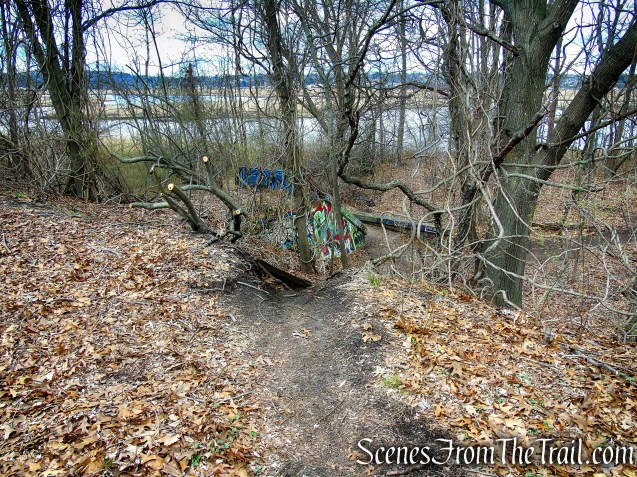
Lower Hornbecks Creek Trailhead

Lower Hornbecks Creek Trailhead

When you are done, you can get in your vehicle and drive a short distance to the Upper Hornbecks Creek Trail to view some more waterfalls.


Review:

A very pleasant walk through the woods to a very scenic waterfall. This short hike is perfect for a hot and humid day after some rainfall. The trail is well shaded and although it is not marked, it’s well defined and easy to follow. This simple out and back is great for families and those that want to enjoy nature without working up a sweat.

Pros:

Hornbecks Creek Falls, enjoyable trail, well maintained area, litter free.

Cons:

None.


Take a hike!

Lower Hornbecks Creek Trail – Delaware Water Gap

Lower Hornbecks Creek Trail – Delaware Water Gap


Sources:


Breakneck Ridge via Nimham Trail

July 5, 2021 – Cold Spring, NY

Difficulty: Moderate

Length: Approximately 1.9 miles

Max elevation: 592 ft.– total elevation gain approximately 625 ft.

Route type: Out and back

Buy Map: East Hudson Trails Map #102

Free Web Map: Hudson Highlands Trail Map North 2021

Trailhead parking: Wilkinson Memorial Trailhead – Beacon, NY 12508

For a hike to Breakneck Ridge that includes the rock scramble: Breakneck Ridge Short Loop


Overview:

Breakneck Ridge is a mountain along the Hudson River between Beacon and Cold Spring, straddling the boundary between Dutchess and Putnam counties. Breakneck Ridge is located within the confines of Hudson Highlands State Park Preserve and is administered by the New York Office of Parks, Recreation and Historic Preservation. Until the early 20th century, the mountain was also known as St. Anthony’s Face or Turk’s Face, after a face-like stone formation on the southern cliffs that was destroyed by quarrymen in 1846. It has several summits, the highest, some distance inland, reaching approximately 1,260 feet above sea level. The southern face of the peak is remarkable for its striking cliffs, the result of quarrying in past years.

Breakneck Ridge as viewed from Storm King Mountain

Breakneck Ridge as viewed from Storm King Mountain

Breakneck Ridge is considered one of the best and toughest day hikes in the country. The steep ascent up its western face involves climbing over rock ledges, using both hands and feet. This rock scramble attracts hikers from all over and is one of the most popular hikes in the region.

The beautifully constructed Nimham Trail provides an easier alternative to the summit for hikers who seek Breakneck’s stunning views of the Hudson River Valley while avoiding the steep rock scramble. The trail follows the natural “bench,” or shelf, along the ridge, connecting the flagpole area to the Wilkinson Memorial Trail.


History:

Professional Trail Builders, Tahawus Trails LLC, with assistance from the Jolly Rovers, constructed the new Nimham Trail between October 2020 and July 2021. The half-mile trail has over 500 expertly engineered stone stairs carefully harvested from the slopes of Breakneck. The Nimham Trail opened to the public on July 1, 2021. Once open, foot traffic on the Breakneck Ridge Trail ascent will become one-way (up only); the new trail will be two-directional.

This is the first construction project managed by the Hudson Highlands Fjord Trail, a new non-profit working with State Parks and the 19 other project partners to advance the Hudson Highlands Fjord Trail linear park between Beacon and Cold Spring.

The impetus to the Nimham Trail was the increasing popularity of hiking at Breakneck Ridge, visited by over 100,000 hikers annually. The new trail will help both reduce lost and injured hiker calls and preserve the mountain habitat. Data gathered by the NY-NJ Trail Conference shows most people who hike Breakneck are either novice hikers or, in fact, attempting Breakneck Ridge as their first hike. Novice hikers often reach the first summit and decide they don’t think they can finish the hike. They try to find a way down from the flagpole area and that’s when problems arise. The Nimham Trail adds the option of a shorter loop hike centered on the flagpole area of the Breakneck Ridge Trail. The Nimham Trail will allow hikers to get a taste of Breakneck while providing a safer way to bail out.

The trail is named in honor of Wappinger Chief Daniel Nimham (1726–1778) a respected leader of the Wappinger people, whose ancestral lands, along with those of the Lenape and Munsee, include the idyllic landscape now known as the Hudson Highlands.

Daniel Nimham and his son Abraham (born in 1745) fought for the American cause during the Revolution and were some of America’s first Veterans. They served with Washington at Valley Forge and later with General Marquis de Lafayette’s troops. On August 31, 1778, the Nimhams and fifty of their fellow Wappinger were surrounded then killed in the Battle of Kingsbridge, in what is now Van Cortlandt Park in the Bronx.

Daniel Nimham statue - Putnam County Veterans Memorial Park

Daniel Nimham statue – Putnam County Veterans Memorial Park


Trails Overview:

This hike follows the yellow-blazed Wilkinson Memorial Trail for the first 350 yards.

Wilkinson Memorial Trail - East Hudson Highlands

Wilkinson Memorial Trail – East Hudson Highlands

The half-mile Ninham Trail marked with green blazes, connects the Wilkinson Memorial Trail to the lower lookout on Breakneck Ridge. A series of more than 500 stone steps climbs steeply to Hudson River views from an area of staggered rock outcrops, marked with an American Flag.

Nimham Trail - Breakneck Ridge

Nimham Trail – Breakneck Ridge

The Nimham Trail now allows access to the famous Breakneck Ridge flagpole area to those that would like to avoid the steep rock scramble that was necessary before this trail was constructed. The trail also provides a shorter loop option for those that want to do the rock scramble utilizing the white-blazed Breakneck Ridge Trail.

flagpole area – Breakneck Ridge

flagpole area – Breakneck Ridge

It’s a short walk uphill on the Wilkinson Memorial Trail before turning right on the Nimham Trail. This green-blazed trail is where you gain a lot of elevation quickly. The Nimham Trail gains over 500 feet of elevation in about a 1/2 mile. Although this is the easiest route to Breakneck Ridge, it’s still no walk in the park. The expertly engineered stone steps helps hikers gain a lot of elevation in a short distance, eliminating any rock scrambles that are usually associated with Breakneck Ridge.


Hike Overview:

Having seen the press release for the opening of the new trail, I wanted to check it out. I have to say that I was quite impressed with the craftsmanship of the stone steps. They went to great lengths to make the steps as even as possible. The risers and treads of the steps are consistent with a normal staircase that one would encounter in an indoor setting. The trail is well laid out and blends into the landscape, making for an enjoyable and scenic hike.

This out and back hike begins and ends at the trailhead for the Wilkinson Memorial Trail on Route 9D.

Breakneck Ridge via Nimham Trail

Breakneck Ridge via Nimham Trail

Although the steps are quite helpful, the trail is still steep as it climbs Breakneck Ridge and proper footwear should be worn.

elevation profile - Nimham Trail

elevation profile – Nimham Trail

An early start on a weekday is recommended for this hike as it gets really crowded on the weekends.


The Hike:

On the east side of the road, you’ll see a triple-yellow blaze that marks the start of the Wilkinson Memorial Trail, which you will follow for the first 350 yards. The trail climbs gradually on a wide footpath, climbing several sets of stone steps along the way. The trail soon comes to a junction with the green-blazed Nimham Trail, which begins on the right.

Wilkinson Memorial Trail - East Hudson Highlands

Wilkinson Memorial Trail – East Hudson Highlands

Wilkinson Memorial Trail - East Hudson Highlands

Wilkinson Memorial Trail – East Hudson Highlands

Wilkinson Memorial Trail - East Hudson Highlands

Wilkinson Memorial Trail – East Hudson Highlands

Wilkinson Memorial Trail - East Hudson Highlands

Wilkinson Memorial Trail – East Hudson Highlands

Wilkinson Memorial Trail - East Hudson Highlands

Wilkinson Memorial Trail – East Hudson Highlands

Wilkinson Memorial Trail - East Hudson Highlands

Wilkinson Memorial Trail – East Hudson Highlands

Wilkinson Memorial Trail - East Hudson Highlands

Wilkinson Memorial Trail – East Hudson Highlands

Wilkinson Memorial Trail – East Hudson Highlands

Wilkinson Memorial Trail – East Hudson Highlands

Wilkinson Memorial Trail – East Hudson Highlands

Wilkinson Memorial Trail – East Hudson Highlands

Turn right on Nimham Trail

Turn right on Nimham Trail

Turn right on the Nimham Trail and follow the green blazes as they ascend Breakneck Ridge on another wide footpath. A short distance later, the trail crosses a wooden footbridge and ascends steeply on stone steps.

Turn right on Nimham Trail

Turn right on Nimham Trail

Nimham Trail - Breakneck Ridge

Nimham Trail – Breakneck Ridge

Nimham Trail - Breakneck Ridge

Nimham Trail – Breakneck Ridge

Nimham Trail - Breakneck Ridge

Nimham Trail – Breakneck Ridge

Nimham Trail - Breakneck Ridge

Nimham Trail – Breakneck Ridge

Nimham Trail - Breakneck Ridge

Nimham Trail – Breakneck Ridge

The trail turns right and climbs more stone steps, then levels off briefly, and again climbs more steps. As the trail gains elevation, the Hudson River is visible through the trees down below.

Nimham Trail - Breakneck Ridge

Nimham Trail – Breakneck Ridge

Nimham Trail - Breakneck Ridge

Nimham Trail – Breakneck Ridge

Nimham Trail - Breakneck Ridge

Nimham Trail – Breakneck Ridge

Nimham Trail - Breakneck Ridge

Nimham Trail – Breakneck Ridge

Nimham Trail - Breakneck Ridge

Nimham Trail – Breakneck Ridge

Nimham Trail - Breakneck Ridge

Nimham Trail – Breakneck Ridge

Nimham Trail – Breakneck Ridge

Nimham Trail – Breakneck Ridge

In about 0.3 mile from the start of the Nimham Trail, there is a large rock outcrop on the right with views over the Hudson River with Storm King Mountain directly across and Pollepel Island and Bannerman Castle to the north. This makes a good spot for a short break.

Nimham Trail – Breakneck Ridge

Nimham Trail – Breakneck Ridge

Nimham Trail – Breakneck Ridge

Nimham Trail – Breakneck Ridge

Nimham Trail – Breakneck Ridge

Nimham Trail – Breakneck Ridge

Nimham Trail – Breakneck Ridge

Nimham Trail – Breakneck Ridge

When you are ready to continue, proceed ahead on the Nimham Trail as it continues to climb stone steps, now even more steeply. After climbing some steps bounded by a wooden railing, the trail moderates as it nears its terminus at a rock outcrop just above the flagpole area.

Nimham Trail – Breakneck Ridge

Nimham Trail – Breakneck Ridge

Nimham Trail – Breakneck Ridge

Nimham Trail – Breakneck Ridge

Nimham Trail – Breakneck Ridge

Nimham Trail – Breakneck Ridge

Nimham Trail – Breakneck Ridge

Nimham Trail – Breakneck Ridge

Nimham Trail – Breakneck Ridge

Nimham Trail – Breakneck Ridge

Nimham Trail – Breakneck Ridge

Nimham Trail – Breakneck Ridge

Nimham Trail – Breakneck Ridge

Nimham Trail – Breakneck Ridge

Nimham Trail – Breakneck Ridge

Nimham Trail – Breakneck Ridge

Nimham Trail – Breakneck Ridge

Nimham Trail – Breakneck Ridge

Nimham Trail – Breakneck Ridge

Nimham Trail – Breakneck Ridge

Nimham Trail – Breakneck Ridge

Nimham Trail – Breakneck Ridge

Nimham Trail – Breakneck Ridge

Nimham Trail – Breakneck Ridge

The views up and down the Hudson River from this point are spectacular, and you will want to take a rest to enjoy the panoramic views.

flagpole area – Breakneck Ridge

flagpole area – Breakneck Ridge

flagpole area – Breakneck Ridge

flagpole area – Breakneck Ridge

flagpole area – Breakneck Ridge

flagpole area – Breakneck Ridge

flagpole area – Breakneck Ridge

flagpole area – Breakneck Ridge

flagpole area – Breakneck Ridge

flagpole area – Breakneck Ridge

When you are ready to continue, retrace your steps back to the Nimham Trail, marked by a sign, and turn left.

Breakneck Ridge Trail

Breakneck Ridge Trail

Looking up to the top of the ridge from the junction with the Nimham Trail, you’ll notice a steep, near-vertical rock outcrop that the Breakneck Ridge Trail climbs to gain the crest of the ridge.

Breakneck Ridge Trail

Breakneck Ridge Trail

Nimham Trail – Breakneck Ridge

Nimham Trail – Breakneck Ridge

Retrace your steps along the Nimham Trail, back to the junction with the Wilkinson Memorial Trail and bear left. Then follow the yellow blazes back to Route 9D, where the hike began.

Nimham Trail – Breakneck Ridge

Nimham Trail – Breakneck Ridge

Nimham Trail – Breakneck Ridge

Nimham Trail – Breakneck Ridge

Veer left at the junction

Veer left at the junction

Wilkinson Memorial Trail

Wilkinson Memorial Trail

Wilkinson Memorial Trail

Wilkinson Memorial Trail


Review:

A great hike on a well constructed trail to panoramic views of the Hudson River Valley. Although it was rather foggy on our visit, it was still a good day out on the trails. We were on the trail by 7:30am and back to the trailhead by 9:30am. By getting an early start, we didn’t encounter any other hikers on the way up. By the time we left the flagpole area, a steady stream of people started to pass through. Worth doing at least once to marvel at the hard work that was done to create this wonderful trail.

Pros:

Nimham Trail, Breakneck Ridge, American Flag, Hudson River Valley views, well constructed trails.

Cons:

Breakneck Ridge gets extremely crowded on weekends.


Take a hike!

Breakneck Ridge via Nimham Trail

Breakneck Ridge via Nimham Trail


Sources:


Candlewood Hill Loop – Fahnestock State Park

June 12, 2021 – Putnam Valley, NY

Rehiked August 3, 2025

Difficulty: Moderate

Length: Approximately 3.3 miles

Max elevation: 986 ft.– total elevation gain approximately 779 ft.

Route type: Lollipop Loop

Buy Maps (Paper & Avenza): East Hudson Trails Map #103

Free Web Map: Fahnestock State Park Trail Map 2020

Free Avenza App Map: Fahnestock State Park Trail Map

Trailhead parking: 11 Sunken Mine Road, Putnam Valley, NY 10579

Roadside parking for approximately 6 cars – No bathrooms on site


Overview:

Clarence Fahnestock Memorial State Park, also known as Fahnestock State Park, is a 16,171-acre state park located in north central Putnam County with portions in the towns of Carmel, Kent, Philipstown and Putnam Valley. The park is traversed by the Taconic State Parkway, US Route 9, NYS Route 301 and several local roads. Rail stations operated by Metro North Railroad are within ten miles of the park at Garrison, Cold Spring and Beacon. The park does not have a single, formal entrance. The park is managed and maintained by the New York State Office of Parks, Recreation and Historic Preservation.

Clarence Fahnestock Memorial State Park

Clarence Fahnestock Memorial State Park

Fahnestock is characterized by parallel ridges and hills that trend in a southwest to northeast direction. Steep slopes are often found on the southeast and northwest aspects of some of these ridges. Elevations range from approximately 400 feet in the lowest area of the park along Clove Creek in the vicinity of U.S. Route 9, to a maximum of over 1300 feet on a ridge west of Canopus Lake. The majority of the park is at elevations greater than 600 feet.

As the peaks of Clarence Fahnestock Memorial State Park are more hills than mountains, the hiking is generally less strenuous than others in the region. This makes the park a popular destination for casual hikers.

Candlewood Hill is a long ridge with its summit at an approximate elevation of 986 feet above sea level. It is located at the southeast end of Fahnestock State Park and is one of the park’s most prominent peaks. The northern end of the of the ridge is just west of the Durland Scout Reservation (formerly Clear Lake Scout Reservation), divided by Sunken Mine Road. The southern portion of Candlewood Hill rises out of the western banks of Oscawana Lake. Existing roadside parking along Sunken Mine Road provides access to the Candlewood Hill Trail in the northern part of this area. The southern portion of the Candlewood Hill Trail descends sharply to Bell Hollow Road. Recent acquisitions have extended the park southward. A couple of undesignated trails extend from the Candlewood Hill Trail south along the ridge. There is no parking area designated for access from roads to the south.

This scenic area includes views of the hills and ridgelines of Fahnestock State Park and most of the East Hudson Highlands from the summit of Candlewood Hill. The panorama includes the surrounding hemlock forests, hills and valleys, and even a slice of the Hudson River and Indian Point viewable to the southwest.

Candlewood Hill – Fahnestock State Park

Candlewood Hill – Fahnestock State Park


History:

In 2004, NY state purchased a 261-acre tract at Candlewood Hill in Putnam Valley and added it to Fahnestock State Park, saving it from residential development. The property includes woodlands and 2,000 feet of undeveloped frontage on Oscawana Lake, which is otherwise ringed with bungalows and houses. Two land conservation groups, the Open Space Institute and the Trust for Public Land, negotiated the contracts for the state, which in the early summer quietly bought the land for $1.5 million.

For his farewell hike as Governor, George E. Pataki led a small entourage of aides, administration members, environmentalists and a couple of state troopers up the granite-flecked trail to the summit of Candlewood Hill.

Through a series of acquisitions since 1995, Fahnestock State Park has more than doubled in size, from 6,670 acres to 16,171, an increase of more than 9,000 acres. The Trust For Public Land collaborated with its partner, the Open Space Institute on a number of the deals making up this expansion. The Trust for Public Land worked with Governor Pataki, the staff of the New York State Office of Parks, Recreation and Historic Preservation, and the Department of Environmental Conservation to protect more than 100,000 acres in NY state during his administration.


Trails Overview:

This hike incorporates a section of the unmaintained and unpaved Sunken Mine Road that is closed to vehicular traffic from December to April. This road divides Fahnestock State Park from the Durland Scout Reservation (private property). Sunken Mine Road is located within Fahnestock State Park and is a gravel road that traverses the area, running north from Oscawana Lake to Dennytown Road. The road climbs gradually from the south before reaching the trailhead for the Candlewood Hill Trail.

Sunken Mine Road - Fahnestock State Park

Sunken Mine Road – Fahnestock State Park

The Candlewood Hill Trail is marked with New York State Parks, Recreation and Historic Preservation “Taconic Region” red plastic discs. This trail ascends, sometimes steeply to the 986-foot summit of Candlewood Hill to long views in all directions. It traverses a short section of the ridge before descending steeply to its terminus on Bell Hollow Road. The Candlewood Hill Trail is well marked and easy to follow.

Candlewood Hill Trail - Fahnestock State Park

Candlewood Hill Trail – Fahnestock State Park

An abandoned section of Bell Hollow Road is used to connect the Candlewood Hill Trail to Sunken Mine Road. This road climbs along the western flank of Candlewood Hill and although unmarked, is well defined and easy to follow.

Bell Hollow Road – Fahnestock State Park

Bell Hollow Road – Fahnestock State Park

You may encounter some diamond shaped light blue blazes with an “HT” on them throughout this hike. You can disregard them. These blazes represent the Hudson Trail, a long distance hiking trail from High Bridge in Manhattan eventually reaching Mt. Marcy in the Adirondacks, overlaying existing trails and making use of public roads. It is a work in progress. In Fahnestock State Park it makes use of the Candlewood Hill Trail as well as several others.

Hudson Trail in Fahnestock State Park

Hudson Trail in Fahnestock State Park

With the exception of the summit, the trails are mostly well shaded and offer some protection from the hot sun.


Hike Overview:

I was looking for a short hike to do before the rains came on a Saturday morning, but unfortunately the rain came as we were beginning the hike. With the rain came the fog and obscured views, which was disappointing. We completed the hike nevertheless, but not being able to enjoy the views stuck with me. The following week we decided to head back up to the summit just for the views and it was well worth it. Our second trip was a short out and back to the summit to enjoy the views before it got too hot. This post incorporates images that I captured from both visits up until the summit.

This moderate loop hike is perfect for those looking to do a short hike with some great views and some shaded trails. On both visits, we didn’t encounter any other hikers. The hike begins near the southern end of Sunken Mine Road where there is pull-off parking for about 6-8 vehicles just before the gate.

Candlewood Hill Loop – Fahnestock State Park

Candlewood Hill Loop – Fahnestock State Park

Although there are some steep sections on this hike, they are short lived.

elevation profile - Candlewood Hill Loop

elevation profile – Candlewood Hill Loop

For a longer hike, this can be combined with the Oscawana Ridge Trail.


The Hike:

Proceed past the gate on Sunken Mine Road (sometimes referred to as Sunk Mine Road) as it heads gradually uphill. Sunken Mine Road is located within Fahnestock State Park and is a rough, unmaintained road that is closed to vehicular traffic from December to April. On the left side of the road (west), you may notice NYS Parks, Recreation and Historic Preservation signs. To the right (east) of the road there are signs to “Keep Out” of the Durland Scout Reservation. Continue uphill on this scenic road for about a half mile.

Sunken Mine Road

Sunken Mine Road

Sunken Mine Road

Sunken Mine Road

Sunken Mine Road

Sunken Mine Road

Sunken Mine Road

Sunken Mine Road

In about 0.5 mile, The trailhead for the Candlewood Hill Trail will be on the left, marked by a wooden post and red markers. Turn left here and follow the red blazes as they lead uphill, gradually at first then more steeply. You will be following the red blazes for the next 1.2 miles.

Candlewood Hill Trail - Fahnestock State Park

Candlewood Hill Trail – Fahnestock State Park

Candlewood Hill Trail - Fahnestock State Park

Candlewood Hill Trail – Fahnestock State Park

Candlewood Hill Trail - Fahnestock State Park

Candlewood Hill Trail – Fahnestock State Park

Candlewood Hill Trail – Fahnestock State Park

Candlewood Hill Trail – Fahnestock State Park

Candlewood Hill Trail – Fahnestock State Park

Candlewood Hill Trail – Fahnestock State Park

In late spring and early summer, the Mountain Laurel is in bloom along the trail.

Candlewood Hill Trail – Fahnestock State Park

Candlewood Hill Trail – Fahnestock State Park

Candlewood Hill Trail – Fahnestock State Park

Candlewood Hill Trail – Fahnestock State Park

Candlewood Hill Trail – Fahnestock State Park

Candlewood Hill Trail – Fahnestock State Park

The trail steepens some more as it nears the summit of Candlewood Hill, climbing over bare rock. To the right of the trail there are limited views as you near the top.

Candlewood Hill Trail – Fahnestock State Park

Candlewood Hill Trail – Fahnestock State Park

Candlewood Hill Trail – Fahnestock State Park

Candlewood Hill Trail – Fahnestock State Park

Candlewood Hill Trail – Fahnestock State Park

Candlewood Hill Trail – Fahnestock State Park

Candlewood Hill Trail – Fahnestock State Park

Candlewood Hill Trail – Fahnestock State Park

Candlewood Hill Trail – Fahnestock State Park

Candlewood Hill Trail – Fahnestock State Park

Just before reaching the summit where the trail turns left, leave the trail and turn right on a faint footpath to wide ranging views from northwest to southwest. The hills of Fahnestock State Park can be seen to the west as well as most of the East Hudson Highlands.

Candlewood Hill Trail – Fahnestock State Park

Candlewood Hill Trail – Fahnestock State Park

Candlewood Hill summit – Fahnestock State Park

Candlewood Hill summit – Fahnestock State Park

Candlewood Hill summit – Fahnestock State Park

Candlewood Hill summit – Fahnestock State Park

Candlewood Hill summit – Fahnestock State Park

Candlewood Hill summit – Fahnestock State Park

Candlewood Hill summit – Fahnestock State Park

Candlewood Hill summit – Fahnestock State Park

A zoomed in view to the southwest reveals a sliver of the Hudson River and the Indian Point Nuclear Facility in the Village of Buchanan, near Peekskill, NY.

Candlewood Hill summit – Fahnestock State Park

Candlewood Hill summit – Fahnestock State Park

When you are ready to continue, return to the Candlewood Hill Trail and proceed ahead along the summit to another rock out crop with more views.

Candlewood Hill Trail – Fahnestock State Park

Candlewood Hill Trail – Fahnestock State Park

Candlewood Hill Trail – Fahnestock State Park

Candlewood Hill Trail – Fahnestock State Park

This is the view on a foggy morning with light rain falling.

Candlewood Hill Trail – Fahnestock State Park

Candlewood Hill Trail – Fahnestock State Park

This is the view on our return visit the following week.

Candlewood Hill Trail – Fahnestock State Park

Candlewood Hill Trail – Fahnestock State Park

The trail turns left at the rock outcrop and descends a little, ducking just below the ridgeline then leveling off, with some interesting rock formations on either side of the trail.

Candlewood Hill Trail – Fahnestock State Park

Candlewood Hill Trail – Fahnestock State Park

Candlewood Hill Trail – Fahnestock State Park

Candlewood Hill Trail – Fahnestock State Park

Candlewood Hill Trail – Fahnestock State Park

Candlewood Hill Trail – Fahnestock State Park

Soon the Candlewood Hill Trail descends steeply, turns right on a woods road and descends on a more moderate grade. A short distance later, the Candlewood Hill Trail ends at Bell Hollow Road.

Candlewood Hill Trail – Fahnestock State Park

Candlewood Hill Trail – Fahnestock State Park

Candlewood Hill Trail – Fahnestock State Park

Candlewood Hill Trail – Fahnestock State Park

Candlewood Hill Trail – Fahnestock State Park

Candlewood Hill Trail – Fahnestock State Park

Candlewood Hill Trail – Fahnestock State Park

Candlewood Hill Trail – Fahnestock State Park

Candlewood Hill Trail – Fahnestock State Park

Candlewood Hill Trail – Fahnestock State Park

Turn right on the abandoned section of Bell Hollow Road and follow it uphill for the next 1/2 mile. You may be able to see and hear Canopus Creek down below on the left as you walk along the road.

Bell Hollow Road – Fahnestock State Park

Bell Hollow Road – Fahnestock State Park

Bell Hollow Road – Fahnestock State Park

Bell Hollow Road – Fahnestock State Park

Bell Hollow Road – Fahnestock State Park

Bell Hollow Road – Fahnestock State Park

Bell Hollow Road ends at a junction with Sunken Mine Road. Turn right here and follow this scenic road uphill for about 420 yards. Look for a woods road on the right, marked by boulders, that leads uphill a short distance to another viewpoint.

turn right on Sunken Mine Road

turn right on Sunken Mine Road

Sunken Mine Road - Fahnestock State Park

Sunken Mine Road – Fahnestock State Park

Sunken Mine Road - Fahnestock State Park

Sunken Mine Road – Fahnestock State Park

Sunken Mine Road - Fahnestock State Park

Sunken Mine Road – Fahnestock State Park

Turn right on this unmarked woods road and follow it uphill for about 350 feet, to views of Candlewood Hill and the surrounding area. This makes a good spot to take a break.

Sunken Mine Road - Fahnestock State Park

Sunken Mine Road – Fahnestock State Park

Viewpoint off of Sunken Mine Road

Viewpoint off of Sunken Mine Road

Viewpoint off of Sunken Mine Road

Viewpoint off of Sunken Mine Road

Viewpoint off of Sunken Mine Road

Viewpoint off of Sunken Mine Road

Viewpoint off of Sunken Mine Road

Viewpoint off of Sunken Mine Road

When you are ready to continue, return to Sunken Mine Road, turn right and continue in a southerly direction. A short distance later you will pass the trailhead for the Candlewood Hill Trail. Stay on Sunken Mine Road as it heads downhill, now retracing your steps, back to the parking area, where the hike began.

Turn right on Sunken Mine Road

Turn right on Sunken Mine Road

Sunken Mine Road - Fahnestock State Park

Sunken Mine Road – Fahnestock State Park

Sunken Mine Road - Fahnestock State Park

Sunken Mine Road – Fahnestock State Park

Sunken Mine Road - Fahnestock State Park

Sunken Mine Road – Fahnestock State Park

Sunken Mine Road - Fahnestock State Park

Sunken Mine Road – Fahnestock State Park


Review:

A truly great hike with impressive views. The trails/woods roads are easy to follow in a seemingly unfrequented section of the park. The area is free of any litter and if you decide to visit, please keep it that way. An enjoyable and scenic moderate hike that most would enjoy.

Pros:

Outstanding views, well maintained trail, easy to follow woods roads, quiet area, litter free.

Cons:

None.


Take a hike!

Candlewood Hill Loop – Fahnestock State Park

Candlewood Hill Loop – Fahnestock State Park


Sources:


Granite Mountain Preserve

June 5, 2021 – Putnam Valley, NY

Difficulty: Moderate – strenuous

Length: Approximately 4 miles

Max elevation: 935 ft.– total elevation gain approximately 922 ft.

Route type: Double Lollipop Loop

Free Web Map: Granite Mountain Preserve Trail Map 2020

Free Avenza App Map: Granite Mountain Preserve Trail Map – 2020

Trailhead parking: Peekskill Hollow Rd, Putnam Valley, NY 10579

No bathrooms on site


Preserve Overview:

Granite Mountain Preserve is a 400-acre preserve that lies within the boundaries of the East Hudson Highlands in Putnam Valley, NY. Nestled between Oscawana Lake Road and Peekskill Hollow Road, it is just north of the Westchester County border in Putnam County and west of the Taconic State Parkway. Granite Mountain Preserve is owned and managed by Hudson Highlands Land Trust.

Granite Mountain Preserve

Granite Mountain Preserve

Granite Mountain is located within the Peekskill Hollow Brook watershed, part of both the City of Peekskill and Town of Cortlandt drinking water systems. Granite Mountain Preserve contains two peaks that rise more than 900 feet and is dominated by a northern hardwood forest that includes red and chestnut oak, hickory, tulip and sugar maple along with marshy wetlands and streams. The property also provides an excellent bird habitat and is known for its species-rich collection of flora.

The preserve includes a network of well marked woodland hiking trails, a new parking area and kiosk, making it a publicly accessible open space offering numerous non-motorized recreational opportunities. Granite Mountain Preserve is open from dawn to dusk, seven days a week.

Granite Mountain Preserve

Granite Mountain Preserve


History:

The earliest inhabitants of the area were members of the Canopus group of the Nochpeem band of the “Wappinger Indian Confederacy.” As part of the Mohican nation, they spoke the Algonkian language.

The footpaths made by the Native Americans usually followed the stream valleys. The first settlers followed these footpaths and in the course of time, they became the roads we know today as Peekskill Hollow, Canopus Hollow and Oscawana Lake roads.

Dutch and English farmers moved into the area toward the end of the 17th Century. In 1697, the Highland Patent was granted to Adolph Philipse. The first settlers arrived around 1740. Under the Philipse Patent, the earliest European settlers in the area were the tenant farmers who leased tracts of land from the Philipse family during the first half of the eighteenth century and set about the business of clearing the rugged land for farming.

Despite such physical conditions as rocky soil and steep slopes which made farming a difficult occupation in Putnam Valley, its settlers were an industrious lot who cleared much of the land which has now been reforested. They raised corn, buckwheat, rye, oats, potatoes and turnips, along with a number of lesser crops.

The whole Preserve, like the entire region, was harvested for lumber, firewood and charcoal at various times throughout the 18th and 19th centuries. Most of the Preserve, presumably, was deforested throughout the 1800’s for agriculture and timber harvesting, and stonewalls were built in large part in association with farming. The largest trees growing in the Preserve now are approximately 100 feet tall. The majority are likely no older than 100 years though some “wolf trees” may date to over a century.
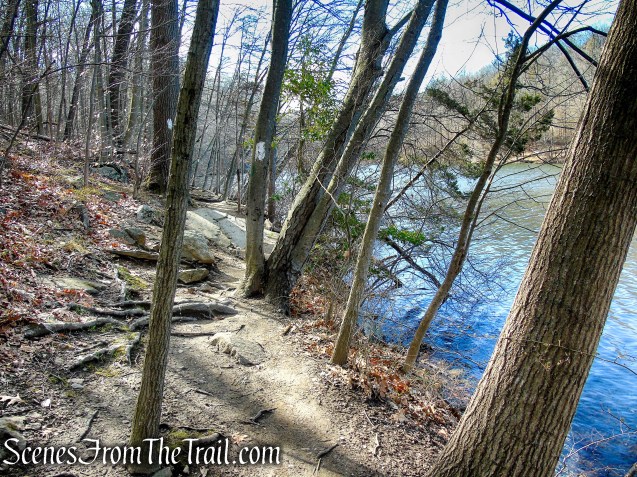
In 2017, the Hudson Highlands Land Trust (HHLT) acquired three land parcels on Granite Mountain to create the Granite Mountain Preserve and permanently conserve 358 acres. In late 2018, they announced the expansion of the Preserve to 400 acres with the addition of an adjacent parcel.

The property included a network of informal trails, which have since been improved to better protect the property’s natural resources and enhance the visitor experience. Improvements include: the construction of new sustainable trails, including stone steps and rerouting some preexisting trails. Some of the work was performed by Tahawus Trails LLC, a full-service trail design, construction, and consulting company based in New York State.

A new welcome sign near the main gate on Peekskill Hollow Road was installed and a new parking/access area just past the main gate was completed at the end of 2018. Joshua Uchetel, a scout from Putnam Valley Boy Scouts of America Troop 41, designed and constructed a new informational kiosk beside the parking lot, which will offer helpful information to help guests plan their visit.

HHLT is also working with Putnam County on a management agreement for adjoining land, which will bring the Preserve to more than 500 acres in total.


Trails Overview:

There are approximately five miles of maintained, marked trails through rich, rocky woodlands, leading to rugged hilltops with limited views. The trail system consists of a network of woods roads and footpaths that are divided into three different color closed loops for hiking: a southern green trail loop, a yellow trail loop to Lookout Point, and a northern red trail loop. Connector trails link the three loops.

Granite Mountain Preserve Trail Map 2020

Granite Mountain Preserve Trail Map 2020

The trails are well maintained and clearly marked with Hudson Highlands Land Trust plastic discs of various colors with wooden signs at trail junctions.

Trail markers - Hudson Highlands Land Trust

Trail markers – Hudson Highlands Land Trust

Trail signs - Granite Mountain Preserve

Trail signs – Granite Mountain Preserve


Hike Overview:

The main entrance to the Preserve, marked with a “Welcome to Granite Mountain Preserve” sign, is located opposite Jeanne Drive and across the street from 500 Peekskill Hollow Road in Putnam Valley. Be sure to input “Granite Mountain Preserve” into Google Maps as just “Granite Mountain” will lead you to the wrong location. The new access area and parking lot is located inside the main gate.

Granite Mountain Preserve

Granite Mountain Preserve

There is room for approximately 8 vehicles in the small lot. When we arrived at 8 am on a June Saturday morning, there was one car already there. When we were done, just before 11 am, ours was the only vehicle in the lot.

Parking lot – Granite Mountain Preserve

Parking lot – Granite Mountain Preserve

It’s always a good idea to print out a map beforehand as there were none at the kiosk on the day of our visit.

Granite Mountain Preserve

Granite Mountain Preserve

This hike covers the Yellow and Red Trail loops, both done counterclockwise. The Yellow Trail was completed first, then the Red Trail. Both trails have moderate elevation gains, but it does add up.

Granite Mountain Preserve

Granite Mountain Preserve

The Red-Yellow Trail, which begins at the parking area, is the most strenuous part of the hike. It gains approximately 400 feet of elevation in about 1/2 a mile.

elevation profile - Granite Mountain Preserve

elevation profile – Granite Mountain Preserve

It was a hot and humid day with temps reaching 90°, we started the hike early and were done by 11 am. Although we worked up a sweat, the shaded trails throughout this hike provided protection from the sun. The parking lot is also shaded so we didn’t come back to a blazing hot vehicle.


The Hike:

From the parking area, head towards the kiosk and turn left onto a footpath where you will see triple red and yellow blazes on a tree. This is the start of the Red-Yellow Trail which connects the parking area to the interior of the preserve. You will be following the Red-Yellow Trail for the first 1/2-mile of the hike. The trail climbs stone steps and soon turns left. As the trail approaches private property, it turns right on a switchback. The trail continues to climb, sidehilling the steep slope.

Trailhead - Granite Mountain Preserve

Trailhead – Granite Mountain Preserve

Trailhead – Granite Mountain Preserve

Trailhead – Granite Mountain Preserve

Red-Yellow Trail - Granite Mountain Preserve

Red-Yellow Trail – Granite Mountain Preserve

Red-Yellow Trail - Granite Mountain Preserve

Red-Yellow Trail – Granite Mountain Preserve

Red-Yellow Trail - Granite Mountain Preserve

Red-Yellow Trail – Granite Mountain Preserve

Red-Yellow Trail - Granite Mountain Preserve

Red-Yellow Trail – Granite Mountain Preserve

Red-Yellow Trail - Granite Mountain Preserve

Red-Yellow Trail – Granite Mountain Preserve

As the trail steepens, there are stone steps built into the trail that gain elevation quickly. Soon the trail switchbacks again and continues its steep climb on a woods road that parallels an intermittent mountain stream. In about a 1/2-mile from the start, the Red-Yellow Trail comes to a junction with the lower leg of the Yellow Trail.

Red-Yellow Trail - Granite Mountain Preserve

Red-Yellow Trail – Granite Mountain Preserve

Red-Yellow Trail - Granite Mountain Preserve

Red-Yellow Trail – Granite Mountain Preserve

Red-Yellow Trail - Granite Mountain Preserve

Red-Yellow Trail – Granite Mountain Preserve

Red-Yellow Trail - Granite Mountain Preserve

Red-Yellow Trail – Granite Mountain Preserve

Red-Yellow Trail - Granite Mountain Preserve

Red-Yellow Trail – Granite Mountain Preserve

Red-Yellow Trail - Granite Mountain Preserve

Red-Yellow Trail – Granite Mountain Preserve

Continue straight past the junction with the lower leg of the Yellow Trail for another 500 feet. You will arrive at a T-intersection, where the Red-Yellow Trail turns right. You will come back to this junction later, but for now, turn left on the upper leg of the Yellow Trail, heading towards Lookout Rock. After crossing an intermittent stream on rocks, you’ll see triple yellow blazes on a tree.

Continue straight past the junction with the lower leg of the Yellow Trail

Continue straight past the junction with the lower leg of the Yellow Trail

Turn left on the Yellow Trail towards Lookout Rock

Turn left on the Yellow Trail towards Lookout Rock

Yellow Trail - Granite Mountain Preserve

Yellow Trail – Granite Mountain Preserve

Yellow Trail - Granite Mountain Preserve

Yellow Trail – Granite Mountain Preserve

Follow the yellow blazes as they weave their way through the woods. The trail continues to climb, but on a more moderate grade. As the trail begins to head north, it passes over a an old stone wall. At the top of the rise, the trail reaches the northernmost section of the preserve and turns left, bordering another stone wall.

Yellow Trail - Granite Mountain Preserve

Yellow Trail – Granite Mountain Preserve

Yellow Trail - Granite Mountain Preserve

Yellow Trail – Granite Mountain Preserve

Yellow Trail - Granite Mountain Preserve

Yellow Trail – Granite Mountain Preserve

Yellow Trail - Granite Mountain Preserve

Yellow Trail – Granite Mountain Preserve

Yellow Trail - Granite Mountain Preserve

Yellow Trail – Granite Mountain Preserve

Soon the trail begins to head in a southerly direction. The trail loops around, avoiding the true summit of Granite Mountain and soon parallels another stone wall. A short distance later, the trail reaches Lookout Rock.

Yellow Trail - Granite Mountain Preserve

Yellow Trail – Granite Mountain Preserve

Yellow Trail - Granite Mountain Preserve

Yellow Trail – Granite Mountain Preserve

Yellow Trail - Granite Mountain Preserve

Yellow Trail – Granite Mountain Preserve

Lookout Rock - Granite Mountain Preserve

Lookout Rock – Granite Mountain Preserve

Lookout Rock - Granite Mountain Preserve

Lookout Rock – Granite Mountain Preserve

This keyhole viewpoint from Lookout Rock provides southeast-facing limited views. During leaf off season the view should be much better. This makes a good spot to take a break and rest from the climb. You have now hiked about 1.3 miles.

Lookout Rock - Granite Mountain Preserve

Lookout Rock – Granite Mountain Preserve

When you are ready to continue, follow the Yellow Trail as it begins to descend, passing Mountain Laurel along the side of the trail.

Yellow Trail - Granite Mountain Preserve

Yellow Trail – Granite Mountain Preserve

Yellow Trail - Granite Mountain Preserve

Yellow Trail – Granite Mountain Preserve

Yellow Trail - Granite Mountain Preserve

Yellow Trail – Granite Mountain Preserve

Yellow Trail - Granite Mountain Preserve

Yellow Trail – Granite Mountain Preserve

Yellow Trail - Granite Mountain Preserve

Yellow Trail – Granite Mountain Preserve

In about 250 yards from Lookout Rock, the Yellow Trail comes to a junction with the start of the Green-Yellow Trail, marked with blazes and wooden signs. Turn left at this junction to remain on the Yellow Trail.

Turn left to remain on Yellow Trail

Turn left to remain on Yellow Trail

Turn left to remain on Yellow Trail

Turn left to remain on Yellow Trail

Yellow Trail - Granite Mountain Preserve

Yellow Trail – Granite Mountain Preserve

Yellow Trail - Granite Mountain Preserve

Yellow Trail – Granite Mountain Preserve

As the trail descends along the eastern slope of Granite Mountain, the forest becomes more dense. After several slight ups and downs, the trail descends to recross the intermittent stream on rocks and the Yellow Trail ends at the junction with the Red-Yellow Trail, closing the loop.

Yellow Trail - Granite Mountain Preserve

Yellow Trail – Granite Mountain Preserve

Yellow Trail - Granite Mountain Preserve

Yellow Trail – Granite Mountain Preserve

Yellow Trail - Granite Mountain Preserve

Yellow Trail – Granite Mountain Preserve

Yellow Trail - Granite Mountain Preserve

Yellow Trail – Granite Mountain Preserve

Yellow Trail - Granite Mountain Preserve

Yellow Trail – Granite Mountain Preserve

Turn left on the Red-Yellow Trail and head uphill for another 500 feet. You will arrive at the T-intersection that you encountered earlier in the hike. This time turn right towards the Red Loop.

Terminus of Yellow Trail - Granite Mountain Preserve

Terminus of Yellow Trail – Granite Mountain Preserve

Turn right towards Red Loop

Turn right towards Red Loop

Follow the Red-Yellow Trail for about 140 feet until its terminus at a collapsed stone wall. The Red Trail Loop begins on the other side of the wall. After passing through the stone wall, turn right on the Red Trail and follow it uphill as it travels on a woods road.

Red-Yellow Trail - Granite Mountain Preserve

Red-Yellow Trail – Granite Mountain Preserve

After passing through the stone wall, turn right on the Red Trail

After passing through the stone wall, turn right on the Red Trail

Turn right on the Red Trail

Turn right on the Red Trail

Red Trail - Granite Mountain Preserve

Red Trail – Granite Mountain Preserve

Soon the trail levels off as it sidehills the slope, heading in a northeasterly direction.

Red Trail - Granite Mountain Preserve

Red Trail – Granite Mountain Preserve

Red Trail - Granite Mountain Preserve

Red Trail – Granite Mountain Preserve

Looking up at the steep slope towards the summit, one can see cave-like openings in the granite rock formations.

Red Trail - Granite Mountain Preserve

Red Trail – Granite Mountain Preserve

The trail runs along the eastern border of the the preserve and soon begins a gradual ascent. The trail soon passes through a grassy area bounded on all sides by stone walls then veers left and begins to climb some more. The trail passes through a stone wall then over another stone wall.

Red Trail - Granite Mountain Preserve

Red Trail – Granite Mountain Preserve

Red Trail - Granite Mountain Preserve

Red Trail – Granite Mountain Preserve

Red Trail - Granite Mountain Preserve

Red Trail – Granite Mountain Preserve

Red Trail - Granite Mountain Preserve

Red Trail – Granite Mountain Preserve

Red Trail - Granite Mountain Preserve

Red Trail – Granite Mountain Preserve

Red Trail - Granite Mountain Preserve

Red Trail – Granite Mountain Preserve

As the trail bends to the west, it levels off and begins a gradual descent. In about 0.8-mile, the Red Trail closes the loop at the collapsed stone wall that you passed through earlier.

Red Trail - Granite Mountain Preserve

Red Trail – Granite Mountain Preserve

Turn right, leaving the Red Trail, crossing through the collapsed stone wall and begin retracing your steps on the Red-Yellow Trail. When you reach the junction with the Yellow Trail, turn left to remain on the Red-Yellow Trail. Follow the red/yellow blazes downhill, now retracing your steps back to the parking area, where the hike began.

Turn right on Red-Yellow Trail

Turn right on Red-Yellow Trail

Turn left to remain on Red-Yellow Trail

Turn left to remain on Red-Yellow Trail

Trailhead – Granite Mountain Preserve

Trailhead – Granite Mountain Preserve

Parking lot – Granite Mountain Preserve

Parking lot – Granite Mountain Preserve


Review:

Although the one view on this hike is not much to speak of, this was a really good hike. The trails are well marked and the preserve was free of litter. The landscape is scenic and the elevation gain will get your heart pumping. We only encountered two people while we were there and for the most part, had the place to ourselves. The bonus was that on a hot and humid day, the entire hike was in the shade.

Pros:

Well marked trails, litter free, well maintained preserve, Trails are shaded throughout.

Cons:

Partial views.


Take a hike!

Granite Mountain Preserve

Granite Mountain Preserve


Sources:


Kay’s Cottage Ruins from Cooper Gristmill

May 23, 2021 – Chester, New Jersey

Difficulty: Moderate

Length: Approximately 5 miles

Max elevation: 744 ft.– total elevation gain approximately 472 ft.

Route type: Semi-Loop

Trail Map: Cooper Gristmill & Elizabeth D. Kay Environmental Center

Avenza App Map: Patriots Path Chester Trail Map – Oct. 2017

Trailhead parking: Cooper Mill County Park – Chester, NJ 07930

Large parking lot – portable toilet on site


Overview:

Black River County Park, part of the Morris County Park System, consists of 858 acres. It includes four important cultural sites – the Cooper Gristmill, Elizabeth D. Kay Environmental Center, Bamboo Brook Outdoor Education Center, and Willowwood Arboretum – each of which is not only worth visiting in its own right, but also provides access to trails in the area. A more comprehensive description of each of these areas can be found on the Morris County Park System web site by searching for the name of the cultural site, not “Black River County Park.”

Cooper Gristmill, located on 14 acres, was built in 1826 and is one of the remaining restored water-powered mills in New Jersey. It is listed on the State and National Registers of Historic Places. It is a living example of the state’s transition from an agricultural to an industrial economy.

Cooper Gristmill

Cooper Gristmill

Cooper Gristmill is one of about 30 access points for the Patriots’ Path, which links federal, state, county, and municipal parks, watershed lands, historic sites, and other points of interest. The site is managed by the Morris County Park Commission.

Cooper Gristmill

Cooper Gristmill

The Patriots’ Path stretches from East Hanover, where it connects with the Lenape Trail in Essex County to Allamuchy Mountain State Park in Sussex County, intersecting with the Columbia Trail in Washington Township.


History:

Kay’s Cottage ruins sits on property that is now The Elizabeth D. Kay Environmental Center in Chester. It was once part of a 233-acre estate owned by Elizabeth and Alfred Kay called Hidden River Farm. The property encompassed an array of habitats, including fields, deciduous forests and a hemlock gorge set along the Black River. The Kays built carriage trails through fields and woods that wind down to the Black River where a dam was built to create a deep and calm swimming pool with a diving board. A summer house was built alongside the ‘pool’ with showers, changing rooms, a fireplace, and a terrace. Only the stone foundations and walls remain today.

Kay's Cottage Ruins - Black River County Park

Kay’s Cottage Ruins – Black River County Park

Elizabeth and Alfred bought land in Chester in 1924, including a late 18th century stone farmhouse that they converted into a comfortable country estate. They lived in Chester during the spring, summer and fall.

Starting in 1962, the Kays began donating parts of their 233-acre Hidden River Farm to the Morris County Parks Commission to be used as an environmental center, where “each day would bring a new wonder and challenge to learn.” The Elizabeth D. Kay Environmental Center in Chester was dedicated on October 28, 1993 for “the teaching of children and adults in the natural sciences and the appreciation thereof.”
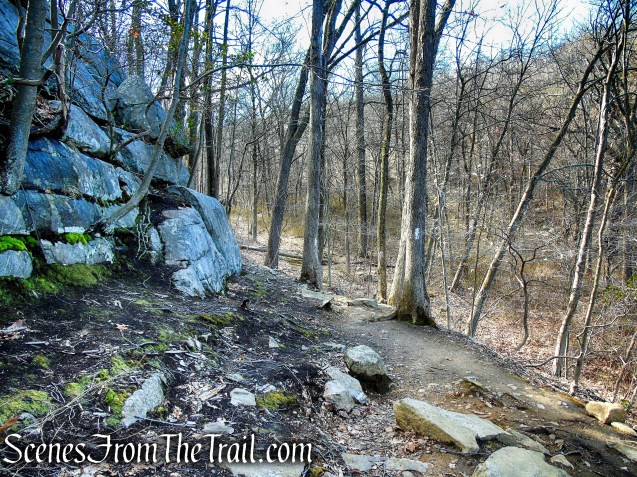

Trails Overview:

The Patriots’ Path is blazed with the path-and-tree logo and the abundance of markers, makes it relatively easy to follow.

Patriots’ Path - Black River County Park

Patriots’ Path – Black River County Park

The section of the Patriots’ Path followed on this hike is a level and easy walk along the Black River as it runs on an old railroad bed for much of the route. There are exposed roots through much of the trail.

Patriots’ Path - Black River County Park

Patriots’ Path – Black River County Park

From Cooper Mill, the Patriots’ Path is coaligned with the Black River Trail as it heads south (downstream), passing where an old trestle of the Hacklebarney Mine Railroad spanned the river. The Patriots’ Path soon joins the railroad right-of-way, passing alongside Kay’s Pond, just below old mine areas on the slope to the left. Beyond the pond is the refurbished dam and the Hacklebarney mine site, which are chained off. The trail can be followed as far south to Willowwood Arboretum in Far Hills, NJ.

Patriots’ Path - Cooper Gristmill

Patriots’ Path – Cooper Gristmill

Other Trails:

Orange Trail ~ Follows a woods road that provides access to Kay’s Cottage along the Black River. The trail crosses the Black River on a wooden bridge, climbs a little then descends to the river’s edge.

Green Trail ~ The section between the Patriots’ Path and the Orange Trail is a woods road and easy walking. South of the Orange Trail it becomes a bit more rugged as it turns into a narrow footpath that sidehills the steep slope above the east bank of the Black River. The trail is rocky in places, uneven with short steep elevation changes and is poorly marked with numerous blow downs.
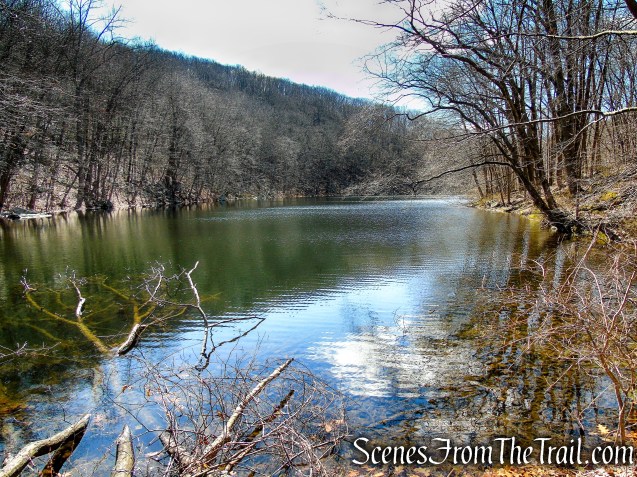
Red Trail ~ Follows a woods road just above the the Green Trail as it heads north. It eventually leaves the woods road and continues on a footpath. It ends at a junction with the Orange Trail.
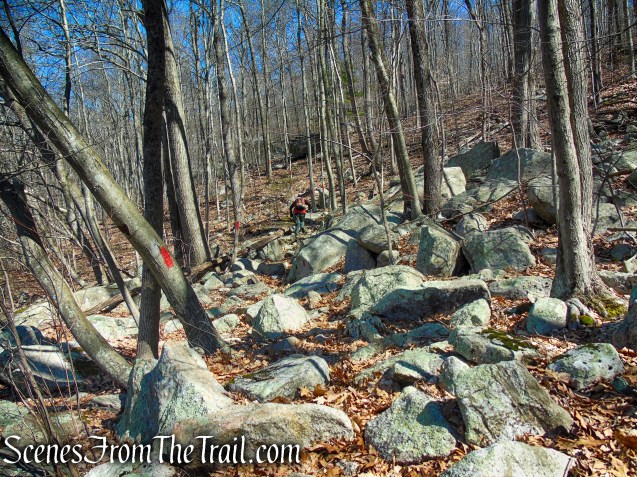
Connector Trails ~ There are several short connector trails that are used on this hike. They are blazed with the two colors of the trails that they connect.


Hike Overview:

With high temperatures expected for the weekend, I was looking to do a hike with some shaded trails and water, while keeping the elevation gain to a minimum. This turned out to be the perfect hike for a hot and humid day. Not only were all of the trails that were hiked shaded, but the scenic landscape and the stone ruins kept it interesting as well. By getting an early start, we had the woods mostly to ourselves.
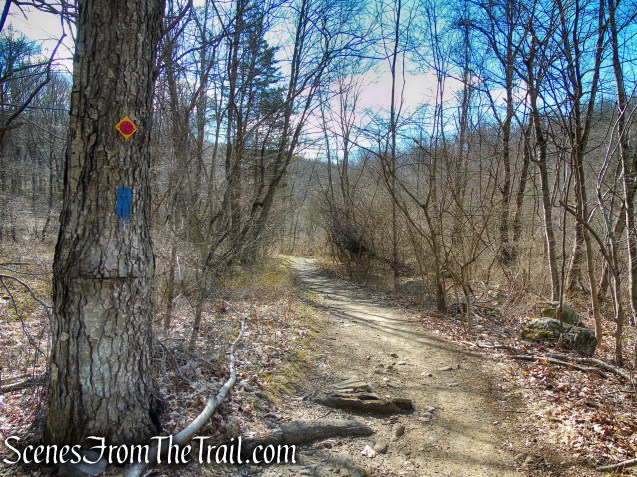
The parking lot on a Sunday at 8:40 am.
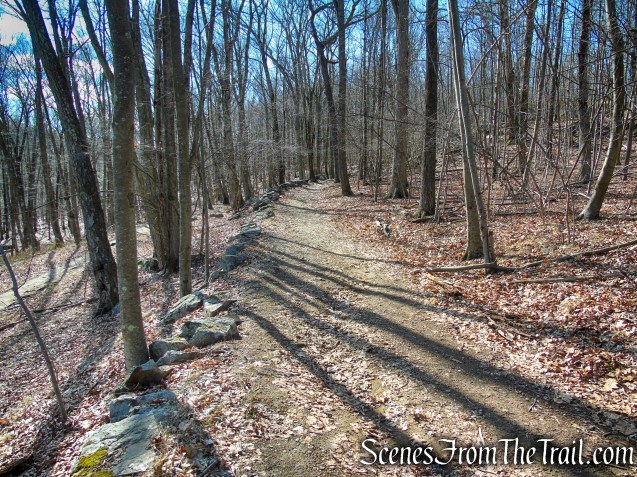
Cooper Gristmill – Black River County Park

Cooper Gristmill – Black River County Park

By the time we returned to the parking lot at about 11:30 am, it was at or near capacity.

Cooper Gristmill - Black River County Park

Cooper Gristmill – Black River County Park

The focal point of this hike is Kay’s Cottage and the surrounding area, but the rest of the hike was enjoyable as well. Even though this hike is on the lower spectrum of a moderate hike, sections of the Green and Red Trails gave it a more backwoods feel.
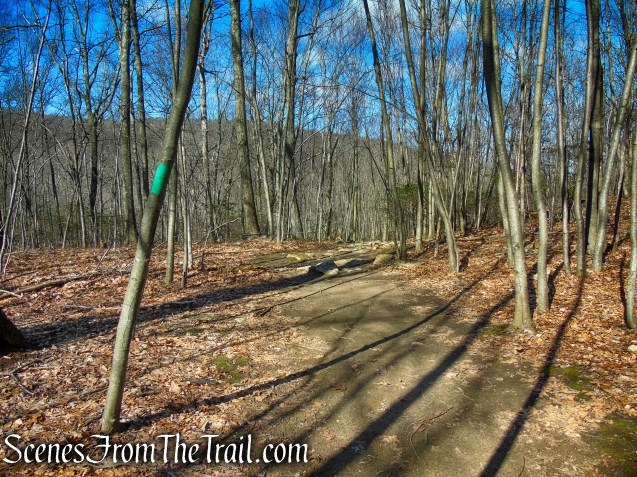
Kay’s Cottage Ruins from Cooper Gristmill

Kay’s Cottage Ruins from Cooper Gristmill

elevation profile - Kay's Cottage
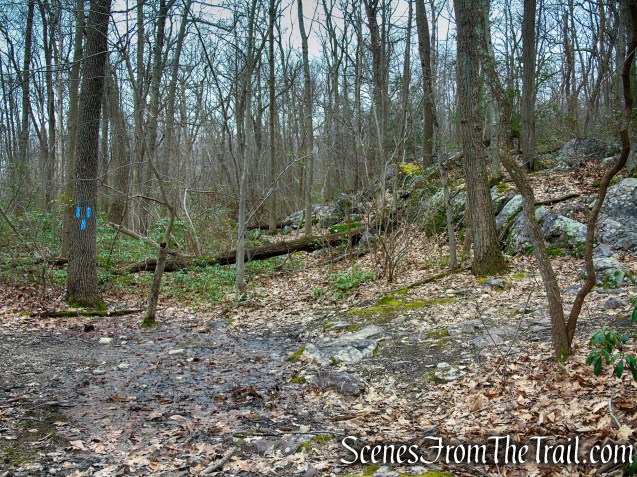
elevation profile – Kay’s Cottage
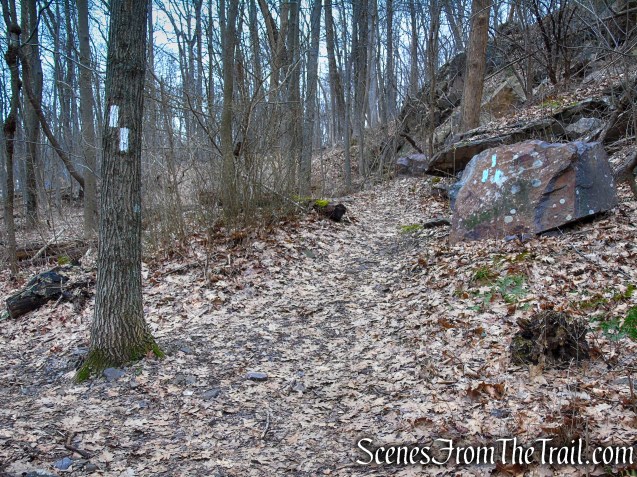

The Hike:

From the northwest corner of the parking area, proceed west to the stone Cooper Gristmill. The mill, built in 1826, is open for tours in the summer and on weekends in the spring and fall. Descend the stairs alongside the mill and head south on the blue-blazed spur of the Patriots’ Path (blazed with the path-and-tree logo), which crosses several tributary streams on wooden bridges and several wet areas on puncheons.

Cooper Gristmill

Cooper Gristmill

Cooper Gristmill

Cooper Gristmill

Bartley Turbine - Cooper Gristmill

Bartley Turbine – Cooper Gristmill

Cooper Gristmill

Cooper Gristmill

Patriots’ Path - Cooper Gristmill

Patriots’ Path – Cooper Gristmill

Patriots’ Path - Cooper Gristmill

Patriots’ Path – Cooper Gristmill

Cooper Gristmill

Cooper Gristmill

Patriots’ Path - Black River County Park

Patriots’ Path – Black River County Park

Patriots’ Path - Black River County Park

Patriots’ Path – Black River County Park

Patriots’ Path - Black River County Park

Patriots’ Path – Black River County Park

Patriots’ Path - Black River County Park

Patriots’ Path – Black River County Park

About a third of a mile from the start, the trail turns left onto an abandoned railroad grade – the former route of the Hacklebarney Branch of the Central Railroad of New Jersey, built in 1873 to carry iron ore from mines along the river and abandoned in 1900. The trail follows this railroad grade for the next mile. Although it was abandoned over a century ago, the right-of-way is in remarkably good condition.

Patriots’ Path - Black River County Park

Patriots’ Path – Black River County Park

Patriots’ Path - Black River County Park

Patriots’ Path – Black River County Park

Half a mile from the start, you’ll pass Kay Pond (formerly known as Hacklebarney Pond) on the right. Here, the railroad had to be blasted through a rock cut, and the drill marks from the blasting may still be seen in the rock. The small building at the south end of Kay Pond was once used to store ice cut from the pond in the winter.

Patriots’ Path - Black River County Park

Patriots’ Path – Black River County Park

Patriots’ Path - Black River County Park

Patriots’ Path – Black River County Park

Patriots’ Path - Black River County Park

Patriots’ Path – Black River County Park

Patriots’ Path - Black River County Park

Patriots’ Path – Black River County Park

Patriots’ Path - Black River County Park

Patriots’ Path – Black River County Park

Patriots’ Path - Black River County Park

Patriots’ Path – Black River County Park

After passing the stone dam at the end of the pond, the trail goes by a bridge over the Black River (closed to vehicular traffic), turns left, and passes a fenced-in area on the left. This is the site of the former Hacklebarney Mine, where a considerable amount of iron ore was mined in the last quarter of the nineteenth century. The trail proceeds along the scenic river. Soon, the railroad grade ends and the trail continues on a slightly rougher footpath parallel to the river.

Patriots’ Path - Black River County Park

Patriots’ Path – Black River County Park

Patriots’ Path - Black River County Park

Patriots’ Path – Black River County Park

Patriots’ Path - Black River County Park

Patriots’ Path – Black River County Park

Patriots’ Path - Black River County Park

Patriots’ Path – Black River County Park

Patriots’ Path - Black River County Park

Patriots’ Path – Black River County Park

About 1.2 miles from the start, after crossing two wooden footbridges over tributary streams, the trail reaches abandoned concrete abutments in the river, the remnants of a former bridge. Here, the trail bears left and begins to head uphill on a wide woods road. It soon reaches the start of the Green Trail, which begins on the right.

Patriots’ Path - Black River County Park

Patriots’ Path – Black River County Park

Patriots’ Path - Black River County Park

Patriots’ Path – Black River County Park

Patriots’ Path - Black River County Park

Patriots’ Path – Black River County Park

Green Trail begins on the right

Green Trail begins on the right

Turn right on the Green Trail, marked by three green blazes on a post. The Green Trail follows a wide path for about 350 yards (0.2 mile), then reaches a four way junction with the Orange Trail.
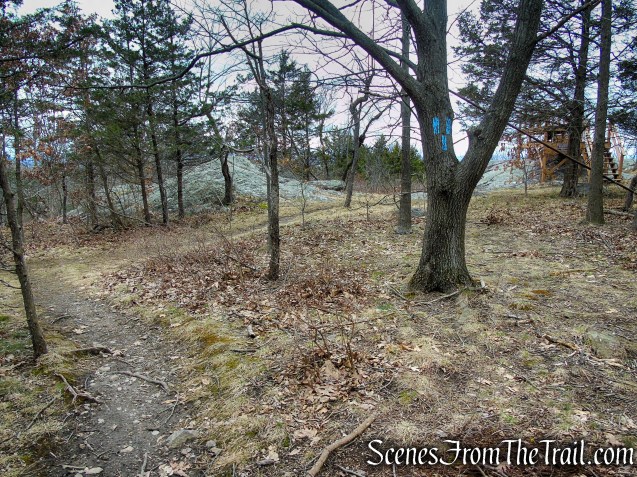
Green Trail - Black River County Park

Green Trail – Black River County Park

Green Trail - Black River County Park

Green Trail – Black River County Park

Turn right on the Orange Trail and follow the woods road downhill towards the Black River. The trail passes a junction with the Green/Orange Connector Trail (you will return back to this spot) and continues across the Black River on a wooden bridge. The trail continues uphill, away from the river then curves to the left, parallels the river from high above and begins to descend as it approaches the river.
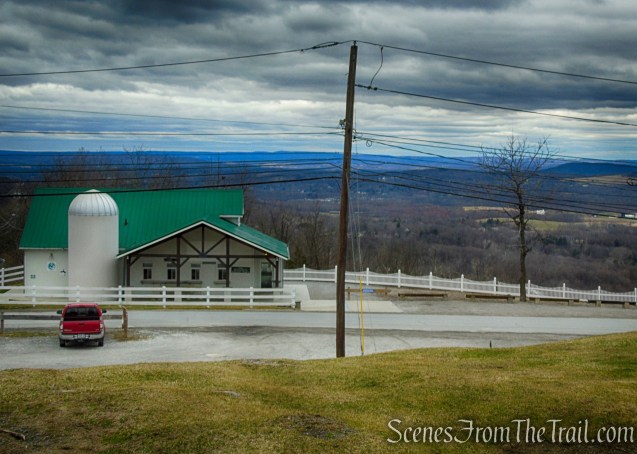
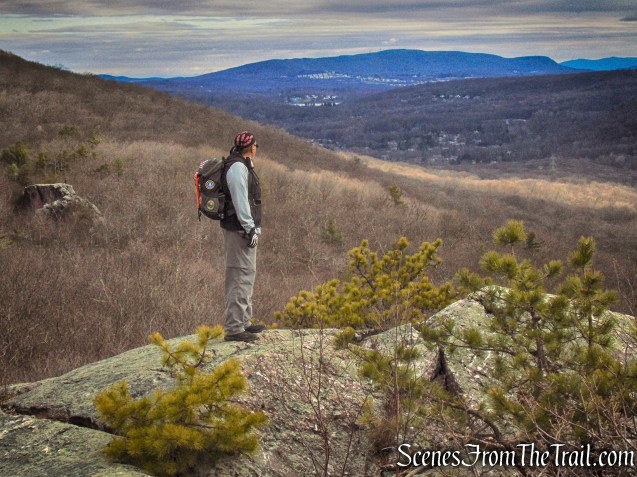
turn right on Orange Trail

turn right on Orange Trail

Orange Trail - Black River County Park

Orange Trail – Black River County Park

Orange Trail - Black River County Park

Orange Trail – Black River County Park

Orange Trail - Black River County Park

Orange Trail – Black River County Park

Orange Trail - Black River County Park

Orange Trail – Black River County Park

Orange Trail - Black River County Park

Orange Trail – Black River County Park

Orange Trail - Black River County Park

Orange Trail – Black River County Park

As the trail descends, the river will come into view, keep an eye out on the left for stone steps leading down to Kay’s Cottage. Take the steps downhill to the ruins of Kay’s Cottage next to a dam and waterfall. You may want to take some time here to check out these interesting stone ruins.

Orange Trail - Black River County Park

Orange Trail – Black River County Park

Turn left and descend the stone steps towards the Black River

Turn left and descend the stone steps towards the Black River

Kay's Cottage Ruins - Black River County Park

Kay’s Cottage Ruins – Black River County Park

Kay's Cottage Ruins - Black River County Park

Kay’s Cottage Ruins – Black River County Park

Dam waterfall - Kay's Cottage Ruins

Dam waterfall – Kay’s Cottage Ruins

Kay's Cottage Ruins - Black River County Park

Kay’s Cottage Ruins – Black River County Park

Kay's Cottage Ruins - Black River County Park

Kay’s Cottage Ruins – Black River County Park

Kay's Cottage Ruins - Black River County Park

Kay’s Cottage Ruins – Black River County Park

Kay's Cottage Ruins - Black River County Park

Kay’s Cottage Ruins – Black River County Park

Kay's Cottage Ruins - Black River County Park

Kay’s Cottage Ruins – Black River County Park

When you are ready to proceed, climb back up the stone steps, turn right and retrace your route back to the bridge. Side note: we turned left and walked the Orange Trail for about 300 feet to its terminus at the base of the river, but there is nothing to see in that direction.

Orange Trail - Black River County Park

Orange Trail – Black River County Park

Orange Trail - Black River County Park

Orange Trail – Black River County Park

Orange Trail - Black River County Park

Orange Trail – Black River County Park

Just after crossing the bridge, turn right on the Green/Orange Connector Trail which begins on a woods road, but soon descends towards the river on a footpath.

Green/Orange Connector Trail - Black River County Park

Green/Orange Connector Trail – Black River County Park

Green/Orange Connector Trail - Black River County Park

Green/Orange Connector Trail – Black River County Park

Green/Orange Connector Trail - Black River County Park

Green/Orange Connector Trail – Black River County Park

Green/Orange Connector Trail - Black River County Park

Green/Orange Connector Trail – Black River County Park

The trail leaves the river and begins to climb the hill, although the footpath is discernible, we didn’t spot any blazes. There was more than one path going in the same direction so we may have been on the wrong trail or a blowdown may have altered our route. We didn’t see where the connector trail ended and the Green Trail started. Eventually the green blazes appeared and we followed them along the steep hillside on a narrow footpath. After several ups and downs and climbing over blowdowns, the trail descends to the Black River directly opposite of Kay’s Cottage Ruins.

Green Trail - Black River County Park

Green Trail – Black River County Park

Kay's Cottage Ruins - Black River County Park

Kay’s Cottage Ruins – Black River County Park

The square concrete block on the right is where the diving board was located.

Kay's Cottage Ruins - Black River County Park

Kay’s Cottage Ruins – Black River County Park

When you are ready to proceed, continue south on the Green Trail which climbs and descends along the river. The trail is narrow and runs along the steep hillside, so take care as you traverse this portion of the trail. This section of trail is more wild and has a feeling of remoteness. In about 425 yards, the Green Trail reaches a stone chimney and stone foundations on the right.

Green Trail - Black River County Park

Green Trail – Black River County Park

Green Trail - Black River County Park

Green Trail – Black River County Park

Green Trail - Black River County Park

Green Trail – Black River County Park

Green Trail - Black River County Park

Green Trail – Black River County Park

Green Trail - Black River County Park

Green Trail – Black River County Park

Green Trail - Black River County Park

Green Trail – Black River County Park

Green Trail - Black River County Park

Green Trail – Black River County Park

This is a good place to take a break and enjoy the beauty of your surroundings.

Green Trail - Black River County Park

Green Trail – Black River County Park

Green Trail - Black River County Park

Green Trail – Black River County Park

When you are ready to continue, proceed uphill on the Green Trail a short distance to its terminus at a junction with the Red Trail. Continue uphill, now following the red blazes. DO NOT TURN RIGHT. The Red Trail curves to the left and heads in a northeasterly direction on a level wide track which soon turns into a more rugged footpath as it descends a little. The Red Trail runs parallel to the Green Trail, higher up the slope. The Red Trail passes a junction with a faded Gray Trail which connects to the Green Trail down below. Veer right at this junction to continue following the red blazes. The Red Trail now begins a steady climb and in almost half a mile from the junction with the Green Trail, the Red Trail ends at a T-intersection with a woods road, the route of the Orange Trail.

Green Trail - Black River County Park

Green Trail – Black River County Park

Circled are three green blazes indicating the end of the Green Trail.

Terminus of Green Trail - Black River County Park

Terminus of Green Trail – Black River County Park

Red Trail - Black River County Park

Red Trail – Black River County Park

Red Trail - Black River County Park

Red Trail – Black River County Park

Red Trail - Black River County Park

Red Trail – Black River County Park

Red Trail - Black River County Park

Red Trail – Black River County Park

Red Trail - Black River County Park

Red Trail – Black River County Park

While I was standing by this tree waiting for my hiking mates to catch up, A coyote came up the slope, walked along the trail for about 15 feet, then ran up the hillside. Every time that I raised the camera, it would run about 10 feet higher, all the while looking at me. It was watching me as I was watching it. I’ve seen a few coyotes in the woods, but this was the largest by far.

Red Trail - Black River County Park

Red Trail – Black River County Park

Red Trail - Black River County Park

Red Trail – Black River County Park

Turn left on Orange Trail

Turn left on Orange Trail

Turn left on the Orange Trail which heads north on the woods road.

Turn left on Orange Trail

Turn left on Orange Trail

In about 210 yards, the Orange Trail comes to a Y-intersection with another woods road and veers left. Turn RIGHT at this junction, the route of the Blue/Orange Connector Trail.

Turn right on Blue/Orange Connector Trail

Turn right on Blue/Orange Connector Trail

Turn right on Blue/Orange Connector Trail

Turn right on Blue/Orange Connector Trail

Blue/Orange Connector Trail - Black River County Park

Blue/Orange Connector Trail – Black River County Park

In about 220 yards, the Blue/Orange Connector Trail comes to a Y-intersection with the Patriots’ Path. This junction is not well marked, but you should turn left here. A few feet after turning left, you’ll pass the junction with the Green Trail on the left that you took earlier in the hike. Continue ahead on the Patriots’ Path. From that point you will be retracing your steps, heading north, back to the Cooper Gristmill, where the hike began.

Turn left on Patriots’ Path

Turn left on Patriots’ Path

Patriots’ Path - Black River County Park

Patriots’ Path – Black River County Park

Patriots’ Path - Black River County Park

Patriots’ Path – Black River County Park

Cooper Gristmill - Black River County Park

Cooper Gristmill – Black River County Park

When we returned to the parking lot at approximately 11:30 am, it was at or near capacity.

Cooper Gristmill - Black River County Park

Cooper Gristmill – Black River County Park


Review:

An excellent hike along the Black River with numerous points of interest. This hike is perfect for a hot and humid day as the entire hike was shaded from the sun. A good combination of well graded woods roads/railbed and rugged footpaths. Kay’s Cottage Ruins are eye-catching as is the view of them from across the river. The trails are well marked, but the junctions could use some signage. The Green Trail, south of the Orange Trail, is a more wild and remote area. Although we failed to see some blazes in that area, it could have been due to a blowdown along the trail that redirected our route. Carry a map and compass and you shouldn’t have any issues. Although the parking lot was full when we returned, we started early enough (8:40 am) that we only encountered a few people throughout the hike. All in all a great day on the trails.

Pros:

Kay’s Cottage Ruins, Black River, large parking lot, well marked trails, scenic landscape.

Cons:

Trail junctions could use some signage.


Take a hike!

Kay’s Cottage Ruins from Cooper Gristmill

Kay’s Cottage Ruins from Cooper Gristmill


Sources:


Indian Hill Loop – Sterling Forest State Park

May 15, 2021 – Southfields, NY

Difficulty: Moderate

Length: Approximately 4 miles

Max elevation: 1,047 ft.– total elevation gain 621 ft.

Route type: Circuit

Buy Map: Sterling Forest Trails Map 2020 #100

Free Map: Sterling Forest State Park Trail Map

Trailhead parking: Furnace Loop Trailhead – Southfields, NY 10975

Large dirt parking area at the end of an unmaintained dirt road – portable toilet on site

Please note: Hunting is permitted in the park during hunting seasons. Hikers should wear bright clothing.


Park Overview:

Located within the towns of Tuxedo, Warwick, and Greenwood Lake in Orange County, NY, Sterling Forest State Park comprises nearly 22,000 acres of nearly pristine natural refuge amidst one of the nation’s most densely populated areas. It includes numerous lakes, streams and miles of hiking trails. The Park is also the home of significant historic sites relating to the mining of iron ore and production of iron products from colonial days up through the early years of the 20th century.

Sterling Forest State Park contains significant natural resources. 95% of the park is designated as a Park Preserve Area and as a Bird Conservation Area. The Park also contains many rare animals. In addition to the Timber Rattlesnake, the Park contains a wide variety of amphibians and reptiles. The North American Beaver are a common species which are also widespread in Sterling Forest State Park, inhabiting many of the Park’s major drainages and wetland systems.

Indian Hill is strategically located between Bear Mountain-Harriman State Parks and Sterling Forest. At 1,047 feet above sea level, the summit of Indian Hill offers views of the surrounding lands of the Ramapo River Valley, Sterling Forest and Harriman State Park. 

View east towards Harriman State Park

View east towards Harriman State Park

The property is made up of wooded, rolling hills and former farm fields, with hardwood forest and exposed bedrock, characteristics of the Highlands Region. It contains a pond, several wooded wetlands, steep bedrock slopes and picturesque streams.

Warbler Trail - Sterling Forest State Park

Warbler Trail – Sterling Forest State Park

The property is also home to Southfields Furnace, a site listed on the National and State Registers of Historic Places as one of the most intact iron furnaces in the Highlands Region.

The Appalachian National Scenic Trail traverses Harriman State Park, then enters into Sterling Forest directly adjacent to the northern flank of Indian Hill. There is a 0.5-mile connector trail that links the two.

Indian Hill Loop – Sterling Forest State Park

Indian Hill Loop – Sterling Forest State Park

A NYS DEC hunting license and a Sterling Forest State Park hunting permit are required to hunt in the park, which is only permitted during deer and turkey season. Some areas are closed to hunting.


History:

In the Town of Tuxedo, off Orange Turnpike, just north of Bramerton Road, is Indian Hill, a section of Sterling Forest State Park. It was an old farm going all the way back to 1697. The property was sold several times, but in 1804 it ended up with the Townsend family, who also owned the Sterling Furnace further south. They built another iron furnace up here at Southfields. It was quite a large farm, employing more than 400 people. Indian Hill got its name from a golf course that was planned for the land back in the 1940’s. 

In the deep woods of Indian Hill are tall, wide and meticulously-constructed stone walls that are much too wide to be property markers. Some folks have hypothesized that those walls were sacred, constructed by Native Americans and used to mark the summer solstice. Others have written that the walls are “mysterious.”

wide stone walls - Indian Hill Loop Trail

wide stone walls – Indian Hill Loop Trail

Donald “Doc” Bayne, president of the Friends of Sterling Forest and a former park ranger and environmental historian who retired in 2011, has said: “What we believe is that the farmer would let his cows graze in the pasture in the morning, take them down to the stream for water, and then bring them back up to relax under those big shade trees in the afternoon. Those walls were to contain the herds and keep the cattle away from the crops and for that, they needed to be both tall and wide.”

wide stone walls – Indian Hill Loop Trail

wide stone walls – Indian Hill Loop Trail

“We call the road between the big walls ‘Broadway’ because it’s wide enough for three wagons,” Doc says. “There are signs of bridge abutments down by the stream, with the remnants of five small houses which we believe housed the farmhands.”

"Broadway" - Indian Hill Loop Trail

“Broadway” – Indian Hill Loop Trail

Sterling Forest State Park was established in 1998 after New York State paid $55 million for 15,280 acres of land using a combination of public and private funds.

The 490-acre Indian Hill tract was acquired independently by Scenic Hudson Land Trust, Inc. for $2.25 million in 1994 from a developer who wanted to build a golf course and luxury housing on the property. Scenic Hudson transferred the property to the Palisades Interstate Park Commission a few years later. In 2002, Indian Hill was added to Sterling Forest State Park.

Indian Hill connects Harriman State Park with Sterling Forest State Park. The NY-NJ Trail Conference built and maintains the 3.8-mile Indian Hill Loop Trail and a 0.5-mile trail that connects to the Appalachian Trail.


Trails Overview:

The trailhead is located off of Orange Turnpike (County Route 19), marked by a sign for “Indian Hill.” There is a large dirt parking area at the end of an unmaintained dirt road. The parking area has a portable toilet.

Indian Hill Trailhead – Sterling Forest State Park

Indian Hill Trailhead – Sterling Forest State Park 

It’s a 0.2-mile drive down this dirt road to the parking area. Low lying vehicles are not recommended for this road as it is rutted in places and there are potholes as well.

Indian Hill Trailhead – Sterling Forest State Park

Indian Hill Trailhead – Sterling Forest State Park

Although hard to tell in this photograph, there is a short steep incline from the road to the parking area. Low lying vehicles may bottom out here. The parking area itself has space for about 14 vehicles.

Indian Hill Trailhead – Sterling Forest State Park

Indian Hill Trailhead – Sterling Forest State Park

The white-stripe-on-yellow-blazed Indian Hill Loop Trail is a closed loop trail that is approximately 3.8 miles long of moderate difficulty. There are several seasonal viewpoints along the trail. The trail parallels and cuts through an extensive system of rock walls, both natural and man-made. From this trail, connection can be made to both the Appalachian Trail to the north and the Furnace Loop trail to the south. This trail is maintained by the NY-NJ Trail Conference.

Indian Hill Loop Trail - Sterling Forest State Park

Indian Hill Loop Trail – Sterling Forest State Park


Hike Overview:

This moderate four-mile hike is perfect for both beginner and intermediate hikers looking for a more challenging hike. Indian Hill is not as well-known as the more popular trails, and the area provides nice views of the surrounding hills in a more serene setting. It also boasts some of the largest and oldest oak trees which can be found in the park. For those that are navigationally challenged, this hike follows just one trail (optional short detour) for the entire hike, making getting lost very difficult.

With a widespread gasoline shortage along the U.S. East Coast, we decided to keep the travel to a minimum. With only a 30 minute drive from the Tappan Zee Bridge, this hike was perfect. I have had this hike on my list since 2017, but had forgotten about it. Trying to find hikes that are lightly trafficked has become increasingly difficult these days, but this one checked all the boxes. No crowds, plenty of parking, nice views and well marked trails.

Indian Hill Loop Trail – Sterling Forest State Park

Indian Hill Loop Trail – Sterling Forest State Park

There are several short steep climbs and numerous ups and downs on this hike, but the elevation gain at about 621-ft. is at the lower spectrum of a moderate hike.

elevation profile - Indian Hill Loop Trail

elevation profile – Indian Hill Loop Trail


The Hike:

This hike follows the white-stripe-on-yellow-blazed Indian Hill Loop Trail, described here in a counter-clockwise direction. From the information kiosk in the parking area, the trail proceeds through a hemlock grove, bears right and climbs to the crest of a rise. After descending a little, it climbs to reach an open granite ledge, with west-facing views over the hills of Sterling Forest.

Indian Hill Loop Trail - Sterling Forest State Park

Indian Hill Loop Trail – Sterling Forest State Park


Indian Hill Loop Trail - Sterling Forest State Park

Indian Hill Loop Trail – Sterling Forest State Park


Indian Hill Loop Trail - Sterling Forest State Park

Indian Hill Loop Trail – Sterling Forest State Park


Indian Hill Loop Trail - Sterling Forest State Park

Indian Hill Loop Trail – Sterling Forest State Park


Indian Hill Loop Trail - Sterling Forest State Park

Indian Hill Loop Trail – Sterling Forest State Park


Indian Hill Loop Trail - Sterling Forest State Park

Indian Hill Loop Trail – Sterling Forest State Park


Indian Hill Loop Trail - Sterling Forest State Park

Indian Hill Loop Trail – Sterling Forest State Park


Indian Hill Loop Trail - Sterling Forest State Park

Indian Hill Loop Trail – Sterling Forest State Park

A short distance beyond, the red-blazed Furnace Loop Trail joins from the right. Continue ahead, now following both yellow and red blazes, as the joint trails climb to the ridgetop and descend into a valley, crossing several stone walls. After climbing to another rock ledge, with partial views to the south and east, they descend to a junction with a woods road. The trails turn right onto the road, but you may wish to detour to the left on this road, the route of the Warbler Trail, which leads in 200 feet to a dam and a picturesque pond.

Indian Hill Loop Trail - Sterling Forest State Park

Indian Hill Loop Trail – Sterling Forest State Park


Indian Hill Loop Trail - Sterling Forest State Park

Indian Hill Loop Trail – Sterling Forest State Park


Indian Hill Loop Trail - Sterling Forest State Park

Indian Hill Loop Trail – Sterling Forest State Park


Indian Hill Loop Trail - Sterling Forest State Park

Indian Hill Loop Trail – Sterling Forest State Park


Indian Hill Loop Trail - Sterling Forest State Park

Indian Hill Loop Trail – Sterling Forest State Park


Indian Hill Loop Trail - Sterling Forest State Park

Indian Hill Loop Trail – Sterling Forest State Park


Indian Hill Loop Trail - Sterling Forest State Park

Indian Hill Loop Trail – Sterling Forest State Park


Indian Hill Loop Trail - Sterling Forest State Park

Indian Hill Loop Trail – Sterling Forest State Park


Indian Hill Loop Trail - Sterling Forest State Park

Indian Hill Loop Trail – Sterling Forest State Park


Warbler Trail - Sterling Forest State Park

Warbler Trail – Sterling Forest State Park


Warbler Trail - Sterling Forest State Park

Warbler Trail – Sterling Forest State Park


Warbler Trail - Sterling Forest State Park

Warbler Trail – Sterling Forest State Park

Retrace your steps back to the junction and continue to follow the joint Indian Hill/Furnace Loop trails. Soon, the red-blazed Furnace Loop Trail leaves to the right. For the remainder of the hike, you’ll be following only the white-stripe-on-yellow blazes of the Indian Hill Loop Trail. The trail now crosses a stream on rocks and climbs to a panoramic south-facing viewpoint from a rock ledge. It then ascends to the ridgetop, which it follows north.

Indian Hill Loop Trail - Sterling Forest State Park

Indian Hill Loop Trail – Sterling Forest State Park


Indian Hill Loop Trail - Sterling Forest State Park

Indian Hill Loop Trail – Sterling Forest State Park


Indian Hill Loop Trail - Sterling Forest State Park

Indian Hill Loop Trail – Sterling Forest State Park


Indian Hill Loop Trail - Sterling Forest State Park

Indian Hill Loop Trail – Sterling Forest State Park


Indian Hill Loop Trail - Sterling Forest State Park

Indian Hill Loop Trail – Sterling Forest State Park


Indian Hill Loop Trail - Sterling Forest State Park

Indian Hill Loop Trail – Sterling Forest State Park


Indian Hill Loop Trail - Sterling Forest State Park

Indian Hill Loop Trail – Sterling Forest State Park


Indian Hill Loop Trail - Sterling Forest State Park

Indian Hill Loop Trail – Sterling Forest State Park


Indian Hill Loop Trail - Sterling Forest State Park

Indian Hill Loop Trail – Sterling Forest State Park


Indian Hill Loop Trail - Sterling Forest State Park

Indian Hill Loop Trail – Sterling Forest State Park


Indian Hill Loop Trail - Sterling Forest State Park

Indian Hill Loop Trail – Sterling Forest State Park


Indian Hill Loop Trail - Sterling Forest State Park

Indian Hill Loop Trail – Sterling Forest State Park

After a relatively level stretch, the trail climbs to the highest point on the ridge (1,047 feet). Just beyond, rock ledges to the right of the trail offer unobstructed views across the Ramapo Valley to Harriman State Park. Green Pond Mountain dominates the view, with the grassy Elk Pen in the foreground and the New York State Thruway below in the valley.

Indian Hill Loop Trail - Sterling Forest State Park

Indian Hill Loop Trail – Sterling Forest State Park


Indian Hill Loop Trail - Sterling Forest State Park

Indian Hill Loop Trail – Sterling Forest State Park


Indian Hill Loop Trail - Sterling Forest State Park

Indian Hill Loop Trail – Sterling Forest State Park


Indian Hill Loop Trail - Sterling Forest State Park

Indian Hill Loop Trail – Sterling Forest State Park


Indian Hill Loop Trail - Sterling Forest State Park

Indian Hill Loop Trail – Sterling Forest State Park


Indian Hill Loop Trail - Sterling Forest State Park

Indian Hill Loop Trail – Sterling Forest State Park


Indian Hill Loop Trail - Sterling Forest State Park

Indian Hill Loop Trail – Sterling Forest State Park

From the ridge, the trail descends gradually on switchbacks. Near the bottom, it briefly follows a stone wall, then turns right onto a woods road. At the base of the descent, it turns left onto a woods road between unusually wide stone walls. Soon, the trail turns right, goes through a gap in a massive stone wall, and continues on a footpath, passing a huge oak tree.

Indian Hill Loop Trail - Sterling Forest State Park

Indian Hill Loop Trail – Sterling Forest State Park


Indian Hill Loop Trail - Sterling Forest State Park

Indian Hill Loop Trail – Sterling Forest State Park


Indian Hill Loop Trail - Sterling Forest State Park

Indian Hill Loop Trail – Sterling Forest State Park


Indian Hill Loop Trail - Sterling Forest State Park

Indian Hill Loop Trail – Sterling Forest State Park


Indian Hill Loop Trail - Sterling Forest State Park

Indian Hill Loop Trail – Sterling Forest State Park


Indian Hill Loop Trail - Sterling Forest State Park

Indian Hill Loop Trail – Sterling Forest State Park


Indian Hill Loop Trail - Sterling Forest State Park

Indian Hill Loop Trail – Sterling Forest State Park

After crossing a stone wall, the Indian Hill Loop Trail reaches a junction with a blue-blazed trail that begins on the right and heads north to connect, in 0.4 mile, with the white-blazed Appalachian Trail. Here, the Indian Hill Loop Trail turns left and begins to parallel the stone wall. It soon crosses two more stone walls, as well as a woods road lined on both sides with wide stone walls.

Indian Hill Loop Trail - Sterling Forest State Park

Indian Hill Loop Trail – Sterling Forest State Park


Indian Hill Loop Trail - Sterling Forest State Park

Indian Hill Loop Trail – Sterling Forest State Park


Indian Hill Loop Trail - Sterling Forest State Park

Indian Hill Loop Trail – Sterling Forest State Park


Indian Hill Loop Trail - Sterling Forest State Park

Indian Hill Loop Trail – Sterling Forest State Park


Indian Hill Loop Trail - Sterling Forest State Park

Indian Hill Loop Trail – Sterling Forest State Park


Indian Hill Loop Trail - Sterling Forest State Park

Indian Hill Loop Trail – Sterling Forest State Park

After passing through a wide gap in yet another stone wall, the trail turns left onto a grassy woods road. At a T-intersection, it turns right onto another woods road, which it follows for about a quarter mile to the barrier gate just beyond the parking area. Turn left and climb to the parking area, where the hike began.

Indian Hill Loop Trail - Sterling Forest State Park

Indian Hill Loop Trail – Sterling Forest State Park


Indian Hill Loop Trail - Sterling Forest State Park

Indian Hill Loop Trail – Sterling Forest State Park


Indian Hill Loop Trail - Sterling Forest State Park

Indian Hill Loop Trail – Sterling Forest State Park


Indian Hill Loop Trail - Sterling Forest State Park

Indian Hill Loop Trail – Sterling Forest State Park


Indian Hill Loop Trail - Sterling Forest State Park

Indian Hill Loop Trail – Sterling Forest State Park


Indian Hill Loop Trail parking area

Indian Hill Loop Trail parking area


Review:

A thoroughly enjoyable hike through a lightly trafficked area of Sterling Forest. We only encountered several hikers along the trail and that was near the trailhead. The views although nowhere near spectacular, were frequent enough to make for stop points along the hike and take a short break. Some of the viewpoints were more like keyhole views, but during leaf-off season, they are probably more wide ranging. The abundance of markers makes this trail easy to follow and the place was litter free. Worth a visit to escape the crowds at some of the more popular hiking spots. With the exception of the rock outcrops, there is plenty of shade along the trail from the dense canopy of trees, making this a great choice on those hot sunny days.

Pros:

Well marked trails, litter free, scenic landscape, numerous scenic viewpoints, lightly trafficked area.

Cons:

Some thruway noise can be heard along the eastern side of Indian Hill.


Take a hike!

Indian Hill Loop – Sterling Forest State Park

Indian Hill Loop – Sterling Forest State Park


Sources:


Dater Mountain Nature Park

May 9, 2021 – Sloatsburg, NY

Difficulty: Moderate – strenuous

Length: Approximately 4 miles

Max elevation: 958 ft.– total elevation gain 836 ft.

Route type: Lollipop Loop

Buy Map: Harriman-Bear Mountain Trails Map #118

Free Map: Dater Mountain Nature Park Trail Map

Trailhead parking: Johnsontown Road – Sloatsburg, NY 10974

Parking available for about 4-5 vehicles, no restrooms on site.


Park Overview:

Dater Mountain Nature Park is a Rockland County park located in the New York/New Jersey Highlands in the town of Sloatsburg, NY. The 350-acre park is adjacent to Harriman State Park’s southwestern border. It is a heavily wooded undeveloped park with steep inclines and rocky slopes with a number of mountain tops and valleys crossed by several small streams.

Dater Mountain Nature Park

Dater Mountain Nature Park

A view of the Village of Tuxedo, The New York State Thruway, and Orange County may be seen from the high elevations, some rising 940 feet above sea level. Dater Mountain Nature Park contains eight federally designated wetlands and provides habitat for two NY State endangered species, the Northern Cricket Frog and the Allegheny Woodrat; and one threatened species, the Timber Rattlesnake. Orange and Rockland transmission lines traverse the western section of the park.

View of NYS Thruway - Dater Mountain Nature Park

View of NYS Thruway – Dater Mountain Nature Park


History:

Dater Mountain Nature Park has many local tribal and family histories. The Munsee Indians once inhabited the property. It is the westerly part of the Spence Patent, that contained 1,820 acres of land, one of four grants given to officers of the British Army by George III on January 18, 1775. Dater Crossing brought the locality into contact with Route 17 and Tuxedo. The area was extensively logged in the later 1700’s and into the 1800’s; trees were burned in pits to produce charcoal for the smelting of iron ore. Many of these pits can be found throughout the property.

The land was acquired by Rockland County in two phases;

In 1981, 150 acres were obtained through tax delinquency. At that time, the park was landlocked by private property and had limited public accessibility.

In 1991, the Village of Sloatsburg reviewed a proposal to subdivide an adjacent property into 71 single-family lots. The former owners indicated that if the Johnsontown Road Property was not purchased by the county, they would propose a similar subdivision.

Phase 2 included the acquisition 237 acres of land in 2004 as part of Rockland County’s Open Space Acquisition Program. Rockland County provided the vast majority of the funds for the $4.9 million purchase. The county received a $350,000 grant from the State of New York Environmental Protection Fund to assist in the acquisition.

Dater Mountain Nature Park

Dater Mountain Nature Park

The new acquisition of open space, connects Dater Mountain Nature Park to the adjoining Harriman State Park via its network of trails. The small parking area was constructed to make the park more easily accessible.


Trails Overview:

The trail system in Dater Mountain Nature Park was established in August 2005 and consists of approximately three miles of marked trails that weave their way through the park. There are also several unmarked footpaths and woods roads that one can explore as well. The Orange and Blue Trails connect to form about a 2.5 mile loop. Hikers can continue on the Orange Trail to its terminus at a T-intersection with the white-blazed Kakiat Trail and enter into Harriman State Park for a longer hike.

The trails are well blazed and easy to follow. With the exception of several blowdowns, which can be easily negotiated, the trails are well maintained and free of litter. The trails are managed and maintained by the Rockland County Parks Commission.


Hike Overview:

Due to a late start on a Sunday morning (Mother’s Day), I was looking for a hike close by where the parking area wouldn’t be filled by the time we got there. Although the parking area can only accommodate 4 or 5 cars, when we arrived shortly before 10am, there was only one car in the small parking area.

parking area - Dater Mountain Nature Park

parking area – Dater Mountain Nature Park

This Lollipop Loop includes a detour to Almost Perpendicular, just beyond the park’s northeastern border with Harriman State Park. This add-on is worth the extra mileage and elevation gain that it takes to get there. It also provides the best view on this particular hike.

Almost Perpendicular - Harriman State Park

Almost Perpendicular – Harriman State Park

This Lollipop Loop follows the Orange Trail until it’s terminus at a junction with the white-blazed Kakiat Trail, then turning left on the Blue Disc Trail to Almost Perpendicular, the turnaround spot. From there, retracing steps back to the Orange and Blue Trails junction, continuing on Blue until its terminus at a junction with the Orange Trail and retracing steps back to the parking area.

Dater Mountain Nature Park

Dater Mountain Nature Park

The added elevation gain and steepness of the Blue Disc Trail to Almost Perpendicular, increases the level of difficulty. This detour into Harriman State Park can be skipped, keeping the hike entirely in Dater Mountain Nature Park, making it a shorter and less difficult hike.

elevation profile - Dater Mountain Nature Park

elevation profile – Dater Mountain Nature Park


The Hike:

To the left of the parking area, there is a triple-orange blaze on a rock. This marks the start of the Orange Trail. Follow the Orange Trail as it parallels Johnsontown Road a short distance before it turns sharp right. The Orange Trail now begins a rather steep ascent on a footpath.

Orange Trail - Dater Mountain Nature Park

Orange Trail – Dater Mountain Nature Park


Orange Trail - Dater Mountain Nature Park

Orange Trail – Dater Mountain Nature Park


Orange Trail - Dater Mountain Nature Park

Orange Trail – Dater Mountain Nature Park

As you near the crest of the hill, you’ll notice a triple-blue blaze on a tree to the left. This marks the start of the Blue Trail, which will be your return route, but for now, continue along the Orange Trail, which turns sharply right. After climbing a little more, the Orange Trail descends to cross a small stream in a narrow hollow, with a rock ledge looming above.

Orange Trail - Dater Mountain Nature Park

Orange Trail – Dater Mountain Nature Park


Orange Trail - Dater Mountain Nature Park

Orange Trail – Dater Mountain Nature Park


Orange Trail - Dater Mountain Nature Park

Orange Trail – Dater Mountain Nature Park


Orange Trail - Dater Mountain Nature Park

Orange Trail – Dater Mountain Nature Park

The trail continues to climb until you reach a panoramic south-facing viewpoint from open rocks to the right of the trail. You can see the hills of Harriman State Park, with the Reeves Brook Visitor Center visible on your right when there are no leaves on the trees.

Orange Trail - Dater Mountain Nature Park

Orange Trail – Dater Mountain Nature Park


Orange Trail - Dater Mountain Nature Park

Orange Trail – Dater Mountain Nature Park


Orange Trail - Dater Mountain Nature Park

Orange Trail – Dater Mountain Nature Park


Orange Trail - Dater Mountain Nature Park

Orange Trail – Dater Mountain Nature Park


Orange Trail - Dater Mountain Nature Park

Orange Trail – Dater Mountain Nature Park


Orange Trail - Dater Mountain Nature Park

Orange Trail – Dater Mountain Nature Park

Continue along the Orange Trail, which levels off for a short distance, then continues to climb. When you reach the height of the land, there is a view of Dater Mountain from open rocks about 50 feet to the right of the trail.

Orange Trail - Dater Mountain Nature Park

Orange Trail – Dater Mountain Nature Park


Orange Trail - Dater Mountain Nature Park

Orange Trail – Dater Mountain Nature Park


Orange Trail - Dater Mountain Nature Park

Orange Trail – Dater Mountain Nature Park


Orange Trail - Dater Mountain Nature Park

Orange Trail – Dater Mountain Nature Park

The Orange Trail now descends to reach an intersection with the Blue Trail, which begins on the left. Turn right here and continue following the Orange Trail, heading northeast along a pleasant woods road.

Orange Trail - Dater Mountain Nature Park

Orange Trail – Dater Mountain Nature Park


Orange Trail - Dater Mountain Nature Park

Orange Trail – Dater Mountain Nature Park

In about 0.3 mile, after crossing an open area where the trail traverses a slab of bedrock, the Orange Trail ends at a T-intersection with the white-blazed Kakiat Trail. Turn right and follow the white blazes along a woods road, soon entering Harriman State Park.

Orange Trail - Dater Mountain Nature Park

Orange Trail – Dater Mountain Nature Park


terminus of Orange Trail - Dater Mountain Nature Park

terminus of Orange Trail – Dater Mountain Nature Park


Kakiat Trail - Dater Mountain Nature Park

Kakiat Trail – Dater Mountain Nature Park


Kakiat Trail - Dater Mountain Nature Park

Kakiat Trail – Dater Mountain Nature Park

In about 450 yards from the junction with the Orange Trail, the Kakiat Trail crosses a woods road, the route of the blue-on-white blazed Blue Disc Trail. Turn left here, leaving the Kakiat Trail and begin following the blue-on-white blazes.

Blue Disc Trail - Harriman State Park

Blue Disc Trail – Harriman State Park


Blue Disc Trail - Harriman State Park

Blue Disc Trail – Harriman State Park

The Blue Disc Trail now begins a steep climb along the woods road. About halfway up, it turns right, crosses a stream, and climbs even more steeply over rocks.

Blue Disc Trail - Harriman State Park

Blue Disc Trail – Harriman State Park


Blue Disc Trail - Harriman State Park

Blue Disc Trail – Harriman State Park


Blue Disc Trail - Harriman State Park

Blue Disc Trail – Harriman State Park


Blue Disc Trail - Harriman State Park

Blue Disc Trail – Harriman State Park


Blue Disc Trail - Harriman State Park

Blue Disc Trail – Harriman State Park


Blue Disc Trail - Harriman State Park

Blue Disc Trail – Harriman State Park


Blue Disc Trail - Harriman State Park

Blue Disc Trail – Harriman State Park


Blue Disc Trail - Harriman State Park

Blue Disc Trail – Harriman State Park


Blue Disc Trail - Harriman State Park

Blue Disc Trail – Harriman State Park

Approximately 1.7 miles from the start of the hike, you have reached the top of Almost Perpendicular, a dramatic viewpoint from the top of a cliff. You can see Seven Lakes Drive directly below, with the Ramapo Mountains in the background.

Almost Perpendicular - Harriman State Park

Almost Perpendicular – Harriman State Park


Almost Perpendicular - Harriman State Park

Almost Perpendicular – Harriman State Park

Almost Perpendicular, a name given to a cliff on Dater Mountain in Harriman State Park by the Fresh Air Club in in 1936.

Almost Perpendicular - Harriman State Park

Almost Perpendicular – Harriman State Park


Almost Perpendicular - Harriman State Park

Almost Perpendicular – Harriman State Park


Almost Perpendicular - Harriman State Park

Almost Perpendicular – Harriman State Park


Almost Perpendicular - Harriman State Park

Almost Perpendicular – Harriman State Park

Since this is your turn around spot, when you are ready to continue, retrace your steps on the Blue Disc Trail, descending steeply.

Almost Perpendicular - Harriman State Park

Almost Perpendicular – Harriman State Park


Blue Disc Trail - Harriman State Park

Blue Disc Trail – Harriman State Park


Blue Disc Trail - Harriman State Park

Blue Disc Trail – Harriman State Park


Blue Disc Trail - Harriman State Park

Blue Disc Trail – Harriman State Park

When you return to the junction with the Kakiat Trail, turn right and follow the white blazes back to the junction with the Orange Trail and turn left.

Orange Trail - Dater Mountain Nature Park

Orange Trail – Dater Mountain Nature Park

Follow the orange blazes back to the junction with the Blue Trail and continue straight on Blue as the Orange Trail leaves to the left.

Continue straight on Blue Trail

Continue straight on Blue Trail


Continue straight on Blue Trail

Continue straight on Blue Trail

Follow the Blue Trail along a woods road. Just beyond the intersection, you’ll cross a stream, the outlet of a wetland on the left. You’ll pass several wetlands along this section of the trail. As you continue, you’ll begin to hear the sounds of traffic on the New York State Thruway, below to the right, which grow louder as you approach Sleater Hill.

Blue Trail - Dater Mountain Nature Park

Blue Trail – Dater Mountain Nature Park


Blue Trail - Dater Mountain Nature Park

Blue Trail – Dater Mountain Nature Park


Blue Trail - Dater Mountain Nature Park

Blue Trail – Dater Mountain Nature Park

About three-quarters of a mile from the start of the Blue Trail, the woods road followed by the trail curves sharply to the left. Here, a side road to the right leads a short distance to a large glacial erratic and a panoramic west-facing viewpoint at a power line tower. The Thruway is directly below, the Village of Sloatsburg is just beyond, and the hills of the Ramapo Mountains in New Jersey and Sterling Forest in New York are in the distance. This is a good spot to take a break.

Turn right to west-facing viewpoint

Turn right to west-facing viewpoint


west-facing viewpoint - Dater Mountain Nature Park

west-facing viewpoint – Dater Mountain Nature Park


west-facing viewpoint - Dater Mountain Nature Park

west-facing viewpoint – Dater Mountain Nature Park


west-facing viewpoint - Dater Mountain Nature Park

west-facing viewpoint – Dater Mountain Nature Park


west-facing viewpoint - Dater Mountain Nature Park

west-facing viewpoint – Dater Mountain Nature Park


west-facing viewpoint - Dater Mountain Nature Park

west-facing viewpoint – Dater Mountain Nature Park

When you’re ready to continue, return to the Blue Trail and turn right. Just beyond, the Blue Trail leaves the woods road and continues on a footpath. It climbs Sleater Hill, passing just to the right of the summit, and then descends, soon reaching a rock outcrop on the right which offers a south-facing view over the Mirror Lake area of Sloatsburg, with the Thruway visible on the right when there are no leaves on the trees.

Blue Trail - Dater Mountain Nature Park

Blue Trail – Dater Mountain Nature Park


Blue Trail - Dater Mountain Nature Park

Blue Trail – Dater Mountain Nature Park


Blue Trail - Dater Mountain Nature Park

Blue Trail – Dater Mountain Nature Park


Blue Trail - Dater Mountain Nature Park

Blue Trail – Dater Mountain Nature Park

Please note: the trail turns sharp right, but a well defined, but unmarked trail continues ahead. This turn is easy to miss.

turn sharp right to remain on Blue Trail

turn sharp right to remain on Blue Trail


south-facing viewpoint - Dater Mountain Nature Park

south-facing viewpoint – Dater Mountain Nature Park

The Blue Trail continues to descend. After crossing a woods road, it levels off, then resumes a gradual descent, ending at an intersection with the Orange Trail. Bear right onto the Orange Trail and follow it downhill, retracing your steps to the parking area where the hike began.

Blue Trail - Dater Mountain Nature Park

Blue Trail – Dater Mountain Nature Park


Terminus of Blue Trail - Dater Mountain Nature Park

Terminus of Blue Trail – Dater Mountain Nature Park


Terminus of Blue Trail - Dater Mountain Nature Park

Terminus of Blue Trail – Dater Mountain Nature Park


Orange Trail - Dater Mountain Nature Park

Orange Trail – Dater Mountain Nature Park


Orange Trail - Dater Mountain Nature Park

Orange Trail – Dater Mountain Nature Park


Review:

A truly nice hike where we encountered very few hikers. The views from Almost Perpendicular are spectacular and pretty much the highlight of the hike. Dater Mountain Nature Park is well maintained and the trails are easy to follow. We encountered a family of four going in the opposite direction along the Blue Trail and no one else the entire time there. The views are nice and the park is worth a visit to avoid the crowds.

Pros:

Almost Perpendicular, scenic views, glacial erratics, well marked trails, litter free.

Cons:

Thruway noise can be heard along the Blue Trail.


Take a hike!

Dater Mountain Nature Park

Dater Mountain Nature Park


Sources:


Raccoon Ridge from Mohican Outdoor Center

May 1, 2021 – Blairstown, New Jersey

Difficulty: Moderate to Strenuous

Length: Approximately 6.2 miles

Max elevation: 1,580 ft.– total elevation gain approximately 805 ft.

Route type: Out and back

Buy Map: *New 2021* Delaware Water Gap & Kittatinny Trails Map

Avenza App Map: Delaware Water Gap & Kittatinny Combined

Trailhead parking: 50 Camp Mohican Rd, Blairstown, NJ 07825

Restrooms open to hikers at the Lodge/Visitor Center


Overview:

Raccoon Ridge, officially named Mount Mohican, is a peak of the Kittatinny Mountains in Warren County, New Jersey. The mountain stands 1,580 feet above sea level. It lies along the Appalachian Trail in Worthington State Forest. On some maps and guidebooks it is called Raccoon Ridge because of the many bumps before and after the summit. Mt. Mohican is situated between Mt. Tammany and Catfish Mountain. It offers great views to the East, West, and North, with limited views to the South.

Raccoon Ridge

Raccoon Ridge

Raccoon Ridge is the premier spot to observe the migrating hawks that pass through northern NJ on their way south. Hawk counting started on this ridge way back in 1935. Raccoon Ridge averages about 15,000 hawks per entire year, which runs from the end of August until early December. Raptors as well as other birds use the thermals and updrafts on these mountain ridges and coastline on their southern migration to conserve energy. Early to mid October is the best time to observe the most species of migrating raptors ranging from the smallest Falcon, the Kestrel, to the largest raptor, the Golden Eagle. About 14 different species of raptors are usually observed during a season.


Trail Overview:

The Appalachian National Scenic Trail (AT) extends along the spine of the Appalachian Mountains from Springer Mountain, Georgia to Mt. Katahdin in Baxter State Park, Maine. Of the 2,174 miles of trail, 28 miles are within the Delaware Water Gap National Recreation Area.

Appalachian Trail - Delaware Water Gap

Appalachian Trail – Delaware Water Gap

The Appalachian Trail enters the Delaware Water Gap at Totts Gap, crosses the Delaware River on the Route 80 Bridge, goes to Sunfish Pond and continues northeast to Stokes State Forest. The trail crosses Route 206 and continues along the ridgeline of the Kittatinny Mountains to High Point State Park and eventually goes into New York State.

The section featured on this hike is extremely rocky. The trail is covered with both sharp-pointed and round rocks, making it at times an ankle breaker type trail. The white blazes are faded and hard to see at times during the early part of this hike, but the trail is well defined and easy to follow.

Appalachian Trail - Mount Mohican

Appalachian Trail – Mount Mohican


Hike Overview:

This is a straightforward out­ and ­back hike on a section of the historic Appalachian Trail south from the Mohican Outdoor Center in the Delaware Water Gap. Enjoy great ridge views in both directions along the AT. There are plenty of places to stop for lunch or a short break, including the summit of Mount Mohican, which is marked with a large rock cairn.

Although this hike travels mostly through a section of the 70,000-acre Delaware Water Gap National Recreation Area, Raccoon Ridge itself lies within the 6,660-acre Worthington State Forest. The hike begins and ends at the AMC Mohican Outdoor Center, which allows free parking in their sizable lot and public restrooms. The parking lot is located just past the lodge. They do request that you check in at the lodge/visitor center and register your vehicle info. Parking at the Mohican Outdoor Center adds about 0.6 mile to the hike.

AMC Mohican Outdoor Center - Delaware Water Gap

AMC Mohican Outdoor Center – Delaware Water Gap

There are restrooms and showers in the Lodge that are open to hikers.

AMC Mohican Outdoor Center - Delaware Water Gap

AMC Mohican Outdoor Center – Delaware Water Gap

Along with lodging, maps, books, gifts and hiking gear, they have a deli on site and ice cream. Hikers are always welcome and their staff is friendly as well as helpful. This is a great place to begin and end a hike.

AMC Mohican Outdoor Center - Delaware Water Gap

AMC Mohican Outdoor Center – Delaware Water Gap

There is roadside parking where the Appalachian Trail crosses Camp Mohican Road. The road is narrow so we decided to park a little farther up in the parking lot.

Camp Mohican Road - Delaware Water Gap

Camp Mohican Road – Delaware Water Gap

This out and back hike follows the white-blazed Appalachian Trail for its entirety. Along some sections of the trail, the painted blazes are faded or nonexistent, but the trail is well trodden and easy to follow. The trail is extremely rocky from start to finish, a sort of ankle breaker type trail. Smaller size rocks which protrude through the ground, which requires hikers to almost continually look down to keep from tripping and falling. A quality pair of hiking boots with good ankle protection is strongly recommended for this hike.

Raccoon Ridge from Mohican Outdoor Center

Raccoon Ridge from Mohican Outdoor Center

The ascent to the ridge is the steepest part of the hike, but the numerous ups and downs on the way to Raccoon Ridge can wear you down. Remember that you will be coming back the same way. 

elevation profile - Raccoon Ridge

elevation profile – Raccoon Ridge

Rocky trail notwithstanding, this hike offers some of the best views around. There are plenty of spots to stop and relax along the way while enjoying the numerous viewpoints. It is also not as highly trafficked as some of the other trails nearby.

Delaware River from Raccoon Ridge

Delaware River from Raccoon Ridge


The Hike:

From the parking area, turn right onto Camp Mohican Road and head downhill for about 0.3 mile. Don’t forget to stop at the lodge/visitor center to check in. Continue down the hill to where the Appalachian Trail crosses the road.

Camp Mohican Road - Delaware Water Gap

Camp Mohican Road – Delaware Water Gap


Camp Mohican Road - Delaware Water Gap

Camp Mohican Road – Delaware Water Gap

Turn right onto the white-blazed Appalachian Trail and cross the wooden footbridge that spans Yards Creek.

Appalachian Trail - Delaware Water Gap

Appalachian Trail – Delaware Water Gap


Appalachian Trail - Delaware Water Gap

Appalachian Trail – Delaware Water Gap


Appalachian Trail - Delaware Water Gap

Appalachian Trail – Delaware Water Gap

In a short distance, the Coppermines Trail begins on the right, but you should veer left at this junction, and climb steadily along the AT, steeply in places, up to the ridge of the Kittatinny Mountains.

Appalachian Trail - Delaware Water Gap

Appalachian Trail – Delaware Water Gap


Appalachian Trail - Delaware Water Gap

Appalachian Trail – Delaware Water Gap


Appalachian Trail - Delaware Water Gap

Appalachian Trail – Delaware Water Gap


Appalachian Trail - Delaware Water Gap

Appalachian Trail – Delaware Water Gap


Appalachian Trail - Delaware Water Gap

Appalachian Trail – Delaware Water Gap


Appalachian Trail - Delaware Water Gap

Appalachian Trail – Delaware Water Gap


Appalachian Trail - Delaware Water Gap

Appalachian Trail – Delaware Water Gap

In about half a mile, you’ll reach a limited east-facing viewpoint to the left of the trail at a camp site. This makes a good spot to take a break from the steep climb.

1st viewpoint - Mount Mohican

1st viewpoint – Mount Mohican

Looking east across the Kittatinny Valley.

view east - 1st viewpoint

view east – 1st viewpoint

Looking southwest towards the Lower Yards Creek Reservoir.

view southwest - 1st viewpoint

view southwest – 1st viewpoint

To the left, Catfish Mountain protrudes above the trees.

view northeast – 1st viewpoint

view northeast – 1st viewpoint

The A.T. now ascends more gradually, then levels off. In another mile, you’ll come to a series of open grassy areas, with panoramic east-facing views. Lower Yards Creek Reservoir is visible directly below, and the northern end of Mt. Tammany may be seen to the south. The A.T. continues south along the ridge, with more views to the left of the trail.

Appalachian Trail - Mount Mohican

Appalachian Trail – Mount Mohican


Appalachian Trail - Mount Mohican

Appalachian Trail – Mount Mohican


Appalachian Trail - Mount Mohican

Appalachian Trail – Mount Mohican


Appalachian Trail – Mount Mohican

Appalachian Trail – Mount Mohican


Appalachian Trail – Mount Mohican

Appalachian Trail – Mount Mohican


Appalachian Trail – Mount Mohican

Appalachian Trail – Mount Mohican


Appalachian Trail – Mount Mohican

Appalachian Trail – Mount Mohican


Appalachian Trail – Mount Mohican

Appalachian Trail – Mount Mohican

In another half a mile, the AT descends briefly, then levels off. Here, the blue-on-white-blazed Kaiser Trail joins from the right (the junction is marked with a sign). Continue ahead on the AT. When the Kaiser Trail (also designated as Kaiser Road) leaves to the left in a third of a mile, you should continue to follow the AT, which climbs briefly, descends a little, then begins a steady climb.

Continue past the junction with the Kaiser Trail

Continue past the junction with the Kaiser Trail

Lower Yards Creek Reservoir.

Appalachian Trail - Mount Mohican

Appalachian Trail – Mount Mohican


Appalachian Trail - Mount Mohican

Appalachian Trail – Mount Mohican


Appalachian Trail - Mount Mohican

Appalachian Trail – Mount Mohican


Appalachian Trail - Mount Mohican

Appalachian Trail – Mount Mohican


Appalachian Trail - Mount Mohican

Appalachian Trail – Mount Mohican


Appalachian Trail - Mount Mohican

Appalachian Trail – Mount Mohican

Soon, you’ll reach a sign marking the boundary between the Delaware Water Gap National Recreation Area and Worthington State Forest. Just beyond, you’ll come to a panoramic west-facing viewpoint over the Delaware River, with Poxono Island visible to the north, and Smithfield Beach directly across the river in Pennsylvania.

Appalachian Trail - Mount Mohican - Worthington State Forest

Appalachian Trail – Mount Mohican – Worthington State Forest


Appalachian Trail - Mount Mohican - Worthington State Forest

Appalachian Trail – Mount Mohican – Worthington State Forest


Appalachian Trail - Mount Mohican - Worthington State Forest

Appalachian Trail – Mount Mohican – Worthington State Forest

Proceed ahead on the A.T. to the wide-open summit of Mt. Mohican (also known as Raccoon Ridge), marked by a large cairn. From here, there are spectacular views to the west, east and north.

Appalachian Trail - Mount Mohican - Worthington State Forest

Appalachian Trail – Mount Mohican – Worthington State Forest

This is the turn around spot on this hike. Take your pack off, have a seat and take in the gorgeous views from Raccoon Ridge.

Raccoon Ridge summit

Raccoon Ridge summit

Upon arriving at the summit, there were several people there, but they left. For more than 30 minutes, we had it all to ourselves.

Raccoon Ridge summit

Raccoon Ridge summit

Bring an American Flag to plant at the summit.

Raccoon Ridge summit

Raccoon Ridge summit

The Delaware River and Smithfield Beach directly across the river in Pennsylvania.

Delaware River from Raccoon Ridge

Delaware River from Raccoon Ridge

The Delaware River and Smithfield Beach directly across the river in Pennsylvania.

Delaware River from Raccoon Ridge

Delaware River from Raccoon Ridge

Looking west towards Pennsylvania.

view west from Raccoon Ridge

view west from Raccoon Ridge

Looking south.

view south from Raccoon Ridge

view south from Raccoon Ridge

Lower Yards Creek Reservoir from Raccoon Ridge.

Lower Yards Creek Reservoir from Raccoon Ridge

Lower Yards Creek Reservoir from Raccoon Ridge

Looking back over the route just hiked, with the Delaware River on the left. 

view northeast from Raccoon Ridge

view northeast from Raccoon Ridge

When you are ready to continue, retrace your steps on the AT, keeping your eyes open for Bald Eagles.

Bald Eagle - Appalachian Trail - Delaware Water Gap

Bald Eagle – Appalachian Trail – Delaware Water Gap


Bald Eagle - Appalachian Trail - Delaware Water Gap

Bald Eagle – Appalachian Trail – Delaware Water Gap

When the Appalachian Trail reaches Camp Mohican Road, turn left and walk up the road for 0.3 mile, back to the parking area where the hike began. Don’t forget to stop at the camp store for some ice cream!

turn left on Camp Mohican Road

turn left on Camp Mohican Road


turn left on Camp Mohican Road

turn left on Camp Mohican Road


Review:

A fantastic hike along the Kittatinny Mountain range on the historic Appalachian Trail. Although rocky nearly every step of the way, the views and the scenic landscape, along with seeing a Bald Eagle, makes this hike worth every step. During leaf-off season, there is almost a constant view through the trees from the trail along the ridge. The numerous viewpoints gives one an excuse to stop and rest. A sturdy pair of hiking boots with good ankle protection is highly recommended. I must have tripped, stumbled or side-stepped a rock over a dozen times. The white blazes could use a fresh coat of paint in some areas, but the AT is a beaten path and thus easy to follow. Unlike some of the more popular hiking destinations, we ran into relatively few people during this hike. I was surprised that there wasn’t a crowd at the summit, but possibly because of the distance and the somewhat rugged nature of the trail, less people seem to want to venture out this far for an Instagram pic. Overall a great hike. Don’t forget to stop in at the camp store for some cold refreshments. They have Good Humor Chocolate Eclairs, they’ll hit the spot after your hike.

Pros:

Outstanding views, Appalachian Trail, Raccoon Ridge, easy to follow trail, ice cream.

Cons:

The summit needs a flagpole.


Take a hike!

Raccoon Ridge from Mohican Outdoor Center

Raccoon Ridge from Mohican Outdoor Center


Sources:


Windbeam Mountain from Stonetown Recreation Complex

April 18, 2021 – Ringwood, New Jersey

Difficulty: Moderate to Strenuous

Length: Approximately 3.2 miles

Max elevation: 1040 ft.– total elevation gain approximately 759 ft.

Route type: Out and back

Buy Map: North Jersey Trails Map #115 – NYNJTC

Trailhead parking: Stonetown Recreation Complex – Mary Roth Drive, Ringwood, NJ 07456


Overview:

Windbeam Mountain is part of the easternmost section of the New Jersey Highlands. It is located north of Wanaque in Ringwood. To the east, it is bounded by the Wanaque Reservoir, separating it from the Ramapo Mountains. To the north, is the 920-ft. Bear Mountain and Little Windbeam (720-ft.) to the south. The Stonetown Recreation Complex lies at its western base.

Windbeam Mountain from Stonetown Recreation Complex

Windbeam Mountain from Stonetown Recreation Complex

At an elevation of 1040 feet above sea level, Windbeam Mountain rises in a long steep, wooded and rocky slope 800 feet above the valley below. Since it is taller than the neighboring hills, the mostly flat twin summits, provide wide ranging views in all directions.

view south of Wanaque Reservoir - Windbeam Mountain

view south of Wanaque Reservoir – Windbeam Mountain

The mountain is part of almost 3,000 acres of land that adjoins the Wanaque Reservoir that is owned by the North Jersey District Water Supply Commission (NJDWSC). 


History:

The original occupants of this area were the Lenape Indians, who were attracted to the land for its diverse natural resources and abundance of freshwater sources, which they utilized for fishing, hunting, and navigation. In fact, Wanaque is the name given to the valley by the Lenape and has been translated as “valley of sassafras.”

There have been at least fourteen different spellings of Windbeam throughout the years. Winbeam, Windbeamus, Wimbeamus, Wiembemis, Weembemus, Weembeamus, Winbeamus, Weambemus, Weambeames, Wenbeamus, Winbbeam are some of them.

In some of the old deeds it is spelled “Wimbemus.” Some say that Wimbemus means “chestnut tree.” Windbeam and the other mountains nearby, were covered with tall healthy chestnut trees. Some would suggest a derivation from wimb, heart of a tree; -bi, tree; moschiwi, bare, open: a solitary tree on a bleak mountain top.


Trails Overview:

The Stonetown Circular Trail and the Highlands Trail are coaligned as they traverse the rocky summit. These are the only official trails that summit the mountain. The trail is well marked, but there are a lot of turns and switchbacks, so keeping an eye on the blazes is essential.

coaligned Highlands and the Stonetown Circular Trails - Windbeam Mountain

coaligned Highlands and the Stonetown Circular Trails – Windbeam Mountain

Following the Stonetown Circular Trail from the Stonetown Recreation Complex, it passes through a low lying wet area and it is a steep rocky climb over Little Windbeam and up to Windbeam summit, gaining almost 800 feet in elevation in about a mile and a half. 

Please note: The North Jersey District Water Supply Commission (NJDWSC), which owns the property that is traversed by these trails, allows access to their property for hiking and the maintenance of the trails. Please help to keep these trails open by staying on the trails and respecting private property. Carry out what you carry in.


Hike Overview:

This hike begins and ends at the Stonetown Recreation Complex on Mary Roth Drive. There shouldn’t be any issues finding a spot in the large parking lot. 

Stonetown Recreation Complex

Stonetown Recreation Complex

Across the street from the parking lot is Windbeam Mountain. If you look up towards the summit, you may spot the American Flag flying. That is your destination.

American Flag - Windbeam Mountain summit

American Flag – Windbeam Mountain summit

This out and back hike follows the red-triangle-on-white blazed Stonetown Circular Trail for its entirety. First summiting Little Windbeam (720-ft.) then Windbeam (1,040-ft.), and summiting Little Windbeam from the north on the way back. The entire ascent is steep and quite rocky, as is the descent. Hiking poles are a plus. The beginning and end of this hike passes through a wet area with several small stream crossings. A good pair of waterproof hiking boots and bug spray is recommended.   

Windbeam Mountain from Stonetown Recreation Complex

Windbeam Mountain from Stonetown Recreation Complex

According to the New Jersey 1K Club, At only 1040-ft., Windbeam is the fifth lowest mountain on our NJ1K list, but Windbeam actually takes more vertical climbing to summit than nearly any other mountain in New Jersey. The trail’s ascent up Windbeam from the south is one of the longest sustained steeps in New Jersey.

Windbeam Mountain from Stonetown Recreation Complex

Windbeam Mountain from Stonetown Recreation Complex

Although this is an out and back, the return route gives hikers a different look. 


The Hike:

Walk back out of the entrance road of the Stonetown Recreation Complex. Diagonally to the right and across the road you will see two offset red-triangle-on-white blazes on a pole. This is the Stonetown Circular Trail which you will be following for the entire hike. The trail heads east into the woods, through wetlands and immediately rock hops a small stream. The trail curves to the right (south) as it skirts the base of Windbeam Mountain. This area could be wet and muddy after rainfall.

Stonetown Circular Trail - Windbeam Mountain

Stonetown Circular Trail – Windbeam Mountain

Stonetown Circular Trail - Windbeam Mountain

Stonetown Circular Trail – Windbeam Mountain

Stonetown Circular Trail - Windbeam Mountain

Stonetown Circular Trail – Windbeam Mountain

Stonetown Circular Trail - Windbeam Mountain

Stonetown Circular Trail – Windbeam Mountain

Stonetown Circular Trail - Windbeam Mountain

Stonetown Circular Trail – Windbeam Mountain

The Stonetown Circular Trail comes to a junction with an unmarked trail and turns right, rock hops another stream and soon comes close to Stonetown Road before veering away from it. The trail descends a little and crosses another stream before ascending steeply the southwest slope of Little Windbeam. The trail soon descends again before resuming its climb.

Stonetown Circular Trail - Windbeam Mountain

Stonetown Circular Trail – Windbeam Mountain

Stonetown Circular Trail - Windbeam Mountain

Stonetown Circular Trail – Windbeam Mountain

Stonetown Circular Trail - Windbeam Mountain

Stonetown Circular Trail – Windbeam Mountain

Stonetown Circular Trail – Little Windbeam

Stonetown Circular Trail – Little Windbeam

After about 0.7 mile, the trail reaches a junction with the Highlands Trail, which comes in from the right. Turn left at the junction (northeast) and follow the two coaligned trails as they climb Little Windbeam very steeply.

Stonetown Circular Trail – Little Windbeam

Stonetown Circular Trail – Little Windbeam

Stonetown Circular Trail – Little Windbeam

Stonetown Circular Trail – Little Windbeam

Stonetown Circular Trail – Little Windbeam

Stonetown Circular Trail – Little Windbeam

Stonetown Circular Trail – Little Windbeam

Stonetown Circular Trail – Little Windbeam

As the trail climbs, you may want to stop to catch your breath and look behind you as the views start to open up. As you continue the steep ascent of Little Windbeam, more views will appear. On the way back they will be more obvious.

Stonetown Circular Trail – Little Windbeam

Stonetown Circular Trail – Little Windbeam

Stonetown Circular Trail – Little Windbeam

Stonetown Circular Trail – Little Windbeam

Stonetown Circular Trail – Little Windbeam

Stonetown Circular Trail – Little Windbeam

Stonetown Circular Trail – Little Windbeam

Stonetown Circular Trail – Little Windbeam

The trail levels off at the summit of Little Windbeam, which makes a good spot to rest before you make your way to Windbeam Mountain.

Stonetown Circular Trail – Little Windbeam

Stonetown Circular Trail – Little Windbeam

The trail descends into a col, with Windbeam Mountain summit looming just ahead. 

Stonetown Circular Trail – Little Windbeam

Stonetown Circular Trail – Little Windbeam

Stonetown Circular Trail – Little Windbeam

Stonetown Circular Trail – Little Windbeam

The trail begins its steep ascent of Windbeam Mountain. As you climb higher, better views begin to appear.

Stonetown Circular Trail – Windbeam Mountain

Stonetown Circular Trail – Windbeam Mountain

Stonetown Circular Trail – Windbeam Mountain

Stonetown Circular Trail – Windbeam Mountain

As you climb, there are several rock outcrops, to the left of the trail with open views. Across the valley, the hills of Norvin Green State Forest are visible to the west. 

Stonetown Circular Trail – Windbeam Mountain

Stonetown Circular Trail – Windbeam Mountain

As the trail continues to climb, stop to take a breather and turn around for some southwest-facing views.

Stonetown Circular Trail – Windbeam Mountain

Stonetown Circular Trail – Windbeam Mountain

Stonetown Circular Trail – Windbeam Mountain

Stonetown Circular Trail – Windbeam Mountain

Stonetown Circular Trail – Windbeam Mountain

Stonetown Circular Trail – Windbeam Mountain

As the trail nears the summit, there is a large rock outcrop just off the trail to the left with far reaching views south over the Wanaque Reservoir and beyond. In my opinion this is the best view on this hike. This makes a great place to take a break and rest up from the climb.

view south of Wanaque Reservoir - Windbeam Mountain

view south of Wanaque Reservoir – Windbeam Mountain

When you are ready to continue, follow the blazes a short distance to the summit of Windbeam Mountain, marked with an American Flag.

Stonetown Circular Trail – Windbeam Mountain

Stonetown Circular Trail – Windbeam Mountain

Windbeam Mountain summit

Windbeam Mountain summit

Windbeam Mountain summit

Windbeam Mountain summit

If the summit is crowded, continue to the 2nd summit. The trail descends steeply a short distance then climbs. It’s a slight scramble to the 2nd summit, but doable by most. 

Stonetown Circular Trail – Windbeam Mountain

Stonetown Circular Trail – Windbeam Mountain

Stonetown Circular Trail – Windbeam Mountain

Stonetown Circular Trail – Windbeam Mountain

Stonetown Circular Trail – Windbeam Mountain

Stonetown Circular Trail – Windbeam Mountain

At the top of the 2nd summit, to the right is a rock outcrop with panoramic views northeast to southeast.

view southeast - Windbeam Mountain 2nd summit

view southeast – Windbeam Mountain 2nd summit

view northeast - Windbeam Mountain 2nd summit

view northeast – Windbeam Mountain 2nd summit

On a clear day, the Manhattan skyline is visible in the distance.

view of Manhattan skyline - Windbeam Mountain 2nd summit

view of Manhattan skyline – Windbeam Mountain 2nd summit

Continue north a short distance to another rock outcrop with west-facing views.

Stonetown Circular Trail – Windbeam Mountain

Stonetown Circular Trail – Windbeam Mountain

view southwest - Windbeam Mountain 2nd summit

view southwest – Windbeam Mountain 2nd summit

This is the turn around spot for the hike described here. If you would like to extend the hike, the Stonetown Circular Trail (the same route as the Highlands Trail) continues north to Bear and Board Mountains. 

view northwest - Windbeam Mountain 2nd summit

view northwest – Windbeam Mountain 2nd summit

When you are ready to continue, retrace your steps on the Stonetown Circular Trail, back to the first summit.

Stonetown Circular Trail – Windbeam Mountain

Stonetown Circular Trail – Windbeam Mountain

Stonetown Circular Trail – Windbeam Mountain

Stonetown Circular Trail – Windbeam Mountain

Stonetown Circular Trail – Windbeam Mountain

Stonetown Circular Trail – Windbeam Mountain

Stonetown Circular Trail – Windbeam Mountain

Stonetown Circular Trail – Windbeam Mountain

Old Glory flies proudly at the summit.

Windbeam Mountain summit

Windbeam Mountain summit

Looking west from the flagpole at the summit.

view west - Windbeam Mountain summit

view west – Windbeam Mountain summit

A zoomed in view of the ballfields at the Stonetown Recreation Complex. 

view west - Windbeam Mountain summit

view west – Windbeam Mountain summit

On the opposite side from the flag, there is another rock outcrop with sweeping views, northeast to southeast. We missed this on the way up.

view northeast - Windbeam Mountain summit

view northeast – Windbeam Mountain summit

view southeast - Windbeam Mountain summit

view southeast – Windbeam Mountain summit

Descending the summit, you may want to make another stop at the south-facing viewpoint.

Stonetown Circular Trail – Windbeam Mountain

Stonetown Circular Trail – Windbeam Mountain

view south - Windbeam Mountain

view south – Windbeam Mountain

aircraft - Windbeam Mountain

aircraft – Windbeam Mountain

Windbeam Mountain

Windbeam Mountain

From there, continue to retrace your steps on the Stonetown Circular Trail, descending steeply and back to the parking area, where the hike began.

Stonetown Circular Trail – Windbeam Mountain

Stonetown Circular Trail – Windbeam Mountain


Review:

This is high up on my list of favorite hikes. The views are some of the best around and there are plenty of them. The trail is very steep and rocky, but the payoff makes it worth it. There are numerous rock outcrops with expansive views that make for great picnic spots. The abundance of blazes makes the trail easy to follow. We began this hike on a Sunday morning at about 8:30am and only ran into a handful of people the entire hike. The trail and the summits were free of any trash, let’s keep it that way. 

Pros:

Well marked trails, outstanding views, not highly trafficked area, large parking lot.

Cons:

None.


Take a hike!

Windbeam Mountain from Stonetown Recreation Complex

Windbeam Mountain from Stonetown Recreation Complex


Sources:


Anthony’s Nose from Route 202

April 10, 2021 – Cortlandt, NY

Difficulty: Moderate – strenuous

Length: Approximately 3 miles

Max elevation: 910 ft. – total elevation gain: approximately 749 ft.

Route type: Out and back

Map: East Hudson Trails Map #101

Trailhead parking: Anthony’s Nose U-Bend Parking Lot – Bear Mountain Bridge Rd, Cortlandt, NY 10567 (room for about 6 cars)


Details on hikes to Anthony’s Nose via different routes:


Overview:

Anthony’s Nose is a peak along the Hudson River at the north end of Westchester County, New York. Together with Dunderberg Mountain, it comprises the South Gate of the Hudson Highlands. The 910 ft. peak has been known as Anthony’s Nose since at least 1697, when the name appears on a grant patent. Pierre Van Cortlandt, who owned this mountain, said it was named for a pre-Revolutionary War sea captain, Anthony Hogan. This captain was reputed to have a Cyrano de Bergerac type nose.

Anthony’s Nose as viewed from Bear Mountain

Anthony’s Nose as viewed from Bear Mountain

Anthony’s Nose is one of the more popular hikes in the Hudson Valley and on weekends the cars are lined up along Route 9D as a testament to its popularity. The short, but steep hike to the summit offers some spectacular views up and down the Hudson River. There are several approaches to the summit with varying degrees of difficulty, but none are easy due to the sometimes rough terrain and/or sudden elevation gain. Due to the crowds, this is a hike better done on weekdays.


History:

Anthony’s Nose was strategically important during the American Revolution. The road at its base along the Hudson River (present day US 202) was a choke-point in the Hudson Highlands north of Peekskill. The only wagon road on the east side of the Hudson River, the Albany Post Road, ran from NYC to Albany, and passed along the river here. It could be easily defended from atop the steep rock face.

During 1777, George Washington ordered the construction of a large chain across the Hudson from the shore near Anthony’s Nose to the opposite shore below Fort Montgomery. Although meant to keep the British ships from passing, it didn’t work. The chain was sunk after several well placed British cannon shots. It was blown to bits and on October 6, 1777, the British sailed through the opening, destroyed Fort Constitution, attacked Forts Montgomery and Clinton and sailed up to Kingston and burned most of the city to the ground. During April 1780, the chain was again stretched across the river and taken out of the water on October 16 (after the defection of Benedict Arnold). On April 10, 1781 the chain was once more reinstalled across the river.

The Bear Mountain Bridge was constructed in 1924 along approximately the same alignment where the chain was laid out. An airway beacon was once located on the summit.


Hike Overview:

Please Note: Camp Smith (military reservation) is about 50 feet to the right of the trail in most places on the way to the Nose. It is heavily used by the military and may include live gunfire. For your safety, you must stay on the marked trail. Many places to the left of the trail there are steep cliffs that drop down to the Bear Mountain Road. For your safety and the motorists below, please stay on the trail lest you dislodge rocks onto the cars.

Camp Smith Trail - Anthony’s Nose

Camp Smith Trail – Anthony’s Nose

This hike climbs Anthony’s Nose from the south and begins at a smaller parking area on Route 6/202 at a large bend in the road, 2.2 miles north of the entrance to Camp Smith, also known as the U-Bend Parking Lot. Since the trailhead parking is smaller, there is a lot less foot traffic than from the trailhead on Route 9D.

Route 202 trailhead - Anthony’s Nose

Route 202 trailhead – Anthony’s Nose

You still wind up at the same great viewpoint, which more times than not, is crowded on a nice day. There are also several viewpoints along this route that give hikers a different look. 

Camp Smith Trail - Anthony’s Nose

Camp Smith Trail – Anthony’s Nose

The climb is steep, gaining over 250 feet in elevation in the first 1/2 mile and almost 500 feet by the first mile. There are several sections that are somewhat level along the way that give a reprieve from the steep climb. The trail travels through very rocky sections and over open rock slabs. Probably not a good hike under wet conditions.

The trail is well marked, but one should keep their eyes on the blazes so as not to wander onto Camp Smith property on one of the unmarked trails. There are numerous signs along the boundary to let you know. 

Camp Smith Trail - Anthony’s Nose

Camp Smith Trail – Anthony’s Nose

This hike is a basic out and back, which means that you will be returning the way you came. Since the mountain borders a busy road on one side and Camp Smith on the other, a loop is not possible here. 

Anthony’s Nose from Route 202

Anthony’s Nose from Route 202

You can see by the elevation profile the steepness of the climb and the descent on the way back.

Anthony’s Nose from Route 202

Anthony’s Nose from Route 202


The Hike:

From the parking area, head into the woods past the kiosk and turn left on the blue-blazed Camp Smith Trail. 

Route 202 trailhead - Anthony’s Nose

Route 202 trailhead – Anthony’s Nose

Camp Smith Trail - Anthony’s Nose

Camp Smith Trail – Anthony’s Nose

Camp Smith Trail - Anthony’s Nose

Camp Smith Trail – Anthony’s Nose

Camp Smith Trail - Anthony’s Nose

Camp Smith Trail – Anthony’s Nose

Camp Smith Trail - Anthony’s Nose

Camp Smith Trail – Anthony’s Nose

Heading north towards Anthony’s Nose, the trail crosses Broccy Creek and leads gradually uphill, parallel to the road.

Camp Smith Trail - Anthony’s Nose

Camp Smith Trail – Anthony’s Nose

Camp Smith Trail - Anthony’s Nose

Camp Smith Trail – Anthony’s Nose

Camp Smith Trail - Anthony’s Nose

Camp Smith Trail – Anthony’s Nose

Camp Smith Trail - Anthony’s Nose

Camp Smith Trail – Anthony’s Nose

After turning away from the road, it joins and leaves woods roads and crosses streams.

Camp Smith Trail - Anthony’s Nose

Camp Smith Trail – Anthony’s Nose

Camp Smith Trail - Anthony’s Nose

Camp Smith Trail – Anthony’s Nose

Camp Smith Trail - Anthony’s Nose

Camp Smith Trail – Anthony’s Nose

Camp Smith Trail - Anthony’s Nose

Camp Smith Trail – Anthony’s Nose

Camp Smith Trail - Anthony’s Nose

Camp Smith Trail – Anthony’s Nose

Rising out of a ravine, in about a 1/2 mile, the trail turns right onto a rock outcropping with views of the Hudson River, Iona Island, and Bear Mountain-Harriman State Park.

Camp Smith Trail - Anthony’s Nose

Camp Smith Trail – Anthony’s Nose

Camp Smith Trail - Anthony’s Nose

Camp Smith Trail – Anthony’s Nose

Camp Smith Trail - Anthony’s Nose

Camp Smith Trail – Anthony’s Nose

Camp Smith Trail - Anthony’s Nose

Camp Smith Trail – Anthony’s Nose

The view was somewhat obscured by the early morning fog.

Camp Smith Trail - Anthony’s Nose

Camp Smith Trail – Anthony’s Nose

The same viewpoint on our way back around noon.

Camp Smith Trail - Anthony’s Nose

Camp Smith Trail – Anthony’s Nose

Camp Smith Trail - Anthony’s Nose

Camp Smith Trail – Anthony’s Nose

Paralleling the river high over the road, the trail first drops slightly then begins to climb steeply. In another 0.3 mile, another rock outcropping with a view offers an excuse to stop before tackling the remaining unrelenting assault up Anthony’s Nose. Along the next 0.4 mile, there are both seasonal and year-round views from open rock slabs.

Camp Smith Trail - Anthony’s Nose

Camp Smith Trail – Anthony’s Nose

Camp Smith Trail - Anthony’s Nose

Camp Smith Trail – Anthony’s Nose

Camp Smith Trail - Anthony’s Nose

Camp Smith Trail – Anthony’s Nose

Camp Smith Trail - Anthony’s Nose

Camp Smith Trail – Anthony’s Nose

Camp Smith Trail - Anthony’s Nose

Camp Smith Trail – Anthony’s Nose

Camp Smith Trail - Anthony’s Nose

Camp Smith Trail – Anthony’s Nose

Camp Smith Trail - Anthony’s Nose

Camp Smith Trail – Anthony’s Nose

Camp Smith Trail - Anthony’s Nose

Camp Smith Trail – Anthony’s Nose

Anthony’s Nose summit

Anthony’s Nose summit

Anthony’s Nose summit marker

Anthony’s Nose summit marker

The trail drops down off the summit and turns right to join a woods road, but you should continue straight ahead to panoramic views of the Hudson River, the Bear Mountain Bridge, and Bear Mountain-Harriman State Park.

Continue straight ahead to Anthony’s Nose Overlook

Continue straight ahead to Anthony’s Nose Overlook

Anthony’s Nose Overlook

Anthony’s Nose Overlook

Anthony’s Nose Overlook

Anthony’s Nose Overlook

Anthony’s Nose Overlook

Anthony’s Nose Overlook

Anthony’s Nose Overlook

Anthony’s Nose Overlook

When you are ready to continue, retrace your steps back to the woods road that you crossed to get to the overlook. Turn left on the woods road (the continuation of the Camp Smith Trail) and head north, following the sign for the Appalachian Trail. Continue on the woods road for about 400 feet. Look for a faint footpath to the left of the trail. Follow this unmarked trail a short distance uphill towards some concrete footings. This was the site of an airway beacon that once stood guard on Anthony’s Nose. There are two survey markers, one on the footing and one on a rock slab nearby.

turn left on Camp Smith Trail

turn left on Camp Smith Trail

turn left on Camp Smith Trail

turn left on Camp Smith Trail

Camp Smith Trail - Anthony’s Nose

Camp Smith Trail – Anthony’s Nose

turn left on unmarked trail

turn left on unmarked trail

site of airway beacon - Anthony’s Nose

site of airway beacon – Anthony’s Nose

site of airway beacon - Anthony’s Nose

site of airway beacon – Anthony’s Nose

site of airway beacon - Anthony’s Nose

site of airway beacon – Anthony’s Nose

Continue past the concrete footings a short distance to a large slanted rock slab with views to the north of the Hudson River.

view north of the Hudson River from Anthony’s Nose

view north of the Hudson River from Anthony’s Nose

There are at least three more survey markers in close proximity at this viewpoint.

survey marker - Anthony’s Nose

survey marker – Anthony’s Nose

survey marker - Anthony’s Nose

survey marker – Anthony’s Nose

survey marker - Anthony’s Nose

survey marker – Anthony’s Nose

view north of the Hudson River from Anthony’s Nose

view north of the Hudson River from Anthony’s Nose

When you are ready to continue, retrace your steps back to the Camp Smith Trail and turn right (south). When you arrive back at the junction with the Overlook, turn left and follow the blue blazes of the Camp Smith Trail south, now retracing your steps, for another 1.4 miles back to the U-Bend Parking Lot, where the hike began.

Camp Smith Trail - Anthony’s Nose

Camp Smith Trail – Anthony’s Nose

Camp Smith Trail - Anthony’s Nose

Camp Smith Trail – Anthony’s Nose

Camp Smith Trail - Anthony’s Nose

Camp Smith Trail – Anthony’s Nose


Review:

Another great Hudson Valley hike. Although the viewpoint can get crowded, depending on which day and what time you get there, the views are totally worth it. This approach, from the U-Bend Parking Lot offers more views and sees less foot traffic. On the way back, I don’t remember passing any other hikers. This hike is best done on a weekday when there are less people on the trails. The small parking lot fills up early. We got there just before 8am on a Saturday and got the last spot. 

Pros:

Anthony’s Nose, American Flag, Hudson Valley views, Hudson River, well marked trail, survey markers.

Cons:

Popular spot that does get crowded.


Take a hike!

Anthony’s Nose from Route 202

Anthony’s Nose from Route 202


Sources:


Governor Mountain – Ringwood State Park

April 4, 2021 – Ringwood, New Jersey

Difficulty: Easy to Moderate

Length: Approximately 2.5 miles

Max elevation: 627 ft.– total elevation gain approximately 383 ft.

Route type: Lollilop Loop

Free Map: Ringwood State Park Trail Map – 2021

Free Map: Ringwood State Park Map NYNJTC

Buy Map: North Jersey Trails Map

Trailhead parking: Cooper Union Trailhead (2-3 cars) – Carletondale Rd, Ringwood, NJ 07456

Alternate parking: Community Presbyterian Church 145 Carletondale Rd, Ringwood, NJ 07456


Overview:

Ringwood State Park is a 4,444 acres state park in Passaic County in northeastern New Jersey. The Park is located in the heart of the Ramapo Mountains in Ringwood. Its forests are part of the Northeastern coastal forests ecoregion.

Ringwood State Park features both wild lands and landscaped gardens. It consists of four distinct areas: Ringwood Manor, Skylands Manor/NJ State Botanical Garden, Shepherd Lake, and Bear Swamp Lake. The park is operated and maintained by the New Jersey Division of Parks and Forestry.

Ringwood State Park

Ringwood State Park

Governor Mountain is a rocky promontory in the southwestern section of Ringwood Manor State Park. It has an elevation of about 627 feet above sea level and is bordered by Sloatsburg Road to the west, Skylands Road to the east and the Wanaque Reservoir to the south. The Cooper Union Trail forms a Lollilop Loop through the mountain, with views of the Wanaque Reservoir from a rock outcrop at its southern end.

Governor Mountain – Ringwood State Park

Governor Mountain – Ringwood State Park


History:

The present day Ringwood State Park consists of some of the original land and buildings of the once flourishing iron industry developed in 1740 by the Ringwood Company. By placing a dam on the Ringwood River, the company harnessed water power to operate a blast furnace and forges. Home for a succession of well known ironmasters for nearly 200 years, the estate passed from Peter Cooper to Abram S. Hewitt in the mid 19th century, America’s foremost iron master. In 1936, Erskine Hewitt deeded the Ringwood Manor House and grounds to the State of New Jersey in order to preserve this historic property for posterity.


Trails Overview:

There are 20 official trails within the park, totaling nearly 50 miles. Many trails begin near Ringwood Manor, Skylands Manor, or Shepherd Lake, and extend into the park.

Each area has short trails that allow for exploration of these attractions, and longer trails that explore the surrounding area. Individual trails range from 0.2 to 7 miles. Trails are marked with colored blazes.

Trail used on this hike:

  • Cooper Union Trail – Yellow • 4.7 miles total length; 2.5 miles this hike • Multiuse

The yellow-blazed trail runs from north to south beginning at a trailhead on Sloatsburg Road at the northern end of the park. Along its route, the trail crosses Morris and Carletondale Roads. The trail heads south through forested hillsides. Near its southern end, the trail splits to form a loop. At the southern end of the loop, there is a scenic view of Wanaque Reservoir.

Wanaque Reservoir and the Ramapo Mountains as viewed from Governor Mountain

Wanaque Reservoir and the Ramapo Mountains as viewed from Governor Mountain

The original trail was laid out by members of the Cooper Union Hiking club from the prestigious Manhattan college founded by one of New Jersey’s largest landowners, Peter Cooper. The hiking trails are maintained by volunteers coordinated by the New York-New Jersey Trail Conference.

Cooper Union Trail – Ringwood State Park

Cooper Union Trail – Ringwood State Park


Hike Overview:

Being Easter Sunday, I was looking to do a hike on the short side that consisted of more than just a walk in the woods. This hike was a perfect pick. It has a really nice viewpoint over the Wanaque Reservoir and the Ramapo Mountains on the other side. We didn’t encounter anyone else on the trails which made for a quiet morning in the woods.

This Lollipop Loop begins at the Carletondale Road trailhead which can accommodate about 2-3 cars. Please note: You will have to cross the road and head south if starting from here.

Cooper Union Trail - Carletondale Road

Cooper Union Trail – Carletondale Road

There is additional parking at the Community Presbyterian Church, just down the road, but permission is needed on weekdays, according to a sign at the entrance to the trail.

Community Presbyterian Church

Community Presbyterian Church

This counterclockwise lollipop loop follows the yellow-blazed Cooper Union Trail for its entirety. The trail is well blazed and easy to follow. If starting out from the small trailhead on Carletondale Road, you must cross the road, which the trail also crosses, and begin the hike there, heading south.

Governor Mountain – Ringwood State Park

Governor Mountain – Ringwood State Park

Although there are a few steep sections, the elevation gain is mostly gradual and during the first mile of the hike. The mountain itself is barely over 600 feet in elevation, so most hikers shouldn’t have any issues.

Governor Mountain – Ringwood State Park

Governor Mountain – Ringwood State Park


The Hike:

From the trailhead parking area, cross Carletondale Road and pick up the yellow-blazed Cooper Union Trail on the opposite side of the street, heading south.

Cooper Union Trail - Carletondale Road

Cooper Union Trail – Carletondale Road

Cooper Union Trail - Carletondale Road

Cooper Union Trail – Carletondale Road

Cooper Union Trail – Ringwood State Park

Cooper Union Trail – Ringwood State Park

In about 950 feet, the trail passes a junction with the connector trail from the Community Presbyterian Church. If you parked in the church parking lot, you would pick up the Cooper Union Trail here and turn left.

Cooper Union Trail – Ringwood State Park

Cooper Union Trail – Ringwood State Park

Church Connector - Cooper Union Trail

Church Connector – Cooper Union Trail

The trail crosses a small footbridge over a stream and begins to climb on an old woods road.

Cooper Union Trail – Ringwood State Park

Cooper Union Trail – Ringwood State Park

Cooper Union Trail – Ringwood State Park

Cooper Union Trail – Ringwood State Park

Cooper Union Trail – Ringwood State Park

Cooper Union Trail – Ringwood State Park

In about 540 feet, the yellow-blazed Cooper Union Trail comes to the loop section of the trail. Going in either direction will bring you back to this spot. We opted to go counterclockwise and veered right.

Bear right at the junction - Cooper Union Trail

Bear right at the junction – Cooper Union Trail

The trail continues its gradual ascent on the woods road, passing a large boulder to the left of the trail. Soon the trail veers right and goes through a wet area then begins to climb again, now a little more steeply.

Cooper Union Trail – Ringwood State Park

Cooper Union Trail – Ringwood State Park

Cooper Union Trail – Ringwood State Park

Cooper Union Trail – Ringwood State Park

Cooper Union Trail – Ringwood State Park

Cooper Union Trail – Ringwood State Park

Cooper Union Trail – Ringwood State Park

Cooper Union Trail – Ringwood State Park

Cooper Union Trail – Ringwood State Park

Cooper Union Trail – Ringwood State Park

Cooper Union Trail – Ringwood State Park

Cooper Union Trail – Ringwood State Park

As the trail nears the summit, it levels off and passes more large boulders alongside the trail.

Cooper Union Trail – Ringwood State Park

Cooper Union Trail – Ringwood State Park

Cooper Union Trail – Ringwood State Park

Cooper Union Trail – Ringwood State Park

Cooper Union Trail – Ringwood State Park

Cooper Union Trail – Ringwood State Park

Cooper Union Trail – Ringwood State Park

Cooper Union Trail – Ringwood State Park

Cooper Union Trail – Ringwood State Park

Cooper Union Trail – Ringwood State Park

Cooper Union Trail – Ringwood State Park

Cooper Union Trail – Ringwood State Park

As the trail nears the southernmost section of Governor Mountain, the Wanaque Reservoir is visible through the leafless trees down below on the right.

Cooper Union Trail – Ringwood State Park

Cooper Union Trail – Ringwood State Park

After the trail passes a campsite, it descends to a rock outcrop and turns left.

Cooper Union Trail – Ringwood State Park

Cooper Union Trail – Ringwood State Park

As the trail turns left, the rock outcrop just ahead provides a nice view over the Wanaque Reservoir and the surrounding hills.

Cooper Union Trail – Ringwood State Park

Cooper Union Trail – Ringwood State Park

viewpoint - Cooper Union Trail – Ringwood State Park

viewpoint – Cooper Union Trail – Ringwood State Park

leaving the trail, you can continue down below a short distance, to another rock outcrop that affords a better and less obstructed view.

viewpoint - Cooper Union Trail – Ringwood State Park

viewpoint – Cooper Union Trail – Ringwood State Park

From the lower rock outcrop, there is a more expansive view of the Wanaque Reservoir with Greenwood Lake Turnpike bisecting it.

Wanaque Reservoir and the Ramapo Mountains as viewed from Governor Mountain

Wanaque Reservoir and the Ramapo Mountains as viewed from Governor Mountain

Wanaque Reservoir & Greenwood Lake Turnpike

Wanaque Reservoir & Greenwood Lake Turnpike

Slightly southwest, the tall hills on the other side of the reservoir are from right to left: Board Mountain, Bear Mountain and Windbeam Mountain.

Wanaque Reservoir and the Ramapo Mountains as viewed from Governor Mountain

Wanaque Reservoir and the Ramapo Mountains as viewed from Governor Mountain

A zoomed in view looking south.

lower viewpoint - Governor Mountain – Ringwood State Park

lower viewpoint – Governor Mountain – Ringwood State Park

When you are done enjoying this scenic spot, make your way back to the main trail and continue ahead on the yellow-blazed Cooper Union Trail which ascends slightly, then descends steeply into a hollow.

Cooper Union Trail – Ringwood State Park

Cooper Union Trail – Ringwood State Park

Cooper Union Trail – Ringwood State Park

Cooper Union Trail – Ringwood State Park

Looking back from where the trail descended.

Cooper Union Trail – Ringwood State Park

Cooper Union Trail – Ringwood State Park

At the base of the descent, the trail passes through a wet area.

Cooper Union Trail – Ringwood State Park

Cooper Union Trail – Ringwood State Park

Cooper Union Trail – Ringwood State Park

Cooper Union Trail – Ringwood State Park

Cooper Union Trail – Ringwood State Park

Cooper Union Trail – Ringwood State Park

The trail soon climbs out of the hollow, leaving the wet area behind.

Cooper Union Trail – Ringwood State Park

Cooper Union Trail – Ringwood State Park

The trail passes an unmarked footpath on the right. This is the second star (viewpoint) marked on the North Jersey Trails Map, indicating a view. Unfortunately, the trees have grown up around this rock outcrop and only a partial view exists during leaf-off season.

partial viewpoint just off the Cooper Union Trail – Ringwood State Park

partial viewpoint just off the Cooper Union Trail – Ringwood State Park

Continue ahead, following the yellow blazes as they head north. After some minor ups and downs, the trail begins a steady descent.

Cooper Union Trail – Ringwood State Park

Cooper Union Trail – Ringwood State Park

Cooper Union Trail – Ringwood State Park

Cooper Union Trail – Ringwood State Park

Cooper Union Trail – Ringwood State Park

Cooper Union Trail – Ringwood State Park

Cooper Union Trail – Ringwood State Park

Cooper Union Trail – Ringwood State Park

Cooper Union Trail – Ringwood State Park

Cooper Union Trail – Ringwood State Park

In about 0.9 mile from the scenic viewpoint, the yellow-blazed Cooper Union Trail comes to a junction with itself, closing the loop. Turn right and continue following the yellow blazes north, as they continue to descend. You are now retracing your steps from the beginning of the hike.

Cooper Union Trail – Ringwood State Park

Cooper Union Trail – Ringwood State Park

Cooper Union Trail – Ringwood State Park

Cooper Union Trail – Ringwood State Park

In about another 500 feet, the trail crosses the small footbridge over the stream. If you parked in the church parking lot, make the next right and return to your vehicle.

Cooper Union Trail – Ringwood State Park

Cooper Union Trail – Ringwood State Park

If you parked at the trailhead on Carletondale Road, continue ahead for about 950 feet, crossing Carletondale Road and back to the parking area, where the hike began.

Cooper Union Trail – Ringwood State Park

Cooper Union Trail – Ringwood State Park


Review:

A really nice hike through some quiet and scenic woods that leads to a great viewpoint over the Wanaque Reservoir and surrounding hills. Since this hike follows one trail for its entirety, it is a good hike for beginners and those who are unsure of their navigational skills. Also if short on time, the length makes for a quick hike with an exceptional view. Not a bit of trash was seen on the trail, let’s keep it that way.

Pros:

Well marked trail, beautiful viewpoint, quiet area with little foot traffic.

Cons:

None.


Take a hike!

Governor Mountain – Ringwood State Park

Governor Mountain – Ringwood State Park


Sources:


Red Mountain Trails – Sharon Land Trust

March 27, 2021 – Sharon, Connecticut

Difficulty: Moderate

Length: Approximately 4 miles

Max elevation: 1,302 ft.– total elevation gain approximately 768 ft.

Route type: Double Stem Lollipop Loop

Maps: Red Mountain Trail System

Trailhead parking: Mary Moore Preserve Trailhead – 24 Williams Rd, Sharon, CT 06069


Overview:

Nestled in the southern foothills of the Berkshires, the topography of Sharon, Connecticut in Litchfield County, is one of its most memorable and recognizable features. Ranging from hilltops to hollows; its high fields and steep hillsides create a diversity of special character. Varying slopes and terrain increase the apparent extent of the landscapes. Intricate, inward-oriented hollows lie in contrast to expansive, outward-viewing hilltops and ridgelines.

Mary Moore Preserve - Sharon Land Trust

Mary Moore Preserve – Sharon Land Trust

Red Mountain is one of four principal ridgelines in Sharon which run northeast to southwest. The trail system travels over three Sharon Land Trust parcels over the Red Mountain Range.

  • Mary Moore Preserve ~ 181 acres donated to the Sharon Land Trust in 2013 is on the southwestern reach of the Red Mountain Range adjacent to Beardsley Pond. The parcel includes upland shrub land, advanced meadow, farm pasture, and stream/marsh wetland. The upper meadows and the summit area in the northeastern corner provide exceptional views that encompass three states and rank among the best viewing positions in the Berkshires. In 2020, the cliff trail loop was built. It is a wonderful hike through the upper field and into the forest, through boulder fields, ravines, past beautiful cliffs and a seasonal stream.
  • Wike Brothers Farm ~ 268 acre easement purchased by the Sharon Land Trust & the CT Farmland Trust in 2010 & 2014. Funding for the purchase provided by CT DEEP Open Space Grants, Federal Grants, CT Dept. of Agriculture and private donations. Wike Farm is one of Sharon’s oldest family farms supporting grass-fed beef, chickens and pigs. This trail system follows the ridge line to connect all parcels.
  • Hamlin Farm Preserve ~ 259 acres purchased with an Open Space Grant in 2002 consists of two farm fields but primarily forest that ranges from the edge of the farm fields east to the upper reaches of Red Mountain.

Please note: There are no signs within the interior of the preserves indicating when you are leaving or entering any of the properties.

There are two access points to the trail system. The main entry point is at the Mary Moore Preserve on Williams Road where there is space for approximately 4 vehicles. The other access point is at the end of Stone House Road, the trailhead for the Hamlin Preserve that has a slightly larger parking area.


Trails Overview:

There are currently over 4 miles of trails throughout the three preserves, with more trails currently being constructed as of March 2021. Starting at the Mary Moore Preserve, the trail climbs the southwestern reach of Red Mountain, through sloping meadows and second growth forest. The trail then traverses the ridgeline to the upper reaches of Red Mountain in the Hamlin Preserve. Along the way, the trail passes what is known as the upper meadow affording hikers with stunning views of farm fields, hills and mountains on the western horizon. The upper meadows and the summit area in the Mary Moore Preserve provide exceptional views of the South Taconic Mountains of Massachusetts, Connecticut and New York.

Mary Moore Lookout

Mary Moore Lookout

A point to point hike from one trailhead to the other is approximately 3 miles. An out and back from one trailhead to the other is approximately 6.6 miles. A shorter lollipop loop from the Mary Moore Preserve trailhead, using the new Cliff Loop Extension is approximately 2.5 miles. A simple out and back to the Mary Moore Lookout is about 1.5 miles. The latter two, seem to be the more preferred routes of visitors seeking a shorter hike with a view.

Red Mountain Trails – Sharon Land Trust

Red Mountain Trails – Sharon Land Trust

Although the map shows the trails in different colors and names to distinguish them from one another, they are all blazed white, with the exception of the newly added Cliff Loop Extension (shown as green on the map). If hiking the entire trail system it’s basically an out and back if starting at either trailhead or a point to point if you have a vehicle at each trailhead. The new section of trail (completed in the summer of 2020) is marked with round white discs that have directional arrows in the center and can be used to complete a semi loop.

Cliff Loop Extension - Red Mountain Trails

Cliff Loop Extension – Red Mountain Trails

The Red Mountain Trail System is managed and maintained by the Sharon Land Trust.


Hike Overview:

Always scouring the internet for new places to hike, I ran across this one on another hiking blog. The images of the views was enough to convince me to give it a try. Although the last viewpoint, is about a 3/4-mile into the hike, the rest of the hike was worth doing as well.

Mary Moore Lookout

Mary Moore Lookout

The viewpoint aside, the scenic landscape, the absence of crowds and the well marked trails, make for a very enjoyable hike through the woods.

Cliff Loop Extension - Sharon Land Trust

Cliff Loop Extension – Sharon Land Trust

This hike begins and ends at the Mary Moore Preserve Trailhead where there is room for about 4 vehicles.

Mary Moore Preserve – Sharon Land Trust

Mary Moore Preserve – Sharon Land Trust


Red Mountain Trails – Sharon Land Trust

Red Mountain Trails – Sharon Land Trust


Red Mountain Trails – Sharon Land Trust

Red Mountain Trails – Sharon Land Trust


The Hike:

Please Note: The beginning of the hike follows the fence line along the pasture. The fence is electrified, keep pets and children away from it. The field on the other side of the fence is part of the Mary Moore Preserve, but it is actively used for cattle farming. You may see cows grazing in the pasture and the electric fence will keep hikers on the right side of the trail.

Mary Moore Lookout Trail - Sharon Land Trust

Mary Moore Lookout Trail – Sharon Land Trust

To the right of the kiosk follow the white blazes up the hill alongside the fence. You will be following the white blazes for the entire hike. As the trail approaches a house, turn left following along the electric fence, continuing uphill towards the woods. Looking to your left, views towards Beardsley Pond and beyond start to open up.

Mary Moore Lookout Trail - Sharon Land Trust

Mary Moore Lookout Trail – Sharon Land Trust


Mary Moore Lookout Trail - Sharon Land Trust

Mary Moore Lookout Trail – Sharon Land Trust


Mary Moore Lookout Trail - Sharon Land Trust

Mary Moore Lookout Trail – Sharon Land Trust


Beardsley Pond as viewed from the Mary Moore Lookout Trail

Beardsley Pond as viewed from the Mary Moore Lookout Trail

As the trail nears the woods, it turns left, following the fence line. You may want to take a minute and look across the hilly meadow to take in the view once again. As you walk along the fence, the view gets better.

Mary Moore Lookout Trail - Sharon Land Trust

Mary Moore Lookout Trail – Sharon Land Trust


Mary Moore Lookout Trail - Sharon Land Trust

Mary Moore Lookout Trail – Sharon Land Trust


Mary Moore Lookout Trail - Sharon Land Trust

Mary Moore Lookout Trail – Sharon Land Trust


Mary Moore Lookout Trail - Sharon Land Trust

Mary Moore Lookout Trail – Sharon Land Trust


Mary Moore Lookout Trail - Sharon Land Trust

Mary Moore Lookout Trail – Sharon Land Trust


Mary Moore Lookout Trail - Sharon Land Trust

Mary Moore Lookout Trail – Sharon Land Trust

At the end of the fence, the trail leaves what is known as the upper meadow and ducks into the woods. Follow the white blazes as they pass through a collapsed stone wall and head northeast. In about 630 feet, the trail comes to a junction marked by a sign. To the left is your return route, for now, continue ahead towards Lookout/Stone House Road.

Mary Moore Lookout Trail - Sharon Land Trust

Mary Moore Lookout Trail – Sharon Land Trust


Mary Moore Lookout Trail - Sharon Land Trust

Mary Moore Lookout Trail – Sharon Land Trust

The trail begins a steady ascent of Red Mountain, sometimes on switchbacks. In about 1,000 feet from the junction, the trail reaches the Mary Moore Lookout. 

DSC04709_HDR_marked

Mary Moore Lookout Trail – Sharon Land Trust

You have now hiked about 3/4 of a mile and gained about 275 feet in elevation. This is a good spot to take a break and enjoy the view. From this spot, you can see the South Taconic Mountains of Massachusetts, Connecticut and New York. One can see farmland, spread out along the flatlands, their red barns and silos with cows grazing in the nearby fields.

Mary Moore Lookout

Mary Moore Lookout


Mary Moore Lookout

Mary Moore Lookout


Mary Moore Lookout

Mary Moore Lookout

When you are ready to continue, follow the white blazes along the edge of the woods. The trail leaves the meadow, reenters the woods and continues a steady ascent of Red Mountain.

Mary Moore Lookout Trail - Sharon Land Trust

Mary Moore Lookout Trail – Sharon Land Trust


Mary Moore Lookout Trail - Sharon Land Trust

Mary Moore Lookout Trail – Sharon Land Trust


Mary Moore Lookout Trail - Sharon Land Trust

Mary Moore Lookout Trail – Sharon Land Trust


Mary Moore Lookout Trail - Sharon Land Trust

Mary Moore Lookout Trail – Sharon Land Trust


Mary Moore Lookout Trail - Sharon Land Trust

Mary Moore Lookout Trail – Sharon Land Trust

The trail levels off briefly, skirting the steep slopes.

Mary Moore Lookout Trail - Sharon Land Trust

Mary Moore Lookout Trail – Sharon Land Trust


Mary Moore Lookout Trail - Sharon Land Trust

Mary Moore Lookout Trail – Sharon Land Trust


Mary Moore Lookout Trail - Sharon Land Trust

Mary Moore Lookout Trail – Sharon Land Trust

In another 1/2 a mile (from the lookout) the trail reaches another junction, the other end of the Cliff Loop. If you only want to do a 2.5 mile loop, turn left. If you wish to extend the hike, continue ahead. The continuation of the hike described here, is an out and back which will return you to this spot. 

Mary Moore Lookout Trail - Sharon Land Trust

Mary Moore Lookout Trail – Sharon Land Trust

The trail continues to climb, but on a more moderate grade. At the top of the rise, you will reach an elevation of about 1302 feet above sea level, the highest point reached during this hike. The trail levels off briefly, then begins a steady descent into White Hollow, passing through the Wikes Preserve and entering the Hamlin Preserve. There are no signs indicating when you are entering or leaving any of the three preserves.

Mary Moore Lookout Trail - Sharon Land Trust

Mary Moore Lookout Trail – Sharon Land Trust


Mary Moore Lookout Trail - Sharon Land Trust

Mary Moore Lookout Trail – Sharon Land Trust


Mary Moore Lookout Trail - Sharon Land Trust

Mary Moore Lookout Trail – Sharon Land Trust


Mary Moore Lookout Trail - Sharon Land Trust

Mary Moore Lookout Trail – Sharon Land Trust


Wike Connector Trail - Sharon Land Trust

Wike Connector Trail – Sharon Land Trust


Wike Connector Trail - Sharon Land Trust

Wike Connector Trail – Sharon Land Trust

At the base of the descent, the trail turns left on an old woods road and climbs gradually. In about another 400 feet, the trail reaches a junction, marked by a sign. 

Wike Connector Trail - Sharon Land Trust

Wike Connector Trail – Sharon Land Trust


Hamlin Bear Trail - Sharon Land Trust

Hamlin Bear Trail – Sharon Land Trust

This was our turn around spot. If you would like to extend the hike, you can continue on. If not, retrace your steps along the woods road for about 400 feet, turn right on the footpath which ascends steeply.

Hamlin Bear Trail - Sharon Land Trust

Hamlin Bear Trail – Sharon Land Trust

From this junction that leaves the woods road (Wike Connector Trail on map), it is about 1.6 miles back to your vehicle at the Mary Moore Preserve trailhead.

Hamlin Bear Trail - Sharon Land Trust

Hamlin Bear Trail – Sharon Land Trust


Wike Connector Trail - Sharon Land Trust

Wike Connector Trail – Sharon Land Trust

After retracing your steps, you will arrive at the Cliff Loop junction. Turn right here and follow the white blazes marked with directional arrows. This section of trail, also know as the Cliff Loop Extension, was completed in the summer of 2020. 

Cliff Loop Extension - Sharon Land Trust

Cliff Loop Extension – Sharon Land Trust


Cliff Loop Extension - Sharon Land Trust

Cliff Loop Extension – Sharon Land Trust

The trail descends the mountain gradually, passing large rocks along the trail and cliffs to the right that are strewn with boulders. 

Cliff Loop Extension - Sharon Land Trust

Cliff Loop Extension – Sharon Land Trust


Cliff Loop Extension - Sharon Land Trust

Cliff Loop Extension – Sharon Land Trust


Cliff Loop Extension - Sharon Land Trust

Cliff Loop Extension – Sharon Land Trust

Soon the trail turns left, heading southwest  and passes through a lovely section of trail that was carefully laid out by volunteers of the Sharon Land Trust in 2020. 

Cliff Loop Extension - Sharon Land Trust

Cliff Loop Extension – Sharon Land Trust


Cliff Loop Extension - Sharon Land Trust

Cliff Loop Extension – Sharon Land Trust

About 1/2 mile from the junction, the trail leaves the woods and enters the lower end of the meadow, beneath the Mary Moore Lookout. 

Cliff Loop Extension - Sharon Land Trust

Cliff Loop Extension – Sharon Land Trust

continue along through the field, staying close to the trees. You will soon see wooden posts with white blazes. To the right, Beardsley Pond is visible through the trees.

Cliff Loop Extension - Sharon Land Trust

Cliff Loop Extension – Sharon Land Trust


Cliff Loop Extension - Sharon Land Trust

Cliff Loop Extension – Sharon Land Trust


Cliff Loop Extension - Sharon Land Trust

Cliff Loop Extension – Sharon Land Trust

At the end of the field, the trail turns left on a footpath, but continue ahead just a few feet and check out the  Chinkapin Oak. This Chinkapin Oak is listed as a Connecticut State Champion Tree. It is around 150 years old, 151 inches in circumference, and 92 feet high with a spread of 101 feet.

Chinkapin Oak - Sharon Land Trust

Chinkapin Oak – Sharon Land Trust


Chinkapin Oak - Sharon Land Trust

Chinkapin Oak – Sharon Land Trust

When you are done follow the white blazes uphill for about 500 feet. DO NOT continue on the woods road past the tree. 

Cliff Loop - Sharon Land Trust

Cliff Loop – Sharon Land Trust


Cliff Loop - Sharon Land Trust

Cliff Loop – Sharon Land Trust


Cliff Loop - Sharon Land Trust

Cliff Loop – Sharon Land Trust

When the Cliff Loop comes to a T-Intersection, turn right, now retracing your steps from the beginning of the hike. In about 630 feet, the trail reaches the upper meadow. Turn left and follow the fence line as it wraps around the pasture, stopping every so often to get one last look at the lovely views.

Mary Moore Lookout Trail - Sharon Land Trust

Mary Moore Lookout Trail – Sharon Land Trust


Mary Moore Lookout Trail - Sharon Land Trust

Mary Moore Lookout Trail – Sharon Land Trust


Mary Moore Lookout Trail - Sharon Land Trust

Mary Moore Lookout Trail – Sharon Land Trust


Mary Moore Lookout Trail - Sharon Land Trust

Mary Moore Lookout Trail – Sharon Land Trust


Mary Moore Lookout Trail - Sharon Land Trust

Mary Moore Lookout Trail – Sharon Land Trust

Follow the fence line down the hill, back to the parking area where the hike began.

Mary Moore Lookout Trail - Sharon Land Trust

Mary Moore Lookout Trail – Sharon Land Trust


Review:

This is a really nice hike with great views and scenic landscape. The trails and preserves are very well kept and maintained. Not one bit of trash was observed anywhere on the day of our visit. The trails are well blazed with signs at all the junctions. Very quiet woods with minimal foot traffic. This hidden gem is well worth the visit and is suitable for most hikers. Whether you just want to do a short out and back of 1.5 miles to the Mary Moore Lookout, Cliff Loop (2.5 miles from Mary Moore parking area) or a much longer hike to Stone House Road and back, you will not be disappointed.

Pros:

Panoramic views of three states, well marked trails, litter free and well maintained preserves, minimal foot traffic.

Cons:

Small parking area, but that is probably for the best.


Take a hike!

Red Mountain Trails – Sharon Land Trust

Red Mountain Trails – Sharon Land Trust


Sources:

Mount Nimham Fire Tower Loop

March 21, 2021 – Carmel Hamlet, NY

Difficulty: Moderate

Length: Approximately 2.3 miles

Max elevation: 1356 ft.– total elevation gain approximately 440 ft.

Route type: Circuit

Maps: Ninham Mountain MUA DEC Trail MapNinham Mountain MUA Trail Map

Trailhead parking: Ninham Mountain Multiple Use Area
Mt. Ninham Court, Carmel Hamlet, NY 10512


Overview:

The 1,054-acre Nimham Mountain Multiple Use Area is very popular with bikers, hikers and horseback riders and has an extensive network of trails and old roads. Forest cover is mainly mixed hardwoods with some conifer plantations. Please be aware that forest management activities, such as timber thinning or harvesting, may disrupt trail use at times. The forests here are managed to produce forest crops, maintain diverse wildlife habitats, protect water quality and provide recreational opportunities.

Mount Nimham is a sprawling promenade located in the middle of the Town of Kent. The ridge consists of three separate summits with the center summit being the tallest. It forms the southwestern wall of the valley known as Whang Hollow. It is the highest point in the Town of Kent and is well known for its steep slopes and high ridge lines. The mountain boasts rocky outcrops, deep gorges and high ridges. It is dotted with glacial erratics and boulder fields.  
Please note: This Multiple Use Area is also heavily used by hunters in season.

The name was recently changed from “Ninham” to “Nimham” to correct a long standing spelling error.

Nimham Mountain Multiple Use Area - outdated sign

Nimham Mountain Multiple Use Area – outdated sign

Located at the 1273 ft. summit of Nimham Mountain is an 82-ft. 6-inch steel tower that is open to the public. With 360° views of the Hudson Valley and the Catskills visible in the distance, makes the Mount Nimham Fire Tower the primary point of interest when visiting. From the top of the fire tower there are outstanding views of the surrounding countryside. To the east lies Whang Hollow, including Pine Pond, Townsend Ridge, Barrett Hill, Beaver Hill, and Hemlock Ledge; to the north, Stockholm Hill and Little and Big Buck Mountains; to the west, Clear Pool and the Boyd Reservoir and Dam; and to the south, Coles Mills and the West Branch Reservoir.

Mount Nimham Fire Tower

Mount Nimham Fire Tower


History:

Originally known locally as Smalley’s Hill, the mountain is named after Chief Daniel Nimham, the greatest Wappinger Sachem and a true American hero. A patriot, Chief Nimham fought and gave his life for American independence, despite having lost his ancestral homeland to the Philipse family and the very settlers he was fighting for. It is reported that Chief Nimham came to this mountain on every birthday he celebrated, climbing to the top to proclaim all that could be seen as the ancestral homeland of the Wappinger.

Chief Daniel Nimham

Chief Daniel Nimham

The original old growth forest was cleared to create planting and grazing fields, with the wood used to build shelters, fuel fireplaces, and provide a source of revenue for the farmers. In addition, mining operations were conducted to remove serpentine and mineral deposits, particularly arsenic. When farming declined in the early 1900’s, New York State purchased the old farmland and eventually designated the majority of the mountain as a Multiple Use Area.

Mount Nimham Fire Tower:

A road to the top of the mountain was built by the Civilian Conservation Corps (CCC) in 1940. The CCC from camp P-135 in Peekskill, NY (Tompkins Corners from 1-5-38 to 1-15-42), received the 82 ½ foot tower and by the end of the 1940 work season, the tower, an observer’s cabin, and a phone line were all constructed. The station went into service in 1941 and in its first year reported 73 fires. 

Mount Ninham’s tower soon became a popular destination for the public as it offered great views in all directions. The tower remained in service into the 1970’s when the observer’s position became more of an assistant Forest Ranger (much like many in the State), and the tower was staffed on those higher fire danger days. Officially paid as an observer, the tower’s staffing reportedly ended after the 1988 fire season and the tower was officially closed in early 1989 when the Department of Environmental Conservation determined that fire towers were no longer effective and decided to phase them out of service.

Roster of Nimham Fire Tower by Bill Starr

Roster of Nimham Fire Tower by Bill Starr

Shortly after its official closure, vandals moved in and destruction took its course, first damaging the tower & windows. The observer’s cabin was broken into and burned in 1994. The tower sat derelict for a number of years with rumors of its removal being held up by NYS Parks, Recreation & Historic Preservation. The Kent Conservation Advisory Committee restored the tower in 2005 and the official re-dedication was held on July 24, 2005. Mount Nimham Fire Tower is currently open to the public and is on the the National Historic Lookout Register.

Mount Nimham Fire Tower

Mount Nimham Fire Tower

The Kent Conservation Foundation owns the formal stewardship agreement to maintain the Nimham fire lookout tower and coordinates volunteer activities to keep this old fire lookout tower open and accessible to the public. Today, the Kent Conservation Foundation, a 501(c)(3) not-for-profit organization, maintains this historic fire lookout tower through donations. Their main goal is the raise enough funds to repaint the entire structure to continue to protect the steel from aging and weathering. It was last fully painted in 2004 and it is due for a repaint. They do regular maintenance painting to cover graffiti and keep the fire tower looking neat as well as maintain the stone chamber near the parking lot.


Trails Overview:

The Ninham Multiple Use Area is bisected by Gipsy Trail Road and has approximately 10 miles of trails and unpaved forest access roads that allow for multiple kinds of recreation. To the west, from the Mount Nimham Court parking area, two north-south main dirt fire roads begin from the parking area. The fire roads pass through old fields, deciduous woods, and by a small pond. There is an extensive network of single track trails that branch off from the main fire roads that are used by hikers, bikers and horseback riders. To the east, from the Gipsy Trail Rd parking area, there are more trails to explore.

Please note: There are so many trails that snake through the mountain, some insufficiently blazed or not at all, that if venturing off the main fire roads, it is strongly advised to carry a trail map and a compass to avoid getting lost.

Nimham Mountain Multiple Use Area Trails

Nimham Mountain Multiple Use Area Trails

There are four access points that allow parking at the Ninham Multiple Use Area. They are as follows:


Hike Overview:

Having visited the Catfish Fire Tower in the Delaware Water Gap the previous weekend, I was in the mood to enjoy some more 360° views from another tower. This also made for a wonderful alternative to some of the more popular and crowded hiking spots in the Hudson Valley. When we arrived at the trailhead at approximately 8am, there were several cars already there and saw a runner leaving his vehicle at that time. At the summit, we saw a lone hiker that stopped briefly and upon our return to the trailhead, at the completion of our hike, we saw several people just embarking on their hike. 

This is a short loop hike utilizing Tower Road and an old DEC trail that is primarily used by mountain bikers. This trail is marked with sporadic blue DEC blazes, but the single track trail is well worn and relatively easy to follow. We did not encounter any bikers, but there were fresh tire tracks visible.

Mount Nimham Fire Tower Loop

Mount Nimham Fire Tower Loop

elevation profile - Mount Nimham Fire Tower Loop

elevation profile – Mount Nimham Fire Tower Loop

Helpful Hint: I used Gaia GPS (free app) to help navigate this trail as their map layers show most if not all of the trails on this property.

Blue DEC trail marker - Nimham Mountain Multiple Use Area

Blue DEC trail marker – Nimham Mountain Multiple Use Area

If you are unsure of your navigational skills, you can simply return on the fire road, retracing your steps after visiting the tower.  


The Hike:

There is a stone chamber right at the parking area. This one is different than others that I have seen. This steel roofed chamber was built by the Civilian Conservation Corps (CCC) as a storage locker for equipment when they were working on building the fire tower and other functions on Nimham Mountain. Unlike the mysterious stone chambers that are found throughout the area, this stone structure has mortared stones, steel beams across the interior ceiling and a corrugated steel roof.

Stone Chamber - Nimham Mountain Multiple Use Area

Stone Chamber – Nimham Mountain Multiple Use Area

From the parking area, proceed past the gate to the right of the kiosk. This is shown on the map as “Tower Road.” The road, built in 1940 by the Civilian Conservation Corps, snakes its way up Ninham Mountain. 

Kiosk - Nimham Mountain Multiple Use Area

Kiosk – Nimham Mountain Multiple Use Area

Tower Road - Nimham Mountain Multiple Use Area

Tower Road – Nimham Mountain Multiple Use Area

Tower Road - Nimham Mountain Multiple Use Area

Tower Road – Nimham Mountain Multiple Use Area

In about 200 yards or so, just off the trail on the right, is another stone chamber. In the warmer months, this chamber may be obscured by foliage and difficult to see. You may want to stop and check out this interesting historical feature.

Stone Chamber - Tower Road

Stone Chamber – Tower Road

Stone Chamber - Tower Road

Stone Chamber – Tower Road

Tower Road continues climbing and after about 0.7 mile and nearly 350-ft. of elevation gain, the road reaches the fire tower.

Tower Road – Nimham Mountain Multiple Use Area

Tower Road – Nimham Mountain Multiple Use Area

Mount Nimham Fire Tower

Mount Nimham Fire Tower

Mount Nimham Fire Tower is an International Derrick Model 1937, made of Carnegie Steel. The design of the 1937 model is entirely a U.S. Forest Service design making minor changes from the model 1933 design.

Mount Nimham Fire Tower

Mount Nimham Fire Tower

The stairway configuration on the International Derricks rises up from the ground running from corner to corner inside the fire tower’s superstructure between small triangular landings. The stairway design created safety concerns and became unpopular with state officials. As a result of these concerns, when the state purchased ten new fire towers between 1948 and 1950, the Aermotor LS-40 fire tower was chosen.

Mount Nimham Fire Tower

Mount Nimham Fire Tower

Mount Nimham Fire Tower

Mount Nimham Fire Tower

After climbing more than 100 steps to the cab of the roofless fire tower, one is greeted with 360° views, that makes the climb worthwhile.

Mount Nimham Fire Tower

Mount Nimham Fire Tower

Looking south towards the West Branch Reservoir from Mount Nimham Fire Tower.

West Branch Reservoir from Mount Nimham Fire Tower

West Branch Reservoir from Mount Nimham Fire Tower

The Catskill Mountains to the northwest.

Catskill Mountains from Mount Nimham Fire Tower

Catskill Mountains from Mount Nimham Fire Tower

Looking southwest.

View west towards Clear Pool and the surrounding hills

View west towards Clear Pool and the surrounding hills

Looking north.

View north towards Big Buck Mountain

View north towards Big Buck Mountain

Not far from the fire tower is the survey marker.

Nimham Mountain survey marker

Nimham Mountain survey marker

We didn’t spot any raptors, but did see several Eastern Bluebirds while relaxing near the base of the tower.

Eastern Bluebird - Nimham Mountain summit

Eastern Bluebird – Nimham Mountain summit

Eastern Bluebird - Nimham Mountain summit

Eastern Bluebird – Nimham Mountain summit

When you are ready to continue, retrace your steps along Tower Road. In about 500 feet from the tower, look for a footpath that goes off to the right. Follow the footpath as it leads away from the fire road then begins to parallel it. You may begin to see some blue DEC markers. Soon the trail begins to run along an old stone wall, bordering private property as it descends. 

turn right on a footpath, leaving Tower Road

turn right on a footpath, leaving Tower Road

Blue DEC trail marker - Nimham Mountain Multiple Use Area

Blue DEC trail marker – Nimham Mountain Multiple Use Area

along the Blue Trail

along the Blue Trail

Blue Trail - Nimham Mountain Multiple Use Area

Blue Trail – Nimham Mountain Multiple Use Area

There are some minor ups and downs along the trail as it zig-zags through the woods. Keep an eye out for mountain bikers.

Blue Trail – Nimham Mountain Multiple Use Area

Blue Trail – Nimham Mountain Multiple Use Area

The trail becomes better blazed as it descends, but it is well worn and relatively easy to follow for most of the way. 

Blue Trail – Nimham Mountain Multiple Use Area

Blue Trail – Nimham Mountain Multiple Use Area

Blue Trail – Nimham Mountain Multiple Use Area

Blue Trail – Nimham Mountain Multiple Use Area

In about 0.8 mile from the start of the Blue Trail, it comes to a T-intersection. Turn left and a short distance later, the trail widens to a woods road bordered by stone walls.  

Blue Trail – Nimham Mountain Multiple Use Area

Blue Trail – Nimham Mountain Multiple Use Area

In about another 750 feet, the trail reaches Tower Road, directly opposite of the stone chamber that you passed on the way up. Turn right and follow Tower Road back to the parking area, where the hike began.

turn right on Tower Road

turn right on Tower Road

Tower Road – Nimham Mountain Multiple Use Area

Tower Road – Nimham Mountain Multiple Use Area


Review:

A nice walk up the fire road to outstanding views from the fire tower. The return on the Blue Trail was more of a true hike through the woods. If you enjoy fire towers and the views that they provide, this place is definitely worth a visit. I plan on a return visit to explore more of the trails. 

Pros:

Mount Nimham Fire Tower, 360° views, stone chambers, not as crowded as other fire towers in the region.

Cons:

Side trails could be better blazed.


Take a hike!

Mount Nimham Fire Tower Loop

Mount Nimham Fire Tower Loop


Sources:


Catfish Fire Tower – Delaware Water Gap

March 14, 2021 – Hardwick Township, NJ

Difficulty: Moderate

Length: Approximately 4.5 miles

Max elevation: 1,560 ft.– total elevation gain approximately 528 ft.

Route type: Out and back

Map: Delaware Water Gap & Kittatinny Trails Map – 2021

Trailhead parking: Appalachian Trail, Millbrook Road, Hardwick Township, NJ 07825


Overview:

The Delaware Water Gap National Recreation Area, spanning Pennsylvania and New Jersey, is a unique unit of the national park system. It takes its name from the iconic geological feature at its southern end, Delaware Water Gap. The Delaware Water Gap encompasses nearly 70,000 acres of breathtaking scenery along 40 miles of the Delaware River, which winds through the Appalachian Mountains. The park features waterfalls and many outdoor activities, including canoeing, hiking, camping, swimming, biking, cross-country skiing, fishing and more.

The most prominent geographical features of Northern New Jersey are the Kittatinny Mountains, and its foothills in the NJ Highlands. Known to the Lenni Lenape as Kittatinny, or “endless mountain,” the Ridge provides a bounty of recreational opportunities. Catfish Mountain is a peak of the Kittatinny Mountains in Warren County, NJ. The mountain stands at an elevation 1,560 feet. It lies along the Appalachian Trail in the Delaware Water Gap National Recreation Area. The Kittatinny Valley (also called the Limestone Valley) lies almost directly to the east of the trail, while the Delaware Water Gap lies to its west.

At the summit of Catfish Mountain is the Catfish Fire Tower. The Appalachian Trail runs right alongside it and makes for a great point of interest for hikers passing through. On a clear day, you can see the Catskill Mountains to the north and the Poconos to the west. The Tower, also known as Catfish Station was constructed in 1922, replacing a wooden tower. In 1993 the 7×7-foot cab was rebuilt on this 60’ Aermotor LS-40 tower. 

Catfish Fire Tower

Catfish Fire Tower


History:

Though set aside as an area for outdoor recreation, the land of this park is rich in history.

The park encompasses significant Native American archeological sites, several of which have been investigated.

A number of structures also remain from early Dutch settlement and the colonial contact period. The entire region was a frontier of the French & Indian War. Historic rural villages from the 18th and 19th centuries remain intact on the New Jersey side, and landscapes of past settlements are scattered throughout the park.

In the 19th century, the village of Delaware Water Gap was a focus of the early resort industry fostered by the railroads. Even today the region is known for its vacation appeal.

In 1960 the Army Corps of Engineers set upon a mission to build a dam at Tocks Island, just north of the Water Gap. This dam would control water levels for hydroelectric power generation and create a 37 mile lake for use as a reservoir. A smaller surrounding recreation area, to make a more “cost effective” dam, would be administered by the National Park Service.

Tens of millions of dollars were appropriated and work began to prepare the area for flooding. Three to five thousand dwellings were demolished. Some fifteen thousand people were displaced, many of whom represented 300 years and 13 generations of history and culture in the Upper Delaware Valley. A serene region of farms, hamlets and villages along a free flowing river was systematically dismantled as part of a plan that was eventually shelved. There was passionate opposition from many corners to the government’s agenda. Some of the more visible historical homes were temporarily spared only to be destroyed by squatters and arsonists. For 18 years the valley was the site of a bizarre free-for-all with an unpredictable outcome.

Finally, in 1978 the project was deemed economically & environmentally unsound, and the government, instead of selling back the remaining 83 homes to original owners, transferred the properties to the National Park Service. The Delaware River was placed under the protection of the Scenic Rivers Act.


Trails Overview:

The Delaware Water Gap National Recreation Area has more than 100 miles of hiking trails along streams, ridges, and mountaintops. The trails are of varying difficulty and any number of loop hikes can be achieved using connecting trails.

The Appalachian National Scenic Trail (AT) extends along the spine of the Appalachian Mountains from Springer Mountain, Georgia to Mt. Katahdin in Baxter State Park, Maine. Of the 2,174 miles of trail, 28 miles are within the Delaware Water Gap National Recreation Area. Whether hiking for a couple of hours, for the day, or for the entire length of the trail, the AT provides opportunities for majestic views, wildlife sightings, and hiking challenges.

Appalachian Trail - Delaware Water Gap

Appalachian Trail – Delaware Water Gap


Hike Overview:

This hike begins where the white-blazed Appalachian Trail (AT) crosses Millbrook Road and heads south. Here, a gravel road, blocked by a gate (marked “Fire Road – Do Not Block”), goes off to the left (if coming from the south). Limited parking is available at the trailhead, but if no spaces are available, continue north for another 500 feet to a second parking area on the right side of the road where the AT leaves the road.

Appalachian Trail - Millbrook Road

Appalachian Trail – Millbrook Road

This hike is a straightforward out and back, entirely on the Appalachian Trail (AT). The trail is well marked and easy to follow. The hike begins at Millbrook Road, travels south along the AT, past the Catfish Fire Tower and along the Kittatinny Ridge with several good view points along the way. The turn around spot is just past the junction with the Rattlesnake Swamp Trail.

Catfish Fire Tower – Delaware Water Gap

Catfish Fire Tower – Delaware Water Gap

The climb to reach the Kittatinny Ridge will be the most strenuous part of the hike, and it’s not that difficult and short lived. Once on the ridge, you’ll be rewarded with several scenic viewpoints including the Catfish Fire Tower which is a popular spot to stop and enjoy a picnic. From the fire tower, the rest of the way along the ridge consists of some minor ups and downs, so one can enjoy the scenic ridge walk without working too hard.

elevation profile - Catfish Fire Tower – Delaware Water Gap

elevation profile – Catfish Fire Tower – Delaware Water Gap

Please note: This hike can be done as a loop by returning on the Rattlesnake Swamp Trail. Keep in mind that the Rattlesnake Swamp Trail has numerous small stream crossings and the Rattlesnake Swamp can make this trail very wet. After the recent thaw and runoff, and speaking to several hikers that described the trail as extremely wet and mucky, we decided to skip this trail and retrace our steps along the AT.

This section of the AT is extremely rocky throughout. A good pair of hiking boots is thoroughly recommended.


The Hike:

Upon arriving at the trailhead, all the parking spots were taken. We drove about another 500 feet where the AT leaves the road and reenters the woods heading northbound. There is a small parking area there and that is where we began the hike. Leaving the parking area, we turned left and followed the white blazes along the road. In about 500 feet, the AT crosses the road at the other parking area by the fire road.

Millbrook Road, westbound parking area

Millbrook Road, westbound parking area

Appalachian Trail - Millbrook Road

Appalachian Trail – Millbrook Road

From the gate, proceed ahead on the gravel road, marked with the white blazes of the Appalachian Trail (A.T.). In about a quarter of a mile, the road curves sharply right and enters a rhododendron grove. A short distance beyond, the white blazes of the A.T. leave to the left

Appalachian Trail - Millbrook Road

Appalachian Trail – Millbrook Road

Appalachian Trail - southbound

Appalachian Trail – southbound

Appalachian Trail - southbound

Appalachian Trail – southbound

Appalachian Trail - southbound

Appalachian Trail – southbound

In about 0.4 mile from the gate, the AT turns left, leaving the fire road and begins climbing on a footpath. The fire road continues ahead and connects to the Rattlesnake Swamp Trail. The fire road can also be used as an alternative to the AT to reach the fire tower.

turn left on Appalachian Trail, leaving the fire road

turn left on Appalachian Trail, leaving the fire road

The AT now begins a steady ascent of Catfish Mountain on a rocky footpath bordered by Rhododendrons.

Appalachian Trail - Catfish Mountain

Appalachian Trail – Catfish Mountain

Appalachian Trail - Catfish Mountain

Appalachian Trail – Catfish Mountain

Appalachian Trail - Catfish Mountain

Appalachian Trail – Catfish Mountain

At approximately 0.6 mile, the AT turns left to rejoin the gravel fire road and then turns right 300 ft. later to reenter the woods on a footpath. 

Appalachian Trail - Catfish Mountain

Appalachian Trail – Catfish Mountain

Appalachian Trail turns right, leaving the fire road

Appalachian Trail turns right, leaving the fire road

We opted to remain on the fire road (left fork) which is a slightly longer route, but was more free of snow than was the AT. 

fire road - Catfish Mountain

fire road – Catfish Mountain

Soon the fire road rejoins the AT, which comes in from the right and climbs a little more to reach the site of the Catfish Fire Tower.

the fire road rejoins the Appalachian Trail

the fire road rejoins the Appalachian Trail

Approximately 1 mile from the gate and about 300 feet of elevation gain, the Appalachian Trail reaches Catfish Fire Tower. A picnic table near the base of the tower makes for a good spot to take a break before climbing the tower.

Catfish Fire Tower

Catfish Fire Tower

Built in 1922 to replace a wooden tower, the Catfish Fire Tower also known as Catfish Station, is one of the oldest in the state. At 60 feet tall, it is not the tallest fire tower in New Jersey. However, at an elevation of 1,560 feet above sea level, it is the highest.

Catfish Fire Tower

Catfish Fire Tower

In 1993, the Catfish Fire Tower’s 7×7-foot cab was rebuilt and the tower rededicated. Catfish Station continues to be an active fire tower today. It was listed on the National Register of Historic Places on December 15, 1997.

Catfish Fire Tower

Catfish Fire Tower

Fire Towers are considered to be the “Sentinels of the Ridge tops” as they are raised well above the ground so that the “lookout” in the tower can relay coordinates to firefighters as to where they are seeing smoke. Trained fire observers staff these towers and use an instrument called a Osborne Fire Finder, also known as an alidade, and topographical maps to triangulate the location of possible wildfires. After pin pointing a location ground crews go in and investigate to plan the appropriate action to be taken. At least one tower in each division is staffed when fire danger is moderate or higher and all towers are staffed during the months of March, April, May, October and November.

Catfish Fire Tower

Catfish Fire Tower

Catfish Fire Tower

Catfish Fire Tower

The cabin was locked on our visit, but the 360° views from just below it are wonderful. Below is an image looking at the Appalachian Trail traveling south.

view southwest from Catfish Fire Tower

view southwest from Catfish Fire Tower

A zoomed in view of Upper Yards Creek Reservoir and Mount Tammany.

view southwest from Catfish Fire Tower

view southwest from Catfish Fire Tower

A zoomed in view of Upper Yards Creek Reservoir

zoomed in view of Upper Yards Creek Reservoir from Catfish Fire Tower

zoomed in view of Upper Yards Creek Reservoir from Catfish Fire Tower

A southwestern view of the Kittatinny Ridge towards Pennsylvania. 

southwest view of the Kittatinny Ridge from Catfish Fire Tower

southwest view of the Kittatinny Ridge from Catfish Fire Tower

The Kittatinny Ridge looking northeast where the Appalachian Trail travels north.

northeast view of the Kittatinny Ridge from Catfish Fire Tower

northeast view of the Kittatinny Ridge from Catfish Fire Tower

A glider floating by in the early morning

A glider floating by in the early morning

If you had enough views and want to just do a short 2 mile hike, you can retrace your steps and return to your vehicle. If you wish to proceed, continue south on the AT along the ridge which is well marked and etched onto the surface of the ridge. From the fire tower, the AT embarks on a rocky footpath that at times can be real ankle breaker. The different size jagged rocks, ranging in size, makes you have to concentrate on where you place your feet. 

Appalachian Trail - Kittatinny Ridge

Appalachian Trail – Kittatinny Ridge

In about a 1/2 mile, there is a east-facing view of the Great Valley. This viewpoint is denoted on the NY/NJ Trail Conference map with a star ★. This makes for another great spot to take a break if you are so inclined.

1st viewpoint – Kittatinny Ridge

1st viewpoint – Kittatinny Ridge

1st viewpoint – Kittatinny Ridge

1st viewpoint – Kittatinny Ridge

1st viewpoint – Kittatinny Ridge

1st viewpoint – Kittatinny Ridge

Continuing south on the AT, it runs close enough to the edge of the ridge that there are plenty of limited and some more expansive views over the Great Valley to the east along this stretch of the trail, especially during leaf-off seasons.

Appalachian Trail – Kittatinny Ridge

Appalachian Trail – Kittatinny Ridge

Appalachian Trail – Kittatinny Ridge

Appalachian Trail – Kittatinny Ridge

Appalachian Trail – Kittatinny Ridge

Appalachian Trail – Kittatinny Ridge

Appalachian Trail – Kittatinny Ridge

Appalachian Trail – Kittatinny Ridge

Appalachian Trail – Kittatinny Ridge

Appalachian Trail – Kittatinny Ridge

Appalachian Trail – Kittatinny Ridge

Appalachian Trail – Kittatinny Ridge

In about 2 miles from the gate on Millbrook Road, the Appalachian Trail reaches the junction with the orange-blazed Rattlesnake Swamp Trail, marked with wooden posts.

AT/Rattlesnake Swamp Trail junction – Kittatinny Ridge

AT/Rattlesnake Swamp Trail junction – Kittatinny Ridge

There is a nice wide view over farms and forest in the valley below and along the ridge.

Appalachian Trail – Kittatinny Ridge

Appalachian Trail – Kittatinny Ridge

Upper Yards Creek Reservoir in the distance.

zoomed in view of Upper Yards Creek Reservoir from Appalachian Trail on the Kittatinny Ridge

zoomed in view of Upper Yards Creek Reservoir from Appalachian Trail on the Kittatinny Ridge

This marked our turn around spot, but if you prefer to continue a bit farther there are more views to be had. The AT eventually descends to Camp Road then climbs back up to the ridge.

Appalachian Trail – Kittatinny Ridge

Appalachian Trail – Kittatinny Ridge

Caution should be exercised along this section, especially in wet conditions, as the trail comes extremely close to the edge with a steep drop-off to one side. 

Appalachian Trail – Kittatinny Ridge

Appalachian Trail – Kittatinny Ridge

We relaxed here for a bit and chatted with several hikers that passed by. 

Appalachian Trail – Kittatinny Ridge

Appalachian Trail – Kittatinny Ridge

We then retraced our steps along the Appalachian Trail, stopping at every viewpoint again, as well as the Catfish Fire Tower. From the fire tower we descended the same way we came up and returned to the trailhead on Millbrook Road, where the hike began.

Catfish Fire Tower

Catfish Fire Tower

Review:

A great hike along the AT on the Kittatinny Ridge in the Delaware Water Gap. The 360° fire tower views are outstanding and the walk along the ridge offers many more. Relatively little foot traffic compared to the more popular hikes in the area. Worth the 1-1/2 hour drive from the Hudson Valley. The only downside was that the cab of the fire tower was locked and is only open when there is a ranger on duty.

Pros:

Catfish Fire Tower, 360° views from fire tower, historic Appalachian Trail, scenic ridgetop with numerous views, well marked trail.

Cons:

Cabin in fire tower is locked and not accessible unless there is a ranger on duty.


Take a hike!

Catfish Fire Tower – Delaware Water Gap

Catfish Fire Tower – Delaware Water Gap


Sources:

Crescent Lake Recreation Area Loop

January 17, 2021 – Southington, Connecticut

Difficulty: Easy to Moderate

Length: Approximately 3 miles

Max elevation: 643 ft.– total elevation gain approximately 305 ft.

Route type: Circuit

Map: Crescent Lake Trails

Trailhead parking: 403-537 Shuttle Meadow Rd, Southington, CT 06489


**Bowhunting season on this property runs Monday through Saturday from September 15 to December 31. Hikers are advised not to stray from the blazed hiking trails on these dates for safety purposes. **


Overview:

The Crescent Lake Recreation Area, located on Shuttle Meadow Road, is a 223-acre forested property containing a 56-acre lake. Boating, canoeing, fishing, hiking, picnicking and seasonal bow hunting are all available to visitors. In addition to being a Recreational Area, Crescent Lake is also the state’s first “Connecticut Grown Community Forest.” Ample parking is available and established trails run throughout the site.

Crescent Lake Recreation Area

Crescent Lake Recreation Area

Crescent Lake (also called Plainville Reservoir) occupies a bowl-shaped valley on the western side of the Bradley Mountain at an elevation of 420 feet above sea level. The 56-acre lake is open to the public, with no residency requirements. State-mandated licenses for fishing and/or boating are required. Crescent Lake is within the Quinnipiac River Watershed, which drains into the Long Island Sound.

Crescent Lake

Crescent Lake

Southington is located in the Central Lowlands, an area of gently rolling terrain between the State’s western and eastern highlands. Located around the Quinnipiac River and its tributaries, the Town is surrounded by Southington Mountain, Bradley Mountain and the Hanging Hills in Meriden. The latter two are part of the Metacomet Ridge system, a “spine” of traprock ridges that extends along Southington’s eastern edge as it runs from Suffield to Guilford.

Traprock ridge - Crescent Lake Recreation Area

Traprock ridge – Crescent Lake Recreation Area


History:

The parcel was once owned by the Plainville Water Company, which secured water rights for the lake in the late 1800’s, and was known as the Plainville Reservoir. It supplied Plainville with water beginning around 1910. The lake was once surrounded by orchards and farmland in the 1930’s, a stark contrast from the dense woods that you see today.

In the 1960’s the water company stopped using the reservoir. It then sat unused for decades until the Town of Southington initially expressed an interest in purchasing it in 1983. At the time, the Plainville Water Company wasn’t interested in selling it, saying they wanted to hold onto it just in case it was ever needed.

In 1993, a tentative agreement was reached, followed by five years of negotiations and talks with company representatives and state officials. The town got the OK to purchase Crescent Lake on March 11, 1998. In 2000, it was finally opened to the public for use as a recreational area under its former name, Crescent Lake.


Trails Overview:

There are roughly 7 miles of blazed trails varying in difficulty, that are marked for use. There are also numerous unofficial unmarked trails and woods roads that criss-cross the property.

  • Orange: Approx. 3 miles; rigorous & hilly
  • Red: Approx. 2 miles; narrow, moderate elevation
  • Green: Approx. 1.5 miles; open trail, some elevation

Please Note: The Red Trail can get really muddy and the mosquitoes can get bothersome.

Crescent Lake Trails Map

Crescent Lake Trails Map

The upper ridgeline and boundary of the Crescent Lake Recreation Area is also traversed by the 51-mile Metacomet Trail, (maintained by the Connecticut Forest and Park Association), which extends from the Hanging Hills of Meriden, Connecticut to the Massachusetts border.

Metacomet Trail - Crescent Lake Recreation Area

Metacomet Trail – Crescent Lake Recreation Area


Hike Overview:

We were looking for an easy to moderate loop hike with some decent views and decided to give this one a try and it didn’t disappoint. Arriving at about 9am on a chilly Sunday in January, the parking lot had plenty of available spots. The trails are relatively well marked, but there is a vast network of unmarked trails and roads throughout the property that paying attention to the blazes is imperative. Originally the loop was going to include the Red Trail, which circles the lake, but when we reached that area, the trail was very swampy so we decided to skip it. In dryer weather it may be better, but on the day we visited, the low lying areas near the lake were mostly flooded.

Crescent Lake Recreation Area Loop

Crescent Lake Recreation Area Loop

With the exception of one short steep ascent and a couple of short steep descents, the elevation gain on this hike is minimal.

elevation profile - Crescent Lake

elevation profile – Crescent Lake


The Hike:

With your back to the lake, proceed to the southern side of the parking area and pick up the Green Trail. Follow the green blazes as it winds its way through the woods in a southeasterly direction, passing some unmarked trails along the way.

Crescent Lake

Crescent Lake

Green Trail - Crescent Lake Recreation Area

Green Trail – Crescent Lake Recreation Area

Green Trail - Crescent Lake Recreation Area

Green Trail – Crescent Lake Recreation Area

In just under a 1/2 mile, the Green Trail turns left on a woods road and begins to head northeast. This road straddles the boundary with New Britain Water Department property on the right and Crescent Lake to the left.

Green Trail - Crescent Lake Recreation Area

Green Trail – Crescent Lake Recreation Area

Green Trail - Crescent Lake Recreation Area

Green Trail – Crescent Lake Recreation Area

Green Trail - Crescent Lake Recreation Area

Green Trail – Crescent Lake Recreation Area

Green Trail - Crescent Lake Recreation Area

Green Trail – Crescent Lake Recreation Area

Green Trail - Crescent Lake Recreation Area

Green Trail – Crescent Lake Recreation Area

In about another 1/2 mile, the Green Trail ends at a 4-way intersection, with the blue-blazed Metacomet Trail coming in from the right and joining the Orange Trail, which begins just ahead. Begin following the coaligned trails as they climb a woods road very steeply.

terminus of Green Trail - Crescent Lake Recreation Area

terminus of Green Trail – Crescent Lake Recreation Area

terminus of Green Trail - Crescent Lake Recreation Area

terminus of Green Trail – Crescent Lake Recreation Area

Blue/Orange Trail - Crescent Lake Recreation Area

Blue/Orange Trail – Crescent Lake Recreation Area

Blue/Orange Trail - Crescent Lake Recreation Area

Blue/Orange Trail – Crescent Lake Recreation Area

The trail reaches the ridgeline in under 500 feet and levels off, with partial views of Crescent Lake below on the left, during leaf-off season. Soon the trail veers left, leaving the woods road and continues north along the ridge.

Blue/Orange Trail - Crescent Lake Recreation Area

Blue/Orange Trail – Crescent Lake Recreation Area

Blue/Orange Trail - Crescent Lake Recreation Area

Blue/Orange Trail – Crescent Lake Recreation Area

Blue/Orange Trail - Crescent Lake Recreation Area

Blue/Orange Trail – Crescent Lake Recreation Area

The trail continues along the ridgeline above Crescent Lake with some minor ups and downs along this stretch.

Blue/Orange Trail - Crescent Lake Recreation Area

Blue/Orange Trail – Crescent Lake Recreation Area

Blue/Orange Trail - Crescent Lake Recreation Area

Blue/Orange Trail – Crescent Lake Recreation Area

Blue/Orange Trail - Crescent Lake Recreation Area

Blue/Orange Trail – Crescent Lake Recreation Area

Blue/Orange Trail - Crescent Lake Recreation Area

Blue/Orange Trail – Crescent Lake Recreation Area

Soon the trail levels off and passes alongside a large fireplace. A short distance later, the trail reaches a rock outcrop with a west-facing view of Crescent Lake and the Southington Valley. The Otis Elevator test tower is visible in the distance.

Blue/Orange Trail - Crescent Lake Recreation Area

Blue/Orange Trail – Crescent Lake Recreation Area

Blue/Orange Trail - Crescent Lake Recreation Area

Blue/Orange Trail – Crescent Lake Recreation Area

View of Crescent Lake from the Blue/Orange Trail

View of Crescent Lake from the Blue/Orange Trail

If you leave the trail and descend slightly to a lower rock outcrop on the right, there is a better view of Crescent Lake.

lower rock outcrop that the picture below was take from

lower rock outcrop that the picture below was take from

View of Crescent Lake from lower rock outcrop

View of Crescent Lake from lower rock outcrop

The trail continues along the ridge, turns left and descends steeply. It then turns right and follows along the cliff wall, passing under a large rock overhang as it continues its steep descent.

Blue/Orange Trail - Crescent Lake Recreation Area

Blue/Orange Trail – Crescent Lake Recreation Area

Blue/Orange Trail - Crescent Lake Recreation Area

Blue/Orange Trail – Crescent Lake Recreation Area

Blue/Orange Trail - Crescent Lake Recreation Area

Blue/Orange Trail – Crescent Lake Recreation Area

Blue/Orange Trail - Crescent Lake Recreation Area

Blue/Orange Trail – Crescent Lake Recreation Area

Blue/Orange Trail - Crescent Lake Recreation Area

Blue/Orange Trail – Crescent Lake Recreation Area

Blue/Orange Trail - Crescent Lake Recreation Area

Blue/Orange Trail – Crescent Lake Recreation Area

A look back at the traprock ridge that the trail descends.

Traprock ridge - Crescent Lake Recreation Area

Traprock ridge – Crescent Lake Recreation Area

The trail begins to climb again, only this time more gradually. After the trail dips down, it climbs a little more to a massive rock formation with partial views to the northwest.

Blue/Orange Trail - Crescent Lake Recreation Area

Blue/Orange Trail – Crescent Lake Recreation Area

Blue/Orange Trail - Crescent Lake Recreation Area

Blue/Orange Trail – Crescent Lake Recreation Area

Blue/Orange Trail - Crescent Lake Recreation Area

Blue/Orange Trail – Crescent Lake Recreation Area

Blue/Orange Trail - Crescent Lake Recreation Area

Blue/Orange Trail – Crescent Lake Recreation Area

Blue/Orange Trail - Crescent Lake Recreation Area

Blue/Orange Trail – Crescent Lake Recreation Area

Soon the trail descends steeply again. At the base of the steep descent, the Orange Trail turns left on a woods road as the blue-blazed Metacomet Trail continues ahead, climbing the ridge towards Bradley Mountain.

Blue/Orange Trail - Crescent Lake Recreation Area

Blue/Orange Trail – Crescent Lake Recreation Area

Blue/Orange Trail - Crescent Lake Recreation Area

Blue/Orange Trail – Crescent Lake Recreation Area

Turn left on the Orange Trail as it descends gradually on a woods road. As the trail nears Crescent Lake, the trail becomes muddy and in some sections, swampy.

turn left on the Orange Trail

turn left on the Orange Trail

Orange Trail - Crescent Lake Recreation Area

Orange Trail – Crescent Lake Recreation Area

Orange Trail - Crescent Lake Recreation Area

Orange Trail – Crescent Lake Recreation Area

Orange Trail - Crescent Lake Recreation Area

Orange Trail – Crescent Lake Recreation Area

Orange Trail - Crescent Lake Recreation Area

Orange Trail – Crescent Lake Recreation Area

The Orange Trail ends at the northwest corner of the lake as the Red Trail comes in from the left. To extend the hike, you can turn left on the Red Trail or do as we did and continue south. There are views of Crescent Lake just off the trail.

Crescent Lake

Crescent Lake

The Red Trail as it head south, veers right and runs along Shuttle Meadow Road a short distance and back to the parking lot, where the hike began.

Shuttle Meadow Road

Shuttle Meadow Road


Review:

A really nice place to spend a few hours in the woods. The topography of the area makes for an interesting hike and the view of Crescent Lake is quite lovely. For the most part, the main trails are well blazed and easy to follow. We saw very few people on the trails, but the parking lot was full when we returned. In the warmer months, the area around the lake could get really busy. Worth a visit to explore the trails.

Pros:

Metacomet Ridge, Crescent Lake, well blazed trails, scenic view, lovely area.

Cons:

Swampy trails near Crescent Lake.


Take a hike!

Crescent Lake Recreation Area Loop

Crescent Lake Recreation Area Loop


Source:


Stony Point Battlefield State Historic Site

December 24 & 27, 2020 – Stony Point, NY

Difficulty: Easy

Length: Approximately 2 miles

Max elevation: 151 ft.– total elevation gain approximately 180 ft.

Route type: Lollipop Loop

Free Web Map: Stony Point Battlefield State Historic Site MapStony Point Battlefield Interpretive Map

Trailhead parking: 44 Battlefield Rd, Stony Point, NY 10980


Stony Point Battlefield State Historic Site is located on a knobby promontory projecting into the Hudson River in the town of Stony Point, NY. It is the only preserved Revolutionary War battlefield in Rockland County. The site of a successful midnight assault led by Brigadier General “Mad” Anthony Wayne against a British Garrison on July 15-16, 1779. The site also hosts the oldest lighthouse (1826) in the Hudson Valley. The lighthouse is not presently open for tours, as repairs must be made.

Stony Point Battlefield State Historic Site

Stony Point Battlefield State Historic Site

Today, a portion of the original battlefield, where Sir Henry Clinton placed his earthworks and batteries, has been preserved as a New York State Park. In addition to an historic lighthouse from the early 19th century and memorial arch, the park also includes a museum dedicated to the battle located in the visitors center, and also hosts several educational programs like guided tours and historical reenactments, that can teach visitors about military and civilian life in Revolutionary America.

Admission to the site is free. Special events may have a separate charge. Please call ahead for information and seating reservations for special events as needed. The grounds are open daily from mid-April to the end of October. From November to mid-April, the site grounds are open Monday to Friday and closed on weekends, Thanksgiving, Christmas, and New Year’s Days. Call 845-786-2521 for information and hours of operation.

Please note: As an historic site, and a cemetery of Revolutionary War soldiers, they do not permit dogs or bicycles beyond the Memorial Arch, and no recreational games, or cooking fires are allowed.

Stony Point Battlefield State Historic Site

Stony Point Battlefield State Historic Site

There is good birding throughout the site year-round. Park in the parking lot when the site is open and enjoy birding throughout the grounds. You may park outside the grounds on the town’s Park Road, and walk into the site in the early morning, before dusk, or on weekends in the winter. Do not park on the sites drive, Battlefield Road, at any time as it is a marked tow-away zone. There are diverse habitats for birds including a freshwater swamp area at the entrance, woodlands, meadows, lawns and a small beach on the Hudson River on the south side of the peninsula. During winter, Bald Eagles roost in the trees near the river’s edge.

Bald Eagle - Stony Point Battlefield State Historic Site

Bald Eagle – Stony Point Battlefield State Historic Site


History:

Stony Point is a rocky prominence that extends about a 1/4-mile into the Hudson River. At high tide, Stony Point, surrounded by marshes, became an island connected to the mainland only by a narrow causeway. At its highest, the point is about 150 feet above sea level, and steep.

When the British captured this rocky peninsula in May 1779, they began to construct an earthen fortress intended to disrupt Washington’s Continental Army in the Hudson Highlands and block the King’s Ferry crossing below. Naturally defensible, Stony Point was further improved by the addition of two rows of abatis (trees laid branch-side towards the enemy), felled from the site. The first abatis formed the “outer” works, and extended into the water south of the point. The second abatis was half way on the promontory and enclosed the “upper” works, or the “table of the hill”. 

Two months later, on July 16, George Washington and Brigadier General “Mad” Anthony Wayne launched a daring nighttime assault that surprised the garrison and allowed American forces to gain control of the fort in under an hour. 

George Washington gave Wayne orders to take Stony Point in a midnight bayonet charge. Wayne would command a force of about 1,300 Light Infantrymen. The Light Infantry were hand-picked men from various Continental regiments that formed an elite corps of some of the best American soldiers. Washington gave Wayne instructions to send the Light Infantry in through three different points “with fixed Bayonets and Muskets unloaded.”

Shortly after midnight on July 16, 1779, the three columns moved out. One column proceeded around the island and approached from the south across the marsh at low tide, the second and third columns crossed the causeway. The larger second column advanced along the northern shore of the island while the third column positioned themselves in the center of the British defenses. Once in position, the third column fired shots to divert the attention of British defenders as the north and south columns advanced towards the heart of the garrison.

As Wayne’s column began to cross the marsh, they slugged through water that came up to their chests. The men pushed forward into the darkness. As soon as they came to the other side, they began to dash up the steep slopes towards the first line of British defenses. Within about a half-hour, the heaviest fighting had ended.

Lt. Colonel Francois de Fleury was the first man into the inner works and pulled down the British flag flying there and exclaimed, “The fort’s our own!” After more bloody hand to hand combat, it was clear that further resistance by the British was futile, and Lt. Colonel Henry Johnson and the British troops surrendered. By 1:00am, Stony Point was in American hands.

The battle resulted in 15 Americans killed and 83 wounded. The British had lost 20 killed, 74 wounded and 472 captured.

For more history of the Battle of Stony Point, see links at bottom of page.

Battle of Stony Point

Battle of Stony Point

In 1826, the first lighthouse on the Hudson River was constructed at historic Stony Point to mark the southern entrance to the Hudson Highlands. The completion of the Erie Canal the previous year, which linked New York City to America’s heartland, increased traffic on the Hudson River dramatically, and the need for navigational aids was paramount. The thirty-foot-tall octagonal Stony Point Lighthouse, built of blue split stone, was constructed by Thomas Phillips of New York City, at a cost of $3,350. There have been three keeper’s dwellings at Stony Point. The original six-room stone dwelling was torn down in 1879 and replaced by a dwelling on the flat land just west of the lighthouse. The second house was razed and replaced by another structure, built closer to the river in 1938.

The second lighthouse keeper’s home stood a few steps below the octagonal lighthouse. The house was enclosed by a picket fence. At the base of the light are a few guests or tourists.

Stony Point lighthouse circa 1910

Stony Point lighthouse circa 1910

The Lighthouse guided mariners through the narrow pass between Stony and Verplanck Points until 1925. In its 99 years, only one vessel ran aground, with no reported fatalities, a testament to the vigilance of the lightkeepers, notably Nancy Rose, who tended the light for 47 years.

Stony Point Lighthouse

Stony Point Lighthouse

Through the efforts of the Stony Point Battlefield State Historic Site, the Palisades Park Interstate Commission, and New York State Office of Parks, Recreation, and Historic Preservation, restoration of the lighthouse began in 1986. The exterior was repaired and painted, and the lantern was reglazed. On October 7, 1995, restoration was complete, and the light was activated for the first time in seventy years. The automated light, operated by solar power, beams a flash of light once every four seconds.

Stony Point Lighthouse

Stony Point Lighthouse

The movement for the acquisition of Stony Point as a state park began in 1895. The property was acquired through the American Scenic and Historic Preservation Society (ASHPS), which became the trustees of the original 35 acres of property. In 1898, the state began acquiring land associated with the Battle of Stony Point, including the oldest lighthouse built along the Hudson River, which dates to 1826 and belonged to the federal government. By 1978, the state had amassed 87 acres. After subsequent land acquisitions, the current site is now comprised of 137 acres. The state historic site opened to the public in 1902 and the museum, featuring exhibits about the battle and the lighthouse, was built in 1936. It was designated a National Historic Landmark in 1961.

The site is now operated as Stony Point Battlefield State Historic Site and is a beautiful mix of woods and tended lawns, with commanding panoramic views of the Hudson River looking north to the Hudson Highlands and south to Haverstraw Bay. The site features a self-guided walking trail and a museum displaying artifacts uncovered during archaeological digs. Also on the grounds is the Stony Point Lighthouse, the Hudson River’s oldest, which protected the southern entrance to the Hudson Highlands from 1826 to 1925.

Kings Ferry Overlook

Kings Ferry Overlook


Museum - Stony Point Battlefield State Historic Site

Museum – Stony Point Battlefield State Historic Site


Stony Point lighthouse

Stony Point lighthouse


Trails Overview:

Most of the trails are paved paths that lead visitors throughout the site. There are several grassy footpaths as well. This State Historic Site is geared more towards people that are looking for a leisurely walk with Hudson River views and learning about American History. On any given day during the winter, one can spot Bald Eagles riding on rising columns of warm air known as thermals or perched in the trees.

There is also a self-guided walking tour. This tour brings you from the fort’s outer works, around the southern crest of the point, up to the lighthouse, around the north end of the point and returns to the outer works, with illustrated interpretive signs along the way describing the defensive positions, batteries, and accounts of the British soldiers who manned them. On this path, visitors pass the spot where Wayne entered the fort, where Lieutenant colonel de Fleury struck the British colors, and where Colonel Febiger accepted the surrender of Lieutenant Colonel Johnson, the Crown commander. Behind the museum, a spur path brings you out to the King’s Ferry Overlook and through the area where Colonel Butler’s column entered the fort.


Hike Overview:

Having been to this site on numerous occasions, I was looking for an easy walk with some Hudson River views and this spot fit the bill. This is a good place to just wander around, enjoy some fresh air and hopefully spot some Bald Eagles or Hawks. I visited the Site on Christmas Eve day while there was some snow on the ground and returned several days later after the rain washed away the snow. We parked in the lot on our first visit and on Park Road when we returned on the 27th. It’s a nice walk up Battlefield Road which follows the shore of the fresh water wetlands. 

Stony Point Battlefield State Historic Site

Stony Point Battlefield State Historic Site


Points of Interest:

  • Battlefield Road ~  This paved park road winds its way along the fresh water wetlands and makes for a pleasant walk if parking your vehicle on Park Road.
Battlefield Road

Battlefield Road


Battlefield Road

Battlefield Road

  • Fresh Water Wetlands ~ There are diverse habitats for birds including a freshwater swamp area at the entrance. Great Blue Herons, Wood Ducks, Belted Kingfishers and Canadian Geese are just a few of the birds that one can spot along this area.
fresh water wetlands

fresh water wetlands

  • Memorial Arch ~ Following the acquisition of the property, the Daughters of the Revolution of the State of New York, with the consent and under the supervision of the ASHPS, began the erection of a stone archway at the entrance to the reservation as a tribute to the memory of the American patriots who fought for American independence on that historic ground. 
Memorial Arch - Stony Point Battlefield State Historic Site

Memorial Arch – Stony Point Battlefield State Historic Site

The corner stone was put in place on October 17, 1908.

Memorial Arch - Stony Point Battlefield State Historic Site

Memorial Arch – Stony Point Battlefield State Historic Site

The Memorial Arch, designed by Mr. H.K. Bush-Brown of Newburgh, NY, and built out of native rock of Stony Point with the exception of some of the granite trimmings, stands at the entrance to the bridge which leads across the West Shore Railroad cut to the the Reservation. The masonry measures 32 feet in width, 12 feet in depth and 23 feet in height. The archway is 12 feet wide, 12 feet deep and 15 feet in height.

Memorial Arch – Stony Point Battlefield State Historic Site

Memorial Arch – Stony Point Battlefield State Historic Site

Over the archway is the inscription “Stony Point State Park.” Just underneath is “The fort’s our own,” The words that were said when the British flag was taken down. The keystone of the arch has the letters, “S N Y.”

Memorial Arch – Stony Point Battlefield State Historic Site

Memorial Arch – Stony Point Battlefield State Historic Site

On either side of the archway there are tablets that are now faded. The northern tablet bears the following inscription: STONY POINT, A BRITISH OUTPOST COMMANDING THE KING’S FERRY, ASSAULTED AND TAKEN, JULY 15-16, 1779 BY THE CORPS OF LIGHT INFANTRY COMMANDED BY ANTHONY WAYNE. RE-NAMED FORT WAYNE. ACQUIRED BY THE STATE OF NEW YORK 1897. THE AMERICAN SCENIC AND HISTORIC PRESERVATION SOC. CUSTODIAN.

Memorial Arch – Stony Point Battlefield State Historic Site

Memorial Arch – Stony Point Battlefield State Historic Site

The southern tablet bears the following inscription: THE SOCIETY DAUGHTERS OF THE REVOLUTION OF THE STATE OF NEW YORK ERECTED THIS GATEWAY, GRATEFULLY COMMEMORATING THE SACRIFICES OF PATRIOTS FOR AMERICAN INDEPENDENCE AND THEIR GALLANT ACTION AT THIS PLACE. DEDICATED AND PRESENTED TO THE STATE, 1909.

Memorial Arch – Stony Point Battlefield State Historic Site

Memorial Arch – Stony Point Battlefield State Historic Site

  • Stone Gazebo ~ From a gazebo at the southern crest of the point, visitors can view the majestic Hudson River and the hills of Westchester and Rockland Counties. This stone gazebo dates back to at least 1908.
Stone Gazebo

Stone Gazebo

  • Horse Trough ~ Located near the museum on the circular drive, it is not your standard horse trough, as one can see in the images below. Rocks were used to build the trough as well as the wall behind it. The trough dates to about 1902, when the battlefield opened to the public. Many visitors arrived by boat at the landing on the north side of the peninsula and were taken by horse and wagon up the steep slope to the battlefield site. Horses could quench their thirst at the trough. To accommodate human thirst, a water fountain is located on the opposite side.
Horse Trough

Horse Trough


Horse Trough

Horse Trough

  • Stony Point Lighthouse ~ Stony Point Lighthouse, the oldest on the Hudson, marked the entrance to the Hudson Highlands for nearly a hundred years and was built in 1826. The lighthouse was decommissioned in 1925 and was acquired by the parks commission in 1941. It was added to the National Register of Historic Places in 1979.
Stony Point Lighthouse

Stony Point Lighthouse

The specifications called for the construction of “an octagonal Pyramid, to be built of blue split stone and the best quick lime and sand mortar.” The building plan stated that the tower was to have three stories and a cellar for the storage of whale oil. A wooden stairway would lead from the first floor to the second, and a wooden ladder would connect the second floor with the lantern in the glass-enclosed top of the lighthouse. On December 1, 1826, the lighthouse, complete with copper roof and ventilator, was finished, at a cost of $3,350.

Stony Point Lighthouse

Stony Point Lighthouse

Benches near the lighthouse provide visitors with a place to relax and enjoy the south-facing views of the Hudson River Valley.

Bench by the lighthouse

Bench by the lighthouse

  • Stone Viewing Platform ~ At the northern crest of the point, visitors can enjoy north-facing views of the Hudson River from a stone viewing platform.
Stone Viewing Platform

Stone Viewing Platform


Stone Viewing Platform

Stone Viewing Platform

The stone platform also provides a good view of the lighthouse.

Stony Point Lighthouse

Stony Point Lighthouse


Stony Point Lighthouse

Stony Point Lighthouse

  • Picnic Shelter ~ The stone picnic shelter overlooking the Hudson River, is currently being renovated.
Picnic Shelter

Picnic Shelter

  • Museum ~ The stone museum was built in 1936 and is divided into two galleries: one for the Battle of Stony Point, and one for the nineteenth century lighthouse. The Battle Gallery hosts a number of artifacts – clay pipes, chevaux-de-frise remnants, musket balls, infantry camp axes, the sword of Colonel Brinkerhoff, and some of the artillery pieces Wayne’s men captured the night of the attack. The Lighthouse Gallery has panels explaining the 99-year history of the lighthouse, including photographs of its keepers, residence buildings, gardens, and lens. Special mention goes out to Nancy Rose, who maintained the light longer than anyone – nearly fifty years. In the gallery is an original fourth-order Fresnel lens beautifully restored by the United States Coast Guard, just like the one that would have been housed in the lighthouse to safely guide mariners into the Hudson Highlands.
Museum - Stony Point Battlefield State Historic Site

Museum – Stony Point Battlefield State Historic Site

On November 11, 1960, a plaque was mounted on a rock near the museum building. It reads: “This tablet is to commemorate the heroic capture of the fortress of Stony Point by troops of the light infantry under the command of Maj. Gen. ‘Mad’ Anthony Wayne the night of July 15-16, 1779.”

plaque near the museum

plaque near the museum

  • King’s Ferry Overlook ~ Behind the museum, a spur path brings visitors out to the King’s Ferry Overlook and through the area where Colonel Butler’s column entered the fort.
King’s Ferry Overlook

King’s Ferry Overlook


King’s Ferry Overlook

King’s Ferry Overlook


Kings Ferry Overlook

Kings Ferry Overlook


King’s Ferry Overlook

King’s Ferry Overlook


King’s Ferry Overlook

King’s Ferry Overlook

The hulk of an old fishing boat lies partially submerged in the river below. That wreck has been there since at least 2003. The name on the bow, which is no longer visible, once read: “King’s Ferry.”

King’s Ferry Overlook

King’s Ferry Overlook

  • Living History ~ On weekends from April to October, weather and staffing permitting, a living history soldier’s camp is open, highlighting 18th century military life. There are many hands-on activities including an artillery drill, cannon and musket firings, 18th century blacksmithing demonstrations, open fire camp cooking, gardening, military arts and children’s activities. Contact the Site for details and times at (845) 786-2521.
living history soldier's camp

living history soldier’s camp


living history soldier's camp

living history soldier’s camp


cannon

cannon


18th century blacksmithing demonstration

18th century blacksmithing demonstration

  • Birds of Prey ~ Thanks to conservation efforts, the Bald Eagle, which had been so close to extinction, has made a remarkable comeback, particularly on the Hudson River. One of the highlights of a winter visit to Stony Point is seeing Bald Eagles roosting in treetops or soaring overhead, attracted by the open water and plentiful fish. Turkey Vultures can be seen year round and Hawks during migration season in the early Fall.
Bald Eagle - Stony Point Battlefield State Historic Site

Bald Eagle – Stony Point Battlefield State Historic Site


Juvenile Bald Eagle

Juvenile Bald Eagle


Juvenile Bald Eagle

Juvenile Bald Eagle


Turkey Vulture

Turkey Vulture


Review:

There is a lot to do and see at Stony Point Battlefield State Historic Site. Visitors can visit the museum (when open), walk through the living history military camp, watch the live reenactments as uniformed interpreters fire muskets (when available). Signs are strategically placed around the site so visitors may conduct a self-guided walking tour. Step back in time and march in the footsteps of Brigadier General “Mad” Anthony Wayne and his soldiers as they charged up the hill and stand with the lightkeepers as they watched over the thousands of ships passing Stony Point every year, protecting our nation’s commerce. A great place to visit year round for the entire family.

Pros:

Historical features, Hudson River views, Stony Point Lighthouse, Bald Eagles.

Cons:

Limited Winter hours, Site closed Thanksgiving, Christmas, and New Year’s Day


Sources: