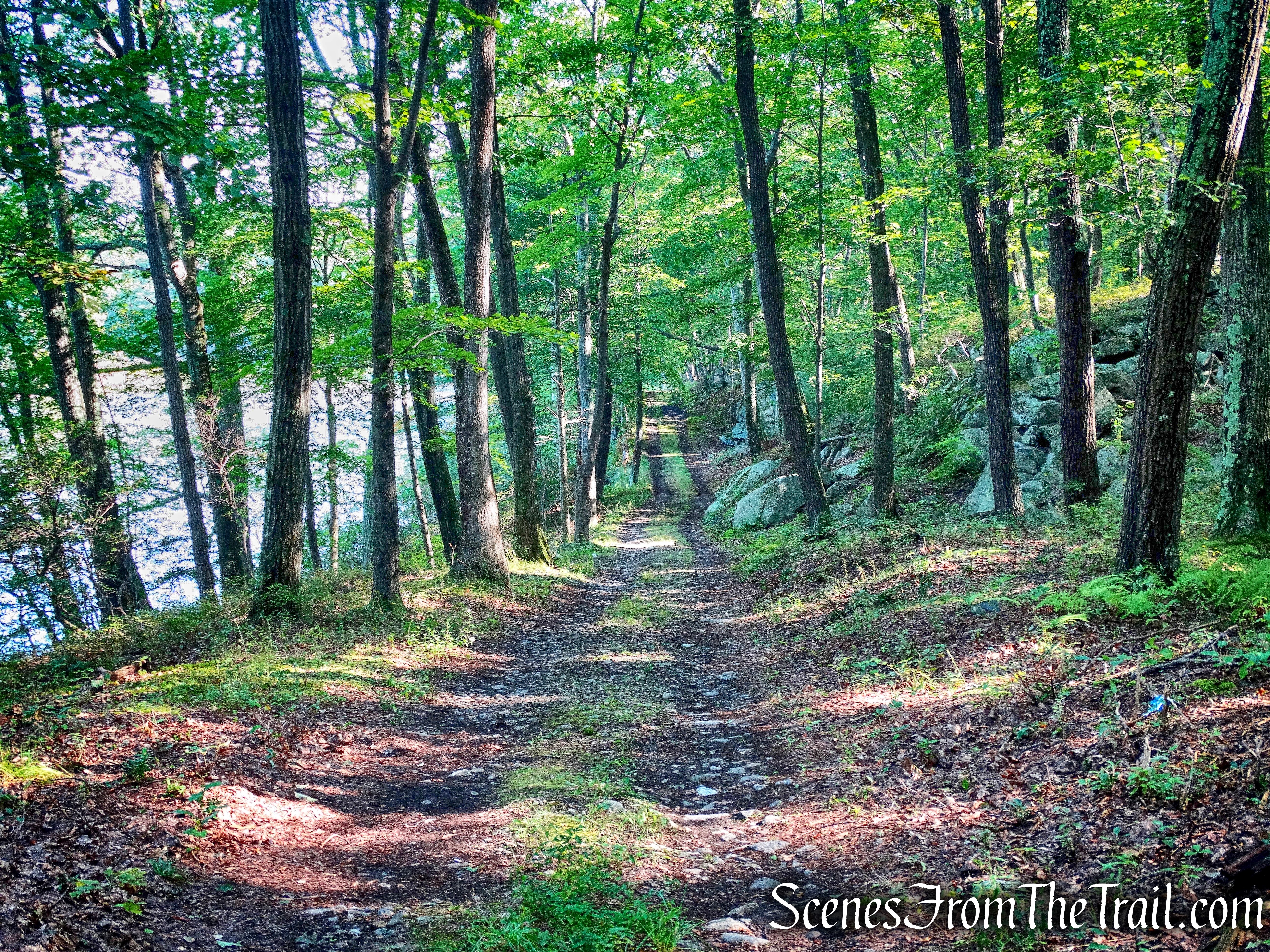
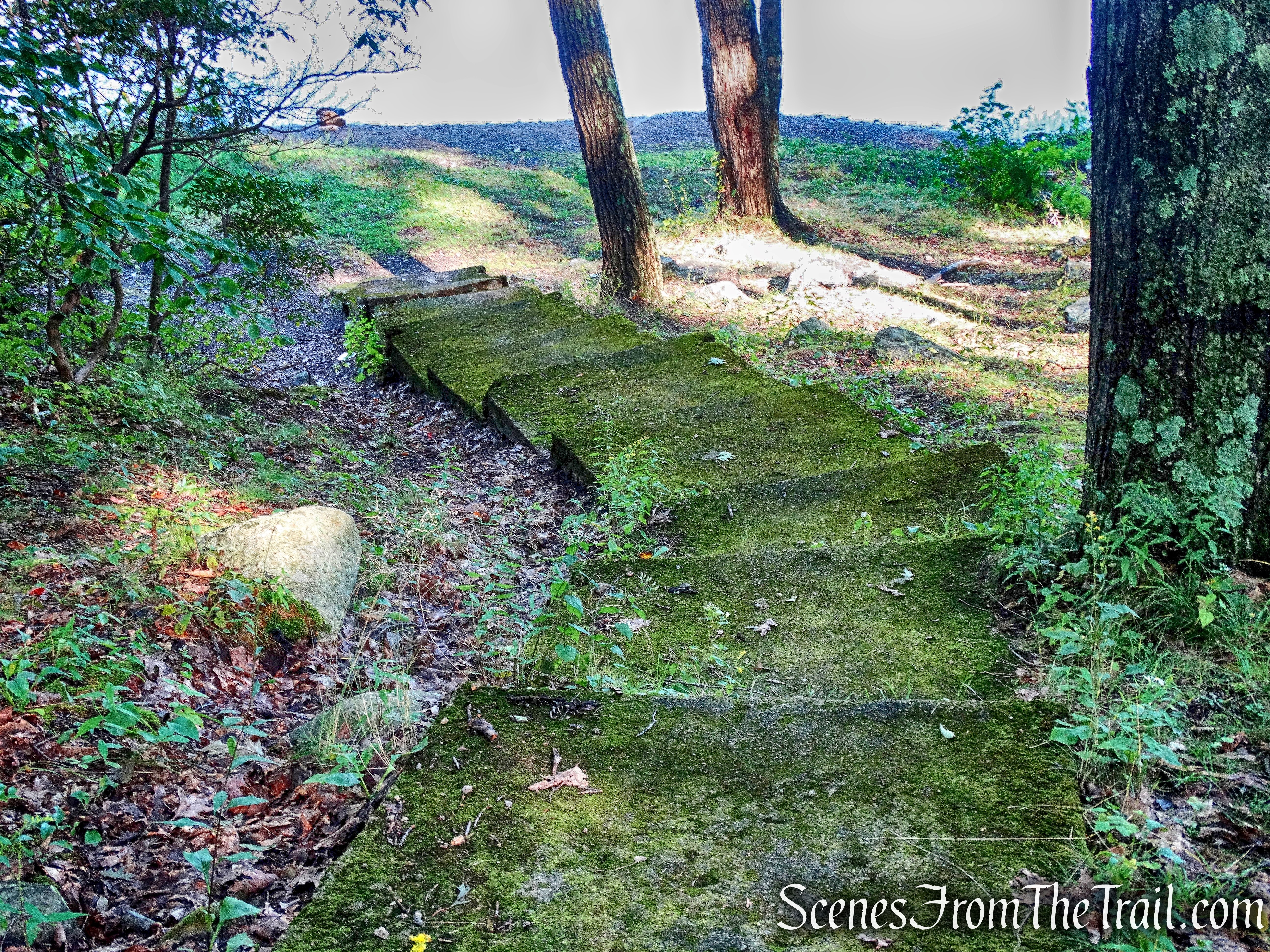
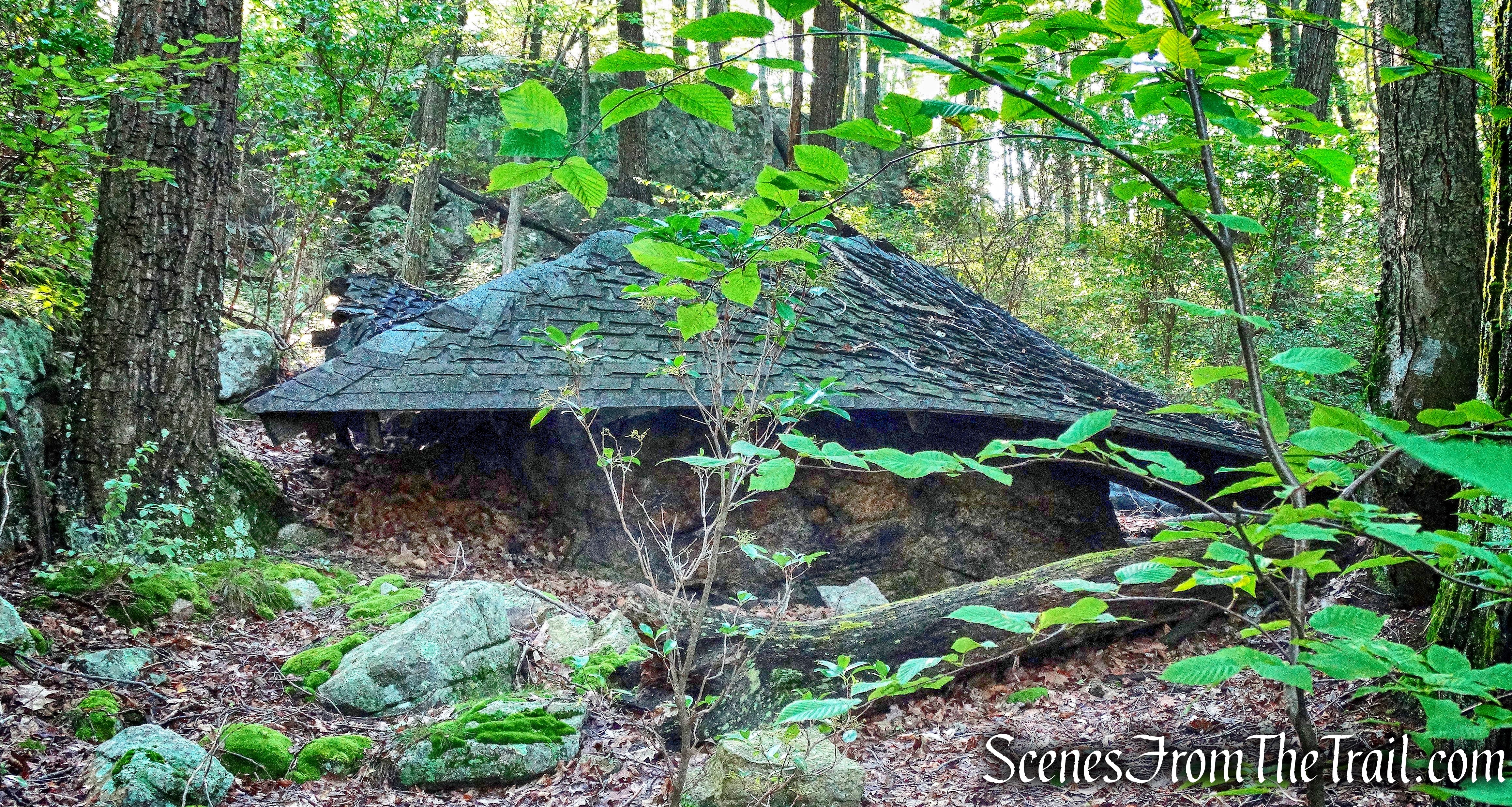
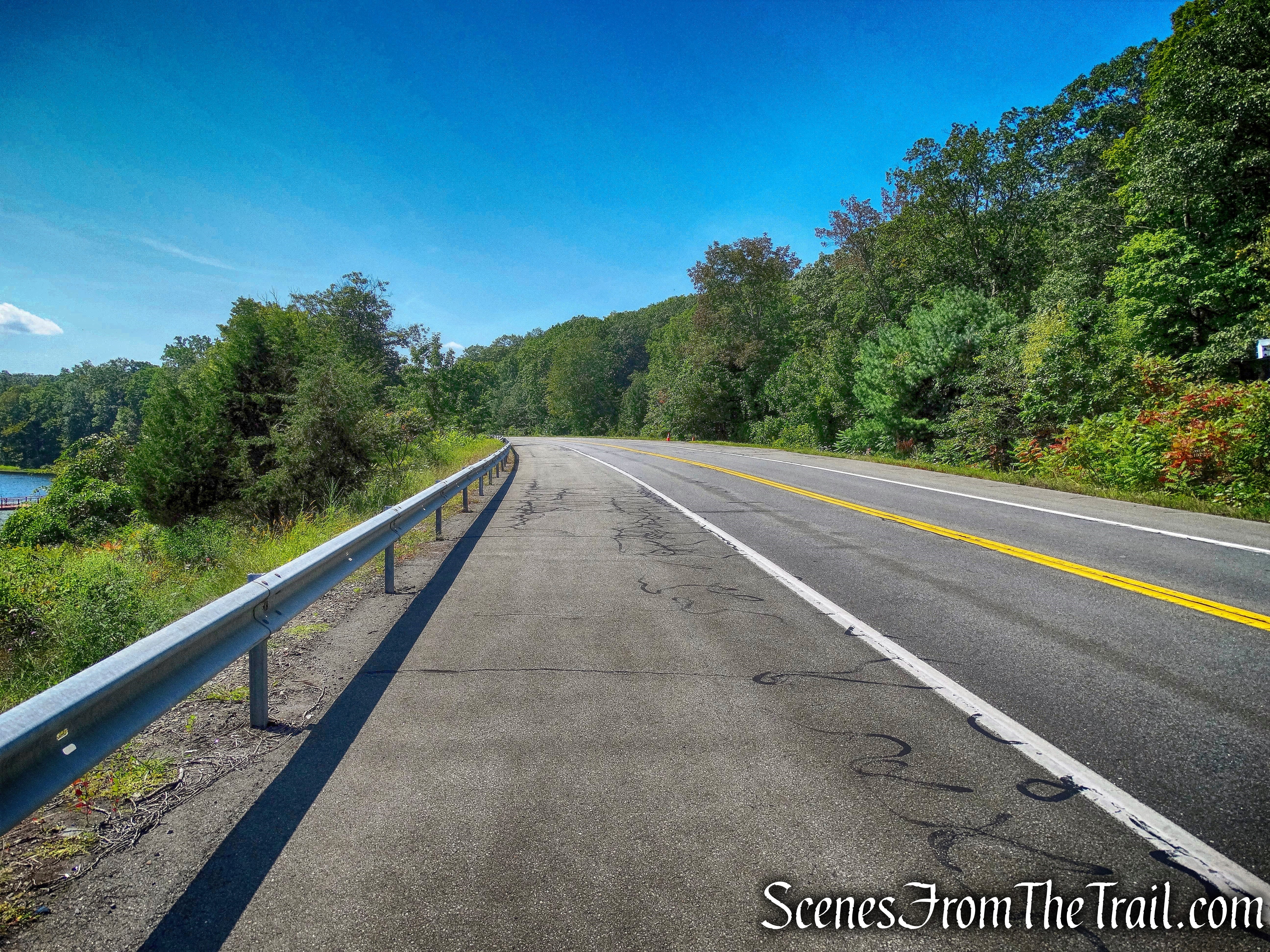
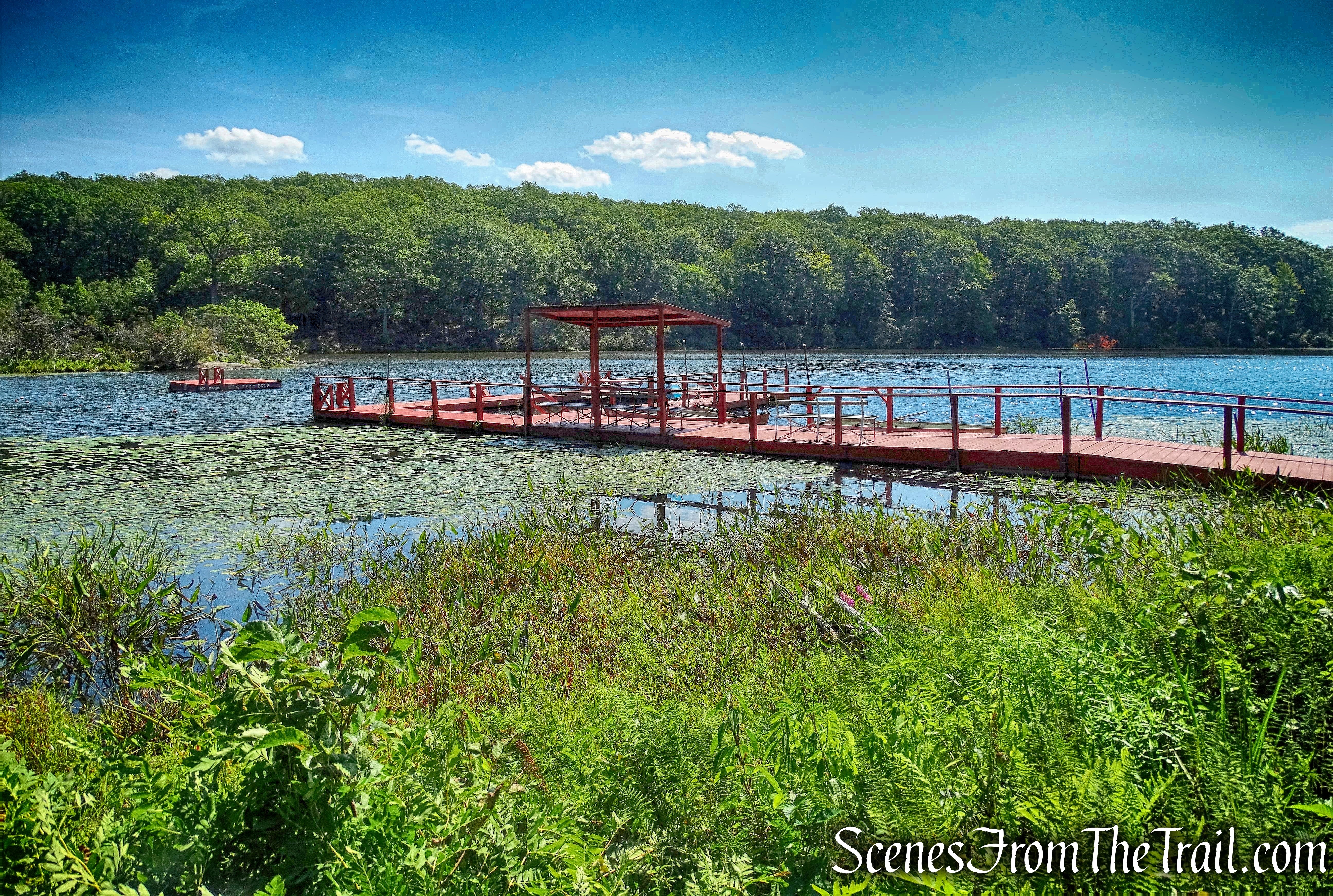
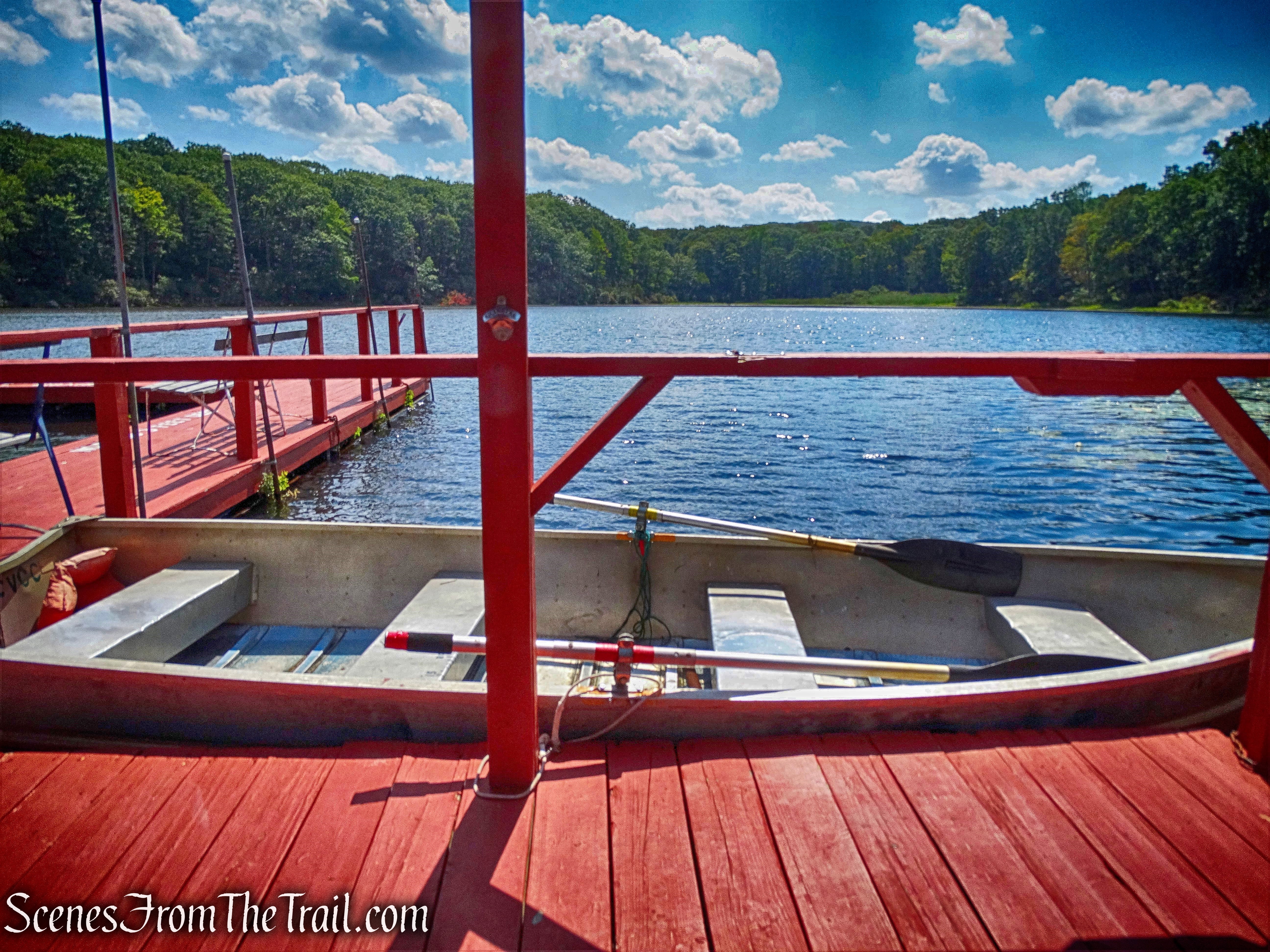
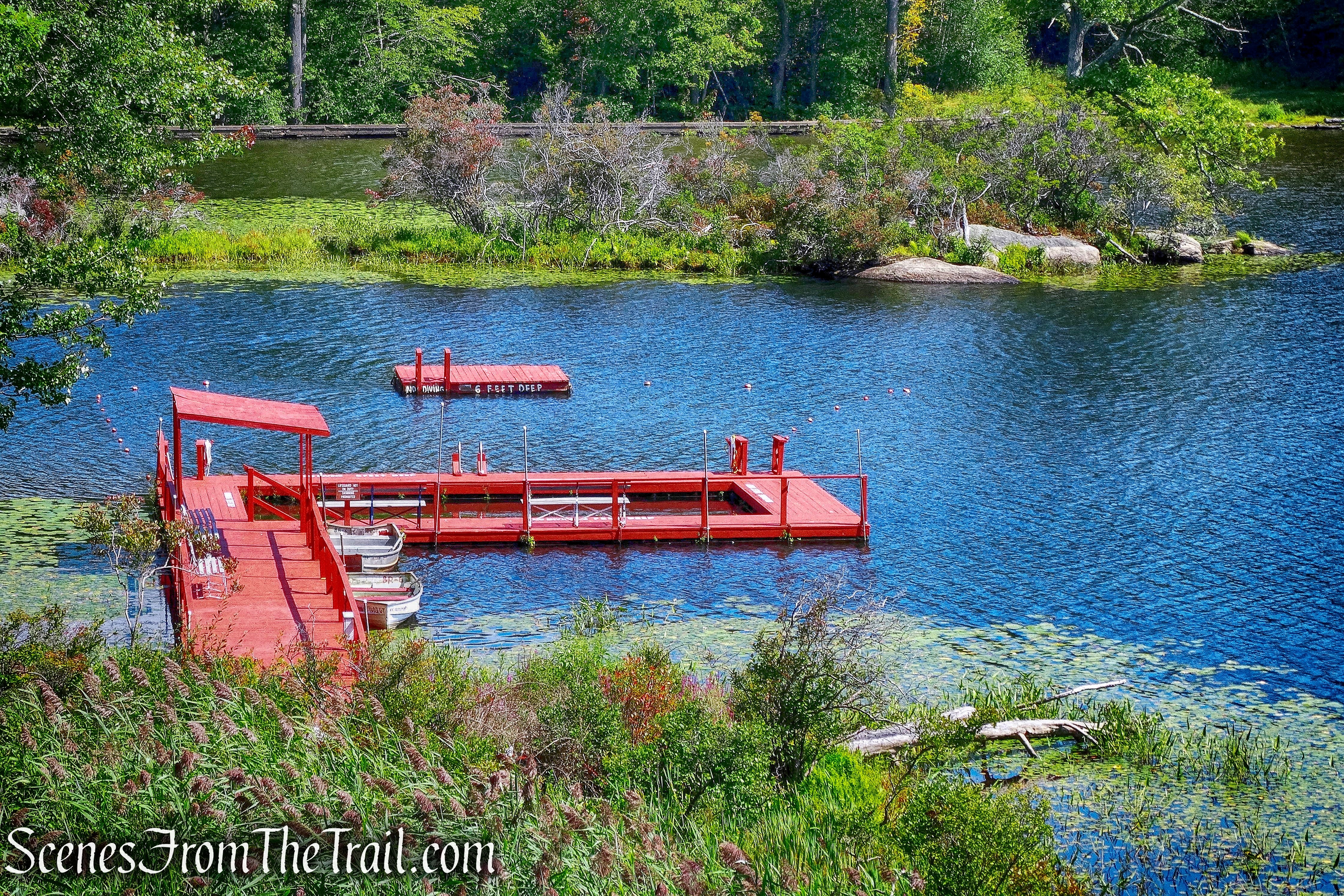
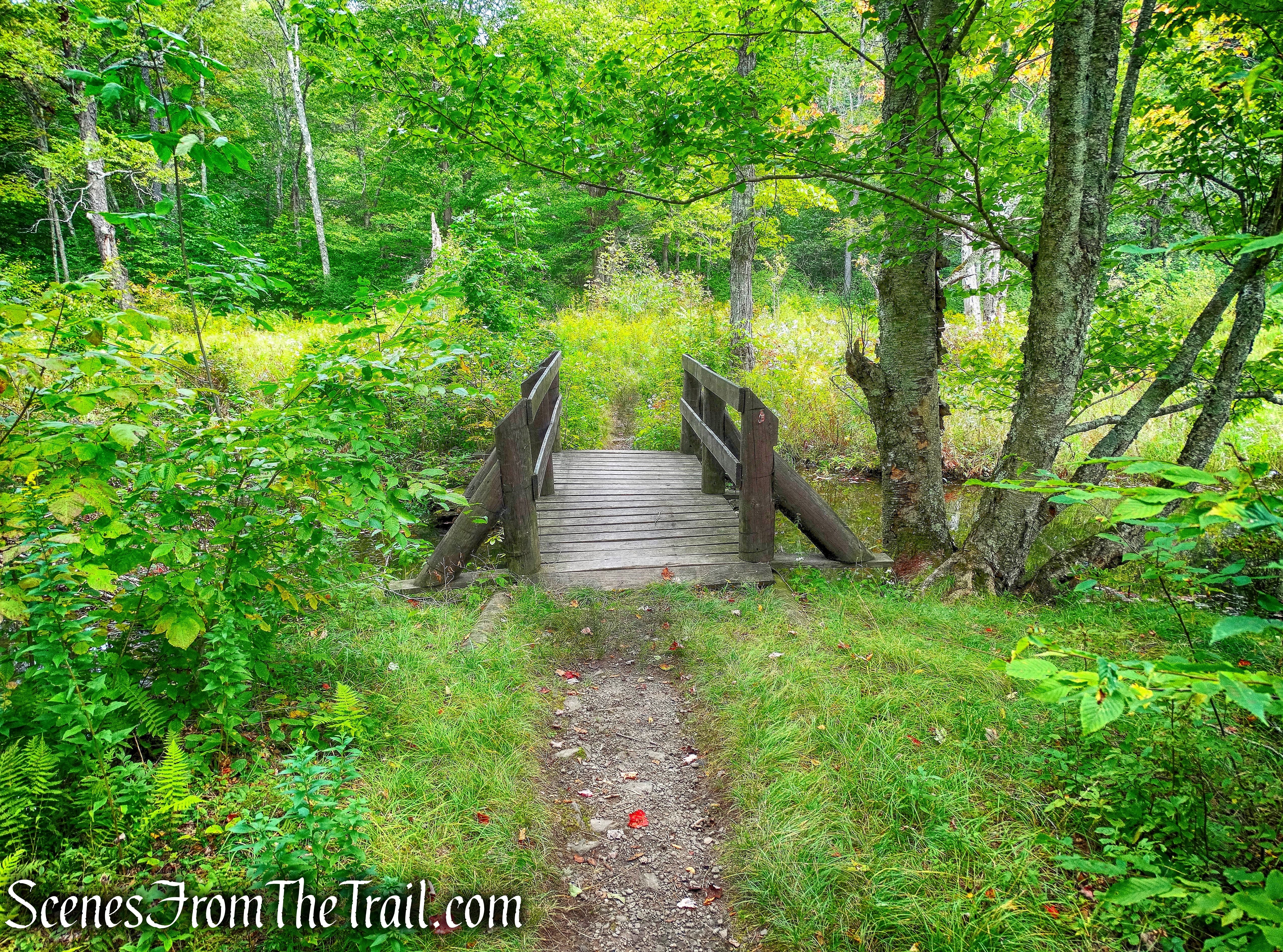
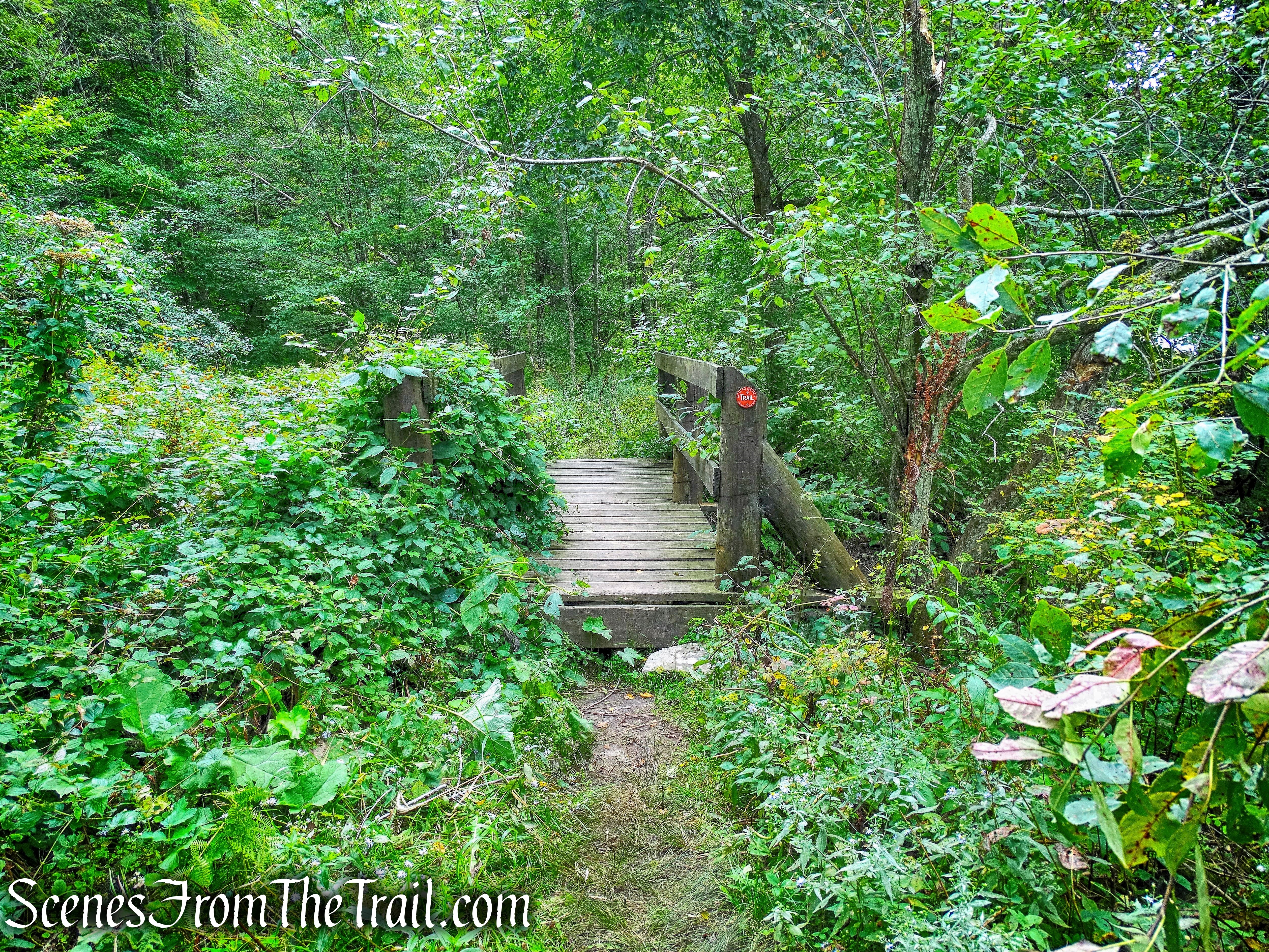
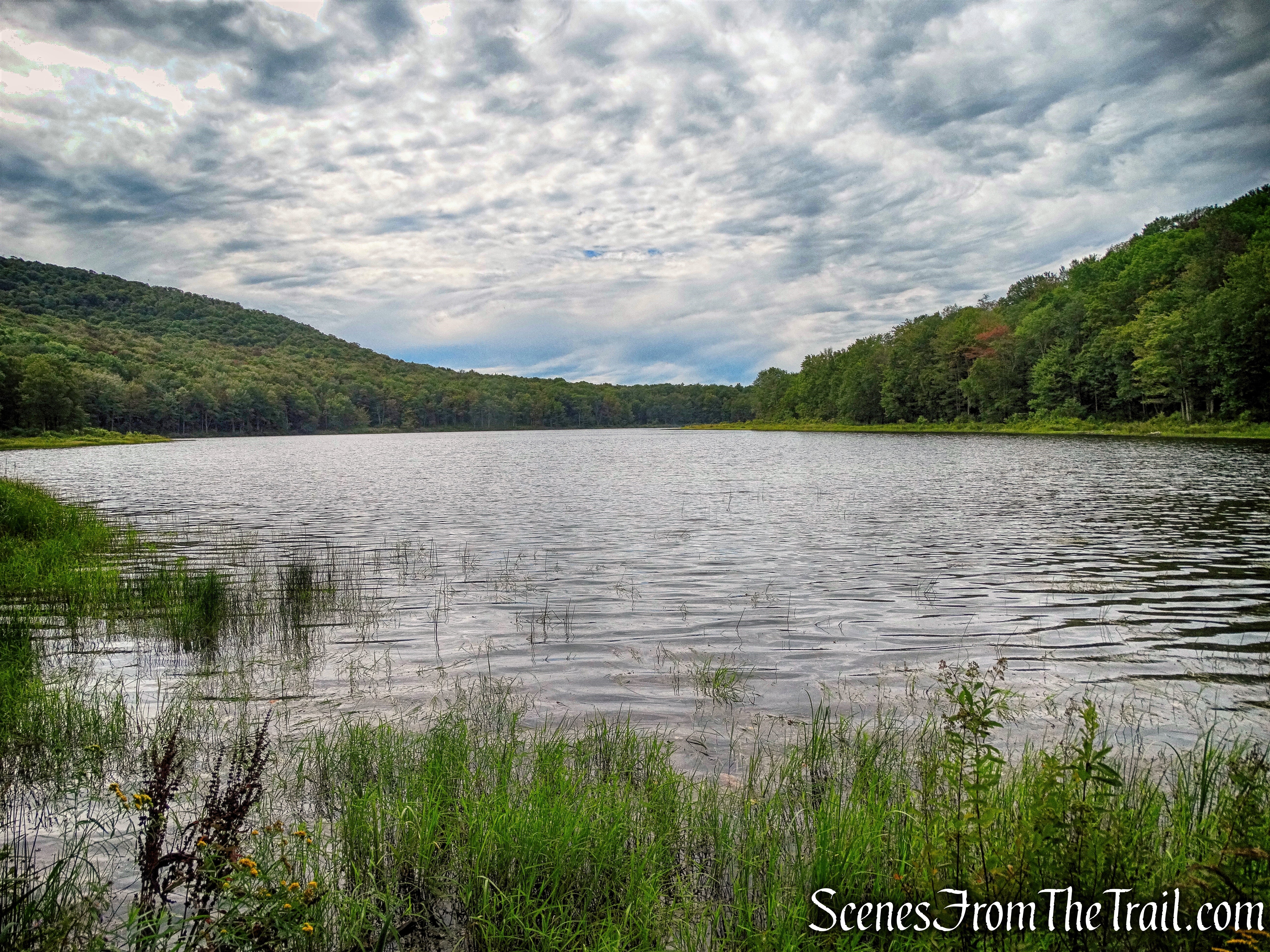
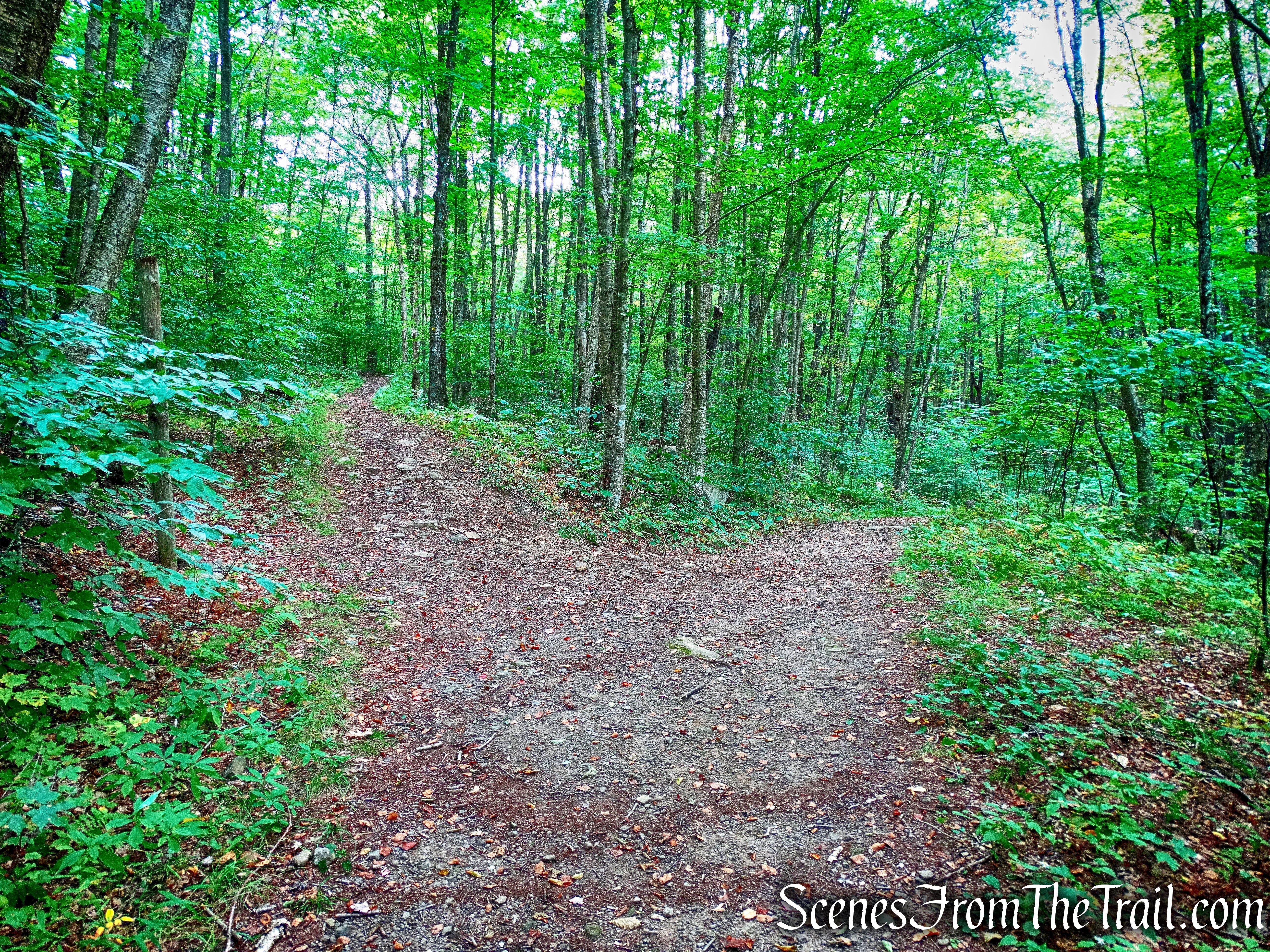
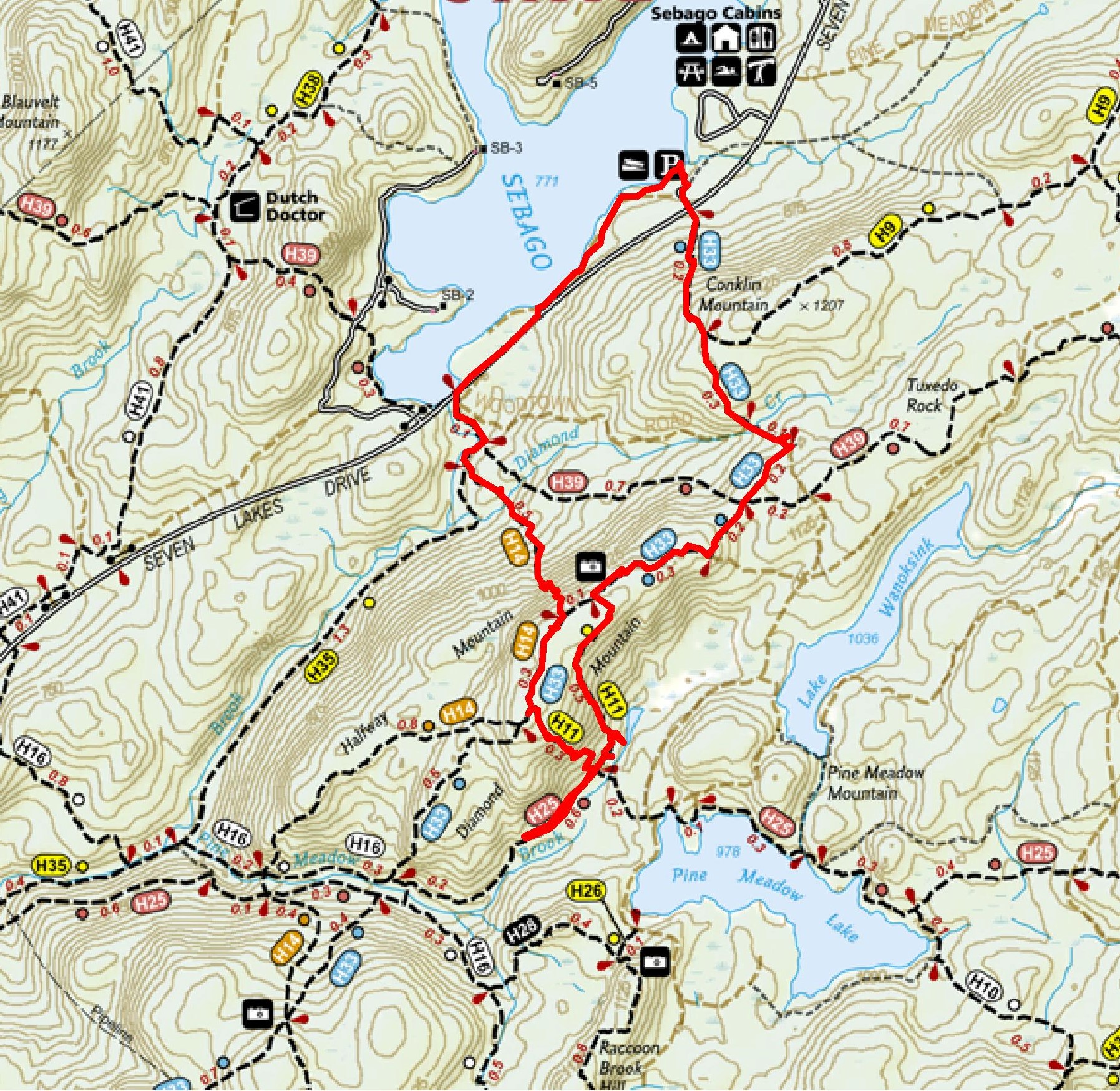
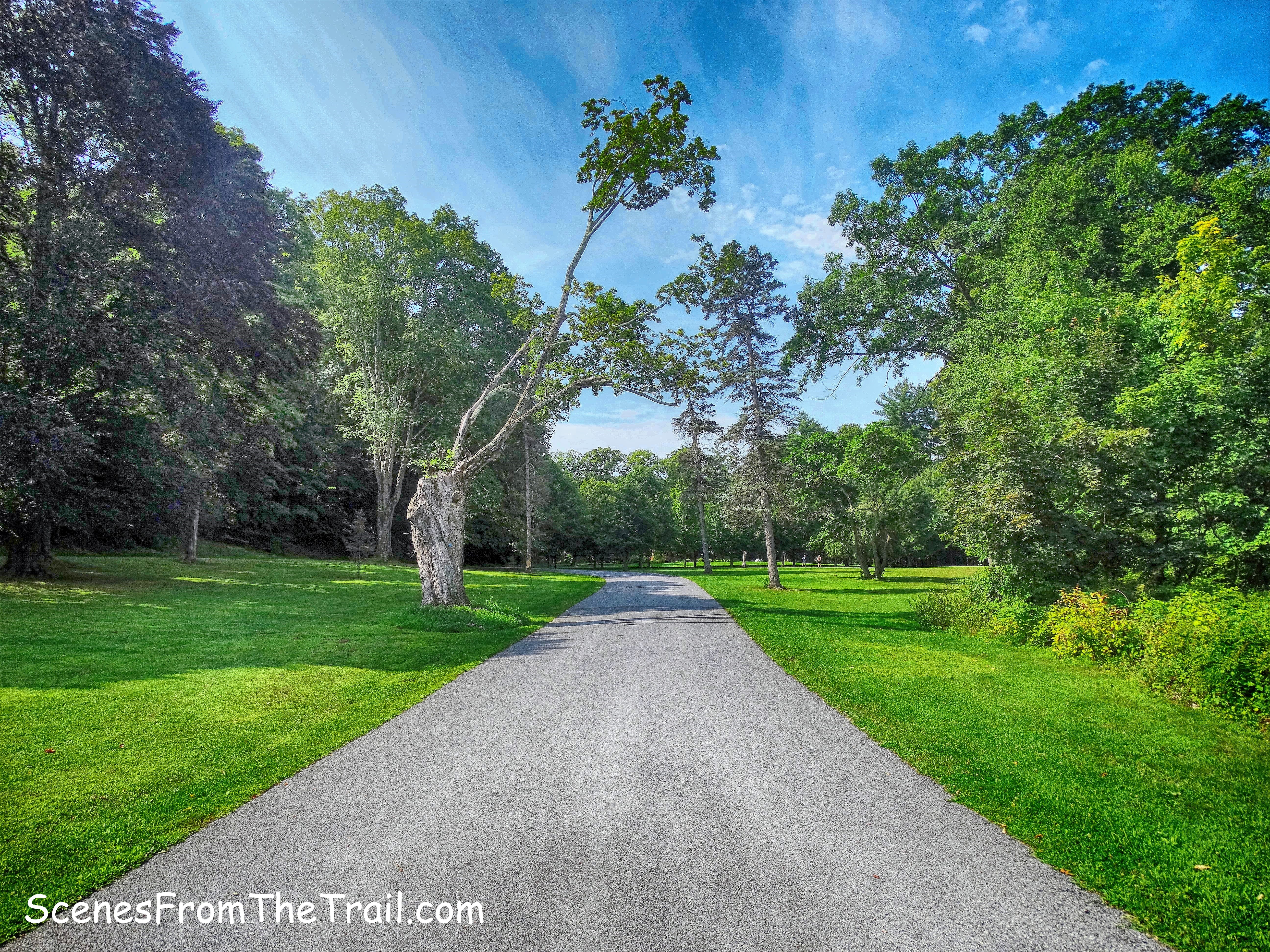
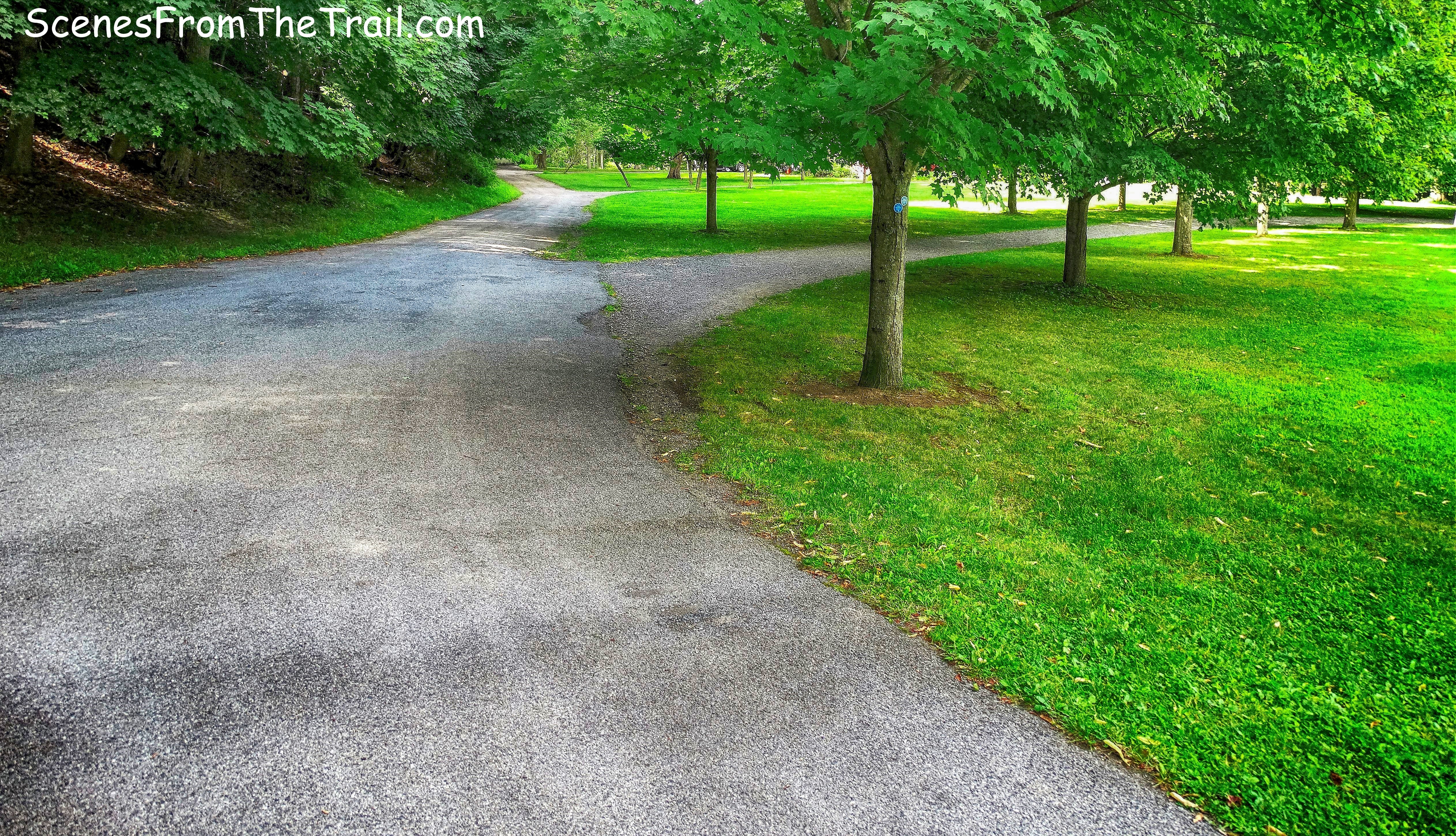
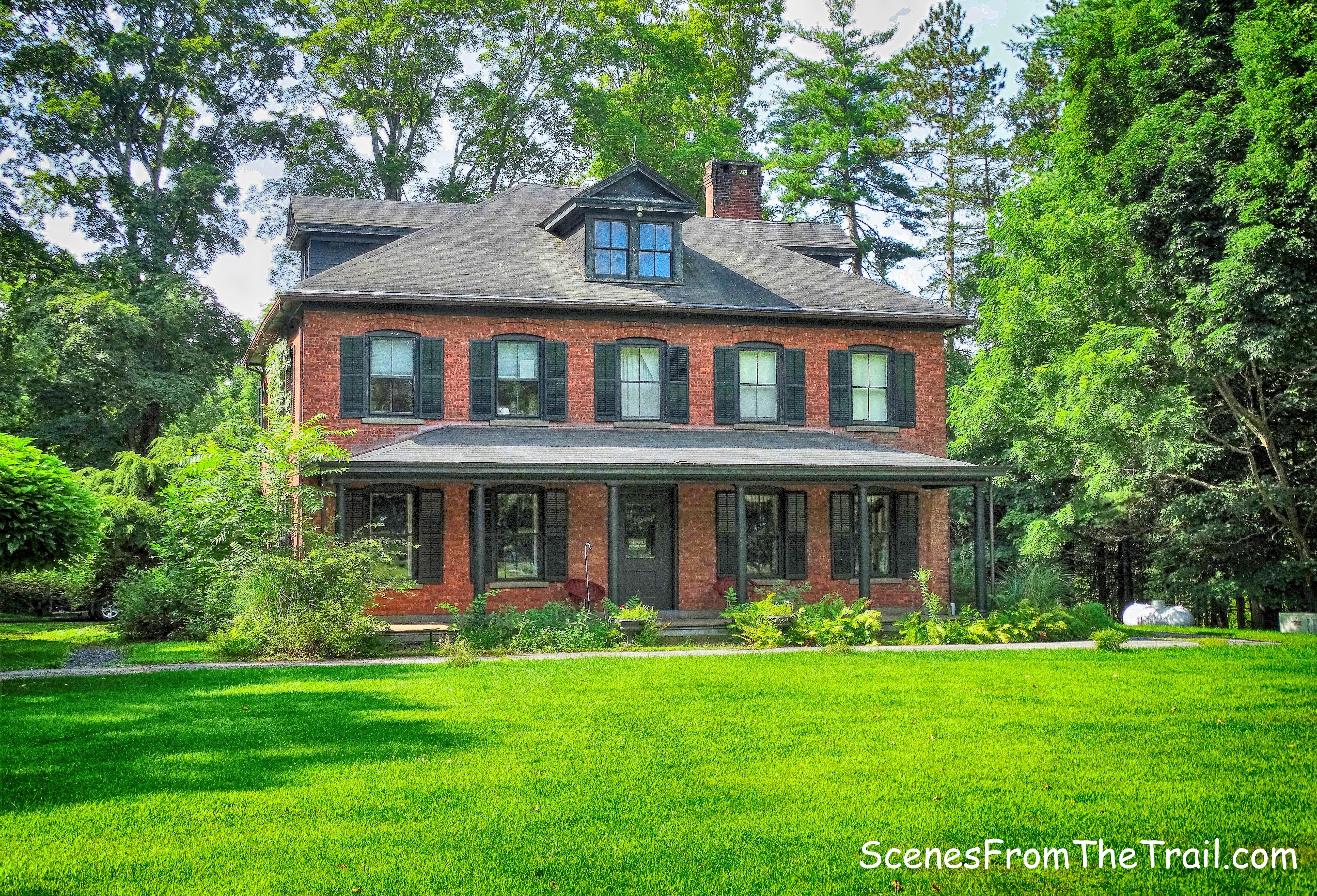
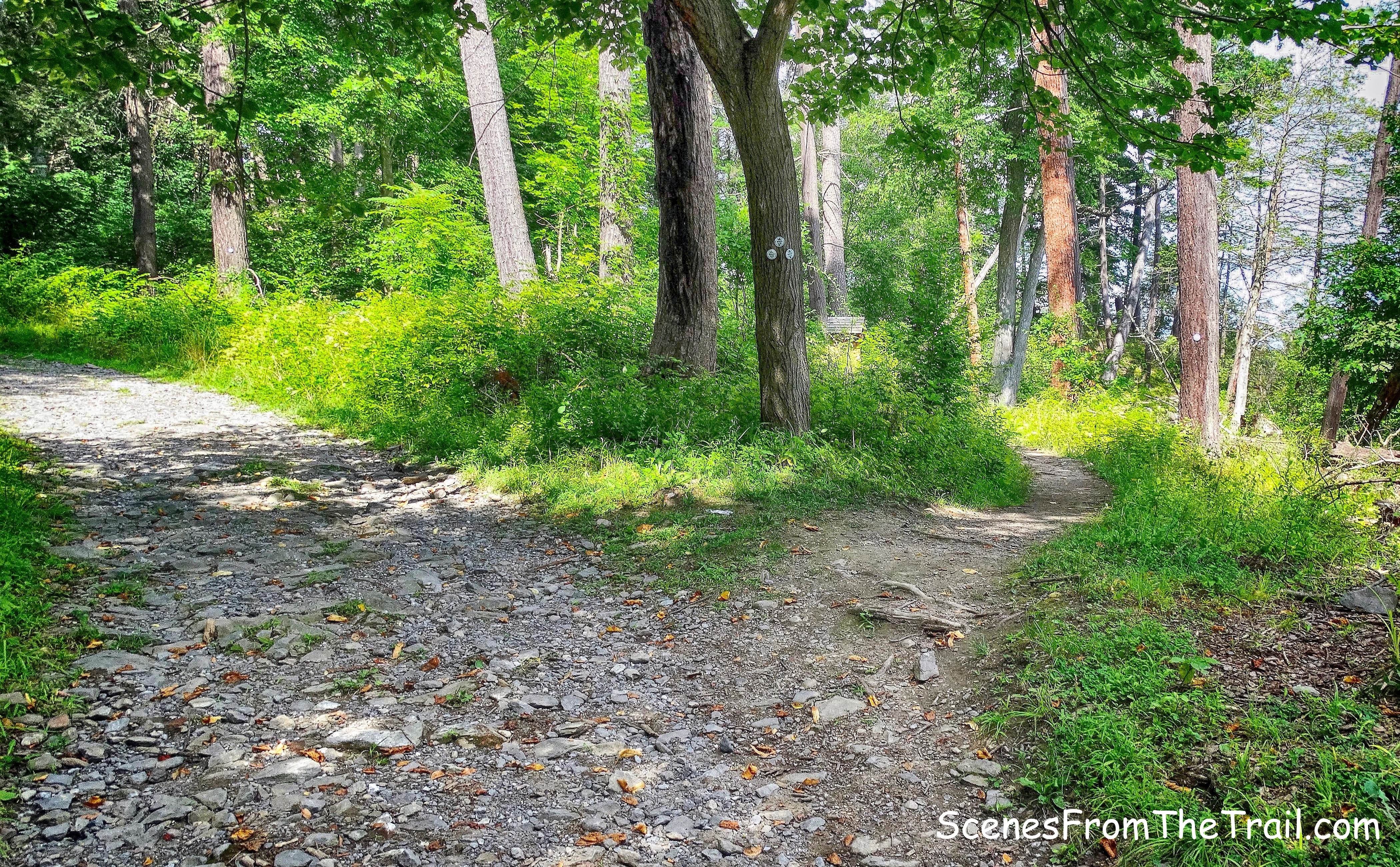
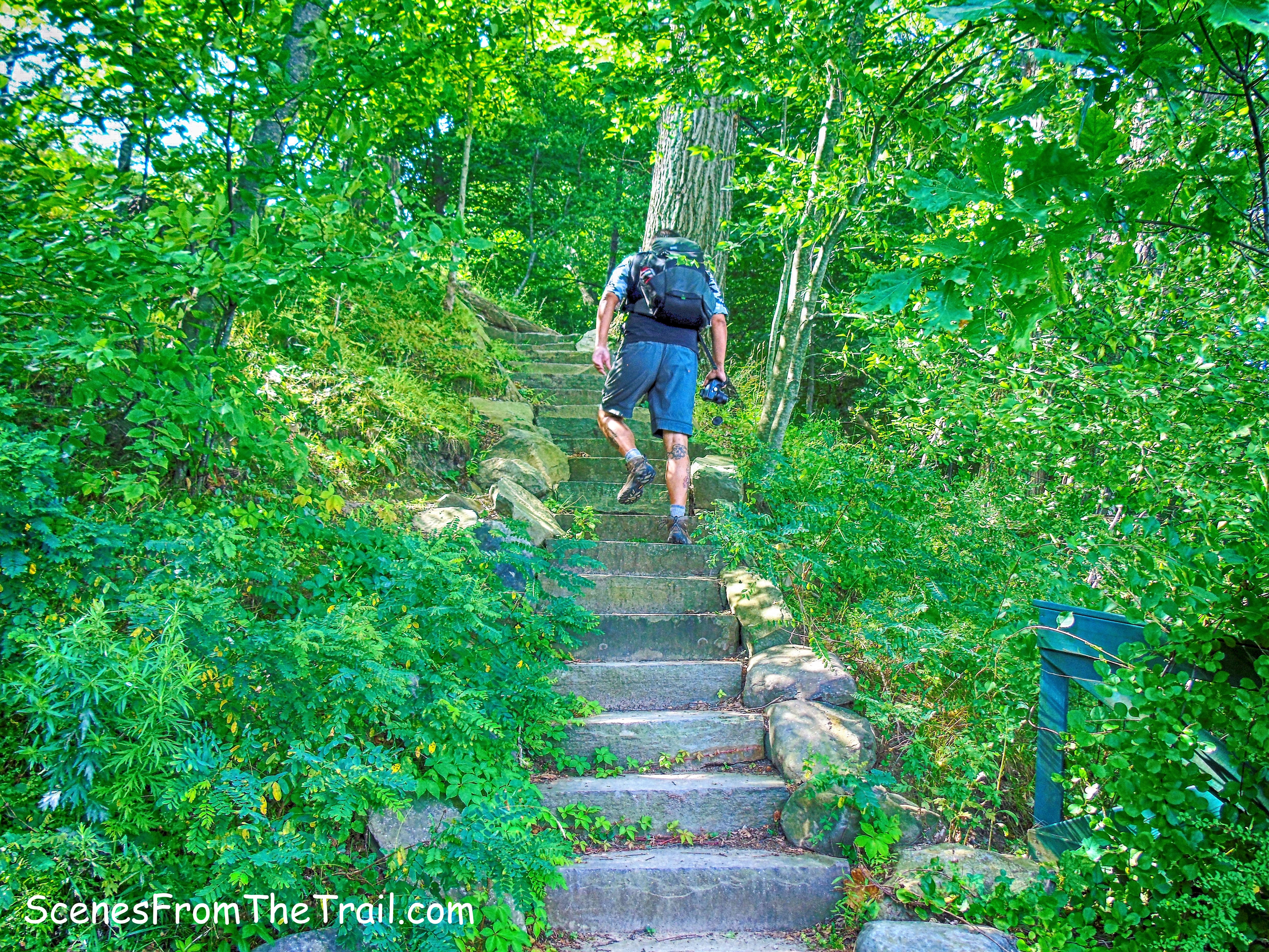
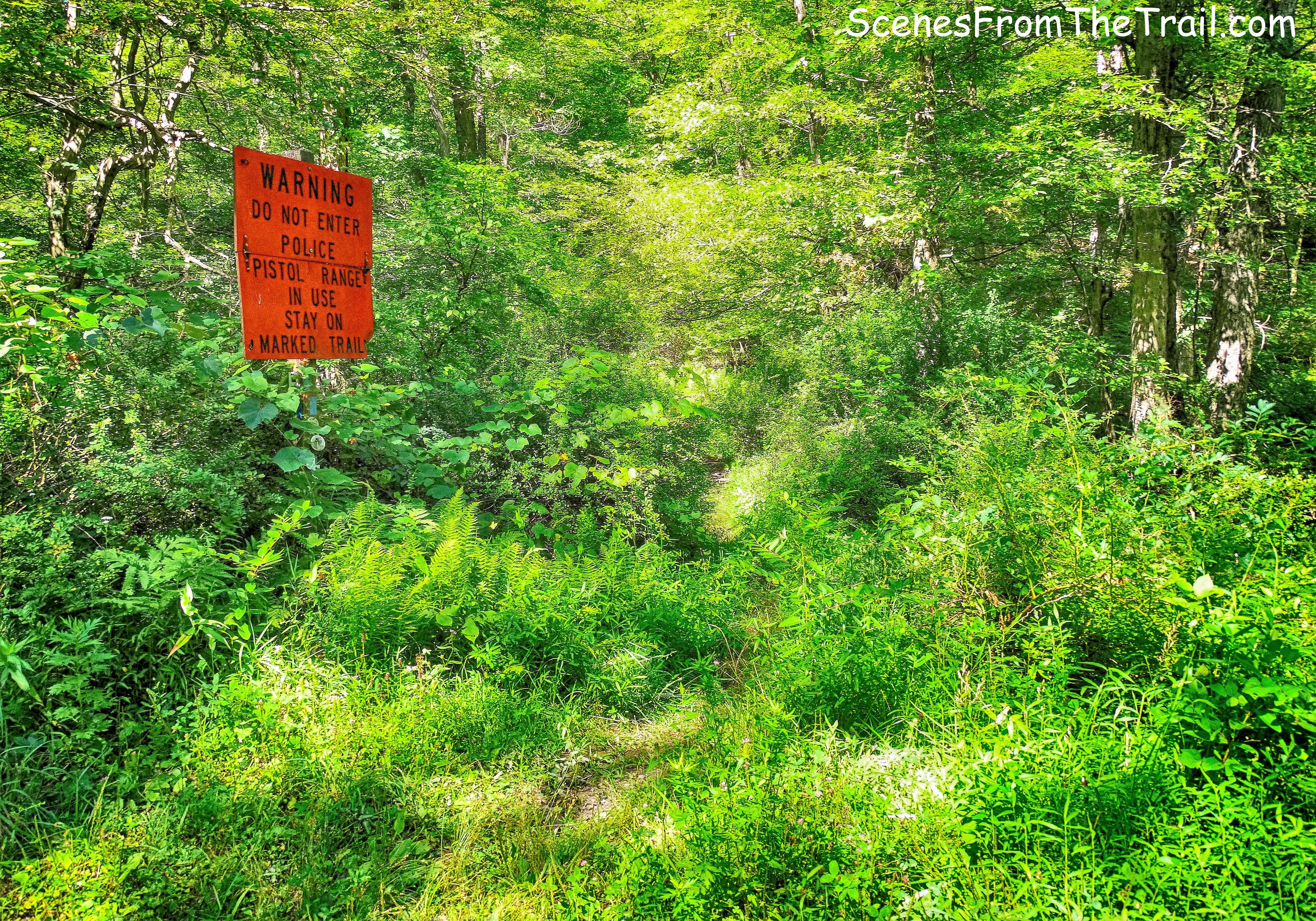
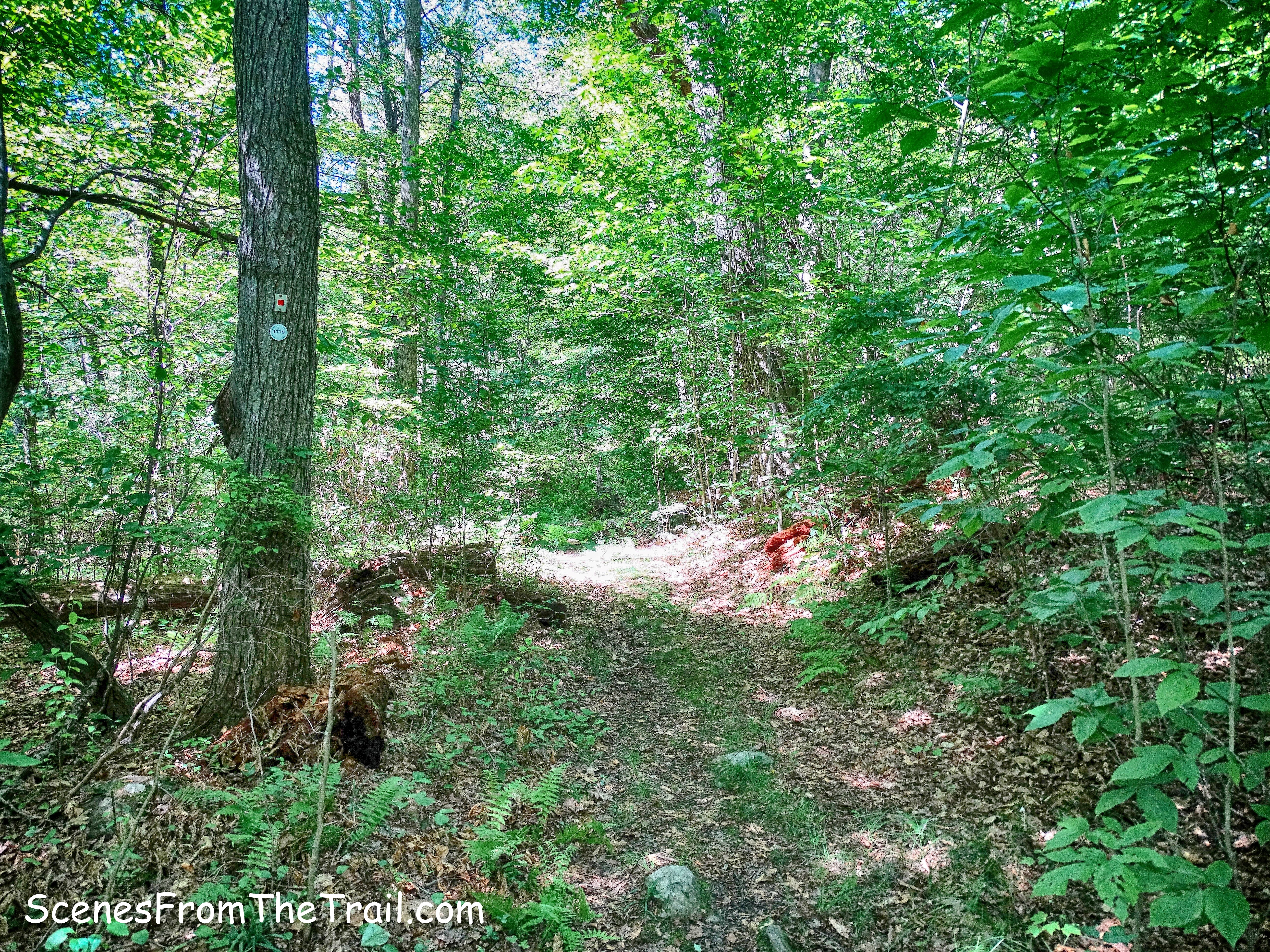
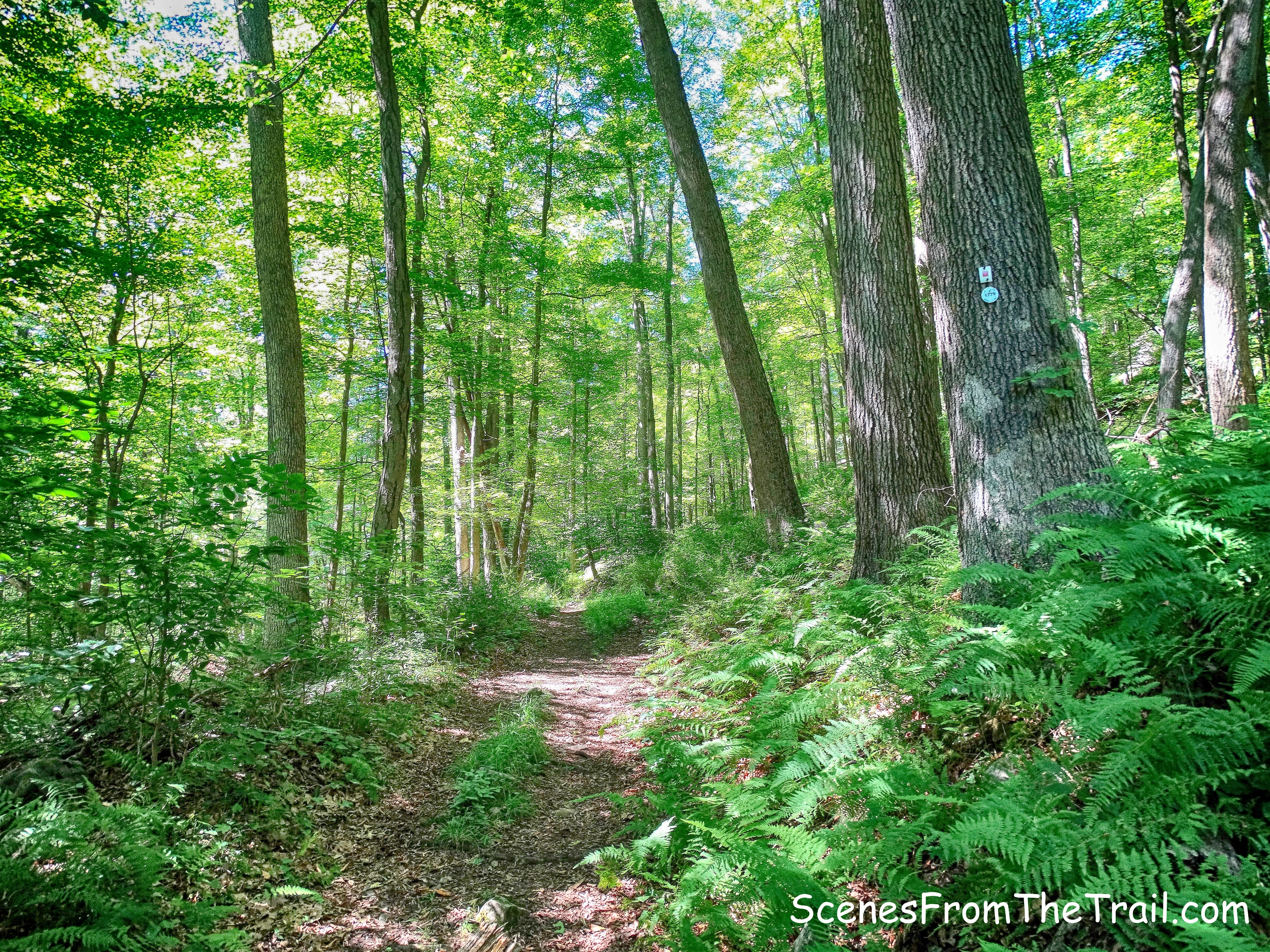
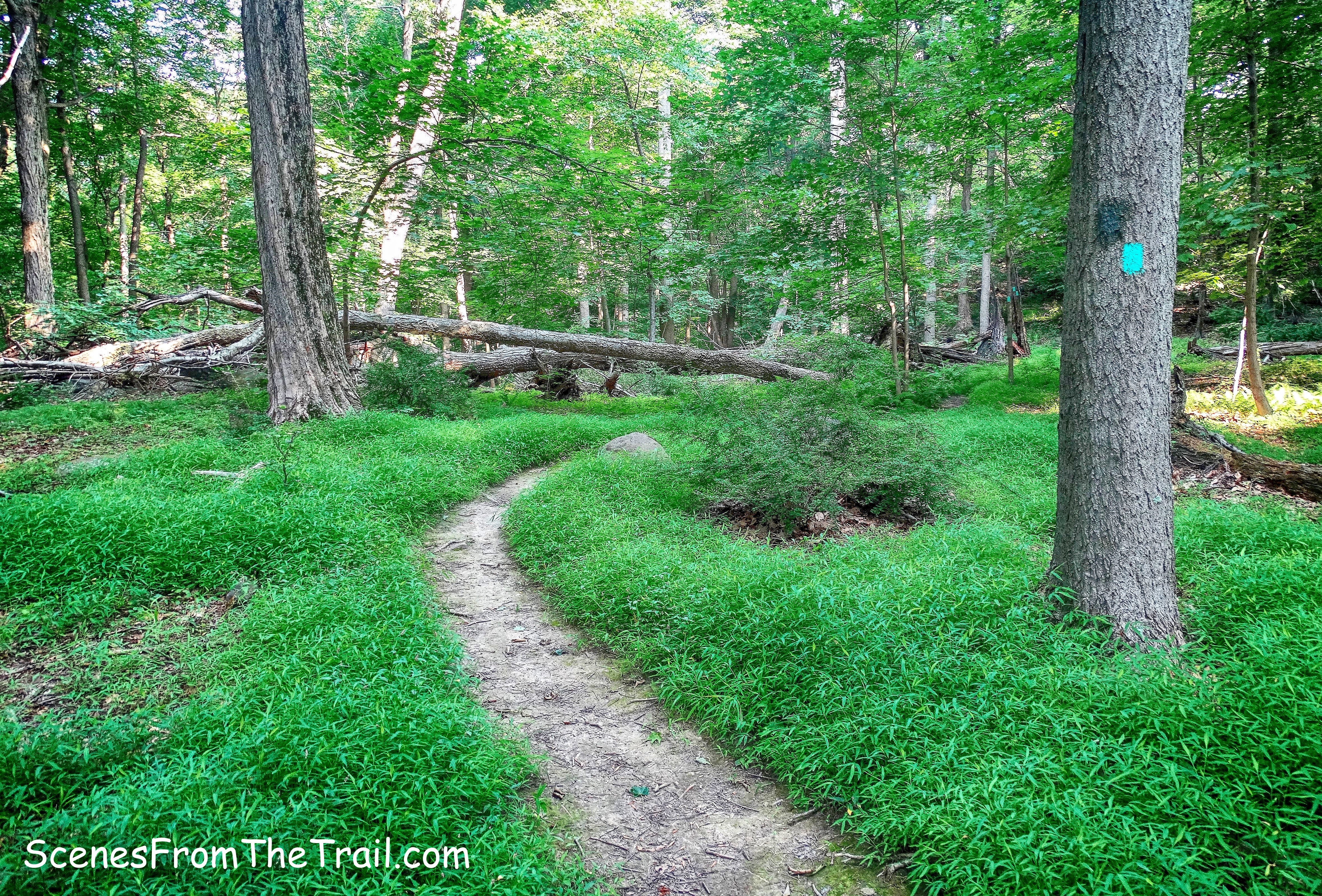
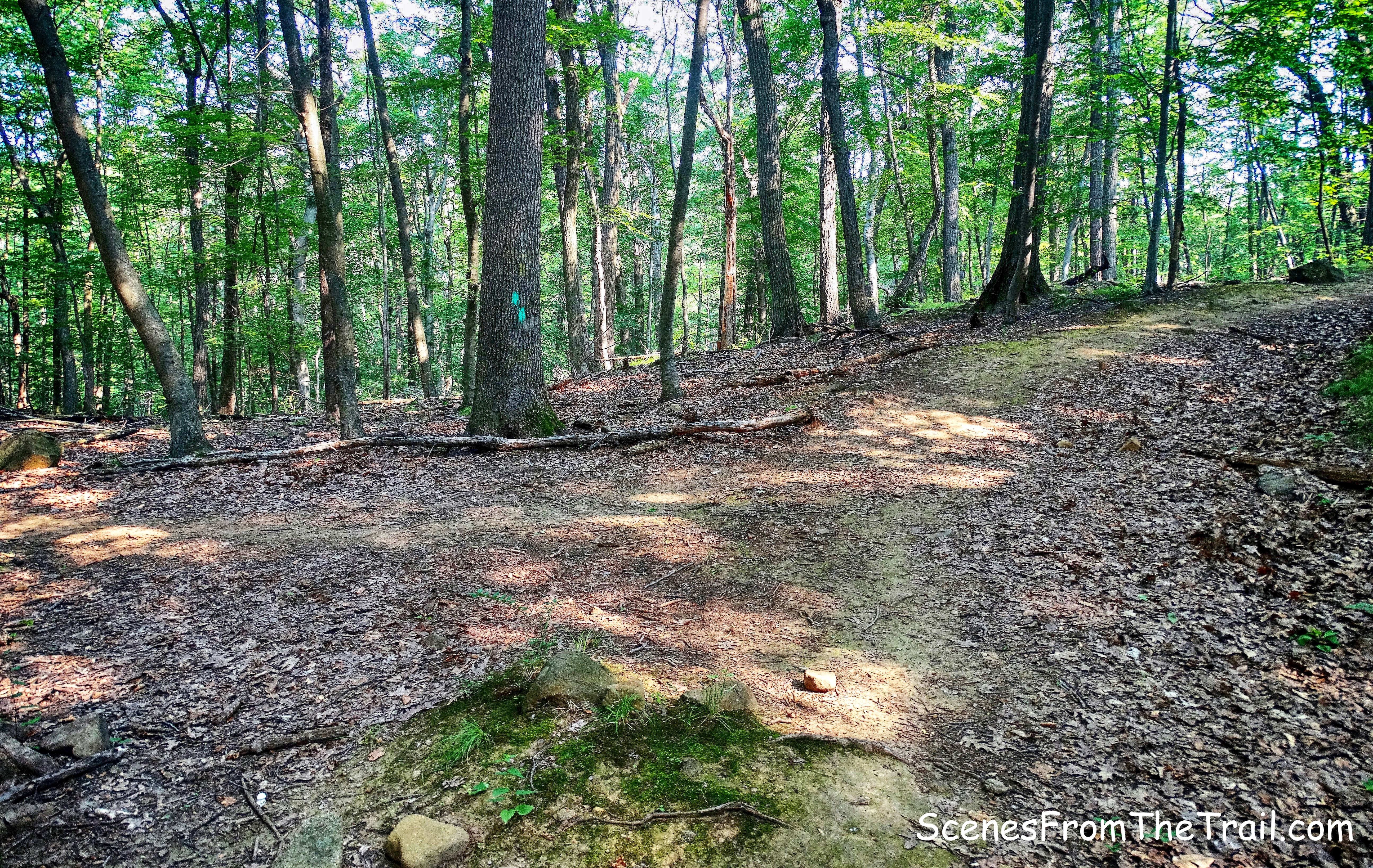
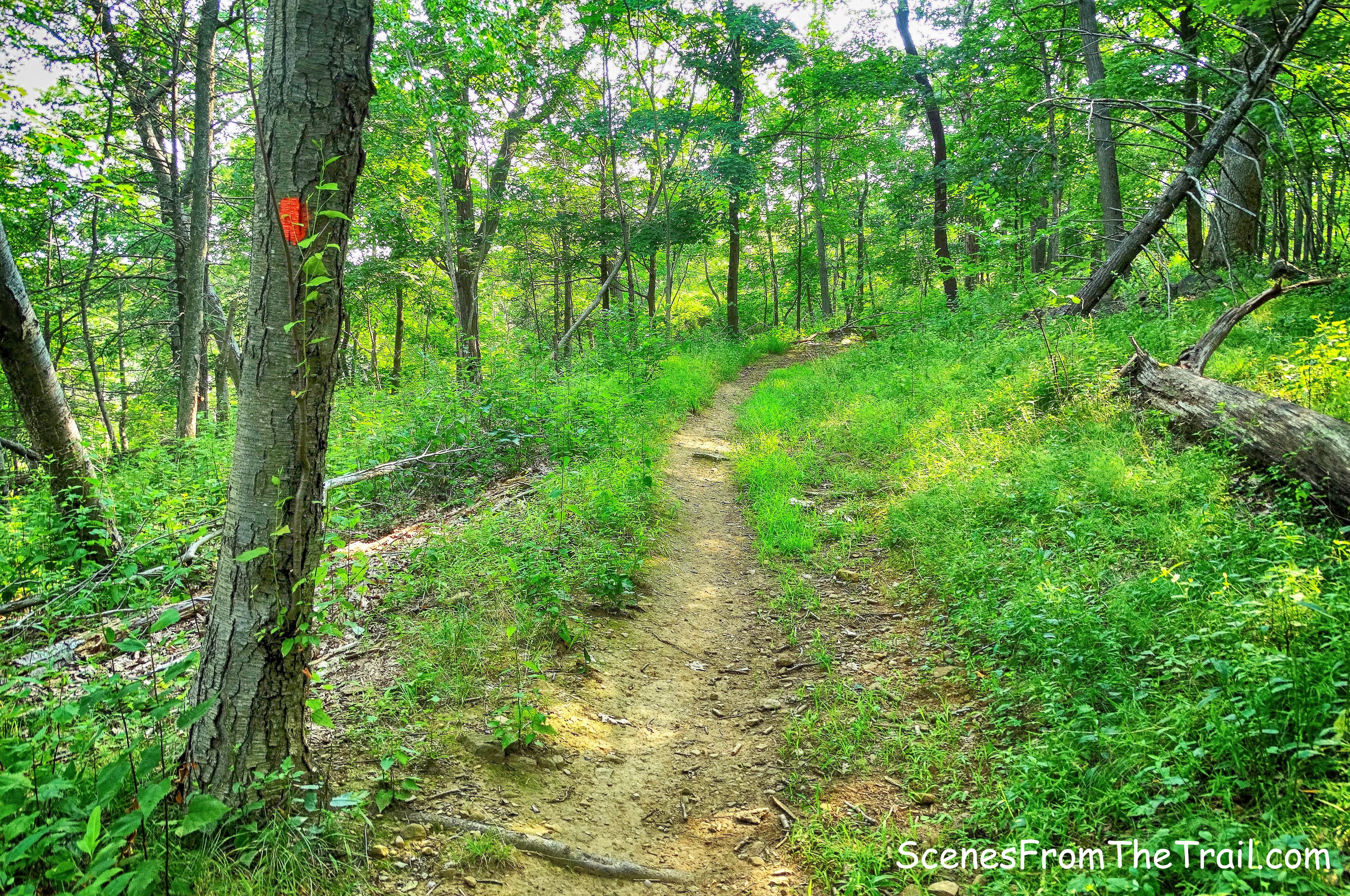
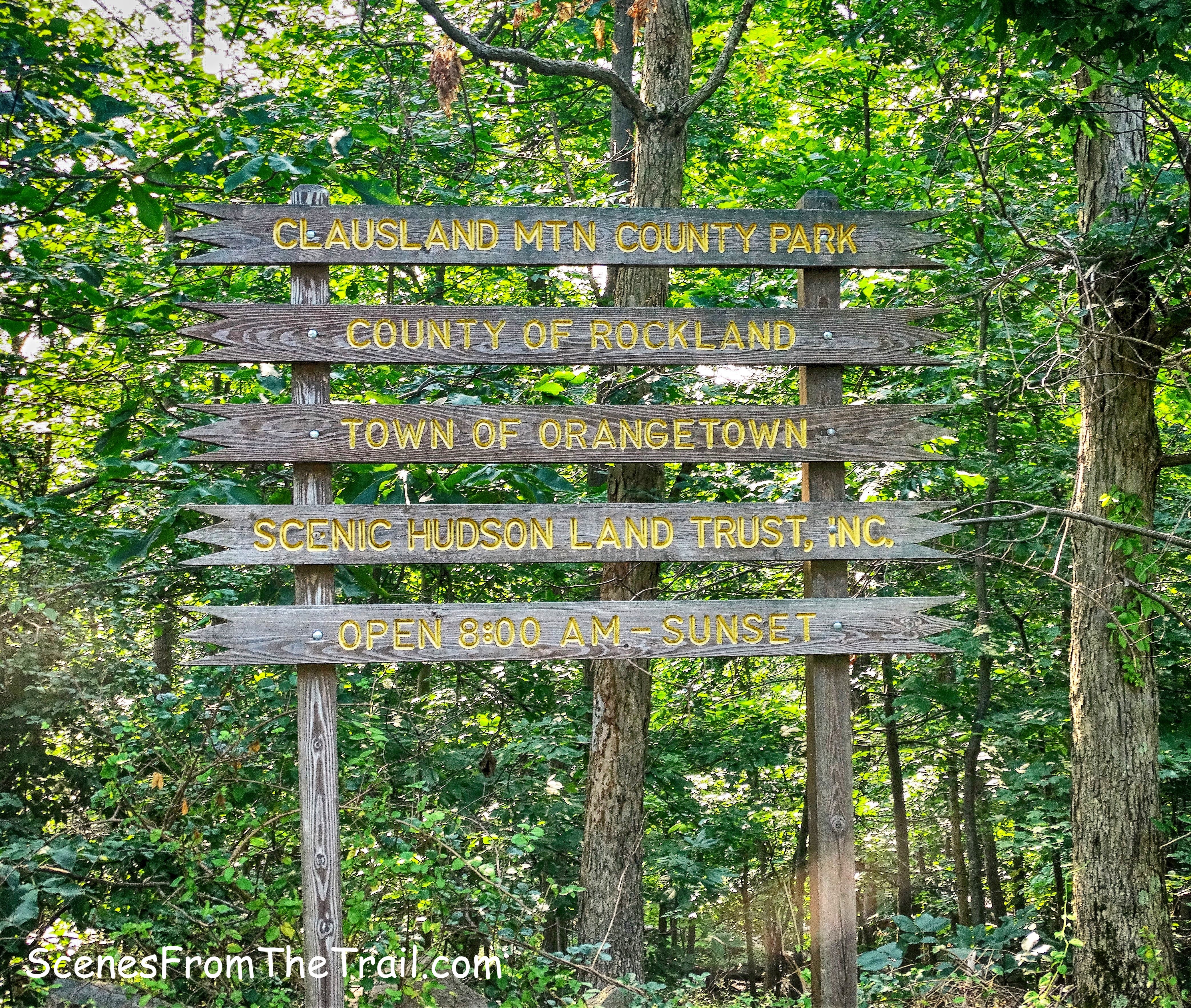
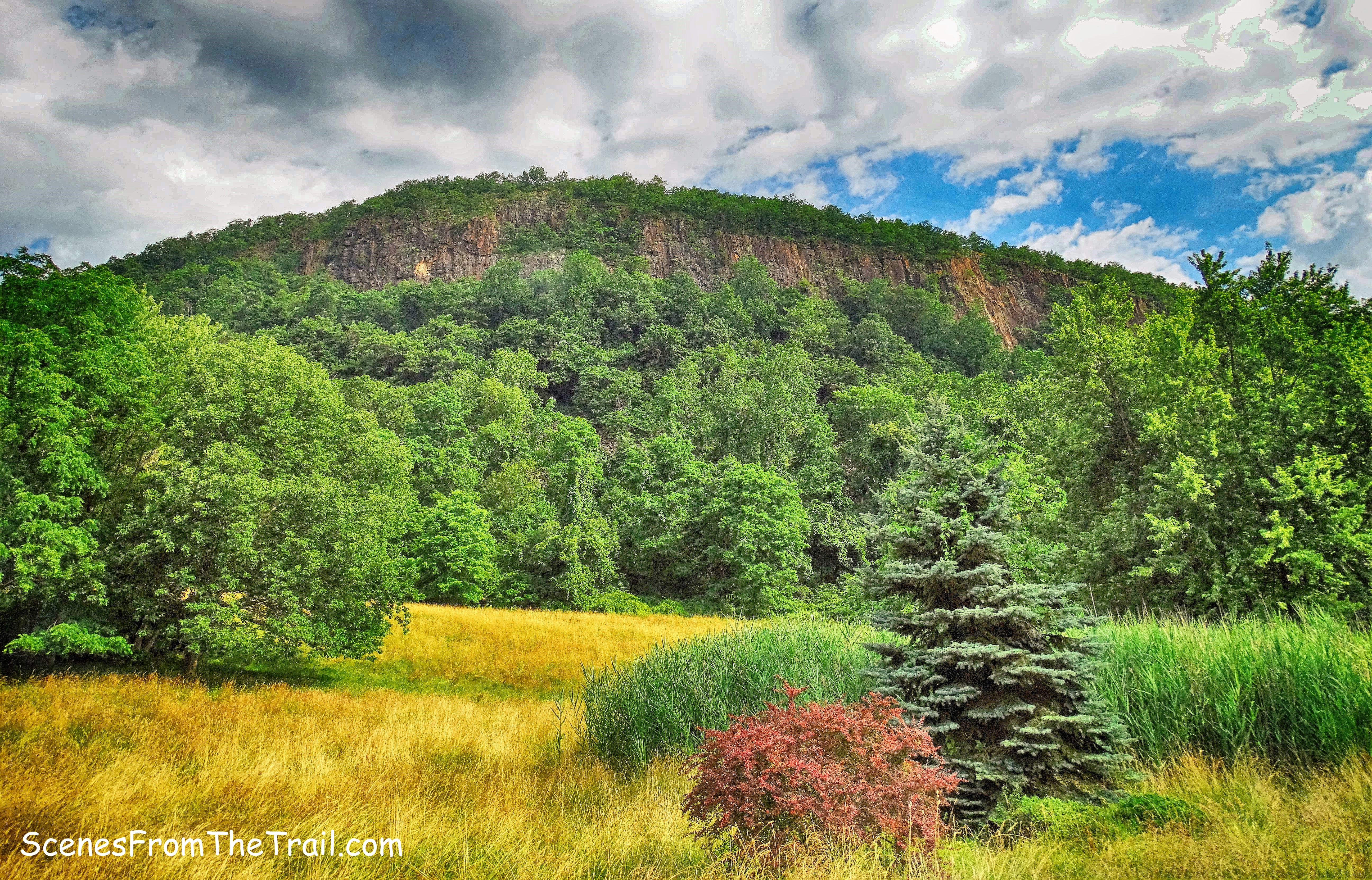
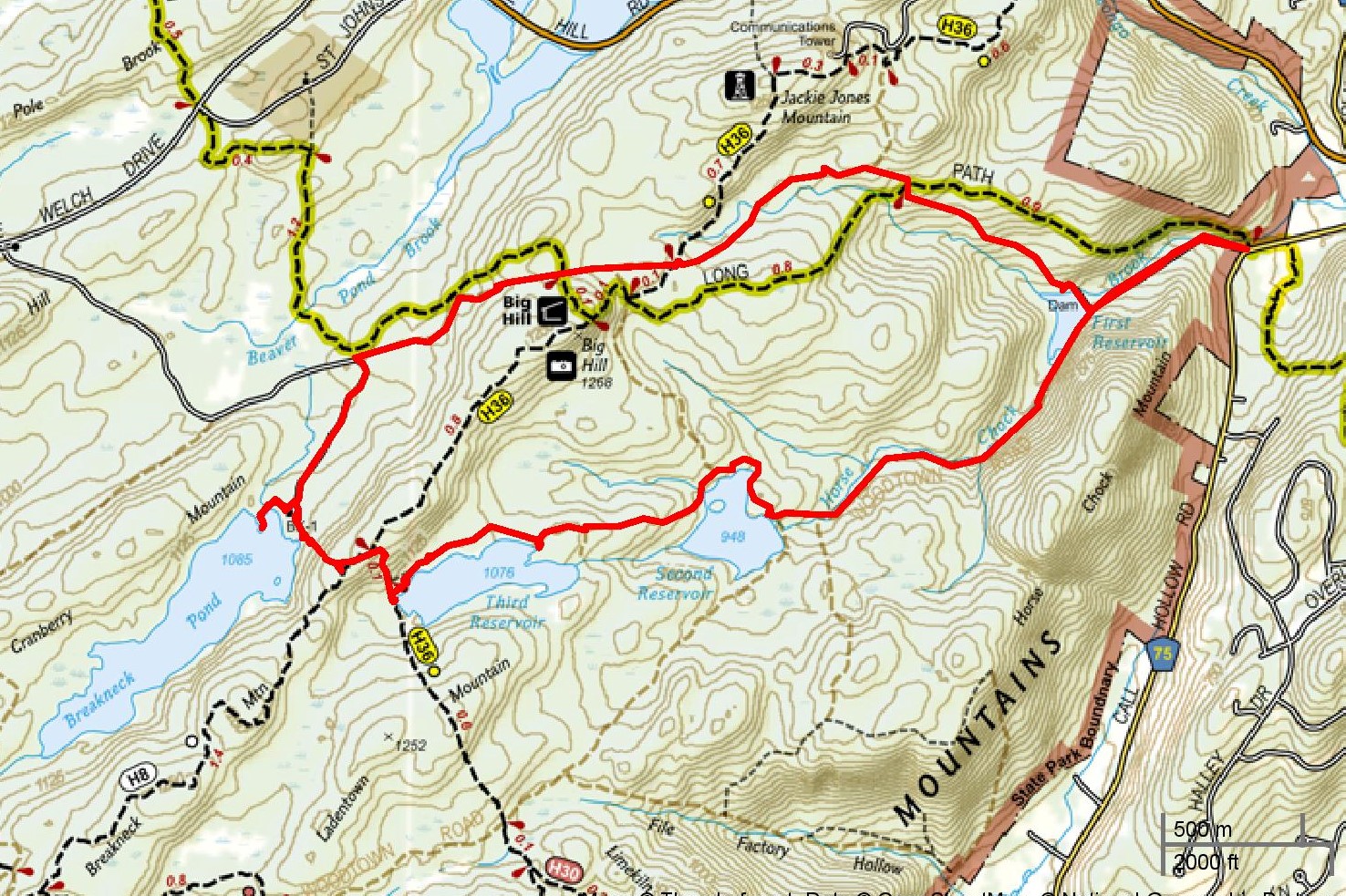
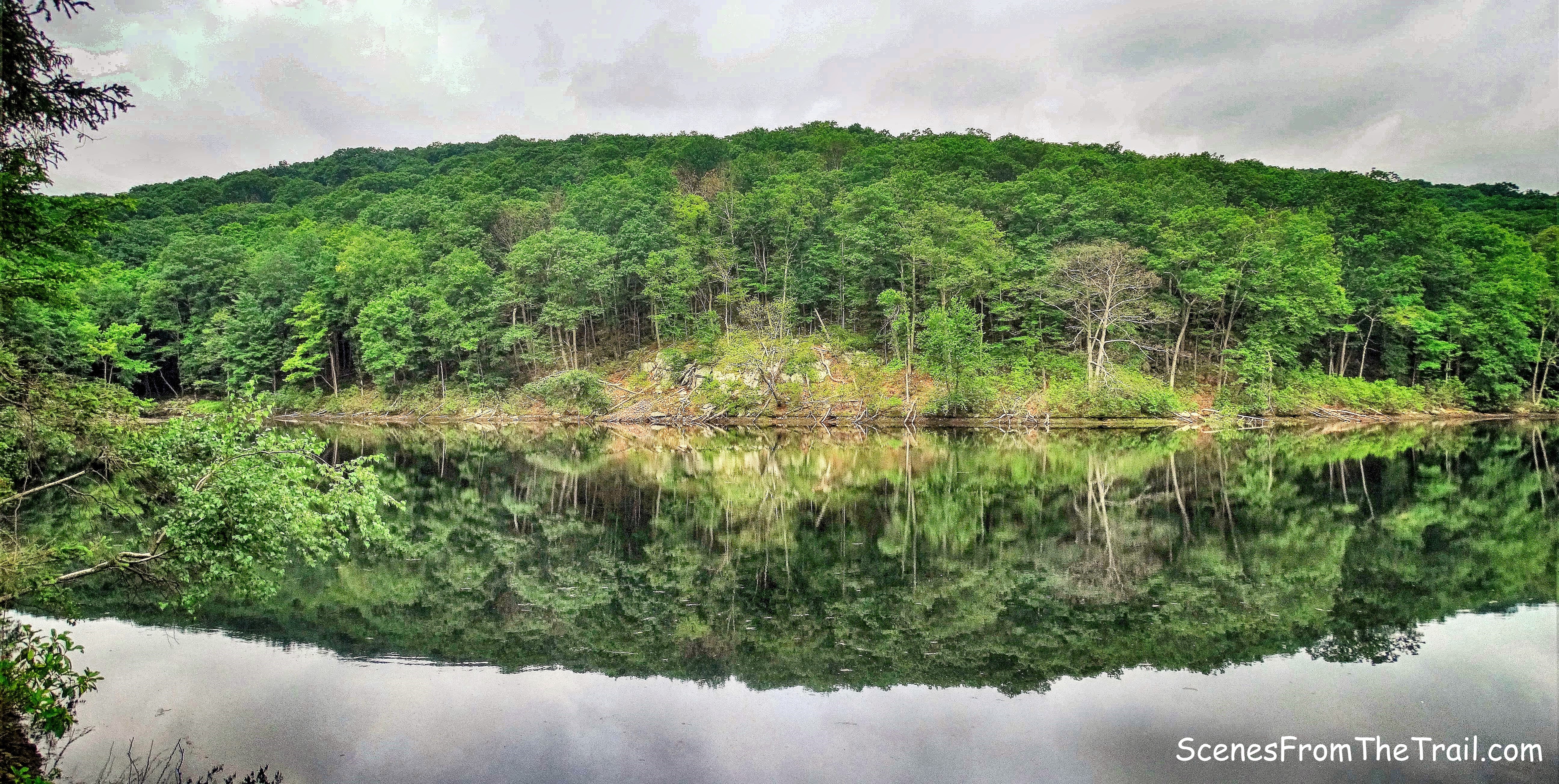
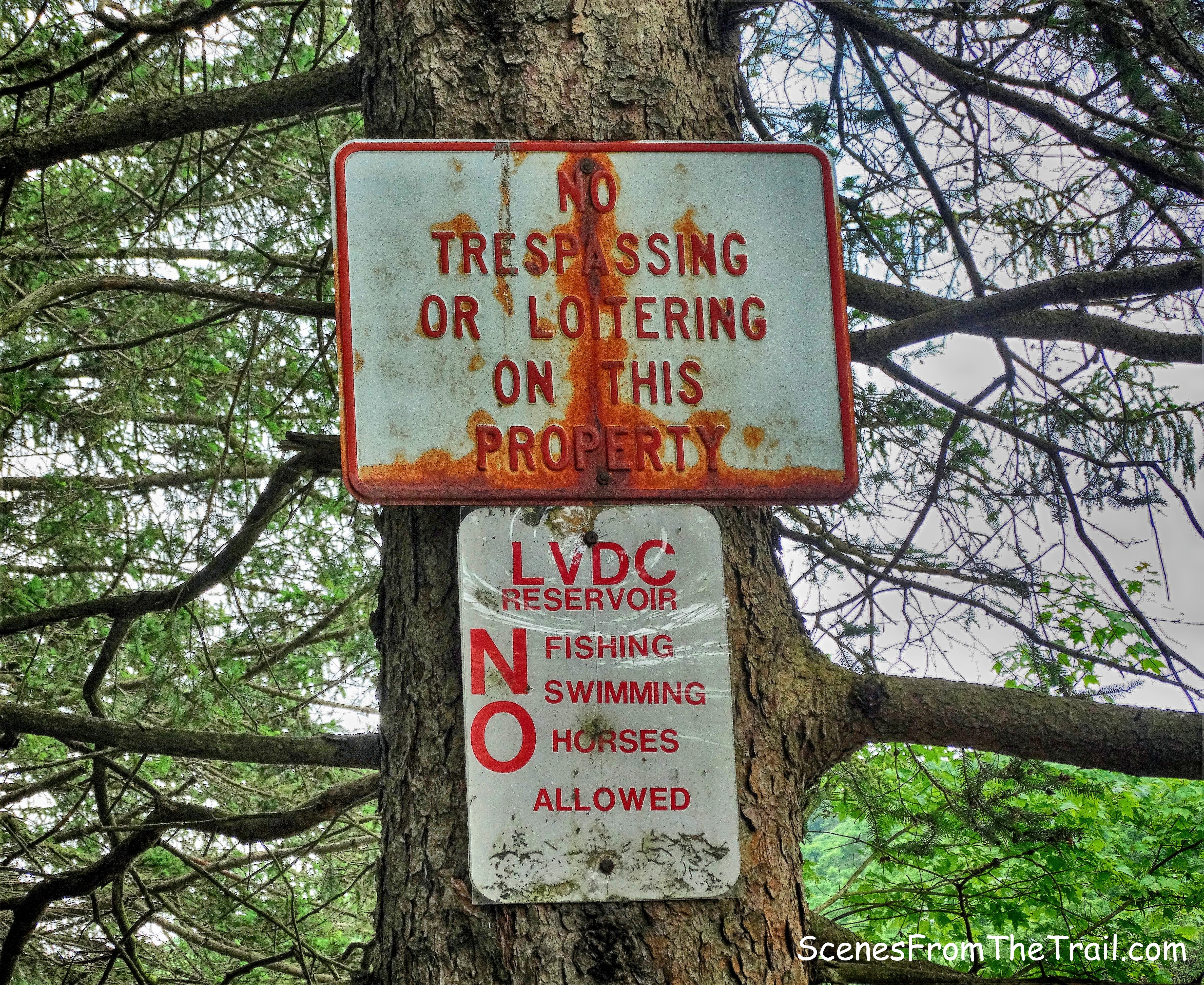
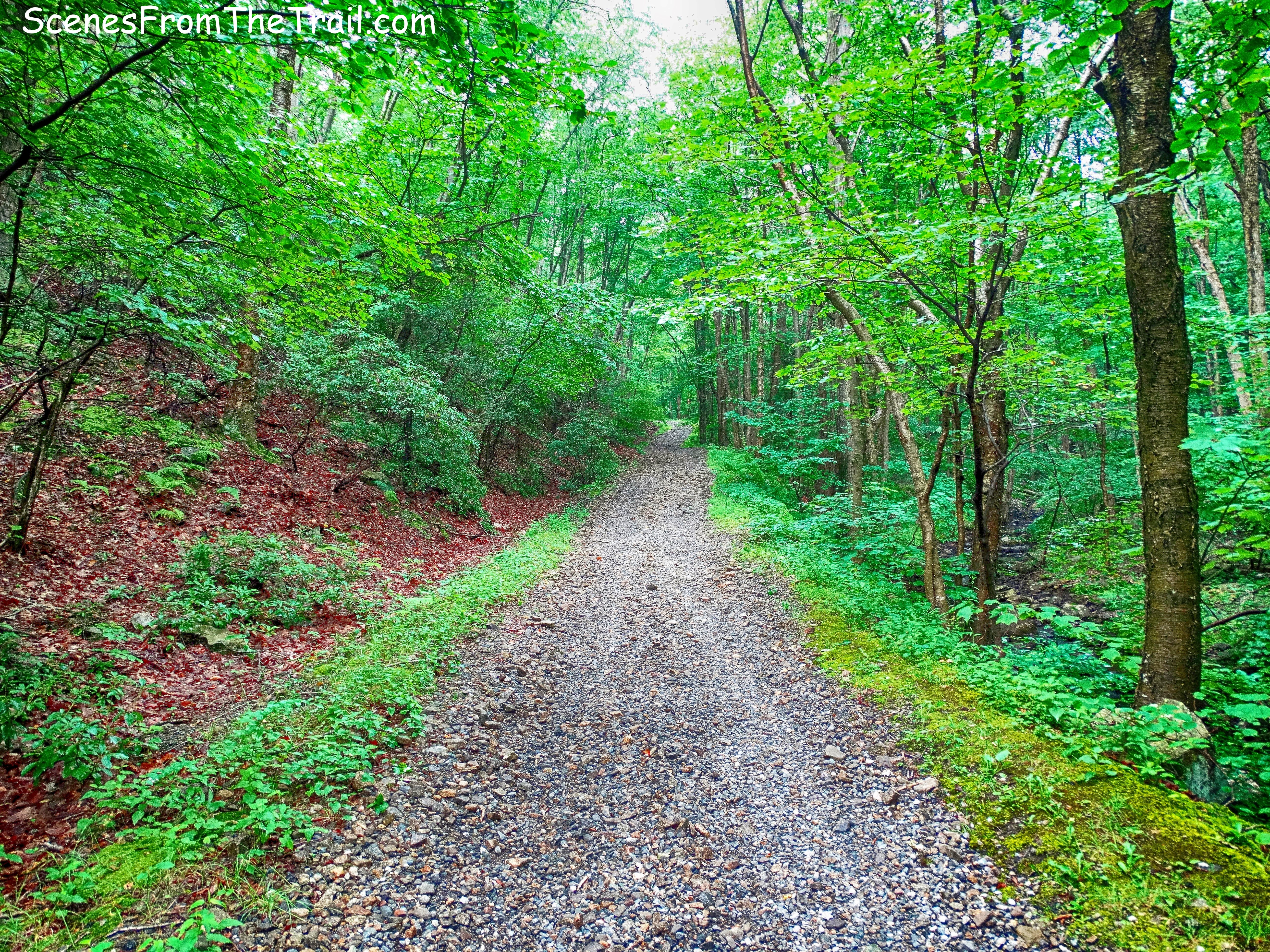
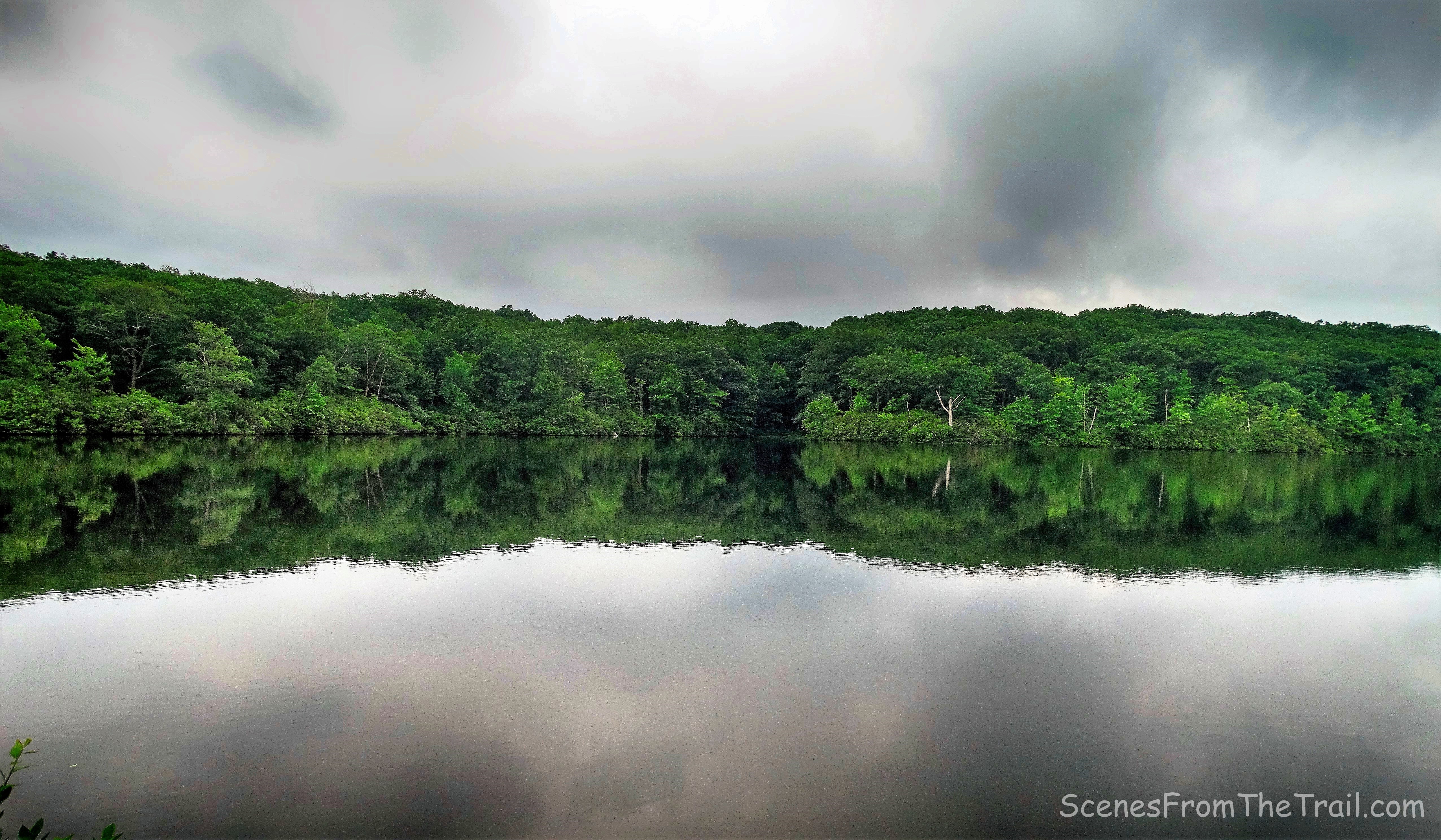
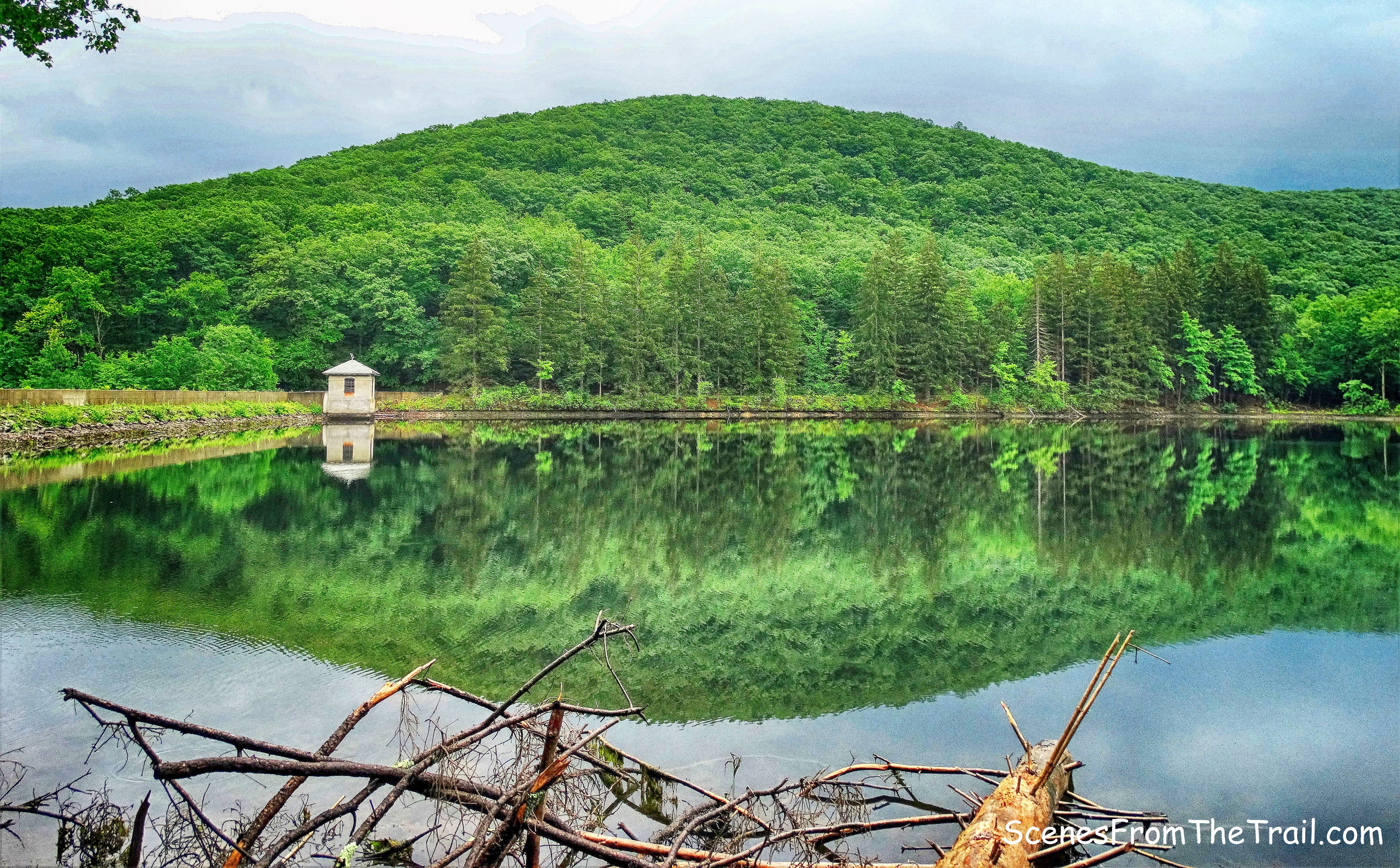
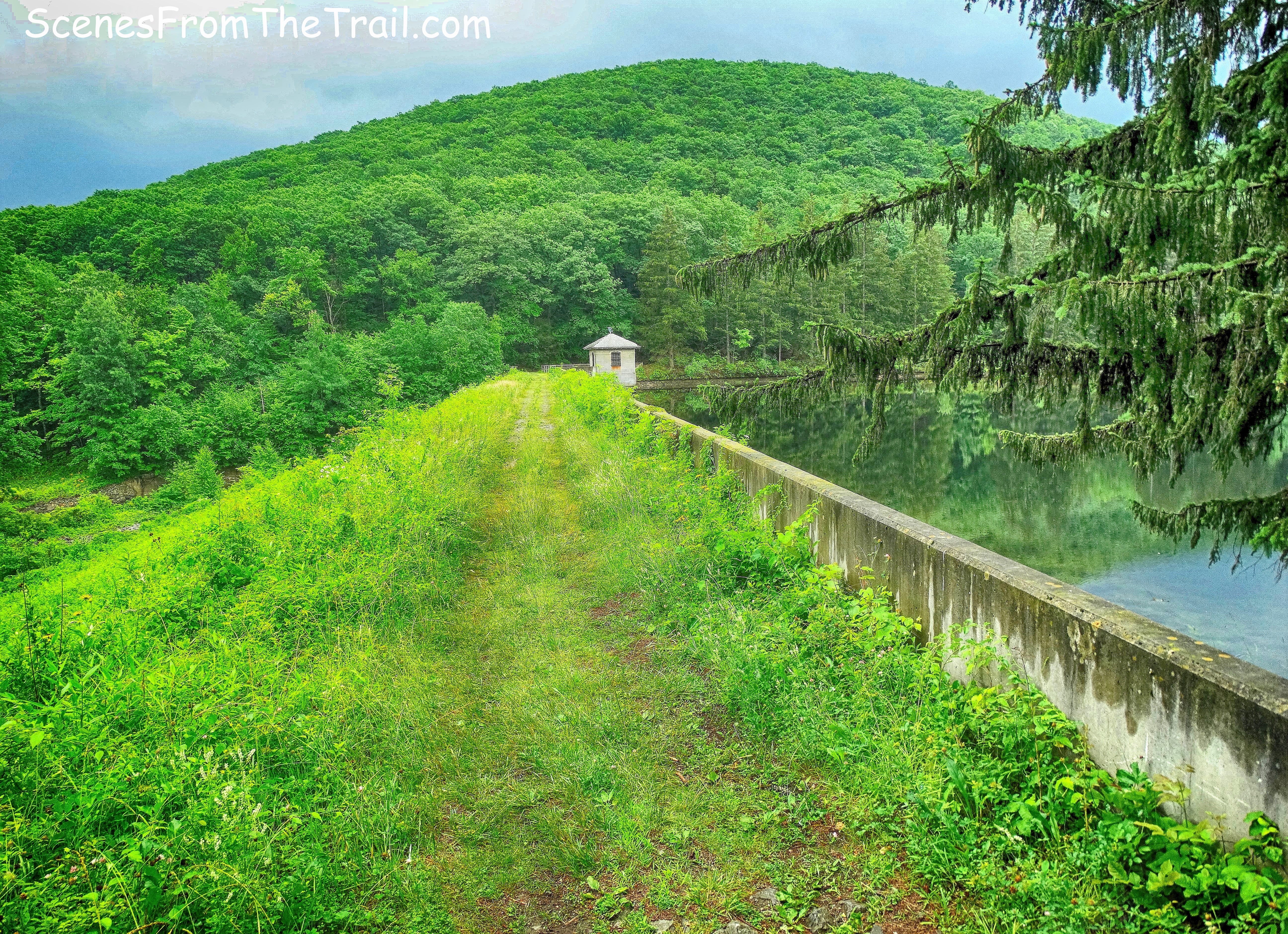
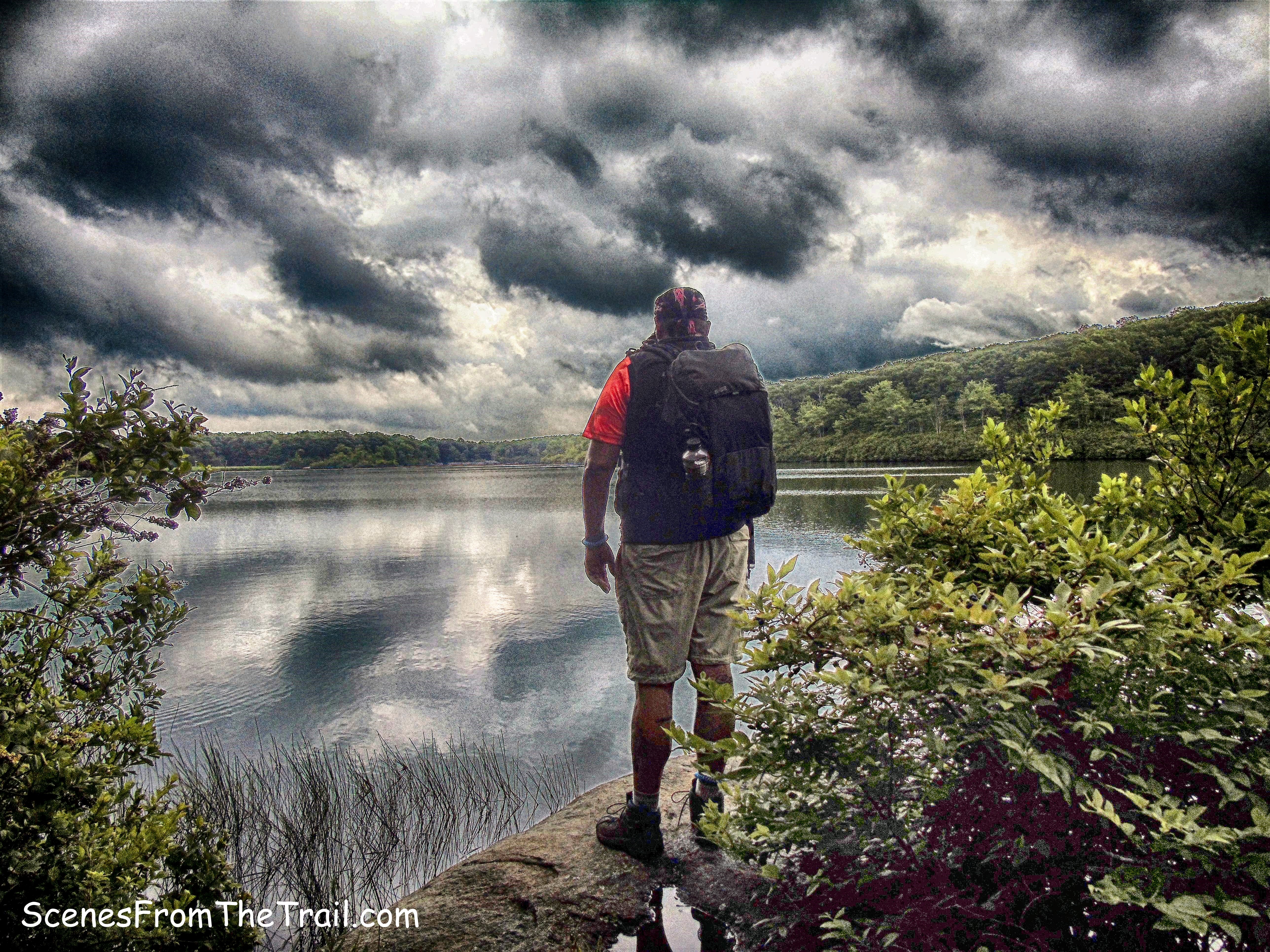
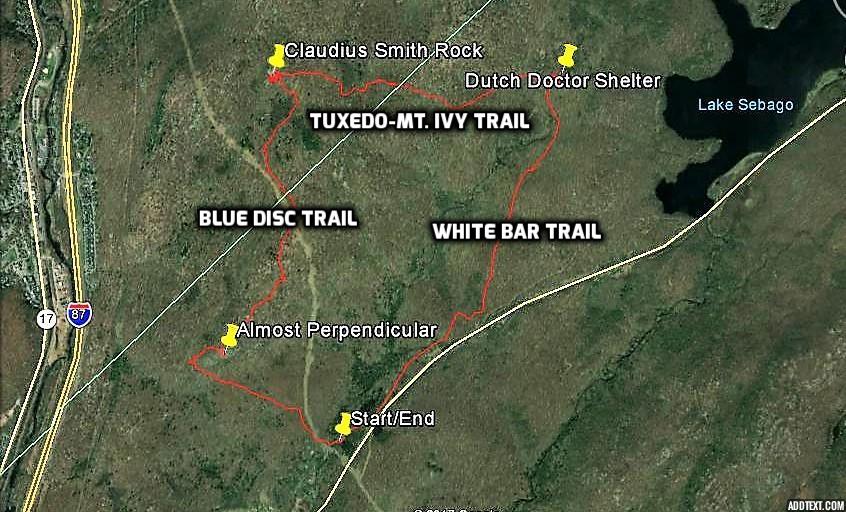
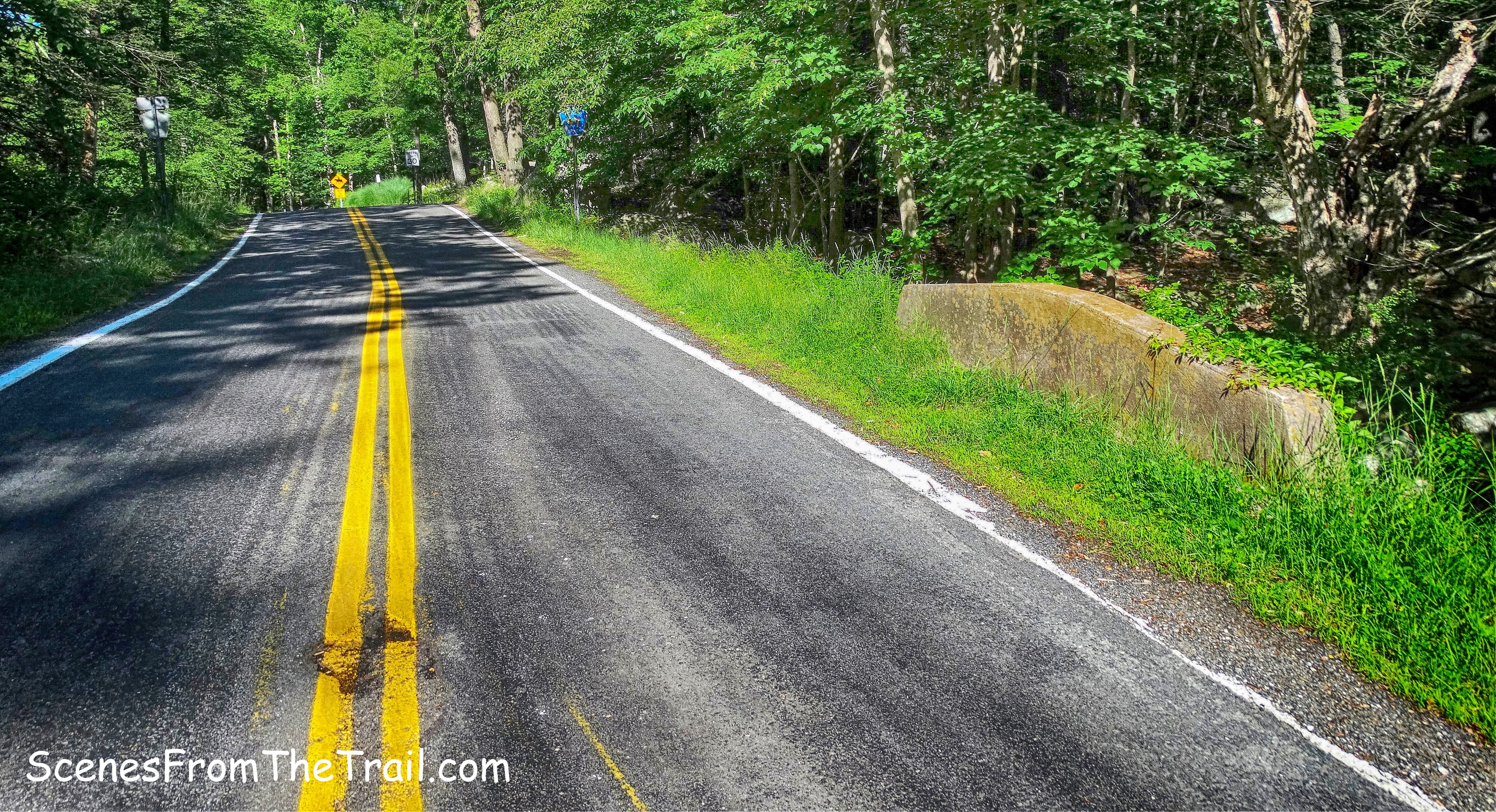
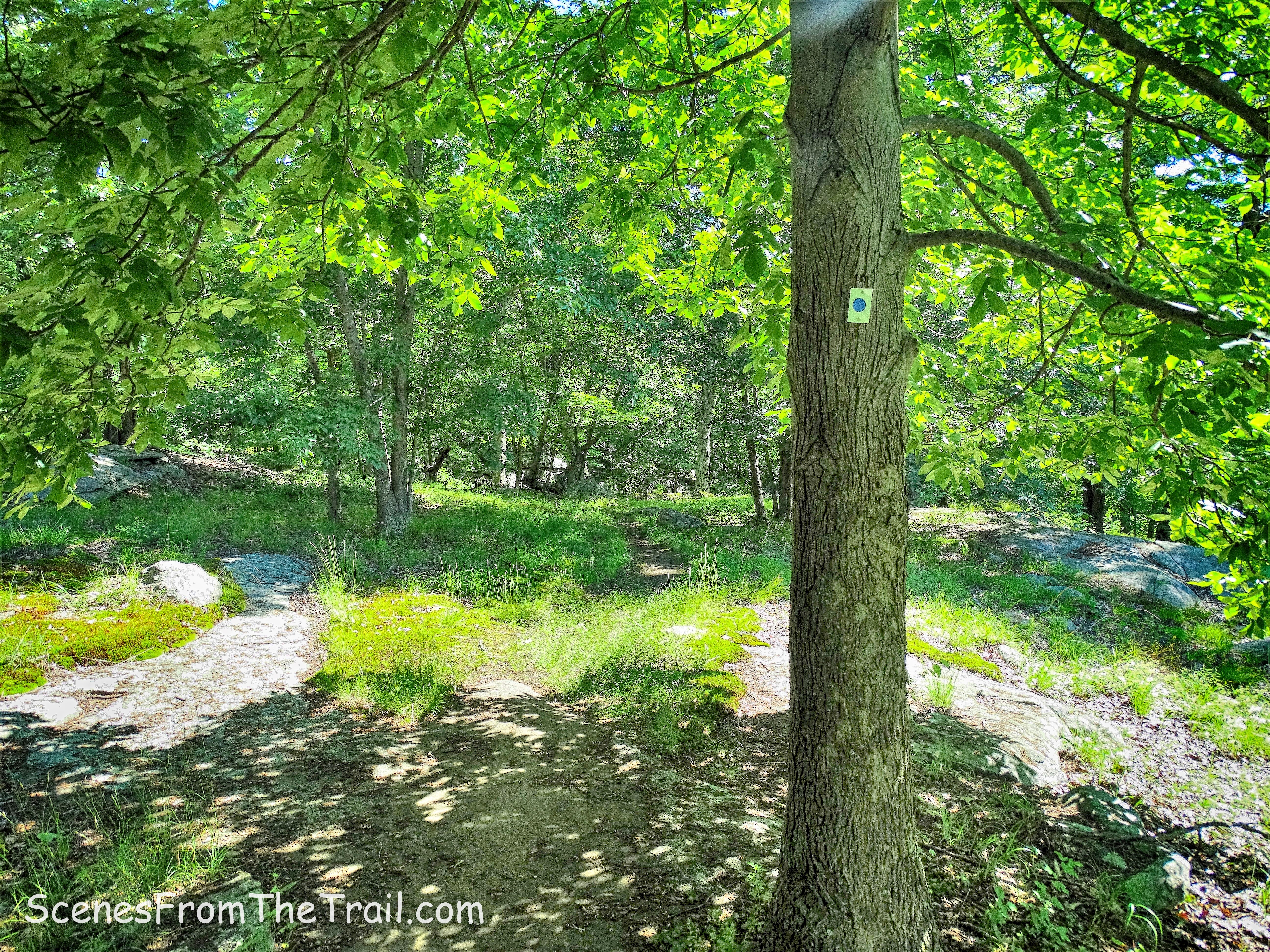
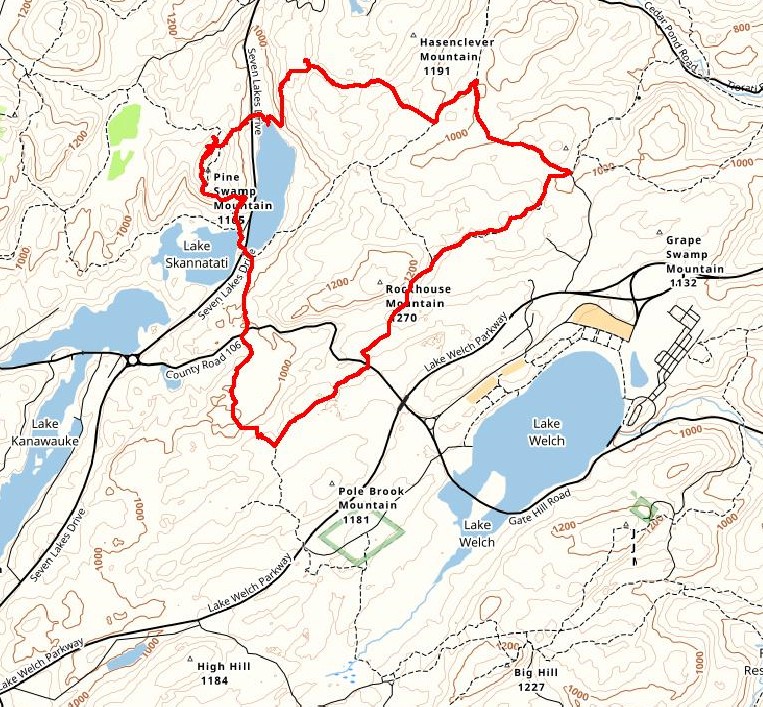
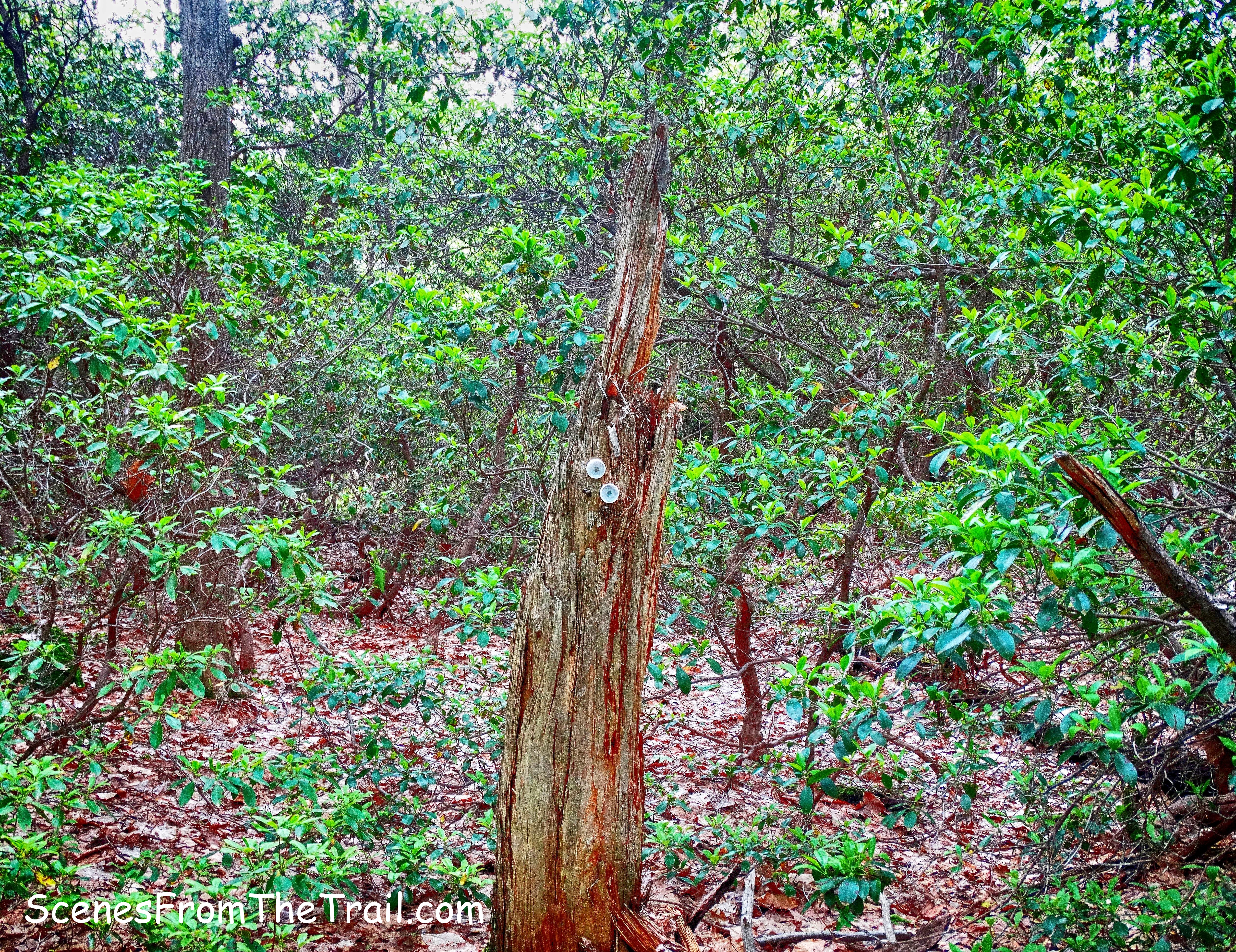
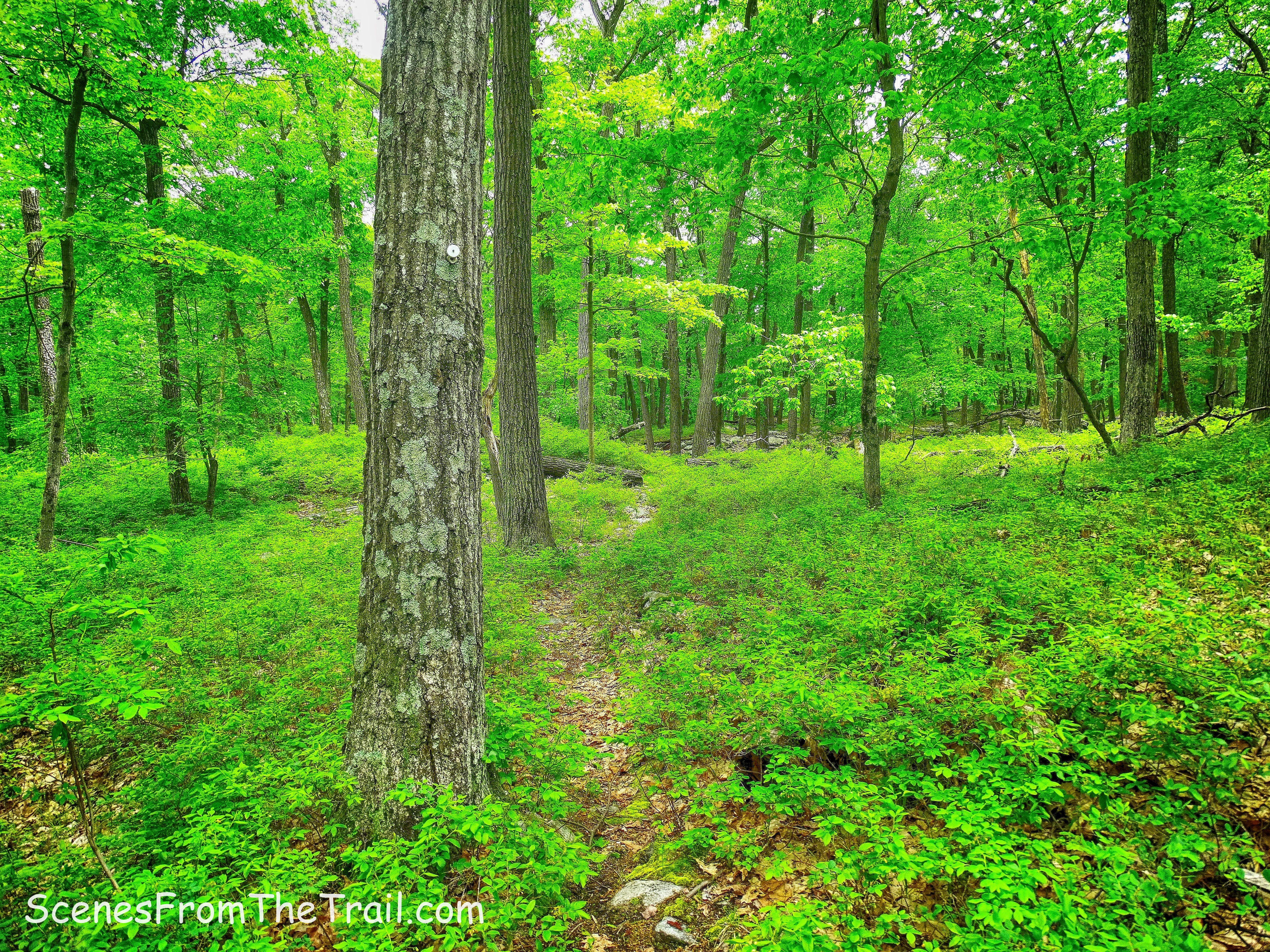
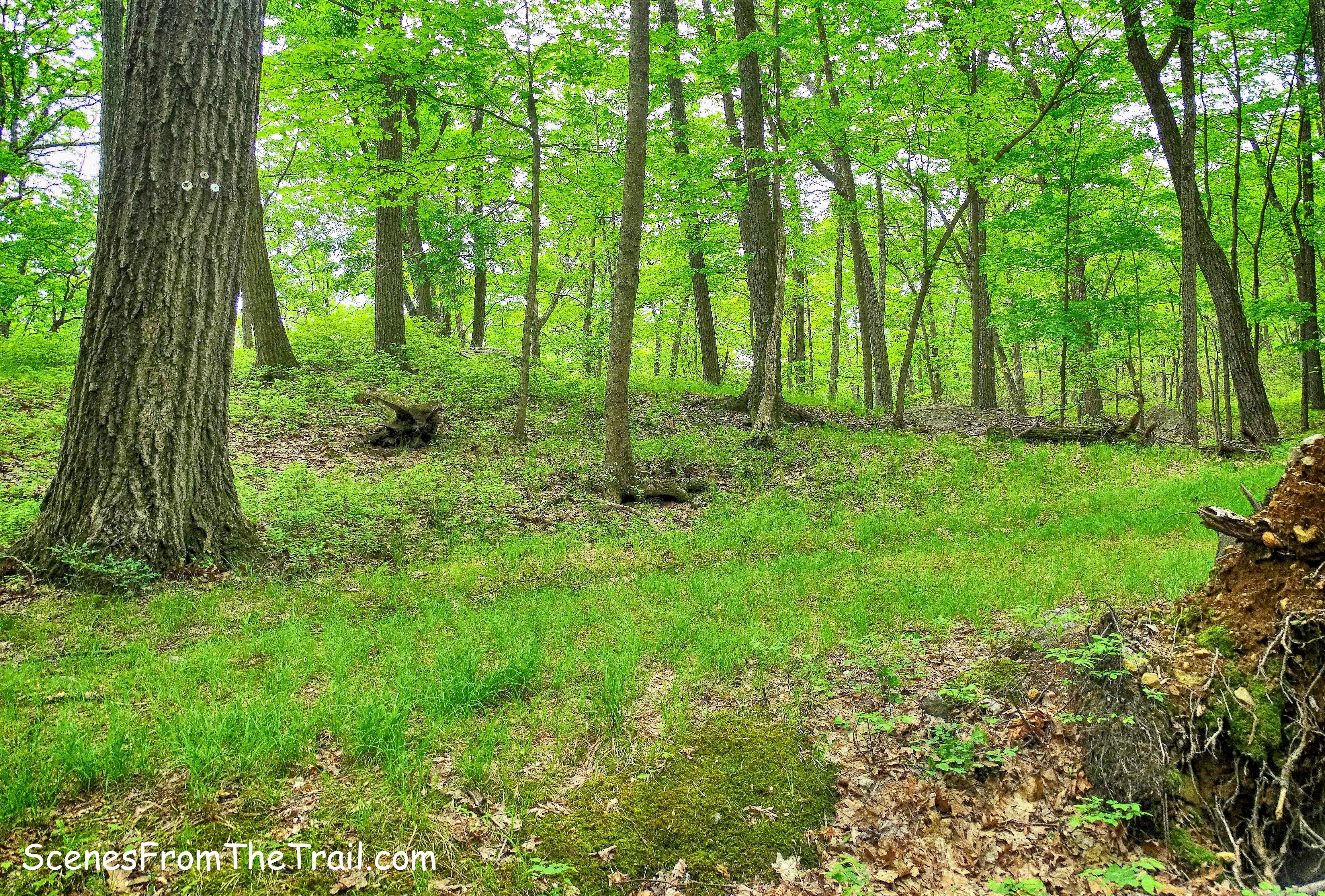
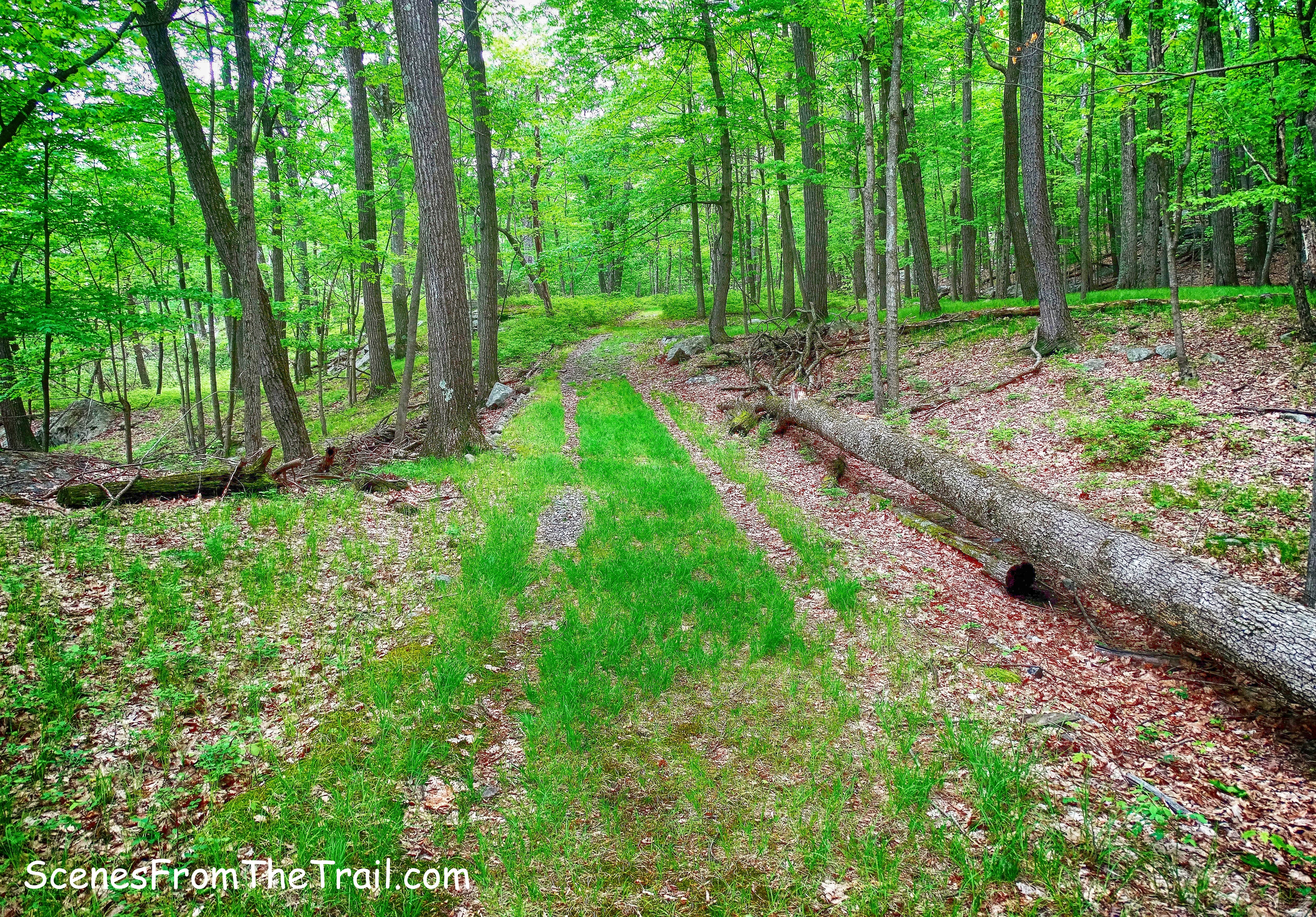
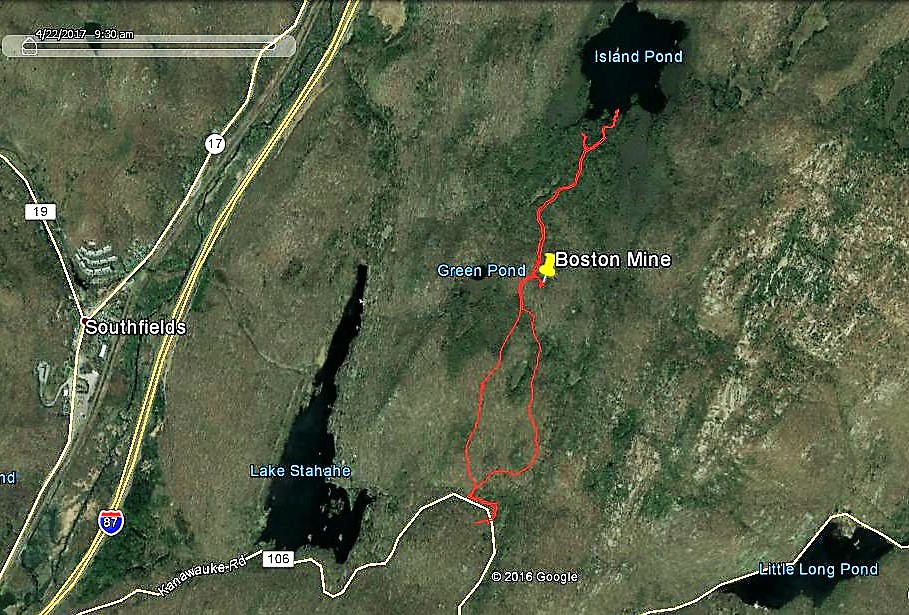
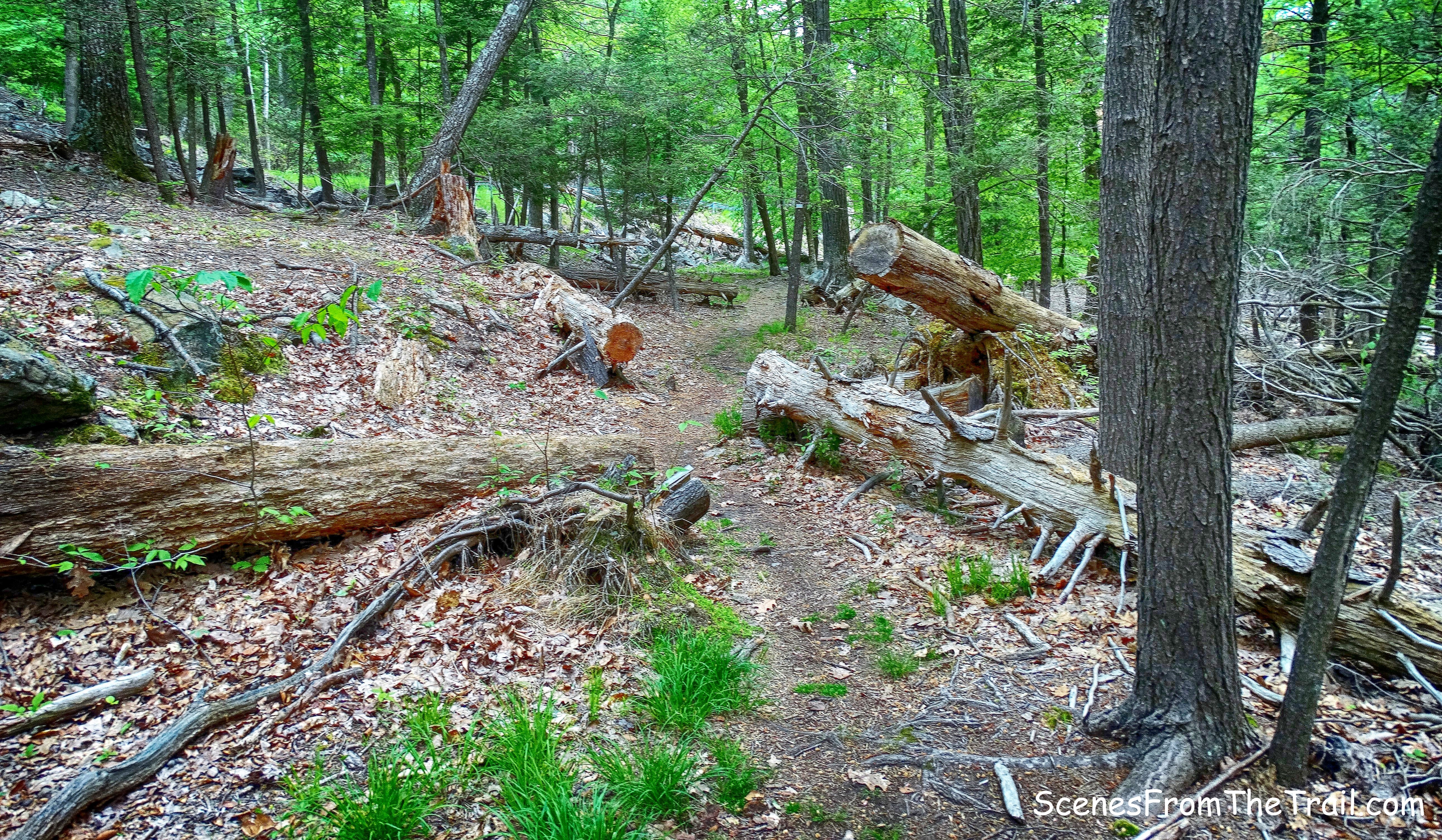
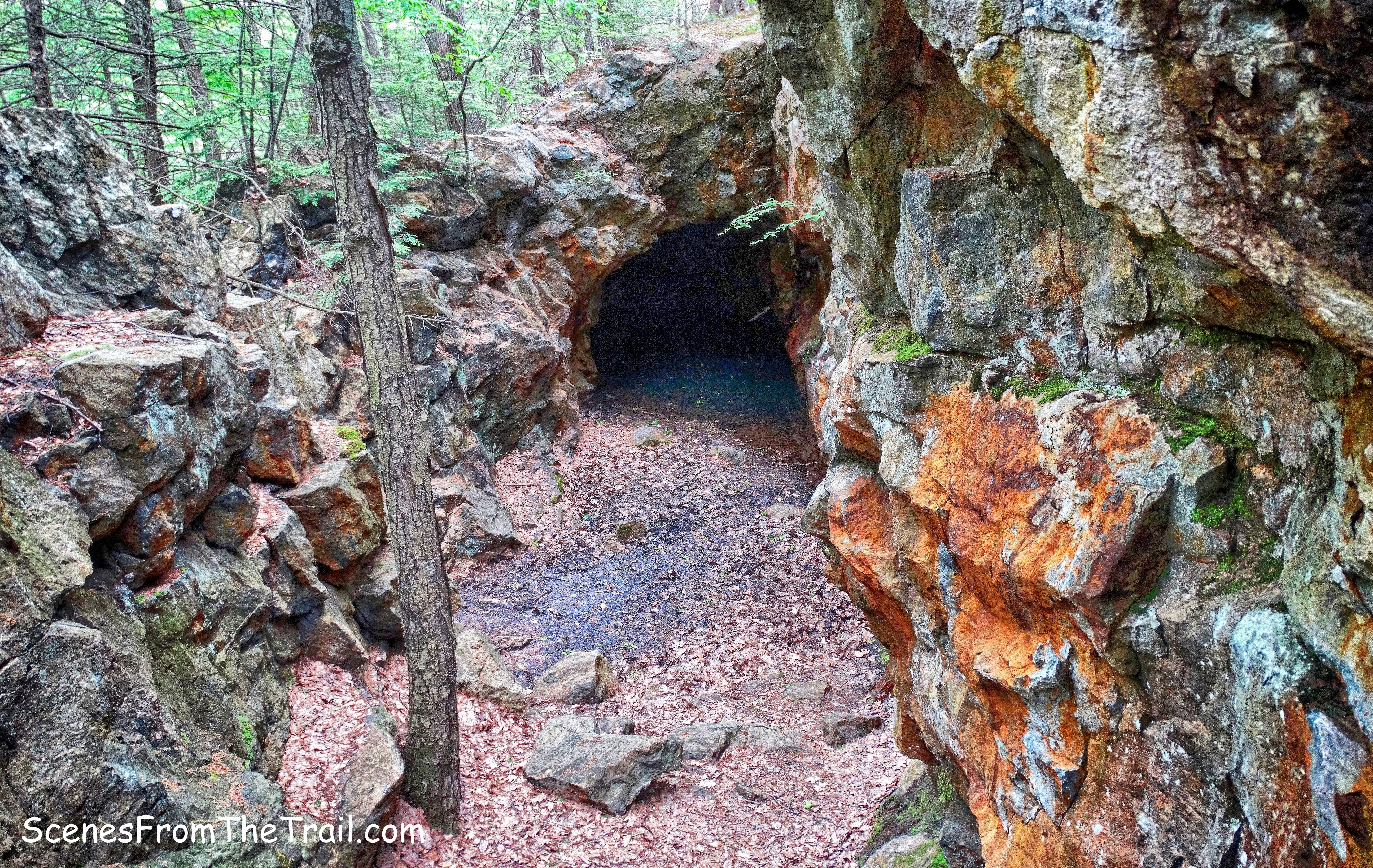
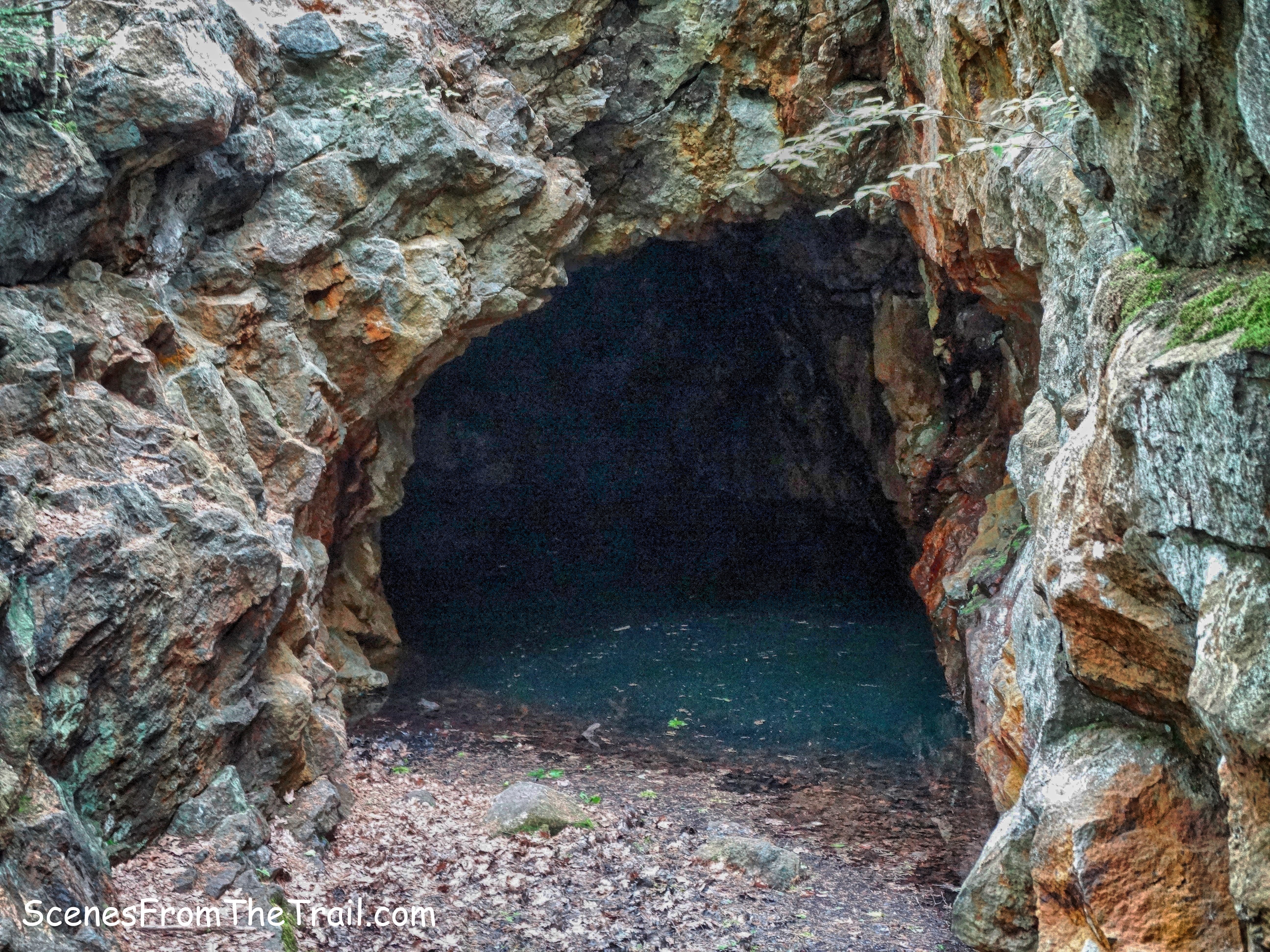
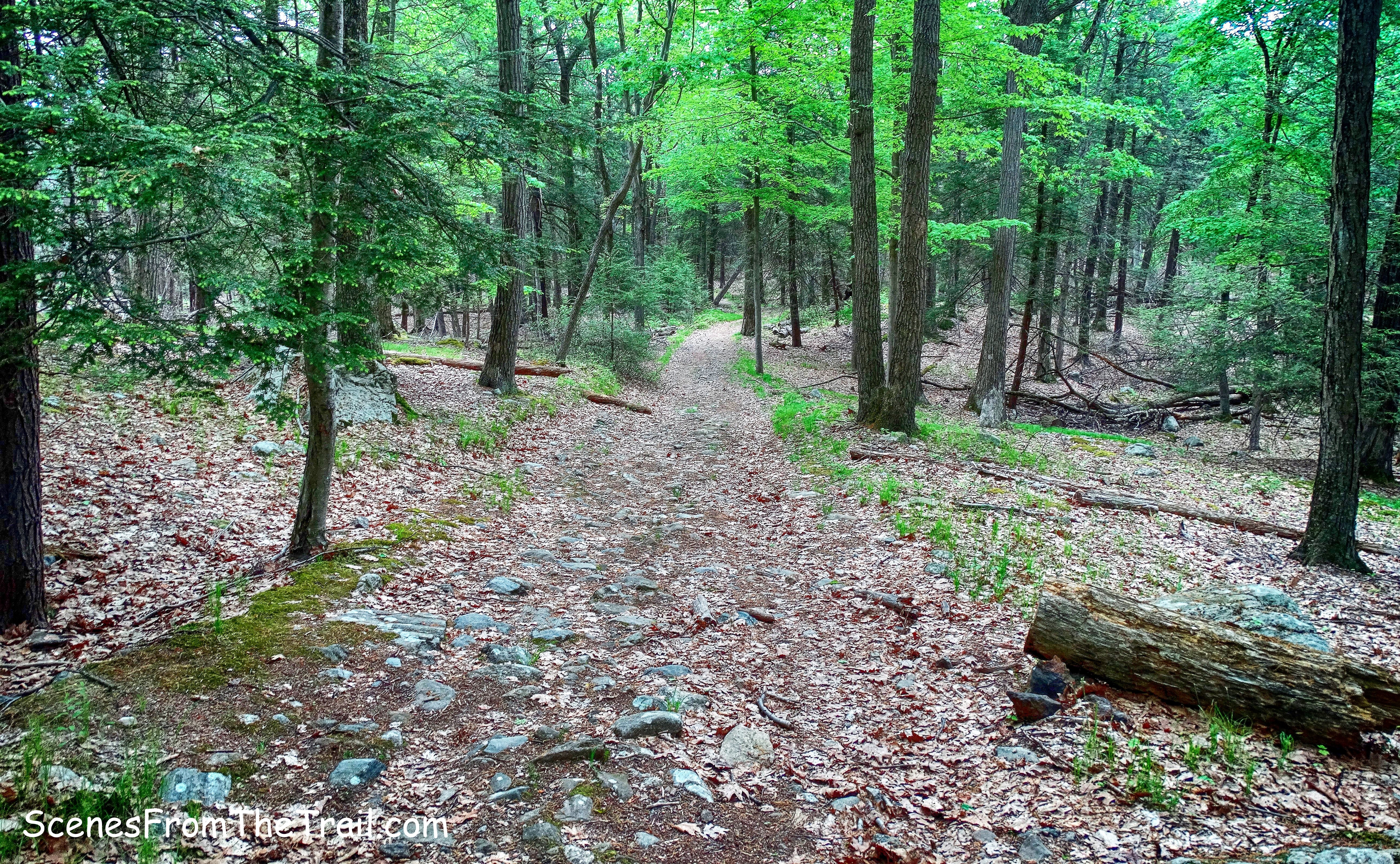
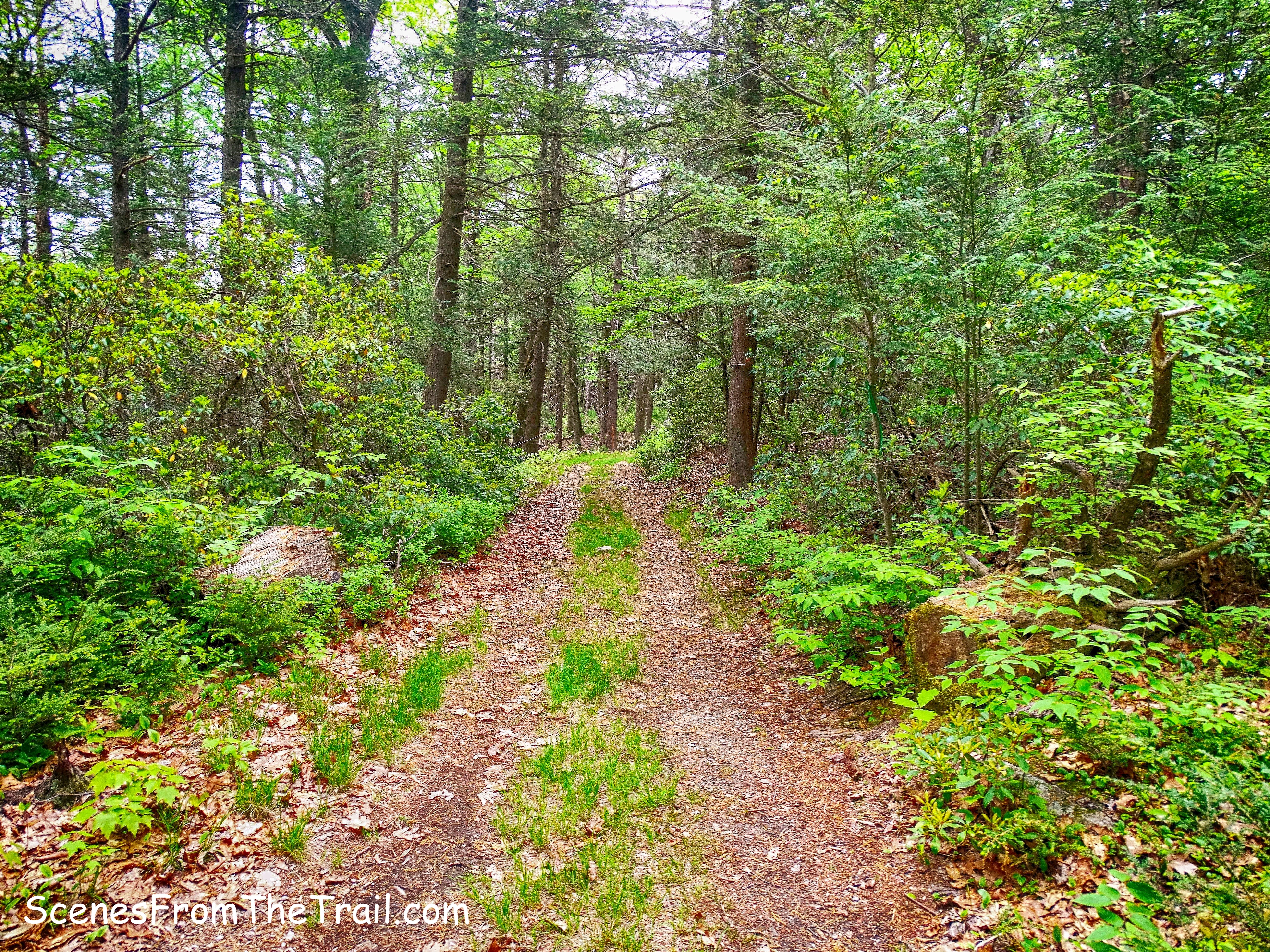
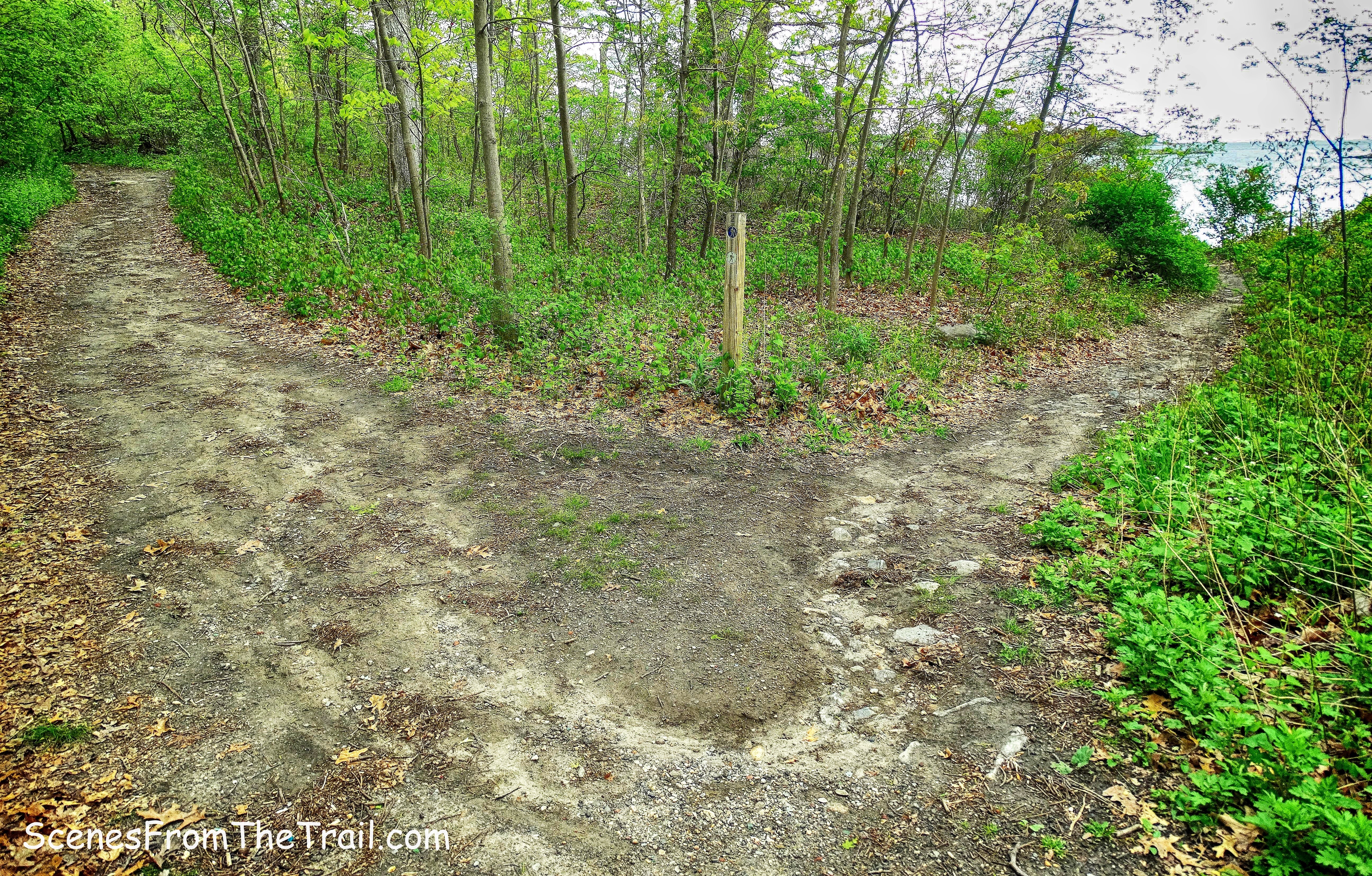
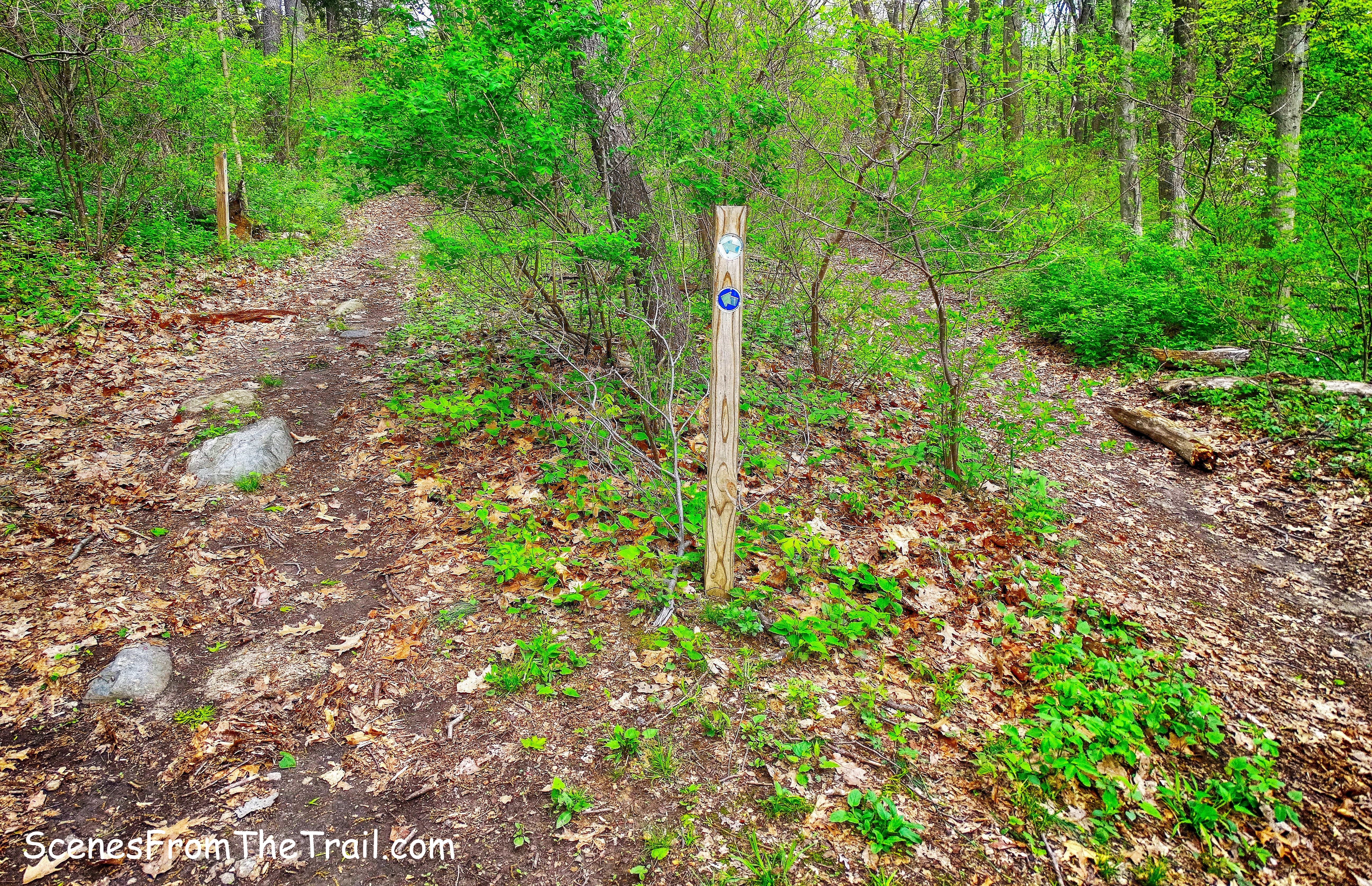
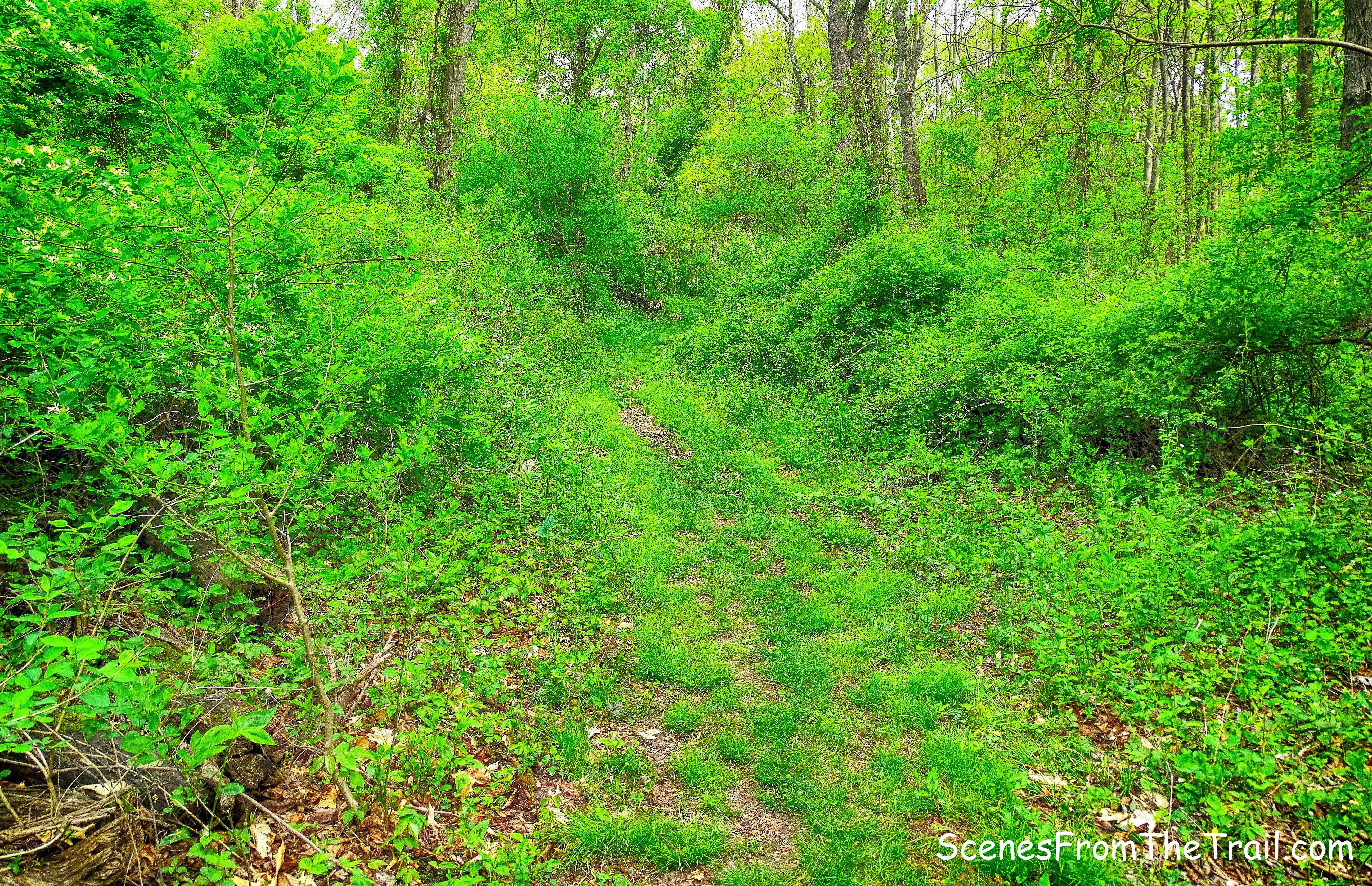
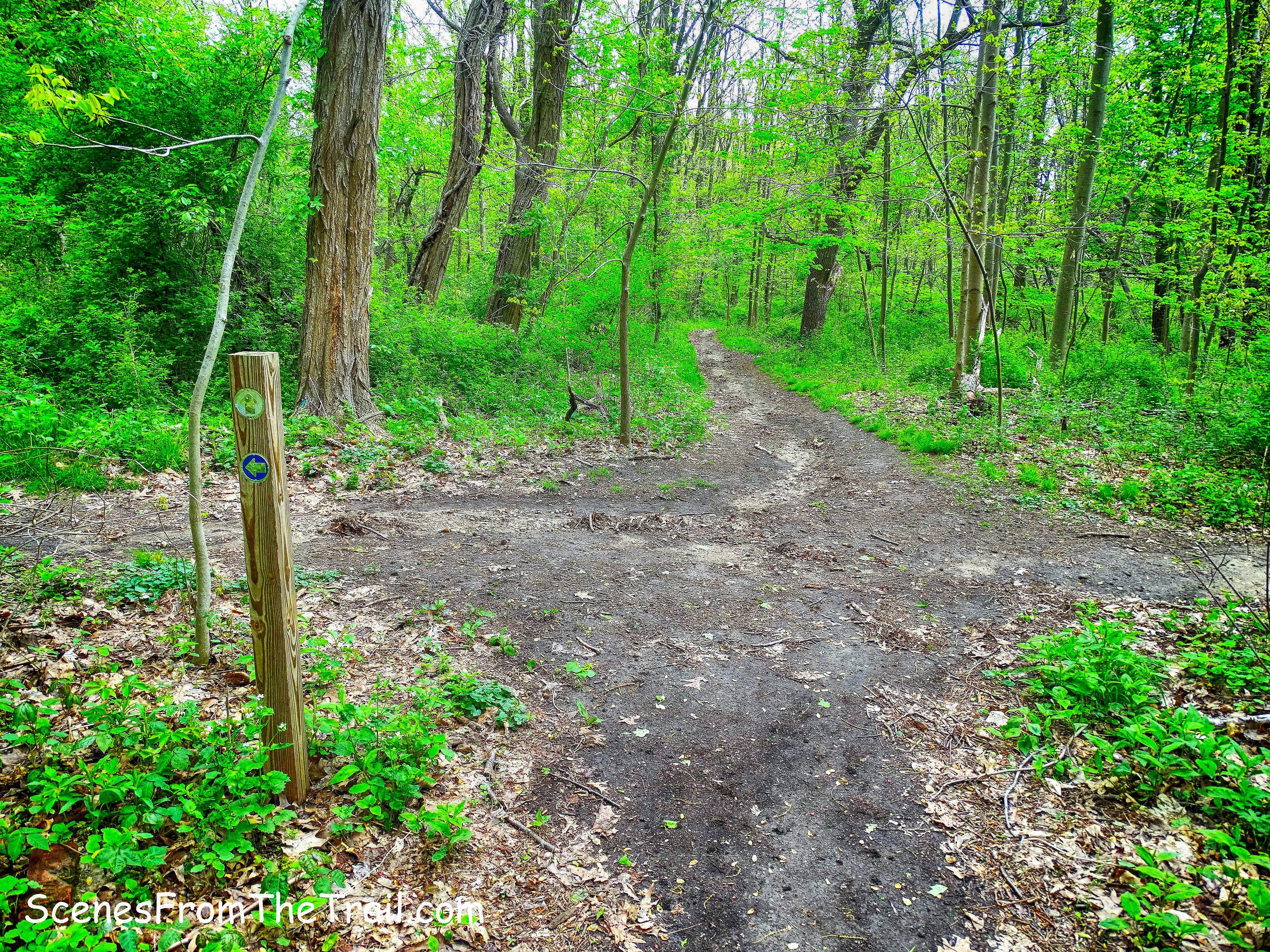
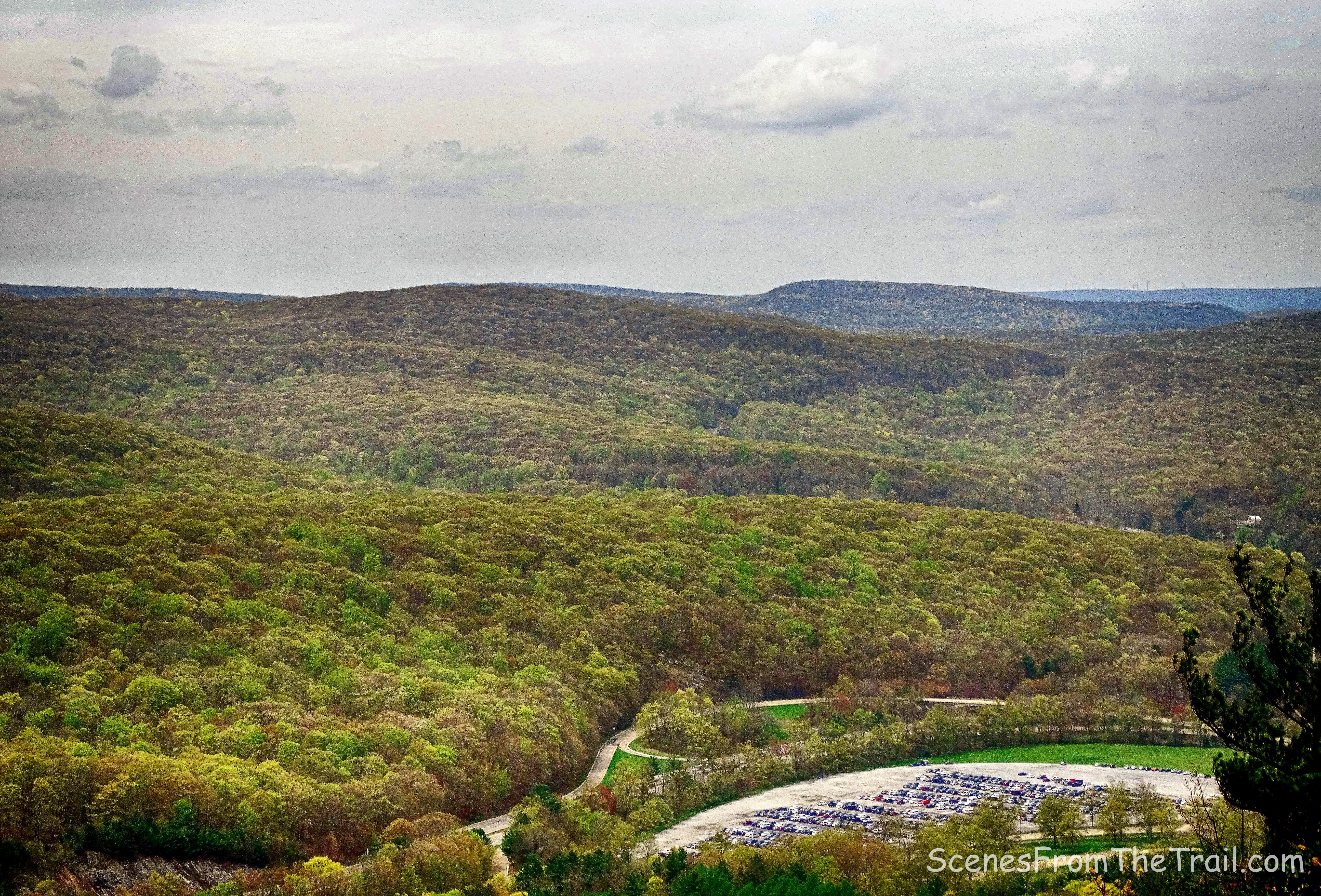
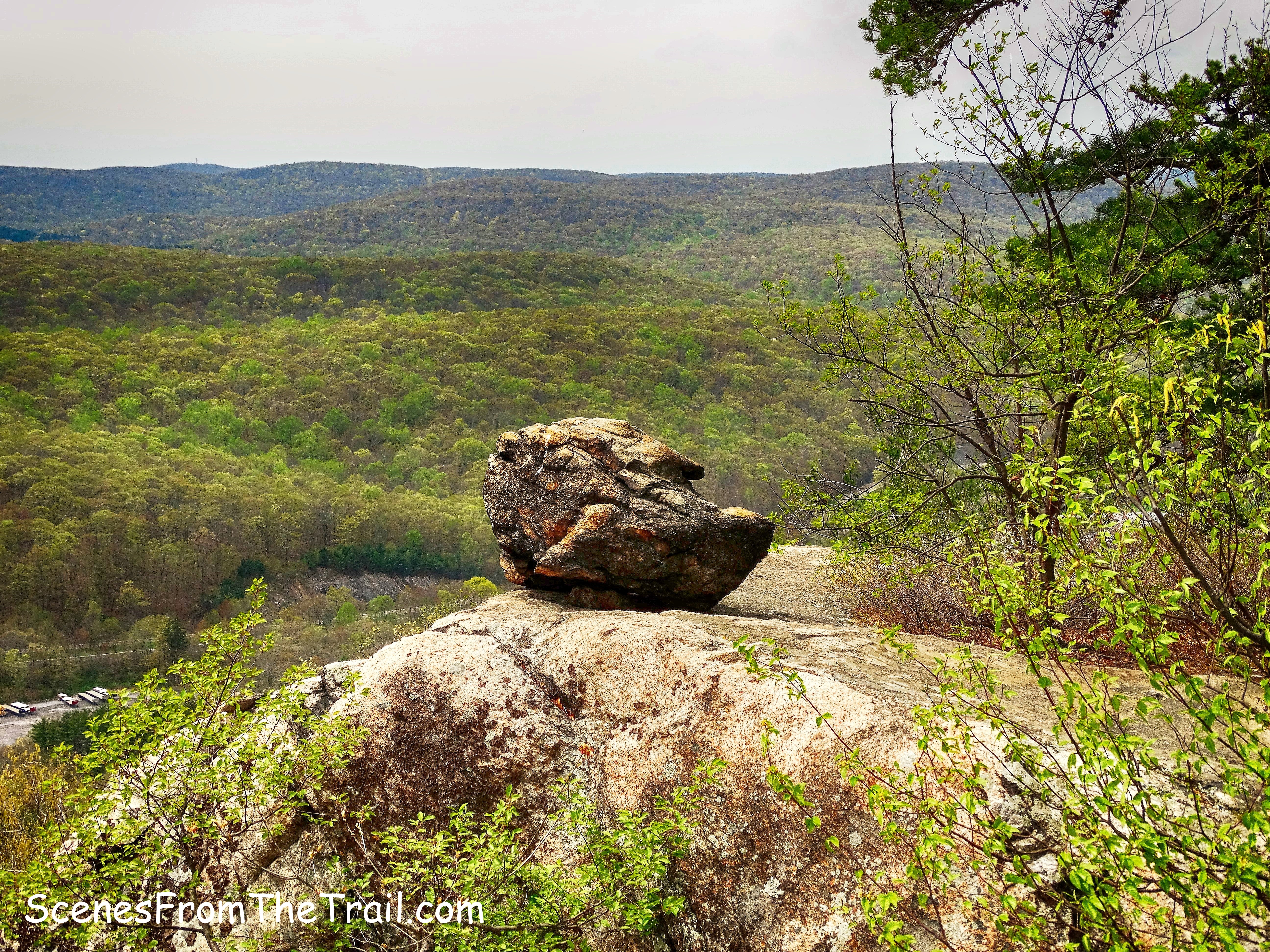
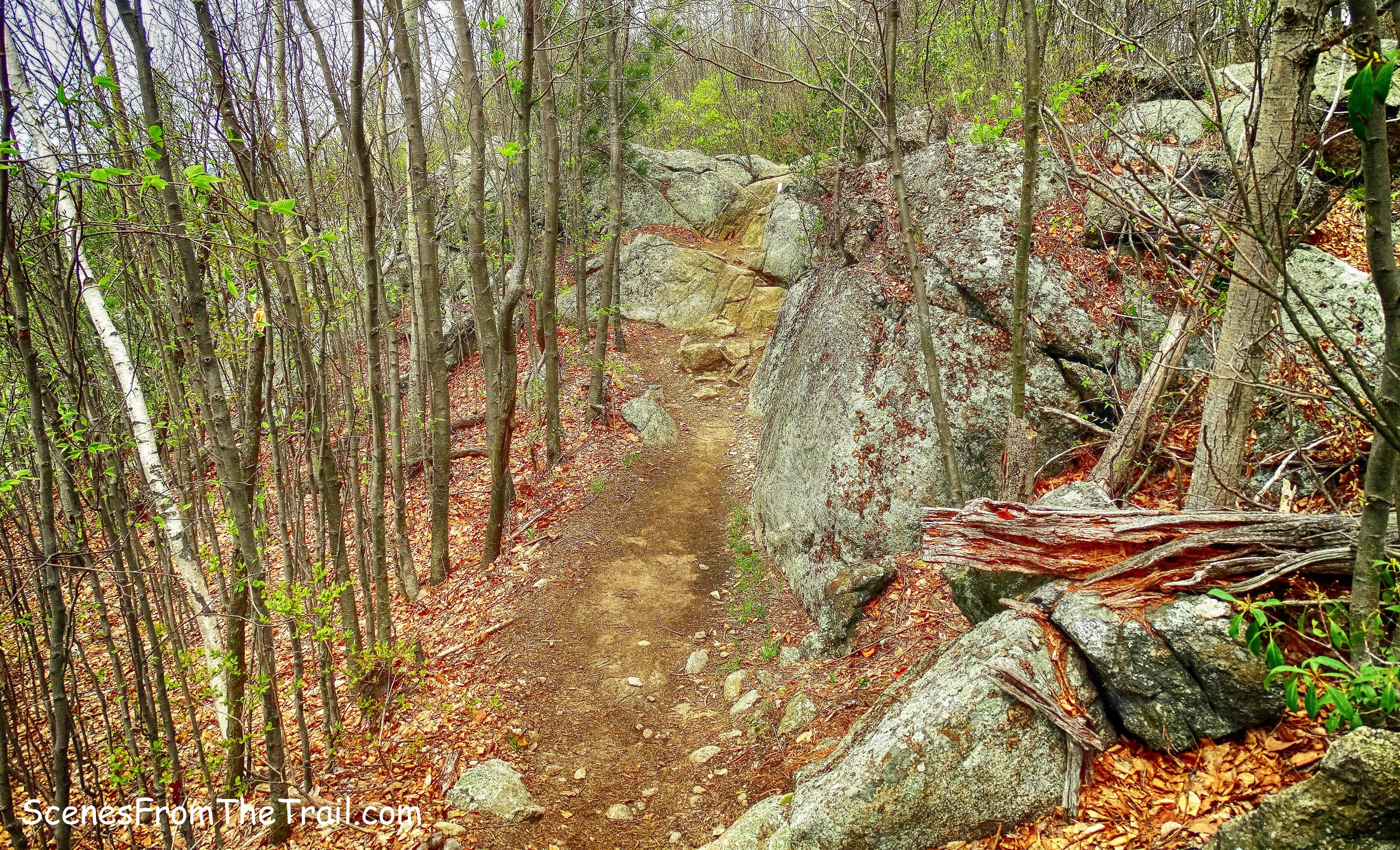
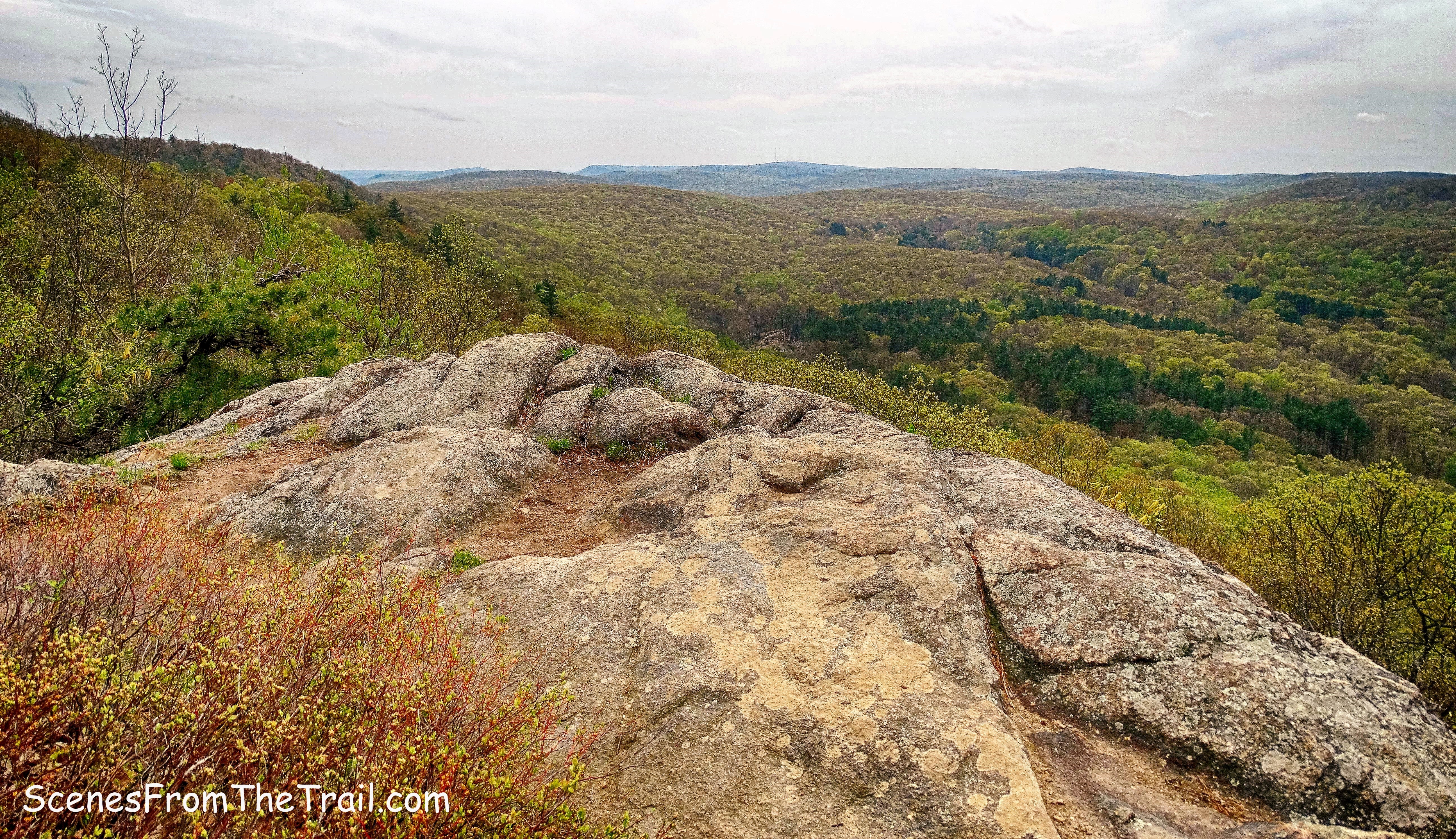
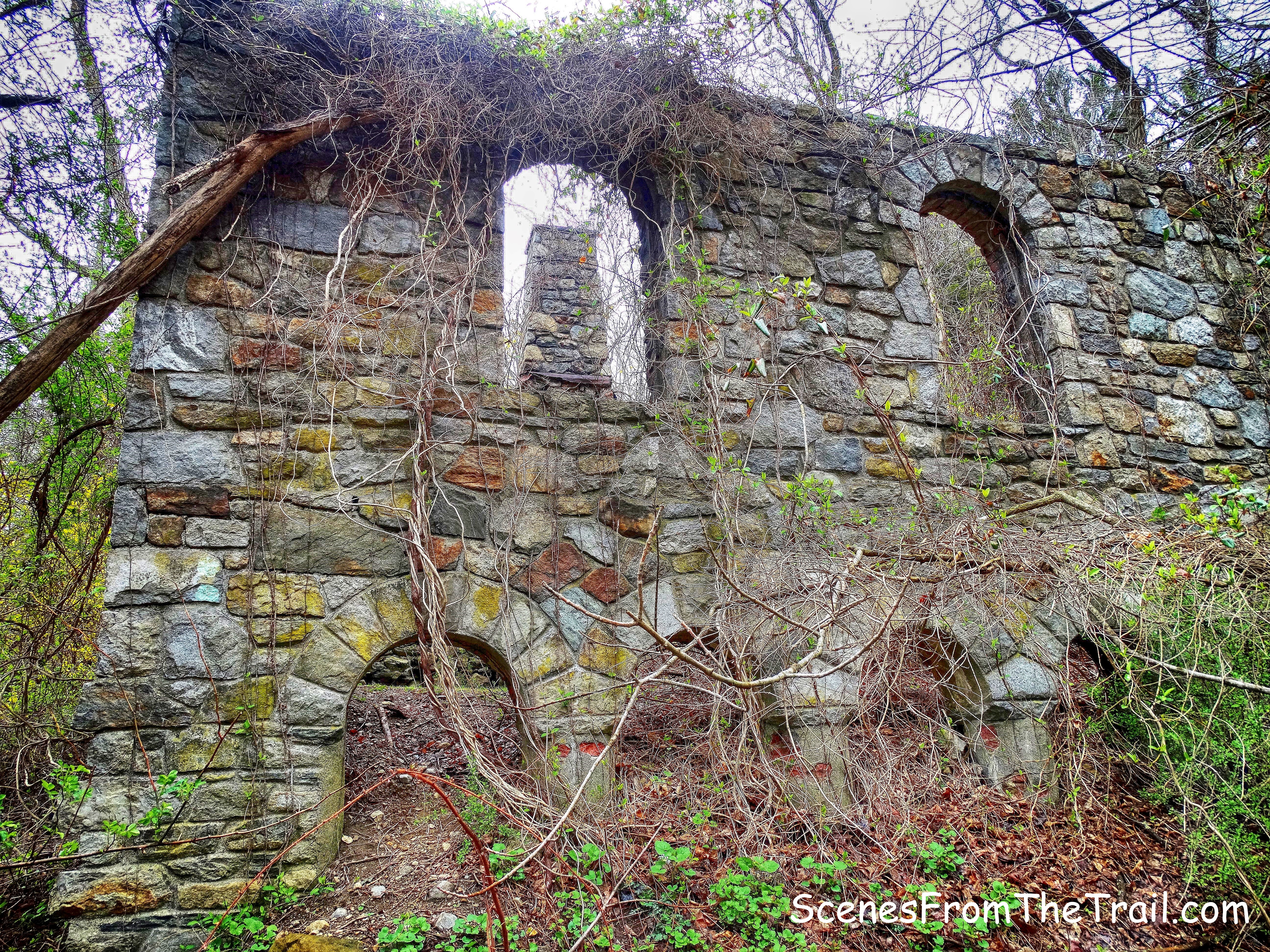
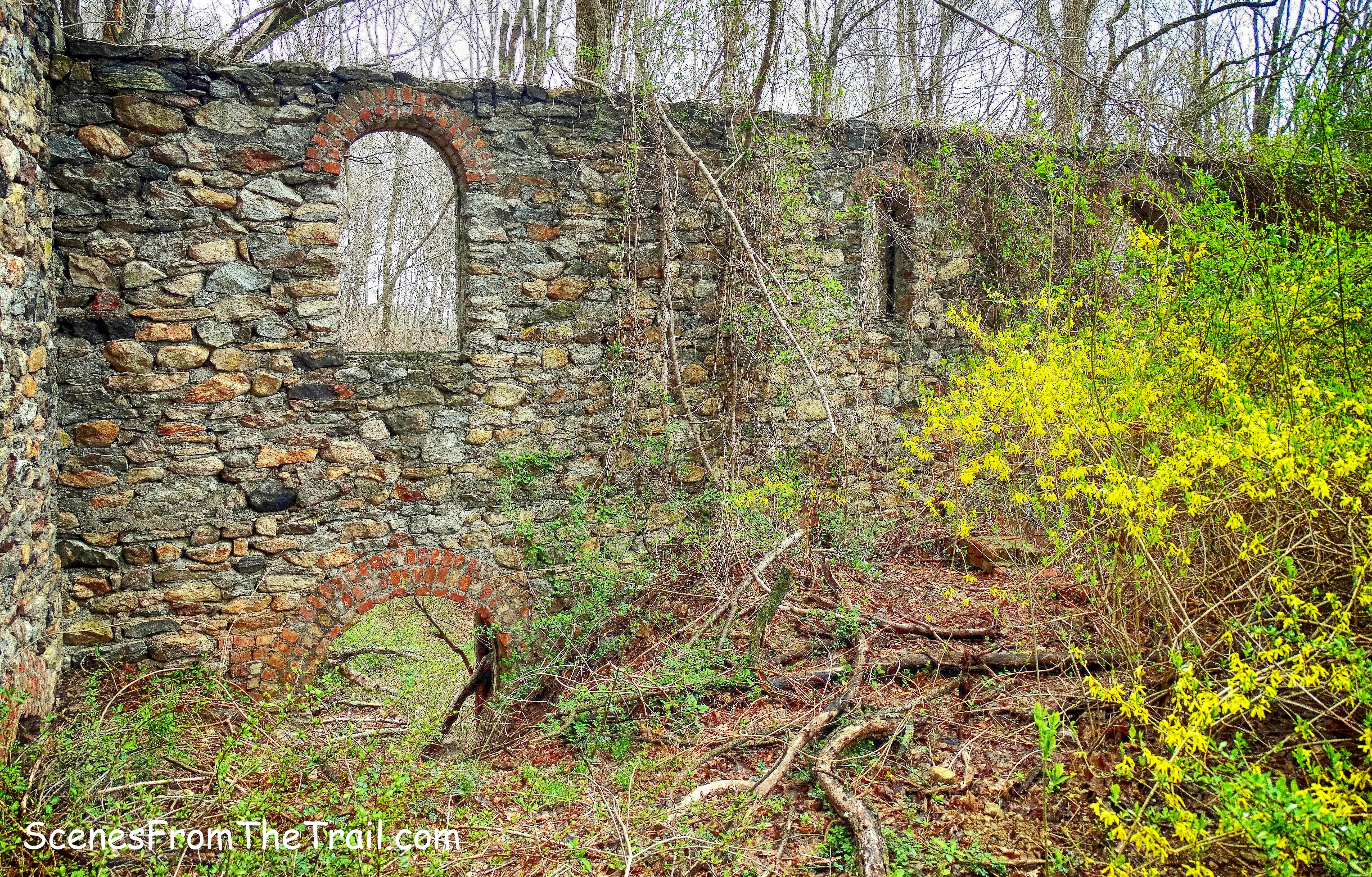
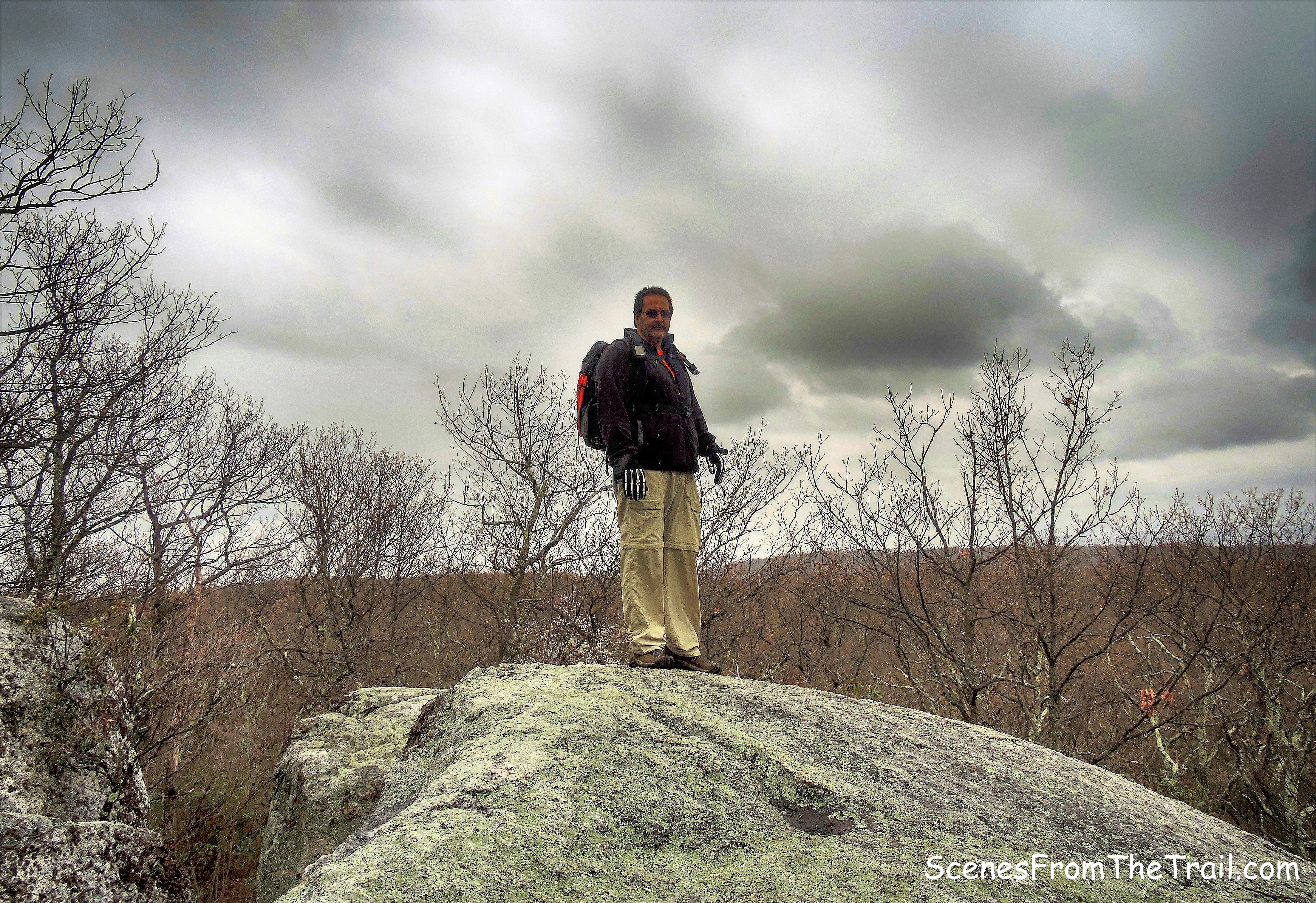
Lake Sonoma/Overlook Rock/Manaticut Point Short Loop – Norvin Green State Forest

August 26, 2017 – Ringwood, NJ

Difficulty: Moderate (rugged terrain)

Length: Approximately 5 miles

Max elevation: 1,084 ft.– total elevation gain approximately 759 ft.

Route type: Circuit

Map: North Jersey Trails Map – NY/NJ Trail Conference web map

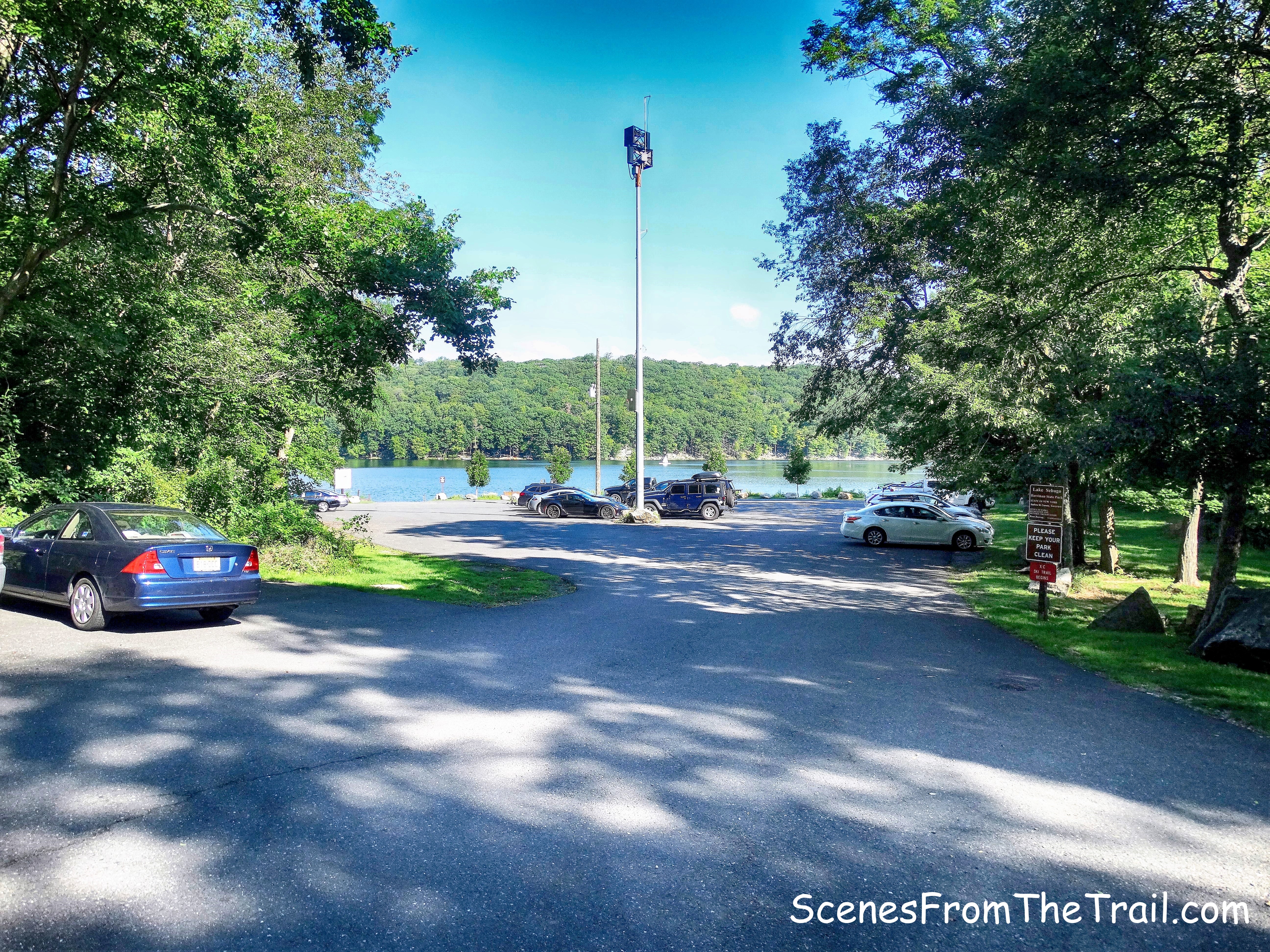
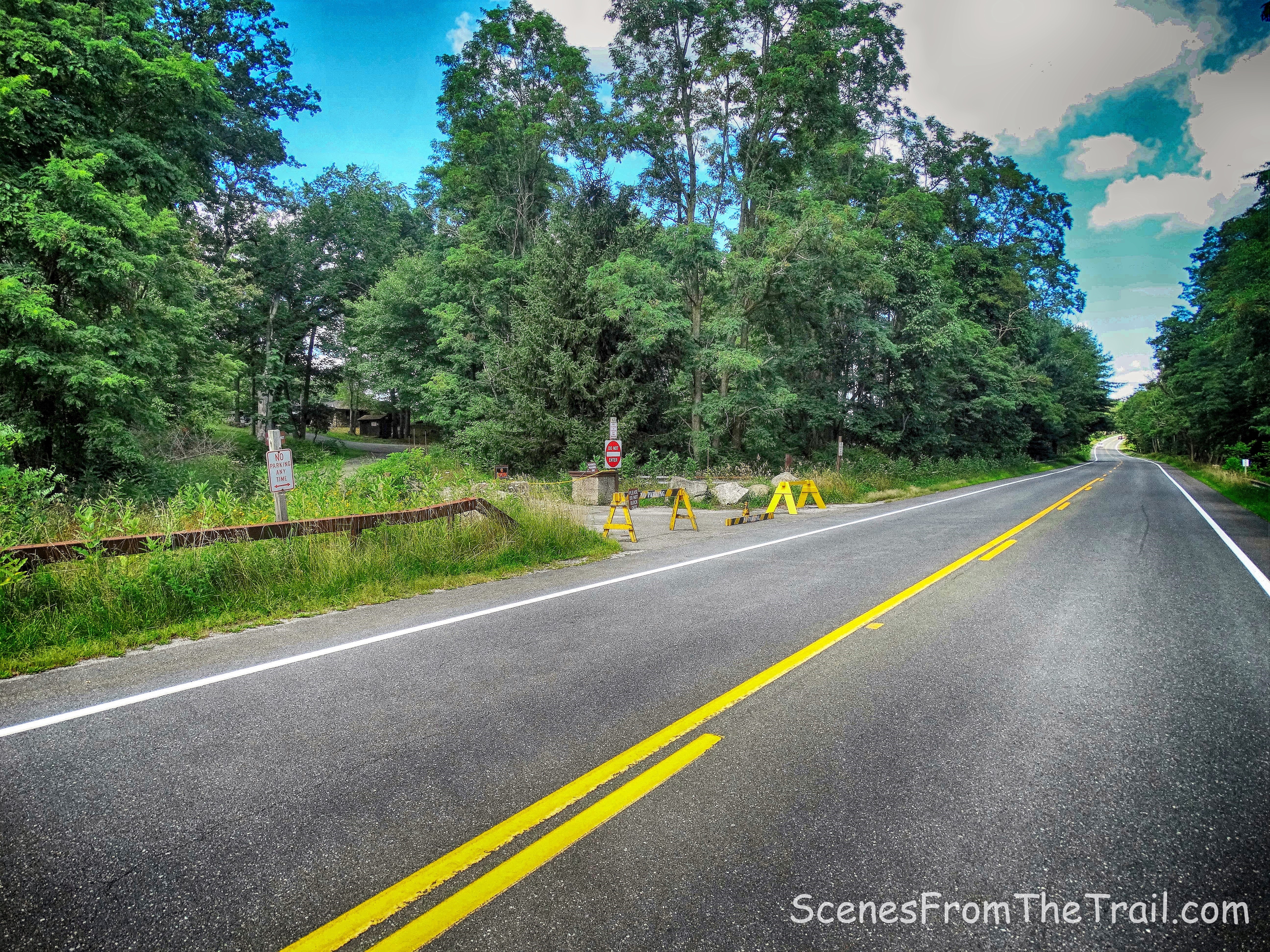
Trailhead parking: Crescent Drive, Ringwood, NJ 07456


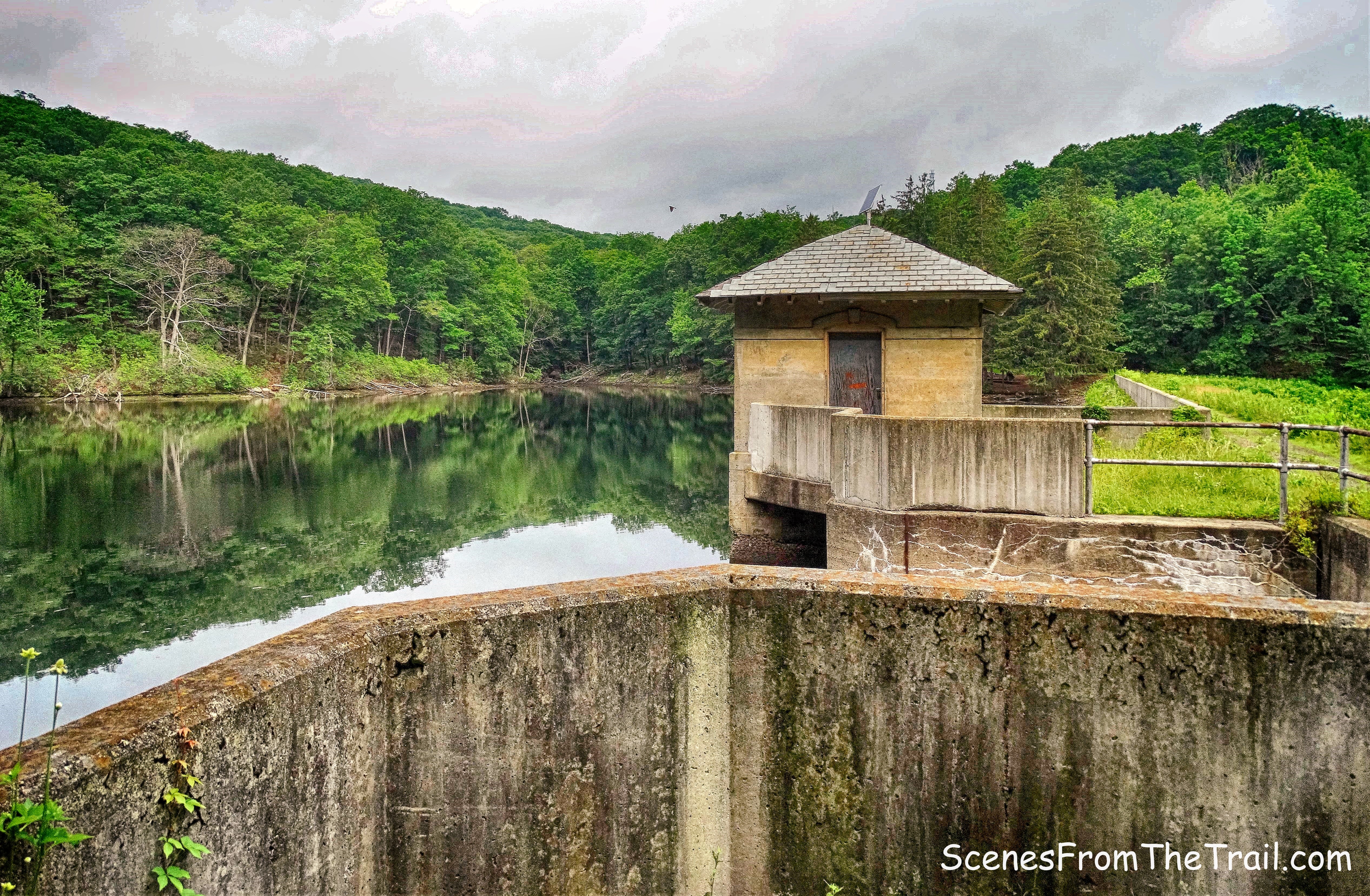
Norvin Green State Forest is a 4,365-acre state forest situated in the Highlands Region of Northern New Jersey and is part of the Wyanokie Wilderness Area near the Wanaque Reservoir. The 24 miles of existing trails are either old forest roads or new trails constructed by volunteers, which feature rugged terrain, waterfalls, and remains of old iron mines. With hills ranging from 400 to 1,300 feet in elevation, Norvin Green provides the avid hiker with scenic vistas, including the New York City skyline, Burnt Meadow Brook and Lake Sonoma. The property is accessible by foot only.

PLEASE NOTE: Hunting is permitted in designated areas within the park and is subject to Division of Fish and Wildlife regulations.

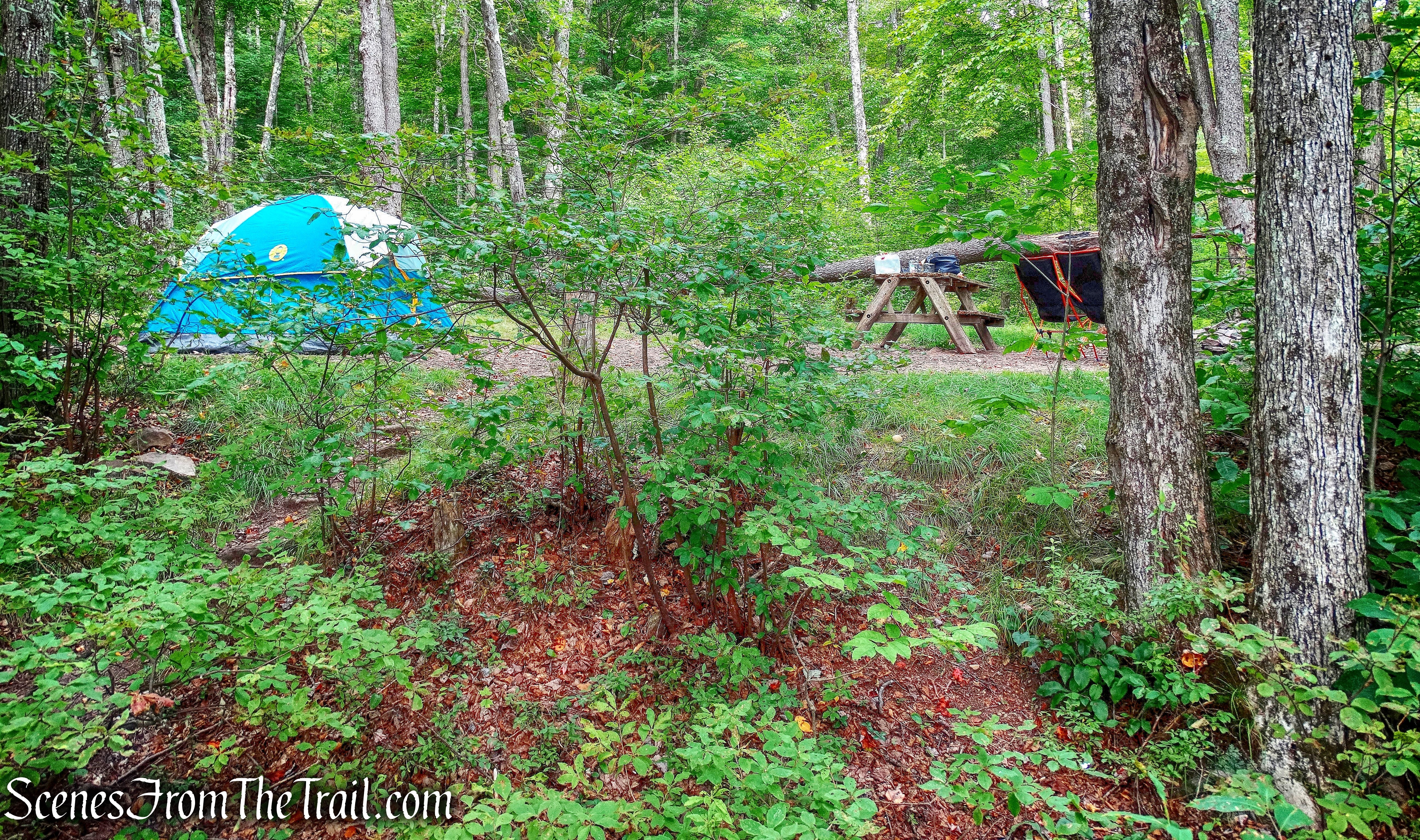
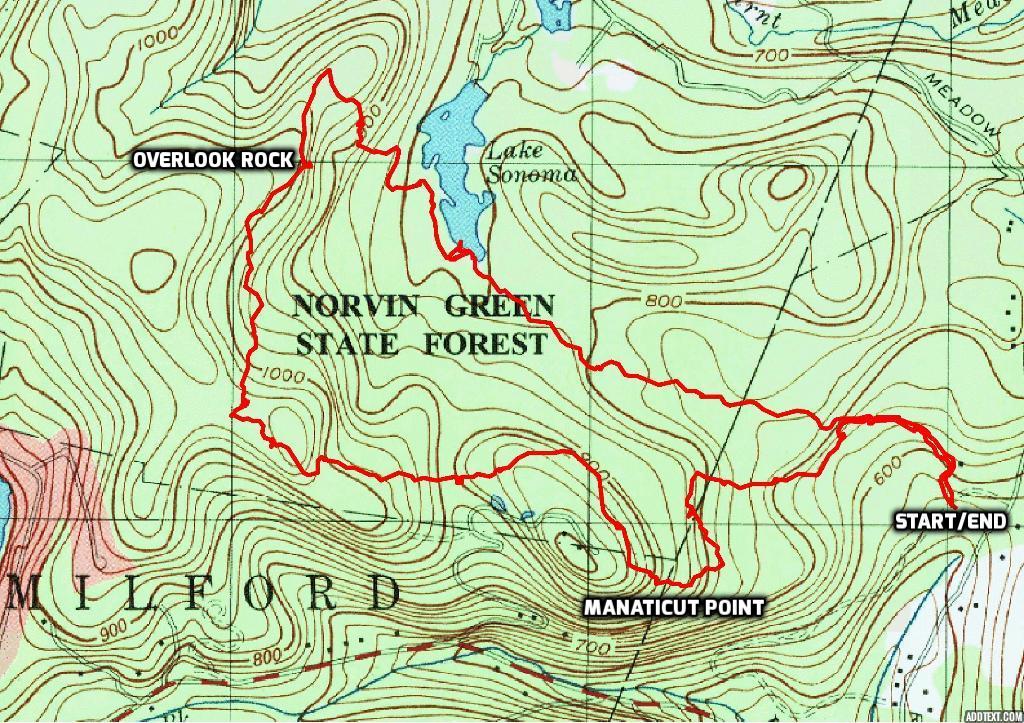
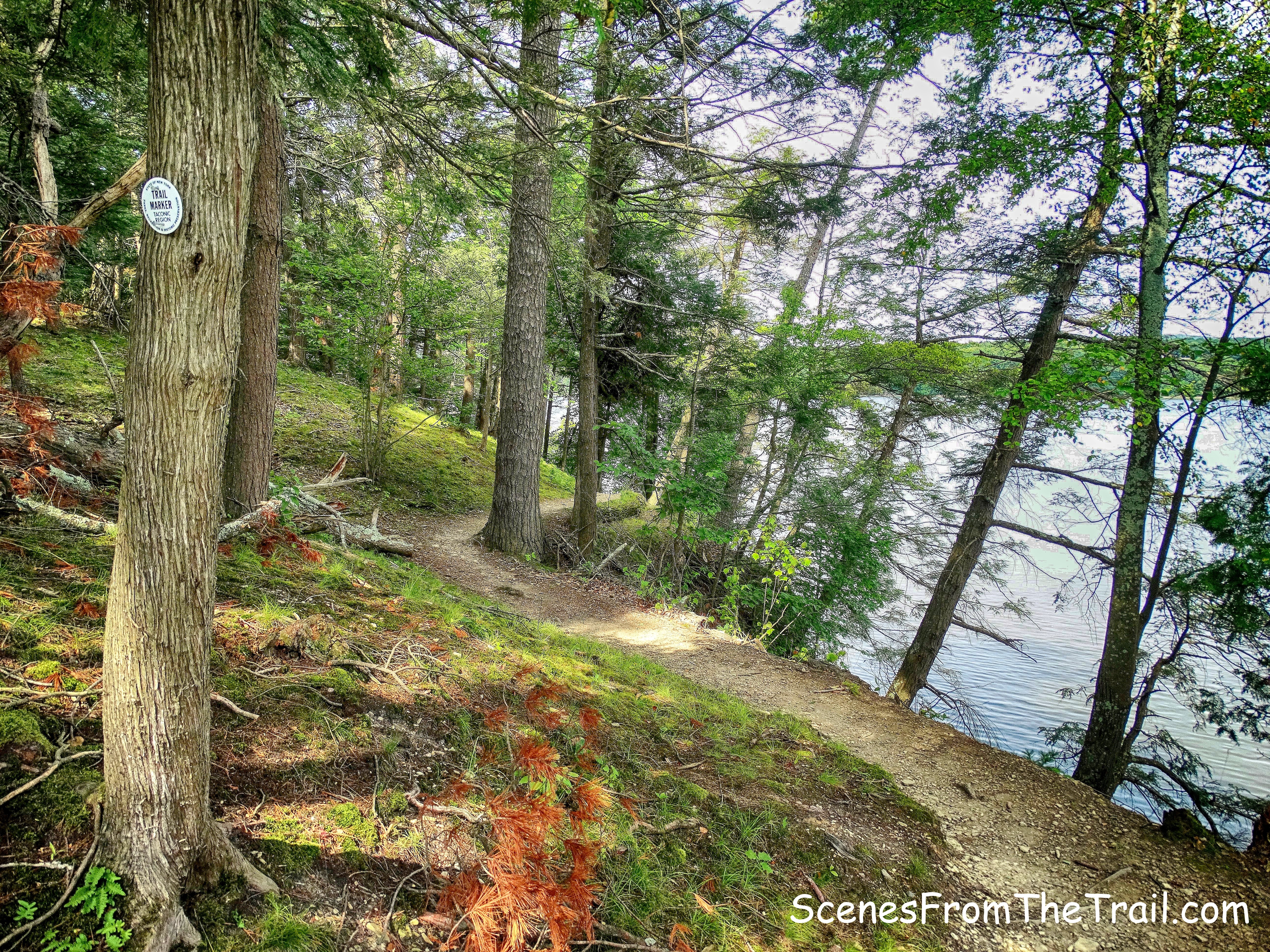
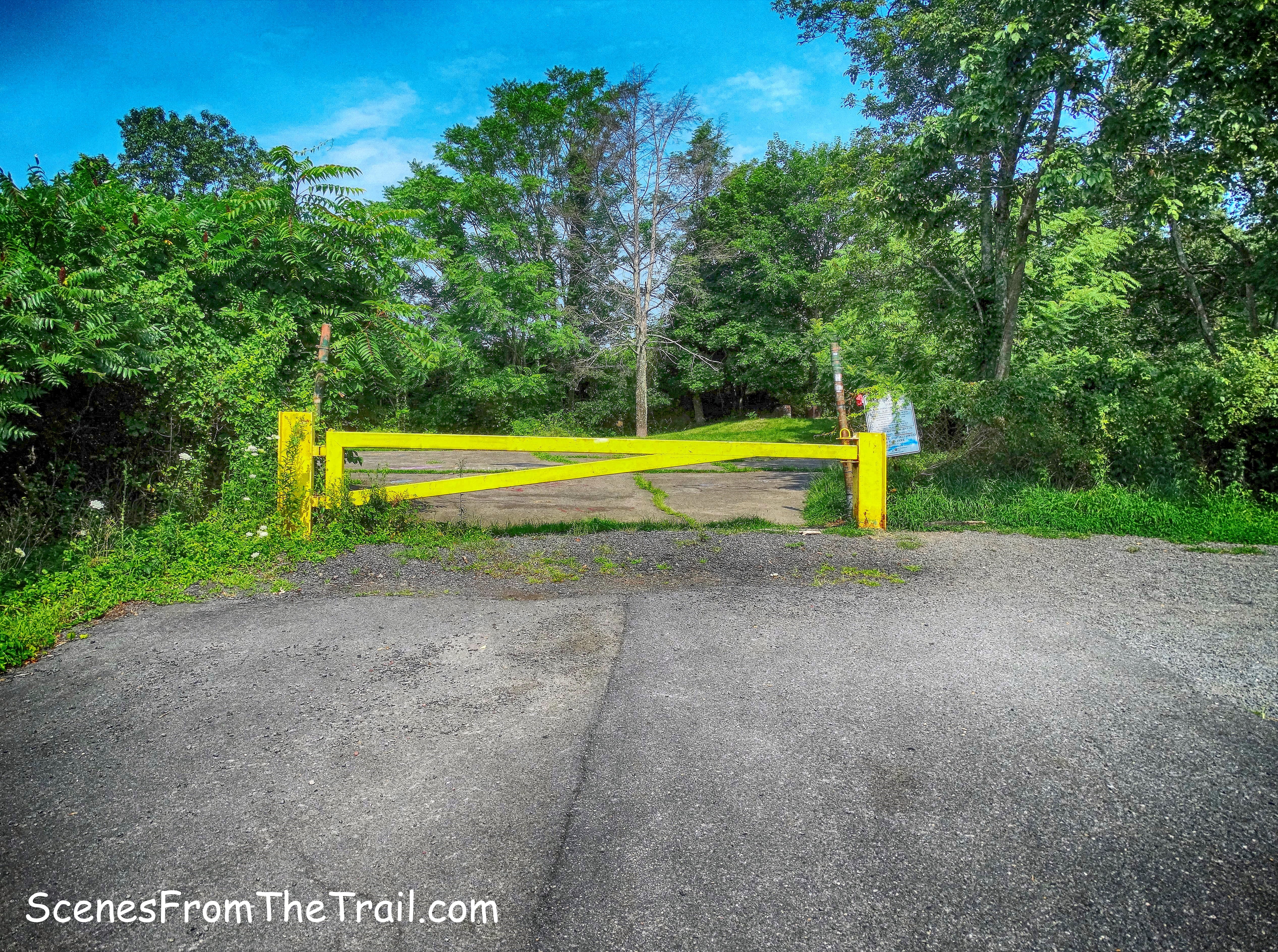
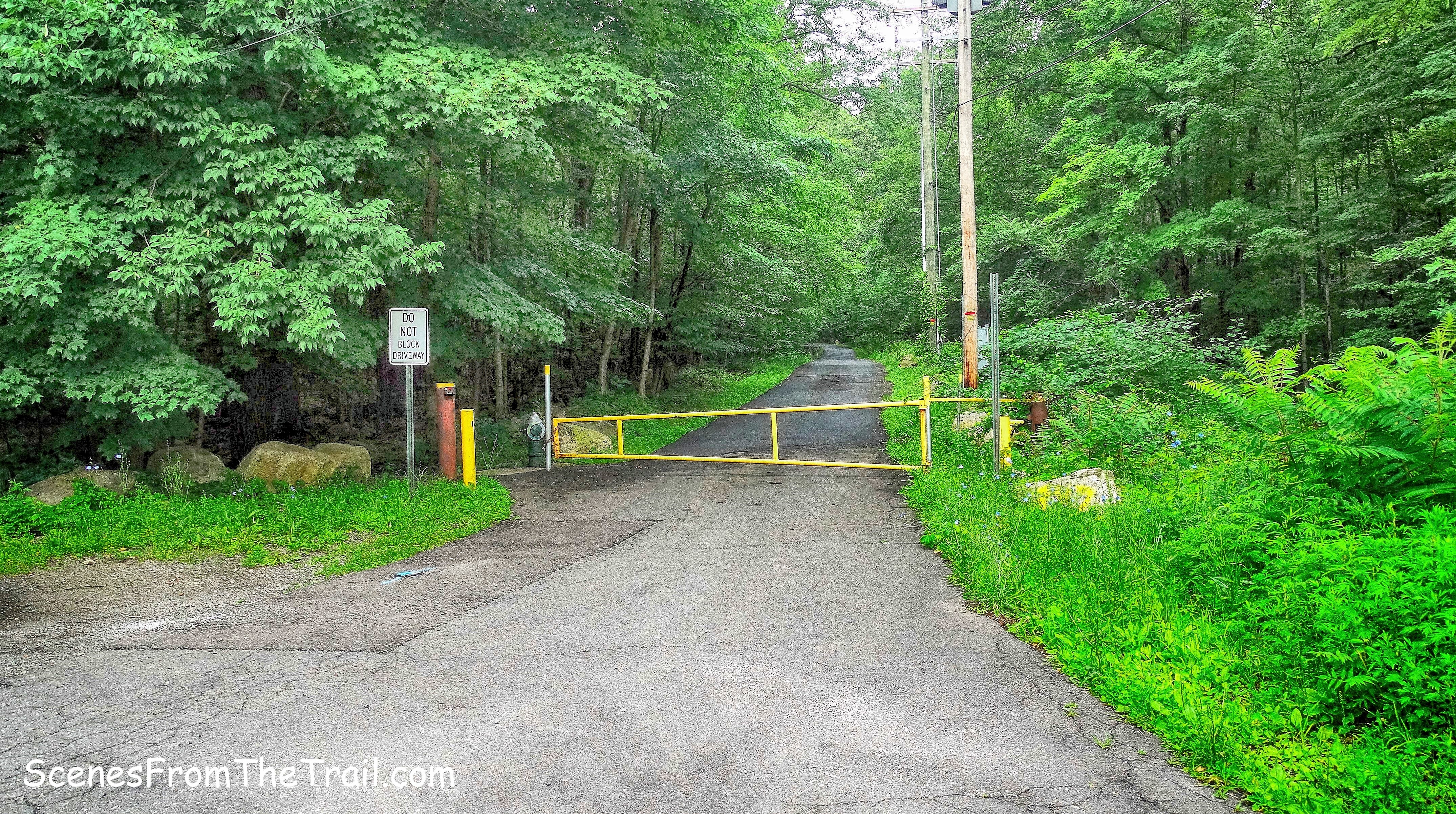
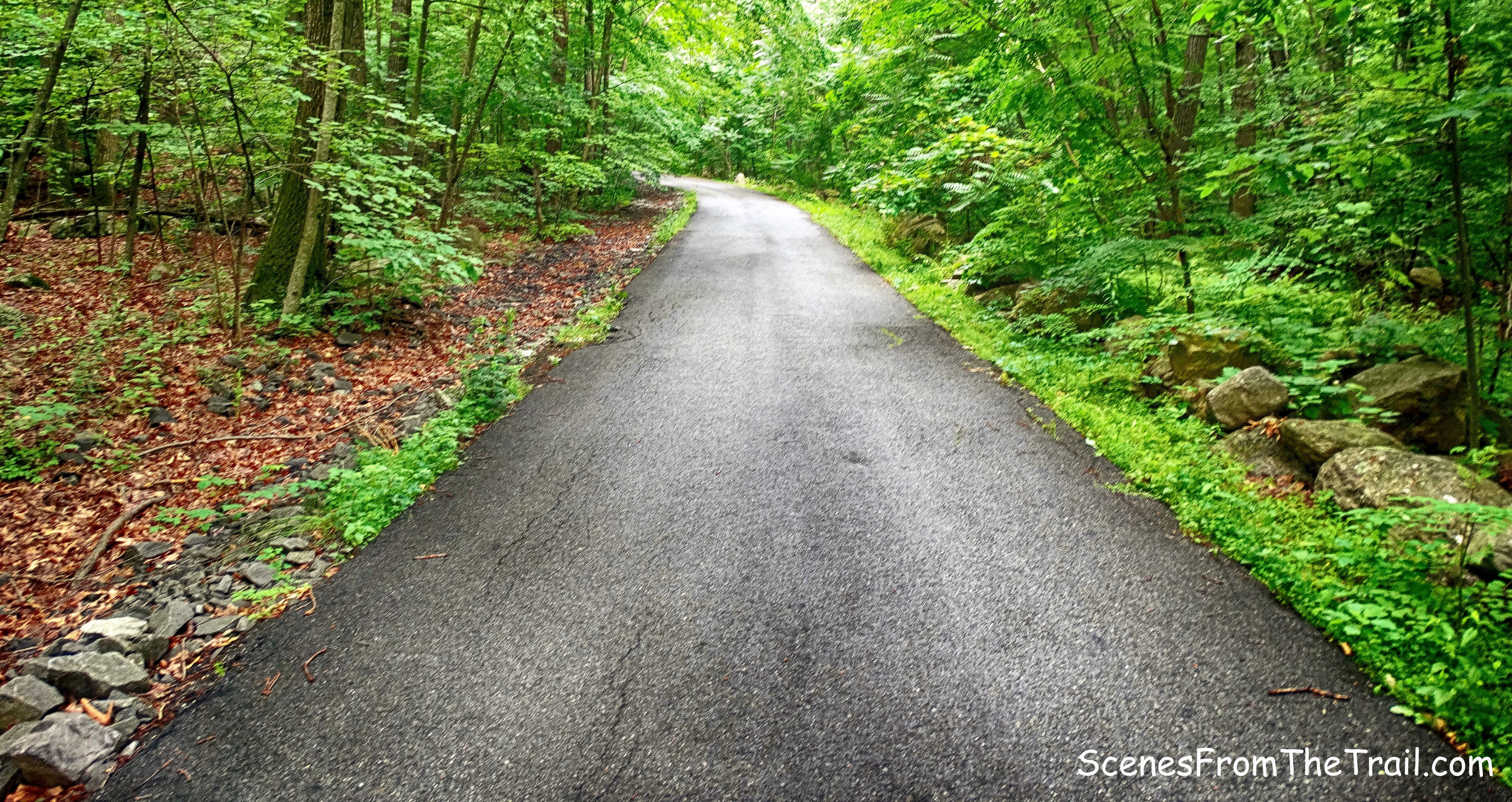
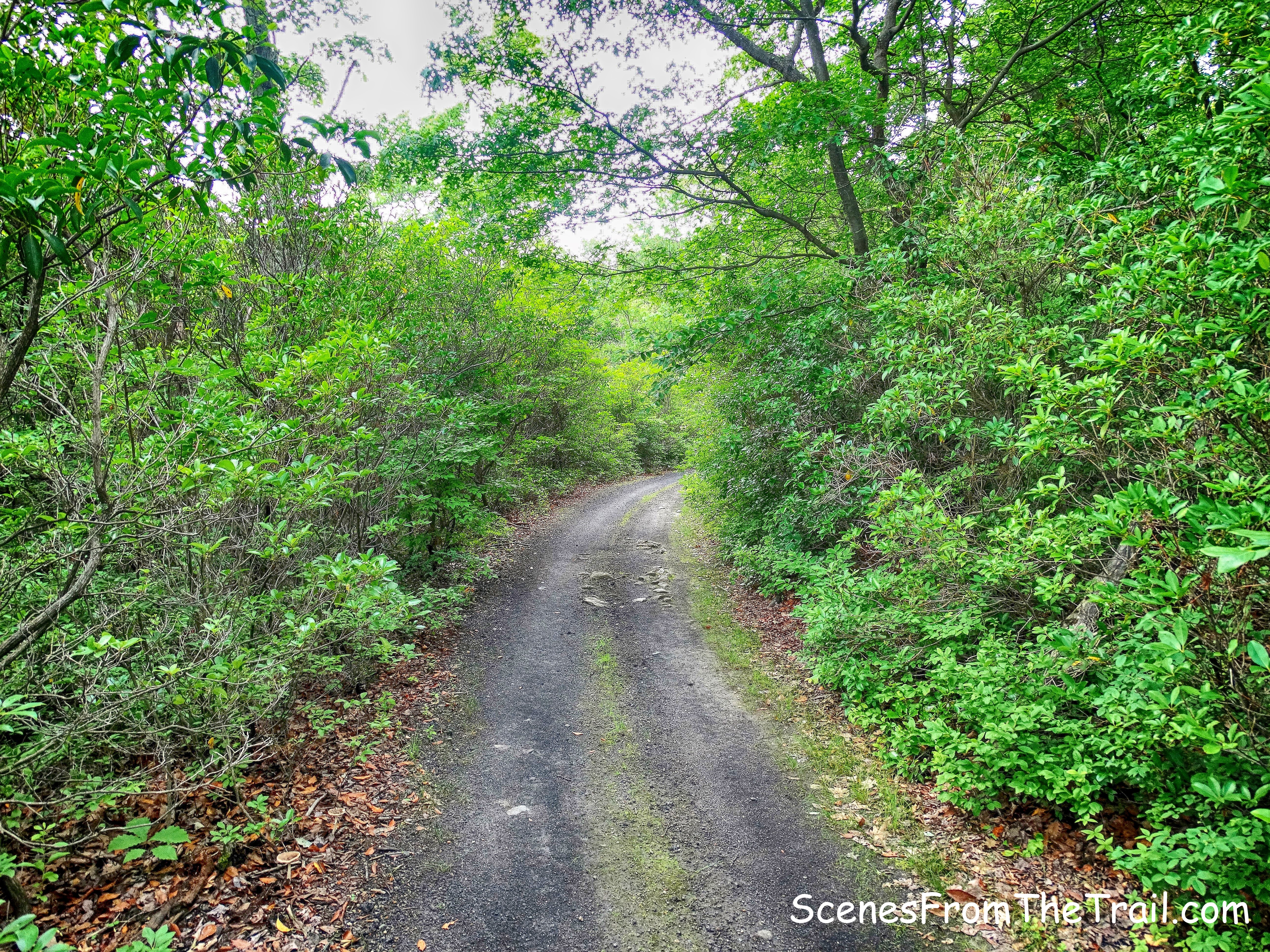
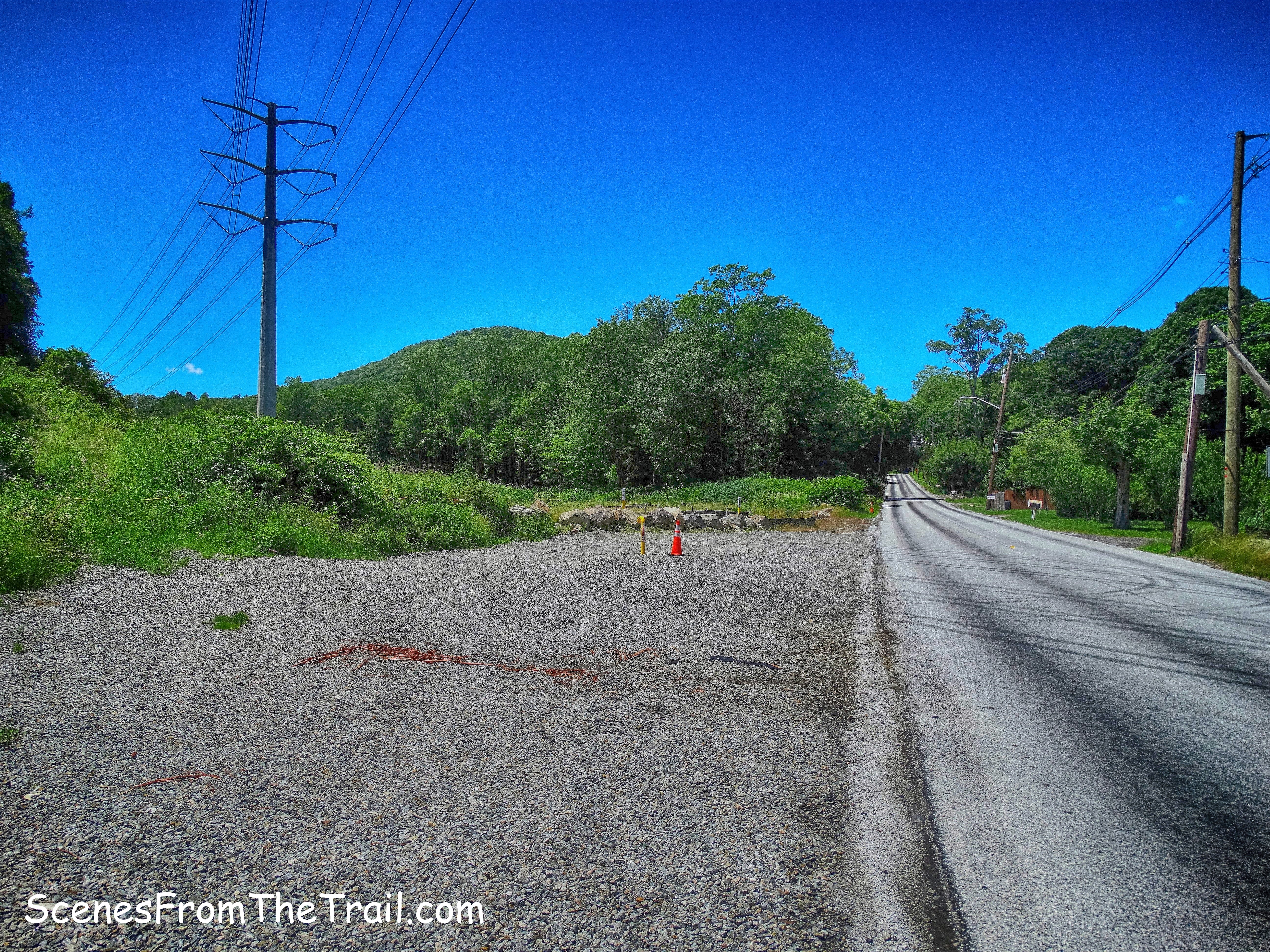
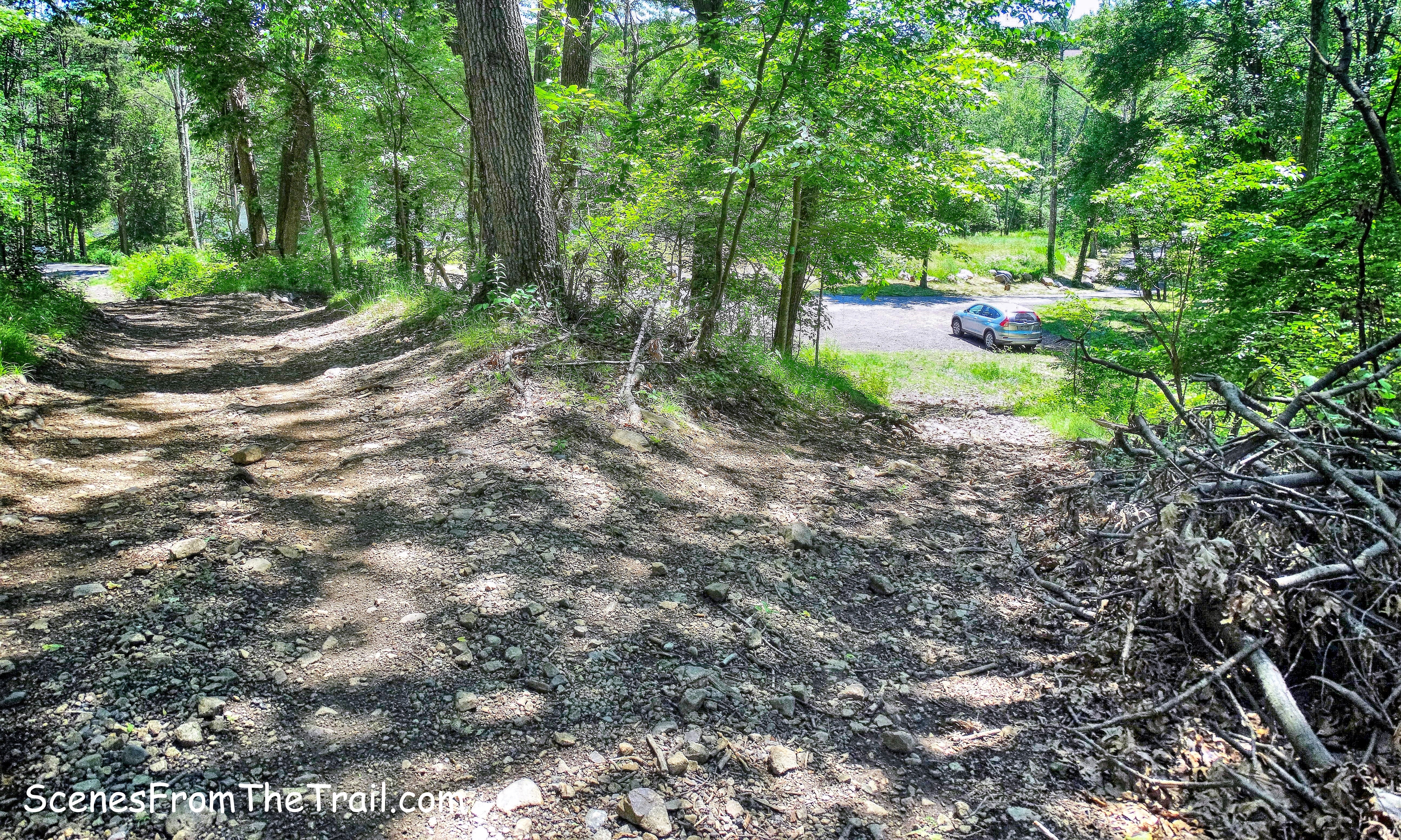
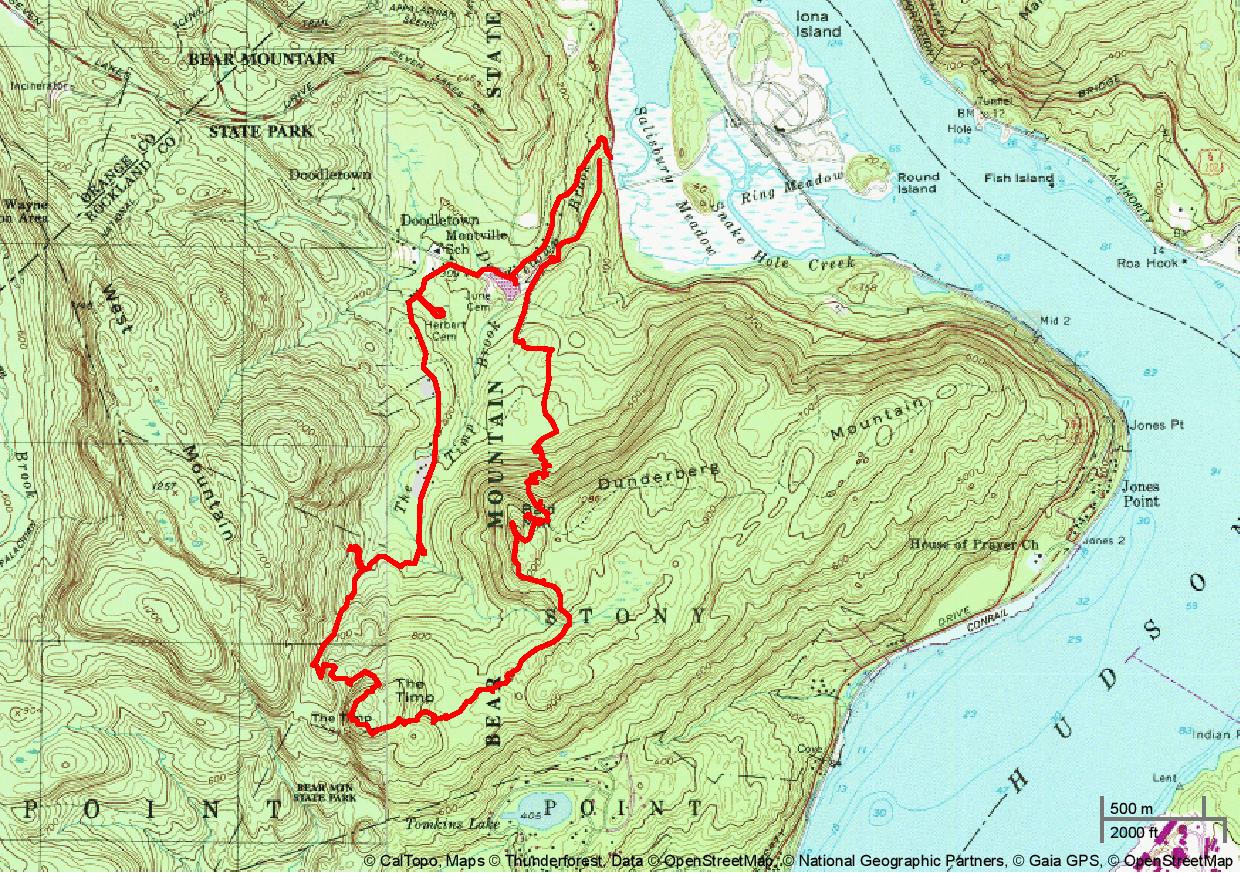
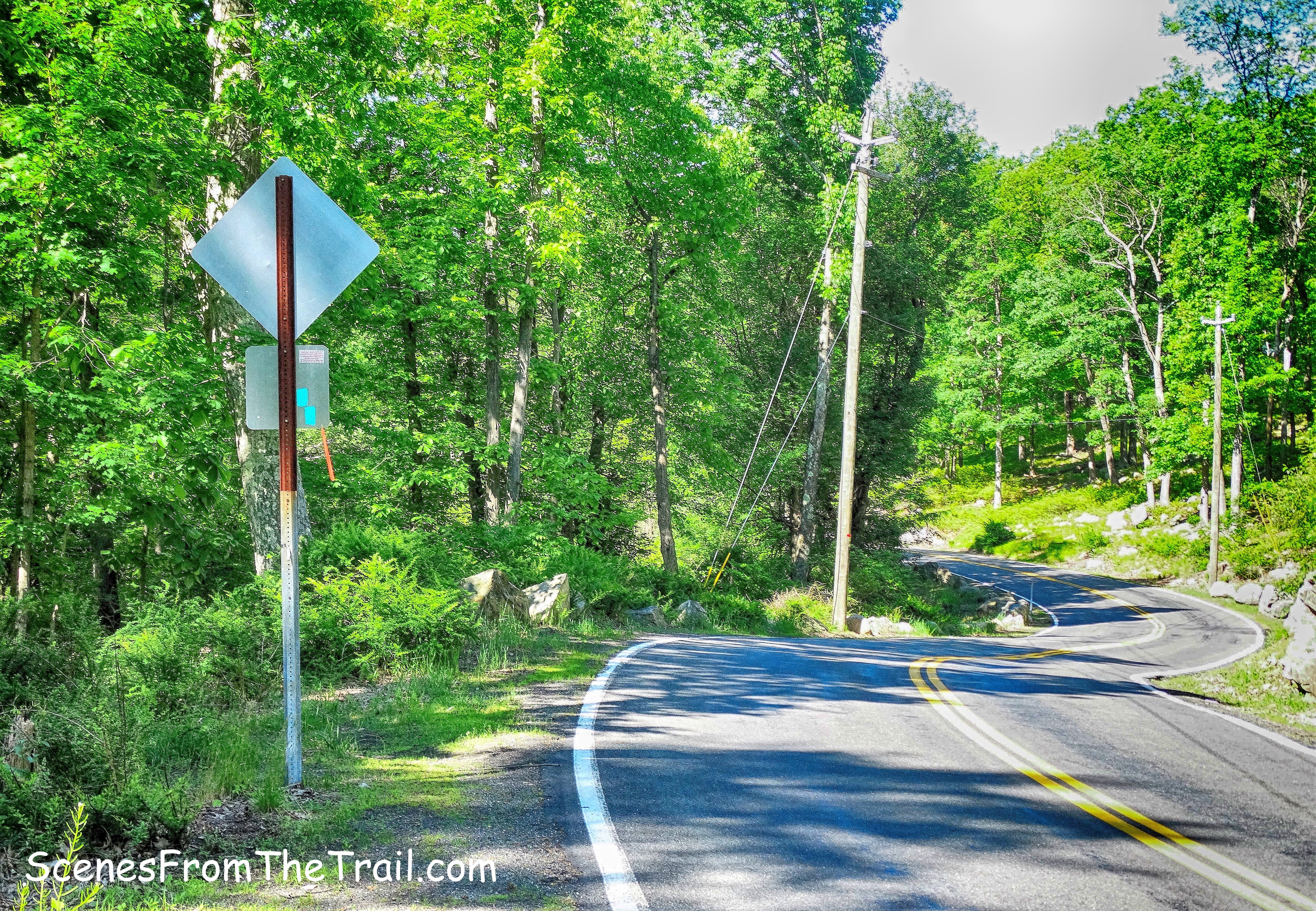
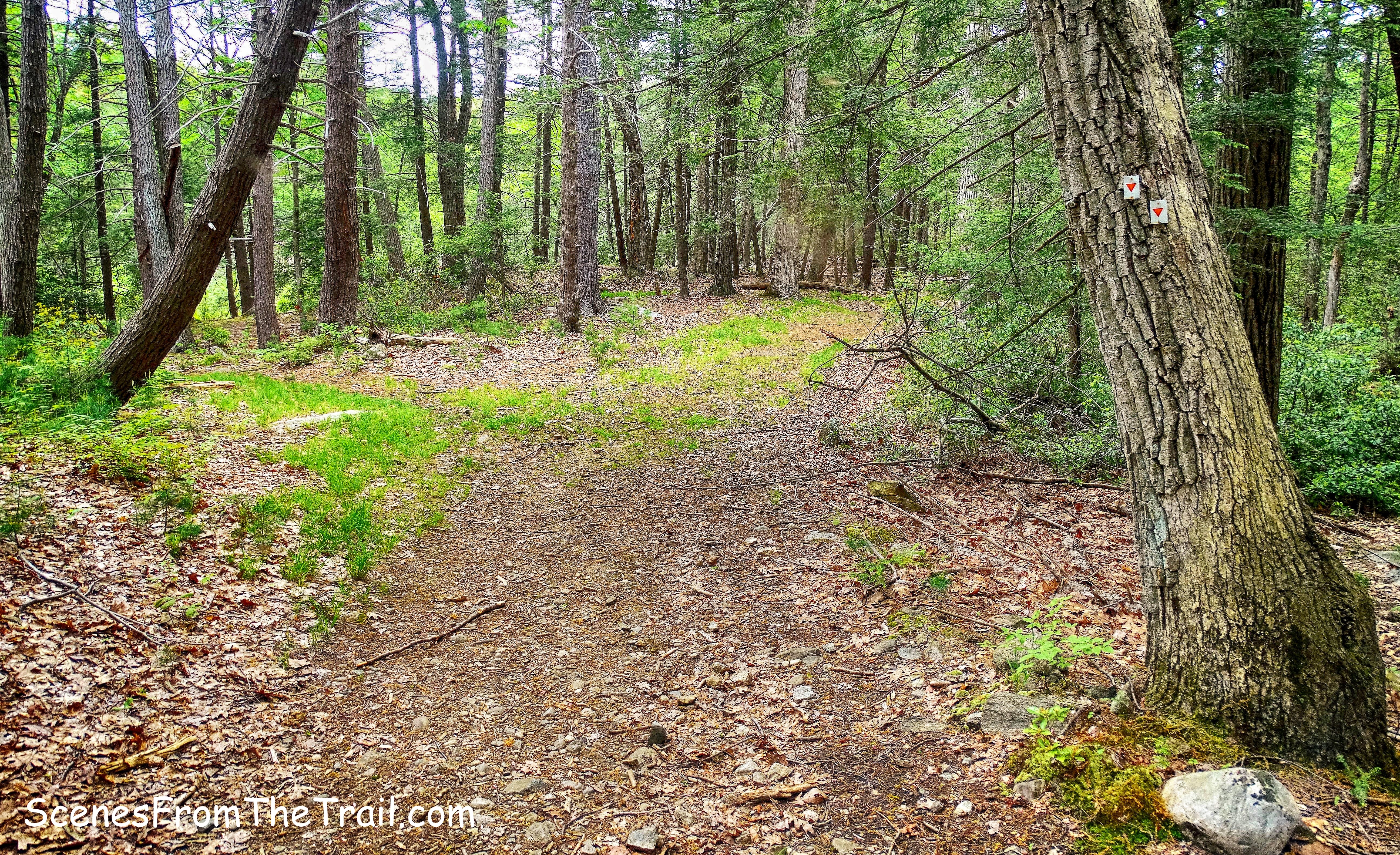
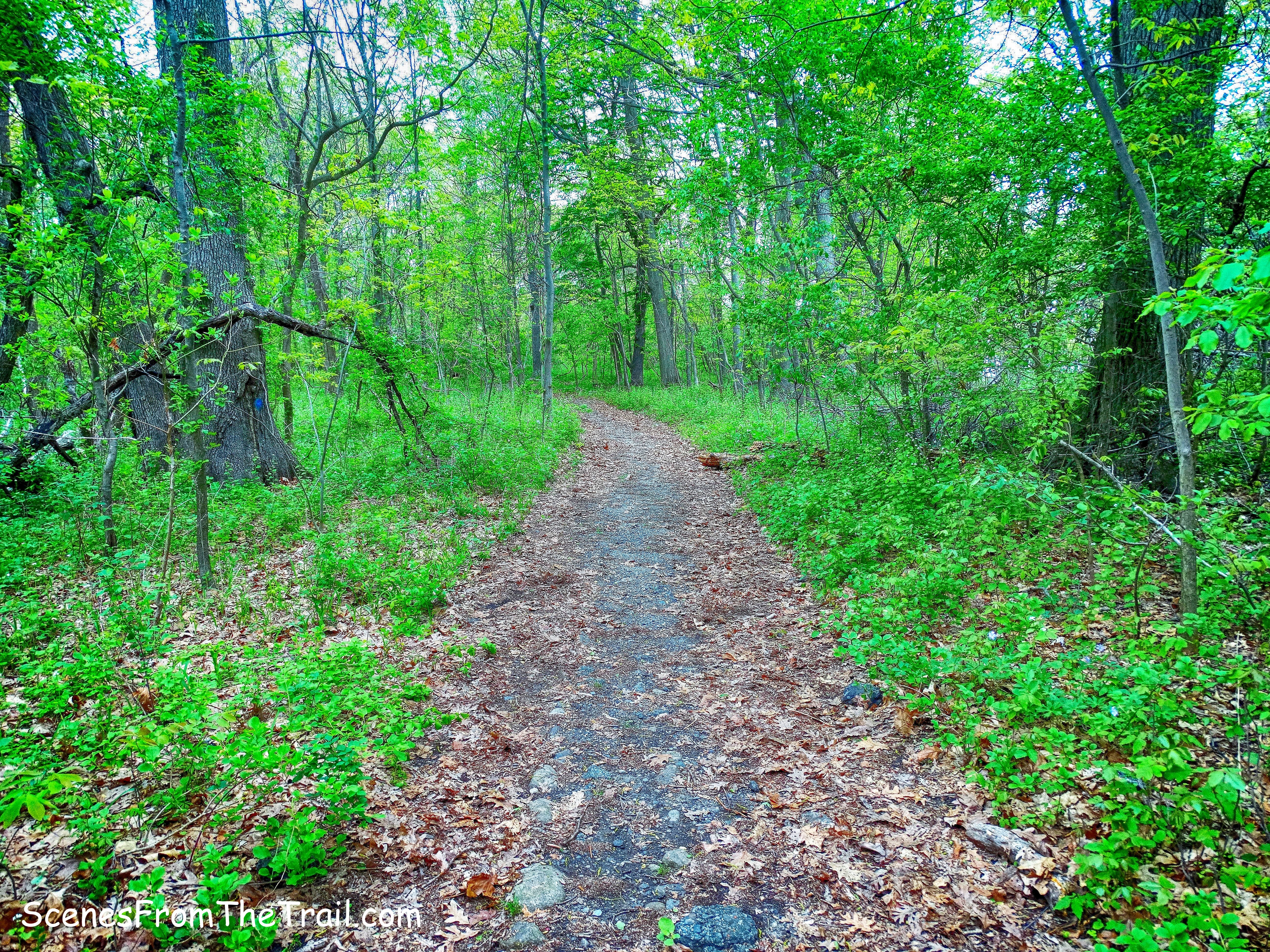
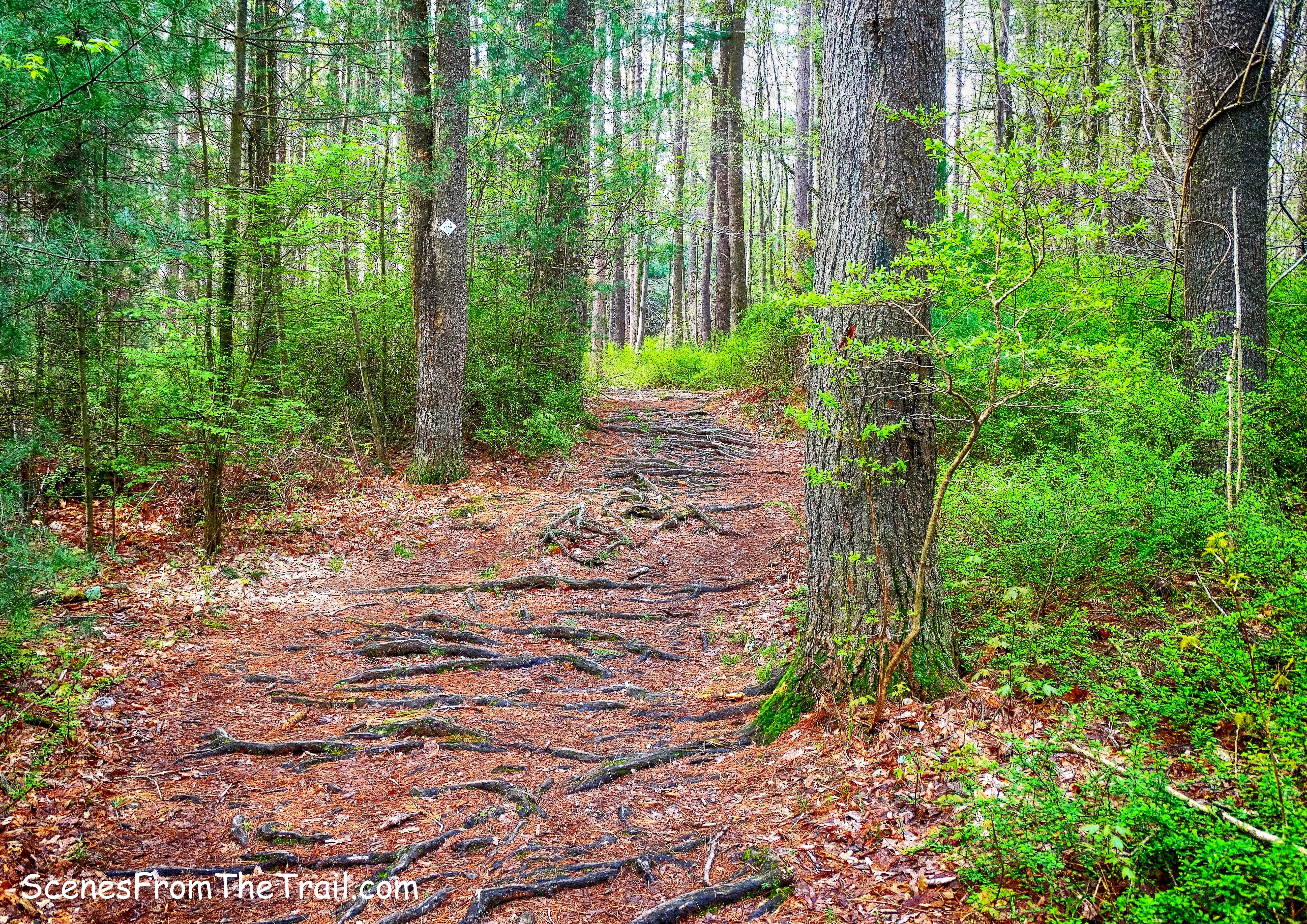
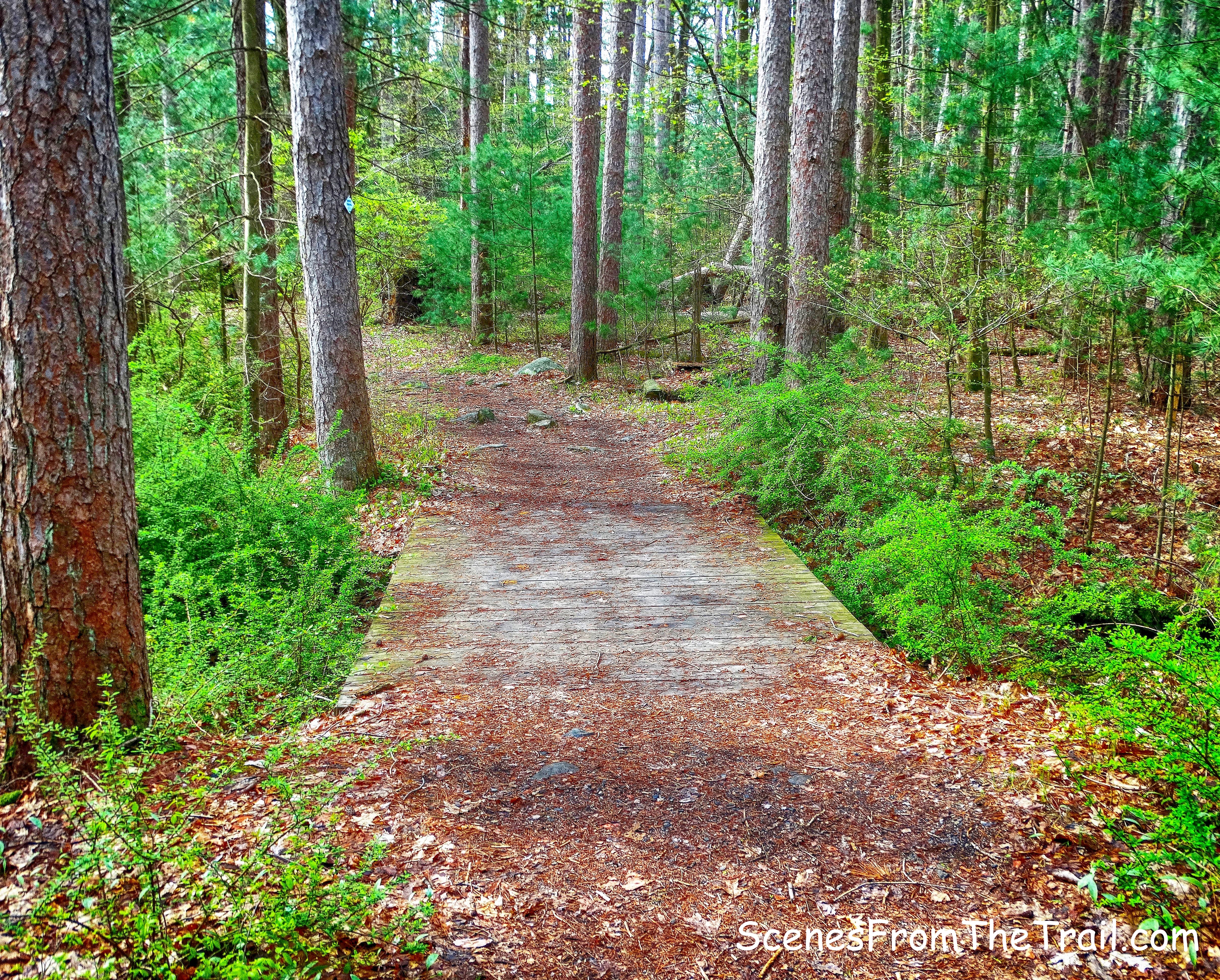
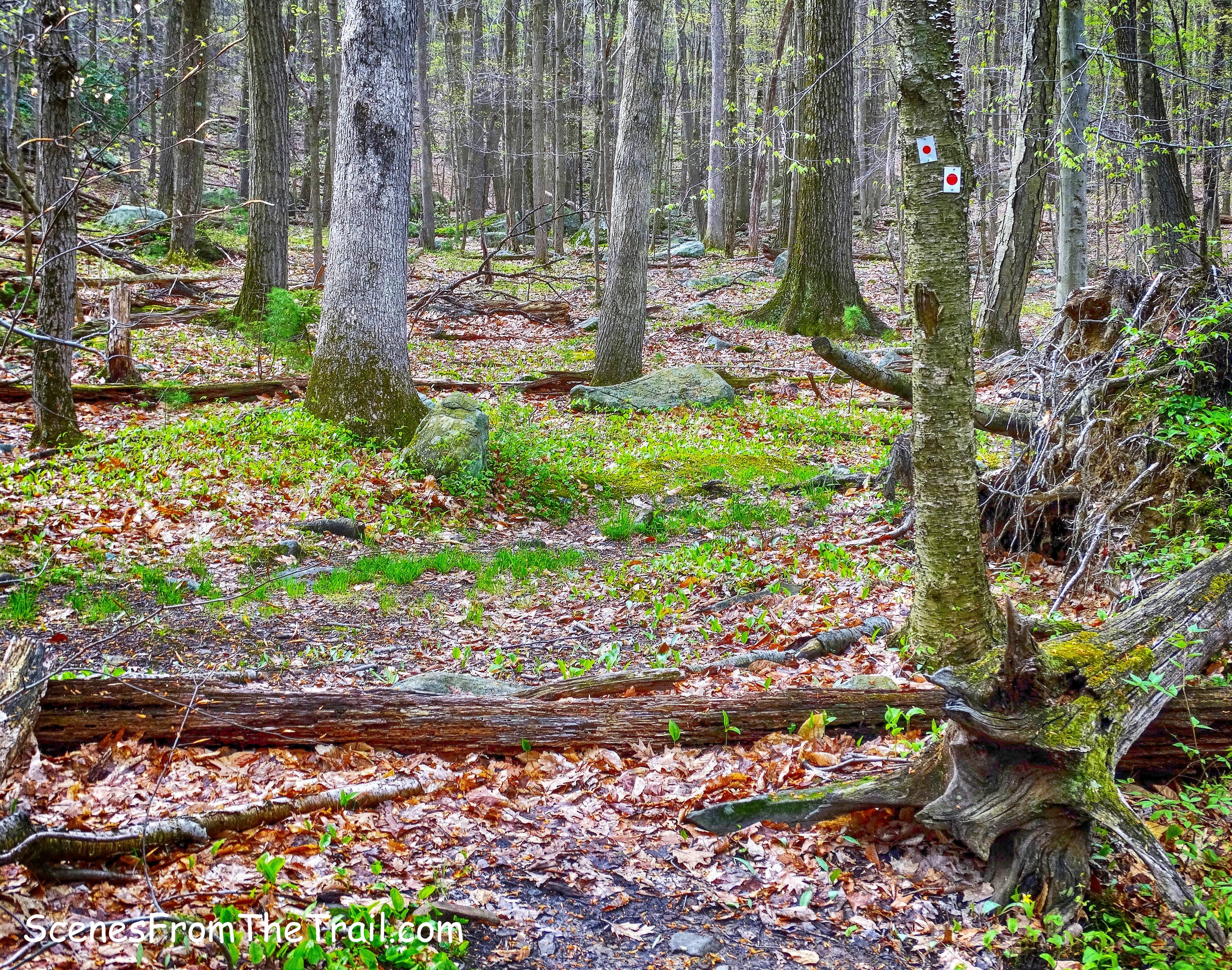
I wanted to do a hike outside of my usual stomping grounds and came across this hike. From what I read, Norvin Green State Forest is a popular place to hike and thus crowded trails. I decided to check out what is supposed to be a lesser traveled section of the forest. Secluded was more like it, as the only person we encountered the whole day was a trail maintenance worker that we passed near Lake Sonoma. We arrived at the trailhead parking just after 9:00 am on a cool Saturday morning. There is no parking lot, but parking is permissible along the road. The area is deserted and there are no homes close by so leaving valuables in the car is not a good idea. We did this hike counter-clockwise.

Lake Sonoma/Overlook Rock/Manaticut Point Short Loop - Norvin Green State Forest

Lake Sonoma/Overlook Rock/Manaticut Point Short Loop – Norvin Green State Forest

A new feature that I have added is the Google Earth Fly-Through. It follows the path that we hiked and it gives you a good idea of the terrain, layout, amount of parking etc. Check it out, it’s pretty cool.

View the Google Earth Fly-Through video of the hike below.

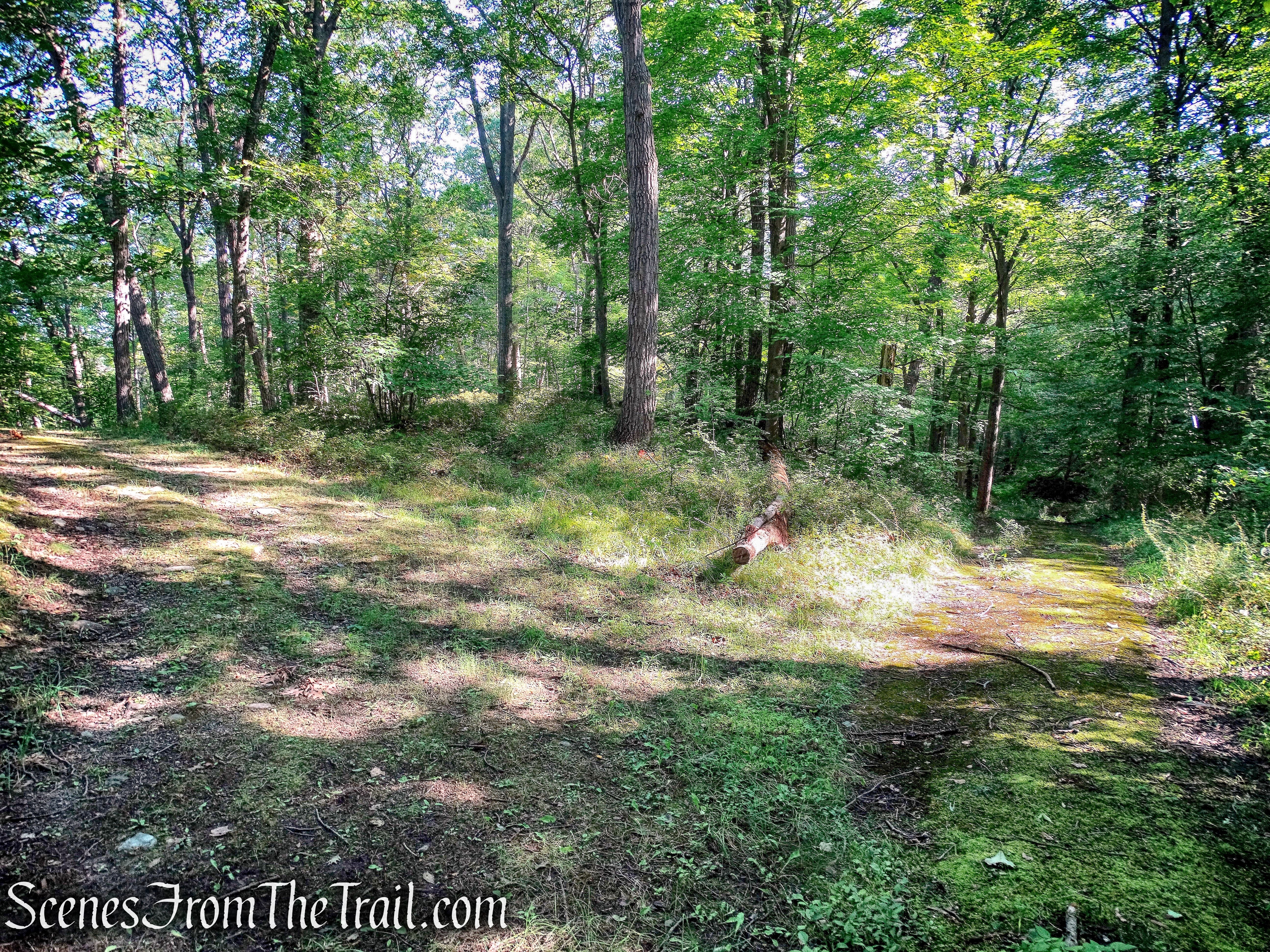
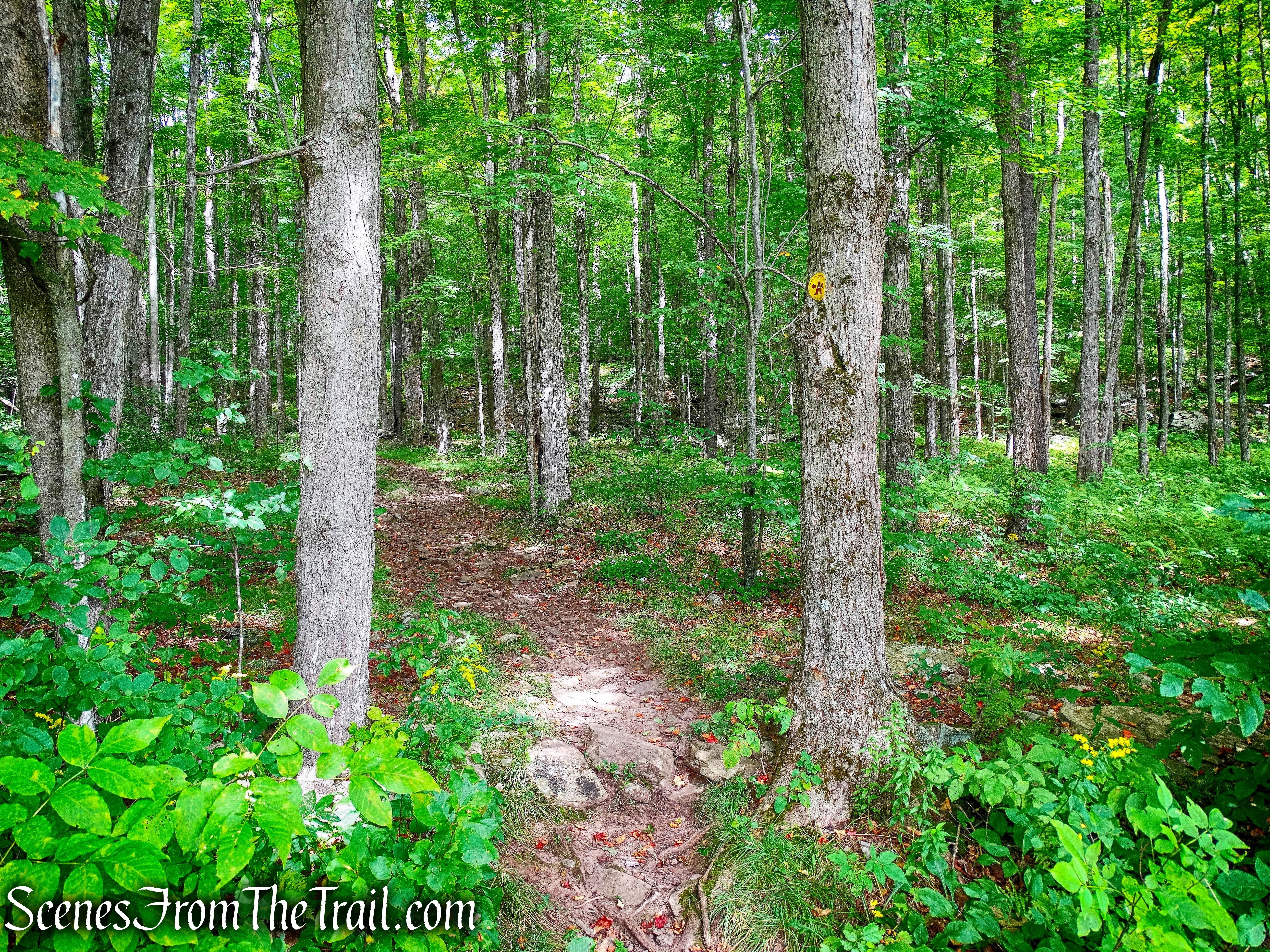
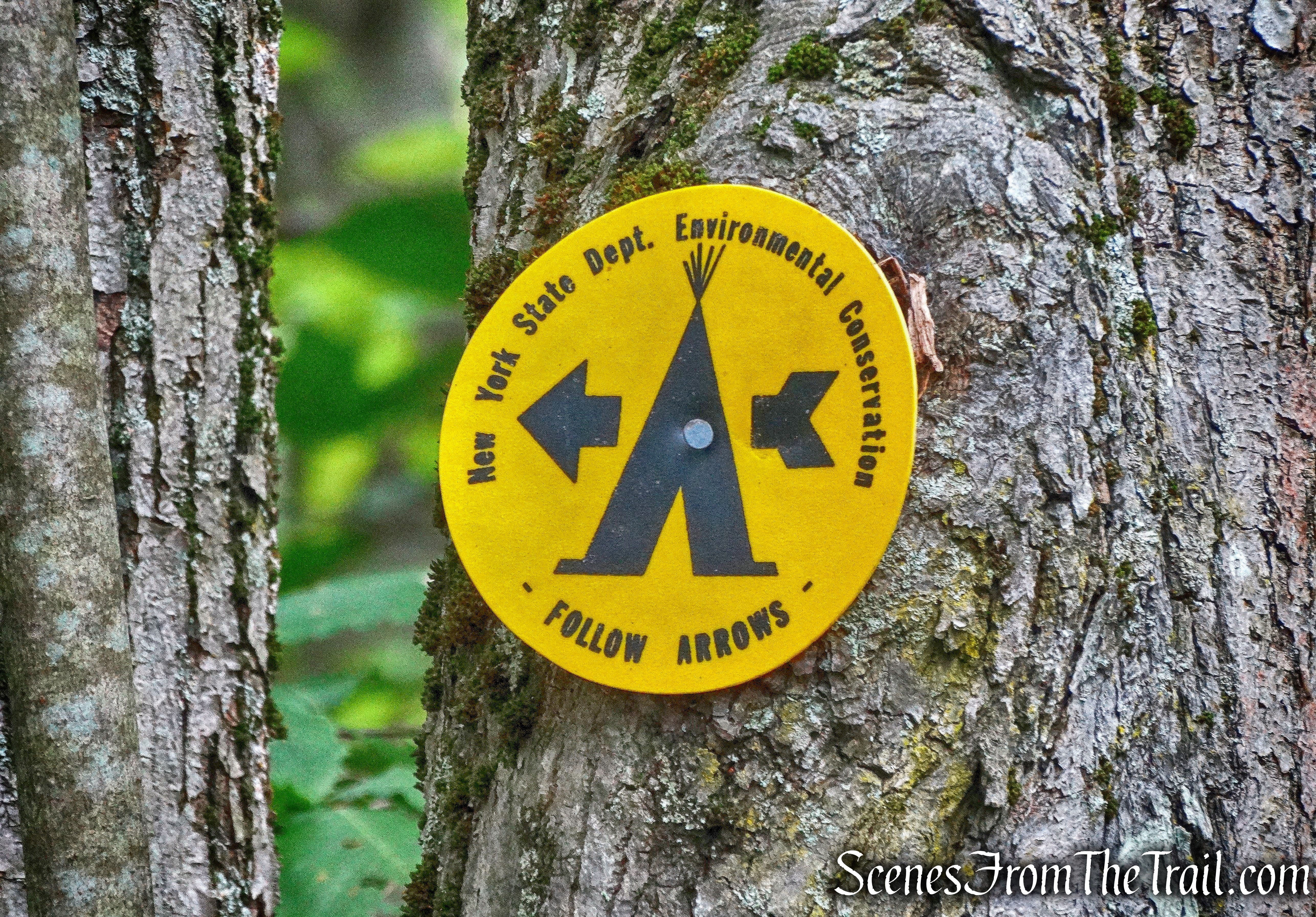
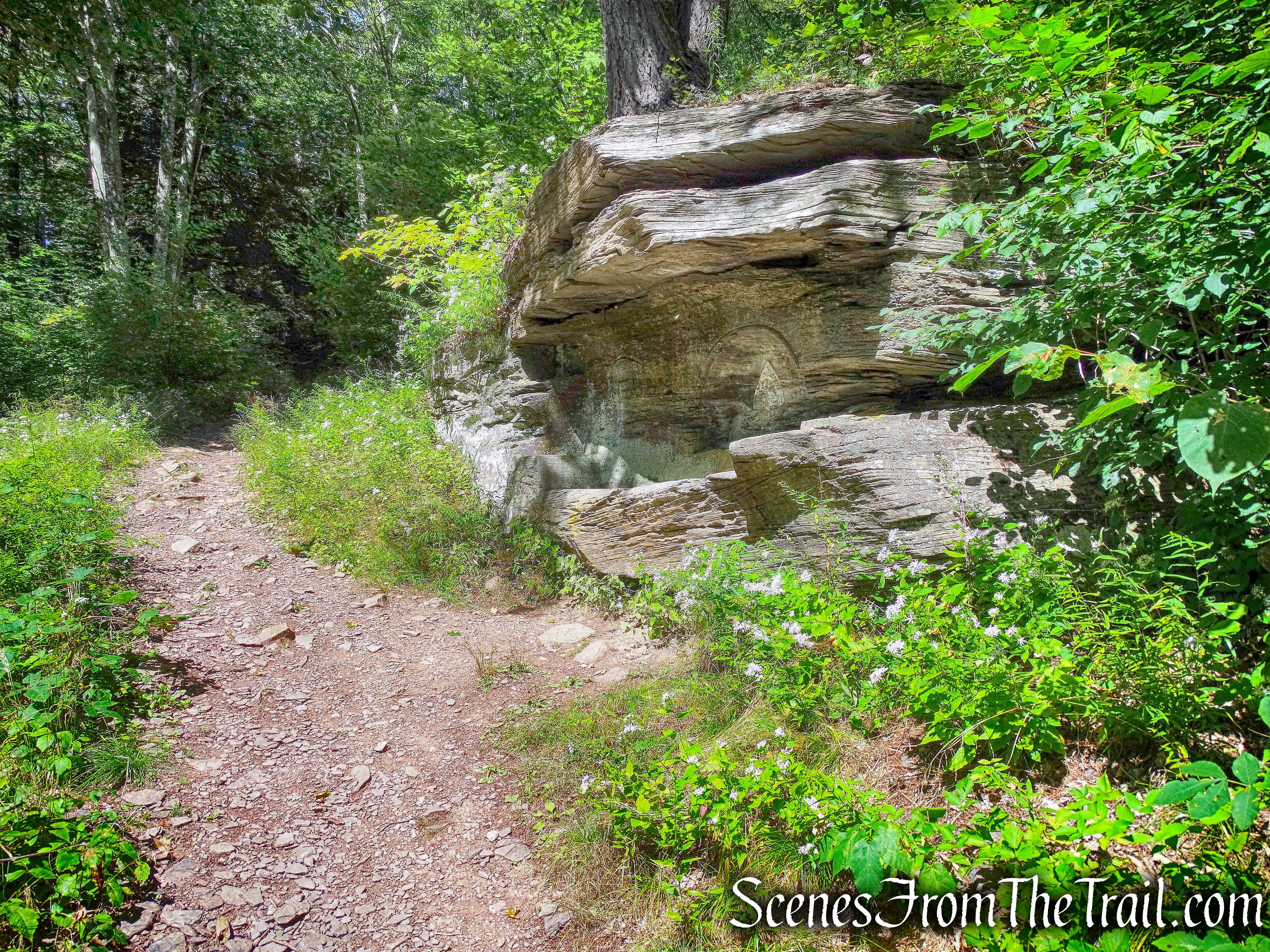
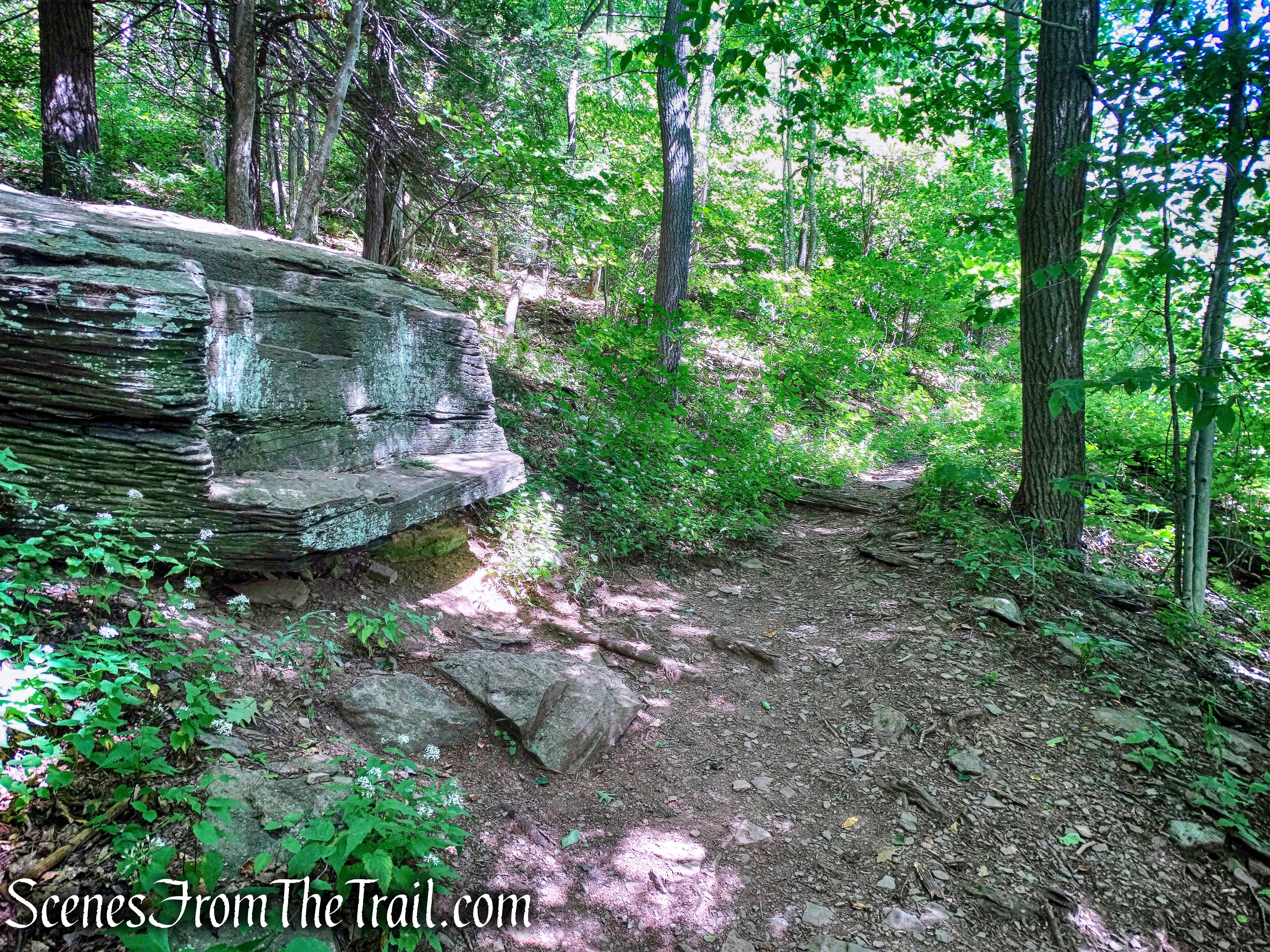
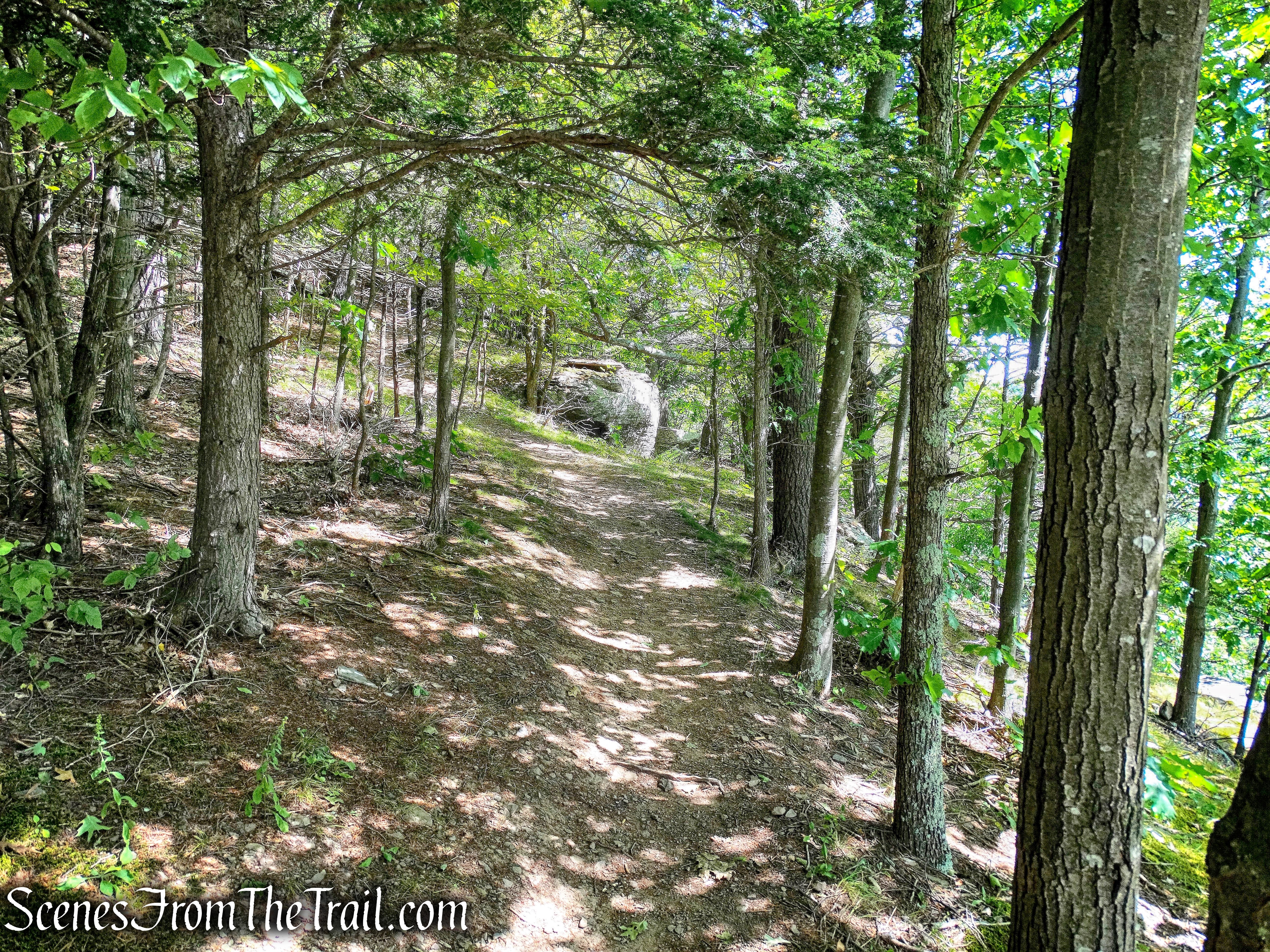
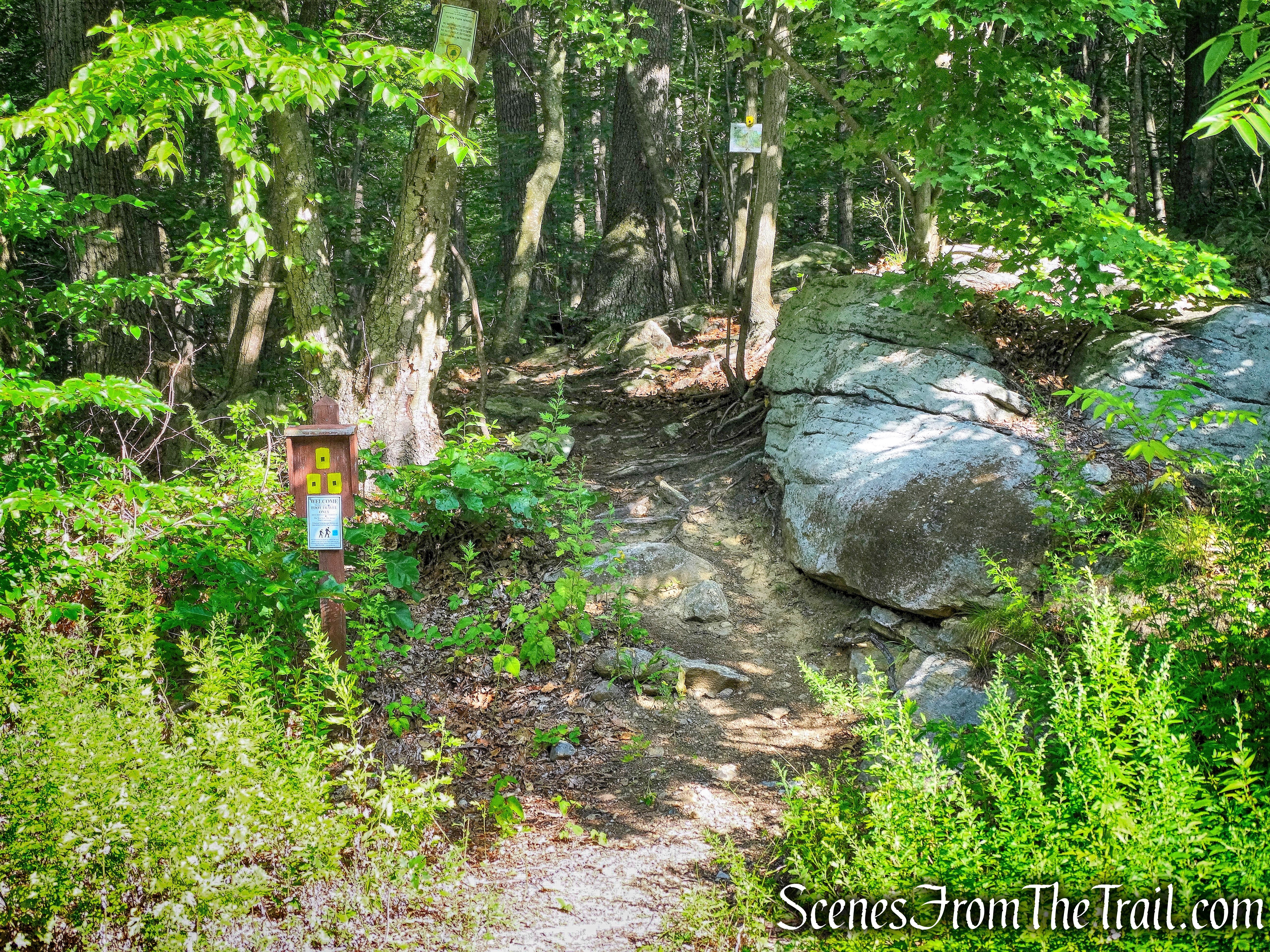
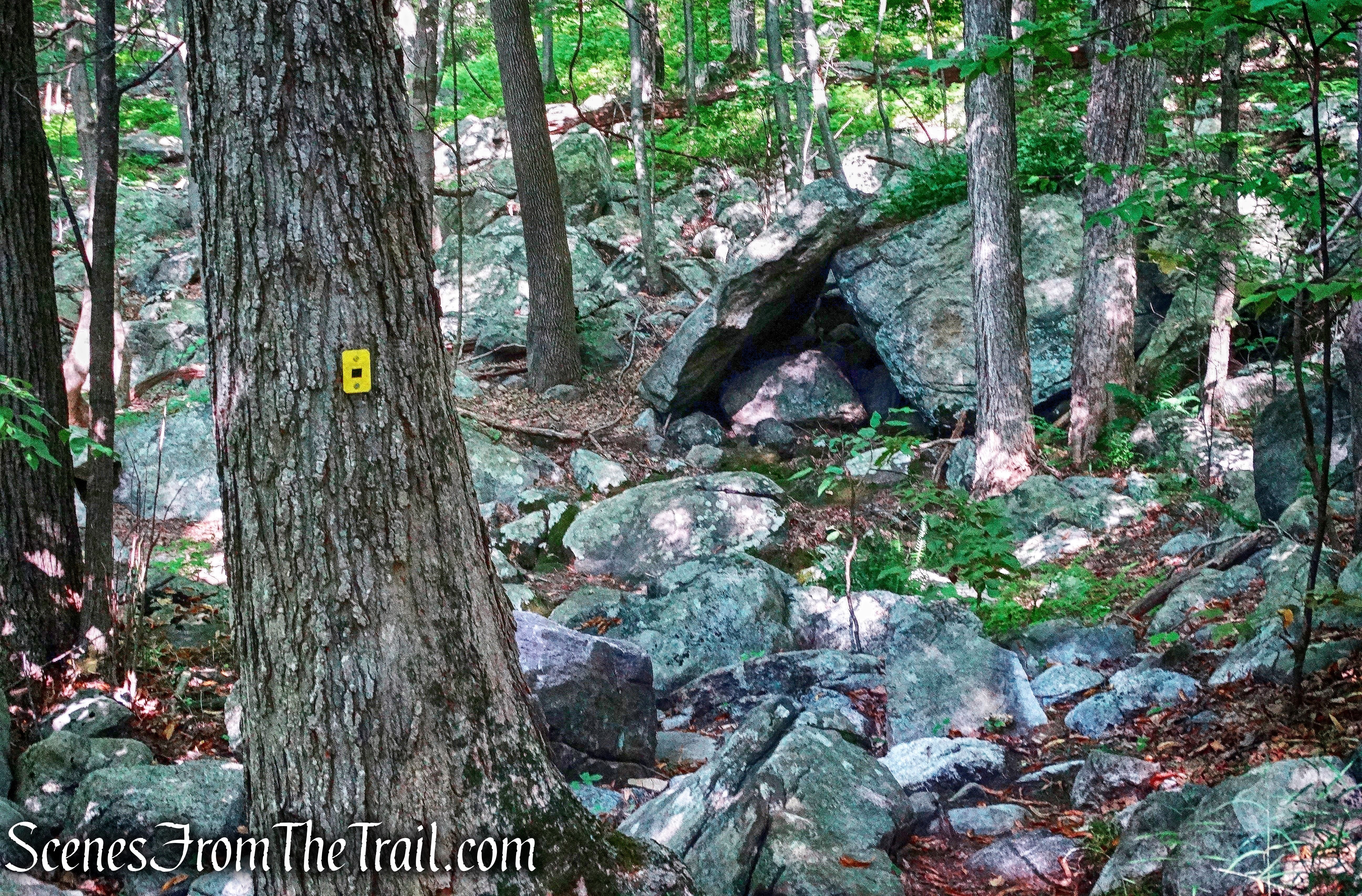
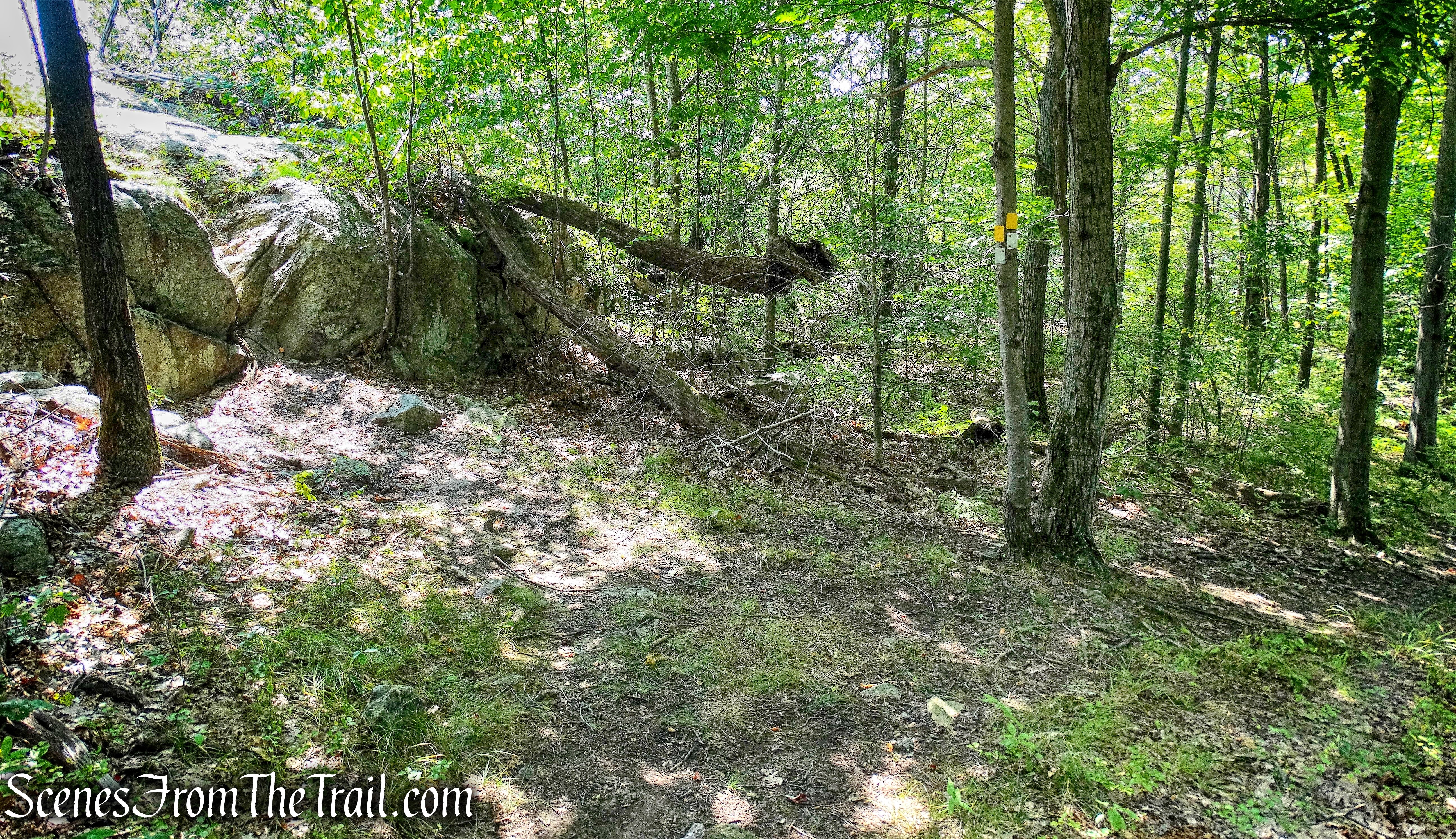
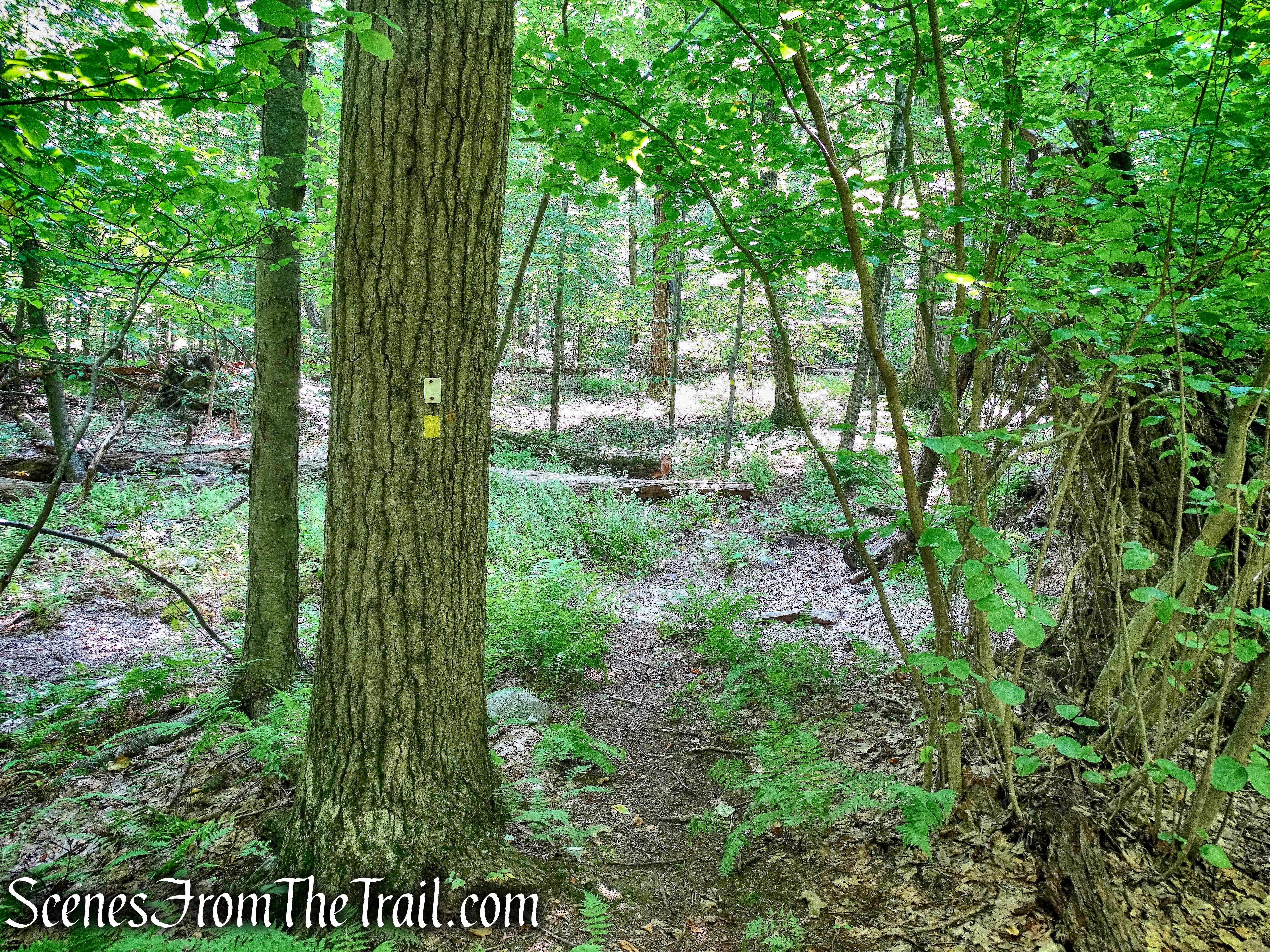
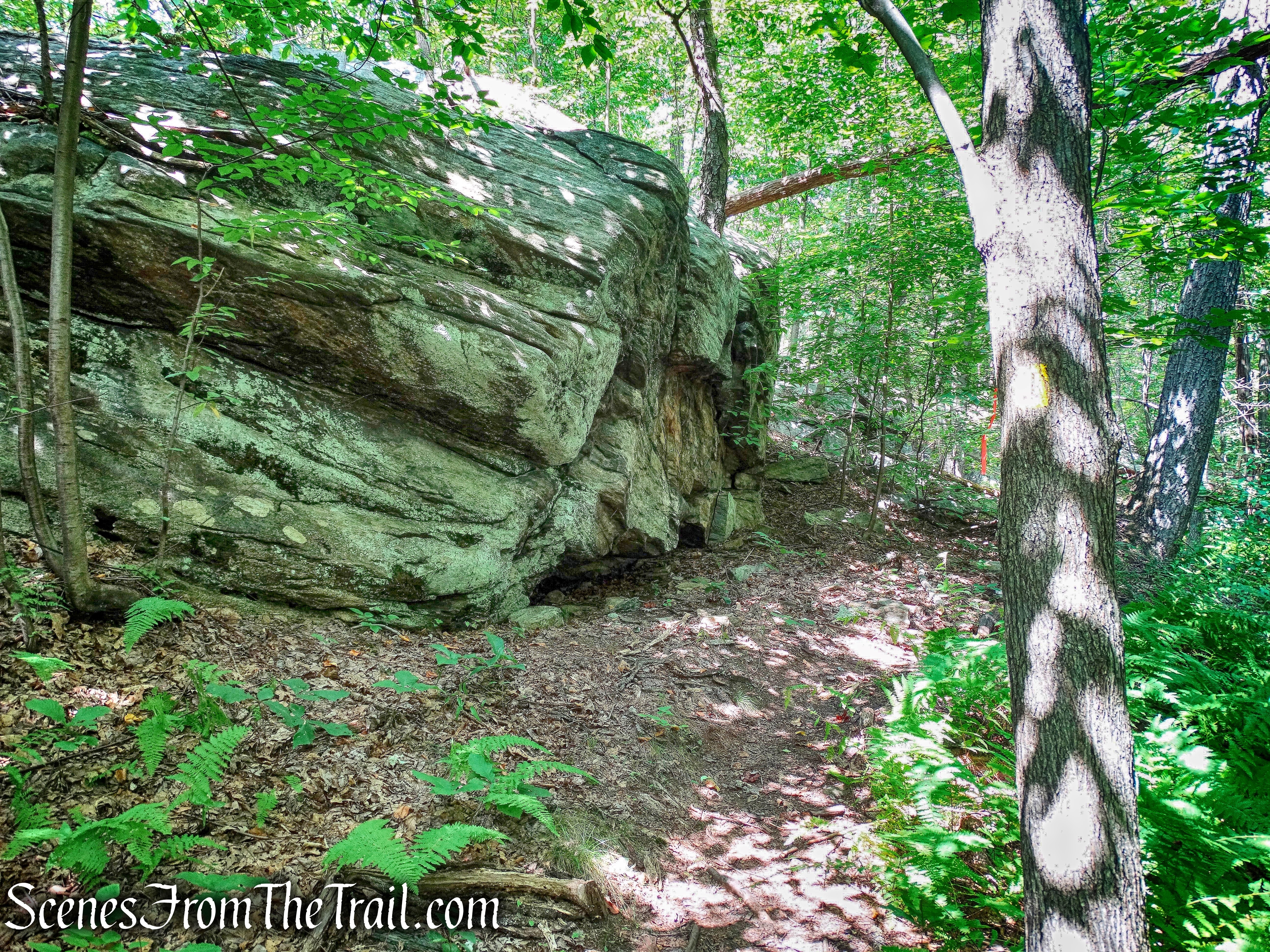
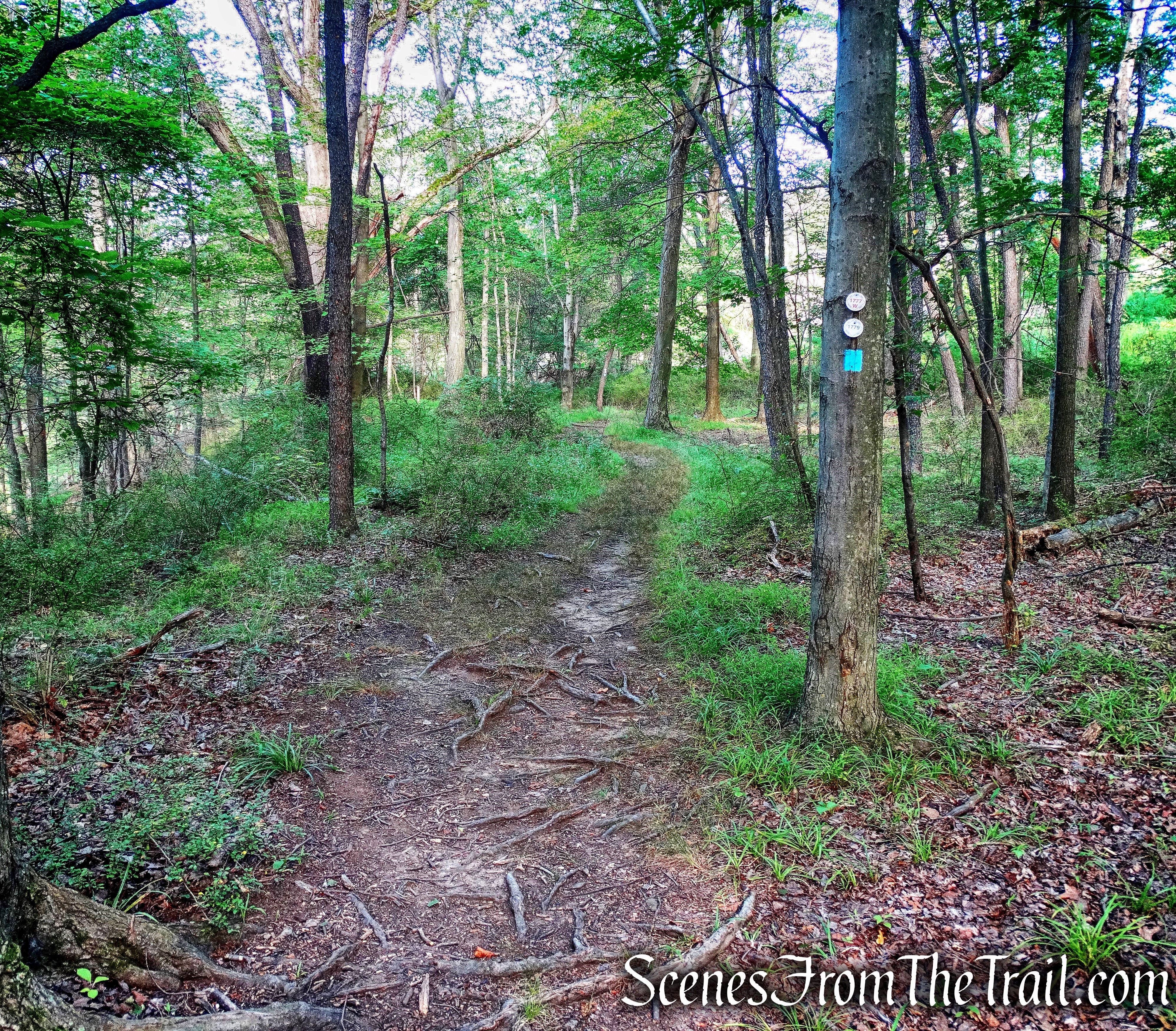
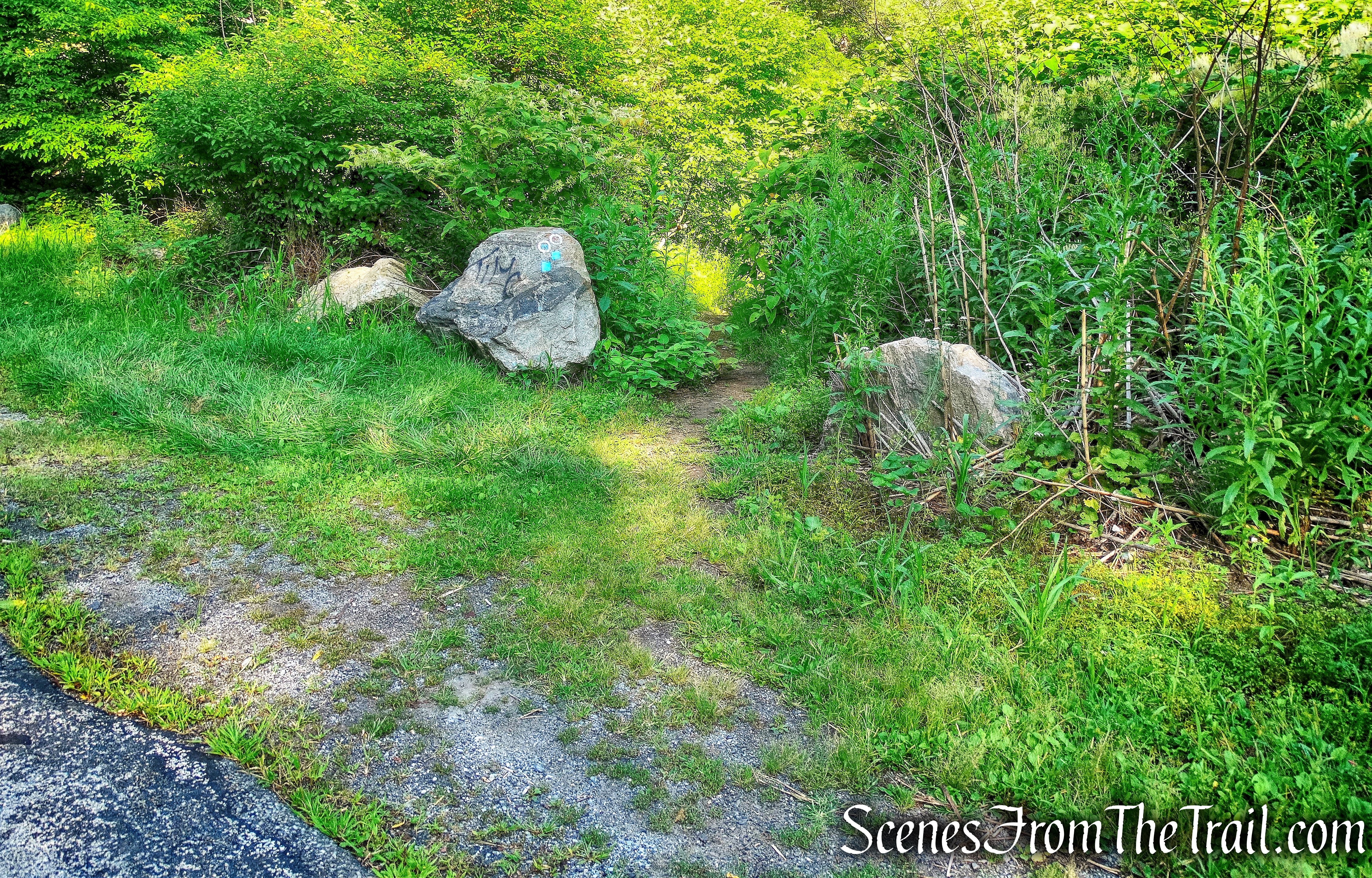
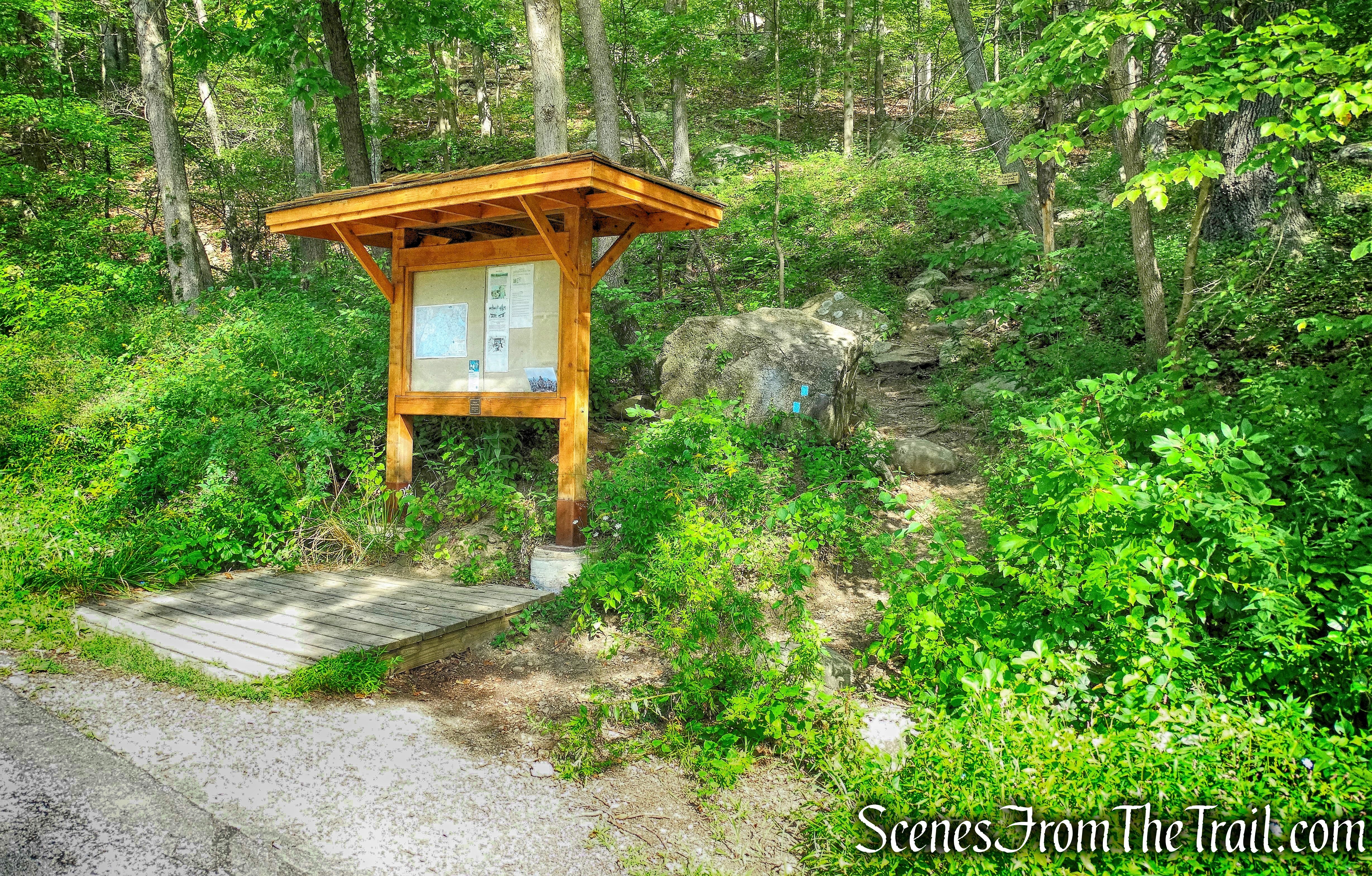
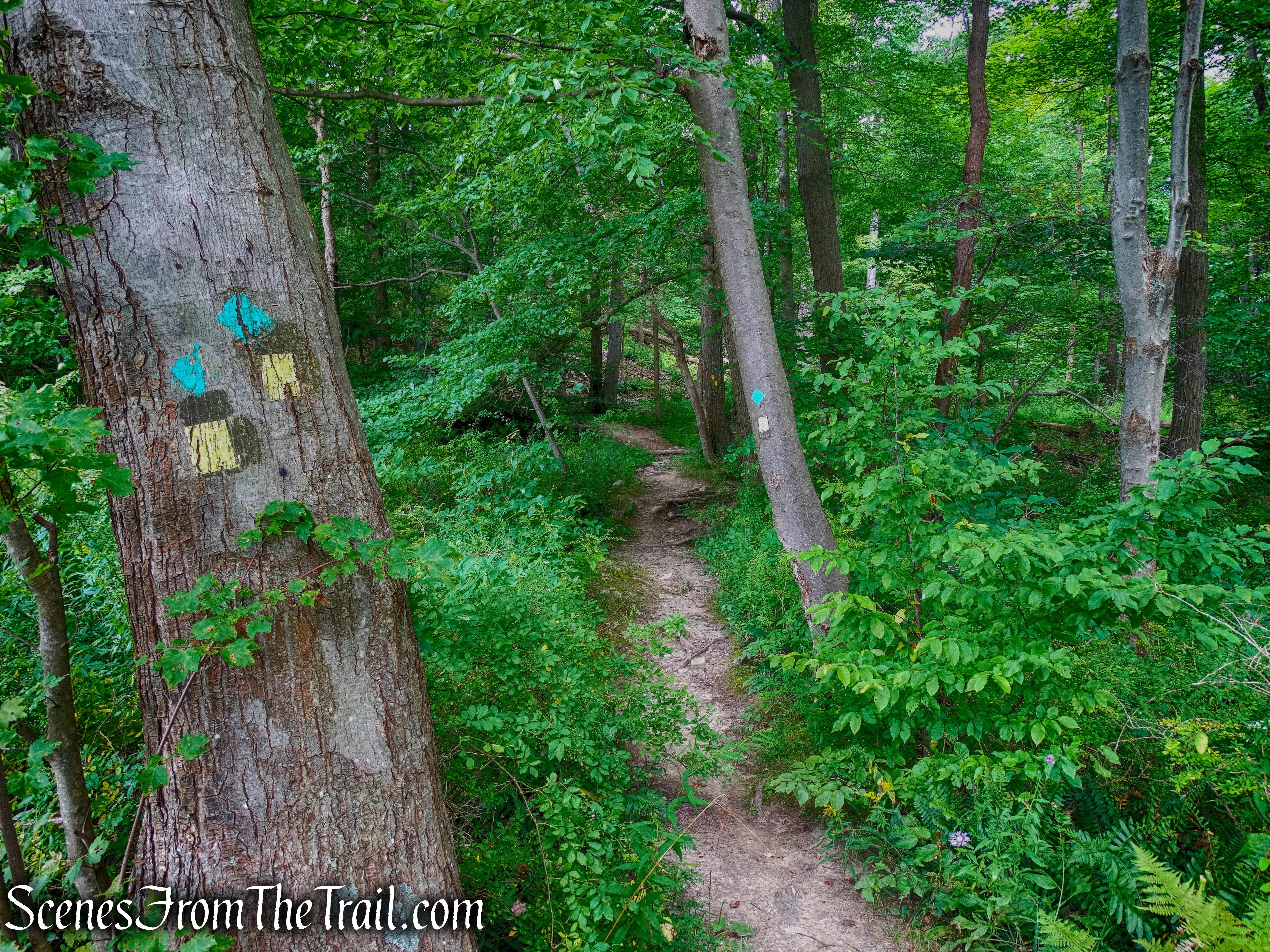
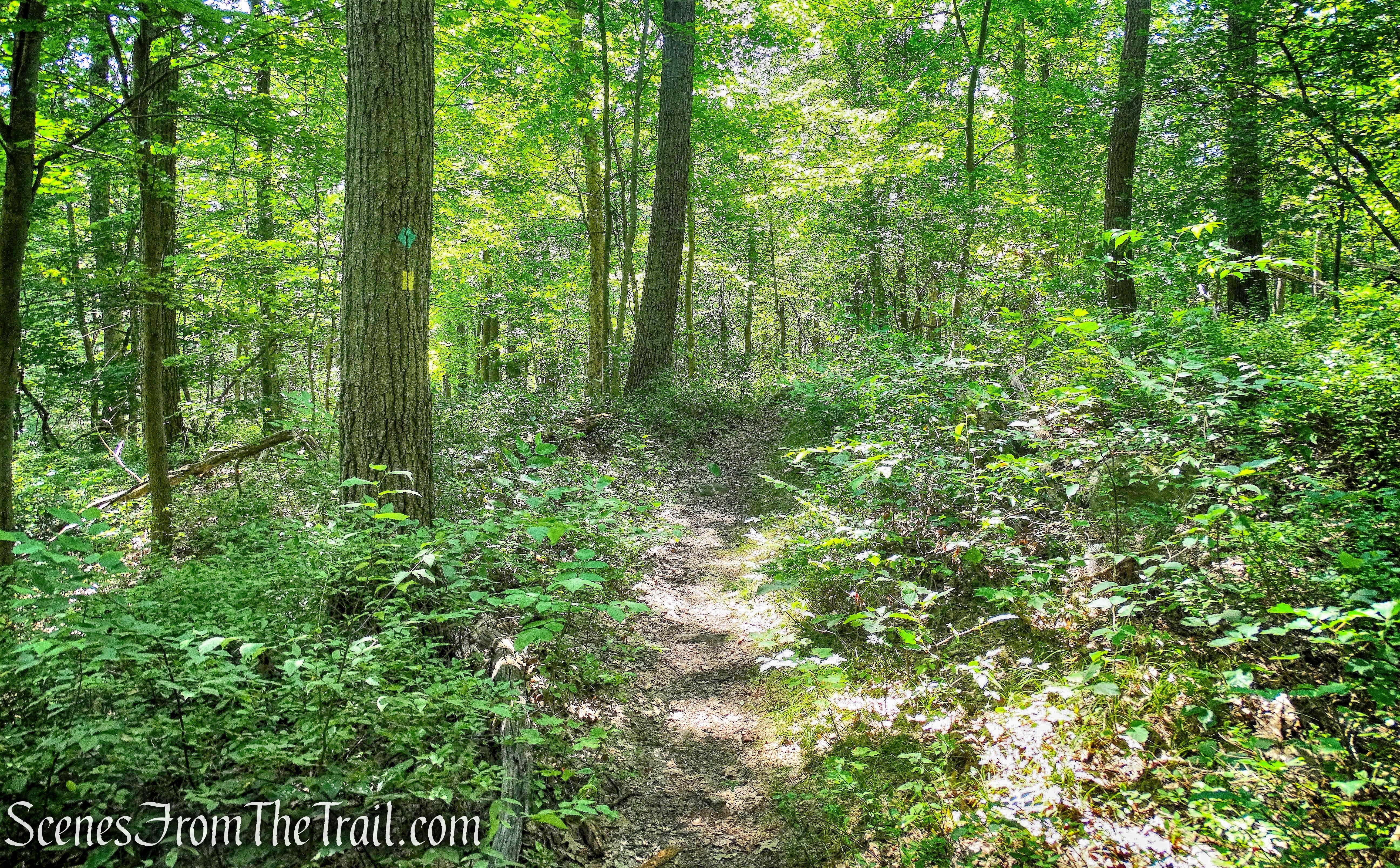
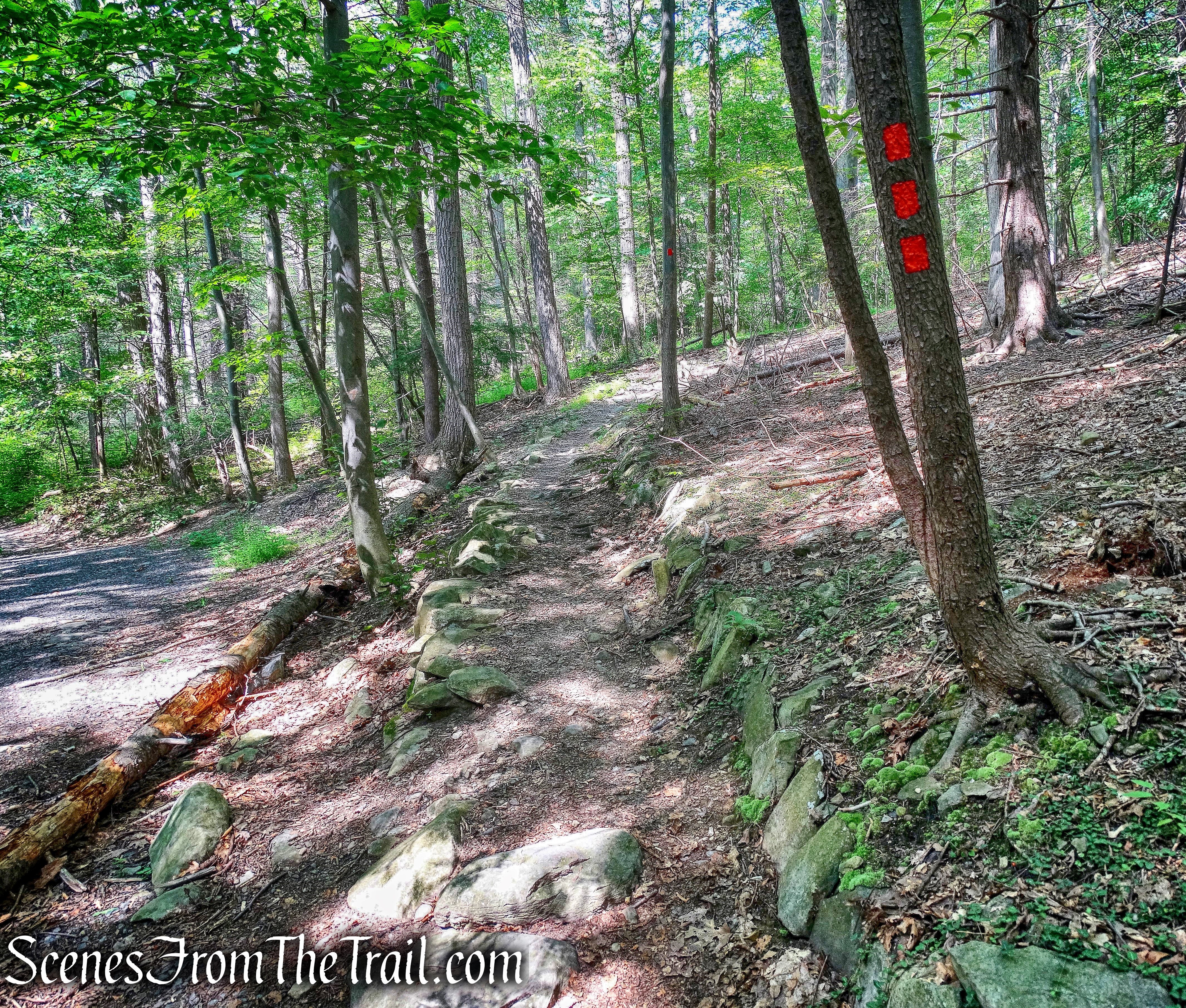
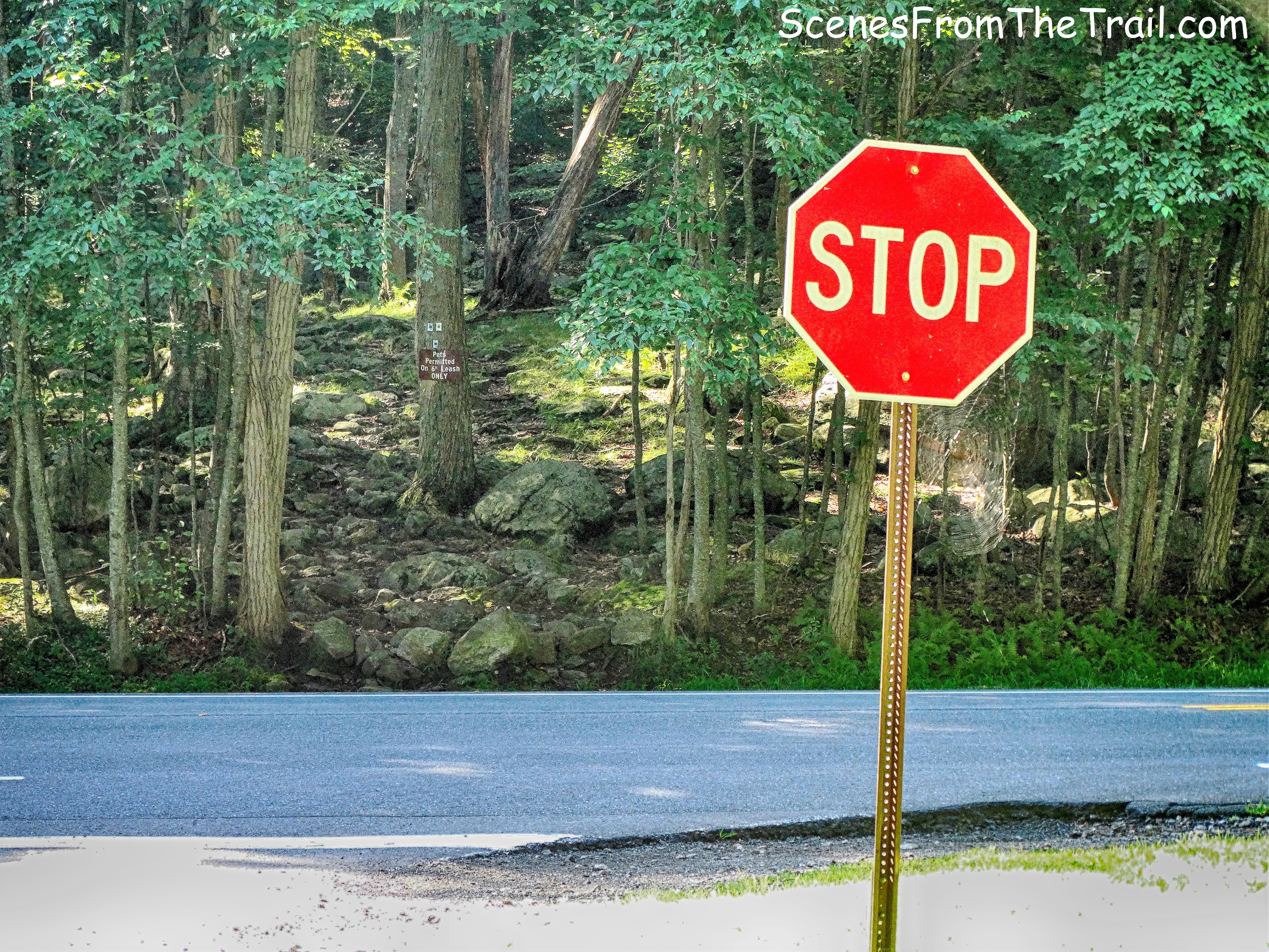
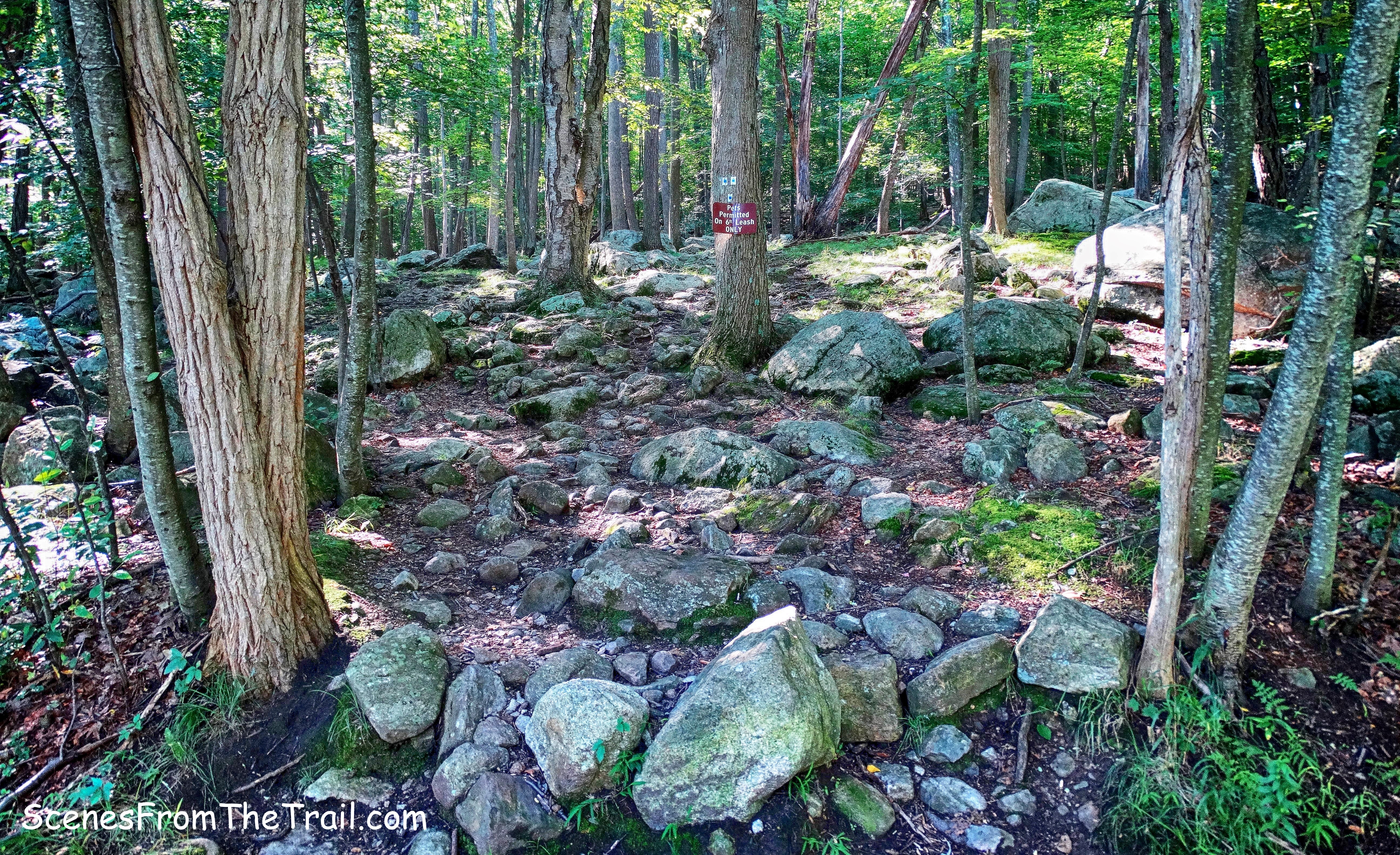
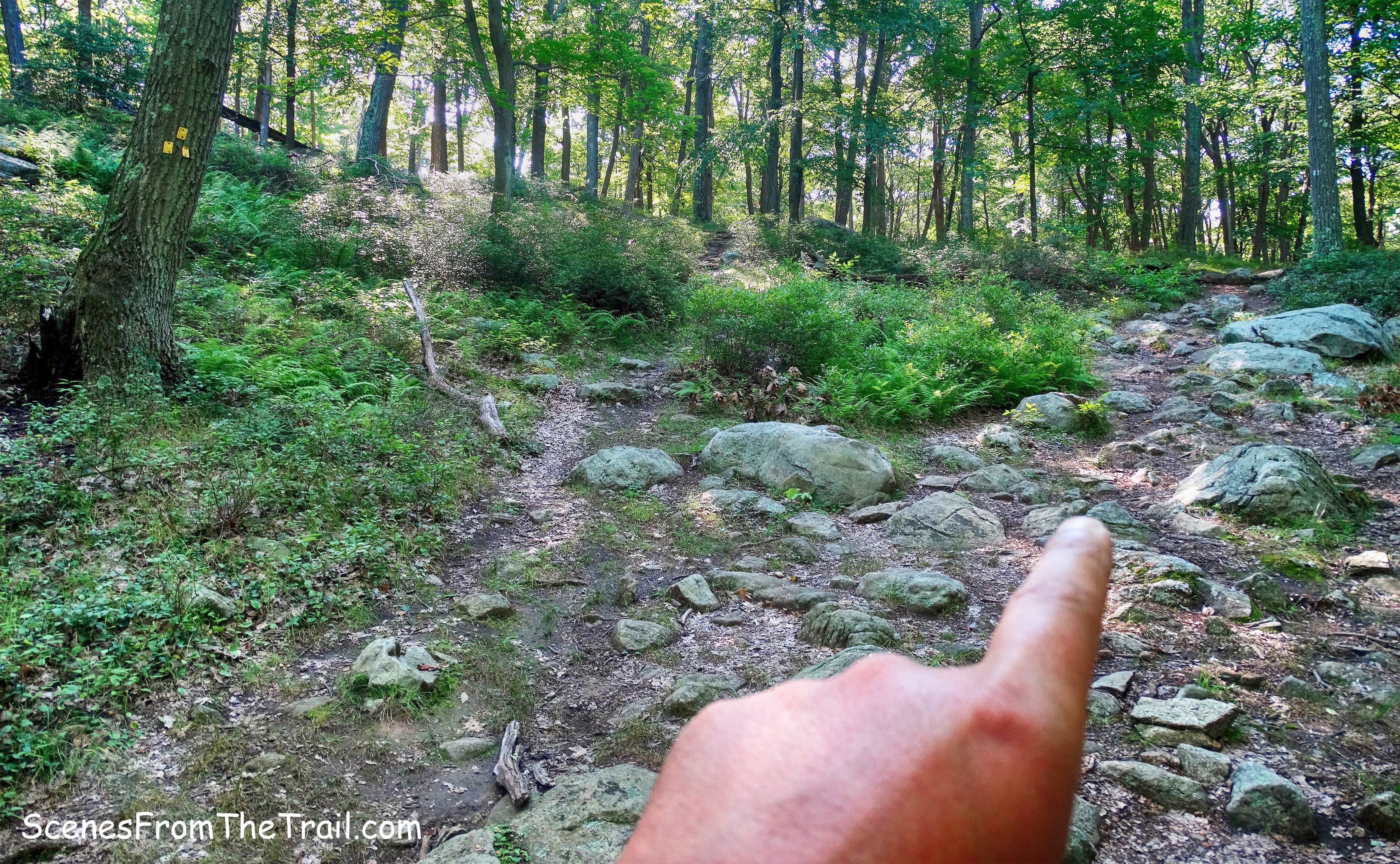
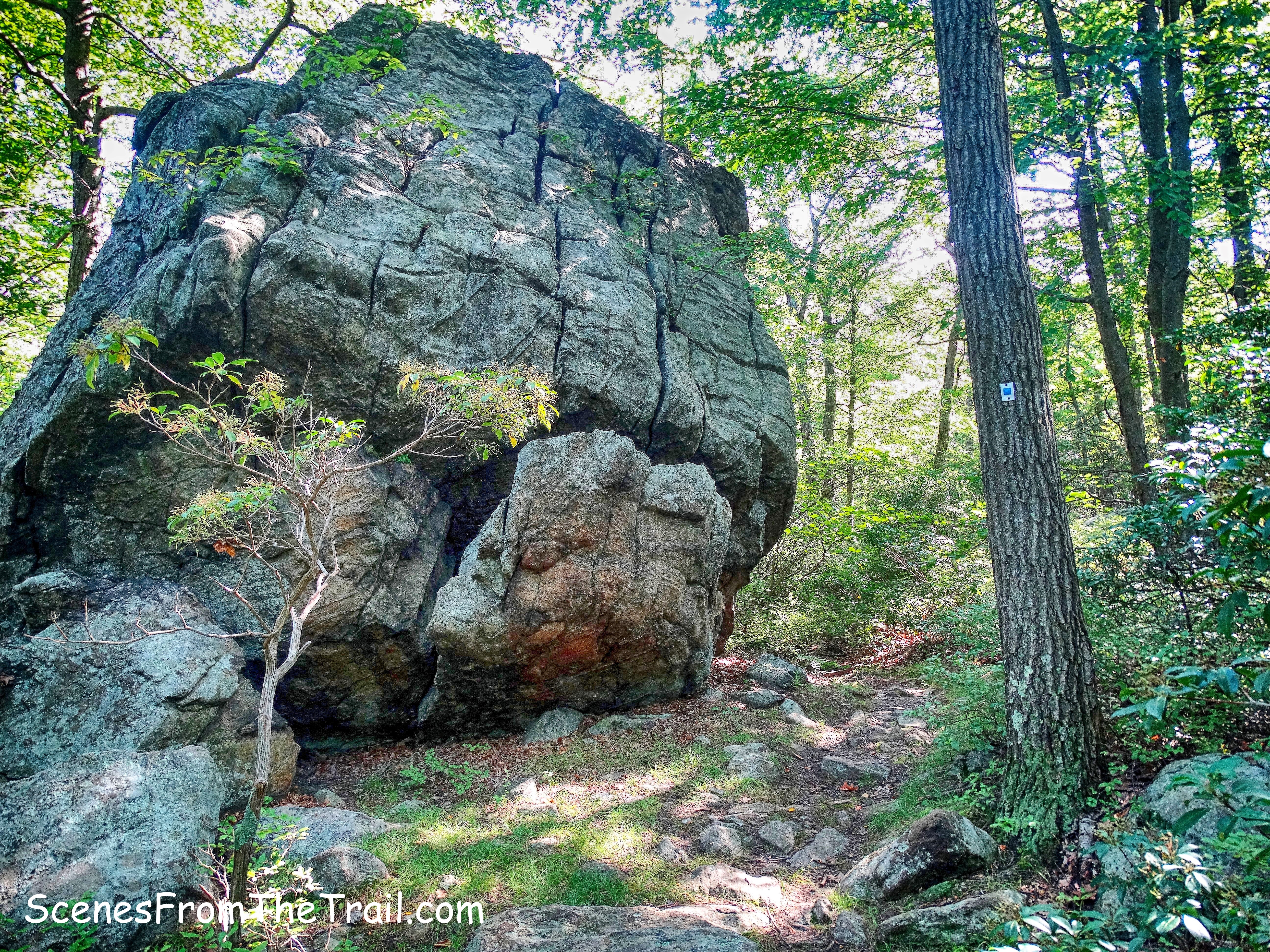
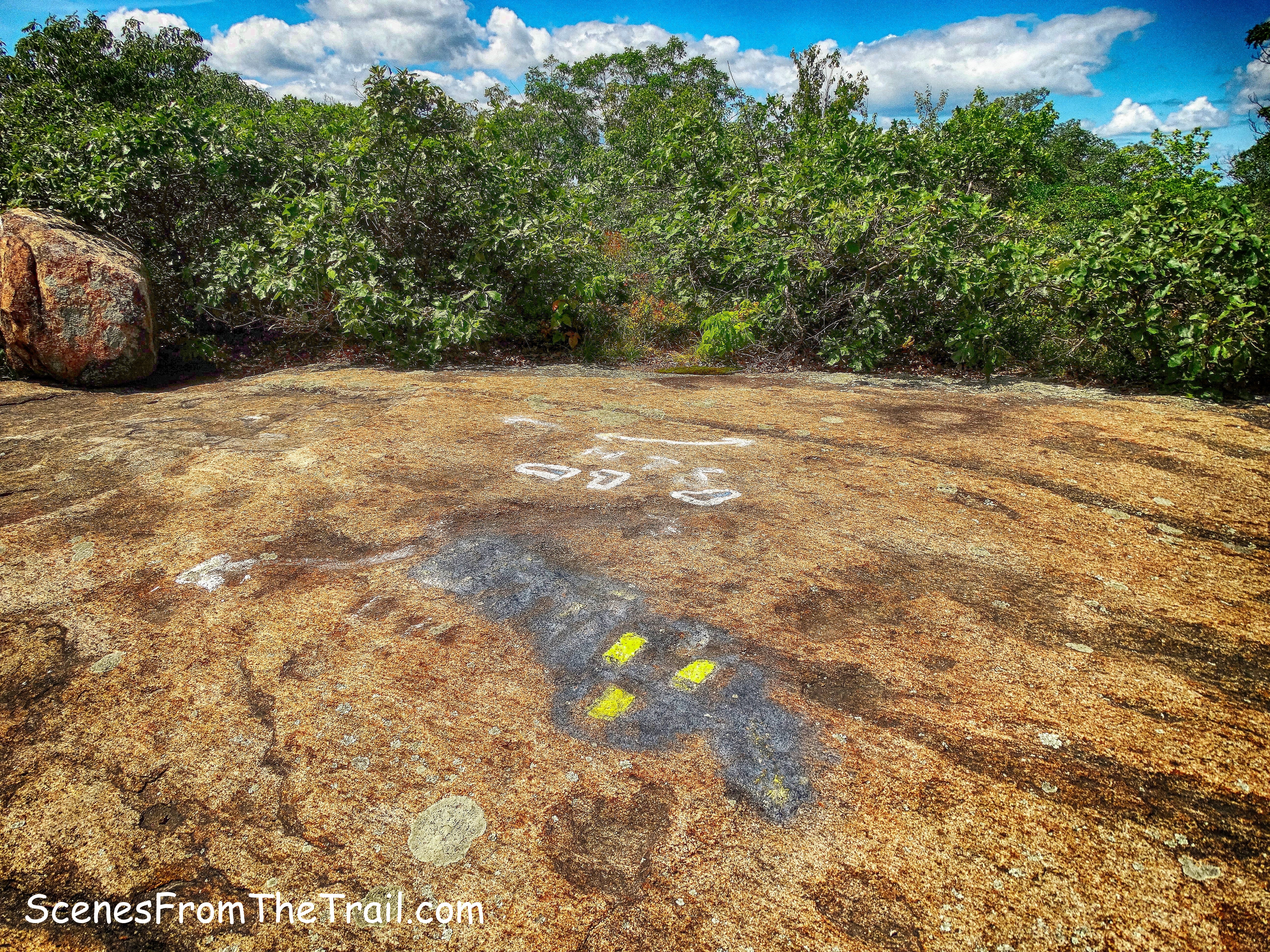
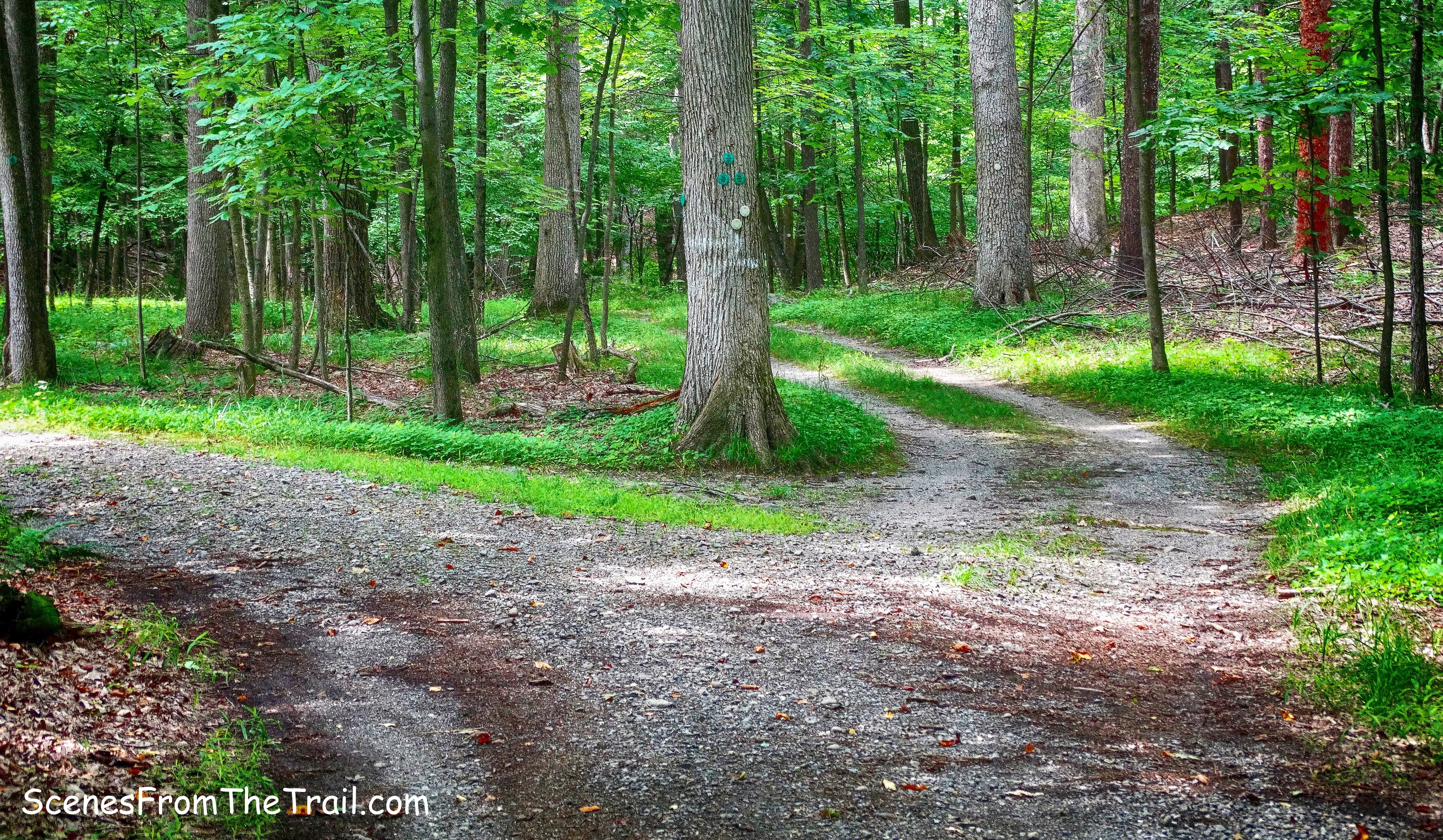
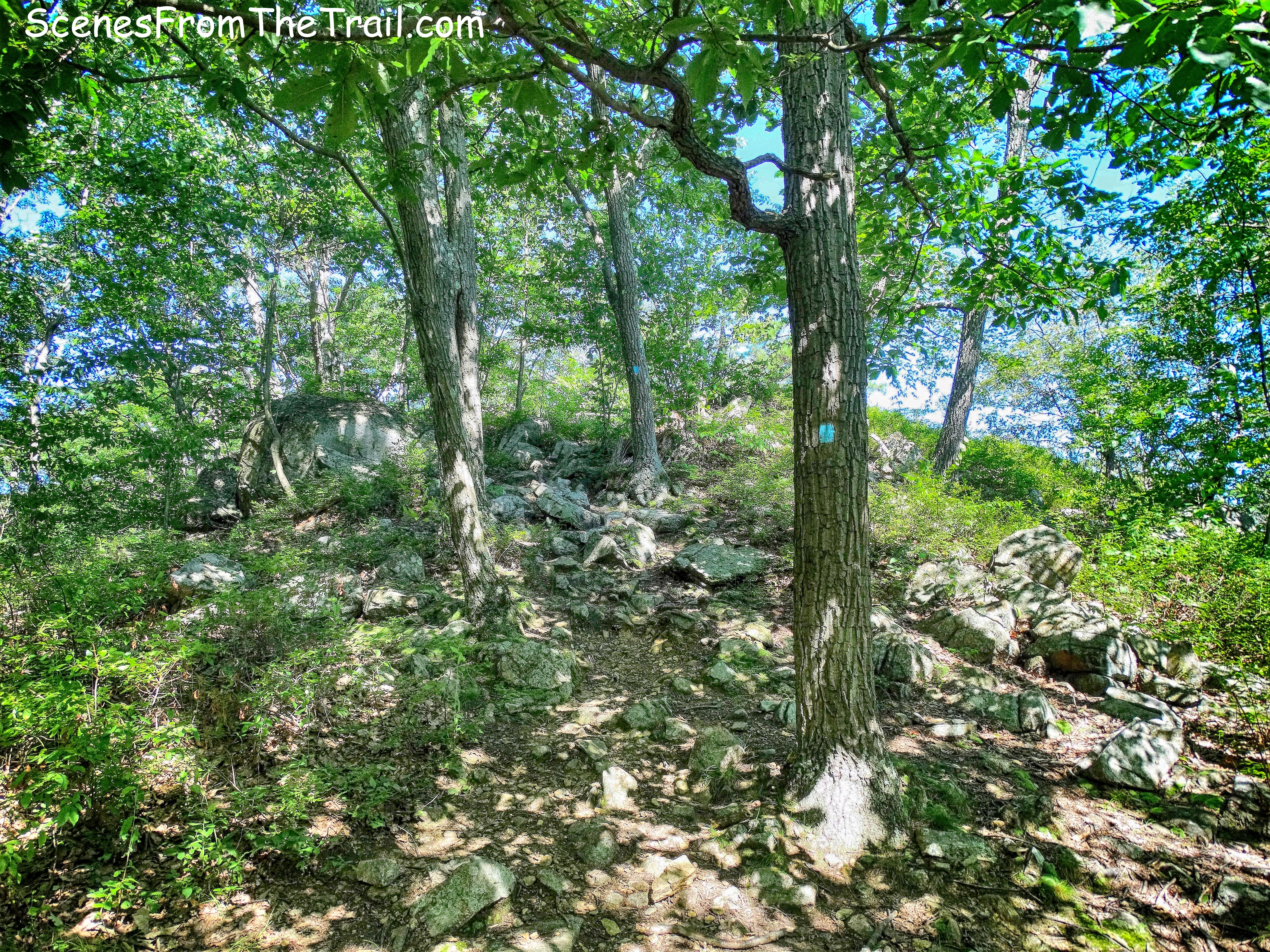
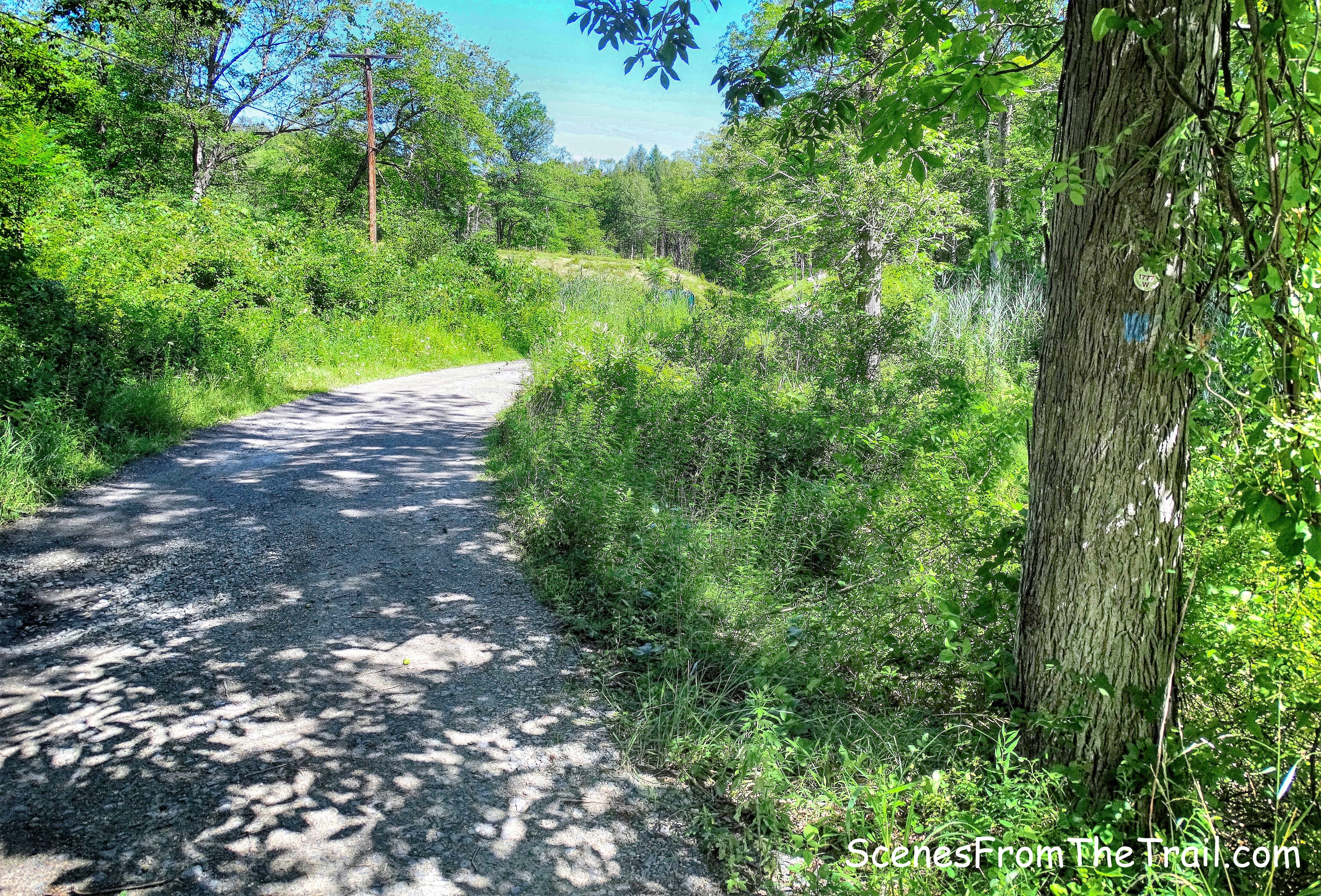
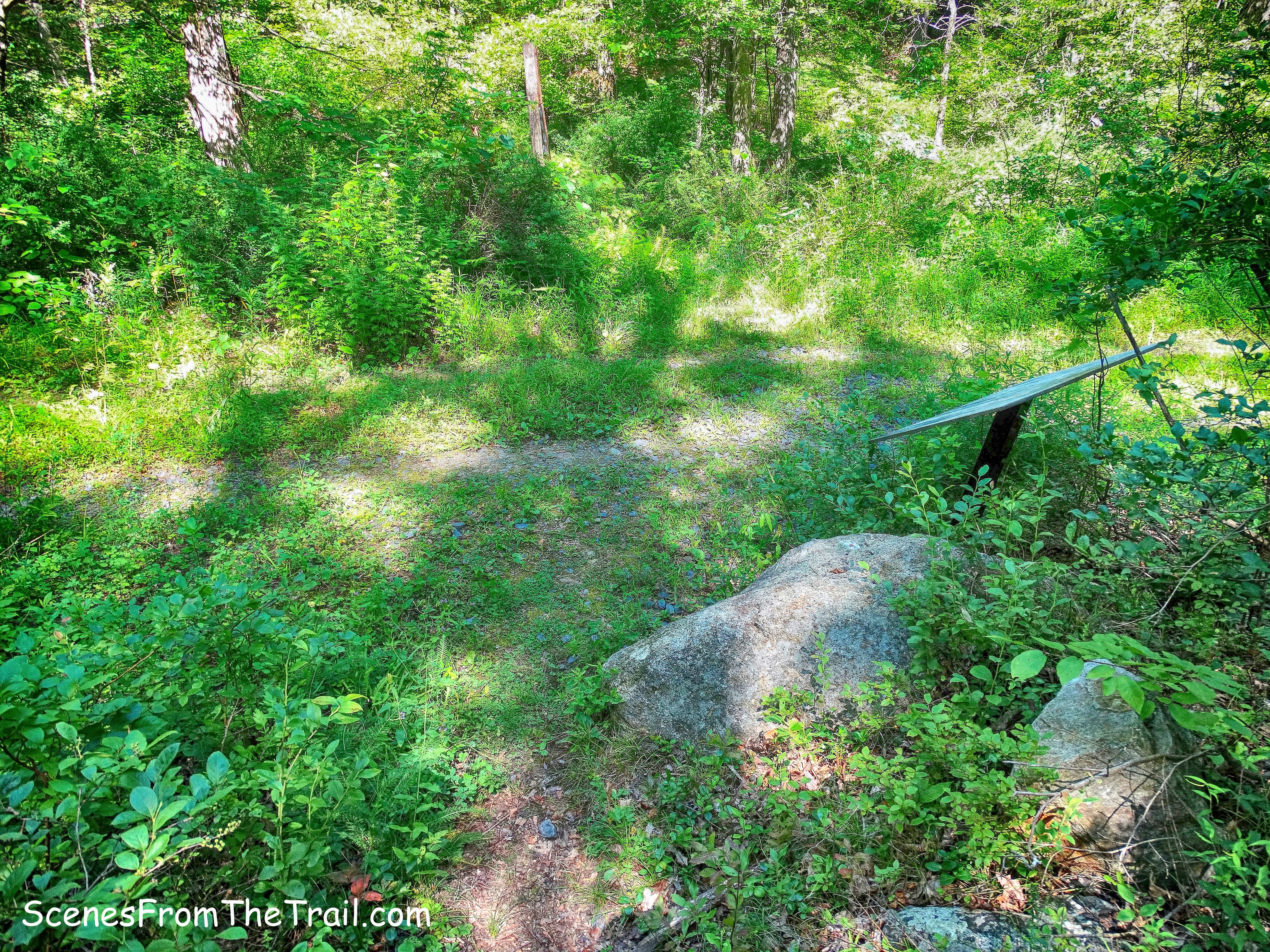
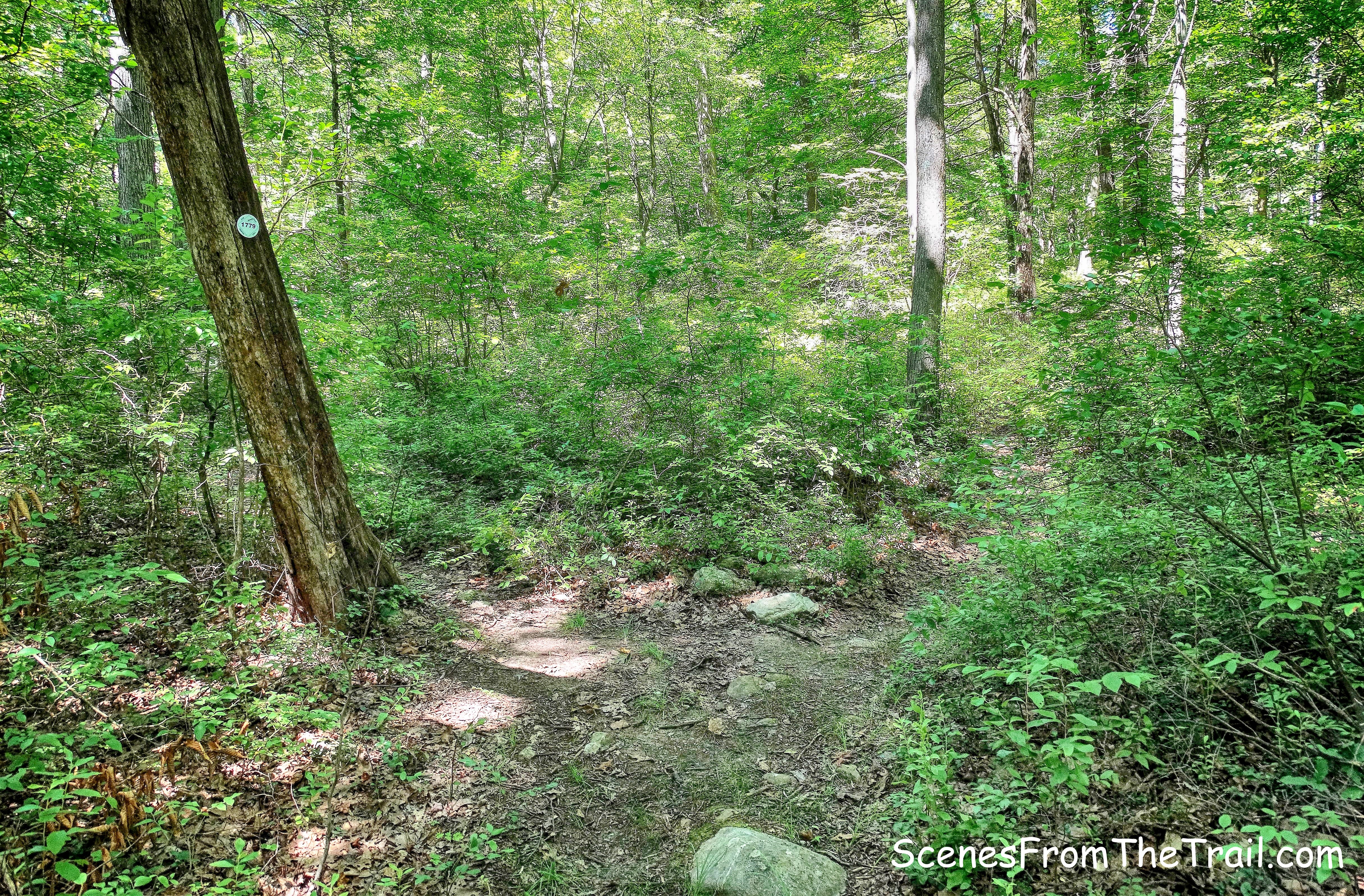
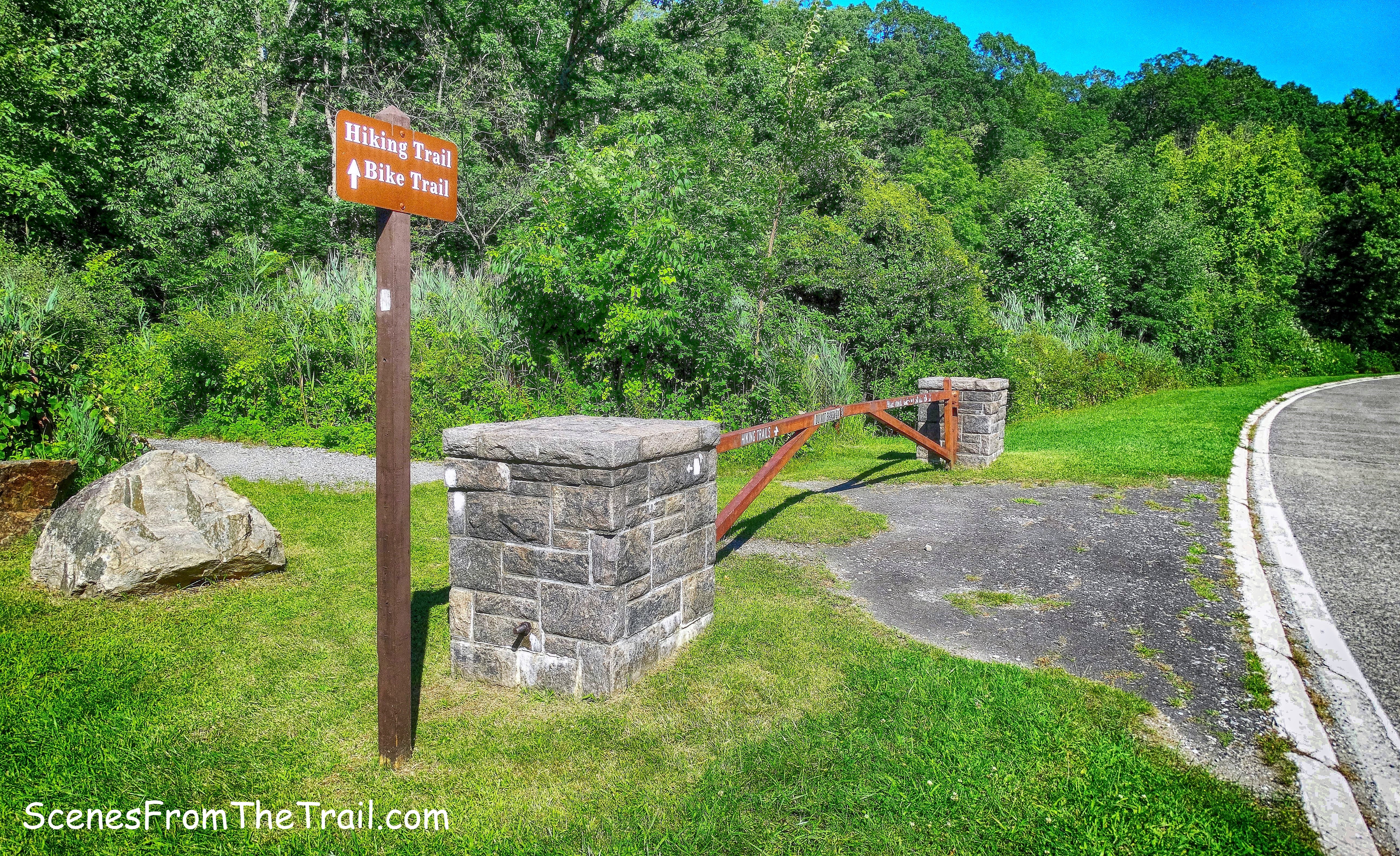
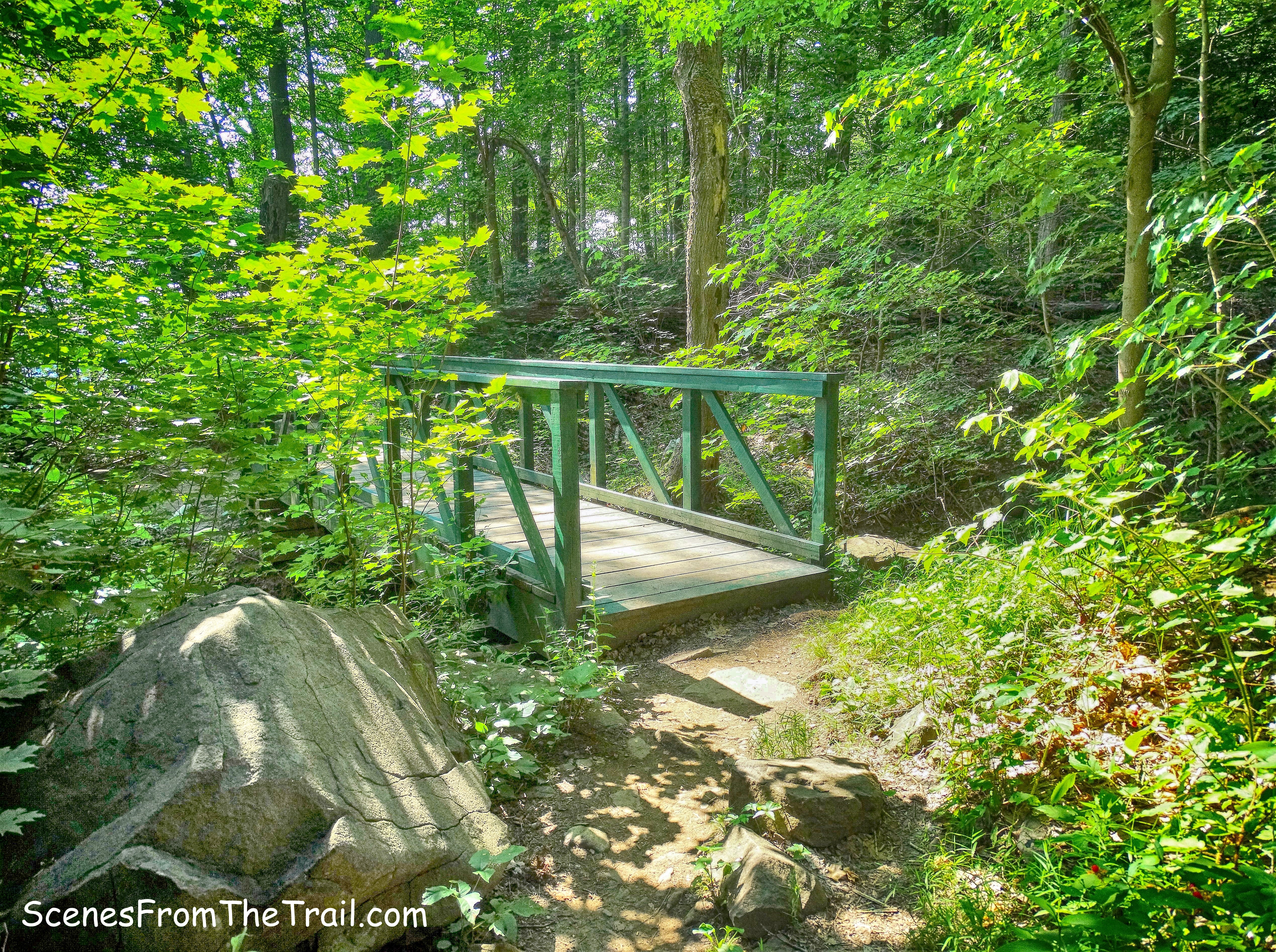
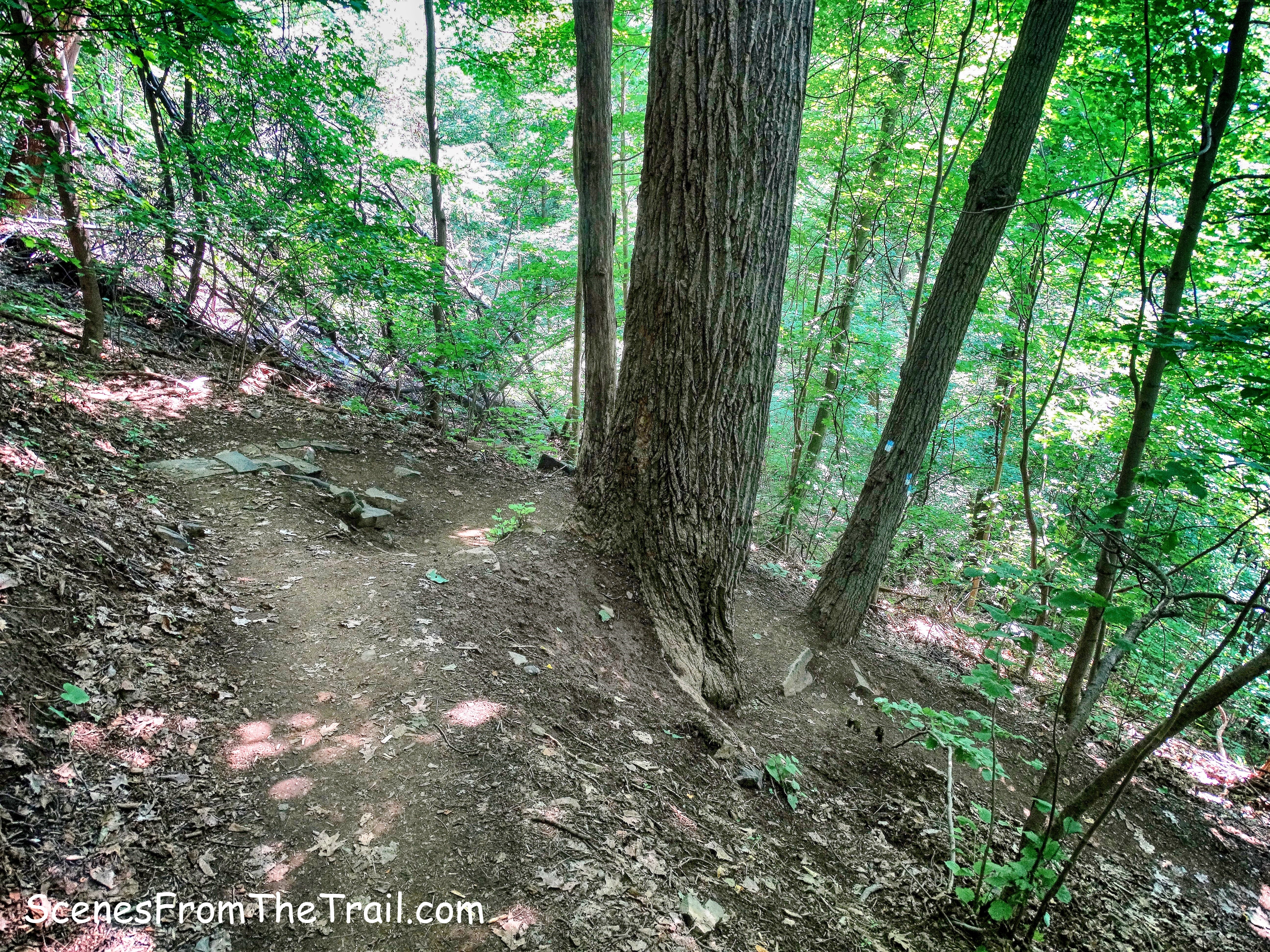
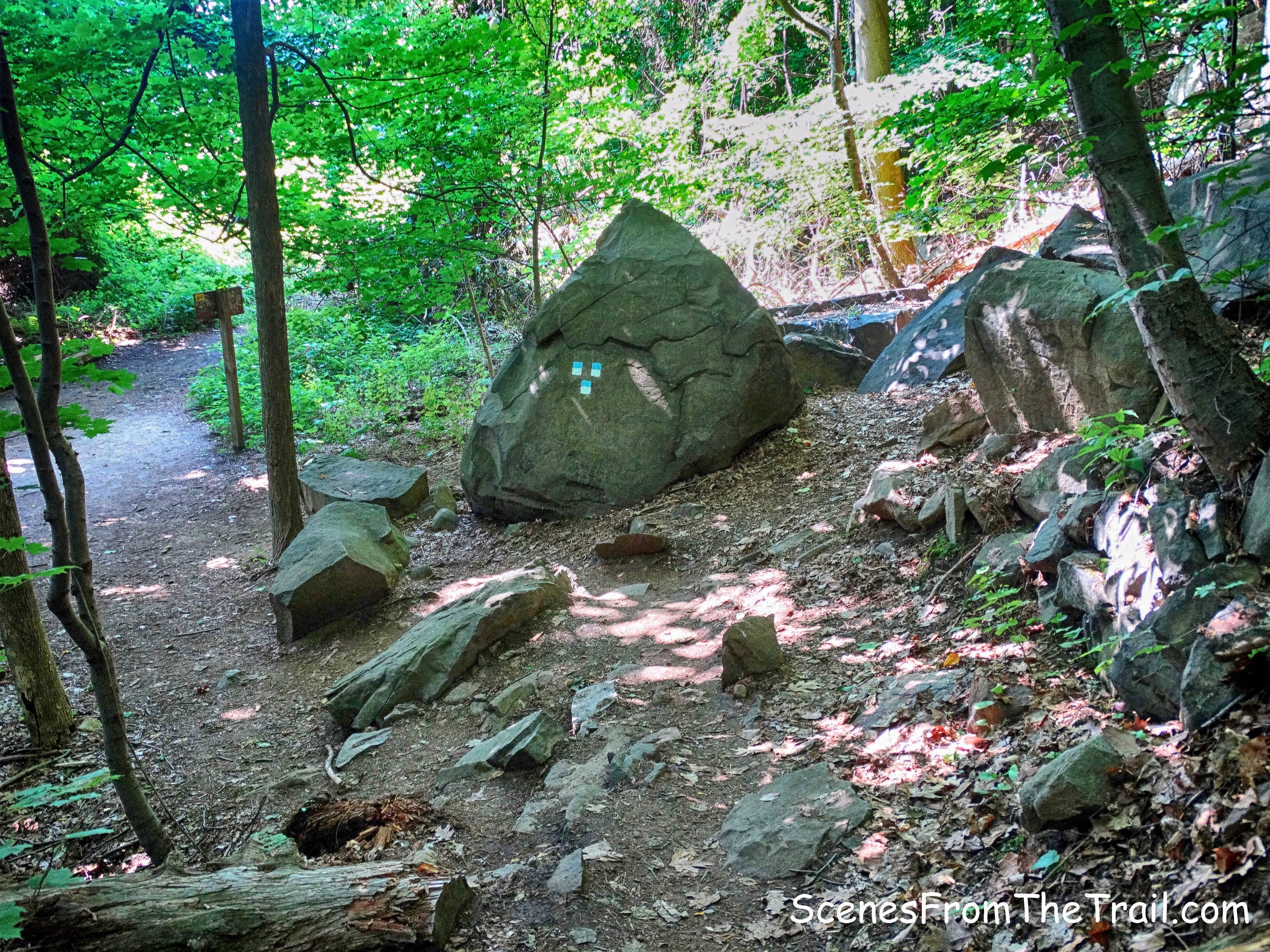
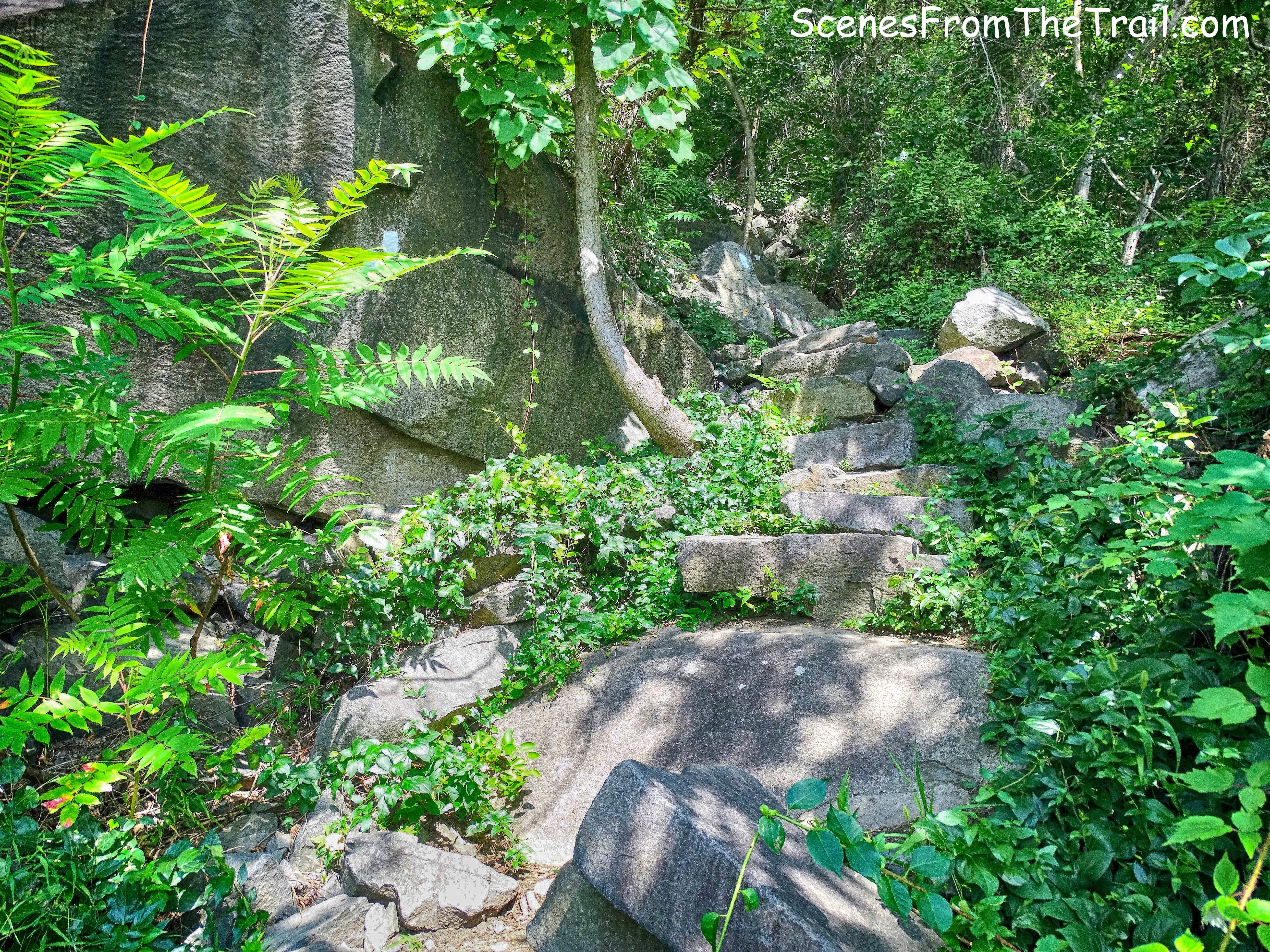
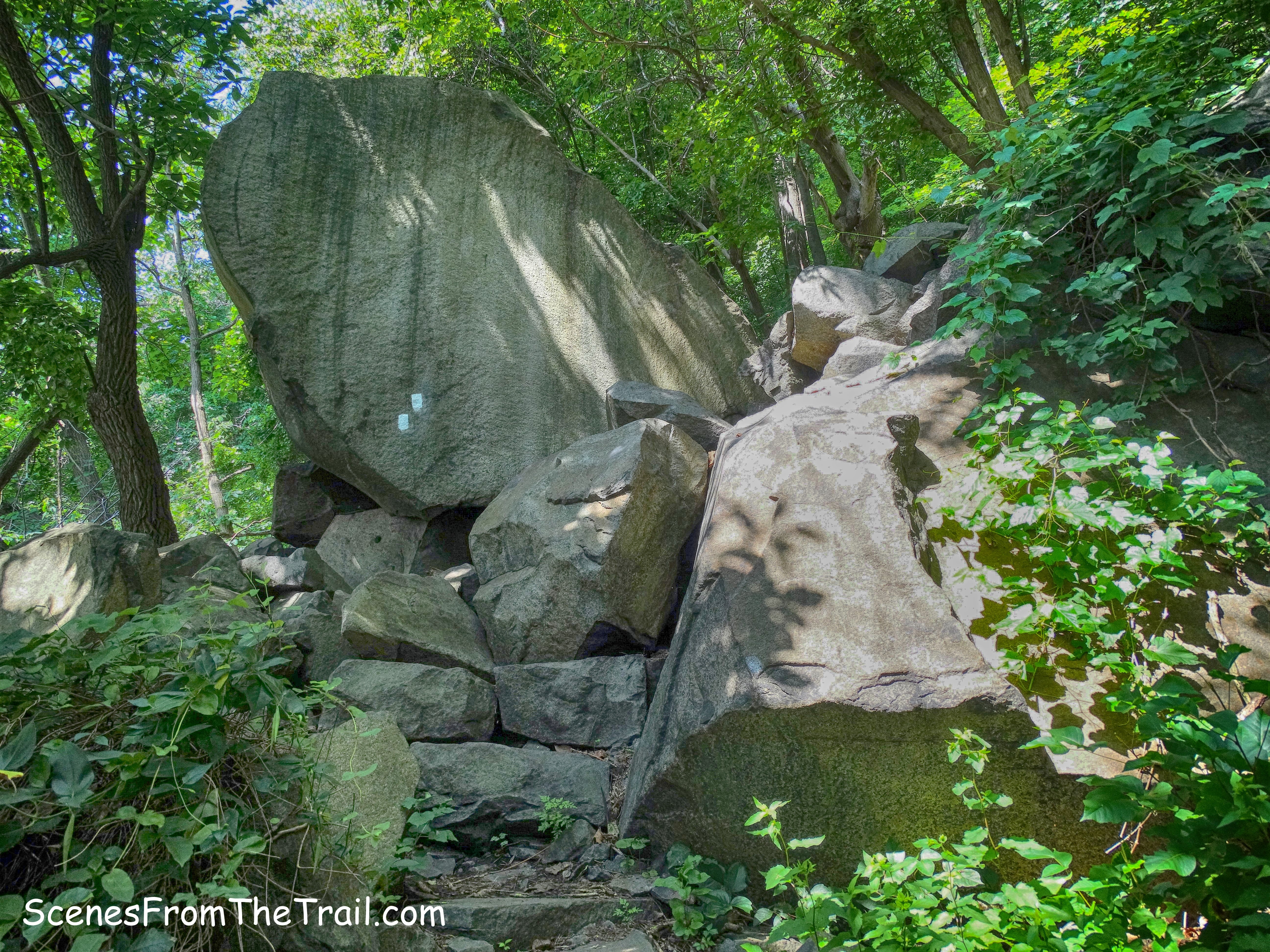
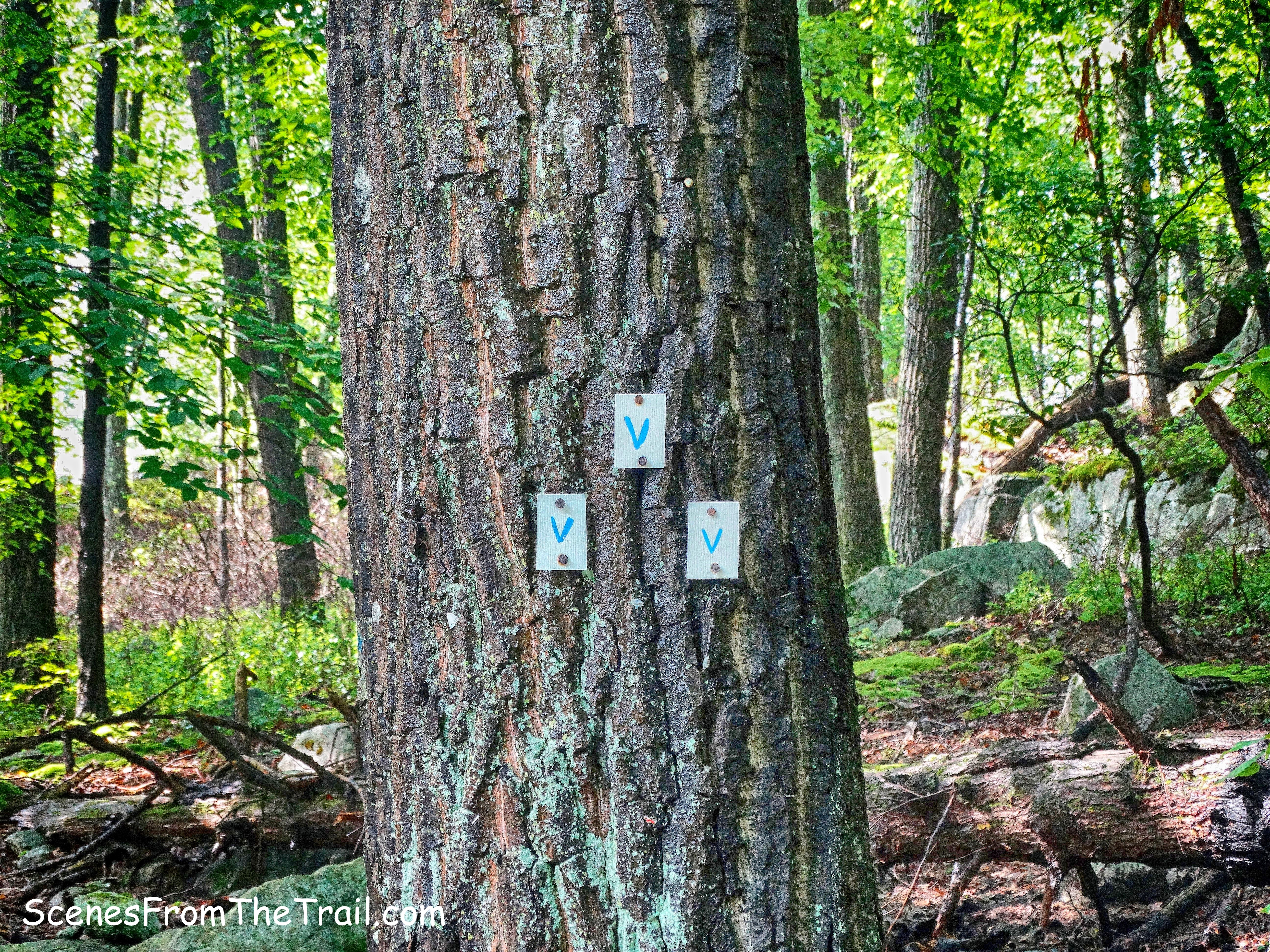
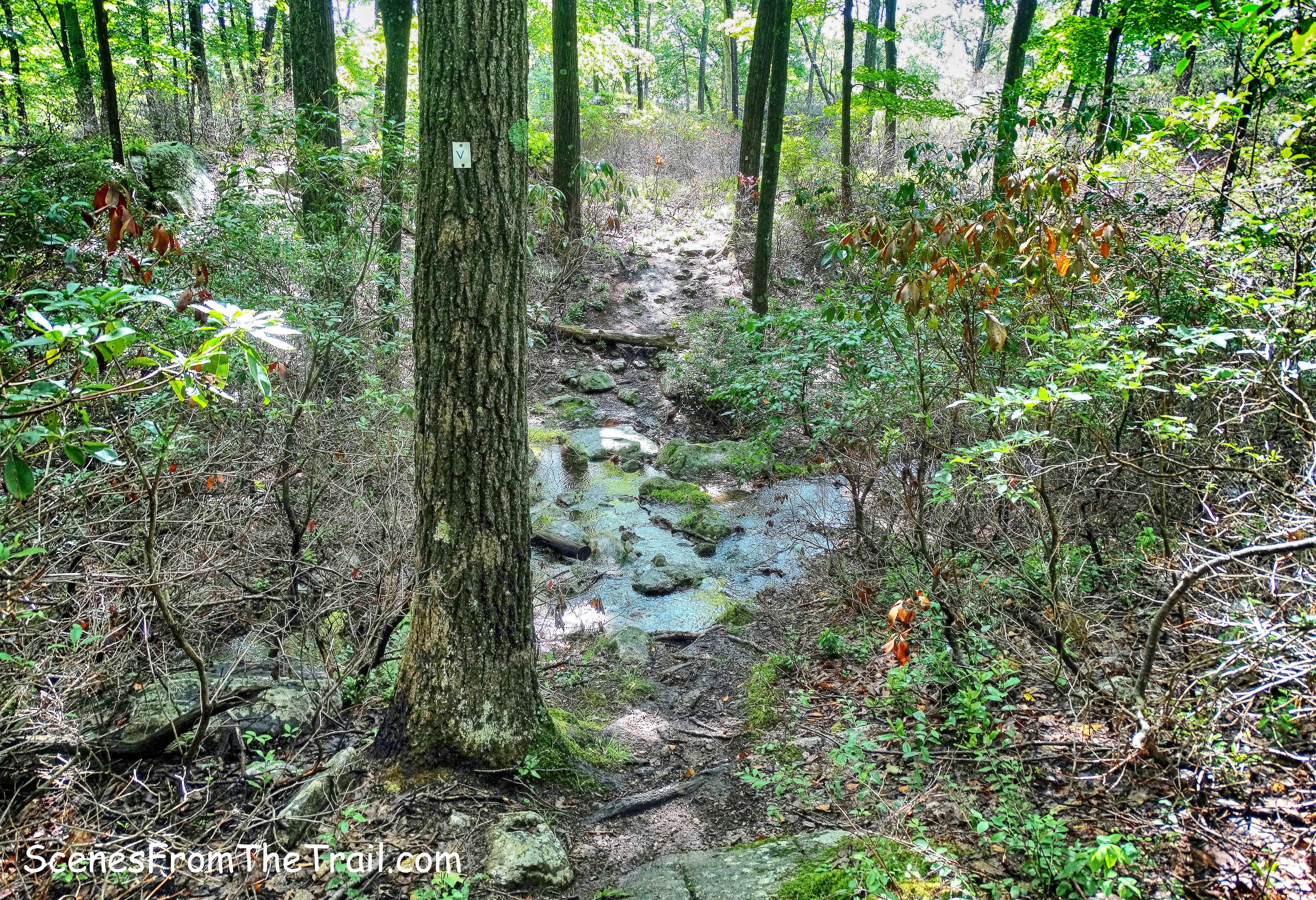
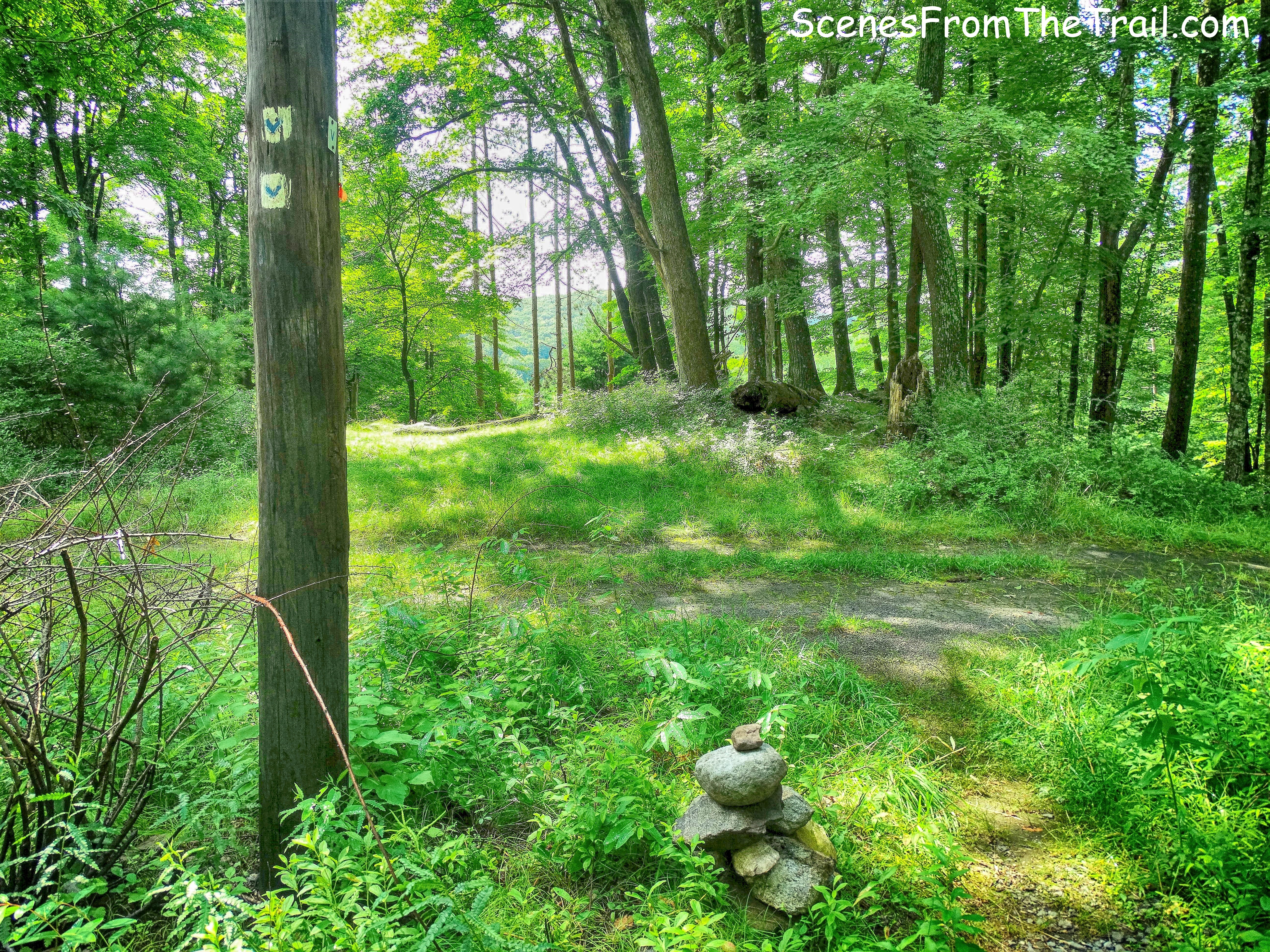
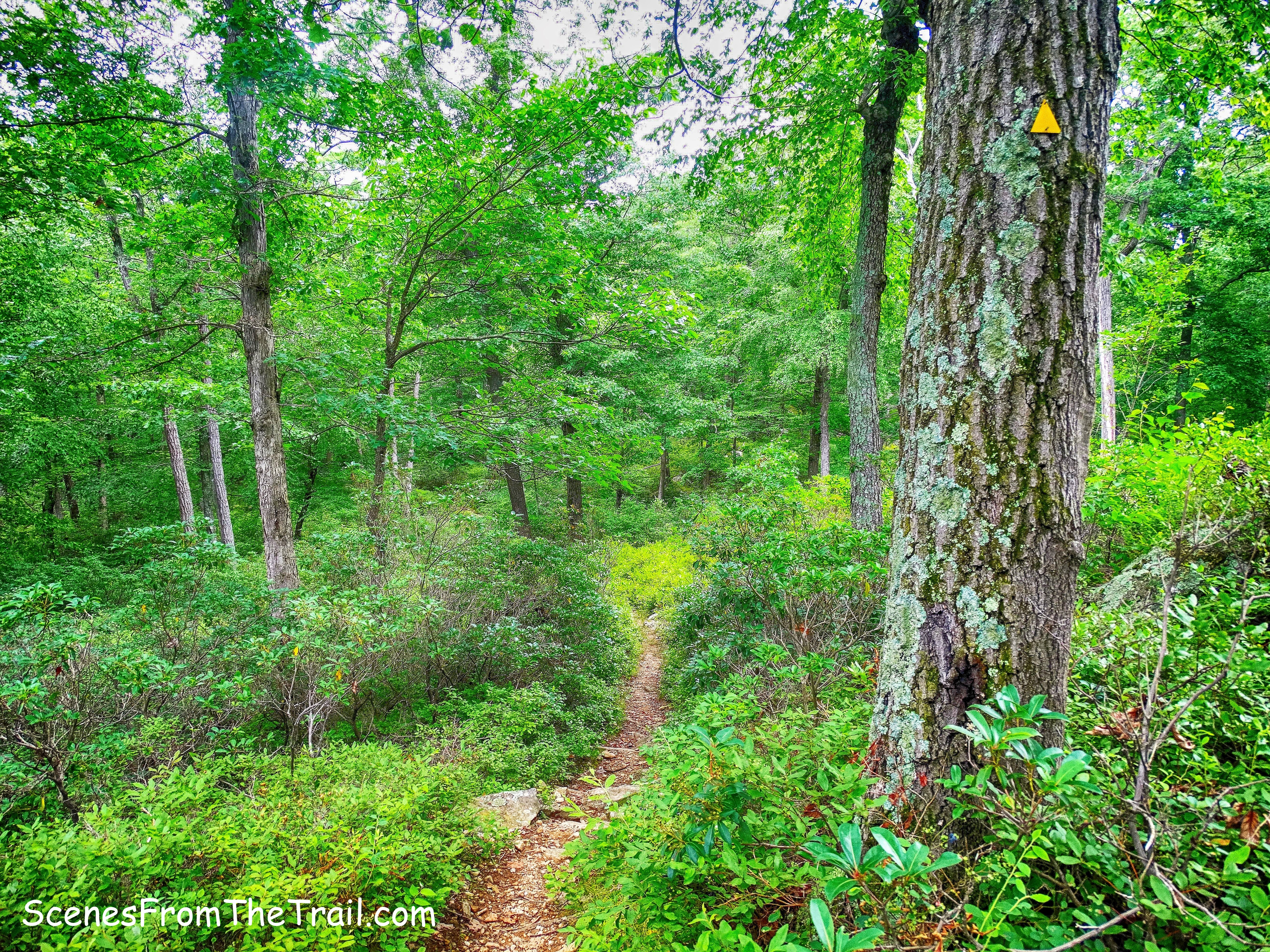
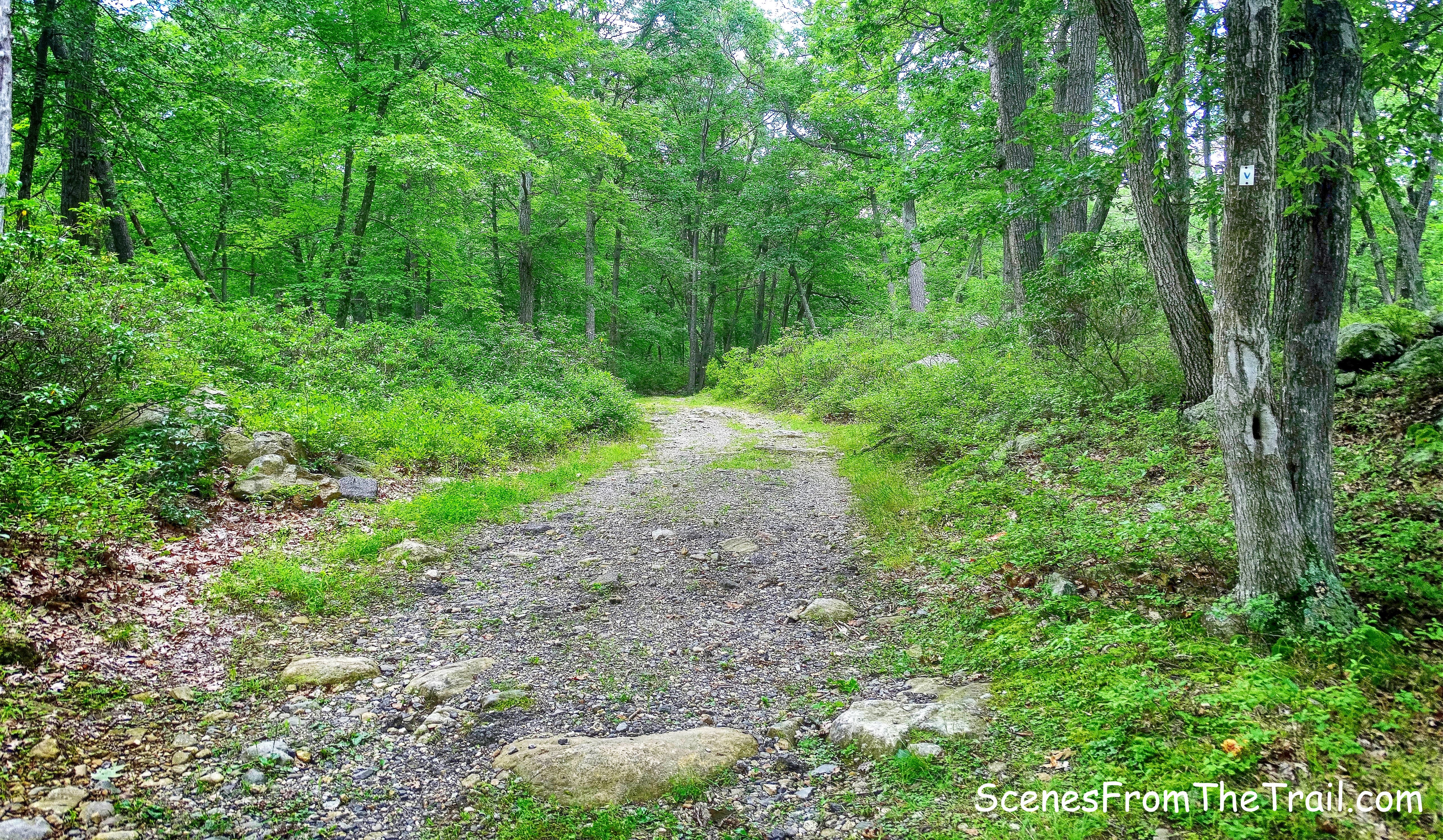
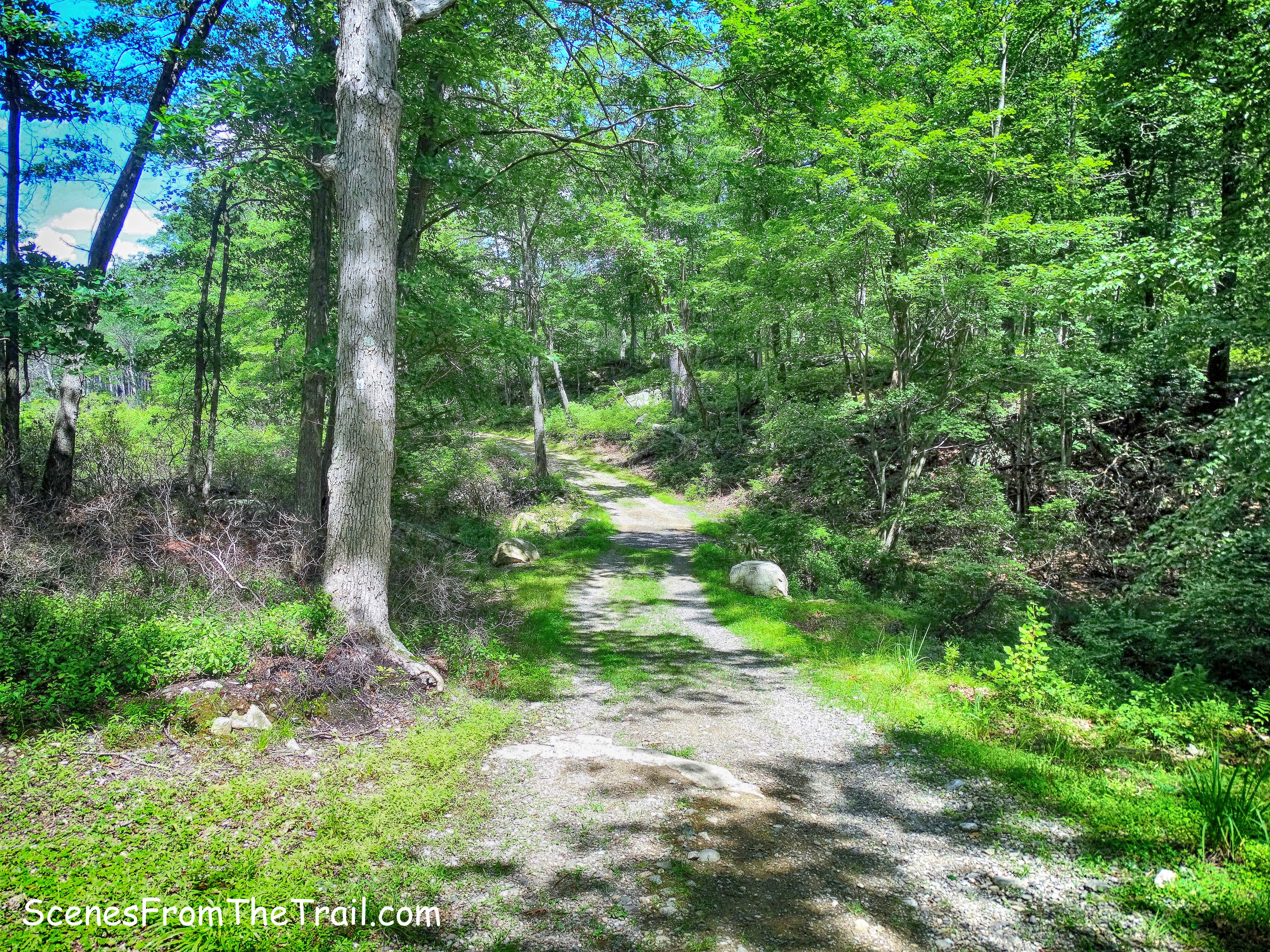
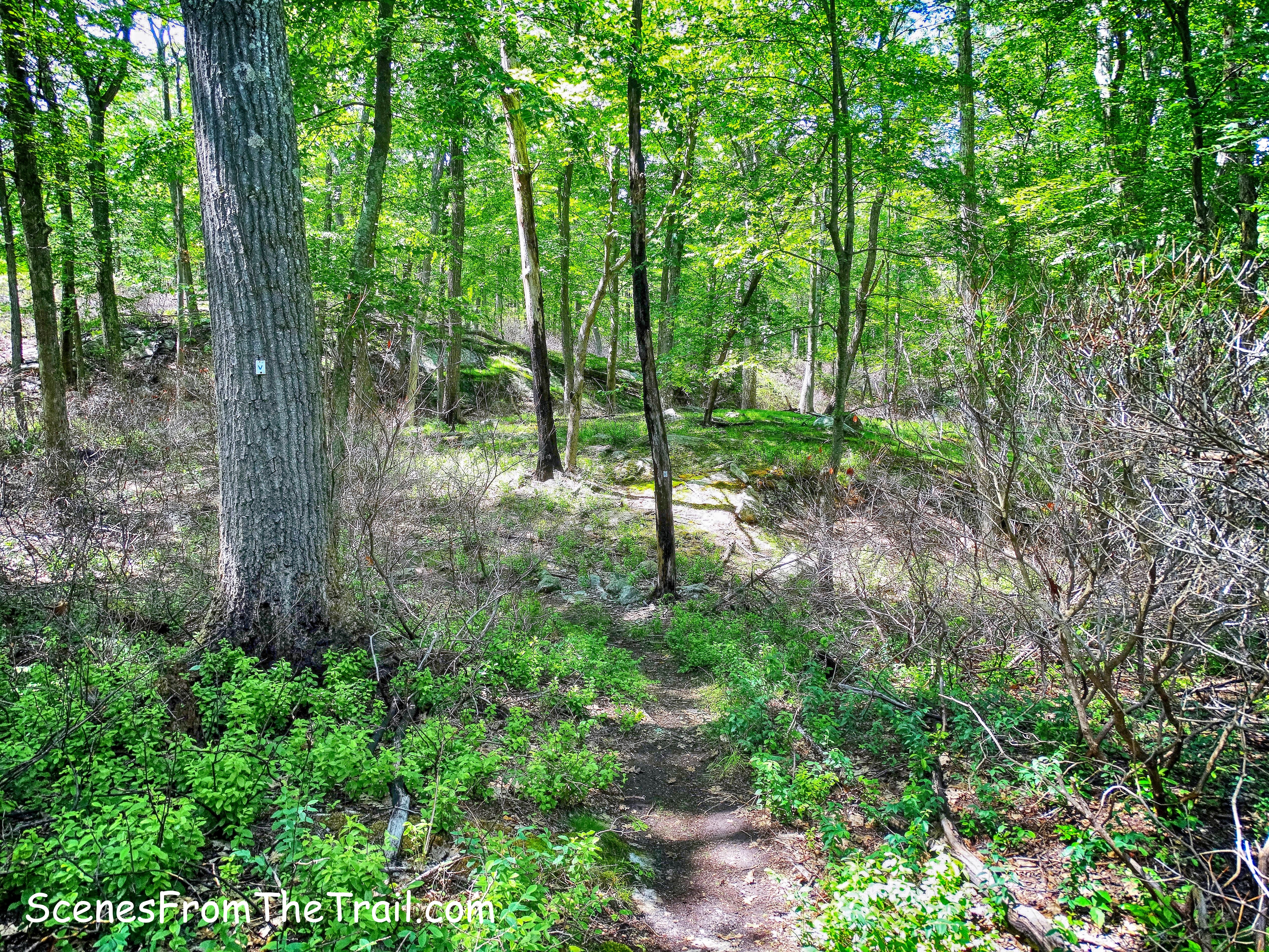
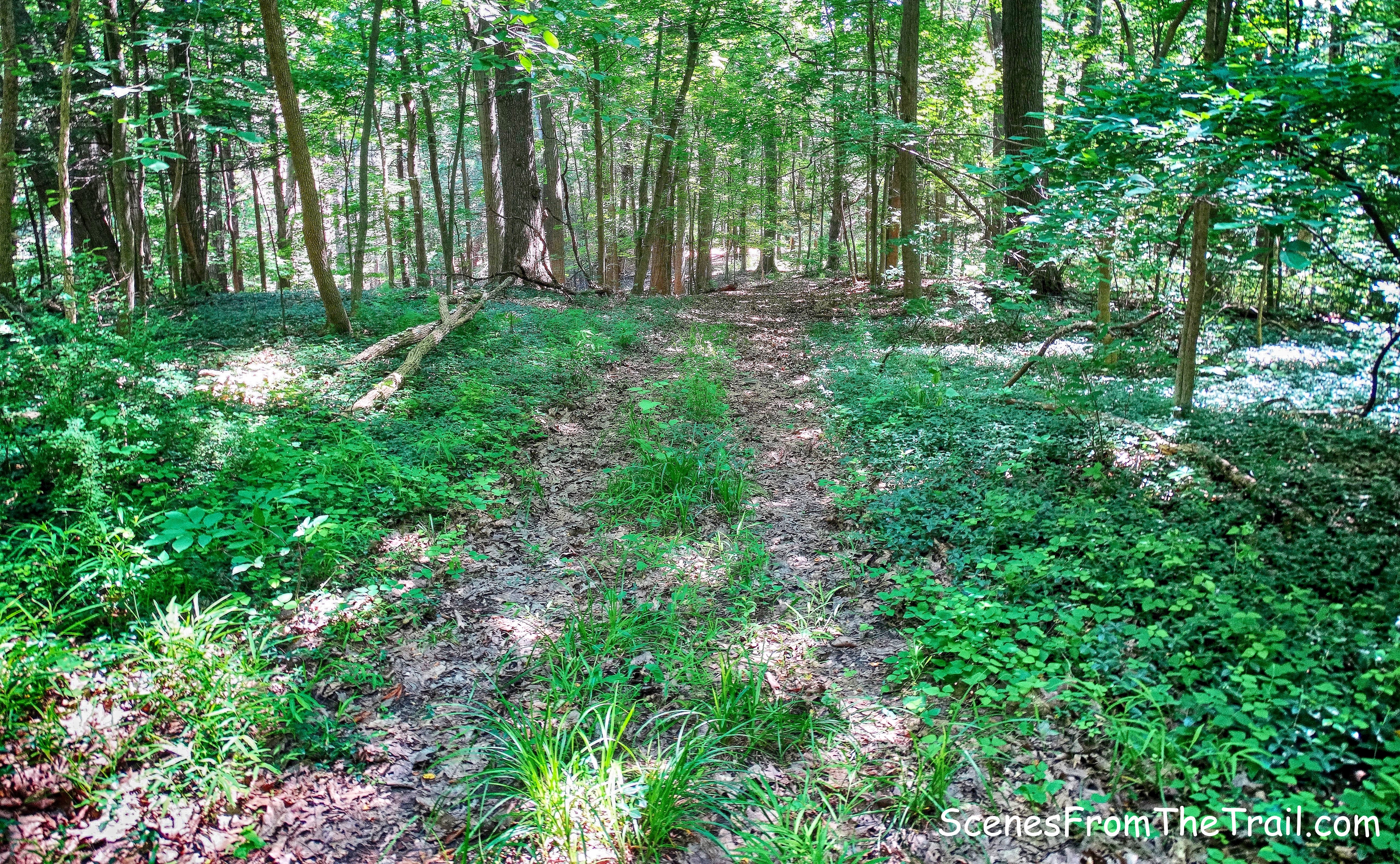
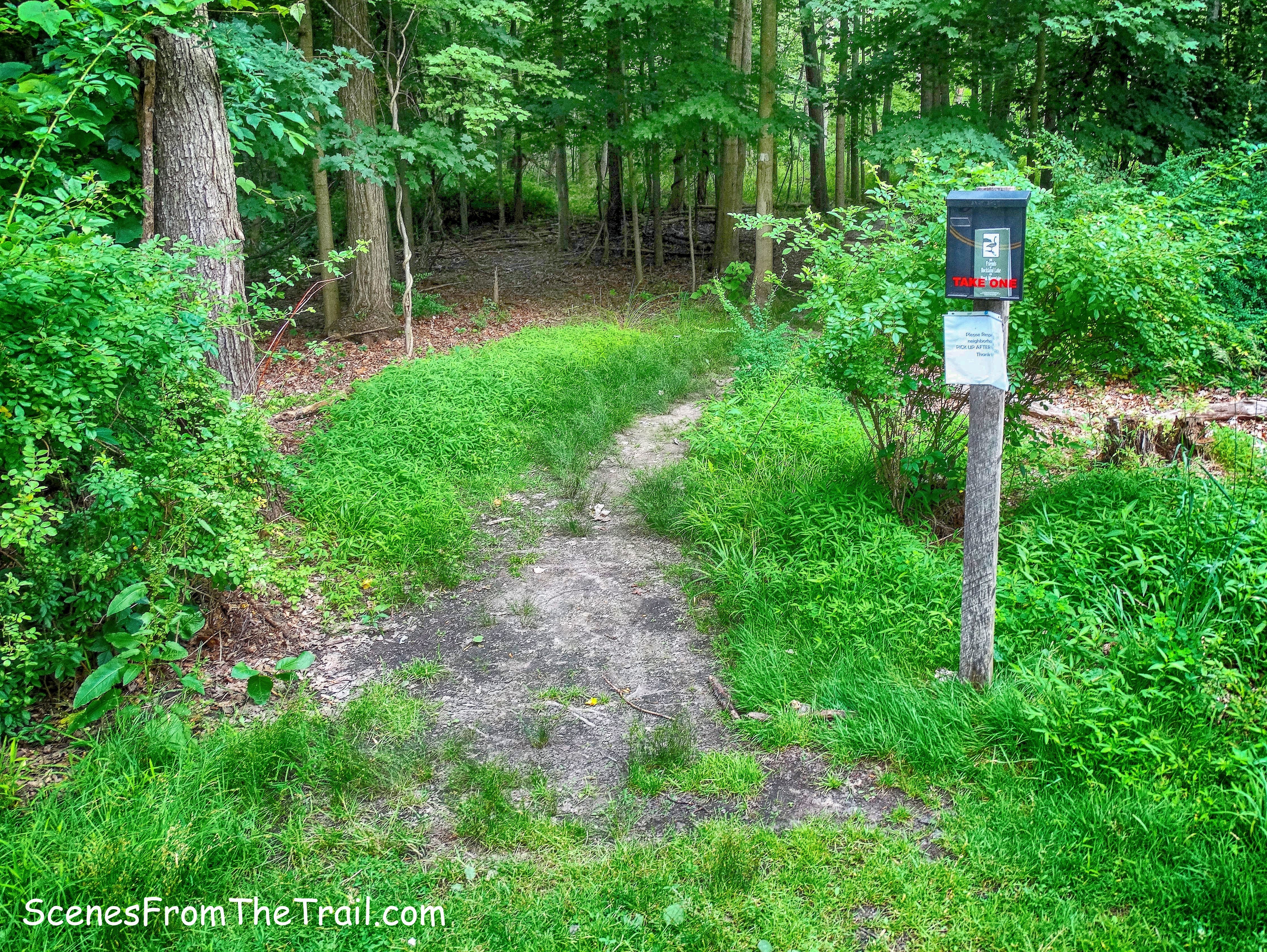
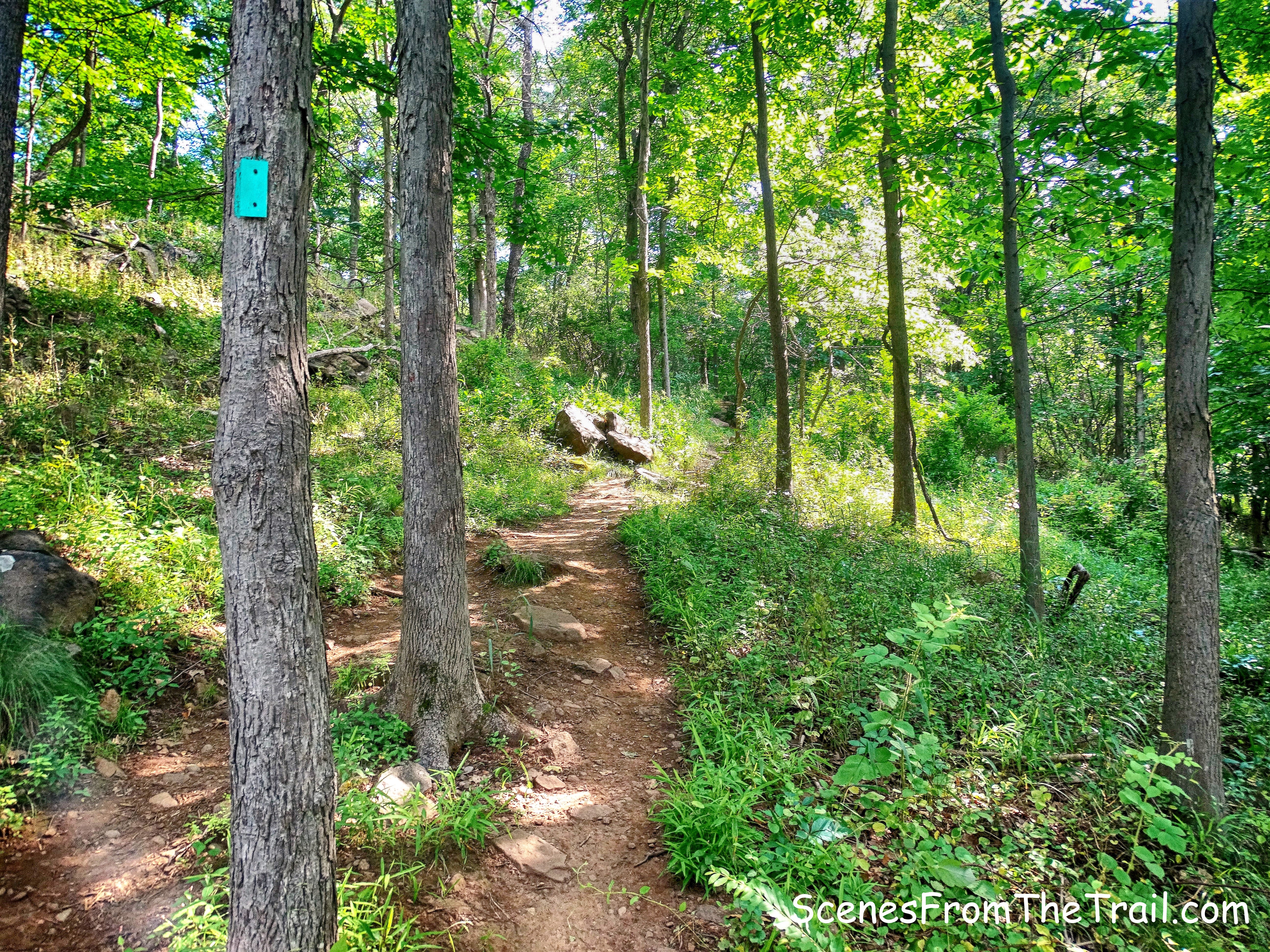
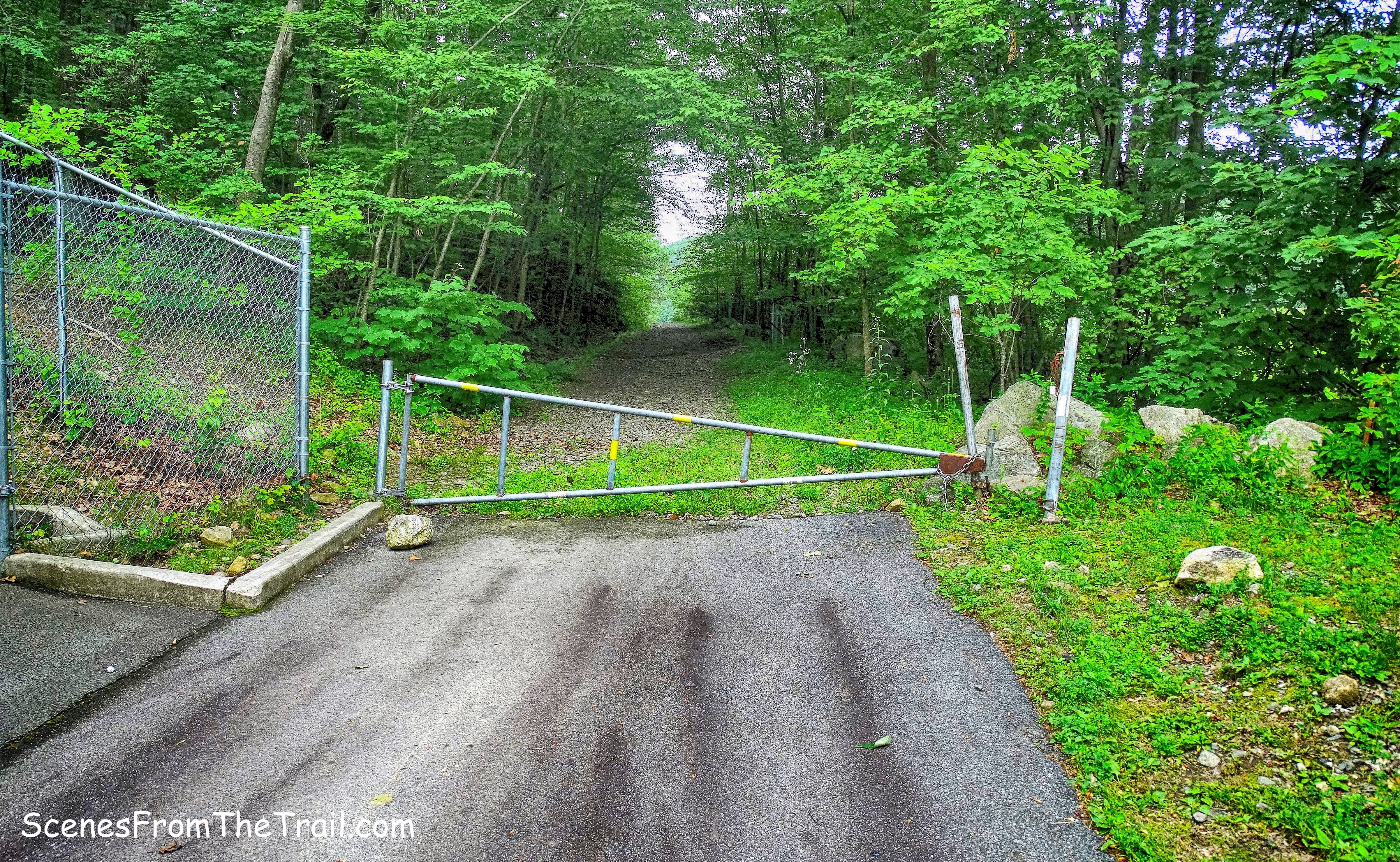
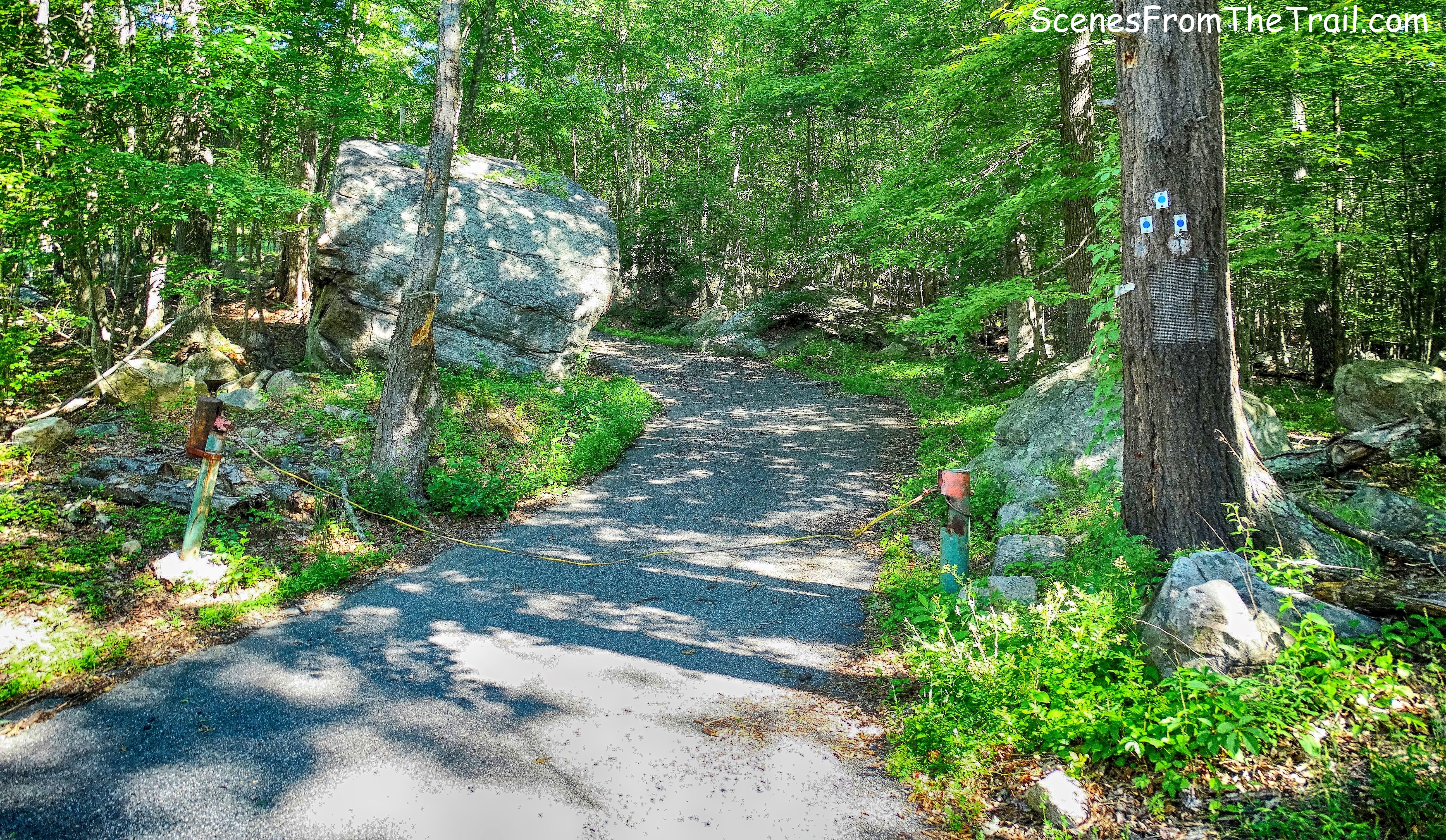
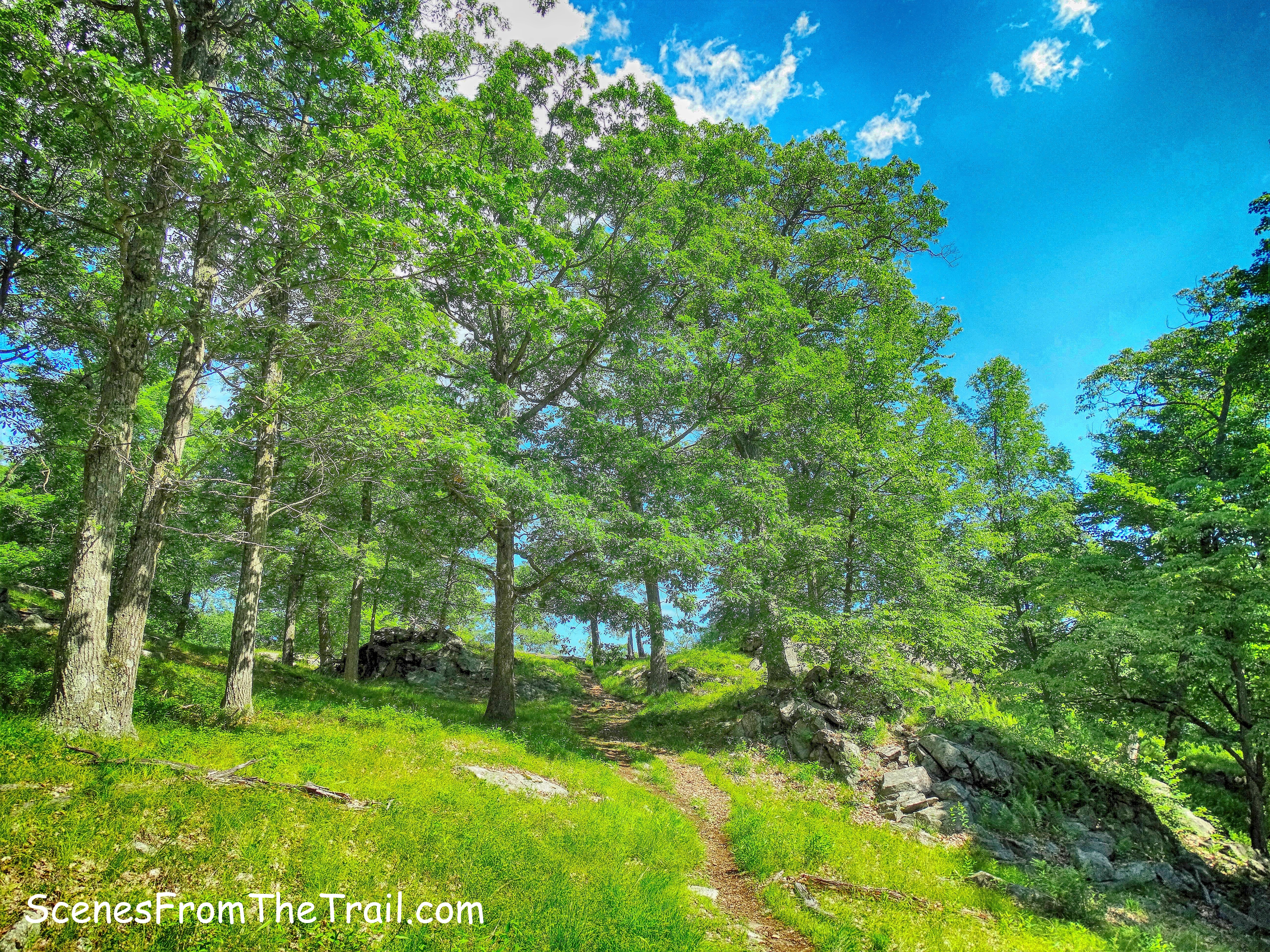
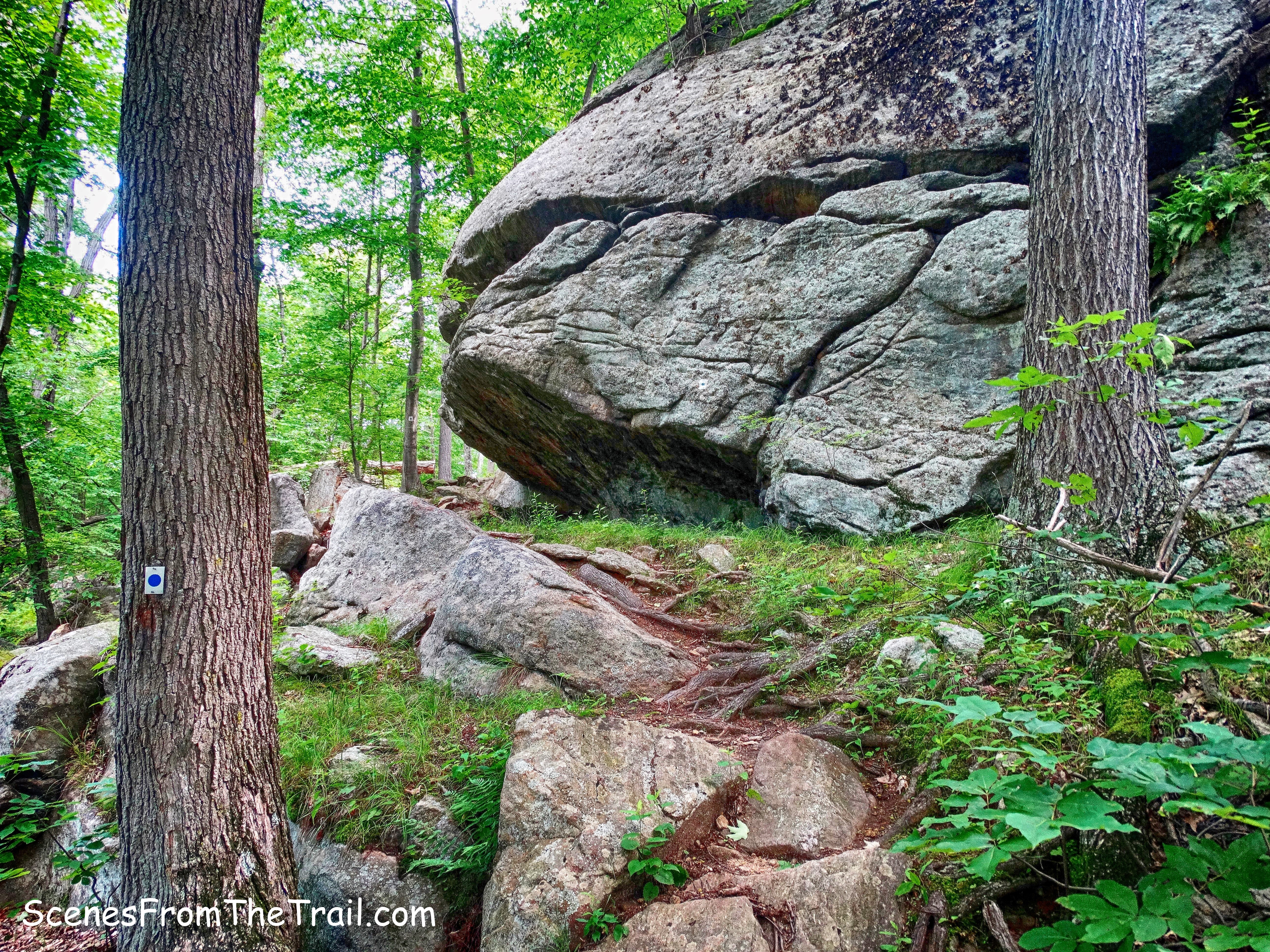
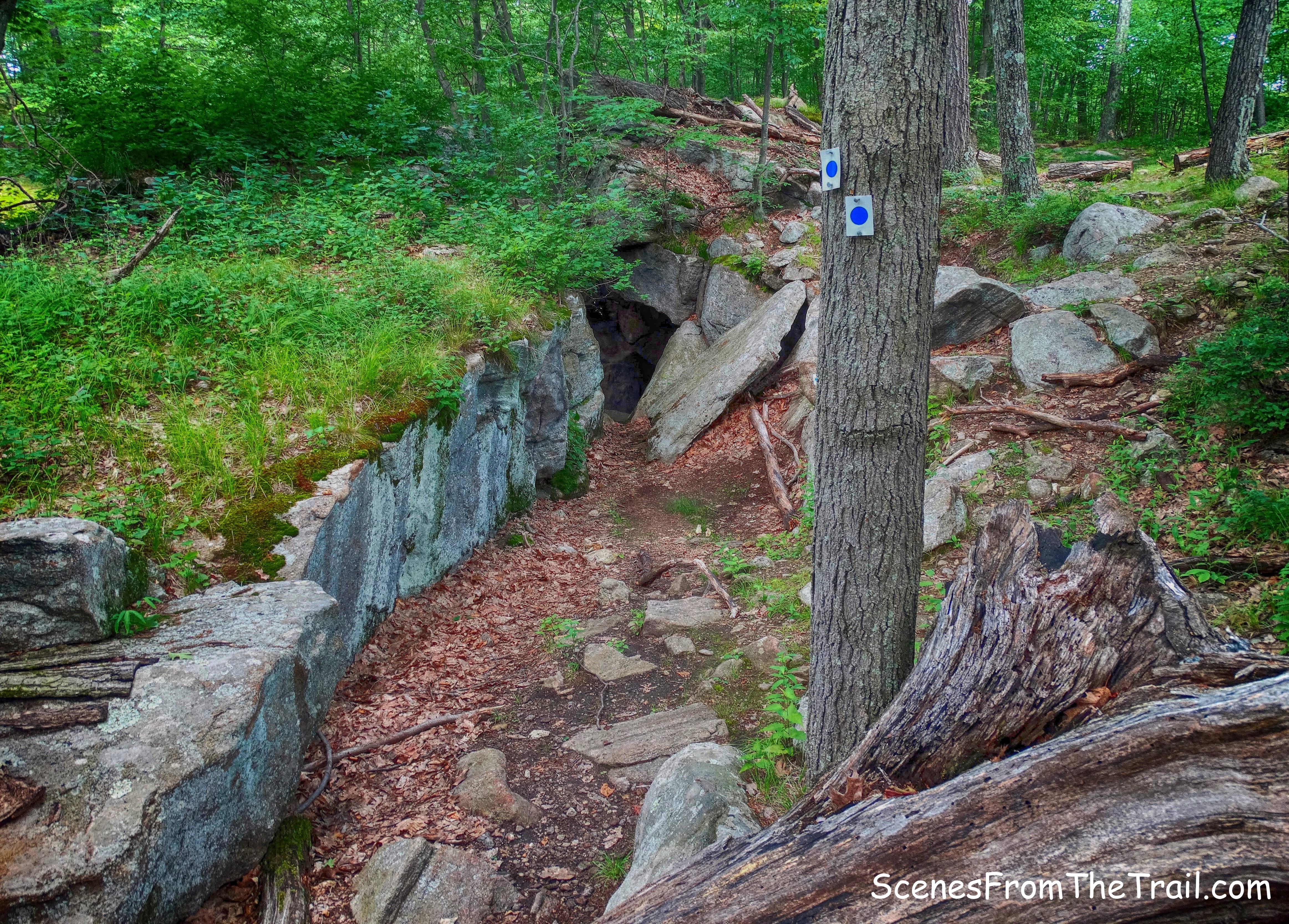
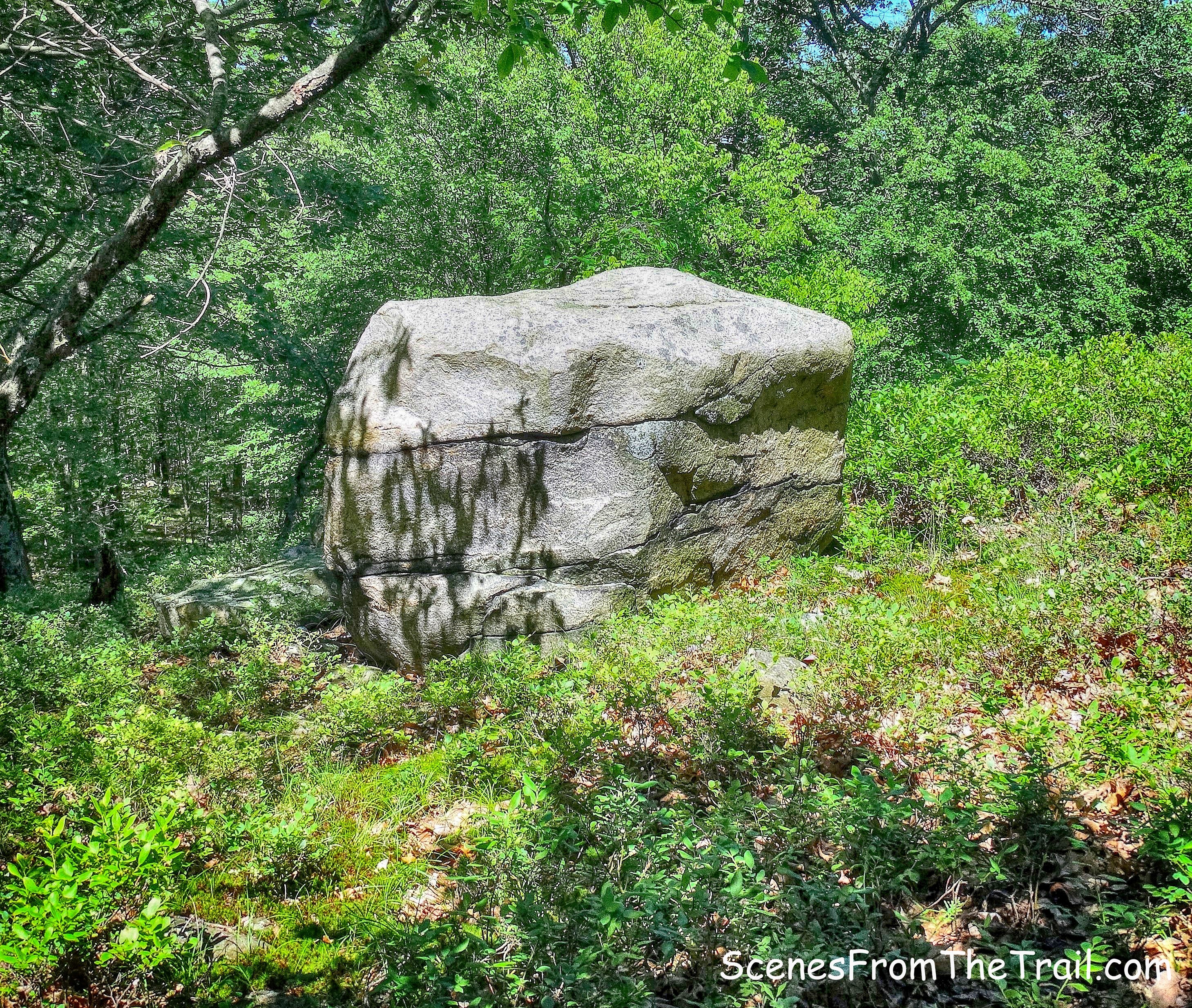
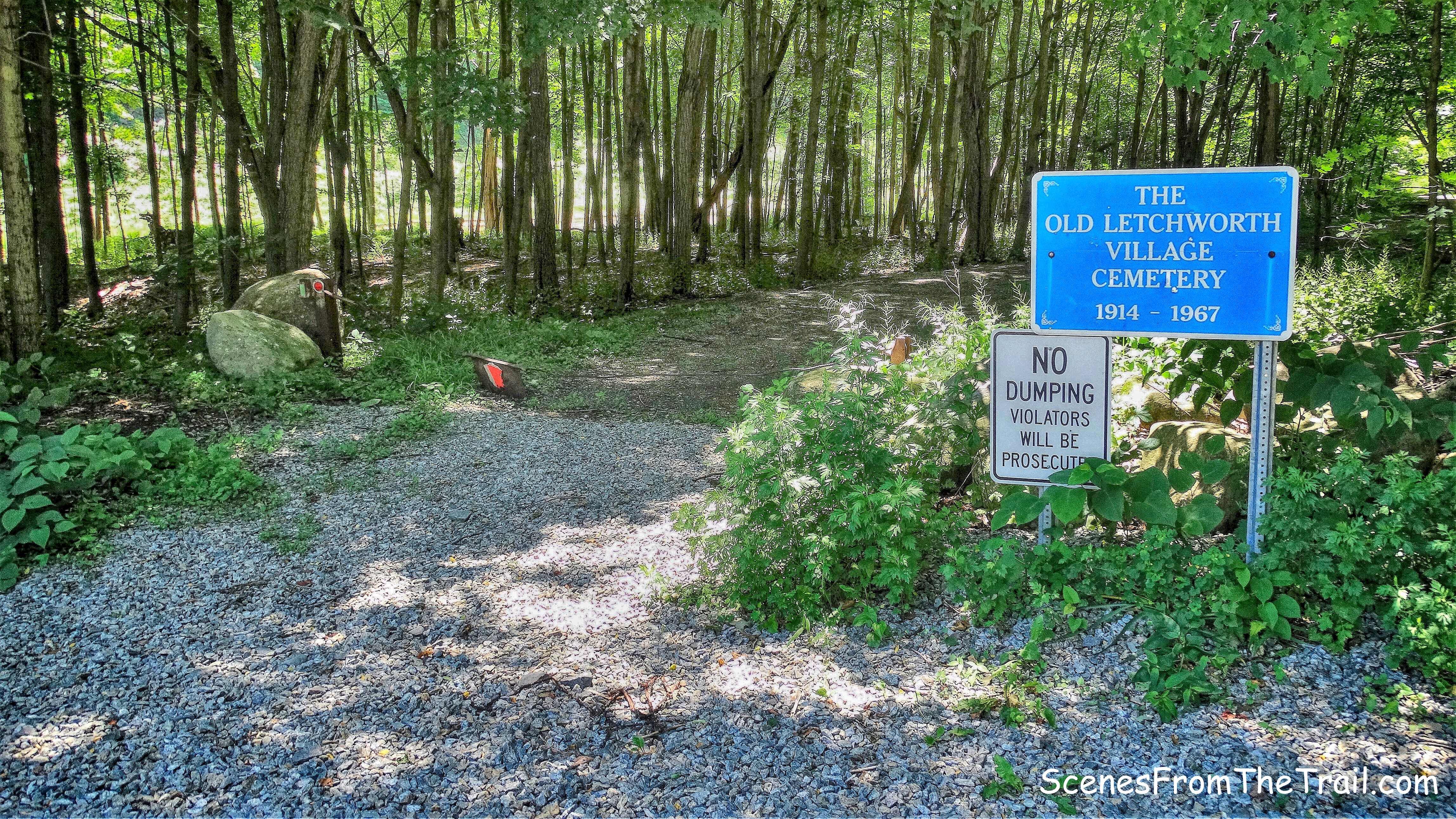
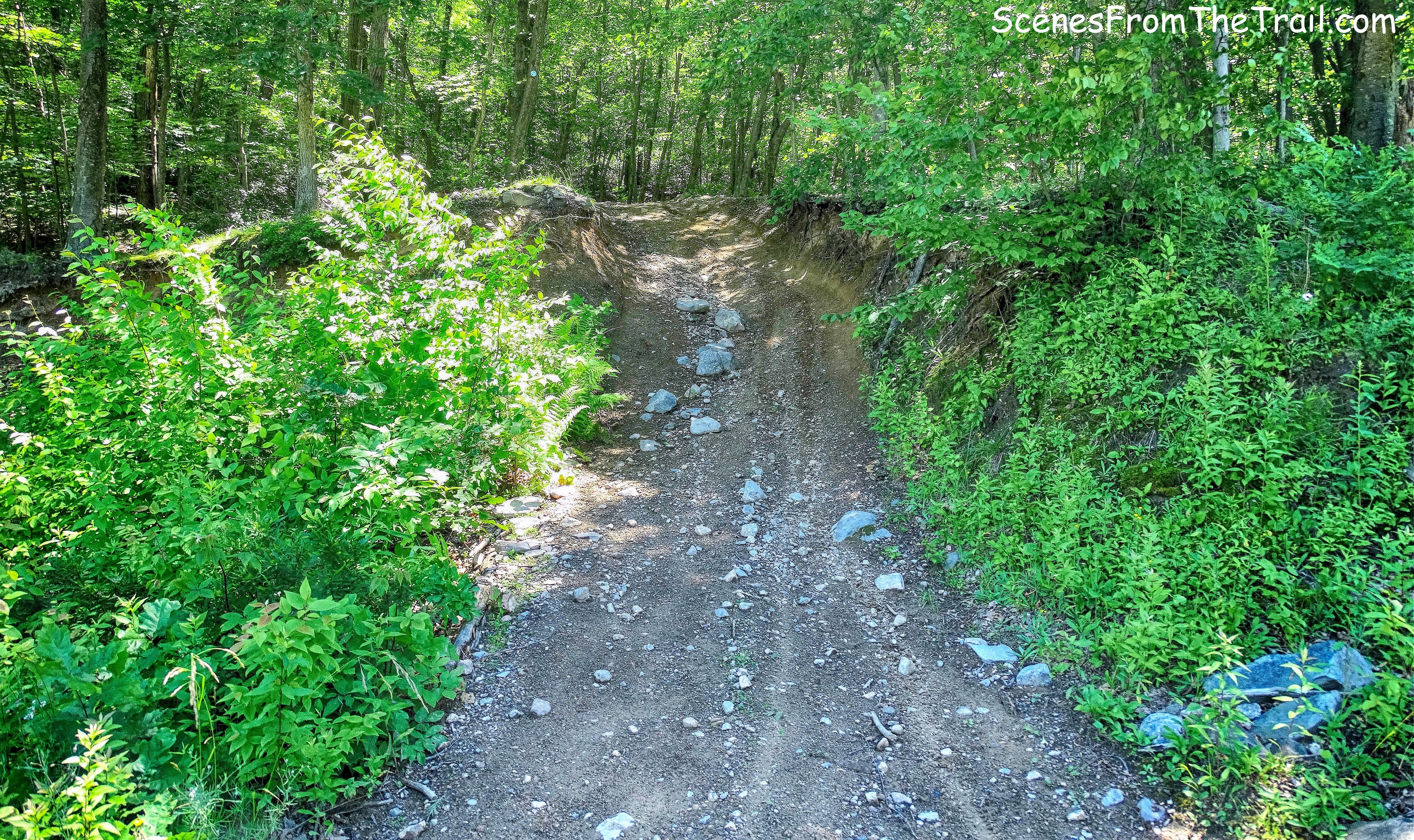
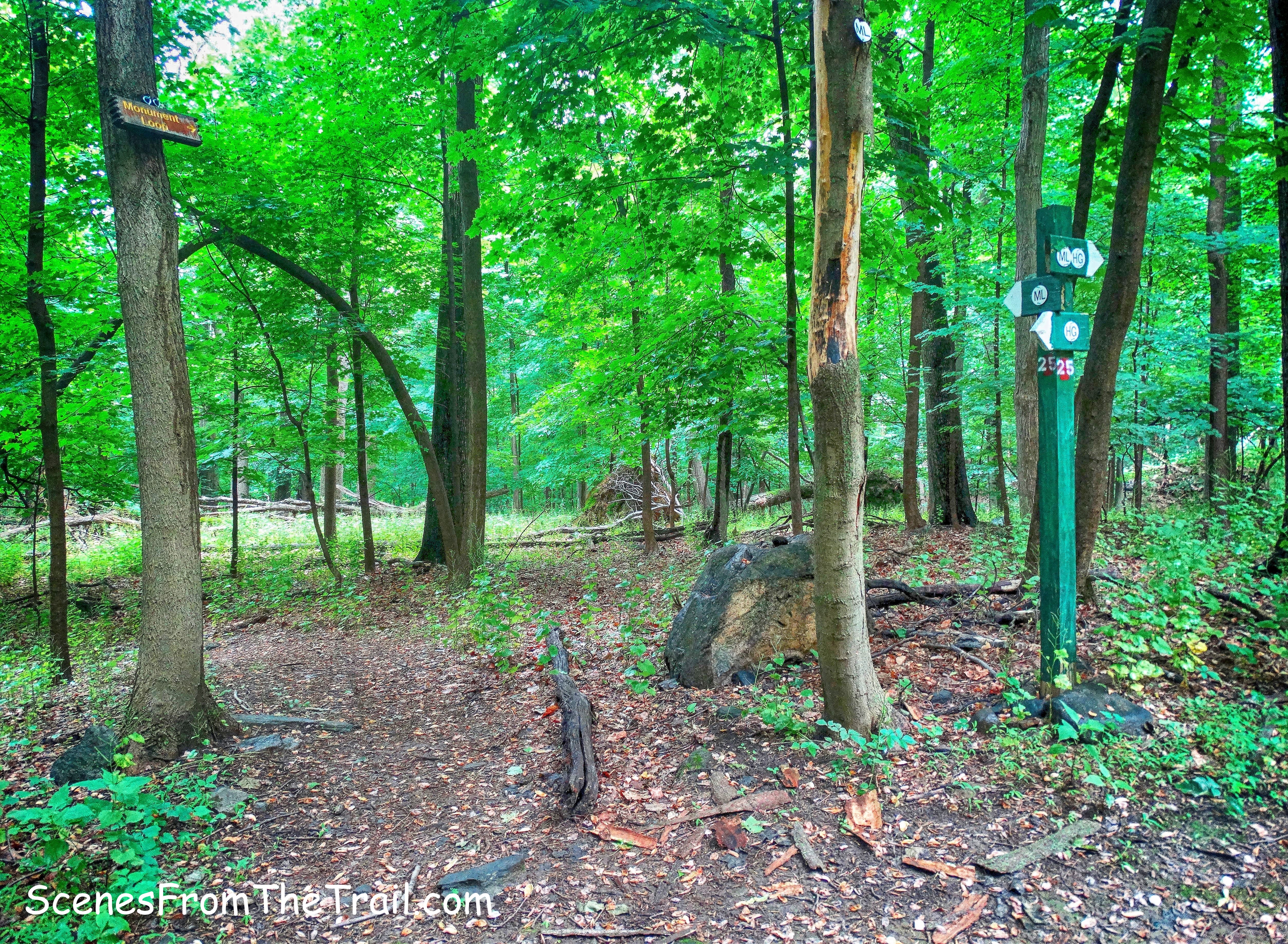
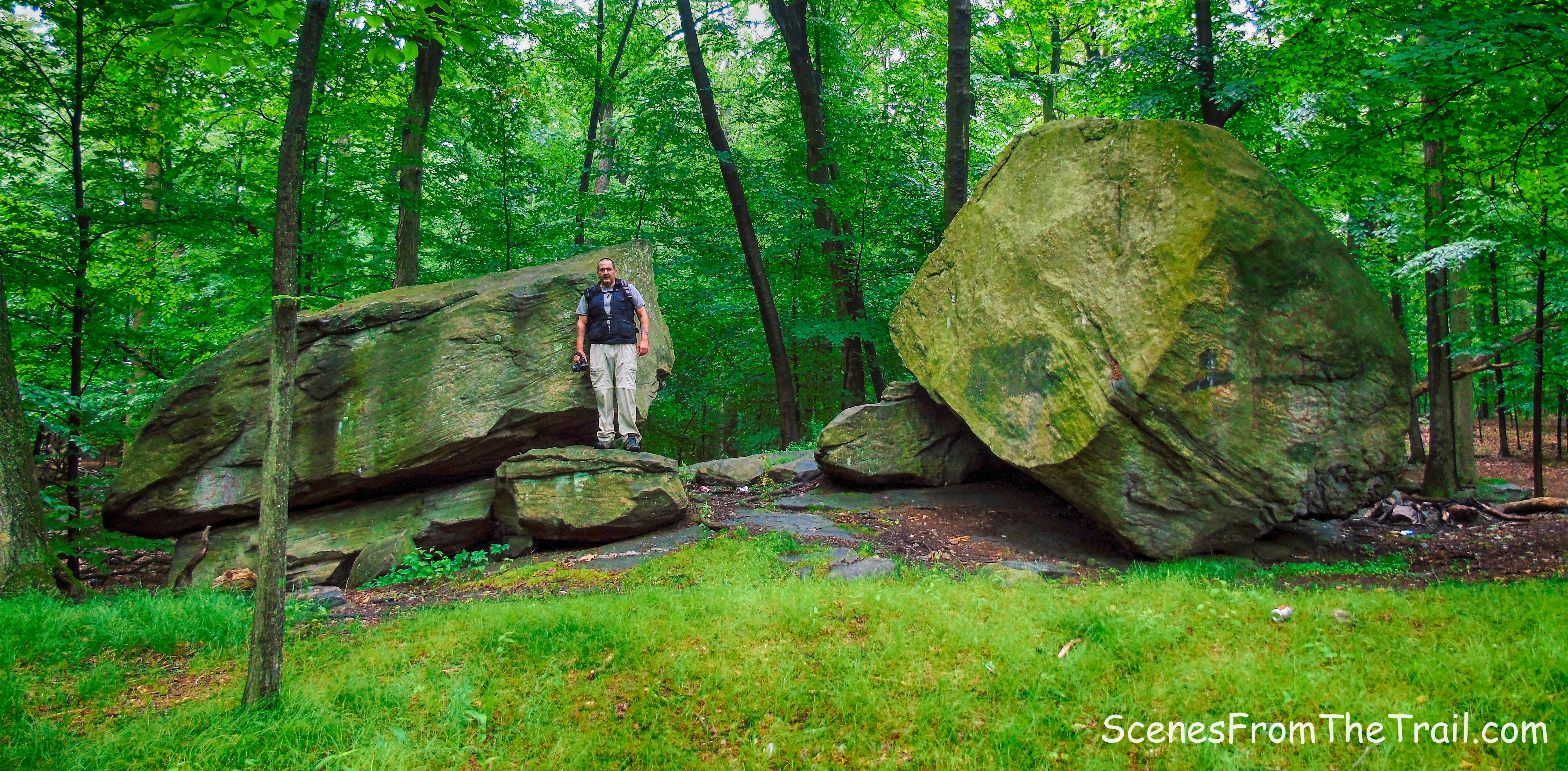
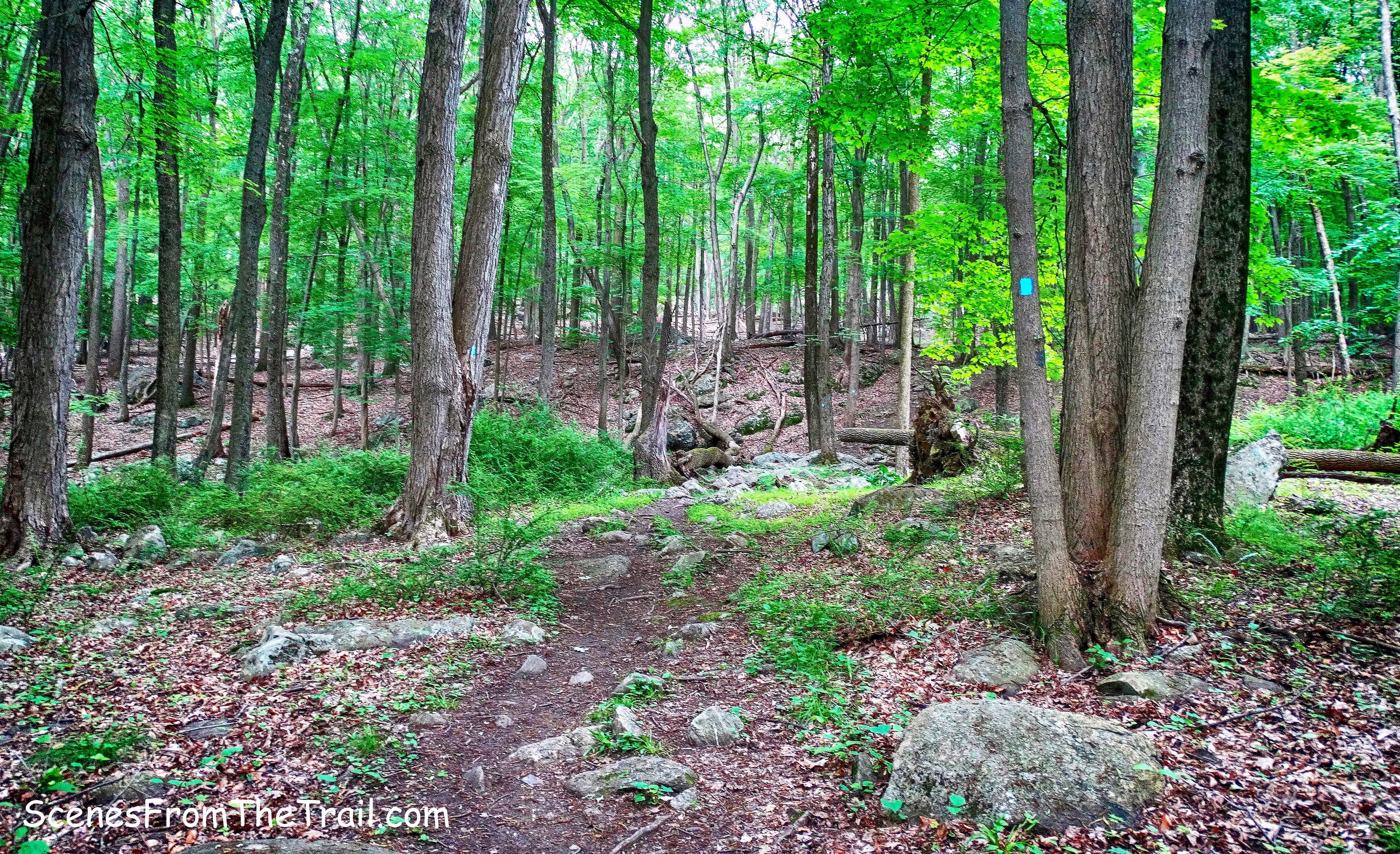
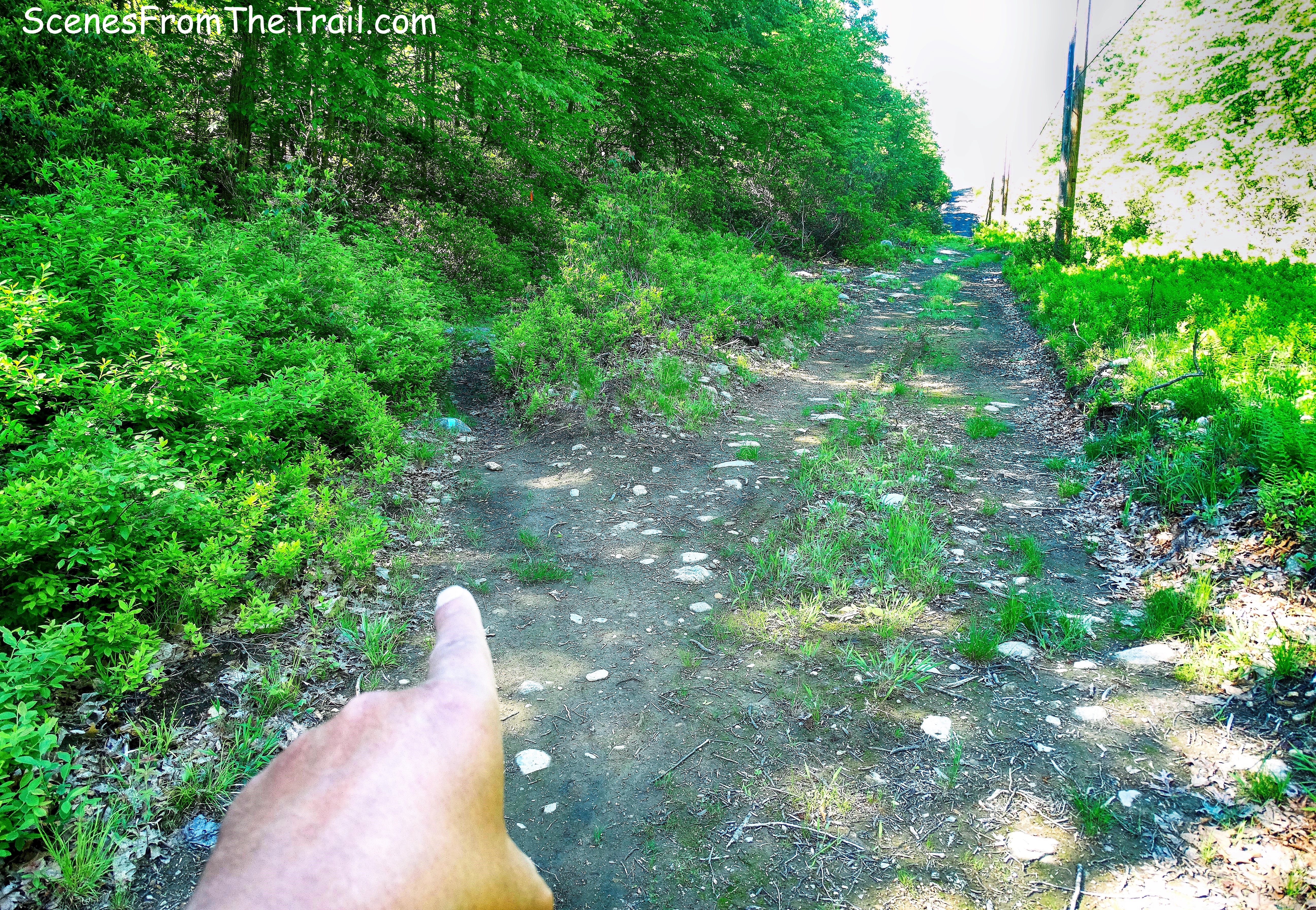
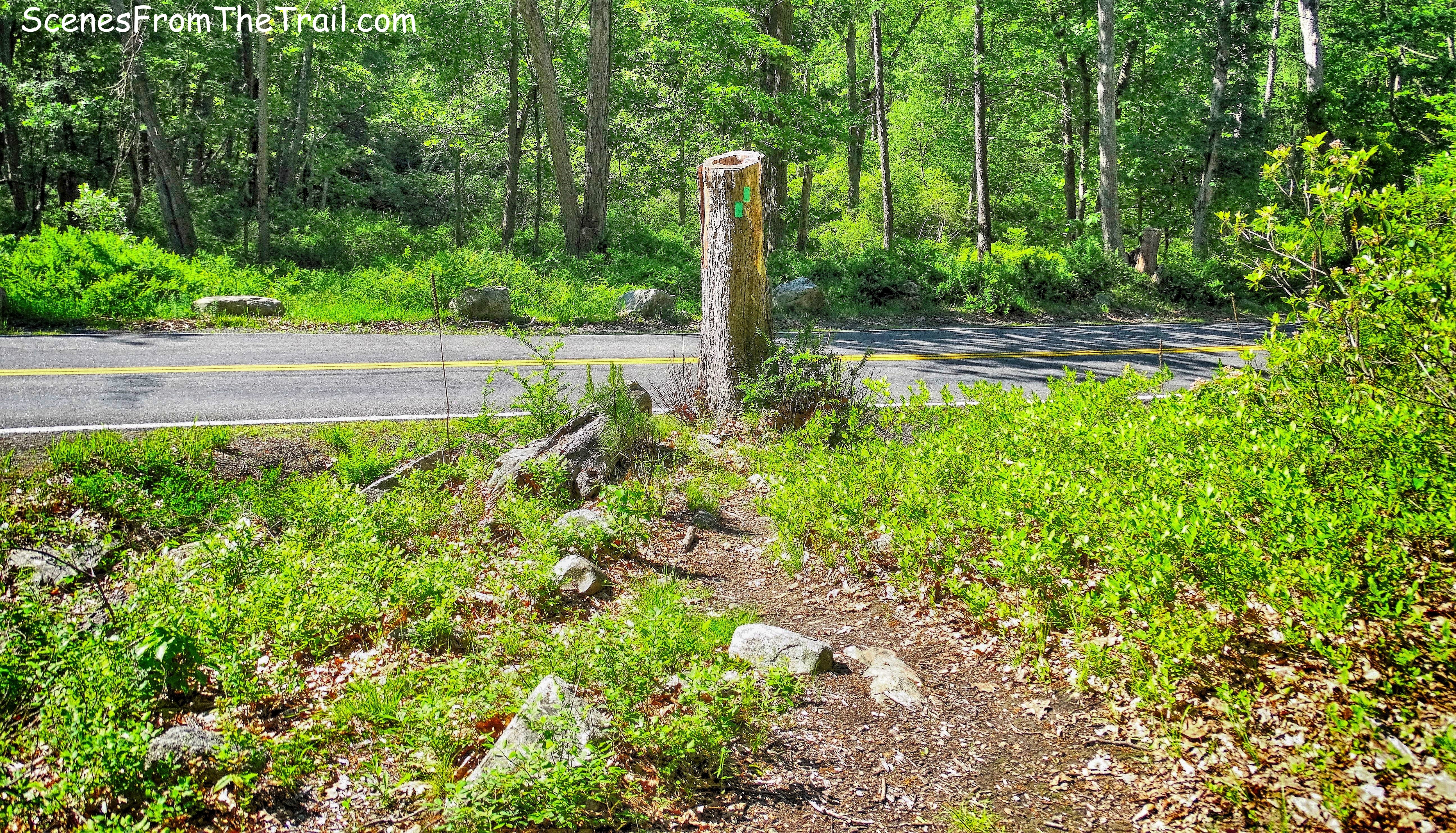
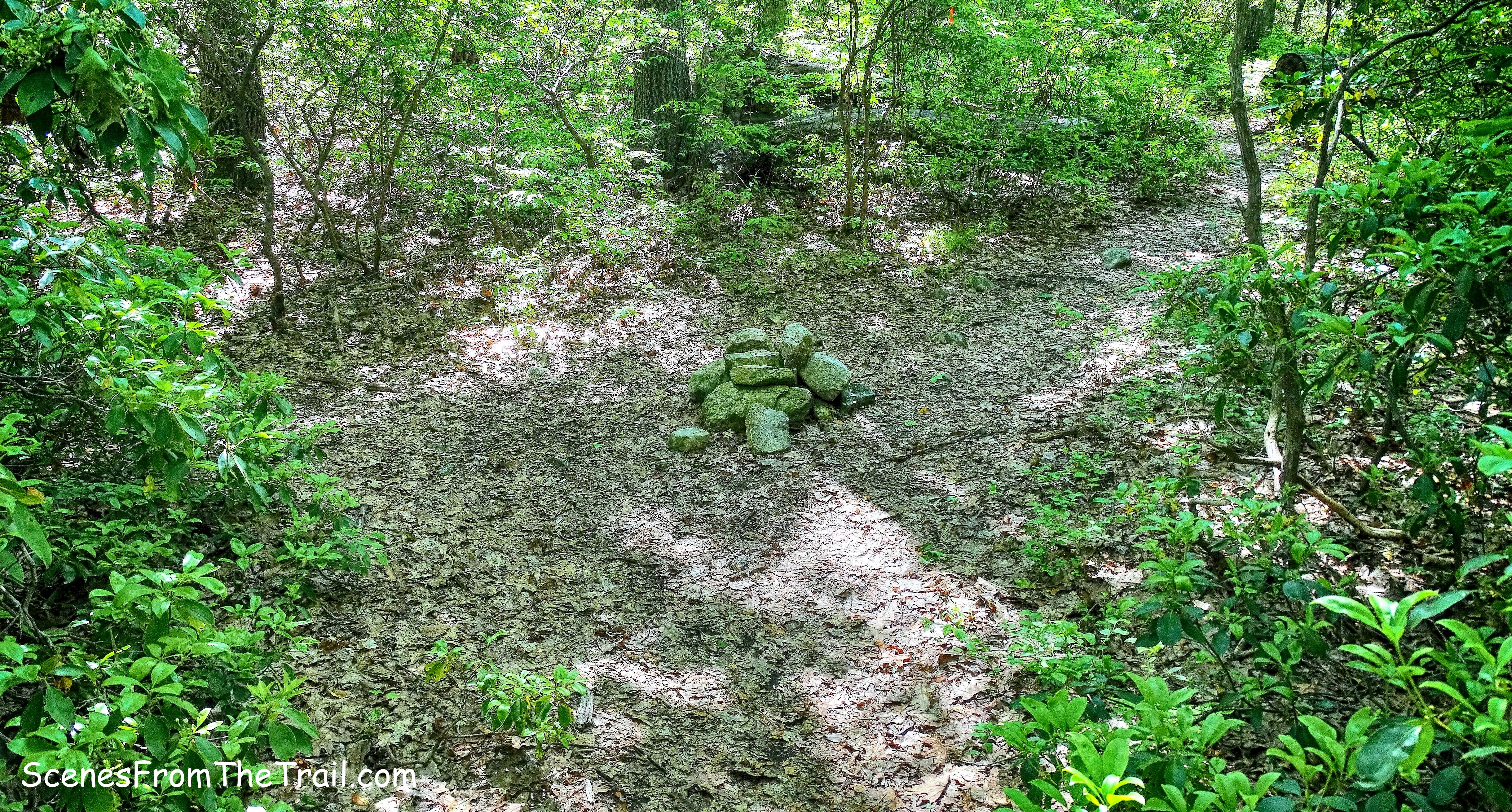
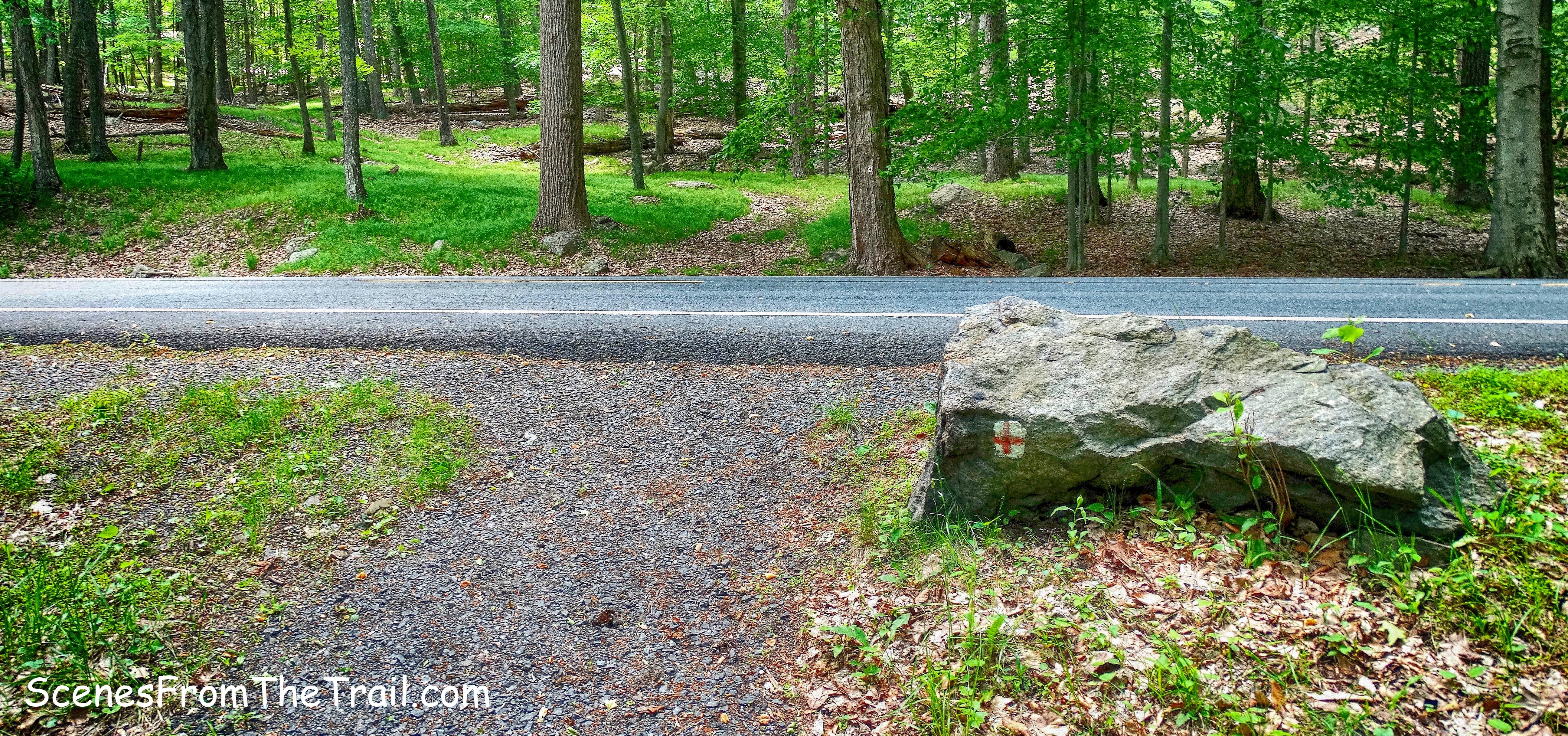
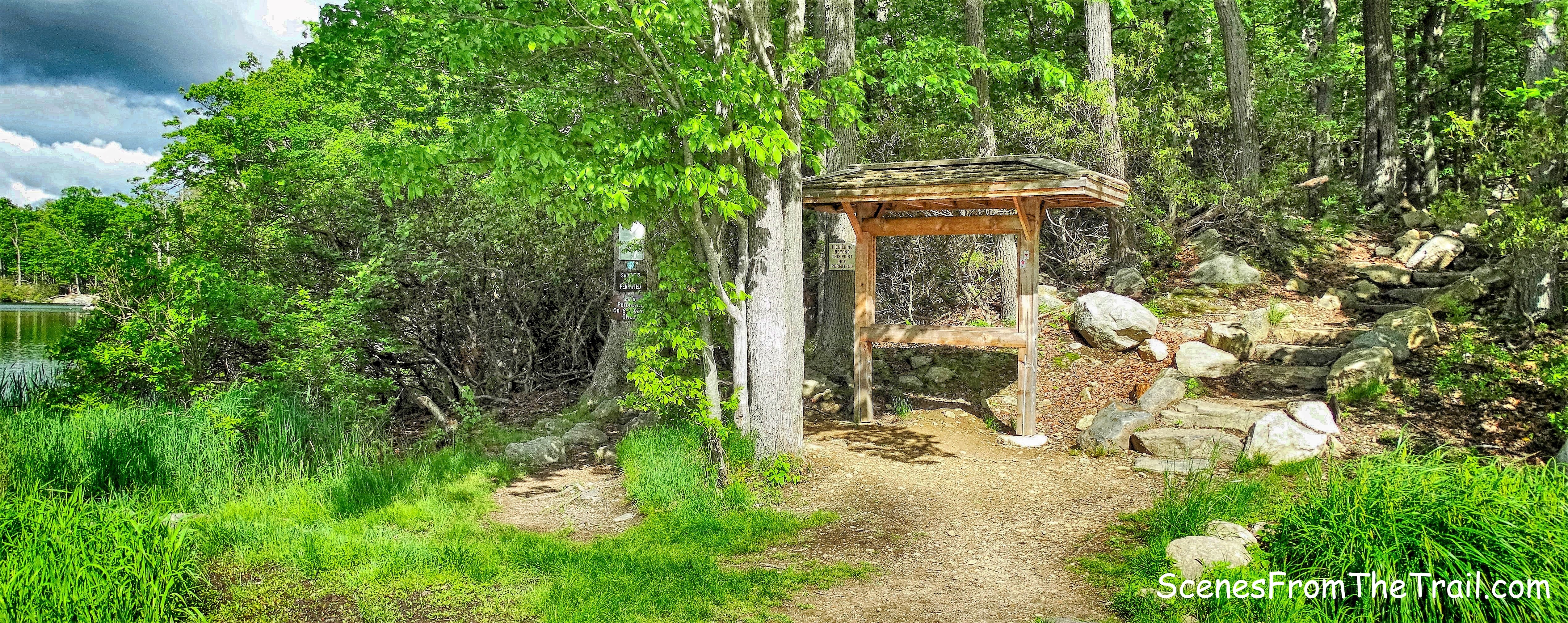
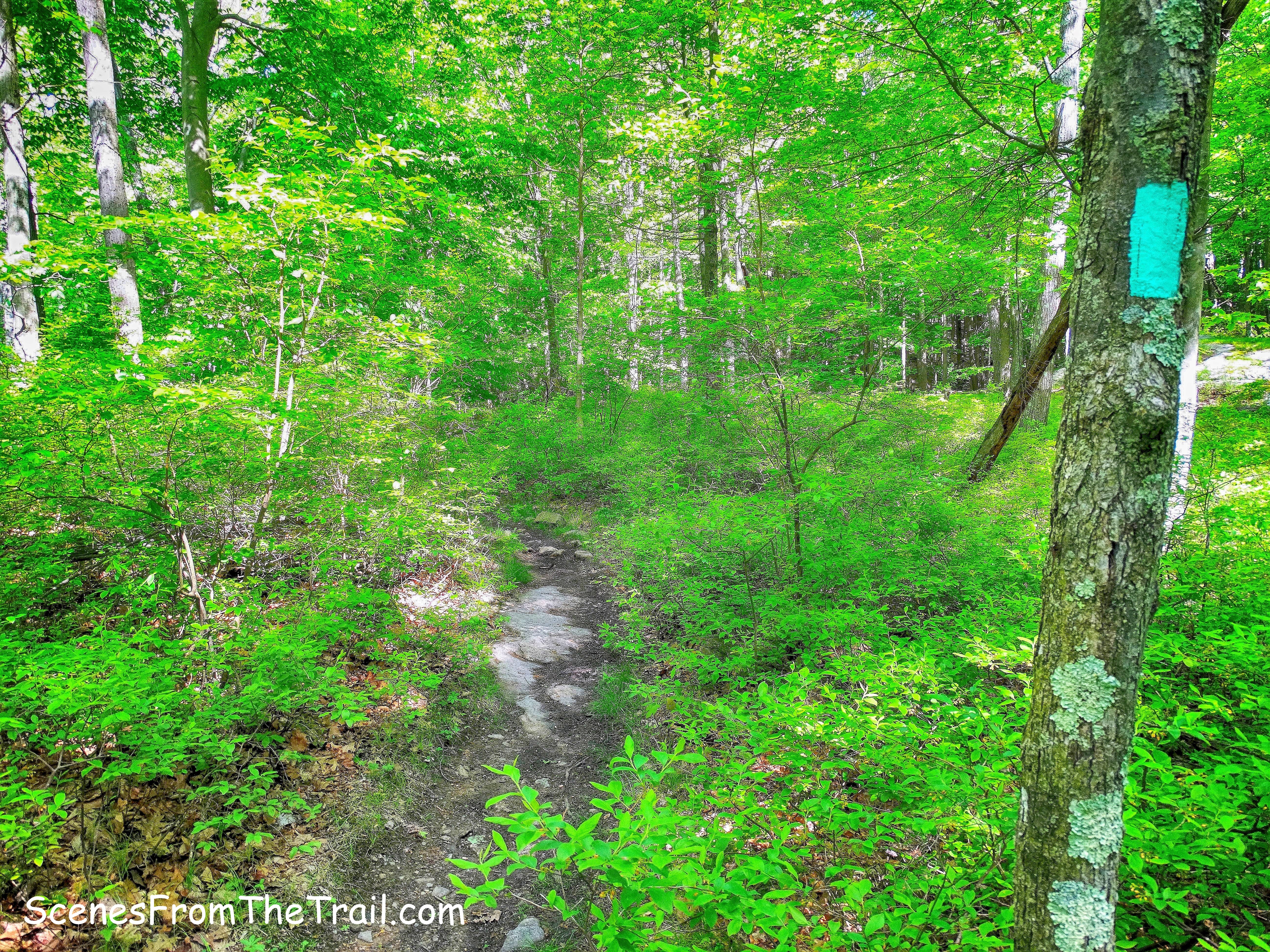
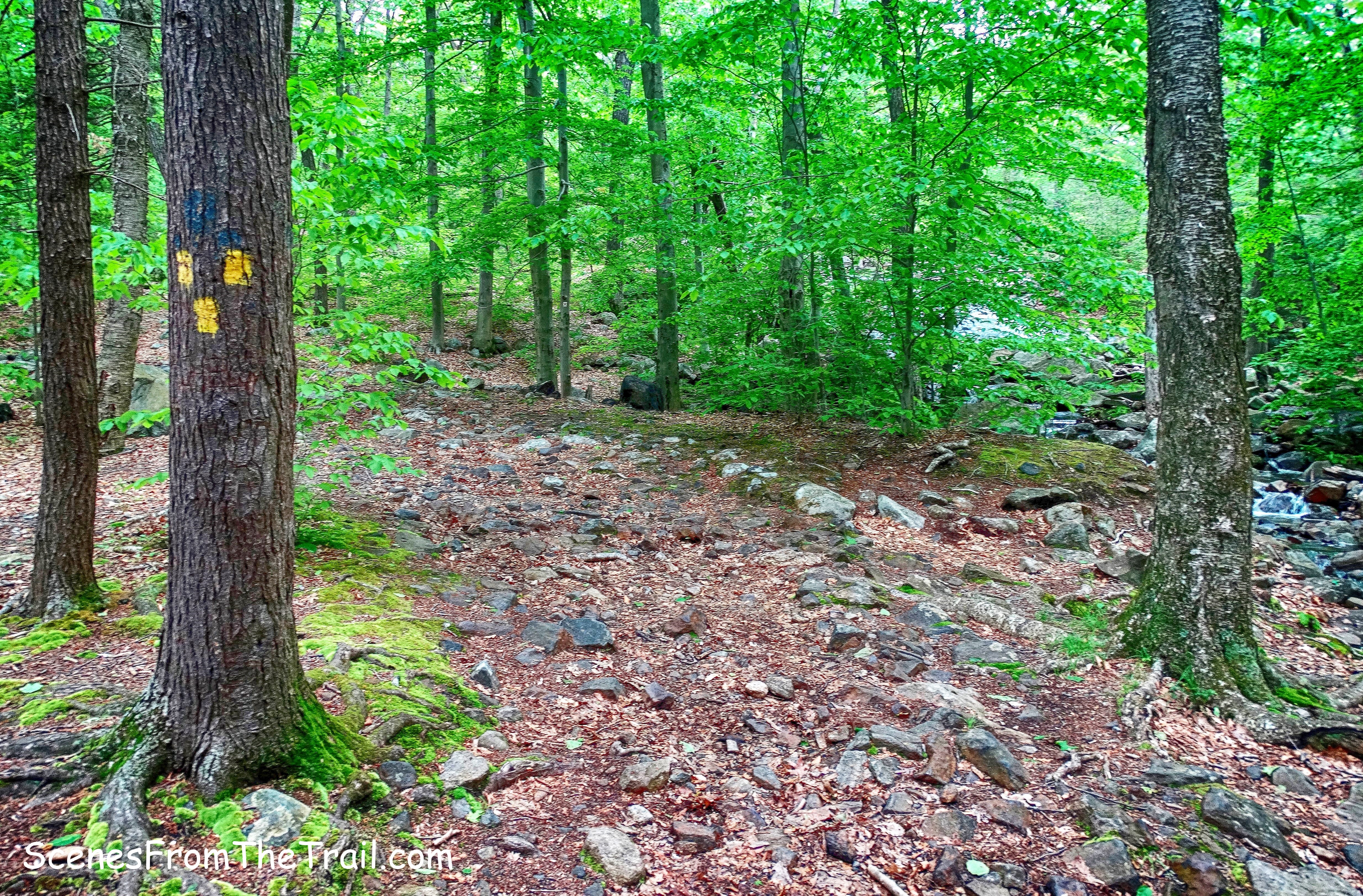
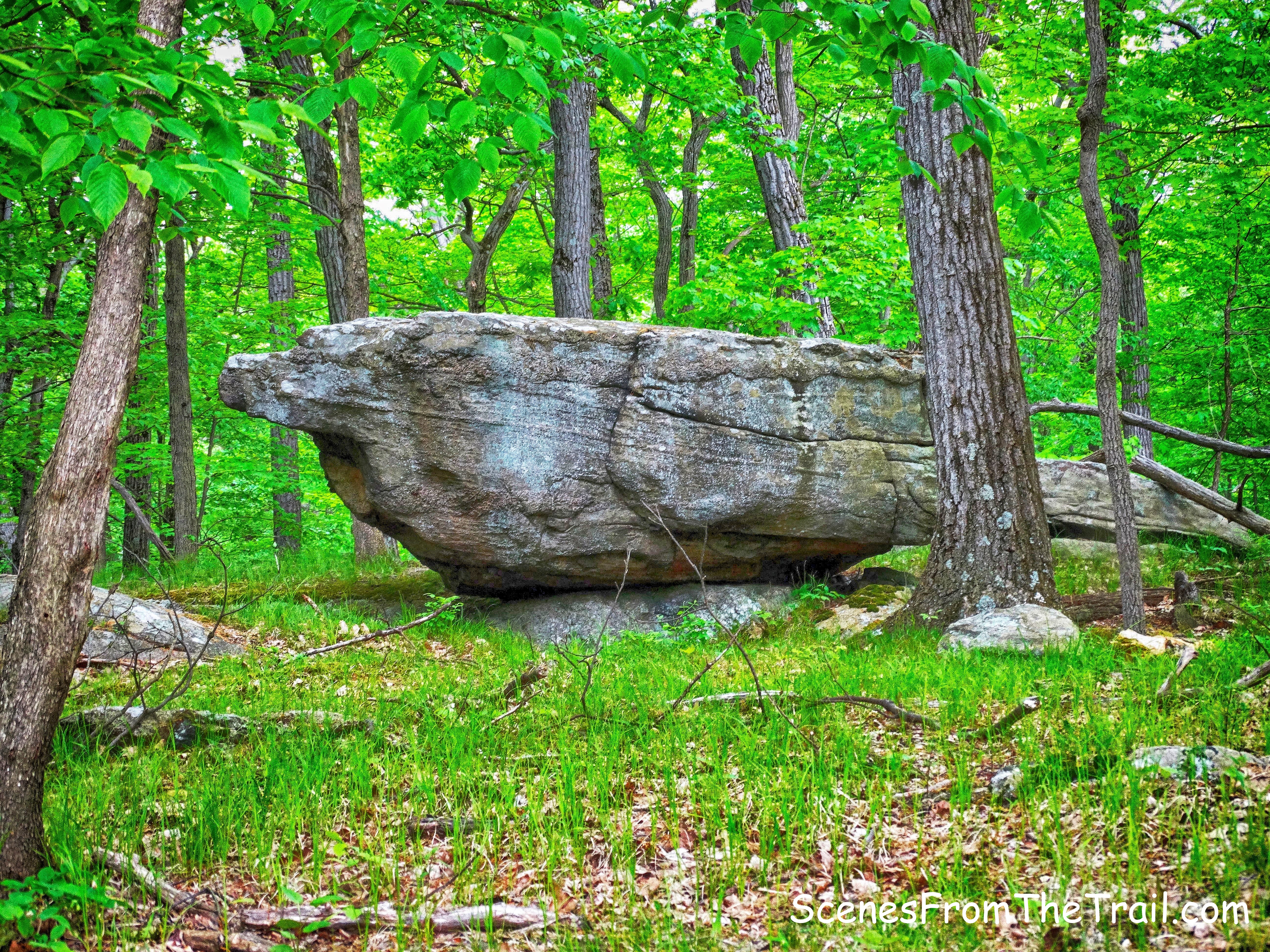
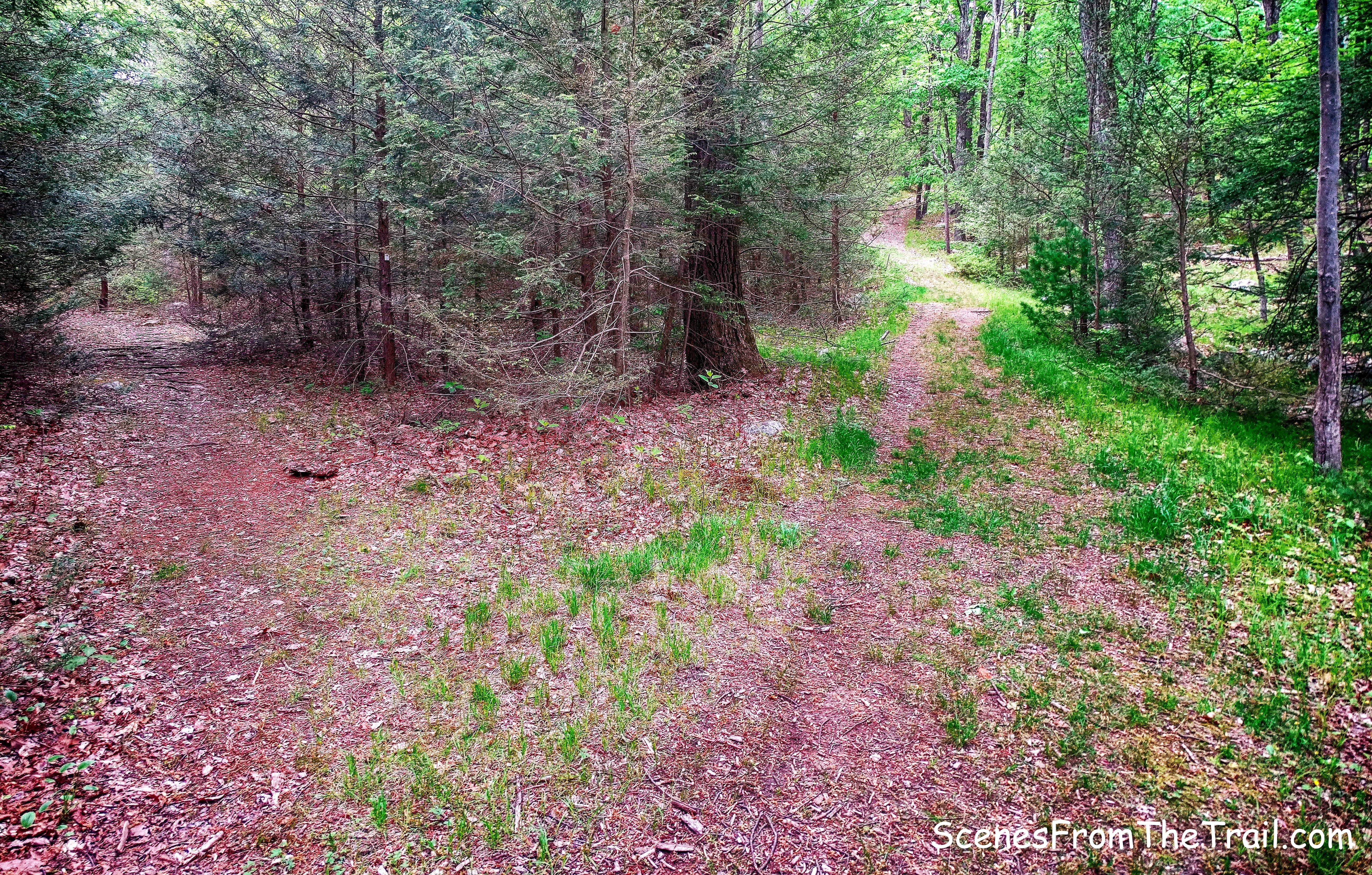
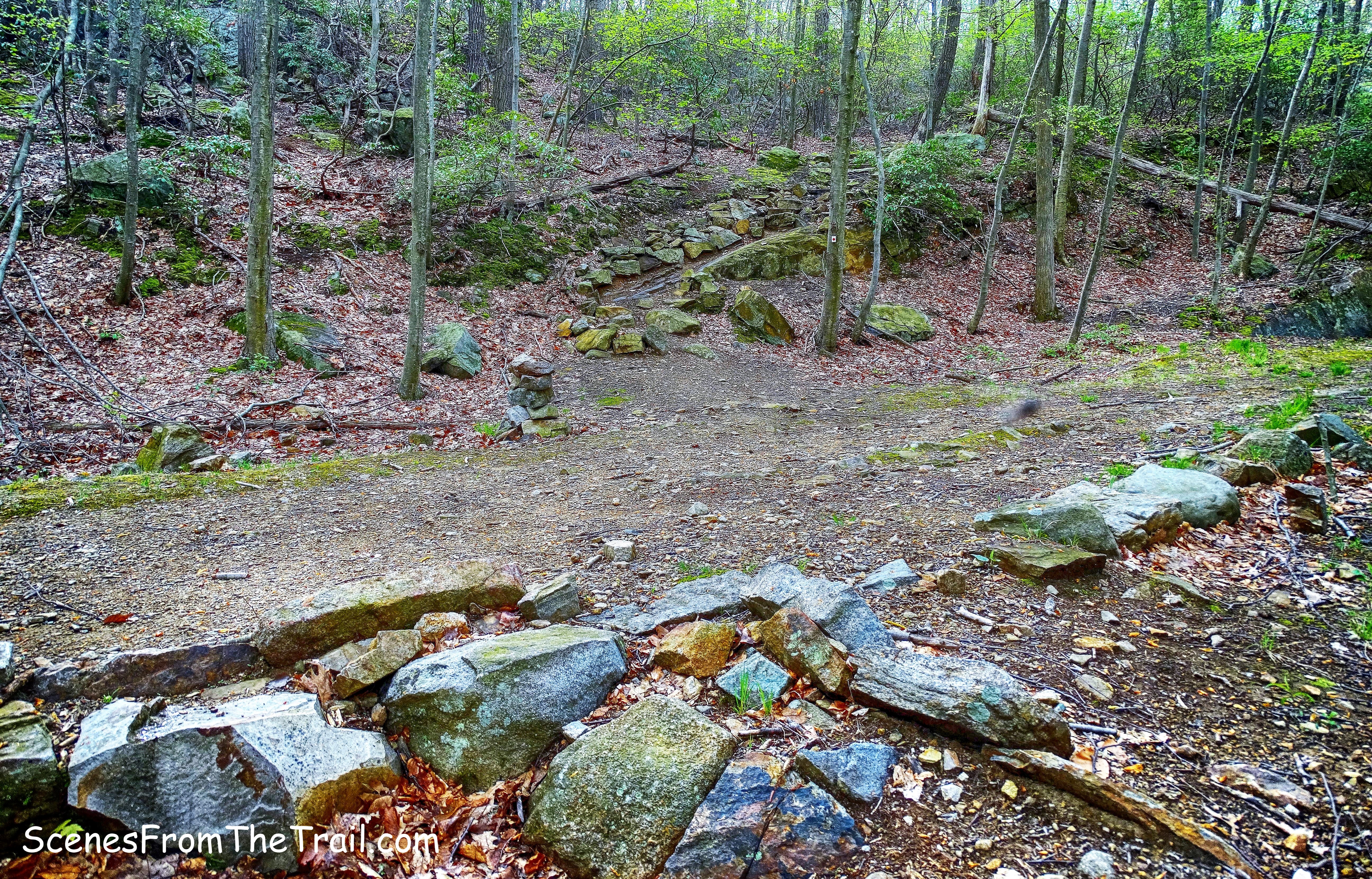
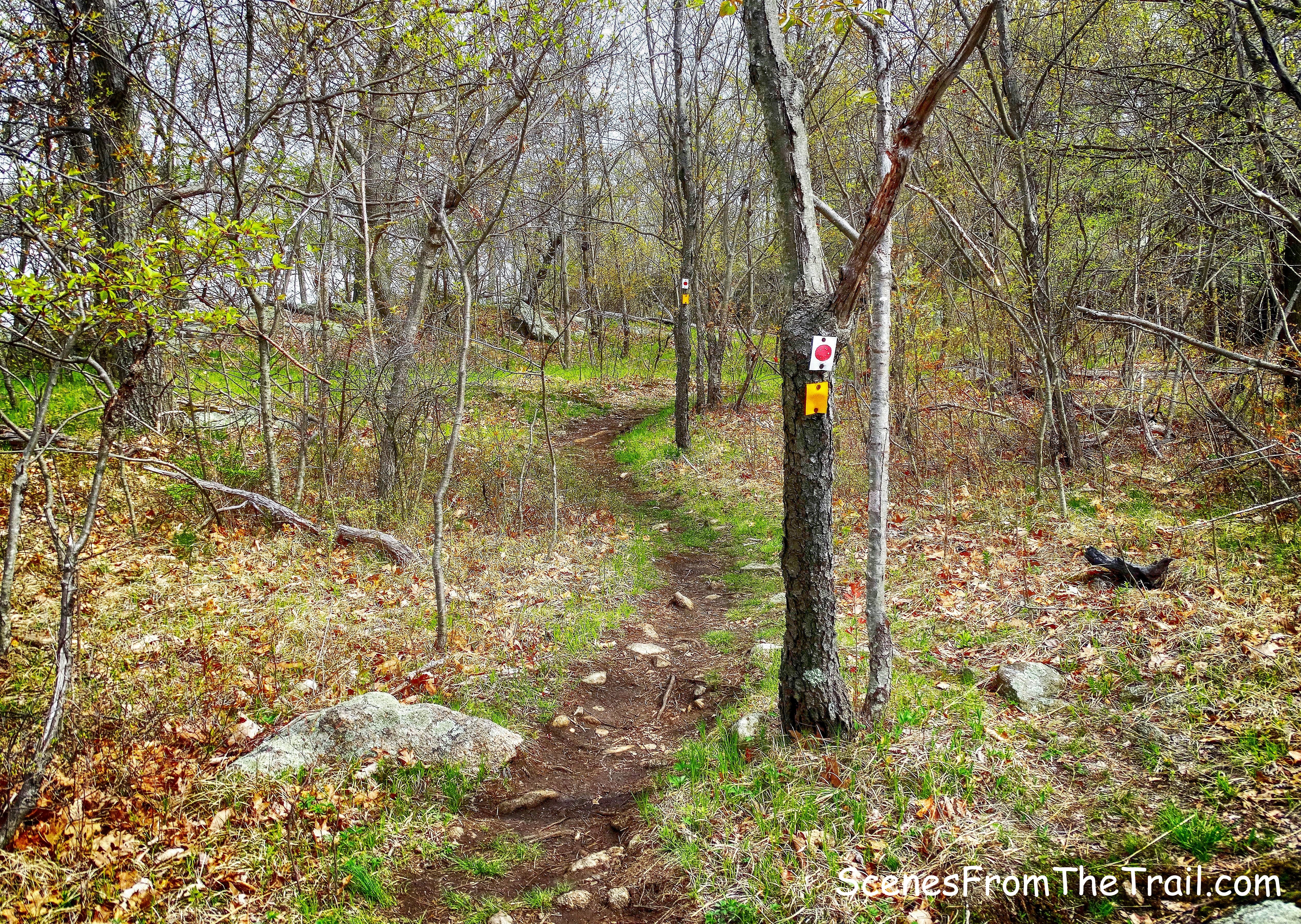
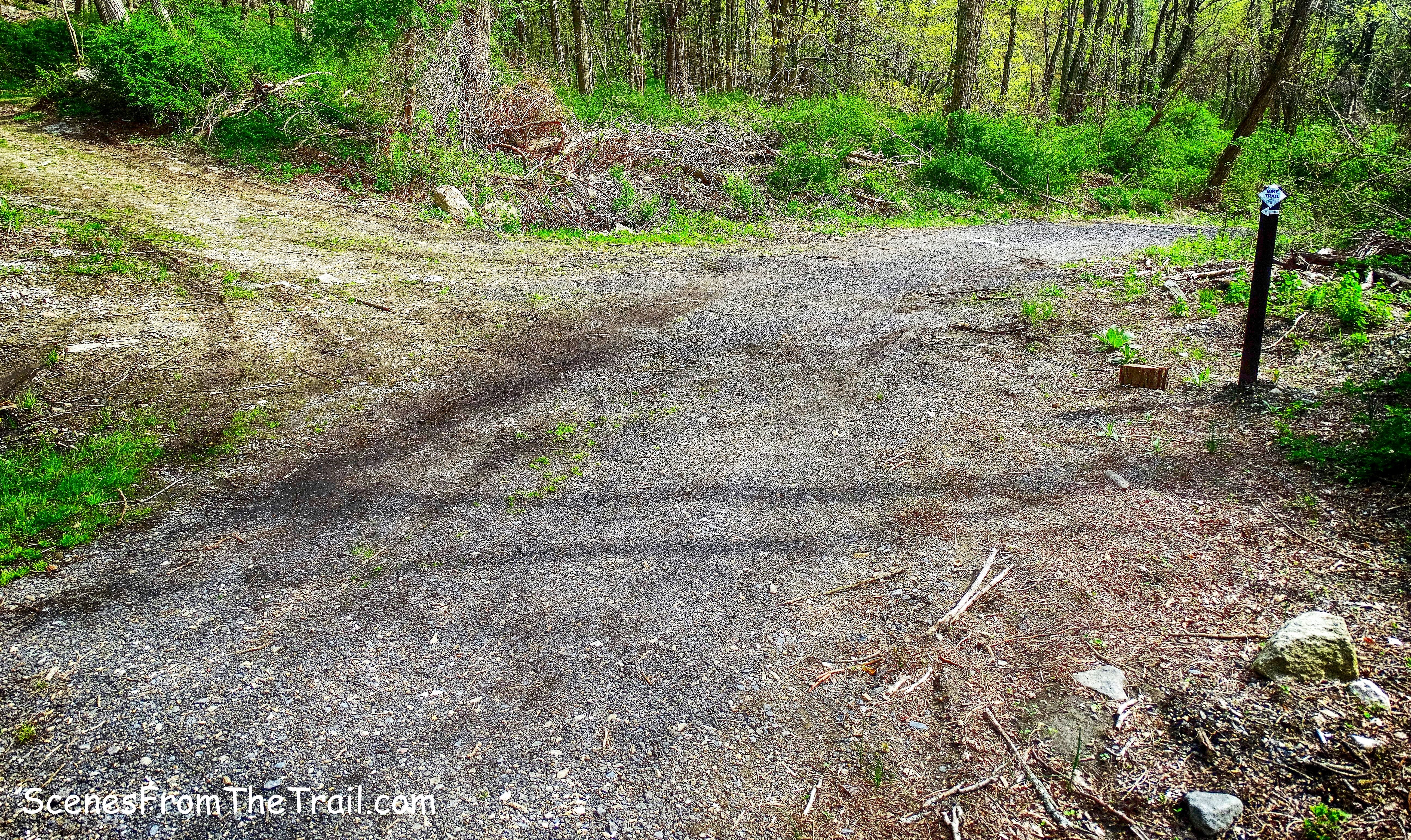
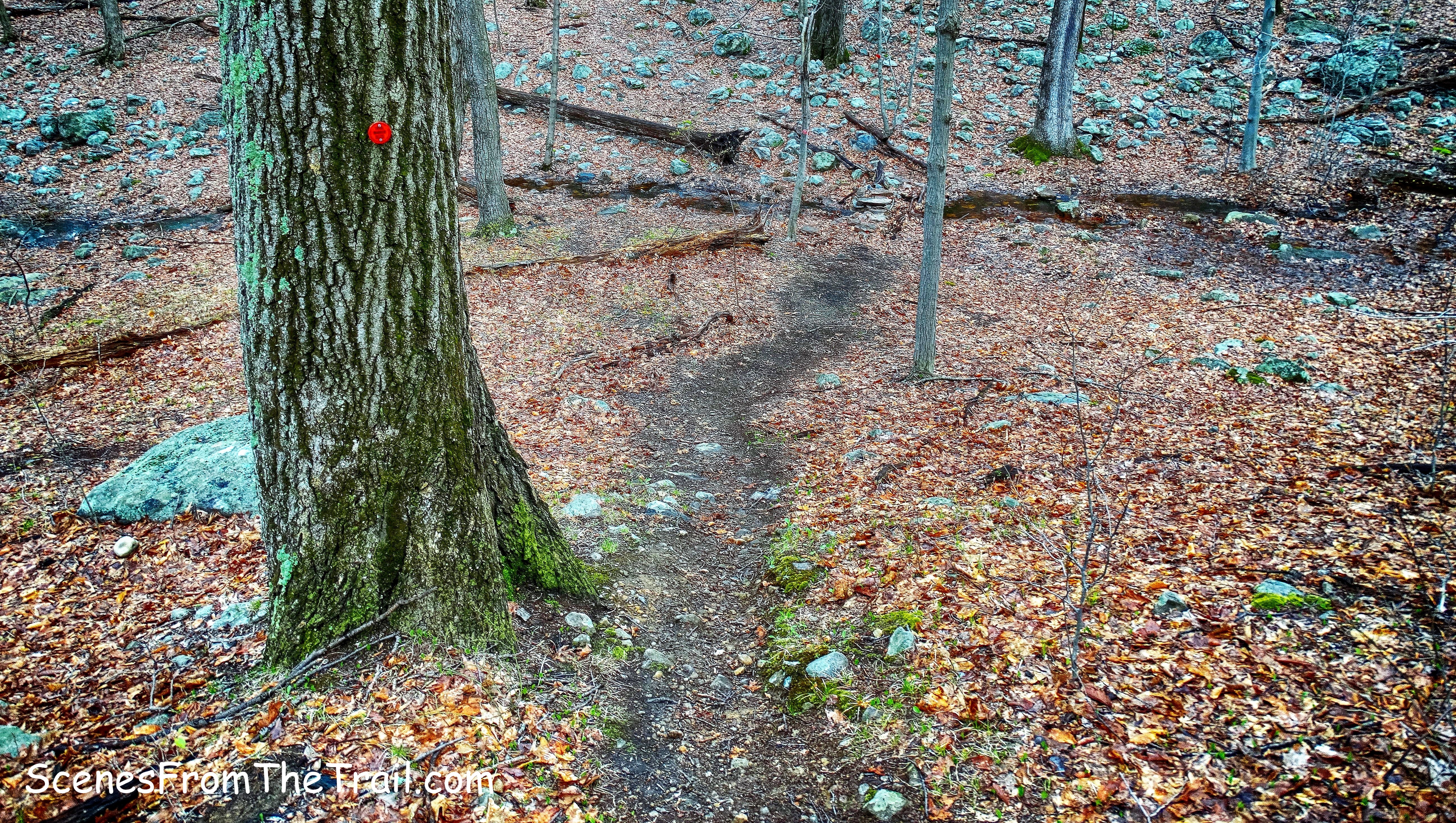
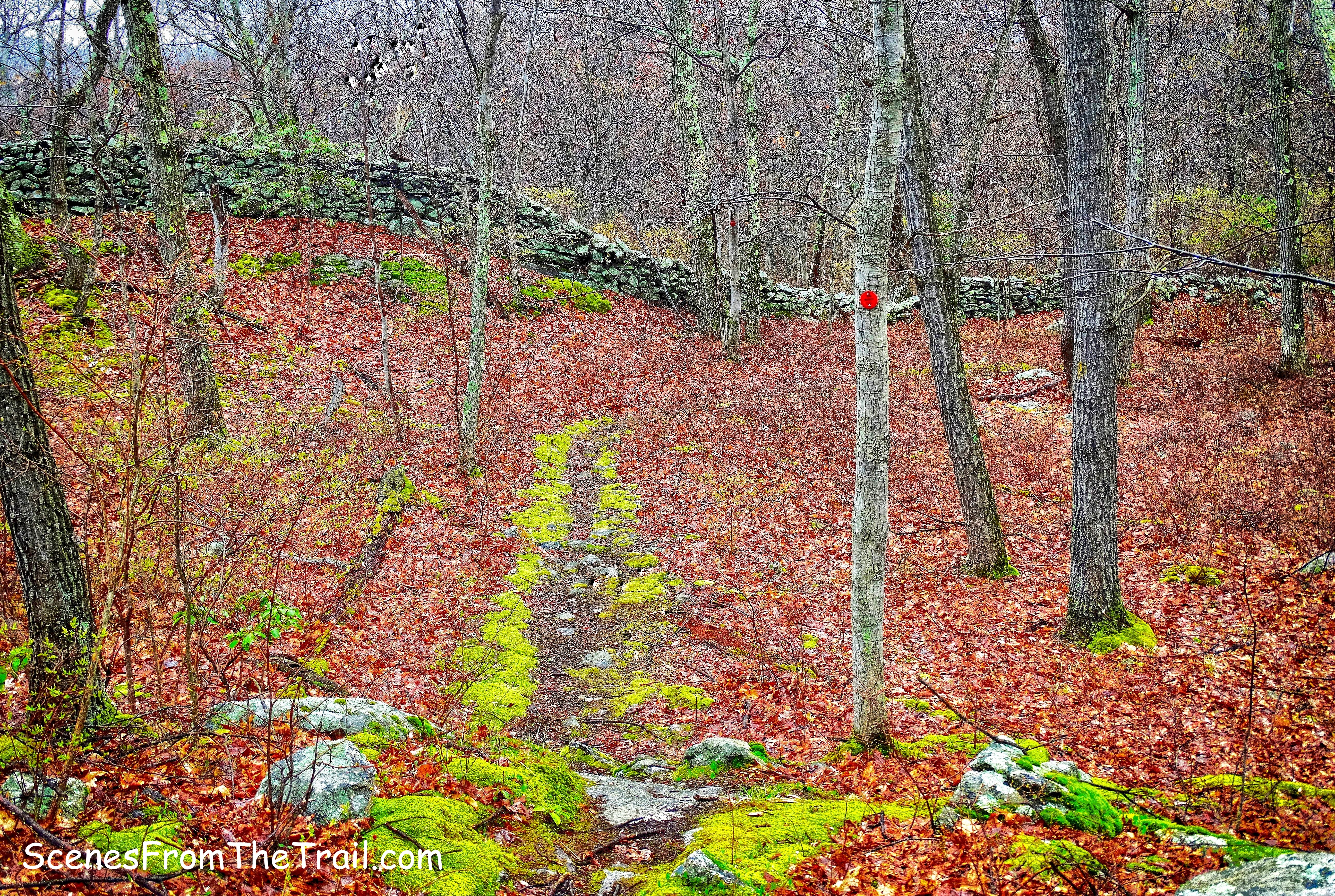
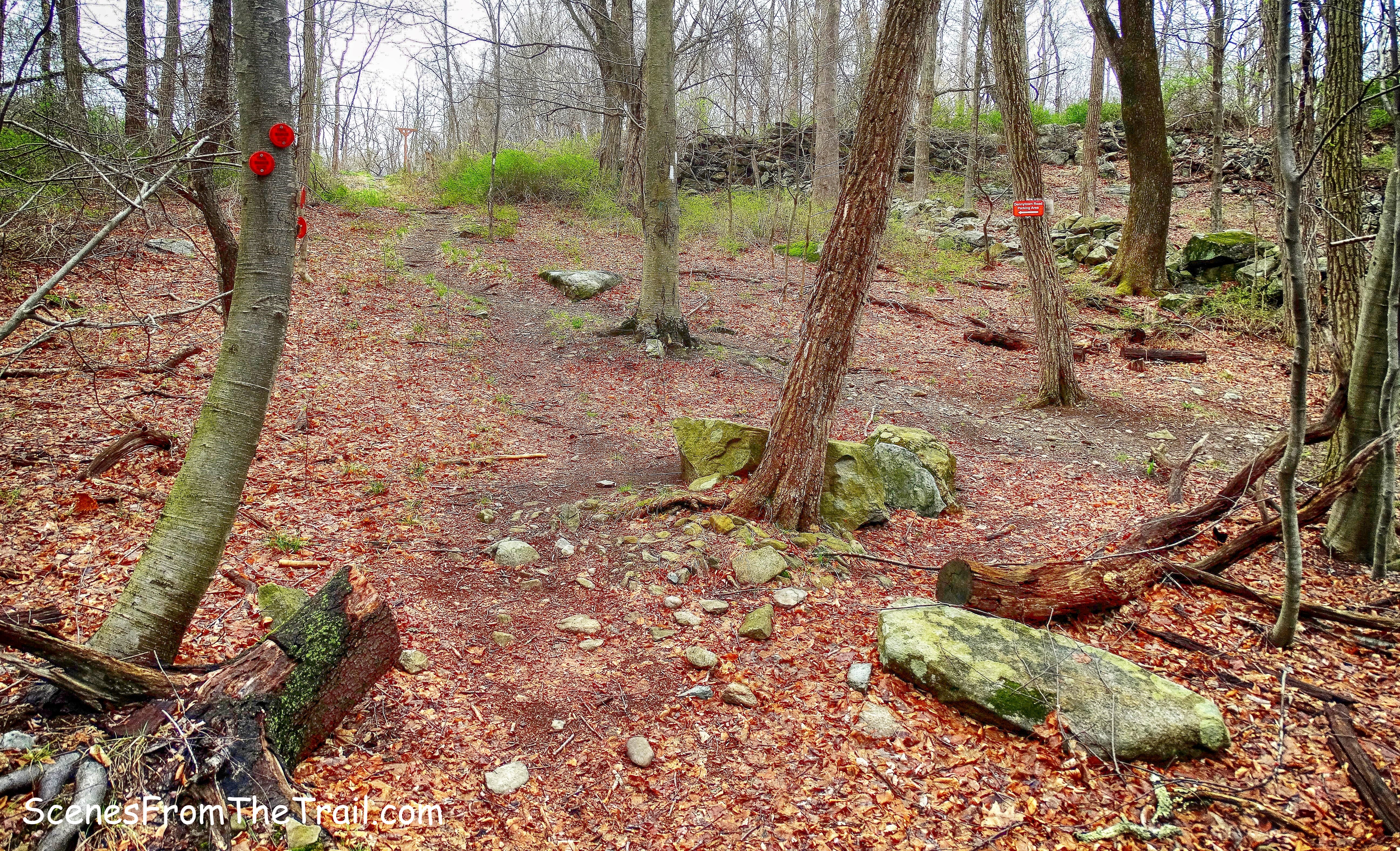
To the left of a huge boulder that is partially obscured by vegetation is the start of the triple black-square-on-yellow blazed Manaticut Point Spur Trail.

start of the Manaticut Point Spur Trail

start of the Manaticut Point Spur Trail

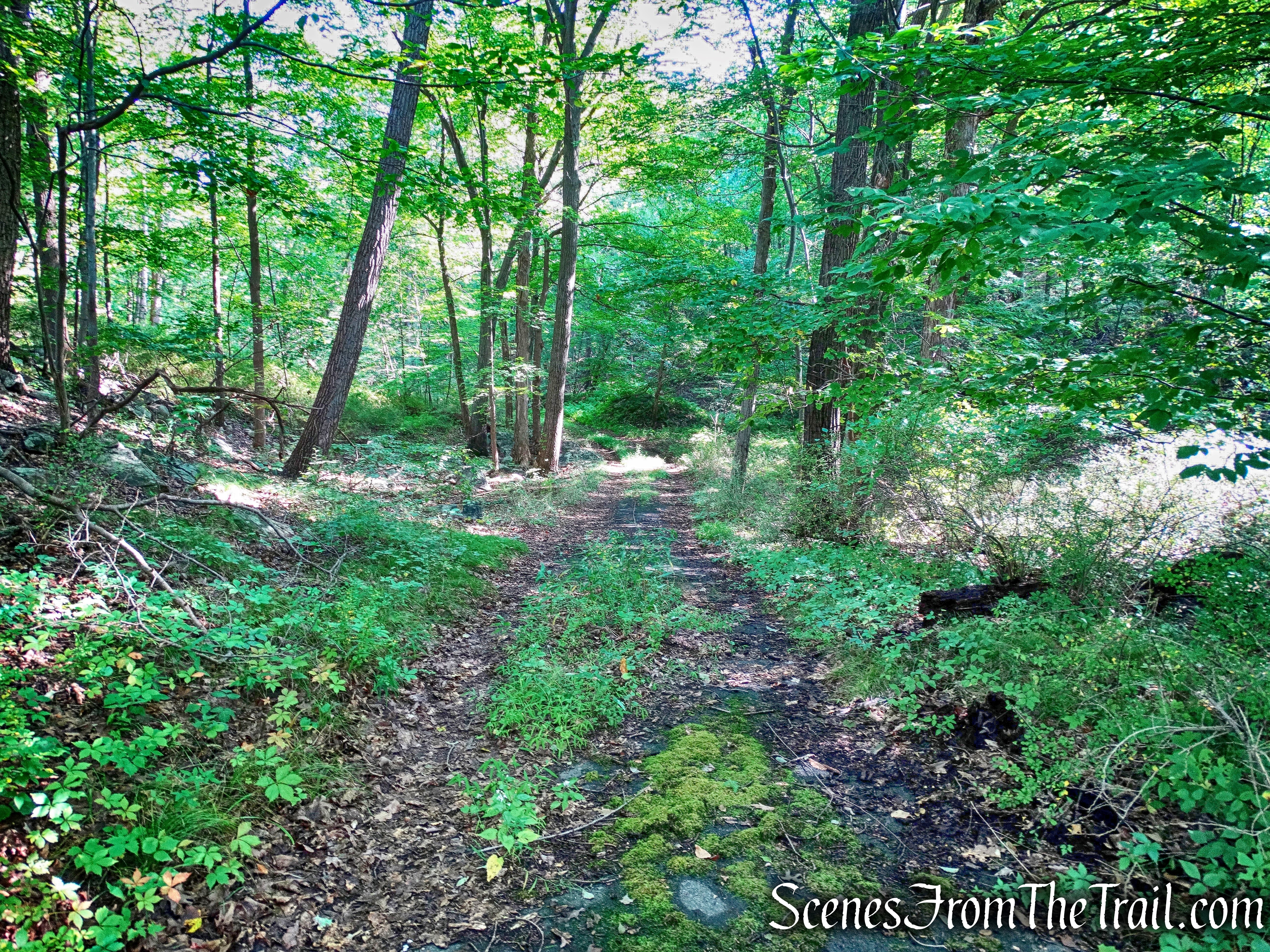
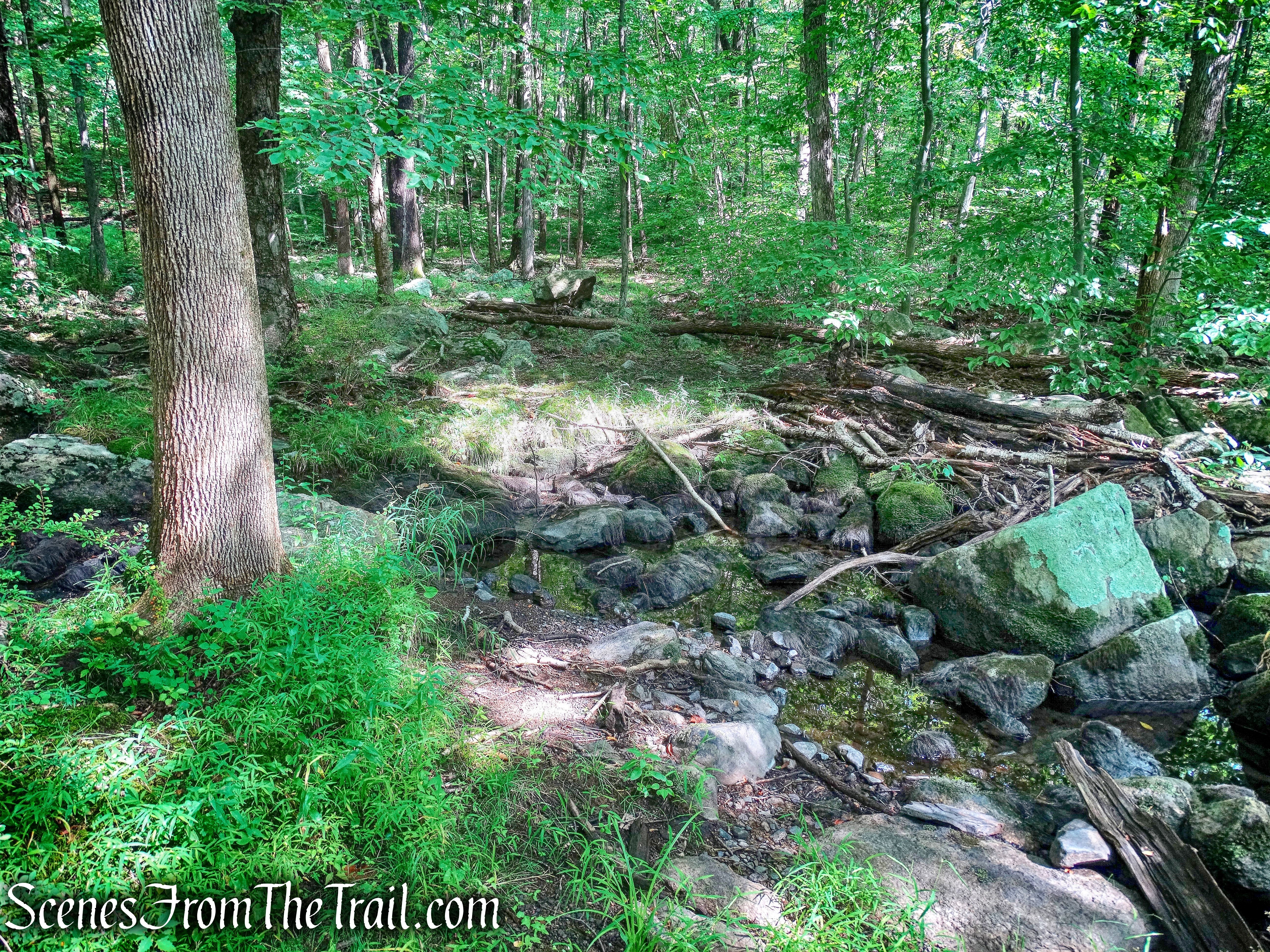
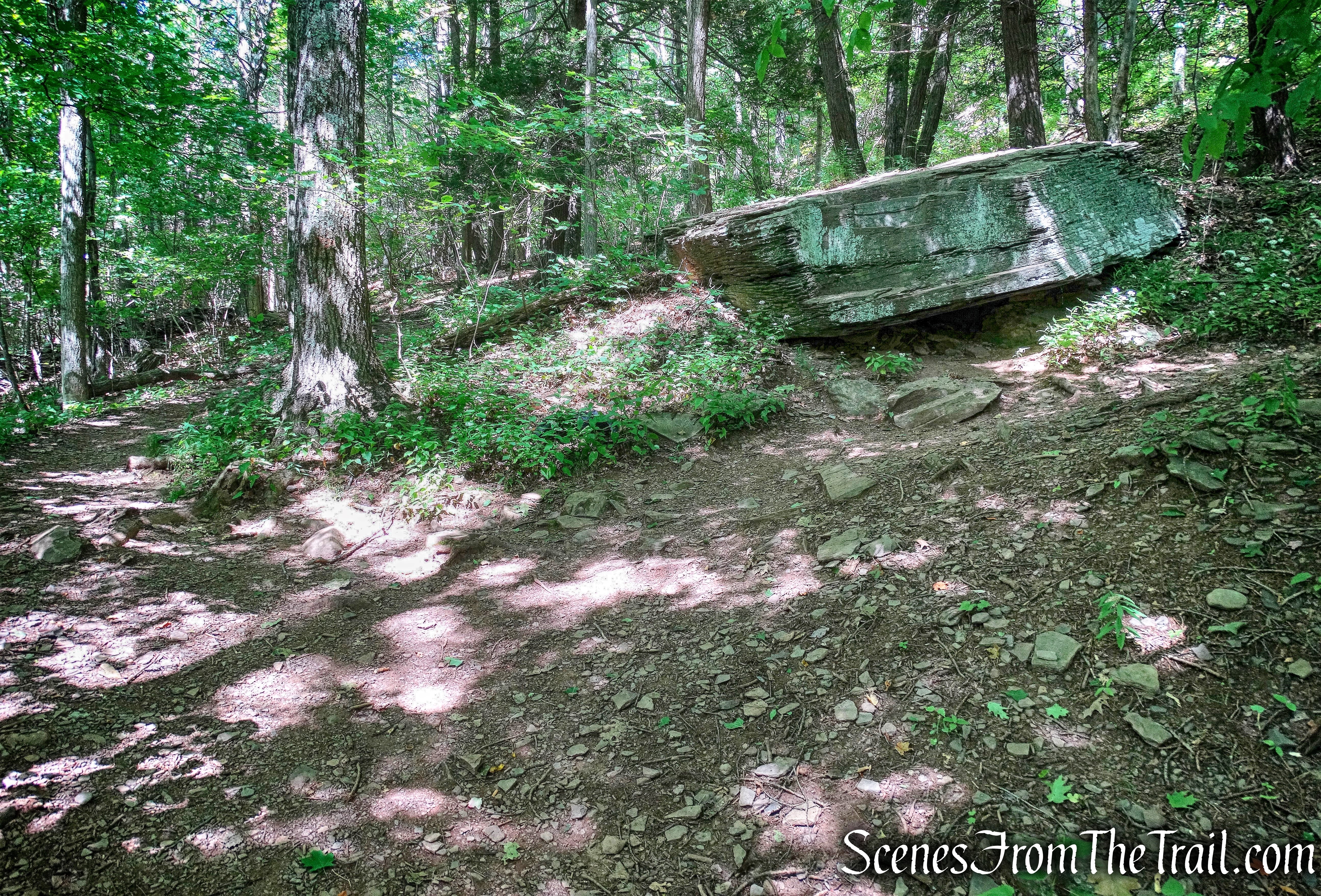
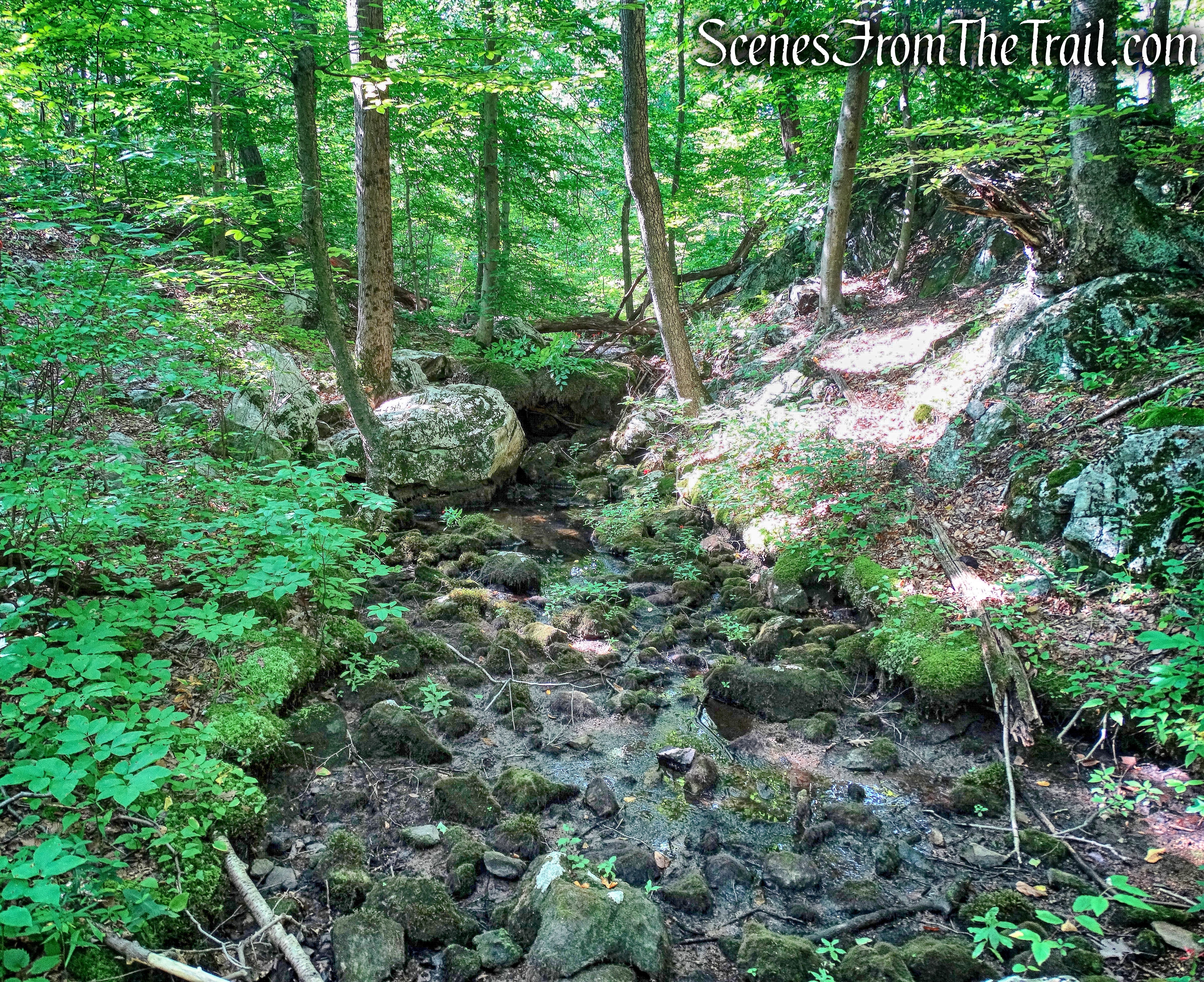
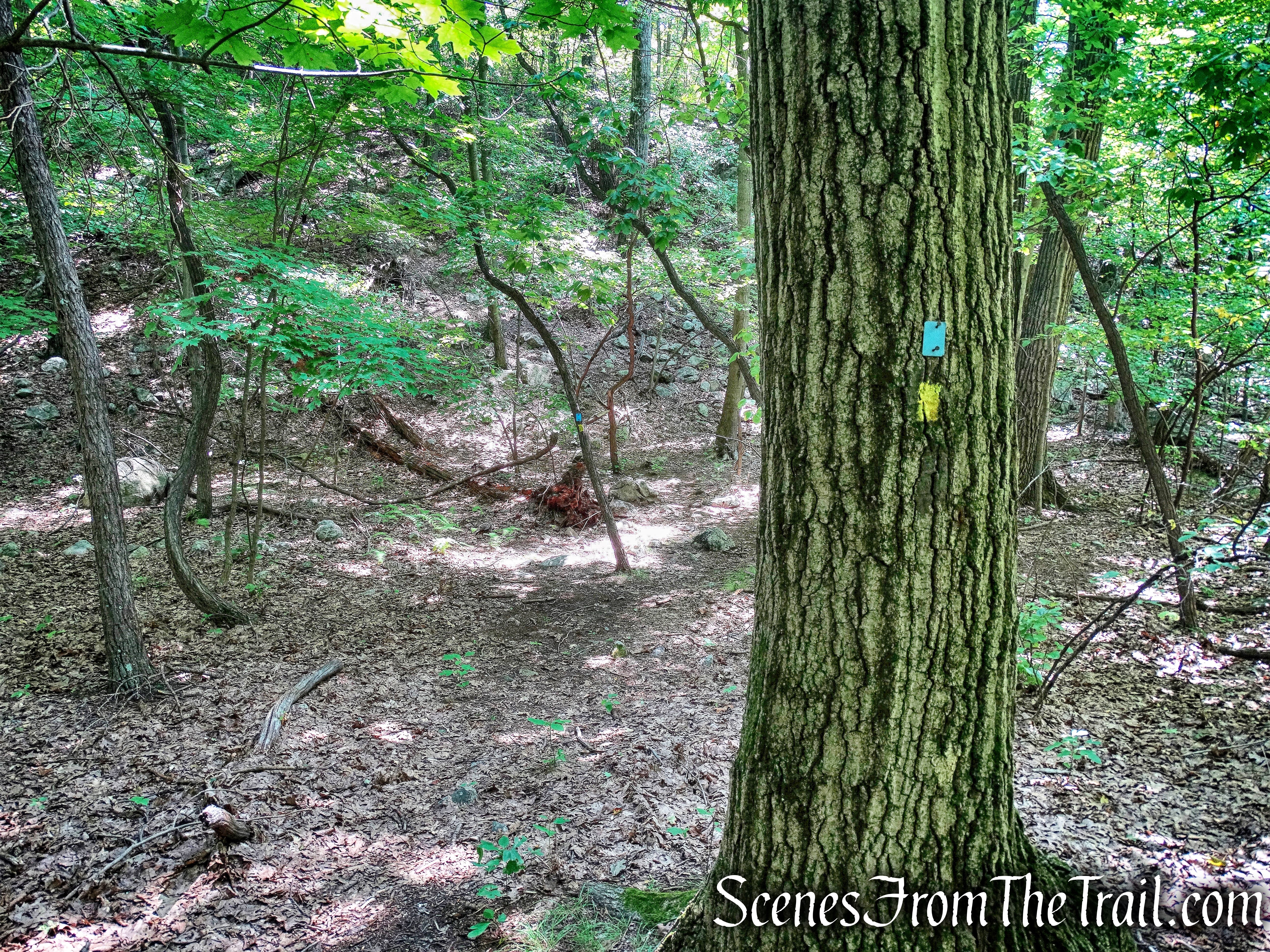
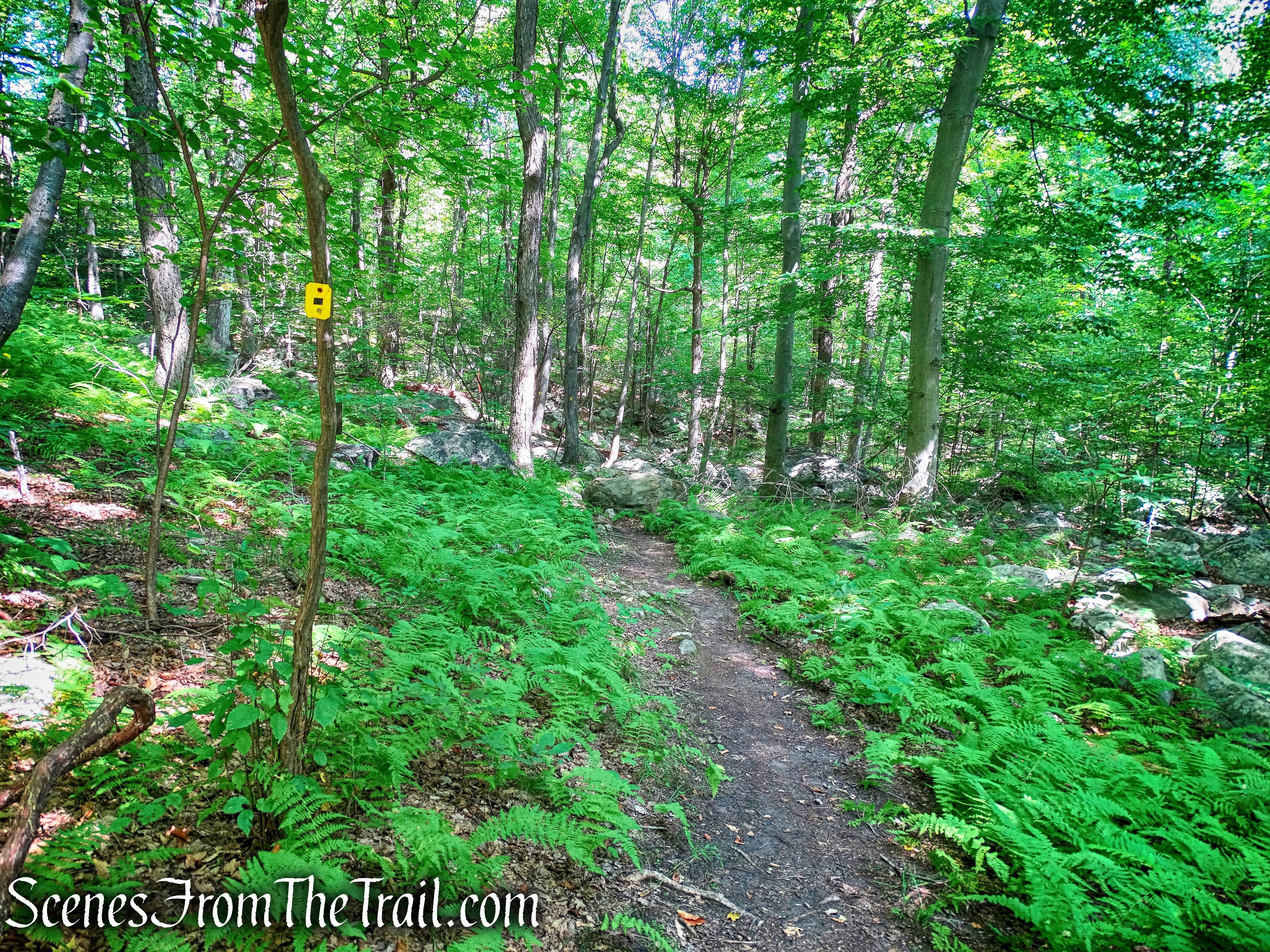
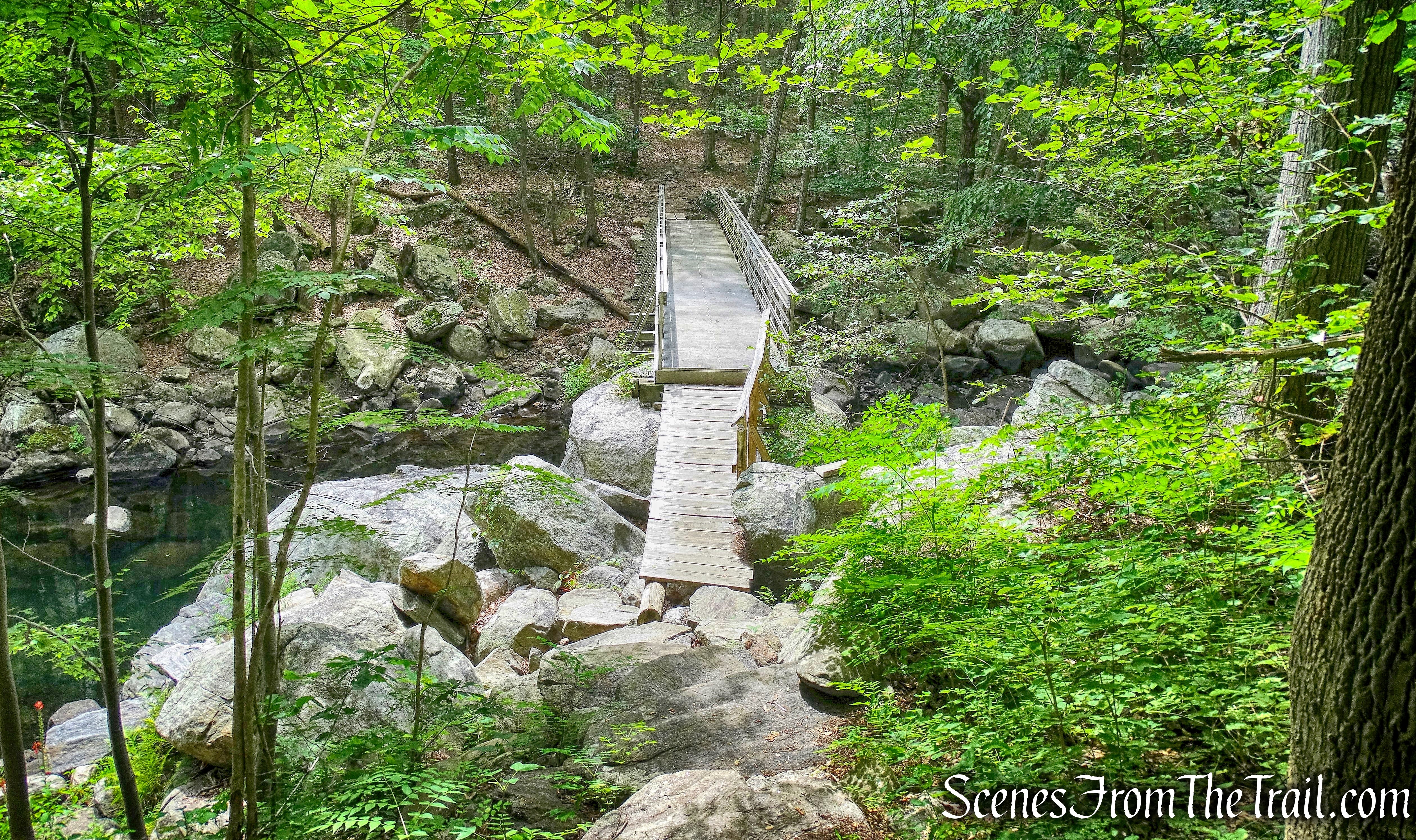
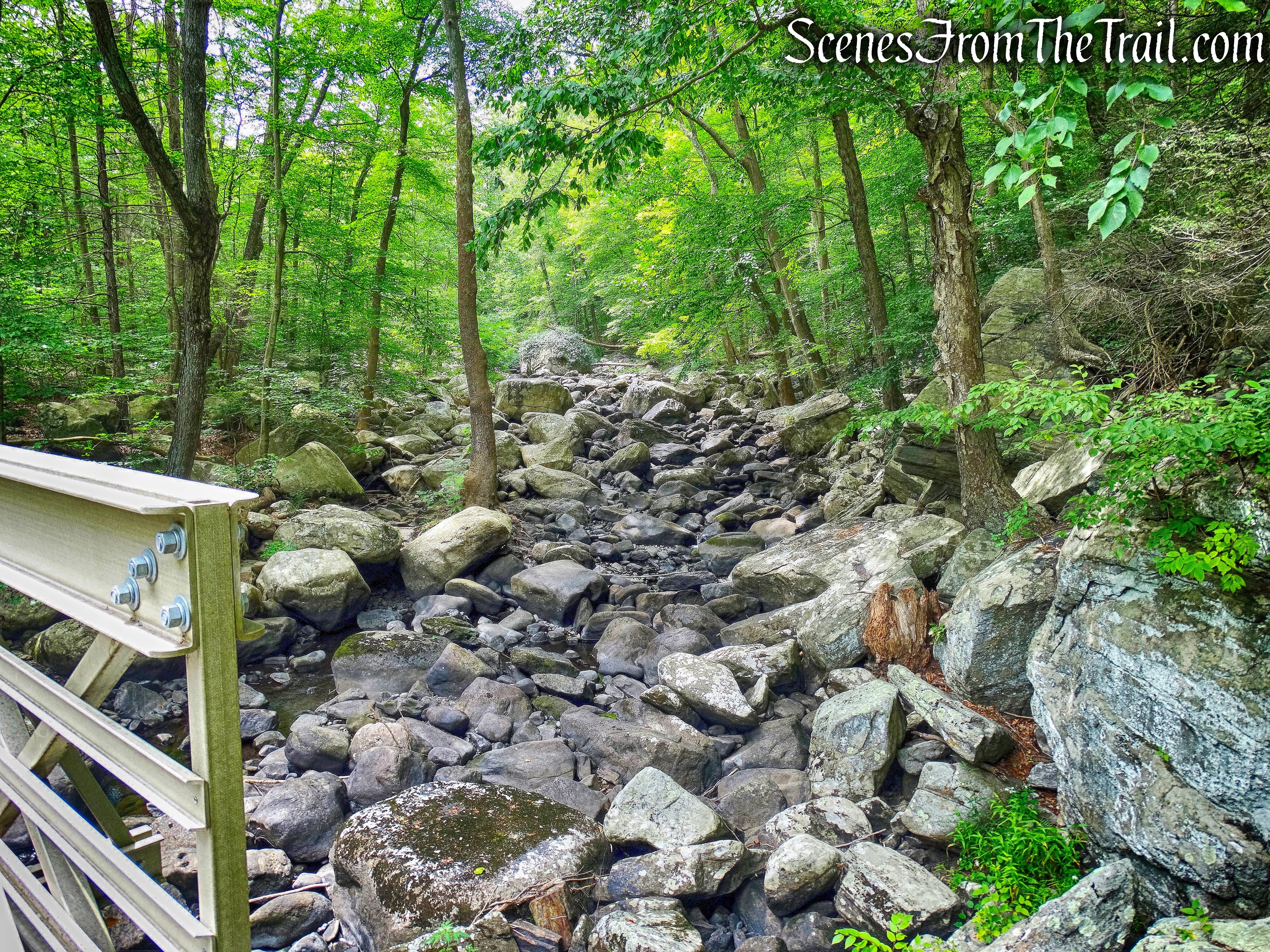
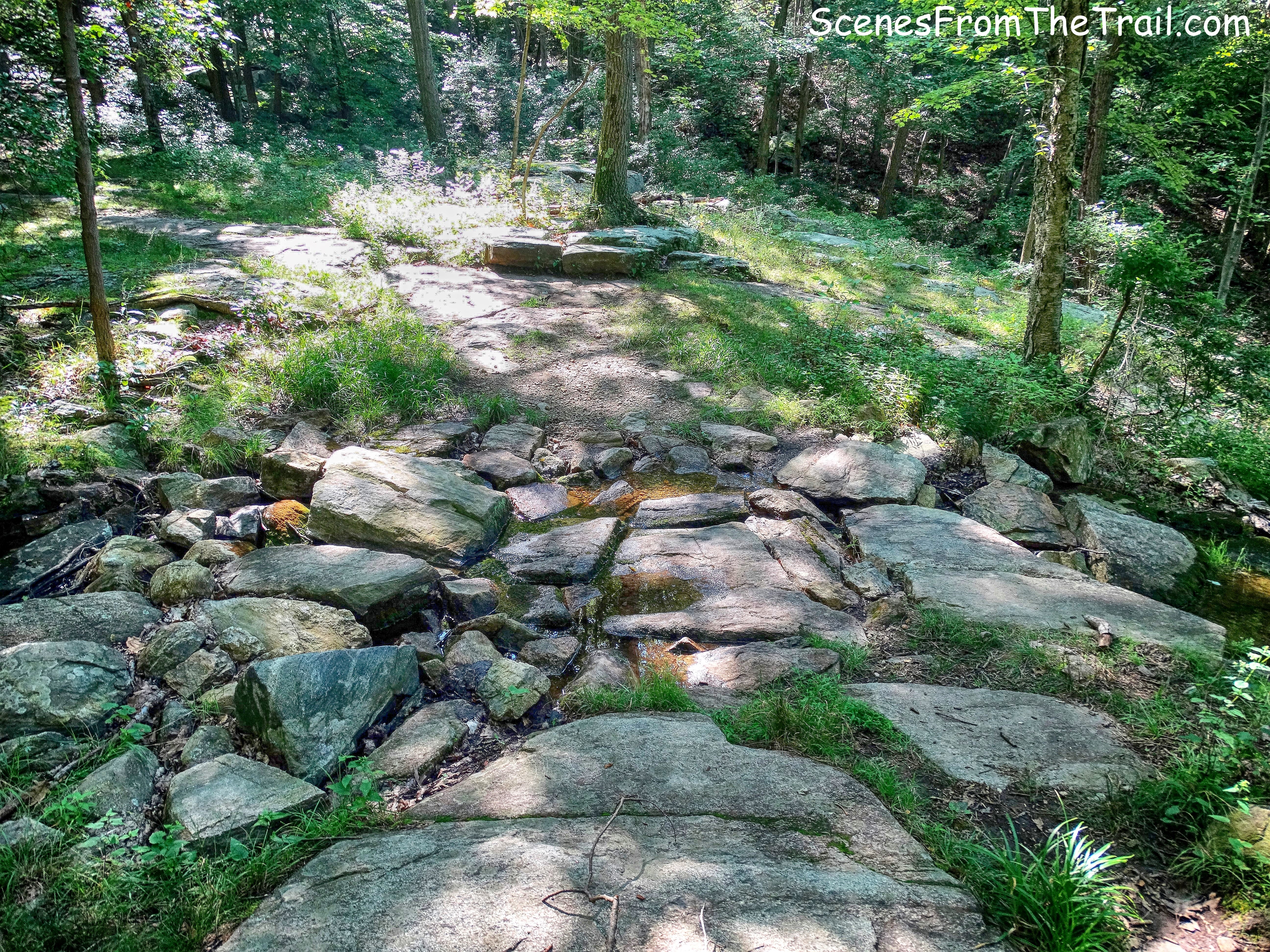
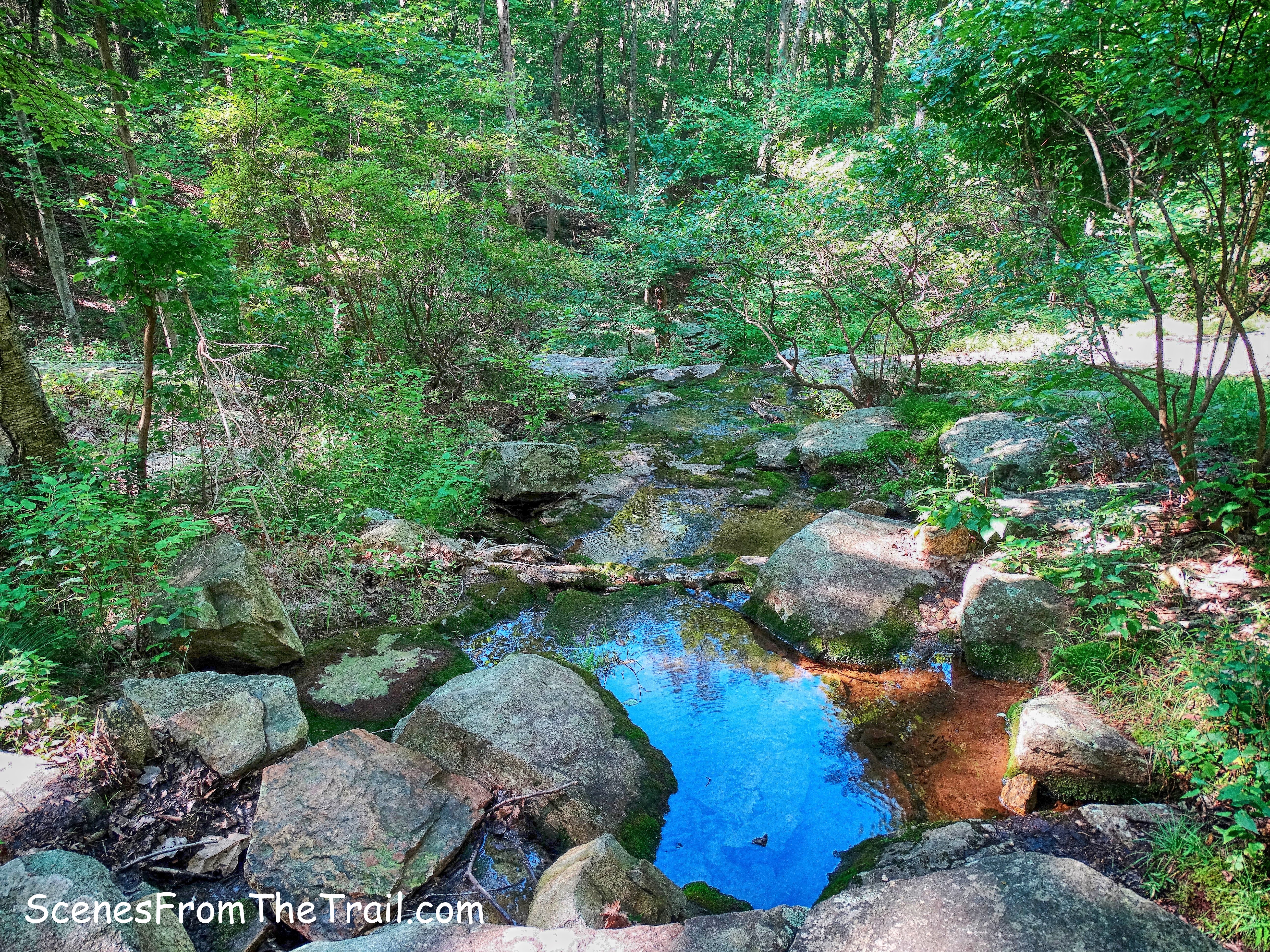
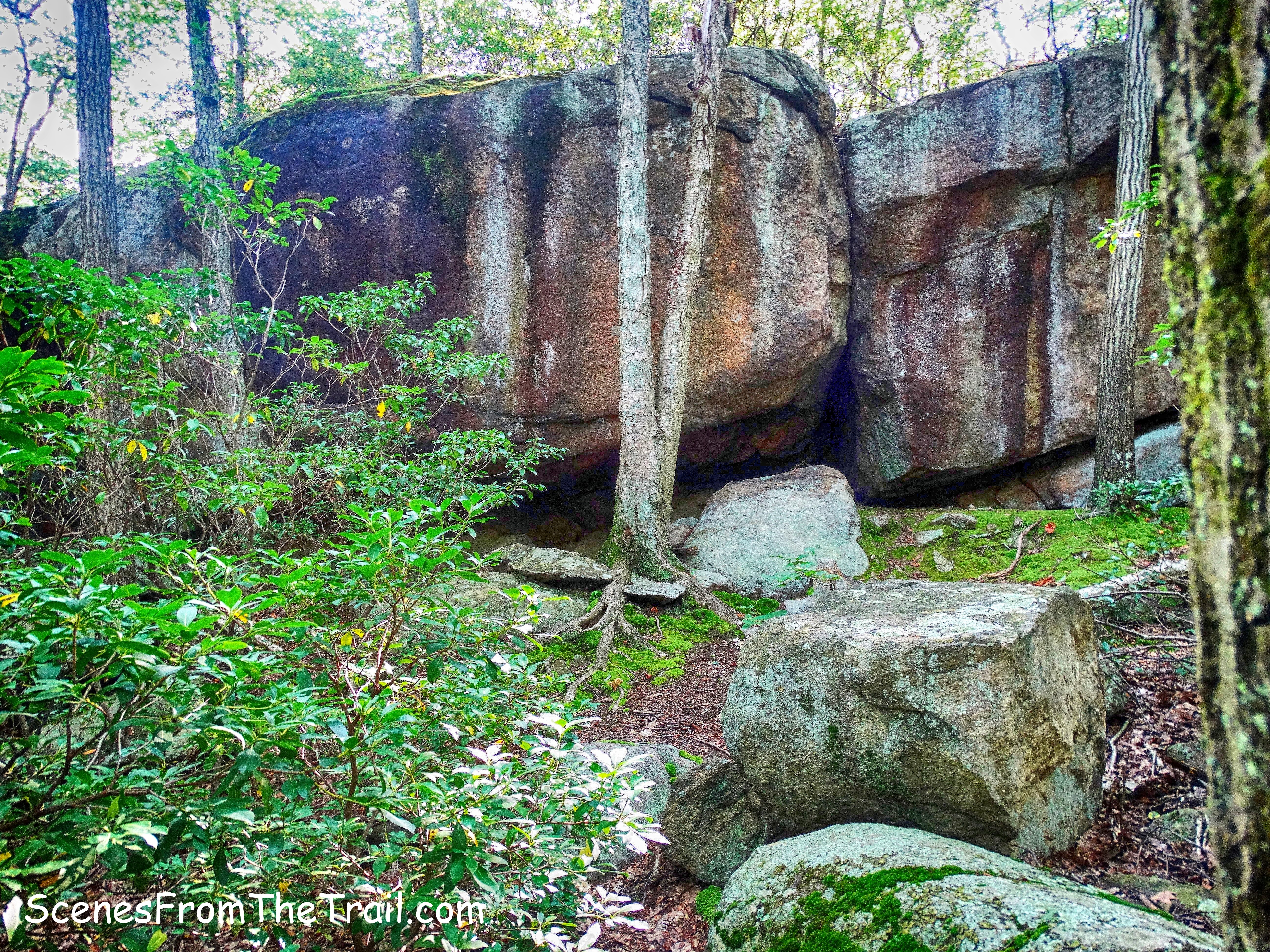
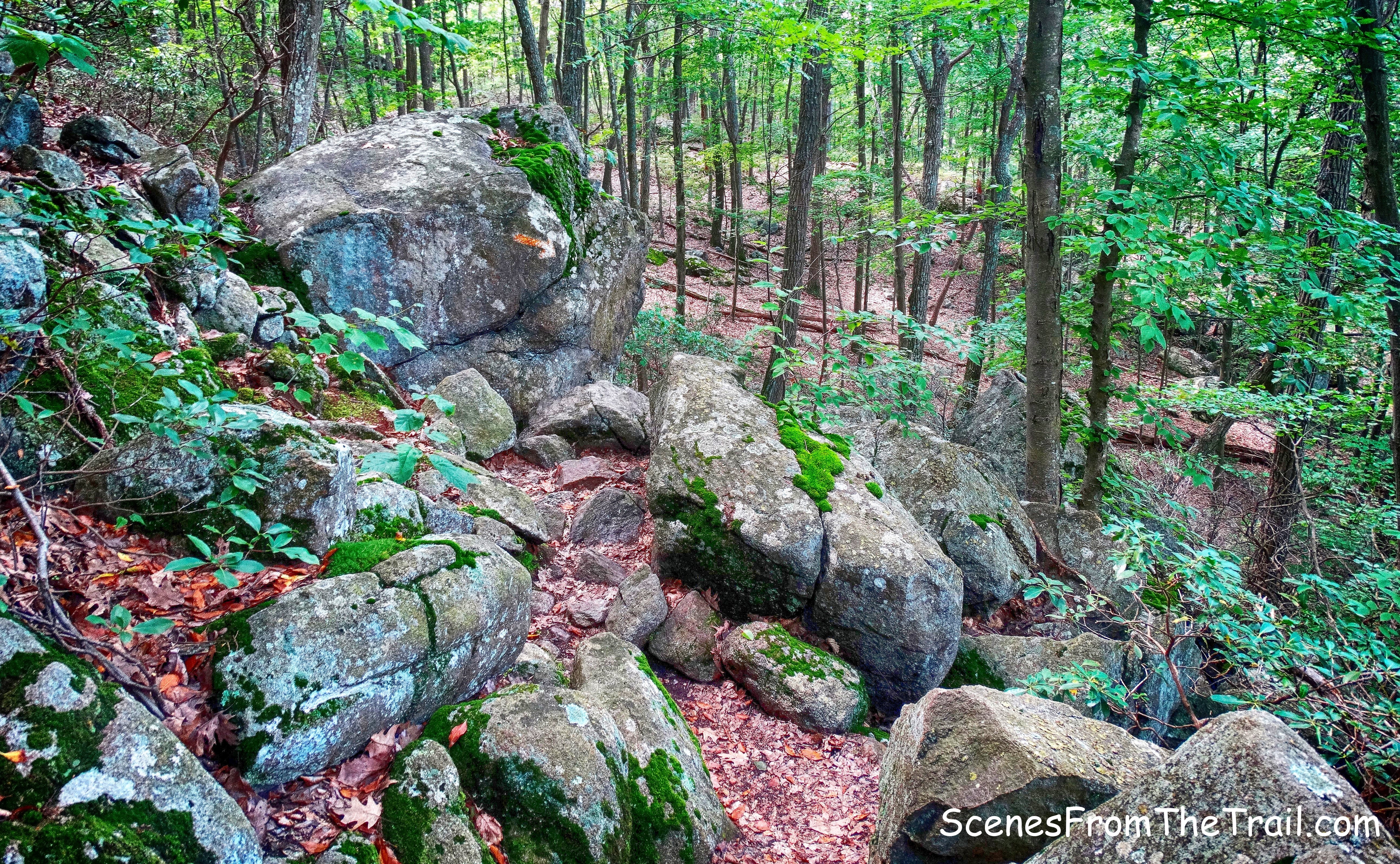
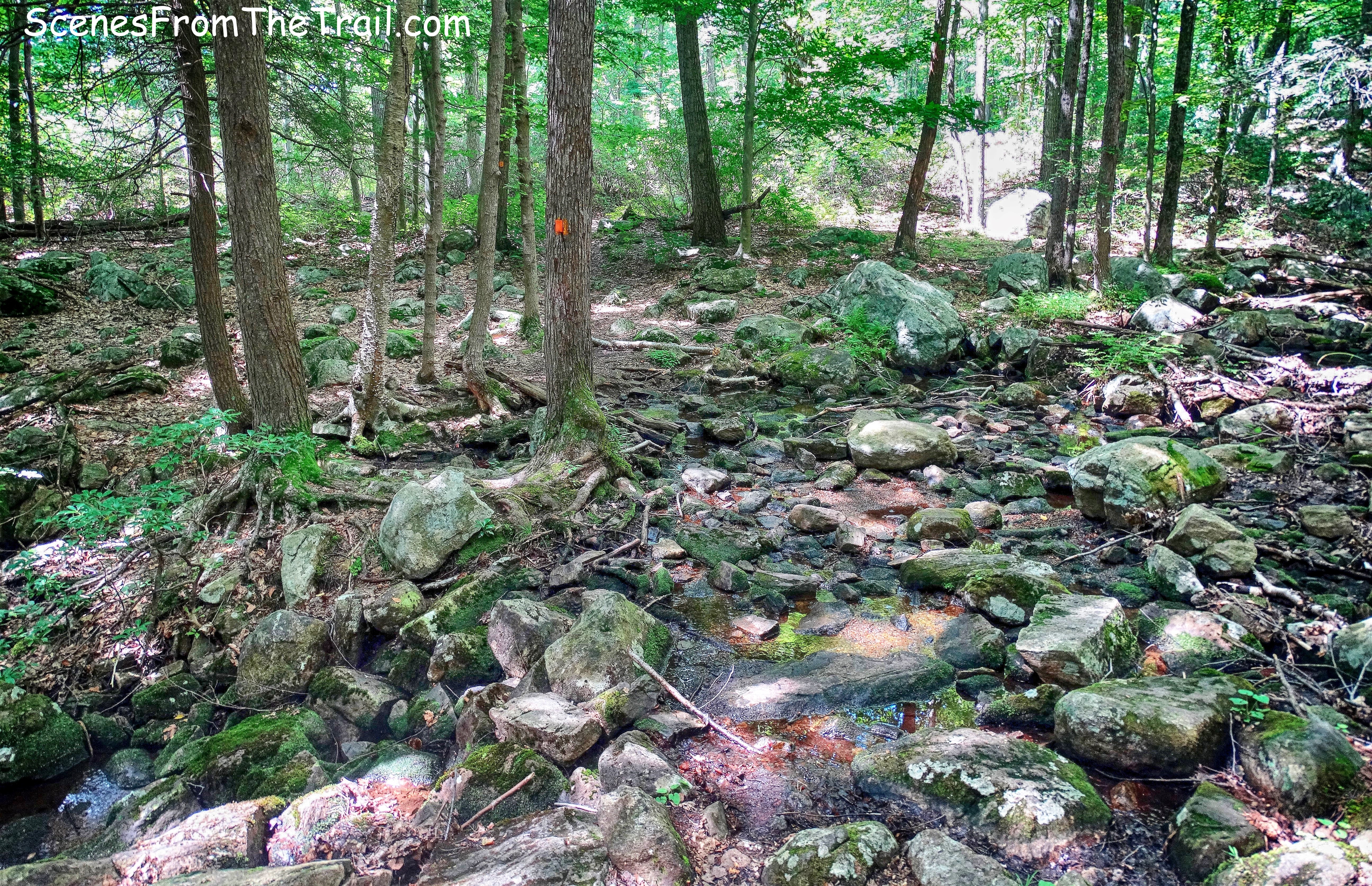
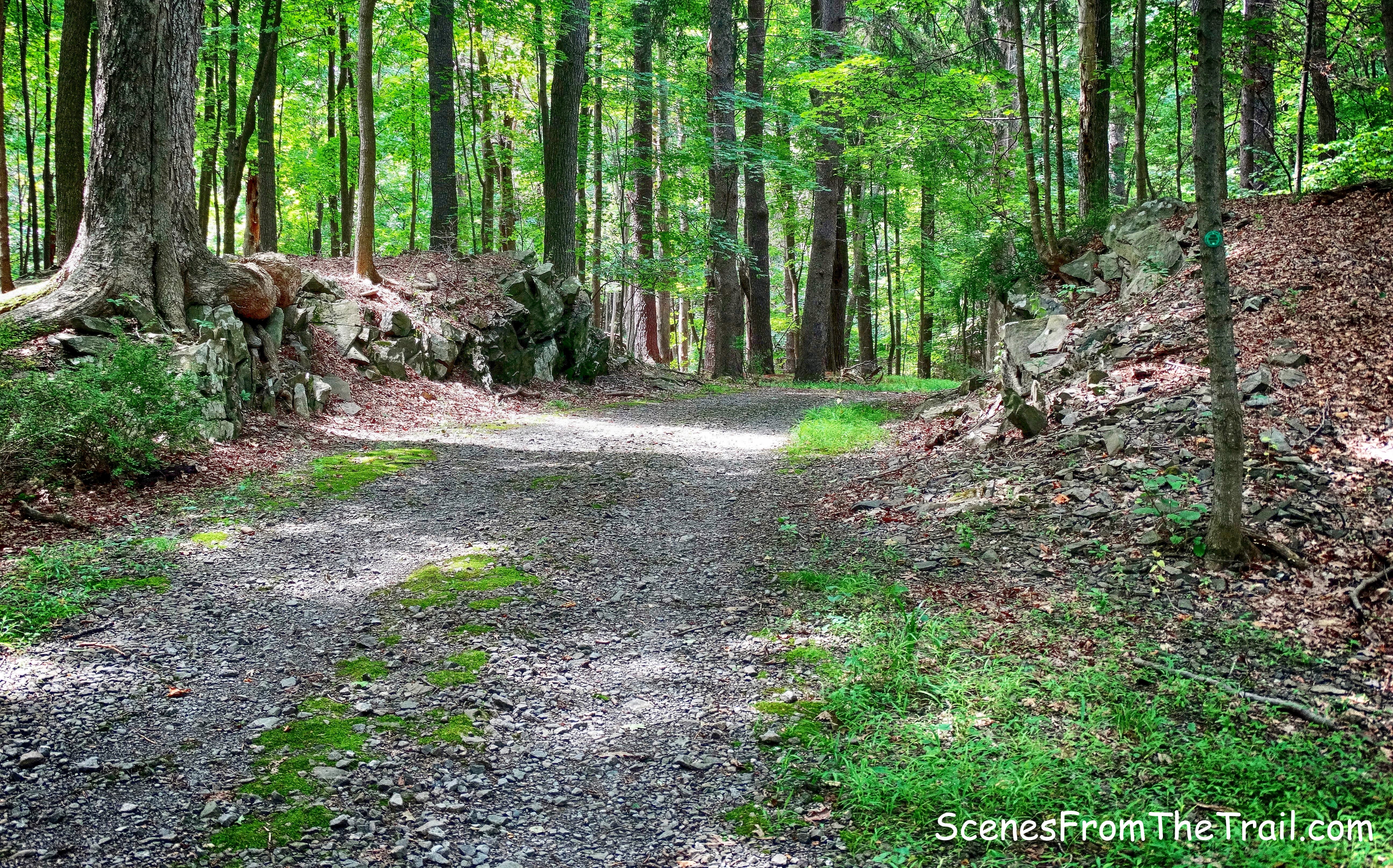
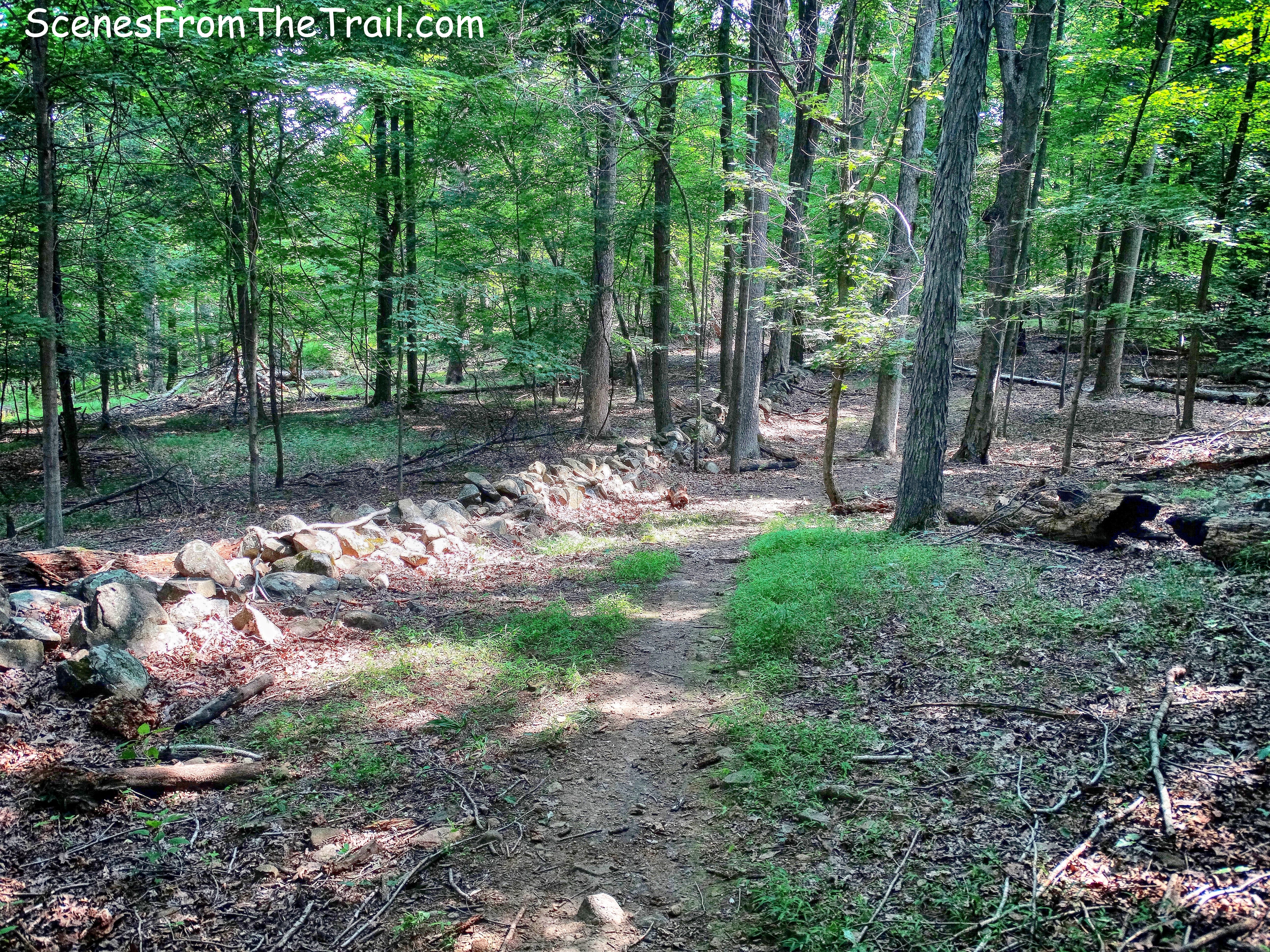
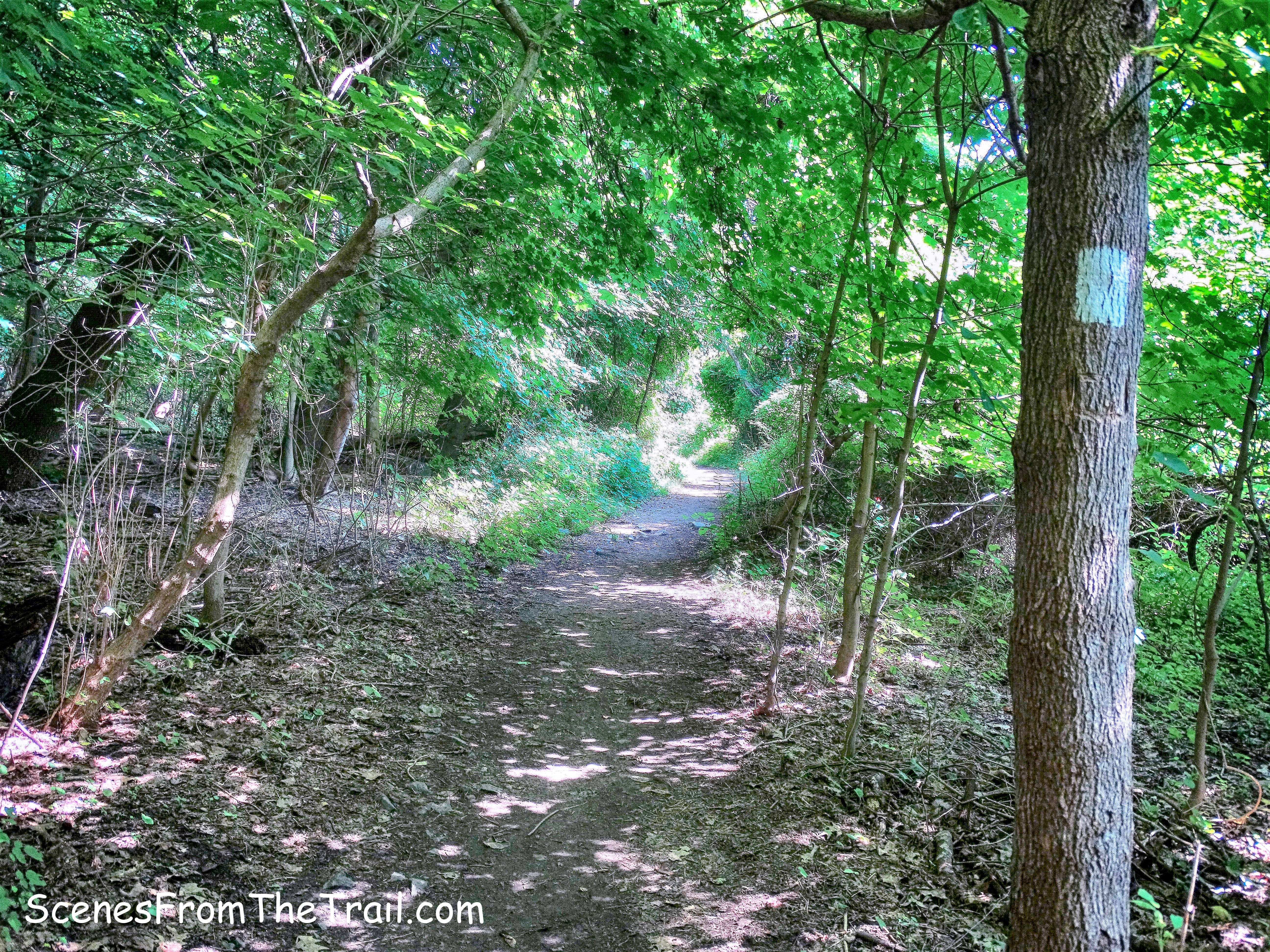
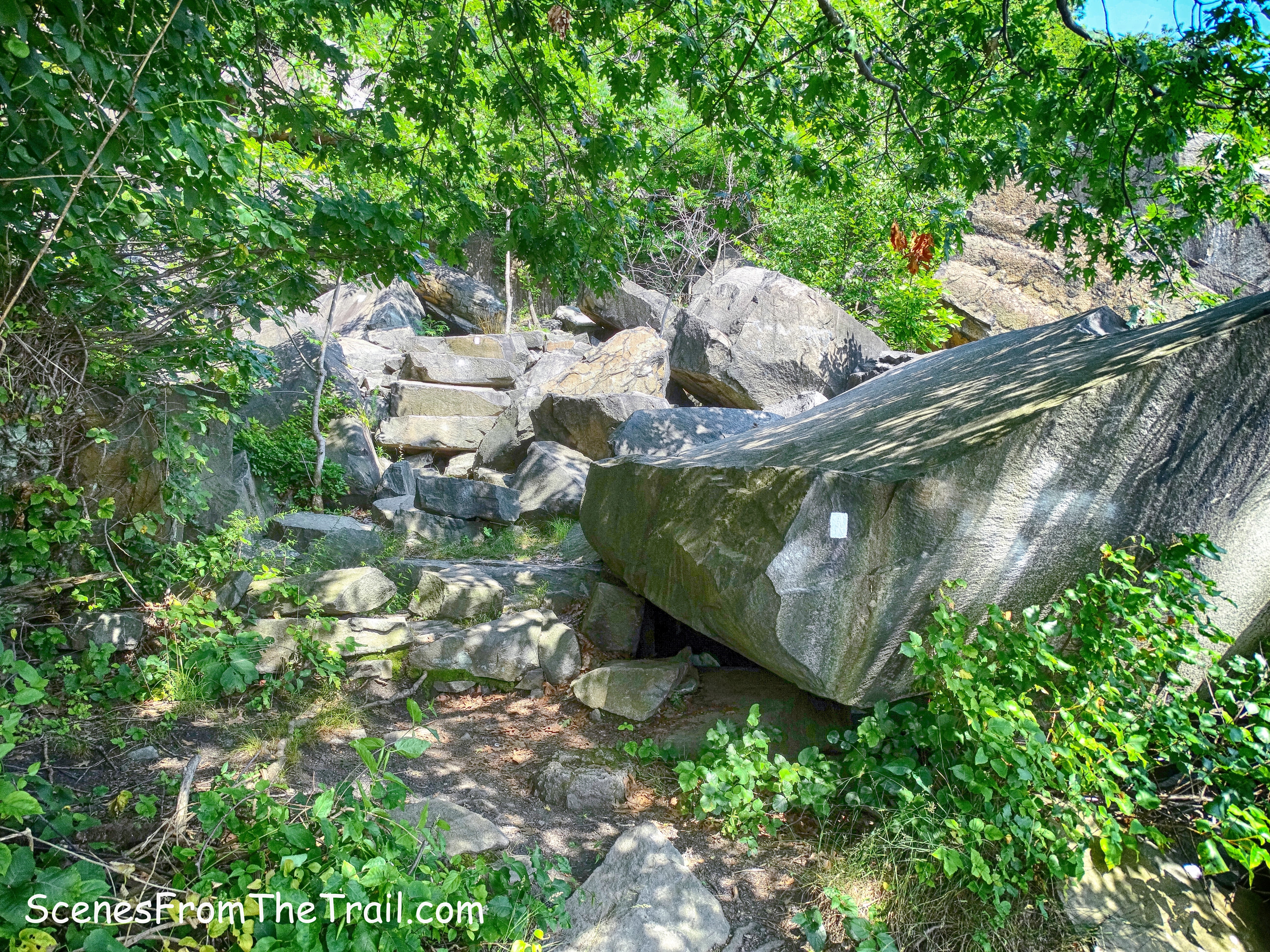
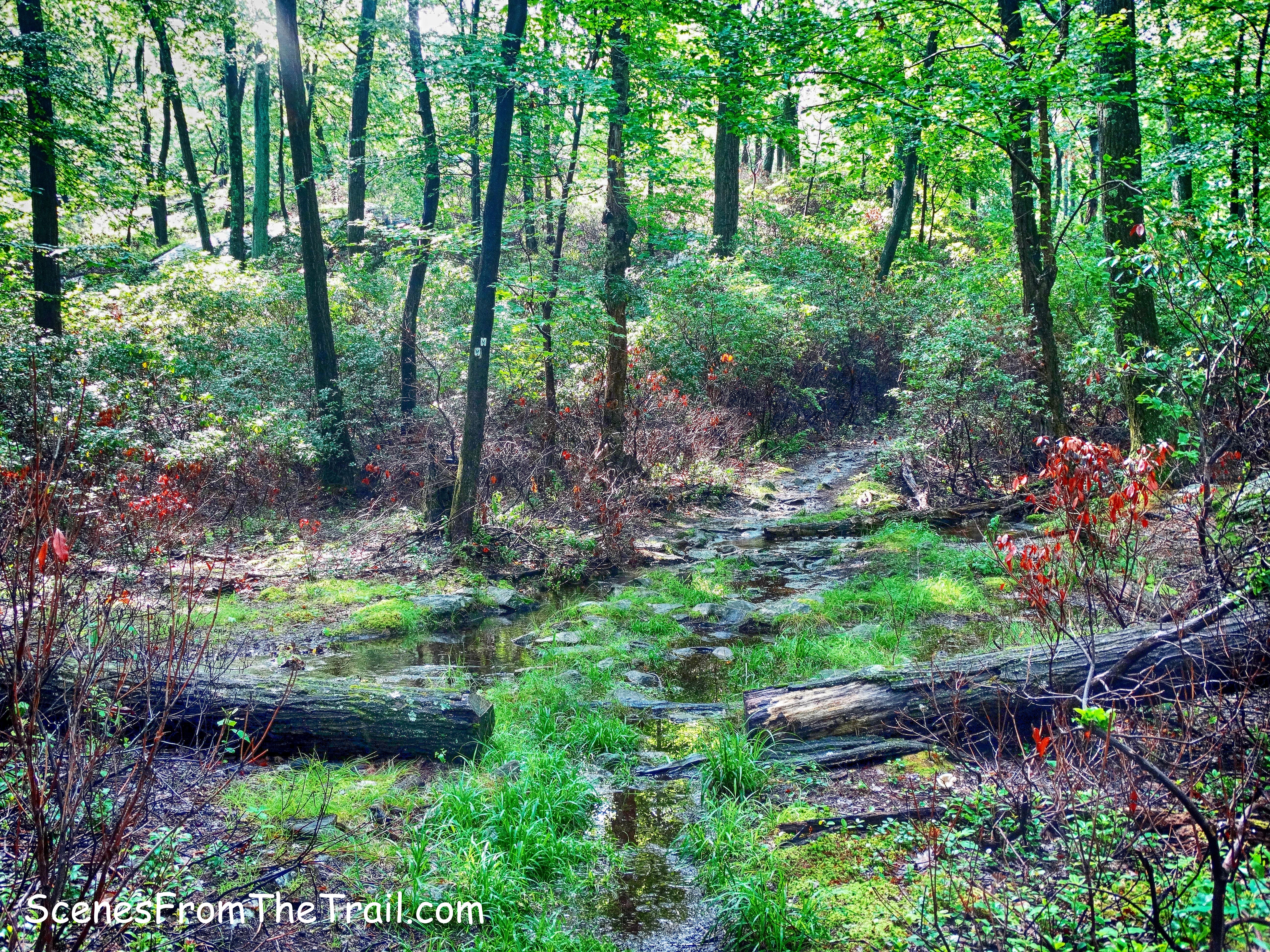
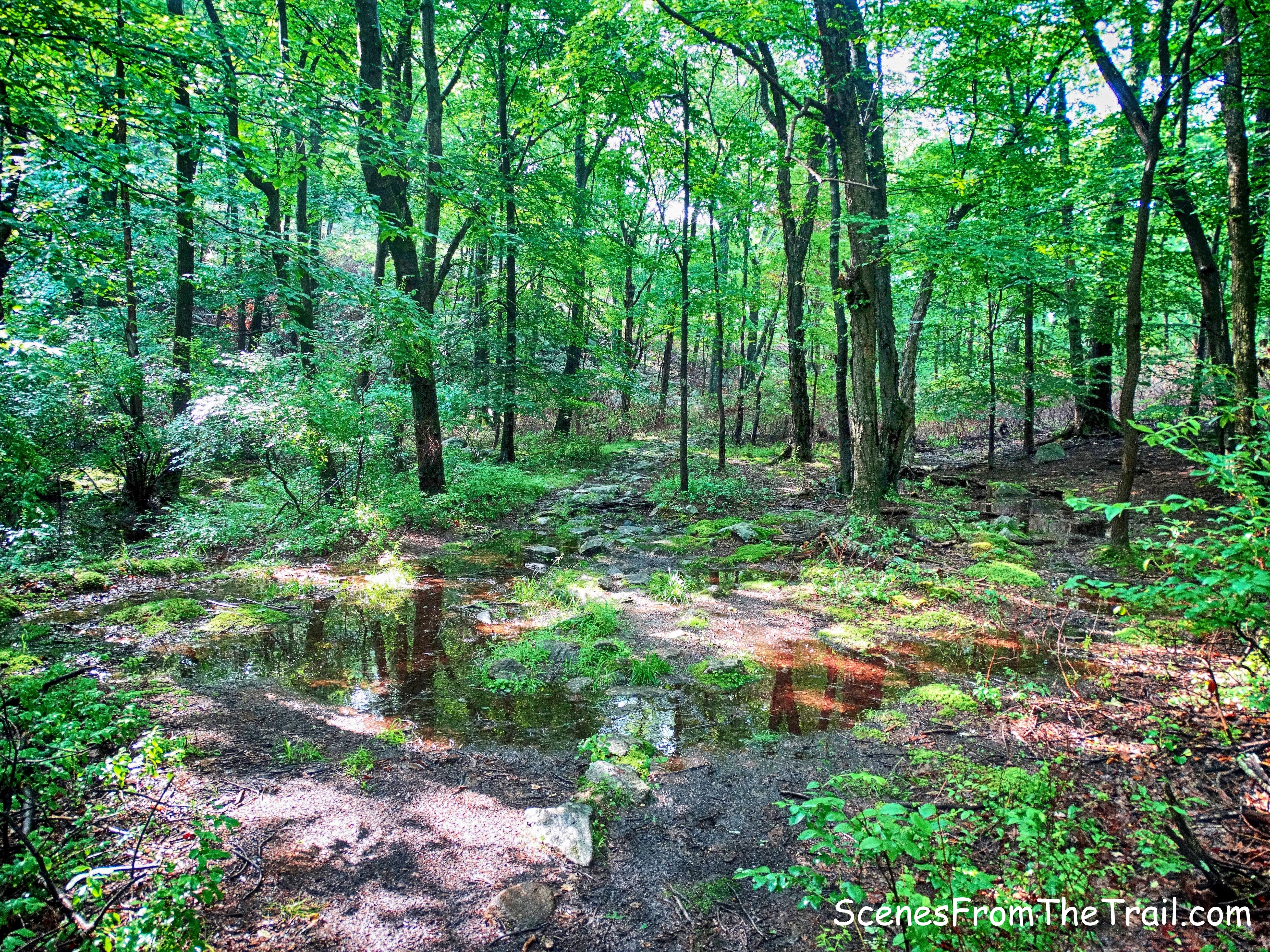
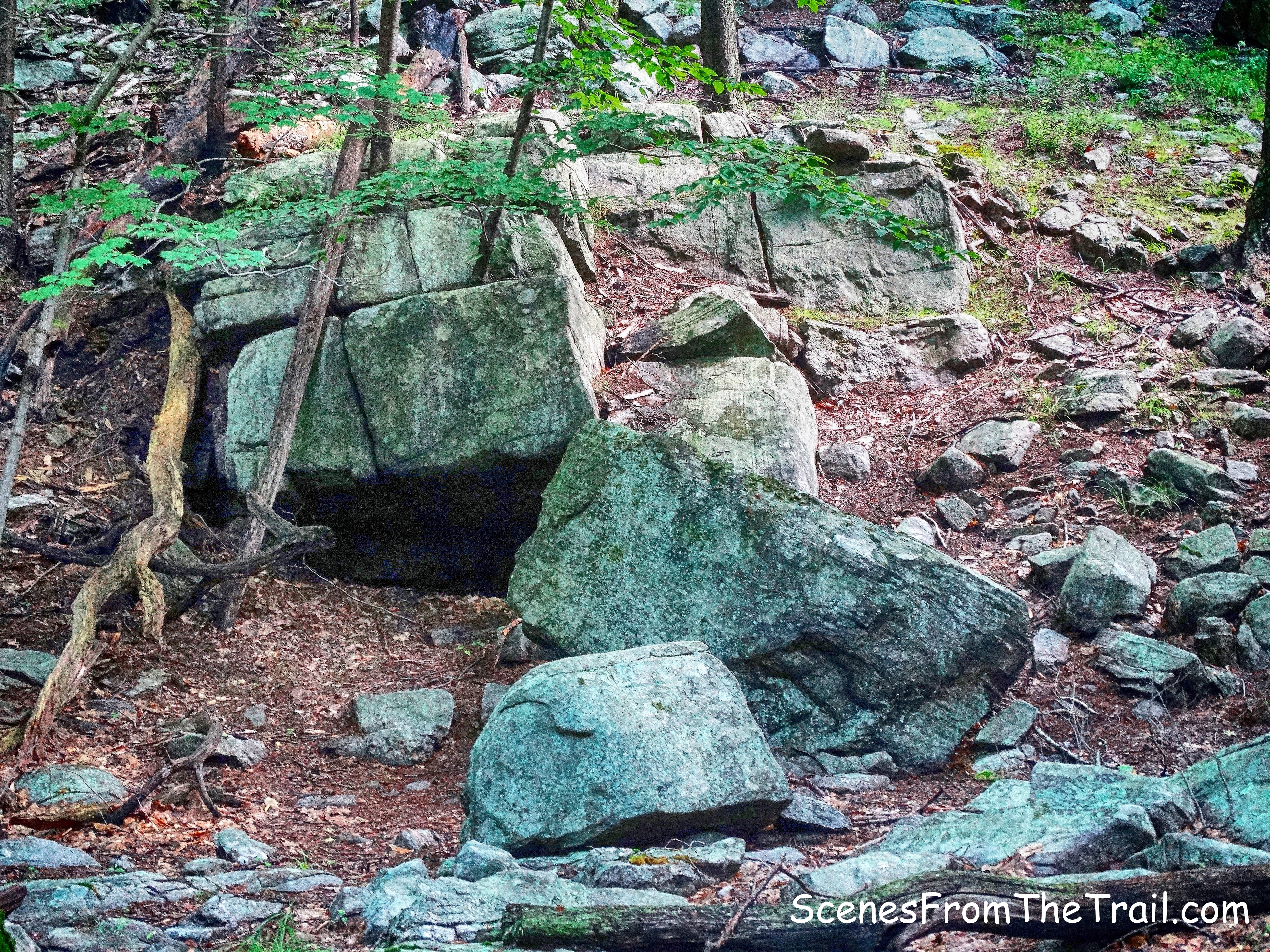
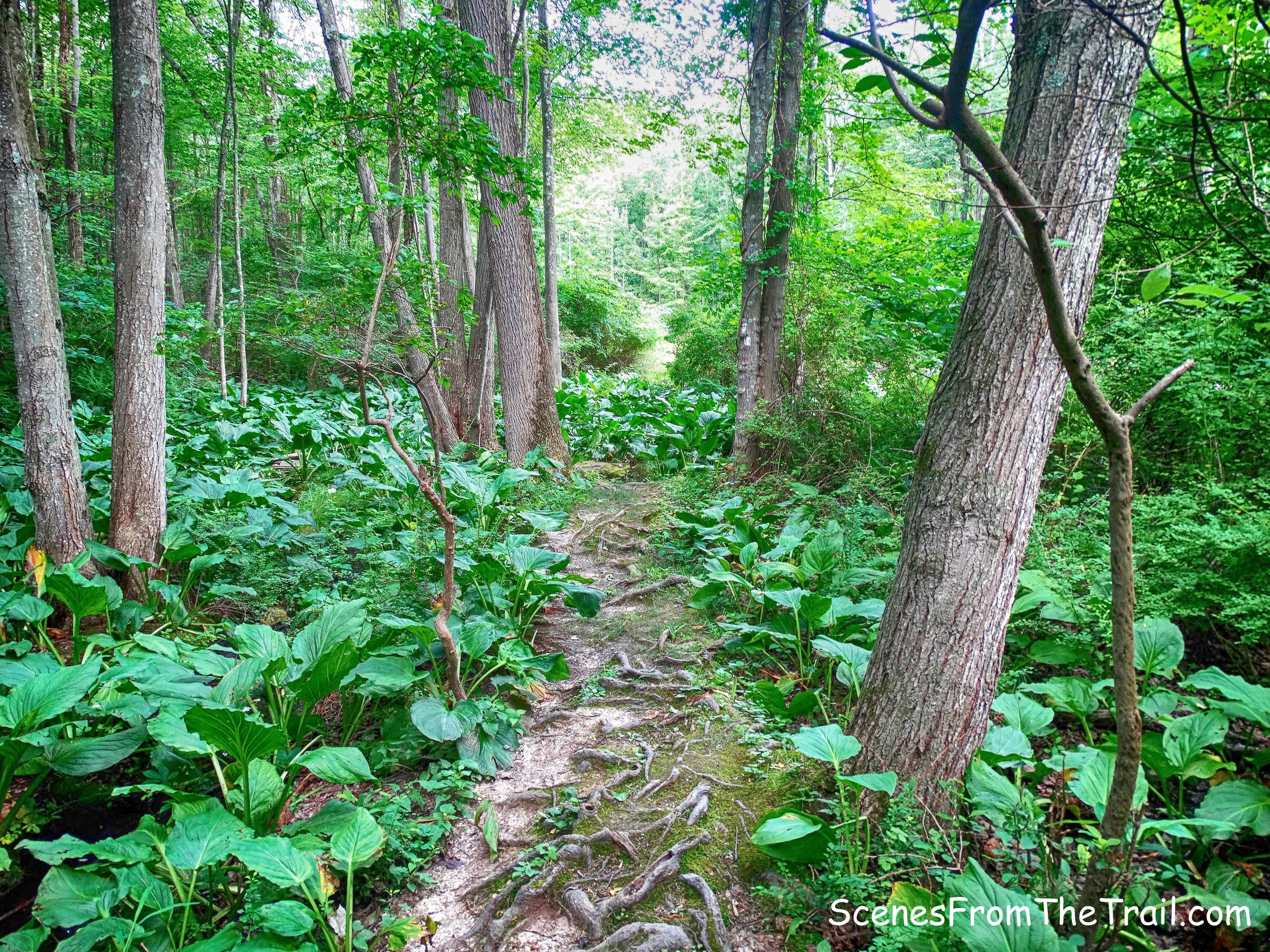
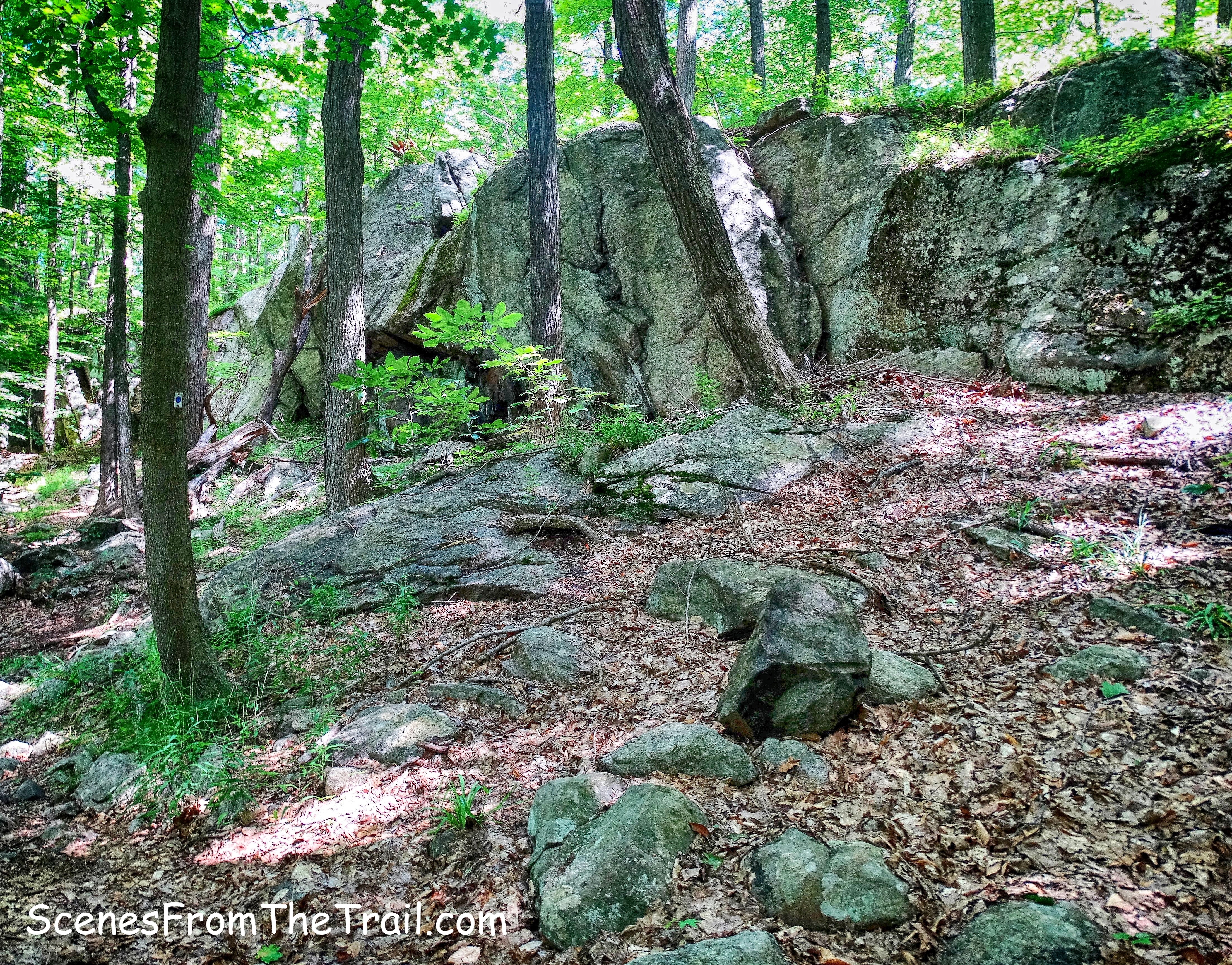
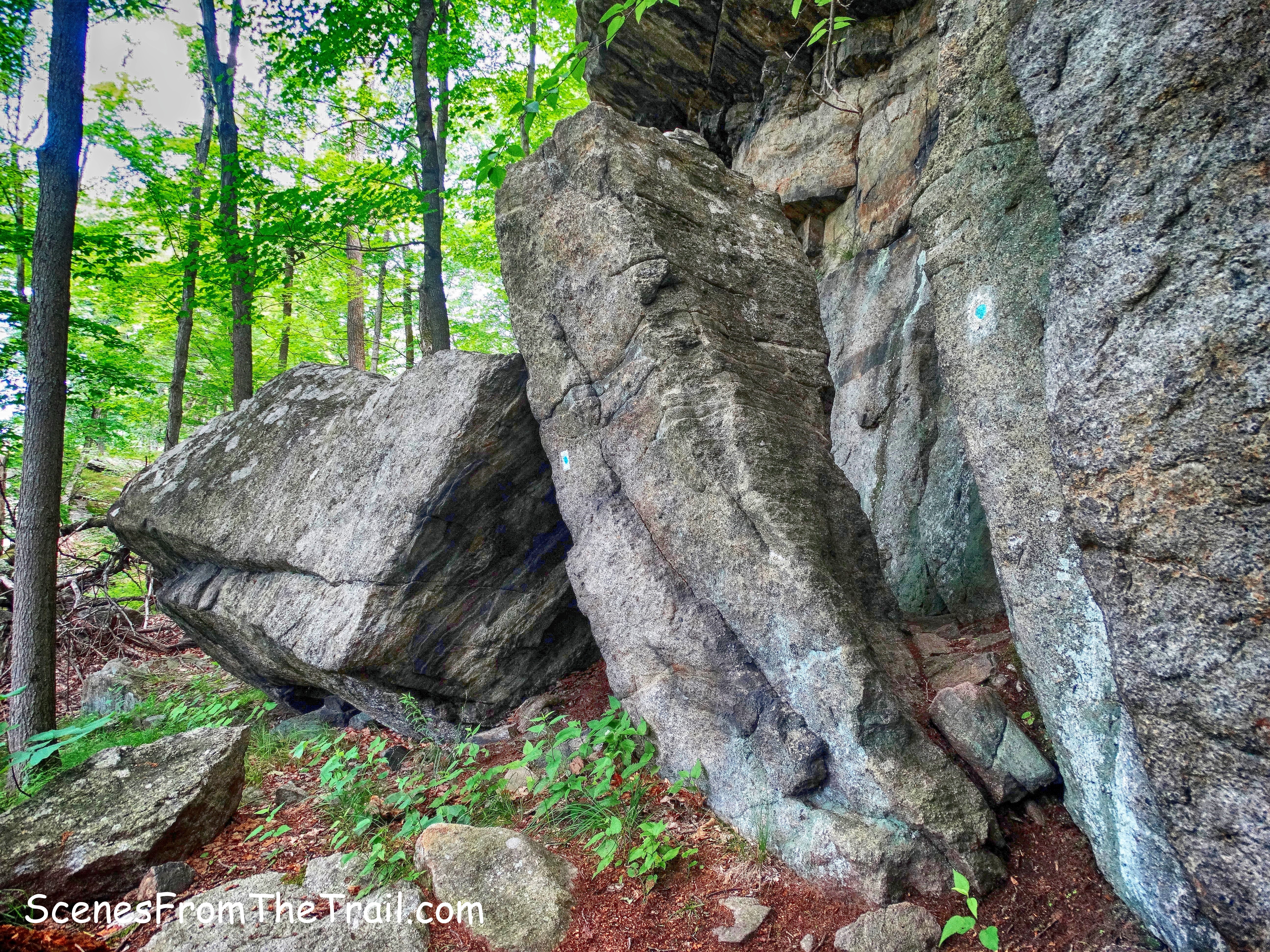
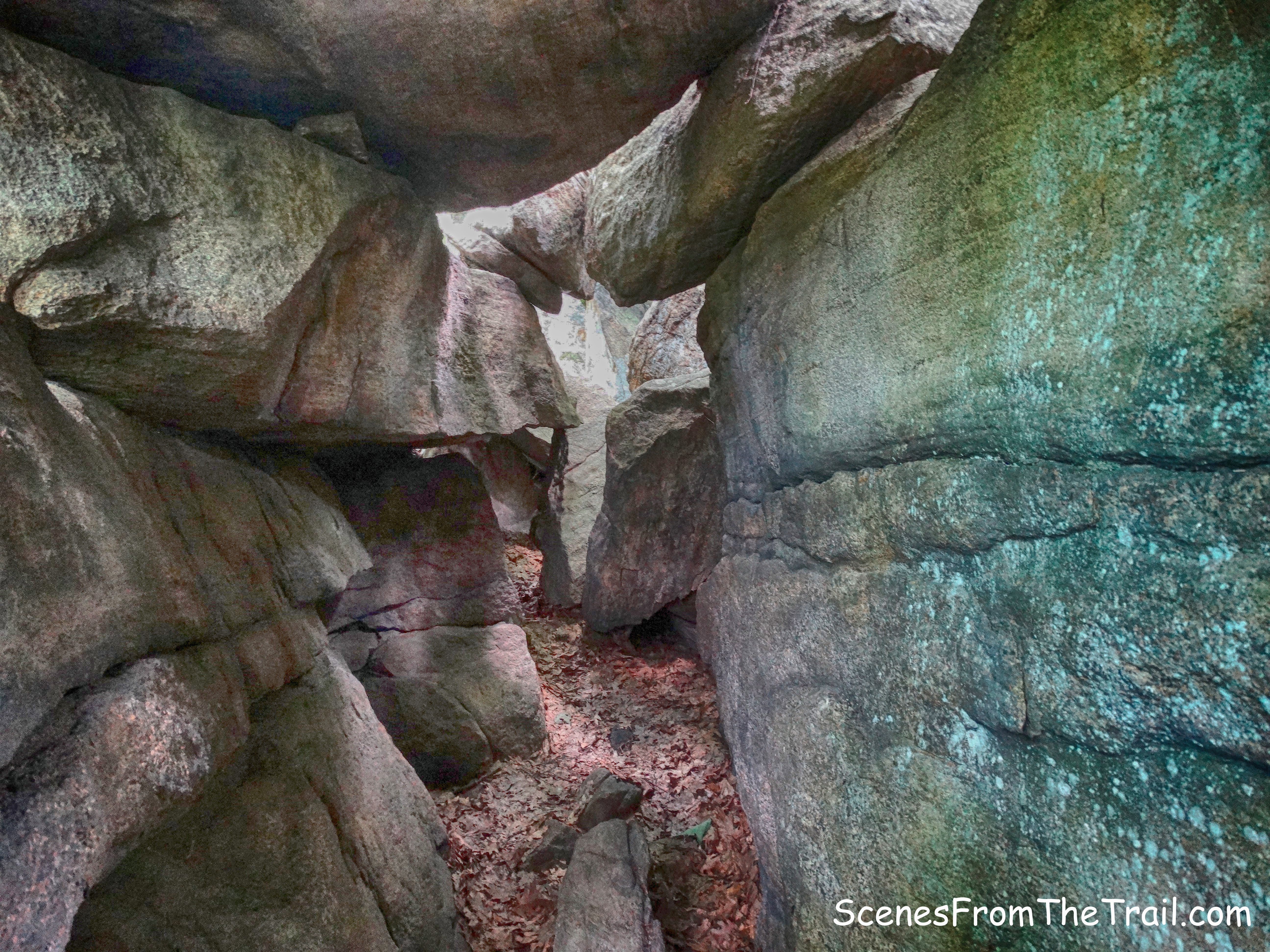
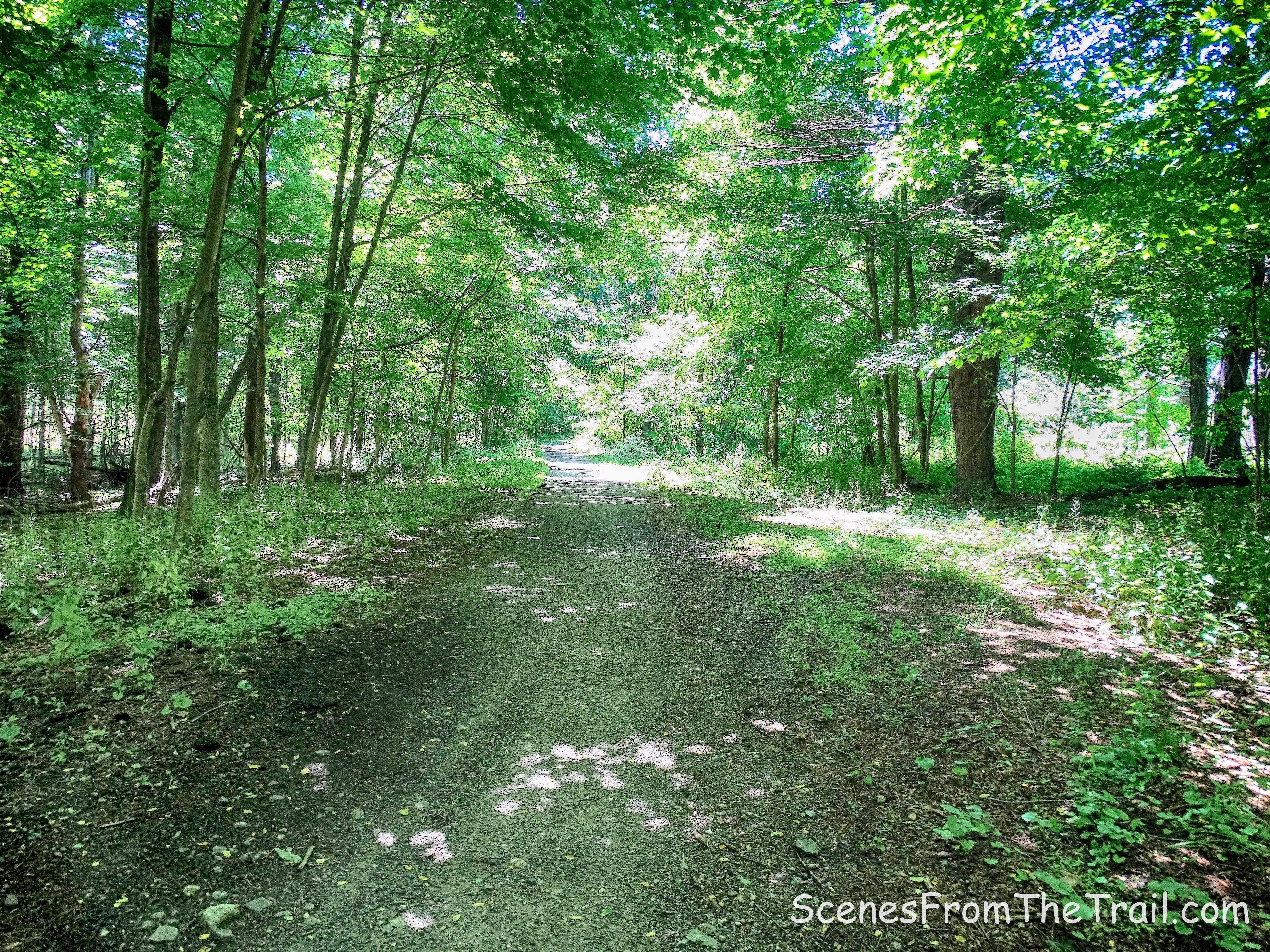
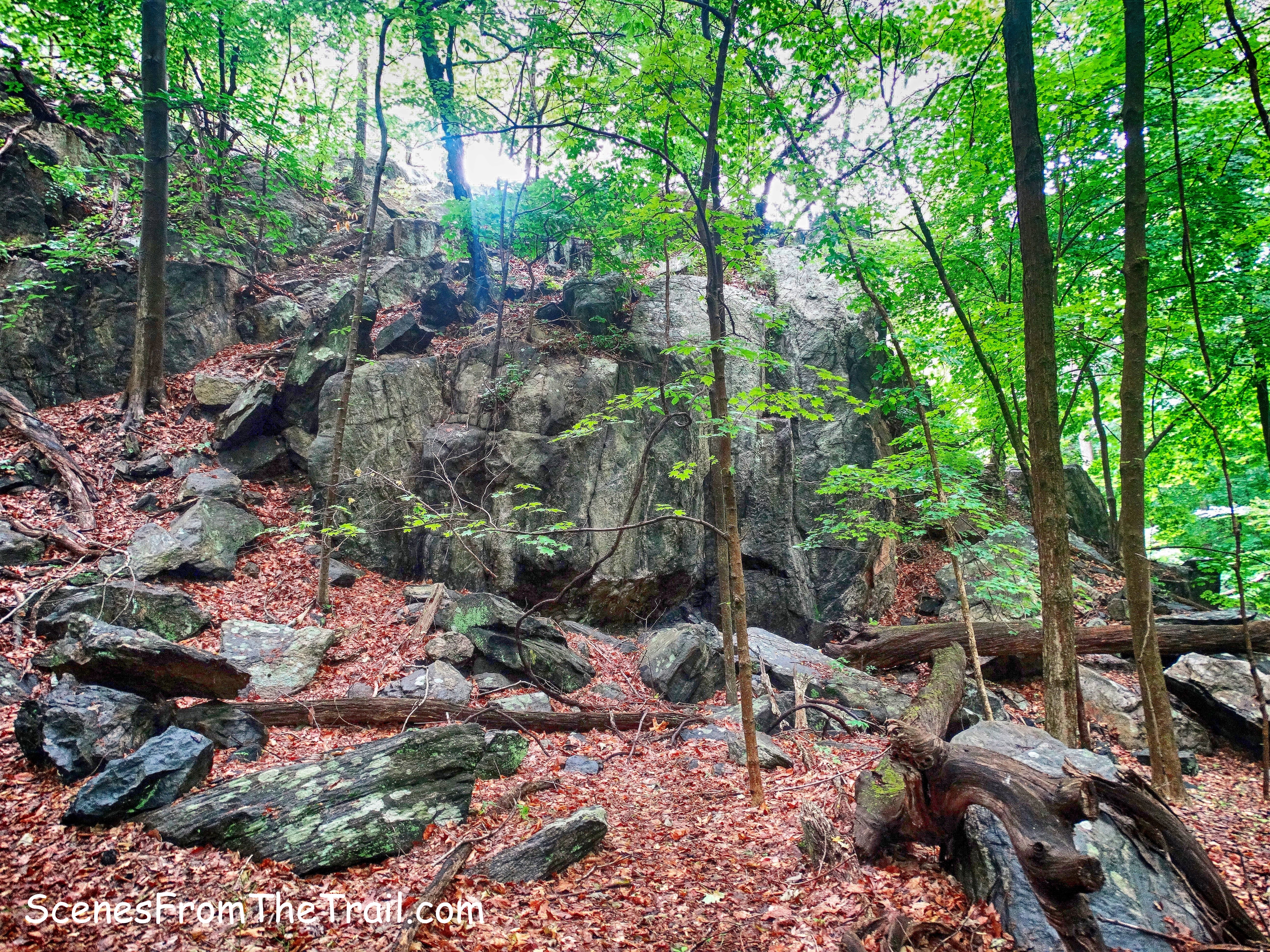
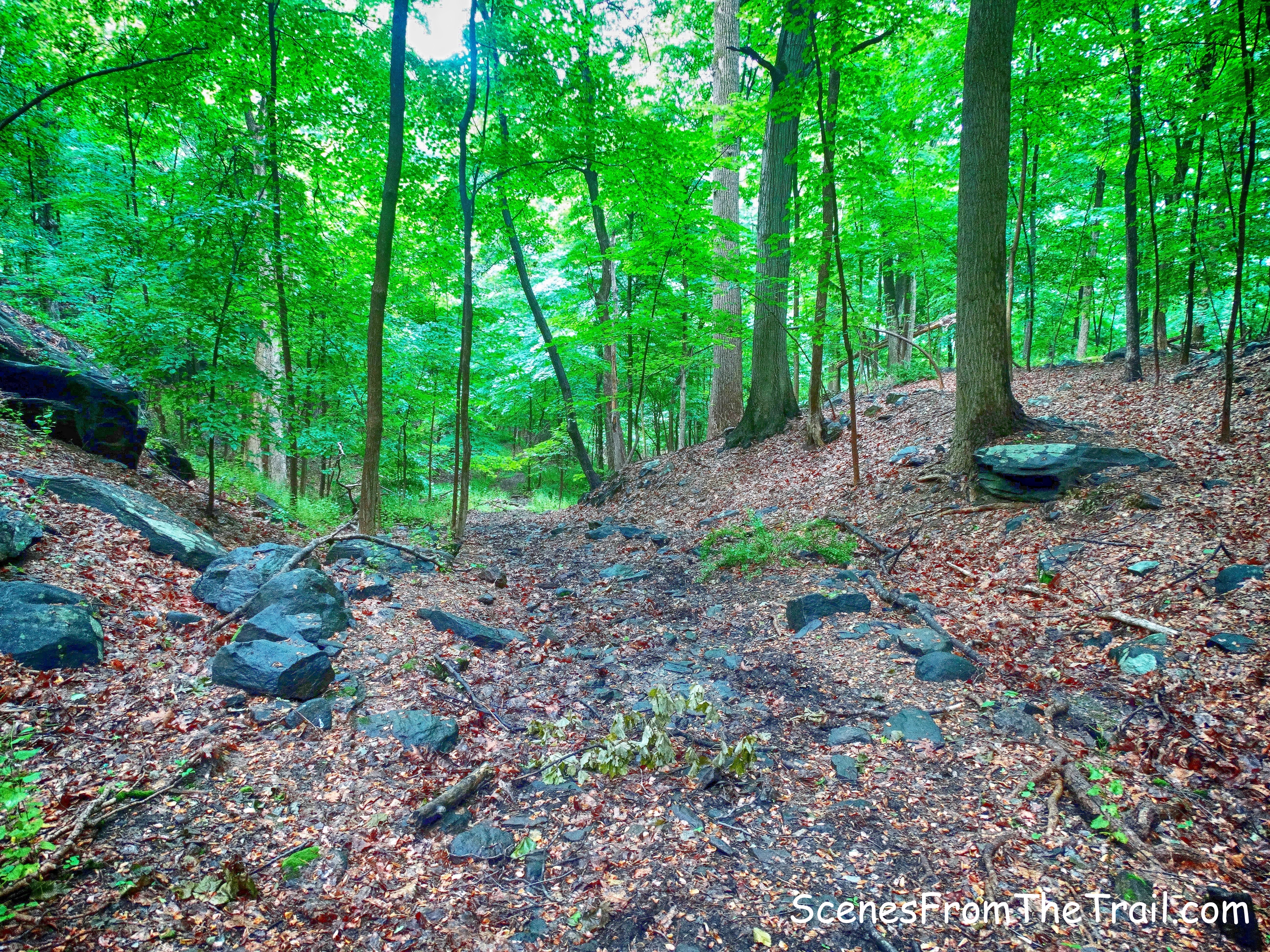
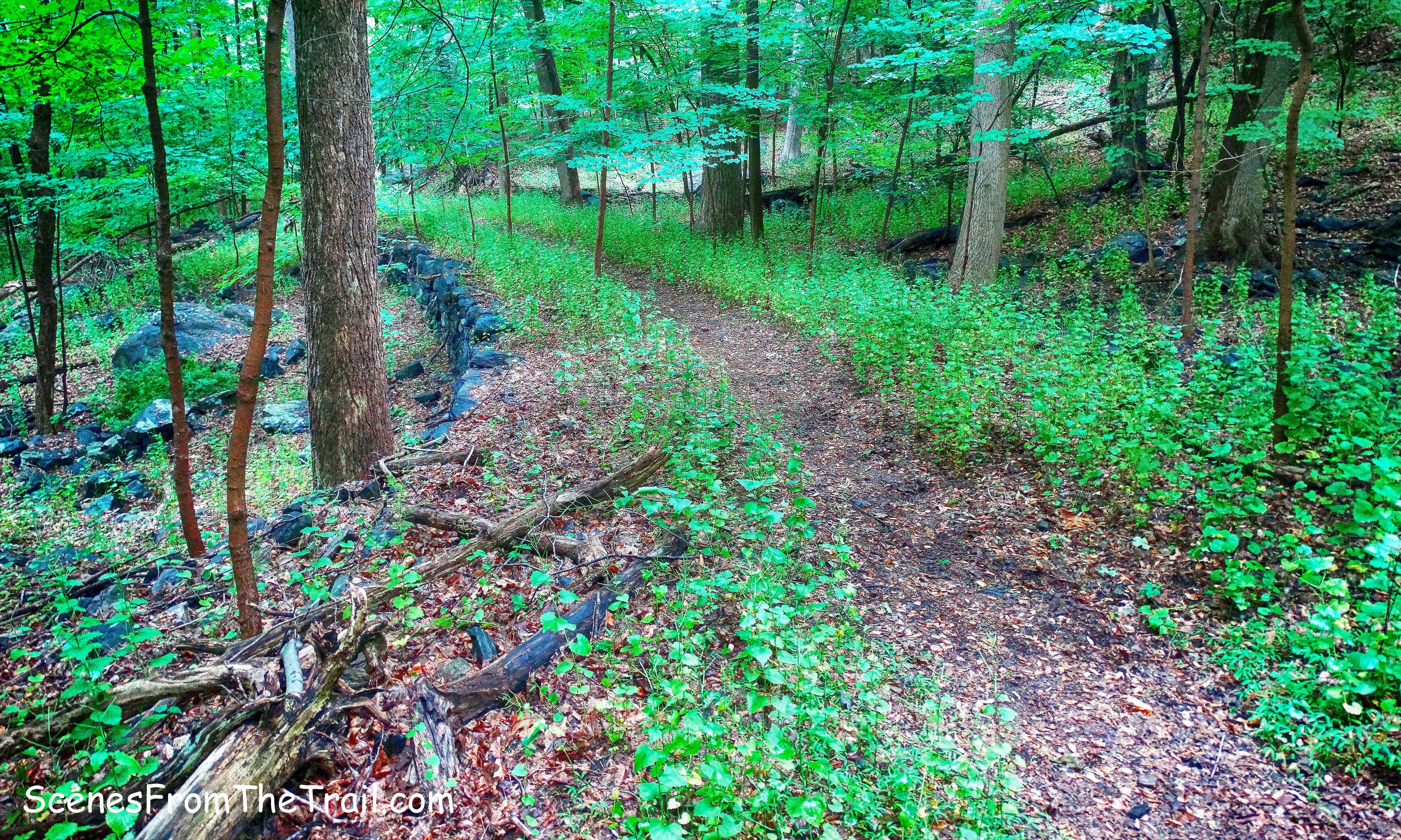
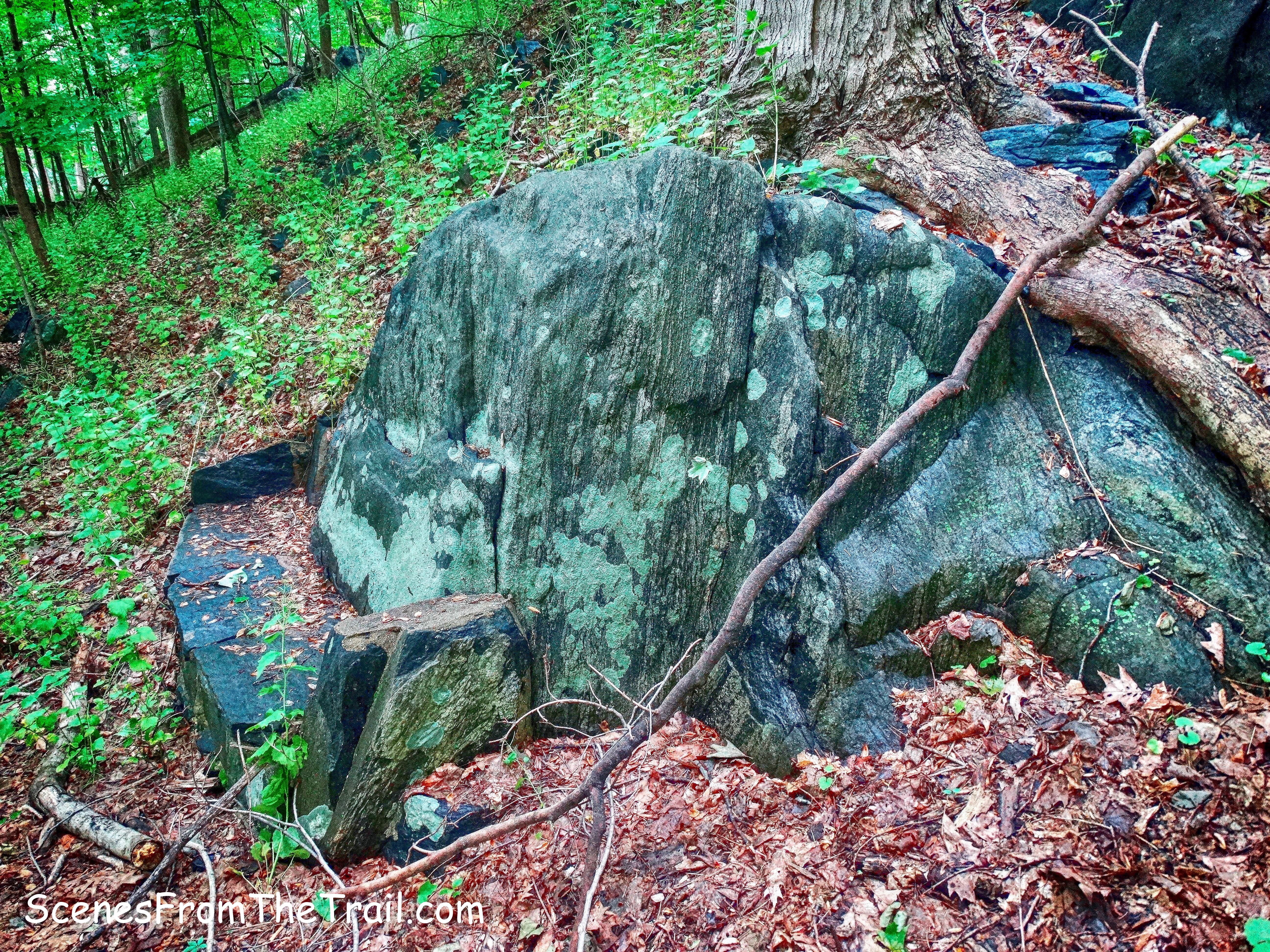
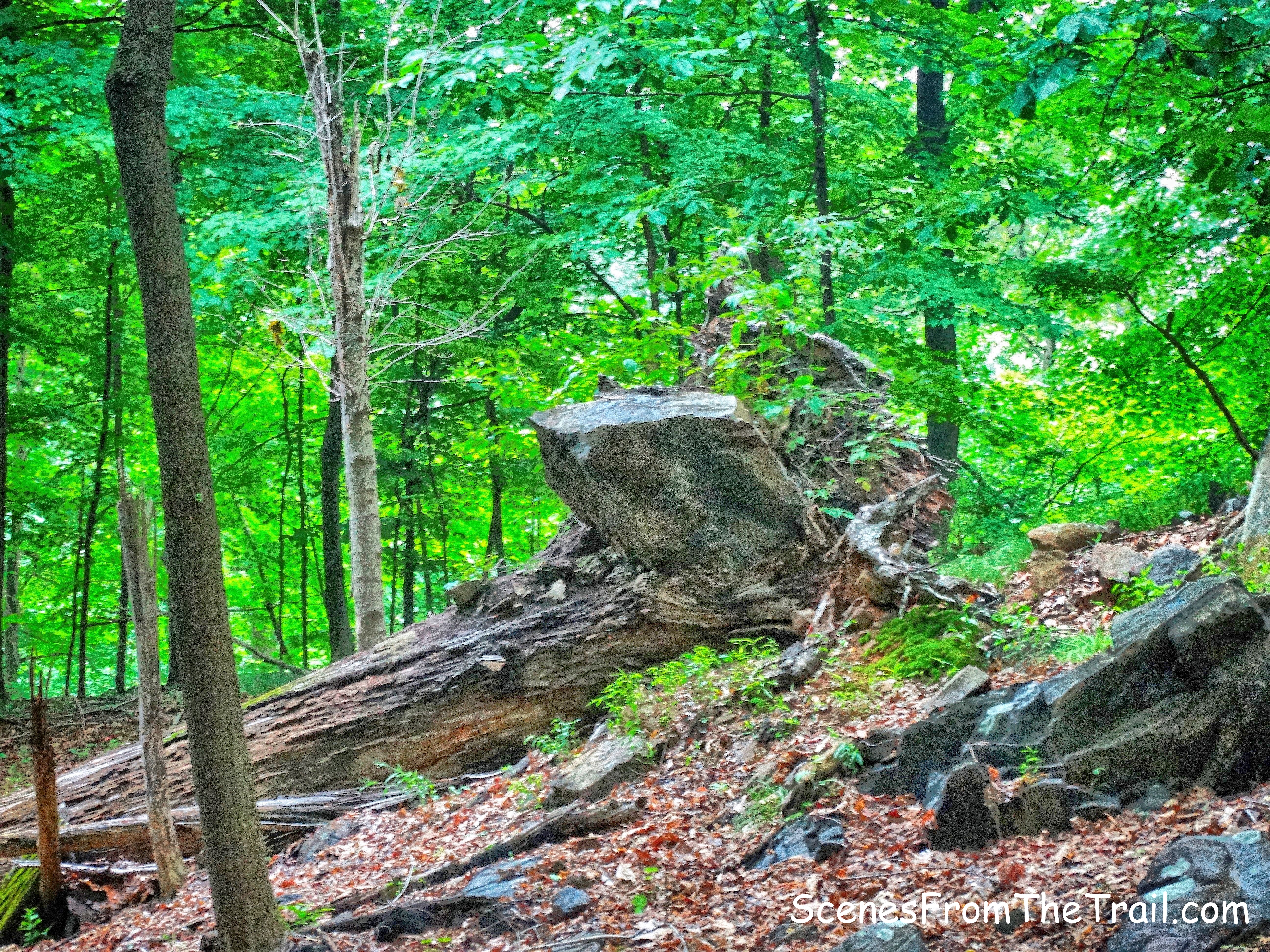
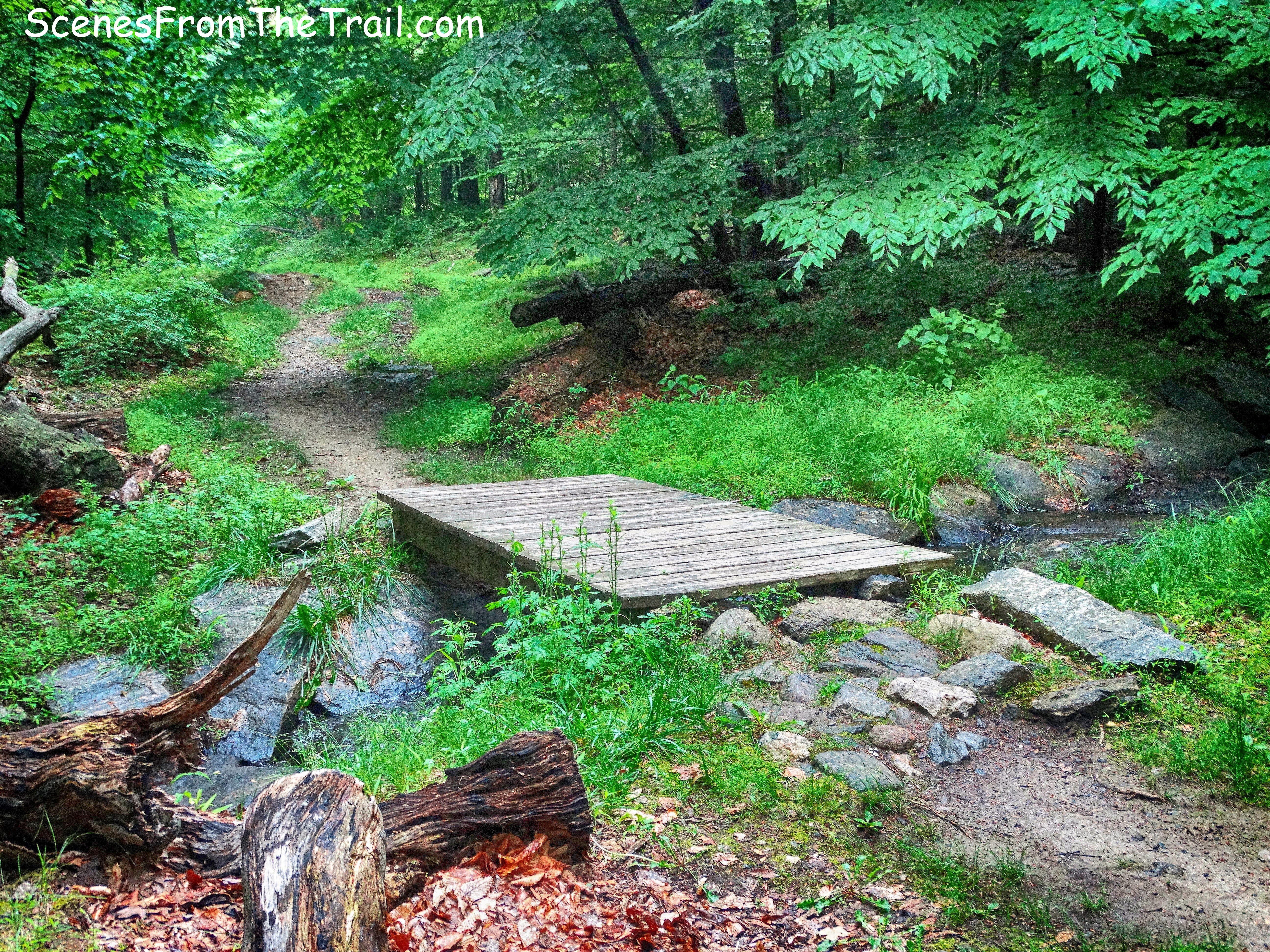
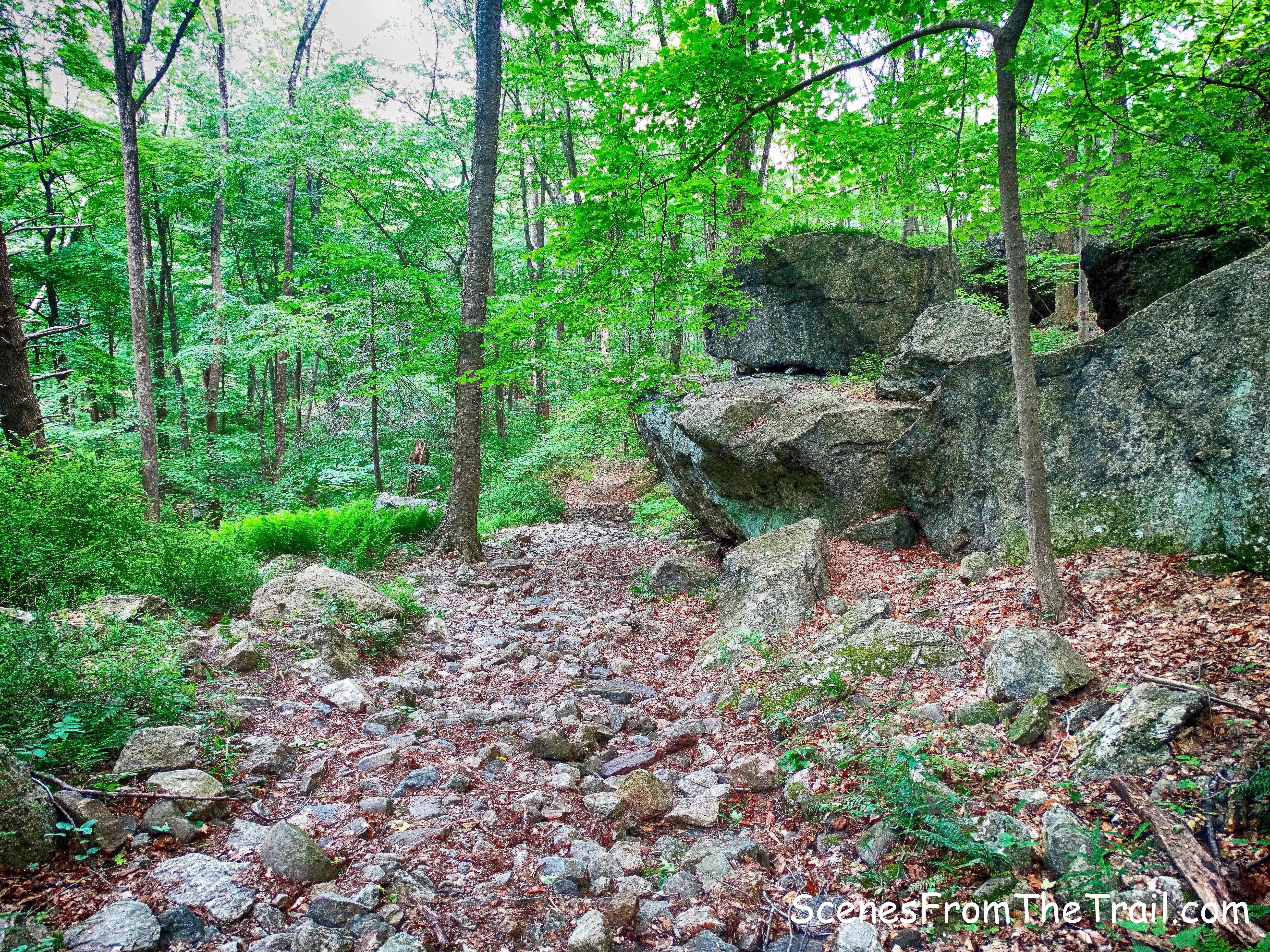
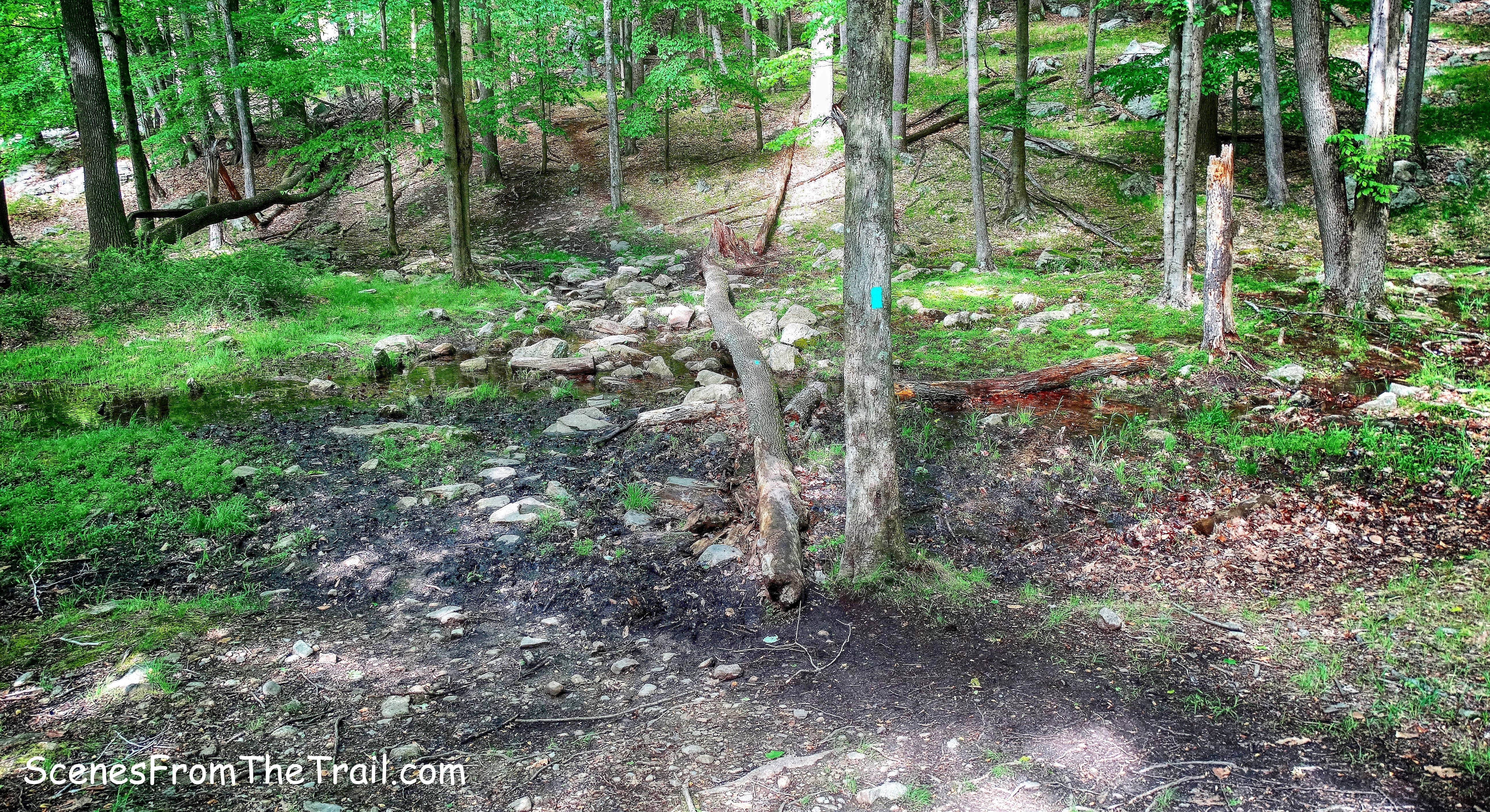
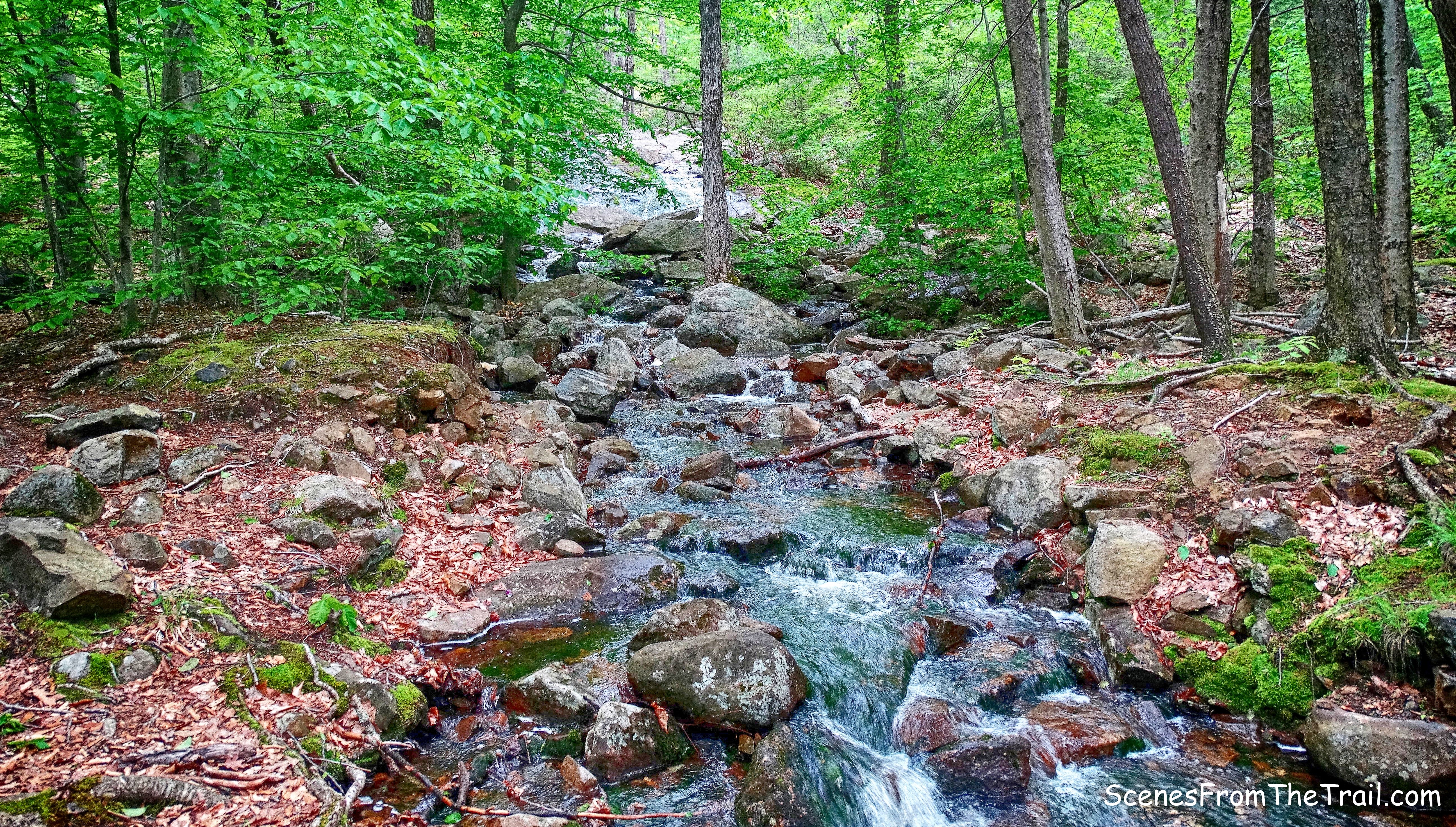
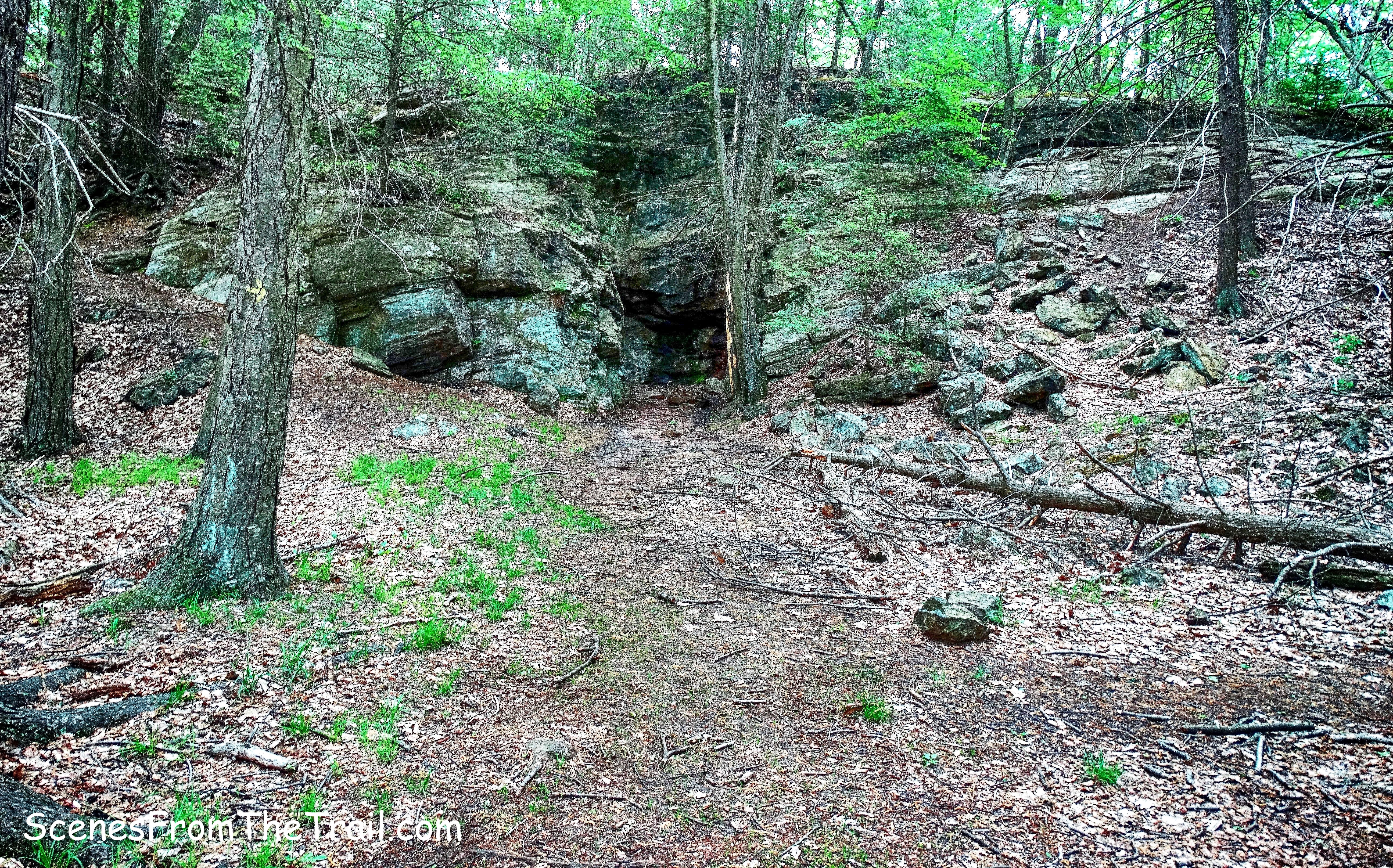
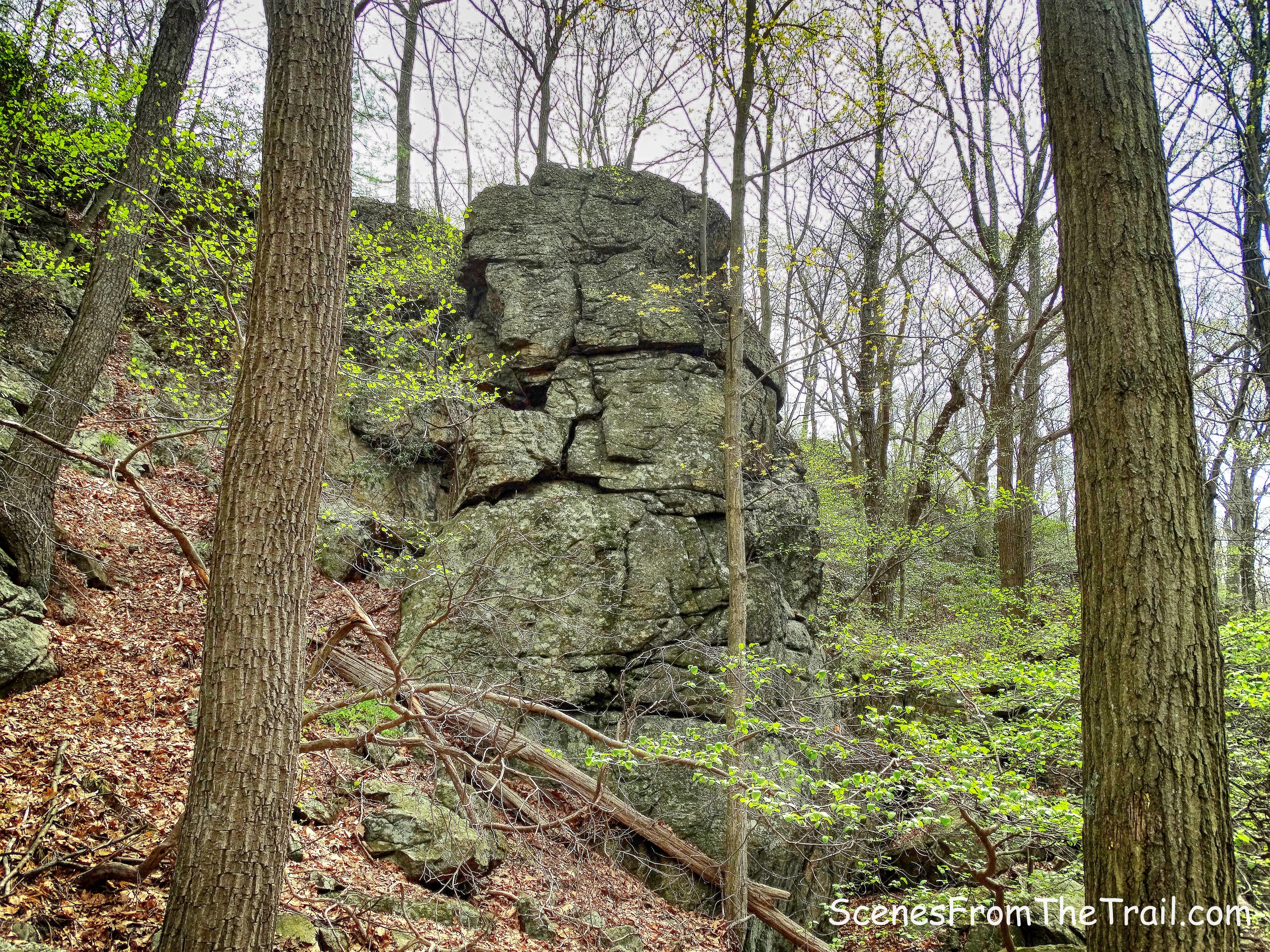
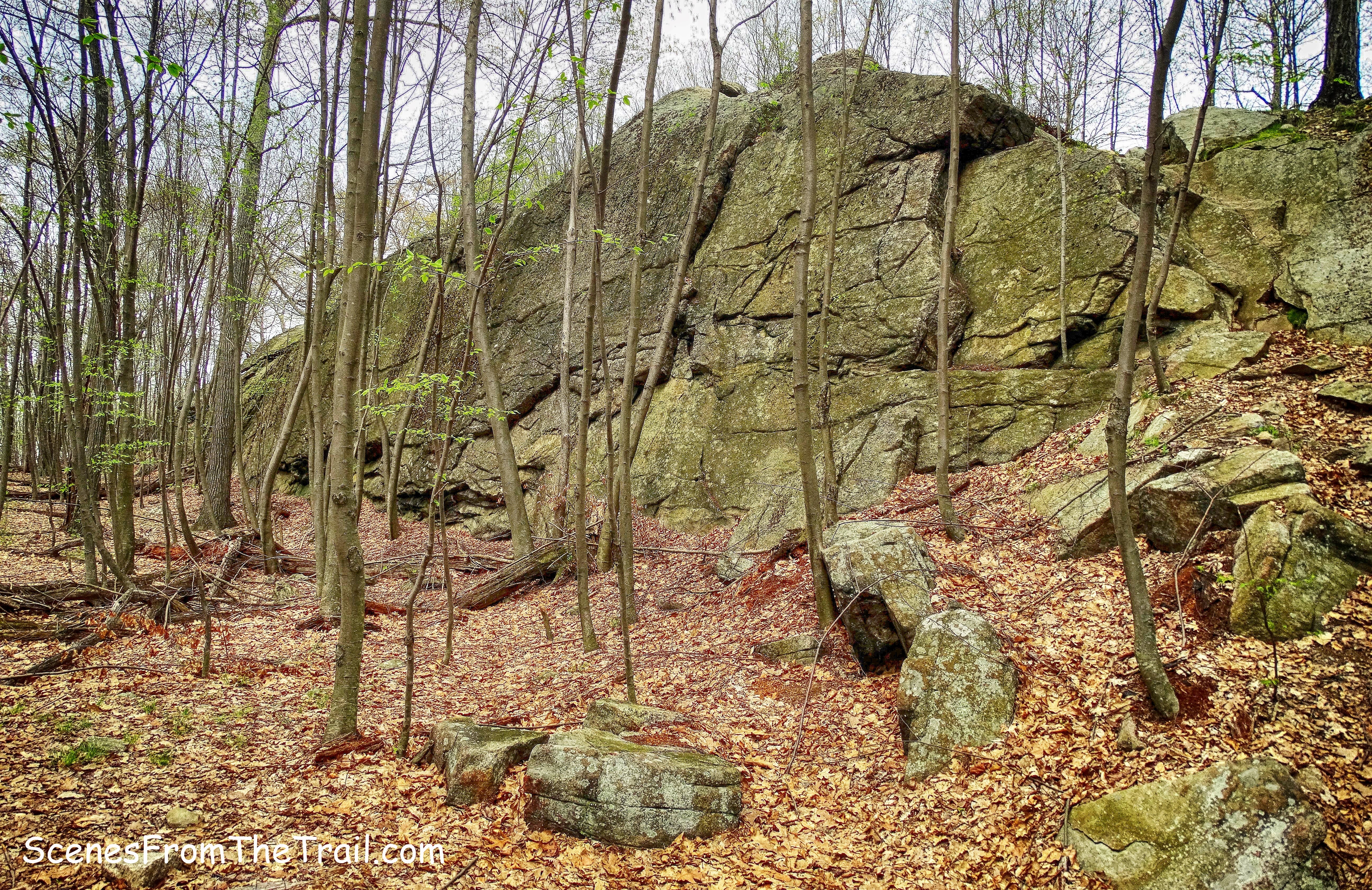
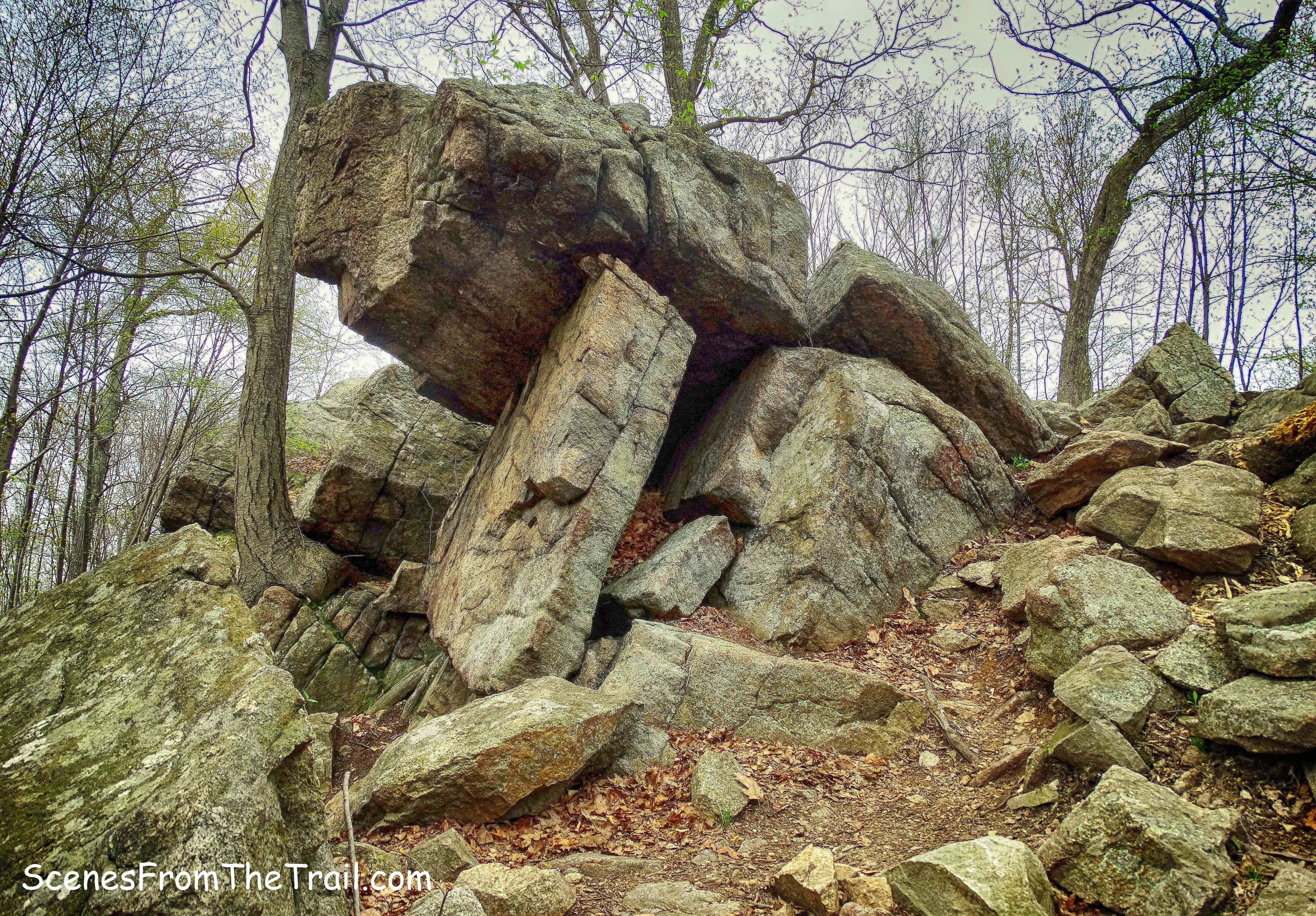
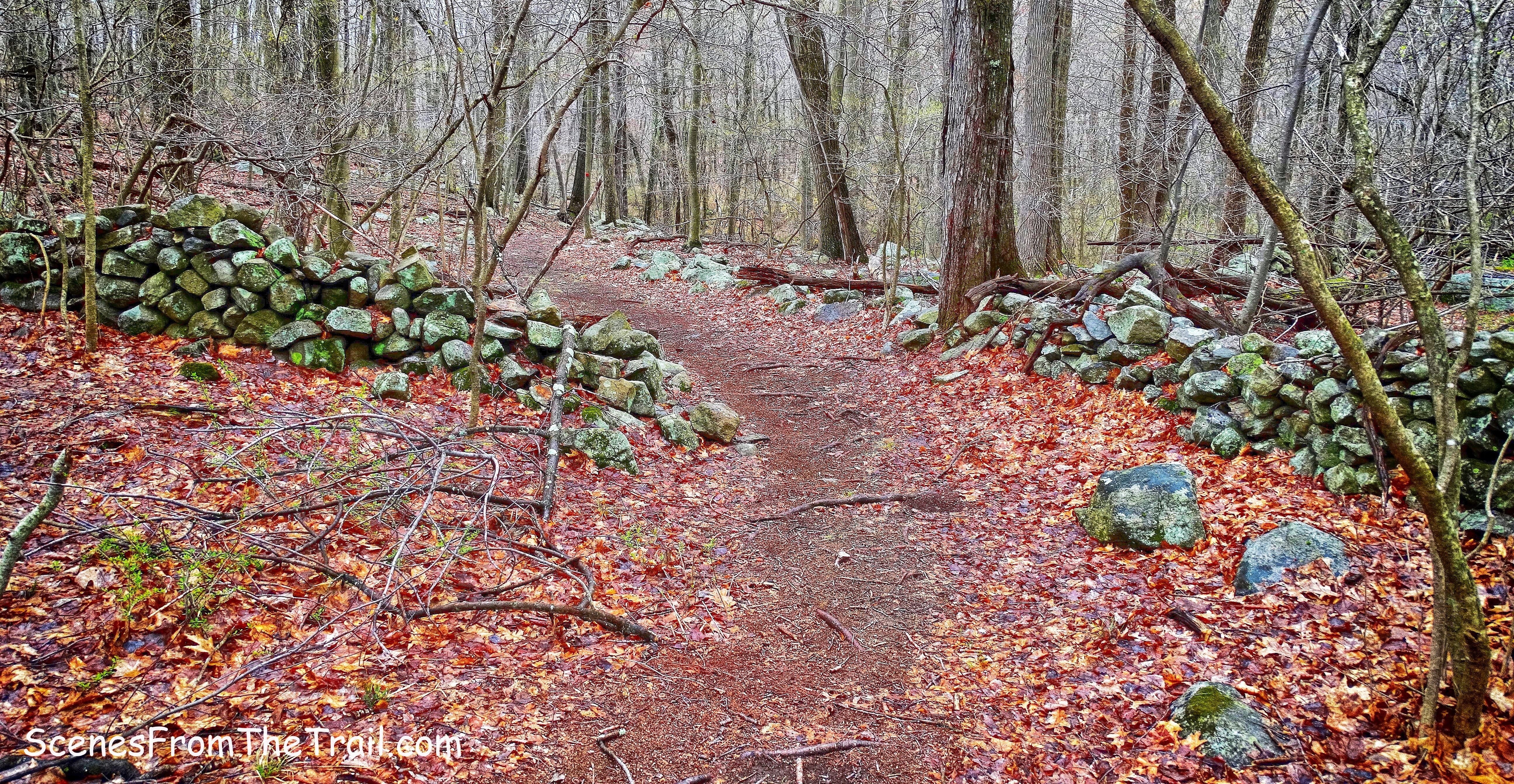
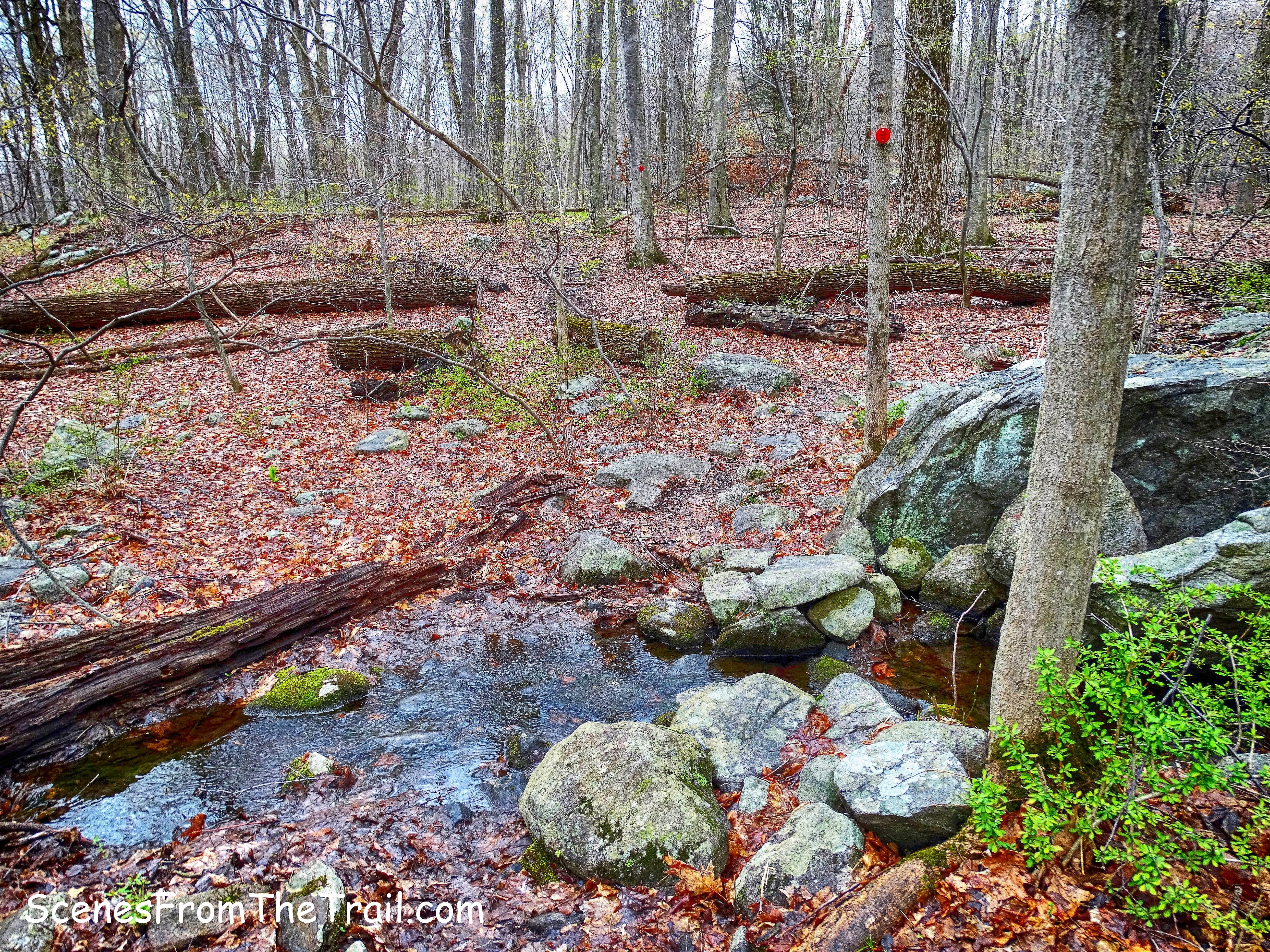
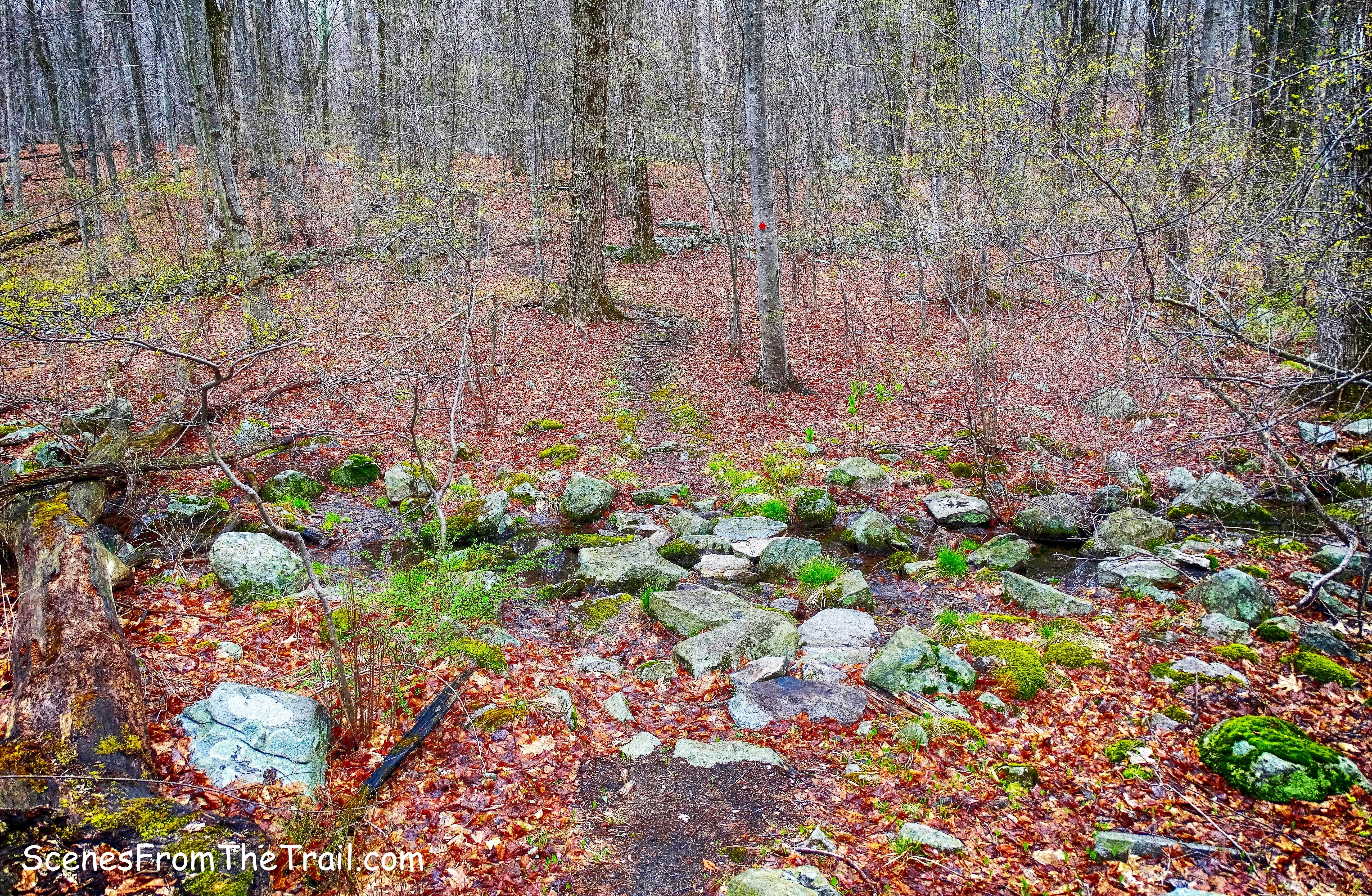
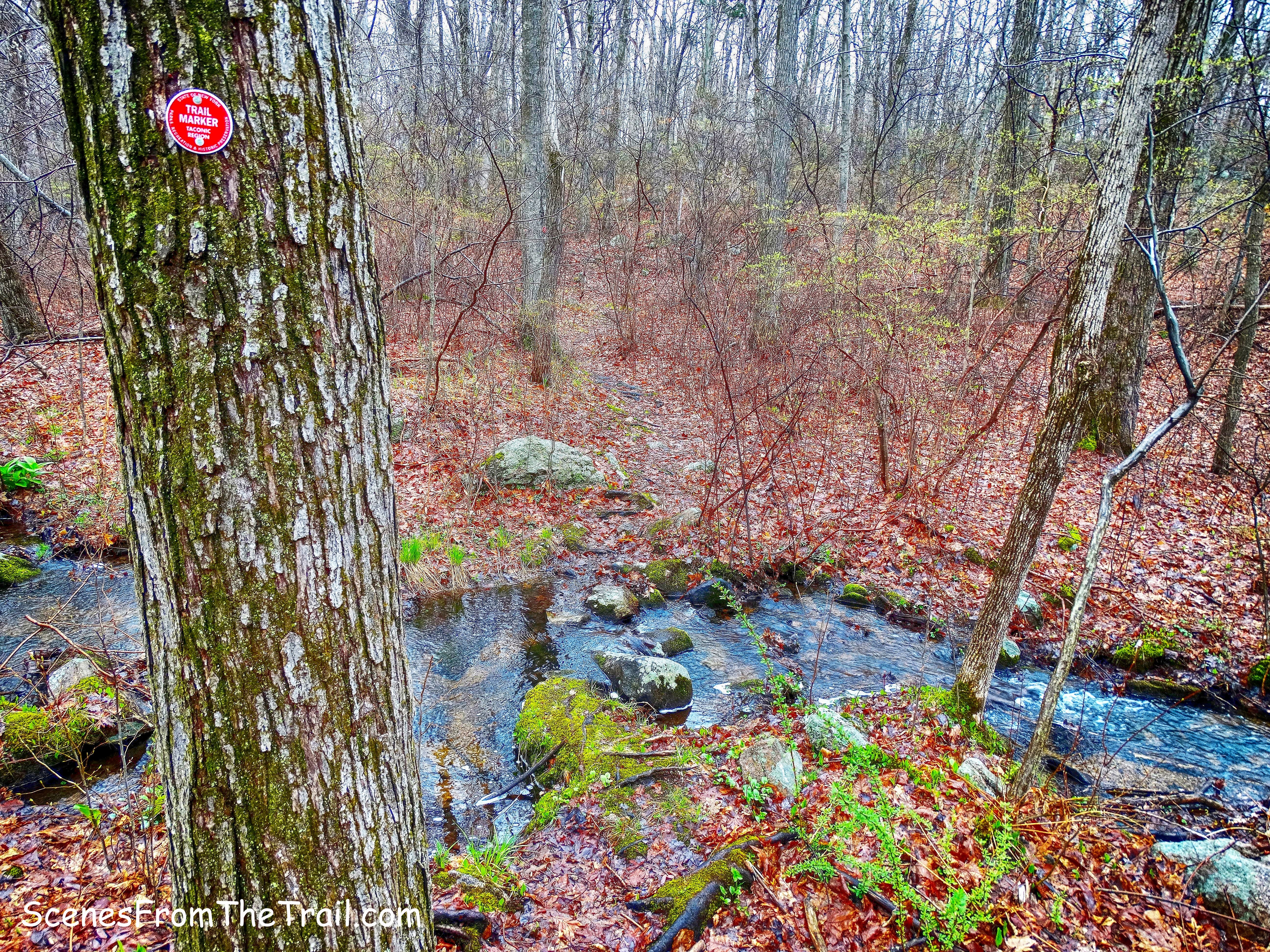
We crossed two branches of a dried up stream on rocks and passed some huge rock formations. At another dry stream crossing there is an interesting inverted V-shaped rock formation just to the right of the trail. Although the streams were dry on our hike they may not be at other times as indicated by large rocks that were placed there in order to rock hop the streams.

inverted V-shaped rock formation alongside Manaticut Point Spur Trail

inverted V-shaped rock formation alongside Manaticut Point Spur Trail

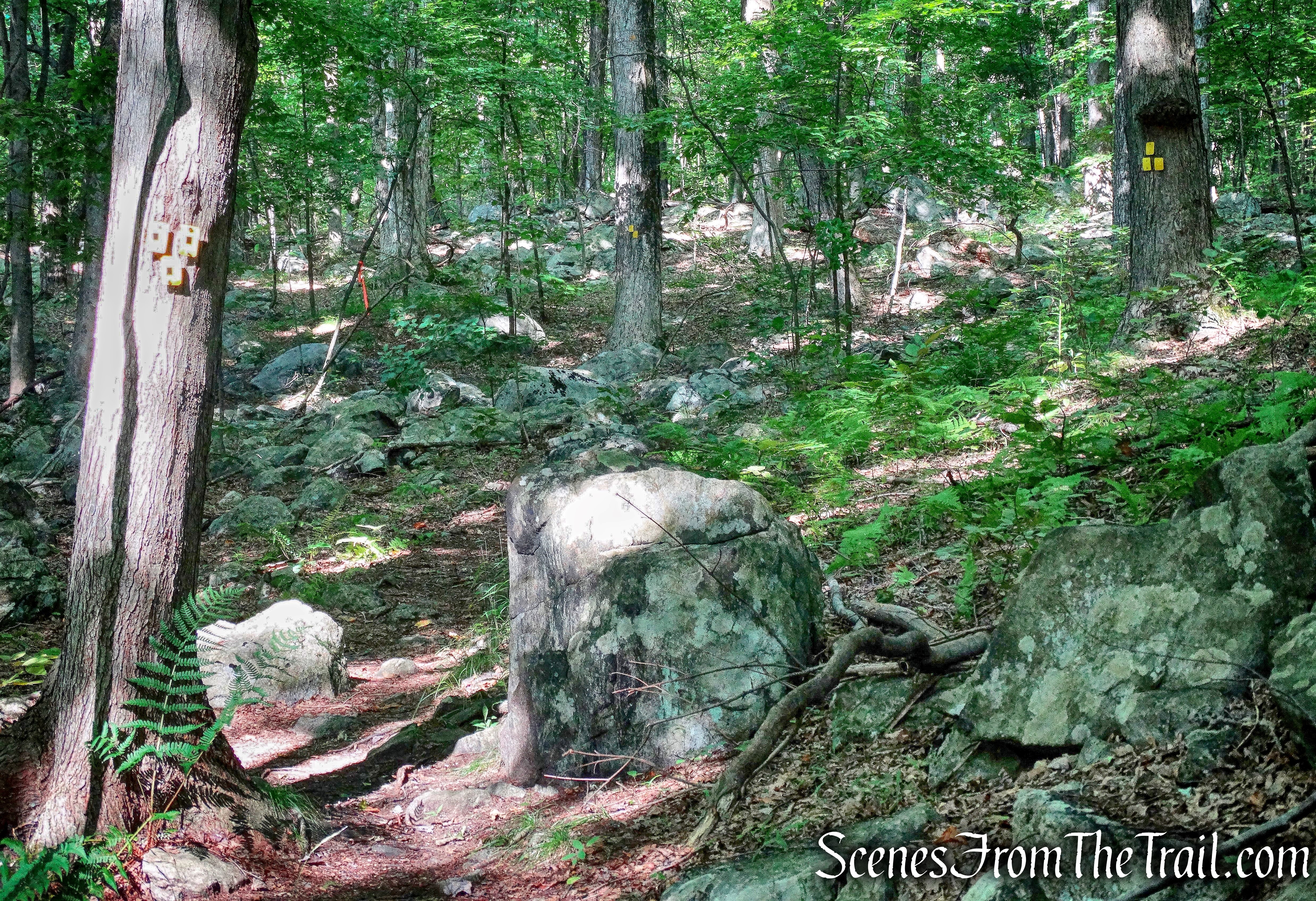
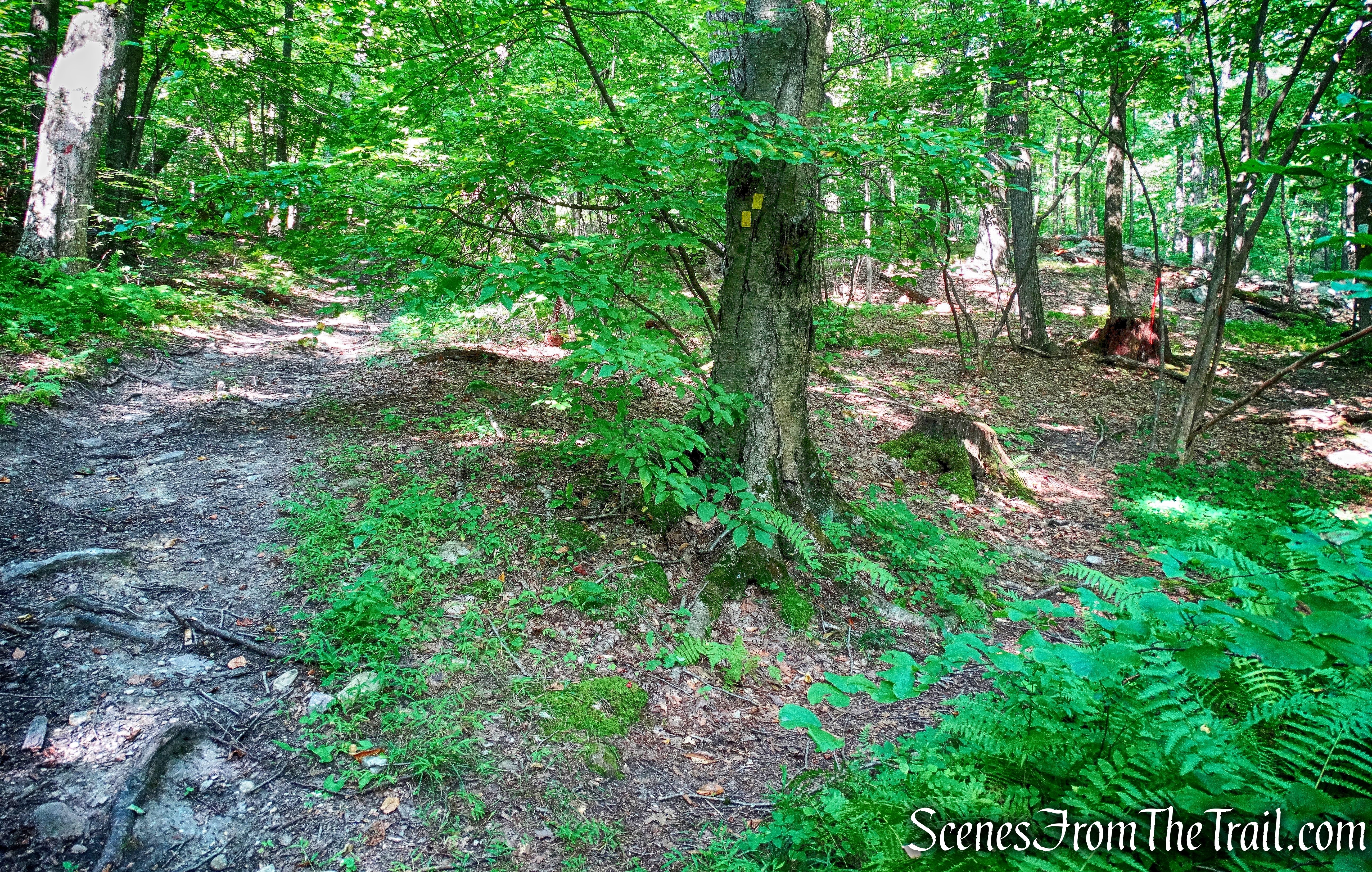
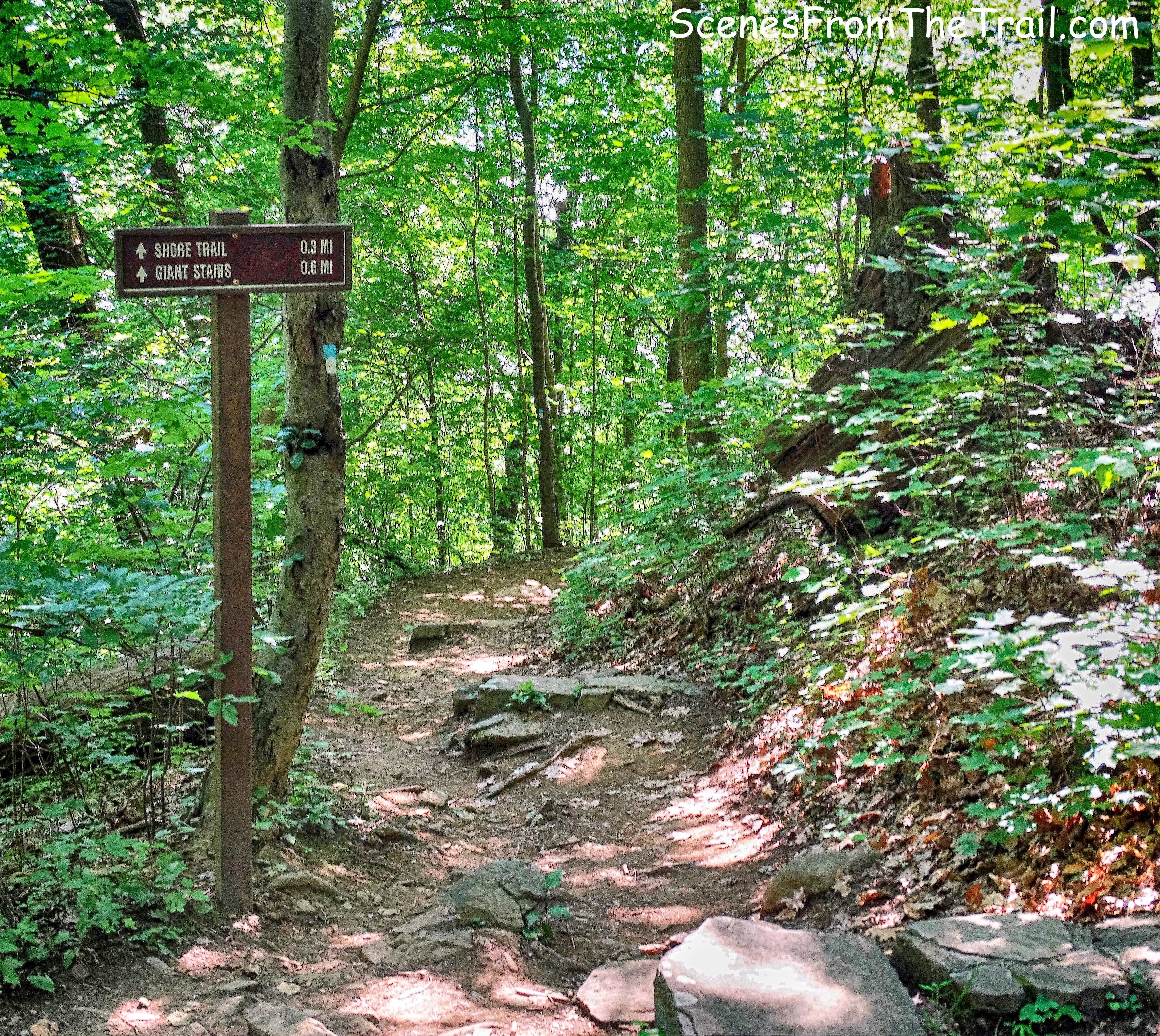
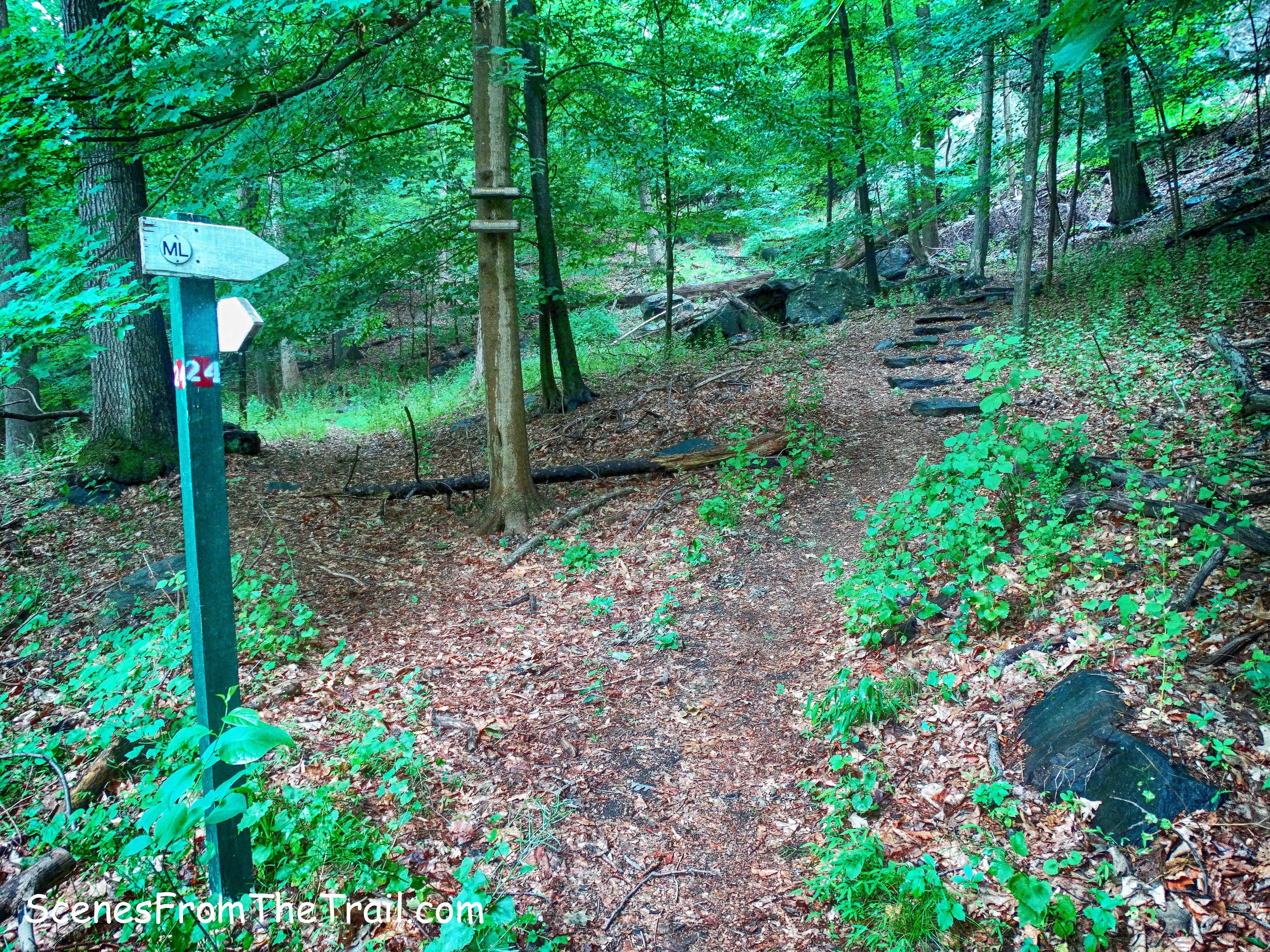
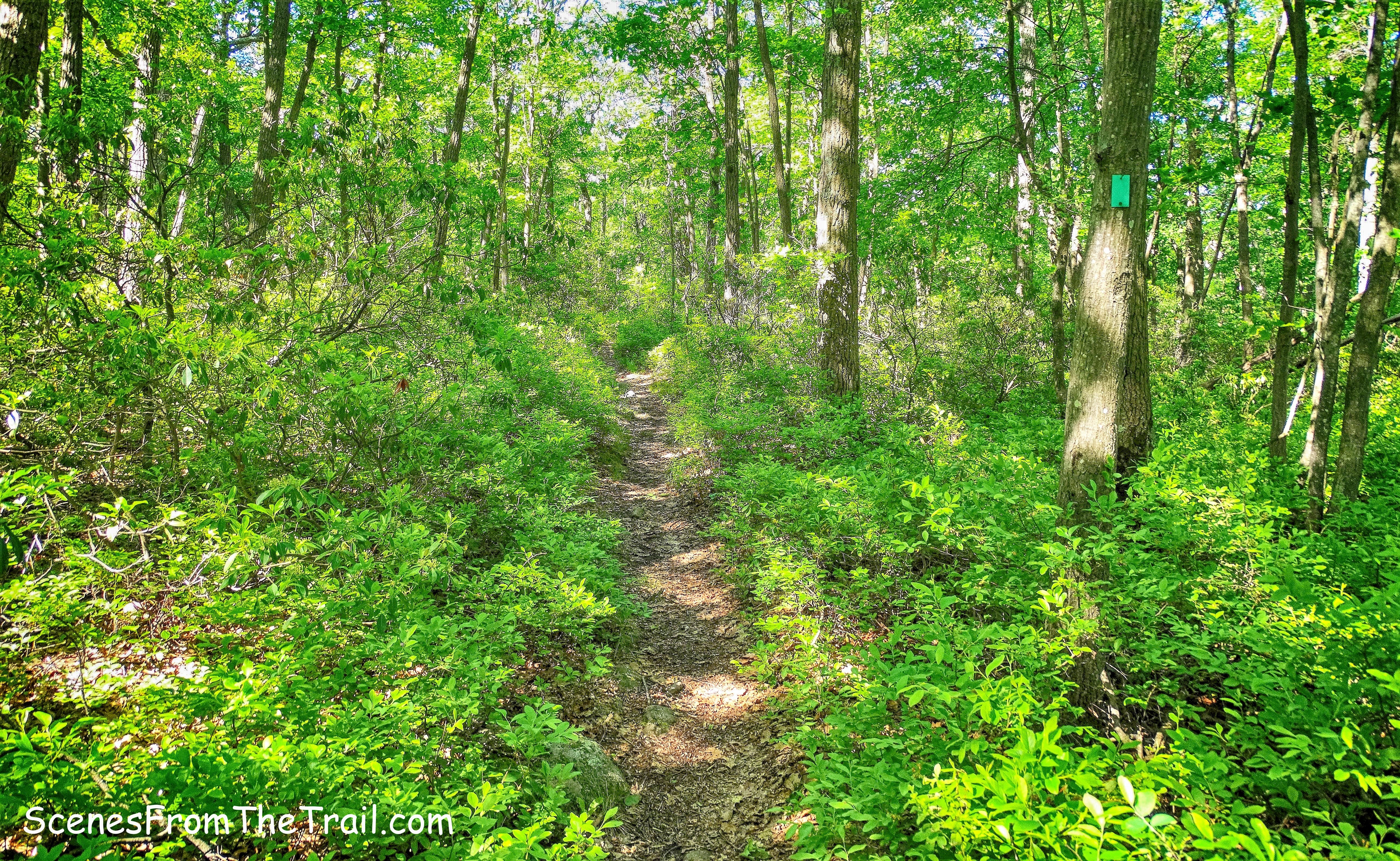
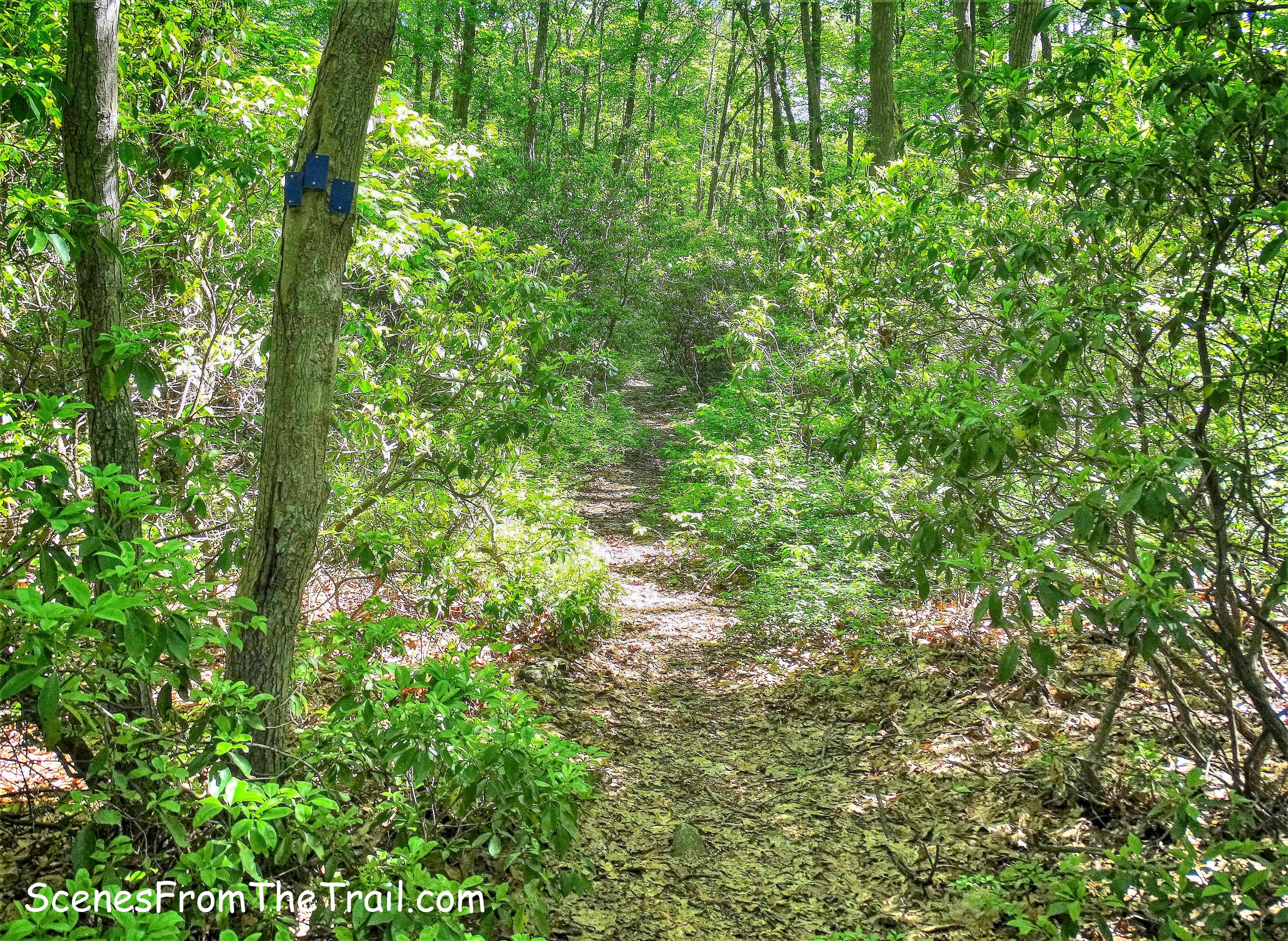
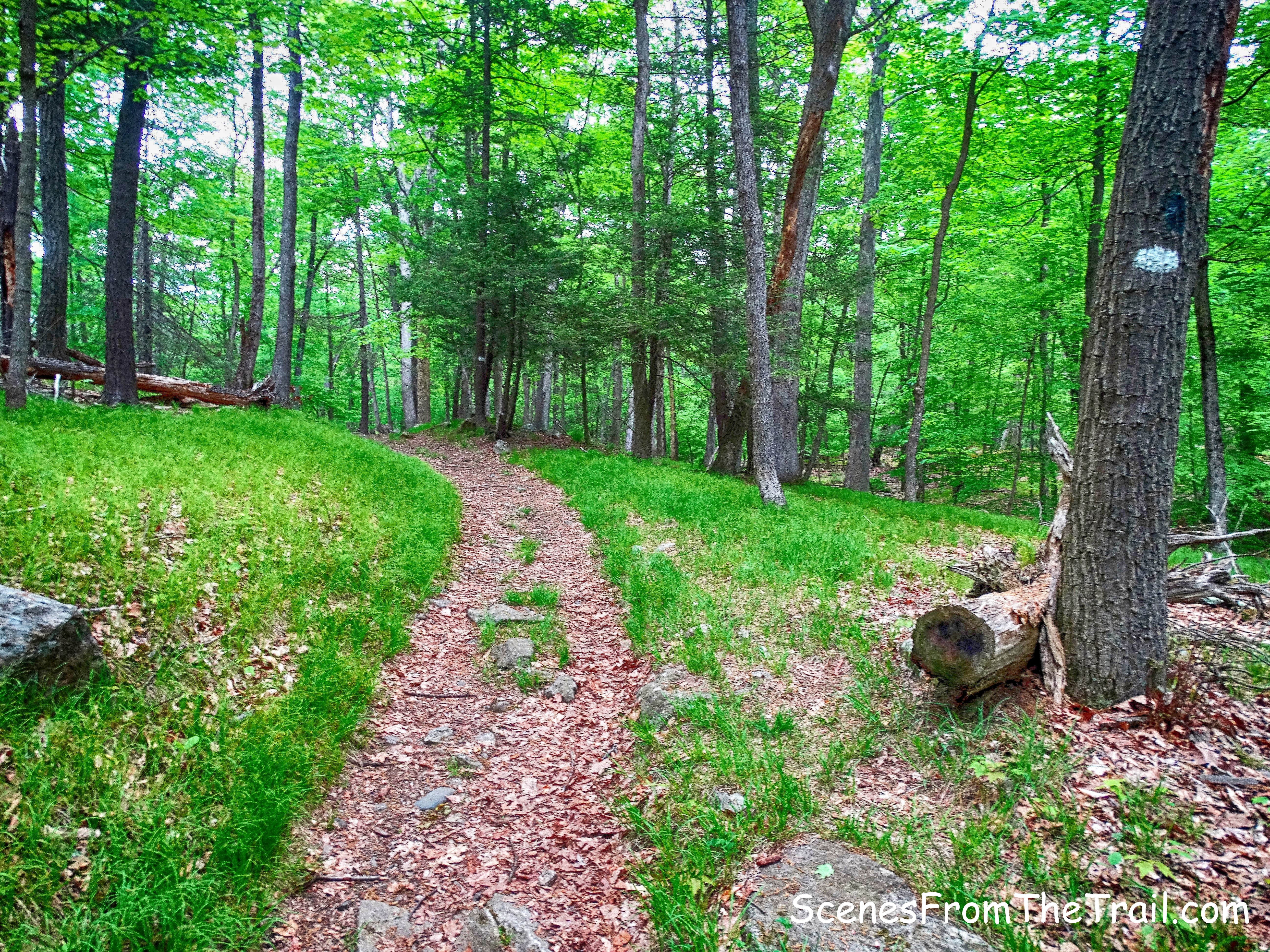
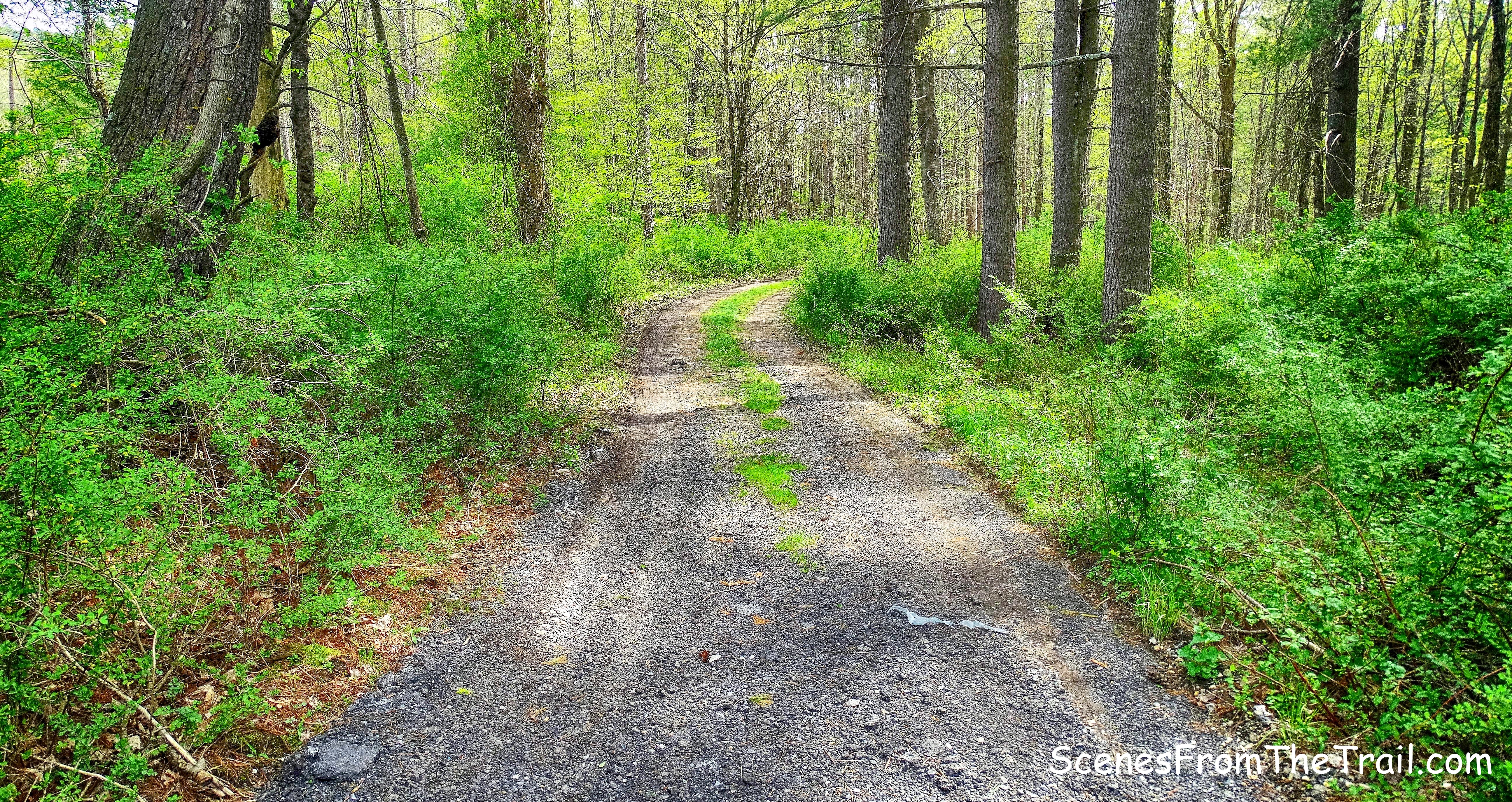
After approximately 0.3 miles, the Manaticut Point Spur Trail ends at a junction with the yellow-blazed Manaticut Point Trail. The yellow blazes go to the left and right. We stayed to our right, heading uphill to follow the loop of the Manaticut Point Trail in the counterclockwise direction.

stay right at junction with the yellow-blazed Manaticut Point Trail

stay right at junction with the yellow-blazed Manaticut Point Trail

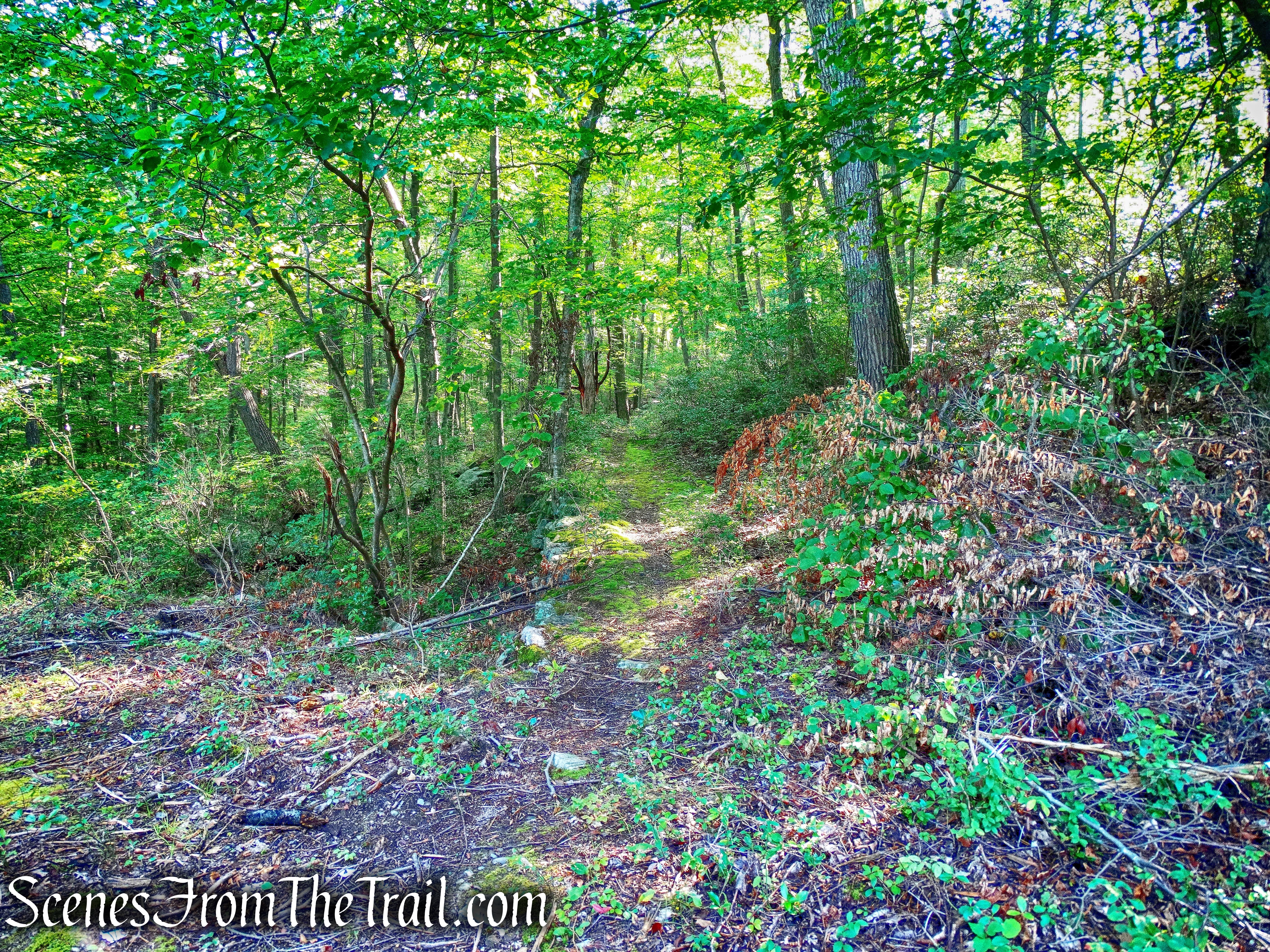
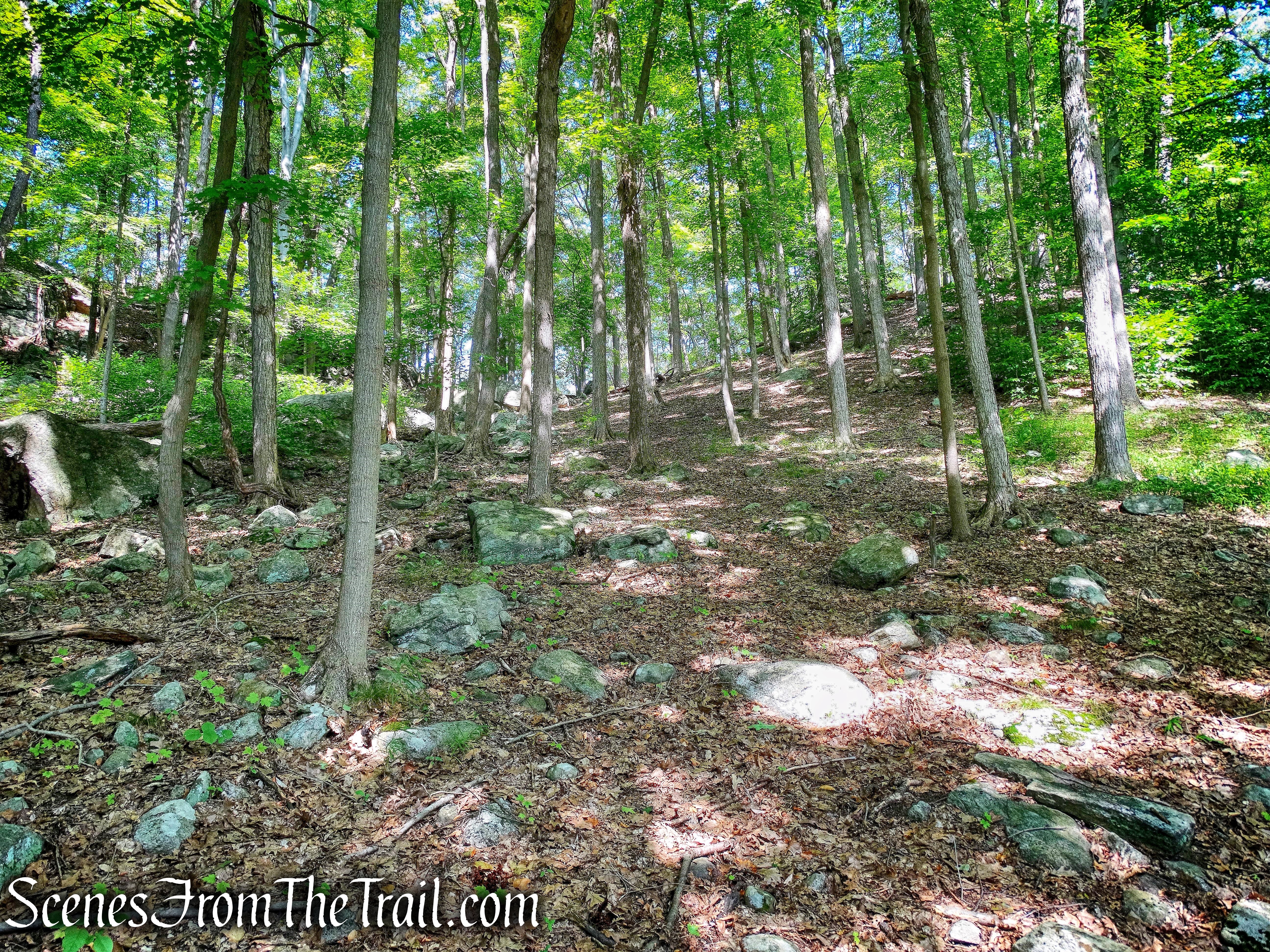
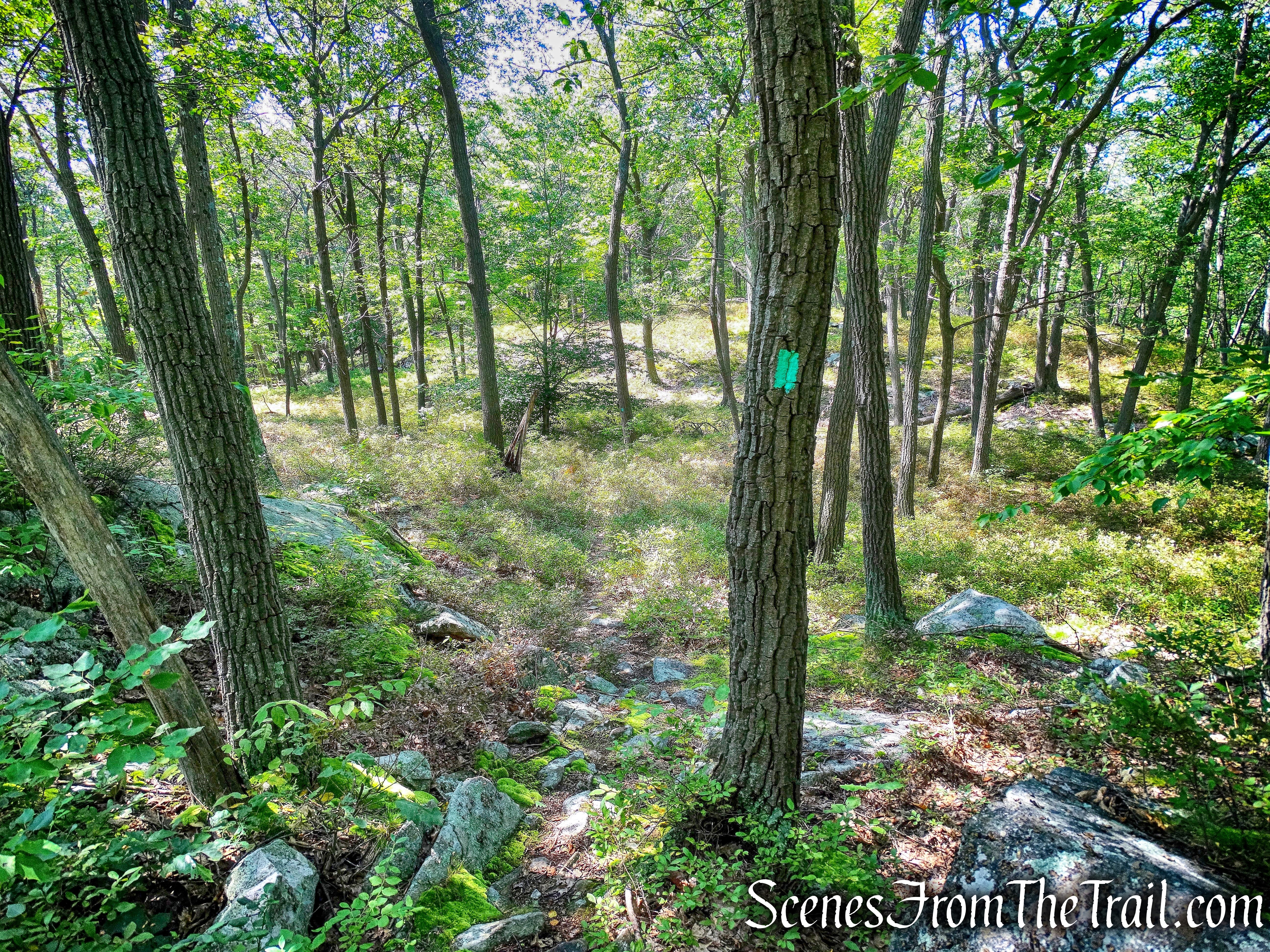
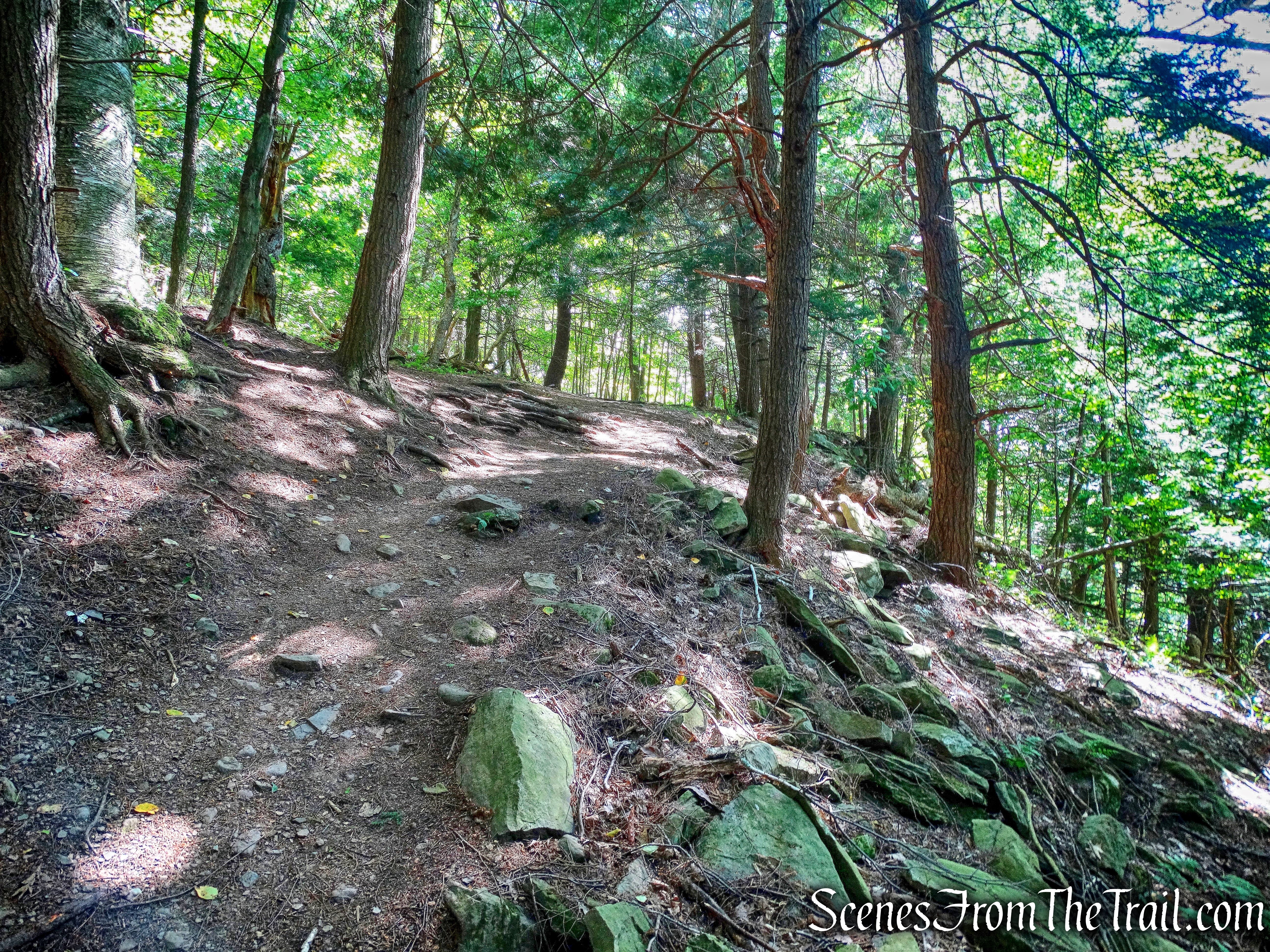
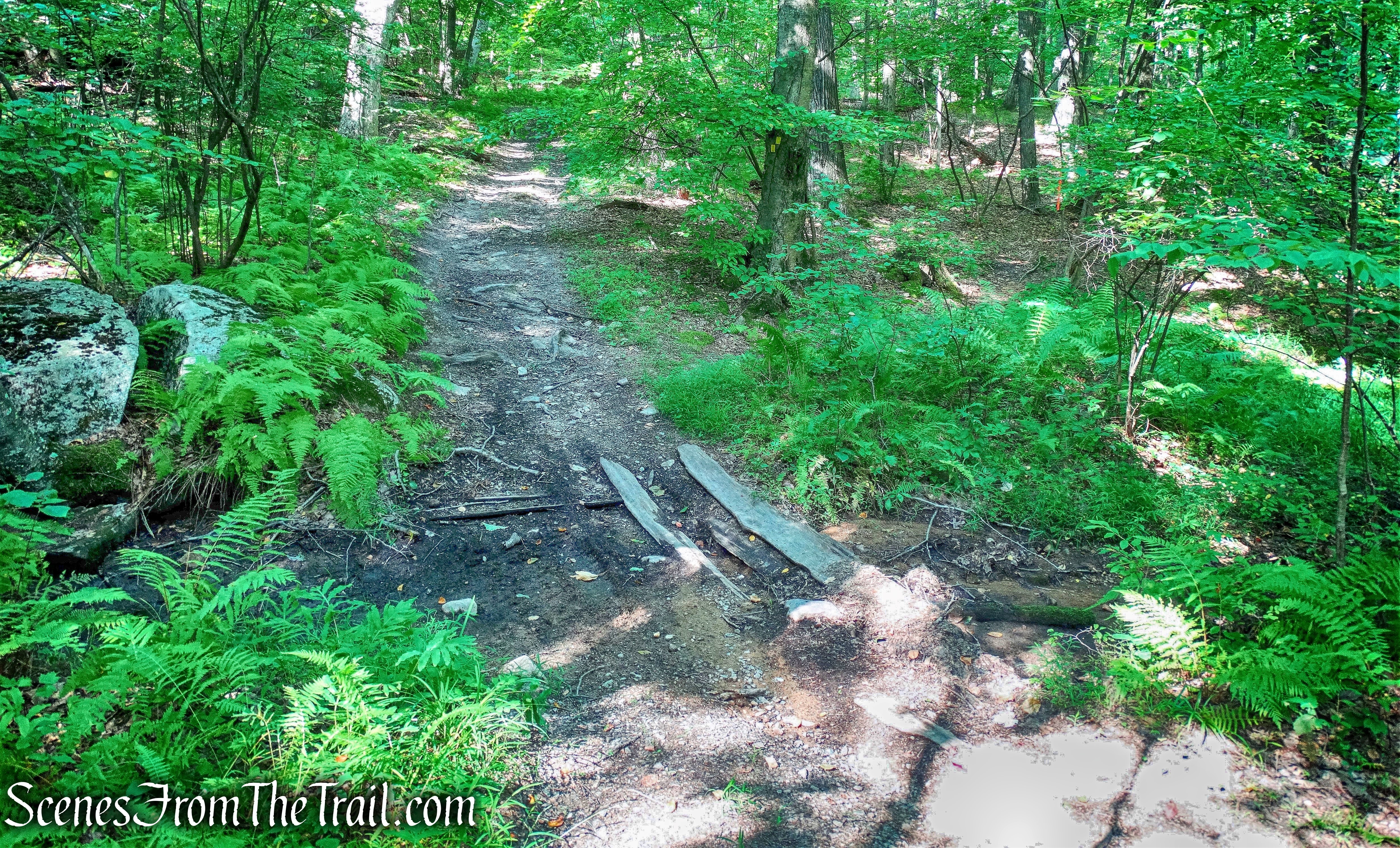
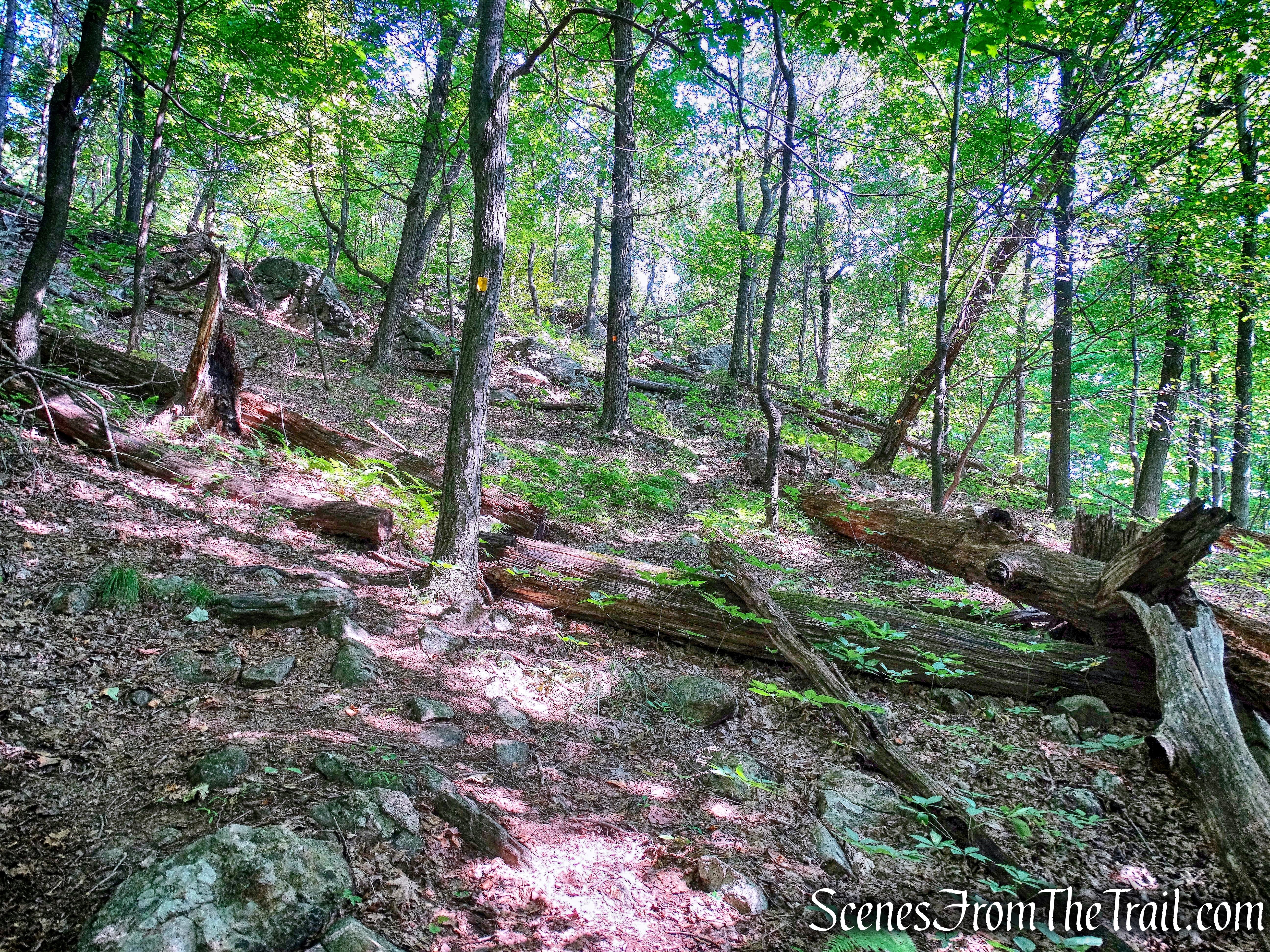
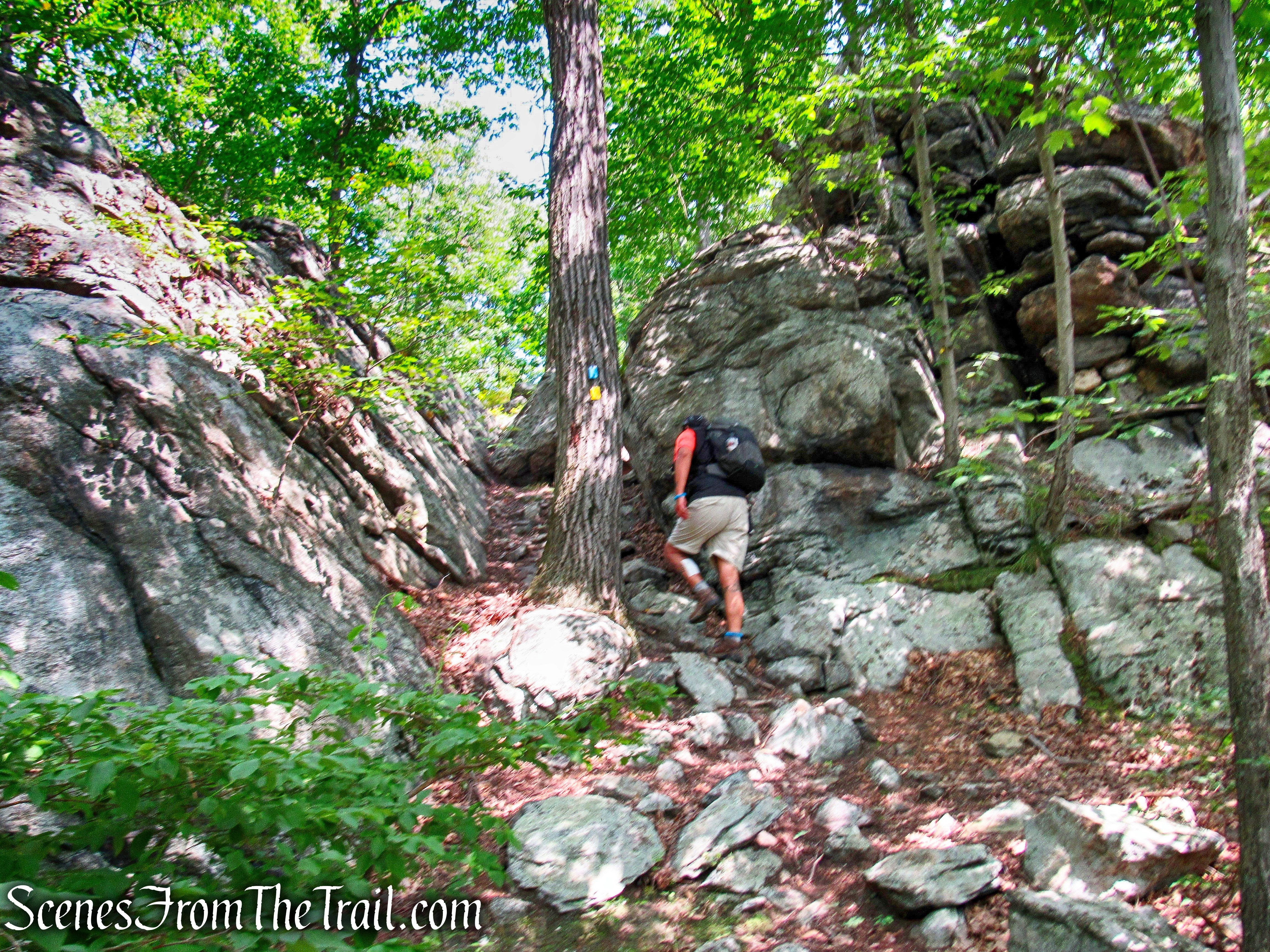
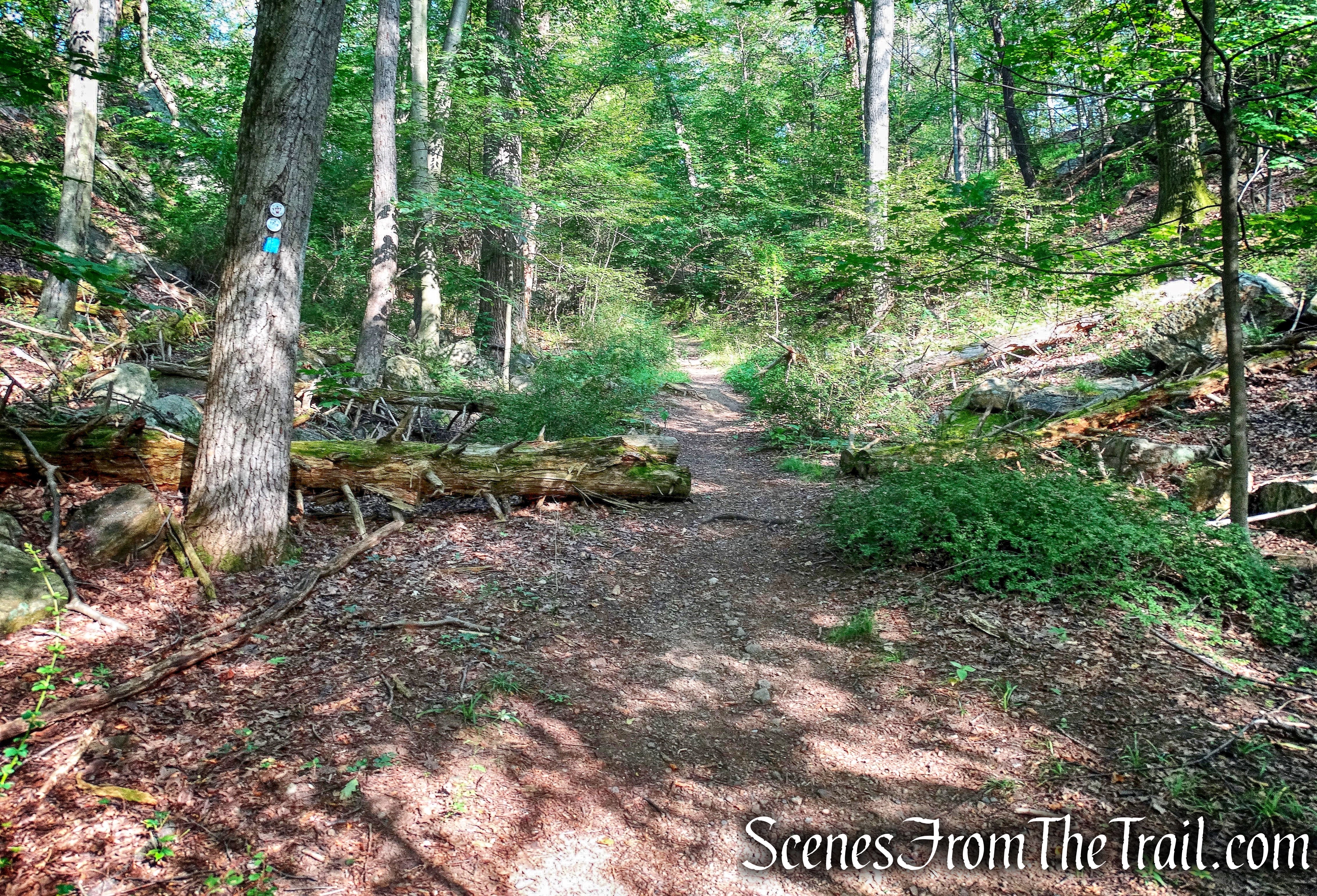
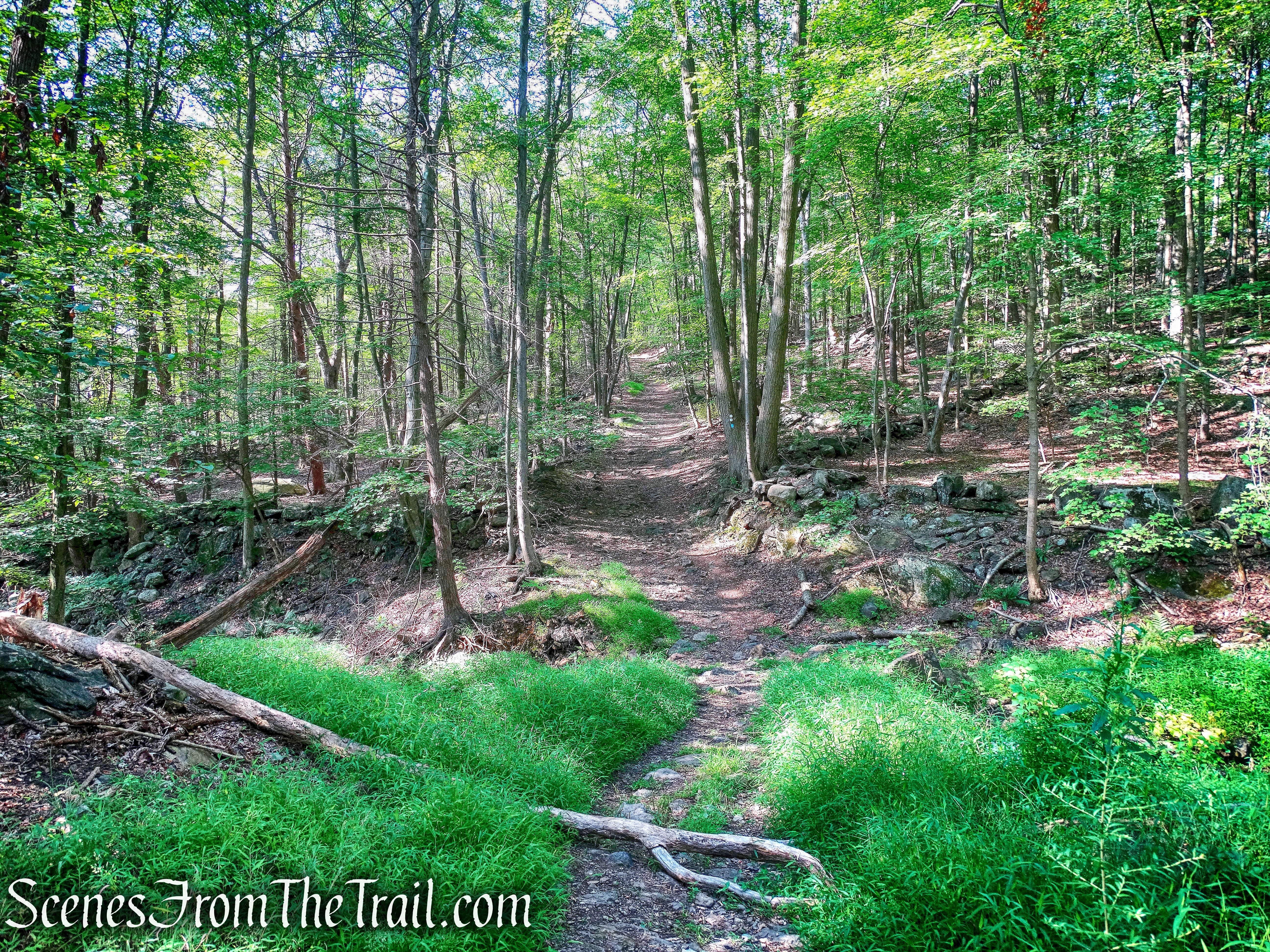
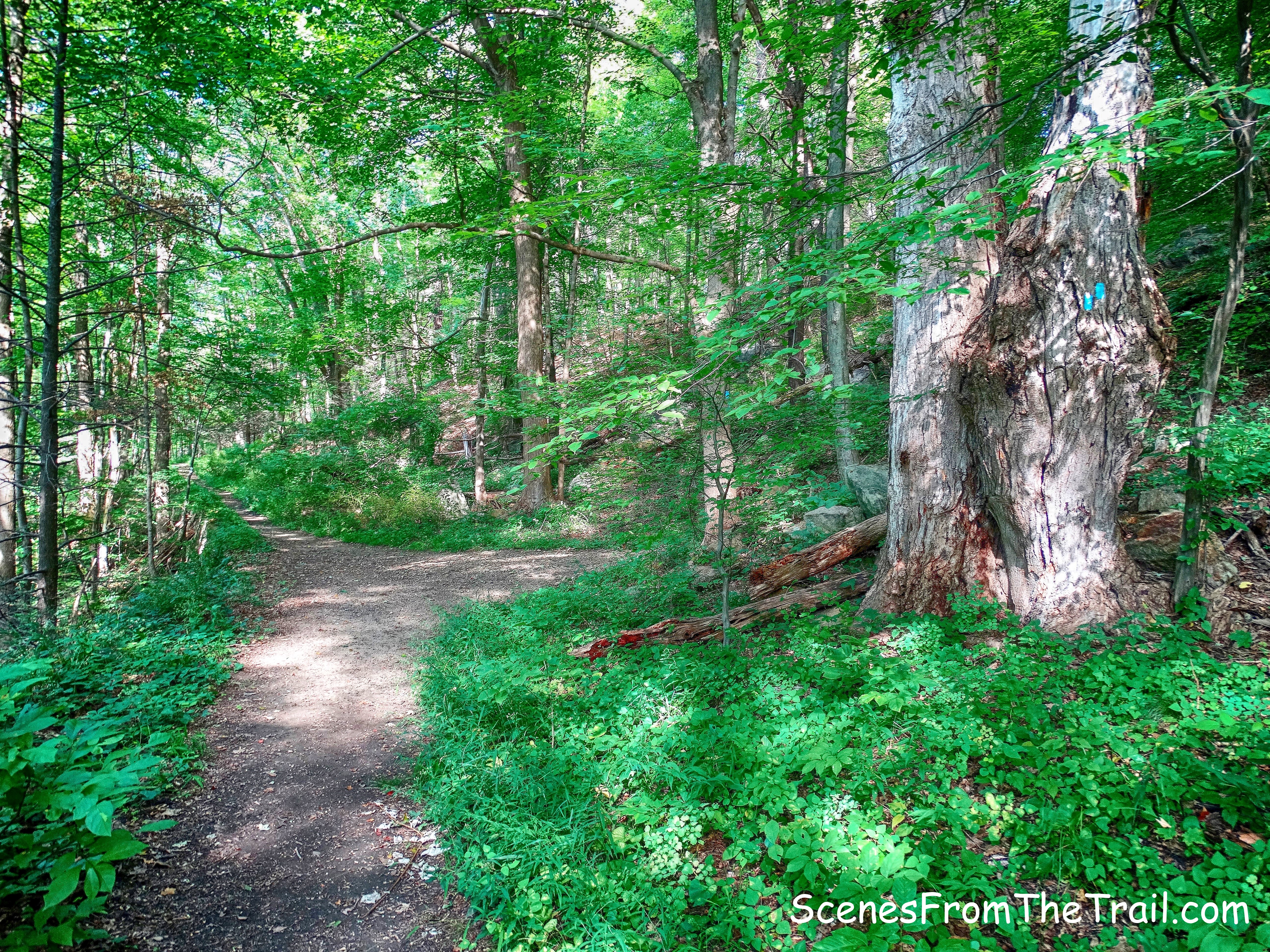
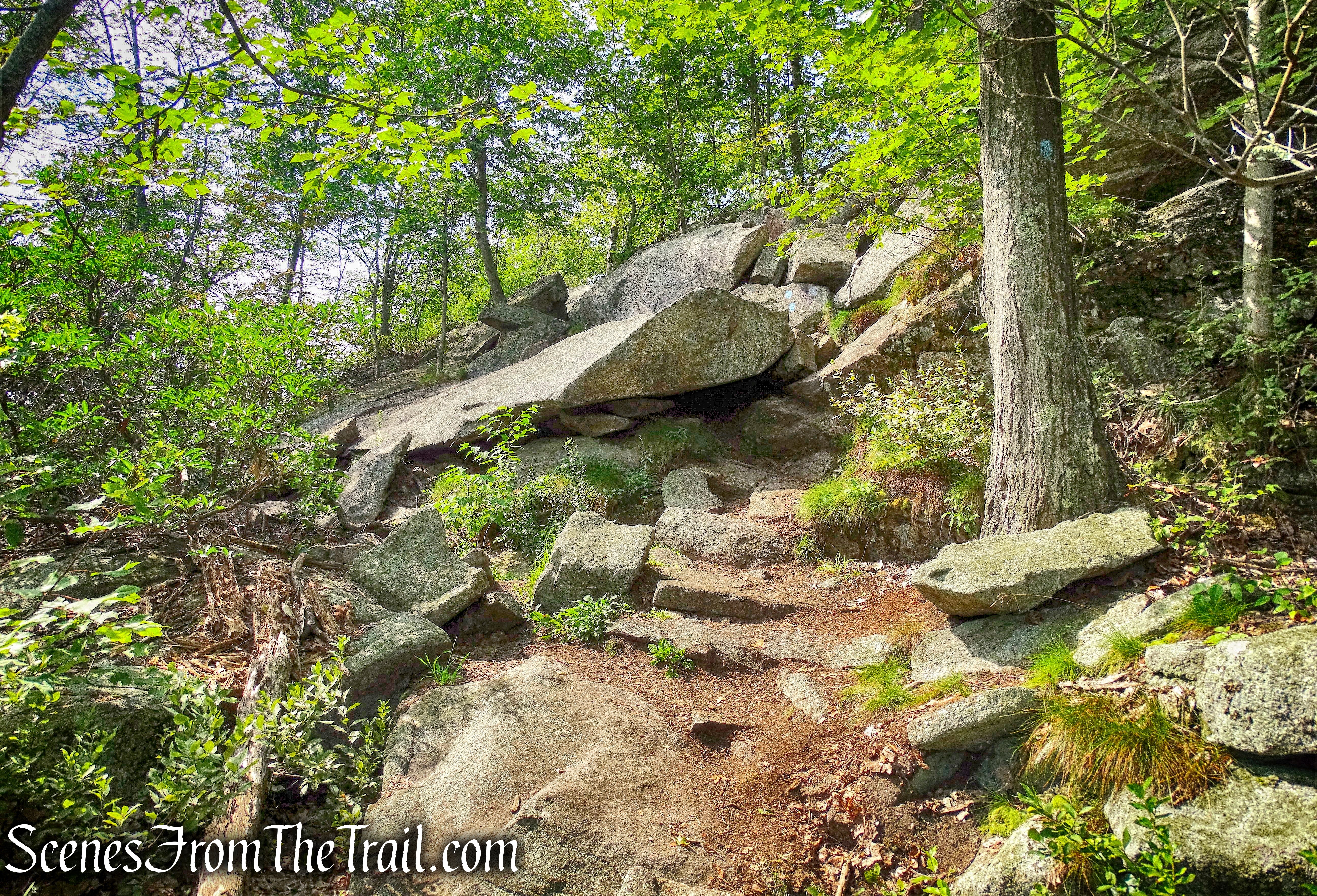
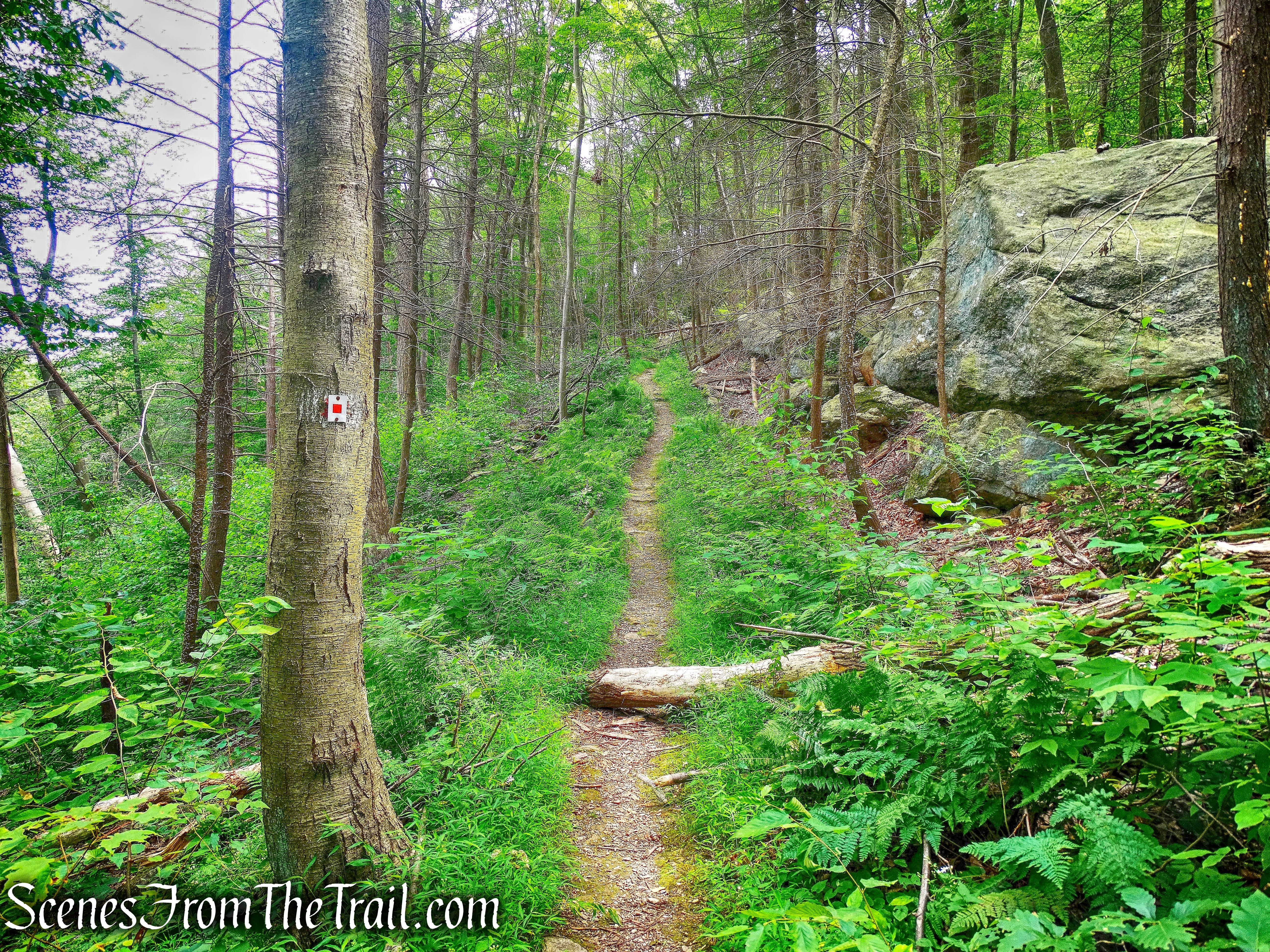
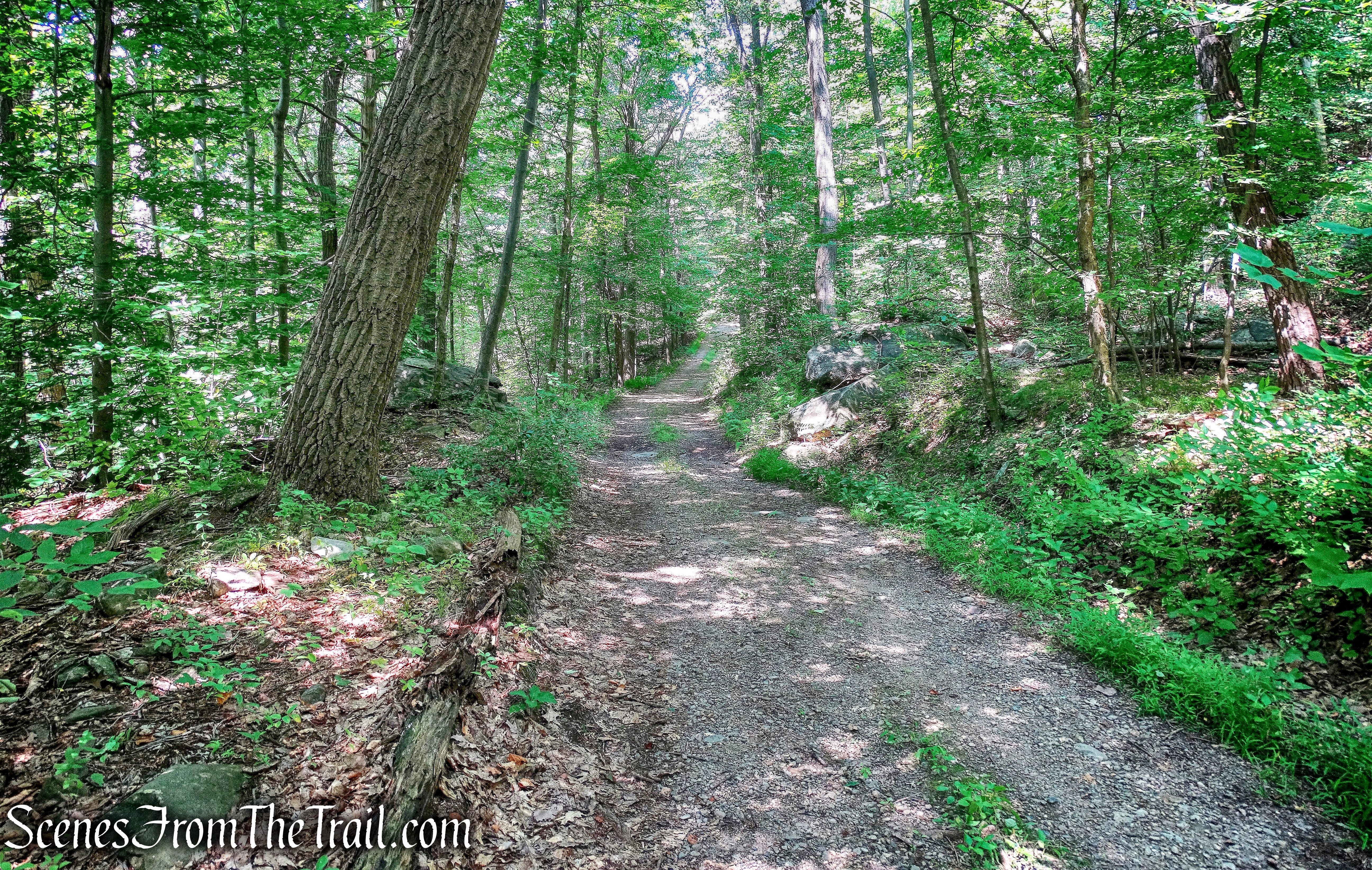
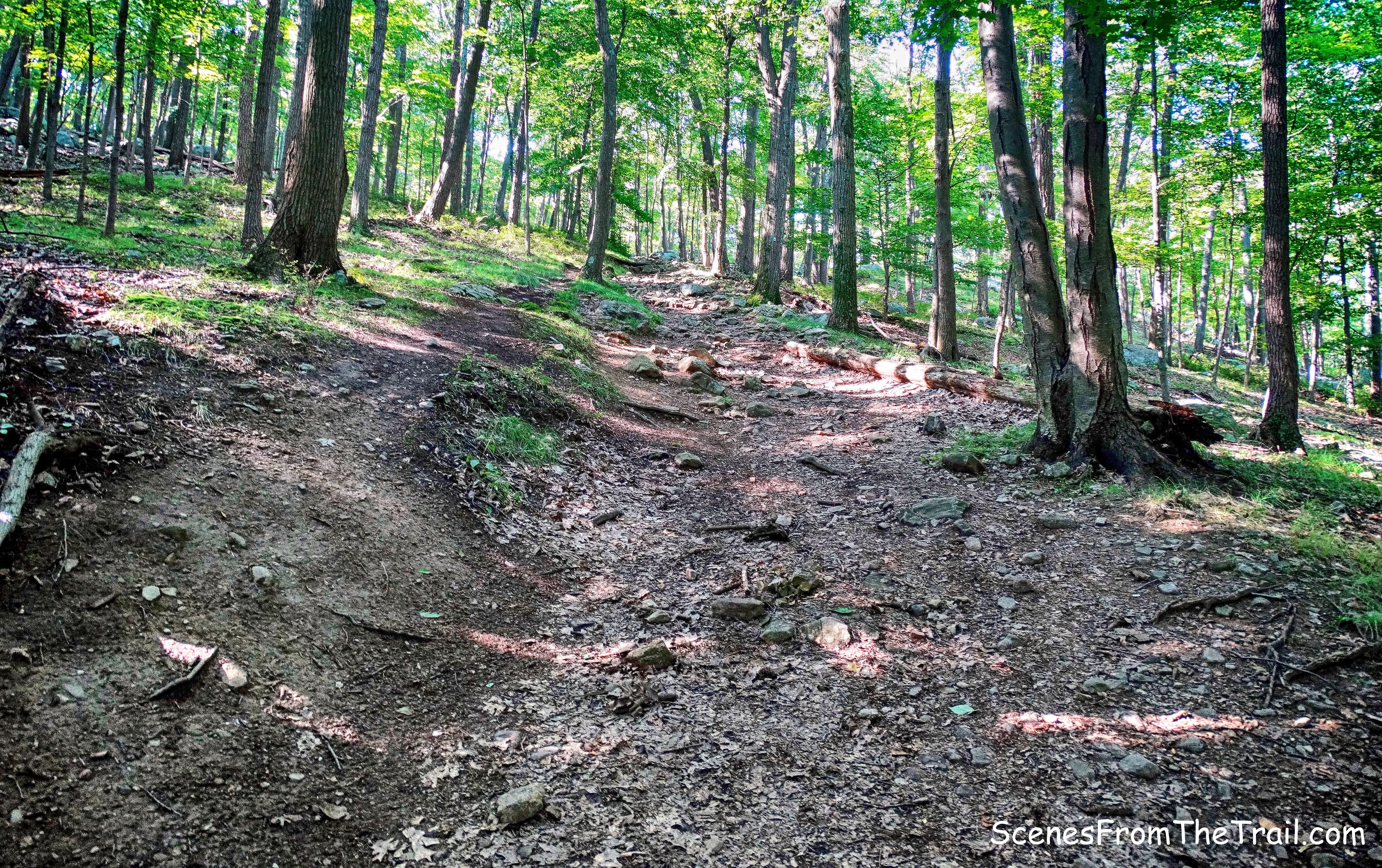
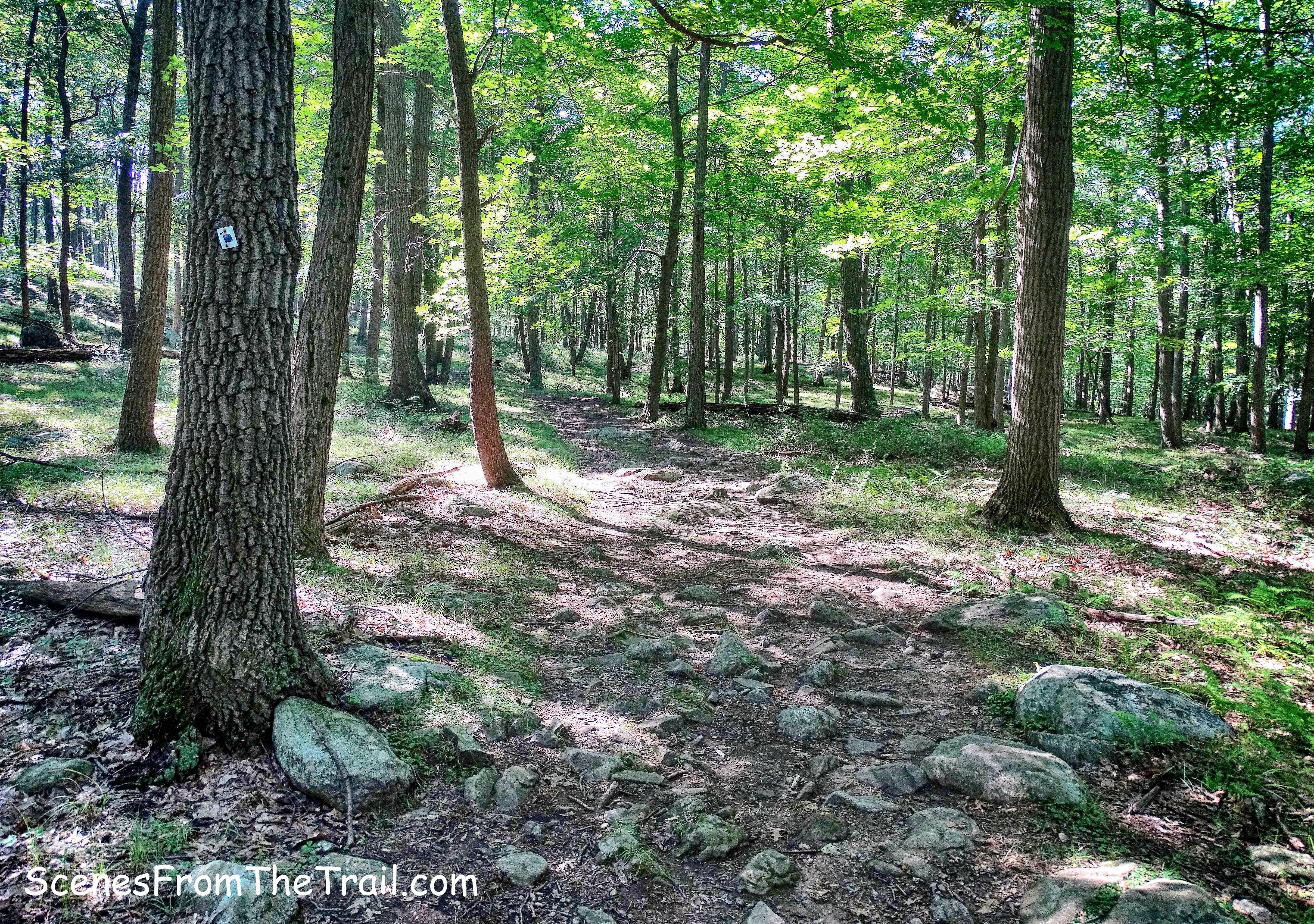
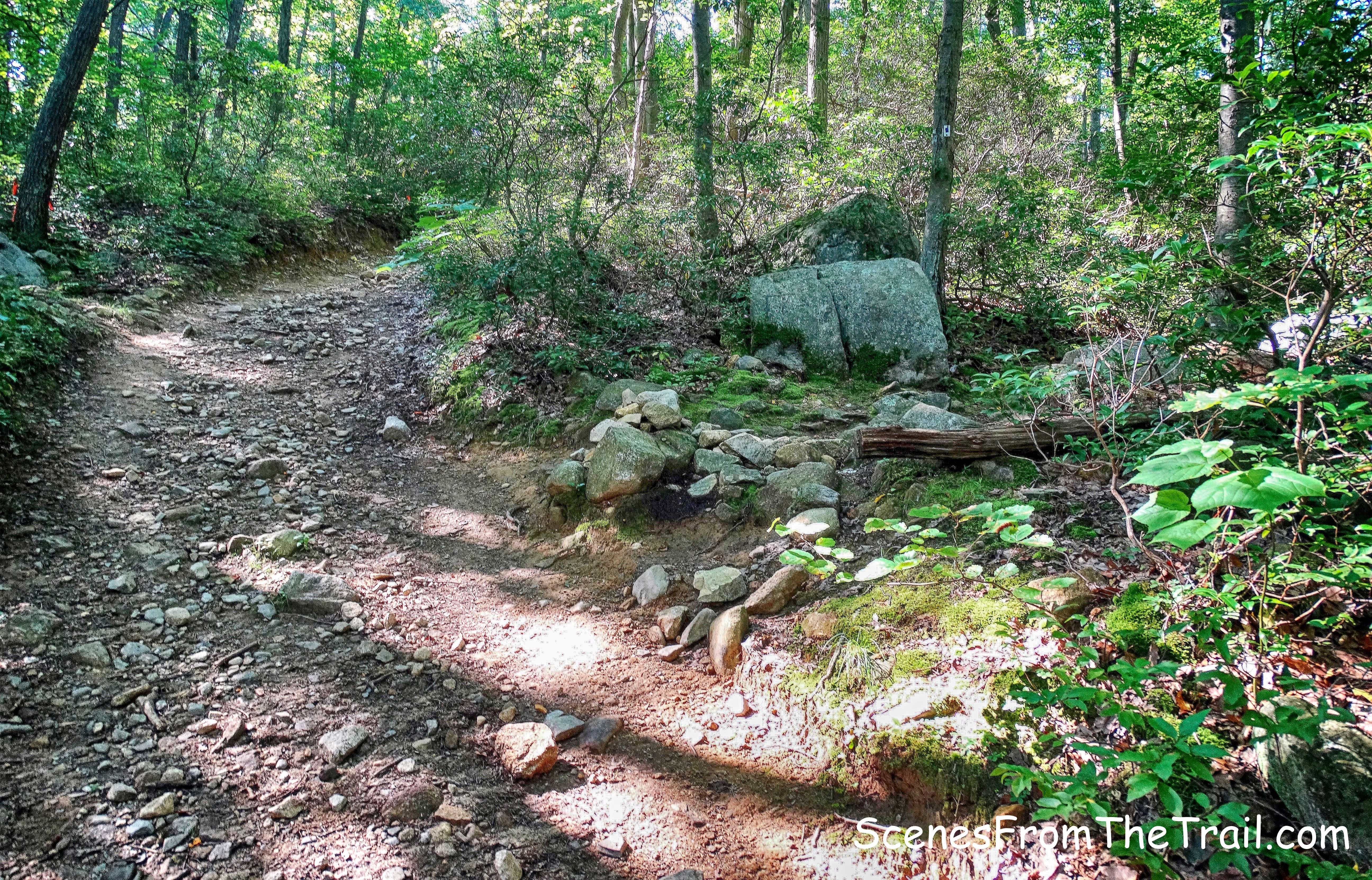
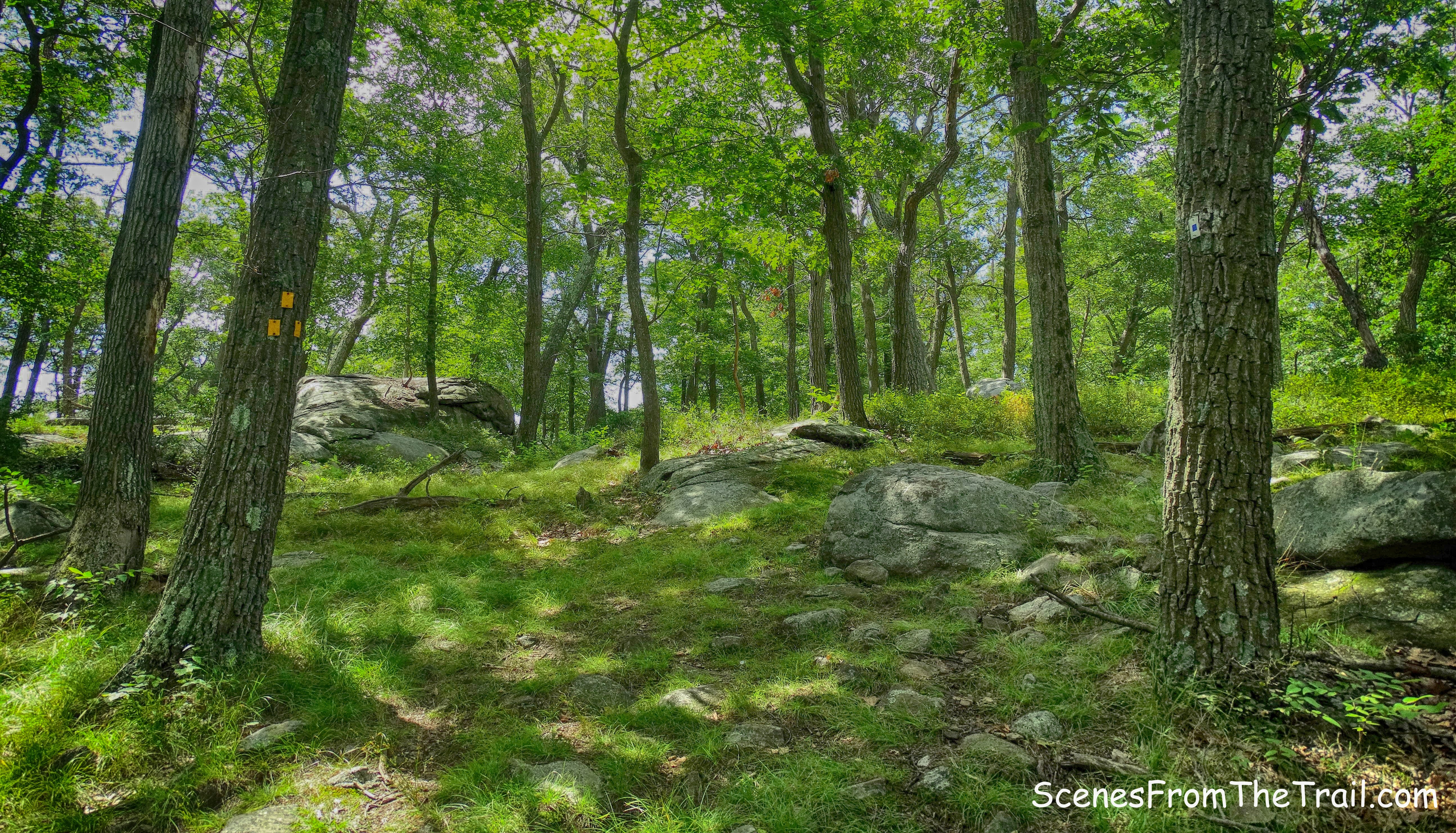
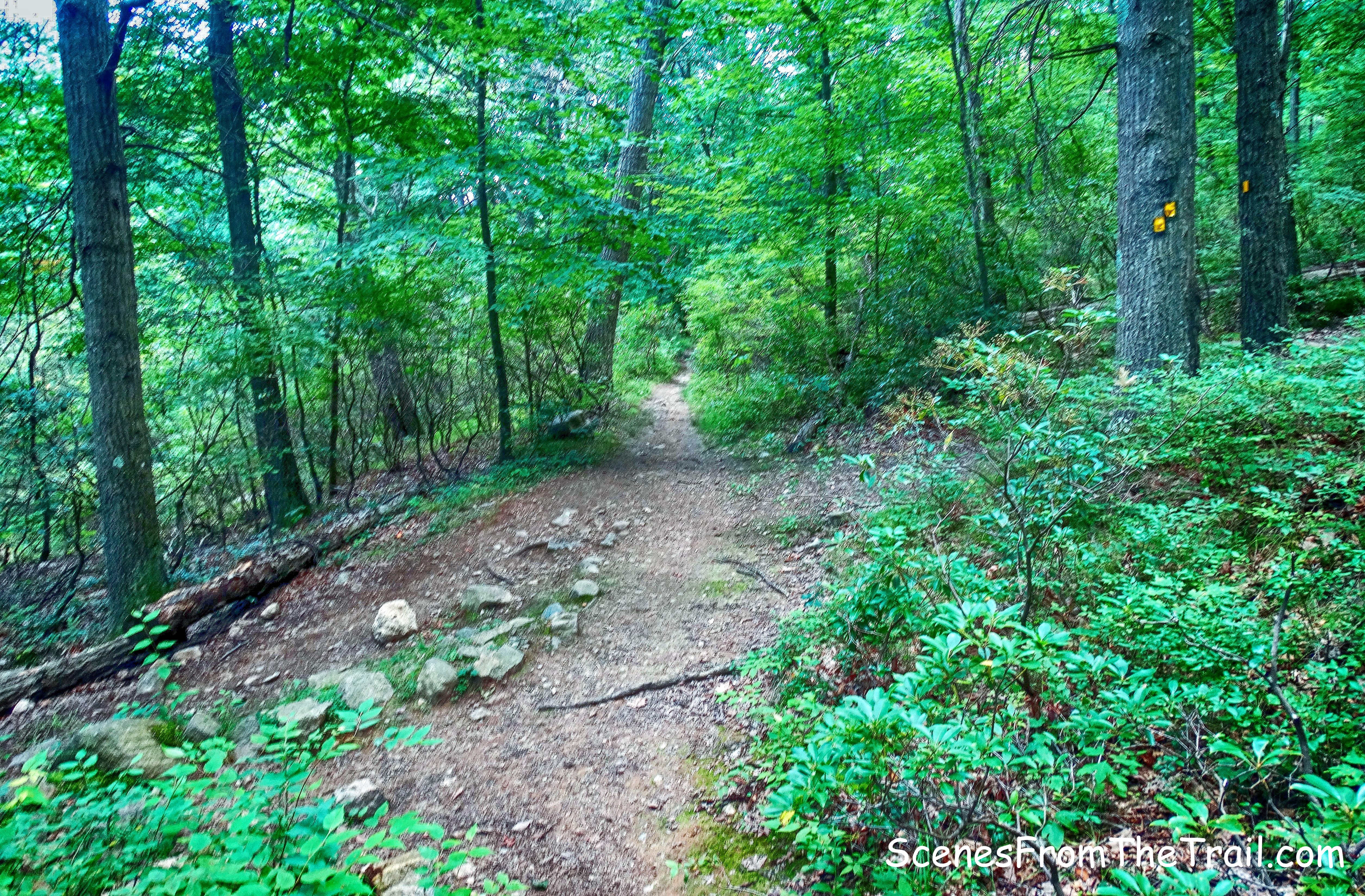
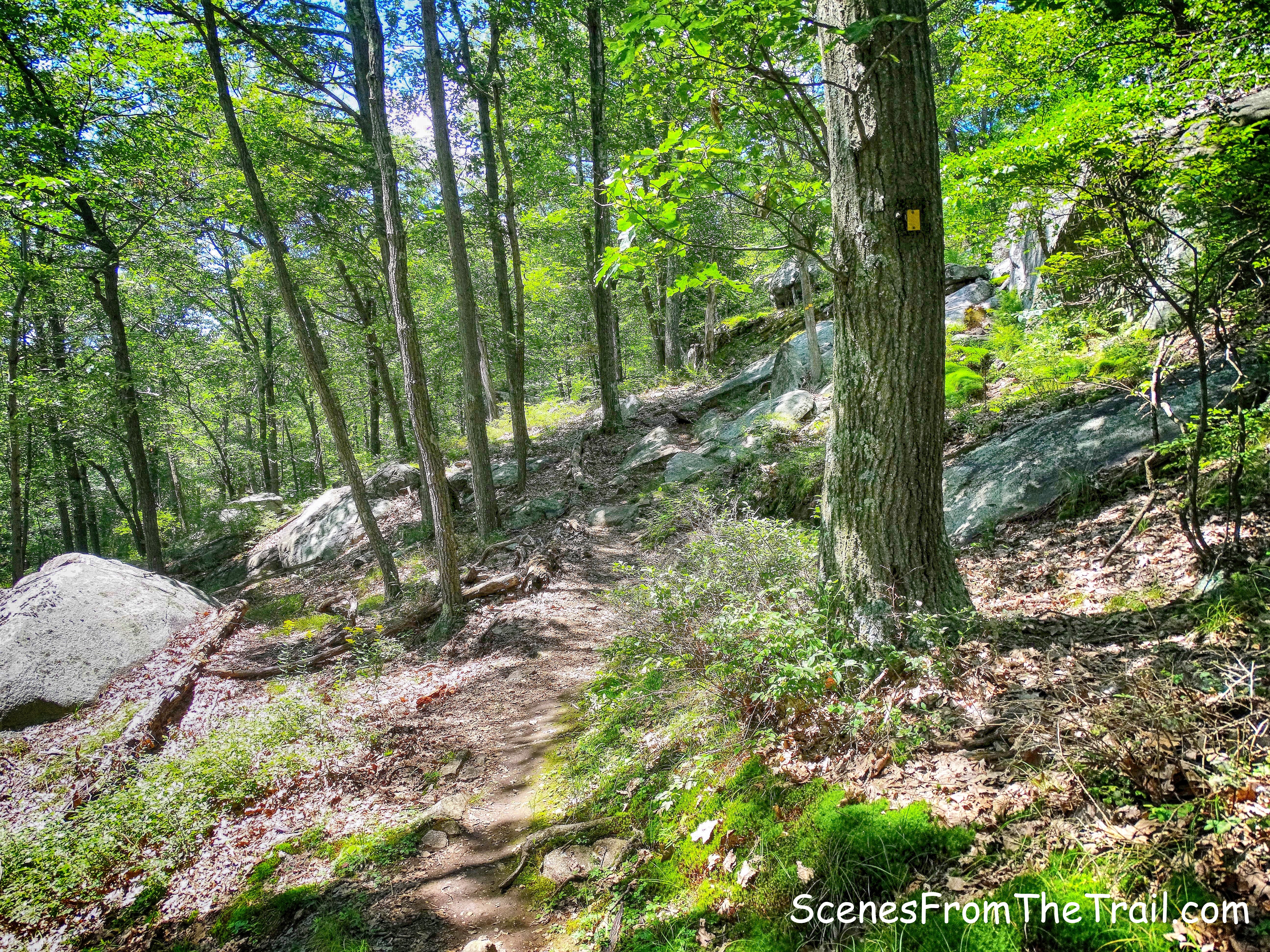
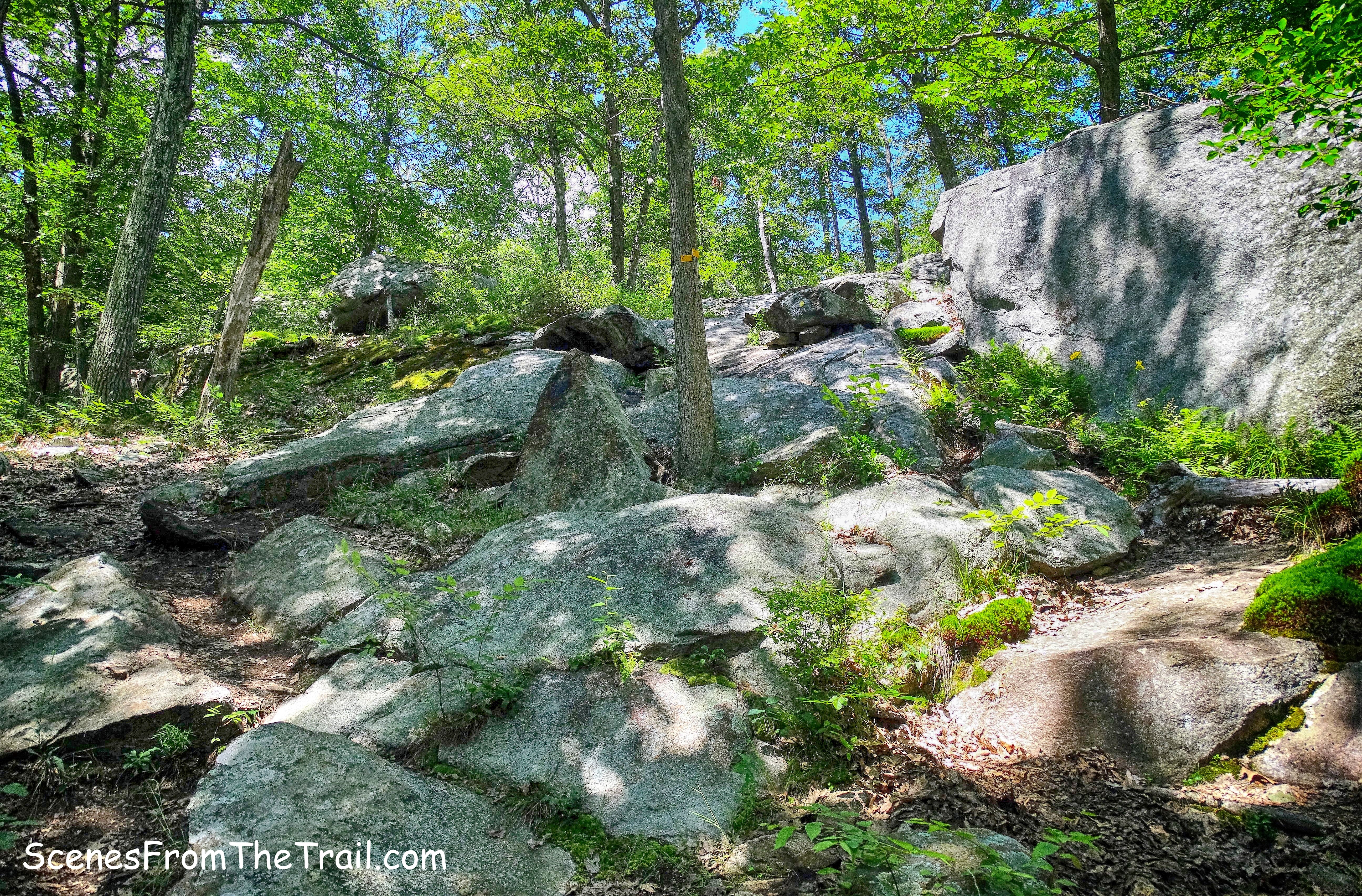
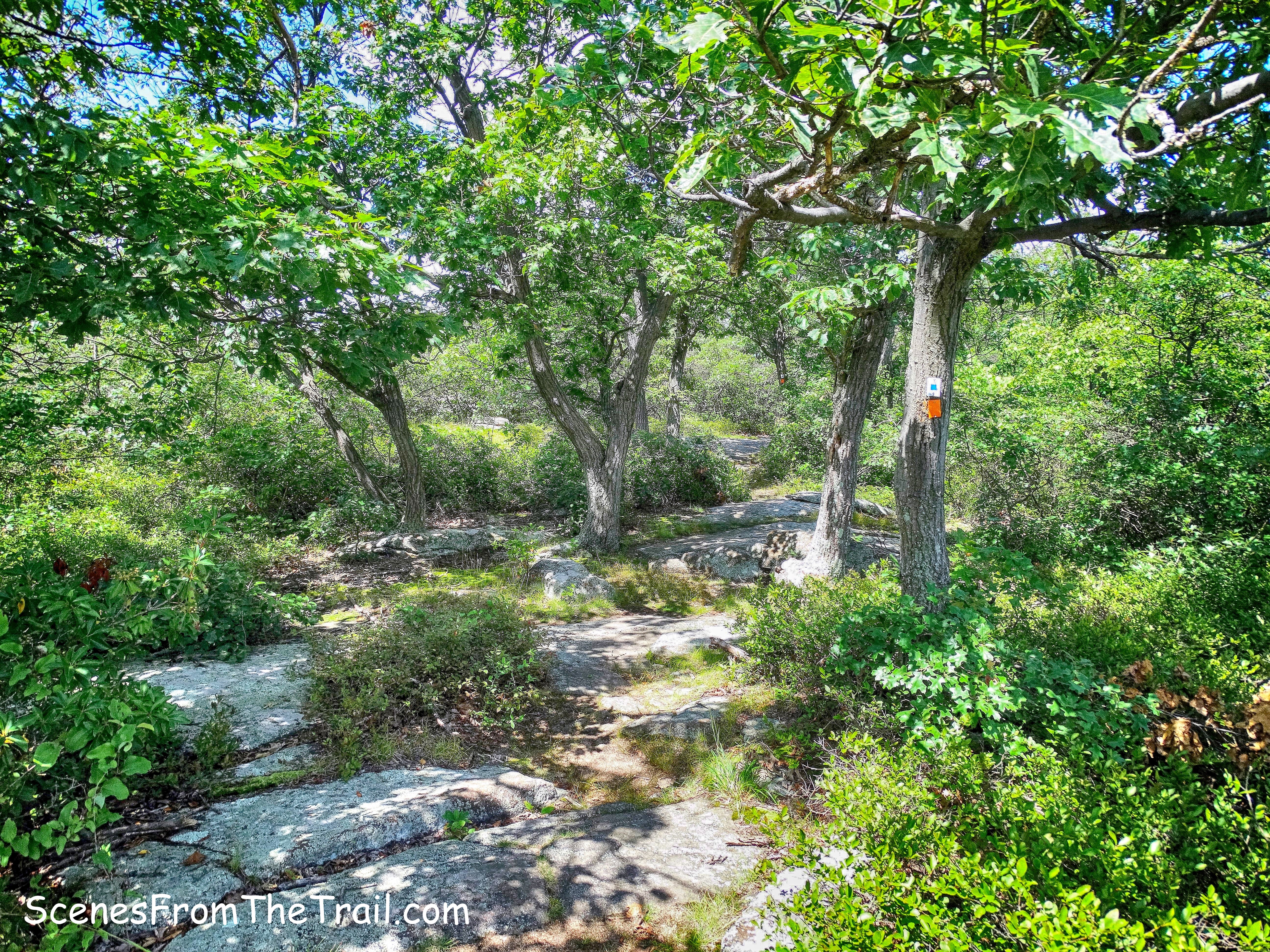
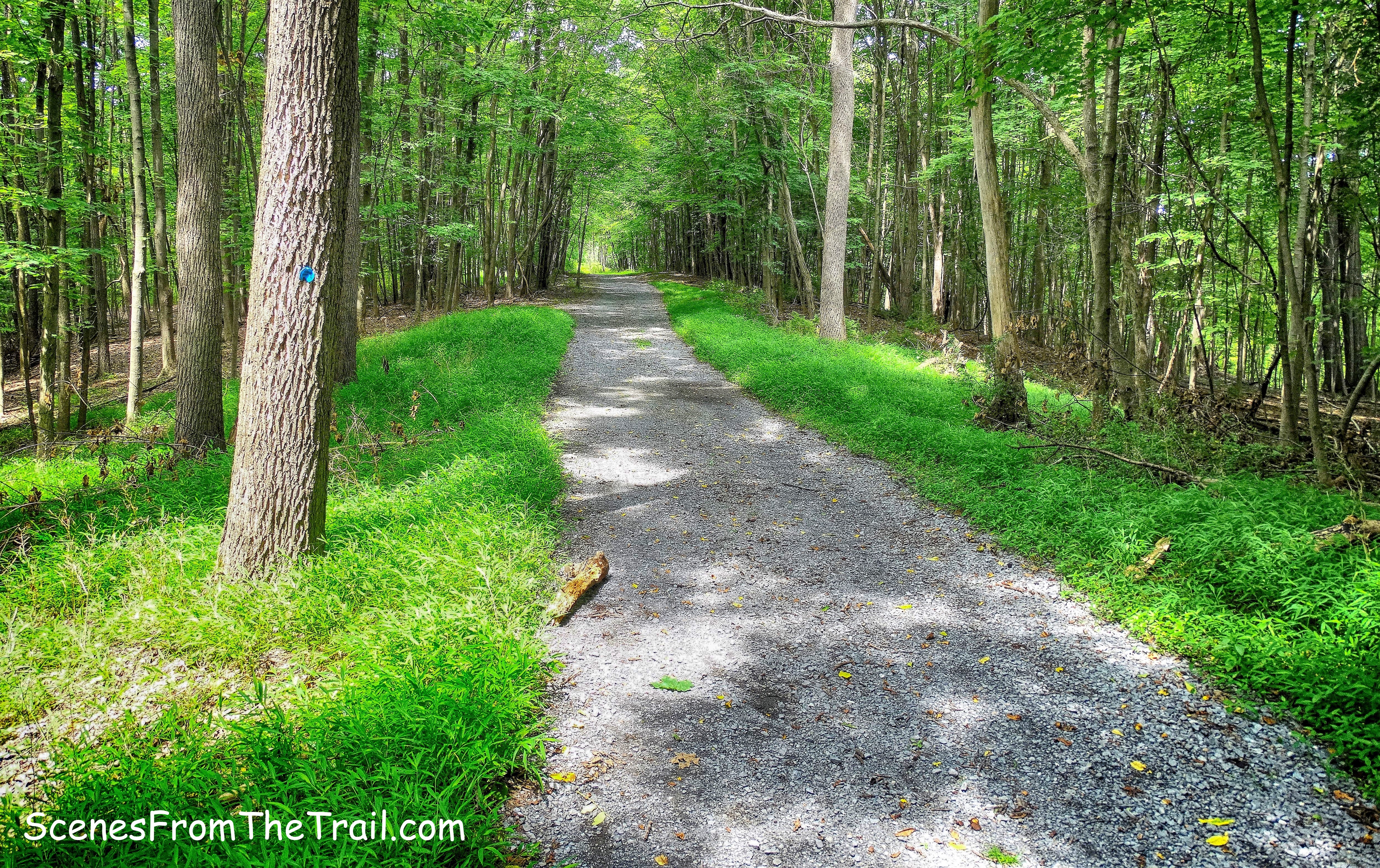
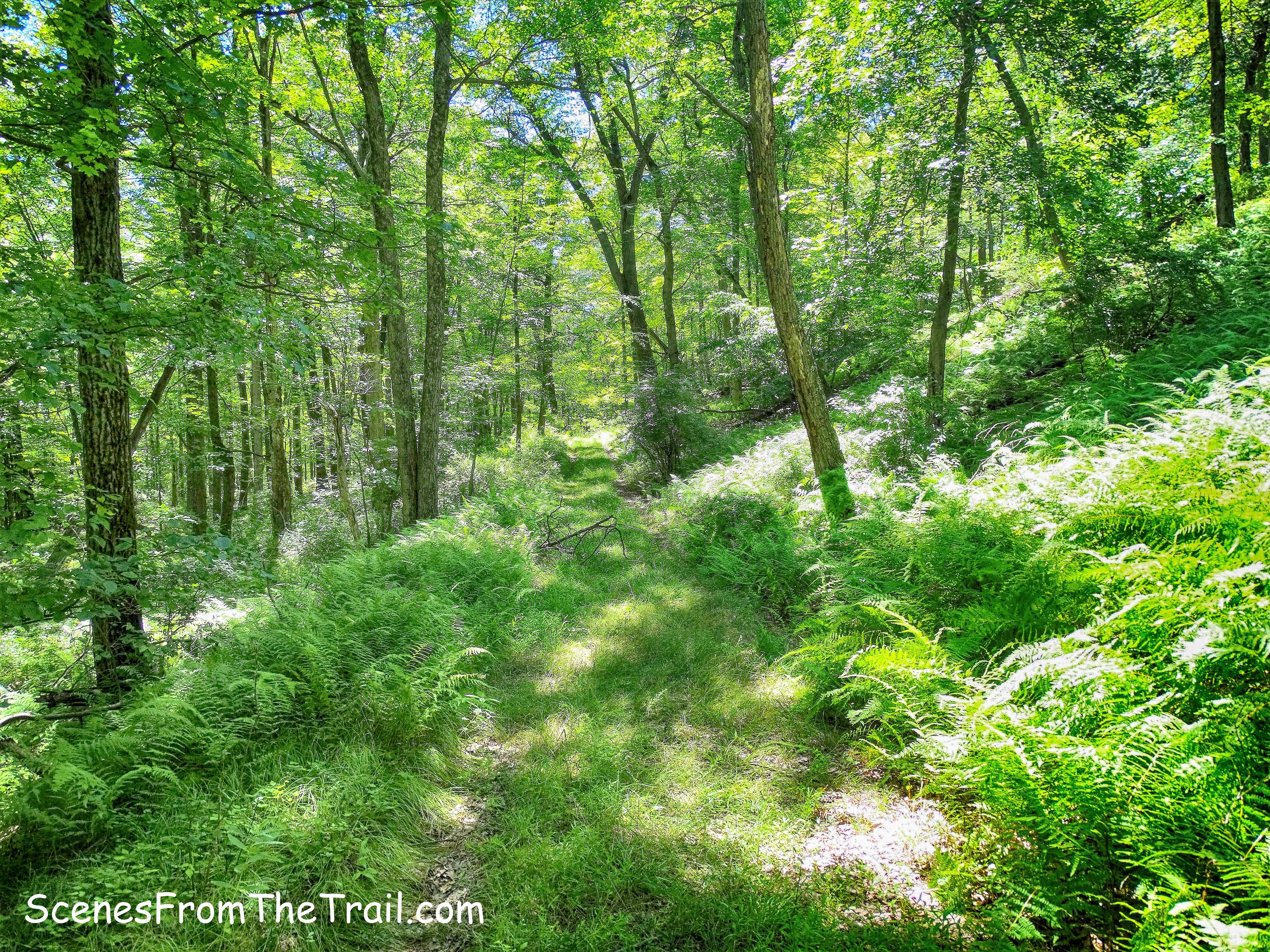
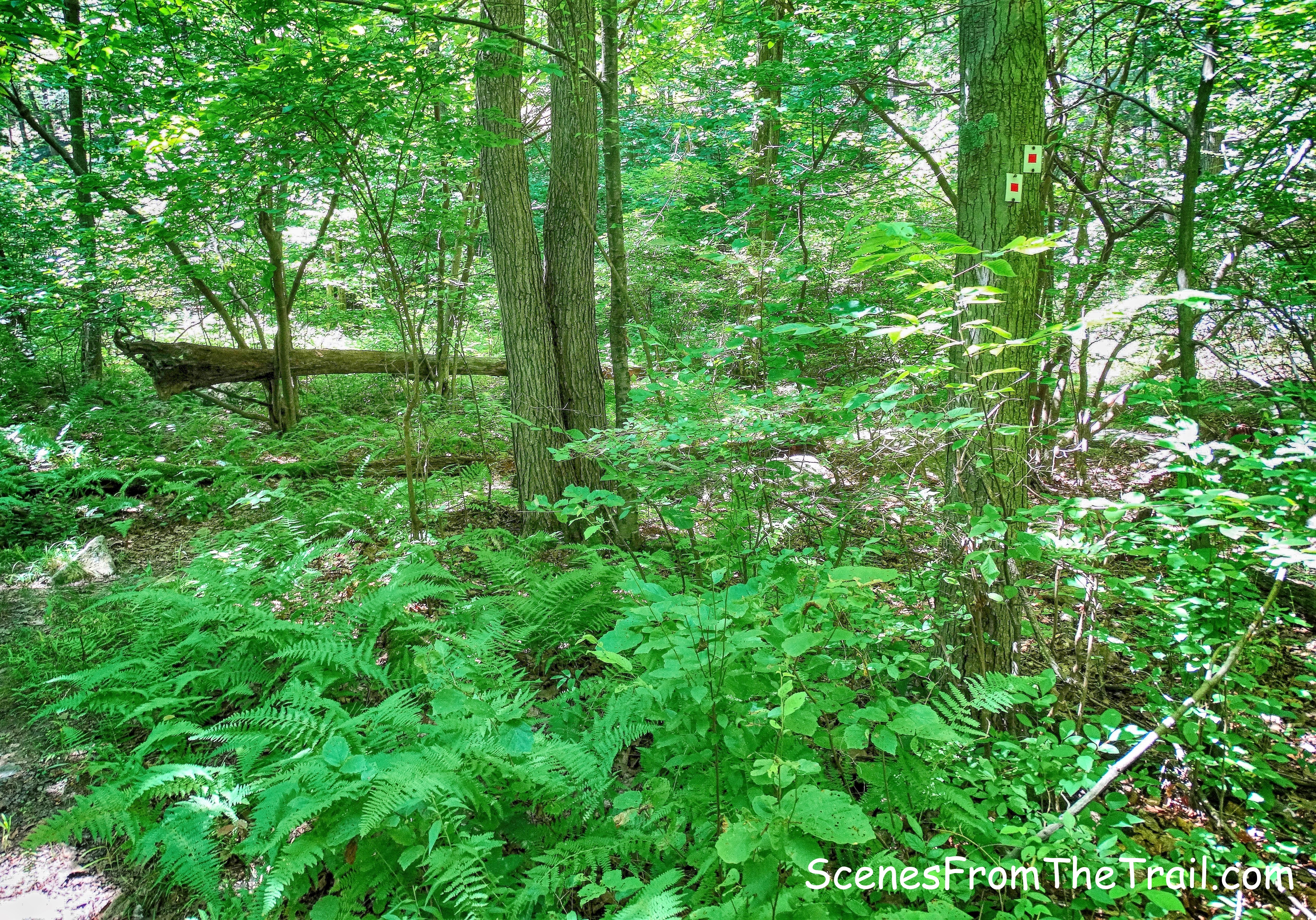
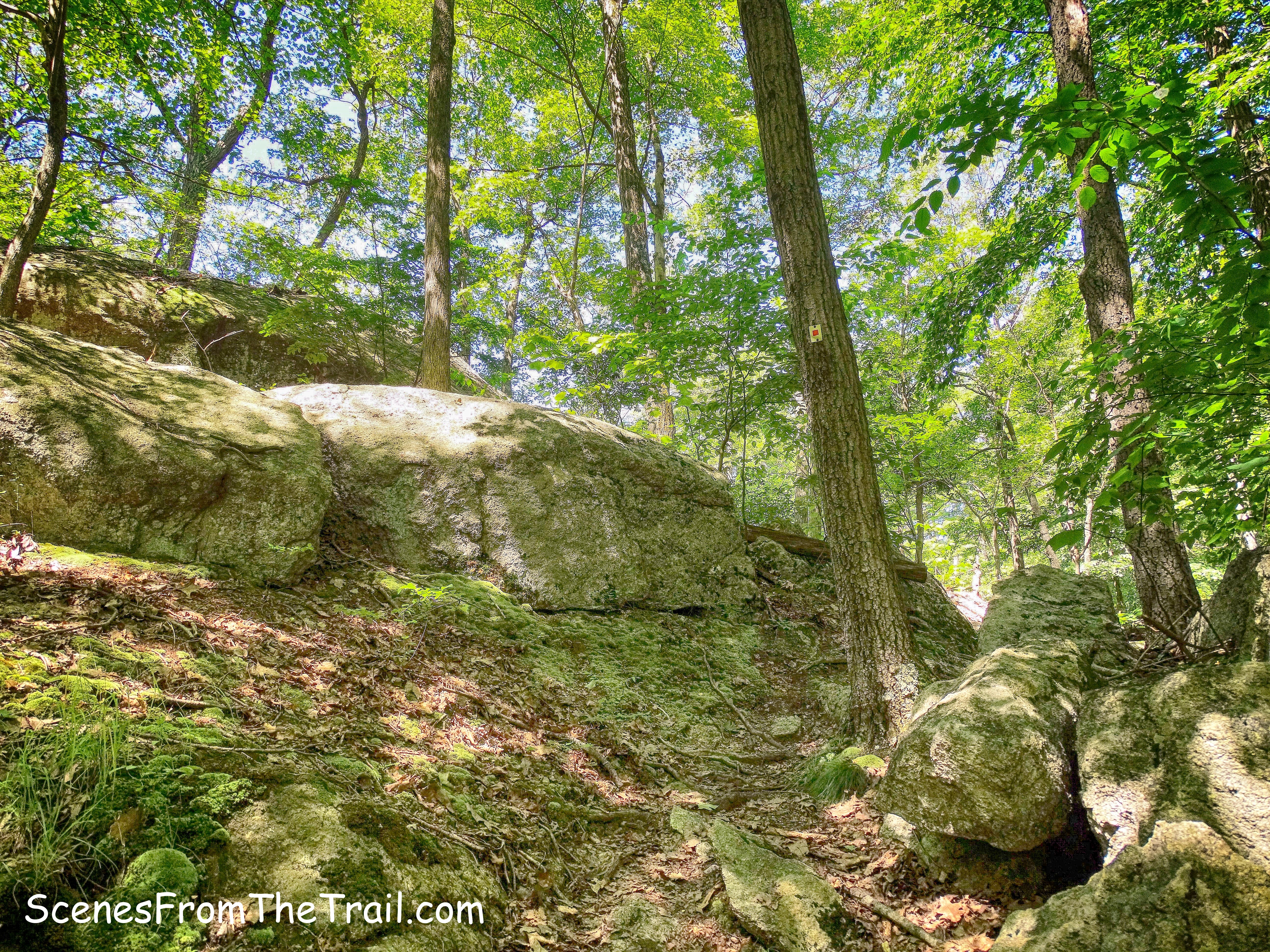
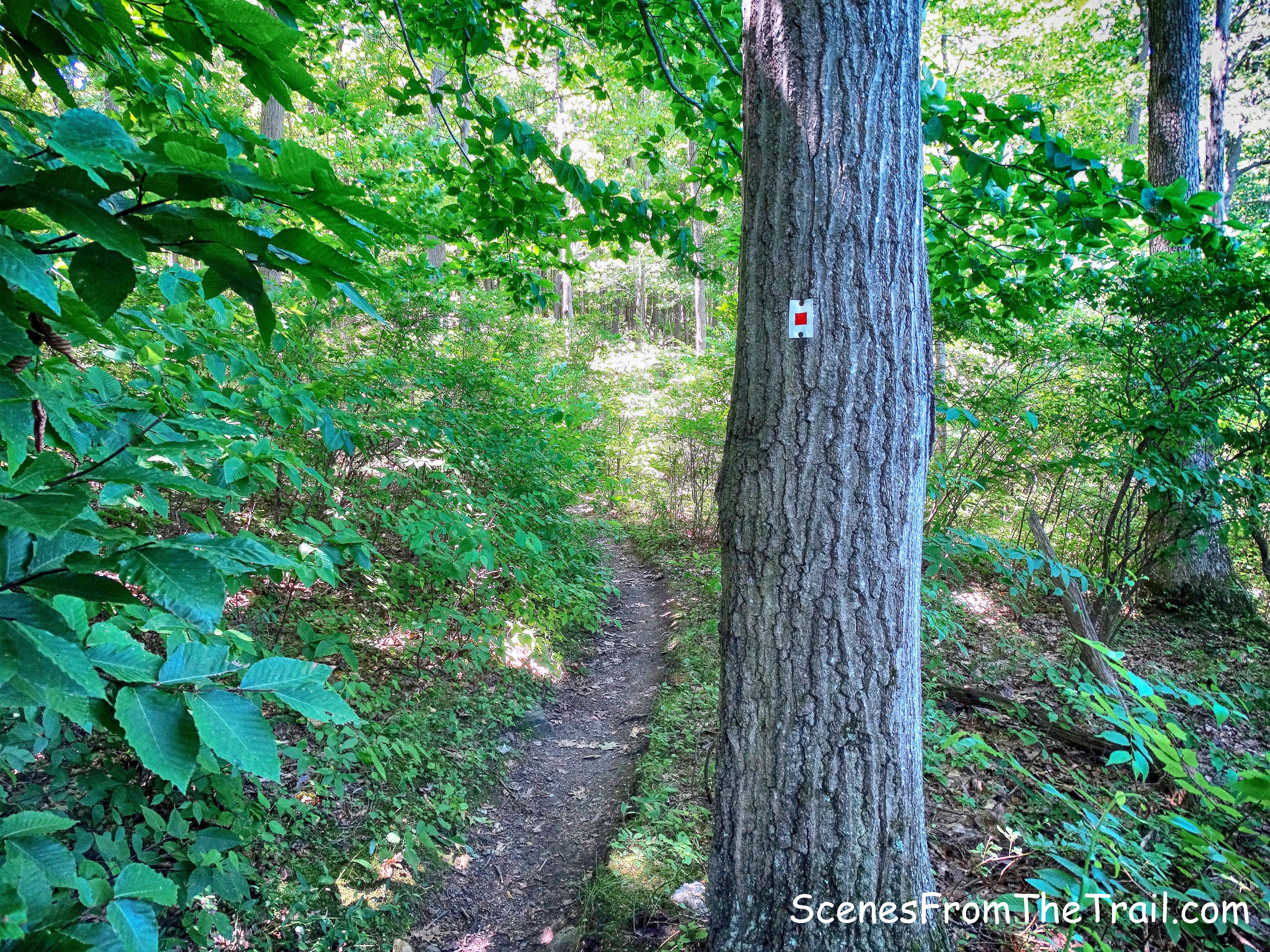
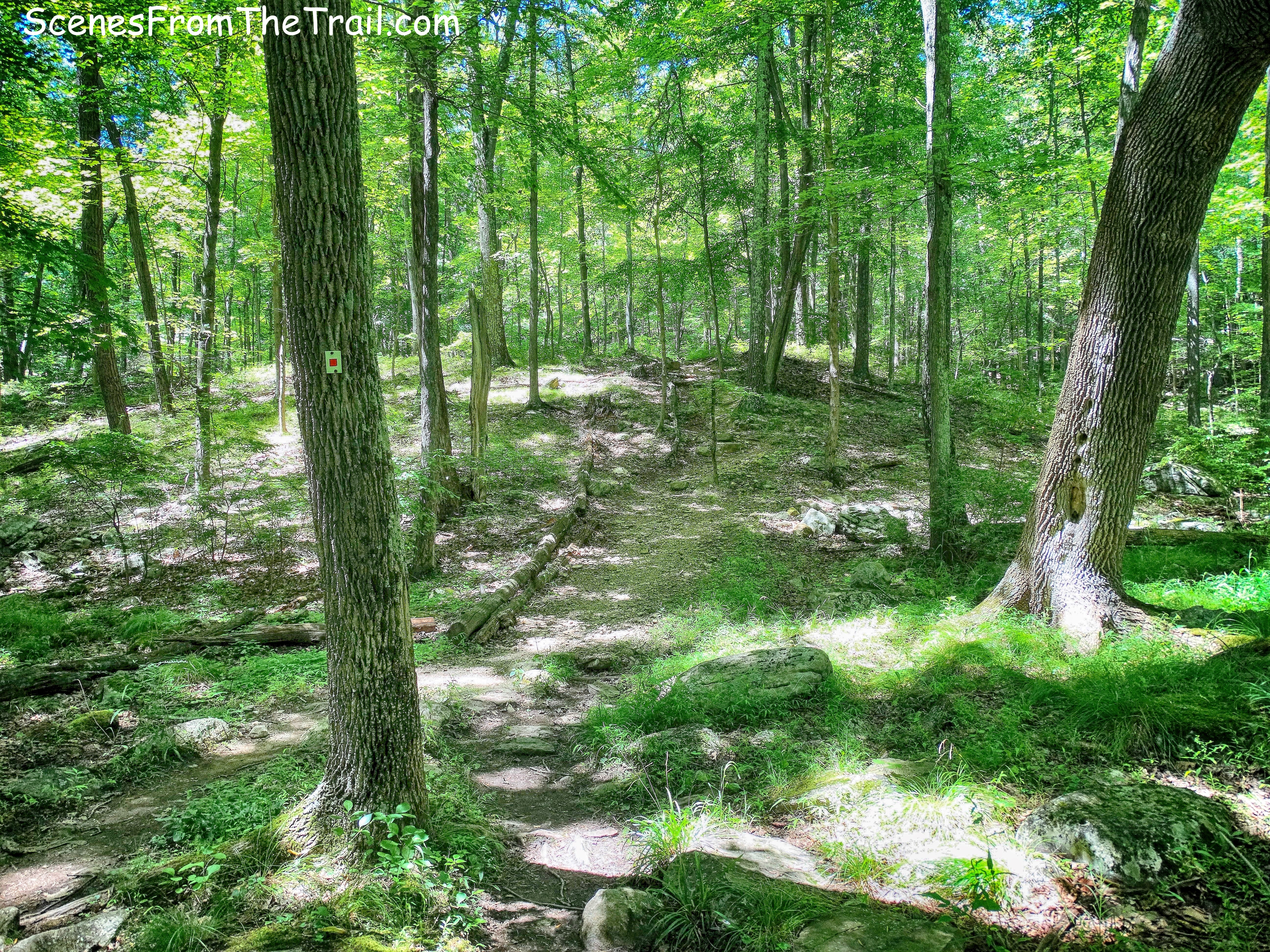
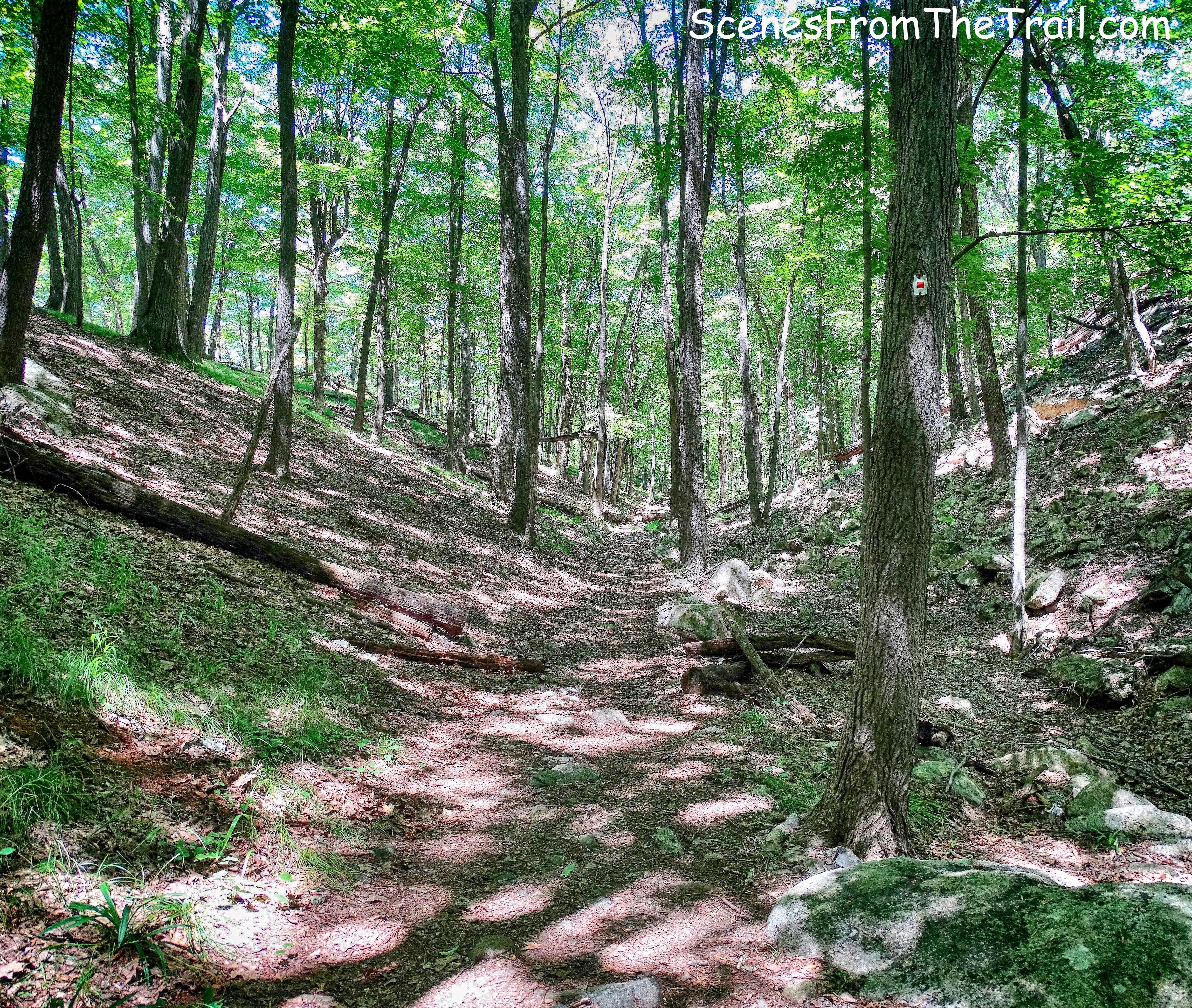
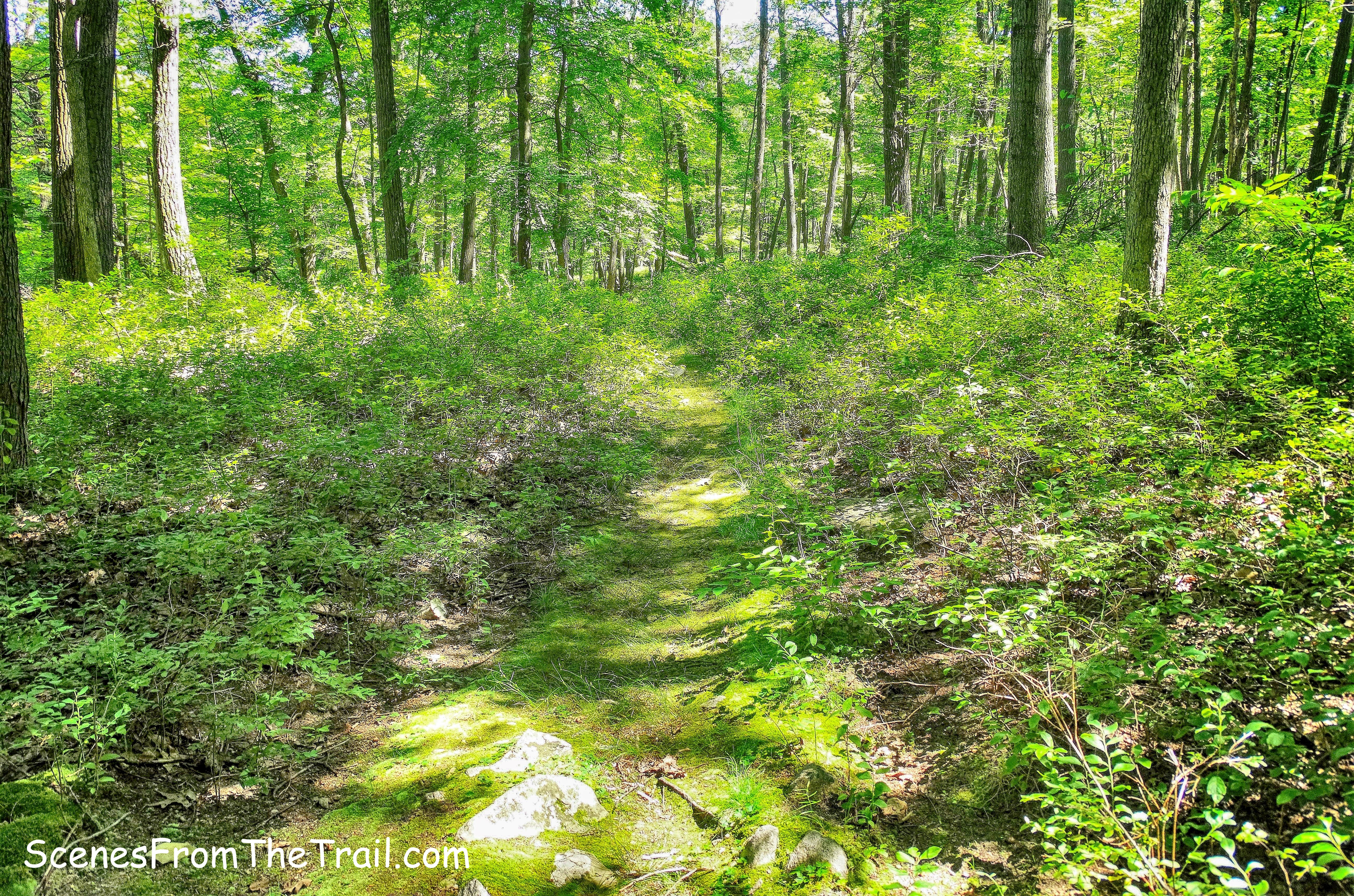
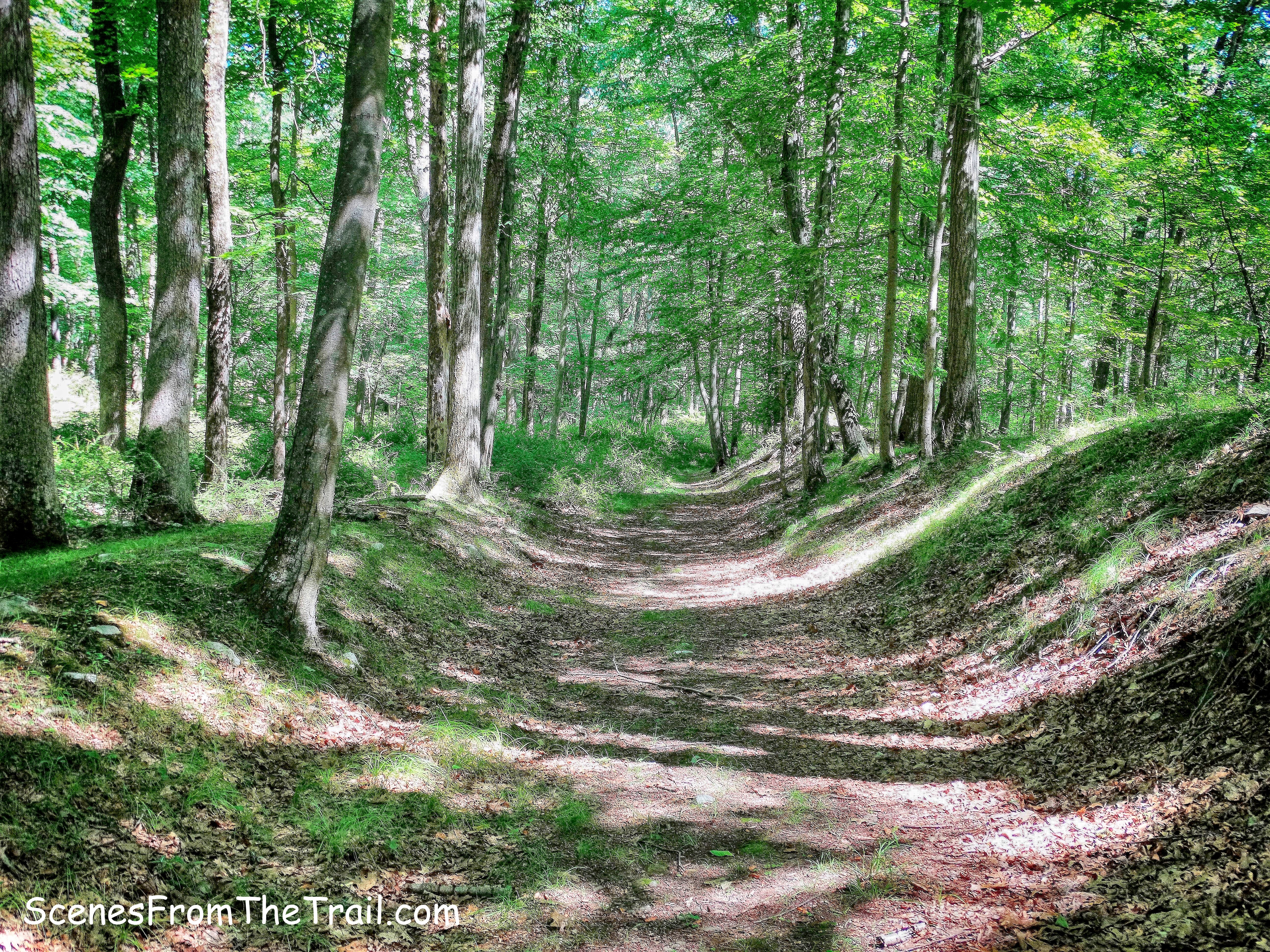
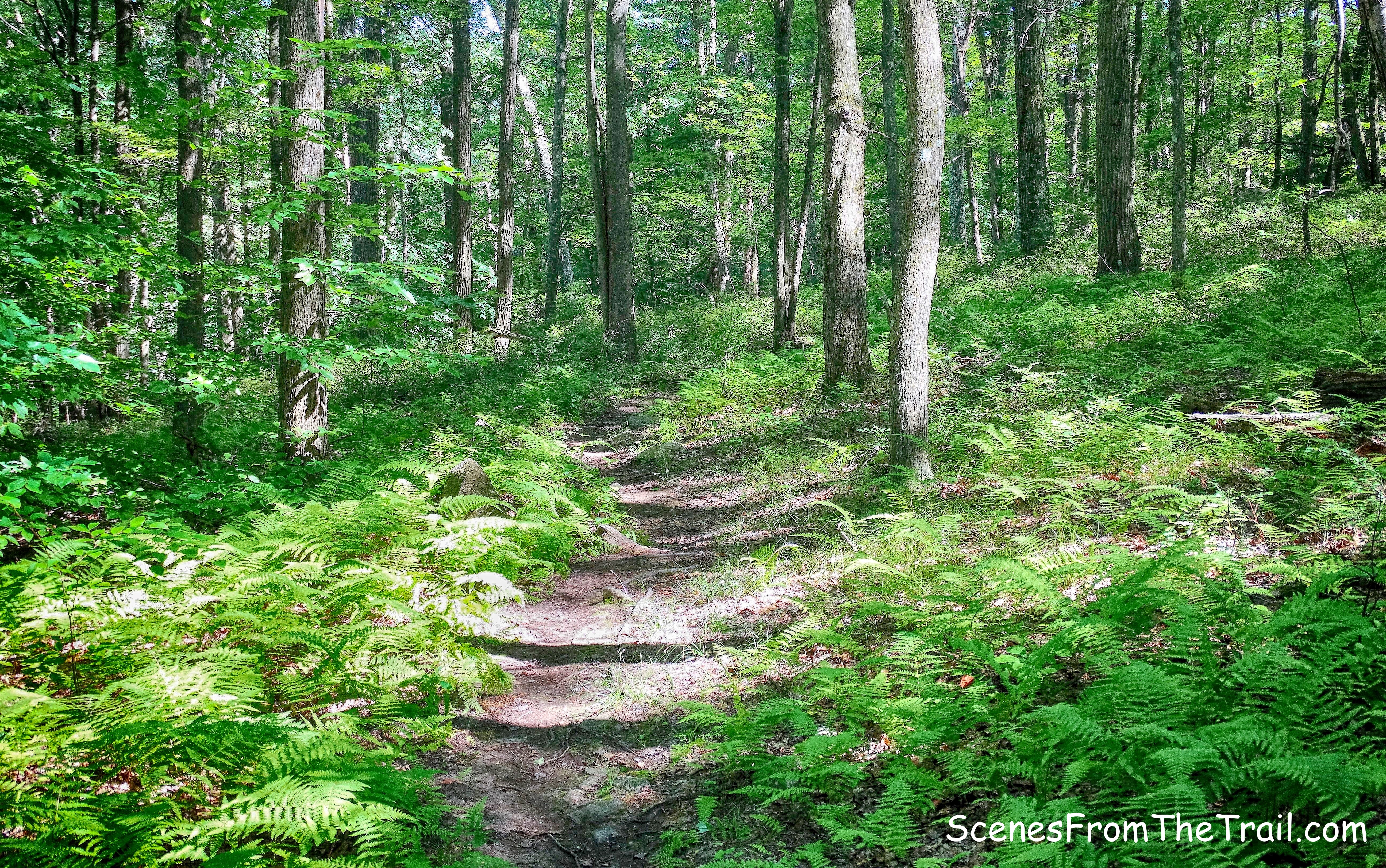
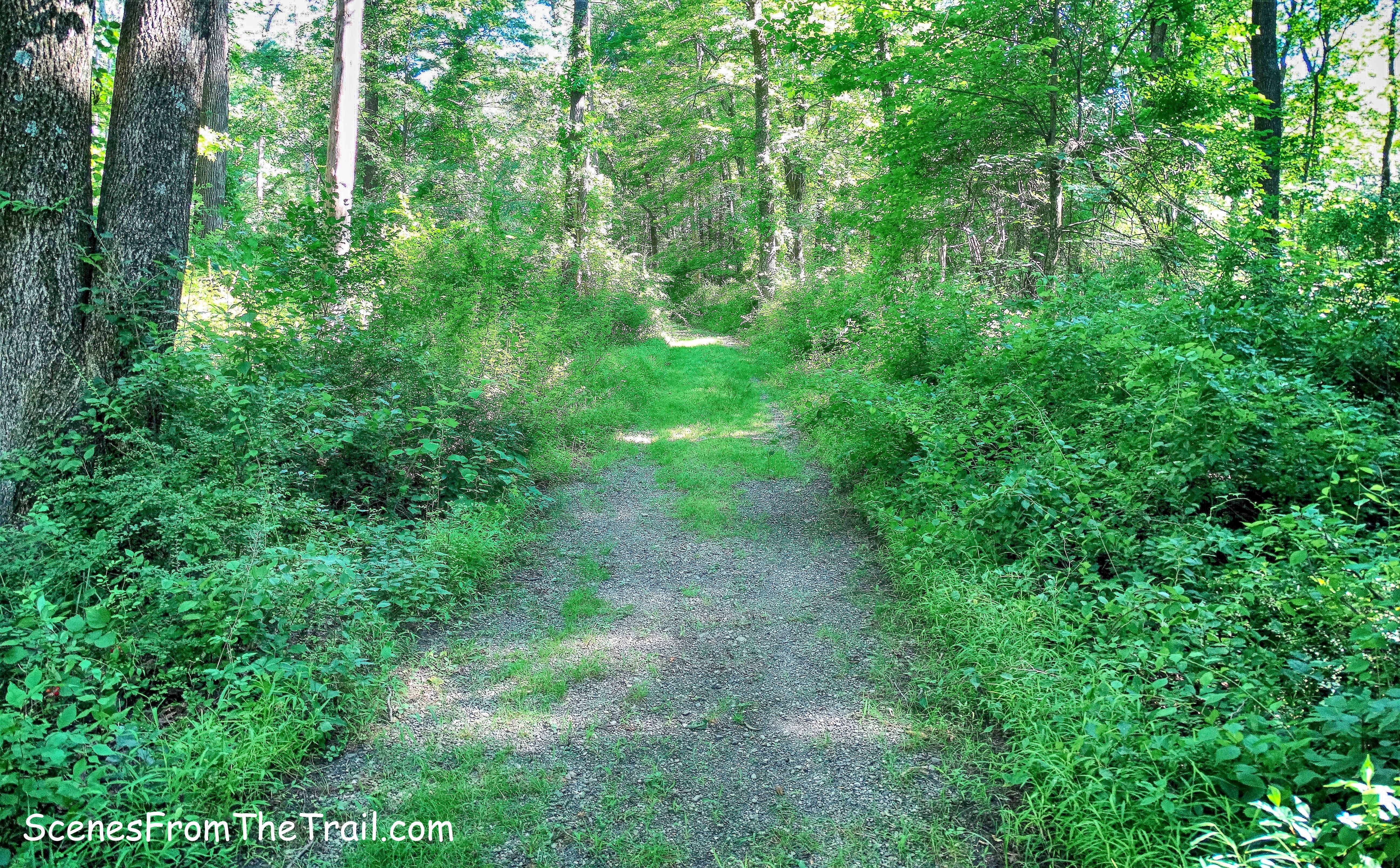
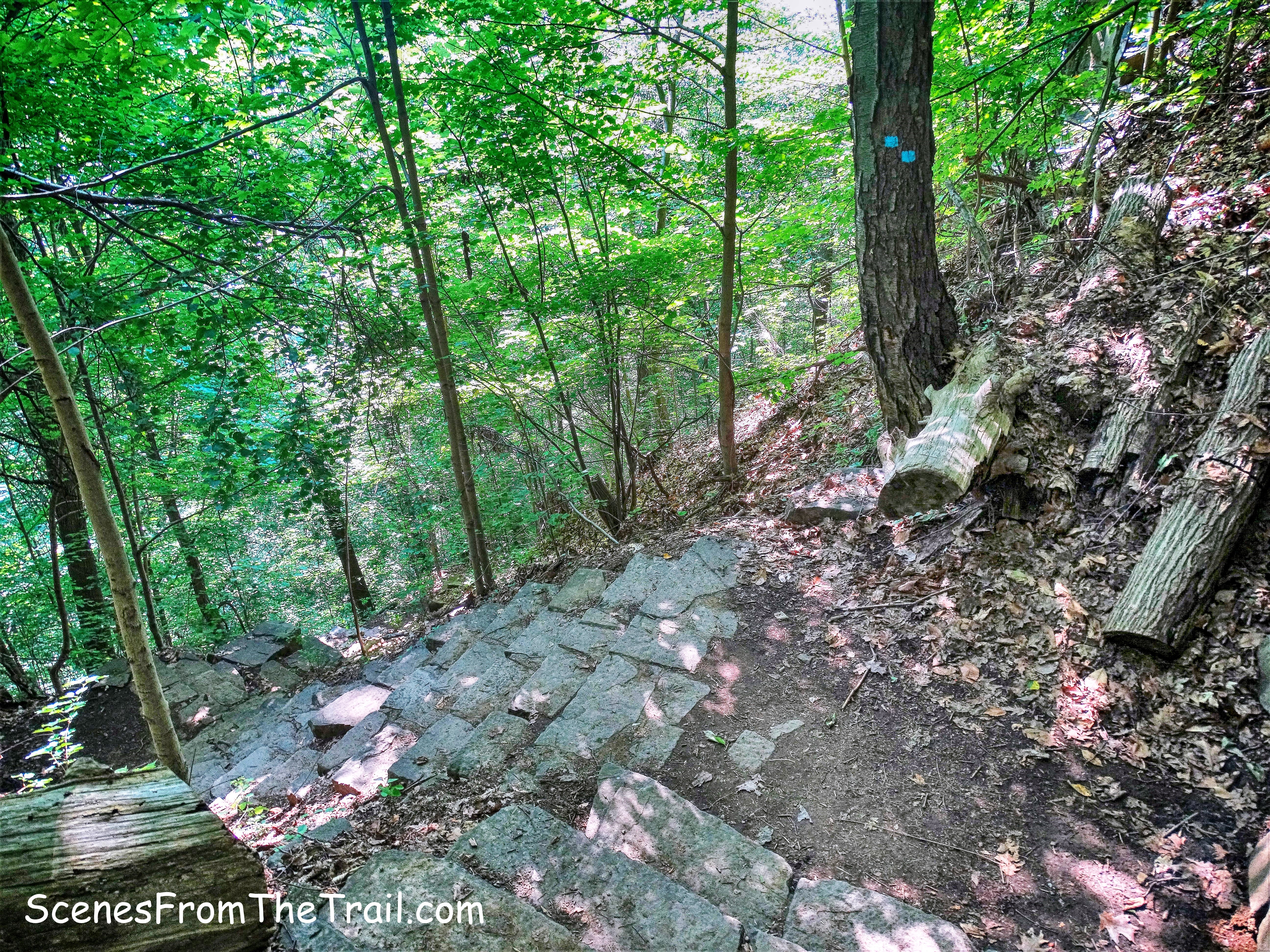
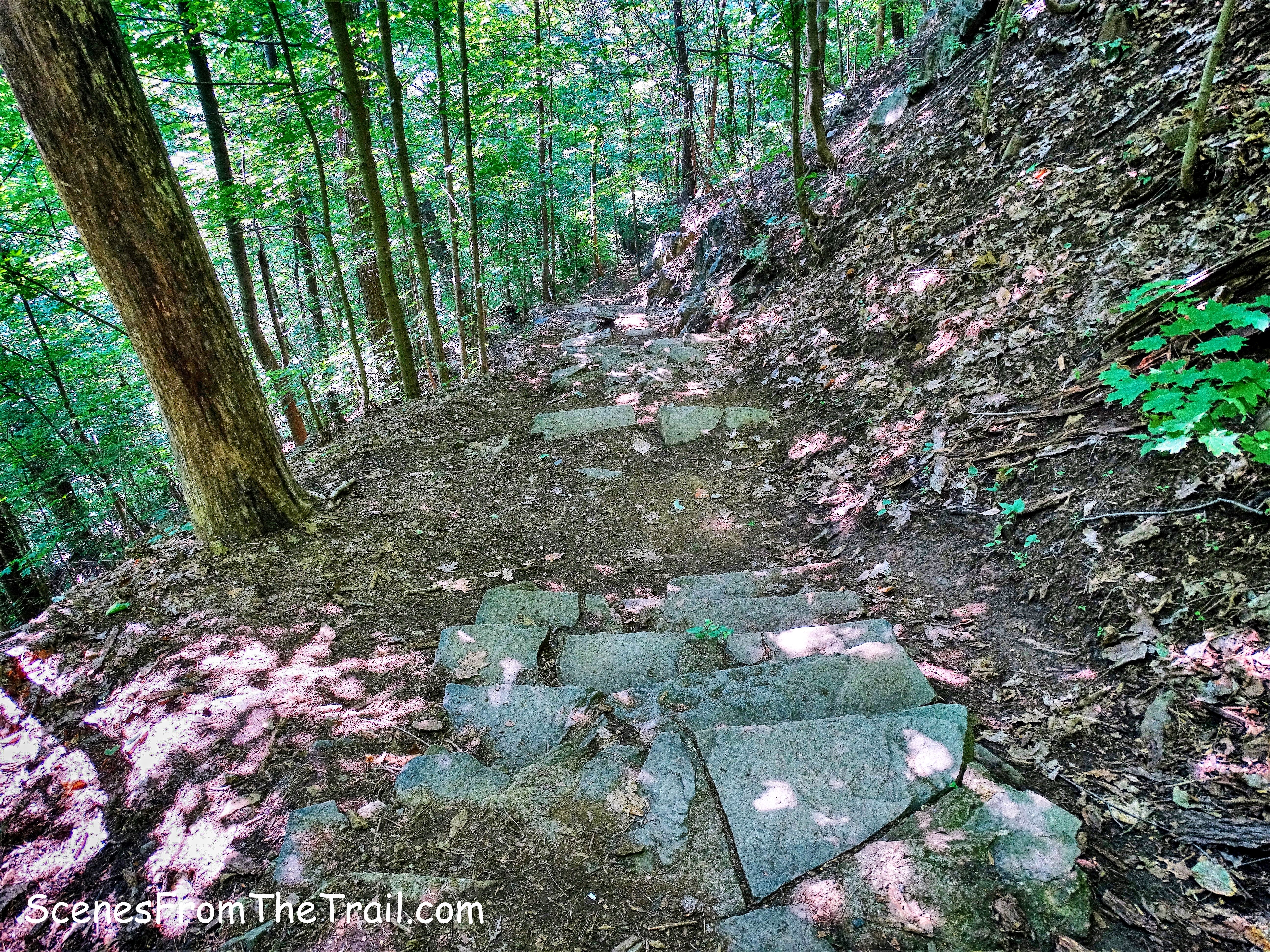
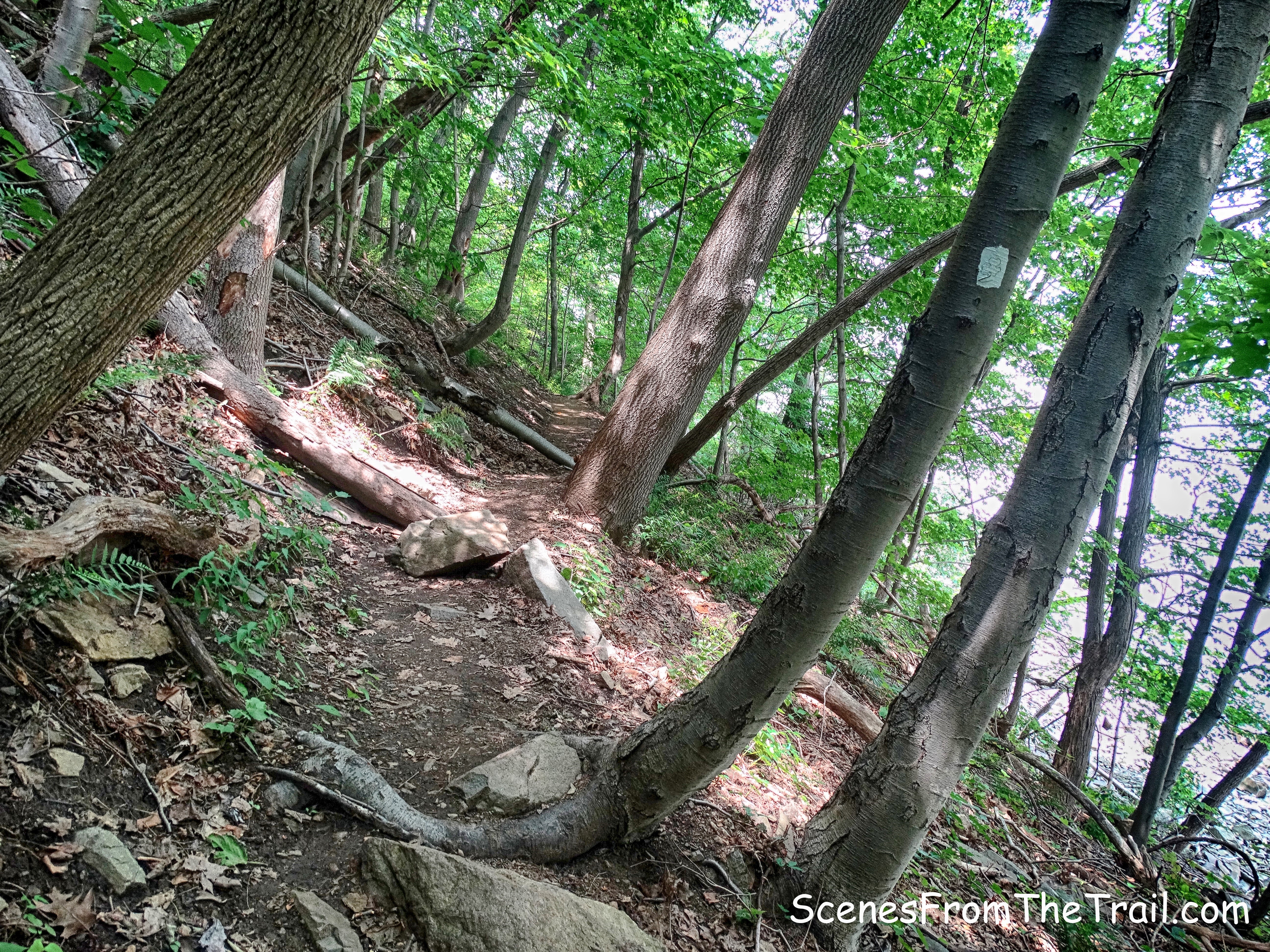
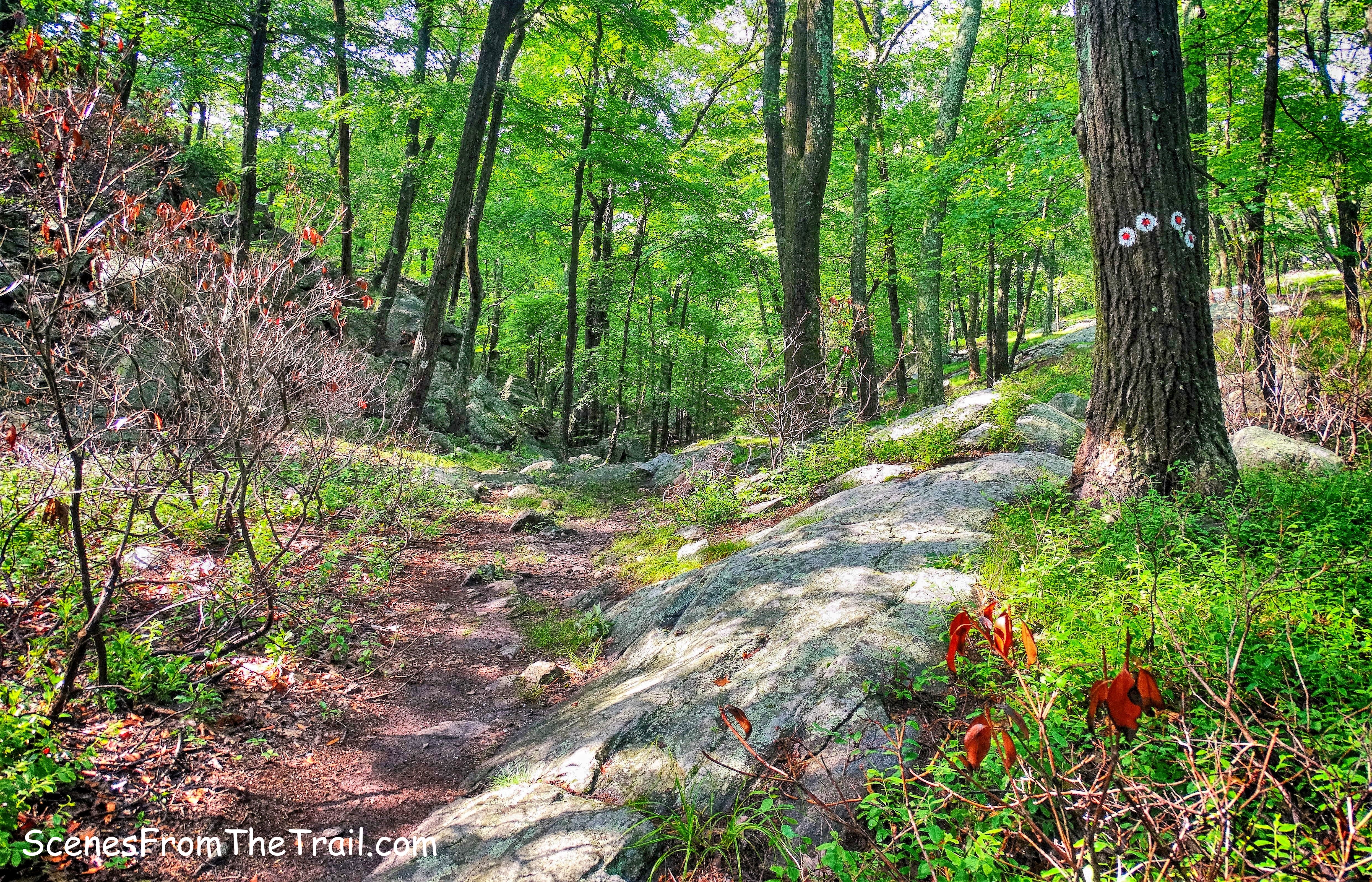
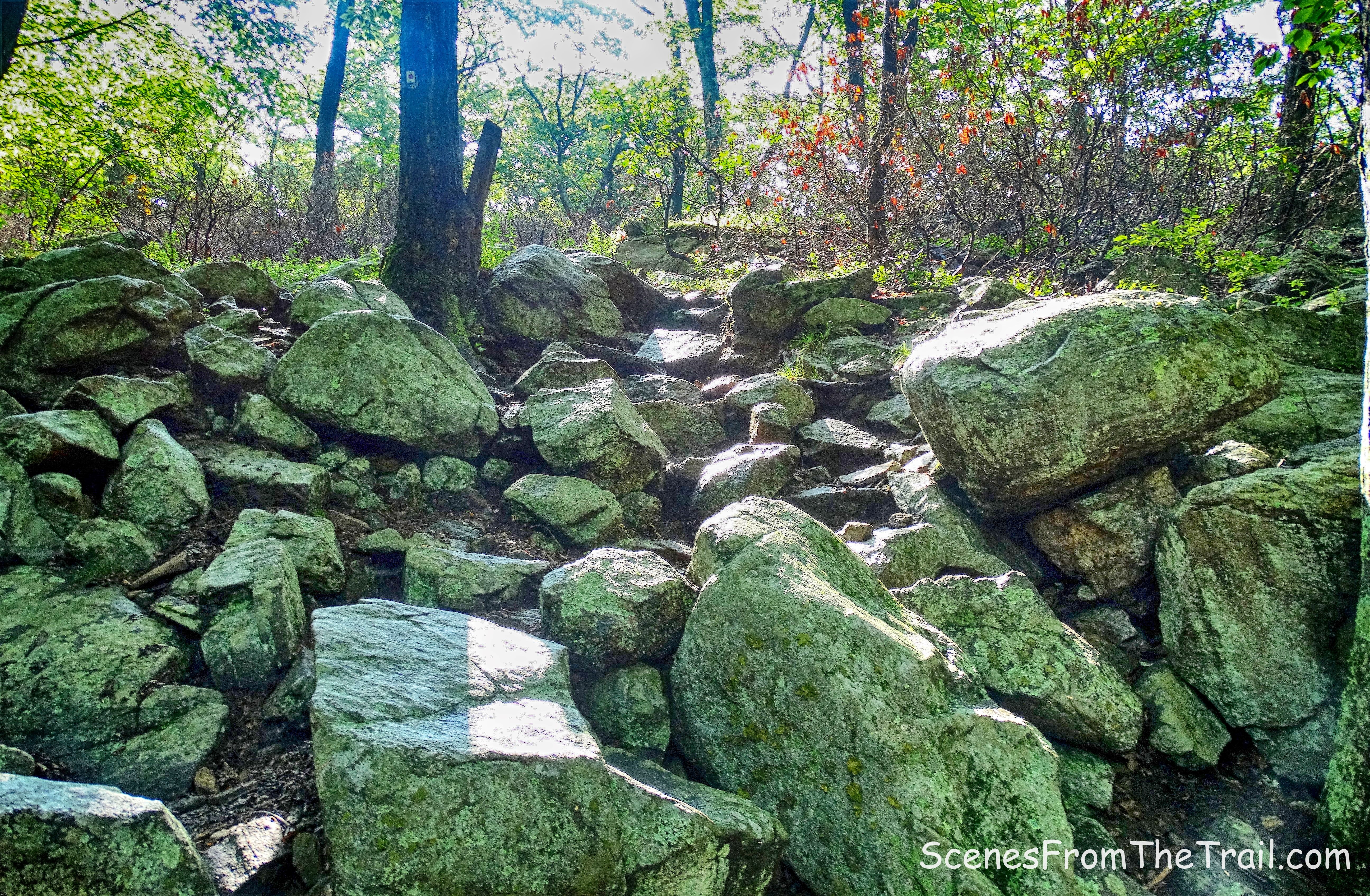
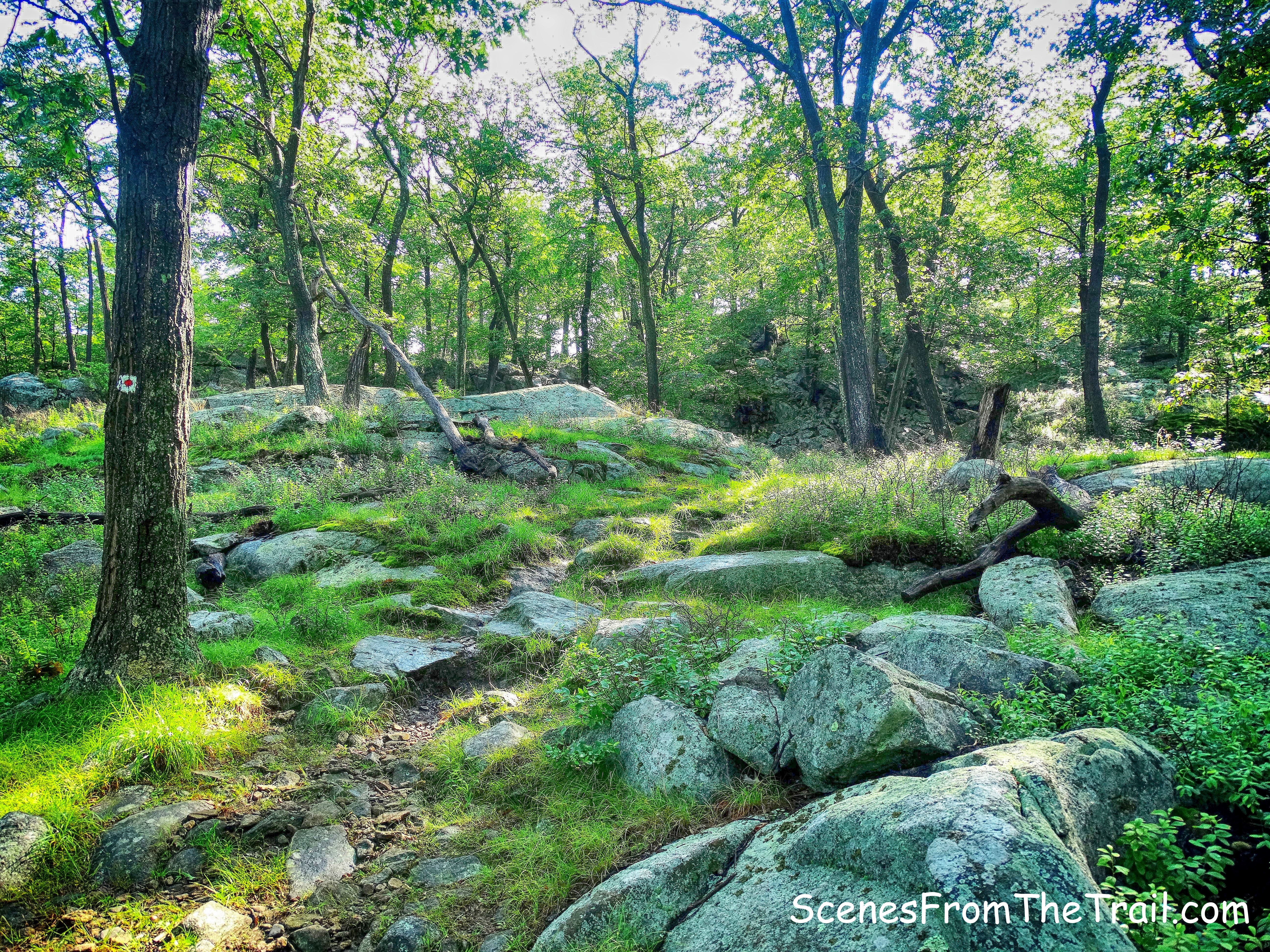
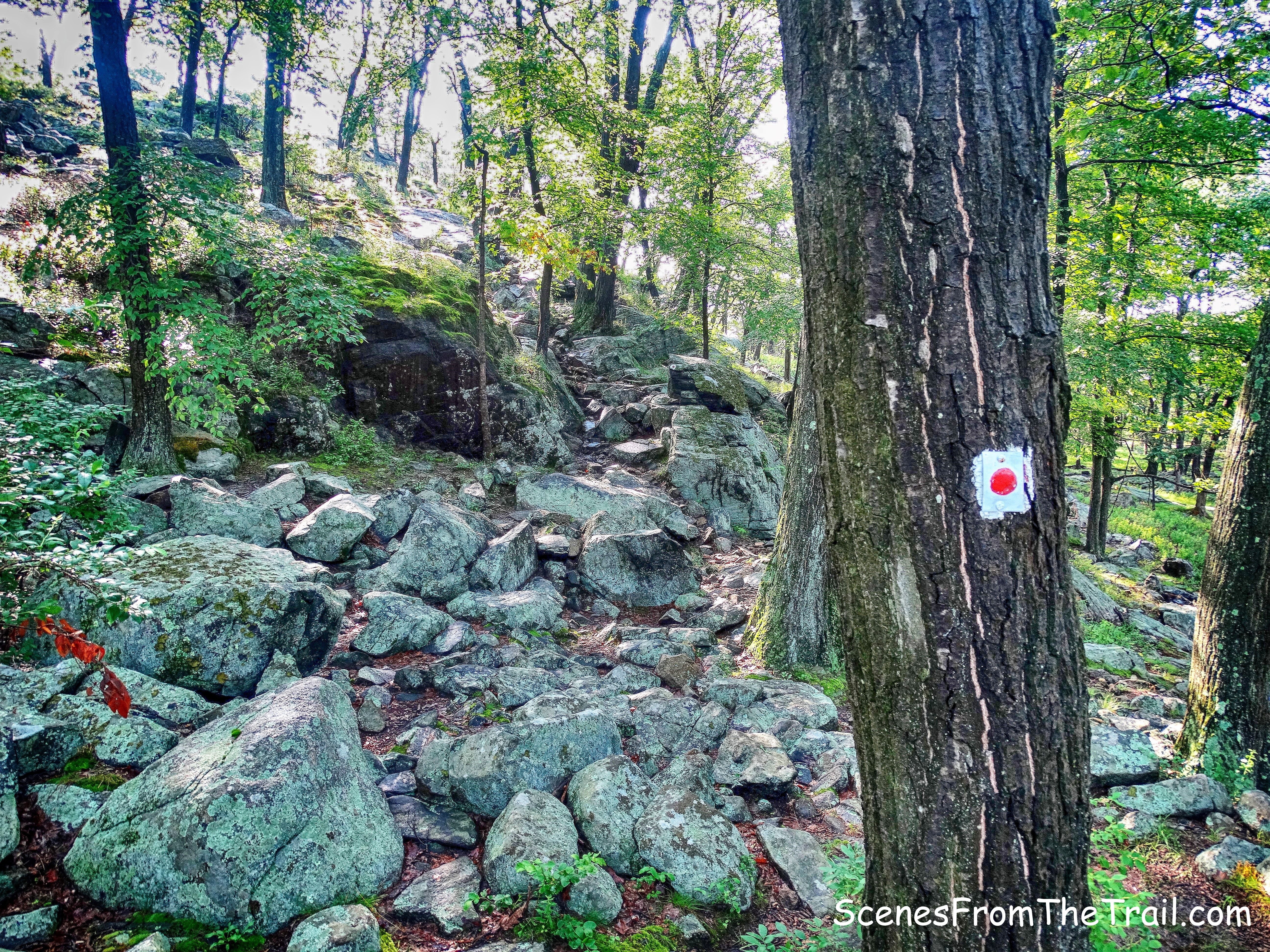
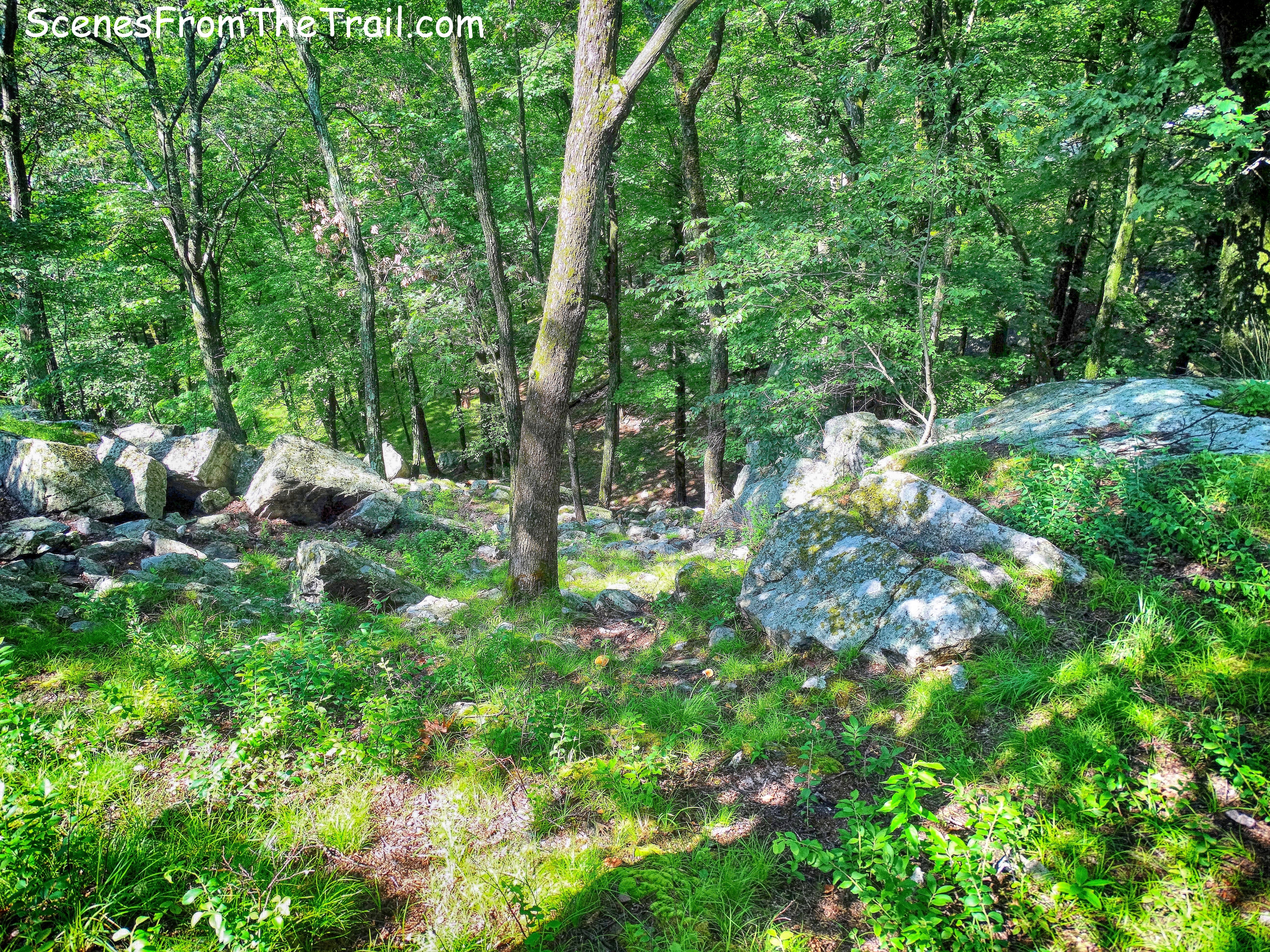
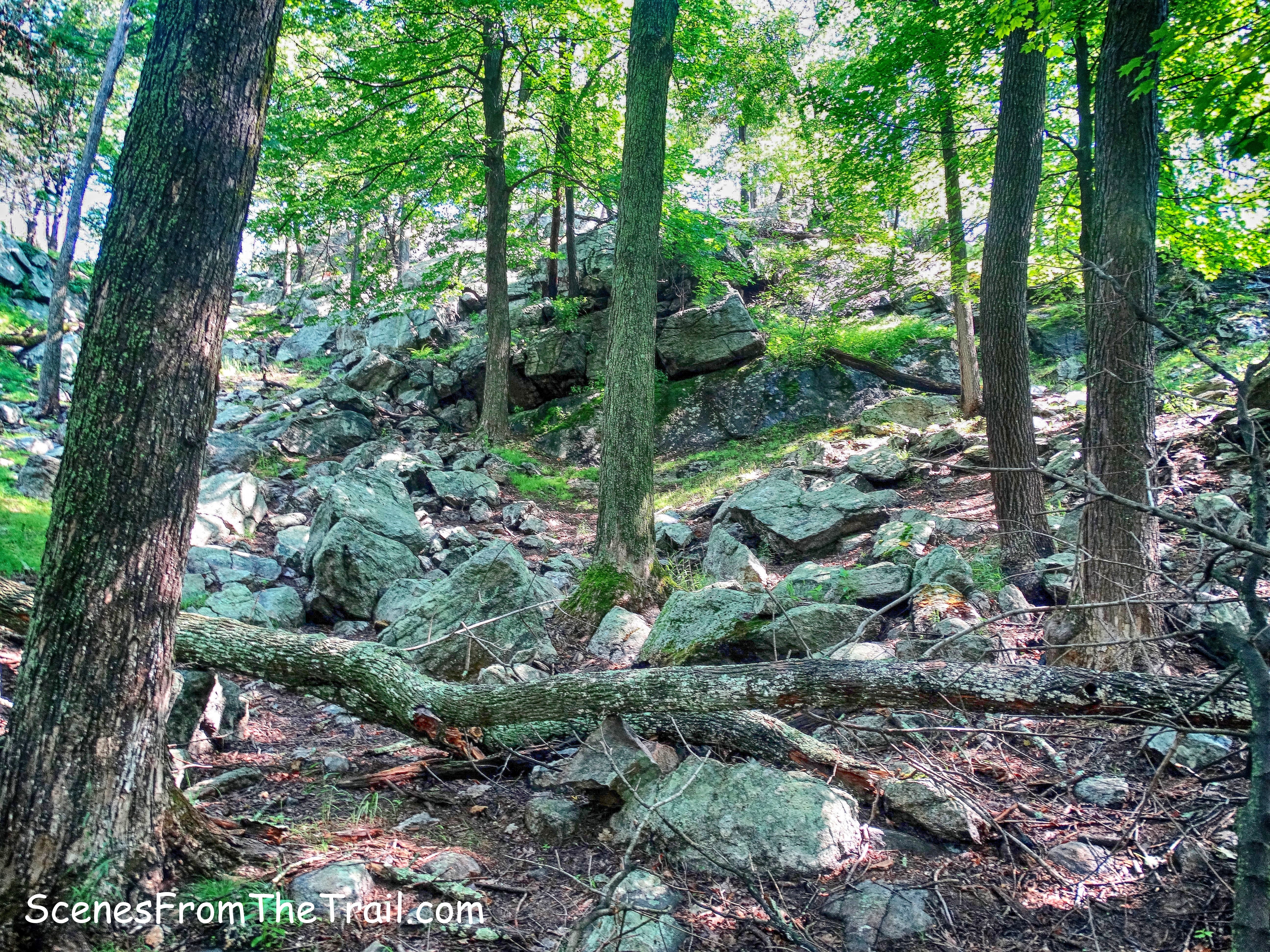
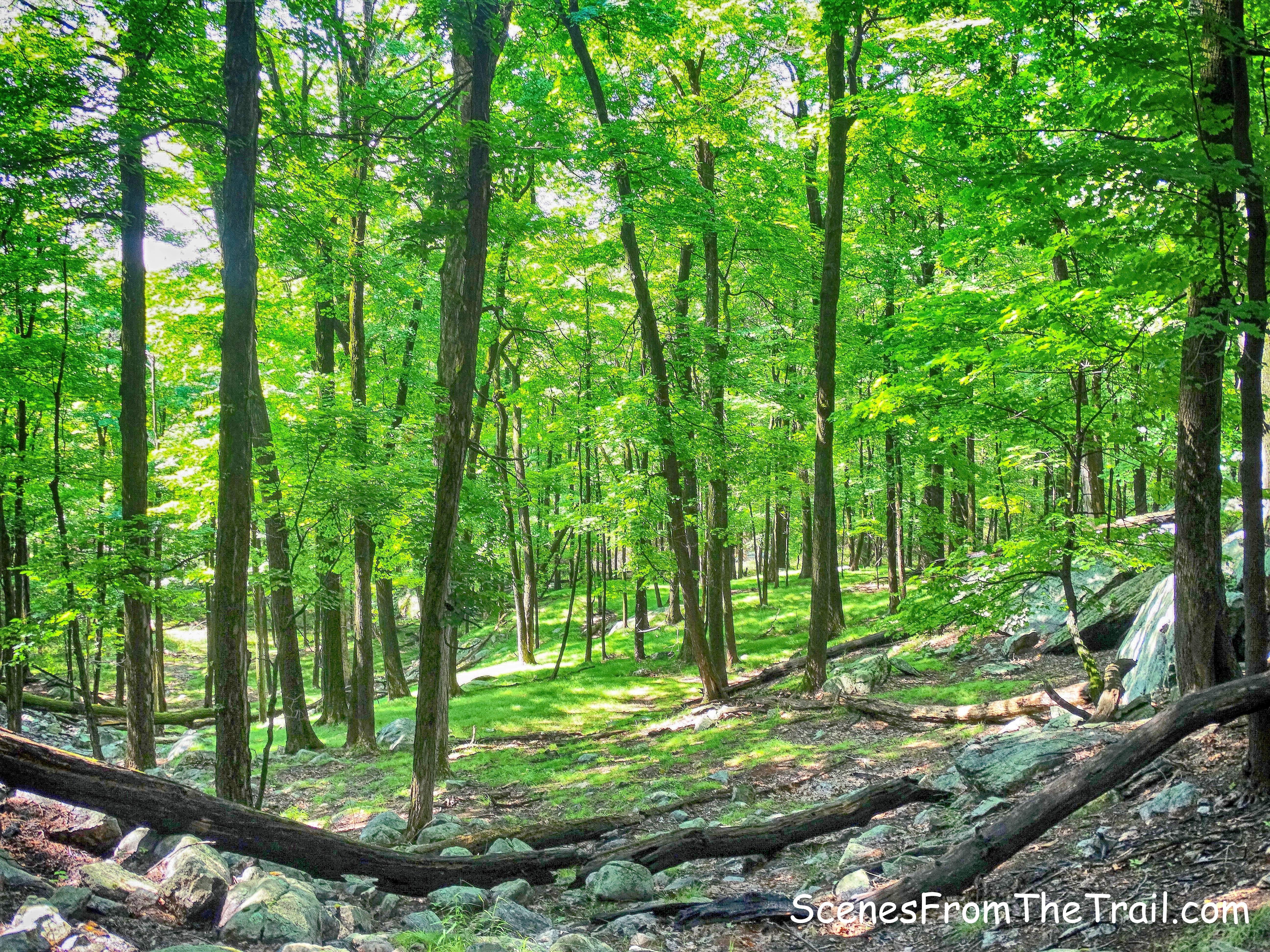
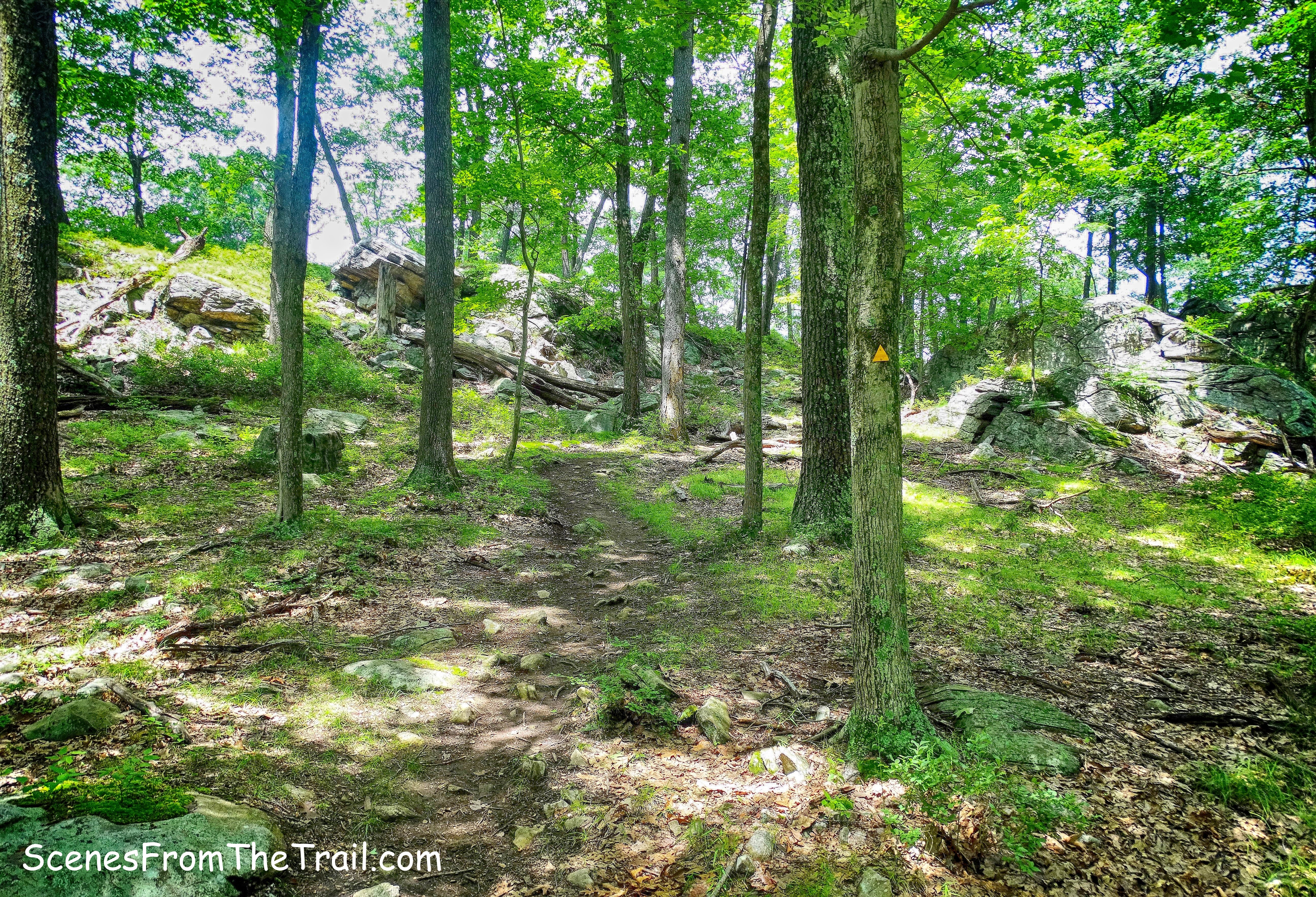
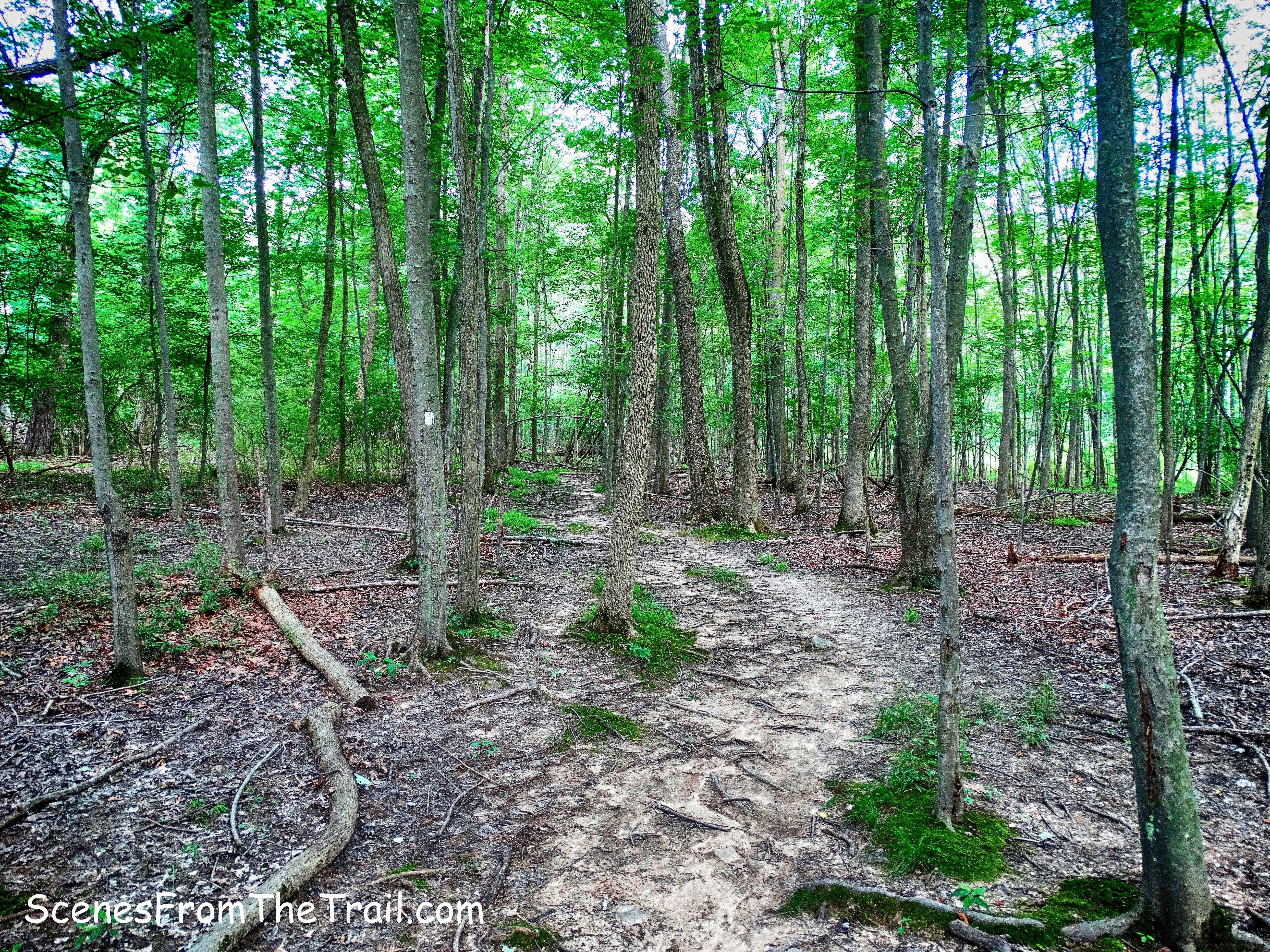
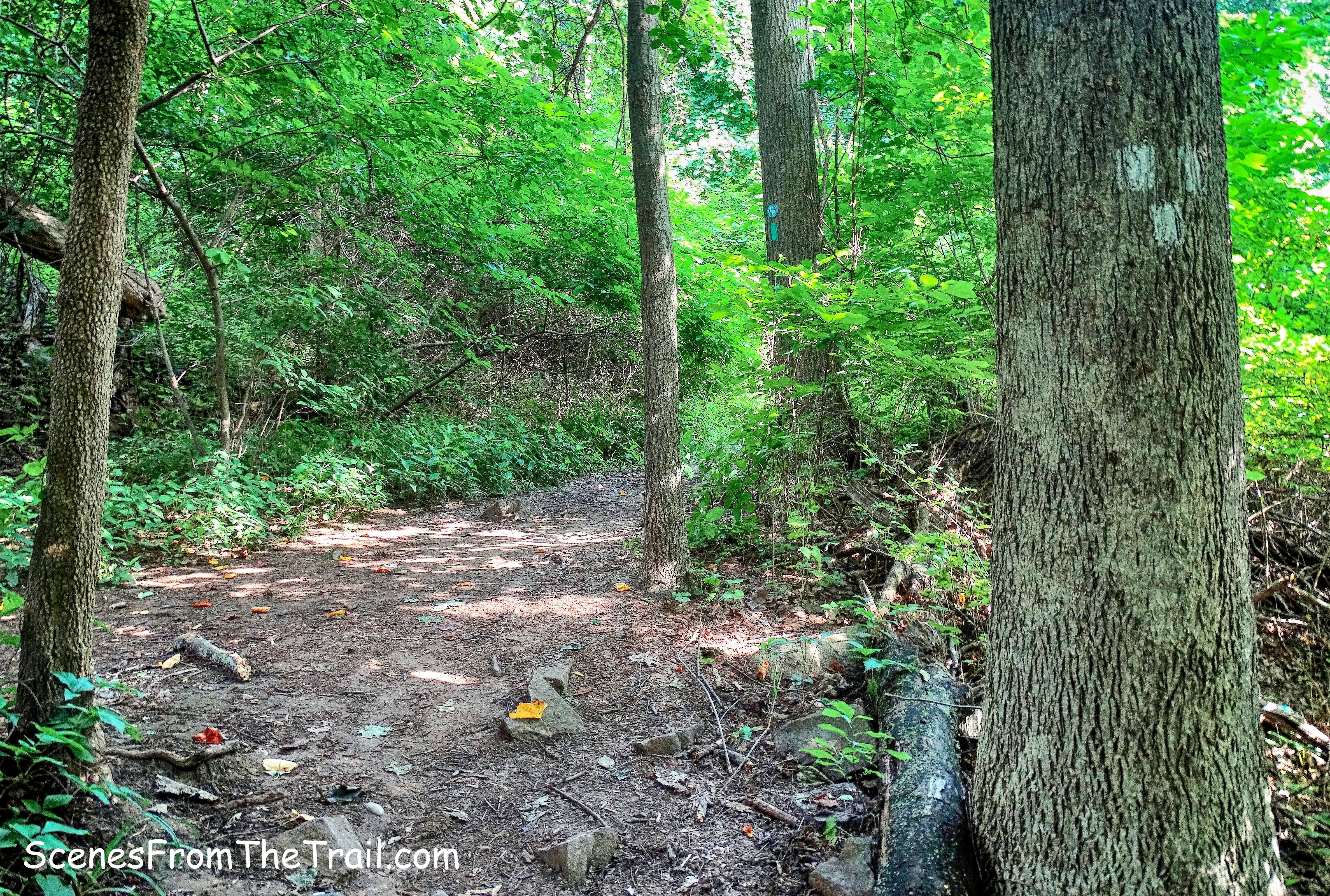
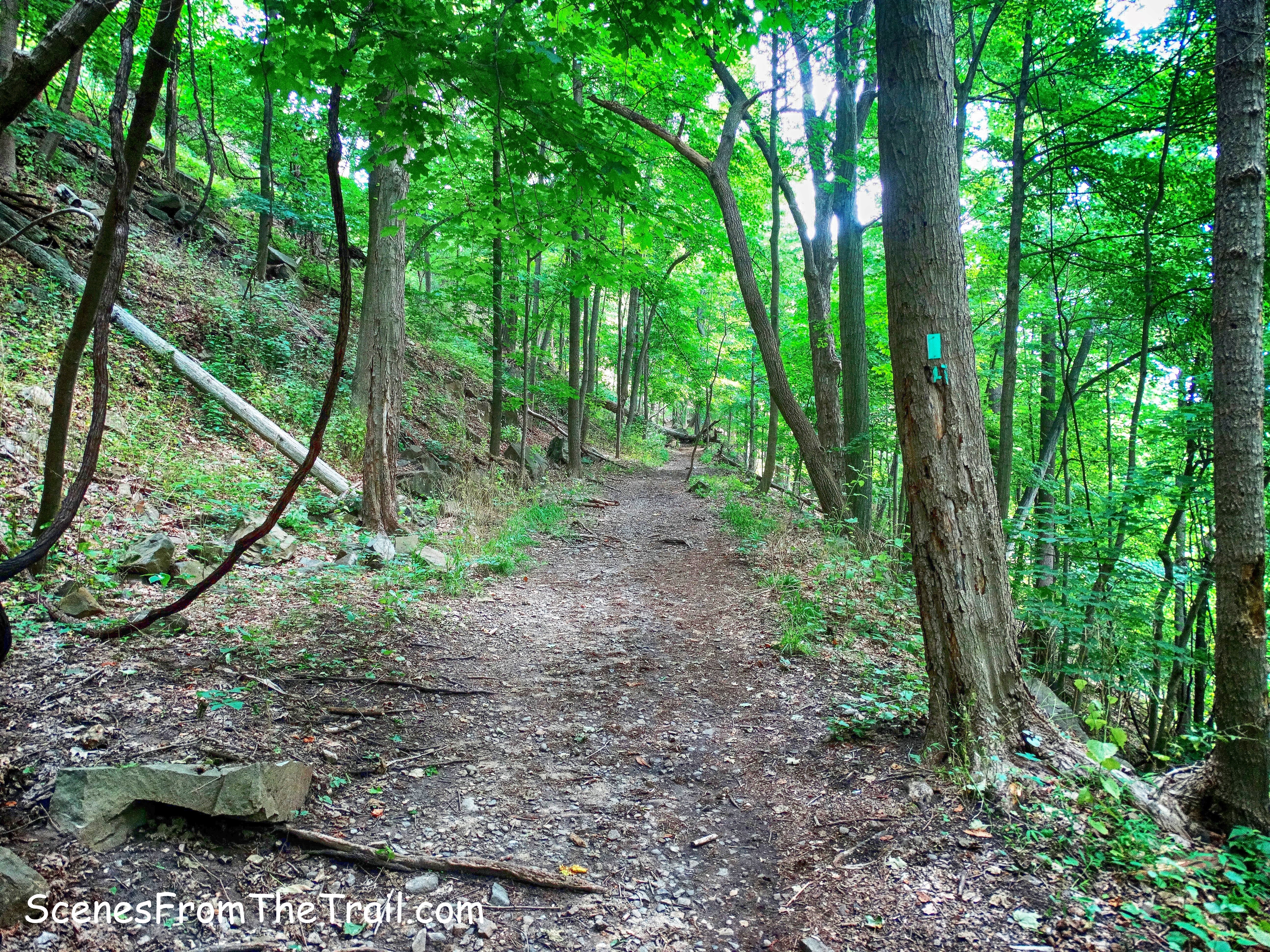
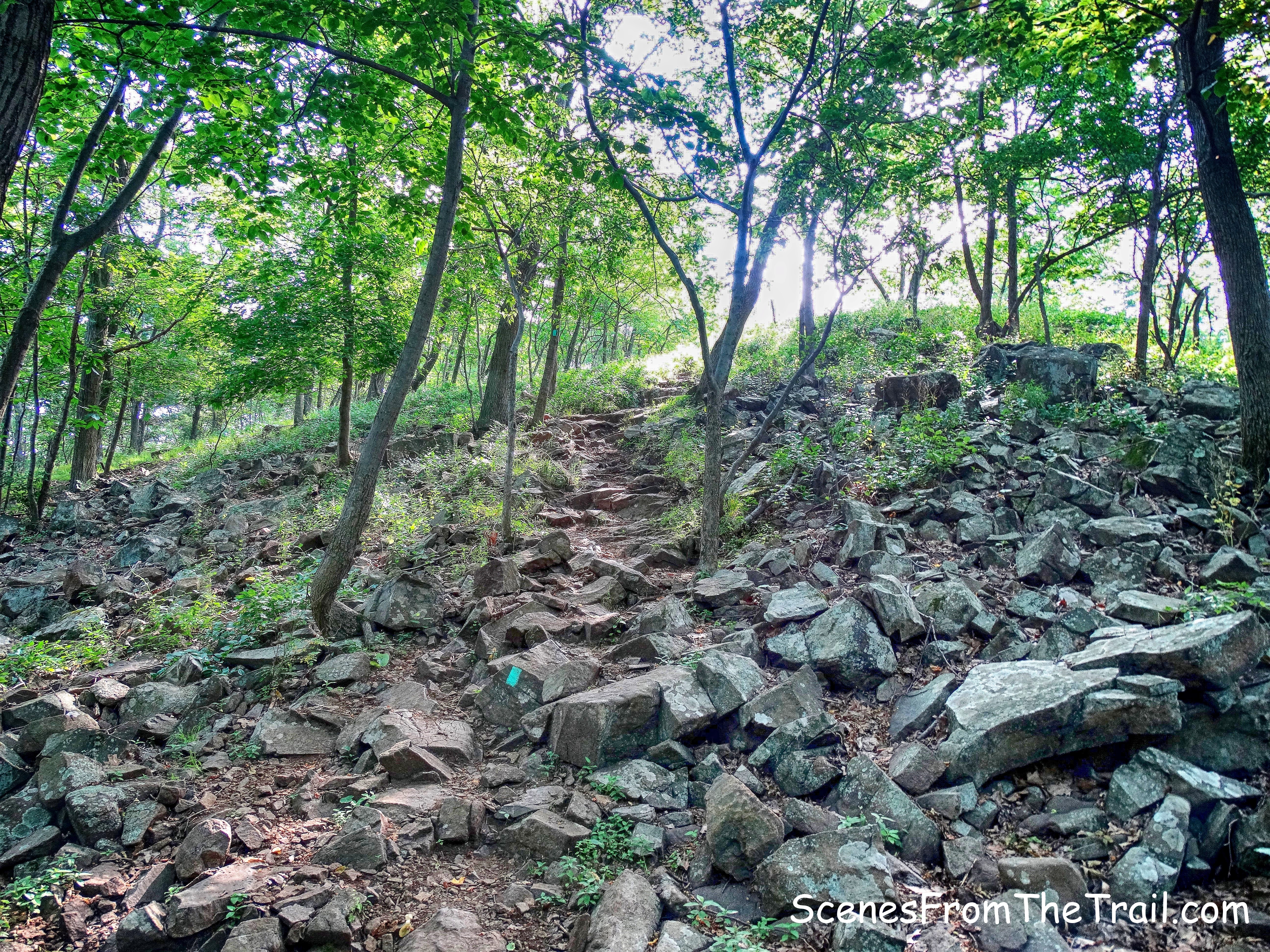
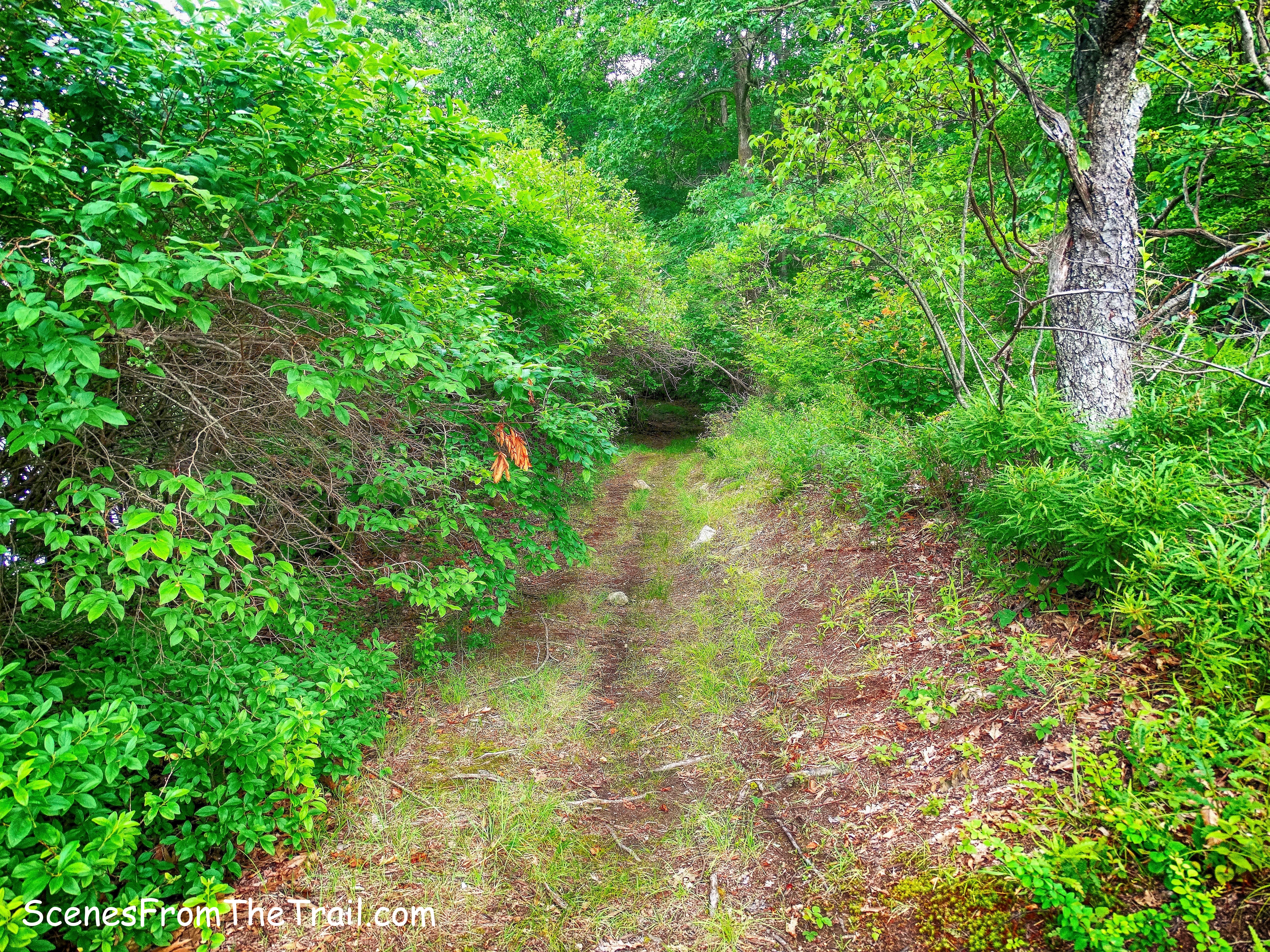
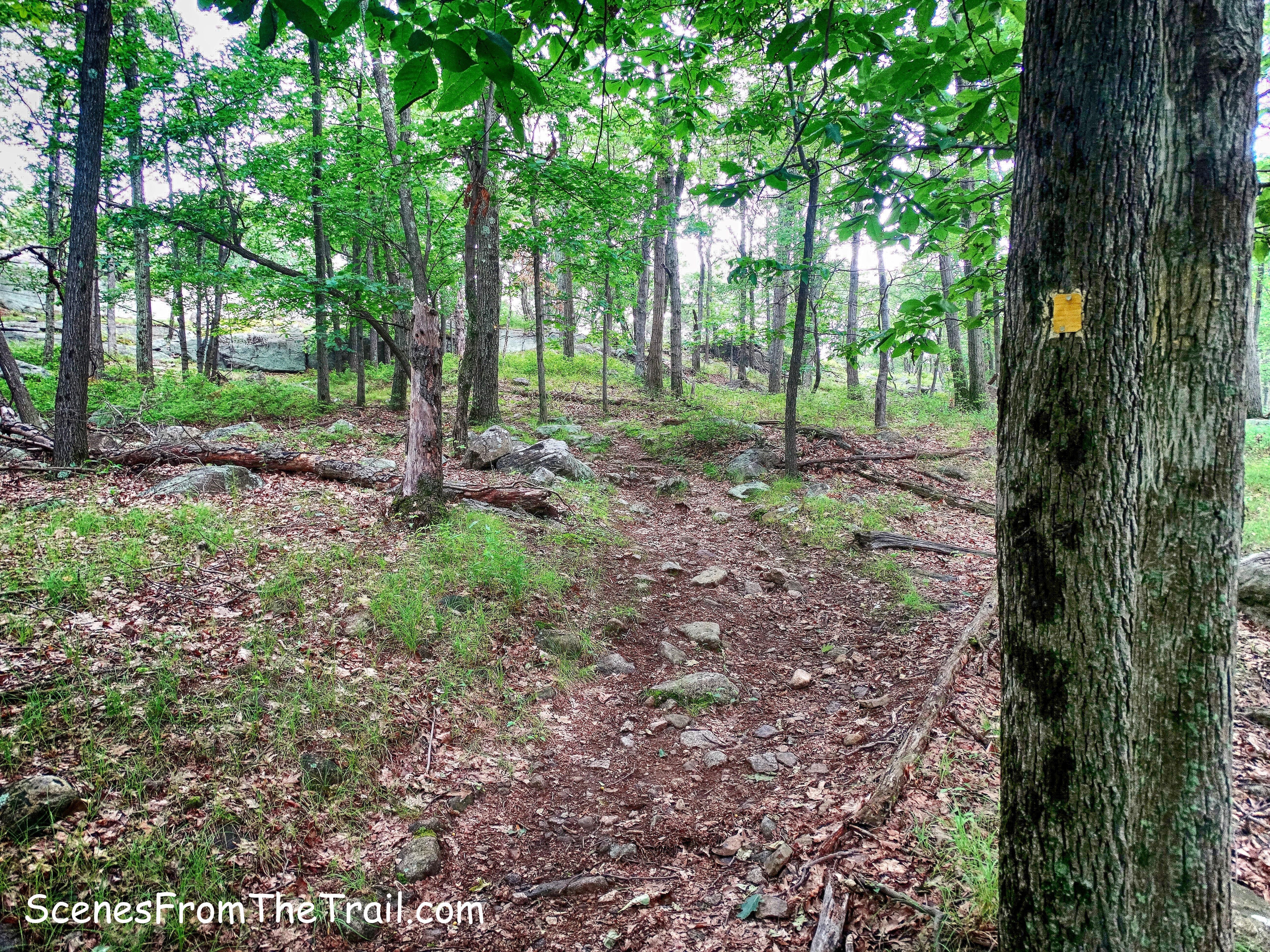
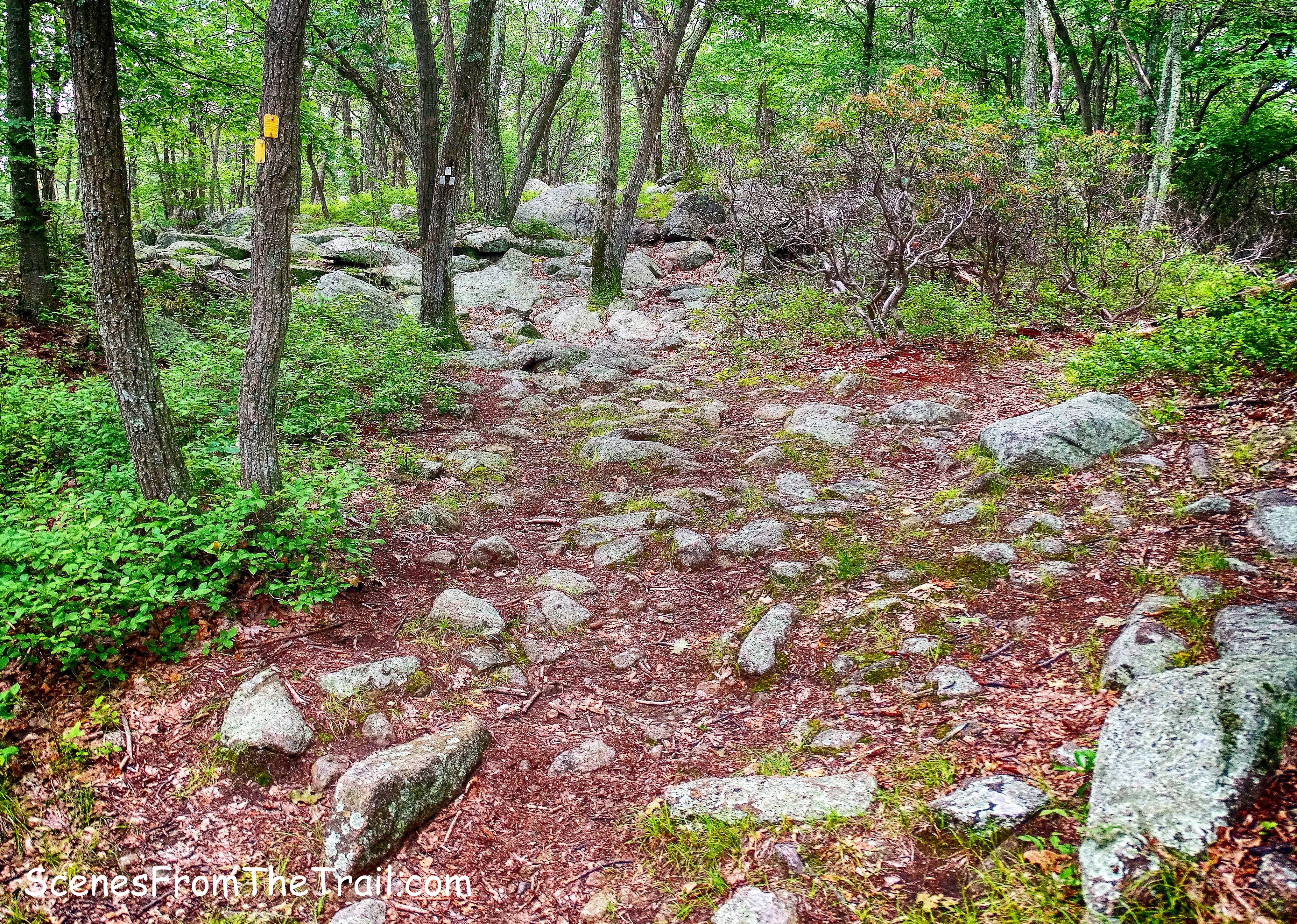
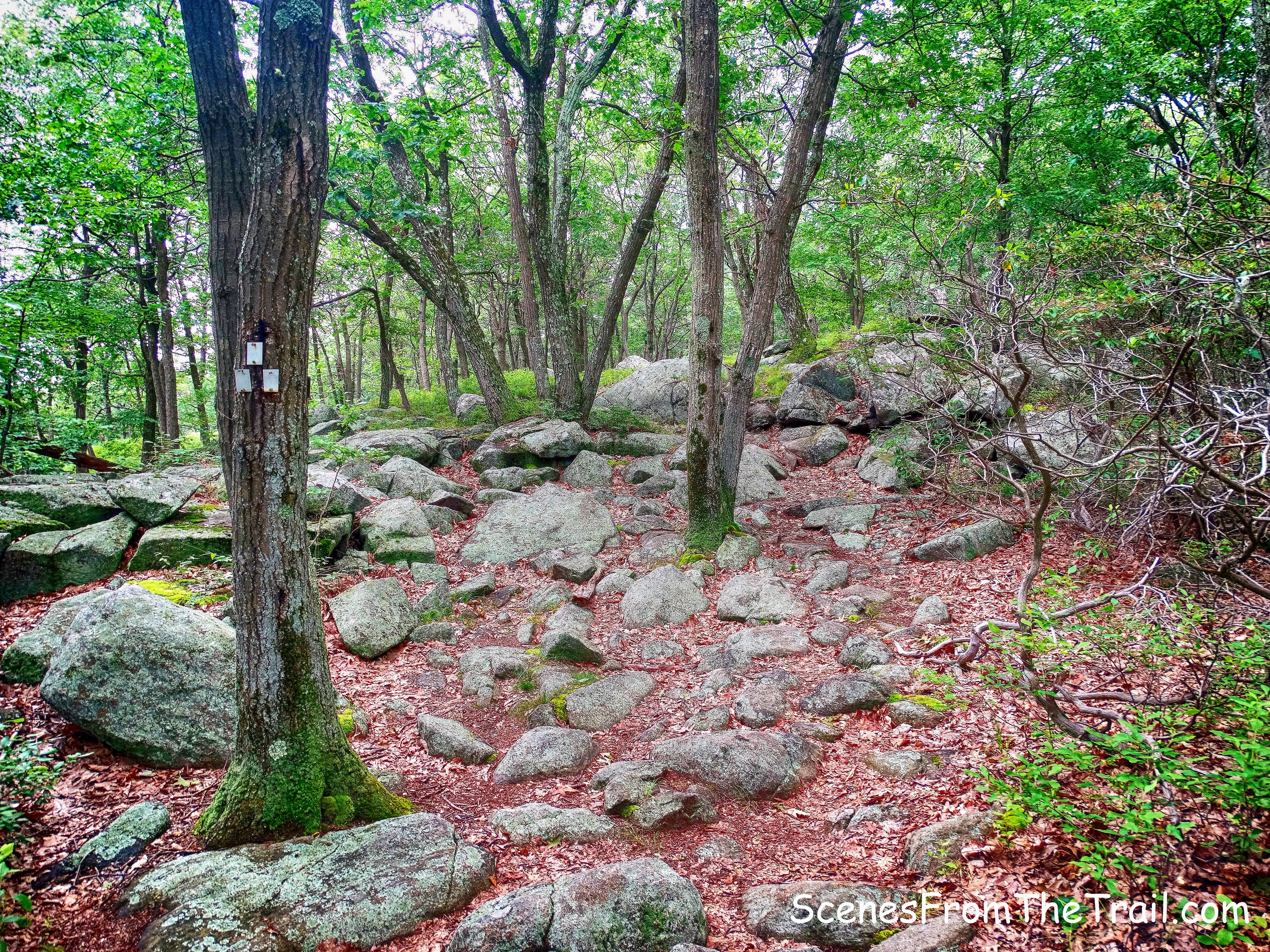
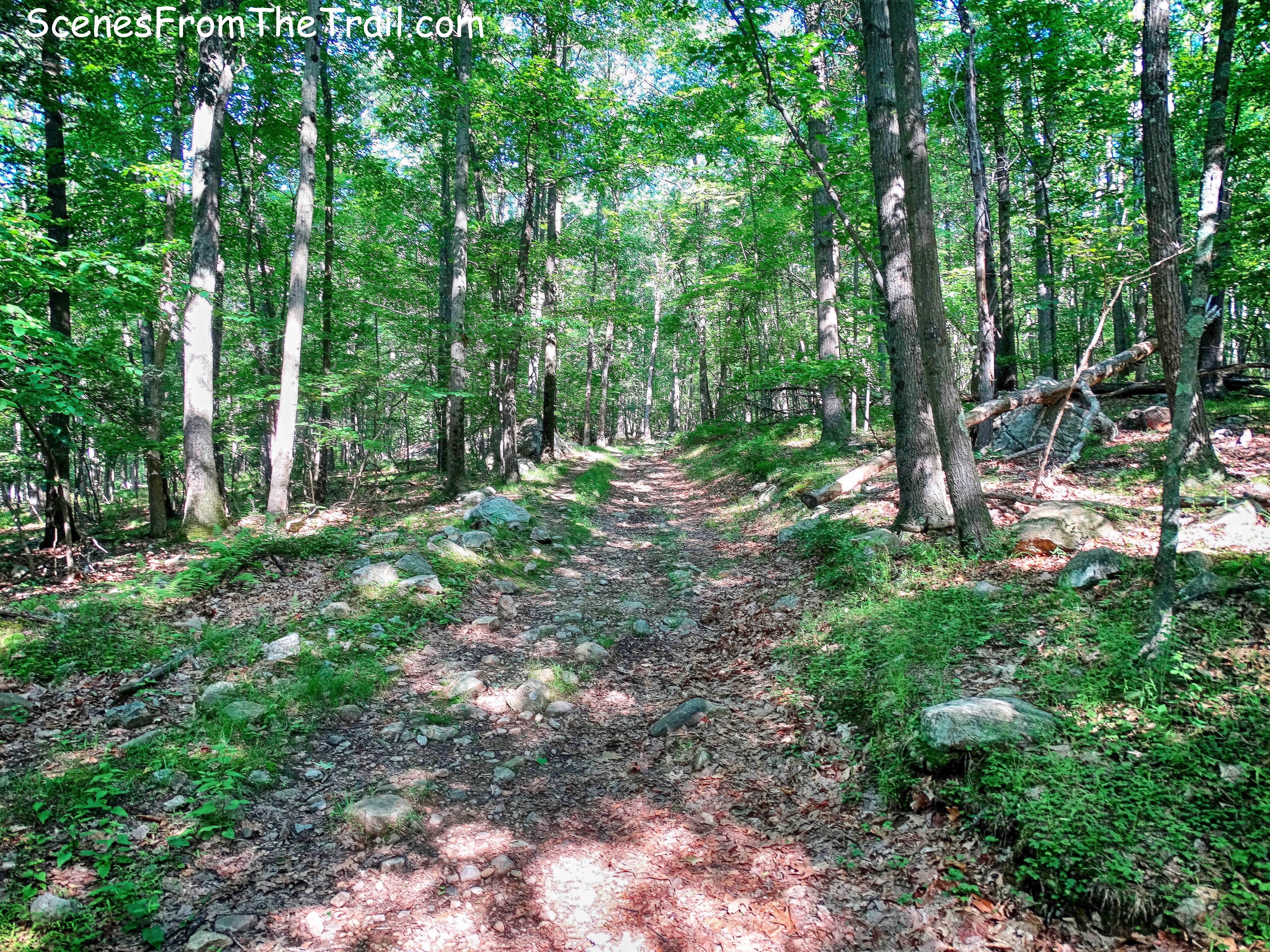
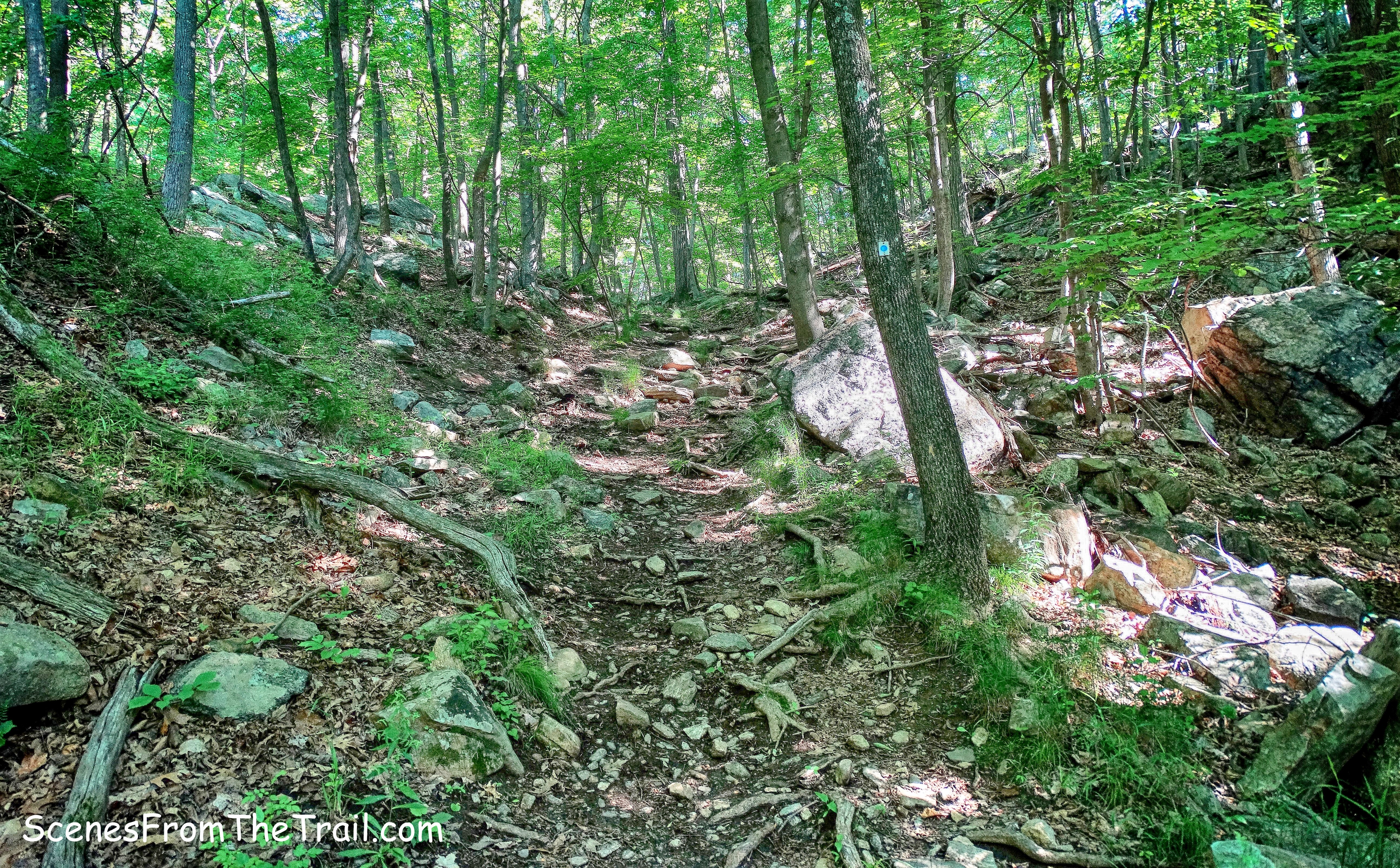
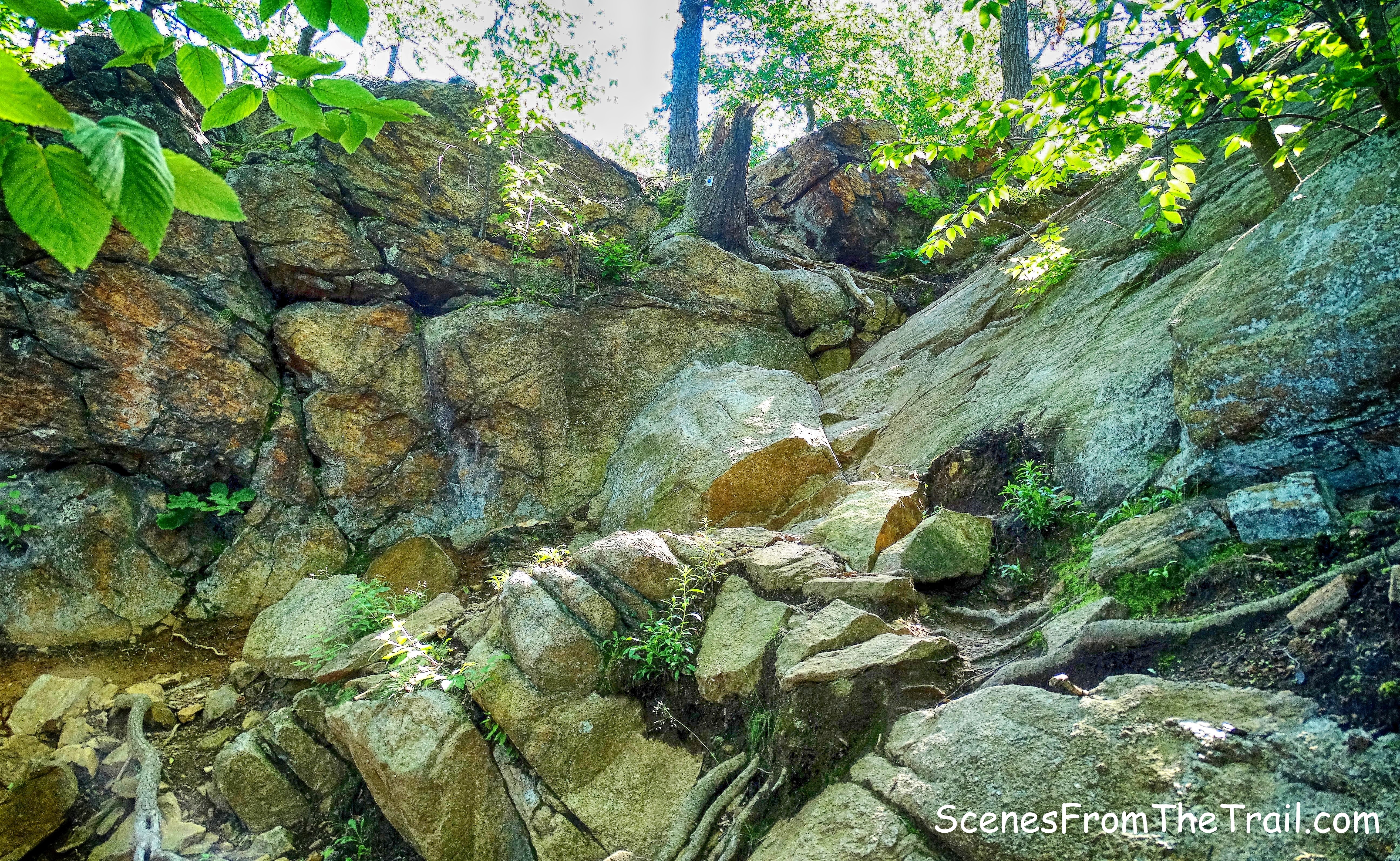
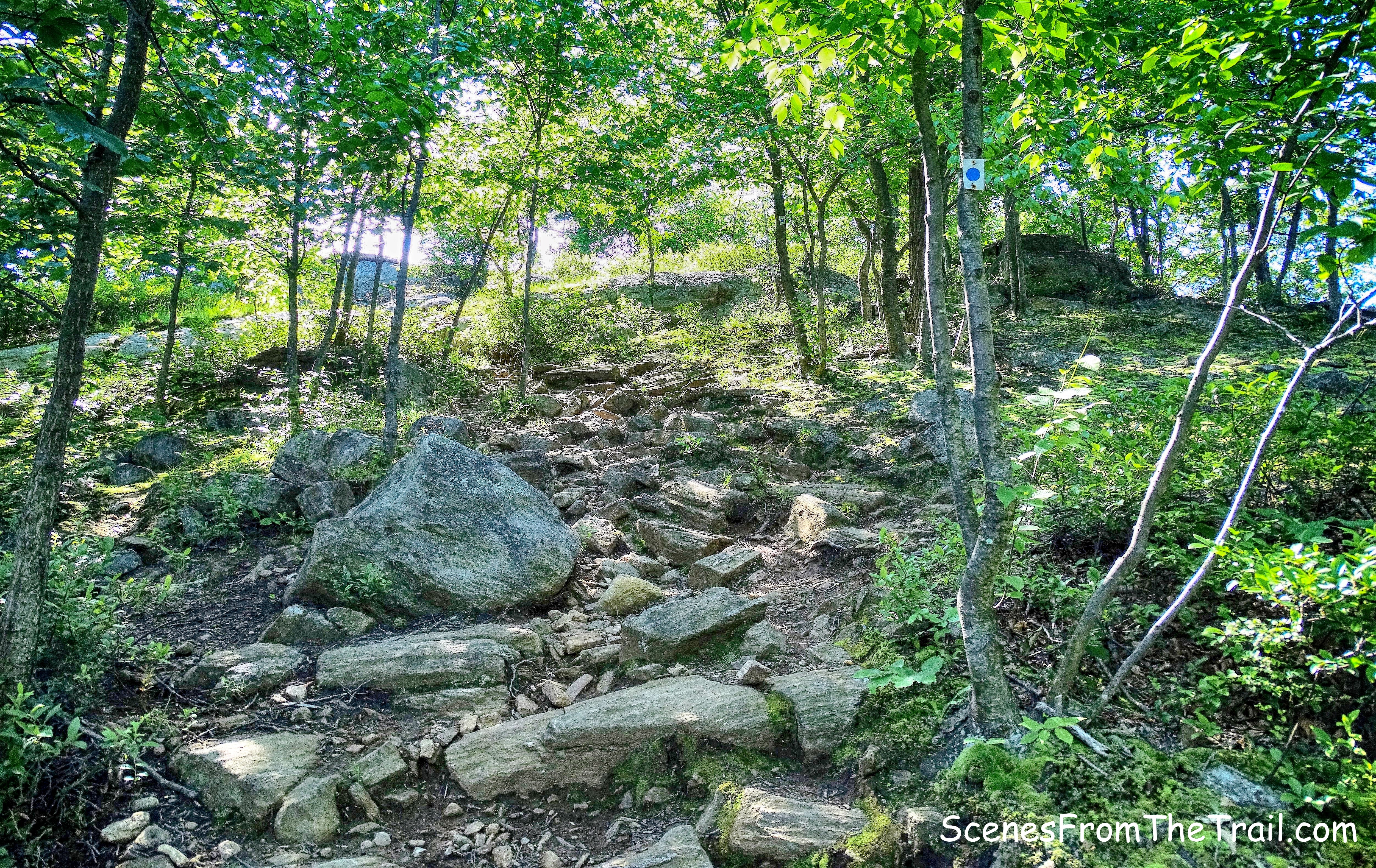
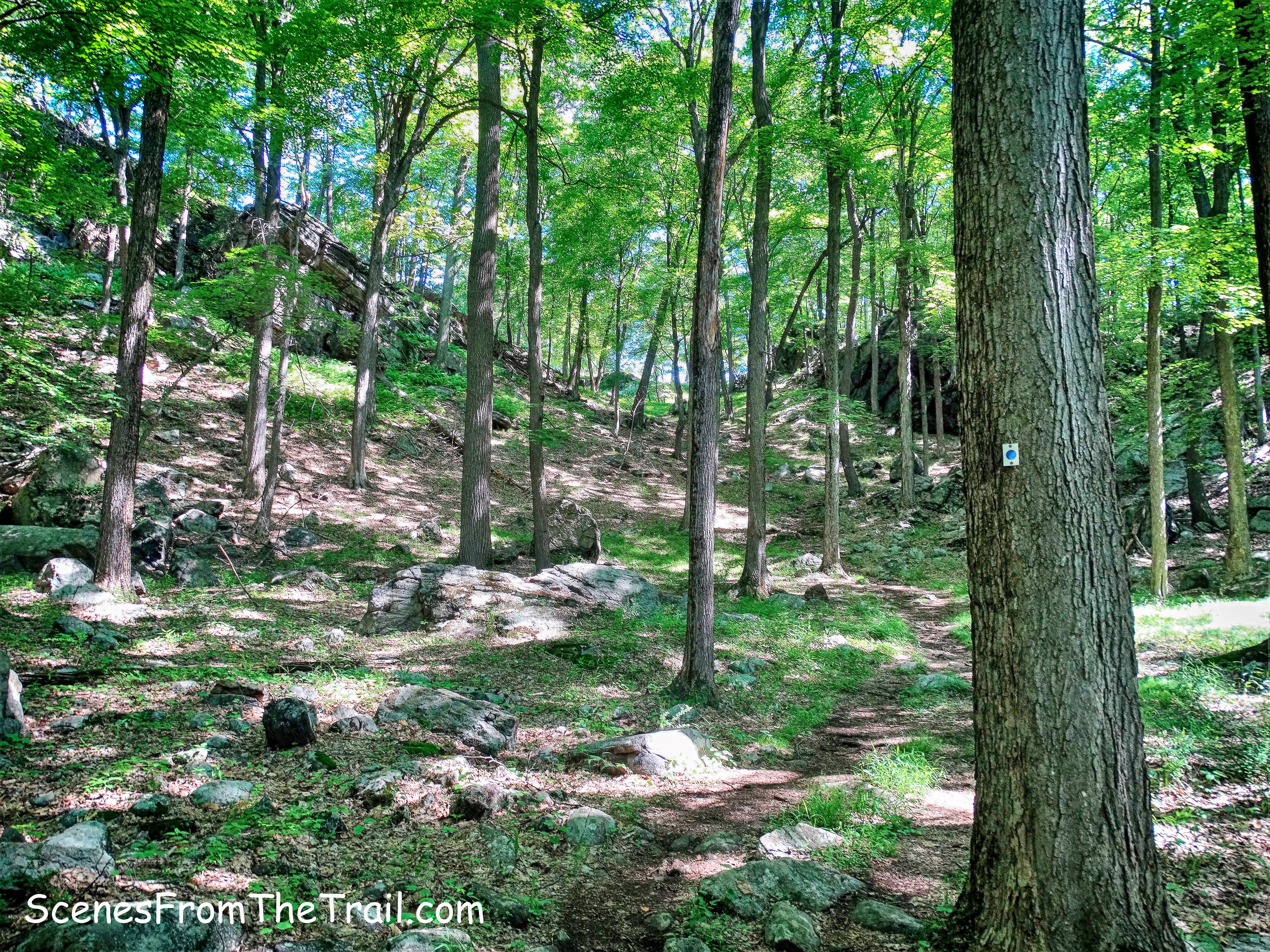
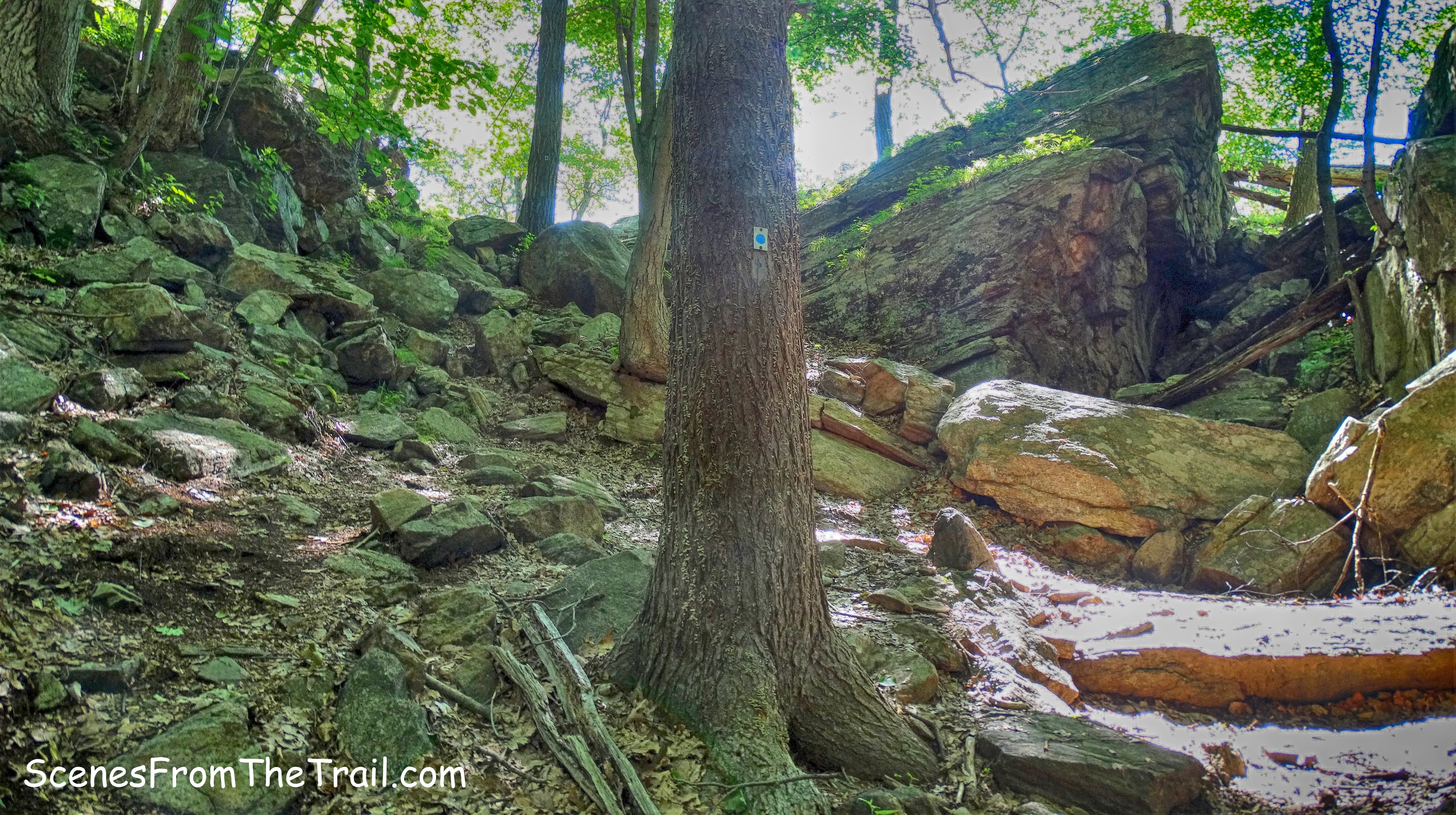
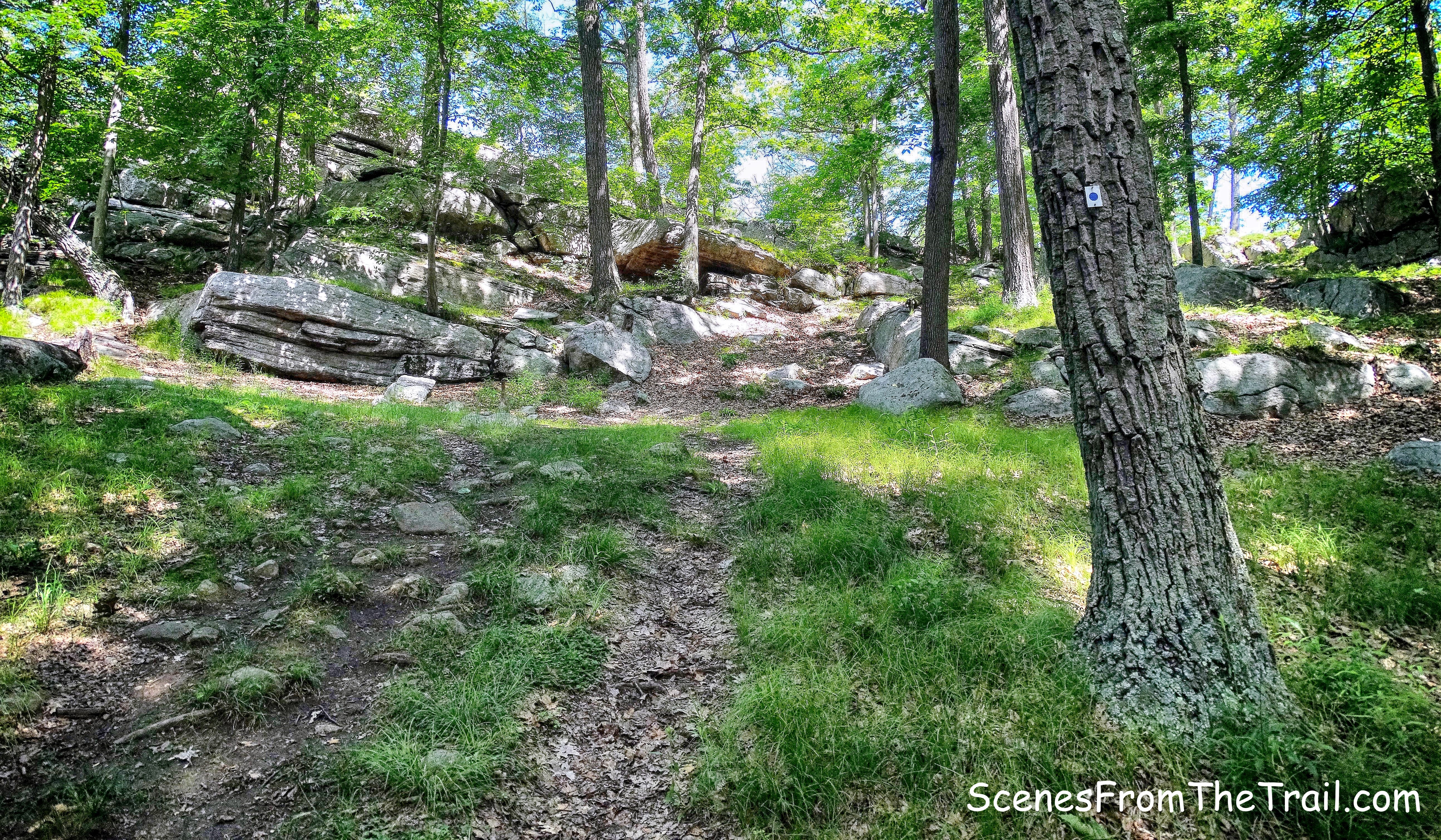
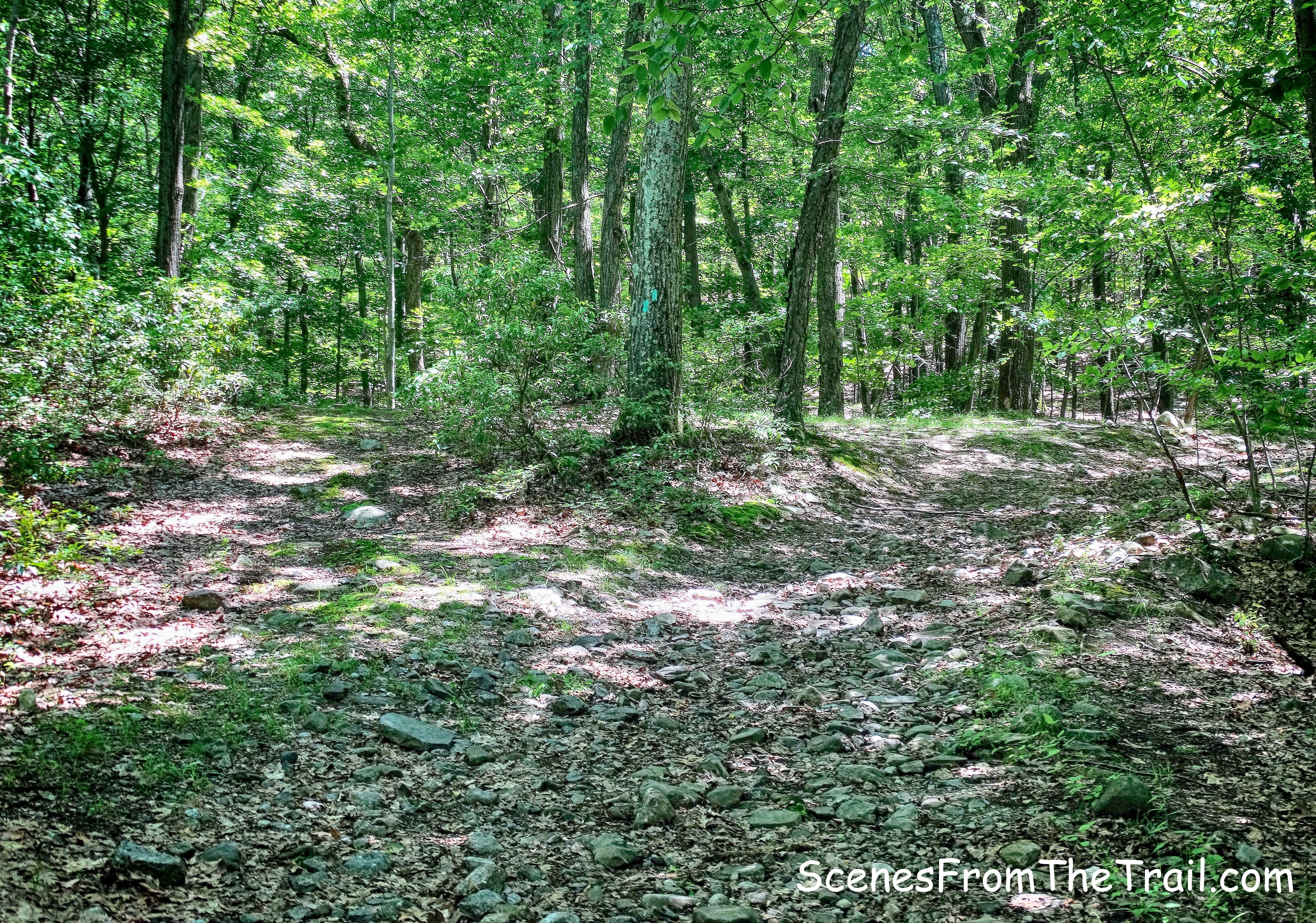
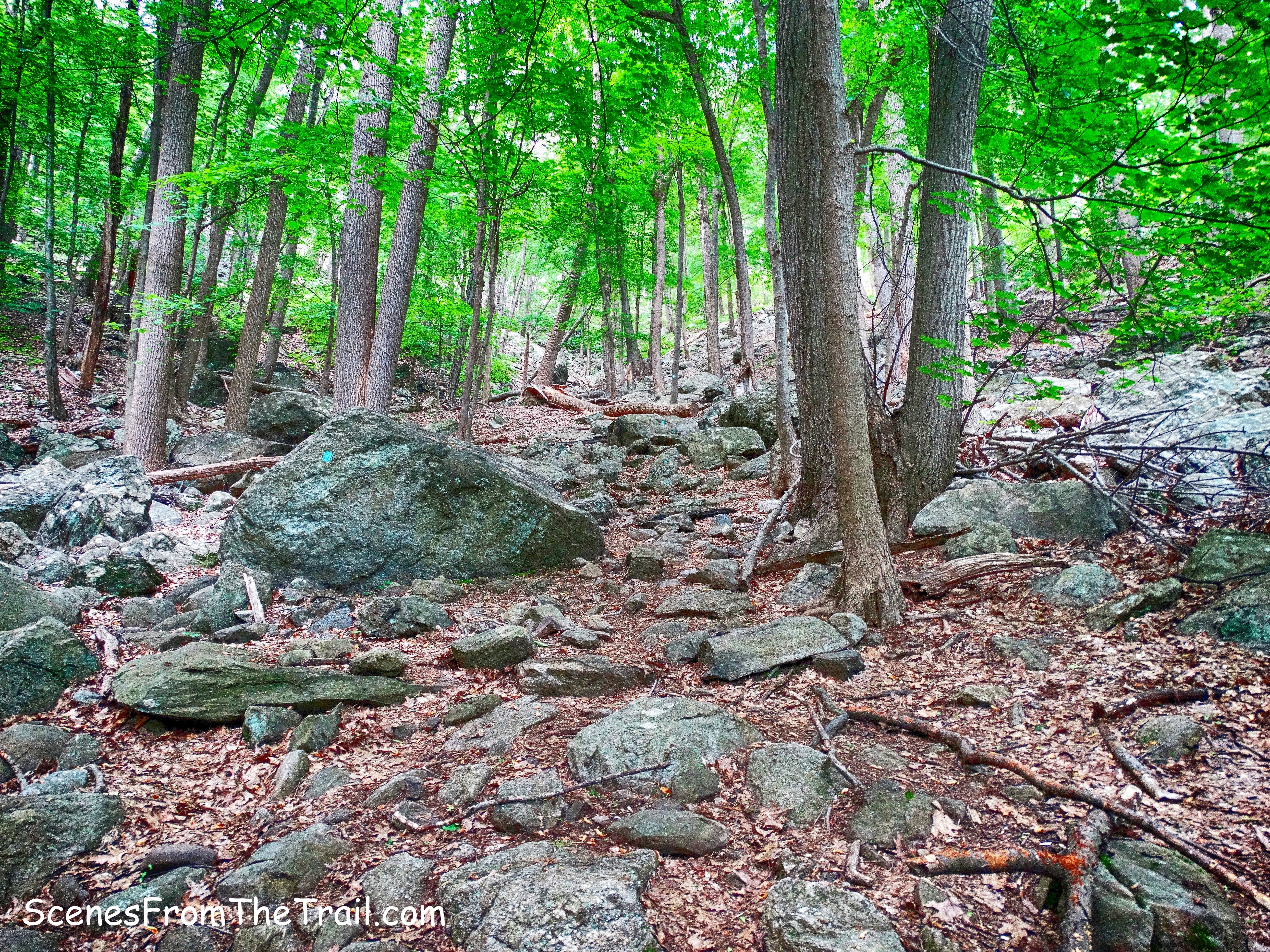
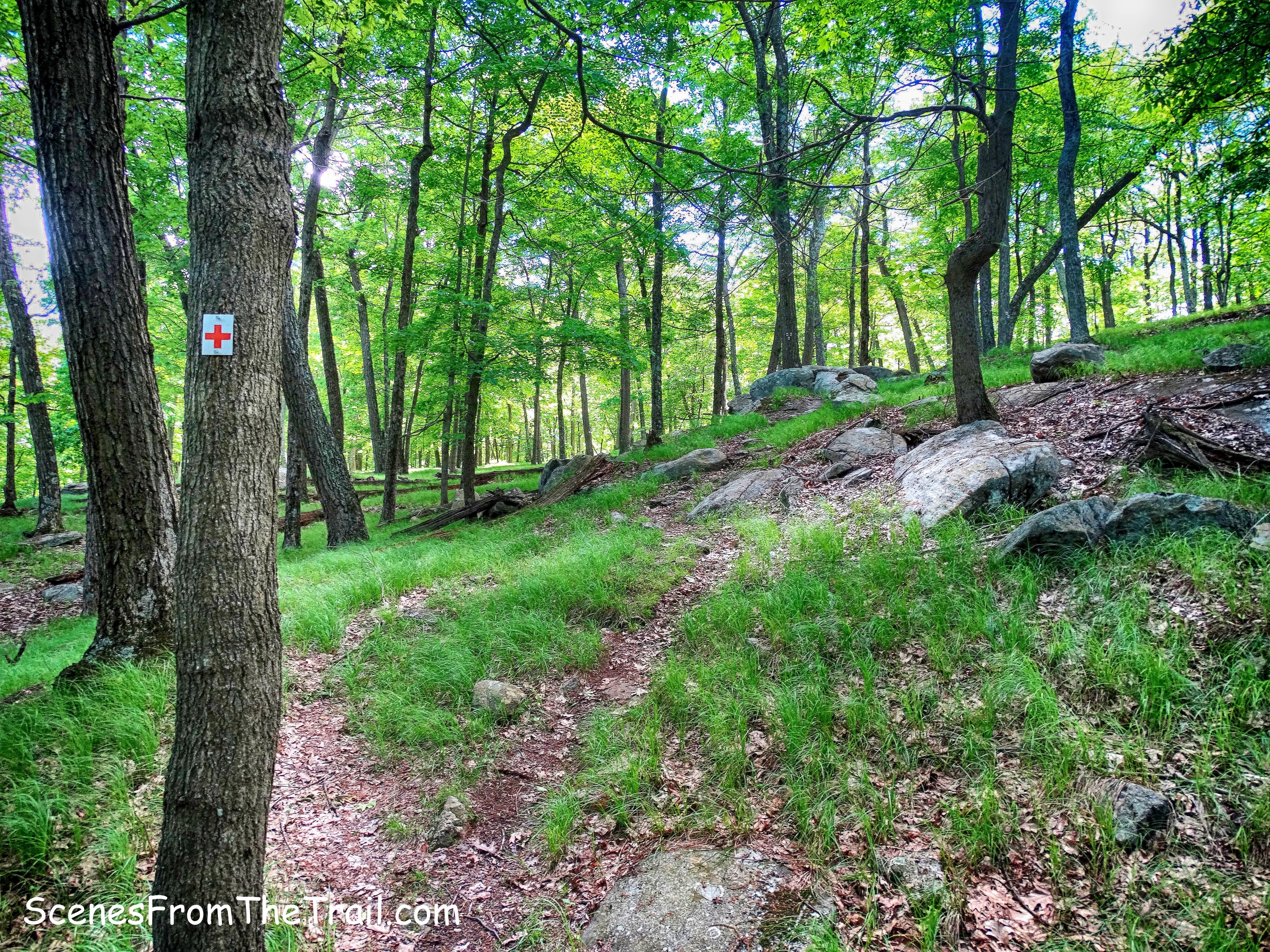
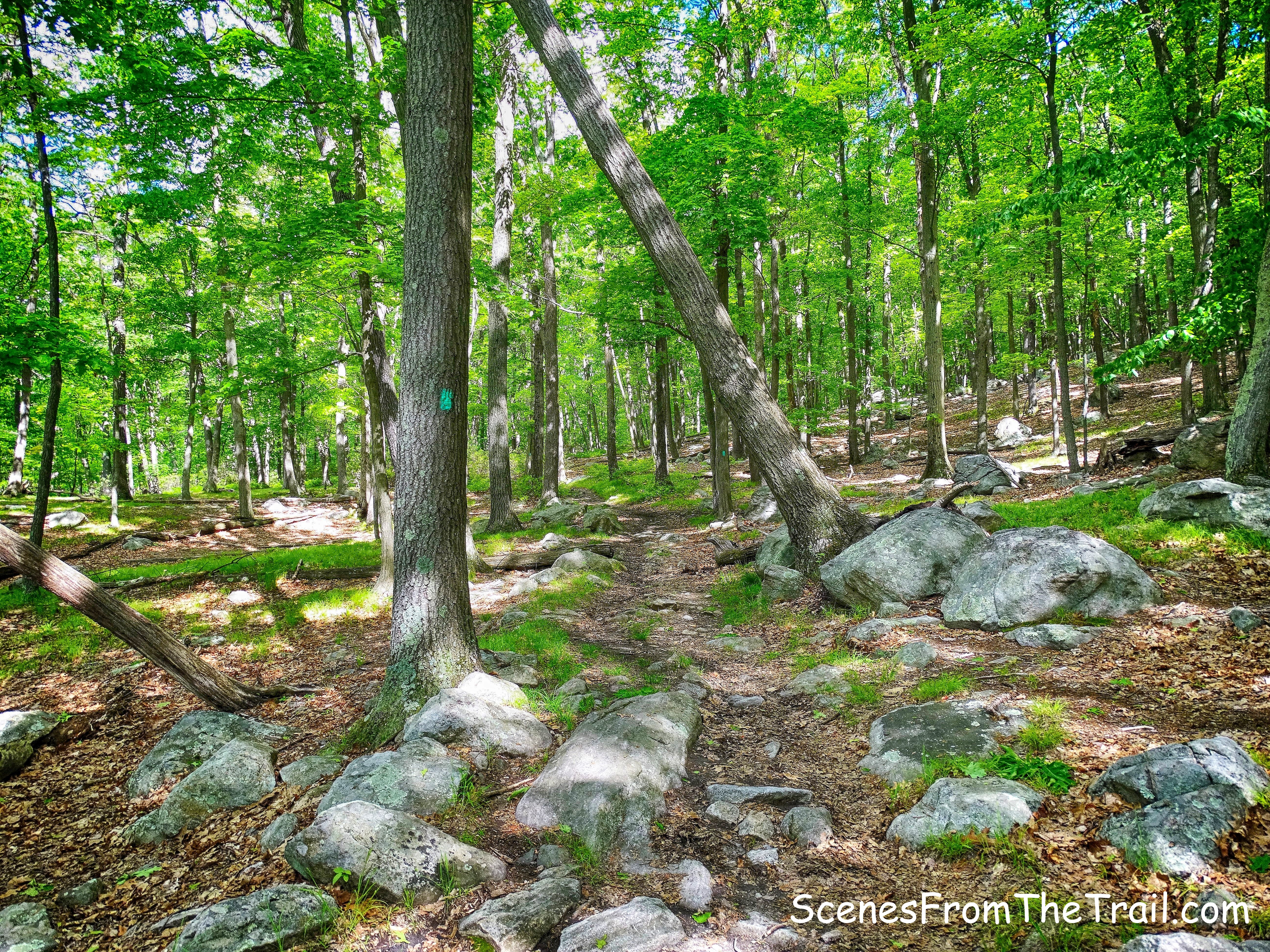
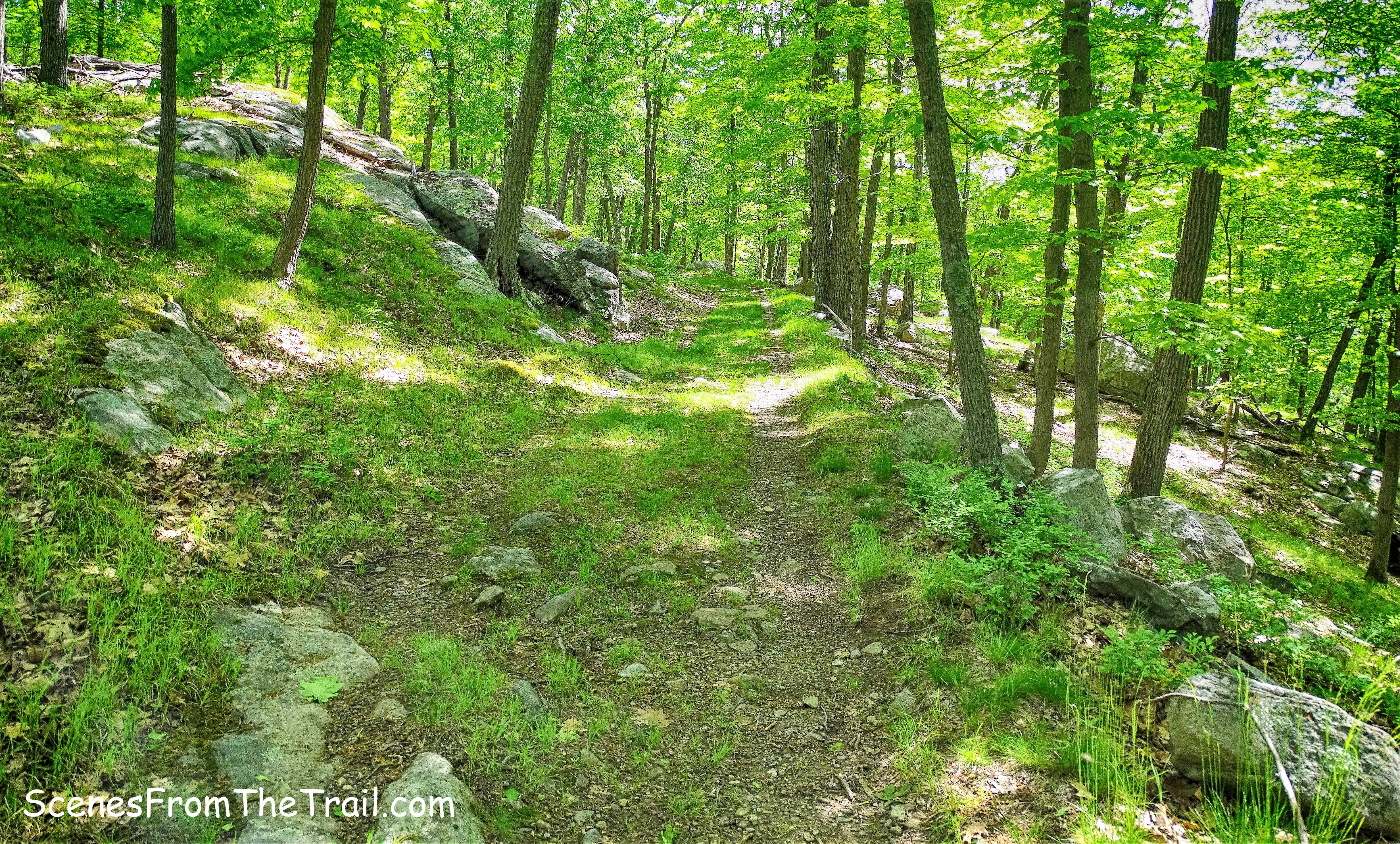
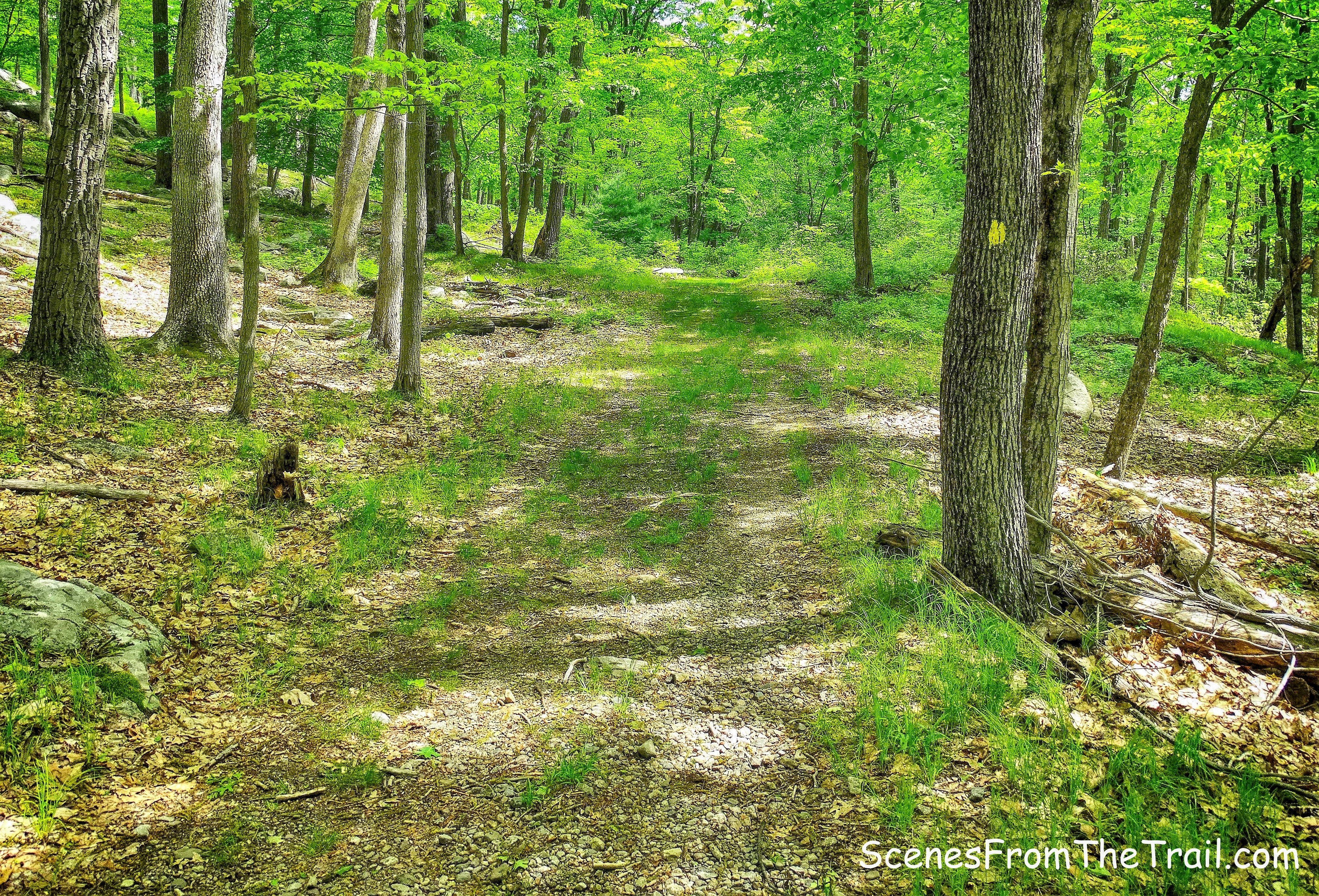
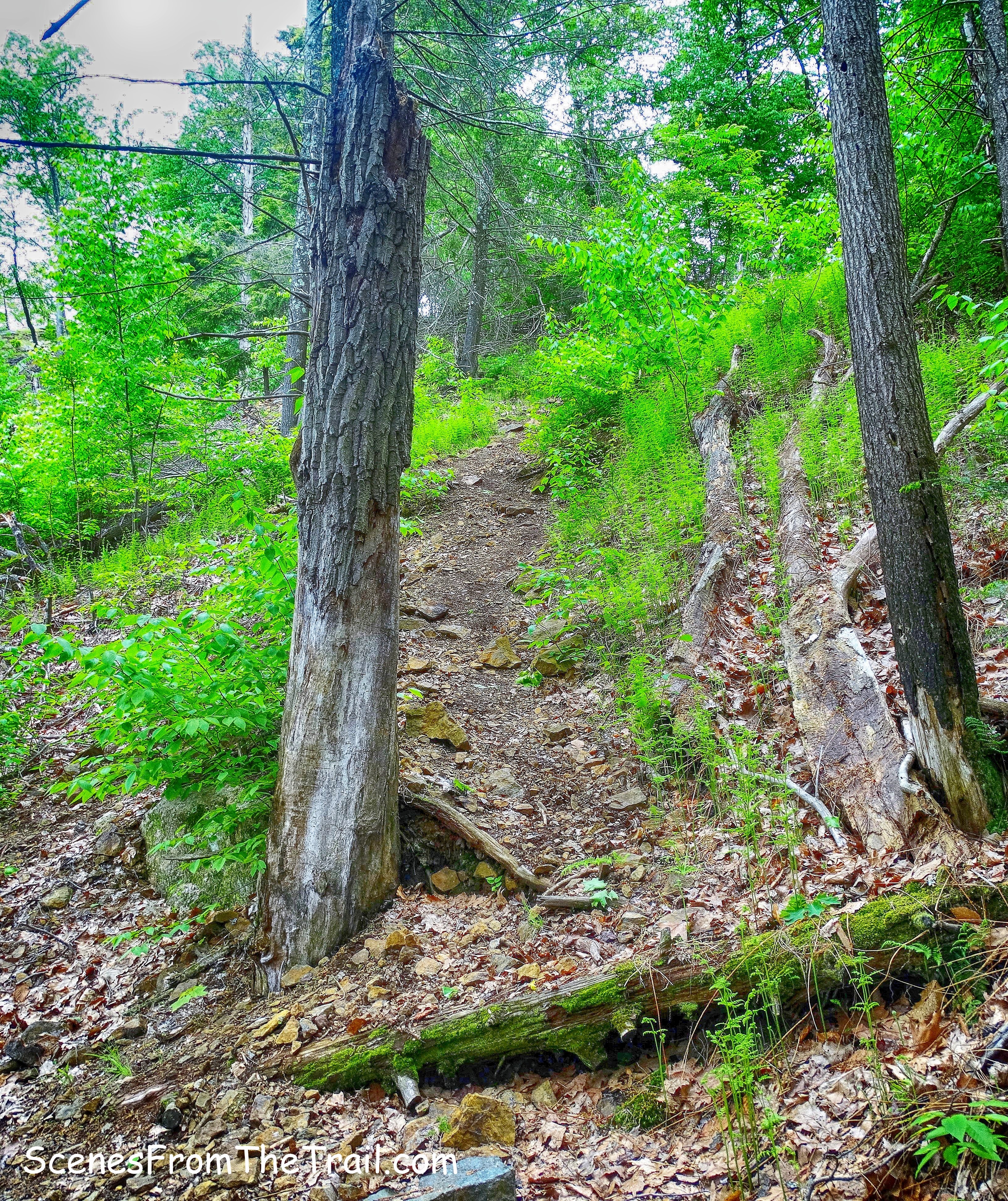
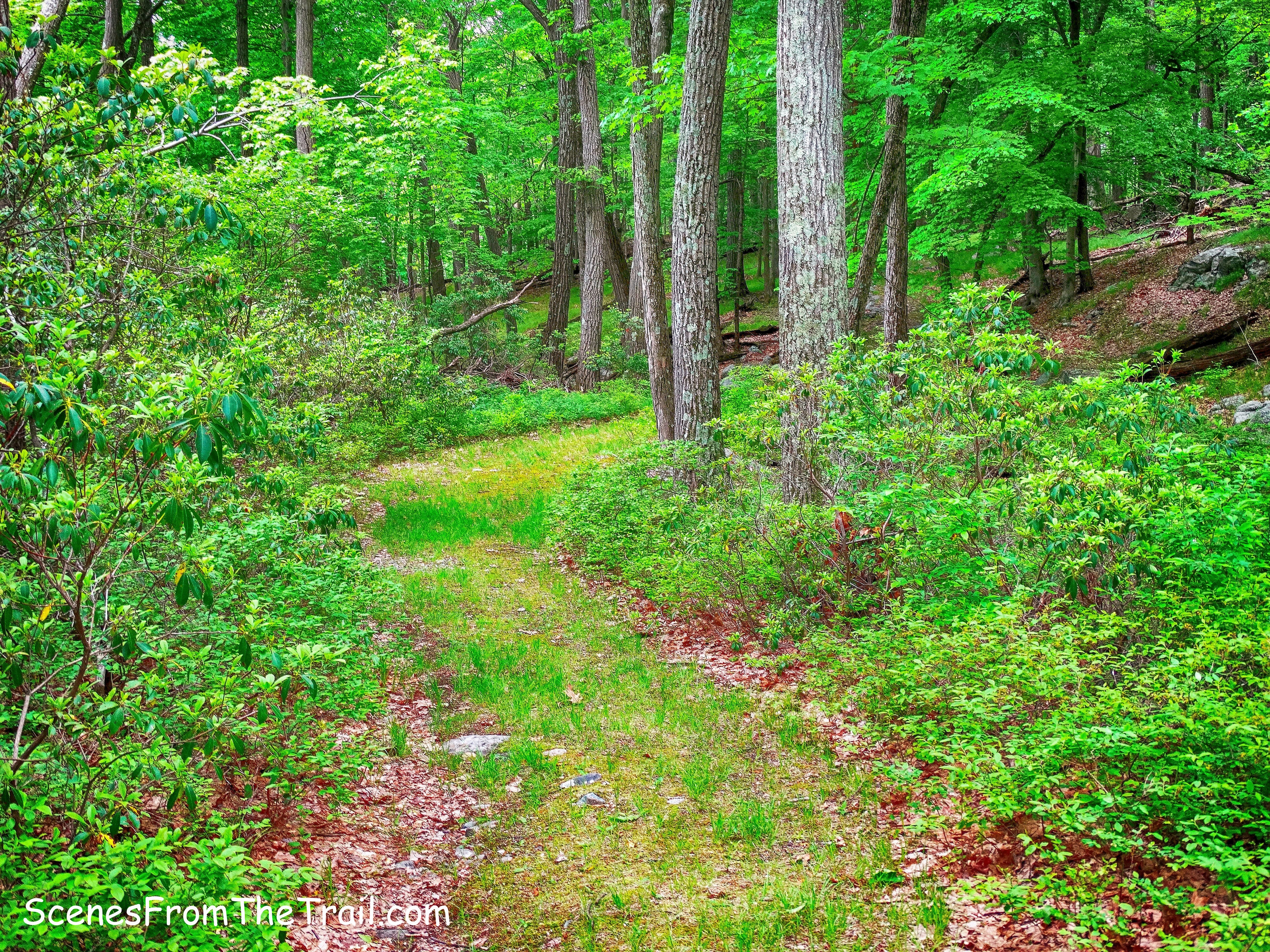
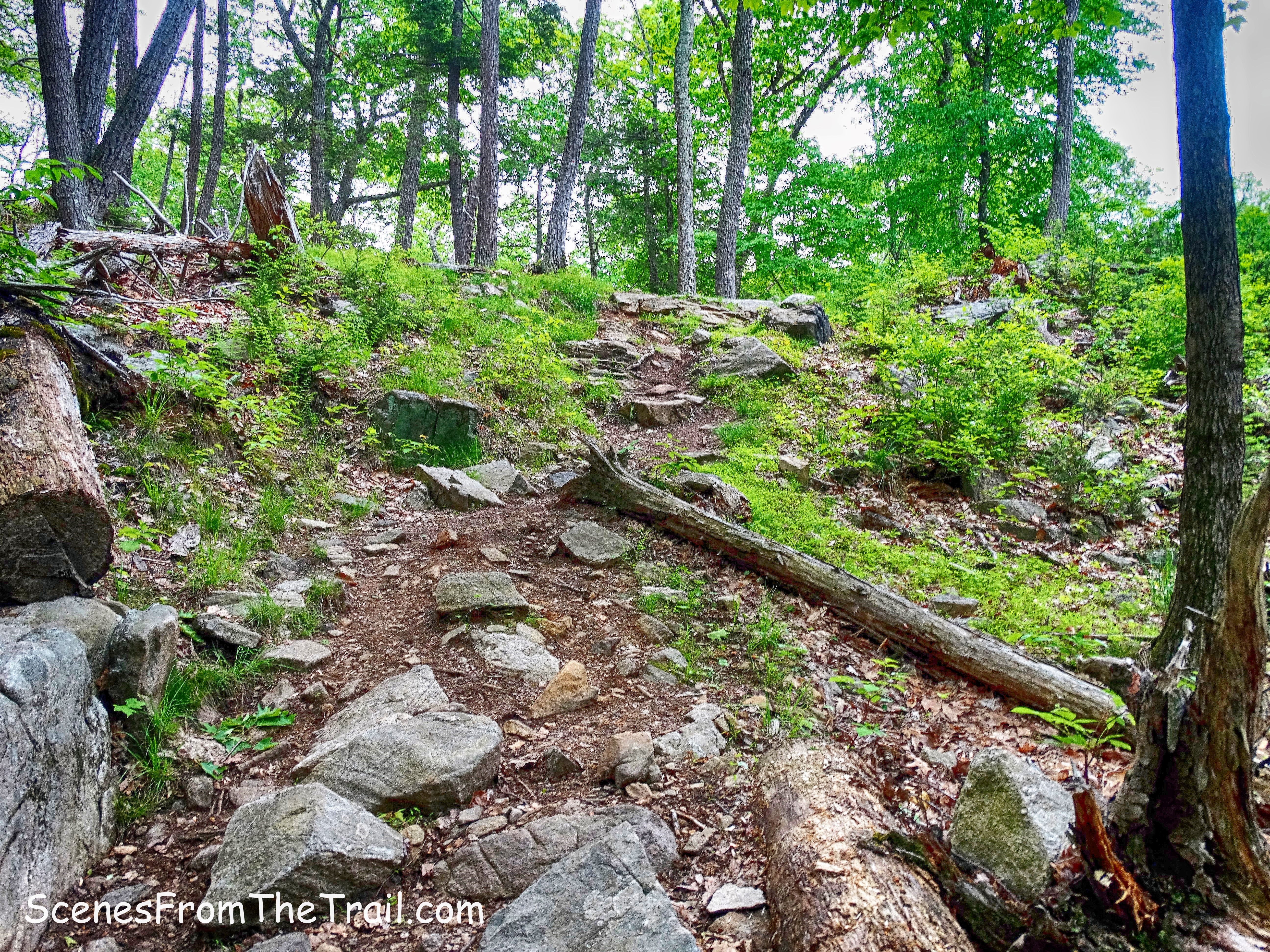
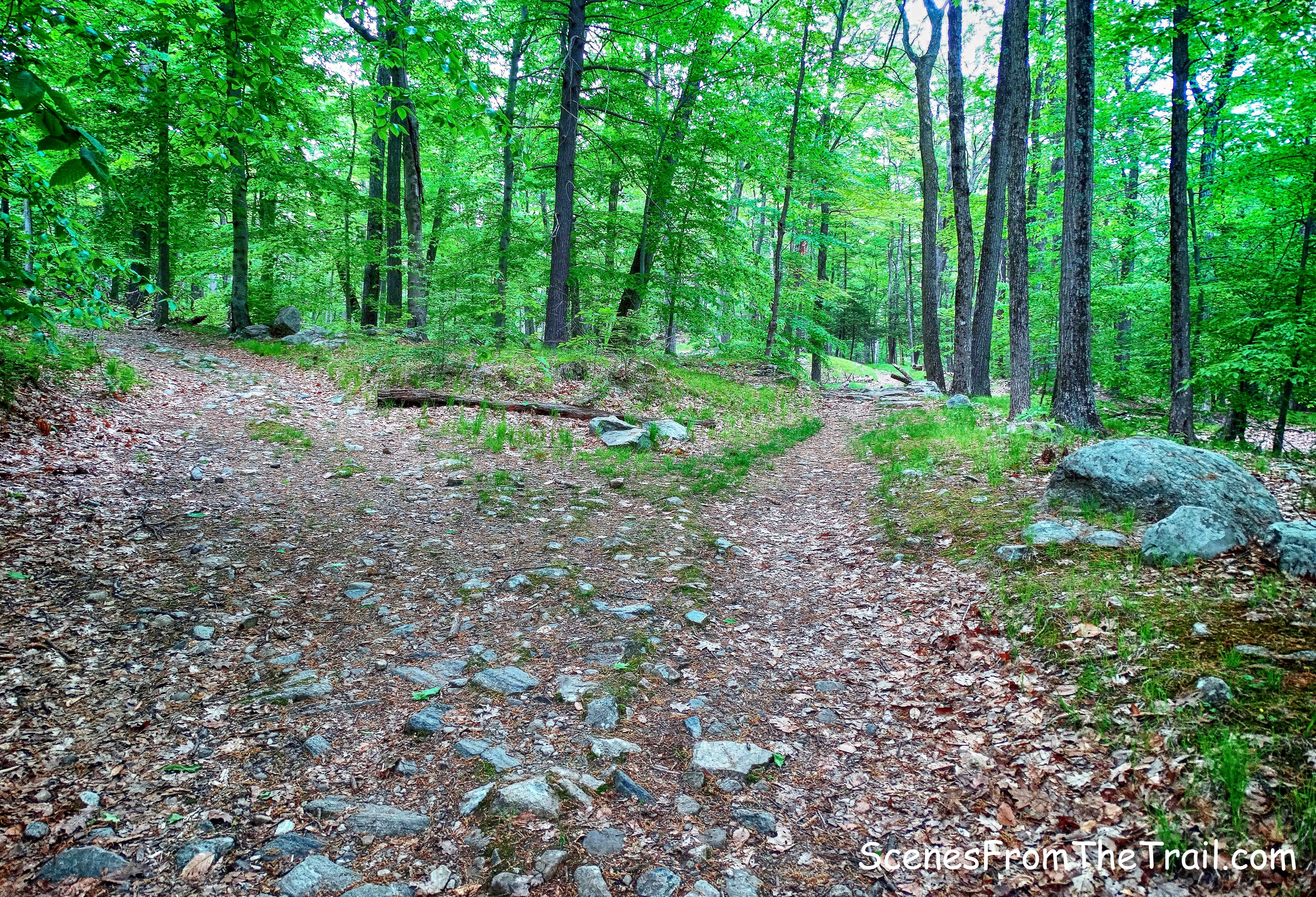
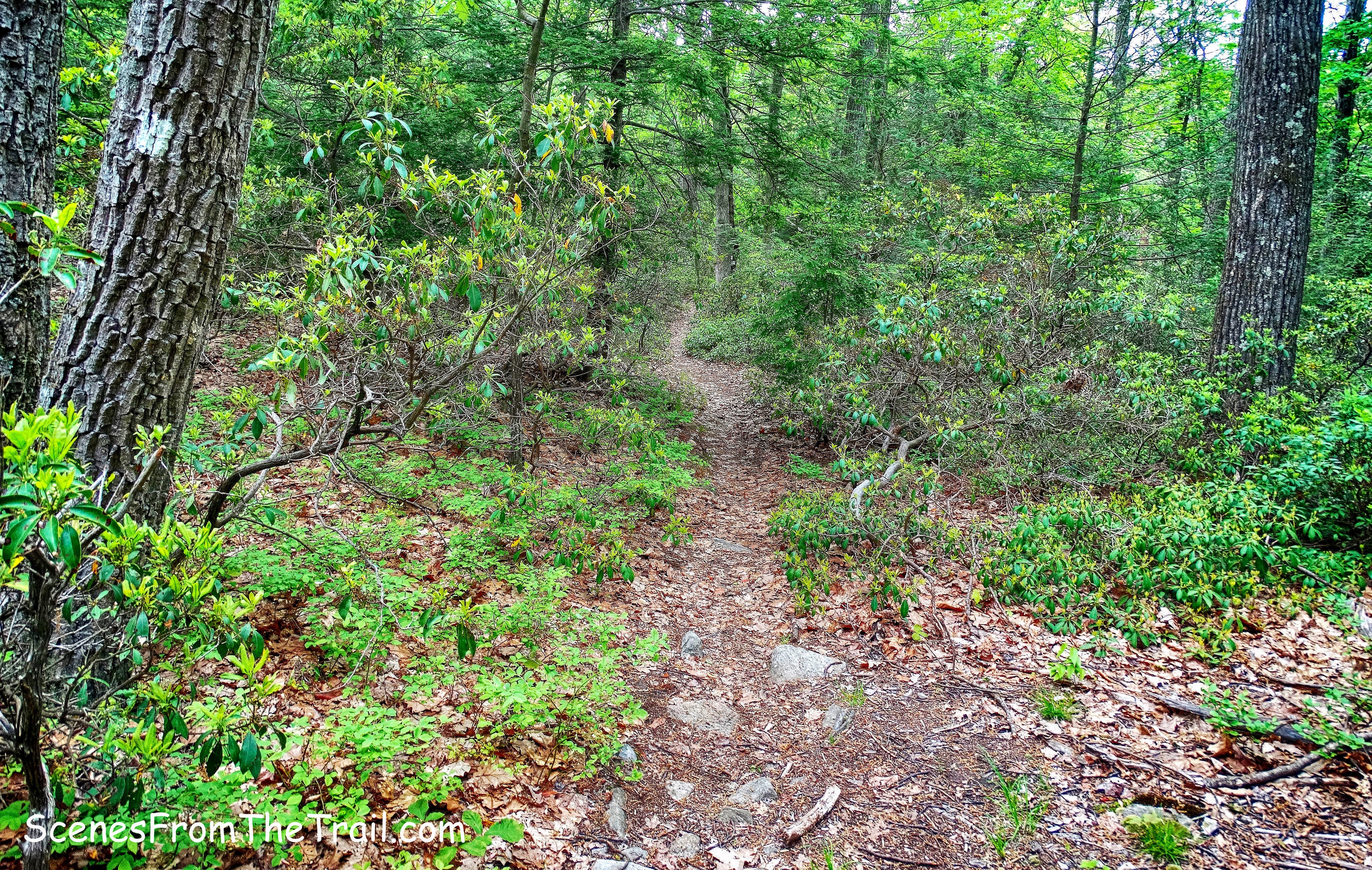
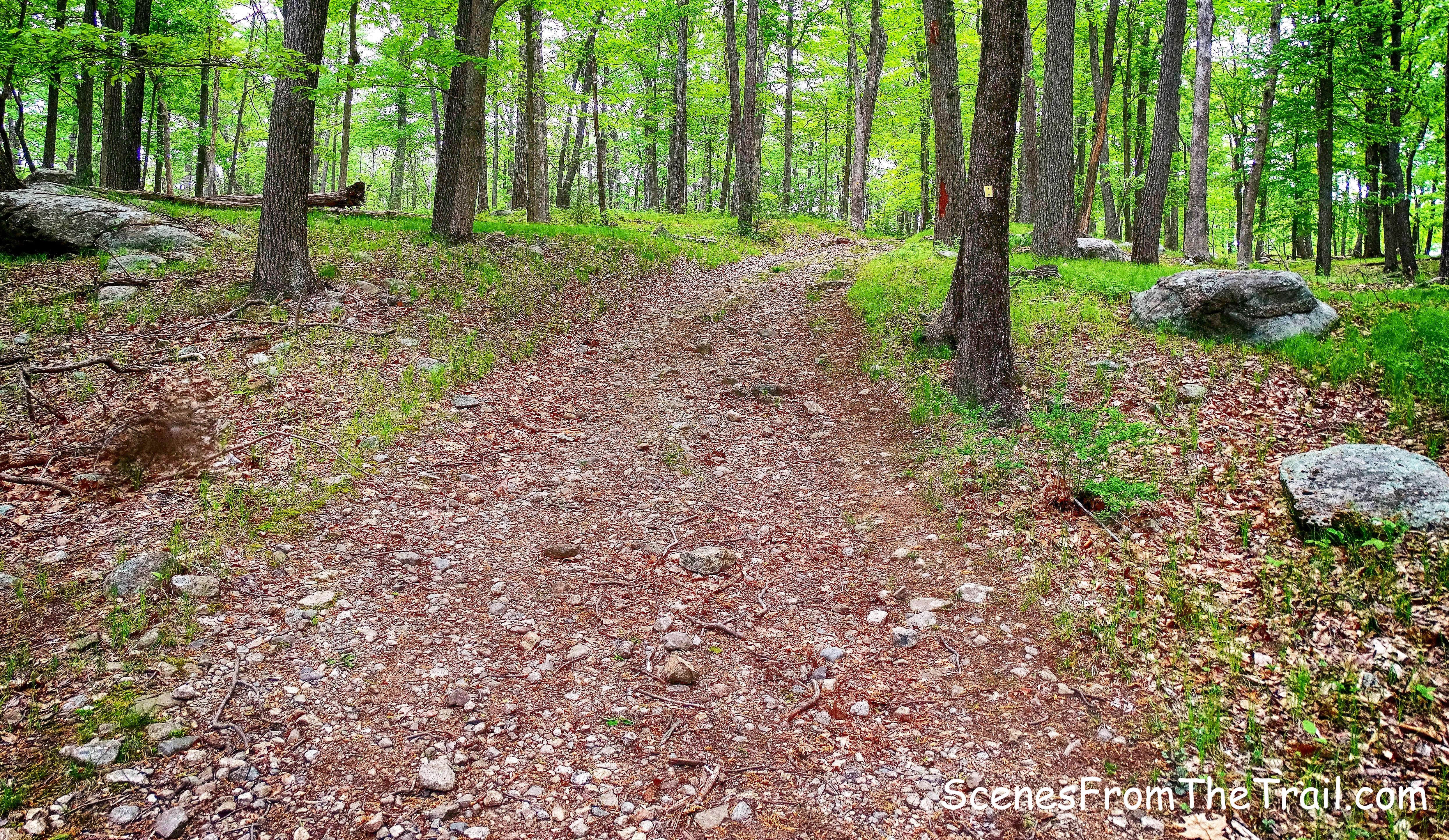
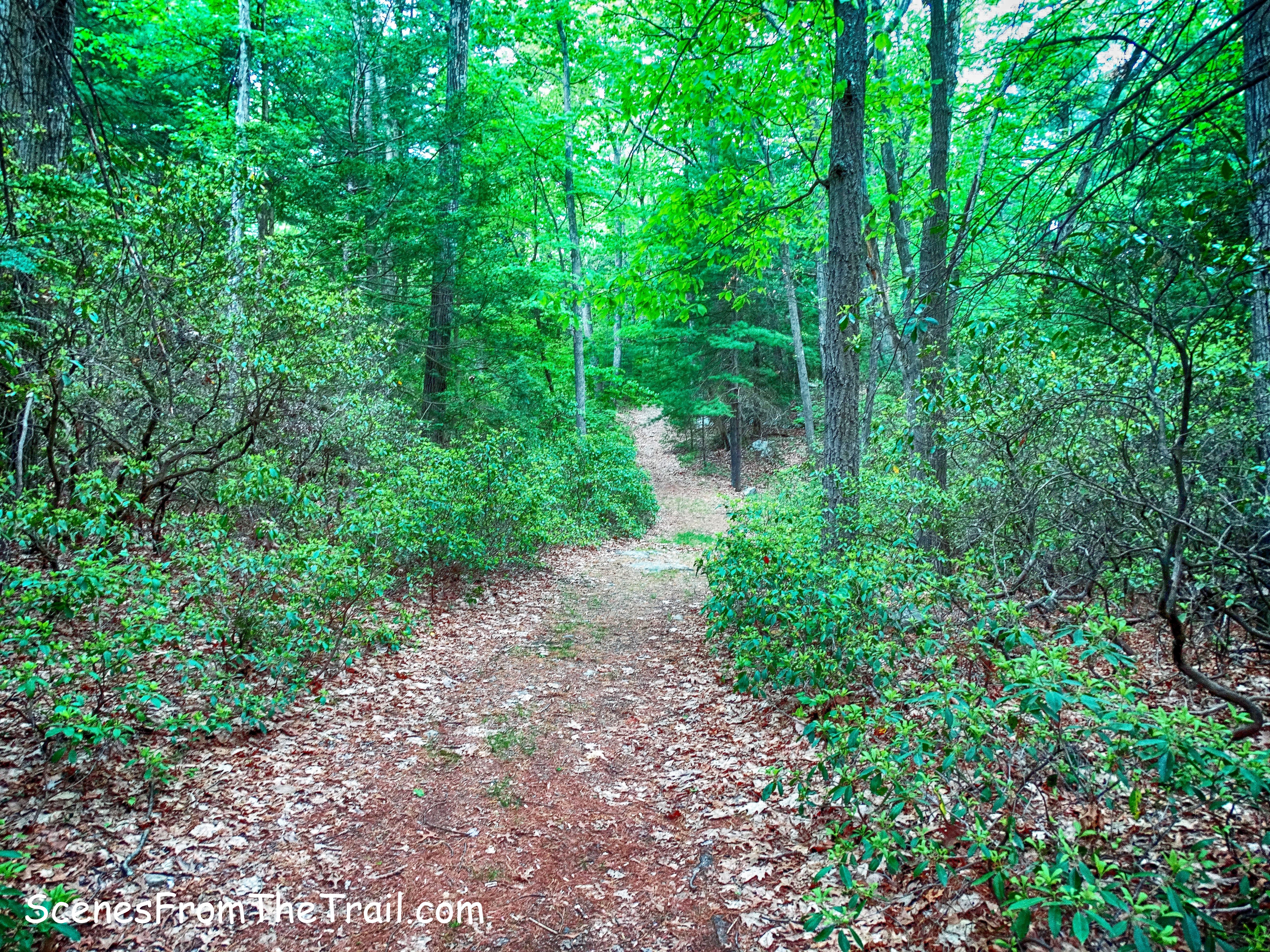
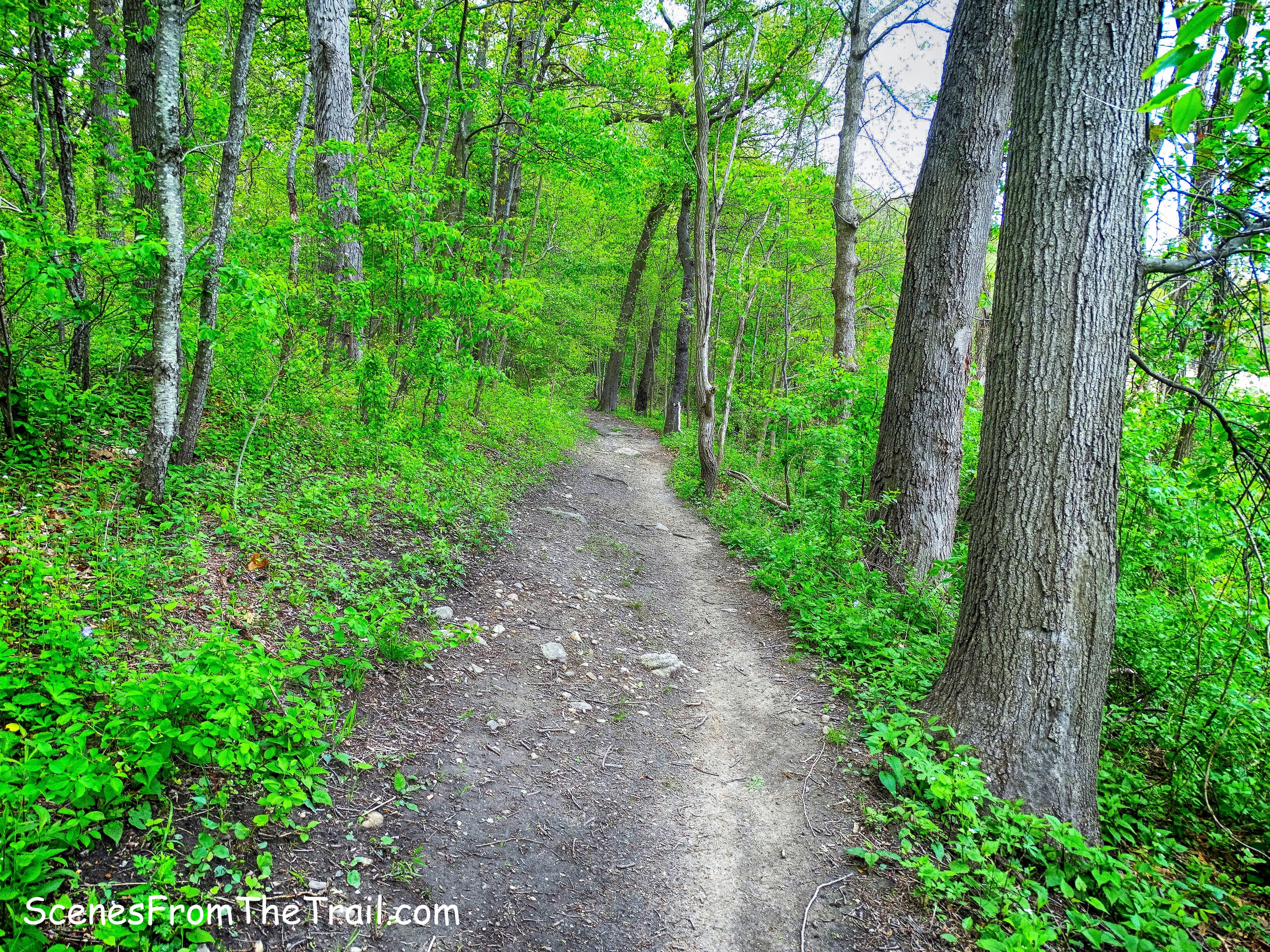
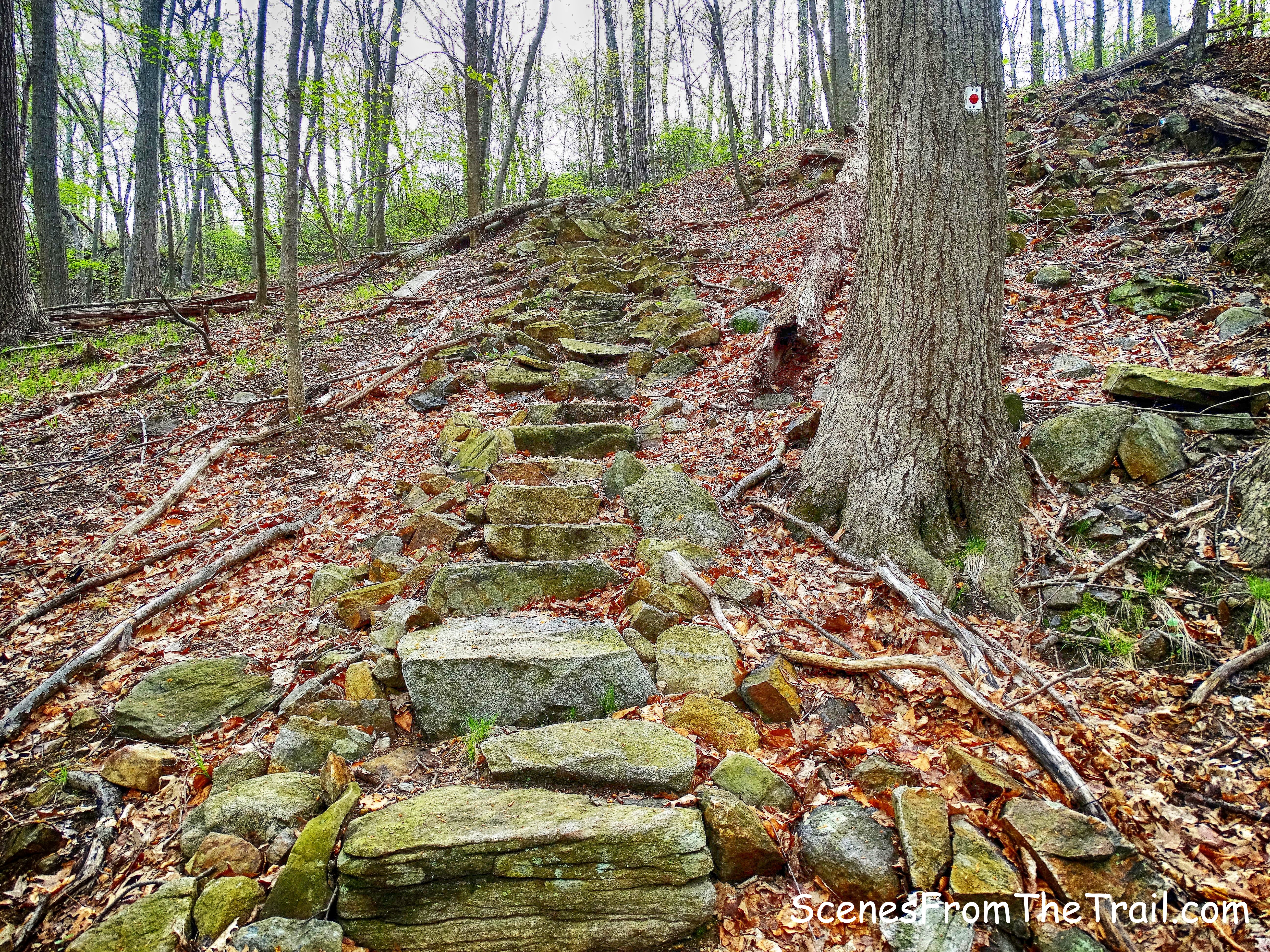
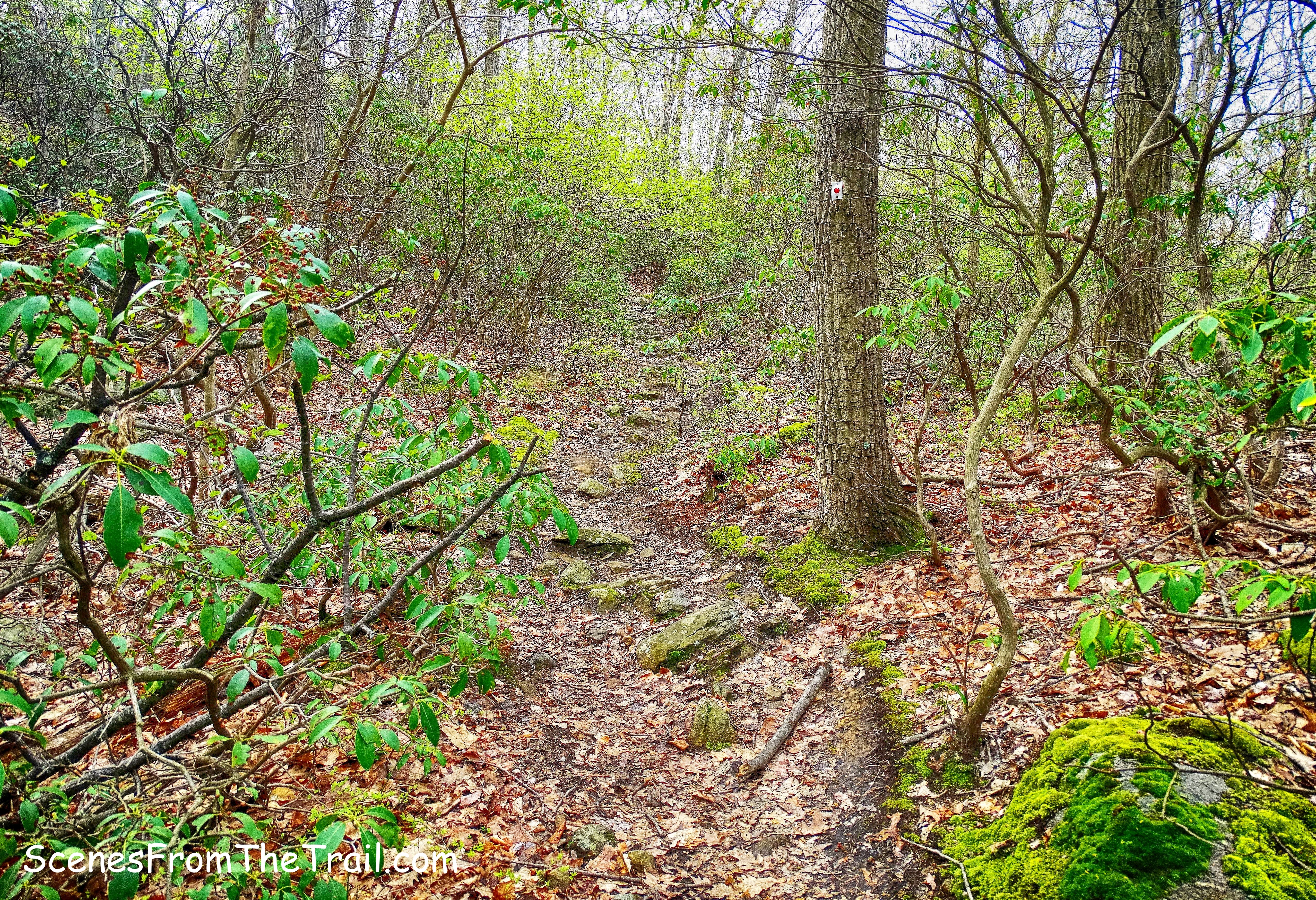
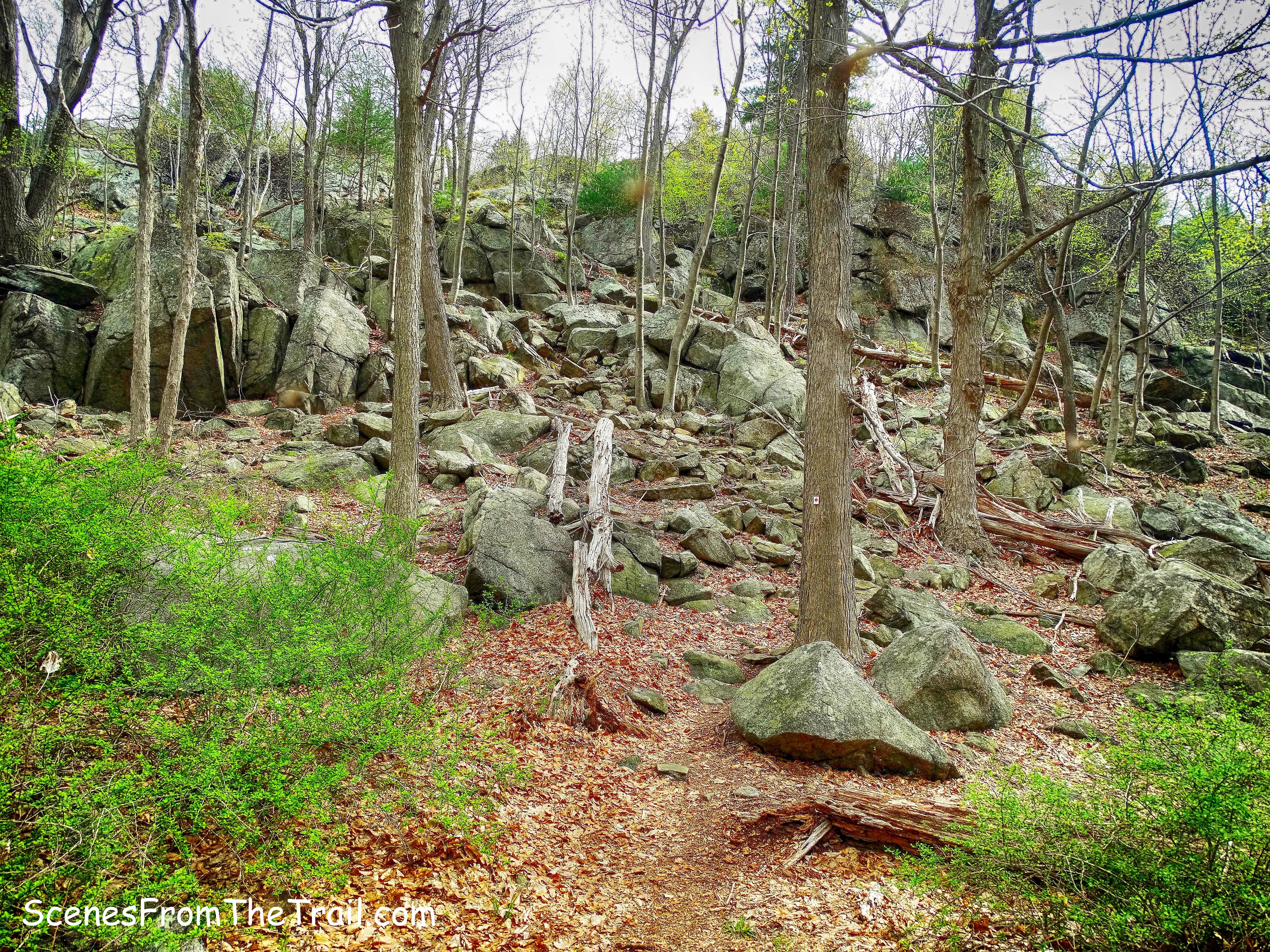
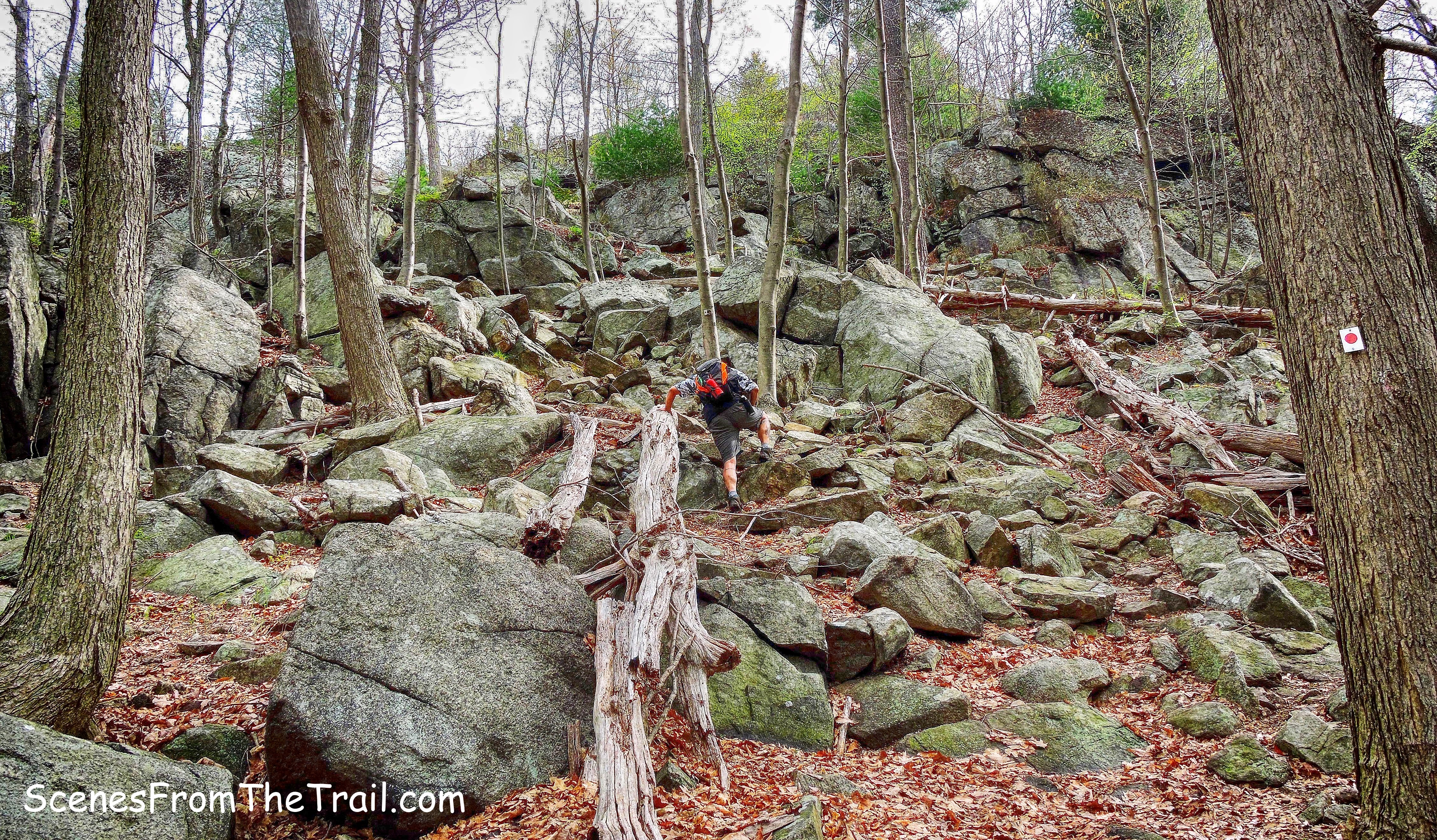
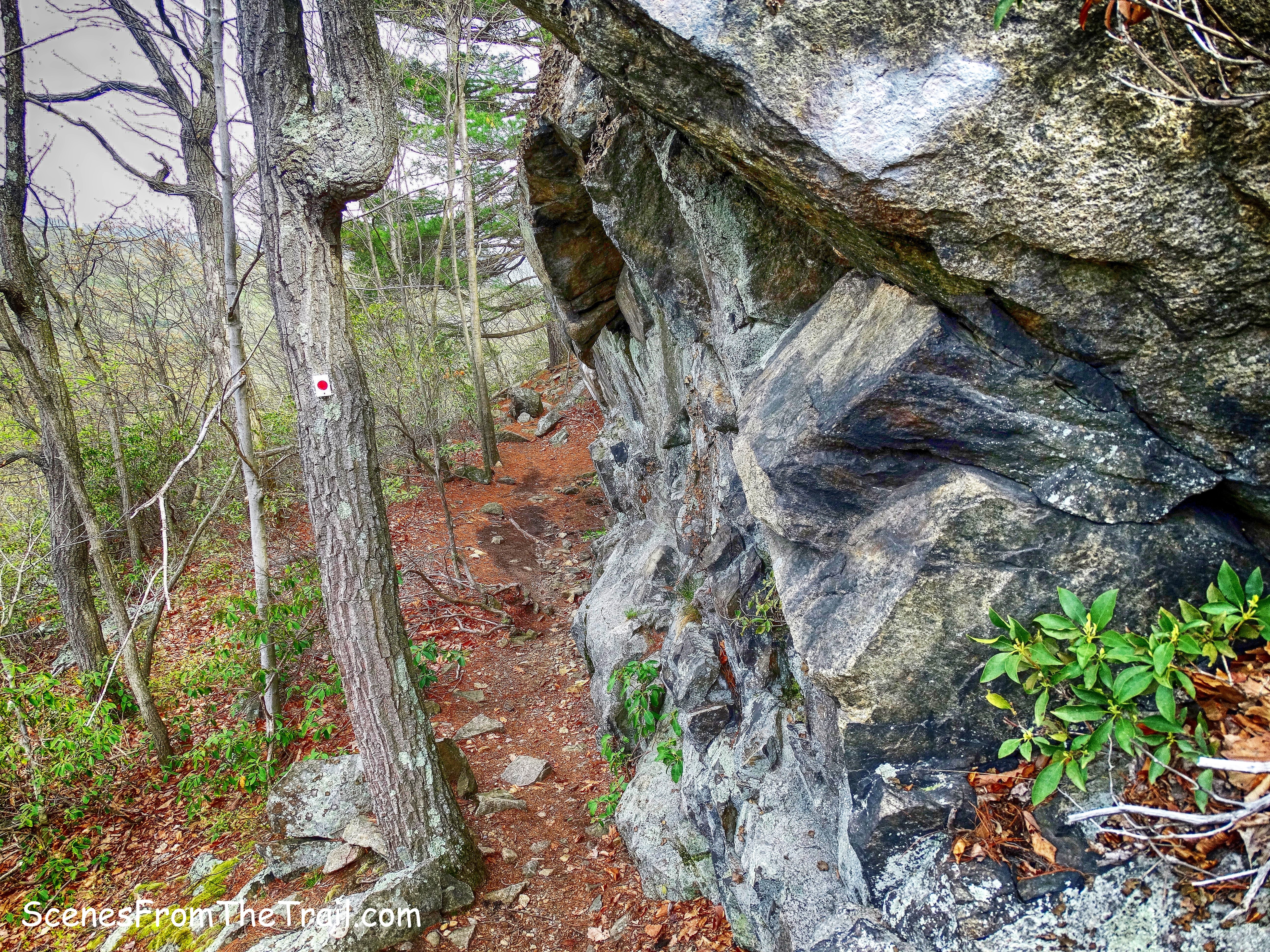
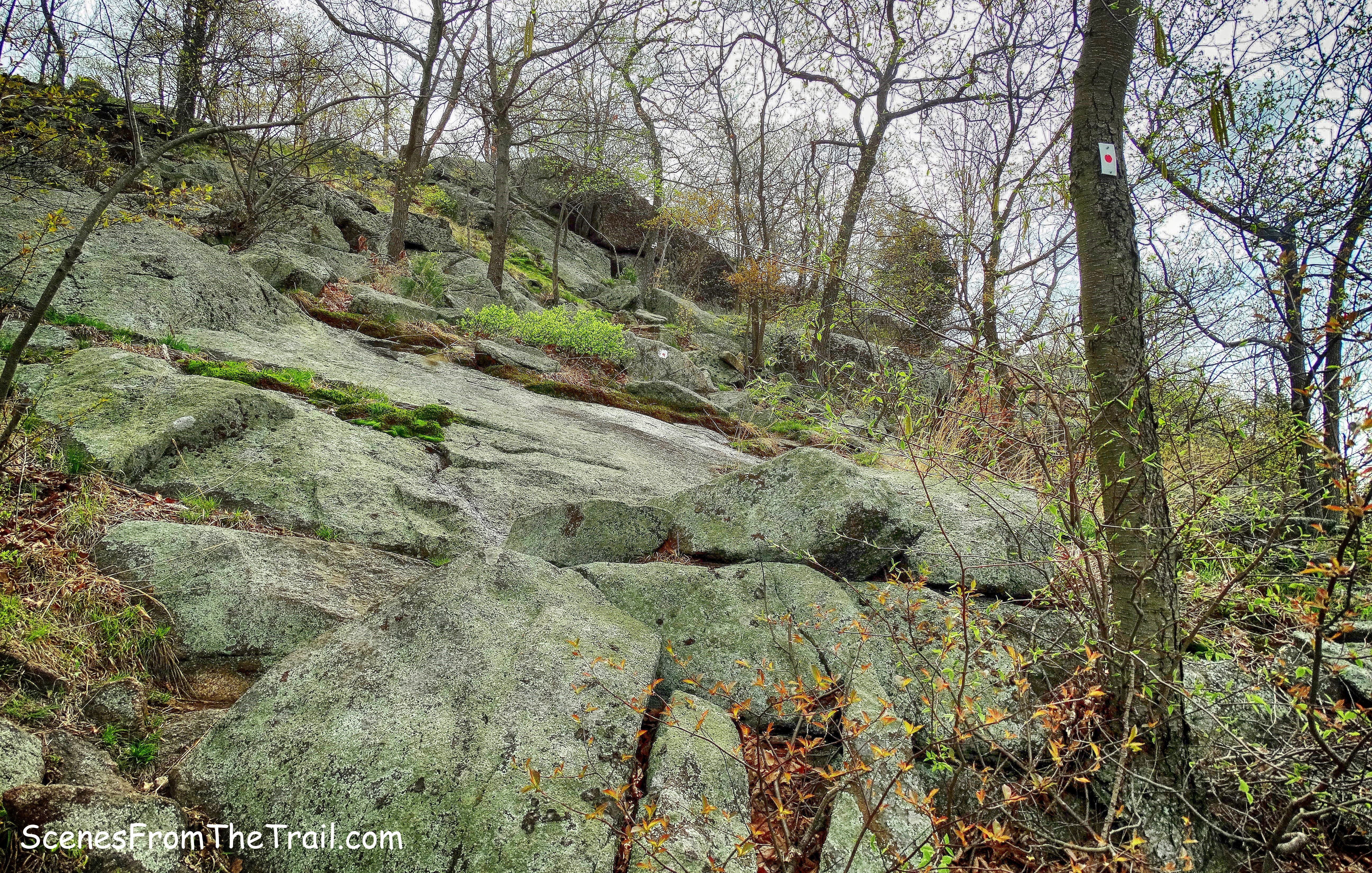
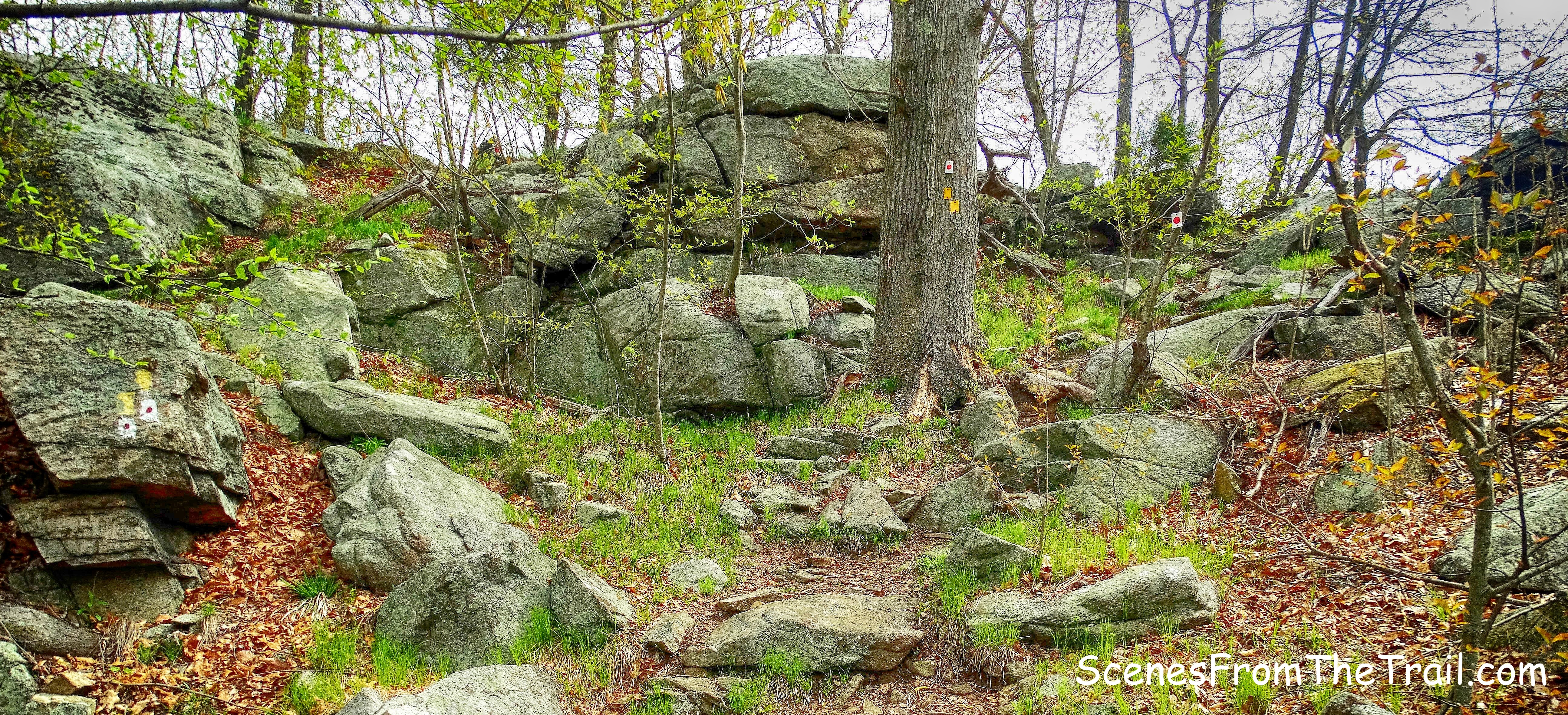
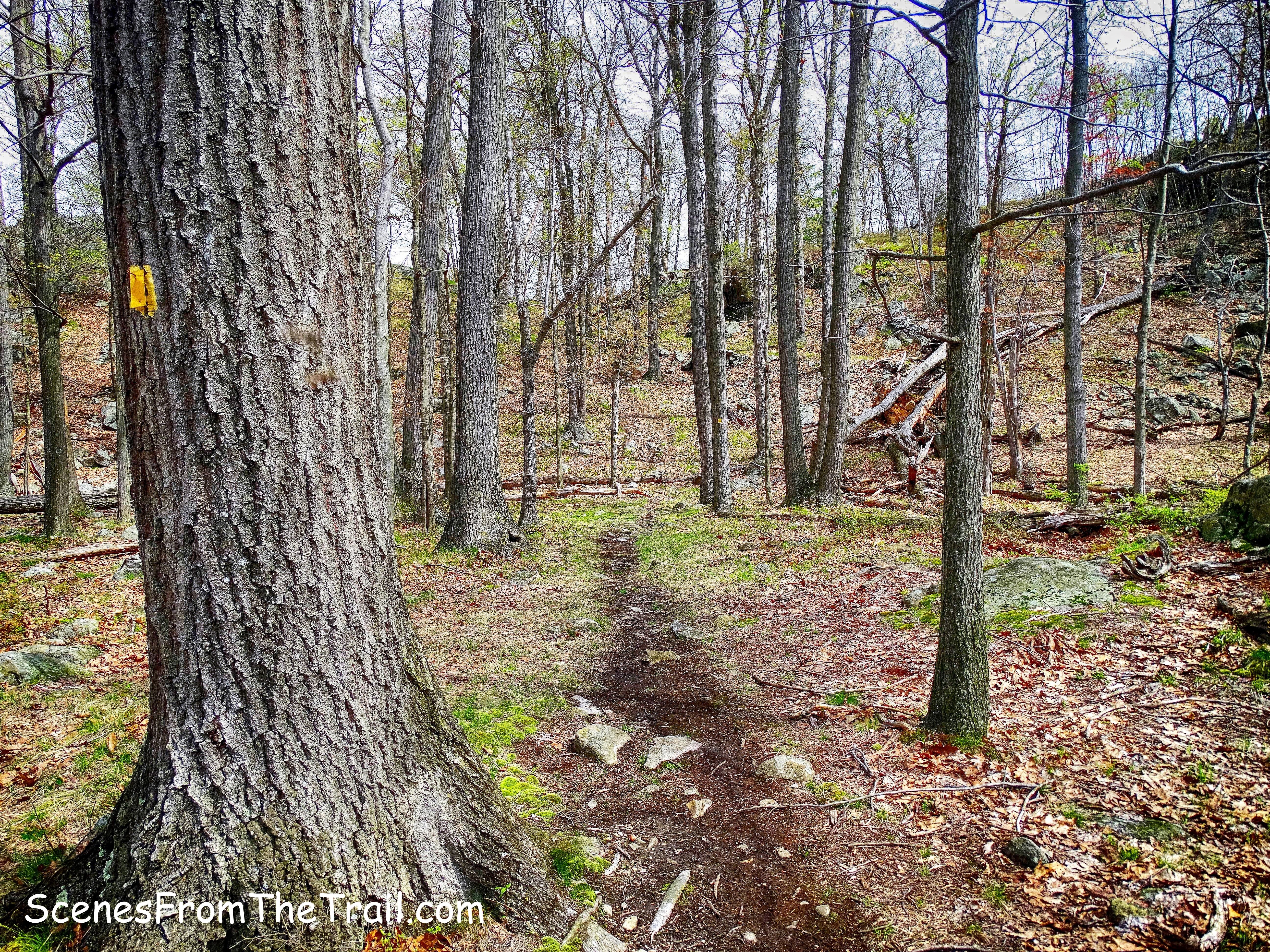
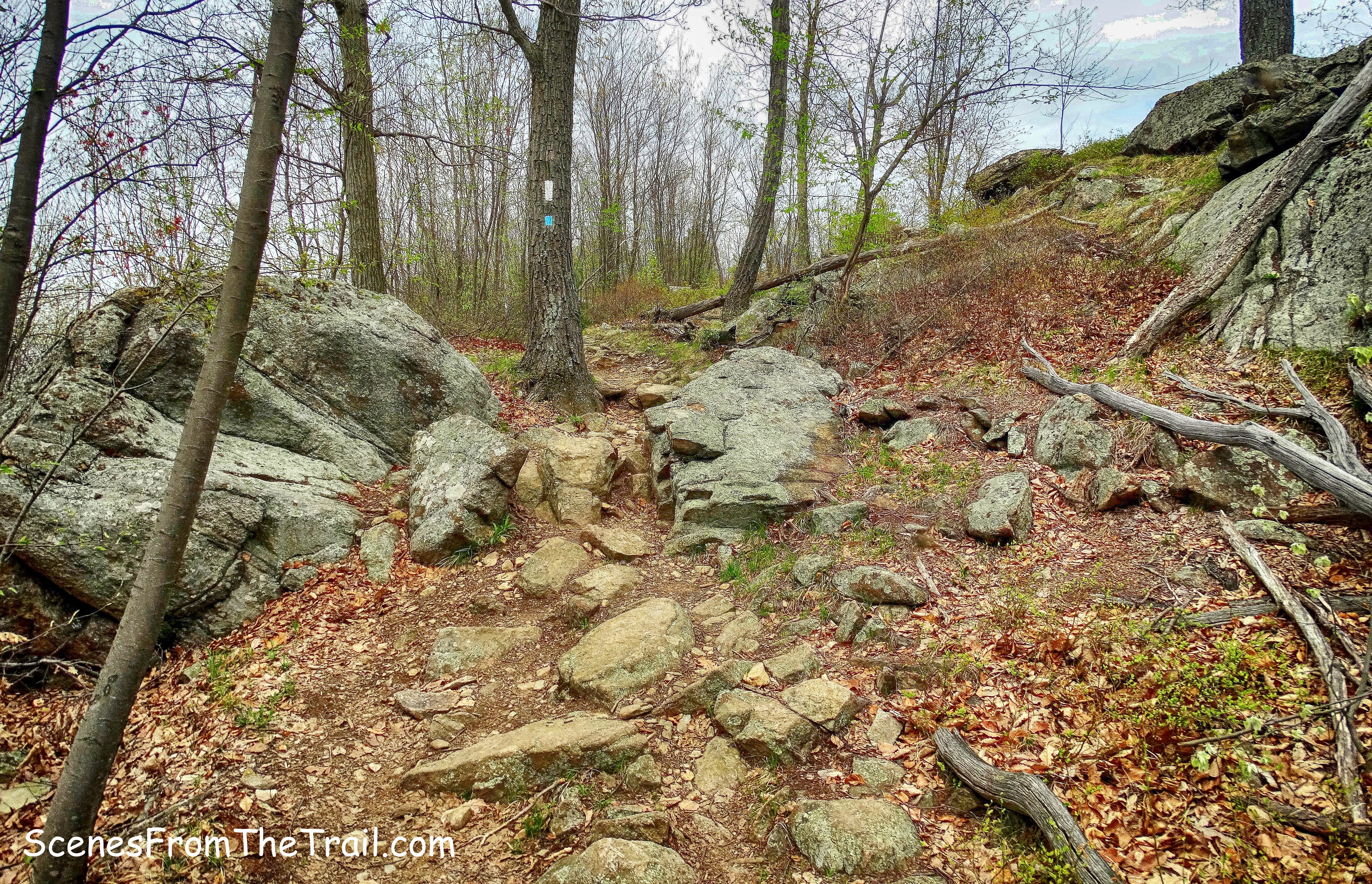
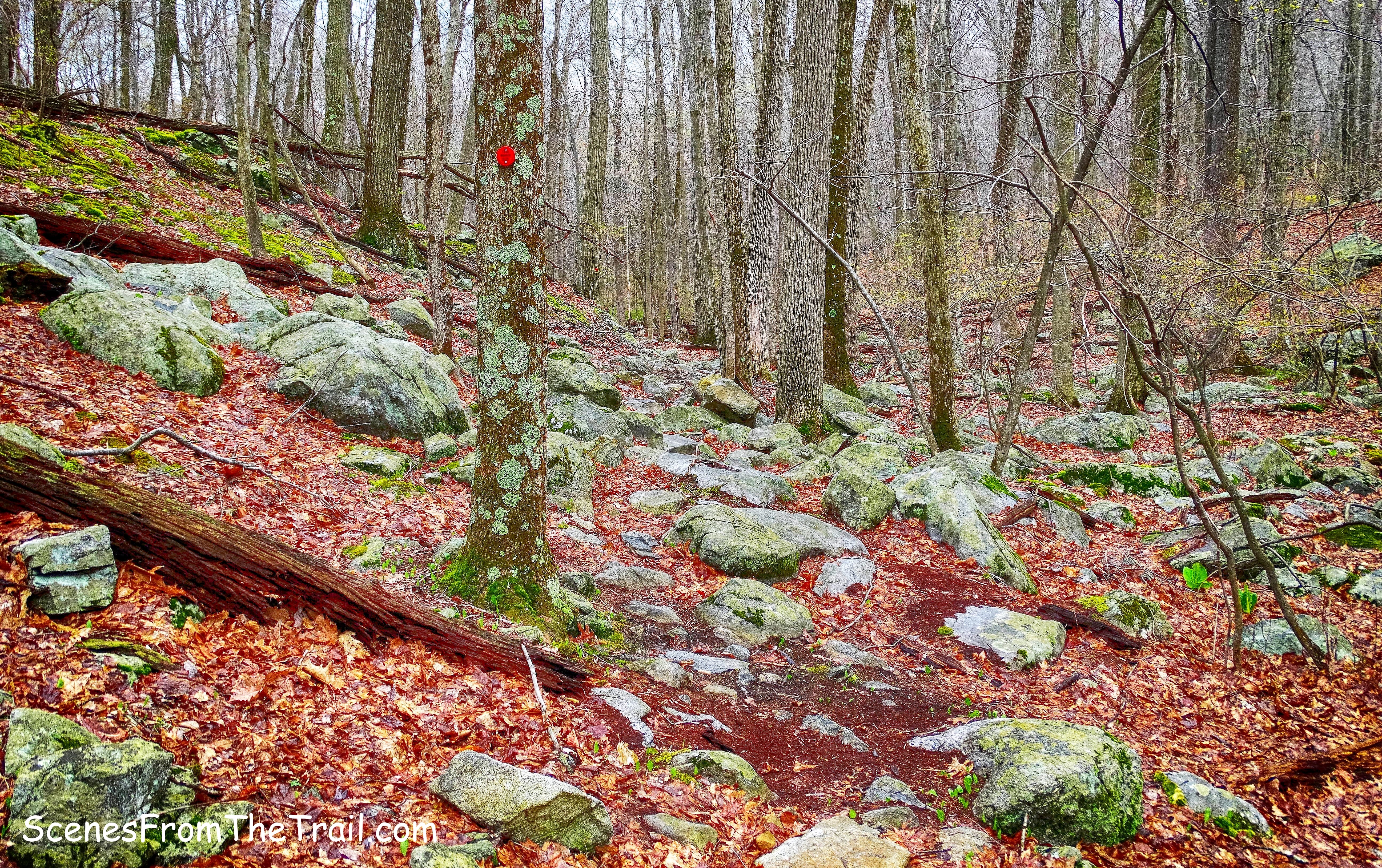
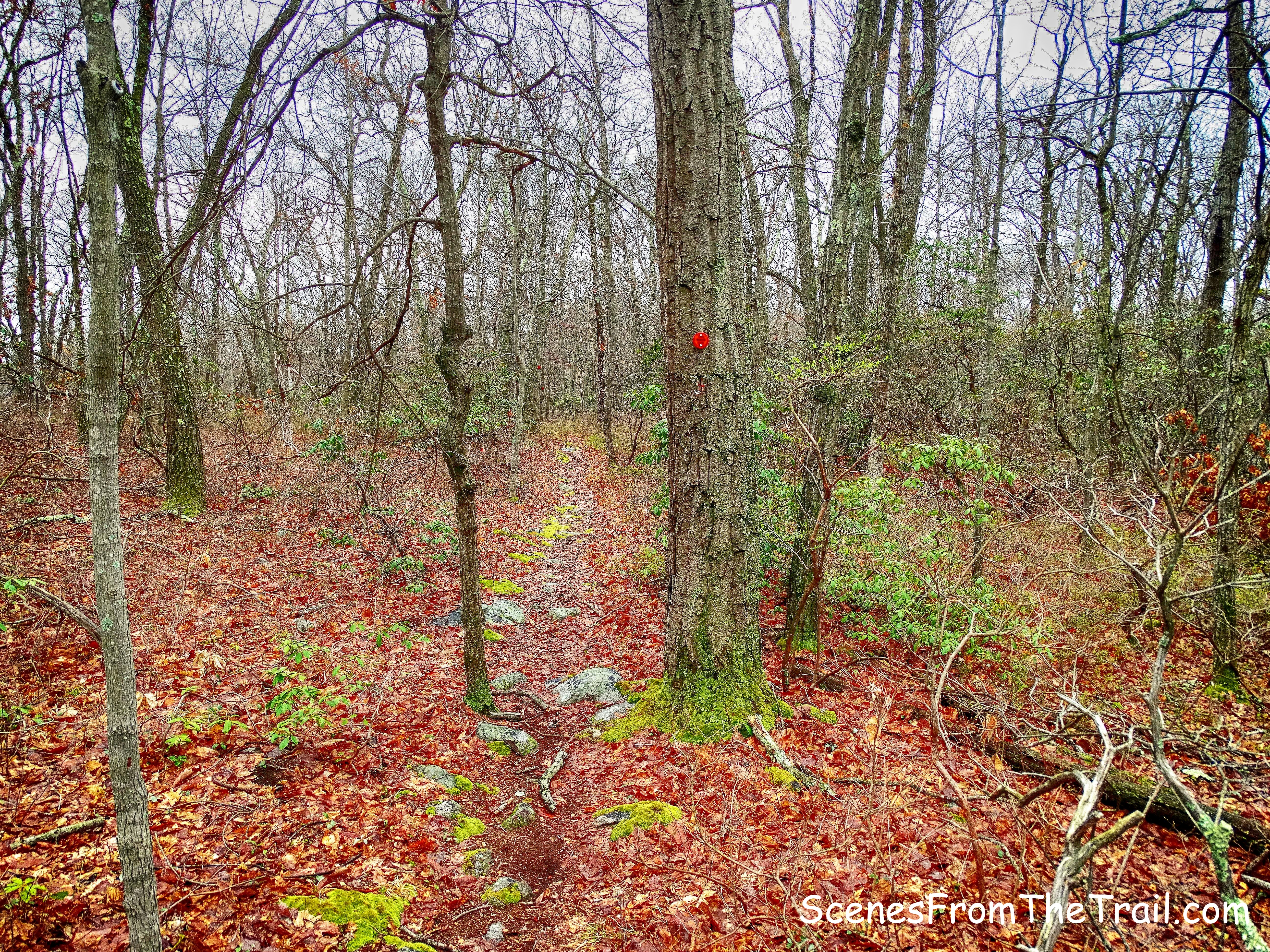
The yellow-blazed Manaticut Point Trail climbs moderately over rocky terrain.

Manaticut Point Trail

Manaticut Point Trail

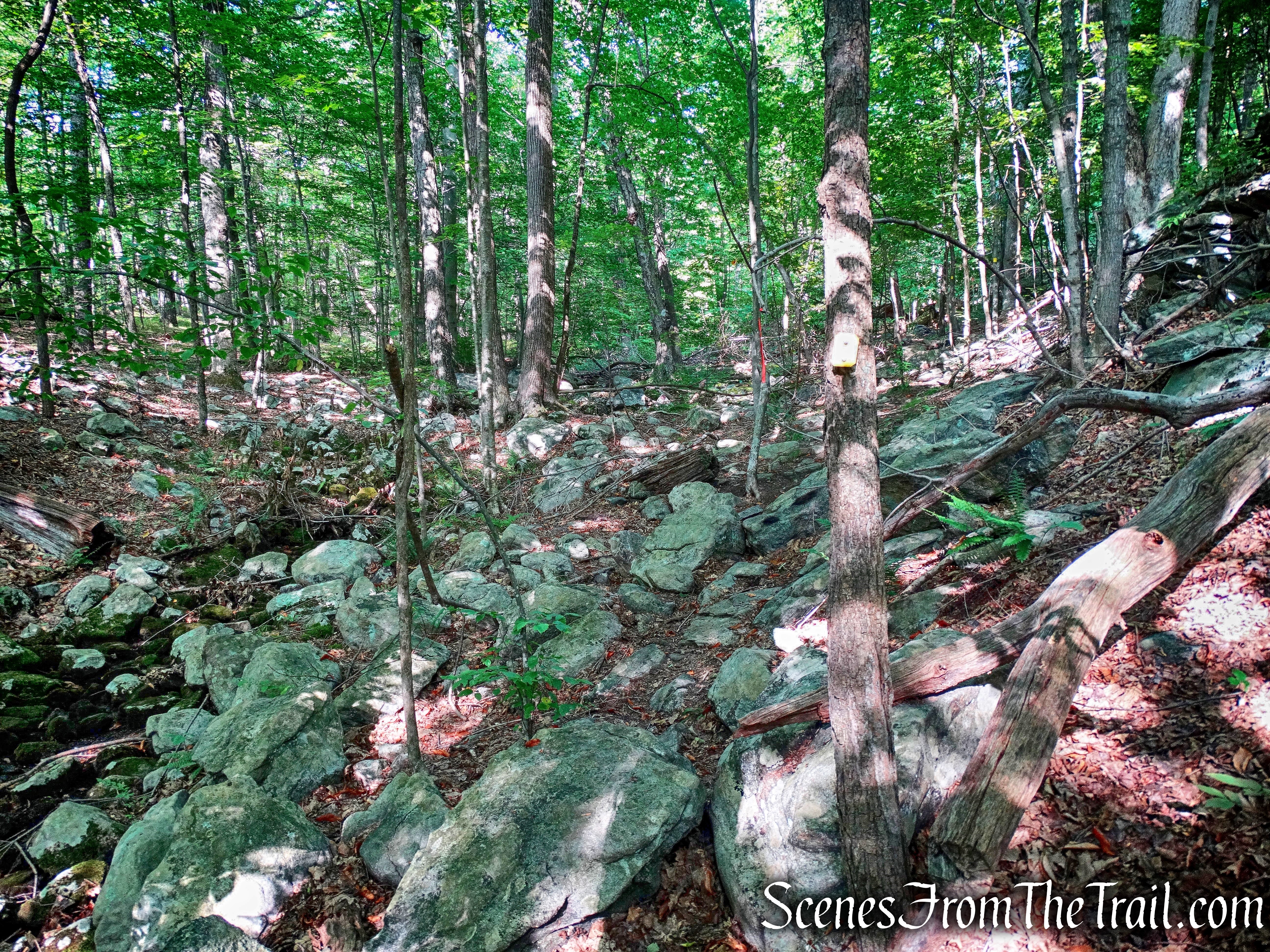
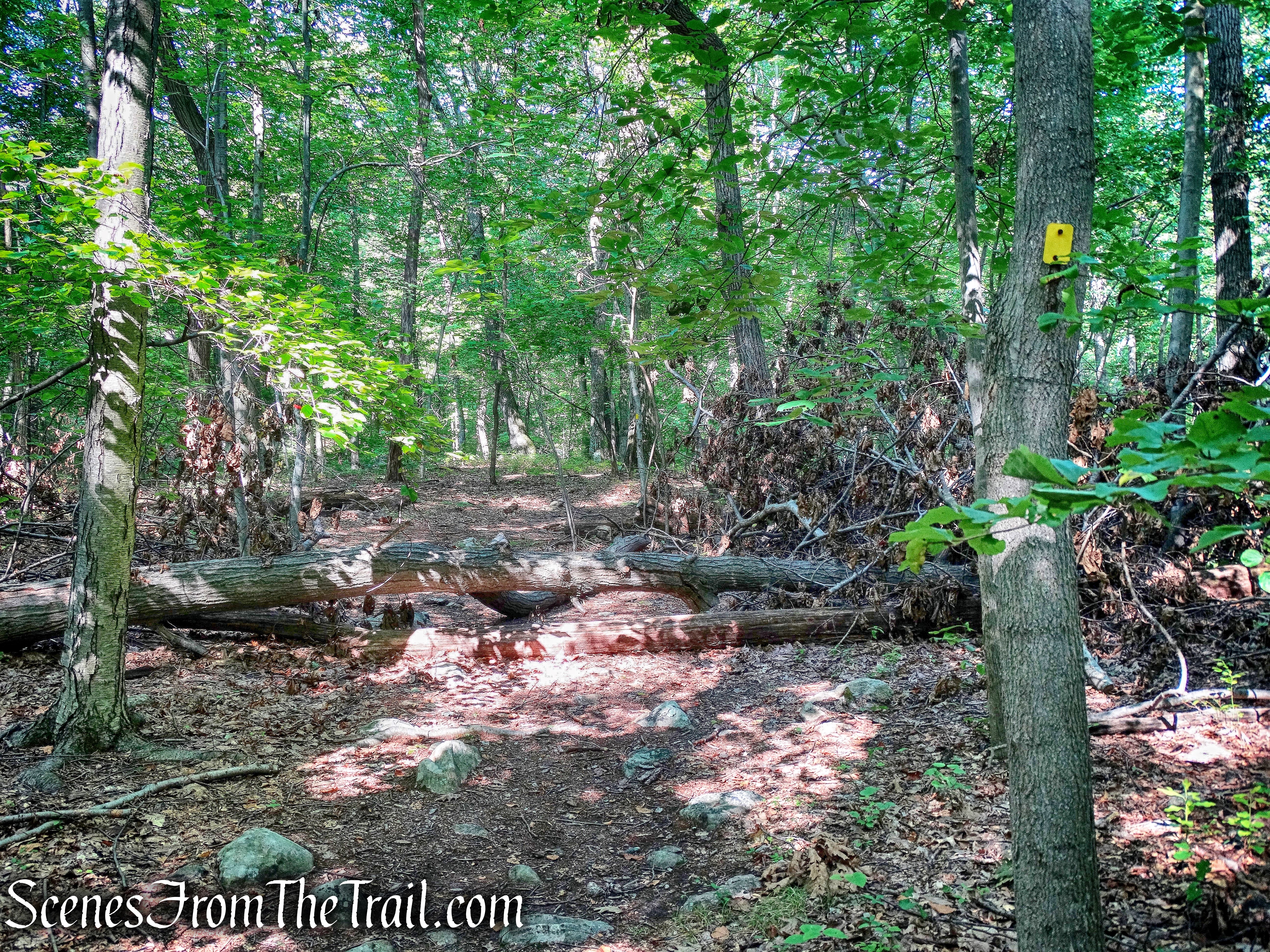
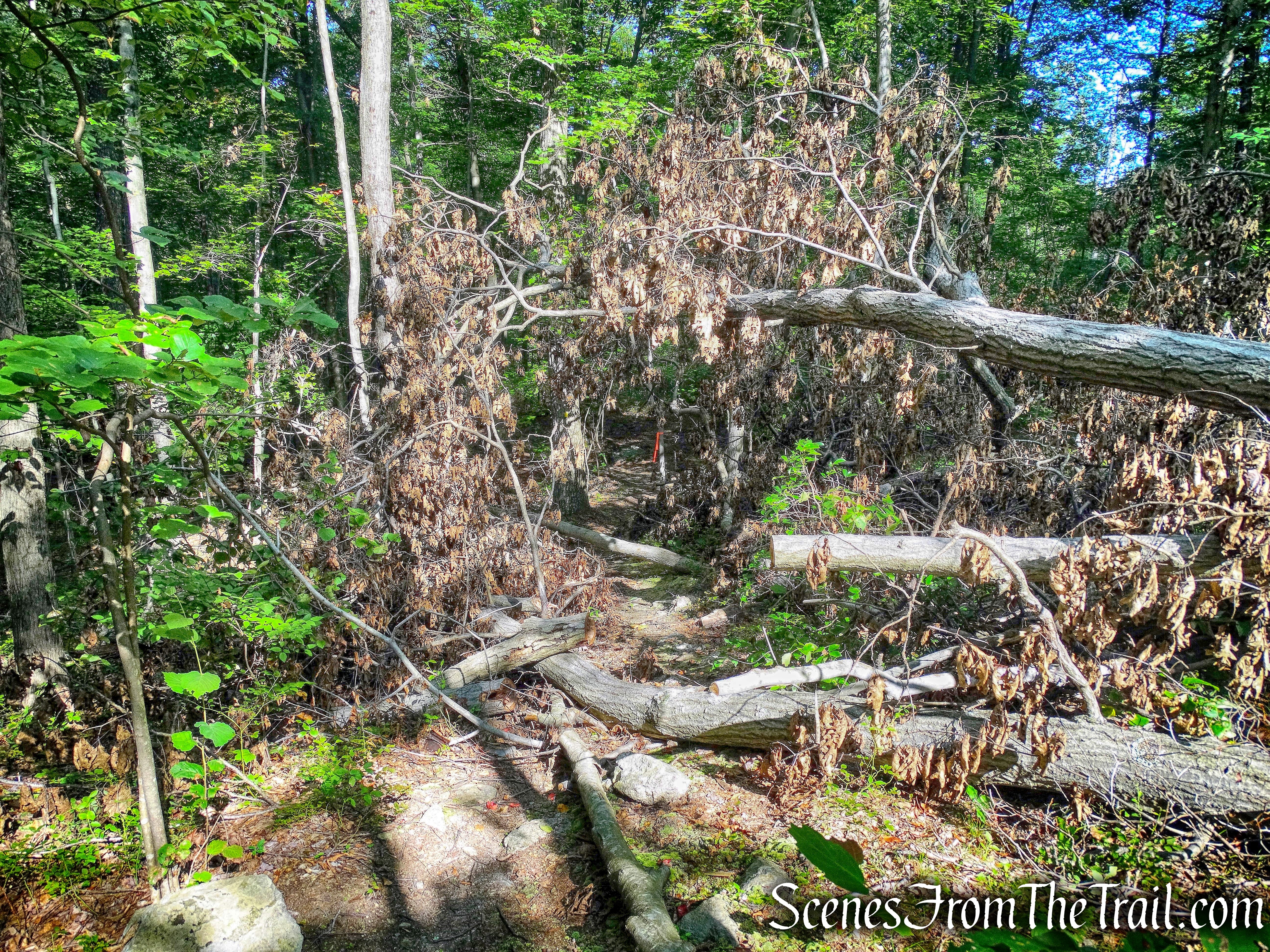
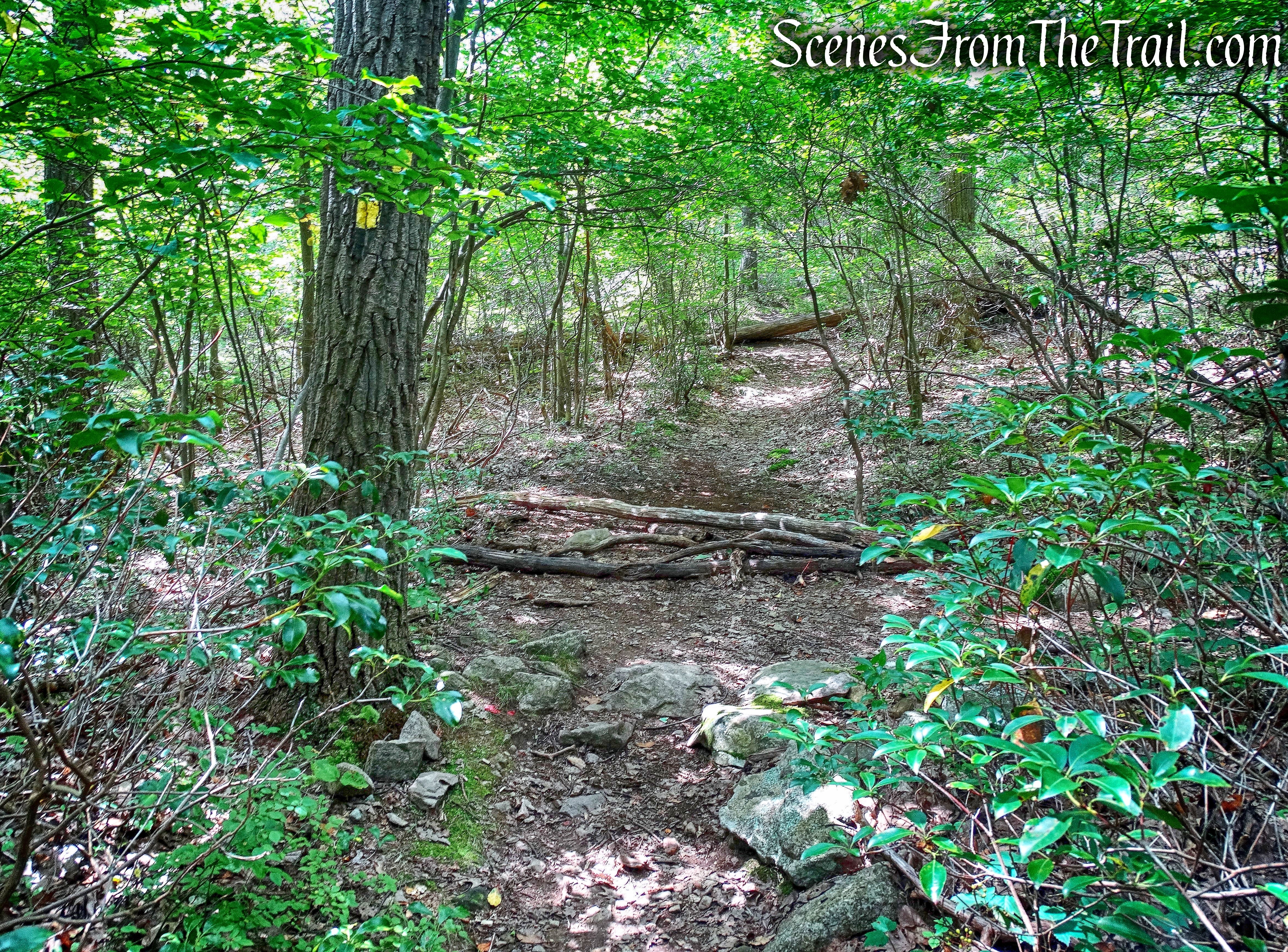
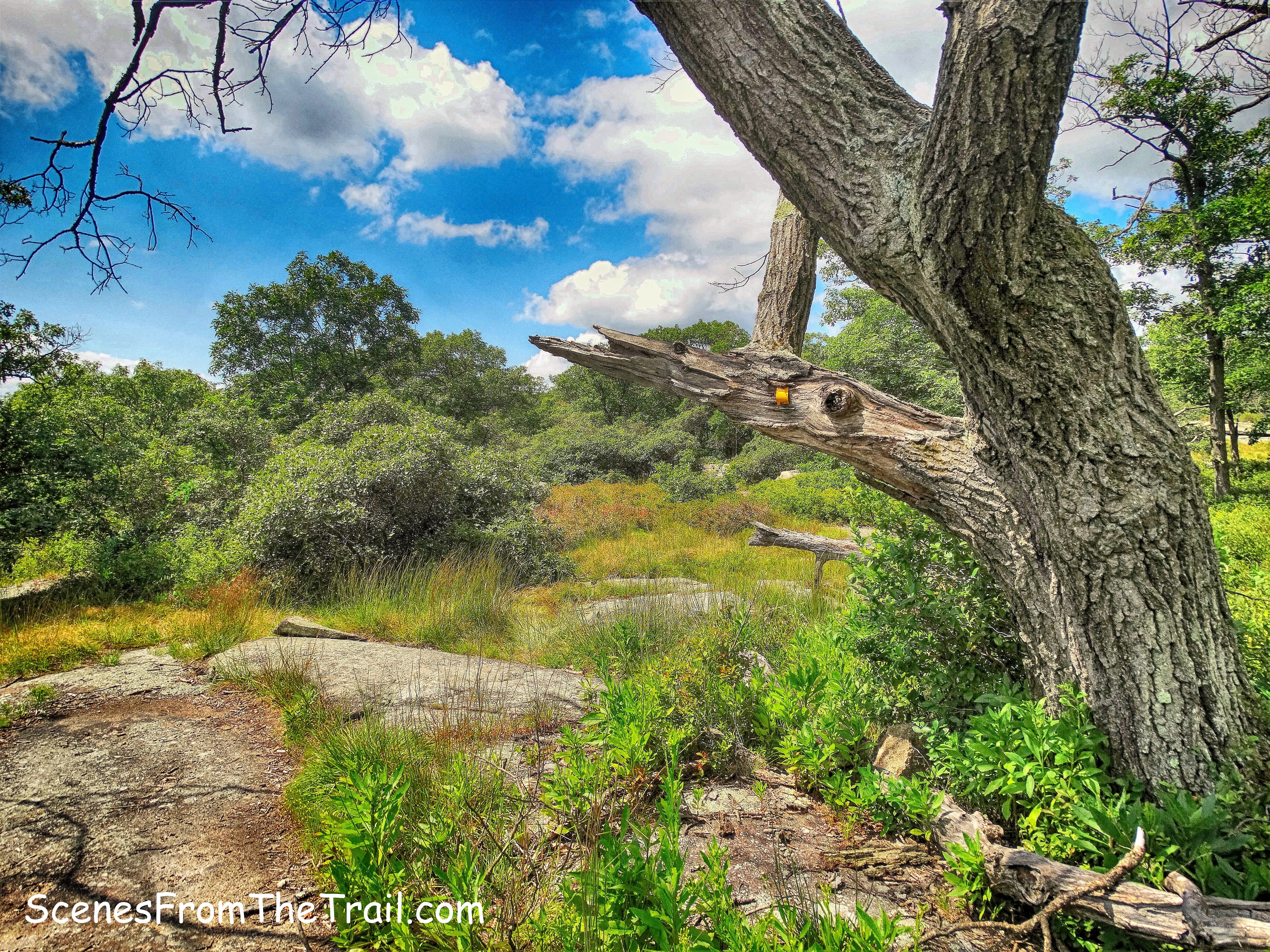
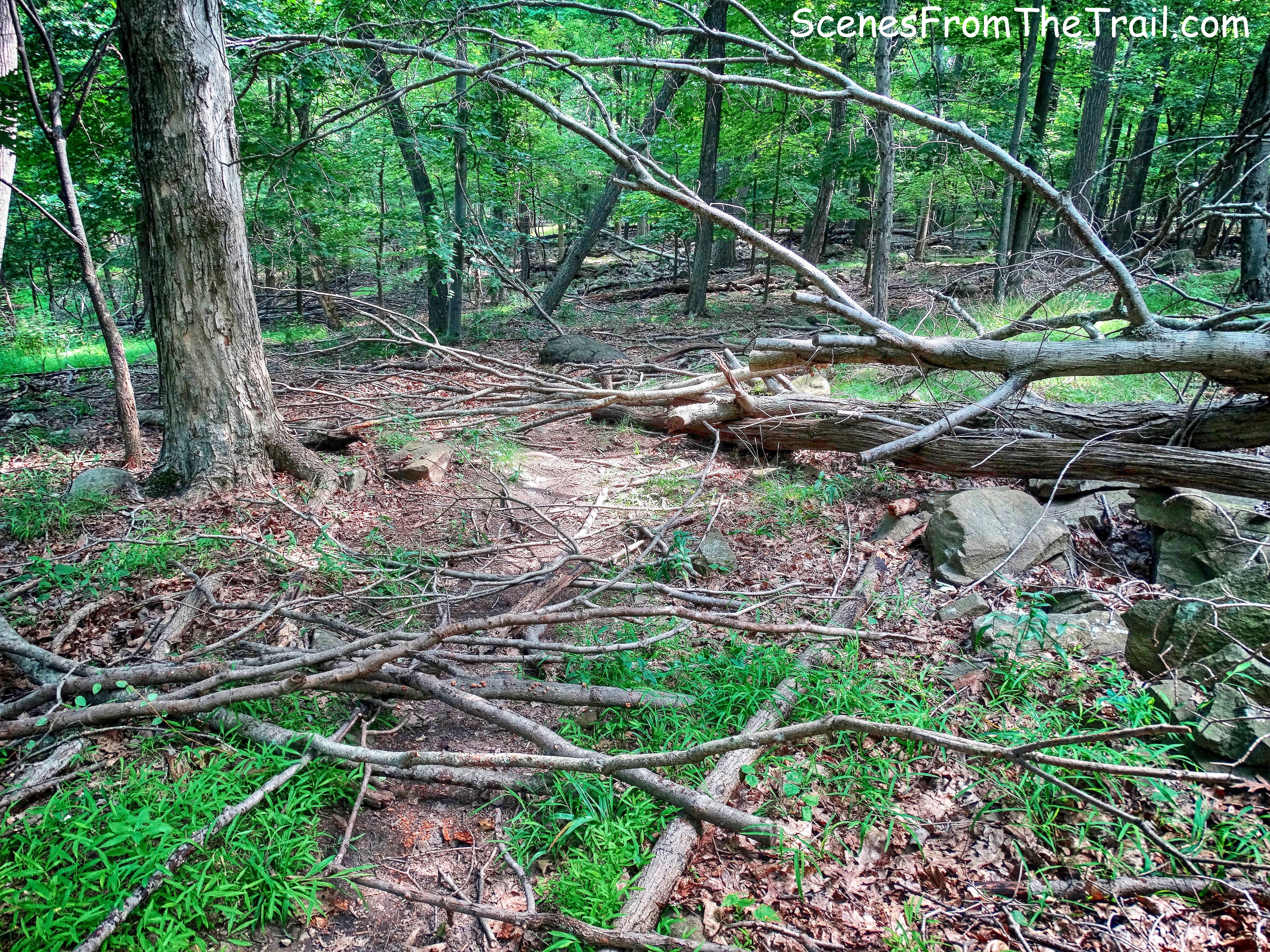
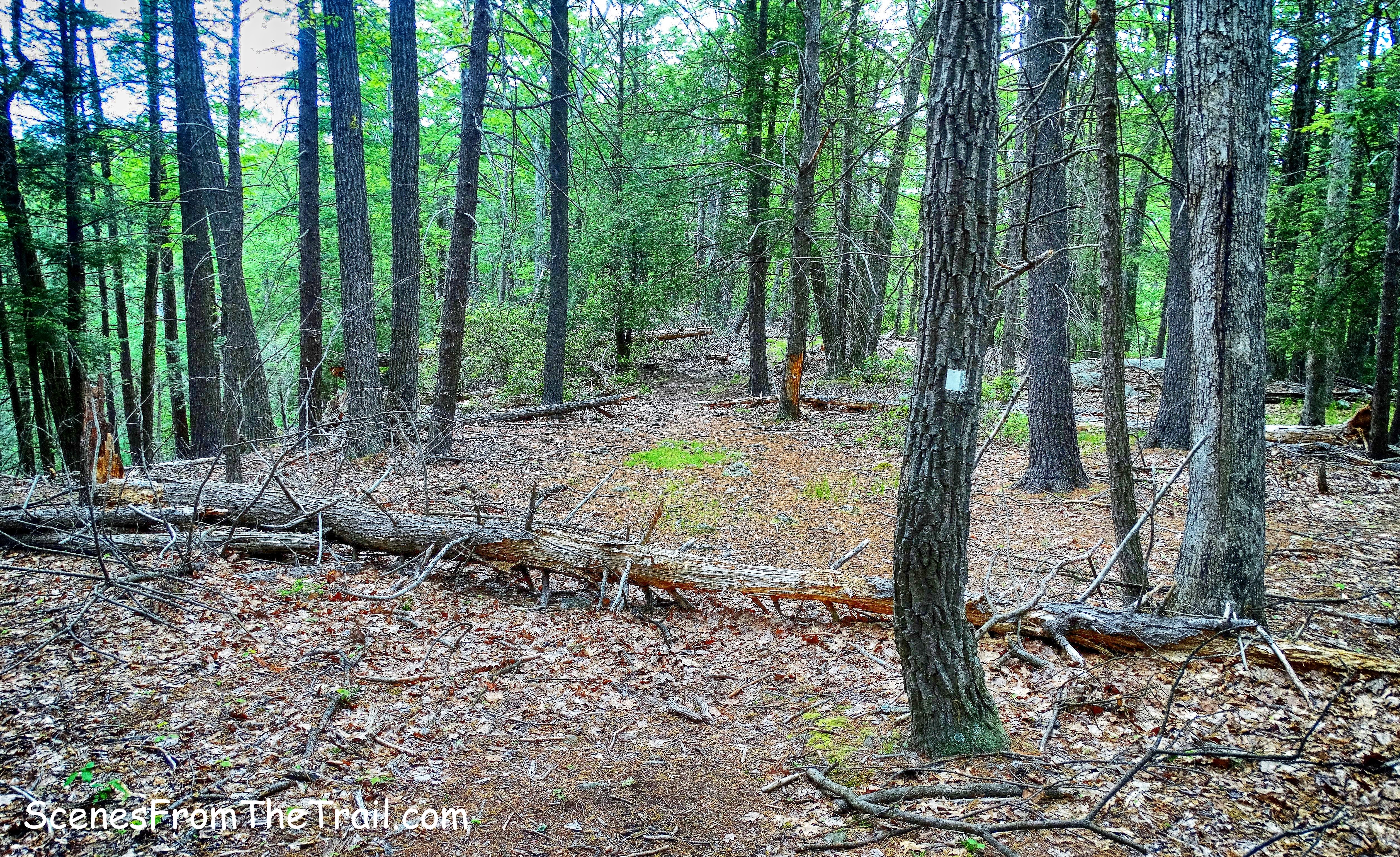
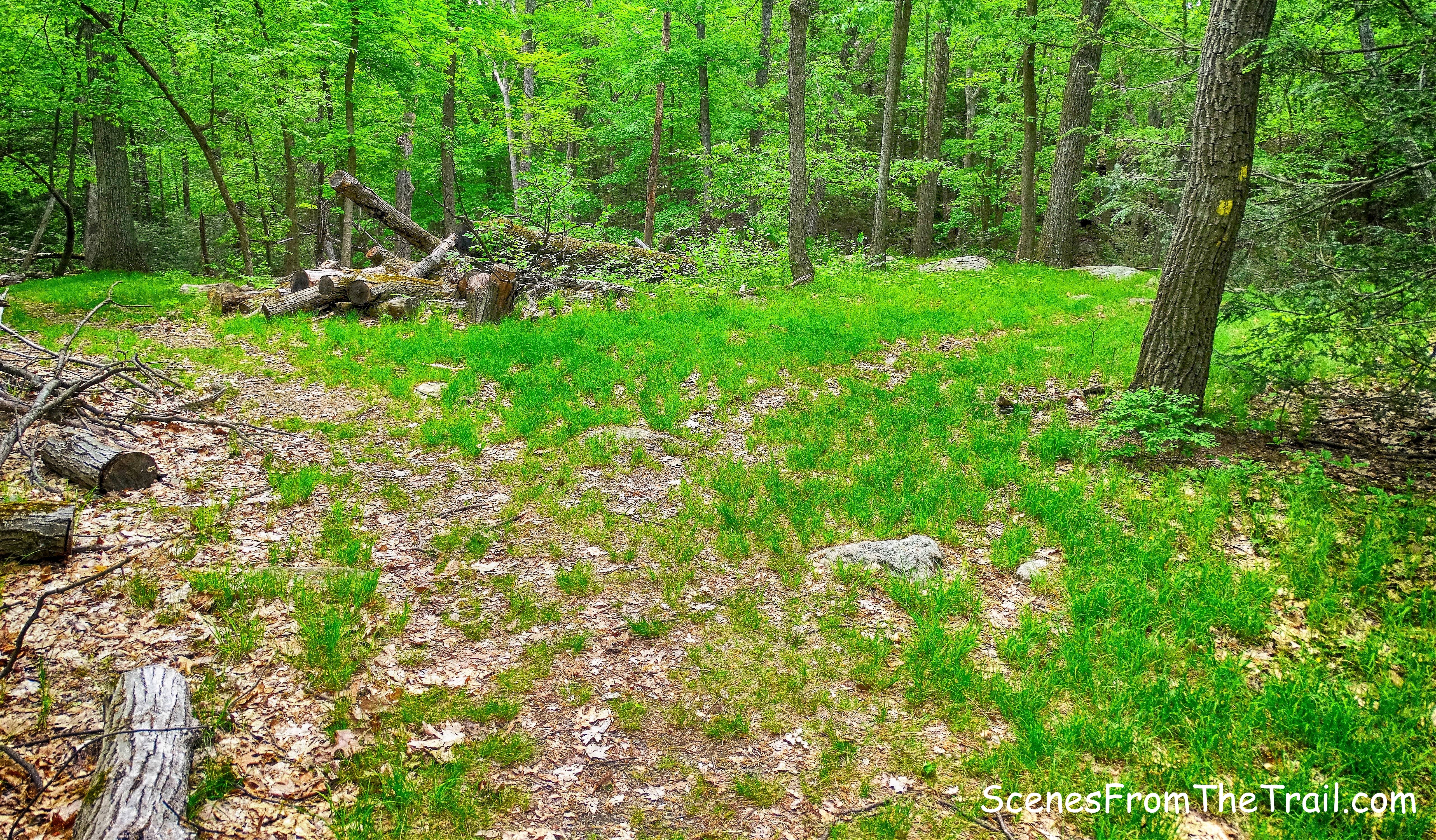
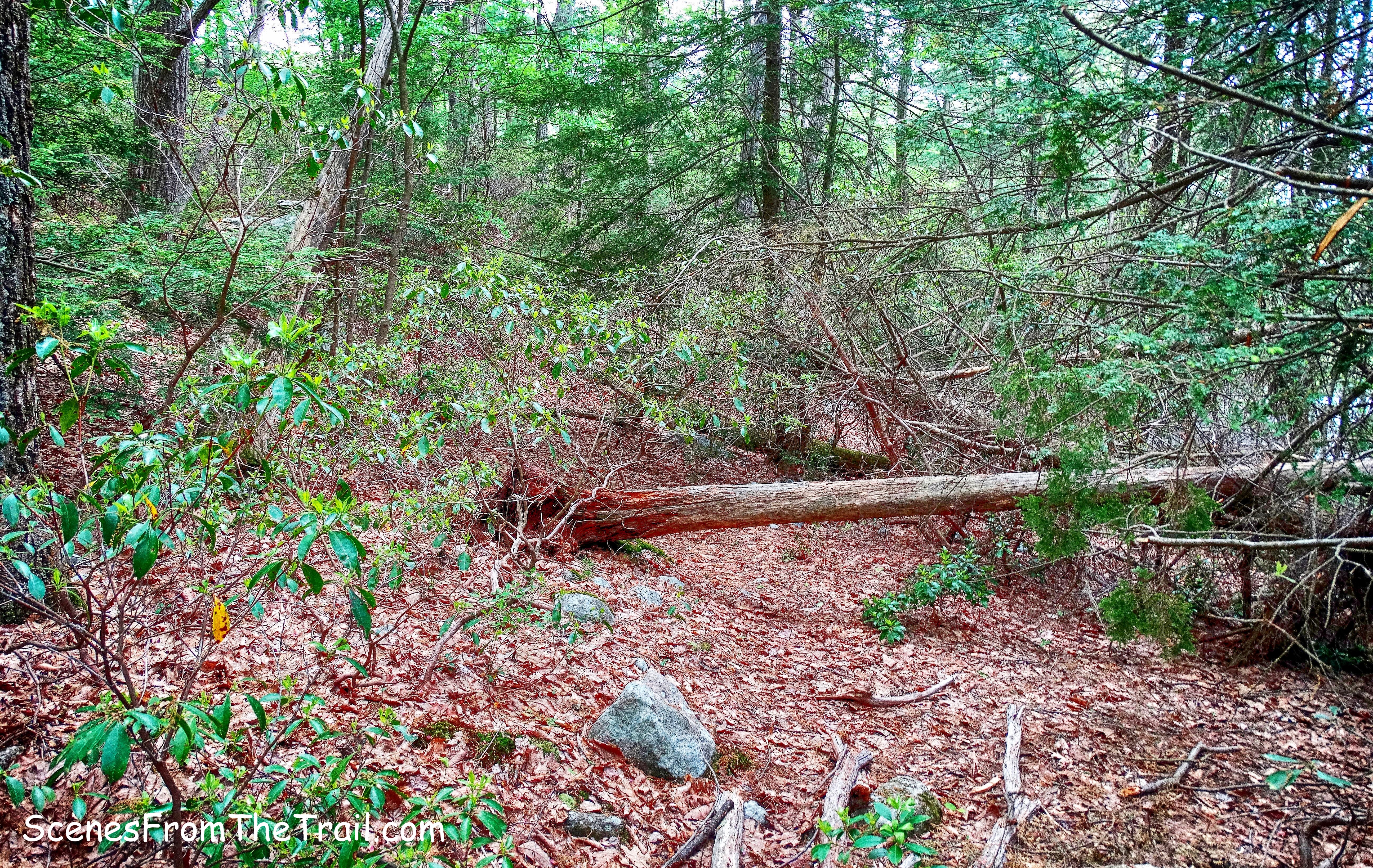
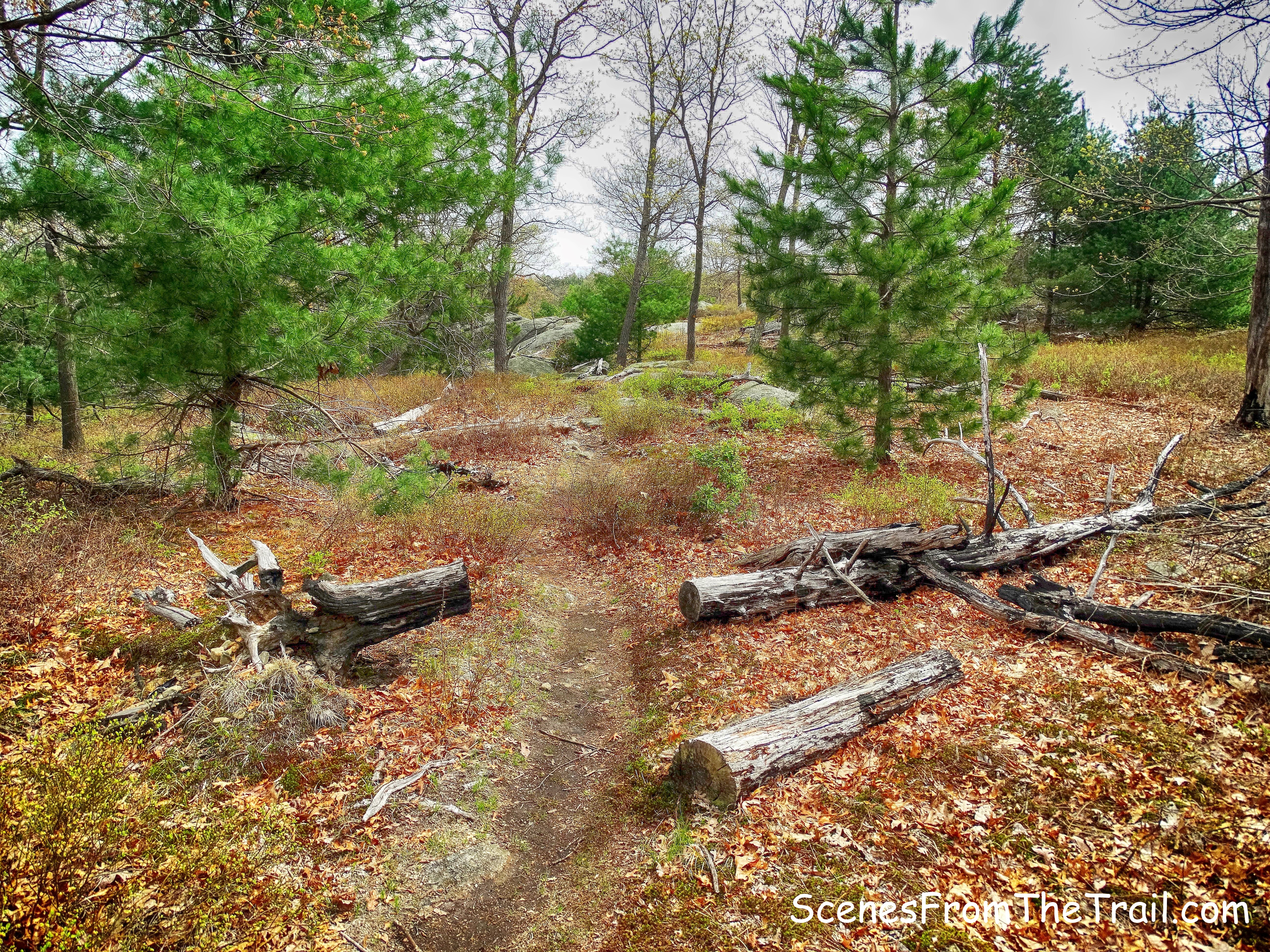
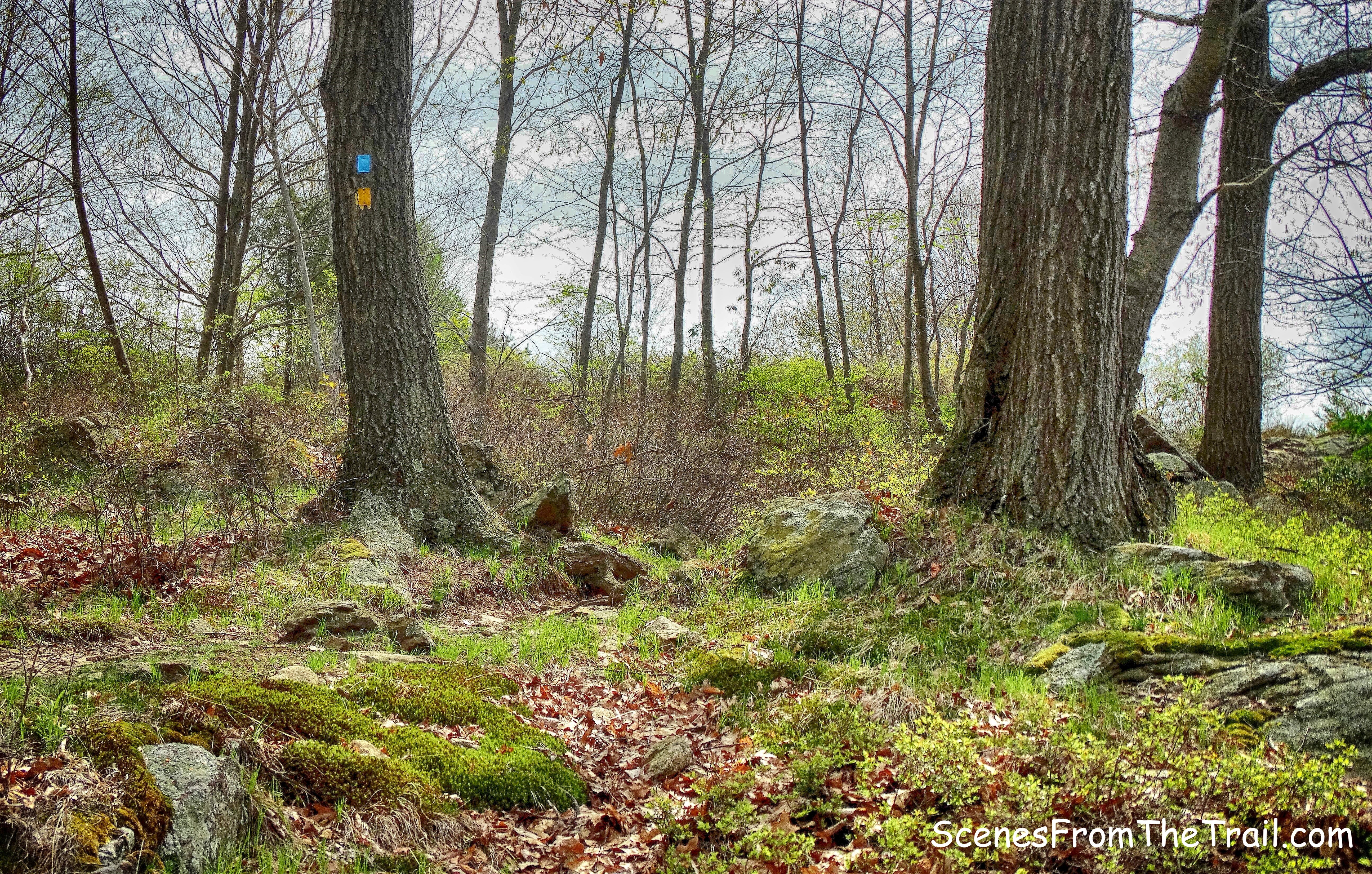
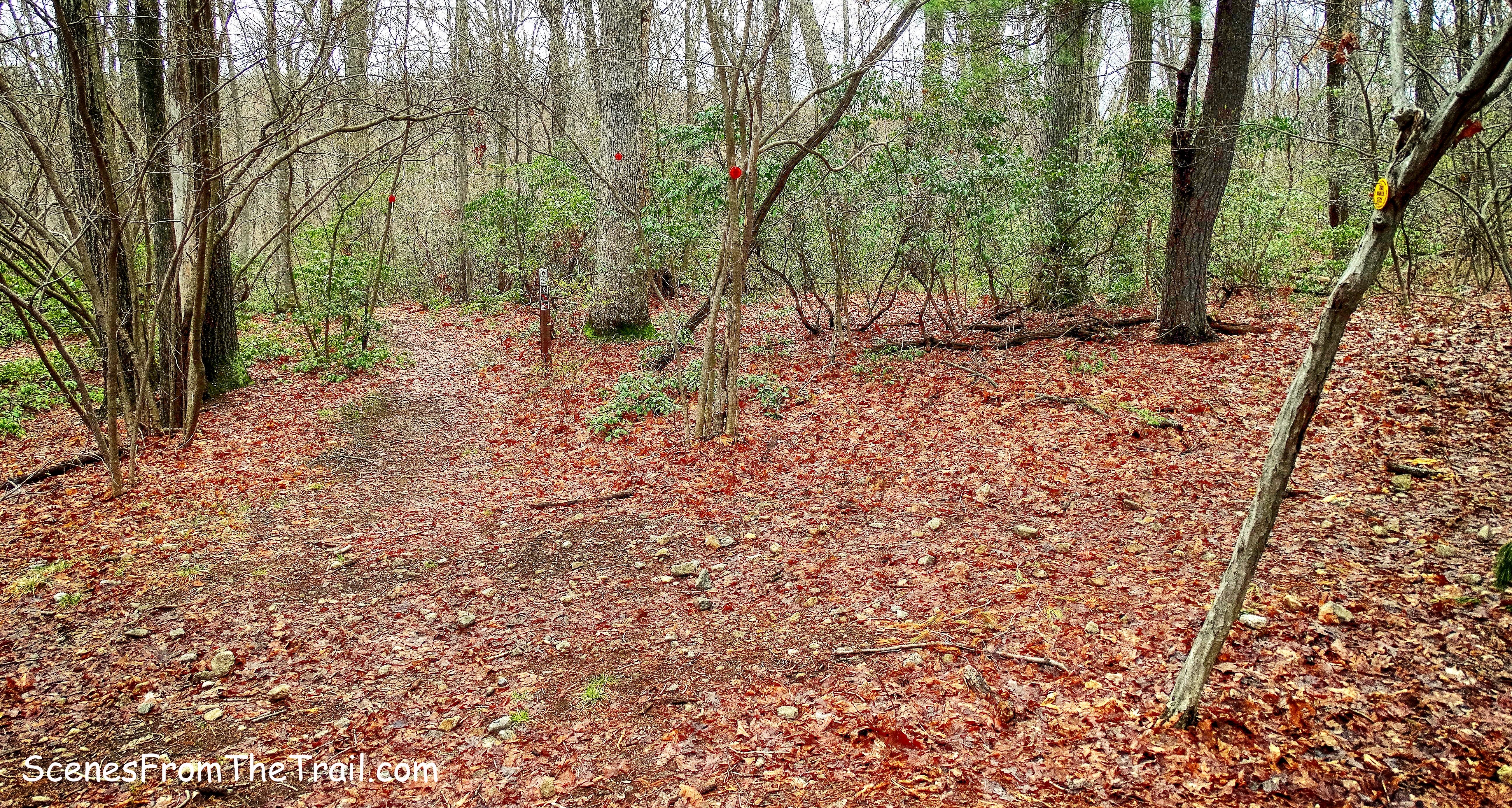
About a mile from the beginning of the hike, we passed the start of the orange-blazed Lake Sonoma Trail on the right. A short distance ahead a triple yellow/orange blazed connector trail begins to the left, but we continued following the yellow-blazed Manaticut Point Trail. At this point, we began to see intermittent orange blazes on trees along the yellow-blazed Manaticut Point Trail. At first I was confused, but the yellow blazes followed the orange so we continued on. What heightened my confusion was that almost immediately after seeing the first orange blazes on the Manaticut Point Trail, there were trees laying across the trail that normally indicate that the trail does not go that way. Last week we ran into the same problem at Black Rock Forest and walked right over the trees and had to turn back.

Manaticut Point Trail

Manaticut Point Trail

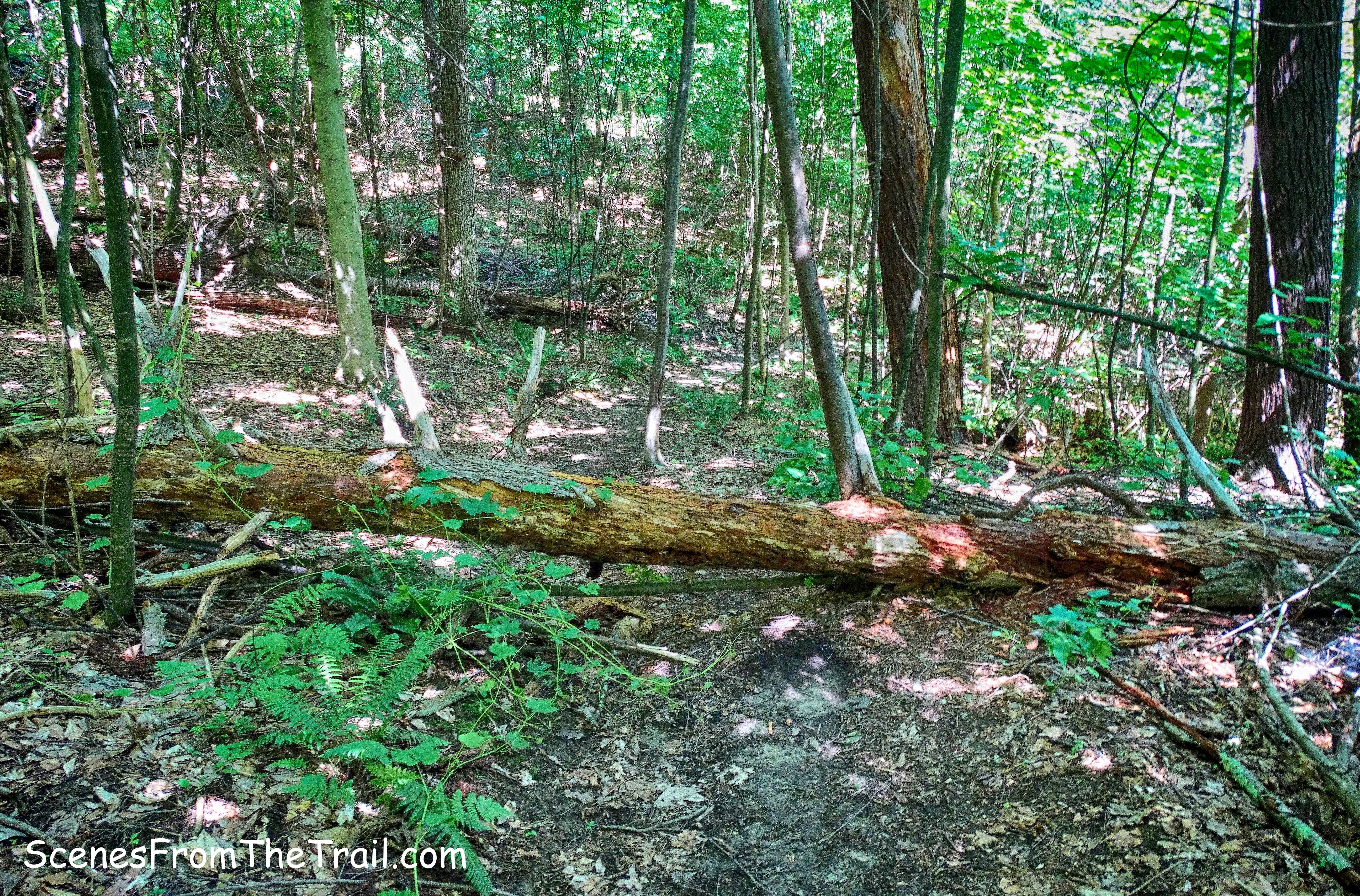
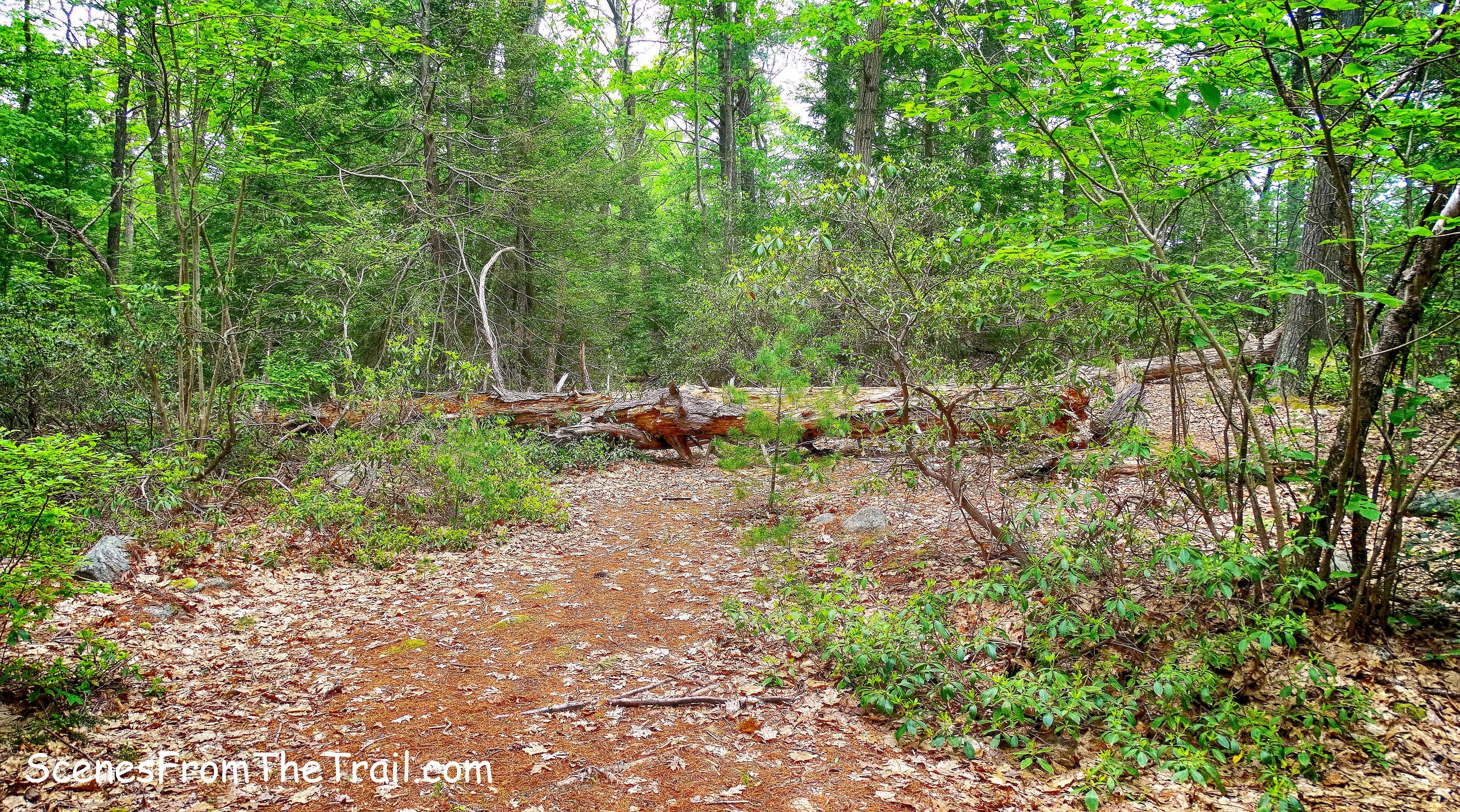
The second blowdown was not too far from the first. It made me feel like someone didn’t want us to go this way.

Manaticut Point Trail

Manaticut Point Trail

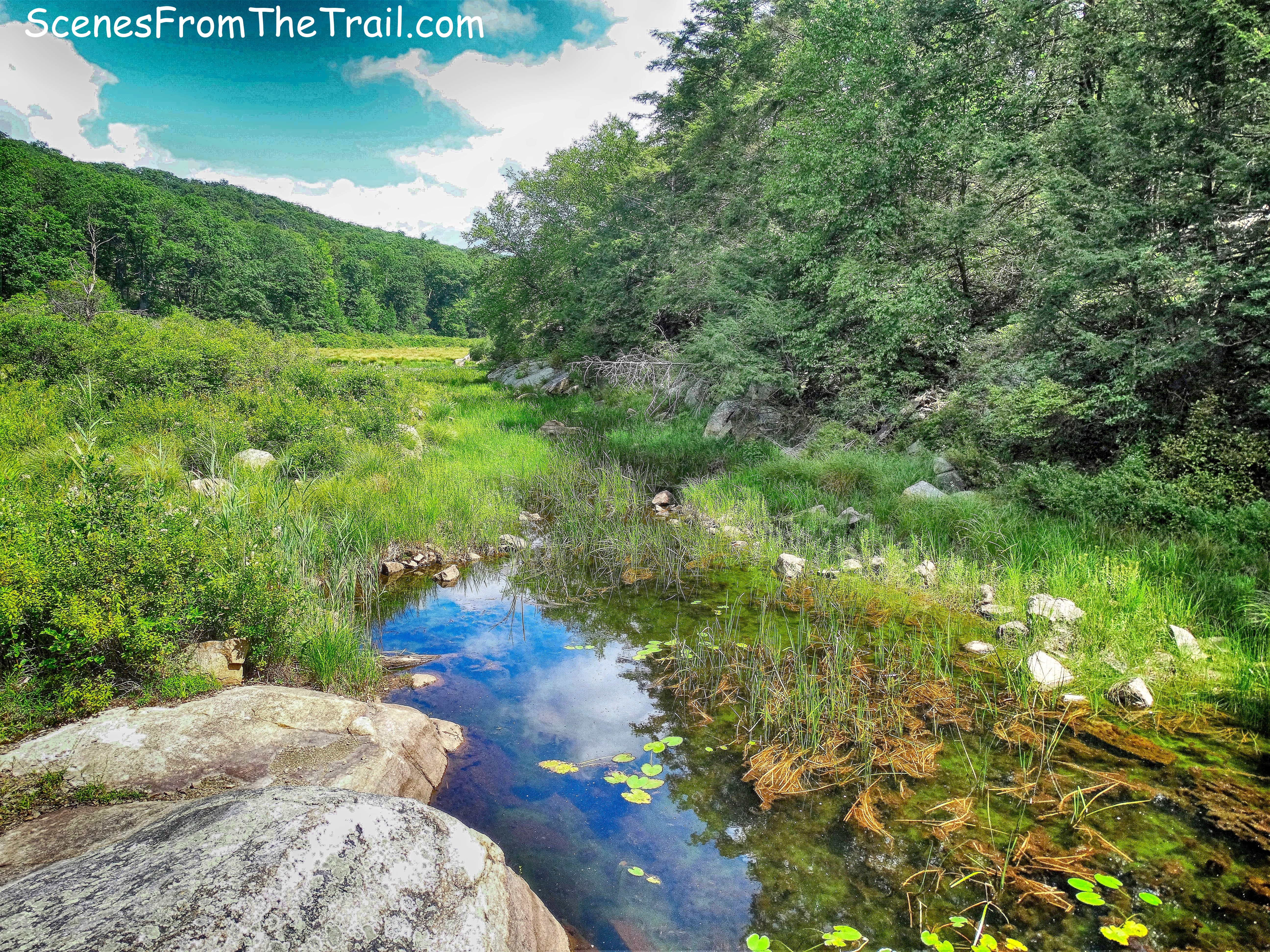
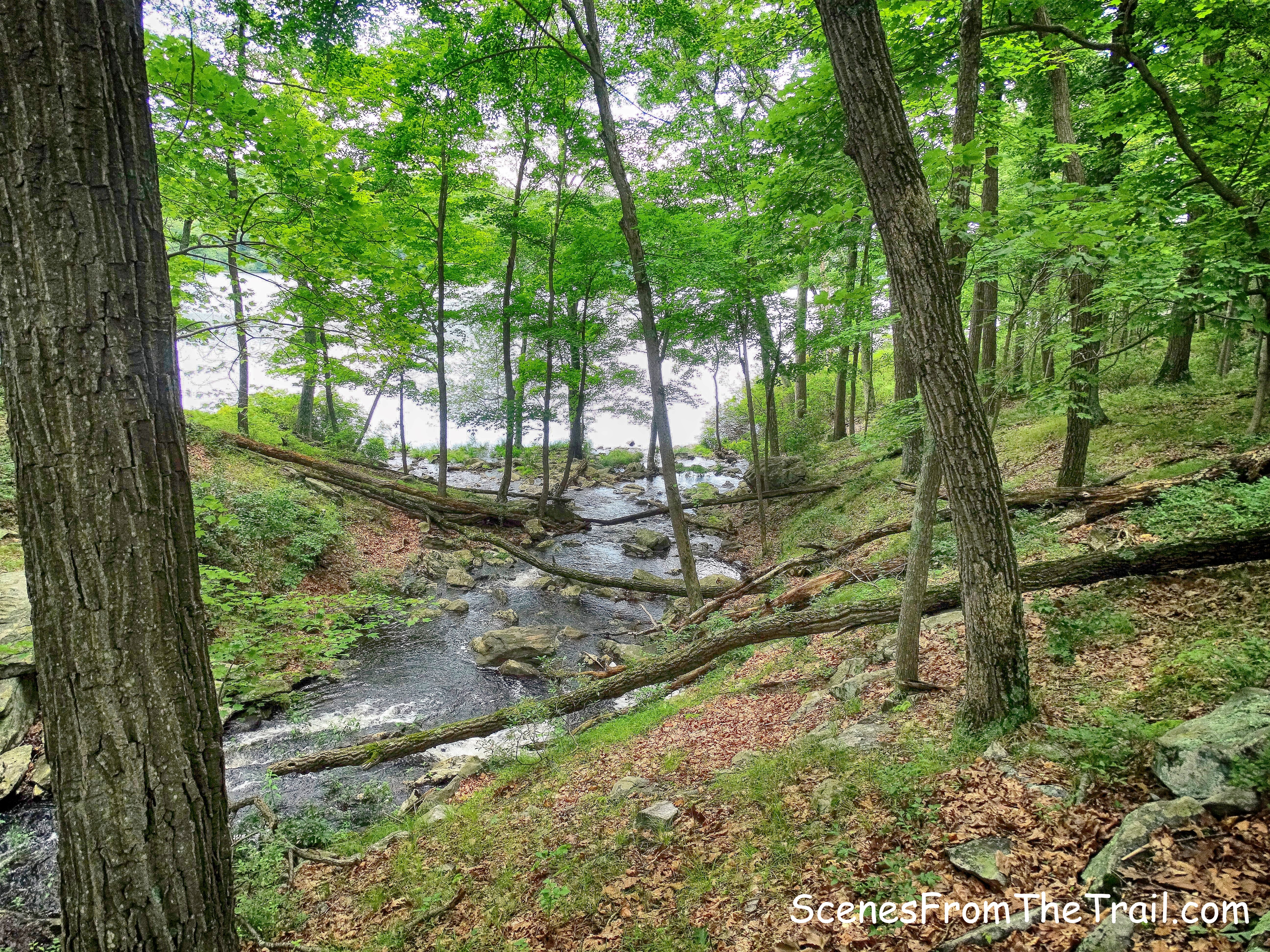
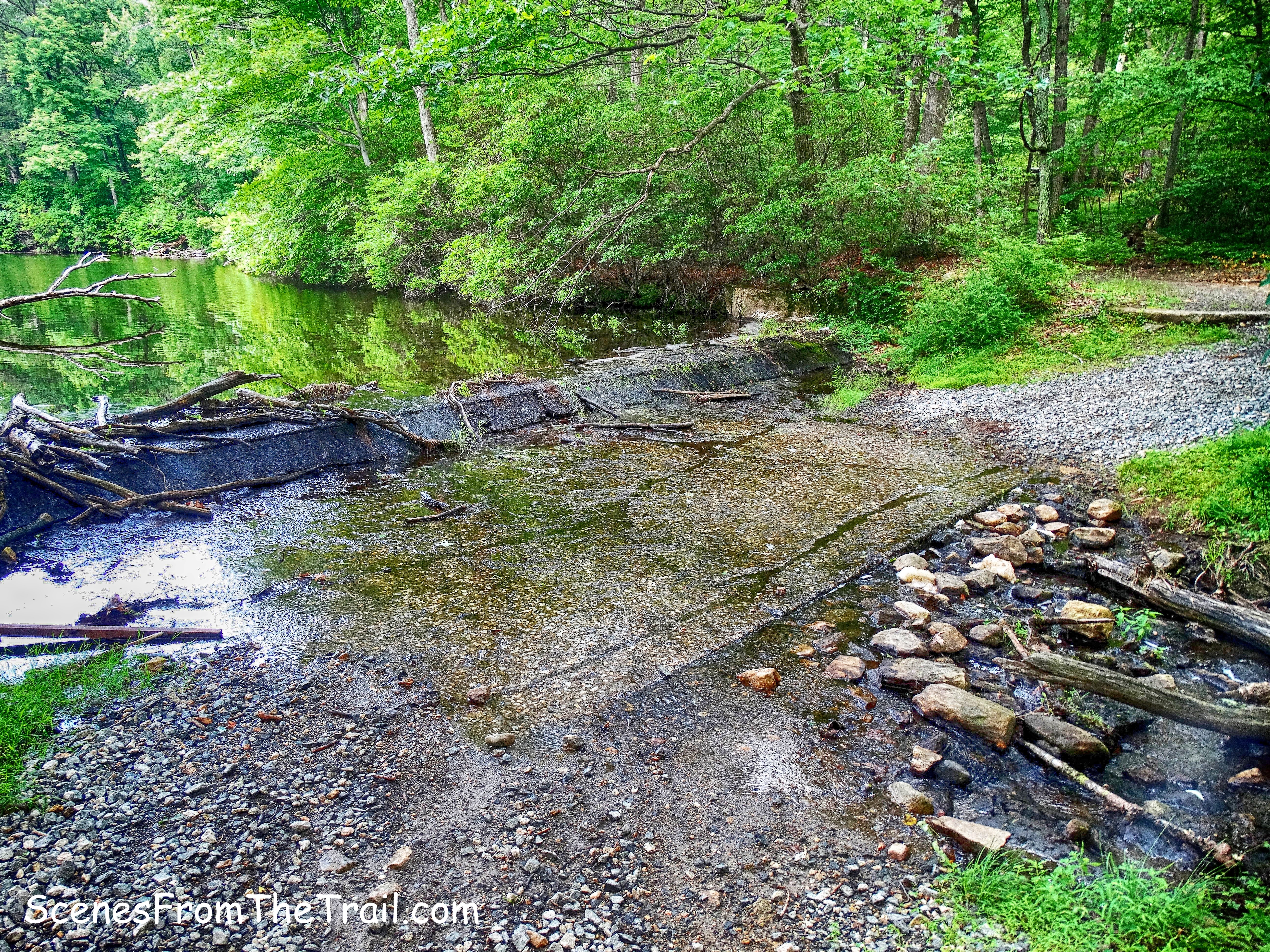
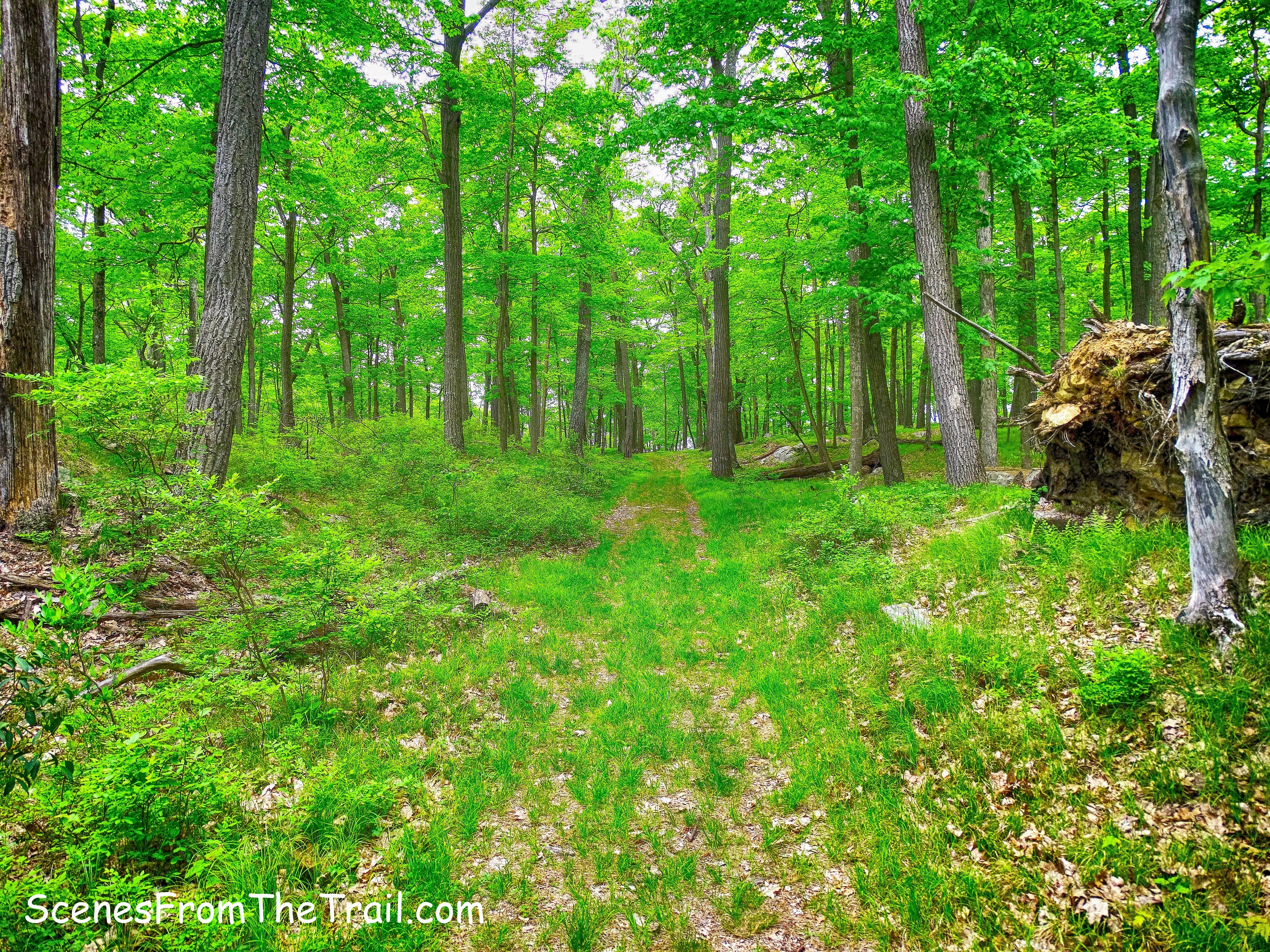
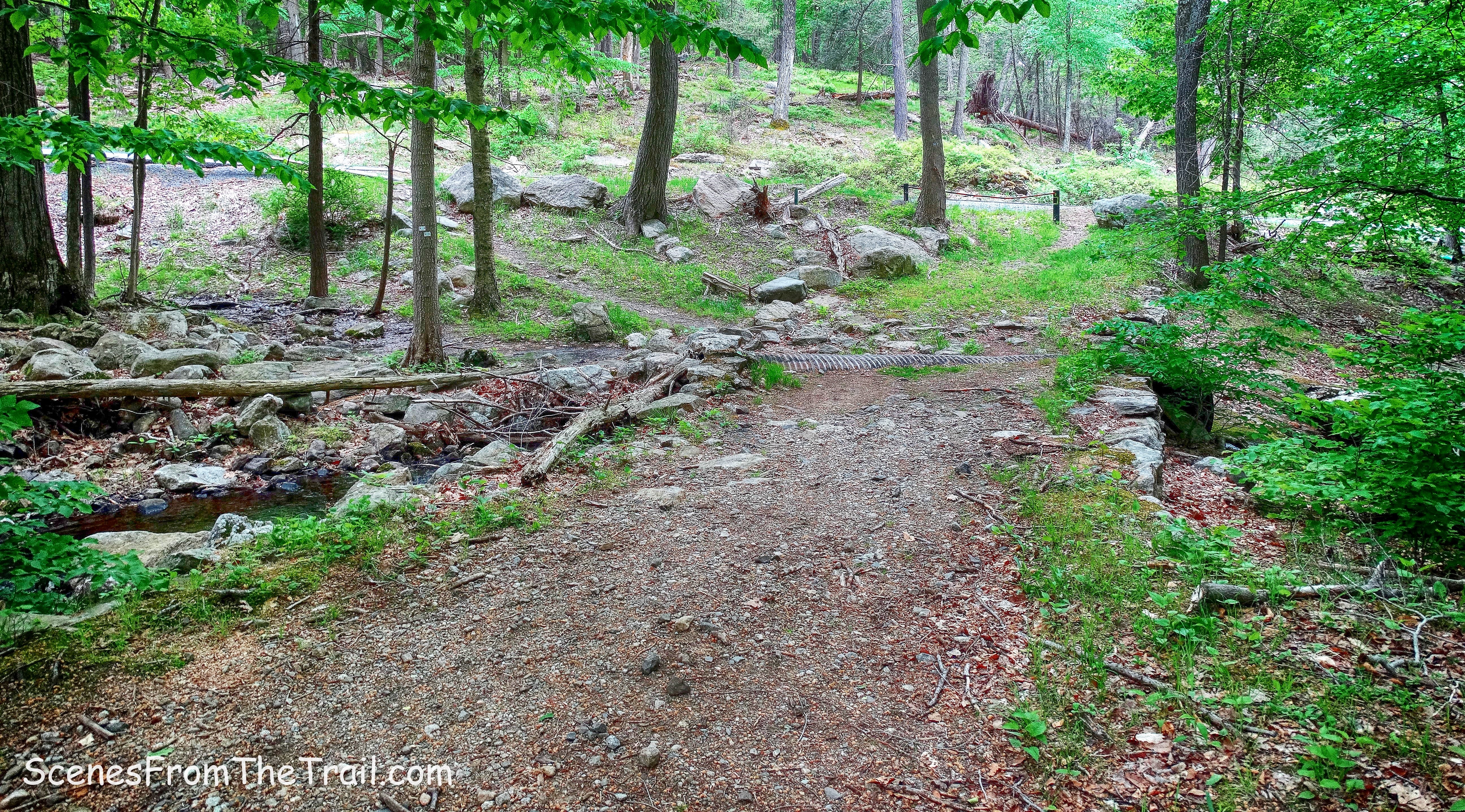
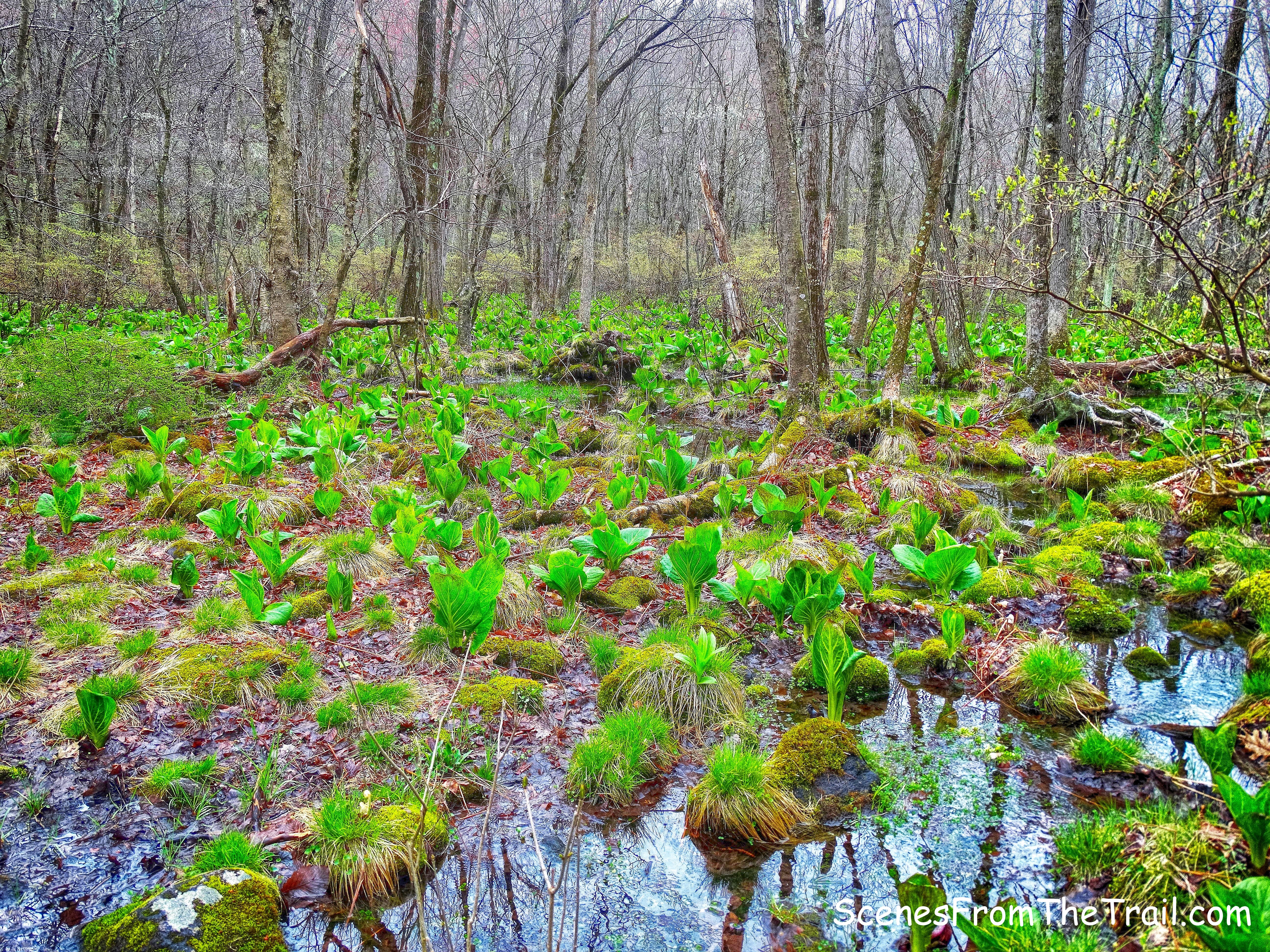
The trail then descends to cross the dry inlet stream of Lake Sonoma at a woods road.

dry inlet stream of Lake Sonoma

dry inlet stream of Lake Sonoma

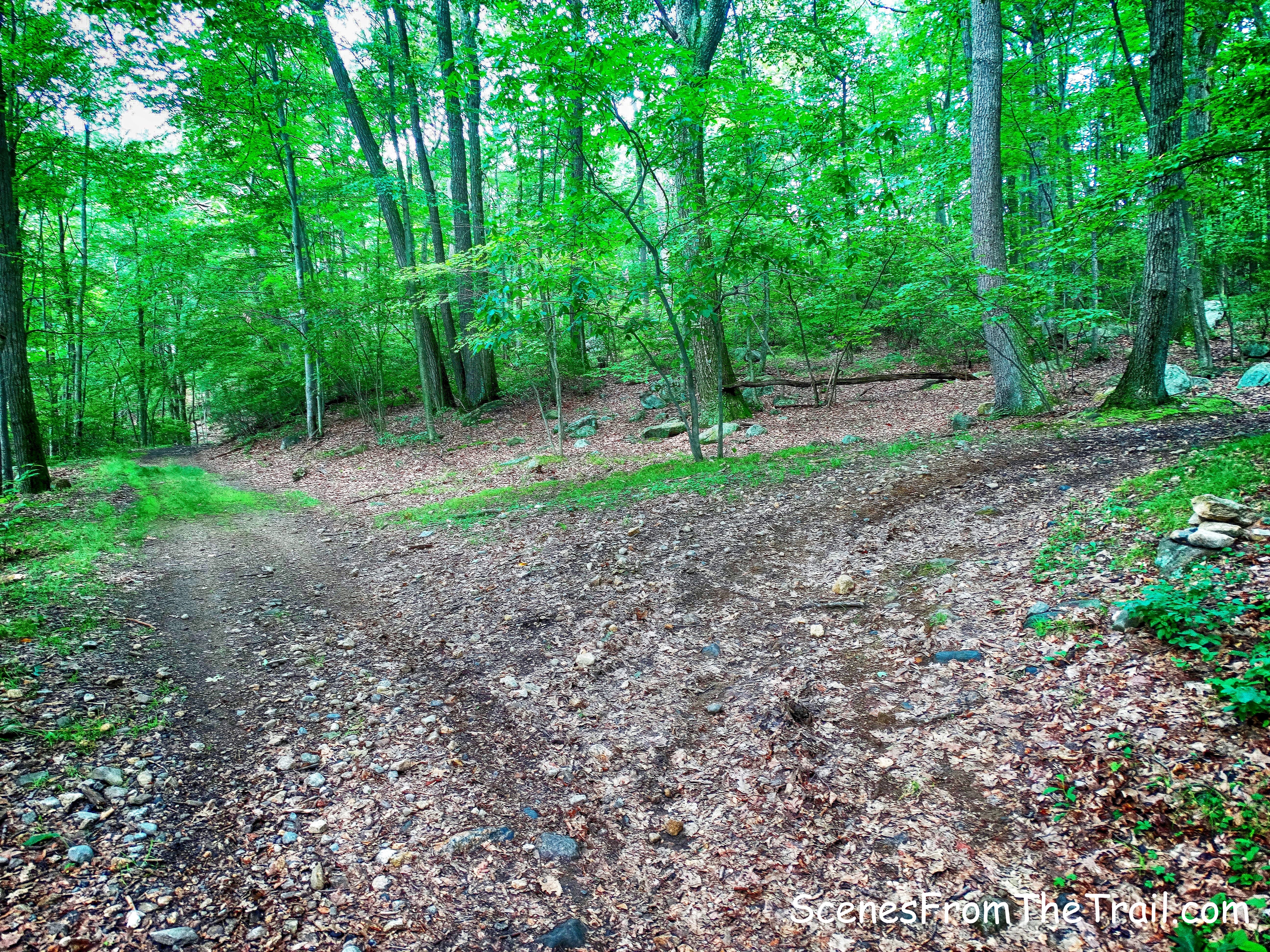
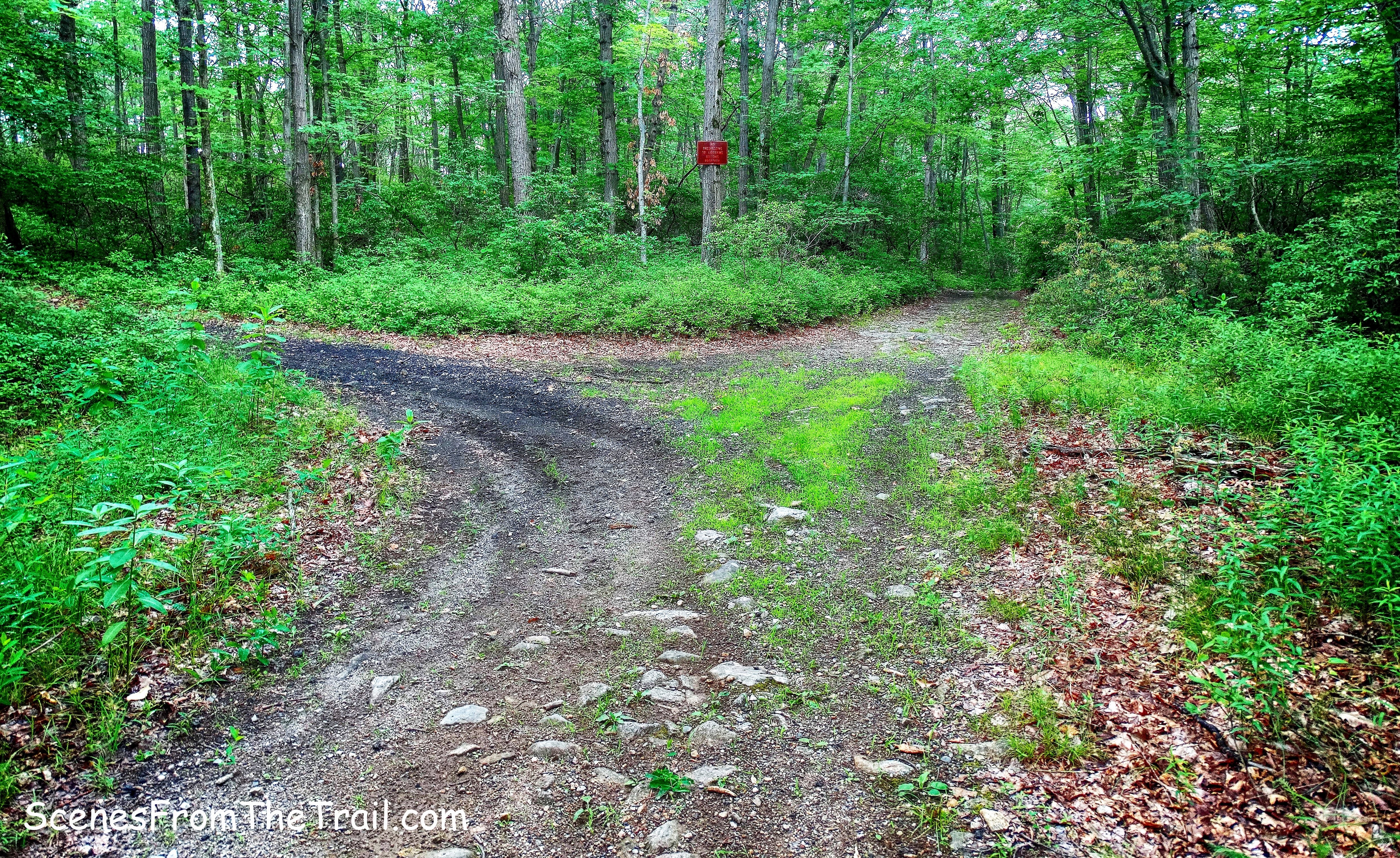
The Manaticut Point Trail immediately turns right and heads towards the lake. The blazes were partially obscured by branches and we almost missed the turn.

Manaticut Point Trail

Manaticut Point Trail

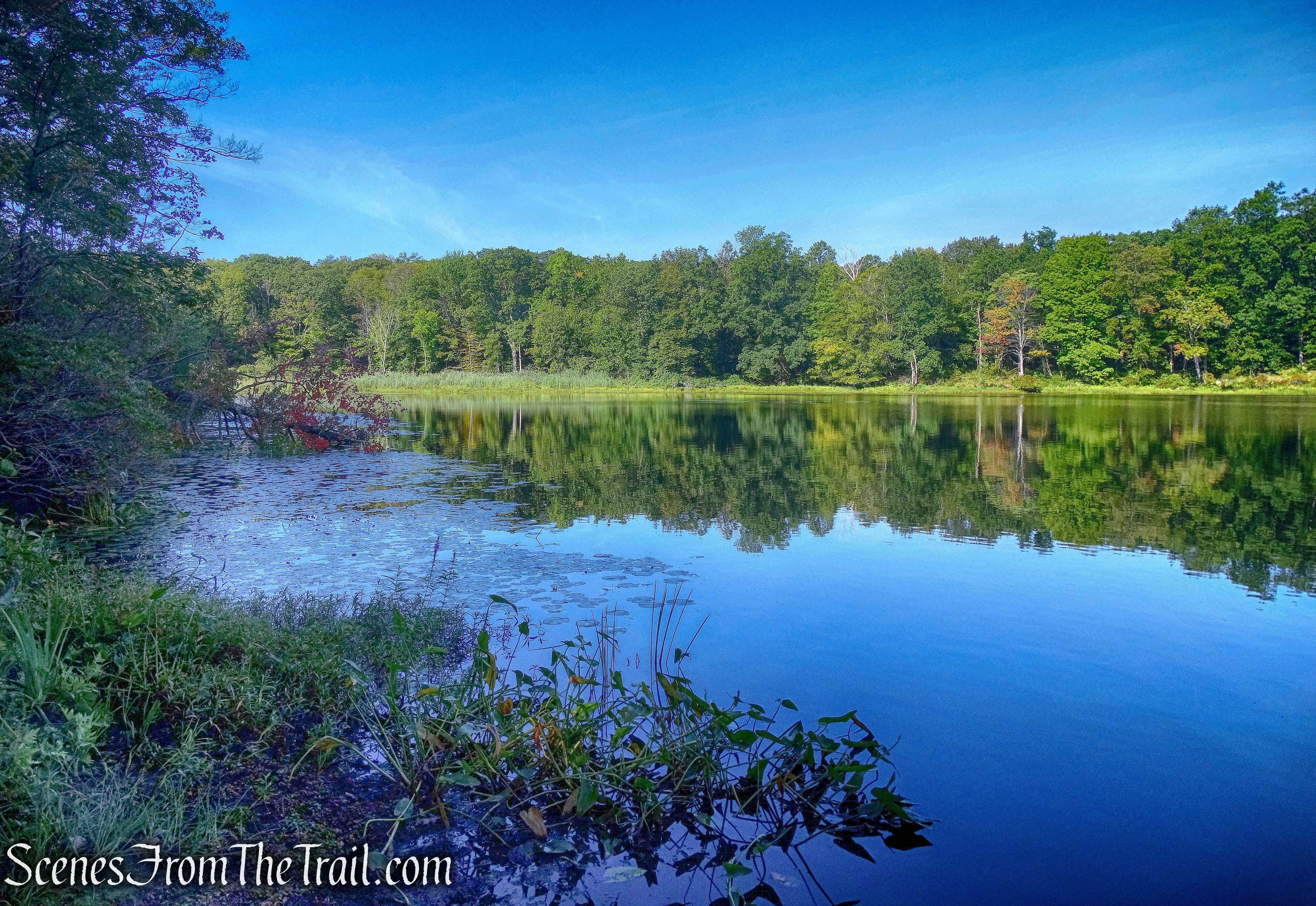
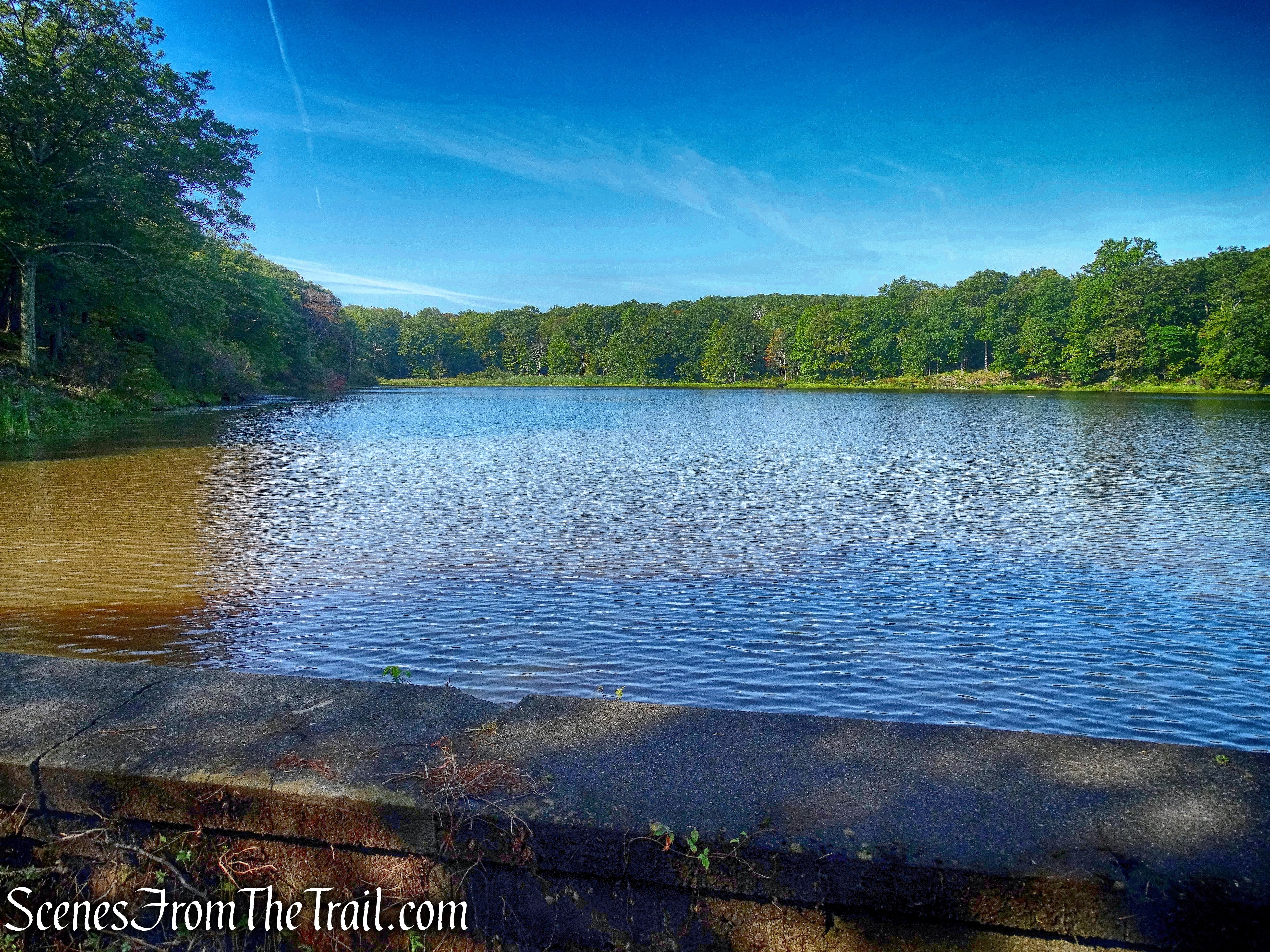
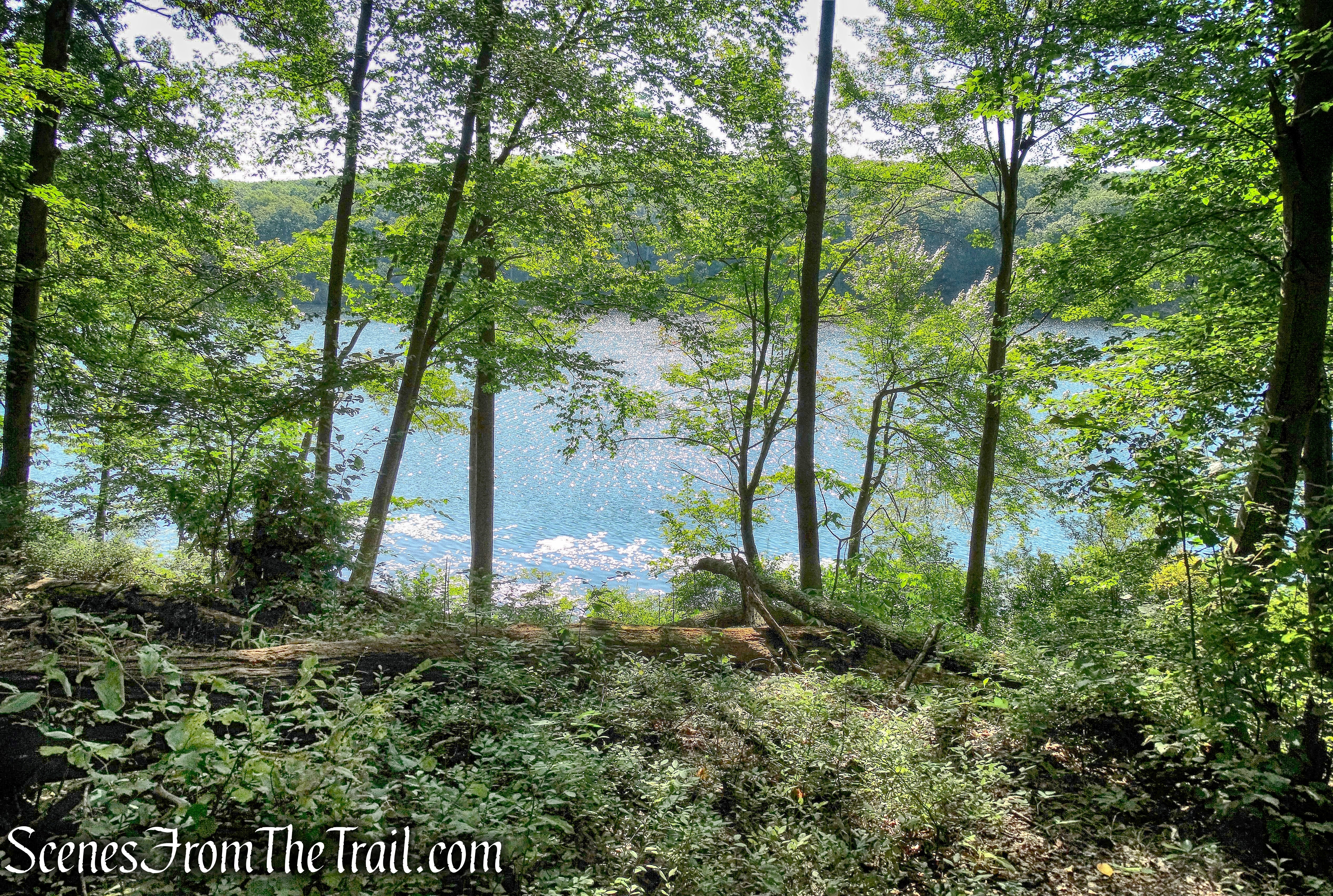
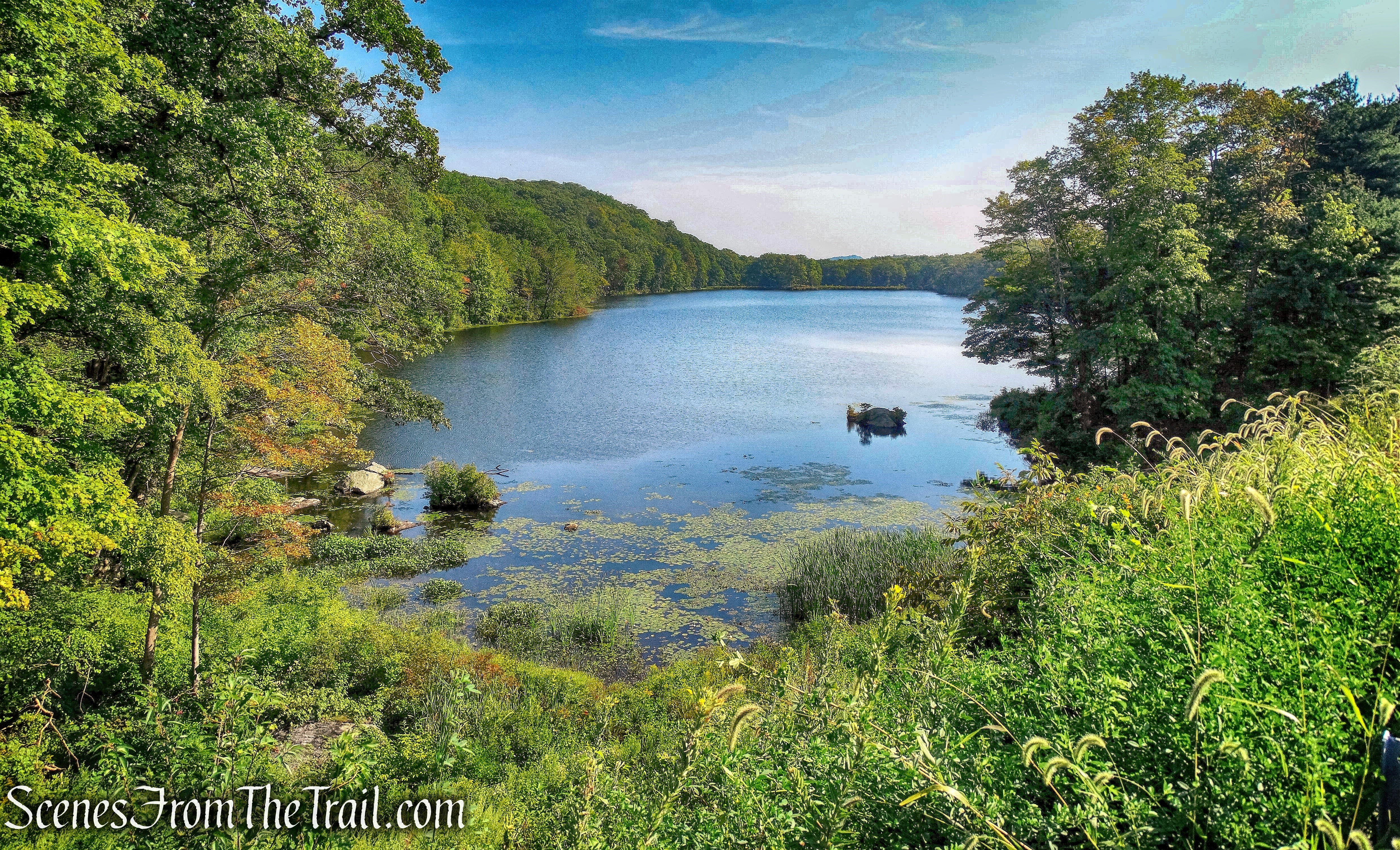
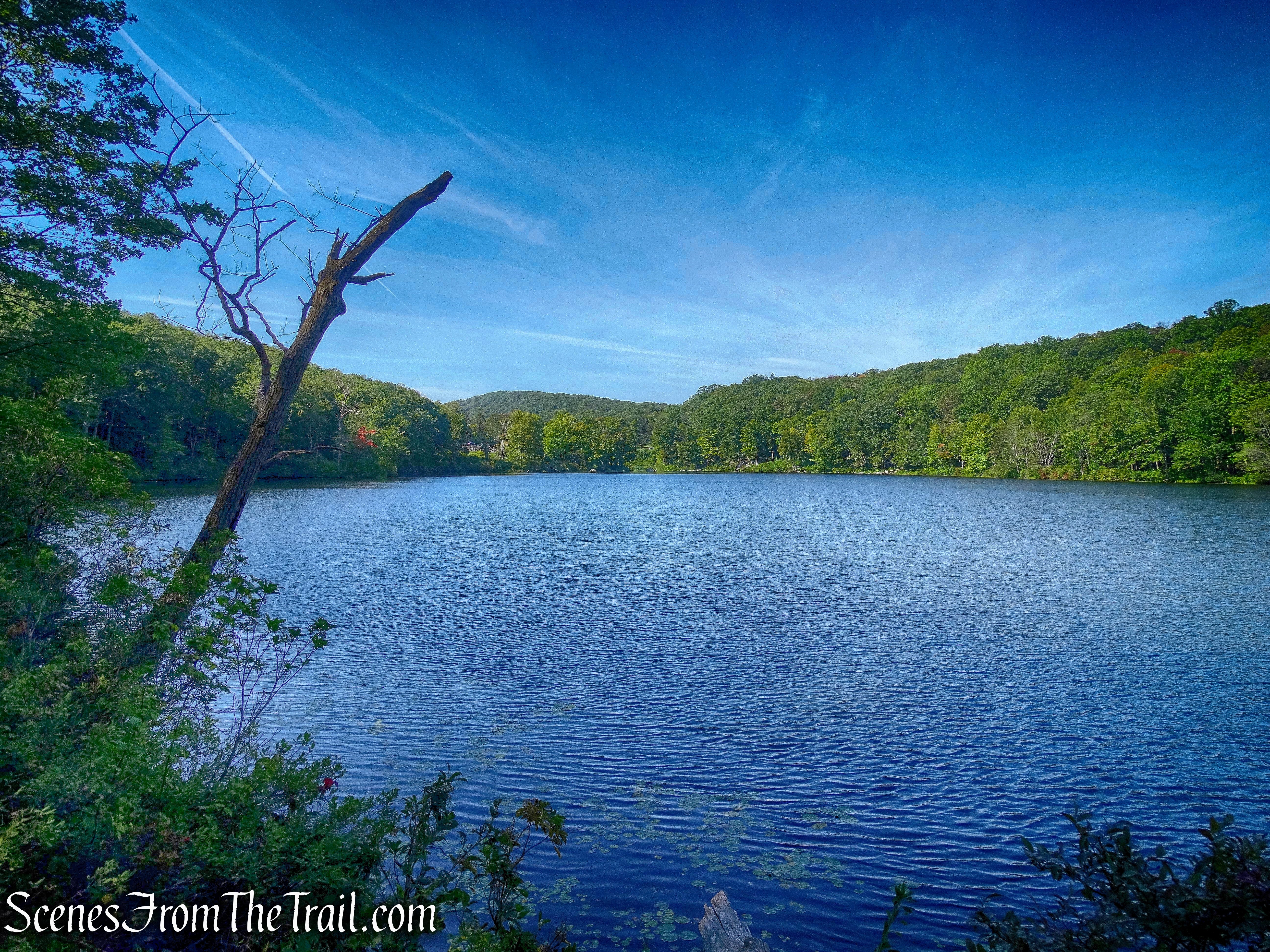
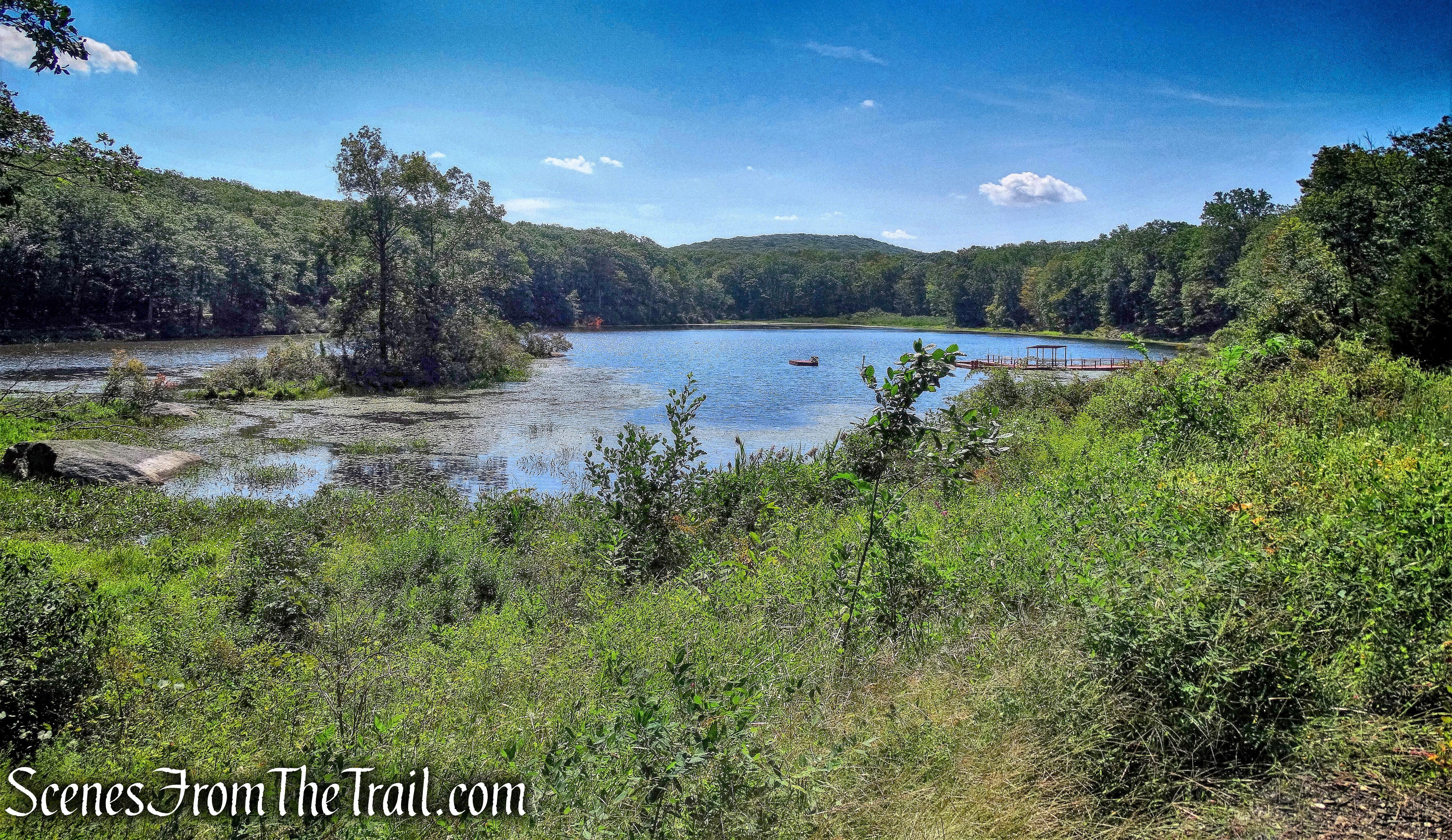
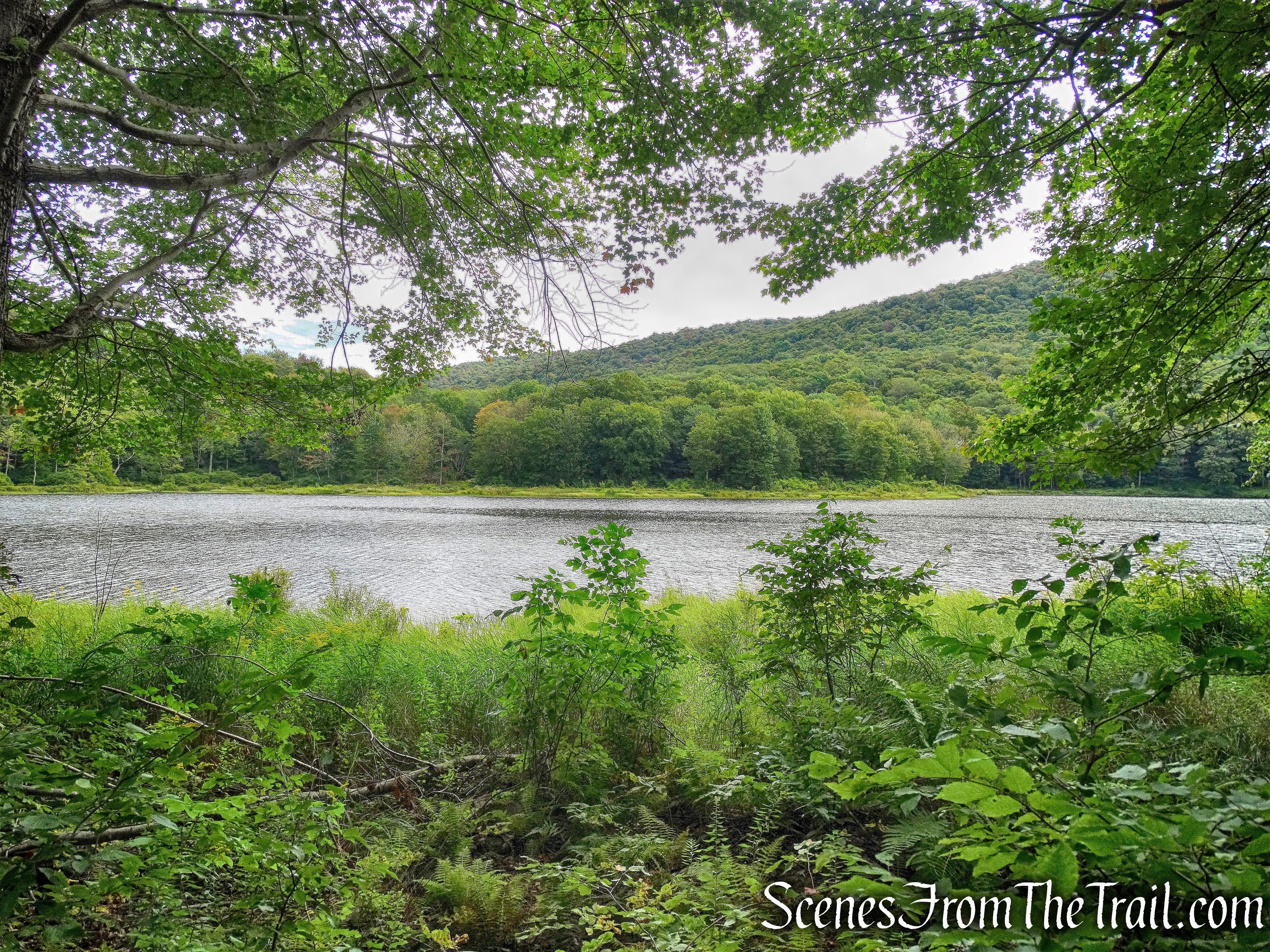
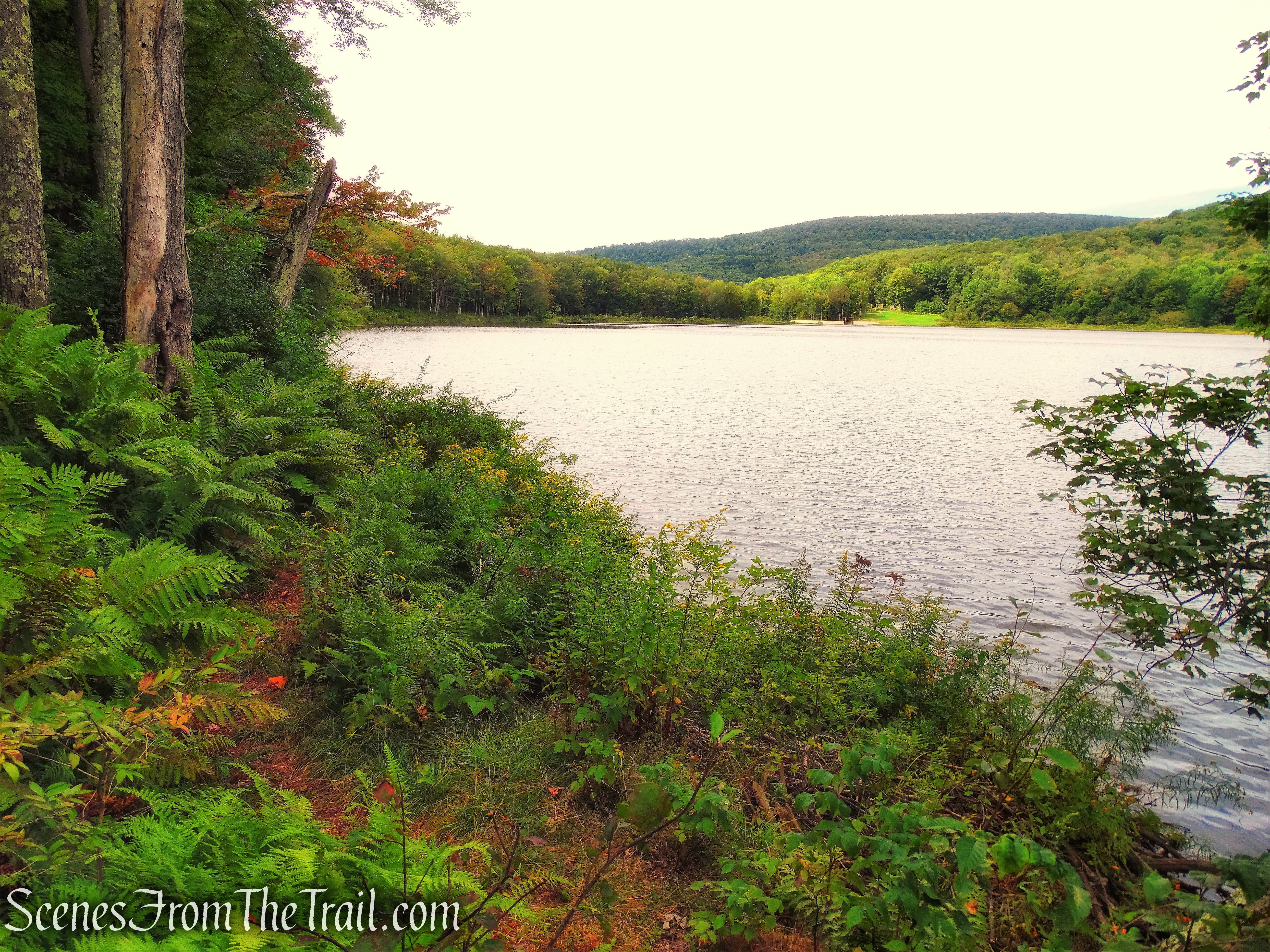
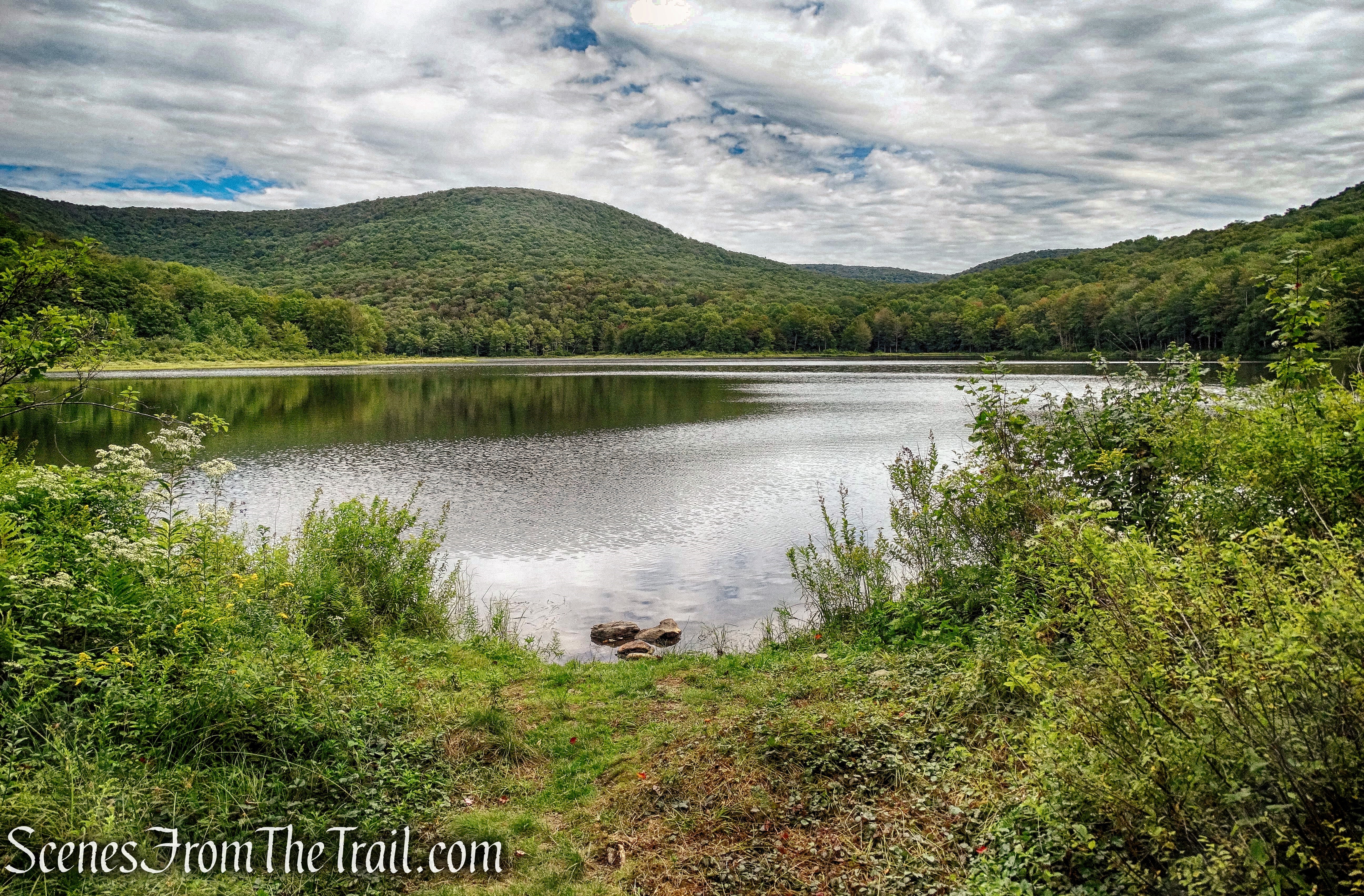
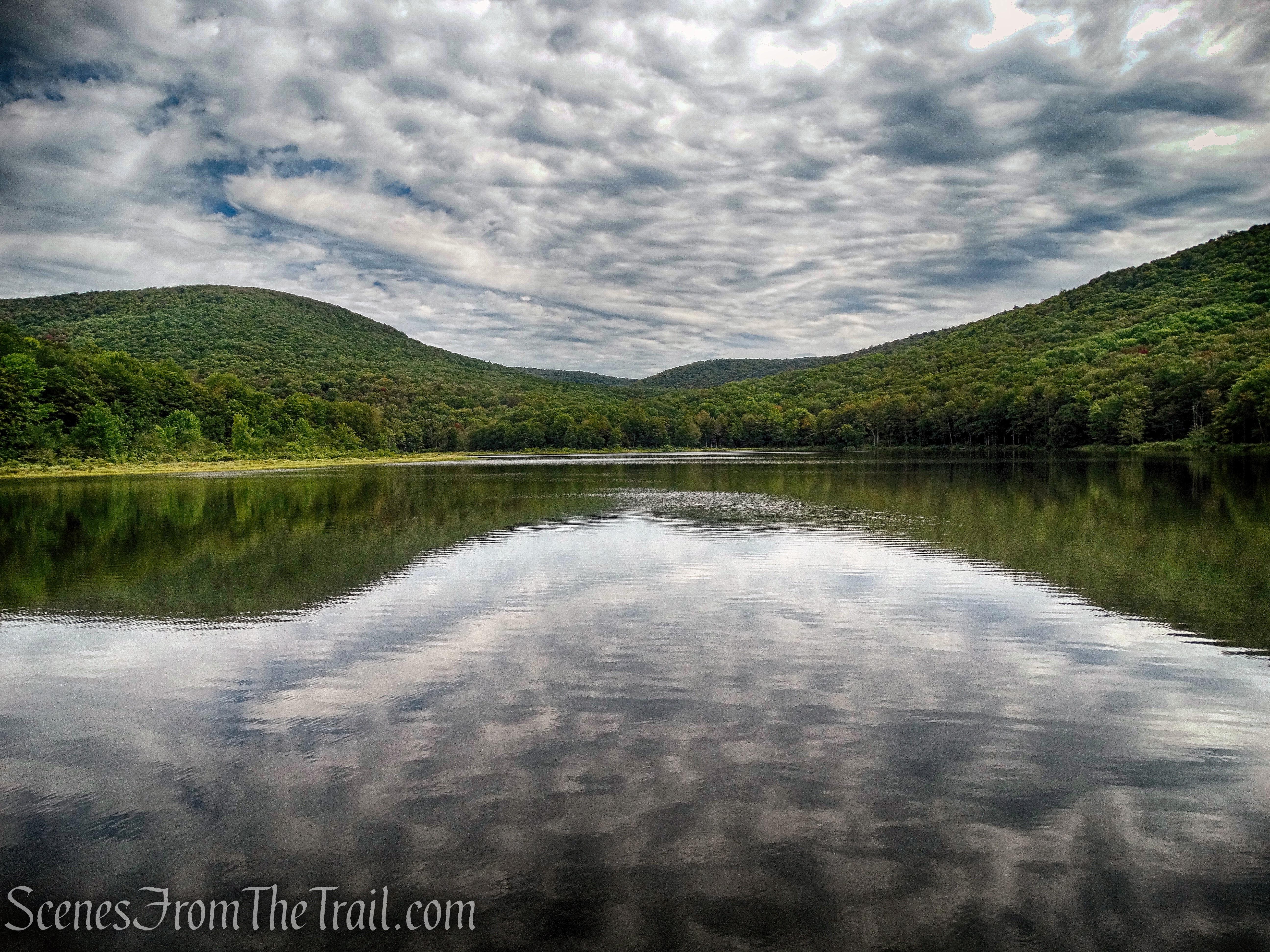
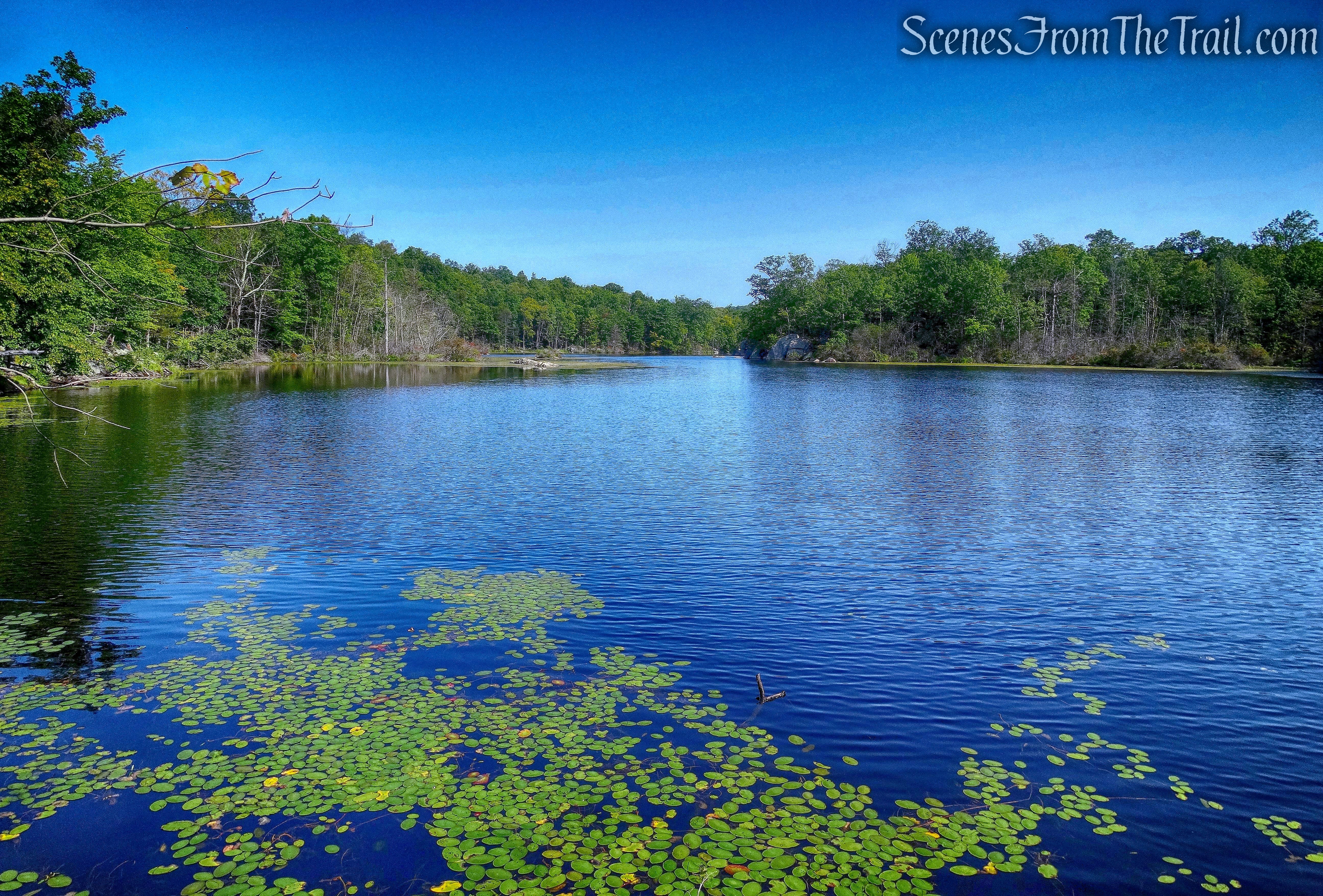
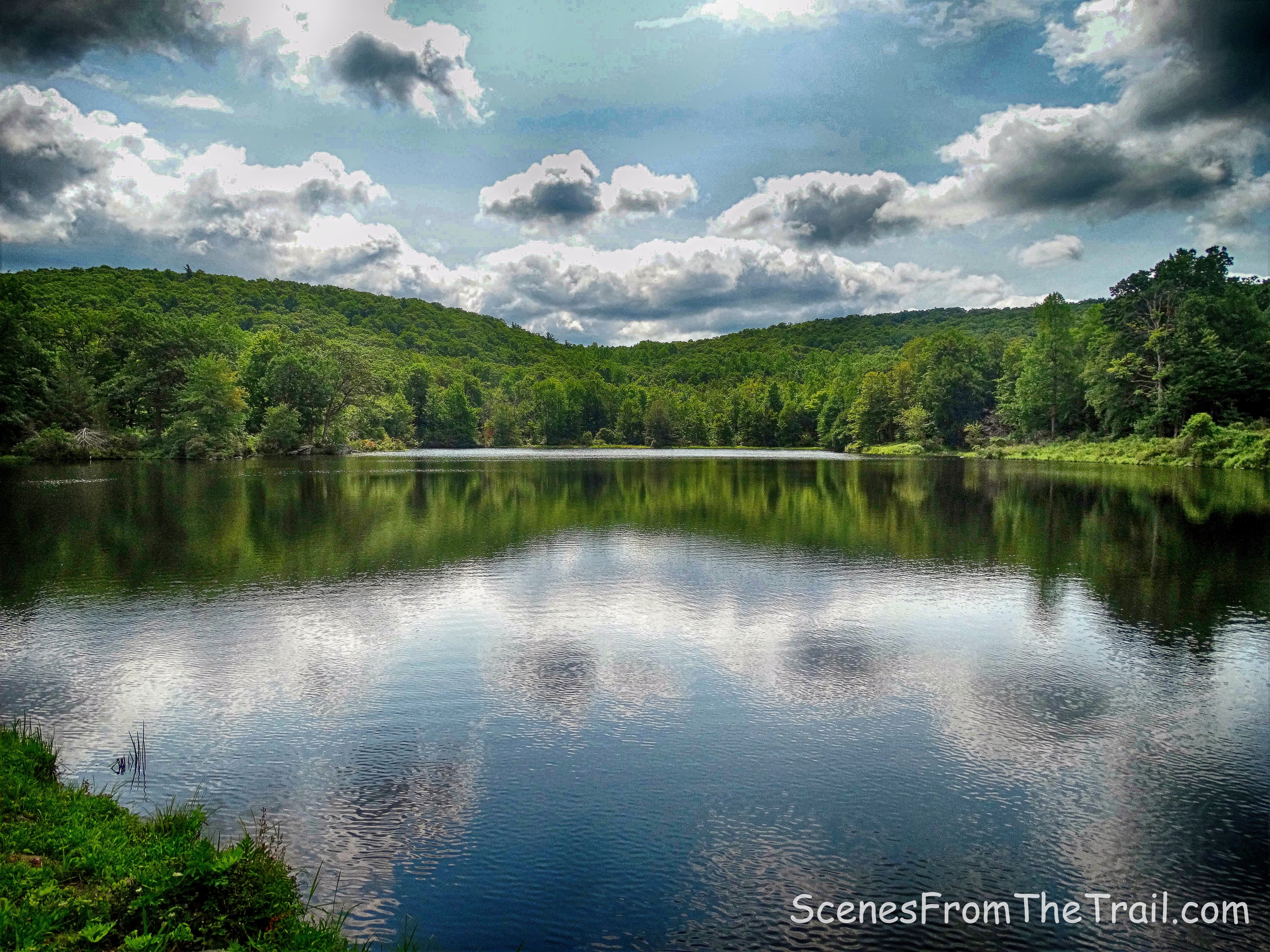
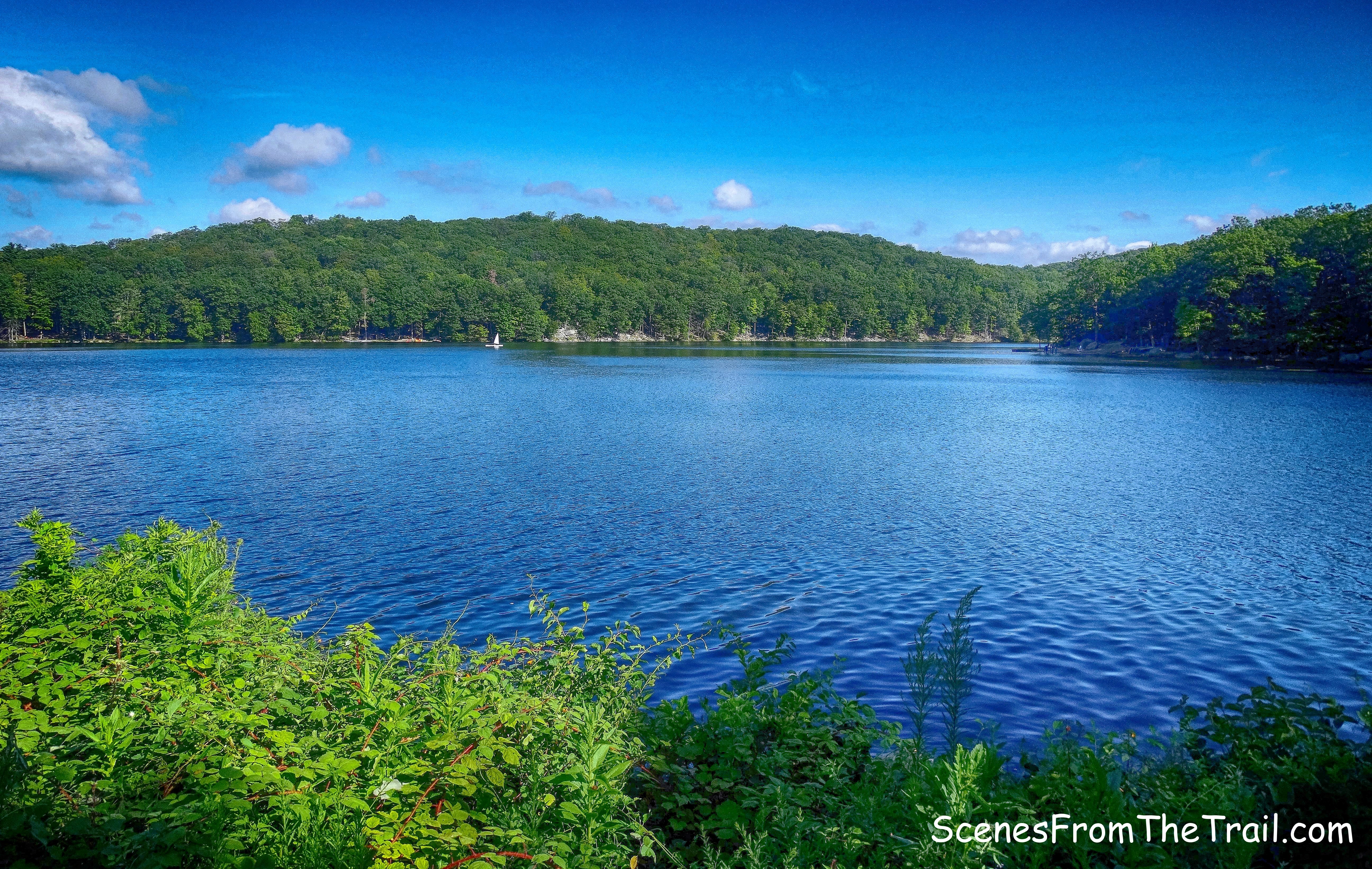
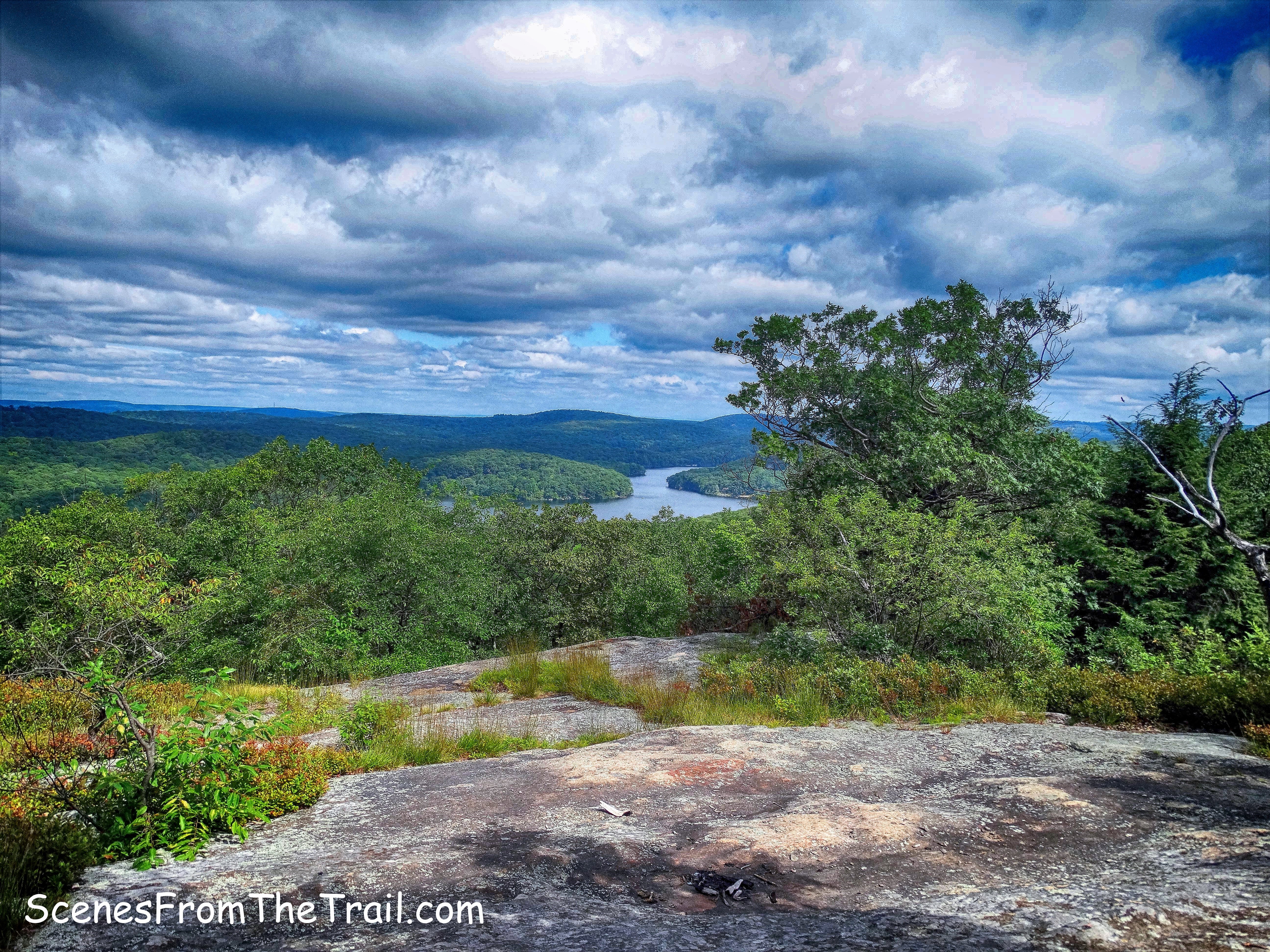
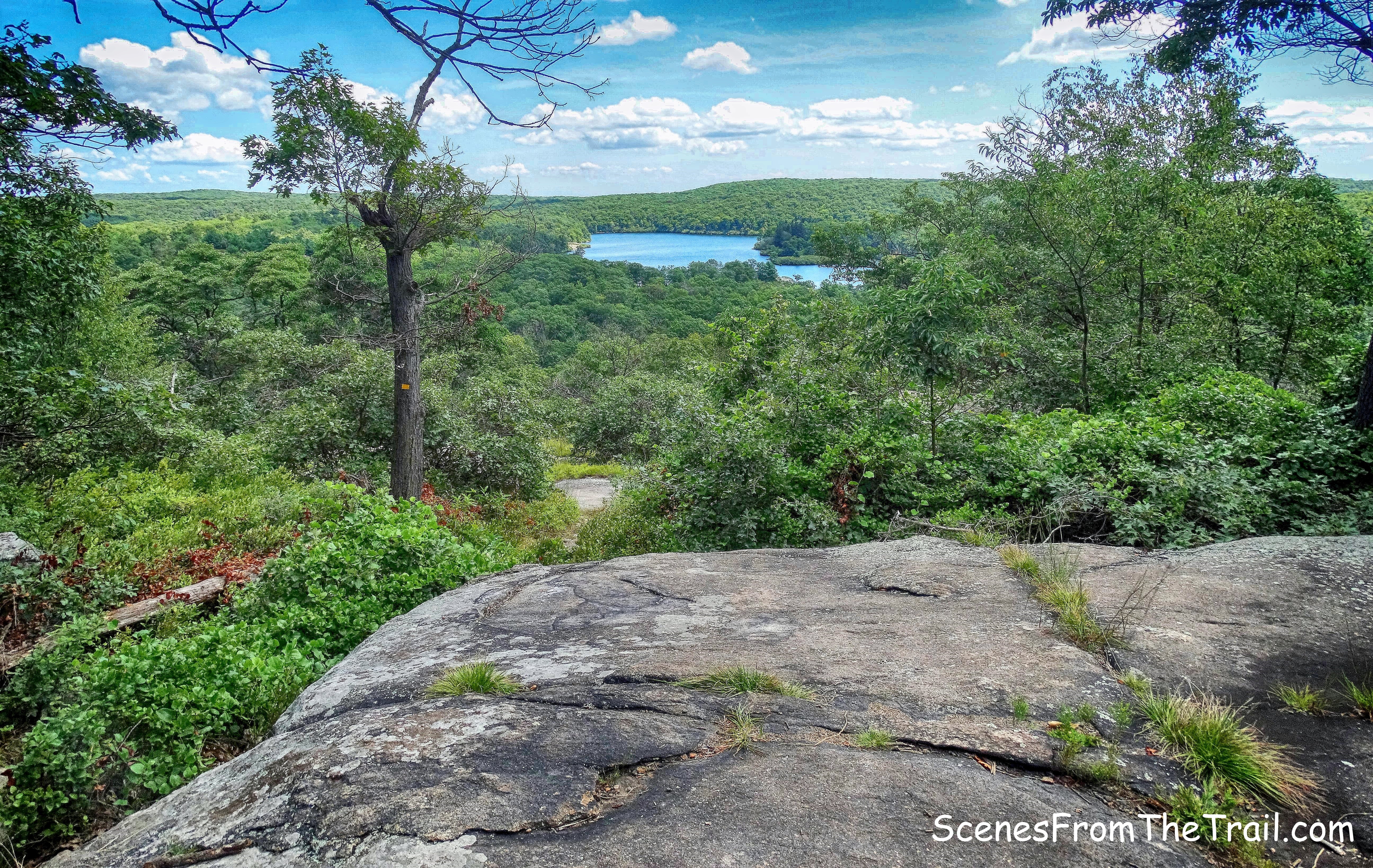
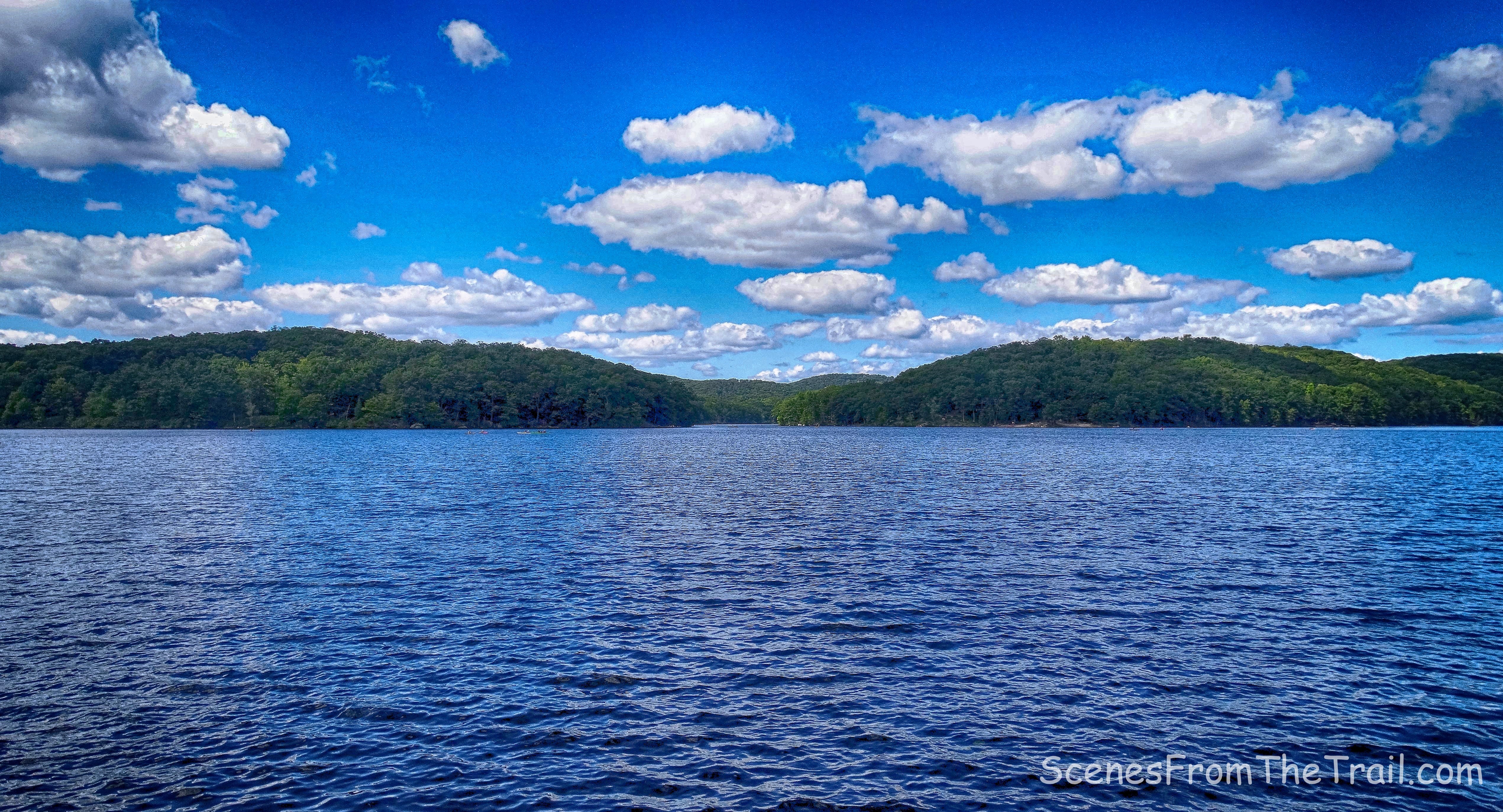
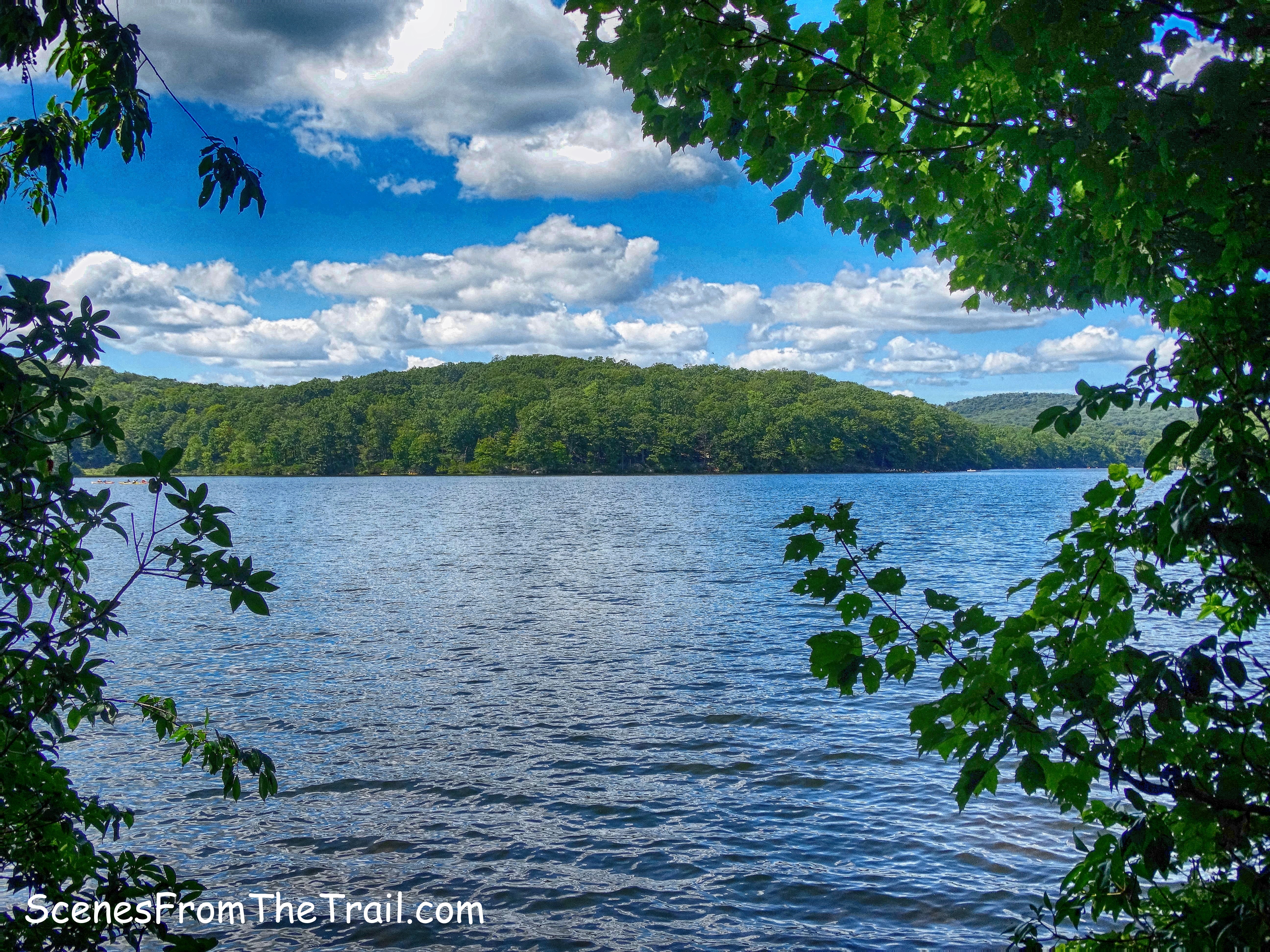
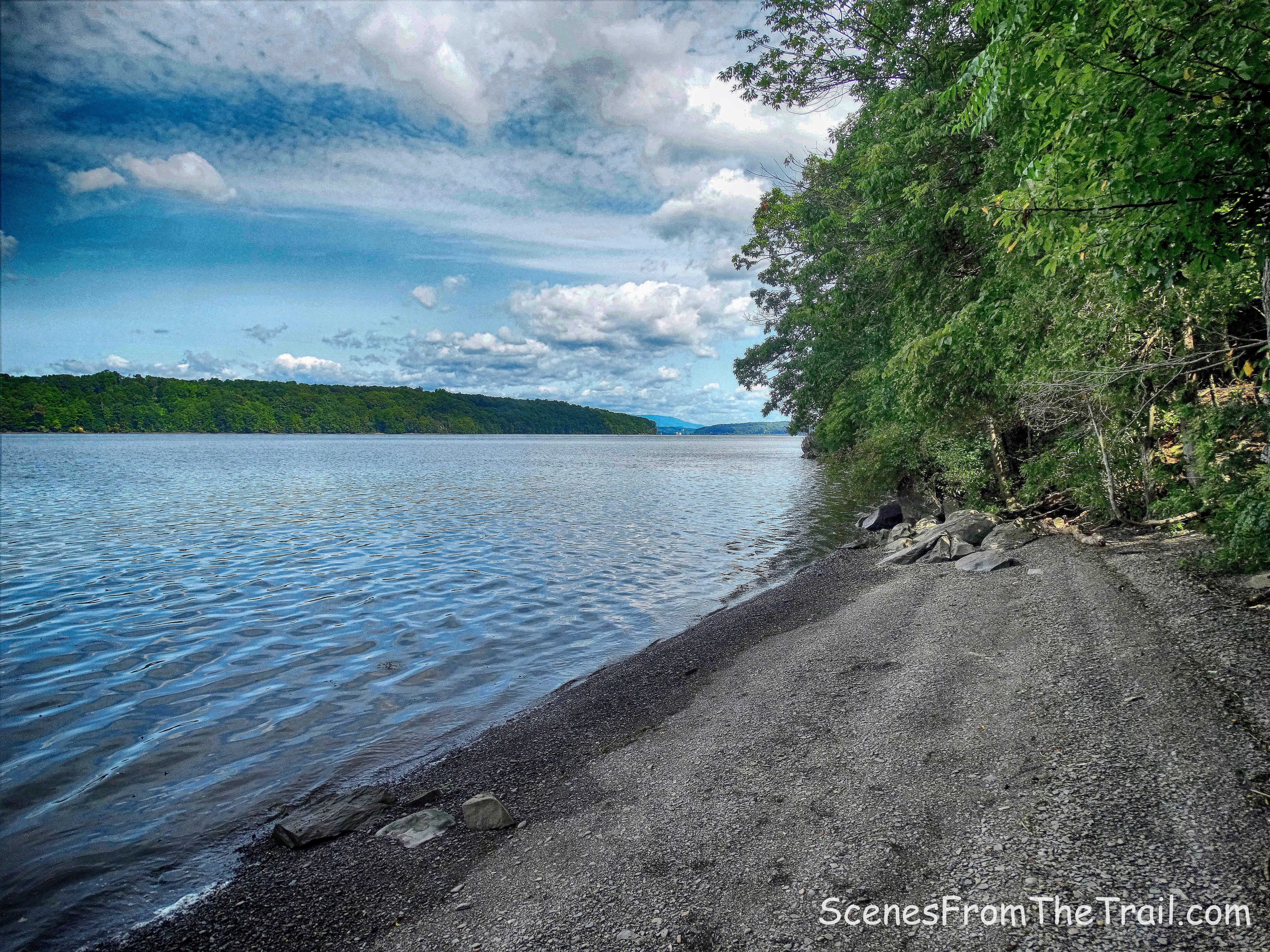
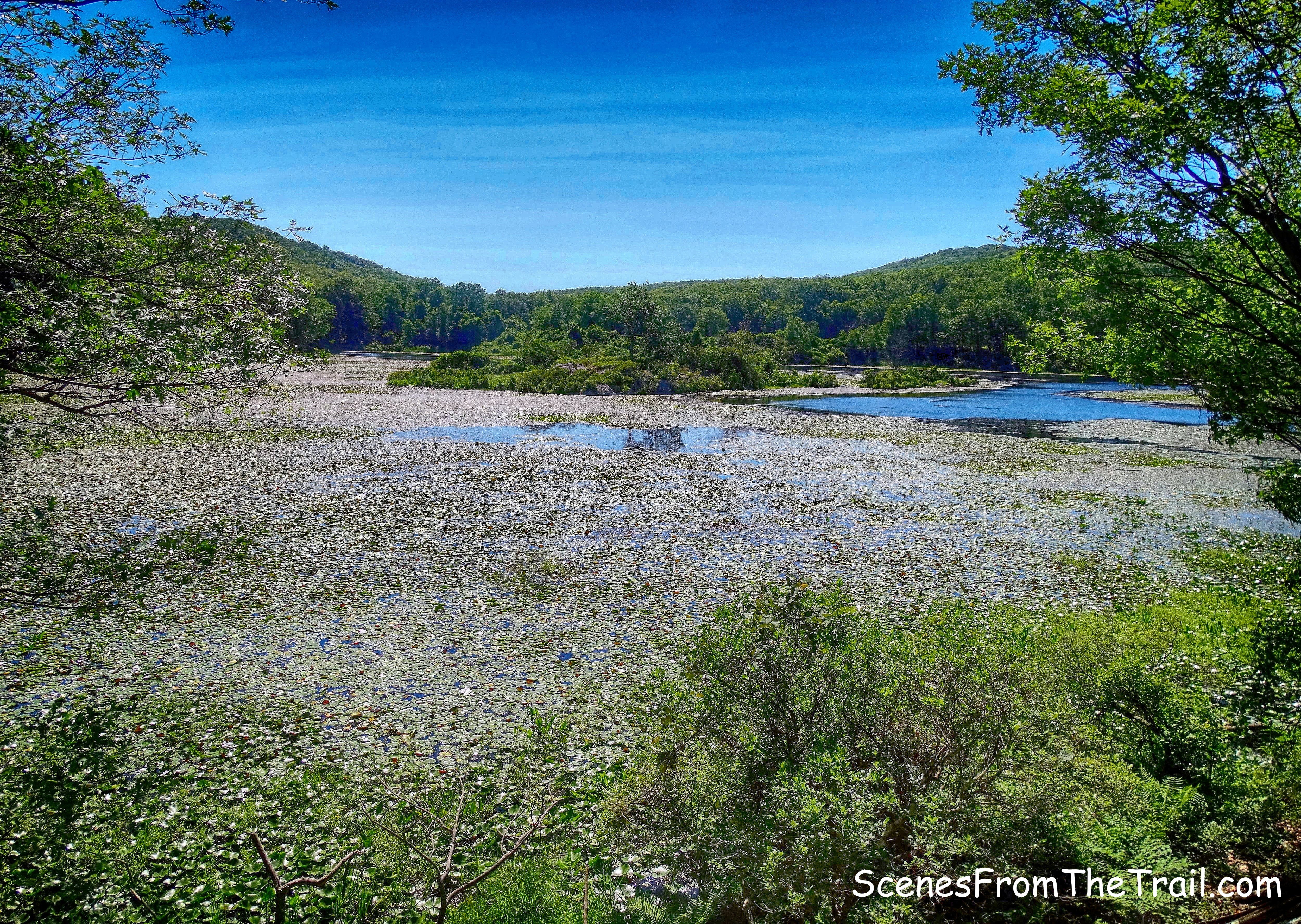
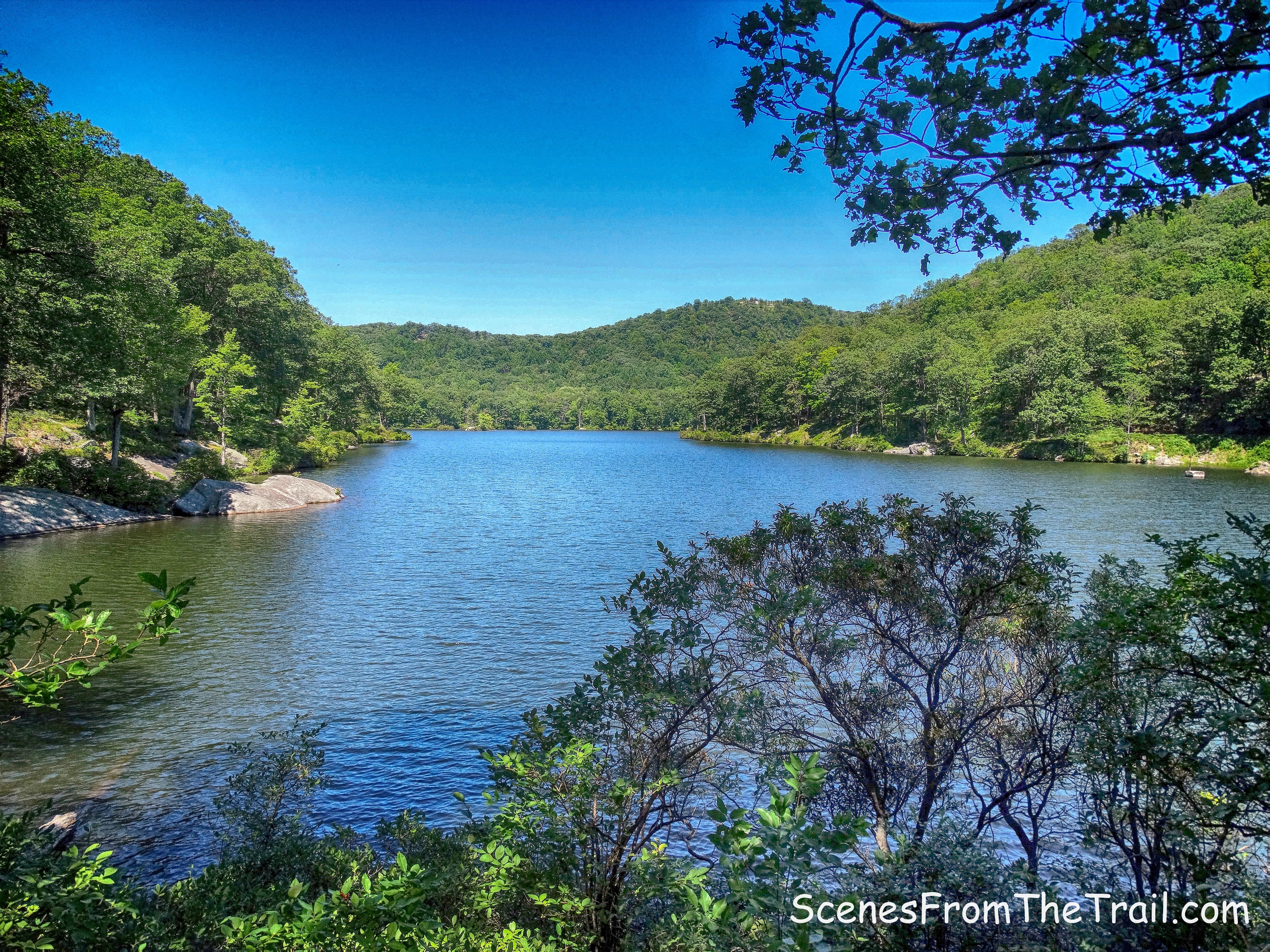
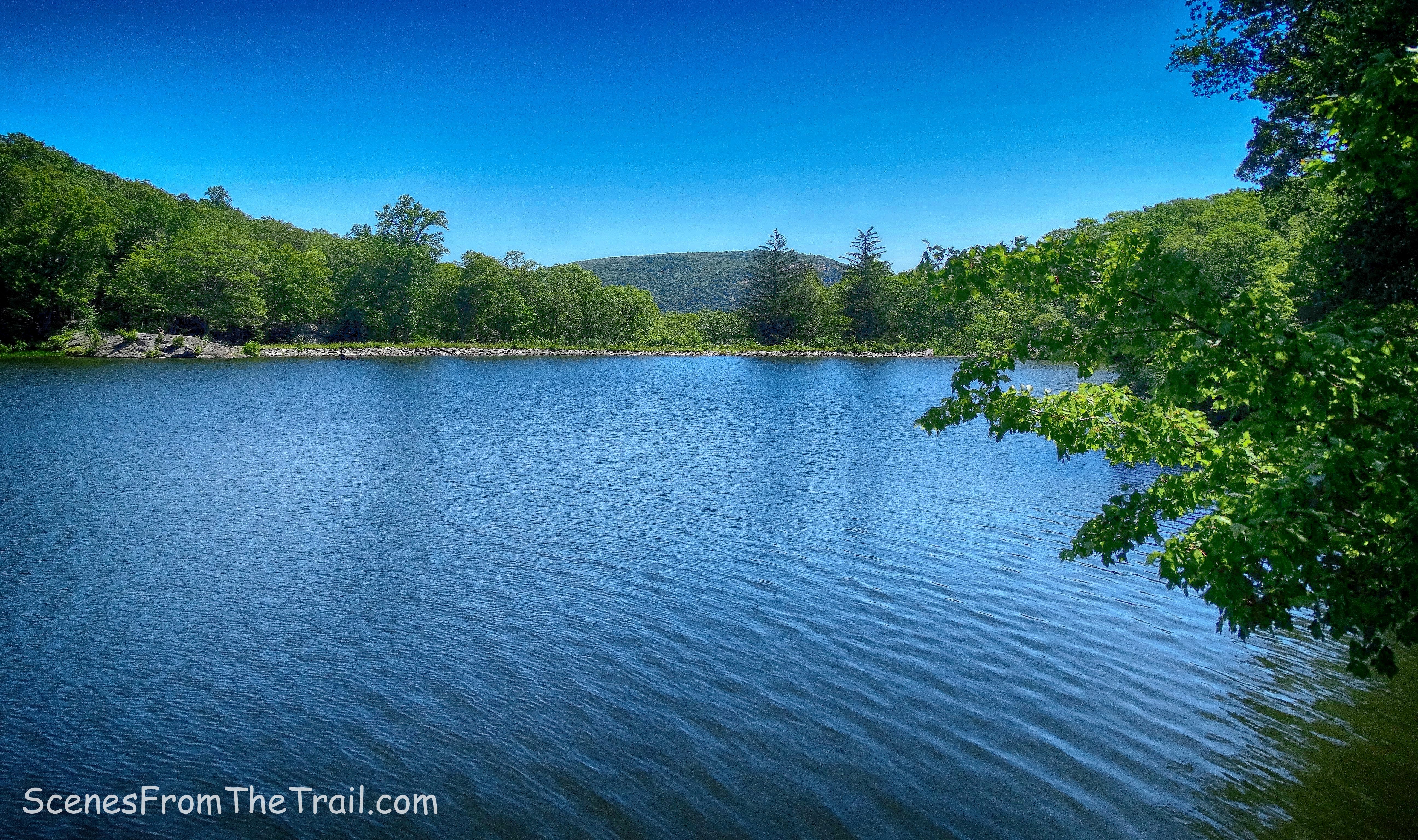
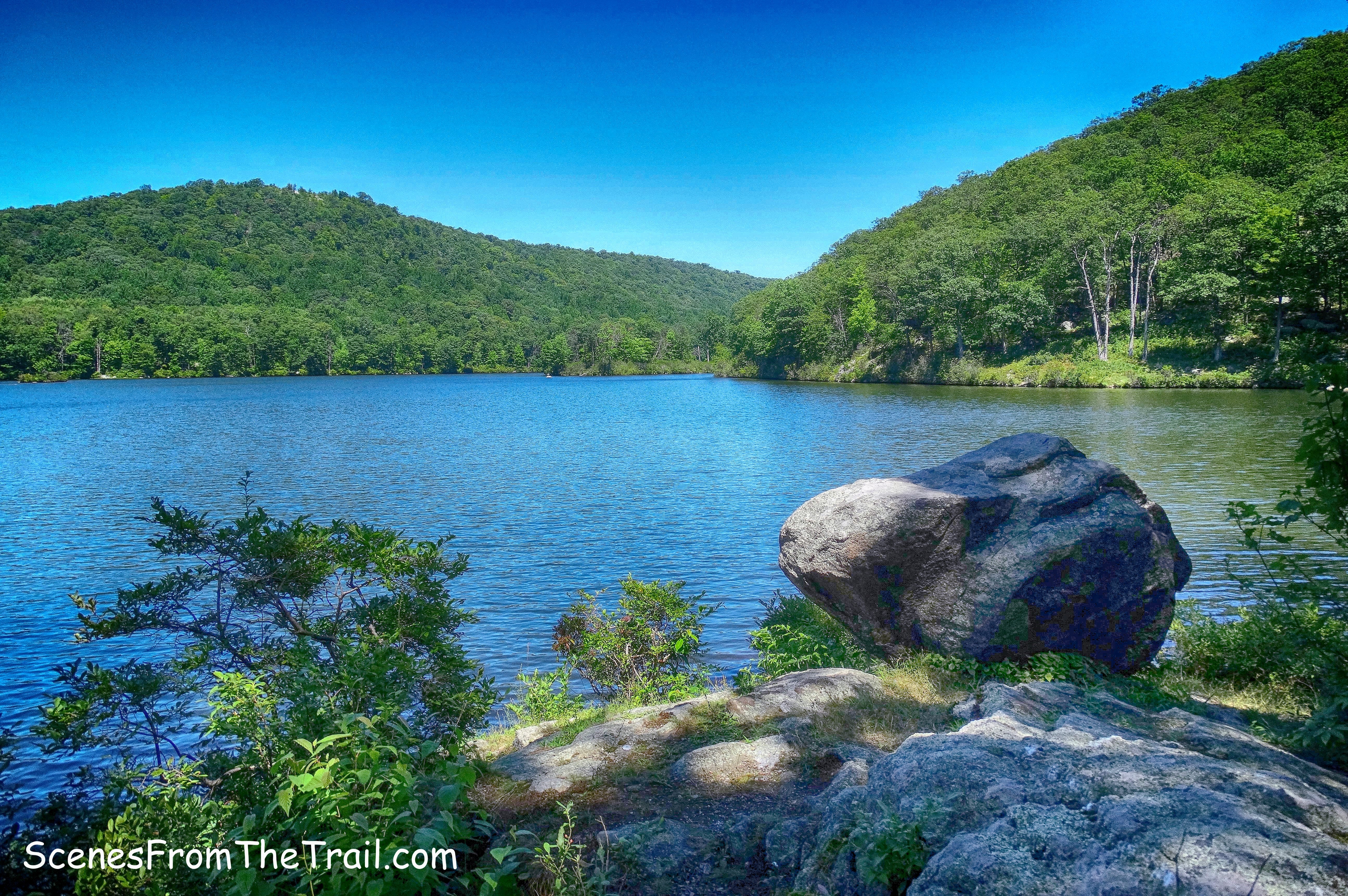
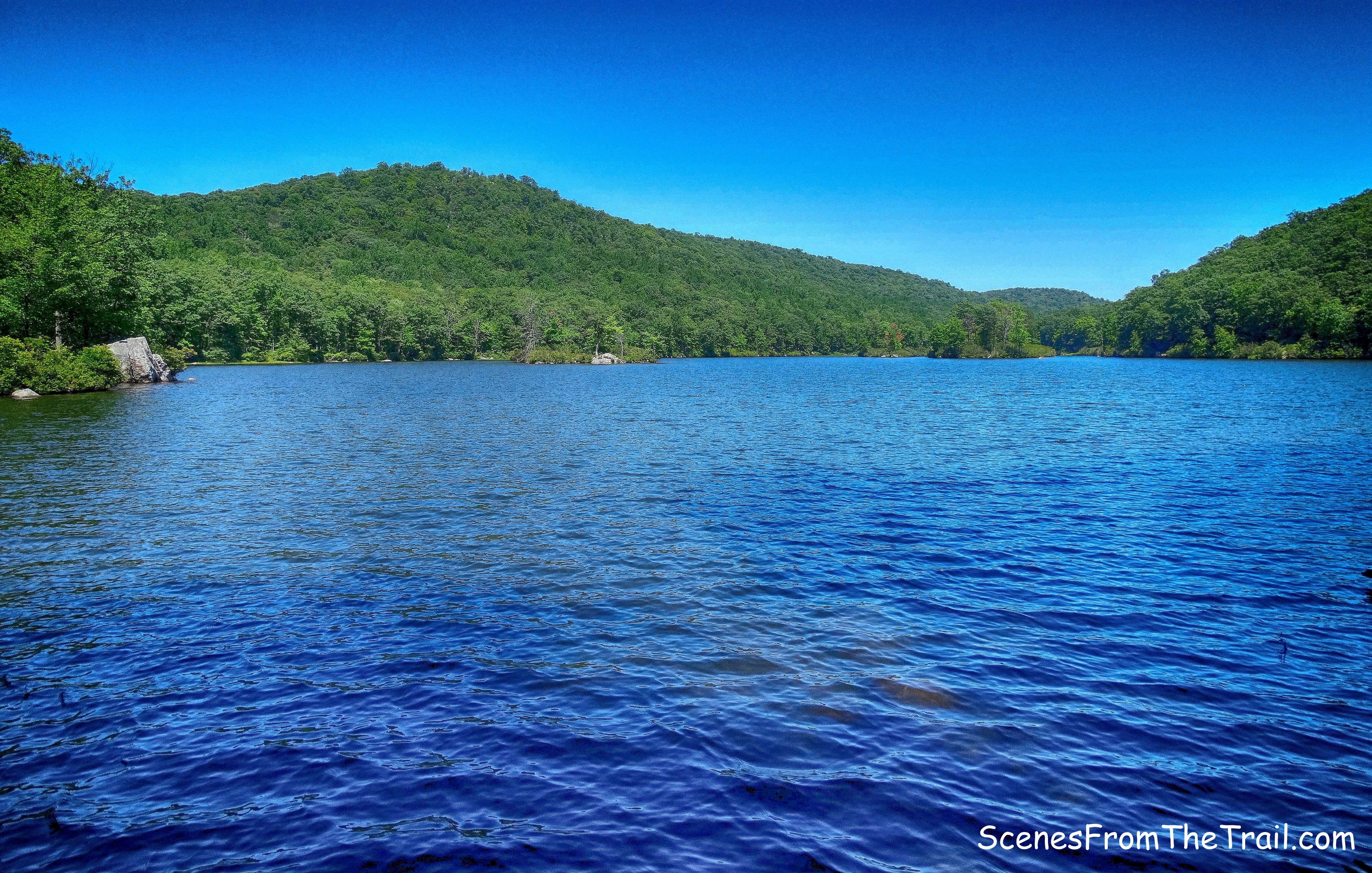
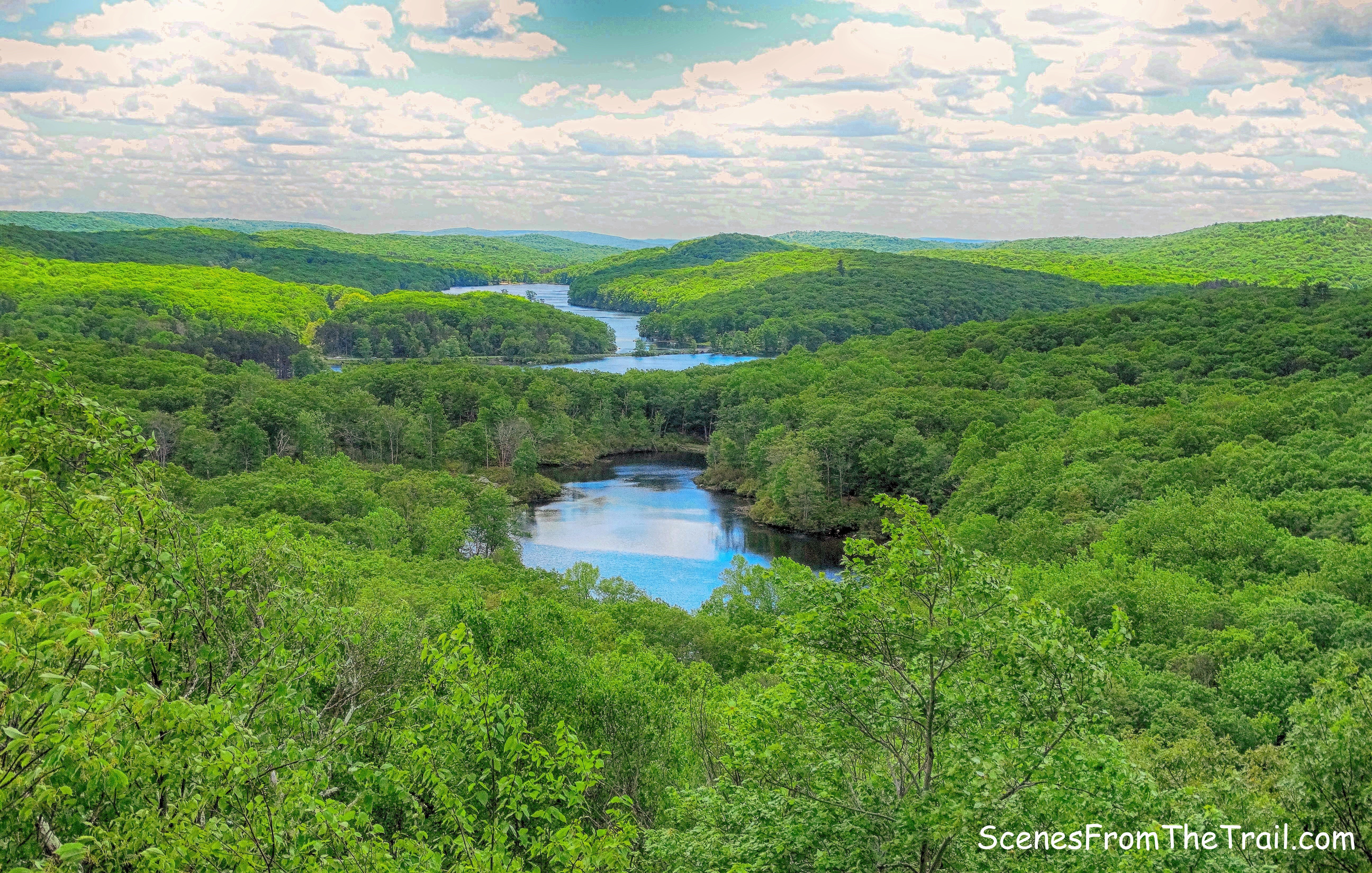
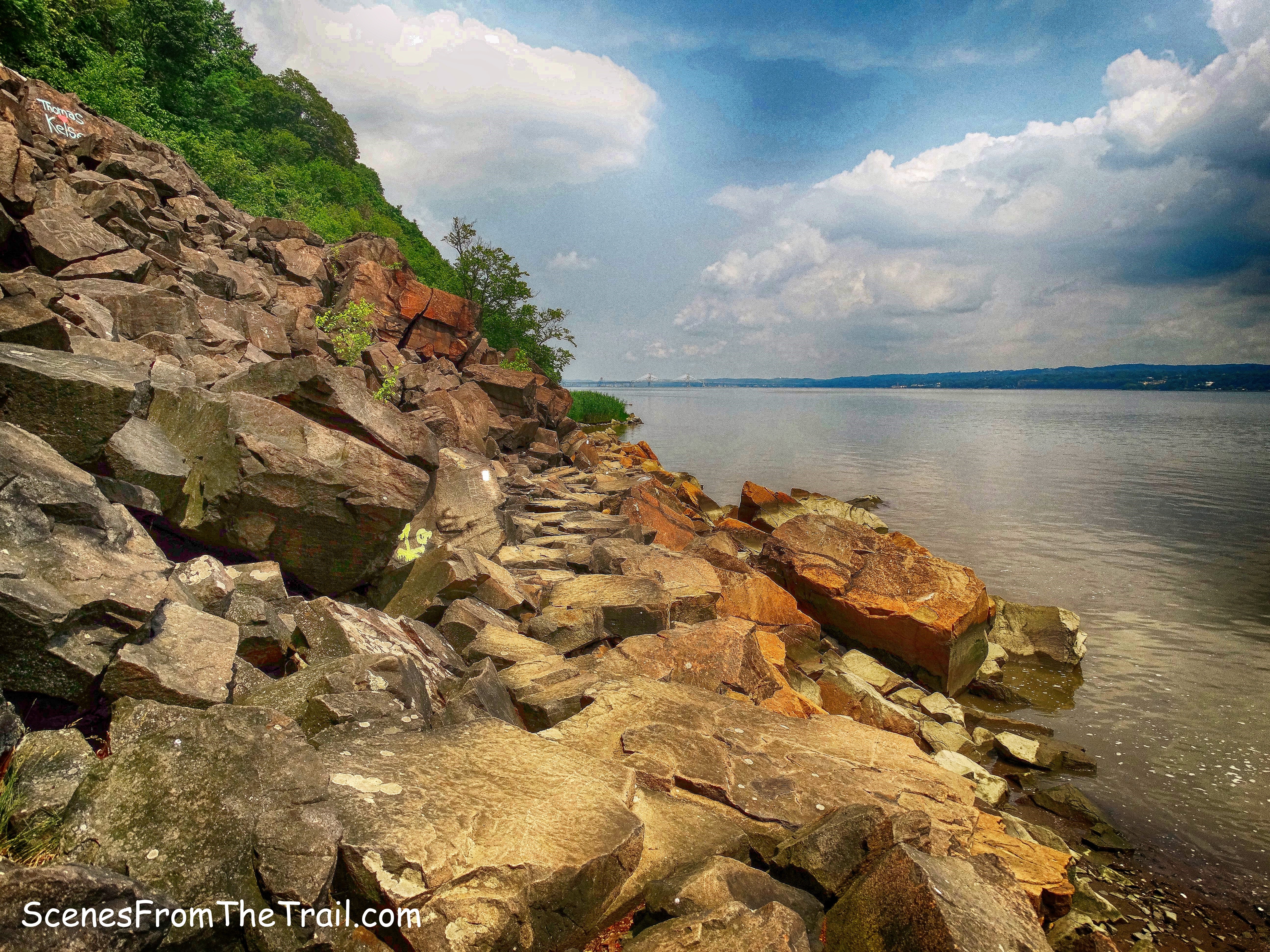
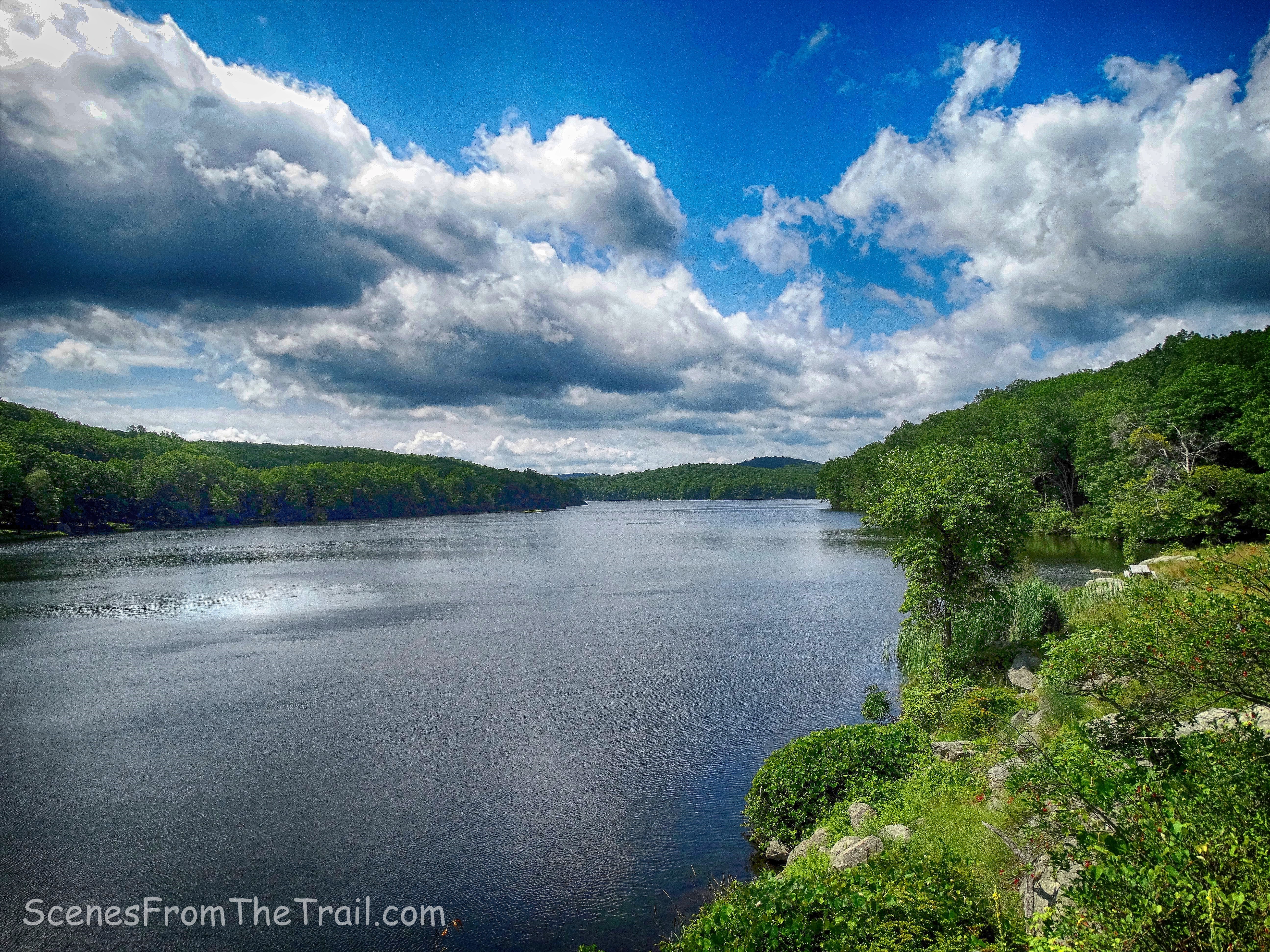
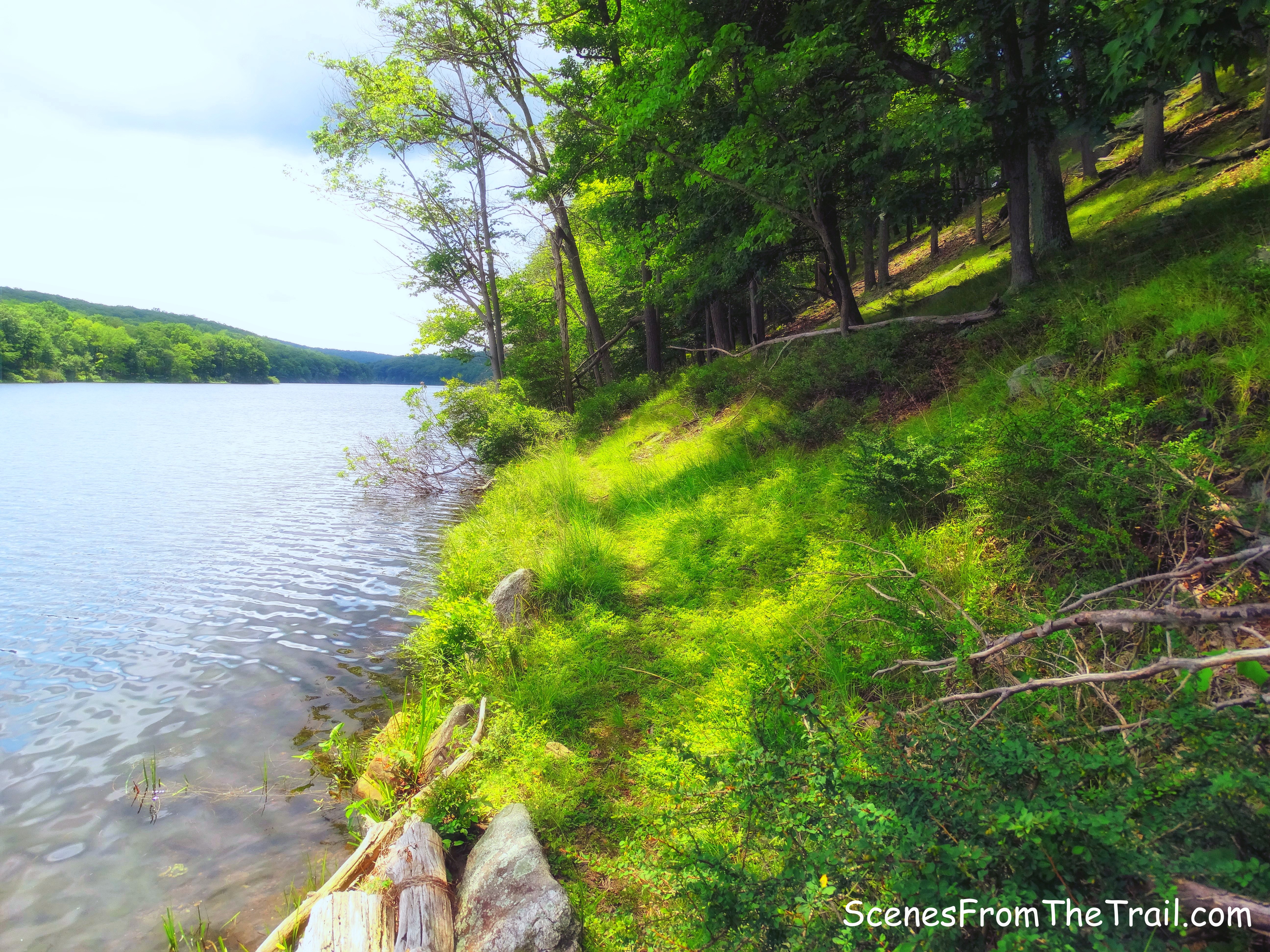
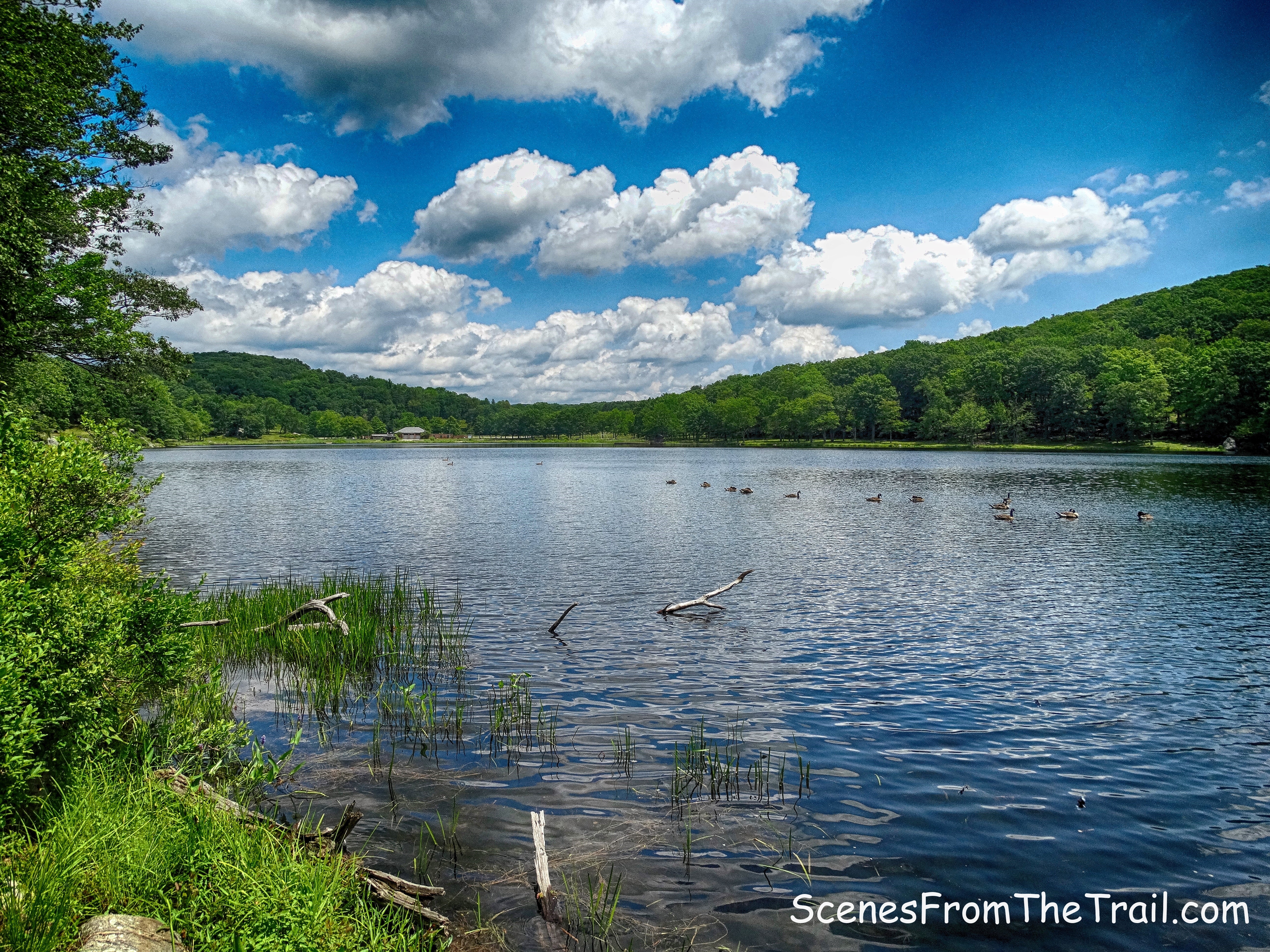
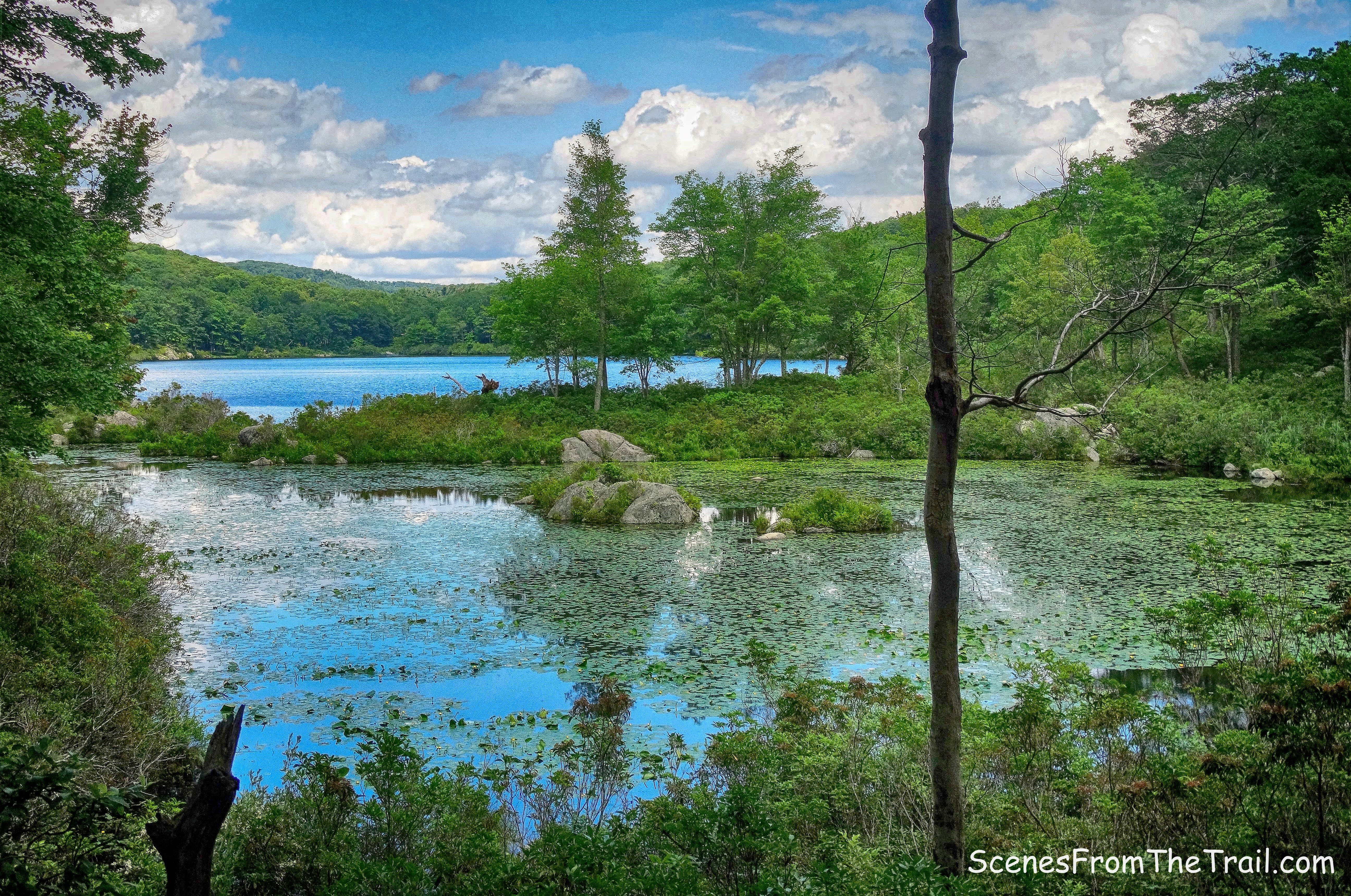
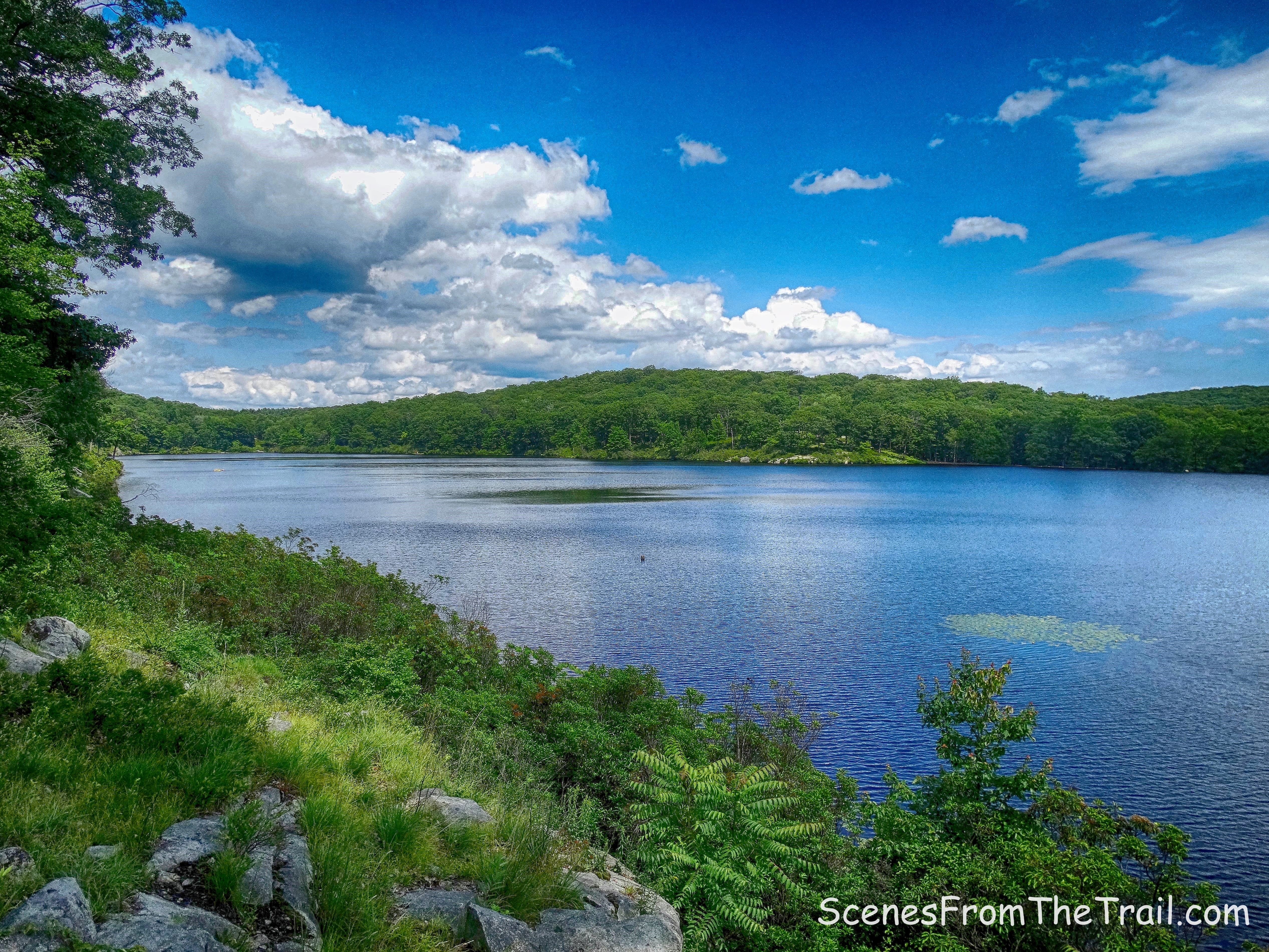
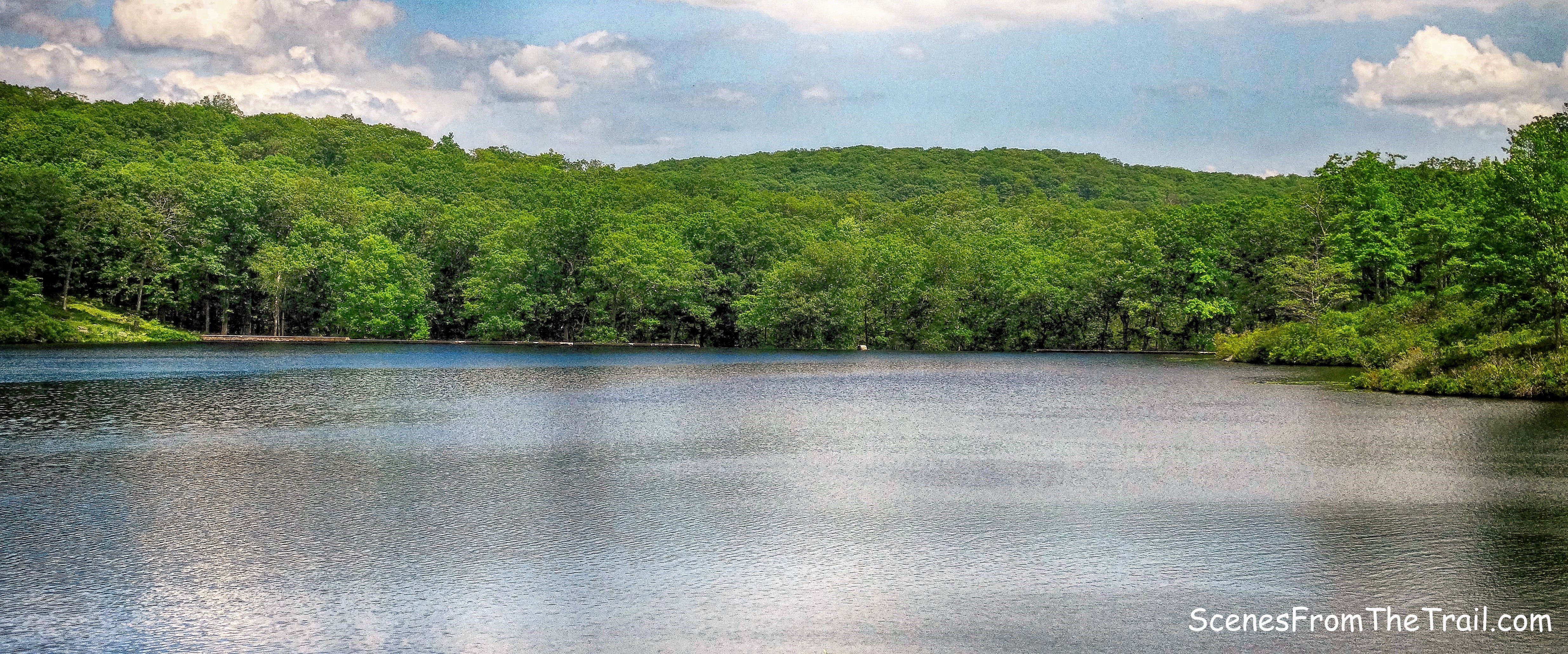
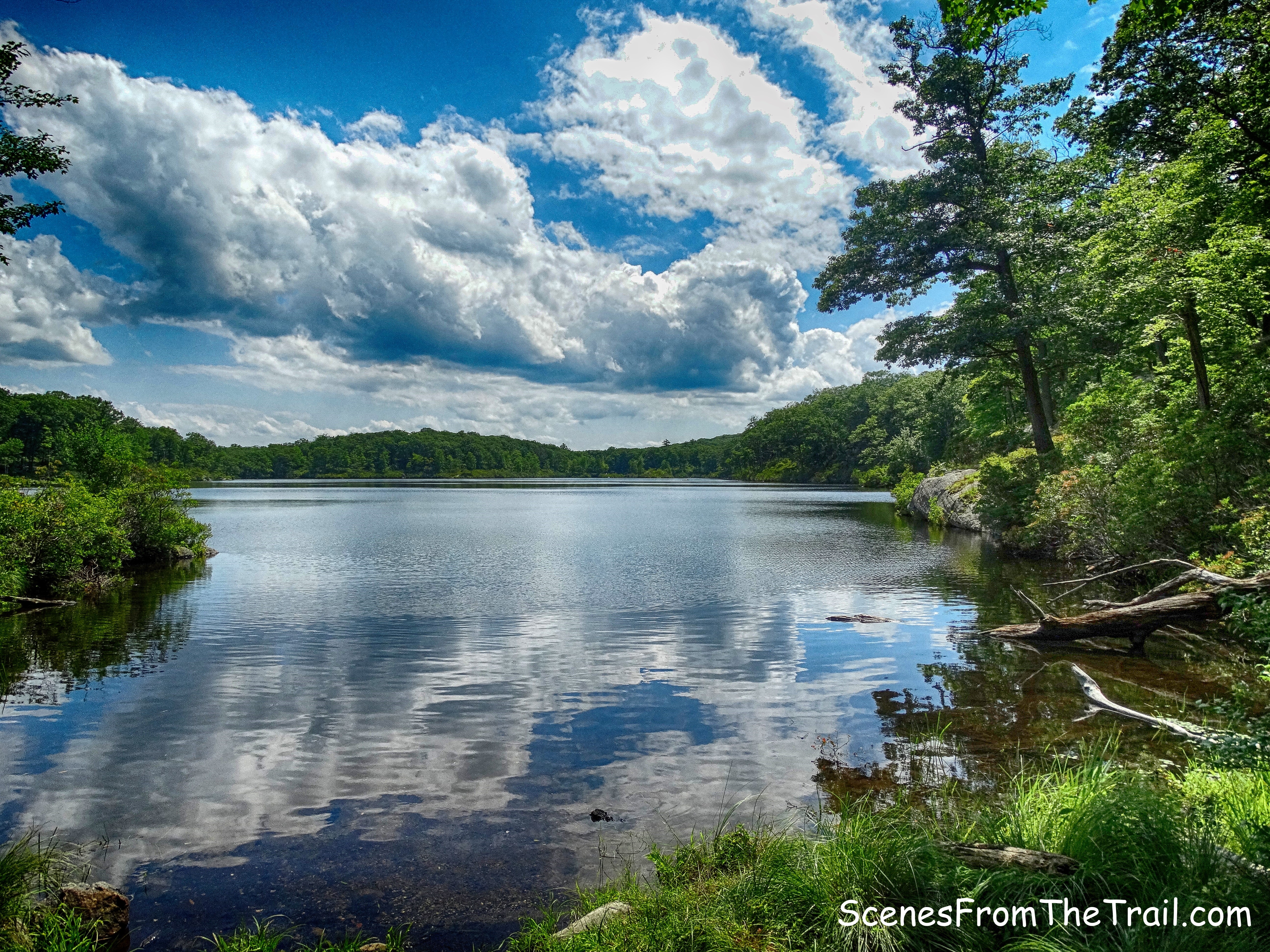
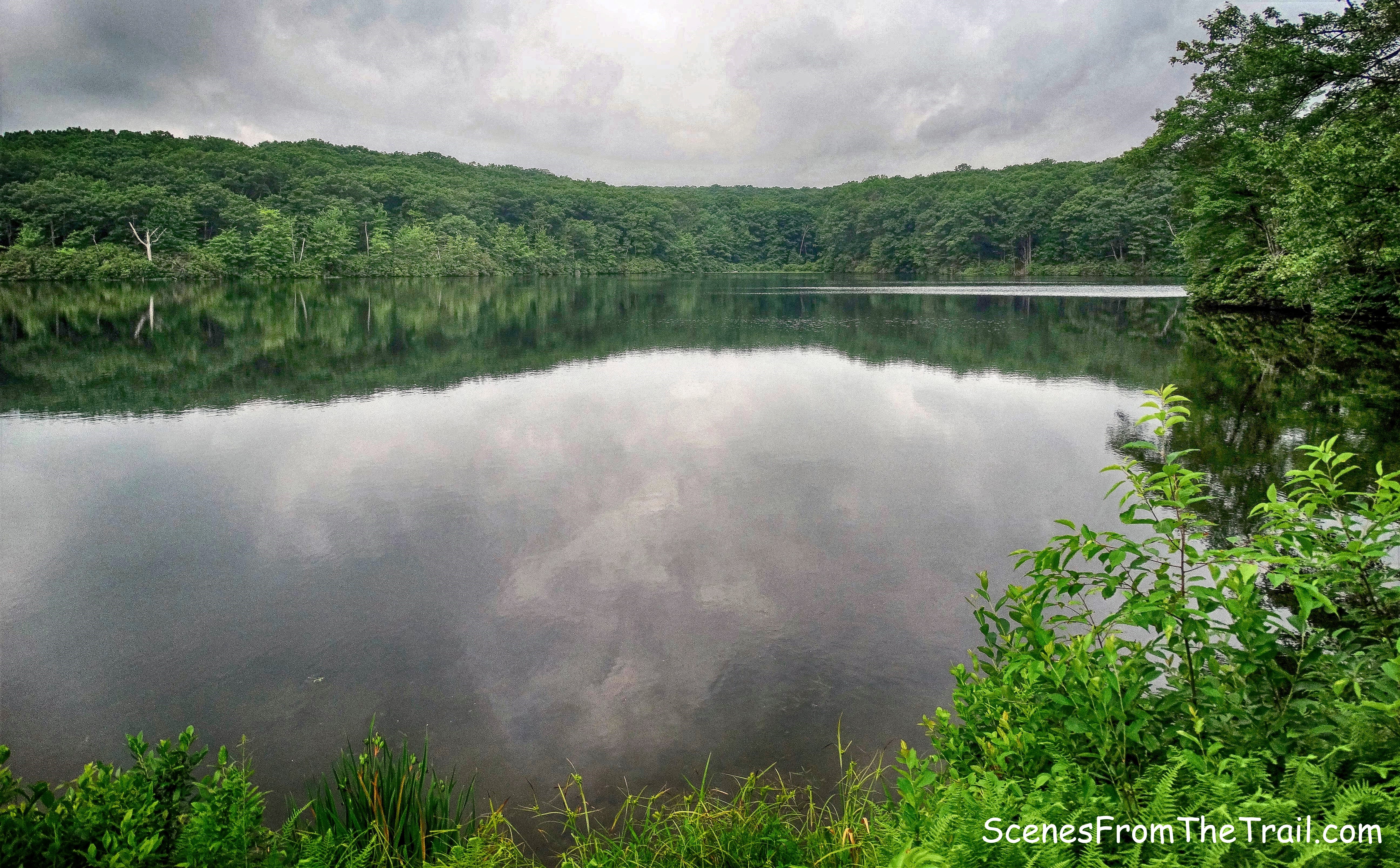
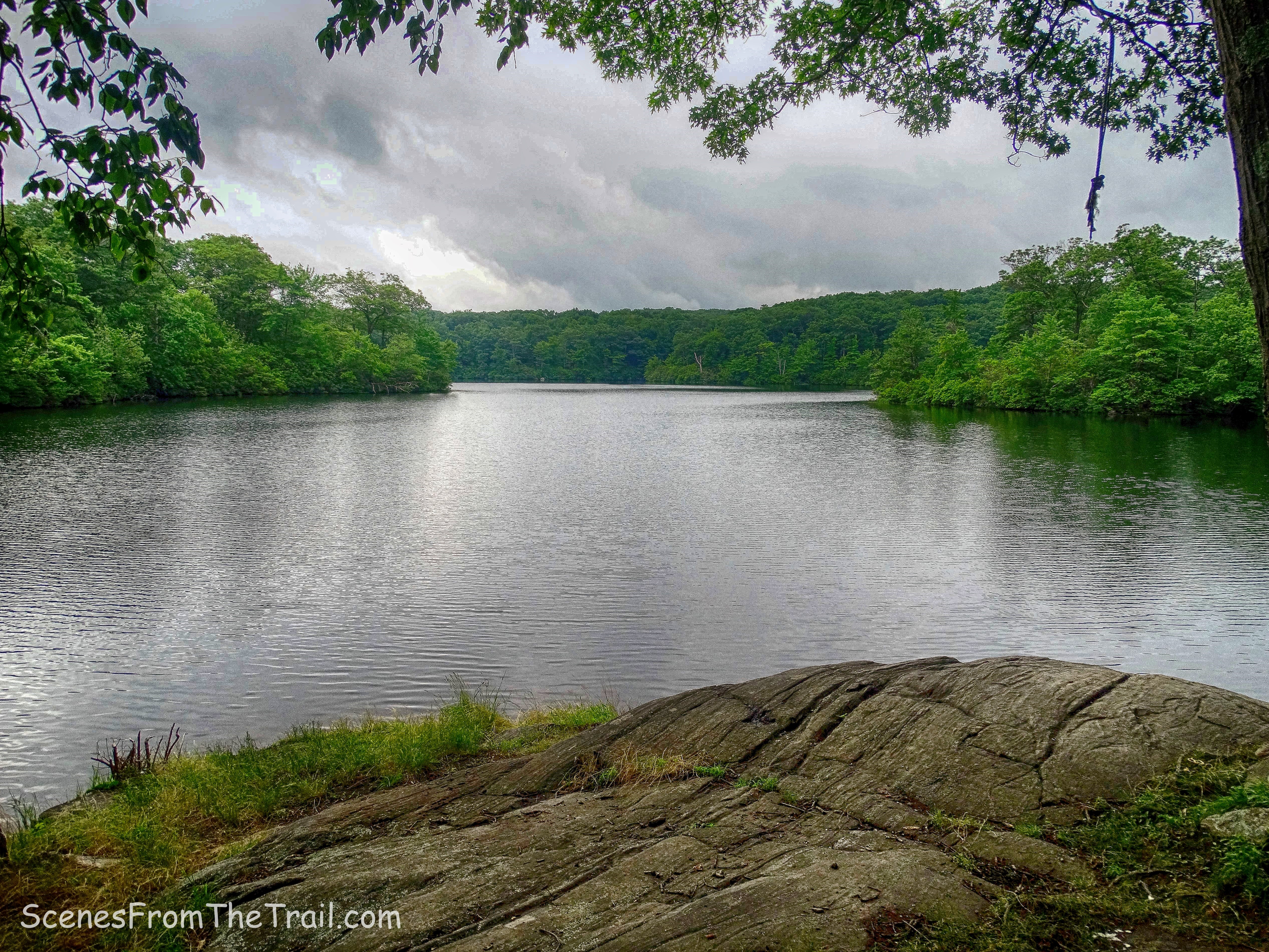
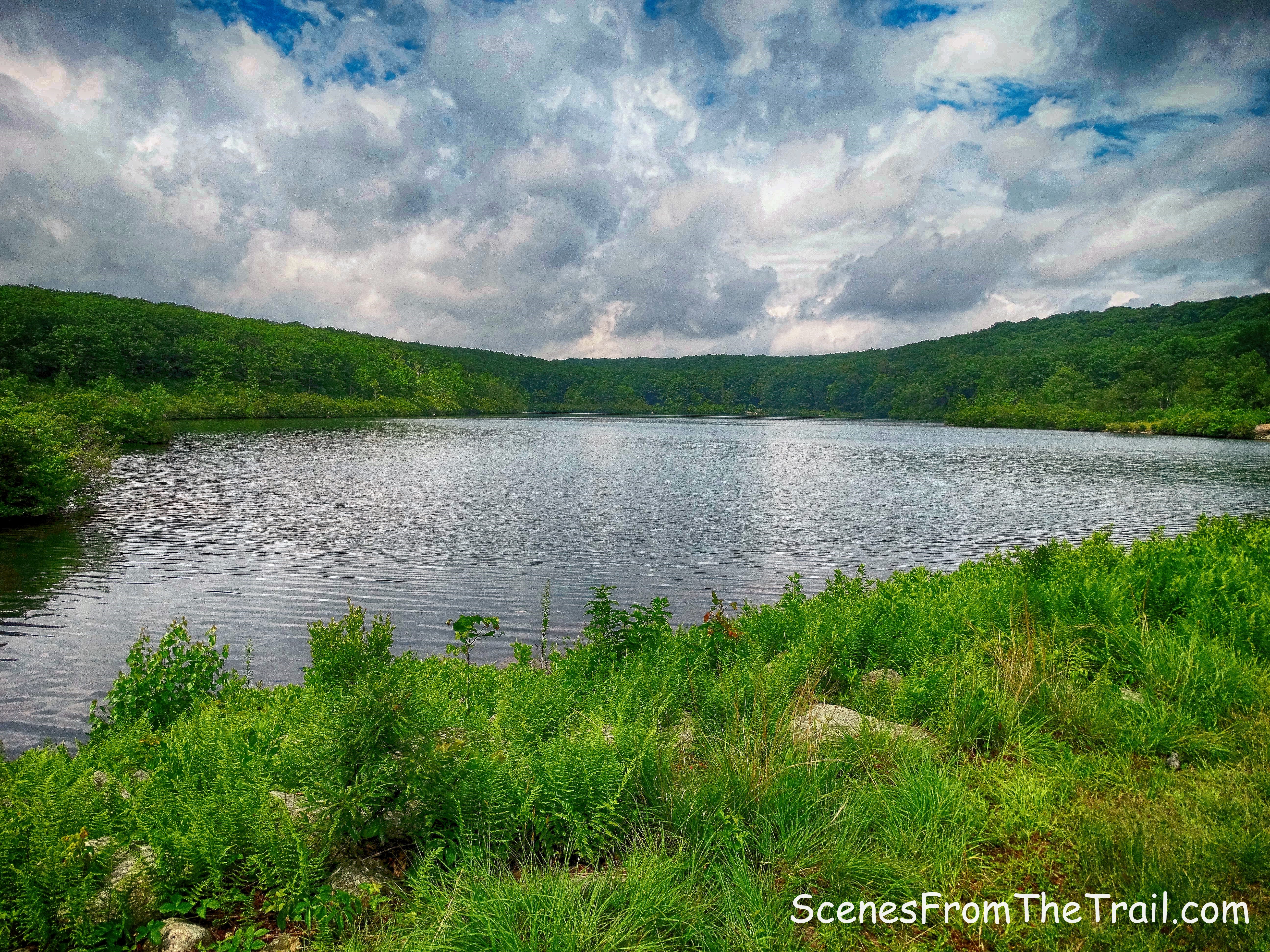
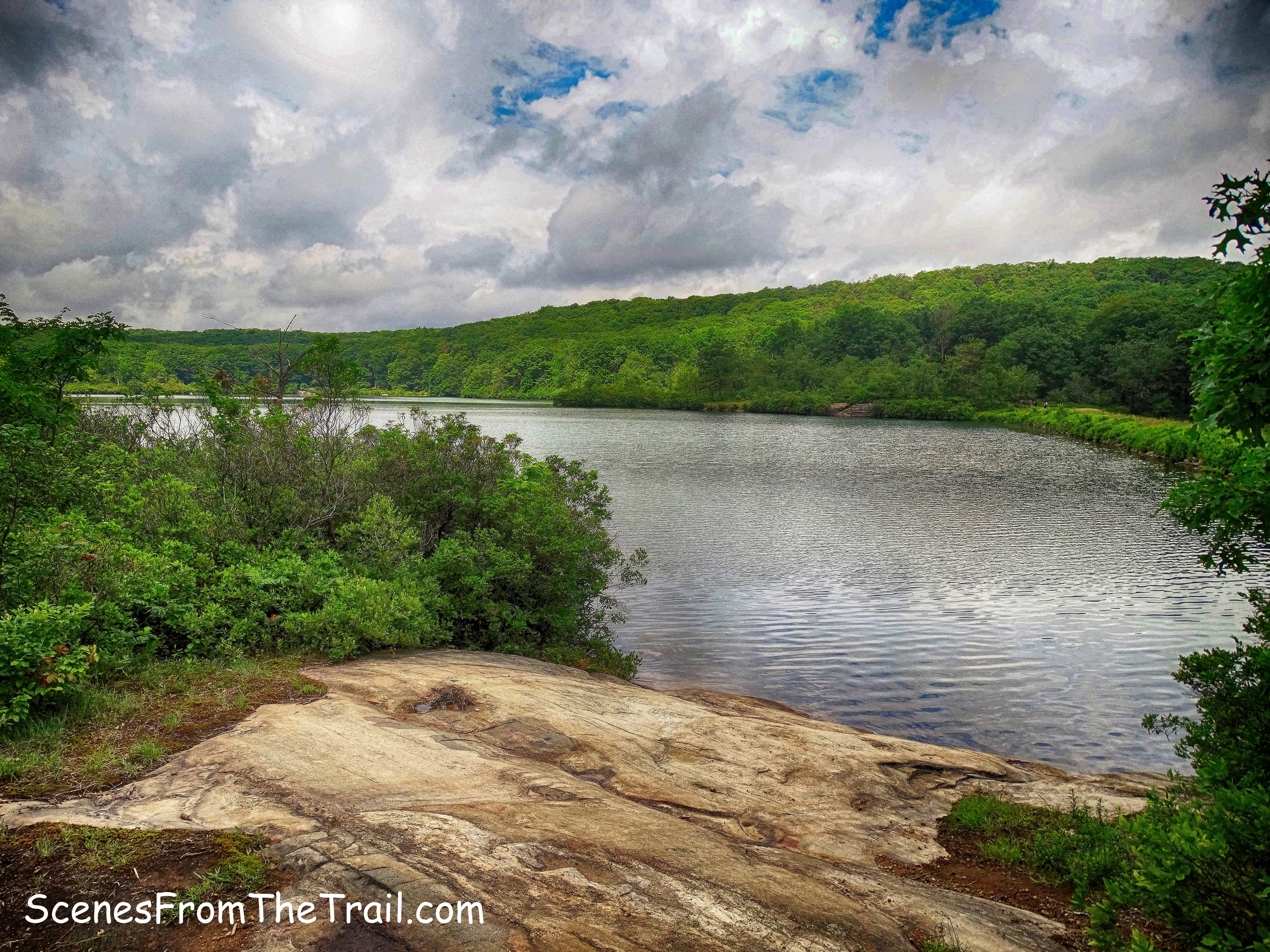
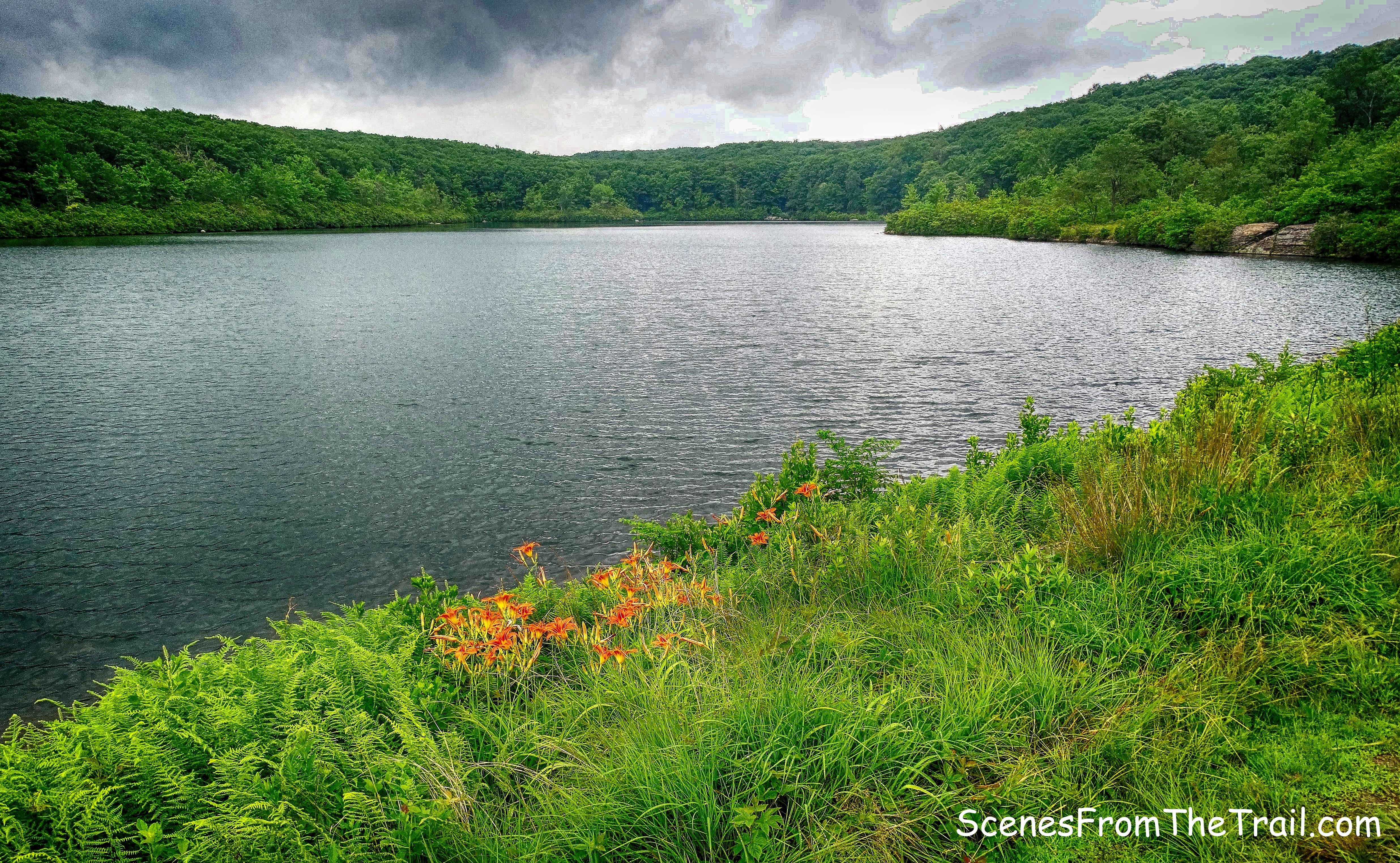
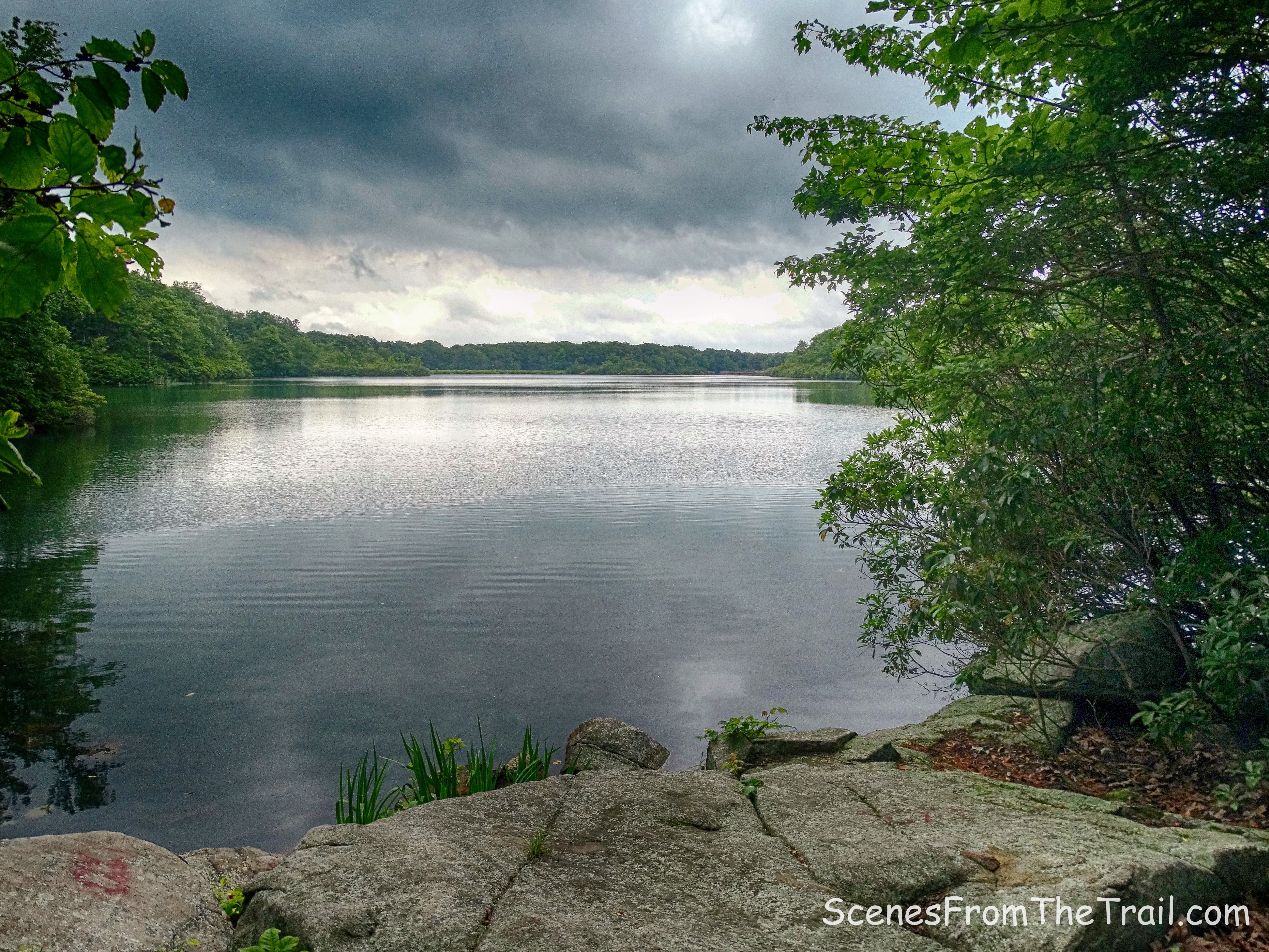
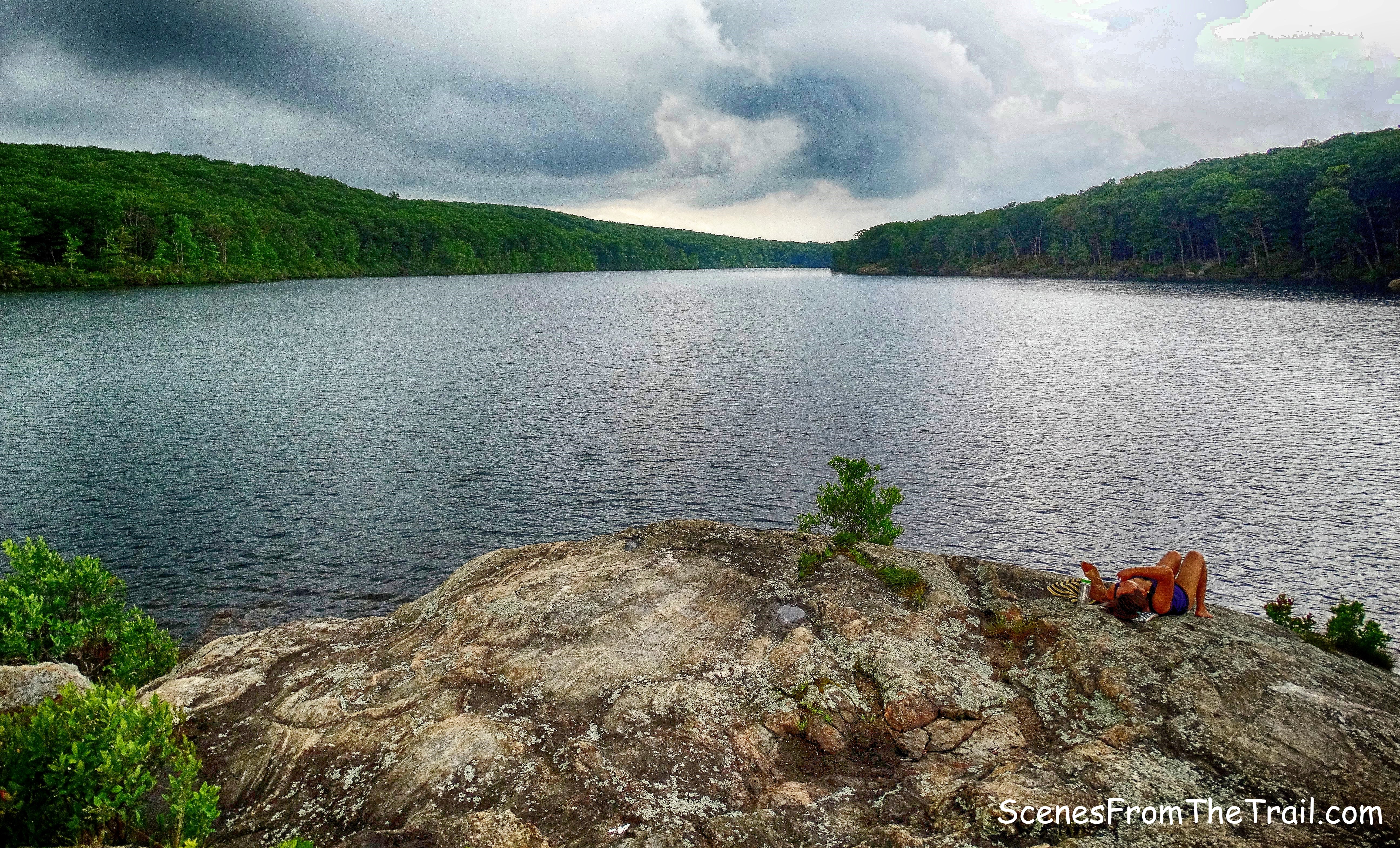
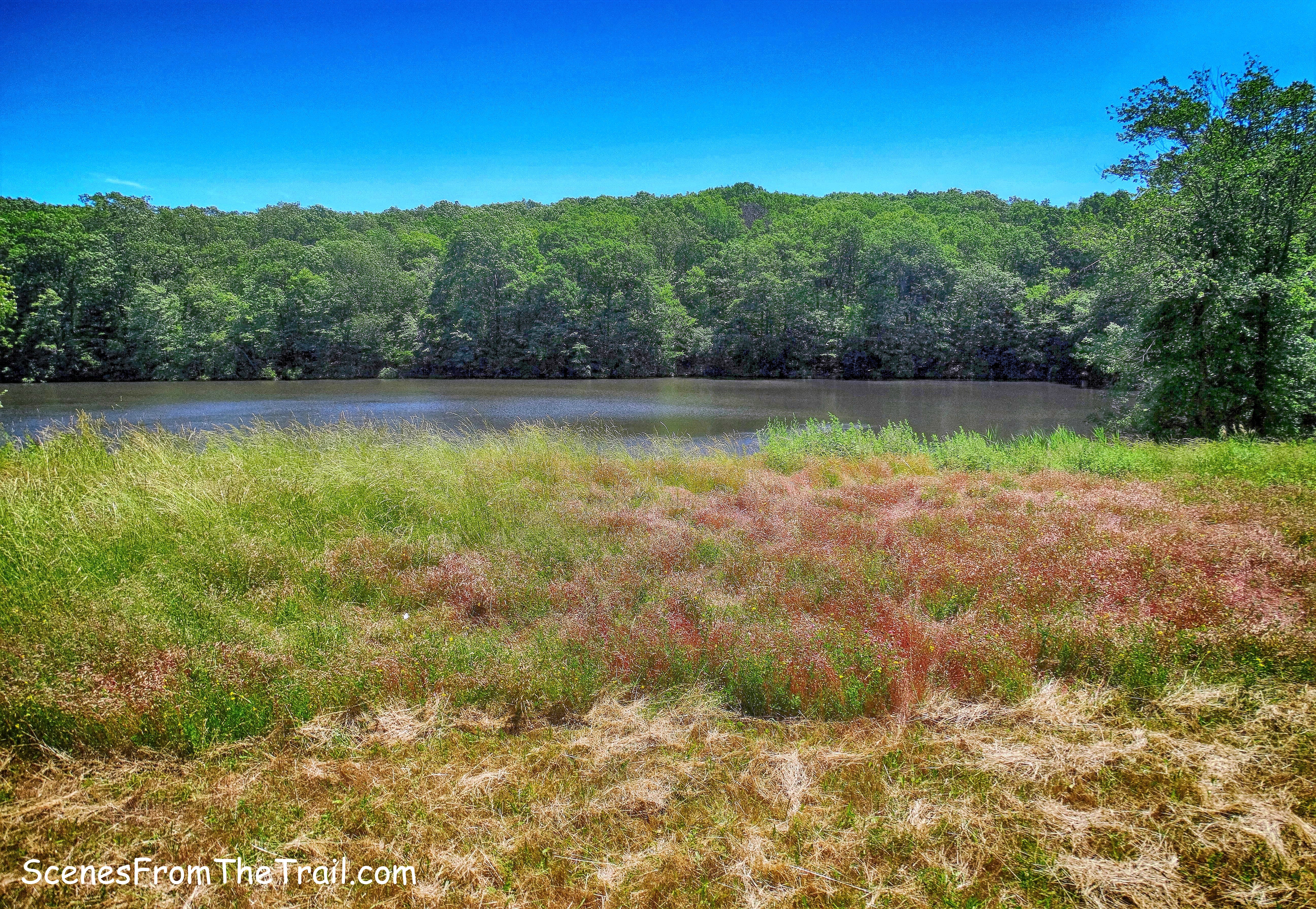
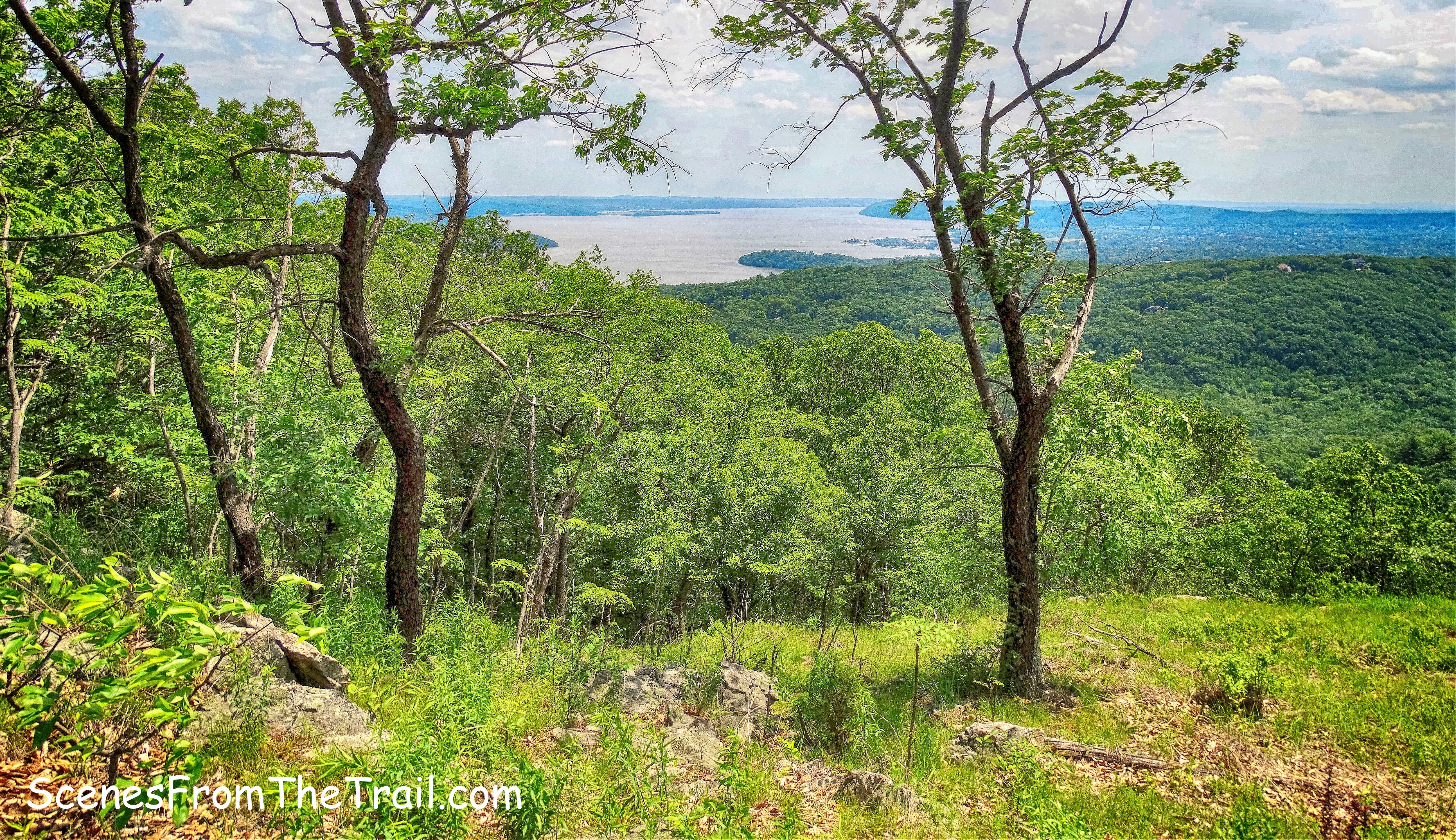
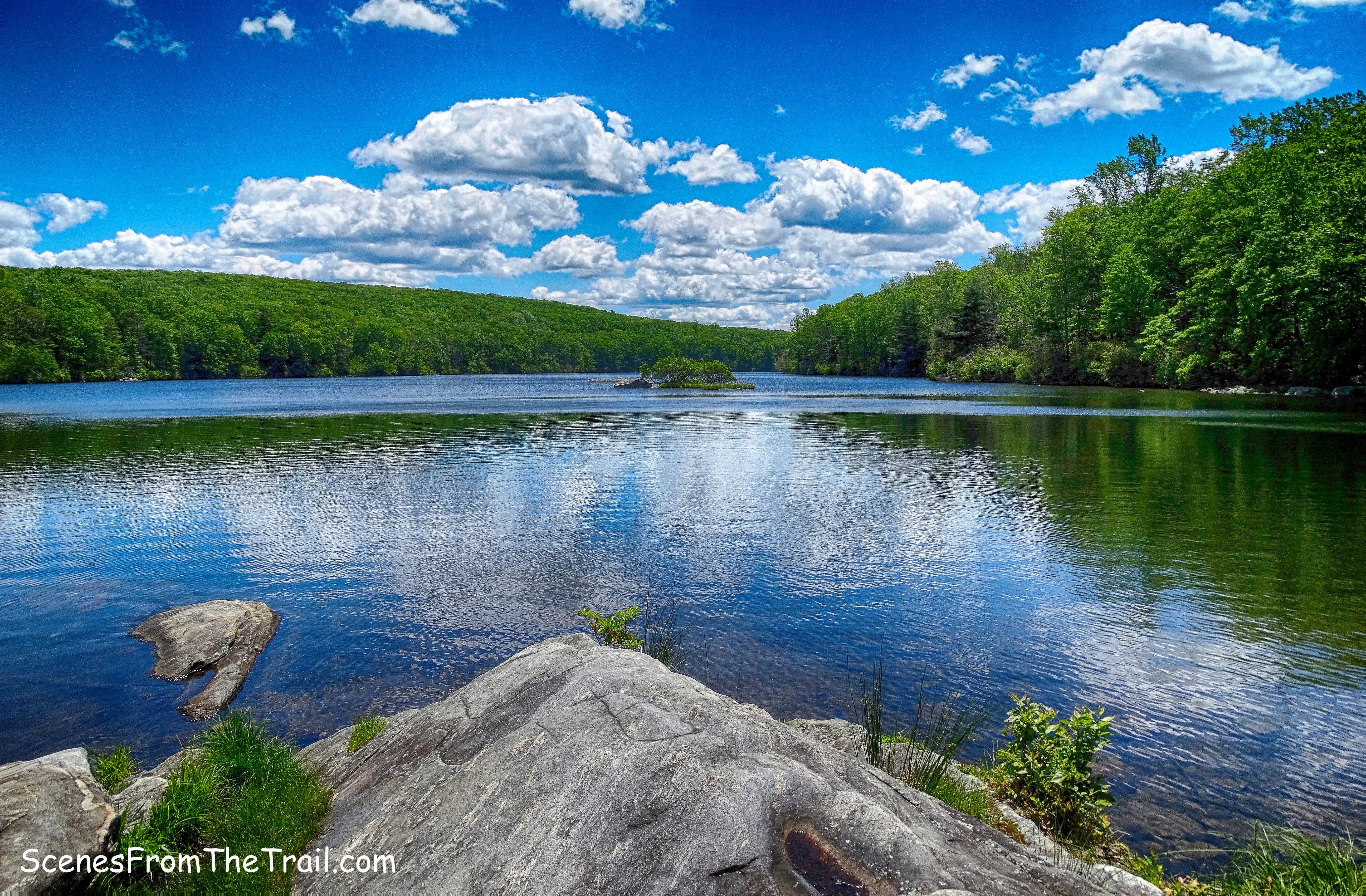
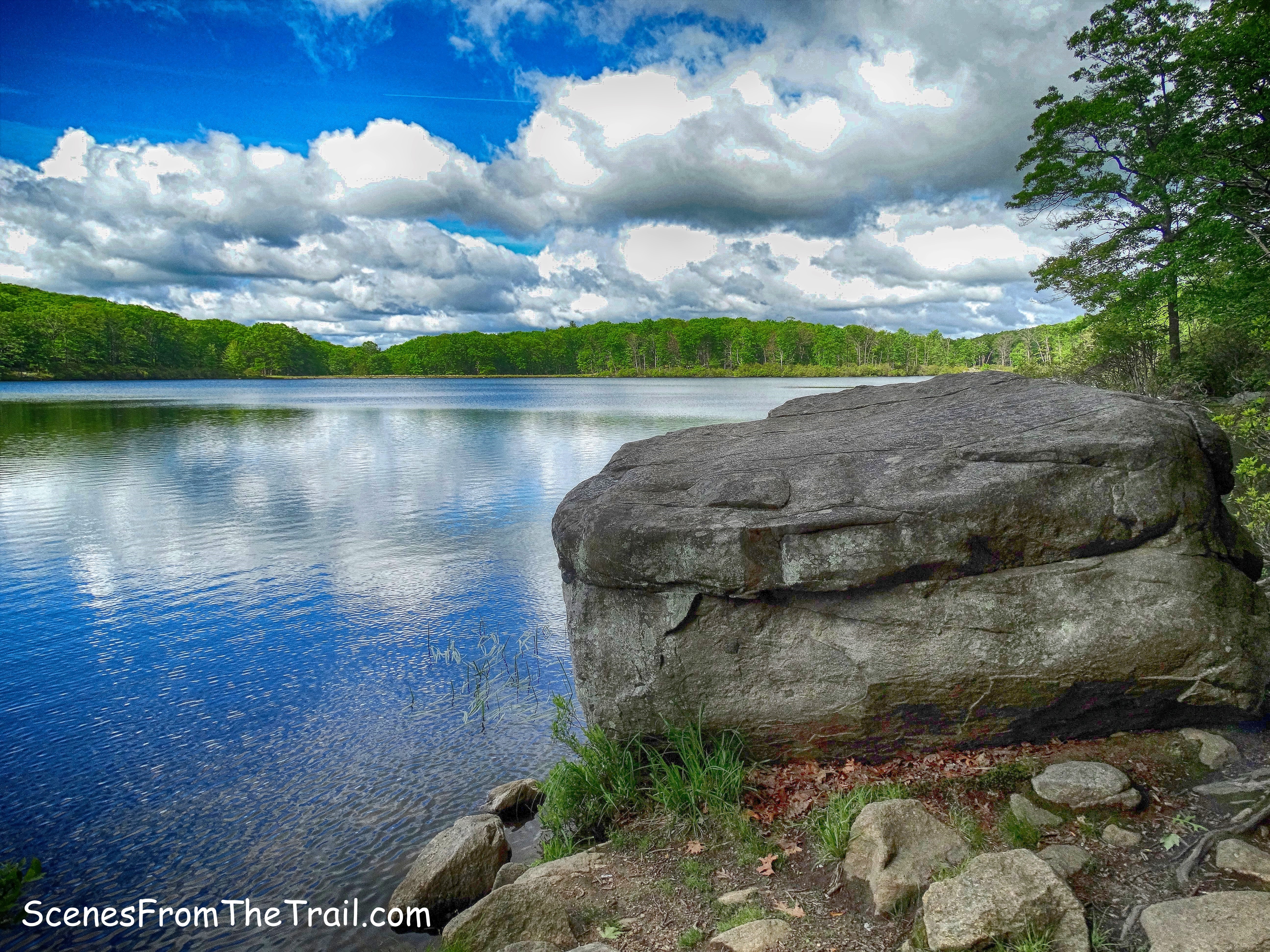
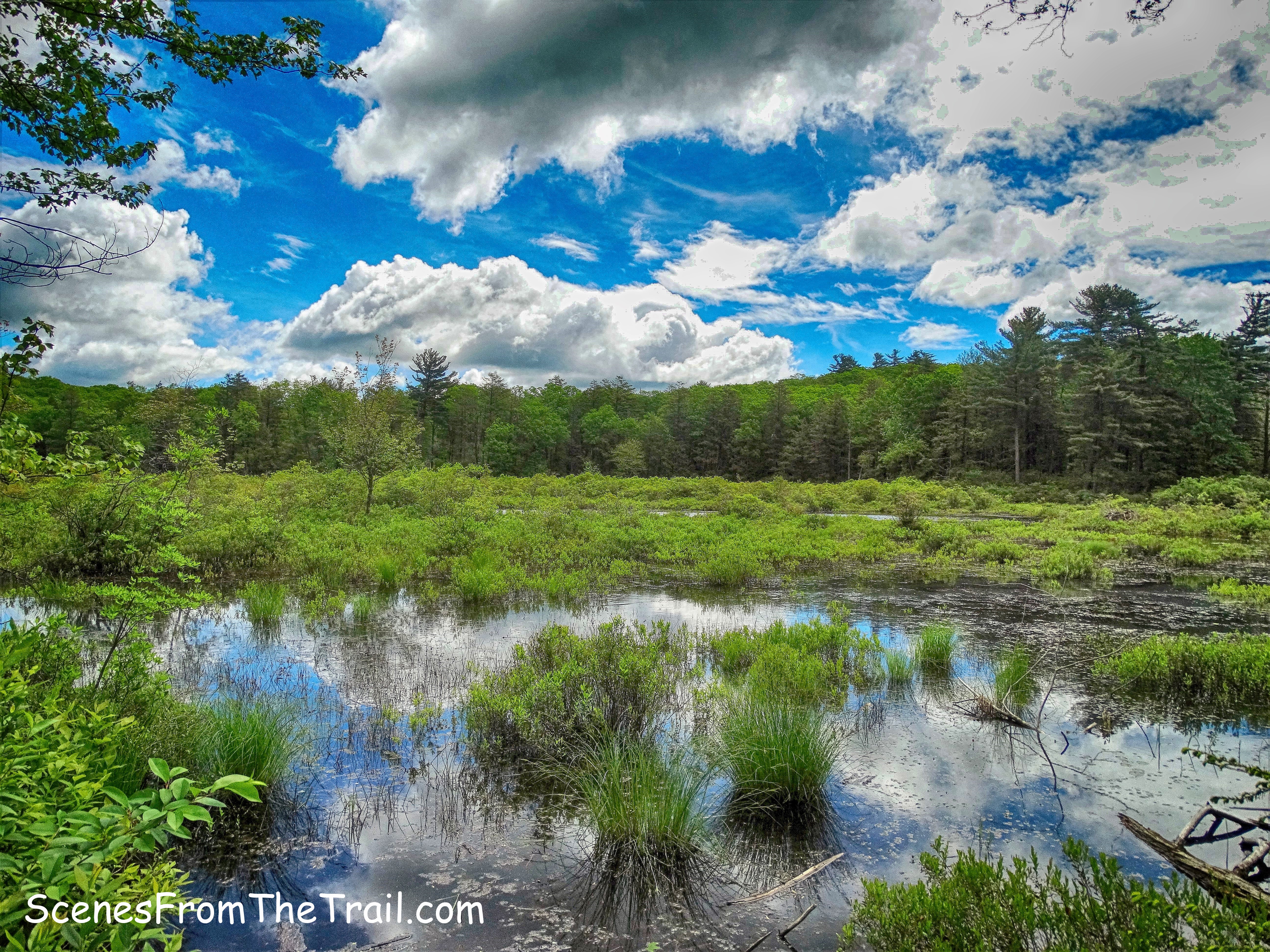
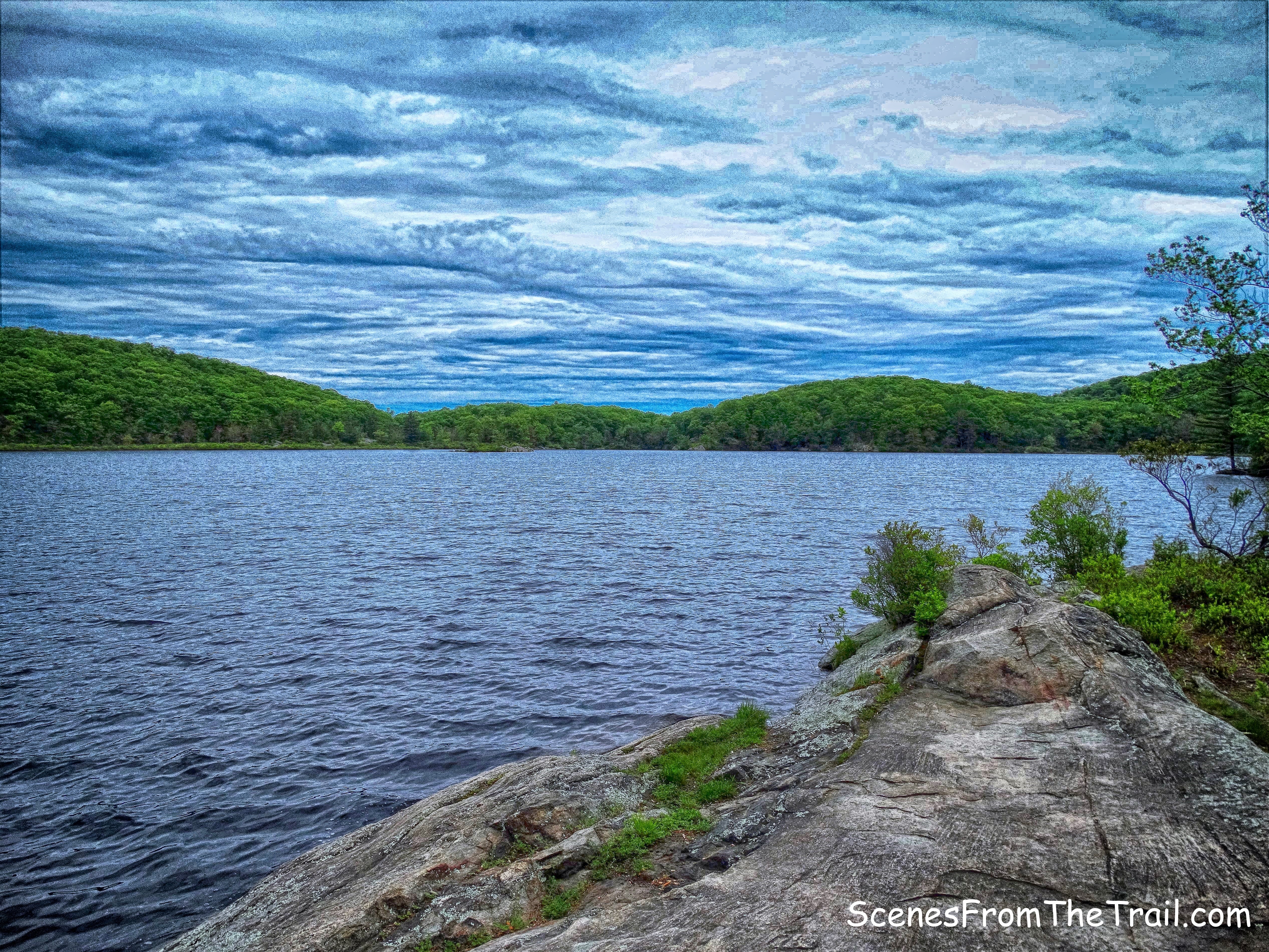
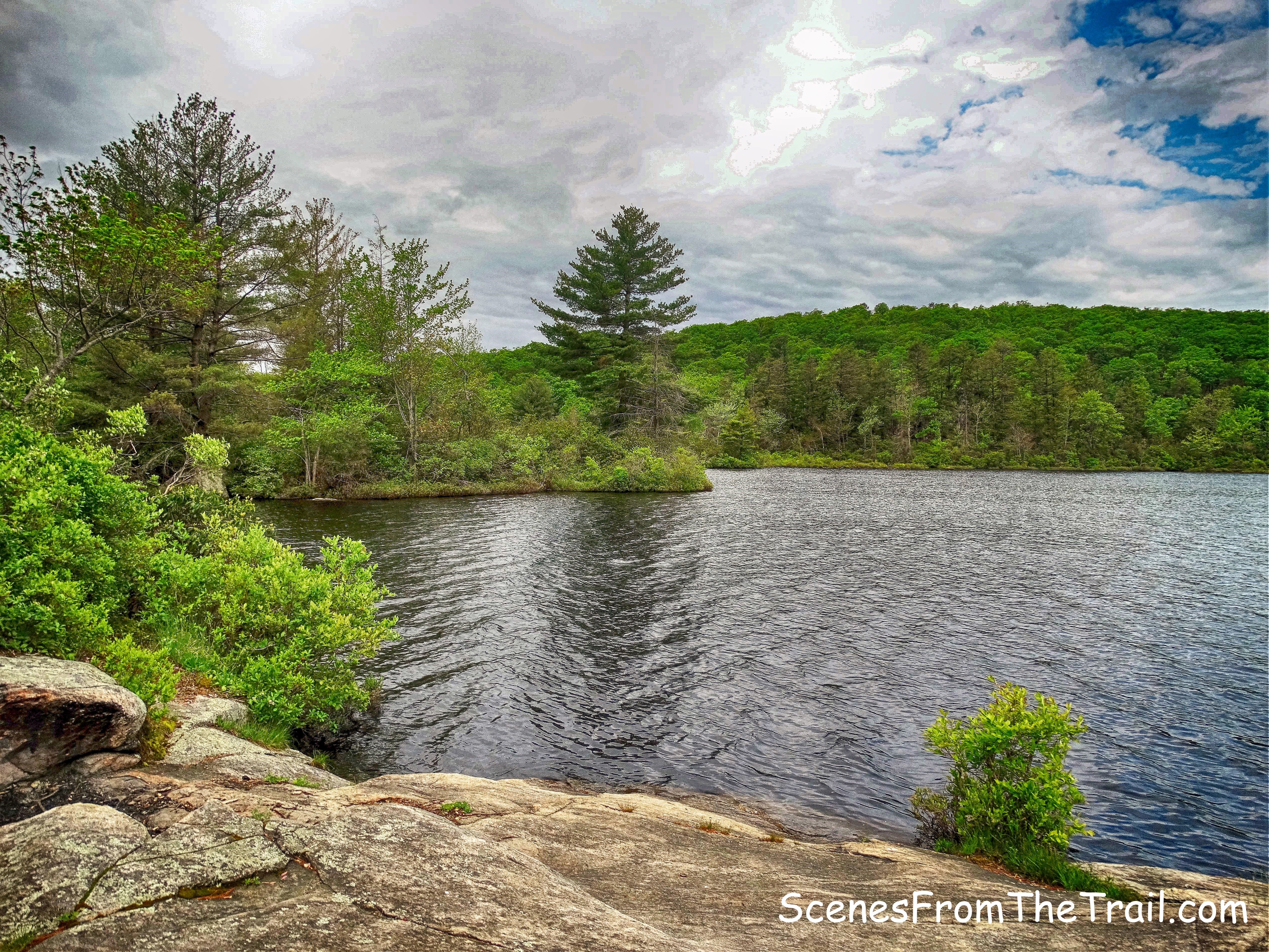
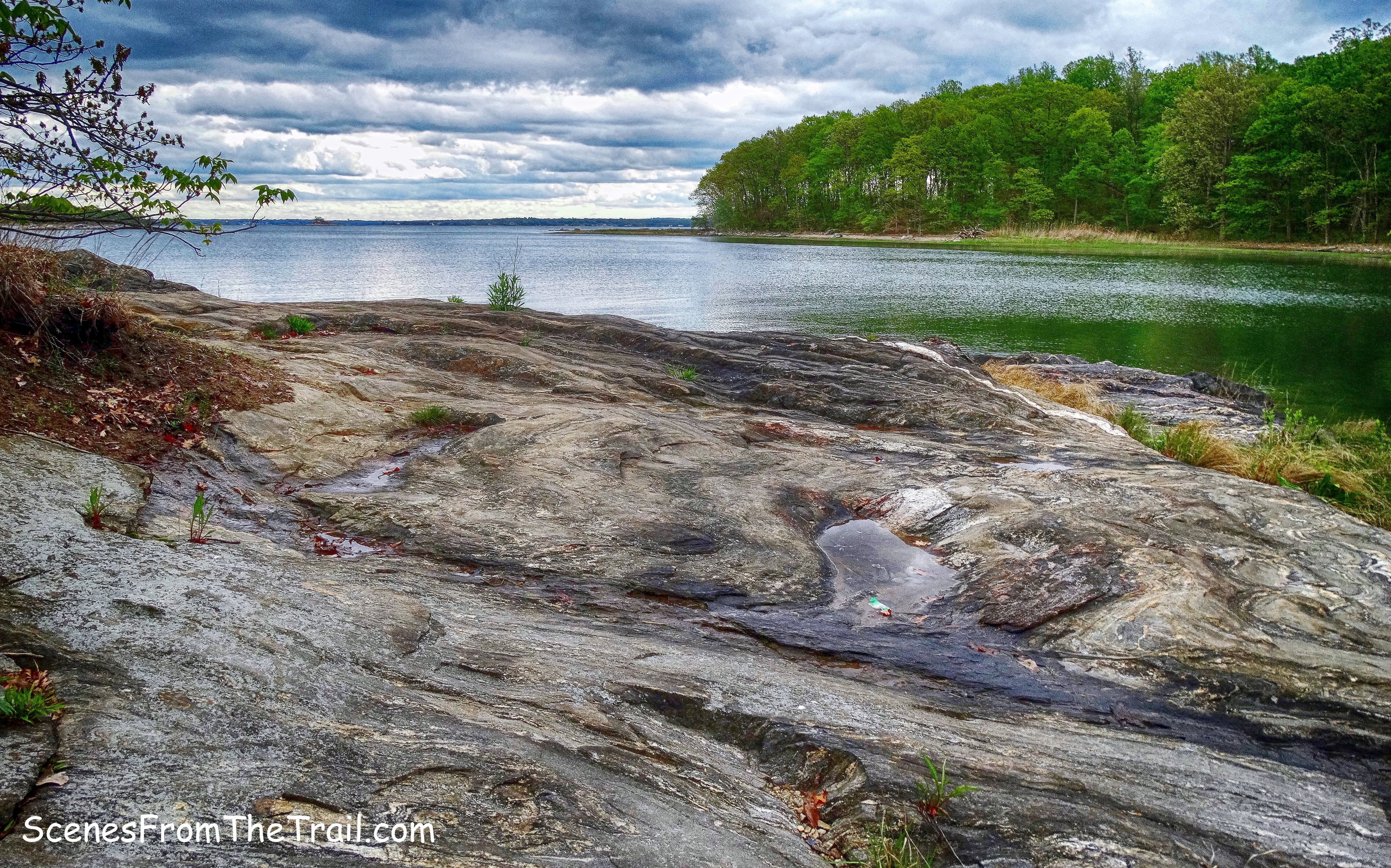
In a short distance, we arrived at the shore of Lake Sonoma. The star on the map denotes a viewpoint, but it is a partially obstructed view through the trees. We bushwacked a few feet northwest along the shore, to a rock outcrop that provides a nice view of the lake.

Lake Sonoma

Lake Sonoma

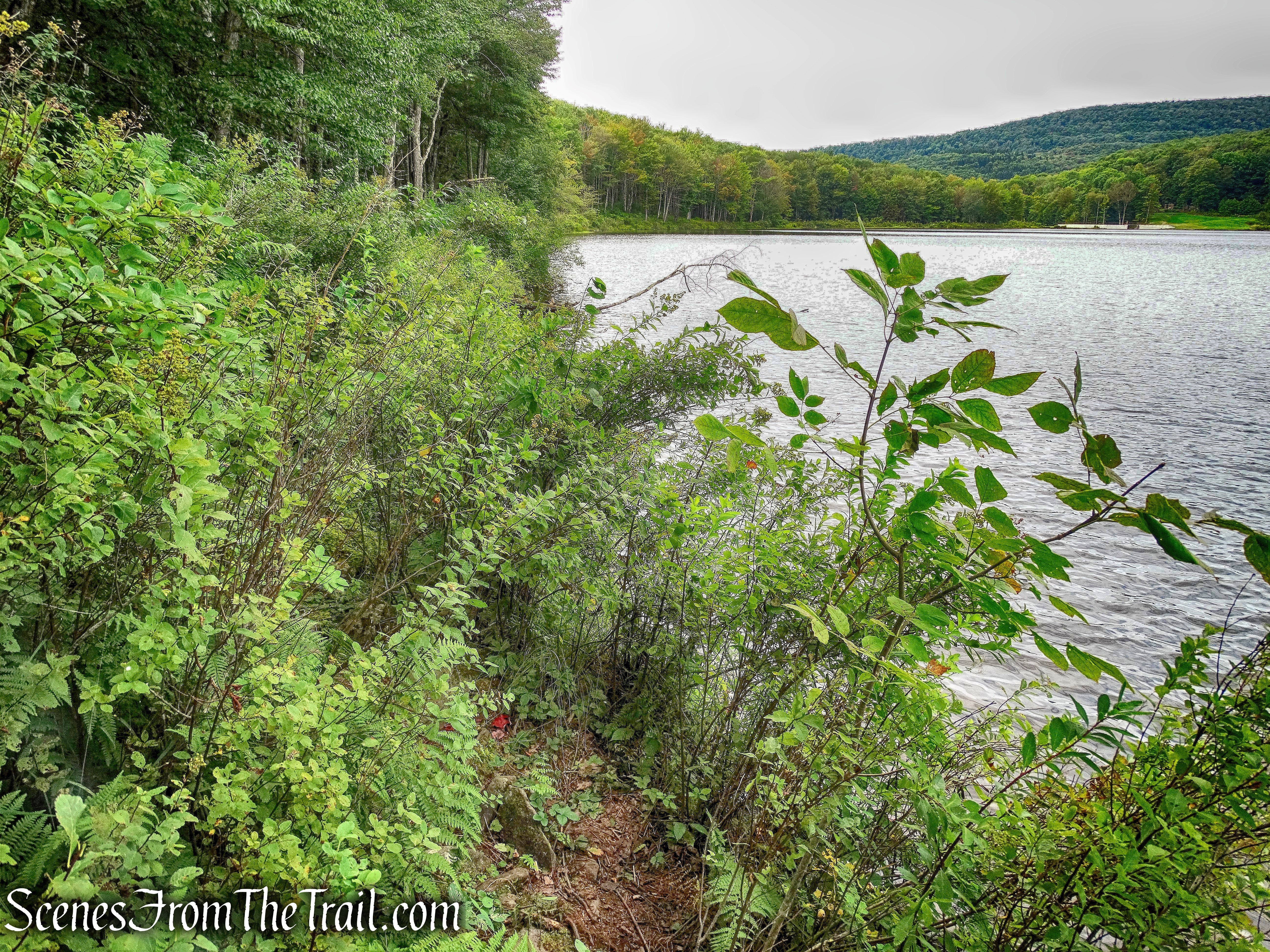
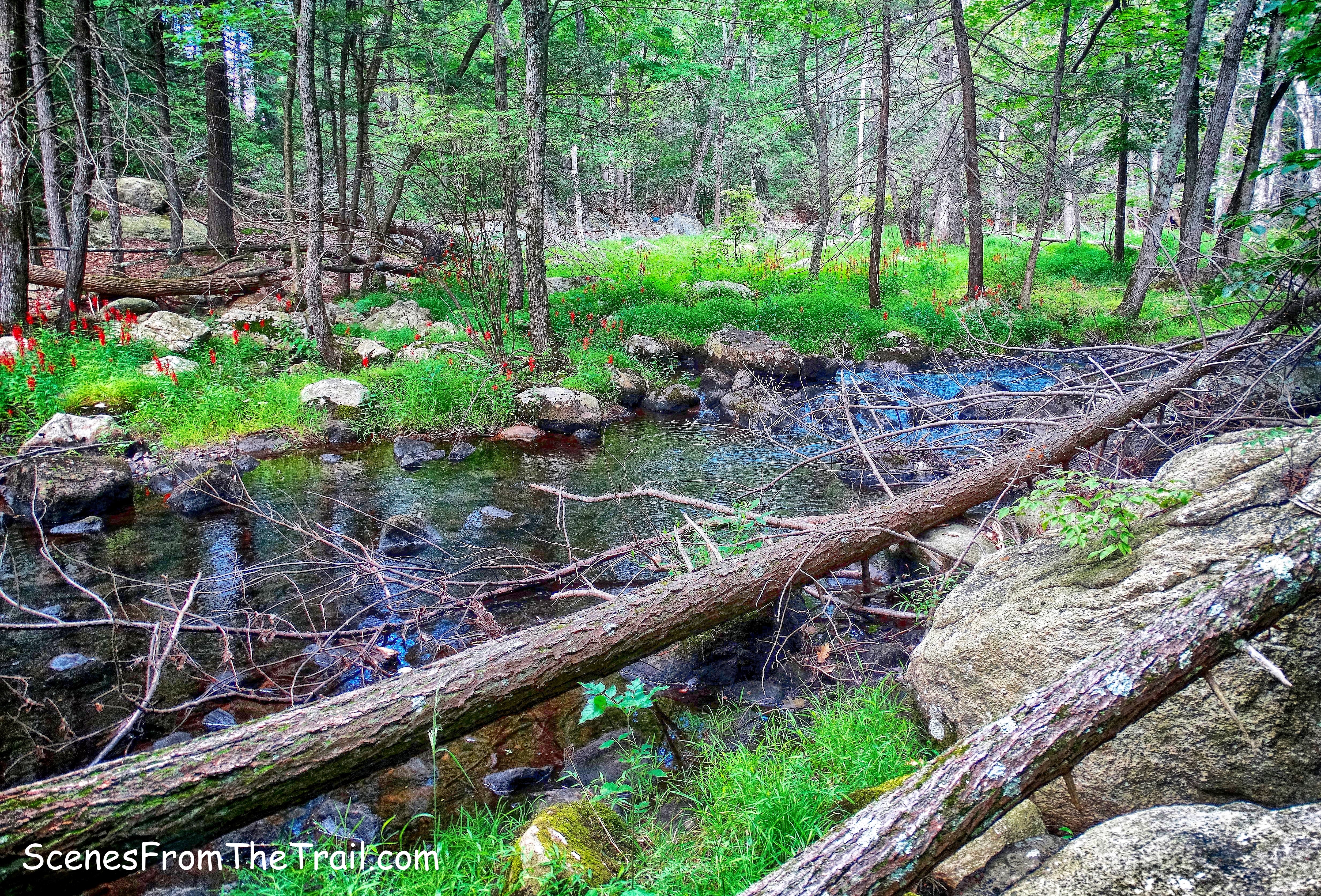
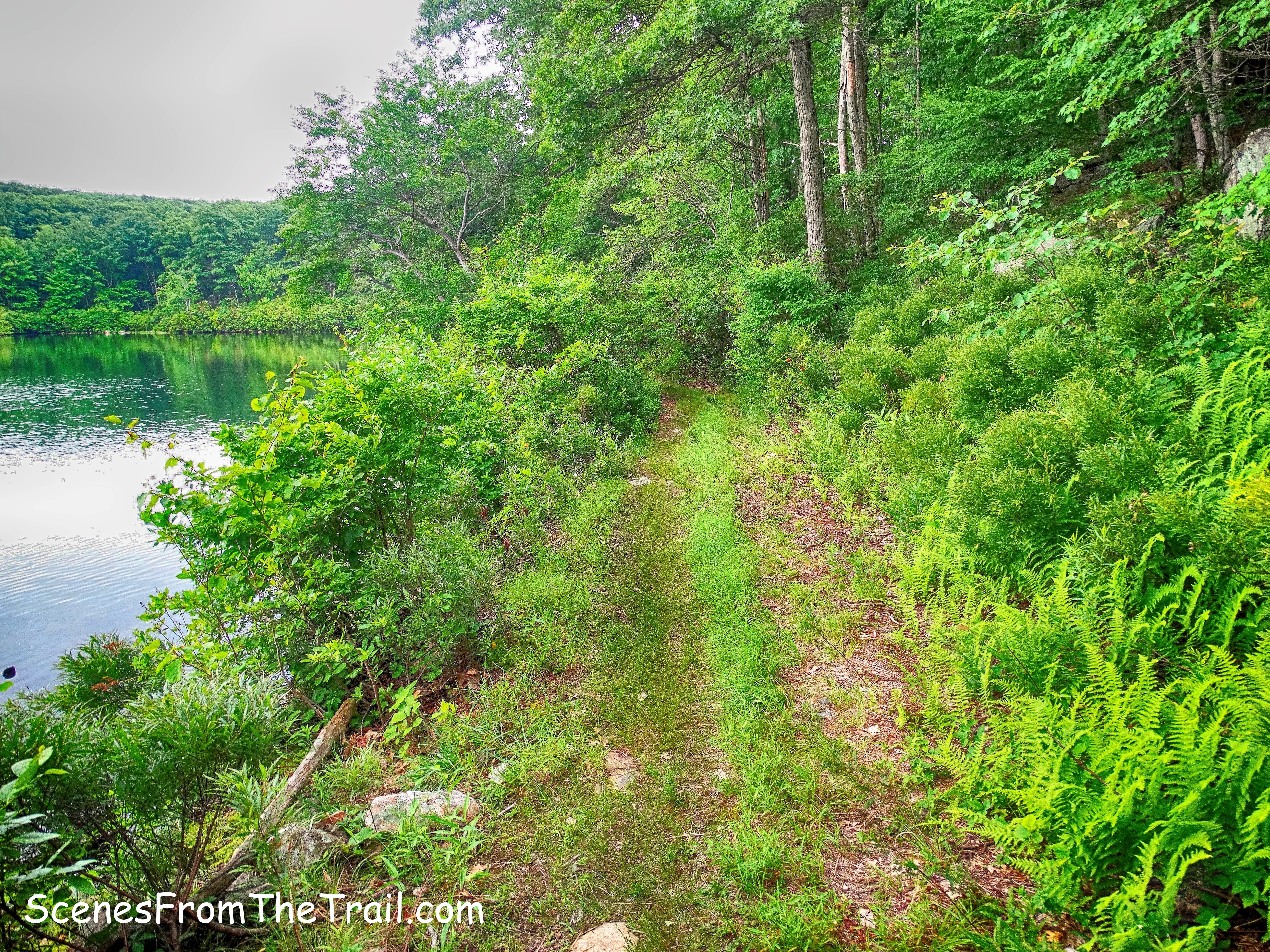
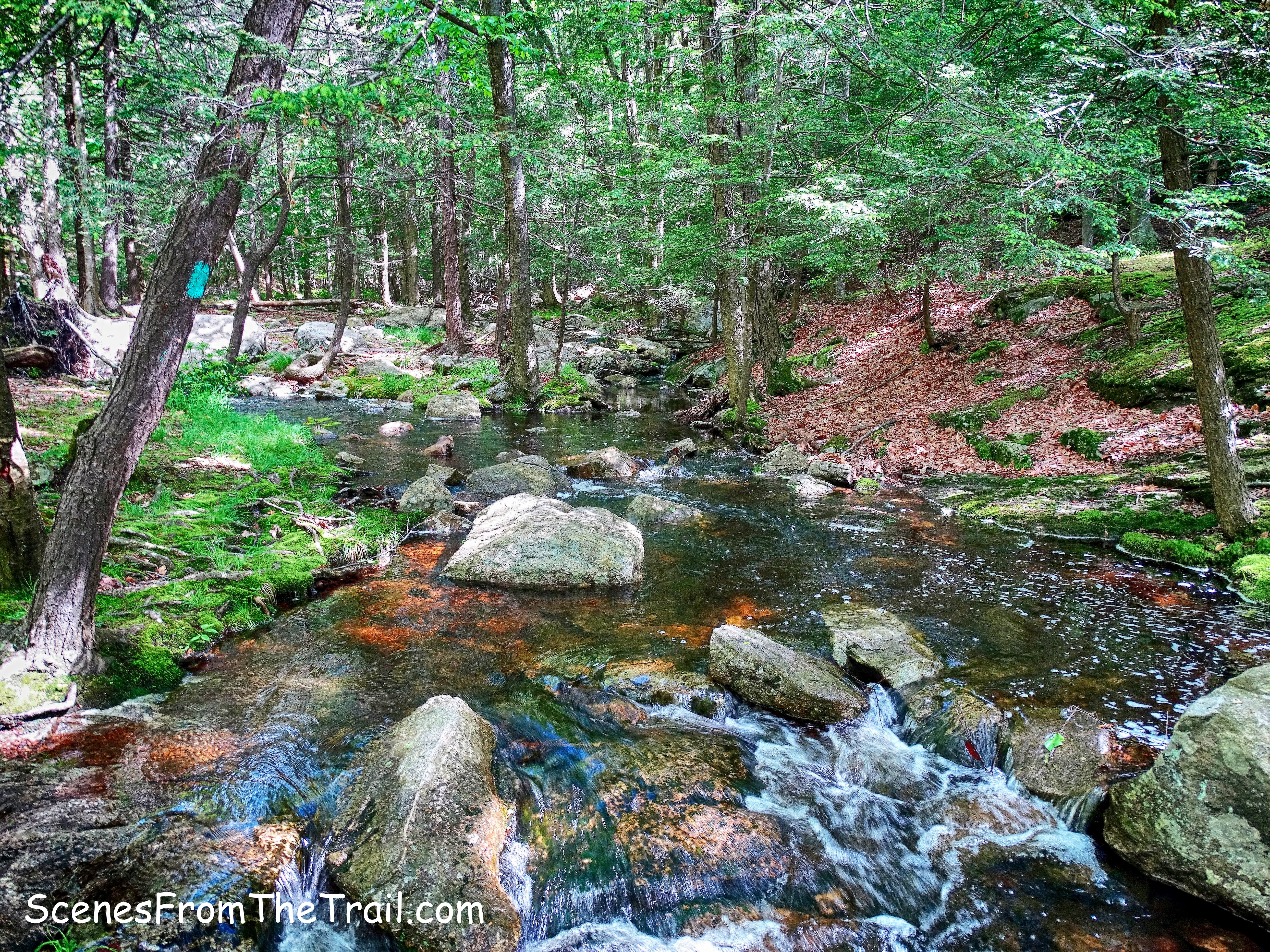
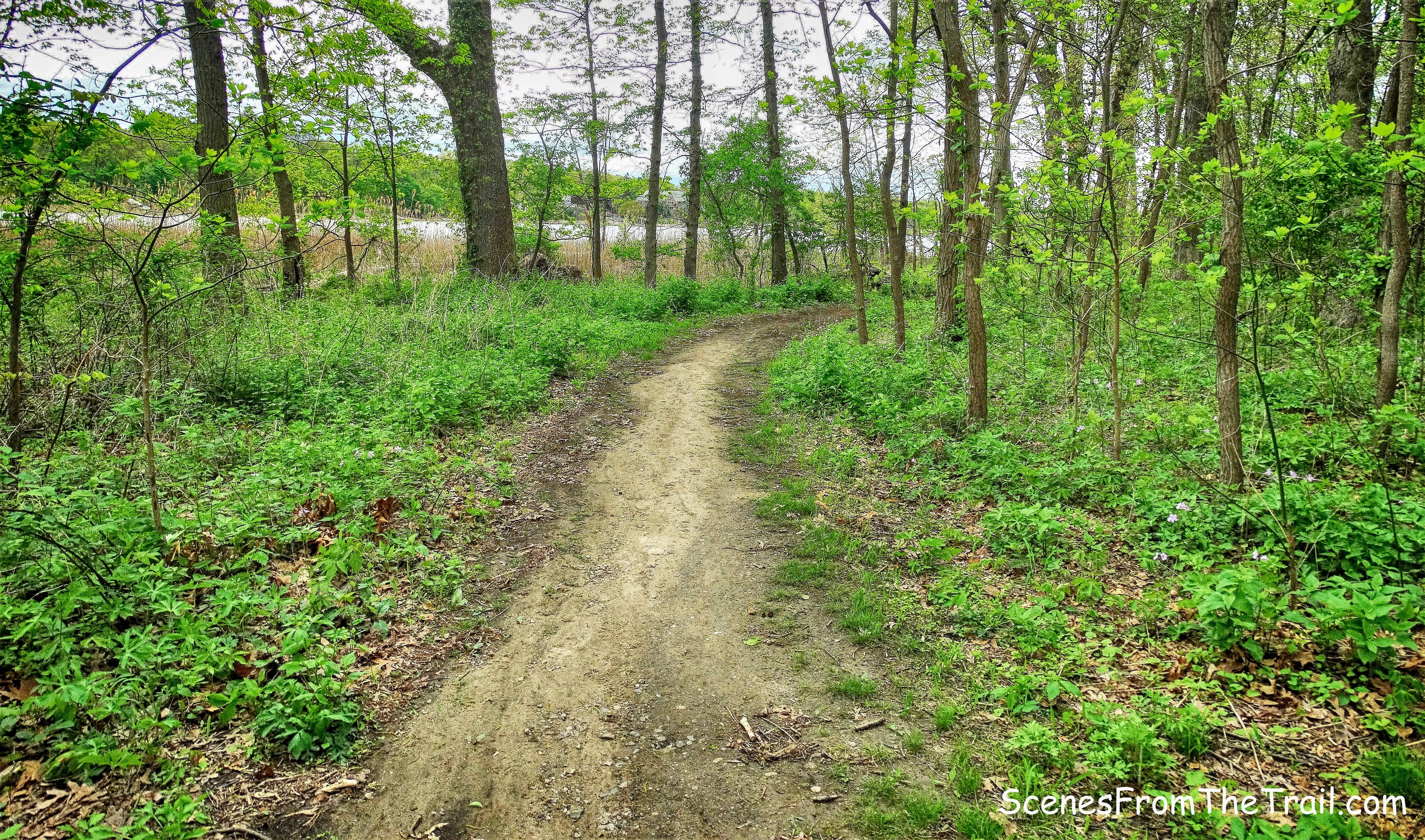
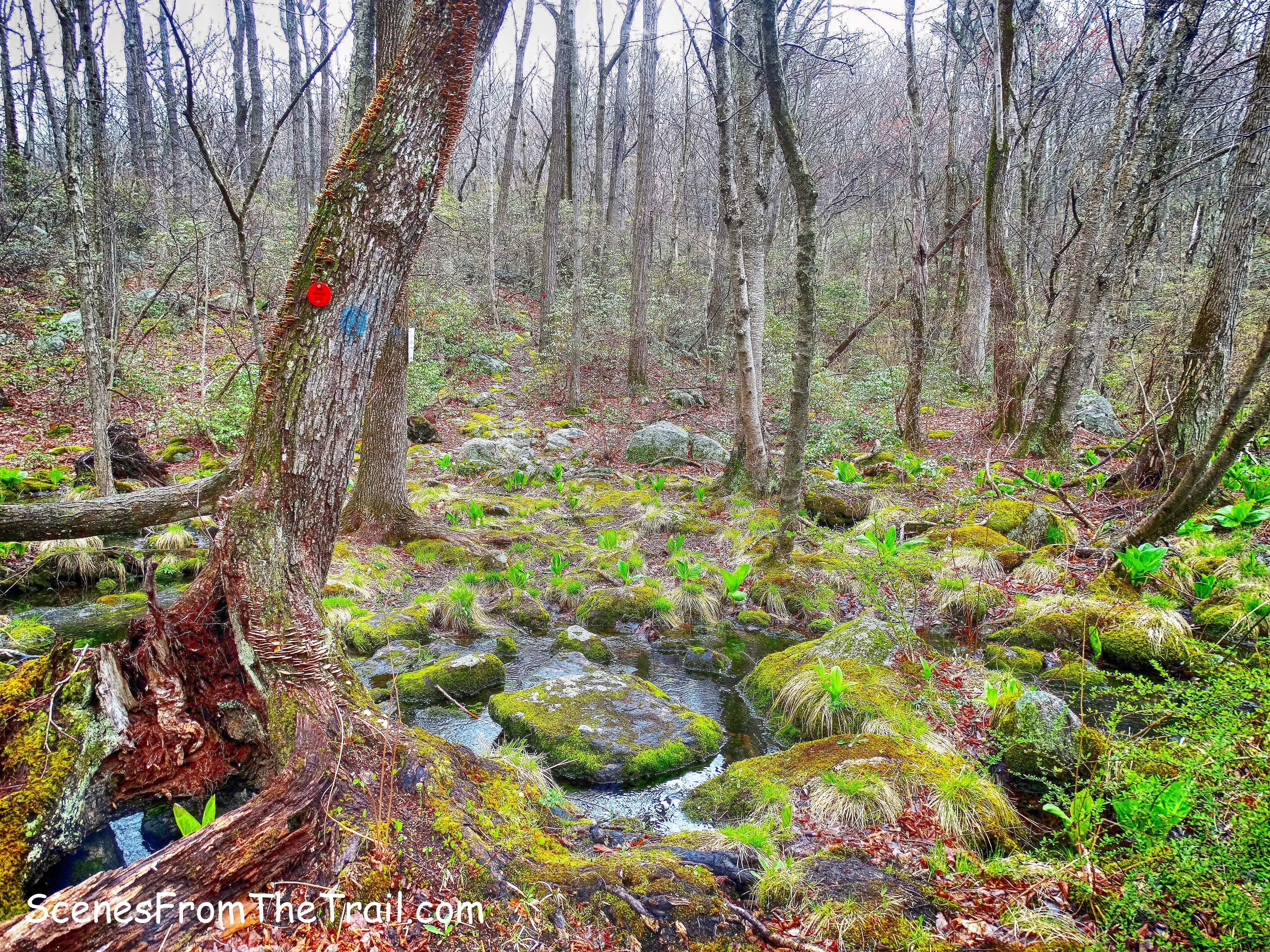
The trail parallels the lake for approximately 1/4 mile, with views of the lake through the trees. The Manaticut Point Trail then recrosses the woods road, briefly parallels a stream (dry), then crosses it.

dry stream on Manaticut Point Trail

dry stream on Manaticut Point Trail

The trail then turns sharply left, crosses another woods road, and begins a steady climb.

Manaticut Point Trail

Manaticut Point Trail

After the initial ascent, the trail bears left, descends briefly then turns left again. It then climbs to reach a junction with the white-blazed Overlook Rock Trail, which joins from the right. Now following both the white and yellow blazes, the trail turns right at the double blazes. Just to the left is Overlook Rock and we climbed up to have a look.

turn left to Overlook Rock

turn left to Overlook Rock

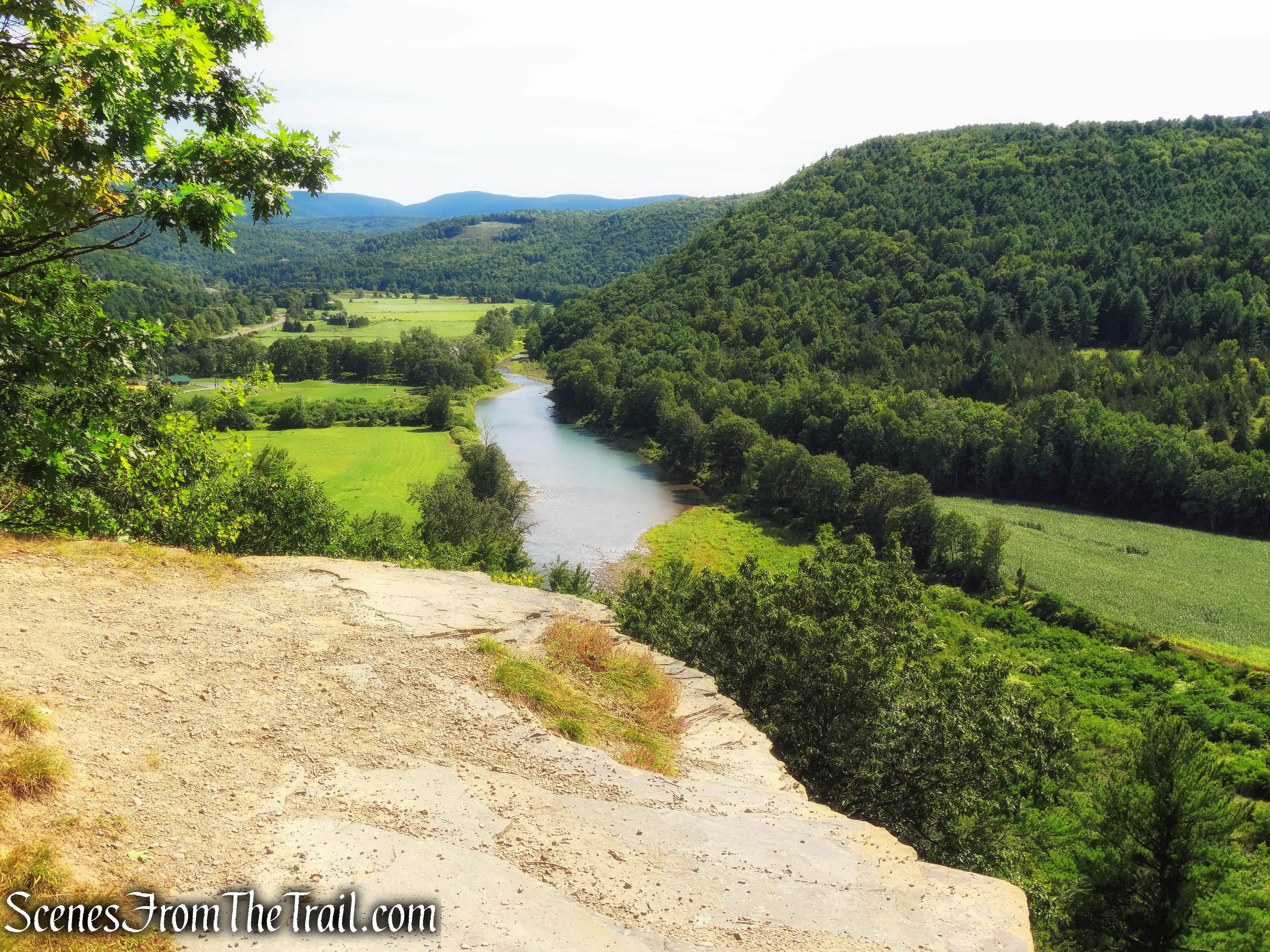
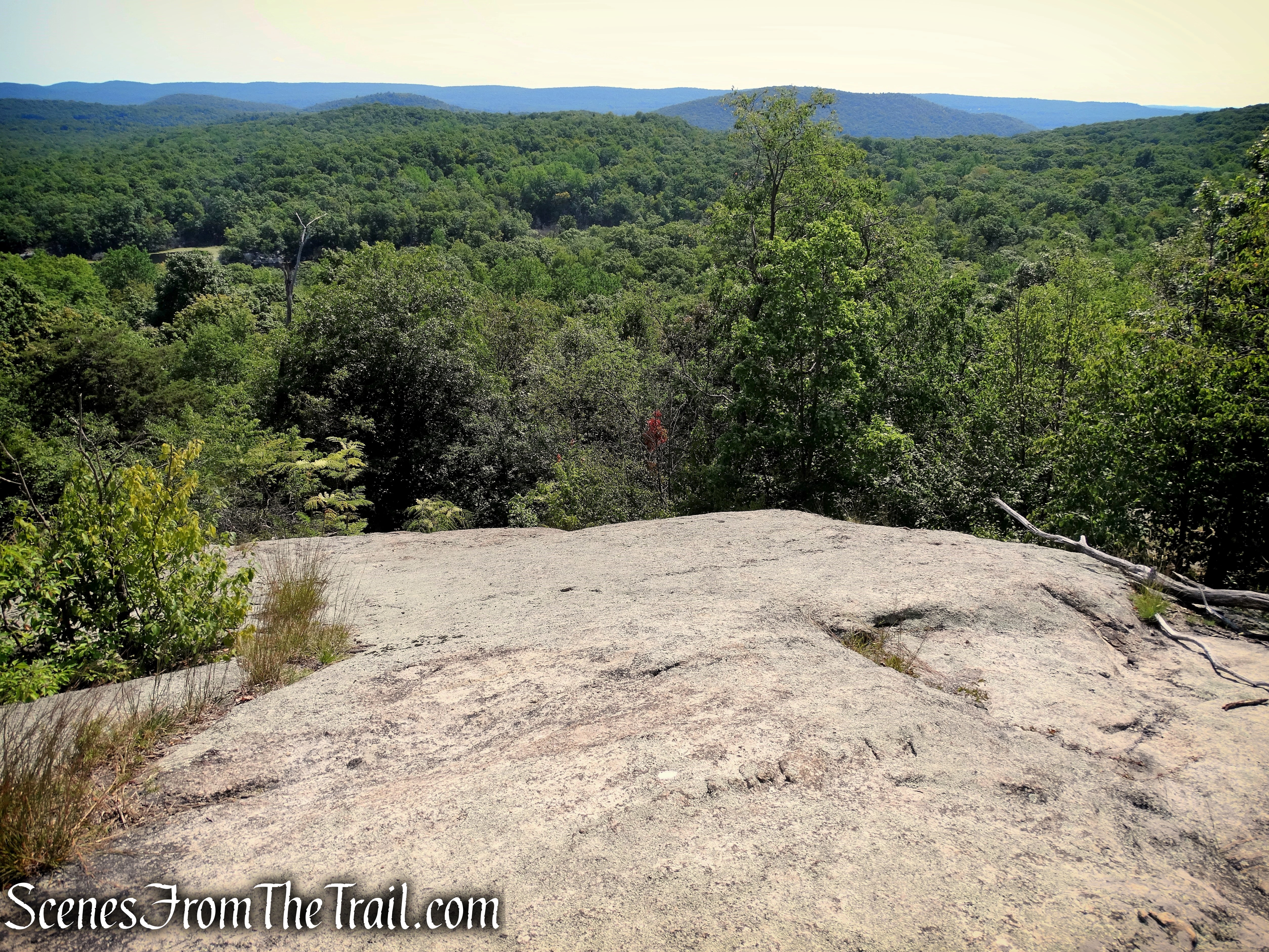
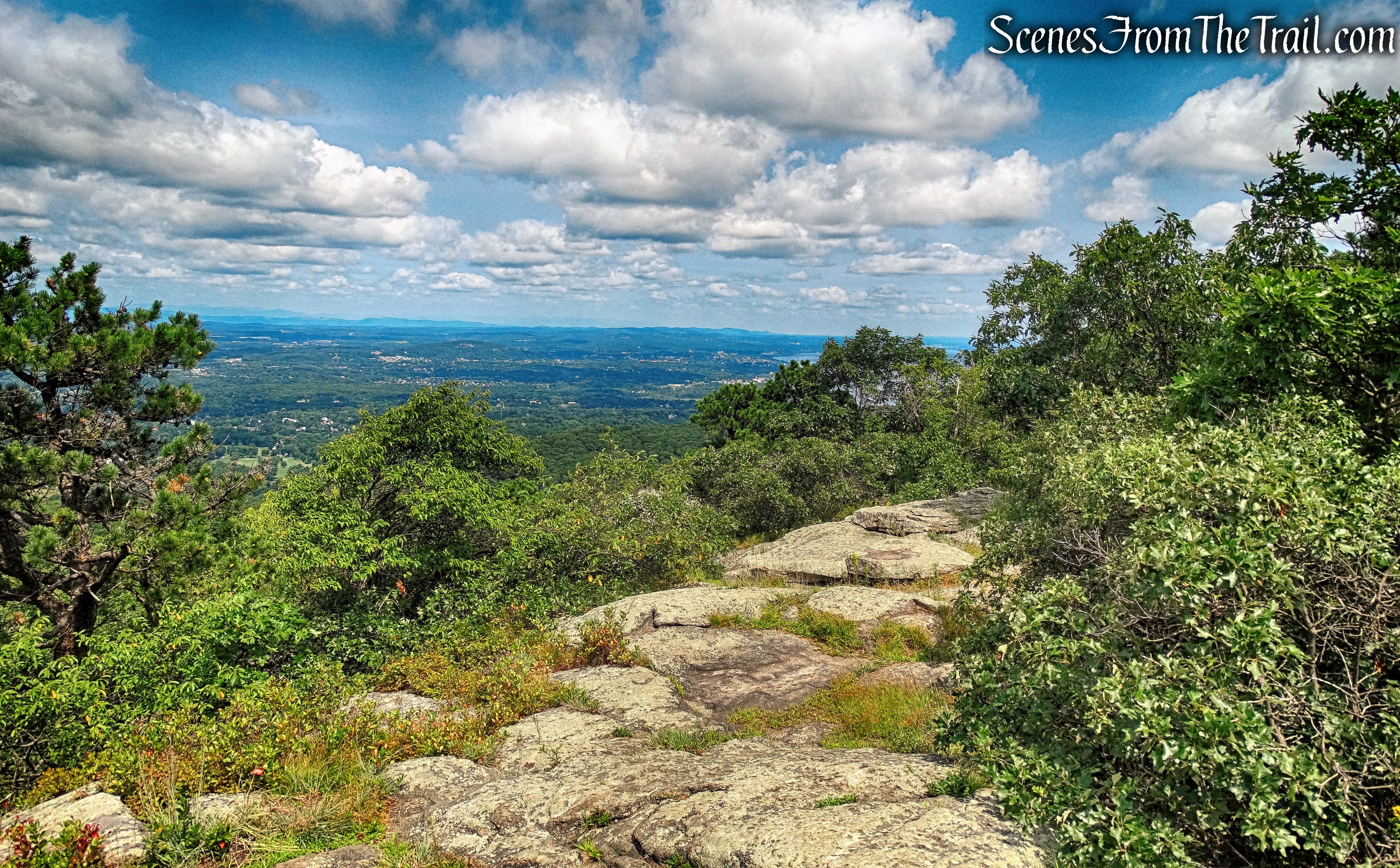
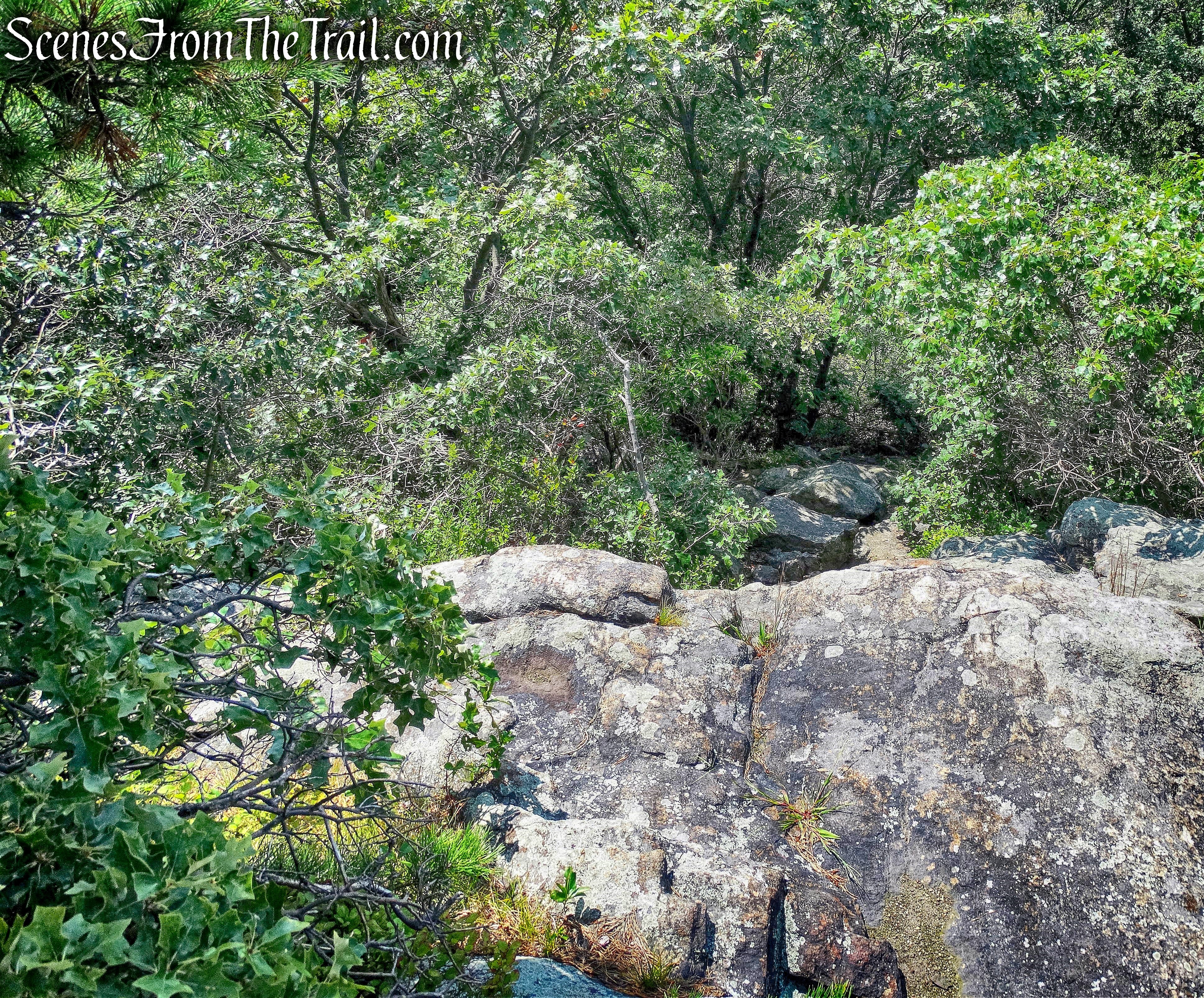
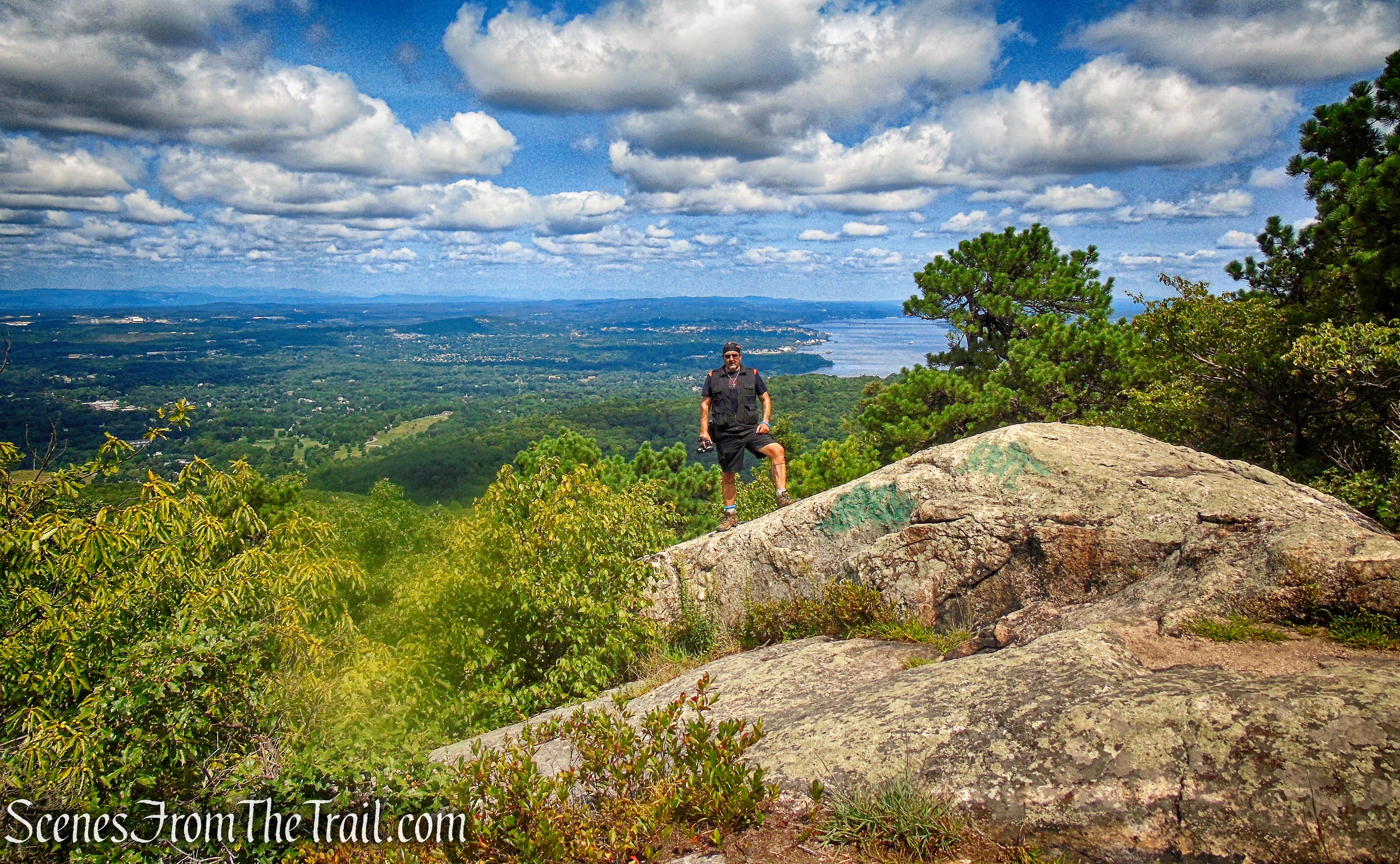
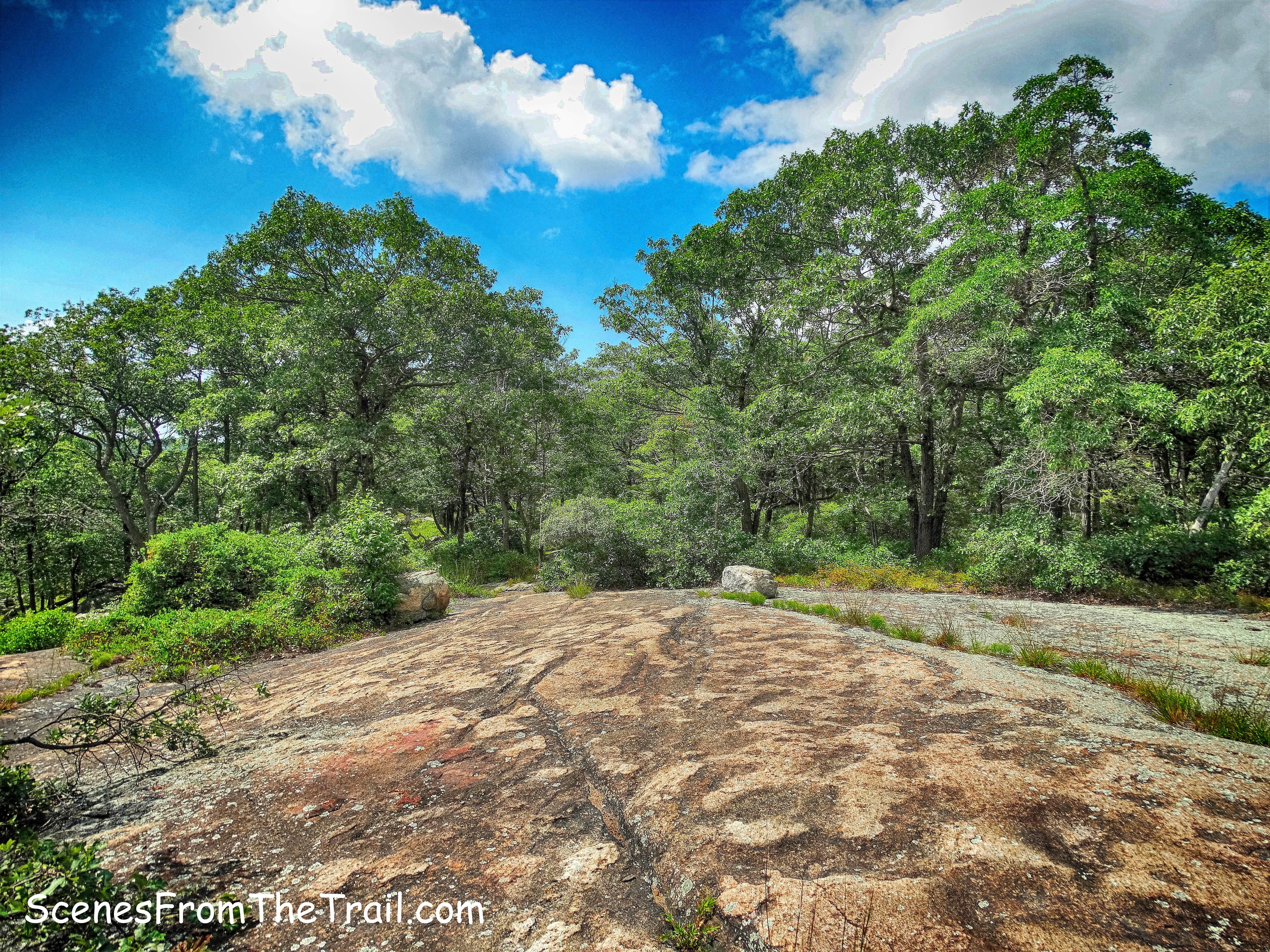
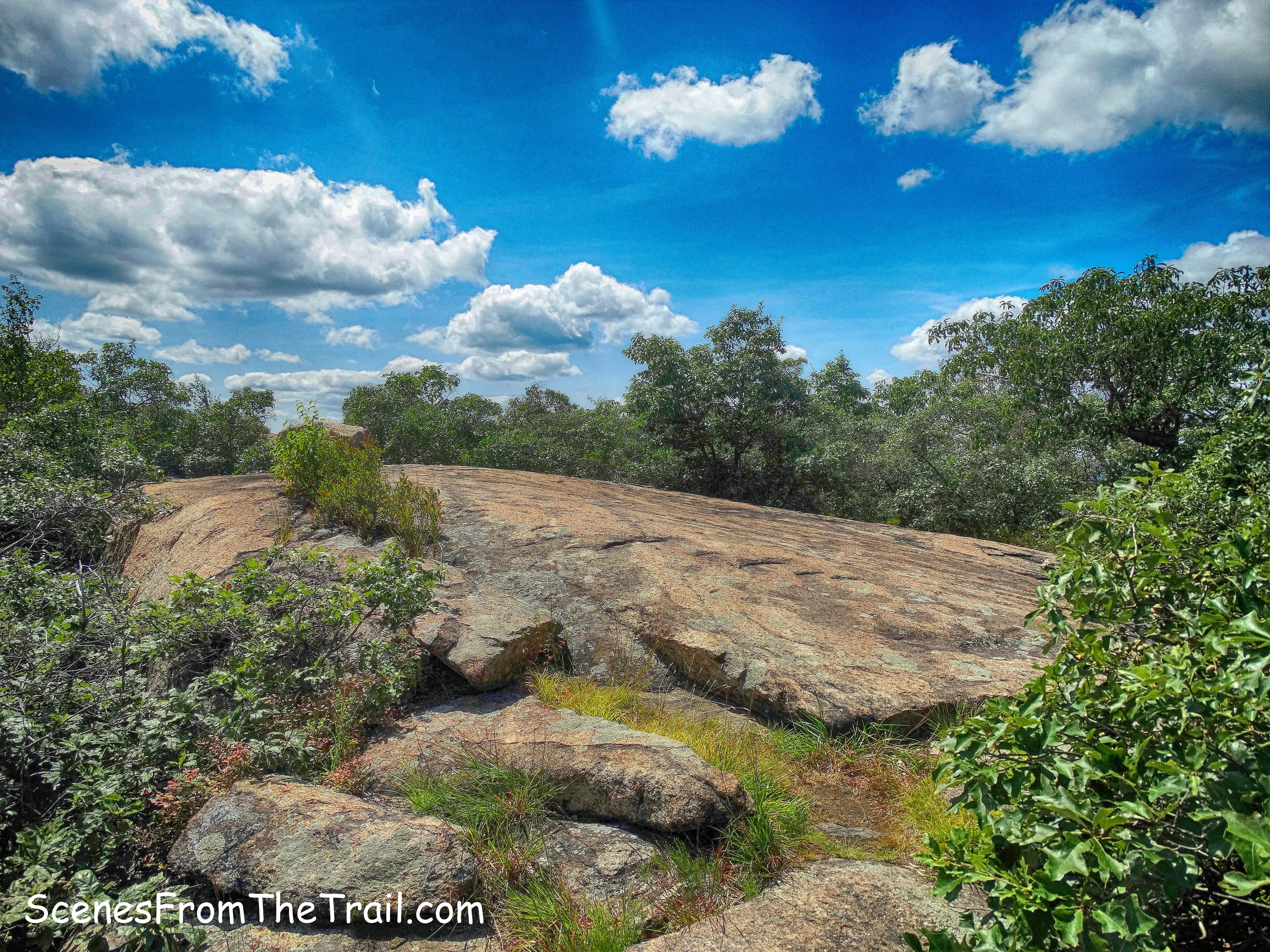
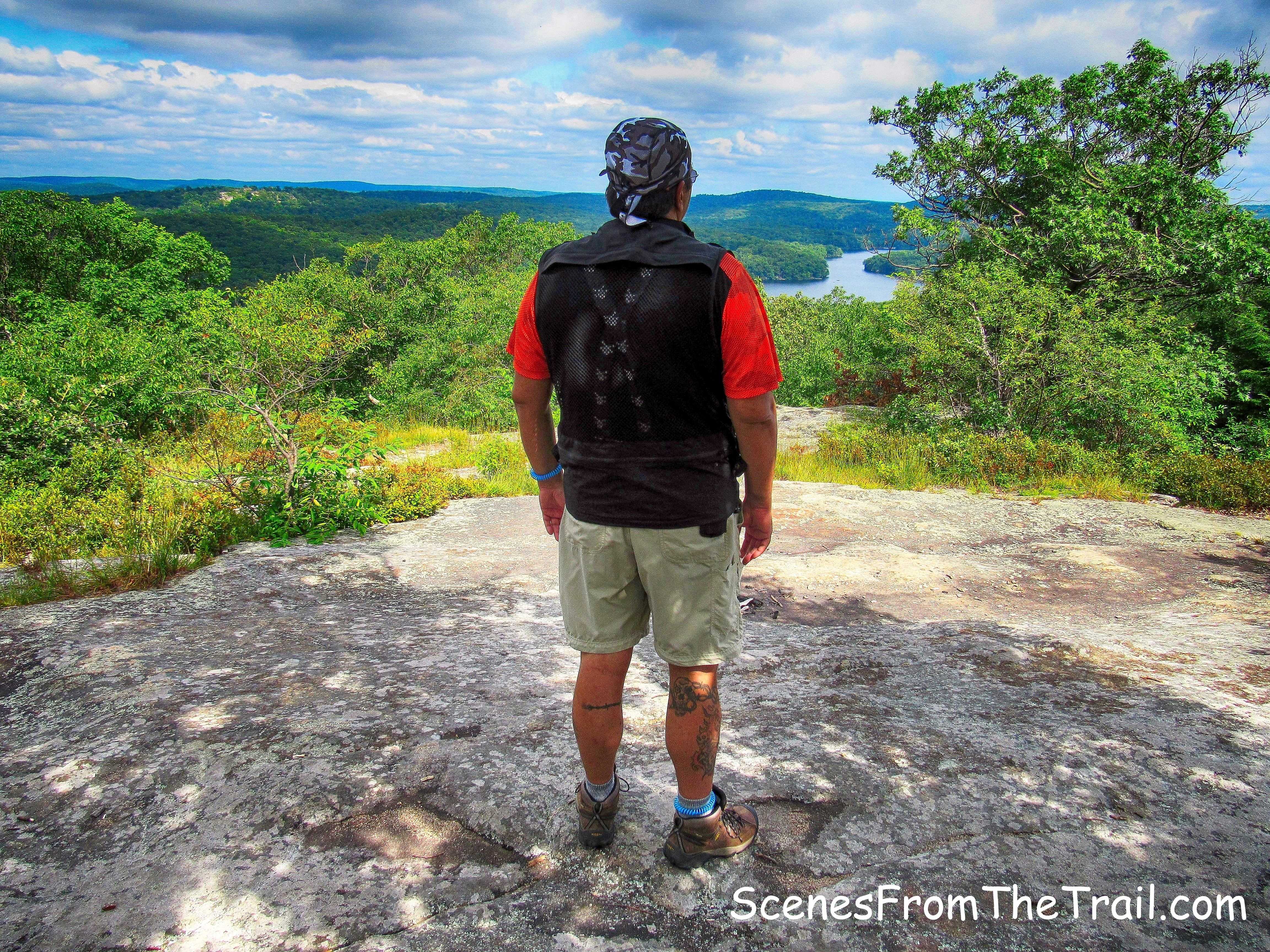
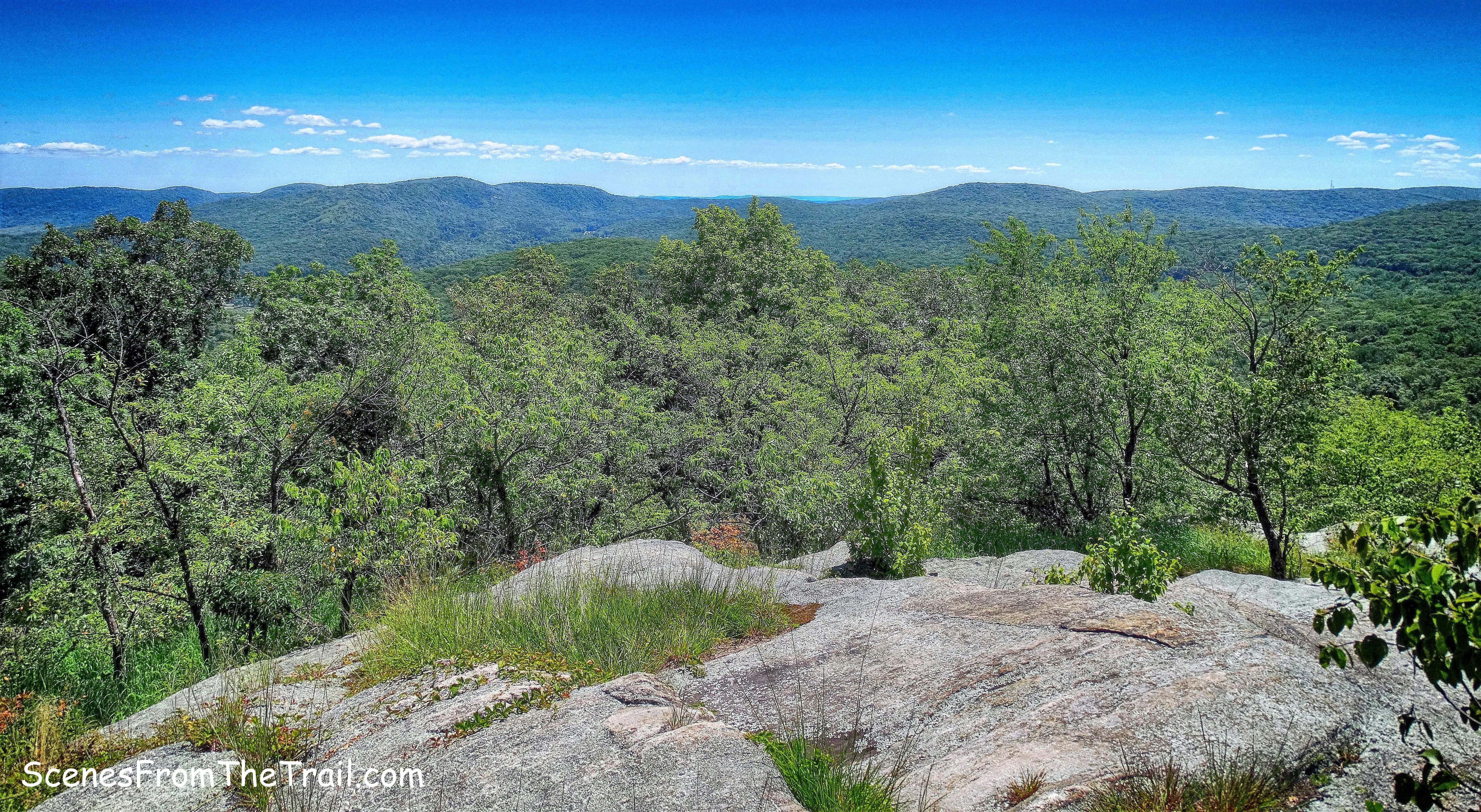
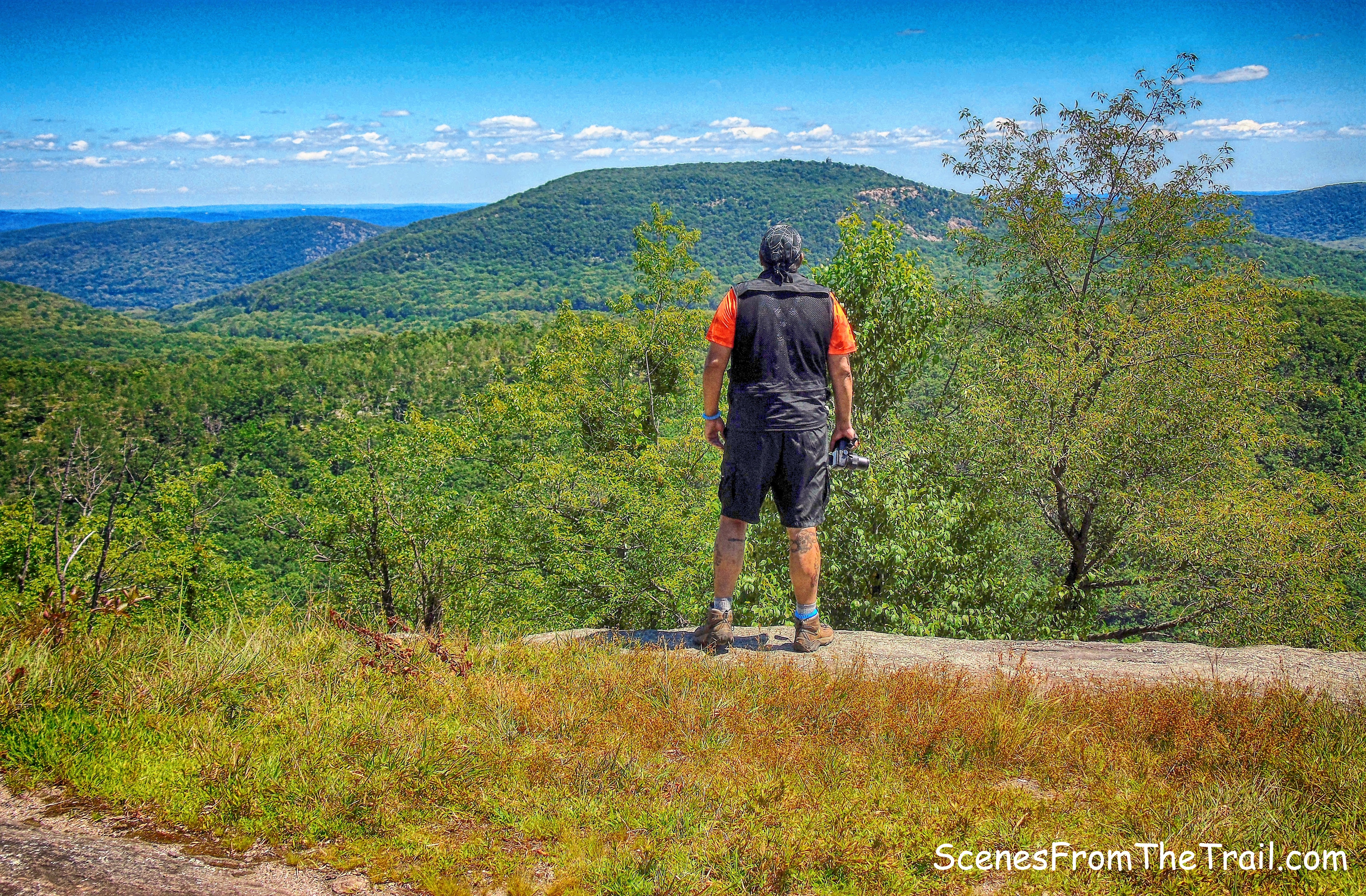
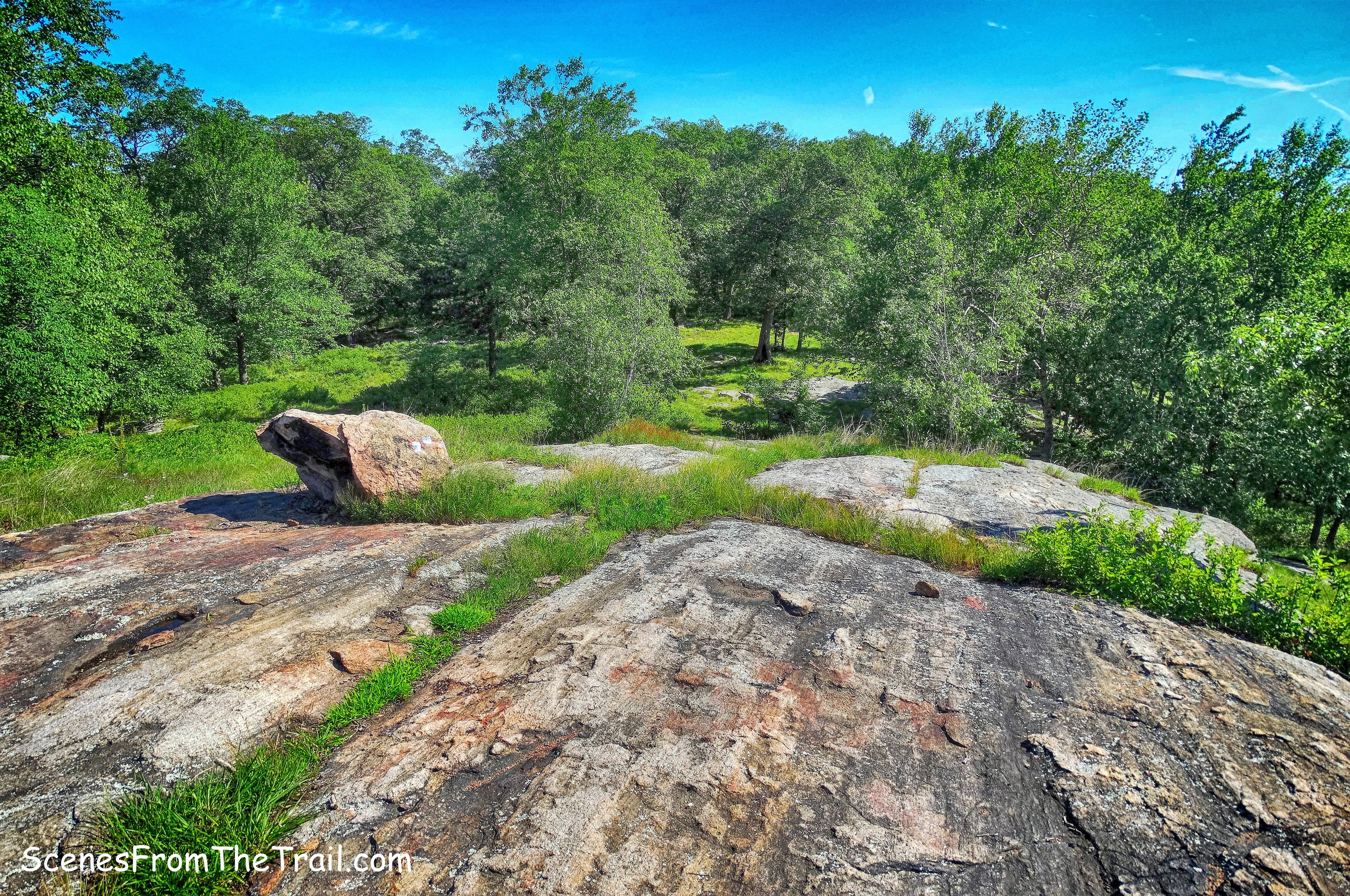
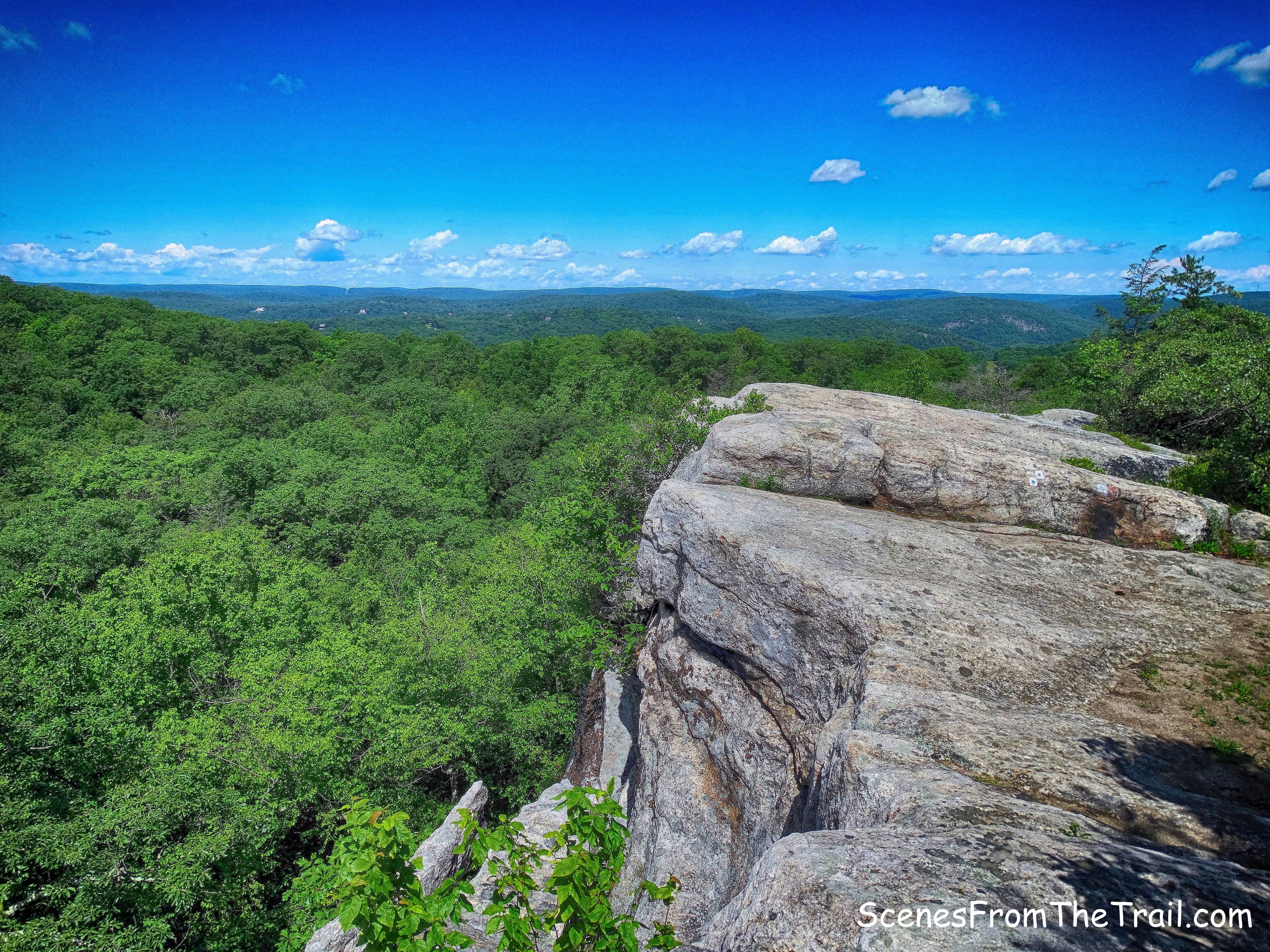
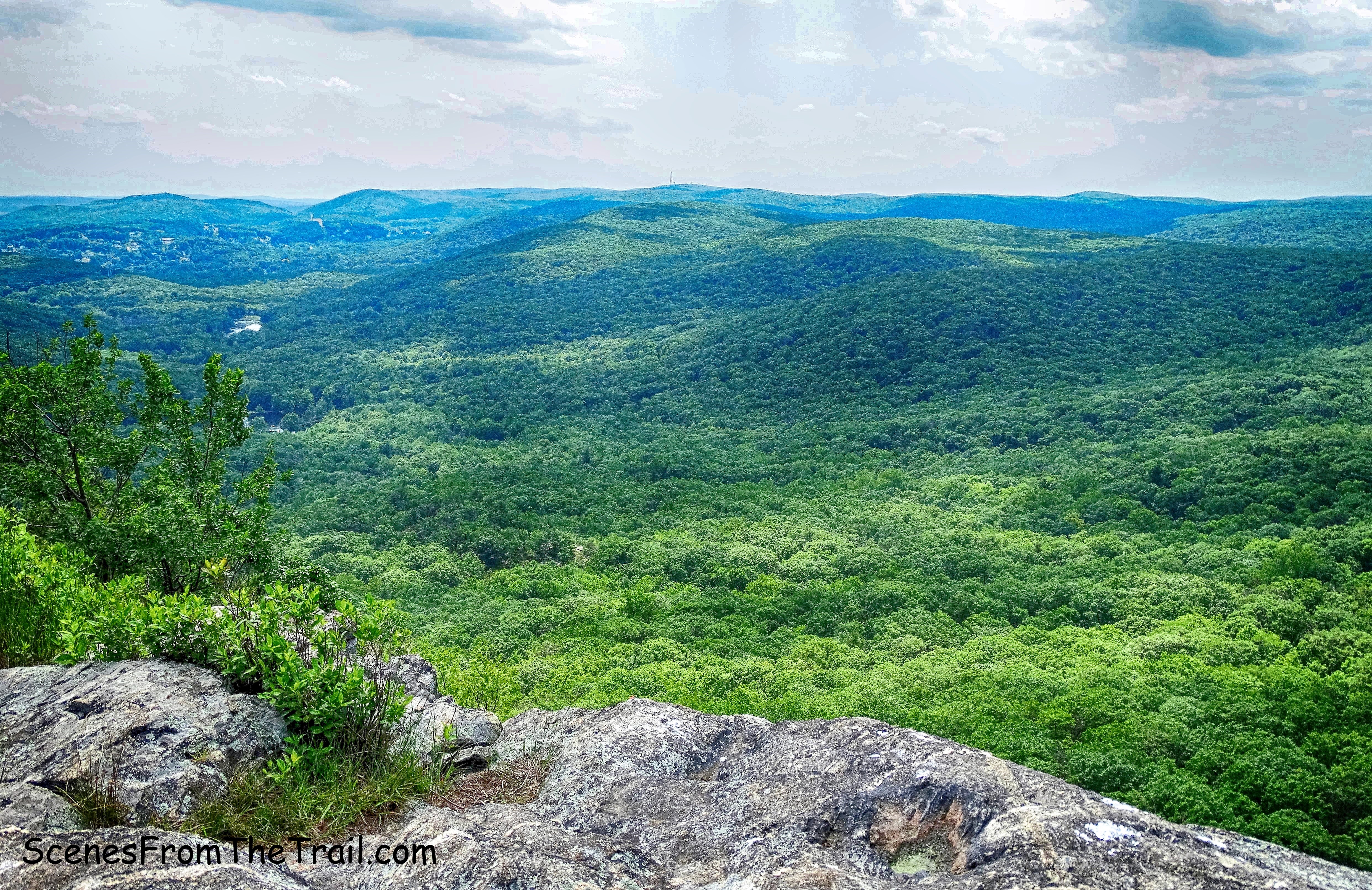
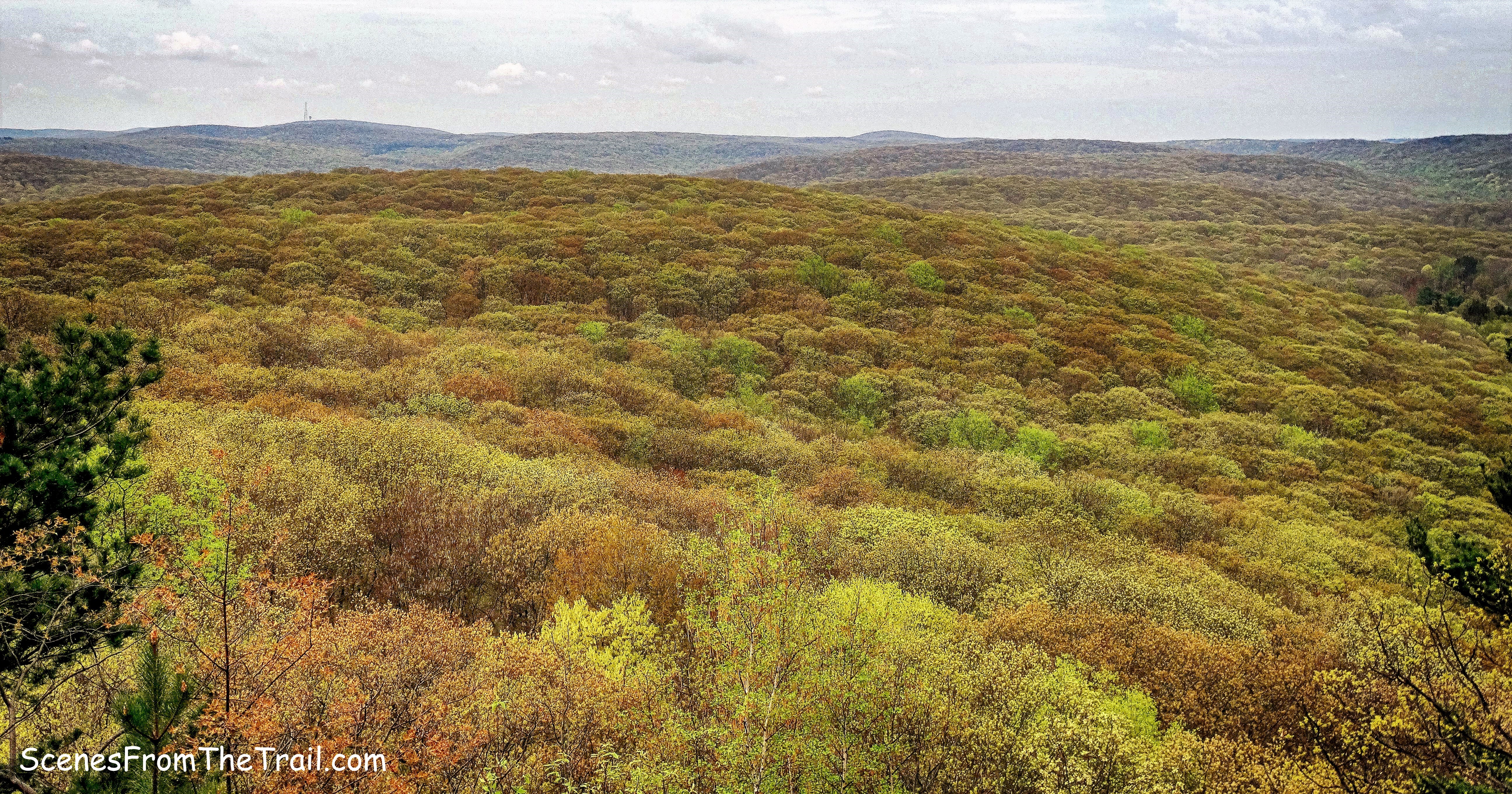
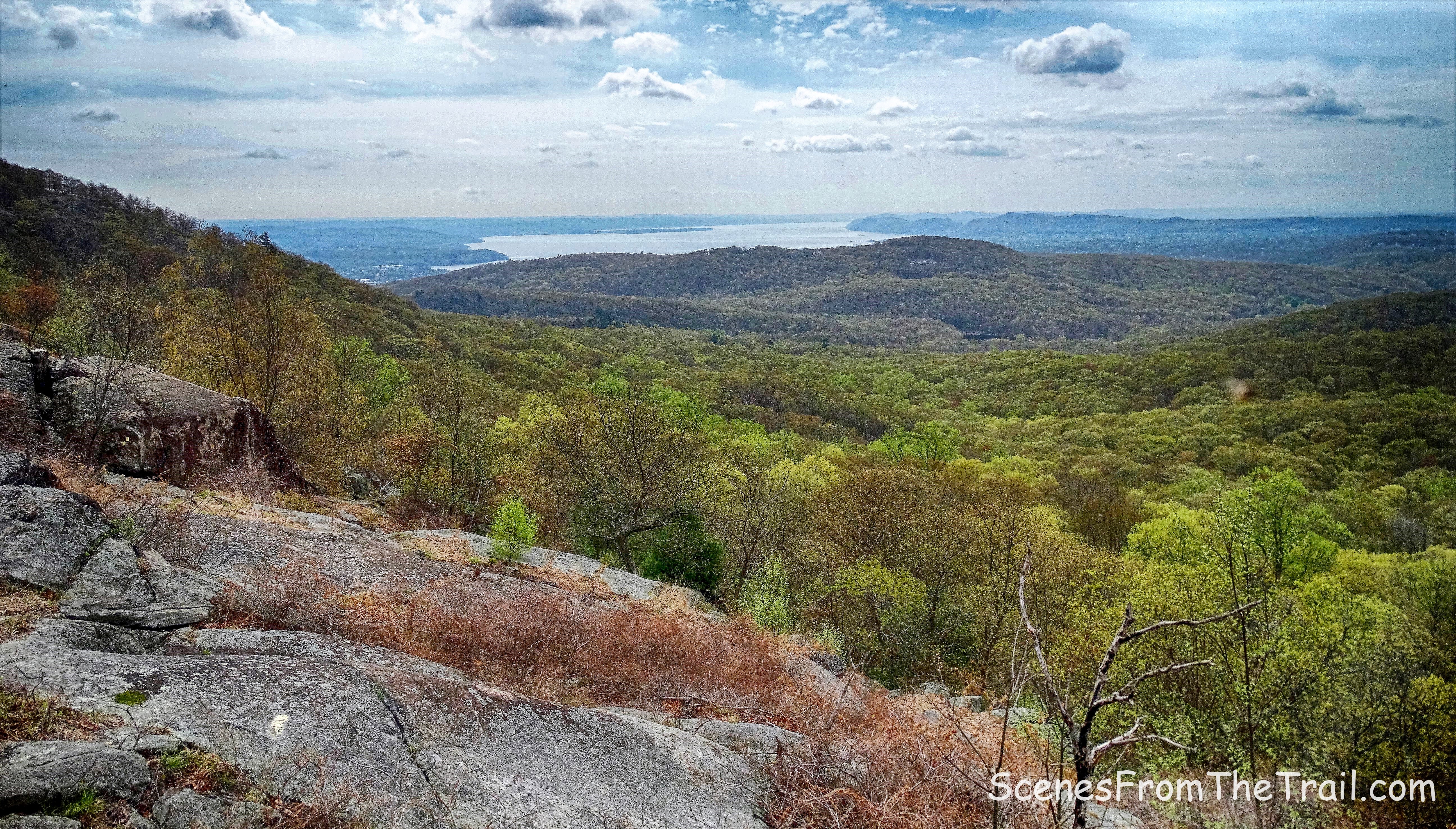
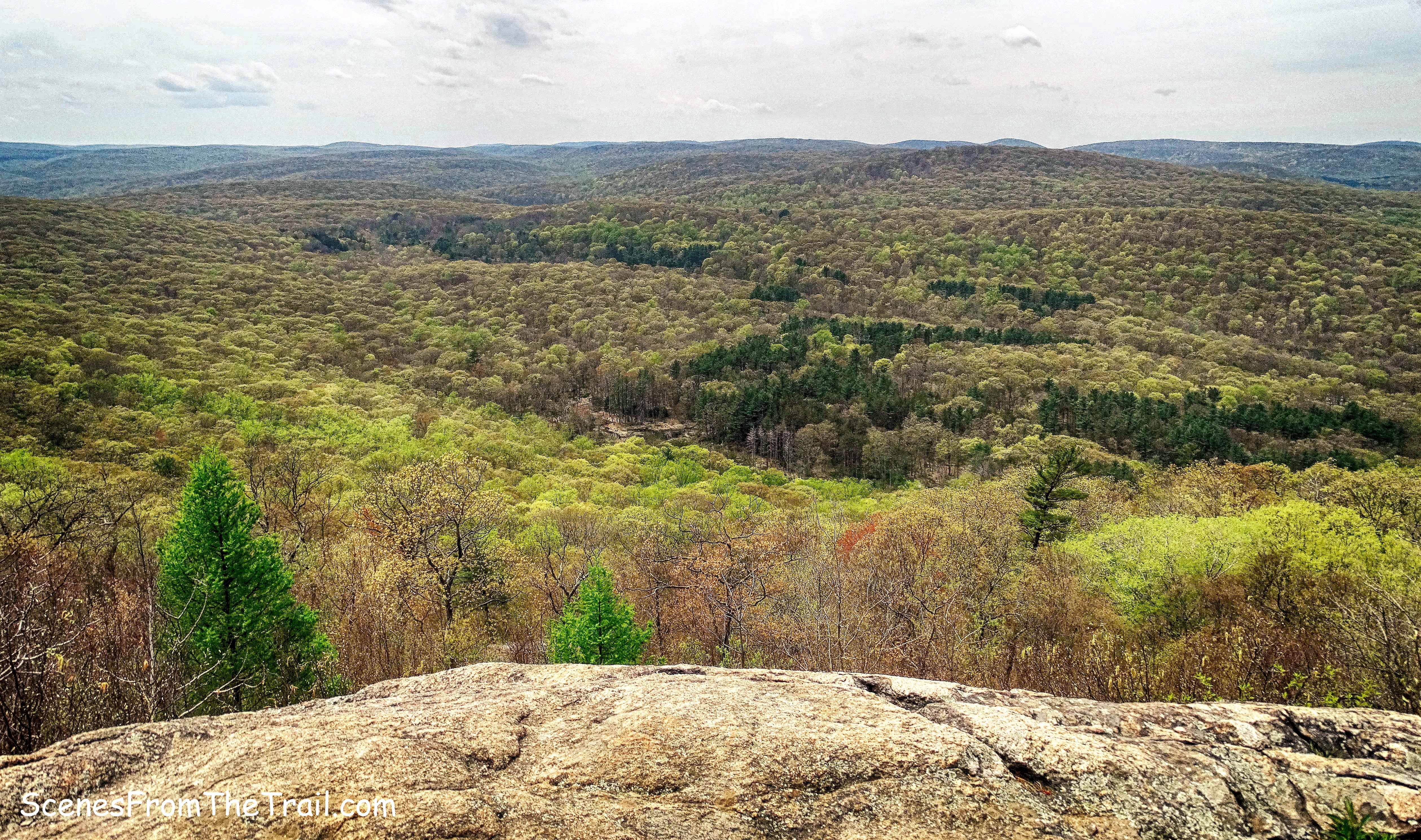
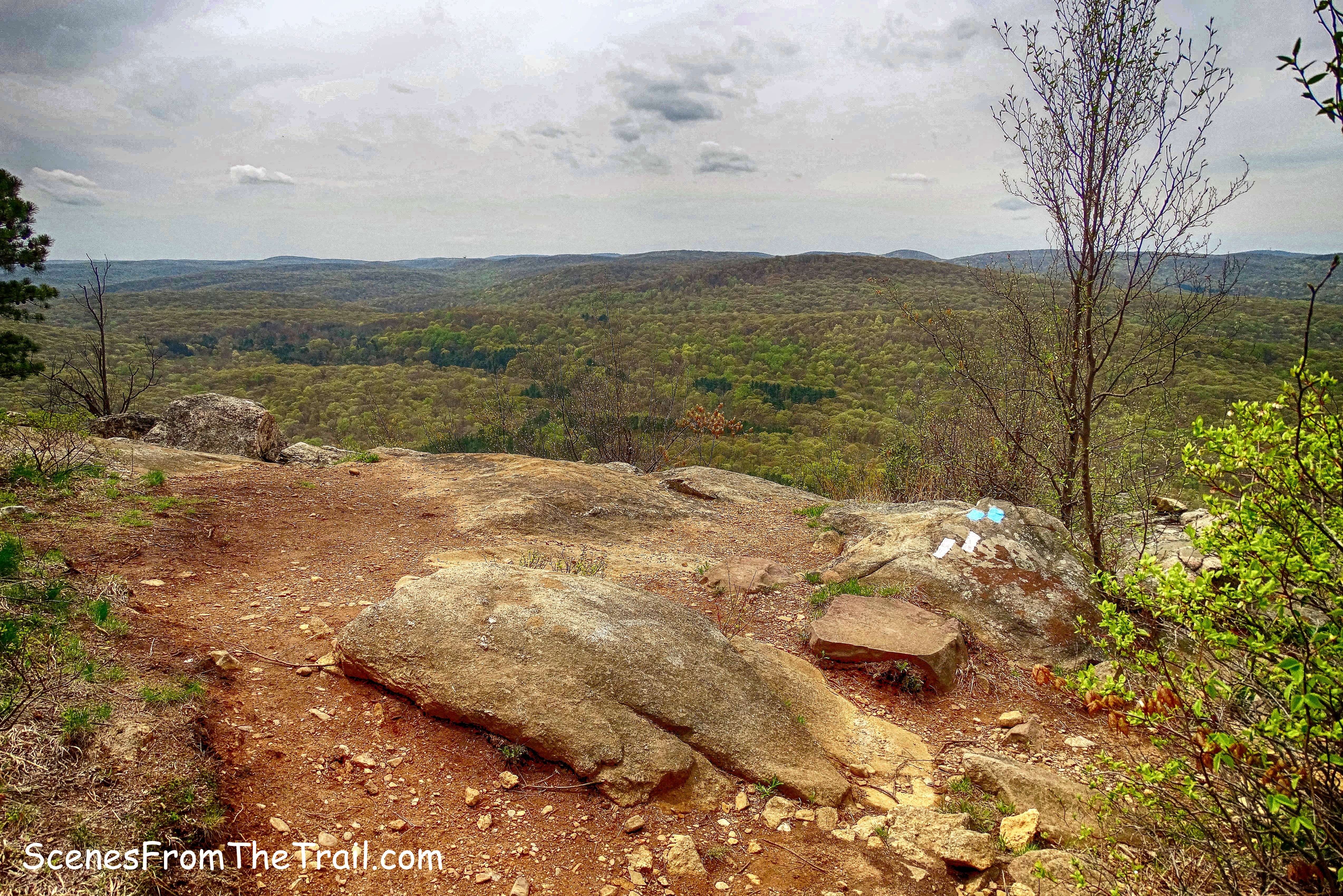
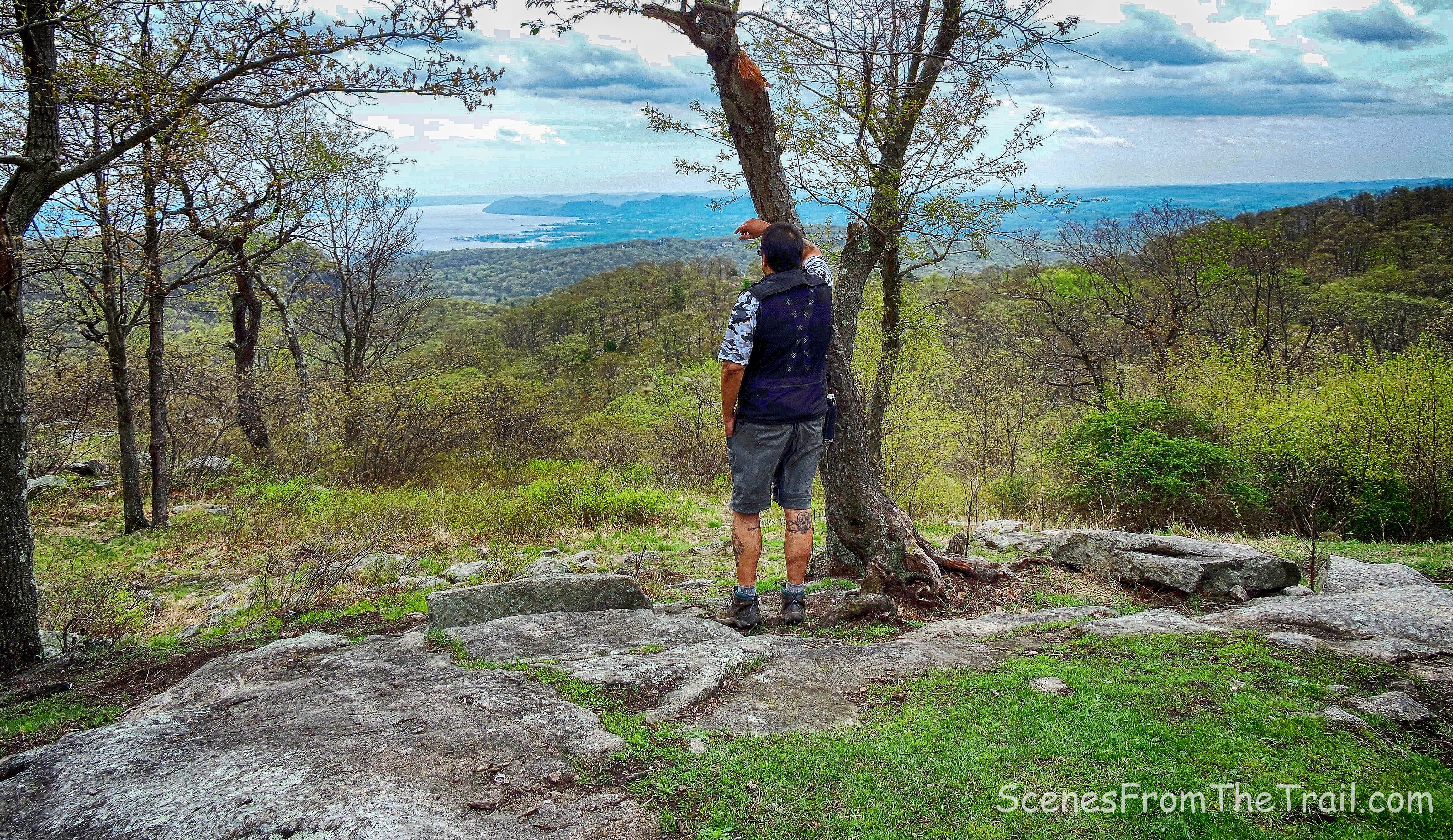
We climbed up to the immense exposed rock slab to check out the view. The steep sloping rock face provides a nice east-facing view.

Overlook Rock

Overlook Rock

Even though it was only 11:00 am, this was a great spot to relax and have a snack. We had now hiked approximately 2 miles.

view from Overlook Rock

view from Overlook Rock

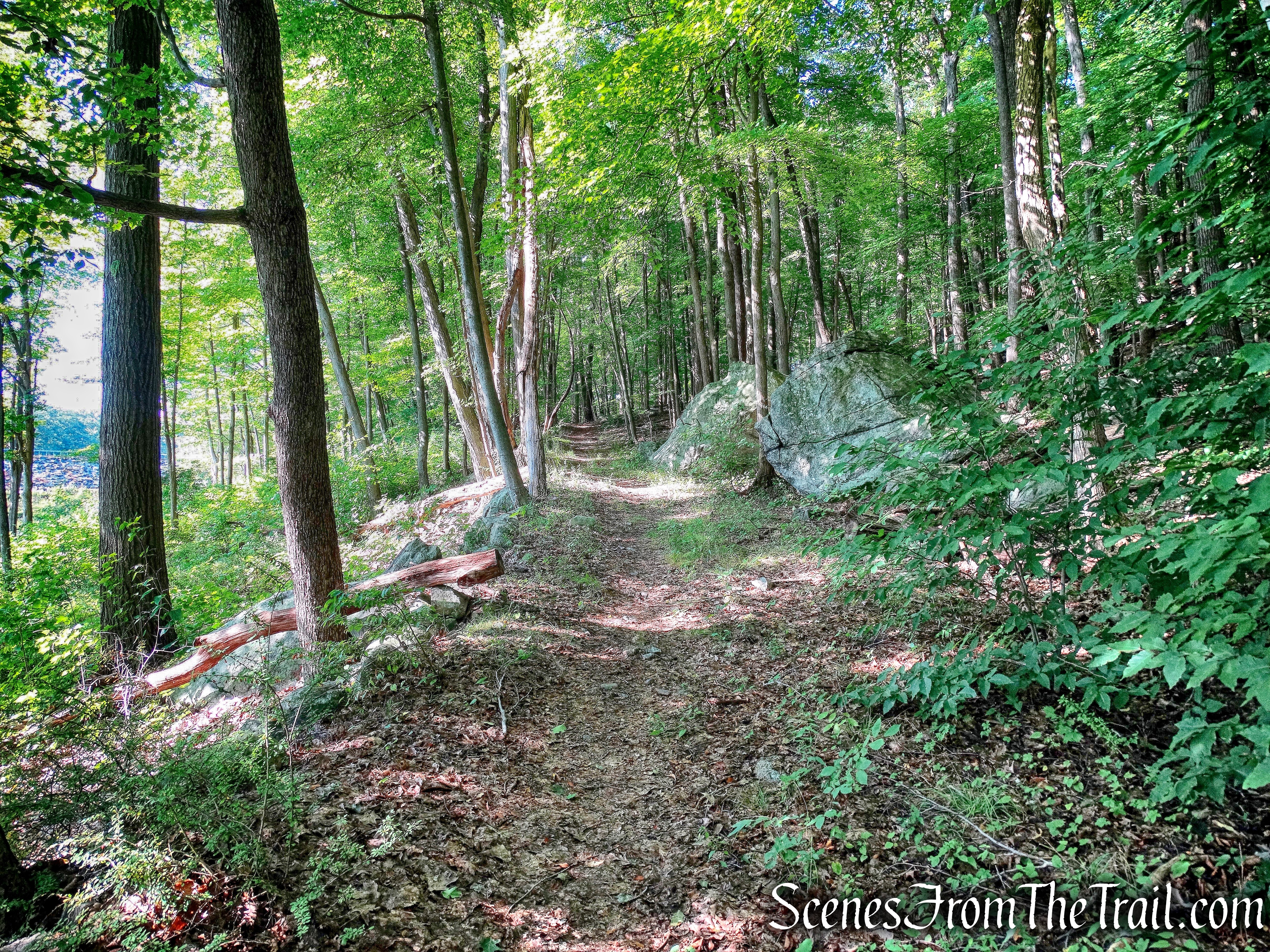
After our break, we climbed down and turned left on the joint white/yellow-blazed trails, heading southwest.

joint Overlook Rock/Manaticut Point Trails

joint Overlook Rock/Manaticut Point Trails

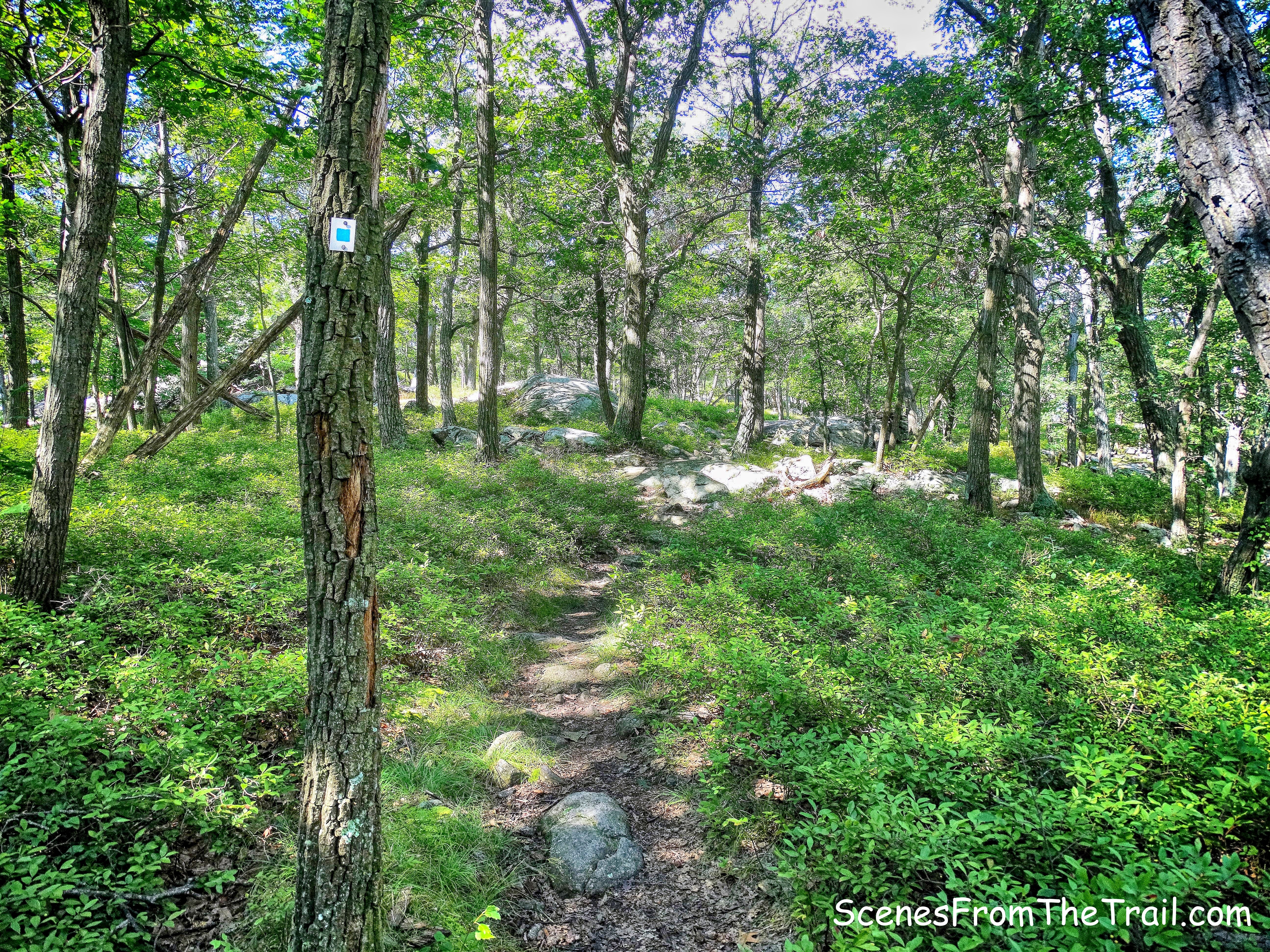
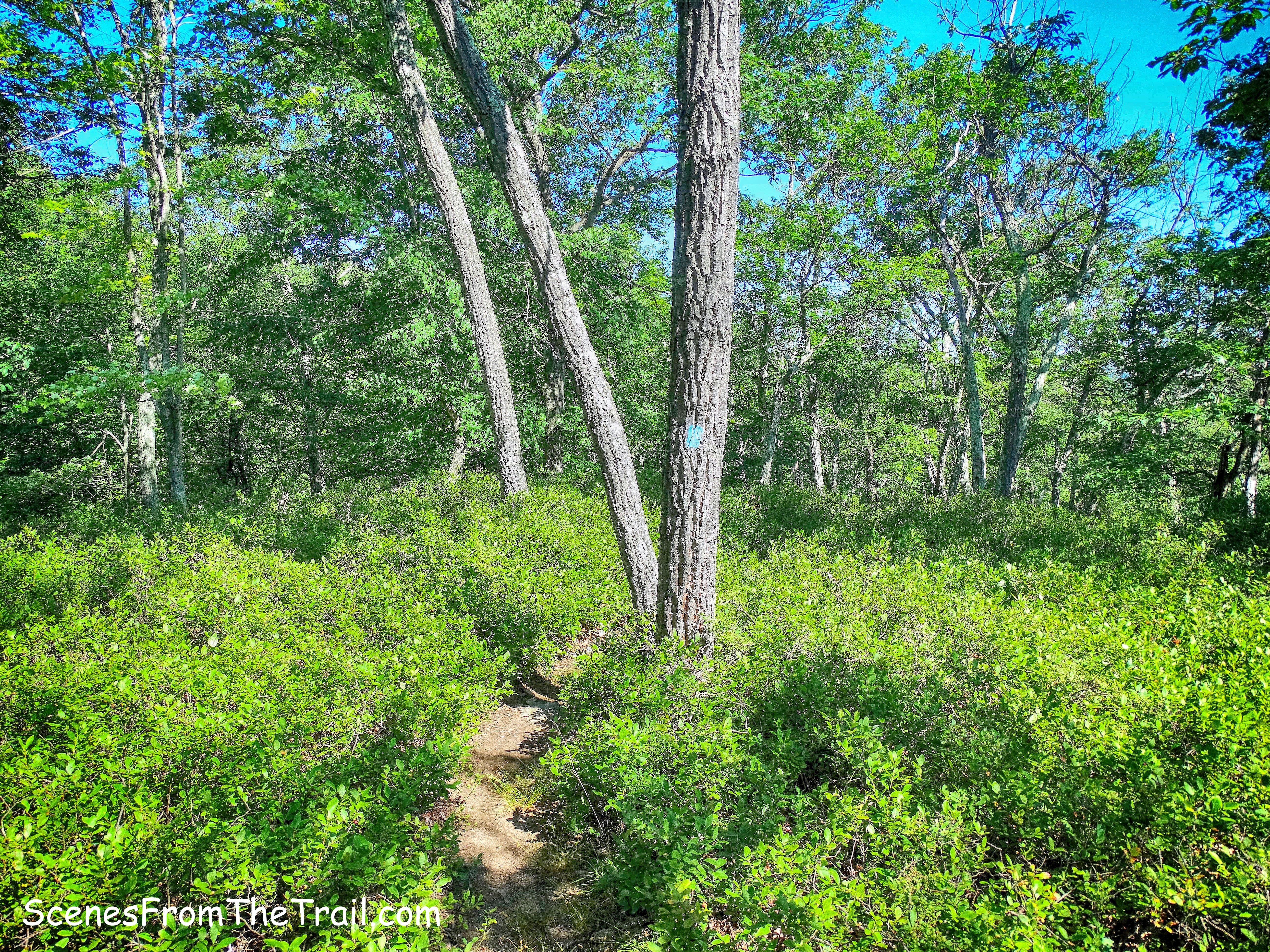
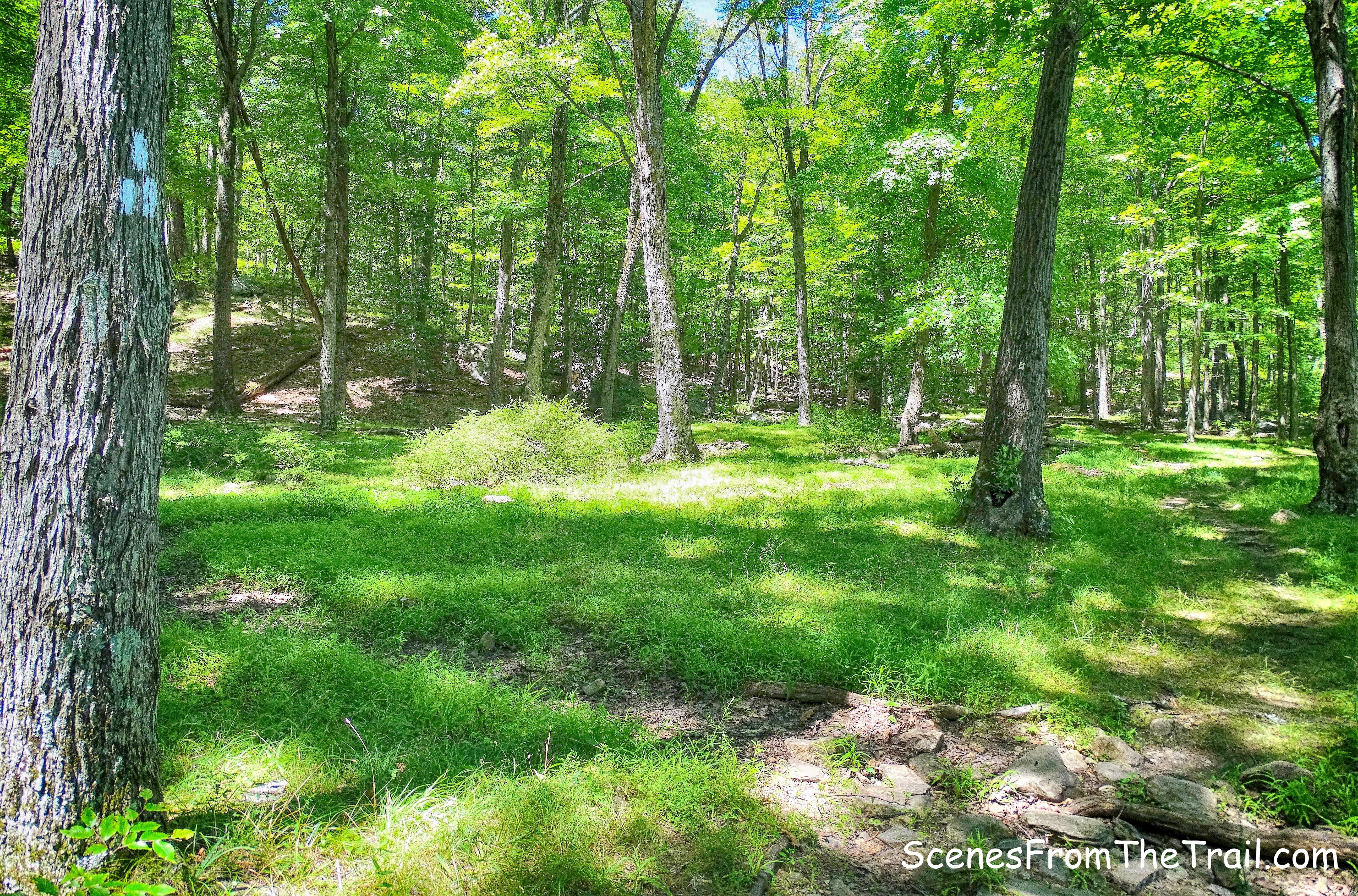
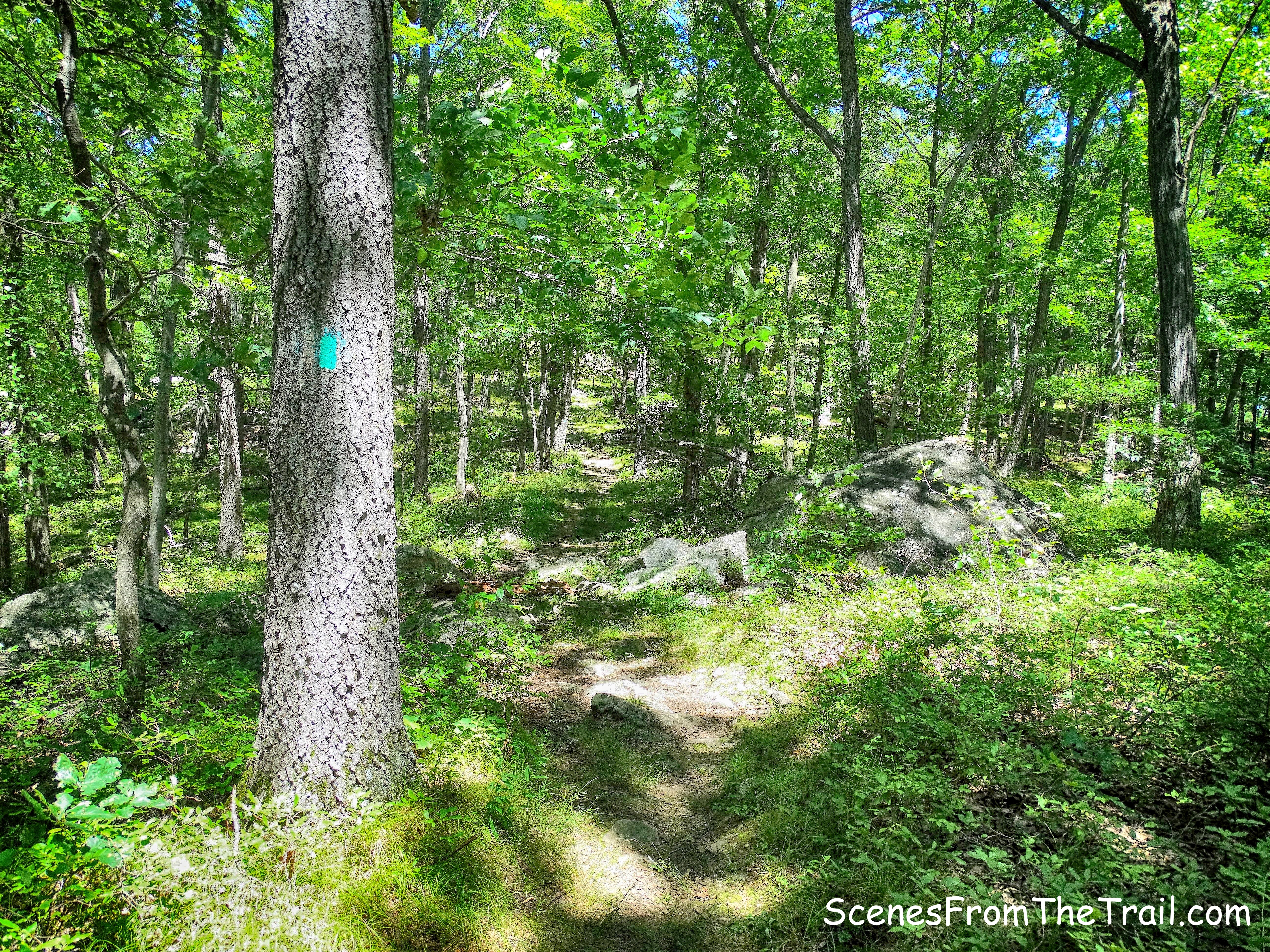
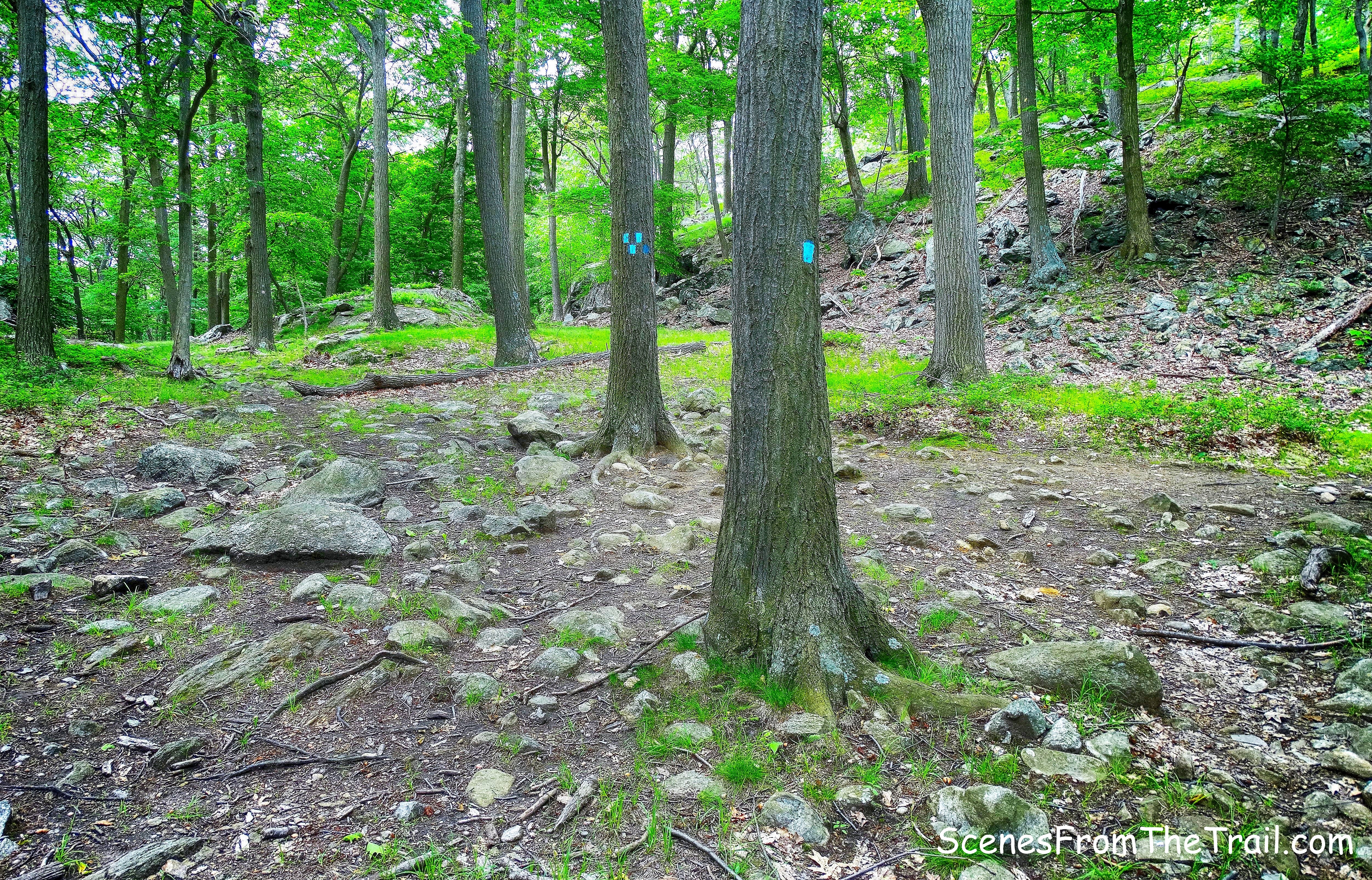
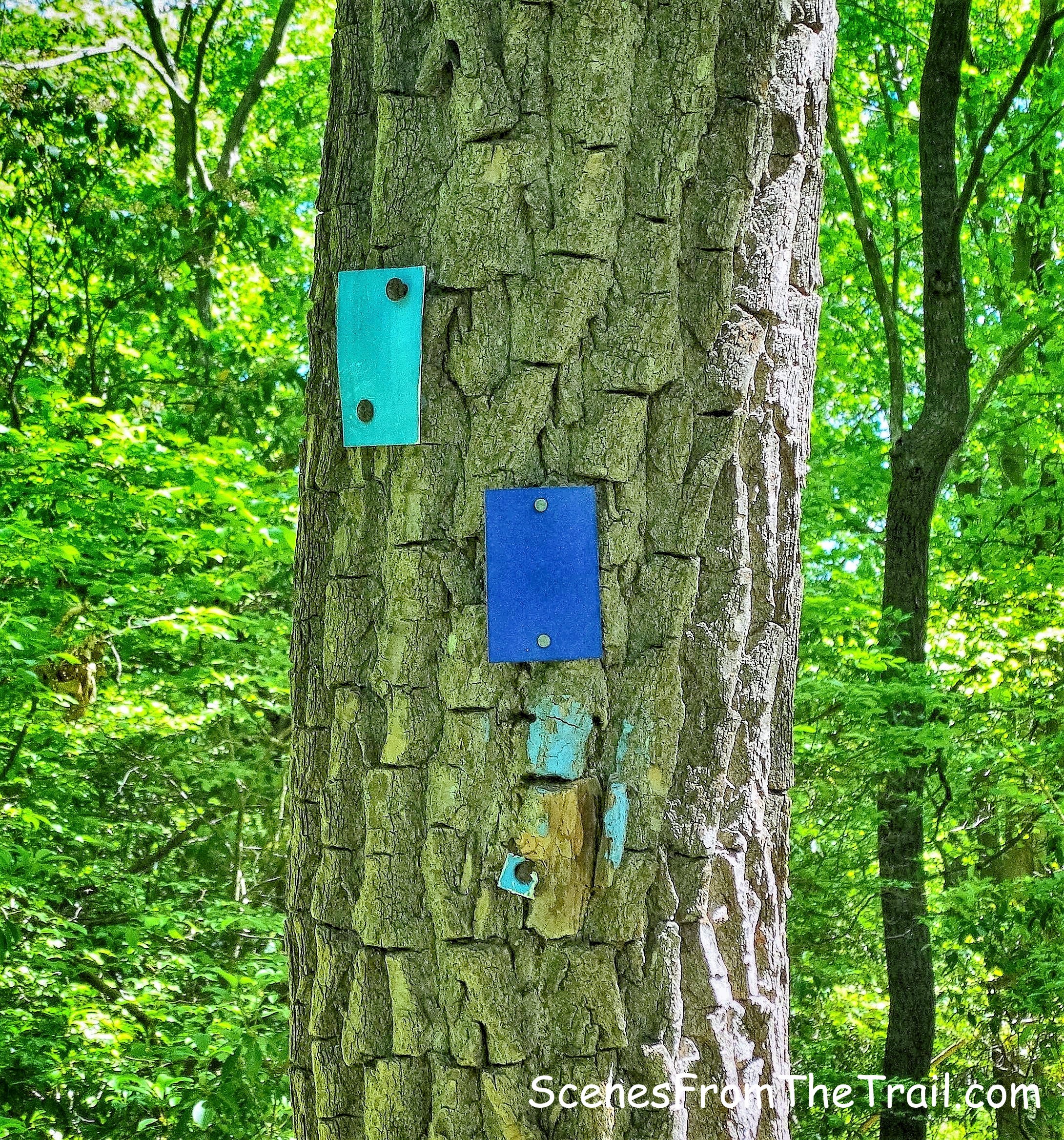
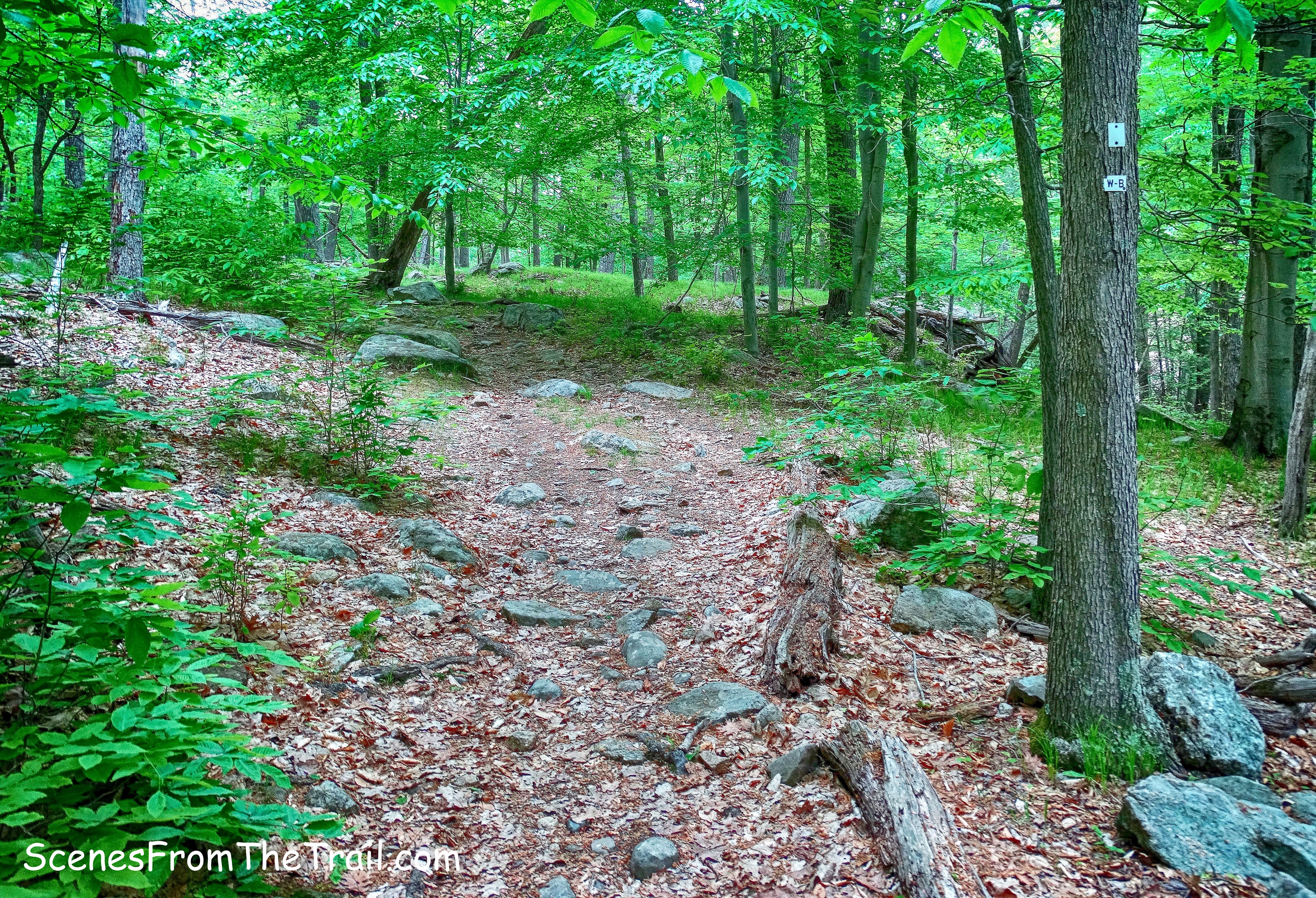
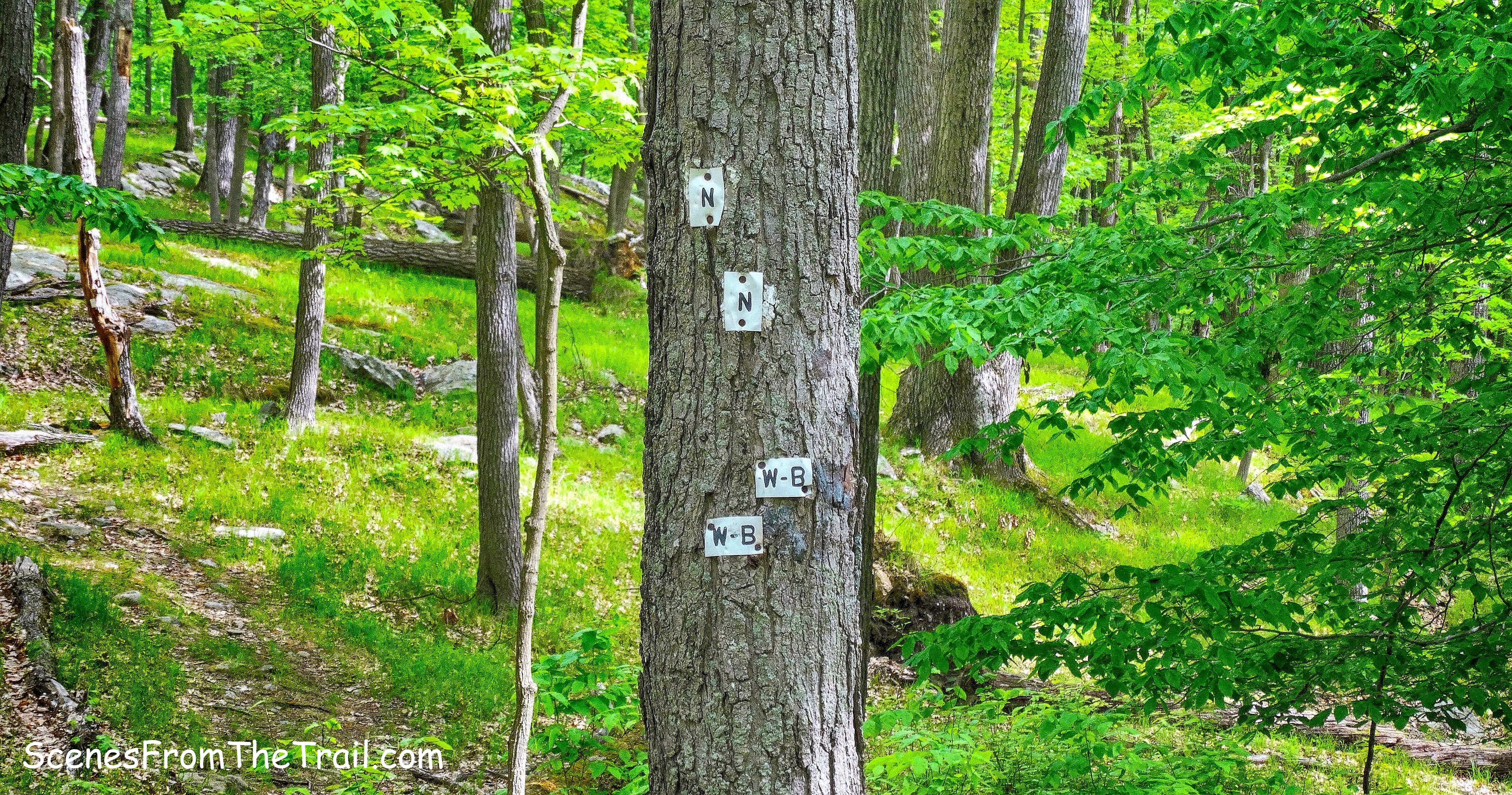
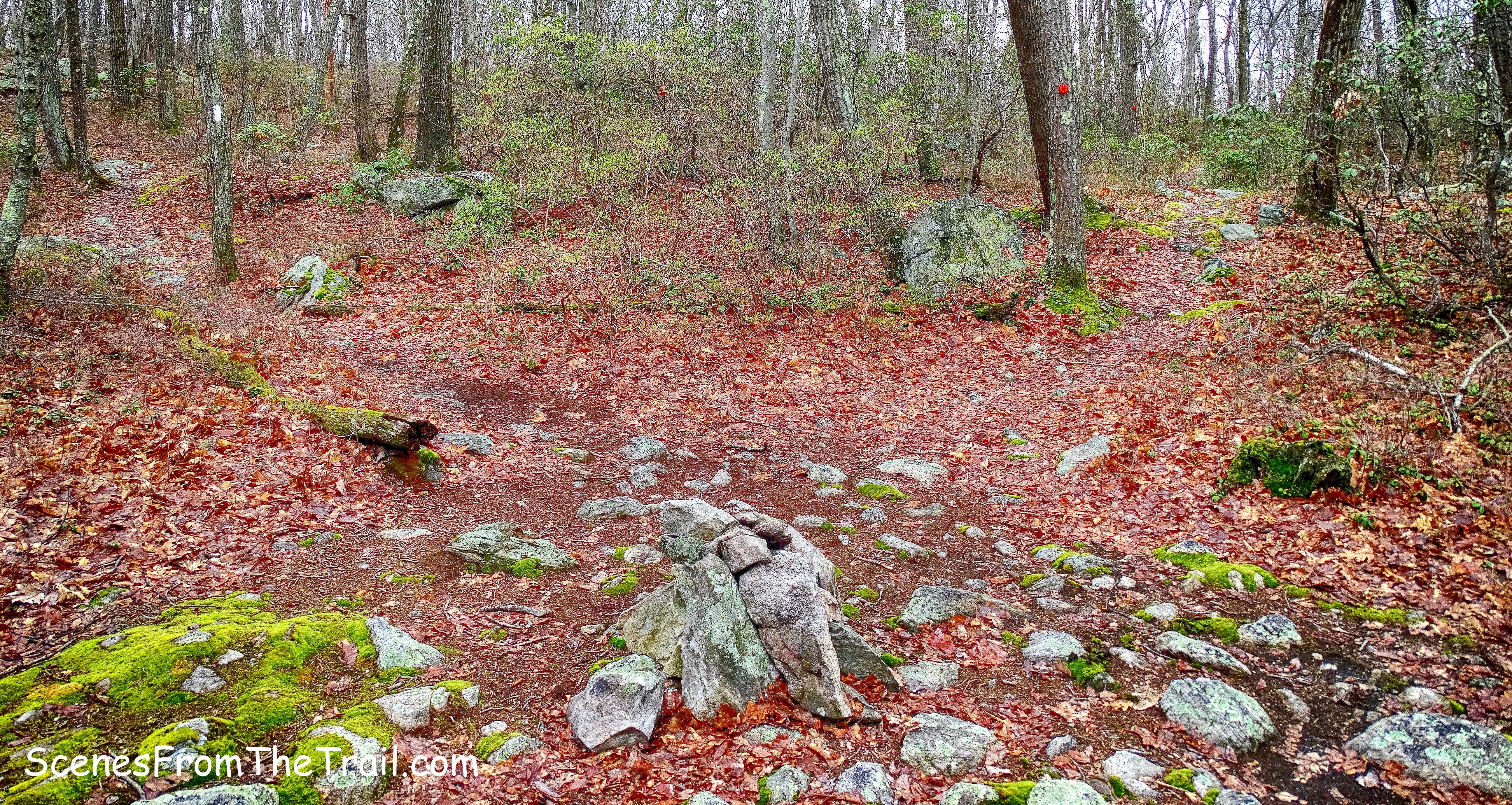
Approximately 1/2 mile from Overlook Rock, the white-blazed Overlook Trail goes off to the right as the blue-blazed Hewitt-Butler Trail comes in from the right and joins the yellow-blazed Manaticut Point Trail, heading east. We turned left and continued following the yellow blazes, now joined by the blue-blazed Hewitt-Butler Trail.

joint Hewitt-Butler/Manaticut Point Trails

joint Hewitt-Butler/Manaticut Point Trails

The trail descends briefly, then climbs to the crest of the ridge. It heads southeast along the ridge, passing a viewpoint on the right over Saddle Mountain and then descending gradually. Along the way we passed an empty tree stand, a reminder that this is probably not a good hike during hunting season.

empty tree stand

empty tree stand

At the base of the descent, there is a small pond on private property to the right.

small pond on private property

small pond on private property

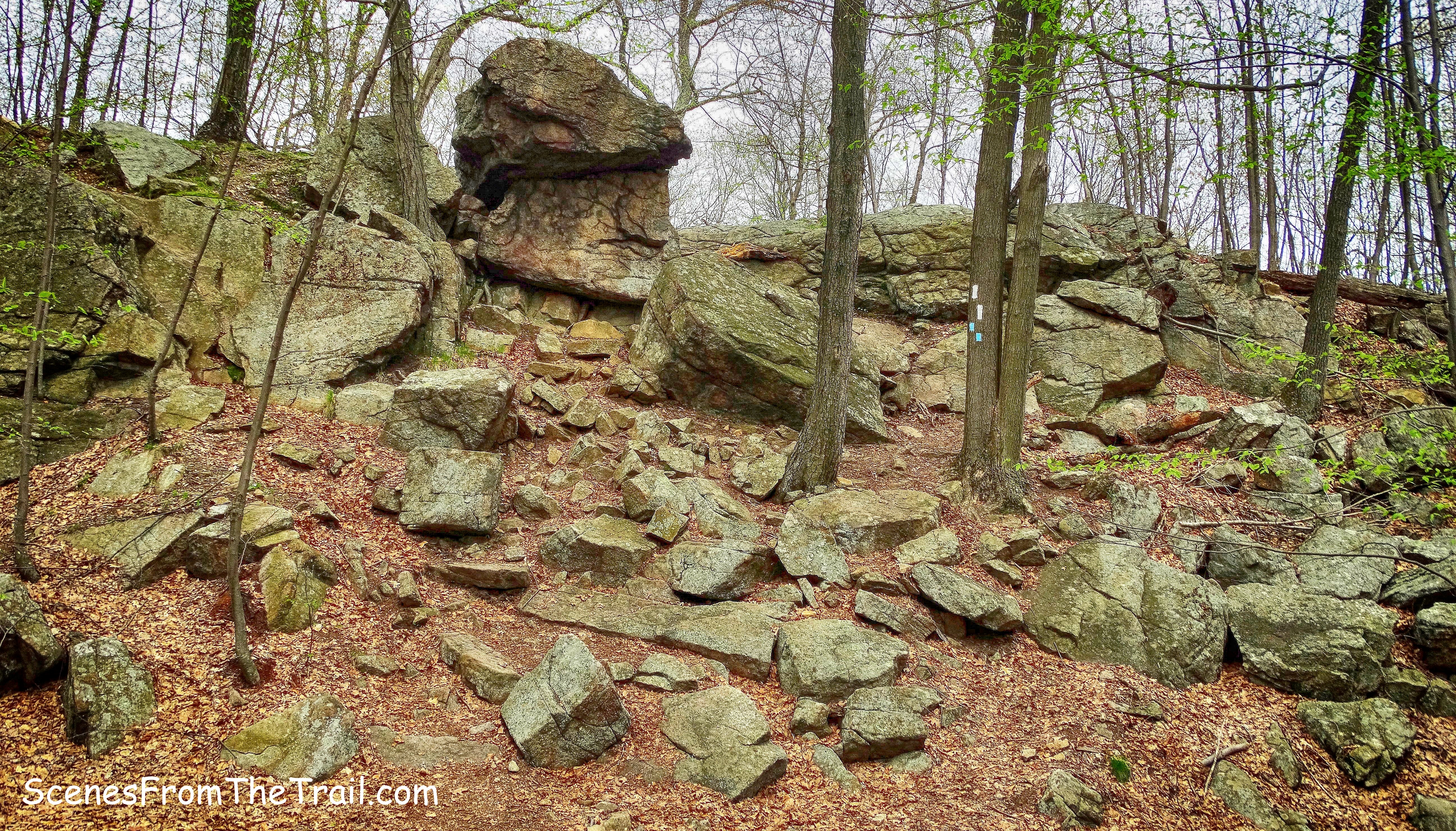
The trail passes through a divide in a rock formation. The people that laid out this trail did a really nice job and were creative. It made this hike interesting and fun.

divide in a rock formation

divide in a rock formation

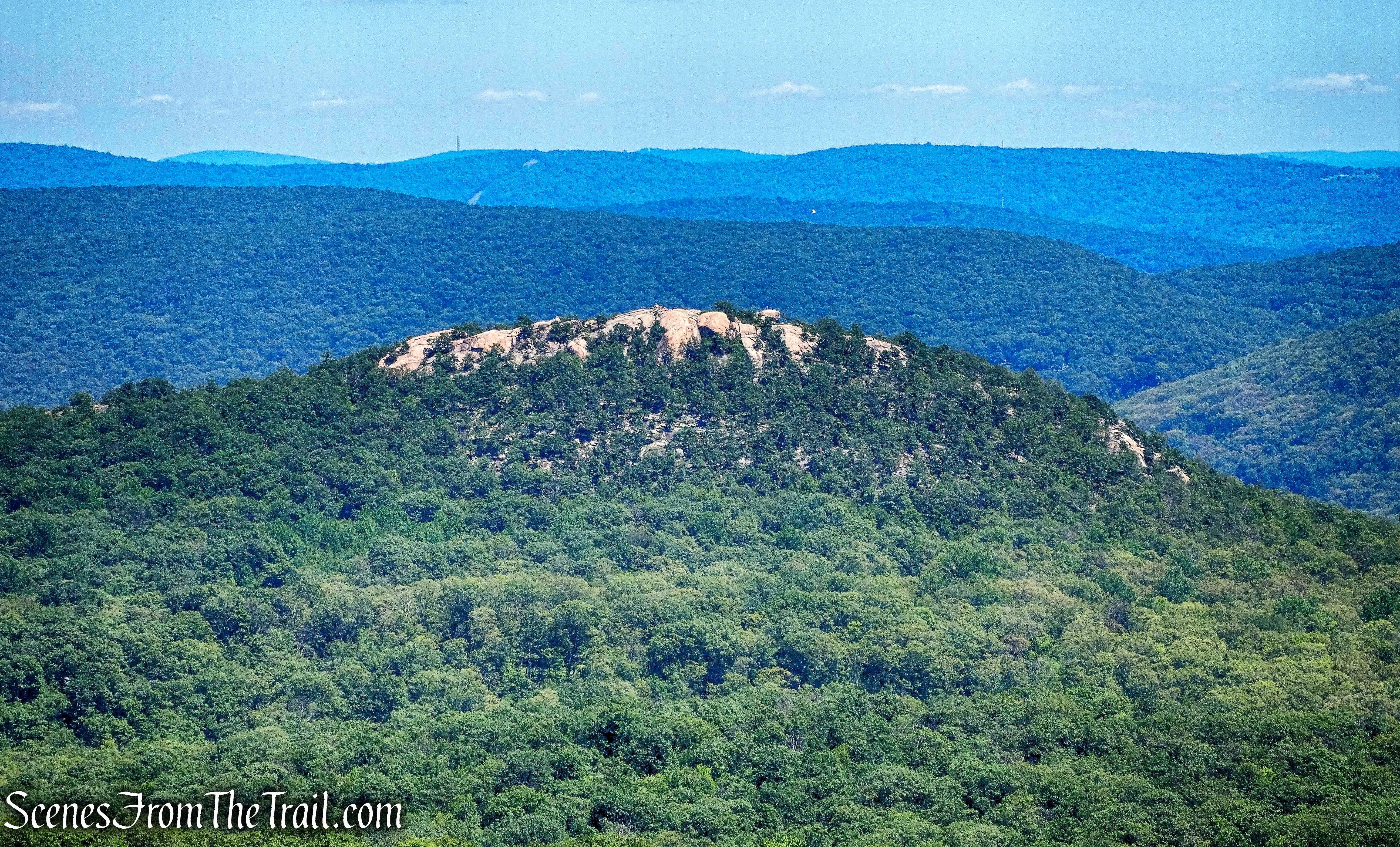
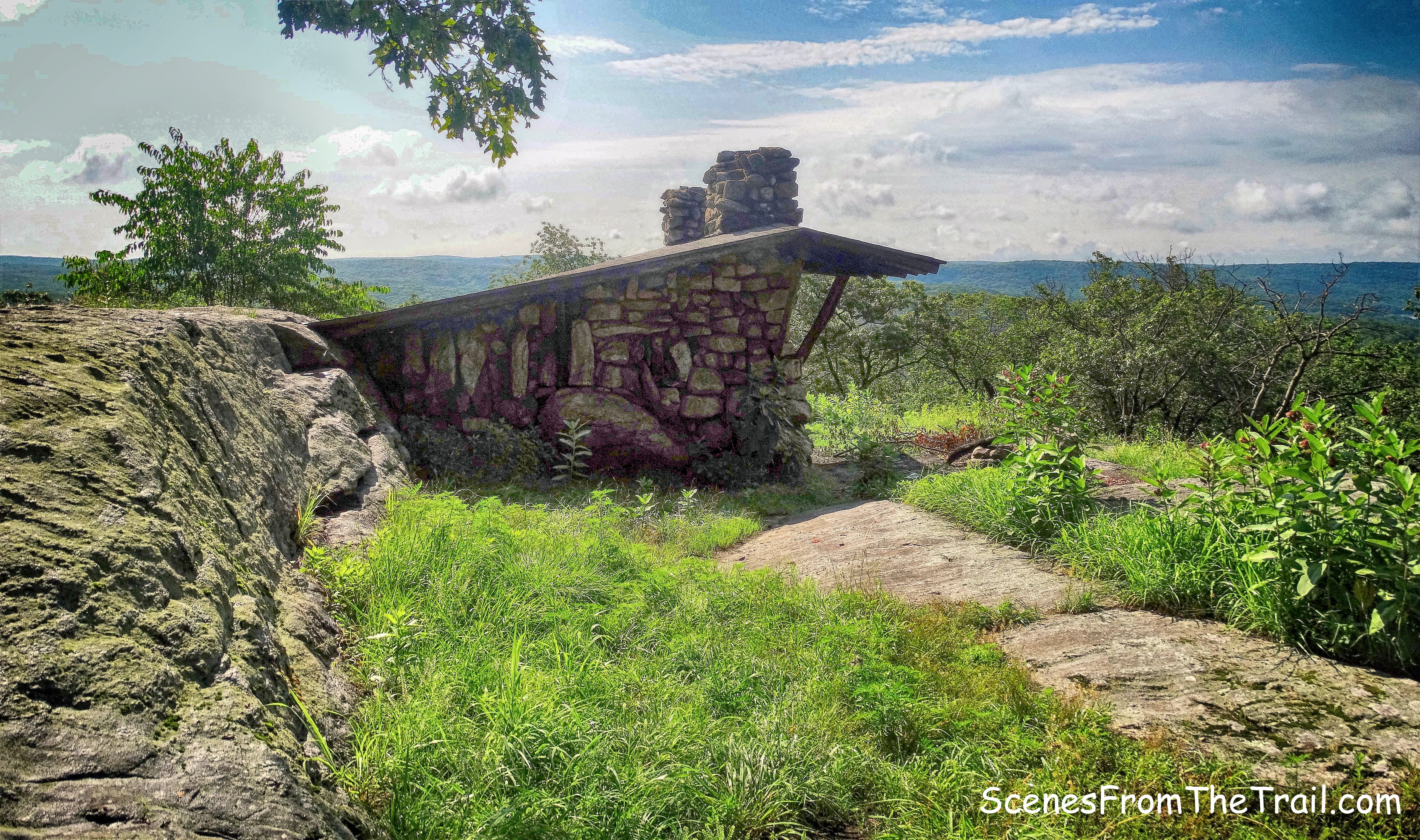
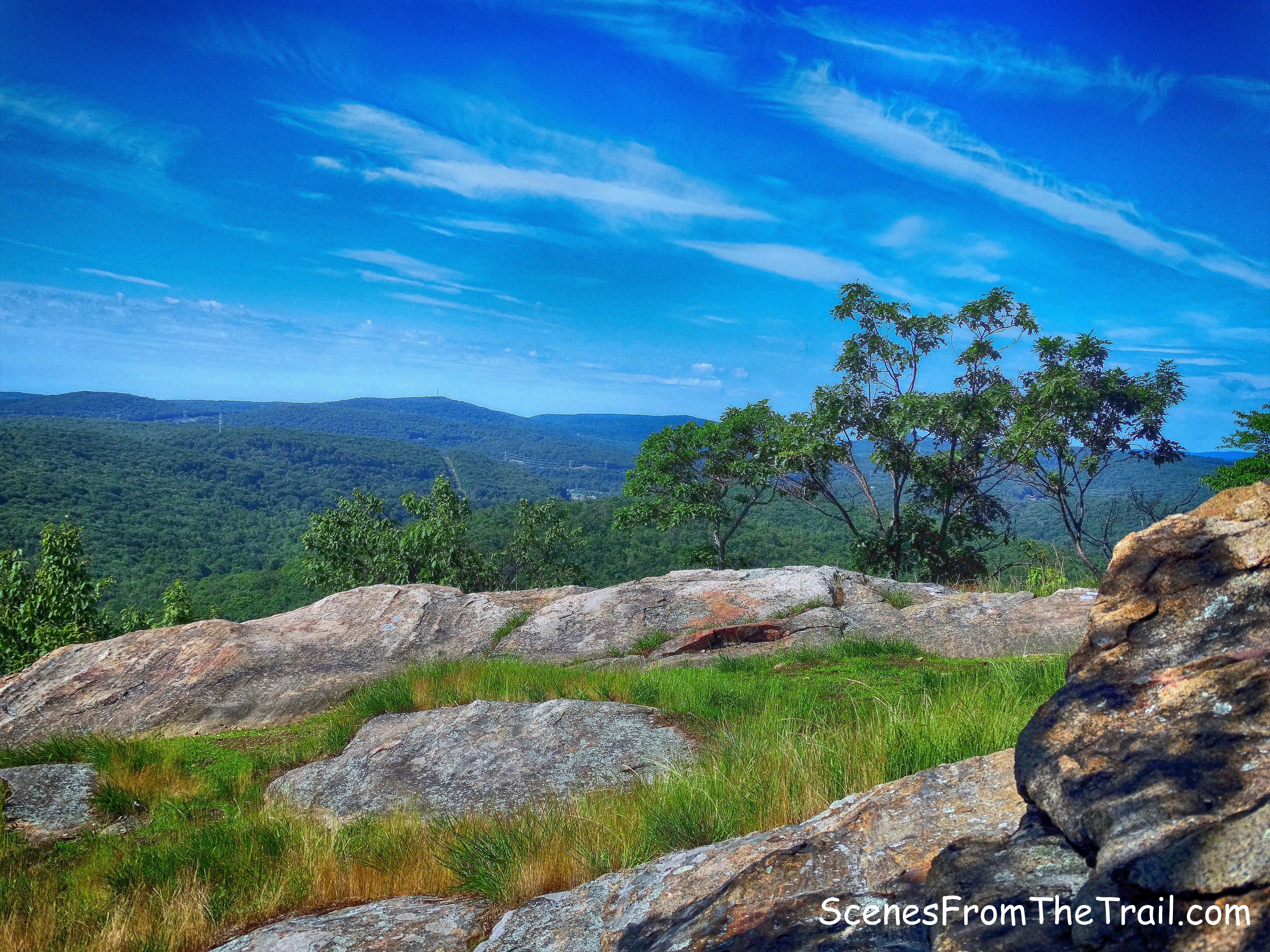
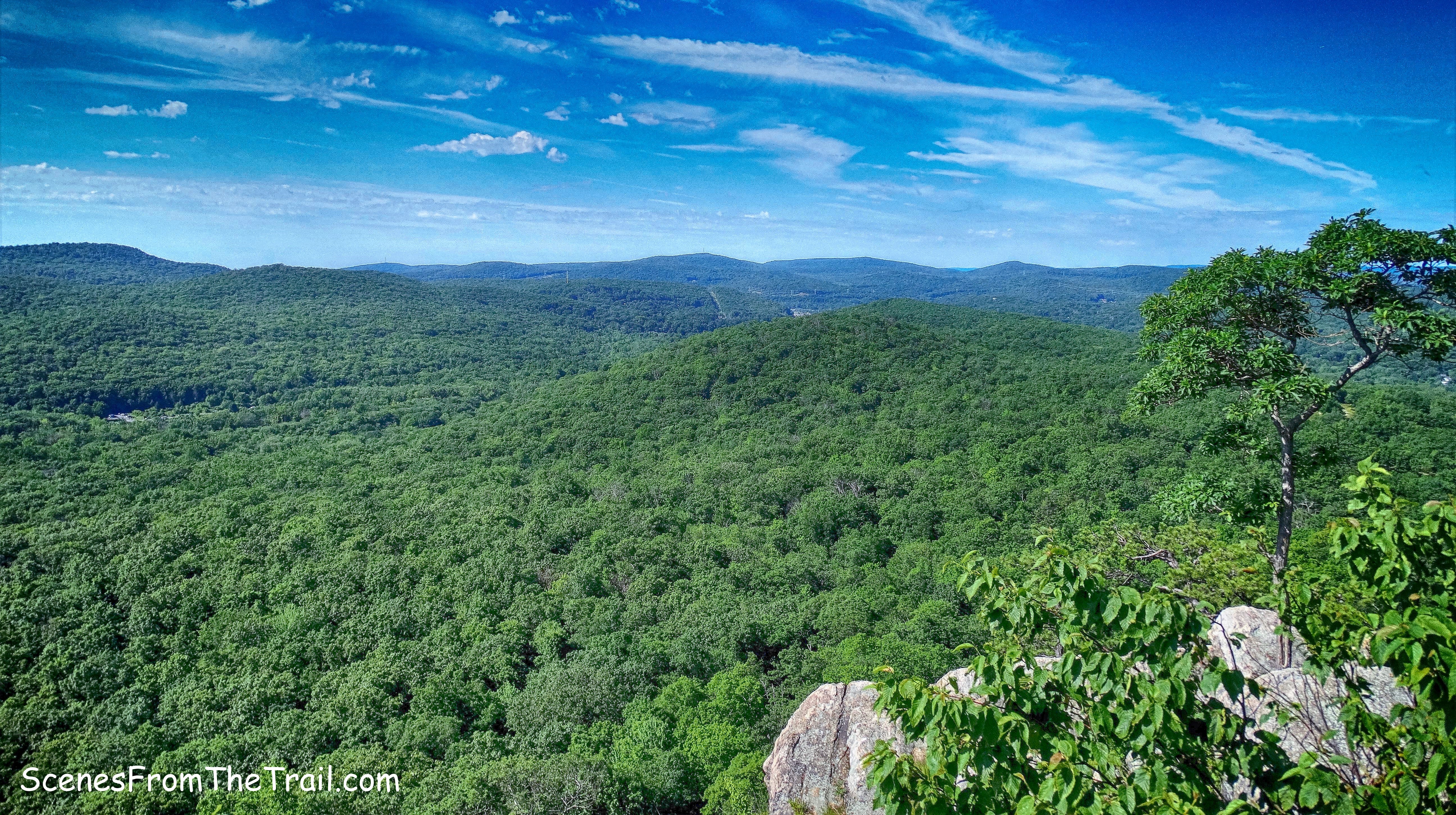
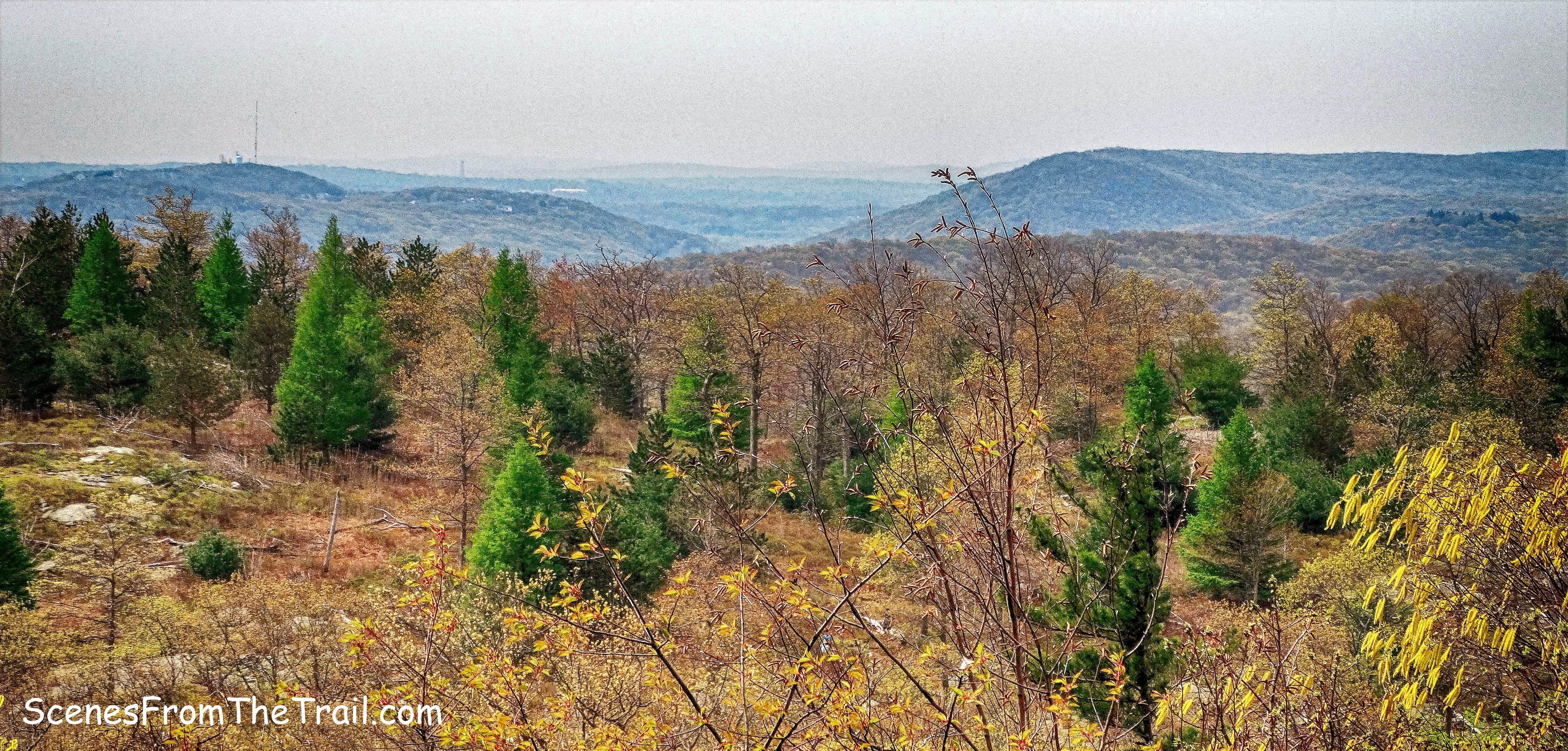
We passed an area that must border private property with a barking dog up on the hillside. It continued barking well after we passed, but it did not approach us so I am assuming that it was behind a fence. We continued on blue/yellow-blazed trail and ascended to Manaticut Point, an open rock ledge with some open views of the surrounding hills.

Manaticut Point

Manaticut Point

In the distance, One World Trade Center is visible along with the Manhattan skyline.

Manhattan skyline from Manaticut Point Trail

Manhattan skyline from Manaticut Point Trail

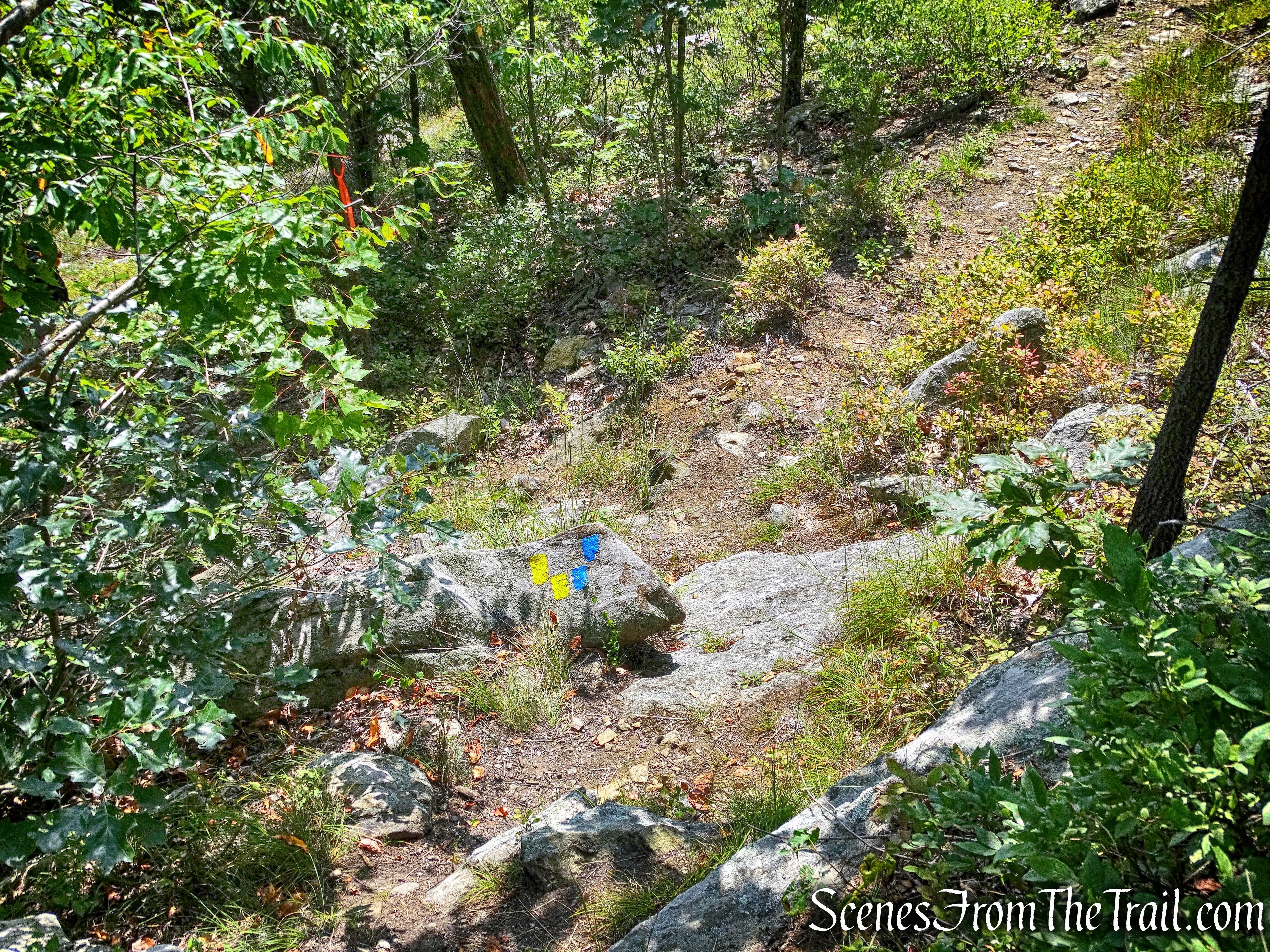
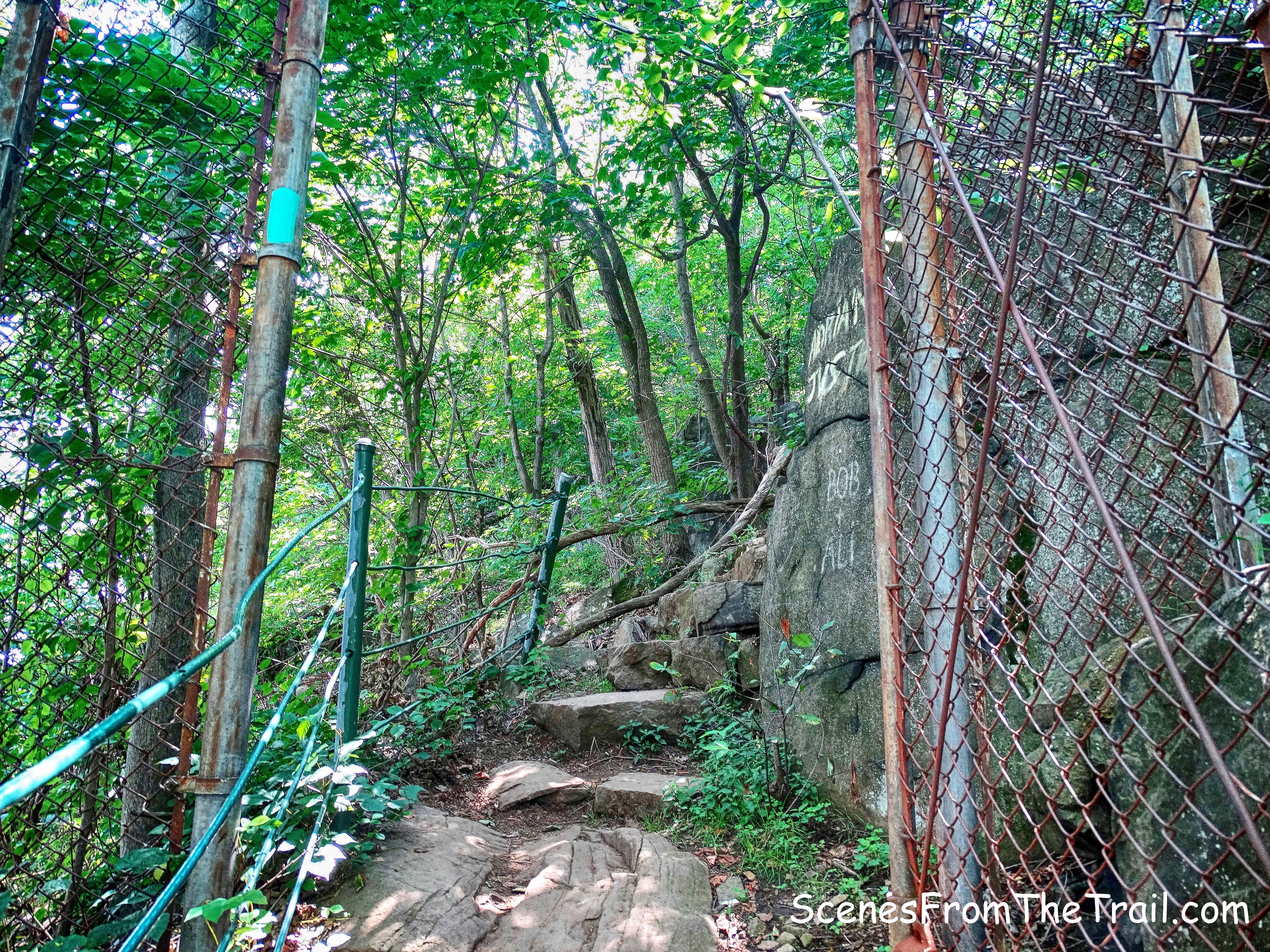
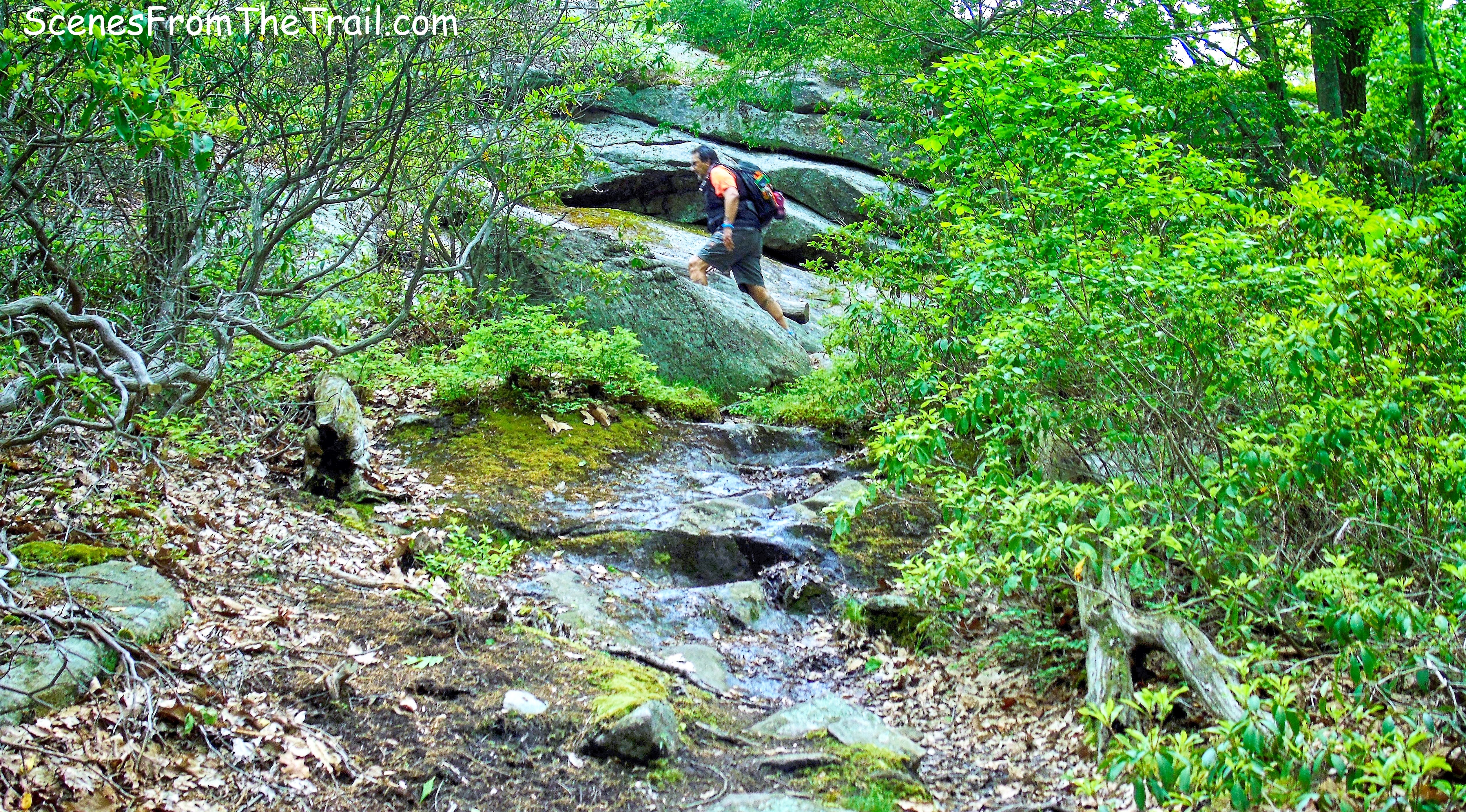
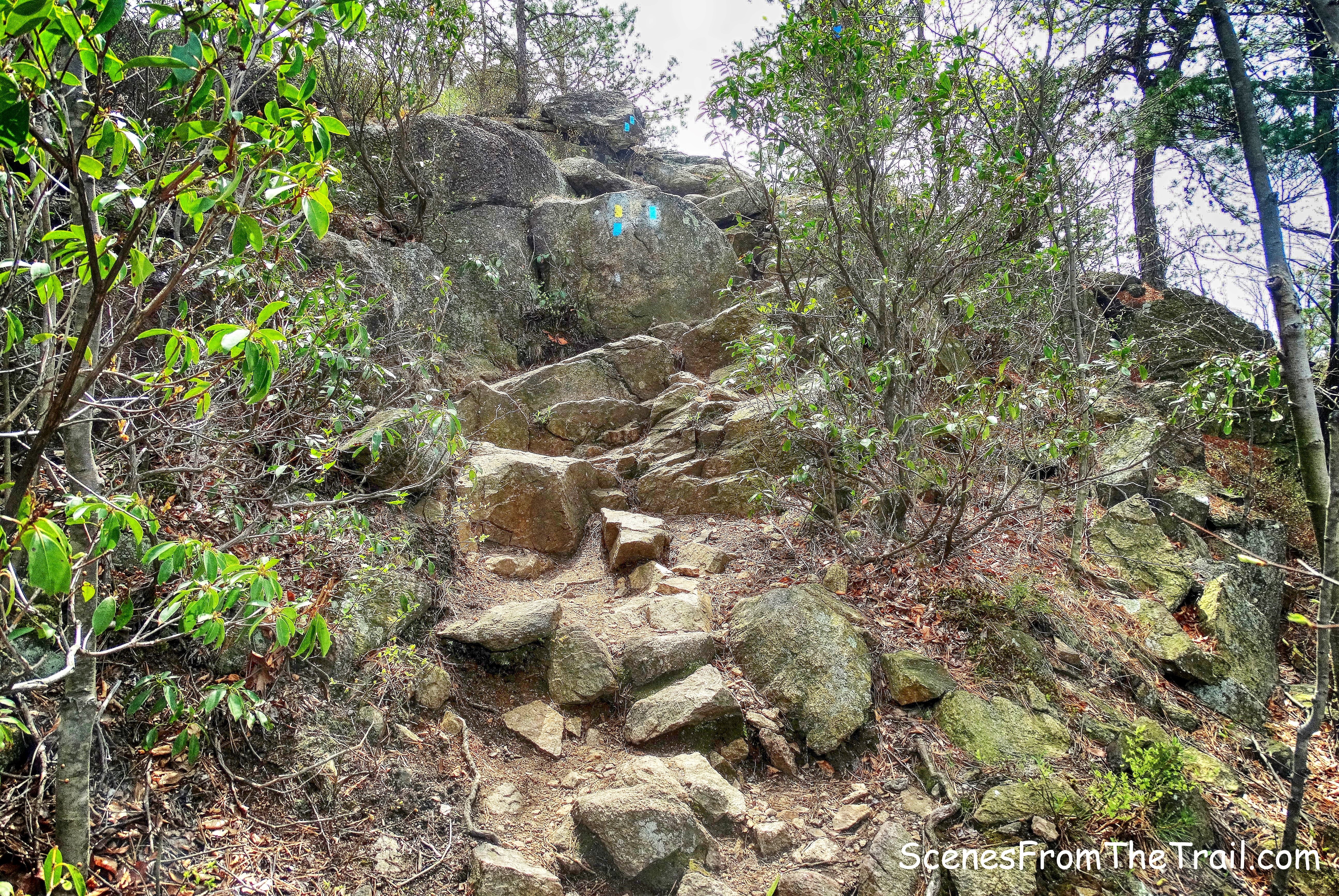
The trail then descends very steeply over rocks. The double blazes painted on a rock is where the the blue-blazed Hewitt-Butler Trail turns right, but we turned left and stayed on the yellow-blazed Manaticut Point Trail.

turn left and stay on the yellow-blazed Manaticut Point Trail

turn left and stay on the yellow-blazed Manaticut Point Trail

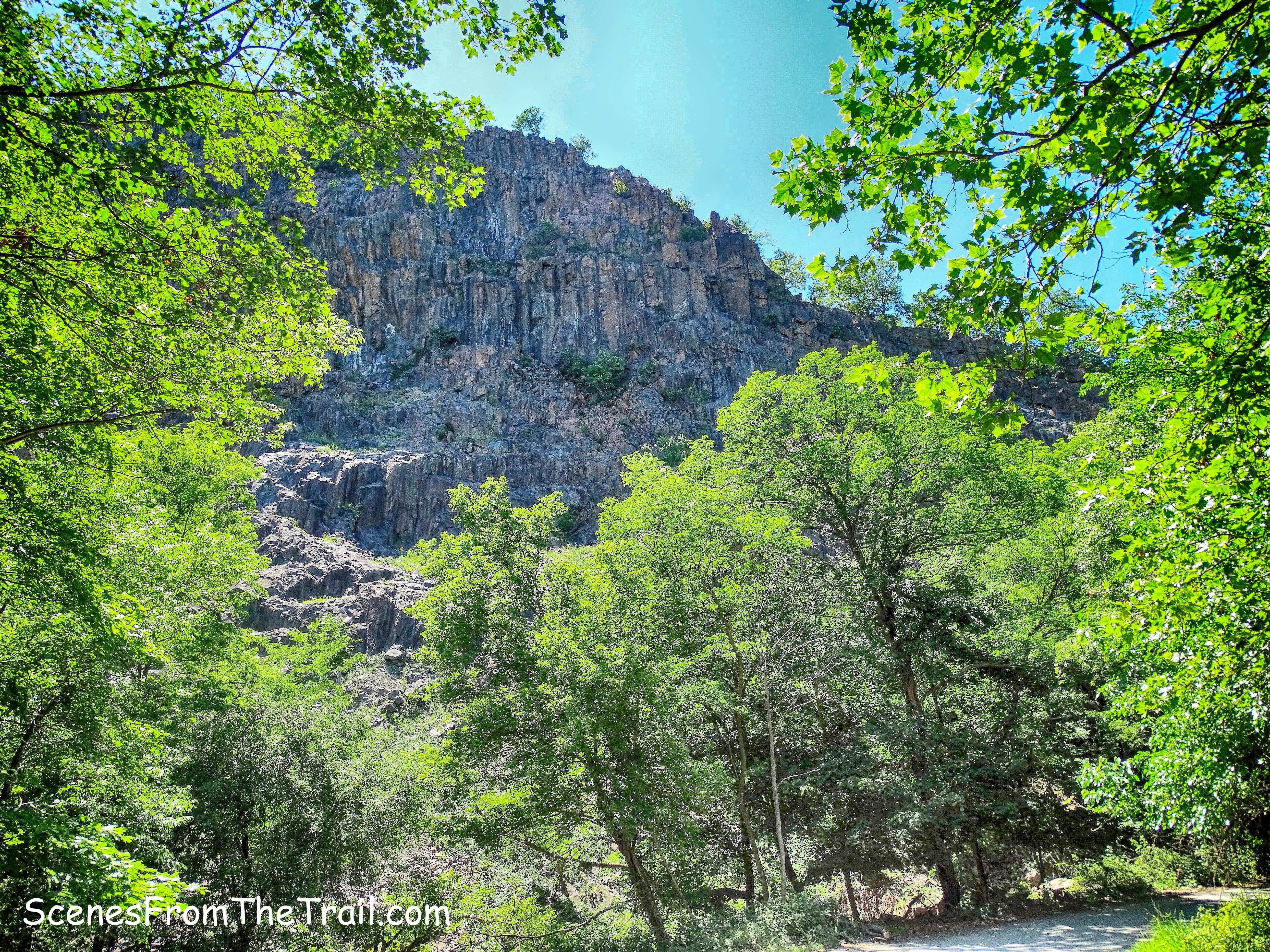
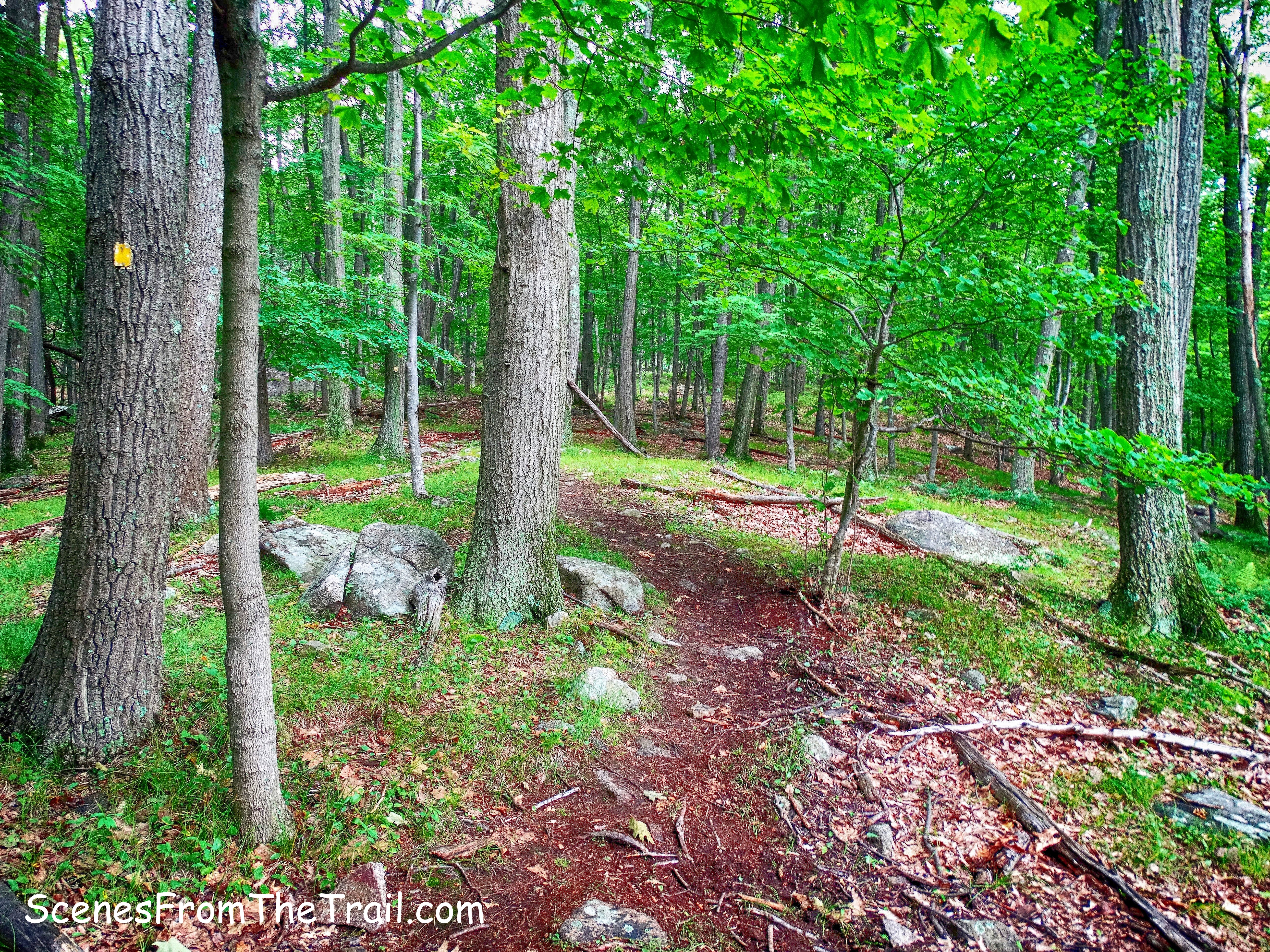
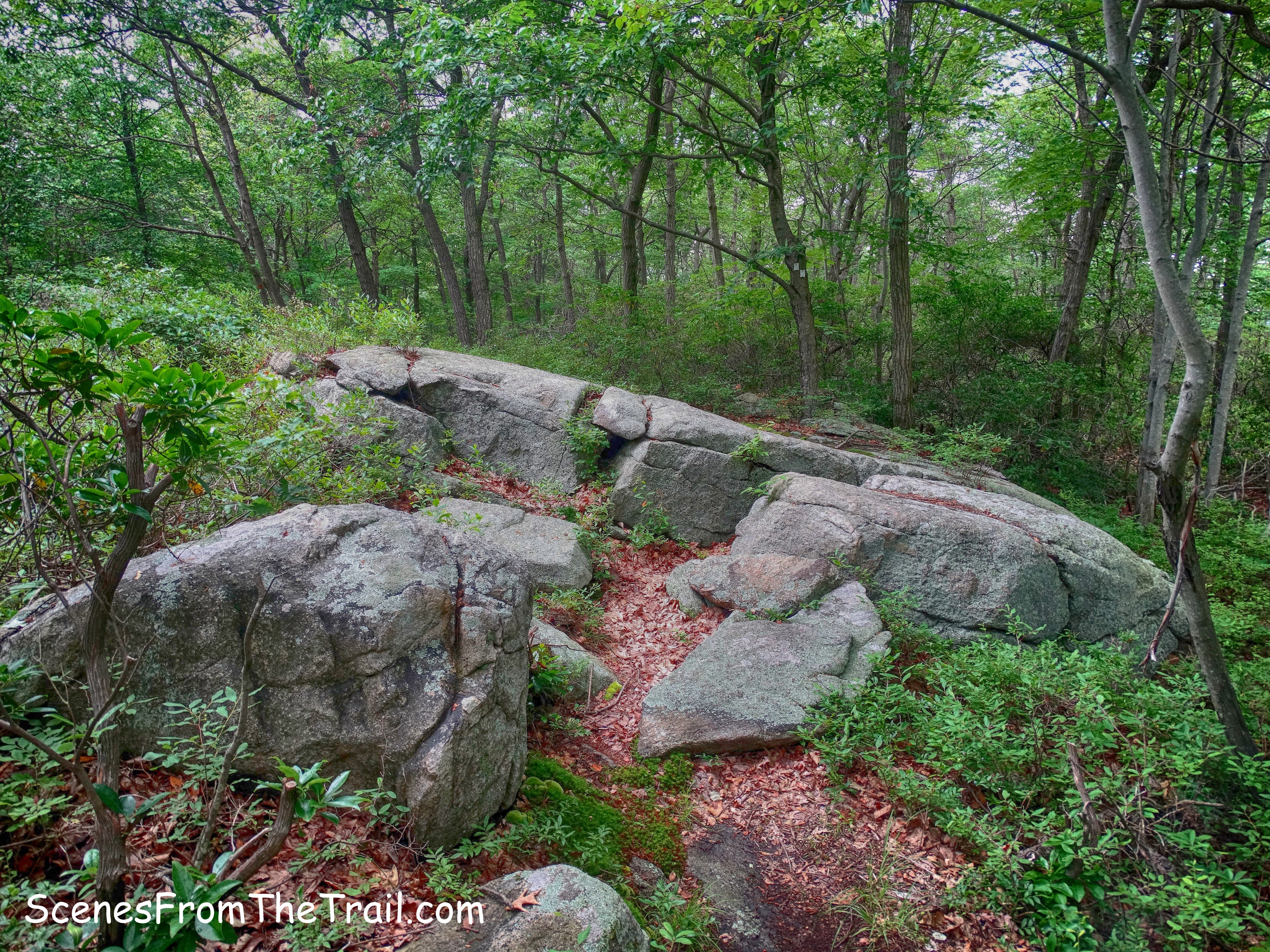
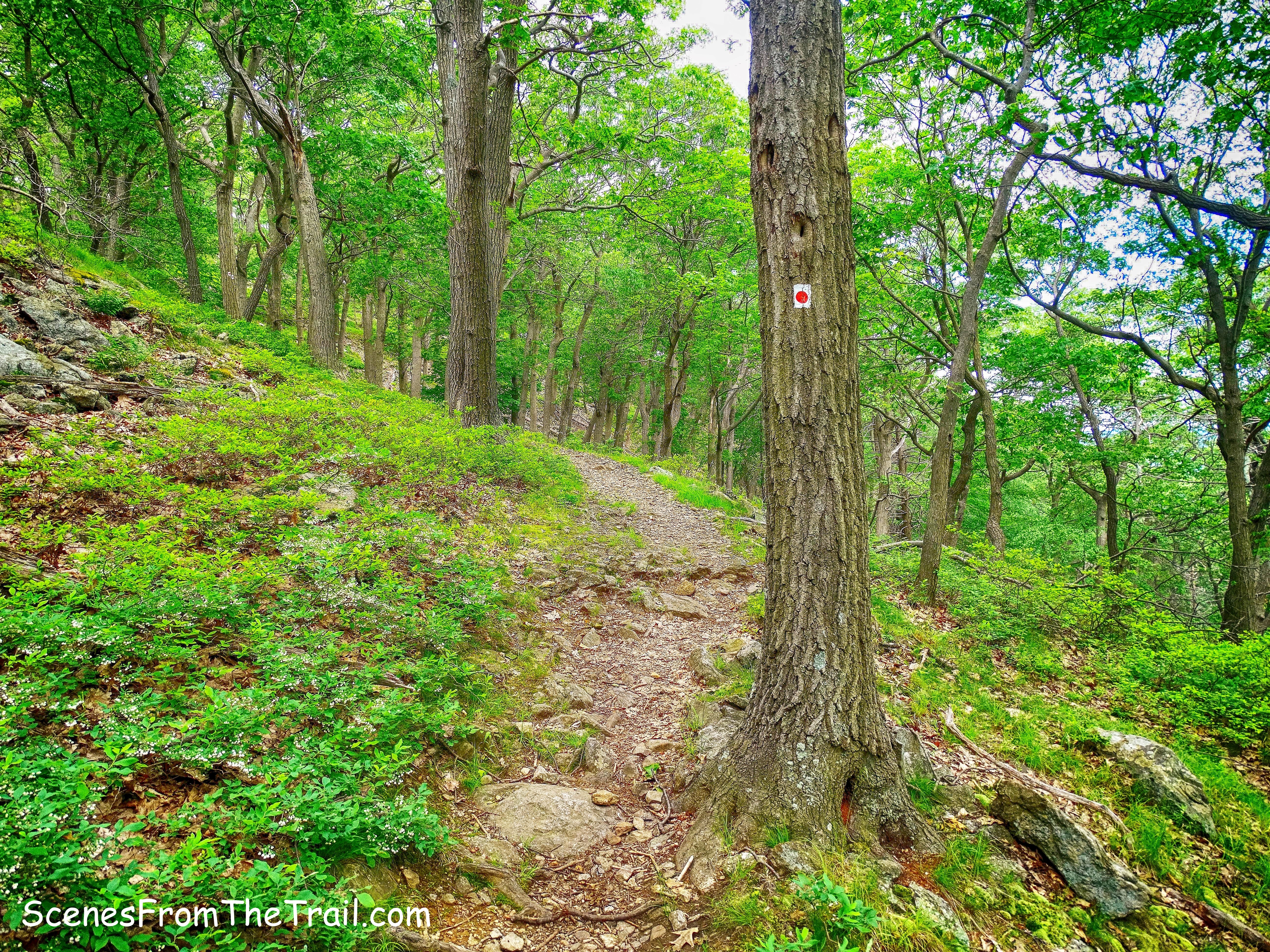
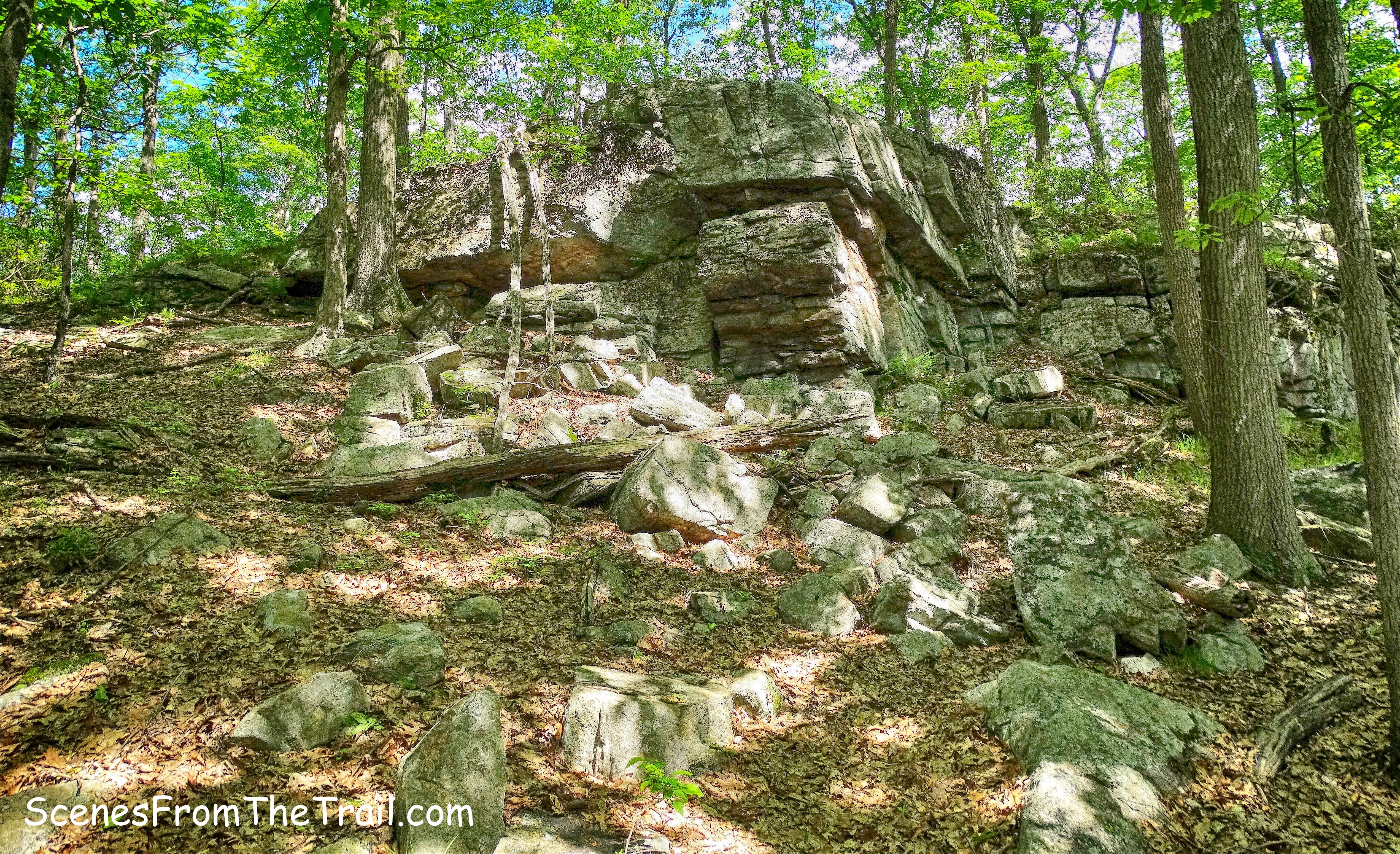
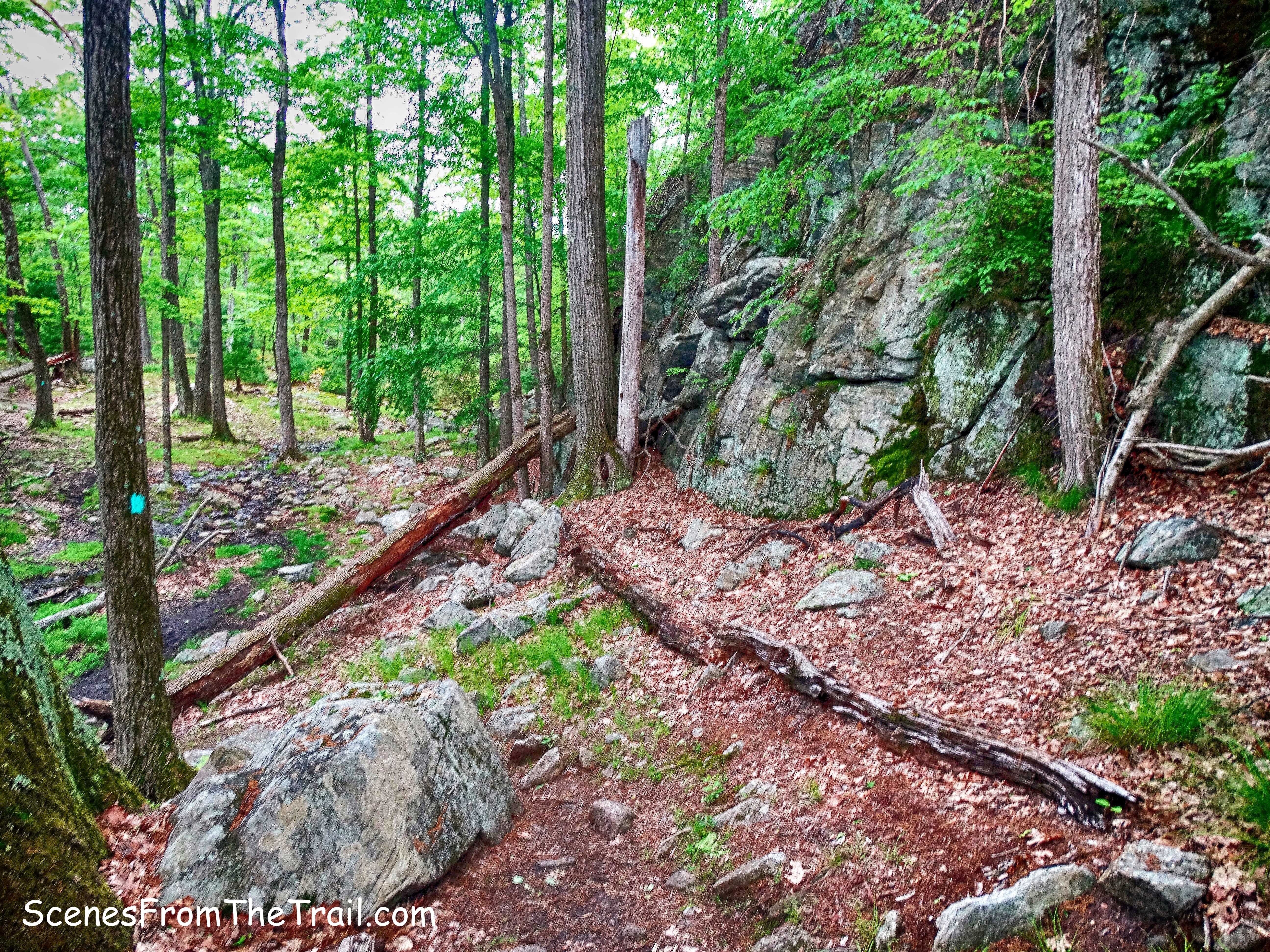
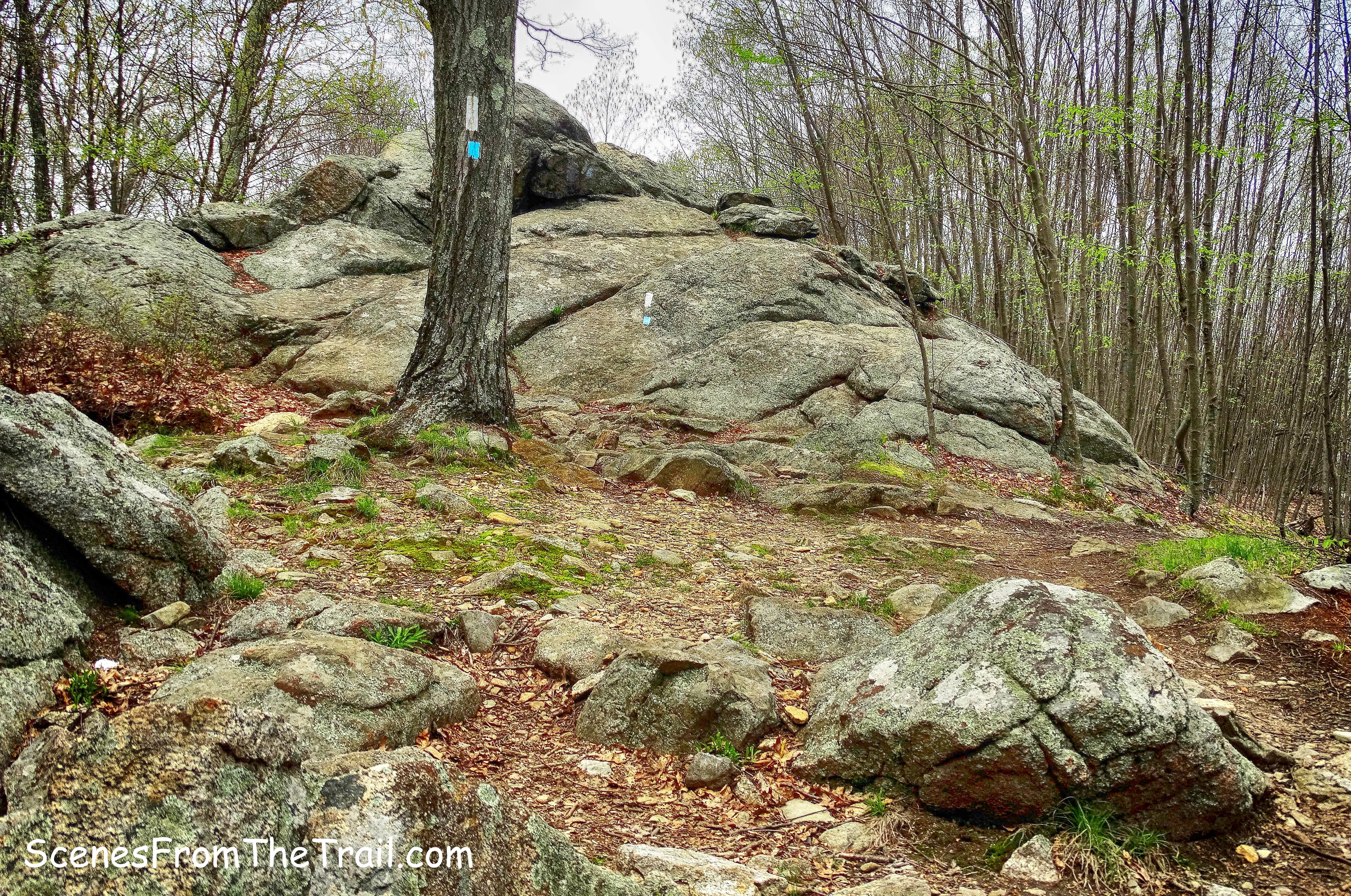
The Manaticut Point Trail descends gradually at first, levels off somewhat then resumes a steady descent and passes some rock formations on the left.

Manaticut Point Trail

Manaticut Point Trail

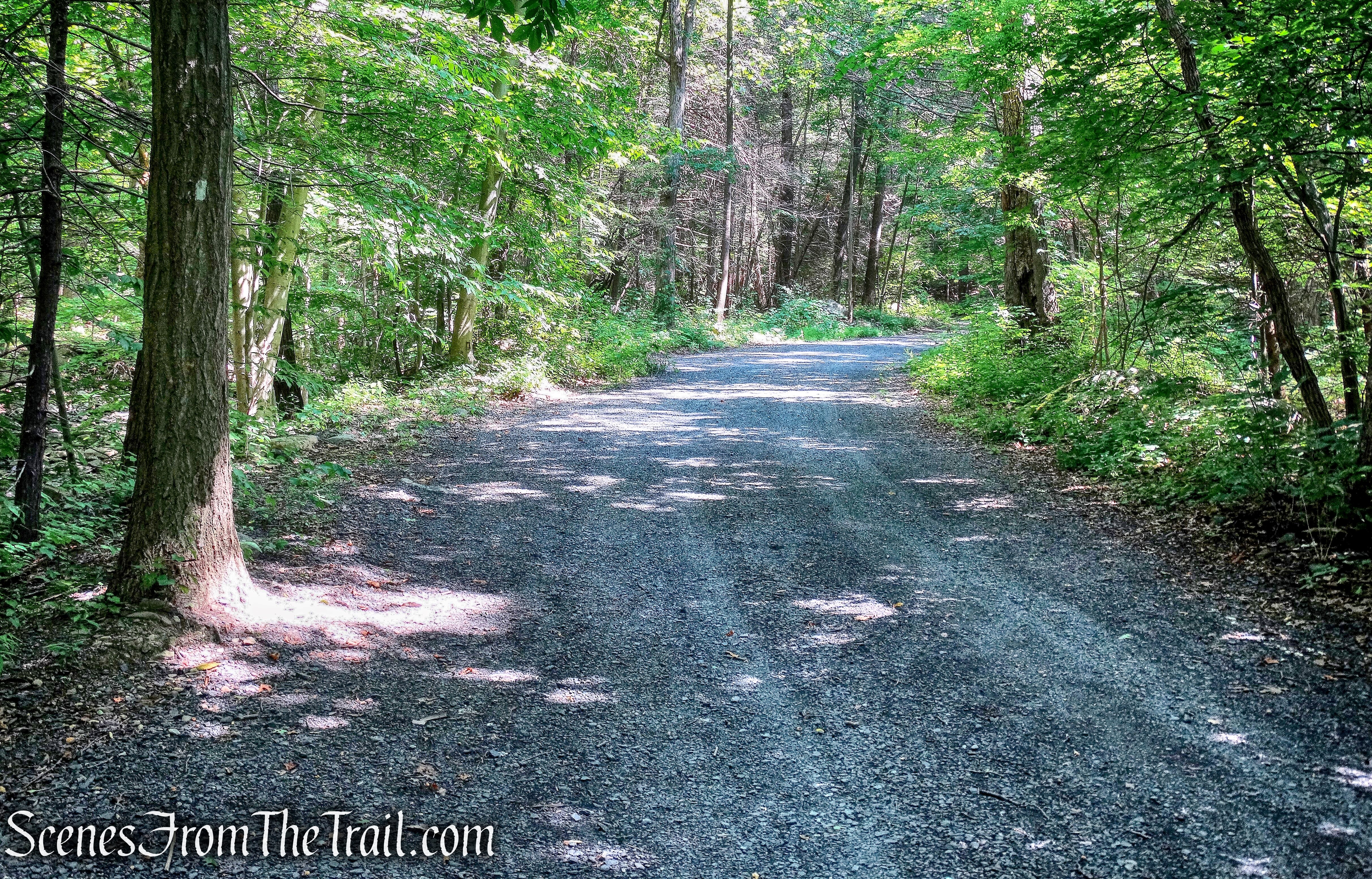
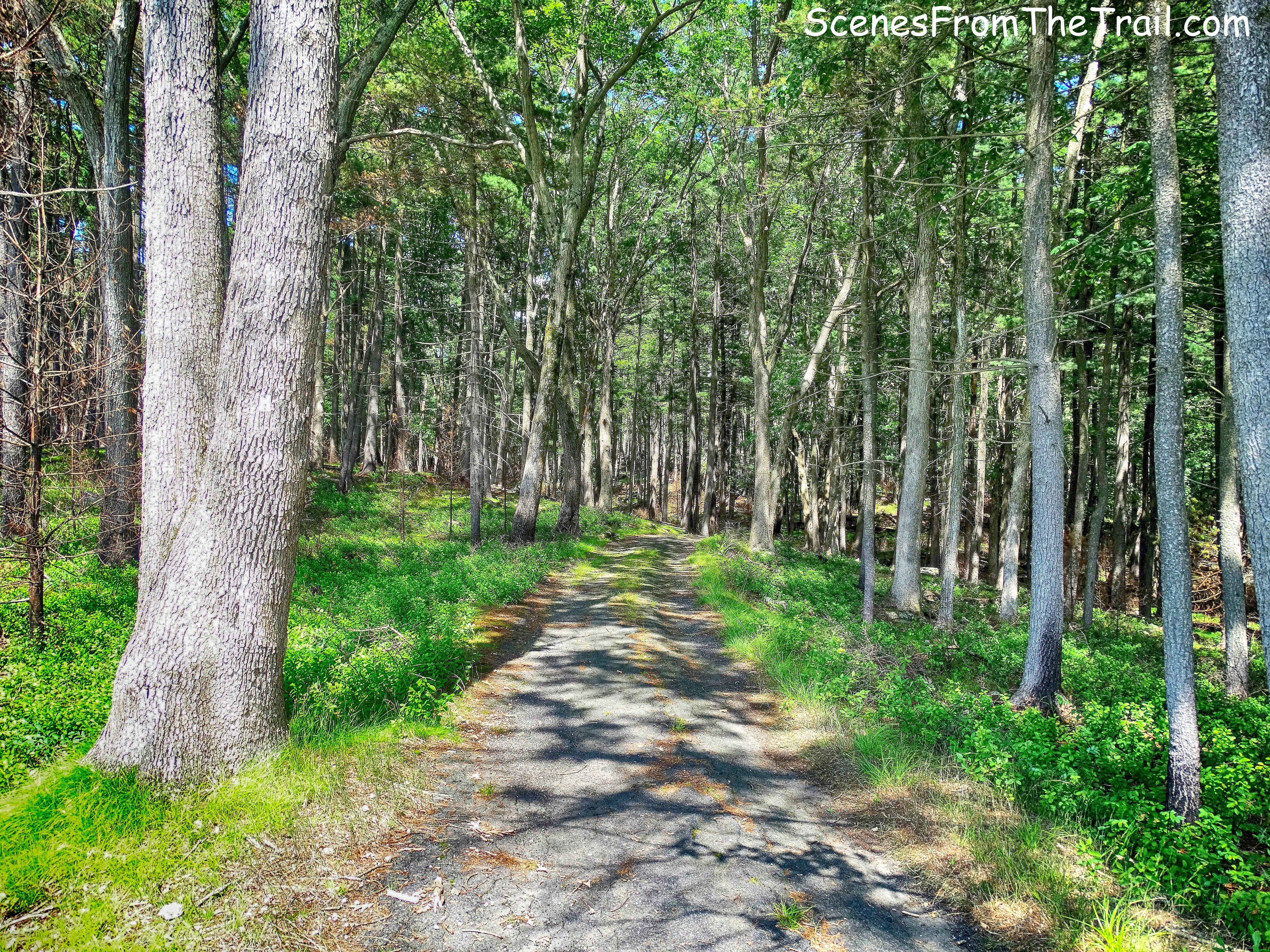
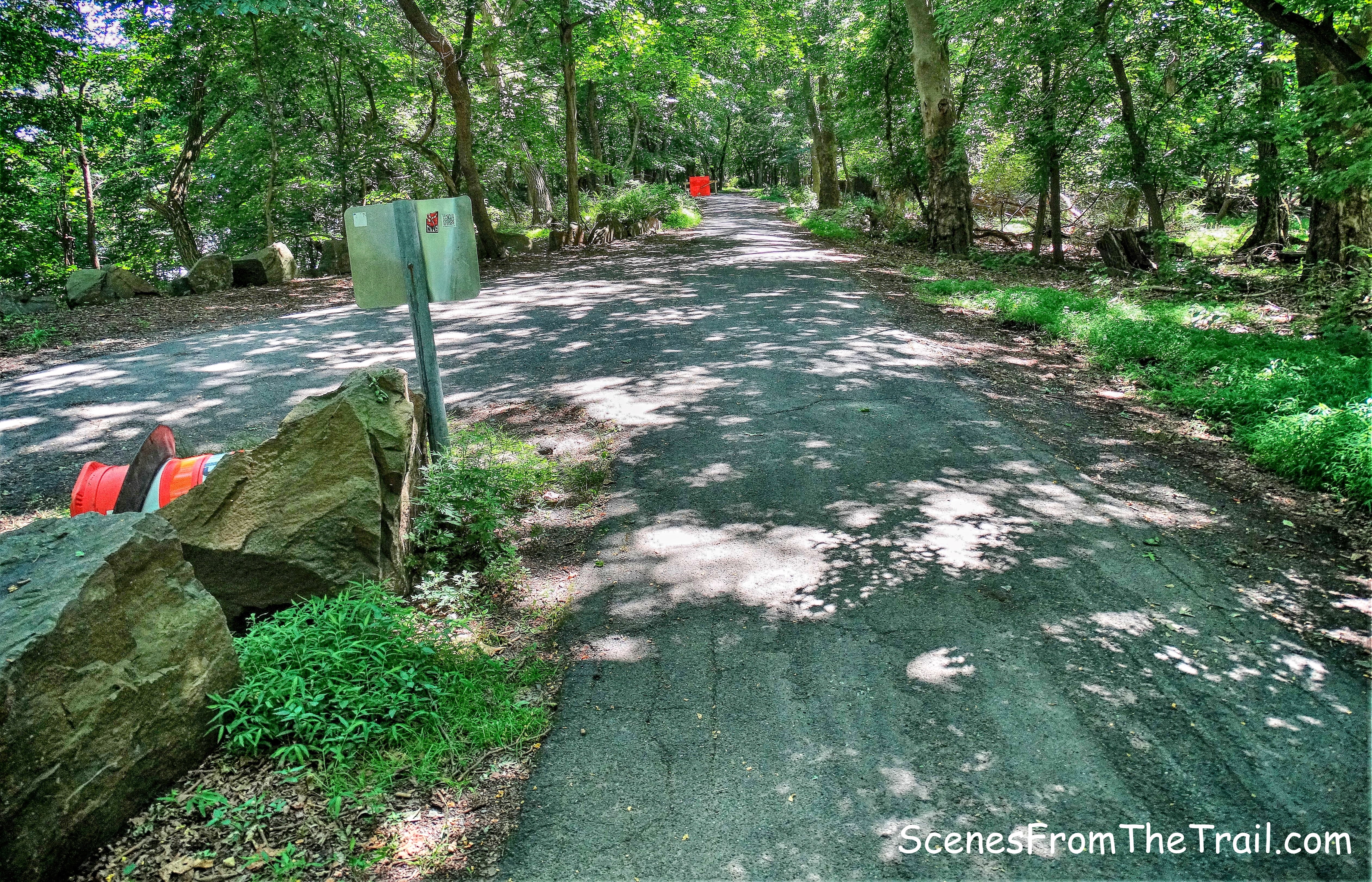
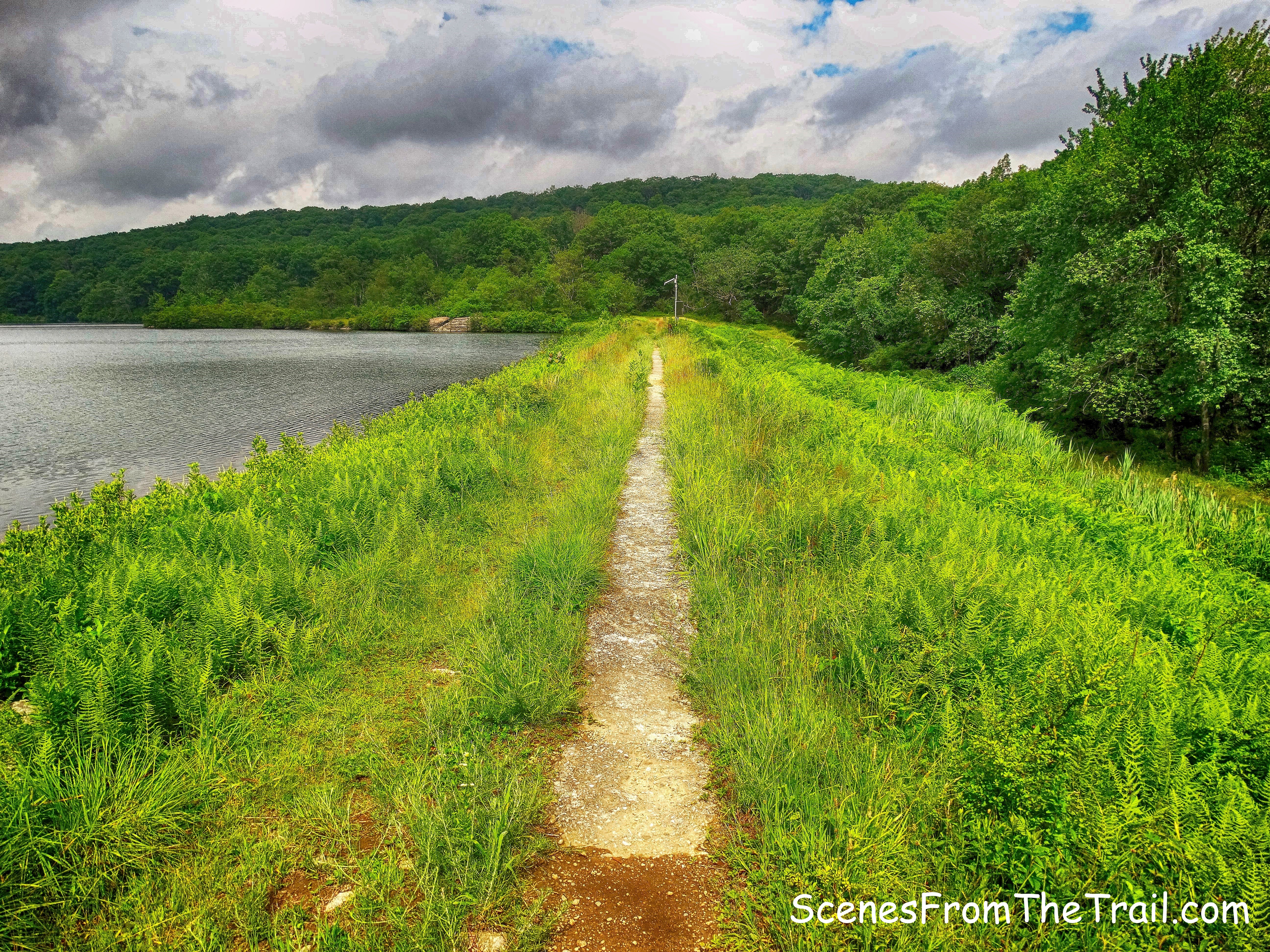
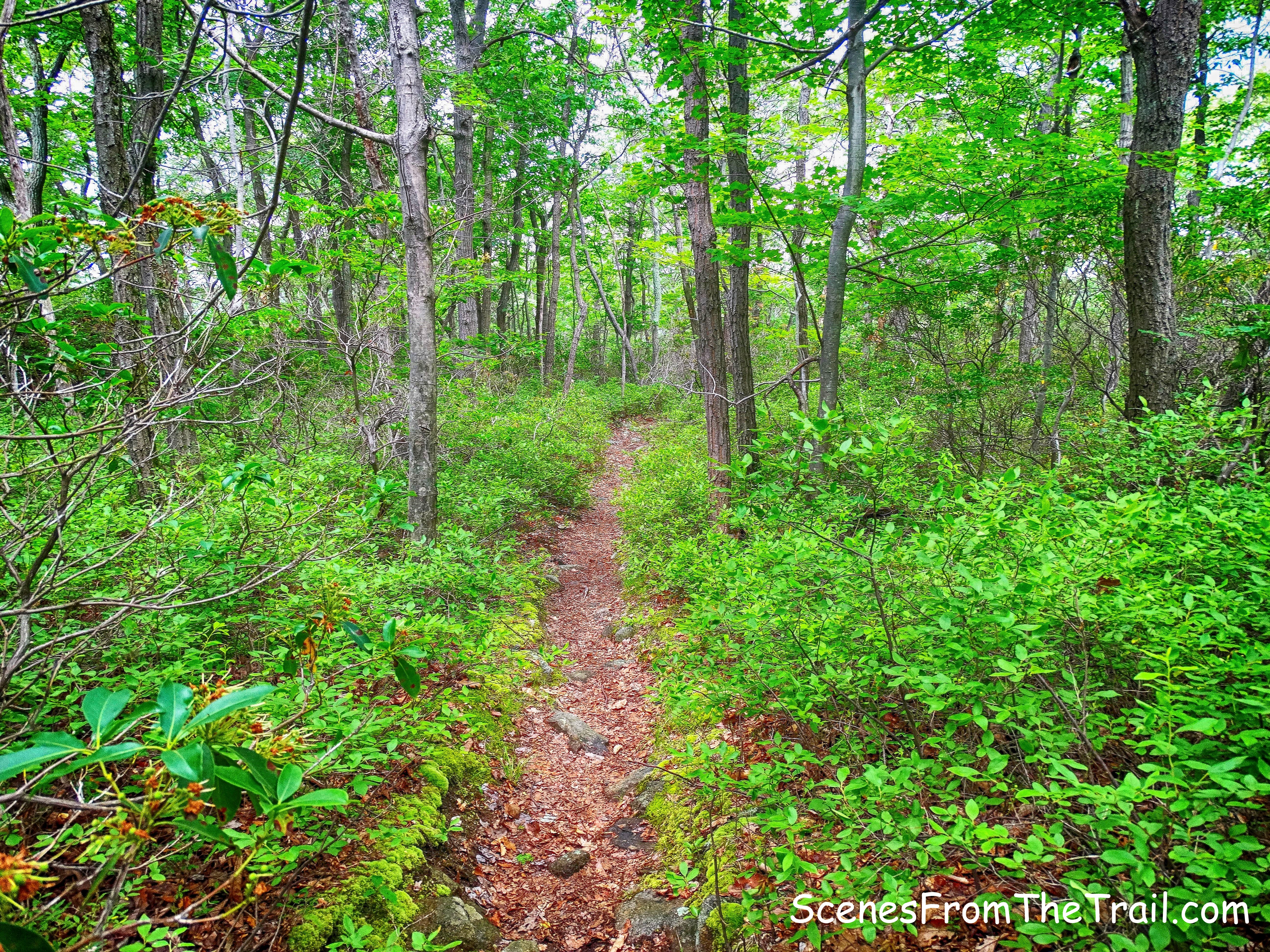
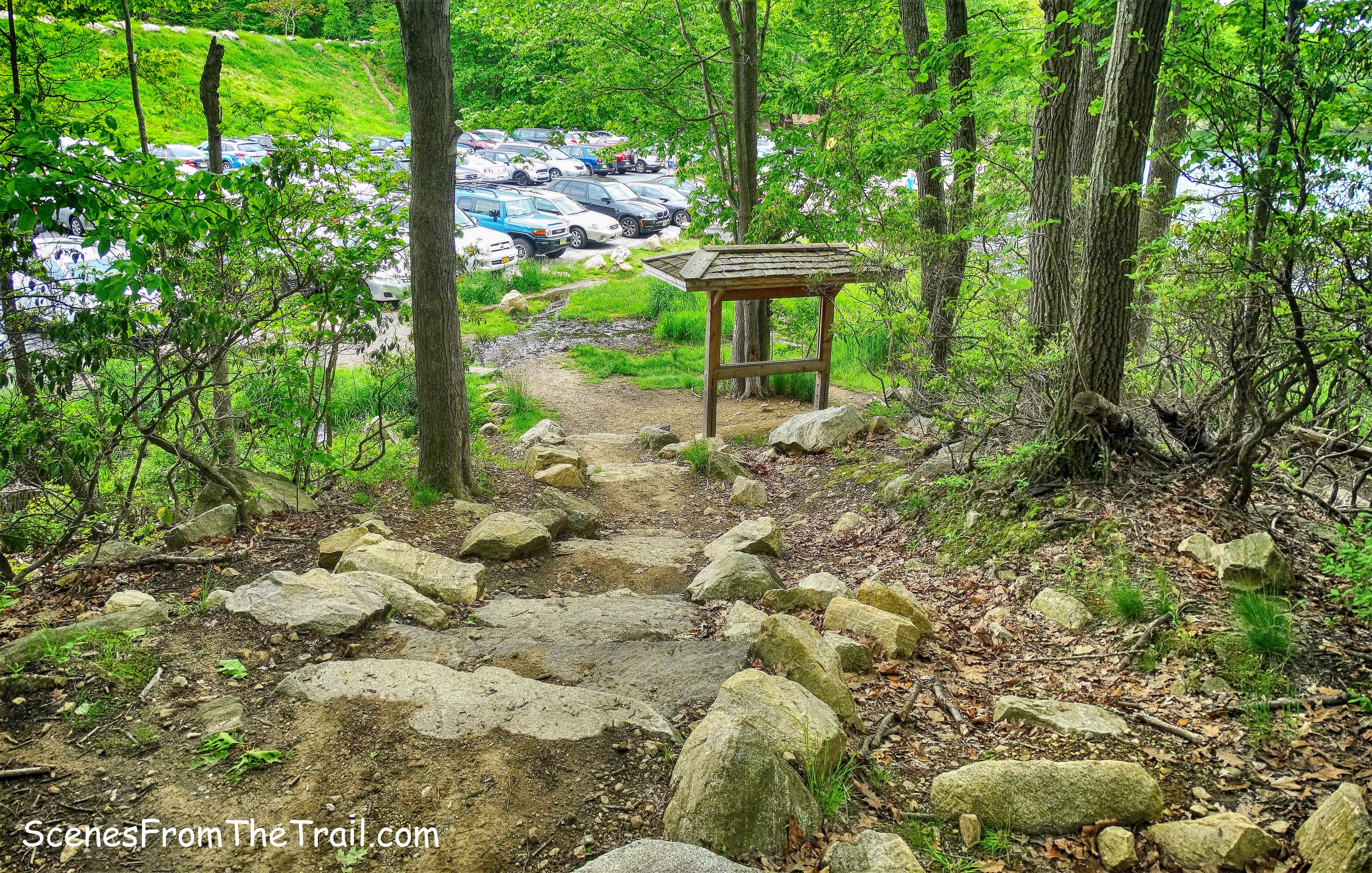
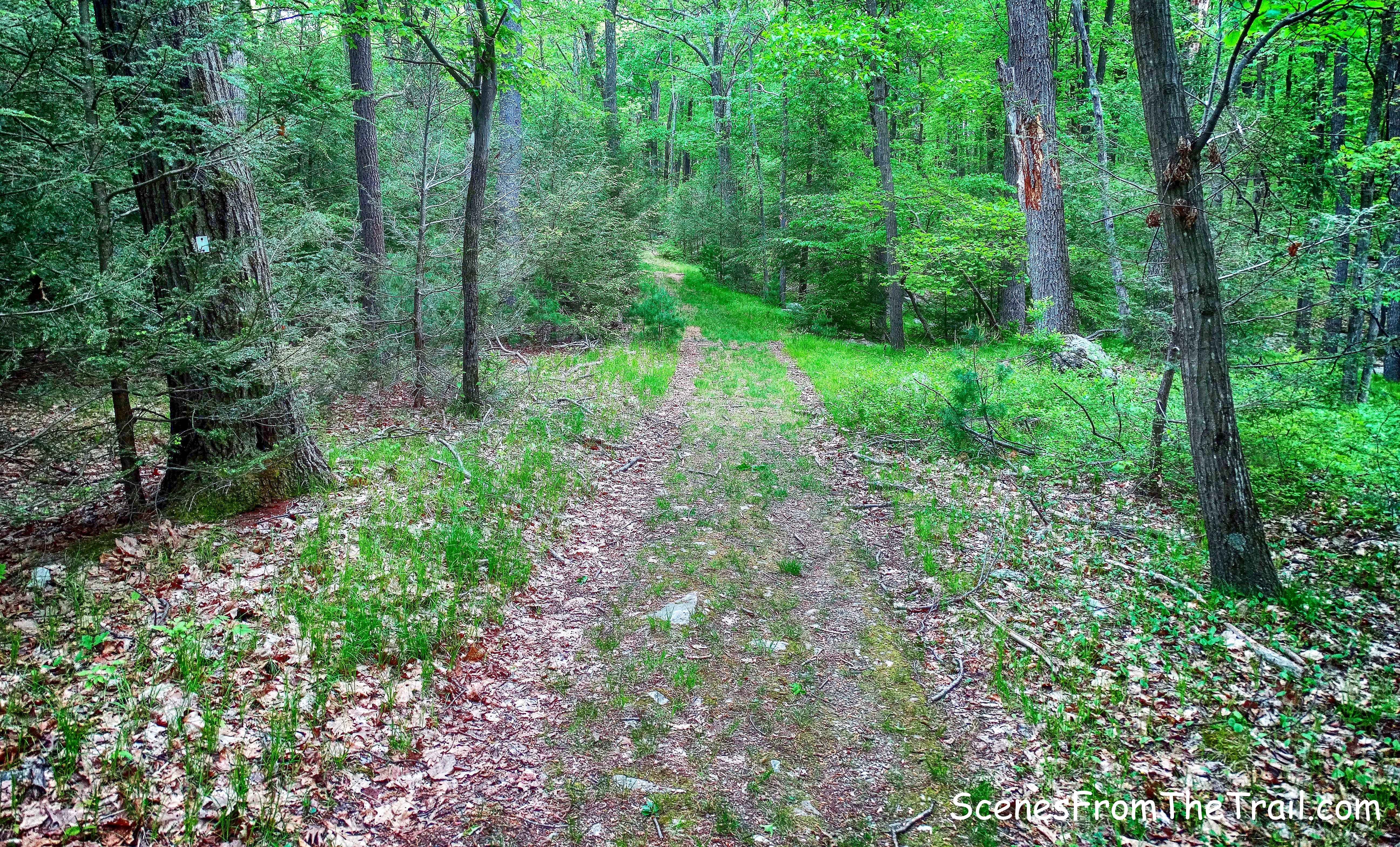
We then arrived at the terminus of the Manaticut Point Trail (3 yellow blazes) and turned right onto the Manaticut Point Spur Trail and followed it back all the way back to Crescent Drive, where our hike began.

Manaticut Point Spur Trail

Manaticut Point Spur Trail

This was a great hike through beautiful woods and fun trails. The best part about it was that we had the forest all to ourselves. An easy hike to follow, just stay on yellow for the majority of the hike. I’m looking forward to exploring other sections of Norvin Green soon, but not during hunting season. That’s all for today, now get out there and take a hike!

Pros: Secluded trails, Lake Sonoma, scenic views, well marked trails, rock formations.

Cons: Barking dog.

Manaticut Point Trail

Manaticut Point Trail


Popolopen Torne/Popolopen Gorge Loop – Bear Mountain State Park

August 21, 2017 – Highlands, NY

Difficulty: Strenuous (1 steep climb, 1 steep descent and numerous ups and downs)

Length: Approximately 5.8 miles

Max elevation: 942 ft.– total elevation gain approximately 1,343 ft.

Route type: Circuit

Map: Harriman-Bear Mountain Trails Map #119

Trailhead parking: 9W Parking US-9W Highland Falls, NY 10928 (They no longer allow hikers to park at the Fort Montgomery Historic Site. Park here and walk about a 1/4 mile south to the trailhead at Fort Montgomery Historic Site.)

A shorter loop hike to The Torne can be viewed HERE.

Popolopen Torne, officially called “The Torne,” is a small mountain with a relatively sharp and bald peak, part of the Hudson Highlands, with a summit 942 feet above sea level. It is located in Bear Mountain State Park and has 360° views, with the Hudson River and the Bear Mountain Bridge to the east, the hills of the West Point Military Reservation to the west and Bear Mountain to the south.

Popolopen Torne as viewed from Long Mountain

Popolopen Torne as viewed from Long Mountain

Ever since I hiked West Mountain, I have been dying to do this hike. Seeing that bald peak in the distance had me intrigued. Knowing that a memorial for fallen soldiers sits at the summit, was the motivating factor for me to climb ‘The Torne.” Even though it’s a strenuous hike, it’s quite popular so we decided to do this hike on a Monday Morning. The hike was done in a counter-clockwise fashion from the overflow hiker’s lot.

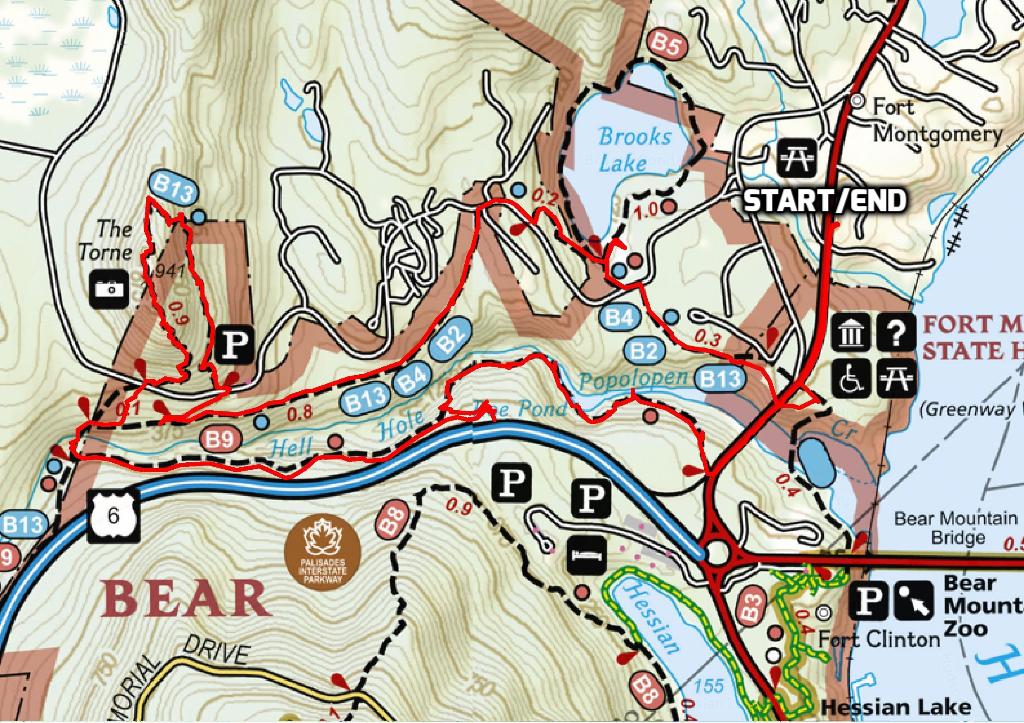
Popolopen Torne - Popolopen Gorge Loop hike route

Popolopen Torne – Popolopen Gorge Loop hike route

A new feature that I have added is the Google Earth Fly-Through. It follows the path that we hiked and it gives you a good idea of the terrain, layout, amount of parking etc. Check it out, it’s pretty cool.

View the Google Earth Fly-Through video of the hike below.

Normally the parking for this hike is at the Fort Montgomery Historic Site, but I have heard that they don’t want hikers to park in their lot any longer. On the day of our hike, the gate was closed so we continued about a 1/4 mile north and parked in the overflow lot. The lot was empty when we arrived at approximately 8:45 am.

Overflow parking

Overflow parking

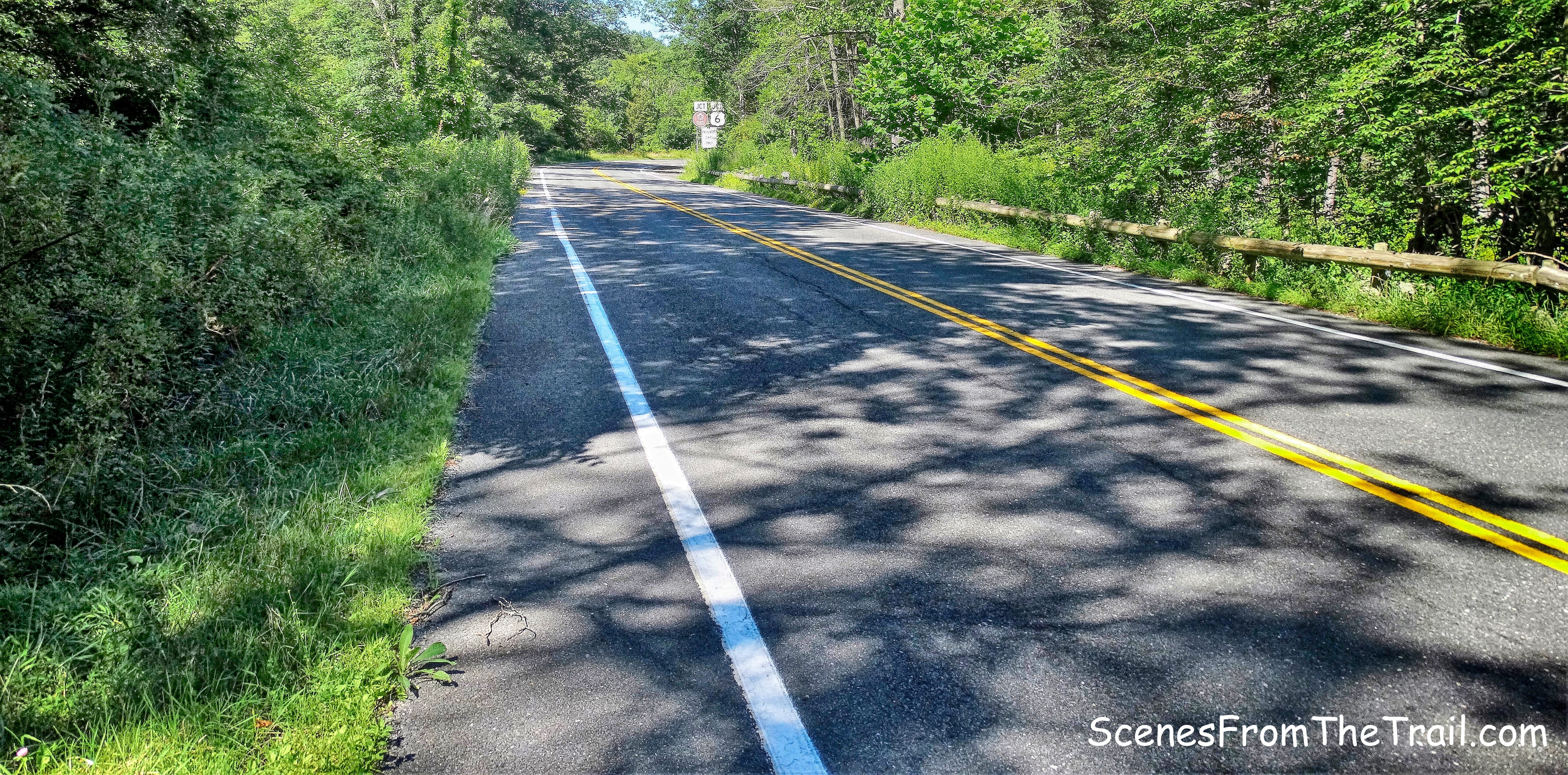
It was a cool morning when we embarked on our hike, but ended up being in the mid 80’s and humid. We started out by walking south on Route 9W towards Fort Montgomery.

walking south on Route 9W

walking south on Route 9W

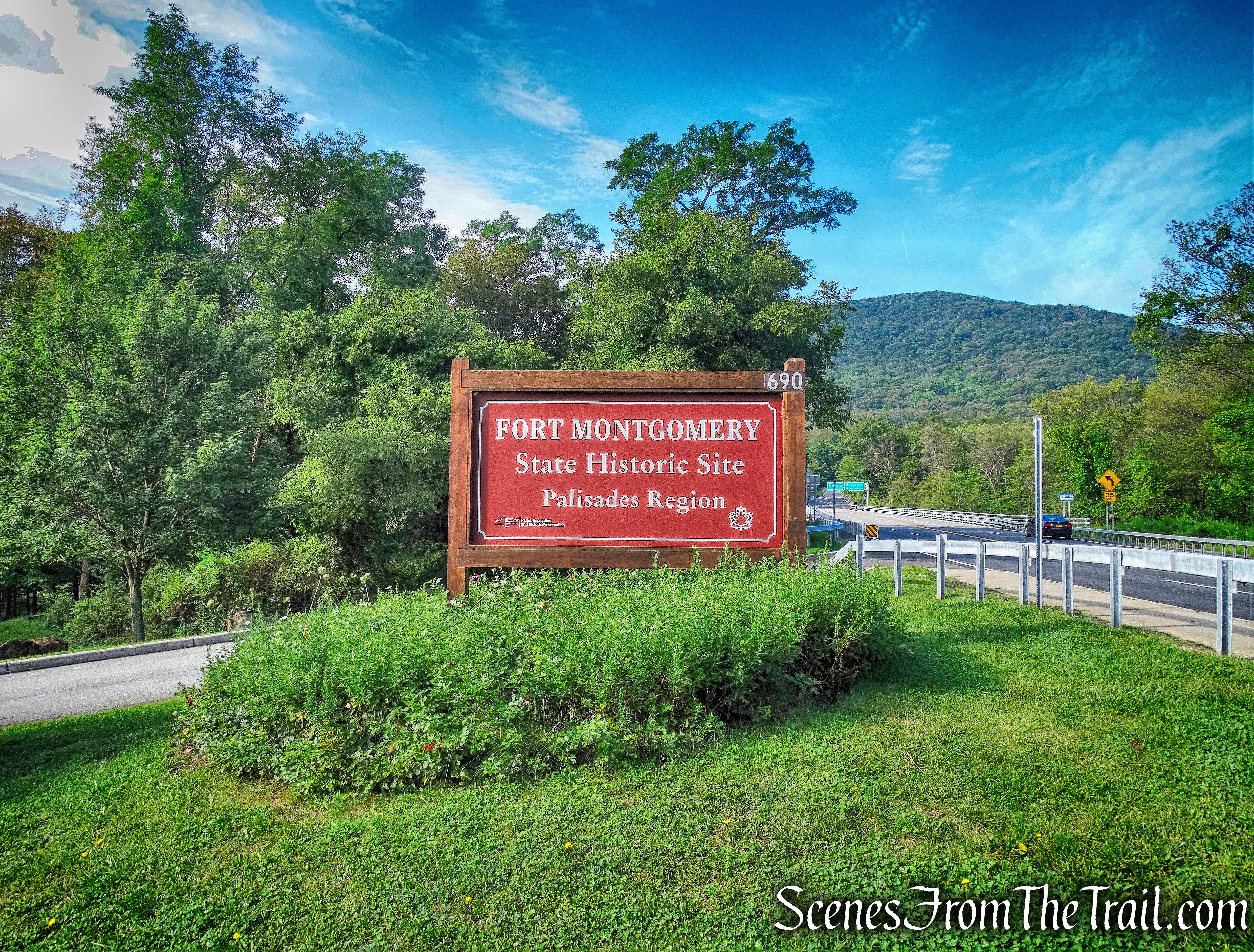
We walked the 1/4 mile to Fort Montgomery and turned left onto the entrance ramp.

turn left into Fort Montgomery

turn left into Fort Montgomery

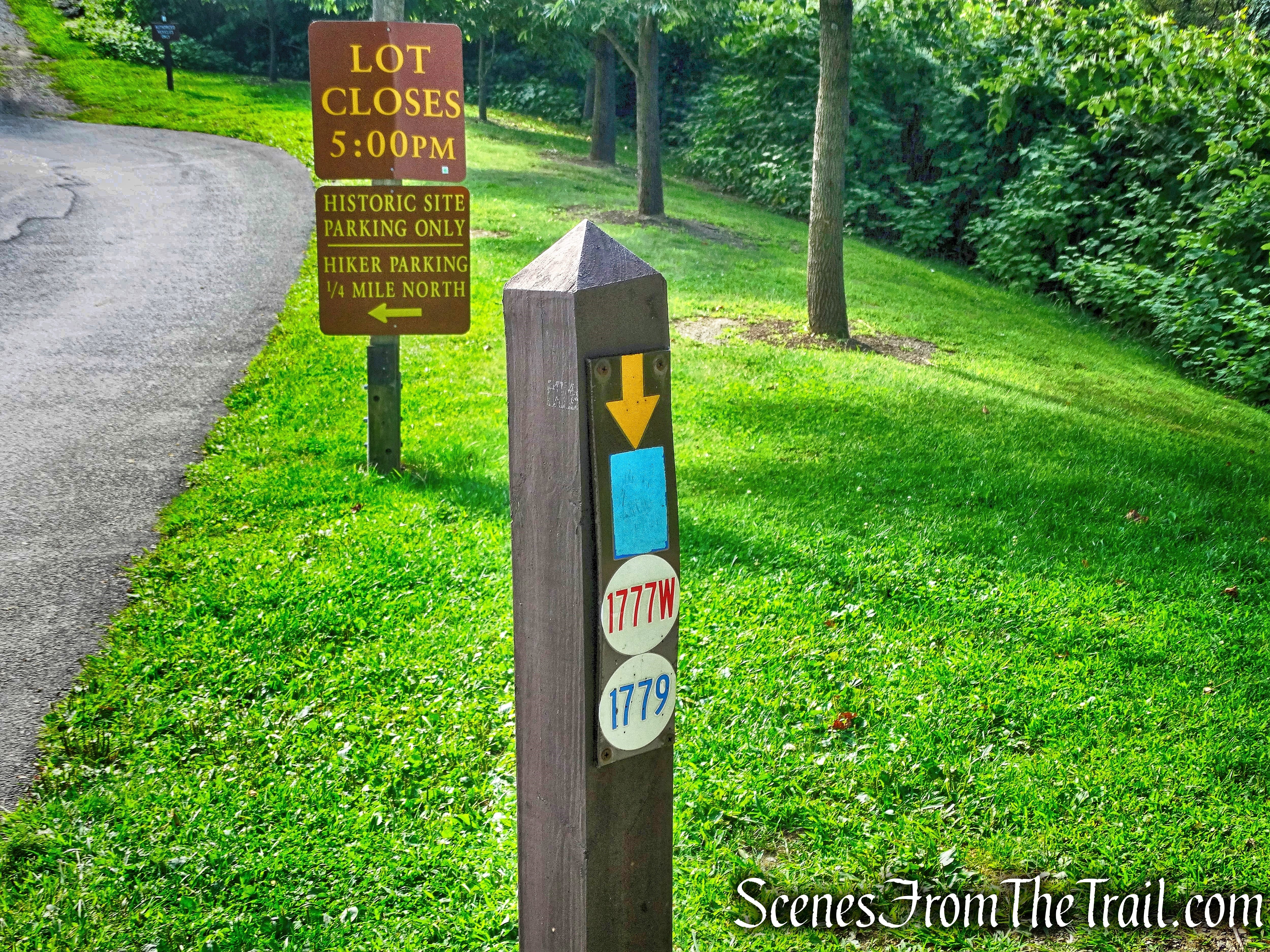
Just past the gate on the south side of the entrance road there is a brown post with a yellow arrow, a blue blaze, and 1777W and 1779 blazes. This marks the start of three co-aligned trails: the 1777W and 1779 Trails and the blue-blazed Timp-Torne Trail.

start of the 1777W and 1779 Trails and Timp-Torne Trail

start of the 1777W and 1779 Trails and Timp-Torne Trail

We would be following the three co-aligned trails for approximately the first 1.5 miles from the brown wooden post. Although the three trails run jointly, the blue-blazed Timp-Torne Trail is the trail that goes up to the summit of The Torne, so we paid attention to the blue blazes to insure we didn’t miss our turn. We walked up some stone steps by the brown post and followed the three co-aligned trails as it led us under the Popolopen Bridge (US Route 9W).

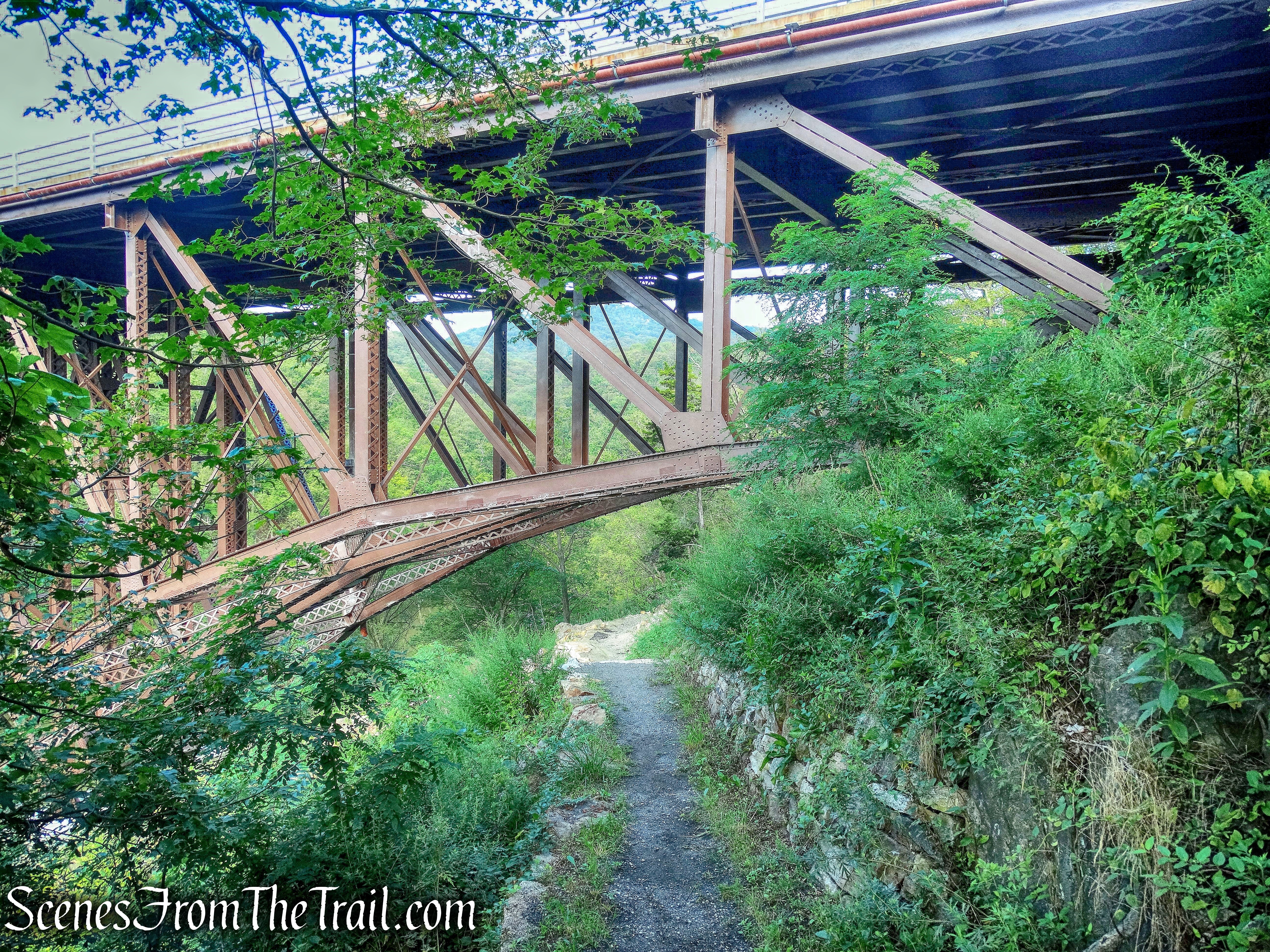
under the Popolopen Bridge

under the Popolopen Bridge

After crossing under the bridge, we proceeded up some stone steps and turned left and began heading northwest on the blue-blazed Timp-Torne Trail.

Timp-Torne Trail

Timp-Torne Trail

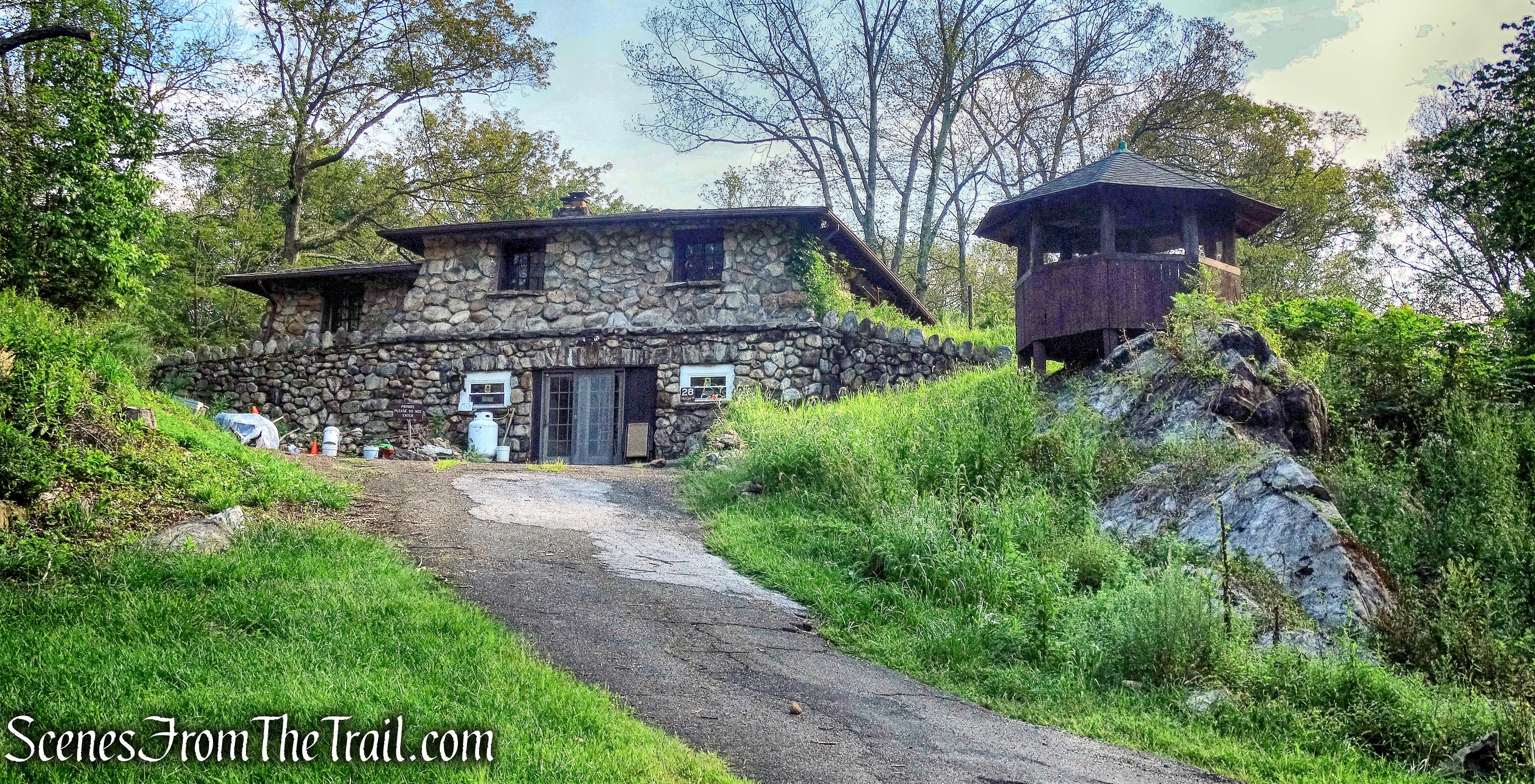
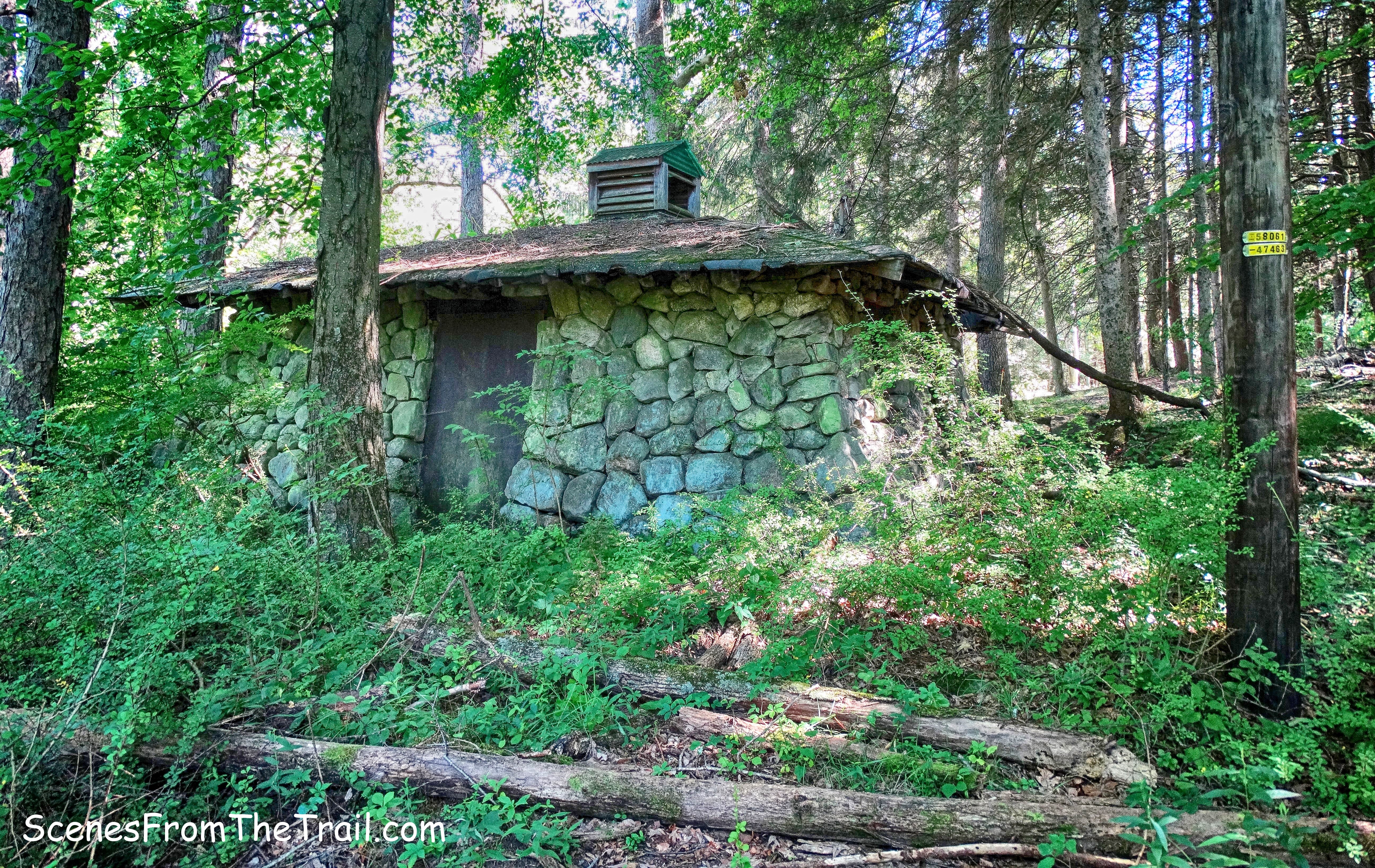
The trail then turns left onto paved McCoy Road and passes an interesting looking stone building just to the right of the trail.

stone building

stone building

The trail follows McCoy Road for a short distance and then reenters the woods.

Timp-Torne Trail

Timp-Torne Trail

In about 0.2 mile, the trail turns left onto the paved Mine Road, but in 125 feet, turns right and leaves the road, marked by blue blazes on boulders by the side of the road.

Timp-Torne Trail turns right and leaves Mine Road

Timp-Torne Trail turns right and leaves Mine Road

In a short distance the Timp-Torne Trail turns left, but I saw a building through the weeds so we continued a short distance ahead to check it out.

building ruins

building ruins

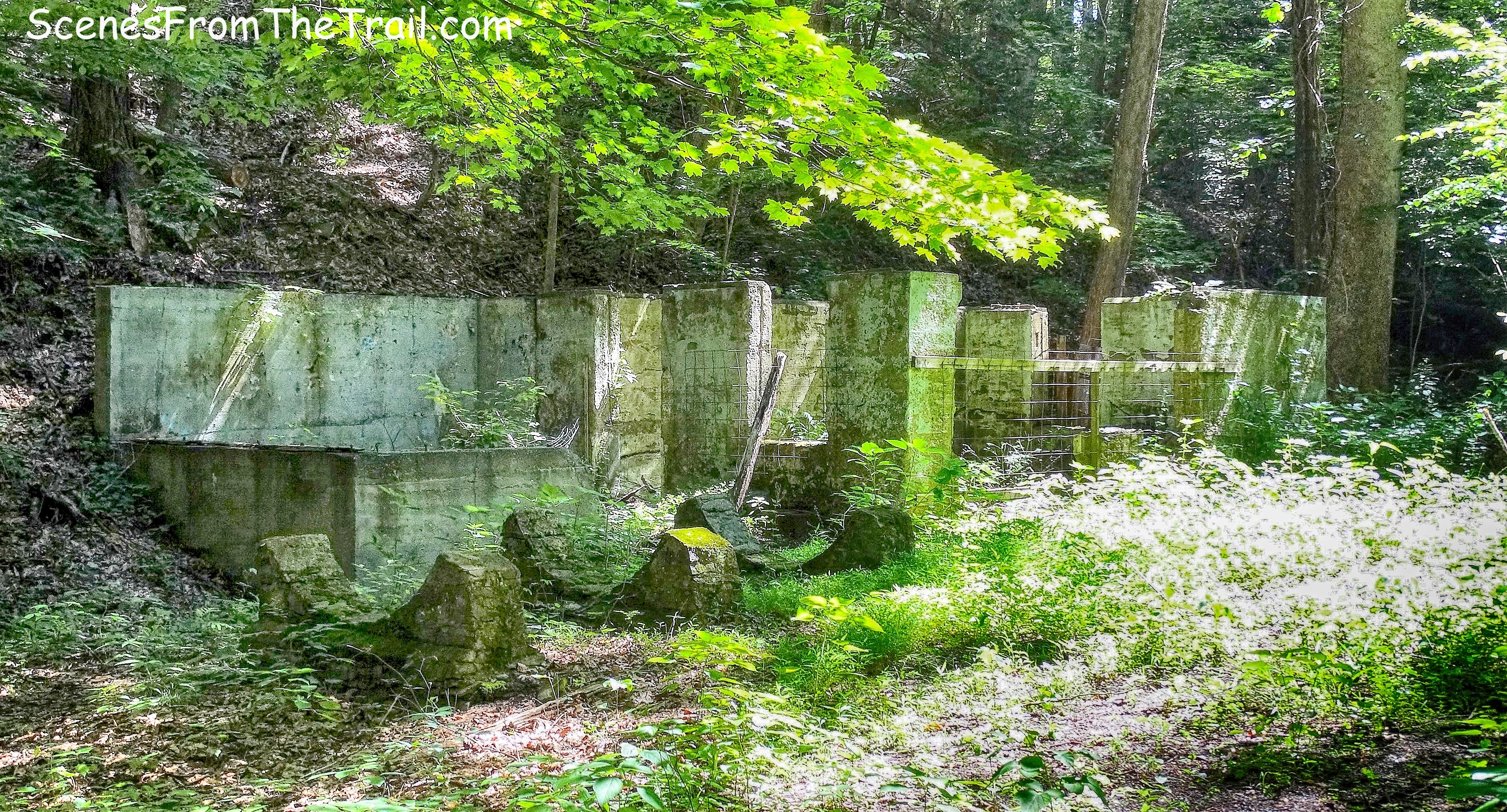
I don’t know the origin of this building, but it was cool and I’m glad that I spotted it.

building ruins

building ruins

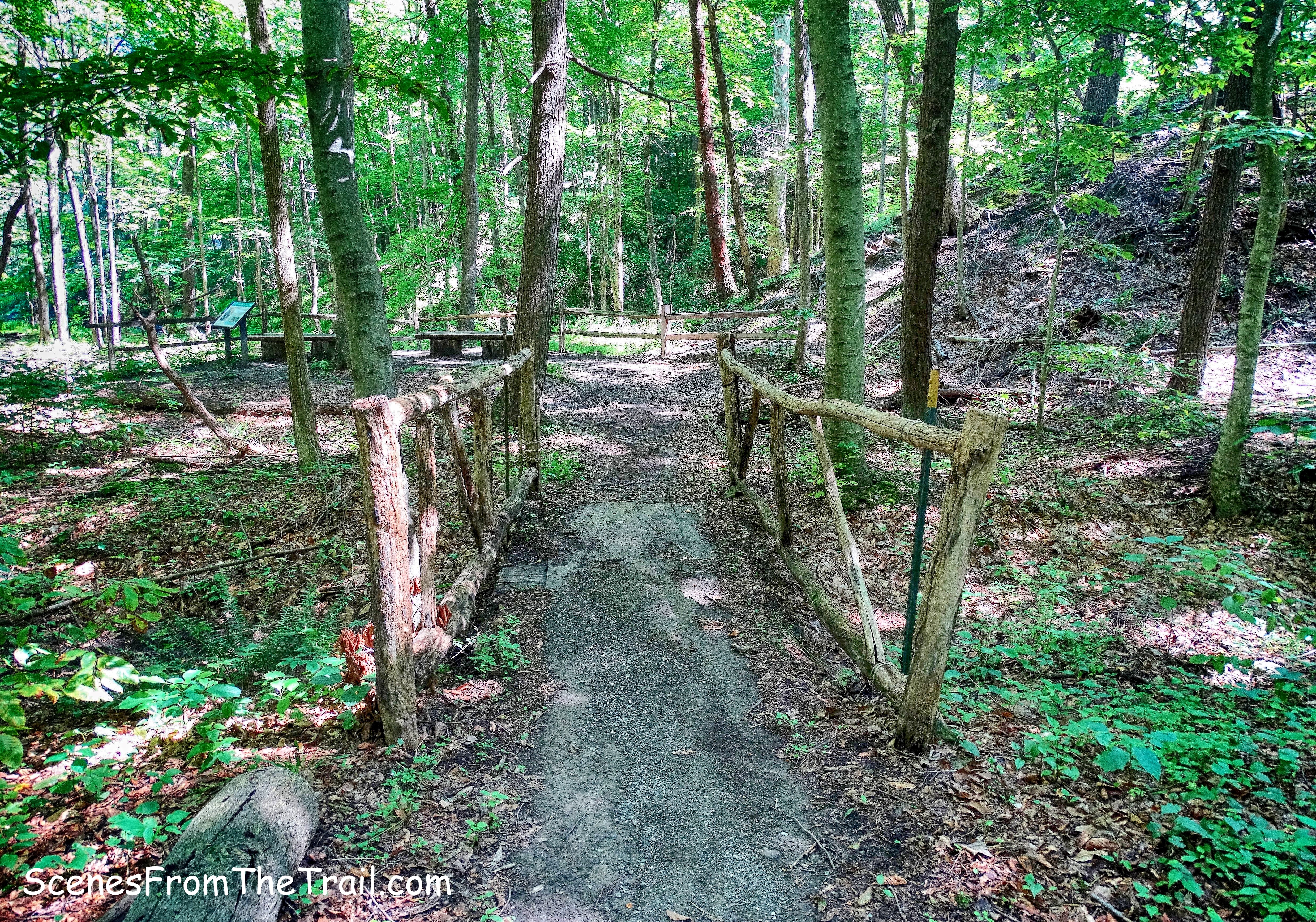
We retraced our steps back to the turn and crossed a wet area on puncheons, the trail veers left and climbs the hillside.

Timp-Torne Trail

Timp-Torne Trail

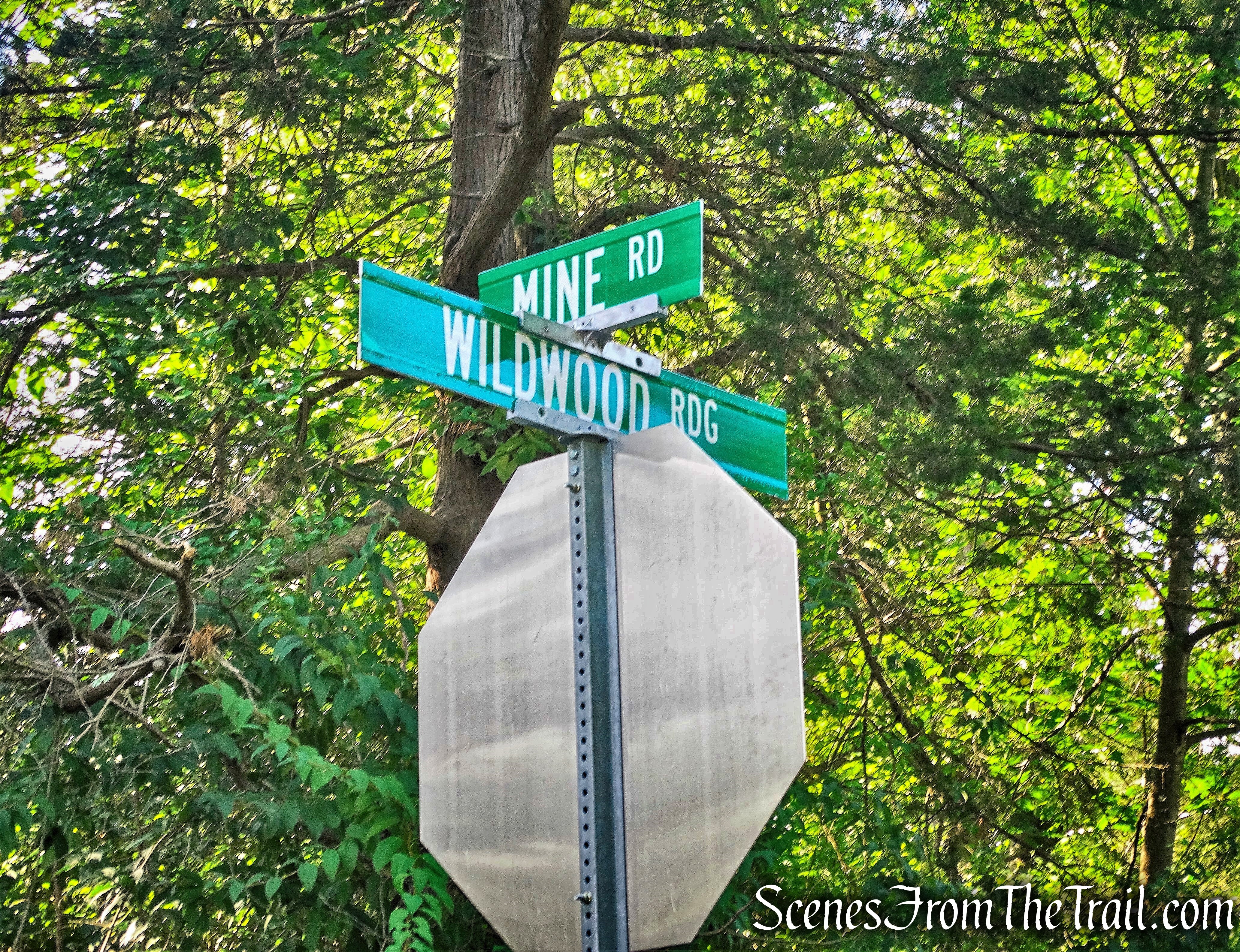
The trail then once again comes out onto the paved Mine Road. We turned right onto Mine Road for about 500 feet. Just past the intersection with Wildwood Ridge, the trail leaves the paved road and reenters the woods.

intersection with Wildwood Ridge

intersection with Wildwood Ridge

The trail then joins a wide woods road, the route of the West Point Aqueduct which was built in 1906. At first, the route climbs steeply, but it soon descends steeply and then levels off.

Timp-Torne Trail

Timp-Torne Trail

After about 2/3 of a mile along the West Point Aqueduct, we came to a junction. Here the 1777W and 1779 Trails continue ahead and continue to follow the aqueduct. We made a sharp right, to continue following the blue blazes of the Timp-Torne Trail.

sharp right - Timp-Torne Trail

sharp right – Timp-Torne Trail

The Timp-Torne Trail ascends on a woods road and in a short distance reaches paved Mine Road. The trail turns left, follows Mine Road for 100 feet and arrives at a kiosk at the base of Popolopen Torne.

kiosk at the base of Popolopen Torne

kiosk at the base of Popolopen Torne

Just past the kiosk, there is a wooden sign on a tree. Ouch!

wooden sign on a tree

wooden sign on a tree

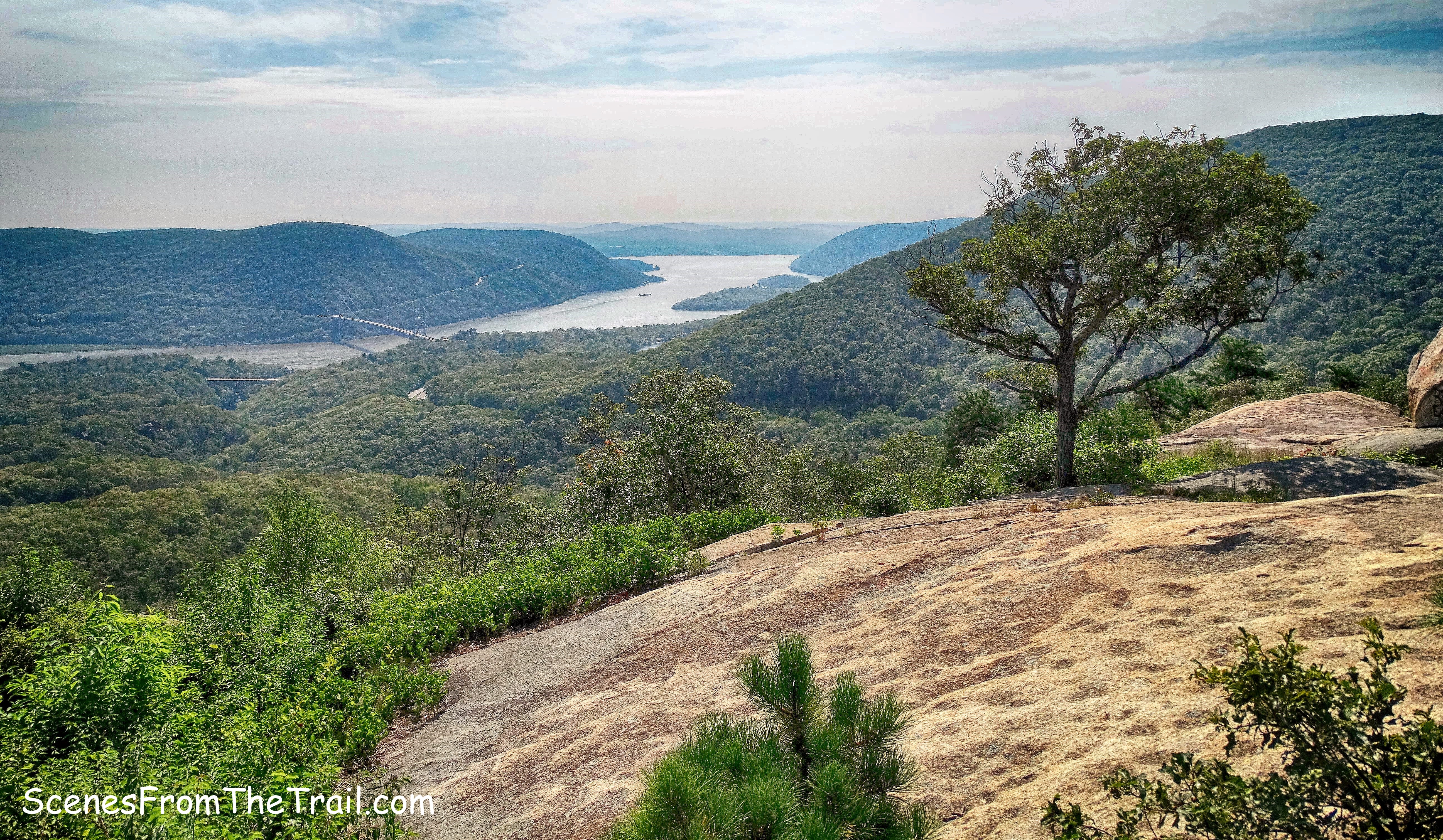
The Timp-Torne Trail climbs The Torne on stone steps and switchbacks. After a relatively level stretch, the trail turns left and ascends more steeply. It then comes out to a viewpoint over the Hudson River from a rock ledge. We stopped here for a few minutes to catch our breath. There was so much glare, possibly from the impending Solar Eclipse that the few images I captured didn’t come out too good, but trust me, the view is outstanding. Some hikers tend to believe that this is the summit, but it is not. The trail continues along bare rock and then we had to scramble up the last stretch.

scramble - Timp-Torne Trail

scramble – Timp-Torne Trail

We were tired, but we made it to the summit. What a view!

view southeast from Popolopen Torne

view southeast from Popolopen Torne

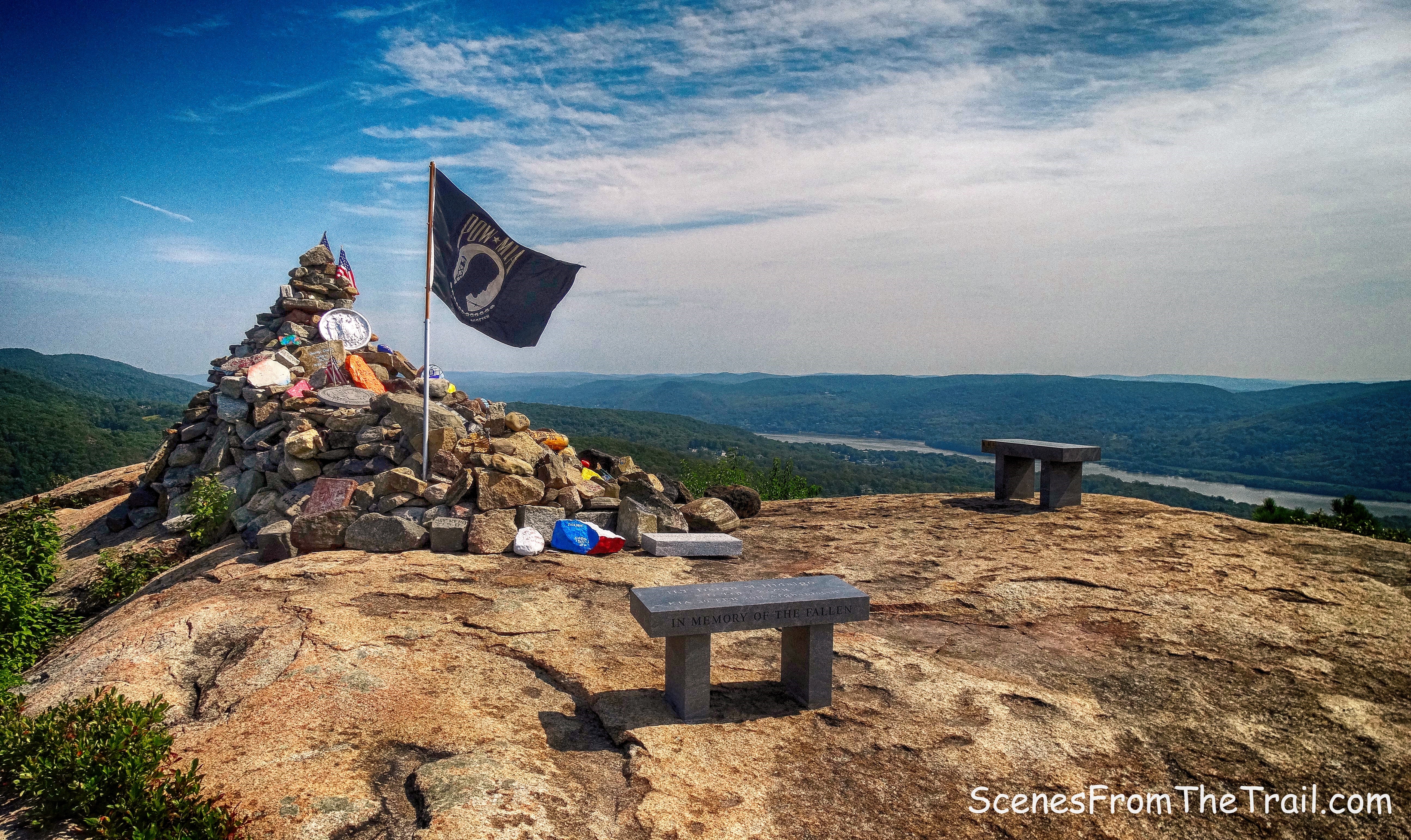
No matter how grand the view, the best part of this hike was seeing the memorial for fallen soldiers. The 400 lbs. benches that were placed here, were part of an Eagle Scout project.

Fallen Soldiers Memorial

Fallen Soldiers Memorial

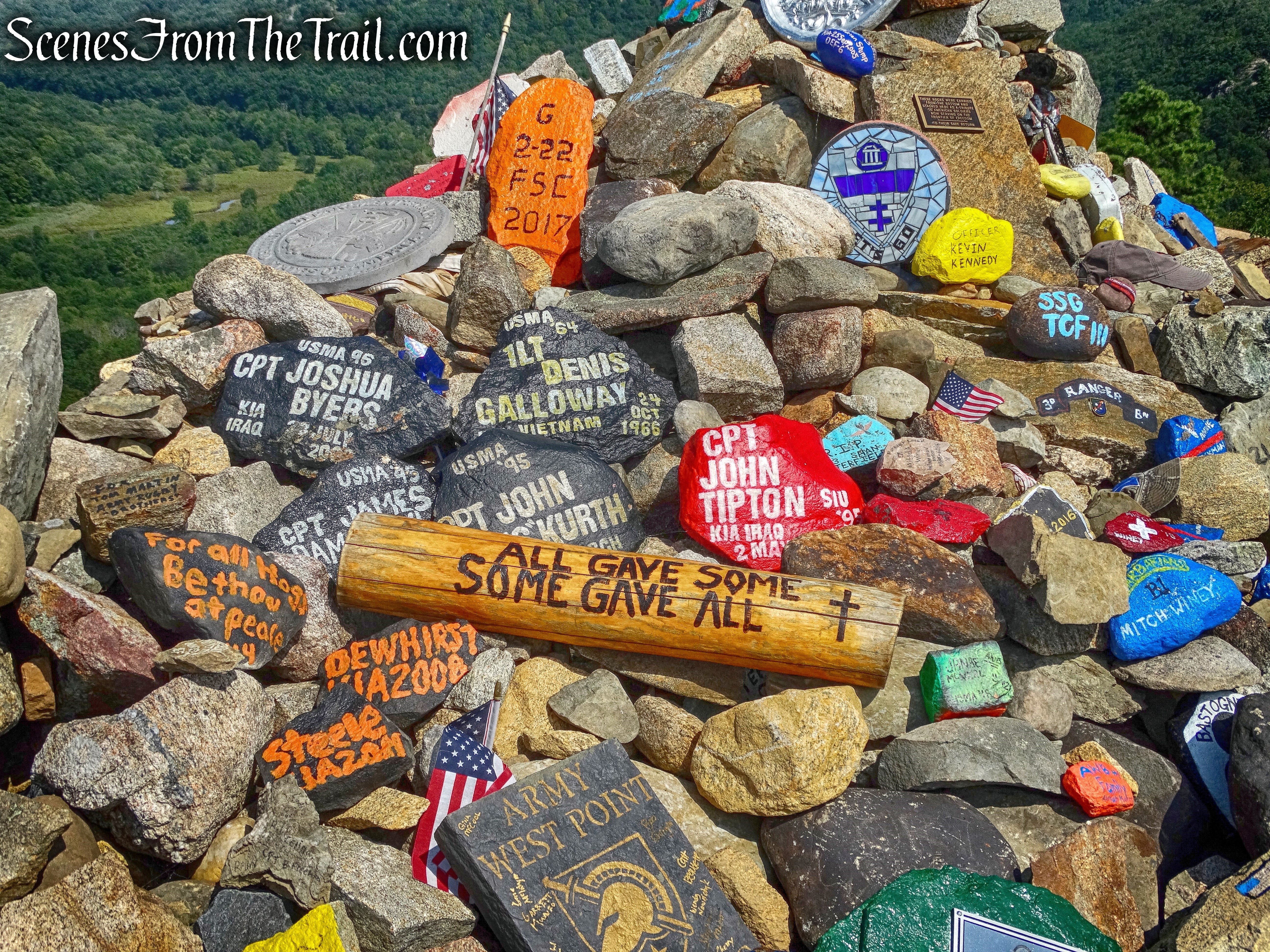
Greater Love Hath No Man Than To Lay Down His Life For His Brothers.

Fallen Soldiers Memorial

Fallen Soldiers Memorial

Known as the “Trail of the Fallen,” Every rock that has been placed here has been carried up from the base of The Torne. Some as heavy as 200 lbs.

Fallen Soldiers Memorial

Fallen Soldiers Memorial

With 360° views, this is now my favorite spot in the Bear Mountain – Harriman area. We found one shady spot and plopped ourselves down and just relaxed while taking in the glorious view. When we first arrived at the summit, there were a pair of hikers there, one of which reads my blog – thank you, I appreciate that. After they left, a lone hiker stopped briefly then went on her way. After that we had the summit and the view all to ourselves.

view south from Popolopen Torne

view south from Popolopen Torne

The view north isn’t bad either.

view north from Popolopen Torne

view north from Popolopen Torne

After spending some time here, it was time to go. The Timp-Torne Trail continues at the southern end of the summit and descends the mountain steeply on rock ledges. We had to use both our hands and feet in some areas as we made our way down.

Timp-Torne Trail - Popolopen Torne

Timp-Torne Trail – Popolopen Torne

About halfway down, the trail descends more moderately on stone steps and switchbacks. We crossed paved Mine Road and descended to rejoin the 1777W and 1779 Trails at the West Point Aqueduct.

Timp-Torne Trail

Timp-Torne Trail

We walked along the aqueduct for approximately 250 feet then turned left and descended some stone steps and crossed Popolopen Creek on a 62-foot footbridge. This prefabricated bridge was installed in 2012 by a volunteer trail crew from the New York-New Jersey Trail Conference, replacing a similar bridge that was severely damaged in 2011 by Hurricane Irene.

62-foot footbridge over Popolopen Creek

62-foot footbridge over Popolopen Creek

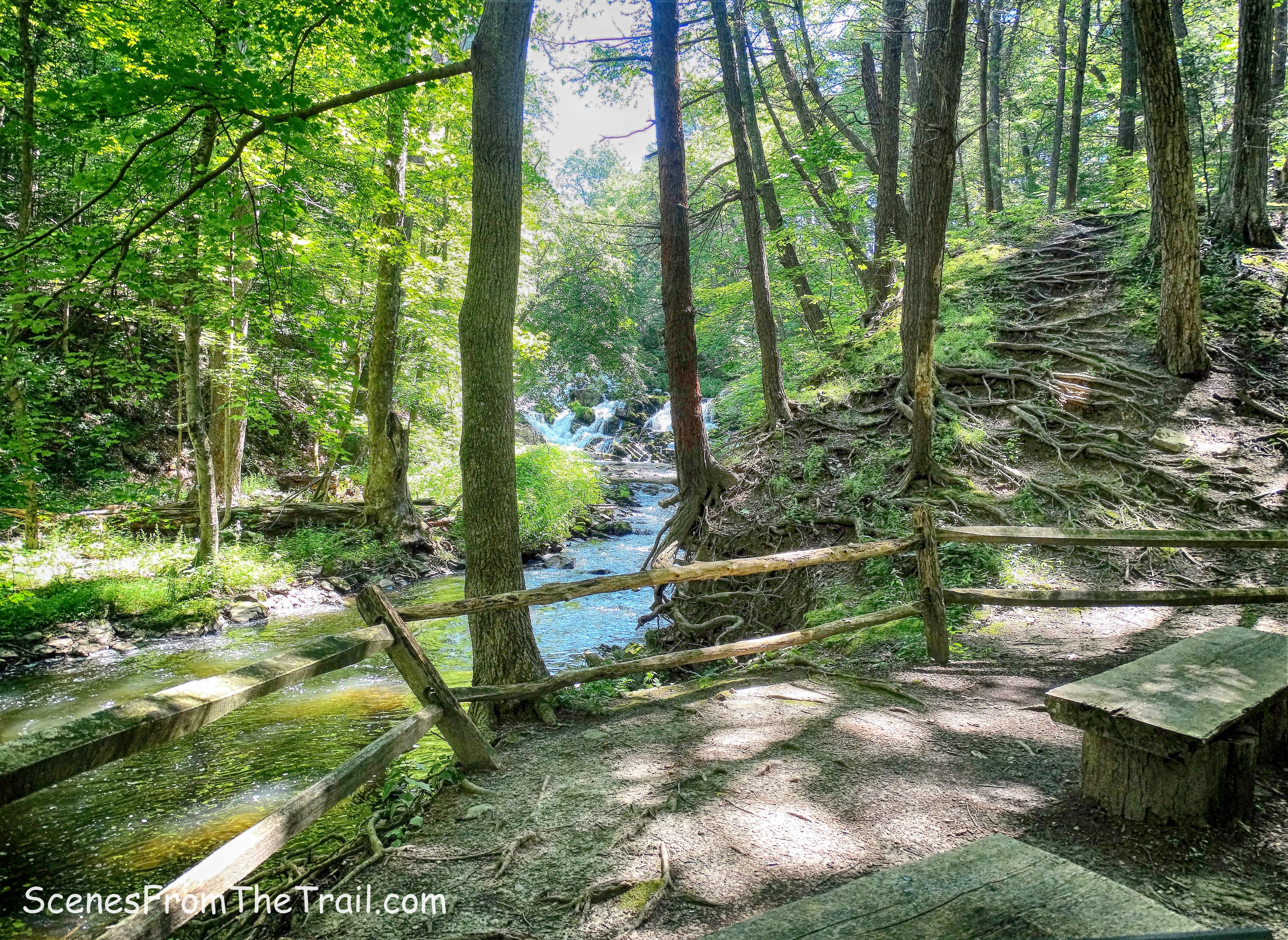
The creek was very dry on this day, but I’m sure that it is quite scenic when there is water flowing.

Popolopen Creek

Popolopen Creek

On the other side of the bridge, the three co-aligned trails climb the hillside. Here, the Timp-Torne, 1777W and 1779 Trails turn right, but we turned left, now following the red-on-white blazes of the Popolopen Gorge Trail.

Popolopen Gorge Trail

Popolopen Gorge Trail

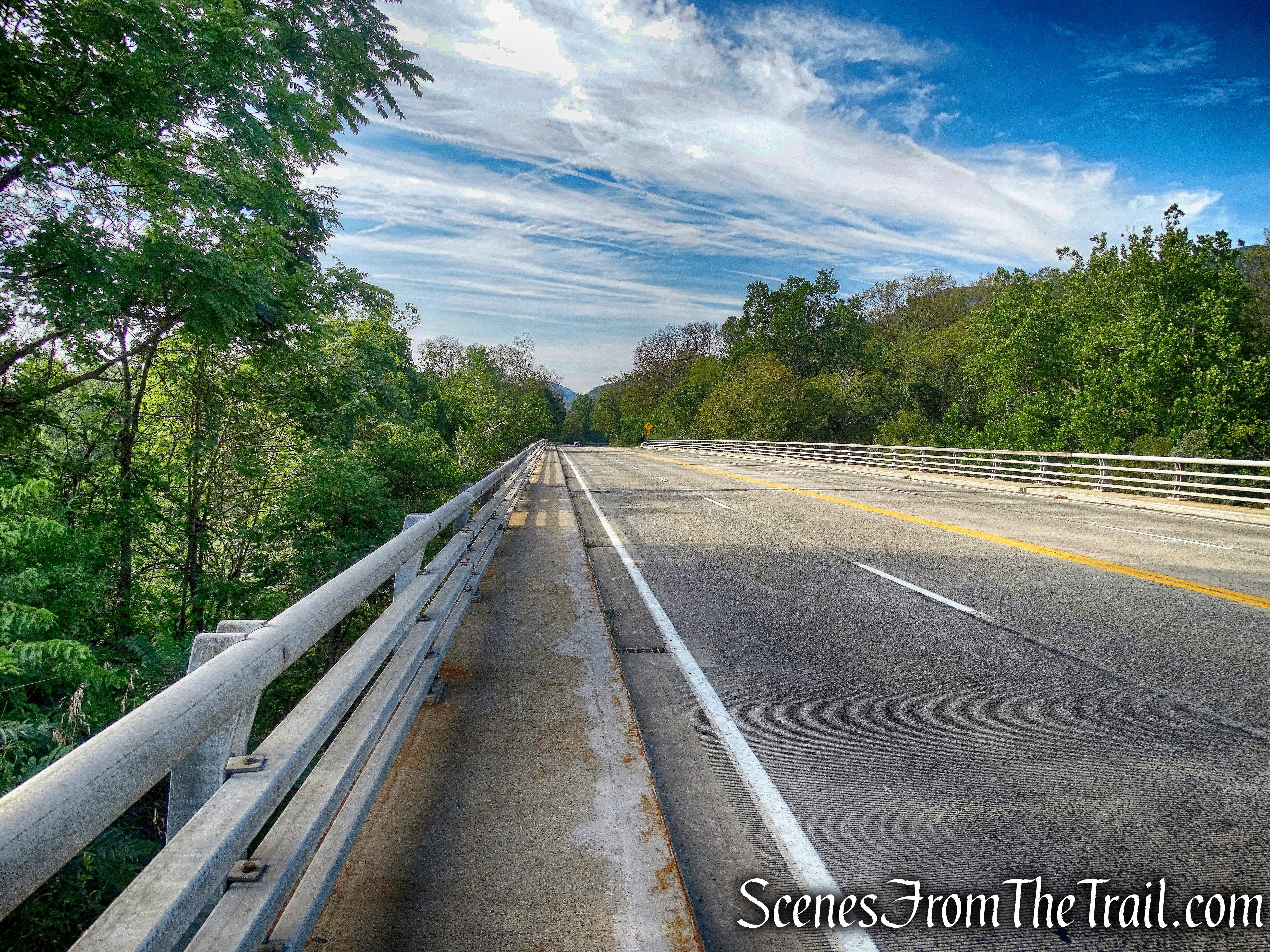
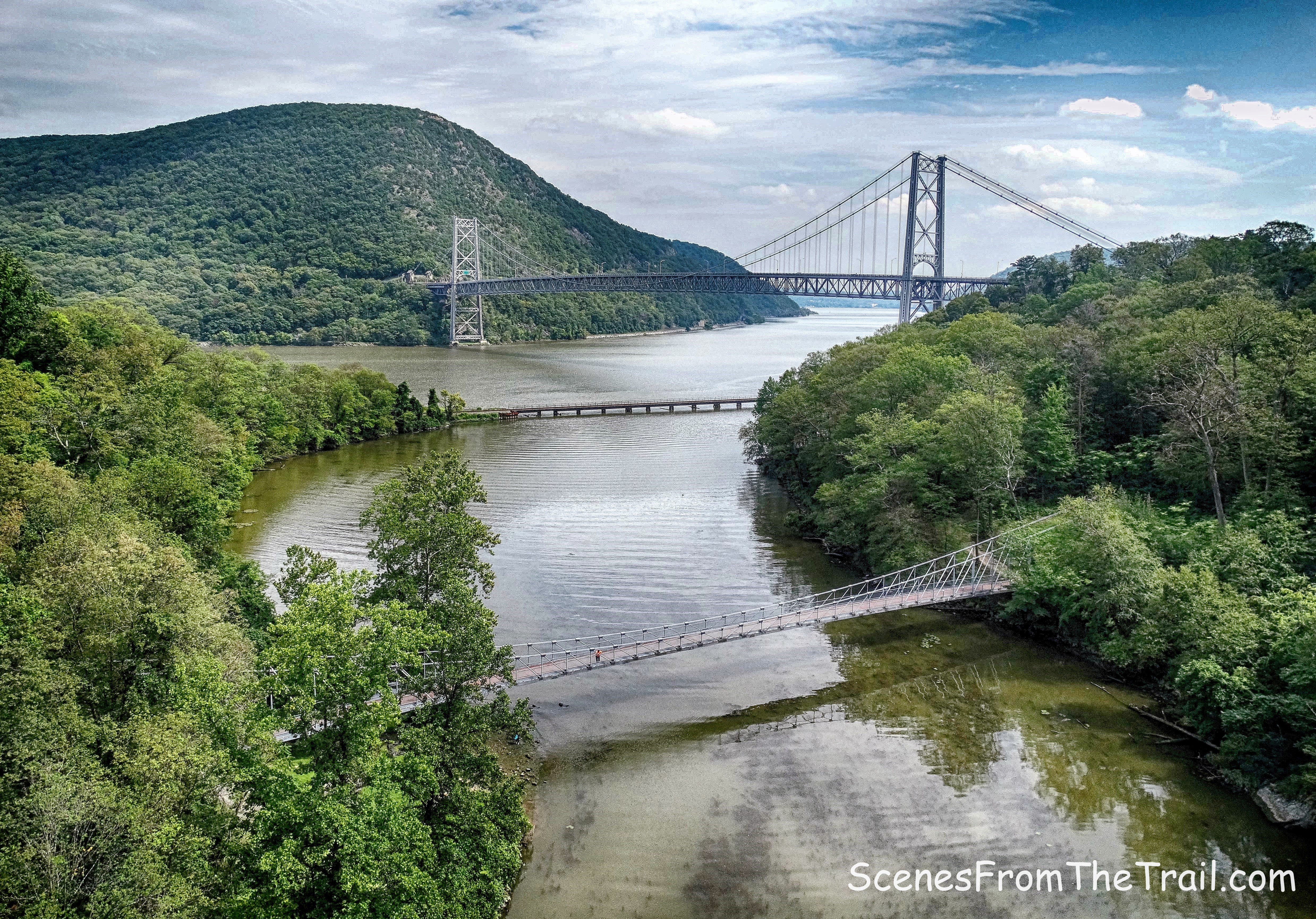
We followed the red blazes of the Popolopen Gorge Trail all the way back to US Route 9W. We were pretty tired by then and all the ups and downs of this trail sure didn’t help. We came out on 9W and crossed the road. We then began our walk back towards the hikers parking lot crossing the Popolopen Bridge on the sidewalk. Now with the sun behind me I was able to capture a decent image of the Bear Mountain Bridge with Anthony’s Nose just beyond.

Bear Mountain Bridge with Anthony's Nose

Bear Mountain Bridge with Anthony’s Nose

When we got back to the lot, it was almost full. It pays to get out and hike early. Even though it was a Monday, I expected to see more people along the trail. We didn’t cross paths with anyone except at the summit. My kind of hike. I hope that you enjoyed this hike and please don’t forget to subscribe to my blog and stay up to date on my wanderings. Now get out there and take a hike!

Pros: Fallen soldiers memorial, views galore, slight rock scrambling, less traveled.

Cons: several short road walks, creek was dry.

at the summit of Popolopen Torne

at the summit of Popolopen Torne

Black Rock Mountain Loop – Black Rock Forest

August 20, 2017 – Cornwall, NY

Difficulty: Moderate – Strenuous (3 steep climbs and 1 steep descent)

Length: Approximately 5.3 miles

Max elevation: 1,391 ft.– total elevation gain approximately 1,247 ft.

Route type: Circuit

Map: West Hudson Trails Map – Black Rock Forest Consortium Web Map

Trailhead parking: Black Rock Forest Main Parking Lot – Reservoir Rd, Cornwall, NY 12518


Black Rock Forest is located in the western Hudson Highlands region in Orange County, NY, mostly in the town of Cornwall, with the southern fringe overlapping into the neighboring town of Highlands. At 3,870-acres, it is the largest area in the Highlands with a sustained elevation over 1,200 feet, providing the hiker with sweeping vistas and strongly contrasting habitats. There is a network of old logging and mining roads, and together with cut footpaths, provide over 30 miles of trails in Black Rock Forest.

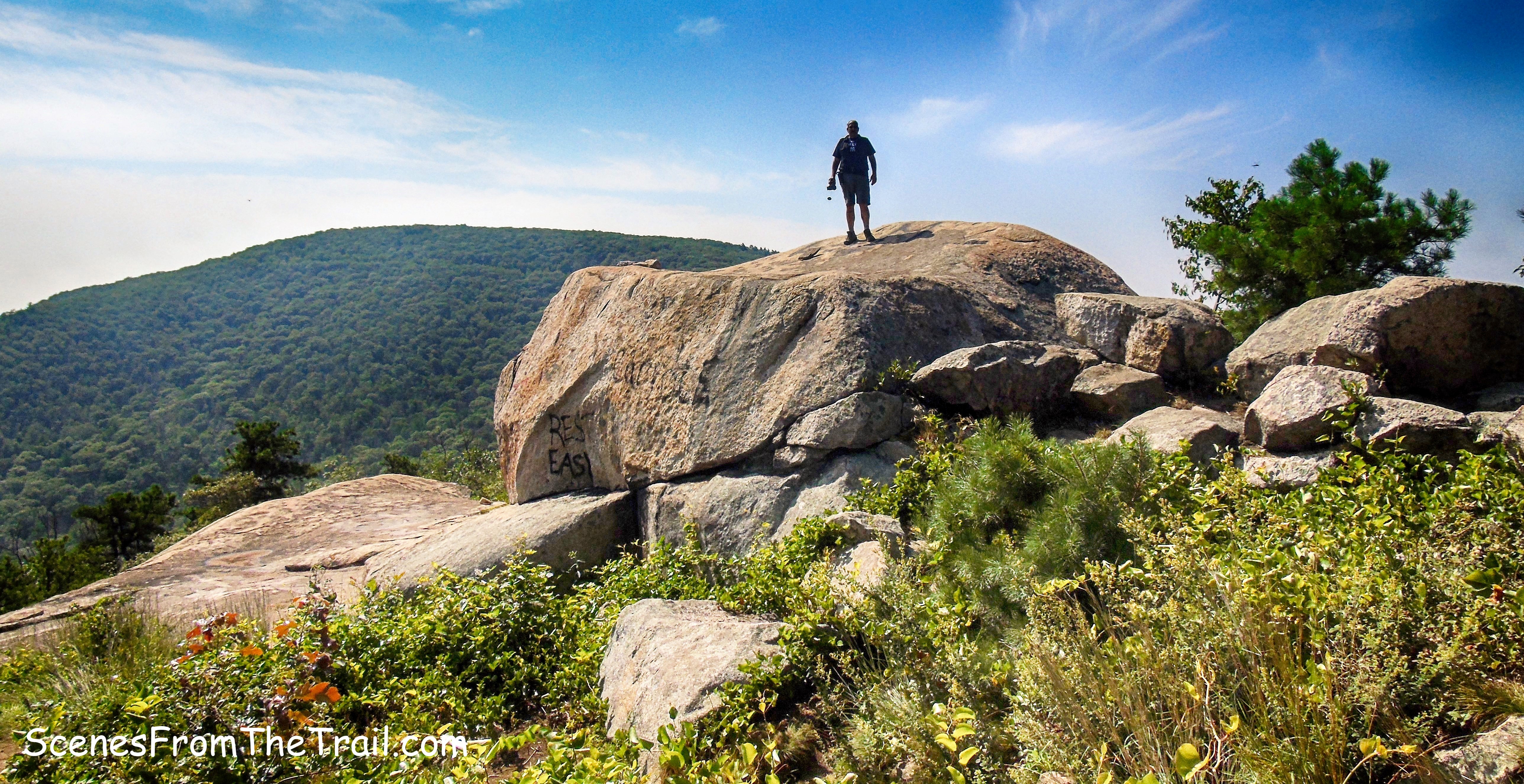
I hiked the area a few years ago and decided to pay a return visit. We spent a good portion of the day there and only ran into a few people. One man and his dog at Black Rock summit, a woman walking her dog on a nearby trail and a couple walking in the opposite direction as we approached the parking area at the conclusion of our hike. It was a beautiful August day with temps in the low 80’s, sunny and slightly humid. We arrived at the parking area at approximately 9:15 am and there were only several cars in the lot. We did this hike clockwise from the parking area and only retraced our steps for less than 1/2 of a mile.

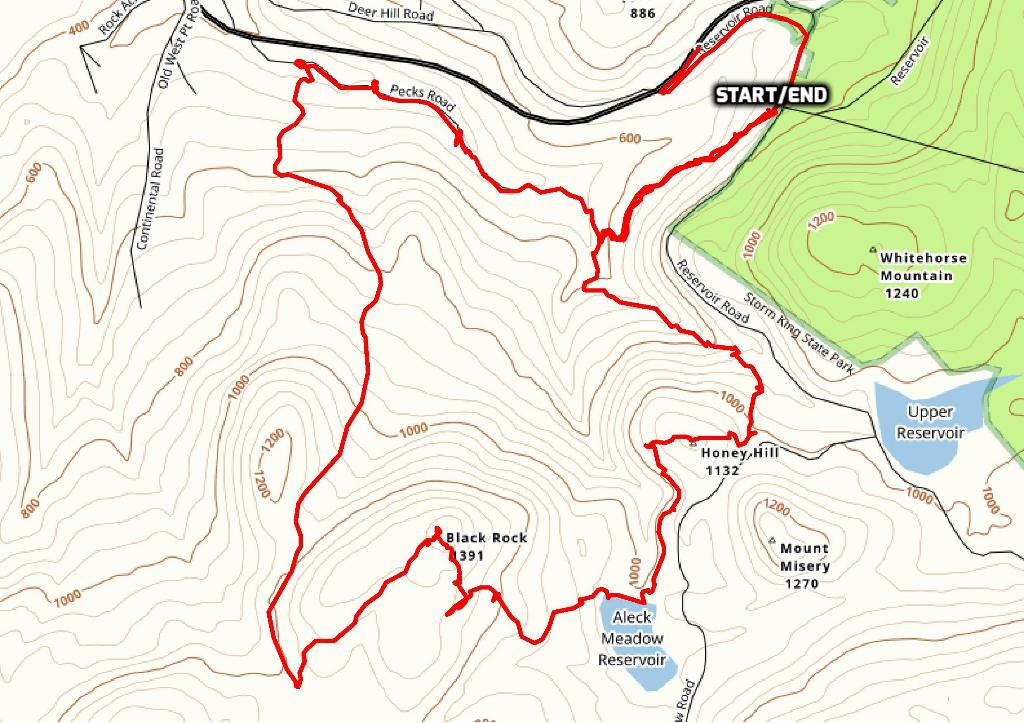
Black Rock Mountain Loop

Black Rock Mountain Loop

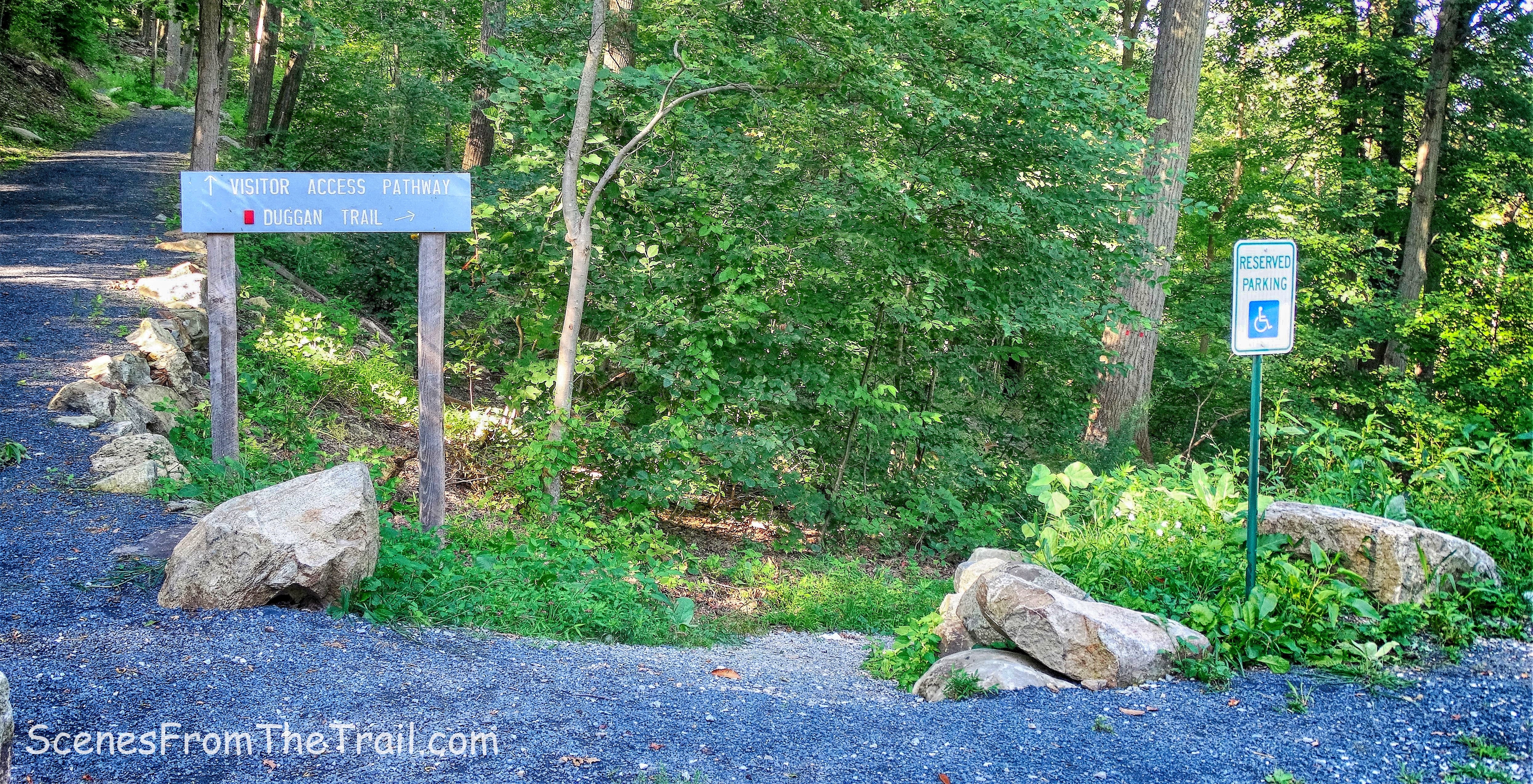
We began our hike at the southwest corner of the parking area, on the red-blazed Duggan Trail.

Start of Duggan Trail

Start of Duggan Trail

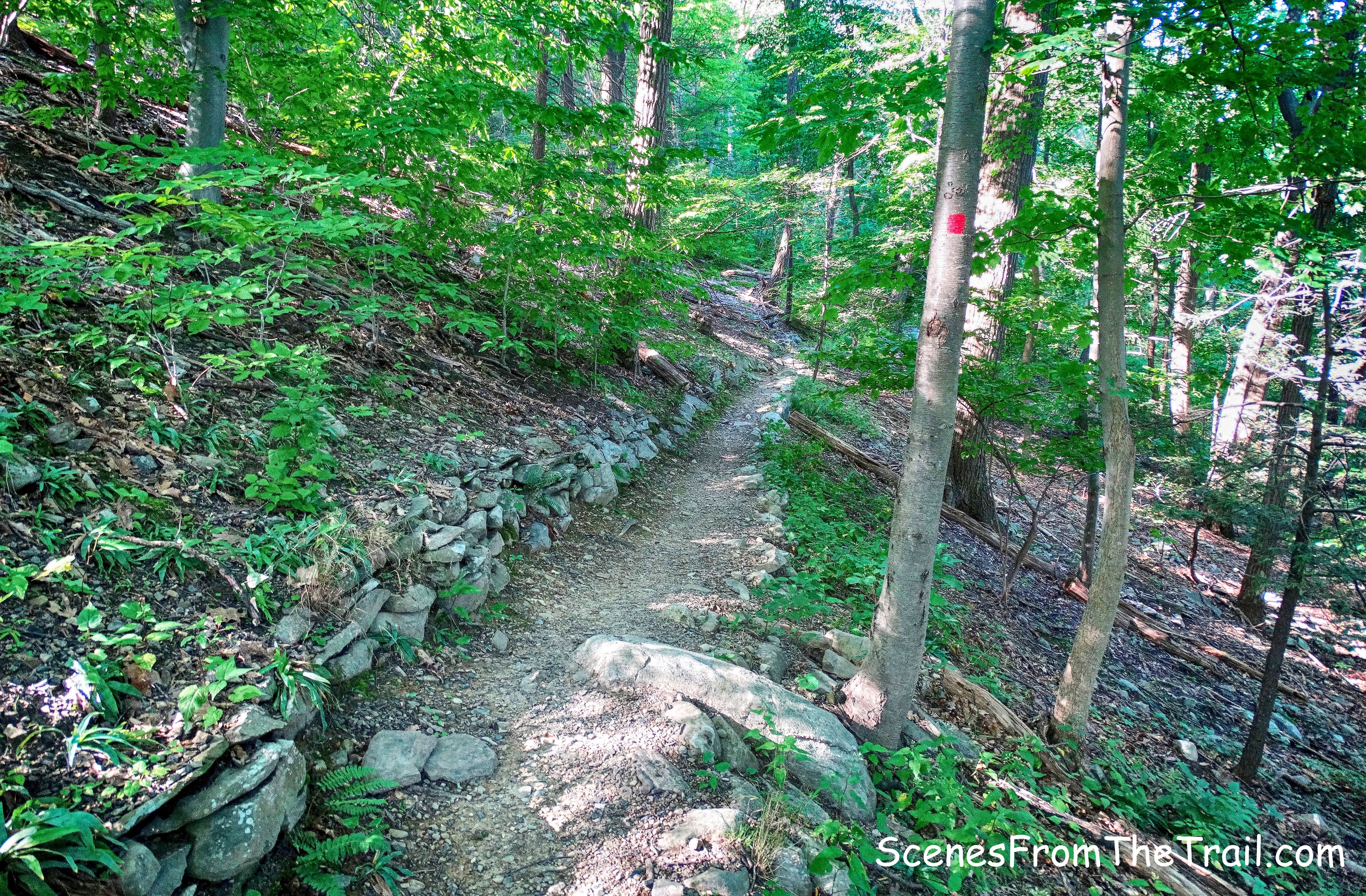
The trail enters the woods on a footpath, heading southwest. Almost immediately, I re-injured my calf muscle which I thought was healed. I seriously thought about turning around and calling it a day, but I decided to stick it out and hobbled on.

red-blazed Duggan Trail

red-blazed Duggan Trail

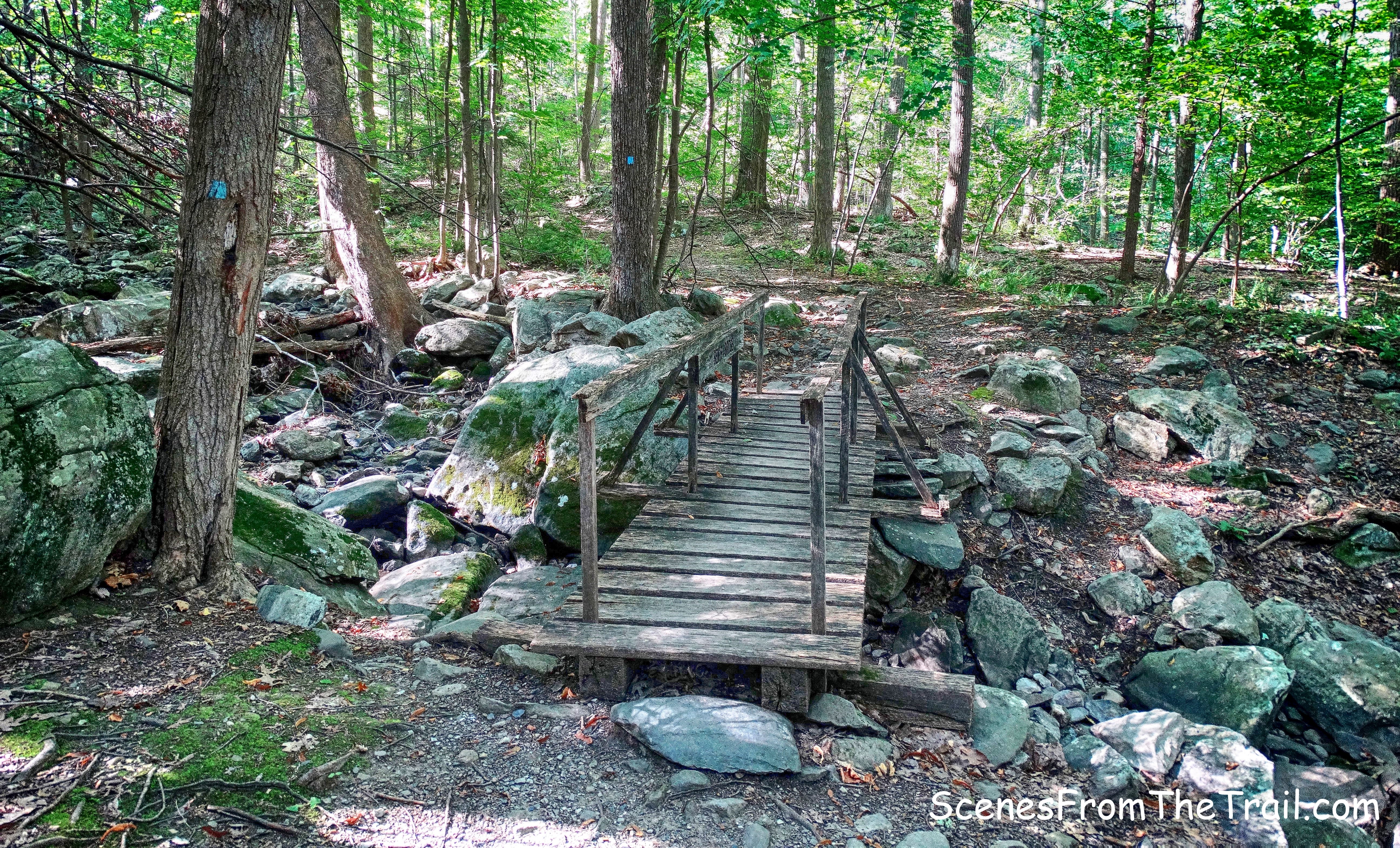
In about 1/2 of a mile, the red trail ends at a junction with the blue-blazed Reservoir Trail. We continued straight ahead on the blue trail, which crosses Ben’s Bridge (a wooden footbridge).

Ben's Bridge

Ben’s Bridge

The blue-blazed Reservoir Trail climbs steadily on a woods road. It parallels a stream that is known for its picturesque cascades. It was almost bone dry on this day. We climbed approximately 350 feet in about 1/2 of a mile.

blue-blazed Reservoir Trail

blue-blazed Reservoir Trail

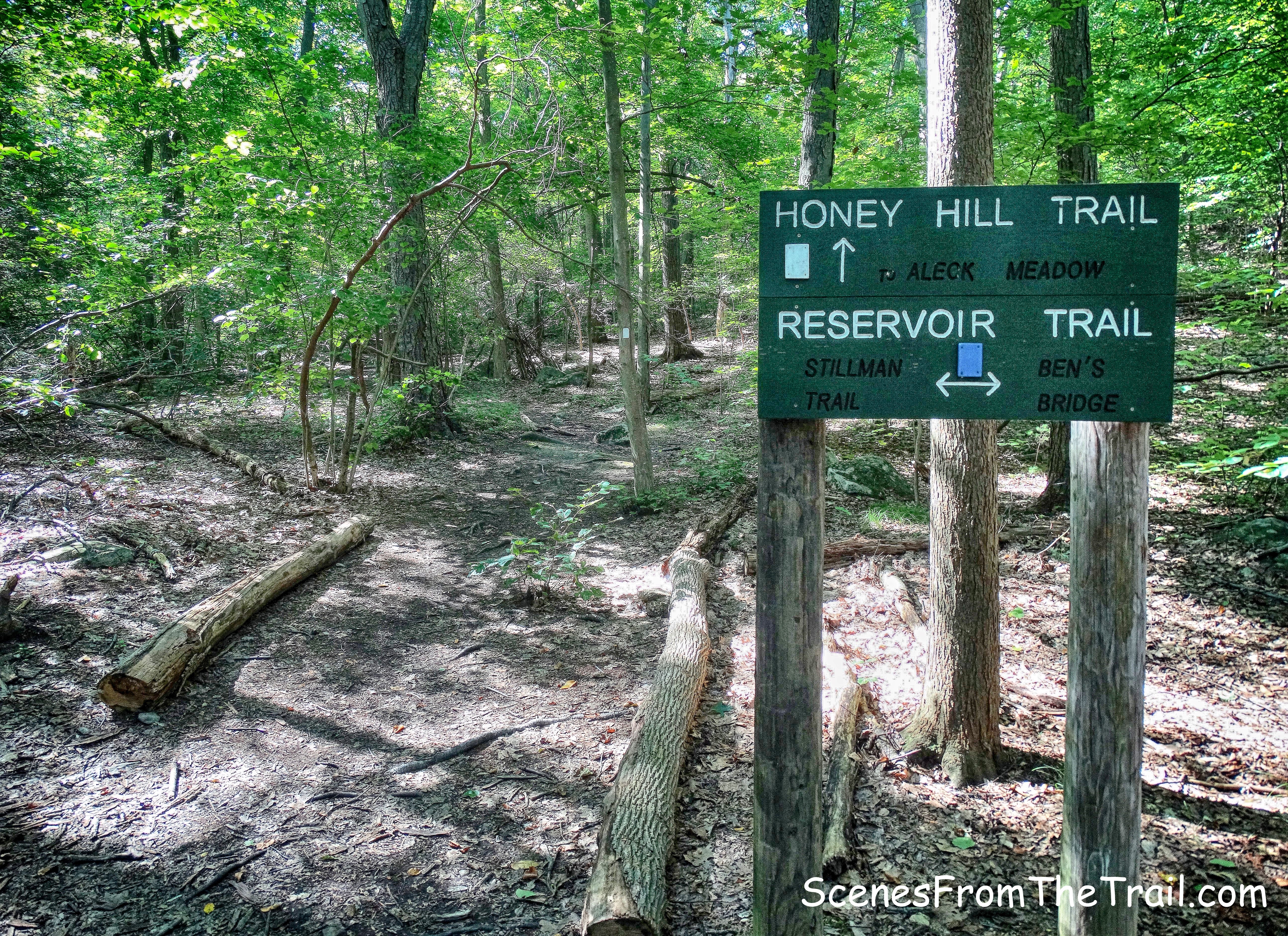
We came to a junction where a sign marks the start of the Honey Hill Trail. We turned right here and proceeded to follow the white blazes uphill.

Honey Hill Trail

Honey Hill Trail

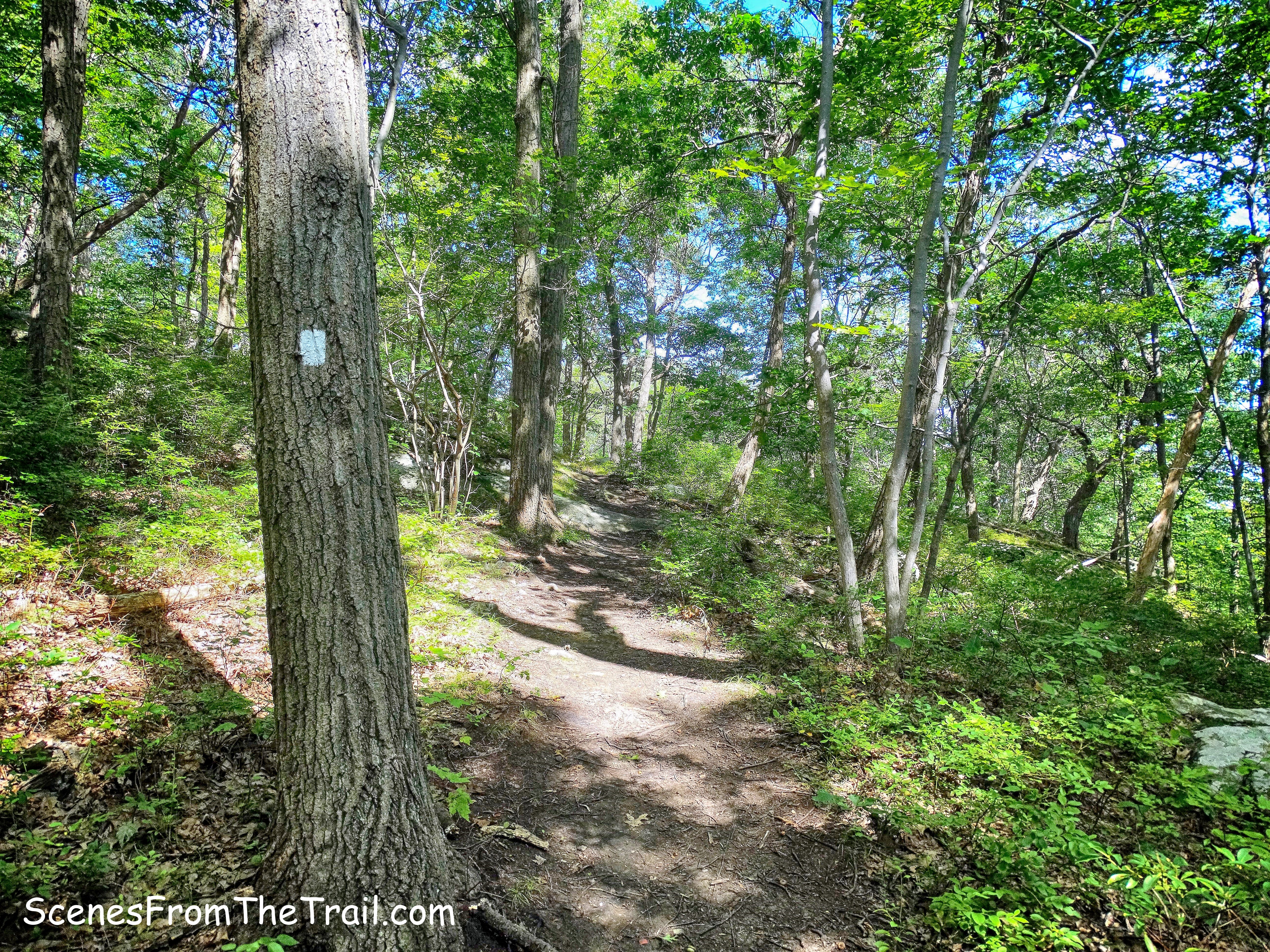
The Honey Hill Trail climbs approximately 200 feet in about 1/3 of a mile as it approaches the 1132 ft. summit.

Honey Hill Trail

Honey Hill Trail

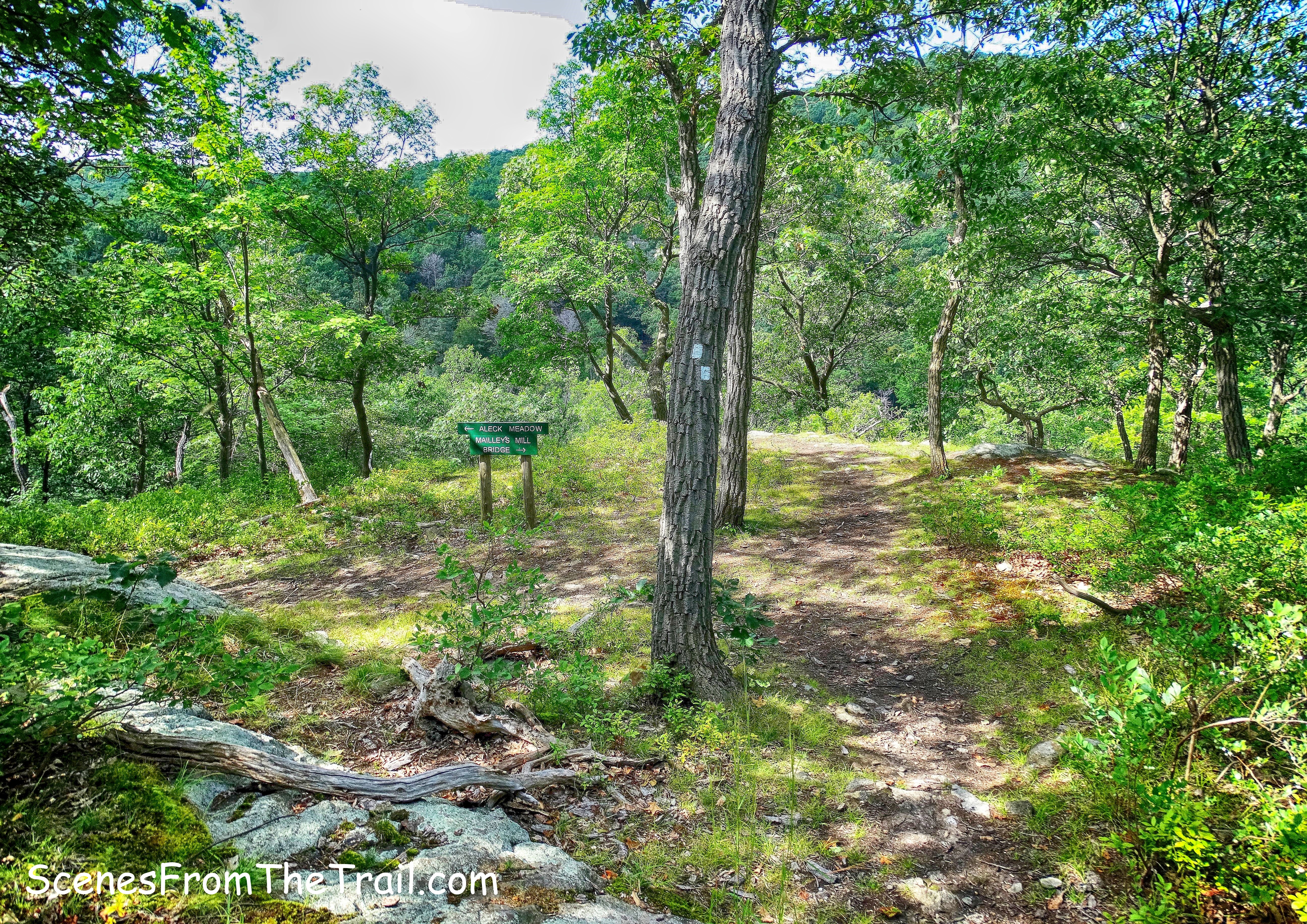
After arriving at the summit, the trail begins to descend and in a short distance, comes to a directional sign, where the white blazes turn left. Just ahead is a rock ledge with a limited viewpoint.

Honey Hill Trail

Honey Hill Trail

Straight ahead is Black Rock Mountain, which we would be climbing shortly. We took a nice long break here as we were a little tired from our climb. My calf was still hurting, but I was able to continue.

Black Rock Mountain

Black Rock Mountain

We got back on the Honey Hill Trail and continued to descend, now heading towards Aleck Meadow Reservoir.

Honey Hill Trail

Honey Hill Trail

The descent is steep in places, but it is quite scenic. It was so quiet and peaceful, that it felt as if we had the woods all to ourselves.

Honey Hill Trail

Honey Hill Trail

The white-blazed Honey Hill Trail ends at a junction with the joint Stillman (yellow) and Highlands (teal diamond) Trails at the base of the Aleck Meadow Reservoir dam.

terminus of Honey Hill Trail

terminus of Honey Hill Trail

We turned right onto the joint Stillman/Highlands Trail, but veered off it as we climbed the embankment up to the reservoir. According to Henry Tryon, Black Rock’s first director, the reservoir occupies what was once a small dairy farm.

Aleck Meadow Reservoir

Aleck Meadow Reservoir

We headed west along the earthen dam and entered the woods on the joint Stillman/Highlands Trail.

joint Stillman/Highlands Trail

joint Stillman/Highlands Trail

The joint Stillman/Highlands Trail is well blazed and easy to follow, but we missed a turn because the tree with the offset blazes, indicating the turn, was partially obscured by vegetation. The trees laying across the trail is another indicator as well, but we stepped over them and kept walking. When we saw no more blazes, we knew were off the trail and backtracked to the proper turn.

obscured blazes on the joint Stillman/Highlands Trail

obscured blazes on the joint Stillman/Highlands Trail

From the Aleck Meadow Reservoir to the summit, we gained almost 400 feet of elevation in about 1/2 of a mile, but when we reached the summit, it was all worthwhile. We had hiked almost 2.5 miles.

Black Rock Mountain summit

Black Rock Mountain summit

There was a man with his dog at the summit when we arrived, but he left shortly thereafter and we had this glorious view all to ourselves. To the west, the Black Rock Fire Tower is visible. The 80 ft. Black Rock Forest Fire Tower was erected in 1929 as a private lookout and is closed to the public.

Black Rock Forest Fire Tower

Black Rock Forest Fire Tower

To the northeast, the Hudson River and the Newburgh-Beacon Bridge are visible.

view northeast from Black Rock Mountain

view northeast from Black Rock Mountain

To the west, Schunemunk Mountain stands waiting for me to hike it. We hung out at the summit for quite some time, enjoying the spectacular view while we had lunch. The breeze felt so good that I could have stayed there all day, but we had a hike to complete.

Schunemunk Mountain as viewed from Black Rock Mountain

Schunemunk Mountain as viewed from Black Rock Mountain

We then proceeded to head southwest to continue following the joint Stillman/Highlands Trail as it begins to descend Black Rock Mountain. At first glance, the blazes appear to just drop off the cliff.

joint Stillman/Highlands Trail

joint Stillman/Highlands Trail

The trail does descend steeply here and it required using both hands and feet, but it wasn’t that difficult.

joint Stillman/Highlands Trail

joint Stillman/Highlands Trail

After the initial steep descent, the grade does moderate and we continued on the joint Stillman/Highlands Trail.

joint Stillman/Highlands Trail

joint Stillman/Highlands Trail

In about a 1/2 of a mile from the summit, we came to a wide gravel road. We turned right on this road that is known as Hulse Road. We followed Hulse Road as it led us downhill. It climbs a little, then continues its descent, steeply in places.

Turn right on Hulse Road

Turn right on Hulse Road

We stayed on Hulse Road for over a mile until it ends at a junction with the white-blazed Black Rock Hollow Trail. Turning right, we now began heading southeast, following the white-blazed trail along another gravel road, with Black Rock Brook to our left.

Turn right on the white-blazed Black Rock Hollow Trail

Turn right on the white-blazed Black Rock Hollow Trail

Just feet off the trail, there is a ruined stone building along the brook. If I wasn’t so tired, I would have explored it. There was a lot of fallen branches blocking the way, perhaps by design.

ruined stone building

ruined stone building

Right by the stone building are the remains of an old dam.

dam

dam

In about 1/2 of a mile, we came to a water filtration plant. Here, the Black Rock Hollow Trail turns right and starts to climb more steeply, but we veered left, skirting the filtration plant, and continued on the blue-blazed Reservoir Trail.

veer left at the water filtration plant

veer left at the water filtration plant

The blue-blazed Reservoir Trail travels on another mostly level gravel road. We were glad because we were pretty tired by this point.

blue-blazed Reservoir Trail

blue-blazed Reservoir Trail

In a short distance, we came to a junction where the Reservoir Trail turns right to cross Ben’s Bridge. Here we made a sharp left onto the red-blazed Duggan Trail and followed it back to the parking area where the hike began. The whole way back on the Duggan Trail was mostly uphill. I didn’t remember walking that much downhill at the beginning of the hike. It was only 1/2 of a mile, but it felt longer, much longer. We were all exhausted by this time and my calf was screaming for mercy. A great hike, but we were glad it was over.

sharp left on red-blazed Duggan Trail

sharp left on red-blazed Duggan Trail

This hike was rigorous, but had a lot of different points of interest along the way. By the time we got back to the parking area, it was almost full, but we encountered very few people along the trails, which was a good thing. Black Rock Forest is great place to hike and I intend on going back to explore more of the trails. Now get out there and take a hike!

Pros: Woods roads, scenic views, reservoir, ruins, brooks and streams, less traveled.

Cons: Water level was low in the brooks and streams, lots of elevation, road noise can be heard from Black Rock Hollow Trail and the summit of Black Rock Mountain.

summit of Black Rock Mountain

summit of Black Rock Mountain


Diamond Mountain Loop from Lake Sebago Boat Launch – Harriman State Park

August 13, 2017 – Pomona, NY

Difficulty: Moderate – Strenuous (2 steep climbs and 1 steep descent)

Length: Approximately 5.2 miles

Max elevation: 1,240 ft.– total elevation gain approximately 909 ft.

Route type: Circuit

Map: Harriman-Bear Mountain Trails Map #118

Trailhead parking: Lake Sebago Boat Launch, Pomona, NY 10970


When researching trails while mapping out a hike, I try to combine as many points of interest as possible to create an enjoyable yet challenging experience. Otherwise it amounts to nothing more than just a walk in the woods. Harriman State Park’s network of trails makes it not only possible, but somewhat easy as well. I hiked the Pine Meadow Lake area once on an extremely cold winter morning, with significant snow and ice on the ground and the lot at Reeves Meadow was packed. It’s always packed, especially in the warmer months. I go into the woods to escape the crowds, not to run into them on the trails. Pine Meadow Lake is gorgeous and that area has a myriad of trails, which is why it’s so popular. This hike travels near Pine Meadow, but avoids the crowds. The views are spectacular and the trails are challenging enough for an old timer like me. We did this hike in a clockwise manner from the Lake Sebago Boat Launch.

Conklin and Diamond Mountains Loop from Lake Sebago Boat Launch

Conklin and Diamond Mountains Loop from Lake Sebago Boat Launch

A new feature that I have added is the Google Earth Fly-Through. It follows the path that we hiked and it gives you a good idea of the terrain, layout, amount of parking etc. Check it out, it’s pretty cool.

View the Google Earth Fly-Through video of the hike below.

We got a late start on this Sunday morning, no fault of my own. The parking area has room for about 50 cars, but from my understanding, it fills up rather quickly. We arrived at about 9:15 am and it was partially filled.

Lake Sebago Boat Launch

Lake Sebago Boat Launch

Lake Sebago is a very picturesque spot and it made for a good starting and ending point.

Lake Sebago

Lake Sebago

We began the hike by walking back out to the entrance of the parking area to Seven Lakes Drive. Directly across the street is the trailhead for the Seven Hills Trail (7H).

Seven Lakes Drive

Seven Lakes Drive

This blue-on-white-blazed Seven Hills Trail goes fairly steeply up Conklin Mountain on an old woods road, once known as the Monitor Trail.

Seven Hills Trail

Seven Hills Trail

The first 0.3 miles of the trail climbs about 344 feet. It is steep, but nearly half of the elevation of the entire hike is done early on.

Seven Hills Trail

Seven Hills Trail

The heavily eroded woods road comes to a junction with the yellow-blazed Buck Trail, where we stayed to the right still following the blue-on-white blazes.

stay right at junction

stay right at junction

The Seven Hills Trail levels off and begins a gentle descent of Conklin Mountain.

Seven Hills Trail

Seven Hills Trail

At about 0.6 miles from the start of the trail, the 7H Trail turns left and joins Woodtown Road West, an old woods road that comes in from the right. The 7H Trail then crosses Diamond Brook on rocks. On this day the brook was running dry so the crossing was insignificant.

Seven Hills Trail

Seven Hills Trail

A look at a mostly dry Diamond Brook.

Diamond Brook

Diamond Brook

The trail rises slightly and then in about 0.1 miles, there is an unmarked trail that goes off to the left. We turned here onto the unmarked trail and walked about 300 feet to a ledge on which there is a large quartz boulder known as Monitor Rock. It is worth the side trip as it is one huge boulder. I banged my shin on a fallen tree here which drew some blood, so watch your step. The rock was so named by the Fresh Air Club when they found tucked under it a copy of the Christian Science Monitor newspaper.

Myles, William J.. Harriman Trails: A Guide and History (Kindle Locations 2221-2222). New York – New Jersey Trail Conference. Kindle Edition.
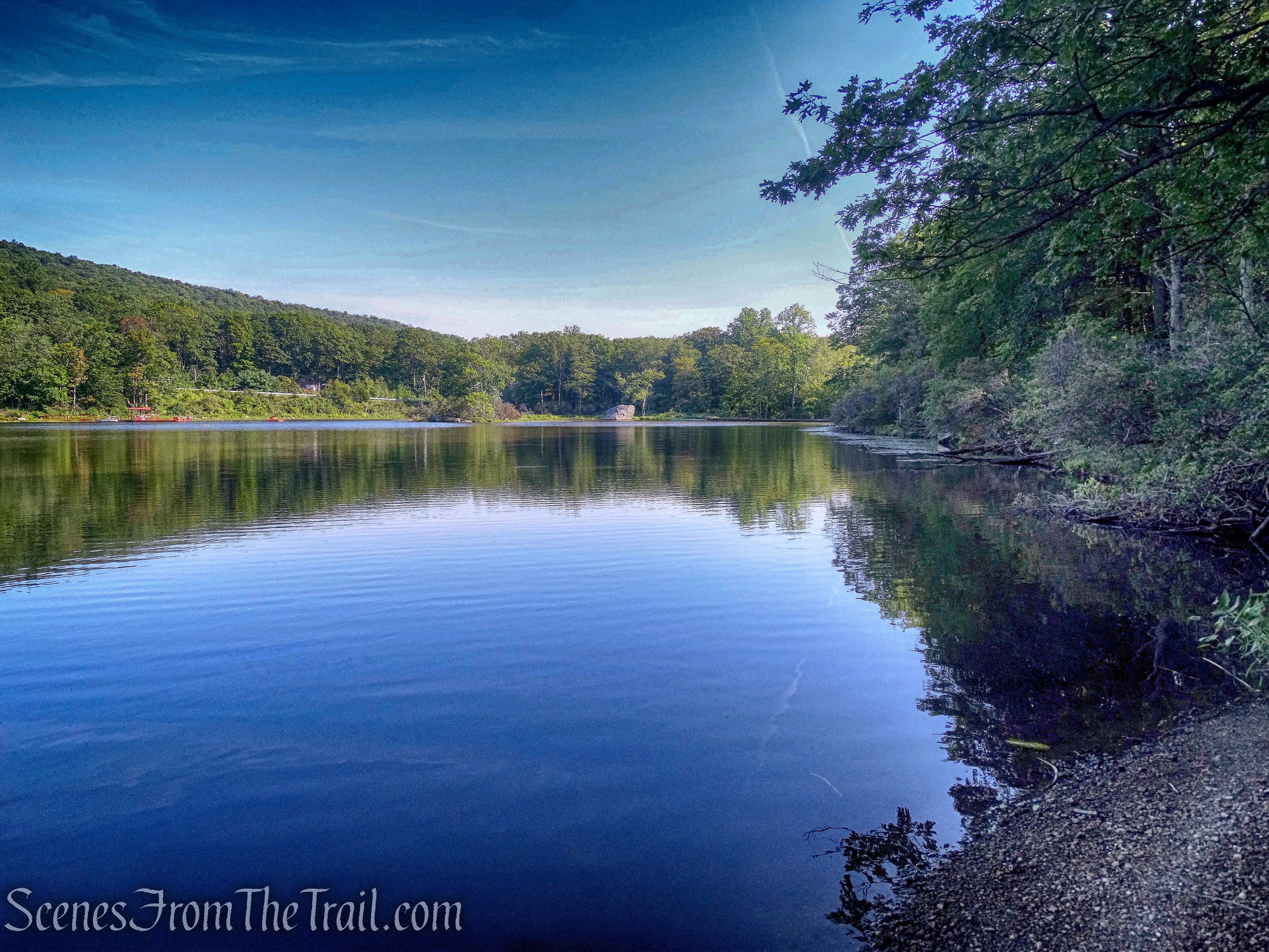
Monitor Rock

Monitor Rock

We retraced our steps back to the 7H Trail and turned left. Almost immediately the 7H Trail turns right and leaves Woodtown Road West.

right to stay on 7H Trail

right to stay on 7H Trail

The trail narrows to a footpath as it goes along the ridge of Diamond Mountain. At about 1 mile from the start of the hike, it passes a large boulder, called the “Cracked Diamond.”

Cracked Diamond

Cracked Diamond

Shortly after passing Cracked Diamond, the Tuxedo-Mt. Ivy Trail (red dash on white) crosses, but we continued to follow the blue-on-white-blazed Seven Hills Trail. The trail continues along the ridge of Diamond Mountain and passes through lowbush blueberries. Yes, the dreaded blueberries. I am always on high alert when we pass through this type of area. We did see bear scat on the trail in this section.

Blueberries on the Seven Hills Trail

Blueberries on the Seven Hills Trail

We then came out onto open rock with a nice view of Lake Sebago and the surrounding hills.

view of Lake Sebago from Seven Hills Trail

view of Lake Sebago from Seven Hills Trail

We had now hiked about 1.3 miles and took a break here, surrounded by blueberry bushes. In the background, to the left is Parker Cabin Mountain and to the right is Tom Jones Mountain. To the center right is Brundige Hill.

view of Lake Sebago from Seven Hills Trail

view of Lake Sebago from Seven Hills Trail

After a nice long break, we continued on our way. Heading south on the 7H Trail, we came to a junction with the yellow-blazed Diamond Mountain-Tower Trail and turned left. There was once an 80-foot steel fire tower, 75 yards east of this junction, erected in 1935 from the steel of the tower that stood on Bear Mountain. It was removed in 1955, erected again in 1966, and removed again in 1986.

turn left onto Diamond Mountain-Tower Trail

turn left onto Diamond Mountain-Tower Trail

The Diamond Mountain-Tower Trail is quite scenic as it descends Diamond Mountain.

Diamond Mountain-Tower Trail

Diamond Mountain-Tower Trail

It travels over attractive open rock slabs…….

Diamond Mountain-Tower Trail

Diamond Mountain-Tower Trail

and provides views of Lake Wanoksink.

view of Lake Wanoksink from Diamond Mountain-Tower Trail

view of Lake Wanoksink from Diamond Mountain-Tower Trail

Near the base of the descent, the Diamond Mountain-Tower Trail makes a sharp right. At this point, we left the trail and bushwacked about 150 feet towards a swampy area.

swampy area just off Diamond Mountain-Tower Trail

swampy area just off Diamond Mountain-Tower Trail

We walked around to a pile of large rocks and made our way to an unfinished dam that was intended to create Lake Oonotookwa, which means “place of cattails.”

unfinished dam

unfinished dam

Begun in 1934, the lake was to be downstream from Lake Wanoksink, in the swamp between Diamond Mountain and Pine Meadow Mountain.

unfinished dam

unfinished dam

The swamp that would have been Lake Oonotookwa.

The swamp that would have been Lake Oonotookwa

The swamp that would have been Lake Oonotookwa

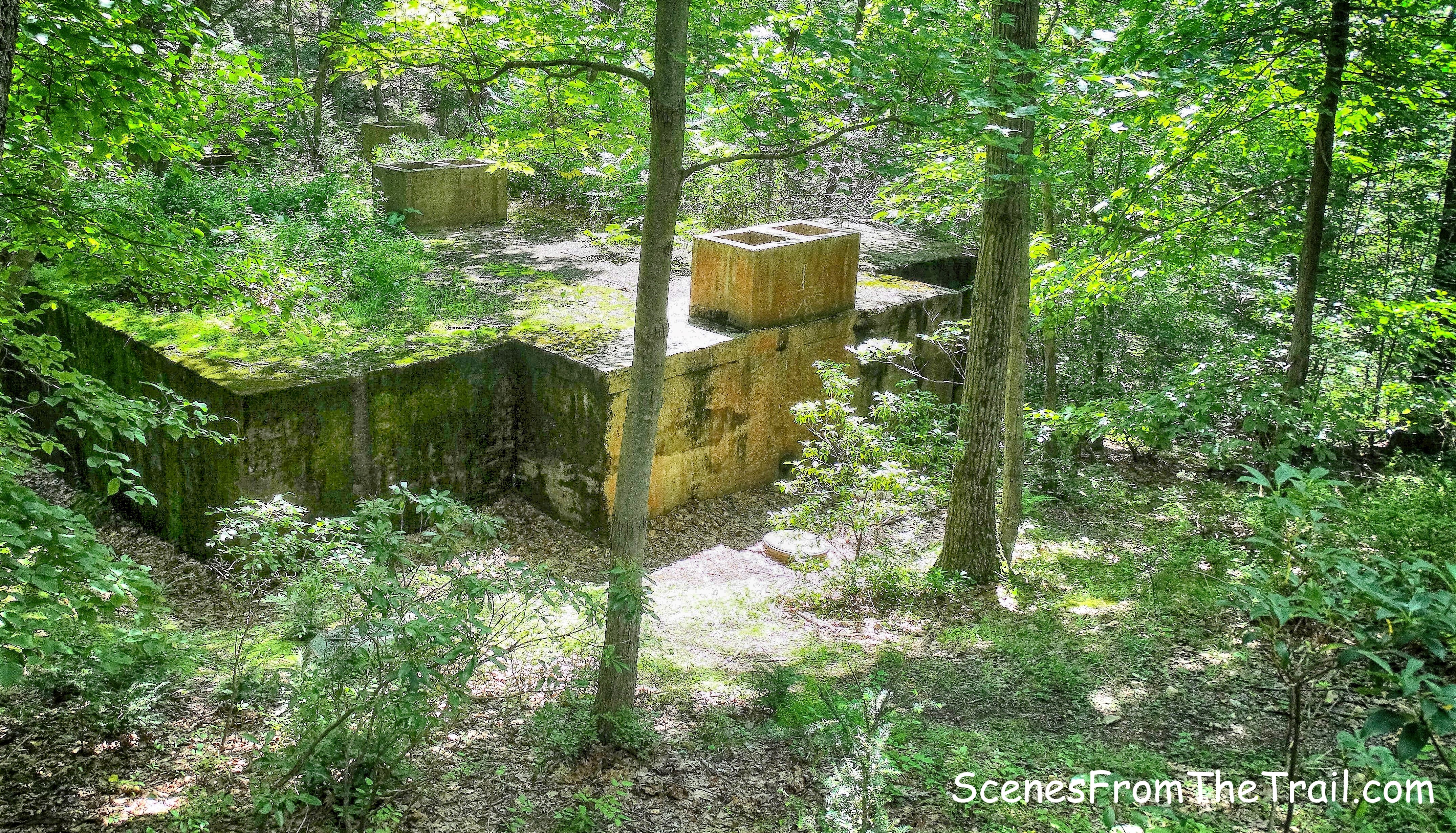
We retraced our steps back to the Diamond Mountain-Tower Trail and continued heading southwest. Just down the trail, on the left side, there is a large concrete septic tank. It was built in 1934 to collect the sewage from the camps that were to be built on the four new lakes. The camps were not built, and the sewage system was never used.

large concrete septic tank

large concrete septic tank

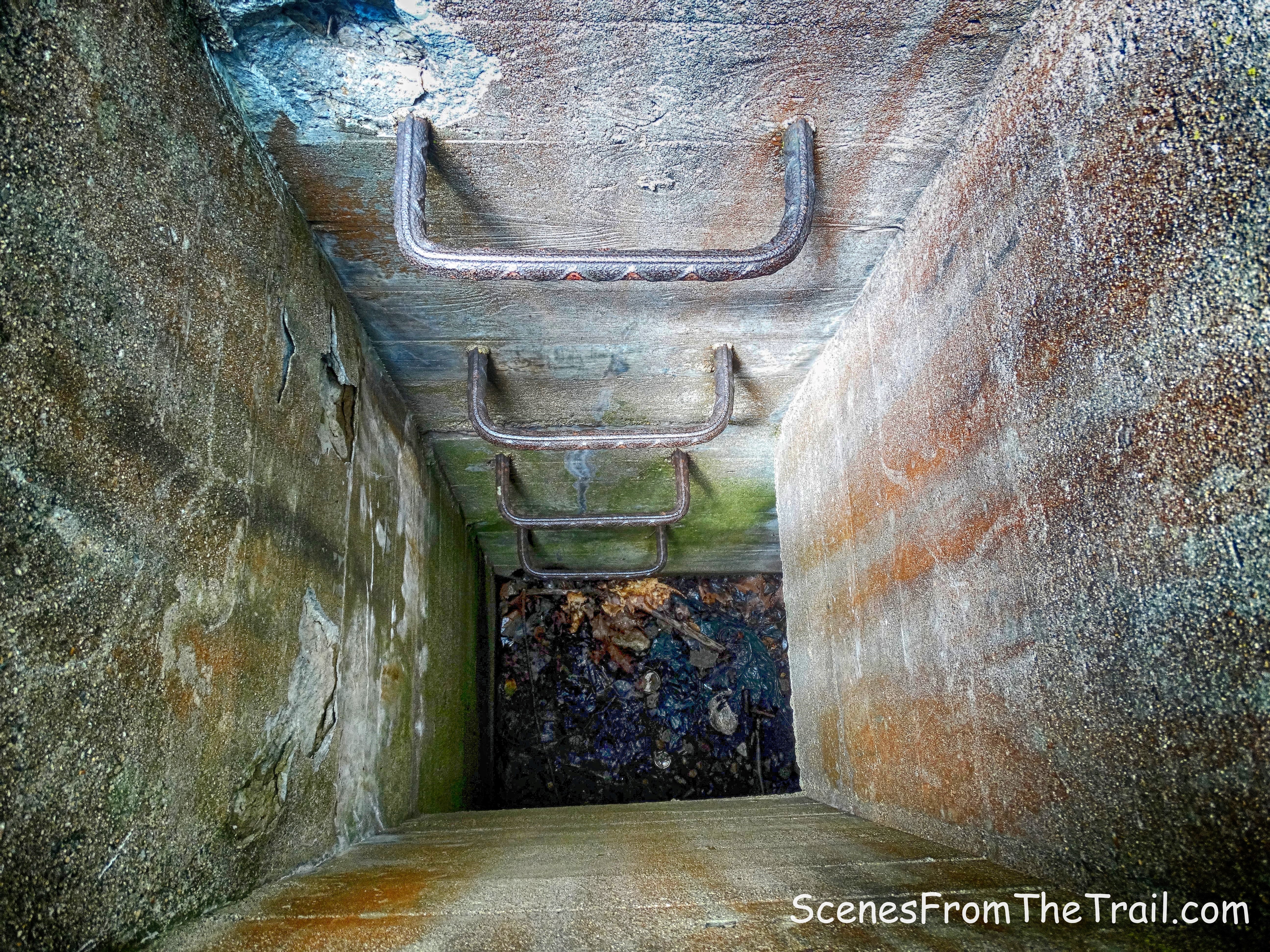
The rectangle blocks on top of the septic tank are shafts with Rebar ladders that lead down inside the tank.

hollow chamber of the septic tank

hollow chamber of the septic tank

A short distance from the septic tank, the yellow-blazed Diamond Mountain-Tower Trail turns right. I misread the map and we ended up going straight on the red-square-on-white-blazed Pine Meadow Trail.

turn right on yellow-blazed Diamond Mountain-Tower Trail

turn right on yellow-blazed Diamond Mountain-Tower Trail

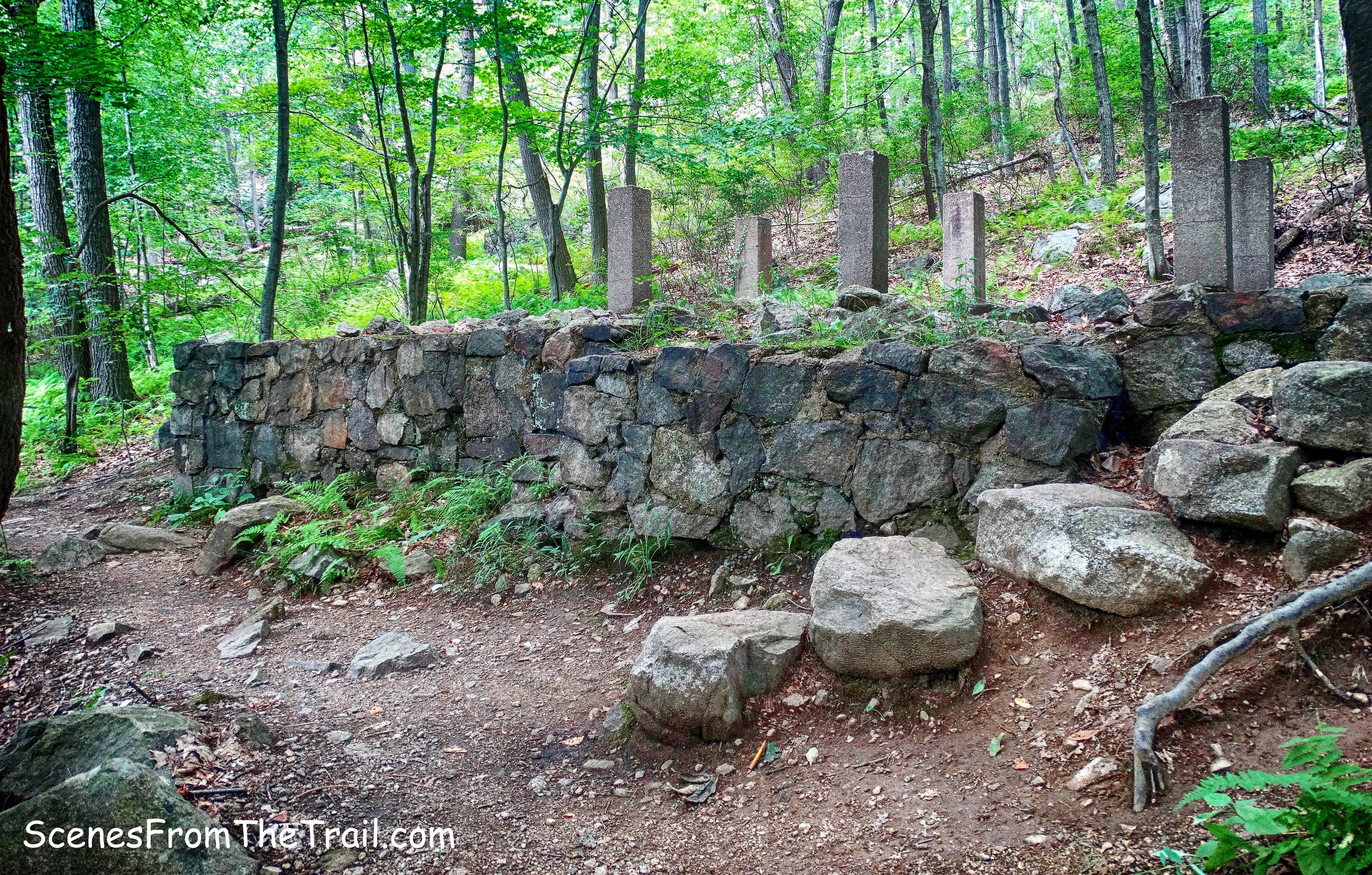
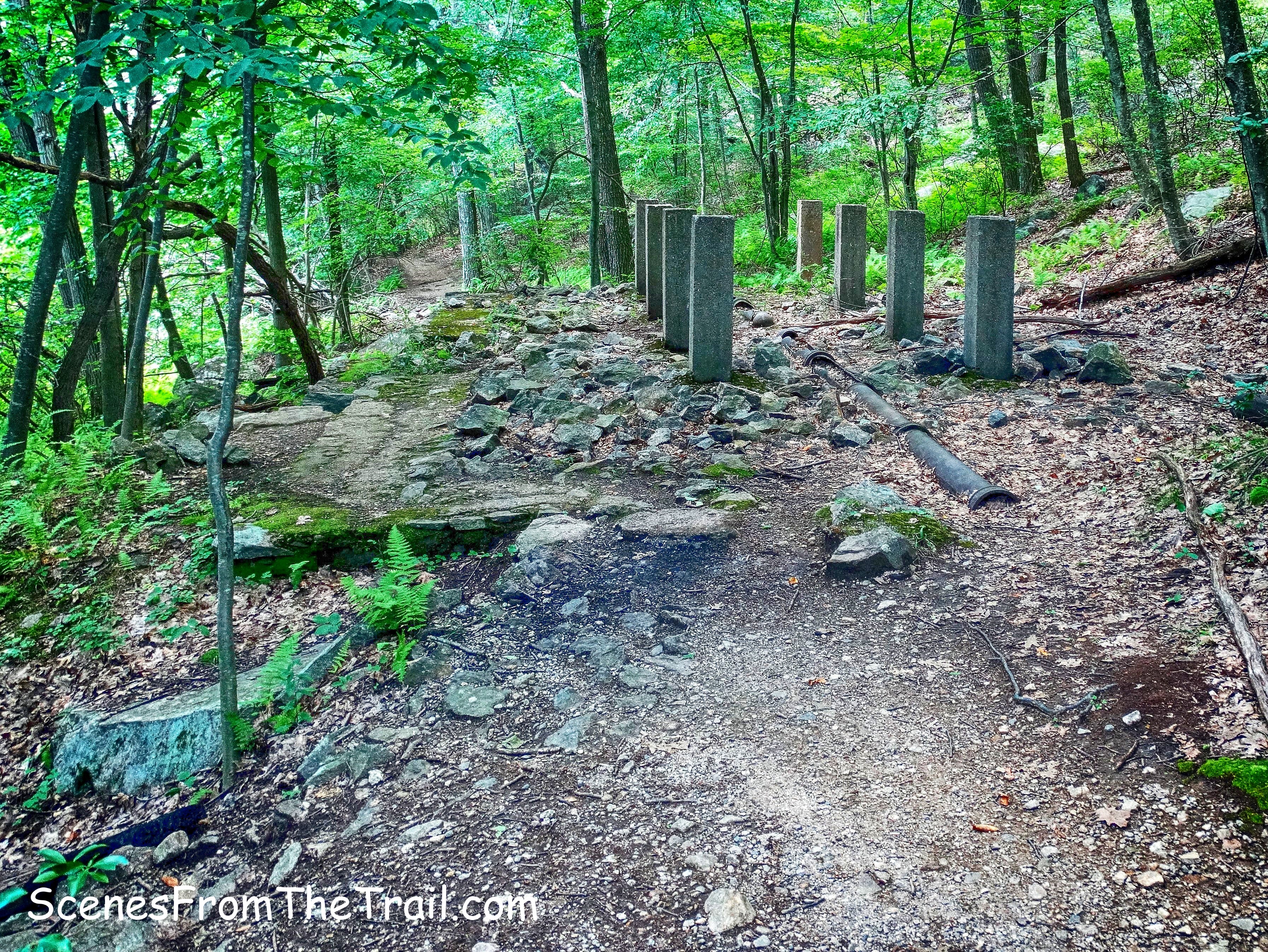
Missing our turn wasn’t a big deal, it just added about a 1/2 mile to our hike. We ended up seeing a stone foundation, topped by concrete pillars.

stone foundation

stone foundation

These are the remains of a building that served as the headquarters for several Civilian Conservation Corps camps in the 1930’s. The “CCC boys” built several lakes in the area and the infrastructure for children’s camps around the lakes, but the camps themselves were never completed. The broken, rusty pipe atop the foundation is a remnant of a water system installed but never used. (NY/NJ Trail Conference)

stone foundation

stone foundation

We walked a little further down the Pine Meadow Trail and then turned around. We then arrived back at the junction with the Diamond Mountain-Tower Trail and began heading northwest, back up Diamond Mountain. The trail begins a steady climb on switchbacks.

Diamond Mountain-Tower Trail

Diamond Mountain-Tower Trail

The trail then steepens and climbs over open rock, where at times we had to use both hands and feet.

Diamond Mountain-Tower Trail

Diamond Mountain-Tower Trail

As we neared the summit of Diamond Mountain, we came out onto some rock ledges that gave us a fantastic view of Pine Meadow Lake.

view of Pine Meadow Lake from Diamond Mountain-Tower Trail

view of Pine Meadow Lake from Diamond Mountain-Tower Trail

We found a spot in the shade and rested up from our tough climb and took in the view while we snacked on some sandwiches.

view of Pine Meadow Lake from Diamond Mountain-Tower Trail

view of Pine Meadow Lake from Diamond Mountain-Tower Trail

A little more climbing and we reached the terminus of the Diamond Mountain-Tower Trail.

terminus of the Diamond Mountain-Tower Trail

terminus of the Diamond Mountain-Tower Trail

About 100 feet to the left, on the Seven Hills Trail is the 1240 ft. summit of Diamond Mountain. There is a view of the Manhattan skyline from there, but we didn’t walk far enough.

summit of Diamond Mountain

summit of Diamond Mountain

We turned right at the junction and began heading north on the joint blue-on-white-blazed Seven Hills (7H) Trail and orange-blazed Hillburn-Torne-Sebago (HTS) Trail.

joint 7H/HTS Trails

joint 7H/HTS Trails

After about 1/4 mile on the joint 7H/HTS Trails, they split. The 7H Trail continues straight and the HTS Trail turns left. We turned left on the orange-blazed HTS Trail, descending steeply down the northwest slope of Diamond Mountain. We descended almost 500 feet in about 0.7 miles.

orange-blazed Hillburn-Torne-Sebago Trail

orange-blazed Hillburn-Torne-Sebago Trail

HTS was first blazed in 1928 by Kerson Nurian. Nurian made the trail without asking permission of the landowner, of the Park or of the Trail Conference.

Hillburn-Torne-Sebago Trail

Hillburn-Torne-Sebago Trail

At the base of the descent, the trail levels off somewhat, crosses a stream and begins to parallel the picturesque Stony Brook.

Stony Brook alongside Hillburn-Torne-Sebago Trail

Stony Brook alongside Hillburn-Torne-Sebago Trail

We arrived at the terminus of the HTS Trail, where it meets the red-dash-on-white-blazed Tuxedo-Mt. Ivy Trail. Here we turned left and walked about 700 feet to Seven Lakes Drive. Lake Sebago dam with Seven Lakes Drive, which runs above it, is visible as we neared the road.

Lake Sebago dam

Lake Sebago dam

My plan was to cross the road and walk along Lake Sebago all the way back to the Boat Launch. That plan was foiled by all the no trespassing signs at Sebago Cabins. It is marked on the map as “Keep Out,” but I thought we could slip through. Instead we did Plan B, which was walk along Seven Lakes Drive until we could cross over towards the shore of the lake.

Seven Lakes Drive

Seven Lakes Drive

After about a 1/4 mile road walk, we climbed over the guard rail and made our way to the shore of Lake Sebago.

Lake Sebago

Lake Sebago

We walked on a footpath along the shore that had many short spur trails that led right to the edge of the water.

Lake Sebago

Lake Sebago

The nice level walk back to the parking area was a godsend. My feet took a beating on the rocky trails. I was also still recovering from a strained calf muscle from the previous week and I banged my shin early on during this hike. Even with all the slight aches and pains, this turned out to be a great hike that I fully enjoyed. I would definitely recommend this hike to one and all. Feel free to leave a comment and please don’t forget to follow my blog. Until next time folks, now get out there and take a hike!

Pros: Gorgeous lakes, mountain views, mostly shaded trails, ruins, rock formations, glacial erratics, well blazed trails, well groomed trails.

Cons: Short road walk.

Take a hike!

Take a hike!


Mills State Park – Hyde Park Trails

August 6, 2017 – Staatsburg, NY

Difficulty: Easy

Length: Approximately 5.5 miles

Max elevation: 140 ft.– total elevation gain approximately 411 ft.

Route type: Circuit

Map: Staatsburgh State Historic Site web map

Trailhead parking: 75 Mills Mansion 1 Rd, Staatsburg, NY 12580


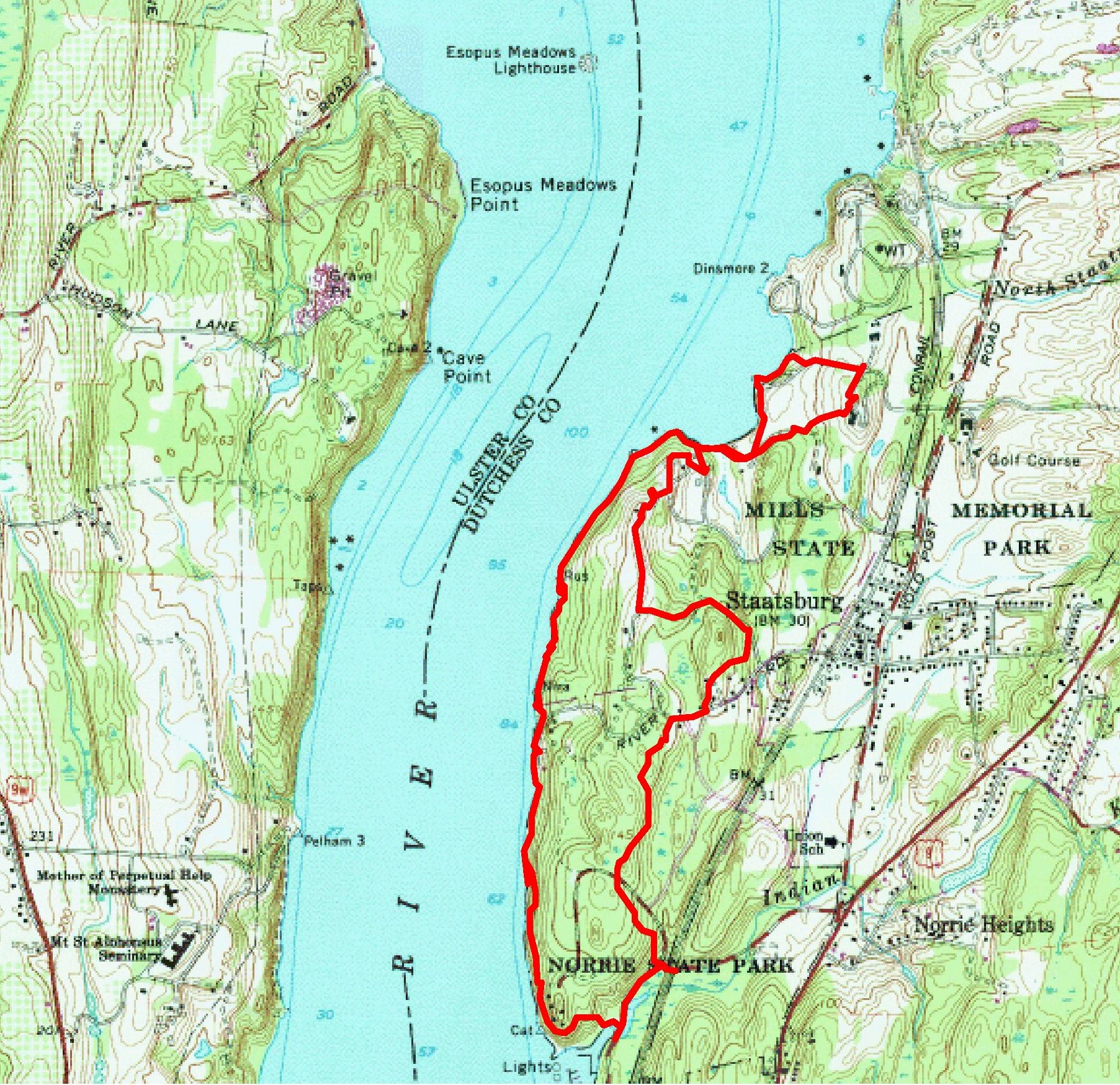
Ogden Mills and Ruth Livingston Mills Memorial State Park adjoins Margaret Lewis Norrie State Park and together, comprise more than one thousand acres. The numerous trails that thread through the grounds of both Mills and Norrie State Parks are ideal for walking, jogging, hiking, cycling, cross country skiing, and snow shoeing, treating visitors to fabulous views of the Hudson River which runs directly along the parks’ western boundaries.

I was here a few years ago in winter and took a tour of the mansion, but did not hike the trails. I decided to check it out in warmer climate to take advantage of the river views and was not disappointed. The grounds are well kept as are the trails. I was griping about the long drive on the way up as it is an approximately 1-1/2 hour drive from Westchester County, where I reside. As soon as we were walking along the edge of the Hudson River on a gorgeous August morning, I came to the conclusion that it was well worth the drive.

We arrived at shortly before 10 am on a Sunday morning and there were several cars in the upper lot by the mansion, where we parked. We did this hike counter clockwise, starting at the top of the map.

Mills State Park - hike route

Mills State Park – hike route

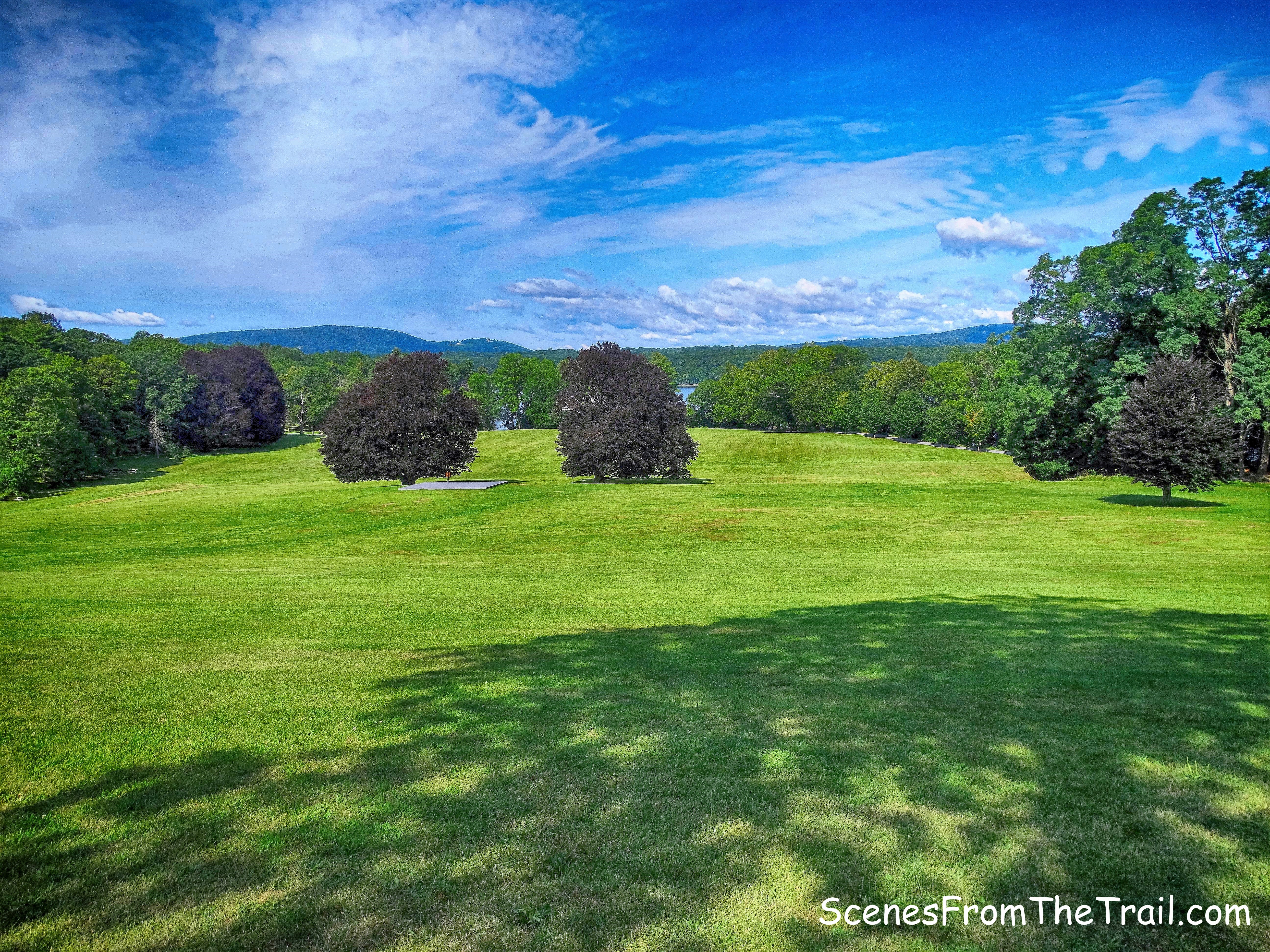
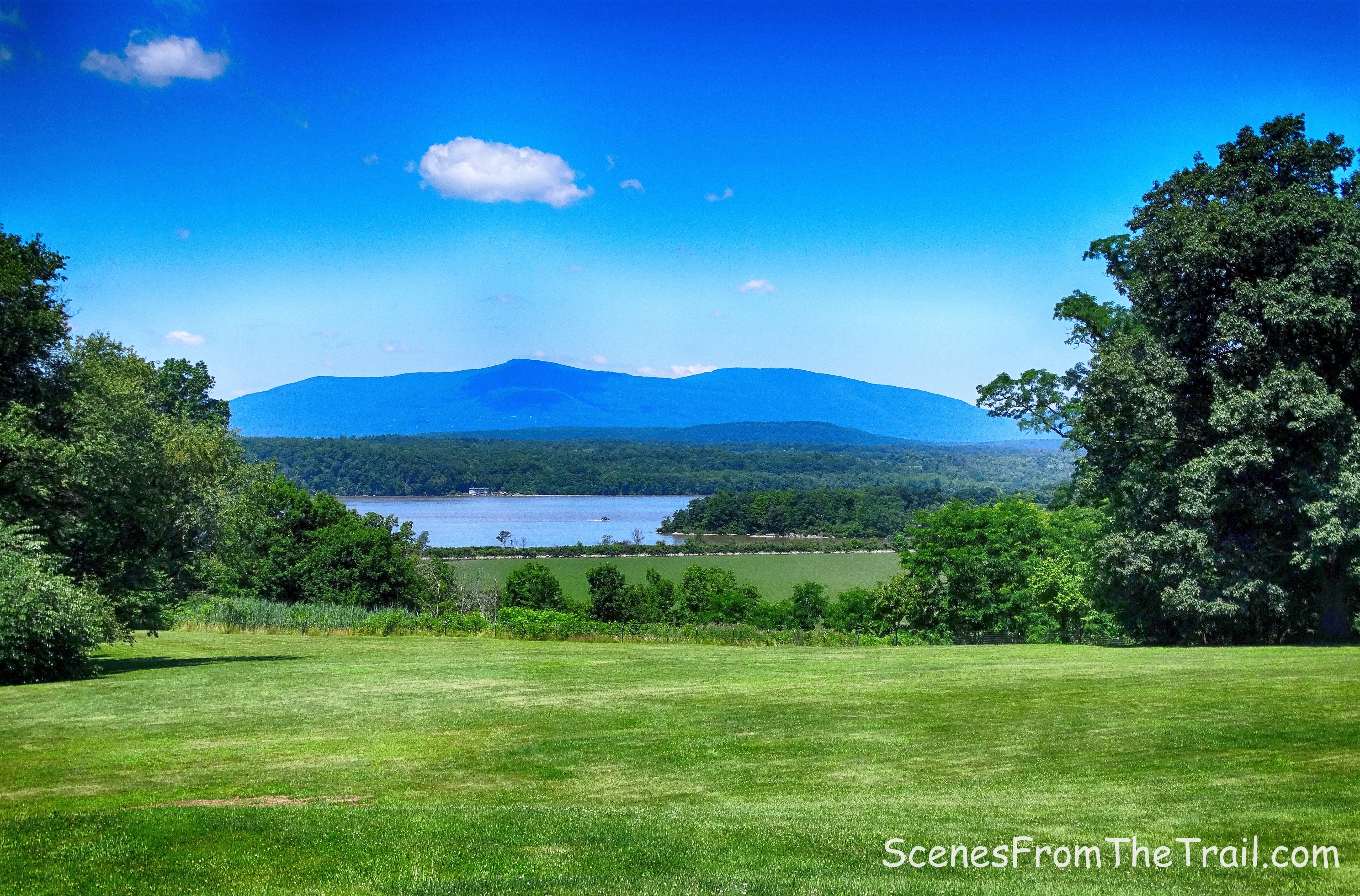
Looking down towards the Hudson River is the expansive back lawn of the Mills estate.

looking west from Mills mansion

looking west from Mills mansion

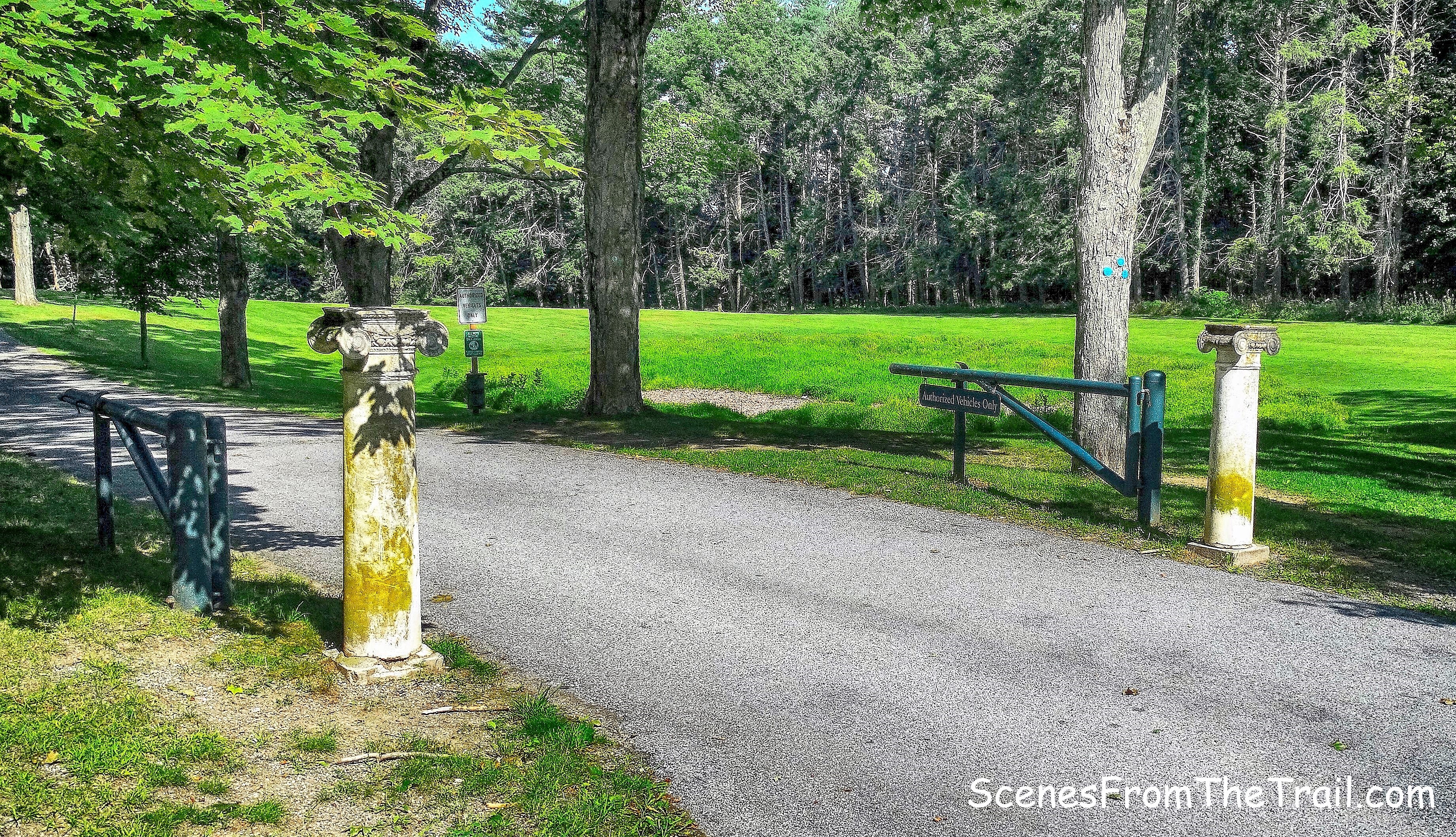
We walked north down the hill towards the lower lot and picked up the start of the blue-blazed trail as indicated by the three blue blazes on the tree, to the right of the gate.

beginning of the blue-blazed trail

beginning of the blue-blazed trail

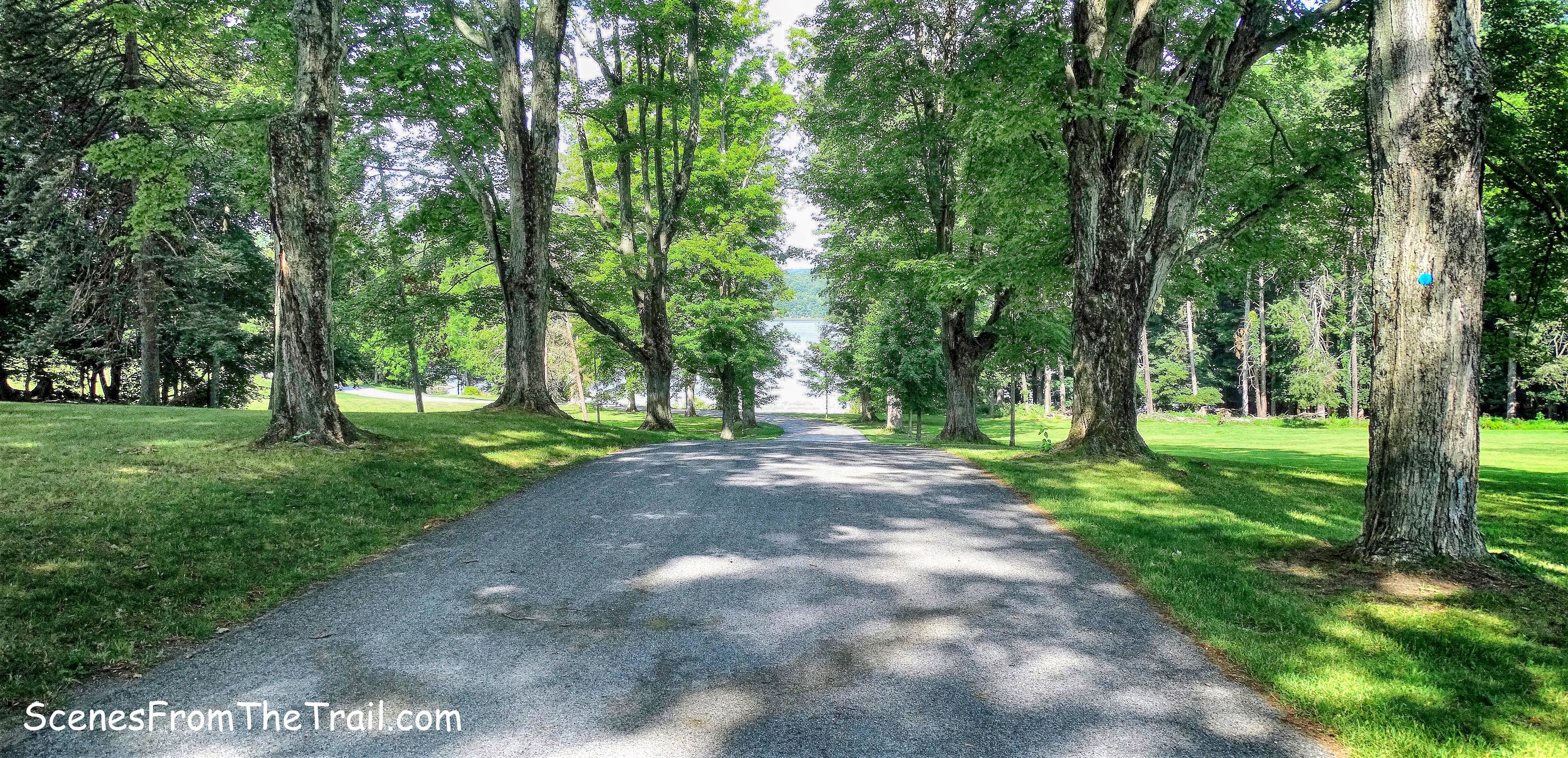
The trail runs along a wide paved road that leads towards the Hudson River.

blue-blazed trail

blue-blazed trail

We left the road and walked on the grass to the edge of the river to take in the sights.

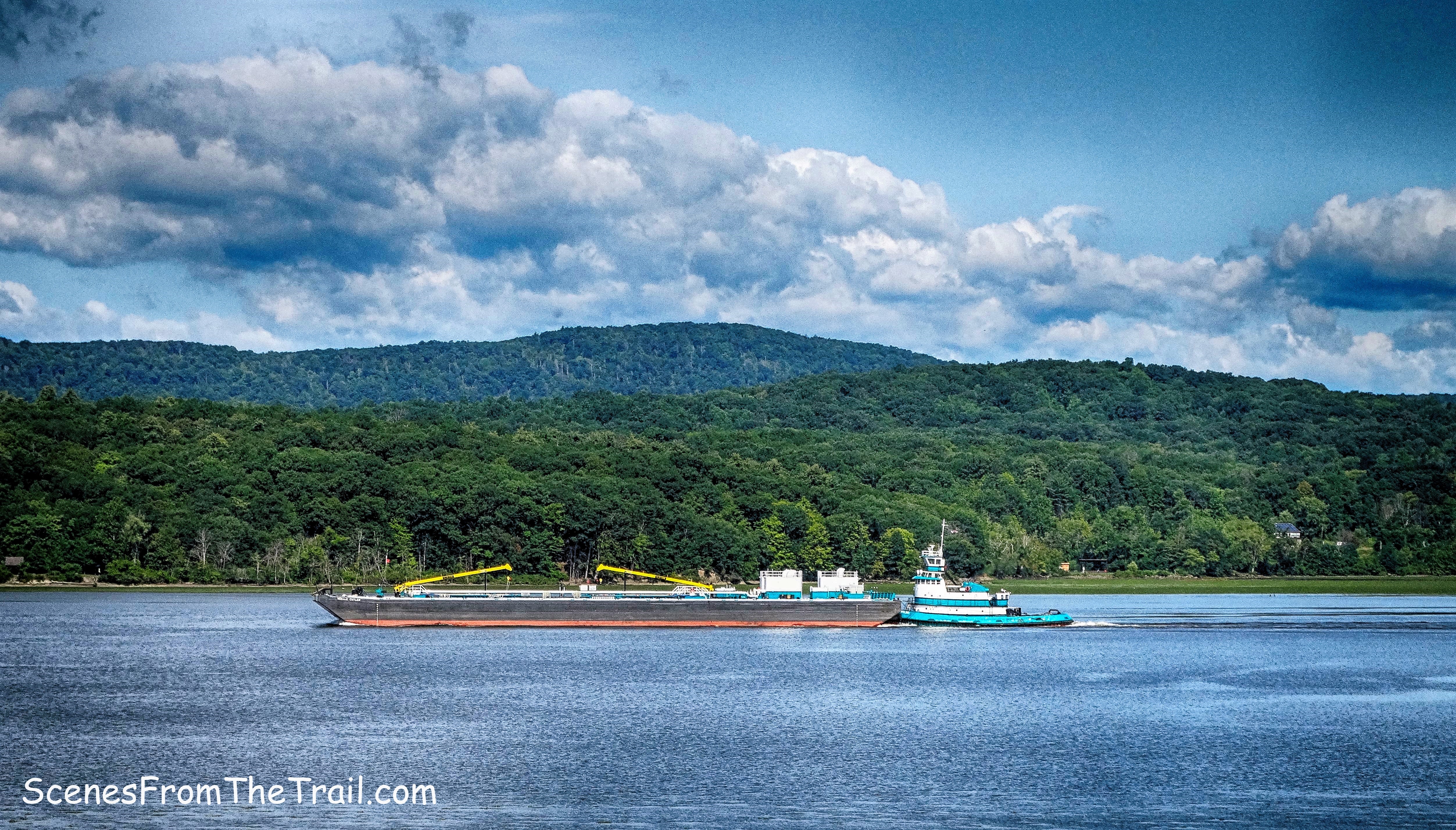
barge on the Hudson River

barge on the Hudson River

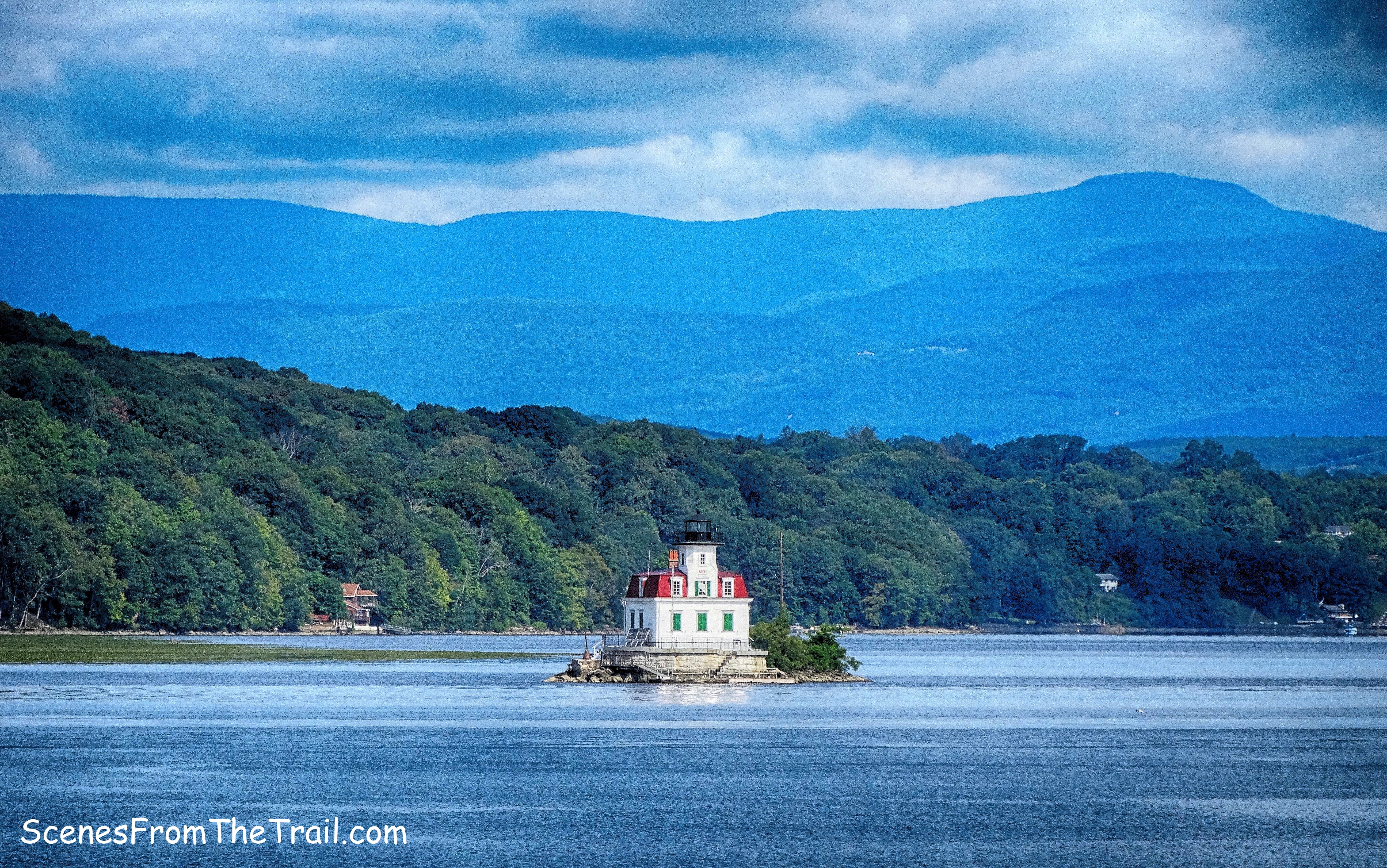
Looking northwest, the Esopus Meadows Lighthouse is visible with the Catskill Mountains in the background. The Esopus Meadows Lighthouse, nicknamed “The Maid of the Meadows,” was completed in 1871.

Esopus Meadows Lighthouse

Esopus Meadows Lighthouse

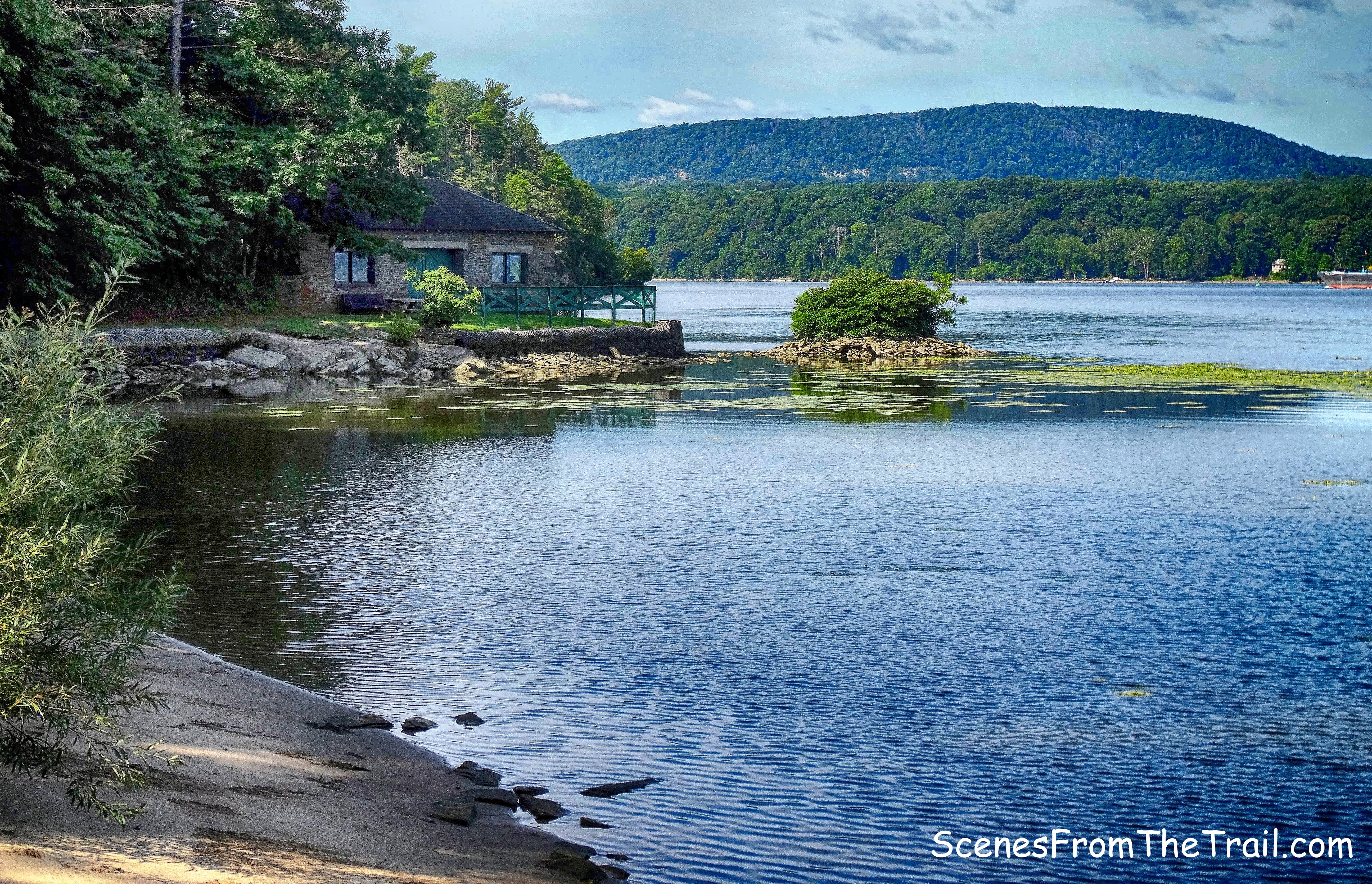
We then walked along the edge of the river to the Powerhouse, which looks like some kind of a boathouse to me.

Powerhouse

Powerhouse

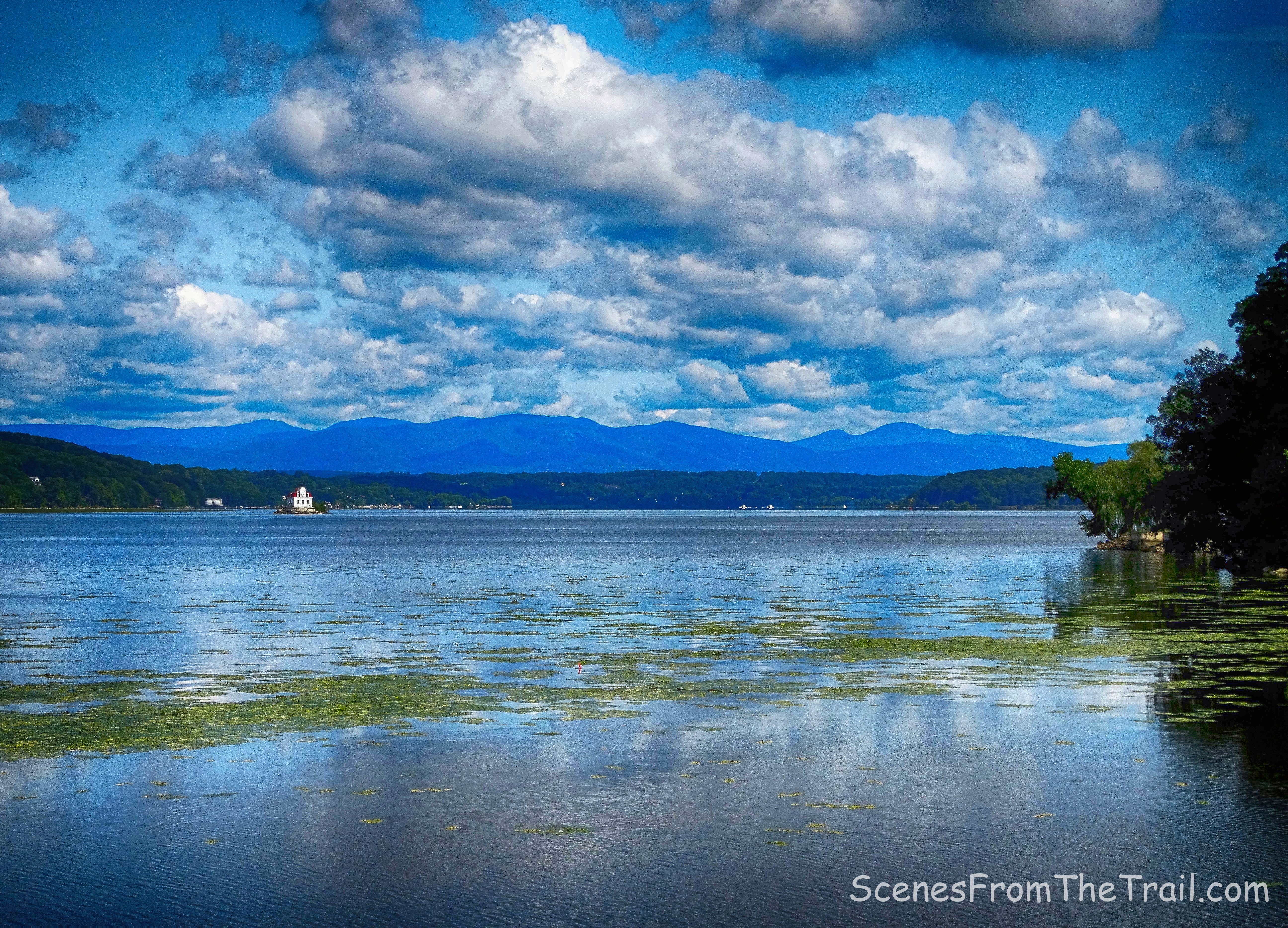
From the Powerhouse, there is a nice view of the Catskill Mountains in the distance.

view north from the Powerhouse

view north from the Powerhouse

We then made our way around the western side of the Powerhouse and climbed some stone steps that lead back to the paved road (Blue Trail) and began walking south.

Blue Trail

Blue Trail

The Blue Trail then turns right and leaves the paved road and begins heading west on a gravel road.

Blue Trail

Blue Trail

We passed by the 1903-10 Cove House, a.k.a. the Gardener’s House, which is a private residence.

Cove House

Cove House

The Blue Trail leads to the river and then heads south. We came to a fork where the Blue Trail veers left and the white-blazed River Trail begins to the right. We now began following the white blazes of the River Trail.

veer right on the white-blazed River Trail

veer right on the white-blazed River Trail

For approximately the next 1.5 miles, we followed the River Trail as it skirted the eastern shore of the Hudson River.

white-blazed River Trail

white-blazed River Trail

The River Trail passes several small beach like areas that are perfect to just sit on a piece of driftwood and enjoy the view. Growing up in a Hudson River town, I have always loved being near the river. This is one of the only places on the eastern shore of the Hudson that remains in its natural state where the railroad tracks are not by the water. We continued along, stopping frequently, basking in the August sun.

beach along the River Trail

beach along the River Trail

We passed an old pump house that was used to pump water from the river for irrigation purposes.

pump house

pump house

There was plenty of traffic on the Hudson River on this picture perfect Sunday. There was plenty of traffic in the sky as well. We saw several Bald Eagles soaring above us a few times during the hike.

Hudson River

Hudson River

Many sights and views of the river and surrounding landscape can be seen along this trail. The Mount Academy in Esopus, NY sits nestled in the trees just across the way.

The Mount Academy

The Mount Academy

The River Trail travels through a grassy picnic area then a gravel road with a large picnic shelter on the left with a large fireplace.

Riverfront Pavilion

Riverfront Pavilion

The trail then enters the woods again and continues to run along the shore. It then comes to a fork where the River Trail veers left. We continued on the unmarked trail because we wanted to stay close to the water, but this trail was badly eroded in some spots with a steep drop off. Concerned that the trail would either dead end or become impassable, we turned back and rejoined the River Trail.

River Trail

River Trail

The trail climbs a little and passes through Mills Norrie State Park campground, where there are 46 tent sites and 10 cabins available for rental at the park.

Mills Norrie State Park cabins

Mills Norrie State Park cabins

The trail continues through the campgrounds on a woods road then turns right and enters the woods. Nearing the river, we came to a spot where the Indian Kill flows into the Hudson River, with a stone bridge across the water.

stone bridge

stone bridge

The trail then crosses over the Indian Kill on a wooden footbridge and then comes out on a paved park road. here the white-blazed River Trail goes right, but we turned left on the yellow-blazed trail which was our turn around point.

Yellow Trail

Yellow Trail

The Yellow Trail was uneventful except for the small railroad bridge that spans it.

small railroad bridge

small railroad bridge

Directly opposite from the bridge is a junction with the Blue Trail and here we turned left. Now following the blue blazes, the forested trail was a contrast to the River Trail along the shores of the Hudson River.

Blue Trail

Blue Trail

We followed the blue blazes past several road crossings and it then comes to a woods road where it turns right. We turned left on the woods road which has some faded blazes on the trees. The map shows it as a road with no markings.

woods road

woods road

In a short distance we came to a fork where the faded blaze trail veers right and also marked the beginning of the Green Trail. We stayed left and began following the green blazes.

fork

fork

The Green Trail heads west and from the looks of it must have been an important road at one time. The fact that they blasted through the rock instead of just bypassing it shows that they took great care in mapping out its route.

Green Trail

Green Trail

When we came to a junction with the Blue Trail, we turned right. The Blue Trail follows a gravel road.

Blue Trail

Blue Trail

Along the way, we came to Hoyt House, also known as “The Point.” Calvert Vaux designed the house in 1855 for Lydig Monson Hoyt, a wealthy New York merchant, and his wife, Geraldine Livingston Hoyt. Hoyt descendents owned and occupied the house up until 1963.

Hoyt House

Hoyt House

On a small hill near Hoyt House, there is a stone building without any windows.

stone building

stone building

Continuing on the Blue Trail, we came to the Hoyt House Barn Complex.

Hoyt House Barn Complex

Hoyt House Barn Complex

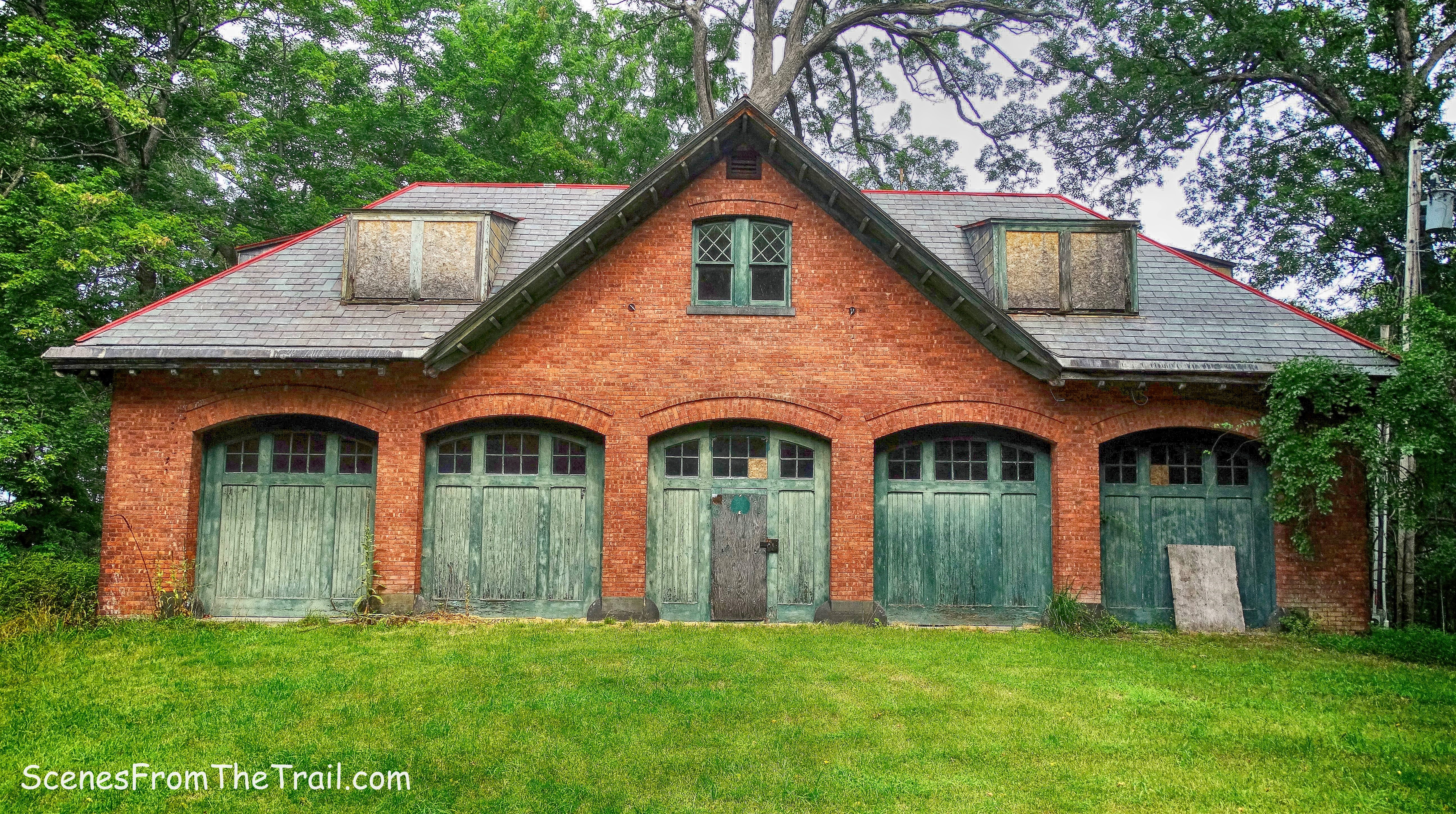
The complex includes a five bay garage,

five bay garage

five bay garage

coach house with stable,

coach house with stable

coach house with stable

and a small garage.

small garage

small garage

A little further up the road, there is another barn.

barn

barn

The door was open so we took a peek inside.

barn

barn

We headed back out on the Blue Trail heading north and came to the junction with the white-blazed River Trail, where we first embarked on the River Trail earlier in the hike. Staying on the Blue Trail we followed the trail to the lawn of the mansion and sat at a picnic table to relax for a bit. Earlier in the hike I strained a calf muscle so I figured it was a good time to rest. We then walked up the lawn towards Mills Mansion where we were parked.

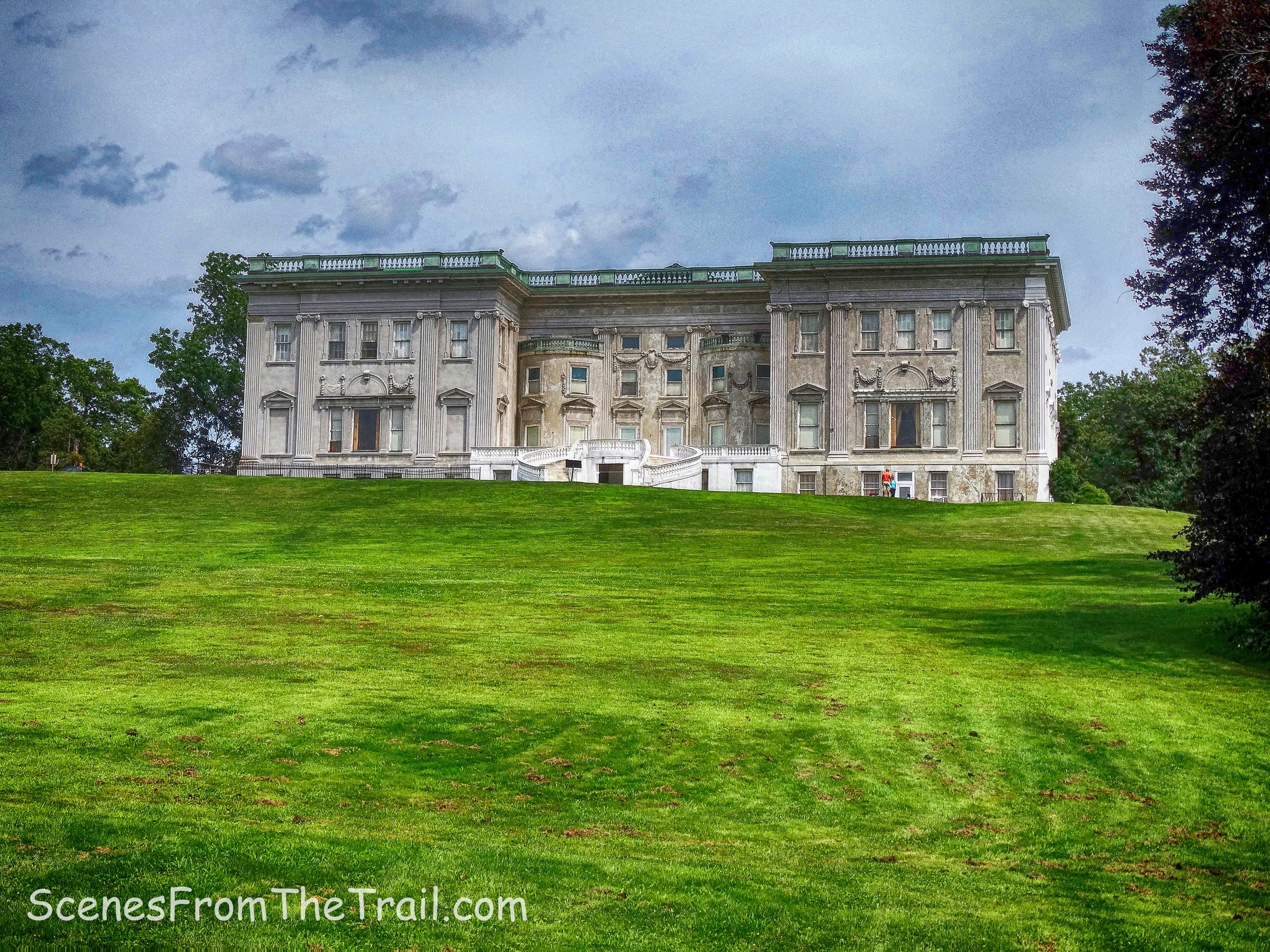
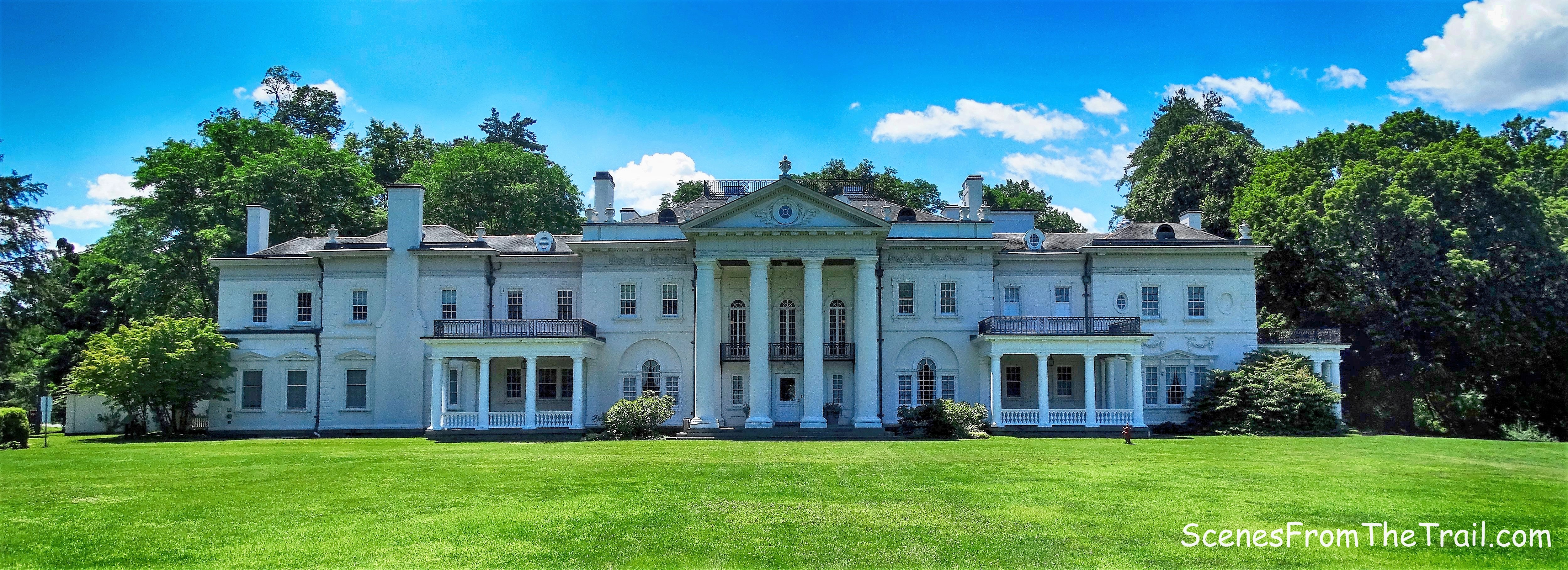
Mills Mansion

Mills Mansion

This was more of a walk than an actual hike. I never had the feeling that I was deep in the woods or that far from civilization. Nevertheless, it was quite enjoyable to say the least. It had a little bit of everything. The River Trail was my favorite part of the hike, but the rest of the sights along the trails made this hike worth the drive. I hope that you enjoyed my walk at Mills State Park and please don’t forget to follow my blog. Now get out there and take a hike!

Pros: Hudson River views, River Trail, historic ruins, shaded trails, mansion, Esopus Lighthouse, Bald Eagles, not much foot traffic.

Cons: Long drive.

Take a hike!

Take a hike!


.


Long Mountain Loop from Anthony Wayne Recreation Area – Harriman State Park

July 30, 2017 – Tomkins Cove, NY

Difficulty: Moderate – Strenuous

Length: Approximately 9 miles

Max elevation: 1,155 ft.– total elevation gain approximately 1,148 ft.

Route type: Circuit

Map: Harriman-Bear Mountain Trails Map #119

Trailhead parking: Anthony Wayne Recreation Area 


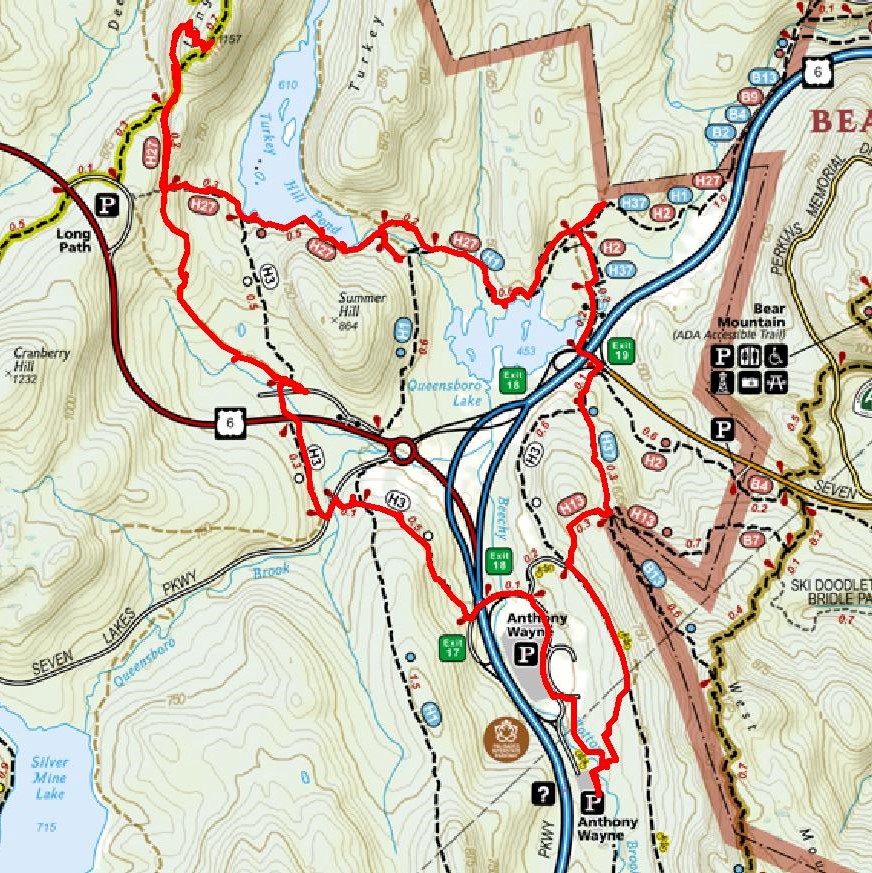
I try to map out hikes that have as many interesting features as possible with the least amount of traffic on the trails. Even at the height of the hiking season, the path less traveled is still traveled, especially when hiking near bodies of water or scenic views. This hike turned out to be everything I love about hiking and some things that I don’t. We did this hike counter clockwise starting at the bottom of the map.

hike route

hike route

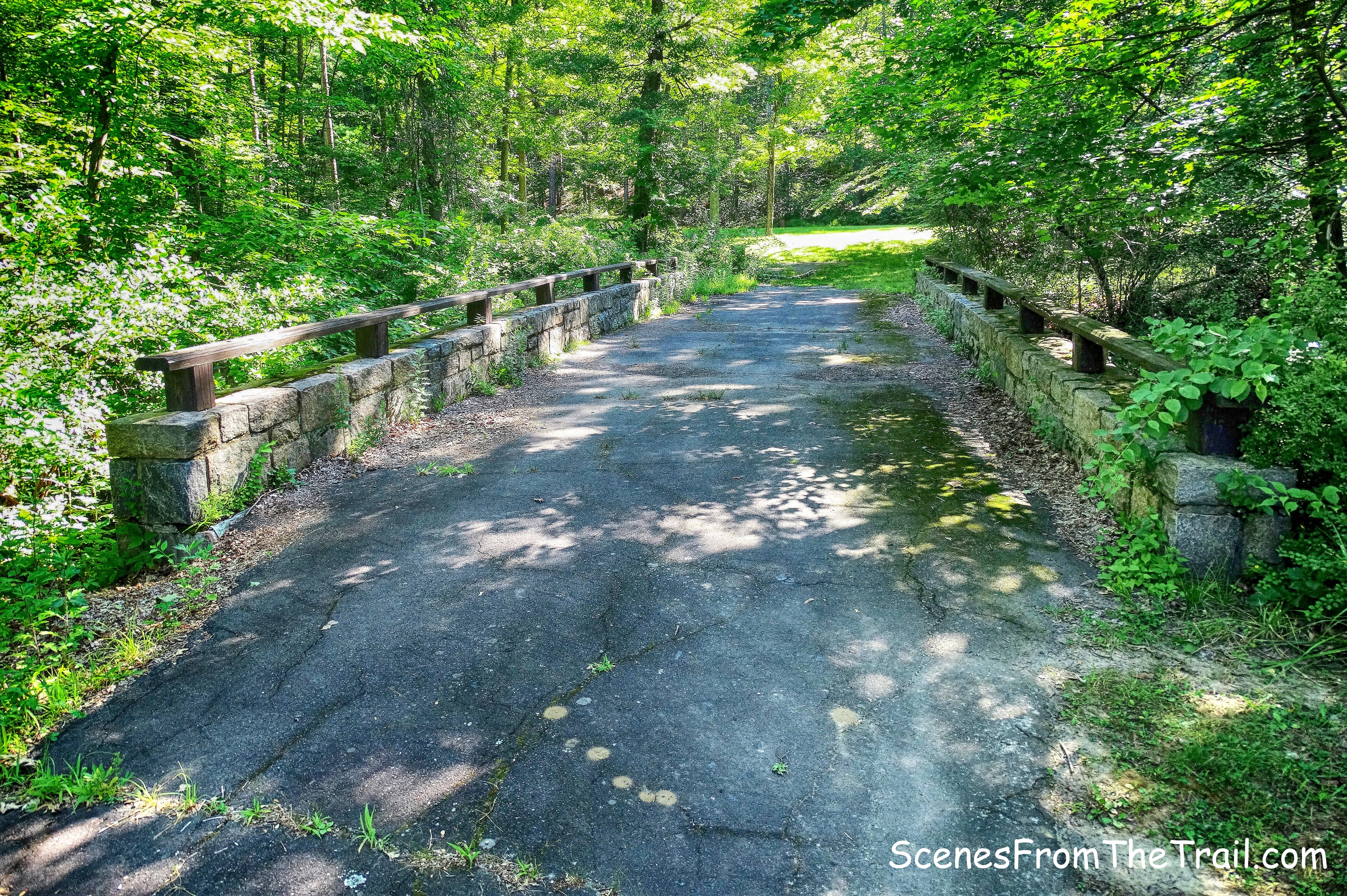
We arrived at the Anthony Wayne Recreation Area (south parking lot) at about 9:30 am on a gorgeous Sunday morning. The temps were in the low 70’s and would only reach the low-mid 80’s throughout the day. Perfect weather for a nice long hike. We started out by crossing the stone bridge over Beechy Bottom Brook at the northeast end of the south parking area.

stone bridge over Beechy Bottom Brook

stone bridge over Beechy Bottom Brook

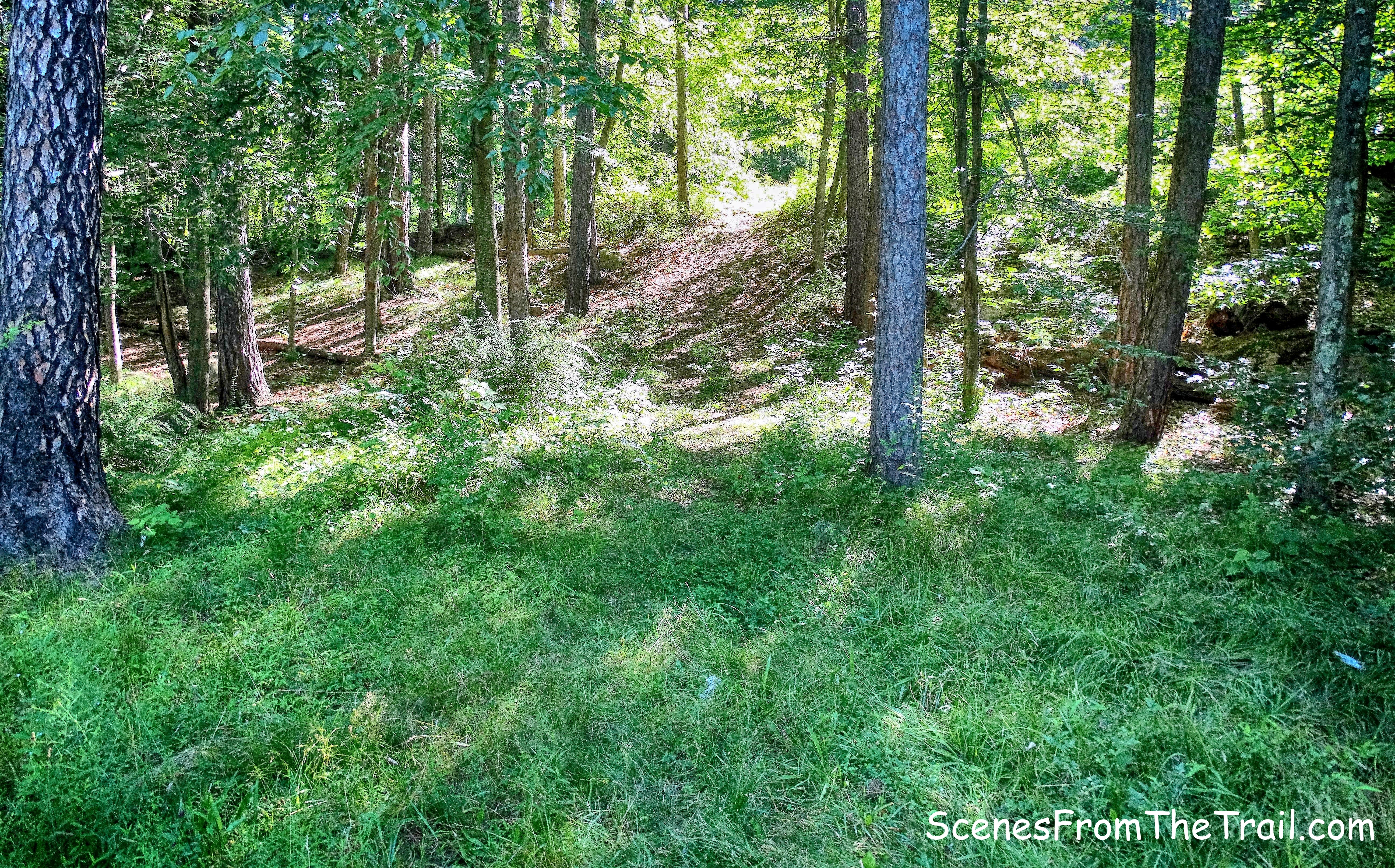
After crossing the bridge, we turned left and began walking on a grass field/picnic area and almost immediately veered right and walked up a short trail that leads to an old park road.

short trail

short trail

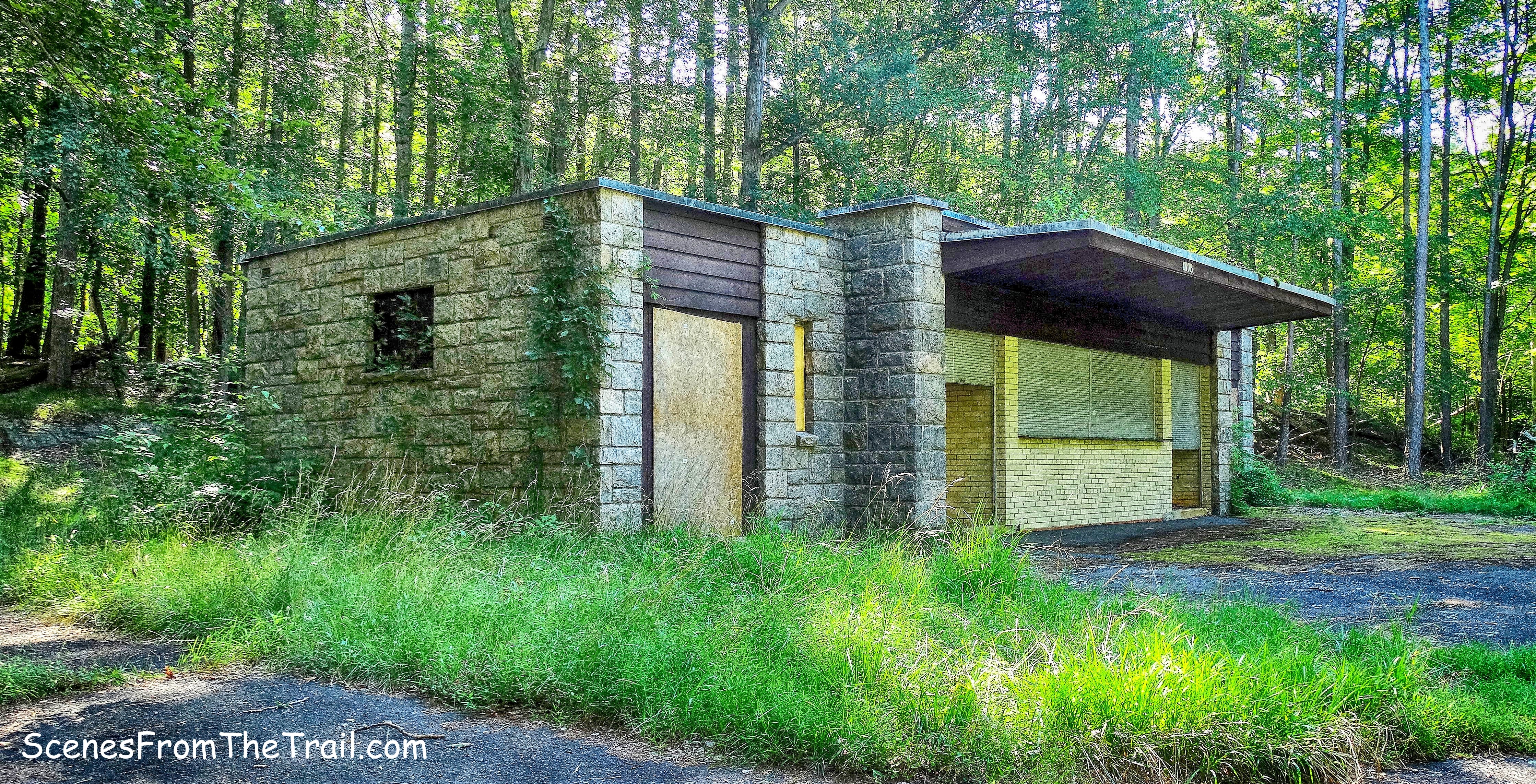
At the park road we came to an abandoned park building and turned left, heading north.

abandoned park building

abandoned park building

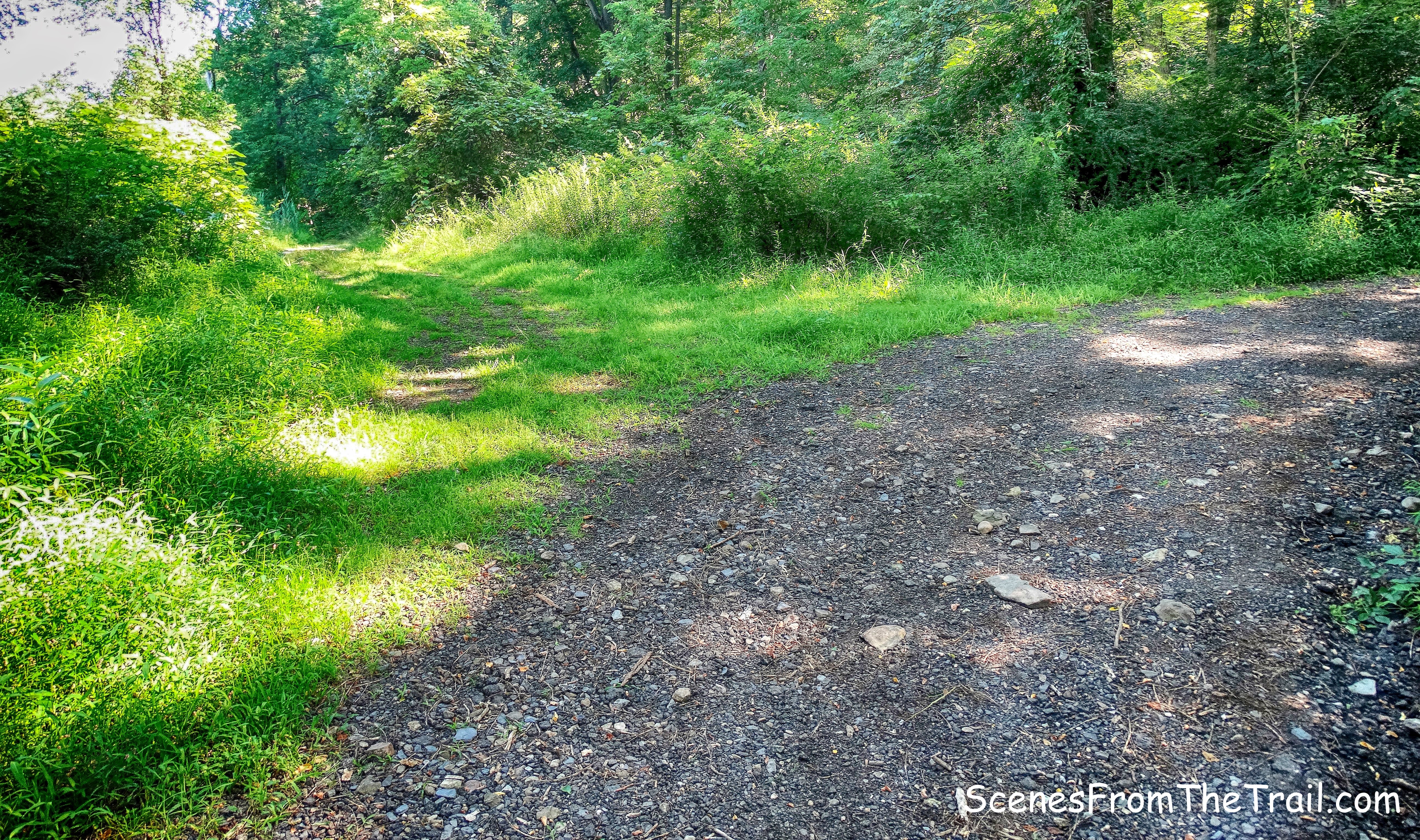
We walked on the gravel road for about 400 feet, where it comes to a fork. The left fork goes down towards the north parking area, we stayed right. In another 800 feet, we came to a junction where the gravel road turns sharply right and leads up to a concrete reservoir. We continued straight onto the grassy Beechy Bottom East Road.

Beechy Bottom East Road

Beechy Bottom East Road

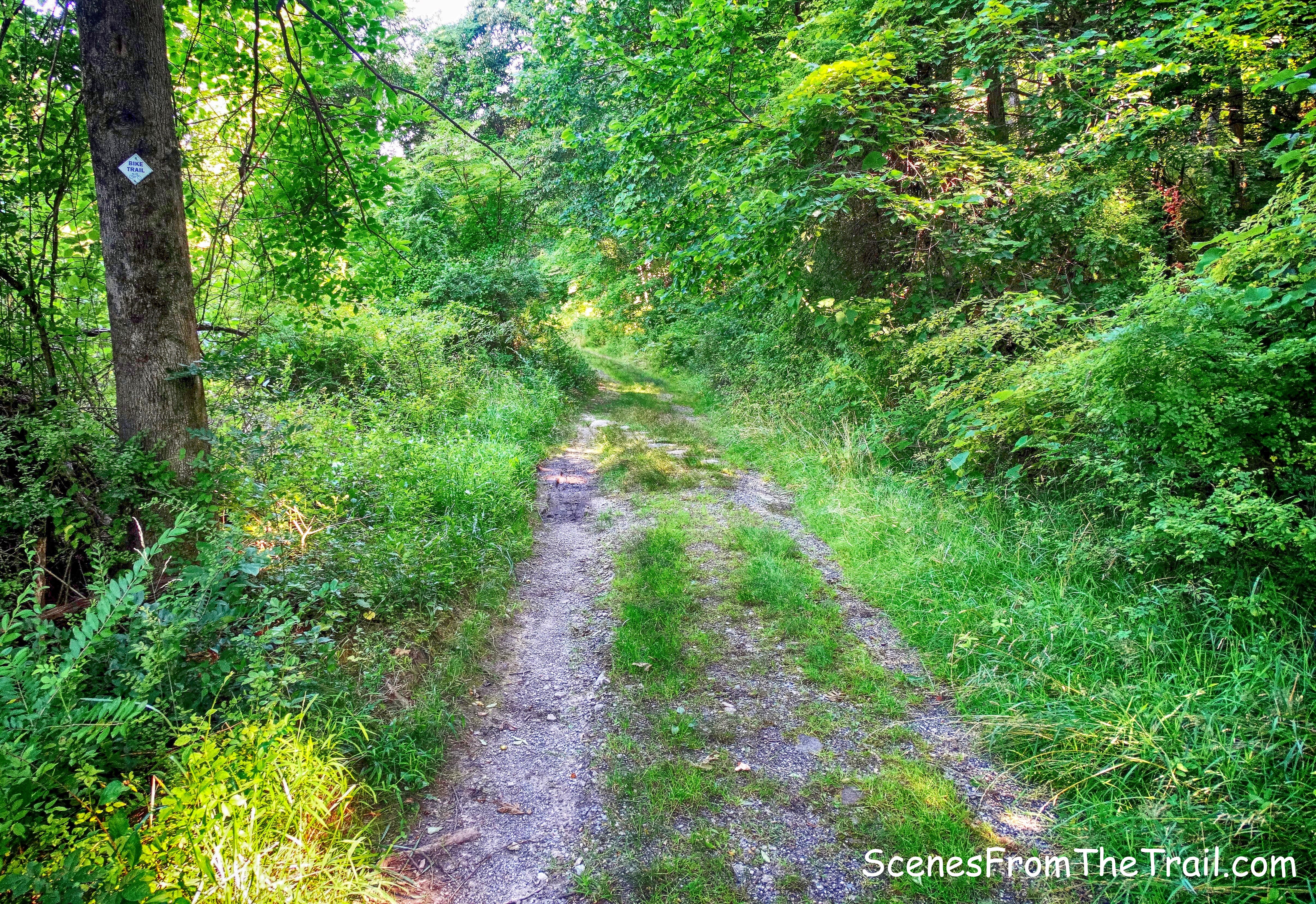
Beechy Bottom East Road runs jointly in this section with the Horn Hill Bike Trail, marked with blue-on-white blazes. The Horn Hill Bike Trail is the only trail in Harriman-Bear Mountain State Parks on which bicycles are permitted.

Beechy Bottom East Road/Horn Hill Bike Trail

Beechy Bottom East Road/Horn Hill Bike Trail

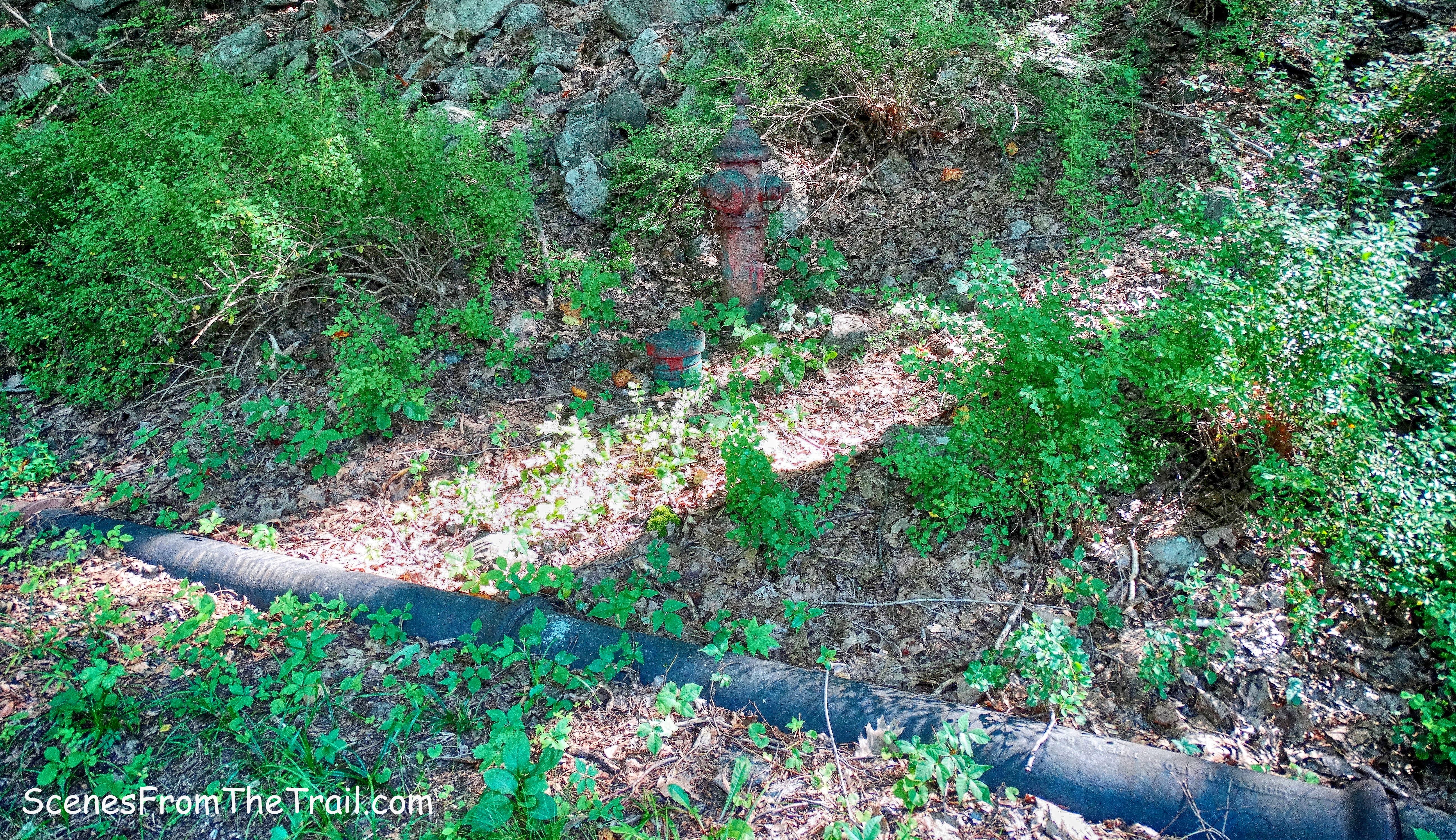
Along the east side of the road there is a large pipe that comes down from the concrete reservoir along with an old fire hydrant.

fire hydrant

fire hydrant

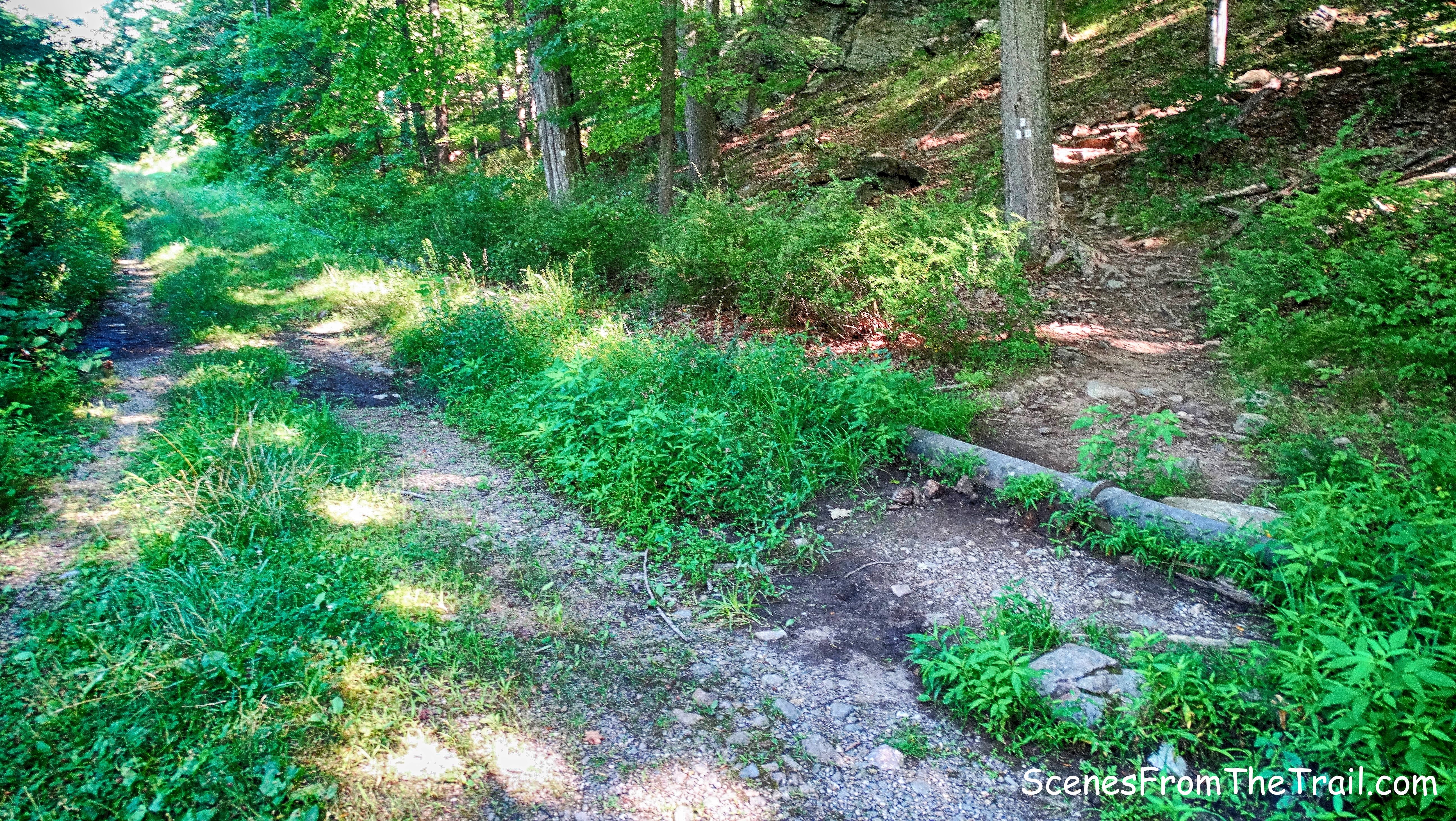
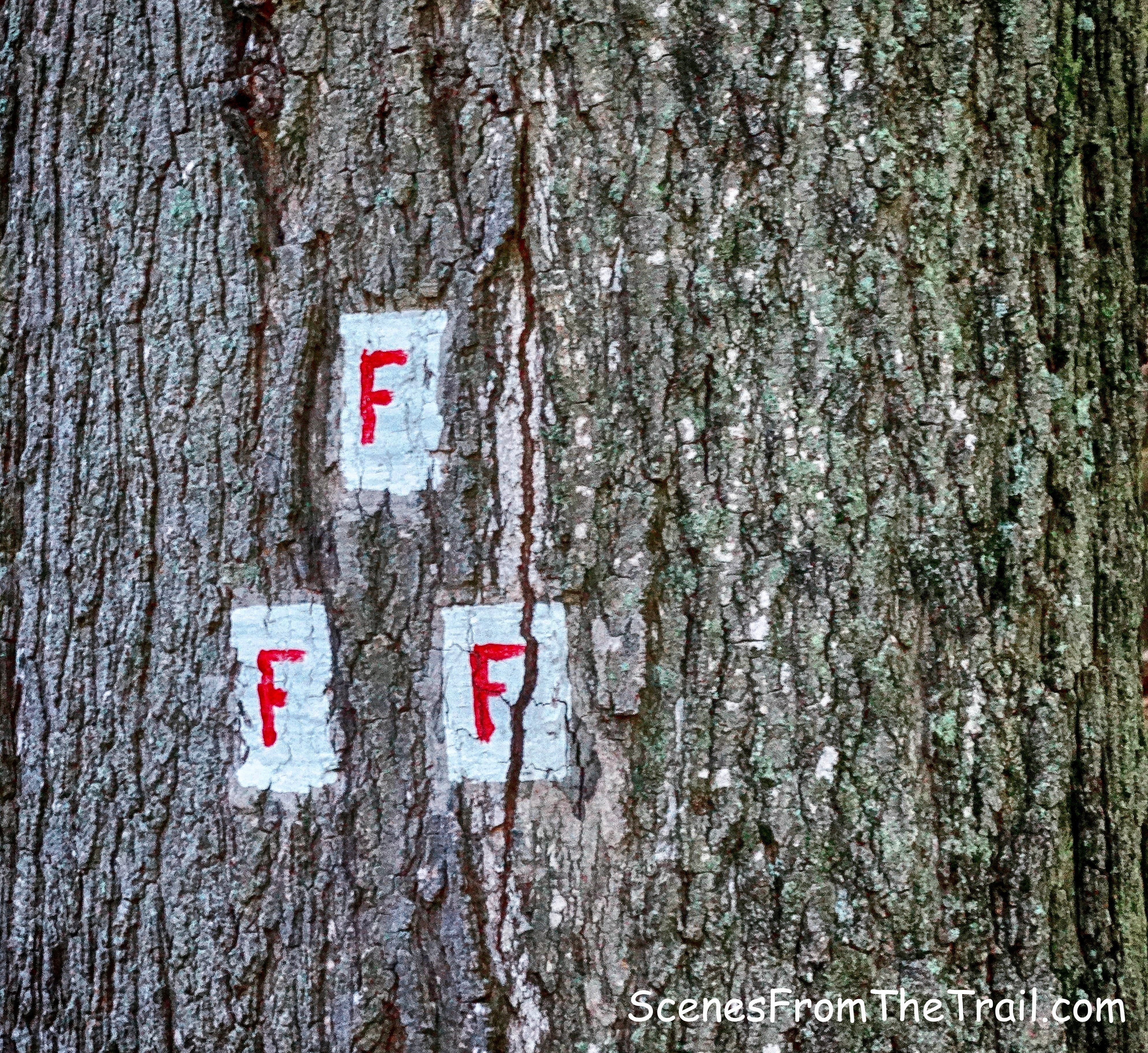
We then arrived at a 3-way junction where the white-blazed Anthony Wayne Trail goes left, Beechy Bottom East Road continues ahead and the red-F-on-white blazed Fawn Trail begins on the right. We turned right on the Fawn Trail, now heading northeast.

turn right on Fawn Trail

turn right on Fawn Trail

The Fawn Trail was shown on the first Park trail map in 1920. The blazes changed over the years, but in 1987 the blazes were changed to red F on white, and the western end of the trail was slightly relocated to the north so that it now ends at the junction with the Anthony Wayne Trail.

Fawn Trail

Fawn Trail

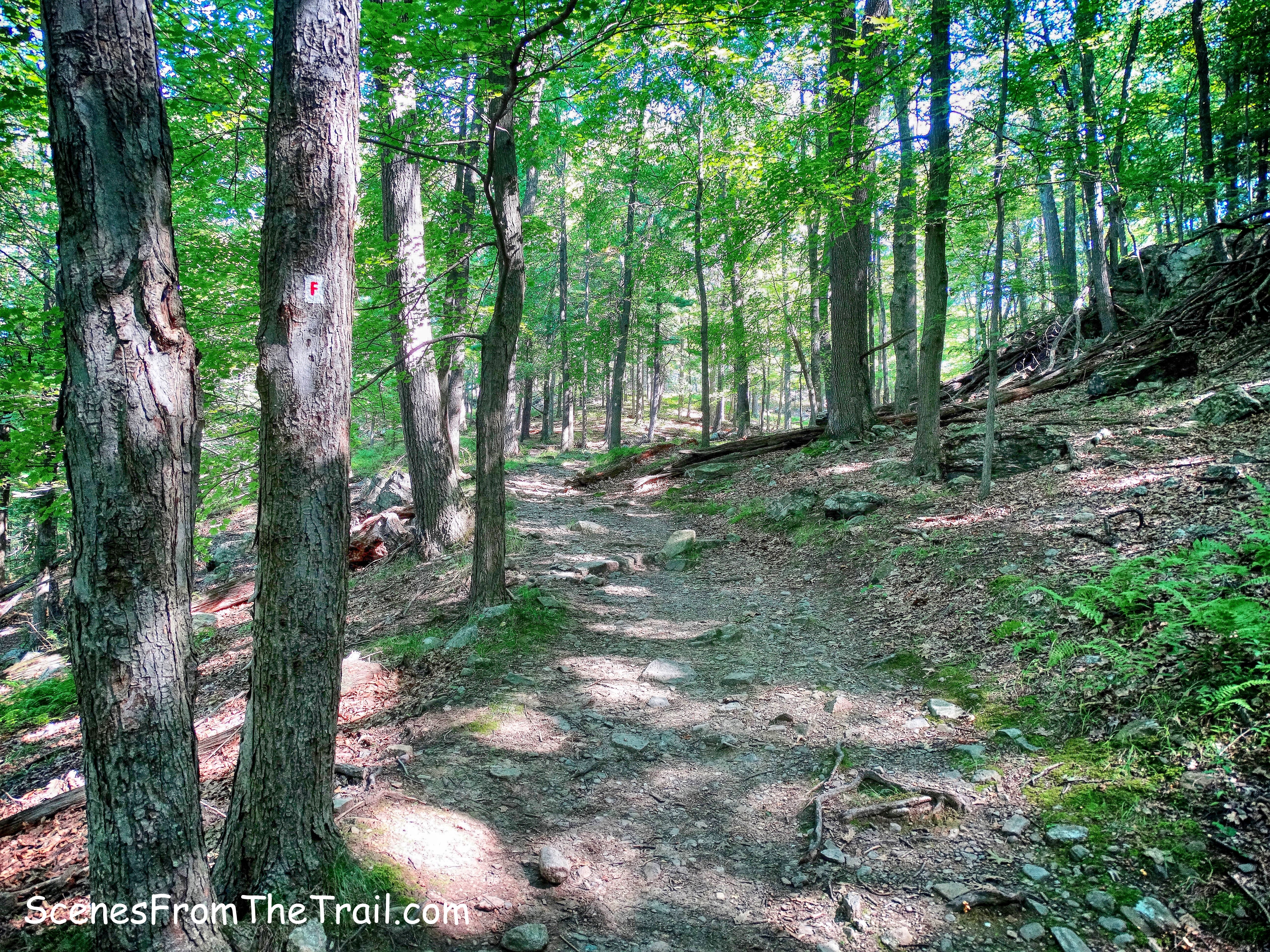
The Fawn Trail climbs through the woods…..

Fawn Trail

Fawn Trail

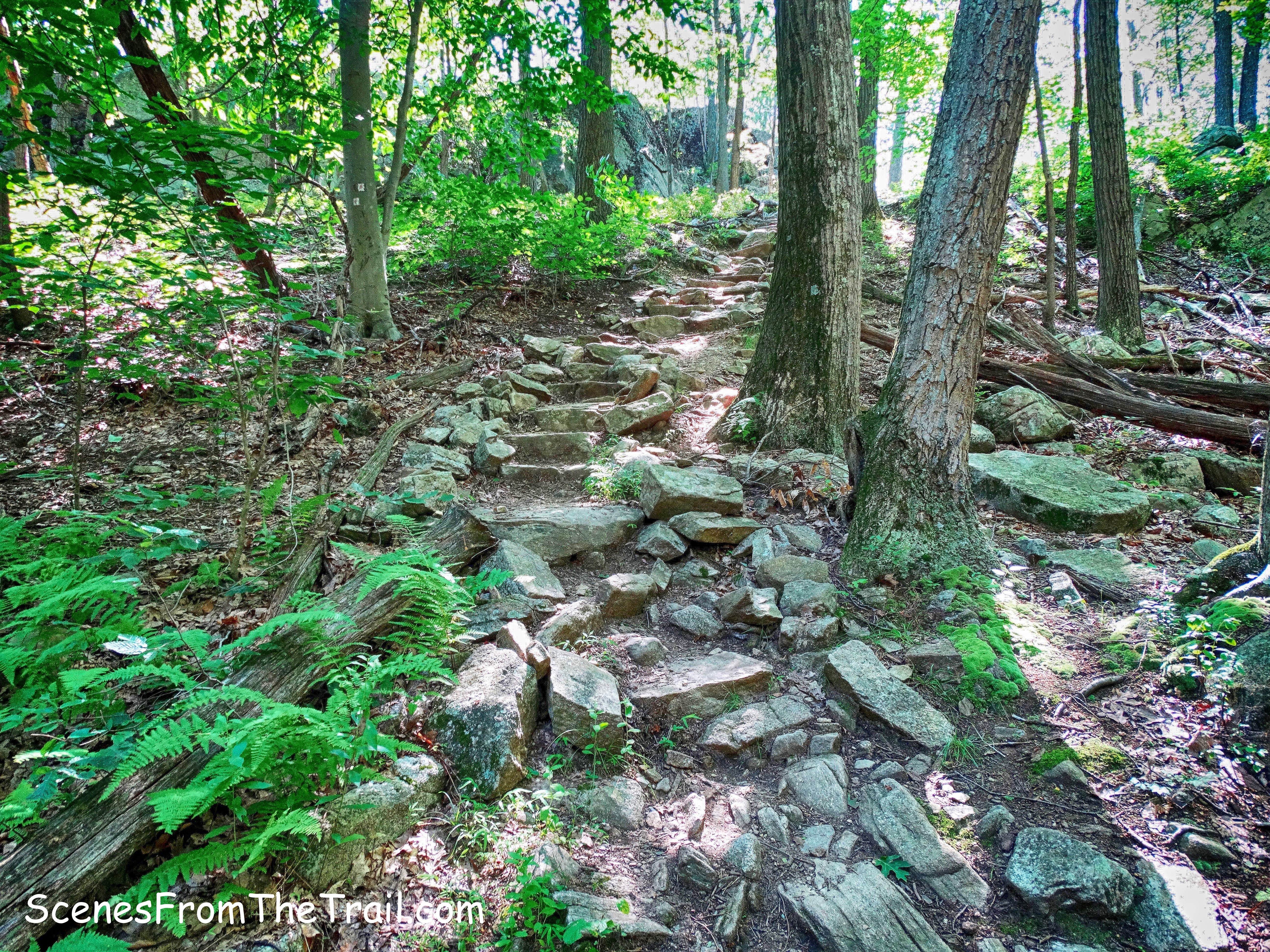
using switchbacks and stone steps.

Fawn Trail

Fawn Trail

In about .3 miles, we arrived at a junction with the blue-blazed Timp-Torne Trail and turned left, heading north.

turn left on Timp-Torne Trail

turn left on Timp-Torne Trail

The Timp-Torne Trail climbs a rock ledge and there are partial views of Bear Mountain to the right. As the trail descends it goes right through the middle of lowbush blueberries. We try to make plenty of noise whenever we hike trails that have blueberries on them, we don’t want to surprise any bears while they are having a snack.

Timp-Torne Trail

Timp-Torne Trail

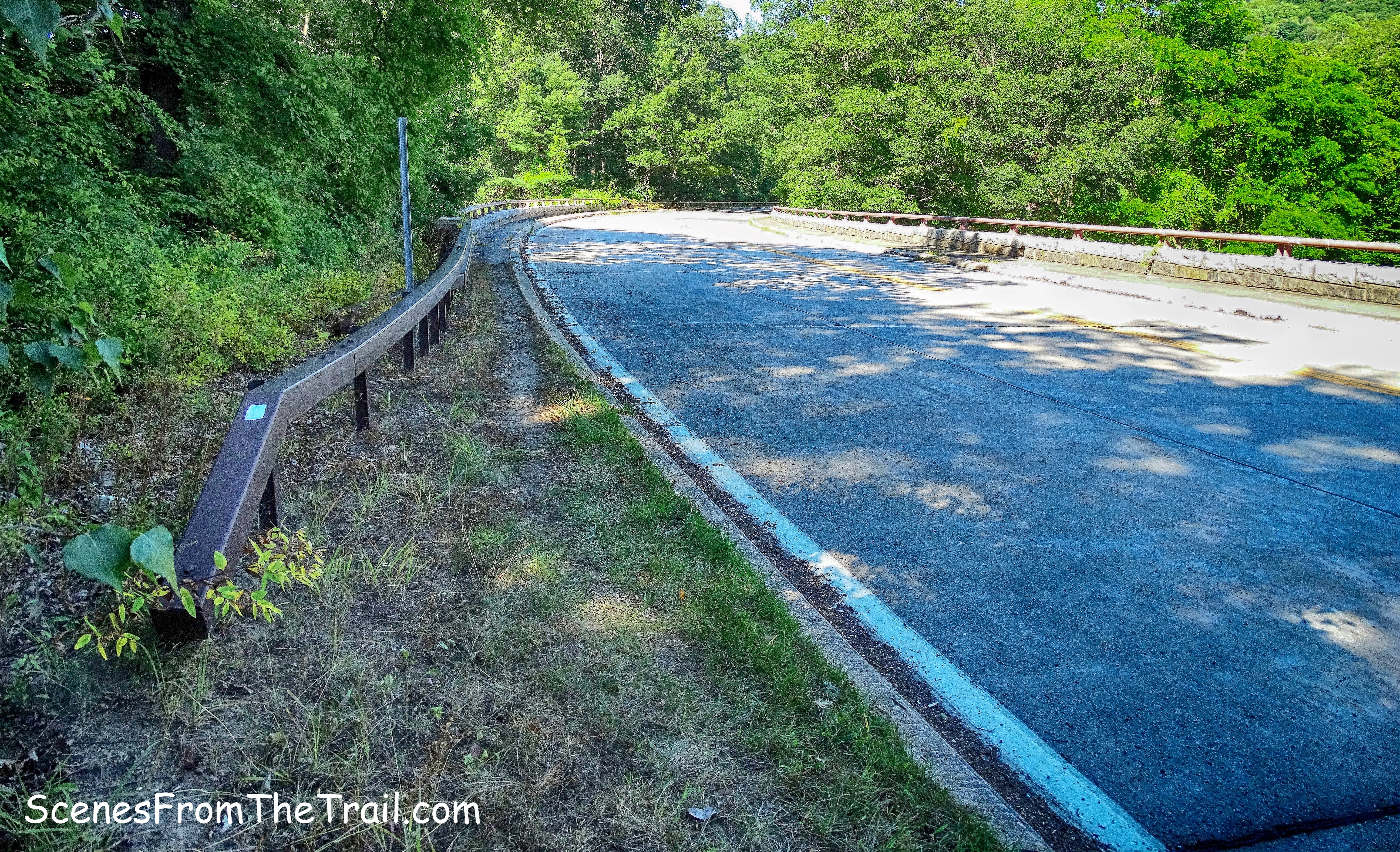
As the trail nears Seven Lakes Drive, the 1777W Trail (red 1777W on white) comes in from the right and joins the Timp-Torne Trail. We walked out to the highway ramp, following the joint 1777W/Timp-Torne Trail, which then turns left to cross the Palisades Interstate Parkway on a bridge that carries the Seven Lakes Drive over the Parkway.

Seven Lakes Drive

Seven Lakes Drive

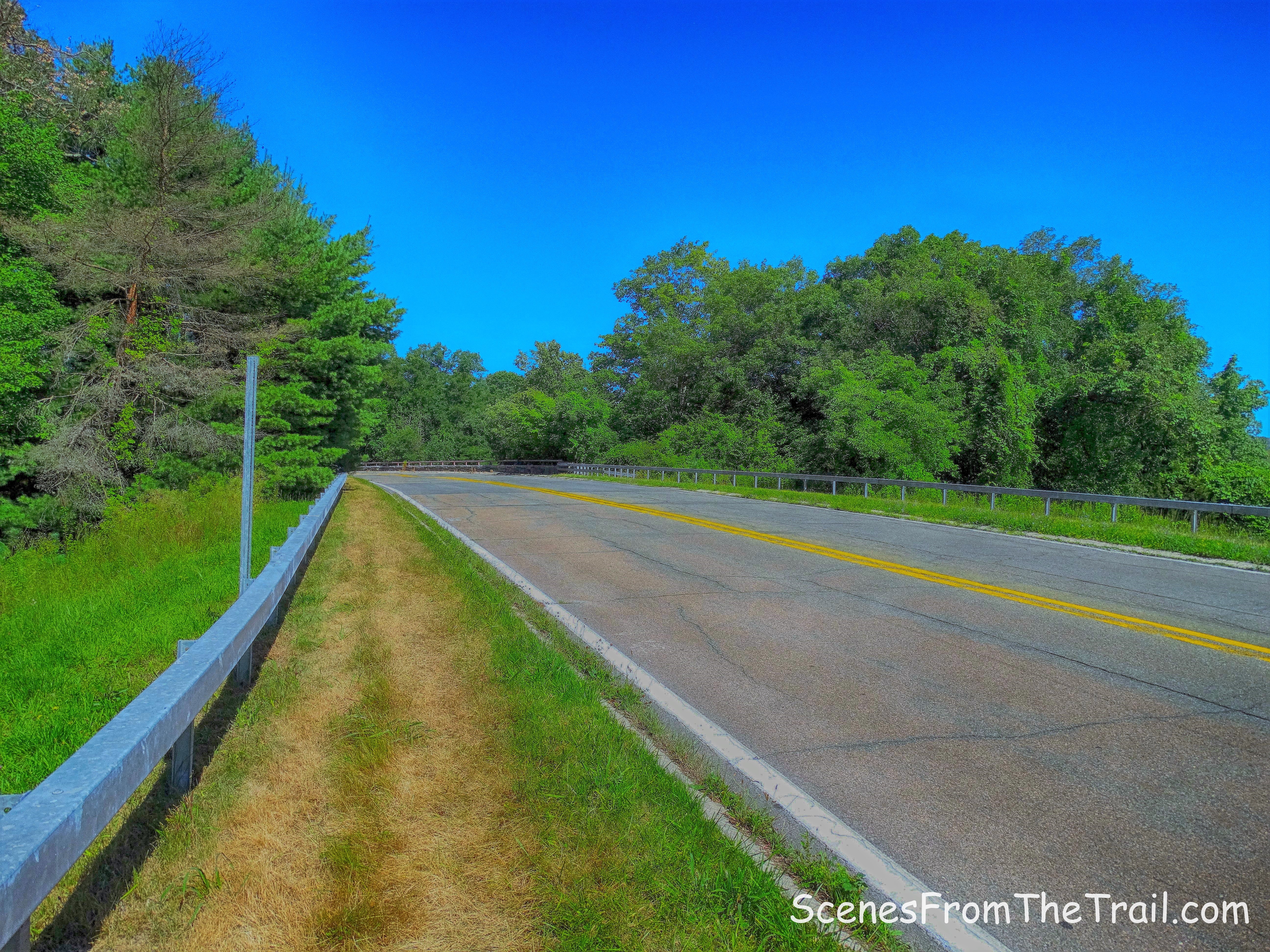
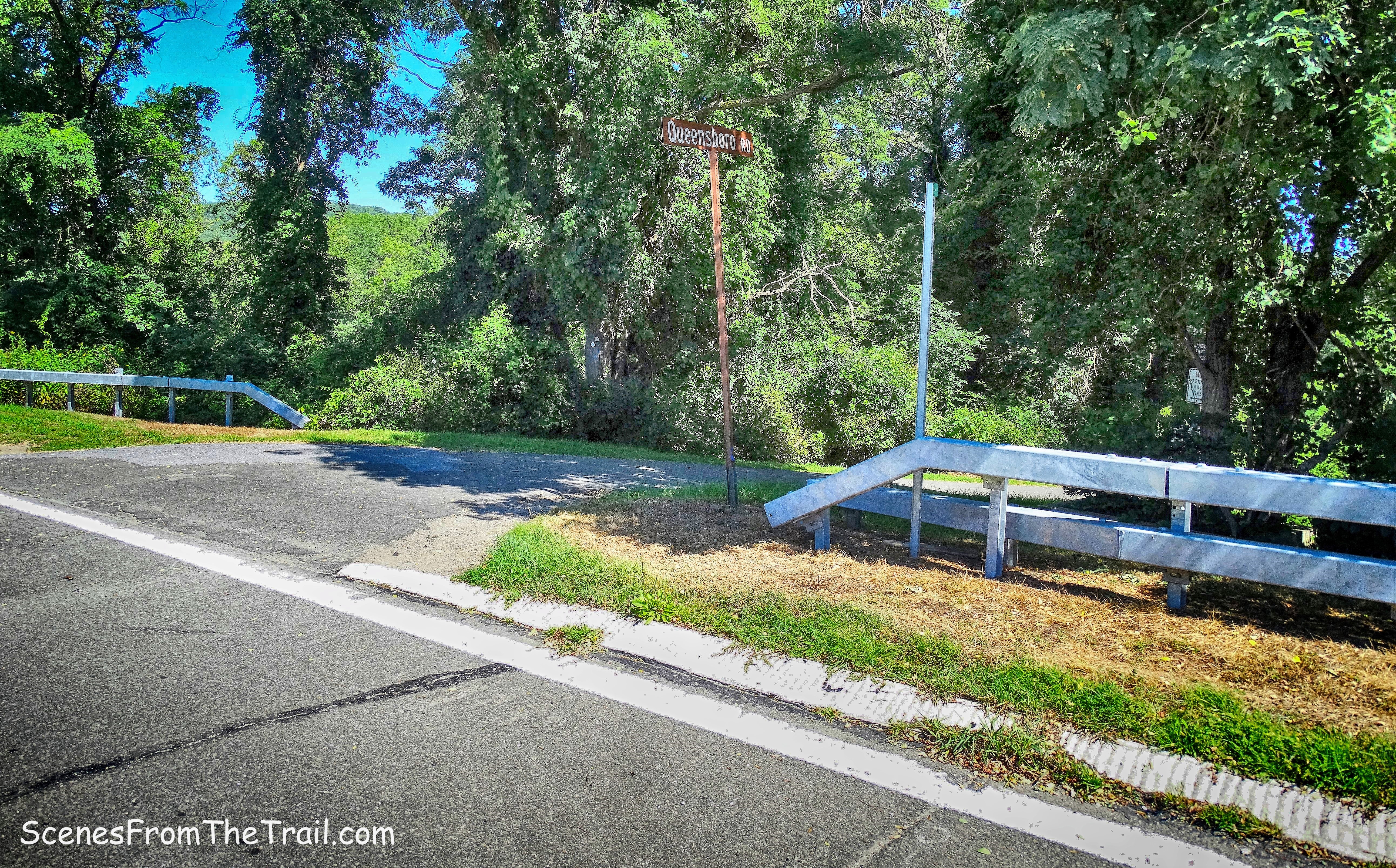
After crossing the bridge, we crossed the road and began heading north on Queensboro Road.

Queensboro Road

Queensboro Road

The blazes are visible just above the speed limit sign on the side of the paved Queensboro Road.

Queensboro Road

Queensboro Road

We headed down Queensboro Road and crossed a bridge that spans a stream.

Queensboro Road

Queensboro Road

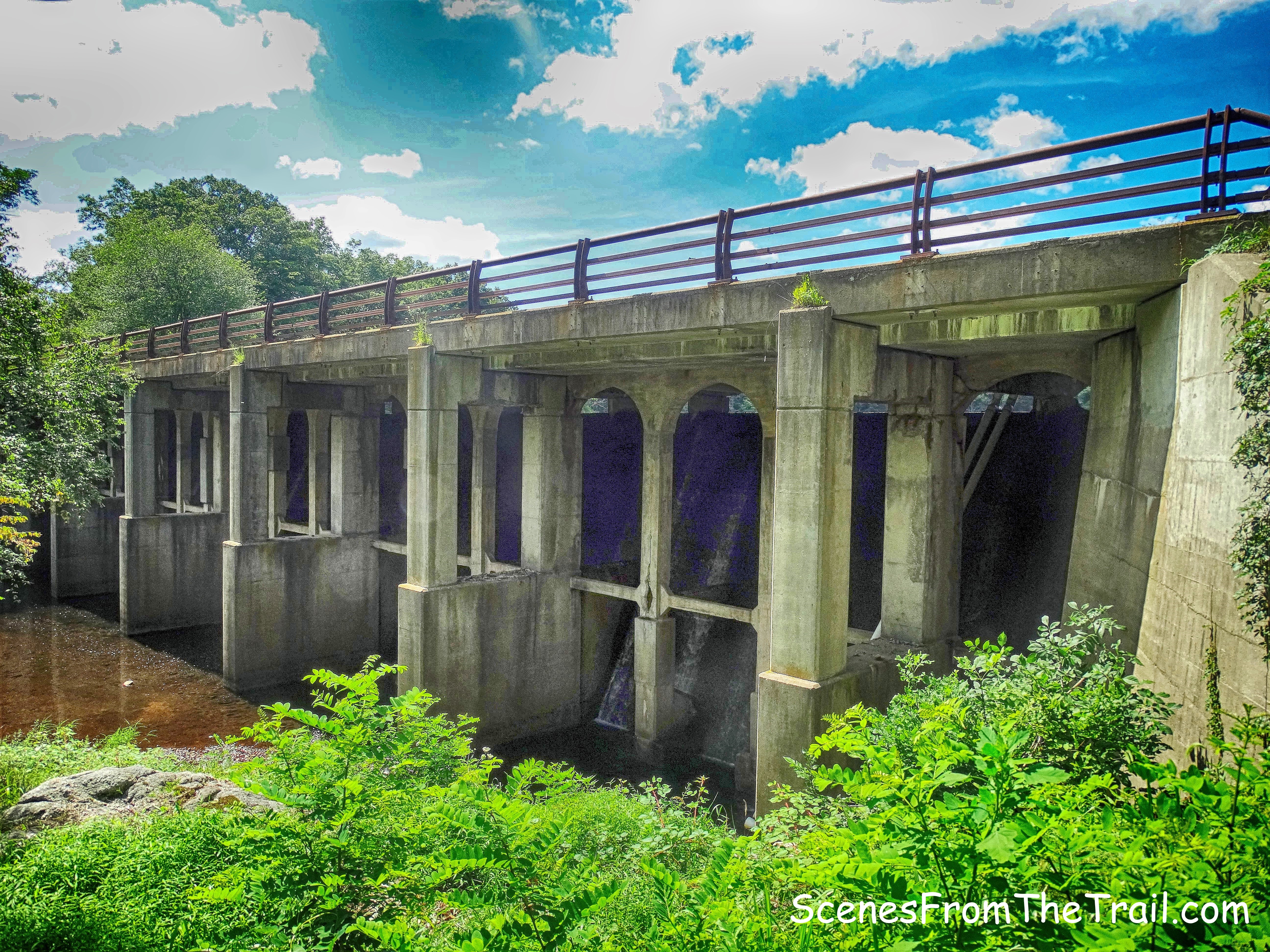
To the left of the bridge is a water treatment facility and the Queensboro Lake dam.

Queensboro Lake dam

Queensboro Lake dam

As the paved road curves to the left, we continued straight onto a gravel road.

gravel road

gravel road

The blazes are visible on a tree as we walk down the gravel road.

joint 1777W/Timp-Torne Trail

joint 1777W/Timp-Torne Trail

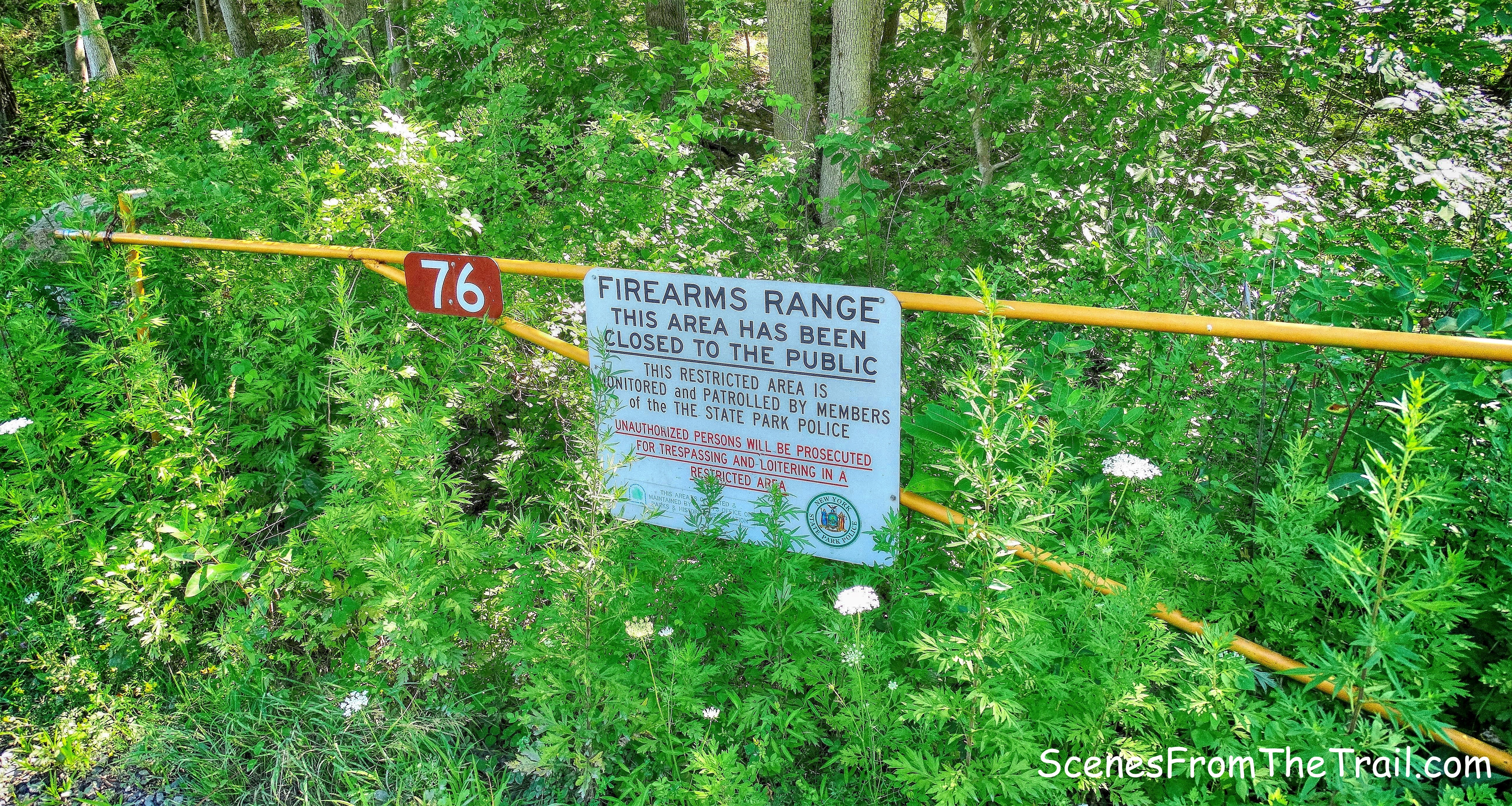
We came to a gate that leads to a park firing range. The gate was open, but the sign is clearly visible.

park firing range

park firing range

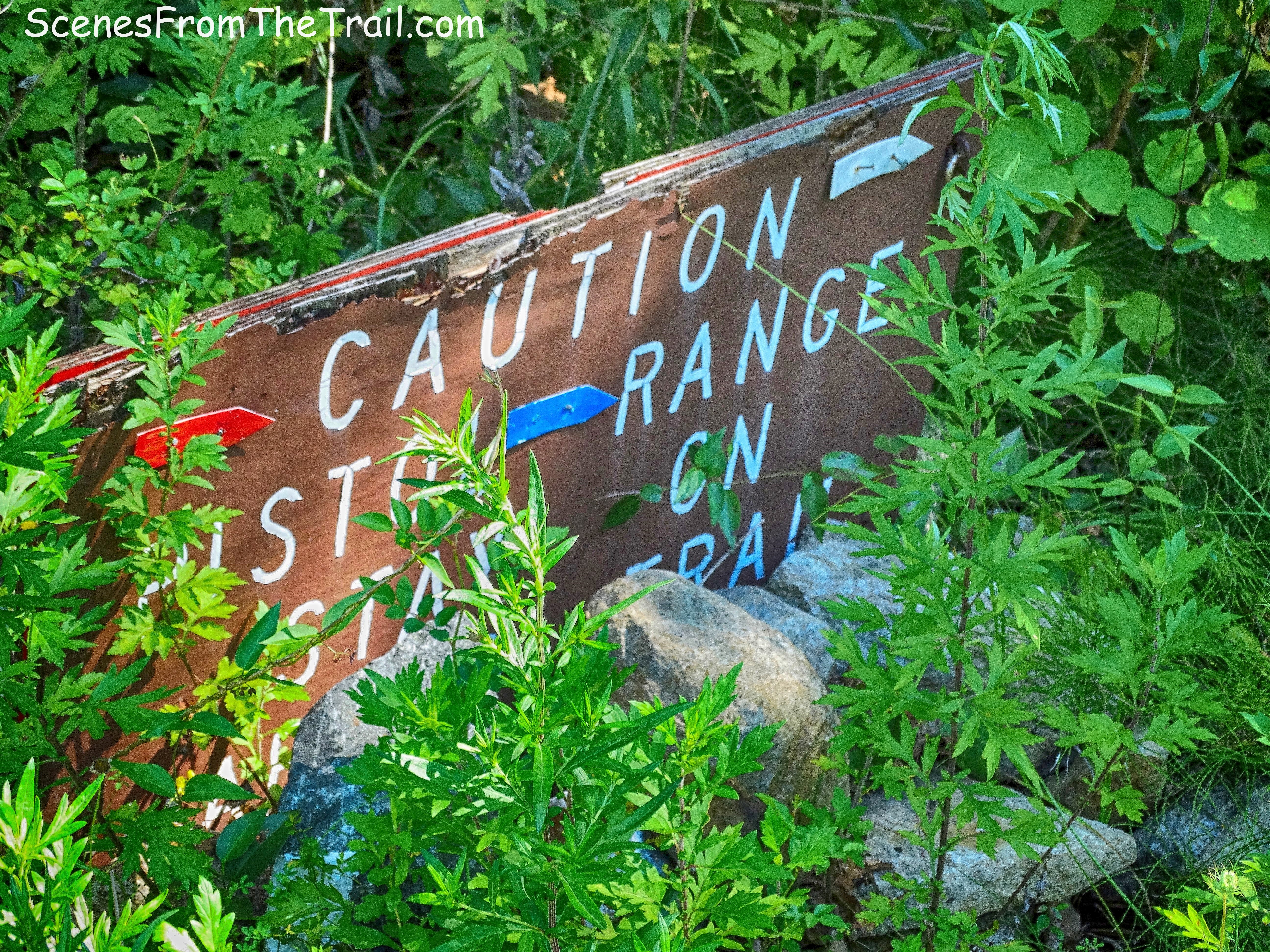
The trail turns right just before the gate and ducks into the woods to bypass the firing range. The sign indicating the bypass is sitting on the ground and barely visible.

trail detour

trail detour

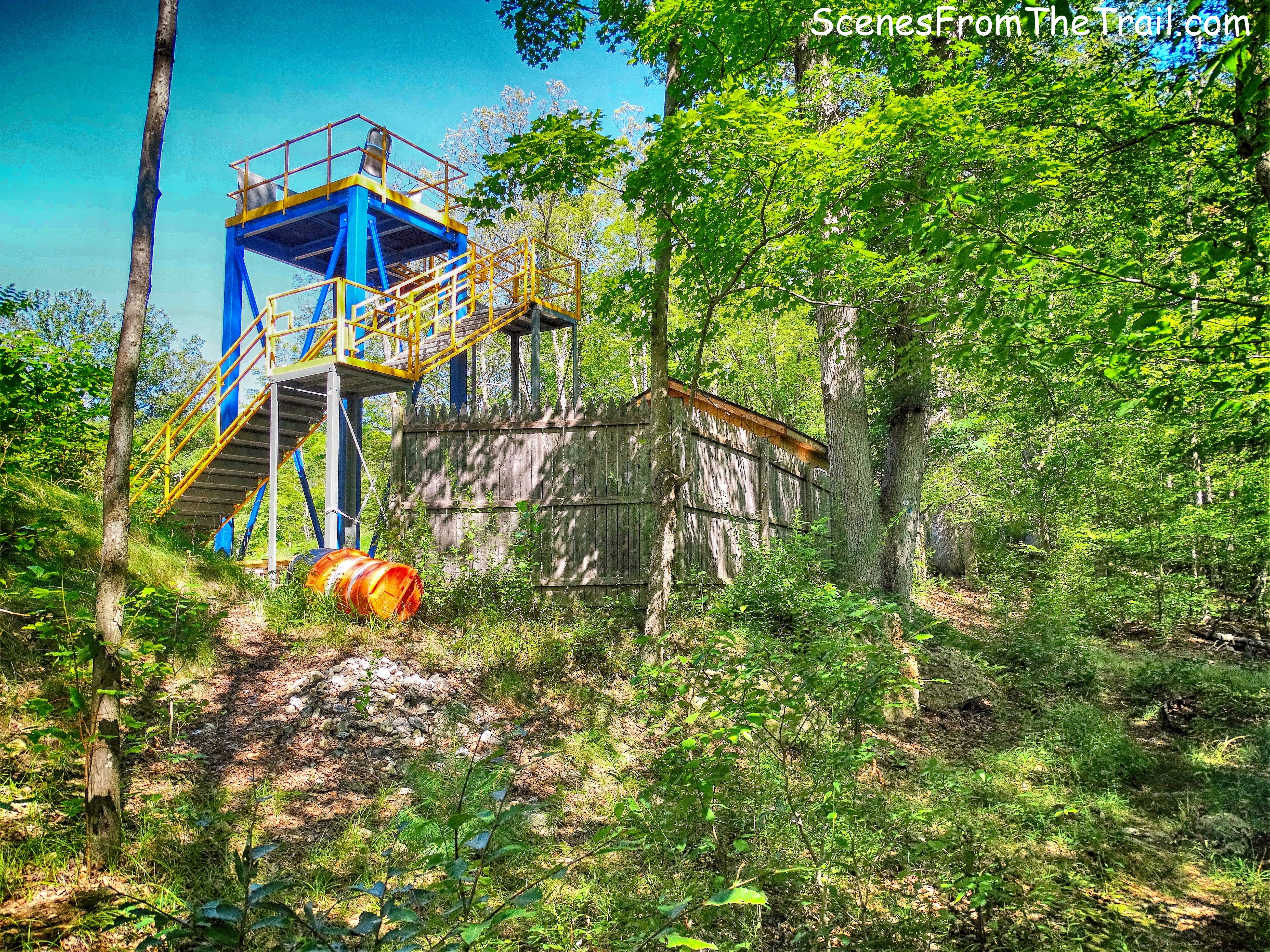
The trail leads around the front of the firing range. They shoot from this side so no worries about getting hit with a stray bullet……hopefully.

joint 1777W/Timp-Torne Trail

joint 1777W/Timp-Torne Trail

The joint 1777W/Timp-Torne Trail descends slightly as it reaches Queensboro Road. There is a boulder and a faded out informational sign here.

junction with Queensboro Road

junction with Queensboro Road

Here, the Timp-Torne and 1777W Trails turn right. We turned right here by mistake, but I realized quickly that we went the wrong way and turned around. Directly across from the boulder is the joint Popolopen Gorge/1779 Trails, but I did not see the markers on the sign post.

joint Popolopen Gorge/1779 Trails

joint Popolopen Gorge/1779 Trails

Now following the joint red-square-on-white blazed Popolopen Gorge and blue-1779-on-white blazed 1779 Trail we continued on. The Popolopen Gorge Trail was first marked in 1940 by Alexander Jessup. In 1960 the trail was extended by Sam Wilkinson and Bill Burton to Long Mountain, passing the Queensboro and Turkey Hill Lakes.

joint Popolopen Gorge/1779 Trails

joint Popolopen Gorge/1779 Trails

The 1779 Trail follows the route of Brigadier General “Mad Anthony” Wayne and his troops where they defeated the British at the Battle of Stony Point on July 16, 1779, during the American Revolutionary War.

joint Popolopen Gorge/1779 Trail

joint Popolopen Gorge/1779 Trail

The trail began to parallel Queensboro Lake and it was visible through the trees, but we obeyed the signs and stayed on the trail.

pistol range warning sign

pistol range warning sign

In a short distance we came to a view of Queensboro Lake. There were several spur trails that led closer to the water, but we didn’t want to tack on additional mileage and just admired the lake from here as we took a brief rest. Queensboro Lake was created in 1915 by building a dam on Queensboro Brook. The lake is about 20 feet deep.

Queensboro Lake

Queensboro Lake

After crossing a stream on rocks, we came to a fork. Here, the 1779 Trail goes off to the left, but we stayed right, following the red-square-on-white blazes of the Popolopen Gorge Trail.

right at the fork

right at the fork

The Popolopen Gorge Trail climbs begins a steep climb, then descends to Summer Hill Road which was built in 1933 by 200 young men from the Civilian Conservation Corps in order to build the dam and clear the swamp that became Turkey Hill Lake.

Summer Hill Road

Summer Hill Road

The PG Trail turns left on Summer Hill Road, then in 100 feet turns right and leaves the road. We walked about 500 feet past the turn as the blazes were hard to see due to the foliage and the narrow footpath. Up to this point the trail was well blazed and not seeing any blazes on Summer Hill Road, we turned around and were able to pick up the red-square-on-white blazes.

right on Popolopen Gorge Trail

right on Popolopen Gorge Trail

The PG Trail climbs up around some large rocks…….

Popolopen Gorge Trail

Popolopen Gorge Trail

and then Turkey Hill Lake comes into view. The name “Turkey Hill Lake” first appeared on the Park’s 1937 trail map.

Turkey Hill Lake

Turkey Hill Lake

The trail skirts the eastern side of the lake for about 1/2 of a mile. When we emerged on the southern shore, we found a nice rock outcrop and took a break while enjoying the view. A Bald Eagle flew over the lake and that was a bonus. To the east, Bear Mountain is visible in the distance.

Turkey Hill Lake

Turkey Hill Lake

To the right is Turkey Mountain and on the left is Long Mountain, which would be our next stop.

Turkey Hill Lake

Turkey Hill Lake

After our break, we continued along the southern end of Turkey Hill Lake on the PG Trail.

Popolopen Gorge Trail at Turkey Hill Lake

Popolopen Gorge Trail at Turkey Hill Lake

There are numerous spur trails that lead towards campsites by the lake that provide views. We stopped at a few of them for a minute or so to capture an image or two. Long Mountain is the peak on the left that we were now headed to. We had hiked about 4 miles at this point and my colleagues were not that enthusiastic about climbing up there.

Turkey Hill Lake

Turkey Hill Lake

At the southwestern end of the lake, we came to a junction with the Anthony Wayne Trail which goes left. If we weren’t going to Long Mountain this would be the turn around point. We of course, proceeded ahead on the PG Trail.

Anthony Wayne Trail junction at Turkey Hill Lake

Anthony Wayne Trail junction at Turkey Hill Lake

The PG Trail begins to climb gradually at first, then more steeply.

Popolopen Gorge Trail

Popolopen Gorge Trail

The PG Trail then turns right onto an old woods and continues to rise on a more moderate grade.

Popolopen Gorge Trail

Popolopen Gorge Trail

In about 450 yards from when we turned right on the woods road, we came to a junction with the Long Path. The Popolopen Gorge Trail ends here, but the woods road continues. The blazes for the Long Path are visible going to the left, but I did not see any going up to the right. It could have been a little confusing, but I had studied the map somewhat and knew which way to go. I walked up a bit just to be sure and when I spotted a blaze, I called down for the others to follow.

the Long Path

the Long Path

The climb was steep and and felt much longer than the .35 miles from the junction of the Long Path to the summit. The view was worth the climb as we came out on open rock and and looked south.

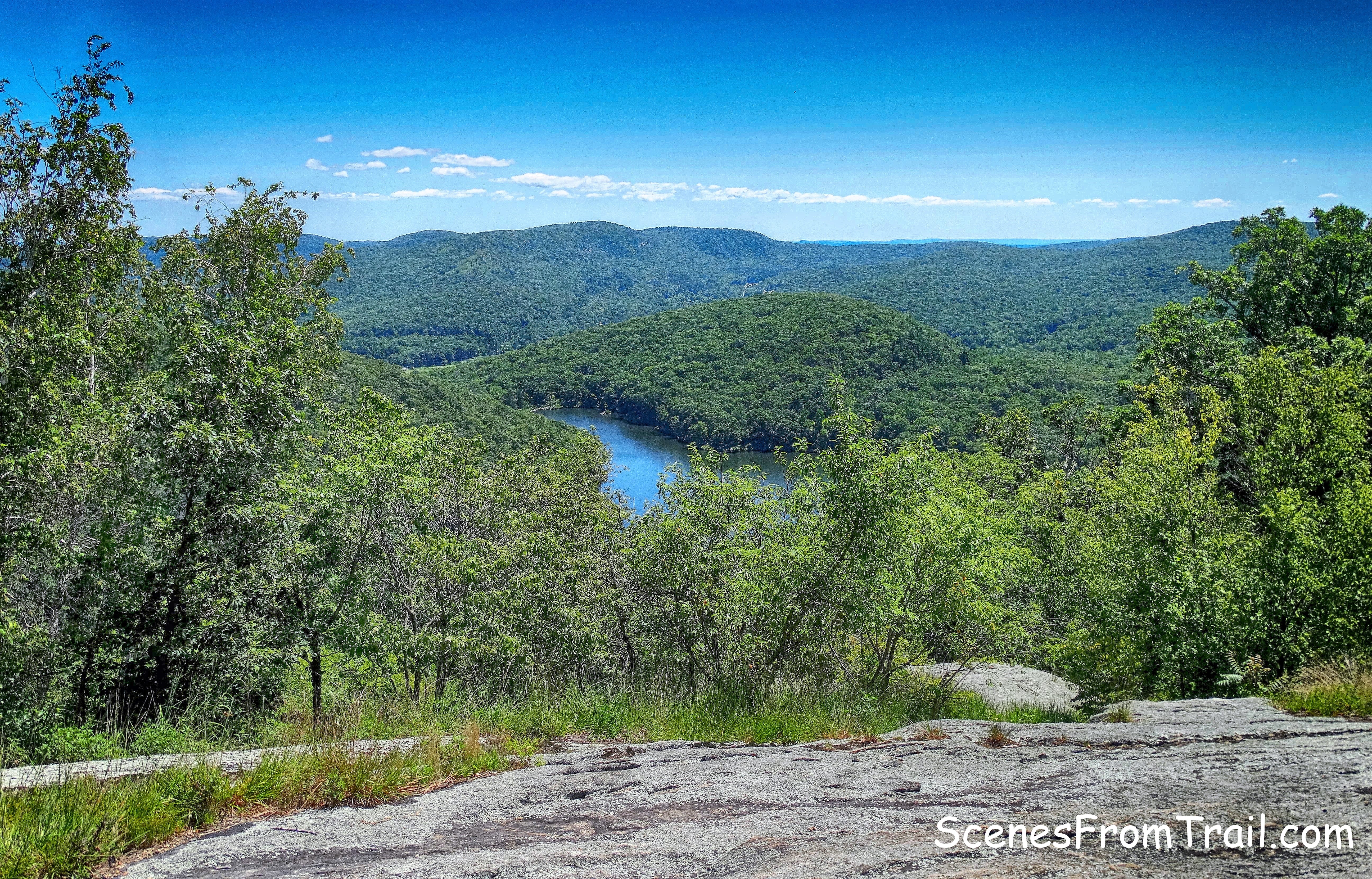
view south from Long Mountain

view south from Long Mountain

The true summit of Long Mountain is located on U.S. Military Academy (West Point) Land and is closed to the public. This was our turn around point and had hiked about 5 miles thus far so we sat here for a while and just enjoyed the view. Just below to the east, is Turkey Hill Lake.

view of Turkey Hill Lake from Long Mountain

view of Turkey Hill Lake from Long Mountain

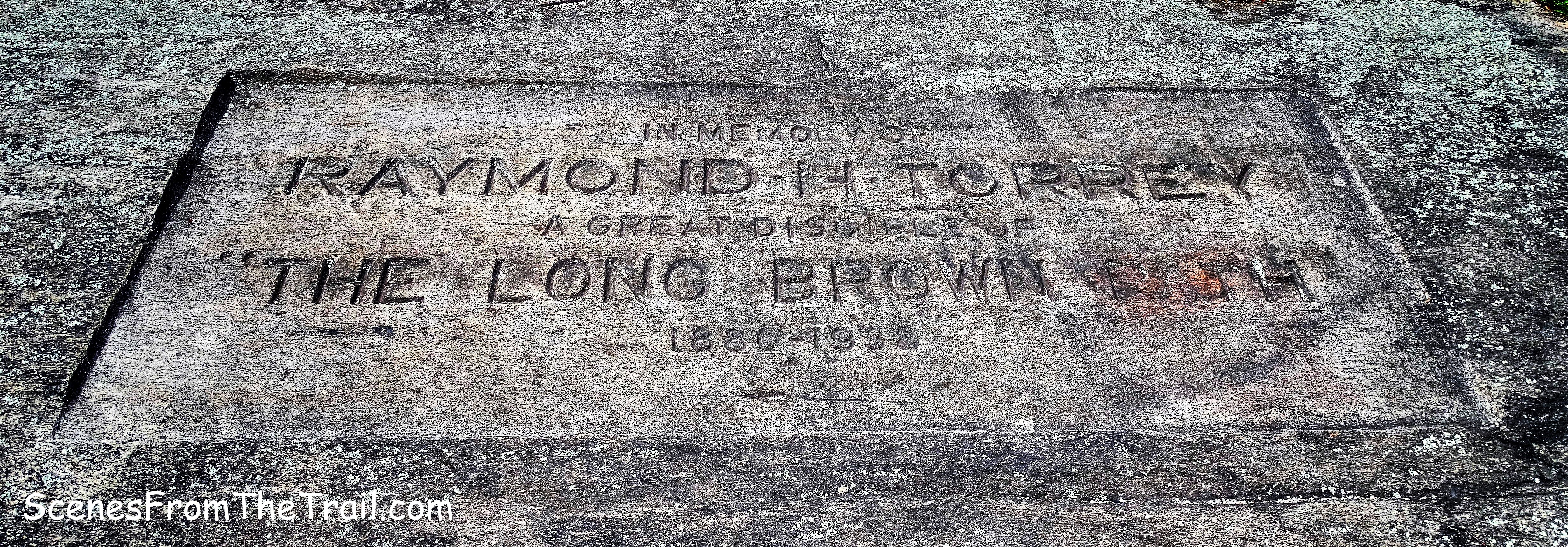
Right by where we were sitting is a memorial to Raymond H. Torrey which is chiseled into the rock. Torrey was the author of weekly columns, Outings and The Long Brown Path in the New York Evening Post in the 1920’s and 1930’s. The column played a major role in the development of the 2,100-mile Appalachian Trail, the Long Path and the popularity of hiking generally. He was a founding member of the New York–New Jersey Trail Conference. It reads:

“In Memory of Raymond H. Torrey, A Great Disciple of the Long Brown Path, 1880-1938.”

Raymond H. Torrey Memorial

Raymond H. Torrey Memorial

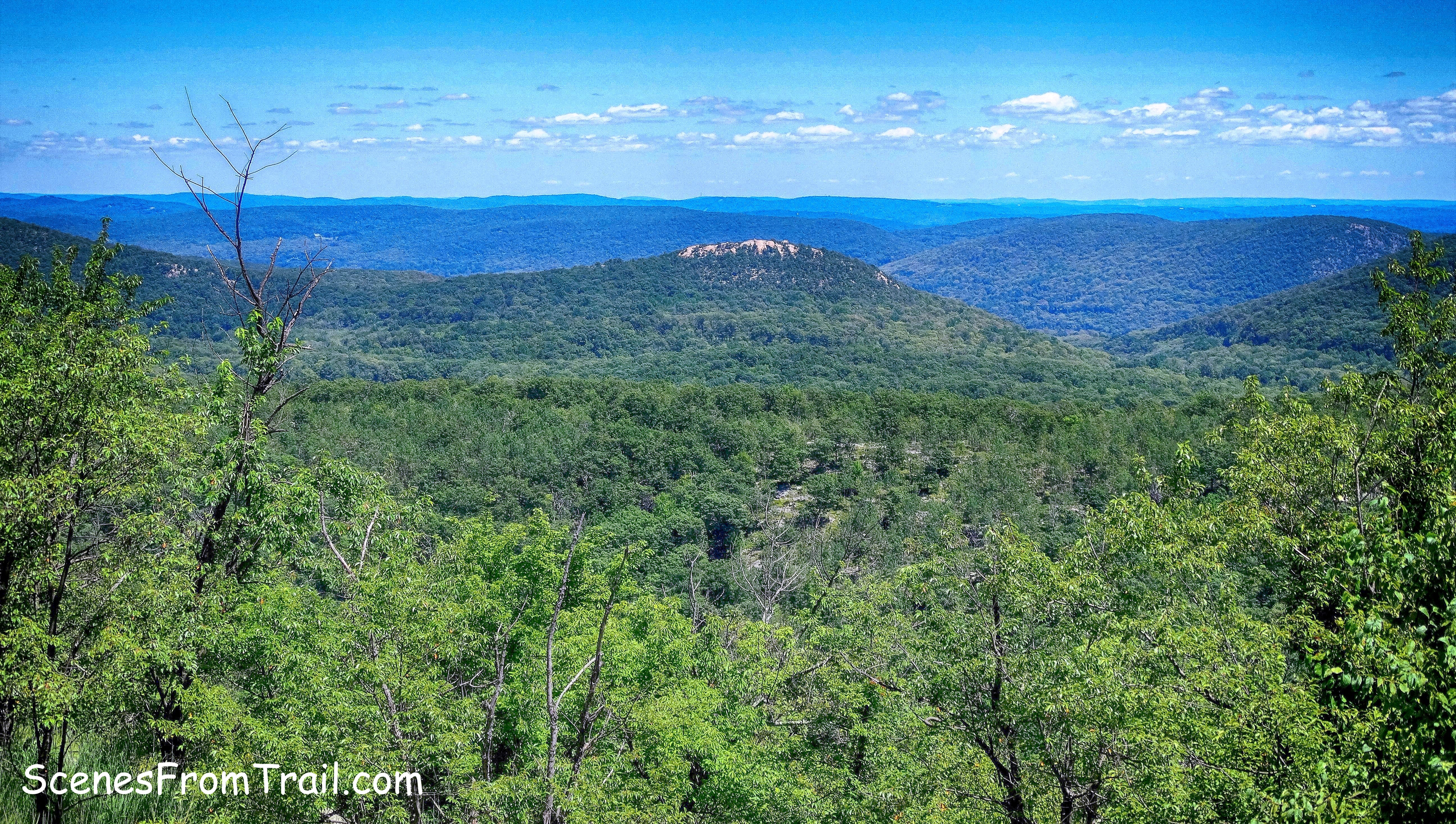
This was one of Raymond H. Torrey’s favorite views. His ashes were scattered to the winds here in a brief ceremony.

view of east from Long Mountain

view of east from Long Mountain

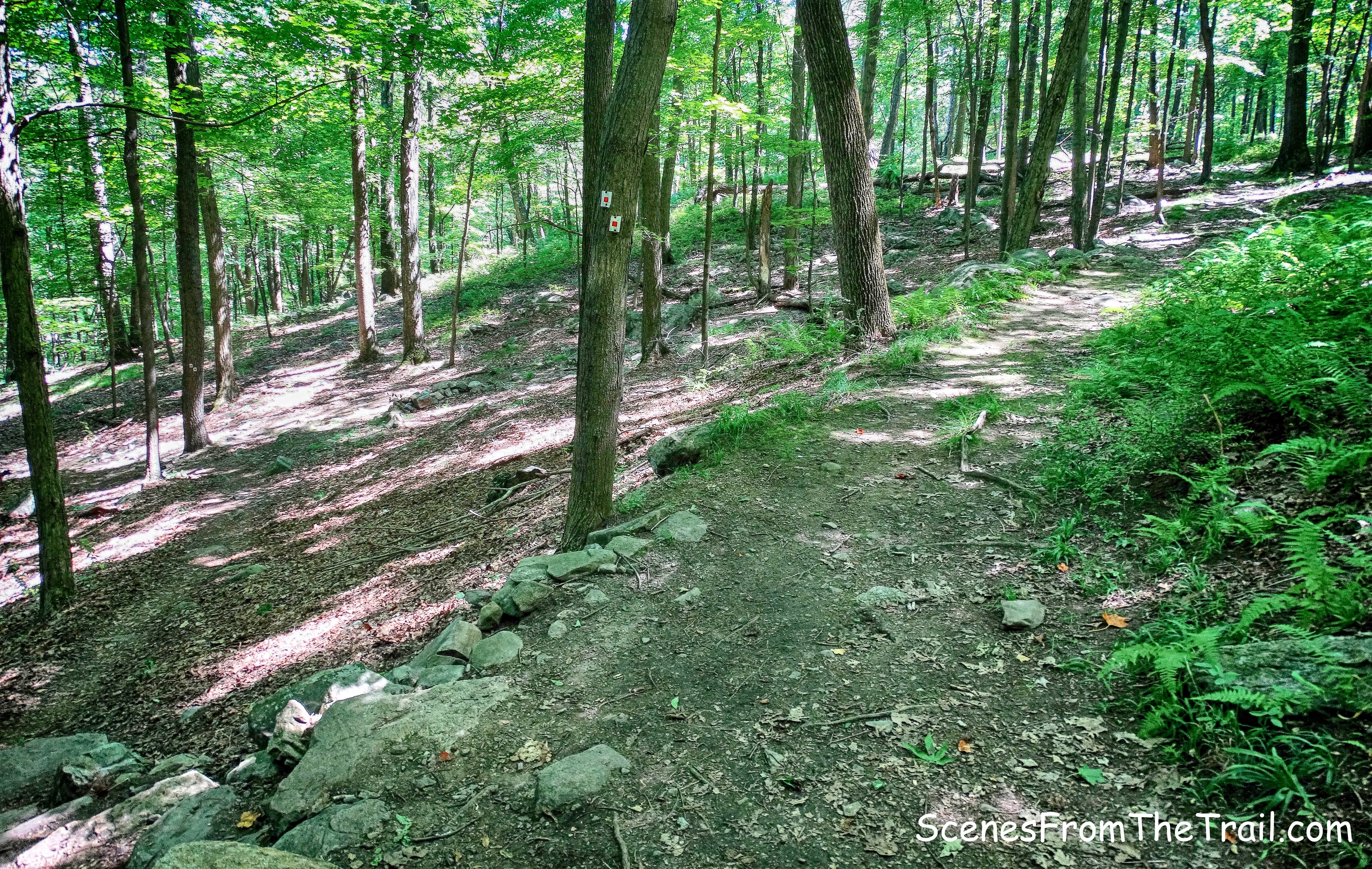
There isn’t much shade at the summit, but luckily the weather was perfect on this day so the sun felt pretty good. We then retraced our steps on the Long Path and turned left onto the Popolopen Gorge Trail, descending Long Mountain. When we got to the point where the PG Trail turns left off of the woods road, we continued straight ahead on the woods road which is not blazed.

woods road

woods road

After climbing and descending Long Mountain somewhat steeply on the Long Path and the PG Trail, this woods road was a welcome reprieve from the rocky footpaths we encountered for much of the hike. It descended gently and was easy to walk on. At first it is a little narrow and has a mossy bottom which was gentle on our feet…….

woods road

woods road

and then it widens and becomes dirt packed. I enjoyed this part of the hike immensely even though it only last for about 3/4 of a mile.

woods road

woods road

We came to a junction with the Anthony Wayne Trail and turned right. We actually missed the turn by a few feet, but quickly figured it out. Just past the junction with the AW Trail is an old park building.

old park building

old park building

Now On the white-blazed Anthony Wayne Trail, I have to say that it was my least favorite part of the hike. It was so overgrown that at times the weeds were up to my waist. I tried to get through there as fast as I could. At times if not for the blazes, we would have lost the trail. When we got near U.S. Route 6, the weeds were taller than me and I am 6 feet tall. We came out onto U.S. Route 6 and walked along the road for about 50 feet and crossed over where the AW Trail resumes in the woods. U.S. Route 6 was full of traffic which made it easier to cross, but it could become a hazard if cars are flying by.

Anthony Wayne Trail

Anthony Wayne Trail

Once entering the woods the AW Trail is relatively level, but again overgrown. Even more so than earlier. No images for this section as I was racing through it as fast as possible. In about 1/3 of a mile, we came to an abandoned stone comfort station just before crossing Seven Lakes Drive.

abandoned stone comfort station

abandoned stone comfort station

The trail crosses the road diagonally to the left, continues along the road for 225 feet (crossing over Queensboro Brook), then turns right and reenters the woods just past the signs.

U.S. Route 6

U.S. Route 6

Once back in the woods, the AW Trail resembles a trail again.

Anthony Wayne Trail

Anthony Wayne Trail

The trail climbs the shoulder of a hill, passing a junction with the 1779 Trail and comes out at the entrance/exit ramp that spans the Palisades Interstate Parkway into the Anthony Wayne Recreation Area.

entrance/exit ramp - Anthony Wayne Recreation Area

entrance/exit ramp – Anthony Wayne Recreation Area

We walked on the overpass and continued into the Anthony Wayne Recreation Area. The AW Trail turns left at the gate, but we were pretty tired at this point and took a more direct route along the park road.

Anthony Wayne Recreation Area

Anthony Wayne Recreation Area

We walked on the grass along the road and veered left on the park road that leads to the restrooms. We then turned right on a paved walkway, past some picnic tables and onto a gravel road which leads to the grass field and to the stone bridge over Beechy Bottom Brook where our hike began.

gravel road- Anthony Wayne Recreation Area

gravel road- Anthony Wayne Recreation Area

As stated in the intro, this hike had things that I liked and things that I didn’t. The likes outweighed the dislikes, but if I ever do this hike again, I would change the route. I would not turn right on the AW Trail from the unmarked woods road. Instead I would take the woods road until the 1779 Trail and turn right there. The 1779 Trail comes to a junction with the AW Trail and there I would turn left. That would bypass the overgrown section of the AW Trail. I did speak to someone at the NY/NJ Trail Conference and was told that someone would clear that trail, but knowing there is an alternate route is a good thing. We passed through several areas that had blueberry bushes and saw bear scat several times. I like blueberries, but I am always a little apprehensive hiking through them because I know bears like them too.

Pros: Scenic views, lakes, woods roads, mostly secluded except for Turkey Hill Lake and scenic view on Long Mountain, well blazed trails.

Cons: Overgrown Anthony Wayne Trail, several brief road walks, road crossings, some junctions obscured by foliage.

Take a hike!

Take a hike!


Take a hike, but do it safely

Long Mountain - Harriman State Park

Long Mountain – Harriman State Park

Harriman State Park is my favorite place to hike in the Hudson Valley. With 31 lakes and reservoirs, 200 miles of hiking trails and its close proximity to where I reside, I look forward to exploring all it has to offer. Some of the trails are very challenging without being overkill and the park is loaded with history. From the abandoned Civil War era iron mines to its historic trails, it’s like going back in time whenever I hike there. It’s a popular place for hikers of all skill levels and certain sections can become crowded on the weekends. I try to come up with hikes that see less traffic along the trails whenever possible. Coming up with these hikes entails using unmarked trails and woods roads at times. Since some of these trails and roads are not maintained, the conditions vary from easy to follow woods roads to trails that are overgrown and difficult to navigate. I carry a GPS device, but I rely mostly on the most recent paper map available and a map compass. I also do some research on the trails that I plan to use by reading recent reviews of those trails when possible. I also email or call the NY/NJ Trail Conference for information on the conditions of the trails that I plan to hike.

Lake Skanatati and Lake Kanawauke as viewed from Pine Swamp Mountain

Lake Skanatati and Lake Kanawauke as viewed from Pine Swamp Mountain

When I started hiking I would use just the trail descriptions I found online and didn’t bother with a map or compass. I got lost several times and sometimes the description of the hike can be confusing or resemble other areas which look alike. My point is that no one should hit the trails without proper preparation. A 3 mile hike can either be easy or extremely difficult depending on the terrain and the amount of elevation involved. Wearing the proper footwear and moisture-wicking clothing can make the difference between an enjoyable outing and a miserable one. Carrying a headlamp is a good idea as well. It gets dark earlier in heavily forested woods or if you get caught out there after sunset, it could make the difference.

Cranberry Mine

Cranberry Mine

I often see people on the trails wearing sandals or sneakers and I just shake my head. Yesterday I saw people hiking without water, backpacks and hiking boots. I tend to carry more fluids than I consume because I would rather bring back what I didn’t consume rather than running out. One never knows what could happen on a hike. If you become injured or lost you will need to stay hydrated until you find your way or help comes along. My shoulders are sore today from carrying my backpack yesterday as I write this, but I am intact. Along with fluids, I also carry a first aid kit, extra socks, work gloves, knife, food, camera and some other items which I deem a necessity. I also carry bear spray which is attached to my belt with a holster. It would serve no purpose if it was tucked away in my backpack and a bear appeared in front of me.

Tom Jones Mountain

Tom Jones Mountain

I love to hike as do others and it pains me to read about hikers that perish in the woods due to carelessness. Even those that have to be rescued due to poor planning or put others in danger. The first responders have to tackle difficult terrain in inclement weather and often times at night. Their lives are put at risk due to the negligence of others.

Jackie Jones Fire Tower

Jackie Jones Fire Tower

The summer months attract droves of people to Harriman State Park. Those that love and respect the outdoors don’t take it for granted or lightly. Careful planning, a little foresight and some common sense can go a long way towards having a successful and enjoyable hike.

IMG_3172

Irish Potato


Mount Nebo – Clausland Mountain Loop

July 22, 2017 – Orangeburg, NY

Difficulty: moderate

Length: Approximately 7 miles

Max elevation: 682 ft. – total elevation gain approximately 819 ft.

Route type: Circuit

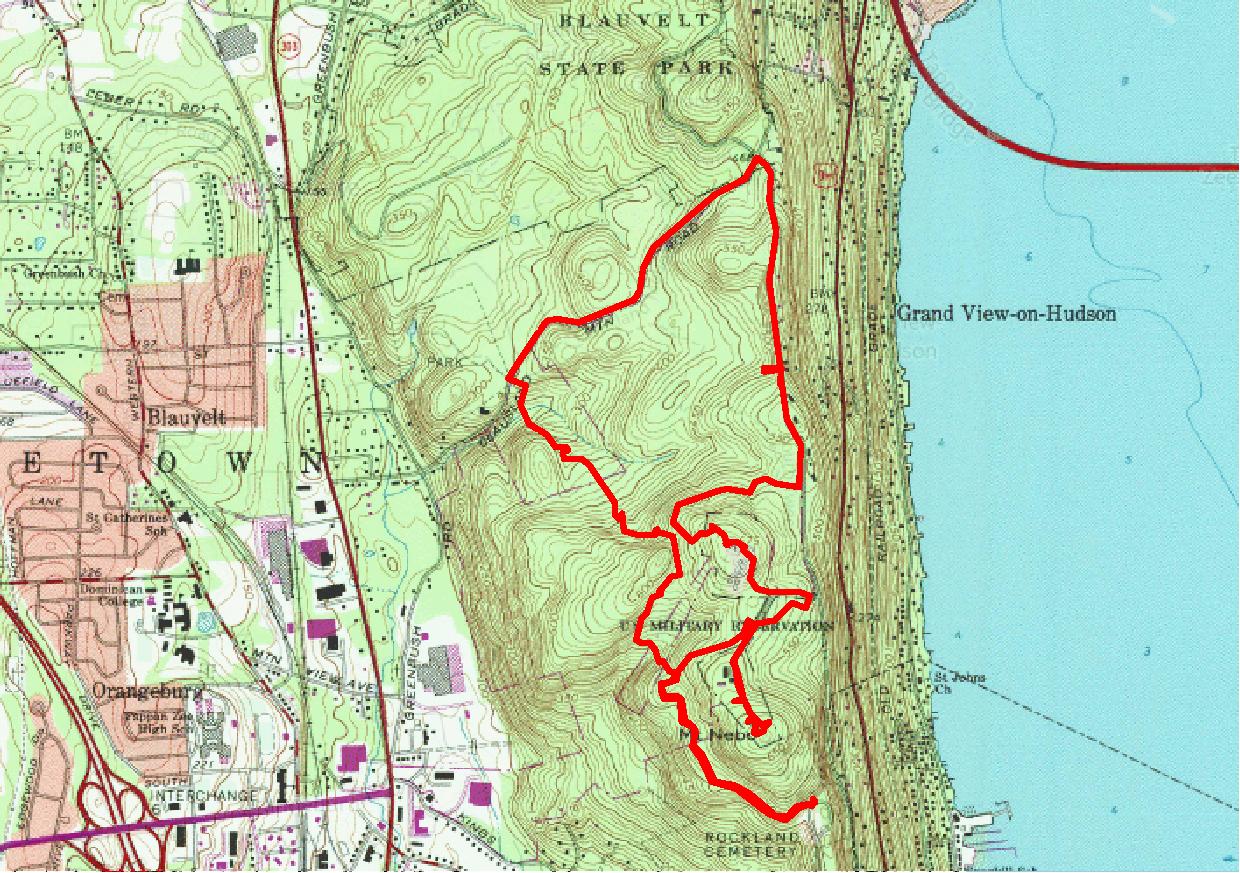
Map: Hudson Palisades Trails Map #109 – Clausland Mountain County Park map

Trailhead parking: Rockland Cemetery


Mount Nebo in Orangeburg, NY with an elevation of 682 feet has no views to speak of. From 1955 to 1974 it was the site of one of 19 Nike missile bases near New York City that protected the United States from nuclear attack by the Soviet Union. Project Nike, named for the Greek goddess of victory, was a program which ultimately produced the world’s first successful, widely-deployed, guided surface-to-air missile system. They stood guard as a last resort defense against soviet bombers. Some of the original structures are still standing on the mountain.

Clausland Mountain is named after the “Clever Indian,” Jans Claus, whose Indian name was Tackamack. He acted as an agent for the sale of land to Dutch settlers. Now an undeveloped county park, it consists of 532 acres of heavily wooded terrain with the Long Path running through it in a south-north direction. There are several other trails, both blazed and unmarked that could be combined to form a loop hike.

I was curious about the Nike missile base and decided to map out a hike to go check it out. Since the only maintained trail that runs through there is the Long Path, I knew that there would probably be some bushwacking involved. We did this hike in counter-clockwise starting at the northern end (bottom of the map) of Rockland Cemetery.

hike route

hike route

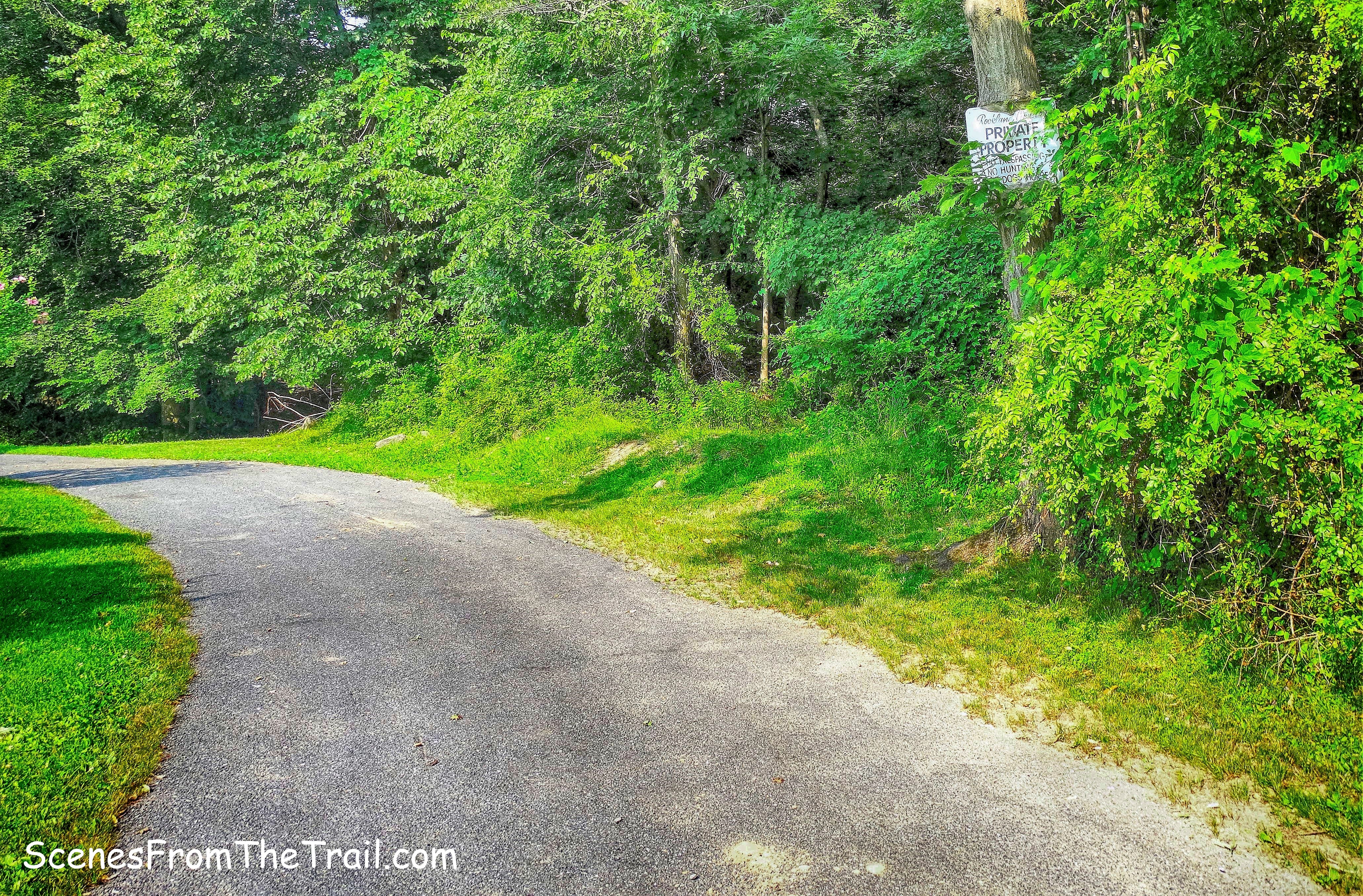
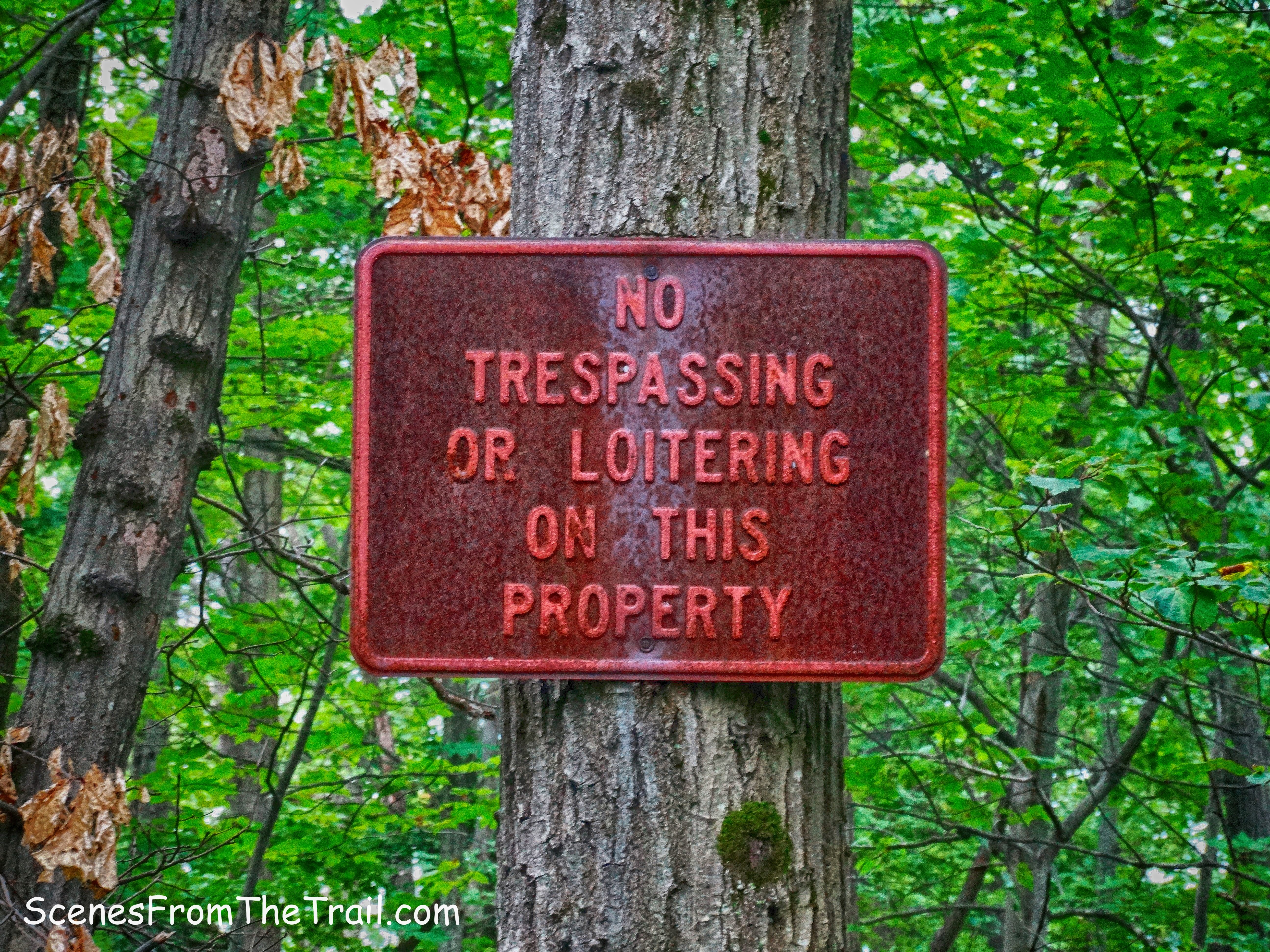
The aqua-blazed Long Path weaves through the cemetery on its paved roads so we drove to the northernmost section of the cemetery and parked there. Their website states: “We welcome visitors here,” said Jackie Curtiss, Office Manager at Rockland Cemetery. Treasurer Tim Temple added that there are a series of roads and trails throughout the cemetery, headstones dating back before the Civil War and there is even a branch of the Long Path that comes through the property. After reading that, I didn’t foresee any issues with parking there for a few hours. Driving on the road, the aqua blazes are visible on the trees so we just followed them up to the back and parked on a pull off along the road. The Long Path ducks into the woods just past the Private Property sign on a tree.

Long Path trailhead

Long Path trailhead

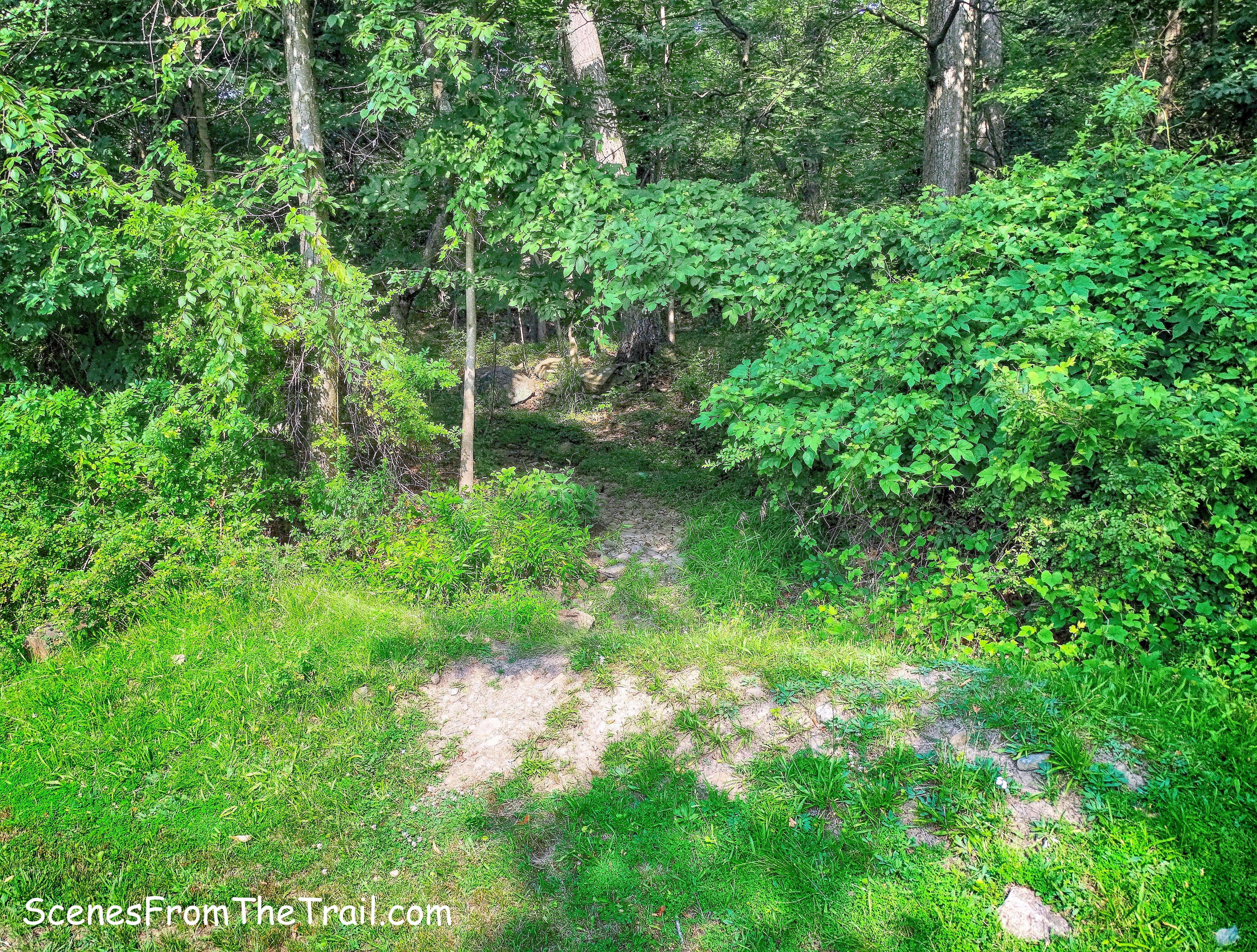
The trail is evident as we approached it.

Long Path

Long Path

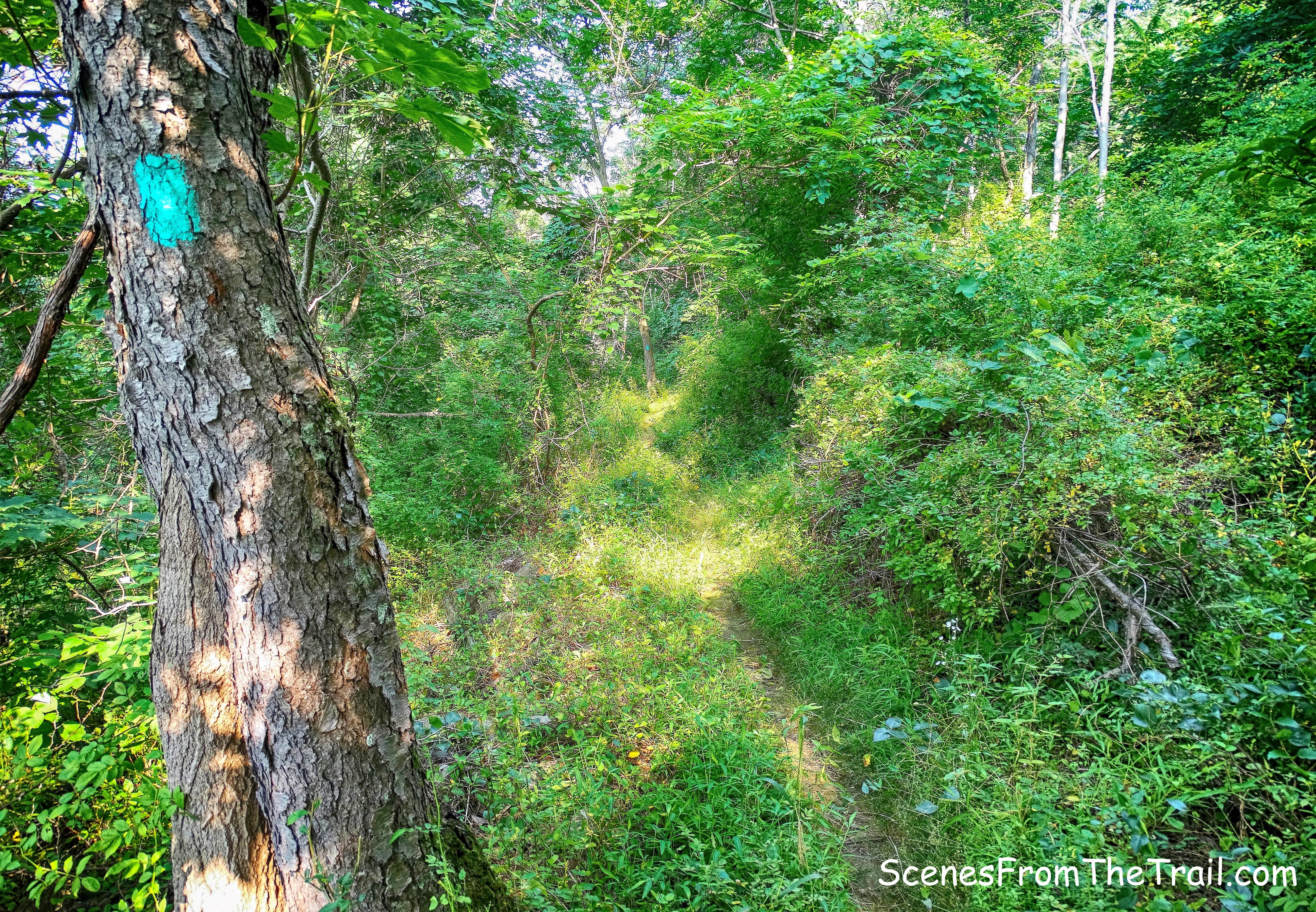
The trail climbs through the woods gradually. The first 1.3 miles of the hike to the summit, we gained about 190 feet of elevation. In a few sections, the trail is a bit overgrown…….

Long Path

Long Path

and in some other sections it was well manicured.

Long Path

Long Path

We arrived at a junction with an orange-blazed trail and veered right as the Long Path went to the left.

trail junction

trail junction

The orange trail begins as a woods road and then narrows to a footpath as it ascends Mount Nebo.

orange-blazed trail

orange-blazed trail

We took another right fork onto a short unmarked trail and came out on Nike Lane by a parking area for Clausland Mountain County Park.

Clausland Mountain County Park

Clausland Mountain County Park

Turning right, we headed up Nike Lane towards the Nike missile base which is also Nike Town Park South.

Nike Lane

Nike Lane

The signage on the fence is confusing. On the left is a park sign and on Google Maps this area is shown as Nike Town Park, but the other signs contradict the park sign.

Nike Town Park

Nike Town Park

We were a little hesitant about venturing beyond the gate, but then decided to go forward. There were several cars parked by one of the buildings, but no one came out while we were there.

Nike Battery NY-03/04

Nike Battery NY-03/04

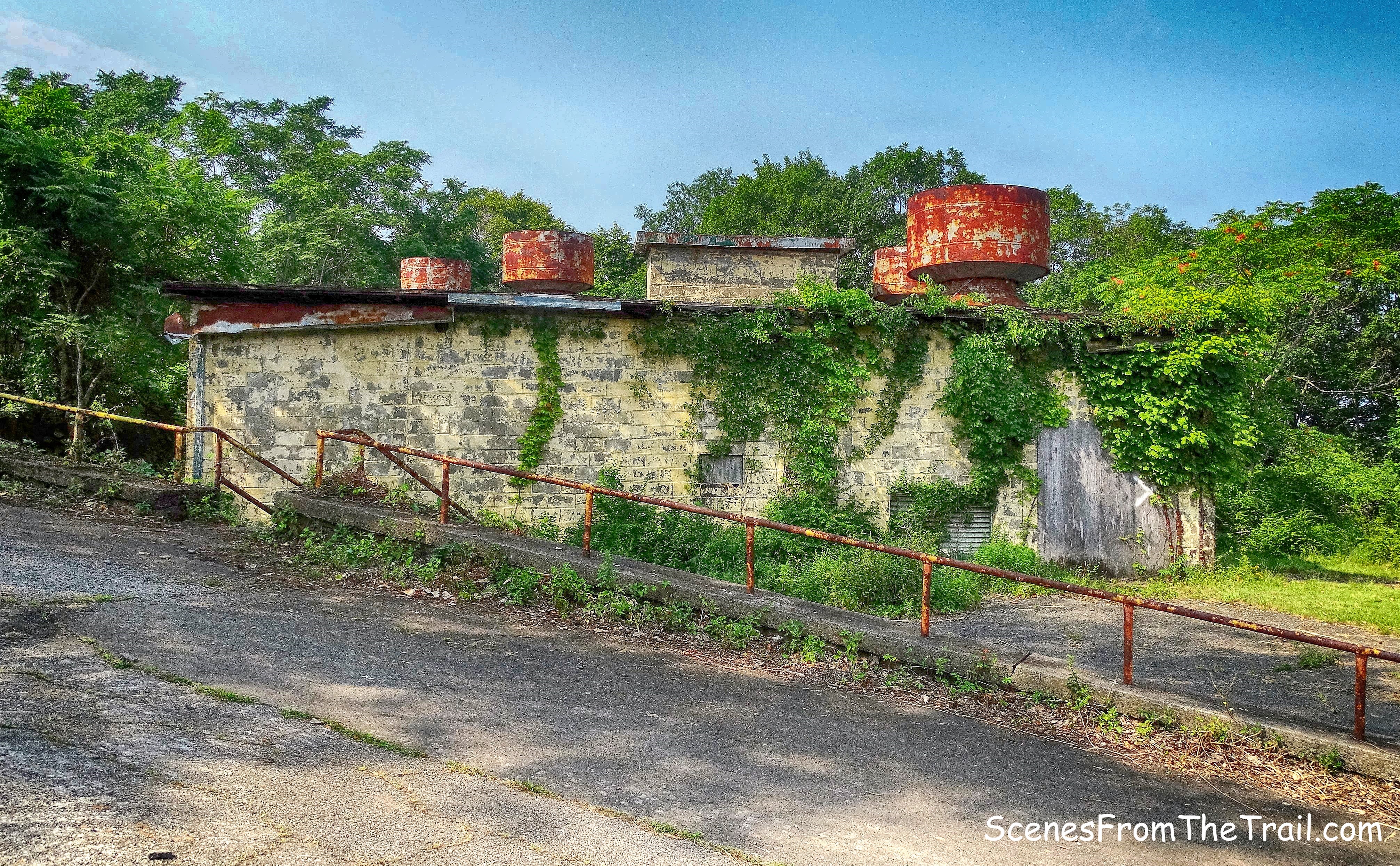
We walked up the road and veered left past another building and approached two other buildings which sit at the summit.

Nike Battery NY-03/04

Nike Battery NY-03/04

I don’t know the purpose of these buildings as there is not much information online.

Nike Battery NY-03/04

Nike Battery NY-03/04

Just up the road there is a plaque mounted on a boulder that is dedicated to veterans.

veterans plaque

veterans plaque

To the left, almost hidden, is a rusty steel radar platform.

rusty steel platform

rusty steel platform

There are almost as many picnic tables as there are antennas.

Nike Battery NY-03/04

Nike Battery NY-03/04

Nike Battery NY-03/04

Nike Battery NY-03/04

Nike Battery NY-03/04

Nike Battery NY-03/04

We walked back down the road and exited through the gate where we came in and turned right by the Clausland Mountain County Park sign and began walking on the blue trail.

the blue trail

the blue trail

The blue trail is shown on the map as a 1/2 mile loop which ends back where it begins. The trail was kind of boring so we bushwacked northwest towards the road and headed uphill to Nike Town Park North. The road forks at the sign, left goes to south, where we were just exploring and right goes to Nike Town Park North. We veered right at the sign.

Nike Town Park

Nike Town Park

We walked up the road to the park entrance and walked around the yellow gate.

Nike Town Park North

Nike Town Park North

There is a good amount of graffitti on the pavement just past the gate. The writing below refers to the abandoned army tunnels of Camp Bluefields which are said to be haunted and are nearby.

Nike Town Park North

Nike Town Park North

There isn’t much to see in this area of the park. We did see what appears to be concreted stands that once held some kind of tank.

Nike Town Park North

Nike Town Park North

There is an odd looking octagonal concrete ring in the field near the edge of the woods.

Nike Town Park North

Nike Town Park North

We then ducked back into the woods on an unmarked trail, heading northwest. The Long Path lies to the west of this park so I figured we would run into it. As we descended down the mountain, we saw some aqua blazes a short distance away, but I made an executive decision to continue on the unmarked trail. The trail starts to curve to the east as it follows a stone wall.

unmarked trail

unmarked trail

There are still signs of the fire that tore through the mountain in November of 2015.

fire damage on unmarked trail

fire damage on unmarked trail

There were numerous blowdowns and the trail became harder to follow.

blowdown on unmarked trail

blowdown on unmarked trail

We lost the trail, but the road was visible through the trees so we headed towards it. The Long Path crosses Clausland Mountain Road so we ended up doing about a 3/4 mile road walk. We came out of the woods onto Tweed Boulevard and turned left on Clausland Mountain Road. I dislike road walks, but it was easier than bushwacking through the dense woods covered with fallen trees. We arrived at Tackamack Park which also has a north and south section.

Tackamack Park

Tackamack Park

We turned left into the park and began heading south on the Long Path and crossed a stream on a wooden footbridge.

the Long Path

the Long Path

The Long Path ascends steadily for about a mile, gaining about 326 feet of elevation as we headed back up the mountain. We continued to follow the aqua blazes until we arrived back at Rockland Cemetery. We took a brief rest then walked over to check out the John Charles Frémont monument. Frémont was an American military officer and an early explorer and mapmaker of the American West, who was one of the principal figures in opening up that region to settlement and was instrumental in the U.S. conquest and development of California. He was also a politician who ran unsuccessfully for the U.S. presidency in 1856 as the first candidate of the newly formed Republican Party.

John C Fremont Monument

John C Fremont Monument

Not too far away is an obelisk for Henry Honychurch Gorringe. Gorringe was a United States naval officer who attained national acclaim for successfully completing the removal of Cleopatra’s Needle from Alexandria, Egypt to Central Park, New York City.

Henry Honychurch Gorringe obelisk

Henry Honychurch Gorringe obelisk

This copper inlay depicts the needle being moved.

Henry Honychurch Gorringe obelisk

Henry Honychurch Gorringe obelisk

It’s a beautiful cemetery with some amazing architecture and I wish I wasn’t so tired because I would have liked to see more of it. We pulled out a couple of folding chairs and relaxed for a little while before we headed out. It was a decent hike that was relatively close to where I live. I enjoyed the historical aspects of it, but it lacked views. Don’t just sit there reading this, get out there and take a hike!

Pros: Nike missile site, Long Path, secluded woods, historic cemetery.

Cons: No views, road walk, too many blowdowns.

Take a hike!

Take a hike!


Giant Stairs – Hudson River Palisades

July 17, 2017 – Closter, NJ

Difficulty: Strenuous

Length: Approximately 4.5 miles

Max elevation: 527 ft. – total elevation gain approximately 818 ft.

Route type: Circuit

Map: Hudson Palisades Trails Map #109 – Web Map – Palisades Interstate Park

Trailhead parking: State Line Lookout, Closter, NJ 07624


I did the Giant Stairs Hike just over a year ago and even though I completed the hike, I struggled from the moment I began on the “Giant Stairs” section. I attributed my struggles that day to extremely high heat, humidity and poor air quality. Blah, blah, blah, I know excuses, excuses. I wanted to redeem myself and basically just wanted a “do-over.” I got my chance and even though it was hot and humid on my “do-over,” I did much better.

This is the most challenging hike in Palisades Interstate Park, but it is also a very gratifying one. Although there are many steep sections with uneven steps on this hike in order to navigate the steep cliffs in such a short distance, “Giant Stairs” refers to a mile long section of jumbled boulders that are part of the white-blazed Shore Trail that runs along the Hudson River. Most of which is 100 vertical feet above the river.

According to PIP Museum Technician Eric Nelsen, the Palisades Shore Trail was designated a National Recreation Trail in 1971, though the scramble across that section known as the Giant Stairs, was a known hike as far back as the 1920’s.

We did this hike on a Monday morning to avoid the crowds. We did the hike counter clockwise from State Line Lookout, but it can be done in the reverse as well.

hike route

hike route

Arriving shortly before 10:00 am, the large parking lot at State Line Lookout was almost empty. We began at the NW section of the parking lot where there are multiple blazes on a telephone pole.

trailhead

trailhead

We started off by following Ski Trail A, but could have veered left onto the Long Path at this marker. Normally I follow the Long Path from here, but I just wanted to change it up a little. The route we took is slightly longer.

Ski Trail A

Ski Trail A

Ski Trail A is a woods road which begins parallel to the park entrance road, but then veers away from it a little. When we came to a fork in the road we went left and headed in the direction of the park entrance road and onto the Long Path. The Long Path crosses the road and heads towards the cliffs.

Long Path

Long Path

The Long Path bends right, heads south along the cliff and past open rock views.

view from the Long Path

view from the Long Path

The trail then descends steeply on stone steps and comes to a wooden footbridge.

wooden footbridge on the Long Path

wooden footbridge on the Long Path

After crossing the bridge, the Long Path turns right and continues along the top of the cliffs. We turned left onto the blue/white-blazed Forest View Trail to begin our descent to the river.

blue/white-blazed Forest View Trail

blue/white-blazed Forest View Trail

The Forest View Trail descends steeply on uneven stone steps at first…..

Forest View Trail

Forest View Trail

Forest View Trail

Forest View Trail

then on narrow and eroded switchbacks.

Forest View Trail

Forest View Trail

The Forest View Trail ends at the base of the descent, at river level.

end of Forest View Trail

end of Forest View Trail

Here we turned left on the white-blazed Shore Trail and began heading north.

white-blazed Shore Trail

white-blazed Shore Trail

In about .3 miles we came to the start of the “Giant Stairs.”

Giant Stairs

Giant Stairs

The trail begins to ascend on a few well placed stones that act as steps.

Giant Stairs

Giant Stairs

The Shore Trail climbs about 100 feet over the boulders as it bends north.

Giant Stairs

Giant Stairs

At times the trail was hard to follow as the white blazes are faded or nonexistent, but just like on any other trail, blazes are sometimes more visible in the other direction. By turning around and looking the other way, we were able to spot a blaze to stay on the right path. A good part of the Giant Stairs section is under tree cover which helps with the hot sun, but there is one long section that isn’t. We rested briefly just prior to tackling the exposed areas so we wouldn’t have to stop in the hot sun.

Giant Stairs

Giant Stairs

I found the smaller rocks more difficult to navigate because they were ankle breakers.

Giant Stairs

Giant Stairs

The Shore Trail now enters the woods on a narrow footpath which is eroded in some spots with a steep drop off to the river.

Shore Trail

Shore Trail

The Shore Trail descends towards the river and travels over some rocks close to the water.

Shore Trail

Shore Trail

The Tappan Zee Bridge is visible in the distance from here as we neared the end of the Giant Stairs.

Shore Trail

Shore Trail

We then reached a gate in a chain-link fence that marks the NY/NJ boundary. After passing through it, we were now in Rockland County, NY.

rusted gate on Shore Trail

rusted gate on Shore Trail

A short distance after passing through the gate, we came to the ruins of an “Italian Garden.”

Italian Garden ruins

Italian Garden ruins

The ruins are from a garden designed by the artist Mary Lawrence-Tonetti.

Italian Garden ruins

Italian Garden ruins

I have seen images online of Peanut Leap Cascade with water gushing from the top of the cliff, but both times I have been here it was nothing more than a trickle. Early Spring would be a better time to visit.

Peanut Leap Cascade

Peanut Leap Cascade

The garden was built around 1900 and was inspired by a cliff-edge monastery on Italy’s Amalfi Coast which Mary visited as a teenager.

Italian Garden ruins

Italian Garden ruins

What’s left of the pergola that overlooks the river.

pergola ruins

pergola ruins

The bench seating is all that remains of the pergola.

pergola ruins

pergola ruins

The swing is a nice touch. A good way to unwind after a tough hike.

swing

swing

We hung out here for a while enjoying the cool river breeze and the view.

view north

view north

Even though the most difficult part of the hike was over and we were enjoying a beautiful Hudson River view, the hike was not over yet. After all, we still had to climb about 500 feet of elevation from the river to the top of the Palisades cliffs. The Shore Trail continues past the ruins and turns right.

Shore Trail

Shore Trail

The Shore Trail climbs about 250 feet in .3 miles to a junction with the Long Path. Here we turned left and crossed the mostly dry brook that feeds Peanut Leap Cascade on a series of wooden footbridges.

the Long Path

the Long Path

The Long Path continues to climb and then turns right and begins a steeper climb on stone steps.

the Long Path

the Long Path

After climbing the uneven stone steps we came to an area called “High Gutter Point.” High Gutter Point was a historic “pitching place,” where lumberjacks “pitched” logs down the ravine to the river. The name seems to go back to at least the 19th century, I presume because of the gutter-like appearance of the ravine. – PIP Museum Technician Eric Nelsen

We stopped here to catch our breath and take in the view.

High Gutter Point

High Gutter Point

I also happened to see a survey marker on this trip. I have passed by here numerous times and have never noticed it before.

survey marker

survey marker

We then entered through the gate of the boundary fence back into New Jersey.

boundary fence

boundary fence

The trail parallels the fence, and at the point where the trail begins to veer to the left, there is a New Jersey Boundary Monument by the fence.

New Jersey Boundary Monument

New Jersey Boundary Monument

This stone monument was placed there in 1882 to mark the state line.

New Jersey Boundary Monument

New Jersey Boundary Monument

The Long Path continues a gradual climb and comes out at Old Route 9W where it crosses the road.

Long Path at Old Route 9W

Long Path at Old Route 9W

We left the Long Path here and walked Old Route 9W to State Line Lookout. This road was built in 1926 and with the construction of the Palisades Interstate Parkway in the 1950’s, Route 9W was shifted to the west. It is now closed to traffic and enjoyed by pedestrians and cyclists.

Old Route 9W

Old Route 9W

We stopped at the lookout briefly to capture a few images, but we were pretty wiped out by this point.

State Line Lookout

State Line Lookout

We rested for a minute or two to unwind before we got in the vehicle and take off. I was feeling tired, but pleased with how well I did on the trail compared to last time. I guess the weather conditions were to blame for my lackluster performance last year. I am glad that I came back and did this hike again. Another must do for the avid hiker. That’s it for today. See ya next time, now get out there and take a hike!

Pros: “Giant Stairs,” Hudson River views, Palisades cliffs, ruins, waterfall.

Cons: A lot of Poison Ivy along the Shore Trail.

Take a hike!

Take a hike!


Lake Sebago Loop – Harriman State Park

July 15, 2017 – Southfields, NY

Difficulty: Moderate

Length: Approximately 7 miles

Max elevation: 1,260 ft.– total elevation gain approximately 769 ft.

Route type: Circuit

Map: Harriman-Bear Mountain Trails Map 118

Trailhead parking: 1184-1340 Kanawauke Rd, Southfields, NY 10975


At 310 acres, Lake Sebago is the largest lake in Harriman State Park. The name is Algonquian for “big water.” The lake was created in 1925 by the Palisades Interstate Park Commission under William A. Welch by building a dam across Stony Brook. The lake filled the former site of Johnsontown, a pre-revolutionary logging settlement founded in the mid-1700’s in the Stony Brook valley. By the early 1900’s, Johnsontown was the largest mountain settlement in the western part of the Ramapos. In 1916-17, the PIP condemned the land, on the grounds that the settlement was built on swampland (“the great Emmetfield Swamp”). Many homeowner’s resettled in nearby Sloatsburg. The PIP took possession of the land and the homes, stores, school and church were torn down before the Stony Brook valley was flooded to create the new lake. Remnants of the Johnsontown sawmill is still visible to scuba divers.

In 1931, a beach area was constructed on the southeastern side of the lake. Two rustic buildings were erected, and 70 concrete tables and benches were installed. That “Old Sebago Beach” served until 1952 when “New Sebago Beach” was opened at the north end of the lake, where Johnsontown had once stood. Damage caused by Hurricane Irene in 2011 closed the beach indefinitely and from the looks of it today, it doesn’t appear as it will ever be reopened. Left in a state of abandonment, it has begun to be reclaimed by nature.

I faintly recall visiting Sebago Beach as a child on those hot summer days when we would load up the car and cross the Tappan Zee Bridge to go swimming and grilling. Lake Welch was our destination of choice back then, but I do recall several excursions to “New Sebago Beach.” I decided to map out a hike to Sebago Beach and loop around the western shore of Lake Skenonto. I also included the Tom Jones Shelter as it was not too far from the designated route and to also add some mountain views. The hike was done clockwise from County Road 106 (the top of the map), visiting Tom Jones Shelter, Lake Sebago Beach then passing Lake Skenonto on our return.

hike route

hike route

A new feature that I have added is the Google Earth Fly-Through. It follows the path that we hiked and it gives you a good idea of the terrain, layout, amount of parking etc. Check it out, it’s pretty cool.

View the Google Earth Fly-Through video of the hike below.


A fair amount of rain fell from Friday night into Saturday morning, but the forecast was promising. With all that rain, I knew that the trails would be muddy and the rocks slick in the early morning hours, but we had to get out to the trails early due to limited roadside parking at the trailhead. We were the first car in the area where we parked, but upon our return at approximately 4:00 pm, every available space was taken. We crossed the road and walked east for about 350 feet to the beginning of the blue-V-on white blazed Victory Trail.

Victory Trail

Victory Trail

This section of the Victory Trail was blazed in 1949, the trail was extended from the fireplace at the foot of Tom Jones Mountain out to Route 210 (now Route 106). This section of the trail travels the notch between Parker Cabin and Tom Jones Mountains.

Victory Trail

Victory Trail

The trail was a little swampy at the outset, but considering all the rain just hours earlier, it wasn’t too bad.

Victory Trail

Victory Trail

We were able to circumvent the swampy area at times and at others just walked right through them as we headed southeast on the Victory Trail.

Victory Trail

Victory Trail

In about 1/3 of a mile, we came to a junction with the red-dot-on-white blazed Ramapo-Dunderberg (R-D) Trail. To the right, the R-D Trail goes up to Parker Cabin Mountain. We turned left and headed towards Tom Jones Shelter.

junction with the Ramapo-Dunderberg Trail

junction with the Ramapo-Dunderberg Trail

The Ramapo-Dunderberg Trail (R-D) was the first trail in Harriman State Park to be built and is just over 23 miles long. Here the trail climbs the western slope of Tom Jones Mountain on rocks.

Ramapo-Dunderberg Trail

Ramapo-Dunderberg Trail

The mountain was named after one of the members of the Claudius Smith gang. The R-D Trail climbs rather steeply at first then levels off somewhat.

Ramapo-Dunderberg Trail

Ramapo-Dunderberg Trail

The R-D Trail then resumes its steep climb over rocks as it nears the top.

Ramapo-Dunderberg Trail

Ramapo-Dunderberg Trail

The R-D trail then climbs more moderately. I saw an unmarked side trail that went to the right and seemed to wrap around the the side of a rock formation, but I ignored it and kept going up the R-D Trail onto open rocks. I saw a hiker approaching from the opposite direction and asked him if he knew where the Tom Jones Shelter was. He indicated that is was just below us. So that side trail that I ignored probably led right to it. Nevertheless, we descended down the side of some rock formations and we were there.

Tom Jones Shelter

Tom Jones Shelter

The Tom Jones Shelter, built in 1927, was the first trail shelter built in Harriman State Park. The plans were drawn by Major Welch and built by John Tamsen, supervisor of construction, along with some old timers that were handy with rocks and logs. It is eighteen feet long, fourteen feet deep and nine feet high at the pitch of the roof. It also has two fireplaces with chimneys.

Tom Jones Shelter

Tom Jones Shelter

This was a nice place for a break to enjoy a nice view of the Harriman hills and Lake Sebago in the distance.

view from Tom Jones Shelter

view from Tom Jones Shelter

Knowing we had to make our way back to the Victory Trail in order to head towards Lake Sebago, I made an executive decision to bushwack south and meet up with the Victory Trail further down rather than retrace our steps back on the R-D Trail and have to tackle a steep descent on wet rocks. At first we descended on a footpath which I thought might lead us down where we wanted to go.
unmarked path

unmarked path

The path led to a rock outcrop and several campsites, but also provided a gorgeous view of Lake Sebago and the surrounding hills.
view of Lake Sebago and surrounding hills

view of Lake Sebago and surrounding hills
The unmarked trail seemed to lead north so we walked around the west side of the rock outcrop and descended a somewhat steep rocky slope.

steep rocky slope

steep rocky slope

The hike down the rocky slope was short lived and wasn’t too difficult, but it knocked off the mileage we would have gained if we had back tracked. The image below is looking up from the base of the descent.
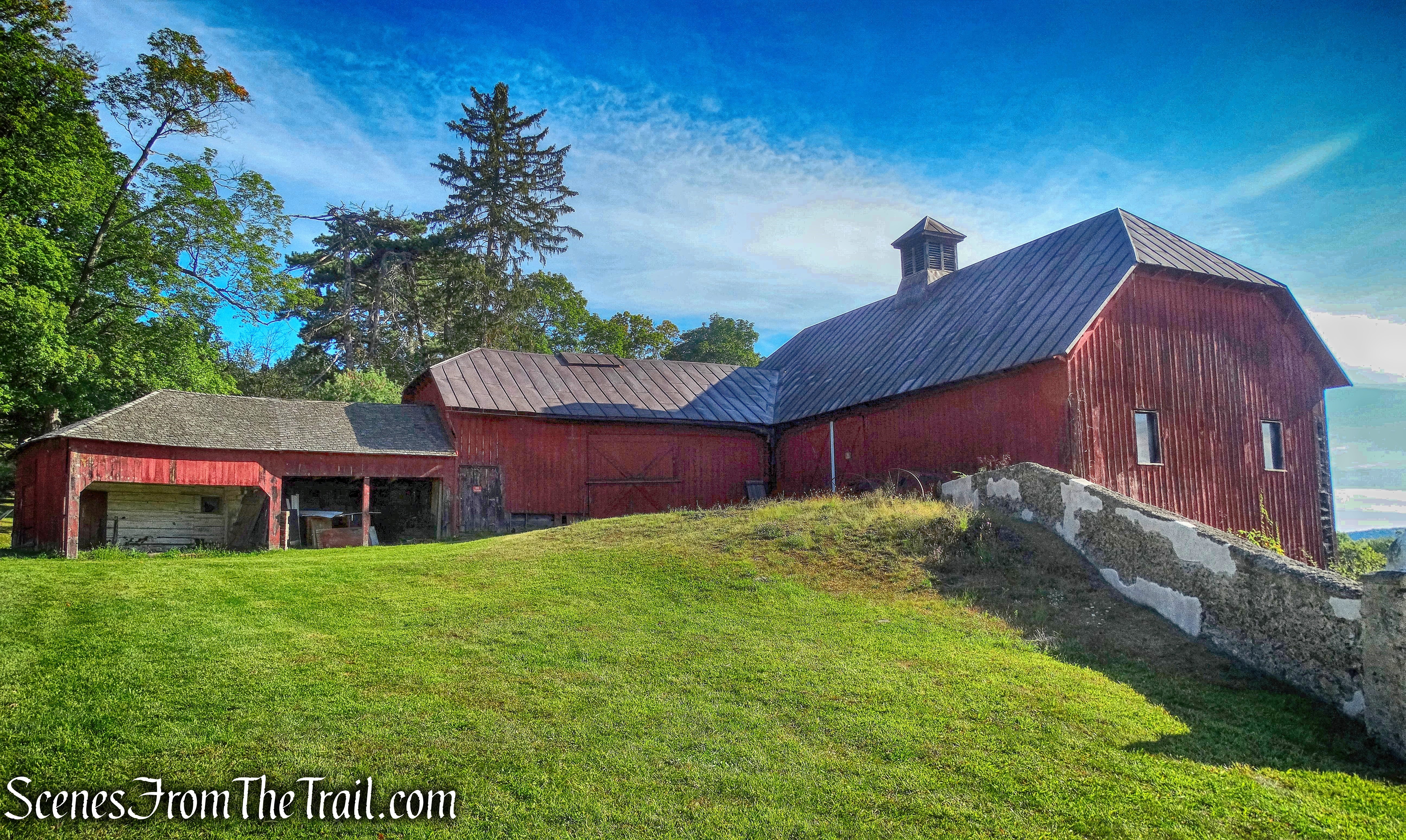
base of the descent

base of the descent

This turned out to be a good shortcut as the rest of the way to the Victory Trail was a gradual descent through the tree lined forest.

tree lined forest

tree lined forest

On this hike we encountered many cave-like openings that were big enough for a family of bears. I love the geological features of Harriman and I am always wowed by its beauty. On many of the hikes that I do here, It’s like passing through areas that time forgot.

cave

cave

The Victory Trail is fairly level in this area, with some gentle ups and downs. We encountered quite a few stream crossings on this hike. That may be due to all the recent rain, but I always find them fun.

Victory Trail - stream crossing

Victory Trail – stream crossing

The Victory Trail comes to a junction with a paved park road and turns right.

Victory Trail

Victory Trail

A short distance later, we came to a fork in the road, veered left and bid adieu to the Victory Trail……for now.

veering left at the fork in the road

veering left at the fork in the road

The park road passes by several corrugated metal buildings that lay in ruins.

corrugated metal building

corrugated metal building

Shortly after passing the metal buildings we arrived at the northwestern shore of Lake Sebago. The first thing we saw was the building that housed the restrooms for the picnic area.
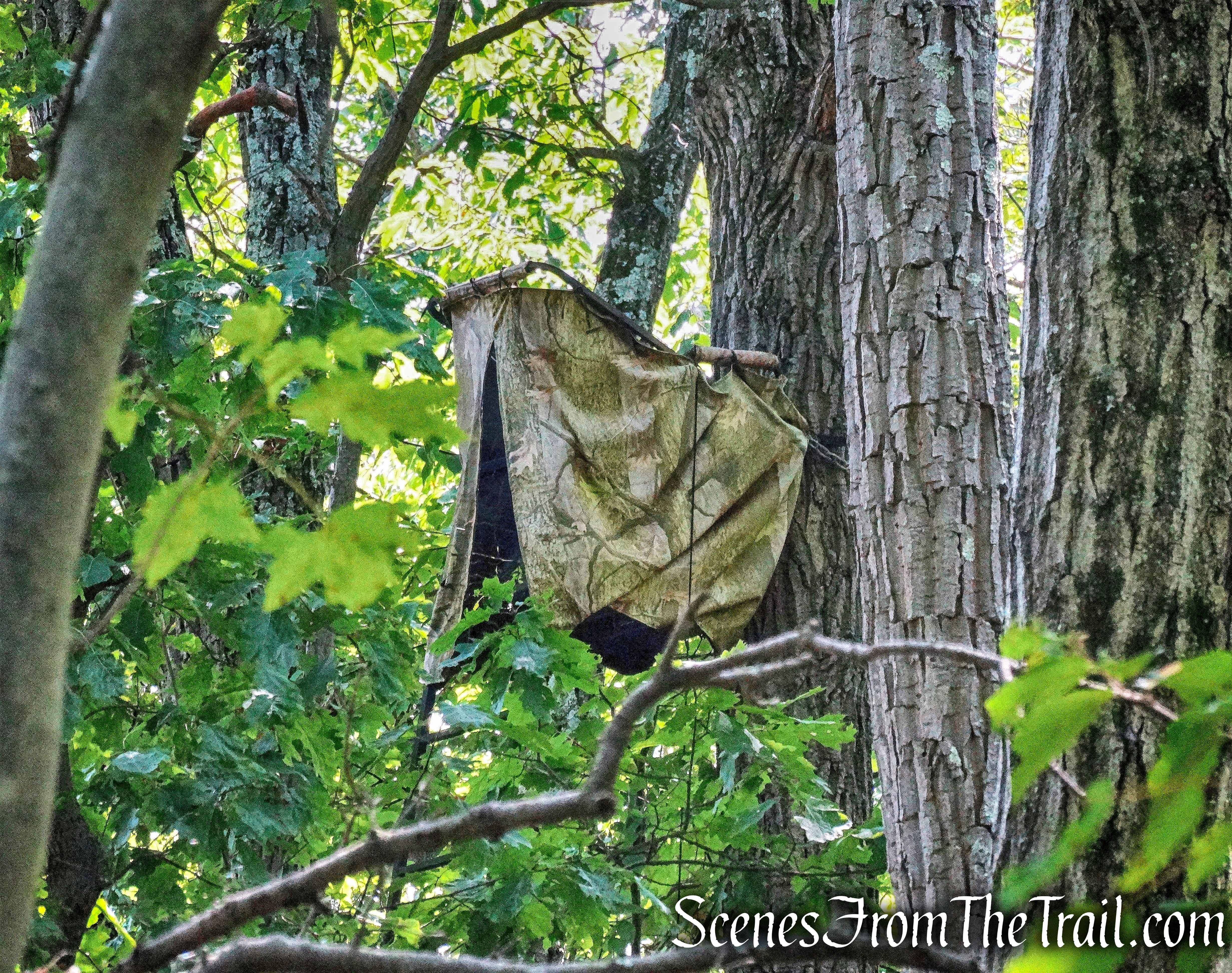
restrooms

restrooms

We then headed for the shore of the lake, passing a stone building on the way.

stone building

stone building

We got to the shore of Lake Sebago and it was quite a sight. Not a soul around and the view wasn’t bad either.

Lake Sebago looking south
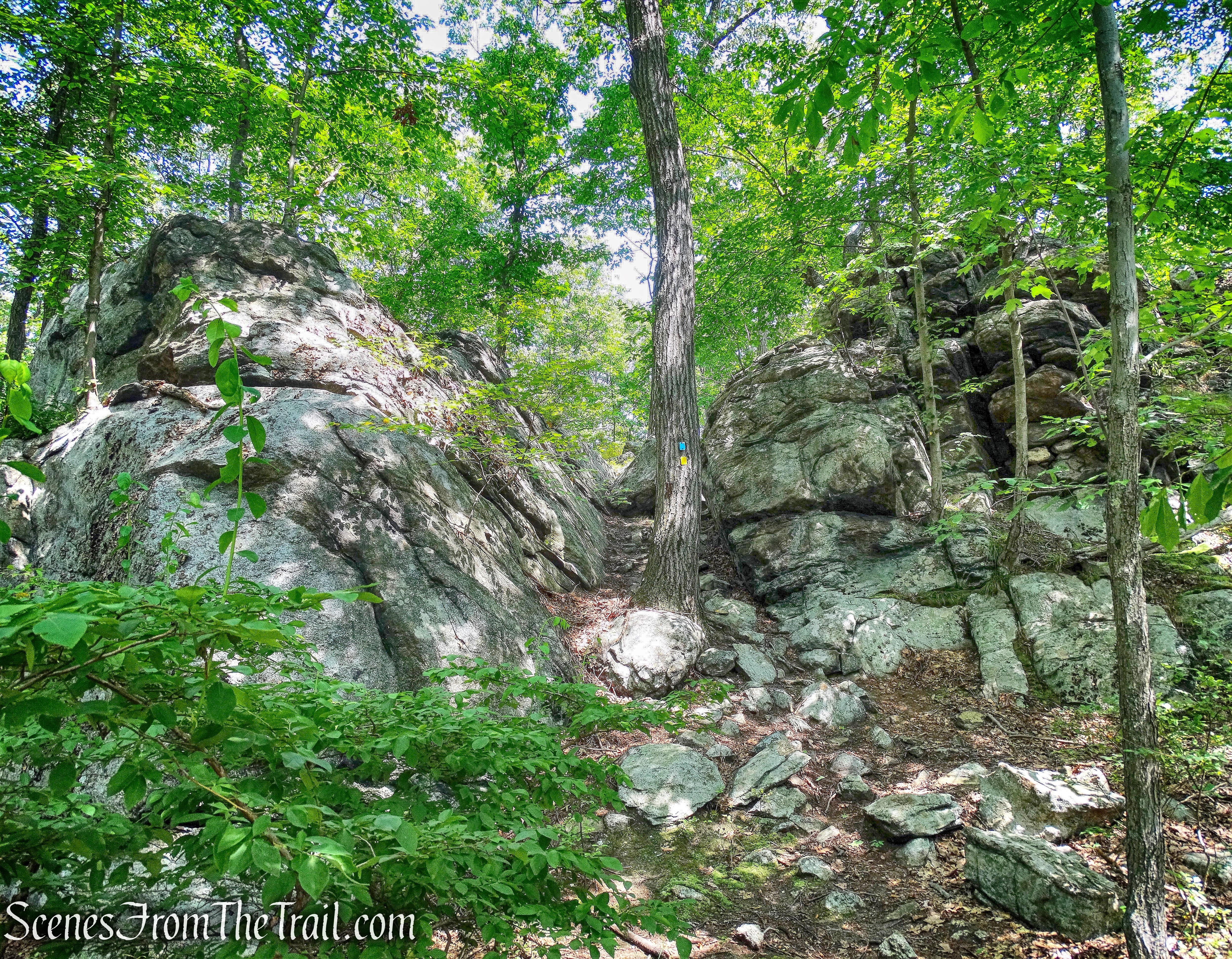
Lake Sebago looking south
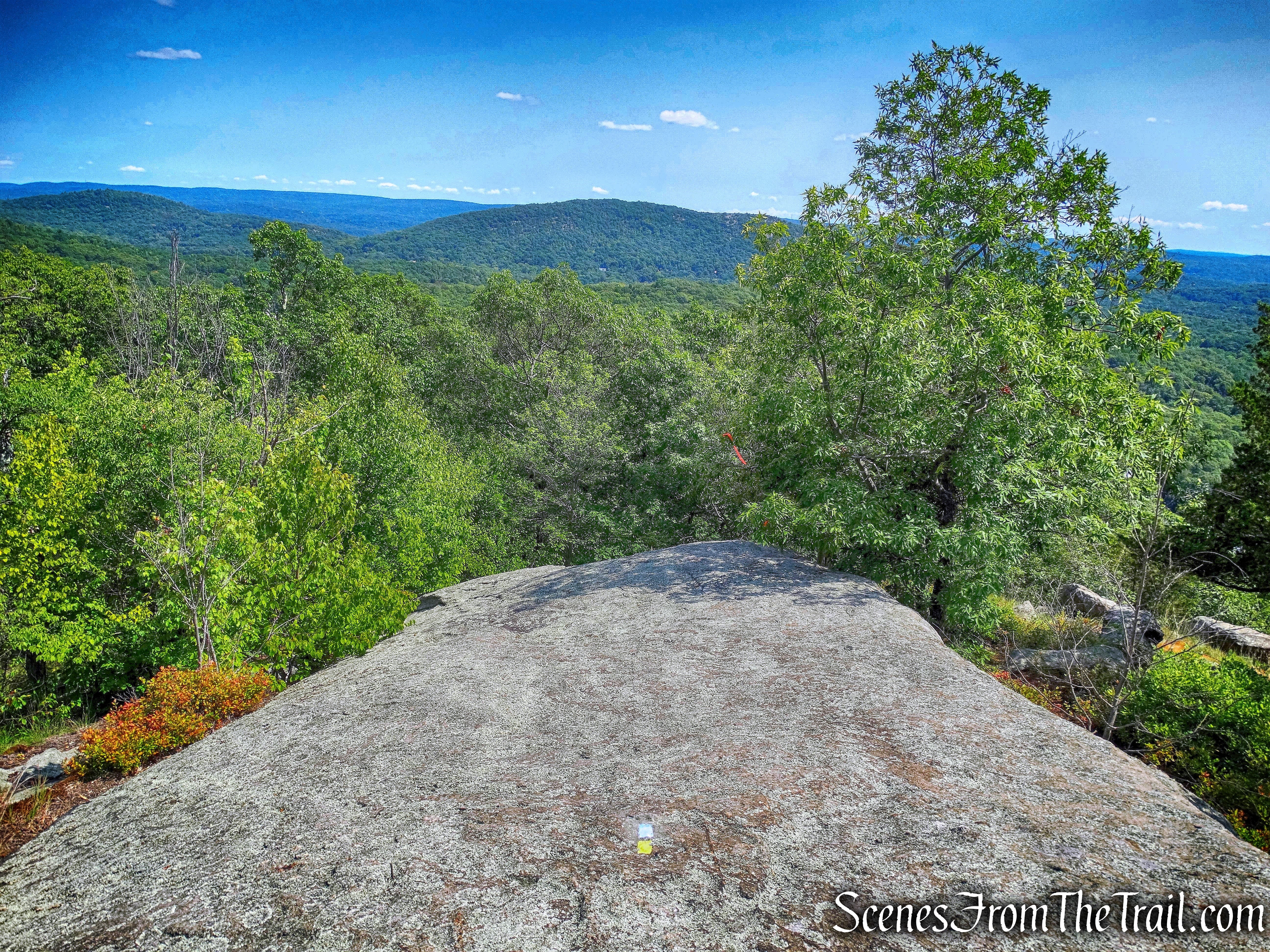
Looking north towards the beach, our next stop, the view was just as splendid.
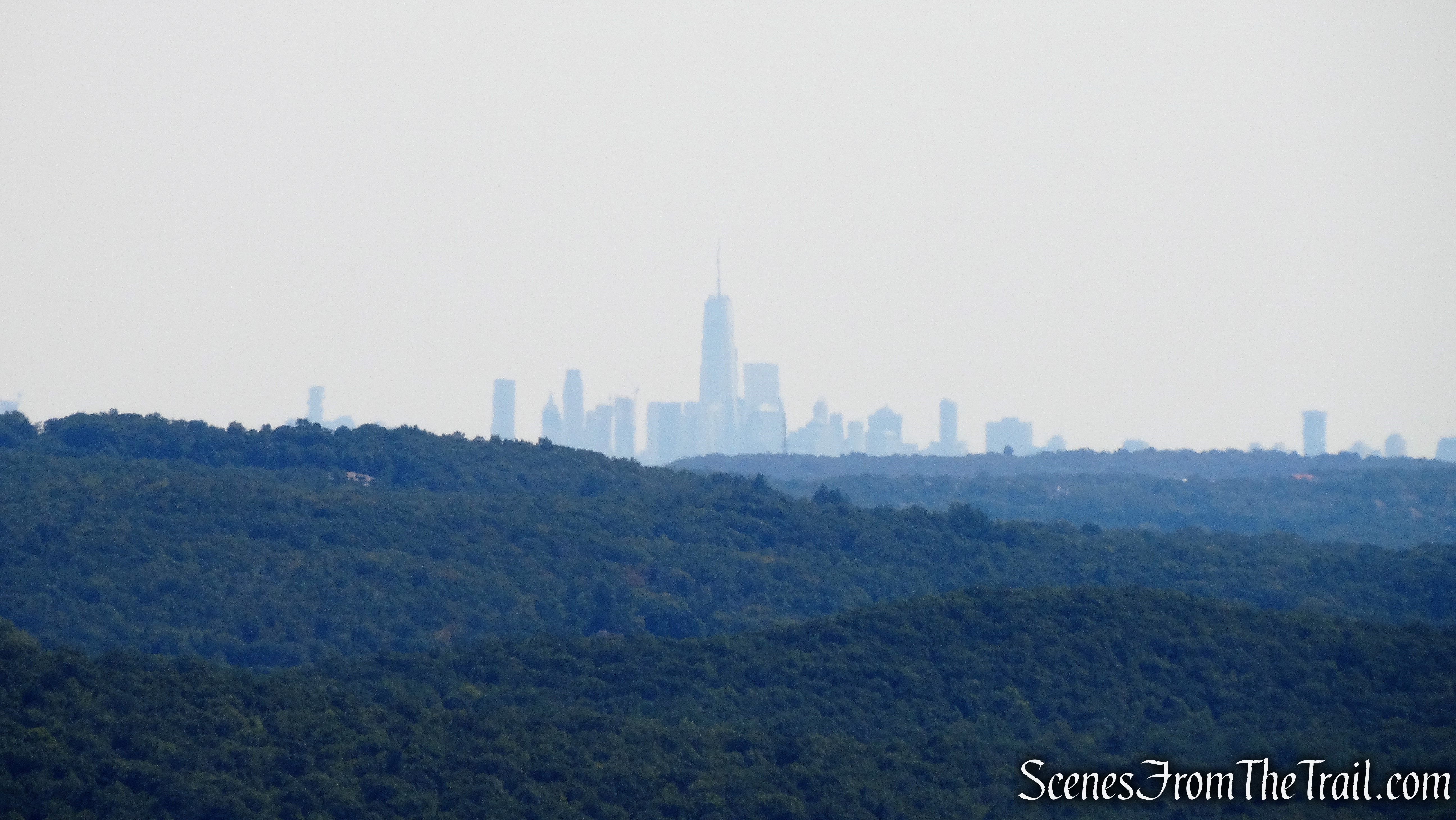
Lake Sebago looking north

Lake Sebago looking north

A closeup shows what was once a sandy beach, now heavily eroded and filled with weeds. The buildings now fallen into disrepair.

Lake Sebago Beach

Lake Sebago Beach

We walked along the crumbling road and walkway to the once bustling promenade. The benches that overlook the beach, now swallowed by nature.

promenade

promenade

What was once a soft sandy beach crowded with sun worshipers, beach chairs and umbrellas is now filled with rocks and weeds.

Lake Sebago Beach

Lake Sebago Beach

The long tree lined walkway from the parking lot to the beach brought back memories. Back then, when I was a kid, it seemed like it took forever to get to the sand from the vehicle.

tree lined walkway

tree lined walkway

The beach was eerily quiet while we were there. Not even the birds made a sound. With the exception of a few Turkey Vultures hovering up above, there were no signs of life in the area, with the exception of us of course. It is still a scenic place to visit even though it seems to have been forgotten by those that oversaw it.

picnic table

picnic table

We relaxed there for quite some time then headed back to northwestern side of the lake, and walked up a hill that overlooks the lake that leads to a picnic area. While walking and taking photographs, I almost stepped on this Rat Snake that was hiding in the tall grass.

Rat Snake

Rat Snake

We passed an old picnic shelter that in its heyday was probably a well sought-after spot.

picnic shelter

picnic shelter

We then walked down a short gravel road and turned left. Now heading south along the western shore of Lake Sebago on the unmarked Sloatsburg Trail that mostly hugs the shoreline. The trail is faint at first, but then becomes more discernable.

unmarked Sloatsburg Trail

unmarked Sloatsburg Trail

Before the lake was made in 1925, the Sloatsburg Trail was a road along the edge of Emmetsfield Swamp. The old road here has now been covered by the lake, so the present-day trail is a relatively level footpath which parallels the old road.

Myles, William J.. Harriman Trails: A Guide and History (Kindle Locations 4718-4720). New York – New Jersey Trail Conference. Kindle Edition.

unmarked Sloatsburg Trail

unmarked Sloatsburg Trail

This was my favorite trail on this hike. It is almost entirely level, with the hillside to the right and Harriman’s gorgeous rock formations dotting the landscape.

rock formation

rock formation

At times the trail follows the very edge of the shoreline……

Sloatsburg Trail

Sloatsburg Trail

which provides splendiferous views of the lake.

Lake Sebago looking northeast from the Sloatsburg Trail

Lake Sebago looking northeast from the Sloatsburg Trail

We came to a stream that flows from Lake Skenonto to Lake Sebago. This proved to be the most difficult stream crossing of the hike. It was wider and deeper than the others, but manageable nonetheless.

stream crossing on the Sloatsburg Trail

stream crossing on the Sloatsburg Trail

A short distance later we came to a junction with the yellow-blazed Triangle Trail. We turned right on the Triangle Trail, now heading northwest, which begins a gradual ascent.

Triangle Trail

Triangle Trail

The Triangle Trail was first marked in 1939 as the Yellow Bar Trail, with yellow bands around the trees, using already existing roads and trails. Early in 1942, the Trail Conference marked a Yellow Triangle Trail from Parker Cabin Mountain to the arm of Lake Sebago and continuing to ADK Camp Nawakwa.

Triangle Trail

Triangle Trail

The Triangle Trail skirts a swamp at the southern end of Lake Skenonto with a view from open rocks.

view from Triangle Trail

view from Triangle Trail

The Triangle Trail curves towards the western shore of Lake Skenonto and then briefly joins the Victory Trail which comes in from the left. The Triangle Trail then turns left, but we stayed on the Victory Trail which parallels the western shore of Lake Skenonto. There are numerous spur trails that lead to viewpoints over the lake. After Lake Sebago was finished in 1926, there was still a “Big Swamp” just over the hill on the western side. This swamp became Lake Skenonto.

Lake Skenonto

Lake Skenonto

The dam was built in 1934 and the lake was filled with water by 1936. Looking east, the dam is visible in the distance.

Lake Skenonto

Lake Skenonto

We began to follow a trail at the edge of the lake that quickly fizzled out. We then bushwacked west back to the Victory Trail which is now a woods road.

Victory Trail

Victory Trail

Along this trail, we encountered numerous groups of people that were heading to or from the lake. It’s such a beautiful spot and located near several trails which makes it relatively easy to get to.

view from the northern shore of Lake Skenonto

view from the northern shore of Lake Skenonto

We continued to follow the Victory Trail west. It goes from woods road…..

Victory Trail

Victory Trail

to a paved road……

Victory Trail

Victory Trail

to a footpath.

Victory Trail

Victory Trail

A few more stream crossings and we made our way back to County Road 106 and the parking area where our hike began. We were pretty tired at this point and even though the hike was not strenuous by any means, the length of it wore us down. I truly enjoyed the hike and would recommend it to others. I hope that you enjoyed the hike and please don’t forget to follow my blog. Now get out there and take a hike!

Pros: Tom Jones Shelter, Lake Sebago, Lake Skenonto, scenic views, rock formations, woods roads, abandoned beach, ruins, lesser traveled trails.

Cons: Crowds near Lake Skenonto.

Take a hike!

Take a hike!


Montgomery Place – North Woods

July 9, 2017 – Red Hook, NY

Difficulty: Easy

Length: Approximately 3 miles

Max elevation: 154 ft. – total elevation gain approximately 430 ft.

Route type: Circuit

Map: Montgomery Place grounds map

Trailhead parking: 26 Gardener Way, Red Hook, NY 12571


Montgomery Place, now Bard College: The Montgomery Place Campus, near Barrytown, New York, is an early 19th-century estate that has been designated a National Historic Landmark. The Montgomery Place estate was owned by members of the Livingston family from 1802 until the 1980’s. The north and south sections of the property, known as the North and South Woods, remain heavily wooded. The South Woods, approximately 70 acres in size, is the oldest oak forest in the Hudson Valley. The North Woods slopes down to the ravine that the Saw Kill flows through. Winding paths and trails lead through both wooded tracts. In the North Woods they lead to a waterfall; in the South Woods to the river’s edge.

I had heard of this place and viewed images online of the buildings and grounds which seemed interesting to me. I wanted to break in some new hiking boots and wanted to do so as painlessly as possible. This place fit the bill because the grounds are not that big and I could opt out at any time. We arrived on the grounds shortly before 10:00 am on a Sunday Morning and the visitors lot was empty. I was surprised, but pleased that there wouldn’t be anyone photobombing my photographs. They do give tours on Saturdays, but on Sundays the grounds are open to the general public for free.

I forgot to turn on my GPS so I did not include a hike route. The trails are marked with signs at the main junctions, but we did walk in circles a few times. Nevertheless it is difficult to get lost in the North Woods section of the grounds. The visitor center is quite large as is the parking lot. The restrooms were open and clean on the day we visited. Montgomery Place is a nice place to visit if you are just interested in a casual walk on a nice day.

visitor center

visitor center

Walking through the center of the visitors center, there is a gravel path off to the left. Continuing straight, takes you towards the river and the mansion.

towards the river and the mansion

towards the river and the mansion

If you bear left, the path takes you to the South Woods Trail, which we did not check out on this trip. The path that goes right takes you across the road and a field onto the Sawkill Trail.

junction

junction

We proceeded straight towards the mansion and passed the coach house, a fancy name for a garage. Prominent NYC architect A. J. Davis built the coach house in 1860 for Louise Livingston. Coach houses were built as essential features of upper-class estates and served as high-status buildings that accommodated valuable horses and expensive painted coaches and leather tack. With the arrival of the automobile, the coach house was transformed into the family garage and an apartment upstairs was added for the family chauffeur.

coach house

coach house

We veered off the path and cut across the lawn and approached the mansion from the front. The Montgomery Place Mansion was completed in 1805 under the direction of Janet Montgomery Livingston.

Montgomery Place Mansion

Montgomery Place Mansion

Walking along the north side of the mansion we came to the large open porch. If not for the fact that this was a hike of sorts, I could have sat there all day sipping lemonade.

large open porch

large open porch

A view of the rear of the mansion.

rear of the mansion

rear of the mansion

Walking from the rear of the mansion there are Hudson River views.

Hudson River view

Hudson River view

We then walked along the south side of the mansion towards the garden. I was unimpressed with the garden, but they had an exhibit called “Historic Garden Tools of Montgomery Place.” There was no one around and I am not sure if that’s standard operating procedure or if someone left the door open.

Historic Garden Tools of Montgomery Place

Historic Garden Tools of Montgomery Place

We then headed back towards the mansion and ventured down the West Lawn Trail on the left and passed a pond. We then walked around and found a trail that led into the woods. After walking a big circle, we headed back on that trail until we came to a junction with the Sawkill Trail.

Sawkill Trail

Sawkill Trail

The Sawkill Trail goes through the woods and down into the ravine.

Sawkill Trail

Sawkill Trail

This trail does not see regular maintenance as there is some erosion and several blowdowns along the way, but nothing too serious.

blowdown on Sawkill Trail

blowdown on Sawkill Trail

At the base of the descent near the banks of the Sawkill Creek, there is the ruined building of the hydroelectric power station that was used to supply elecrticity to the estate.

hydroelectric power station

hydroelectric power station

We walked over to the Sawkill Creek over a wooden footbridge that spans a wet area. There are a few benches where one can sit and relax alongside the Sawkill Creek.

wooden footbridge

wooden footbridge

Looking upstream, the Lower Falls are visible in the distance.

Sawkill Creek with Lower Falls

Sawkill Creek with Lower Falls

I went around the barrier looking for a better vantage point, but it was difficult to get a good angle.

Lower Falls

Lower Falls

We then made our way uphill on a woods road and arrived at a junction where we made a sharp left on the Lake Trail.

woods road

woods road

The trail ends with the Sawkill Creek straight ahead, the lake to the right and a wooden shack on the left that was used by swimmers to change into their suits.

wooden shack

wooden shack

There isn’t a great view of the lake from here, but walking off the trail downstream, I was able to get a clear view of the waterfall that cascades over the dam from the lake.

waterfall that cascades from the dam

waterfall that cascades from the dam

We retraced our steps back up the Lake Trail and turned left on another woods road that leads around the northeast end of the lake.

woods road

woods road

The woods road dead ends at the Sawkill Creek and we turned around and headed back to the Lake Trail then continued on the Sawkill Trail which led us out to the field by the entrance road and back to the parking area. A nice walk on a Sunday morning and we didn’t encounter anyone on the trail. That works for me. Since this was a modest 3 mile walk, we decided to check out the main campus of Bard College and I am glad we did. Since it is right next door, I included some images below that I captured.


Blithewood Manor was built in 1900, and its site, originally designed by renowned landscape architect A. J. Downing. The building and grounds were donated to Bard College in 1951.

Blithewood Manor

Blithewood Manor

The estate is perched on the edge of the Hudson River and it provides fantastic views of the Catskill Mountains. Looking west across the expansive lawn, one can see Overlook Mountain to the left and Plattekill Mountain to the right.

view from Blithewood Manor

view from Blithewood Manor

Blithewood Garden was designed circa 1903 by Francis L. V. Hoppin. It is a classic example of a walled Italianate garden.

Blithewood Garden

Blithewood Garden

Blithewood Garden

Blithewood Garden

Blithewood Garden

Blithewood Garden


Hook Mountain State Park – July 4th Flag Raising

July 4, 2017 – Nyack, NY

Difficulty: Moderate

Length: Approximately 6 miles

Max elevation: 702 ft.– total elevation gain approximately 1,006 ft.

Route type: Circuit

Map: Hudson PalisadesTrails Map 110

Trailhead parking: Nyack Beach State Park 698 N. Broadway Upper Nyack, NY 10960


Hook Mountain State Park is part of the Palisades Interstate Park system, just north of Nyack. It extends along almost seven miles of continuous waterfront and cliff slopes. The Long Path runs along the escarpment above while a bike path follows the river’s edge from Haverstraw Beach State Park to Nyack Beach State Park in Upper Nyack. Hook Mountain’s summit at 702 feet, second only to High Tor, along the Palisades ridge, offers spectacular views overlooking the Hudson River valley.

I wanted to raise a flag somewhere on the 4th of July and after lengthy contemplation I chose Hook Mountain as the site. I have been coming to Hook Mountain since I was a kid and live almost directly across the Hudson River from it, which made it a good choice. We did a clockwise hike from Nyack Beach State Park to the summit and continued on the Long Path along the ridge, returning on the bike path that hugs the shoreline.

hike route

hike route

We parked at Nyack Beach State Park which charges $6.00 to park in season and headed back up to the entrance to begin following the white blazes of the Upper Nyack Trail which begins as a road walk.

Upper Nyack Trail

Upper Nyack Trail

We followed the white blazes which were painted on telephone poles. We Turned right on Larchdale Avenue with the mighty cliffs of Hook Mountain visible to our right.

Hook Mountain

Hook Mountain

At the end of Larchdale Avenue, we turned left onto Midland Avenue. In about 300 feet, the Upper Nyack Trail ducks into the woods.

Upper Nyack Trail

Upper Nyack Trail

Even though this winding trail is just a stone’s throw from homes to the left, it has a feeling of being deep in the woods.

Upper Nyack Trail

Upper Nyack Trail

Upper Nyack Trail

Upper Nyack Trail

The Upper Nyack Trail ends at a junction with the aqua-blazed Long Path where we turned right.

Upper Nyack Trail/Long Path junction

Upper Nyack Trail/Long Path junction

The Long Path follows the route of an old road that was built in the 1870’s. This road was supposed to extend to the top of Hook Mountain, but it was never finished.

The Long Path

The Long Path

The trail climbs steeply in sections as it narrows to a footpath.

The Long Path

The Long Path

After passing some views of the Hudson River and the Tappan Zee Bridge, the Long Path makes a sharp right as it nears the summit and climbs steeply again.

The Long Path

The Long Path

Arriving at the summit about 20 minutes ahead of my hiking partners, I took a well needed rest. The view from here is fantastic and I sat there enjoying it.

view southeast from the summit of Hook Mountain

view southeast from the summit of Hook Mountain

Looking northeast, Rockland Lake is visible through the trees on the left with The Hudson River just beyond.

view northeast from the summit of Hook Mountain

view northeast from the summit of Hook Mountain

After a brief rest, it was time to get to work. After all, this flag wasn’t going to raise itself. I scoured the woods nearby for a long tree branch that would serve as the flag pole. I ended up walking down a bit and then dragging a couple of branches back up. I then attached the flag to the pole. Don’t worry, I didn’t let it touch the ground, I had someone hold the other end.

attaching the flag to the pole

attaching the flag to the pole

After a little effort and some help, the flag was in place. What better way to honor America on its birthday than to fly Old Glory.

American flag at the summit of Hook Mountain

American flag at the summit of Hook Mountain

We then saluted the Hook Mountain American flag and continued on our hike. Still following the aqua blazes of the Long Path, we entered the woods and began to walk the ridgeline which offers many views along the way.

view of the Tappan Zee Bridge

view of the Tappan Zee Bridge

The Long Path had numerous ups and downs, but the views were well worth it.

view of the Hudson River from the Long Path

view of the Hudson River from the Long Path

The Long Path turns left, begins to descend and then joins a woods road. The nicely graded road was a welcome change from the rocky trail on the ridge.

The Long Path

The Long Path

There is a wide stone wall on the left side of the Long Path which I have passed by many times. I have no clue what its significance was, but it is different than other stone walls I have encountered on my hikes.

wide stone wall

wide stone wall

There is an unmarked trail that leads off to the right and comes out on the cliffs. There are great views from there as well. That is the way I have gone in the past, but I decided to continue on the Long Path since I never walked down that way. The trail continues its descent and passes the stone ruins of an old building. I can only assume that it had something to do with the Knickerbocker Ice Company which was formed in 1831.

stone ruins

stone ruins

Just beyond, at the base of the descent are more remnants of the ice harvesting industry.

remnants of the ice harvesting industry

remnants of the ice harvesting industry

The Long Path leads out to Landing Road and continues to the northern section of Hook Mountain. We turned right and followed the paved park road towards the river. Just off the road on the right, are the ruins of the old ice railway that leads close to the river.

old ice railway

old ice railway

old ice railway

old ice railway

Walking down the paved park road, the end of the old ice railway is visible looking back into the woods.

old ice railway

old ice railway

Looking up from the paved park road, the scarred cliffs of Hook Mountain stand proudly in the July sun.

cliffs of Hook Mountain

cliffs of Hook Mountain

We came to an intersection where the Hook Mountain Bike Path joins from the right, but continued straight on the paved park road, heading south.

paved park road

paved park road

On the left side of the park road there is a ruined metal shack that was built into the side of the hill. The roof is just about level with the road.

ruined metal shack

ruined metal shack

ruined metal shack

ruined metal shack

The road descends to river level and passes the ruins of a stone building on the right.

ruins of a stone building

ruins of a stone building

The road now changes to gravel and since it was after 2 pm, the cliffs provide plenty of shade. Almost directly across the Hudson River, Sing Sing Correctional Facility is visible.

Sing Sing Correctional Facility

Sing Sing Correctional Facility

There is a picnic area close to the water and we found a nice shady spot to relax for a bit and enjoy the sights and sounds on the river.

Hudson River

Hudson River

The rest of the way was a nice easy stroll along the river. The shade and the breeze helped to cool us off a little.

Hudson River view

Hudson River view

We then arrived back at a packed Nyack Beach State Park. All the parking spots were filled as well as the picnic tables. We were hungry and tired by this point and headed out to our secret picnic area to grill some food. I hope that you enjoyed the hike and please don’t forget to follow my blog. Now get out there and take a hike!

Pros: American flag, views, ruins, Long Path, Hudson River, cliffs, shaded trails.

Cons: Stretches of the ridge are exposed with no tree cover (hot sun).

If you come across the flag and there is an issue with it, please contact me. Thank you.

Take a hike!

Take a hike!


Three Reservoirs and Breakneck Pond – Harriman State Park

July 1, 2017 – Haverstraw, NY

Difficulty: Moderate

Length: Approximately 6.5 miles

Max elevation: 1,224 ft.– total elevation gain approximately 800 ft.

Route type: Circuit

Map: Harriman-Bear Mountain Trails Map 118

Trailhead parking: Call Hollow Rd, Haverstraw, NY

The first day of July called for high humidity and possible rain and thunderstorms. Not ideal hiking weather, but one must adapt to the conditions that are beyond our control. I mapped out a moderate hike that would take us on fairly level woods roads past bodies of water to try to stay as cool as possible. We did this loop clockwise beginning at Call Hollow Road on the right side of the map below.

hike route

hike route

This hike is almost entirely on unmarked trails, but is quite easy to navigate. None of the woods roads/trails are overgrown and never having hiked this area before, we were able to find our way without any difficulties. The parking area on Call Hollow Road is also a trailhead for the Long Path, but our hike began on the paved road just to the left. The paved road beyond the gate leads to the Letchworth Village Reservoirs water treatment plant. Letchworth Village State Developmental Center was a New York State custodial institution on Willow Grove Road, just east of the Palisades Interstate Parkway. It was founded in 1908 by William Pryor Letchworth. Letchworth Village was closed in 1996.

Myles, William J.. Harriman Trails: A Guide and History (Kindle Locations 5516-5519). New York – New Jersey Trail Conference. Kindle Edition.

gate on Call Hollow Road

gate on Call Hollow Road

In 1908, the far-sighted planners bought 640 acres in the hills drained by Horse Chock Brook, a branch of Minisceongo Creek. This was to be used for water supply. At present, there are three Letchworth reservoirs. Harriman State Park has acquired the land and roads around the reservoirs, but the reservoirs themselves are off limits. The three reservoirs are named First, Second and Third Reservoirs.

The paved road leads gradually uphill on what Google maps shows as Camp Winaki Road. It is actually Woodtown Road as indicated on the NY/NJ Trail Conference map.

Woodtown Road

Woodtown Road

In about .3 miles, the road passes the Letchworth Village water treatment plant. Here the paving ends and the road bears left, past a gate.

Woodtown Road

Woodtown Road

It then comes to the eastern end of the dam of First Reservoir, which was built in 1912.

First Reservoir

First Reservoir

We stopped here momentarily to reflect upon the meaning of life. Well, not exactly, we stopped mainly to catch our breath, wipe our brows and capture some images.

First Reservoir

First Reservoir

There are numerous signs posted throughout, but they pertain to the reservoirs and not the land around them, which is owned by Harriman State Park.

No Trespassing sign

No Trespassing sign

We continued on Woodtown Road which climbs gently, with Horse Chock Brook to the right. Woodtown Road is named after a family of woodcutters who had several homes, a sawmill and a barkmill at the site of the Second Reservoir. Woodtown Road was used for hauling iron, charcoal and wood to Haverstraw.

Woodtown Road

Woodtown Road

At about 1.35 miles, just below the dam of Second Reservoir, Woodtown Road turns left. We continued ahead on the more obvious route that continues straight ahead and then bears right. This is a service road which leads to Third Reservoir. We arrived at the Second Reservoir and took a short break here.

Second Reservoir

Second Reservoir

In 1910, the 50-acre Parcel #30, known as the Bedford Pond property (the old Wood millpond), was acquired by Letchworth Village for $538.84 (the pond was 14 acres). After two years of water shortage, the Second Reservoir was built in 1927-28, using the old mill pond.

Second Reservoir

Second Reservoir

While relaxing here a group of about six loud talking women approached. They decided to take a break here as well, and that was our cue to proceed on our hike. Now on the service road, we began walking along the northwestern shore of the reservoir.

service road

service road

We passed by some old rusty pipes then crossed the spillway and continued on the service road.

service road

service road

We got one last look at Second Reservoir before the road starts to veer away from it.

Second Reservoir

Second Reservoir

We then arrived at a junction with another woods road that goes to the right. This is known as the Second Reservoir Trail. This woods road connects the Second Reservoir with the joint Suffern-Bear Mountain Trail/Long Path section and the Old Turnpike near the Big Hill Shelter. We stayed on the service road.

Second Reservoir Trail junction

Second Reservoir Trail junction

The service road begins to climb and then reaches a fork. We stopped here to figure out which way to go. After consulting my compass, we stayed right at the fork to continue heading west towards Third Reservoir.

fork in the road

fork in the road

The rusty sign on the tree at the fork was of no help.

rusty sign

rusty sign

A little further up the road we came to Third Reservoir and the sun was shining.

Third Reservoir

Third Reservoir

Third Reservoir, which was built in 1951-52 in the valley where the Suffern-Bear Mountain Trail comes down off Ladentown Mountain and starts up Big Hill. The trail was moved 400 feet to the west when the reservoir was filled. We found a nice flat rock at the edge of the reservoir to sit down and relax for a minute or two.

Third Reservoir

Third Reservoir

After working up a sweat, the sun was feeling kind of hot so we found a shadier spot. We then made our way over the earthen dam, still part of the service road as indicated on the map.

earthen dam

earthen dam

What a beautiful spot this place is. It was very quiet and quite picturesque as we soaked up some rays while we walked.

Third Reservoir

Third Reservoir

Just past the dam, the service road ends and an unmaintained trail begins, as indicated on the map. It looks more like a narrow woods road, although in places it does resemble a footpath.

unmaintained trail - Third Reservoir

unmaintained trail – Third Reservoir

It is easily passable and several other unmarked trails intersect it, but we stayed close to the water and ignored the other trails.

unmaintained trail - Third Reservoir

unmaintained trail – Third Reservoir

We then came to the junction with the yellow-blazed Suffern-Bear Mountain (S-BM) Trail. Knowing we were on the right track and having found our turnoff spot, we found a nice rock to sit on at the western edge of Third Reservoir and took another break.

Third Reservoir

Third Reservoir

We then proceeded northwest on the S-BM Trail, which heads up Breakneck Mountain. This was the steepest part of the hike, but only lasted for about .3 miles.

yellow-blazed Suffern-Bear Mountain (S-BM) Trail

yellow-blazed Suffern-Bear Mountain (S-BM) Trail

This section of the S-BM Trail was scouted in 1924 by Archibald T. Shorey. He was a member of ADK, and a Brooklyn Boy Scout leader. Various routes were considered, but by January 1926 the route the trail presently follows had been worked out.

Suffern-Bear Mountain (S-BM) Trail

Suffern-Bear Mountain (S-BM) Trail

In about 1/3 of a mile, when the S-BM Trail makes a sharp right, there are 3 white blazes on a tree just to the left. This is the start of the white-blazed Breakneck Mountain Trail. We turned left here.

Suffern-Bear Mountain Trail/Breakneck Mountain Trail junction

Suffern-Bear Mountain Trail/Breakneck Mountain Trail junction

The Breakneck Mountain Trail was first blazed in the fall and winter of 1927 at the suggestion of Major Welch, General Manager of the Park. It was built to connect the T-MI Trail with the S-BM Trail.

Breakneck Mountain Trail

Breakneck Mountain Trail

Now following the white blazes, we walked over open rock as the trail begins to descend.

Breakneck Mountain Trail

Breakneck Mountain Trail

In just under 600 feet from the start of the Breakneck Mountain Trail, there is an unmarked trail that goes off to the right. We turned here and began walking this footpath in a westerly direction towards Breakneck Pond.

unmarked trail to Breakneck Pond

unmarked trail to Breakneck Pond

The trail starts off level then begins a steep descent and comes out by a cabin on Breakneck Pond. The cabin is part of the AMC Harriman Outdoor Center, which operates camping facilities here and opened exactly one year ago on July 1, 2016.

AMC Harriman Outdoor Center

AMC Harriman Outdoor Center

Camp Winake of the Rockland County Council, Boy Scouts of America, was opened in 1930 at Breakneck Pond. Winake, which means “a pleasant place,” was the Algonquin name of the home of William P. Abbott, an active member of the Council’s camp committee in 1927. Later, the camp became known as Camp Lanowa, operated by Homes for Homeless Children.

Myles, William J.. Harriman Trails: A Guide and History (Kindle Locations 5410-5413). New York – New Jersey Trail Conference. Kindle Edition.

The camp had been abandoned for over a decade before the AMC took it over. We stopped here briefly and then we wandered around a bit. This place is really nice and I wouldn’t mind staying here sometime. We walked over to a large rock outcrop that looked out over the pond to get a better look. Breakneck Pond is a 64-acre natural lake that was enlarged by a dam in 1888.

Breakneck Pond

Breakneck Pond

We then proceeded down the main road of the camp about a 1/2 of a mile and turned right onto the Old Turnpike which has an orange cable strung across it.

Old Turnpike

Old Turnpike

The Old Turnpike was rather overgrown until 1969, when AT&T widened it to 20 feet and buried a coaxial cable along one side.

Old Turnpike

Old Turnpike

The Old Turnpike was a road from Monroe (now known as Southfields) to Haverstraw. It is not known when it was first built, but it became the “old” turnpike in 1824, when a new turnpike (now Gate Hill Road/Route 106) was built.

The Old Turnpike crosses the Long Path, the S-BM Trail and then the Long Path again. It ends at the dam of First Reservoir. All day the skies were threatening with a little drizzle here and there. While on this road, the skies really opened up and we got soaked, hence no images. A good chunk of this road is badly eroded and becomes an ankle breaker, but at least it was downhill for its entirety. The rain let up as we approached First Reservoir and I pulled out my camera. I was able to capture an image of First Reservoir with Cheesecote Mountain in the background.

First Reservoir with Cheesecote Mountain in the background

First Reservoir with Cheesecote Mountain in the background

We then crossed the dam to the eastern side of the reservoir towards Woodtown Road.

First Reservoir dam

First Reservoir dam

We then turned left on Woodtown Road and retraced our steps back to Call Hollow Road where our hike began. On the way back down it started to rain heavily again, but we were already soaked. The rain did dash our hopes for a post hike BBQ, so we did some indoor cooking instead. I hope that you enjoyed the hike and please do not forget to follow my blog. Now get out there and take a hike!

Pros: Lesser traveled area of the park, water features, woods roads, unmarked trails, scenic views.

Cons: Unmarked trails (actually good for testing your map and compass skills), eroded woods roads become ankle breakers.

Take a hike!

Take a hike!


Almost Perpendicular, Claudius Smith Rock and Dutch Doctor Shelter Loop – Harriman State Park

June 25, 2017 – Sloatsburg, NY

Difficulty: Moderate to Strenuous

Length: Approximately 5.2 miles

Max elevation: 1,047 ft.– total elevation gain approximately 800 ft.

Route type: Circuit

Map: Harriman-Bear Mountain Trails Map 118

Trailhead parking: Johnsontown Road Trail Parking, Sloatsburg, NY 10974

Almost Perpendicular, Claudius Smith Rock and Dutch Doctor Shelter Loop

Almost Perpendicular, Claudius Smith Rock and Dutch Doctor Shelter Loop

Check out the Google Earth Fly-Through video of the hike below.


Almost Perpendicular, a name given to a cliff on Dater Mountain in Harriman State Park by the Fresh Air Club in in 1936. It offers the hiker panoramic views of the Ramapo Mountains.

Claudius Smith Rock is a large rock formation that provides spectacular views from the top. The base of the rock formation has caves that were the former hideout of the gang of marauders, known as the Cowboys of the Ramapos, led by Claudius Smith.  They operated during the Revolutionary War era. On January 22, 1779, Claudius Smith was hanged in Goshen, NY.

The Dutch Doctor Shelter, built in 1935 is a three-sided stone structure on the White Bar Trail used by hikers for overnight camping. It is named for John Frederick Helms, the “Old Dutch Doctor,” who lived nearby from 1874 to about 1892. He made a living by raising medicinal herbs, such as ginseng.

It was a beautiful Sunday morning in June. Low humidity and most importantly, no rain! We arrived at the parking circle on Johnsontown Road just before 9:00 am and there were quite a few cars already there. We geared up and headed down Johnsontown Road, the way we drove in, for about 100 feet, crossing a small bridge over a stream.

Johnsontown Road

Johnsontown Road

A short distance after crossing the bridge, there are three blue-on-white blazes on a tree, which indicate the start of the Blue Disc Trail. We turned right and began walking up the hill on the paved road, crossing the route of a gas pipeline.

Start of the Blue Disc Trail

Start of the Blue Disc Trail

After passing a pumping station for the pipeline, the Blue Disc Trail bends left onto a footpath and begins to climb Dater Mountain. It then turns left onto a woods road.

Blue Disc Trail

Blue Disc Trail

The white-blazed Kakiat Trail joins the Blue Disc Trail briefly, but when the two trails split, we continued to follow the blue-on-white blazes which begins a steep climb.

Blue Disc Trail

Blue Disc Trail

The Blue Disc Trail crosses a mostly dry stream and climbs a bit steeper over large rocks. At times we had to use our hands, but it was more enjoyable than difficult.

Blue Disc Trail

Blue Disc Trail

Once past the mini-scramble, we continued up the rocky slope to our destination.

Blue Disc Trail

Blue Disc Trail

After almost a mile from the start of the hike, we arrived at Almost Perpendicular. What a great view and we totally earned it. We took a load off and enjoyed the peacefulness of this glorious spot.

Almost Perpendicular

Almost Perpendicular

We found a shady spot to sit while looking out towards the Ramapo Mountains and enjoying the breeze which helped cool us off.

View from Almost Perpendicular

View from Almost Perpendicular

When we were well rested and hydrated, we headed for the highest point and found the Blue Disc Trail which now heads north into the woods.

Blue Disc Trail

Blue Disc Trail

After entering the woods, the Blue Disc Trail begins to descend. The sun was hot by this time and the mostly shaded trail kept us from getting overheated.

Blue Disc Trail

Blue Disc Trail

After a modest descent, the trail now begins to climb Pound Mountain.

Blue Disc Trail approach to Pound Mountain

Blue Disc Trail approach to Pound Mountain

The trail is steep in spots, but nothing major and we just kept on trekking.

Blue Disc Trail - Pound Mountain

Blue Disc Trail – Pound Mountain

Blue Disc Trail - Pound Mountain

Blue Disc Trail – Pound Mountain

The trail then continues along the summit ridge and begins to descend again. At the base of the descent, the Blue Disc Trail begins to climb and runs alongside a rock ledge.

Blue Disc Trail

Blue Disc Trail

The trail gets interesting at this point. It makes you squeeze between the the rock ledge and a boulder……

Blue Disc Trail

Blue Disc Trail

and lets you experience the enchanting geology of Harriman State Park.

Blue Disc Trail

Blue Disc Trail

Then we arrived at “Elbow Brush,” a short tight squeeze through a rock crevice. This is easily bypassed if you so choose, but we passed through it.

Elbow Brush - Blue Disc Trail

Elbow Brush – Blue Disc Trail

I had to duck and twist in order to make it through without taking my backpack off, but it was kind of fun.

Elbow Brush - Blue Disc Trail

Elbow Brush – Blue Disc Trail

We took a breather and then continued the gradual climb on the Blue Disc Trail. Along the way we ran into a couple of Trail Maintainers hard at work keeping the trail free and clear for us.

Trail Maintainers - Blue Disc Trail

Trail Maintainers – Blue Disc Trail

We then began the approach to Claudius Smith Rock. It is just past the junction with the red-dash-on-white-blazed Tuxedo-Mt. Ivy Trail.

approach to Claudius Smith Rock

approach to Claudius Smith Rock

At this point, we lost sight of the blue-on-white blazes, but did see the junction for the Tuxedo-Mt. Ivy Trail. The huge rock formation in front of us had to be Claudius Smith Rock.

Tuxedo-Mt. Ivy Trail junction

Tuxedo-Mt. Ivy Trail junction

I happened to see a blue-on-white blaze painted high up on Claudius Smith Rock and we climbed up to check it out. The view was pretty grand, I must say.

View from Claudius Smith Rock

View from Claudius Smith Rock

There were several people up there already, but we walked around capturing images of the scenic landscape. The rock itself reminds me of the Gunks with its whitish appearance. We found a shady spot and enjoyed our lunch.

Claudius Smith Rock

Claudius Smith Rock

While sitting there relaxing, a large group of people came from the opposite direction so we decided to find a less populated spot. When we were ready to resume our hike, we walked back down the Blue Disc Trail and turned right on the Tuxedo-Mt. Ivy Trail and made our way to the base of Claudius Smith Rock. There is the location of his hideout. On the way we could see the upper chamber where they slept, it’s about 8-10 feet high, 30 feet long, and 10 feet deep.

Claudius Smith Den - upper chamber

Claudius Smith Den – upper chamber

I had seen images online, but seeing this massive rock formation up close is mind blowing.

Claudius Smith's Den

Claudius Smith’s Den

Claudius Smith’s Den was formed as slabs weathered out of the cliff. Blocks of rock were pried out of the cliff by thaw-freeze and could possibly date back approximately 12,000 years. The image below show the lower chamber that was used for their horse stable. On January 22, 1779, Claudius Smith was hanged in Goshen, NY.

Claudius Smith's Den - lower chamber

Claudius Smith’s Den – lower chamber

We then retraced our steps back to junction of the Blue Disc and Tuxedo-Mt. Ivy Trails and began heading east on the TMI Trail. It was an easy walk and extremely peaceful on the TMI Trail. We did not encounter any other hikers and the only sound was the chirping of birds.

Tuxedo-Mt. Ivy Trail

Tuxedo-Mt. Ivy Trail

The Tuxedo-Mt. Ivy Trail was a favorite project of Major William A. Welch, the Park’s first General Manager. It was he who persuaded the Tuxedo Park Association to let the Trail Conference blaze the trail in the spring of 1923.

Myles, William J.. Harriman Trails: A Guide and History (Kindle Locations 2872-2874). New York – New Jersey Trail Conference. Kindle Edition.

Tuxedo-Mt. Ivy Trail

Tuxedo-Mt. Ivy Trail

The TMI Trail crosses Spring Brook and reaches a junction with the White Bar Trail. At the junction is a cellar hole, all that remains from the homestead of John Frederick Helms, the “Old Dutch Doctor,” who lived here from 1874 to about 1892.

cellar hole

cellar hole

We turned left on the White Bar Trail and just a few feet up on the right side of the trail is the Dutch Doctor Shelter.

Dutch Doctor Shelter

Dutch Doctor Shelter

We rested here briefly while listening to a couple arguing on the phone while they were standing about 30 feet from each other. So much for peace and quiet on the trail. It made for a humorous moment. We then began heading south on the White Bar Trail. The White Bar Trail was first marked in 1921-22 by the Boy Scouts from the 17 camps on Kanawauke Lakes, using mostly old roads. In January 1995, the White Bar Trail was extended south for 1.55 miles from the Dutch Doctor Shelter to the Johnsontown Circle. This extension facilitated access to the park trails from the end of Johnsontown Road, where parking is available. It was a nice easy walk the rest of the way.

White Bar Trail

White Bar Trail

We took care to follow the horizontal white blazes because the White Bar Trail briefly joins several woods roads. The White Bar Trail nears Seven Lakes Drive, bears right and joins the abandoned section of Johnsontown Road. Johnsontown Road once was a main Park drive. On November 10, 1962, after the new Seven Lakes Drive had been opened, the road was closed beyond the circle.

abandoned section of Johnsontown Road

abandoned section of Johnsontown Road

We then arrived back at the circle, where our hike began. A very enjoyable hike that had a lot to see and the trails kept us on our toes. I saw my first Harriman Black Bear after our hike. While driving down Seven Lakes Drive, the bear ran across the road and into the woods. We stopped on the road where it went into the woods, but it was gone. Not a bad hike to do in hot weather, thanks to the canopy of trees that shade the trails. I hope that you enjoyed the hike and please don’t forget to follow my blog. Now get out there and take a hike!

Pros: Great views, massive rock formations, Almost Perpendicular, Claudius Smith Rock, Dutch Doctor Shelter, Elbow Brush, shaded trails, woods roads.

Cons: Claudius Smith Rock attracts crowds.

Take a hike!

Take a hike!


Cheesecote Mountain Town Park

June 24, 2017 – Haverstraw, NY

Difficulty: easy – moderate

Length: approximately 3 miles

Max elevation: 925 ft.– total elevation gain 500 ft.

Route type: circuit

Map: Harriman-Bear Mountain Trails Map #119

Trailhead parking: 9 Cheesecote Lane, Pomona, NY 10970

Cheesecote Mountain Town Park, in the unincorporated area of the Town of Haverstraw, has 217 acres of parkland with picnic areas, hiking trails, camping grounds and a 6 acre lake for fishing. A permit is needed for over-night camping. Their website states that the town is in the process of getting grants to install trailheads and make hiking and paving improvements. I called and was informed that those improvements should be done within the next five years. After scouring the internet for any information that I could find, I read that there are numerous unmarked trails and woods roads throughout the park. The Long Path skirts the western side of the park and is the only official trail.

Cheesecote Mountain Town Park

Cheesecote Mountain Town Park

With rain in the forecast for a second straight weekend, I chose a a short hike to avoid getting caught in the rain for an extended period of time. It was raining early on this Saturday morning so we got a late start and were glad to see the skies clear up. It was humid, but it did not rain during our hike so it worked out as planned. We pulled into the parking area shortly before 11 am and parked where the Long Path goes into the woods. We hiked the loop counter clockwise through the undeveloped section of the park and towards the summit of Cheesecote Mountain.

hike route

hike route

There is another woods road just to the right of the Long Path which is where we began our hike. We would be returning via the Long Path.

Long Path to the left and woods road on the right.

Long Path to the left and woods road on the right.

We walked uphill along the woods road and almost immediately came to the ruins of an old fireplace.

old fireplace

old fireplace

This is all that remains from a building that once stood here. The foundation of the building which once graced this site, is barely visible.

old fireplace

old fireplace

It was an easy walk on this woods road that gradually climbs Cheesecote Mountain.

woods road

woods road

In about a half of a mile, as we neared the summit, we passed a lone boulder sitting just off the road.

boulder

boulder

Veering left, off the woods road, we took a footpath searching for any views. In Winter, with the leaves off the trees, the views are probably decent, but on this day, all that was visible was the top of the higher hills of Harriman State Park to the northwest. The communications tower visible on the left atop Jackie Jones Mountain. Irish Mountain is left of center and Pound Swamp Mountain is visible to the right.

View of the Harriman hills from Cheesecote Mountain

View of the Harriman hills from Cheesecote Mountain

We found our way back to the woods road when no real views were apparent and continued heading northeast.

woods road

woods road

As we descended, the woods road faded or we lost sight of it, and we passed a stone wall. We crossed over the stone wall as we headed down.

stone wall

stone wall

We began heading too far east and changed our course and began heading west, towards where the Long Path is. We headed closer to where the stone walls are because I thought there may be a road that led to that property at one time. We headed downhill paralleling one of the stone walls that run east to west. We ended up at a telephone line cut and headed downhill.

telephone line cut

telephone line cut

I wanted to continue heading west, but the heavily forested woods did not comply. We were now behind some homes on Willow Grove Road which is the entrance road to the park from CR 106. We came out between two houses and walked across someone’s lawn and turned left on Willow Grove Rd.

Willow Grove Rd

Willow Grove Rd

I’m not a big fan of road walks and try to avoid them whenever possible, but the woods were quite dense behind those homes so we took the easier alternative. Just before reaching the intersection with CR 106, there is a small stone house almost hidden from view. I found it somewhat odd that this small house has two front doors.

small stone house

small stone house

At the intersection there is a historic marker and here is where we turned left onto CR 106.

historic marker

historic marker

Walking west on CR 106 with the Minisceongo Creek on the left, only provides a small sloping grassy shoulder to walk on.

CR 106

CR 106

We walked up to Call Hollow Road and turned left. The road crosses the creek and we had our eyes open for the aqua blazes of the Long Path, which crosses the road. In a short distance we passed under some power lines.

power lines

power lines

Then after a 3/4 mile road walk, we arrived at the Long Path which runs right through the Old Letchworth Village Cemetery.

Old Letchworth Village Cemetery

Old Letchworth Village Cemetery

This cemetery is about 1/2 mile from Letchworth Village, “a state institution for the segregation of the epileptic and feeble-minded.” We walked the woods road (also the Long Path) into the cemetery.

The Long Path

The Long Path

After about 500 feet, we reached the cemetery and very visible is a large memorial which reads: “THOSE WHO SHALL NOT BE FORGOTTEN” along with hundreds of names of those that are interred there. Etched into the bench is: “GIVING NAMES TO SOULS FORGOTTEN NO LONGER.”

Old Letchworth Village Cemetery

Old Letchworth Village Cemetery

More than 900 persons are buried here that died at Letchworth. T-shaped markers are numbered and have no names on them because families refused to allow their names to be known. Such was the stigma back then to have any form of mental illness in the family.

Old Letchworth Village Cemetery

Old Letchworth Village Cemetery

We paid our respects to the departed and walked a short distance into the woods. We found someone’s living room, I think. Although I’m sure that the leather ottoman is mighty comfy, we sat on the log and took a break.

Old Letchworth Village Cemetery

Old Letchworth Village Cemetery

We then resumed our hike by jumping back on the Long Path which continues as a woods road. It remained a woods road for the duration of our hike.

The Long Path

The Long Path

The Long Path then crosses the power line cut….

The Long Path

The Long Path

and re-enters the woods.

The Long Path

The Long Path

The mostly shaded woods road made for a relatively easy walk the rest of the way. Although the road climbs, it is a gentle ascent that gains about 350 feet of elevation in about a mile. When we arrived at a fork in the road, we stayed to the right as the blazes on the tree indicate.

The Long Path

The Long Path

Before we knew it, we were back at the parking area where our hike began.

The Long Path

The Long Path

We walked over to Cheesecote Pond, which is directly opposite of where we parked. We sat in the shade by the vehicle for a while just relaxing and enjoying the day. Then we made our way to our favorite grilling spot to cook some chow.

Cheesecote Pond

Cheesecote Pond

A pretty good day considering the forecast called for rain for most of the day. We didn’t encounter anyone on the hike with the exception of the road walk. I hope that you enjoyed the hike and please do not forget to follow my blog. Now get out there and take a hike!

Pros: Secluded trails, the Long Path, woods roads, fireplace ruins, historic cemetery, pond.

Cons: No formal trails with the exception of the Long Path, no views, road walk.

Take a hike!

Take a hike!


Irvington Woods

June 17, 2017 – Irvington, NY

Difficulty: easy

Length: approximately 5.3 miles

Max elevation: 476 ft.– total elevation gain approximately 600 ft.

Route type: circuit

Map: Irvington Woods Trails Map

Trailhead parking: O’Hara Nature Center – 170 Mountain Rd
Irvington, NY 10533

Here is a more recent hike at Irvington Woods.

The forecast called for rain starting at noon so I figured I would try to get a hike in close to where I reside before the skies opened up.  Irvington Woods at 400 Acres, is one of the largest forested areas in Southern Westchester. I had visited the preserve before several years ago, but only wandered around a little.  Below is the route we took. We walked in circles a few times trying to find the points of interest.

hike route

hike route

We arrived at the parking area of the O’Hara Nature Center slightly before 9:00 am on a Saturday morning. The only vehicle in the lot belonged to a groundskeeper who was doing some work out front.

O'Hara Nature Center

O’Hara Nature Center

We headed for the trailhead which is just to the right of the nature center, towards the rear.

trailhead

trailhead

Their website offers suggested hikes of various lengths which can be printed out. I chose the Full Perimeter Route which passes near all the points of interest. Our hike began by following the North-South (NS) Trail.

North-South Trail

North-South Trail

The trails here are somewhat hard to follow as is evident from the hike route above. As the hike went on, I started to figure it out, but the intersections were a little confusing. Nevertheless, this place is not big enough to really get lost in. The woods were quiet except for the sound of squirrels scurrying about and birds chirping.

North-South Trail

North-South Trail

The numbers on the posts at the junction pinpoint your location on the map. At number 10, we turned right onto the Split Rock (SR) Trail.

junction 10

junction 10

A short walk down the SR Trail and we arrived at Split Rock, a large glacial erratic.

Split Rock

Split Rock

This seems to be the hangout for local kids due to the numerous discarded beer bottles and cans that were strewn about the area. There is a garbage can here, but it must be invisible to those under 21. We then retraced our steps back to junction 10 and turned right. We were back on the NS Trail and then arriving at another intersection, I became confused. We were looking for the HW Trail, that according to the map, was in this direction. We ended up going on the joint HG/NS Trail, but I knew at this point we would just freestyle the rest of the hike.

junction

junction

We then arrived at marker 15, where we crossed a wooden footbridge.

wooden footbridge

wooden footbridge

A short distance later, we came to a fork where the HG Trail goes right, but we stayed left and began walking on the unmarked woods road.

unmarked woods road

unmarked woods road

We were looking for Sunset Rock, which the website states has “striking sunset views of the Hudson River.” We came to another junction where the road splits and a trail takes a hard left. I happen to spot a sign on a tree that read “Sunset Rock” so we took the hard left.

junction

junction

Although the sign is helpful, it would be a good idea to have a sign posted right by the actual spot. We ended up wandering around looking for those elusive Hudson River views. I climbed all the high ground to no avail. I spotted a man walking his dog and asked him where it was and he pointed the way. He told me that he comes here all the time and still manages to get lost. Sunset Rock wasn’t impressive at all. It was basically a clearing with no views at all. Possibly in Winter with no leaves on the trees, one can see the river, but not on this day.

Sunset Rock

Sunset Rock

We began heading northeast, now looking for the Hermit’s Grave. While looking for Sunset Rock, I spotted the sign on the tree that read “Hermit’s Grave” by marker 17. The sign points us in the right direction, but finding the grave was anything but easy.

Hermit's Grave sign

Hermit’s Grave sign

Once again we wandered around, this time looking for the grave. I consulted the map numerous times and still nothing. We passed some nice rock formations as well as some woman with three very large unleashed dogs that wanted to jump on us. After literally walking in circles, we headed for higher ground to see if we could spot the Hermit’s Grave from above. We found a faint path and climbed to the top of a rock formation.

rock formation

rock formation

After not being able to spot anything worthwhile from above, we took a break there. I plucked a couple of Ticks off my pants and then sprayed myself with bug repellent, which I had forgotten to do prior to beginning this hike. We descended the rock formation and jumped back on the HG Trail (short for Hermit’s Grave) and walked down what looked like an eroded woods road for the third time.

eroded woods road

eroded woods road

I had a feeling that we were now going the right way, considering that we tried just about every other way. Heading southeast the trail turns left and passed marker 25 and then we came to marker 26, the site of the Hermit’s Grave.

marker 26

marker 26

A short climb up the trail and we finally got to the Hermit’s Grave.

Hermit's Grave

Hermit’s Grave

According to their website, In 1810 Johann Wilhelm Stolting was born in Heligoland (Germany) in the North Sea. He was well educated and spoke German, Greek, French and Hebrew. Although he was a teacher, linguist, scientist and landowner; at the end of his days he became a recluse, making buttons on a homemade lathe to support his few needs.

Hermit's Grave

Hermit’s Grave

The eccentric Stolting roamed the streets and woods and bathed in the Saw Mill and Hudson Rivers. In a small shed on his land overlooking the Saw Mill River valley, he slept in his own coffin made of local chestnut wood. Stolting was a fascinating figure, and became known as the Hermit of Irvington. He died in Irvington on January 10, 1888. His is the only marked grave in the Village of Irvington.

Hermit's Grave

Hermit’s Grave

After checking out the grave, we retraced our steps back to marker 25 and turned left. We were now walking on the Monument Loop (ML) Trail.

Monument Loop (ML) Trail

Monument Loop (ML) Trail

The ML Trail looks like it was once a road that led to one of the estates that once graced these woods. The stone embankments along its side is a telltale sign of its prominence.

ML Trail

ML Trail

We walked along the ML Trail, now searching for the Macy Monument, a granite rock with a plaque honoring V. Everit Macy. We got to marker 24 and veered left, off the trail on a footpath to find it. We walked until the trail seemed to peter out, but no monument. We did see a couple of stone benches though.

stone bench

stone bench

When we got tired of looking, we backtracked to marker 24 and proceeded up the stone steps towards the overlook.

ML Trail

ML Trail

Climbing the stone steps, we arrived at a terrace. I read that it was the best view on this hike. We climbed the last few stone steps to the terrace……

stone steps to the terrace

stone steps to the terrace

and no view! Nothing but trees surrounded this terrace. It was a nice place to sit and relax, but no views! I could see the cars on the Saw Mill River Parkway zipping past down below through the trees, but that was it.

the terrace

the terrace

After a brief rest, we returned to the ML Trail and headed up the hill. We passed through a clearing and re-entered the woods.

ML Trail

ML Trail

Besides the two dog walkers earlier in the hike, we did not encounter anyone else the rest of the way. The woods were scenic and quiet, just the way I like it.

ML Trail

ML Trail

Along the trail there is a massive tree that fell and ripped a boulder out of the ground.

tree and boulder

tree and boulder

We crossed a wooden footbridge over a small stream along the way as a light drizzle began to fall.

wooden footbridge

wooden footbridge

That light drizzle turned into a steady rain so we decided to make a beeline back to the parking area instead of passing by the reservoir. We took a wrong turn or two along the way, but eventually made it back to the parking area, thoroughly drenched. I would visit this place again in better weather to check out the spots that I missed. I think I could find my way around a little better on my next trip there. Until next time folks, now get out there and take a hike!

Pros: Historic features, rock formations, glacial erratics, reservoir, secluded trails.

Cons: Trails are hard to follow at times, no views.

Take a hike!

Take a hike!


Bald Mountain, The Timp and Doodletown – Bear Mountain State Park

June 10, 2017 – Stony Point, NY

Difficulty: Strenuous

Length: approximately 7.5 miles

Max elevation: 1,130 ft.– total elevation gain approximately 1400 ft.

Route type: Circuit

Map: Harriman-Bear Mountain Trails Map #119

Trailhead parking: Route 9W – Tomkins Cove, NY 10986

Bald Mountain lies at the end of the northerly ridge of Dunderberg Mountain, which is part of Bear Mountain State Park in the town of Stony Point in Rockland County, NY. A very steep hike to the 1130 ft. summit of Bald Mountain rewards hikers with magnificent views of the Hudson Valley and beyond. Along the way up the mountain, there are remnants of former mining operations visible on the trail along with glacial erratics.

The 1,080-foot summit of The Timp sits on the border of Bear Mountain State Park and Harriman State Park. With its sparsely wooded summit and rock ledges, it offers great views of the surrounding area.

Doodletown survived as a small, isolated community for about 200 years. The area was settled in the 1760s by loggers and miners, and at one time included a church, a school, several small businesses and two cemeteries in addition to 70 houses and 300 residents at its peak in 1945. Doodletown is surrounded by five mountains: Dunderberg, Bald, Timp, West and Bear Mountains.

Originally this hike was going to be a 5 mile hike that included the summit of Bald Mountain and then returning on woods roads through Doodletown. While mapping it out I discovered that The Timp was not too far from the junction where we would turn to descend towards Doodletown. I figured since we would be in the area, why not extend the hike and hit that spot as well. I left it as an option which would depend how we felt after climbing the steep trail to Bald Mountain. I like options when hiking because mileage, elevation and the ruggedness of the terrain are factors one must weigh before heading out on the trail. With that being said, we did the longer version, but it wasn’t easy.

hike route

hike route

Check out the Google Earth Fly-Through video of the hike below.

It was a gorgeous Saturday morning which continued throughout the day. Arriving at the parking area just before 9:00 am, there were several vehicles already parked there. We geared up and headed out looking for the blue-blazed Cornell Mine Trail. The hike began just to the left of a concrete bridge which spans Doodletown Brook. Here the blazes are painted on the back of a sign.

Cornell Mine Trail

Cornell Mine Trail

The trail heads uphill on a footpath, climbing rather steeply, then levels off. It soon begins to climb again, with cascades visible in the brook below to the right. We came to a fork where the blue blazes bear left and begin to veer away from Doodletown Brook, but we stayed to the right and took the unmarked trail which runs along the brook and leads to a waterfall that flows under the bridge of the Doodletown Bridle Path.

Doodletown Brook waterfall

Doodletown Brook waterfall

We then continued on to the Doodletown Bridle Path. The Bridle Path was built during 1934-35 by workmen from New York City supplied by the Temporary Emergency Relief Administration (TERA). It was opened to the public on Sunday, May 5, 1935. It was intended for use as a ski trail as well as for horses.

Myles, William J.. Harriman Trails: A Guide and History (Kindle Locations 5289-5291). New York – New Jersey Trail Conference. Kindle Edition.

Doodletown Bridle Path

Doodletown Bridle Path

We were looking for Edison Mine which was somewhere close by.  In 1890, inventor Thomas A. Edison purchased 197.59 acres of land located on the north slope of Dunderberg Mountain and at the base of Bald Mountain,

Lenik, Edward J.. Iron Mine Trails (Kindle Locations 1934-1935). New York – New Jersey Trail Conference. Kindle Edition.

We walked along the bridle path looking to our left for Tailings (waste rock) that usually indicates that a mine is nearby. As we walked along the bridle path I saw a what appeared to be some kind of sign on a tree. The “sign” let us know that we were close to the mine.

sign

sign

Behind the tree there are Tailings on the side of the hill. We made our way up the hill to see if we could find the Edison Mine.

the path to Edison Mine

the path to Edison Mine

At the crest of the hill, about 100 feet from the bridle path is the location of the mine. The Edison Mine consists of a downward-sloping shaft that extends thirty-six feet in a northeasterly direction. The shaft opening at the surface measures eighteen feet by eleven feet and the maximum vertical depth is ten feet.

Edison Mine

Edison Mine

This mine was an exploratory venture and was not operated commercially.

Edison Mine

Edison Mine

We took a short break here and then began bushwacking east to join up with the Cornell Mine Trail. It was an easy bushwack as the area was not overgrown.

bushwacking

bushwacking

In about 550 feet, we reached the Cornell Mine Trail and turned right, heading south.

Cornell Mine Trail

Cornell Mine Trail

The trail continues on a somewhat moderate grade and then it begins a steep, unrelenting ascent of Bald Mountain.

Cornell Mine Trail

Cornell Mine Trail

We stopped frequently to catch our breath and then kept going. After all, this mountain wasn’t going to climb itself. According to the book, Iron Mines Trails, there are some mine openings along the trail on the way up, but we missed them. After a hard climb on the rocky trail, we arrived at the terminus of the Cornell Mine Trail.

terminus of the Cornell Mine Trail

terminus of the Cornell Mine Trail

We turned right onto the red-dot-on-white-blazed Ramapo-Dunderberg (R-D) Trail. This section of the trail was blazed in January and February 1921 by E. Cecil Earle and A.B. Malcolmson of the Tramp and Trail Club and J. Ashton Allis of AMC. The trail ascends gently (as compared to the Cornell Mine Trail), as it nears the summit of Bald Mountain.

Ramapo-Dunderberg Trail

Ramapo-Dunderberg Trail

After a short distance, the trail bears left, but we continued straight, leaving the R-D Trail and bushwacking about 150 feet along the hillside. Here we came to the Cornell Mine, according to William J. Myles this mine opening was probably dug prior to 1859.

Cornell Mine

Cornell Mine

This adit or shaft opening is five feet by five feet and extends into the hillside about fifty feet; it should not be entered, as it contains water and is dangerous.

Cornell Mine

Cornell Mine

After spending a little time examining the Cornell Mine, we retraced our steps back to the R-D Trail and continued up to the summit. After climbing approximately 1100 feet, reaching the summit felt triumphant.

summit of Bald Mountain

summit of Bald Mountain

Looking north from the summit of Bald Mountain, we were rewarded with a tremendous view of the Hudson River and beyond. The Bear Mountain Bridge with Anthony’s Nose to the right is quite a sight to see from this vantage point.

view north from the summit of Bald Mountain

view north from the summit of Bald Mountain

Just over 2 miles away, on the summit of Bear Mountain, Perkins Memorial Tower was clearly visible.

Perkins Memorial Tower

Perkins Memorial Tower

The rolling hills of Bear Mountain and Harriman State Parks, with West Mountain on the left and Bear Mountain on the far right.

rolling hills of Bear Mountain and Harriman State Parks

rolling hills of Bear Mountain and Harriman State Parks

We were in no hurry to leave this wonderful spot that we worked so hard to get to. We found some nice flat rocks to sit on and enjoyed a sandwich with a nice cold beverage. I always freeze a couple of sports drinks on warmer days and today was one of those. Once we relaxed for quite a while, we began to descend Bald Mountain on the R-D Trail. It was steep in some spots, but for the most part it was relatively easy.

Ramapo-Dunderberg Trail

Ramapo-Dunderberg Trail

In about 3/4 of a mile, we arrived at a junction with the white-blazed 1777 Trail and the red-dot-on-white-blazes of the Ramapo-Dunderberg Trail. We stopped here to discuss whether we would turn right on the 1777 Trail and head back towards Doodletown or continue up to The Timp.

junction with the 1777 Trail and the R-D Trail

junction with the 1777 Trail and the R-D Trail

We were all exhausted at this point and to be perfectly honest, I would have been fine with doing the shorter hike. After some contemplation, we figured that since we were here, we might as well do the longer hike. We rested for a few minutes and then resumed our trek. The R-D Trail begins to climb as we made our way to the summit of The Timp. Once near the summit, there are partially obstructed views looking southeast towards the Hudson River and Haverstraw Bay.

southern view from The Timp

southern view from The Timp

A little more climbing and we finally got to the summit of The Timp. There were a few groups of people there enjoying the view and we found a comfortable spot and took a load off. The view from here was pretty spectacular as the breeze cooled us off.

view from The Timp

view from The Timp

Looking northwest, I spotted the West Mountain Shelter which we had visited back in April.

West Mountain Shelter

West Mountain Shelter

My calf was sore so we rested longer than I would have liked. I didn’t want to cramp up and we still had about 3 miles to go. I guzzled a sports drink and we headed out. We began to descend via the R-D Trail and turned right on the unmarked Timp Pass Road. Timp Pass Road was marked with red plaques as a ski trail by the Youth Conservation Corps in 1980. It turned out that it was too long, and in places, too dangerous. In 1987, this ski trail was officially de-marked. This “stone road,” for much of its distance, is a real “ankle-breaker.”

Timp Pass Road

Timp Pass Road

We were looking for a footpath on the left that leads to a woods road. That woods road leads to the Herbert Mine. We missed it, but found another road further down that would have been our return route from the mine. We began to walk up the hill on that woods road, but it got real steep, real fast. Upon consulting the map, we determined that visiting that mine would require us climbing another several hundred feet. It didn’t take much convincing to skip that. We descended the hill back to Timp Pass Road and turned left. In a short distance we reached the white-blazed 1777 Trail. The 1777 Trail marks the route taken by British troops under Sir Henry Clinton on October 6, 1777 from Stony Point to attack the American forces at Fort Clinton and Fort Montgomery.

1777 Trail

1777 Trail

Now in Doodletown, we passed by a small stone shelter. This is a remnant of a camp that was maintained there until the 1950’s by Riverside Church of New York City.

small stone shelter

small stone shelter

We headed back to the 1777 Trail also known as Pleasant Valley Road, passing a 200 year Oak tree……..

200 year Oak tree

200 year Oak tree

and the ruins of numerous homes, with not much left but foundations and stone steps.

Doodletown ruins

Doodletown ruins

We turned right onto another woods road and walked a short distance to the Herbert Cemetery. A “sign” indicating its location is located at the intersection.

Herbert Cemetery

Herbert Cemetery

We retraced our steps back to the 1777 Trail which in a short distance divides into the 1777W Trail, which leaves to the left and the 1777E Trail which continues ahead on Pleasant Valley Road. We proceeded ahead, now following the 1777E blazes. Reaching a T-intersection, where Pleasant Valley Road ends, we turned right, still following the 1777E blazes, but now on Doodletown Road.

1777E Trail/Doodletown Road

1777E Trail/Doodletown Road

We stayed on Doodletown Road and walked by the Doodletown Reservoir. Built in 1975, it was designed to supply drinking water to Iona Island and to serve as a backup to the Bear Mountain supply.

Doodletown Reservoir

Doodletown Reservoir

Doodletown Reservoir dam

Doodletown Reservoir dam

There are more points of interest to explore in this area, but by this time we were pretty wiped out. We just continued down Doodletown Road, stopping briefly to look at some ruins alongside the road.

Doodletown ruins

Doodletown ruins

Just ahead, the 1777E Trail leaves to the left, but we continued along Doodletown Road (now unmarked), which begins a steady descent.

Doodletown Road

Doodletown Road

The blue-blazed Cornell Mine Trail joins from the left as we continued to follow the road downhill. It makes a sharp right turn and then narrows to a footpath. After descending wooden steps, the trail ends at Route 9W, just north of the parking area where we began the hike.

What a great, but exhausting hike. I am glad that we did the longer version, but the shorter hike is more manageable. My only regret is that fatigue set in and we bypassed several points of interest. I hope that you enjoyed the hike and please don’t forget to follow my blog, now get out there and take a hike!

Pros: Scenic views, waterfall, secluded trails, woods roads, historic ruins, abandoned iron mines, old cemetery.

Cons: Lots of elevation gain, rugged terrain – ankle breaker trails.

Take a hike!

Take a hike!

Rockhouse Mountain, Lake Askoti and Pine Swamp Mountain Loop – Harriman State Park

June 3, 2017 – Southfields, NY

Difficulty: easy – moderate

Length: approximately 6.6 miles

Max elevation: 1,179 ft.– total elevation gain 706 ft.

Route type: circuit

Map: Harriman-Bear Mountain Trails Map #119

Trailhead parking: Lake Skannatati Parking – Southfields, NY 10975

The previous week we hiked in the same area (Pine Swamp Loop), but missed a scenic view due to the Arden-Surebridge Trail and the Red Cross Trail being rerouted. I decided to come back and explore some of the lesser traveled trails in the park and then bushwack at the end of the hike and find that elusive view. We hiked this loop counterclockwise from the Lake Skannatati Parking area, beginning on the Long Path and ending with the Arden-Surebridge Trail.

Lake Askoti and Pine Swamp Mountain Loop

Lake Askoti and Pine Swamp Mountain Loop

Below is a Google Earth image of the trails and points of interests on this hike.

Lake Askoti and Pine Swamp Mountain Loop

Lake Askoti and Pine Swamp Mountain Loop

We arrived at the parking area at about 9:45 am on a beautiful Saturday in June. The lot was beginning to fill up as it always does on the weekends. We gathered up our gear and headed out. We walked to the southern end of the parking area and picked up the Long Path.

Long Path trailhead

Long Path trailhead

We would be following the aqua blazes of the Long Path for approximately the first 1.3 miles of the hike. The trail ducks into the woods briefly then curves to the left and crosses Seven Lakes Drive. The Long Path continues just to the right of the crossing, on a gravel road.

the Long Path

the Long Path

A few feet in, the Long Path turns right, leaves the gravel road and continues on a footpath.

the Long Path

the Long Path

The trail then crosses a powerline cut and reenters the woods.

the Long Path

the Long Path

In a brief distance, the Long Path crosses County Road 106.

the Long Path

the Long Path

After crossing the road, we turned right and walked along the side of CR 106 for a short distance then turned left into the the woods.

the Long Path

the Long Path

The Long Path now becomes a narrow footpath. Having walked this section before, I knew to wear long pants because we were constantly brushing up against the foliage as we walked the trail.

the Long Path

the Long Path

After crossing a small stream and a short climb, We arrived at a junction with the blue-blazed Beech Trail. This turn can be easily missed if not for a cairn sitting in the middle of the trail.

cairn at the Long Path/Beech Trail junction

cairn at the Long Path/Beech Trail junction

Making a left on the Beech Trail, we were now heading northeast as we followed the blue blazes.

Beech Trail

Beech Trail

The Beech Trail starts out narrow and at times widens to a woods road then narrows again. The blazes also vary in shades of blue. Sometimes dark blue, light blue or just faded blue. Nevertheless, they are blue and it wasn’t confusing. This is one of the newer trails, blazed in 1972. It was during the construction of this trail that the method of using offset double blazes to show the direction in which the trail turns was invented.

Beech Trail

Beech Trail

There are some interesting rock formations along the way and except for the birds, it was quiet.

Beech Trail

Beech Trail

We then crossed CR 106 again, entered the woods and then in a short distance, the Beech Trail turns right onto a grassy woods road and runs along the shoulder of Rockhouse Mountain.

Beech Trail

Beech Trail

The mainly level woods road was a pleasure to walk. Being able to look around without the fear of tripping over a rock was a big plus. The trail once again narrows to a footpath as we pass a series of stone walls, the site of an old farm.

Beech Trail

Beech Trail

Not too long after passing the stone walls, we came to an old cemetery. The first grave is that of Timothy Youmans, who died on April 7, 1865 while serving in Company K of the 56th New York regiment. The Civil War ended two days later.

Timothy Youmans grave

Timothy Youmans grave

This cemetery was restored by the Eagle Scouts as indicated by the plaque below and the graves in this cemetery date back to the mid-1800’s.

cemetery plaque

cemetery plaque

We spent a few moments here to pay our respects.

cemetery along the Beech Trail

cemetery along the Beech Trail

We continued along on the Beech Trail until we came to a woods road. Here the Beech Trail turns right, but we turned left onto Hasenclever Road.

Beech Trail/Hasenclever Road junction

Beech Trail/Hasenclever Road junction

Hasenclever Road was also a pleasure to walk on. The grassy surface was a nice change from the normally rocky trails of Harriman and the road had several long straightaways. Hasenclever Road, built in 1760 from Stony Point to Central Valley, is one of the oldest roads in the Park. Its significance is apparent from the many woods roads (most of which are overgrown) that branch off of it. Hasenclever Road was mapped by General Robert Erskine in 1778 for General Washington.

Myles, William J.. Harriman Trails: A Guide and History (Kindle Locations 3730-3731). New York – New Jersey Trail Conference. Kindle Edition.

This was once the main road to an old settlement.

Hasenclever Road

Hasenclever Road

Sandyfield was settled in 1760 on Hasenclever Road. Originally a settlement of about 30 houses, in the early 1940’s Sandyfield was intentionally flooded to create Lake Welch in Harriman State Park, despite protests from the residents, who were ultimately forced to leave in 1939. The road crosses a little concrete bridge, a reminder that until 1910 this was a county road.

concrete bridge on Hasenclever Road

concrete bridge on Hasenclever Road

Walking along the trail something caught my eye. About 15 feet from the road, on the right, is a Rockland County highway monument mounted on a rock.

Rockland County highway monument

Rockland County highway monument

A short distance beyond the highway monument marker, we arrived at a junction with the red-cross-on-white blazed Red Cross Trail. On the right side of the junction is the Hasenclever Mine. The mine, which is said to be 100 feet deep, is now filled with water.

Hasenclever Mine

Hasenclever Mine

The Hasenclever iron ore deposit was discovered and initially developed in 1765 by Peter Hasenclever, who purchased 1,000 acres of land, including the site, for the purpose of establishing an ironworks on the nearby Cedar Ponds (now Tiorati) Brook. Peter Hasenclever was an iron entrepreneur who headed a group of British investors known as the London Company.

Lenik, Edward J.. Iron Mine Trails (Kindle Locations 1704-1706). New York – New Jersey Trail Conference. Kindle Edition.

Hasenclever Mine

Hasenclever Mine

Once we were done checking out the mine, we proceeded west on the Red Cross Trail. We had now hiked about 3.75 miles. The Red Cross Trail was first blazed in April 1944, but it has been relocated several times since then.

Red Cross Trail

Red Cross Trail

The trail passes through thick mountain laurel, a powerline cut and past some rock formations before it descends a little to a northwest facing viewpoint. Fingerboard Mountain can be seen from the trail from a rock outcrop.

northwest facing viewpoint from the Red Cross Trail

northwest facing viewpoint from the Red Cross Trail

The Red Cross Trail now begins a steady descent and Lake Askoti can be seen through the trees. At the base of the descent, the Red Cross Trail passes by a rock outcrop along the shore of Lake Askoti, a man-made lake, approximately 41-acres in size. Askoti which means “this side,” was filled with water in 1937. A short spur trail leads to the edge of the lake.

Lake Askoti

Lake Askoti

Up to this point we hadn’t seen a single person on our hike. We had this view to ourselves for a short while, then a couple of ladies and their two children came to relax here. After taking in the view, we continued on our way. I lost sight of the trail, but Seven Lakes Drive was just feet away, so we bushwacked up towards the road where the markers became visible again.

Red Cross Trail as it crosses Seven Lakes Drive

Red Cross Trail as it crosses Seven Lakes Drive

The Red Cross Trail crosses Seven Lakes Drive and begins a steady climb up Pine Swamp Mountain.

Red Cross Trail

Red Cross Trail

After a short but steep climb, we arrived at the terminus of the Red Cross Trail. The inverted-red-triangle-on-white blazes that mark the Arden-Surebridge (A-SB) Trail forms a T-intersection. I sat on a rock as I waited for my hiking partners to catch up.

terminus of the Red Cross Trail

terminus of the Red Cross Trail

The Arden-Surebridge Trail was first blazed during the summer of 1921 by J. Ashton Allis. In December of 2014 the trail was relocated to alleviate erosion and ongoing impacts to sensitive habitats. That explains why on two previous hikes I did not see a fantastic view that the old trail provides. I had viewed images of the scenic view online and was determined to find it. I bushwacked up to the summit and hit a few deadends, but found a well beaten path and knew I was on the right track. I headed south and then came to the rock outcrop that I was looking for. Lake Skannatati and Lake Kanawauke from the summit of Pine Swamp Mountain.

Lake Skannatati and Lake Kanawauke as viewed from Pine Swamp Mountain

Lake Skannatati and Lake Kanawauke as viewed from Pine Swamp Mountain

I would have liked to have spent more time here, but since I did this part on my own, I didn’t want to keep my hiking partners waiting too long. I followed the route of the old Arden-Surebridge Trail south until it connected with the new re-route and descended towards the parking lot.

Arden-Surebridge Trail

Arden-Surebridge Trail

We made it to the parking area, which was pretty full at this point and after a short rest, got in the vehicle to find a spot to grill some food. Another great hike in the books that had a little bit of everything. I hope that you enjoyed reading and please don’t forget to follow my blog. Now get out there and take a hike!

Pros: Secluded trails, historic mining operation, scenic woods roads, rock formations, scenic views, lake views.

Cons: Narrow footpaths at times that make it hard to avoid brushing up against the foliage (Ticks).


Take a hike!

Take a hike!


Pine Swamp Loop – Harriman State Park

May 27, 2017 – Southfields, NY

Difficulty: moderate

Length: approximately 6 miles

Max elevation: 1,358 ft.– total elevation gain 680 ft.

Route type: circuit

Map: Harriman-Bear Mountain Trails Map #119

Trailhead parking: Lake Skanatati Parking  – Southfields, NY 10975

Click here to see Trail Alerts for Bear Mountain-Harriman State Parks

Please note: Hikers should use caution in the vicinity of the mines, as their deep water filled pits and unstable overhanging rocks can be dangerous.

I designed this hike around Pine Swamp Mine. It was originally a 3 mile hike, but it felt too short so I extended it. The image below shows the figure 8 loop that we hiked. The bottom half of the “eight” represents the original 3 mile hike and the upper half is the extended portion I added on. The lower half can be hiked on its own for a shorter loop.

A shorter similar version of this hike can be viewed HERE.

Hike route

Hike route

A new feature that I have added is the Google Earth Fly-Through. It follows the path that we hiked and it gives you a good idea of the terrain, layout, amount of parking etc. Check it out, it’s pretty cool.

View the Google Earth Fly-Through video of the hike below.


Below is a Google Earth image of the trails and points of interests on this hike. We hiked this loop clockwise and bearing left at the center towards Times Square.

Pine Swamp Loop waypoints

Pine Swamp Loop waypoints

After all the rain throughout the week it was nice to have some dry weather. It was mostly cloudy with temps in the mid to high 60’s on this Saturday morning. Although the weather was dry, the trails weren’t. All the rain that fell caused the trails to be swampy and in some cases flooded. Thank god for waterproof boots.

We arrived at the parking area at about 9:15 am and the lot was nearly full. This parking area tends to fill up early on weekends and it was maxed out by the time we returned. We began our hike at the northwest corner of the parking area, picking up the aqua-blazed Long Path just to the left of the kiosk. To the right of the kiosk is the inverted-red-triangle-on-white blazed Arden-Surebridge (A-SB) Trail, which would be our return route.

northwest corner of the parking area

northwest corner of the parking area

The Long Path begins along the northern shore of Lake Skannatati with views of the lake alongside the trail.

Lake Skannatati

Lake Skannatati

In about a 1/2 mile, the Long Path veers away from the lake and goes deeper into the woods.

The Long Path

The Long Path

The rocky trail travels through mountain laurel…..

mountain laurel

mountain laurel

and some swampy sections that resemble stream crossings.

swampy Long Path

swampy Long Path

The Long Path then crosses Pine Swamp Brook on rocks…..

Pine Swamp Brook

Pine Swamp Brook

and passes by a massive rock formation.

rock formation

rock formation

After about 1.3 miles from the start of the hike, we came to a T-intersection with the yellow-blazed Dunning Trail. We turned right onto the Dunning Trail, a grassy, mostly level woods road.

Dunning Trail

Dunning Trail

The blazes along this section of the trail are few and far between, but it is easy to follow. The Dunning Trail was created by James Dunning, chairman of the AMC Trail Committee in 1934. This section was created in 1943 by Joseph Bartha who extended the Dunning Trail to reach the Arden-Surebridge Trail.

Dunning Trail

Dunning Trail

In about a 1/2 of a mile from the point where we began on the Dunning Trail, we came to Pine Swamp.

Pine Swamp

Pine Swamp

An area of the the Dunning Trail alongside the swamp, was a little flooded. We had to step on logs and walk along the hillside to keep our feet dry. We were looking for a footpath that led up the hillside to Pine Swamp Mine. I stopped right by the footpath to ask a couple of hikers that were going in the opposite direction if they knew where the mine was. When I mentioned that there was a trail that that leads up the hill to it, the man said “is that it?” and pointed to the trail beside me. I think I would have noticed it anyway, but was appreciative of his assistance.

Pine Swamp Mine trail

Pine Swamp Mine trail

The trail climbs steeply for about 50 feet to a level area, where there were a few people standing. Seeing people there was indicative that I was in the general vicinity of the mine. This mine is a large open cut about 100 feet long and forty feet wide, with vertical walls seventy-five feet high.

Lenik, Edward J.. Iron Mine Trails (Kindle Locations 1419-1421). New York – New Jersey Trail Conference. Kindle Edition.

Pine Swamp Mine

Pine Swamp Mine

Walking into the cut and looking to the left, I could see the mine adit behind 3 large trees. We exercised caution as we got closer for a better look. In areas where there has been mining activity, there are usually water filled pits that could be quite deep. Exploring in and around mines can be dangerous.

Pine Swamp Mine

Pine Swamp Mine

At the southern end of the cut, there is an adit or opening to a horizontal passage that extends some 125 feet into the hillside. This passage slopes upward, and above its far end is an air shaft opening to the surface. Moving past the trees that stood guard at the opening, we were able to get a good view of Pine Swamp Mine.

Pine Swamp Mine

Pine Swamp Mine

Below is an image of me standing in front of Pine Swamp Mine so you can get an idea of the size of the adit. Pine Swamp Mine began operations circa 1830 and was worked intermittently until 1880.

Pine Swamp Mine

Pine Swamp Mine

I stepped inside briefly to look around, but did not venture too far in.

Pine Swamp Mine

Pine Swamp Mine

A rectangular water-filled shaft containing the remains of timbers, is located along the bottom of the west wall of the open cut.

Pine Swamp Mine

Pine Swamp Mine

We descended down the footpath back to the Dunning Trail and turned left, heading northeast. In a few hundred feet, we arrived at the terminus of the Dunning Trail.

terminus of the Dunning Trail

terminus of the Dunning Trail

Here the Arden-Surebridge (A-SB) Trail forms a T-intersection with the end of the Dunning Trail. There is a picturesque cascading stream here and we took a short break.

cascading stream

cascading stream

The A-SB Trail crosses the stream here and about 100 feet on the left is a large rectangular cut in the hillside that is 118 feet long and twenty-nine feet wide, with vertical rock walls that are about twenty-two feet deep. This excavation is part of the Pine Swamp Mine complex.

large rectangular cut

large rectangular cut

We recrossed the stream and began heading west on the A-SB Trail. The Arden-Surebridge Trail is marked with inverted-red-triangle-on-white blazes. The trail was blazed in the Summer of 1921 by J. Ashton Allis, who was the president of the Fresh Air Club for many years and a veteran hiker and trail builder.

Arden-Surebridge Trail

Arden-Surebridge Trail

This section of the A-SB Trail runs on an old mining road, called Surebridge Mine Road. It ascends gently for about a 1/2 of a mile until it reaches Times Square. Times Square got its name because it is located at the junction of three trails and serves as a popular meeting place for hikers.

Times Square

Times Square

We took a nice long break here which was about the halfway point of our hike. There was a group of hikers that were there when we first arrived. Shortly thereafter, they left and we had the place to ourselves for quite some time. When we were ready to continue, we began following the red-dot-on-white blazes of the Ramapo-Dunderberg (R-D) Trail, just to the left of the Times Square boulder.

Ramapo-Dunderberg Trail

Ramapo-Dunderberg Trail

The Ramapo-Dunderberg Trail is the oldest trail in Harriman State Park and bisects the park west to east. At 23 miles long and 6,000 feet of elevation gain, it is a challenging trail, but quite enjoyable with its ups and downs and open rock surface.

Ramapo-Dunderberg Trail

Ramapo-Dunderberg Trail

The ruggedness and beauty of this trail added to the enjoyment of the hike even though we were only on it for about 1/2 of a mile.

Ramapo-Dunderberg Trail

Ramapo-Dunderberg Trail

We were now looking for a junction with the Bottle Cap Trail. It is listed on the NY/NJ Trail Conference map as an unmaintained trail, but hikers have nailed actual bottle caps to the trees to mark the trail. I was a little hesitant when choosing this trail as I have read on a few hike descriptions that this trail is hard to follow and the bottle caps being so small, at times are hard to see. The junction was visible, but the beginning of the trail had me rethinking going this way.

Bottle Cap Trail

Bottle Cap Trail

The beginning of the trail, east of the R-D Trail is overgrown, and we almost turned back, but then the trail cleared up and the bottle caps led the way.

Bottle Cap Trail

Bottle Cap Trail

At times the trail was easily discernible and other times not so much. The key was once we came to a tree that was marked with bottle caps, we did not move forward until we located the next one. In essence, we were playing “find the bottle cap” along the way.

Bottle Cap Trail

Bottle Cap Trail

For an unmaintained trail, it wasn’t too bad. Most of the blow downs were chainsawed and the path cleared, so someone has been maintaining it to some degree.

Bottle Cap Trail

Bottle Cap Trail

We didn’t see any other hikers since we left Times Square. After a mile on the Bottle Cap Trail, we arrived at its eastern terminus, at a fire road (the former route of the A-SB Trail).

Bottle Cap Trail terminus

Bottle Cap Trail terminus

Walking on the unmarked fire road that was mostly level, was a nice reprieve.

woods road

woods road

We enjoyed a scenic walk on this woods road as we were now starting to wear down.

woods road

woods road

Arriving at a junction with the A-SB Trail, we turned left, now heading for the homestretch. The A-SB Trail climbs a bit as it heads southeast towards the parking area.

Arden-Surebridge Trail

Arden-Surebridge Trail

The Arden-Surebridge Trail climbs to the shoulder of Pine Swamp Mountain then descends to the northern shore of Lake Skannatati and a now full parking lot.

Lake Skannatati parking area

Lake Skannatati parking area

I hope that you enjoyed todays hike as much as I did. Please don’t forget to follow my blog and stay up to date on all my journeys. Until next time folks, now get out there and take a hike!

Pros: Woods roads, abandoned iron mine, Times Square, secluded trails, Lake Skannatati, stream crossings.

Cons: Can’t think of any.

Take a hike!

Take a hike!


Boston Mine and Island Pond – Harriman State Park

May 20, 2017 – Southfields, NY

Difficulty: easy

Length: approximately 4 miles

Max elevation: 1,096 ft.– total elevation gain: 384 ft.

Route type: circuit

Map: Harriman-Bear Mountain Trails Map #119

Trailhead parking: 1369 Kanawauke Rd, Southfields, NY, 10975

Hike route

Hike route

Boston Mine, which was last worked in 1880, is one of the more impressive mines in Harriman State park. I have visited this mine before on a longer hike and decided to include it on this hike. Island Pond is a large glacially-made pothole. It drains both north and south. The deepest part of the pond is 126 feet, with depths averaging ninety-one feet in the northern half. It is a beautiful and tranquil place deep in the woods and far away from the hustle and bustle of everyday life.

I was in the mood for an easy, walk in the woods type hike that included several points of interest. This hike fit the bill quite nicely. This would make an excellent hot weather hike, as much of the trails traveled have tree cover. It was a cloudy Saturday morning with temps in the mid 50’s and windy at times. We arrived at the parking area at approximately 9:30 am. There were several cars already there and just room left for a few more. Our hike began on the White Bar Trail, blazed with white horizontal rectangles.

White Bar Trail

White Bar Trail

The White Bar Trail cuts through the parking area from the south and crosses County Road 106 and heads north into the woods. The White Bar Trail was first marked in 1922 by the Boy Scouts.

County Road 106

County Road 106

The trail bears left and runs parallel to CR 106 for about 500 feet. This area has a lot of downed trees, but the trail crew that maintains this section of trail have done a good job clearing the way.

White Bar Trail

White Bar Trail

The trail then bears right, crosses a stream then arrives at a fork. The left fork is Island Pond Road, which would be our return route. We stayed to the right to continue on the White Bar Trail.

fork - Island Pond Road (left) White Bar Trail (right)

fork – Island Pond Road (left) White Bar Trail (right)

The White Bar Trail continues ahead on a woods road.

White Bar Trail

White Bar Trail

In a short distance, the Nurian Trail joins from the right, also blazed white, but with vertical blazes. The trail was established in 1929 by Kerson Nurian, a Bulgarian immigrant and an electrical engineer that worked at the Brooklyn Navy Yard. He was among the first trail builders in the Harriman area.

joint White Bar Trail and Nurian Trail

joint White Bar Trail and Nurian Trail

We followed the joint White Bar Trail and Nurian Trail for several hundred feet. When the trails split at a Y-intersection, we veered left and began following the vertical blazes of the Nurian Trail.

Y-intersection

Y-intersection

The Nurian Trail follows a footpath over an open area and passes a glacial erratic on the left.

glacial erratic

glacial erratic

It then passes through an area filled with pine trees……

Nurian Trail

Nurian Trail

then continues through dense mountain laurel.

Nurian Trail

Nurian Trail

About a 1/2 mile from the Y-intersection with the White Bar Trail, the Nurian Trail reaches Island Pond Road. We turned right here, still following the vertical white blazes along the wide woods road.

Nurian Trail/Island Pond Road

Nurian Trail/Island Pond Road

The Nurian trail then veers left at a fork, but we stayed to the right and continued on Island Pond Road.

fork - Nurian Trail/Island Pond Road

fork – Nurian Trail/Island Pond Road

The yellow-blazed Dunning Trail now joins Island Pond Road from the left. We stayed on the woods road, now blazed yellow.

joint Dunning Trail/Island Pond Road

joint Dunning Trail/Island Pond Road

In a short distance, when the Dunning Trail turns right, we left the road and followed the yellow blazes.

junction - Dunning Trail goes right

junction – Dunning Trail goes right

After making the right turn to stay on the Dunning Trail, the cut in the hillside leading to Boston Mine is visible straight ahead. The mine opening consists of a large open cut, about 100 feet long, which extends north to south within a low ridge. At its northern end, the open cut becomes a shaft which extends into the rock ridge for about 30 feet.

Lenik, Edward J.. Iron Mine Trails (Kindle Locations 1300-1302). New York – New Jersey Trail Conference. Kindle Edition.

Boston Mine

Boston Mine

Approaching the mine cut, we exercised caution as this area is filled with water and topped with leaves. The best way to view the actual mine entrance is by turning right and staying on the Dunning Trail, which goes up around the side of Boston Mine. Veering off the trail, we had a good frontal view of the adit.

Boston Mine

Boston Mine

According to historian James M. Ransom, the Boston Mine was worked around 1880. The ore extracted from this mine was sent to the Clove Furnace at Arden, New York to be smelted.

Boston Mine

Boston Mine

There where a lot of bugs in this area and I was glad that I applied insect repellent prior to beginning the hike, although they were swarming around my head which I left unprotected. When we were done checking out Boston Mine, we retraced our steps back to the junction of the Dunning Trail and Island Pond Road. We turned right and proceeded to walk north on Island Pond Road.

Island Pond Road

Island Pond Road

It was a nice easy walk along this woods road which was built in 1905 by Edward H. Harriman.

Island Pond Road

Island Pond Road

The Arden-Surebridge Trail (A-SB Trail) comes in from the right and joins Island Pond Road. When the joint A-SB Trail/Island Pond Road goes to left, we continued straight onto another unmarked woods road.

straight on unmarked woods road

straight on unmarked woods road

To this point we had only seen two other hikers that were walking behind us briefly along the A-SB Trail. We walked the unmarked woods road to its terminus at the southern end of Island Pond where there sits the ruins of a cabin.

unmarked woods road

unmarked woods road

Harriman State Park built this stone cabin circa 1927 for their Park Rangers.

stone cabin ruins

stone cabin ruins

Major William A. Welch, a founder of the New York-New Jersey Trail Conference, entertained visitors here.

stone cabin ruins

stone cabin ruins

Unfortunately, the cabin was burned by vandals on January 1, 1962.

stone cabin ruins

stone cabin ruins

Just beyond the cabin is a narrow footpath that leads to flat rocks which grace the southern shore of Island Pond.

Island Pond

Island Pond

Such a beautiful spot, that even though it was only about 11:30 am, we decided to sit here and have lunch. Luckily for us, not another soul was to be seen or heard while we enjoyed our sandwiches and cookies as well as the scenery.

Island Pond

Island Pond

As picturesque as this place is, the sun would not cooperate nor the wind. Since I was wearing short sleeves and short pants, at times the breeze from the pond was a bit chilly. We then began to retrace our steps back along the unmarked woods road.

unmarked woods road

unmarked woods road

On the way down to Island Pond, I noticed a trail off to the left with a fallen tree lying across it. Garfield Mine is located down in that area. We decided to venture down that trail and see if we could find it.

unmarked trail

unmarked trail

I had forgotten to print the details about the exact location of the mine and the trail was littered with felled trees. The trail seemed to peter out at one point, but later, after reading the details that I had failed to print, the mine is 250 feet down that trail. We were literally just feet from it when we gave up.

unmarked trail

unmarked trail

Retracing our steps back to the unmarked woods road, we turned right and continued heading south towards Island Pond Road. The rest of the way back was a pleasant walk in the woods with only a minor hill or two along the way.

Island Pond Road

Island Pond Road

Island Pond Road ends at County Road 106, about 500 feet from where we parked. We turned left on the White Bar Trail just before reaching the road. This is the section that parallels CR 106 before crossing the road and back to the parking area where our hike began.

Island Pond Road

Island Pond Road

I hope that you enjoyed this weeks hike and please don’t forget to follow my blog. Feel free to leave any comments or suggestions below as well. Now get out there and take a hike!

Pros: abandoned mines, stone cabin ruins, scenic pond, shaded trails, easy to walk woods roads, mostly level hike, secluded trails.

Cons: Garfield Mine trail is overgrown and hard to follow.

Take a hike!

Take a hike!

Hunter Island – Pelham Bay Park

May 7, 2017 – Bronx, NY

Difficulty: easy

Length: approximately 4.5 miles

Route type: circuit

Map: Pelham Bay Park

Trailhead parking: Orchard Beach Parking lot

For an updated and slightly different version of this hike, click HERE.

Located north of Orchard Beach, Hunter Island contains many noteworthy geological features including glacial erratics that were deposited during the last ice age nearly 15,000 years ago. The Siwanoy Indians, who originally occupied the island, called it Lap-Haa-Waach King, meaning “place of stringing beads,” after the shells they strung together and used for ceremony and currency. In 1654, they sold the land to Thomas Pell (c.1610-1669), for whom Pelham Bay Park is named, and it was called Pell’s Island, and then Pelican Island, until 1804 when John Hunter bought the island for $40,000. He cultivated the land, creating a magnificent garden and mansion.

Hunter Island

Hunter Island

I first visited Hunter Island to search for owls a few years ago. In the process of trying to find those elusive owls, I discovered a hidden gem in the Bronx. I did eventually find those owls, but have been back numerous times to explore the myriad of trails that snake through this island. The only official trail here is the Kazimiroff Nature Trail, in honor of Dr. Theodore Kazimiroff (1914-1980). Kazimiroff dedicated much of his work to the exploration and preservation of Pelham Bay Park. There are numerous other unmarked trails that lead in all directions. With 138 acres to explore, there is enough ground to cover to keep you busy for a few hours. I decided that I would walk the “official” trail today and meander throughout the rest of the island. Although we did retrace our steps several times, it was mostly a loop.

Hunter Island

Hunter Island

It was mostly cloudy, temps in the low 50’s with rain in the forecast on this Sunday in May. Not wanting to get caught in a downpour miles deep in the woods, this was a good spot for a leisurely hike before the rains fell. After parking in the Orchard Beach lot, we headed out on the unpaved park road towards the trailhead. It was a little swampy at the start of the trail as we began on the Kazimiroff Nature Trail.

Kazimiroff Nature Trail

Kazimiroff Nature Trail

The flora along this trail so lush and green and a welcome sight, a contrast to the chilly air, which was not Spring like.

Kazimiroff Nature Trail

Kazimiroff Nature Trail

There are numerous spur trails that lead towards the water’s edge and we encountered one almost immediately. This spur trail left us standing directly across from Two Tree Island, named after Joe Two Trees, an Algonquin Indian that lived in Pelham Bay Park and befriended and inspired a then 10 year old Theodore Kazimiroff.

Two Tree Island

Two Tree Island

Hunter Island was at one time connected to West Twin Island via a man-made stone bridge that now lies in ruins in one of the city’s few remaining salt marshes.

stone bridge ruins

stone bridge ruins

Looking north out onto the Long Island Sound, reminded me of why I love this place.

Hunter Island

Hunter Island

After taking in the view, we walked back to the main trail, turned right and veered left at fork, following the blue arrows which lead into the forest. The right fork would be our return route.

Kazimiroff Nature Trail

Kazimiroff Nature Trail

The first part of the trail is easy to follow and the posts with arrows indicate which direction to go in order to stay on the trail. Following the blue arrows takes you on the outer loop, which is the route we took.

Kazimiroff Nature Trail

Kazimiroff Nature Trail

I always enjoy walking through these scenic woods, so close to the city yet it felt like we were upstate somewhere.

Kazimiroff Nature Trail

Kazimiroff Nature Trail

There are countless trails that criss-cross the island, some of which are wide woods roads that were part of  John Hunter’s estate.

woods roads

woods roads

Still following the blue arrows, we turned right and began walking on what was once the road that connected Mr. Hunter’s estate to the mainland. At this point, the posts with the directional arrows are no longer visible. They have either been removed or perhaps fallen down. There are blue splotches on trees which I didn’t deem reliable at the time, but did lead the right way.

Kazimiroff Nature Trail

Kazimiroff Nature Trail

We came to a T-intersection where in the past I have always turned right. We decided to turn left and continue on the original road to the mainland, which now headed west along the water.

original road to the mainland

original road to the mainland

As we walked, I could see that we were headed towards the area of the parking lot and we turned around and retraced our steps back to the T-intersection and proceeded straight with the water to our left.

Kazimiroff Nature Trail

Kazimiroff Nature Trail

We got to a fork where the blue arrow appeared again and veered right, but we stayed left and came to a rock outcrop on the northwestern section of the island.

rock outcrop

rock outcrop

We walked to the tip of the island and looking west, I saw a giant boulder. Doing research for this post, I discovered that it is called the Gray Mare. The Native Americans reportedly believed that their God or guardian intentionally placed the Grey Mare at that spot and it was a very important Siwanoy ritual site.

Gray Mare

Gray Mare

We then retraced our steps back to the fork and veered left reconnecting with the main trail.

Kazimiroff Nature Trail

Kazimiroff Nature Trail

Just up on the left, a short spur trail leads to my favorite spot. The salt marsh with its wooden plank walkway that leads to a tiny rocky island.

tiny rock island

tiny rock island

I’ve been here numerous times and always enjoy walking the plank out to this joyous spot. We took a nice long break here just as the sun made its long awaited appearance. Sitting on a rock and enjoying the view, Glen Island is visible in the distance.

view from tiny rock island

view from tiny rock island

A tinier rock island with glacial erratics, sits nearby. It is accessible via a sandbar during low tide.

glacial erratics

glacial erratics

The sun was short lived and the wind picked up, a cue that it was time to get moving. We walked the plank back to the main trail and continued on our hike.

the plank

the plank

The trail markers appeared again, but it didn’t really matter as the trail paralleled the water. We stopped at a few of the many side trails that lead to views along the water. There is one spot along the trail that used to have an informational sign, but only a steel post remains. It sits across from Two Trees Island, but I have no clue what it was.

Kazimiroff Nature Trail

Kazimiroff Nature Trail

Then we arrived back at the trailhead, but our hike was not over.

Kazimiroff Nature Trail

Kazimiroff Nature Trail

We walked straight towards the ocean and Orchard Beach, but I spotted a Great Egret in the salt marsh and stopped to take a look.

Great Egret

Great Egret

Walking towards the beach, we turned left onto the boardwalk. Technically it’s called a promenade because it is a paved walkway, but boardwalk sounds better to me.

Orchard Beach hexagonal-block promenade

Orchard Beach hexagonal-block promenade

We turned left just before the nature center by the Orchard Beach kiosk and onto West Twin Island.

kiosk

kiosk

We then turned left onto the first trail we saw and headed towards the salt marsh.

West Twin Island

West Twin Island

We continued on the wide footpath that parallels the salt marsh, heading northeast.

West Twin Island

West Twin Island

Along the way, a Snowy Egret was just sitting there with its long neck tucked in.

Snowy Egret

Snowy Egret

We walked over to the stone bridge that used to connect West Twin and Hunter Islands.

stone bridge

stone bridge

Heading east now towards East Twin Island, we encountered a slight problem. The trail that connects the “Twins” was flooded. The water was about calf high and it was a little too chilly to get our feet wet.

flooded trail

flooded trail

We headed back the way we came in and turned left after reaching the “boardwalk.” When we neared the end, we turned left.

Orchard Beach hexagonal-block promenade

Orchard Beach hexagonal-block promenade

Now we were on East Twin Island and our feet were still dry.

Twin Island

Twin Island

Reaching a fork, we decided to stay left and walk along the water. The wide paved road would be our return route.

Twin Island

Twin Island

The clouds were getting a bit dark now as the wind increased.

Twin Island

Twin Island

It was a very pleasant walk along the rocky sand as we headed for Two Tree Island.

Twin Island

Twin Island

Twin Island and Two Tree Island connect via a thin mudflat landbridge which is submerged at high tide.

Two Tree Island

Two Tree Island

We ventured onto the tiny island to get a look around. I have been here a few times and have always enjoyed relaxing on the rocks. Today was no different.

Two Tree Island

Two Tree Island

Sitting here, looking out at the Long Island Sound, I felt a few drops. Since it was the tail end of the hike, we figured it was best to just start heading back.

Two Tree Island

Two Tree Island

Walking back from Two Tree Island, we had a good view of East Twin Island on the left, West Twin in the center and Hunter Island on the far right. The Islands were once true islands in Pelham Bay but are now connected to each other and to Orchard Beach by a landfill created in 1937.

East, West and Hunter Islands

East, West and Hunter Islands

We headed back towards Orchard Beach, passing through the center of East Twin Island.

East Twin Island

East Twin Island

When we reached the “boardwalk,” we turned right and headed back to the parking lot where we began our hike.

East Twin Island

East Twin Island

Even though I have hiked this area several times before, I always enjoy coming back and discovering new things about it. It does get crowded in the hotter months, but early mornings are usually less congested. On this day we crossed paths with several people and a large group of bird watchers. A great day of hiking in the Bronx, you can’t beat that with a baseball bat. Now get out there and take a hike!

Pros: Rock formations and glacial erratics, Long Island Sound, views, islands, shore birds, scenic trails.

Cons: poorly marked trails, entrance fee in summer months, tends to get crowded in warmer weather.

Take a hike!

Take a hike!

West Mountain Ridge Hike – Harriman State Park

April 29, 2017 – Tomkins Cove, NY

Difficulty: strenuous

Length: approximately 6 miles

Max elevation: 1,247 ft.– total elevation gain: 1,076 ft.

Route type: circuit

Map: Harriman-Bear Mountain Trails Map #119

Trailhead parking: Anthony Wayne Recreation Area

Alternate routes from the same starting point:


From time to time I have parked at the Anthony Wayne Recreation Area and while gazing up at the rock outcrops atop West Mountain, I have seen people standing there and seemingly admiring the view. I decided that I wanted to hike the ridge and see what the view was like. I didn’t know that it was called West Mountain until I did a little research. I also discovered that the Appalachian Trail runs along the western ridge and a stone shelter is located on the southern ridge. I then planned out a hike that covered both. This turned out to be an excellent hike with views galore in all directions. Looking at the image below, we did this hike in a counter clockwise direction.

West Mountain Ridge Hike

West Mountain Ridge Hike

A new feature that I have added is the Google Earth Fly-Through video. It follows the path that we hiked and it gives you a good idea of the terrain, layout, amount of parking etc. Check it out, it’s pretty cool.

View the Google Earth Fly-Through video of the hike below.

It was a wonderful day for a hike with the temperature in the mid 60’s when we began and then hovering around 80 degrees and partly cloudy throughout the rest of the day. We arrived at the parking area at around 8:45 am and once geared up, we headed southeast across a grass field towards the park road.

grass field

grass field

We proceeded to cross the park road and walking along the side of the road, we began to follow the blue-on-white diamond blazes of the Horn Hill Loop Mountain Bike Trail.

Horn Hill Loop Mountain Bike Trail

Horn Hill Loop Mountain Bike Trail

We continued past the entrance ramp to the Palisades Interstate Parkway and into the next parking area that had some trucks parked there.

next parking area

next parking area

Continuing on the gravel path to the southernmost end of the parking area towards the edge of the woods, we came to a kiosk.

kiosk

kiosk

We now headed into the woods still following the blue-on-white diamond blazes.

blue-on-white diamond blazes

blue-on-white diamond blazes

The trail passes through a pine forest and crosses several bridges.

bridge

bridge

We then crossed a junction with the white-blazed Appalachian Trail, and soon afterwards, reached a junction with the red-on-white-blazed Ramapo-Dunderberg (R-D) Trail and turned left.

red-on-white-blazed Ramapo-Dunderberg (R-D) Trail

red-on-white-blazed Ramapo-Dunderberg (R-D) Trail

The R-D Trail begins to climb West Mountain, gradually at first, then after reaching some stone steps, the grade steepens. The R-D on the south crown of West Mountain was marked in 1920 by A.B. Malcolmson.

Myles, William J.. Harriman Trails: A Guide and History (Kindle Location 1977). New York – New Jersey Trail Conference. Kindle Edition.

red-on-white-blazed Ramapo-Dunderberg (R-D) Trail

red-on-white-blazed Ramapo-Dunderberg (R-D) Trail

The trail then crosses Beechy Bottom East Road which is marked with the blue-on-white blazes of the Horn Hill Bike Path.

Beechy Bottom East Road

Beechy Bottom East Road

The R-D Trail continues its steady ascent through mountain laurel.

The R-D Trail

The R-D Trail

After passing a gully, the trail again becomes steep as it climbs the mountain over boulders.

Ramapo-Dunderberg (R-D) Trail

Ramapo-Dunderberg (R-D) Trail

This was turning out to be quite a vigorous hike. Although beautiful, the trails were at times unrelenting. There were many instances where we were required to use our hands as well as our feet.

Ramapo-Dunderberg (R-D) Trail

Ramapo-Dunderberg (R-D) Trail

After climbing the boulders, the trail turns left and narrows, as it passes by a huge rock formation.

Ramapo-Dunderberg (R-D) Trail

Ramapo-Dunderberg (R-D) Trail

Then we came to our first views of the day and a well deserved break to enjoy them. While resting at this spot a scattered group of hikers passed by. They were the only people we saw up to this point.

view south from Ramapo-Dunderberg (R-D) Trail

view south from Ramapo-Dunderberg (R-D) Trail

After resting up, we continued up the rocky trail which led us towards a rock outcrop.

Ramapo-Dunderberg (R-D) Trail

Ramapo-Dunderberg (R-D) Trail

After a short but steep climb, we came to the junction of the Ramapo-Dunderberg (R-D) Trail and Suffern-Bear Mountain (S-BM) Trail. Looking southeast, the Hudson River and surrounding hills are visible.

junction of the Ramapo-Dunderberg (R-D) Trail and Suffern-Bear Mountain (S-BM) Trail

junction of the Ramapo-Dunderberg (R-D) Trail and Suffern-Bear Mountain (S-BM) Trail

The two trails now run together briefly for about 300 feet on a fairly level tract as we proceeded up the mountain. This section of the S-BM Trail, from Cats Elbow to Bear Mountain Inn was first scouted by Raymond Torrey in 1926.

joint Ramapo-Dunderberg (R-D) Trail and Suffern-Bear Mountain (S-BM) Trail

joint Ramapo-Dunderberg (R-D) Trail and Suffern-Bear Mountain (S-BM) Trail

After climbing a ledge, the two trails split. Turning left, we were now following the yellow blazes of the S-BM Trail.

joint Ramapo-Dunderberg (R-D) Trail and Suffern-Bear Mountain (S-BM) Trail

joint Ramapo-Dunderberg (R-D) Trail and Suffern-Bear Mountain (S-BM) Trail

The trail passes through a section of the forest that is newly rejuvenated after having been damaged by fire some years ago.

Suffern-Bear Mountain (S-BM) Trail

Suffern-Bear Mountain (S-BM) Trail

The S-BM Trail then descends into a valley, crosses a small stream and then begins to climb again, passing by some interesting looking rock formations.

rock formation

rock formation

After climbing some more, the trail briefly levels off…..

Suffern-Bear Mountain (S-BM) Trail

Suffern-Bear Mountain (S-BM) Trail

then reaches a t-intersection with the blue-blazed Timp-Torne Trail. We planted ourselves on a rock and rested from all the climbing. The Timp-Torne Trail was the second trail built by the new Palisades Interstate Park Trail Conference, in the winter of 1921. It was considered to be a branch of the R-D Trail, which had been built in 1920.

joint blue-blazed Timp-Torne Trail and Suffern-Bear Mountain (S-BM) Trail

joint blue-blazed Timp-Torne Trail and Suffern-Bear Mountain (S-BM) Trail

Now on the ridge of West Mountain, we turned right and began following the joint blue-blazed Timp-Torne Trail and the yellow-blazed Suffern-Bear Mountain (S-BM) Trail. There are several views to the south along the trail from rock outcrops.

view south

view south

I thought that once we were on the ridge, the trail would level off and it would be an easy hike the rest of the way. I was mistaken, there are quite a few ups and downs over rocky terrain all along the ridge.

joint Timp-Torne Trail and Suffern-Bear Mountain Trail

joint Timp-Torne Trail and Suffern-Bear Mountain Trail

In about 1/3 of a mile from the t-intersection, the trails split. As the yellow-blazed trail goes off to the left, we veered right and stayed on the blue-blazed trail. In about 500 feet, we arrived at the West Mountain Shelter. This shelter was built in 1928, with burros being used to carry up the lumber and cement. We were now about halfway through our hike.

West Mountain Shelter

West Mountain Shelter

The stone structure with a wood floor and shingled roof was refurbished in the fall of 2014. This shelter sits at an elevation of 1240 feet with views of the Hudson Valley to the southeast.

West Mountain Shelter

West Mountain Shelter

Needless to say, the view from here is magnificent. From what I read, it offers the best views of any of the shelters in Harriman State Park. With views of the Hudson River and the surrounding hills, who can argue with that?

view from West Mountain Shelter

view from West Mountain Shelter

We stopped here and had some lunch, as did numerous other people. To be honest, I was a little worn down already and could have stayed here for a lot longer than we did, but we had a hike to do. Retracing our steps back along the blue-blazed Timp-Torne Trail, passing the t-intersection where we turned earlier, we continued straight and arrived at a western facing viewpoint. This is also where the white-blazed Appalachian Trail joins the blue-blazed Timp-Torne Trail from the left.

blue-blazed Timp-Torne Trail

blue-blazed Timp-Torne Trail

When researching this hike, I noticed that on the trail map there were ten stars (the stars denote the viewpoints) on the map along the north-south section of the ridge. This was the first of many viewpoints we would encounter on this stretch of trail.

view west from Timp-Torne Trail

view west from Timp-Torne Trail

Now heading north and following both the white and blue blazes, the trail travels along the ridge over rocky terrain.

Timp-Torne Trail

Timp-Torne Trail

At this point, we had hiked almost 4 miles and were starting to tire. Not only are there numerous ups and downs, but at times you have to scramble over the numerous boulders that line the trail. The views are definitely worth it though. We came to a another viewpoint with Bear Mountain visible to the north.

Bear Mountain visible to the north

Bear Mountain visible to the north

Continuing on, the trail turns right at a western facing viewpoint.

western facing viewpoint

western facing viewpoint

Looking northwest, the Palisades Interstate Parkway and the Anthony Wayne parking area is visible below.

Looking northwest

Looking northwest

As we proceeded on the trail, we arrived at a rock outcrop that had a strange looking boulder sitting on the edge of the cliff.

strange looking boulder

strange looking boulder

Although rugged, the trail along the ridge is quite scenic. The views are outstanding and the terrain is so varied that it kept the hike interesting.

Timp-Torne Trail

Timp-Torne Trail

We came to another rock outcrop that offers a view southwest of the Harriman hills and beyond.

view southwest

view southwest

Passing another cool rock formation, the trail climbs yet again.

rock formation

rock formation

The Timp-Torne Trail climbs around the side of a glacial erratic then turns left.

Timp-Torne Trail

Timp-Torne Trail

We stopped alongside the glacial erratic and took a quick break in the shade.

glacial erratic

glacial erratic

This trail never lets up as it climbs open rock slabs rather steeply. We were worn down, but kept it moving. The end was now in sight, we had now hiked about 5 miles.

Timp-Torne Trail

Timp-Torne Trail

The trail changes from open rock to a rocky footpath over undulating terrain as it passes several more viewpoints.

view northwest from Timp-Torne Trail

view northwest from Timp-Torne Trail

When we reached a y-intersection where the white-blazed Appalachian Trail veers right, we stayed left to remain on the blue-blazed Timp-Torne Trail.

y-intersection

y-intersection

The trail then begins a rather steep descent over open rock slabs. Relying on the grip of our boots, this section would be difficult if not hazardous, in wet conditions.

Timp-Torne Trail

Timp-Torne Trail

After climbing a little, the trail leads to a north facing viewpoint with Bear Mountain and Perkins Memorial Tower directly in front of us.

Bear Mountain and Perkins Memorial Tower

Bear Mountain and Perkins Memorial Tower

Also visible just to the left of Bear Mountain is Popolopen Torne and its bald peak.

Popolopen Torne

Popolopen Torne

The trail resumes its descent and reaches an intersection with the red-“F”-on-white blazed Fawn Trail. We turned left and continued down West Mountain.

red-“F”-on-white blazed Fawn Trail

red-“F”-on-white blazed Fawn Trail

The Fawn Trail ends at a junction with the white-blazed Anthony Wayne Trail at Beechy Bottom East Road.

end of Fawn Trail

end of Fawn Trail

Turning left onto Beechy Bottom East Road, marked with blue-on-white diamond blazes, we now began heading south. We were finally on level ground and it felt great. The road was muddy and swampy in places, but a joy to walk as we neared the end.

Beechy Bottom East Road

Beechy Bottom East Road

When we reached a y-intersection, the blue-on-white diamond blazes of the bike trail bears left, but we took the right fork…….

y-intersection

y-intersection

and continued walking on the unpaved road…….

unpaved road

unpaved road

which led us to an area with picnic tables where we sat for a few minutes before proceeding ahead back to the parking area where our hike began.

Anthony Wayne parking area

Anthony Wayne parking area

I have to say that this was a tough hike, but very rewarding. The trails were challenging at times and made us stay alert throughout most of the hike. The views were never ending and the weather cooperated as well. A great way to spend a Saturday in the Hudson Valley. I hope that you enjoyed the hike and please don’t forget to follow my blog. Now get out there and take a hike!

Pros: Challenging trails, many spectacular views, stone shelter, ample parking, well blazed trails, rock formations and glacial erratics, varied terrain.

Cons: I can’t think of any.

Take a hike!

Take a hike!


Catfish Loop Trail – Fahnestock State Park

April 22, 2017 – Carmel, NY

Difficulty: moderate

Length: approximately 5.3 miles

Max elevation: 1,002 ft.– total elevation gain: 586 ft.

Route type: circuit

Map: East Hudson Trails Map (more detailed) – Free maps also available at kiosks

Trailhead parking: 294 Dennytown Rd Putnam Valley, NY 10579


Clarence Fahnestock Memorial State Park is a 14,337-acre state park located in Putnam and Dutchess counties, New York. Most of the park is situated in northern Putnam County between the Taconic State Parkway and U.S. Route 9. It is in an historic iron-mining region, and several remnants of that industry remain in mine excavations, stone foundations and the old railbeds used by some of the trails.

The Catfish Loop marked with red blazes, is a 4.9 miles long trail which loops around the southwest corner of Fahnestock State Park.  It passes through a wide variety of terrain and is a good introductory hike if you’ve never explored the park before. It is also a good rigorous ramble for the novice hiker, needing only to follow the same color blaze for the entirety of the hike. The trail passes through a less traveled section of Fahnestock which provides some tranquility for those looking to escape the crowds on some of the more popular trails in the area.

Catfish Loop Trail - Fahnestock State Park

Catfish Loop Trail – Fahnestock State Park

A new feature that I have added is the Google Earth Fly-Through. It follows the path that we hiked and it gives you a good idea of the terrain, layout, amount of parking etc. Check it out, it’s pretty cool.

View the Google Earth Fly-Through video of the hike below.


The weather for this Saturday morning was supposed to be cloudy, but a light rain fell throughout most of the hike. The temperature was in the low 50’s with 6 mph winds. When we arrived at the parking area at about 9:30 am there were quite a few cars there already. A group of Boy Scouts appeared to be gearing up for some camping and a group from the Adirondack Mountain Club (ADK) was about to hit the trails. I asked the leader of the ADK which trails they were hiking and was informed that they would be embarking on the blue-blazed trail and returning on the AT. I was glad to hear that as I did not want a large group on our heels as we hiked.

We began our hike by crossing the road and entering the trail by the sign for the Catfish Loop Trail. The Appalachian Trail crosses the road and enters the woods here.

Catfish Loop Trail

Catfish Loop Trail

In a short distance we arrived at a junction with the red-blazed Catfish Loop Trail. The trail goes left and right, but we turned left and followed the trail clockwise. While hiking the first part of the trail I mentioned that is was so well blazed to the point of there being too many blazes close together. Jokingly I said that by the end of the hike, the trail won’t have any red-blazes because the overzealous trail keeper ran out of red discs.

Catfish Loop Trail

Catfish Loop Trail

The trail passes through a stone wall, of which there are many on this hike. An indication that this area was once used for farming.

stone wall

stone wall

Passing by remnants of more stone walls, the trail parallels Dennytown Road.

stone walls

stone walls

Immediately I noticed that this trail was quite picturesque as we walked through the woods. Never having been here before I was satisfied thus far at picking this hike.

Catfish Loop Trail

Catfish Loop Trail

In about a quarter mile, the trail turns right and crosses a stream, the first of many on this trail.

stream crossing

stream crossing

After crossing a second stream, the trail now begins to climb.

second stream crossing then climb

second stream crossing then climb

After climbing, the trail levels off then descends to cross another stream.

trail descends to cross another stream

trail descends to cross another stream

After crossing this stream the trail markers are difficult to see, but looking straight up the hill, they become visible once again. For a minute I thought my comment of running out of red discs was coming to fruition. After climbing to the highest point on this section of the ridge, it continues on to a fairly level tract.

fairly level tract

fairly level tract

The red-blazed Catfish Loop Trail crosses the white-blazed Appalachian Trail. There is a cairn marking the intersection.

Catfish Loop Trail crosses the AT

Catfish Loop Trail crosses the AT

Continuing on the red-blazed trail it soon begins a steady descent crossing a woods road marked with yellow blazes, indicating a horse trail.

Catfish Loop Trail crosses a woods road marked with yellow blazes

Catfish Loop Trail crosses a woods road marked with yellow blazes

Crossing yet another stream on rocks, the most enjoyable aspect of the hike, the trail climbs again and passes between some large boulders.

Catfish Loop Trail passes between large boulders

Catfish Loop Trail passes between large boulders

From the top of the boulders, there is a west-facing view, with Crows Nest and Storm King Mountains visible on the west side of the Hudson River. It was still raining and the visibility wasn’t ideal, but it’s the only real view on this hike. I had envisioned sitting on this boulder and having a snack while enjoying the view, but the song “Fool in the Rain” by Led Zeppelin was playing in my head, so “I’ll run in the rain till I’m breathless.”

only real view on this hike

only real view on this hike

We were now 2 miles into the hike and hadn’t really taken a break. Since it was raining, I would rather keep moving than stand still and get wet, there goes that song again! We passed through probably the most scenic section of the trail while a light rain fell steadily enough to get us drenched and keep my camera tucked away.

Catfish Loop Trail

Catfish Loop Trail

We crossed another stream on rocks. I lost count of how many streams we crossed on this trail. None were difficult (I carry spare socks just in case) and they made the hike more interesting.

stream crossing

stream crossing

This stream had a nice little cascade right where we crossed.

cascade

cascade

We then passed through an area that had a large number of stone walls. These stone walls are a little different that what I am used to seeing. These walls are covered with lichen and have a palish appearance.

stone walls

stone walls

Hard to imagine that along this rugged area, many made their living farming the land.

Catfish Loop Trail

Catfish Loop Trail

As we proceeded on the Catfish Loop Trail it was now lined with moss.

Catfish Loop Trail

Catfish Loop Trail

The moss lined trail really accentuates how attractive these woods are.

Catfish Loop Trail

Catfish Loop Trail

The peacefulness of the woods was a welcome respite from everyday life, despite being waterlogged from the rain. At least my feet stayed dry as we made another stream crossing.

stream crossing

stream crossing

We passed through a wet area that was teeming with green, a sign that Spring is indeed here.

wet area

wet area

Of course there is another stream crossing, this one the most attractive of the bunch.

stream crossing

stream crossing

A couple of times during the hike, the trail skirts the park boundary which is posted with signs. We stayed on the trail, respecting private property.

park boundary

park boundary

As we continued along the trail the rain drops ceased for a bit and I began to dry out. The overzealous trail keeper must have run out of the shiny new red discs because the second half of the hike was marked with old and faded blazes and weren’t as frequent, but the trail is still easy to follow. There are some blue and green blazes painted on some trees, but we just disregarded them and kept following red.

Catfish Loop Trail

Catfish Loop Trail

This trail goes by numerous interesting rock formations and glacial erratics.

glacial erratic

glacial erratic

The Catfish Loop Trail goes over another stone wall as we arrived at the end of the loop.

end of the loop

end of the loop

We turned left onto the white-blazed Appalachian Trail and walked back up the hill, crossing Dennytown Road to the parking area, where our hike began.

end of loop

end of loop

Upon arriving at the parking area in the morning, we noticed the ruins of a stone building just off the road. We decided to take a look at it after completing the hike. The back of the East Hudson Trails map states that this stone building was built in the 1920’s or 1930’s by an amateur stone mason.

stone ruins

stone ruins

It also says that although it may be mistaken for a chapel, it served as a chicken coop.

stone ruins

stone ruins

This had to be the most extravagant chicken coop in history.

stone ruins

stone ruins

Exploring this glorified chicken coop was a nice way to end the hike.

stone ruins

stone ruins

Speaking of chicken, it was time to take off and find a spot to light the grill.

stone ruins

stone ruins

This hike turned out to be much better than I expected. The trail was scenic throughout and the solitude was ideal. We only saw a young couple with an unleashed dog going in the opposite direction. Even though the dog growled at me, it was a good day on the trail. I hope that you enjoyed the hike and please don’t forget to follow my blog. Until next time folks, now get out there and take a hike!

Pros: Well blazed trails, varied terrain, lots of rock hopping over streams, scenic woods throughout, very secluded, old stone walls, rock formations, glacial erratics.

Cons: Not many views, last part of the hike is uphill.

Take a hike!

Take a hike!


Bonticou Crag and Table Rocks

April 17, 2017 – Mohonk Preserve – New Paltz, NY

Difficulty: strenuous

Length: approximately 6.3 miles

Max elevation: 1,195 ft. – total elevation gain: 1,215 ft.

Route type: circuit

Map: Shawangunk Trails Map

Trailhead parking: Spring Farm Trailhead

Fees: $15.00 per hiker day use fee (totally worth it)


Bonticou Crag is one of those hikes that that you just want to do. Similar to Breakneck Ridge, it is challenging and exhilarating. I have been wanting to “conquer the crag” since I read about it a couple of years ago. It is a very popular hike and with popularity comes crowds. I don’t much care for crowds when I hike because it’s the crowds I’m trying to get away from when I hike. I wanted to do a challenging hike on my birthday to keep father time at bay and convince myself that age is only a number. Since my birthday fell on a Monday, I thought it would be the right time to do this hike. After all, since I didn’t know how difficult it would be until I was actually doing it, I didn’t want any young bucks breathing down my neck or feeling pressured to move faster than I wanted to. With that being said, we were off to “conquer the crag” on the Monday of my birthday. Not wanting to reveal my true age, it’s just a number you know, I remember 8-track tapes and parachute pants.

Arriving at the parking area just after they open at 9:00 am, there were some cars in the lot already. A group of women chatting by their cars, possibly waiting for others and some hikers disappearing onto one of the trails. When paying at the booth, the attendant has maps (more like a drawing) that are adequate, but if you are going beyond the crag, I would suggest a NY/NJ Trail Conference map which is very detailed. We geared up quickly and we were on our way.

Bonticou Crag and Table Rocks

Bonticou Crag and Table Rocks

This place has numerous trails going in different directions, but there are signs and blazes that lead to the places of interest. I knew that going in, so we paid attention and followed the signs and/or blazes. We also went with someone that has hiked this area before.

We headed towards the sign that is on the side of the road where you enter the lot.

sign

sign

Turning left at the sign (we didn’t, but we took the scenic route) to head towards the Crag Trail. We followed the blue blazes up the hill.

blue blazes

blue blazes

As we walked on the gravel path, a trail veered off to the left, but we continued straight.

gravel path

gravel path

In a short distance we crossed Spring Farm Road and continued straight to the Crag Trail which is marked with red blazes.

junction

junction

For some reason I was under the impression that it was a flat walk to the start of the crag ascent, but I was mistaken. The trail starts to climb and becomes a rather steep walk uphill.

Crag Trail

Crag Trail

We got to an intersection that in the past has been confusing to some, but there are plenty of signs and red blazes now. We made the far left to stay on the Crag Trail.

Crag Trail

Crag Trail

The gravel path continues to climb, but more gently. I had the feeling that we were getting close.

Crag Trail

Crag Trail

As we rounded a turn, there it was. We could see the cliffs through the trees.

Crag Trail

Crag Trail

After rounding the curve, we came to the end of the red-blazed Crag Trail and turned left onto the yellow-blazed Bonticou Ascent Path.

Bonticou Ascent Path

Bonticou Ascent Path

The path leads downhill to the base of the crag.

Bonticou Ascent Path

Bonticou Ascent Path

We rested briefly while gazing up at the imposing cliff that we were going to climb. There is a bypass trail that takes you up to the top if you chicken out, but I didn’t drive over an hour to skip the highlight of this hike.

Bonticou Crag

Bonticou Crag

There are yellow blazes painted on the boulders to show you the way. We had to use our hands and feet with a little thinking thrown in to navigate our way up this trail.

Bonticou Crag

Bonticou Crag

I was surprised at how well I did. I only had trouble in one spot where I had to push off and rely on the grip of my boot on my landing foot. The one boulder that I worried about from watching videos about this hike, I dubbed “refrigerator rock.” I didn’t struggle at all with it, only had to remove my backpack to wedge myself up.

refrigerator rock

refrigerator rock

We did it! We conquered the crag! What a tremendous feeling to reach the top. The views, oh the views! You can see forever from up here.

Bonticou Crag

Bonticou Crag

The views from the top are phenomenal. It was exceptionally windy while we were there, but we hung out for quite some time.

Bonticou Crag

Bonticou Crag

If we would of quit here and just looped back to the parking lot, that makes it a 3 mile hike. Paying 15 bucks and having never been here before, we wanted to take in as much as possible. If ever I return, I would only do this section and scrap the rest. Not that the rest isn’t worth seeing, but this is the highlight of the hike and the extra 3 miles wore us down. We weren’t ready to quit thus yet so we jumped back onto the yellow-blazed trail as it leads down the mountain through a pine forest.

yellow-blazed trail

yellow-blazed trail

We came to a junction where the yellow-blazed trail ends and made a right onto the blue-blazed Northeast Trail.

blue-blazed Northeast Trail

blue-blazed Northeast Trail

This is a very picturesque trail through the woods with a couple of open rock ledges with northern views of the Catskills.

blue-blazed Northeast Trail

blue-blazed Northeast Trail

We followed the blue blazes for about one half mile to it’s terminus.

blue-blazed Northeast Trail

blue-blazed Northeast Trail

Here we made a left on Clearwater Road. The sign is not readable from this direction as you can see from the image above, but we were able to figure it out.

Clearwater Road

Clearwater Road

We began walking on the red-blazed Clearwater Road which is supposed to be a more secluded area of the preserve, but we didn’t see anyone since we left the top of the crag. This road was at one time the main route over the mountain.

red-blazed Clearwater Road

red-blazed Clearwater Road

In a few minutes we came upon the stone ruins of an historic farmhouse of the Clearwater family on the right. Historic or not, I couldn’t find any info online about this structure.

Clearwater ruins

Clearwater ruins

Just past the ruins, we came to a fork in the road. This is a spot that has confused people in the past, but now there are multiple red blazes which indicate to stay right, which we did.

fork in the road

fork in the road

The red-blazed trail ends at a junction with Farm Road (not to be confused with Spring Farm Road from earlier in the hike), but we continued heading straight and were now following the blue blazes of the Table Rocks Trail. We would retrace our steps back to this junction after visiting Table Rocks. Table Rocks is about a 1/2 mile away from this junction.

junction

junction

The trail led us downhill, which was such an easy walk, but I knew we were going to have to climb it on the way back. We were tired and we still had a lot of hiking left.

Table Rocks Trail

Table Rocks Trail

We arrived at Table Rocks and it was nice. I wasn’t that impressed, but that may have been from fatigue or perhaps I was a bit craggy. The view was impressive, but we were already impressed by the views from the top of the crag.

Table Rocks

Table Rocks

With all the crevices in between the rock slabs, I pictured myself jumping from slab to slab. I was now feeling closer to my age and didn’t have much hops left in me. Damn you father time! I did manage to hop over a few of the crevices, some of which are deeper than I care to know.

Table Rocks

Table Rocks

We sat for a few minutes admiring the view then we were back on the trail. The Table Rocks Trail loops around and brought us right back to where we entered. We turned right by the Table Rocks sign (where we entered) and retraced our steps back up to the junction with Farm Road. It was only about a 1/2 mile, but all uphill. That’s one of the reasons why I wouldn’t repeat this part of the hike. Beautiful area and worth it to do it once, but it did wear me down. Back at the junction, we turned right on Farm Road.

Farm Road

Farm Road

From here it can get confusing because there are many junctions and forks. They made it easier by posting signs every so often indicating the direction of the Spring Farm Trailhead. Whenever we were in doubt, we looked for those signs and spotted them easily.

Spring Farm Trailhead sign

Spring Farm Trailhead sign

Ignoring all forks and bisecting trails, we stayed on Farm Road and arrived at the Slingerland Pavilion.

Slingerland Pavilion

Slingerland Pavilion

The view from Slingerland Pavilion is outstanding. In the image below, to the far right is the Hudson Valley. Moving to the left is Overlook, Indian Head and Twin Mountains respectively.

Slingerland Pavilion view

Slingerland Pavilion view

We were all worn down by now and getting hungry so we trudged on. Farm Road hugged the Slingerland Pavilion and passed by a few outhouses and we stayed right at the fork.

right at fork

right at fork

Following the exit signs, we made our way back towards the parking lot, but there was one more thing we had to see, The Million Dollar View.

Million Dollar View

Million Dollar View

A glorious view indeed, but stick a fork in me cause I’m done. We admired the view for a few minutes, then made a beeline for the vehicle. Next time I come here, I will conquer the crag then come sit here and really enjoy this view. We took off and stopped somewhere to grill some food. Grilled spicy chorizo, spicy shrimp and rice and a cold beer to celebrate not just my birthday, but conquering the crag. Yo Adrian!!!!!! I did it!!!

That’s all folks, I hope that you enjoyed the hike and please don’t forget to follow my blog. Now get out there and take a hike!

Pros: The Crag, rock scramble, majestic views, scenic woods, cliffs, Table Rocks, less crowded on weekdays.

Cons: tough hike, crowded on weekends. numerous ups and downs.

Take a hike!

Take a hike!


Silver Mine Lake Loop – Harriman State Park

April 16, 2017 – Woodbury, NY

Difficulty: moderate

Length: approximately 4.5 miles

Route type: circuit

Map: Harriman-Bear Mountain Trails Map 119

Trailhead parking: Old Silver Mine Ski Center


Silver Mine Ski Center was once a popular ski destination. It was shut down in the 1980’s due to inconsistent weather. The Silver Mine area now offers picnic grounds, fishing and hiking.

Old Silver Mine Ski Center

Old Silver Mine Ski Center

I have done several hikes from Silver Mine and have found them all enjoyable. I also like to check out the stone shelters that are scattered throughout the park and this hike provided that opportunity. We arrived at the parking area at about 9:30 am, a later start than I am used to, but better late than never. The weather for this Sunday reached the mid 80’s and windy. Although it was cloudy when we began our hike, it would turn out to be a bright sunny day.  It was finally shorts weather and we were ready to get our hike on.

We did this loop hike counterclockwise.

Silver Mine Lake Loop

Silver Mine Lake Loop

A new feature that I have added is the Google Earth Fly-Through. It follows the path that we hiked and it gives you a good idea of the terrain, layout, amount of parking etc. Check it out, it’s pretty cool.

View the Google Earth Fly-Through video of the hike below.


We began our hike by crossing the bridge over Lewis Brook.

bridge over Lewis Brook

bridge over Lewis Brook

For the first part of the hike we would be following the yellow blazes of the Menomine Trail. The blazes are located along rocks, the bridge and on buildings in this area so they are hard to miss.

bridge over Lewis Brook

bridge over Lewis Brook

Turning left after crossing the bridge, we headed towards Silver Mine Lake.

Silver Mine Lake

Silver Mine Lake

After lingering along the shore momentarily, we then continued on our way along the right side of the lake. Following the yellow blazes which were abundant at the edge of the woods.

Menomine Trail

Menomine Trail

We turned left behind the shack and entered the woods on the southwest end of the lake.

Menomine Trail

Menomine Trail

On a rocky footpath we walked through the woods with the lake to our left.

Menomine Trail

Menomine Trail

We came to an open view of the lake with Black Mountain just beyond.

Silver Mine Lake

Silver Mine Lake

The trail turns right, skirts the lake then turns inland and begins a gradual climb.

Menomine Trail

Menomine Trail

It was swampy in this area and somewhat buggy. I would recommend adding bug spray in the warmer months. The trail wraps around the southern end of the lake where we crossed over a metal pipe, acting as a culvert.

Menomine Trail

Menomine Trail

We rested here briefly until the bugs started annoying me. Of course I was the only one that didn’t apply any bug spray. The Menomine Trail then begins to steepen as it snakes its way uphill. The sun began to come out at this point and and brightened up our day.

Menomine Trail

Menomine Trail

At the top of the rise, the William Brien Memorial Shelter came into view.

William Brien Memorial Shelter

William Brien Memorial Shelter

This stone shelter was built in 1933 by the Civilian Conservation Corps and was originally named the Letterrock Shelter.

William Brien Memorial Shelter

William Brien Memorial Shelter

In 1973 it was renamed in memory of the first president of the New York Ramblers Hiking Club.

William Brien Memorial Shelter

William Brien Memorial Shelter

It has two bunk beds and unlike most shelters in Harriman, it has no fireplace, but it does have two fire rings just outside.

William Brien Memorial Shelter

William Brien Memorial Shelter

Within feet of the shelter is a fallen tree that made a nice seat. We sat there and enjoyed a snack and a beverage. We felt a few drops and commented to each other that if the skies opened up at least we had some shelter from the rain. Luckily the sun shone bright for the rest of the day. Just past the shelter, to the right of the huge jumble of boulders, is where we jumped on the joint white-blazed Appalachian Trail (A.T.) and the red-dot-on-white-blazed Ramapo-Dunderberg Trail (R-D).

AT/R-D trail

AT/R-D trail

Thanks to the trail volunteers, the stone steps made it easy to climb the hill.

AT/R-D trail

AT/R-D trail

When we got to the top we stopped for a minute to look down at the shelter from above.

view from above

view from above

This section of trail was quiet and picturesque. We didn’t see anyone on the half mile stretch that we hiked.

AT/R-D trail

AT/R-D trail

There were several ups and downs along the way, but nothing too drastic. I could feel the sun on my neck and it felt good.

AT/R-D trail

AT/R-D trail

The trail then descends at the lowest point between Letterrock and Black Mountains. Here the joint AT/R-D trail continues up steeply to Black Mountain. We turned left onto the unmarked Silver Mine Road.

Silver Mine Road

Silver Mine Road

This woods road was built in 1934 by workers of the Temporary Emergency Relief Administration, it is easily identified by the stone embankments along its sides.

Silver Mine Road

Silver Mine Road

We followed Silver Mine Road downhill as it led us towards the northeast side of the lake.

Silver Mine Road

Silver Mine Road

We came to the northern shore of Silver Mine Lake and sat for a bit and soaked up some rays as we enjoyed the view. Black Mountain is on the left and Letterrock Mountain is just to the right of center.

Silver Mine Lake

Silver Mine Lake

We continued walking on Silver Mine Road as it skirted the lake. We passed by a dam and then Silver Mine Road crosses Queensboro Brook on a wide wooden bridge.

wooden bridge

wooden bridge

Queensboro Brook

Queensboro Brook

When the Silver Mine Road curves to the right, Seven Lakes Drive is just up the embankment. A short unmarked trail leads to it and then turning left, in about 1/4 mile the parking area is on the left. Not wanting to do a road walk, we bushwacked through the woods keeping Seven Lakes Drive on our right.

bushwacking

bushwacking

We then arrived at the parking lot and returned to the vehicle. On a side note; When gearing up, I placed my phone on the roof of the car and forgot it there. Upon returning to the vehicle hours later, the phone was still sitting there. I lucked out that no one decided to “borrow” it. Don’t forget to follow my blog to stay up to date on all my journeys. Now get out there and take a hike!

Pros; Lake views, well marked trails, scenic woods, ample parking.

Cons: Swampy in a short section of the Menomine Trail which means bugs in warm weather, no summit views.

Take a hike!

Take a hike!


Bartow Station Ruins – Bronx, NY

April 14, 2017 – Bronx, NY

Difficulty – easy

Location: near 9 Shore Rd, Bronx, NY 10464

Disclaimer: Exploring abandoned and/or ruined structures can be dangerous and you could be trespassing. Should you choose to enter the property of any of the places featured on this site, do so legally.

City Island Road Station, also known as the Bartow Station is hidden in plain sight near the entrance road to the Hutchinson River Parkway. It sits abandoned and in ruins along the tracks, about a 100 feet from Shore Road in the Bronx.

Bartow Station

Bartow Station

Built for the Harlem River and Port Chester Railroad, a branch line railroad between New York City and Port Chester, New York. The line opened in 1873 as part of the New York, New Haven and Hartford commuter railroad.

Bartow Station

Bartow Station

Bartow Station was designed by Cass Gilbert and built in 1908 as a replacement for an existing wooden station in what was then called Bartow-on-the-Sound. After getting off at the station you could connect to a trolley into City Island.

Bartow Station

Bartow Station

Built of stone with arched windows and sturdy walls, the station stands at track level.

Bartow Station

Bartow Station

From 1910-1913, a monorail ran from Bartow Station throughout City Island. The trolley into City Island ran until 1919 and the Harlem branch ceased passenger service in the 1930’s.

Bartow Station

Bartow Station

In 1910, during its inaugural journey, the monorail lurched over, sending scores of people to the hospital.

Bartow Station

Bartow Station

With the roof now gone, likely due to fire, all that remains are the brick walls and some steel beams.

Bartow Station

Bartow Station

Now it’s a haven for graffiti artists who have tagged the brick walls with their art.

Bartow Station

Bartow Station

The wheelbarrow is cable locked to the ladder.

Bartow Station

Bartow Station

The chimney still stands tall as it seemingly reaches for the sky.

Bartow Station

Bartow Station

We wandered around capturing images and didn’t run into anyone while we were there. I wouldn’t recommend coming here at night for obvious reasons. The vegetation overgrowth will make it difficult to find and navigate through if you visit in the warmer months.

Bartow Station

Bartow Station

Please be advised that the station is very close to an active Amtrak line and take proper precautions if you decide to visit these ruins.

Now get out there and explore!

Get out there and explore!

Get out there and explore!


Saint Frances Cabrini’s Novitiate Ruins

April 14, 2017 – Dobbs Ferry, NY

Difficulty – easy

Location: St Cabrini Nursing Home 115 Broadway, Dobbs Ferry, NY 10522

Saint Frances Xavier Cabrini, also called Mother Cabrini, founded the Missionary Sisters of the Sacred Heart of Jesus, a Catholic religious institute that was a major support to Italian immigrants. She was the first naturalized citizen of the United States to be canonized by the Roman Catholic Church, on July 7, 1946.

Mother Cabrini took over the MacKenzie School for Boys on Broadway in Dobbs Ferry and turned it into Sacred Heart Villa. It opened in 1914 as an orphanage and school on the site where the Mackenzie School building once stood. That building was razed in 1973 to make way for the Nursing Home, which officially opened in 1977 and expanded in 2009.

Sitting behind the nursing home is a castle-like structure that overlooks the Hudson River.

St. Cabrini Novitiate

St. Cabrini Novitiate

There are several versions of how this castle-like structure came to be. One version is that it housed nuns during their period of training and preparation.

St. Cabrini Novitiate

St. Cabrini Novitiate

The other version is that a local priest was building a church for his congregation and found himself with an excess 1,000 cartloads of quartz and granite stone, which he offered to Mother Cabrini.

St. Cabrini Novitiate

St. Cabrini Novitiate

At the sight of the sparkling blue and white stone, she exclaimed, “It looks like a castle!” and she ordered that a large open terrace with rooms on either side be built with a castle-like appearance behind the Villa.

St. Cabrini Novitiate

St. Cabrini Novitiate

It was built somewhere between 1914-1917 and somehow avoided the wrecking ball when they demolished the villa. I visited this “castle” a couple of years ago and most of it was covered with vegetation overgrowth which left just the turrets visible.

St. Cabrini Novitiate

St. Cabrini Novitiate

They have since cleared it of weeds and vines which may indicate a restoration is in its future. The view from the terrace is outstanding, with the Palisades cliffs across the Hudson River.

St. Cabrini Novitiate

St. Cabrini Novitiate

It’s a shame that it has sat in ruins for all these years. Who wouldn’t want to have a castle?

St. Cabrini Novitiate

St. Cabrini Novitiate

It would be great to see this marvelous little castle get a face lift and be returned to its former glory.

St. Cabrini Novitiate

St. Cabrini Novitiate

Disclaimer: Exploring abandoned and/or ruined structures can be dangerous and you could be trespassing. Should you choose to enter the property of any of the places featured on this site, do so legally.