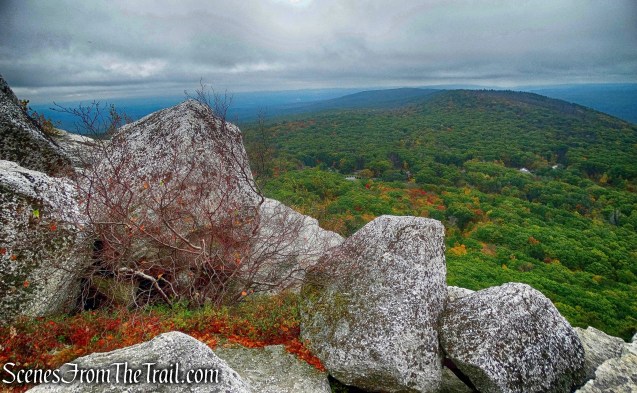
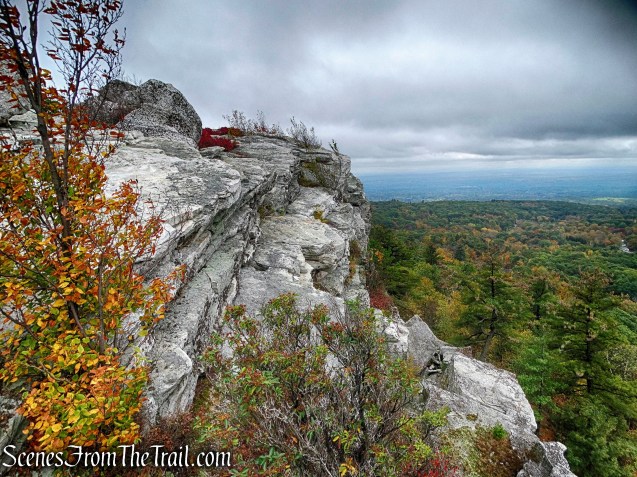
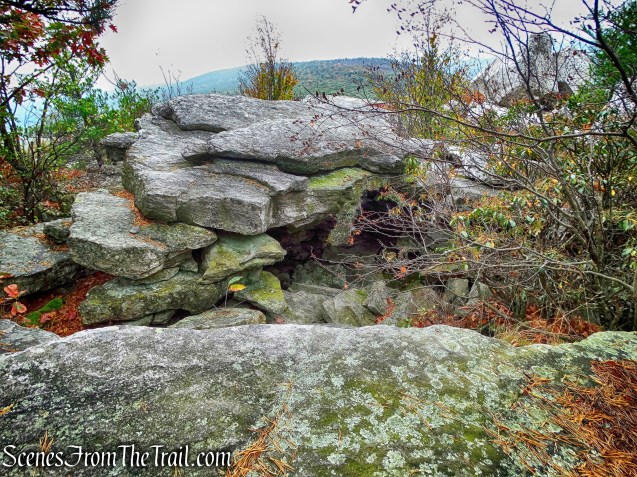
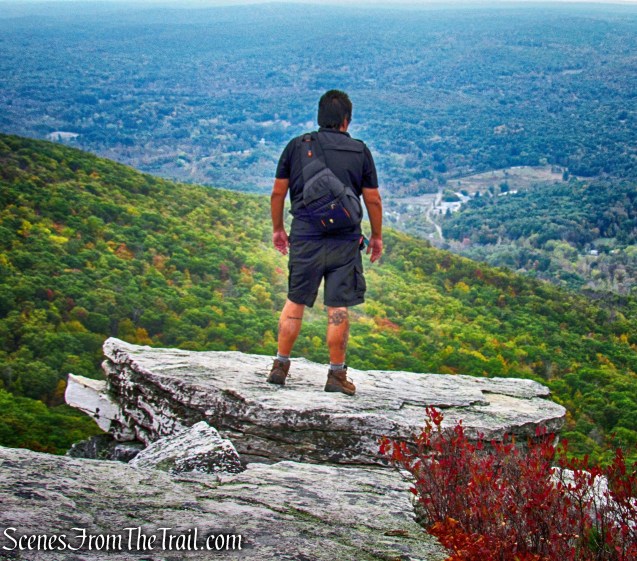
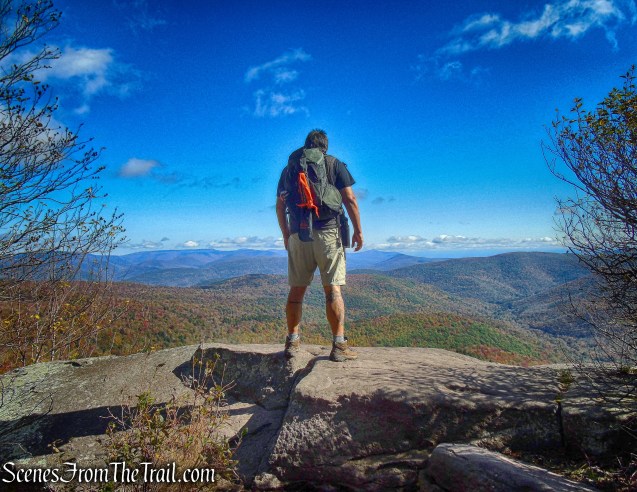
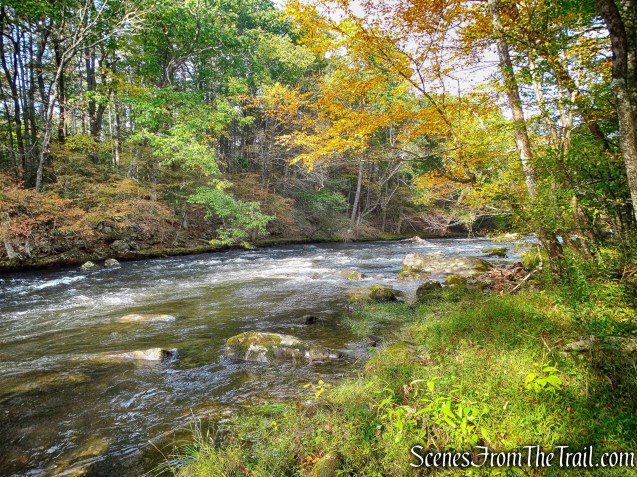
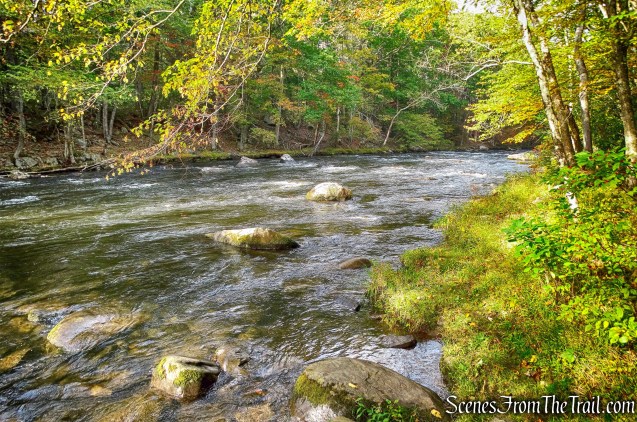
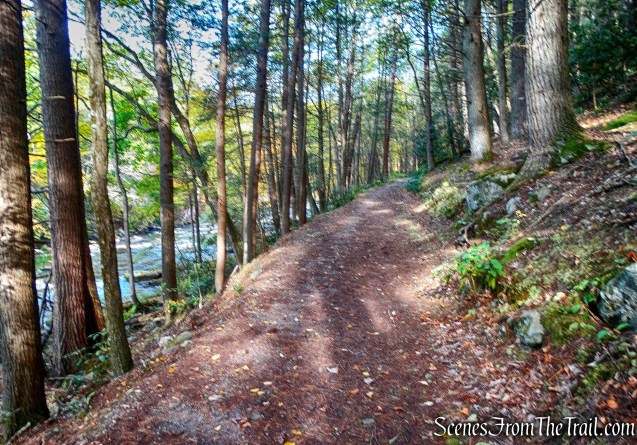
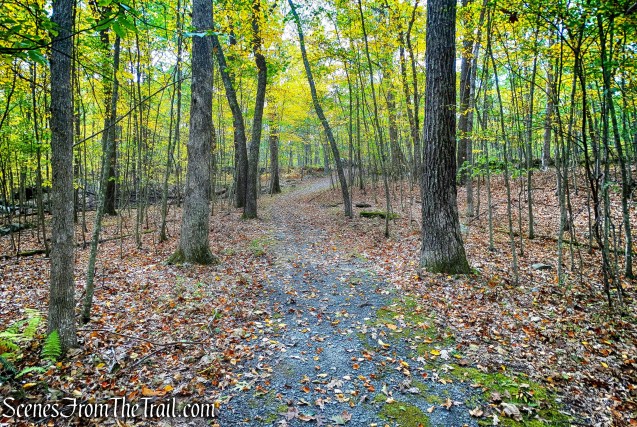
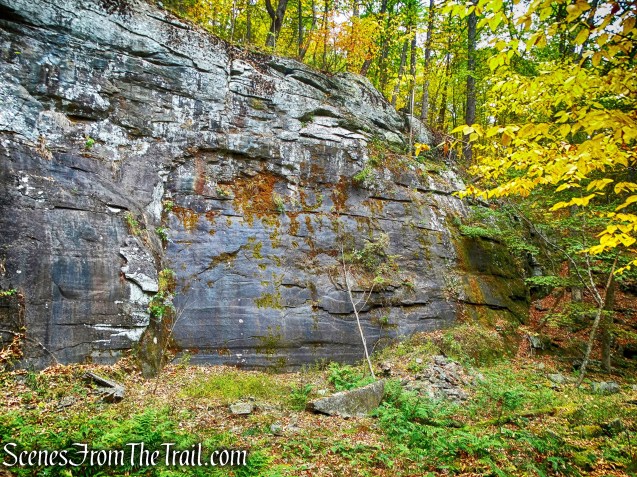
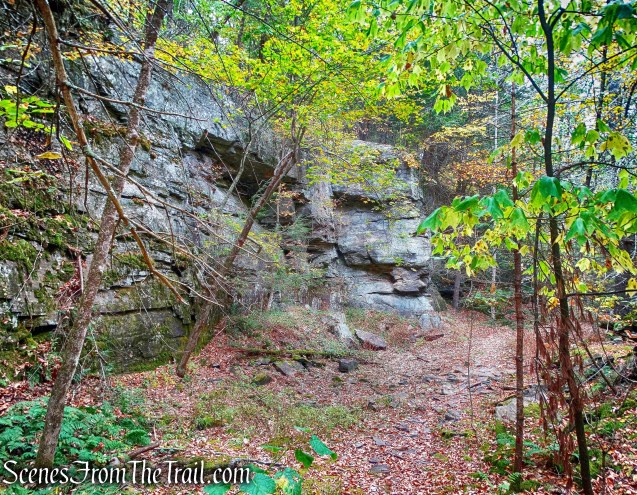
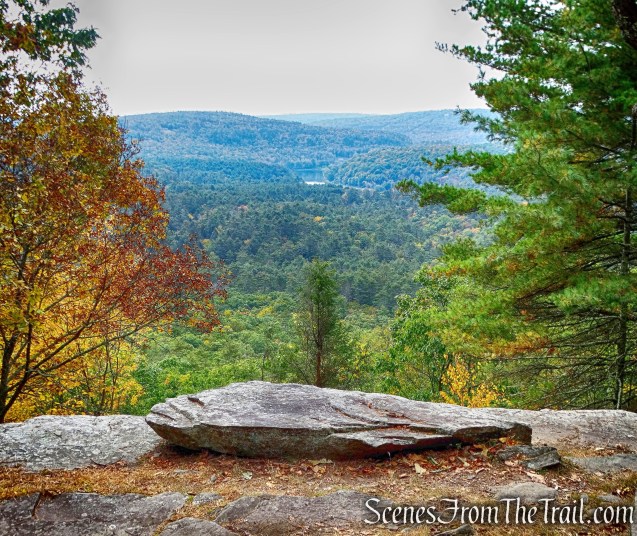
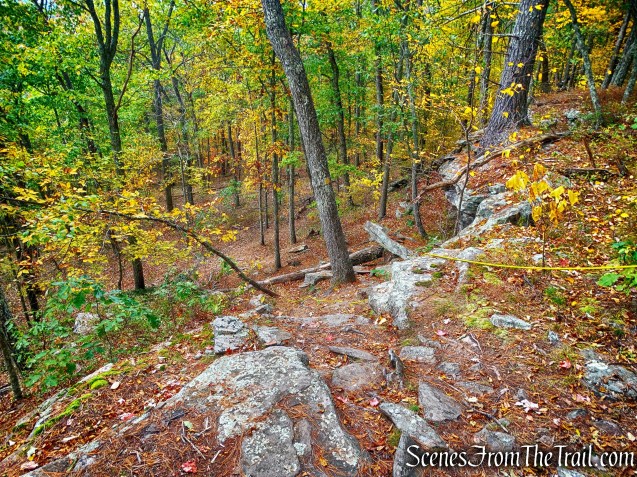
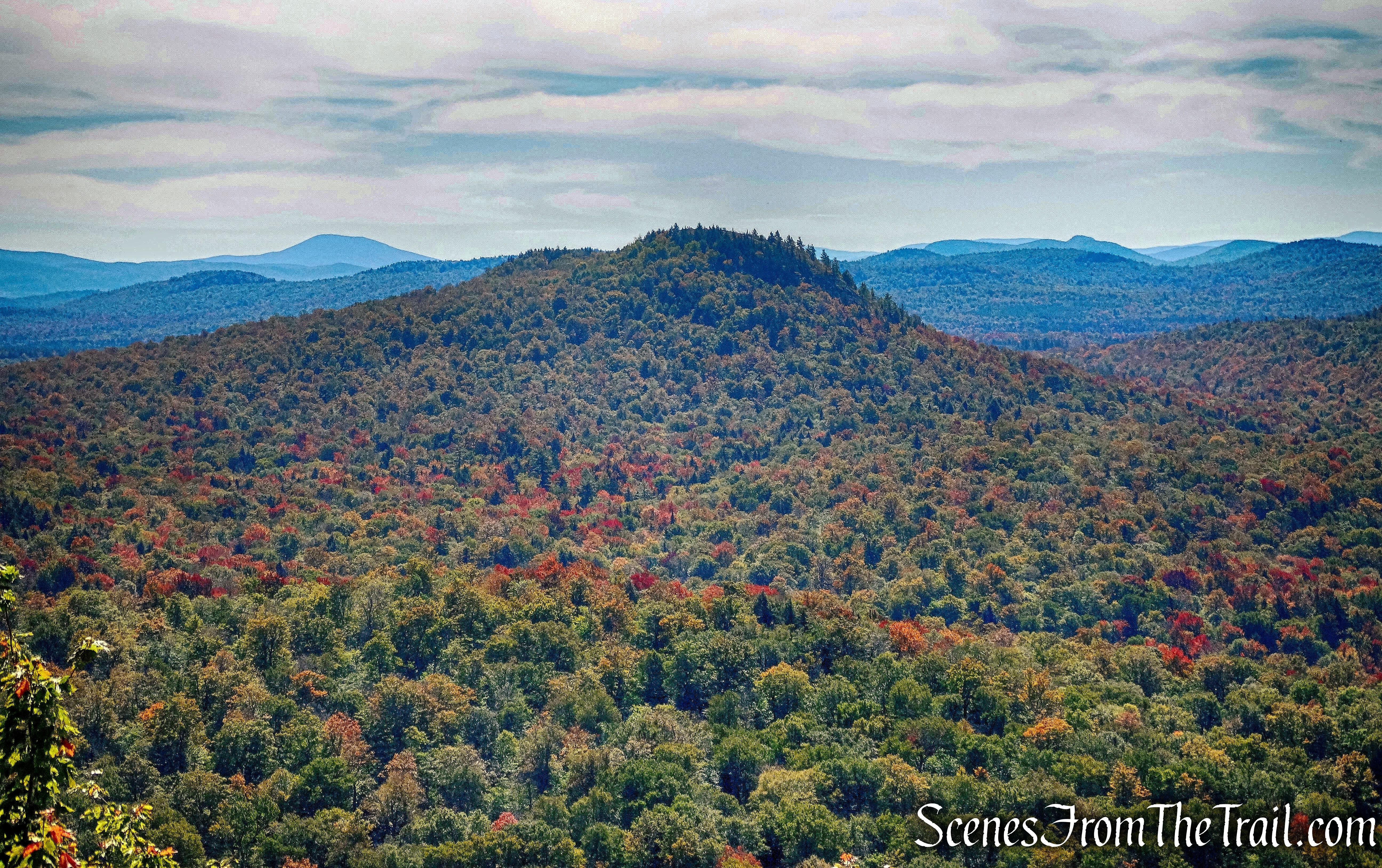
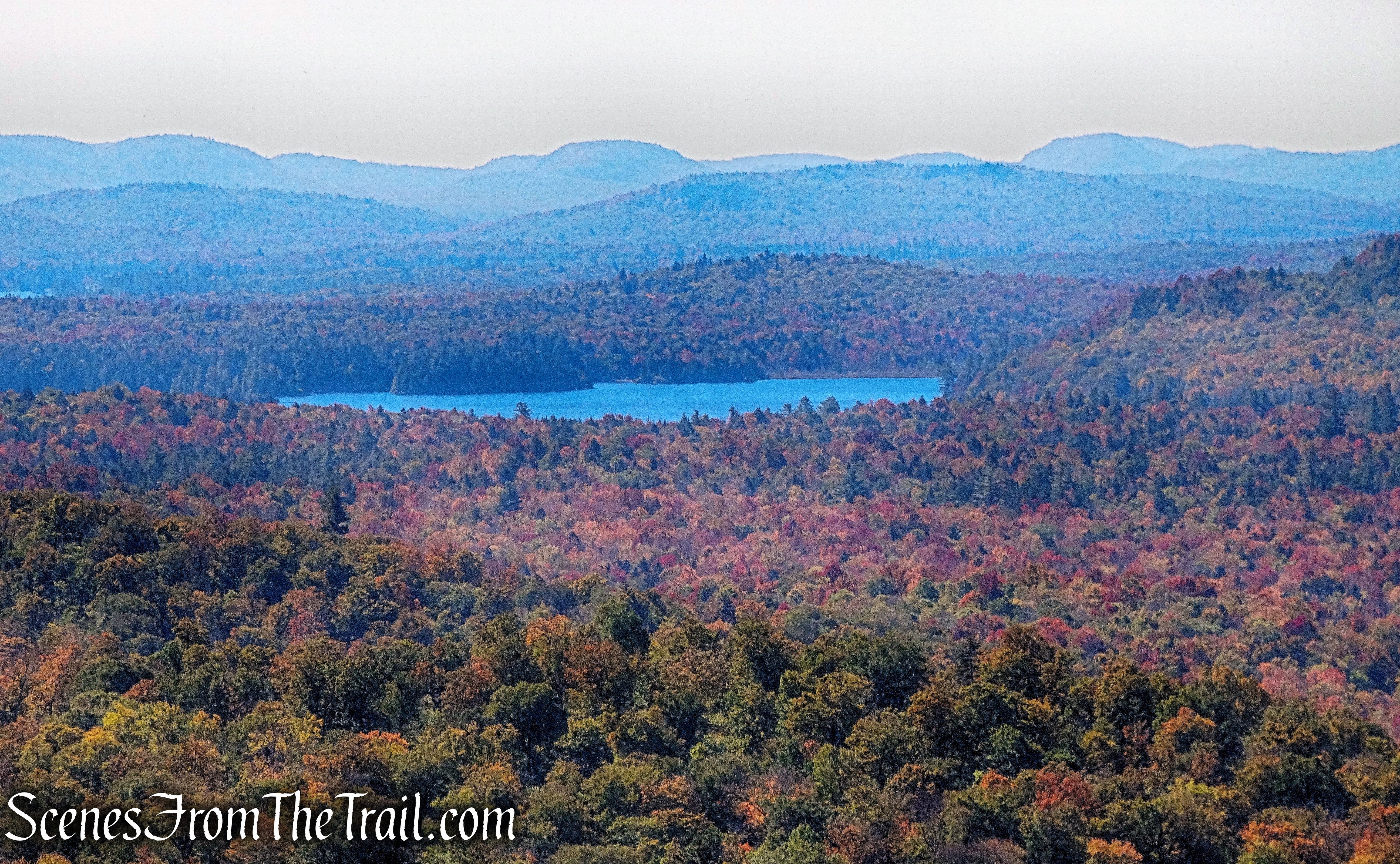
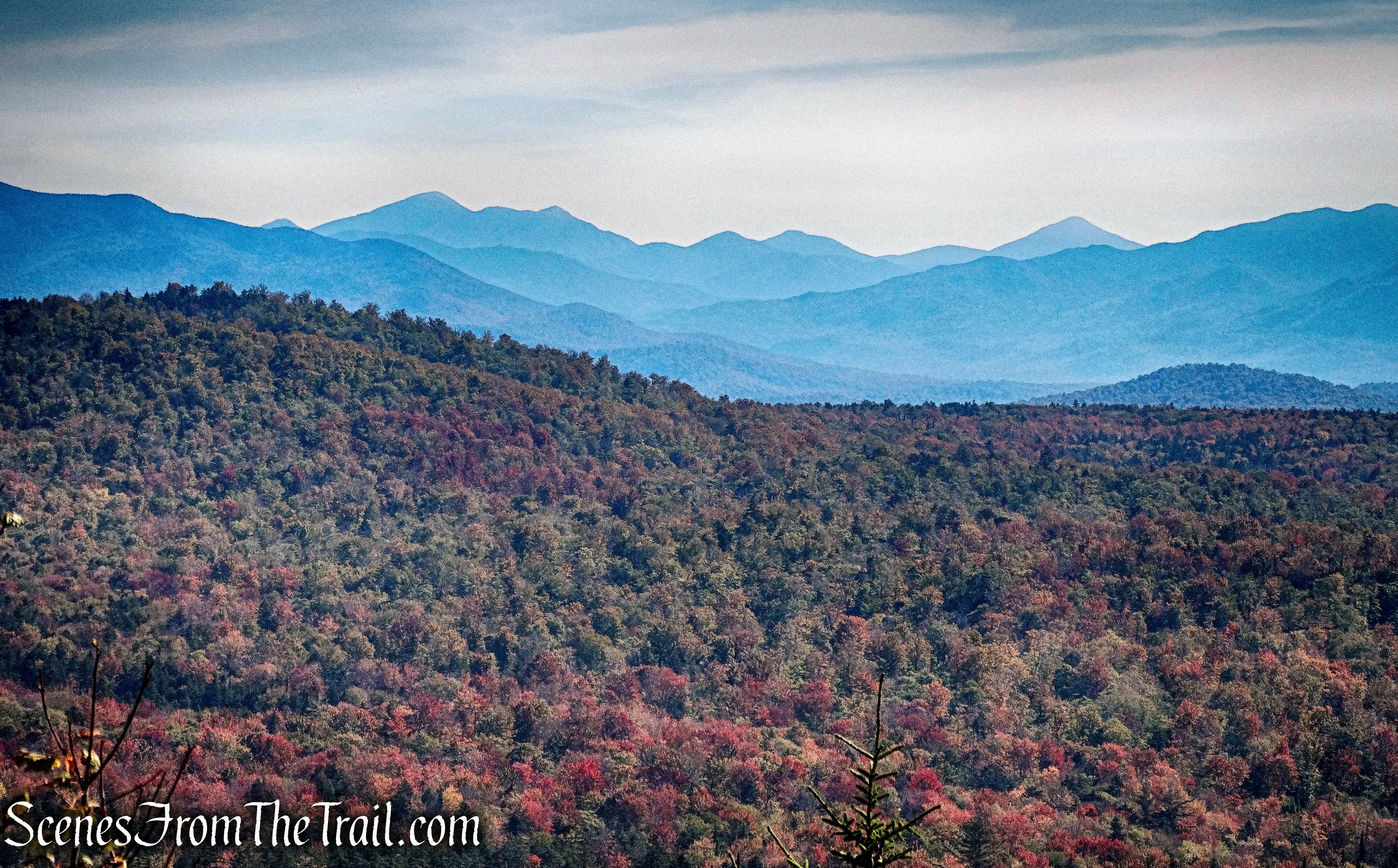
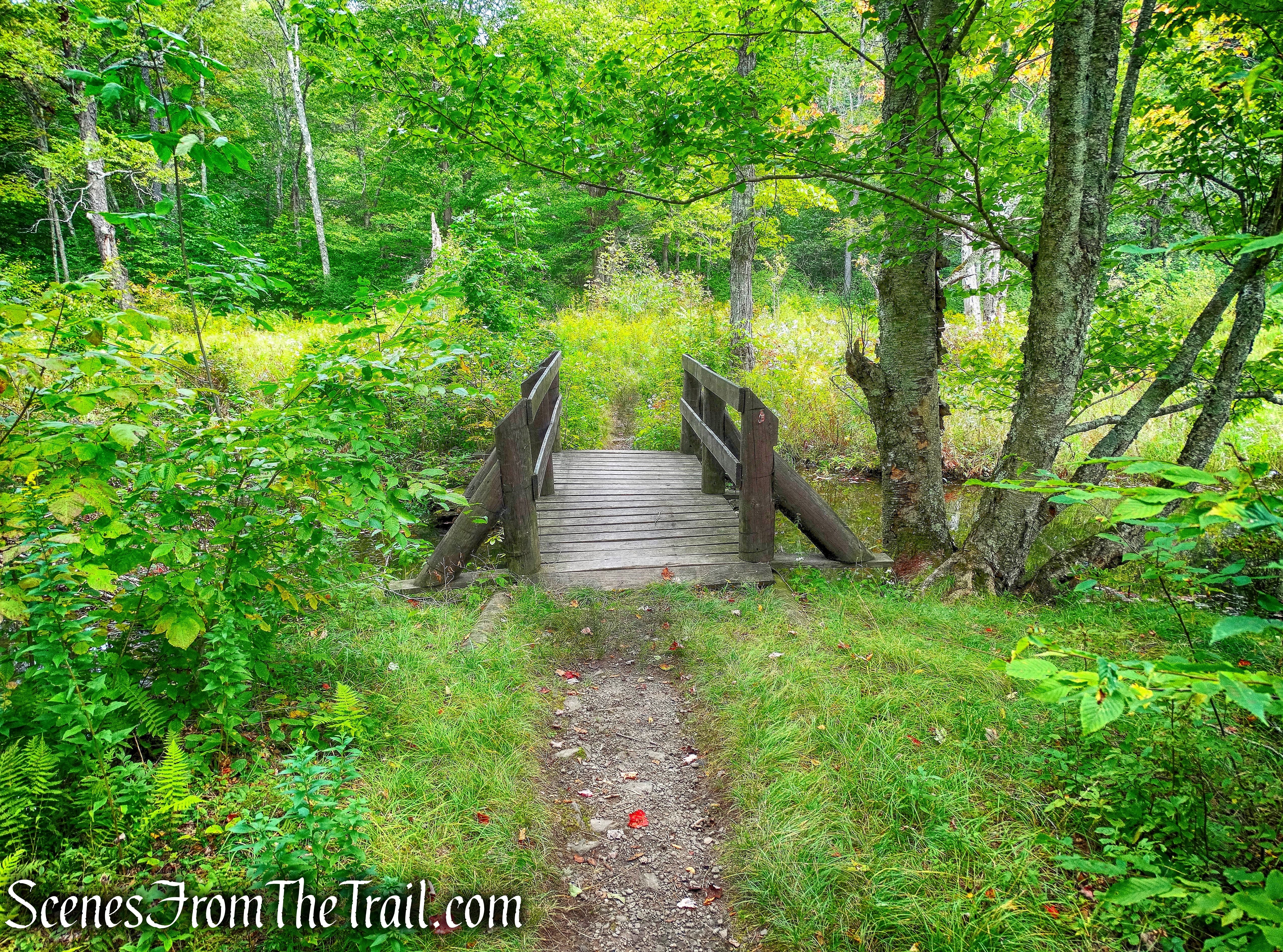
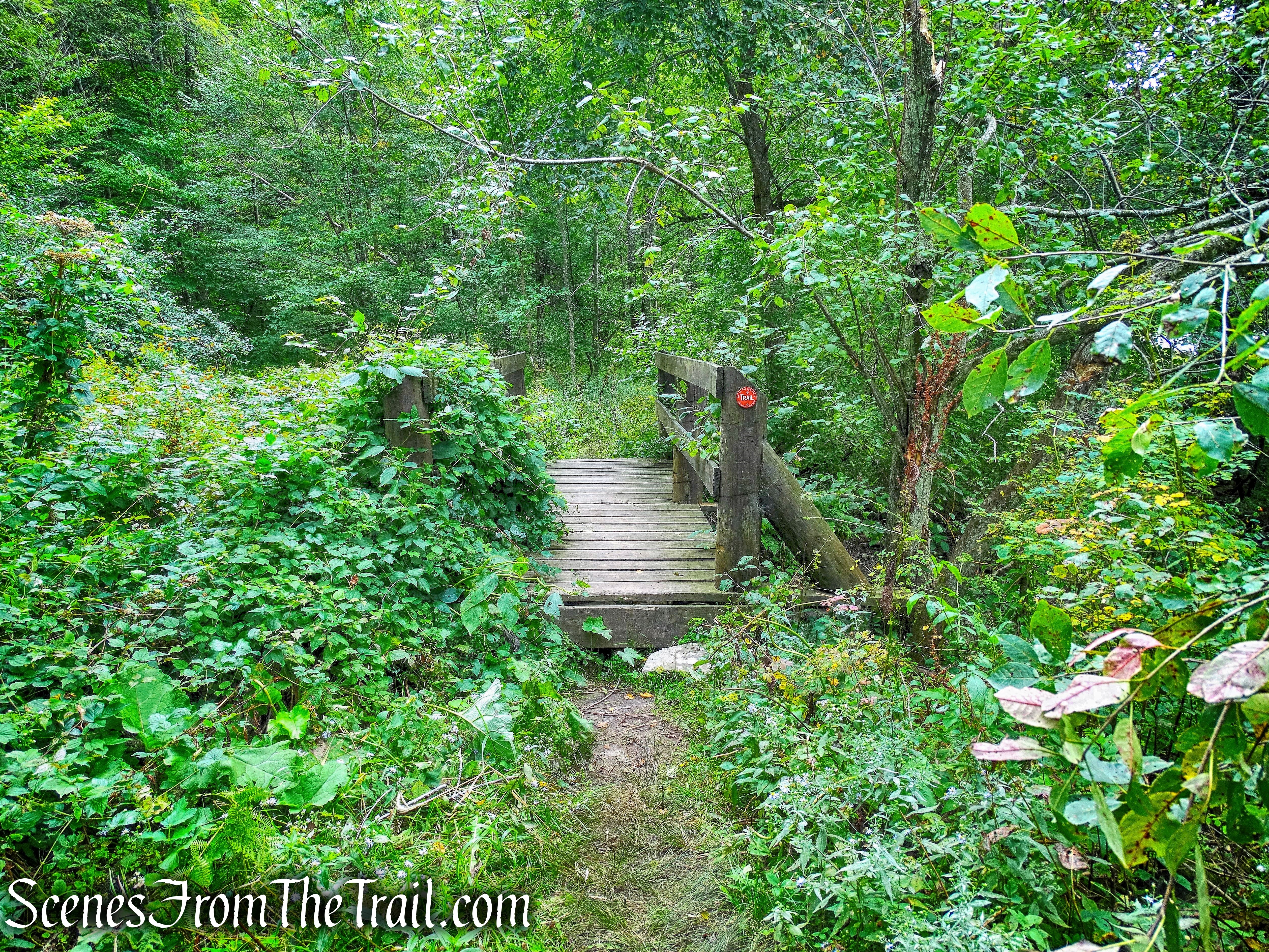
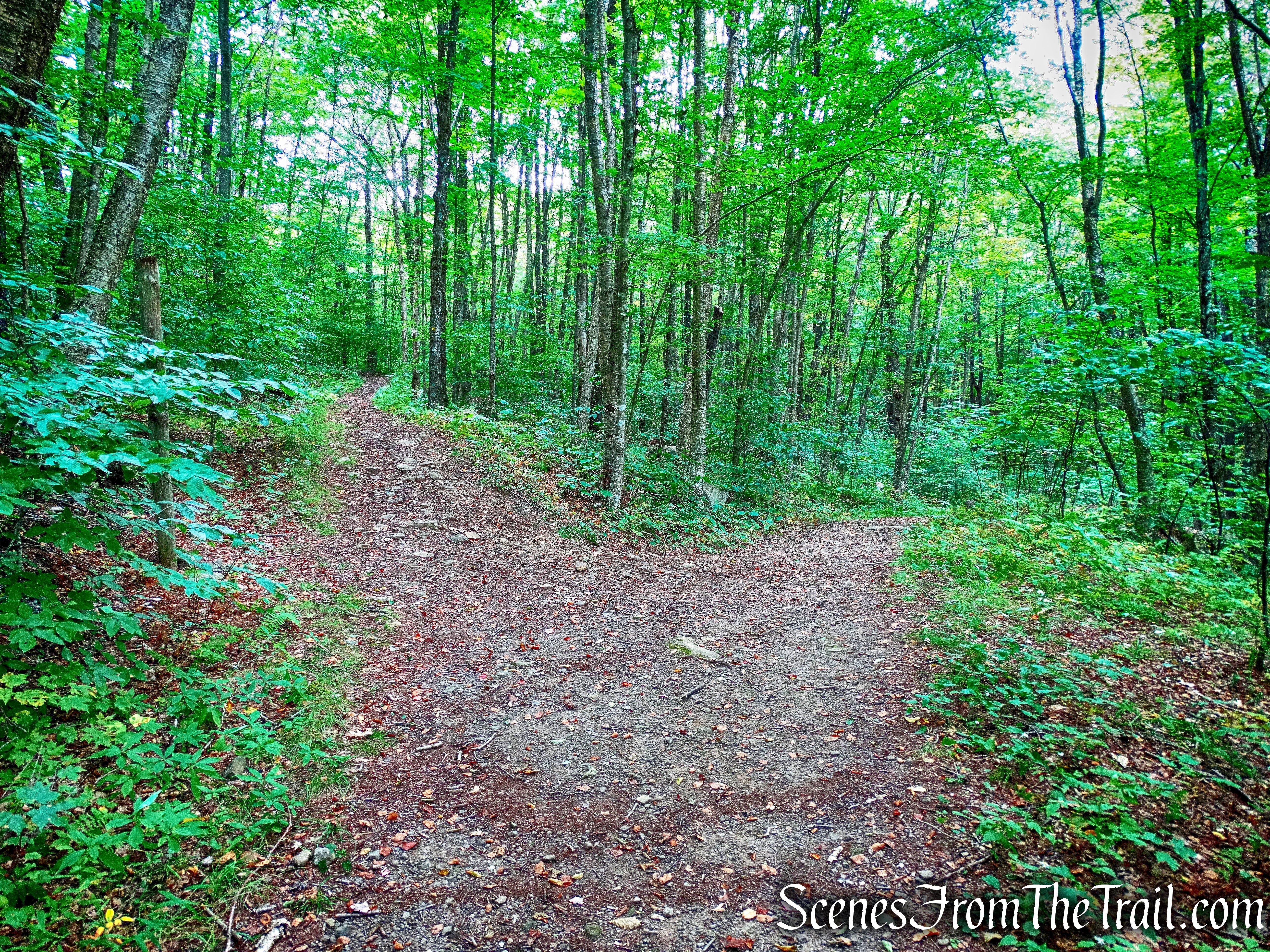
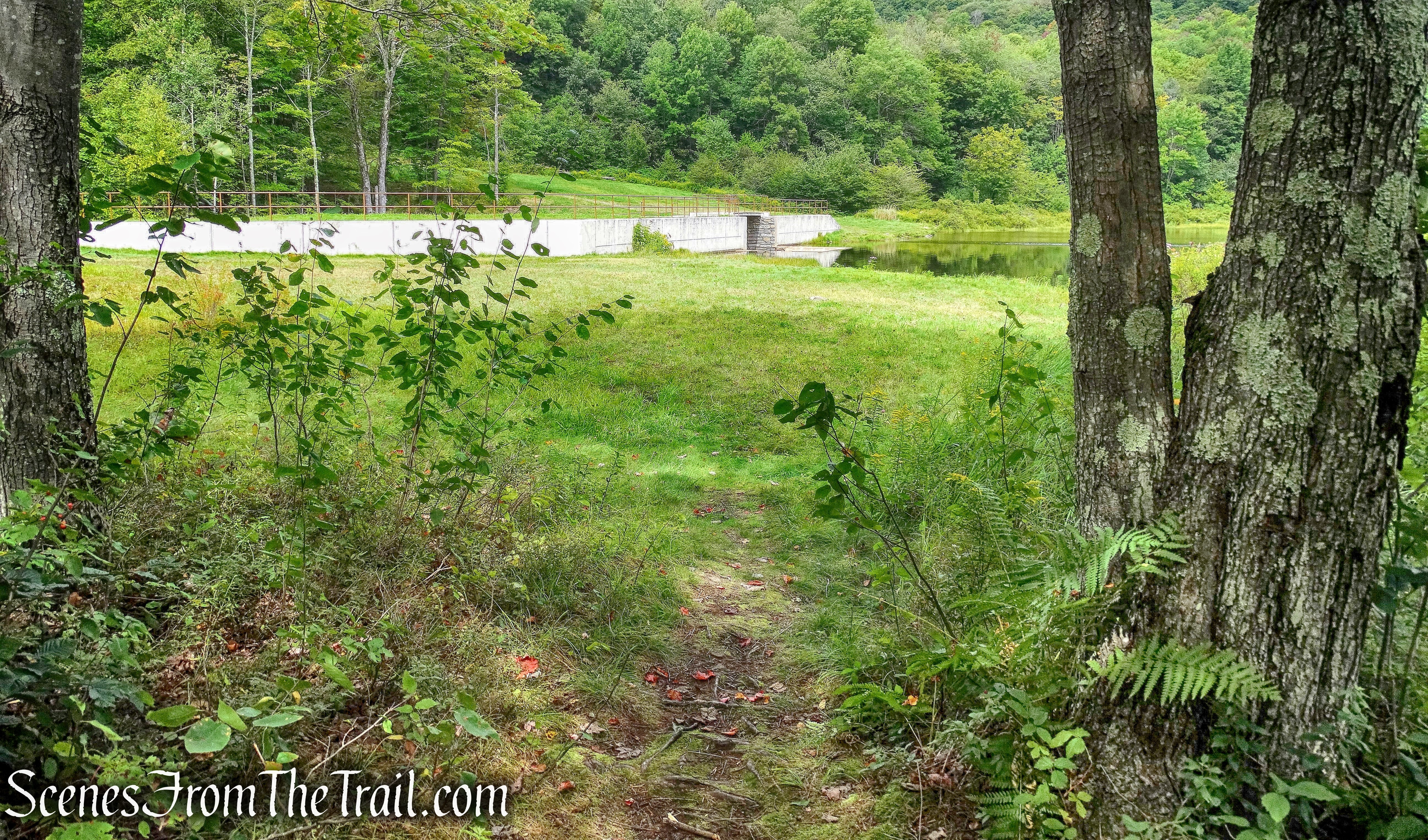
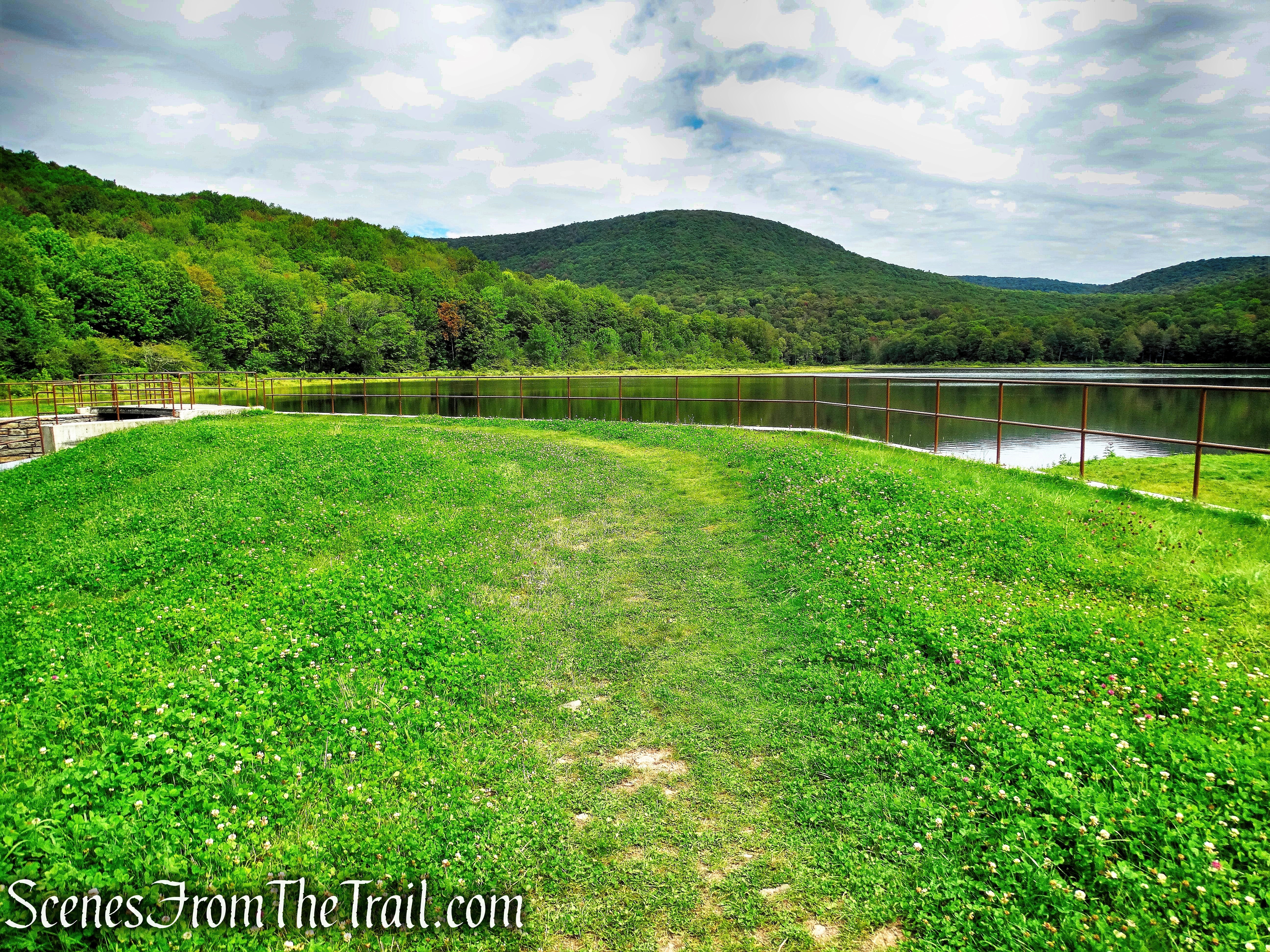
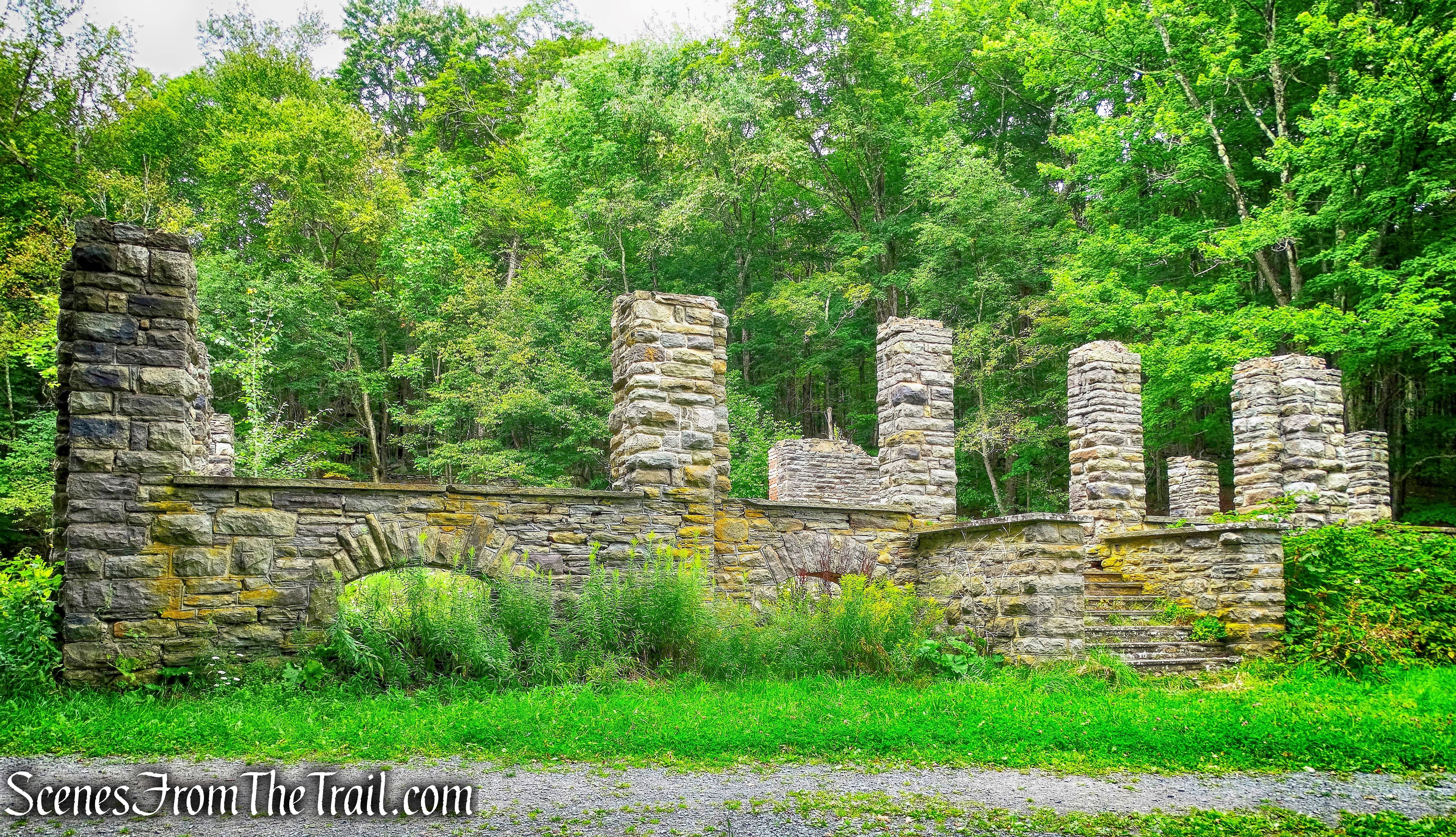
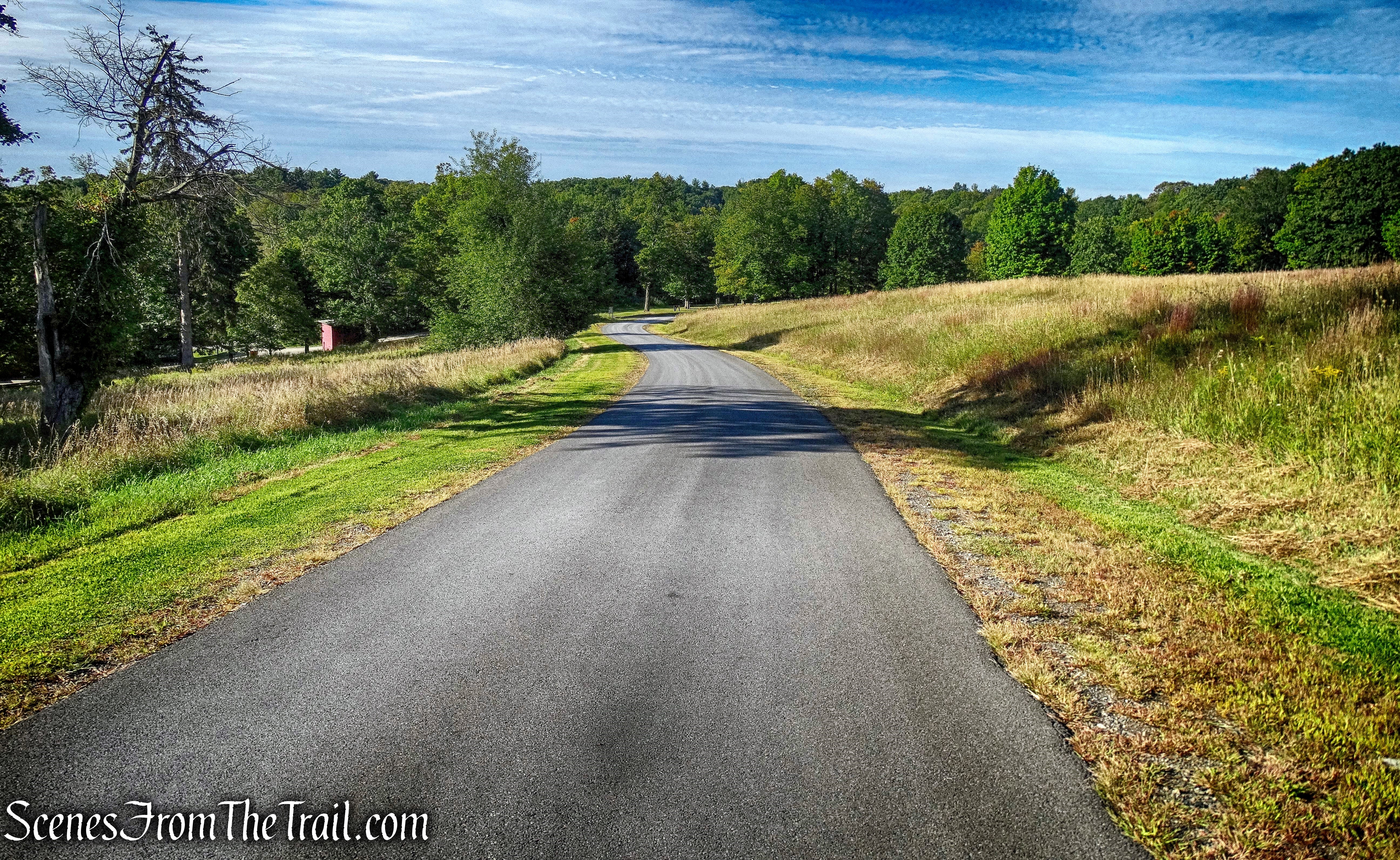
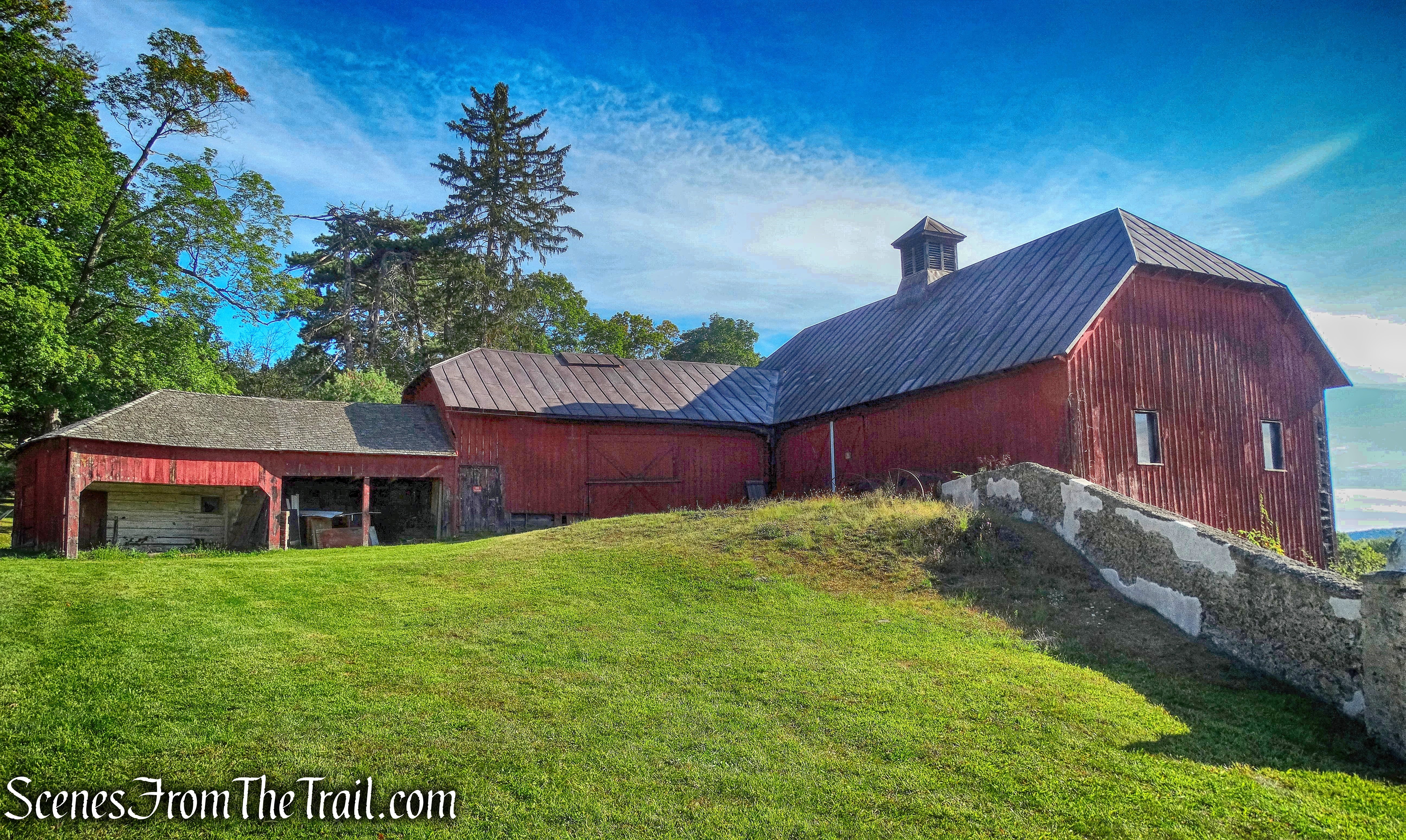
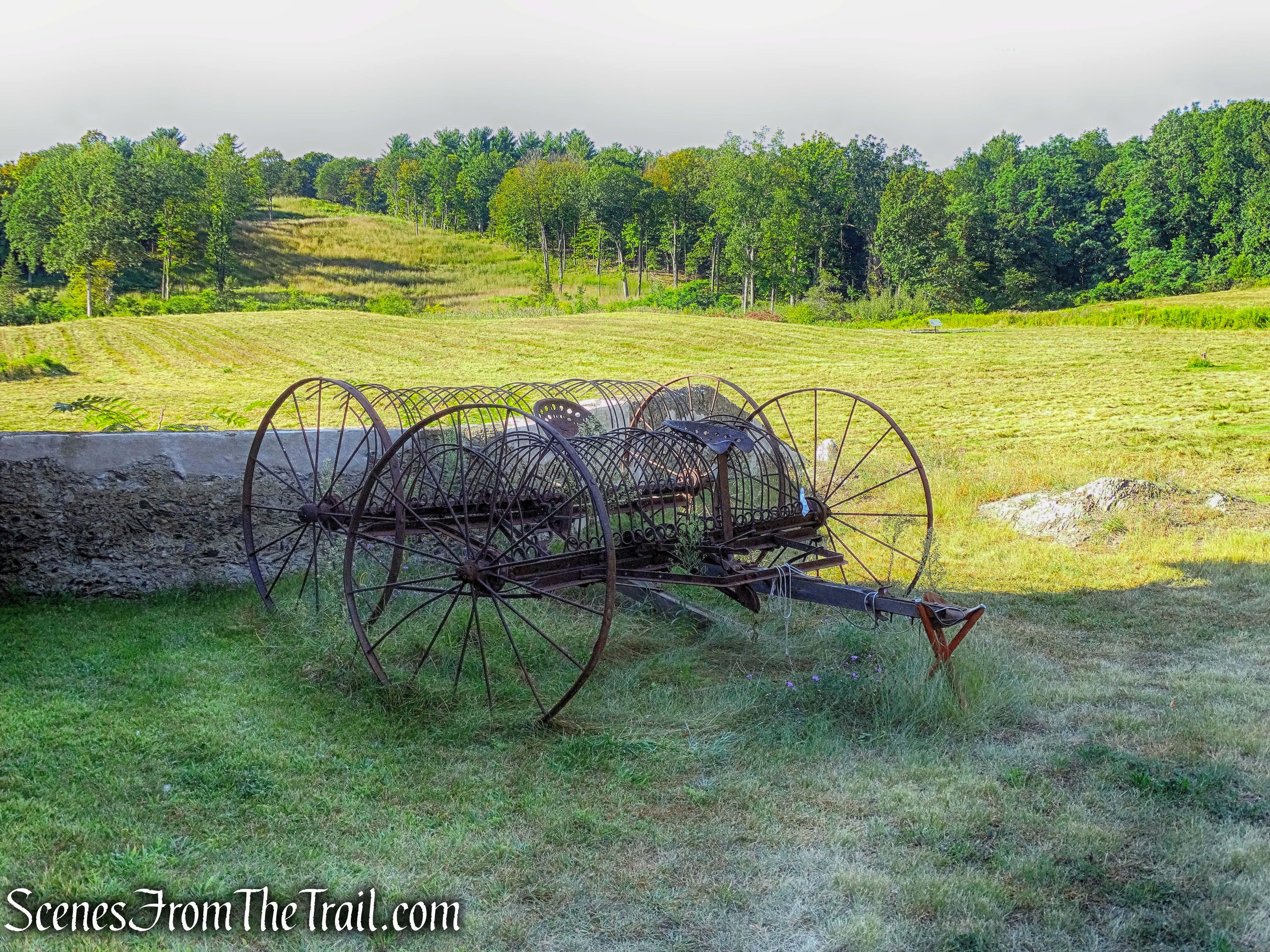
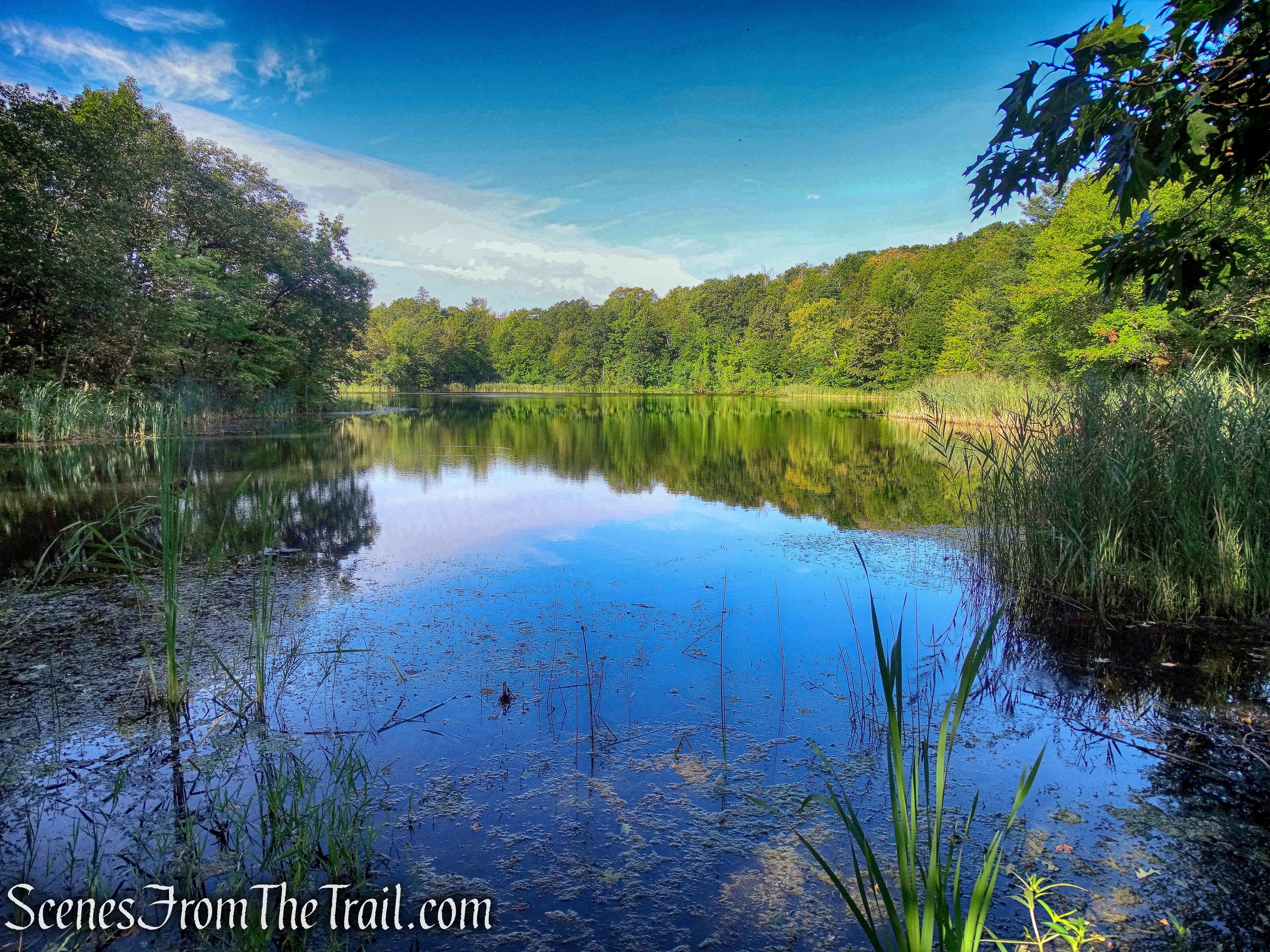
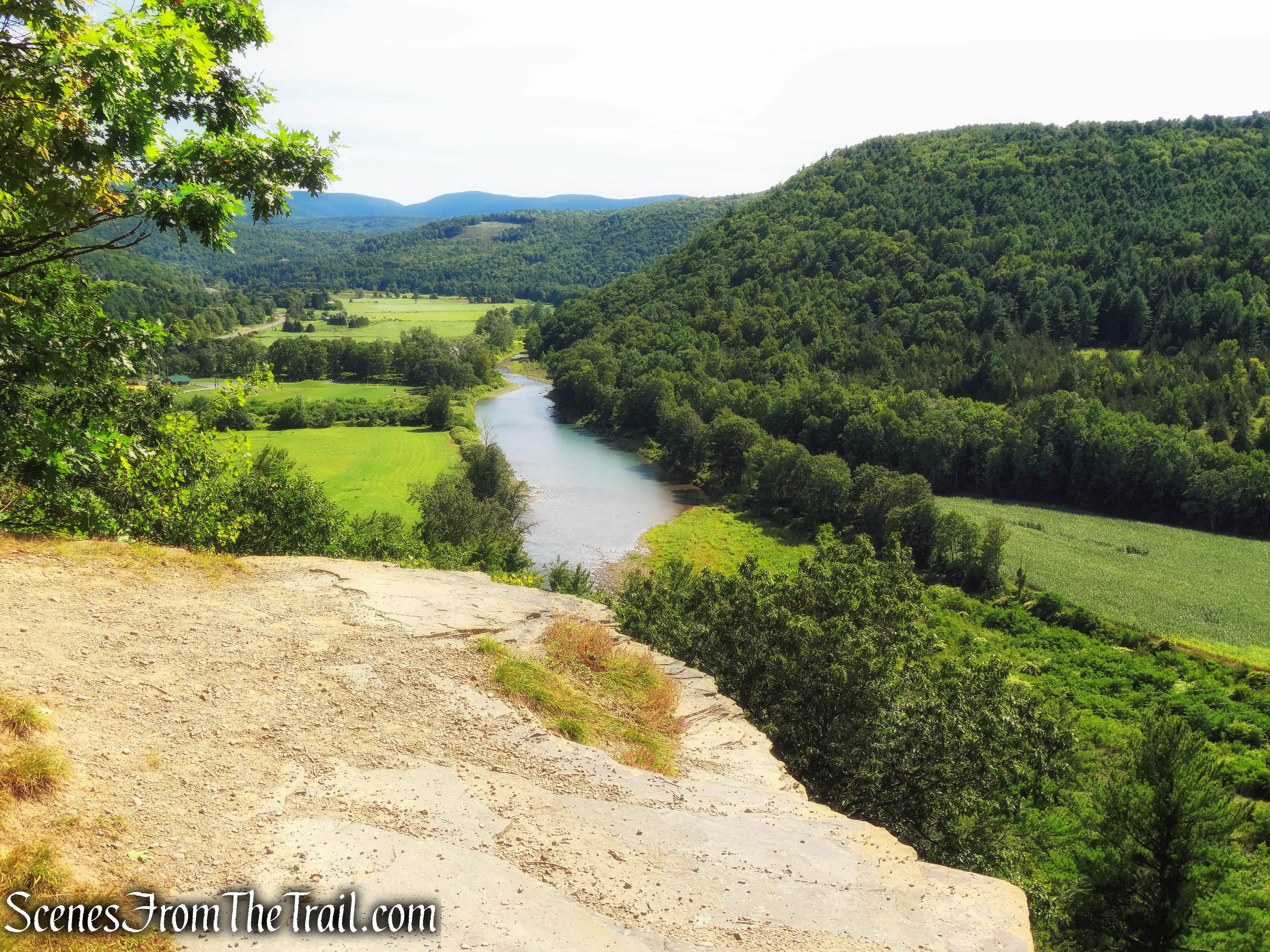
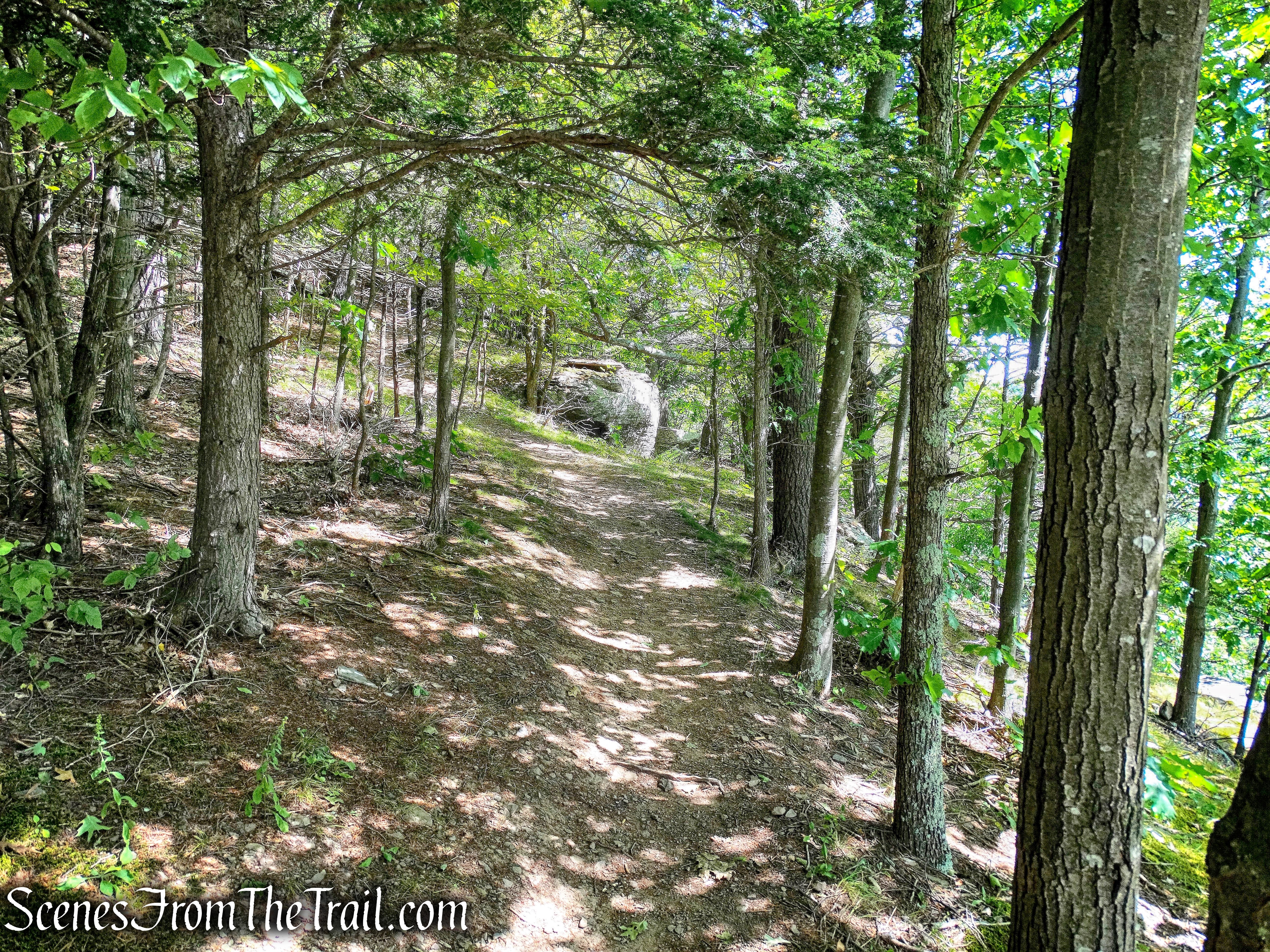
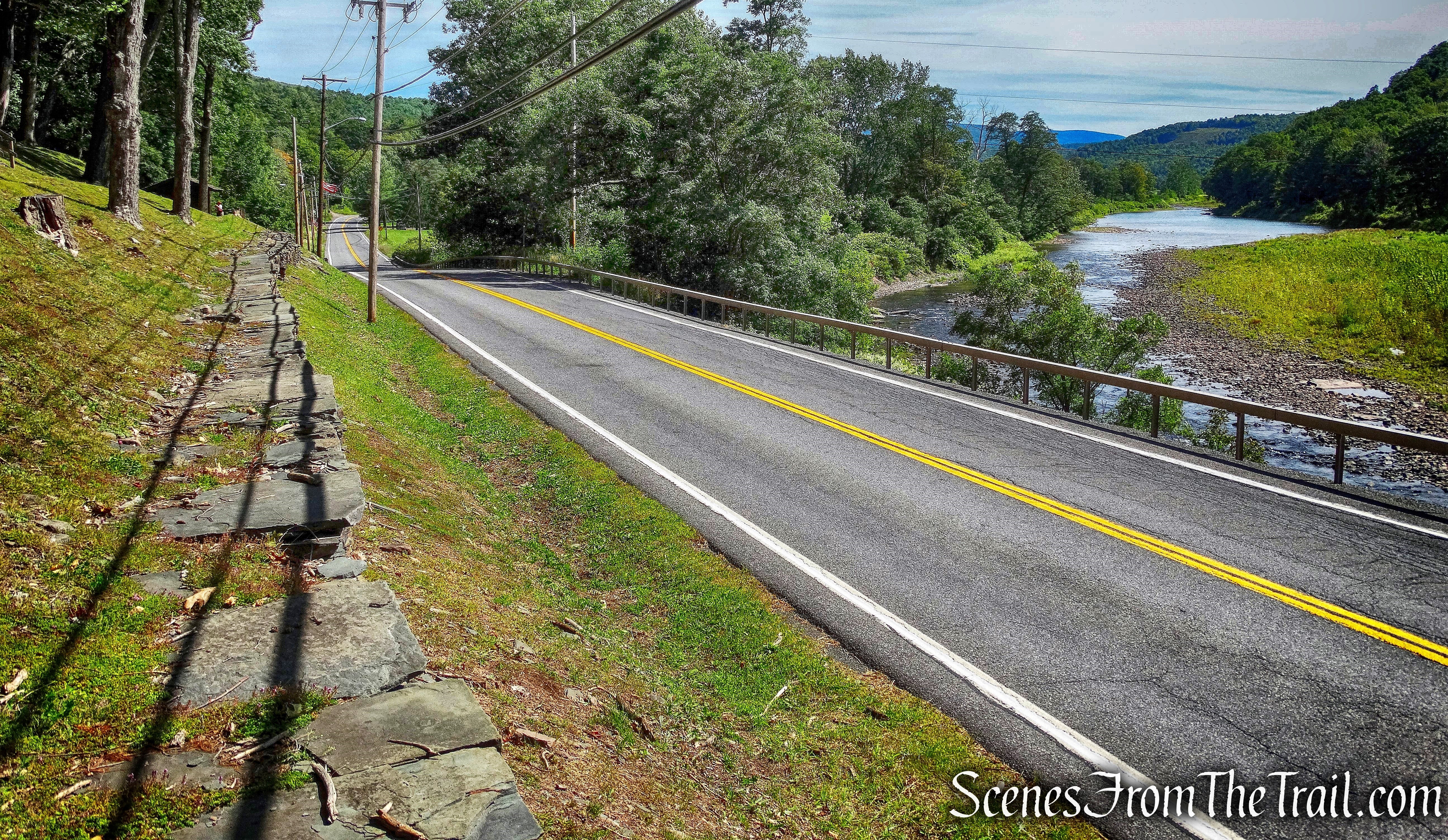
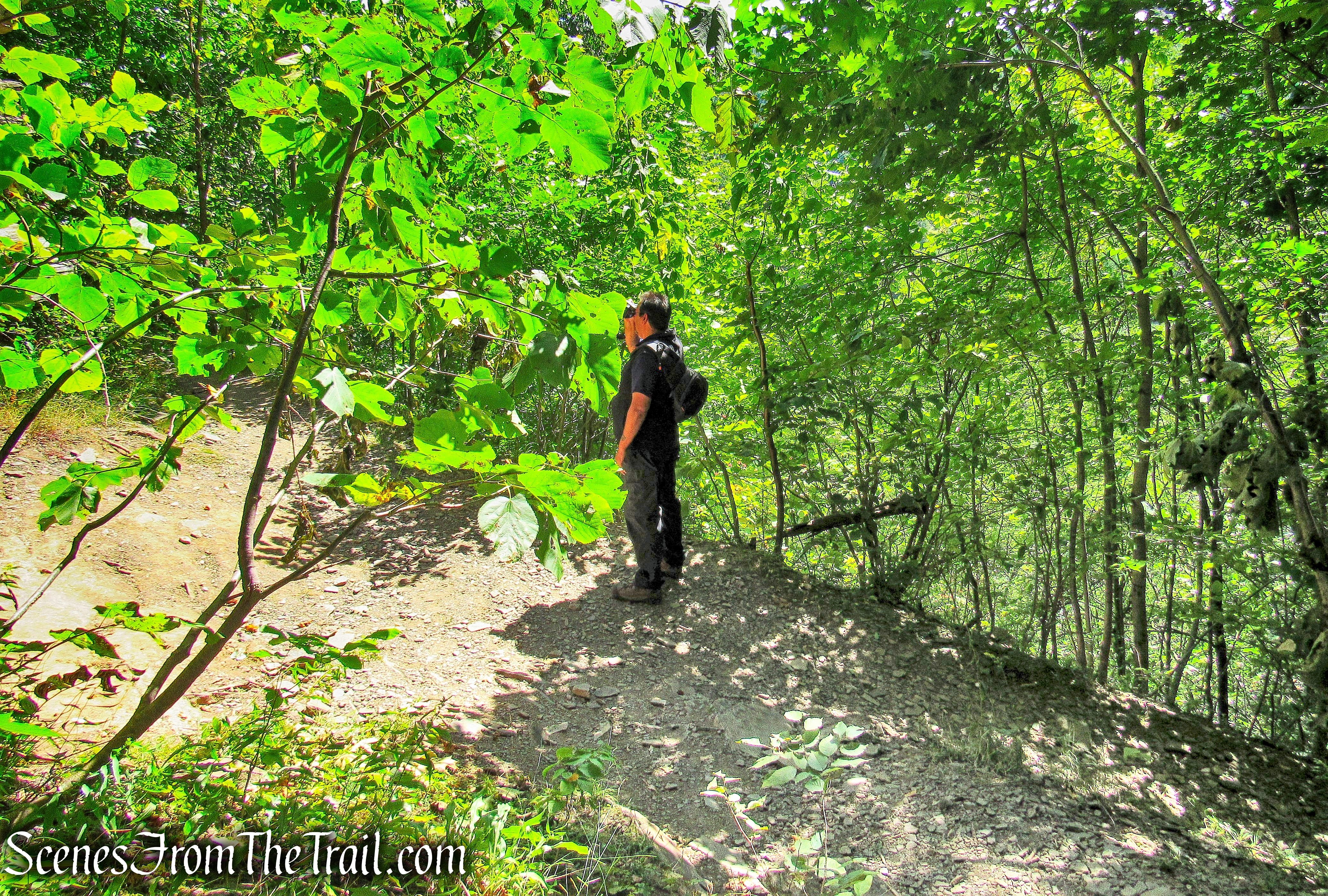
Beacon Hill and Lake Minnewaska Loop – Minnewaska State Park Preserve

October 27, 2017 – Kerhonkson, NY

Difficulty: Easy to moderate

Length: Approximately 3.2 miles

Max elevation: 1,768 ft.– total elevation gain approximately 443 ft.

Route type: Circuit

Map: Shawangunk Trails

Fee: $10.00 per vehicle – Empire Pass Accepted

Trailhead parking: 5281 Route 44-55, Kerhonkson, NY 12446


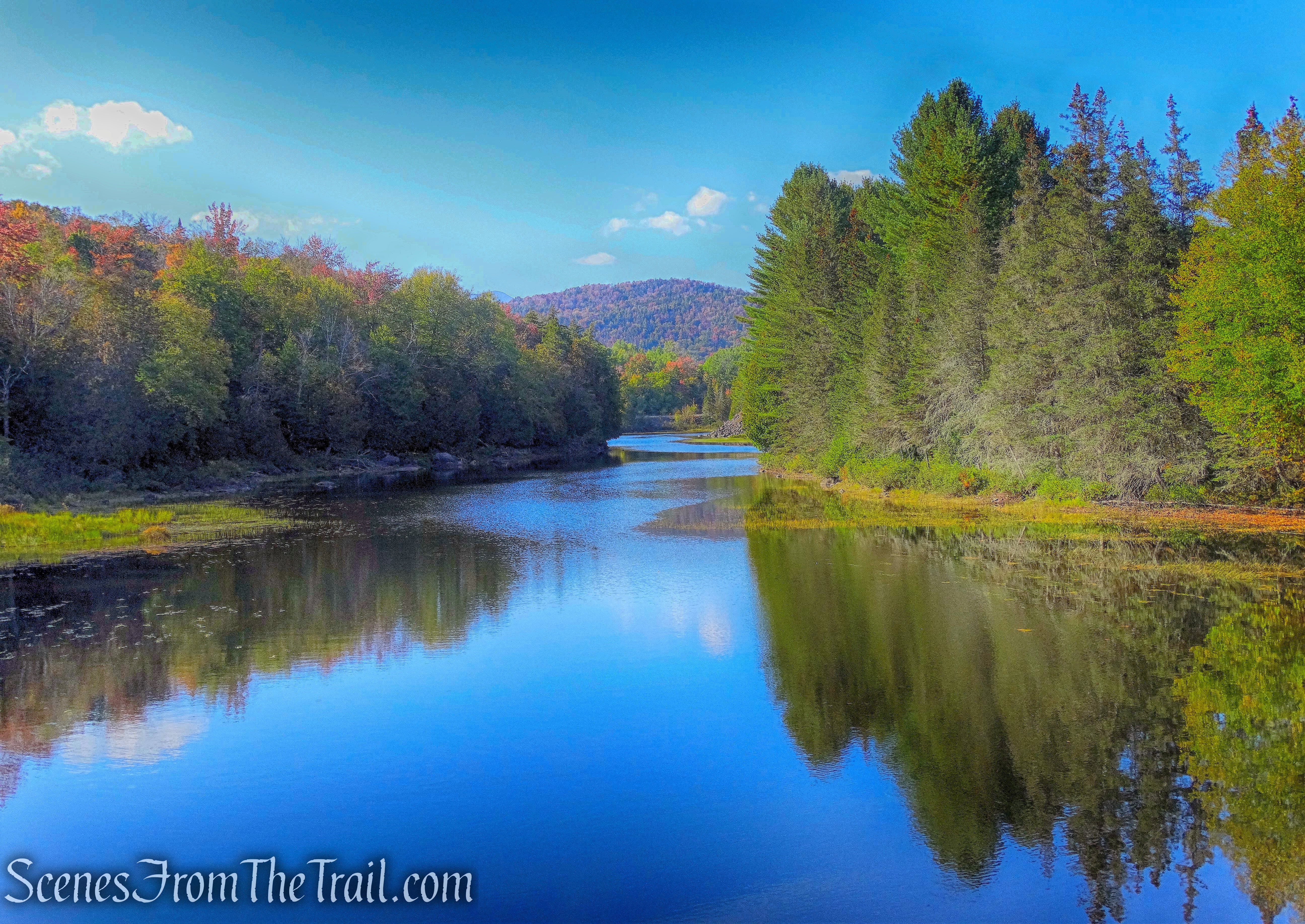
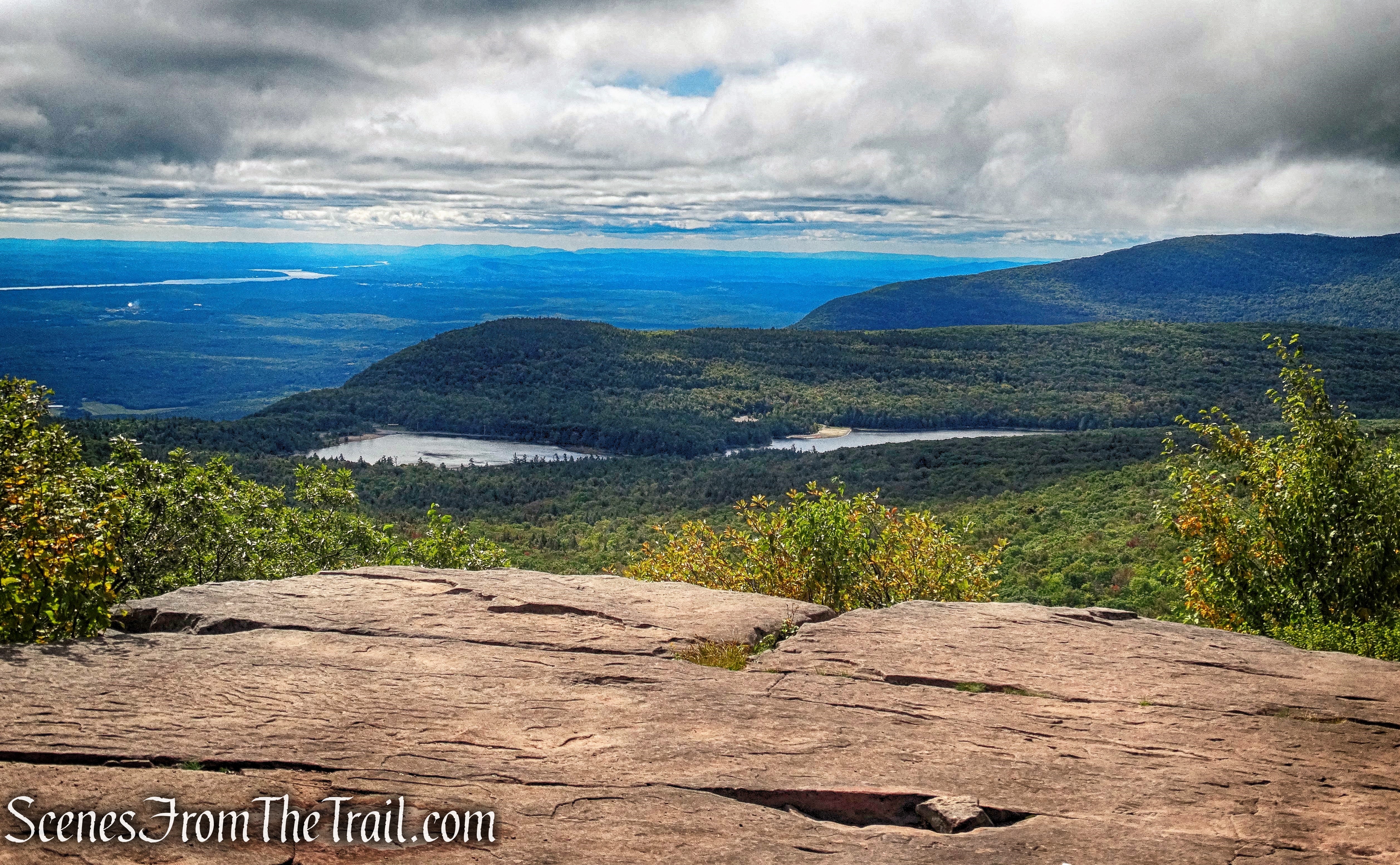
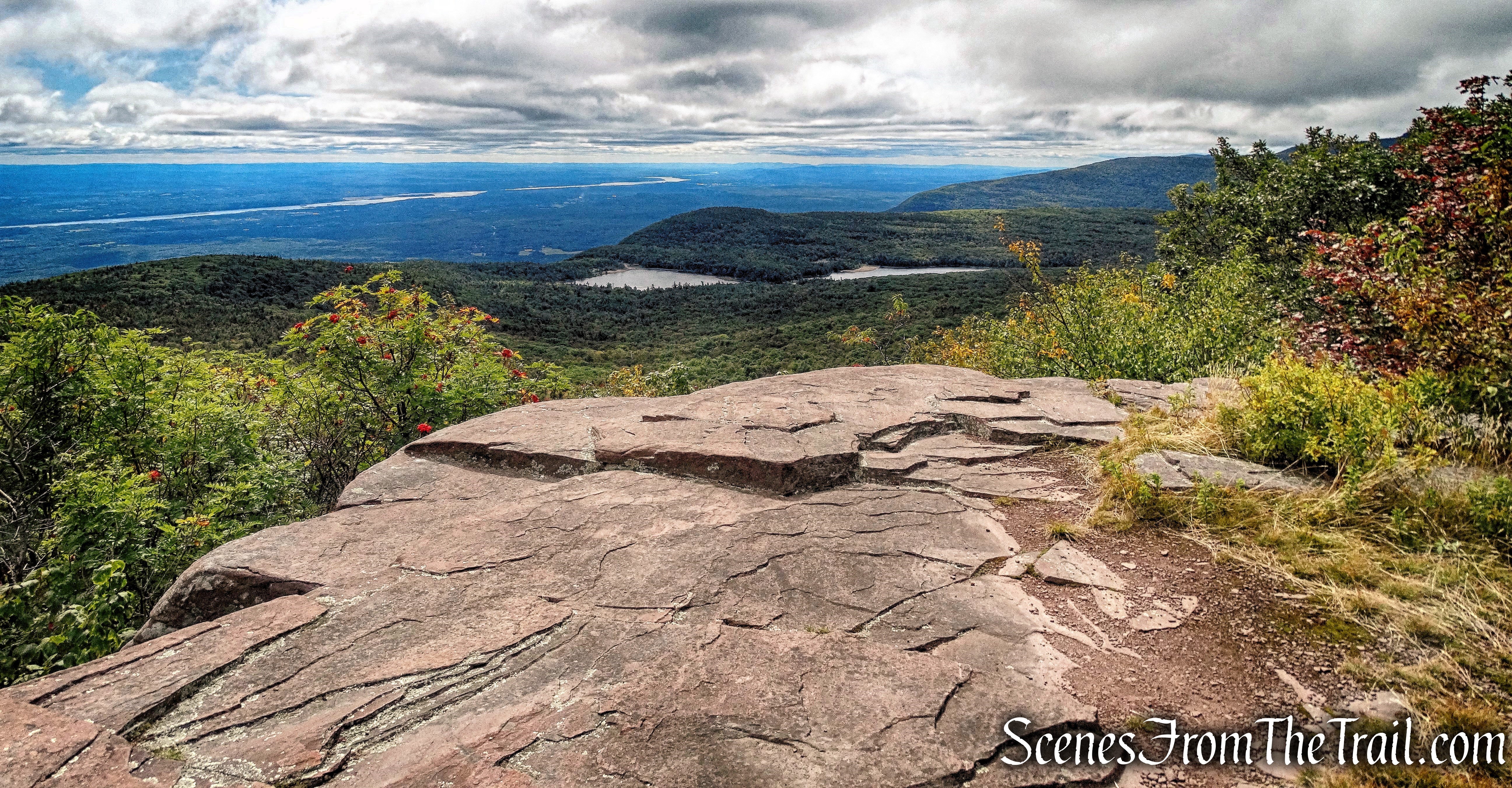
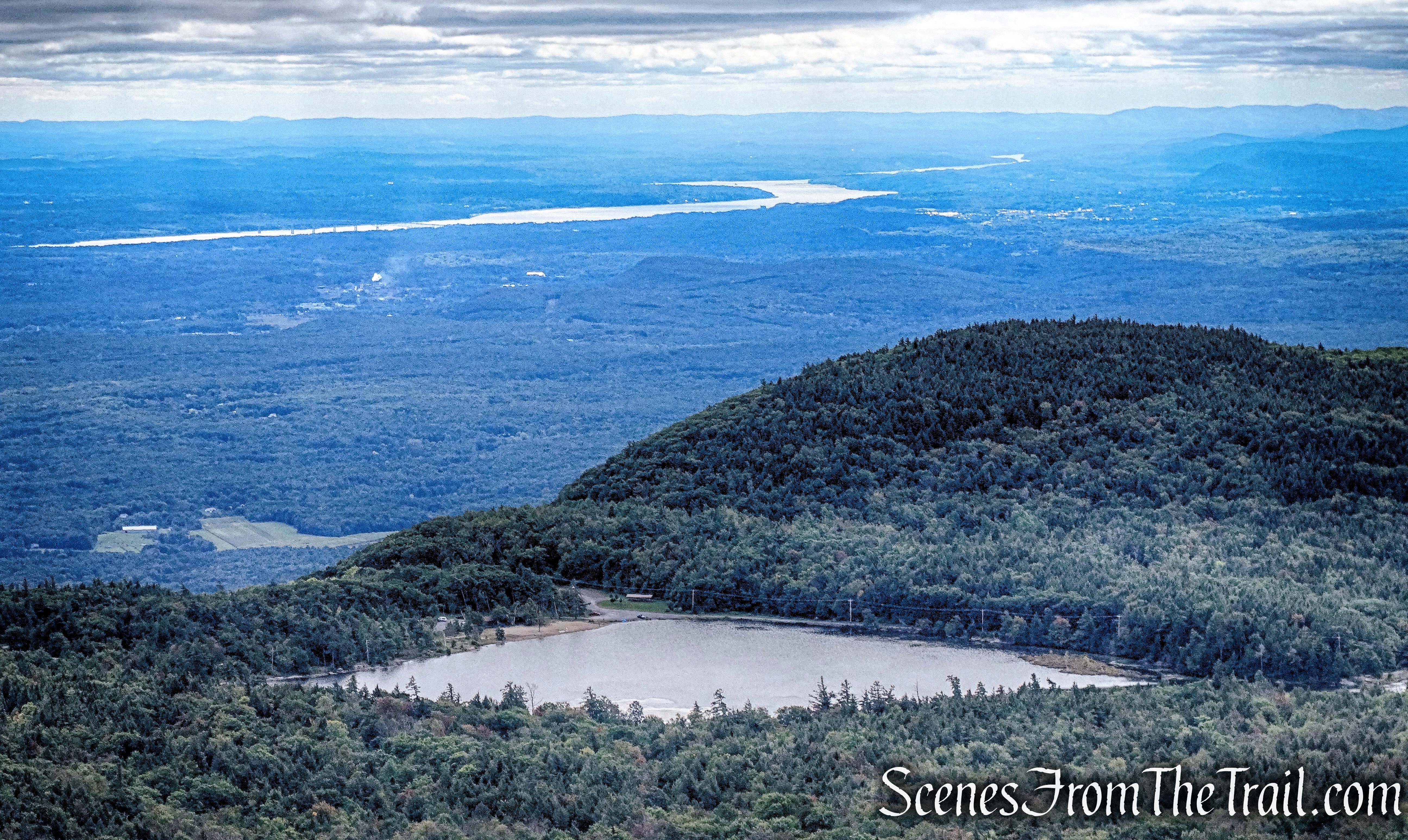
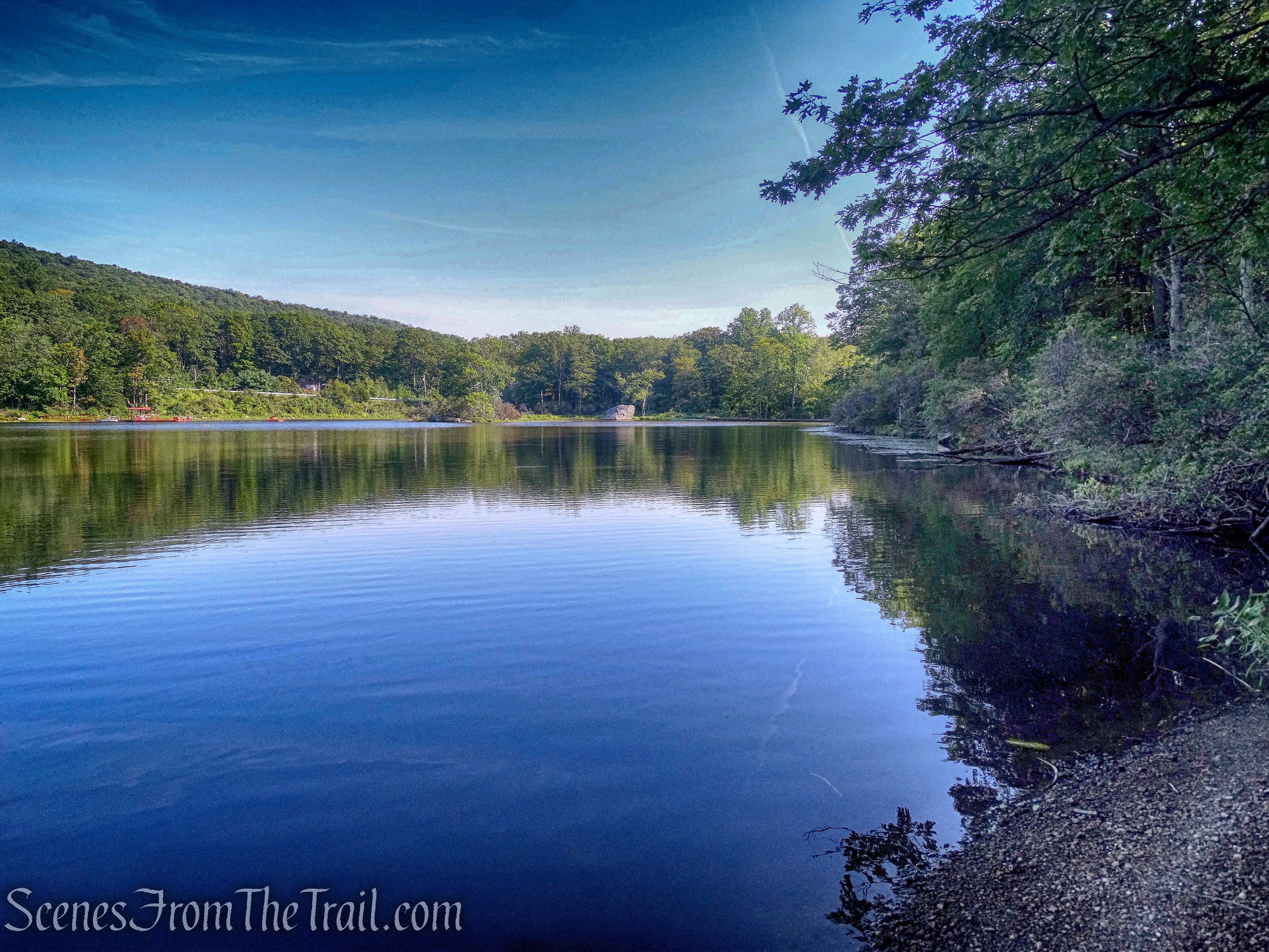
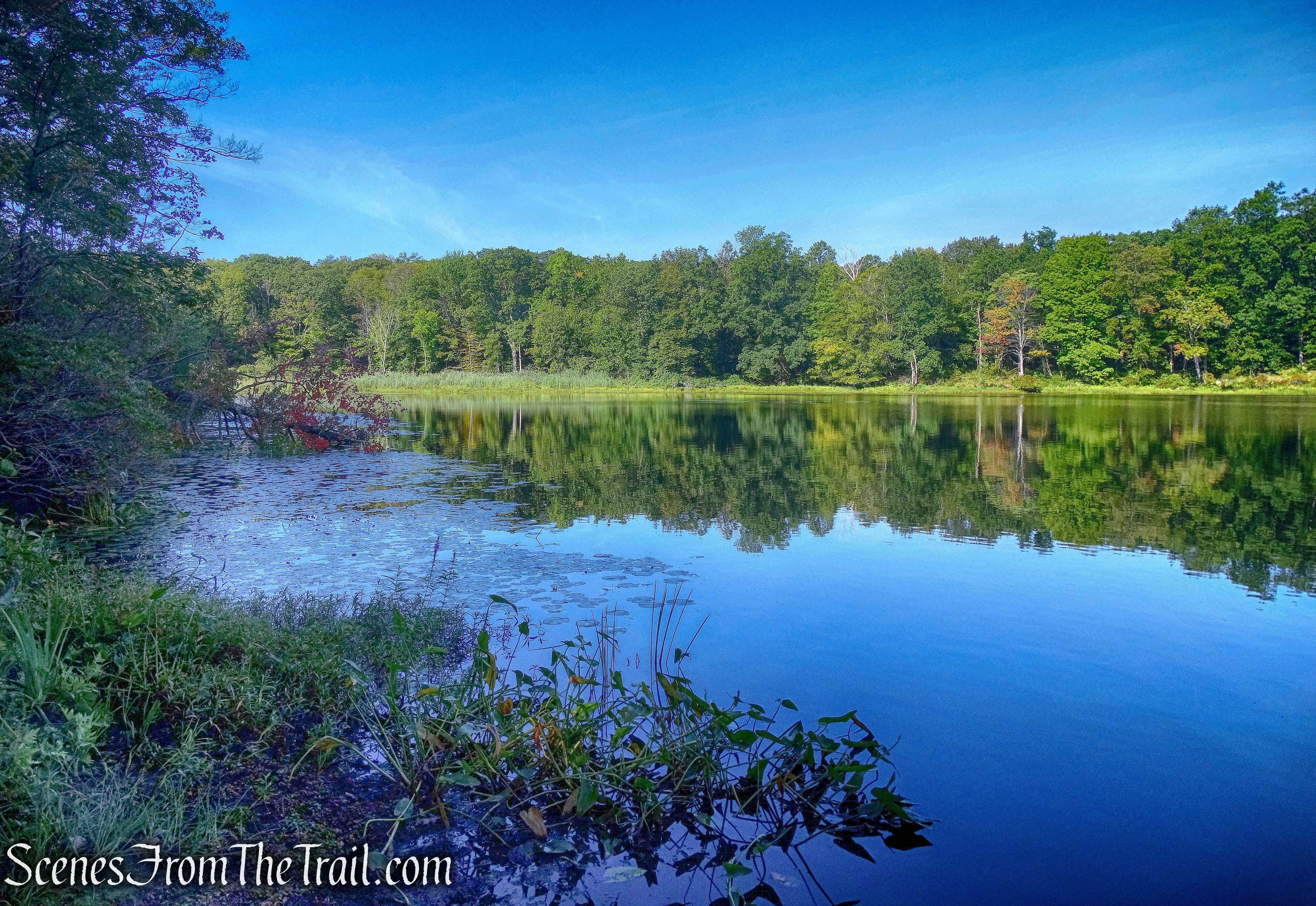
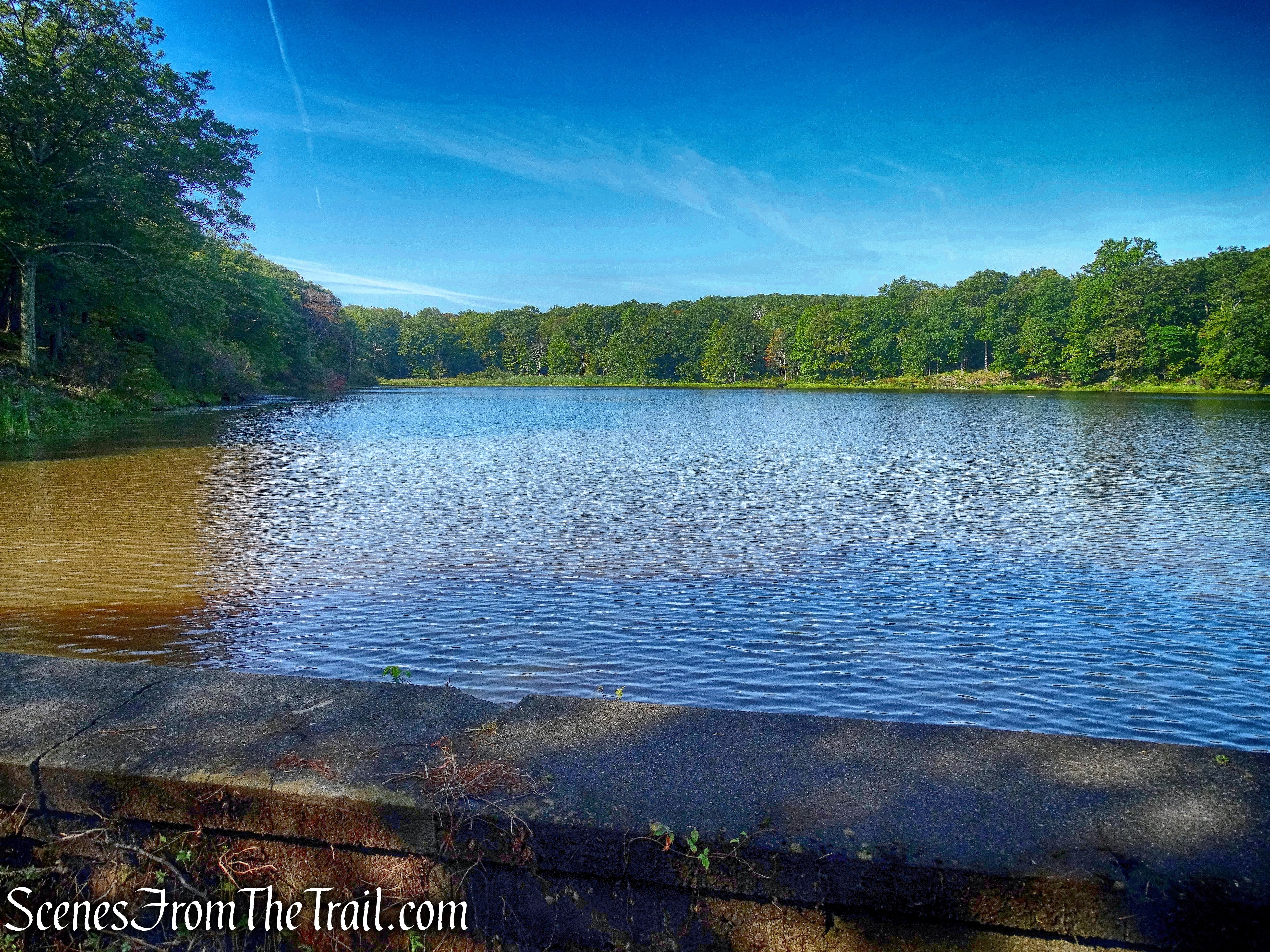
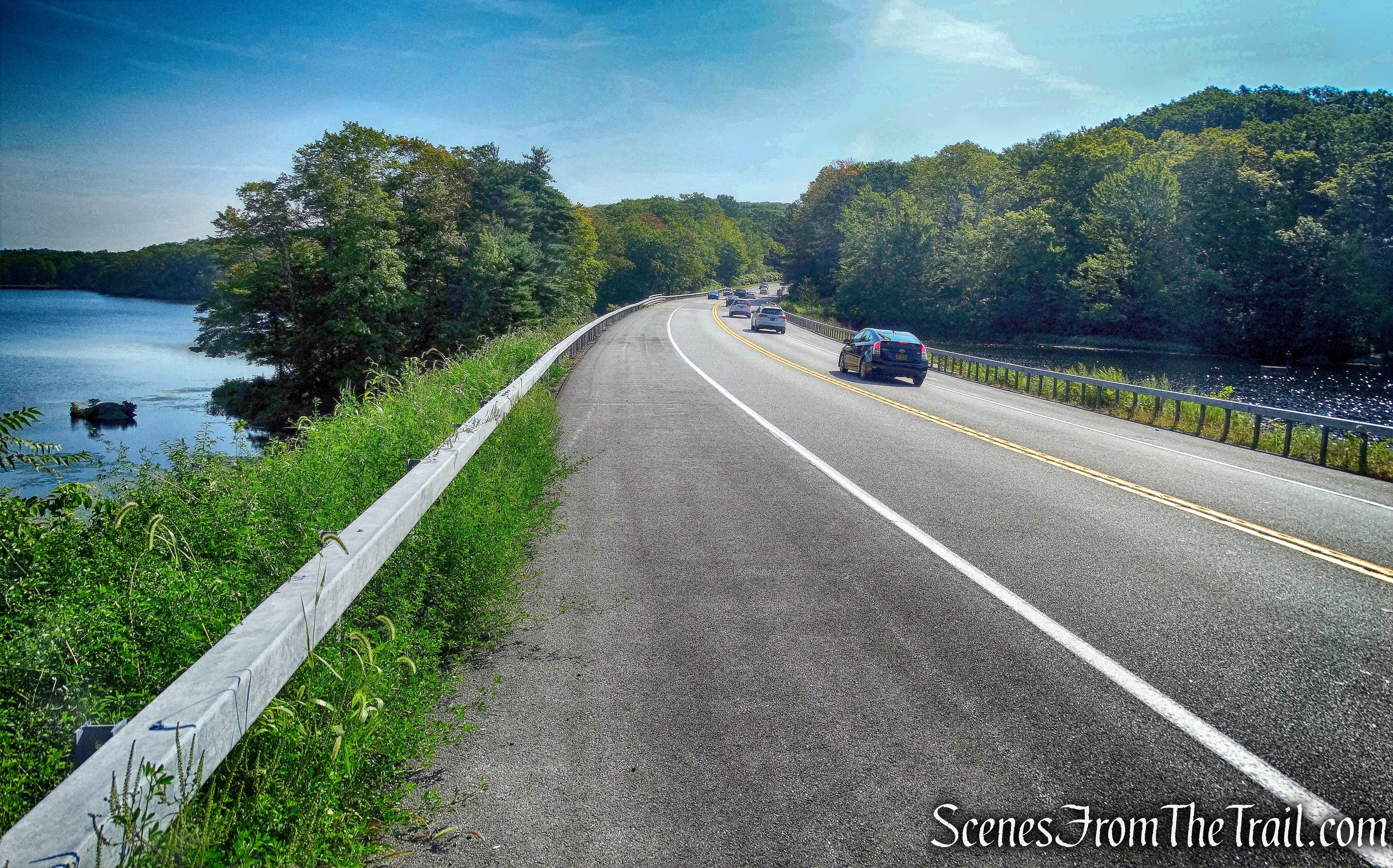
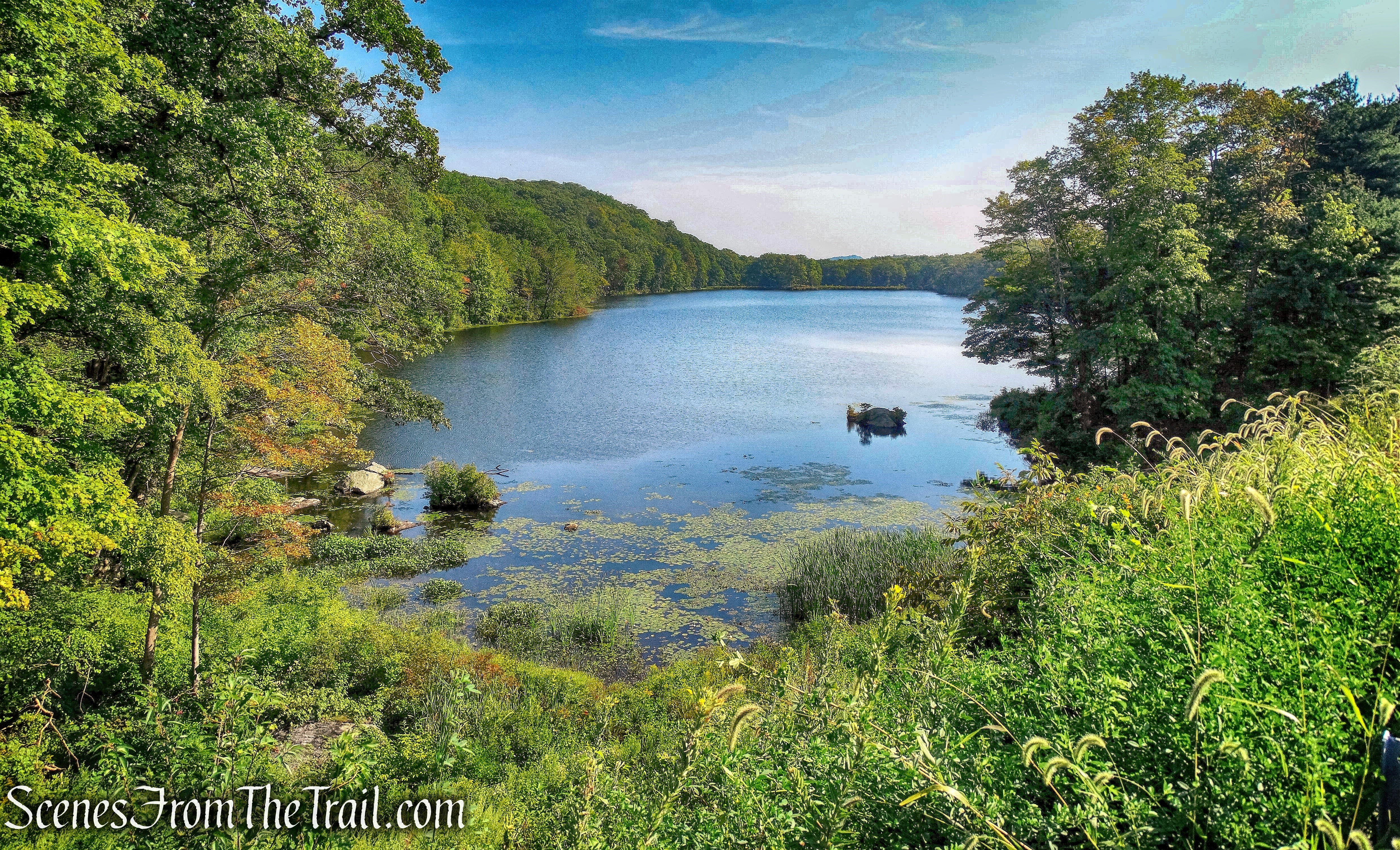
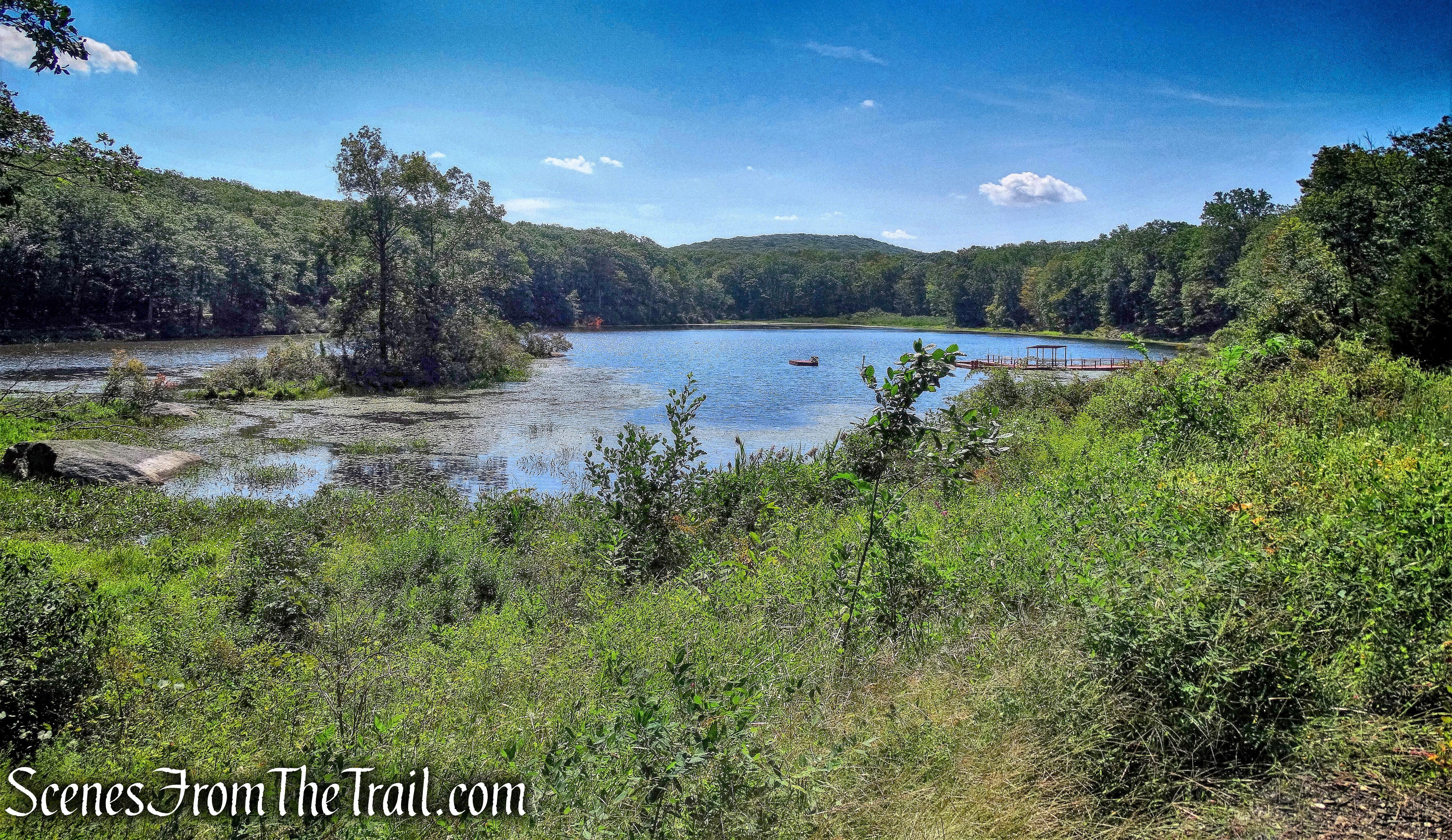
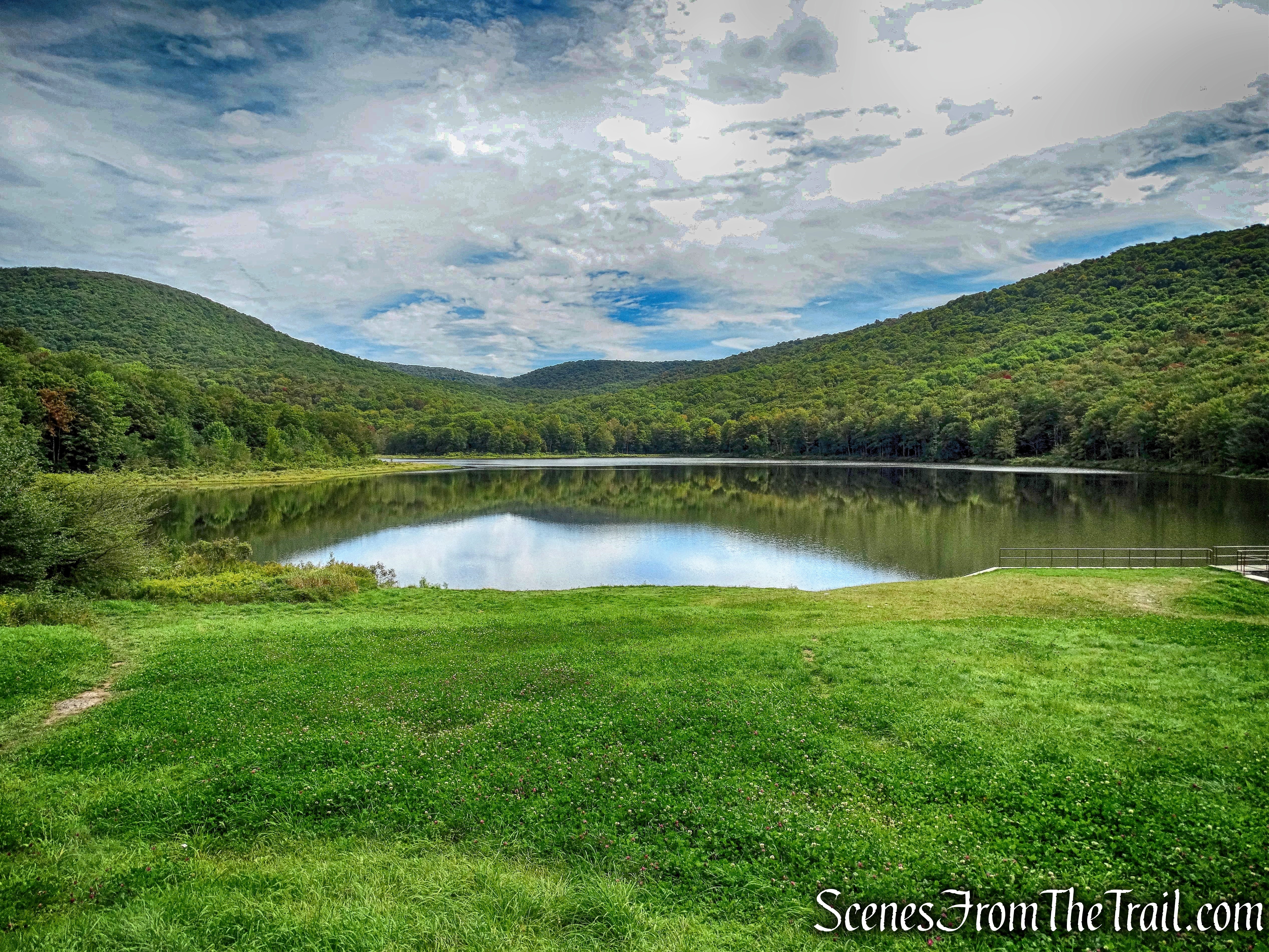
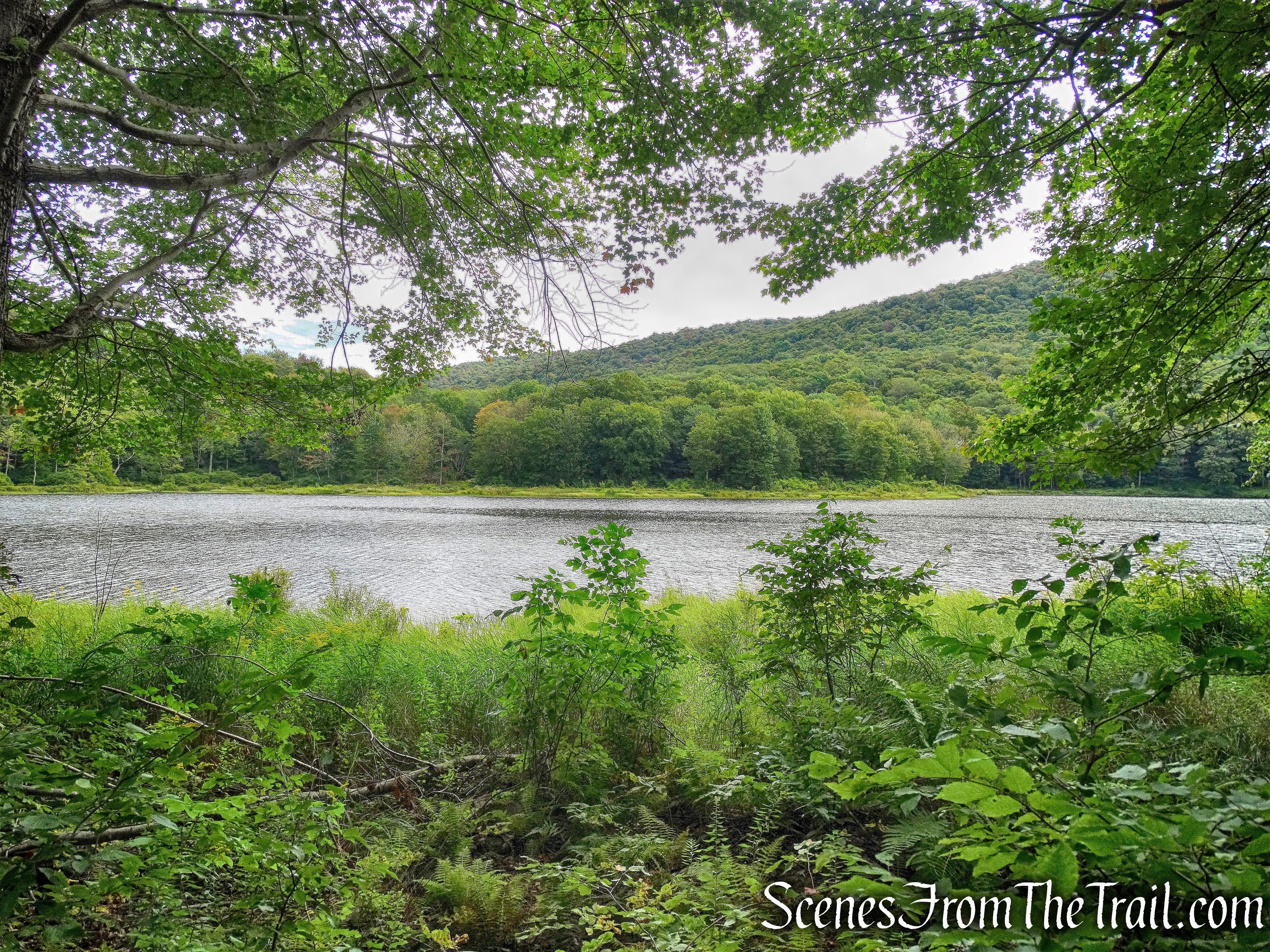
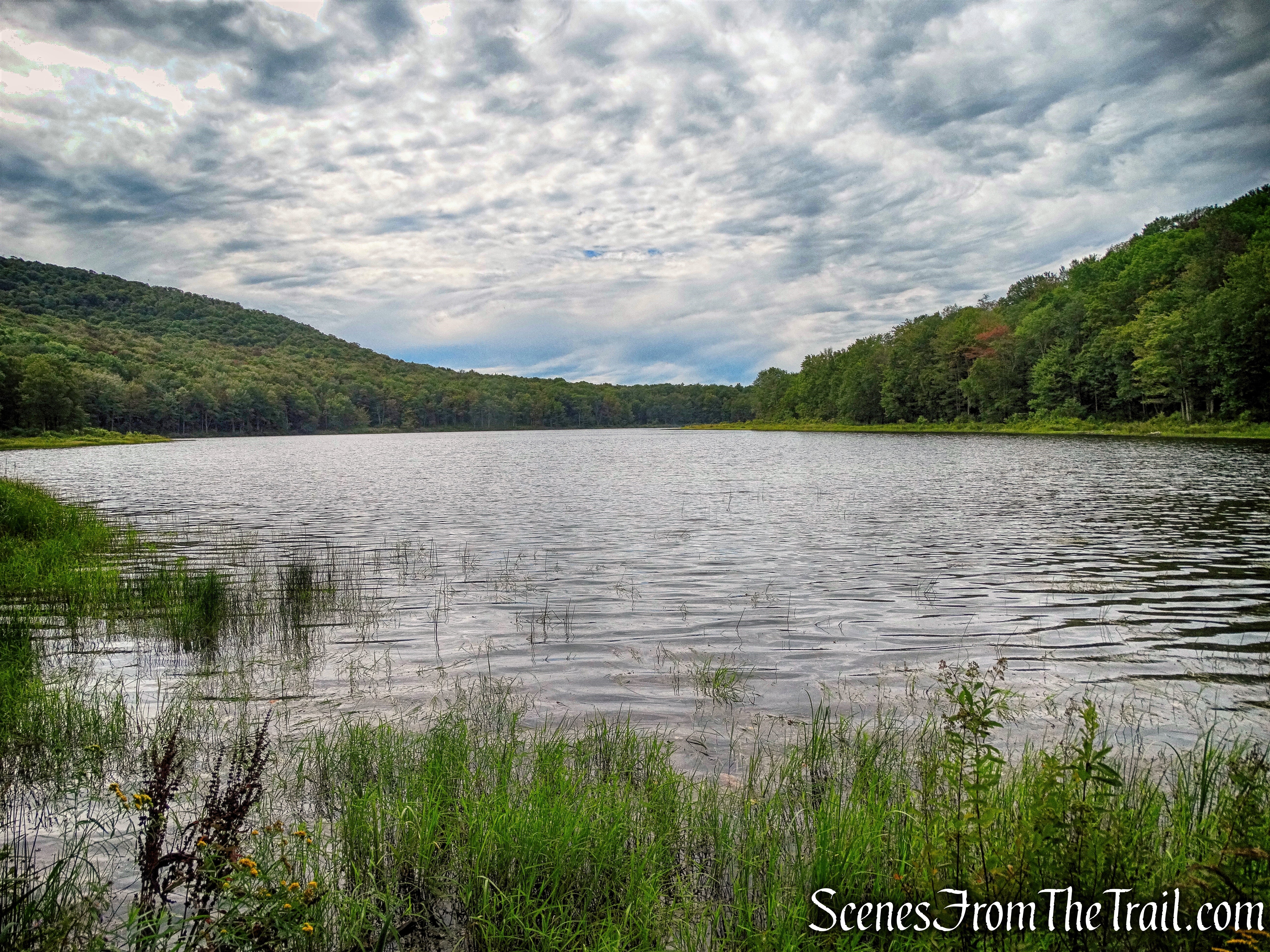
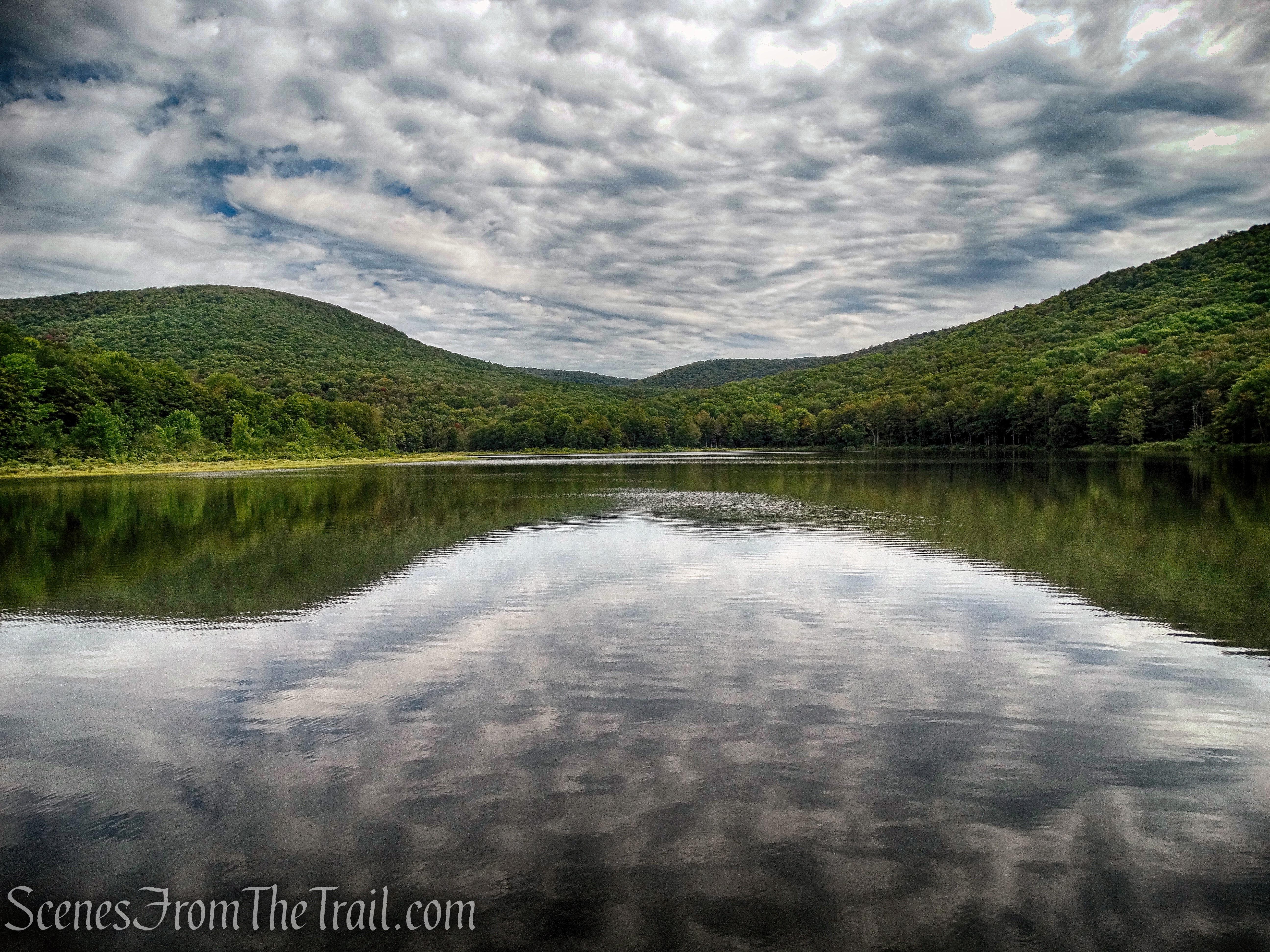
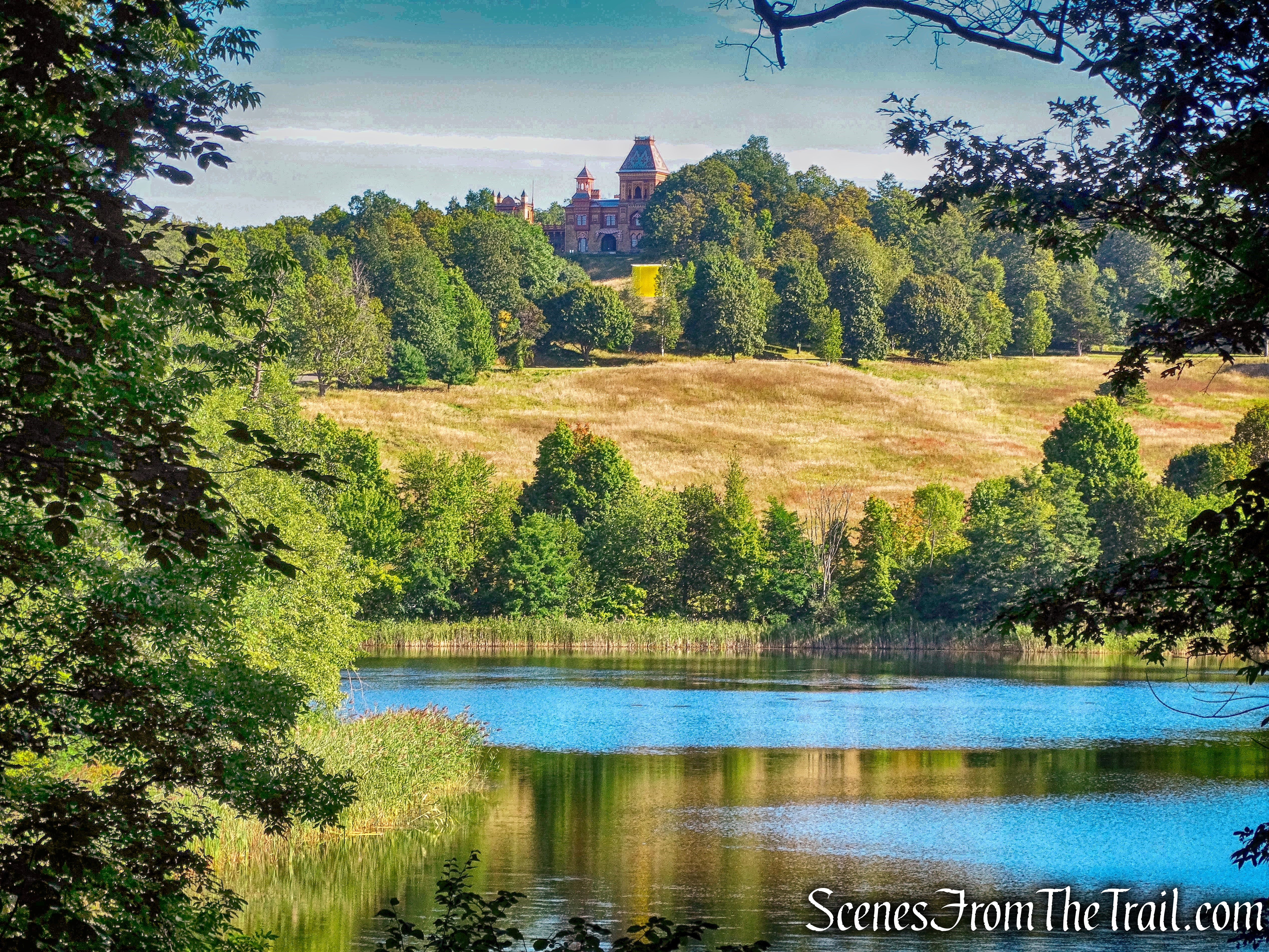
Minnewaska State Park Preserve was once the site of two mountaintop hotels, the last one closing in 1979. Many of the scenic trails and historic carriageways on the 22,275-acre preserve, wind their way around two “sky lakes.” A sky lake is a pristine and often unusually clear lake that is fed only from rain water. Lake Minnewaska and Lake Awosting are the centerpieces of the park preserve, from which most other scenic attractions can be reached. Both lakes are set into white conglomerate cliffs and encircled with carriageways that provide ready access to many views.
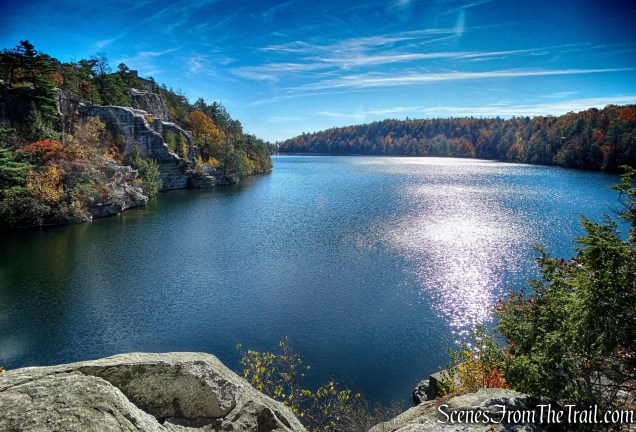
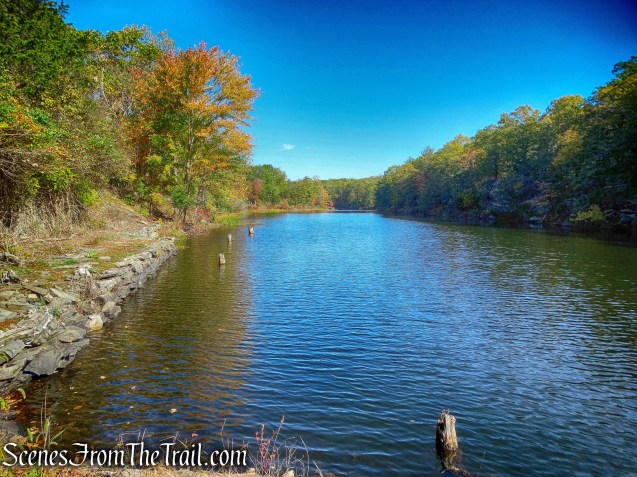
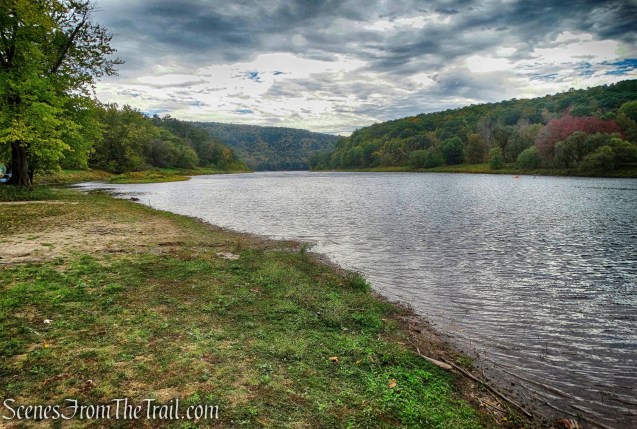
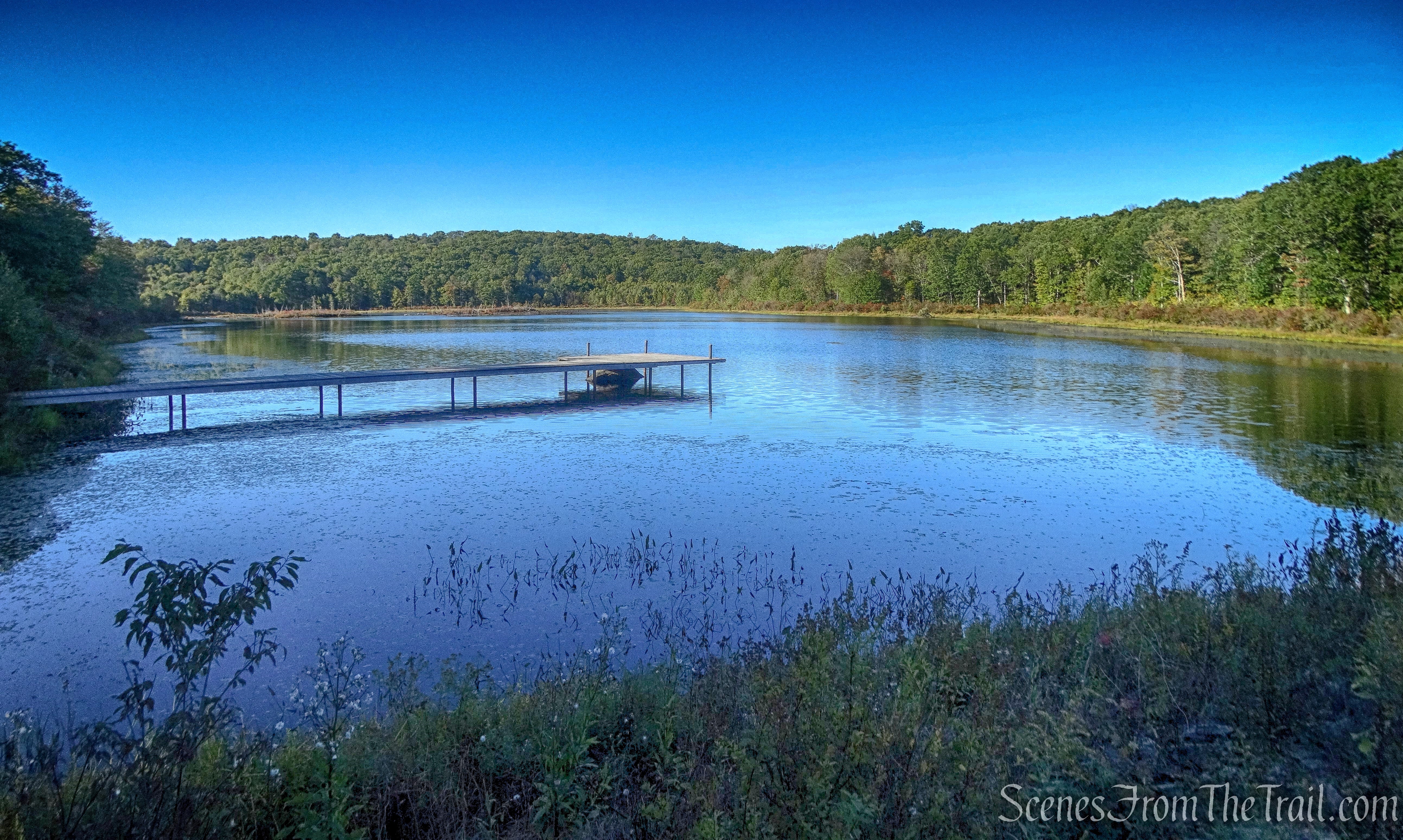
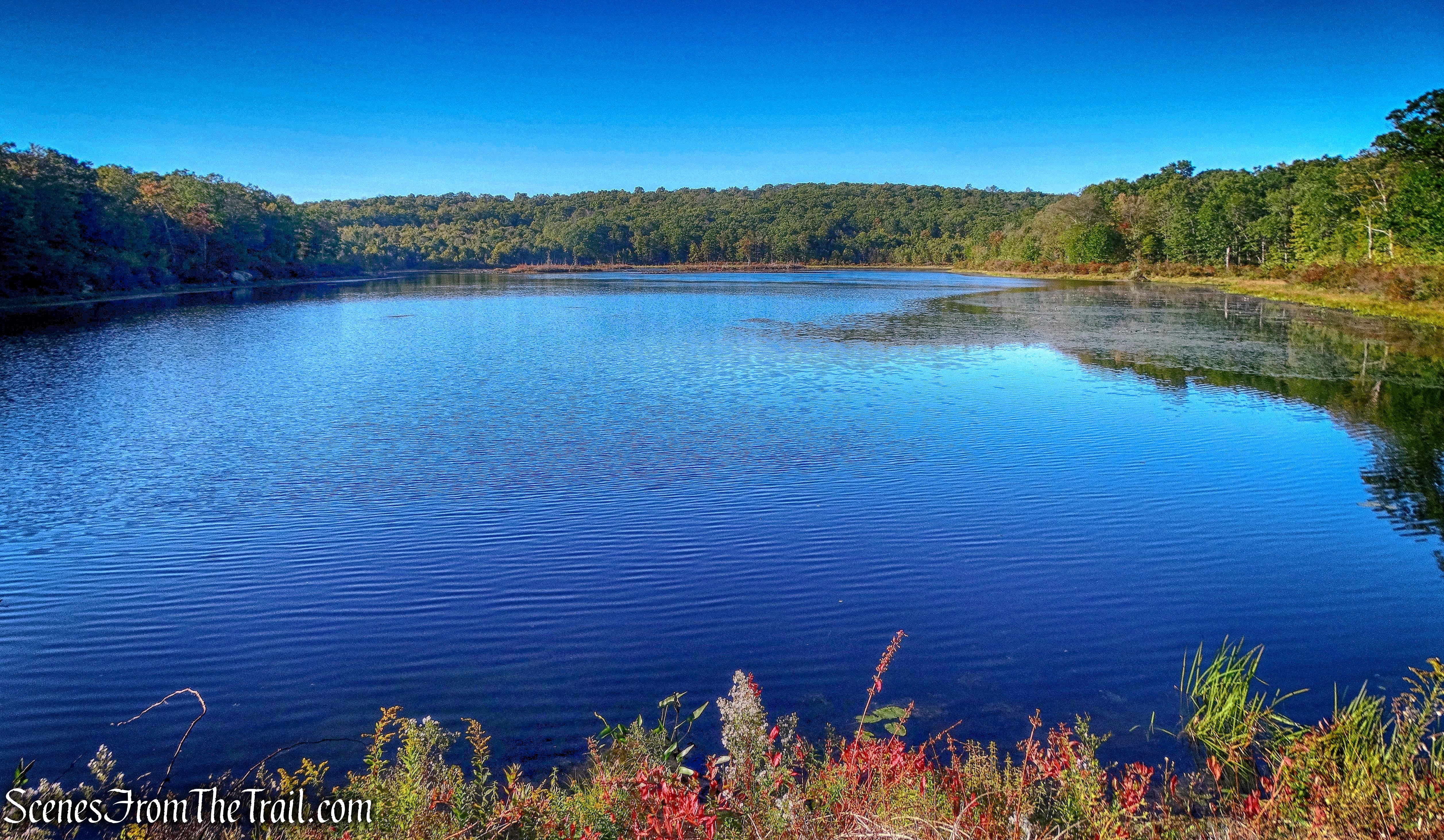
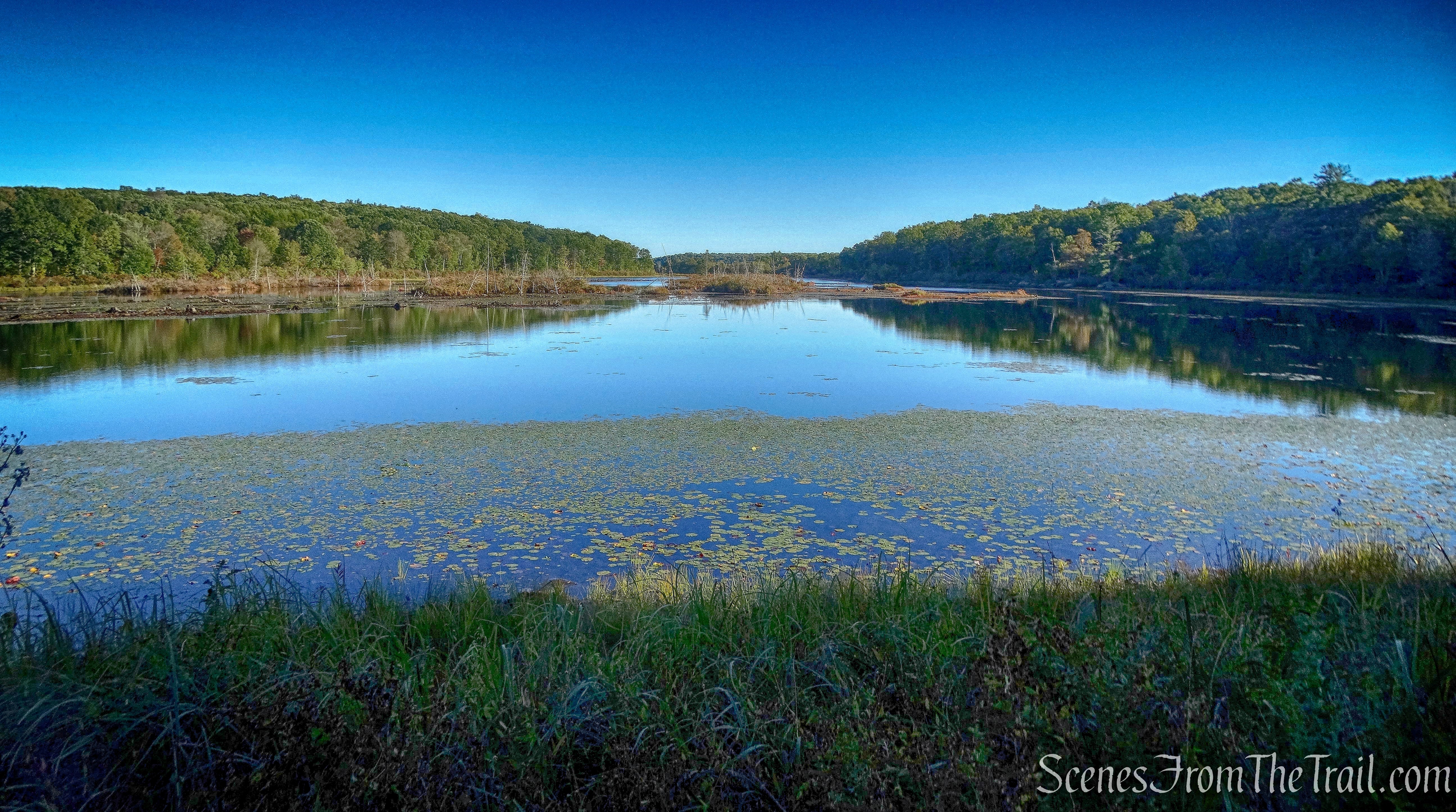
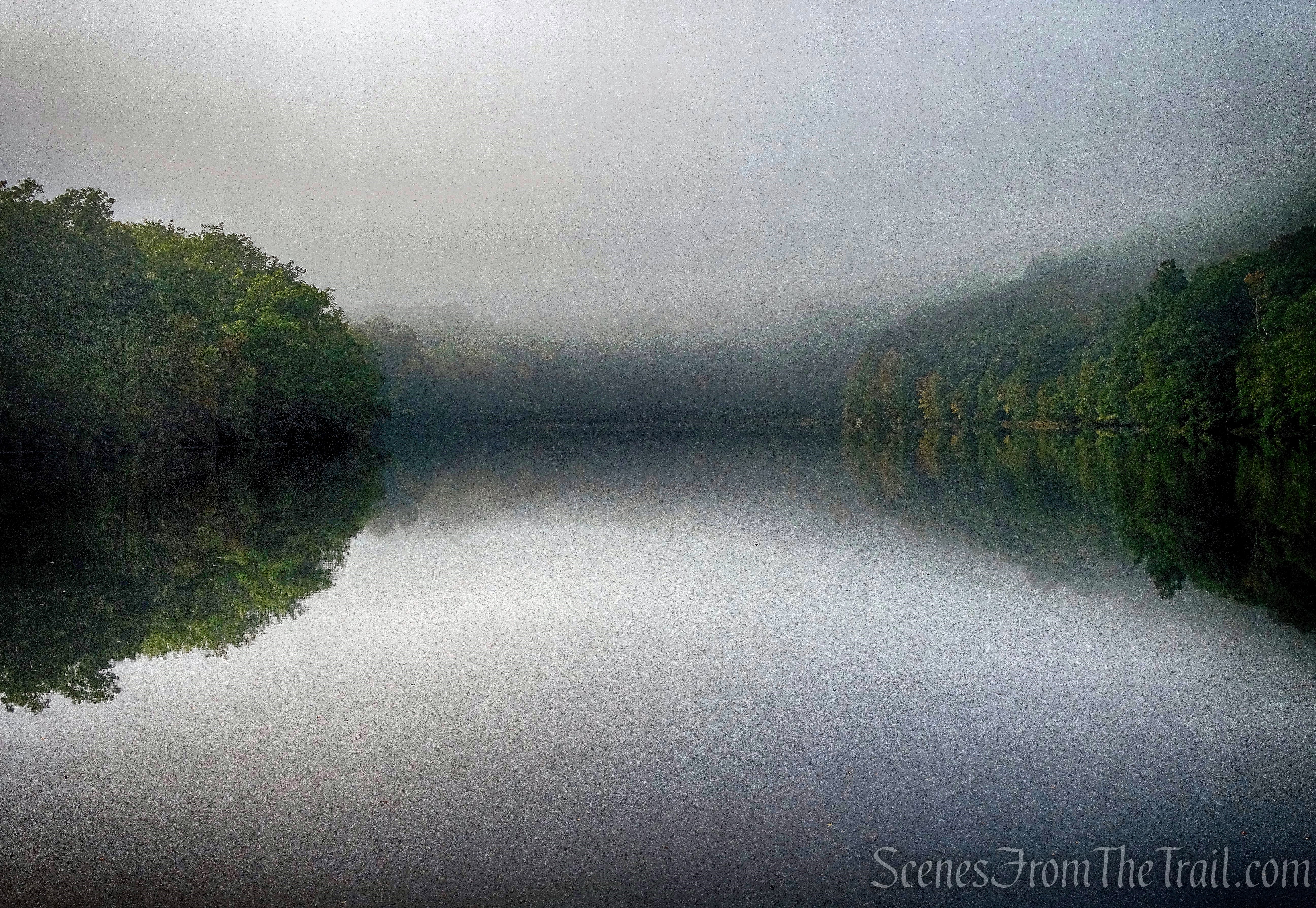
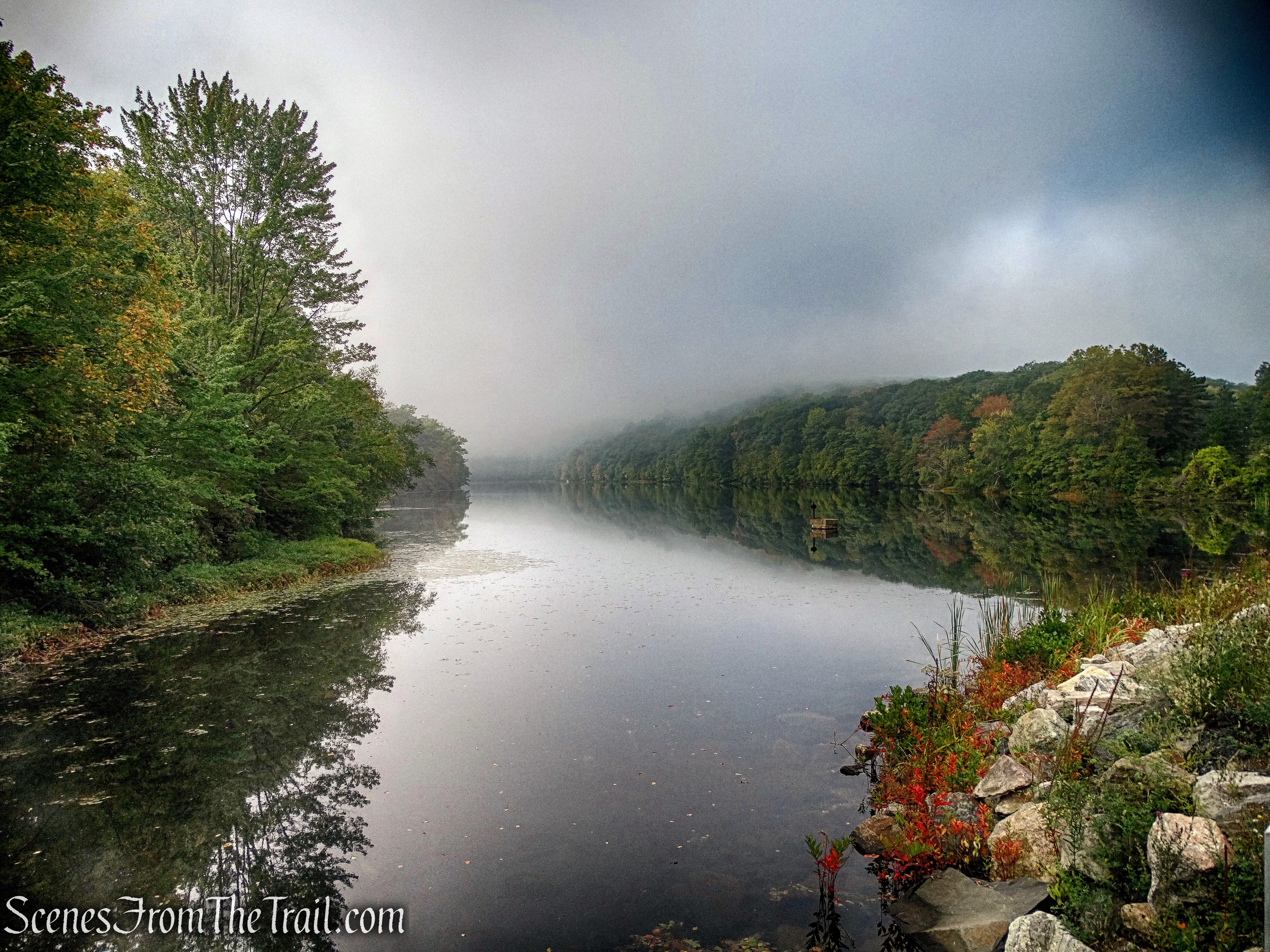
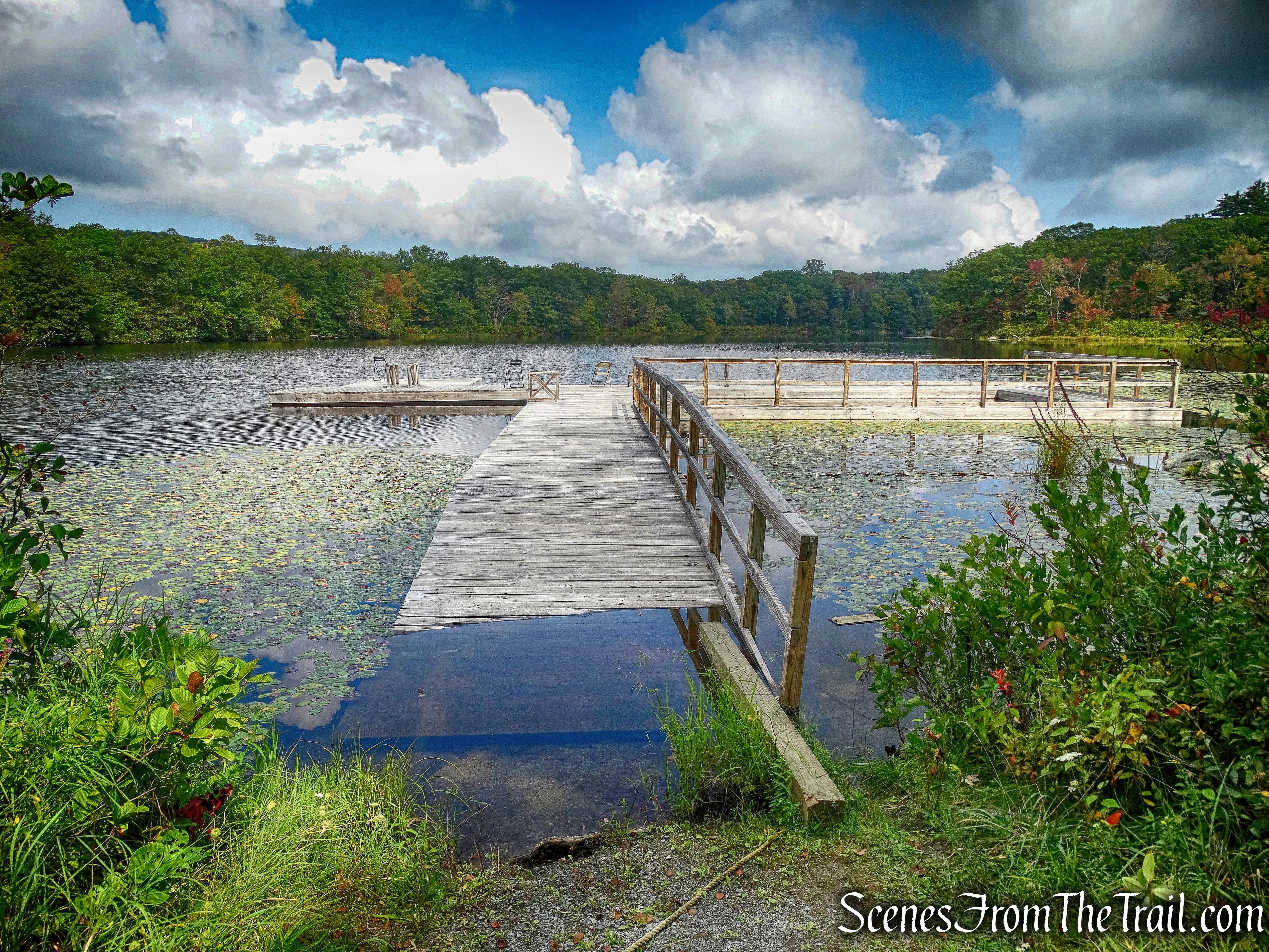
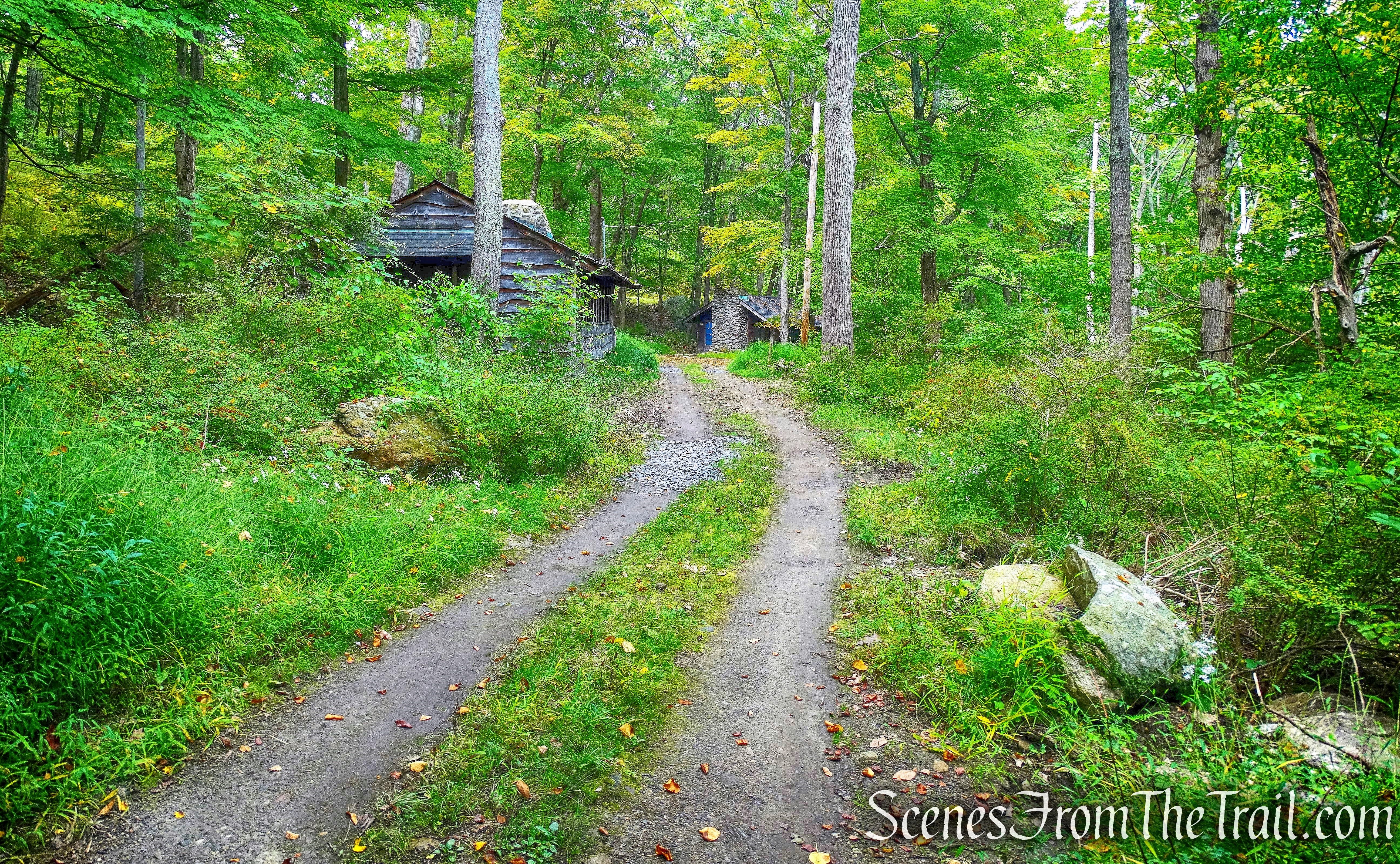
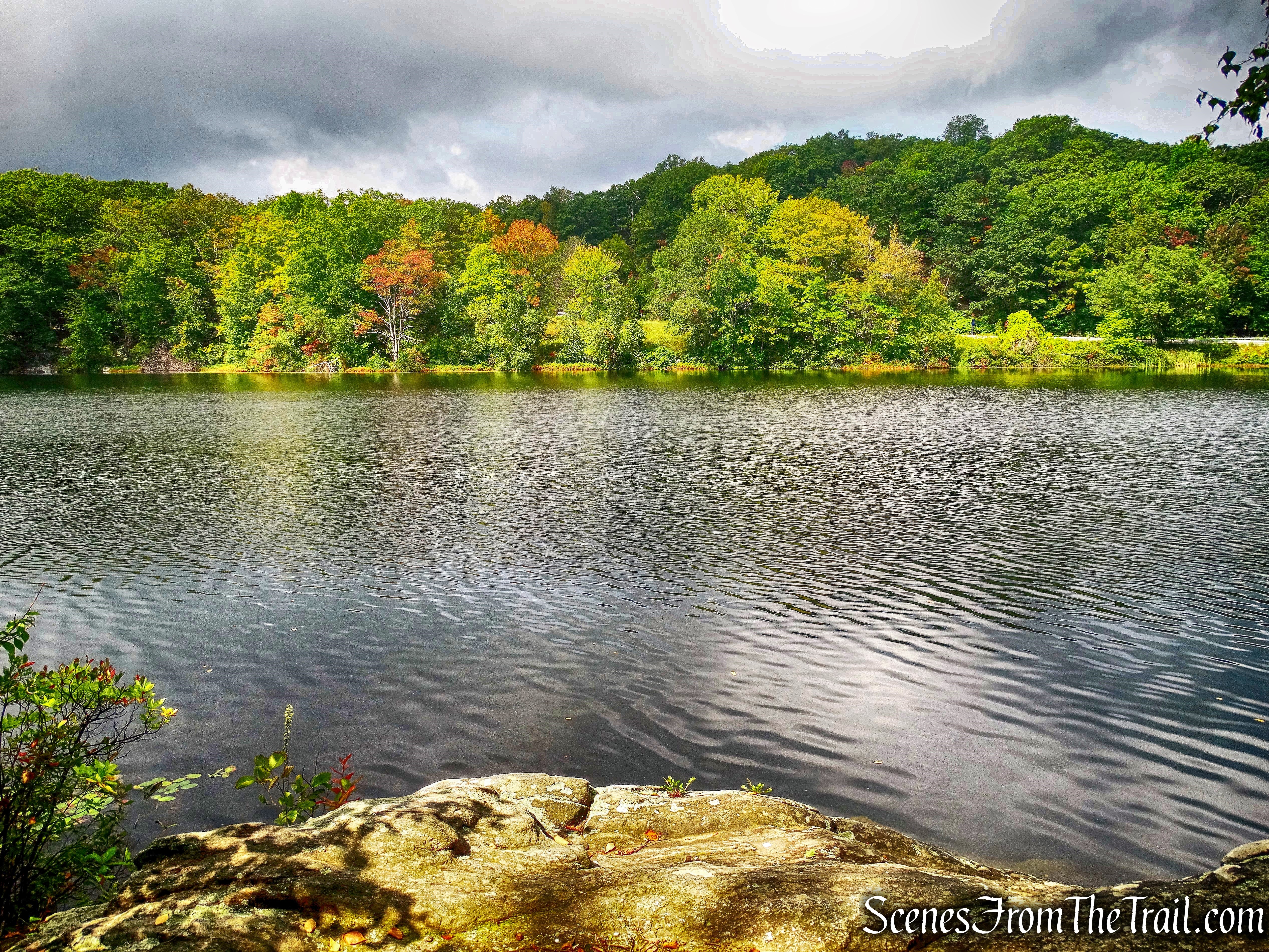
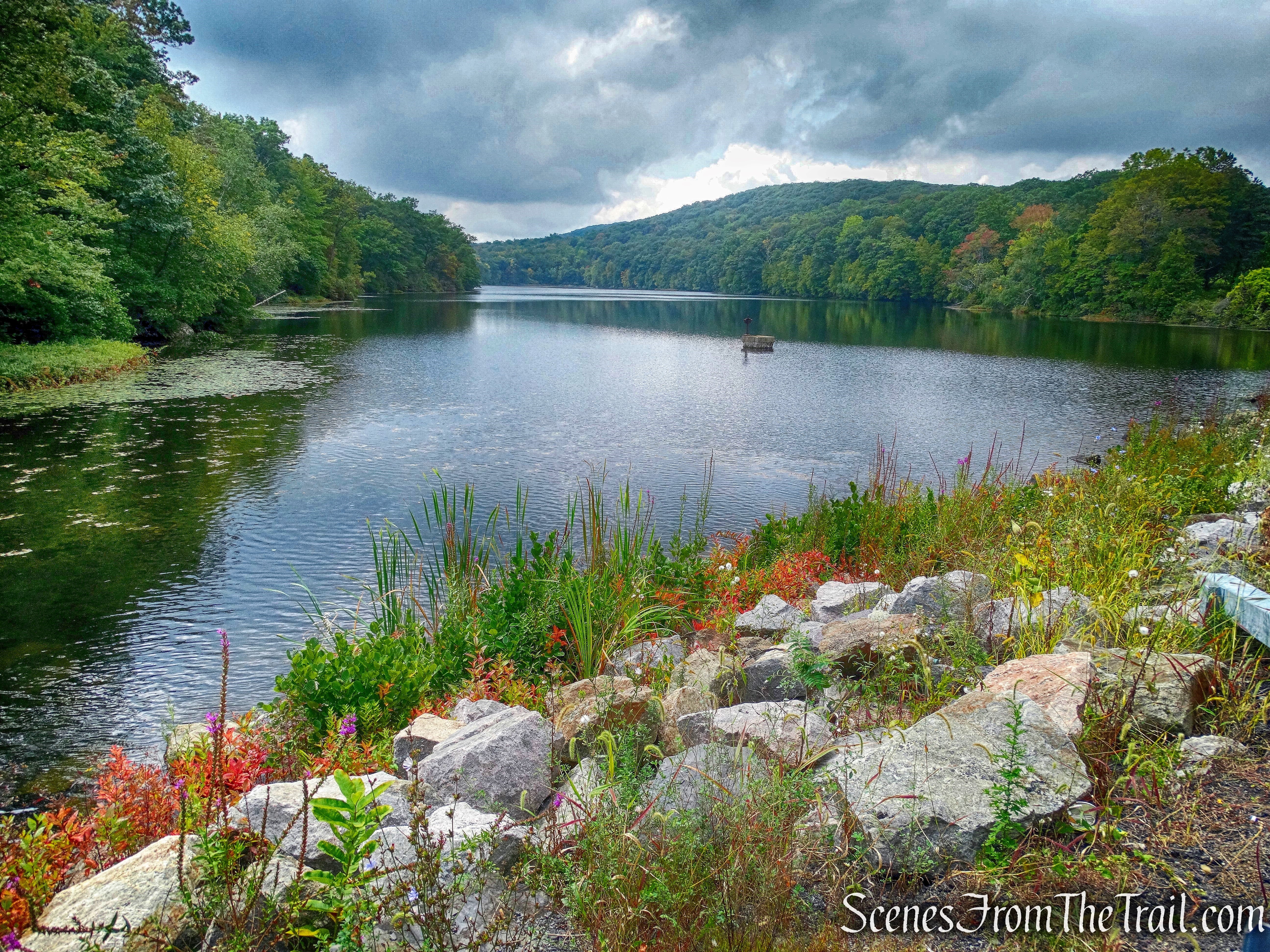
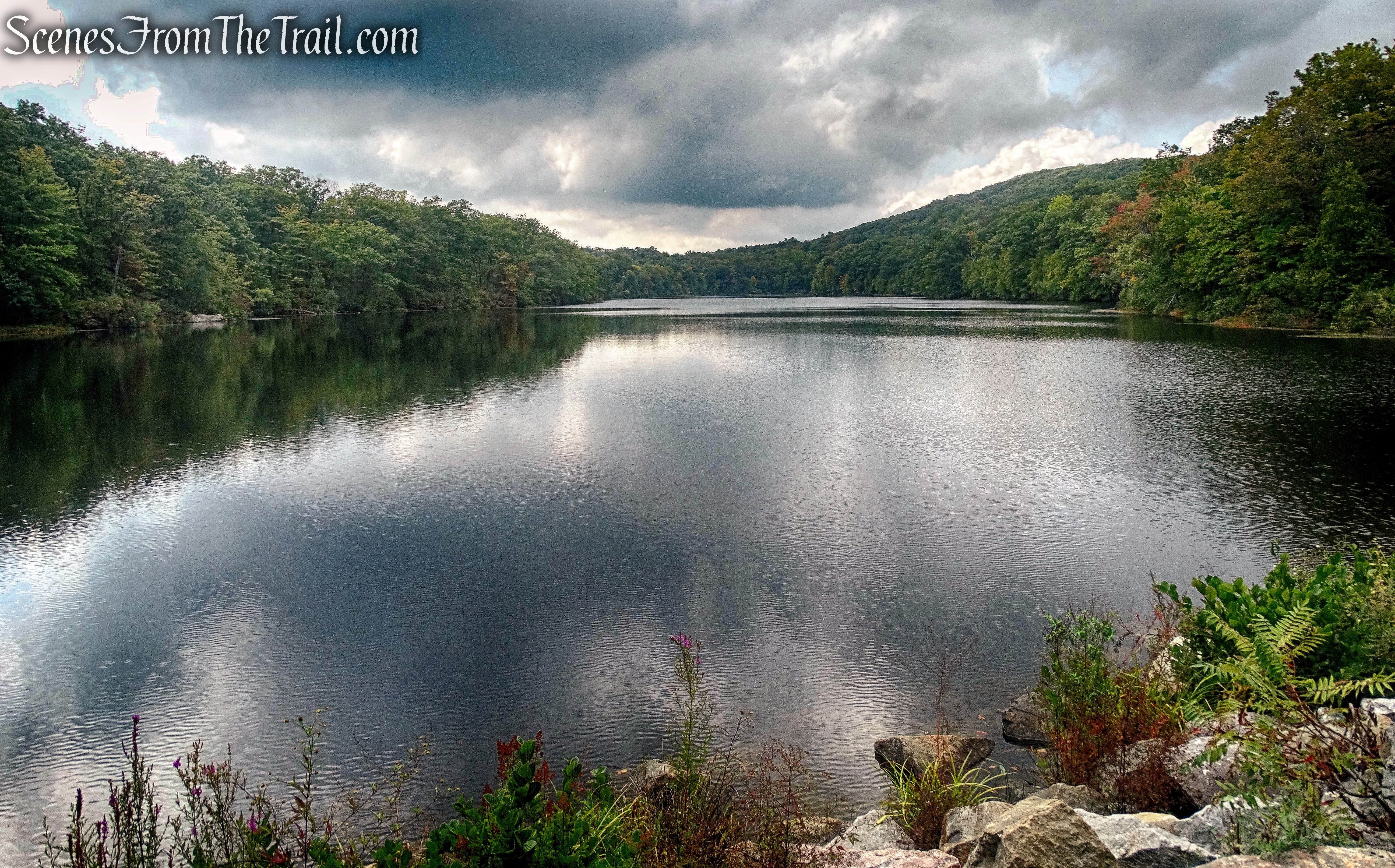
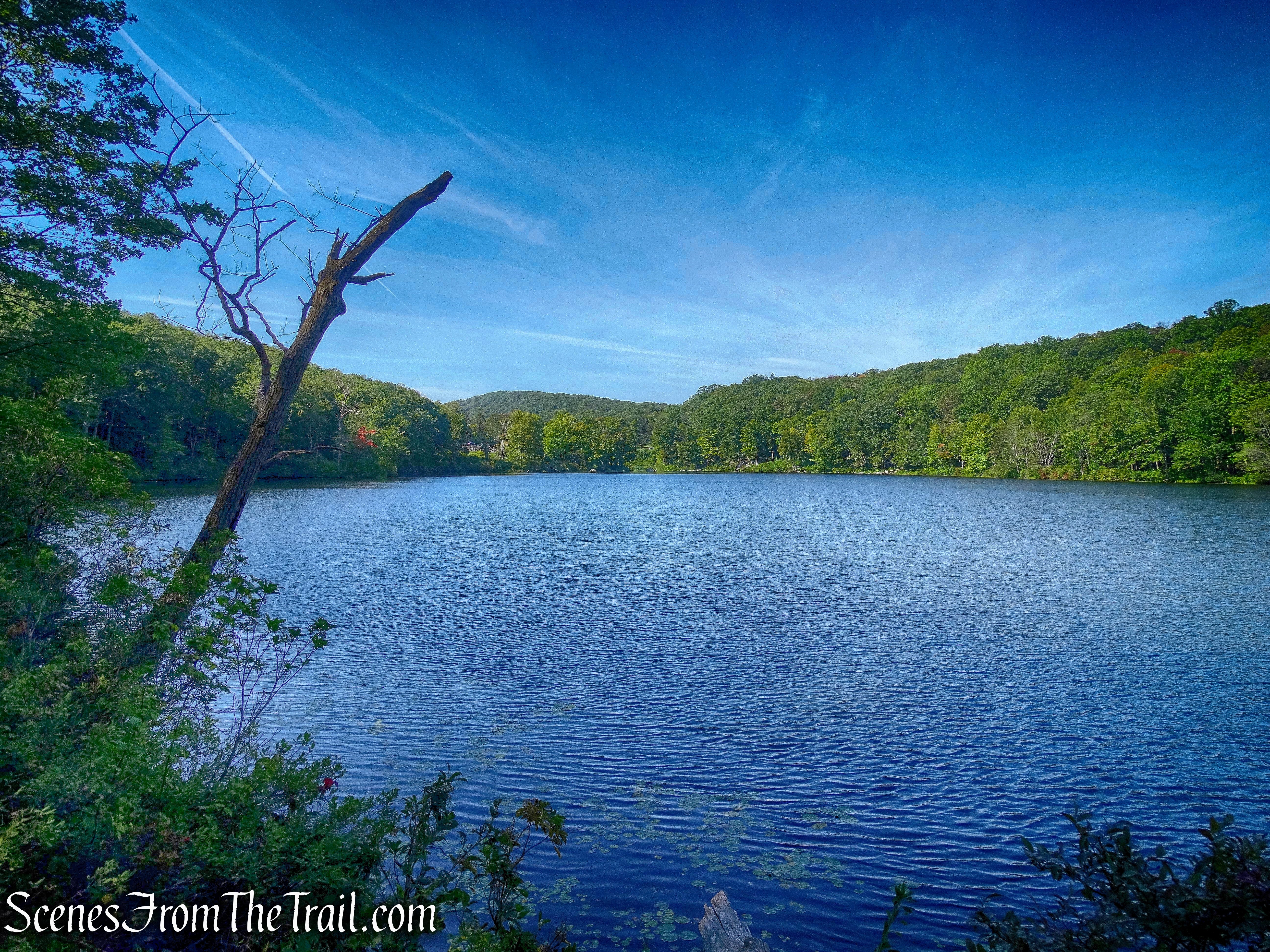
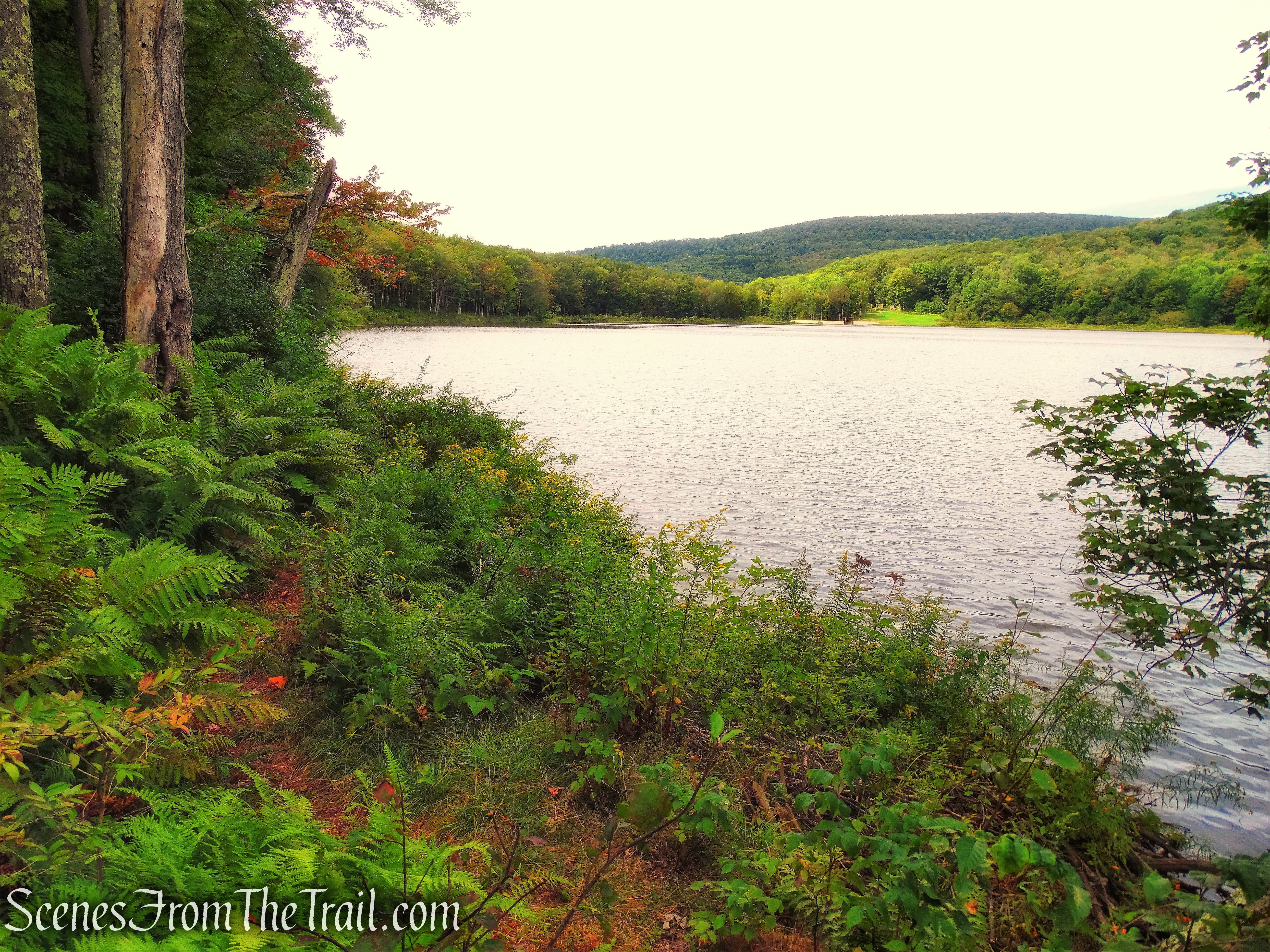
Lake Minnewaska

Lake Minnewaska

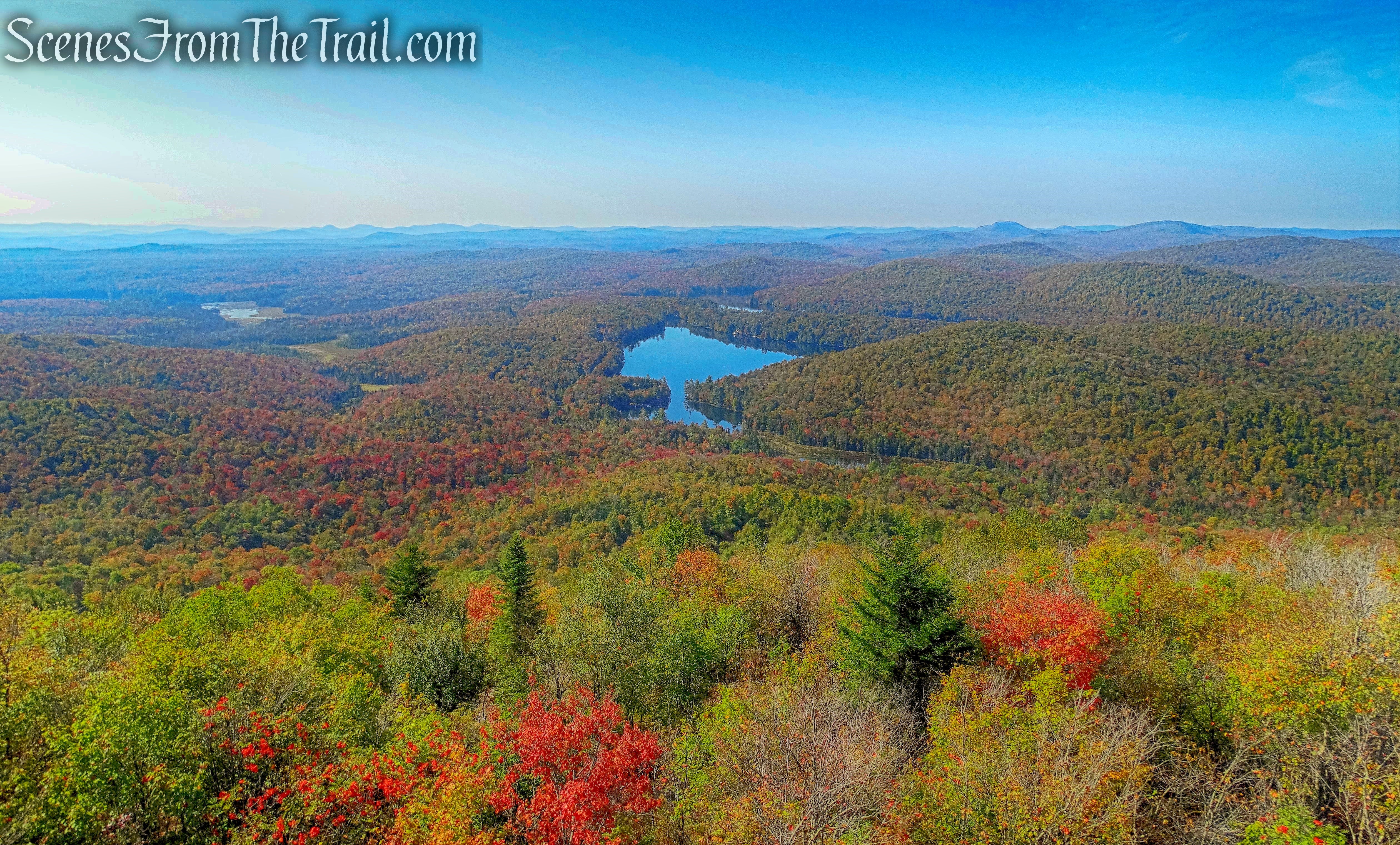
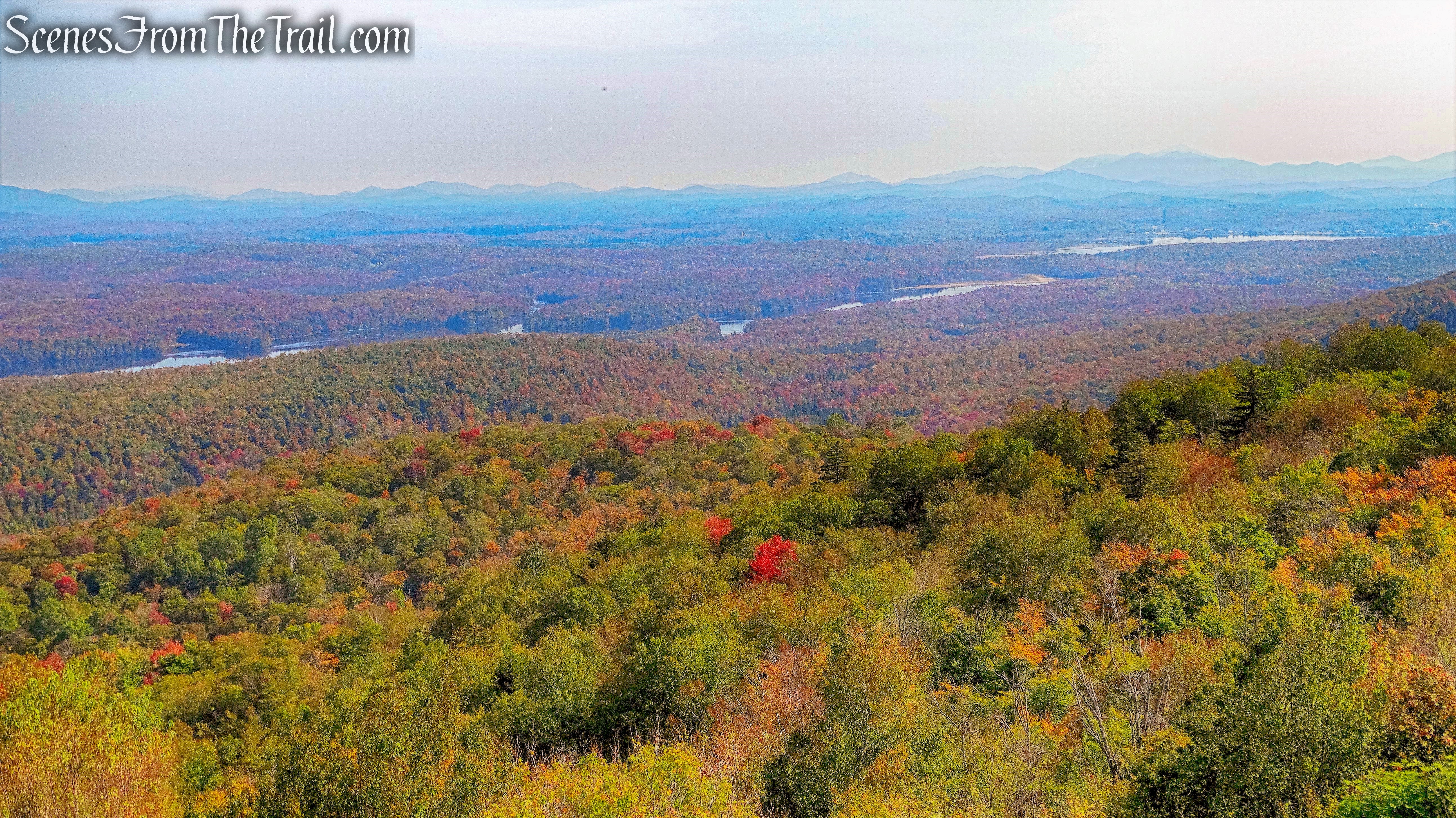
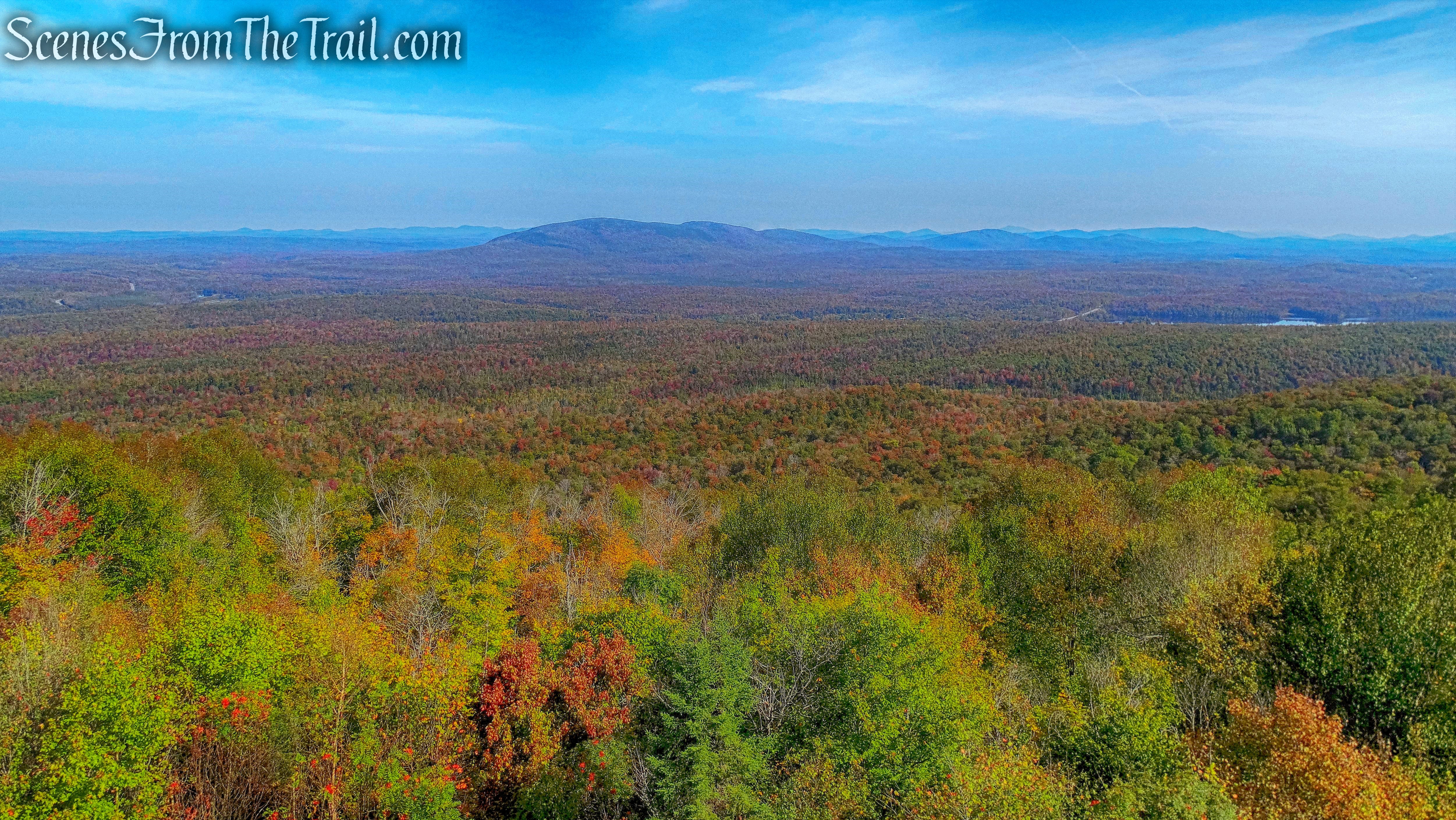
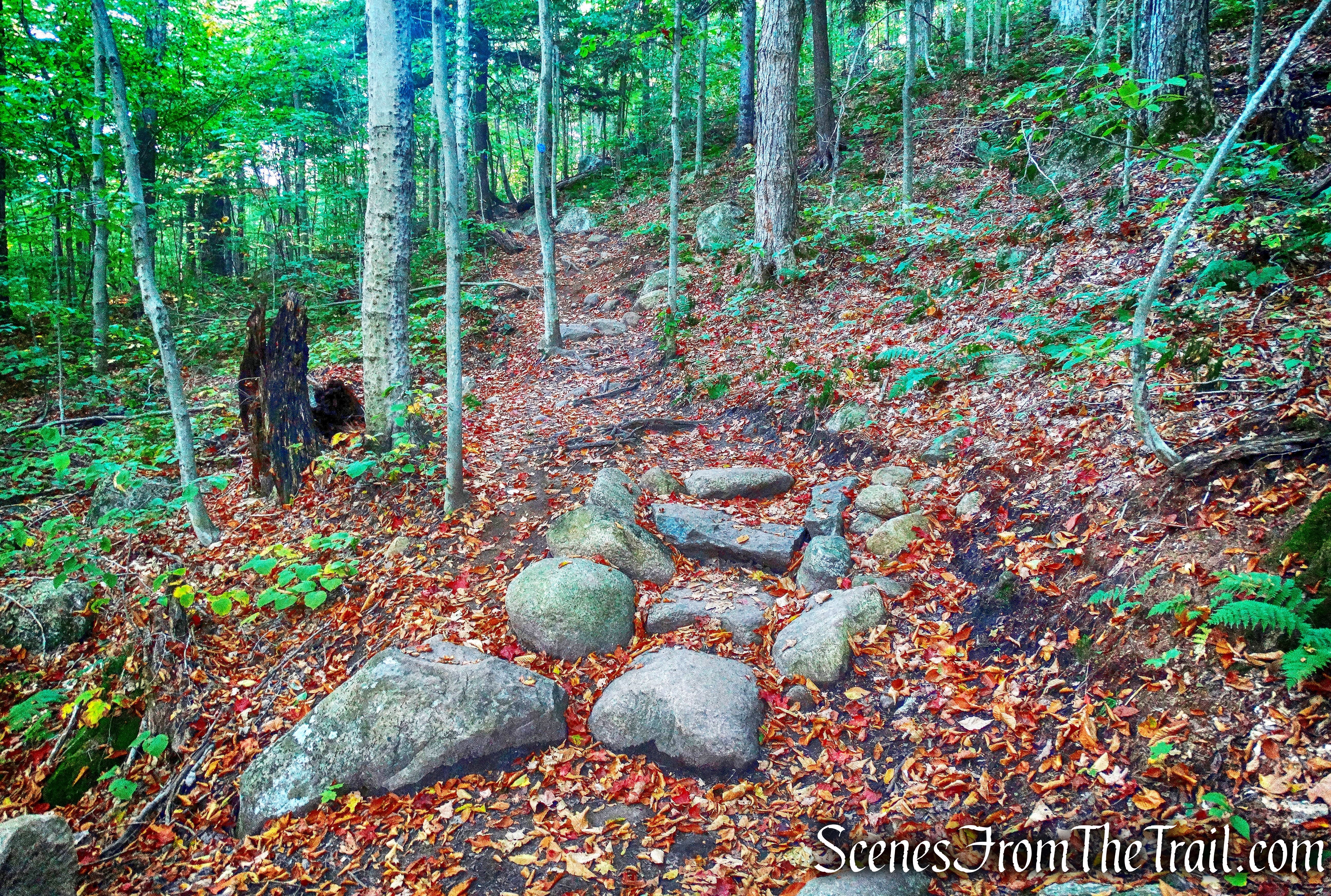
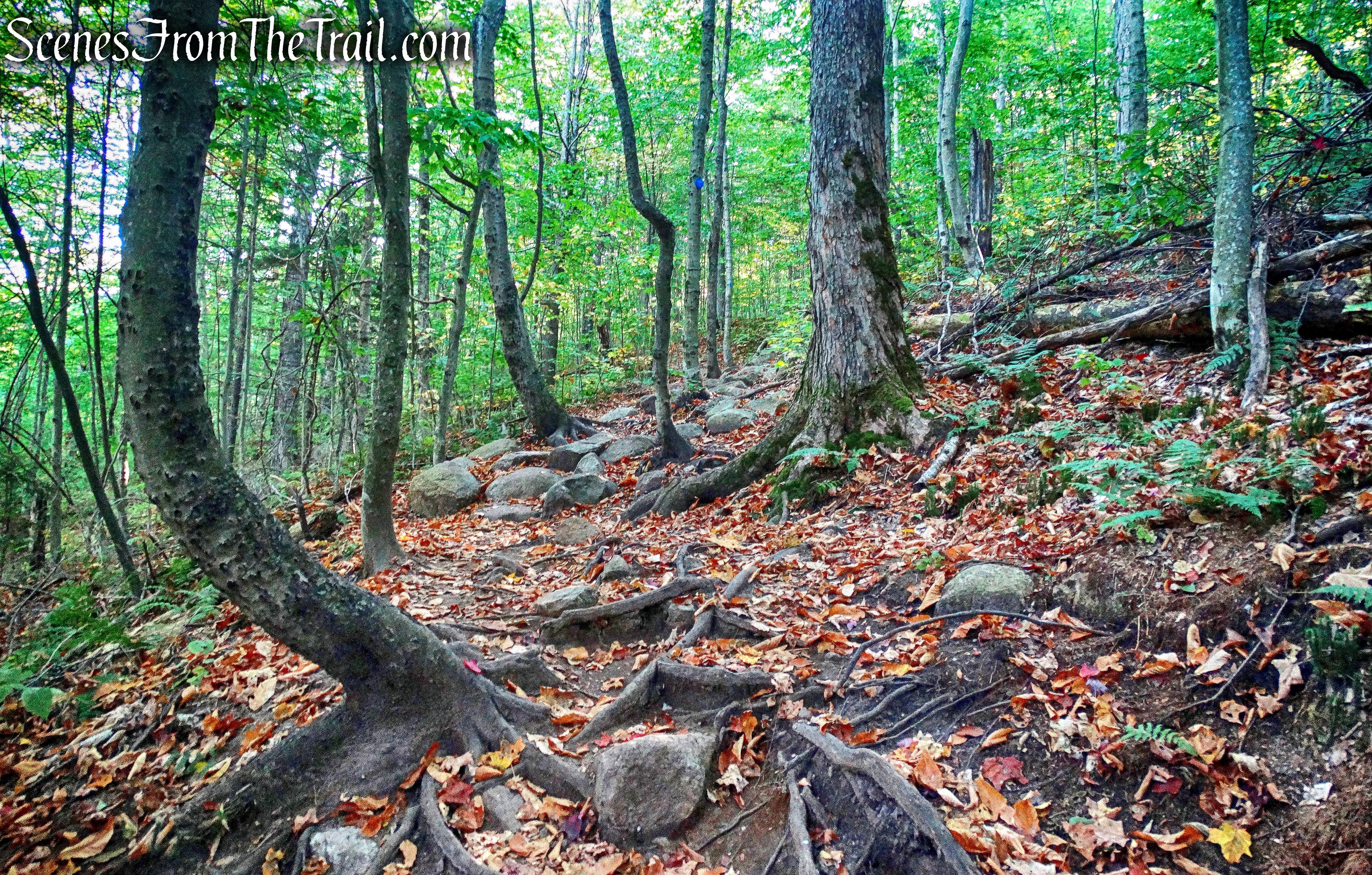
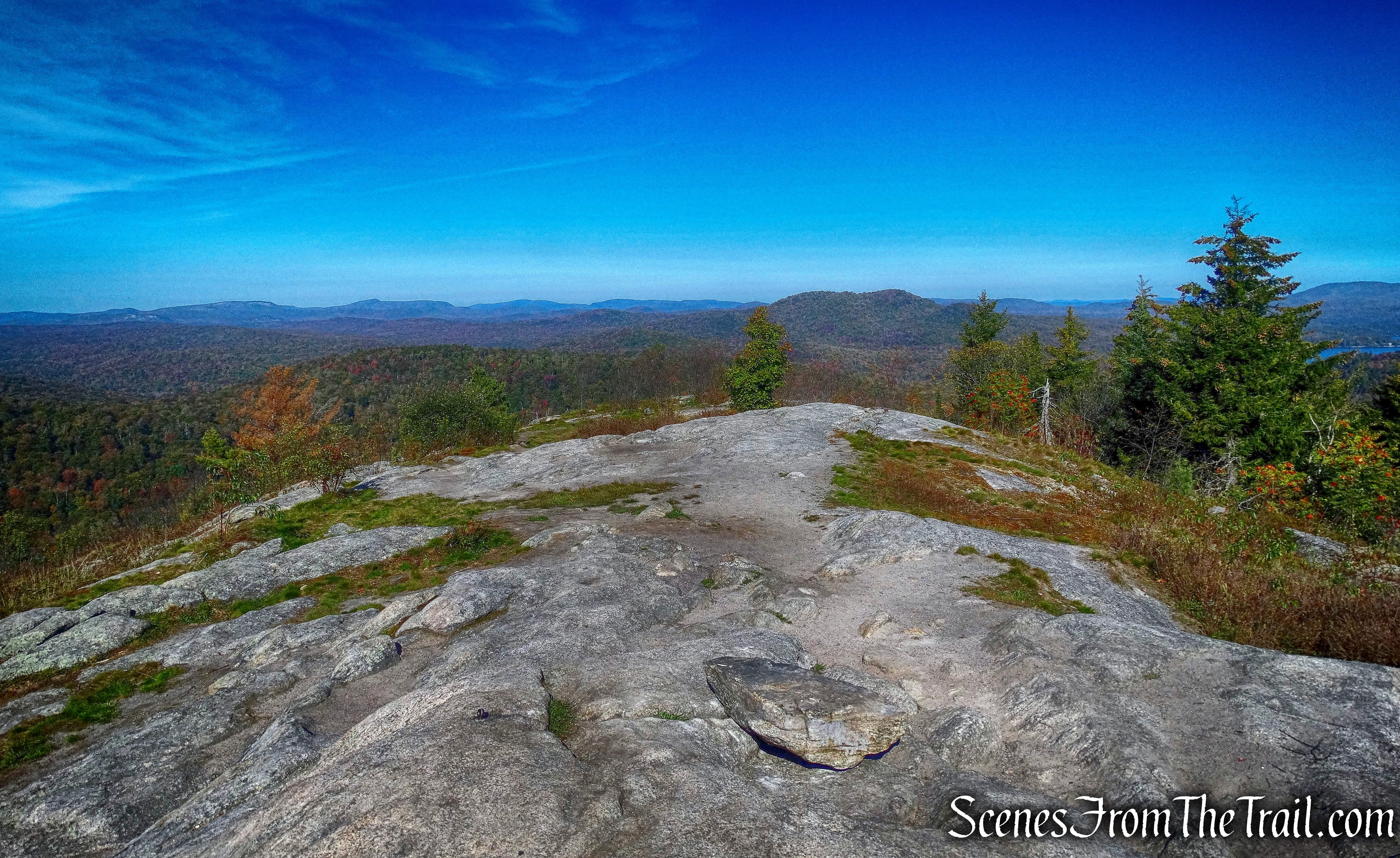
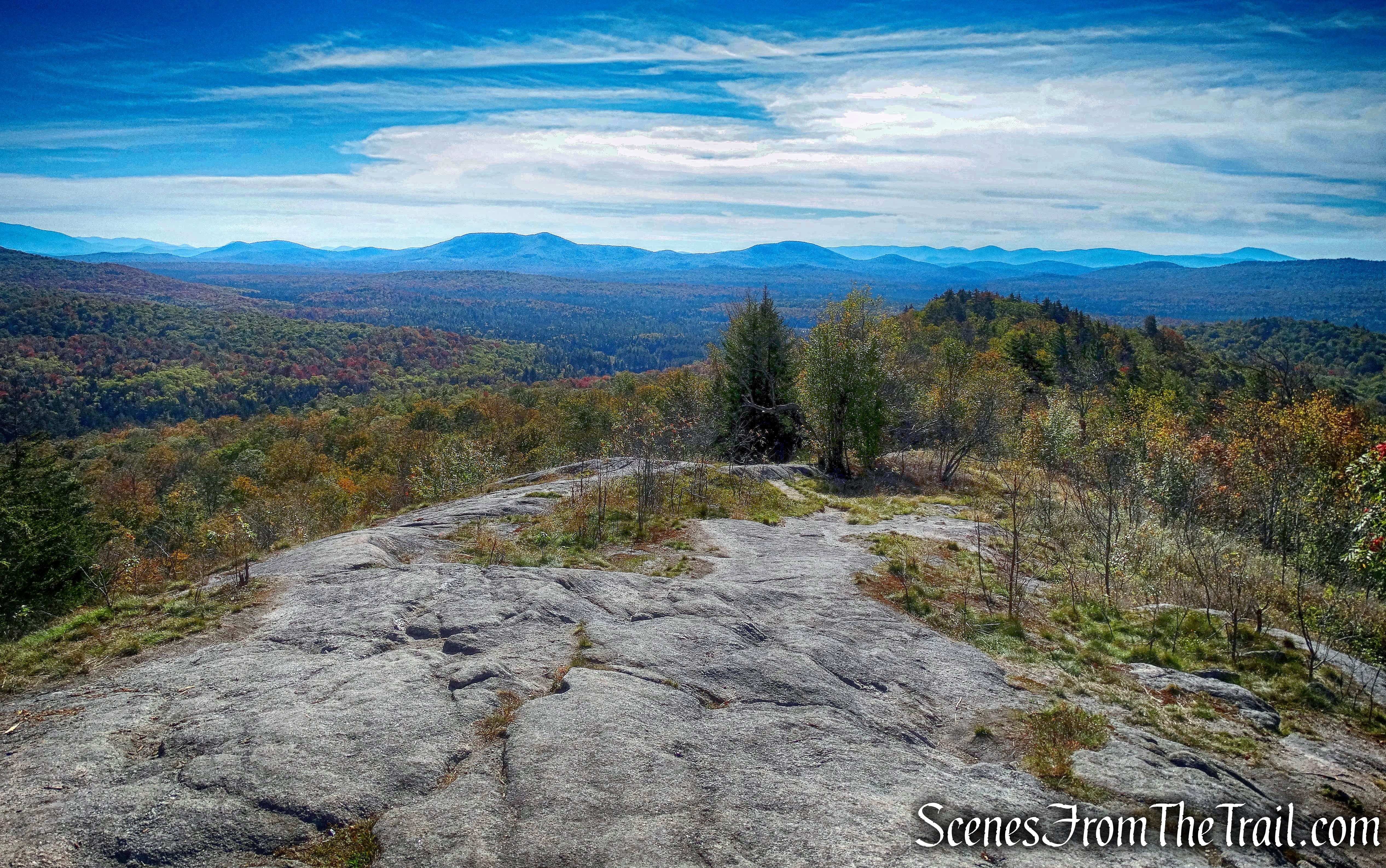
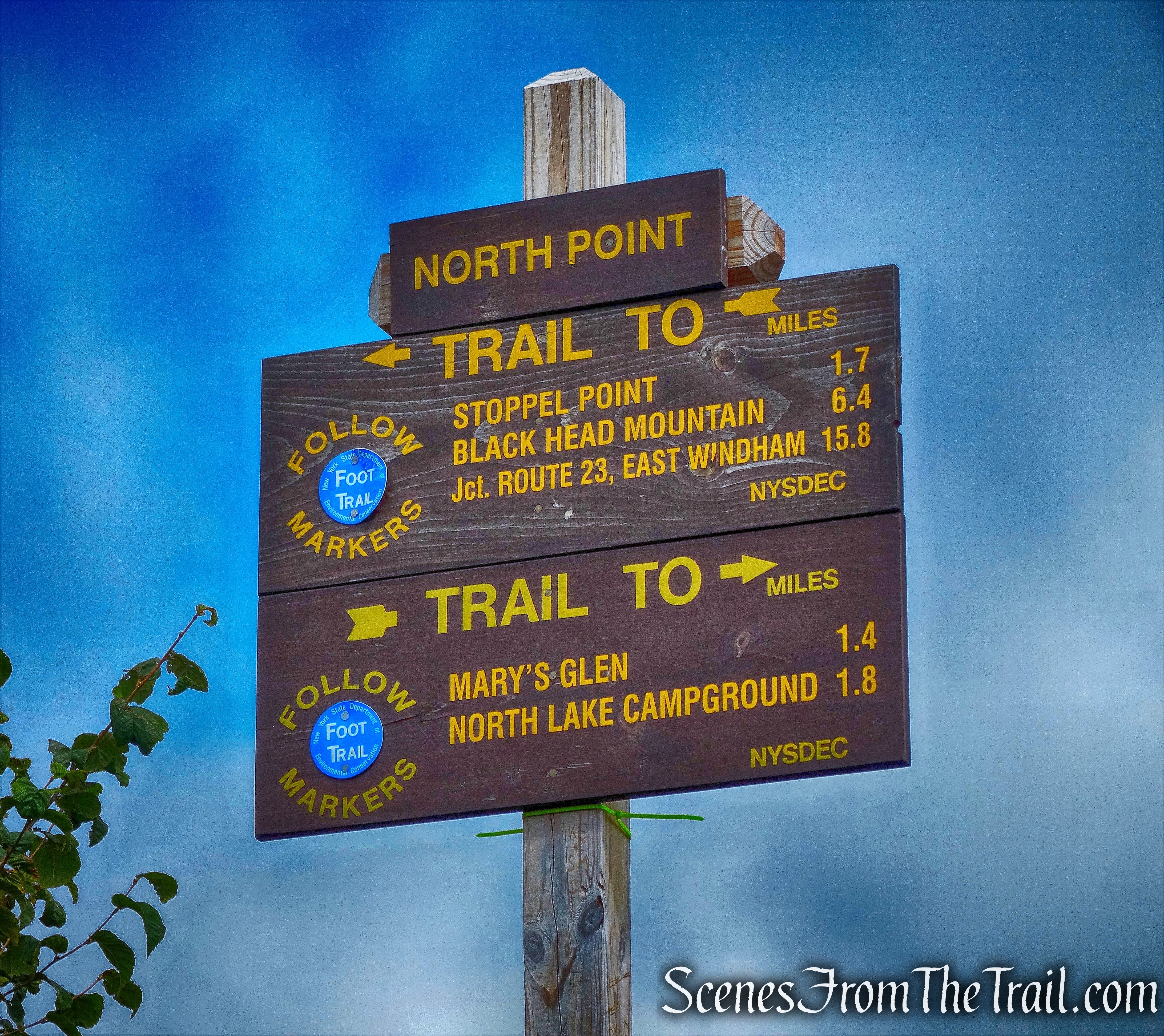
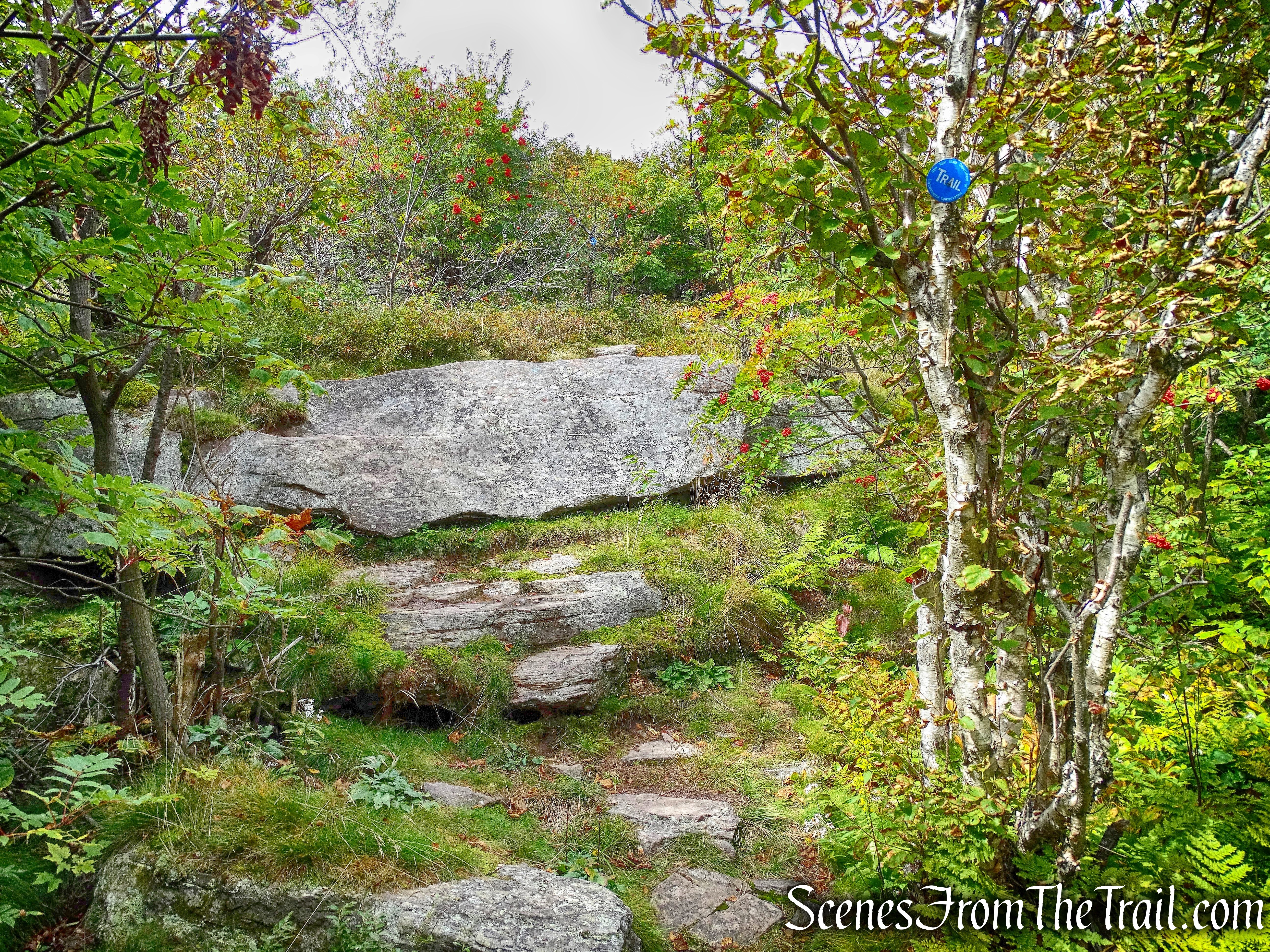
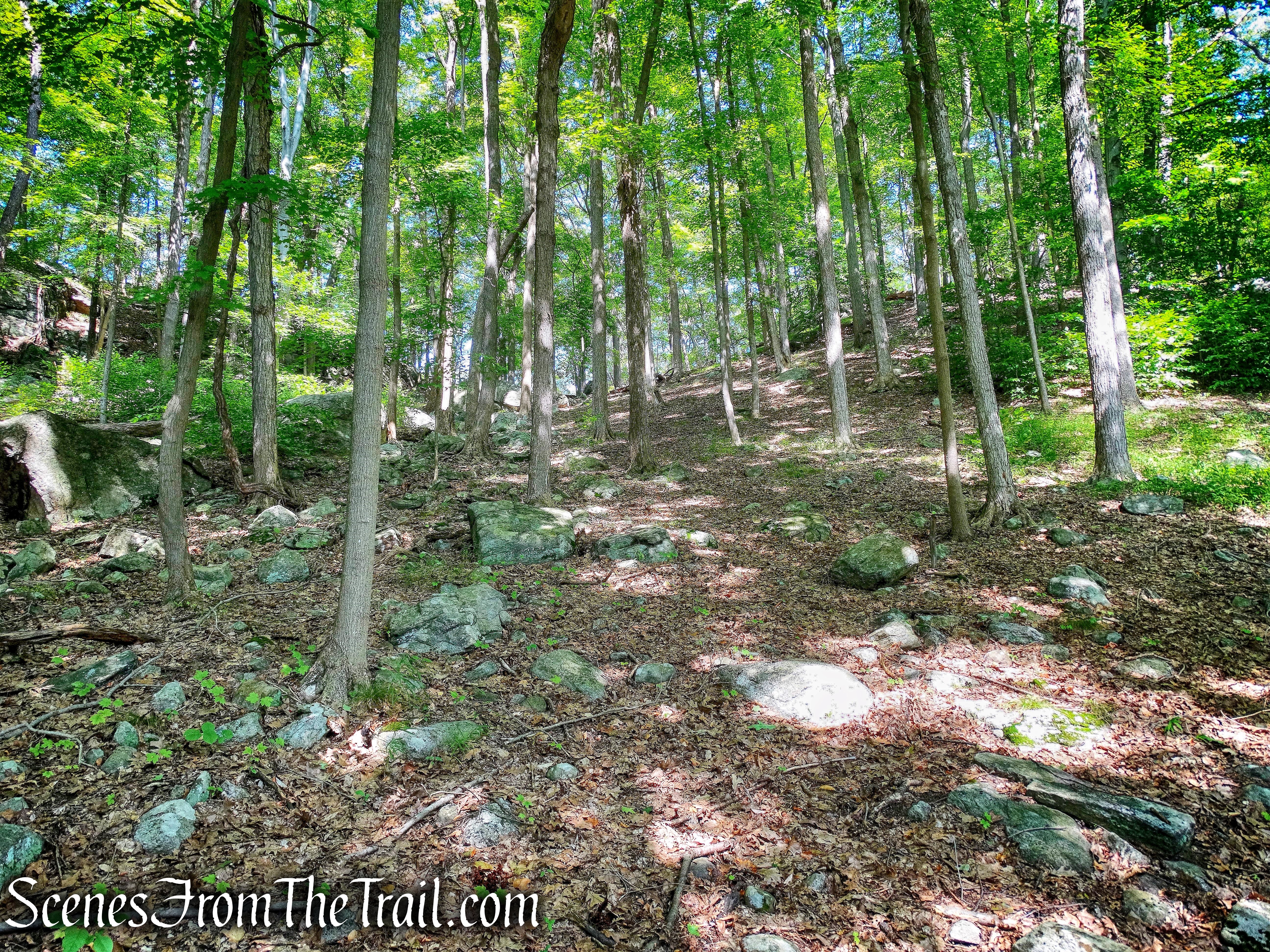
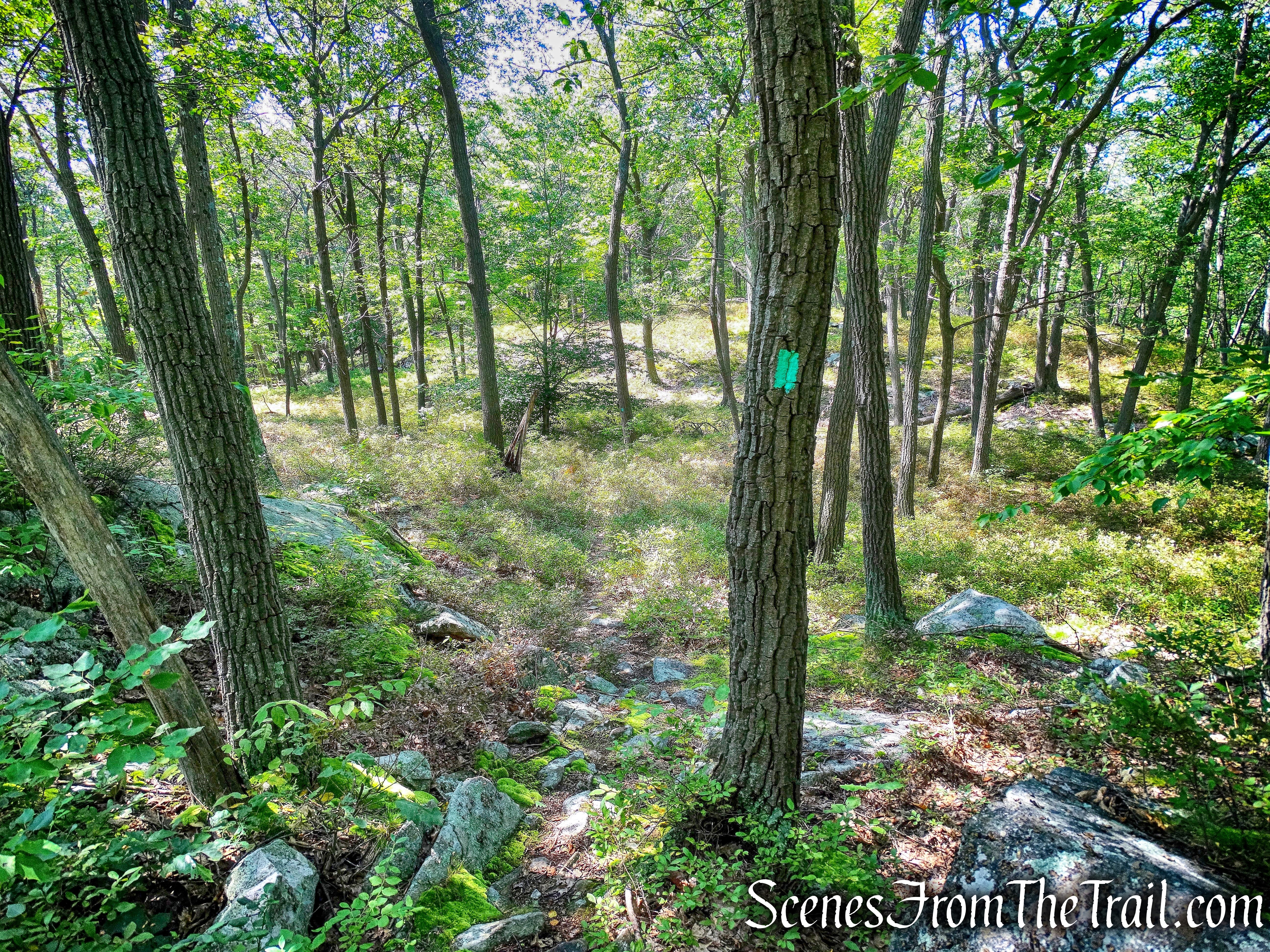
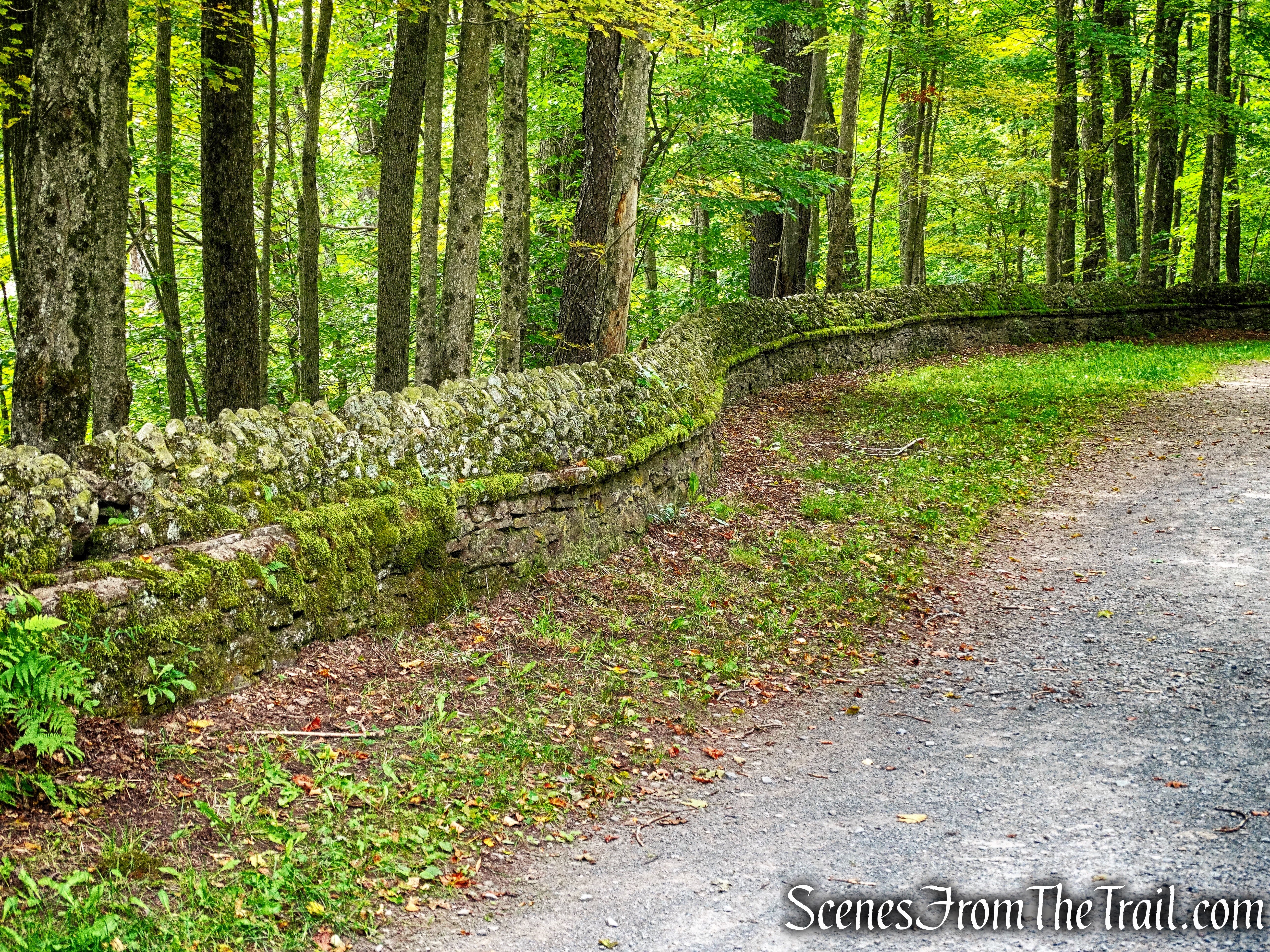
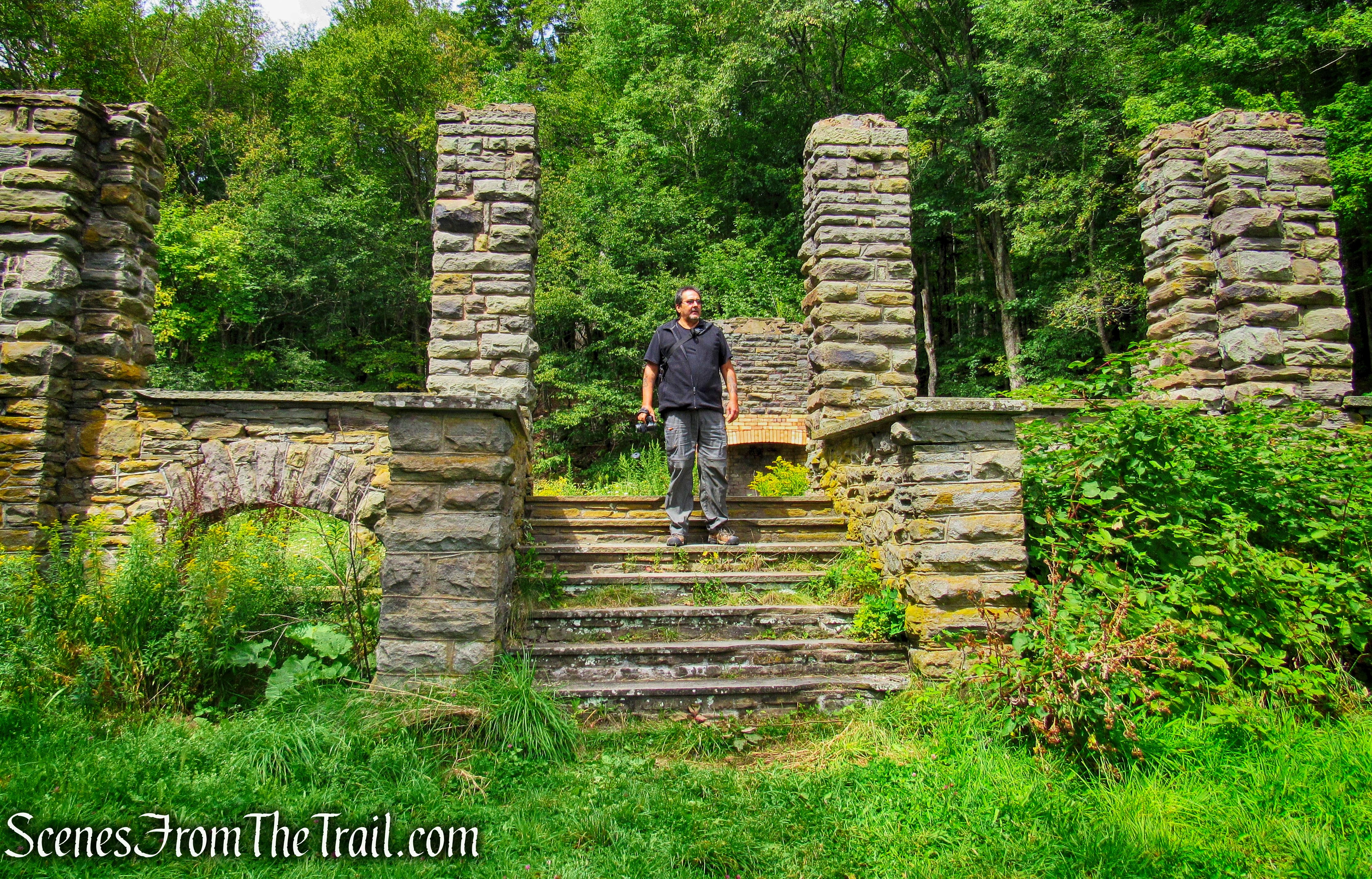
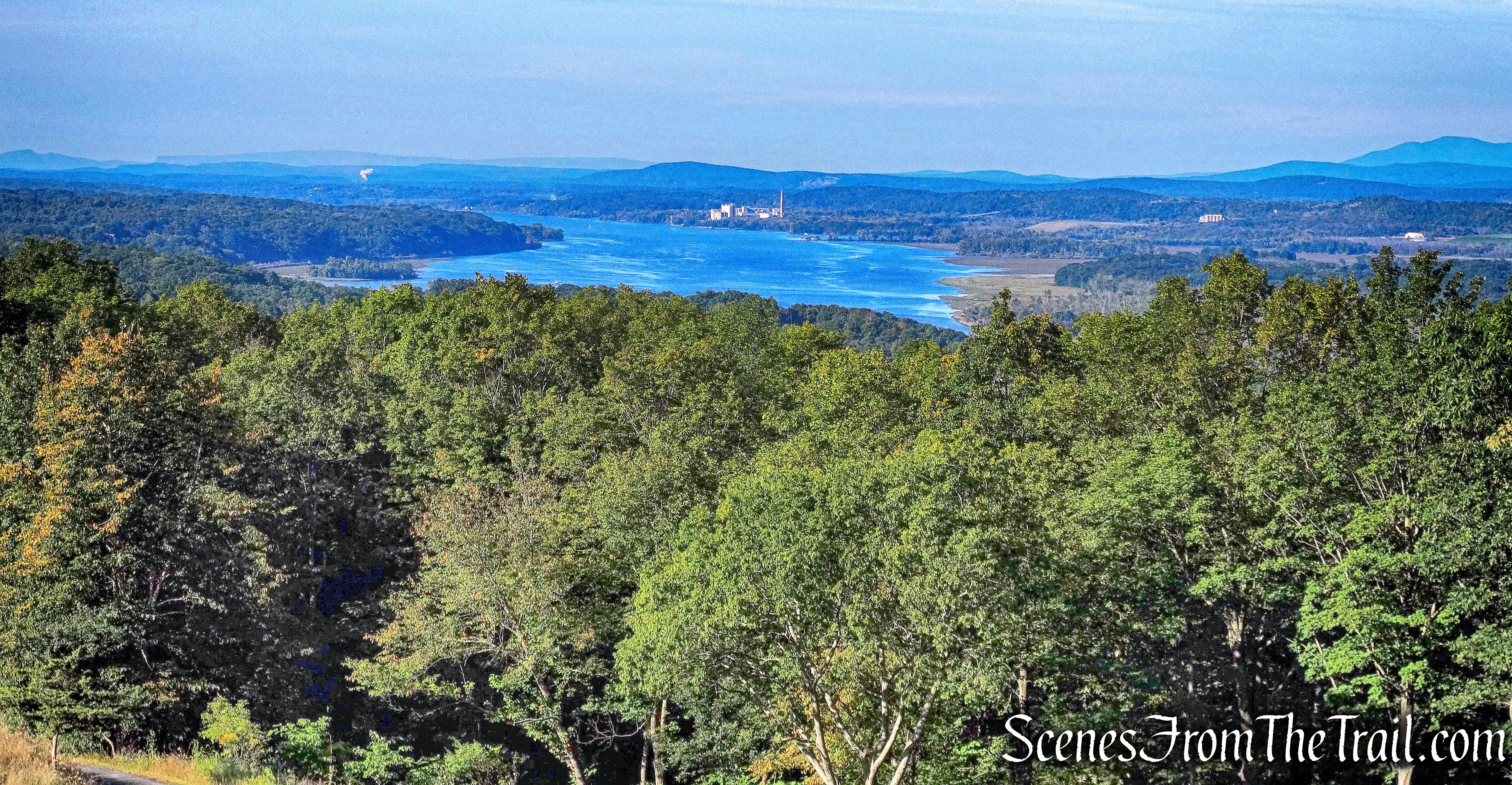
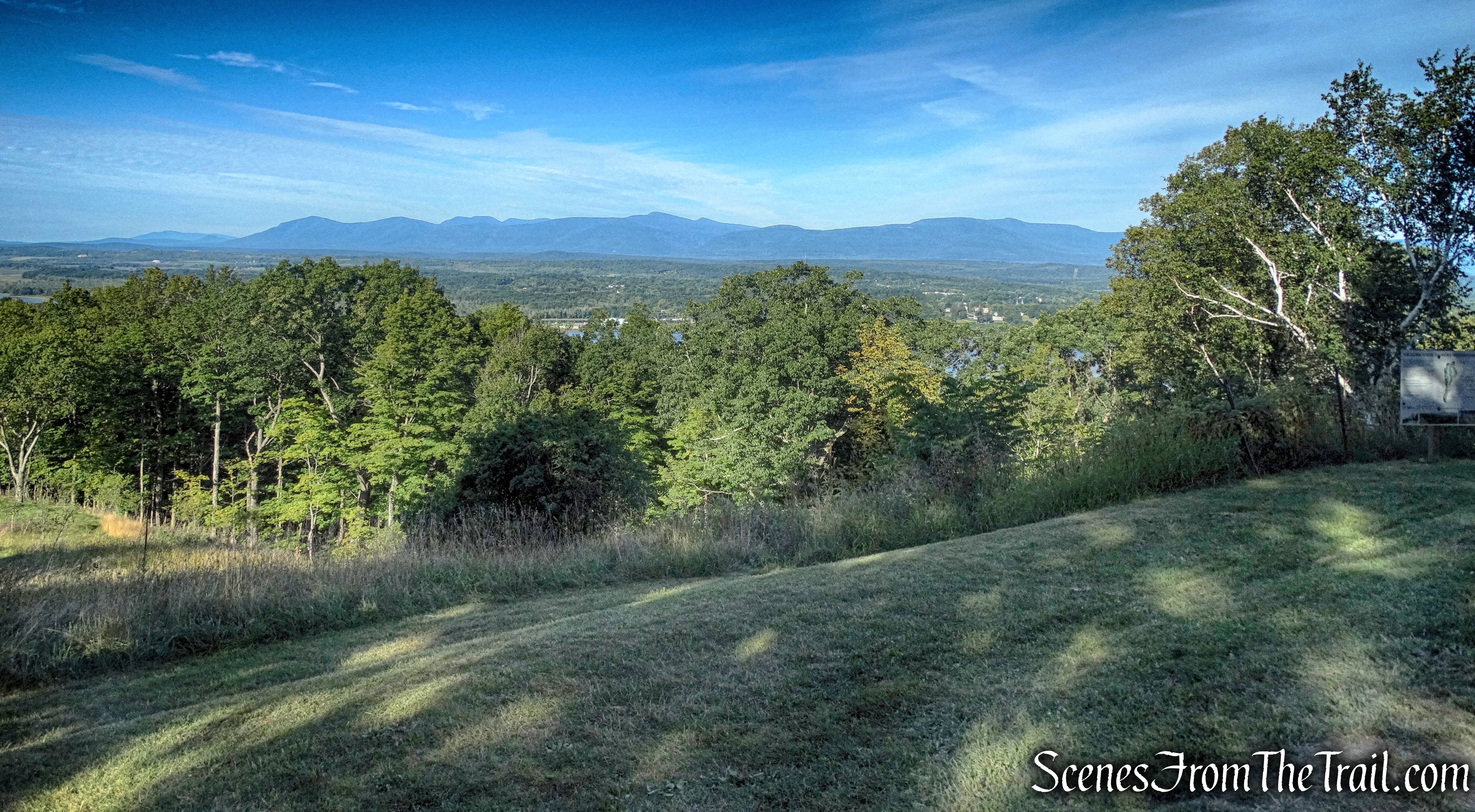
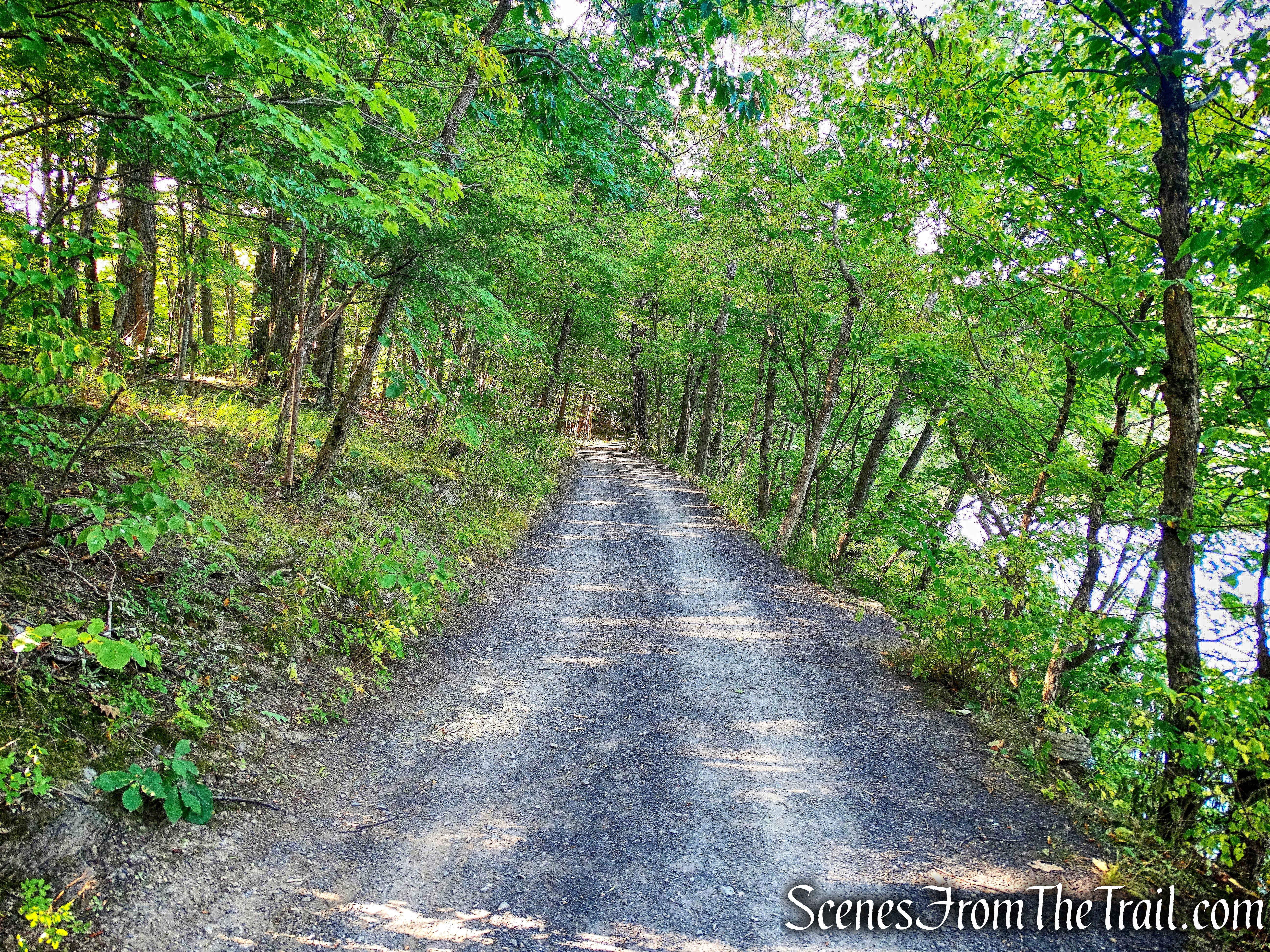
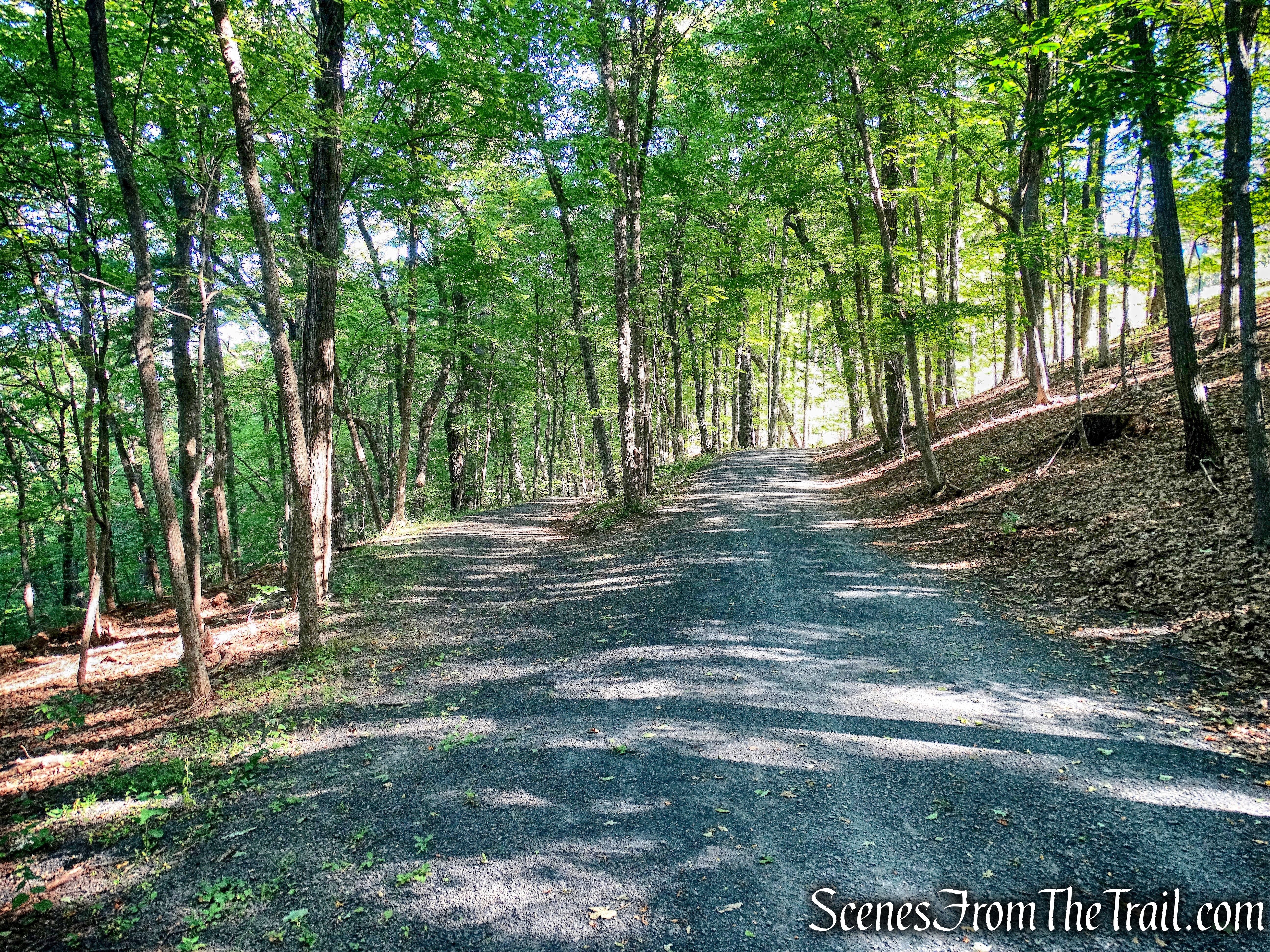
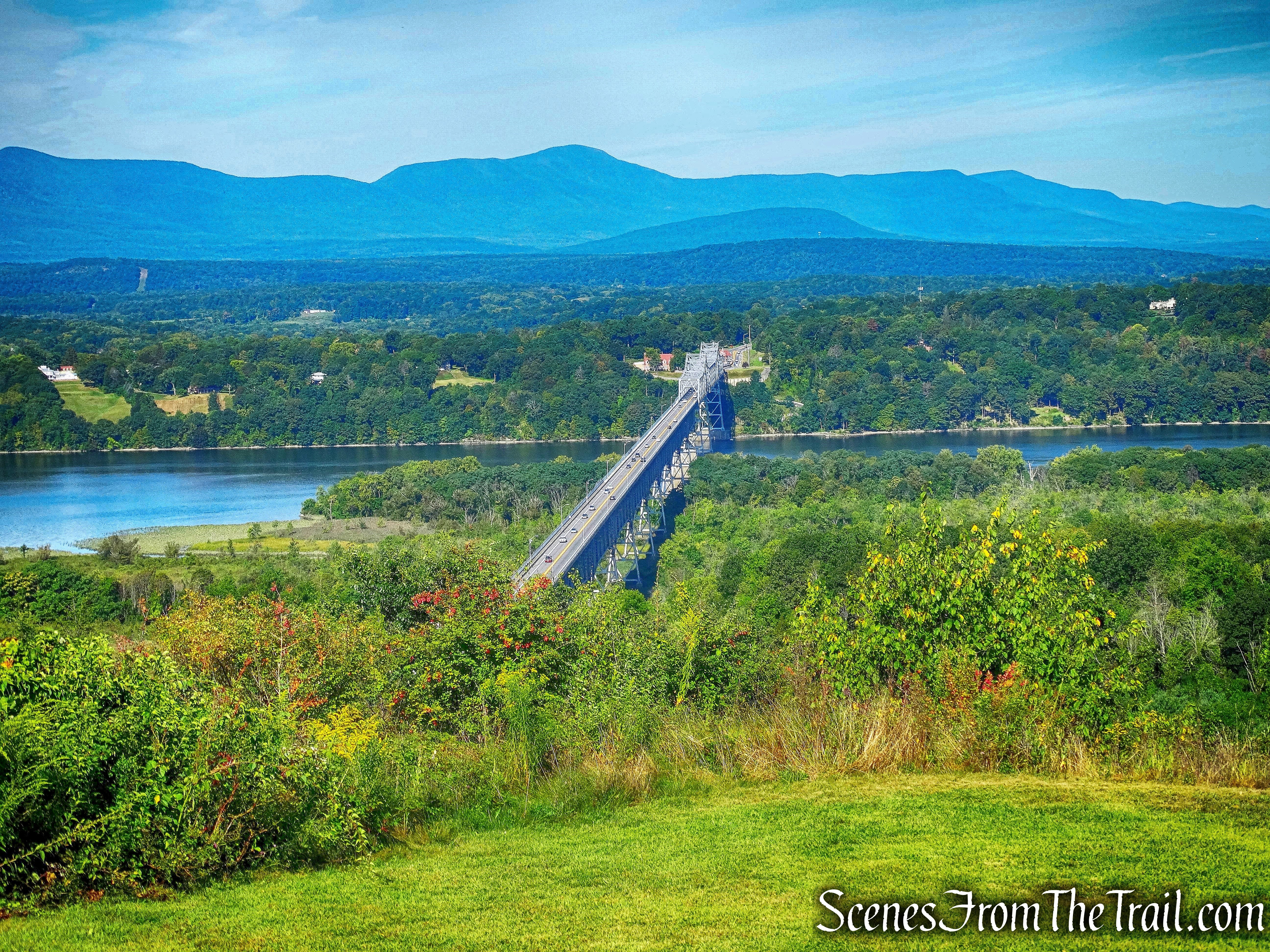
The Beacon Hill Carriage Road is 0.7 miles long and ends at a scenic view from a rock outcrop. This old road gives hikers access to the Beacon Hill Trail. The Beacon Hill Trail is just under a mile long and is one of the most scenic short hikes in the immediate area of Lake Minnewaska. The Lake Minnewaska Carriage Road is 1.9 miles long and loops around the lake. It provides cliff top views of the Gunks and the Catskills. I combined the three to form a short loop with outstanding views for the majority of the hike.
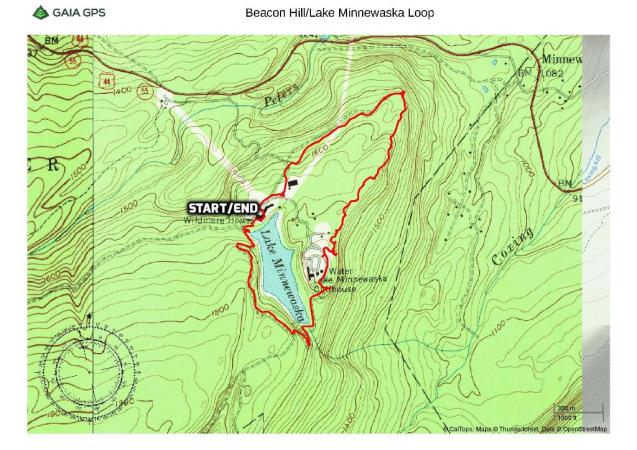
Beacon Hill/Lake Minnewaska Loop - Minnewaska State Park Preserve

Beacon Hill/Lake Minnewaska Loop – Minnewaska State Park Preserve

View the Google Earth Fly-Through video of the hike below.

Having just hiked Giant’s Workshop the past weekend, I wanted to do a short hike in the same area on a weekday when it would be less crowded. After a little research, I decided on Minnewaska State Park Preserve for a few reasons. The parking areas at most trailheads fill up early, it can get expensive if you don’t have an annual pass and there aren’t many short hikes in the Gunks. Minnewaska has a large parking area, accepts the Empire Pass and has perhaps the best short hike in the Gunks.

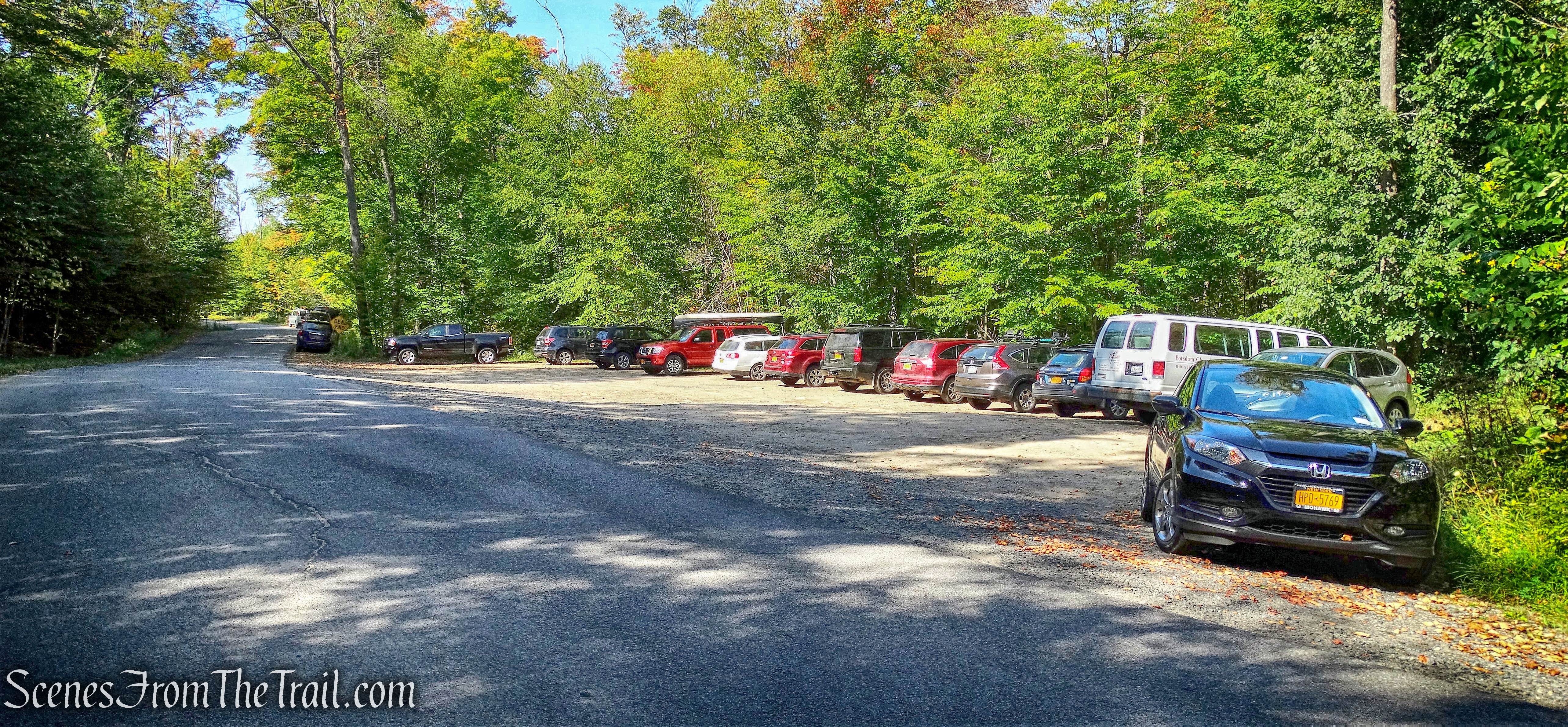
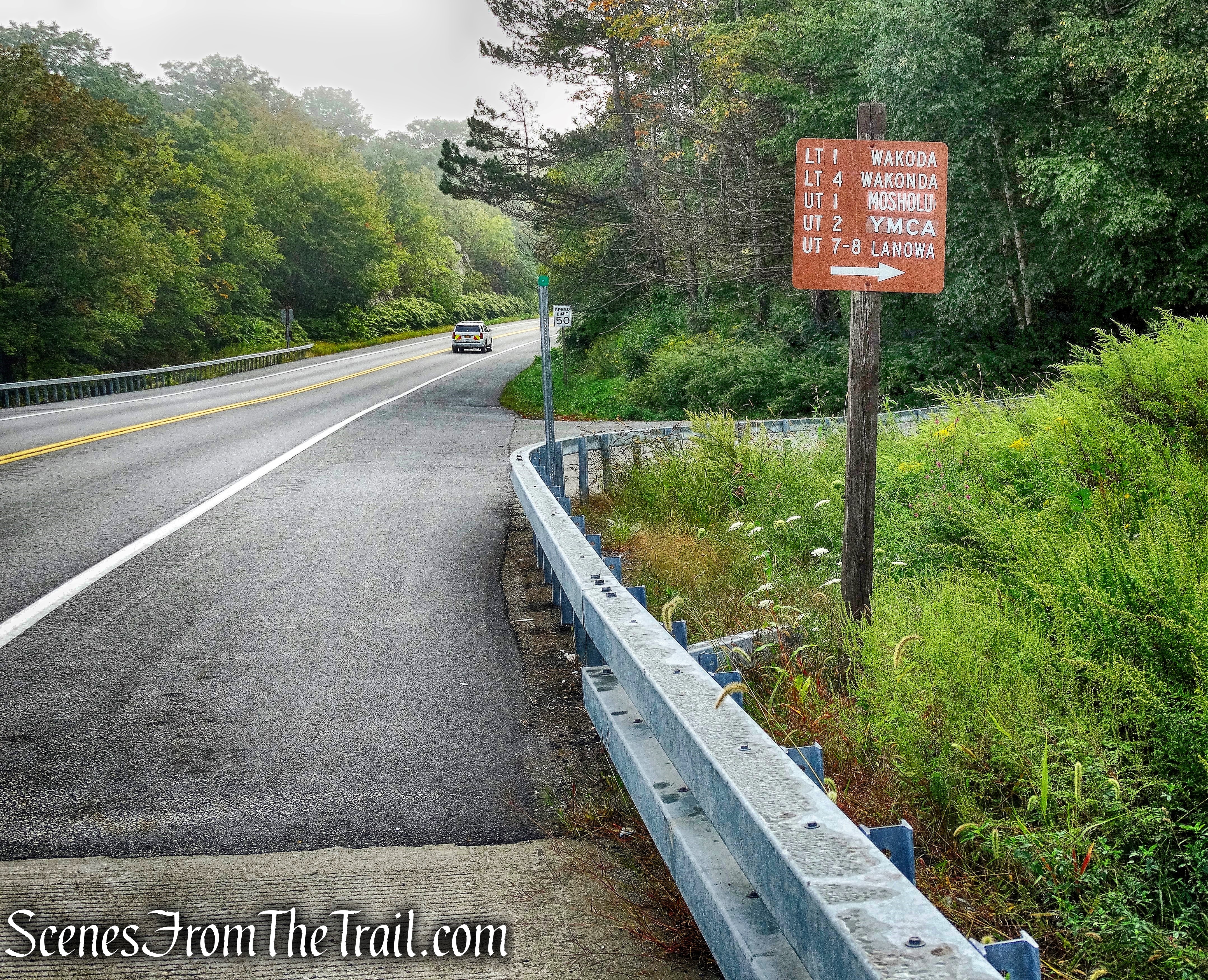
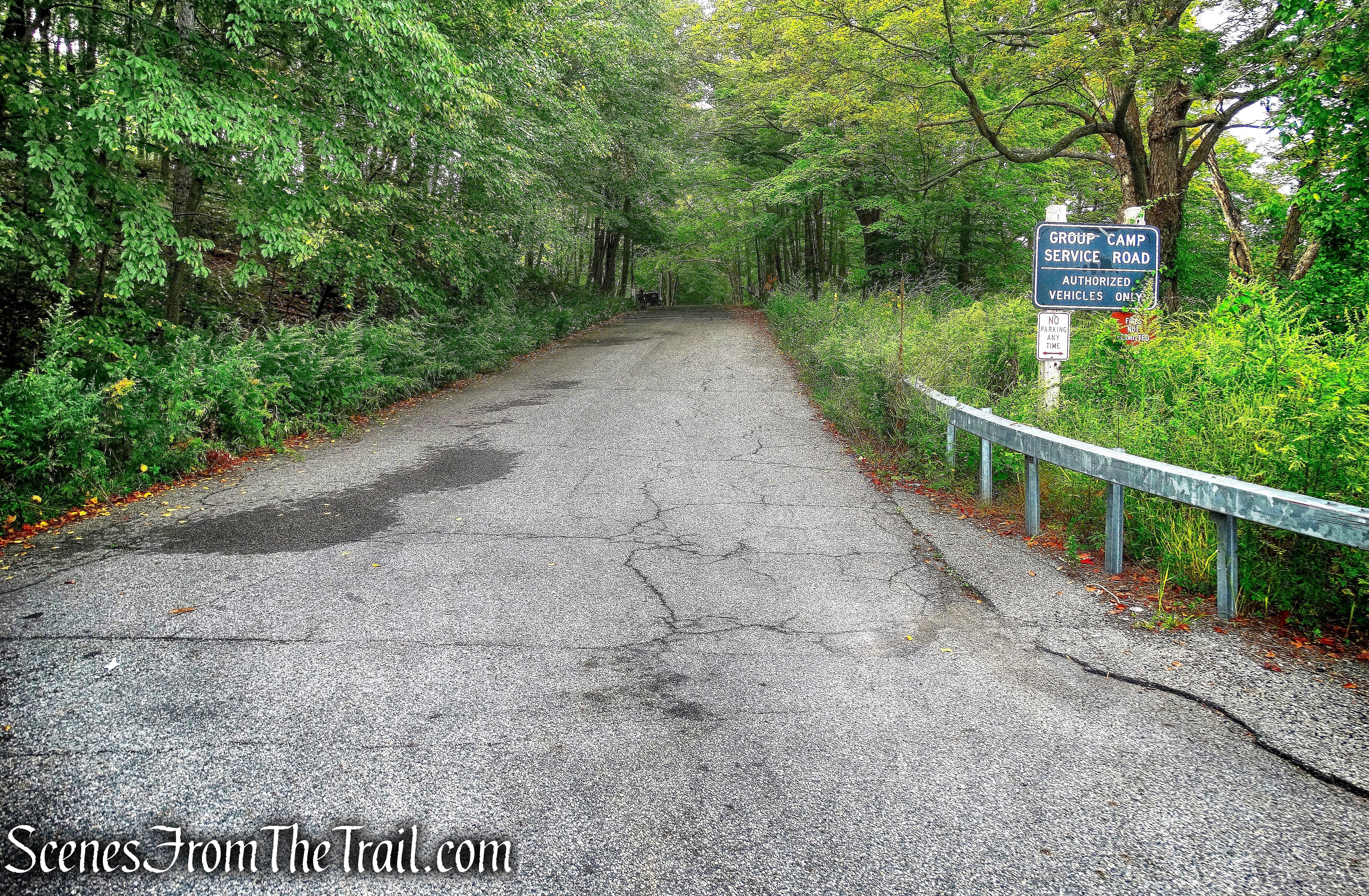
Normally I like to do weekday hikes on Monday or Tuesday, but I elected to wait until Friday hoping for more fall foliage color. After a 1-1/2 hour drive, we arrived around 9:00 am. We parked in the lot by Lake Minnewaska and there were quite a few cars already there on a chilly 40° October morning. We headed out hoping for some tranquility on the trails. We walked back down the road we drove up on and past the park maintenance center for about 0.1 mile.
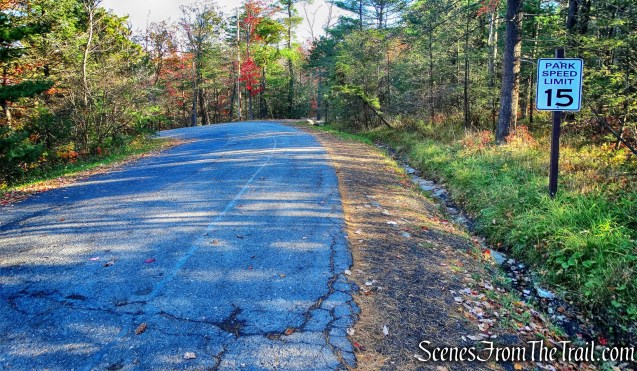
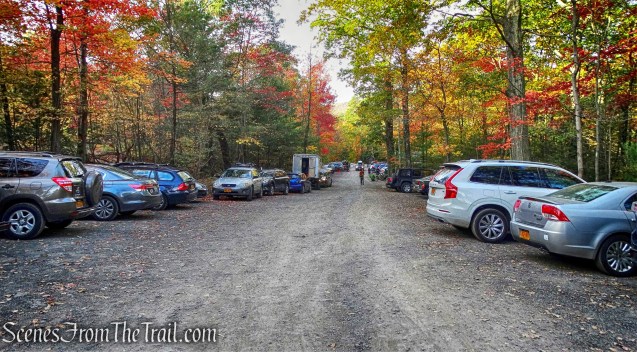
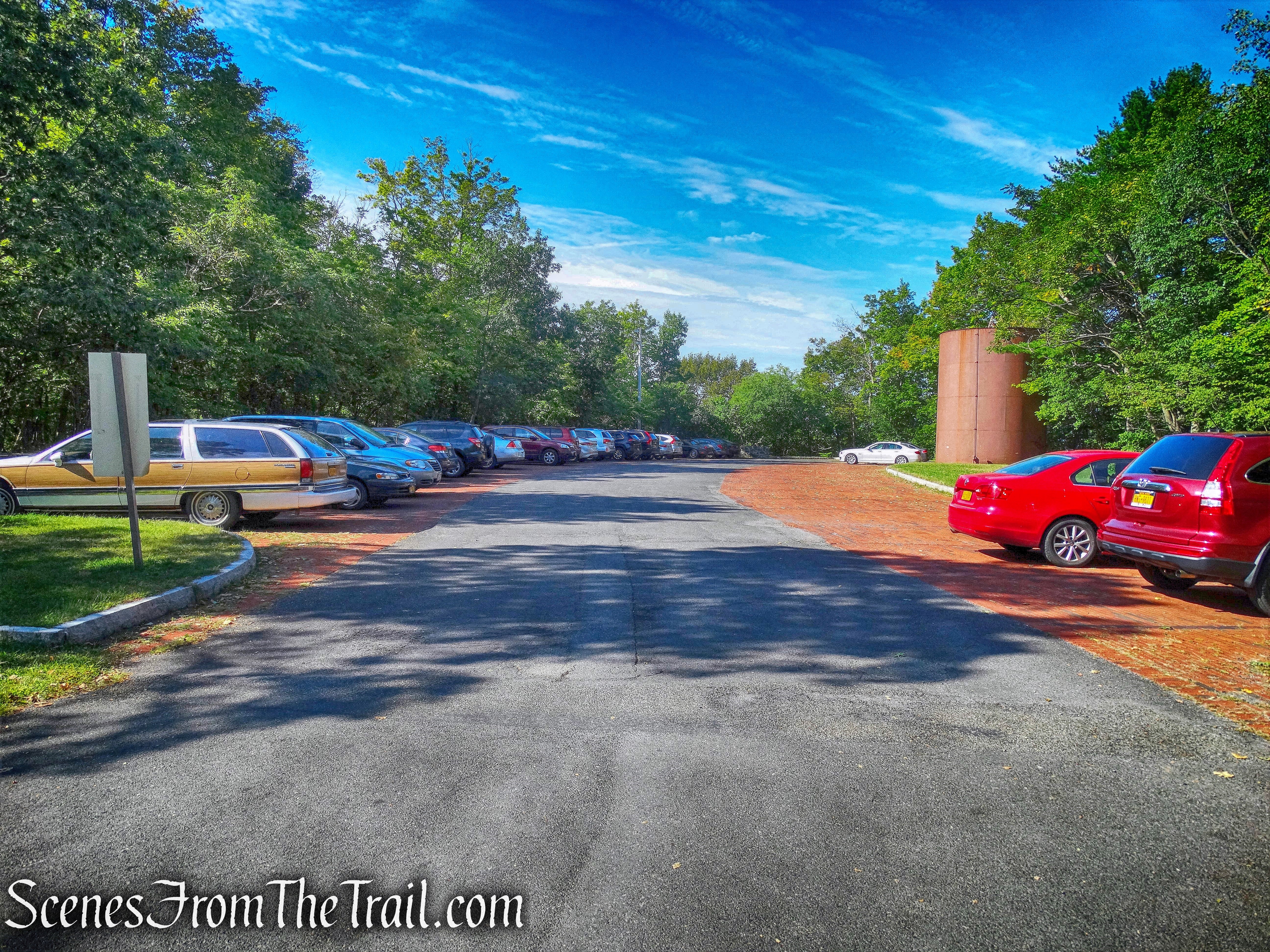
entrance road - parking area at Lake Minnewaska

entrance road – parking area at Lake Minnewaska

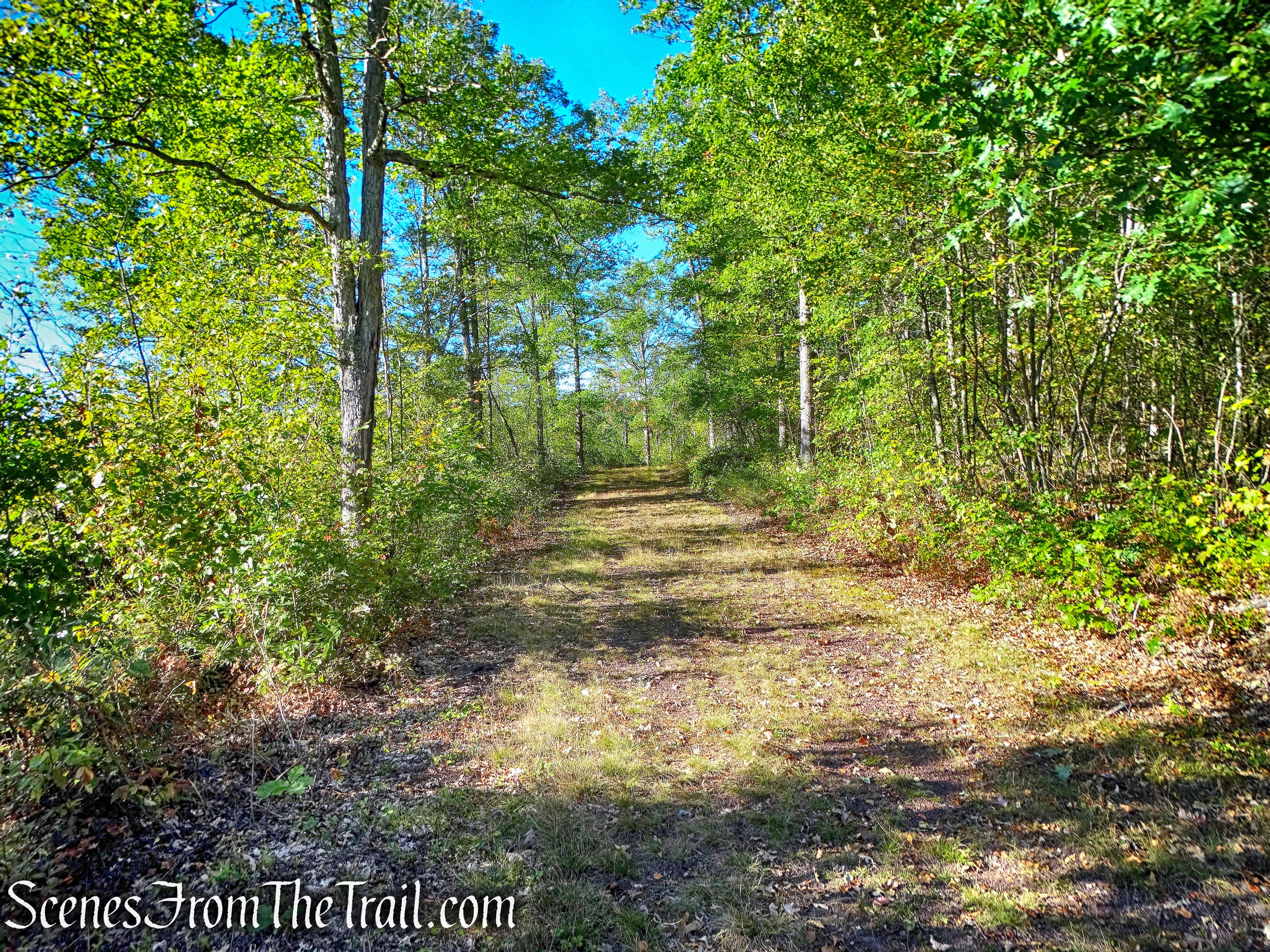
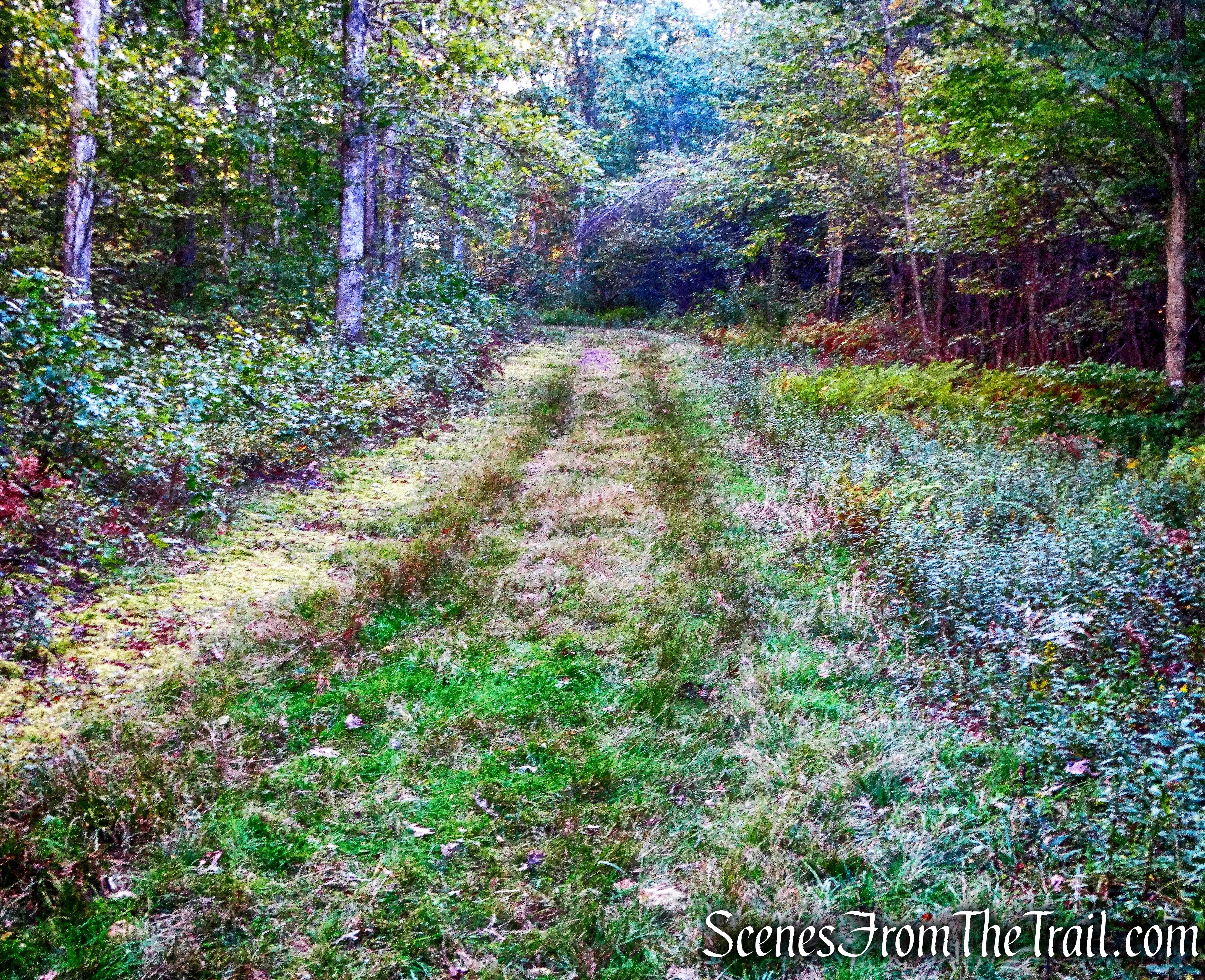
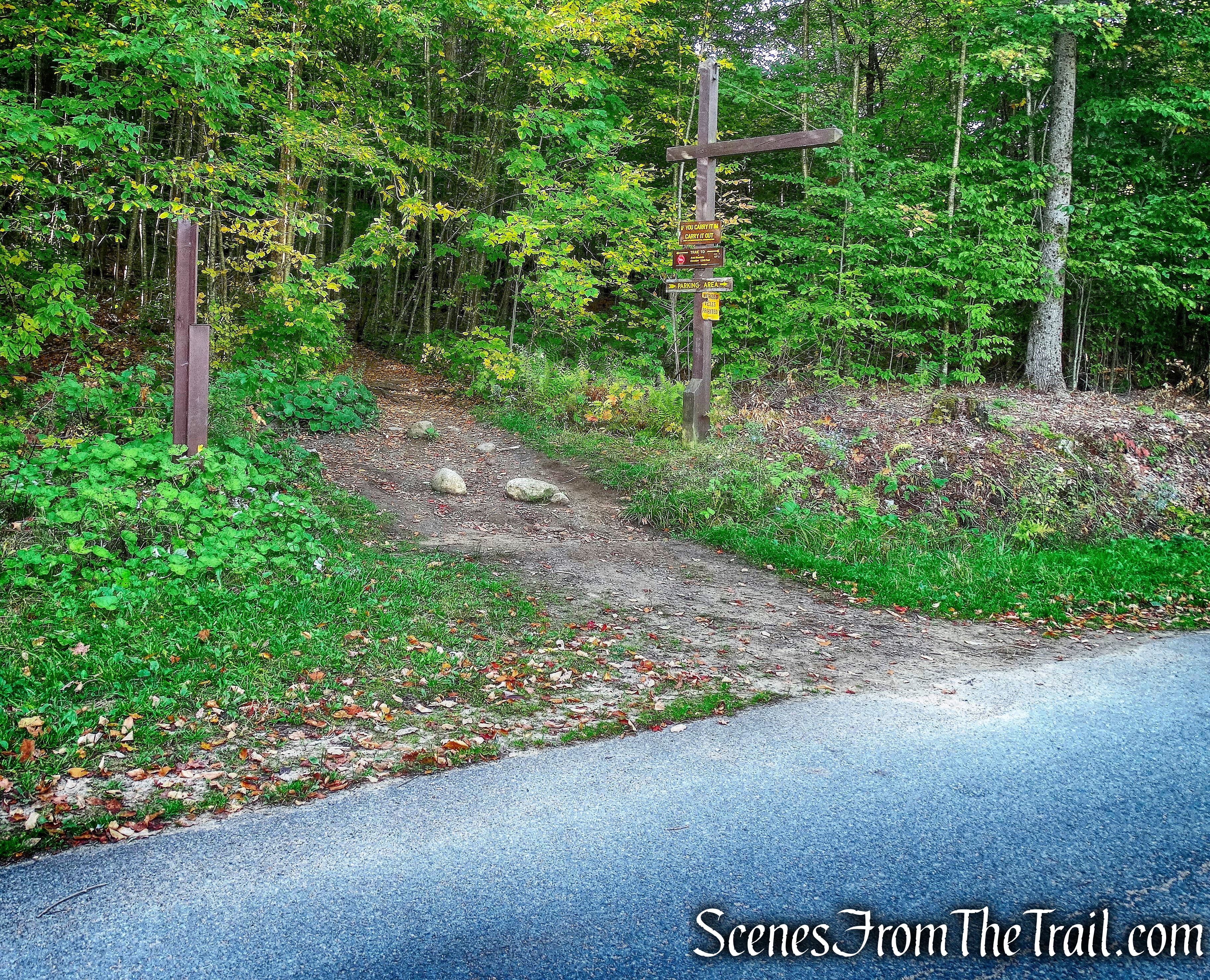
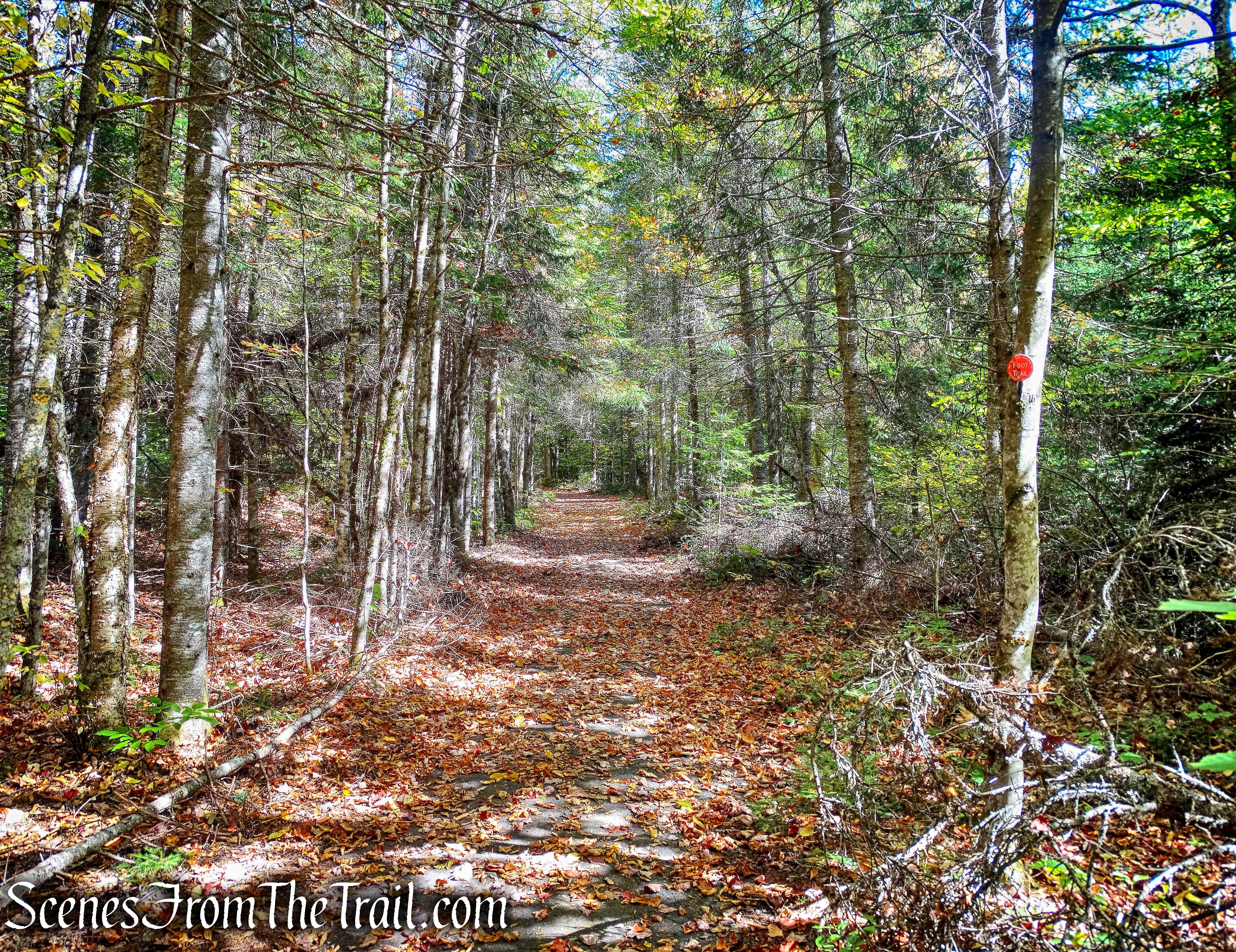
On the right side of the road is the start of the Beacon Hill Carriage Road.
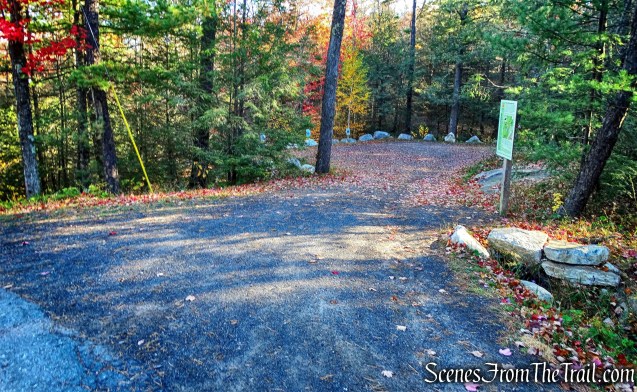
Beacon Hill Carriage Road

Beacon Hill Carriage Road

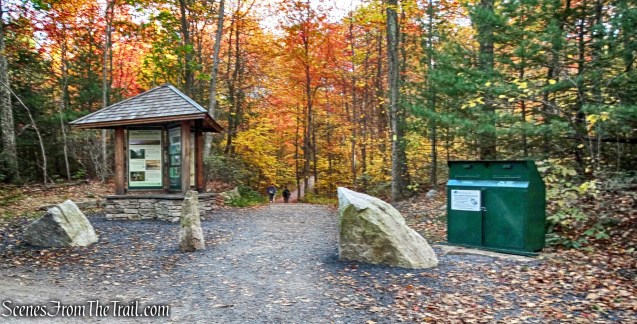
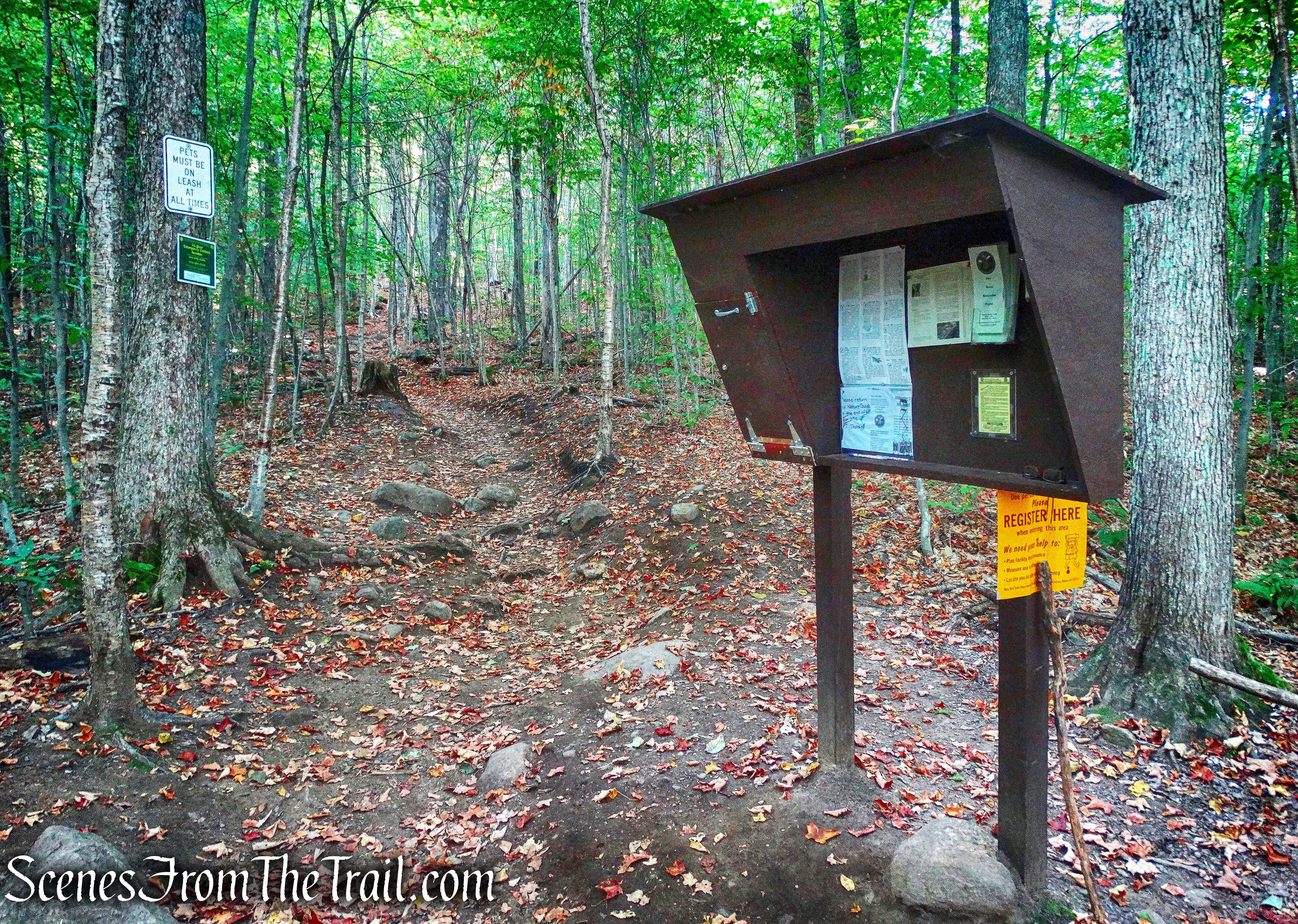
At the start of the trails and carriage roads, there are signs with a map and useful information.
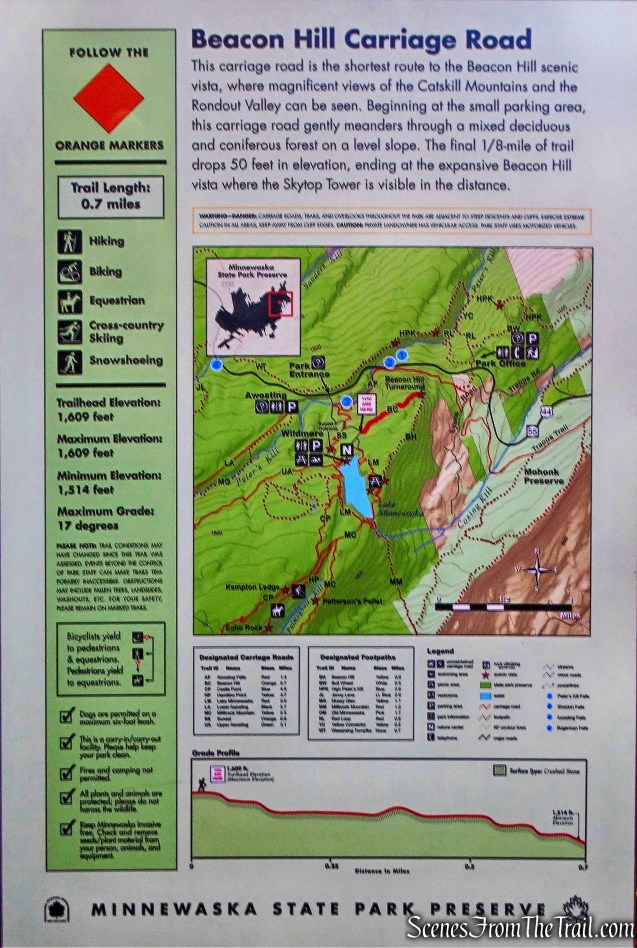
Beacon Hill Carriage Road

Beacon Hill Carriage Road

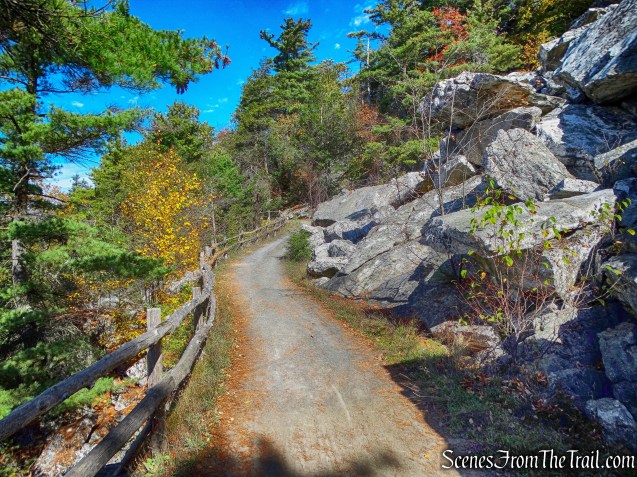
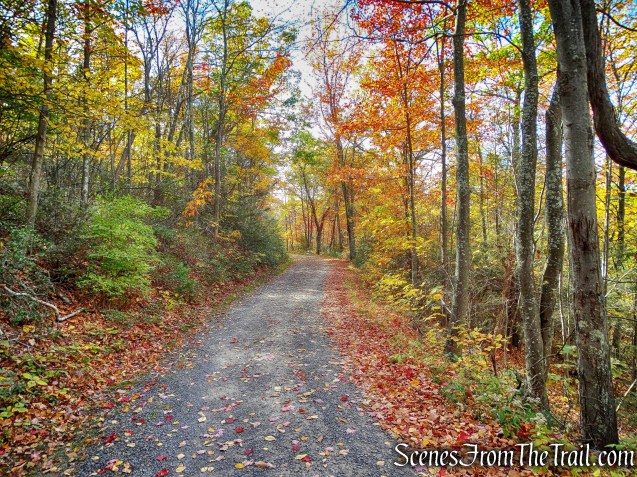
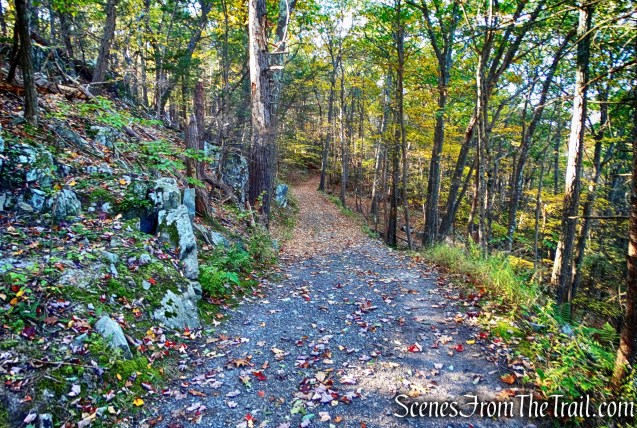
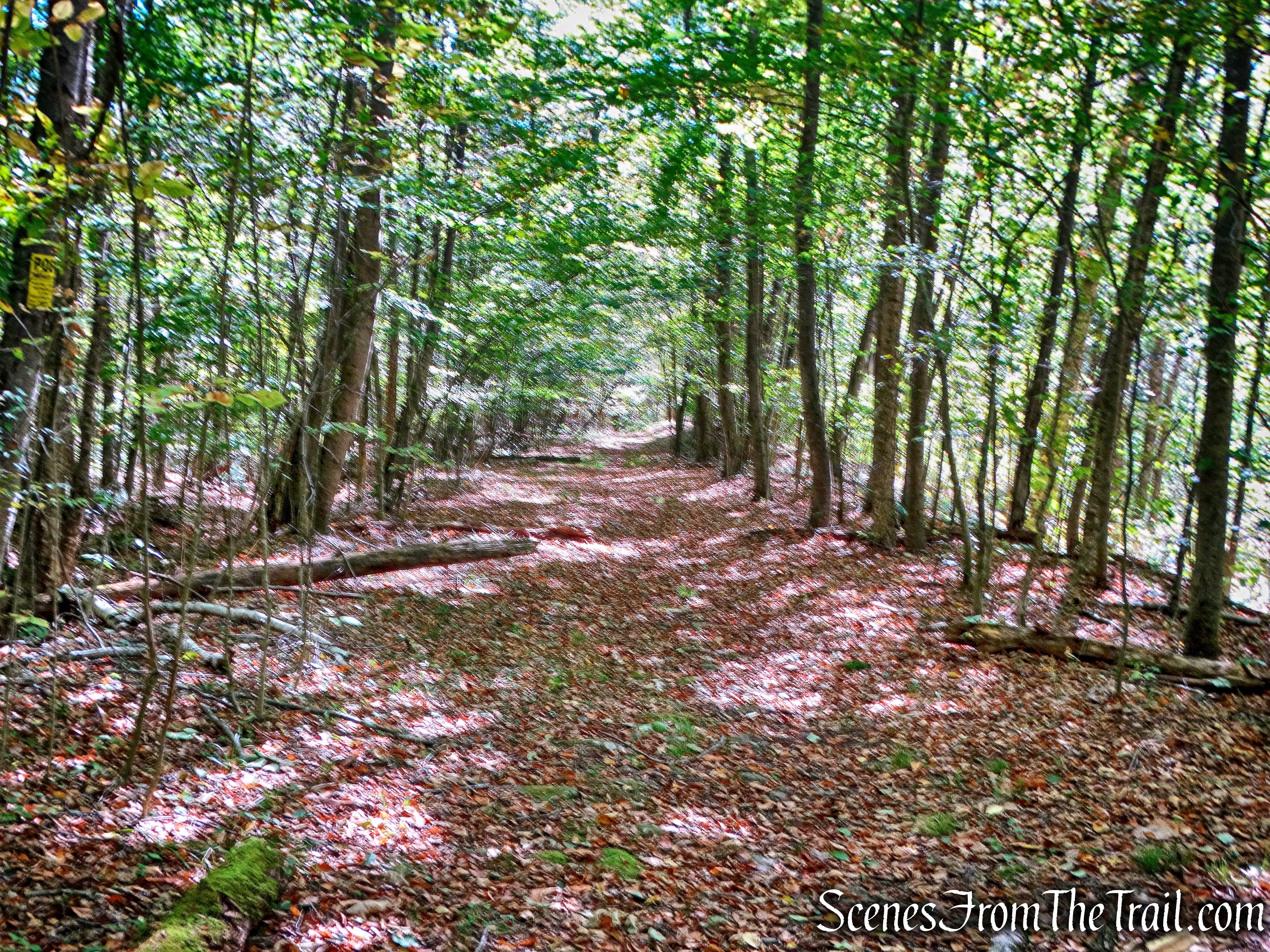
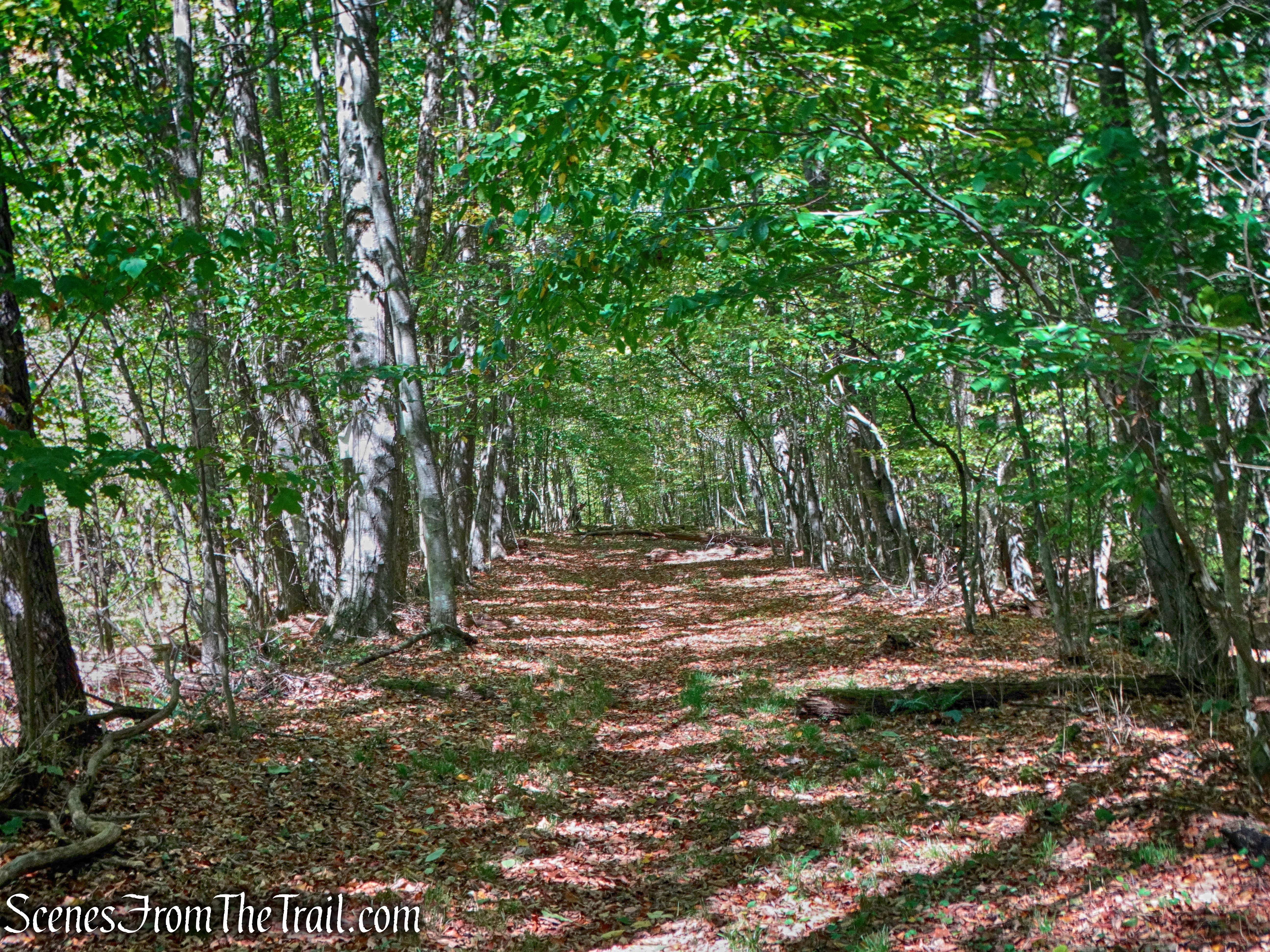
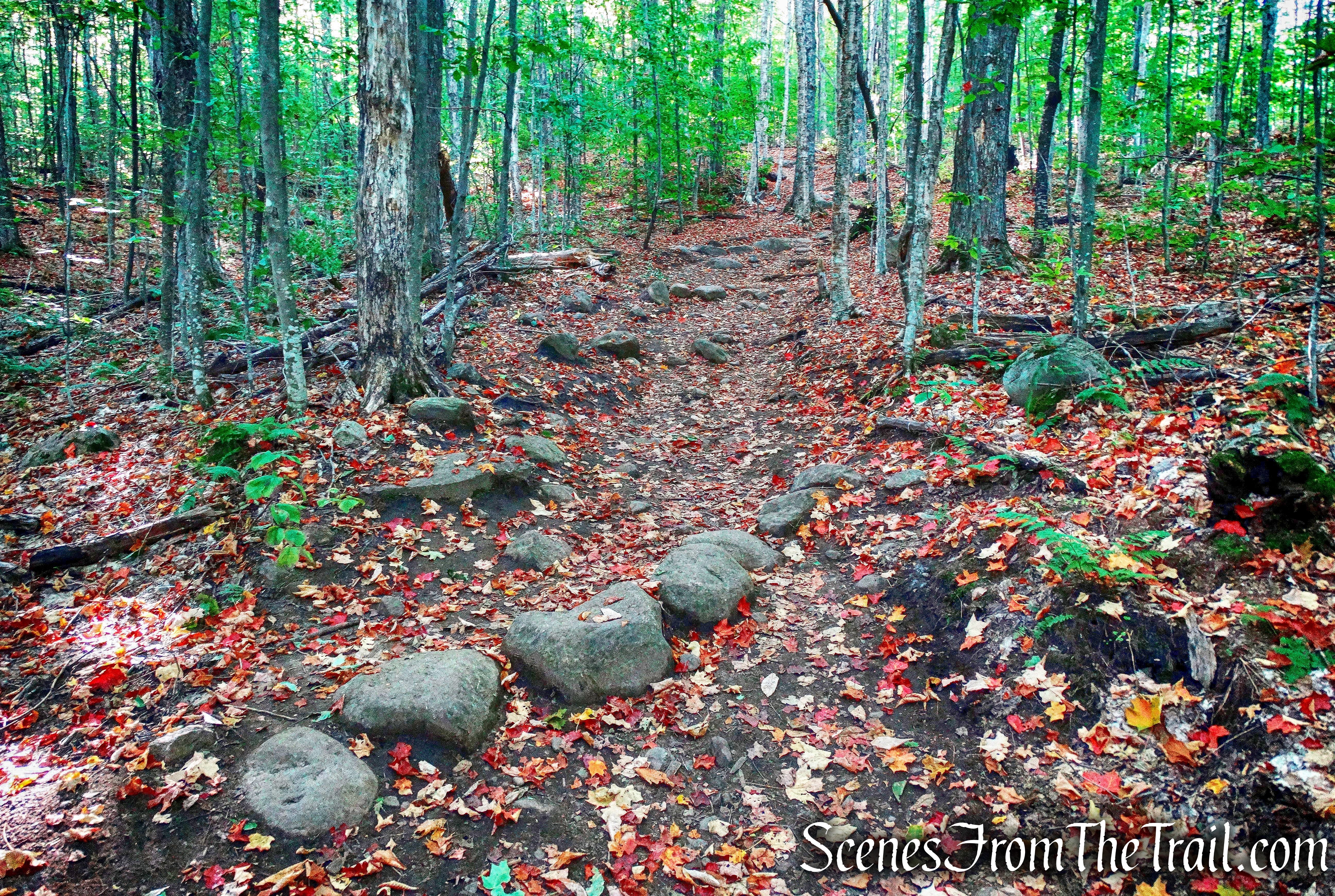
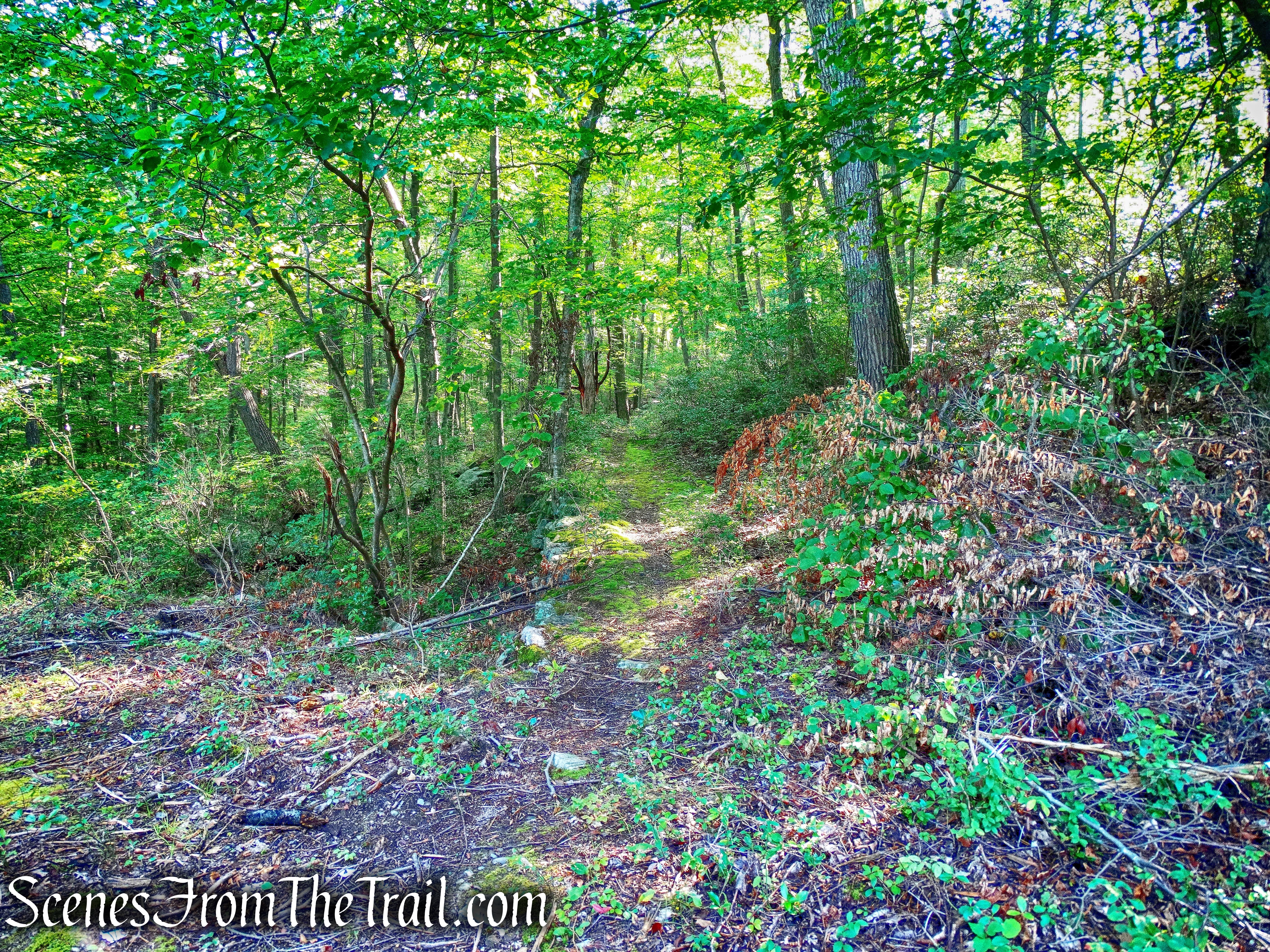
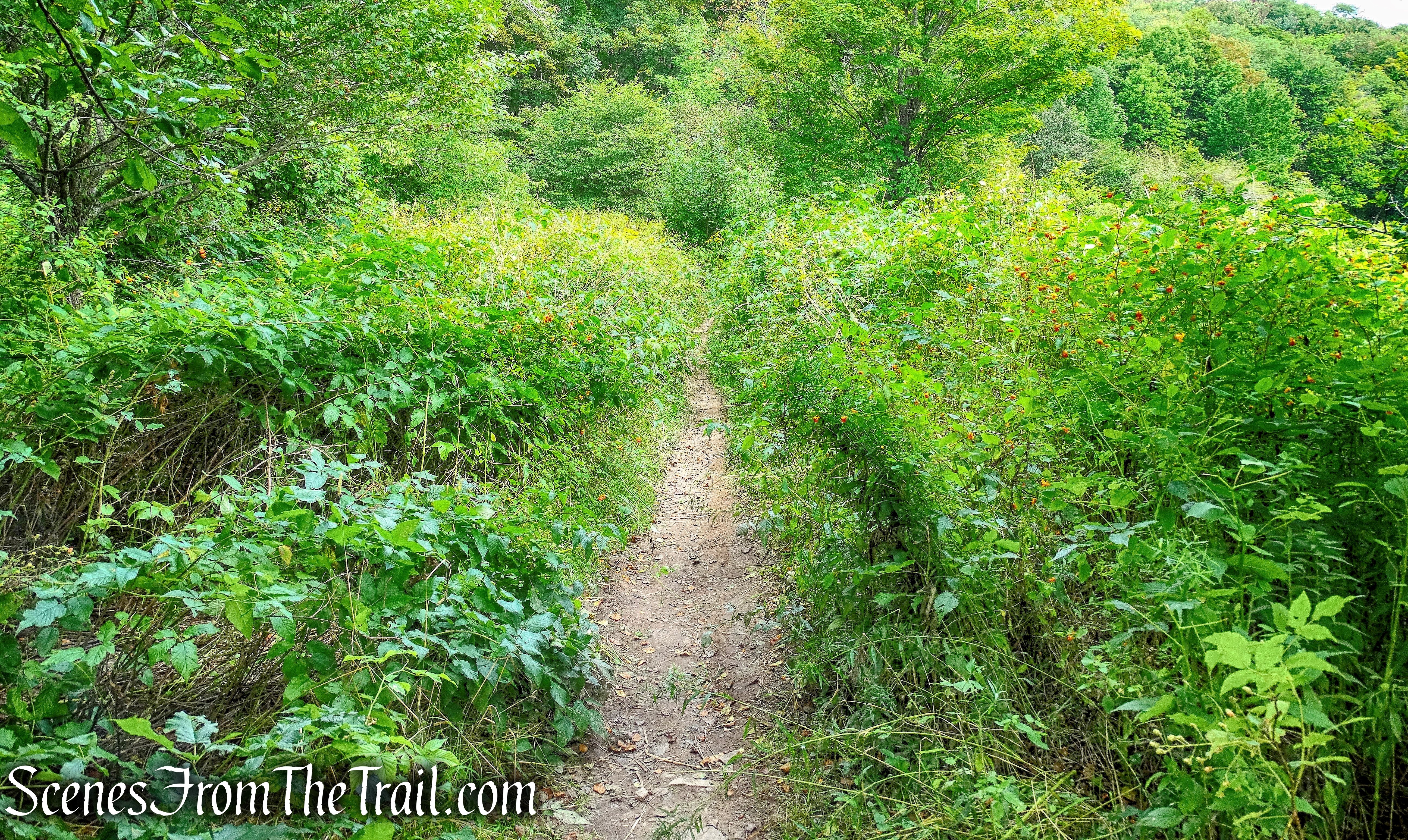
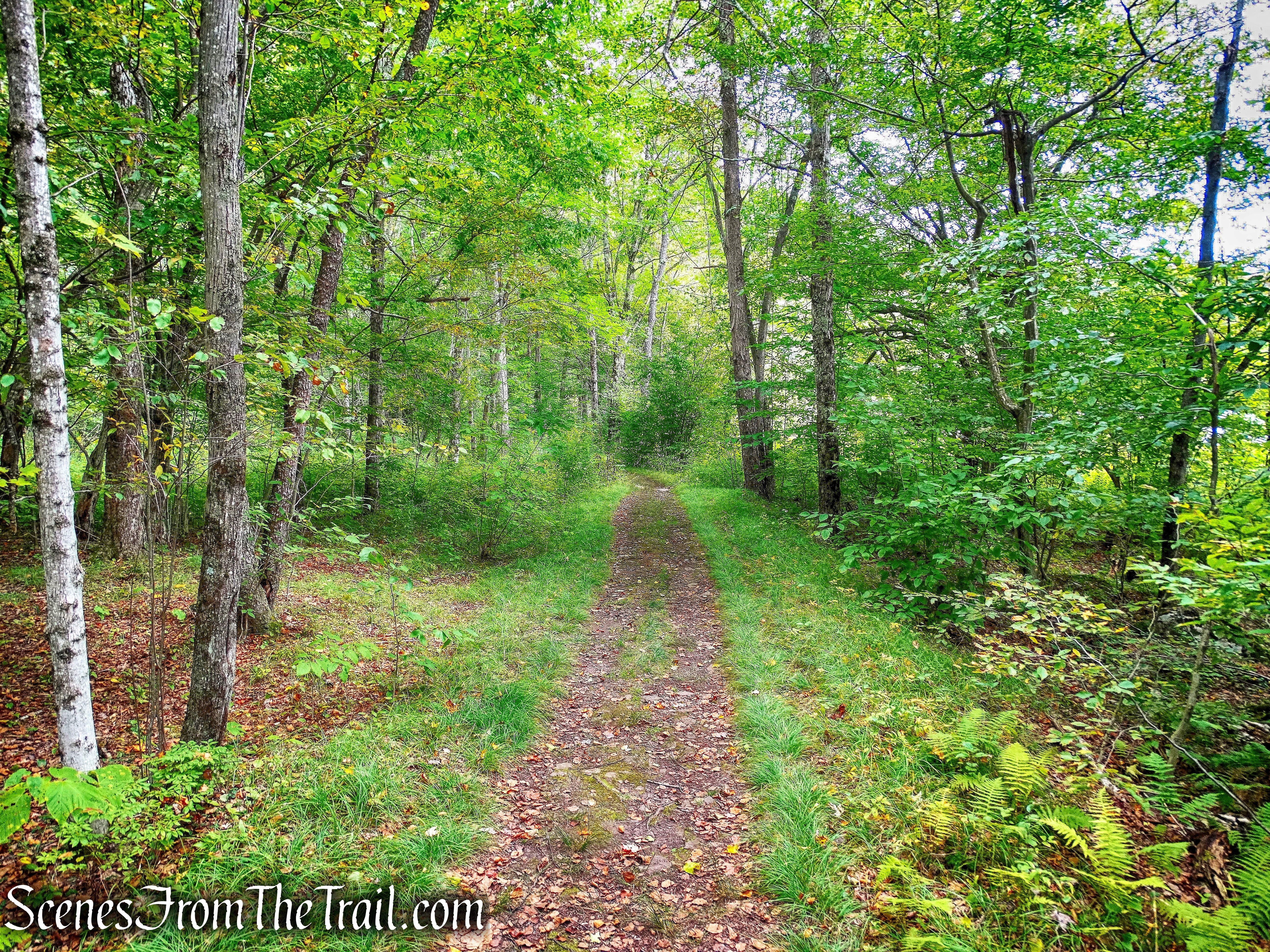
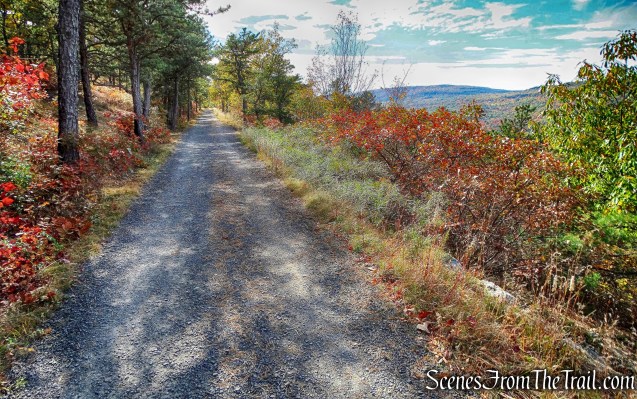
There are no views along this easy walking carriage road, but it is a scenic road in the Autumn.
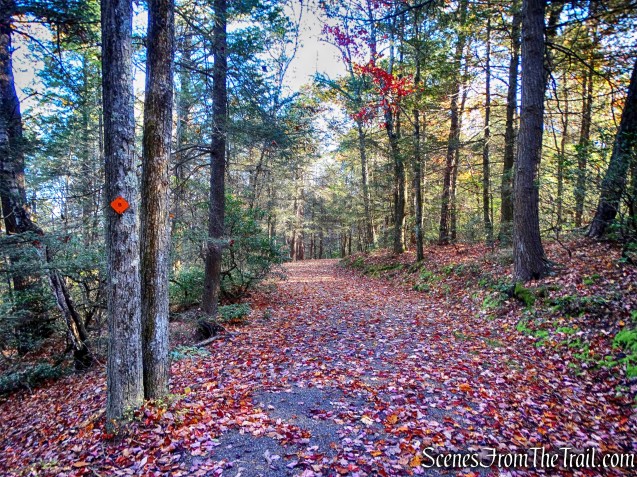
Beacon Hill Carriage Road

Beacon Hill Carriage Road

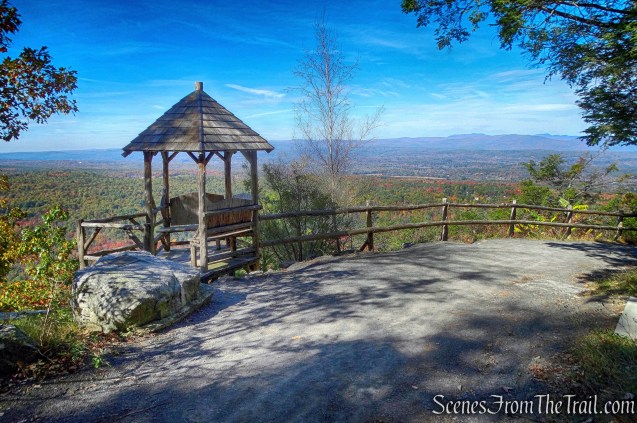
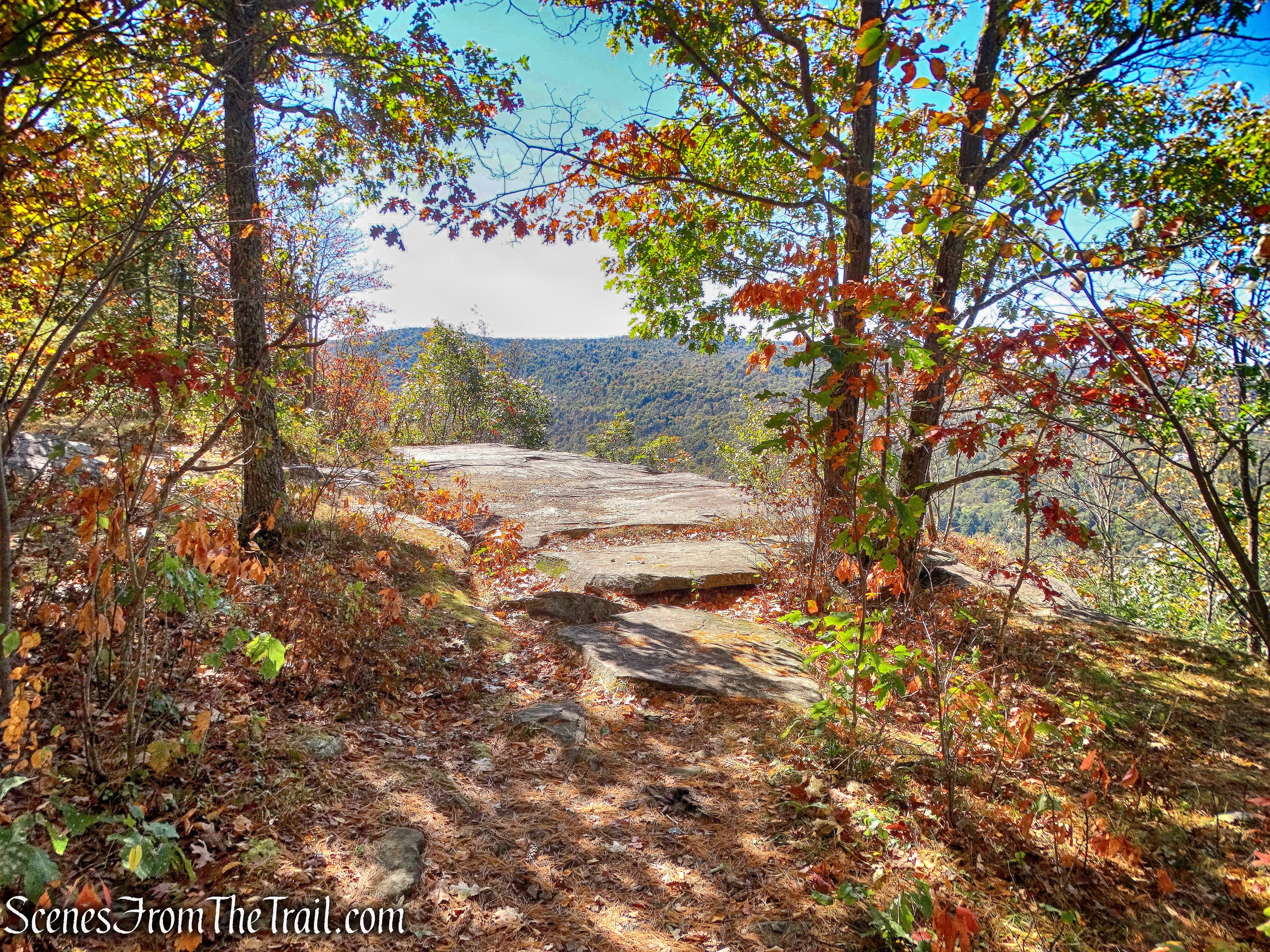
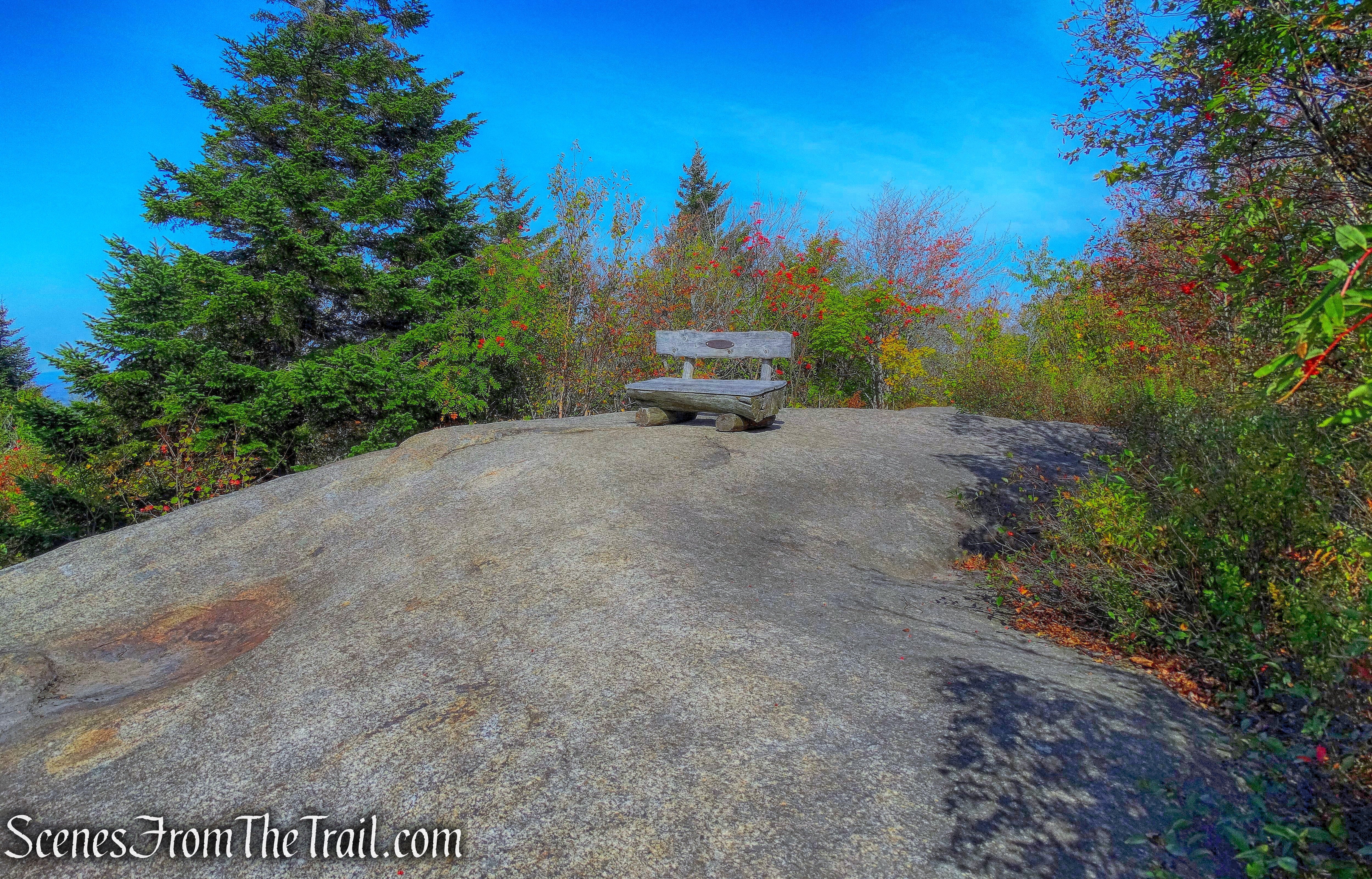
The road ends at a rock outcrop after 0.7 miles.
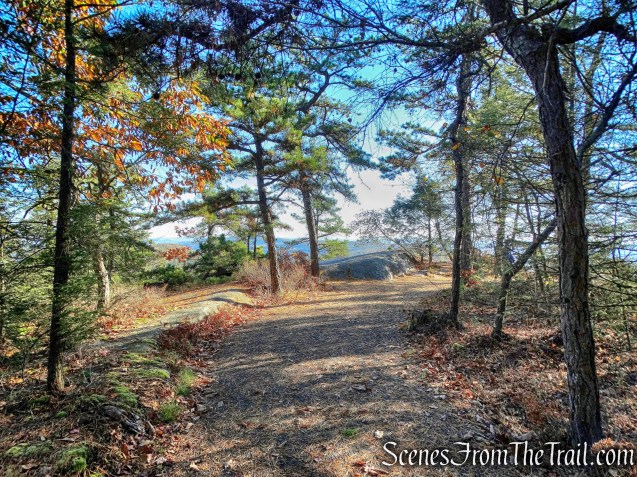
Beacon Hill Carriage Road

Beacon Hill Carriage Road

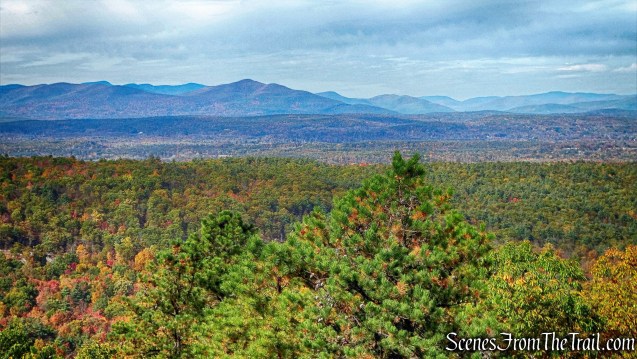
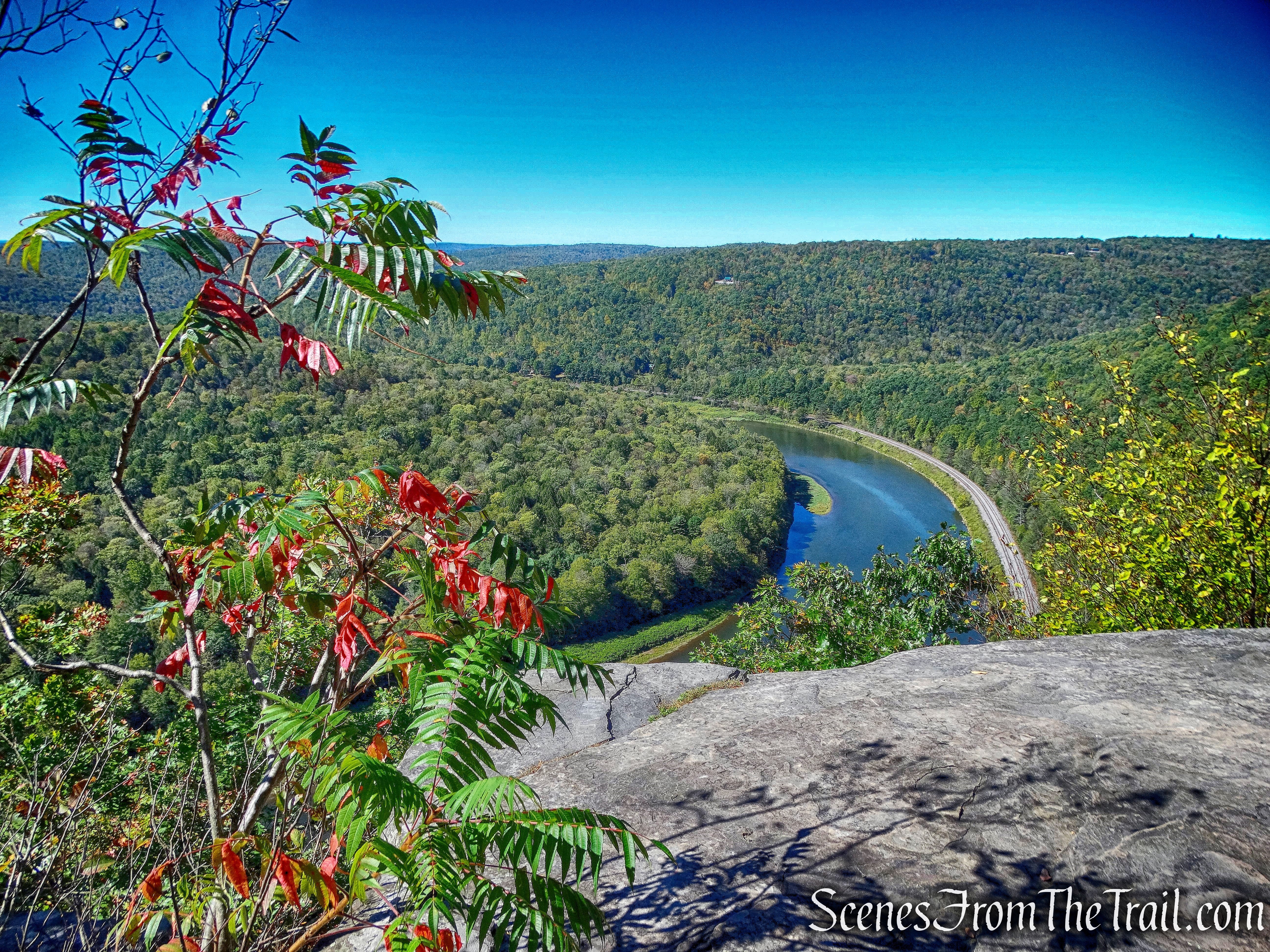
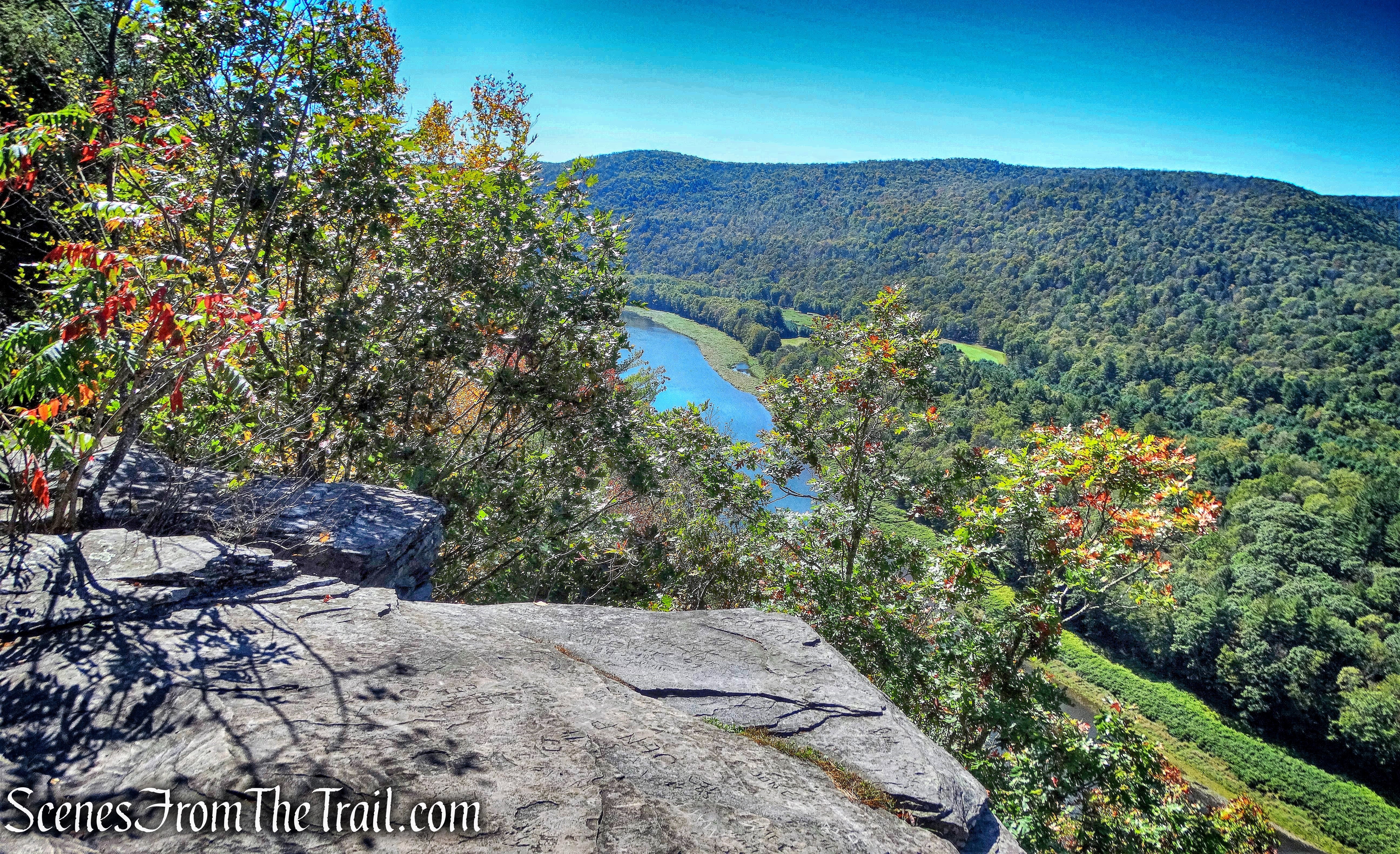
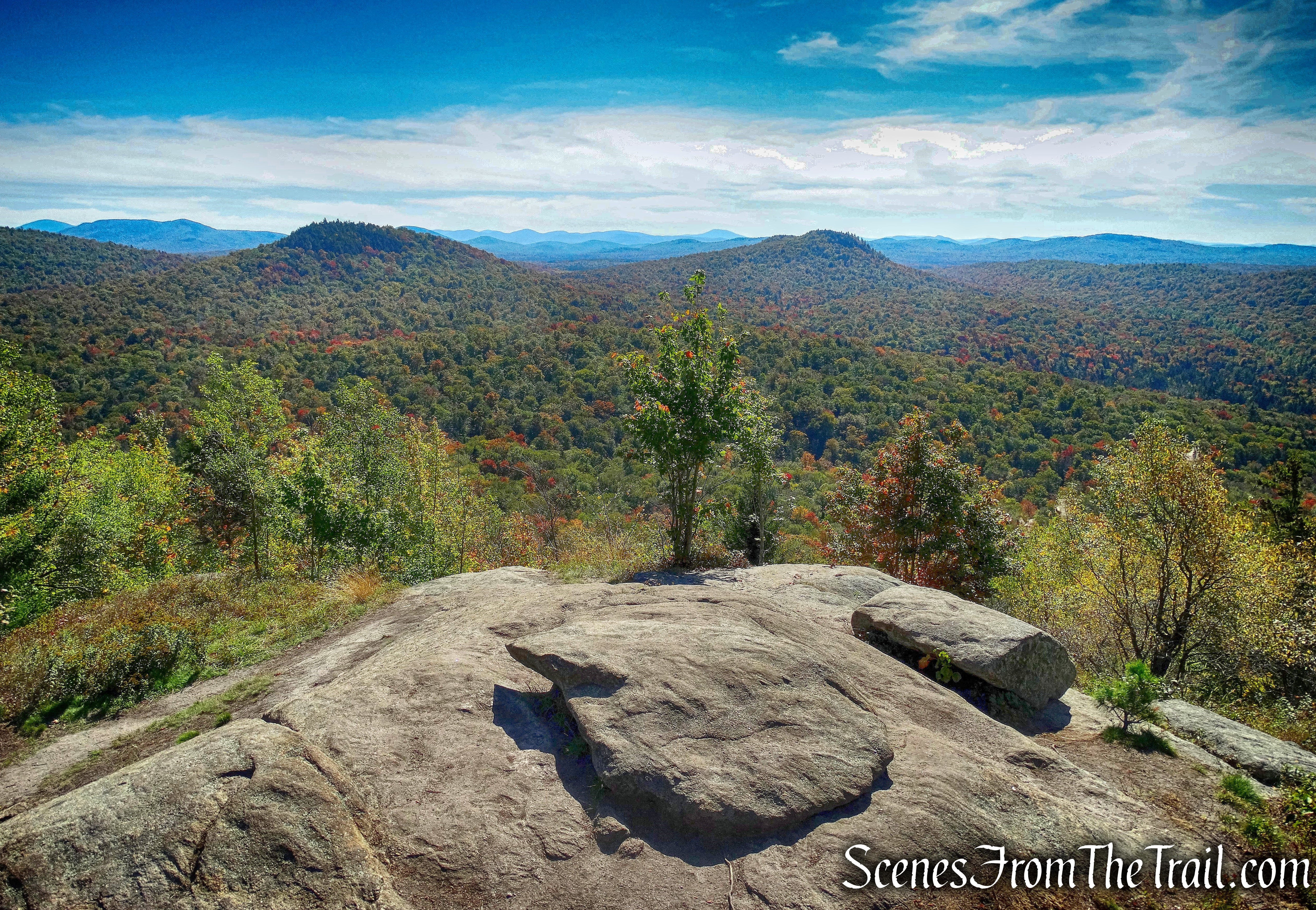
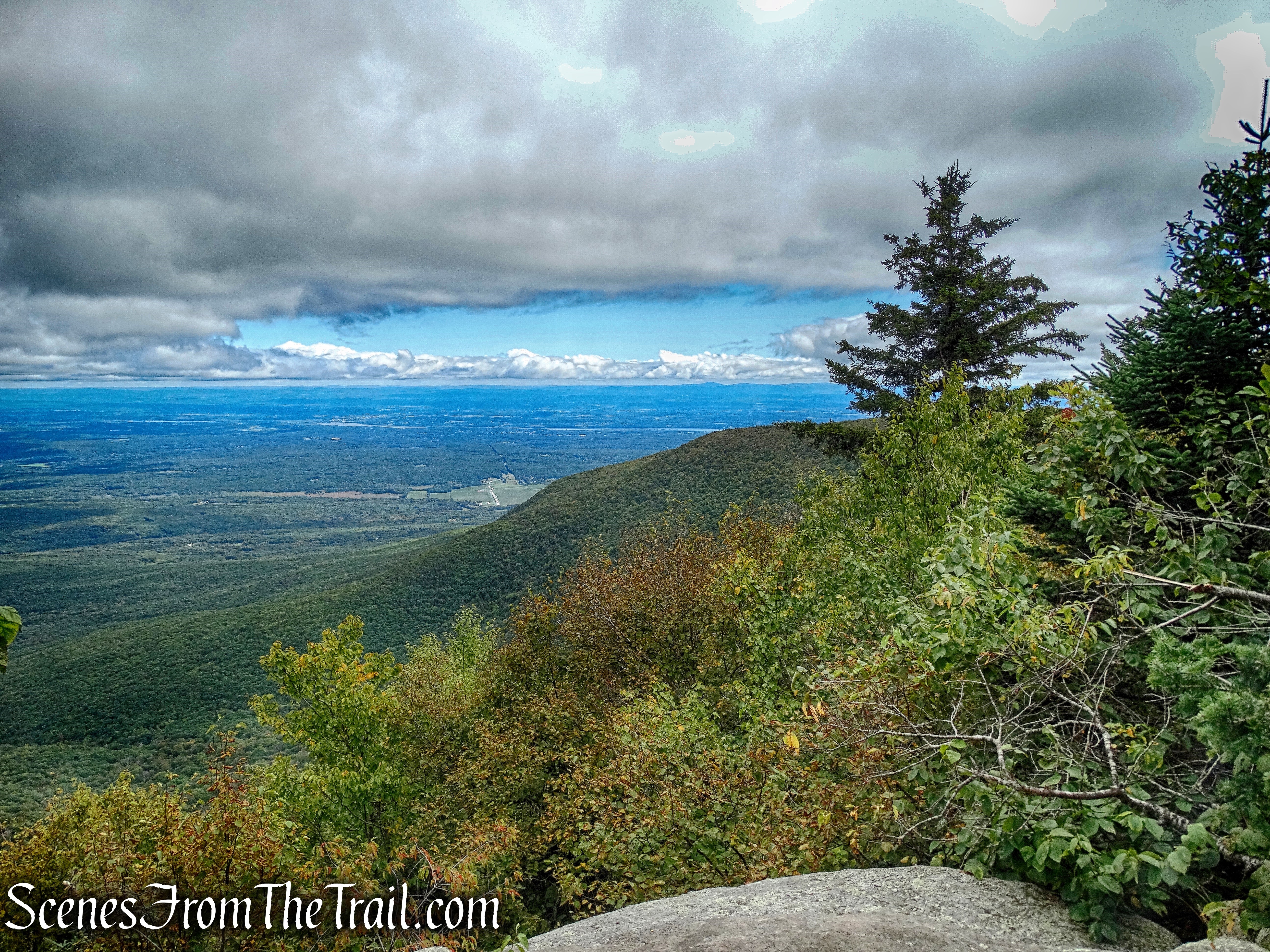
After very little effort, we were treated with our first views of the day.
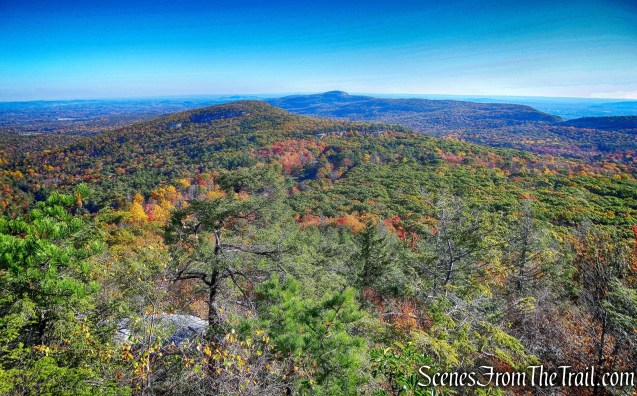
View from Beacon Hill Carriage Road

View from Beacon Hill Carriage Road

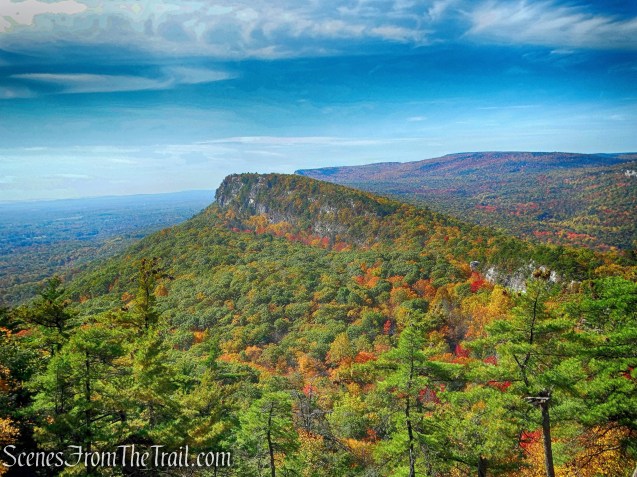
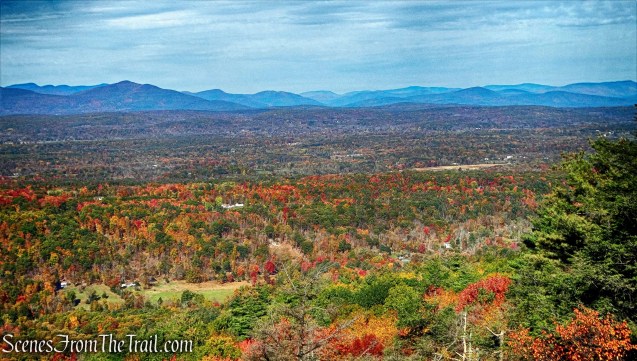
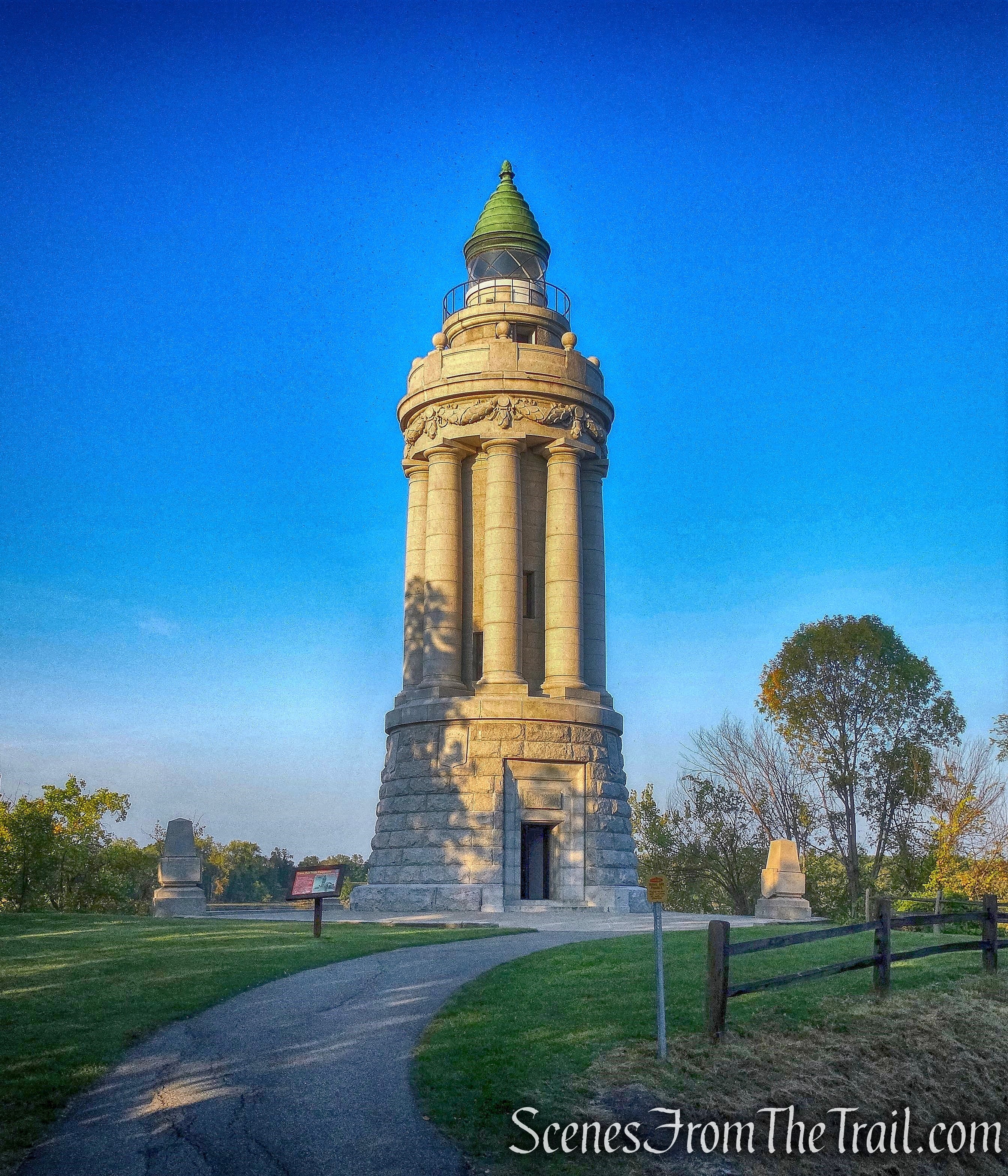
In the distance, the Albert K. Smiley Memorial Tower is visible on Skytop Cliff at the Mohonk Mountain House property.
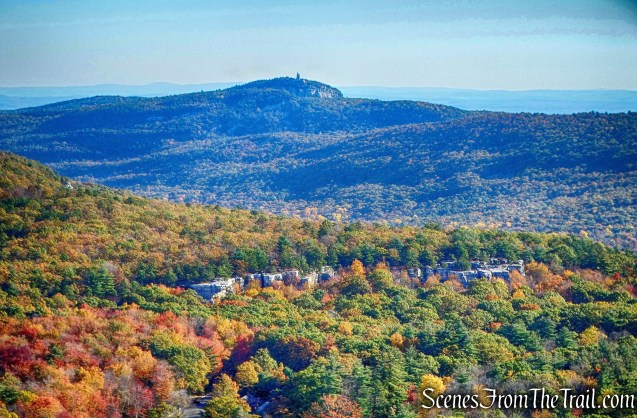
View from Beacon Hill Carriage Road

View from Beacon Hill Carriage Road

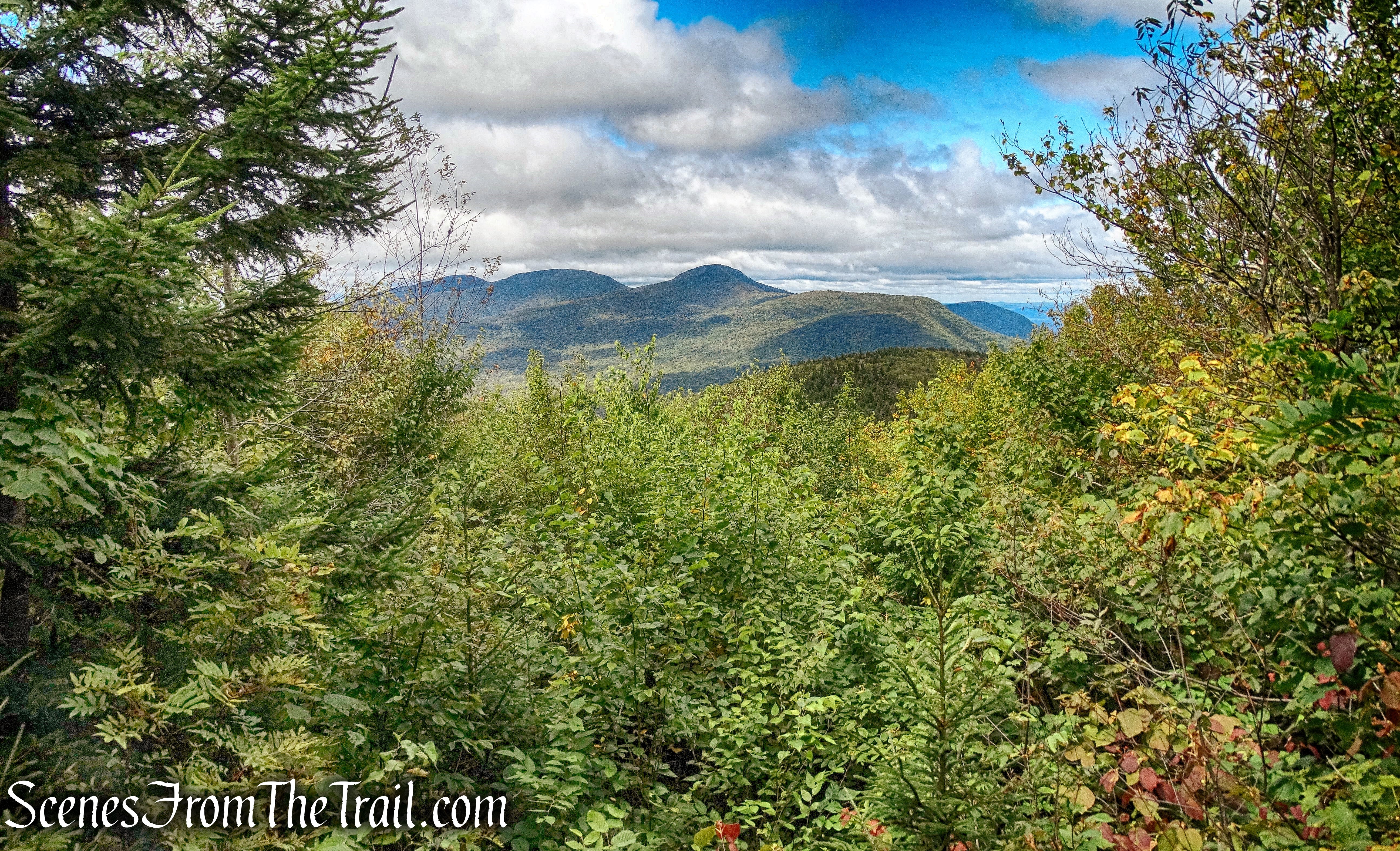
The Catskills are also visible in the distance to the left.
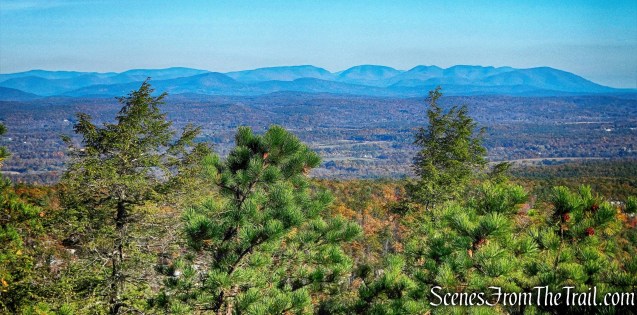
View from Beacon Hill Carriage Road

View from Beacon Hill Carriage Road

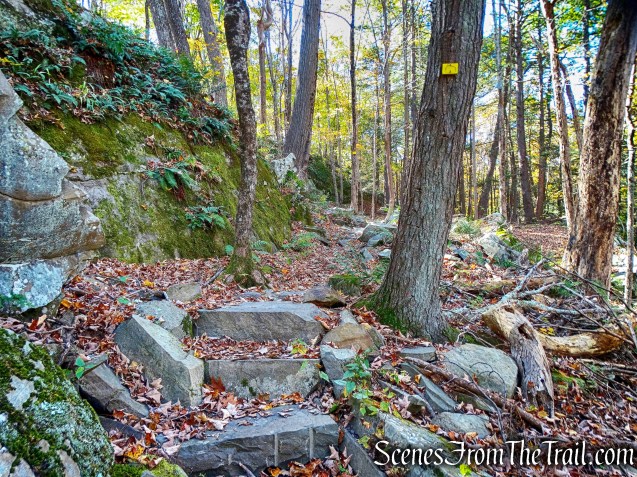
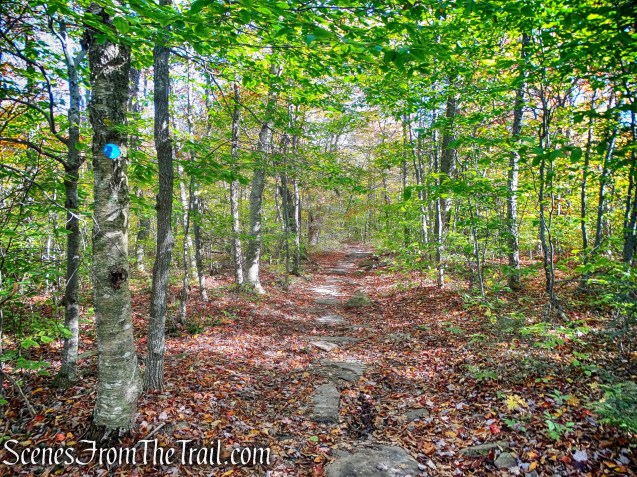
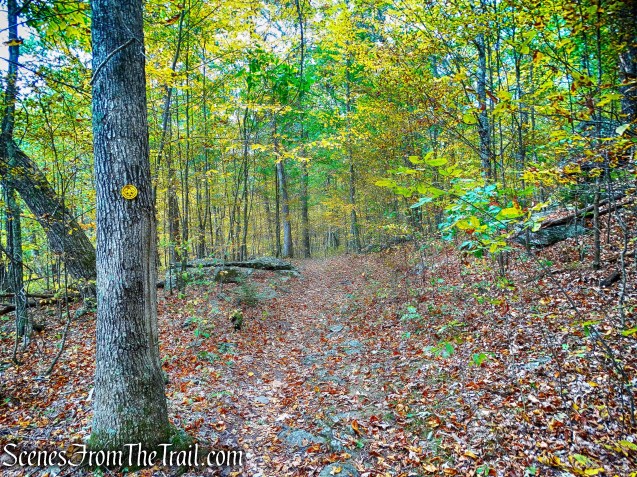
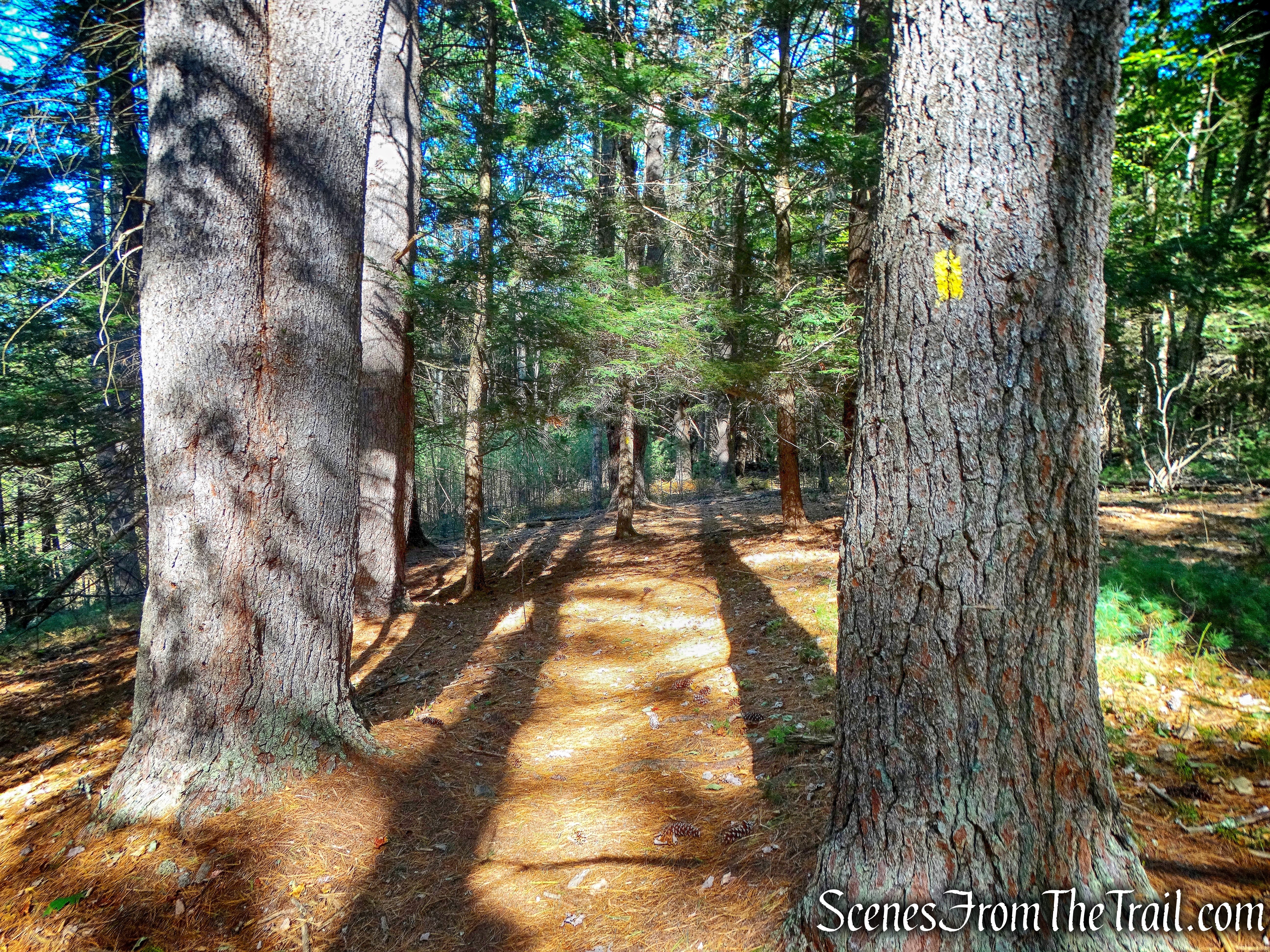
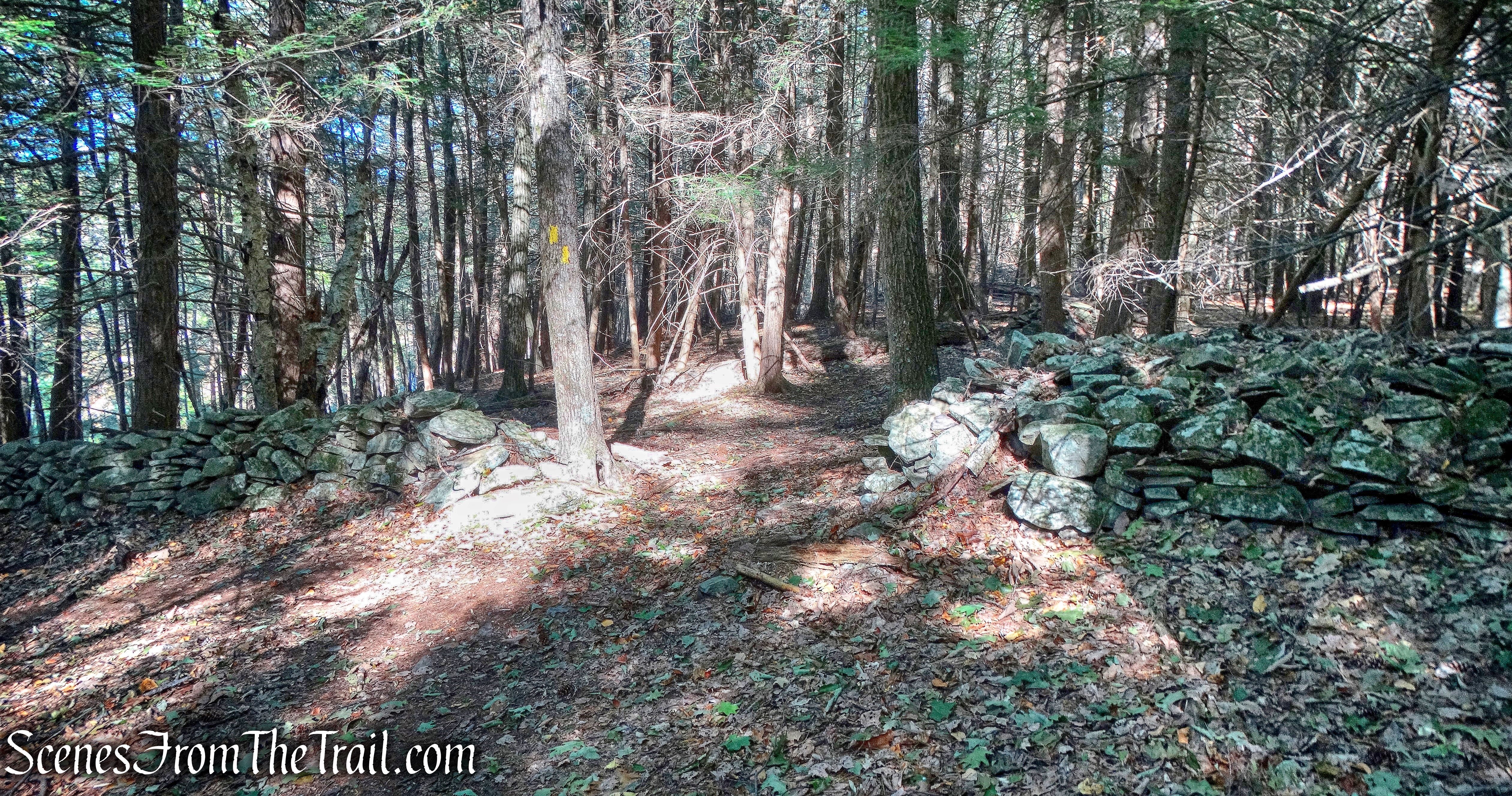
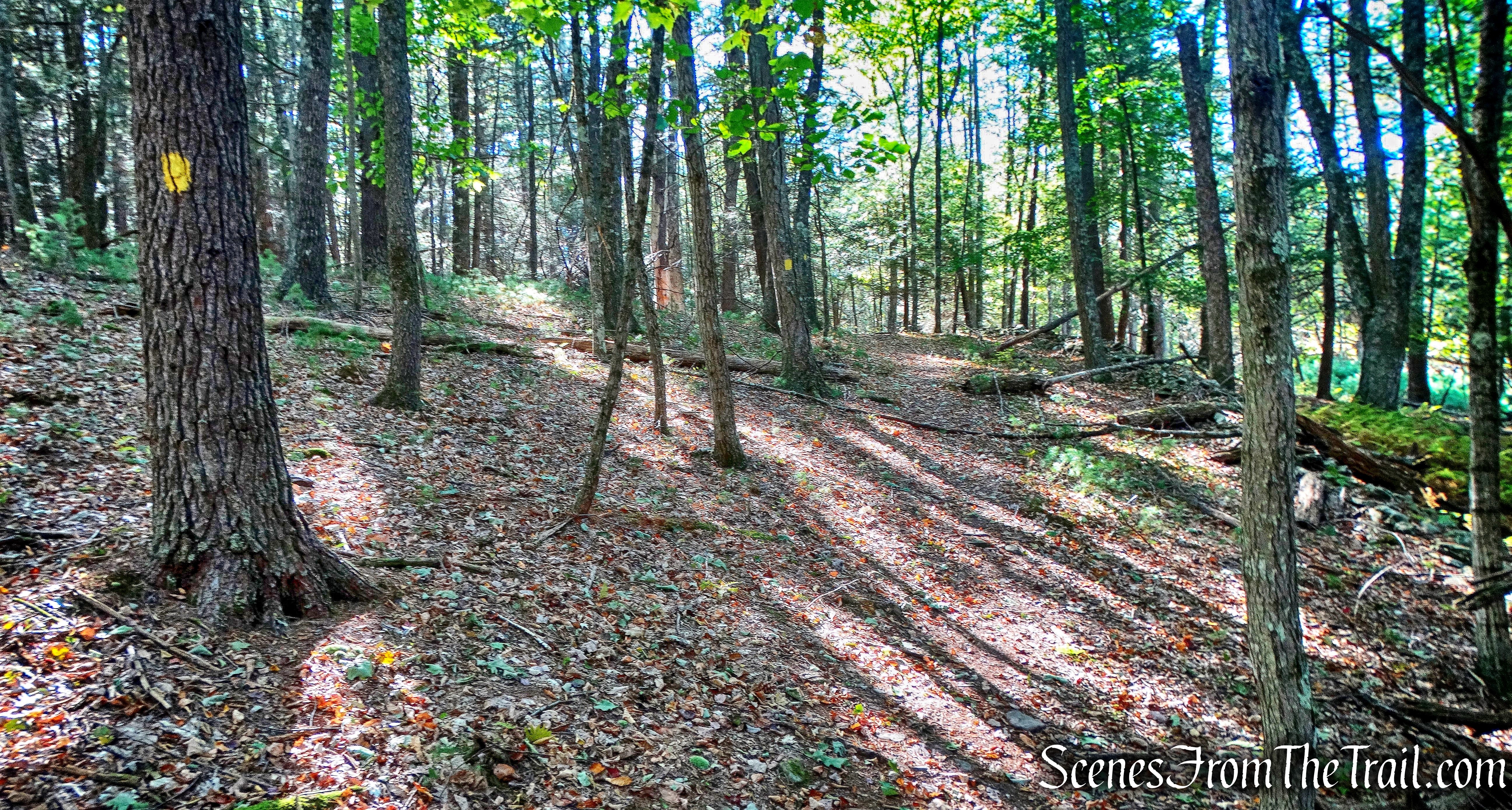
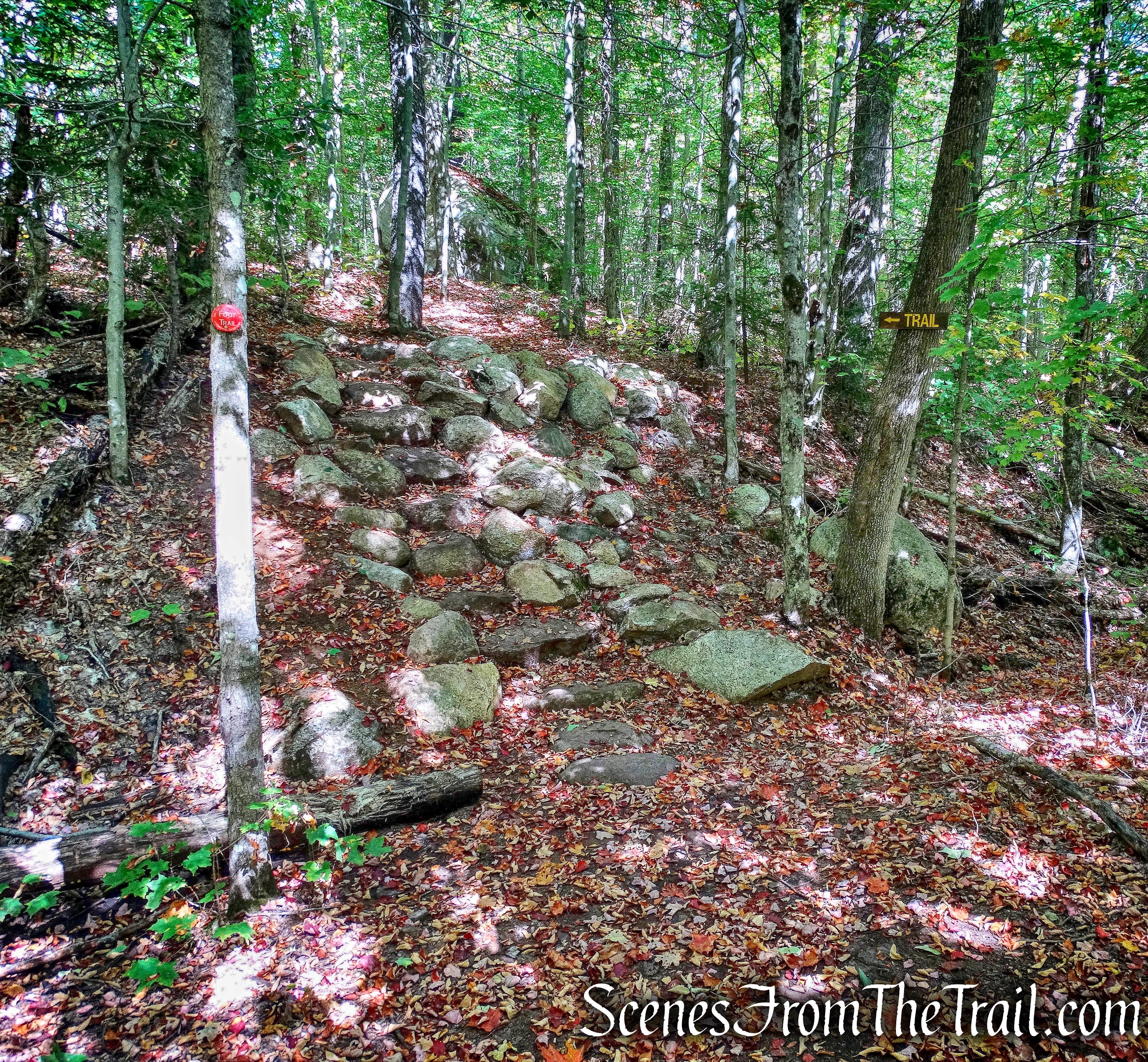
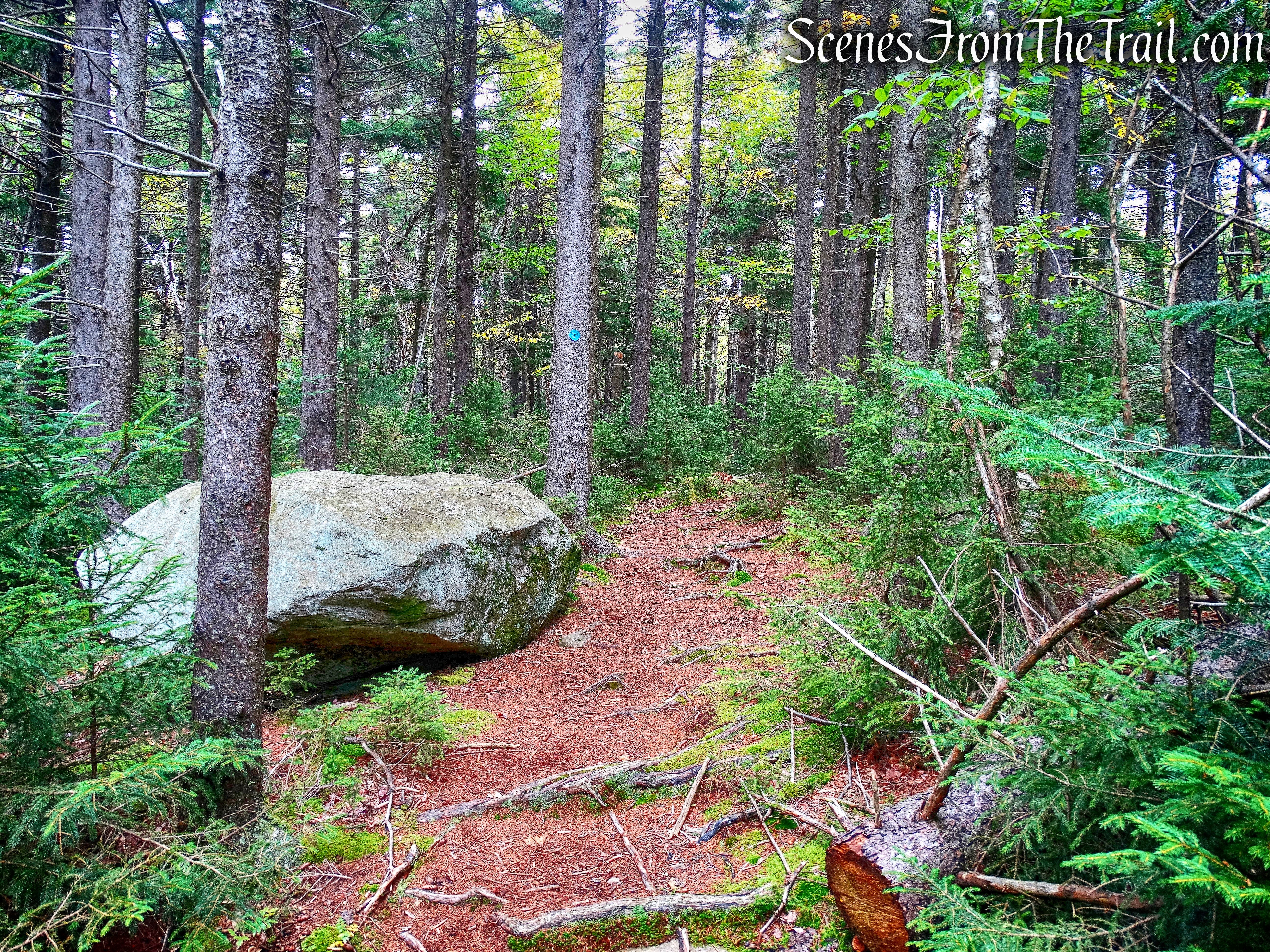
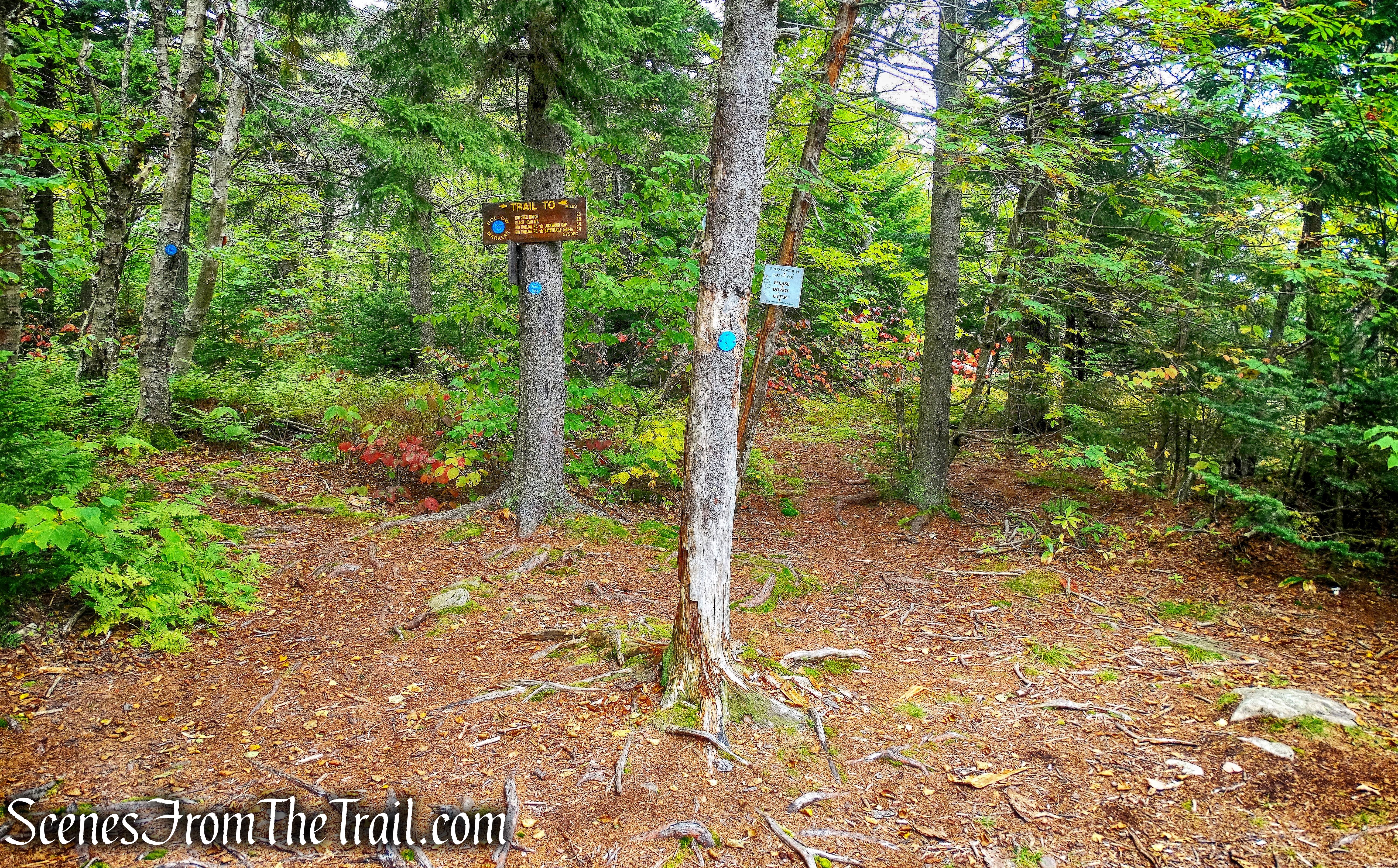
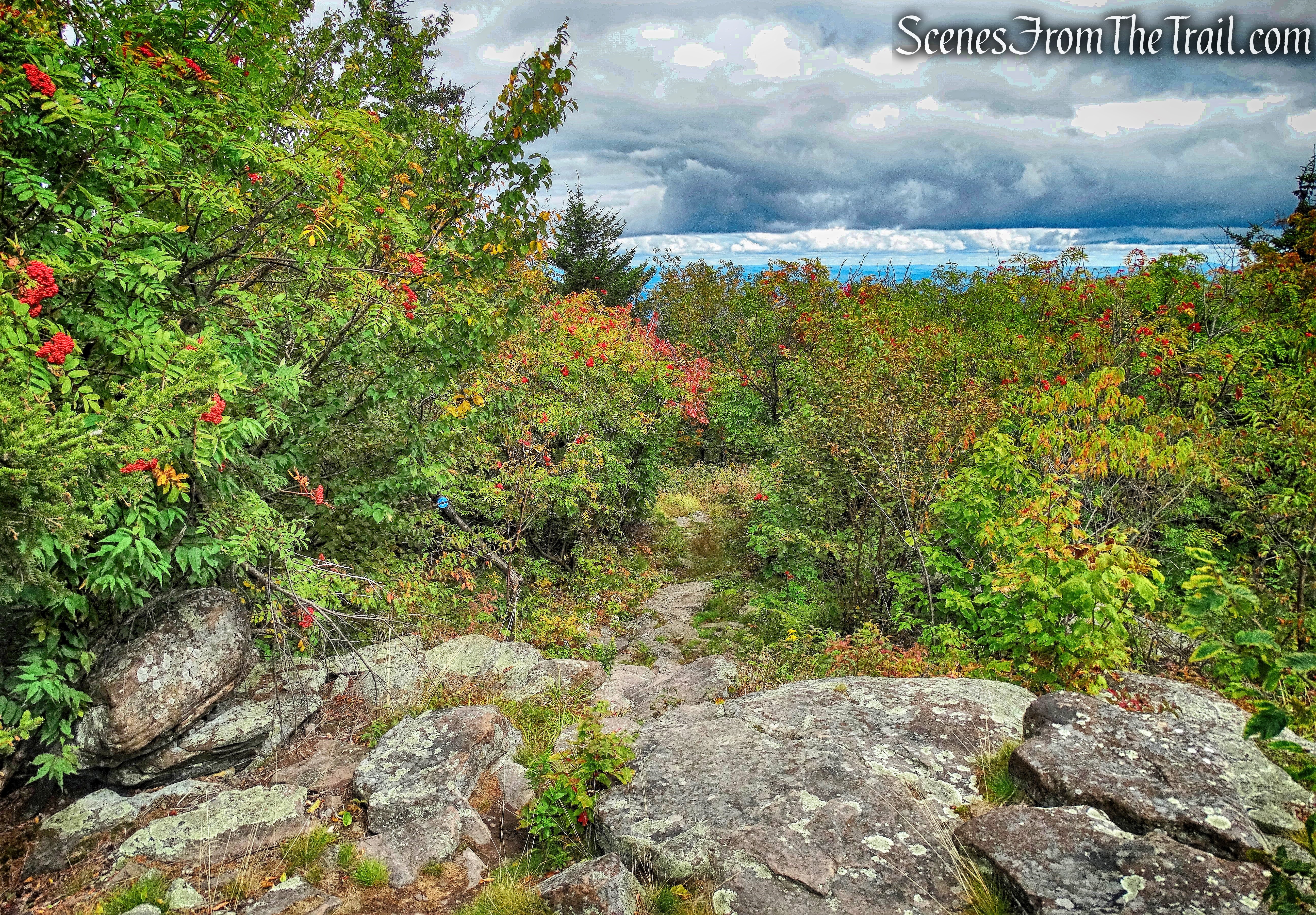
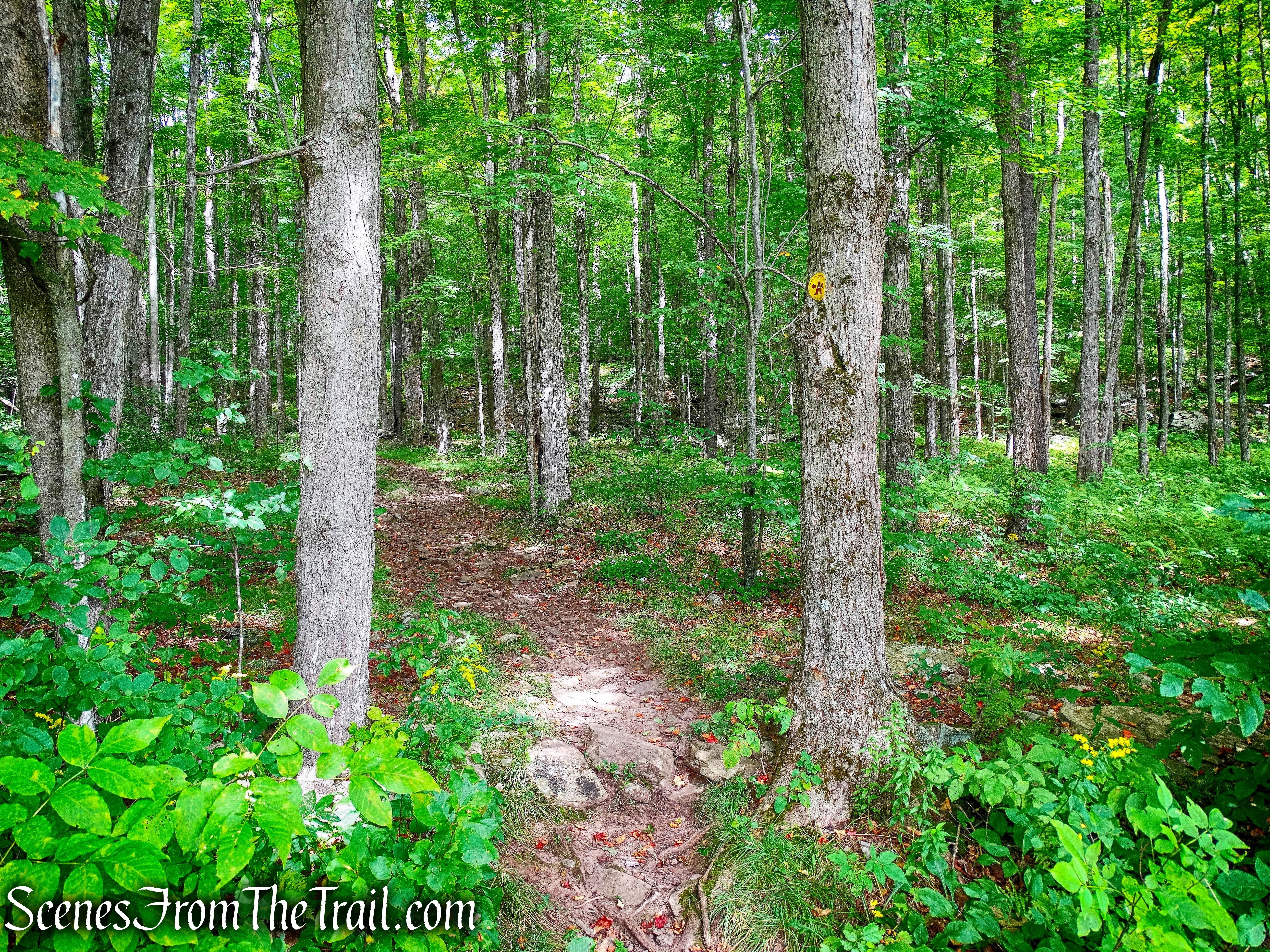
After taking in the views, we proceeded onto the Beacon Hill Trail which is marked with yellow blazes.
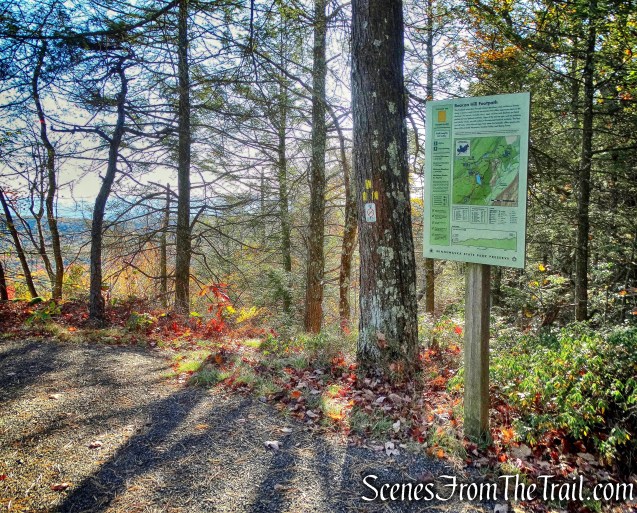
Beacon Hill Trail

Beacon Hill Trail

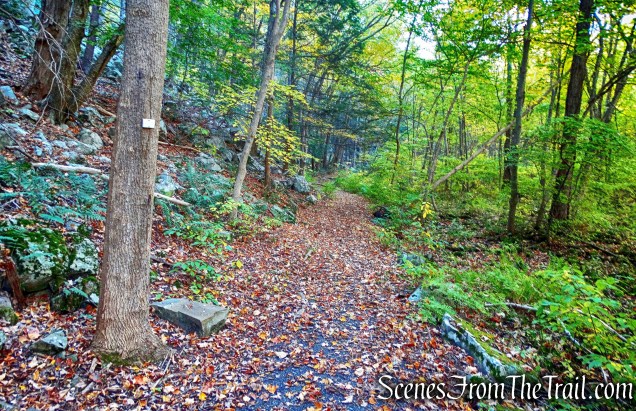
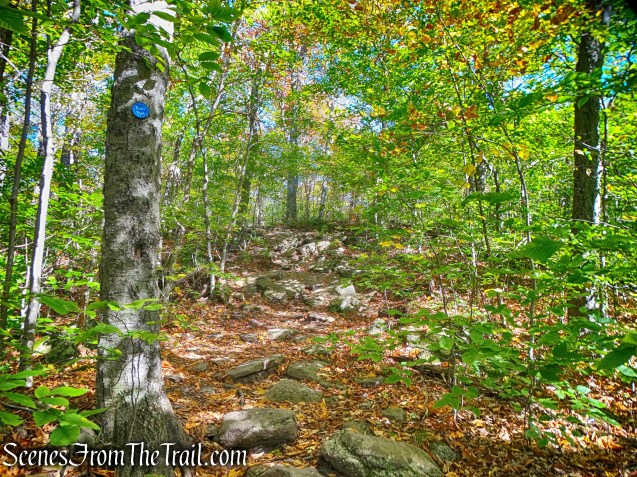
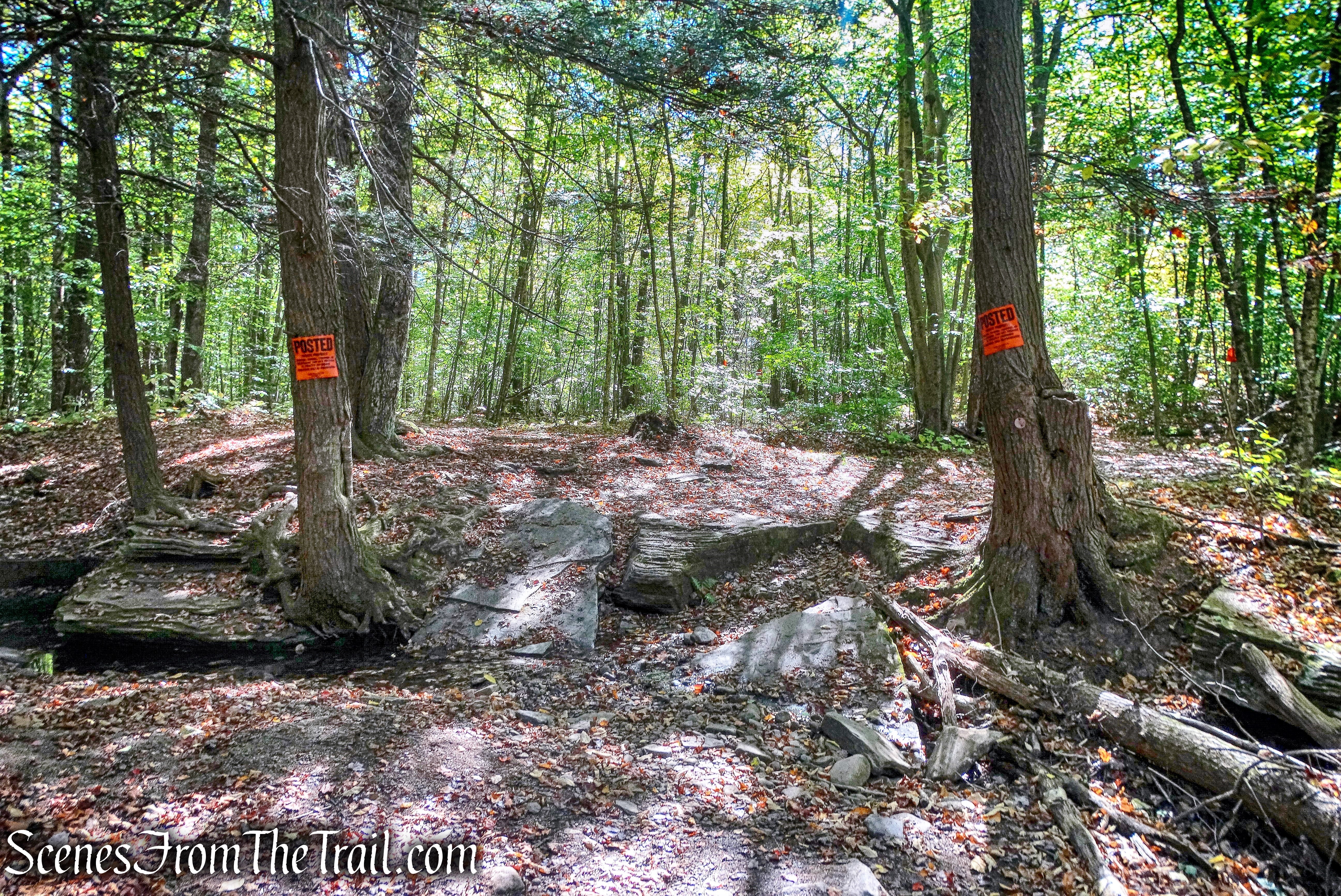
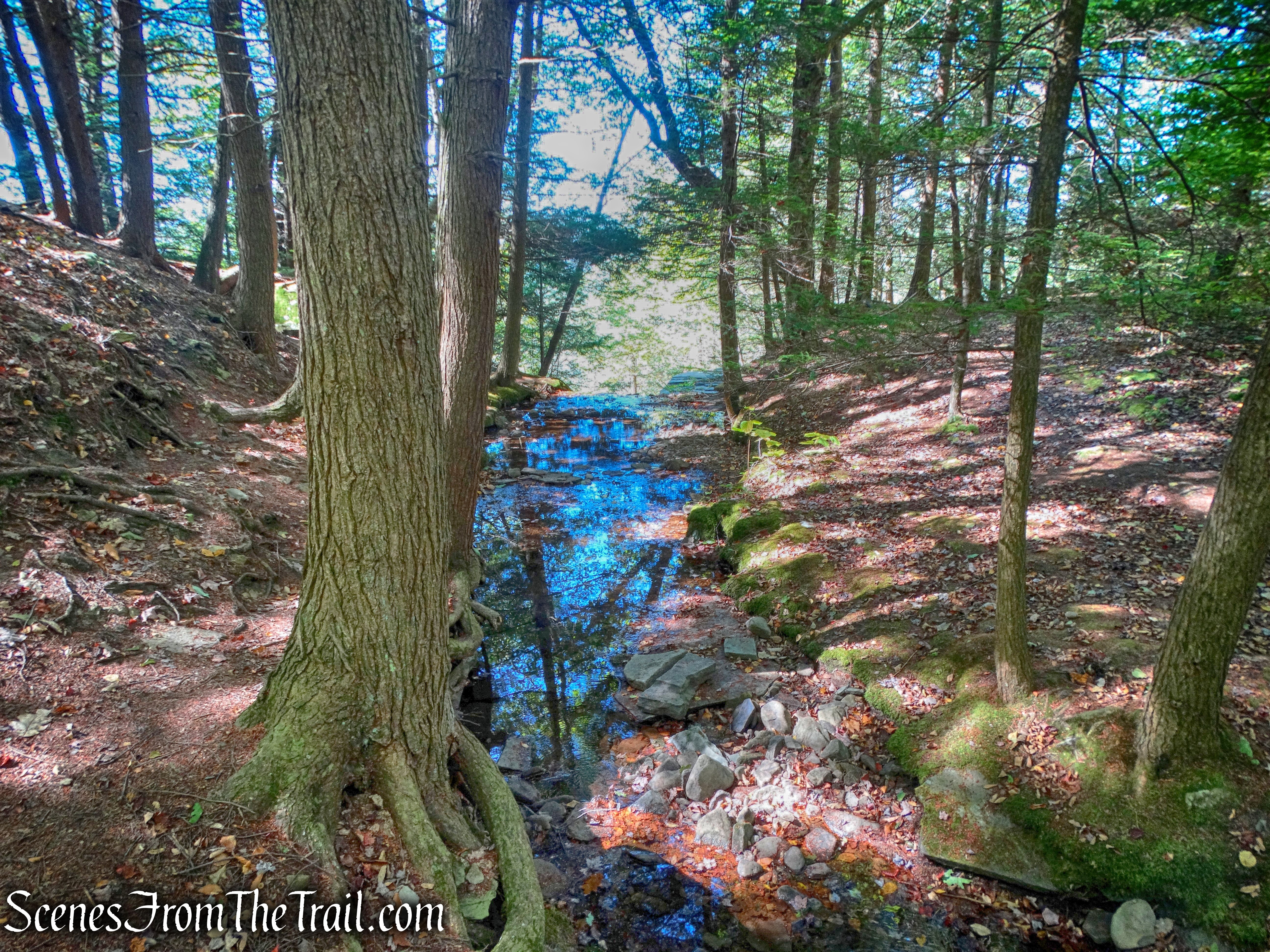
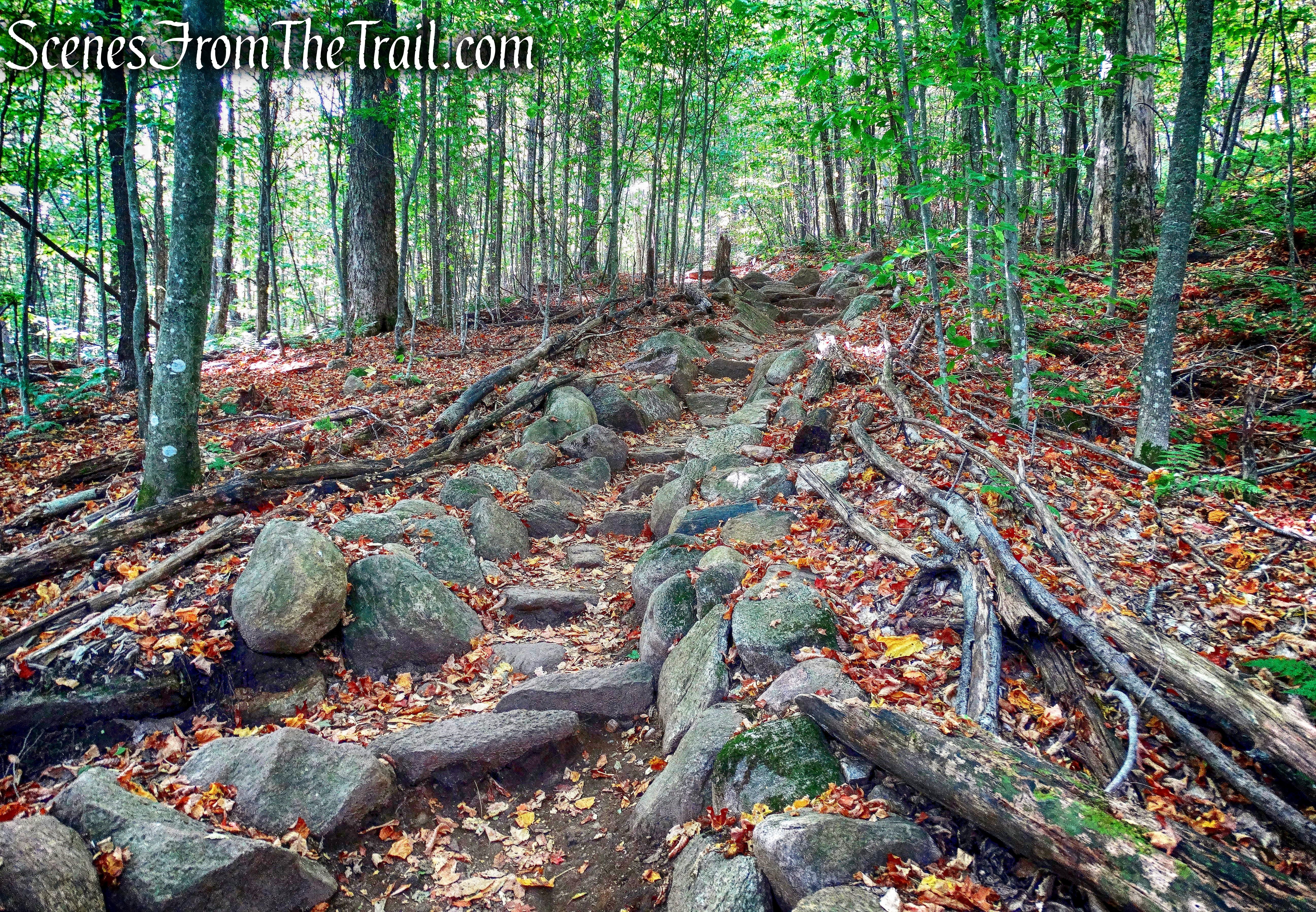
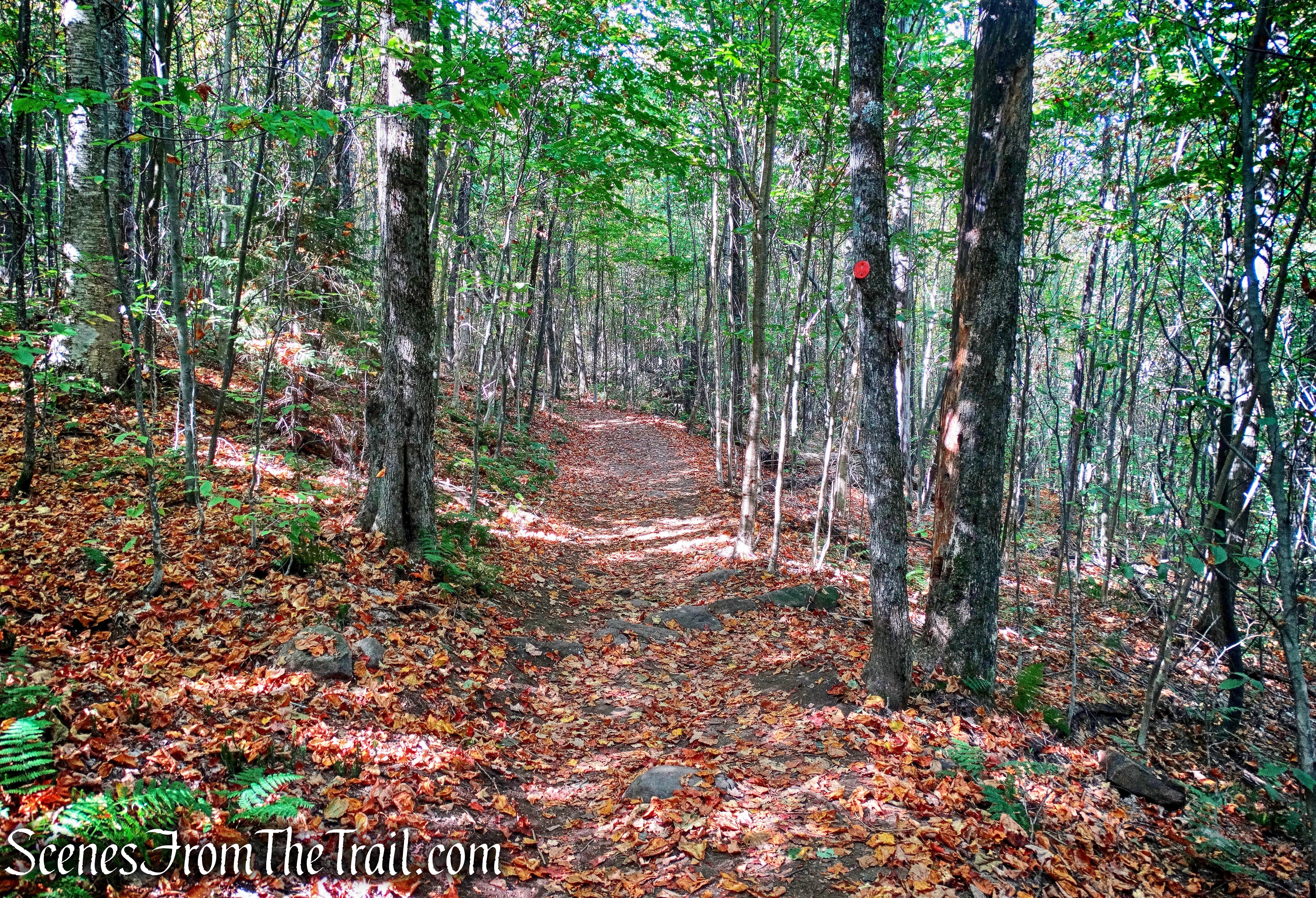
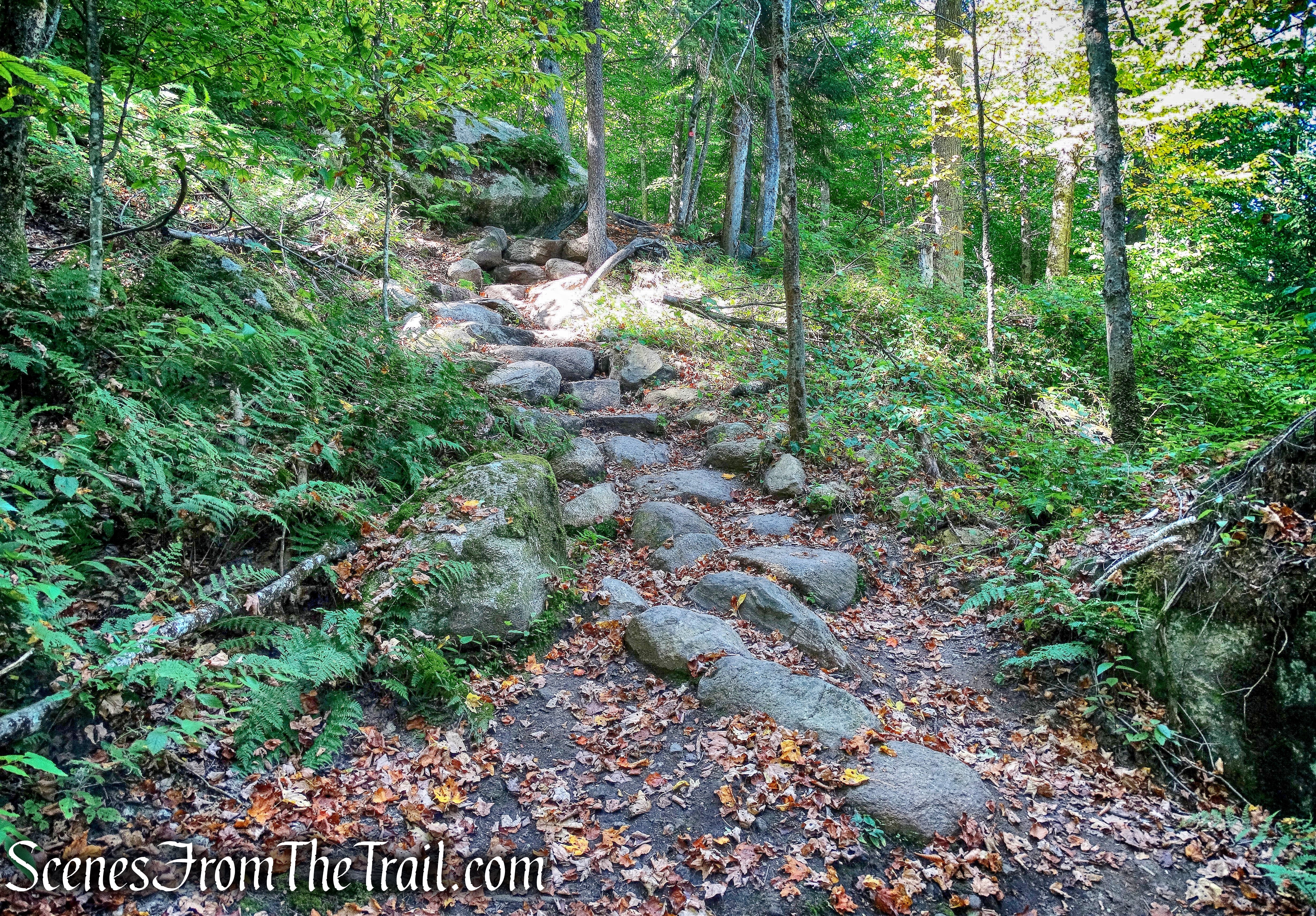
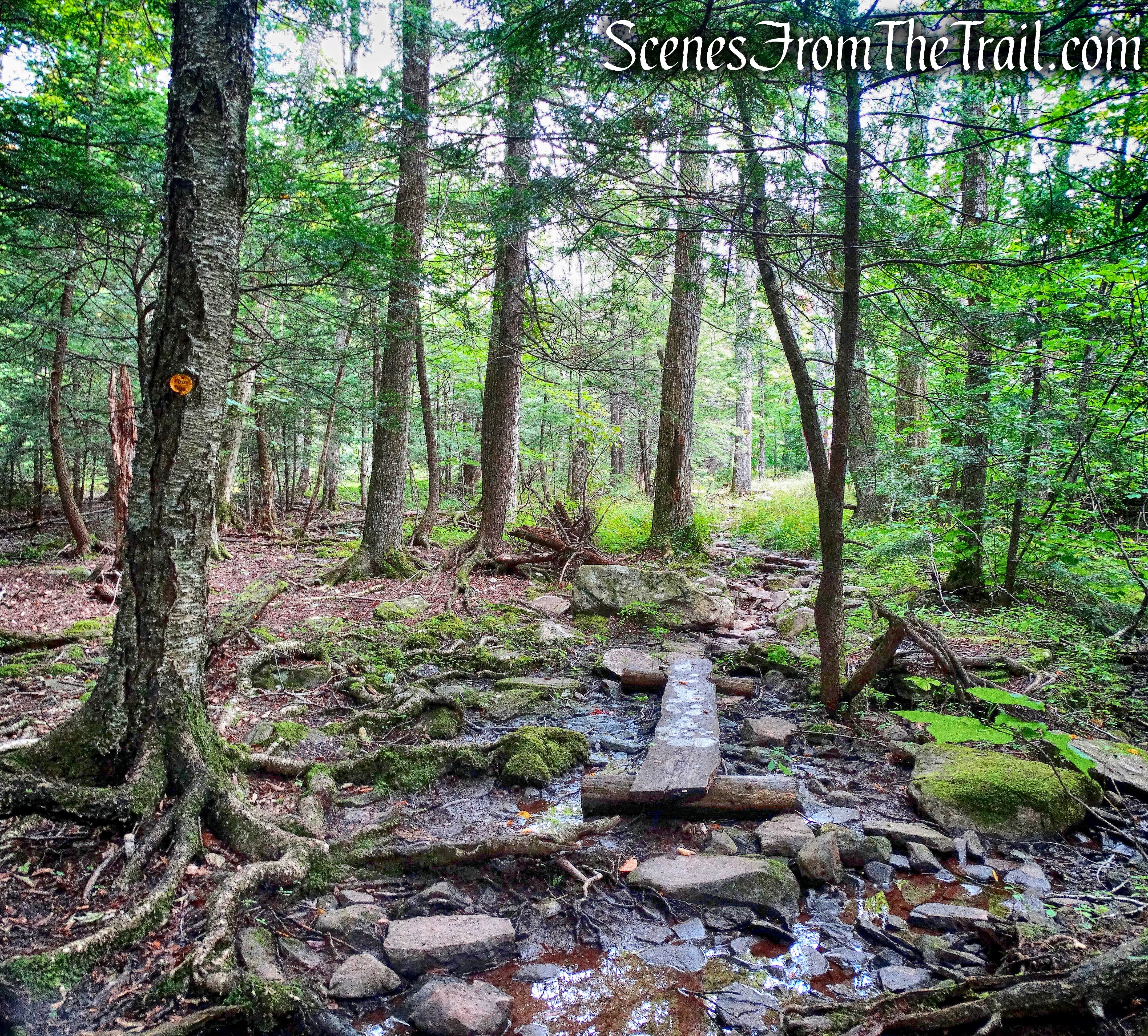
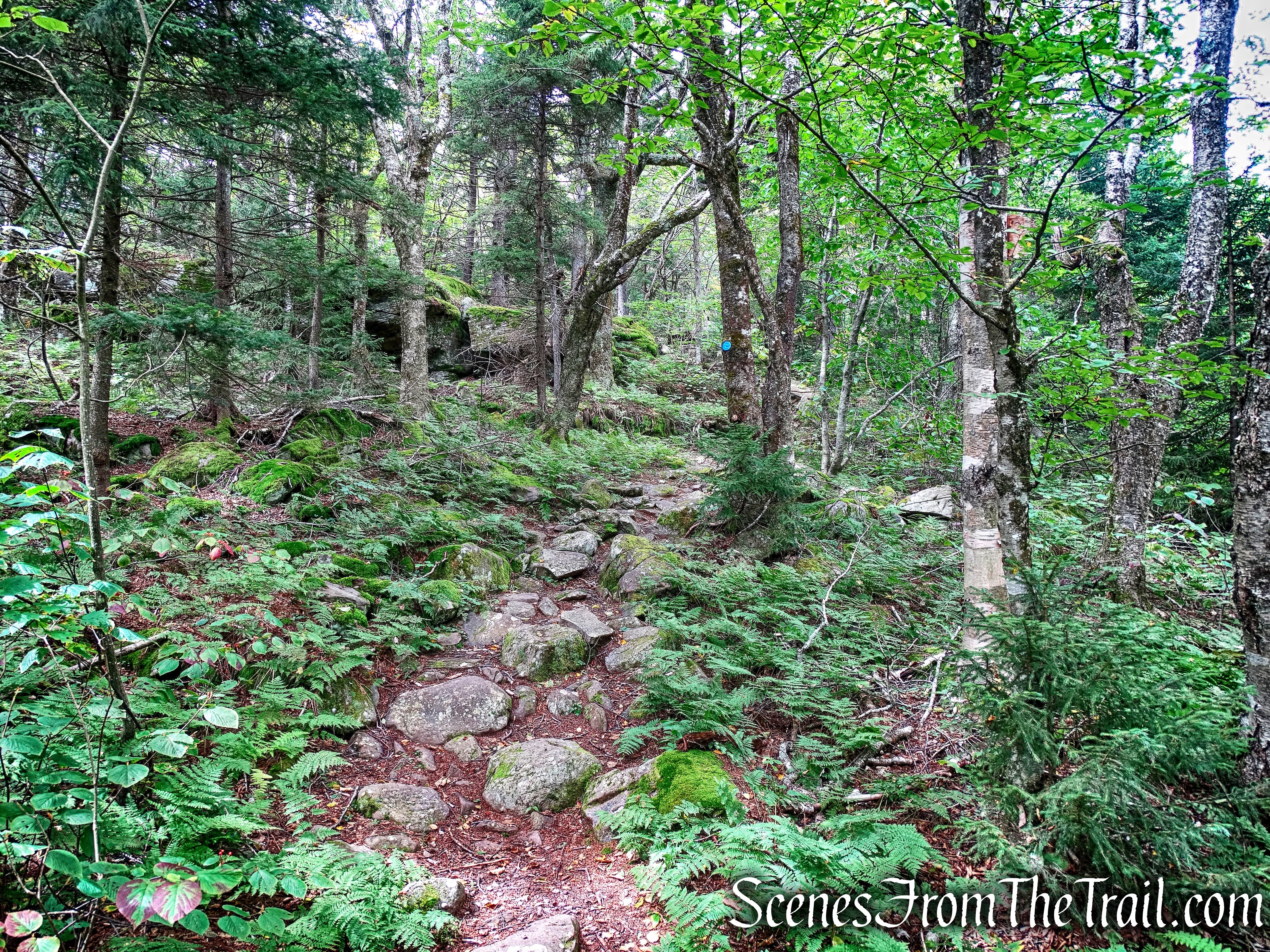
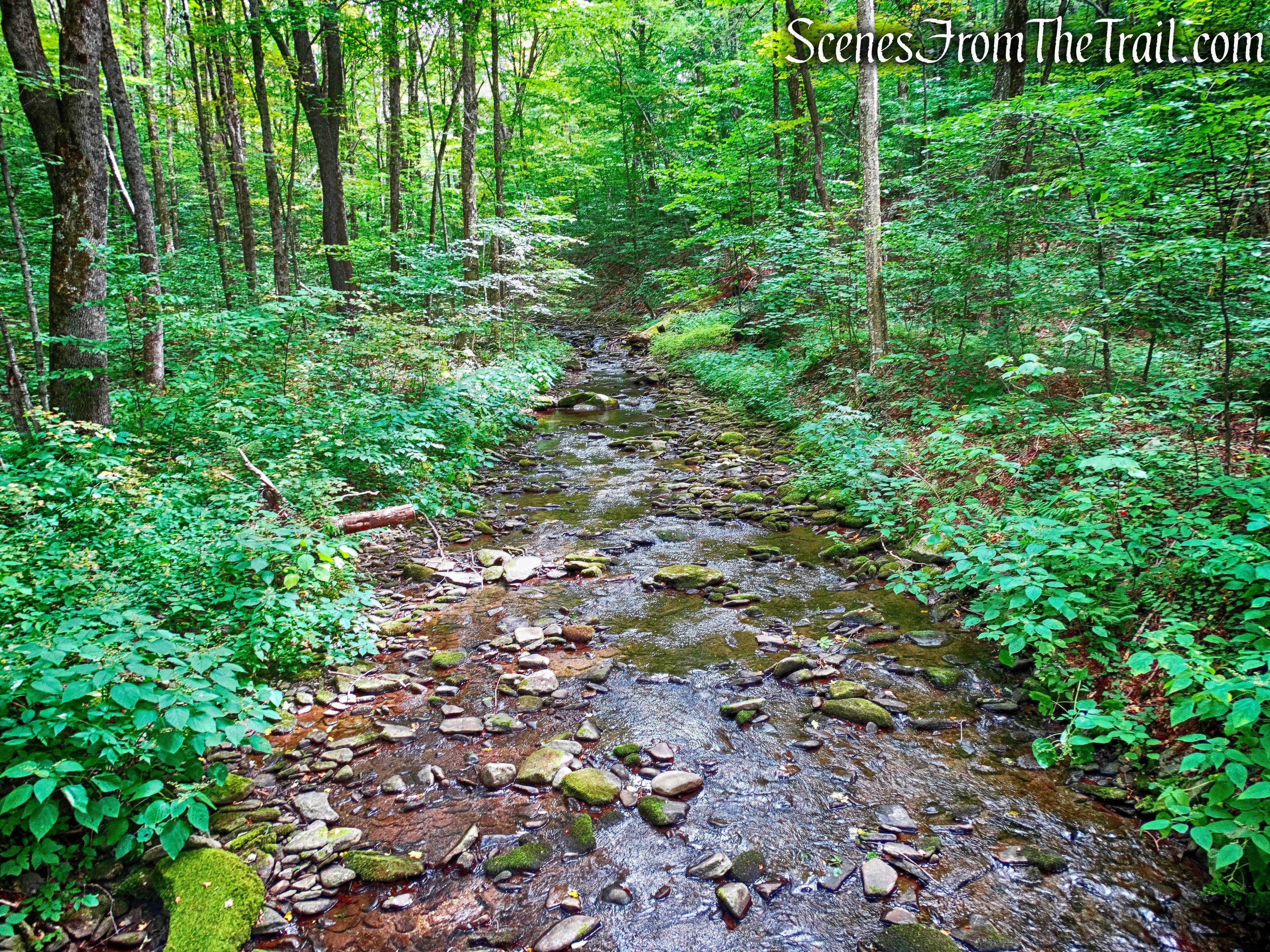
The trail descends slightly to cross a seasonal stream, then begins a steady ascent. It continues through the woods, climbing gradually.
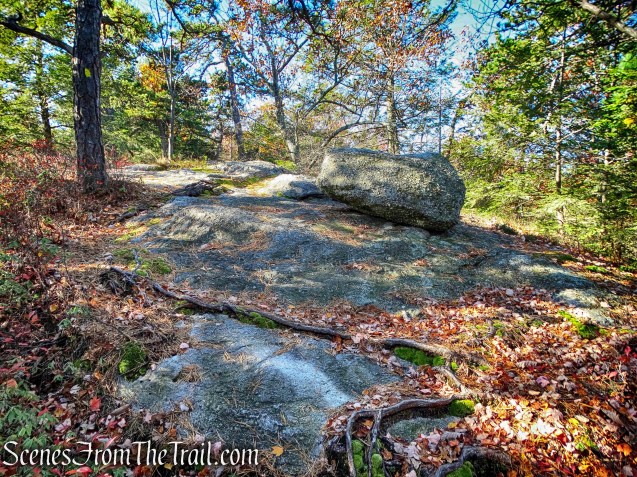
Beacon Hill Trail

Beacon Hill Trail

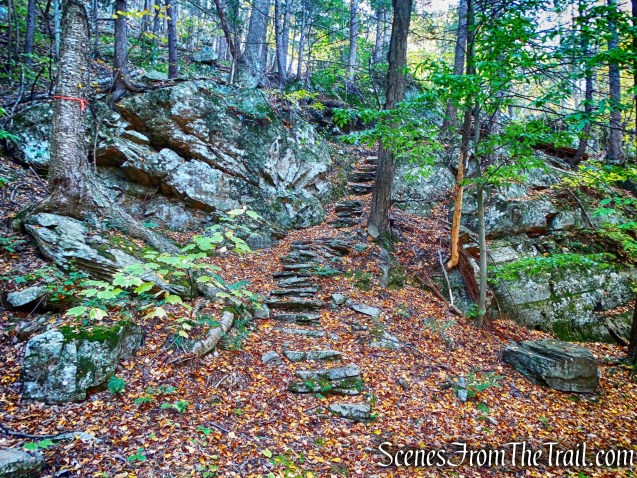
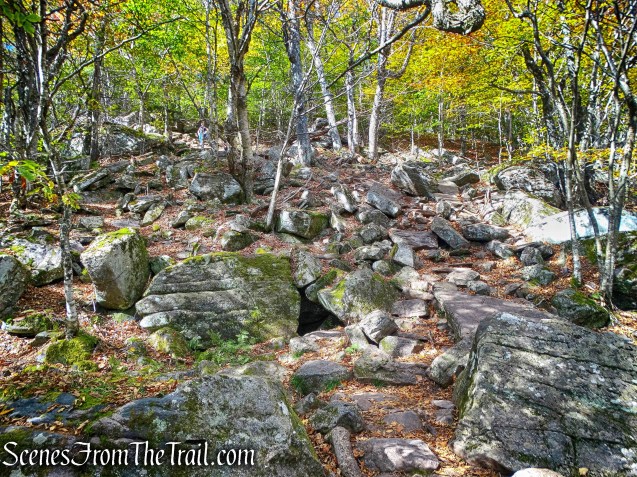
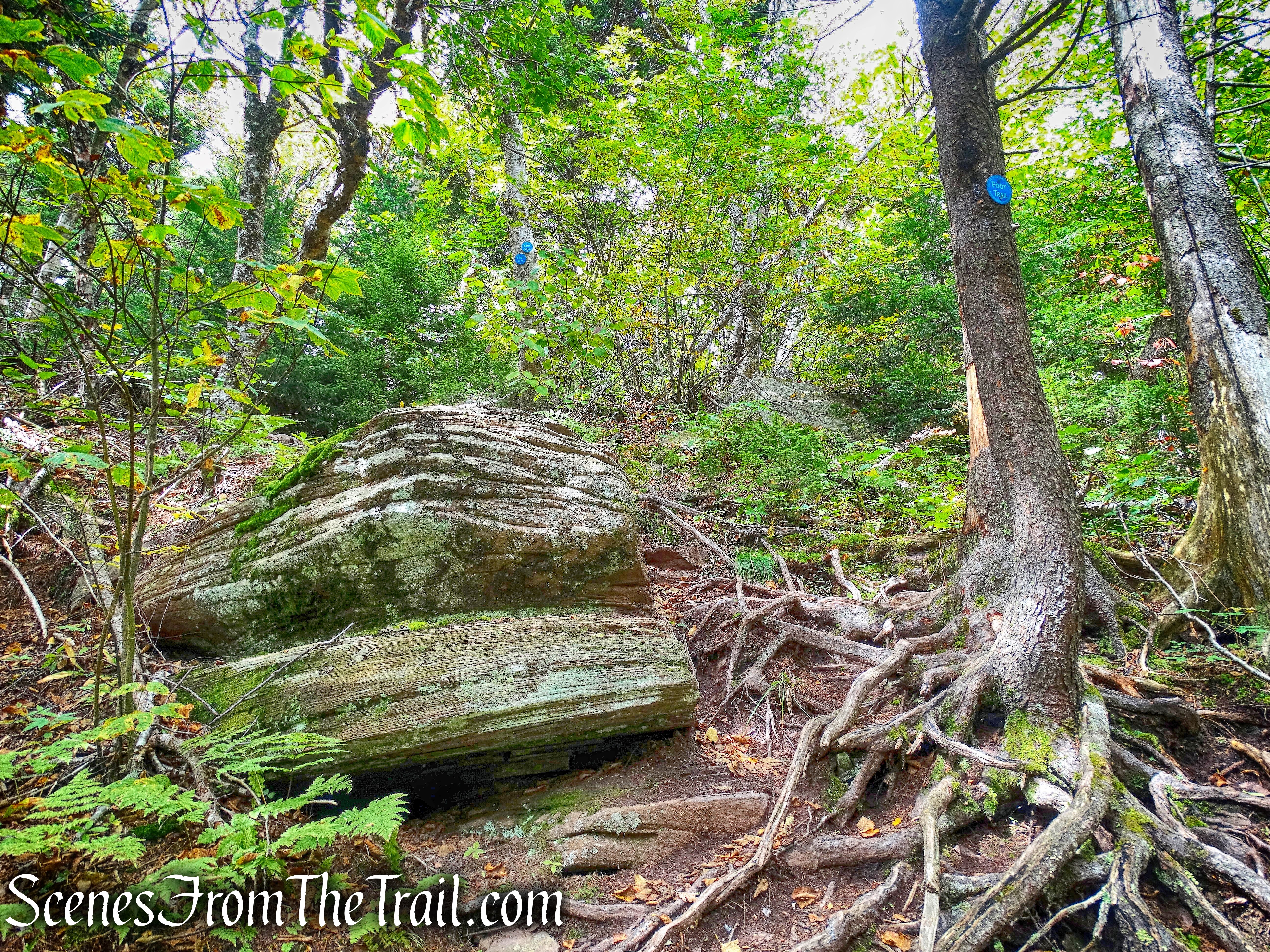
After a steeper climb, it comes out on rock ledge.
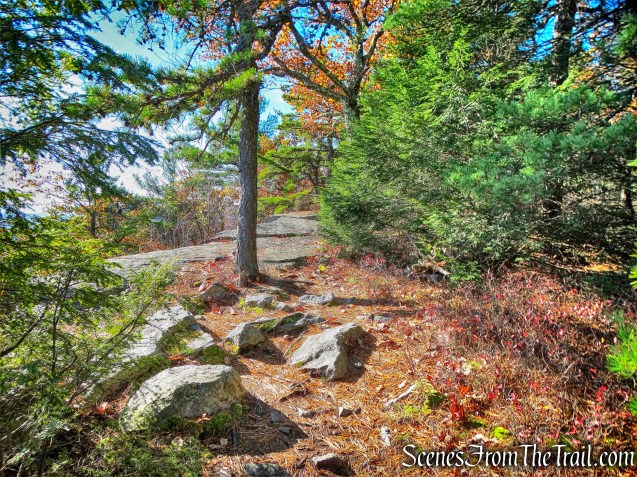
Beacon Hill Trail

Beacon Hill Trail

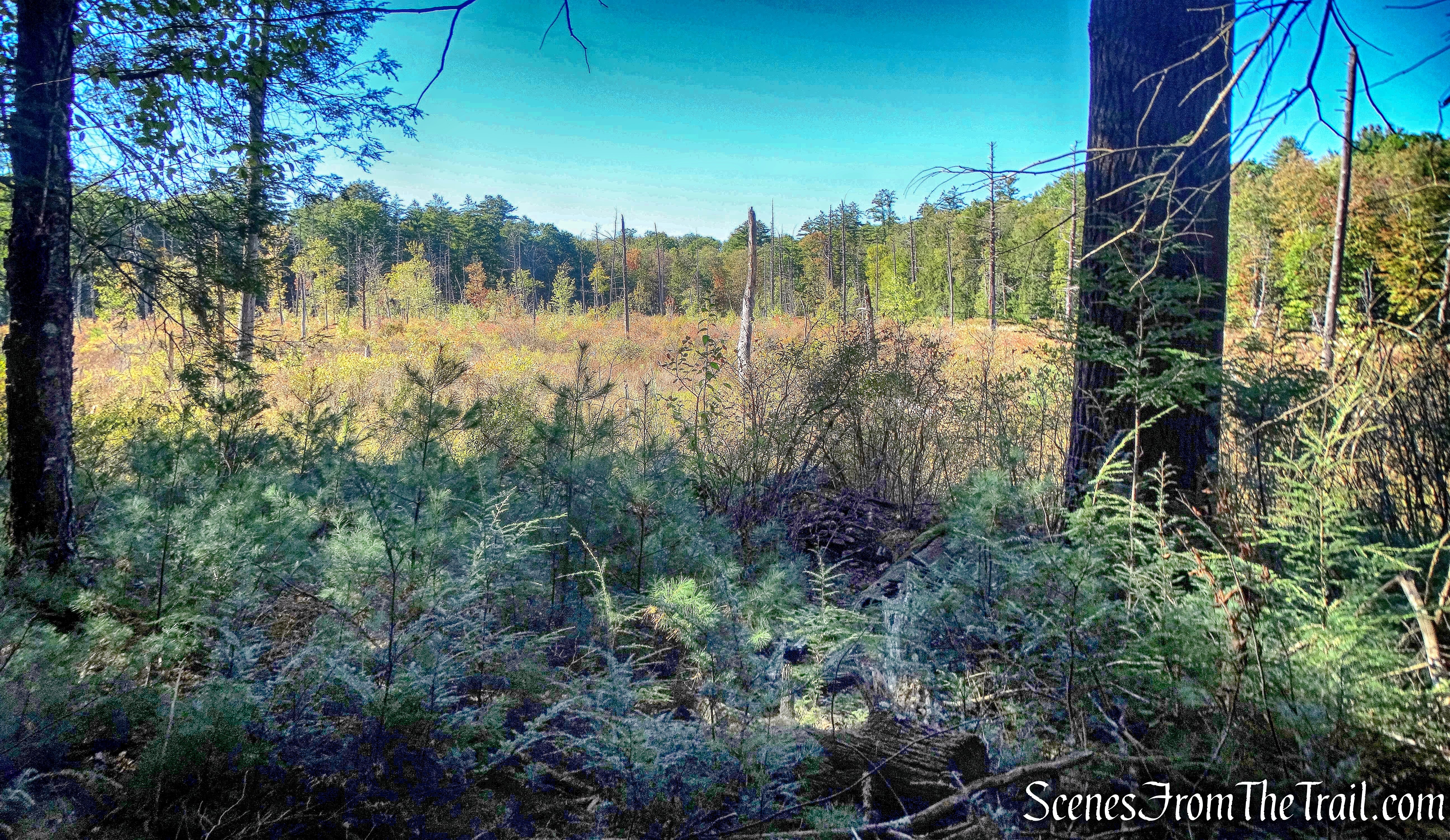
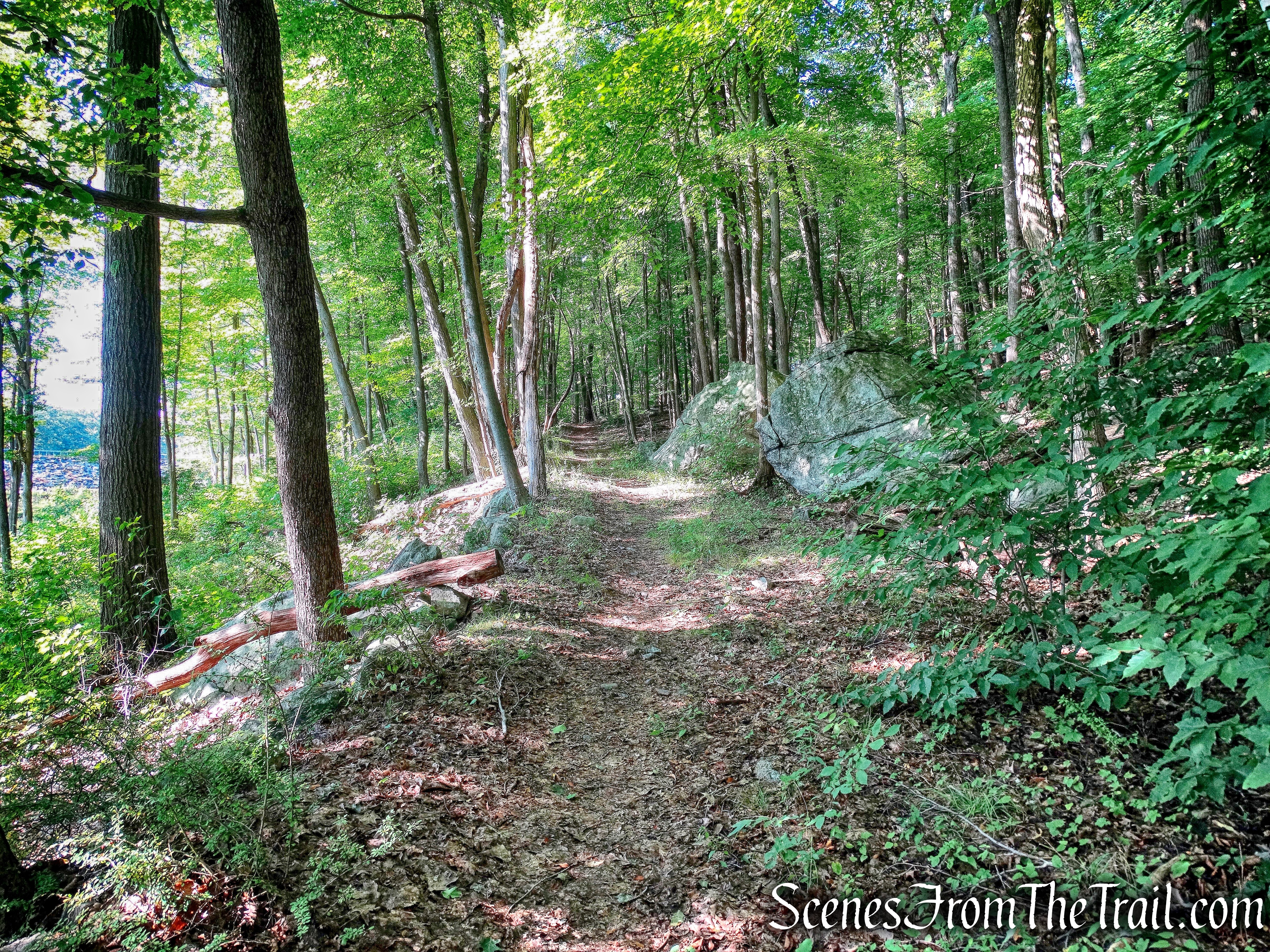
There are partially obstructed views through the trees, but this is a beautiful section of trail and we found ourselves alone the entire time we were on it.

Beacon Hill Trail

Beacon Hill Trail

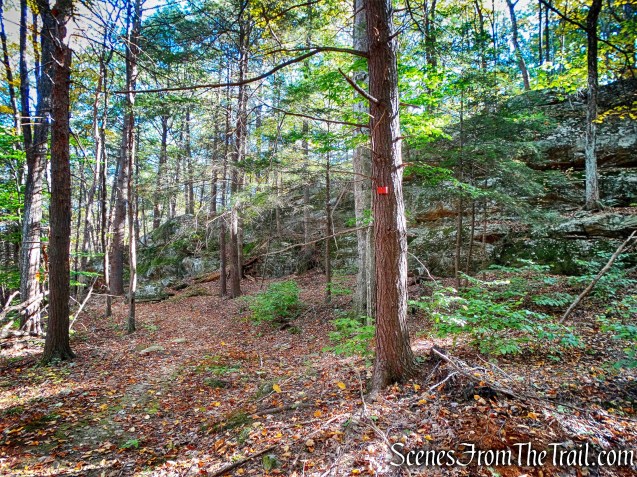
The trail continues along the edge of the cliffs for a while…..
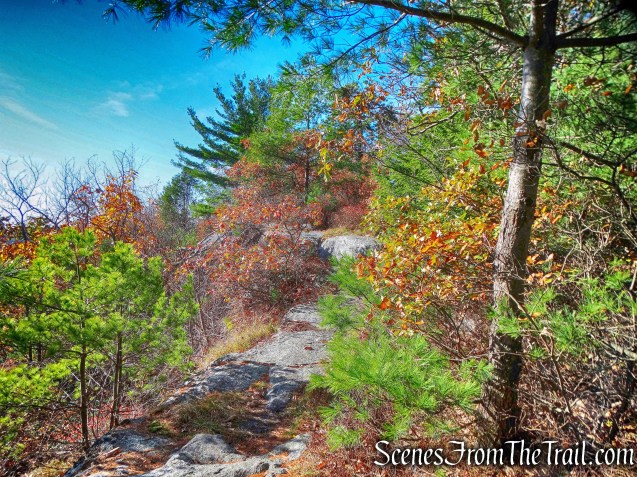
Beacon Hill Trail

Beacon Hill Trail

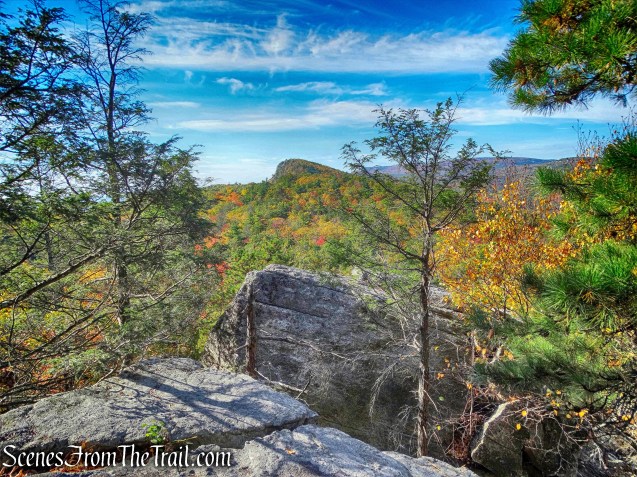
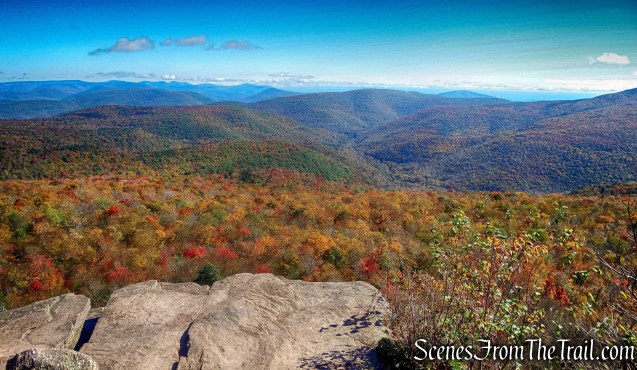
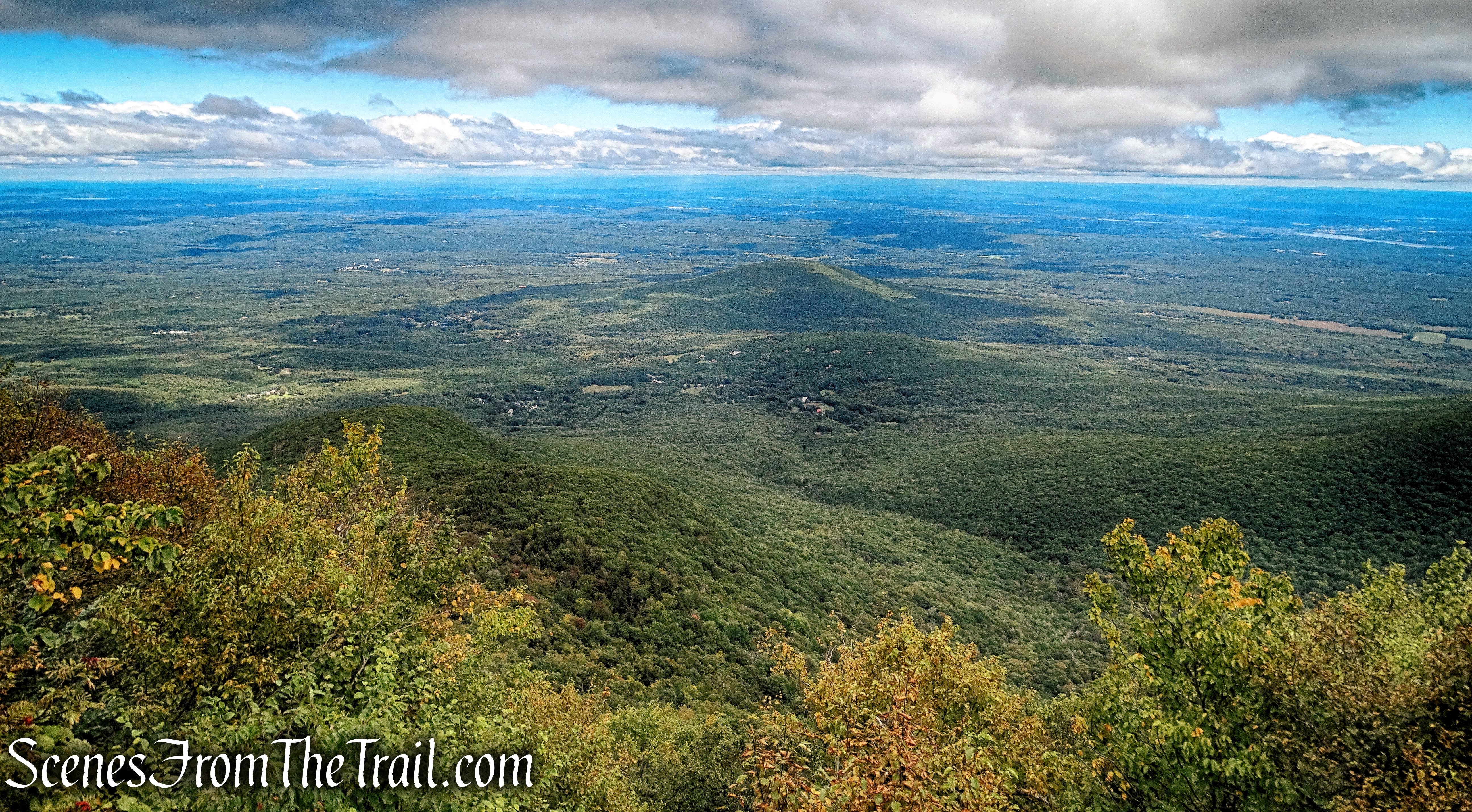
with views of the surrounding hills and countryside along the way.
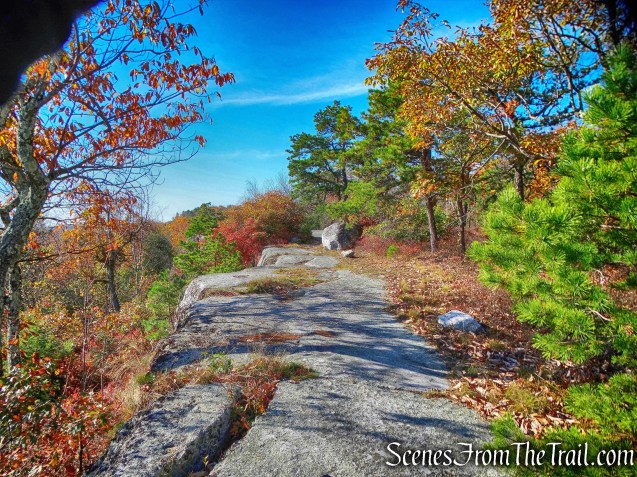
Beacon Hill Trail

Beacon Hill Trail

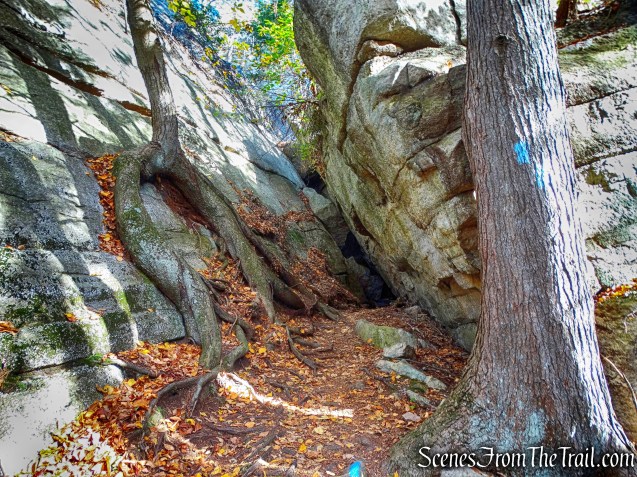
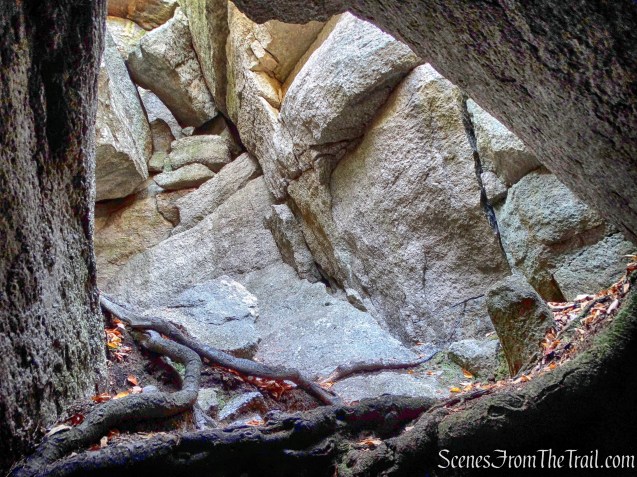
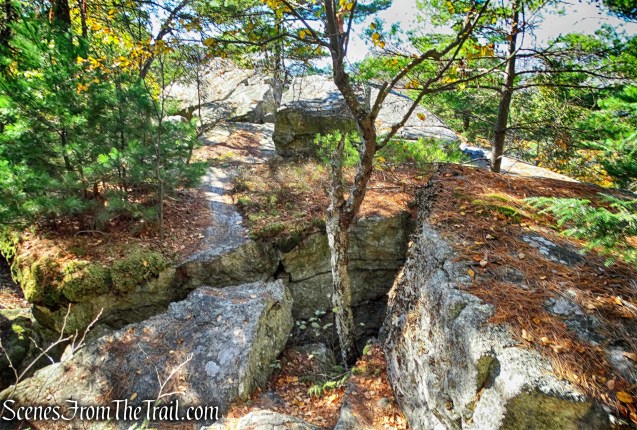
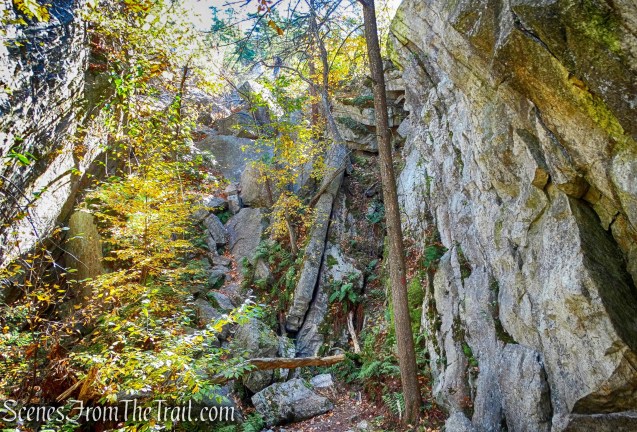
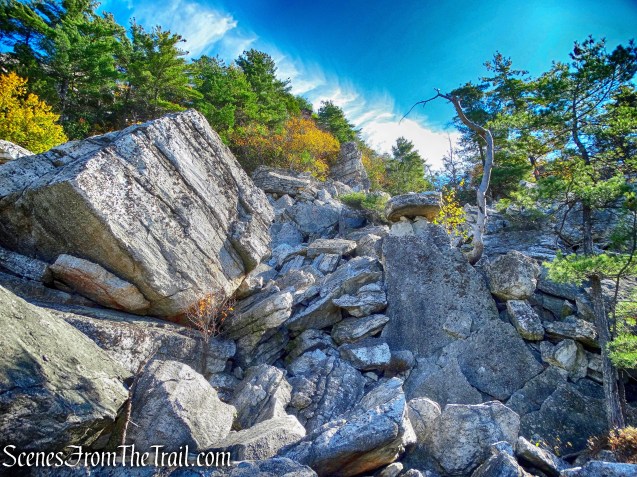
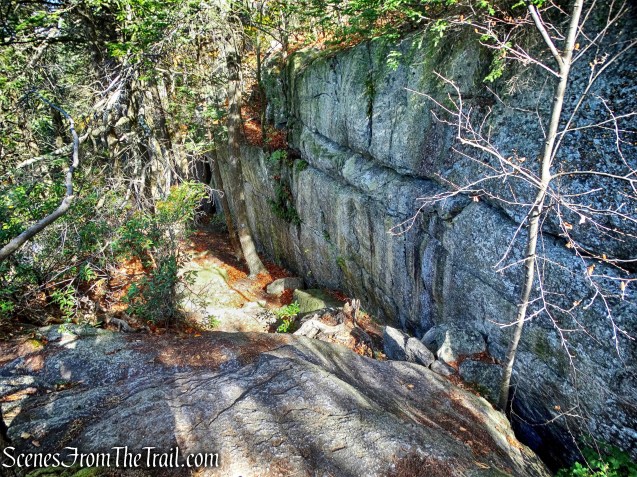
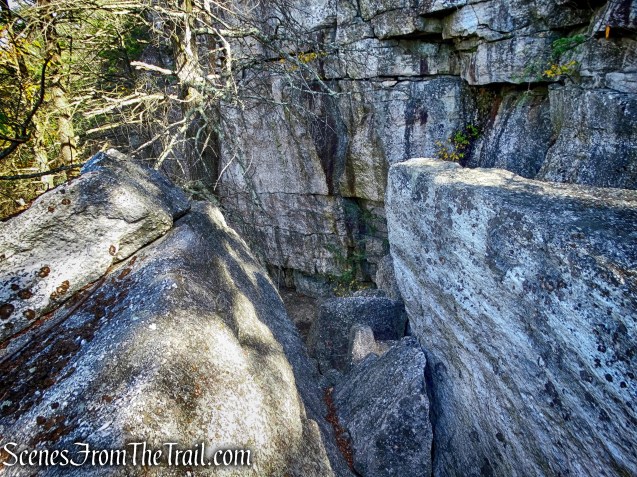
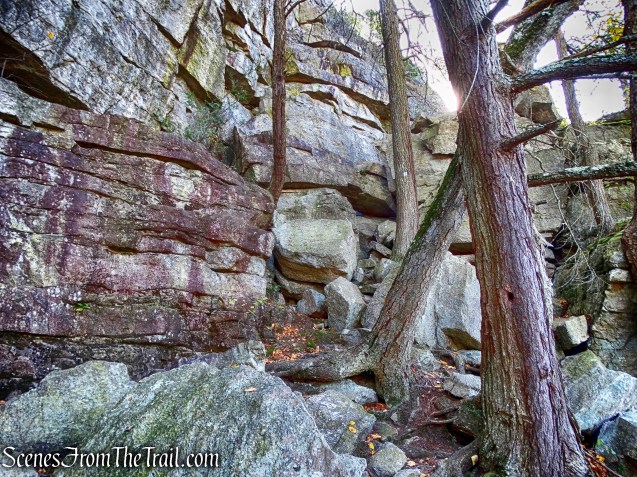
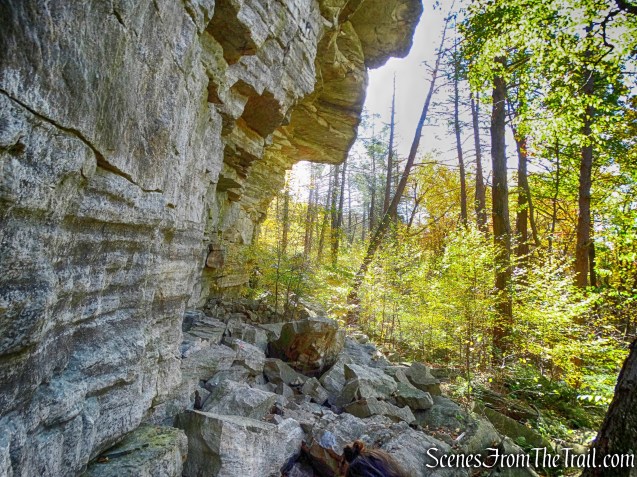
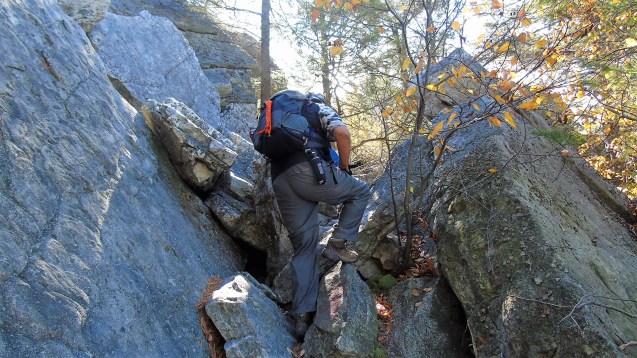
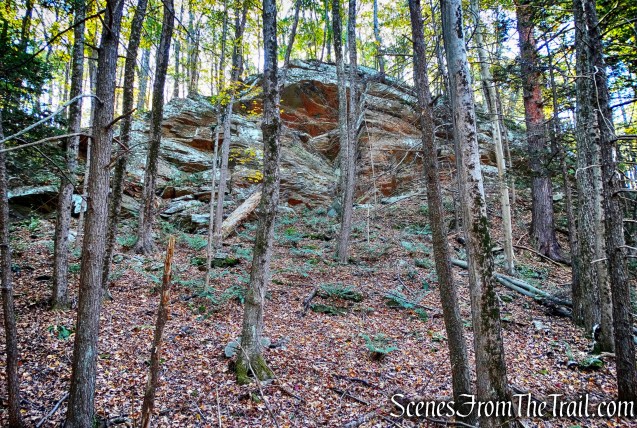
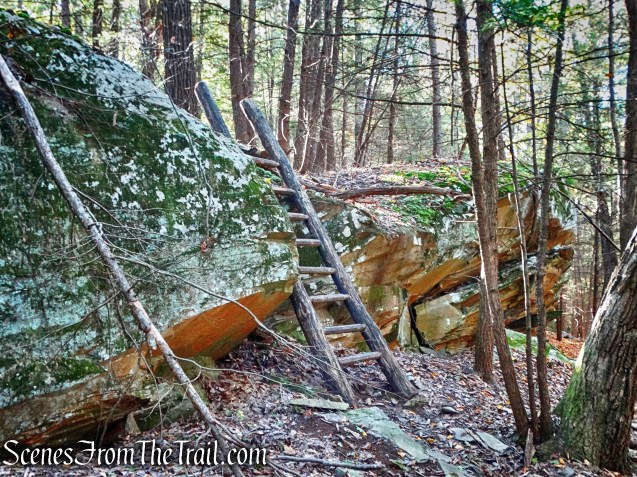
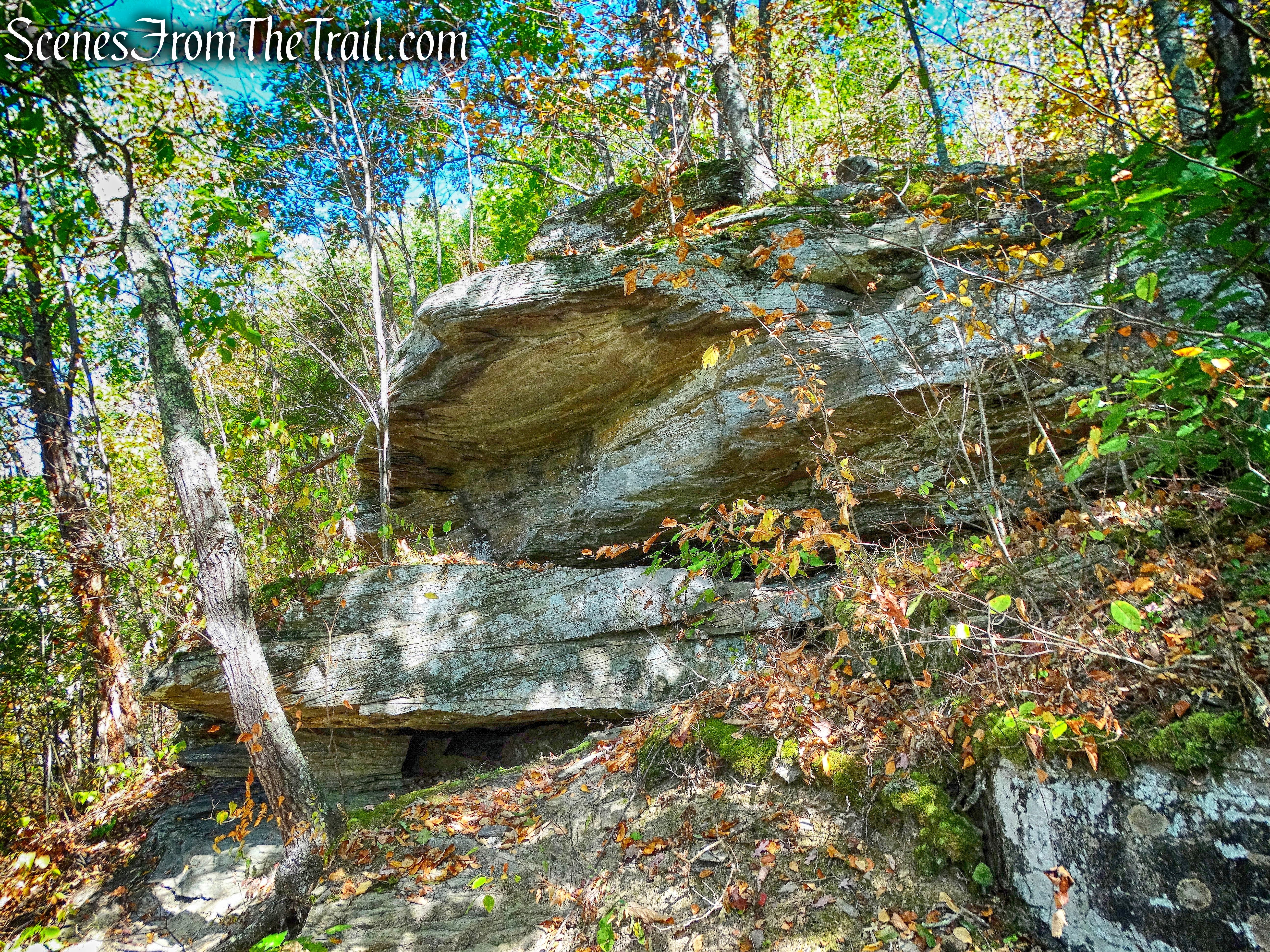
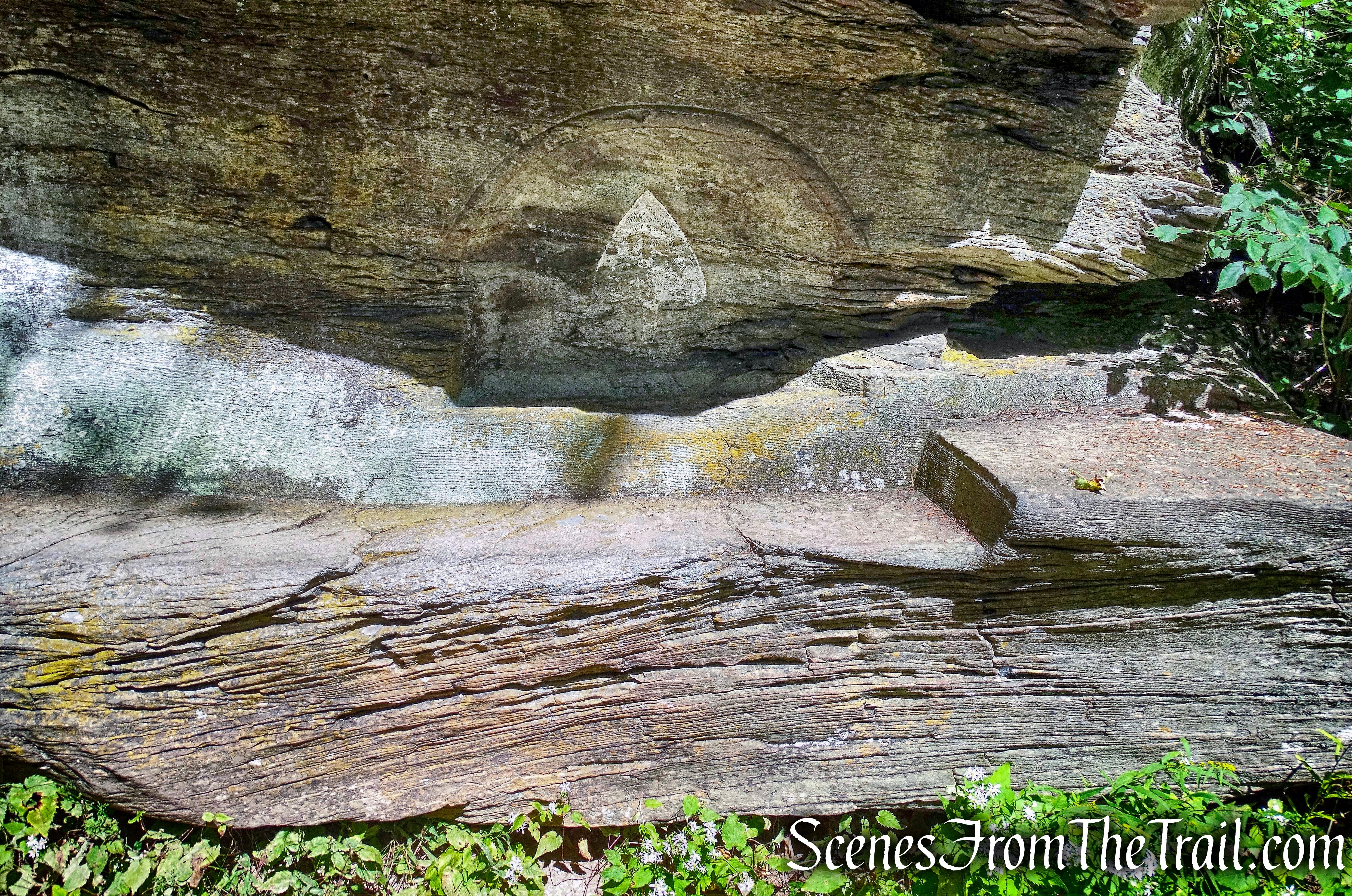
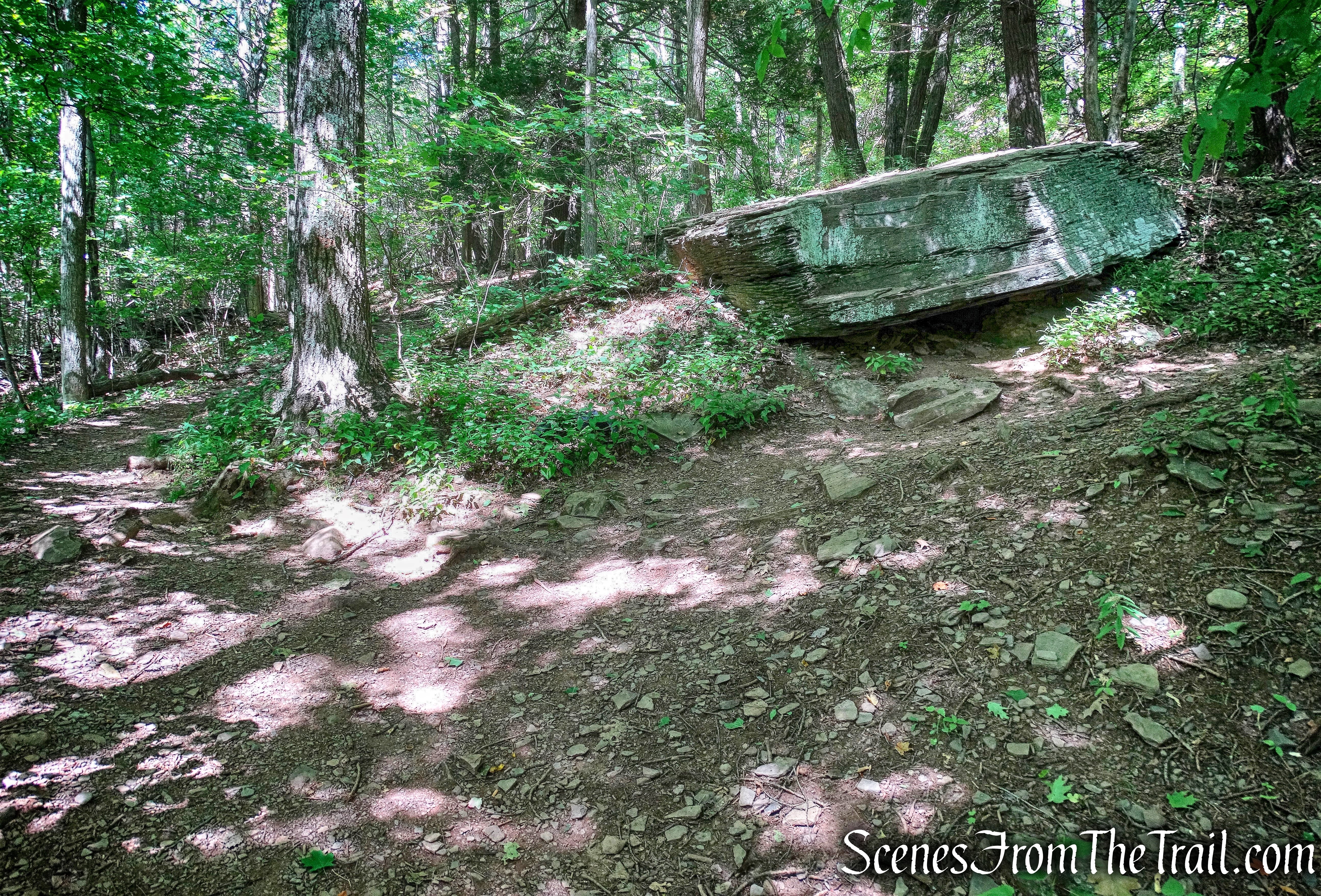
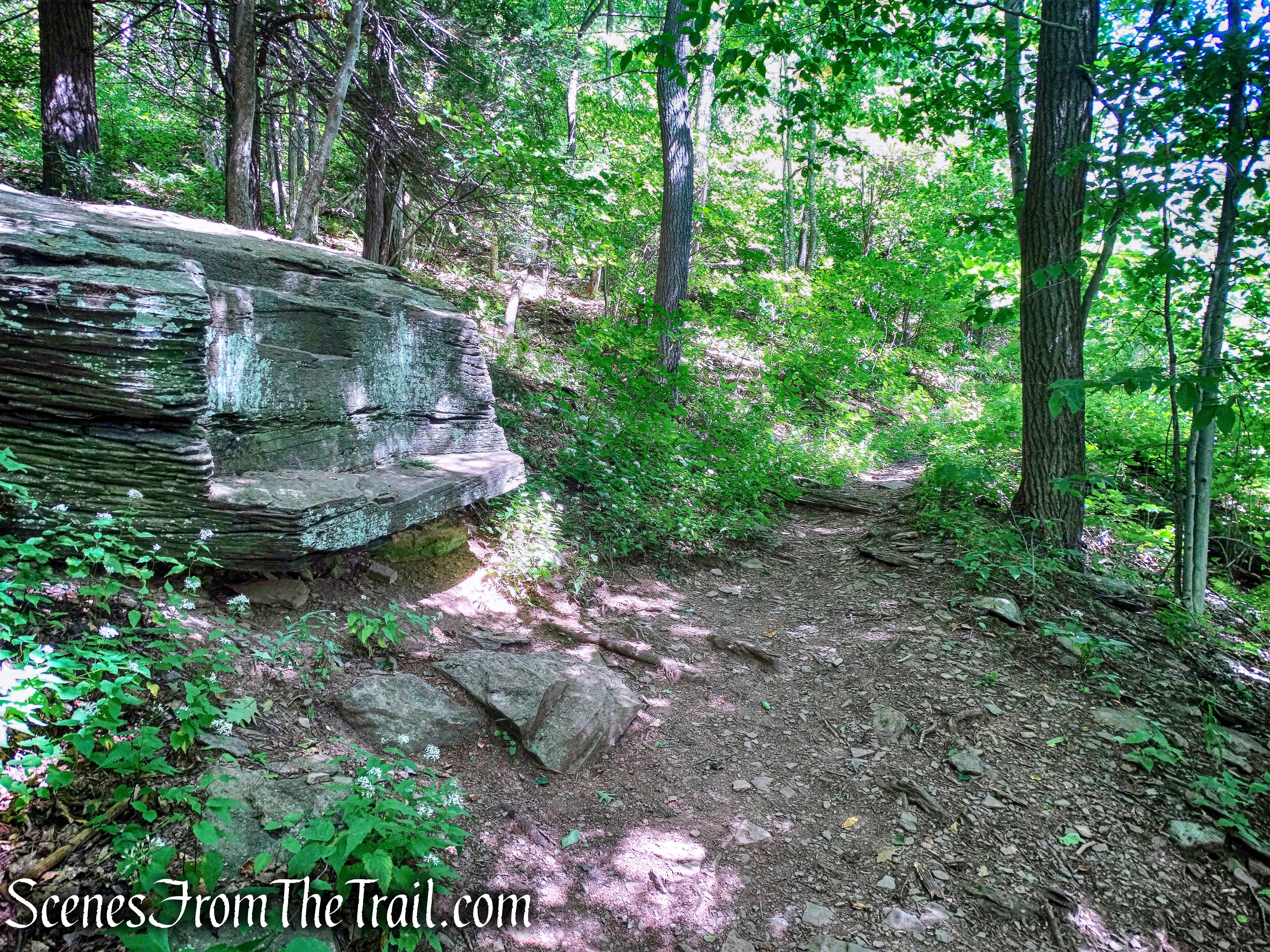
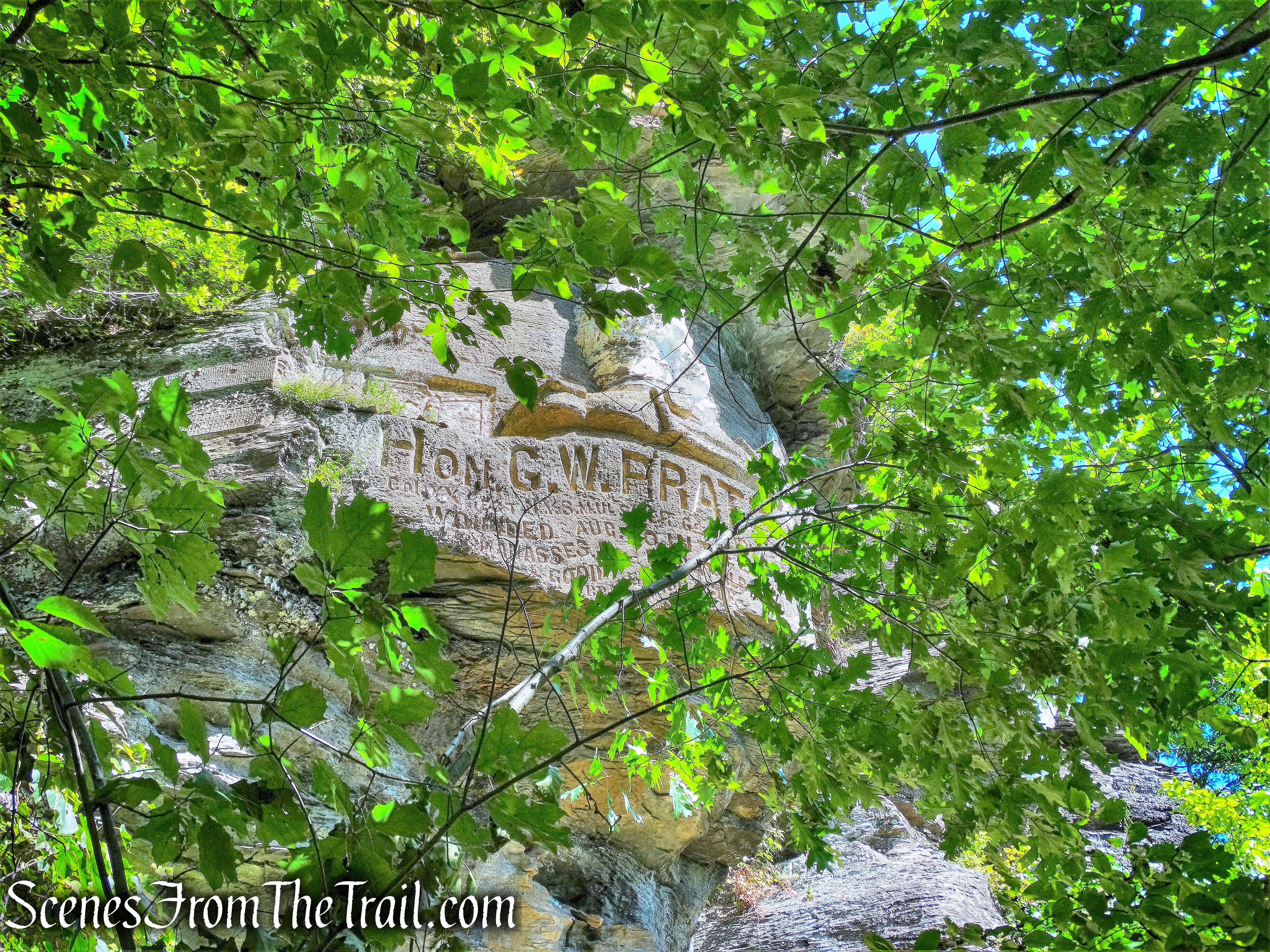
The Beacon Hill Trail descends through a split in the rock and passes a cliff on the right.
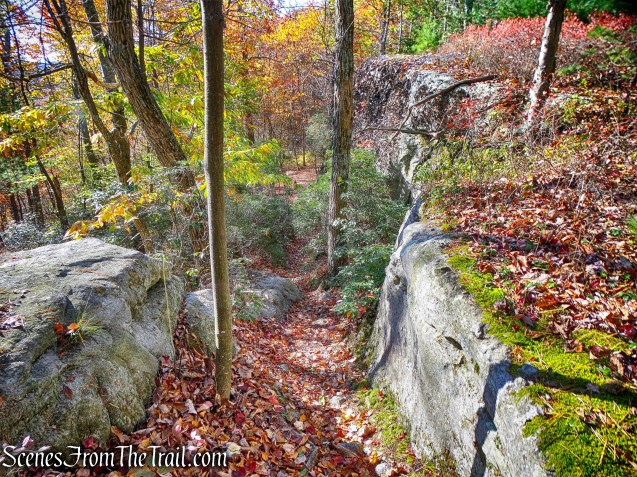
Beacon Hill Trail

Beacon Hill Trail

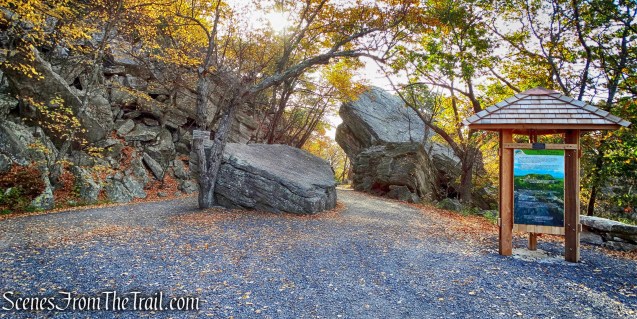
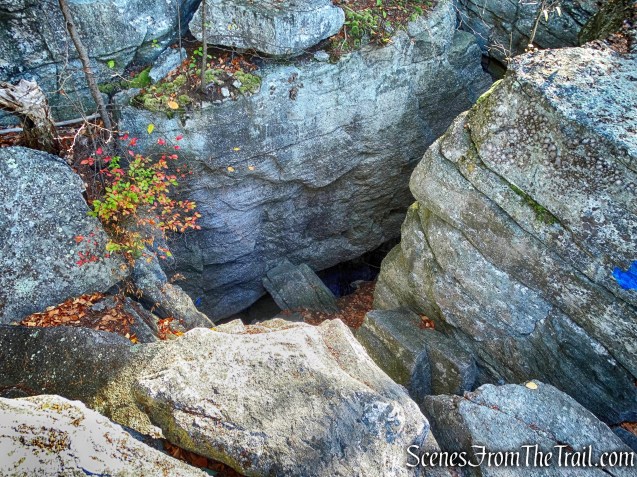
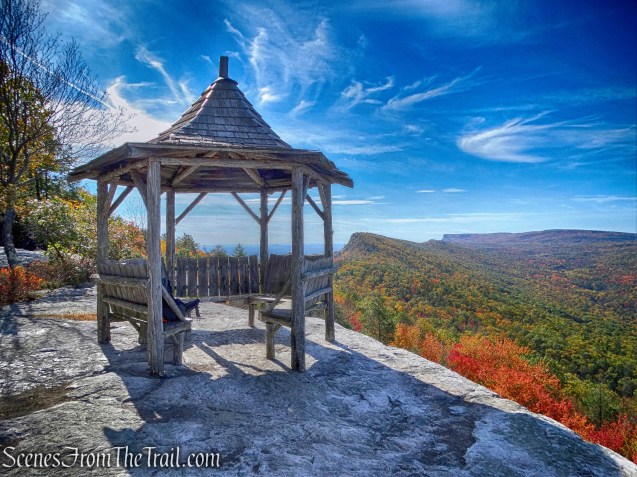
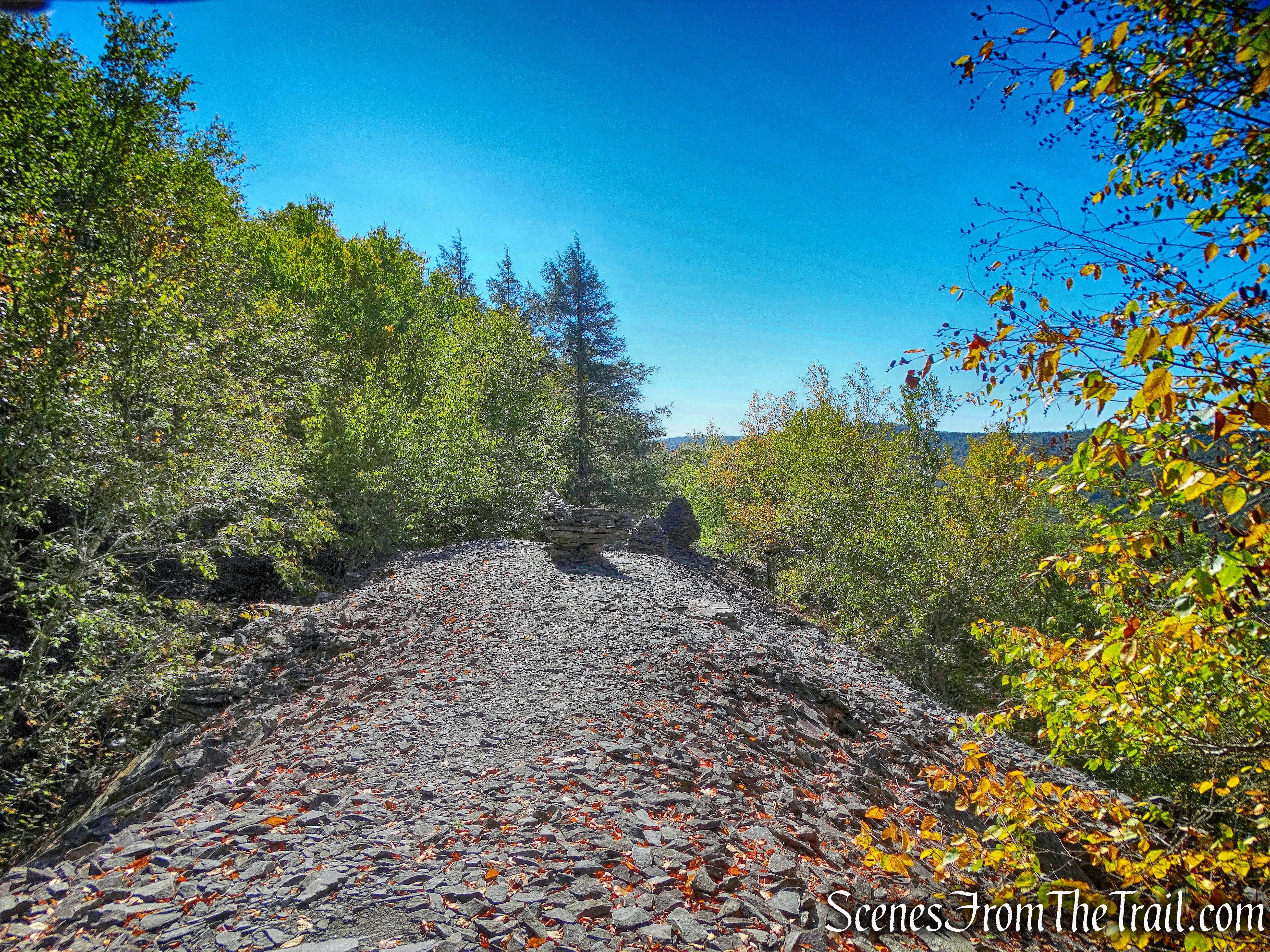
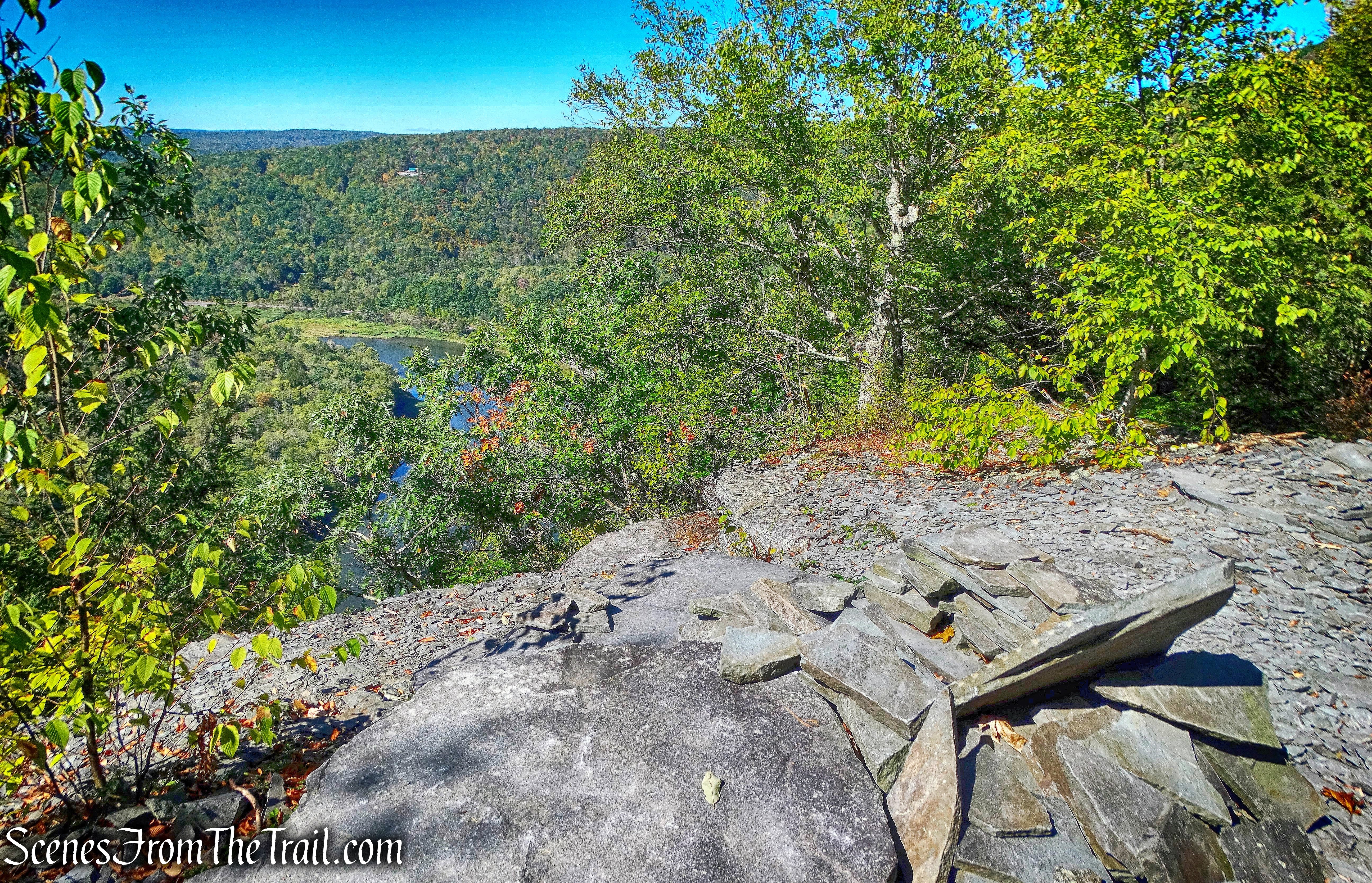
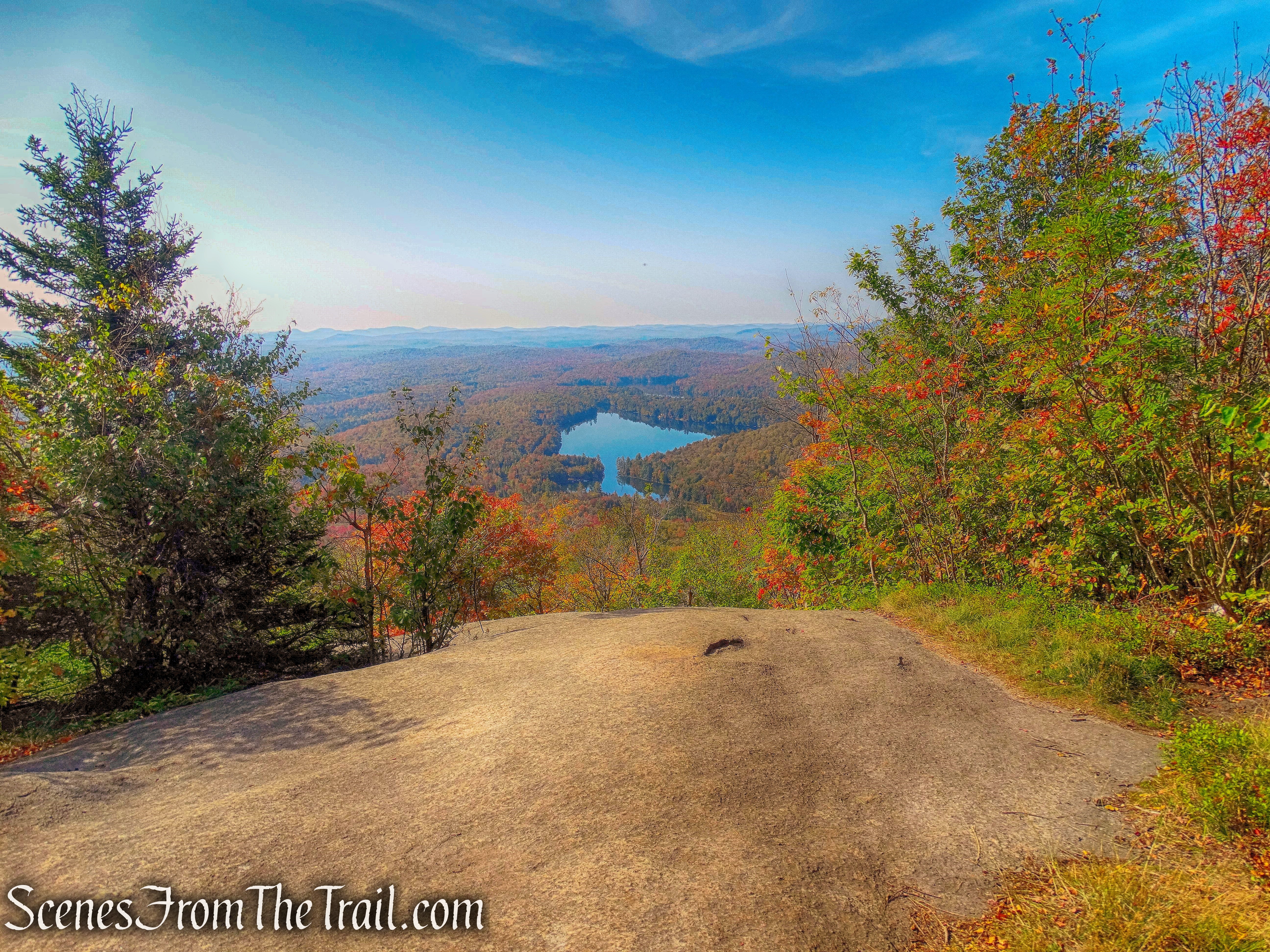
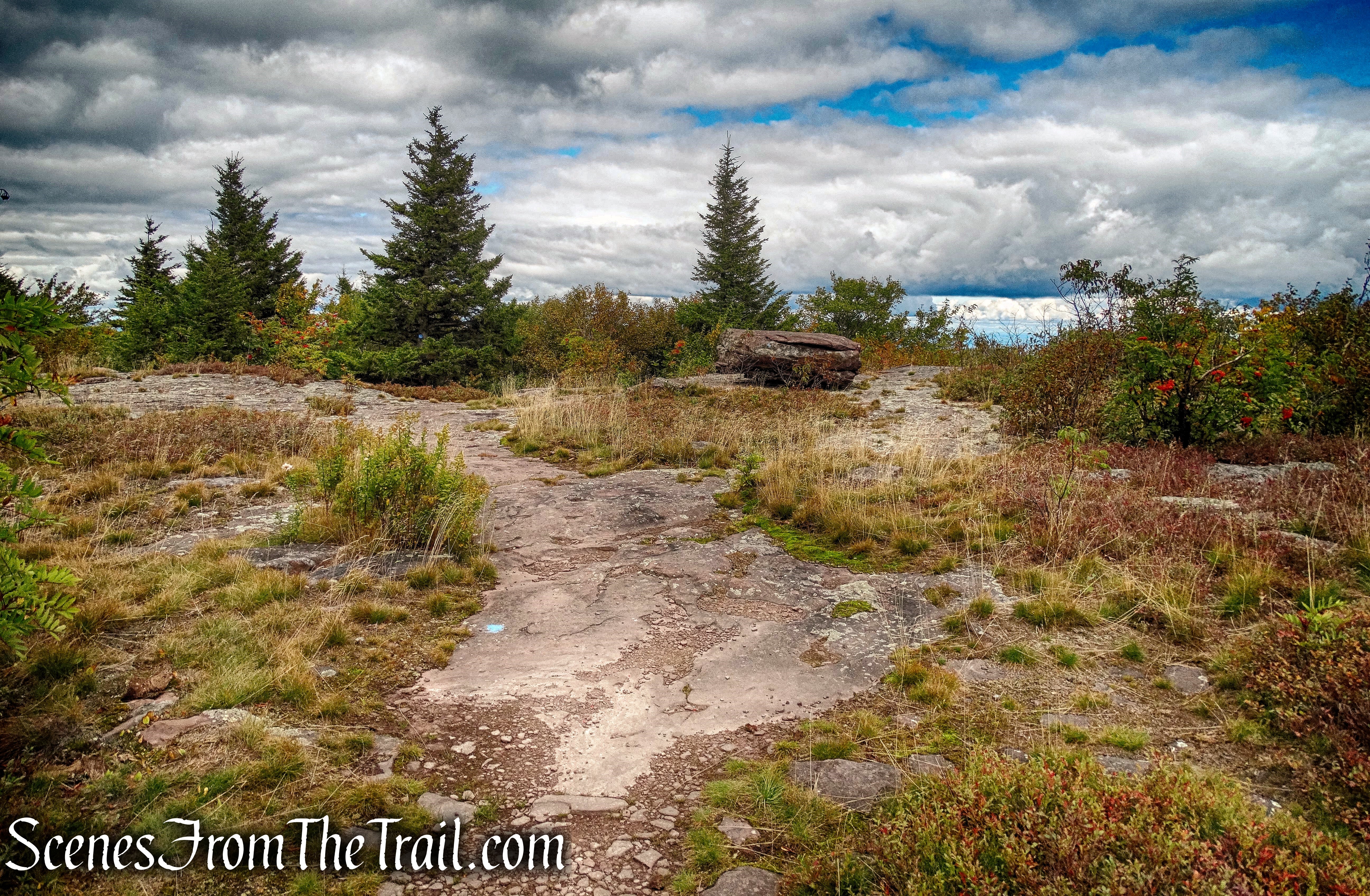
The Beacon Hill Trail passes a massive boulder near the edge of the cliff then ends at a grassy field/picnic area. To the left, there are several unmarked spur trails that lead to a rock ledge with an east-facing viewpoint.
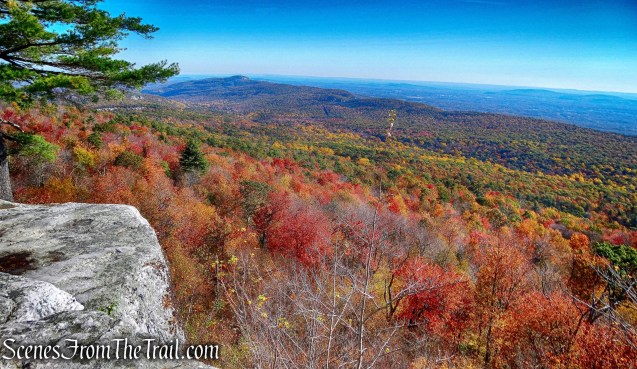
east-facing viewpoint

east-facing viewpoint

This is a good place to take a break and enjoy the view.
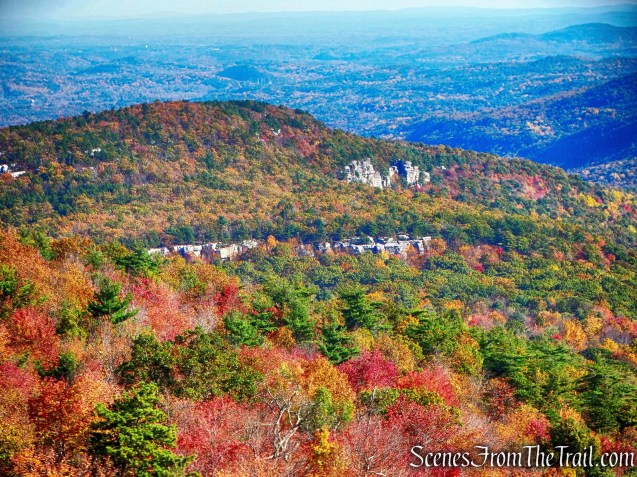
east-facing viewpoint

east-facing viewpoint

We then crossed the field and turned left on a gravel road. This is the red-diamond-blazed Lake Minnewaska Carriage Road.
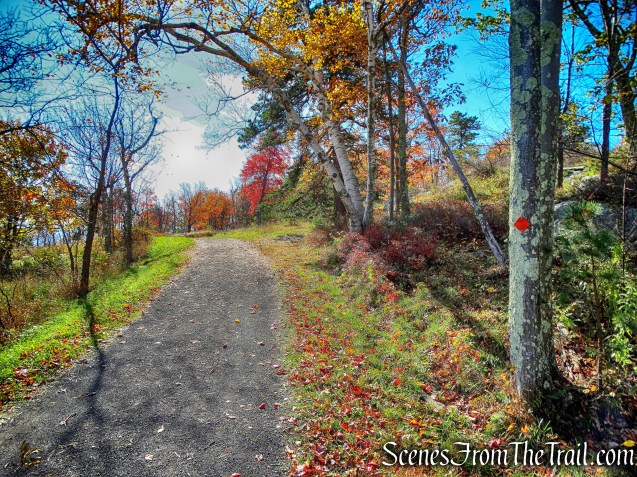
Lake Minnewaska Carriage Road

Lake Minnewaska Carriage Road

At a T-intersection, we turned left and followed the road as it begins to head downhill. Just to the left of the trail is a rock ledge…….
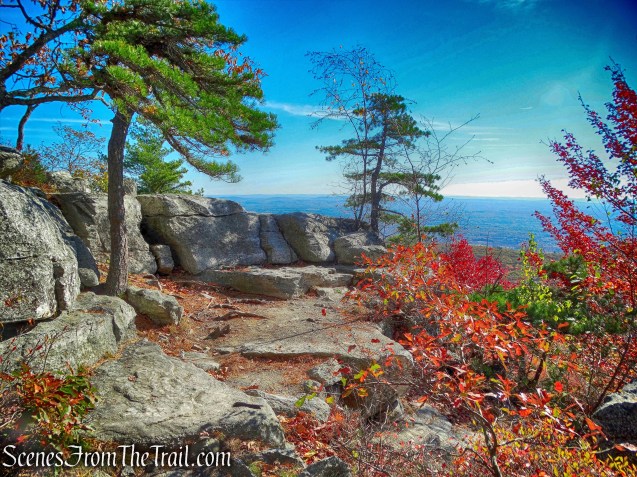
Lake Minnewaska Carriage Road

Lake Minnewaska Carriage Road

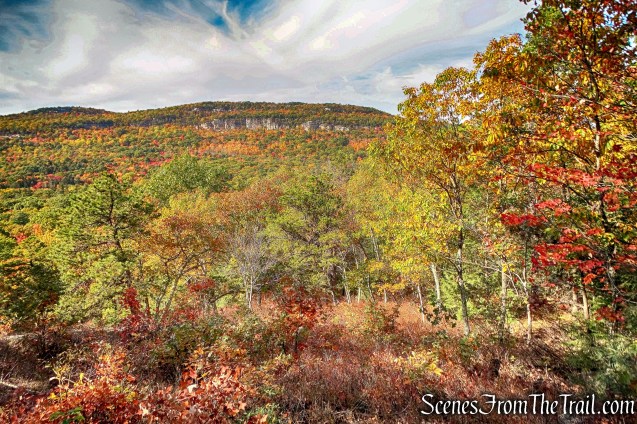
with more fantastic views.
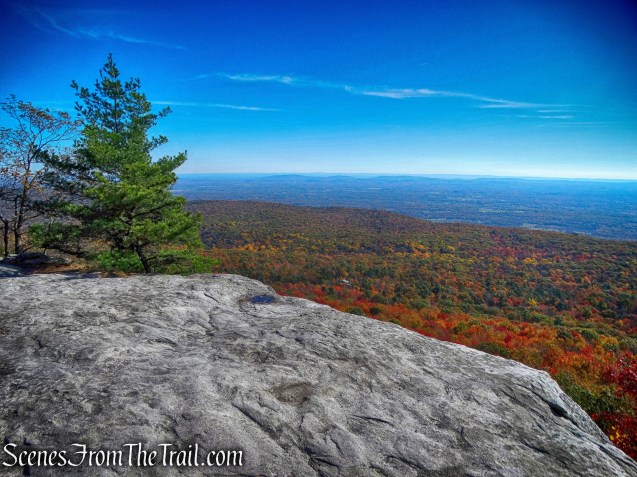
rock ledge - Lake Minnewaska Carriage Road

rock ledge – Lake Minnewaska Carriage Road

The Lake Minnewaska Carriage Road continues downhill to the southern end of Lake Minnewaska.
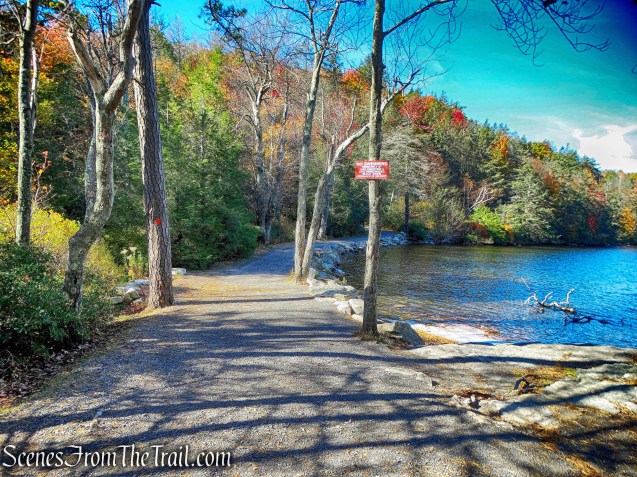
Lake Minnewaska Carriage Road
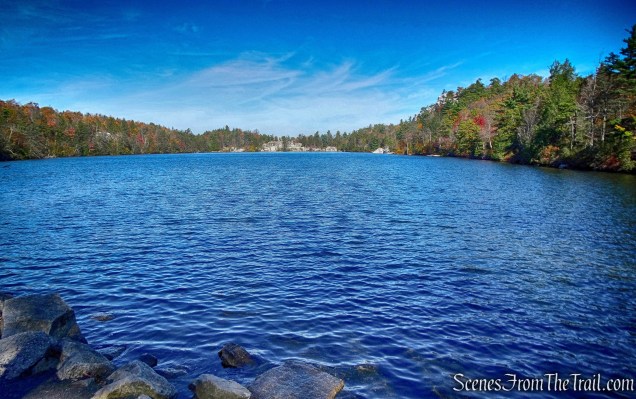
Lake Minnewaska Carriage Road

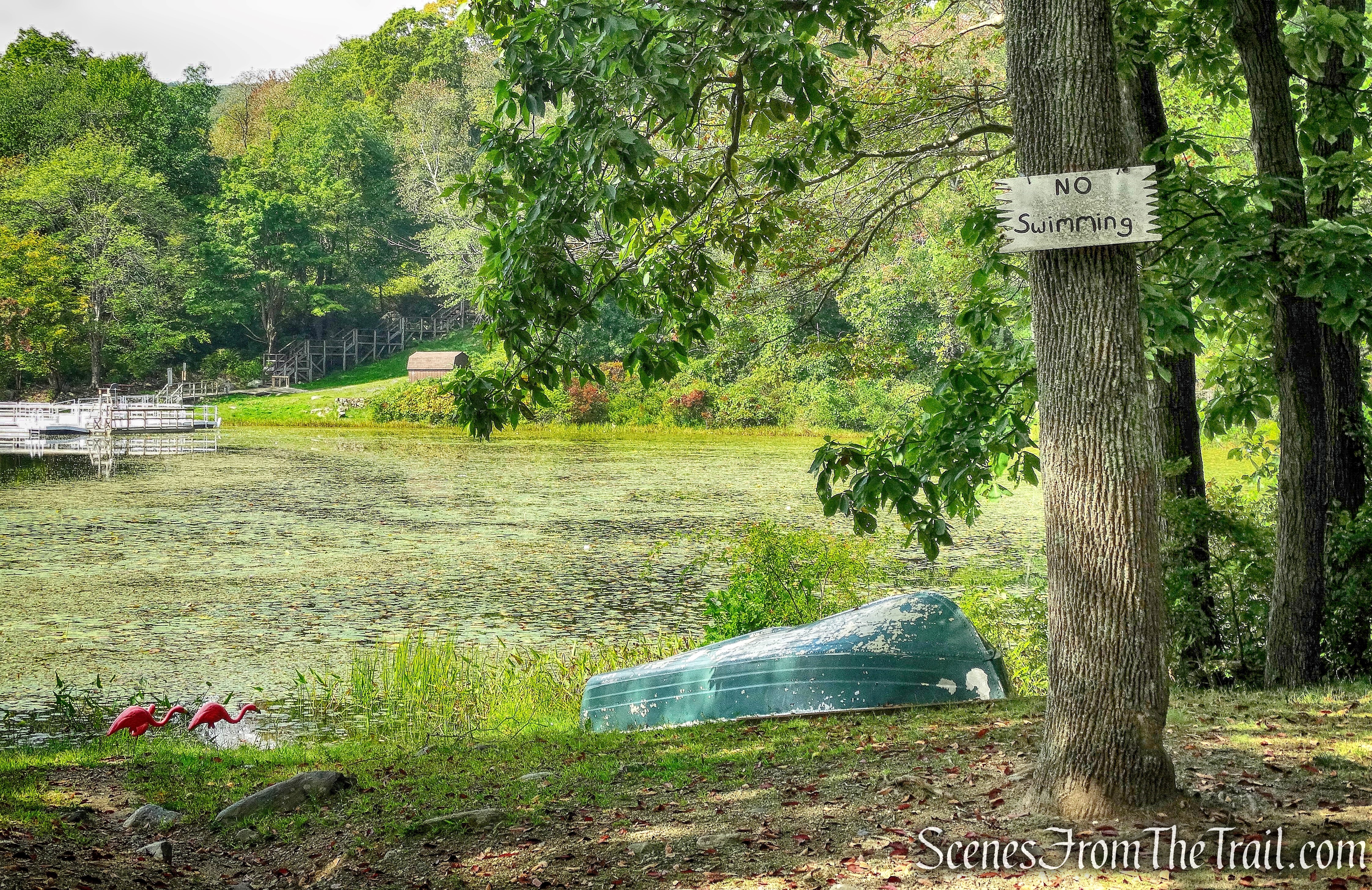
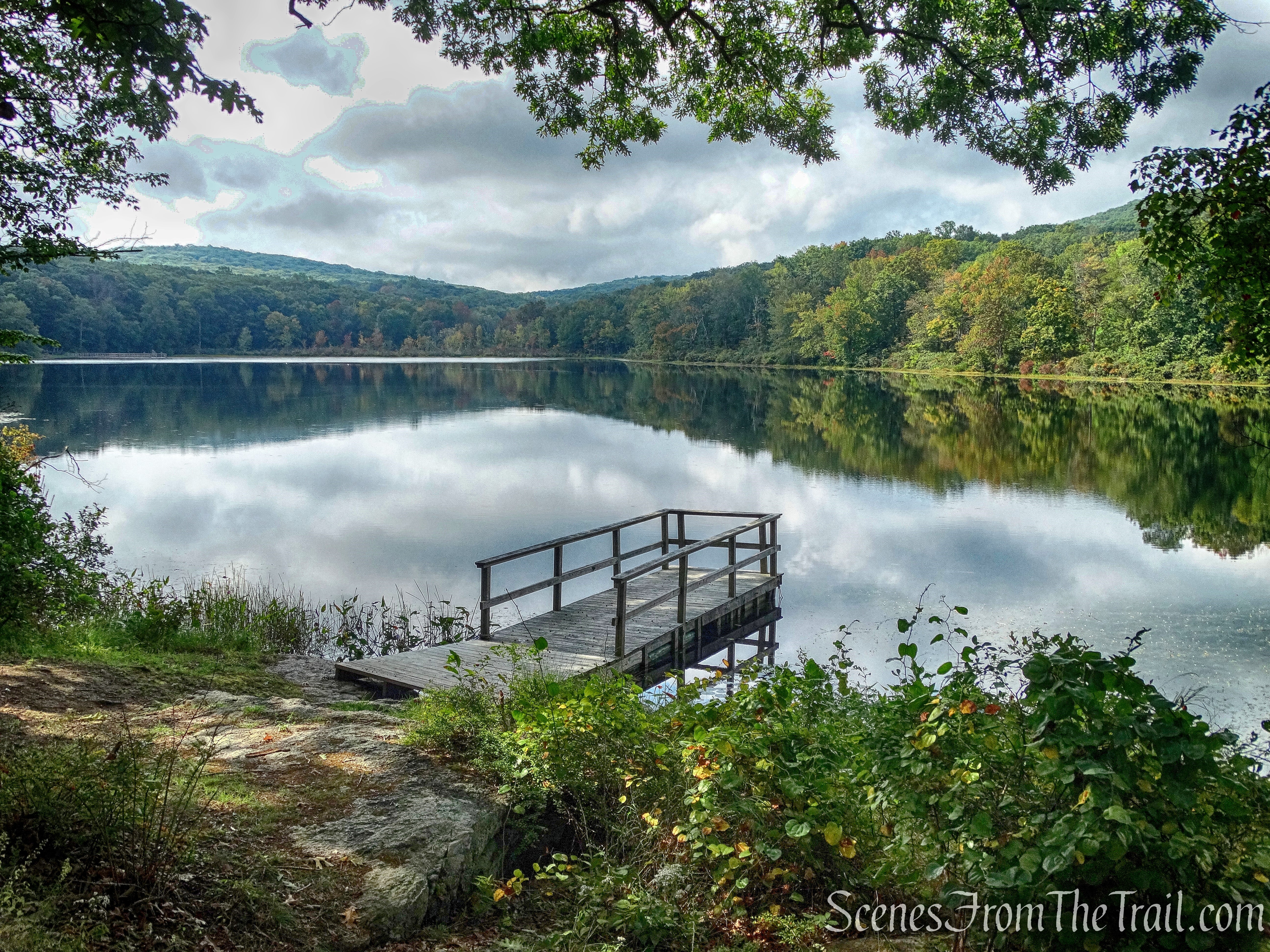
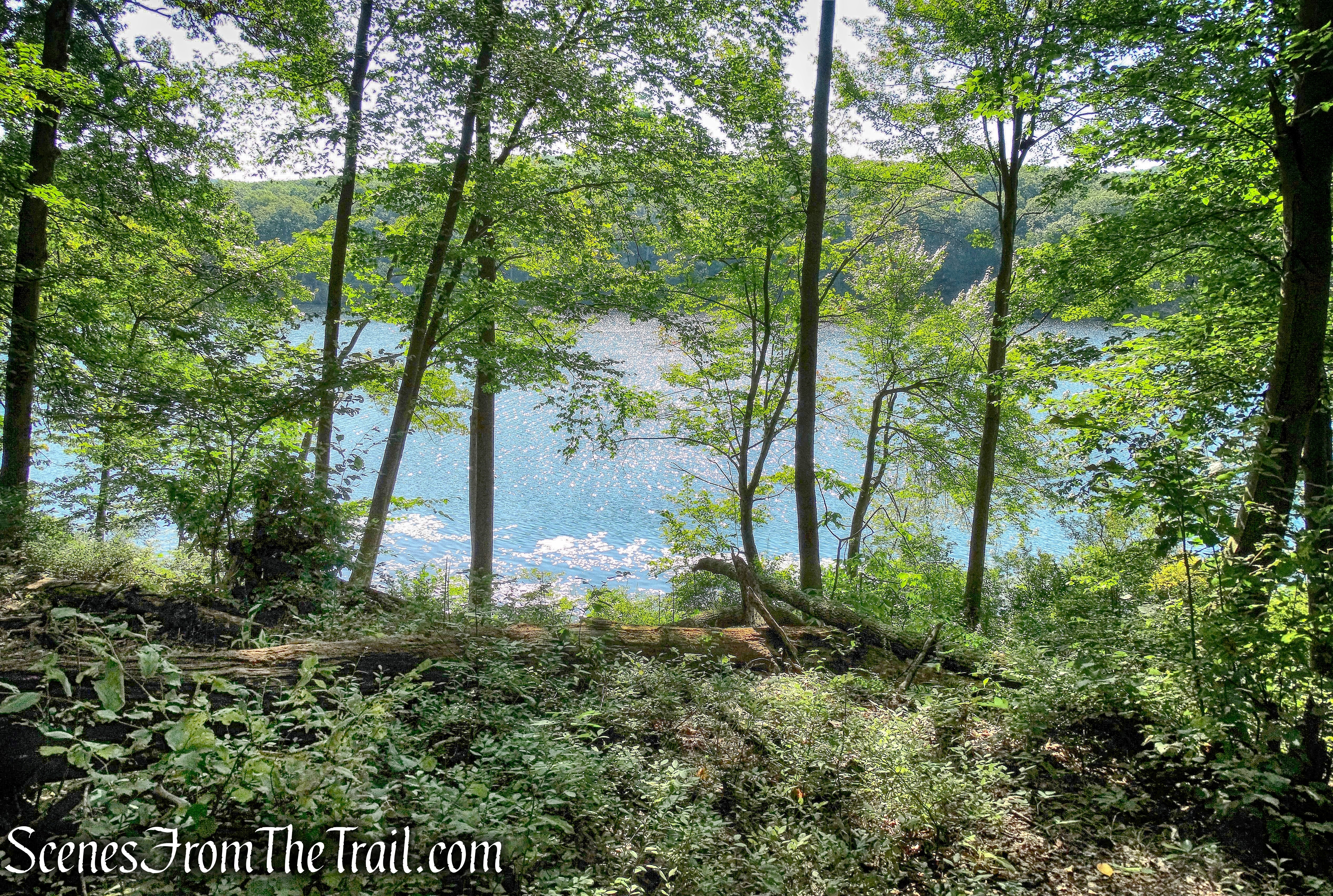
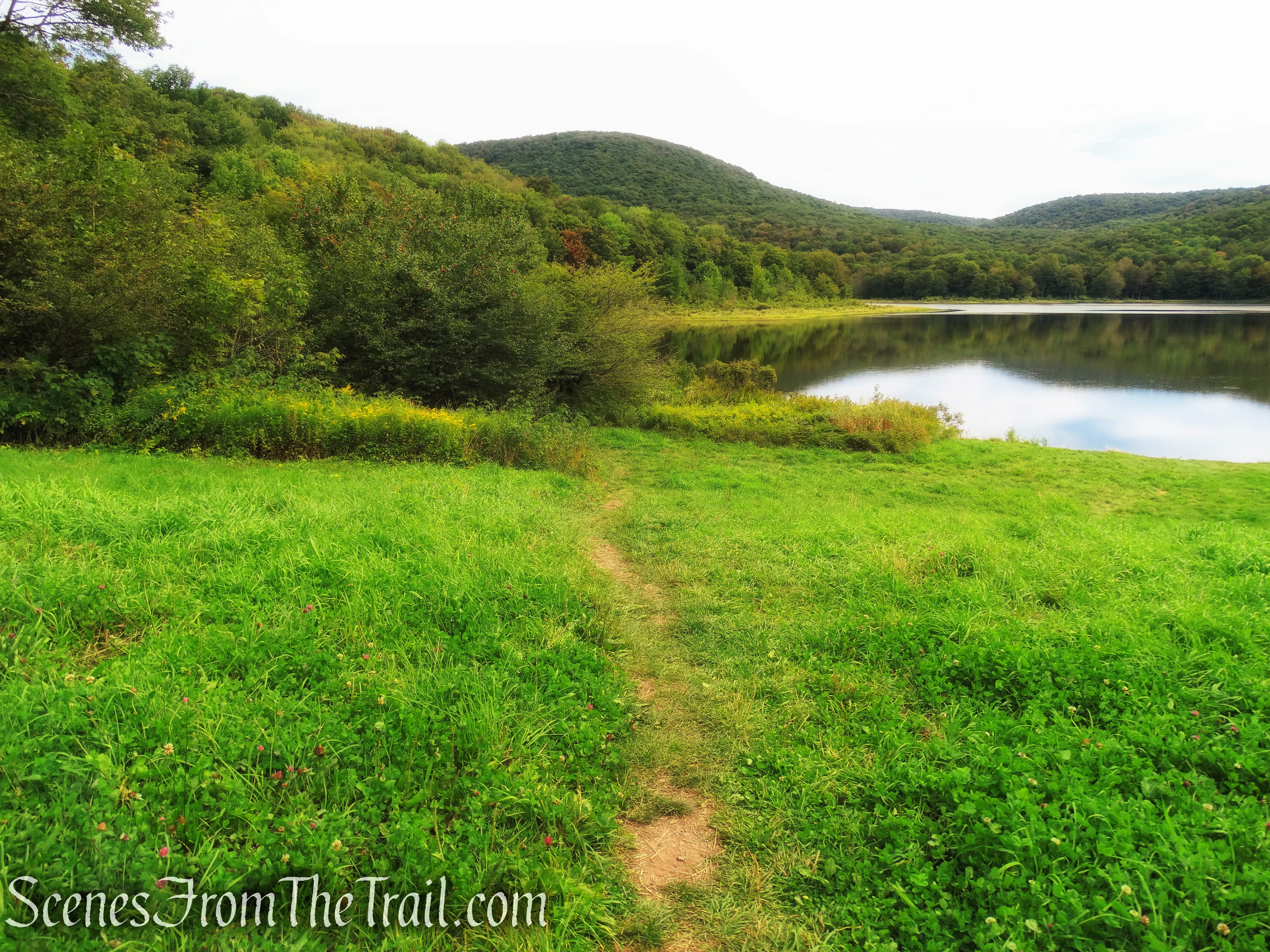
Lake Minnewaska

Lake Minnewaska

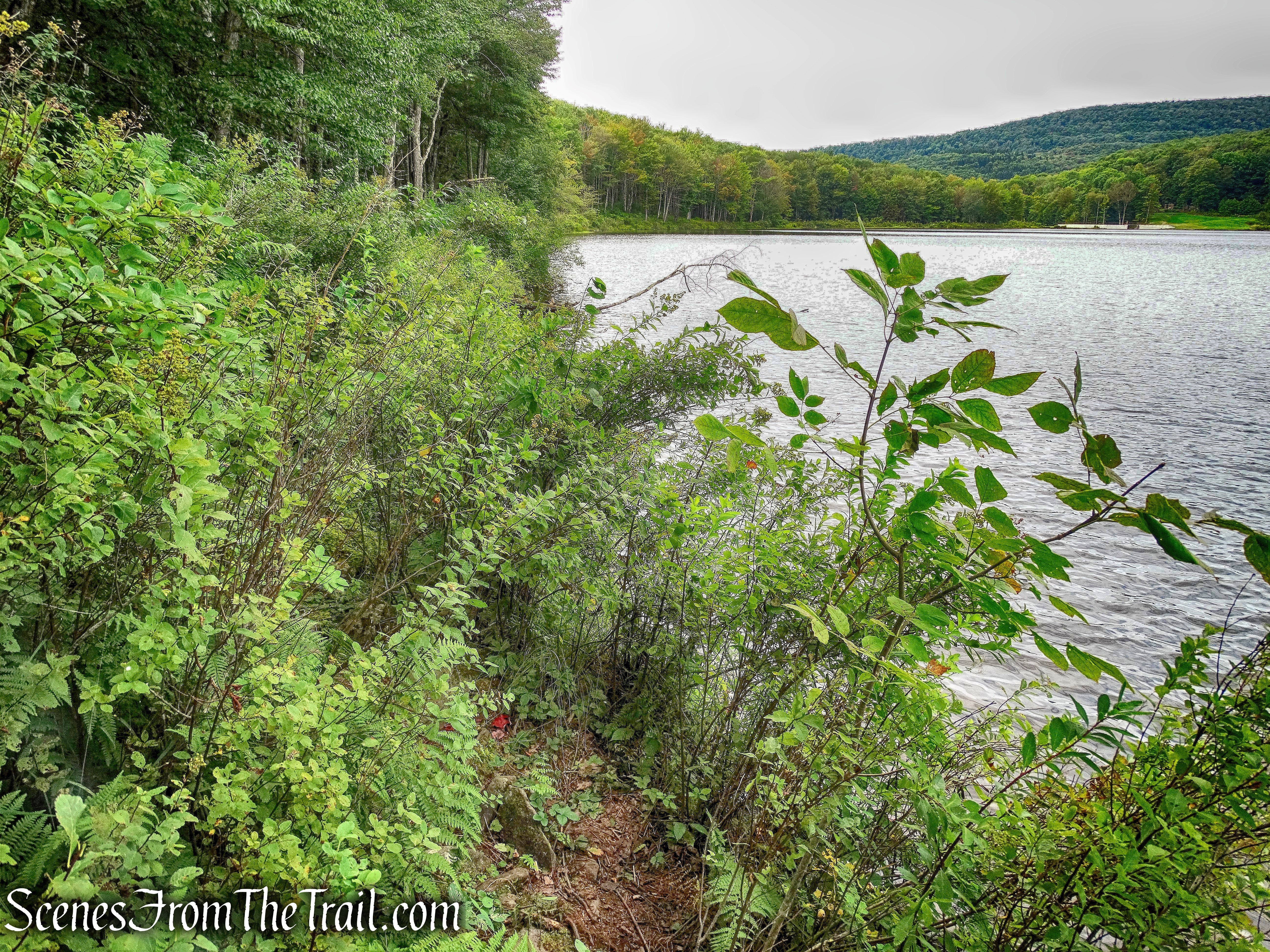
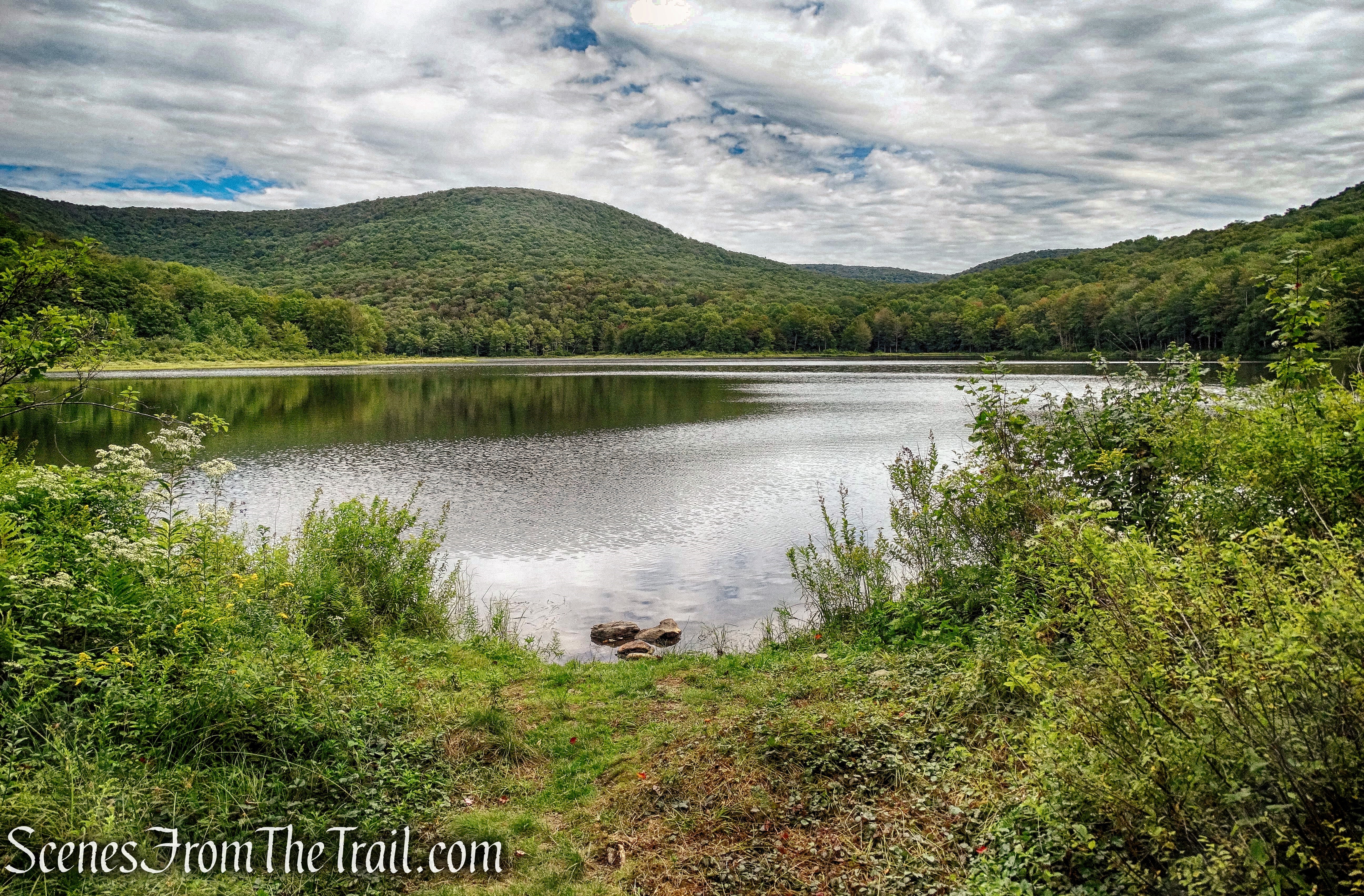
The Lake Minnewaska Carriage Road climbs a little as it parallels the western side of the lake. The road then descends and comes to a small beach area with views of the lake.

Lake Minnewaska

Lake Minnewaska

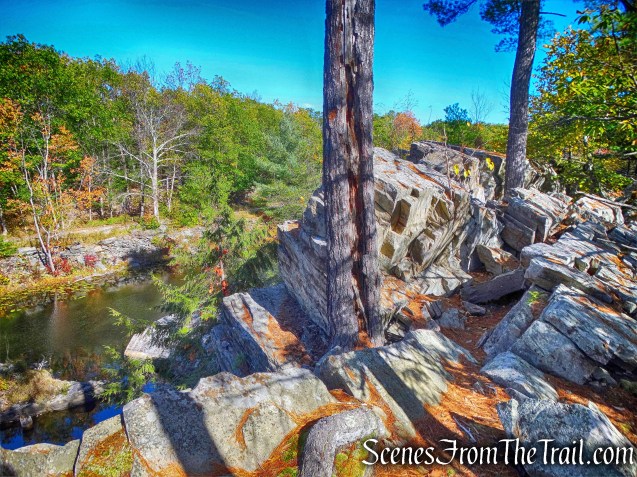
The road then climbs again and just off the trail, there is a rock outcrop with nice views of the cliffs across the lake.
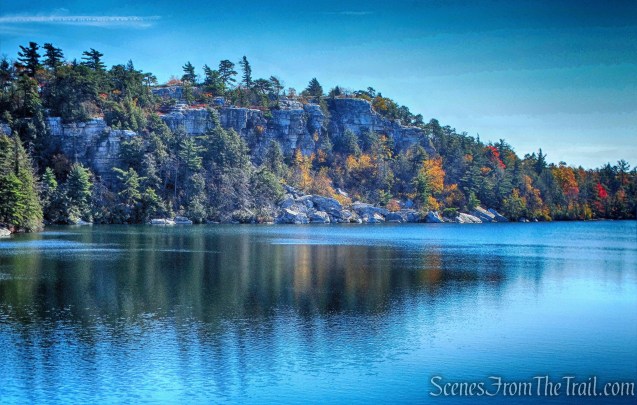
View from rock outcrop - Lake Minnewaska Carriage Road

View from rock outcrop – Lake Minnewaska Carriage Road

The Lake Minnewaska Carriage Road continues towards the parking area at the northern end of the lake.

View from northern end of Lake Minnewaska

View from northern end of Lake Minnewaska

We then left the Lake Minnewaska Carriage Road, crossed a grassy picnic area and back to the parking area, where our hike began.
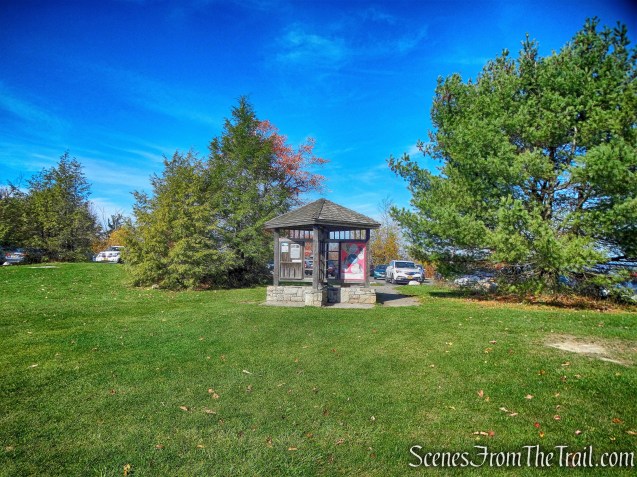
Lake Minnewaska parking area

Lake Minnewaska parking area

A short but delightful hike on a Friday in October. I recommend this hike be done on an early weekday morning to avoid the crowds. We didn’t encounter any other hikers/walkers until we reached the rock ledge at the end of the Beacon Hill Trail. After that, it was more frequent as we walked on the Lake Minnewaska Carriage Road and near the lake. Nevertheless, it was scenic throughout and I would definitely hike it again. For those that prefer a simpler hike, the red-diamond-blazed Lake Minnewaska Carriage Road circles the lake makes for an easy walk around the lake. The trails can also be combined with any number of trails and/or carriage roads that intersect, to form a longer hike.

After some lunch, we headed out and decided to stop by the Mohonk Testimonial Gateway.
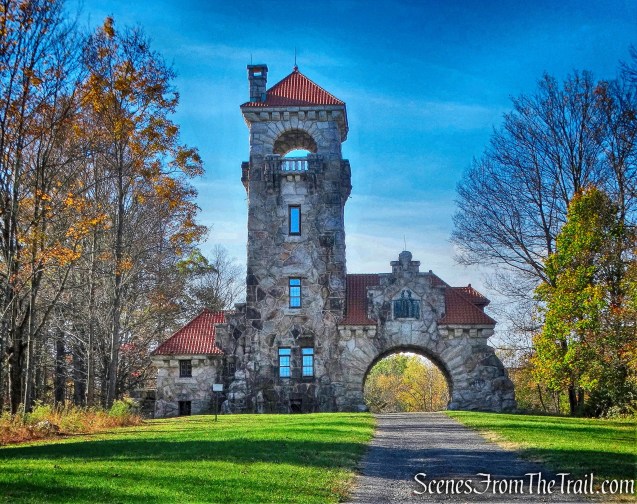
Mohonk Testimonial Gateway

Mohonk Testimonial Gateway

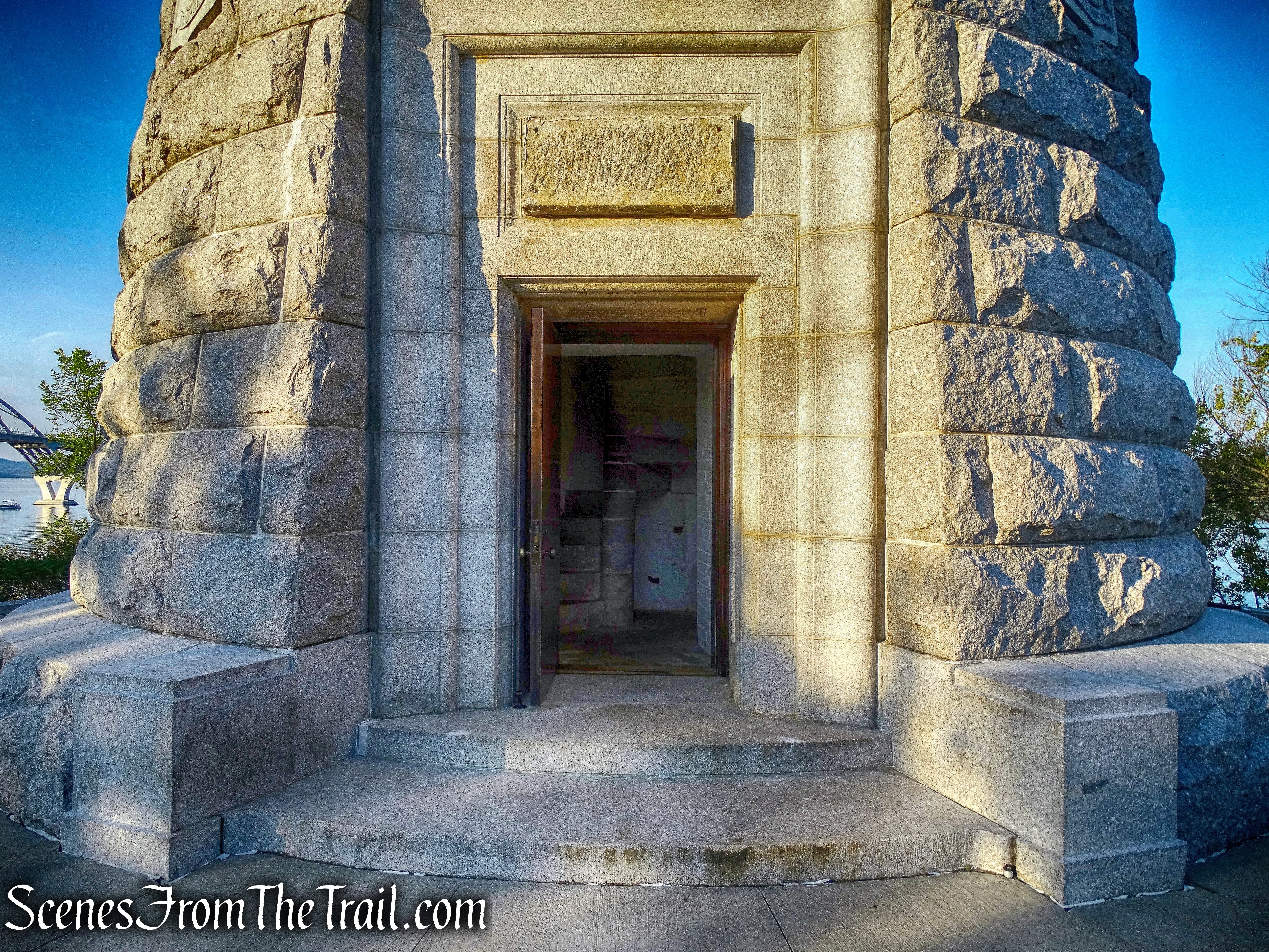
Located between Route 299 and Gatehouse Road in New Paltz, it served as the formal entrance to Mohonk Mountain House from 1908 to 1935.
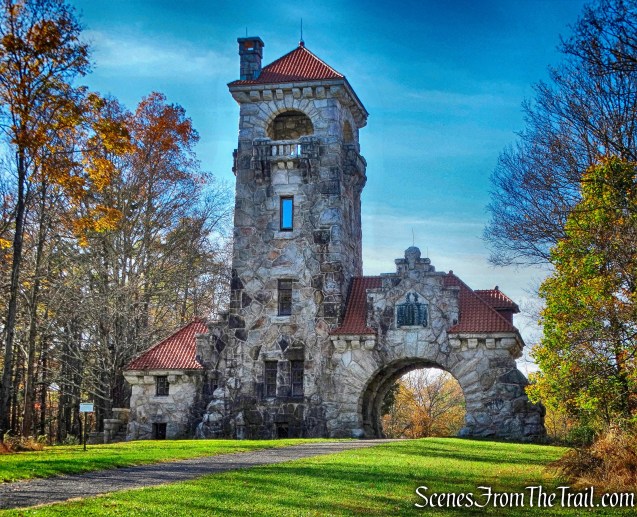
Mohonk Testimonial Gateway

Mohonk Testimonial Gateway

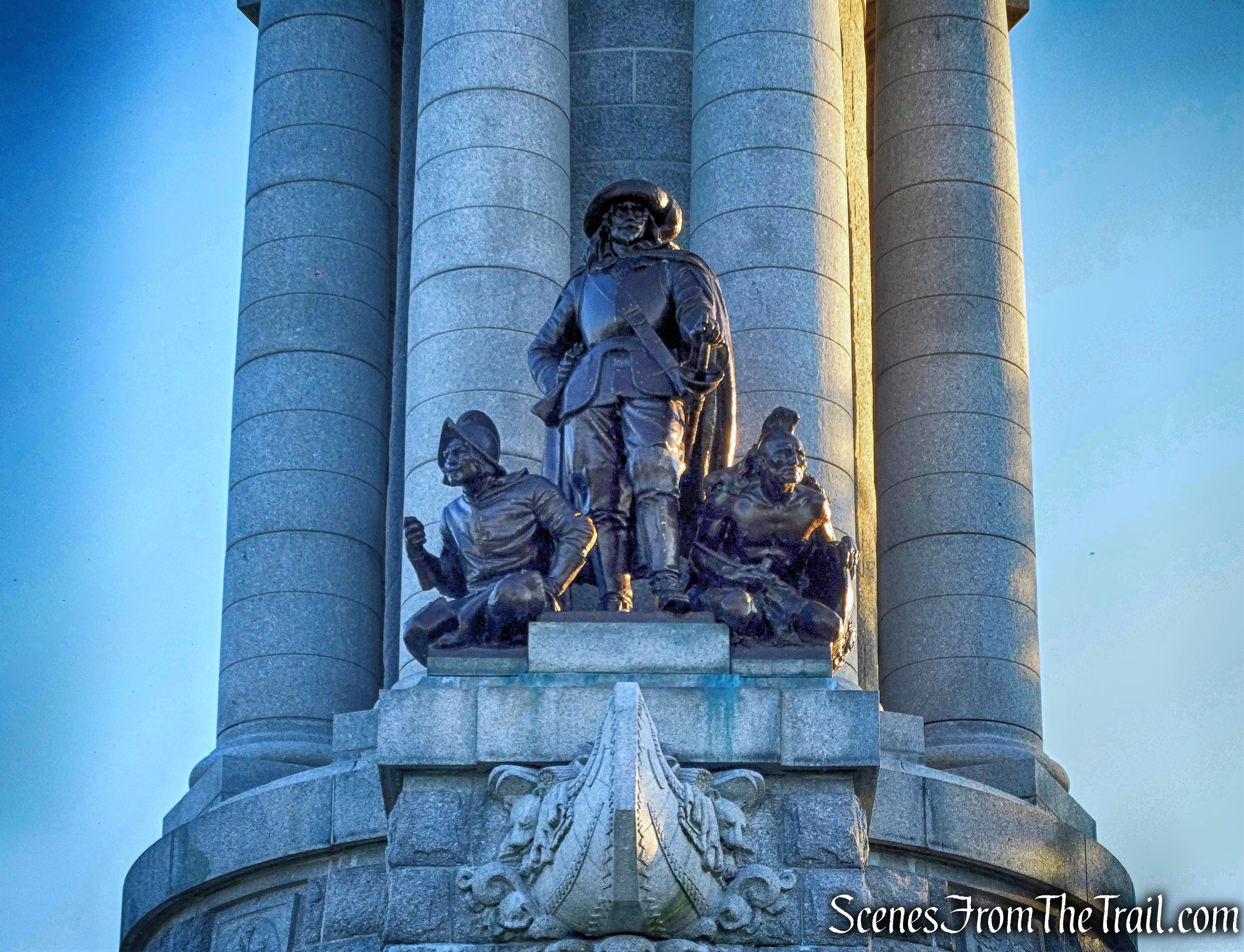
Originally called the Smiley Memorial Gateway, it was built in 1908 to honor the 50th wedding anniversary of Albert and Eliza Smiley, founders of Mohonk Mountain House.
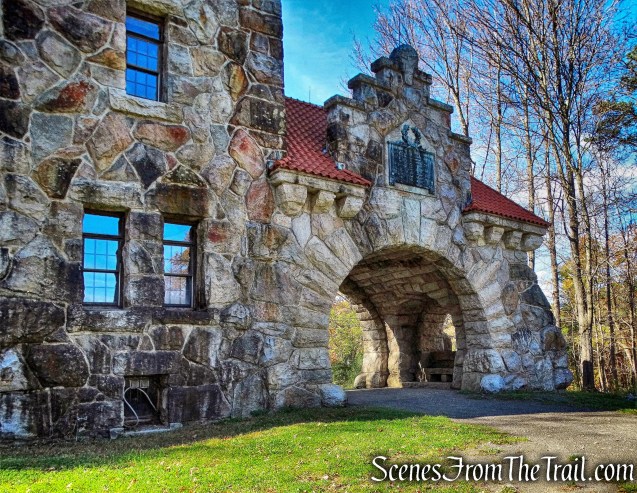
Mohonk Testimonial Gateway

Mohonk Testimonial Gateway

The gateway was built with the contributions of 1200 friends of the couple.
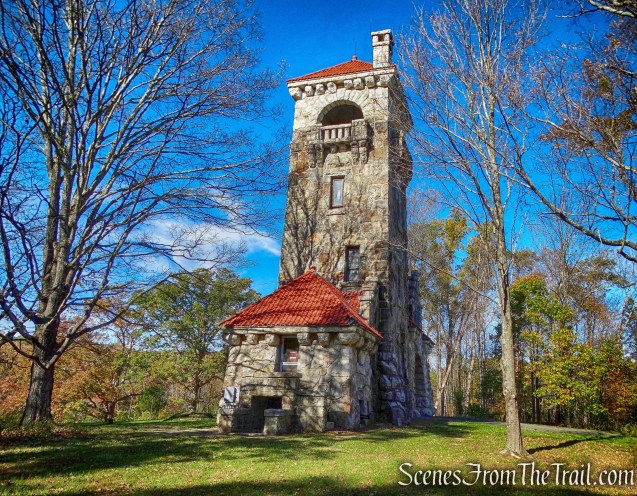
Mohonk Testimonial Gateway

Mohonk Testimonial Gateway

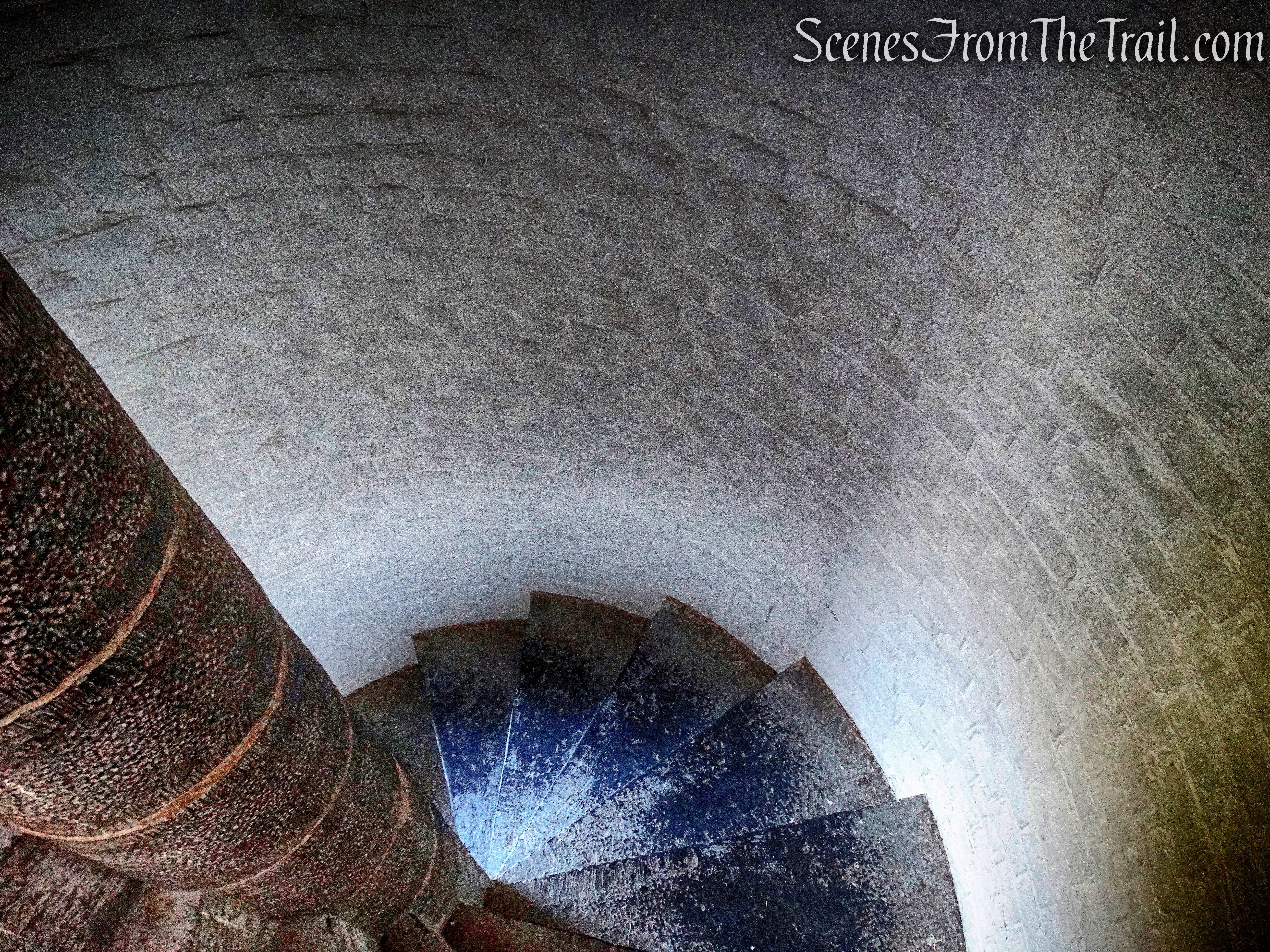
“Its lofty tower and massive gateway are supremely attractive. It is to be built of Shawangunk grit, one of the hardest stones in existence, firmly cemented together and fitted to endure the storms of innumerable ages.” ~ Albert Smiley
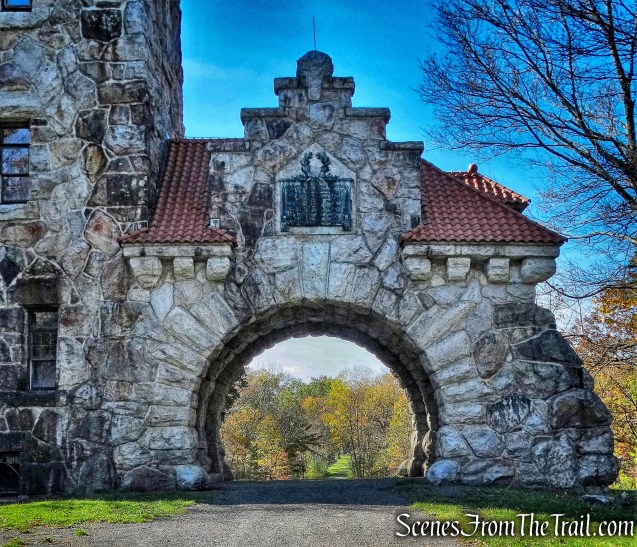
Mohonk Testimonial Gateway

Mohonk Testimonial Gateway

It is an impressive tower and worth a visit if you happen to be in the area. While there, we saw two Bald Eagles and a Red-tailed Hawk.

View the virtual hike below, with additional images added.


Pros: Scenic trails and carriage roads, fantastic views, Lake Minnewaska.

Cons: Can get crowded on weekends.

Take a hike!
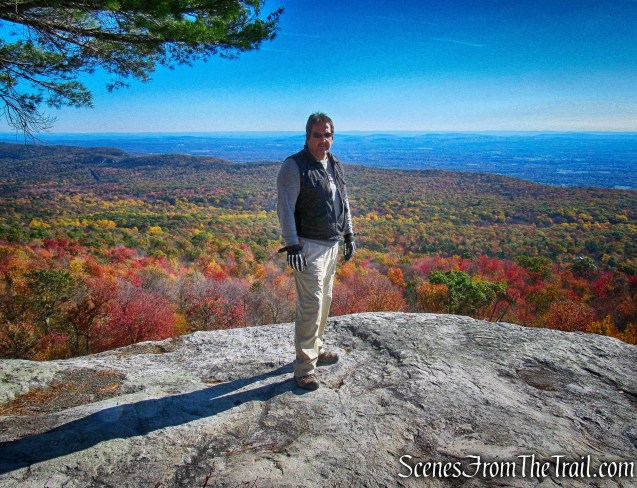
Beacon Hill
Beacon Hill


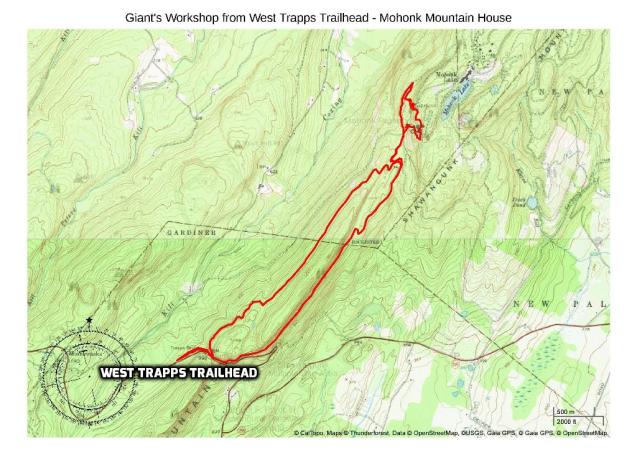
Giant’s Workshop from West Trapps Trailhead – Mohonk Preserve

October 22, 2017 – Gardiner, NY

Difficulty: Moderate to strenuous

Length: Approximately 8 miles

Max elevation: 1,291 ft.– total elevation gain approximately 896 ft.

Route type: Circuit

Map: Shawangunk Trails – Mohonk Mountain House web map

Fee: $15.00 day hiking fee – West Trapps Trailhead

Trailhead parking: Mohonk Preserve West Trapps Trailhead Parking Area 3142 US-44, Gardiner, NY 12525

The Mohonk Mountain House property consists of 1,325 acres, and much of it is landscaped with meadows and gardens. It adjoins the Mohonk Preserve, which is crisscrossed by 85 miles of hiking trails and carriage roads. The Mohonk Mountain House charges $22.00 Monday-Friday and $27.00 weekends/holidays for a day hiking pass. A hiking pass does not include access to the interior of the house or lake swimming. The Mohonk Preserve (non-profit nature preserve) and the Mohonk Mountain House (resort hotel) are two separate places. The Mohonk Preserve charges $15.00 for a day pass (annual memberships available) which also allows access to the Mohonk Mountain House property. The only drawback is that you have to hike a couple of miles in order to get to the Mountain House grounds. That normally adds five miles to any hike unless you pay to park on their property.

Giant's Workshop from West Trapps Trailhead - Mohonk Mountain House

Giant’s Workshop from West Trapps Trailhead – Mohonk Mountain House

Check out the Google Earth Fly-Through video of the hike below.

Mohonk is famous for its Lemon Squeeze, which lies within the Labyrinth rock scramble.  There are other notable hikes that involve rock scrambles, agility, and the use of hands as well as feet, including Arching Rocks Path, Cathedral Path, Giant’s Path, Humpty Dumpty Path and Rock Rift Crevices. Our intention was to hit the spots that were clustered together. This hike covers Giant’s Path, Humpty Dumpty Path and the Cathedral Path.

Mohonk Mountain House rock scrambles

Mohonk Mountain House rock scrambles

We arrived at the West Trapps Trailhead parking area at 8:50 am and the lot was already at capacity. We were lucky to find a spot after circling the lot. This parking lot fills VERY early on peak weekends.

West Trapps Trailhead Parking Area

West Trapps Trailhead Parking Area

We grabbed our gear and headed towards the northeastern end of the parking area to begin our hike on the yellow-blazed West Trapps Connector Trail.

West Trapps Connector Trail

West Trapps Connector Trail

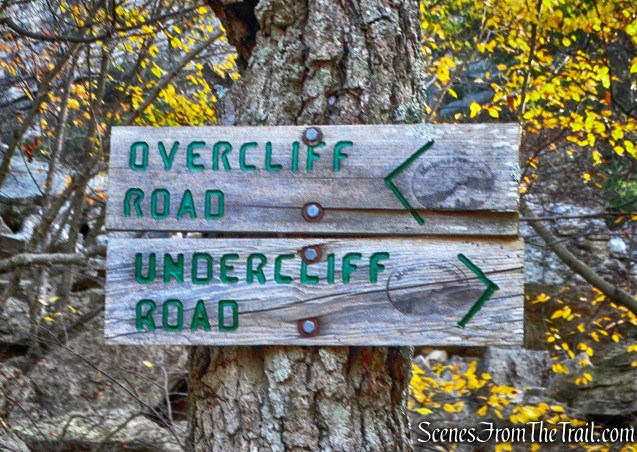
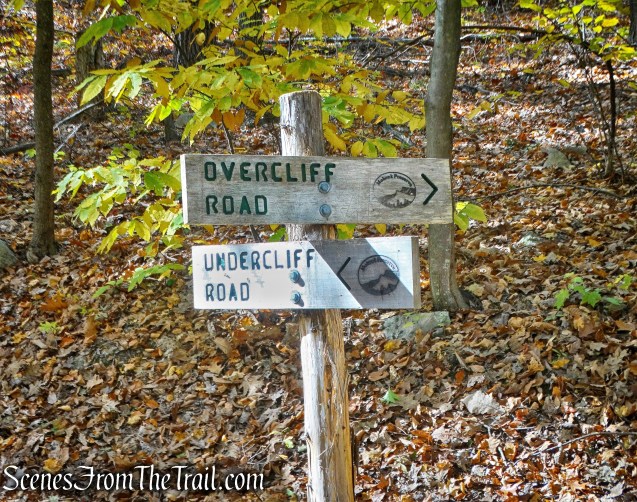
After a short, easy walk of 0.4 miles, the trail arrives at the junction for Undercliff and Overcliff Roads.

junction for Undercliff and Overcliff Roads

junction for Undercliff and Overcliff Roads

Overcliff Road would be our return route, we stayed right and took Undercliff Road. Either way will bring you to the same spot as the two roads form a five mile loop.

Follow Undercliff Road

Follow Undercliff Road

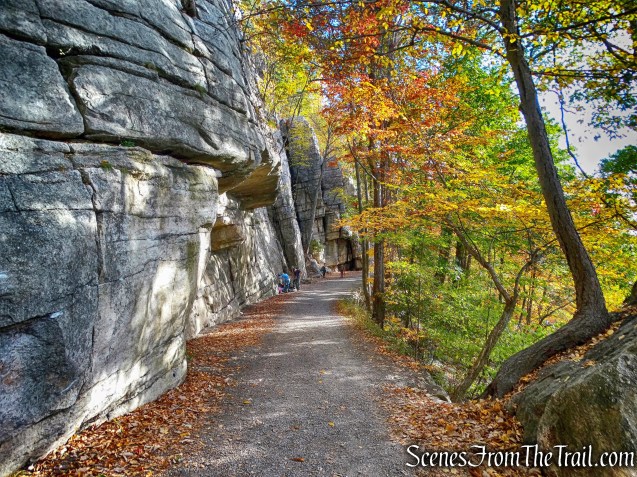
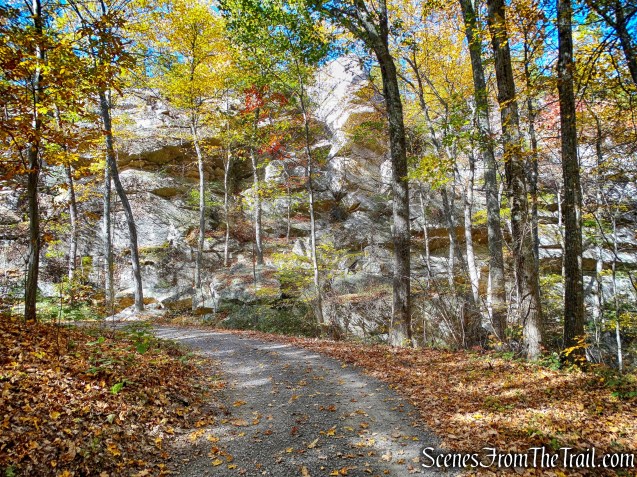
Undercliff Road makes for any easy walk, with its crushed stone surface.

Undercliff Road

Undercliff Road

This loop road was first built in 1903 so that guests at the Mohonk Mountain House could take carriage rides and enjoy the views. Looking southeast, splendid views of the Wallkill Valley can be seen.

View of the Wallkill Valley - Undercliff Road

View of the Wallkill Valley – Undercliff Road

Undercliff Road passes alongside the Trapps Cliff, which is usually filled with rock climbers.

Undercliff Road

Undercliff Road

The Gunks has some of the best rock climbing in the world.

Undercliff Road

Undercliff Road

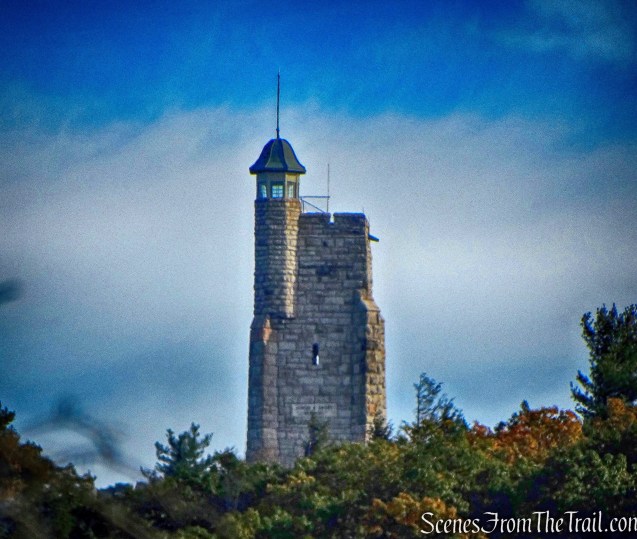
Walking along the road with never ending views on a gorgeous Sunday morning, was the start of a great hike. Looking northeast, Skytop Tower, built in 1921, can be seen in the distance.

Skytop Tower - Mohonk Mountain House

Skytop Tower – Mohonk Mountain House

After approximately 2.5 miles from the start of the hike, we came to the intersection of Undercliff/Overcliff Roads, and Laurel Ledge, with the Rhododendron Bridge on the right. I did not see a rhododendron anywhere.

Intersection of Undercliff/Overcliff Roads, and Laurel Ledge

Intersection of Undercliff/Overcliff Roads, and Laurel Ledge

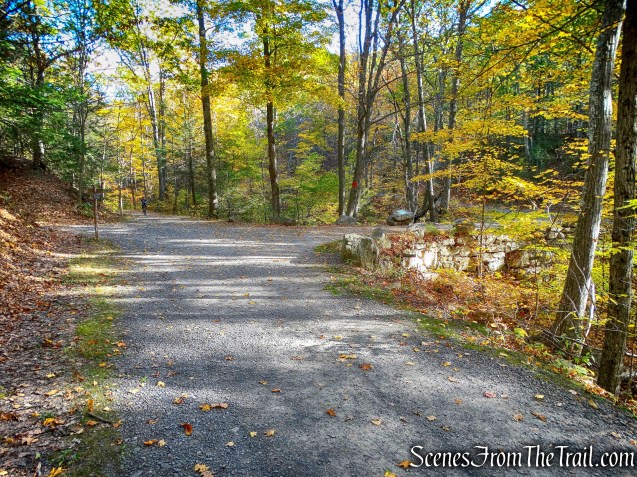
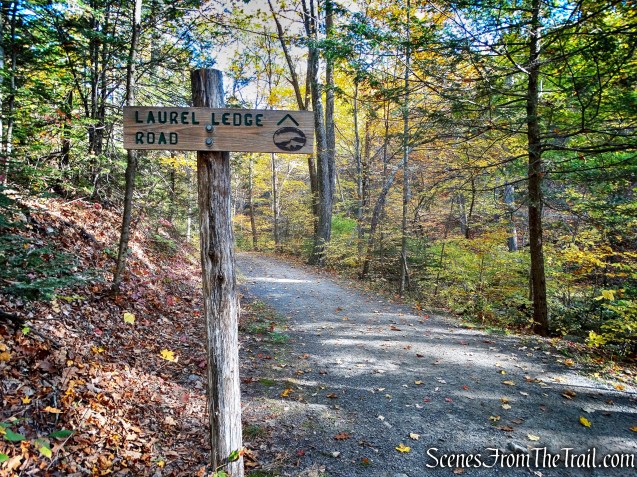
We continued straight ahead on Laurel Ledge Road.

Laurel Ledge Road

Laurel Ledge Road

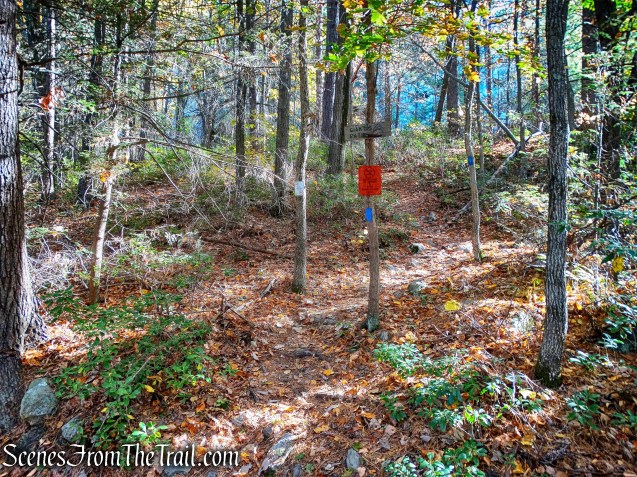
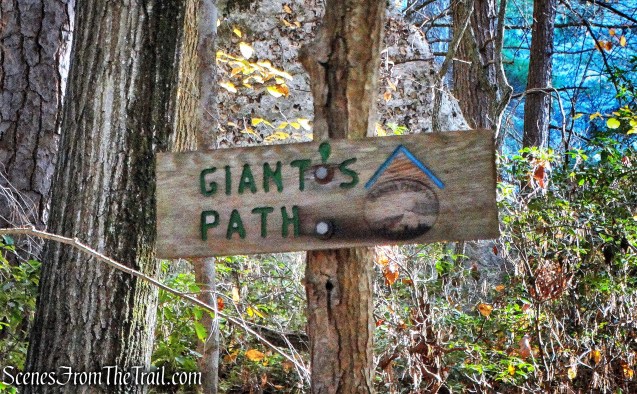
We stayed on Laurel Ledge Road for about 0.4 miles. Just past the junction with the Old Minnewaska Trail, We turned right onto the blue-blazed Giant’s Path.

Giant's Path

Giant’s Path

This turn can be easily missed if you’re not paying attention. The sign is about 15 feet off the trail and not easily visible from Laurel Ledge Road.

Giant's Path

Giant’s Path

Giant’s Path leads to the base of the Giant’s Workshop, a rock scramble over and under boulders and through narrow rock crevasses, that climbs Eagle Cliff.

Giant's Workshop

Giant’s Workshop

It is similar to the Labyrinth and Lemon Squeeze, but on a smaller scale.

Giant's Workshop

Giant’s Workshop

It was a tight squeeze in several spots and we had to remove our backpacks in order to fit through. Sadly, I had my camera packed away during most of the scramble, but did capture an image looking down after we emerged on a rock ledge.

Giant's Workshop

Giant’s Workshop

The view from the rock ledge as we came out of the Giant’s Workshop.

View from the top of Giant's Workshop

View from the top of Giant’s Workshop

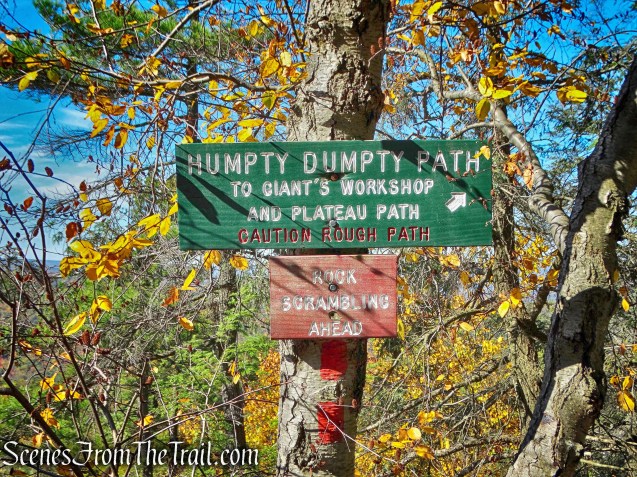
After a brief rest, we continued to ascend Eagle Cliff on Giant’s Path. In a few hundred feet, we turned right on the Humpty Dumpty Path and began another rock scramble.

Humpty Dumpty Path

Humpty Dumpty Path

This trail, although it gains elevation, is more of a horizontal scramble. Similar to Giant Stairs in the Palisades, but not nearly as long.

Humpty Dumpty Path

Humpty Dumpty Path

Once again, having to use both my hands and feet to traverse this trail, I only captured a few images. This trail has got to be hiked to be appreciated.

Humpty Dumpty Path

Humpty Dumpty Path

The Humpty Dumpty Path ends at Humpty Dumpty Road, a carriage road on the shoulder of Eagle Cliff. It provides a fantastic view of The Trapps Cliffs. We began our hike on Undercliff Road at the base of those cliffs..

Humpty Dumpty Road

Humpty Dumpty Road

The area below the level of Humpty Dumpty Road is part of the Mohonk Preserve, we were now on Mohonk Mountain House property. Humpty Dumpty Road snakes its way up the mountain…….

Humpty Dumpty Road

Humpty Dumpty Road

with the imposing cliffs to the right of the road.

Cliffs along Humpty Dumpty Road

Cliffs along Humpty Dumpty Road

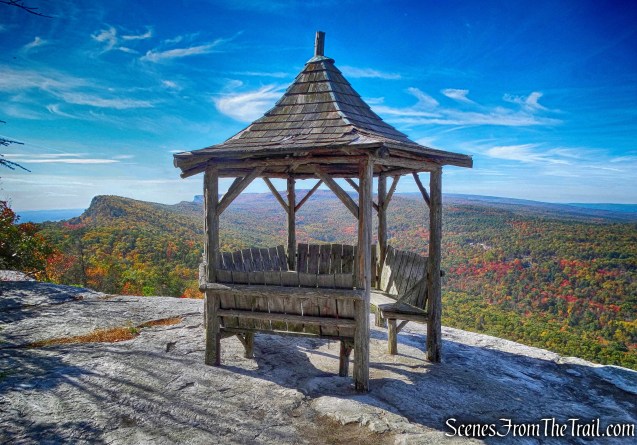
In about 0.3 miles, Humpty Dumpty Road arrives at a junction with the Cathedral Path. Right next to the junction is a wooden gazebo with great views.

Humpty Dumpty Road

Humpty Dumpty Road

We descended down Cathedral Path and over to Cope’s Lookout. It is supposed to be one of the best views at the Mohonk Mountain House property, I would have to agree.

Cope's Lookout

Cope’s Lookout

Looking northwest, the Catskill Mountains are visible in the distance.

View northwest from Cope's Lookout

View northwest from Cope’s Lookout

We sat here and enjoyed our lunch and the fantastic view that we earned.

Cope's Lookout

Cope’s Lookout

We then continued on Cathedral Path as it descends the mountain. A steep rock scramble that was challenging, but lots of fun.

Cathedral Path

Cathedral Path

As challenging as this trail is going down, it must be a lot tougher to ascend. I look forward to trying it some time.

Cathedral Path

Cathedral Path

Below is an image looking back after descending.

Cathedral Path

Cathedral Path

We veered off the Cathedral Path briefly onto Arching Rocks Path to take another brief rest under the Arching Rocks.

Arching Rocks Path

Arching Rocks Path

We then jumped back on the Cathedral Path and took it to its terminus at Plateau Path. There we turned right and took Plateau Path until its terminus at Laurel Ledge Road and turned left.

Laurel Ledge Road

Laurel Ledge Road

We stayed on Laurel Ledge Road until it comes to the junction at the Rhododendron Bridge. There we turned right and began following Overcliff Road.

Overcliff Road

Overcliff Road

Overcliff Road climbs gradually as it turns and begins to head southwest.

Overcliff Road

Overcliff Road

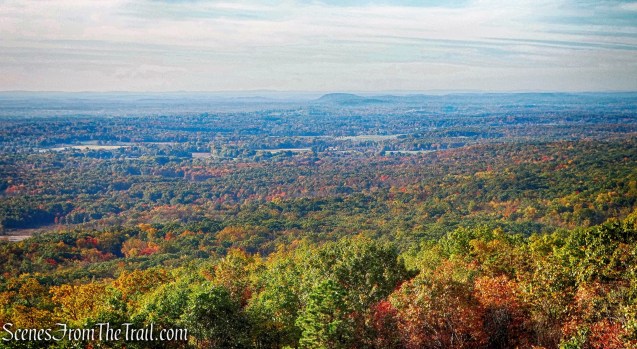
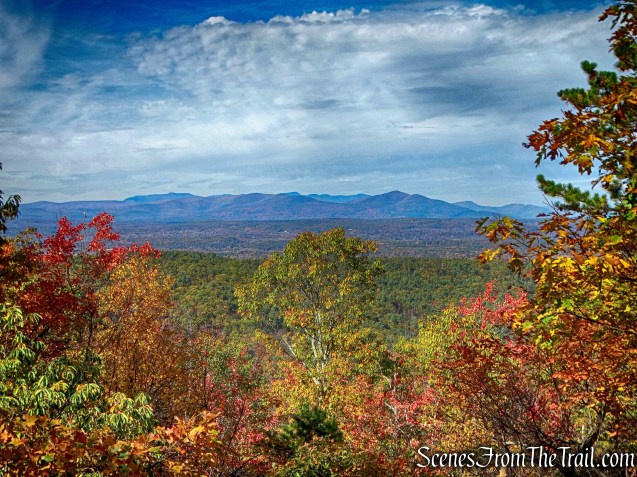
Overcliff Road has numerous views to the west of the Catskill Mountains.

View from Overcliff Road

View from Overcliff Road

This was a nice way to end a long hike. Easy walking and views for days.

Overcliff Road

Overcliff Road

View from Overcliff Road

View from Overcliff Road

View from Overcliff Road

View from Overcliff Road

Overcliff and Undercliff Roads can be done as a loop by themselves for a very scenic 5 mile hike.

Overcliff Road

Overcliff Road

The views never seem to end, but I won’t complain.

View from Overcliff Road

View from Overcliff Road

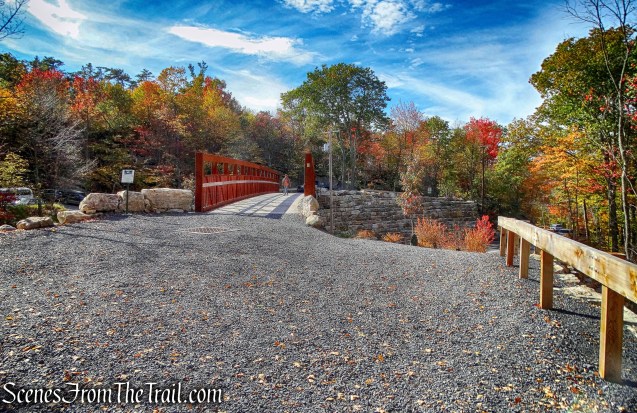
We arrived at the junction with Undercliff Road and veered right, walking between the Trapps Bridge and the wooden railing, to the yellow-blazed West Trapps Connector Trail and back to the parking area, where the hike began.

West Trapps Connector Trail

West Trapps Connector Trail

This was one of the better hikes that I have done. I was pretty tired, but it was well worth it. There are more rock scrambles that we did not do, but we had to save energy for the long walk back to the parking area. Next time, stay tuned.

Pros: Rock scrambles, outstanding views, The Gunks, fun and challenging.

Cons: Parking area fills up early.

Take a virtual hike with additional images added below.

Take a hike!

Humpty Dumpty Path - Mohonk Mountain House

Humpty Dumpty Path – Mohonk Mountain House

John Burroughs Nature Sanctuary

October 21, 2017 – West Park, NY

Difficulty: Easy

Length: Approximately 4 miles

Max elevation: 439 ft.– total elevation gain approximately 396 ft.

Route type: Circuit

Map: Trail Guide

No admission fee. Donations are welcome.

Trailhead parking: 103 Burroughs Drive – Highland, NY 12528

Please note: The listed address is 261 Floyd Ackert Road, but the entrance is at 103 Burroughs Drive.


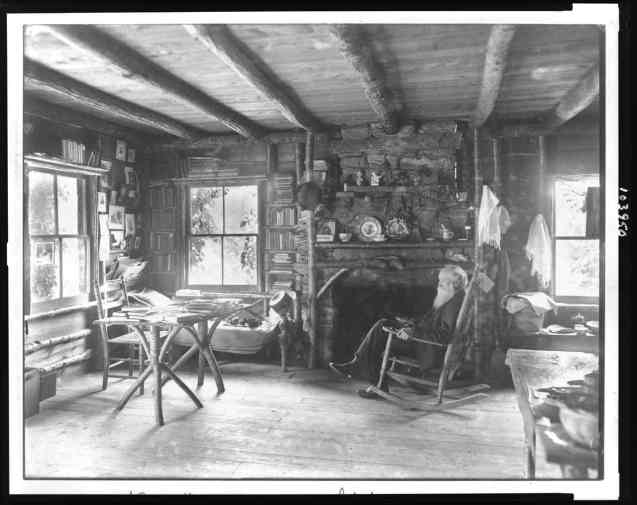
John Burroughs (1837-1921) was one of the most popular and influential authors of his day and is considered the originator of the modern nature essay. The inspiration for many of his essays was the wild land around Slabsides. Through works written at Slabsides about nature close at hand there, Burroughs had a profound impact on the emerging conservation movement and inspired generations of readers to head out of doors and national leaders to preserve land and its wildlife.

John Burroughs at Slabsides - Image from Library of Congress

John Burroughs at Slabsides – Image from Library of Congress

The John Burroughs Nature Sanctuary is a pristine and rugged 200-acre oasis set in the Mid-Hudson River Valley. It is where John Burroughs built his rustic cabin Slabsides, a National Historic Landmark and a Hudson River Valley National Heritage Area site.

John Burroughs' Slabsides

John Burroughs’ Slabsides

The John Burroughs Association owns and maintains Slabsides and the surrounding 200-acre John Burroughs Nature Sanctuary with its network of trails that make up a part of the broader regional Hudson River Valley Greenway Trail system. The trails, rated easy to moderate, take you among rocky ridges and out to a peninsula in a stunning eight-acre pond enabling you to experience the same forest and wildlife that Burroughs reveled in over a hundred years ago.

John Burroughs Nature Sanctuary

John Burroughs Nature Sanctuary

As a lover of the outdoors, I was curious about the setting that inspired such a famous writer. From what I had read, it sounded like the ideal place to explore and as Burroughs once said “I go to nature to be soothed and healed, and to have my senses put in order.” I decided to see for myself and paid a visit on a Saturday morning. Arriving shortly before 10:00 am, I was surprised that there weren’t any other cars parked along the road. There is no formal parking area and visitors are directed to park on the road.

John Burroughs Nature Sanctuary

John Burroughs Nature Sanctuary

After parking on Burroughs Drive, I walked up the driveway to begin the hike.

John Burroughs Nature Sanctuary

John Burroughs Nature Sanctuary

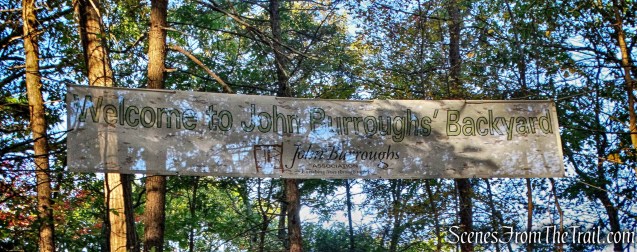
A banner strung across the entrance, welcomes visitors to John Burroughs’ backyard.

John Burroughs' backyard

John Burroughs’ backyard

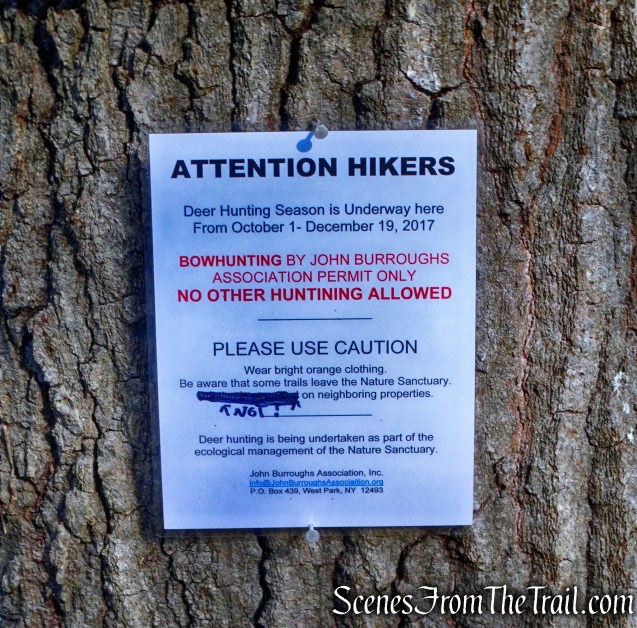
A sign on a tree next to the entrance cautions visitors about hunters on the property. I did not see any on my visit, but wearing bright orange clothing is a good idea anytime that you are in the woods.

John Burroughs Nature Sanctuary

John Burroughs Nature Sanctuary

Even though there are some homes nearby, walking down an old logging road, the tranquility of the area made it feel as I was descending into the wilderness.

John Burroughs Nature Sanctuary

John Burroughs Nature Sanctuary

The road comes to a fork, the right fork leads to private property, marked with a sign on a tree. I took the left fork on the old logging road.

John Burroughs Nature Sanctuary

John Burroughs Nature Sanctuary

To the left of the road, is a quote by John Burroughs.

John Burroughs quote

John Burroughs quote

Just past the sign is the start of the white-blazed Ridge Trail. This trail explores the southern area of the Nature Sanctuary following the contours of broad, wooded ridges.

Start of Ridge Trail - John Burroughs Nature Sanctuary

Start of Ridge Trail – John Burroughs Nature Sanctuary

Across from the trailhead is Slabsides, the cabin he built in 1895 as a writing retreat. It also served as a place to entertain his visitors. Preservationist John Muir was an early overnight guest, with other visitors such as Henry Ford, and Thomas Edison. President Theodore Roosevelt and Mrs. Roosevelt visited Slabsides in 1903, coming up the Hudson River on the Presidential yacht. They dined on Burroughs’ famous brigand steak and peas from his garden. His guestbook contains nearly 7,000 signatures.

John Burroughs' Slabsides

John Burroughs’ Slabsides

The name “Slabsides” came from the rough bark-covered lumber strips covering its outer walls.

John Burroughs' Slabsides

John Burroughs’ Slabsides

The Ridge Trail passes an imposing cliff.

Imposing cliff - John Burroughs Nature Sanctuary

Imposing cliff – John Burroughs Nature Sanctuary

The Ridge Trail is just under a mile long and is rated as moderate. I found it to be an easy walk and barely broke a sweat.

Ridge Trail - John Burroughs Nature Sanctuary

Ridge Trail – John Burroughs Nature Sanctuary

There are many interesting features along the trail, such as this stone staircase that ascends the cliff.

Ridge Trail - John Burroughs Nature Sanctuary

Ridge Trail – John Burroughs Nature Sanctuary

The 70-foot boardwalk was built through the celery swamp.

Ridge Trail - John Burroughs Nature Sanctuary

Ridge Trail – John Burroughs Nature Sanctuary

The rock formations and cliffs along the Ridge Trail are quite a sight to see.

Ridge Trail - John Burroughs Nature Sanctuary

Ridge Trail – John Burroughs Nature Sanctuary

Ridge Trail - John Burroughs Nature Sanctuary

Ridge Trail – John Burroughs Nature Sanctuary

After approximately 1.1 miles, the white-blazed Ridge Trail comes to a junction with the orange-blazed Ladder Trail.

Ladder Trail - John Burroughs Nature Sanctuary

Ladder Trail – John Burroughs Nature Sanctuary

The Ladder Trail is 0.2 miles long and traverses two cliffs that lie between the Ridge Trail and the Chodikee Trail in deep woods.

Ladder Trail - John Burroughs Nature Sanctuary

Ladder Trail – John Burroughs Nature Sanctuary

The Ladder Trail is short, but it has multiple points of interest.

Ladder Trail - John Burroughs Nature Sanctuary

Ladder Trail – John Burroughs Nature Sanctuary

Ladder Trail - John Burroughs Nature Sanctuary

Ladder Trail – John Burroughs Nature Sanctuary

Ladder Trail - John Burroughs Nature Sanctuary

Ladder Trail – John Burroughs Nature Sanctuary

The Ladder Trail ends at a T-intersection with the red-blazed Chodikee Trail. Going left (south) leads to Black Creek State Forest. I made a right turn to stay in the sanctuary.

Chodikee Trail - John Burroughs Nature Sanctuary

Chodikee Trail – John Burroughs Nature Sanctuary

The Chodikee Trail is 0.7 miles long and winds through dense hemlock woods and rock cliffs.

Chodikee Trail - John Burroughs Nature Sanctuary

Chodikee Trail – John Burroughs Nature Sanctuary

Chodikee Trail - John Burroughs Nature Sanctuary

Chodikee Trail – John Burroughs Nature Sanctuary

The Chodikee Trail comes to a junction with the green-blazed Amasa Martin Trail. The Amasa Martin Trail loops around the former homestead of Amasa Martin, who worked in Burroughs’ celery swamp.

Amasa Martin Trail - John Burroughs Nature Sanctuary

Amasa Martin Trail – John Burroughs Nature Sanctuary

The trail starts out marked with green blazes, but soon the green blazes disappear.

Amasa Martin Trail - John Burroughs Nature Sanctuary

Amasa Martin Trail – John Burroughs Nature Sanctuary

The trail is discernible as it passes through the stone walls of the former homestead.

Amasa Martin Trail - John Burroughs Nature Sanctuary

Amasa Martin Trail – John Burroughs Nature Sanctuary

The Amasa Martin Trail ends at the Pond Lane Trail and directly across the road is the Peninsula Trail, which is also blazed with green markers.

Cross Pond Lane to the Peninsula Trail

Cross Pond Lane to the Peninsula Trail

The Peninsula Trail is 0.1 miles long and follows a narrow rock ledge that extends into the Pond.

Peninsula Trail - John Burroughs Nature Sanctuary

Peninsula Trail – John Burroughs Nature Sanctuary

Peninsula Trail - John Burroughs Nature Sanctuary

Peninsula Trail – John Burroughs Nature Sanctuary

Peninsula Trail - John Burroughs Nature Sanctuary

Peninsula Trail – John Burroughs Nature Sanctuary

At the northern end of the Peninsula Trail, there are wide open views of the Pond.

Peninsula Trail - John Burroughs Nature Sanctuary

Peninsula Trail – John Burroughs Nature Sanctuary

Peninsula Trail - John Burroughs Nature Sanctuary

Peninsula Trail – John Burroughs Nature Sanctuary

Retracing my steps back to the Pond Lane Trail, I turned left and headed toward the Pond House.

Pond Lane Trail - John Burroughs Nature Sanctuary

Pond Lane Trail – John Burroughs Nature Sanctuary

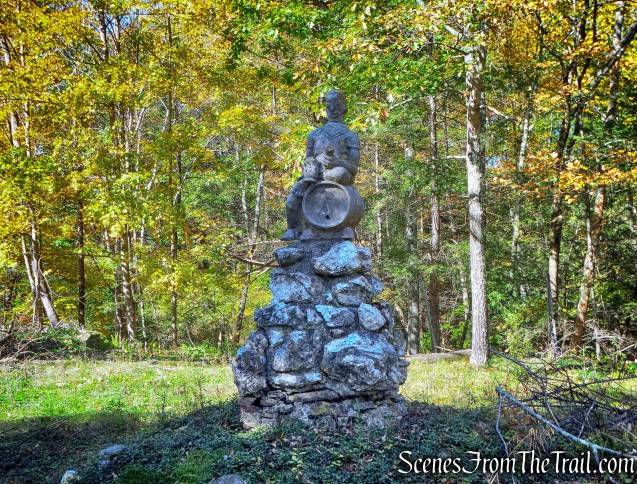
Passing through the stone columns, there is a stone sculpture along the road.

Pond Lane Trail - John Burroughs Nature Sanctuary

Pond Lane Trail – John Burroughs Nature Sanctuary

There are several fine vantage points of the Pond, looking north.

Pond Lane Trail - John Burroughs Nature Sanctuary

Pond Lane Trail – John Burroughs Nature Sanctuary

There are another set of stone columns at the southern end of Pond Lane. That is the start/end of the Chodikee Trail.

Chodikee Trail - John Burroughs Nature Sanctuary

Chodikee Trail – John Burroughs Nature Sanctuary

In a short distance, I turned left on the yellow-blazed South Pond Trail. The South Pond Trail is 0.3 miles long and connects the Slabsides area with the Pond.

South Pond Trail - John Burroughs Nature Sanctuary

South Pond Trail – John Burroughs Nature Sanctuary

The South Pond Trail ends near Slabsides and there I turned left and retraced my steps back up the old logging Road.

Old logging road - John Burroughs Nature Sanctuary

Old logging road – John Burroughs Nature Sanctuary

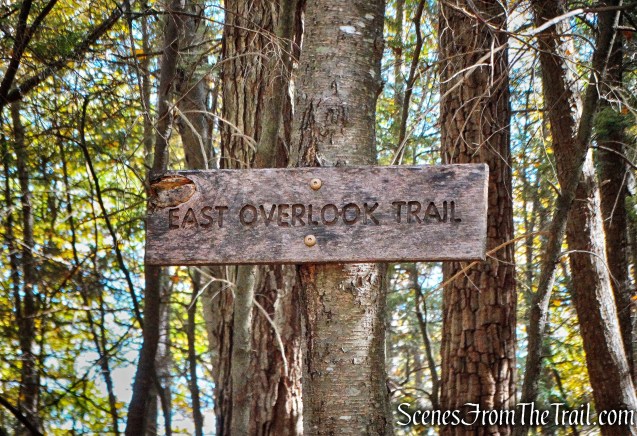
Back out on Burroughs Drive, I turned left and walked downhill a short distance to the East Overlook Trail.

East Overlook Trail - John Burroughs Nature Sanctuary

East Overlook Trail – John Burroughs Nature Sanctuary

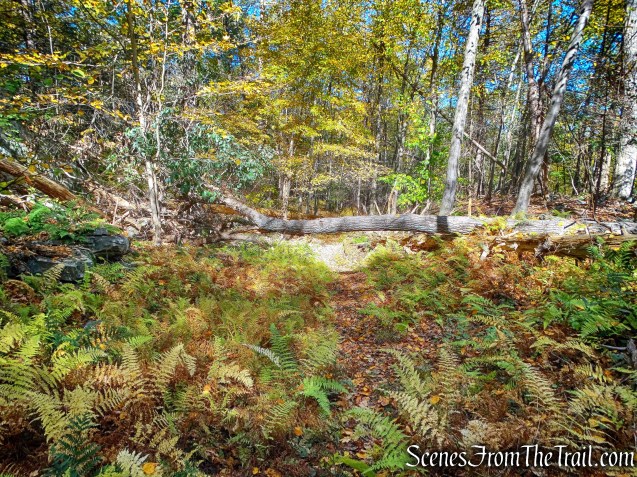
The East Overlook Trail is 0.3 miles long and from Burroughs Drive loops through mixed woods and is supposed to provide an eastern view toward the Hudson River. I found no such views and the trail does not look like it gets much use.

East Overlook Trail - John Burroughs Nature Sanctuary

East Overlook Trail – John Burroughs Nature Sanctuary

The East Overlook Trail ends downhill on Burroughs Drive and the North Pond Trail begins across the road, a short distance up the hill.

North Pond Trail - John Burroughs Nature Sanctuary

North Pond Trail – John Burroughs Nature Sanctuary

The North Pond Trail connects Pond Lane with Burroughs Drive. I found it a little difficult to follow and ended up bushwacking down the hill to Pond Lane. I found where the the North Pond Trail begins on Pond Lane. There I enjoyed a nice view of the Pond, with the Peninsula in the center where I was earlier in the hike.

North Pond Trail - John Burroughs Nature Sanctuary

North Pond Trail – John Burroughs Nature Sanctuary

I walked the North Pond Trail back to Burroughs Drive, turned right and walked uphill about 0.3 miles back to where the vehicle was parked. A very nice hike and the trails travel through a very scenic area, but if I was to do it again, I would skip the East Overlook and North Pond Trails. They were somewhat boring, with not much to see and they appear to be poorly blazed and not well maintained. Other than that, this is a great place to visit for an easy hike through attractive woods.

The trails are open dawn to dusk everyday, but the cabin itself is only open for two days a year.

Pros:  John Burroughs, Slabsides, cliffs, rock formations, the Pond, secluded.

Cons: Some trails are not well blazed.

Take a virtual hike with additional images added below.


Take a hike!

John Burroughs' Slabsides

John Burroughs’ Slabsides


Stone Church and Bear Hill Nature Preserve
October 15, 2017 – Pine Bush, NY

Difficulty: easy

Length: Approximately 1.5 miles

Route type: out and back

Fees: $5.00 per person day use (Bear Hill only)
Map: Posted at information booth

Stone Church address: 280 Henry Road, Cragsmoor, NY 12420

Trailhead parking for Bear Hill: 258-260 Hartshorn Rd, Pine Bush, NY 12566


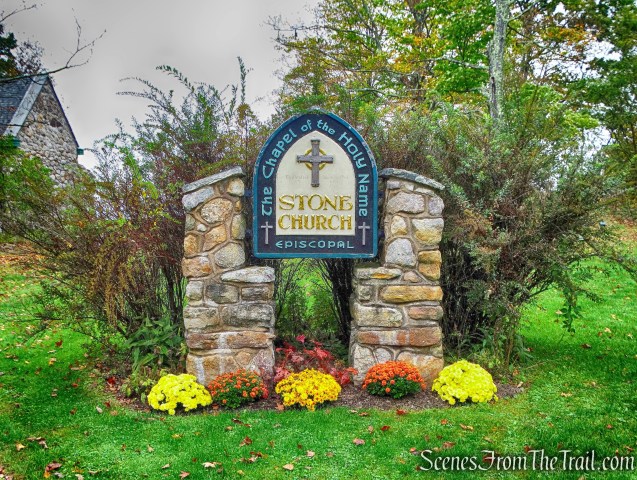
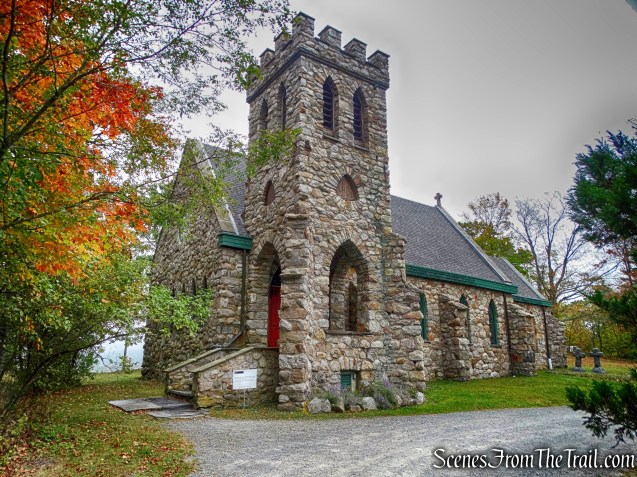
Construction began on The Stone Church in Cragsmoor, NY in 1895 and two years later in 1897, the 900-pound bell in the tower was raised. The chapel, built of stone from the mountain, was designed by Frederick S. Dellenbaugh, an architect and prominent Cragsmoor resident. Cragsmoor is the only residential community on the Shawangunk Ridge and is a hamlet of roughly four square miles.

The Stone Church

The Stone Church

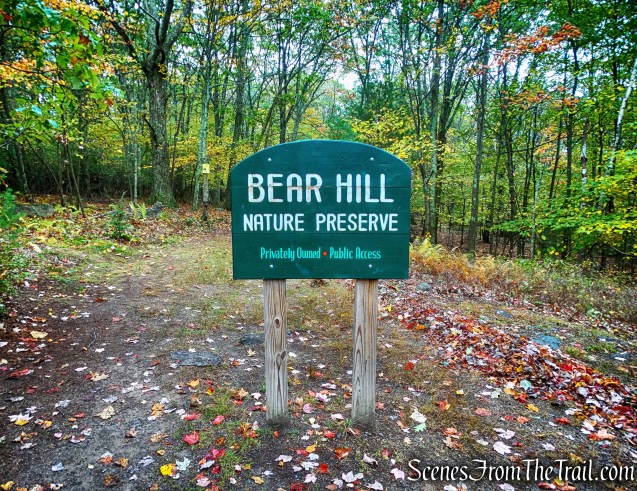
Bear Hill Nature Preserve is in the same Shawangunk Ridge as Sam’s Point. At an elevation of 1,950 feet, it provides spectacular views. It is a 50 acre privately owned park. This is a short easy hike with some of the best views anywhere. It is managed by the Cragsmoor Association.
Bear Hill Nature Preserve
Bear Hill Nature Preserve
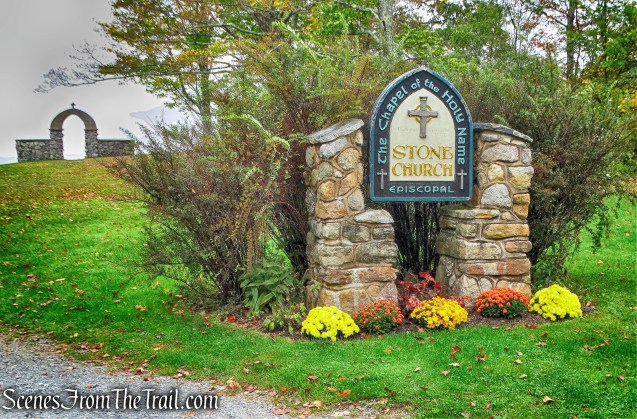
The Stone Church and Bear Hill are within a mile of each other and if visiting one, it only makes sense to visit the other. On a Sunday afternoon, there was no one around when we visited the Stone Church, which is located atop the Shawangunk Ridge at an elevation of almost 2,000 feet above sea level.
The Stone Church

The Stone Church

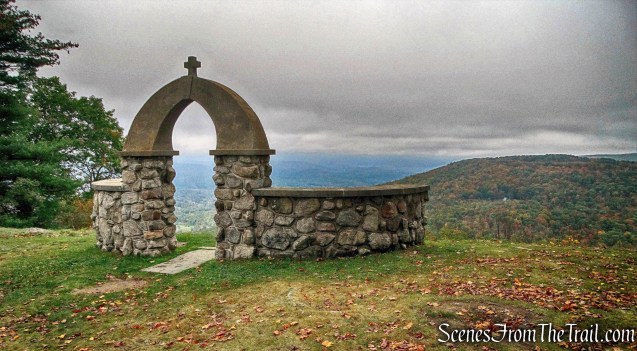
Behind the church there is a stone archway with sweeping views of the surrounding countryside.

stone archway - Stone Church

stone archway – Stone Church

On a clear day, the views stretch for 50 miles.

view from stone archway - Stone Church

view from stone archway – Stone Church

The chapel is available for weddings and other events, the funds from which are used exclusively for the restoration of the building and the grounds. The Stone Church is operated by Friends of the Stone Church.

The Stone Church

The Stone Church

Less than a mile away, in Pine Bush, NY, is the Bear Hill Nature Preserve. A great place for an easy walk that leads to some of the best views. The main trails are not marked, but well defined. On previous visits, no map was available, but now they have a map on the wall of the booth where you pay.
Bear Hill Nature Preserve map
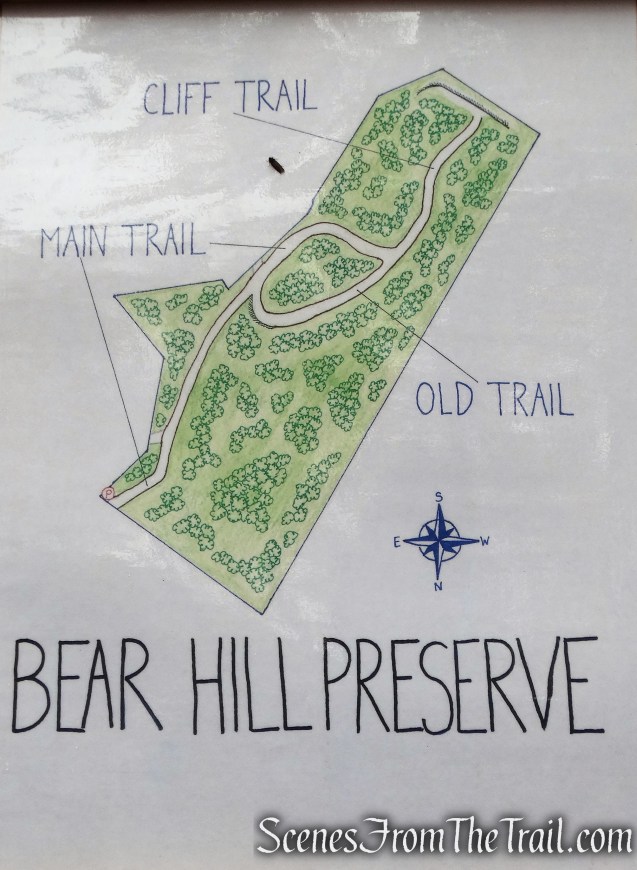
Bear Hill Nature Preserve map
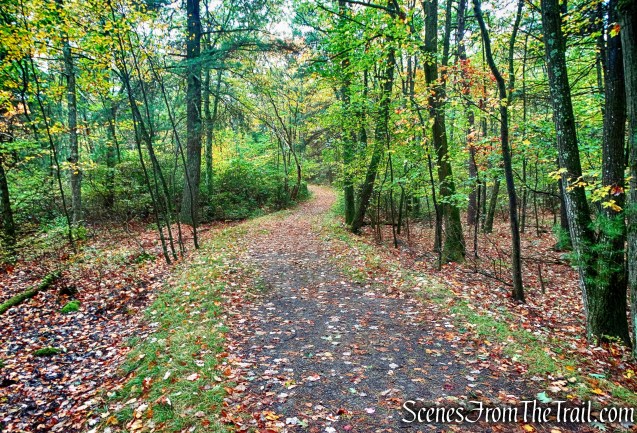
The walk begins along the Main Trail, on a wide crushed stone road.

Main Trail - Bear Hill Nature Preserve
Main Trail – Bear Hill Nature Preserve

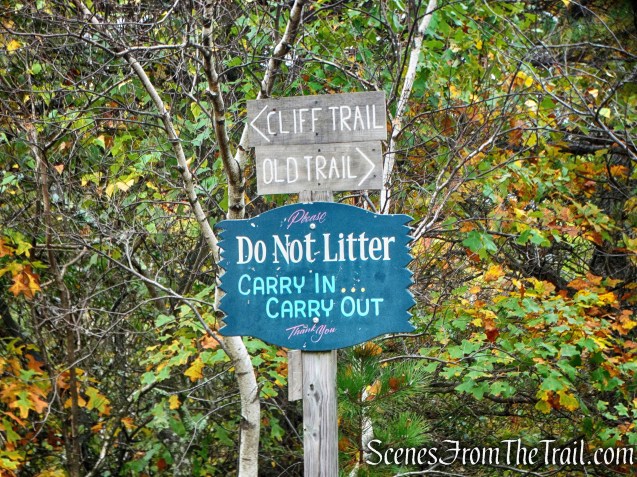
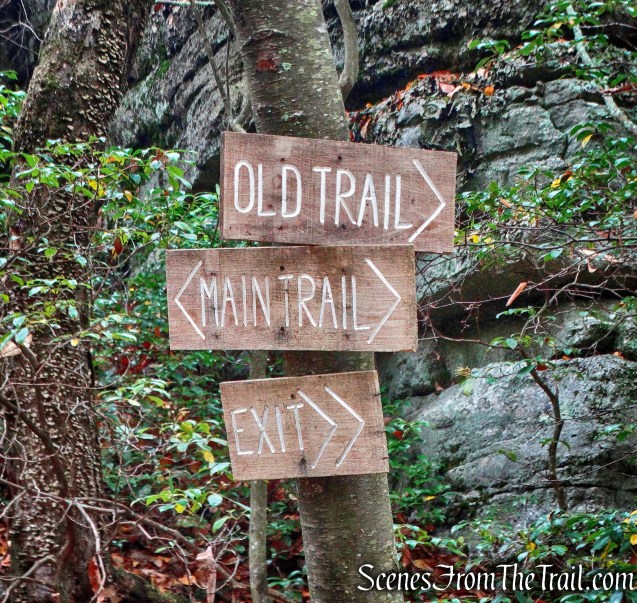
Along the way, there is a junction with the Old Trail, that goes off to the right. That makes a good return route. Staying on the Main Trail brings you to the views.

junction with the Old Trail

junction with the Old Trail

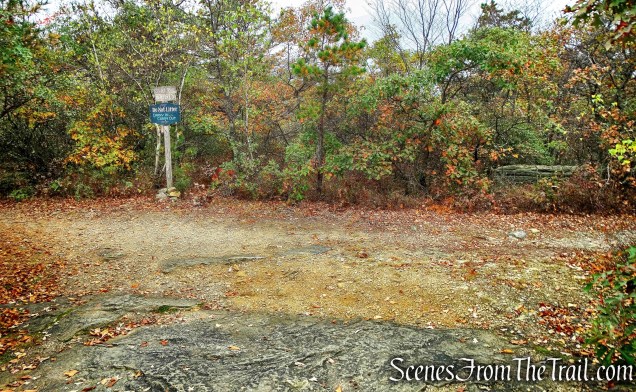
The Main Trail ends at a T-intersection with the Cliff Trail and the Old Trail.

Main Trail terminus - Bear Hill Nature Preserve

Main Trail terminus – Bear Hill Nature Preserve

The views are the reason you are here, so you want to turn left on the Cliff Trail.

Left on Cliff Trail - Bear Hill Nature Preserve

Left on Cliff Trail – Bear Hill Nature Preserve

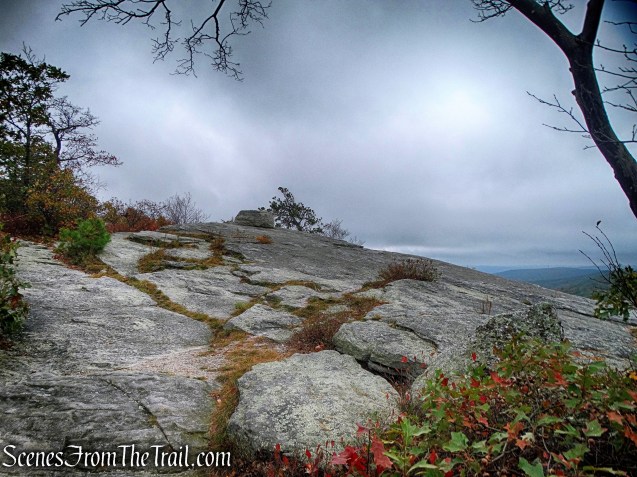
In a short distance, the trail comes out at the top of the cliffs.

Cliff Trail - Bear Hill Nature Preserve

Cliff Trail – Bear Hill Nature Preserve

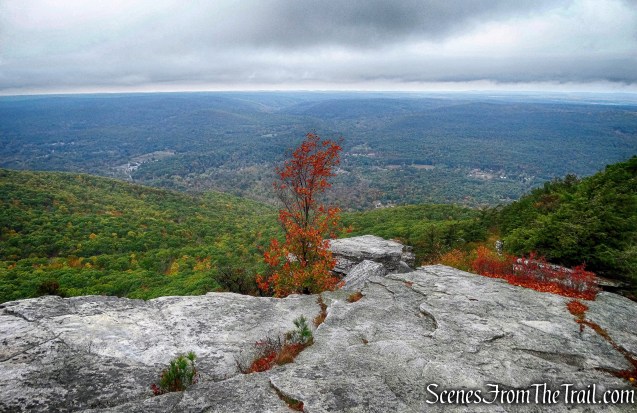
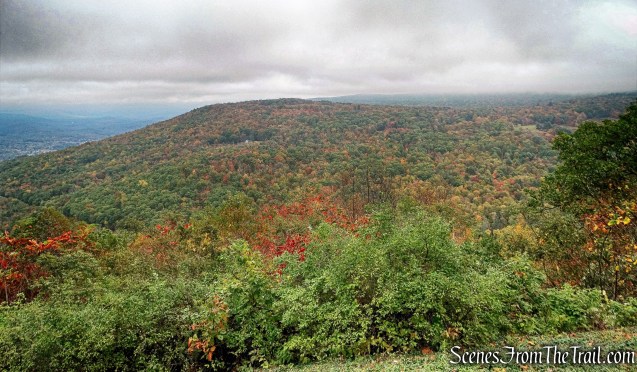
Even on a cloudy and overcast day, the views are still phenomenal.

Bear Hill Nature Preserve

Bear Hill Nature Preserve

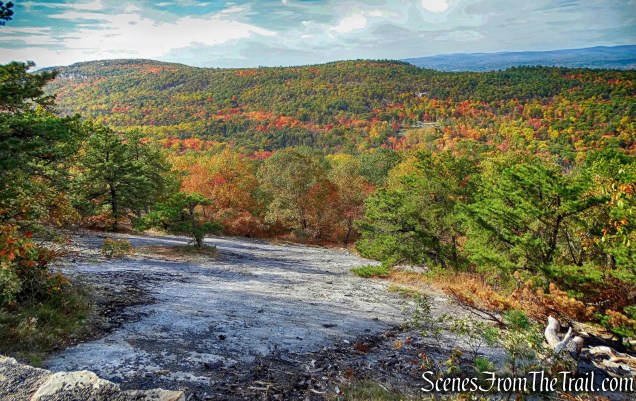
The view southwest from the top of the sheer white cliffs, dotted with boulders.

Bear Hill Nature Preserve

Bear Hill Nature Preserve

Not as much color as my last visit, almost a year ago, but still quite scenic.

Bear Hill Nature Preserve

Bear Hill Nature Preserve

There are numerous trails that criss-cross the property and you can venture to many a rock outcrop if you dare.

Bear Hill Nature Preserve

Bear Hill Nature Preserve

There are also many deep crevasses in the rock formations that can be explored.

crevasse - Bear Hill Nature Preserve

crevasse – Bear Hill Nature Preserve

With the ease of access to these cliffs, it does get crowded on a nice day, but there are plenty of places where one can escape to.

crevasse - Bear Hill Nature Preserve

crevasse – Bear Hill Nature Preserve

Next time you are out taking a drive in the country, consider these two scenic spots and you’ll be rewarded with some of nature’s beauty.

Pros; Sweeping views, sheer white cliffs, Stone Church, The Gunks.

Cons: Can get crowded.


Take a virtual hike with additional images added below.


Take a hike!

Bear Hill Nature Preserve

Bear Hill Nature Preserve


Giant Ledge – Catskill Park

October 14, 2017 – Shandaken, NY

Difficulty: Moderate – Strenuous

Length: Approximately 4 miles

Max elevation: 3,213 ft.– total elevation gain approximately 1218 ft.

Route type: Out and back

Map: Catskills Trail Map #142

Trailhead parking:  Oliverea Road – Big Indian, NY 12410


Giant Ledge is located in the 47,500 acres Slide Mountain Wilderness Area. The largest and most popular wilderness area in the Catskill Forest Preserve. Extensive foot trails provide access to the remote interior, often climbing over lofty peaks with spectacular views.

Slide Mountain Wilderness

Slide Mountain Wilderness

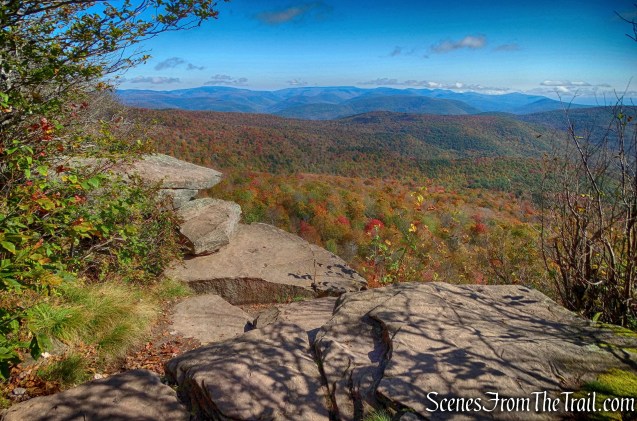
Giant Ledge is unique in the Catskills. The west side of the ridge has the typical smooth rounded shape caused by glacial action and years of erosion. The east side provides panoramic views of the northern and southern Catskills, as well as the Esopus Valley and
forest canopy below. The viewpoints sit atop a sheer cliff dropping to the forest floor 180 feet below.

Giant Ledge

Giant Ledge

“Giant Ledge” refers to multiple separate rocky lookouts on the mountain, not just one spot. It is a very popular hiking destination and offers some of the best views in the Catskills. There are quite a few spur trails that run from east to west, leading to additional viewpoints and there are some isolated outlooks along the ridge as well. If you are seeking solitude, you won’t find it here unless you visit on a weekday……possibly.

Giant Ledge

Giant Ledge

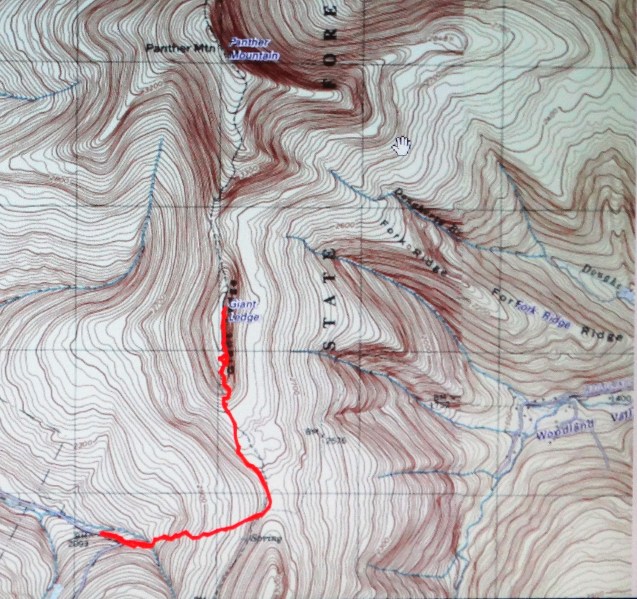
A new feature that I have added is the Google Earth Fly-Through video. It follows the path that we hiked and it gives you a good idea of the terrain, layout, amount of parking etc. Check it out, it’s pretty cool.

View the Google Earth Fly-Through video of the hike below.

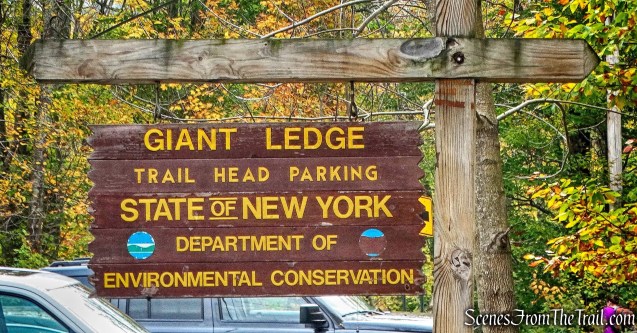
The parking area fills up quickly on the weekends, so it’s a good idea to arrive early and beat the crowds.

Giant Ledge - trailhead parking

Giant Ledge – trailhead parking

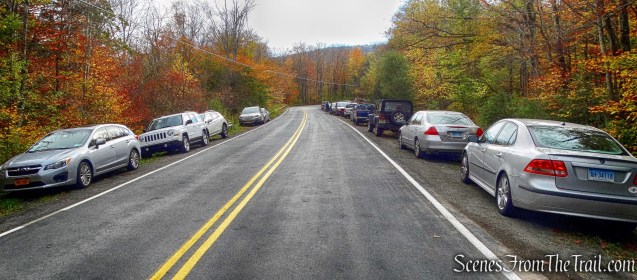
After a two hour drive, we arrived at the trailhead at approximately 9:45 am. The parking area was already full and there were cars parked on both sides of CR 47 (Oliverea Road).

CR 47 - Oliverea Road

CR 47 – Oliverea Road

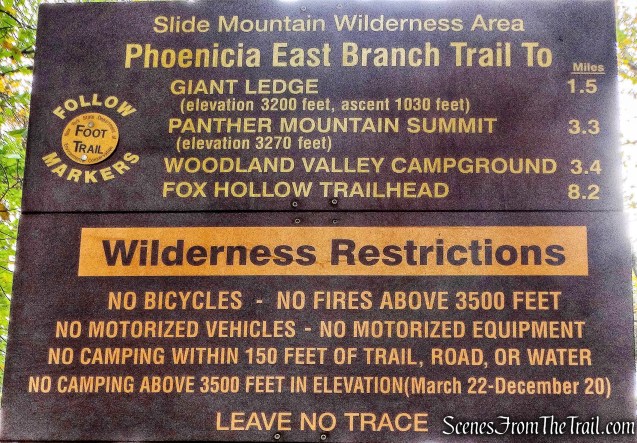
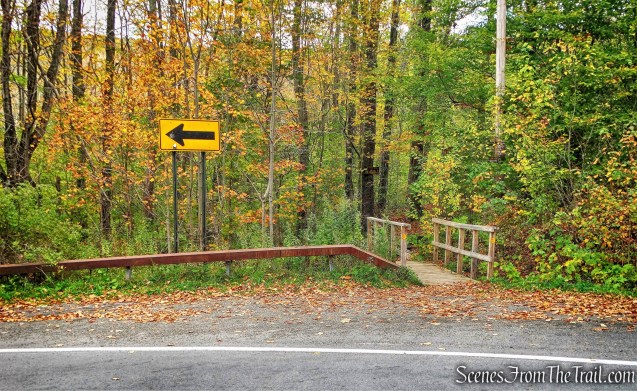
The hike starts off along the yellow-blazed Phoenicia-East Branch Trail, across the road from the parking area, at the hairpin turn.

Giant Ledge Trailhead

Giant Ledge Trailhead

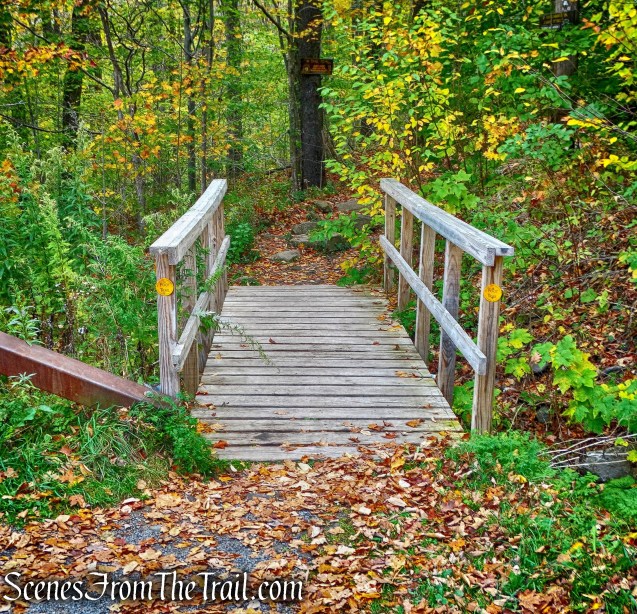
The wooden footbridge marks the beginning of the hike. For approximately the first 0.7 miles we would be following the yellow blazes.

yellow-blazed Phoenicia-East Branch Trail

yellow-blazed Phoenicia-East Branch Trail

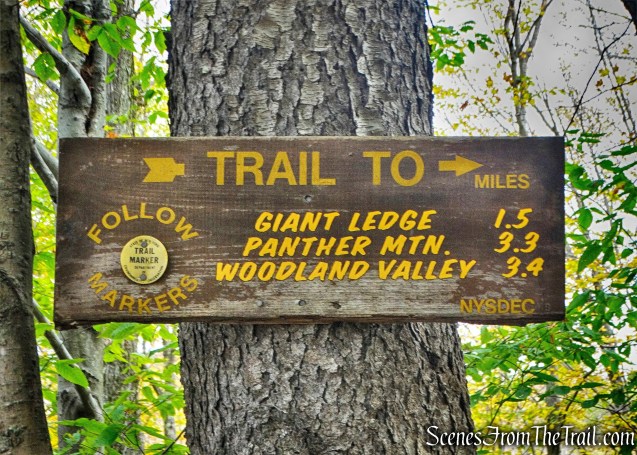
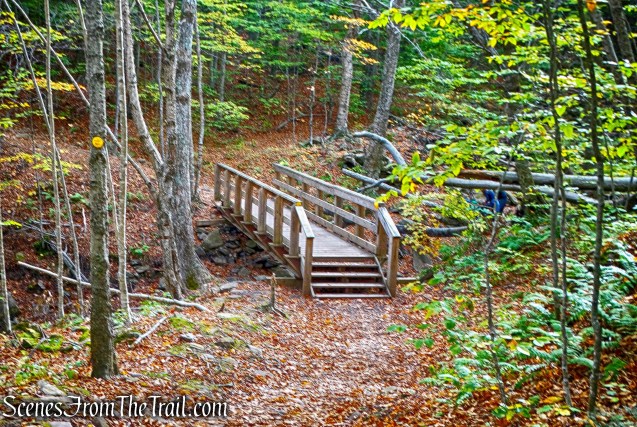
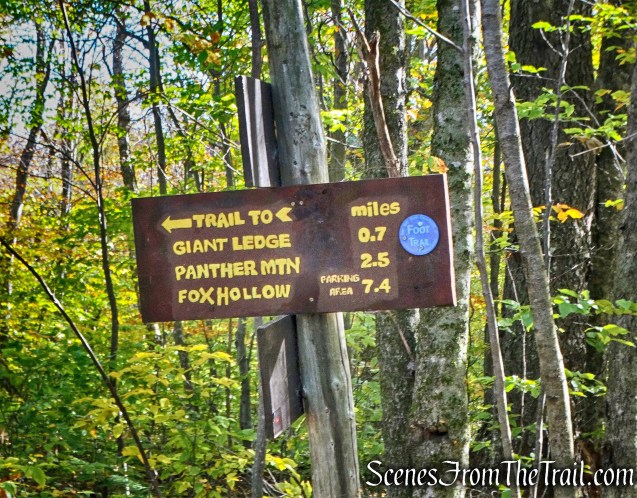
The trail is well marked and easy to follow, with signs pointing hikers in the right direction at trail junctions.

Phoenicia-East Branch Trail - Giant Ledge

Phoenicia-East Branch Trail – Giant Ledge

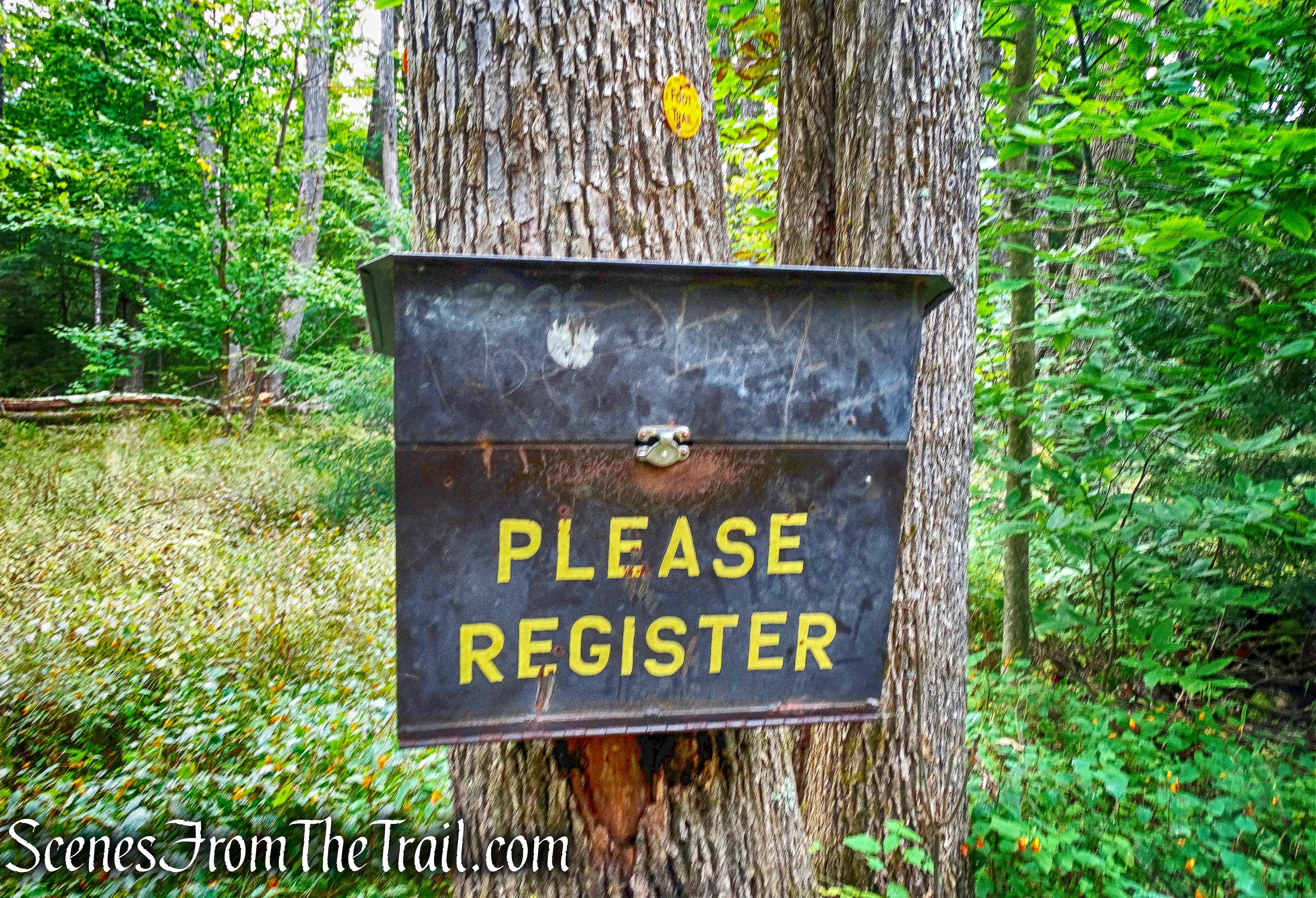
A short distance from the start of the hike, is the trail register. It’s a good idea to sign in whenever there is a trail register. It’s for your safety, should anything go wrong and it also helps to calculate the amount of usage a trail gets, which helps with funding.

trail register - Giant Ledge

trail register – Giant Ledge

The trail then crosses another wooden footbridge over a seasonal stream. It was dry on the day we visited.

wooden footbridge - Phoenicia-East Branch Trail

wooden footbridge – Phoenicia-East Branch Trail

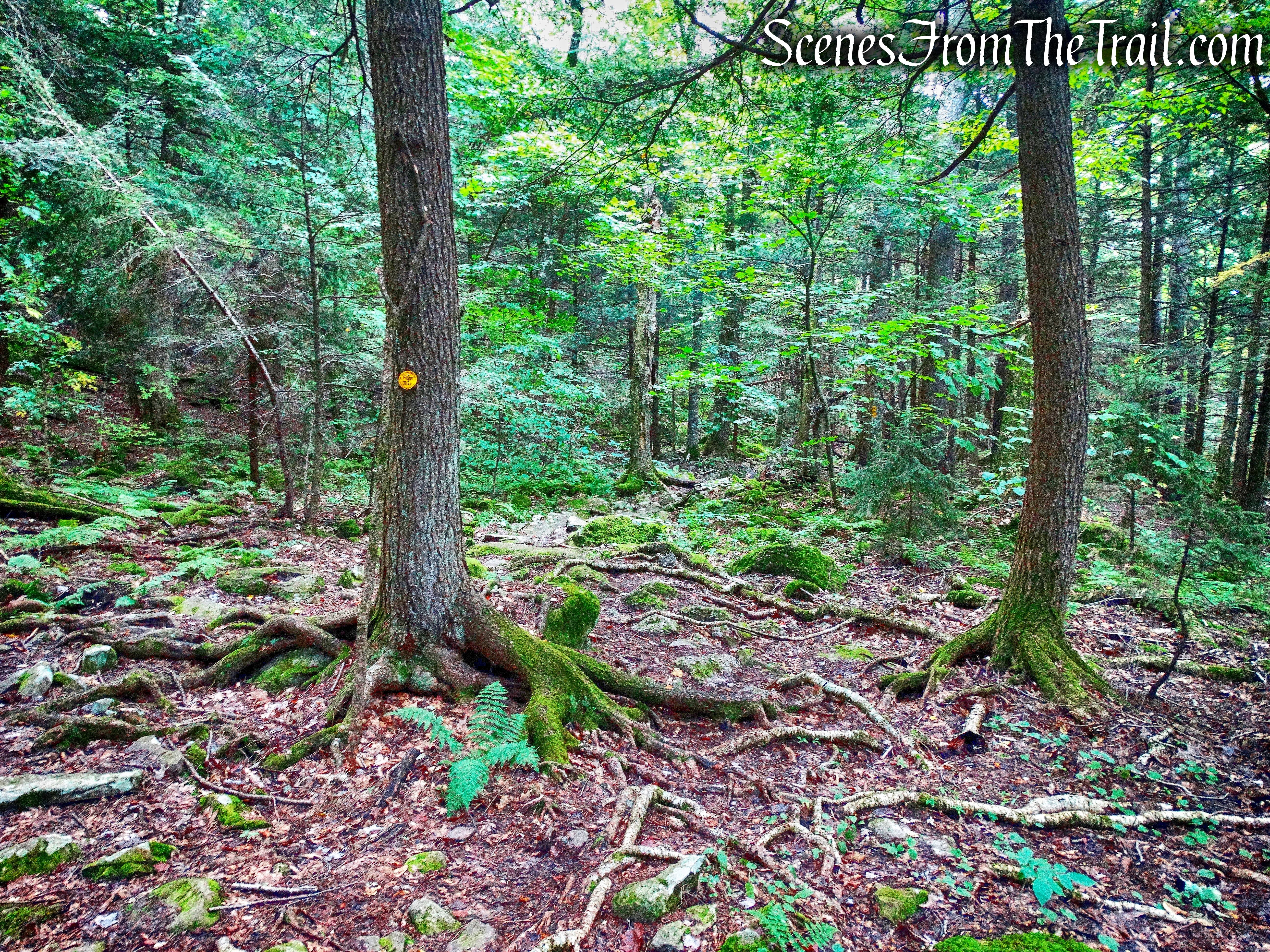
The Phoenicia-East Branch Trail now begins to climb, first gradually, then more steeply.

Phoenicia-East Branch Trail

Phoenicia-East Branch Trail

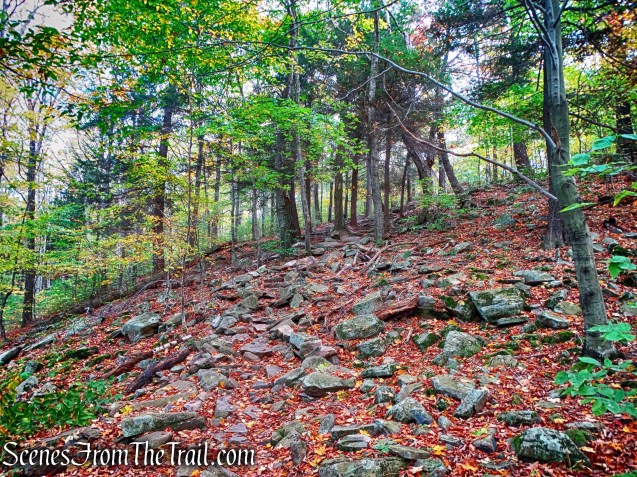
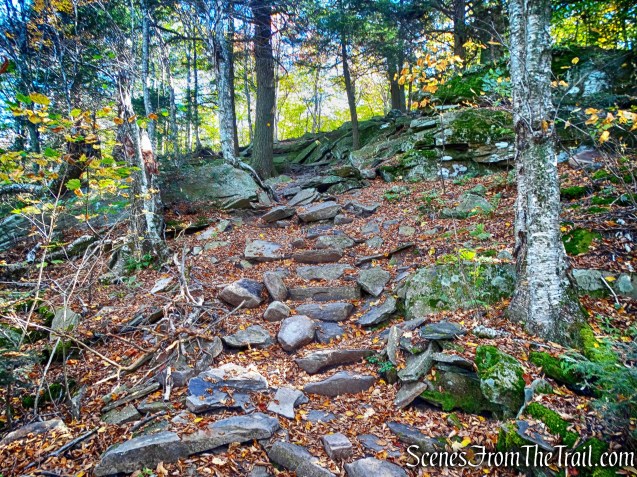
In some of the steeper sections, there are uneven stone steps, which are generally used to gain a lot of elevation in a short distance.

stone steps - Phoenicia-East Branch Trail

stone steps – Phoenicia-East Branch Trail

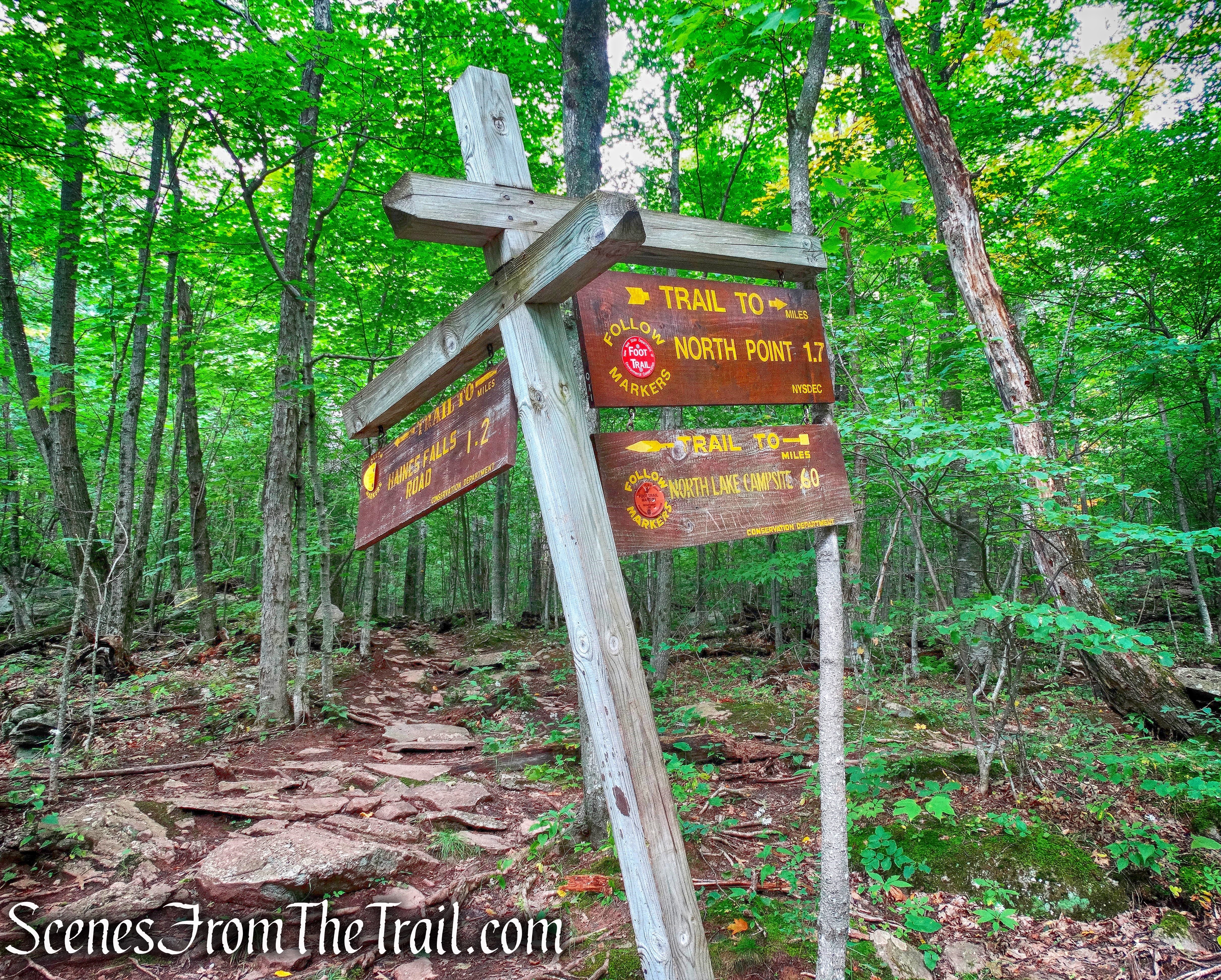
After about 0.75 miles from the trailhead, the yellow-blazed Phoenicia-East Branch Trail arrives at a junction with the blue-blazed Giant Ledge-Panther Mountain-Fox Hollow Trail. An elevation gain of approximately 621 feet from the start of the hike.

junction - Giant Ledge-Panther Mountain-Fox Hollow Trail

junction – Giant Ledge-Panther Mountain-Fox Hollow Trail

After turning left, now following the blue blazes, the trail remains relatively level for the next 0.5 miles.

Giant Ledge-Panther Mountain-Fox Hollow Trail

Giant Ledge-Panther Mountain-Fox Hollow Trail

The trail then steepens as it nears the ridge.

Giant Ledge-Panther Mountain-Fox Hollow Trail

Giant Ledge-Panther Mountain-Fox Hollow Trail

The trail climbs over rocks as it gains another 400 feet of elevation from the trail junction.

Giant Ledge-Panther Mountain-Fox Hollow Trail

Giant Ledge-Panther Mountain-Fox Hollow Trail

After about 1.5 miles from the start, there is a short spur trail to the right, that leads to the first ledge and a magnificent view.

view from Giant Ledge

view from Giant Ledge

The views are basically the same from the eastern facing ledges. The image below is from another ledge. After some time up there moving from ledge to ledge, we retraced our steps down the mountain and back to the vehicle.

Giant Ledge

Giant Ledge

The ridge where Giant Ledge is located, spans about 0.4 miles. On a busy Saturday in October, it felt like being in a park. People coming and going and the ledges crowded at times. This is a great hike, but much too busy for my liking. This is definitely a Monday or Tuesday hike. On another hiking blog this hike is rated as moderate, I have to disagree. Level of difficulty is subjective, but this is more than a moderate hike. The rocky terrain, steep ascents and descents and the total elevation gain is above any moderate hike. Even though it’s only 1.5 miles to the first ledge, it’s no walk in the park. I saw many unprepared hikers (sightseers?) on the trail. No water, inappropriate footwear, little kids in tow, you name it. Perhaps people see the short distance of the hike and figure it’s a piece of cake. I saw a few people standing very close to the edge taking selfies with their foot inches from the edge. Giant Ledge is a great hike, just not on a weekend.

Pros: Fantastic views, well marked and maintained trails.

Cons: Way too crowded.


Take a virtual hike with additional images added below.


Take a hike!

Giant Ledge

Giant Ledge


Mongaup River Trail

October 7, 2017 – Town of Deerpark, NY

Difficulty: Easy

Length: Approximately 2.1 miles

Max elevation: 591 ft.– total elevation gain approximately 157 ft.

Route type: Out and back

Map: Upper Delaware River Valley Map

Trailhead parking: 668-716 NY-97 – Sparrow Bush, NY 12780

PLEASE NOTE: TRAIL IS CLOSED FROM 12/1 – 4/1

The Mongaup River Trail is a one mile long linear trail that parallels the Mongaup River. The trail begins at New York State Route 97, where the Mongaup River flows into the Delaware River. Large Eastern Hemlocks trees tower overhead and shade this steep ravine landscape. The trail is relatively flat, with minimal elevation gain. At the trails terminus, there is an old cemetery, with tombstones dating back to the 1800’s.

Mongaup River Trail

Mongaup River Trail

The Mongaup River Trail is one of six trails featured in the “Take a Hike!” brochure, which gives names, locations, descriptions, and difficulty levels of trails in the Upper Delaware River Valley. It also provides a checklist to keep track of the trails you’ve hiked which can be turned in upon completion for a “Take a Hike!” patch.

Mongaup River Trail

Mongaup River Trail

The previous weekend, we did three of the hikes on the list, the Bouchoux TrailDamascus Forest Trail and the Cobey Pond Trail. We were now going to complete the final three hikes to earn our Take a Hike! patch. Having already done the Tusten Mountain Trail and the Minisink Battleground Park Trails earlier in the day, we were ready to do the Mongaup River Trail. This is the last of six hikes that are on the list.

The trailhead was a little difficult to find. I first pulled in the parking lot of the Mongaup Valley Wildlife Management Area, which is just up the road. After reading everything on their kiosk and not seeing “Mongaup River Trail” written anywhere, I deduced that I was in the wrong place. I then I drove by it and didn’t even see it. The GPS location that I had was slightly off. The trailhead is located just southeast of County Road 31 and the Mongaup River on Route 97. Look for a small pull off with a kiosk.

Mongaup River Trail

Mongaup River Trail

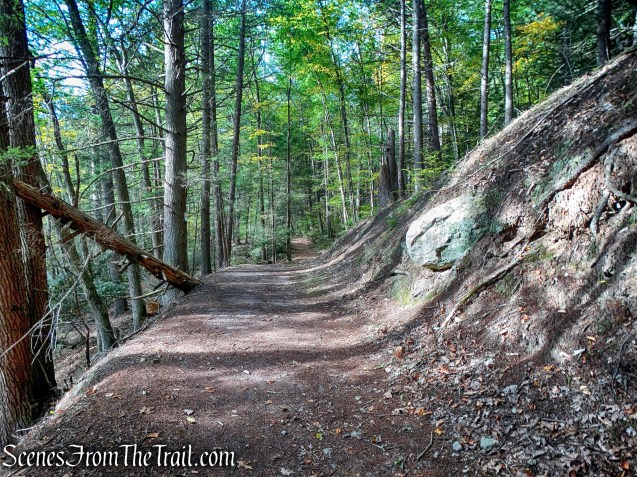
There are no signs indicating that this is the Mongaup River Trail, but I asked a woman that was in the parking area and she indicated that I was indeed in the right place. The trail begins just to the left of the kiosk, by the rock at the far left of the image above. The unmarked trail skirts the edge of the Mongaup River, on an old woods road.

Mongaup River Trail

Mongaup River Trail

There are numerous short spur trails that lead to the rivers edge.

Mongaup River Trail

Mongaup River Trail

The woods road begins to rise gradually.

Mongaup River Trail

Mongaup River Trail

This is a very quiet area and this trail doesn’t seem to get much foot traffic.

Mongaup River Trail

Mongaup River Trail

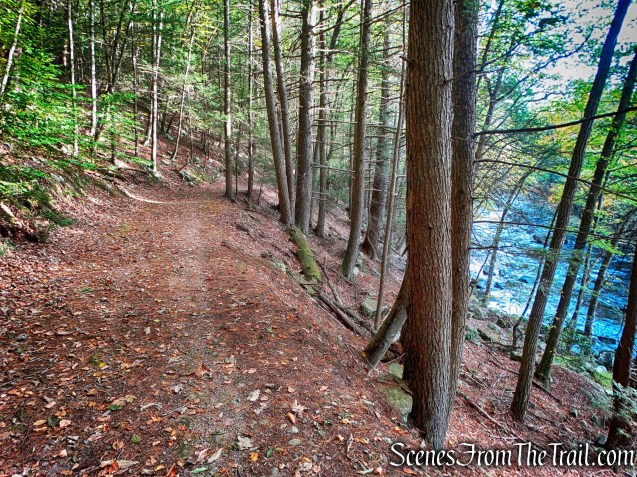
The trail descends back to river level.

Mongaup River

Mongaup River

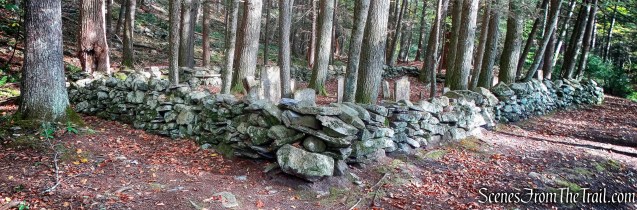
Then at the end of the trail is the Knight Cemetery, surrounded by a stone wall.

Knight Cemetery - Mongaup River Trail

Knight Cemetery – Mongaup River Trail

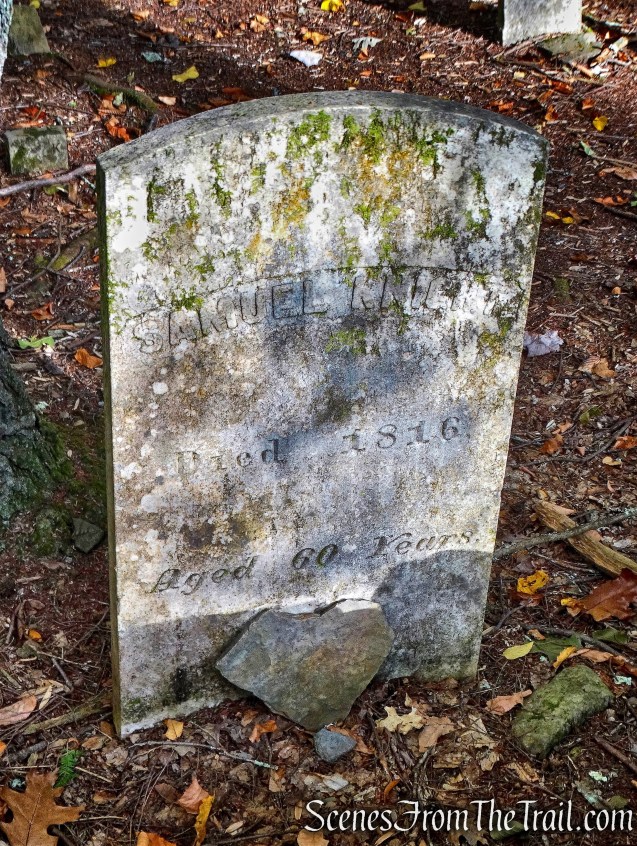
One tombstone reads: Samuel Knight, Died 1816, Aged 60 Years.

Samuel Knight, Died 1816, Aged 60 Years

Samuel Knight, Died 1816, Aged 60 Years

The Knight family settled near the mouth of the Mongaup River and were one of the pioneers of that section. This land was the frontier of early America.

Knight Cemetery - Mongaup River Trail

Knight Cemetery – Mongaup River Trail

From the cemetery, we retraced our steps back the way we came, stopping occasionally to enjoy the scenery.

Mongaup River

Mongaup River

It’s an easy walk along this tranquil woods road, back to the parking area.

Mongaup River Trail

Mongaup River Trail

This was a nice, short hike and a good way to end the day. With all six hikes now done, the forms were mailed in and now we await our patches. Stay tuned……

Pros: Mongaup River, quiet and scenic area, historic cemetery, earn a patch.

Cons: A sign with the name of the trail would be nice.

Mongaup River Trail

Mongaup River Trail

Minisink Battleground Park

October 7, 2017 – Town of Highland, NY

Difficulty: Easy

Length: Approximately 1 mile

Max elevation: 1,142 ft.– total elevation gain approximately 130 ft.

Route type: Circuit

Map: Upper Delaware River Valley Map

Trailhead parking: Barryville, NY 12719

Minisink Battleground Park, which is listed on the National Register of Historic Places, is dedicated to the brave men who fought and died at the “Battle of Minisink,” the Upper Delaware’s only major Revolutionary War skirmish.

Minisink Battleground Park

Minisink Battleground Park

Included in the park’s 57 acres, are picnic areas, a group picnic pavilion (fee required), restroom facilities, an Interpretive Center and walking trails.

Minisink Battleground Park

Minisink Battleground Park

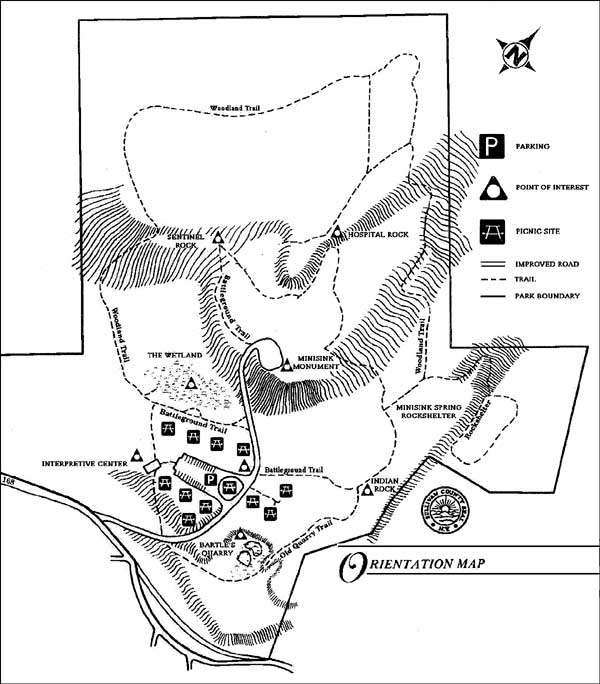
Trails run throughout the park with informational signage that explain the historical significance of the places along the trail. The Minisink Battleground Park Trails is one of six trails featured in the “Take a Hike!” brochure, which gives names, locations, descriptions, and difficulty levels of trails in the Upper Delaware River Valley. It also provides a checklist to keep track of the trails you’ve hiked which can be turned in upon completion for a “Take a Hike!” patch.

Orientation Map - Minisink Battleground Park

Orientation Map – Minisink Battleground Park

The previous weekend, we did three of the hikes on the list, the Bouchoux TrailDamascus Forest Trail and the Cobey Pond Trail. We were now going to complete the final three hikes to earn our Take a Hike! patch. Having already done the Tusten Mountain Trail this morning, we were ready to do the Minisink Battleground Park Trails. Although, the brochure lists the trails as: from ¼ – ½ miles, we decided to extend the distance to further explore the park.

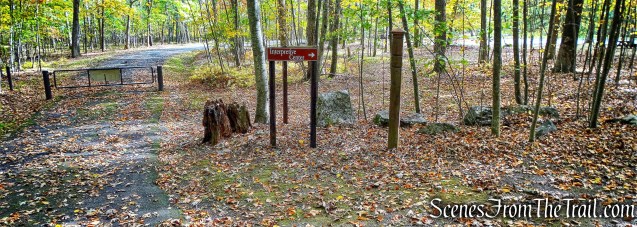
The large parking lot was empty when we arrived and a motorcycle was parked there when we returned. We began our hike by heading back to the entrance, where we picked up the Battleground Trail. Next to the sign is a stone monument to commemorate the Bicentennial that contains a time capsule, to be opened in 2026.

Bicentennial Monument - Minisink Battleground Park

Bicentennial Monument – Minisink Battleground Park

The trail is directly across the road from this sign, but since it is a loop, there is also another entry to the trail just a few feet up the entrance road as well. Apparently, the trail is meant to be done clockwise, because the wooden posts along the trail only have the trail name on one side. The junctions are marked with signs, but the trails can be a little confusing. Nevertheless, it’s a small park and we just wandered around trying to see as many points of interest as possible.

Battleground Trail

Battleground Trail

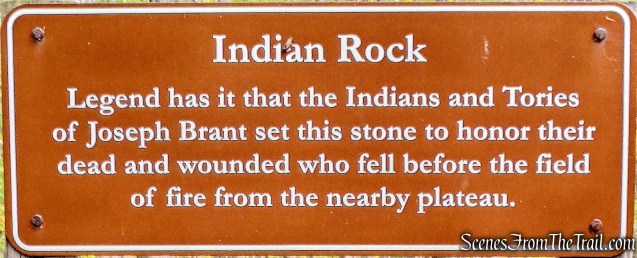
In a short distance, we came to a junction where Indian Rock is located.

Indian Rock - Minisink Battleground Park

Indian Rock – Minisink Battleground Park

Indian Rock - Minisink Battleground Park

Indian Rock – Minisink Battleground Park

Continuing on the Battleground Trail, we came to a fork and veered right.

junction - Minisink Battleground Park

junction – Minisink Battleground Park

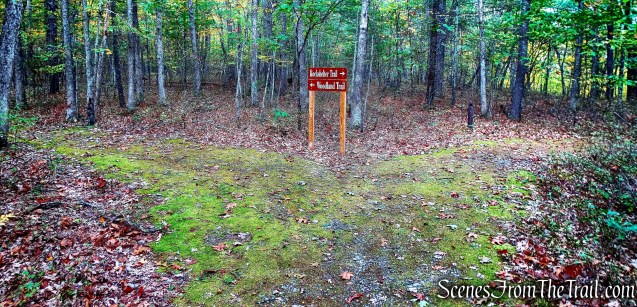
The Rockshelter trail sounded interesting so we headed that way. At the next fork, the Rockshelter Trail goes off to the right and we headed in that direction.

Turn right on Rockshelter Trail

Turn right on Rockshelter Trail

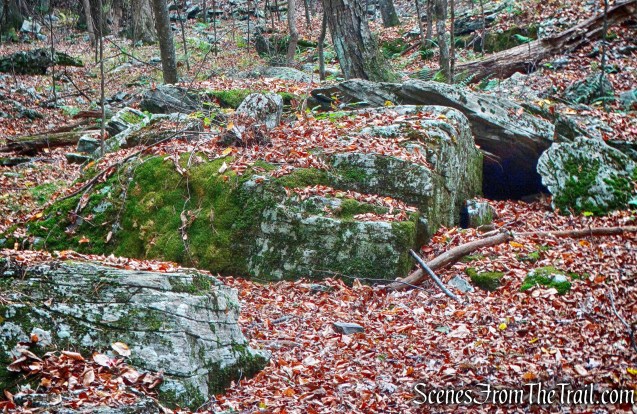
Along the left side of the trail, on the hillside, there are some natural rock shelters.

rock shelters

rock shelters

The rock formations in this area are amazing. A little further down the trail is the massive Minisink Spring Rockshelter, which is quite impressive.

Minisink Spring Rockshelter

Minisink Spring Rockshelter

Minisink Spring Rockshelter

Minisink Spring Rockshelter

Minisink Spring Rockshelter

Minisink Spring Rockshelter

This place has some of the coolest rock formations that I have seen.

rock formation

rock formation

The Rockshelter Trail loops back around and returns to the fork. We reconnected with the Battleground Trail and wandered through the forest.

Battleground Trail

Battleground Trail

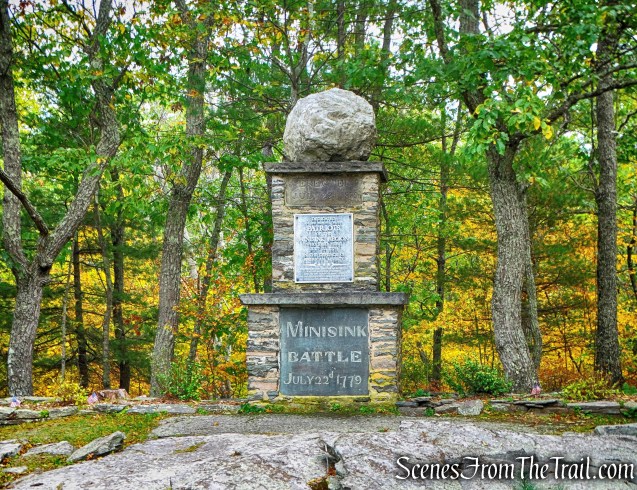
Through the trees, I spotted The Minisink Battle Monument, so we left the trail and bushwacked towards it. The Minisink Battle Monument was erected on the site of the militia’s “last stand” and was dedicated in 1879 on the centennial of the battle. It is built of native bluestone and is capped by a rounded glacial boulder.

The Minisink Battle Monument

The Minisink Battle Monument

We then rejoined the Battleground Trail and headed to Hospital Rock.

Battleground Trail

Battleground Trail

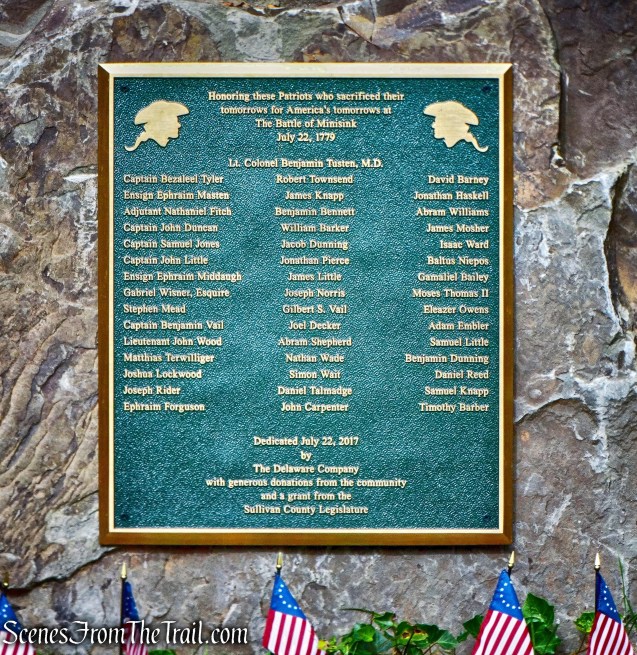
Hospital Rock is the most historically significant location on the battleground. Once the enemy broke the American’s defensive square late in the afternoon, it was here in the shadow of this rock that Lt. Col. Benjamin Tusten, a physician, and seventeen wounded militiamen under his care were trapped and killed by Brant’s raiders. Probably fewer than a dozen of the forty-five men who made a protracted “last stand” on the hilltop escaped.

Hospital Rock

Hospital Rock

We retraced our steps back briefly on the Battleground Trail, followed the trail as it turned right and continued ahead to Sentinel Rock.

Heading towards Sentinel Rock

Heading towards Sentinel Rock

Tradition has long held that this is the location where the final push by the British, led by Colonel Joseph Brant, into the heart of the militia’s defensive square that it had held for most of the day began. It was believed that a sentinel standing guard here was killed.

Sentinel Rock

Sentinel Rock

We then continued on the Battleground Trail, walked downhill and back to the parking area, where our hike began.

Battleground Trail back to the parking area

Battleground Trail back to the parking area

Today the Minisink Battleground Park is hallowed ground where so many patriots fell in defense of an ideal – liberty. They were passionate men who perished here, a long distance from their farms, their families and friends. Because of their sacrifice and that of thousands of other patriots during the American War for Independence, our nation was born.

Minisink Battleground Park

Minisink Battleground Park

This was a short one mile hike, but it was packed with interesting features. There are two additional trails that traverse the park, the Woodland Trail and the Old Quarry Trail. We did not walk them, but in hindsight, I wish that we had. Now we are off to our last hike of the day and the 6th and final hike in order to earn a patch. Off to the Mongaup River Trail, catch ya later.

Pros: Historical features, rock formations, quiet area, hallowed ground, earn a patch.

Cons: Trails could be better marked.

Minisink Spring Rockshelter - Minisink Battleground Park

Minisink Spring Rockshelter – Minisink Battleground Park

Tusten Mountain Trail

October 7, 2017 – Narrowsburg, NY

Difficulty: Easy – moderate

Length: Approximately 3.4 miles

Max elevation: 1,129 ft.– total elevation gain approximately 531 ft.

Route type: Circuit

Map: Upper Delaware River Valley Maps

Trailhead parking: Ten Mile River NPS River Access Crawford Rd Narrowsburg, NY 12764

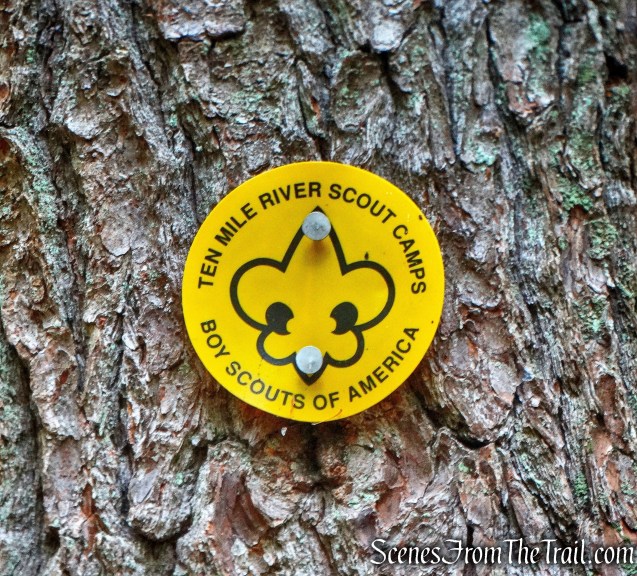
The National Park Service has an agreement with the Greater New York Councils of the Boy Scouts of America to provide public access to one of its trails along the Delaware River. The Boy Scouts of America have owned this property since 1927, providing an educational opportunity for thousands of boys from the New York City area. Please respect their property. The Tusten Mountain Trail is the only Ten Mile River Boy Scout Camp Trail open to the public.

Yellow Boy Scout blaze - Tusten Mountain Trail

Yellow Boy Scout blaze – Tusten Mountain Trail

Entry to the trail is granted at the Ten Mile River public access point on Crawford Road in Narrowsburg, NY, where Ten Mile River flows into the Delaware River.

Ten Mile River Access

Ten Mile River Access

The Tusten Mountain Trail is one of six trails featured in the “Take a Hike!” brochure, which gives names, locations, descriptions, and difficulty levels of trails in the Upper Delaware River Valley. It also provides a checklist to keep track of the trails you’ve hiked which can be turned in upon completion for a “Take a Hike!” patch.

Tusten Mountain Trail

Tusten Mountain Trail

View the Google Earth Fly-Through video of the hike below.

The previous weekend, we did three of the hikes on the list, the Bouchoux TrailDamascus Forest Trail and the Cobey Pond Trail. We were now going to complete the final three hikes to earn our Take a Hike! patch. Just north of the parking area there is a kiosk that points out the direction of the trail.

kiosk - Tusten Mountain Trail

kiosk – Tusten Mountain Trail

The hike begins on Ten Mile River Road which runs parallel to the Ten Mile River.

Ten Mile River Road

Ten Mile River Road

We began following the red-blazed TMR (Ten Mile River) and the yellow-blazed Tusten Mountain Trails (Boy Scout symbol).

Ten Mile River/Tusten Mountain Trails

Ten Mile River/Tusten Mountain Trails

In about 0.2 miles from the start of the hike, the trail turns left on Tusten Road and crosses a stone arch bridge.

left on Tusten Road

left on Tusten Road

The Stone Arch Bridge was constructed in 1875 when industry at Tusten included lumbering and the quarrying of bluestone.

Stone Arch Bridge

Stone Arch Bridge

A view upstream of the Ten Mile River from the Stone Arch Bridge. The Reeves Mill settlement grew along the Ten Mile River in the mid-1700’s. It lasted until Native Americans from the Lenape tribe raided the settlement in the 1760’s. The Tusten Settlement followed in the 1770’s, lasting until the 1900’s.

Ten Mile River

Ten Mile River

A look downstream where the Ten Mile River flows into the Delaware River. Early settlers relied on logging and carrying trees by raft down the Delaware River. Later industries were tanning and bluestone quarrying.

Ten Mile River

Ten Mile River

After crossing the bridge, the trail curves left and passes by a Boy Scout camp.

Boy Scout camp

Boy Scout camp

The trail rises gently as is heads northwest and parallels the Delaware River.

Tusten Mountain Trail

Tusten Mountain Trail

About 0.5 miles from the Boy Scout camp, the trail leaves the road and turns right, into the woods. There used to be a sign pointing the way here, but not any longer.

Tusten Mountain Trail turns right

Tusten Mountain Trail turns right

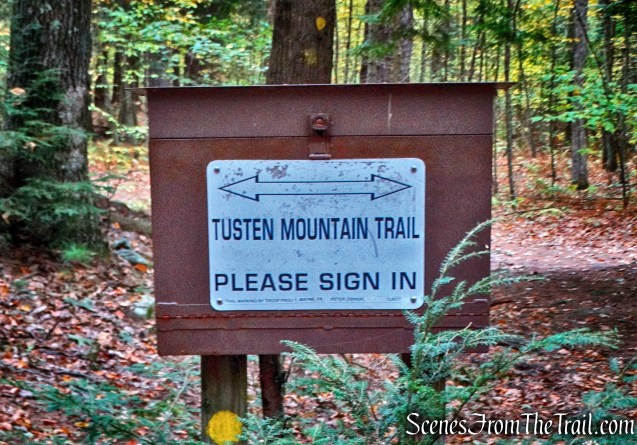
In a short distance after entering the woods, we came to the trail register. It’s a good idea to sign in whenever there is a trail register. It’s for your safety, should anything go wrong and it also helps to calculate the amount of usage a trail gets, which helps with funding. This is the start of the loop that climbs and descends Tusten Mountain. Either way gets you there, we went to the right.

trail register - Tusten Mountain Trail

trail register – Tusten Mountain Trail

Less than 300 yards from the trail register there is another Boy Scout camp just off the trail, on the right.

Boy Scout camp

Boy Scout camp

Judging by the condition, it looks to be abandoned.

Boy Scout camp

Boy Scout camp

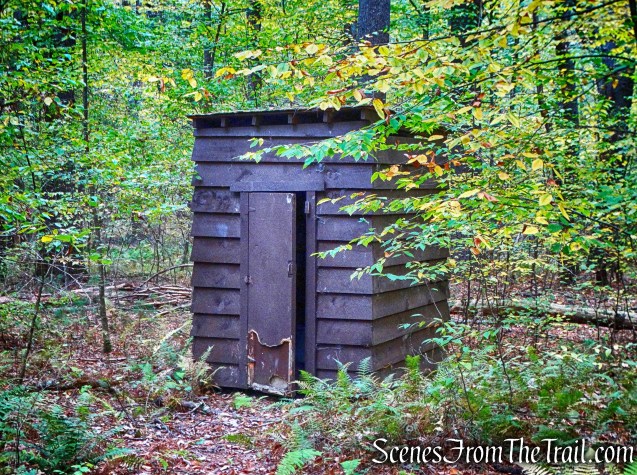
The outhouse is still standing.

outhouse - Boy Scout camp

outhouse – Boy Scout camp

Shortly after the abandoned camp, there is a sagging wooden footbridge that has seen better days. I made sure to walk with my weight on the beams and not the rotting boards.

wooden footbridge

wooden footbridge

Although the spacing of the blazes on the trail is sufficient, they are a little confusing at the junctions. Where there are 2 blazes to signify a turn, they are not offset, instead, the blazes are one on top of the other. The next blaze after the junctions are too far in, instead of being visible from the junction.

Tusten Mountain Trail

Tusten Mountain Trail

The trail now steepens and then levels off as it passes the site of a former quarry.

former quarry

former quarry

The trail climbs steeply again and travels by and through some massive rock formations.

rock formation - Tusten Mountain Trail

rock formation – Tusten Mountain Trail

The trail levels off again as it passes through another old quarry.

old quarry - Tusten Mountain Trail

old quarry – Tusten Mountain Trail

The trail continues to climb on a more moderate grade and then reaches a rock outcrop with a view northwest of the Upper Delaware River Valley. We stopped here to rest up and enjoy the view. Below the ledge is the site of another former quarry, but care should be exercised if exploring as there is a steep drop-off.

view northwest of the Upper Delaware River Valley

view northwest of the Upper Delaware River Valley

The Tusten Mountain Trail heads west and descends steeply. There is a yellow rope tied to a tree for assistance if needed. I didn’t used it and would suggest checking to make sure it is secure before trusting it.

descent on Tusten Mountain Trail

descent on Tusten Mountain Trail

After the initial steep drop, the trail descends much gentler along a woods road.

Tusten Mountain Trail

Tusten Mountain Trail

From here, we reached the trail register and retraced our steps back to the parking area, where our hike began. We stopped and rested for a few minutes by the Delaware River before we took off for our next hike at Minisink Battleground Park.

Delaware River as viewed from Ten Mile River NPS River Access

Delaware River as viewed from Ten Mile River NPS River Access

Pros: Scenic views, Stone Arch Bridge, Delaware River, quarries, rock formations.

Cons: Fix the blazes!

Tusten Mountain

Tusten Mountain

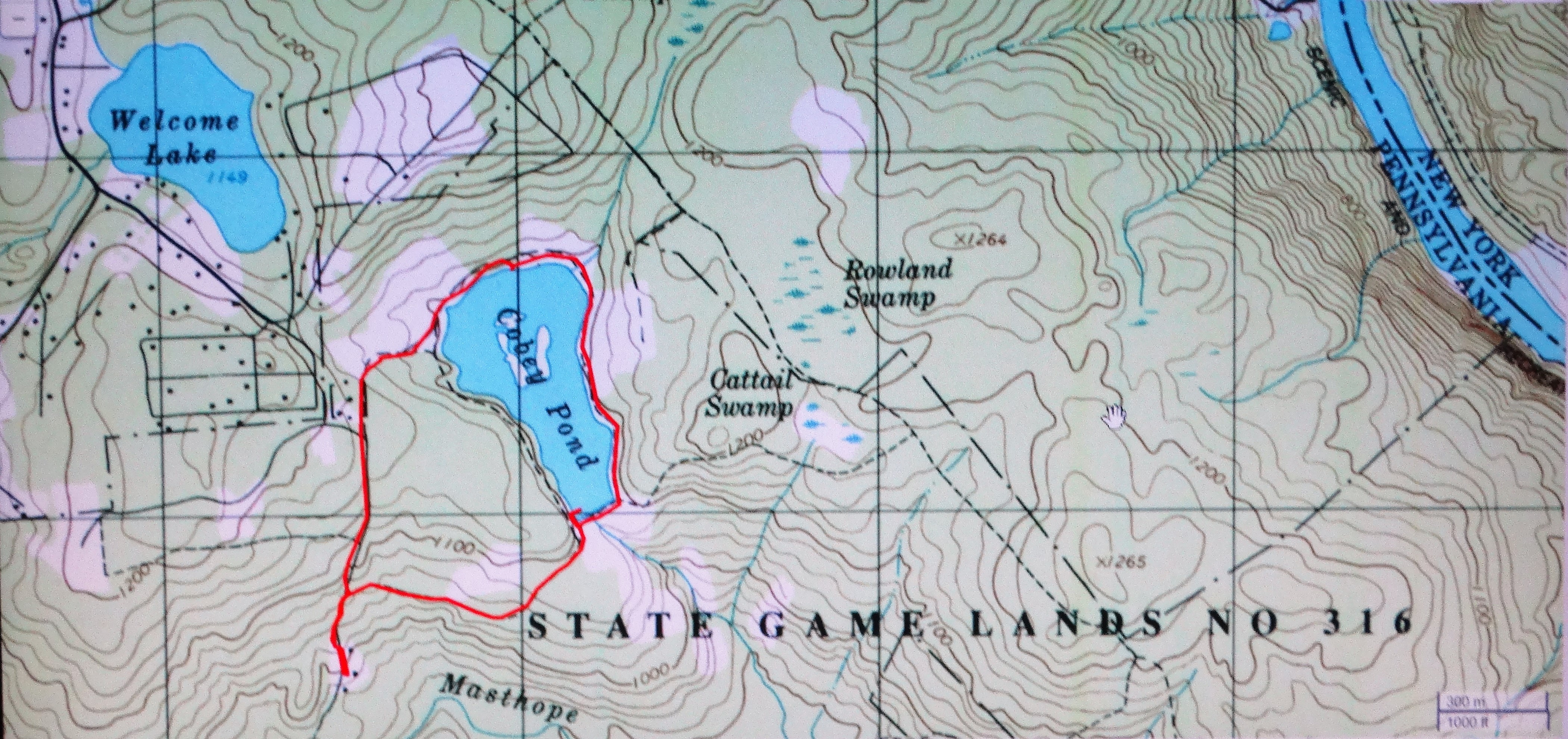
Cobey Pond Trail – State Game Lands #316

October 1, 2017 – Masthope, Pennsylvania

Difficulty: Easy

Length: Approximately 2.3 miles

Max elevation: 1,177 ft.– total elevation gain approximately 159 ft.

Route type: Circuit

Map: Trails of the Upper Delaware River Valley

Additional maps: State Game Lands 316 Map – SGL 316 Map

Trailhead parking: Masthope Plank Road, Hawley, PA 18428


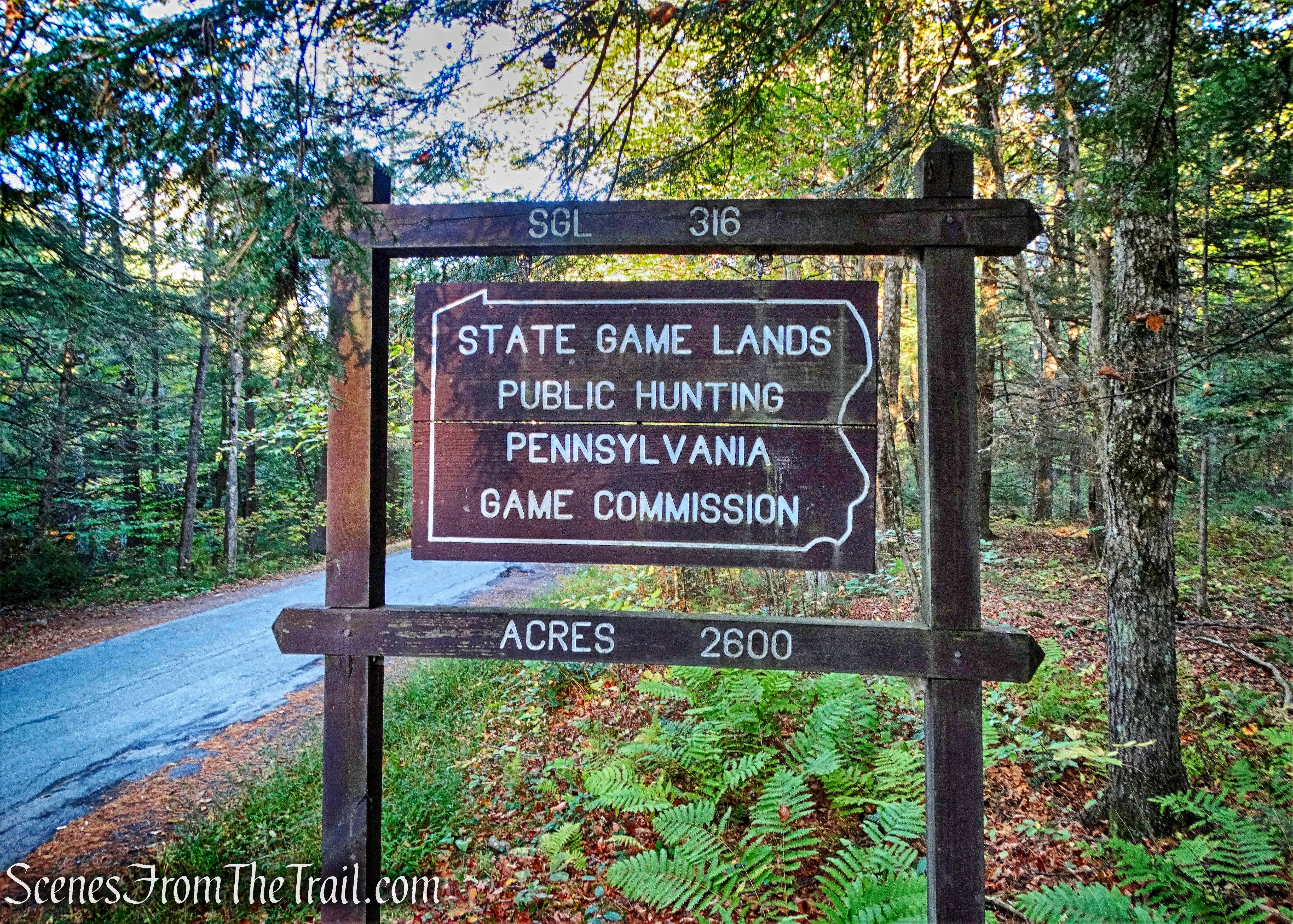
State Game Lands No. 316, consists of 2,600 acres and is located in Pike County near Masthope. The terrain is predominantly forested with 46-acre Cobey Pond and 2-1/2 miles of trout streams located on the tract. The most prevalent wildlife species are deer, turkey, grouse and bear.

State Game Lands 316

State Game Lands 316

The Cobey Pond Trail is one of six trails featured in the “Take a Hike!” brochure, which gives names, locations, descriptions, and difficulty levels of trails in the Upper Delaware River Valley. It also provides a checklist to keep track of the trails you’ve hiked which can be turned in upon completion for a “Take a Hike!” patch.

Having just completed the Bouchoux Trail and the Damascus Forest Trail, we were now on to hike #3 on the list. Cell phone service was nonexistent in this area and a GPS signal was hard to come by. My recommendation is to print the directions from one trailhead to the other to avoid wasting time waiting for a signal while driving aimlessly. Since we got a late start in the morning, we didn’t arrive at the parking area for the Cobey Pond Trail until shortly before 4:30 pm. The National Park Service lists this trail as 3 miles long, but it is actually more like 2.3 miles. They also list it as a moderate hike, but with minimal elevation gain, I disagree and rated it as easy. We did this hike counter-clockwise.

Cobey Pond Trail

Cobey Pond Trail

A new feature that I have added is the Google Earth Fly-Through. It follows the path that we hiked and it gives you a good idea of the terrain, layout, amount of parking etc. Check it out, it’s pretty cool.


View the Google Earth Fly-Through video of the hike below.

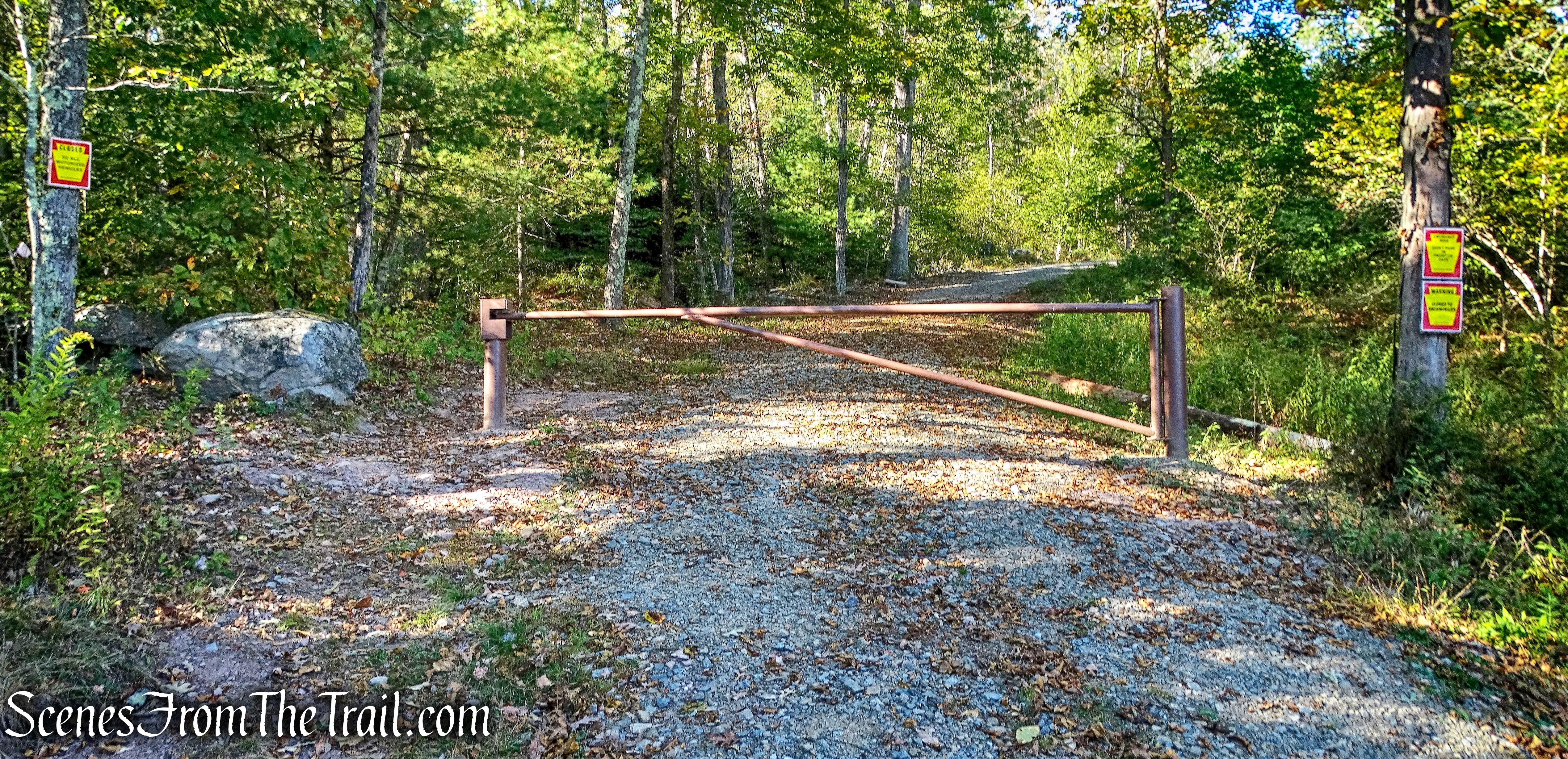
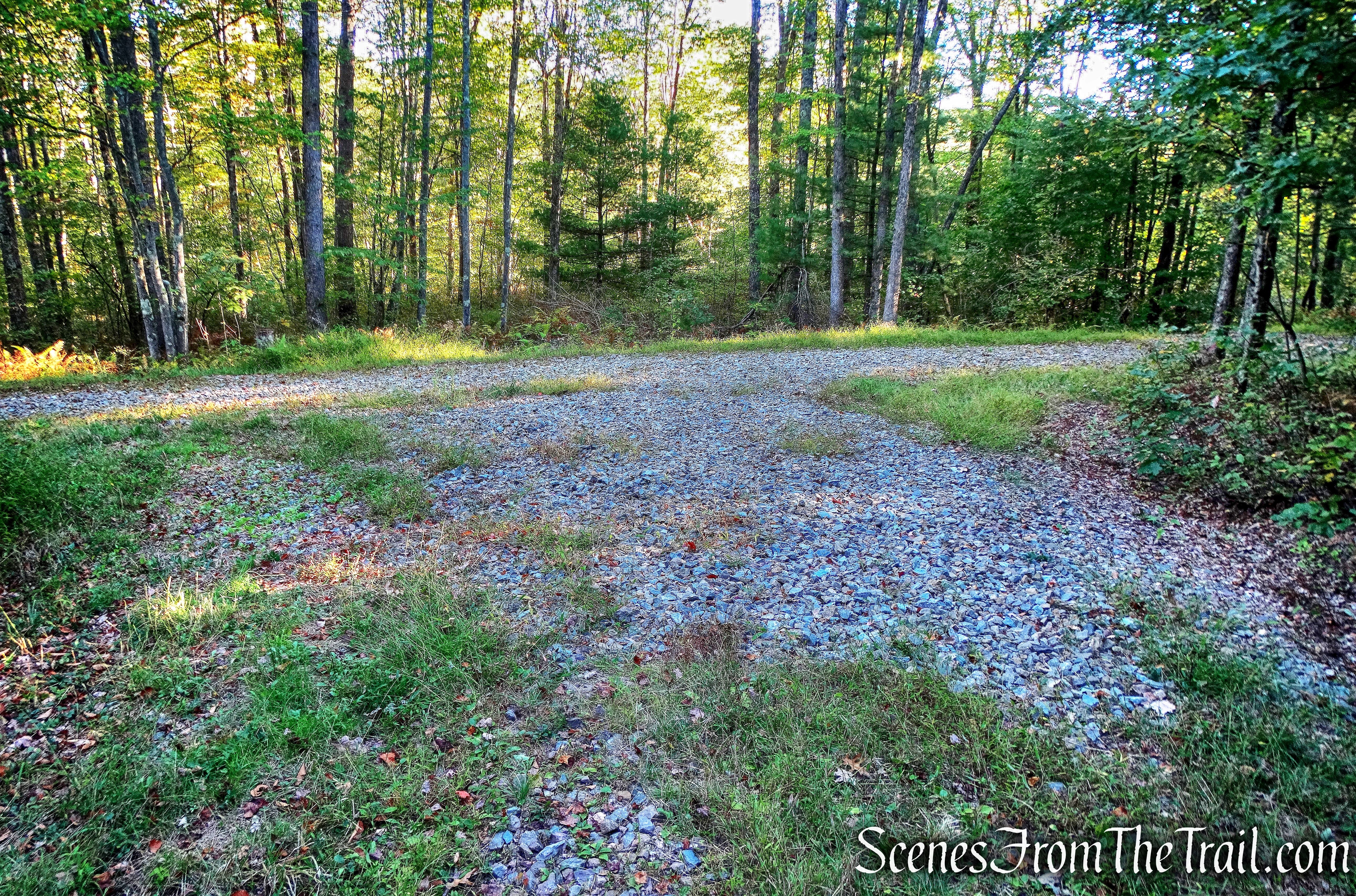
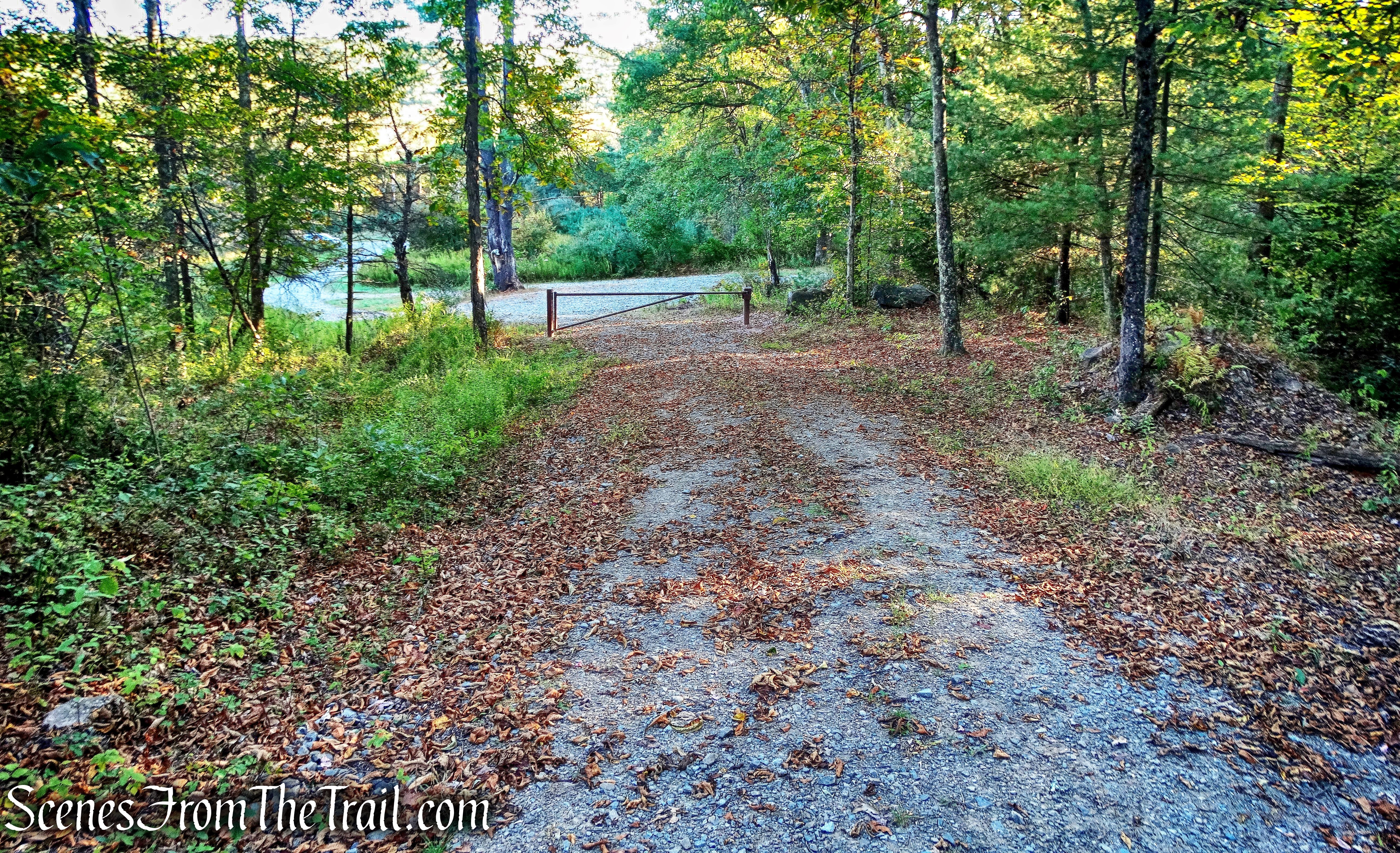
From the research I did prior to to doing this hike, I learned that after entering the parking area, not to park in the first lot. Instead, I followed the gravel road up the hill for about 1/4 mile and parked in upper lot. The trail begins on the other side of the gated road at the northern end of the parking area.

Cobey Pond Trail

Cobey Pond Trail

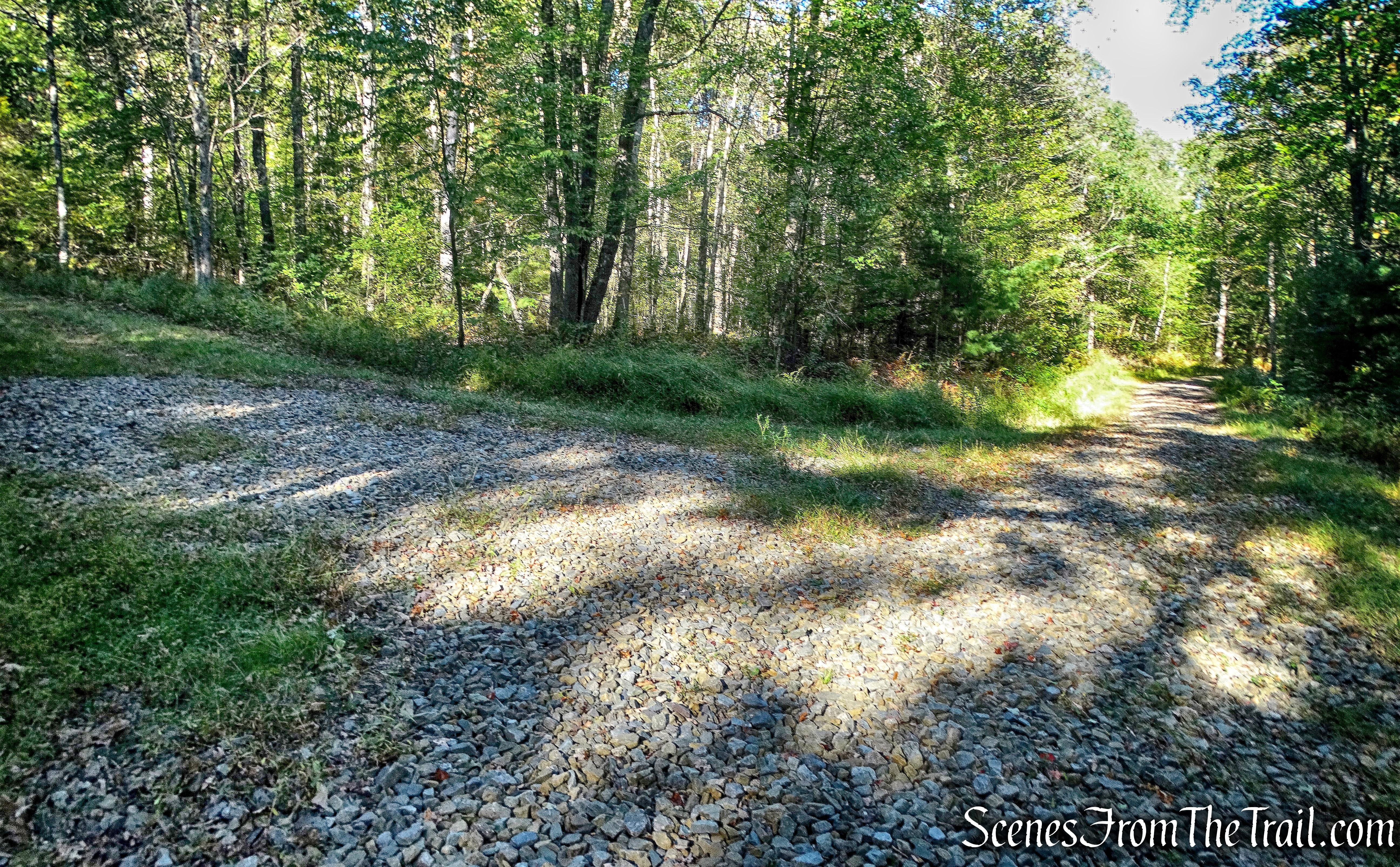
The trail is not marked, but easy to follow. A short distance after the gate, the trail comes to a fork. Either way gets you to Cobey Pond, but we took the right fork because it was less steep and returned via the left fork, downhill.

Stay right at the fork - Cobey Pond Trail

Stay right at the fork – Cobey Pond Trail

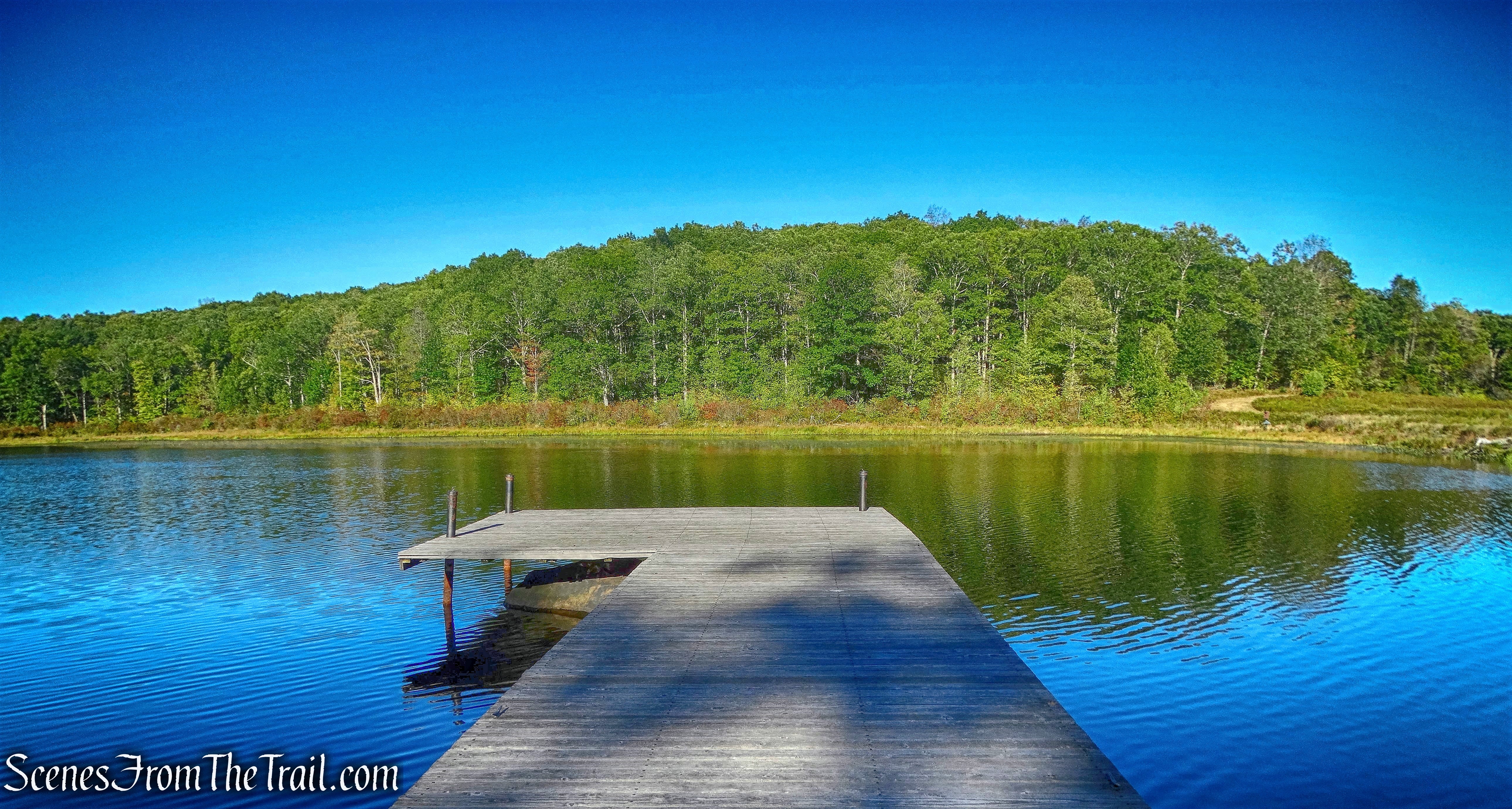
In just under 3/4 of a mile, we arrived at Cobey Pond.

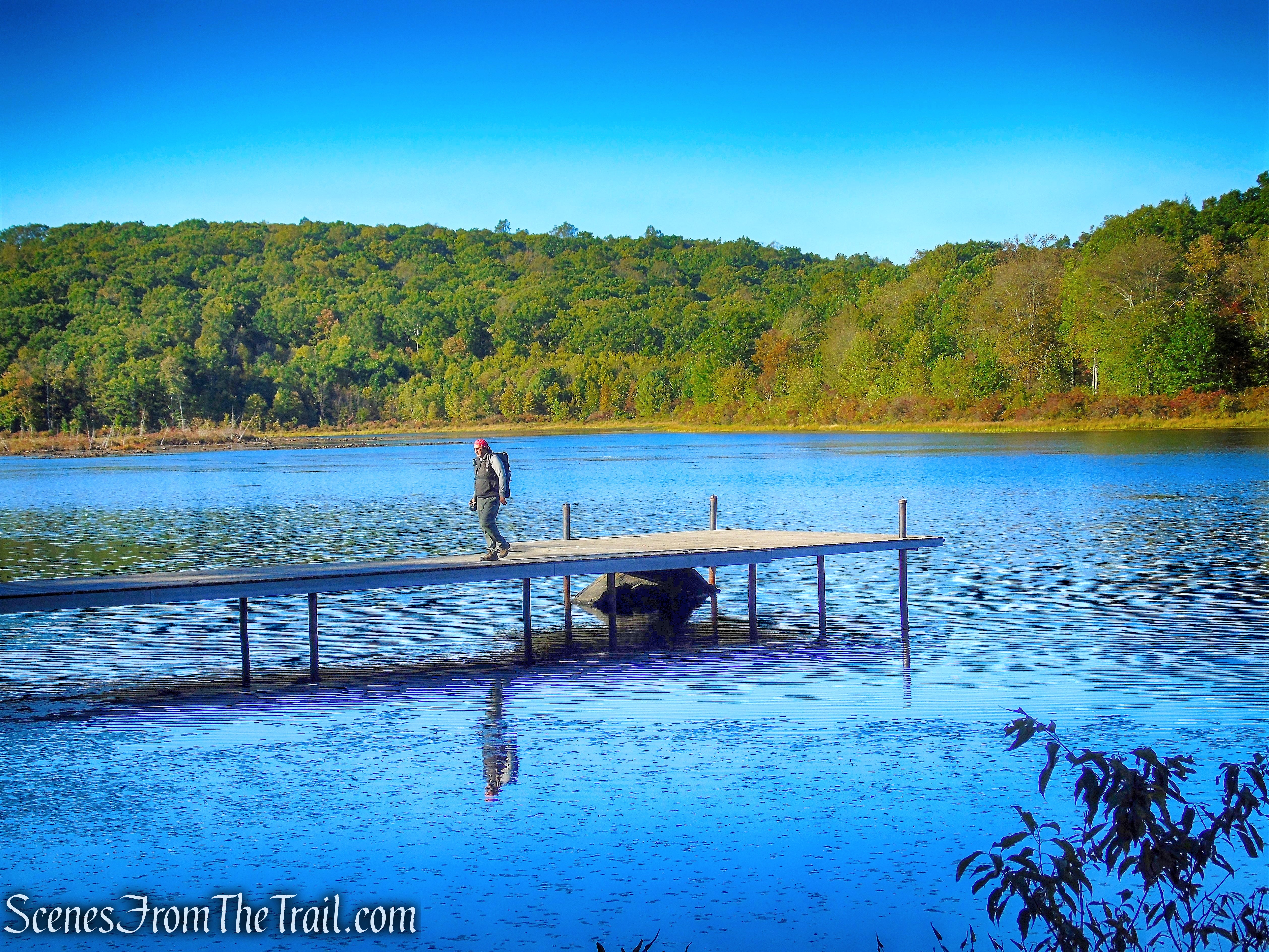
Cobey Pond

Cobey Pond

Beautiful and tranquil, this place doesn’t seem to get much foot traffic.

Cobey Pond

Cobey Pond

We saw two other people near the lake, but we basically had the place to ourselves.

Cobey Pond

Cobey Pond

The Cobey Pond Trail continues along the southern shore of the pond and turns left to continue heading north, skirting the edge of the pond. There are several woods roads that intersect, but we stayed close to the pond. There are partial views of the pond through the high weeds, but none to get excited about.

Cobey Pond Trail

Cobey Pond Trail

The trail wraps around the northern end of the pond and the view opens up once again.

Looking south -  Cobey Pond

Looking south – Cobey Pond

The trail comes to a fork at the northwest edge of the pond. We took the right fork which heads back to the parking area on a grassy woods road. There are several intersections along the way, but we continued straight, heading south.

Heading south - Cobey Pond Trail

Heading south – Cobey Pond Trail

The grassy woods road ends at the gravel road that we walked on earlier and we turned right.

Turn right - Cobey Pond Trail

Turn right – Cobey Pond Trail

In another 500 feet, we reached the gate where we began our hike.

Cobey Pond Trail

Cobey Pond Trail

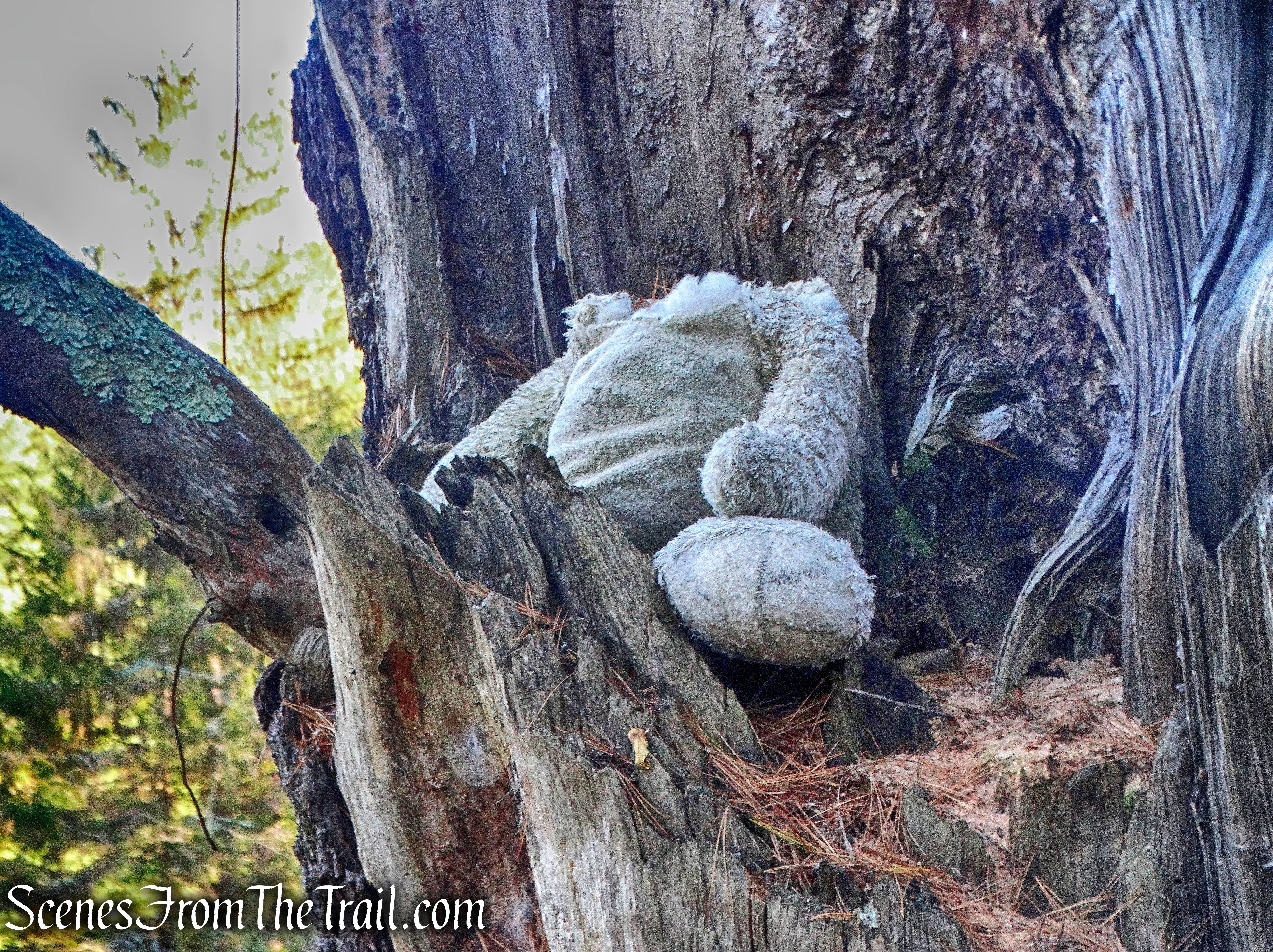
This headless stuffed animal was perched in a tree in the parking area.

headless stuffed animal

headless stuffed animal

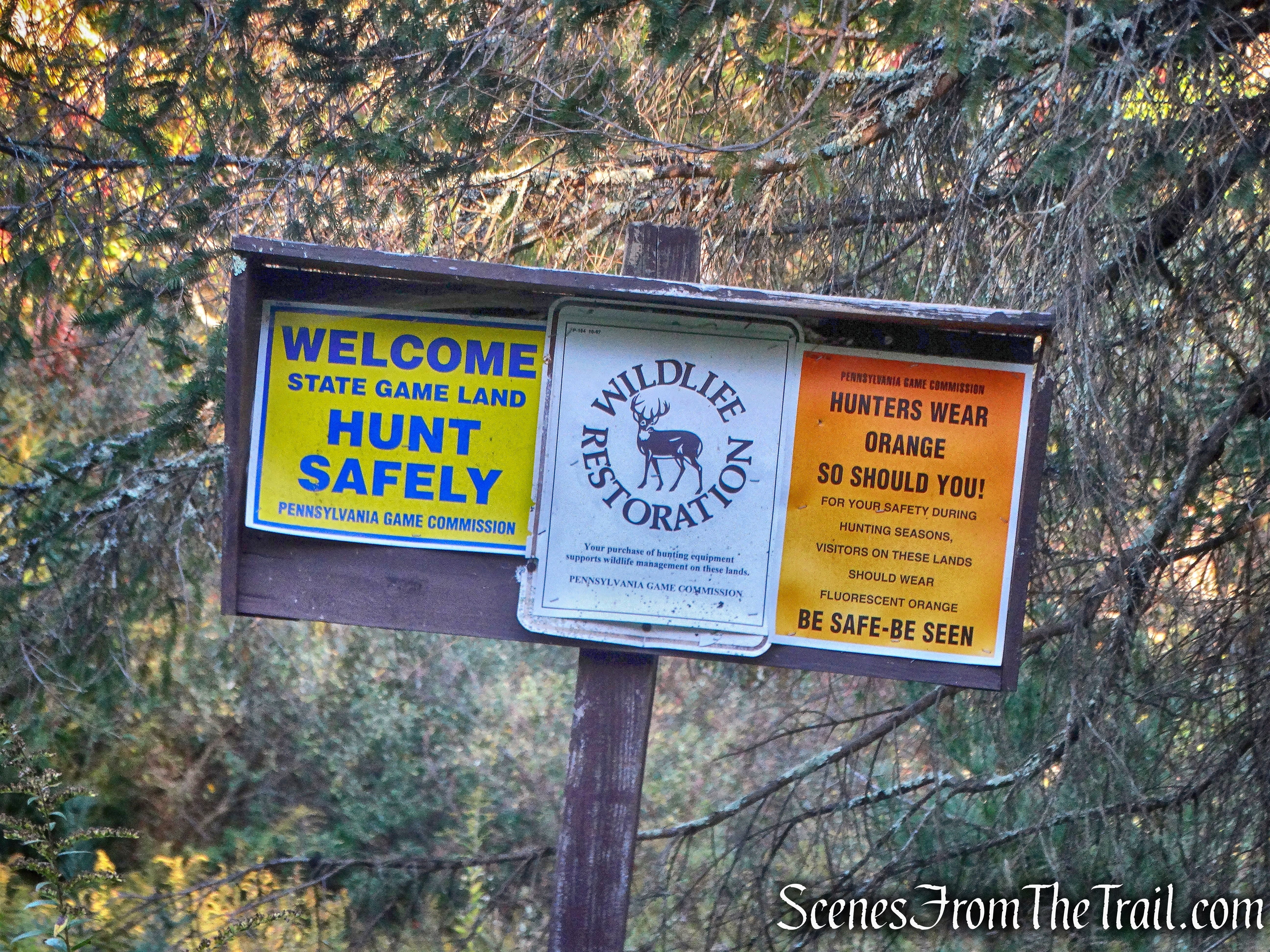
Since this trail is located on State Game Lands, orange should be worn when exploring the area.

State Game Lands 316

State Game Lands 316

This was a very nice hike to end the day with. Cobey Pond is a hidden gem and I am glad that we visited this very scenic area. Three hikes down and three to go to earn that patch. Stay tuned, our next hike will be the Tusten Mountain Trail.

Pros: Scenic pond, secluded area, easy hike, wide woods roads.

Cons: Trail not marked, hunting grounds.

Cobey Pond

Cobey Pond


Damascus Forest Trail

October 1, 2017 – Beach Lake, Pennsylvania

Difficulty: Easy

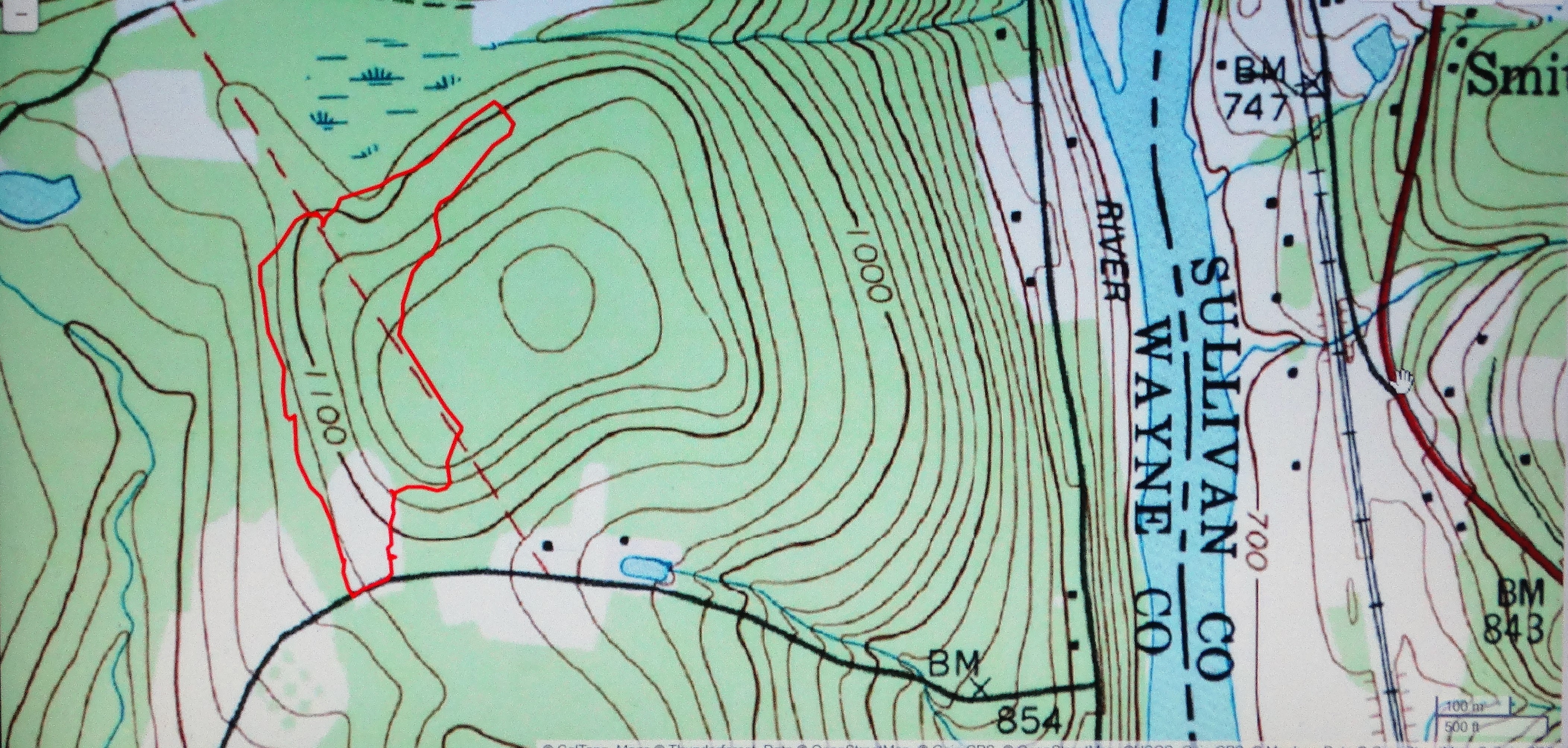
Length: Approximately 1.1 miles

Max elevation: 1,169 ft.– total elevation gain approximately 93 ft.

Route type: Circuit

Map: Upper Delaware River Valley Maps

Trailhead parking: 109 Maccubbins Rd, Beach Lake, PA 18405

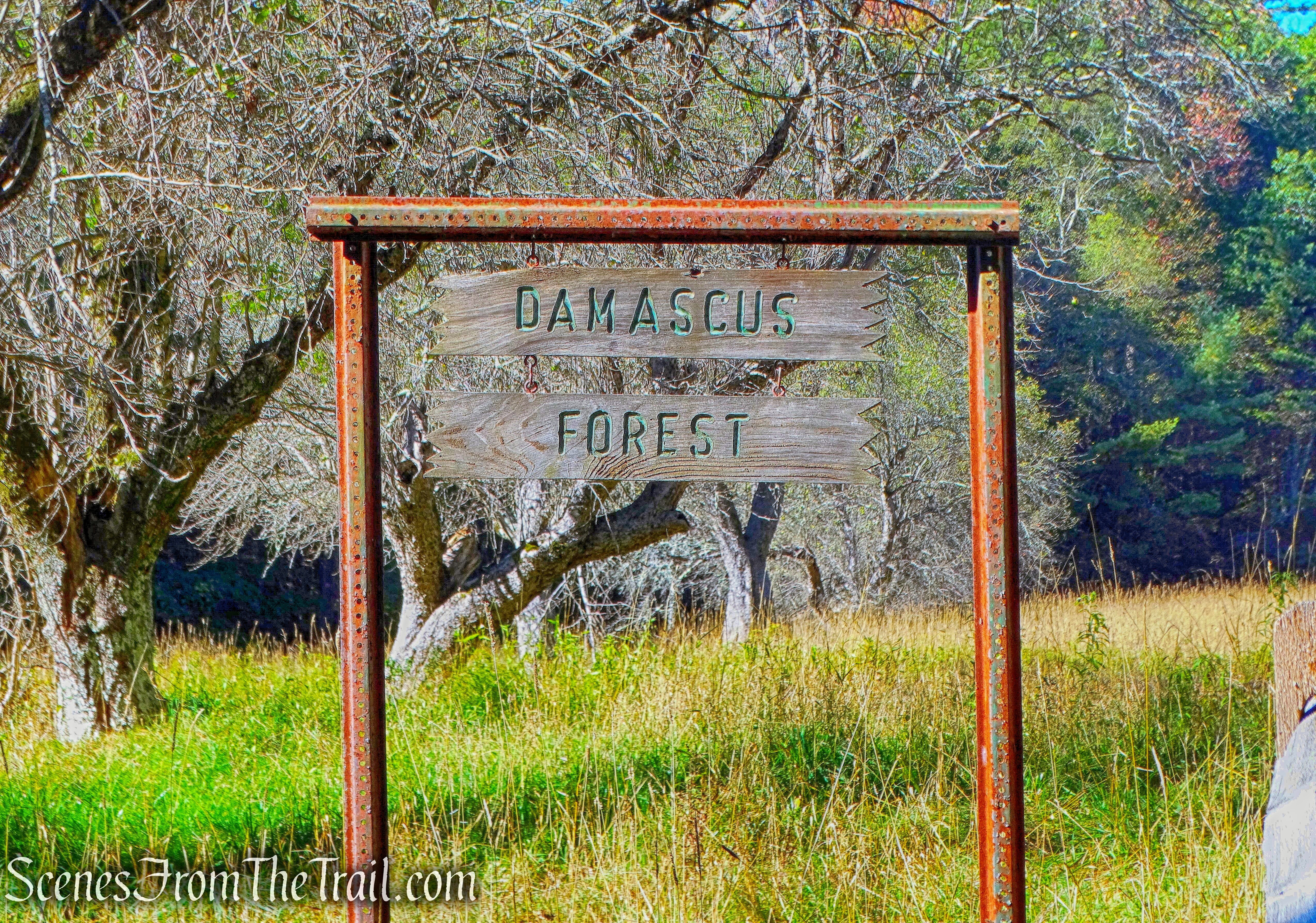
The Damascus Forest consists of 58 acres of woodland for low impact activity, including nature study and low-impact hiking, which is open to the public. This Township-owned property is a nice quiet retreat for those who enjoy nature. The trail itself features wetlands and old growth forests.

Damascus Forest

Damascus Forest

The Damascus Forest Trail is one of six trails featured in the “Take a Hike!” brochure, which gives names, locations, descriptions, and difficulty levels of trails in the Upper Delaware River Valley. It also provides a checklist to keep track of the trails you’ve hiked which can be turned in upon completion for a “Take a Hike!” patch.

Having just completed the Bouchoux Trail, we were now on to hike #2 on the list. Cell phone service was nonexistent in this area and a GPS signal was hard to come by. My recommendation is to print the directions from one trailhead to the other to avoid wasting time waiting for a signal while driving aimlessly. Since we got a late start in the morning, we didn’t arrive at the parking area for the Damascus Forest Trail until shortly before 3:00 pm. The National Park Service lists this trail as 2 miles long, but it is actually more like 1.1 miles. We did this hike counter-clockwise from the parking area.

Damascus Forest Trail

Damascus Forest Trail

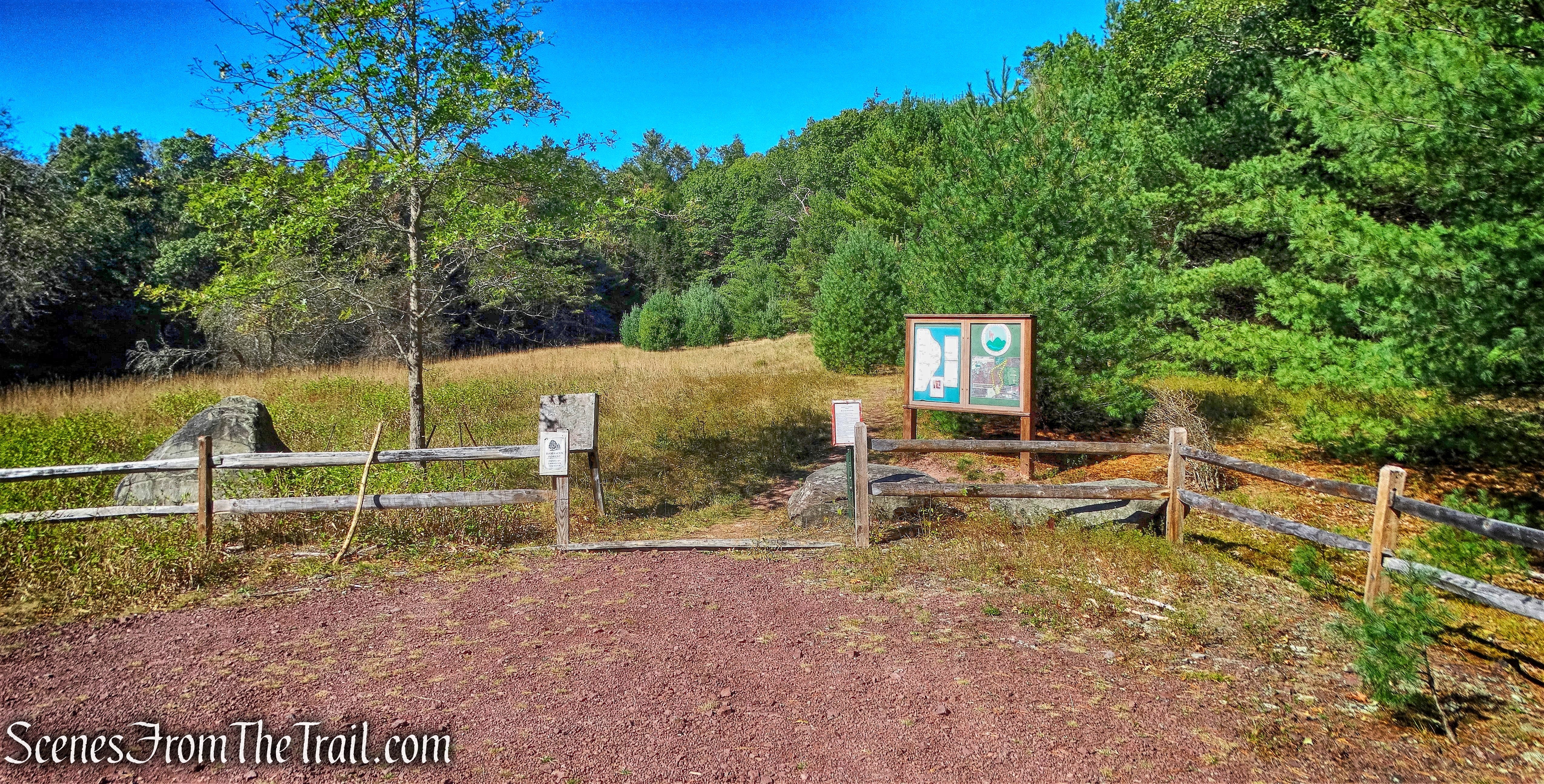
The parking lot is sizable and I can’t imagine it ever being at capacity. No other vehicles were in the lot when we pulled in and none were there when we departed. We began our hike by entering through the split rail fence by the kiosk. The kiosk must have been moved at some point and the info not updated, because the information on getting to the trail was confusing.

Damascus Forest Trail

Damascus Forest Trail

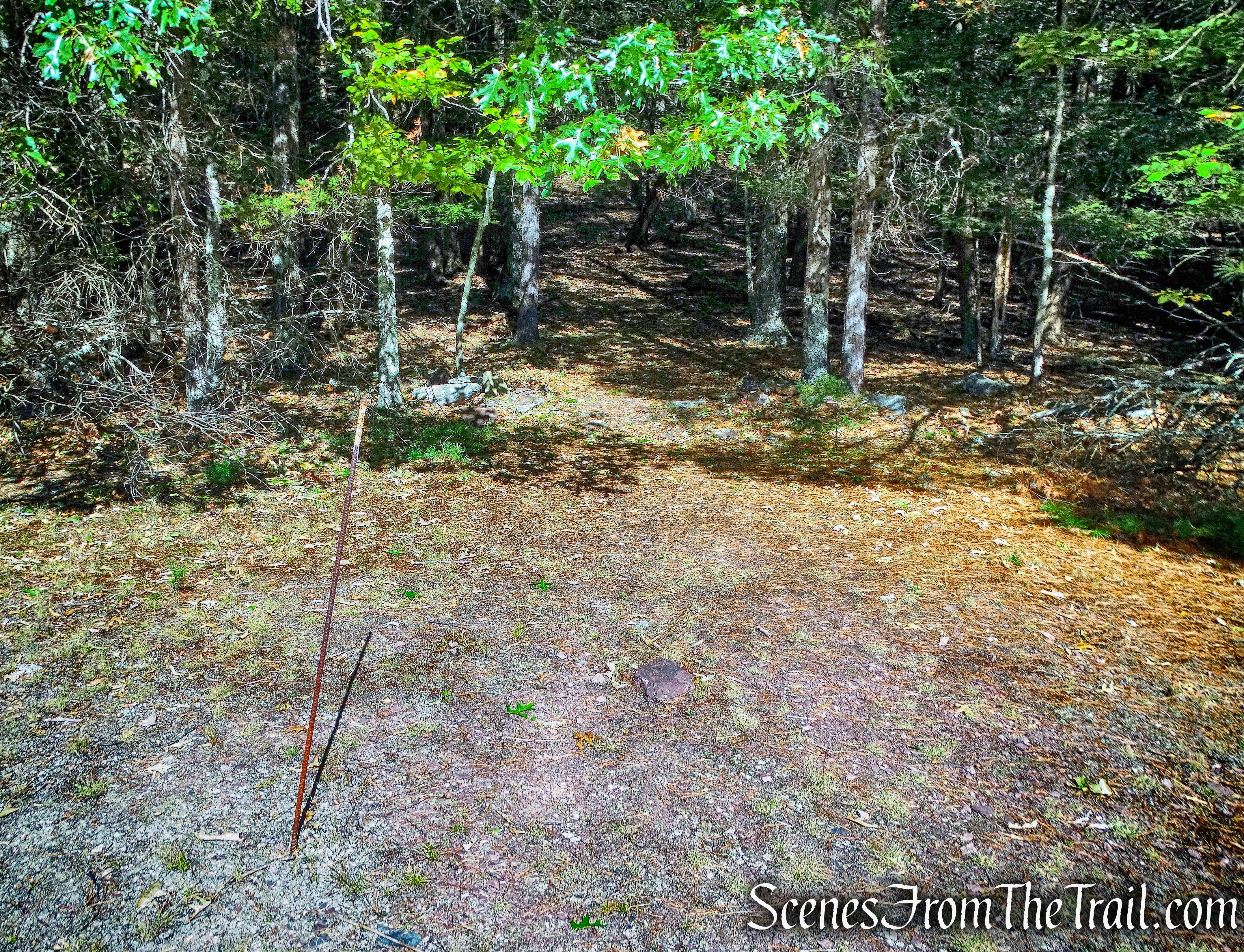
About 300 feet past the kiosk, there is a piece of rebar sticking out of the ground with faded yellow paint at the tip. We turned right and entered the woods there, heading east.

Damascus Forest Trail

Damascus Forest Trail

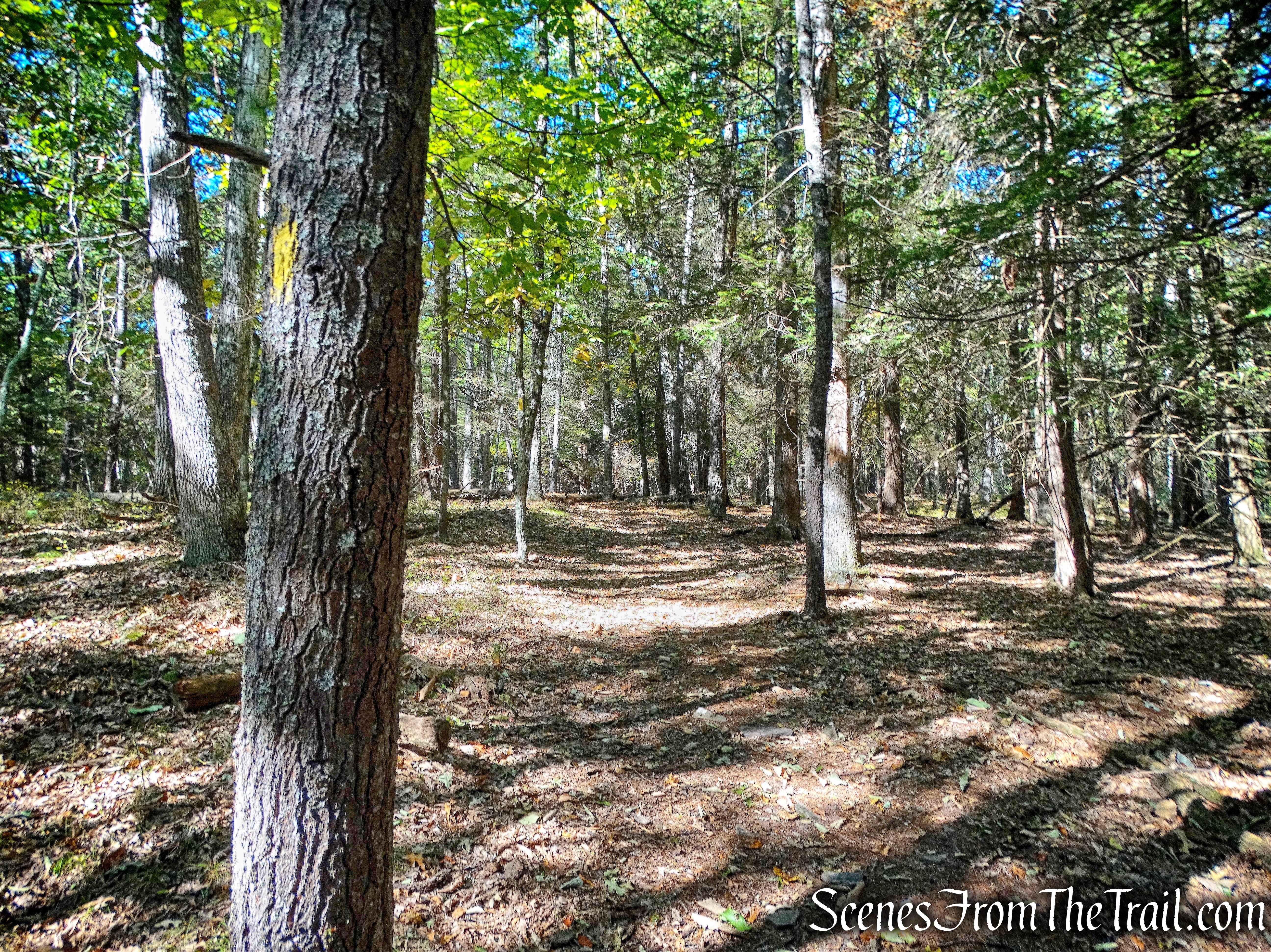
The trail is well marked from this point on and easy to follow.

Damascus Forest Trail

Damascus Forest Trail

The yellow-blazed Damascus Forest Trail then starts heading north and enters a power line cut.

power line cut - Damascus Forest Trail

power line cut – Damascus Forest Trail

The trail travels northwest along the power line cut for about 500 feet then turns right into the woods. The forest is heavily shaded by the tall trees and makes for a nice walk on a hot day.

Damascus Forest Trail

Damascus Forest Trail

The trail travels through a stone wall and turns left.

Damascus Forest Trail

Damascus Forest Trail

We followed the yellow blazes downhill towards a wetland area.

wetlands - Damascus Forest Trail

wetlands – Damascus Forest Trail

There, the trail turns left and begins to head west, paralleling the wetlands.

heading west - Damascus Forest Trail

heading west – Damascus Forest Trail

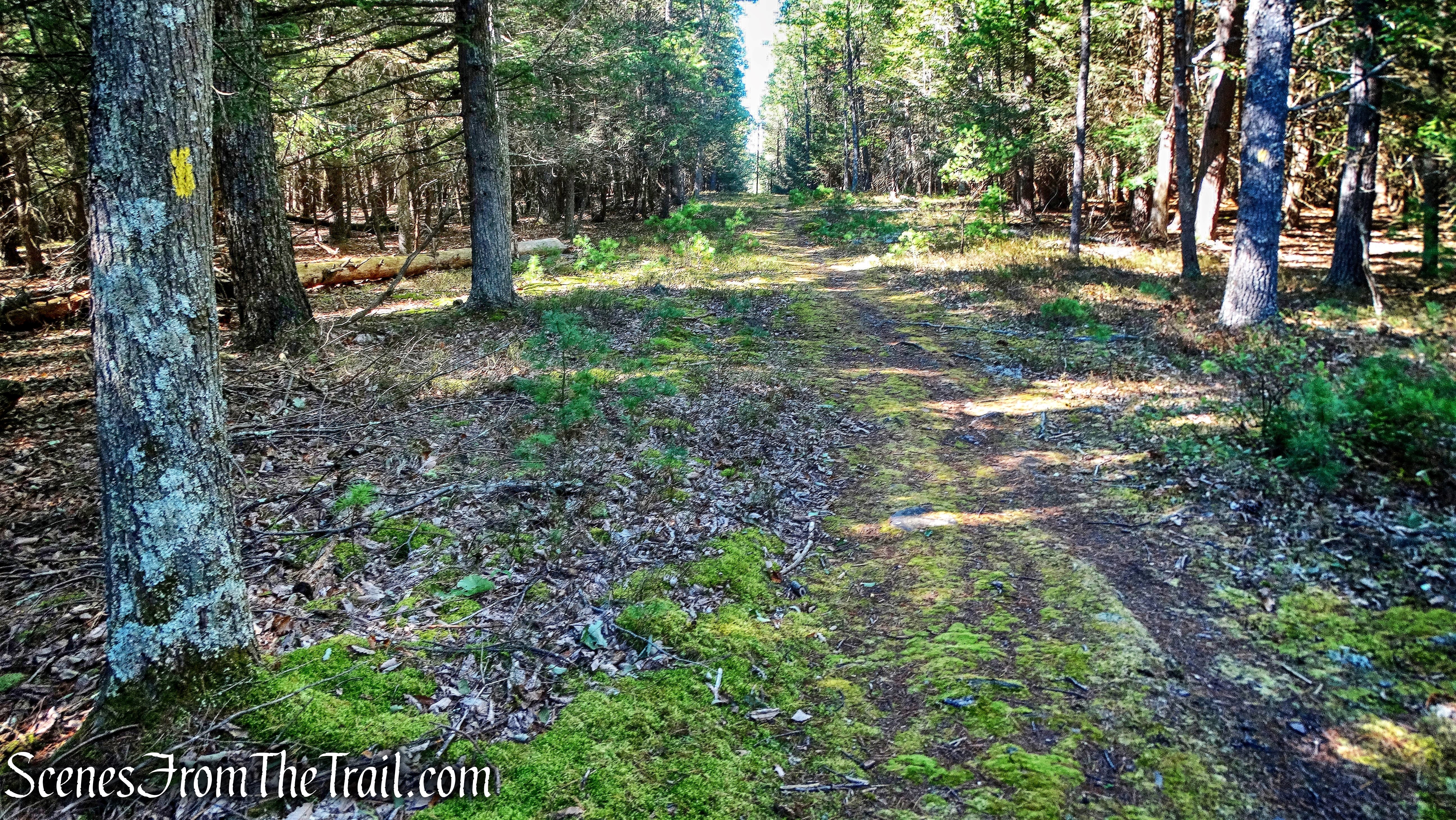
The Damascus Forest Trail then turns left again and heads south on an old woods road, through a stand of old-growth Hemlocks.

old-growth Hemlocks - Damascus Forest Trail

old-growth Hemlocks – Damascus Forest Trail

The trail continues south, passes some restrooms (which were locked) and comes out on Maccubbins Road, by the west end of the parking area. We turned left on the road, walked a few feet, then turned left into the parking area. A very short and uneventful hike. Nothing more than a quiet walk in the woods. It was now about 3:30 pm and we still had one more hike to do. Cobey Pond, here we come!

Pros: Quiet and secluded area, easy walk in the woods.

Cons: No points of interest to see.

Bouchoux Trail – Jensen’s Ledges

October 1, 2017 – Hancock, NY

Difficulty: Moderate

Length: Approximately 3.2 miles

Max elevation: 1,388 ft.– total elevation gain approximately 649 ft.

Route type: Out and back

Map: Upper Delaware River Valley Maps

Trailhead parking: Bouchoux Brook Rd, Hancock, NY 13783

The Upper Delaware Scenic and Recreational River stretches along approximately 73.4 miles of the Delaware River from Hancock, New York, to Sparrowbush, New York. Most of the land in this unit of the National Park System is privately owned, the federal government owns only approximately 30 acres. Within the park are the remains of the Delaware and Hudson Canal. More than 14,000 acres within the watershed of the Upper Delaware Scenic and Recreational River are protected by conservation easements enacted by willing private property owners and held by the Delaware Highlands Conservancy land trust.

Known officially as “Bouchoux Trail” or “Jensen’s Ledges,” The Ledges, as the locals call it, is a short but steep hike on a rocky woods road, leading to panoramic views of the Upper Delaware River Valley. The National Park Service rates this hike as difficult, but it’s just a steep walk up a rocky woods road.

Bouchoux Trail - Jensen's Ledges

Bouchoux Trail – Jensen’s Ledges

View the Google Earth Fly-Through video of the hike below.

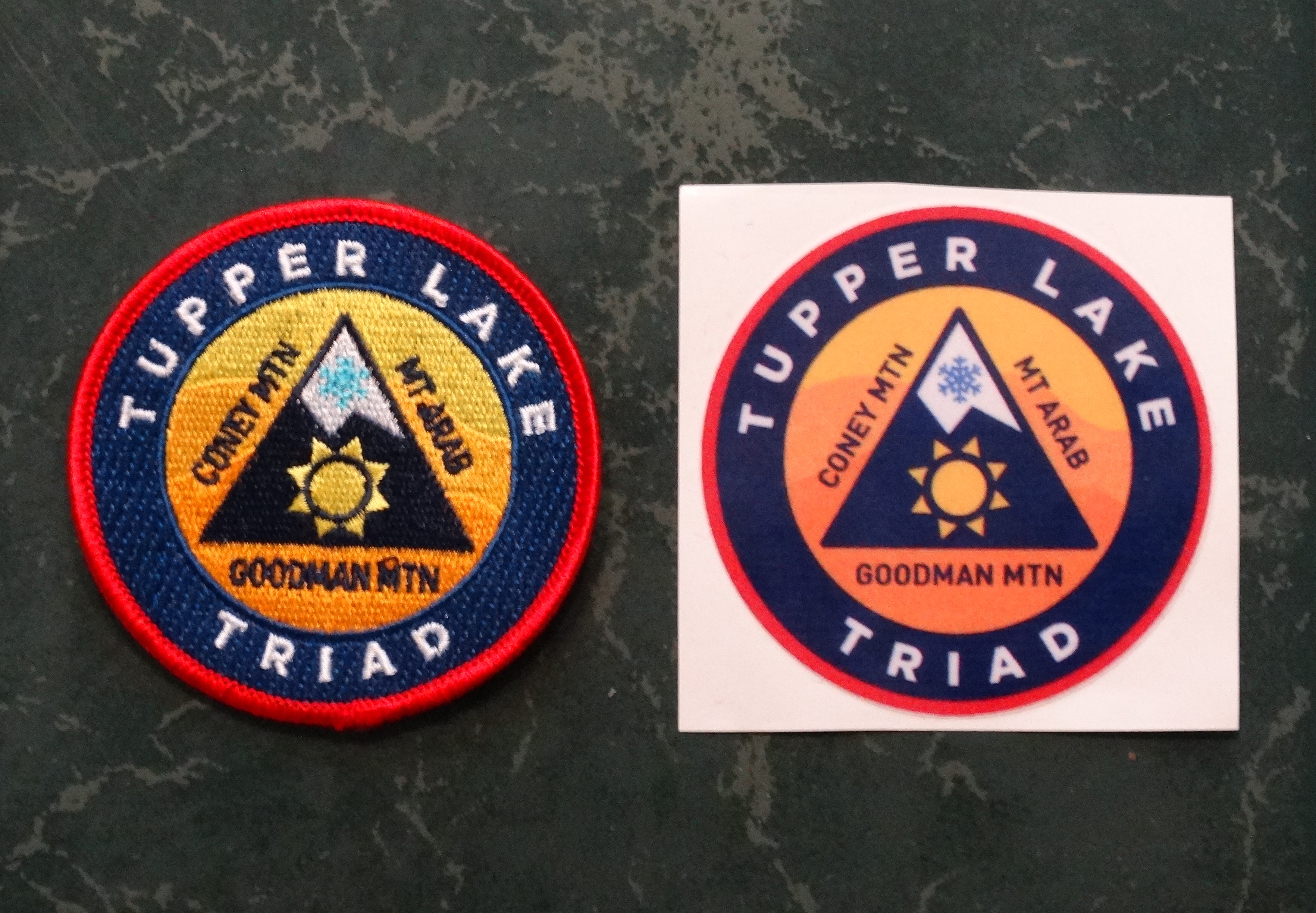
Having received a patch for completing the Tupper Lake Triad challenge, I decided to check to see if any hikes near me were offering patches. I stumbled onto the Upper Delaware’s Take a Hike! campaign. Although not exactly close by, I decided I would complete the six hikes on the list to earn my free patch. Since they are short hikes, we did three on each day and they were completed in two consecutive weekends. We did this hike first because it was the furthest north. We figured that we work from north to south, which would make the ride home a little shorter.

Bouchoux Trail Forest Preserve

Bouchoux Trail Forest Preserve

We got a late start on this Sunday morning and didn’t arrive at the trailhead until about 10:45 am after a two hour drive from Westchester County. We geared up and began our hike on the Bouchoux Trail.

Bouchoux Trail

Bouchoux Trail

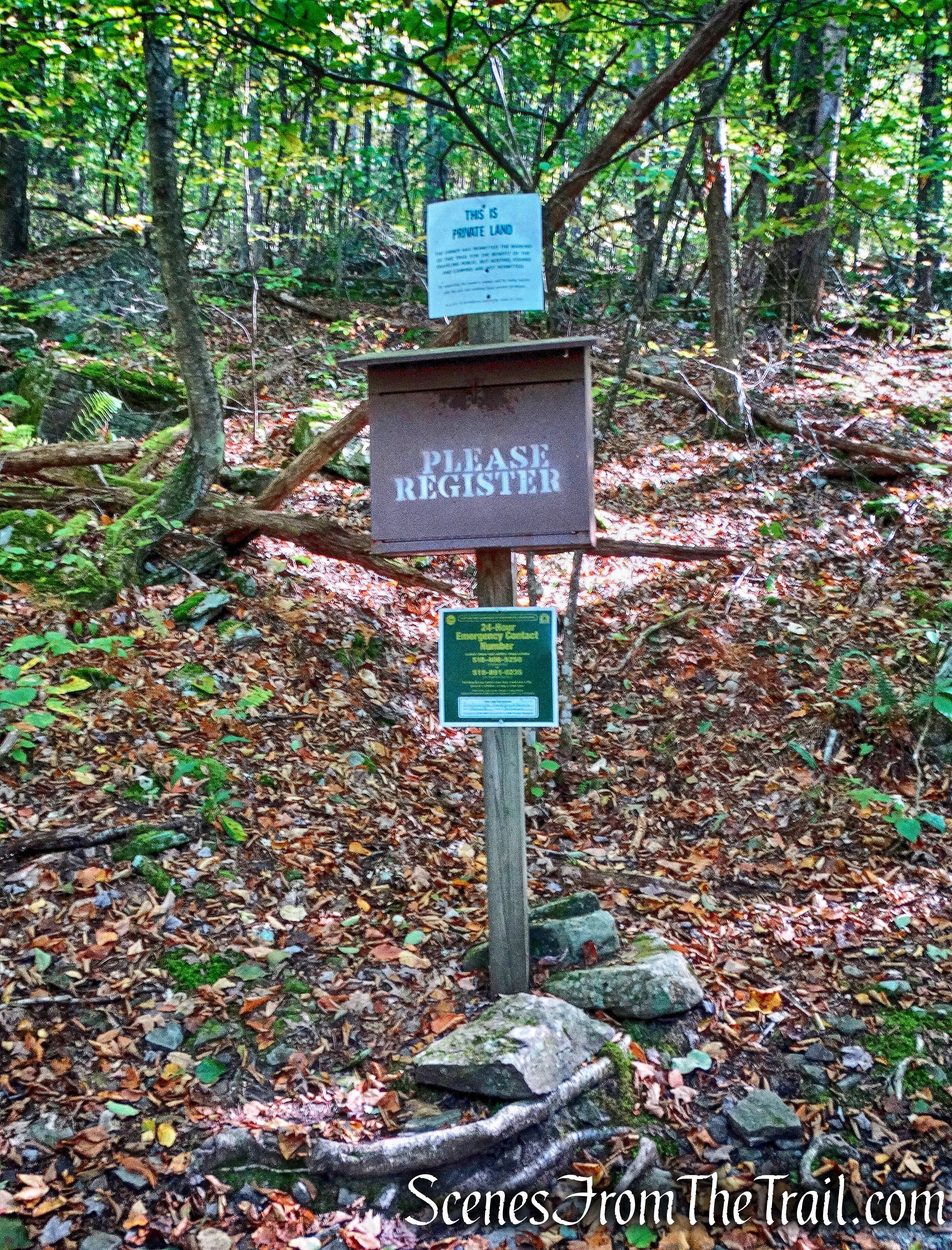
A short distance up the road is the trail register and we signed in.

trail register

trail register

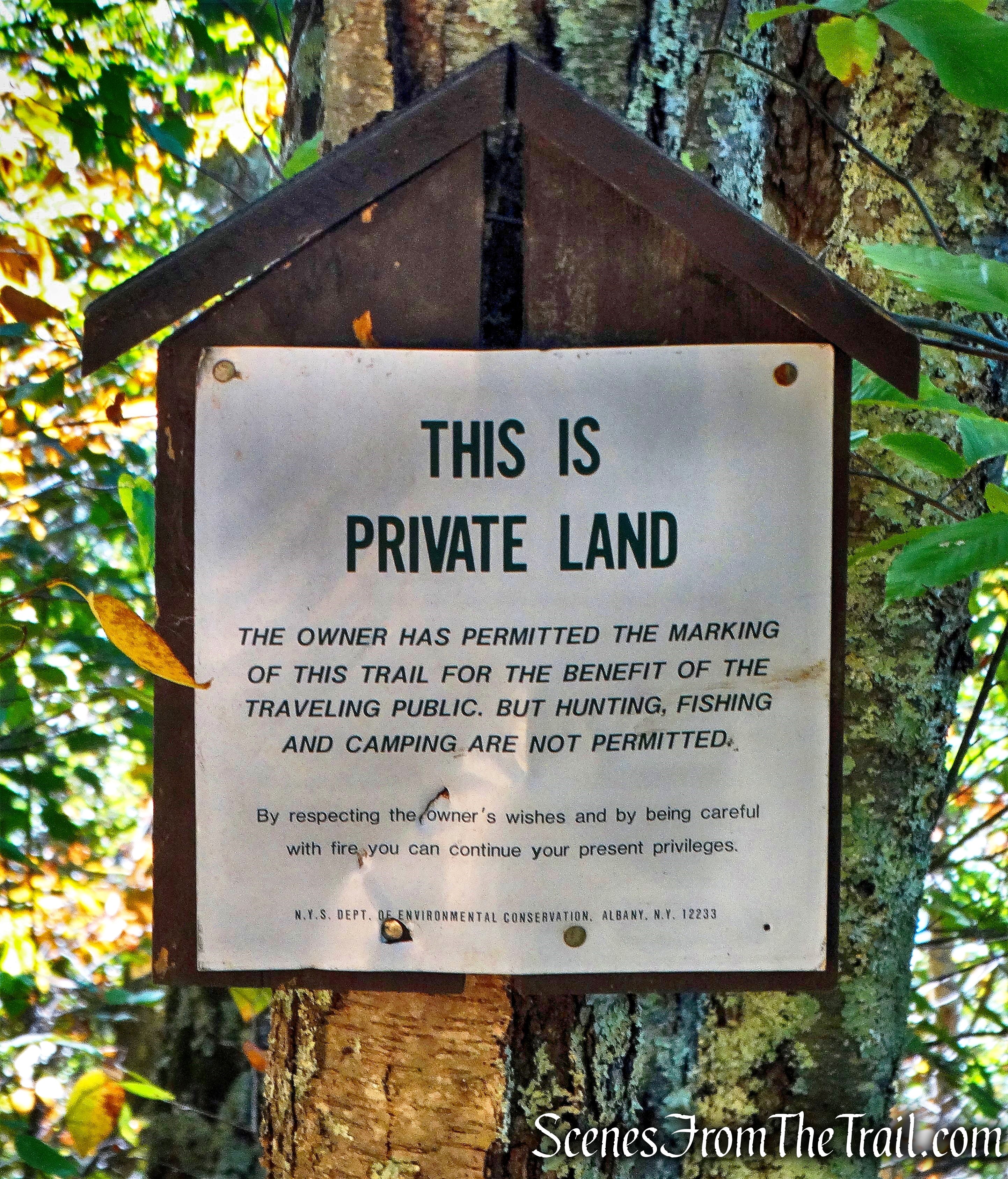
In a partnership with private landowners, this trail has been made available for public use. There are numerous “No Trespassing” and “Private Property” signs throughout the hike. Failure to adhere to these warnings may result in the trails being closed to the public and/or criminal prosecution.

Private Land sign

Private Land sign

The trail is marked with red blazes, almost all of which are faded and barely visible. The trail is easy to follow and although there are a few side trails along the way, they are posted with ‘Private Property” signs to let you know that you are in the wrong place.

faded red blaze - Bouchoux Trail

faded red blaze – Bouchoux Trail

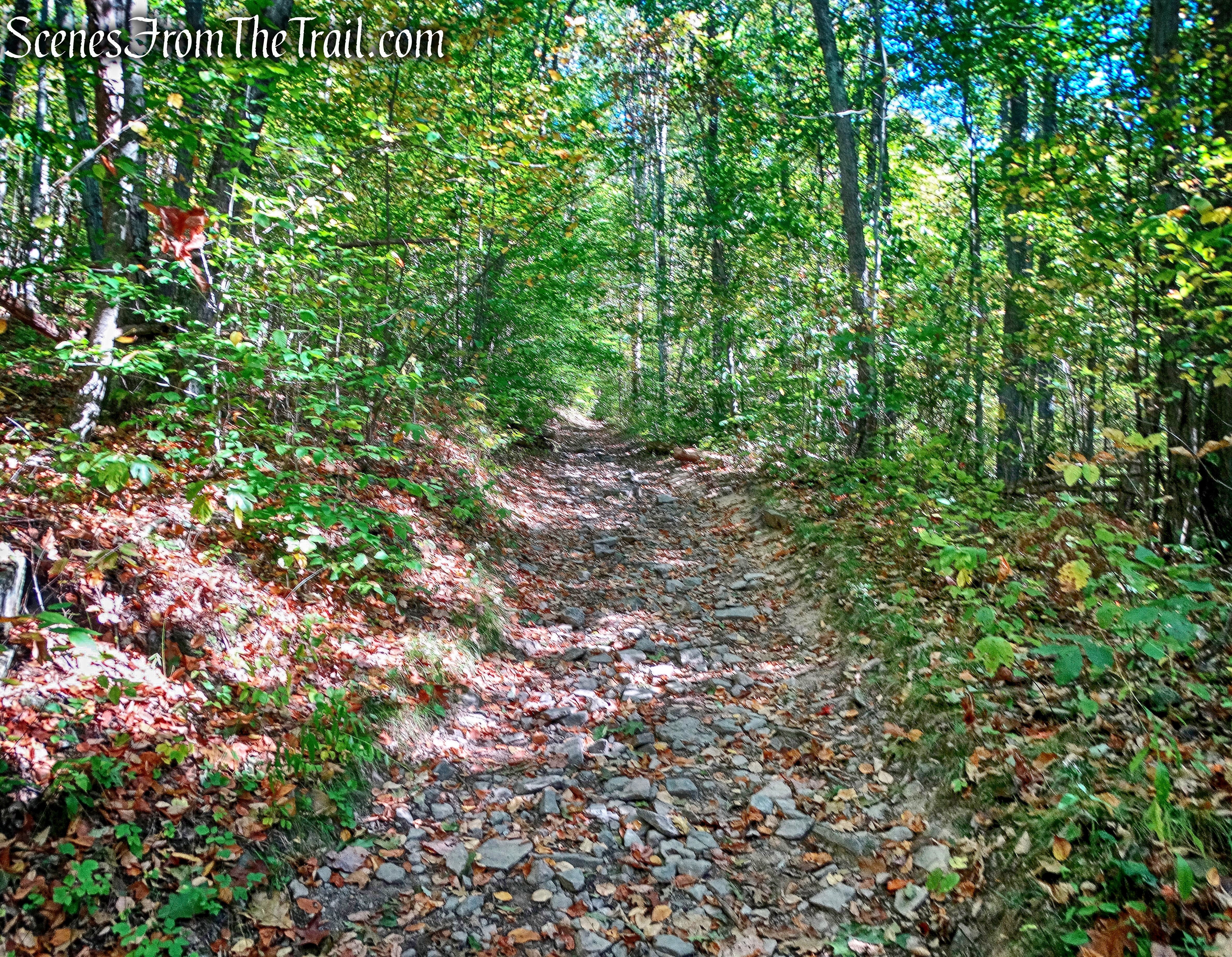
The Bouchoux Trail ascends steeply on a very rocky woods road. It’s, what is referred to as an “ankle breaker trail.” This road leads to a now-abandoned Bluestone quarry.

Bouchoux Trail

Bouchoux Trail

The woods road climbs steeply to the shoulder of Bouchoux Hill, passing some interesting rock formations along the way.

rock formation - Bouchoux Trail

rock formation – Bouchoux Trail

Just before a stream crossing, there is a short spur trail on the right that leads to a ledge. From there, Bouchoux Hill Falls can be viewed as it tumbles down over the cliff into the Delaware River. It was nothing more than a trickle on the day we visited. Back out to the main trail, we crossed the stream that feeds Bouchoux Hill Falls.

stream crossing - Bouchoux Trail

stream crossing – Bouchoux Trail

Upon crossing the stream, one can see where it drops off the cliff to create the waterfall.

stream crossing - Bouchoux Trail

stream crossing – Bouchoux Trail

Right after the stream crossing, the Bouchoux Trail continues ahead. We took a side trail that leads to a large pile of Bluestone. Quarrying of Bluestone was once a large industry in the area.

Bluestone quarry

Bluestone quarry

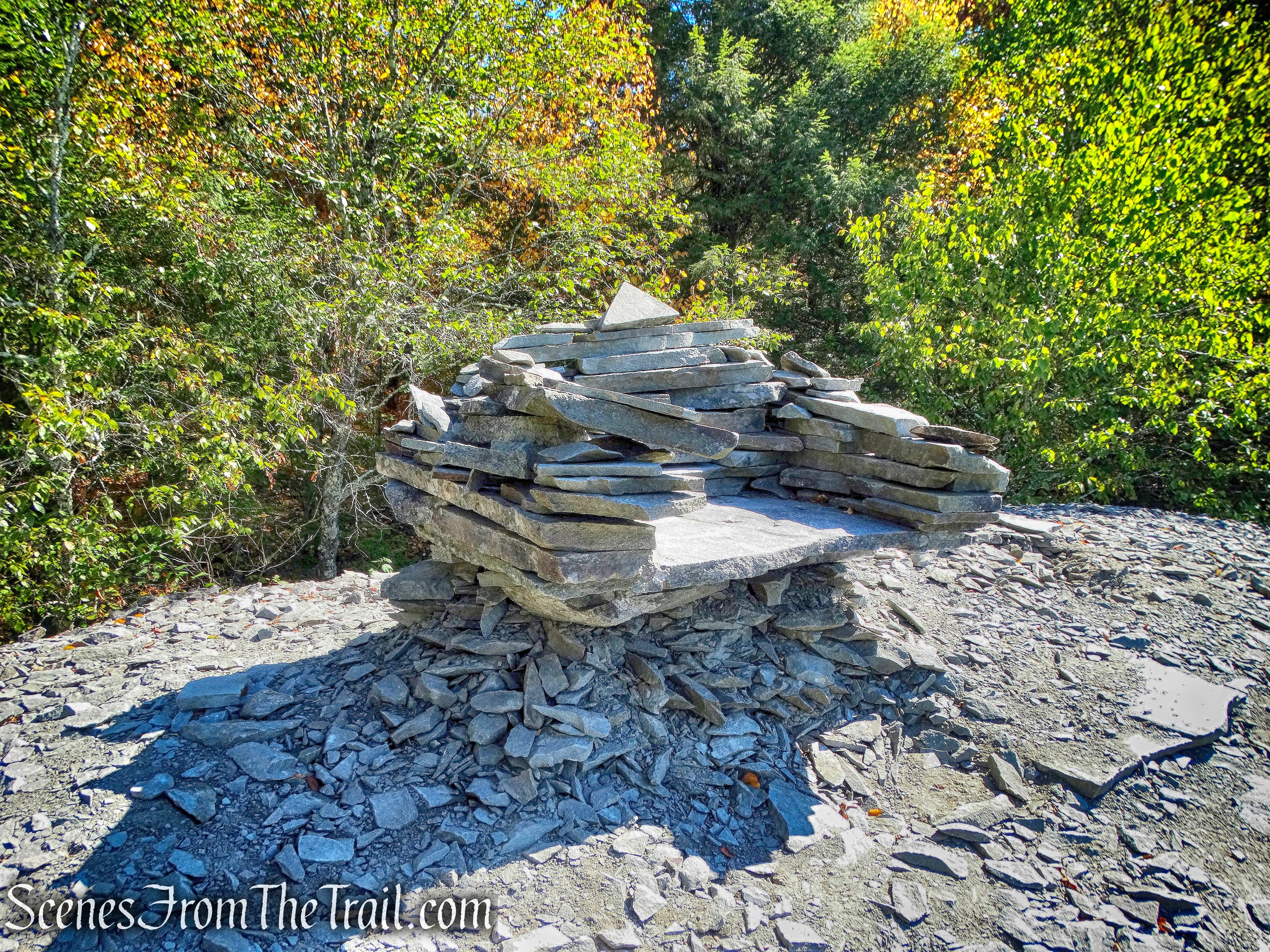
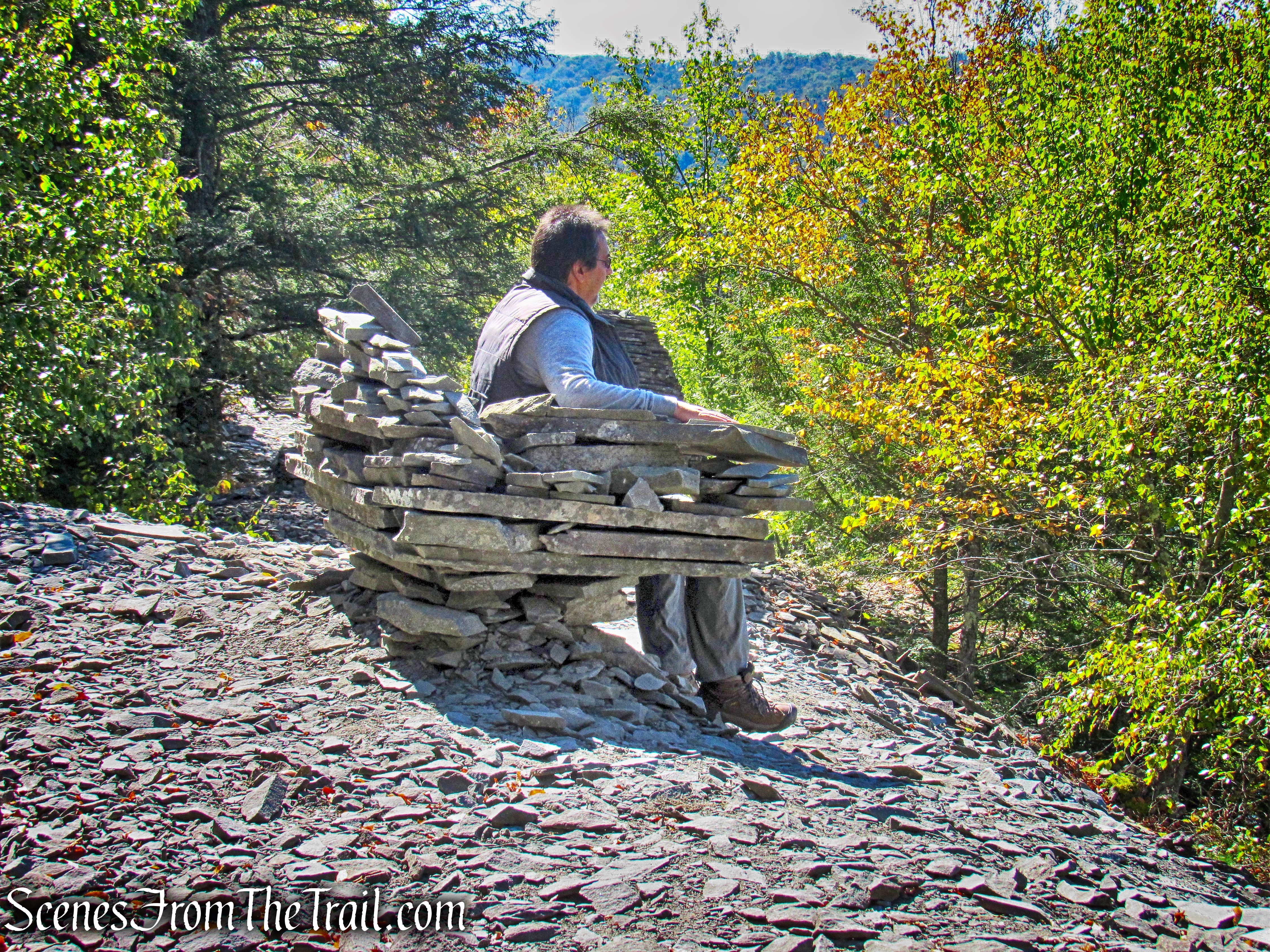
Creative hikers have built some stone furniture here, so we took a break here to enjoy the fruits of their labor.

Bluestone chair

Bluestone chair

I’m in the front row!

I'm in the front row!

I’m in the front row!

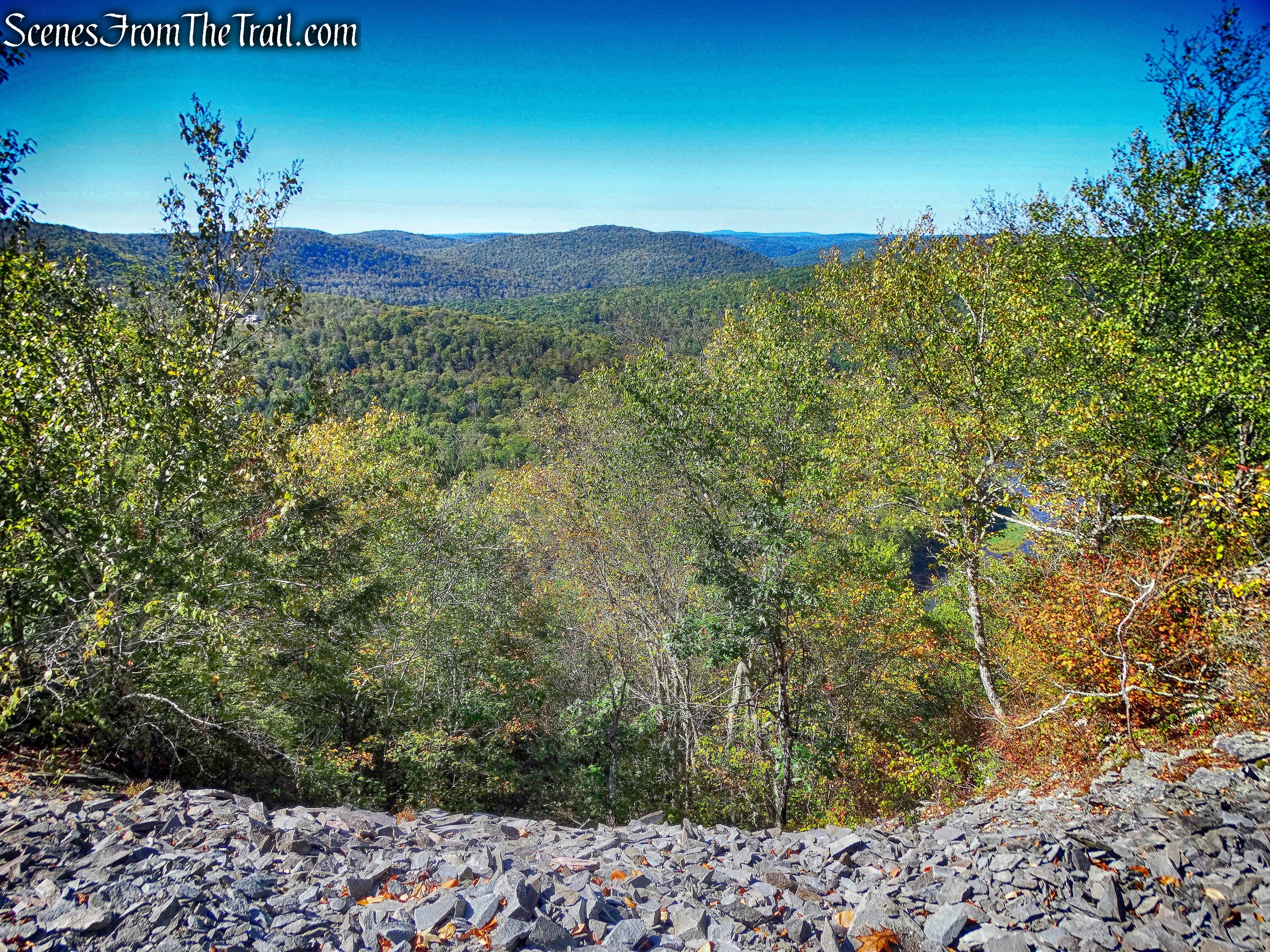
The view from the Bluestone chair wasn’t too shabby. There are steep drop-offs here with loose stones underfoot, extra care should be taken here not to lose your footing.

View from the Bluestone chair

View from the Bluestone chair

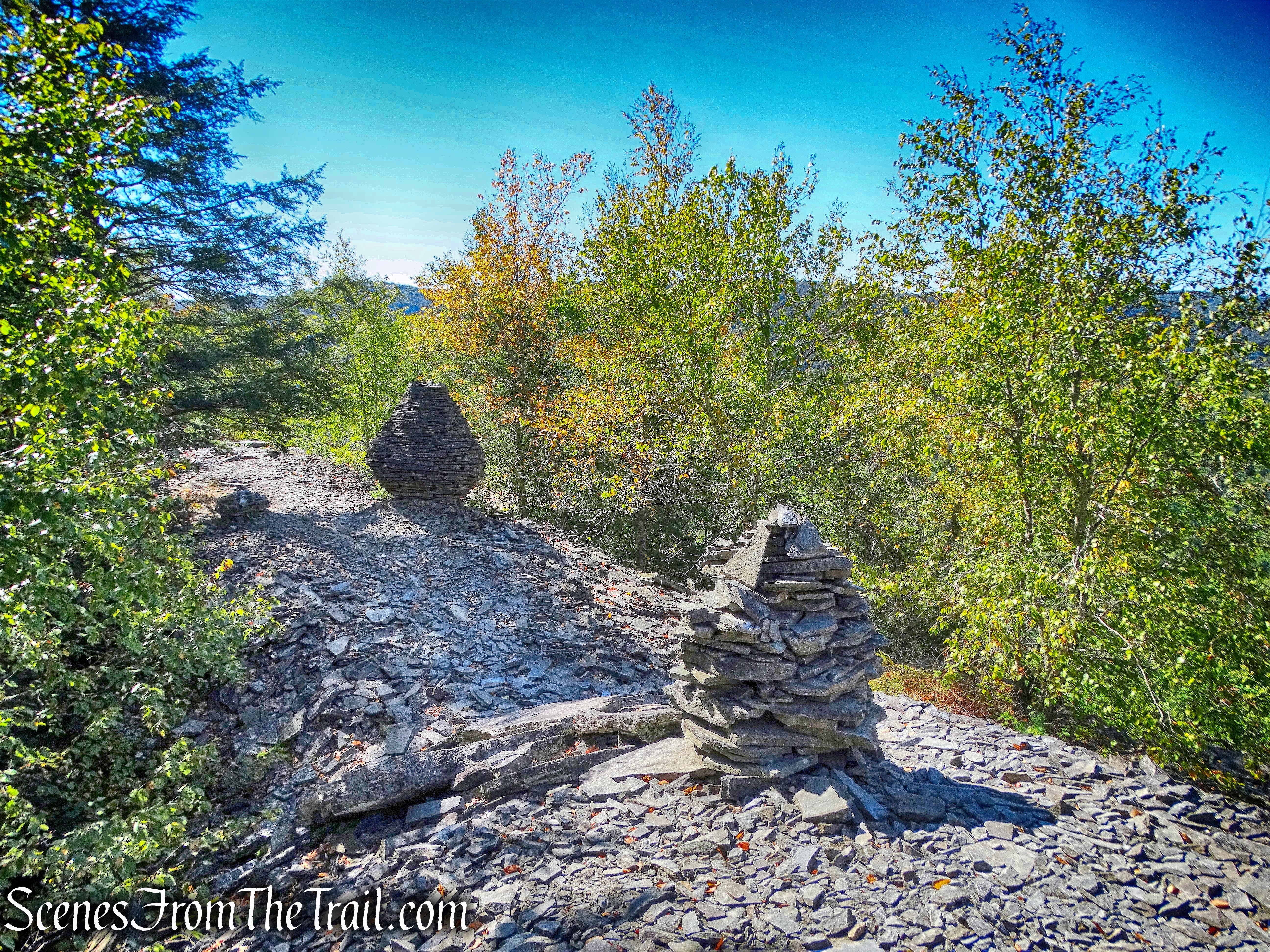
Large decorative cairns lead the way over the Bluestone.

Bluestone cairns

Bluestone cairns

Just past the cairns there is a nice chaise lounge that looks out towards the Delaware River.

stone chaise lounge

stone chaise lounge

We walked back onto the main trail and in a short distance, we arrived at Jensen’s Ledges.

Jensen's Ledges

Jensen’s Ledges

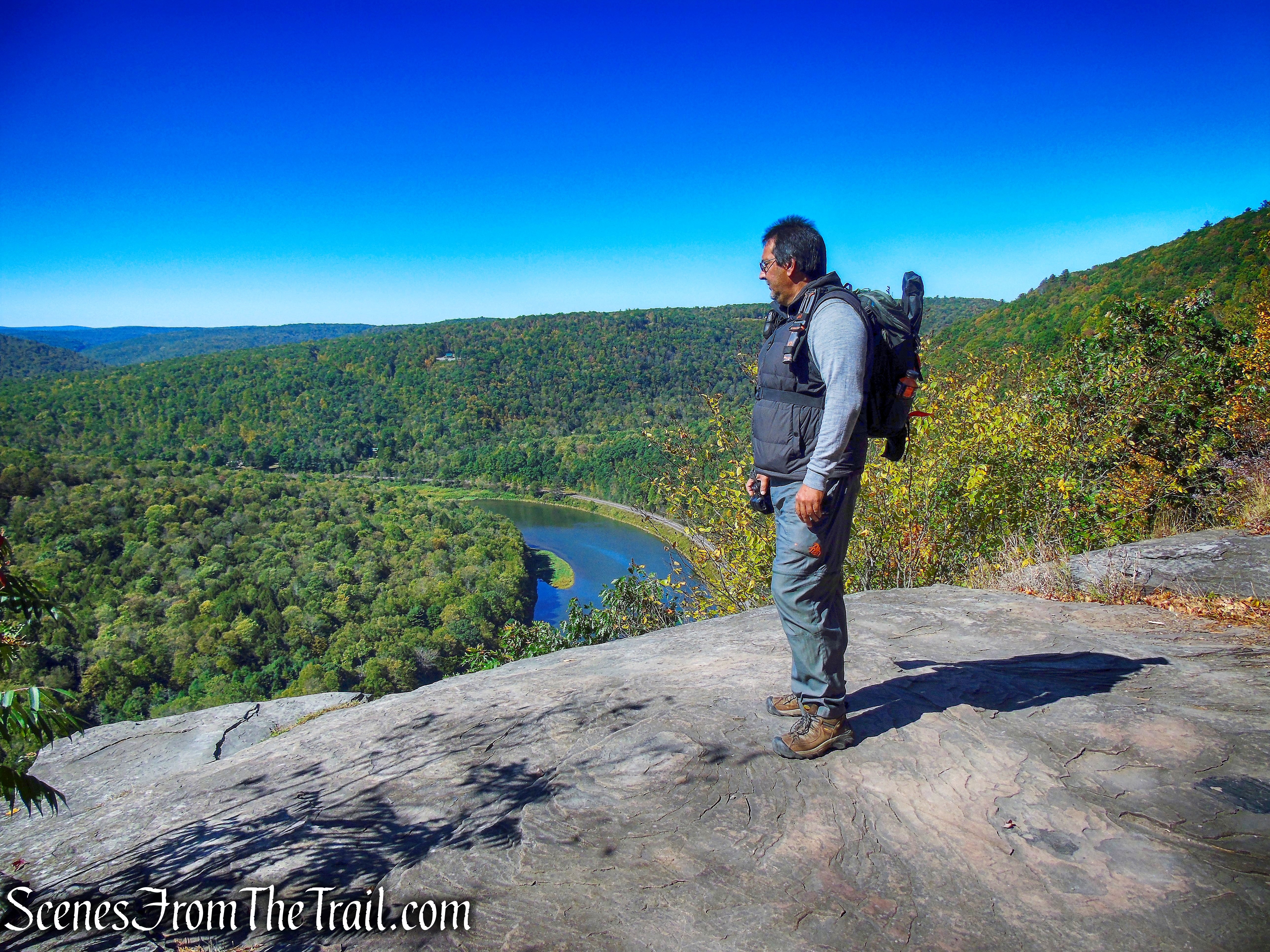
The view from here makes it worth the trek up that ankle breaker trail.

Jensen's Ledges

Jensen’s Ledges

We stayed at this spot for quite some time enjoying the view. This is a popular spot and we were not alone up there, but still a great spot.

Jensen's Ledges

Jensen’s Ledges

We made our way back down the woods road to the parking area, where our hike began.

Bouchoux Trail

Bouchoux Trail

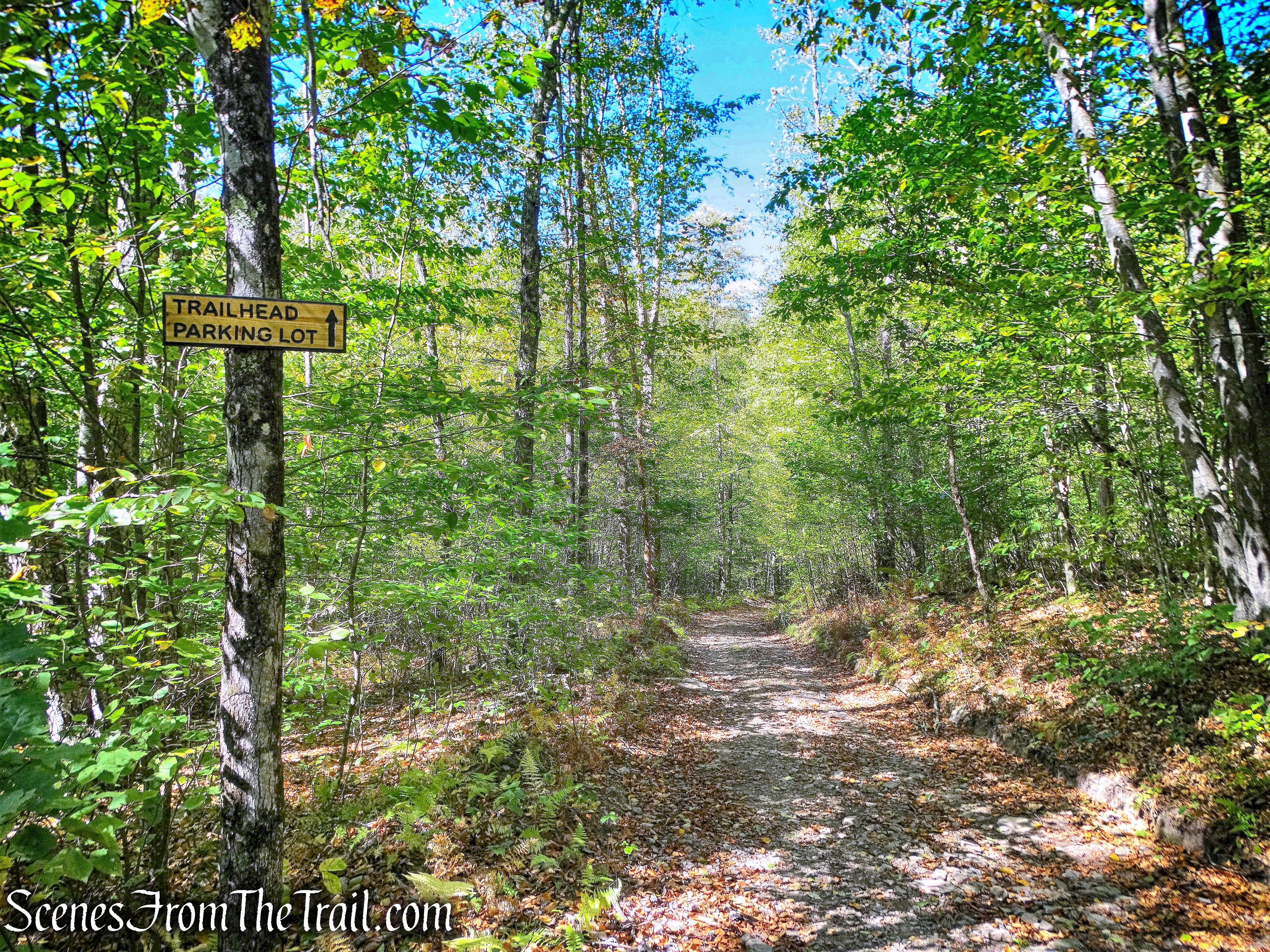
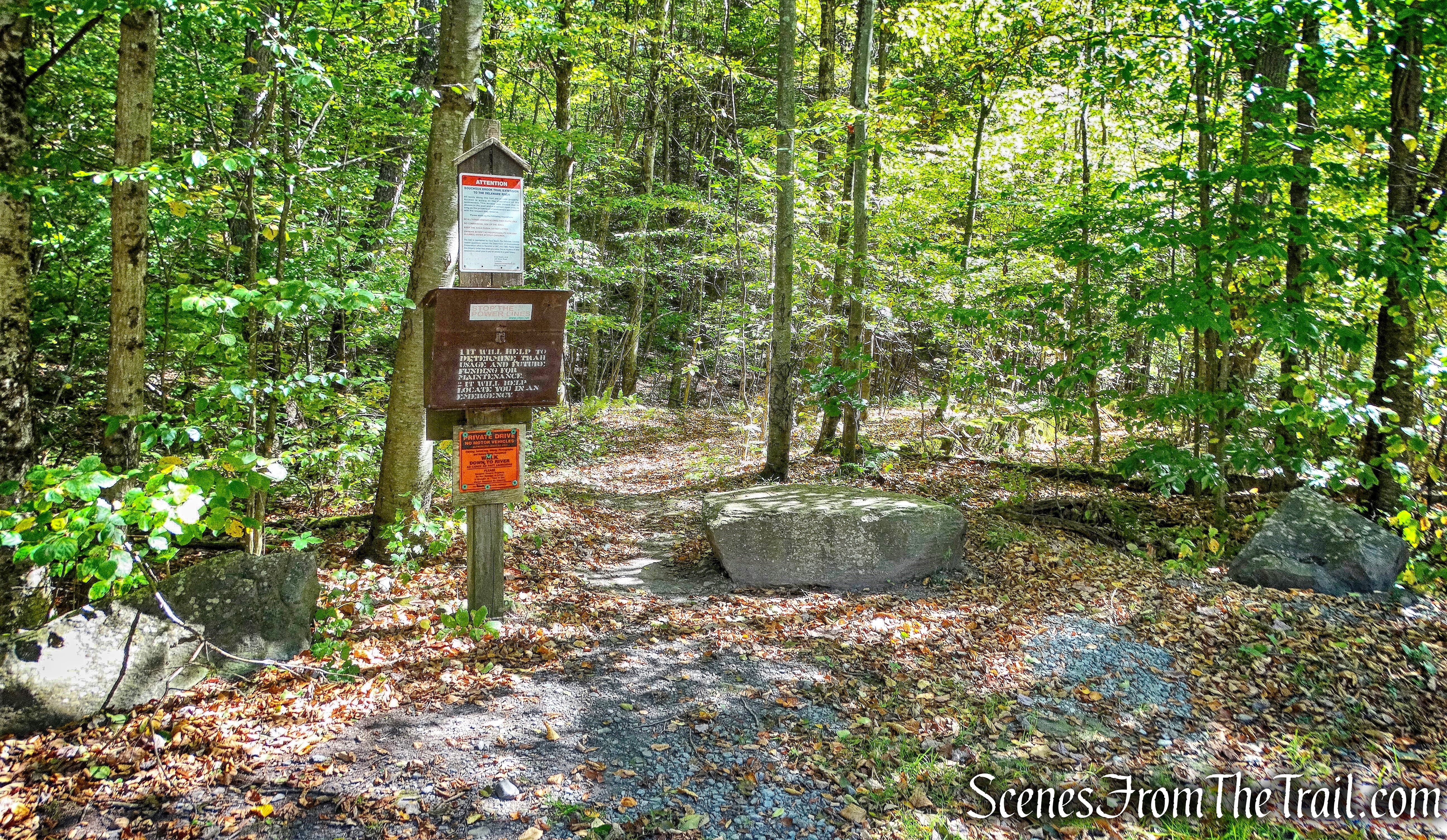
While sitting on a rock, relaxing and having a snack, I saw what looked like a trailhead at the southern end of the parking area.

Bouchoux Brook Trail Extension

Bouchoux Brook Trail Extension

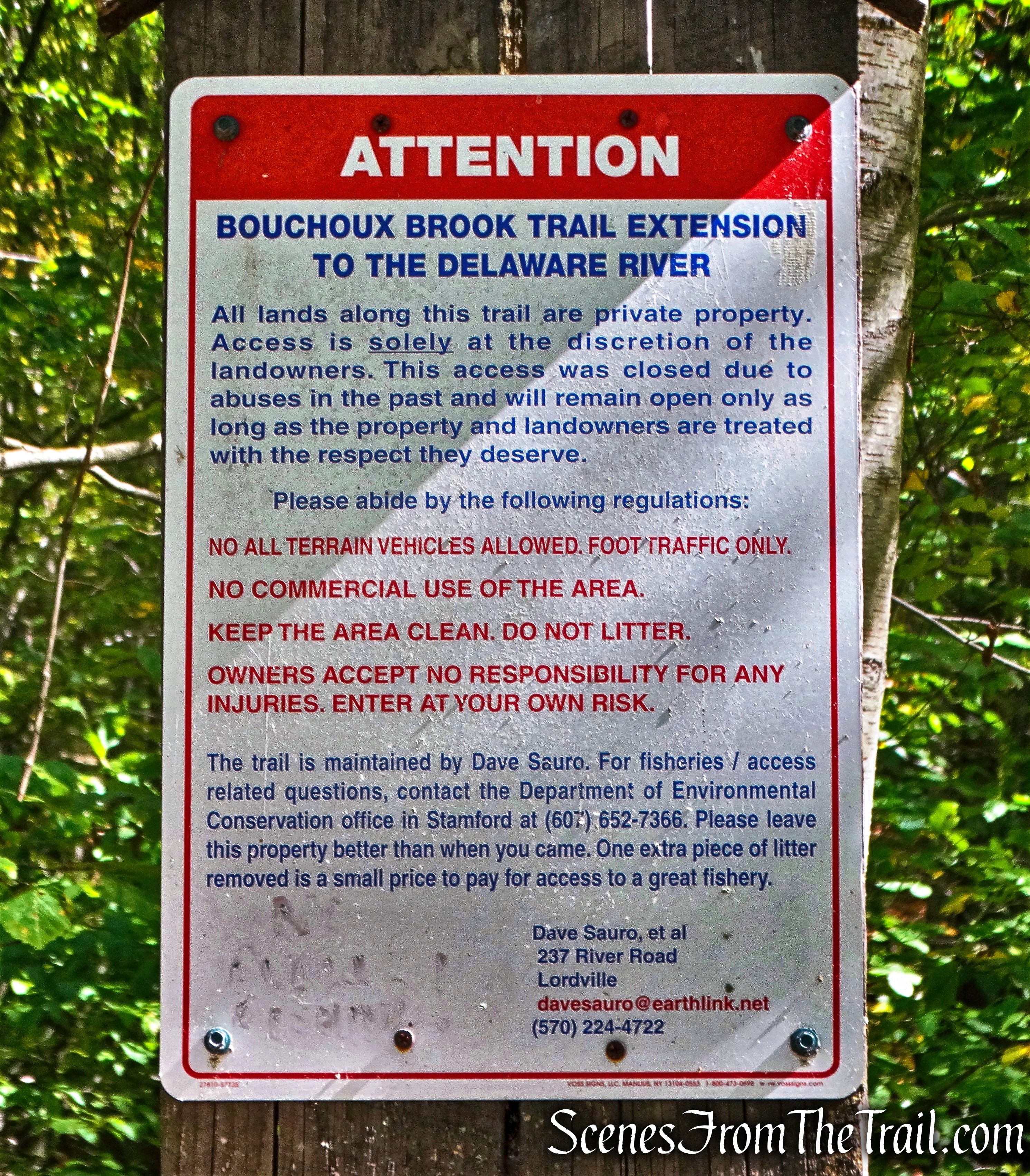
Getting a closer look at the sign, I read that it is the Bouchoux Brook Trail Extension. I don’t know where the Bouchoux Brook Trail is, but since we were already there, I figured we would walk this trail to the Delaware River.

Bouchoux Brook Trail Extension

Bouchoux Brook Trail Extension

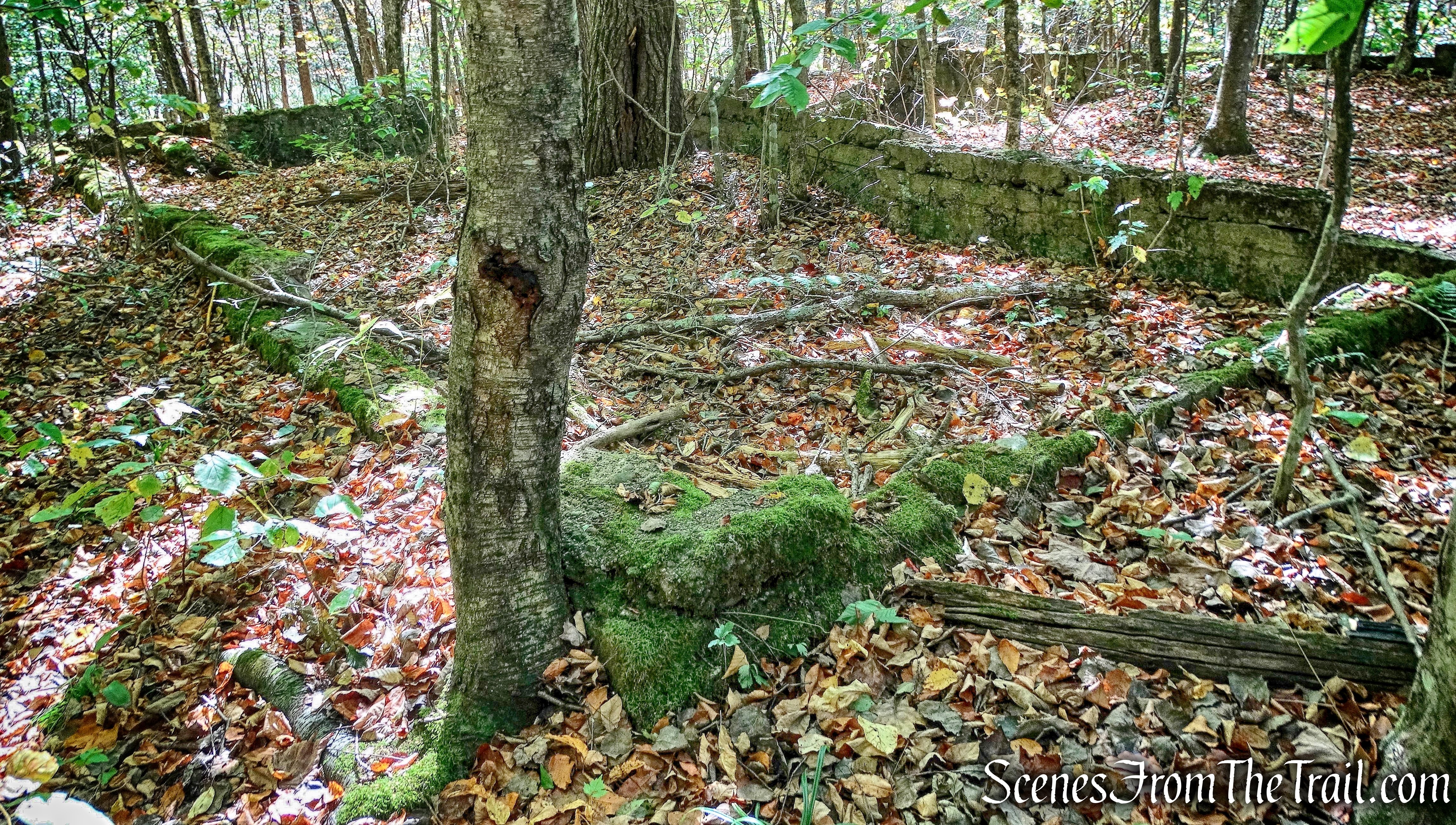
Almost immediately upon entering the trail, there are remnants of a large multi-room structure.

ruins - Bouchoux Brook Trail Extension

ruins – Bouchoux Brook Trail Extension

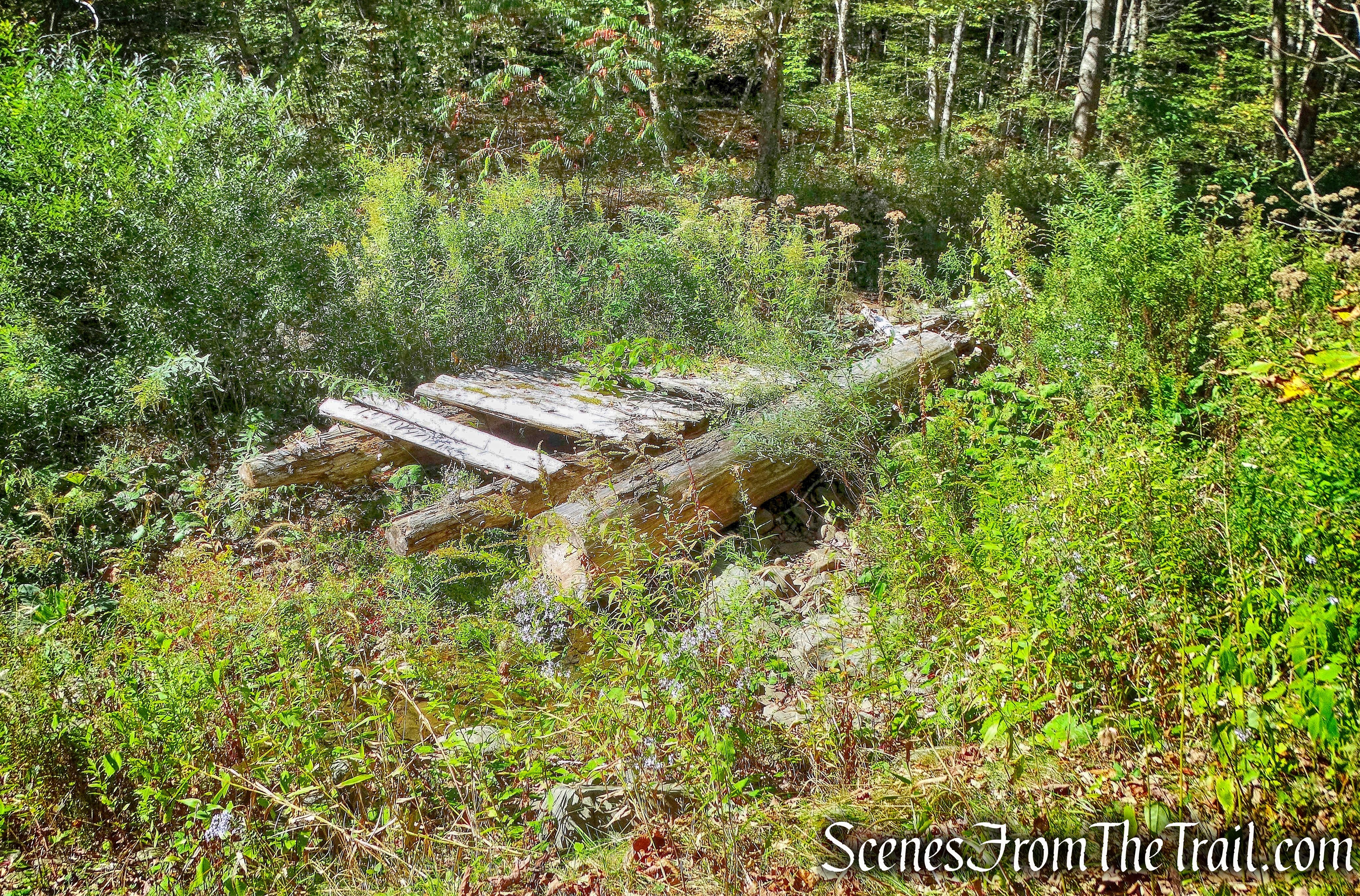
The ruins of an old wooden bridge that used to span Bouchoux Brook is visible from the trail.

wooden bridge ruins - Bouchoux Brook Trail Extension

wooden bridge ruins – Bouchoux Brook Trail Extension

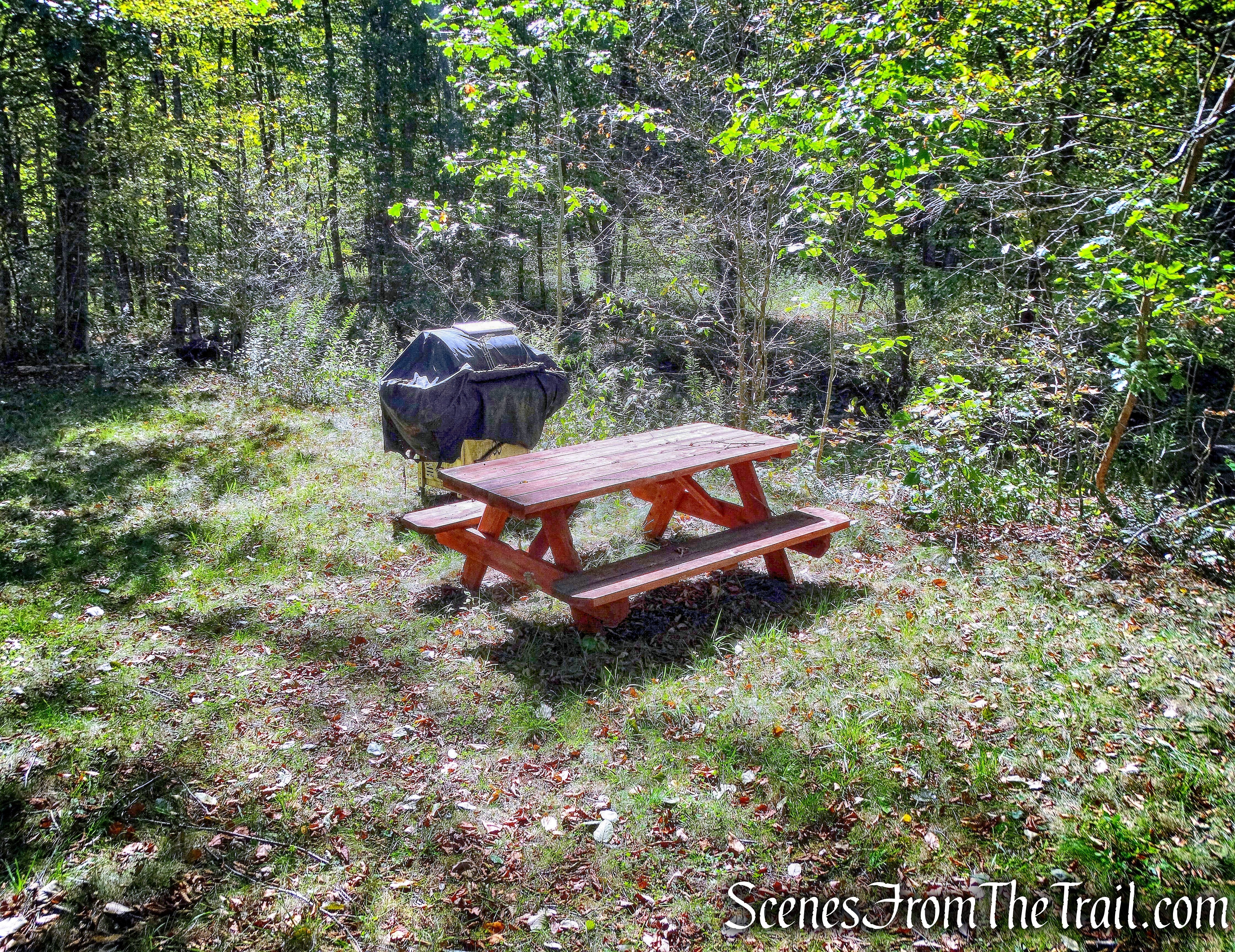
The trail passes by a picnic table and a grill…….

picnic table and a grill - Bouchoux Brook Trail Extension

picnic table and a grill – Bouchoux Brook Trail Extension

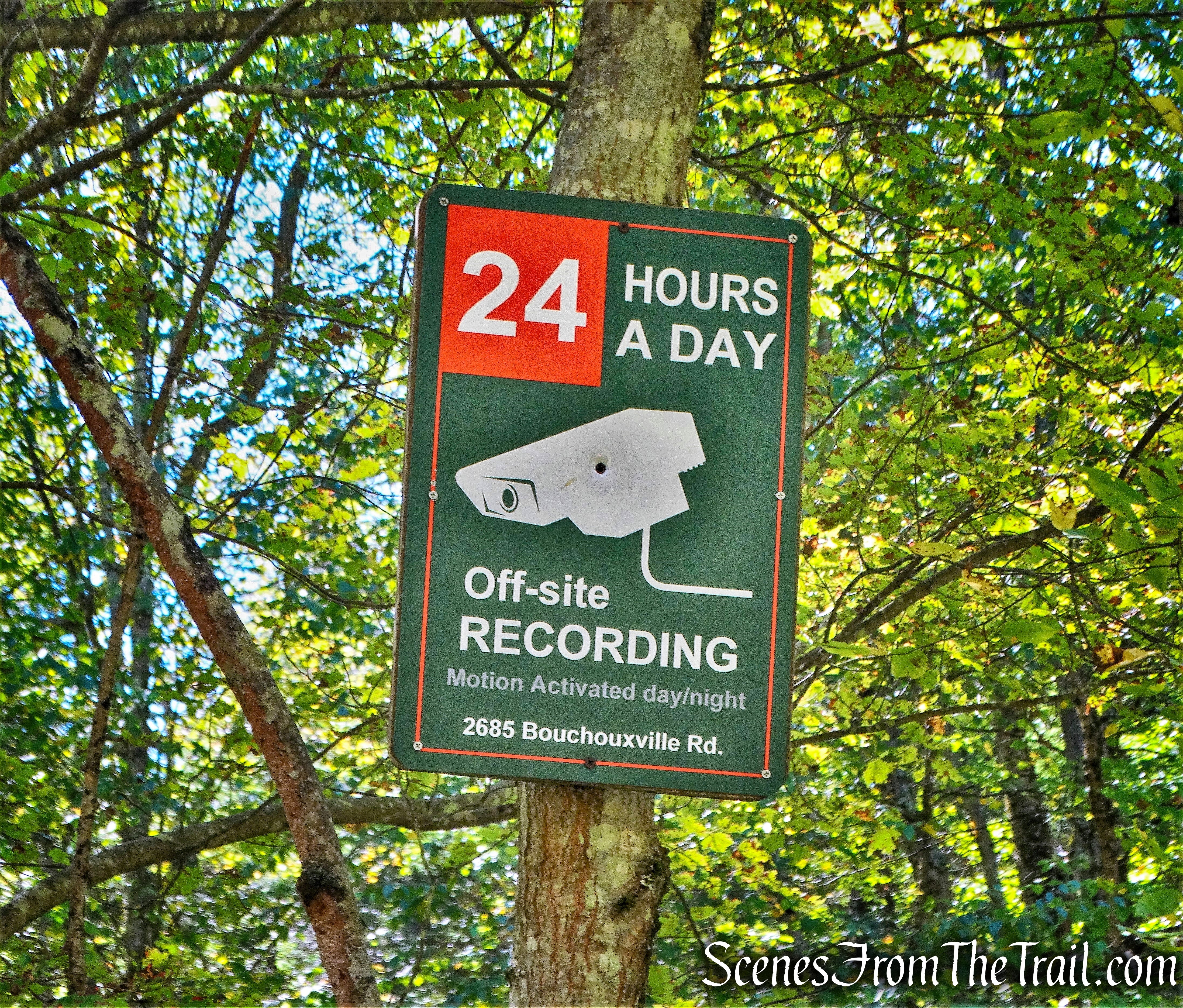
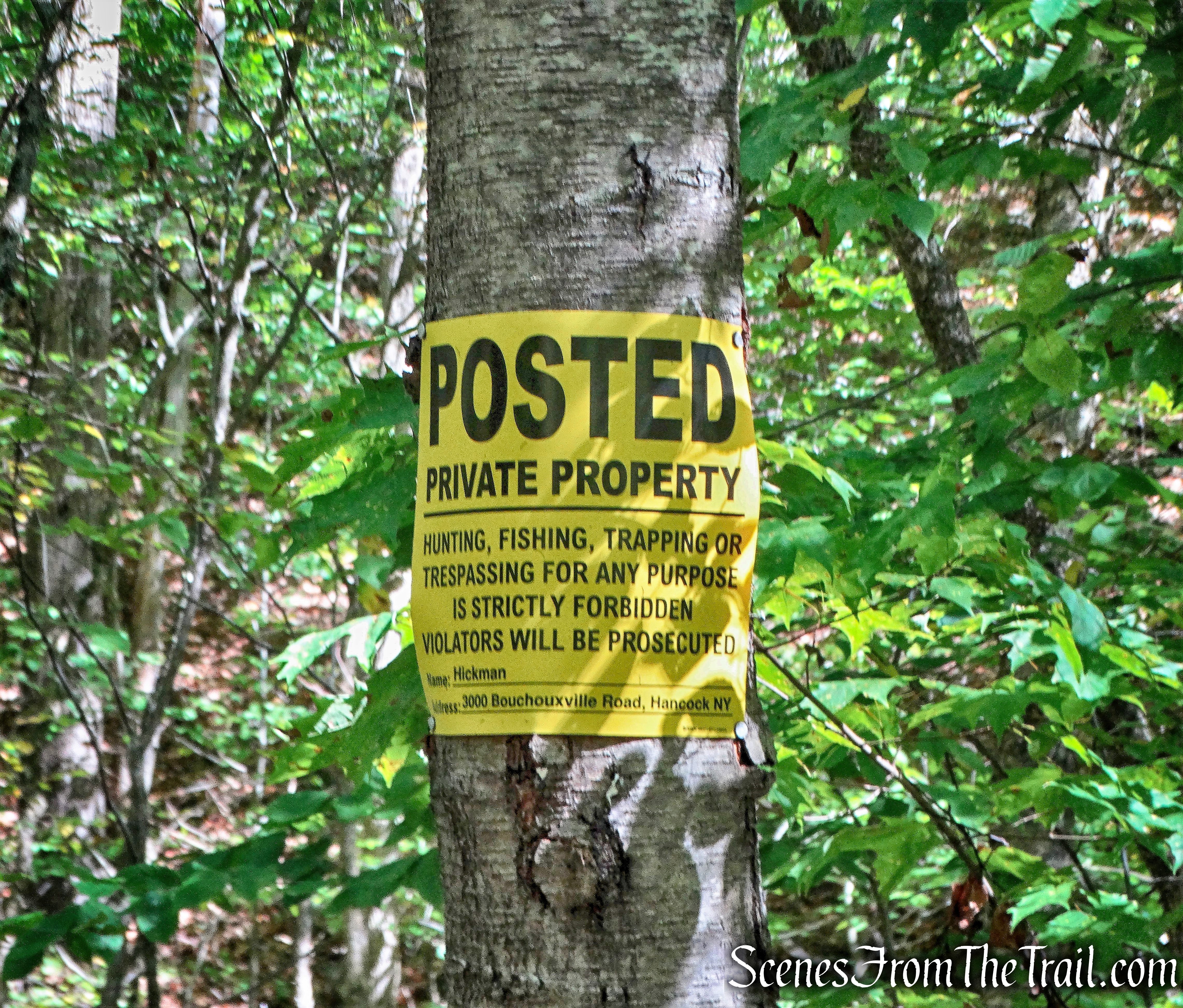
and plenty of signs on either side of the trail to keep you on your toes.

warning sign - Bouchoux Brook Trail Extension

warning sign – Bouchoux Brook Trail Extension

These signs are intended to keep hikers from straying off the trail.

warning sign - Bouchoux Brook Trail Extension

warning sign – Bouchoux Brook Trail Extension

The wide woods road heads south through private lands.

Bouchoux Brook Trail Extension

Bouchoux Brook Trail Extension

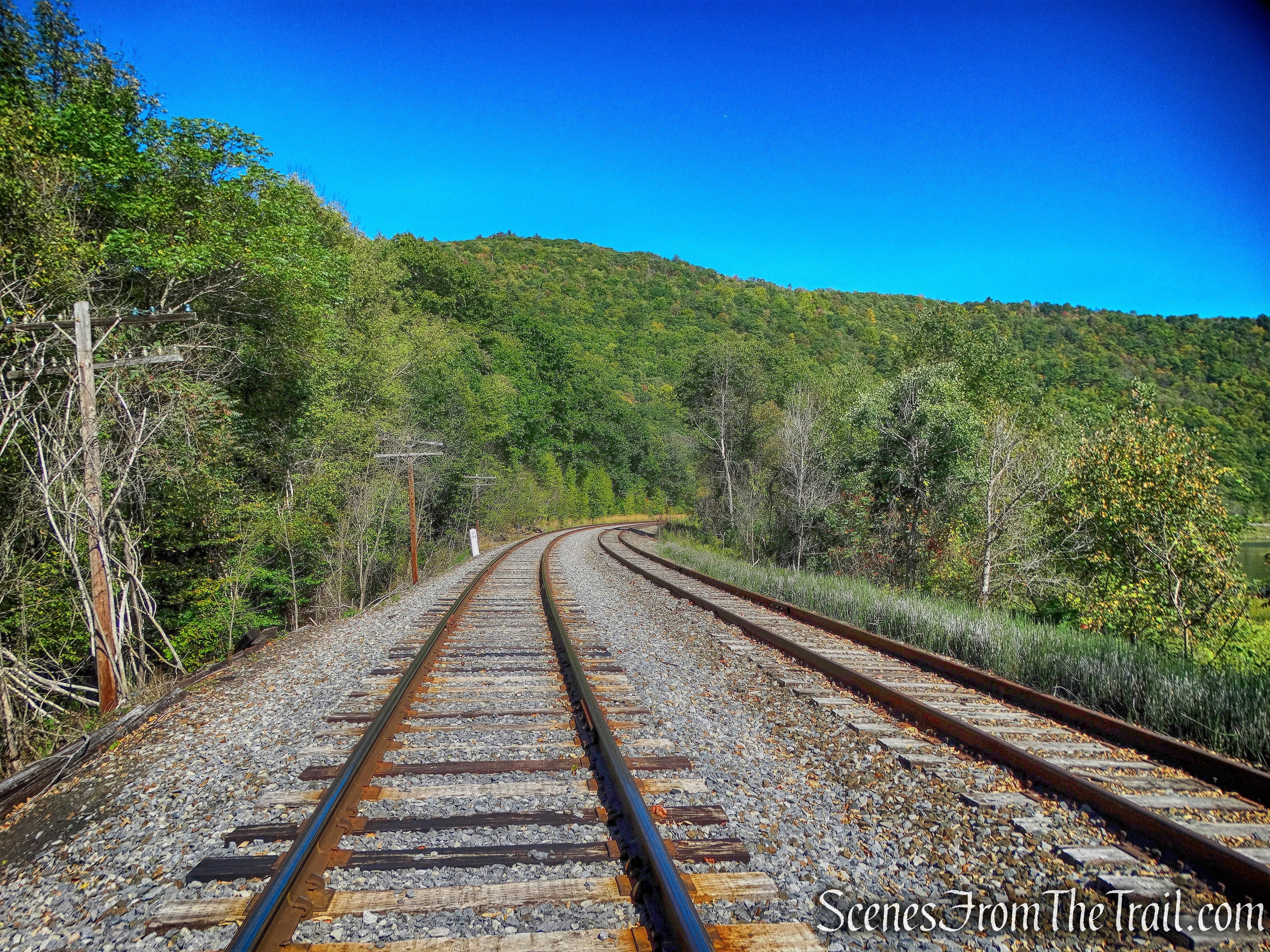
The Bouchoux Brook Trail Extension leads to the railroad tracks, which is active. I was able to capture this image of Bouchoux Hill from the tracks.

Bouchoux Hill as viewed from the tracks.

Bouchoux Hill as viewed from the tracks.

There wasn’t much to see unless you walk up or down the tracks. We had two other hikes to do, so I returned to the trail and we retraced our steps on the Bouchoux Brook Trail Extension back to the parking area.

Bouchoux Brook Trail Extension

Bouchoux Brook Trail Extension

What a great hike in such a picturesque area. I had never heard of this place before, but I am glad that we found our way here. Hike one of six now in the books towards a free patch. Now we were off to hike the Damascus Forest Trail, so stay tuned.

Pros: Great views, beautiful area, waterfall (when active), stone furniture, Delaware River.

Cons: Ankle breaker trail, sign, signs, everywhere there’s signs.

Bouchoux Trail - Jensen's Ledges

Bouchoux Trail – Jensen’s Ledges

Fergusons Lake from Bedford Road – Rockefeller State Park Preserve

September 30, 2017 – Pocantico Hills, NY

Difficulty: Easy

Length: approximately 5 miles

Route type: Circuit

Map: Rockefeller State Park Preserve map

Trailhead parking: Union Church of Pocantico Hills – 555 Bedford Rd, Tarrytown, NY 10591


I had a few hours to kill and decided to take a walk up in Rockefeller’s. Growing up in the area, we used explore the 1,400-acre park all the time. Just recently I have begun to explore the area east of Bedford Road (NY 448). It was a spur of the moment thing and I didn’t bother with a map. I did have my GPS device, but it was mostly to record a track of the hike.

Ferguson Lake from Bedford Road - Rockefeller State Park Preserve

Ferguson Lake from Bedford Road – Rockefeller State Park Preserve

There is a trailhead at the southern end of the parking area at Union Church of Pocantico Hills so we parked there and began our hike. The Rockefeller carriage roads are always a pleasure to walk on.

Rockefeller State Park Preserve

Rockefeller State Park Preserve

Except when you come to a locked gate.

Locked gate

Locked gate

In my younger years, I wouldn’t have hesitated climbing the fence and continuing on my way. Well, that was a short hike! Not to be deterred, we turned around and walked north a short distance along Bedford Road and made a right at 591 Bedford Road. It’s just before the entrance to the school.

591 Bedford Road

591 Bedford Road

There is a gravel road with a gate at the entrance. The gate was open and we began our hike…..again.

591 Bedford Road

591 Bedford Road

We followed the gravel road until we came to a T-intersection and turned right.

T-intersection

T-intersection

We reached a a four way intersection and turned left and walked past a locked gate.

Locked gate

Locked gate

We then reached a fork and veered right. In a short distance, we were met with yet another locked gate.

Locked gate

Locked gate

This road leads to one of the reservoirs on the Rockefeller’s property.

Locked gate

Locked gate

There are four lakes/reservoirs that are in close proximity to each other. Three of them are named Fergusons Lake, for George Ferguson, who had four large icehouses on the lake west of the Pocantico Hills Central School.

Fergusons Lake

Fergusons Lake

We retraced our steps and took the other fork. In a short distance, we came to another fork and stayed left and came to another Fergusons Lake.

Fergusons Lake

Fergusons Lake

I’ve been to this spot several times and I have always walked the plank.

Fergusons Lake

Fergusons Lake

We then crossed a wooden bridge that spans Rockefeller Brook.

wooden bridge

wooden bridge

The most notable feature of the Preserve is the network of carriage roads built by John D. Rockefeller Jr. He began the construction of these broken stone roads in 1910.

carriage road

carriage road

Since this wasn’t a designed hike, we just wandered around and took the path that seemed less familiar. The woods were quiet and except for a pair of runners and walkers, we didn’t encounter anyone else on our hike. We did see some chicken of the woods.

chicken of the woods

chicken of the woods

We ended up at the easternmost Fergusons Lake and the water was lower than the last time I visited.

easternmost Fergusons Lake

easternmost Fergusons Lake

The lake was so dry that the pipes were exposed.

Fergusons Lake

Fergusons Lake

We walked to the southern end of the lake and climbed up to the road and began heading northwest.

Fergusons Lake

Fergusons Lake

Just to the left (west) of the road, is another lake. This one is named Hemingways Lake. It was created by a man named Hemingway, a superintendent on the estate of John D. Rockefeller, Jr. It is the southernmost of the four lakes to the southeast of the Pocantico Hills Central School. It is fenced off and not open to the public.

Hemingways Lake

Hemingways Lake

We wandered around a bit and wound up at another locked gate.

Locked gate

Locked gate

We began to head back and passed another locked gate.

Locked gate

Locked gate

I referenced my GPS just to make sure we were headed back to where we started. We were going directly back to the parking area and came to the first locked gate that we encountered when we began the hike. We turned around and retraced our steps and took a left and then a right. We ended up at an old stone pumphouse near the first Fergusons Lake that we walked by.

old stone pumphouse

old stone pumphouse

An odd shaped structure sits nearby.

odd shaped building

odd shaped building

The structure is built in to the side of the hill.

odd shaped building

odd shaped building

We then made our way back to Bedford Road and out of the only unlocked gate we encountered on this hike.

Unlocked gate at Bedford Road

Unlocked gate at Bedford Road

We then did the short road walk back to the parking area behind the church, where our hike began. An interesting hike to say the least, with all the locked gates that we encountered. It was an enjoyable few hours roaming about on the carriage roads at Rockefeller’s, it always is.

Pros: Carriage roads, lakes, peaceful area.

Cons: Locked gates.

Fergusons Lake

Fergusons Lake


The Wild Center – Adirondack Park

September 25, 2017 – Tupper Lake, NY

Difficulty: Easy

Length: Approximately 3 miles

Trailhead parking: 45 Museum Drive – Tupper Lake, NY 12986

Admission fee: Youth: $13.00 – Adult: $20.00 – Senior: $18.00 – Tickets are good for two consecutive days.


The Wild Center is a natural history center in Tupper Lake, NY, near the center of New York state’s Adirondack Park. It officially opened on July 4, 2006 and is based out of an 81-acre site in Tupper Lake, NY. The 54,000-square-foot Natural History Museum of the Adirondacks, also known as “The Wild Center,” is a celebration of the wildlife and community of the Adirondacks, featuring live exhibits such as otters and trout. The museum is highly interactive, encouraging visitors to truly experience the animals, plants, and ecology of the Adirondack region. The mission of the museum is to “ignite an enduring passion for the Adirondacks where people and nature can thrive together and set an example for the world.”

The Wild Center

The Wild Center

The Wild Walk, opened in 2015 and is described as “A Trail Across the Treetops.” The Wild Walk experience includes a four-story snag tree house and swinging bridges, a spider’s web where people can hang out, and chances to just sit and observe the forest below. There’s a full-sized bald eagle’s nest at the highest point where visitors can perch and imagine.

The Wild Walk

The Wild Walk

This is another one of those places that you hear or read about and put on your list of places to visit. That list gets long if you don’t actually check off any of the places. I had the opportunity to check off a few on my recent road trip to the Adirondacks. Although it’s really geared towards kids, I found it enjoyable and quite educational as well. Knowing fully well that there would be lots of kids running amok, we chose a Monday morning to visit. We were the first ones at the door when they opened at 10:00 am. After purchasing our tickets, we made a beeline for The Wild Walk. I wanted to experience that section before it became too crowded. When we got to the start of the elevated trail, there were at least 30 rowdy First Graders blocking the way. As it turned out, they were only posing for pictures and were on their way out. Apparently school trips have access to the grounds prior to it opening to the public. We had the place to ourselves and this big kid had some fun exploring. I went straight for the eagle’s nest, which I thought was pretty cool.

eagle’s nest

eagle’s nest

This is the highest point on the trail, 42 feet in the air and I was there in a flash.

eagle’s nest

eagle’s nest

The view was decent, but I expected it to be better. The treetops need trimming.

eagle’s nest

eagle’s nest

The thousand feet of bridges and platforms are well designed and solidly built.

The Wild Walk

The Wild Walk

The spider web is like a trampoline. I tried it out and it was fun.

spider’s web

spider’s web

The swinging suspension bridges lead to other areas of the treetop trail.

swinging suspension bridge

swinging suspension bridge

Growing up, none of my treehouses looked like this.

The Wild Center

The Wild Center

Or like this, a four-story snag tree house.

a four-story snag tree house

a four-story snag tree house

a four-story snag tree house

a four-story snag tree house

We walked down the steps of the treehouse and exited through a lower opening.

a four-story snag tree house

a four-story snag tree house

We then walked across another suspension bridge and made our way back.

The Wild Walk

The Wild Walk

This place is pretty cool and definitely worth the visit. The best thing about it was that we had this giant play set and treehouse all to ourselves.

The Wild Walk

The Wild Walk

People started to come in and we decided it was time for us to leave. There are some regular type trails on the property so we decided to check them out. We took a walk towards the Raquette River.

The Wild Center

The Wild Center

We followed the wide trail downhill to a wooden viewing platform. It was very hot, in the mid to upper 80’s and the canopy of trees along the trail, kept us from roasting in the sun.

Oxbow Overlook Trail

Oxbow Overlook Trail

It was peaceful and quite scenic by the edge of the Raquette River.

Raquette River

Raquette River

We walked over to another of the viewing platforms, which are solidly built.

Oxbow Overlook Trail

Oxbow Overlook Trail

A different view of the Raquette River.

Raquette River

Raquette River

We made our way back up the hill and began heading towards the museum. On the way, we passed the Pines Wild Play Area. Kids can climb on a tipped up tree, play with piles of sticks, or beat on log drums in this perfectly natural clearing in the woods. Just like when I was a kid.

Pines Wild Play Area

Pines Wild Play Area

The carved bear is a nice touch.

Pines Wild Play Area

Pines Wild Play Area

We bypassed iForest, a trail that broadcasts music via twenty four hidden speakers in the surrounding woods. Instead, we continued heading towards the museum and came to a wooden foot bridge that crosses the pond at the rear of the museum.

The Wild Center

The Wild Center

We walked around the pond and entered the nicely air conditioned museum. The museum is quite interesting and I am glad that we took the time to check it out. I did not capture any images as there were people all over the place, but it’s full of useful information about wildlife and the ecology of the Adirondack region. The Wild Center is definitely a must do if you happen to visit the Tupper Lake area.

The Wild Walk

The Wild Walk

Wild Walk was designed specifically to give everyone a chance to experience it and it will be accessible to people of all generations and abilities. “A mother with a stroller, a family visiting with a great grandparent, a friend with a wheelchair–Wild Walk is designed for everyone to enjoy and experience,” the Wild Center said in a press release.

Pros: Pretty much everything.

Cons: Gets crowded.

The Wild Walk

The Wild Walk


Ausable Chasm – Adirondack Park

September 24, 2017 – Ausable Chasm, NY

Difficulty: Easy – moderate

Length: Approximately 3.5 miles

Max elevation: 341 ft.– total elevation gain approximately 690 ft.

Route type: Circuit

Map: Displayed below and issued with admission to the park.

Trailhead parking: 2144 U.S. 9, Ausable Chasm, NY 12911

Admission fee: Rates vary


Ausable Chasm is a sandstone gorge located near Keeseville, New York. The Ausable River runs through it and then empties into Lake Champlain. The gorge is about two miles long and is a tourist attraction in the Adirondacks region of Upstate New York. It is also the oldest natural attraction in the United States (est. 1870).

Ausable Chasm

Ausable Chasm

It is fed at the south end by 91-foot-tall Rainbow Falls.

Rainbow Falls

Rainbow Falls

There is a dam upstream from Rainbow Falls, operated by the New York State Gas and Electric Company.

dam upstream

dam upstream

There are several tour packages depending on what activities you prefer. Activities include: hiking, rafting or tubing through the gorge, rappelling, rock climbing, mountain biking and more. Ausable Chasm also has a campground and motel on the grounds with a pool, playgrounds, shuffleboard and basketball court.

Ausable Chasm trail map

Ausable Chasm trail map

We decided to just do the self-guided hike so we could wander through the park at our own pace and without a crowd. After paying the entrance fee, we headed south along the gorge to view the falls and the dam. We then walked north, under the bridge and through a turnstile to a short spur trail that leads to a view of Elephant’s Head, one of their more notable rock formations.

Elephant’s Head

Elephant’s Head

Retracing our steps, we passed back through the turnstile and crossed the AuSable Chasm Bridge, that carries US 9 over the Ausable River. It was built in 1932-1933.

AuSable Chasm Bridge

AuSable Chasm Bridge

After showing our wristbands at the gatehouse, we walked to a viewpoint over the AuSable Chasm Bridge. It was listed on the National Register of Historic Places in 1999.

AuSable Chasm Bridge

AuSable Chasm Bridge

We hiked the Inner Sanctum Trail, a 1-mile route that goes down into the heart of the gorge, and past features known at Pulpit Rock, Elephant’s Head, Devil’s Oven, Mystic Gorge, Column Rock and Hyde’s Cave.

Devil’s Oven

Devil’s Oven

Devil’s Oven

Devil’s Oven

Looking down into the gorge from the Inner Sanctum Trail.

Looking down into the gorge from the Inner Sanctum Trail.

Looking down into the gorge from the Inner Sanctum Trail.

Looking downstream into the gorge from the Inner Sanctum Trail.

Looking downstream into the gorge from the Inner Sanctum Trail.

Looking downstream into the gorge from the Inner Sanctum Trail.

The trail is moderate with lots of carved-rock and wooden steps.

Inner Sanctum Trail

Inner Sanctum Trail

The rocks may be wet and slick at times. I encountered some shaky railings in certain spots and would not recommend leaning on them.

Inner Sanctum Trail

Inner Sanctum Trail

Much of the trail is on ledges above the narrow and fast-flowing river with sheer rock on both sides and above you. There are several suspension foot bridges that carry the trail through the gorge.

Inner Sanctum Trail

Inner Sanctum Trail

The 2-mile Rim Walk Trail is the easiest route and follows the upper lip of the gorge through a forest. It is mostly a wood-chip path with picnic tables along the way.

View from the northern end of the Rim Walk Trail

View from the northern end of the Rim Walk Trail

The Adventure Trail is the toughest route that includes a cable course with traverses, bridges, cargo net climbs and edge walks.

Adventure Trail

Adventure Trail

Adventure Trail

Adventure Trail

The Dry Chasm Trail covers 1.5 miles in two sections. It travels through ancient riverbeds. We did not go on this trail because it was swampy and buggy on the day that we visited.

Dry Chasm Trail

Dry Chasm Trail

There are several shuttle stops which can be used to return to the center of the park instead of walking. We decided to walk back and turn our hike into a semi-loop. On the way back I spotted a couple of Garter Snakes along the trail.

Garter Snake

Garter Snake

We did an approximately 3.5 mile hike on our visit. We saw most if not all of the points of interests.  Ausable Chasm is one of those places that you read about and just want to visit. We got there early on a Sunday morning, just after it opened. Just early enough to beat the crowds. On our way out we passed by a lot of people just arriving. The drive to and fro is quite scenic as well.

Pros: Very scenic, Lots of different activities available, great for kids.

Cons: Some of the railings are a little shaky, gets crowded. admission fee.

Ausable Chasm

Ausable Chasm


Champlain Memorial Lighthouse

September 23, 2017 – Crown Point, NY

Difficulty: Easy

Map: Web map

Location: 742 Bridge Road, Crown Point, NY 12928


Champlain Memorial Lighthouse in Crown Point, NY, near the Vermont border, is one of the most historic lighthouses in Upstate New York. It’s also been called “one of the most unusual lighthouses of its kind in the world.”

Champlain Memorial Lighthouse

Champlain Memorial Lighthouse

On July 4, 1609, Samuel de Champlain discovered the lake on which his name would be bestowed. In 1858, Crown Point Lighthouse was built on the site originally occupied by a windmill that was built by the French in 1737. In the early 1900s, while planning a week-long celebration to commemorate the tricentennial of Champlain’s discovery of the lake, commissions from New York and Vermont sought to erect a memorial to the French explorer. A suggestion in a local newspaper’s Letters to the Editor, was to convert an existing lighthouse into a memorial. Crown Point Lighthouse was chosen as the site and the conversion of the lighthouse into a memorial was completed in 1912.

Champlain Memorial Lighthouse

Champlain Memorial Lighthouse

Using a style popular in Samuel de Champlain’s time, the limestone exterior of the lighthouse was replaced with eight Doric columns resting upon a conical base made of Fox Island granite imported from Maine.

Champlain Memorial Lighthouse

Champlain Memorial Lighthouse

An ornate cornice, parapet, and lantern room were also added to complete the memorial.

Champlain Memorial Lighthouse

Champlain Memorial Lighthouse

Parts of the foundation, the interior brick, and the cylindrical shaft holding the spiral staircase are from the original tower, and the space between the old and new towers was filled with concrete.

Champlain Memorial Lighthouse

Champlain Memorial Lighthouse

Champlain Memorial Lighthouse

Champlain Memorial Lighthouse

On the side of the memorial facing the water is a sculpture, crafted by American Carl Heber, depicting Champlain flanked by a crouching Huron Indian and a French soldier.

Champlain Memorial Lighthouse

Champlain Memorial Lighthouse

This sculpture stands above the prow of a canoe that was built into the base of the memorial.

Champlain Memorial Lighthouse

Champlain Memorial Lighthouse

The French donated “La France,” a bronze bust by Auguste Rodin with an inscription commemorating Champlain’s exploration of the lake, to be incorporated in the monument.

Champlain Memorial Lighthouse

Champlain Memorial Lighthouse

The official dedication of the completed 55 ft. tall monument, presided over by President William H. Taft, was held on July 5, 1912.

Champlain Memorial Lighthouse

Champlain Memorial Lighthouse

The lighthouse is easily accessible from the NY State Campground at Crown Point Historic Site. It is open to the public and a visit to the top is highly recommended.

Champlain Memorial Lighthouse

Champlain Memorial Lighthouse

The memorial served as an active lighthouse for only fourteen years and in 1926, its light was extinguished. The tower is marked on navigational charts, but does not currently serve as an aid to navigation.

Champlain Memorial Lighthouse

Champlain Memorial Lighthouse

The lighthouse is located on the grounds of the Crown Point Campground. The entire reservation, including all 49 acres of the campground, are listed in the National Register of Historic Places and have been designated by the United States Secretary of the Interior as a National Historic Landmark.


Crown Point State Historic Site

September 23, 2017 – Crown Point, NY

Difficulty: Easy

Map: Crown Point State Historic Site web map

Trailhead parking: 21 Grandview Drive Crown Point, NY 12928


Crown Point State Historic Site is the location of the ruins of two fortifications from the colonial wars between the British and French.

Crown Point State Historic Site

Crown Point State Historic Site

Fort Saint-Frédéric was constructed between 1734 and 1737 by the French on Lake Champlain. It stood for 25 years, to secure the region against British colonization and control the lake. Although the British did target the fort twice during the French and Indian War, it was the French themselves that destroyed it, as they retreated before the advancing 10,000 man British army led by General Jeffery Amherst.

Fort Saint-Frédéric

Fort Saint-Frédéric

All that remains of this once mighty fort, with 12 ft. thick walls, is the foundation it was built on.

Fort Saint-Frédéric ruins

Fort Saint-Frédéric ruins

Fort Saint-Frédéric ruins

Fort Saint-Frédéric ruins

In 1759, the British took control of Crown Point and rather than rehabilitate the ruins of the French Fort Saint-Frédéric, General Amherst embarked on the construction of an enormous earthen fort. They immediately began construction of new fortifications that they called “His Majesty’s Fort of Crown Point.” Enclosing over seven acres, this was the largest British stronghold ever constructed North America.

Fort Crown Point

Fort Crown Point

In 1775, at the outbreak of the Revolutionary War, the American colonists captured the fort and secured sorely needed cannons and heavy ordnance. The ruins of the officers’ barracks are still standing today.

officers' barracks - Fort Crown Point

officers’ barracks – Fort Crown Point

The larger soldiers’ barracks stands perpendicular to the officers’ barracks.

soldiers' barracks - Fort Crown Point

soldiers’ barracks – Fort Crown Point

The fireplaces and chimneys are still intact in the two story structure.

soldiers' barracks - Fort Crown Point

soldiers’ barracks – Fort Crown Point

Visitors are free to roam the grounds and explore the preserved ruins of these forts and tour the museum, when it is open. The museum was closed when I visited.

soldiers' barracks - Fort Crown Point

soldiers’ barracks – Fort Crown Point

The site offers access to the historic Crown Point Pier, the Champlain Memorial Lighthouse, the walking paths on either side of the newly constructed Lake Champlain Bridge and fantastic views of Lake Champlain.

Lake Champlain Bridge

Lake Champlain Bridge

A very cool site to visit and I highly recommend it. I was surprised there were so few people here on a beautiful Saturday afternoon in September. When we were done touring the grounds, we walked across the street to see the Champlain Memorial Lighthouse.

Crown Point State Historic Site

Crown Point State Historic Site


Historic Tahawus Tract – Adirondack Park

September 23, 2017 – Tahawus, NY

Difficulty: Easy

Maps: Adirondack Atlas Digital Map

Trailhead parking: Upper Works Trailhead – Upper Works Road (CR 25) Newcomb, NY

Tahawus, was a village in the Town of Newcomb in Essex County, NY. It’s history dates back to the 1820’s when iron ore was first discovered there. It was twice a busy mining community, but is now a ghost town.

Tahawus, NY

Tahawus, NY

It was first “discovered” in 1826 by Archibald McIntyre and David Henderson, who were guided by an Indian from the St. Francis tribe, where they found iron ore. They then began a mining operation called Adirondack Iron & Steel Company. They recruited workers and built a village to house them. The village was originally named McIntyre, but was re-named “Adirondac” in the 1840’s. Iron ore was extracted with moderate success between 1827 and 1857. In 1856, Adirondack Iron & Steel met its demise due to transportation difficulties, iron ore impurities, a disastrous flood, and eventually McIntyre’s death. The residents of Adirondac moved on to jobs in other areas and left the town deserted.

Adirondac

Adirondac

Twenty years later, a hunting and fishing club moved in, building cottages and repopulating the village. They renamed it Tahawus, an Indian word meaning “cloud-splitter” and eventually the National Lead Company started a titanium mining operation there. After many years of success, workers were ultimately transferred from Tahawus to Newcomb, and the village once again became a ghost town in 1962. The Open Space Institute (OSI) purchased 10,000 acres known as the Tahawus Tract in August of 2003 through its land acquisition affiliate, the Open Space Conservancy, for a purchase price of $8.5 million.

Tahawus Tract

Tahawus Tract

I have wanted to check out this “ghost town” for quite some time, but a 4 1/2 drive was a bit much. I happen to be in the area to do some hiking and I saw a sign for Tahawus as I drove on 28N towards Tupper Lake. I then decided that I would check it out to see what all the fuss was about. This town is located in the middle of nowhere and I lost my phone and GPS signals on the way there. That and the long, lonely stretch along CR 25, was the spookiest thing about Tahawus. The first thing we came to was the old McIntyre Blast Furnace, which sits right near the road. There are numerous informational signs that detail the history.

old McIntyre Blast Furnace

old McIntyre Blast Furnace

The blast furnace was built around 1854 and stands 50-60 feet tall. It is estimated to have cost $43,000 at the time.

old McIntyre Blast Furnace

old McIntyre Blast Furnace

old McIntyre Blast Furnace

old McIntyre Blast Furnace

The most well-preserved building in the village is McNaughton Cottage. This is where Theodore Roosevelt was staying in 1901 when he received word of President McKinley’s worsening condition after being shot. He made his famous midnight ride from Tahawus to Buffalo to take over for McKinley.

McNaughton Cottage

McNaughton Cottage

There were numerous cars lining the road when we arrived. The Upper Works Trailhead parking area, which leads to trails that access many of the High Peaks, was full of cars as well. There were people milling about checking out the ruined buildings and either getting on the trails or returning from a hike. I have been to Walpack Township in New Jersey and that was more of a spooky type of ghost town because there was no one around. Nevertheless, we explored the structures, or what there is left of them.

Tahawus ruins

Tahawus ruins

The remnants of several buildings remain on the former village site; most of them were constructed between 1876 and 1947.

Tahawus ruins

Tahawus ruins

Located within the Tahawus tract is Henderson Lake, a 450-acre lake cartographically stated to be the true source of the Hudson River. I found this to be one of the most interesting things about this town. Growing up in the Hudson Valley, the Hudson River is near and dear to my heart. Below is the humble beginnings of the Hudson River, near the outlet of Henderson Lake.

Hudson River, near the outlet of Henderson Lake

Hudson River, near the outlet of Henderson Lake

A pump house that used to generate power using water from the Hudson, sits along the the edge of the river.

pump house

pump house

Walking back along the road, I spotted what looks like an old fire hydrant, swallowed up by nature.

old fire hydrant

old fire hydrant

Through the trees, I spotted a dilapidated structure in the woods. With no clear path to it, I bushwacked towards it. One side of the building has collapsed…..

Tahawus ruins

Tahawus ruins

the other side is still standing.

Tahawus ruins

Tahawus ruins

As we were leaving town, we stopped by the gate of the old quarry, the scars from years of mining, visible on the mountain.

quarry

quarry

Stopping on a bridge at a dead end, I captured an image of the Hudson River looking upstream.

Hudson River in Tahawus, NY

Hudson River in Tahawus, NY

Looking downstream.

Hudson River in Tahawus, NY

Hudson River in Tahawus, NY

So there you have it, technically a ghost town, but not so spooky. Although if you come here at night it would be. I am still glad that I visited Tahawus, which is so steeped in history. I would recommend combining a hike or a visit to other noteworthy historical places in the general vicinity instead of just coming for the specific purpose of visiting Tahawus. I hope you enjoyed the write-up, now get out there and explore!

Mount Arab Fire Tower – Adirondack Park

September 23, 2017 – Tupper Lake, NY

Difficulty: Easy – moderate

Length: Approximately 2.2 miles

Max elevation: 2545 ft.– total elevation gain approximately 764 ft.

Route type: Out and back

Map: Mount Arab Trail MapAdirondack Trail Map

Trailhead parking: 26 Mt Arab Road, Tupper Lake, NY 12986

Mount Arab, sometimes known as Arab Mountain, is a short but very worthwhile hike in the Tupper Lake area. The name is derived from the original French name of this peak. Mont Erable, which translates to Mount Maple. The one mile long trail rises 764 vertical feet on an easy to moderate trail. The fire tower at the summit provides excellent views of the surrounding area. There are a couple of rock ledges with wooden benches that offer nice views as well if you choose not to climb the tower. It is an extremely popular location for tourists and hikers of the Northern Adirondacks. The trail and tower are closed during big-game rifle season in the fall.

Mount Arab trailhead

Mount Arab trailhead

Mount Arab is part of the Tupper Lake Triad, a hiking challenge created in 2015 in the Tupper Lake Region of the Adirondacks. Along with Goodman Mountain and Coney Mountain, the three family-friendly mountains boast outstanding views of the surrounding mountains and lakes from their summits, which are reached via well-maintained and well-marked state Department of Environmental Conservation trails. After successfully hiking all three peaks, register on the official Triad Roster and receive a patch.

Mount Arab hike route

Mount Arab hike route

View the Google Earth Fly-Through video of the hike below.

I completed the other two hikes on the previous day and was all set to complete the third leg of the challenge on a gorgeous Saturday morning. I had driven by the trailhead the previous day to check out the parking situation. The parking area is a good size, but when I drove by in the late afternoon, it looked filled to capacity. We arrived at the trailhead at around 9:30 am and there were only five cars in the lot.

Mount Arab trailhead parking

Mount Arab trailhead parking

The trailhead is located directly across the road from the parking area.

Mount Arab trailhead

Mount Arab trailhead

We signed in at the trail register and we were on our way.

Mount Arab trail register

Mount Arab trail register

The trail begins to climb on what appears to be an eroded woods road, through a mostly deciduous forest with a few conifers appearing as you approach the summit.

Arab Mountain Trail

Arab Mountain Trail

The well-marked path is moderately steep for most of the hike, but there are short, steep sections, some where stone steps have been placed to make the climb a little easier.

Arab Mountain Trail

Arab Mountain Trail

A long set of wooden steps have been constructed on one of the steeper sections.

Arab Mountain Trail

Arab Mountain Trail

The trail follows the northern ridge of the mountain and avoids the steeper slopes that are off to the right. The trail comes to a fork as it approaches the summit. They both lead to the top, but I went left and then returned via the right fork.

Arab Mountain Trail

Arab Mountain Trail

At the summit sits the Arab Mountain Fire Observation Station aka the fire tower. The Mount Arab fire tower was originally built in 1912 as a wooden tower. The problem with wooden towers was that they were only temporary and very susceptible to the forces of nature. It was replaced by a steel tower in 1918. The 35-foot-tall steel tower, with a 7’x 7’ metal cab, is a prefabricated structure built by the Aermotor Corporation, Model # AM LS-40. It was listed on the National Register of Historic Places in 2001. Of the 57 original steel Adirondack towers, 34 are still standing today.

Mount Arab Fire Tower

Mount Arab Fire Tower

The Observer’s cabin, built in the early 1950’s, replaced the original cabin that was built in 1918. Prior to the original cabin being built, Observers stayed in tents erected on the summit. The tower and Observer cabin have been fully restored by the “Friends of Mt. Arab.” The restored Observer’s cabin houses a small museum.

Observer's cabin

Observer’s cabin

The views from the tower are outstanding. Mount Arab Lake and Eagle Crag Lake to the southwest.

view southwest from Mount Arab fire tower

view southwest from Mount Arab fire tower

The Racquette River valley to the north.

view north from Mount Arab fire tower

view north from Mount Arab fire tower

Mount Morris to the southeast.

view southeast from Mount Arab fire tower

view southeast from Mount Arab fire tower

After enjoying the fantastic 360° views from the cab of the Mount Arab fire tower, I climbed down.

cab of the Mount Arab fire tower

cab of the Mount Arab fire tower

There is a short spur trail that leads out to a rock ledge with a wooden bench, that provides a nice view.

Mount Arab summit

Mount Arab summit

Another ledge also has a wooden bench, but the view isn’t as nice.

Mount Arab summit

Mount Arab summit

The summit started to get a little crowded and we decided to take off. We retraced our steps back down the mountain. It was a nice easy descent on the red-blazed Arab Mountain Trail.

Arab Mountain Trail

Arab Mountain Trail

We passed quite a few people on the way down. We left the summit at about 11:00 am and it took us about a 1/2 hour to reach the parking area. It pays to get an early start in order to beat the crowds. The lot wasn’t full like the previous day, but there were cars lined up and down the road.

Mount Arab trailhead parking

Mount Arab trailhead parking

A really great hike with minimal effort and a big payoff. I also earned my patch by completing the Tupper Lake Triad Challenge. I filled out the form and mailed it in, hopefully my patch arrives soon. My introduction to hiking in the Adirondacks did not disappoint.

UPDATE: I received my patch and also a sticker within 10 days of mailing it out.

Tupper Lake Triad Challenge patch and window sticker.

Tupper Lake Triad Challenge patch and window sticker.

Pros: Fire tower, great views, well marked trail, short hike, earn a patch.

Cons: Popular hiking destination and does get crowded.

Mount Arab summit

Mount Arab summit

Goodman Mountain – Adirondack Park

September 22, 2017 – Tupper Lake, NY

Difficulty: Easy – moderate

Length: Approximately 2.2 miles

Max elevation: 2178 ft.– total elevation gain approximately 581 ft.

Route type: Out and back

Map: Goodman Mountain Trail MapAdirondack Trail Map

Trailhead parking: NY-30 Tupper Lake, NY 12986

Goodman Mountain is a small peak in the Adirondack Region of New York State. It is part of the 17,140 acre Horseshoe Lake Wild Forest, located mostly on the southern shores of Tupper Lake.

Goodman Mountain as viewed from Coney Mountain summit

Goodman Mountain as viewed from Coney Mountain summit

A 1.6 mile hiking trail was constructed to the summit of Goodman Mountain in the summer of 2014 that was dedicated to Andrew Goodman, a twenty year old civil rights activist murdered in Mississippi.

Goodman Mountain hike route

Goodman Mountain hike route

View the Google Earth Fly-Through video of the hike below.

Goodman and two fellow activists: James Chaney and Michael Schwerner; were kidnapped and killed by the Ku Klux Klan in June 1964. The name was changed in 2002 from Litchfield Mountain to Goodman Mountain. The 1988 movie “Mississippi Burning” was loosely based upon this national tragedy.

Goodman Mountain trailhead

Goodman Mountain trailhead

After a brief rest from hiking Coney Mountain, we walked over to the kiosk and signed in at the trail register.

Goodman Mountain trailhead

Goodman Mountain trailhead

It was time to begin the second leg of the Tupper Lake Triad.

Goodman Mountain Trail

Goodman Mountain Trail

The trail crosses Cold Brook on a wooden footbridge.

wooden footbridge - Goodman Mountain Trail

wooden footbridge – Goodman Mountain Trail

The red-blazed trail begins on a paved road which rises gently. This old road used to be Highway 10 between Long Lake and Tupper Lake. The road continues northeast and begins to steepen.

Goodman Mountain Trail

Goodman Mountain Trail

After almost a mile on the paved road, the trail leaves the road and turns left.

Goodman Mountain Trail

Goodman Mountain Trail

The trail ascends gradually through the woods as it heads northwest.

Goodman Mountain Trail

Goodman Mountain Trail

The trail then turns sharply southeast towards the peak and climbs a bit steeper to the shoulder. The trail then follows the ridgeline before it finally ascends to the summit.

Goodman Mountain summit

Goodman Mountain summit

Looking south from the summit, Coney Mountain, which we climbed earlier, is visible.

Coney Mountain as viewed from Goodman Mountain summit

Coney Mountain as viewed from Goodman Mountain summit

The southern end of Tupper Lake is visible to the northwest.

southern end of Tupper Lake

southern end of Tupper Lake

While we were hanging out at the summit, a couple of hikers from Tennessee arrived to take in the view. It was a beautiful day and unusually warm for late September. We soaked it all in and then began our descent. Since this hike is an out and back, we retraced our steps down the mountain and back to the parking area. We had now completed 2/3 of the Tupper Lake Triad, Mount Arab was next, which we would do the following morning.

Pros: Great views, short hike, well blazed, earn a patch.

Cons: Some road noise can be heard from the summit.

Coney Mountain summit

Coney Mountain summit

Coney Mountain – Adirondack Park

September 22, 2017 – Tupper Lake, NY

Difficulty: Easy – moderate

Length: Approximately 2.2 miles

Max elevation: 2280 ft.– total elevation gain approximately 548 ft.

Route type: Out and back

Map: Coney Mountain Trail MapAdirondack Trail Map

Trailhead parking: NY-30 Tupper Lake, NY 12986

Coney Mountain is a small peak in the Adirondack Region of New York State. At only about 2280 Feet, it offers spectacular 360° views of the area making it a great choice for a short hike. It is part of the 17,140 acre Horseshoe Lake Wild Forest, located mostly on the southern shores of Tupper Lake.

Coney Mountain - Adirondack Park

Coney Mountain – Adirondack Park

Coney Mountain is part of the Tupper Lake Triad, a hiking challenge created in 2015 in the Tupper Lake Region of the Adirondacks. Along with Goodman Mountain and Mount Arab, the three family-friendly mountains boast outstanding views of the surrounding mountains and lakes from their summits, which are reached via well-maintained and well-marked state Department of Environmental Conservation trails. After successfully hiking all three peaks, register on the official Triad Roster and receive a patch.

Coney Mountain hike route

Coney Mountain hike route

View the Google Earth Fly-Through video of the hike below.

I have never been to the Adirondacks and with limited time, I wanted to see and do as much as possible while I was there. These three short hikes are a great introduction to hiking in the Adirondack Region. The Coney and Goodman Mountain trailheads are right down the road from each other, so I decided to tackle these two first. Upon scouting the trailhead the previous evening, I discovered that the parking area for Coney Mountain is smaller, with room for about five cars. I was unsure if road side parking is allowed (it is), so I decided to hike this one first. Arriving at approximately 9:00 am on a Friday morning we grabbed the last parking spot in the lot.

Coney Mountain trailhead

Coney Mountain trailhead

After gearing up, we walked over to the kiosk and signed in at the trail register.

Coney Mountain trailhead

Coney Mountain trailhead

We then began to follow the blue blazes of the Coney Mountain Trail.

Coney Mountain Trail

Coney Mountain Trail

The trail crosses several wooden planks over a wet area.

Coney Mountain Trail

Coney Mountain Trail

The trail gradually ascends on a looping route around the foot of the mountain.

Coney Mountain Trail

Coney Mountain Trail

This new trail was built in the summer of 2009 by a professional trail crew from the Adirondack Mountain Club, working under contract for the NY DEC. This eliminated a short, but very steep bushwhack to the 2280 ft. summit.

Coney Mountain Trail

Coney Mountain Trail

The new trail, marked with blue DEC trail discs, gradually ascends, but does have a few steep sections along the way.

Coney Mountain Trail

Coney Mountain Trail

The large, open rock summit, rewards hikers with 360° views. Below is a western facing view from the summit.

Coney Mountain summit - western facing view

Coney Mountain summit – western facing view

Looking east from the summit, the view is just as good.

Looking east from Coney Mountain summit

Looking east from Coney Mountain summit

Looking north the High Peaks are visible in the distance.

Looking north from Coney Mountain summit

Looking north from Coney Mountain summit

Sightly northwest, Goodman Mountain, our next destination, is visible, with Tupper Lake just beyond.

Looking northwest from Coney Mountain summit

Looking northwest from Coney Mountain summit

I spotted two survey markers at the summit just a few feet apart.

Geodetic Survey marker

Geodetic Survey marker

Geodetic Survey marker

Geodetic Survey marker

The entire time that we were at the summit, we had it all to ourselves. We saw a few hikers descending as we approached the summit and then crossed paths with a lone hiker as we left. Since this is an out and back hike, we retraced our steps back down the mountain. On the way down, we passed a few more small groups of hikers as we neared the parking area. It pays to hit the trail early, especially with the type of views at Coney Mountain. We got back in the vehicle and drove the short distance to the Goodman Mountain Trailhead to begin the second leg of the Tupper Lake Triad, after all, I want that patch.

Pros: Fantastic 360° views, short hike, well blazed, earn a patch.

Cons: Small parking area, does get crowded.

Coney Mountain summit

Coney Mountain summit

Three Lakes via Baileytown Road – Harriman State Park

September 17, 2017 – Harriman, NY

Difficulty: Easy

Length: Approximately 4.5 miles

Max elevation: 1,008 ft.– total elevation gain approximately 366 ft.

Route type: Lollipop-Loop (sort of)

Map: Harriman-Bear Mountain Trails Map #119

Trailhead parking: 627-633 Long Mountain Pkwy, Harriman, NY 10926


Originally this hike was supposed to be part of Brooks Hollow Bushwack, which was done a couple weeks earlier. I Decided to make it a separate hike in order to fully wander through the area. As it turned out, it was more of an exploration rather than a hike. An easy walk in the woods in a section of Harriman State Park that doesn’t get a lot of foot traffic. In fact, we didn’t encounter anyone while we were wandering the area. There are summer camps that are still in operation here from June to Labor Day and this area should be avoided during that time.

trailhead parking

trailhead parking

The parking area is easy to miss, even if you are looking for it. The small brown sign (above) and the almost hidden paved road (below), are the only indications that a parking area even exists.

parking area

parking area

Baileytown Road begins as a paved camp road, starting from Long Mountain Parkway (US 6) and passing between Lake Te Ata and Lower Twin Lake. After 2.1 miles, Baileytown Road ends at the gated entrance to the Harriman estate. Baileytown Road actually continues for 4.5 more miles through the Harriman estate to Arden, which is off limits to hikers. There aren’t any official marked trails in this section of the park, just paved and woods roads.

Three Lakes via Baileytown Road

Three Lakes via Baileytown Road

After leaving the parking area between Barnes Lake and Lake Massawippa, we walked east alongside Long Mountain Parkway (US 6). Cars were whipping by at 9:20 am, but the shoulder is wide enough to walk it safely.

walking east on Long Mountain Parkway

walking east on Long Mountain Parkway

When we got to Lake Massawippa, we crossed the road in order to capture an image of a foggy Lake Te Ata from the side of the road.

Lake Te Ata

Lake Te Ata

Lake Te Ata

Lake Te Ata

Just past Lake Te Ata, is Baileytown Road, where we turned right. The sign shows the names of the camps that operate here during the summer.

right on Baileytown Road

right on Baileytown Road

We began walking up Baileytown Road which rises gently.

Baileytown Road

Baileytown Road

In a short distance, we came to a fork in the road. Baileytown Road continues ahead, but we took the left fork to check out the camps.

left at the fork

left at the fork

The first camp we came to is Camp Wakonda, which serves children who live in New York City’s homeless family shelter system. The camps were pretty much boarded up for the winter.

Camp Wakonda

Camp Wakonda

Walking southeast towards Lower Twin Lake, we passed Camp Manitou, which has served underprivileged girls since 1936. The Twin Lakes region, one of the camping centers along the northwestern border of the Park, devoted to girls camps and known as “No Man’s Land.” I happen to find a newspaper article from 1927 that talks about the camps.

Camp Manitou

Camp Manitou

Lower Twin Lake is a natural body of water that was enlarged somewhat by a dam that was built around 1850. In 1918, the park acquired the lake.

Lower Twin Lake

Lower Twin Lake

We weren’t following the map, just sort of wandering around and checking things out. When we were done at Lower Twin Lake, we headed west on a woods road back to Baileytown Road.

heading west towards Baileytown Road

heading west towards Baileytown Road

Now walking south on Baileytown Road, we had Lower Twin Lake on our left and Lake Te Ata on our right. Lake Te Ata although visible through the trees, I didn’t see any spur trails that led towards open views. We passed a pump house on our left and then a stone arch that carries the pipes over an outlet of Lower Twin Lake.

stone arch

stone arch

These pipes feed water to the different camps around the lakes.

water pipes

water pipes

We came to another fork in the road with a sign for the Twin Lakes Regional Museum.

Twin Lakes Regional Museum

Twin Lakes Regional Museum

Instituted in 1919 by Benjamin “Uncle Bennie” Babbit Talbot Hyde, there was once five such museums scattered throughout the park. It had live animal and other outdoor educational exhibits for the benefit of the campers that were mostly from the inner-city. This stone building, now empty and boarded up, once housed the museum for the Twin Lakes region. It was constructed by the Works Progress Administration in the late 1920’s.

Twin Lakes Regional Museum

Twin Lakes Regional Museum

We walked back down to Baileytown Road and continued heading southwest through another camp.

Mosholu Explorers Camp

Mosholu Explorers Camp

We made our way to Upper Twin Lake by walking down a wooden staircase.

wooden staircase

wooden staircase

At the bottom of the stairs there is a huge aluminum dock. There is a picnic table there which we took full advantage of.

aluminum dock

aluminum dock

After a short while of enjoying the lake breeze, we continued on our way along a woods road that parallels the lake.

woods road

woods road

We followed the woods road until it came to a paved road and turned right. We came to the YMCA’s Camp Discovery and turned right again, heading towards the northern end of Upper Twin Lake. This is the best spot to get a good view of the lake.

Upper Twin Lake

Upper Twin Lake

In 1919, the Park purchased Upper Twin Lake and the 30 acres around its shore. The region around Upper Twin Lake was called Baileytown. In 1930, when the Park acquired the last Bailey properties, the family was permitted to remain in their homes for the rest of their lives.

Myles, William J.. Harriman Trails: A Guide and History (Kindle Locations 5867-5869). New York – New Jersey Trail Conference. Kindle Edition.

Upper Twin Lake

Upper Twin Lake

We began heading southeast on a woods road, crossing a footbridge and then the road ended. I saw a faint footpath heading up the hill, so we took it. The unmarked trail rises slightly and passes by an abandoned latrine.

abandoned latrine

abandoned latrine

The trail then fizzles out so we began to bushwack northeast. My plan was to bushwack to the eastern side of Lower Twin Lake, but I was overruled. The bushwacking wasn’t too bad, it was mostly through lowbush bluberry.

bushwacking northeast

bushwacking northeast

We came out on Baileytown Road and turned left. We followed the paved road for a short distance then turned right onto a woods road which led to the southern end of Lower Twin Lake.

Lower Twin Lake

Lower Twin Lake

We continued on a dirt road, heading northwest and passing several cabins.

woods road

woods road

We eventually ended back on Baileytown Road and found a faint spur trail that leads to a nice viewpoint from a rock outcrop over Lake Te Ata.

Lake Te Ata

Lake Te Ata

We walked to the end of Baileytown Road and turned left on Long Mountain Parkway (US 6). The best view of Lake Te Ata is from the side of the road. Te Ata, which in the Chickasaw language means “bearer of the morning,” or “the dawn,” was built in 1927.

Lake Te Ata

Lake Te Ata

On the evening of July 11, 1932, Eleanor Roosevelt, a frequent visitor to the camps in the park, dedicated Lake Te Ata with a bottle containing water from each of the lakes in the Park.

Lake Te Ata

Lake Te Ata

We made our way back to the parking area where our hike began by crossing US 6, carefully. I was looking to do an easy hike and this fit the bill perfectly. I also got another history lesson as well as some fresh air in the woods. With the exception of some road noise at the beginning, this was a quiet walk in the woods with some scenic lakes and no people. Hope you enjoyed it, I surely did. Now get out there and take a hike!

Pros: Three lakes, secluded area, level woods roads, history lesson.

Cons: Road walk along a busy US 6, some road noise at the start, no marked trails.

Upper Twin Lake

Upper Twin Lake


Machpelah Cemetery – Abandoned in Queens

September 10, 2017 – Glendale, NY

Address: 82-30 Cypress Hills Street, Ridgewood, NY (No formal entrance, must be entered by either cemetery that borders it)


For approximately 3 miles on either side of the Jackie Robinson Parkway in Queens there is nothing but cemeteries. It’s hard to miss the sea of tombstones as one drives past. The Rural Cemeteries Act of 1847, authorized commercial burial grounds in rural New York state. The law led to burial of human remains becoming a commercial business for the first time. In 1852 the Common Council of New York City passed a law prohibiting new burials in the city, which then consisted only of Manhattan. As a result of the legislation, Queens became the burial grounds of Manhattan. Queens is home to 29 cemeteries holding more than five million graves and entombments, so that the “dead population” of the borough is more than twice the size of its live population.

Hidden in plain sight is the Machpelah Cemetery, which has nothing but a small metal sign on a fence that identifies it. The gates are locked and building at the main entrance has been torn down. The only access is through the cemeteries that border it. Founded in 1860, the cemetery is now filled up. The original families of the deceased are long gone. With no new money coming in, proper care of the graves has not been given for some time.

Machpelah Cemetery

Machpelah Cemetery

What’s so special about this cemetery? It is the final resting place of Ehrich Weiss, better known as Harry Houdini, the great escape artist. Harry Houdini died on October 31, 1926 at the age of 52. His funeral was held on November 4, 1926 and more than 2,000 mourners attended.

Harry Houdini

Harry Houdini

His gravesite appears to be the only one that is cared for in Machpelah Cemetery. The Society of American Magicians took responsibility for the upkeep of the site, as Houdini had willed a large sum of money to the organization. The payment of upkeep was abandoned by the society’s dean George Schindler, who said “Houdini paid for perpetual care, but there’s nobody at the cemetery to provide it,” adding that the operator of the cemetery, David Jacobson, “sends us a bill for upkeep every year, but we never pay it because he never provides any care.” Members of the Society tidy the grave themselves. The Houdini Museum in Scranton, Pennsylvania now maintains the plot.

Harry Houdini

Harry Houdini

Every Halloween, hundreds of devotees visit Houdini’s final resting place to pay their respects, party and leave offerings.

Harry Houdini

Harry Houdini

In 1927, a statuary bust was added, which is a rarity because graven images are forbidden in Jewish cemeteries. Between 1975 and 1993, the bust that adorns the Houdini grave was stolen or destroyed four times.

Harry Houdini

Harry Houdini

Houidini’s gravesite is about the only one that has been cared for. The rest of the cemetery seems to have been abandoned some time ago. While walking through the deserted graveyard, I came across a mausoleum with a missing window.

mausoleum

mausoleum

Along the cemetery road there is a line of burial vaults that were just left there.

burial vaults

burial vaults

It appears that someone has at times cut the grass, but other than that, everything else is in ruins.

staircase ruins

staircase ruins

Some of the tombstones have been swallowed up by the earth……

tombstone

tombstone

tombstone

tombstone

or displaced by nature.

tombstone

tombstone

Many of the tombstones have been toppled by vandals or have fallen over, but no attempt has been made to put them back in their rightful place.

toppled tombstones

toppled tombstones

toppled tombstones

toppled tombstones

It is disgraceful that a cemetery could be left to deteriorate in this manner. The people that have been interred here deserve much better. Maybe the City of Queens will take notice and do the right thing. Nevertheless, someone should be held accountable.

Machpelah Cemetery

Machpelah Cemetery


Stoppel Point Plane Crash Site – Catskill Park

September 9, 2017 – Palenville, NY

Difficulty: Strenuous (Steep ascents, light rock scrambling, rugged terrain, length of hike)

Length: Approximately 8.2 miles

Max elevation: 3,420 ft.– total elevation gain approximately 1,500 ft.

Route type: Out and back

Map: Catskills Trail Map #141

Trailhead parking: Scutt Road Trailhead Parking, Palenville, NY


On Thursday May 26, 1983, Rex Miller (26 years old) took off in his Piper PA-28-140 (registration: N1316T) from Poughkeepsie, NY at approximately 9:12 am heading for Watertown, NY. Before departing, the manager of a flight school informed him that the weather was bad, with poor visibility due to fog and overcast skies. Miller, with a student certificate that had been previously revoked by the FAA for violations and no flight plan, ignored the warning. At approximately 9:48 am his plane collided with trees at the top of mountainous terrain at an elevation of approximately 3400 ft. After the initial impact, his aircraft continued about 500 ft. before coming to a stop in a wooded area atop Stoppel Point. Mr. Miller was the only passenger and he did not survive the crash.

Stoppel Point at 3420 feet is the 45th highest point in the Catskills, or #10 for the Catskill 67. This mountain is located north of the busy North-South Lake State Campground. The North-South Lake area to North Point is full of history as it was the birthplace of hiking in the Catskills.

The Catskill Mountains are littered with plane wrecks and make for interesting destinations when mapping out a hike. I had wanted to do this hike for several years, but was hesitant. The Catskills are a little out of my comfort zone and with the exception of Overlook Mountain and several other areas, I have never explored the area. Living two hours away, the rugged terrain and vast wilderness that I was unfamiliar with were good enough reasons to keep putting this hike on the back burner. Fast forward a couple of years, with thousands of miles on the trails under my belt and increased confidence, the time was right.

Stoppel Point hike route

Stoppel Point hike route

A new feature that I have added is the Google Earth Fly-Through. It follows the path that we hiked and it gives you a good idea of the terrain, layout, amount of parking etc. Check it out, it’s pretty cool.

View the Google Earth Fly-Through video of the hike below.


We arrived at the Scutt Road Trailhead Parking a little before 9:00 am to insure that we could secure a parking spot. From my understanding, the sizable lot fills up quickly and we didn’t want any hassles on hike day. Partly cloudy and temps in the mid to high 50’s, would make for a nice day on the trails. The hike began at approximately 9:30 am and the five of us began our journey to Stoppel Point. We headed out on Scutt Road and walked back to North Lake Road. We would be taking the yellow-blazed Rock Shelter Trail for the first 1.3 miles to the red-blazed Mary’s Glen Trail.

North Lake Road trail sign

North Lake Road trail sign

Crossing the road we ducked into the woods and began hiking the Rock Shelter Trail.

Rock Shelter Trail

Rock Shelter Trail

Like the name implies, the trail is rocky. The trail climbs gradually through the forest.

Rock Shelter Trail

Rock Shelter Trail

The Rock Shelter Trail is also wet for much of the way, which makes for slippery rocks and muddy terrain.

Rock Shelter Trail

Rock Shelter Trail

In a short distance we came to the trail register and signed in.

trail register

trail register

The Rock Shelter Trail is a real ankle breaker. First rocks and water then some good old roots to make you have to constantly look down to avoid tripping.

Rock Shelter Trail

Rock Shelter Trail

After a modest gain of a couple hundred feet of elevation, we came to a junction with the red-blazed Mary’s Glen Trail. Our next stop would be North Point and some outstanding views.

Mary's Glen Trail to North Point

Mary’s Glen Trail to North Point

The red-blazed Mary’s Glen Trail ascends steadily over rocky terrain and in a short distance comes to a waterfall just off the trail to the right. I have seen it referred to in print as “Ledge Falls,” but I am not positive, although the name fits. As often is the case at this time of the year, the falls were nothing more than a trickle. The photos that I have seen online, show water cascading the full length of the ledge.

Ledge Falls

Ledge Falls

Ledge Falls

Ledge Falls

The red-blazed Mary’s Glen Trail continues its steady climb, steeply at times.

Mary's Glen Trail

Mary’s Glen Trail

Climbing over rock ledges we made our way towards North Point.

Mary's Glen Trail

Mary’s Glen Trail

The trail does level off in some spots as we made our way over rock paths laid out by trail crews over some wet areas.

Mary's Glen Trail

Mary’s Glen Trail

We then arrived at a junction with the blue-blazed Escarpment Trail and the last push to North Point. The blue-blazed Escarpment Trail is 23.9 miles long and travels along some of the Catskill Mountains most scenic territory. It crosses seven summits over 3000 feet on some of the most rugged terrain in the Catskills.

junction with the Escarpment Trail

junction with the Escarpment Trail

The last 0.3 miles to North Point on the Escarpment Trail is steep and rocky.

Escarpment Trail

Escarpment Trail

Some rock scrambling is required to reach North Point.

rock scramble - Escarpment Trail

rock scramble – Escarpment Trail

It was worth the effort as we reached our first destination. North Point, an area of many open ledges located at 3,000 feet above sea level, offers outstanding views. Looking southeast, North Lake is on the left with South Lake on the right and the Hudson River is visible in the distance to the left.

view from North Point

view from North Point

We rested up here for a short while, taking in the view. It is quite impressive and it’s a popular destination for hikers. We saw several groups stop while we were here. Most hikers come to this spot then turn around and head back. We weren’t quite done yet. We still had 1.7 miles to reach Stoppel Point.

1.7 miles to reach Stoppel Point

1.7 miles to reach Stoppel Point

The Escarpment Trail continues to climb, but much more gradually. The bulk of the elevation was done getting to North Point. The trail now continues towards the summit of North Mountain, with some minor rock scrambles along the way.

Escarpment Trail

Escarpment Trail

About 1/4 mile from North Point, we came to North Mountain Ledge which has a similar view as North Point, but no people. From this point on, we crossed paths with only a handful of hikers.

North Mountain Ledge

North Mountain Ledge

Below is a zoomed in view of North Lake with the Hudson River just beyond.

view of North Lake and the Hudson River from North Mountain Ledge

view of North Lake and the Hudson River from North Mountain Ledge

We continued on the Escarpment Trail which skirts the summit of North Mountain. We then entered a conifer forest with a carpet of pine needles, a welcome change from the rocky terrain.

Escarpment Trail

Escarpment Trail

The trail climbs more steeply as we near Stoppel Point.

Escarpment Trail

Escarpment Trail

Climbing up and over some more rocks…….

Escarpment Trail

Escarpment Trail

we arrived at Stoppel Point, an elevation of 3420 ft.

Stoppel Point

Stoppel Point

To the right of the trail, there is a small ledge with an east facing viewpoint.

view from Stoppel Point

view from Stoppel Point

We stopped here and had lunch while enjoying the view.

view from Stoppel Point

view from Stoppel Point

Although we were officially at Stoppel Point, we still had about 1/4 mile to go to reach the plane crash site. Along the way, there is a short spur trail that leads to a northwest facing viewpoint of the Blackhead Mountain Range. From left to right: Thomas Cole (partially obscured by the foliage), Black Dome and Blackhead Mountain.

Thomas Cole, Black Dome and Blackhead Mountain

Thomas Cole, Black Dome and Blackhead Mountain

A short distance from the viewpoint we arrived at our turnaround point. The plane wreck is just a few feet from the trail and considering it has been sitting in the same spot since 1983, the fuselage is fairly intact.

Stoppel Point plane crash site

Stoppel Point plane crash site

Stoppel Point plane crash site

Stoppel Point plane crash site

Stoppel Point plane crash site

Stoppel Point plane crash site

After checking out the plane, it was time to head back. Since this hike was an “out and back,” we would be retracing our steps and head back the way we came. It was a beautiful afternoon in the Catskills as we made our way back on the Escarpment Trail.

Escarpment Trail

Escarpment Trail

This turned out to be one of my favorite hikes and I was enjoying the scenery along the trail.

Escarpment Trail

Escarpment Trail

We made a stop at all the points of interest on our way back, including North Point.

North Point

North Point

Once we passed North Point, we saw lots of hikers making their way up there. It was already somewhat late in the day and it appeared that some were going to camp out. We turned right onto the red-blazed Mary’s Glen Trail and then another right on the yellow-blazed Rock Shelter Trail as we made our way back to the parking area. I began to wear down, but kept up a good pace. This was a great hike, but by the time we made it back to North Lake Road, I was glad to be back on pavement. I can now cross this hike off my list and add a few more Catskill hikes to that same list.

Please don’t forget to click the “follow” button on the right side of the screen and stay informed on some great hikes. Hope you enjoyed my journey, now get out there and take a hike!

Pros: Plane wreck, outstanding views, light rock scrambling, Escarpment Trail, well marked trails and junctions, well maintained trails.

Cons: I wish I was younger.

Stoppel Point

Stoppel Point


Brooks Hollow Bushwack – Harriman State Park

September 4, 2017 – Harriman, NY

Difficulty: Moderate (Some bushwacking)

Length: Approximately 5 miles

Max elevation: 1,083 ft.– total elevation gain approximately 709 ft.

Route type: Circuit

Map: Harriman-Bear Mountain Trails Map #119

Trailhead parking: 627-633 Long Mountain Pkwy, Harriman, NY 10926


Harriman State Park is home to thirty-six lakes and ponds. Fourteen of these are natural water bodies, some of which have been enlarged by the construction of dams. The others are entirely man-made. NY state run summer camps were built around some of these lakes and some continue to operate to this day. Some camps were never completed or shut down and abandoned due to fiscal constraints. There are remnants of these long forgotten camps throughout the park.

The lakes, which are quite scenic, make a great focal point to map a hike around. I tend to prefer the unbeaten path and seek less traveled areas when I hike. Looking on the map, I found these two bodies of water, Barnes Lake and Lake Massawippa sitting side by side at the intersection of  NY 293 and US 6 (Long Mountain Parkway). Known as the “Quiet Corner,” it doesn’t get much foot traffic except for maybe the occasional fisherman. With the exception of the Long Path, which runs just to the north of these two lakes, there are no marked trails in this area.

Not being familiar with this section of the park and the lack of trails, I decided to adapt and improvise on the fly instead of mapping out a designated hike. I had no way of knowing the kind of shape the woods roads that travel through this area are in or even if they are passable. With that in mind, I was fully prepared to bushwack as necessary and just explore the area with no set mileage or route to follow.

Barnes Lake/Lake Massawippa Bushwack - Harriman State Park

Barnes Lake/Lake Massawippa Bushwack

We did this hike on Labor Day, which turned out to be another gorgeous day for hiking. We parked in the Lake Massawippa parking area which is easy to miss, even if you’re looking for it, in fact, I did. There is a small sign at the edge of the entrance to the parking area. I saw it as I drove by and quickly made a U-Turn and entered the parking area.

DSC02125_HDR_marked

Lake Massawippa parking area

The parking area was empty when we arrived at approximately 9:00 am and we began by walking east on the paved road which promptly curved to the north. We walked past the cable strung across the road that prevents cars from driving down it.

paved road by Barnes Lake

paved road by Barnes Lake

Almost immediately we came across some remnants of structures along the road. What looks like a brick fireplace and/or chimney lays toppled just a few feet from the road.

brick fireplace and/or chimney

brick fireplace and/or chimney

The pavement ends and the road turns into a relatively level and and easy walking woods road that runs the entire length of the eastern shore of Barnes Lake.

woods road on the eastern shore of Barnes Lake

woods road on the eastern shore of Barnes Lake

We encountered some moss lined concrete steps that lead to what probably used to be a small beach. We bypassed the slick steps and instead walked down the hill.

moss lined concrete steps

moss lined concrete steps

Looking north from the “beach,” we got our first close up look of Barnes Lake.

Once known as Lake Miltana, the Park acquired it in 1921 from J. Milton Barnes for $15,000. (Also included were 86 acres which extended to the top of the ridge to the east.) During that year, the lake was used for bathing and boating by children from the Central Jewish Institute of New York City.

Myles, William J.. Harriman Trails: A Guide and History (Kindle Locations 5391-5393). New York – New Jersey Trail Conference. Kindle Edition.

Barnes Lake

Barnes Lake

Looking southwest, the lake is just as picturesque.

Barnes Lake

Barnes Lake

Continuing on the woods road, we saw the roof of another structure laying on the ground.

roof laying on the ground

roof laying on the ground

At the northern end of the lake, we walked onto the dam to get another view of Barnes Lake before we headed into the woods.

Barnes Lake is fed by Popolopen Creek, which runs north from Summit Lake. It is a natural lake which was somewhat enlarged in 1913, during J. Milton Barnes’ time, by a dam at the north end.

Barnes Lake, looking south from the dam

Barnes Lake, looking south from the dam

The woods road narrows and becomes more of a footpath as it heads northeast, away from the lake. On the map, it shows that the woods road ends by the dam.

footpath

footpath

The footpath climbs gently and then fizzles out. We began to bushwack east towards Lake Massawippa, hoping to find a trail near the shore.

bushwacking towards Lake Massawippa

bushwacking towards Lake Massawippa

Ideally, I wanted to head north, but that looked to be a difficult bushwack, so we headed south, towards Long Mountain Parkway (US 6), expecting that there would be a better chance of finding some kind of trail leading from the road. After spotting some empty beer bottles strewn about near the water, I knew we were getting close. There it was, a woods road that parallels the western shore of Lake Massawippa.

woods road that parallels the western shore of Lake Massawippa

woods road that parallels the western shore of Lake Massawippa

The woods road leads out to Long Mountain Parkway (US 6) where there is an orange barrier strung across it.

woods road leads out to Long Mountain Parkway

woods road leads out to Long Mountain Parkway

Turning left onto US 6, we began heading east along the wide shoulder.

walking east on US 6

walking east on US 6

In 1918, the land for 0.8 mile east of the Barnes property—which included the site of present-day Lake Massawippa—was given to the Park by W. Averell Harriman. In the fall of 1934, Civilian Conservation Corps Camp SP-23 was set up in Brooks Hollow, and work began on Dam #15, now known as Lake Massawippa (meaning “heroine”).

Myles, William J.. Harriman Trails: A Guide and History (Kindle Locations 5538-5540). New York – New Jersey Trail Conference. Kindle Edition.

A view of Lake Massawippa from US 6.

view of Lake Massawippa from US 6

view of Lake Massawippa from US 6

Just past the lake, we came to an entrance to a paved road. It is known as the Brooks Hollow Trail. One of the many unmarked roads and trails in Harriman State Park.

Brooks Hollow Trail

Brooks Hollow Trail

Almost immediately, we came to a fork in the road. Initially we went left which after climbing over a huge fallen tree, leads to a footpath along the edge of the lake. This footpath was overgrown so we turned around and instead chose to walk on the wider Brooks Hollow Trail.

stay right at the fork

stay right at the fork

The Brooks Hollow Trail starts from Route 6, just east of Lake Massawippa. It proceeds north, following a road along the east side of the lake.

Brooks Hollow Trail

Brooks Hollow Trail

The trail then passes through an abandoned camp. I have read that there were Boy Scout camps along the lake at one time, this may have been one of them. We walked over to one of the cabins that sits at the edge of Lake Massawippa.

abandoned cabin

abandoned cabin

The view south from the abandoned cabin.

DSC02025_HDR_marked

Lake Massawippa

There are quite a few structures that have been left to rot in this abandoned camp.

abandoned camp

abandoned camp

These ruined structures are not safe and we stayed a safe distance away from them.

abandoned camp

abandoned camp

There are several teepee like structures at the northern end of the lake that are made from steel pipes.

teepee like structure

teepee like structure

The Brooks Hollow Trail becomes obscure at several points in this area. We lost it once or twice while exploring the ruins of this camp, but with my superb navigational skills, we found the trail with no problems whatsoever.

Brooks Hollow Trail

Brooks Hollow Trail

The Brooks Hollow Trail heads northeast and narrows to a footpath at times, widens again then becomes obscure once more as it enters Brooks Hollow, a classic U-shaped post-glacial valley. This area was eerily quiet and we passed some bear scat on the trail, a sure way to heighten your senses. We made sure to talk loud and make noise as we walked through this desolate area.

stream crossing

stream crossing

The Long Path is just past the stream, but we didn’t run into it. The plan was to walk the aqua-blazed Long Path, which ascends Brooks Mountain steeply and passes a viewpoint over Lake Massawippa. It is real swampy in this area and there were no aqua colored trail markers to be found. Instead of searching for it, we began walking southwest and eventually we would run into it. The downside of that is we missed the viewpoint. It was a tough bushwack through Brooks Hollow. It was swampy, muddy and the rocks were slick. Nevertheless, we made it to a hill where the going was easier and began to ascend the southern edge of Brooks Mountain and found the Long Path.

DSC02053_HDR_marked

southern edge of Brooks Mountain

We climbed the hill towards the summit in search of the view, but after a lame try we gave up and turned around. We then took a break and rested up a little. We then began heading southwest on the Long Path.

the Long Path

the Long Path

The Long Path heads toward the northern end of Barnes Lake then veers to the west and crosses NY 293. We left the Long Path and began walking south along the wide shoulder of NY 293.  Barnes Lake is visible from the road at this point.

Barnes Lake

Barnes Lake

It was shortly before 1:00 pm and there wasn’t too much traffic, which made the road walk much easier and safer.

NY 293

NY 293

There is a red dock on Barnes Lake that I wanted to visit so we took a detour from the road to check it out.

red dock on Barnes Lake

red dock on Barnes Lake

This turned out to be the highlight of the hike. We sat here for quite some time, enjoying the view, the cool breeze and a snack.

red dock on Barnes Lake

red dock on Barnes Lake

I truly enjoyed just sitting here gazing out at the lake. Not a bad view in the house.

red dock on Barnes Lake

red dock on Barnes Lake

With some reluctance, we gathered our gear and headed out. Once back on NY 293, I glanced back at my new favorite spot.

DSC02115_HDR_marked

red dock on Barnes Lake

We continued on NY 293 and stayed left along the shoulder, heading back to US 6.

stay left along the shoulder

stay left along the shoulder

We walked up the entrance ramp towards US 6……

entrance ramp towards US 6

entrance ramp towards US 6

and then in a short distance we turned left into the Lake Massawippa parking area where the hike began.

Lake Massawippa parking area

Lake Massawippa parking area

Not one of the better hikes that I have done, but it had enough to keep me interested. The two lakes are beautiful and yes tranquil. We didn’t encounter anyone on our hike which is always a plus. The only people we saw was when we were sitting at the dock, there were people walking their dog on the other side of Barnes Lake where we first began the hike. Bushwacking takes me back to when I was a kid, there were no trails back then. If we wanted to get from point A to point B, we bushwacked there. It also tests your navigational skills and I would not recommend it unless you are proficient with a map and compass. What are your thoughts? I would like to know. I hope that you enjoyed reading this entry and please don’t forget to follow my blog. Now get out there and bushwack!

Pros: Very secluded area, abandoned camp ruins, Barnes Lake, Lake Massawippa, woods roads, bushwacking.

Cons: Road walks.

Barnes Lake

Barnes Lake


Alder Lake Loop – Catskill Park

September 2, 2017 – Hardenburgh, NY

Difficulty: Easy

Length: Approximately 1.7 miles

Max elevation: 2,257 ft.– total elevation gain approximately 93 ft.

Route type: Circuit

Map: Catskill Trails Map #142

Trailhead parking: Alder Lake – Hardenburgh, NY


Alder Lake in Hardenburgh, NY is located in the Balsam Lake State Forest Preserve, part of the Catskill Forest Preserve. It is a man-made lake that was established in 1901 by Samuel D. Coykendall. Alder Lake sits at an elevation of 2,211 feet above sea level and covers a total of 45 acres.

Coykendall Lodge was built in 1899 and was a large, rambling  2 1⁄2-story half-timber lodge of balloon frame construction. It rested on a limestone foundation and was representative of the Shingle Style. It was listed on the National Register of Historic Places in 2002. The Lodge was torn down by New York State as it was in such disrepair. Only the stone foundations and stone cobble walls remain.

Coykendall Lodge

Coykendall Lodge

I had read about this place and decided to pay it a visit. Having finished an early morning walk at Olana State Historic Site, I drove nearly 2 hours from Hudson, NY to check it out. An interesting drive to say the least. The road that ascends the mountain where the lake is located, Cross Mountain Road, is not paved, it’s very narrow and quite steep in sections with steep drop offs to the side. Never mind if another vehicle approaches from the opposite direction. Luckily, I only had two such instances and it happened in spots where the road was just wide enough. The lake can be reached from the opposite side via the paved Alder Lake Road, but my trusty GPS, whose signal kept fading in and out, directed me through the more treacherous route. Nevertheless, I made there safely, although somewhat stressed out. This hike was done in a clockwise direction from the parking lot on the left of the map.

Alder Lake Loop

Alder Lake Loop

View the Google Earth Fly-Through video of the hike below.

Upon arriving at the parking area, which has room for approximately 15 cars, I was looking forward to stretching my legs. A short and easy hike is just what I needed. The hike starts at the trail register, just off the main parking area.

Alder Lake trailhead

Alder Lake trailhead

Like most of the trails in the Catskills, the hiker is provided with distance markers.

DSC01863_HDR_marked

distance marker

Almost immediately after passing the kiosk, the ruins of Coykendall Lodge come into view.

Coykendall Lodge

Coykendall Lodge

It’s a shame that they tore this structure down instead of repurposing it.

Coykendall Lodge

Coykendall Lodge

Coykendall Lodge

Coykendall Lodge

It must have been nice and cozy sitting by the fireplace way back when.

Coykendall Lodge

Coykendall Lodge

The first glimpse of Alder Lake did not disappoint, it is quite scenic and provides the tranquility that those that come here seek.

Alder Lake

Alder Lake

After taking in a good dose of tranquility, after all you never want too much of it, I wandered down a worn footpath on the left side of the lake.

footpath

footpath

On the Catskills Trails map, it indicates that this trail is blazed red. I did not see any red blazes until I got to the other side of the lake. I also did not receive the map until after I did this hike. The trail is easy enough to follow……for the most part. It is a bit overgrown at the beginning, but it does get better.

Alder Lake Loop Trail

Alder Lake Loop Trail

The trail widens and makes for a better hike without having to rub up against the foliage.

DSC01893_HDR_marked

Alder Lake Loop Trail

There are short spur trails that lead to 8 separate designated campsites.

spur trail to campsite

spur trail to campsite

The campsites are marked with yellow NYSDEC blazes.

yellow NYSDEC blaze

yellow NYSDEC blaze

There are views of the lake from the trail which makes it that much more enjoyable.

Alder Lake

Alder Lake

Several of the campsites were occupied on this Labor Day weekend when I visited.

designated campsite

designated campsite

At approximately the 1/2 mile mark, we crossed a wooden footbridge.

DSC01899_HDR_marked

wooden footbridge

Then a short distance later, we crossed another wooden footbridge. This one has a red blaze on it, but I did not notice it until later when I was reviewing the images for this post.

second wooden footbridge

second wooden footbridge

Now on the eastern end of the lake, there is a short path that leads to a viewpoint.

Alder Lake - eastern end

Alder Lake – eastern end

The trail joins an old woods road, where another designated campsite is located toward the left. The trail passes a piped spring at 0.6 miles and reaches the junction of the yellow-blazed Mill Brook Ridge Trail which goes up to the left at 0.7 miles.

stay right at fork

stay right at fork

The trail then crosses Alder Creek on a larger wooden footbridge.

DSC01912_HDR_marked

larger wooden footbridge

The creek, which feeds the lake, was barely flowing on this day, but by the looks of the bridge, it must be a sight in wet season.

Alder Creek

Alder Creek

Now here is where I got off the official trail. Since I did not notice any red blazes along the way, I just assumed that Alder Lake Loop was unmarked. After crossing the bridge, I saw red blazes that veer away from the lake and climb the hill. I instead followed a footpath that hugs the lake. On the upside, I enjoyed a closeup view of the lake.

footpath along Alder Lake

footpath along Alder Lake

The downside was that this trail is severely overgrown in some sections. The pricker bushes made all the tranquility I was feeling just fade away, one thorn at a time. At times I kept thinking that the trail would just peter out, but a trace would appear and I kept on moving.

DSC01924_HDR_1_marked

footpath along Alder Lake

The footpath then widens, passes through a campsite that was occupied and leads to a northeast facing view of Alder Lake.

northeast facing view of Alder Lake

northeast facing view of Alder Lake

The trail then comes out by the dam at western end of the lake, near where the hike began.

the dam at western end of the lake

the dam at western end of the lake

I walked over the dam, still enjoying views of Alder Lake. I could feel that tranquility slowly creeping back as I made my way back towards the ruins of Coykendall Lodge.

Alder Lake dam

Alder Lake dam

I took one last look at Alder Lake……

Alder Lake

Alder Lake

and Coykendall Lodge.

Coykendall Lodge ruins

Coykendall Lodge ruins

I then made my way back to the parking area along this curved stone wall.

DSC01973_HDR_1_marked

curved stone wall

This was a nice easy hike, although I wish that I had stayed on the designated trail. I will surely return if I am ever in the area again. An idyllic lake front setting that didn’t disappoint. On the way out, my GPS had no signal, which happens every time I visit the Catskills. I wasn’t going to drive back the way I came, on Cross Mountain Road, so I turned left on Alder Lake Road to Beaverkill Road and then NYS Route 17 back to Westchester County. I found my way long before my GPS signal returned. I hope that you enjoyed the hike and please don’t forget to follow my blog. As always, your comments are welcome, whether good or bad. Now get out there and take a hike!

Pros: Tranquility galore, scenic Alder Lake, Coykendall Lodge ruins, secluded area.

Cons: Not well blazed, avoid Cross Mountain Road.

Coykendall Lodge ruins

Coykendall Lodge ruins


Olana State Historic Site

September 2, 2017 – Hudson, NY

Difficulty: Easy

Length: Approximately 2.5 miles

Max elevation: 479 ft.– total elevation gain approximately 213 ft.

Route type: Circuit

Map: Olana State Historic Site map

GPS location: 5720 NY-9G, Hudson, NY 12534

Olana State Historic Site was the home of Frederic Edwin Church (1826–1900), one of the major figures in the Hudson River School of landscape painting. The centerpiece of Olana is an eclectic villa composed of many styles, difficult to categorize, which overlooks parkland and a working farm designed by the artist. The residence has a wide view of the Hudson River valley, the Catskill Mountains and the Taconic Range. Church and his wife Isabel (1836–1899) named their estate after a fortress-treasure house in ancient Greater Persia, which also overlooked a river valley.

First time that I ever heard of Olana was on the I Love New York commercials a few years back. Being the inquisitive type, I Googled it to find out more. Since then it has been on my list of places to visit. That list is quite long, but I am whittling away at it best as I can. On a road trip in the Catskills area to check a few off my list, I visited Pratt Rock the previous day. We got up bright and early in order to arrive before visitors dotted the landscape. Tours were being offered at 10:00 am, we got there shortly after 8:00 am, when the gates open. It was a beautiful Saturday morning in the Hudson Valley on Labor Day weekend. When we arrived, the only cars in the parking lot must have belonged to employees because we didn’t see anyone else on the grounds.

This was more of a wandering around and trying to discover the most scenic spots than it was a hike. I like to freestyle at times and let the wanderer in me loose. First off, we headed towards the villa so we could capture some images before anyone else jumped in our frame. Walking around to the front of the home, we were greeted with a nice view of the Hudson River and the surrounding valley.

view southwest from Olana

view southwest from Olana

The view west, just across the river isn’t bad either. The Catskill Mountains make a perfect backdrop.

view west from Olana

view west from Olana

We walked down a carriage road to an art exhibit that looked interesting. It seems to have been constructed of surgical tubing and invited visitors to walk through it. It is titled “Penetrable.”

Penetrable

Penetrable

Penetrable

Penetrable

From this area is where I captured the best image of Olana.

Olana

Olana

We continued down the carriage road which looped around to the east. We stopped at a spot where Frederic Edwin Church painted one of his landscapes from. Not quite Church, but you get the picture.

overlooking the lake

overlooking the lake

We cut across the field, downhill to the paved entrance road and walked towards the scenic lake.

paved road

paved road

We then turned left on Farm Road to check out some out buildings that have been converted into an education center. A little further down the road is an old barn.

old barn

old barn

An old hay rake sits nearby just begging to be photographed.

old hay rake

old hay rake

We retraced our steps and made our way to the lake. A very scenic spot and we had it all to ourselves.

the lake

the lake

We then walked a carriage road that hugs the lake. Such a tranquil place, now I know why Robert Deniro touted Olana’s charm in the I Love NY ads.

carriage road

carriage road

At the southern end of the lake, there is a spot where you can gaze through the trees and see Olana perched high up on the hill.

Olana perched high up on the hill

Olana perched high up on the hill

We walked back out to the paved entrance road, cut across the field uphill to another paved road, turned right then turned left on another carriage road, known as Ridge Road on the map. Staying right at the fork, we headed north.

Ridge Road

Ridge Road

Ridge Road comes out by a clearing that affords a a great view of the Rip Van Winkle Bridge, the Hudson River and the Catskill Mountains.

view of the Rip Van Winkle Bridge, the Hudson River and the Catskill Mountains

view of the Rip Van Winkle Bridge, the Hudson River and the Catskill Mountains

Ridge Road passes by another field then curves and begins to head south. There I saw a footpath on the right and decided to take it uphill. That footpath leads to the parking area where our hike began.

Ridge Road

Ridge Road

The lot was now pretty much filled and there was a crowd waiting to take the tour. It was a few minutes before 10:00 am and we were done with this hike.

Olana parking area

Olana parking area

What an attractive place for an early morning walk. So many visually appealing things to see and I am sure that we missed a few. I can now check this off my list, but far from done for the day. The day was still young and we still had more hiking to do. Off to Alder Lake…….stay tuned. Please don’t forget to follow my blog and I welcome your comments. Now get out there and take a hike!

Olana State Historic Site

Olana State Historic Site


Pratt Rock – Catskill Park

September 1, 2017 – Prattsville, NY

Difficulty: Easy – moderate

Length: Approximately 1.3 miles

Max elevation: 1,541 ft.– total elevation gain approximately 385 ft. (short, but steep climb)

Route type: Semi-circuit

Map: None available

Trailhead parking: 14234 NY-23 Prattsville, NY 12468


Pratt Rock, located in Prattsville, NY, it depicts the life of Zadock Pratt. Pratt was supposed to be buried in a tomb carved into the stone, but work was stopped after only a small recessed chamber was created because water leaked through the rock overhead, and excavating the stone was providing to be too difficult. The rock was originally a monument for Pratt’s son, George W. Pratt, who was killed in the Civil War. It is considered the first memorial for the Civil War. Pratt Rock Park was listed on the U.S. National Register of Historic Places in 1992.

Pratt Rock

Pratt Rock

Legend has it that a young sculptor, Andrew W. Pearse, was walking to his home in Rensselaer, NY when he met Zadock Pratt on the road and asked him for a meal and a night’s lodging. Pratt who believed in working for one’s keep, asked the lad what he could do in return for the accommodations. Pearse said he was a stonecutter and so Pratt charged him with carving a horse on a nearby rock. The rock, however was not on Pratt’s property and the sculptor was ordered to leave by the owner. When Pearse related this to Pratt, Pratt sent him to carve in the mountainside property that he owned. Thus began, in 1845 the first in a series of carved subjects that symbolized major events in his life.

This is one of those places that requires a visit just for its unique nature. I had read about it online and since I happened to be in the general vicinity, I decided to pay it a visit. The unmarked trails are relatively easy to follow and the short, but steep ascent to the base of the cliffs leads to the stone carvings on the rock face. Another trail leads to the top of the cliffs, just above the carvings and offers enjoyable views over the Schoharie Creek and the surrounding hills. I arrived there shortly before 2:00 pm on a Friday afternoon and parked in the small lot that has room for about 8 cars. Adjacent to the parking area is a large kiosk with several picnic tables and informational signage with the history of Pratt Rock and its namesake Zadock Pratt.

Pratt Rock kiosk

Pratt Rock kiosk

Just to the right of the kiosk is a trail that leads up the hillside.

unmarked trail to Pratt Rock

unmarked trail to Pratt Rock

The trail parallels the road and passes a tall tombstone that marks the common grave of six of Zadock Pratt’s favorite horses and dogs.

tombstone

tombstone

The trail curves away from the road and rises more steeply. It passes a large boulder that has a bench carved into it.

large boulder with bench

large boulder with bench

The bench has what looks like a spade carved into the back rest.

spade carved into the back rest

spade carved into the back rest

The trail continues its steep ascent and in a short distance arrives at a fork that has another boulder with a carved in bench. The right fork heads to the stone carvings and the left fork leads to the views. I went right to check out the carvings.

fork in the trail

fork in the trail

I stopped here briefly and sat on the bench to catch my breath, then continued on.

trail to Pratt Rock

trail to Pratt Rock

The trail now climbs on switchbacks as it approaches the base of the cliffs. The first carving that is visible is of his son George W. Pratt who was shot during the Civil War and died from his wounds about two weeks later.

George W. Pratt

George W. Pratt

George W. Pratt

George W. Pratt

The trail is right up against the base of the cliffs with a steep drop off, making it a little difficult to get a good view of all the carvings.

George W. Pratt

George W. Pratt

Just below George W. Pratt, at the base of the cliff, is a large bench that was carved out.

large bench

large bench

Continuing east along the trail, Zadock Pratt’s likeness is visible. I thought I caught him eyeballing me, but I can’t be sure.

Zadock Pratt

Zadock Pratt

Zadock Pratt

Zadock Pratt

The unfinished grotto, which must have taken a lot of hard work to just get that far.

unfinished grotto

unfinished grotto

The Pratt coat of arms.

Pratt coat of arms

Pratt coat of arms

Pratt coat of arms

Pratt coat of arms

The “arm and hammer,” his tribute to the workingman.

arm and hammer

arm and hammer

arm and hammer

arm and hammer

I continued on the narrow trail which passes underneath an overhang.

overhang

overhang

The trail then widens a little as I headed a little further east.

Pratt Rock

Pratt Rock

Looking up I could see the layers of eroded sandstone that forms Pratt Rock.

Pratt Rock

Pratt Rock

I only went east part of the way as there were faint trails that led in several different directions. I wasn’t sure if any of those trails led to the top, so I retraced my steps and then I saw something that I had missed earlier. The horse was said to be the first thing that was carved here.

the horse and the hemlock tree

the horse and the hemlock tree

the horse and the hemlock tree

the horse and the hemlock tree

I then retraced my steps back down to the boulder with the bench carved into it and turned right. I headed up the hill, crossed a stone wall and immediately turned right. The trail continues up steeply towards the top of Pratt Rock.

trail towards the top of Pratt Rock

trail towards the top of Pratt Rock

After another brief, but steep climb, I was rewarded with a great view of the Schoharie Creek and the surrounding valley.

view of the Schoharie Creek and the surrounding valley

view of the Schoharie Creek and the surrounding valley

The trail continues to climb to what I assume are more views, but I had driven over 2 hours from Westchester County and was a little tired. In hindsight, I probably should have gone a little further up.

trail continues to climb

trail continues to climb

I then retraced my steps back down the hill and walked down towards NY-23 and walked back towards the parking area along the top of the stone wall.

NY-23

NY-23

I am glad that I had the opportunity to check this place out. The history behind it is fascinating as was Zadock Pratt. A very accomplished individual with enough money to have his legacy written in stone. If you get a chance to visit, do so, it’s worth the trip.

Pros: Stone carvings, views, cliffs, interesting history.

Cons: Some of the carvings are difficult to get a good look at.

Pratt Rock

Pratt Rock