Abandoned in Beacon

February 4, 2017 – Beacon, NY

Disclaimer: Exploring abandoned and/or ruined structures can be dangerous and you could be trespassing. Should you choose to enter the property of any of the places featured on this site, do so legally.

Beacon, NY was originally settled as the villages of Matteawan and Fishkill Landing in 1709, which were among the first colonial communities in Dutchess County. During the 1960’s, urban renewal led to the destruction of some significant historic buildings. In the late 1970’s, a decline in the economy shuttered most of the factories. This decline quickly became an economic downturn that lasted from about 1970 to the late 1990’s, during which almost 80 percent of the city’s commercial business spaces and factories were vacant. Some buildings were placed on the National Historic Register and thus saved from the wrecking ball and some lay in abandon and/or ruins. There were a few such places that piqued my interest and I wanted to visit and photograph them. Since I reside about an hour away, I decided to visit multiple sites on the same day and work in a hike as well.

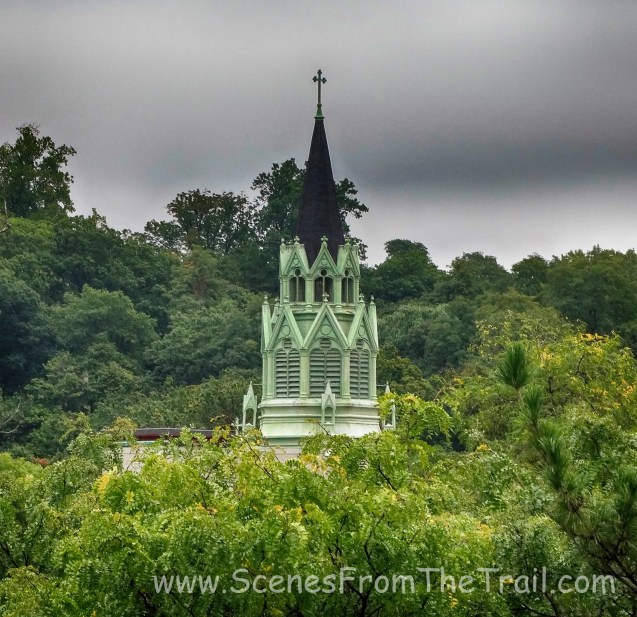
It was a cold January morning with temps in the mid 20’s, but sunny. A perfect day to do some exploring. Our first stop would be an abandoned cemetery that sits behind the Reformed Church of Beacon. Originally the Reformed Dutch Church of Fishkill Landing, is a congregation of the Reformed Church in America. It claims to be the oldest church in Beacon. The original church started out as a small and simple white frame structure. It wasn’t until the late 1850’s that a new church had to be built because it was outgrown. The 2 1/2 story Victorian Gothic church was completed in 1859 and made the National Register of Historic Places in 1988.
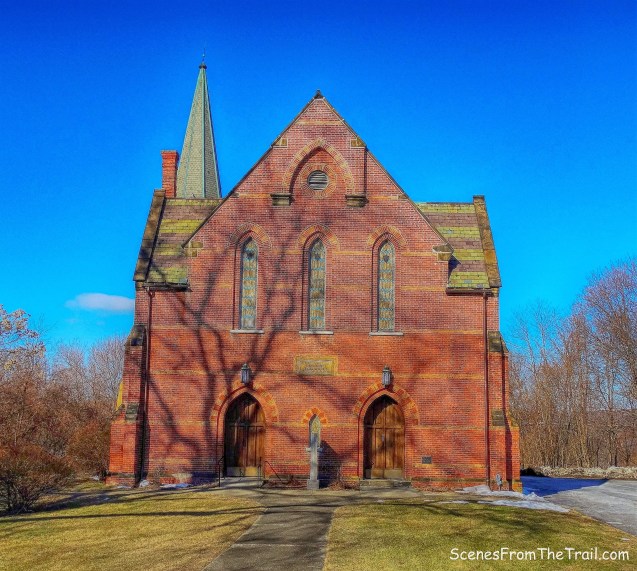
Reformed Church of Beacon

Reformed Church of Beacon

According to their website, “The Holy Spirit is alive and moving at the Reformed Church of Beacon.” That doesn’t seem to be the case for the cemetery, which lays in abandon just feet away.
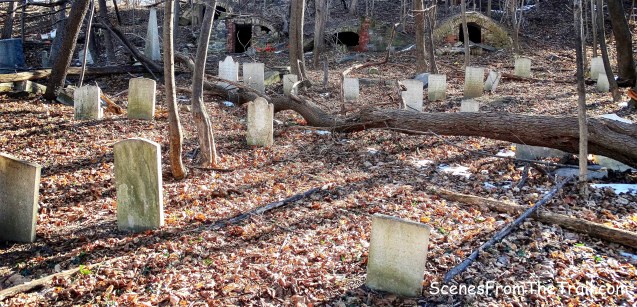
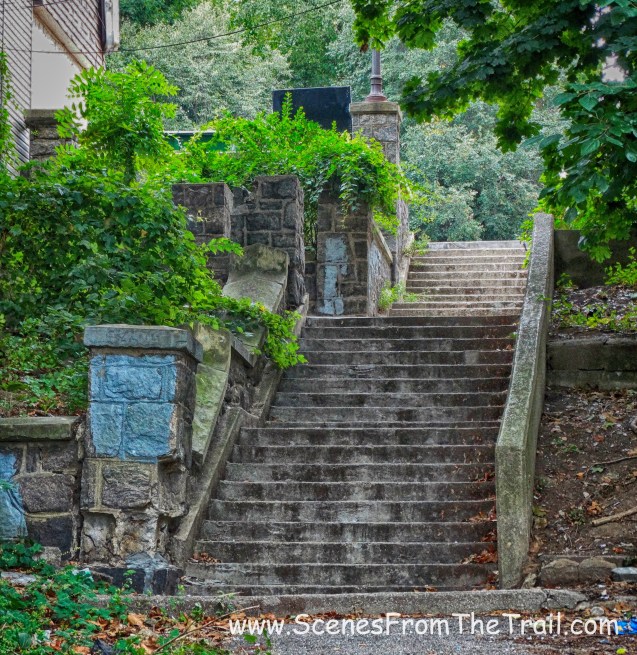
Reformed Church of Beacon Cemetery

Reformed Church of Beacon Cemetery

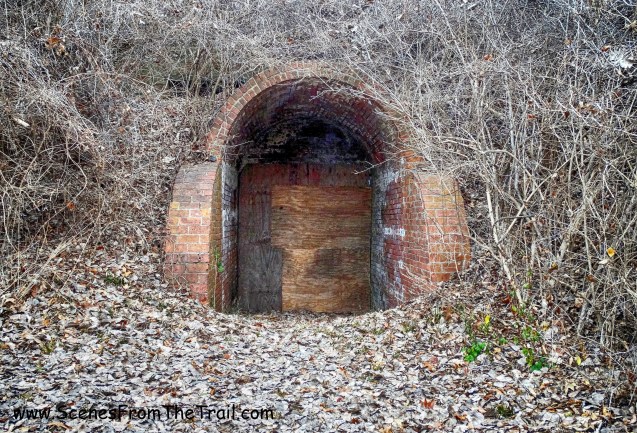
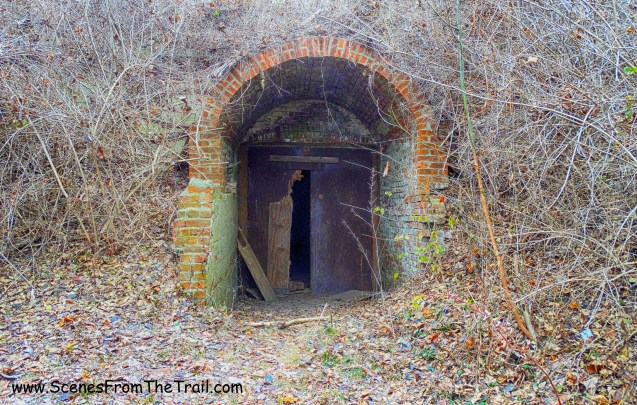
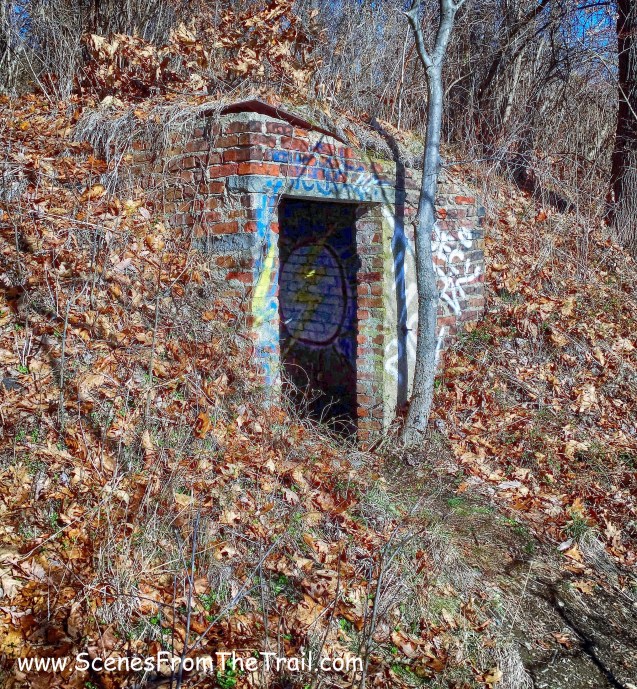
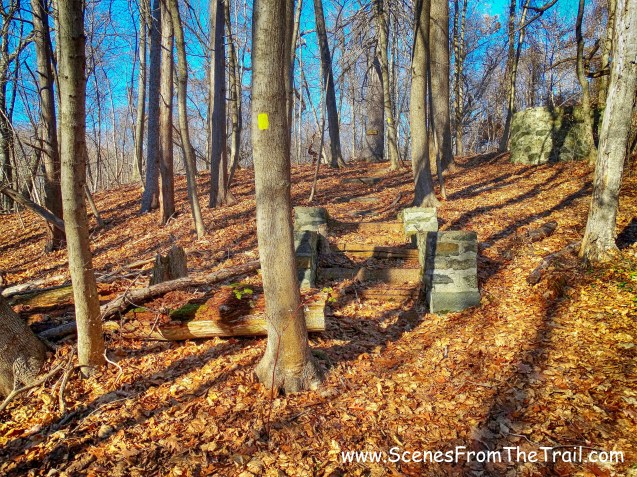
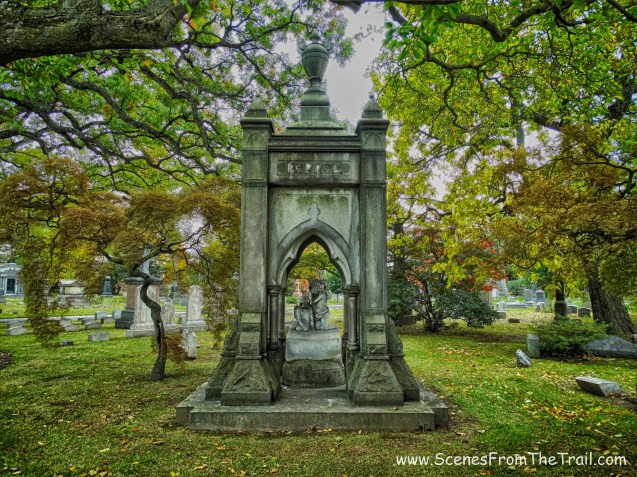
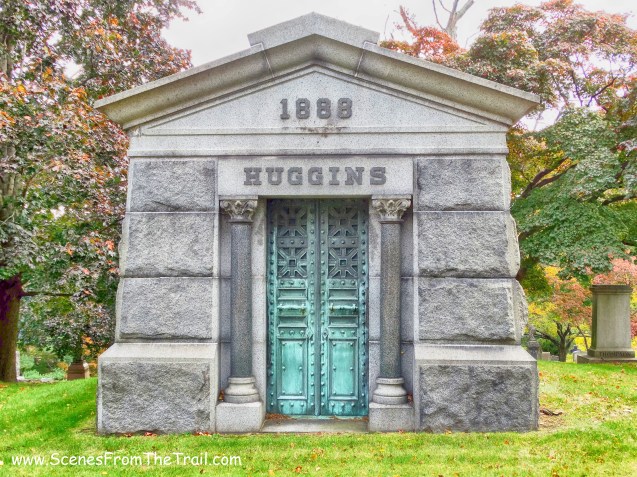
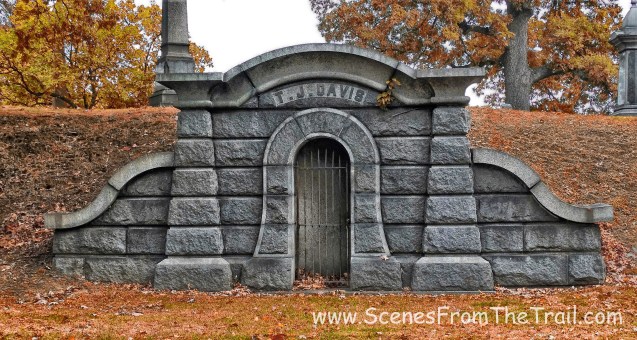
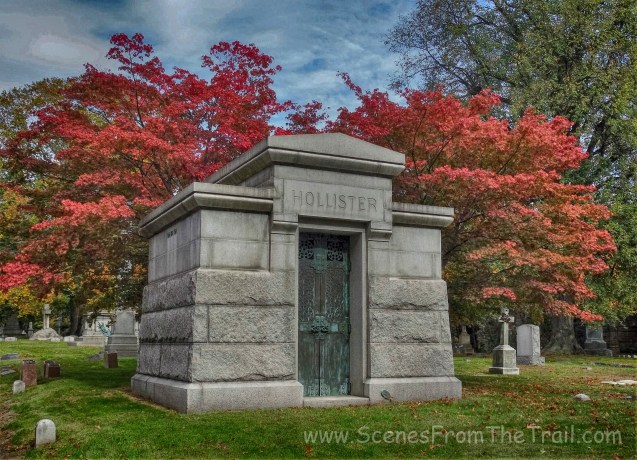
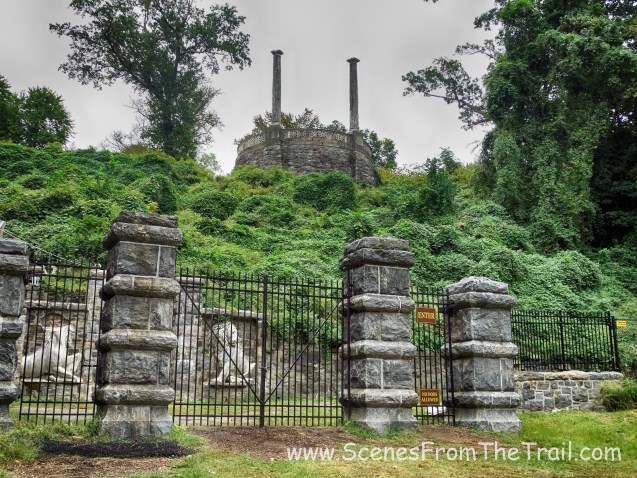
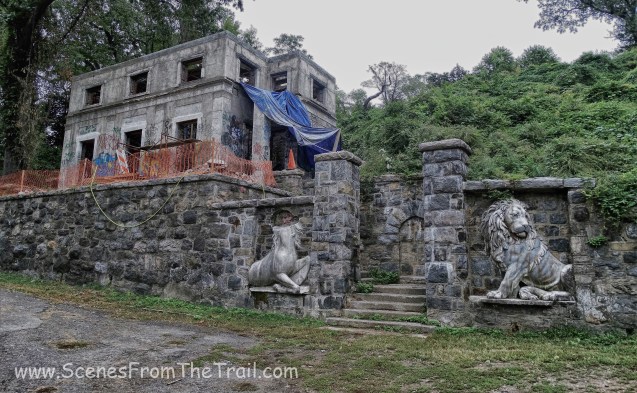
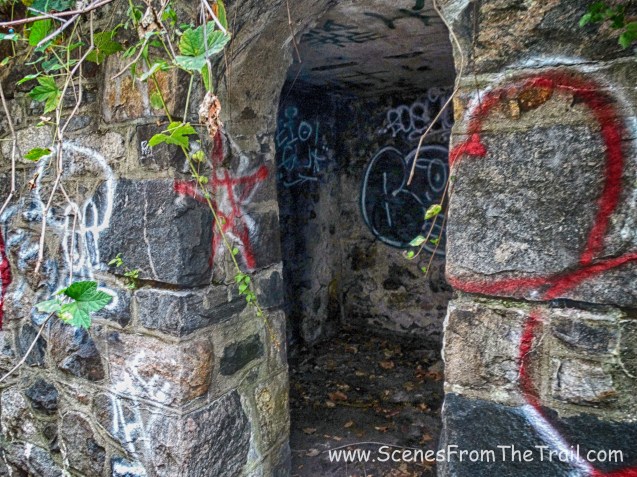
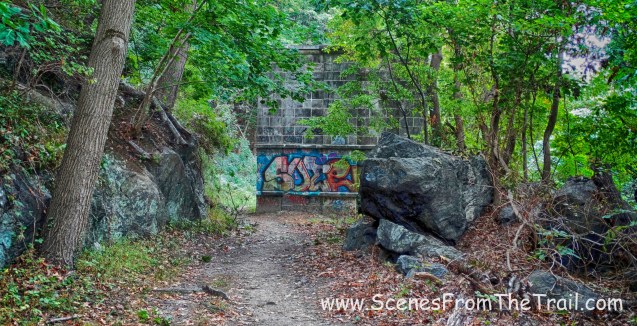
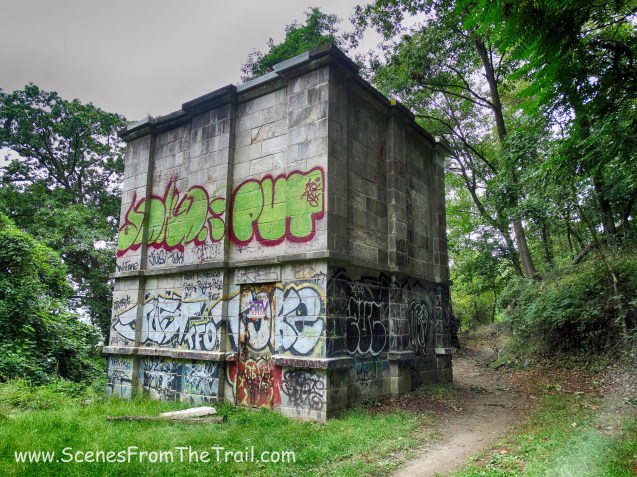
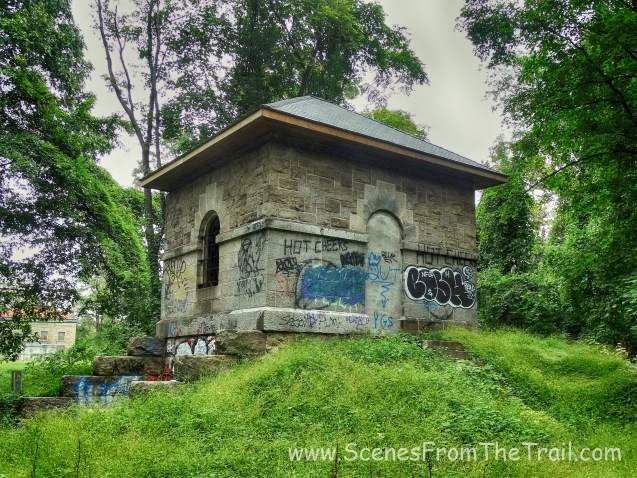
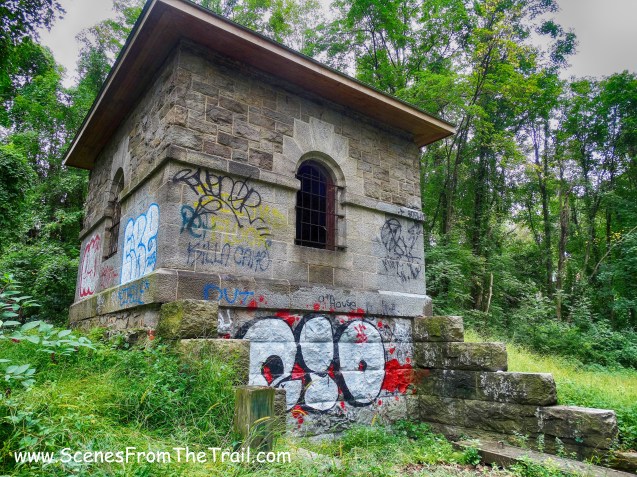
The family burial vaults that were built into the hillside are now empty and exposed to the elements.

burial vaults

burial vaults

Colonel William Few, a signer of the U.S. Constitution for the state of Georgia, was once buried in the family vault in this cemetery. Due to the condition of the cemetery, his remains were removed in 1973 and re-interred in Augusta, Georgia.

burial vault

burial vault

Its graves date from 1813 to the early 20th century, but some have been re-interred elsewhere in the years since the cemetery fell into decline.

burial vault

burial vault

I am not sure if the same can be said for those that were laid in the ground.
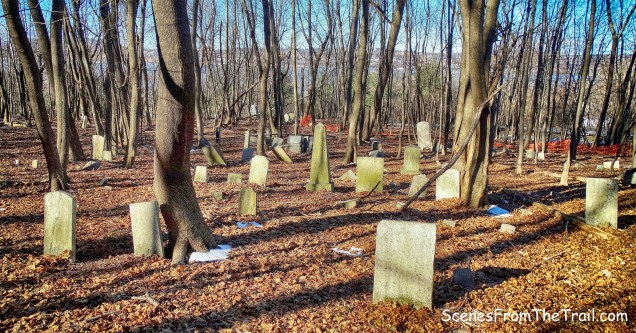
Reformed Church of Beacon Cemetery

Reformed Church of Beacon Cemetery

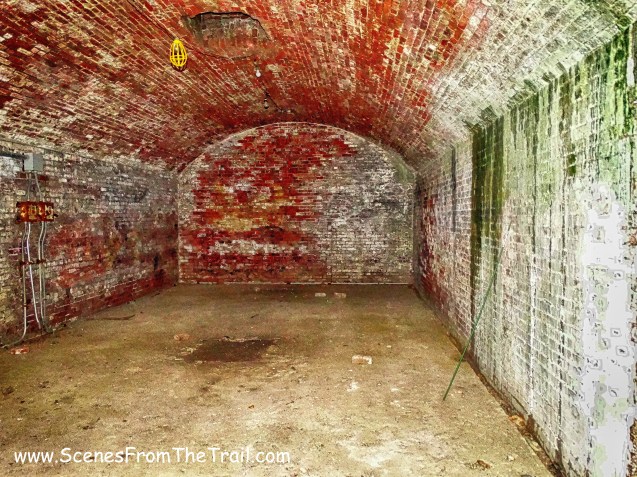
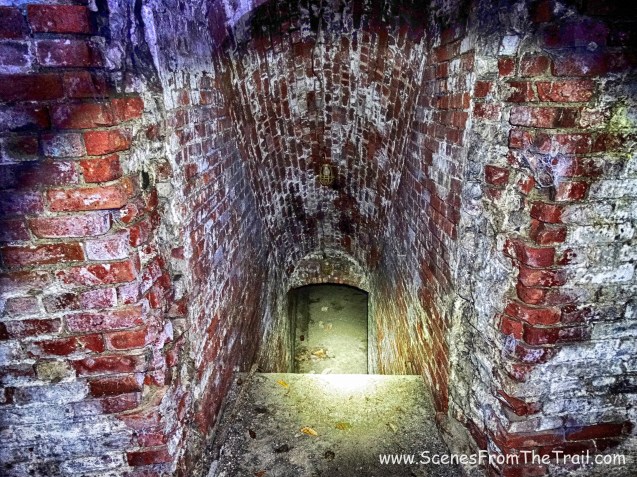
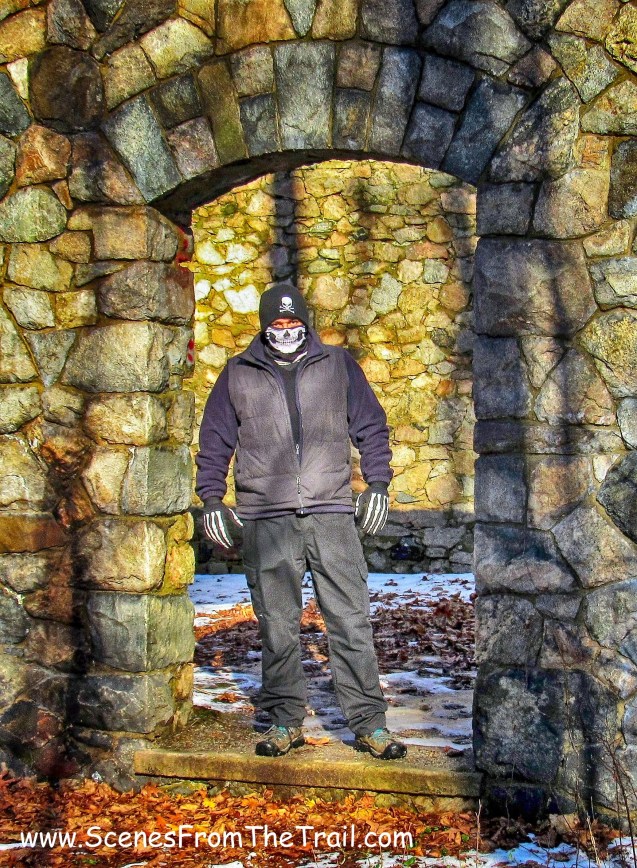
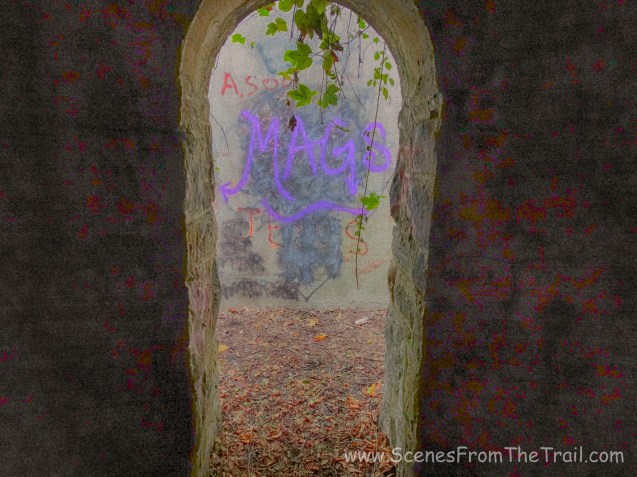
From the inside looking out.

burial vault

burial vault

Our next stop was an old school, located not too far away. In Historic Beacon Robert J. Murphy and Denise Doring Van Buren wrote: Designed by renowned architect Frederick Clarke Withers the building is unexpectedly churchly in appearance – and, in fact, it was once used as a chapel. Built in 1865, it is our oldest schoolhouse extant. Its long history even includes hospital duty: during the Great Flu Epidemic of 1918 the Red Cross used the school as an emergency hospital to treat the overflow of Beacon’s sick.
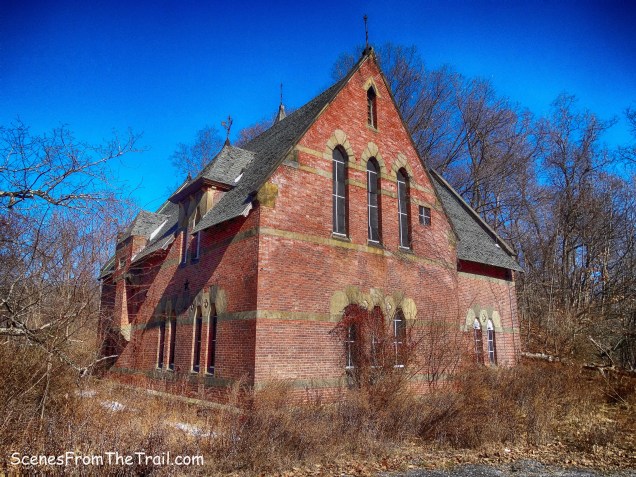
Tioronda School

I spotted this building on Google Maps while searching for the abandoned cemetery and at first I thought that the cemetery was here. Even after I pinpointed the location of the cemetery, I thought that this place warranted a visit as well. Besides the information above, I could not find anything else of note online.

Tioronda School

The school sits on a desolate section of town, a stone’s throw from Fishkill Creek. The property around it is overgrown and neglected. I took a walk around the building to get a better look and the back door which was a sheet of plywood, was ripped off and laying on the ground. I heard some noises coming from the inside so I did not attempt to enter. Someone or something was moving about and I did not want to come face to face with them. I was able to capture the ensuing image from the doorway.

school

school

The front entrance is on the west side of the building.

front entrance

front entrance

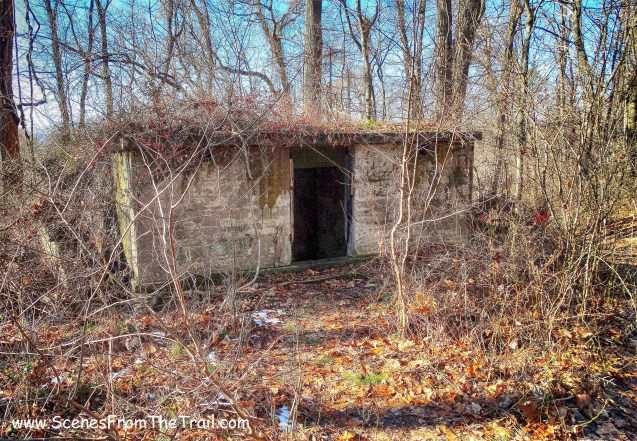
There is also a small outbuilding close by.

school

school

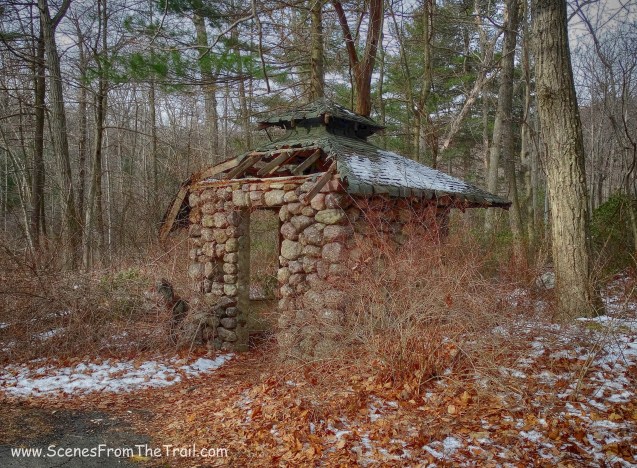
I’m not sure what the purpose of this building was for, but it had a small wood burning stove and a chimney built in.
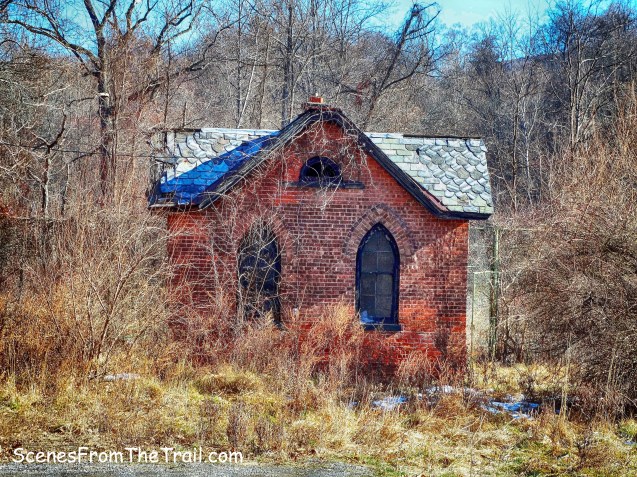
outbuilding

outbuilding

A safety screen was peeled back and I was able to get a peek inside.
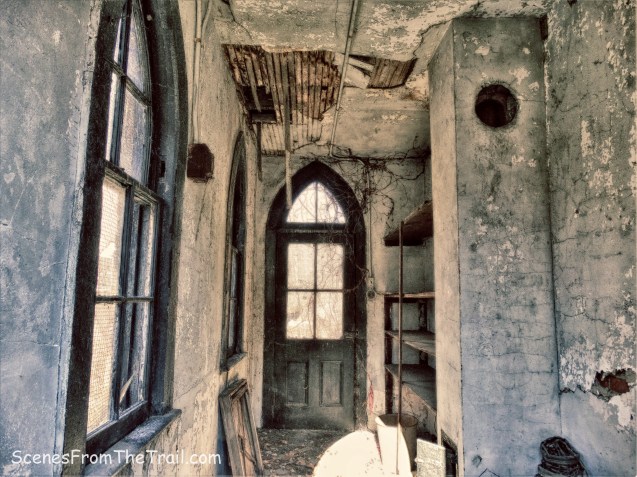
outbuilding

outbuilding

Within feet of the outbuilding there is a tennis court that has seen better days.
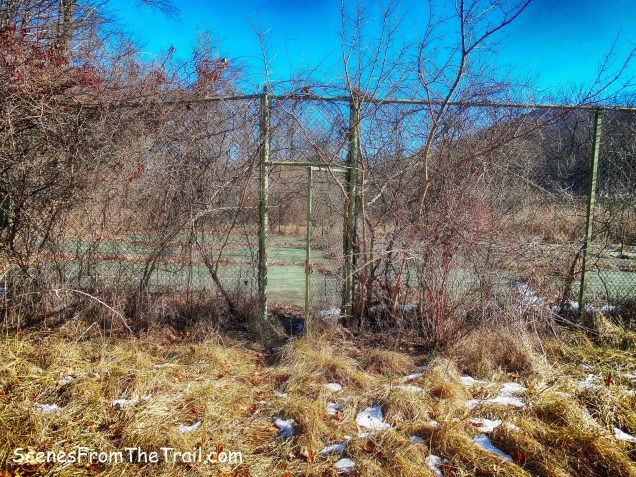
tennis court

tennis court

Tennis anyone? I would have borrowed a racket from whomever was lurking inside the school, but that was a terrible racket.

tennis court

tennis court

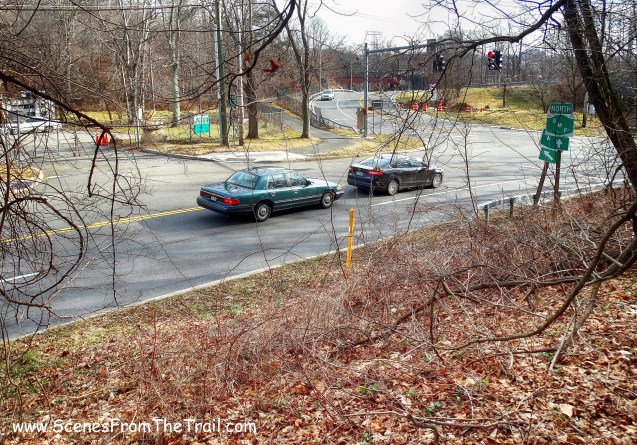
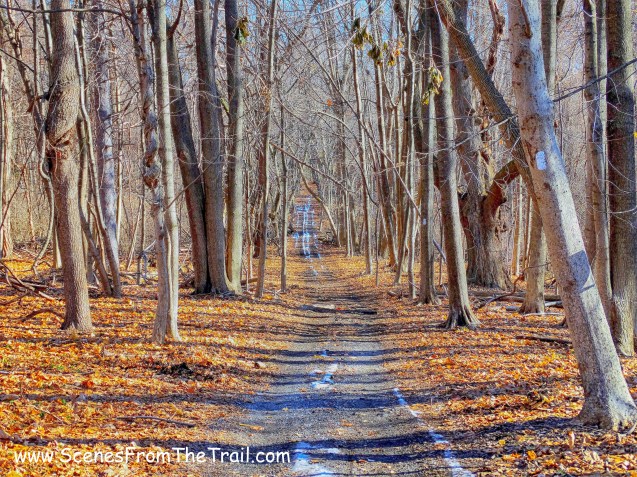
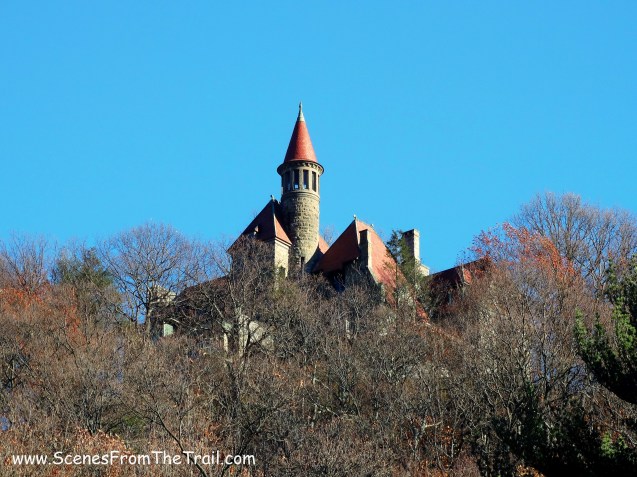
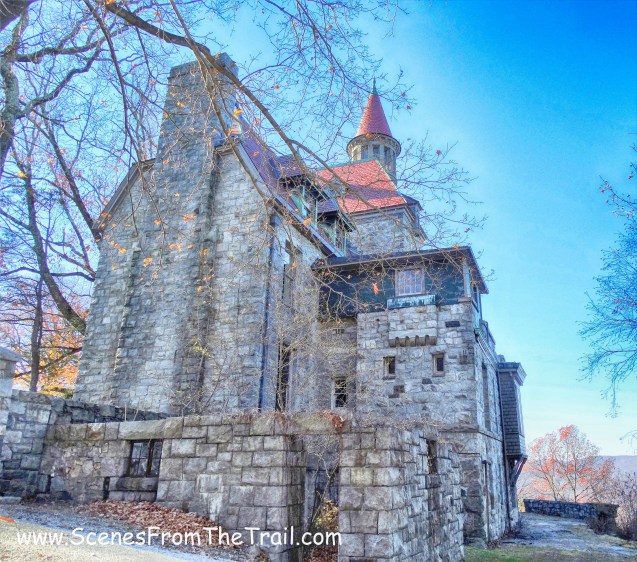
Once we were done checking out the school, we left the vehicle parked alongside the road and began to walk up the hill. Our next stop was The Craig House Institute which was just up the hill right alongside Route 9D. Originally built for Civil War General Joseph Howland in 1859, the Victorian mansion was the first American privately owned psychiatric hospital. The architect was Frederick Clarke Withers, once a partner of Calvert Vaux, better known as co-designer with Frederick Law Olmsted of Central Park in Manhattan. For decades it was America’s most prestigious rehabilitation home, the perfect haven for patients to be cured. In reality it was a place of great sadness and despair.
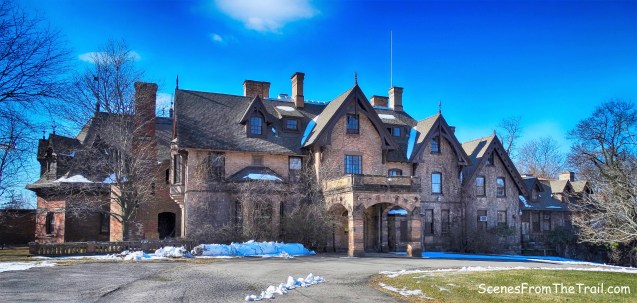
The Craig House Institute

The Craig House Institute

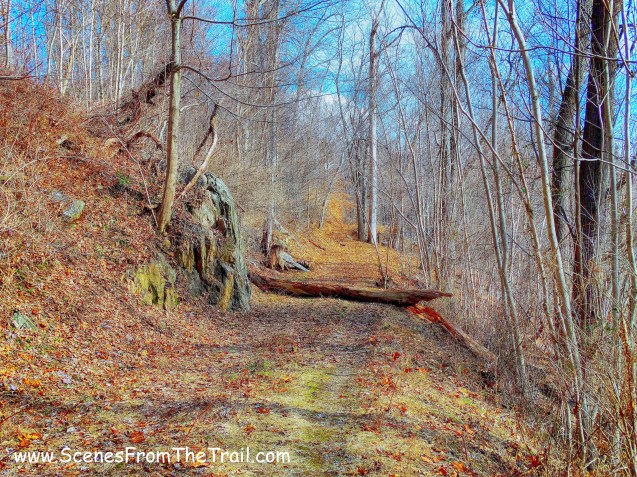
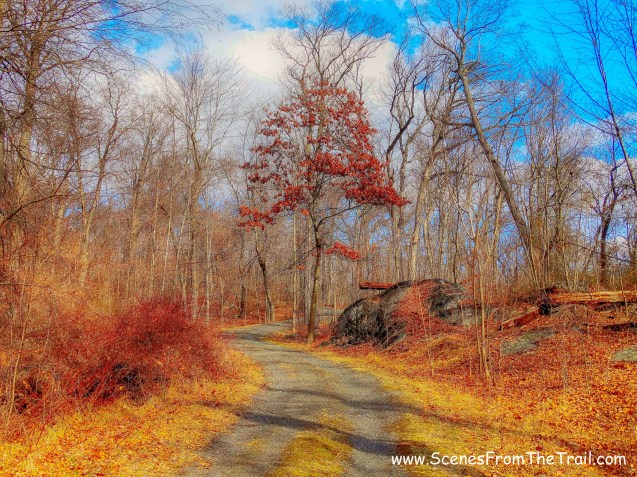
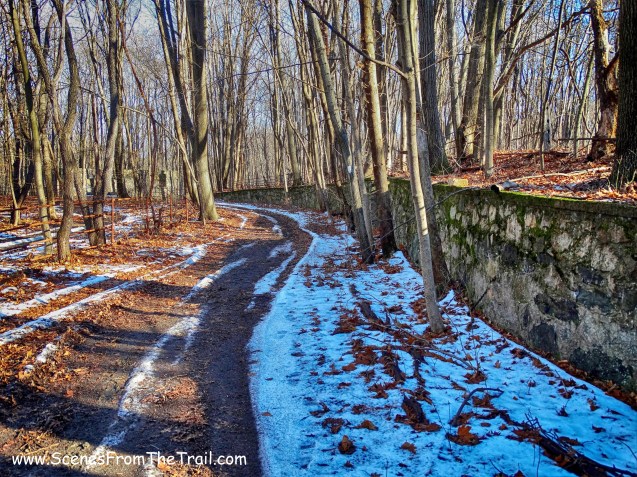
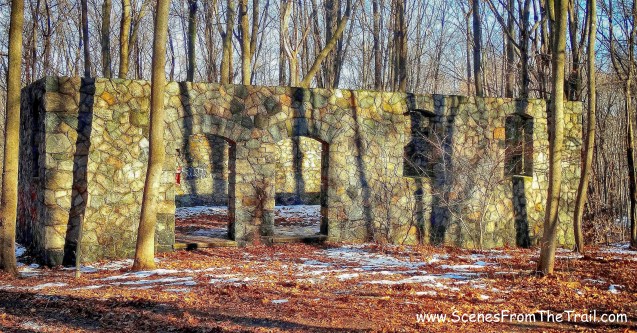
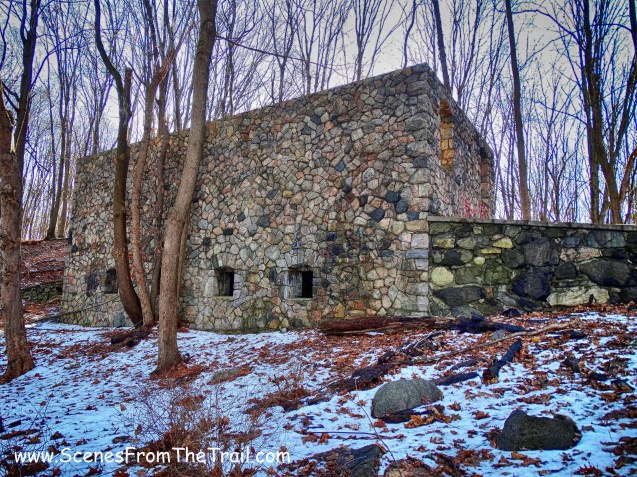
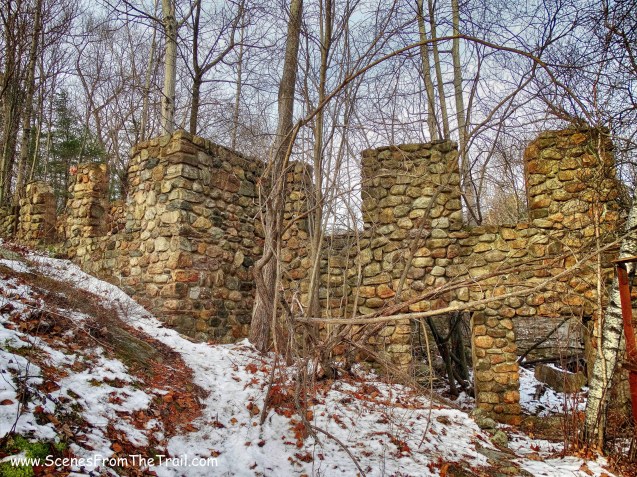
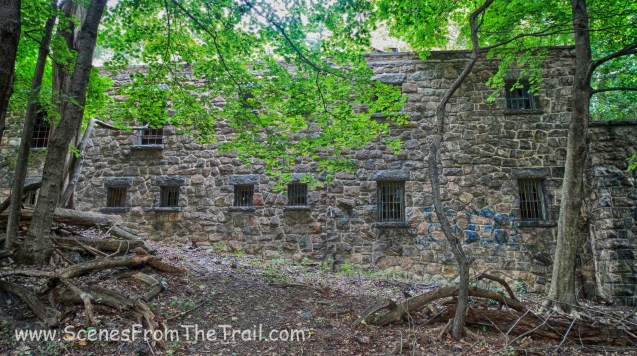
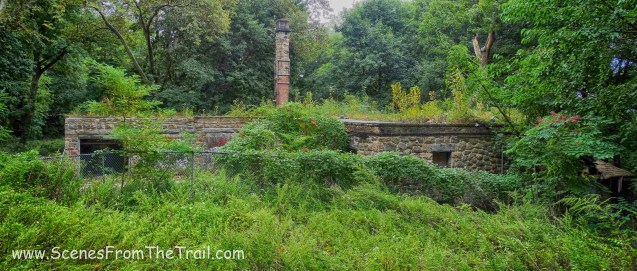
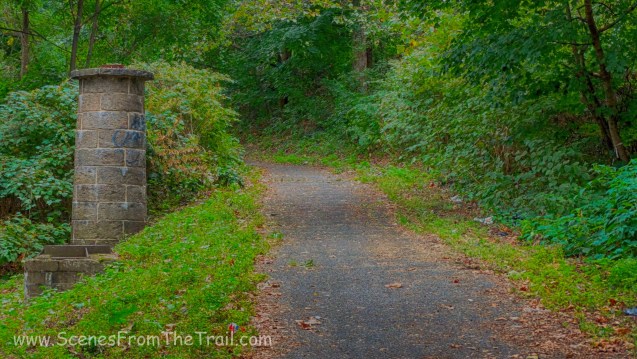
I had read about this place and it seemed like an interesting subject to photograph. As we walked up the hill I saw a paved road that led into the woods. It looked as it may have been a service road that led onto the property. I had read about numerous other buildings on the grounds that had either burnt down or had been torn down. I decided to take this route and see what may be hiding away back there. Not too far from where we entered, there were ruins of a building to the left. I bushwacked through the thorn bushes to get a closer look. I did not notice any remnants of any interior walls along the ground and it appeared to me that this building had an open floor plan. Perhaps a dining hall or a gymnasium?
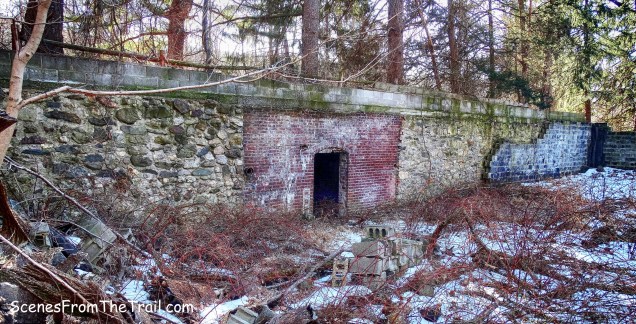
ruins

ruins

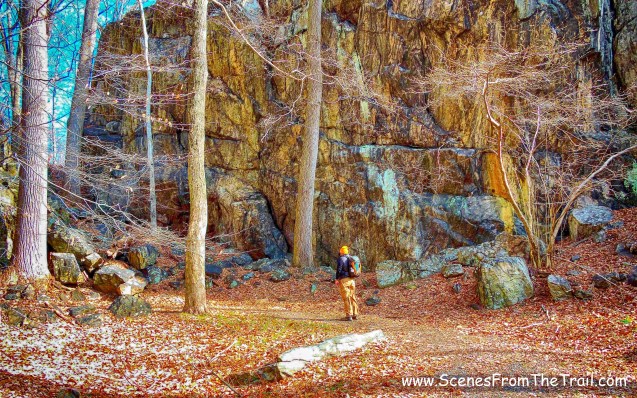
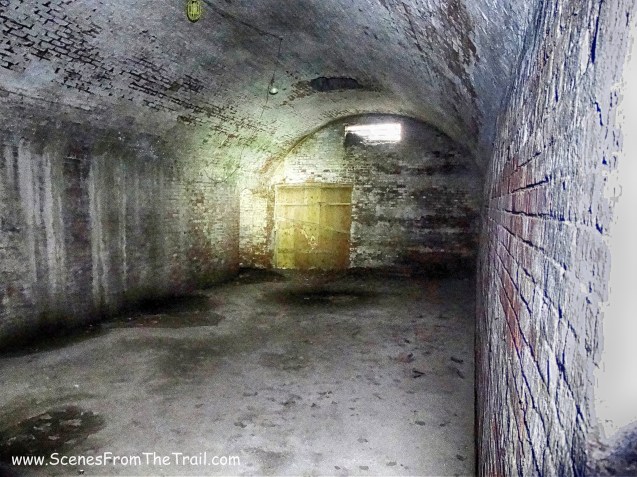
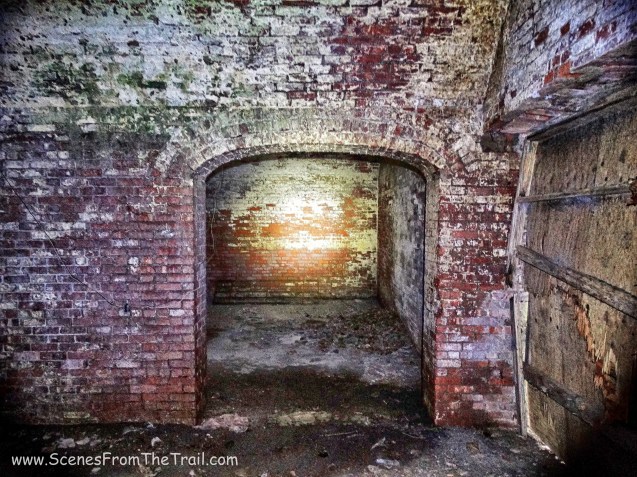
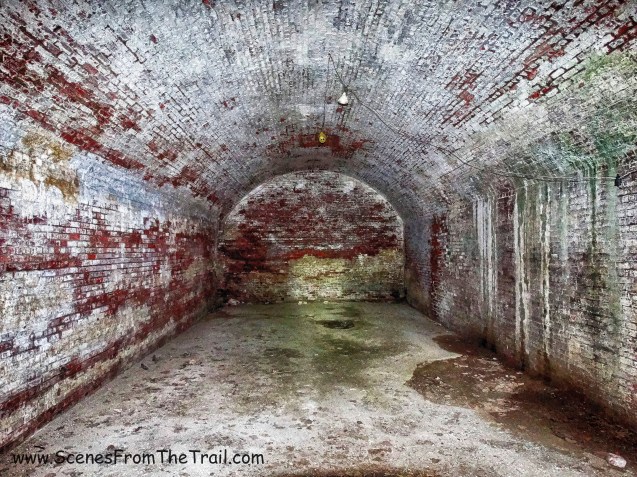
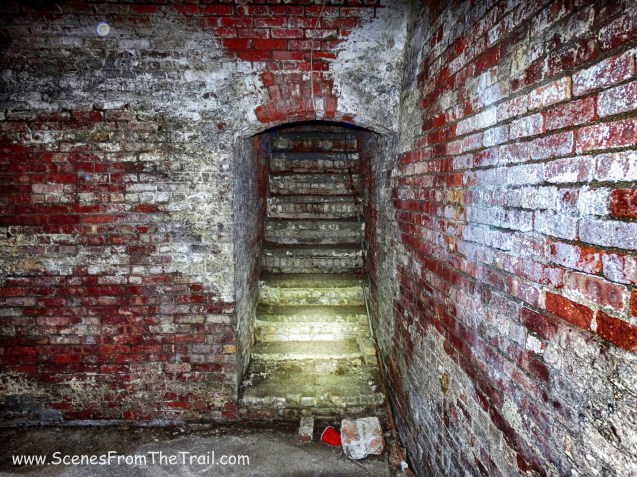
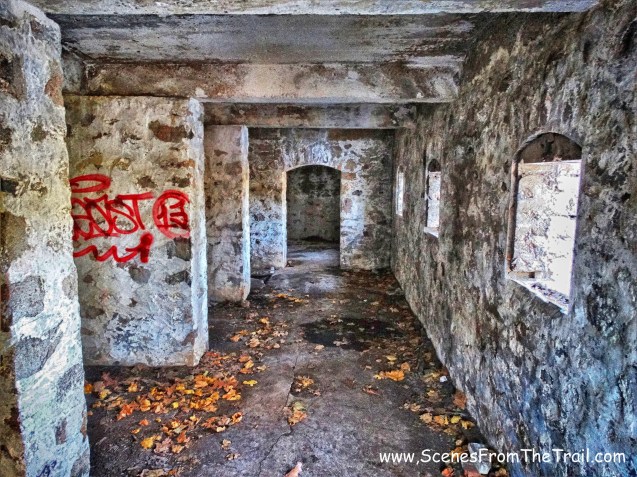
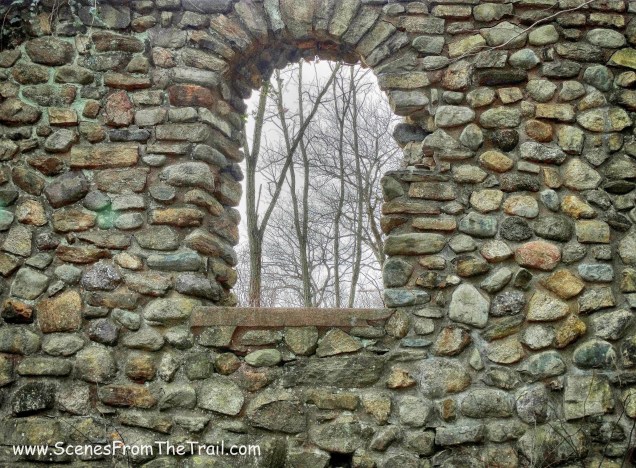
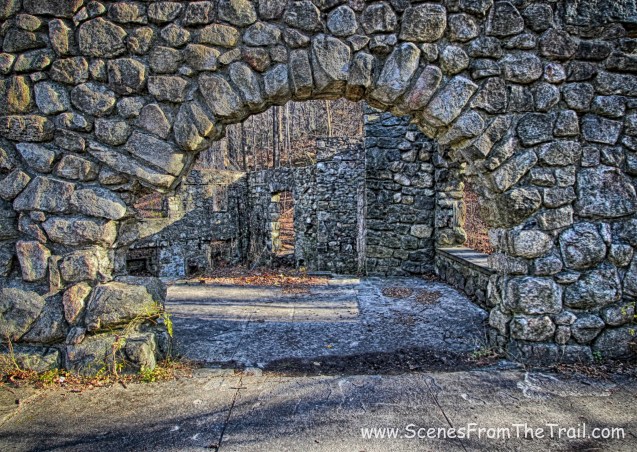
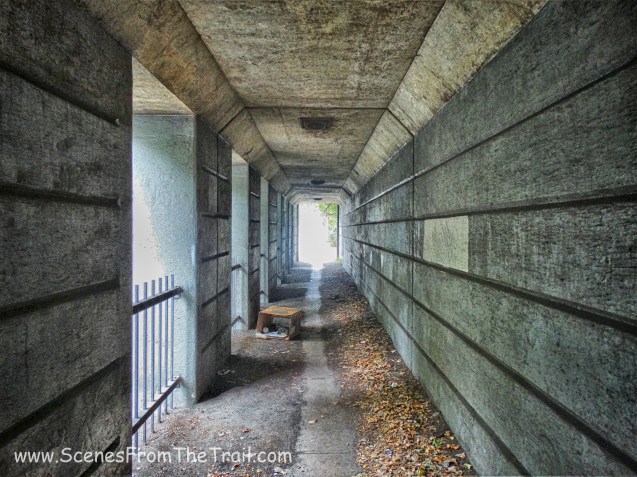
I walked over to the doorway to get a look inside. The room sat underneath the road that we had just walked on and had a similar appearance to an old wine cellar although that would not be practical for a sanitarium.
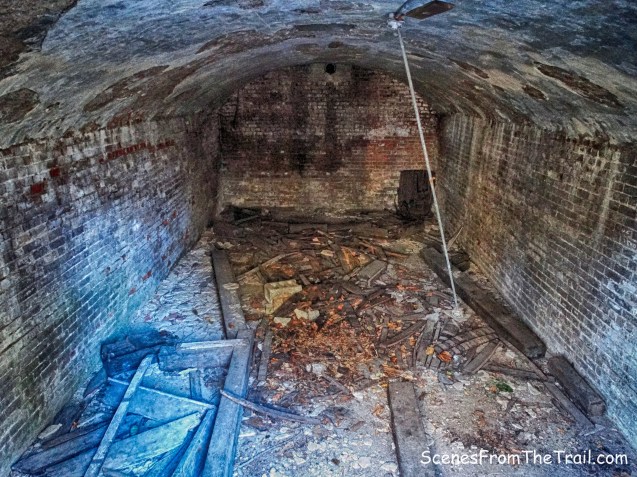
ruins

ruins

We continued on the service road until it led us out onto one of the main roads of the property. We walked up to the front of the mansion to get a close up view of this palatial hospital. This is some information that I have gathered about its most prominent residents. Zelda Fitzgerald, the wife of F. Scott Fitzgerald, was committed in 1932, after years of struggling with mental illness. She died in 1948 during a fire in another psychiatric hospital in North Carolina. Frances Ford Fonda the wife of Henry Fonda and mother of Jane and Peter Fonda, committed suicide here in 1950 at the age of 42 by cutting her throat with a razor. Her suicide came just days after Henry Fonda personally asked her for a divorce.

The Craig House Institute

The Craig House Institute

Rosemary Kennedy spent time at Craig House after a lobotomy left her in a virtually infant-like state. Jackie Gleason used Craig House as a place to relax, recharge and dry out. It is rumored that he had donated a pool table for the residents to use. Marilyn Monroe checked in under an assumed name to deal with her many issues.
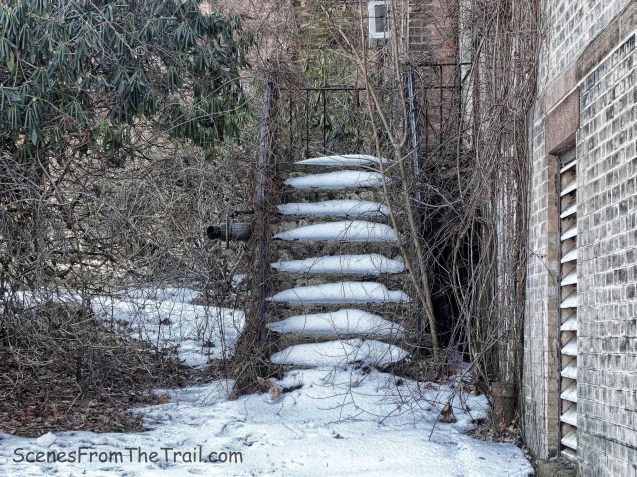
The Craig House Institute

The Craig House Institute

Apparently left over from a former renovation.
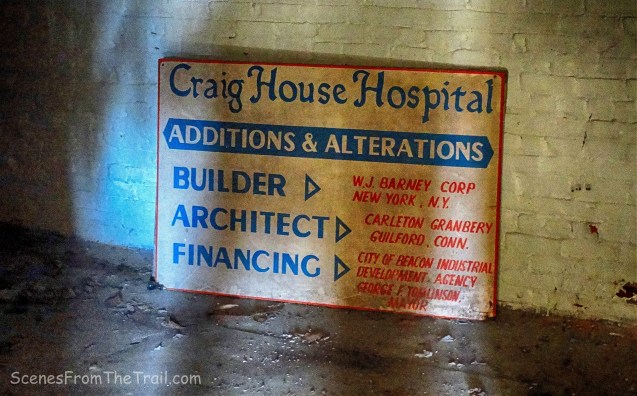
The Craig House Institute

The Craig House Institute

The once exclusive hospital closed in 1999, but the tragedy of the house doesn’t end there. It was bought in 2003 by Robert Wilson, a Wall Street hedge fund founder. In December of 2013 at age 87, he jumped to his death from a window of his Upper West Side apartment building.
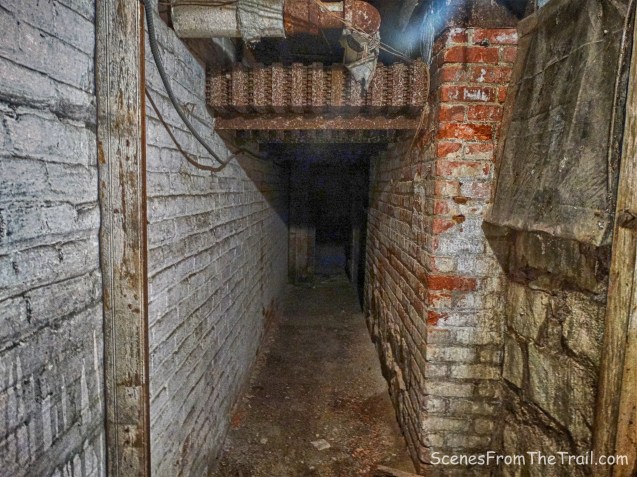
The Craig House Institute

The Craig House Institute

“I love that the story can’t be changed again and one more place is haunted – old sorrows and a half-forgotten happiness are stored where they can be recaptured.” ~ Zelda Fitzgerald

The Craig House Institute

The Craig House Institute

It was an quite an intriguing morning in Beacon. So much so that I decided to pen two blog posts about this day behind the lens. I hope that you enjoyed the images I captured along with the information that I provided. I actually learn more during the writing of my blog than I do before my visits to these historical places. As always, please don’t forget to follow my blog and feel free to share this post with your friends. Comments and/or suggestions are always welcome as well.

See ya!

See ya!
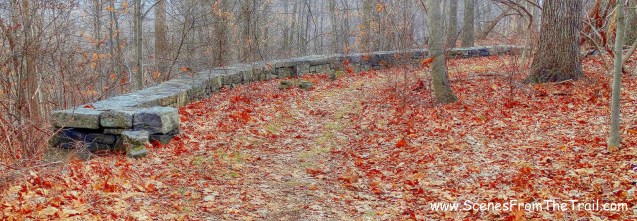


Madam Brett Park to Denning’s Point State Park and Long Dock Park

February 4, 2017 – Beacon, NY

Difficulty: easy

Length: approximately 4 miles

Route type: circuit

Map: Beacon Riverfront Trail Map – East Hudson Trails Map

Madam Brett Park has a mile of gently sloping, gravel-surfaced trails that lead to a dramatic waterfall and tidal marsh; a short, narrow woodland trail provides access to the marsh observation platform. A boardwalk along Fishkill Creek allows universally accessible exploration of this important Hudson River tributary and the wildlife it supports.

In 1988, New York State acquired Denning’s Point to expand the Hudson Highlands State Park system. A 64-acre peninsula on the Hudson River at the mouth of the Fishkill Creek, the 1.2 miles of trails, a woods road makes a circuit of the heavily wooded point. Denning’s Point is closed seasonally to protect the habitat of the bald eagle.

Long Dock Park has universally accessible walking paths that connect the park’s many amenities. There also is a link to the 1-mile Klara Sauer Trail (named for Scenic Hudson’s former president), which spans the waterfront from the Beacon train station to Denning’s Point State Park.

After our Abandoned in Beacon exploration, we made our way to Madam Brett Park for a short easy hike. I have been here numerous times to view the waterfall and walk around. It is quite an enjoyable place which is rich in history. From the parking area we walked east past the kiosk onto a gravel road which is marked with white blazes and were greeted with a stunning sight. Tioronda Falls with Mount Beacon in the background.

Tioronda Falls

Tioronda Falls

We walked on the gravel road, occasionally detouring down one of the trails that led to the creek in order to get a good vantage point of the falls. We arrived at the concrete platform and took in the awe-inspiring view.

Tioronda Falls

Tioronda Falls

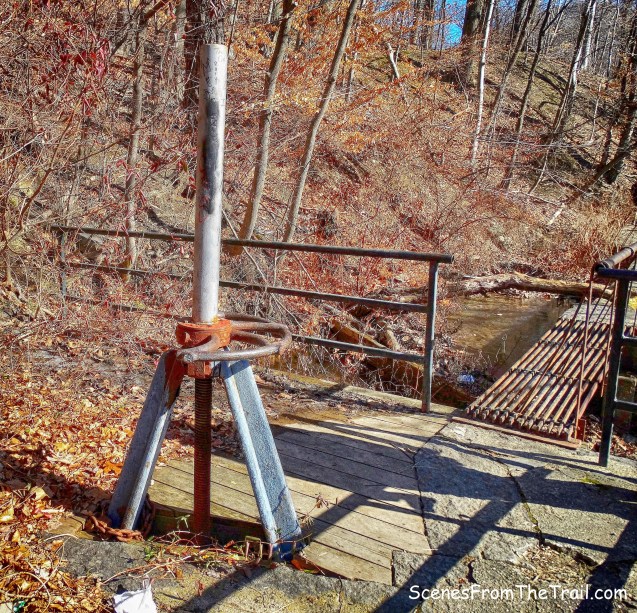
We walked past the relief valve and onto the iron catwalk……

relief valve and iron catwalk

relief valve and iron catwalk

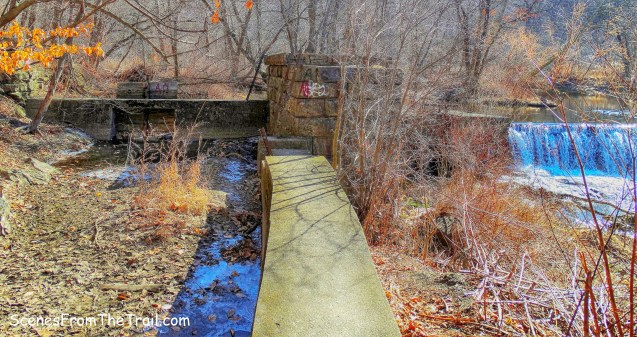
and walked across the narrow ledge of Tioronda Dam.

Tioronda Dam

Tioronda Dam

I walked quickly along the narrow surface, trying to keep my balance. As a kid, no big deal, but as an adult, a spill would be costly. We walked to the stone platform which was right alongside the falls.

Tioronda Dam

Tioronda Dam

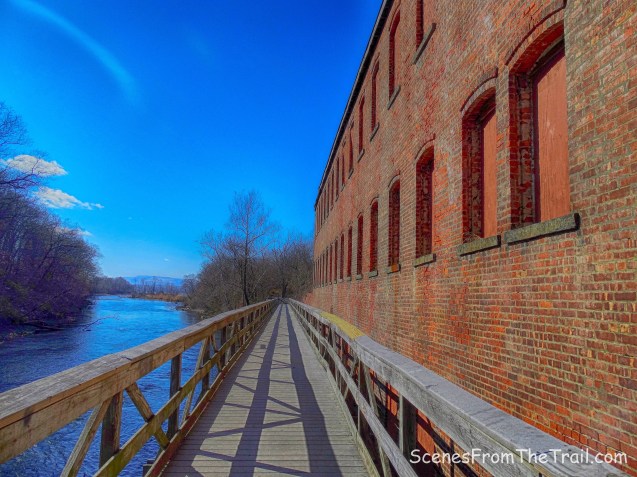
We spent a little time admiring the beauty of Tioronda Falls then retraced our steps back to the parking area. We then headed west on the white-blazed trail which led us to a boardwalk that was sandwiched between Fishkill Creek and the ruins of the Tioronda Hat Works.

boardwalk

boardwalk

Right by the start of the boardwalk is the Tioronda Bridge which once carried South Avenue across Fishkill Creek. Built between 1869 and 1873 by the Ohio Bridge Company, it was demolished by the city in December 2006. The bridge had been listed on the National Register of Historic Places in 1976, but in 2006 had deteriorated to the point that it had to be closed.

Tioronda Bridge

Tioronda Bridge

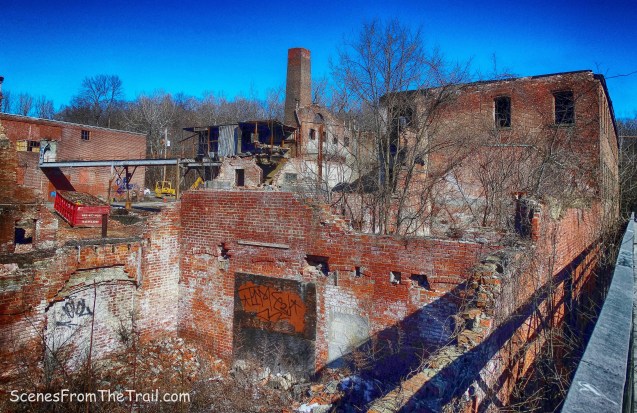
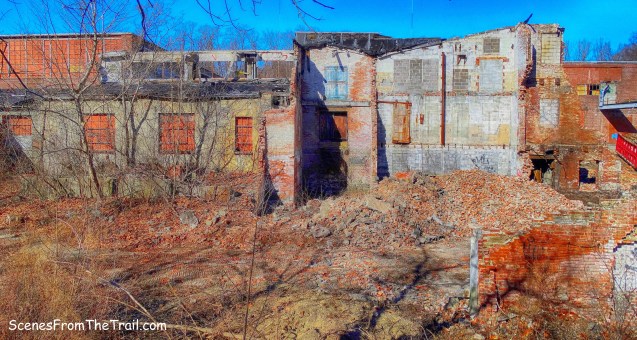
The Tioronda Hat Works opened in 1879 and later became the Merrimack Hat Company which closed in 1949. The brick buildings were used sporadically as warehouses over the following decades. Since about 2010 they have been undergoing a woefully slow demolition.

Tioronda Hat Works

Tioronda Hat Works

Just a few days before our visit, there was a fire here, but luckily the firefighters were able to keep it from damaging the boardwalk.

Tioronda Hat Works

Tioronda Hat Works

Like all the mills that used to dot the area, it was powered by Fishkill Creek and Tioronda Falls.

Tioronda Hat Works

Tioronda Hat Works

When we came to the end of the boardwalk we walked along the wide woods road and then came to a red-blazed trail on the left. This footpath is only 700 feet long and loops around Fishkill Marsh.

red-blazed trail

red-blazed trail

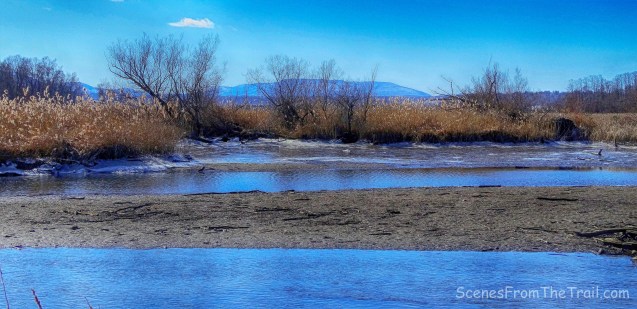
We walked along the edge of Fishkill Marsh and came to a clearing that afforded us a nice view.

Fishkill Marsh

Fishkill Marsh

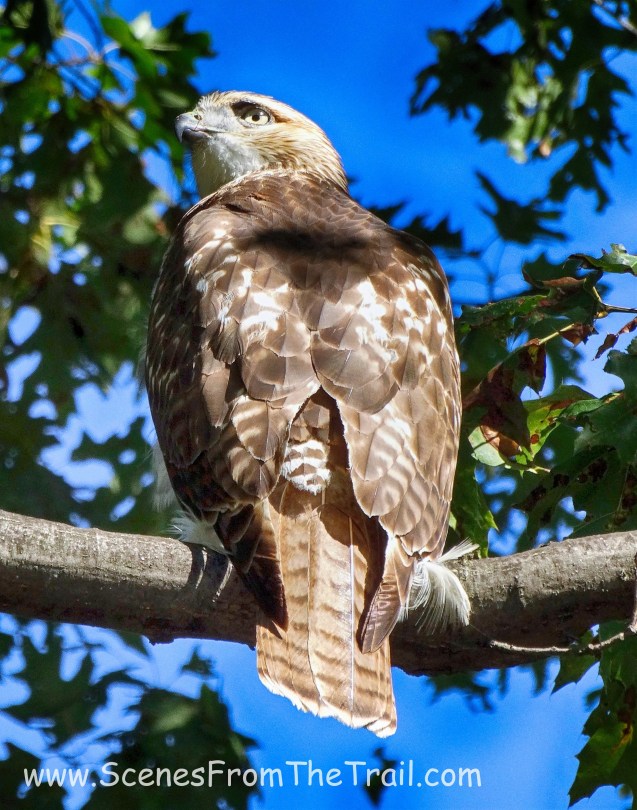
The red-blazed trail led us back to the white-blazed trail where we turned left. We stopped for a moment and sat on a bench alongside the trail. There we saw a Red-tailed Hawk sitting in a tree just feet from the trail.

Red-tailed Hawk

Red-tailed Hawk

We continued on the white-blazed trail until its terminus and where the connector trail began. We crossed the bridge that spanned the Metro-North railroad tracks.

bridge

bridge

A nice view to the west from the bridge as we crossed it into Denning’s Point State Park.

view to the west

view to the west

Once over the bridge and crossing over the train tracks, we were then walking on the Denning’s Point Trail. In a few minutes we arrived at the ruins of the Denning’s Point Brick Works. There was a group of noisy youths inside which had passed us earlier on the trail. They were on one of the upper levels so we climbed in a window on the lower level and took a look around.

Denning's Point Brick Works

Denning’s Point Brick Works

The ensuing image looks like what used to be a restroom.

Denning's Point Brick Works

Denning’s Point Brick Works

Denning’s Point Brick Works was established around 1885. The yard supplied bricks for high profile projects including the Empire State Building and Rockefeller Center.

Denning's Point Brick Works

Denning’s Point Brick Works

The brickyard operated until 1939, when it literally ran out of clay and was abandoned. We wandered around downstairs for a bit then we headed upstairs.

Denning's Point Brick Works

Denning’s Point Brick Works

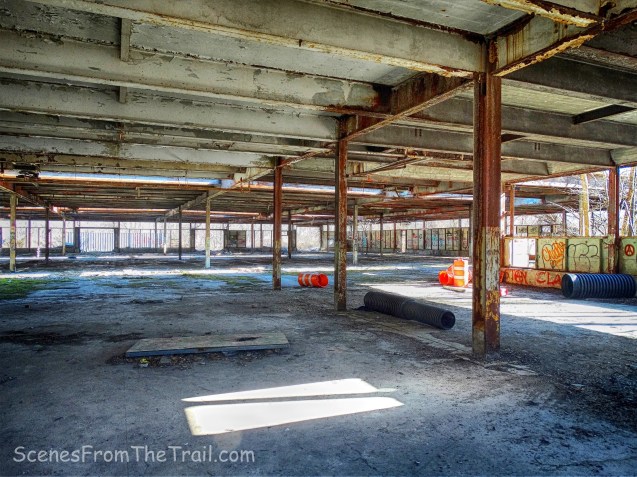
This building is massive and structurally sound for being in such neglect.

Denning's Point Brick Works

Denning’s Point Brick Works

Denning's Point Brick Works

Denning’s Point Brick Works

Once we got our fill of the Denning’s Point Brick Works, we stepped back outside to continue our hike. We walked over to the edge of the Hudson River looking south towards Sugarloaf Mountain and Breakneck Ridge.

Sugarloaf Mountain

Sugarloaf Mountain

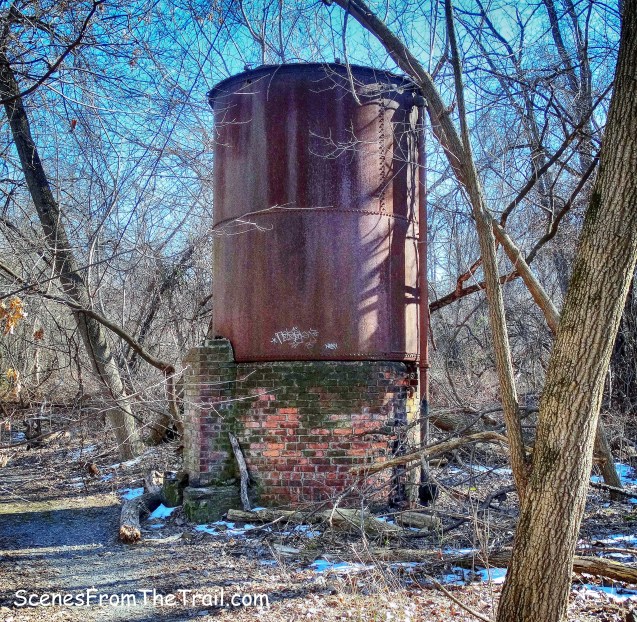
The trail around the point itself was chained off due to nesting eagles. We instead walked past the Beacon Institute building and onto a trail that led towards the river. There we saw what appears to be an old water tank.

water tank

water tank

After spending a little time by the river we retraced our steps on the Denning’s Point Trail and turned left when we arrived at a junction with the Klara Sauer Trail which leads to Long Dock Park.

Klara Sauer Trail

Klara Sauer Trail

We walked north along the abandoned railbed with the Hudson River on our left.

railbed - Klara Sauer Trail

railbed – Klara Sauer Trail

We ended up in the heart of the park with more views of the Hudson River.

Long Dock Park

Long Dock Park

We then retraced our steps on the Klara Sauer Trail, turning left at the junction with the Denning’s Point Trail which was pretty much a straight shot back to Madam Brett Park. We made our way back to the parking area and enjoyed some hot chocolate and sandwiches. I hope that you enjoyed the hike and don’t forget to follow my blog. As always, I welcome any comments or suggestions regarding past or future hikes. Now get out there and take a hike!

Pros: easy to follow trails, Hudson River, ruins, historical features.

Cons: can get crowded, partial closure due to nesting eagles during winter months.

take a hike!
take a hike!

Glenville Woods to Raven Rock and Fergusons Lake

January 29, 2017 – Tarrytown, NY

Difficulty: easy-moderate

Length: approximately 7 miles

Route type: out and (almost) back

Map: Glenville Woods map on site  –  Rockefeller State Park Preserve


Located in the Village of Tarrytown, in the Town of Greenburgh, Glenville Woods is a 44.7-acre nature preserve which connects to a 580-acre strip of unbroken parkland. The Preserve’s hiking trails enhance access to several local recreational sites, including the North County Trailway and the Tarrytown Lakes Trail. The property contains woods, wetlands, steep slopes and rock formations.

I noticed the sign one day while visiting the deli next door and took a short walk into the woods just to check it out. After checking out the location on Google Maps, I noticed that I may be able to walk all the way to the Tarrytown Lakes, cross the road by Eastview and enter the southeast section of Rockefeller State Park Preserve to continue hiking. I mapped out the hike and decided to give it a shot.

It was another decent January morning with temps in the mid 30’s and sunny. It had snowed in recent days so I decided to hike closer to home where there would be little or no snow on the ground. Since this hike included areas that I had not been on before, we spotted cars. By spotting cars that gave us the luxury of extending our hike in Rockefeller’s without having to retrace our steps through Glenville Woods. We dropped one vehicle at the Park and Ride by the Tarrytown Lakes and then drove over to Glenville Woods Preserve to begin our hike. Since it was Sunday, we parked in the lot for the Wedged In Deli which is closed on Sundays. We walked over to the kiosk which has a trail map and took a look at it. We would begin the hike by following the blue-blazed trail. We then proceeded into the park and crossed over a footbridge.

footbridge

footbridge

We stopped for a moment on the footbridge…..

Glenville Woods Park Preserve

Glenville Woods Park Preserve

and then continued on the blue-blazed trail passing a small cinder block building as we began to head uphill.

blue-blazed trail

blue-blazed trail

A yellow-blazed trail came in from the left so we checked it out. The trail seemed to lead towards houses so we turned right at the next junction and began heading east, continuing up the hill as the blazes disappeared. We walked through a collapsed section of stone wall and then saw a  stone retaining wall off to the right. From what I read, this wall was built by the Emergency Work Bureau of Westchester County in 1933.

stone wall

stone wall

As we walked a little further north we passed some kind of guard rail made from stone and wood.

guard rail

guard rail

It looks as if this was once a woods road. Although the stonework was probably done in the 1930’s, this road may have been in use well before that. We continued on and came to what looked like some kind of stone overlook that faced the Saw Mill Parkway.

overlook

overlook

As we walked further north, the trail became more overgrown and harder to follow. We could see the Saw Mill Parkway through the trees so we just stayed parallel to it, semi-bushwacking through the trail.

overgrown trail

overgrown trail

The trail faded out and we encountered heavy brush as we neared the Eastview exit off the Saw Mill Parkway so we bushwacked towards the SMP. We walked along the parkway briefly and then ducked back into the woods. We were now bushwacking, but it was much easier and we were close to the Park and Ride, where we had left one of the vehicles. I happened to look down and found an old bottle.

old bottle

old bottle

I could see why it was named Cheer Up. One of the ingredients was Lithia.

old bottle

old bottle

We then proceeded towards Old Saw Mill River Road.

Old Saw Mill River Rd

Old Saw Mill River Rd

We walked down an embankment and crossed the road. We jumped on the North County Trailway which begins right here. The North County Trailway was constructed along the Putnam Division railbed of the former New York Central Railroad (“Old Put”). At its north end it becomes the Putnam County Trailway, which continues along the former railbed to Brewster, New York.

North County Trailway

North County Trailway

We walked up onto the NCT heading north and passing the tracks of the old railway.

tracks

tracks

Now we were looking for some sort of connector trail that led to Rockefeller State Park. I had called the park office and spoke to a woman on the phone. She told me that there was access to the park from here and that the gate was always open. The gate that we saw was locked and there was a fence between Rockefeller’s and the NCT. My GPS told me that the trail was about 100 feet away on the other side of the fence. As we walked, I happened to see a section of fence that was pushed over. We made a beeline for the opening and climbed up the steep hill towards Perry Road, the trail we were looking for.

Perry Road

Perry Road

Most of the trails at Rocky’s are carriage roads which makes for a nice gentle walk in the woods. This section of the park appeared to be seldom used as the leaves did not appear to have been trampled on. I feel lucky to have grown up in the area and have such a beautiful place to escape to.

Perry Road

Perry Road

After a mostly level walk on Perry Road, we came to a junction. Here we made a hard right and began walking on Raven’s Rock trail. It led us downhill and then leveled off.

Raven's Rock trail

Raven’s Rock trail

After a slight ascent, we arrived at Raven Rock. Washington Irving wrote in The Legend of Sleepy Hollow; “Some mention was made also of the woman in white, that haunted the dark glen at Raven Rock, and was often heard to shriek on winter nights before a storm, having perished there in the snow.”

Jeff Canning and Wally Buxton’s History of the Tarrytowns, gives some more details:
“Raven Rock is part of Buttermilk Hill in the northern reaches of the Rockefeller estate near the old Hawthorne Traffic Circle. Legend tells us that three ghosts, not just Irving’s lady in white, roam the area.

The lady in white was a girl who got lost in a snowstorm and sought shelter from the fierce wind in a ravine by the rock. The snow drifted in and she perished during the night. It is believed that the spirit of the lady meets the wanderer with cries that resemble the howling of the wind, and gestures that remind one of drifting snow, warning all to stay away from the fatal spot.

A more ancient legend tells of an Indian maiden who was driven to her death at Raven Rock by a jealous lover. Her spirit is believed to roam the area, lamenting her fate.

The third spirit is that of a colonial girl who fled from the attentions of an amorous Tory raider during the Revolution and leaped from the rock to her death“.

Raven Rock

Raven Rock

This massive rock formation dominates the hillside. We stopped here to take a break and see if any ghouls would make their presence known. I was bummed, not a ghost in fright…er I mean sight. To get an idea of how immense Raven Rock is, I included an image of me standing in front of it.

Raven Rock

Raven Rock

I took a walk between the two rock formations to check the place out.

Raven Rock

Raven Rock

From the top of Raven Rock, I could see White Plains and Hawthorne through the trees. I had fun scrambling up there and then climbing back down. What a cool place this was. I had never been here before nor do I remember hearing about it. When we were done climbing around, we headed back up Raven’s Rock trail and proceeded north on Perry Road.

Perry Road

Perry Road

As we walked along Perry Road, there was a green fence that paralleled the trail. When the fenced turned left, so did we. Using this unmarked road, In a few minutes we arrived at Fergusons Lake. There are four lakes real close to each other and three are called Fergusons Lake. A tripartite lake named for George Ferguson, who had four large icehouses on the lake west of the Pocantico Hills Central School.

Fergusons Lake

Fergusons Lake

Fergusons Lake

Fergusons Lake

We then walked pass the lake and ended up on Ferguson’s Loop trail. After a short while on this trail we saw an open field through the trees. We took a short footpath towards it and stopped to admire the scenery.

field

field

We wanted to take a break here, but there was a cow fence keeping us out. We walked along the edge of the field and saw a stone wall. Here we climbed atop the wall and out onto the field. We were right across Route 448 from Stone Barns. We found a nice flat rock to sit on and warmed ourselves in the sun. We then retraced our steps to the Ferguson’s Loop trail and made a right, now heading southwest. We came to another dammed lake (also named Fergusons Lake).

Fergusons Lake

Fergusons Lake

Fergusons Lake

Fergusons Lake

We retraced our steps once again until we got to the Flying Squirrel Trail and turned right, heading uphill. We came to the junction with Perry Road and followed it south, back to where we originally got on it. There we bushwacked down the hill and passed through the collapsed section of fencing and back out onto the North County Trailway. We headed south towards the Park and Ride where we spotted a vehicle. From there we drove back to Glenville Woods to pick up the other vehicle. We were now ready to dig in to some homemade Chicken Marsala with Wild Rice and Banana Splits for dessert. I hope that you enjoyed the hike and don’t forget to follow my blog and/or share with your friends. See you next time and don’t forget to get out there and take a hike!

Pros: cool rock formations, carriage roads, lakes, historical features, solitude

Cons: bushwacking

Take a hike!

Take a hike!

Turkey Mountain Nature Preserve

January 21, 2017 – Yorktown Heights, NY

Difficulty: moderate

Length: approximately 3 miles

Route type: circuit

Map: Turkey Mountain Nature Preserve


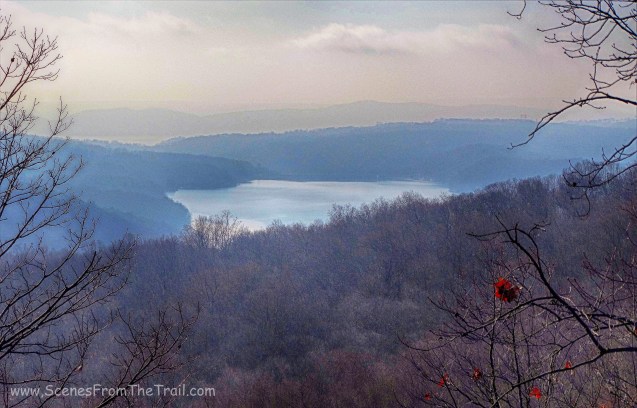
The 125 acre preserve, owned by the Town of Yorktown with its 831 foot summit offers panoramic views of the Croton Reservoir, Hudson River, Manhattan Skyline, Hudson Highlands, and Shawangunk Ridge. It has has 3.3 miles of hiking trails.

I did this hike right after finishing Nelson Mountain Fire Tower at Salt Hill. I chose Turkey Mountain because of its close proximity to Salt Hill and also because I read that it is the highest point in Westchester County. After a foggy morning hike to the fire tower, it cleared up and turned out to be a gorgeous day on the trails. By the time we got there, it was close to noon and the parking area was pretty full. I’m not one for crowds when I’m out on the trail, but sometimes that can’t be helped. We began our hike by ascending on the white-blazed trail which is somewhat steep, but is only .7 miles to the summit. The blue-blazed trail is close to 2 miles long and was our return route. As it turned out, we saw more people passing us going in the opposite direction so I made the right choice. The white-blazed trail was relatively level to start, but in the distance through the trees I could see the summit and ultimately our destination.

White-blazed trail

White-blazed trail

The trails are pretty well kept and they have some wooden footbridges over wet areas which works out well.

White-blazed trail

White-blazed trail

White-blazed trail

White-blazed trail

Several trails intersected the White-blazed trail, but we ignored them as we continued on. The trail began to climb rather steeply and we stopped occassionaly to catch our breath. Normally I don’t take a lot of photographs when the trails become strenuous. I like to concentrate on the task at hand.

White-blazed trail

White-blazed trail

The final push to the summit.

approaching the summit

approaching the summit

Once at the top we encountered numerous hikers. A lot of them with unleashed dogs even though there are “no dogs allowed.” I saw more dogs on this hike than at a dog park. I mentioned the “no dogs” rule to a few people and I got some dirty looks. We hung out at the summit soaking in some rays and taking in the view of the Croton Reservoir with a sliver of the Hudson River visible just beyond.

view from the summit of Turkey Mountain

view from the summit of Turkey Mountain

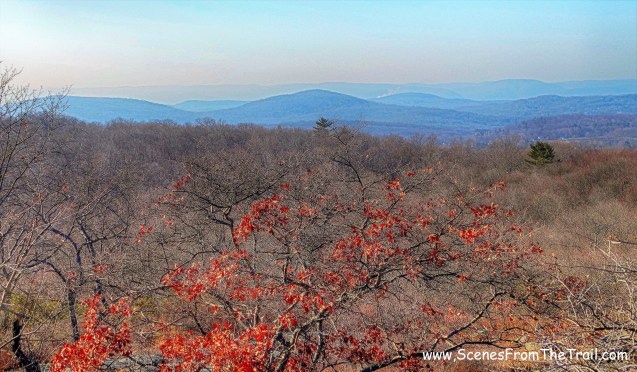
The view northwest wasn’t bad either.

view northwest

view northwest

Looking east, Hilltop Hanover Farm is visible and the mountains beyond.

view east

view east

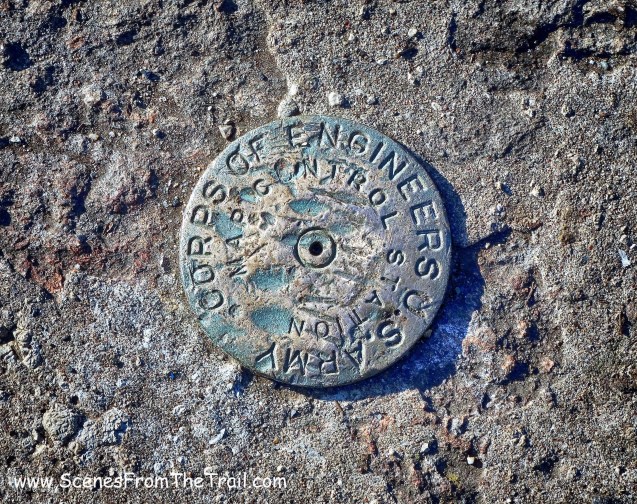
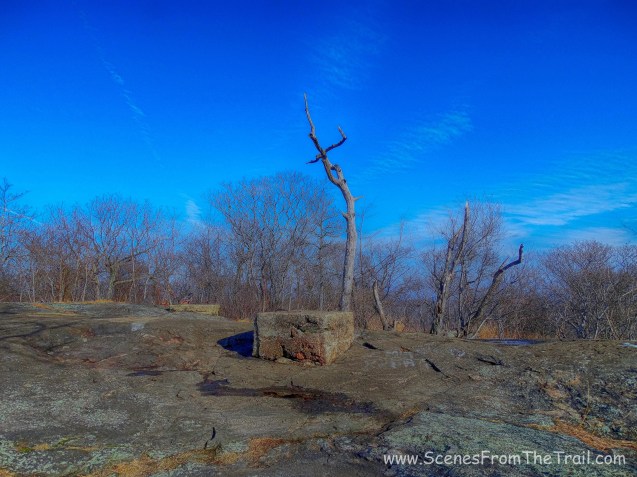
Also at the summit is a US Army Corps of Engineers stamped disk. There used to be a survey tower at this location and three concrete footings still remain. Survey towers were used by U.S. Coast and Geodetic Survey surveyors from the mid-1800s through the 1980s to obtain the clear lines-of-sight needed to conduct the surveys that are the backbone of our nation’s spatial reference framework. One of the most enduring and widely used types of towers was the Bilby Tower, designed by Jasper Bilby in 1926.

U.S. Army Corps of Engineers Map Control Station disk

U.S. Army Corps of Engineers Map Control Station disk

Two of the footings are visible in the image below.

Turkey Mountain summit

Turkey Mountain summit

The white-blazed trail ends at the summit and there is where we began our descent on the blue-blazed trail. It starts off under a canopy of trees….

blue-blazed trail

blue-blazed trail

….and over long flat rocks.

blue-blazed trail

blue-blazed trail

As we descended the mountain, we passed a few groups of hikers heading towards the summit. I can imagine how crowded this place gets on a warm summer day. The blue-blazed trail was steep in some sections and somewhat soggy, but quite picturesque with its stone walls and rock formations.

blue-blazed trail

blue-blazed trail

We then walked over another wooden footbridge with the parking lot now in sight. The lot was full when we got back and there were cars parked along the entrance road as well. Another successful hike in the books and we were off to feast on some slow cooker spare ribs and homemade mac and cheese. I hope that you enjoyed the hike and don’t forget to follow my blog and/or share with your friends. See you next time and don’t forget to get out there and take a hike!

Pros: Great views, well blazed trails, scenic woods, cool rock formations

Cons: Gets crowded, lots of loose dogs despite “no dogs allowed” rule.


Nelson Mountain Fire Tower at Salt Hill

January 21, 2017 – Town of Cortlandt, NY

Difficulty: moderate

Length: approximately 2.5 miles

Route type: up and back

Map: Google Earth or Google Maps


After publishing a post about Hudson Valley Fire Towers, I was contacted by a reader named Ben with information about a fire tower that lay in ruins alongside the Croton Reservoir. I was intrigued and knew that I had to check it out. Ben supplied me with enough information that I knew I could find my way to it. I wanted to do this hike the previous week, but some light snow fell and since we would be hiking on unblazed trails, I decided to wait until the snow melted. The weather for this Saturday morning hike was foggy in the morning, but sunny in the afternoon and in the mid to high 30’s, not bad for January.

The Nelson Mountain Fire Tower sits at the summit of Salt Hill and was  a 73′ Aermotor LS40 tower erected by the Conservation Department in 1950. This tower was placed in service in 1951, reporting 22 fires and 70 visitors. With the advent of aerial detection, this tower was closed at the end of the 1971 season. Some time following that date, the tower was cut down or pulled over by persons unknown and its twisted remains are still on the 540 ft. summit of Salt Hill. That was all the information I could gather about this fire tower along with an old black and white photograph courtesy of the Westchester County Historical Society.

Nelson Mountain Fire Tower at Salt Hill

Nelson Mountain Fire Tower at Salt Hill

I was also able to find a list of the keepers that were employed during its operation.

list of keepers

list of keepers

We parked alongside Croton Avenue and proceeded to the trailhead using the GPS coordinates that I was provided. Although we began there, upon our return I determined that a much easier way to the trail was alongside a stone wall which is visible from the road which leads right to the trail. Nevertheless, we bushwacked through the woods and up the hill looking for any sign of a trail. We came to a stone wall and walked through the collapsed section.

stone wall

stone wall

We continued pass the stone wall and veered left. Going straight would have been an extremely steep climb up the mountain so using common sense I figured any trail would have skirted around the shoulder of the hill. As we walked through the woods, we saw some red blazes on trees and I was pretty sure this was the trail we were looking for. I was told that the trail was unblazed, but as long as this red-blazed trail led us uphill, I knew we were going in the right direction.

red-blazed trail

red-blazed trail

Surprisingly this trail is well maintained, which was evident by the blowdowns being cleared from the trail. I noticed tire tracks on the trail so I guess that bikers use and maintain this trail.

red-blazed trail

red-blazed trail

The trail led up the mountain on switchbacks and steeply in some spots, but we kept huffing and puffing towards the summit. It was foggy, serene and quite scenic. We didn’t encounter another living soul during this hike. No wildlife was to be seen or even any birds chirping. It was eerily quiet and I loved it.

red-blazed trail

red-blazed trail

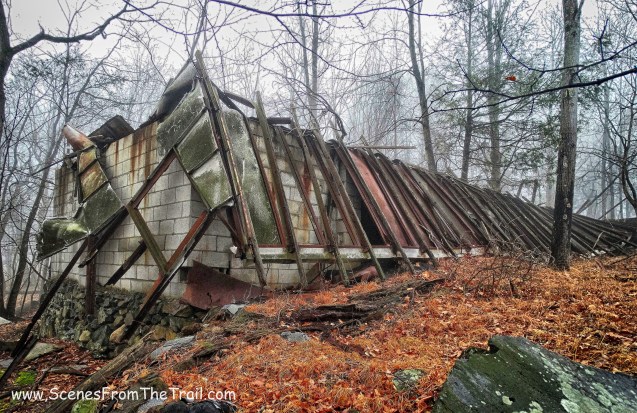
At one point the red blazes started to lead away from the summit and we stopped following them. The trail though unblazed was clearly discernible until we neared the summit. The trail petered out, but thanks to Ben I knew that would happen. We walked along the ridge hoping to catch a glimpse of what we were looking for. The dense fog made for poor visibility, but I noticed a rectangular shape through the woods. I thought it might be the ruins of a building, but as I neared it I realized that it was the top of the fire tower.

Nelson Mountain Fire Tower

Nelson Mountain Fire Tower

Nelson Mountain Fire Tower

Nelson Mountain Fire Tower

Nelson Mountain Fire Tower

Nelson Mountain Fire Tower

If a fire tower falls in the woods, does it make any noise?

Nelson Mountain Fire Tower

Nelson Mountain Fire Tower

It was pretty cool to see something that was pretty well hidden in the woods and that I had no clue existed. I grew up fishing in the area and have driven by Salt Hill countless times, never knowing what sat atop the summit. Thanks Ben. We explored the area and found a large cinder block building nearby. I do not know the origins of this building, but I can guess that it was possibly used for storage.

cinder block building

cinder block building

cinder block building

cinder block building

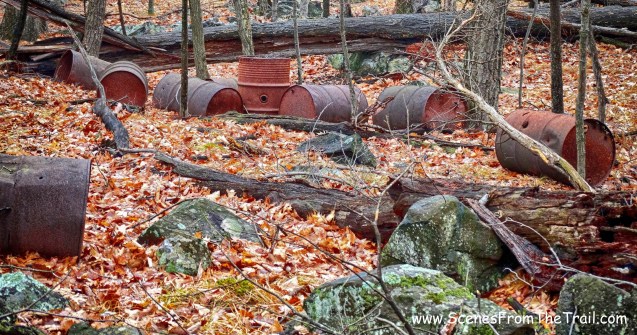
There was a lot of evidence of human activity in the immediate area that we checked out. There were a lot of steel barrels strewn about the area.

steel barrels

steel barrels

There were ruins of other small buildings as well.

building ruins

building ruins

When we were done exploring, we retraced our steps back to the red-blazed trail and headed down the mountain. When we got to the spot where we originally found the red-blazed trail, we stayed on it. Croton Avenue was visible through the trees and it was an easier route as well. The red-blazed trail began to parallel Croton Avenue and began to lead away from where we wanted to go. At this point we left the trail and bushwacked towards the road. We came to a lower section of the stone wall that we encountered at the beginning of the hike and passed through it.

stone wall

stone wall

We made our way to Croton Avenue, turning left and walked along the road back to where we had parked. We then drove over to Turkey Mountain Nature Preserve for part 2 of our Saturday hike. I hope that you enjoyed today’s hike and don’t forget to follow my blog. As always any comments and/or suggestions are welcome and feel free to share my posts with your friends. Until next time folks, now get out there and take a hike!

Pros: Scenic area, historical features, fire tower, ruins, secluded and quiet.

Cons: Limited views

Take a hike!

Take a hike!

Pocantico Hills Loop – Rockefeller State Park Preserve

January 15, 2017 – Sleepy Hollow, NY

Difficulty: easy

Length: approximately 6 miles

Route type: circuit

Map: Rockefeller State Park Preserve


Rockefeller State Park Preserve is an 865-acre park that was established in 1983, when the Rockefeller family donated a portion of their Pocantico Hills estate. The preserve is criss-crossed by a network of carriage roads, constructed by the Rockefellers in the 1920s and 1930s, and this hike follows these delightful gravel roads. It traverses the lesser-used western portion of the preserve and follows a portion of the Old Croton Aqueduct. Because there are many intersecting trails, not all of which are marked with signs, it is strongly advised to take a trail map with you.

I have been hiking Rockefeller State Park before I even knew what hiking was. Back then we would just say “let’s go take a walk up in Rockefeller’s.” I have wandered many areas of the preserve mostly without a map, mainly because years ago the trails weren’t marked and I don’t even know if a map existed. I have even gotten a bit lost up there as well and often wandered the area at night. Growing up nearby, it was always a place that as a youth, one could go to get away from the prying eyes of a small town. Recollections of parties and bonfires come to mind whenever certain parts of Rocky’s property is mentioned. We all have many tales to tell of the times that we spent in those woods. That is why hiking in Rockefeller State Park holds a special place in my heart.

With the uncertainty of the amount of snow that would fall this weekend, I had several hikes lined up. The original hike I had planned necessitated walking on unblazed trails in an unfamiliar area. Although we only got a light dusting, it was enough to make an unmarked trail harder to follow. After tossing the idea around, we decided to do a longer, but easier hike at Rockefeller State Park Preserve which I found on the NY/NJ Trail Conference website. The weather for this Sunday morning hike was sunny with temps in the mid to high 30’s. Enough snow fell the previous night to leave a layer of white on the ground, so we brought along our microspikes to help with traction along the trails. We parked on Gory Brook Road in Sleepy Hollow which is within feet of the Old Croton Aqueduct Trail, where our hike would begin.

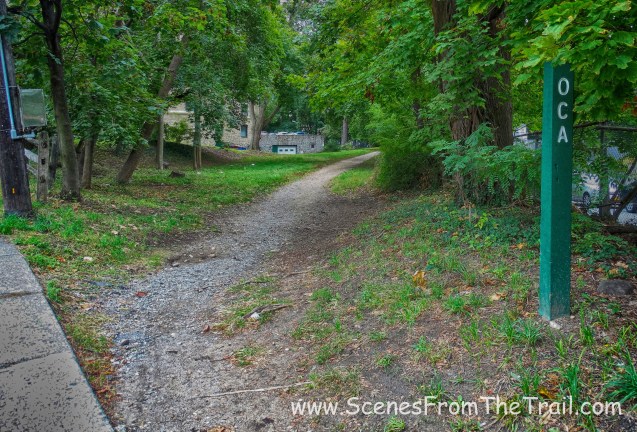
Once geared up, we made our way to the OCA and proceeded north, with Gory Brook Road on our right. We walked on the elevated section of the OCA where it passes over the Pocantico River, then came to the Sleepy Hollow Weir. The weirs along the Old Croton Aqueduct were structures that were built right over or next to the aqueduct, enabling direct access to the aqueduct tunnel. This allowed for maintenance and repair by diverting the waters to a nearby waterway.

Sleepy Hollow Weir

Sleepy Hollow Weir

We dusted off a bench and sat down to put on our microspikes. Once our traction devices were firmly in place we shoved off. Just after passing the weir we came to a junction. Here we made a sharp right onto the Big Tree Trail which curves to left as it heads downhill. There are no signs at this junction, but it is easily discernible. At the bottom of the hill we came to an H-intersection where we made another sharp right at the blue sign post.

H-intersection

H-intersection

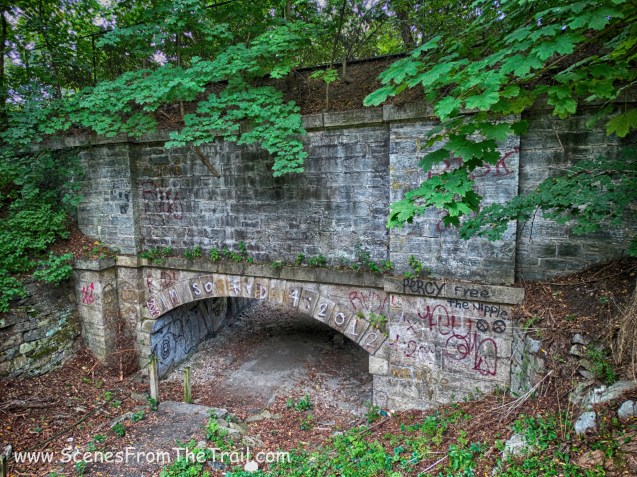
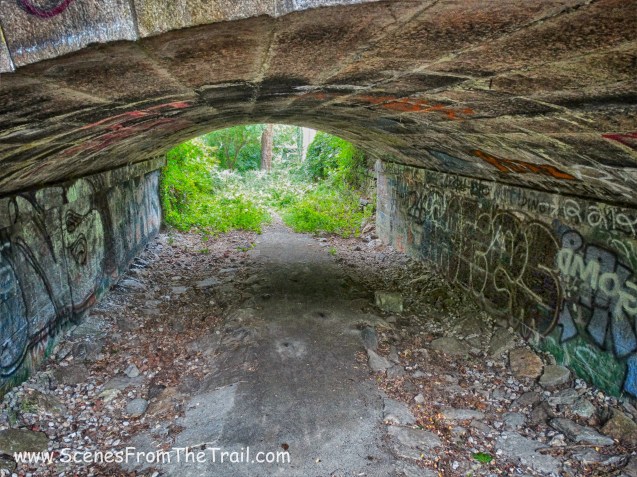
Although no sign marked the trail, this was the Pocantico River Trail, which would be our route for the next two miles. We crossed the Pocantico River on a stone triple-arched bridge with the high embankment of the Old Croton Aqueduct to the right, where we crossed over moments earlier.

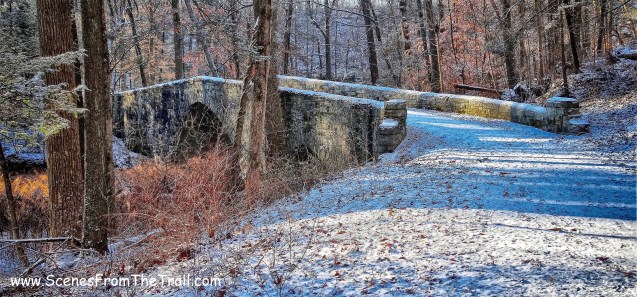
stone-faced triple-arch bridge

stone-faced triple-arch bridge


Pocantico River just before it passes under the OCA.

Pocantico River just before it passes under the OCA.

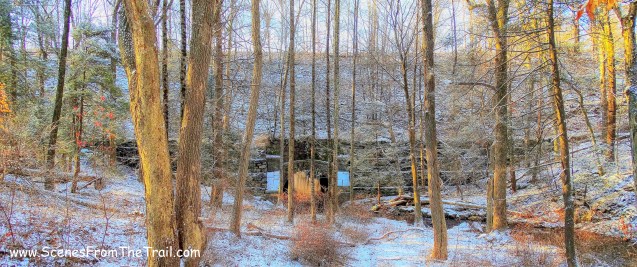
high embankment of the Old Croton Aqueduct

high embankment of the Old Croton Aqueduct

After crossing the bridge, we turned left and began walking alongside the Pocantico River, now on our left. When we came to a stone bridge which we did not cross, we turned right to continue on the Pocantico River Trail.

stone bridge spanning the Pocantico River

stone bridge spanning the Pocantico River

In a short distance we came to a concrete bridge. This bridge is part of Old Gory Brook Road. This road used to run from New Broadway to Old Sleepy Hollow Road. Most of the road now lays in abandonment.

concrete bridge

concrete bridge

We continued along the Pocantico River Trail until we came to another stone arch bridge. After crossing the bridge, we continued on the Pocantico River Trail with the river now on our right.

stone arch bridge

stone arch bridge

Pocantico River

Pocantico River

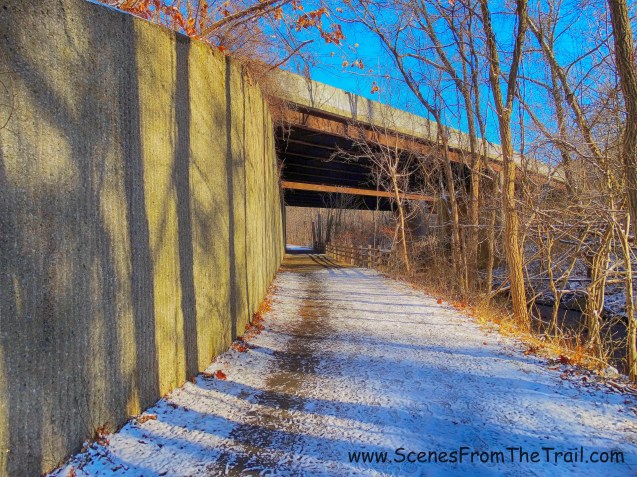
We passed beneath the Route 117 overpass still following the wide carriage road.

Route 117 overpass

Route 117 overpass

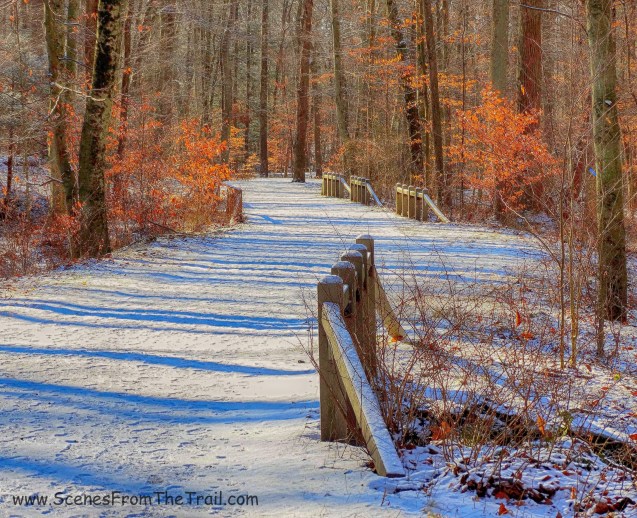
The road led us gently up the hill where we turned right onto the 13 Bridges Loop Trail.

13 Bridges Loop Trail

13 Bridges Loop Trail

The 13 Bridges Loop Trail like the name implies, is 1.9 mile trail that leads to 13 bridges over the wandering Gory Brook.

13 Bridges Loop Trail

13 Bridges Loop Trail

Legend has it that Gory Brook got its name after a Revolutionary War skirmish left the stream red with the blood of British troops. According to Henry Steiner, Sleepy Hollow Village Historian, The brook passes through a part of the Rockefeller Preserve known as Hulda’s Glen and it is the largest tributary of the Pocantico River. He has a great book titled: The Place Names of Historic Sleepy Hollow & Tarrytown.

Gory Brook

Gory Brook

We again passed under another section of the Route 117 overpass, a little further west than we did earlier.

Route 117 overpass

Route 117 overpass

The Gory Brook Trail began after passing beneath the bridge and we followed it briefly then turned right onto Witches Spring Trail and then right again onto the Spook Rock Trail, which was the steepest section of the hike, but short lived. A large boulder sitting atop a hill, now graced with its own trail, it was a gathering place for Indian councils where leaders of the tribe would gather. Council rocks were chosen in part because they were believed to hold sacred powers. Hulda the witch is said to have had a hut not too far from the boulder.

Spook Rock Trail

Spook Rock Trail

The Spook Rock Trail leads straight into the Big Tree Trail and we began following it.

Big Tree Trail

Big Tree Trail

We stayed on the Big Tree Trail until we reached the H-intersection that we encountered towards the start of the hike. Here we turned left onto the Pocantico River Trail, briefly retracing our steps from earlier in the hike. Once again we crossed the stone triple-arched bridge, but this time we went straight after crossing. The trail climbed briefly with the high embankment of the Old Croton Aqueduct visible to our right through the trees. Now heading south along the abandoned Gory Brook Road, we made our way back to where we began our hike.

abandoned Gory Brook Road

abandoned Gory Brook Road

Another successful hike in the books and we were off to fill our bellies. I had some Cuban Beef Stew in the slow cooker along with a smorgasbord of other culinary delights. I truly hope that you enjoyed the hike and please don’t forget to follow my blog. Feel free to leave a comment and/or any suggestions. Until next time folks, now get out there and take a hike!

Pros: convenient location, scenic and historic area, wide carriage roads, easy hiking, network of trails to either lengthen or shorten the hike.

Cons: trails only marked at intersections (mostly), gets crowded in warm weather, haven for unleashed dogs (despite park rules).

Take a hike!

Take a hike!


Croton Point Park – Underhill Wine Cellars

January 7, 2017 – Croton-On-Hudson, NY

Difficulty: easy

Length: approximately 3.5 miles

Route type: circuit

Map: free downloadable


Croton Point Park is a 508-acre park situated on a peninsula on the east shore of the Hudson River. This park offers year-round events and activities and has facilities for camping, hiking and swimming. The park, rich in natural and human history, is also the site of historic wine cellars that are thought of be the oldest in New York State and possibly America. The trails here are short and spur like, but during the off season there is minimal foot traffic except for locals, dog walkers and bird watchers.

Due to the impending snow storm, I chose to do this hike because of its close proximity to where I reside. The original hike I had planned was in Beacon, NY (stay tuned), but decided it would be better to stick closer to home. I was also alerted to the fact the the wine cellars, which were the highlight of this hike, were unsealed and entry was possible. I only learned of this the day before the hike so not knowing how long they would remain unsealed, I decided that we would hike the park and check it out. I have visited this park many times over the years, but had never explored it. The cellars piqued my interest, but I wasn’t sure where they were located or if they were accessible.

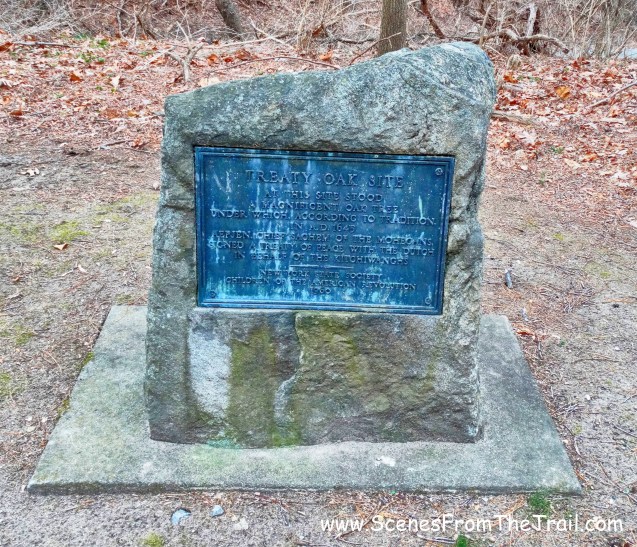
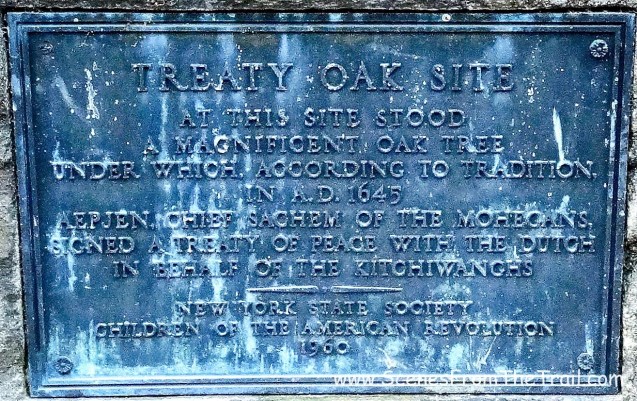
The temps for this Saturday morning hike was in the high teens – low 20’s with snow possible. We arrived at the park at about 8:30 am and proceeded to park in the RV parking area. We checked out the Treaty Oak Monument which is located right where we parked. A little history lesson as we began our hike.

Treaty Oak Monument

Treaty Oak Monument

This spot marks where a peace treaty was signed in 1645 between the Dutch and the Kitchiwank Indians.

Treaty Oak Monument

Treaty Oak Monument

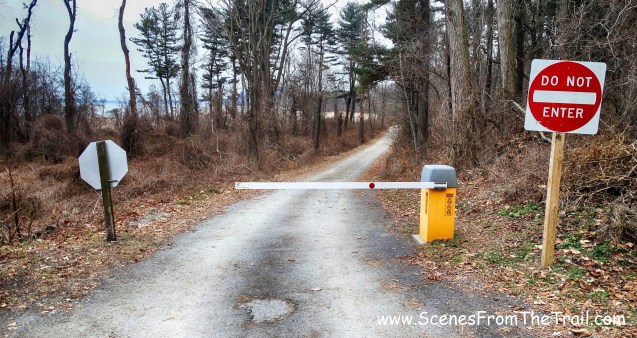
We proceeded to walk past the gate, onto the park road which was closed to vehicular traffic.

park road

park road

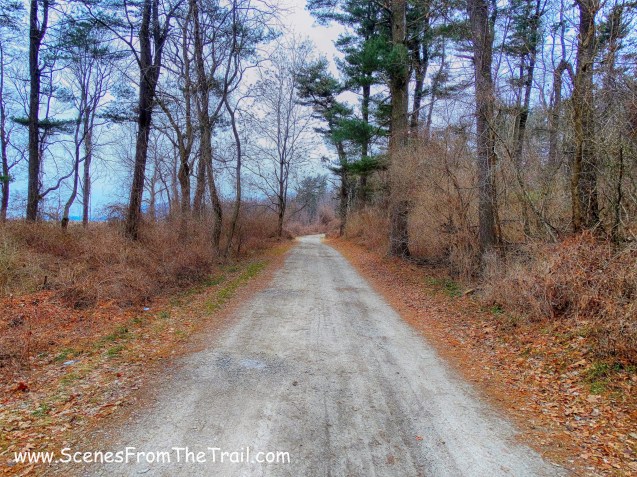
We walked along the road, passing an early morning wildlife photographer carrying a tripod.

park road

park road

In a short distance, we came to the entrance of one of the wine cellars. I was taken aback a bit when I saw that it was boarded up.

Underhill Wine Cellar

Underhill Wine Cellar

The Underhill family was one of the earliest and most prominent in Westchester County’s history. Robert Underhill purchased Croton Point in 1804, and his son Richard eventually developed the property into a very successful vineyard and winery, with underground wine cellars built into the hillside on the property. Underhill and his sons’ grapes won many awards, and the family was known both for promoting the American grape industry and for developing new varieties of grapes. By 1873 the vineyards had fallen into decline, as the family turned its interest to the local brick industry. The wines remaining in the vaults were sold by Thurber & Co. of New York.

Just off to the left of the boarded up entrance, was another entrance which isn’t really visible from the road. I walked over to it and saw that is was “unsealed.” From the information I had received, I was under the impression that the park had made it accessible for entry. That didn’t seem to be the case.

Underhill Wine Cellar

Underhill Wine Cellar

Nevertheless, I peered inside with my flashlight to make sure there weren’t any critters lurking around in there. It was a tight fit, but after removing our backpacks and donning our headlamps, we ventured inside. It was very dark and remarkably free of trash and graffiti.

Underhill Wine Cellar

Underhill Wine Cellar

From what I read, they used to store 30,000 barrels of wine here. There is a set of stairs that leads down to another room which we explored.

Underhill Wine Cellar

Underhill Wine Cellar

I peeked around the corner, illuminating the room with my headlamp, making sure the coast was clear. I didn’t want to bump into any creatures or humans who may have made this their home. As it turns out, the stairs lead to the wine cellar that is behind the first entrance which was boarded up.

Underhill Wine Cellar

Underhill Wine Cellar

In all there are 4 rooms in total. There are 2 rooms that are accessible from each entrance, with the stairs dividing the pair of rooms from each other. We walked towards the front to examine the arched entry into the 4th room.

Underhill Wine Cellar

Underhill Wine Cellar

Each room was rather large, although I don’t know the dimensions.

Underhill Wine Cellar

Underhill Wine Cellar

From what I read, tours are offered periodically throughout the year. I prefer the self guided tours myself. We captured some images of these historical wine cellars and made our way back up the stairs.

Underhill Wine Cellar

Underhill Wine Cellar

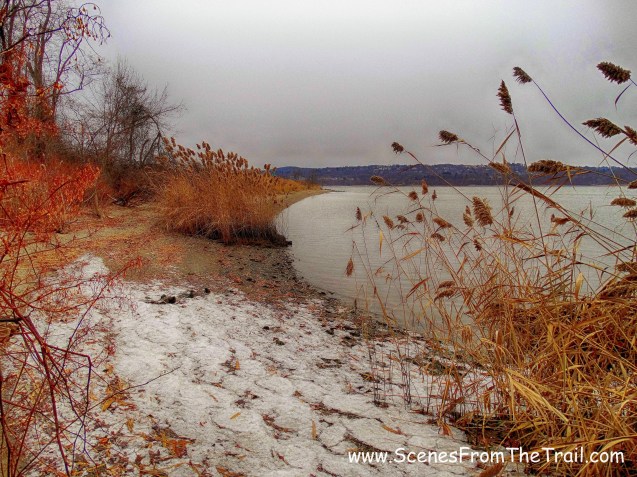
Once back out in the January chill, I noticed a trail that led out towards the river. We followed that short trail and were now standing on a sandy/snowy beach.

sandy beach

sandy beach

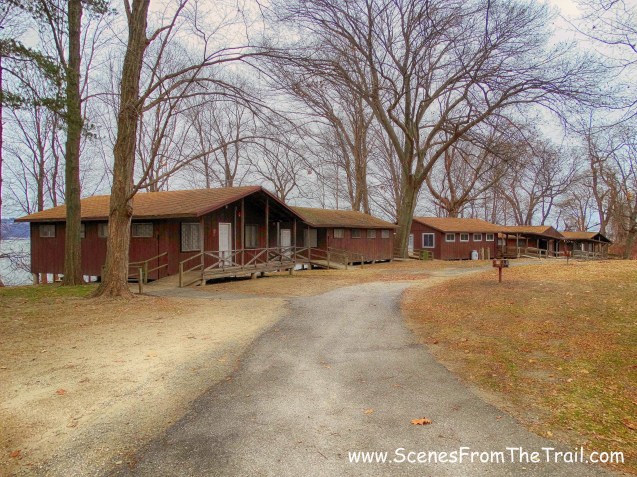
We retraced our steps back onto the park road heading south towards Teller’s Point, the southernmost area of the park. Just before reaching the point, we came to some cabins that were closed for the season.

cabins

cabins

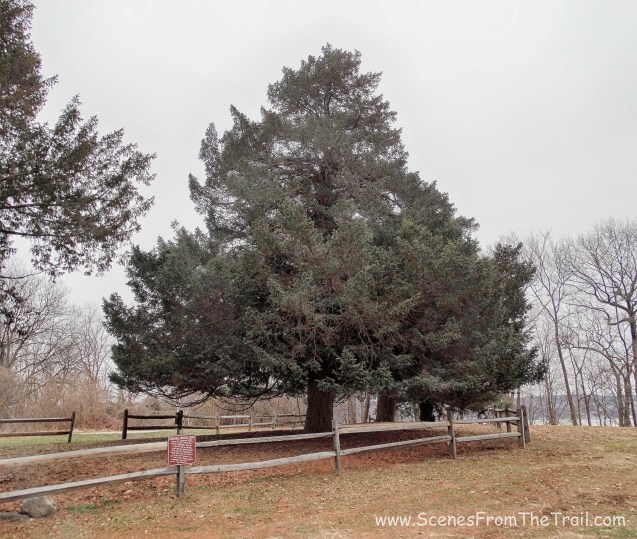
As we neared the point, the strip of land we were on became more narrow and there were views of the river on either side. We walked by four large and very old Yew trees that were planted in the mid 1800’s.

Historic Croton Yew

Historic Croton Yew

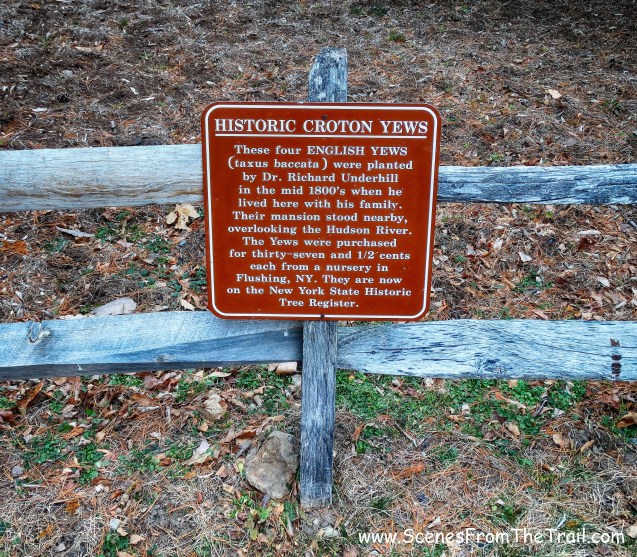
The informative sign described the significance of the trees and also stated that they were on the NYS Historic Tree Registry.

Historic Croton Yew

Historic Croton Yew

We reached the end of Teller’s Point which had a somewhat steep drop off. Snow flurries began around this time, but it was barely noticeable.

Teller’s Point

Teller’s Point

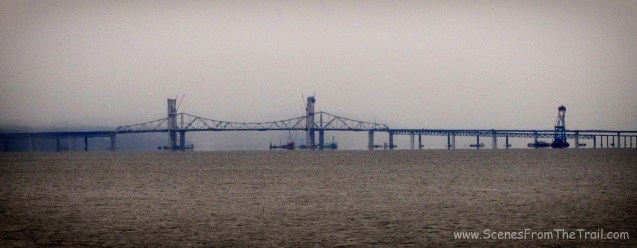
From The Point we had a nice view of the Tappan Zee Bridge, both old and new.

Tappan Zee Bridge

Tappan Zee Bridge

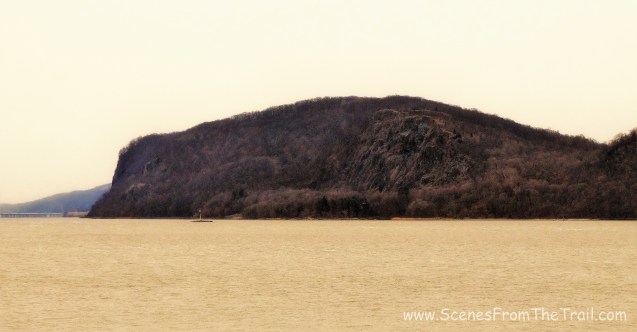
We also had a closeup view of Hook Mountain.

Hook Mountain

Hook Mountain

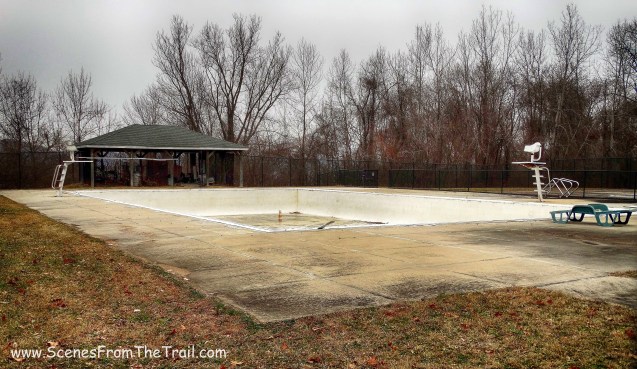
We turned around and retraced our steps until the park road split. There we veered left, still following the road until we came to the pool area. It almost felt like being in an abandoned resort. We passed by the inground pool.

inground pool

inground pool

We only saw a few people up to this point and that is always a plus. In warm weather the park sees a lot of traffic so we picked the right time to visit. The pool house seemed like it had seen better days. Part of the pergola was collapsed on the left side.

pool house

pool house

We wanted to stay as close to the river as possible, so we veered left at every junction and ended up on a dirt road.

dirt road

dirt road

Then we crossed a field and walked along the seawall.

Croton Point Park

Croton Point Park

We walked to where the seawall ended then cut through a short trail onto a field. There we saw another historical marker with a little bit of history.

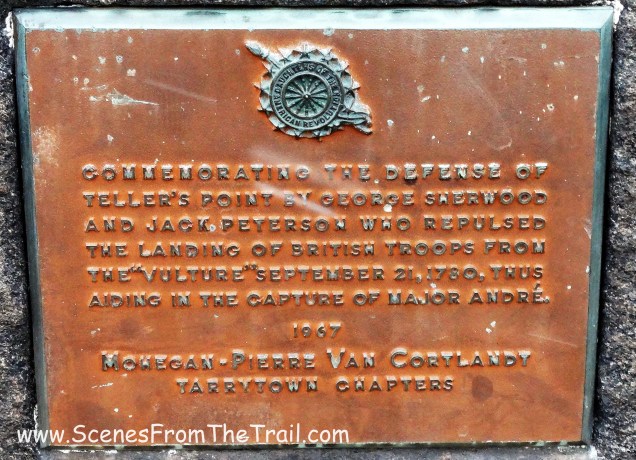
Revolutionary War marker

Revolutionary War marker

British spy Major John Andre was supposed to have made his escape with the plans of West Point on the British sloop Vulture laying at anchor off Croton Point. Members of the Westchester Militia spotted the ship. The Militia members brought a cannon in from Verplanck’s Point and were able to damage the ship which then sailed away before Andre could reach it. Andre had to find a land route and he was subsequently apprehended in Tarrytown.

Revolutionary War marker

Revolutionary War marker

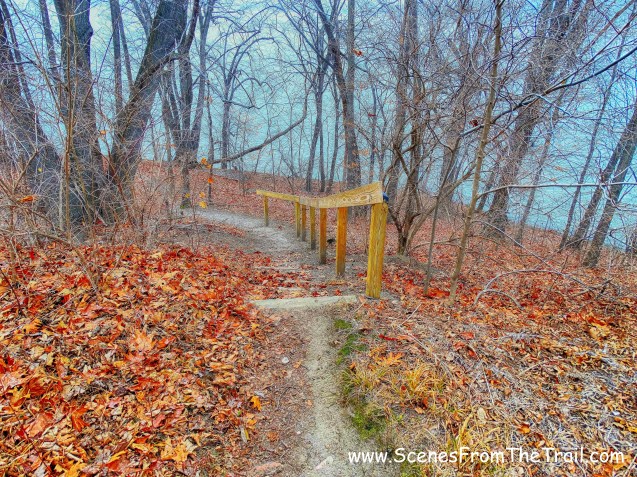
We walked up the hill towards the nature center and jumped onto the paved road. Walking past the nature center, this area is known as Enoch’s Nose, we came to a short trail that led down to the river.

steps to the river

steps to the river

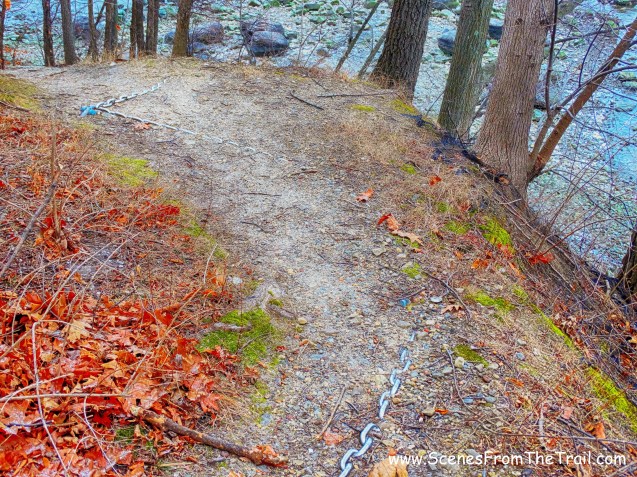
As we neared the base of the slope, we saw a large link chain that crisscrossed the trail. I would have to guess that it was placed there to decelerate erosion of the hill.

chained trail

chained trail

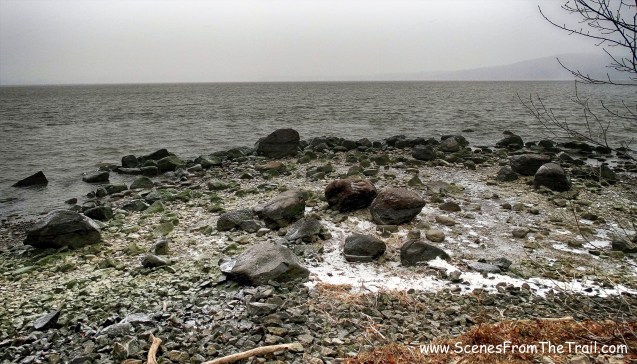
By now the flurries increased and visibility was poor. The fog didn’t help much either, but it was still nice. I have been to this area of the park numerous times before and have always enjoyed this spot.

Enoch's Nose

Enoch’s Nose

We made our way back up past the nature center and stayed left, walking down some steps and passing an old storage garage. We descended the hill until we reached some wooden steps and continued down to the field below.

wooden steps

wooden steps

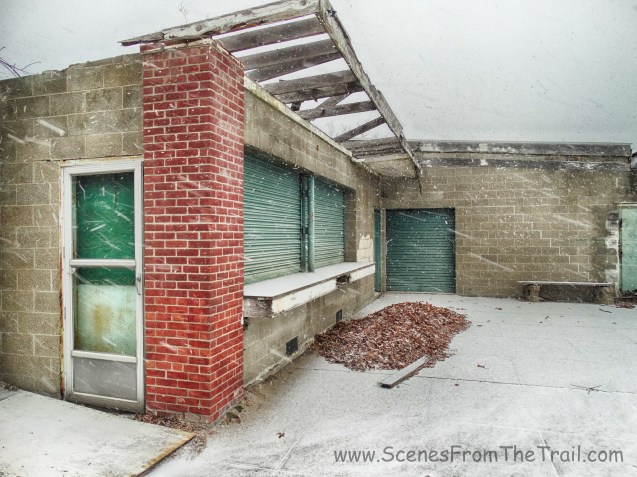
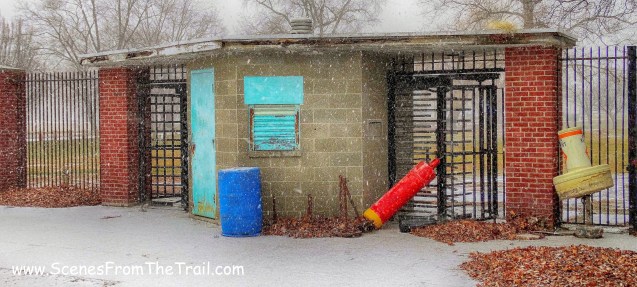
The snow was now coming down as we walked along the river. We headed towards the beach concession stand and took a look around.

Croton Point Park

Croton Point Park

I don’t know if this area is still used during the summer, but it was in a state of disrepair.

Croton Point Park

Croton Point Park

Croton Point Park

Croton Point Park

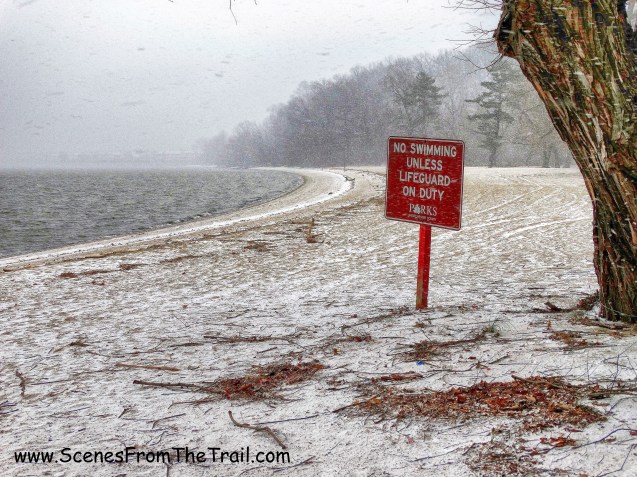
I didn’t see any lifeguards, but I wasn’t in the mood for a dip either.

Croton Point Park

Croton Point Park

My intention was to do a loop of the perimeter of the park with some wandering thrown in. With the snow now falling heavily, I didn’t want to wait too long to hit the road. We ended up crossing the main park road and cutting across the field to head back to the vehicle. Along the way we passed a three story brick barn.

brick barn

brick barn

We got back to the vehicle and after a cup of hot chocolate, we headed out. The ride home wasn’t too bad and I am glad we left when we did. It kept snowing pretty steadily for hours after we were back at the homestead. I made my famous Split Pea with Ham soup in the slow cooker and that surely hit the spot. Stuffed Mushrooms and Bananas Foster went down nicely as well. I truly hope that you enjoyed the hike and please don’t forget to follow my blog. Feel free to leave a comment and/or any suggestions. Until next time folks, now get out there and take a hike!

Pros: Historical features, Hudson River, wine cellars, easily accessible.

Cons: Gets crowded in warm weather, no real trails.

Take a hike!

Take a hike!


Teatown Lake Reservation – Big Loop Hike

January 1, 2017 – Ossining, NY

Difficulty: moderate

Length: approximately 6 miles

Route type: circuit

Map: Teatown Lake Reservation


Teatown Lake Reservation is a 1,000-acre nature preserve and education center located in the Lower Hudson Valley. There are almost 15 miles of trails that crisscross the property and connect to the Briarcliff Peekskill Trailway and the Croton Aqueduct Trail. The fourteen maintained trails span diverse terrain and habitats, including abundant fields, mixed hardwood forests, laurel groves, lakes, streams, swamps and farm land. The trails range from easy/novice to moderately difficult. Their website lists descriptions of specific hikes on their Hike Teatown page. The hike that I chose was the longest one that they listed, but any hike can be shortened or extended utilizing their detailed map and well blazed trails.

I wanted to start out the new year with a vigorous hike that was close to home. Teatown is a popular spot for hikers, runners and families, so I figured that New Year’s Day and an early arrival would help to avoid any crowds. We arrived at about 8:15 am and there were only a few cars in the lot. On our return later in the day both lots were full. The temps were in the mid to high 40’s and sunny. Another perfect day for a hike.

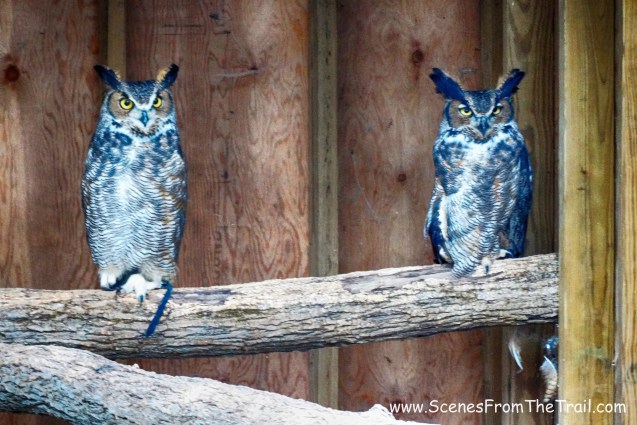
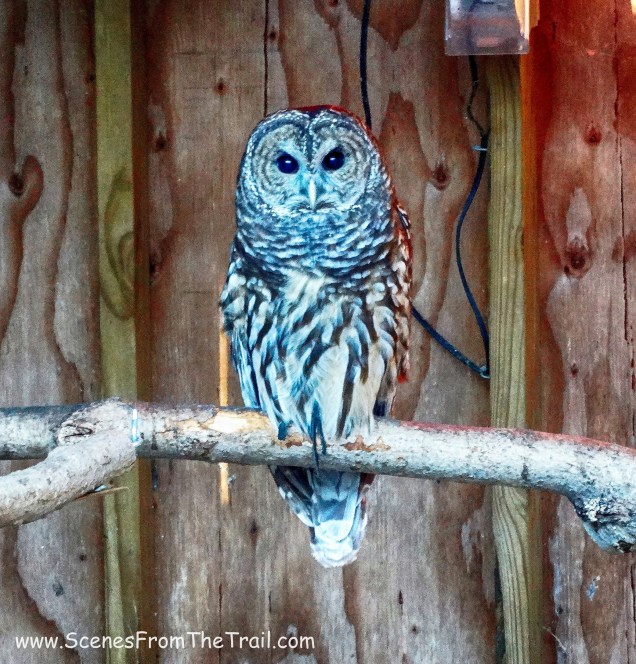
We decided to check out the rescued raptors that they have on exhibit before we began our hike, so we headed past the nature center and to the Raptor Loop Trail.  It was a short detour that added minimal distance to our hike, but well worth it.

Great Horned Owls

Great Horned Owls

Barred Owl

Barred Owl

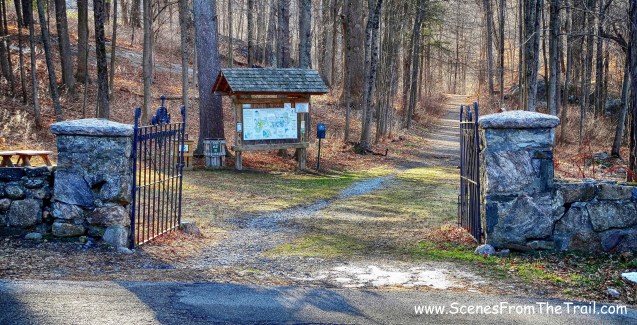
Once we were done viewing the birds of prey, we crossed Spring Valley Road and walked through the gate towards the kiosk. Here we would begin the following the orange blazes of the Twin Lakes Loop trail.

Twin Lakes Loop

Twin Lakes Loop

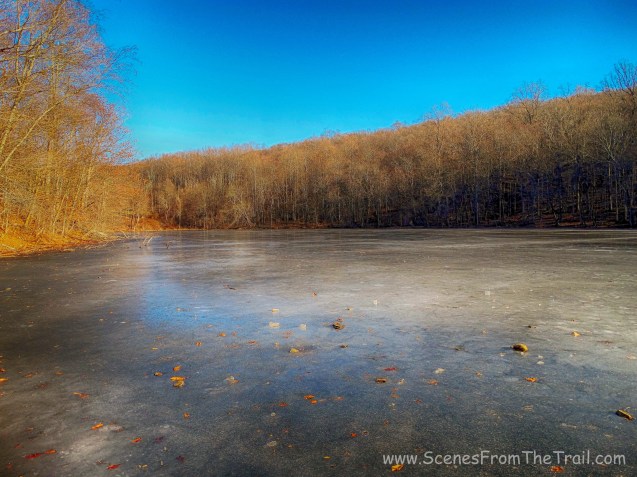
We walked on the gravel road which led us to Vernay Lake. There we stopped for a moment to enjoy the view of the frozen lake.

Vernay Lake

Vernay Lake

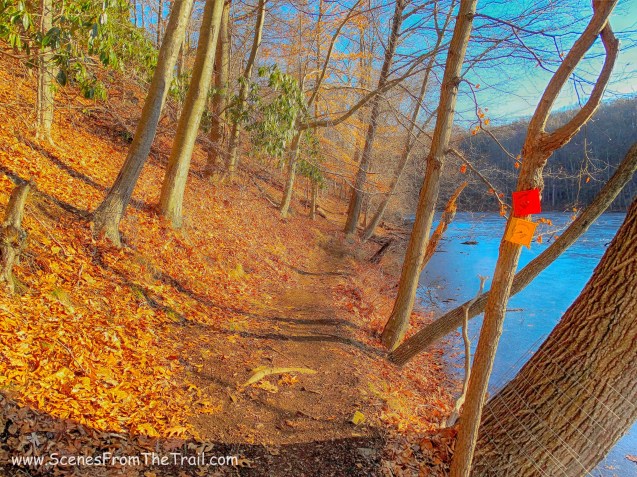
The orange-blazed Twin Lakes Loop trail is 2.3 miles long and loops around the lake, which means that you can go either left or right and if you follow the orange blazes, it will bring you right back here. We turned left and walked along the edge of the lake.

Twin Lakes Loop trail

Twin Lakes Loop trail

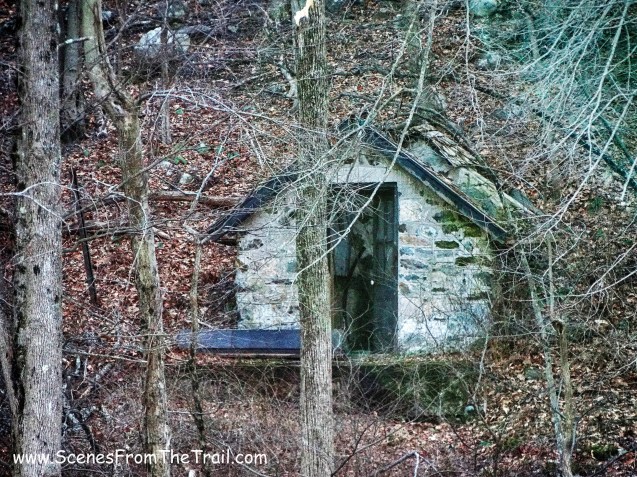
While walking along the trail, I noticed a small stone building in the woods on the other side of the lake.

small stone building

small stone building

The trail wrapped around the eastern end of the lake and began heading uphill on switchbacks once we were on the opposite side of Vernay Lake.

Twin Lakes Loop

Twin Lakes Loop

The Twin Lakes Loop trail leads away from the lake as it heads uphill. The elevation is about 370 feet, so it’s doable for most. We arrived at the edge of Shadow Lake and took a brief rest while looking out towards the lake.

Shadow Lake

Shadow Lake

The trail led to the right of the lake (west), and we followed it and walked across the dam, which was covered with grass.

Shadow Lake dam

Shadow Lake dam

The trail began to rise and we arrived at the highest point which afforded views north, of the Hudson Highlands. Unfortunately, the view is marred by overhead power lines which run through the property. We stopped here briefly as the wind started picking up and caused our hasty departure.

view of the Hudson Highlands

view of the Hudson Highlands

The orange-blazed Twin Lakes Loop trail now began to descend gradually. The woods are very scenic, with interesting rock formations and stone walls all throughout the property. Up to this point, we had not encountered anyone else on the trail. It pays to get an early start. We came to a junction where the red-blazed Waterfall Trail began on the left and the orange-blazed Twin Lakes Loop trail veered right. We turned left onto the Waterfall Trail. There we walked alongside a stream and then crossed it on a small wooden footbridge.

footbridge - red-blazed Waterfall Trail

footbridge – red-blazed Waterfall Trail

There were some lovely cascades along this trail as well as some well placed benches to relax and enjoy the scenery. As we sat on a bench in front of the cascade enjoying a snack, several groups of people passed by.

cascade - red-blazed Waterfall Trail

cascade – red-blazed Waterfall Trail

The Waterfall Trail is listed as .6 miles long, but it seemed a little longer. We then got to a junction where the red-blazed Waterfall Trail was joined by the green-blazed Briarcliff-Peekskill Trail (BPT). This area did not have any red blazes so I had to consult my map. It was easy enough to figure out and we followed the green blazes as we veered right and walked over some wooden puncheons.

wooden puncheons - green-blazed Briarcliff-Peekskill Trail

wooden puncheons – green-blazed Briarcliff-Peekskill Trail

Shortly thereafter we arrived at Spring Valley Road where the Waterfall Trail ended.  We crossed the road and joined the green-blazed Briarcliff-Peekskill Trail which ran jointly with the blue-blazed Lakeside Loop Trail on the other side of the street, alongside Teatown Lake. We turned right for a moment and walked onto the boardwalk (it’s part of the Lakeside Loop Trail) in order to get a good vantage point of Teatown Lake. We encountered hikers and families out for a walk in this area. With its close proximity to the nature center, I wasn’t surprised.

Teatown Lake - Lakeside Loop Trail

Teatown Lake – Lakeside Loop Trail

We retraced our steps back to the joint green-blazed Briarcliff-Peekskill Trail and blue-blazed Lakeside Loop Trail and continued on our way. We were following the green blazes which at times were joined by other trails, but our focus was on the green blazes.

green-blazed Briarcliff-Peekskill Trail

green-blazed Briarcliff-Peekskill Trail

We passed through Griffin Swamp and arrived at a T-intersection with the Teatown-Kitchawan Trail which was blazed purple. Their hike directions said that it was blazed white, but I was able to figure it out. So now following the purple blazes through the woods, along a stream and across a wooden footbridge we arrived the northern end of Teatown Lake where it was dammed off.

Teatown Lake dam

Teatown Lake dam

Arriving at the dam, facing the lake, we turned left and headed up the hill, hugging the woods. We were now on the Hilltop Trail which was blazed orange. We followed the orange blazes until we got to Blinn Road, where we took a sharp left onto the red-blazed Hidden Valley Loop trail. We crossed the road to continue following the red blazes as it led us up the hill through a field. Like the name implies, Hidden Valley Loop is actually a lollipop loop. If followed in its entirety, it will leave you back where you started. When the trail went both left and right, we turned left and followed it through the woods where after a short level stretch it began to descend into the valley.

Hidden Valley Loop

Hidden Valley Loop

Just before we completed the loop, there was a junction with the white-blazed Twin Lakes connector where we turned left.

Twin Lakes connector trail

Twin Lakes connector trail

We followed the white blazes, crossing over Spring Valley Road until we reached the intersection of the orange-blazed Twin Lakes Loop trail. From there we retraced our steps along Vernay Lake, making a right by the concrete dock and back to the parking area where our hike began.

This was a pretty good hike that had mostly pros and few cons.

Pros: Scenic woods with varied terrain, well blazed trails, easy to follow map, stone walls galore, lovely streams and cascades, multiple lakes, convenient location and plenty of parking, no fee.

Cons: overhead power lines, crowded as you get closer to the nature center (in warm weather it’s probably extremely congested).

Well folks, I hope that you enjoyed my New Year’s Day hike, I surely did. Don’t forget to follow my blog and please feel free to leave any comments or suggestions. Now get out there and take a hike!

take a hike!

take a hike!


McAndrews Estate – Oscawana Park

December 25, 2016 – Oscawana Park – Crugers, NY

Difficulty: easy

Length: approximately 4.5 miles

Route type: circuit

Maps: McAndrews Estate Trail Map  – Graff Sanctuary


An updated version of this hike is available HERE.


It was a warm Christmas morning with temps in the mid 40’s and sunny. A perfect day for a hike. I wanted to do something close to home in order to avoid late afternoon holiday traffic. This seemed like a perfect fit, so off we went. I was not familiar with the layout of the property, but I did check it out on Google Maps. I don’t mind wandering because I always discover something of interest. I did not find a map until I sat down to write this. I decided to also check out Graff Sanctuary, which is right next door.

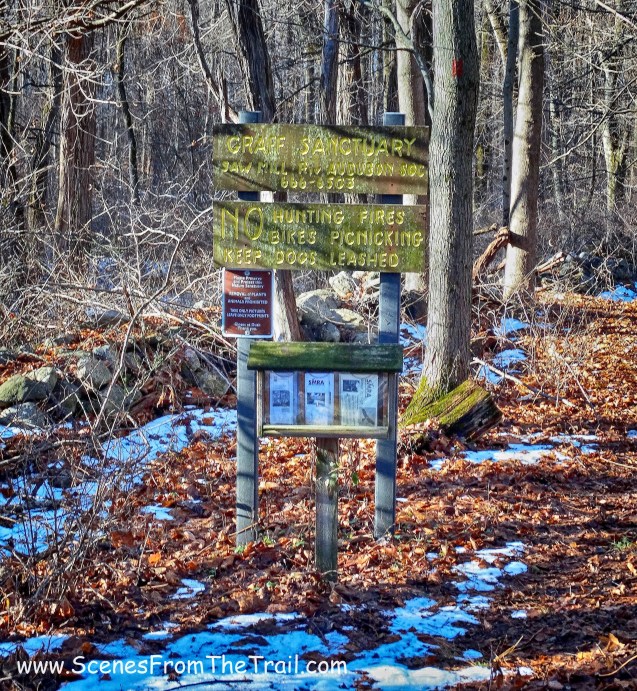
Graff Sanctuary is a 30 acre protected woodland ridge overlooking the Hudson River along Furnace Dock Road in the Town of Cortlandt. Graff Sanctuary was donated by Howard Graff to the National Audubon Society in 1975 with Saw Mill River Audubon responsible for sanctuary management. In 1991, ownership of Graff Sanctuary transferred to Saw Mill River Audubon. It has several well blazed hiking trails which interconnect, that total just under a mile.

Graff Sanctuary

Graff Sanctuary

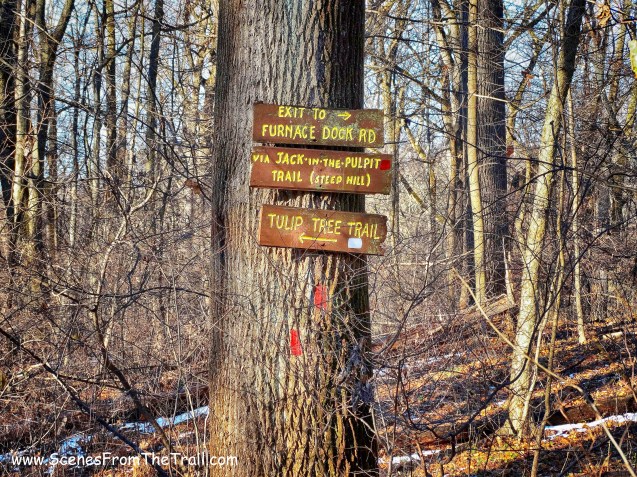
Parking is limited at the end of Briggs Lane, which is a dead end. Trail access is up a private driveway and to the left along a stone wall. Look for a red blaze on a tree near the base of the driveway. Once at the entrance, we proceeded on the red-blazed trail briefly, until we came to a t-intersection. There we turned left and started following the white-blazed tulip tree trail.

Graff Sanctuary

Graff Sanctuary

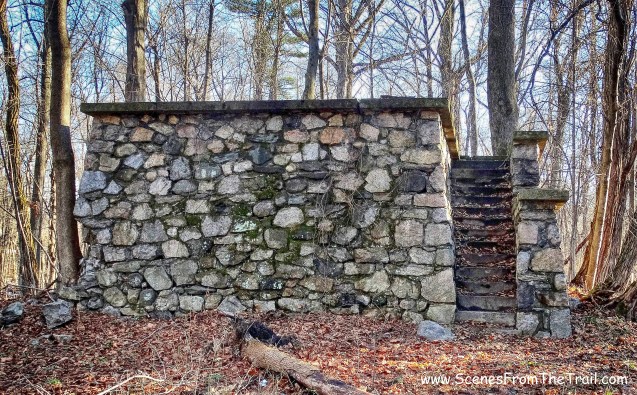
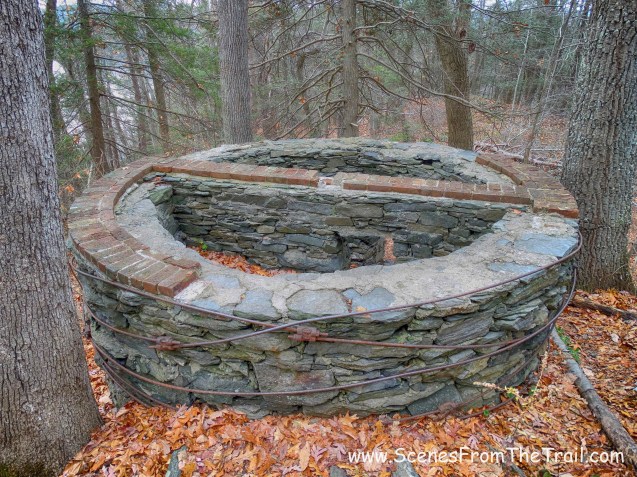
The white blazed trail led us through the woods to an unusual stone structure. According to their website: The history of this stone structure at Graff Sanctuary is somewhat uncertain but it is believed to have been used for water storage as part of the Oscawana property on the other side of Furnace Dock Road.

stone structure

stone structure

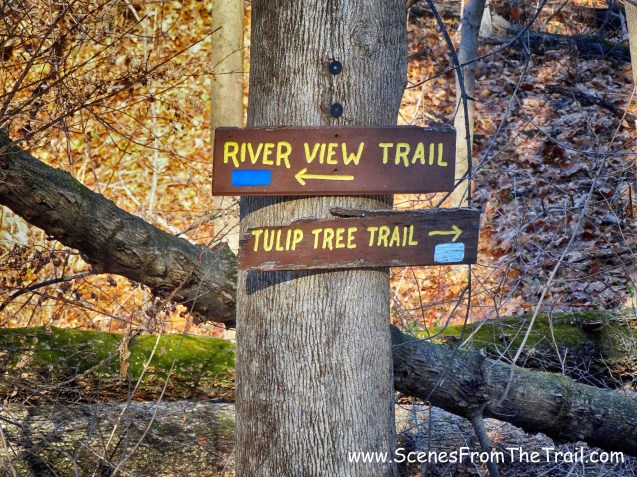
Shortly after passing the stone structure, we came to another t-intersection and turned left onto the blue-blazed river view trail.

Graff Sanctuary

Graff Sanctuary

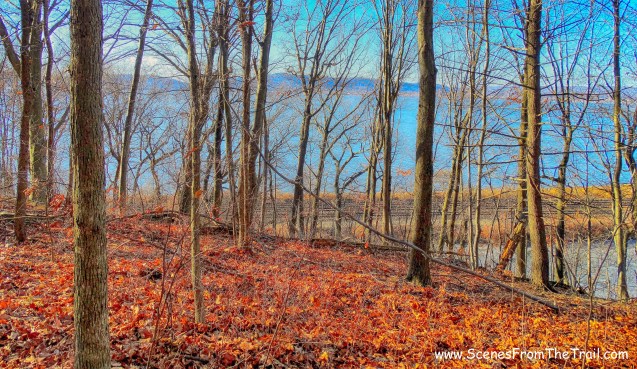
Unfortunately the name is deceiving. There isn’t any spot where you can get a clear view. Since the leaves are off the trees you can see the river, but in summer you won’t be able to see much.

blue blazed river view trail

blue blazed river view trail

The river view trail veers away from the river and loops back through the woods, where it meets up with the white-blazed tulip tree trail. We passed by the stone structure again and also the t-intersection, where this time we turned right to continue on the white-blazed tulip tree trail. We followed the white blazes through the woods to its terminus on Furnace Dock Road. We turned left and began a short road walk. I wasn’t sure exactly where the McAndrews Estate entrance was, but I could see some ruined buildings through the trees. We crossed the road and sort of bushwacked towards the ruins.

The McAndrews Estate (also known as Reusens Farm or Long View) is part of Oscawana County Park, located in the Crugers area of the Town of Cortlandt. It is owned by Westchester County and managed jointly via an intermunicipal agreement with the Town of Cortlandt. The 100-acre park is open to the public, and contains a number of ruins and hiking trails. The trails are well blazed and easy to follow, although prior to my visit, I had read the complete opposite and at the time I did not have a map.

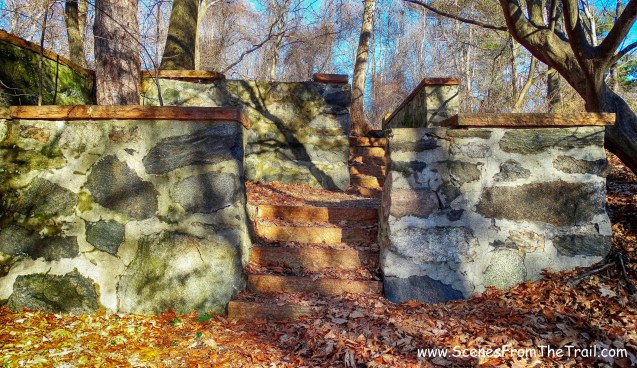
Upon entering the property, we walked atop a stone wall that took us up to where the main house site was, as shown on the map. The stone steps and curved walls are all that remain now, but it was pretty cool to see. The footprint of where the house stood gives you an idea of how big it was. On their website they have old photos of what it used to look like.

main house site

main house site

main house site

main house site

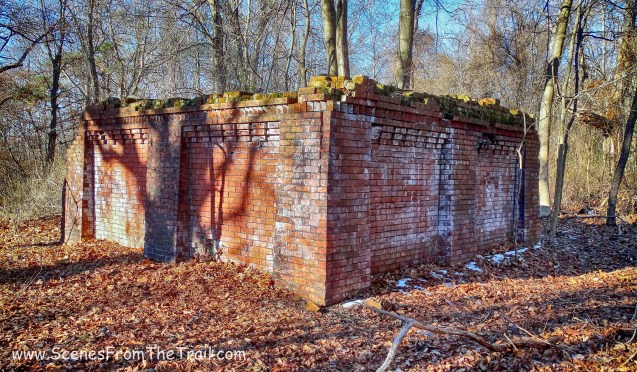
Not too far from the main house site is a brick structure. It has no windows or doors and it is referred to on the map as “main house reservoir.”

main house reservoir

main house reservoir

After checking out the main house reservoir, we retraced our steps back to the main house site where we veered to the right and began to follow a yellow-blazed trail. I figured it had to lead somewhere if they took the time to paint the blazes on the trees. As we walked through the woods the yellow trail ended where it met up with an orange-blazed trail. We now started following the orange blazes, where we passed what looked like foundations of some kind, but are referred to as “cold frames” on the map. The orange trail led us to a road which was blazed white. We turned right onto the old estate road, following the white blazes.

white-blazed estate road

white-blazed estate road

That brought us to a stone cow barn which was in pretty good shape.

stone cow barn

stone cow barn

We walked around the back and discovered a lower level that was not visible from the front.

stone cow barn

stone cow barn

I entered inside to get a better look.

stone cow barn

stone cow barn

Just to the left of the stone cow barn, is a horse race track that is bordered with a steel pipe fence.

horse race track

horse race track

After spending a little time capturing some images, we continued following the white blazes on the estate road. Not far from the barn was another stone structure. It is marked as “soil pit” on the map.

soil pit

soil pit

After passing the soil pit, the white trail came to an end and a teal-blazed trail led off to the left. We continued on the estate road to see where it led. We passed a pond or lake on our left and I surmised that this road was leading us back towards Furnace Dock Road. I saw an unmarked woods road that passed by the lake, so we headed in that direction. I heard running water, so we headed towards the sound. There we saw an old dam with a nice waterfall cascading from it.

dam and waterfall

dam and waterfall

We then retraced our steps back to the estate road and turned right onto the teal-blazed trail. It was very icy in this area and we had all brought our micro spikes along. Only problem was, I left mine in the car. To my credit, I didn’t fall at anytime throughout the hike, but came close several times.

teal-blazed trail

teal-blazed trail

We walked the teal-blazed trail, which paralleled the Jamawisis River. It would have been a much nicer walk if I was wearing my micro spikes. The teal-blazed trail ended at Cortlandt Street, almost directly across the road from Oscawana Island.

Oscawana Island

Oscawana Island

We crossed the road and proceeded past the gated entrance. We walked over another icy patch then turned right towards the kayak launch, where we took a short break.

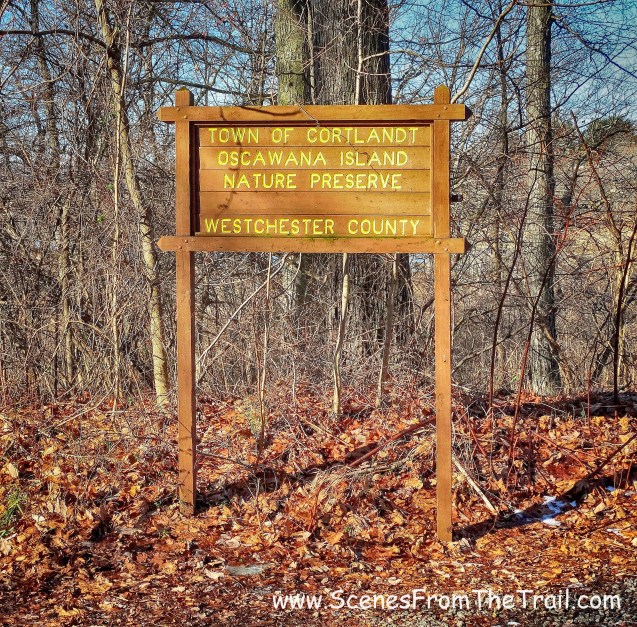
Oscawana Island Nature Preserve

Oscawana Island Nature Preserve

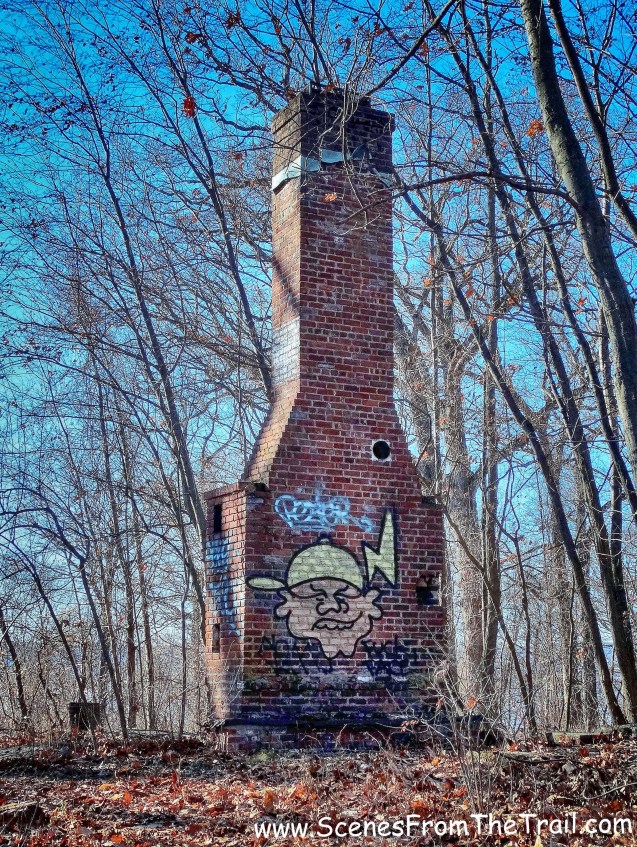
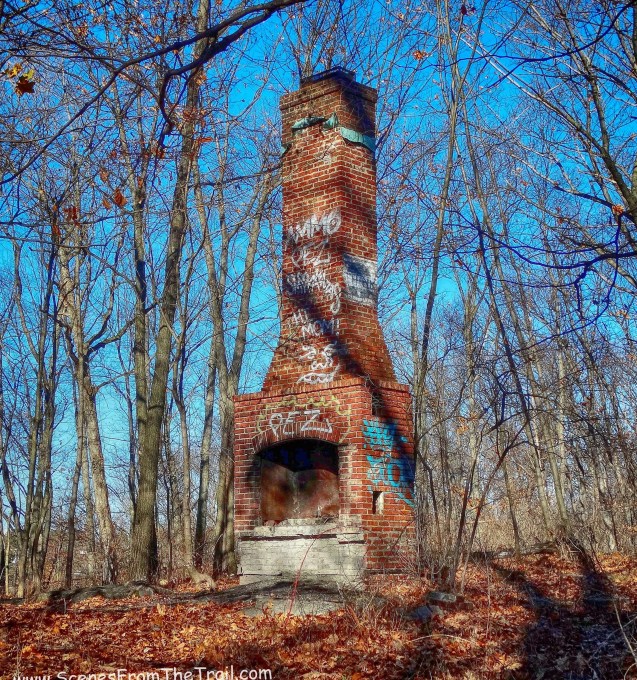
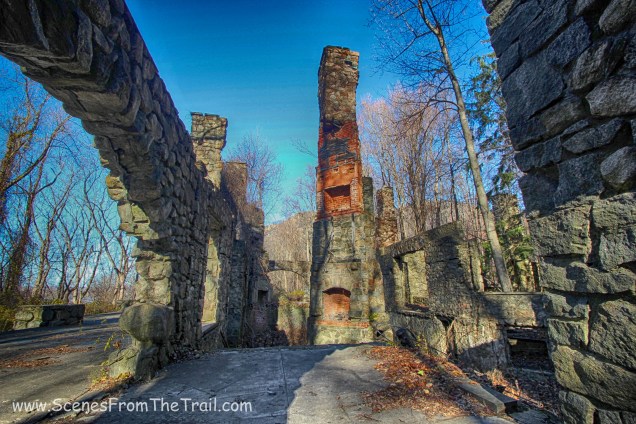
After our break, we returned to the main trail, heading towards the river. We came upon a massive fireplace and chimney off to the left in the woods.

fireplace and chimney

fireplace and chimney

fireplace and chimney

fireplace and chimney

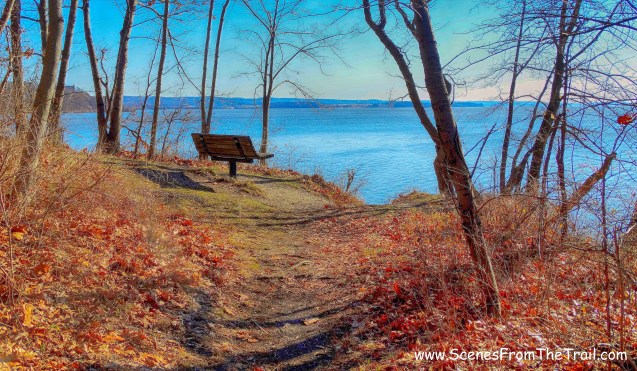
Near the chimney there was what I suspect are the ruins of a spring house. It is fenced off, but there is a gate. As we continued on the main trail, we reached the edge of the Hudson River.

Hudson River

Hudson River

We stopped here and relaxed a bit as we took in the view. It was now in the high 40’s and the sun was shining bright. A glorious Christmas day along the Hudson. We continued walking along the edge of the river enjoying our hike, stopping briefly along the way to enjoy the scenery.

Oscawana Island Nature Preserve

Oscawana Island Nature Preserve

We came to what appeared to be an old storage building.

old storage building

old storage building

Shortly after passing the storage building, the trail seemed to peter out. We back tracked to the main trail and retraced our steps back to Cortlandt Street. We walked along the road, looking for a trail that led onto the estate property. We came to a driveway and headed up the hill, passing what I believe is an old ice house.

old ice house

old ice house

We were now back on the estate road aka the white-blazed trail.

white-blazed trail

white-blazed trail

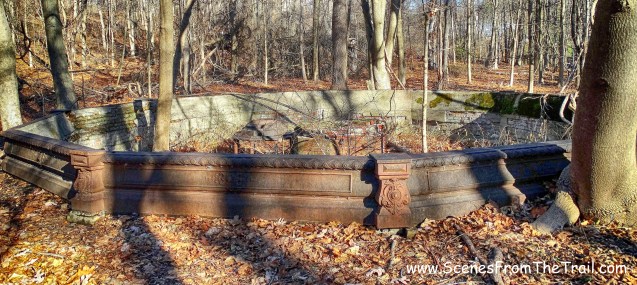
As we walked along the white-blazed trail, we saw an odd looking ornate frame. I thought it might be a fancy foundation, but as I approached it, I realized it was a huge fountain.

huge fountain

huge fountain

We continued on the white-blazed trail until we came to a junction with the yellow-blazed trail. I could see the main house site through the trees, so we turned left and walked up the stone steps towards the main house site where we were earlier.

yellow-blazed trail

yellow-blazed trail

When we got to the top, by the main house site, we sat down and took another brief rest. From there, we retraced our steps back toward Furnace Dock Road. We reentered Graff Sanctuary, now following the white-blazed tulip tree trail. We turned left onto the red-blazed trail which climbed somewhat steeply and then leveled off. We followed the red blazes all the way back to the entrance, then walked down the private driveway to the parking area. Since I didn’t have a map during the hike, there were other buildings and foundations that I missed. I didn’t walk around the race track, which had some ruins, but I plan on going back now that I know the layout. I hope that you enjoyed my Christmas day hike and don’t forget to follow my blog. Feel free to comment and/or share this page with your friends. Now get out there and take a hike!

Take a hike!

Take a hike!


Hudson Valley Fire Towers

For nearly a century, observers watched the forests of New York State, including the Catskill and Adirondack Forest Preserve from more than 100 fire towers perched atop the highest peaks, searching for the dangerous, telltale signs of forest fires. There were 19 fire towers in the Catskill region and 52 in the Adirondacks.

Beginning in the 1980’s, the State of New York began to phase out the use of fire towers for spotting forest fires, and in 1990, the last 5 towers still in operation were closed. Over time, the towers and their associated observers’ cabins began to deteriorate, and those that were not dismantled were closed to the public for safety reasons.

Fire towers normally offer great views of the surrounding area and are the destination of many a hiker. I have been to a few since I have started hiking and I decided to share my thoughts as well as some images captured on my visits.

Ferncliff Forest Observation Tower – Ferncliff Forest – December 20, 2014

Ferncliff Fire Tower

Ferncliff Fire Tower

Ferncliff Forest has been the home of several towers over the last century. Each Tower has served a special purpose of its own. The first tower was a stone tower built by the Astors. That tower, now reduced to a pile of rocks perched high atop Mt. Rutsen, served as a point of reference for all who visited. The second tower was erected by the Geodetic Survey to aid in map-making. The third tower was built by the Army Corp of Engineers during World War II and served as a strategic watch tower to provide early warning of attacks, particularly on President Roosevelt’s home and planes that could be headed to New York City. That tower sadly, after serving its noble purpose, was deemed unsafe, and had to be removed in 2006. John Ochs came to Rhinebeck in 1942 with 5 other men from the Army Air Corp to serve on the Ferncliff Observation Tower. They manned the tower 24 hours a day until the day of President Roosevelt’s death.

Ferncliff Forest’s newest tower was constructed in the summer of 2007. The tower, a 1933 International Derrick fire tower made of Carnegie steel, was moved from its original site in Orangeburg, South Carolina. The tower is 80 feet tall and offers spectacular views of the Hudson River, Catskill Mountains and the surrounding area.

This was the first fire tower that I visited and before I began this blog, but it heightened my interest in visiting more. Technically it’s an observation tower, but it was my first. The view from 350 feet above sea level is spectacular and since there wasn’t anyone else around, I was able to climb to the top and enjoy the view.

Kingston–Rhinecliff Bridge

Kingston–Rhinecliff Bridge

At the time of my hike, the trails were poorly marked, but I just kept heading uphill until I could see the tower through the trees. It was one of the easier towers to get to and well worth it.

view further north from the Ferncliff Forest Observation Tower

view further north from the Ferncliff Forest Observation Tower

Overlook Mountain Fire Tower – Woodstock, NY – March 12, 2016

Overlook Mountain Fire Tower

Overlook Mountain Fire Tower

The Overlook fire tower was originally constructed in 1927 on Gallis Hill, west of Kingston, New York, and was moved to its present location in 1950. The 60-foot tower was used by fire stewards to more easily locate wildfires. The tower, along with the others in the Catskills, were closed for safety reasons in 1988. Overlook’s tower was the first to reopen after renovations were completed, on June 5, 1999.

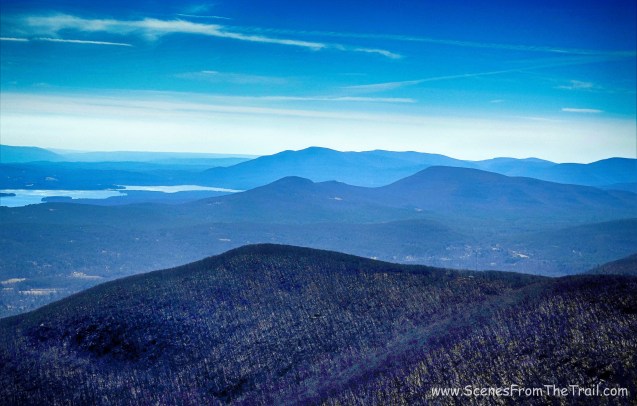
This is one of the more popular hikes in the area. It is a 5 mile round trip hike (up and back) along an old gravel road. The day I visited there were hordes of people there. Like most towers, there is a limit to how many people can climb it at any given time.  I didn’t go all the way up because there were more people in the tower than the suggested limit, it was windy and the tower was shaking. Nevertheless, I was still able to capture the amazing view from my vantage point. It’s kind of hard to get a bad view from 3,140 feet.

Overlook Mountain Fire Tower

Overlook Mountain Fire Tower

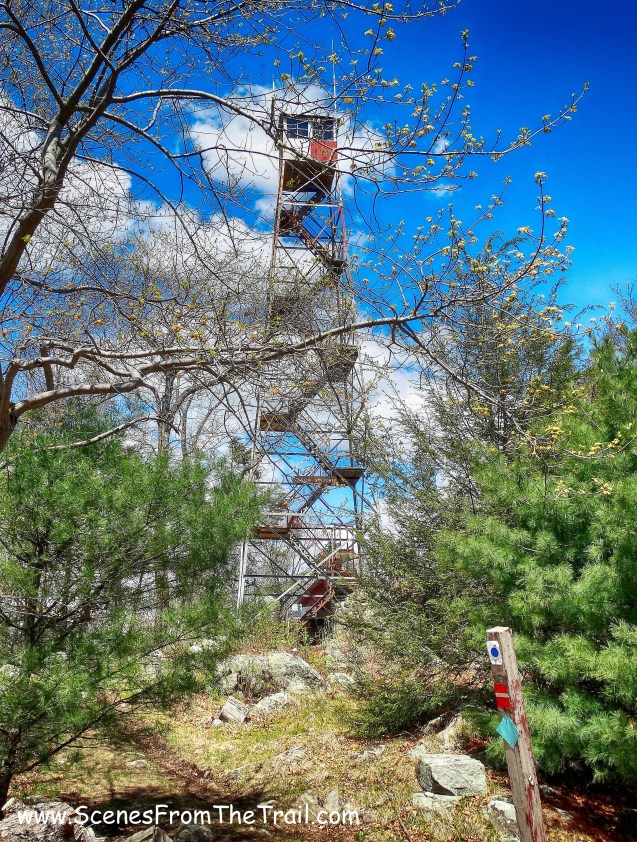
Sterling Forest Fire Tower – Tuxedo, NY – April 30, 2016

Sterling Forest Fire Tower

Sterling Forest Fire Tower

This tower is 60 feet tall and sits at an elevation of 1,310 feet. Located on Sterling Mountain, in Sterling Forest State Park, it was erected by the Conservation Commission in 1922 and became operational in 1923. It ceased operation in 1988 and was a “stand by” tower until 1999 when it was put back into active service by the Office of Parks, Recreation and Historic Preservation. It now holds the distinction of being the only operating fire tower in New York State.

From what I read, the tower is closed during winter and inclement weather. It’s suggested to call the park for more info before visiting. On the day that I hiked to it, there were only a few other hikers in the area. There are no views at the summit unless you climb the tower. Once you do, you will be rewarded.

View towards Sterling lake from the Fire Tower

View towards Sterling lake from the Fire Tower

Mount Beacon Fire Tower – Beacon, NY – October 23, 2016

Mount Beacon Fire Tower

Mount Beacon Fire Tower

The Mount Beacon Fire Tower was built in 1931 on the site of an earlier structure and was used by the State of New York to spot fires for five decades. This tower stands on South Beacon Mountain at 1,650 feet and has been a treasured hiking destination for years. It stands at 60 feet tall and was reopened in 2013 after an extensive restoration.

This tower was extremely crowded when I visited it and there were many people climbing it. It affords fantastic views up and down the Hudson River and it is my favorite of all towers I have visited.

view from the Mount Beacon Fire Tower

view from the Mount Beacon Fire Tower

Jackie Jones Fire Tower – Harriman State Park – Stony Point, NY – December 10, 2016

Jackie Jones Fire Tower

Jackie Jones Fire Tower

This 60 foot tall steel tower was erected in 1928 by the Palisades State Park Commission at the 1,276 foot summit of Jackie Jones Mountain in Harriman State Park. It replaced a wooden tower that stood there previously. The Conservation Department’s Bureau of Forest Fire Control took over operation of Jackie Jones Tower in 1931. This tower ceased operation at the end of the 1988 season and was officially closed in early 1989 when the Department of Environmental Conservation determined that fire towers were no longer effective and decided to phase them out of service. It is the last remaining fire tower in Harriman State Park.

This tower is in terrible shape and hopefully will be restored someday. On the day that I visited, I was tempted to climb it, but then thought better of it. There are no views from the summit unless you climb the tower. I didn’t see a soul on the day that I visited it, but I always prefer it that way.

Jackie Jones Fire Tower

Jackie Jones Fire Tower

Well, these are the fire towers that I have hiked to thus far. I am hoping to visit more in the near future and will update this post when I do. I hope that you enjoyed this post and don’t forget to follow my blog. I also welcome any comments and or suggestions. Now get out there and take a hike!

Take a hike!

Take a hike!

ORAK Ruins, Jackie Jones Fire Tower and Big Hill Shelter – Harriman State Park

December 10, 2016 – Harriman State Park – Stony Point, NY

Difficulty: Easy – Moderate

Length: approximately 5 miles

Route type: lollipop loop

Map: Harriman-Bear Mountain Trails


It was a Saturday morning and temps in low 30’s, partly sunny with no rain in sight. A bit chilly, but after all, it is December and I was going to get my hike on. This hike, which I saw on the NY/NJ Trail Conference website, was one that I wanted to do last May. Instead, we only made it to the ORAK ruins. I wanted to return because last time the ruins were somewhat obscured by the vegetation and I figured that it would be more visible. We started out by arriving at the parking area on County Route 106 around 9:30am. A late start, but I was in charge of breakfast and Biscuits and Gravy were worth the delay. We gathered our gear and began our hike by walking west along the road for a few hundred feet. After crossing over Minisceongo Creek we turned left and proceeded past the gated road to commence following the yellow-blazes of the Suffern-Bear Mountain (S-BM) Trail.

Suffern-Bear Mountain (S-BM) Trail

Suffern-Bear Mountain (S-BM) Trail

We would be following this trail for the first 2 miles of the hike. The trail climbed gently and in about 1/4 mile veered left onto a woods road. There we passed a stone wall or foundation and then came to a stone gatehouse. These ruins known as ORAK, was built in 1923 by George Briggs Buchanan, a vice president of the Corn Products Refining Company, which manufactured Karo syrup (Orak is Karo spelled backwards). After Buchanan died in 1939, his heirs sold the mansion to the park, and it was demolished in 1973.

stone gatehouse

stone gatehouse

Just past the gatehouse, to the left, was the mansion. It was reclaimed by the woods long ago, but still an interesting sight nonetheless.

ORAK Ruins

ORAK Ruins

ORAK Ruins

ORAK Ruins

I read somewhere that the dining room of the house resembled a ship’s cabin, with portholes for windows, and a floor that rocked gently to simulate a ship’s motion. Sounds pretty cool to me. There was another building close by with a giant arched window and a curved wall.

ORAK Ruins

ORAK Ruins

Once we were done exploring the ruins, we continued on the Suffern-Bear Mountain (S-BM) Trail. The trail continued to climb gradually and then became steep as we neared a communications tower. Just beyond that, the trail continued its gradual rise to the 1,276 summit of  Jackie Jones Mountain and the fire tower. Built in 1928, the 60-foot-high tower was returned to Park control in the 1960’s after having been operated since 1931 by the State Fire Control. It is the last remaining fire tower in Harriman State Park.

Jackie Jones Fire Tower

Jackie Jones Fire Tower

This tower is a death trap and I would not advise climbing it. I was pretty bummed because the only view from this spot is from the tower. The bottom row of steps is missing, the remaining wood is rotted and the steel is rusted to the point that it was not worth the risk to climb.

UPDATE: Tower was restored in 2018 and can now be climbed, although the cab is locked at times. For an updated version of this hike with images of the restored fire tower, click HERE.

Jackie Jones Fire Tower

Jackie Jones Fire Tower

After stopping briefly at the tower we resumed our trek on the S-BM Trail as it began a steep descent. We crossed two streams along the way and then arrived at a junction with the aqua-blazed Long Path. We continued following the joint S-BM/Long Path, which turned right onto a woods road. After a short distance, the joint trails turned left and climbed to the Big Hill Shelter. Built in 1927, this stone shelter offers a panoramic view to the south, with the New York City skyline visible in the distance on a clear day.

Big Hill Shelter

Big Hill Shelter

There was a troop of Boy Scouts that had set up camp in and around the shelter. The view from 1,227 feet was nice albeit a bit crowded, but we made do. The NYC skyline was clearly visible to the south and we took a brief rest as we enjoyed the view.

NYC skyline

NYC skyline

When we resumed our hike, we retraced our steps back to where the Long Path joined the S-BM Trail and turned right. I’ve hiked many sections of the Long Path and this was one of the more pleasant parts. We crossed an attractive stream along the way.

the Long Path

the Long Path

Shortly after crossing the stream we came to the Old Turnpike, a wide woods road that is now the route of an underground gas pipeline. We turned left here and walked several hundred feet and turned right onto another woods road. After about 1/3 of a mile we reached a junction with the yellow-blazed S-BM Trail and turned right. Now retracing our steps past the ORAK ruins, past the gate and back to the parking area. This was a pretty good moderate hike through some scenic woods, with multiple points of interest. It also consisted of multiple woods roads that made for easier hiking. We had another successful hike and were headed back for some homemade Split Pea with Ham soup made by me and an assortment of other goodies to munch on. I hope that you enjoyed the hike and don’t forget to follow my blog. I welcome your comments and/or any suggestions that you may have. Now get out there and take a hike!

Take a hike!

Take a hike!

Cornish Estate Ruins and Little Stony Point

December 4, 2016 – Cold Spring, NY

Difficulty: easy

Length: approximately 3.5 miles

Route type: up and back/circuit

Map: East Hudson Trails

I hiked to the Cornish Estate Ruins  (also known as Northgate) the previous day and wanted to go back and explore the ruins some more. I decided to go up the easy way as I was still recovering from hiking Bull Hill. I added Little Stony Point to the hike because I have always wanted to check it out, but didn’t want to drive 45 minutes for a short excursion. I combined the two and enjoyed an easy scenic hike on a gorgeous Sunday morning in December.

Little Stony Point, at just over 25 acres is part of the Hudson Highlands State Park Preserve. It seems that many years ago, Little Stony Point was separated from the mainland by water. Quarrying operations filled in the water to provide easier shipping of their gravel from the point. In 1967, LSP was purchased by the Georgia Pacific Company as a proposed site for a wallboard manufacturing plant. The Hudson River Valley Commission stepped in, convinced then Governor Nelson Rockefeller to intervene and the plant was established in Verplanck instead. That same year, funding from the Rockefeller Family Foundation was used to purchase LSP as part of the Hudson Highlands State Park.

We arrived at the Little Stony Point/Washburn Trail parking area just after 9am. It was a sunny Sunday morning in December with temps in the low to mid 40’s. Although I was a little sore from the previous days hike, I was ready to go. We began at the trailhead at the northern section of the parking area and picked up the blue-blazed Cornish Trail. This trail is only a mile long, but we would reach the ruins at about .75 miles in. It starts out as a footpath alongside Route 9D through the woods.

Cornish Trail

Cornish Trail

In a short distance, it reaches the paved driveway of the former estate and begins to veer away from the road and up the hill.

Cornish Trail

Cornish Trail

When we arrived at the site of the Northgate ruins, I saw something just to the left of the driveway in the woods a bit. I bushwacked towards it and then I realized it was the inground pool. I guess I was so tired the previous day that I missed it.

inground pool

inground pool

We then walked over to the mansion and captured a few images with my wide angle lens, which I never carry on longer hikes due to the weight. In the image below you can see Storm King Mountain through the trees on the right.

mansion ruins

mansion ruins

I captured a few more images from several different angles. We were there early enough so that no one else was around.

mansion ruins

mansion ruins

As I was standing there, a Bald Eagle was hovering just above the treetops. I was able to grab a shot of it before it flew higher.

Bald Eagle

Bald Eagle

I began to wander around and ended up rock hopping the stream to check out some ruined buildings on the other side. I found out later that all I had to do was walk around the mansion and a trail with a bridge led to the same area. That trail was blazed red and it was the tail end of the Brook Trail. It led me to an old pumphouse.

old pumphouse

old pumphouse

Just past the pumphouse was a really nice waterfall that cascaded down Breakneck Brook.

Breakneck Brook Falls

Breakneck Brook Falls

The falls ran under a rustic stone bridge that was pretty cool looking.

rustic stone bridge

rustic stone bridge

Then the brook ran over a dam which created another small waterfall. I could have gotten a better angle, but the slope was a little steep and I wasn’t feeling too adventurous on this day.

dam waterfall

dam waterfall

There were several other ruined buildings throughout the woods. I was glad that I came back here. There was a lot that I had missed. When we were done, we retraced our steps back to the Cornish Trail and made our way back to the parking area. After a brief rest, we crossed the road and made our way to Little Stony Point.

Little Stony Point

Little Stony Point

I had read a hike description, but had failed to print it out. The area is small so I figured we would just wander. After hiking through, I determined that by staying to the right at all forks, leads you on a loop of the park. We instead crossed the bridge over the tracks and hiked up to the cliffs. There we were greeted with a fantastic view north up the Hudson River, with Storm King on the left and Breakneck on the right.

view north from the cliffs

view north from the cliffs

The view south was impressive as well, but the sun was shining bright and right into my lens so I guess you’ll have to take my word for it or check it out for yourself. From there we retraced our steps back by the bridge and walked the crushed stone road down by the river. A very similar view could be had from down there along the shoreline. We walked along the sand as we made our way along the beach. We walked around the cliffs looking for a cave and/or mine that I had read about. It wasn’t difficult to find, given that it is a relatively small park.

cave

cave

I went in to get a better look inside.

cave

cave

The cave got smaller the deeper I entered, I wasn’t about to crawl around in there, so I only went in part way.

cave

cave

This was a nice little spot to visit and I am glad that I did. The highlight for me was the cave. We sat on some driftwood facing south, with the sun shining on us. It was a nice way to end our outing. I was getting hungry and someone forgot the sandwiches. We headed out and made our way back to the parking area. I hope you enjoyed today’s hike and please don’t forget to follow my blog. You’ll receive an email every time that I publish a post and you won’t miss out. I welcome any comments or suggestions that you may have as well. As always, get out there and take a hike!

Take a hike!

Take a hike!


Bull Hill and Cornish Estate Ruins

December 3, 2016 – Cold Spring, NY

Difficulty: strenuous

Length: approximately 6 miles

Route type: circuit

Map: East Hudson Trails

Bull Hill also known as Mount Taurus, is in the village of Cold Spring on the Hudson River in Putnam County in the State of New York. It is part of the mountain range known as the Hudson Highlands. The original name came after a bull that used to terrorize the mountain was chased by indignant inhabitants. A hunting party drove the bull over the hill. In an attempt to flee the mountaineers, the bull plunged out into space and fell down. Its broken and shapeless mass on the rocks was memorialized in the name of the mountain the bull used to haunt. Bull Hill has an extensive trail system and offers hikers sweeping views of the river and neighboring peaks from rock outcrops near its wooded 1,420-foot summit. Don’t let the name fool you. This is a mountain, not a hill.

Bull Hill as viewed from Storm King Mountain - September‎ ‎15‎, ‎2018

Bull Hill as viewed from Storm King Mountain – September‎ ‎15‎, ‎2018

Bull Hill (as viewed from Little Stony Point)

Bull Hill (as viewed from Little Stony Point)

Northgate also known as the Cornish Estate Ruins, was purchased in 1917 by Edward Joel Cornish, then president of the National Lead Company and his wife Selina. They acquired 650 acres from a diamond merchant named Sigmund Stern. What is known is that the mansion, garage, swimming pool, gardens, and other outbuildings existed at the time of purchase by Cornish. Who designed them remains a mystery. The couple died within two weeks of each other in 1938 and the estate seems to have laid abandoned more or less since then. Central Hudson Gas and Electric bought the property in 1963 and toyed with the idea of building a power plant on nearby Breakneck Ridge. By the end of the 1960’s, the ruins of the Cornish estate became part of the newly formed Hudson Highlands State Park and are now a regular stop for hikers.

Northgate - front entrance

Northgate – front entrance

I have been wanting to do this hike for quite some time. In my opinion, ruins are best viewed from late fall to early spring, when the vegetation is less likely to cover them. So now it’s “ruins season” for me and I incorporated views in order to extend the length of the hike. I decided to follow the hike description from the NY/NJ Trail Conference. Most of the trails in the Hudson Highlands are on rugged terrain and this one was no exception. The temperature on this Saturday morning was in the low to mid 40’s, mostly cloudy and windy. Not bad for December, but I could have done without the wind. We arrived shortly before 9am at the Washburn Trail parking area which is along Route 9D. It is directly across from the Little Stony Point entrance.

We began by entering the trail at the north end of the parking area. In about a hundred feet we came to a junction with the blue-blazed Cornish Trail, which veered off to the left. That would be our return route, but for the first 2.3 miles of this hike we would be following the white blazes of the Washburn Trail. The trail began to ascend on an old road which was once used to access a quarry. In about a half mile we reached the quarry, which was opened in 1931 and operated by the Hudson River Stone Corporation. The quarry was abandoned in 1967.

Quarry - Washburn Trail

Quarry – Washburn Trail

We entered the quarry and took a look around. We also took a brief break, the first of many along this trail. We retraced our steps back to the Washburn trail and continued up as the trail steepened. On a hike with steep climbs, I like to break it up into small milestones, otherwise it becomes arduous. The first milestone was the quarry. We continued following the white blazes, and in some instances arrows up the western slope of Bull Hill.

Washburn Trail

Washburn Trail

We arrived at a rock outcrop that looked out towards the Village of Cold Spring and the Hudson River looking south. There we took another short break as we took in the view.

view south from rock outcrop

view south from rock outcrop

At about 1.2 miles from the start of the hike, we came to an intersection where the yellow-blazed Undercliff Trail crosses the Washburn Trail. We decided to make a left here just to get a break from the climb uphill. There were several viewpoints along the short stretch we hiked which were not that different from the previous viewpoint, but it was a short lived mostly level walk which added about a half of a mile to our hike. We returned back to the Washburn Trail and continued to ascend until we came to a spot where there were some boulders on the left. We clambered atop of one of the boulders and were greeted with a spectacular view of Crow’s Nest Mountain to the left and Storm King Mountain to the right.

Crow's Nest Mountain to the left and Storm King Mountain to the right

Crow’s Nest Mountain to the left and Storm King Mountain to the right

After working up a sweat, we took a break here. It was extremely windy at this point and we took refuge on a bench-like rock that sheltered us a little from the strong gusts that came from the river. We had a snack, hydrated and then we were off again. We were now ready for the final push to the top, well not really, but we didn’t have much of a choice. We got to the summit just as some other hikers were on their way down. Looking south, I could see the New York City skyline.

New York City skyline

New York City skyline

We had just hiked about 2.5 miles and climbed 1,420 feet. That was a hard hike up, but it was all downhill from here. We began to descend on the eastern slope on switchbacks, passing several viewpoints along the way. At one such spot we could see Breakneck Ridge to the north.

Breakneck Ridge

Breakneck Ridge

We came to a three way junction and made a left onto the blue-blazed Notch Trail which was a rocky foot path downhill. Eventually it turned into an old woods road and much easier to walk. After a mile on the Notch Trail, we came to Breakneck Brook, where the Notch Trail turns right. At this point it is also where the red-blazed Brook Trail begins, going to the left, which was the way we were headed. First we took a detour to check out the ruins of the dairy farm where Edward Cornish raised his prized Jersey cows. The most imposing building was the stone cattle barn.

stone cattle barn

stone cattle barn

stone cattle barn

stone cattle barn

Next to the cattle barn is another stone building which I do not know what its intended purpose was.

stone building

stone building

A little further away there were several other buildings. I believe that this one was a garage.

garage

garage

When we were done exploring these ruins, we headed towards the red-blazed Brook Trail which paralleled Breakneck Brook as it cascaded downhill. This was the most pleasant trail of the day. A nice easy descent for about a half of a mile or so. We came to a fork where the blue-blazed Cornish Trail began and we jumped on that trail. As we hiked downhill, I looked to my right and saw a siphon chamber on the Catskill Aqueduct, which we were about to cross. We took another detour so we can get a better look.

Catskill Aqueduct siphon chamber

Catskill Aqueduct siphon chamber

We then retraced our steps back to the Cornish Trail and continued our descent along the now paved road. In a short distance, we arrived at the mansion ruins of the Edward Joel Cornish estate (Northgate). It’s quite an impressive set of ruins. You can view images of the estate how it appeared when it was lived in here. The main house below, was equipped with a porte-cochère (far left).

Northgate - main house

Northgate – main house

There are several chimneys that are still standing. The image below was shot facing north with Breakneck Ridge in the background.

Northgate - main house

Northgate – main house

Northgate - main house

Northgate – main house

From the main house we headed up to the greenhouse which we had passed moments before as we walked down the Cornish Trail.

Northgate - greenhouse

Northgate – greenhouse

Northgate - greenhouse

Northgate – greenhouse

Northgate - greenhouse

Northgate – greenhouse

There were several other buildings nearby that we didn’t check out. To be honest I was beat up from the feet up by now and just wanted to finish up the hike. I decided to return the following day with my SLR and wide angle lens and hike up the short way to capture more images. So now we headed down the Cornish Trail on the paved road which was the original driveway of the estate.

Cornish Trail

Cornish Trail

We arrived back to the parking area at almost 3pm. We were tired and hungry so after a brief rest, we headed out to feast on some Nachos, homemade Chicken Piccata and Coconut Layer Cake. That’s right, after every hike we dine on some tasty culinary delights that we prepare ourselves. I truly hope that you enjoyed the hike and don’t forget to follow my blog if you are so inclined. Feel free to leave a comment and/or share this post with your friends. Now get out there and take a hike!

Take a hike!

Take a hike!


Lovers Leap State Park

November 27, 2016 – New Milford, Connecticut

Difficulty: easy

Length: approximately 3 miles

Route type: circuit

Map: Park Map

Lovers Leap State Park is 127 acres and sits at an elevation of 518 feet. Its 4 miles or so of trails through the park will lead the hiker through centuries of land-use history. Heading northeast from the parking lot, the trail utilizes the 1895 Berlin Iron Bridge, one of five remaining in Connecticut, to cross the Housatonic River. Across the bridge the Lovers Leap Trail heads southeast to the rock formation that gives the park its name. From here, legend has it, that the Pootatuck Indian Chief Waramaug’s daughter, Princess Lillinonah, and her lover plunged to their deaths. The Chief himself died in 1735.

I have driven past this park several times on my way to other hikes in the area. What always caught my eye is the Iron bridge and on several occasions, I have stopped to capture an image of it.

1895 Berlin Iron Bridge

1895 Berlin Iron Bridge

We were supposed to hike this park last winter, but never got around to it. I love to hike areas that are rich in history that still have remnants of what made it historical. After a grueling hike two days earlier, Lemon Squeezer and Boston Mine – Harriman State Park, I figured we would do an easy hike that contained some interesting features. This hike fit the bill and off we went. The weather for this Sunday morning hike was to be in the mid 40’s and cloudy. It pretty much stayed that way, although it felt a little colder. As luck would have it, the sun made an appearance on the drive home. The map, downloaded and printed from the parks website, could be better. The trails were blazed well enough, but the map does not reflect that. The map shows all trails as a brown line, which at times made it hard to follow. Nevertheless, the park is small enough to figure out which way to go. Most trails are loops, so following one color will likely lead you back to where you started.

Once parked and geared up, we began our hike. We started off by heading towards the Lovers Leap Bridge. Built in 1895 by the Berlin Iron Bridge Company, it is a single span, 173 feet in length and rests on coursed stone abutments. This was one of the last bridges manufactured by the company.

1895 Berlin Iron Bridge

1895 Berlin Iron Bridge

A few years ago someone stole one of the steel plates that covers the roadway and the bridge had to be closed. We stopped along the bridge to capture an image of the Housatonic River as we looked southeast.

Housatonic River

Housatonic River

After crossing the bridge, we turned right and headed southeast on a park road, which is also known as the Lovers Leap Trail.

Lovers Leap Trail

Lovers Leap Trail

After about .3 miles uphill, we arrived at the spot where the park got its name. Lovers Leap is a nice scenic spot with an enjoyable view. It’s probably the nicest view in the park, but I could be wrong.

Lovers Leap

Lovers Leap

We retraced our steps back to the park road (Lovers Leap Trail) and headed up the red blazed trail bearing right. Not being familiar with the park or the trails, I used my best judgement along with help from the map. The red trail which is referred to as the “Castle Loop” leads uphill and in a short distance we arrived at the castle ruins. Not much is left except a foundation and a tall chimney. This area is the former estate of Catherine Judson Hurd, who donated her Falls Mountain Estate to the state of Connecticut in 1971 to create the park.

castle ruins

castle ruins

Directly across the trail from the chimney, there was a castle-like turret.

castle-like turret

castle-like turret

castle-like turret

castle-like turret

From here we continued to follow the red blazes, but they led downhill. We back tracked to the castle and followed the trail between the chimney and the turret. In a short distance we saw a blue blazed trail to the right and we began to follow the dark blue blazes as they climbed steeply up the hill. On the map it is shown as the Falls Mountain Trail. At the top of the ridge there was an open area with an eastern view.

eastern view

eastern view

There was a blue blaze painted on a tree near the edge of the cliff that someone must have painted as a joke. It could prove dangerous if you’re not paying attention. We continued to follow the blue blazes, but then bushwacked through the woods when the trail started to loop around and down. We didn’t see anything of interest and hiked back to the blue trail. We descended Falls Mountain until we came to the point where we first hopped on the blue trail. There we turned right and followed the old woods road to some ruins. From what I read these ruins are from a tea house that Catherine Judson Hurd had on her estate. There are two separate buildings here. One is larger than the other, so I assume that the larger one was the tea house and the smaller one a storage shed of sorts. The tea house is barely visible due to the extensive vines and weeds growing all over it, but the image below depicts the the most visible of the outer walls.

tea house ruins

tea house ruins

Below is the other building that stands close by. We took a nice long break sitting on these ruins and enjoyed a peaceful moment in the woods.

ruins

ruins

We hopped back on the trail, which I assume was the Castle Loop Trail as it looped us back to the Lovers Leap Trail (park road). From there we walked back down towards the bridge.

1895 Berlin Iron Bridge

1895 Berlin Iron Bridge

We crossed back over the bridge and walked back to the car. There we had some hot chocolate to warm up a bit then headed back on the trail. We now started following the light blue blazes of the Waramaug Trail. It is a 1.3-mile loop that goes along the top of the gorge through some pretty woods. We made sure to stay on blue because there are several trails that intersect and we wanted to walk along the ridge. We came to a spring house that overlooked the gorge.

spring house

spring house

We continued up the trail as it led us to the top of the ridge.

Waramaug Trail

Waramaug Trail

Once at the top, there were some partial views of the river and surrounding landscape.

Waramaug Trail

Waramaug Trail

We continued walking along the ridge, high above the river and did not encounter another soul along the way.

Waramaug Trail

Waramaug Trail

We walked by an area that was charred by a recent fire. According to news reports, the fire occurred in July of 2016 and it is believed that fireworks were the cause.

Waramaug Trail

Waramaug Trail

The Waramaug Trail began to loop back along the edge of the park property and back to the parking lot. Although not exciting, it was a nice hike through the woods on a cool November day. After relaxing in the parking lot for a while, we took off. It was time for some bacon cheeseburgers and fries and I was ravenous. I hope that you enjoyed today’s hike and don’t forget to follow my blog in order to be notified when I publish a new post. Feel free to leave comments and/or share this page with your friends. One last thing, get out there and take a hike!

take a hike!

take a hike!

Lemon Squeezer and Boston Mine – Harriman State Park

November 25, 2016 – Tuxedo, NY

Difficulty: strenuous

Length: approximately 8.2 miles

Route type: circuit

Map: Harriman-Bear Mountain Trails

The Lemon Squeezer is a rock formation that is one of the more interesting features in Harriman State Park. The Appalachian Trail runs right through it. It is a very narrow passage between the rocks and then goes up a steep rock face, where you need to use both your hands and your feet in order to pull yourself up. This is one of those hikes that an avid hiker wants on his résumé. It is one of the more popular hikes in Harriman and it was time that I gave it a shot.

The Boston Mine is an old iron mine along the yellow blazed Dunning Trail. It is a large open cut into the hillside, partially filled with water, was last worked around 1880.

I figured that after gourmandizing on Thanksgiving, this was the perfect hike to rid myself of some calories while checking out some interesting features along the way. I used the Lemon Squeezer / Island Pond Loop hike, found on the NY/NJ Trail Conference website as a reference. Originally I intended to follow it to the letter, but a missed turn forced me to improvise. Although we may have missed some areas of interest, we got to explore some of the less seldom hiked areas of the park. The downside was that we also added mileage to a hike that was already going to be 7.5 miles.

The weather for our Black Friday hike was to be in the 40’s with no rain expected until around 4 pm. I figured that as long as we started by 9 am, we would be done before it began to rain. That didn’t work out as planned, as we got rained on for most of the last half of the hike.

We began our hike at the Elk Pen parking area. From what I have read, this lot fills up rather quickly, as do most popular hiking spots in Harriman. We arrived just before 9 am and there were about a half dozen cars in the lot. When we got back, just prior to 4 pm, the lot was mostly filled. On a nicer day, I could see it being hard to find a spot to park. We began our hike by crossing the meadow on the Appalachian Trail, which happens to traverse the parking lot. The first 2.5 miles of the hike, we would be hiking on the AT.

Appalachian Trail from Elk Pen

Appalachian Trail from Elk Pen

We followed the vertical white bar blazes of the AT as it curved around to the left and came to a junction with a sign, where we turned left still following the AT.

Appalachian Trail

Appalachian Trail

We weren’t even warmed up yet and the trail began to climb steadily, then more steeply on our way up to Green Pond Mountain.

Appalachian Trail

Appalachian Trail

The trail conditions on this day were not optimal. It was wet, rocky and full of leaves, which made it harder to get traction. This made us have to focus on every step we took or risk a fall. We reached the summit of Green Pond Mountain, at an elevation of about 950 feet, it had no views to speak of. We descended the eastern slope of the mountain on switchbacks, where the AT turned left onto Island Pond Road, a dirt road built by Edward Harriman about 1905.

Appalachian Trail - Island Pond Road

Appalachian Trail – Island Pond Road

The trail descended and we crossed over an outlet of Island Pond on a small wooden bridge.

small wooden bridge

small wooden bridge

This stone spillway was built by the Civilian Conservation Corps workers in the mid 1930’s as part of a plan to increase the size of Island Pond by damming it. The work was never completed.

stone spillway

stone spillway

We continued on the AT, passing alongside Island Pond on our right.

Island Pond

Island Pond

A short while later, we arrived at the Lemon Squeezer. It was a lot larger than I envisioned. The entrance was a massive rock formation, and the AT traveled right through it.

Lemon Squeezer entrance

Lemon Squeezer entrance

Lemon Squeezer entrance

Lemon Squeezer entrance

Lemon Squeezer entrance

Lemon Squeezer entrance

I had to duck as I made my way through the entrance of the Lemon Squeezer.

Lemon Squeezer entrance

Lemon Squeezer entrance

Then we had to squeeze between the crevasse of the rock formation.

Lemon Squeezer

Lemon Squeezer

Lemon Squeezer

Lemon Squeezer

Then we came to the steep rock face, which is more difficult than it seems. Everything was soaked at this point, which made it even more difficult. You have to pull your weight up in order to scale this section. It proved to be an arduous task as my hands kept slipping on the wet rock. I tried to lunge up, but my feet kept slipping and there was no way to get any traction. After several futile attempts we decided to take the easy way, which is just to the left, indicated by a sign on a tree.

Lemon Squeezer steep rock face

Lemon Squeezer steep rock face

I was disappointed that I couldn’t tackle this climb, but life goes on, as did this hike. Once atop of the rock formation, we took a little break before we headed out on the trail again. The AT continued to the summit of Island Pond Mountain, an elevation of 1,302 feet. Just north of the summit were the  stone ruins of a cabin built by Edward Harriman.

stone ruins

stone ruins

We descended the mountain and reached a junction with a sign. Here we turned right, leaving the AT behind and began following the Aqua blazed Long Path. We walked along the edge of Dismal Swamp, then the trail passes an area filled with tree roots. This made the going just a little slower as the roots were slippery and always a tripping hazard. When we reached another junction, we turned left onto the White Bar Trail. We followed the white blazes until it was joined by the yellow blazed Dunning Trail. When the Dunning Trail veered right, away from the White Bar Trail, We stayed on the Dunning Trail. We stayed on the yellow blazed Dunning Trail until we arrived at the Boston Mine. The adit is not visible from the trail, but a large open cut into the hillside is. We walked into the rock cut, taking great care where we placed our feet. Since I knew that this area was filled with water, I wanted to make sure the leaves I was stepping on were on terra firma and not floating on the surface of the iron rich water.

Boston Mine

Boston Mine

Just to the right of the rock cut is a short trail which leads you directly across from the opening, but we like to live dangerously and took the ill advised route to the mine.

Boston Mine

Boston Mine

At this point, the occasional drizzle turned into a constant drizzle. We were supposed to turn right onto Island Pond Road (an old unmarked woods road). Instead we kept going on the Dunning Trail. By the time I had realized my mistake, we were about 3/4 mile past that turn. Not wanting to double back, I made an executive decision to continue ahead and take an alternate route back to the Elk Pen parking area. We stopped briefly at Green Pond to check the map and catch our breath.

Green Pond

Green Pond

While on the Dunning Trail, we passed through areas that required some “almost” scrambling. We walked under a large rock ledge that hung over the trail.

Dunning Trail

Dunning Trail

We hiked the Dunning Trail  to its terminus, where we then jumped on the white blazed Nurian Trail. These sections of the Dunning Trail and Nurian Trail were very scenic although quite rugged. It was also a very desolated section of the park. We only encountered one other hiker in this area and it was some guy dressed in camouflage. The Nurian Trail passed through the Valley of Boulders and along the edge of a brook with some attractive cascades. The rain was coming down steadily and I had my camera safely stashed away in my pack. I also reinjured my ankle (from a previous hike) and wanted to make haste before it swelled up. It was getting late in the day and we did not want to walk these unfamiliar trails in the dark. We weaved through the woods as fast as our worn down bodies would let us and turned right onto the red bar on white blazed Stahahe Trail and walked alongside Stahahe Brook and its numerous cascades. From there we caught the Arden-Surebridge (A-SB) Trail which took us to the Appalachian Trail and back to the parking area where we began our hike.

Even though this started as a planned out hike, it didn’t turn out that way. That is why carrying a compass and a map of the area you are hiking is paramount. The directions help, but at times can be confusing as you pass by numerous similar areas that fit the description in the written directions. At times blazes are missing, trails rerouted or you take a wrong turn. Stay smart out there and always allow time for things that can go wrong, because more times than not, they do. I hope that you enjoyed today’s hike and don’t forget to follow my blog to stay informed of some really cool hikes. Until next time folks, now get out there and take a hike!

Take a hike!

Take a hike!


Castle Rock and Sugarloaf Hill

November 19, 2016 – Garrison, NY / Philipstown, NY

Difficulty: moderate

Length: approximately 4 miles

Route type: out and back

Map: East Hudson Trails Map


Sugarloaf Hill is a peak along the Hudson River in Putnam County, New York, part of the Hudson Highlands. It was named by the Dutch for its resemblance in outline to a sugarloaf when sailing up the river towards it. The hill is about 760 feet high at its summit, towards the middle of the ridge.

Beverley, the house of Col. Beverley Robinson, was built at the foot of the peak in 1758. Robinson, a Tory, lost his house and estates there to confiscation in 1777. It was used as a headquarters by several American generals during the Revolution, and Benedict Arnold chose to dwell there when he took command of West Point in 1780. It was at Beverley that Arnold learned of the capture of John André and the failure of his treason, and then fled to the HMS Vulture.

Castle Rock at an elevation of 620 feet is just North of Sugarloaf Hill. Castle Rock is also the name of the estate that sits on the hill, overlooking the Hudson River. Also known as Cat Rock and Osborn Castle, it was the estate of William H. Osborn the former president of the Illinois Central Railroad. The castle can be seen from New York State Route 9D and is one of the most recognizable man made landmarks of the Hudson Highlands.

This hike was hastily put together, not that it needed much planning. The fire at Harriman State Park the previous week, which was still smoldering, made me change my hiking plans. I have always wanted to get a close up view of the castle and had heard recently that it was vacant. From what I had heard the property is off limits to hikers and sightseers. With that being said, enter at your own risk. We arrived at the parking area for the Castle Rock Unique Area which is right on 9D. Even though we got a late start, and didn’t arrive until approximately 8:45 am, we were the first car in the lot. Upon returning back to the vehicle after the hike, the small lot was full and there were cars lined up on both sides of the entrance road. It was a warm day for late November and I went with short sleeves and a down vest. I also wore my convertible pants in case I felt like shorts later on. Once geared up, we headed out on the blue blazed trail that led us across a field.

blue blazed trail

blue blazed trail

Walking across the field towards the woods, I could see the object of my desire. That castle which sat mightily on that hill, was calling my name.

Osborn Castle

Osborn Castle

Once in the woods, the blue trail turned right onto a carriage road which ran parallel to the field we just crossed. Now heading south, we came to an open view of West Point, with Storm King Mountain just beyond on the left and Breakneck Ridge on the right.

West Point, with Storm King Mountain just beyond on the left and Breakneck Ridge on the right

West Point, with Storm King Mountain just beyond on the left and Breakneck Ridge on the right

Not far up the blue trail we came to a wooden gazebo, which also signaled the end of the blue trail and the start of the red blazed Sugarloaf Trail.

wooden gazebo

wooden gazebo

We began following the red blazes of the Sugarloaf Trail which ascended the hillside. The trail turned right, but there was an unmarked trail that went off to the left towards the castle. We went left and in a short distance we came to Old Stone Road. The signs were all over the place to stay off the property. As stated previously, enter at your own risk.

signs

signs

I’m not sure if this was meant to keep people away or that it was indeed factual. Nevertheless, it led to some apprehension.

Rattlesnake sign

Rattlesnake sign

Below are some images of the castle and the grounds.

Castle Rock

Castle Rock

Castle Rock

Castle Rock

Cat Rock

Cat Rock

stone arch bridge

stone arch bridge

underneath the arch bridge

underneath the arch bridge

fountain

fountain

Cat Rock

Cat Rock

The view from the grounds of the castle.

the view

the view

Once back on the red blazed Sugarloaf trail, we continued to climb the hill on switchbacks.

Sugarloaf trail

Sugarloaf trail

The map indicated that the red blazed Sugarloaf trail turned sharply right. We missed the turn and ended up walking a short distance on the blue blazed trail, where we came to another wooden gazebo. Here we took a break as I consulted my map.

wooden gazebo

wooden gazebo

On the curve of the blue trail, right in front of the gazebo, was a guard rail of sorts. Seven stone pillars with pipes going through them, meant to prevent the carriages that used to roam this hill from going over the steep drop off. Just beyond the pillars, Sugarloaf Hill was visible through the trees.

Sugarloaf Hill

Sugarloaf Hill

After a brief rest, we walked back down the blue trail and turned onto the red blazed Sugarloaf Trail, which was now on our left. The blazes were evident in this direction. The trail now climbed very steeply towards the ridge of Sugarloaf Hill. This was by far the most strenuous section of the hike. It was short lived though as the trail leveled off and we walked along the ridge. Then we came to the end of the trail where we earned a nice view south, down the Hudson River.

view south

view south

We spent quite some time there, taking in the view and enjoying the gorgeous day. We had some lunch and soaked in some rays. When it was time to go, I proposed that we do a loop hike, which would have added about a mile or so to our hike. No one seemed too enthused at my suggestion, so we retraced our steps back the way we came. Once we were back on level ground, we stopped and took a break at the first gazebo we saw at the beginning of our hike and relaxed for a long while. I also managed to capture an image of the view along the way.

view from the Sugarloaf Trail

view from the Sugarloaf Trail

Once back at the vehicle, we headed out ready for some homemade Baked Ziti and an assortment of other goodies that awaited us. This was a pretty good hike, especially since it was almost last minute. The view, I’ve seen better, but a nice relaxing walk through the woods just the same. I hope that you enjoyed the hike today. Don’t forget to follow my blog so that you don’t miss out on any of my journeys. Remember, don’t just sit there, take a hike!

Take a hike!

Take a hike!


Hogencamp Mountain – Harriman State Park

November 13, 2016 – Tuxedo, NY

Difficulty: moderate

Length: approximately 6 miles

Route type: circuit

Map: Harriman-Bear Mountain Trails Map

Hogencamp Mountain at an elevation of 1,353 feet, is one of the highest points in Harriman State Park and provides panoramic views of the area. The hike that we decided to do is Iron Mines Loop #1, which I found on the NY/NJ Trail Conference website. This hike leads to interesting remnants of old iron mines and climbs to viewpoints from open rocks. The temperature for this Sunday morning hike started in the low 40’s, but jumped up to about 57 degrees by the afternoon. Perfect hiking weather for November. We arrived at the Lake Skannatati parking area before 9:00 am and there were plenty of parking spots in the lot. Upon our return in the afternoon, the lot was pretty much full. Most parking areas in Harriman State Park fill up quickly, so I always try to get an early jump.

From the northwest corner of the parking area we began following the aqua blazed Long Path alongside of Lake Skannatati.

Lake Skannatati

Lake Skannatati

We hiked the Long Path for almost 1.5 miles on a rocky footpath through woods that had some interesting rock formations.

the Long Path

the Long Path

the Long Path

the Long Path

We arrived at a junction with the yellow blazed Dunning Trail and turned left, now following the joint Dunning/Long Path. In a NY minute, we came to a fork where the two trails split and we went left, continuing on the yellow blazed Dunning Trail.

Dunning Trail / Long Path fork

Dunning Trail / Long Path fork

As we hiked on the Dunning Trail, we saw some remnants of mining activity from the Hogencamp Mine which operated from 1870 to 1885. A vertical mine shaft with a pipe sticking out and some foundations that were barely noticeable.

vertical mine shaft

vertical mine shaft

We began to climb again and just off the trail to the left was a viewpoint that overlooked Little Long Pond.

Little Long Pond

Little Long Pond

About 2.5 miles into the hike we arrived at an exposed rocky area known as Bowling Rocks. It got its name from the boulders that are scattered along the surface.

Bowling Rocks

Bowling Rocks

This was a really cool spot so we decided to take a break and enjoy our surroundings. As we were sitting and appreciating this scenic spot, a Red-tailed Hawk flew right by us and landed in a tree close by.

Red-tailed Hawk

Red-tailed Hawk

Once the hawk flew off to catch some prey, we took off as well. We continued on the yellow blazed Dunning Trail, but needing to make a right onto the red-dot-on-white-blazed Ramapo-Dunderberg (R-D) Trail. The description of the hike we were following reads: “This junction, which is on the crest of a ridge, is easily missed.” Well folks, we missed it. We actually turned too soon. The trail was not evident until you walked in a bit and picked up the blazes. We turned at what was an unblazed trail, which fit the description of the correct trail pretty closely. After a few back and forths and wandering trails that petered out, we backtracked to the Dunning Trail and continued on until we got to the turn we were supposed to make. This little detour tacked on a little extra mileage to our hike. We were now at about the halfway point of our hike

Ramapo-Dunderberg trail

Ramapo-Dunderberg trail

This trail was very enjoyable as it was mostly on exposed rock and the sun felt good on this day. This section of the Ramapo-Dunderberg trail has the blazes painted on the rock surface or on the boulders that dot the trail. This could be a problem if hiked in snow. We crossed a huge open rock surface, known as the Whaleback.

Whaleback

Whaleback

The trail then descended steeply down a rock face and we crossed a stream on a log bridge.

log bridge

log bridge

The trail began to climb as we made our way up the open rock surface. We decide that this would be a good place for a break. We sat on the bare rock surface of the Ramapo-Dunderberg trail enjoying this warm sunny day.

Ramapo-Dunderberg trail

Ramapo-Dunderberg trail

We sat here looking out into the distance with the chilly November breeze cooling us off.

Ramapo-Dunderberg trail

Ramapo-Dunderberg trail

Once break time was over we resumed hiking on the Ramapo-Dunderberg trail and came to a giant boulder along the trail that is known as Ship Rock for its resemblance to the bow of a ship.

Ship Rock

Ship Rock

The trail continued to climb up to the bare rock summit of Hogencamp Mountain. One of the prettiest locations in  Harriman State Park. At least this week anyway.

Hogencamp Mountain

Hogencamp Mountain

Once at the summit, we took in the views while we took another break.

Hogencamp Mountain

Hogencamp Mountain

The view from 1,353 feet was just grand. A nice payoff for our efforts.

Hogencamp Mountain

Hogencamp Mountain

We began our descent of the mountain, stopping to capture a few more images.

Hogencamp Mountain

Hogencamp Mountain

The hike down was rather steep, but the open rock surface had an almost grippy feel to it. In no time we navigated through the Hemlock forest with many downed trees and arrived at Times Square. It got its name because it is located at the junction of three trails and serves as a popular meeting place for hikers.

Times Square

Times Square

We hung out here for a little while as other hikers passed by or stopped for a break. In a few minutes we were off again, now following the Arden-Surebridge (A-SB) Trail, marked by inverted-red-triangle-on-white blazes (to be distinguished from the red-dot-on-white blazes of the Ramapo-Dunderberg Trail).

Arden-Surebridge (A-SB) Trail

Arden-Surebridge (A-SB) Trail

The trail began to descend on an old mining road and we came to a rock cut that was part of the Pine Swamp Mine. It opened in 1830 and was worked intermittently until 1880.

Pine Swamp Mine

Pine Swamp Mine

There were several other excavations and open pits that were filled with water along the trail. The trail descended into the woods then shortly thereafter ascended to the shoulder of Pine Swamp Mountain, then descended towards the parking area with Lake Skannatati visible through the trees, where we began our hike.

Arden-Surebridge (A-SB) Trail

Arden-Surebridge (A-SB) Trail

Although this hike had multiple elevation gains, it wasn’t strenuous at all. It had enough level walking to break up the climbs. It was a really nice hike along some really scenic trails. I Hope that you enjoyed today’s hike and as always, don’t forget to subscribe to my blog and stay up to date on my journeys. So get out there and take a hike!

take a hike!

take a hike!

High Point Monument

November 6, 2016 – Wantage, NJ

Difficulty: moderate

Length: approximately 8 miles

Route type: circuit

Map: Kittatinny Trails or one available at the visitor center

High Point Monument is a memorial to NJ veterans that also marks the highest elevation in the state of NJ, at 1803 feet. Designed as a lasting tribute to “Glory and Honor and Eternal Memory of New Jersey’s Heroes by land, sea, and air in all wars of our country,” construction began in 1928. On June 21, 1930, a dedication ceremony was held at the monument’s base.

High Point Monument

High Point Monument

The view from High Point Monument, at 1,803 feet above sea level, is a spectacular panorama of rich farmland and forest, soft hills and lush valleys in three states. The blue line of the Delaware River divides the verdant ridges of New Jersey from those of Pennsylvania. High Point offers superb trails for hikers and skiers and quiet spots for campers and anglers. The view below shows the Delaware River separating Pennsylvania on the left and New York on the right.

Delaware Water Gap

Delaware Water Gap

With over 50 miles of trails, High Point State Park offers visitors a variety of trail options throughout the year, Designated multiple-use trails are available for hiking, mountain biking, horseback riding, cross country skiing, snowshoeing, dogsledding and snowmobiling. Trails vary in length from one half-mile to 18 miles and take visitors through unique and diverse landscapes including an Atlantic white cedar swamp, mountain ridge tops with 360-degree views, dense forests, fields and wetlands.

High Point State Park

High Point State Park

I was looking forward to a nice Autumn hike and this place fit the bill. I have been able to see High Point Monument from hikes I have done in NY, NJ, Pennsylvania and Connecticut. I figured it was about time to see it up close and personal. We followed a hike description on the NJ Hiking website. It offered 4 similar hikes to the monument of varying distances. This enabled us to decide the length of our hike depending how we felt once we got to the monument. We began our hike by parking in the Appalachian Trail Hiker Parking area. There is no charge for parking nor is there a time limit. Once geared up and ready, we began our hike by heading to the corner of the lot towards the kiosk. There weren’t any blazes visible until we were a few feet on the trail. We started following the blue blazes of the connector trail.

blue blazed connector trail

blue blazed connector trail

In a short distance, the blue blazed connector trail veered right and was joined by the red dot on white Iris Trail.

Iris/Blue Connector Trail

Iris/Blue Connector Trail

At about .3 miles from the start of the hike, we arrived at a junction and turned right onto the white blazed Appalachian Trail (heading North).

Appalachian Trail

Appalachian Trail

For the next mile or so we would be following the white blazes of the Appalachian Trail. Shortly after turning onto the AT, we arrived at the visitor center and picked up a map. The map available at the visitor center is produced by the NY/NJ Trail Conference and is very detailed. There are also restrooms available for use. Once ready to proceed, we crossed Route 23 and across a field to the edge of the woods and continued on the Appalachian Trail heading North.

Appalachian Trail

Appalachian Trail

The trail becomes rocky and rugged as it starts to climb gradually through the woods, eventually the monument will come into view.

Appalachian Trail

Appalachian Trail

We climbed the steep and rocky trail stopping occasionally to catch our breath.

Appalachian Trail

Appalachian Trail

We came to a rock outcrop that had an open view to the east. I believe that the mountains in the distance are the Hudson Highlands, Harriman State Park and Bear Mountain.

view East on the Appalachian Trail

view East on the Appalachian Trail

From the outcrop, we had an obstructed view of the monument. We continued a little further on the AT and then the monument became more visible.

High Point Monument

High Point Monument

As we continued hiking on the AT, we came to an observation platform that provided some nice views of the entire area and the High Point Monument as well.

observation platform

observation platform

The view was impressive, but the wind was brutal. Needless to say we didn’t hang around too long.

view from observation platform

view from observation platform

As we continued on our quest to reach the monument, the AT made a right turn at a junction with the red-green blazed Monument Trail. Here is where we left the AT and now began a final steep ascent on the Monument Trail towards the highest point in the state of New Jersey. Also at this same junction is where the Shawangunk Ridge Trail (the three blue blazes signifies the beginning of the trail) begins and runs 71 miles northward along the dramatic Shawangunk Ridge to Mohonk Preserve.

red-green blazed Monument Trail

red-green blazed Monument Trail

After huffing and puffing up the final push, we arrived at the base of the High Point Monument. I made a bee line for a bench, dropped my backpack on the ground and took a seat. The view was spectacular from where I sat, but the wind was whipping around and combined with my sweat, chilled me to the bone. It was supposed to be warmer, in the high 50’s, but felt much colder. Nevertheless, I could see 3 states from here and it was worth the hike. At this juncture, we had hiked about 2 miles.

Northern view from High Point

Northern view from High Point

Lake Marcia and beyond to the Southwest.

Lake Marcia and beyond

Lake Marcia and beyond

The monument was closed so we couldn’t climb inside, but the 360 degree views from the base were sufficient.

High Point Monument

High Point Monument

Our intention was to have lunch near the monument, but since you can almost drive up to it there were throngs of people all around. The wind (yes, there I go complaining about the wind again) was bothersome so we decided to find a less secluded (and less windy) spot to partake of our nourishment. At this point we also discussed whether we would turn around and head back, which would make this a 4 mile hike, or continue on and make this a longer hike. At my urging, we decided to extend the hike. We continued through the parking area where we caught up with the Monument Trail and headed back into the woods.

Monument Trail

Monument Trail

As soon as we were in the woods, we found some boulders just off the trail and relaxed and had some lunch. When we were done, we jumped back on the trail and continued on our hike. This section of the trail was pleasant, easy and mostly level with some short paths that led to views on either side.

Monument Trail

Monument Trail

After about 3.5 miles from the start of the hike, we turned left onto the unblazed Cedar Swamp Trail. In a little less than a mile we turned left, still on the Cedar Swamp Trail, which was now also the Shawangunk Ridge Trail and proceeded to cross a over a mud bog on a wooden boardwalk.

wooden boardwalk

wooden boardwalk

Going on the Cedar Swamp Trail was a loop in itself. When we came out from the mud bog, we were back at the junction with the red-green blazed Monument Trail. We turned left and proceeded uphill and along a ridge, with views on the right of Port Jervis, NY and PA. The trail is rocky with minor elevation changes and lined with scrub oak.

red-green blazed Monument Trail

red-green blazed Monument Trail

At the 6 mile mark, we arrived at a park road where the nature center is and walked down to Lake Marcia, where we took a break on a picnic table. At this point after a lengthy discussion, it was decided that I would hike the last 2 miles on my own and return with the vehicle. I walked the park road until I could see the observation platform through the trees and hoofed it up to the Appalachian Trail where I turned right (south) and retraced my steps back to the Appalachian Trail Hiker Parking. I then returned back to Lake Marcia (which is located in High Point State Park) with the vehicle where we lit a nice fire and grilled a giant London Broil. I was exhausted, but thoroughly enjoyed this hike and the meal. We packed up the vehicle as it was getting dark and headed out. That’s it for today folks. I hope that you enjoyed the hike and don’t forget to sign up to follow my blog so you don’t miss my latest entries. Don’t just sit there looking at the screen, get out there and take a hike!

Take a hike!

Take a hike!


Congers Lake Memorial Park Trailway

November 5, 2016 – Congers, NY

Difficulty: easy

Length: approximately 2.6 miles

Route type: circuit

Map: none available

Congers Lake Memorial Park Trailway is located at 6 Gilchrest Rd in the hamlet of Congers, town of Clarkstown, NY. It loops around the 100 acre lake and it’s a very scenic and well maintained place to go for a walk. All Town parks are for Clarkstown residents only, which I did not know until I saw the signs at the park. Since it was after Labor Day, no one bothered us and there was plenty of spots available in the parking lot. There are also other access points to the trail where you can park. Dogs are not permitted in the park or on the trailway. The entire length of the trail is level, hard surfaced and about 8 feet wide. The western section of the trailway is a boardwalk that snakes along the bank of the lake for about a mile.

Congers Lake Memorial Park Trailway

Congers Lake Memorial Park Trailway

It was a warm November Saturday afternoon and there were plenty of people walking and enjoying the park and trailway. We entered the trail at the northern end of the parking lot and began walking on the macadam path which bordered the east side of Congers Lake.

Congers Lake Memorial Park Trailway

Congers Lake Memorial Park Trailway

There were a lot of birds chirping and carrying on. I was able to capture an image of a Blue Jay that landed on a tree nearby.

Blue Jay

Blue Jay

There were numerous short spur trails that led towards the lake. We explored a few to check out the view. We could see along with the beautiful Fall foliage, the trailway on the other side of the lake.

Congers Lake

Congers Lake

When we reached the northern end of the lake, we arrived at the boardwalk. Now we were walking with an open view of the lake which was lined with trees.

Congers Lake Memorial Park Trailway

Congers Lake Memorial Park Trailway

Congers Lake

Congers Lake

The 8′ wide boardwalk was the highlight of this hike. The way it meandered along the edge of the lake made it worth the visit.

Congers Lake Memorial Park Trailway

Congers Lake Memorial Park Trailway

Congers Lake Memorial Park Trailway

Congers Lake Memorial Park Trailway

I am glad that we got to visit this place while the foliage was bursting with color.

Congers Lake Memorial Park Trailway

Congers Lake Memorial Park Trailway

As we walked along the boardwalk, I glanced over and saw a Great Blue Heron seemingly camouflaged on the swampy bank of the lake. It was unperturbed as I captured some images.

Great Blue Heron

Great Blue Heron

As we neared the southern end of the boardwalk, I could see the bridge that passed over the Congers Lake Dam. The dam was built in 1995 to replace the original stone and earthen dam which was constructed more than a century earlier.

Congers Lake Dam

Congers Lake Dam

Once we stepped off the boardwalk we were at the southern end of the lake and stood there a minute to admire the view.

view from the southern end of the lake

view from the southern end of the lake

From here I was able to capture a decent image of the boardwalk.

view from the southern end of the lake

view from the southern end of the lake

We continued across the Congers Lake Dam Bridge and broke off the trail. Just across the street was the Paul Farmhouse, the easterly section of this Dutch farmhouse was constructed by John Paul in the early 19th Century. Soon after the similar westerly addition was added resulting in a rare style of twin front door entrances. The structure, a frame of sawn heavy timber with a clapboard and sandstone exterior, was plastered on the interior and insulated with mud and straw. Successive branches of the Paul, Jones and Schueler families lived here for approximately two centuries. Clarkstown acquired it in 1990 and restored it in 1996.

Paul Farmhouse

Paul Farmhouse

We then proceeded back onto the trail, where it curved to the right. Here we stumbled upon the DeBaun/Swartwout Cemetery. This burial ground includes members of two of the most important families and early settlers in the Congers area.

DeBaun/Swartwout Cemetery

DeBaun/Swartwout Cemetery

After passing the cemetery, I realized that we were almost back to our starting point which was the parking lot. What started out as just trying to kill some time on a lovely afternoon, turned into a fine little discovery. As always, I hope that you enjoyed the hike and don’t forget to follow my blog to stay up to date with my journeys. Well? What are you waiting for? Take a hike!

Take a hike!

Take a hike!


Woodlawn Cemetery

October 29, 2016 – Bronx, NY

Difficulty: easy

Length: approximately 4 miles

Route type: circuit

Map: available on–site


Woodlawn Cemetery is one of the largest cemeteries in New York City and is a designated National Historic Landmark. Woodlawn opened in 1863, in what was then southern Westchester County, in an area that would be annexed to New York City in 1874. The Cemetery covers more than 400 acres and is the resting place for more than 300,000 people. Built on rolling hills, its tree-lined roads lead to some unique memorials, some designed by famous American architects. Along with being a historic cemetery, Woodlawn is also a very scenic locale. Since it is the Fall foliage season and the weekend before Halloween, we decided to do our hike here. The prior weekend we hiked to the Mount Beacon Fire Tower and now we moved further south.

We arrived at approximately 9:30am on a Saturday morning and picked up a map at the office. I tried to find a map online prior to hike day in order to map out the hike, but could not find one that was suitable. The map provided by Woodlawn is quite large, measuring 22″ x 17″, but the print is quite small and difficult to make out the points of interest. A magnifying glass would’ve come in handy for this purpose alone. I had been to Woodlawn previously and visited most of the notable gravesites. Since it was difficult to read the small print on the map, I figured we would just improvise. An impromptu hike was just fine by me.

After parking at the Woolworth Chapel lot, we began our hike. First off we headed towards the John Harbeck mausoleum. John Harbeck was a business magnate on Wall Street.
Commissioned by his wife, Kate, and designed by Thomas E. Blake, the mausoleum has a 90-foot steeple, bronze doors, Tiffany windows and a pipe organ. It is the tallest mausoleum in the cemetery

John Harbeck mausoleum

John Harbeck mausoleum

On a previous visit, I was lucky enough to capture the sun setting through the Tiffany windows. I decided to include it here.

John Harbeck mausoleum - December 28, 2013

John Harbeck mausoleum – December 28, 2013

Since we were just wandering and not following a specific route, we just looked for interesting things to photograph and headed towards it. Within viewing distance of the John Harbeck mausoleum, was the William Lamon Harkness mausoleum  with multiple columns that resembled a bank. This large Greek Revival mausoleum by Hunt & Hunt (1923), was fabricated by Batterson & Eisele of Barre granite.

columned mausoleum

columned mausoleum

Close by was Herman Ossian Armour, co-founder of the meatpacking firm of Armour & Company. Canopied by large Weeping Birch trees it was almost hidden away.

Herman Ossian Armour

Herman Ossian Armour

We followed along the road at times and also walked along the tombstones. There were so many eye appealing sights along the way and that was our compass on this hike. Up on a hill was the mausoleum of Jay Gould the owner of Lyndhurst Estate in Tarrytown, NY. His mausoleum has no external markings.

Jay Gould

Jay Gould

Charles Bathgate Beck a Bronx millionaire has a very picturesque final resting place.

Charles Bathgate Beck

Charles Bathgate Beck

Dr. Clark W. Dunlop has a storied past and is entombed along with his pet parrot.

Clark W. Dunlop M.D. mausoleum

Clark W. Dunlop M.D. mausoleum

Henry H. Cook had large interests in railroads. His seasonal residence, Tanglewood, serves as the summer home for the Boston Pops.

Henry H. Cook

Henry H. Cook

With such beautiful architecture all throughout this cemetery, our path was guided by the more eye-catching memorials, of which there were many.

eye-catching

eye-catching

As we wandered around, I saw that to my right, almost hidden from view was a very interesting looking memorial. It turns out it was the final resting place for Samuel Untermyer who was a prominent lawyer and civic leader.

Samuel Untermyer

Samuel Untermyer

Untermyer Park and Gardens is one of my favorite places and his gravesite was a good place to have lunch.

Samuel Untermyer

Samuel Untermyer

Once we were done hanging out with Mr. Untermyer, we continued on our hike. We came to the monument for the William Bradley family. William Bradley built most of New York City’s subways, but was almost penniless at the time of his death.

William Bradley

William Bradley

The cemetery is full of old-growth trees that are quite photogenic.

tree

tree

old-growth trees

old-growth trees

old-growth trees

old-growth trees

This is a nice place to take an autumn walk if you’re looking for a little peace and quiet.

Woodlawn Cemetery

Woodlawn Cemetery

With all the beautiful stonework and ironwork spread out across this serene location, I pointed my camera in just about every direction capturing images.

Woodlawn Cemetery

Woodlawn Cemetery

Woodlawn Cemetery

Woodlawn Cemetery

Woodlawn Cemetery

Woodlawn Cemetery

Woodlawn Cemetery

Woodlawn Cemetery

We walked over a stone bridge that spanned a small lake.

stone bridge

stone bridge

stone bridge

stone bridge

We continued hiking through Woodlawn trying to tally up some mileage. I captured so many images, but I couldn’t post them all. My suggestion is that you check it out for yourself. So get out there and take a hike!

Take a hike!

Take a hike!


Mount Beacon Fire Tower

October 23, 2016 – Beacon, NY

Difficulty: moderate – strenuous

Length: approximately 4.5 miles

Route type: out and back

Maps: 1. East Hudson Trails Map #102  or  2. Scenic Hudson Mount Beacon Park Trail Map

Mount Beacon is the highest peak of the Hudson Highlands which rises high above the Hudson River. The northern peak, at 1,531 feet above sea level, has a complex of radio antennas on its summit and the 1,610-foot southern summit has a fire lookout tower. It is one of the more popular destinations of hikers in the Hudson Valley area. Throngs of people (and vehicles) can be seen at the northern summit. Although the climb is steep and rocky, it rewards you with fantastic panoramic views of the area.

Since it is the Fall foliage season, we started with the Bear Hill Nature Preserve – Autumn Edition hike last week and then further south this week for this hike. This is one of those Hudson Valley hikes that if you’re an avid hiker, belongs on your résumé. Since I hadn’t done this hike, and the last month or so were easy hikes, I felt it was time to take on something a bit more challenging.

We began the hike at Mount Beacon Park, on Howland Avenue in the City of Beacon. The lot is a good size, but fills up rather quickly. We arrived at around 9am on a Sunday and there were only a few spots left. This is an easy hike to follow, considering that for the greater part of the hike you only have to follow the red blazes of the Casino Trail.

Casino Trail

Casino Trail

After a short walk we came to what is left of the lower section of the Mount Beacon Incline Railway, which operated from 1902-1978, but was marred by fires throughout it’s history. It used to take passengers up 1,540 feet to where the Beaconcrest Hotel and a casino used to be. All that is left of this historical funicular is the upper powerhouse and some sections of the railbed.

Mount Beacon Incline Railway

Mount Beacon Incline Railway

Immediately after passing the ruins of the railway, we were confronted with a giant metal staircase that in itself was a good cardio workout.

giant metal staircase

giant metal staircase

Once we climbed the more than 200 steps, we were ready to tackle the steep climb that ensued. The trail, although pleasing to the eye, was no walk in the park.

Casino Trail

Casino Trail

The first 1,000 feet of trail was on steep rocky switchbacks. We passed pairs and groups of people along the way and were passed by just as many. We stopped frequently to catch our breath and continued up the Casino Trail.

Casino Trail

Casino Trail

On several sections along the trail we passed by remnants of an old ski lift.

remnants of an old ski lift

remnants of an old ski lift

After some huffing and puffing, we arrived at the site of the ruins of Mount Beacon Incline Railway’s upper powerhouse.

Mount Beacon Incline Railway's upper powerhouse

Mount Beacon Incline Railway’s upper powerhouse

All that is left from a fire in 1983 is the shell of the building and the huge gears that used to haul the railcars up the side of the mountain.

Mount Beacon Incline Railway's upper powerhouse

Mount Beacon Incline Railway’s upper powerhouse

Well, I have to say that the steep hike up was totally worth it. The view from the north summit was spectacular. I could see the Hudson River, the Newburgh–Beacon Bridge and all the way to the Shawangunks.

view from the north summit

view from the north summit

The view north up the river wasn’t bad either.

view north

view north

view north

view north

The view to the southwest was impressive as well.

view to the southwest

view to the southwest

Although the leaves seemed to be a little past peak, there was till some color to be found.

view to the southwest

view to the southwest

We hung out at the casino ruins for quite some time. We basked in the sun, took in the view and had a bite to eat. Looking up at the Mount Beacon Fire Tower, it looked pretty far away. It was only about a mile and about 500 feet of elevation, but from where I was sitting it didn’t look easy.

Mount Beacon Fire Tower

Mount Beacon Fire Tower

After taking a lengthy break, we headed back onto the red blazed Casino Trail for the southern summit of Mount Beacon and the fire tower. We were lucky as most people end their hike at the northern summit and don’t go much further. We only passed several people at most on our way up to the tower. It was a very attractive section of the trail that was filled with color.

Casino Trail

Casino Trail

Casino Trail

Casino Trail

I knew that at some point we had to turn right onto the white blazed Breakneck Ridge trail to get to the fire tower. I never saw any white blazes, but I saw a couple descending down a steep rock face and happen to ask them if the tower was up that way. Good thing I asked, otherwise I may still be looking for it. We climbed up the steep slope of exposed rock and then we were there. What a sight for sore feet when we finally saw the fire tower reaching up towards the sky.

Mount Beacon Fire Tower

Mount Beacon Fire Tower

There were quite a few people on and around the tower. We took a break and waited for the crowd to thin out a little. There appeared to be far too many people in the tower for such a windy day. The cabin at the top is only 7×7 and in one instance I counted 9 people up there, with many more at other stages. I was a little concerned that a huge gust of wind could topple the tower with so many people on it. Other fire towers that I have visited usually have a sign with the allowable occupants at one time, but this one had no sign. When the crowd subsided, we climbed the tower only to have a newly arriving crowd right behind us. We only went up a couple of levels and captured some images from there.

view from the Mount Beacon Fire Tower

view from the Mount Beacon Fire Tower

view from the Mount Beacon Fire Tower

view from the Mount Beacon Fire Tower

After spending some time at the southern summit of Mount Beacon and taking in the spectacular views from the fire tower, we began our trek back down the mountain. We walked down the exposed rock of the Breakneck Ridge trail until we met up with the red blazed Casino Trail where we turned left.

Breakneck Ridge trail

Breakneck Ridge trail

On the way down we saw a few ATVs and dirt bikes along with some SUVs. Apparently this must be a hangout for area youths. We also saw the remains of a vehicle that never made it back down the mountain.

remains of a vehicle

remains of a vehicle

Upon arriving back at the casino ruins on the northern summit, I noticed a lot more people there than when we left. There were also quite a few vehicles there as well.

vehicles at the northern summit

vehicles at the northern summit

We sat here for a short while capturing a few more images before we headed back down the Casino Trail. It was late afternoon and the trail was now teeming with hikers. We made our way back to the parking lot where we began our hike and then we were able to call it a day. Grilled steak tacos awaited us and we were famished. I hope that you enjoyed the hike and don’t forget to subscribe to my blog. Next weekend will be a Halloween edition hike. Stay tuned  and don’t forget, get out there and take a hike!

Take a hike!

Take a hike!


Bear Hill Nature Preserve – Autumn Edition

October 16, 2016 – Pine Bush, NY

Difficulty: easy

Length: approximately 2 miles

Route type: out and back

Map: none available

Bear Hill Nature Preserve is in the same Shawangunk Ridge as Sam’s Point. At an elevation of 1,950 feet, it provides spectacular views. It is a 50 acre privately owned park. They charge a $5.00 per person trail use fee, but have no maps available nor are the trails blazed. This is a short easy hike with some of the best views anywhere. I did this hike back in June 2016, read about it here. I liked this place so much that I knew I had to come back during the fall foliage season. As spectacular as this place was in June, I knew that it would be even better when the leaves changed. If you plan on visiting do not use the location used by Google Maps, it is incorrect. Instead, use the GPS location I provided by clicking on the name at the start of this paragraph.

Since this is a short hike, I decided to incorporate other places nearby into the day’s itinerary. First off we drove to Ellenville to visit Nevele Falls, which is viewable from the side of the road on  Route 52. We parked on Chapel Street by the stop sign and crossed Route 52 and got a nice look at the falls from the road.

Nevele Falls

Nevele Falls

Although there wasn’t much water flowing, it was still quite picturesque to look at. We stepped over the guard rail to the left of the falls and walked along a short trail to get a closer look.

Nevele Falls

Nevele Falls

Once we were done checking out Nevele Falls, we continued on to Hanging Rock Falls, which is also located in Ellenville. We parked at the pull off on Cape Rd, and walked over to where the guard rail is. There is a worn trail which we followed down the hill. I knew that the Beer Kill, which is where the falls are, ran parallel to Cape Road (courtesy of Google Maps), so we continued following the trail away from the road. At the bottom of the hill there is a junction, the trail goes left, right and straight, we continued straight until we came to the Beer Kill. There are many cascades that make up Hanging Rock Falls. On this day the cascades were weak, but nice to look at.

Hanging Rock Falls

Hanging Rock Falls

The cascades went both upstream and downstream. We decided to go downstream, walking along the rocks that normally would be underwater.

Hanging Rock Falls

Hanging Rock Falls

I can imagine how scenic this waterfall would be with a heavier flow.

Hanging Rock Falls

Hanging Rock Falls

There are also some cool rock formations throughout this area. Some looked like rock shelters…..

rock shelter

rock shelter

and others were more like caves that went deeper than I would stick my head in.

caves

caves

Once we had our fill of rock hopping along the waterfall, we had one more stop before we went to Bear Hill. Right down the road from Bear Hill is Cragsmoor Stone Church, which was built in 1895 with stone from the mountain. It sits on the edge of the Shawangunk Ridge and provides spectacular views of the countryside and beyond.

Cragsmoor Stone Church

Cragsmoor Stone Church

The church itself is an impressive piece of architecture.

Cragsmoor Stone Church

Cragsmoor Stone Church

What really impressed me about this place is the awe-inspiring view. At the back of the property is a stone arch which is right on the edge of the ridge.

stone arch

stone arch

The view from here was nothing less than spectacular and luckily there wasn’t anyone else around but us.

spectacular

spectacular

Cragsmoor Stone Church

Cragsmoor Stone Church

After spending some time there, it was time to make our way to Bear Hill. We were lucky to get the last available parking spot in their small lot. It was about 11:30 am on a Sunday morning, but this was our last stop and we planned on spending some time here.

Bear Hill Nature Preserve

Bear Hill Nature Preserve

The basic layout of this place is simple. You walk straight until you can’t go any further then turn left and you are greeted with some of the best views that you can possibly see for a minimum amount of effort. I wanted to change things up a bit. There are a few side trails that go off the main trail that I wanted to check out, so as we walked along the main trail, I spotted a side trail that led up a hill and we began to follow it.

main trail - Bear Hill Nature Preserve

main trail – Bear Hill Nature Preserve

side trail

side trail

This trail was beaming with color and also less traveled. We didn’t pass another hiker along the way. I was glad that we decided to go this way.

side trail

side trail

It turns out that this trail ended at a junction with the main trail. Apparently we took the scenic route, and then there we were. It’s really hard to capture a bad image of this place. The difficult part is choosing which images to post.

Bear Hill Nature Preserve

Bear Hill Nature Preserve

As we sat on a rock admiring the view, I saw some young guys (younger than me that is) scaling a tower-like rock outcrop. I thought that it was pretty cool and daring. That was something I would have done with my friends about 20 years ago. My adventurous spirit was jealous as they hung out on that rock without a care in the world.

living on the edge

living on the edge

I wandered around the giant slabs of rock capturing images from every angle.

Bear Hill Nature Preserve

Bear Hill Nature Preserve

This place is awesome with it’s glacial erratics of Shawangunk Conglomerate dotting the sheer white cliff tops.

Bear Hill Nature Preserve

Bear Hill Nature Preserve

The view from 1950 feet was outstanding and seemed endless.

Bear Hill Nature Preserve

Bear Hill Nature Preserve

And the crevasses, let’s not forget those. There are numerous nooks and crannies where you can venture into at your own risk. Some went hundreds of feet into the mountain.

crevasse

crevasse

Others went horizontally towards the edge of the cliffs.

crevasse

crevasse

crevasse leading to a rock outcrop

crevasse leading to a rock outcrop

Yes, this is quite an impressive place with breathtaking views that if you haven’t been to, you should. Since it is an extremely easy hike, it does tend to get crowded, at least for my taste. If you are seeking solitude, then visiting on a weekday would probably be a smart move. Even so, the zen like atmosphere that this setting exudes, makes it a must for those seeking the allure of a spectacular natural landscape. I truly hope that you enjoyed my journey on a gorgeous Sunday in October. See you next time, and don’t forget, take a hike!

Take a hike!

Take a hike!


Rockwood Hall State Park

October 15, 2016 – Sleepy Hollow, NY

Difficulty: easy

Length: approximately 2.5 miles

Route type: circuit

Map: Rockefeller State Park

Rockwood Hall is the site of the former summer home of William Rockefeller (1841-1922), brother of John D. Rockefeller. In 1886, he purchased Rockwood, a 200-acre estate, and built Rockwood Hall, a mansion with 204 rooms. Frederick Law Olmsted designed the landscape, which includes many ornamental trees. Following Rockefeller’s death in 1922, the estate was converted into a country club, which soon went bankrupt. In 1937, the property was acquired by John D. Rockefeller, Jr., William’s nephew, who arranged for the mansion to be razed in 1941-42.

The Rockefeller family donated Rockwood Hall to New York State in 1999, and it is now part of Rockefeller State Park Preserve. Although the buildings are gone, the foundations remain, and the carriage roads that were constructed by the Rockefeller family, make for good hiking, with panoramic views of the Hudson River.

I grew up in the area and Rockwood has always been my go to place. Since high school I have visited this great gift that the Rockefeller family bestowed to us. I can remember cutting class on the first warm day of Spring and going to Rockwood, finding numerous other classmates already there enjoying the day. Frisbees, boomboxes, leather wine sacks and other unmentionables were a part of the landscape at Rockwood. I remember once the school came up there with a school bus and teachers trying to corral us truant teens and bring us back to school. Some gave up easily, but many, such as myself retreated into the woods until the coast was clear. Visiting this place always brings back memories of my youth.

I have hiked all over Rockwood many times, but it was mostly just wandering and just seeing where the trail took me. I don’t remember any of the trails being blazed back then, nor a map being available, but now they are and much easier to follow as well. I wanted to do a blog post about it that was a little more detailed, so I roughly followed one that I found on the New York-New Jersey Trail Conference website. This is a nice introduction hike into the Rockefeller State Park Preserve, which Rockwood Hall is a part of.

We parked in the lot by the entrance which is located at the intersection of Phelps Way and Rockwood Road. This is the GPS location of the parking area. The lot holds about 22 cars, but does fill up, especially on weekends. We crossed the road and proceeded past the chained off area and up the road into the park.

Rockwood Hall entrance

Rockwood Hall entrance

We walked up the paved road and veered right at the kiosk.

Rockwood Hall kiosk

Rockwood Hall kiosk

Just past the kiosk on the left are some interesting rock formations, so we took a few minutes to climb on them and just check them out.

rock formation

rock formation

Once we were done checking out the rock formaton, we jumped on the cobblestone path that gave us a glimpse of the Hudson River and was always the first sign of the beauty of Rockwood.

Rockwood Hall

Rockwood Hall

Back in the day, once you turned that corner, you would be able to see all of the people that were enjoying a day off from school. From the cobblestone path all the way down towards the river is laughing hill. Way back when, they used to keep it nicely mowed and there would be groups on blankets lounging all over the hillside.

laughing hill

laughing hill

A nice view of the Palisades and the Hudson River open up at this point.

Palisades and the Hudson River

Palisades and the Hudson River

Just off to the right, just across from laughing hill, is what I have always called the “umbrella tree.” Whenever it rained many of us would gather under this tree to stay dry.

umbrella tree

umbrella tree

We continued along the cobblestone path towards the foundation of the once majestic mansion that overlooked the river.

mansion foundation

mansion foundation

The foundation was where the majority of us hung out. The foundation walls make for a good place to sit and the view isn’t bad either.

foundation view

foundation view

foundation view

foundation view

Once we walked through the foundation, we turned left and followed the carriage road as it descended slightly. At a break in the wall we went left and followed a trail towards another rock formation that I usually visit every time I come here.

break in the wall

break in the wall

Bearing slightly right when the unmarked trail fades out, we arrived at a split in the rock formation, where there are stone steps that bring you down in between them.

rock formation

rock formation

rock formation

rock formation

There are a few crevasses which we used to crawl through and enter cave like chambers. I didn’t enter any on this day, but I remember them well.

rock formation

rock formation

rock formation

rock formation

Once we were done exploring these rock formations, we jumped back on the carriage road and proceeded to the “Upper Trail,” which is just past the break in the wall where we veered off the carriage road.

Upper Trail

Upper Trail

This gravel road led us past a meadow that had some decent fall colors.

Upper Trail

Upper Trail

We continued along this picturesque trail……

Upper Trail

Upper Trail

and another nice view opened up to our left.

Upper Trail

Upper Trail

The trail ended at a gate, where we turned left and followed Rockwood Road down over a concrete bridge which carries the road over Rockwood Hall Brook. The hike description says to turn left, but we saw some interesting stone walls that extended far beyond the bridge and we bushwacked through pricker bushes to investigate. We came to a small pond that feeds Rockwood Hall Brook and stopped for a few minutes.

pond

pond

We walked across a small dam and headed underneath the bridge.

Rockwood Hall Brook

Rockwood Hall Brook

It looked more like an abandoned road than a brook.

Rockwood Hall Brook

Rockwood Hall Brook

Rockwood Hall Brook

Rockwood Hall Brook

This wall was quite long and I assume it was built to support the weight of the vehicular traffic on the bridge and to prevent erosion and runoff into the brook.

stone walls

stone walls

When we were done pondering the reason for such a well built wall that was well hidden, we walked back through the pricker bushes and onto Rockwood Road. We crossed over and continued on our hike. We walked across five small bridges that spanned the brook in close proximity.

small bridge

small bridge

We followed this trail, which I believe is named the “Lower Trail,” all the way near the edge of the river. There we came to a bench where we sat for a minute and captured some images of the cliffs of the Palisades.

cliffs of the Palisades

cliffs of the Palisades

We walked south on the Lower Trail which paralleled the river. I saw another rock formation that was a little different than the others. It sat out in the open and I have hung out there before, but I figured it was a good place to stop.

rock formation

rock formation

I’m glad that we stopped here because all of a sudden we looked up at the tree that was within feet of us and a Red-tailed Hawk was just sitting there on a branch.

Red-tailed Hawk

Red-tailed Hawk

This is the closest I had ever been to any bird of prey and we just continued snapping away.

Red-tailed Hawk

Red-tailed Hawk

It seemed to be posing for us as we just sat there enthralled by it’s presence.

Red-tailed Hawk

Red-tailed Hawk

Once our feathery friend flew off and swooped down on some prey, we hoofed it up laughing hill and back to the mansion foundation.

laughing hill

laughing hill

We walked back to the foundation an descended the stone steps, walking along the west side of the stone walls where the mansion once stood.

foundation

foundation

We walked around the foundation and entered onto it once again. We walked down another set of stone steps to the lower foundation.

lower foundation

lower foundation

We descended the double stone staircase at the east end of the lower foundation and headed for a small rock formation that afforded some shade. From there we had two distinct views. First was a nice view of the foundation itself.

double stone staircase

double stone staircase

mansion foundation

mansion foundation

Looking north across the field was very attractive also.

looking north

looking north

After sitting on the rocks for a bit, we decided to take off. It was another gorgeous day at  Rockwood Hall, and we fully enjoyed our visit. I hope that you enjoyed the hike and the images captured from that day. Until next time folks, now get out there and take a hike!

take a hike

take a hike


Old Croton Aqueduct Trail – Yonkers to Bronx

October 8, 2016 – Tibbetts Brook Park to Van Cortlandt Park

Difficulty: easy

Length: approximately 5 miles

Route type: linear

Maps: 1.  Old Croton Aqueduct Trail – Westchester Section – 2. Van Cortlandt Park


This is the fifth and final leg of my section hike on the 26.2 mile Westchester County portion of the Old Croton Aqueduct Trail. You can check out the first leg of my hike here, the second leg here, the third leg here and the fourth leg here. Temperature was in the low to mid 60’s and no rain, a perfect October Saturday for hiking. As always, with a linear hike, we spotted cars. We drove down to Van Cortlandt Park and parked in the Riverdale Stables, which is at northwest area of the park on Broadway. We then drove to Tibbetts Brook Park, which would be our starting point. Since we didn’t have much distance left to complete our goal of reaching the Yonkers – Bronx border, I thought it would be cool to continue on the aqueduct through Van Cortlandt Park and explore others area of the park as well. Once we were parked and geared up, we headed out on a trail from the parking area up to the aqueduct.

trail from the parking area

trail from the parking area

We walked beneath Teresa Ave, which is the entrance road to Tibbetts Brook Park.

Teresa Ave

Teresa Ave

We then turned right onto the aqueduct which is paved in this area and walked beneath Teresa Ave. again under the stone arch bridge.

stone arch bridge

stone arch bridge

stone arch bridge

stone arch bridge

In a little less than a mile we came to a ventilator shaft. From Spring Street in Ossining (ventilator shaft 8) to Tibbetts Brook Park (ventilator shaft 23), they are numbered, on the shaft itself and on the map. This one wasn’t numbered in either place. It is also the last one in Westchester County heading south on the aqueduct.

ventilator shaft

ventilator shaft

Not too far after we passed the ventilator shaft, we arrived at the Westchester County – Bronx County border of the aqueduct, which was delineated by a large boulder in the center of the aqueduct trail.

Bronx - Westchester boundary

Bronx – Westchester boundary

The boulder has a nice NYC Parks plaque on it.

NYC Parks boundary marker

NYC Parks boundary marker

We had completed what we had set out to do. The entire Westchester Section of the Old Croton Aqueduct Trail, all 26.2 miles. We could have completed this on our last hike, but I wanted to continue into Van Cortlandt Park and explore it a little, so on we went, still following the aqueduct.

OCA - Van Cortlandt Park

OCA – Van Cortlandt Park

After hiking for 45 minutes we arrived at a weir chamber in Van Cortlandt Park. Here is where we took our first break. This was supposed to be our ending point of our original OCA hike, but today we had a lot of hiking yet to do.

weir chamber - OCA - Van Cortlandt Park

weir chamber – OCA – Van Cortlandt Park

weir chamber - OCA - Van Cortlandt Park

weir chamber – OCA – Van Cortlandt Park

Once we were done congratulating ourselves for our monumental achievement, we decided that we would hike the rest of the aqueduct in the park, then hike the Putnam Trail, which ran practically parallel to the aqueduct. At this point, my aqueduct map was of no use. I didn’t have a NYC Aqueduct map and had to rely solely on the Van Cortlandt Park map which we downloaded off the NYC Parks website. This map worked well enough when traveling on their trails, but the OCA is just a white line on the map, which in some places branches into several more white lines. Luckily for my superb navigational skills, we only back tracked several times. Signage was minimal moving forward and I really didn’t mind just wandering the park, venturing on and off the aqueduct and onto the park’s trails, some which were on the map and some that weren’t.

Van Cortlandt Park

Van Cortlandt Park

Although Van Cortlandt Park is quite scenic, there are sections of the park that are desolate and probably should not be hiked alone. We encountered various questionable characters in the more secluded areas. The broken lampposts were a subtle reminder to be aware of your surroundings.

Van Cortlandt Park

Van Cortlandt Park

As we wandered through the park we passed by the Mosholu Golf Course and came to a wall that looked like it belonged on the outside of a prison.

stone wall

stone wall

We turned left at the wall and walked alongside it. We came out on Jerome Avenue and realized we were a little off. We then retraced our steps through the woods back past the Mosholu Golf Course until we came out onto West Gun Hill Road and walked west towards Van Cortlandt Park South and crossed over the Major Deegan Expressway (Interstate 87) and then entered Van Cortlandt Park opposite of Putnam Avenue, which I correctly assumed was where we could find the Putnam Trail. We walked on a carriage road and arrived at an intersection where an old railroad bridge was just off to the right.

Old Putnam Railroad Bridge - Van Cortlandt Park

Old Putnam Railroad Bridge – Van Cortlandt Park

We climbed up onto the trail here, just to the right of the tree. This was indeed the Putnam Trail which follows the route of a commuter train that ran from the Bronx up to Brewster, NY for almost a century. It was abandoned in 1958 and for most of it’s length, it is now used as a rail trail.

Old Putnam Railroad Bridge - Van Cortlandt Park

Old Putnam Railroad Bridge – Van Cortlandt Park

Not too far from the bridge we came to the skeletal remains of Van Cortlandt Station. The New York and Putnam Railroad had two stops in The Bronx: Kingsbridge and Van Cortlandt Park.

skeletal remains of Van Cortlandt Station

skeletal remains of Van Cortlandt Station

We continued walking north along the old railbed and across a two track railroad bridge.

Old Putnam Railroad Bridge - Van Cortlandt Park

Old Putnam Railroad Bridge – Van Cortlandt Park

We were now walking alongside Van Cortlandt Lake enjoying the scenery. This 18 acre lake is the largest freshwater lake in the City.

Van Cortlandt Lake

Van Cortlandt Lake

Then we came to the Grand Central Stones which was something I had read about and was wanting to see. The New York Central Railroad placed the different types of stone here to determine which would be most durable for use for the building of Grand Central Terminal in Manhattan. They ended up choosing the stone that was the cheapest to transport along their rail lines which was Indiana Limestone, the second one from the left.

Grand Central Stones

Grand Central Stones

After checking out the stones and admiring the lake we continued on the Putnam Trail which was now getting quite crowded. It seems that there was a cross country meet in the park and there were thousands of runners racing along in groups.

Van Cortlandt Lake

Van Cortlandt Lake

We eventually veered off the trail onto the The John Kieran Nature Trail, which still had groups of runners, but considerably less than the Putnam Trail.

John Kieran Nature Trail

John Kieran Nature Trail

John Kieran Nature Trail

John Kieran Nature Trail

We came out from the nature trail onto the Parade Grounds which was along Broadway. There were thousands of people here for that track meet and it was time for us to go. We walked on the track alongside the Parade Grounds and crossed over the Henry Hudson Parkway on a footbridge while hundreds of runners were crossing at the same time. We veered left onto a carriage road which brought us back to the Riverdale Stables parking area where we had spotted the first vehicle. No sooner had we gotten in the car and it started raining. Timing is everything right? We jumped on the Henry Hudson North and drove back to Tibbetts Brook Park where our hike began. From there we headed back to eat some salty Chicken Teriyaki which I had in the slow cooker. Luckily the day was saved by some fantastic appetizers and a scrumptious ice cream cake, which was not made by me. I hope that you enjoyed the hike. Don’t forget to follow my blog and stay informed about great hikes in the Hudson Valley and beyond. So get out there and take a hike!

take a hike!

take a hike!


Taconic Sculpture Park

October 6, 2016 – Spencertown, NY


Taconic Sculpture Park is located just minutes from the Taconic State Parkway in Columbia County, NY. After spending a couple of days in the Albany area to do some hiking in Thacher State Park, I wanted to see if there were any areas of interest on my way back to Westchester County. What a find this place turned out to be. Artist Roy Kanwit has transformed his property into an outdoor art gallery.

Taconic Sculpture Park

Taconic Sculpture Park

Nestled in the hills overlooking the Taconic State Parkway is a unique place in a tranquil setting. I am not an art buff, but I can appreciate the effort and care that it took to make this a special place.

Taconic Sculpture Park

Taconic Sculpture Park

Upon entering the property you are greeted by a very distinctive looking building.

building

building

building

building

Just up the hill to the left is a giant head laying on it’s side.

giant head

giant head

It was quite enjoyable having the place to ourselves. We walked around just snapping away at all the sculptures on display.

turkey

turkey

castle

castle

Another giant head on display.

giant head

giant head

My personal favorite was this dragon.

dragon

dragon

I walked up the hill on a mowed path and I was greeted by another giant head, only this one is 20 feet tall and can be seen from the Taconic while traveling north.

giant head

giant head

This place has quite a view as well.

nice view

nice view

The sculptures were many, so below are just a few more of the striking works of art on Mr. Kanwit’s property.

Taconic Sculpture ParkTaconic Sculpture ParkTaconic Sculpture Park

His home sat overlooking the property and his art. It is made of stone and is rather stunning.

stone house

stone house

His patio was impressive and those arches rock.

patio

patio

Also on the property is a trail that possibly loops around. If not for the 7.5 mile hike the previous day, I may have checked it out. Instead I soaked in some culture and enjoyed an artist’s hard work. Thank you Mr. Roy Kanwit for providing this exceptional setting to enjoy your works of art.


Thacher State Park

October 5, 2016 – Voorheesville, NY

Difficulty: easy

Length: approximately 7.5 miles

Route type: circuit


Thacher State Park is located 15 miles southwest of Albany on State Route 157. Located mostly atop the Helderberg Escarpment, the park has over 25 miles of hiking trails that offer panoramic views of the Green Mountains in Vermont and the Taconic Mountains of the Hudson Valley.

For this hike I followed the Cliff Edge Overlook and Indian Ladder via the Long Path and Escarpment Trails as detailed on the NY/NJ Trail Conference website. The highlights of this hike were the views along the escarpment trail and of course the Indian Ladder Trail. We started off at a parking area along Beaver Dam Road which provides access to the Long Path and the Blue Trail which is where we began our hike. We walked into the woods on the same side of the road where we parked (south side), the Long Path goes left, but we went right, following the Blue blazes which parallels Beaver Dam Road.

Blue Trail

Blue Trail

In about .35 miles, we turned left at an intersection onto the white blazed connector trail. It is supposed to be marked as W-6, but I did not see any such markings. The White Connector trail heads away from the road and into the woods.

W-6 White Connector trail

W-6 White Connector trail

We followed the white connector trail to the blue blazed trail, bearing left downhill, then right on yellow and left on orange. We came out to a clearing with some maintenance buildings on the right. We crossed the field and walked across a small footbridge and immediately turned right onto a woods road. We continued straight and followed the direction of the Overlook Sign, which was also the Long Path.

Overlook Sign

Overlook Sign

We were now following the teal blazes of the Long Path as it crossed Thacher Road and into the Cliff Edge Overlook area. We stopped there for a while to enjoy the impressive view.

Cliff Edge Overlook

Cliff Edge Overlook

Cliff Edge Overlook

Cliff Edge Overlook

From here we walked to the far end of the Overlook and continued to follow the Long Path which was now joined by the escarpment trail and bordered by a wooden fence.

Long Path/escarpment trail

Long Path/escarpment trail

Walking along the Helderberg escarpment was quite picturesque and at times the view opened up and it felt like we could see forever and beyond.

Helderberg escarpment

Helderberg escarpment

view from Helderberg escarpment

view from Helderberg escarpment

We reached some wooden steps where the Long Path veered left, but we walked down the steps to venture onto the Indian Ladder Trail.

Indian Ladder Trail

Indian Ladder Trail

The Indian Ladder Trail is open from May 1 to November 15, weather permitting. We walked down the metal staircase which led down 60 feet to the base of the escarpment.

Indian Ladder Trail

Indian Ladder Trail

Once at the base of the escarpment we had to duck to pass beneath the rock overhang.

Indian Ladder Trail

Indian Ladder Trail

Indian Ladder Trail

Indian Ladder Trail

This trail is listed at .4 miles long, but seemed longer. It was definitely my favorite part of the hike.

Indian Ladder Trail

Indian Ladder Trail

Indian Ladder Trail

Indian Ladder Trail

The only drawback was that Minelot Falls was bone dry. It is supposed to flow over the cliff overhang, making it possible to walk behind it on the trail.

Minelot Falls

Minelot Falls

Even with no water feature to speak of, it was still a very cool trail that can be hiked on it’s own. if you’re not a hiker or have small kids, this is a nice place to visit.

Indian Ladder Trail

Indian Ladder Trail

There were also small caves that dotted the side of the cliffs.

small cave

small cave

Although this trail is short, it is long on allure.

Indian Ladder Trail

Indian Ladder Trail

Then we came to a pair of caves that were opposite each other. One was a tight squeeze with my backpack on.

Indian Ladder Trail cave

Indian Ladder Trail cave

Indian Ladder Trail cave

Indian Ladder Trail cave

The other cave was a little larger, but not quite as deep.

Indian Ladder Trail cave

Indian Ladder Trail cave

There were numerous crevices and caves that were only accessible by scrambling up the side of the cliff. We continued on along this scenic trail….

Indian Ladder Trail

Indian Ladder Trail

and then we climbed the metal staircase at the end of the trail and back up to the escarpment trail. The escarpment trail is not blazed, but it is easy to follow. It travels alongside the edge of the cliffs which is bordered by a wooden fence.

escarpment trail

escarpment trail

Walking along the cliff was my second favorite part of the hike. Continuous views and a cool Autumn breeze. You can’t beat that with a baseball bat.

escarpment trail

escarpment trail

We saw a hawk flying high above us, which is always cool.

hawk

hawk

The Helderberg Escarpment is horseshoe shaped and from this angle we could see where we started from. It looked farther away than it felt.

Helderberg Escarpment

Helderberg Escarpment

When we reached the end of the escarpment trail, we once again jumped on the Long Path which was a nice pleasant walk through the woods. Once we exited the woods, we were on the joint Long Path/escarpment trail, which was now on the cliffs just above the Indian Ladder Trail.

joint Long Path/escarpment trail

joint Long Path/escarpment trail

joint Long Path/escarpment trail

joint Long Path/escarpment trail

We crossed over two footbridges and then got off the Long Path onto a paved path then an unmarked trail. This is where we went wrong. From the unmarked trail we were to follow the Long Path once again, but the wording on the directions was murky. The Long Path was U shaped here and I went the wrong way. By the time I realized we were off track, we had hiked quite a bit. We ended up where we first joined the Long Path at the beginning of the hike. At this point I felt the best thing to do was to continue back the way we started the hike because even though it was longer, I was sure that it was the way back to Beaver Dam Road. So what was supposed to be a 5.7 mile hike ended up being 7.5 miles. I had a new pair of boots that I had only used several times and my feet were paying the price. We found our way back to the vehicle after having hiked for 6+ hours. Nevertheless it was a great hike and I enjoyed my day up in the Albany area. Until next time folks, keep on trekking……

keep on trekking

keep on trekking


Old Croton Aqueduct Trail – Dobbs Ferry to Yonkers

October 2, 2016 – Mercy College to Tibbetts Brook Park

Difficulty: easy

Length: approximately 7 miles

Route type: linear

This is the fourth leg of my section hike on the 26.2 mile Westchester County portion of the Old Croton Aqueduct Trail. You can check out the first leg of my hike here, the second leg here and the third leg here. The forecast called for rain on and off all day and I thought my hike would be rained out. I don’t mind hiking in the rain, but it isn’t camera friendly. Luckily it didn’t rain at all. It was just foggy and overcast for the entirety of the hike, with temperatures in the mid 60’s. Once again with this being a linear hike we needed to spot cars. We drove down to Tibbetts Brook Park in Yonkers, which would be our stopping point and parked one of the vehicles. We then drove to Mercy College, which was our starting point. This hike involved several road walks, so an OCA – Westchester Section map was crucial. Once parked and geared up, we headed out on our hike. We walked to where the OCA crosses the entrance road and began hiking.

Old Croton Aqueduct - Mercy College

Old Croton Aqueduct – Mercy College

The aqueduct passes through the campus of Mercy College and is very well kept.

Old Croton Aqueduct - Mercy College

Old Croton Aqueduct – Mercy College

It was about 9:45am on a Sunday morning and this area had joggers and dog walkers, but not overly crowded. We reached Cedar Street, which had an interpretive kiosk. We walked up the stairs and crossed the street, continuing on to the aqueduct.

Old Croton Aqueduct Trail – Cedar Street, Dobbs Ferry

Old Croton Aqueduct Trail – Cedar Street, Dobbs Ferry

We passed the Keepers House which is located at 15 Walnut Street in Dobbs Ferry. It  was built in 1857 and sits alongside the trail. During the active days of the Aqueduct, overseers in charge of patrolling and maintaining specific sections of this infrastructure were provided with houses on or near the section of the tunnel for which they were responsible. This is the only one of these houses that survives today.

Keepers House

Keepers House

Behind the keepers house was an interesting looking stone fireplace.

stone fireplace

stone fireplace

We then crossed Route 9, which is always subject to much traffic. Subsequent to crossing the road we continued on this particularly picturesque section of the OCA.

Old Croton Aqueduct Trail – Dobbs Ferry

Old Croton Aqueduct Trail – Dobbs Ferry

Old Croton Aqueduct Trail – Dobbs Ferry

Old Croton Aqueduct Trail – Dobbs Ferry

We passed some giraffe sculptures in a yard that bordered the OCA.

giraffe sculptures

giraffe sculptures

As we entered Hastings and passed Zinsser Park, I saw what appeared to be some sort of shelter along the trail. The tree bark was used for the roof and it even had a gated entrance.

shelter along the trail

shelter along the trail

When we came to Chauncey Lane, we again crossed Route 9.

Route 9 - Hastings

Route 9 – Hastings

After crossing Route 9, we found the green OCA marker and continued along the aqueduct.

OCA marker - Hastings

OCA marker – Hastings

While walking along the trail, I noticed a path with some steps off to the left. I decided to take a look and I was glad I did. As it turns out, at this point the aqueduct goes over a stone arch bridge.

stone arch bridge

stone arch bridge

The bridge was built in 1840, over a railway used for a quarry that was located to the east of the aqueduct.

stone arch bridge

stone arch bridge

It was definitely worth the side trip to catch a glimpse of this impressive bridge. We decided to take a breather here as well.

stone arch bridge

stone arch bridge

As we continued on our hike, views of the Palisades cliffs opened up to the west. Visible along the base of the cliffs is a jumble of boulders. That is a section of trail known as the Giant Stairs . I did this hike back in July and it was incredible.

Palisades cliffs

Palisades cliffs

A little further along, we arrived at ventilator shaft 18.

ventilator shaft 18

ventilator shaft 18

According to this giant clock we had now been hiking for about 2 hours.

giant clock

giant clock

We passed what appeared to be an abandoned house.

abandoned house - Hastings

abandoned house – Hastings

Some more views of the Palisades and the Hudson River to the west as we approached Yonkers.

Palisades and the Hudson River

Palisades and the Hudson River

We stopped for a few minutes to enjoy the view and take a short break.

Palisades and the Hudson River

Palisades and the Hudson River

As we entered Yonkers, we walked by the entrance to Lenoir Preserve and approached a scenic rock cut.

rock cut

rock cut

After passing through the rock cut we came upon a building that I have wondered about for years. It has the appearance of being a jail.

jail like structure

jail like structure

There is no information online about this building and the only info that I have gotten is somewhat sketchy. I have been told that it could have been an outbuilding, which at one time belonged to the Untermyer Estate. Nevertheless, we wandered around a little, just checking out the ruins of this cool looking structure.

jail like structure

jail like structure

After exploring for a while, we crossed Odell Avenue and passed by ventilator shaft 19.

ventilator shaft 19

ventilator shaft 19

We passed another rock cut……

rock cut

rock cut

and we arrived at Untermyer Park, one of my favorite places, which has a ton of history, some of it good and some not so good.

Untermyer Park

Untermyer Park

We stopped for lunch here and also did a little exploring as well.

Untermyer Park

Untermyer Park

The gatehouse seems to be undergoing some renovations since the last time I was here. The walls have been stabilized and hopefully this building will be restored.

gatehouse - Untermyer Park

gatehouse – Untermyer Park

It is believed that this abandoned house was used during the 1970’s for rituals by the cult calling themselves The Process Church of Final Judgment, which Son of Sam was a member. Behind the main structure of the house is a small room with an arched doorway. This room has earned the nickname, the Devil’s Hole.

Devil's Hole

Devil’s Hole

David Berkowitz aka Son of Sam used to frequent this park while a member of the cult.

Devil's Hole

Devil’s Hole

last time I visited, there was a guy sleeping here. Today not a soul in sight, so I stepped inside.

Devil's Hole

Devil’s Hole

After some hydration, nourishment and a little exploring, it was time to get moving. We continued south along the aqueduct and came upon a weir chamber.

weir chamber

weir chamber

weir chamber

weir chamber

The aqueduct was overgrown in some areas which made it feel like we were walking in the woods.

OCA - Yonkers

OCA – Yonkers

Then we reached ventilator shaft 20, which seemed to be missing the top section.

ventilator shaft 20

ventilator shaft 20

The Yonkers portion of the OCA was quite different than the aqueduct further north. For one thing, it had a lot more graffiti.

OCA - Yonkers

OCA – Yonkers

It also had more trash, although I had read that they did a community cleanup on the aqueduct recently. Gone was discarded furniture and squatters’ tents. There was still some broken glass and bottles, along with a dumped refrigerator. Another odd thing about this section is that on the east side of the trail there were some really beautiful homes and on the west side of the trail stood the projects.

nice home along the OCA - Yonkers

nice home along the OCA – Yonkers

These two houses were right next door to each other.

nice home along the OCA - Yonkers

nice home along the OCA – Yonkers

This section of the trail had some compelling architectural features.

staircase - Yonkers

staircase – Yonkers

Just before reaching Lamartine Avenue we passed ventilator shaft 21.

ventilator shaft 21

ventilator shaft 21

Up to this point the OCA ran parallel with Walburton Avenue. At Lamartine Avenue the OCA starts heading east, away from the river. It also travels through a less desirable area, that had plenty of abandoned buildings. This area should probably be avoided at night.

staircase ruins

staircase ruins

We crossed over Nepperhan Avenue on a pedestrian bridge.

Nepperhan Avenue pedestrian bridge

Nepperhan Avenue pedestrian bridge

A look southwest down Nepperhan Avenue from the pedestrian bridge.

Nepperhan Avenue from the pedestrian bridge

Nepperhan Avenue from the pedestrian bridge

From the pedestrian bridge Holy Trinity Catholic Church can be seen poking through the trees.

Holy Trinity Catholic Church

Holy Trinity Catholic Church

After crossing over Nepperhan Avenue, we crossed Walnut Street and started walking parallel to Yonkers Avenue, which has access to the OCA via this staircase.

staircase - Yonkers Ave.

staircase – Yonkers Ave.

Just past the staircase is ventilator shaft 22.

ventilator shaft 22

ventilator shaft 22

The trail left us off at Yonkers Avenue where we began another road walk. We walked under the bridge that carries the South County Trailway.

Yonkers Avenue

Yonkers Avenue

We walked through the pedestrian tunnel beneath the bridge.

pedestrian tunnel

pedestrian tunnel

At this point, we lost the trail. There was a staircase just before the tunnel pictured above, which is the way I think we were supposed to go. I didn’t see any signage, but I knew we were still headed in the right direction. We turned right onto Midland Avenue and walked alongside the guardrail on the right side of the road. As we were walking along Midland Avenue, I saw the aqueduct through the trees. Much to my hiking partners’ chagrin, I hopped over the guardrail and bushwacked through the pricker bushes and back onto the aqueduct. Just to my right was what I assume is a weir chamber, although it does look different from the other ones we passed along the trail.

Yonkers weir - NYC Waterworks

Yonkers weir – NYC Waterworks

Yonkers weir - NYC Waterworks

Yonkers weir – NYC Waterworks

We continued on the aqueduct, now paralleling Midland Avenue and heading towards Tibbetts Brook Park. We passed by ventilator shaft 23 as we neared the end of our hike.

ventilator shaft 23

ventilator shaft 23

Not too long after passing the ventilator we arrived at Tibbetts Brook Park. The Old Croton Aqueduct Trail continues straight ahead beneath the stone arch bridge, but we turned right passing beneath the other stone bridge. At the far left of this image is the entrance to Tibbetts Brook Park off of Midland Avenue.

stone bridge

stone bridge

Once we passed beneath the bridge, it was a short walk to the parking area where we spotted the first car. We were all a bit tired and ready to chow down. I had some split pea with ham soup in the slow cooker along with a myriad of other edibles waiting for us. We drove back to Mercy College to pick up the other vehicle and headed for the buffet that awaited us. I surely hope that you enjoyed today’s hike. Next week we will begin our hike right here.

OCA - Tibbetts Brook Park

OCA – Tibbetts Brook Park

We will be finishing up our 26.2 mile Old Croton Aqueduct Trail – Westchester portion section hike which ends in Van Cortlandt Park. We will also explore some parts of that park as well. Stay tuned folks. Until next time, keep on trekking.

keep on trekking

keep on trekking