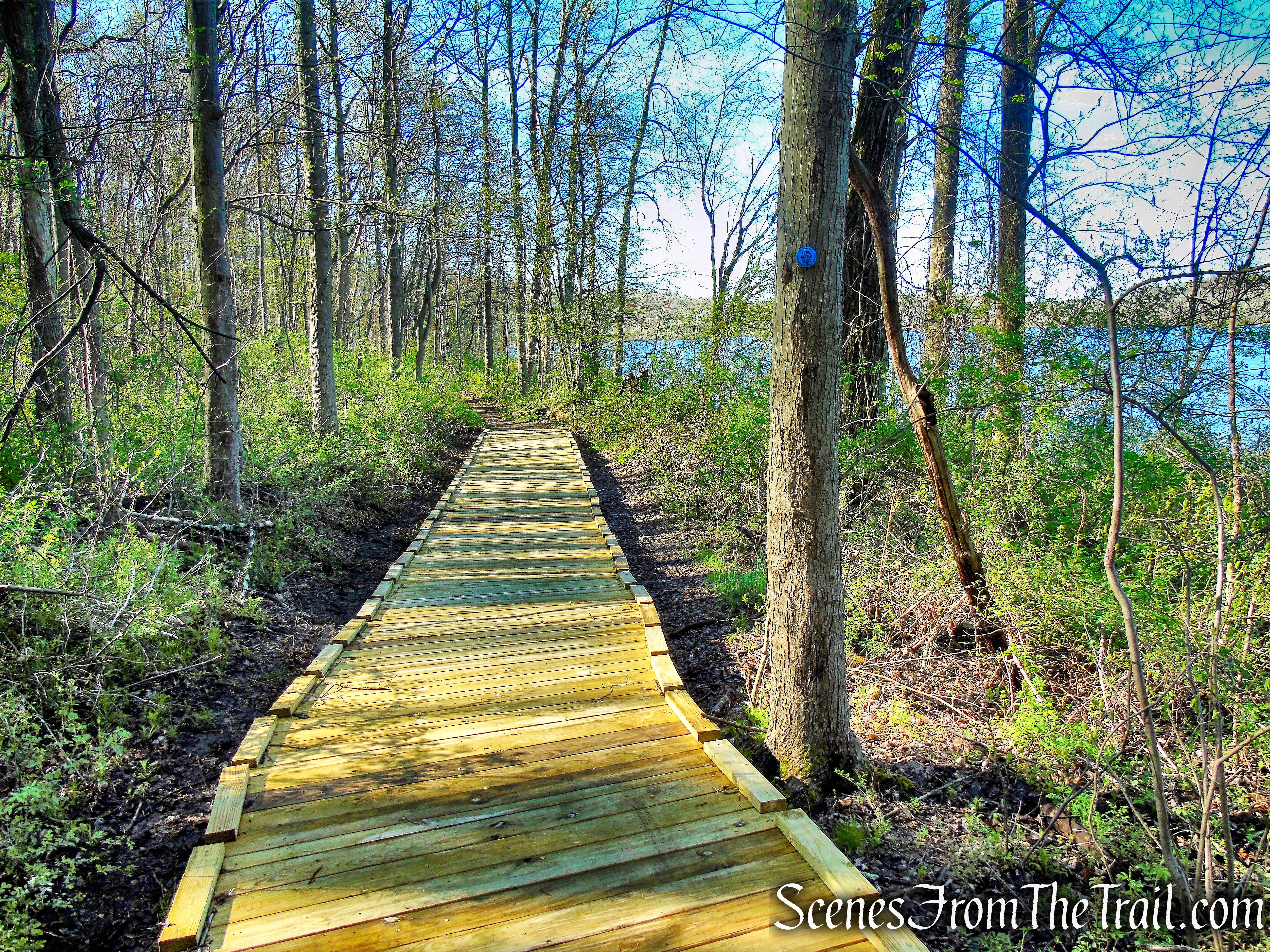
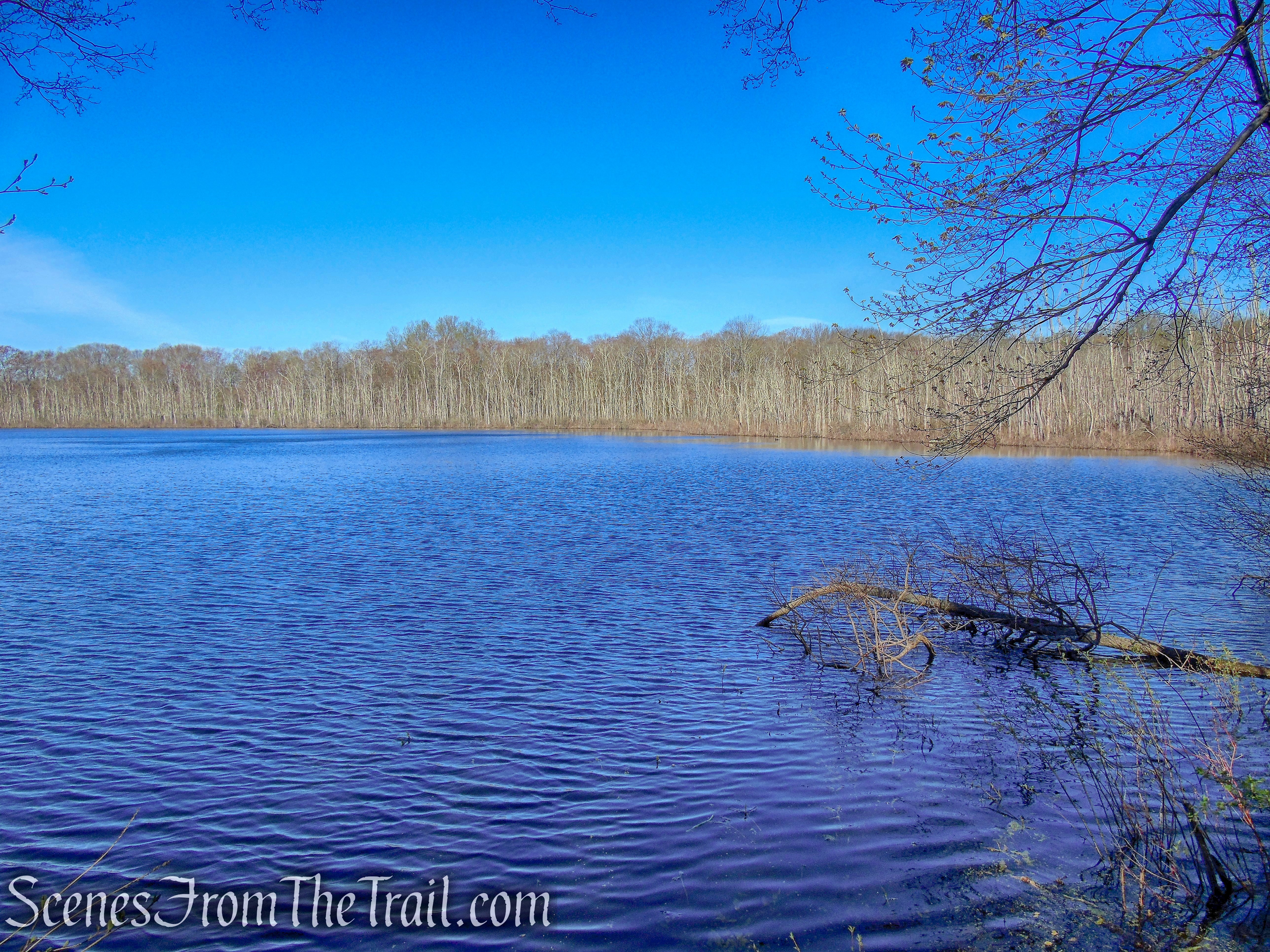
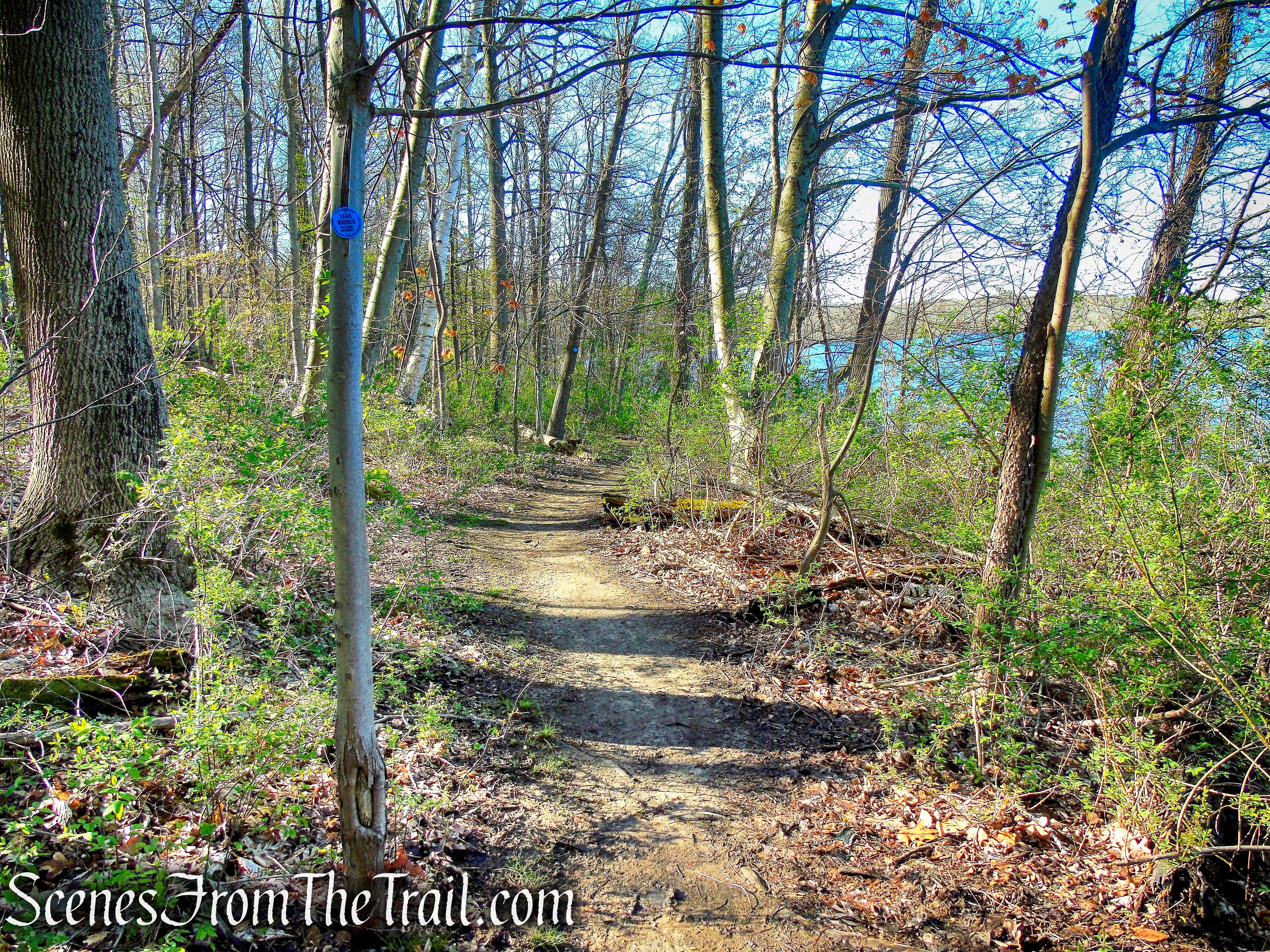
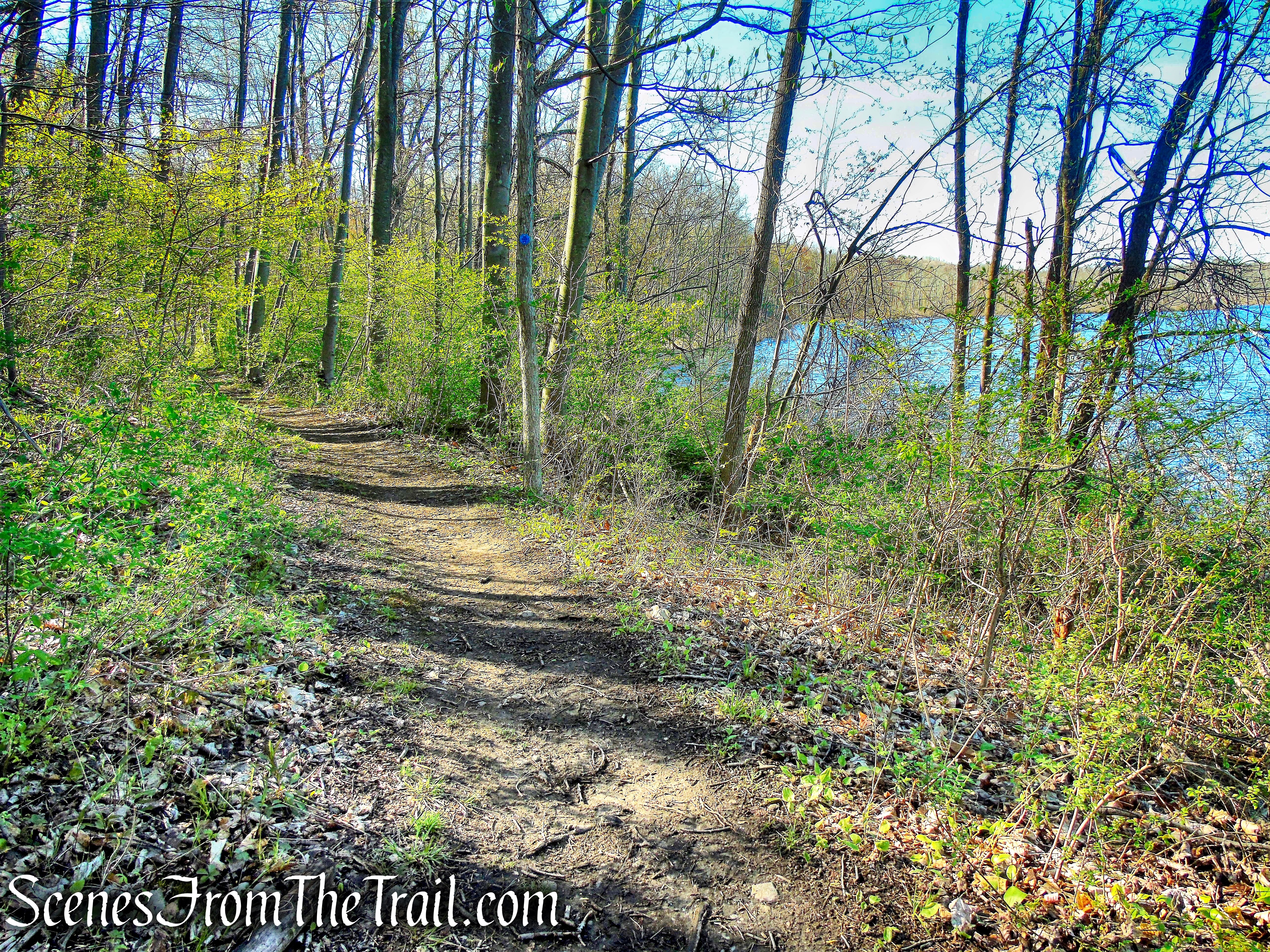
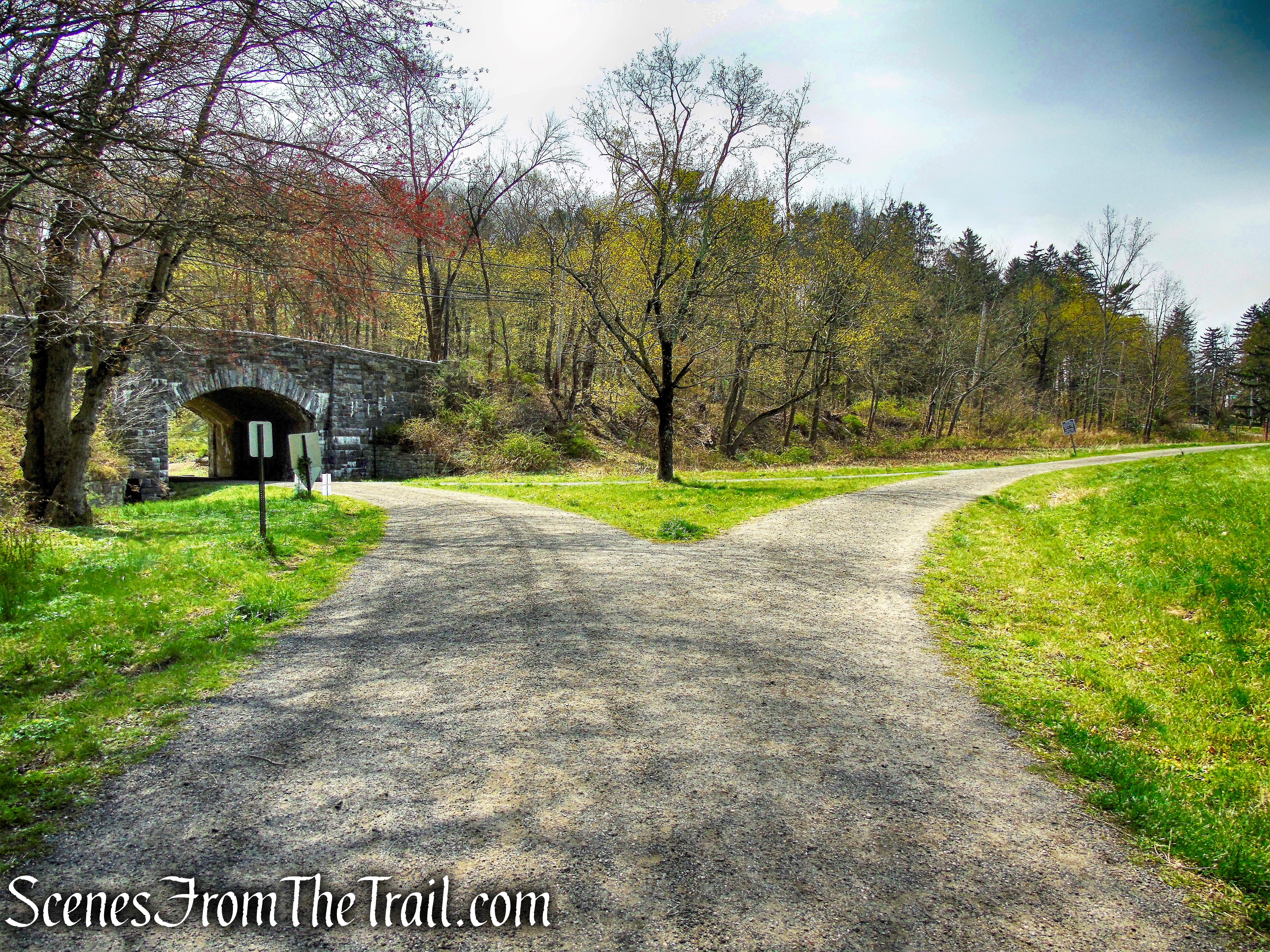
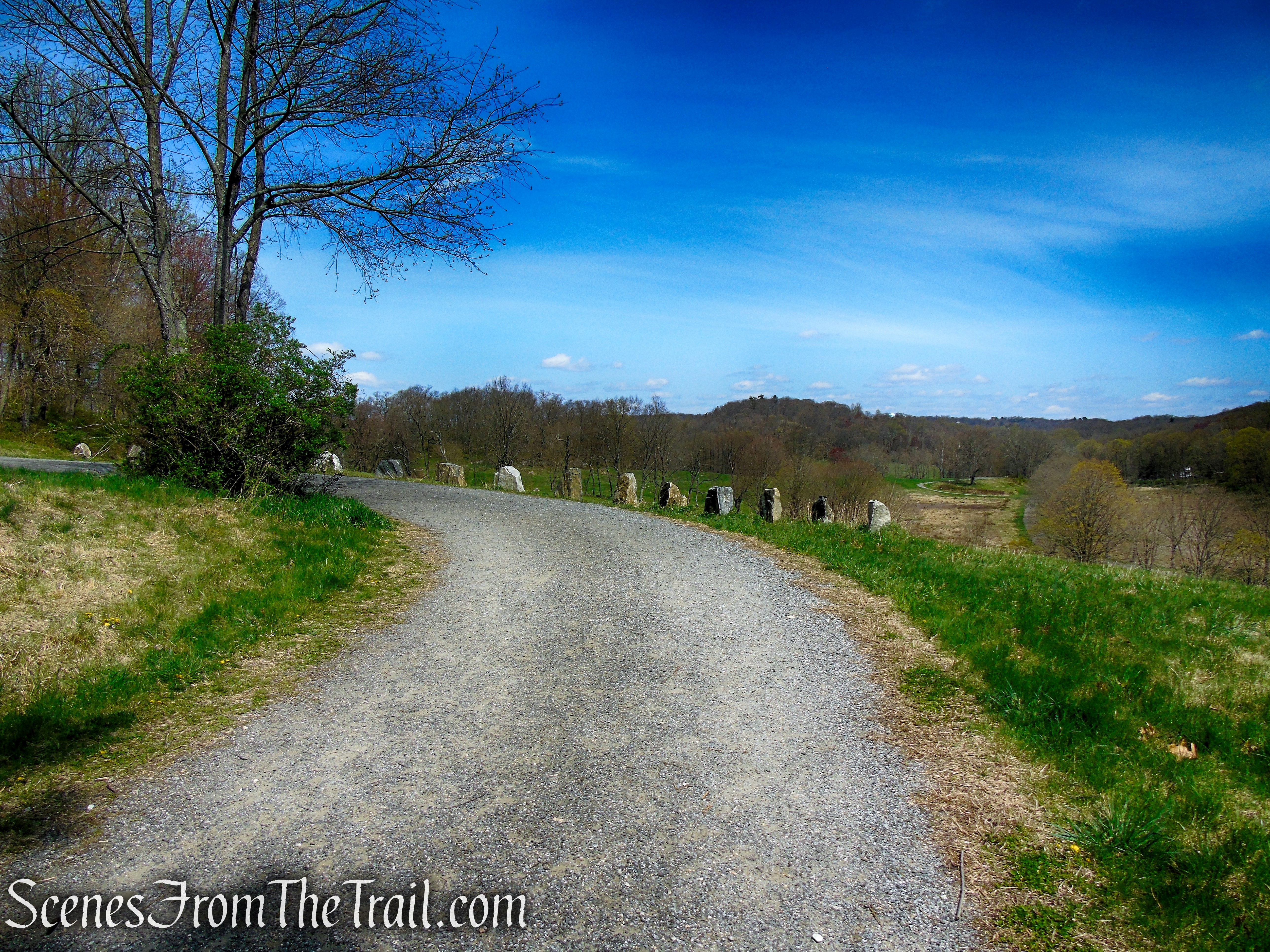
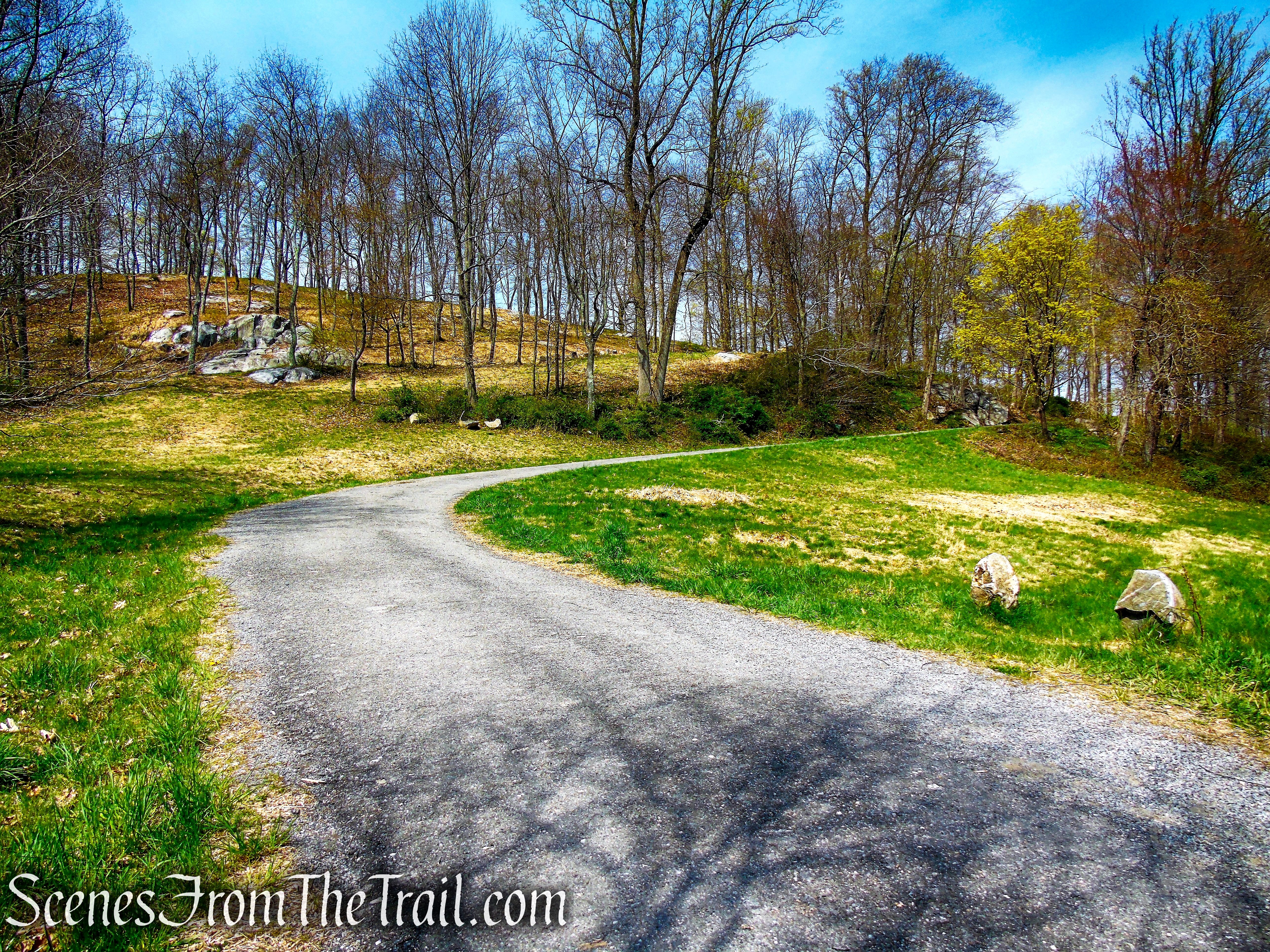
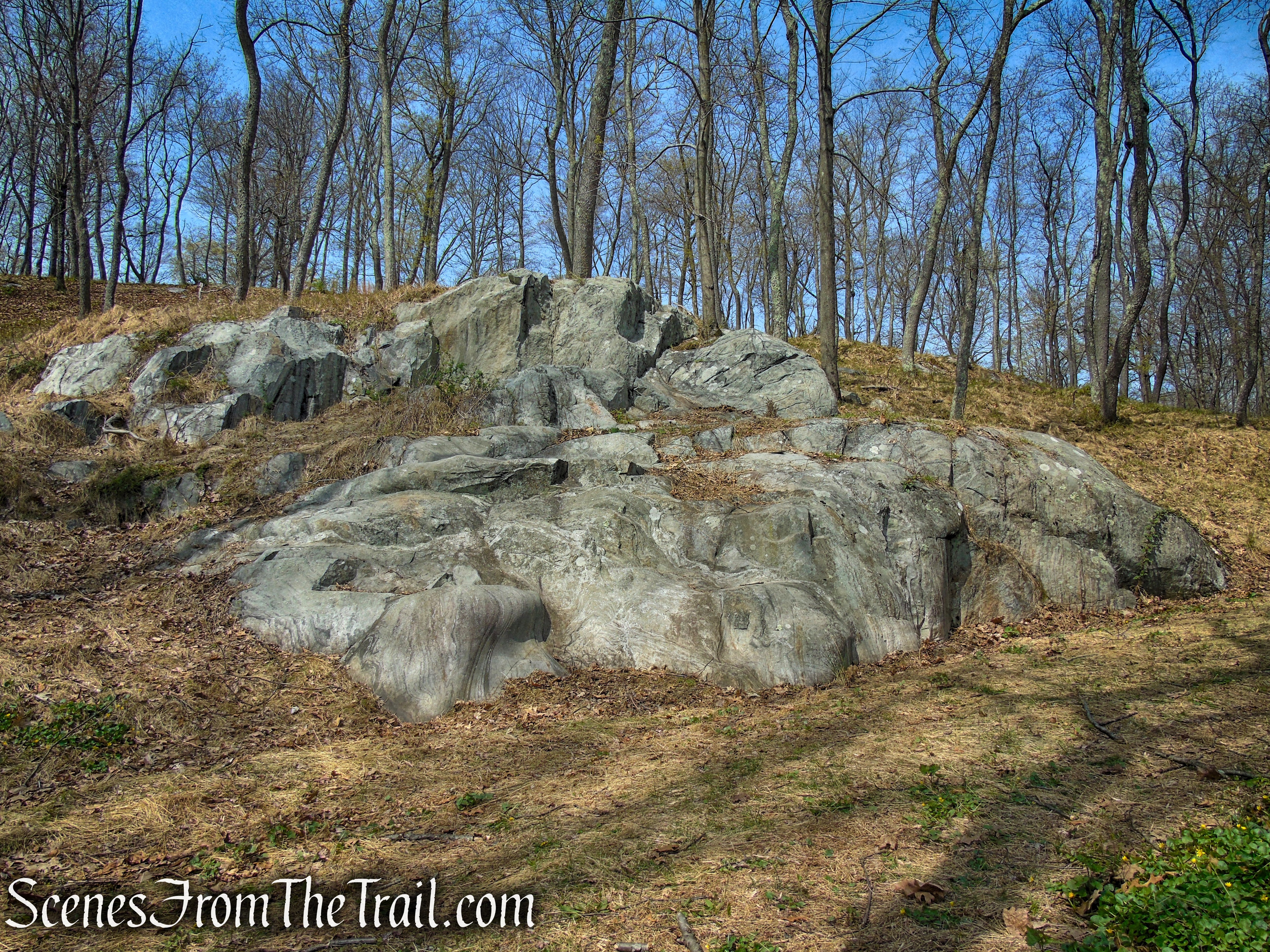
Black Rock State Park

September 26, 2020 – Watertown, Connecticut

Difficulty: Easy – moderate

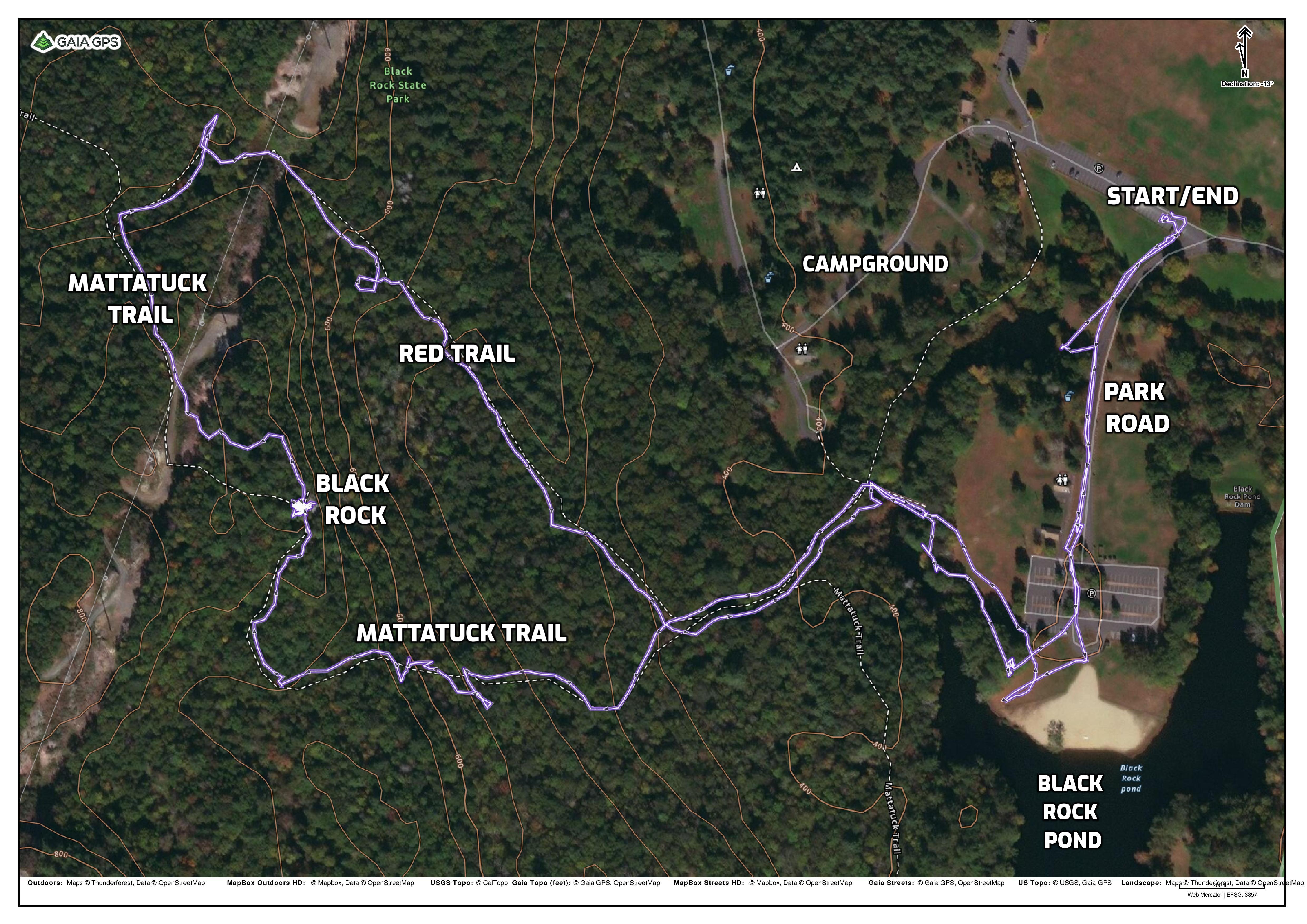
Length: Approximately 2.3 miles

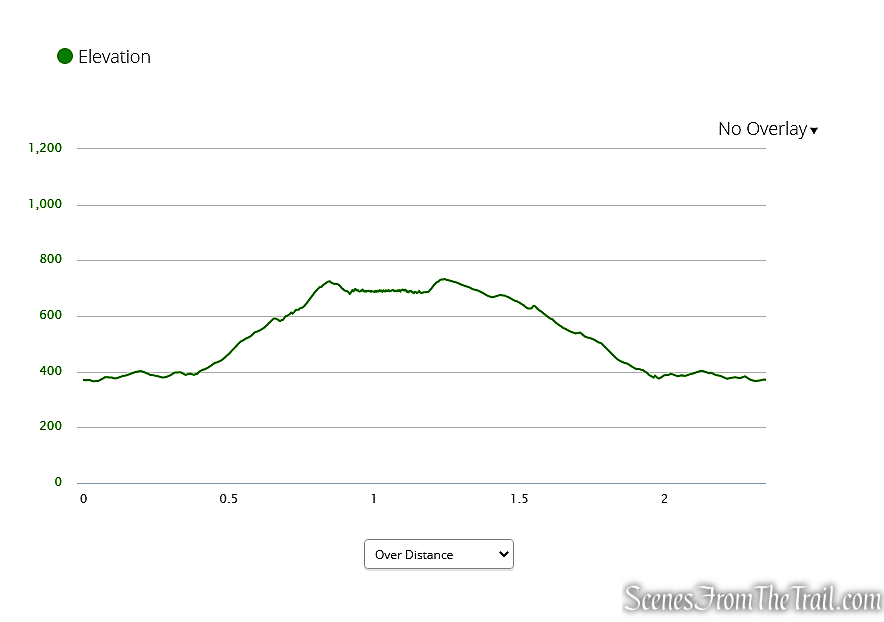
Max elevation: 709 ft.– total elevation gain approximately 409 ft.

Route type: Circuit

Free Web Maps: Black Rock State Park Trail Map (DEEP)

Avenza App Map (FREE): Black Rock State Park Trail Map

Trailhead parking: 2065 Thomaston Rd, Watertown, CT 06795

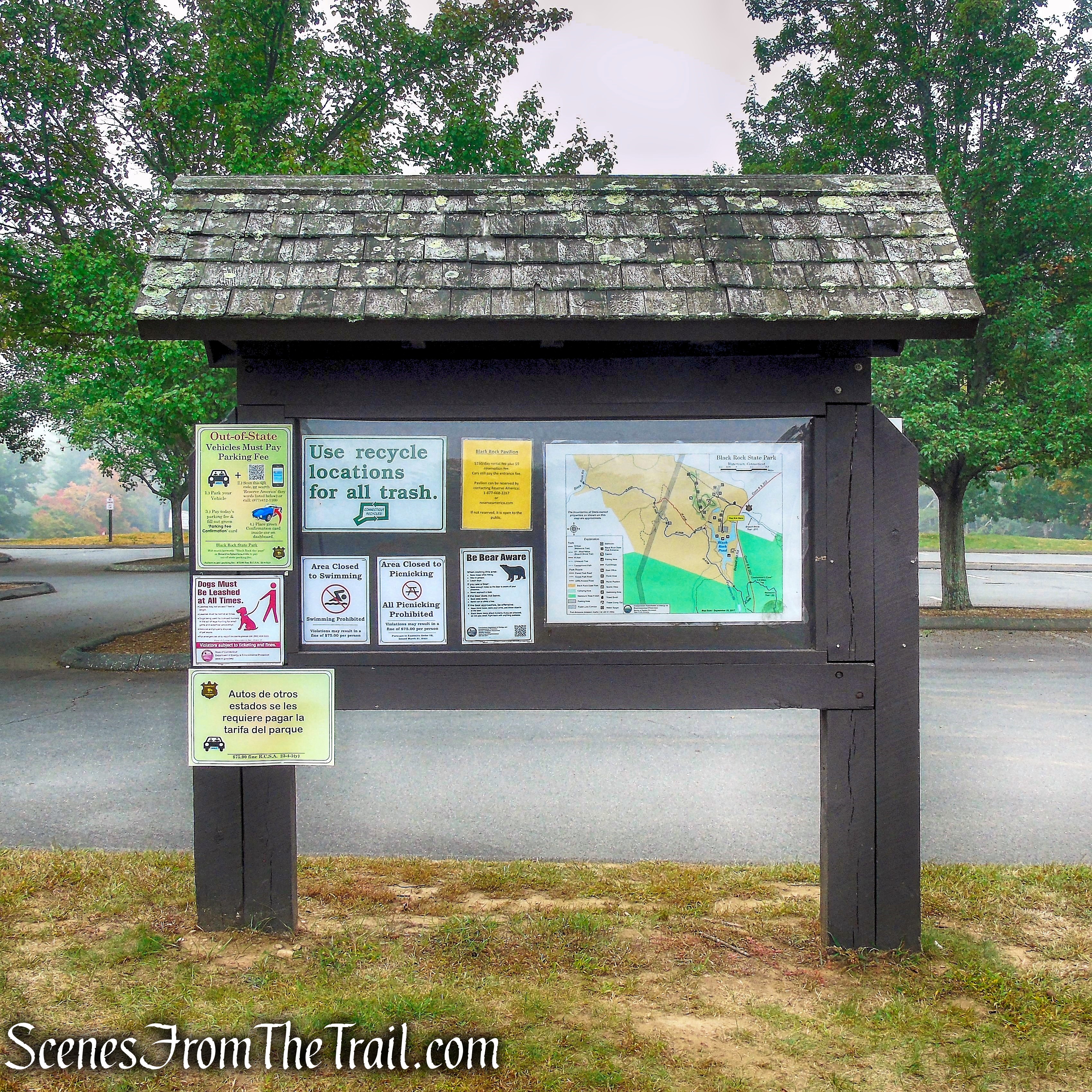
There is a $15.00 daily parking fee in season for non-residents on weekends and holidays. $10.00 on weekdays. Campsite fees are charged separately.

The park is open from 8am to sunset. Gates are open on weekends only, from the second Saturday in April until Memorial Day, 8am to sunset. From Memorial Day to October 1st, they are open daily between 8am and sunset.


Park Overview:

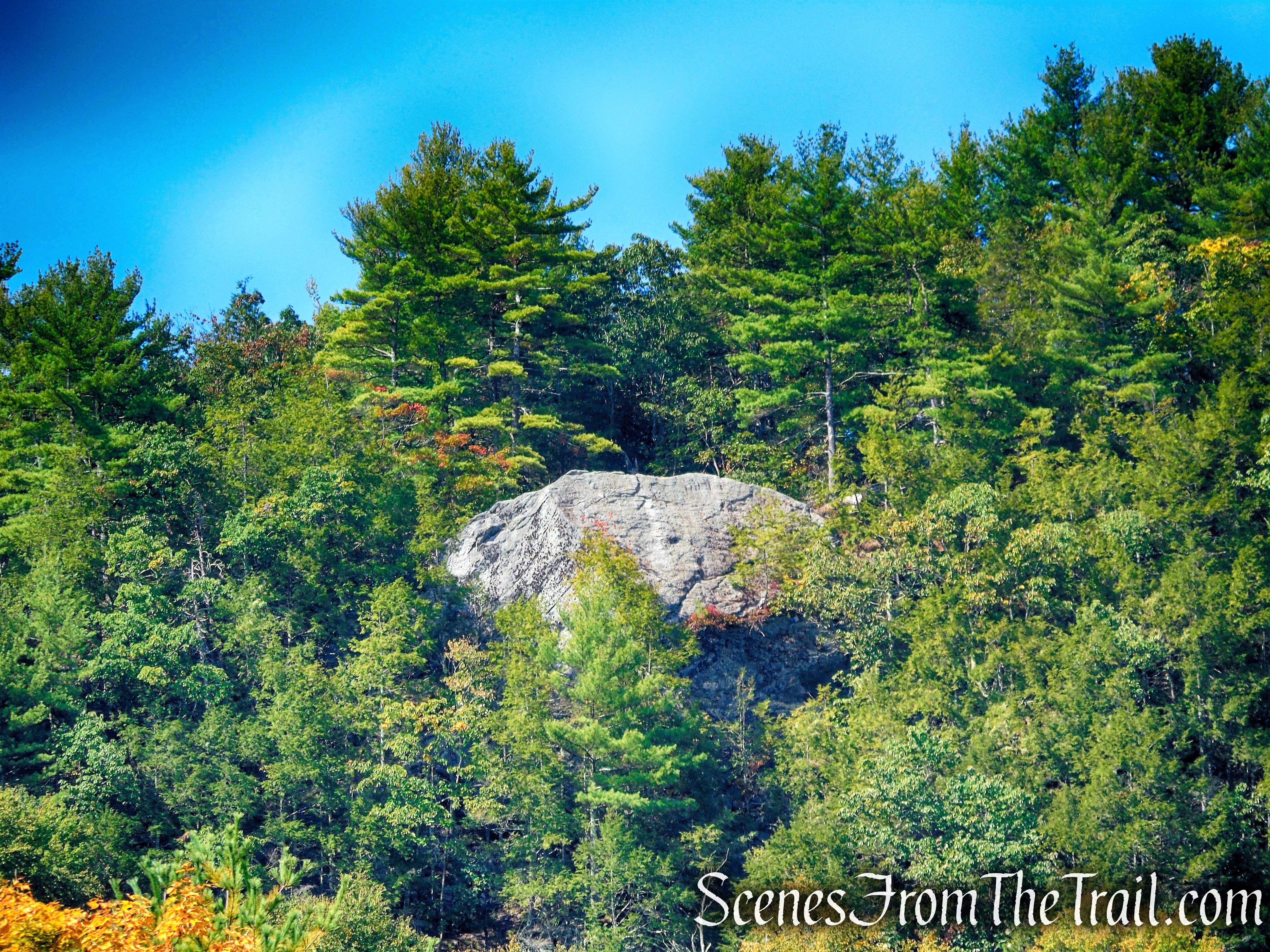
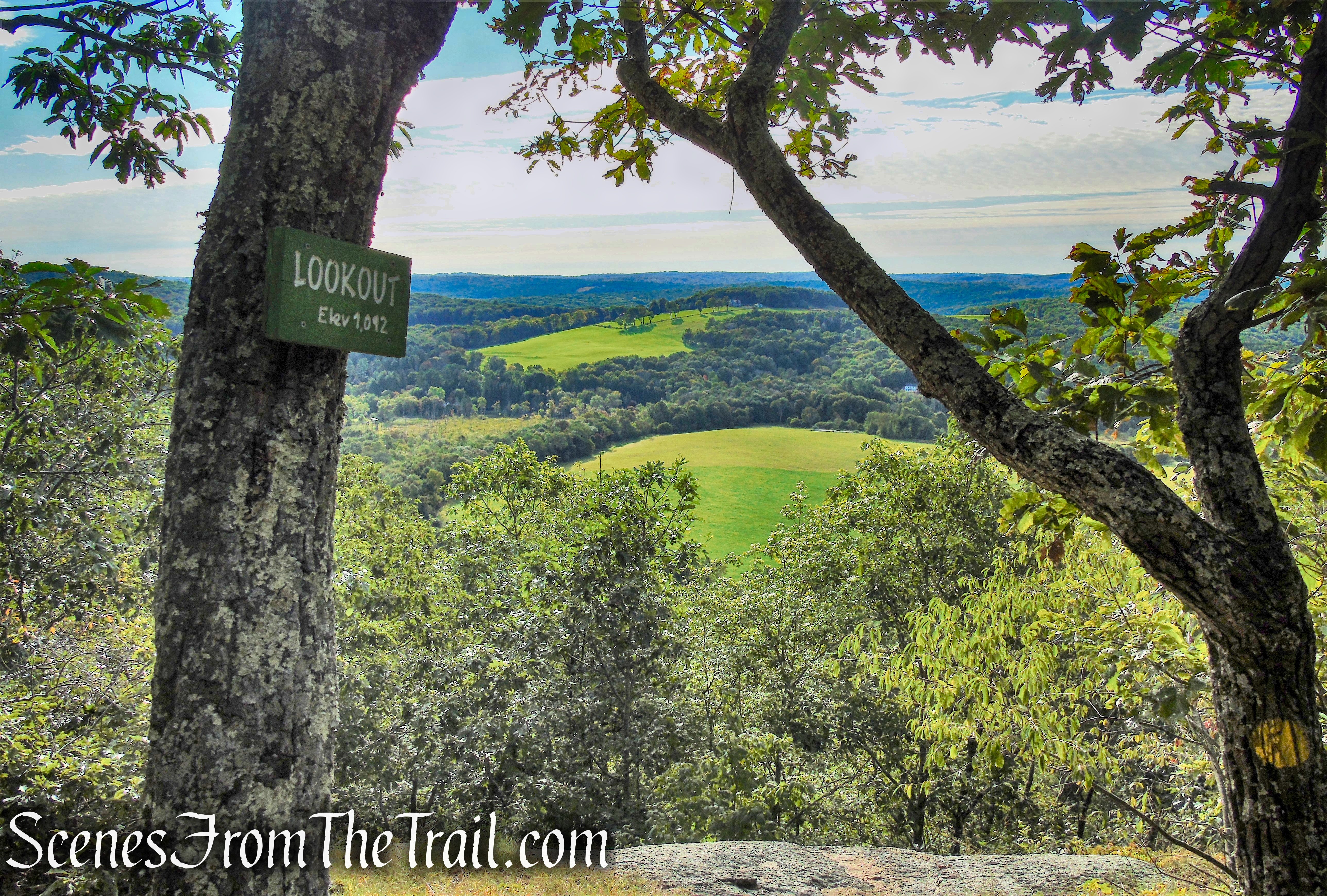
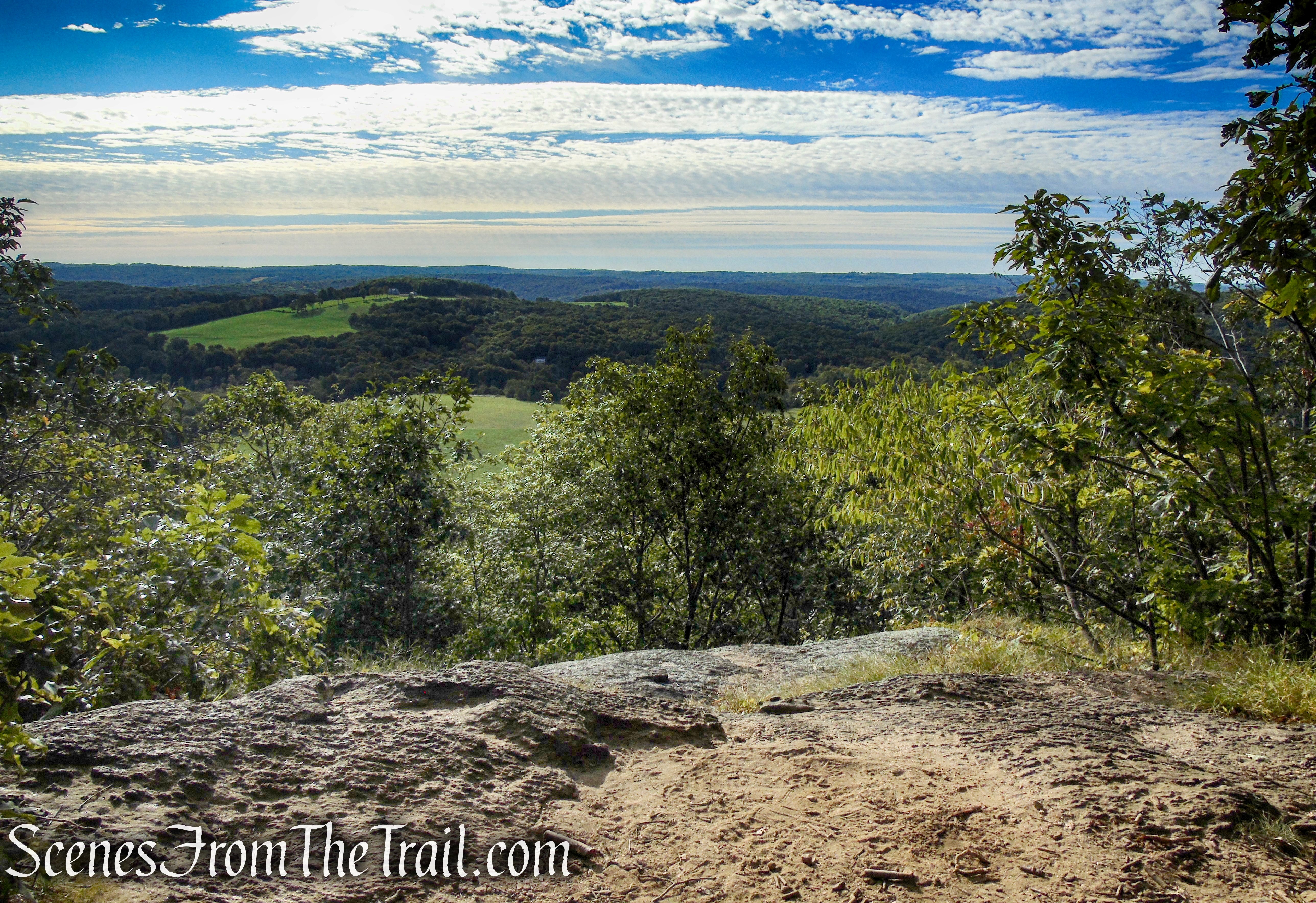
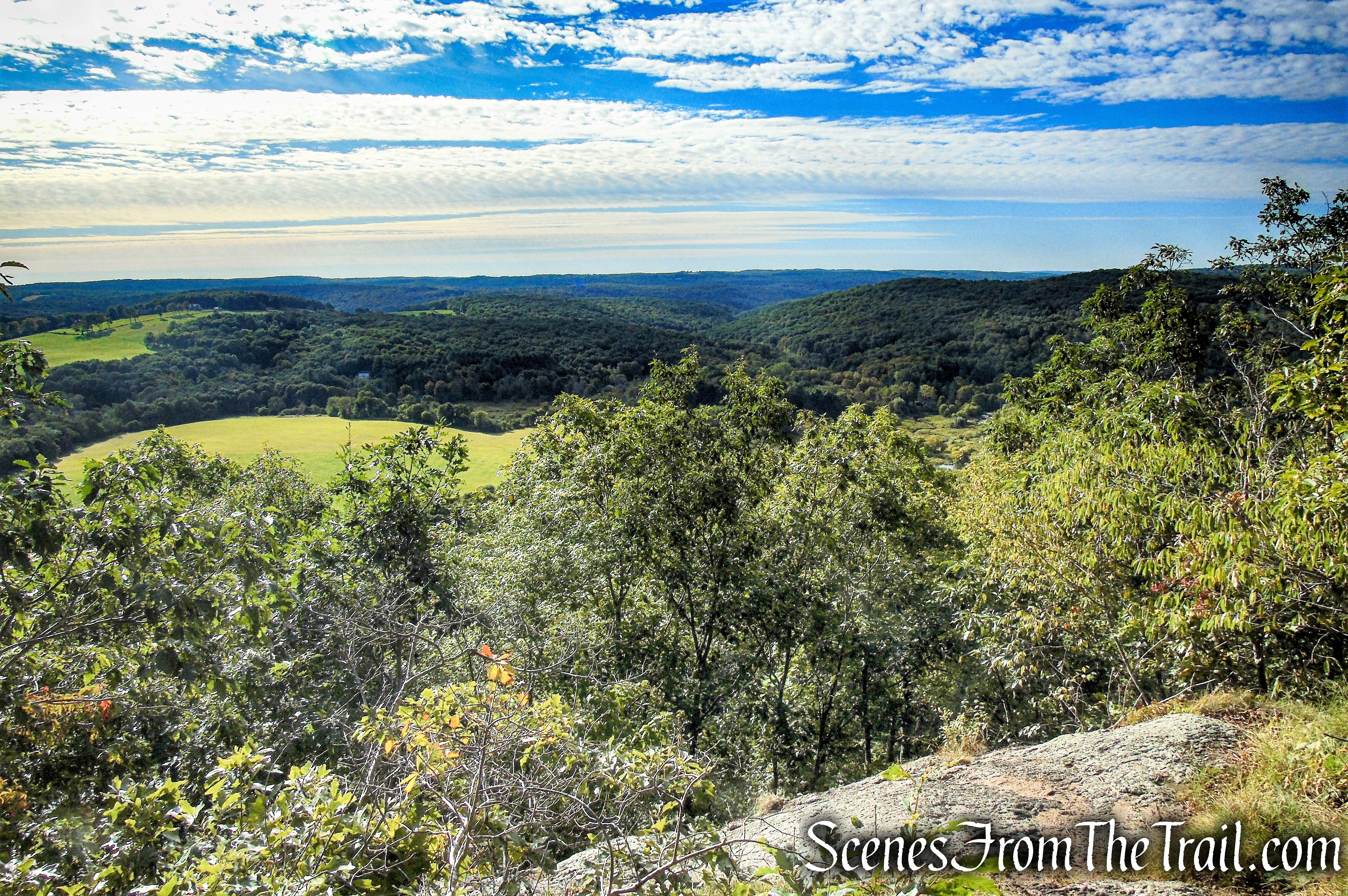
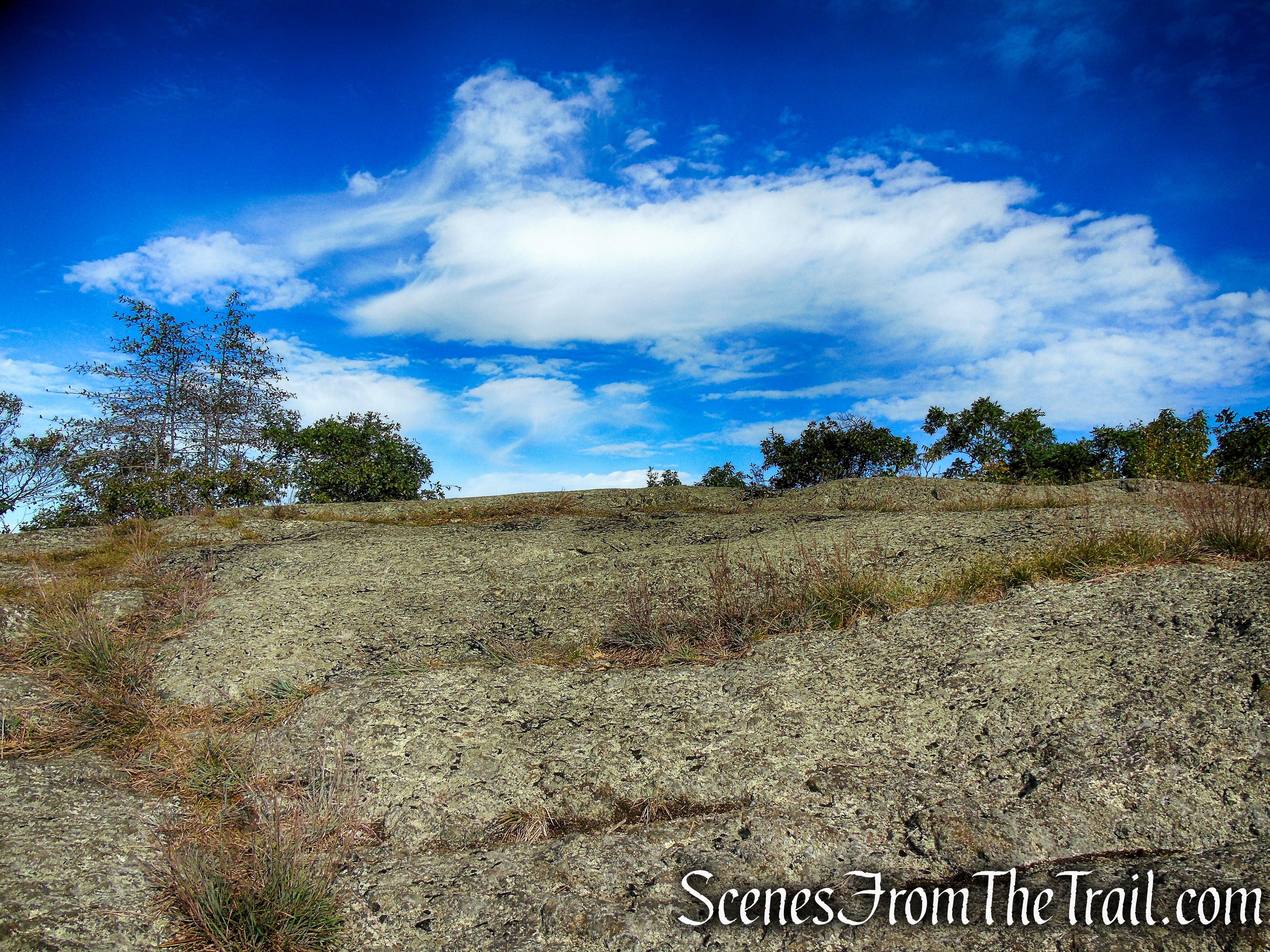
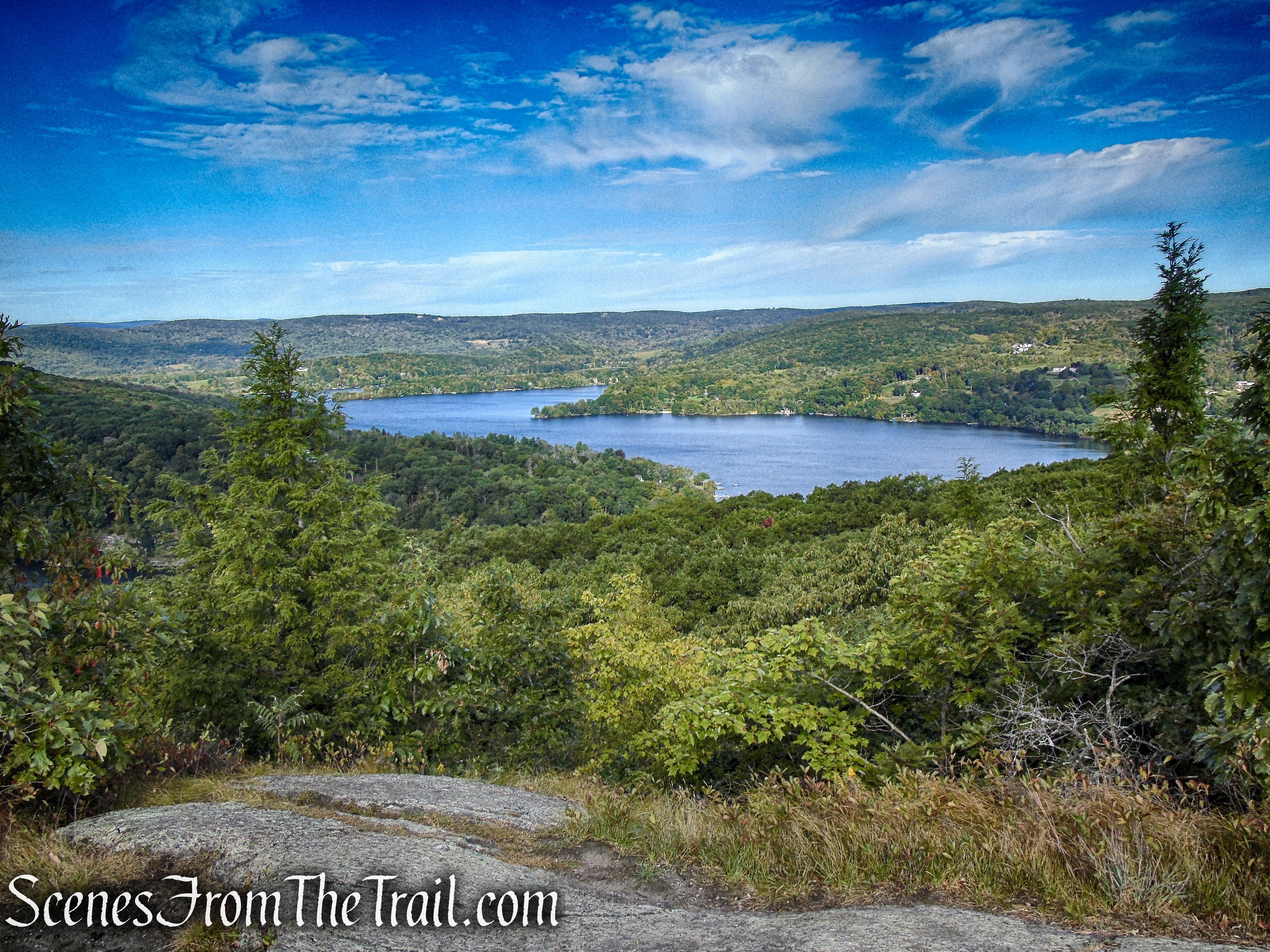
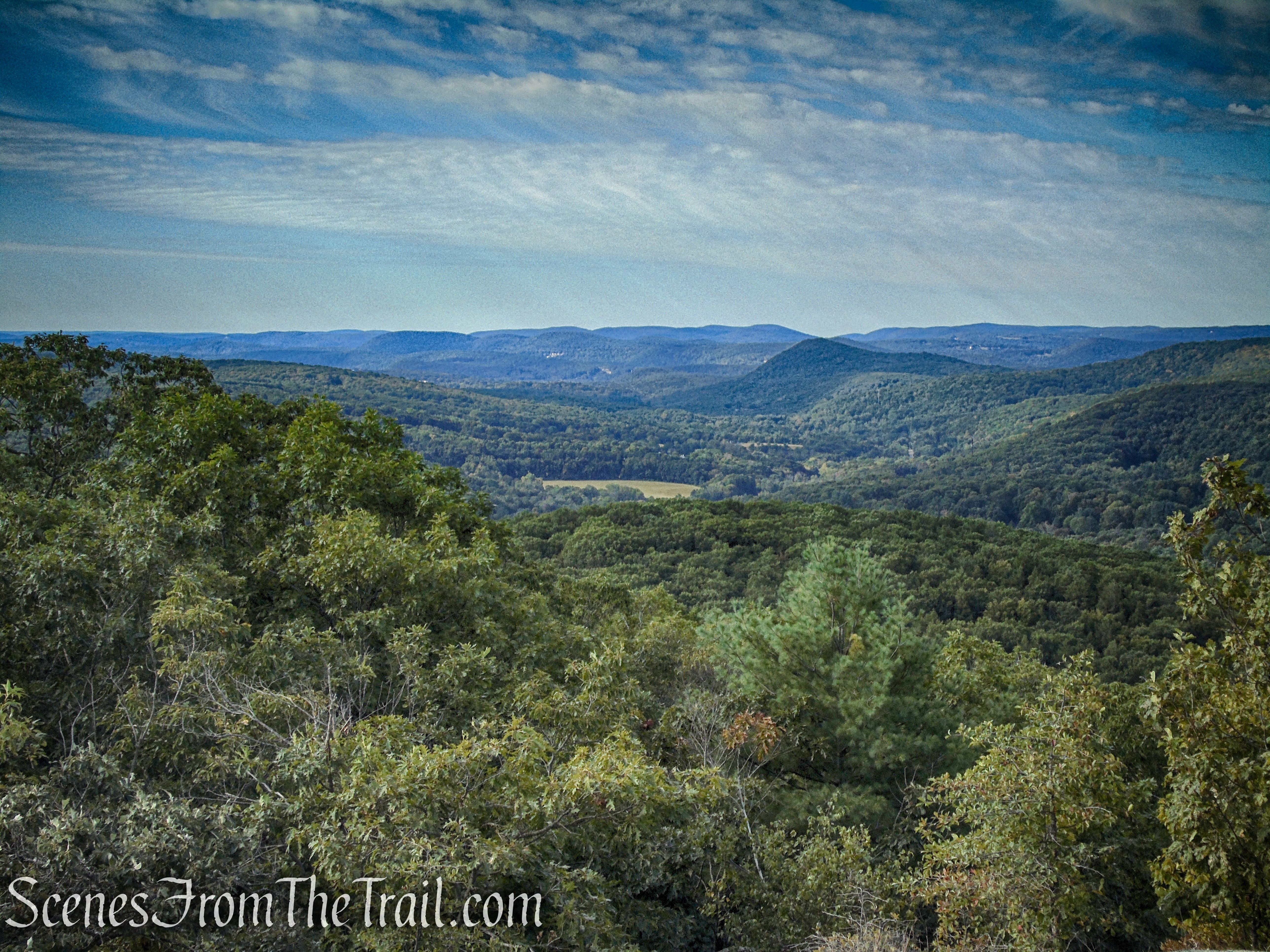
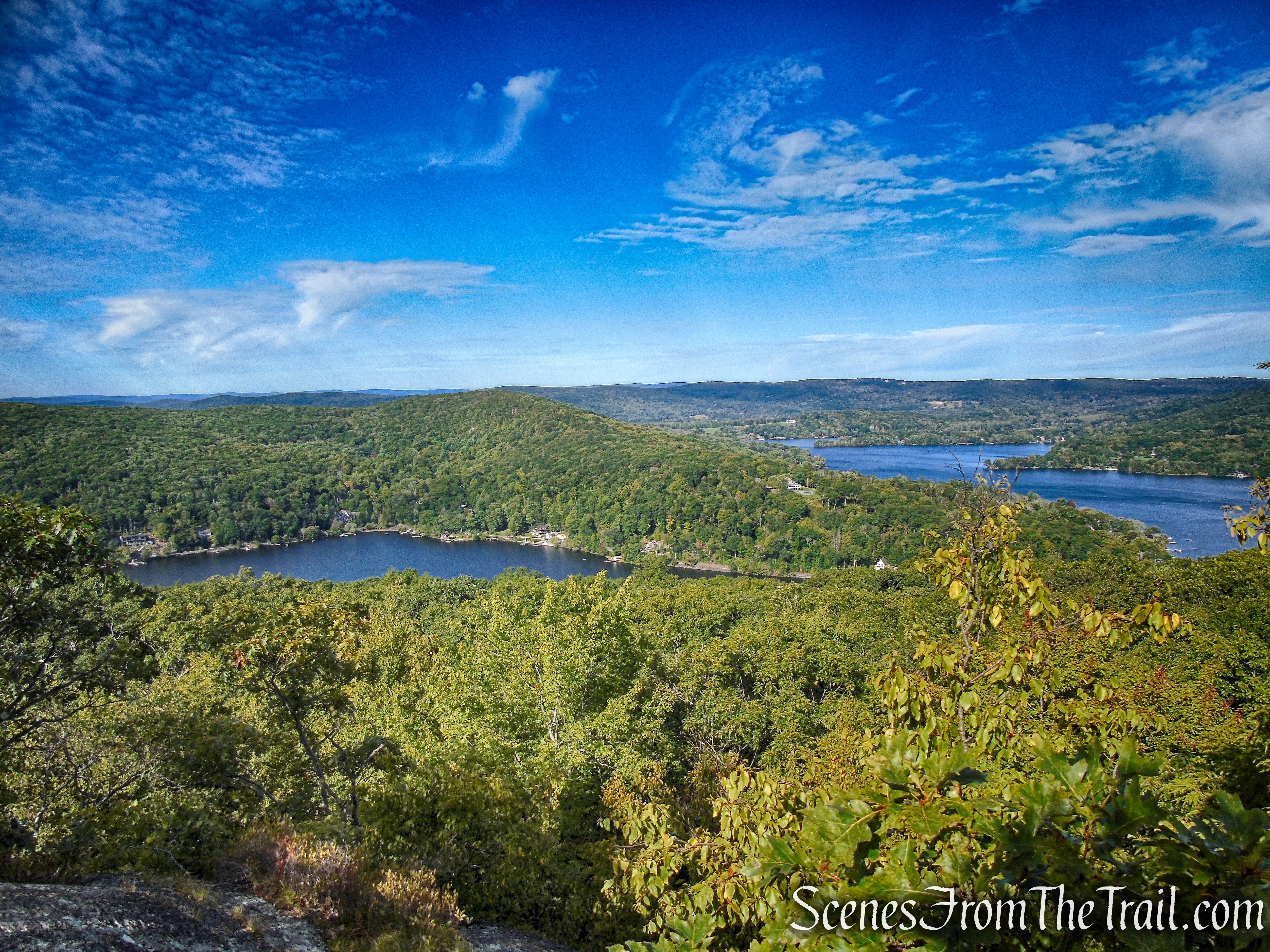
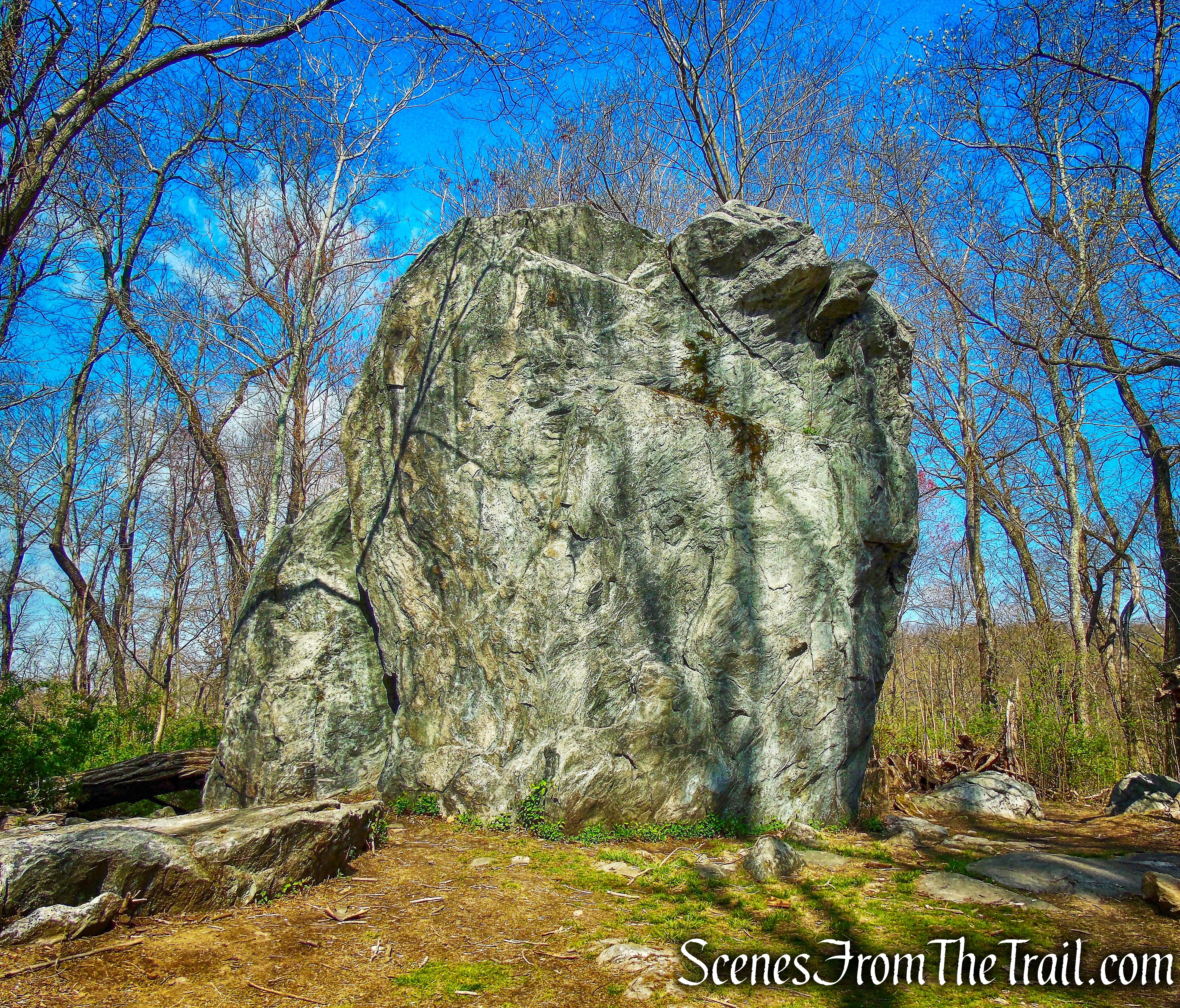
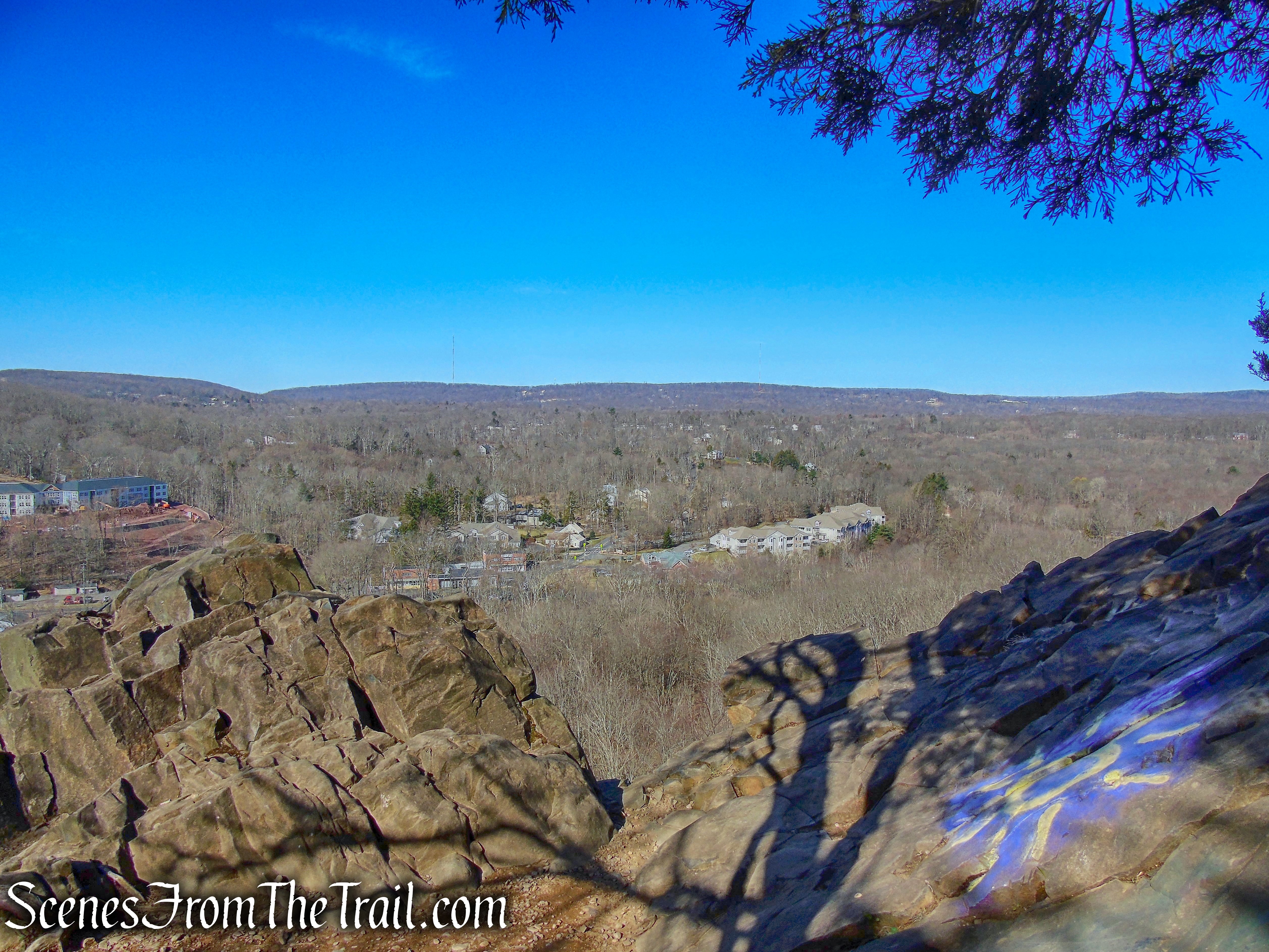
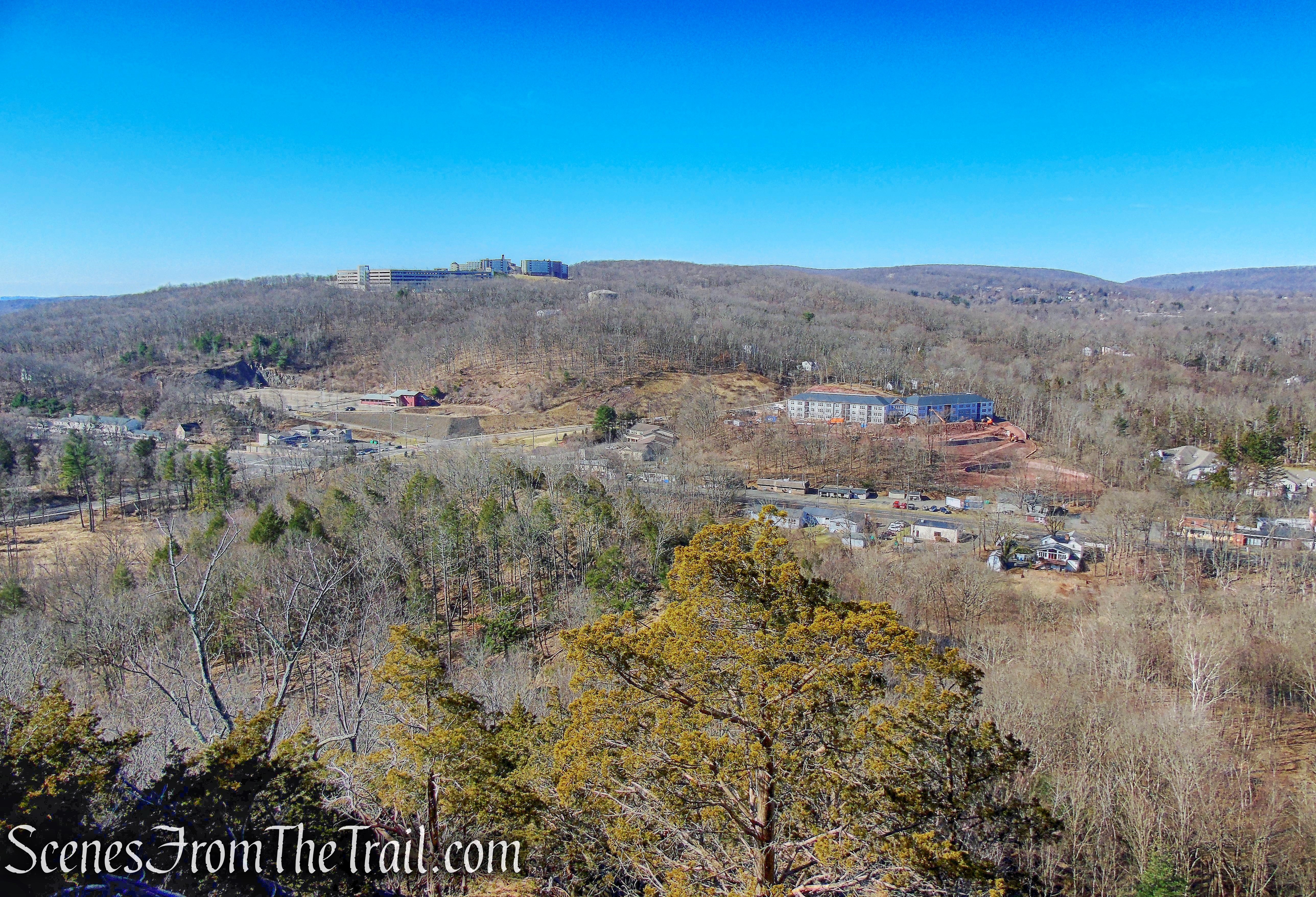
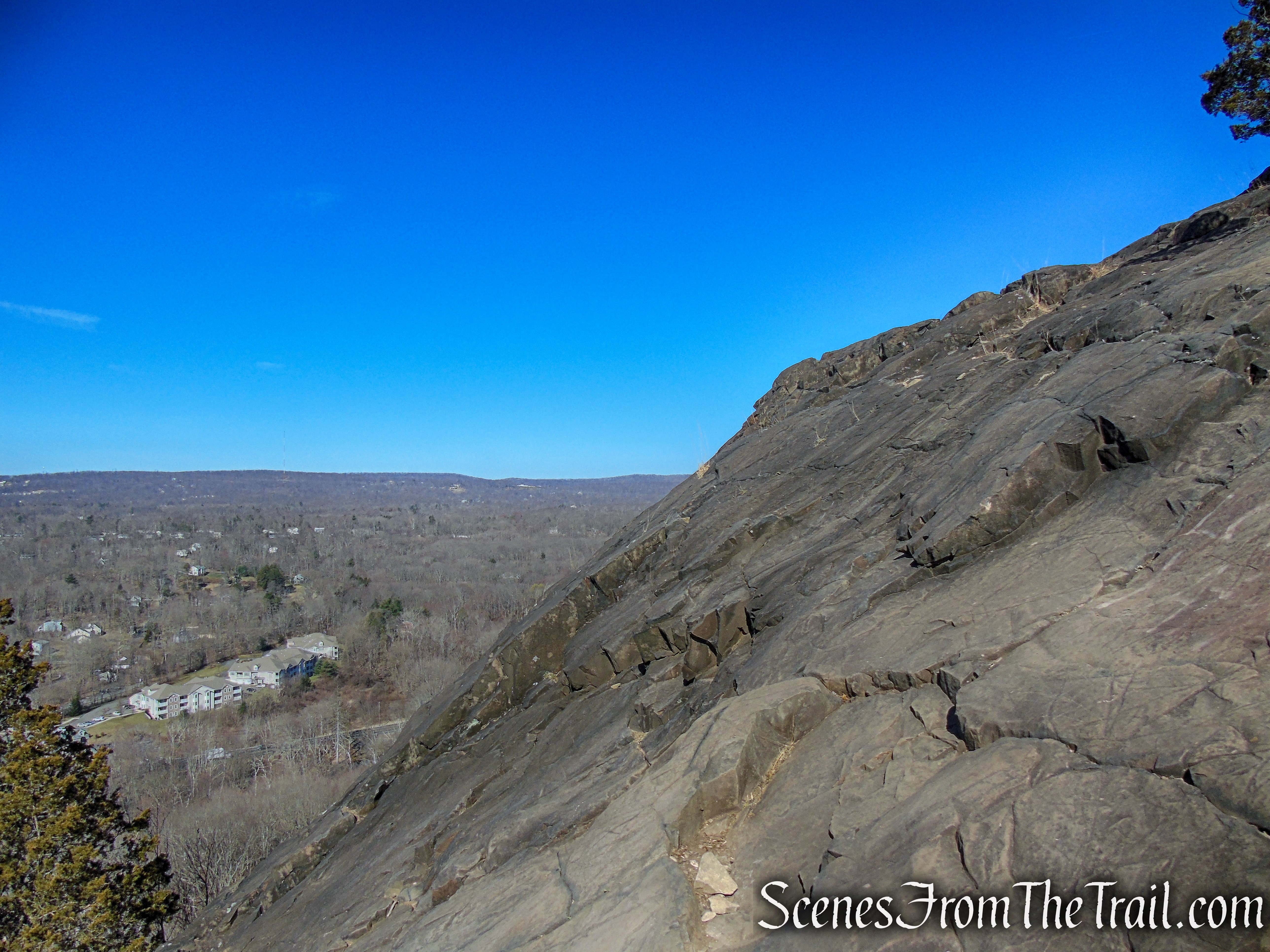
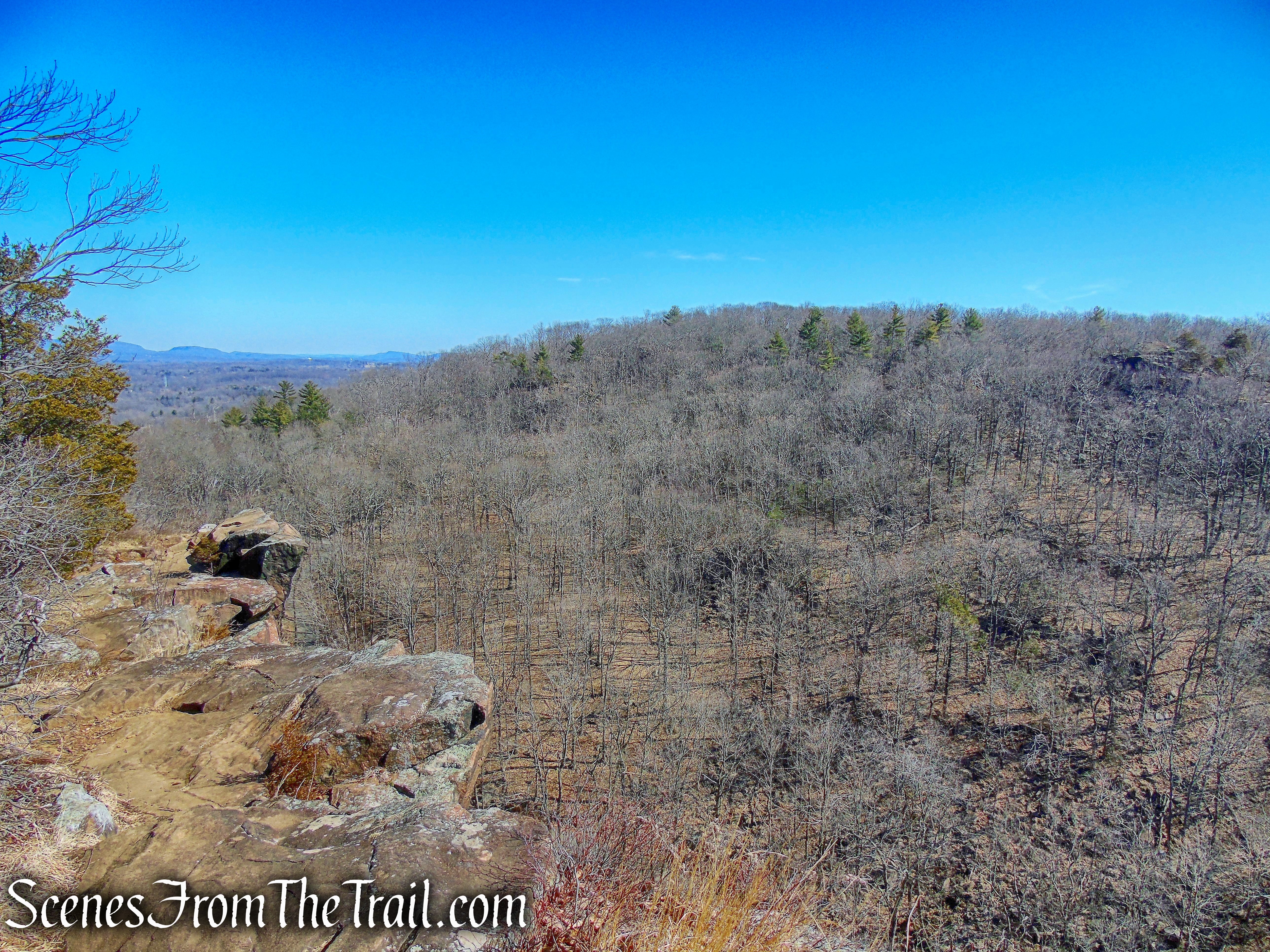
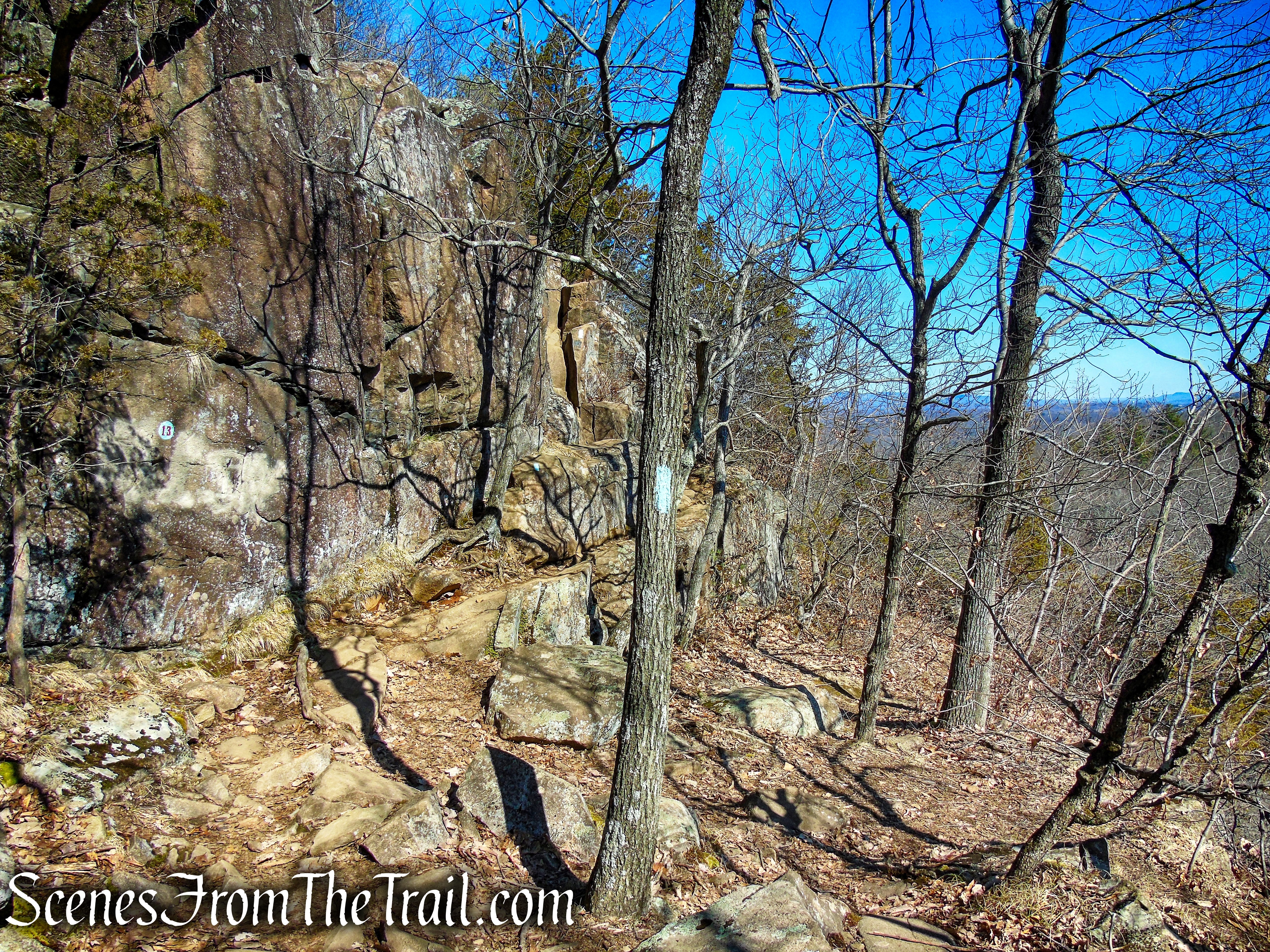
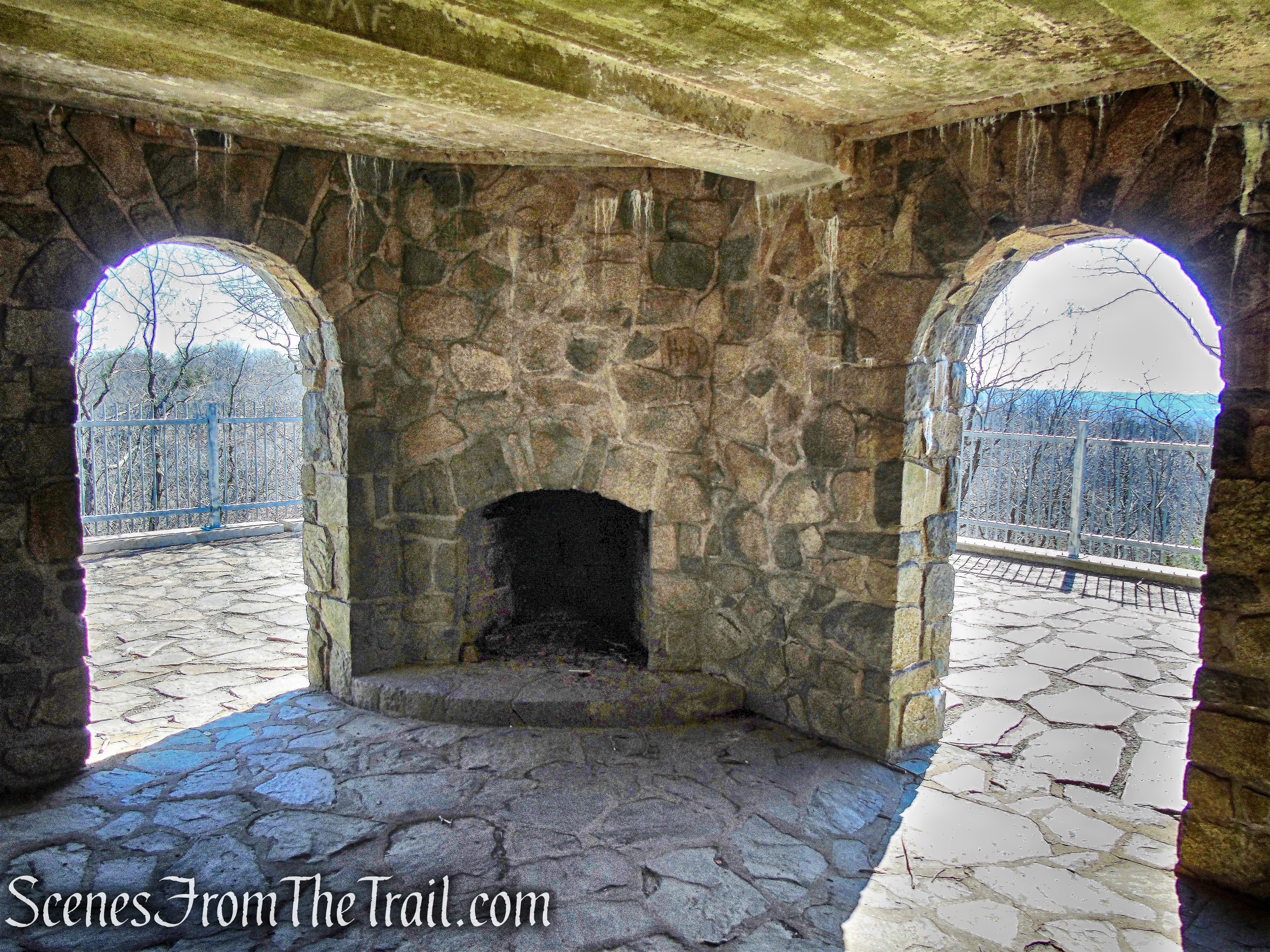
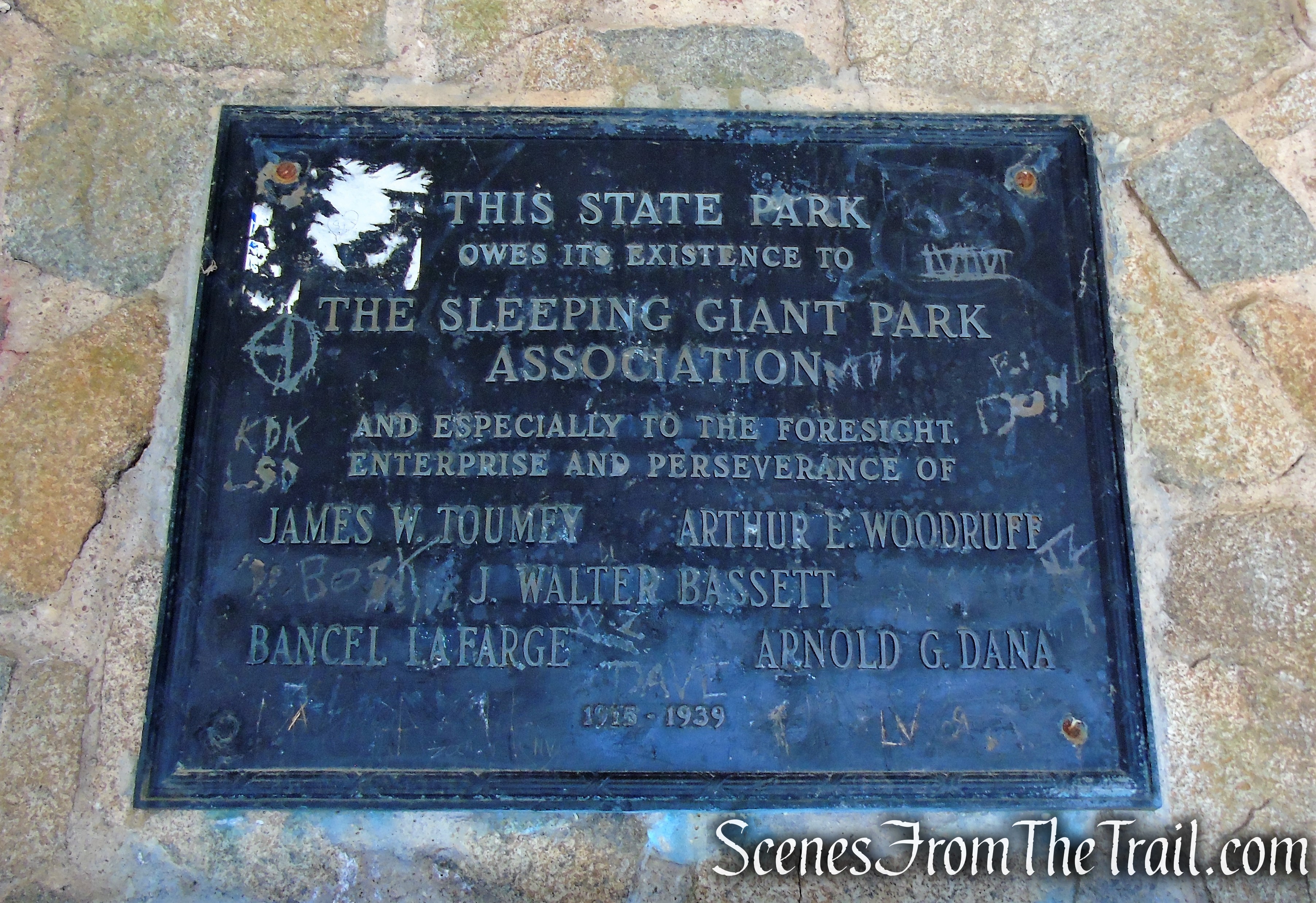
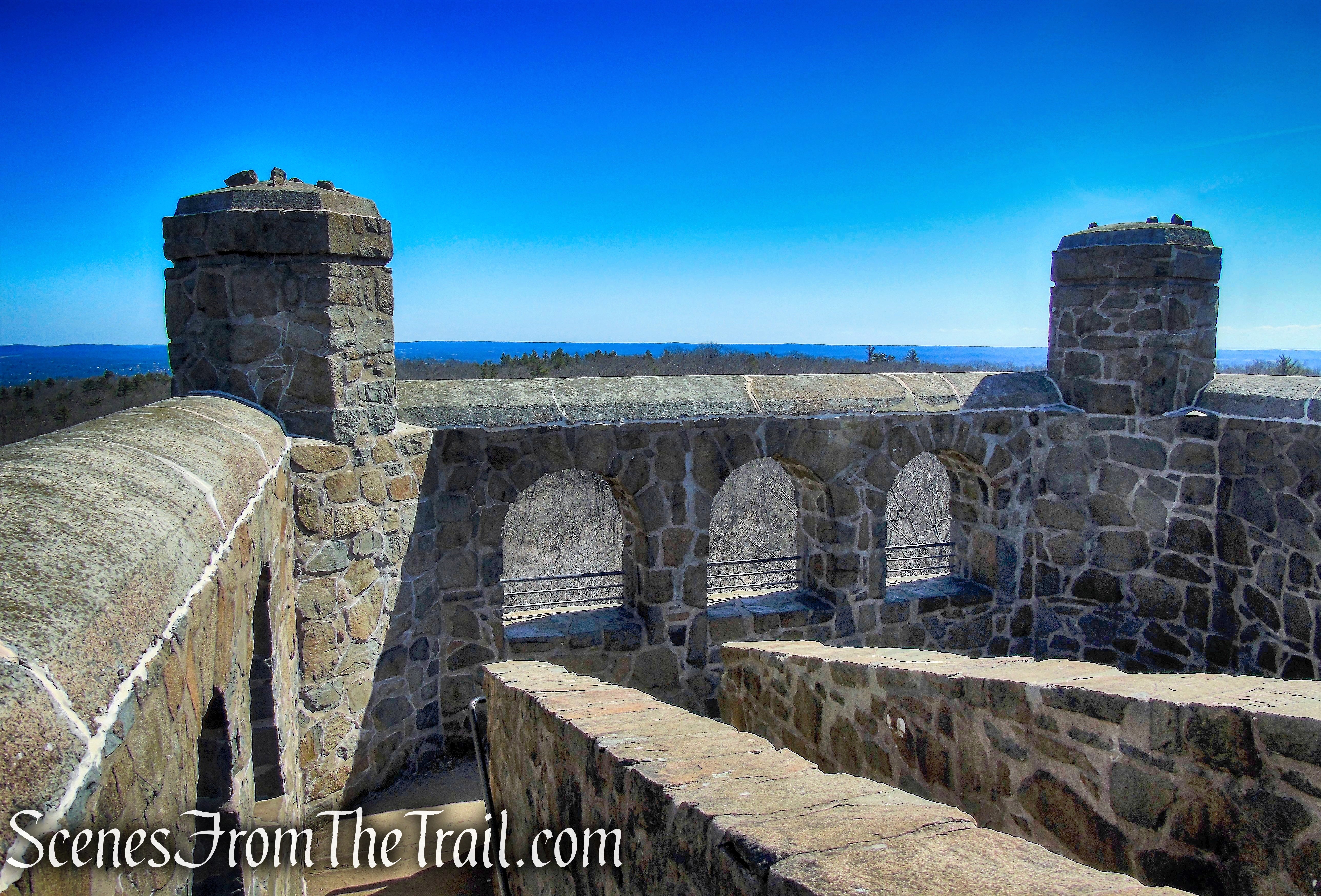
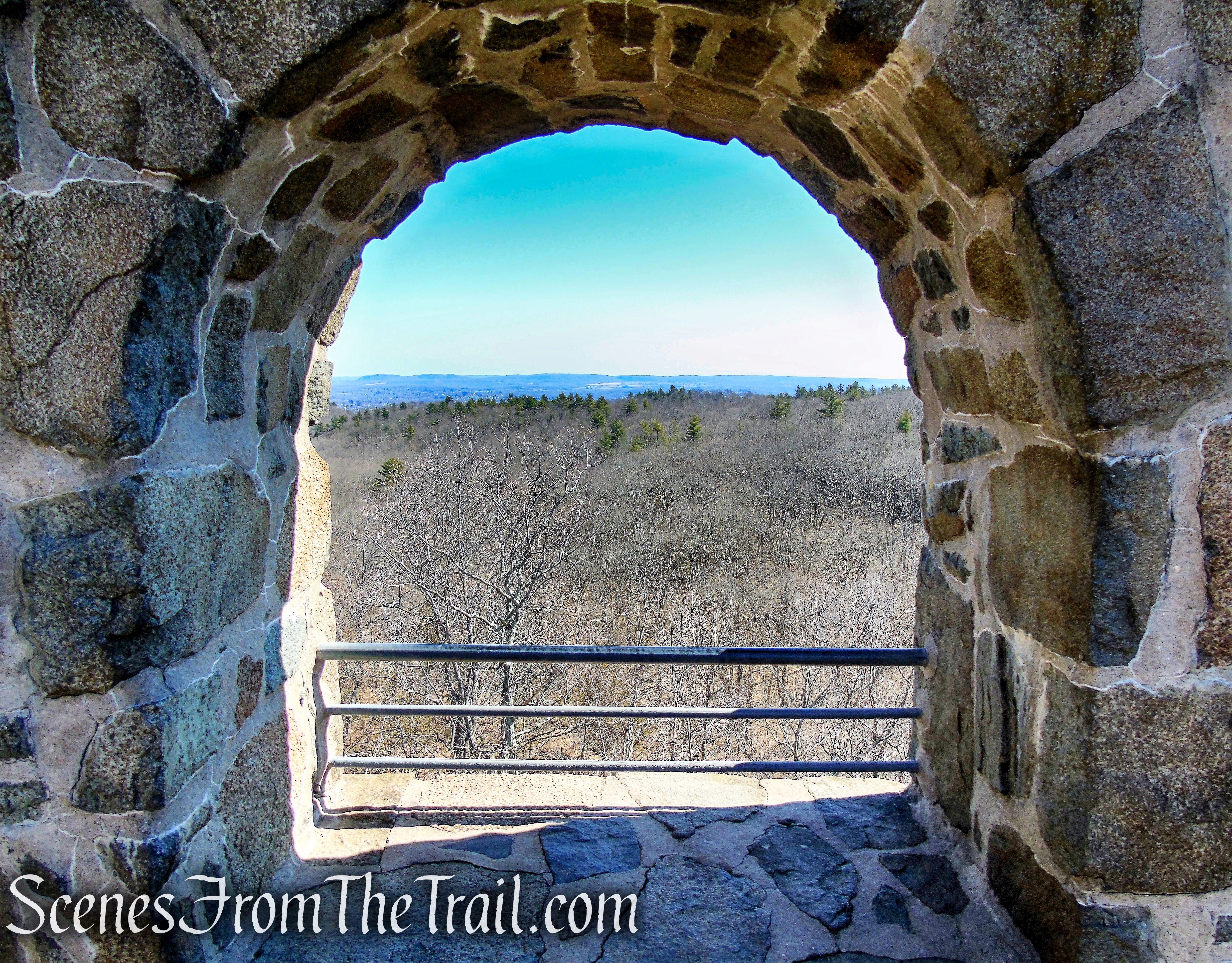
Black Rock State Park is a seasonal public recreation area adjoining Mattatuck State Forest in the town of Watertown, Connecticut. The state park covers 439 acres and is known for its large rock face, Black Rock, that affords views of Thomaston, Watertown, and portions of Waterbury.

Black Rock

Black Rock

Black Rock State Park offers excellent swimming, hiking, scenic views, and Indian legend all tucked into the scenic rolling hills of the western highlands of Connecticut. Black Rock Campground has 96 sites in a wooded setting. The camping season is mid-April through September 30. This is a designated trout park. Activities include picnicking, field sports, swimming, and pond fishing.

Facilities: bathrooms, food concessions, picnic tables and charcoal grills. The park is managed by the Connecticut Department of Energy and Environmental Protection (DEEP).

Black Rock State Park

Black Rock State Park


History:

The land that is now Black Rock State Park, was originally home to several Native American Tribes such as the Paugussett, Mohegan, and Tunxis. In fact, tribal artifacts such as arrowheads and carved stone tools are still being found in the park today.

In 1657, the tribes granted early settlers to the Naugatuck Valley, access to their lands and gave them permission to mine the area for “black rock,” more commonly known today as graphite lead. This dark black mineral inspired the park’s name and it stuck throughout the years.

Black Rock was given to the people of Connecticut in 1926 through the efforts of Black Rock Forest, Incorporated, a citizen’s conservation group interested in woodland preservation. Development of access roads and facilities later became part of the Civilian Conservation Corps’ economic recovery program.

The Civilian Conservation Corps (CCC) Camp Roberts, which housed Company #175, was stationed at Black Rock State Park in Thomaston, Connecticut. The camp was established May 30, 1933 and was discontinued Sept. 28, 1937. The camp’s main projects were: building miles of truck trails, survey and boundary work, gypsy moth removal, tree planting.


Trails Overview:

The park is crossed by the Mattatuck Trail, part of the Blue-Blazed Hiking Trail system, managed by the Connecticut Forest & Park Association (CFPA). The Mattatuck Trail offers scenic views of the Naugatuck Valley; side trails have views of Black Rock Lake and Black Rock Pond.

There is one other marked trail in the park, blazed red (0.4 mile), that can be combined with the Mattatuck Trail to form a short loop hike. There are numerous unmarked woods roads and footpaths throughout the park and around Black Rock Pond that one can explore as well.

Hiking trails are maintained in cooperation with the Connecticut Forest and Park Association (CFPA), which provides volunteer assistance.


Hike Overview:

Dealing with some foot issues, I was looking for a short hike with some decent views. This hike fit the bill perfectly. Since we visited after Labor Day, we didn’t have to pay the out-of-state vehicle fee. It was extremely foggy in the morning and when we got up to Black Rock, there was no view. We decided to wait out the fog and it eventually dissipated, displaying the view that we came here for. The entire time that we were there, not another soul around.

Black Rock

Black Rock

Black Rock

Black Rock

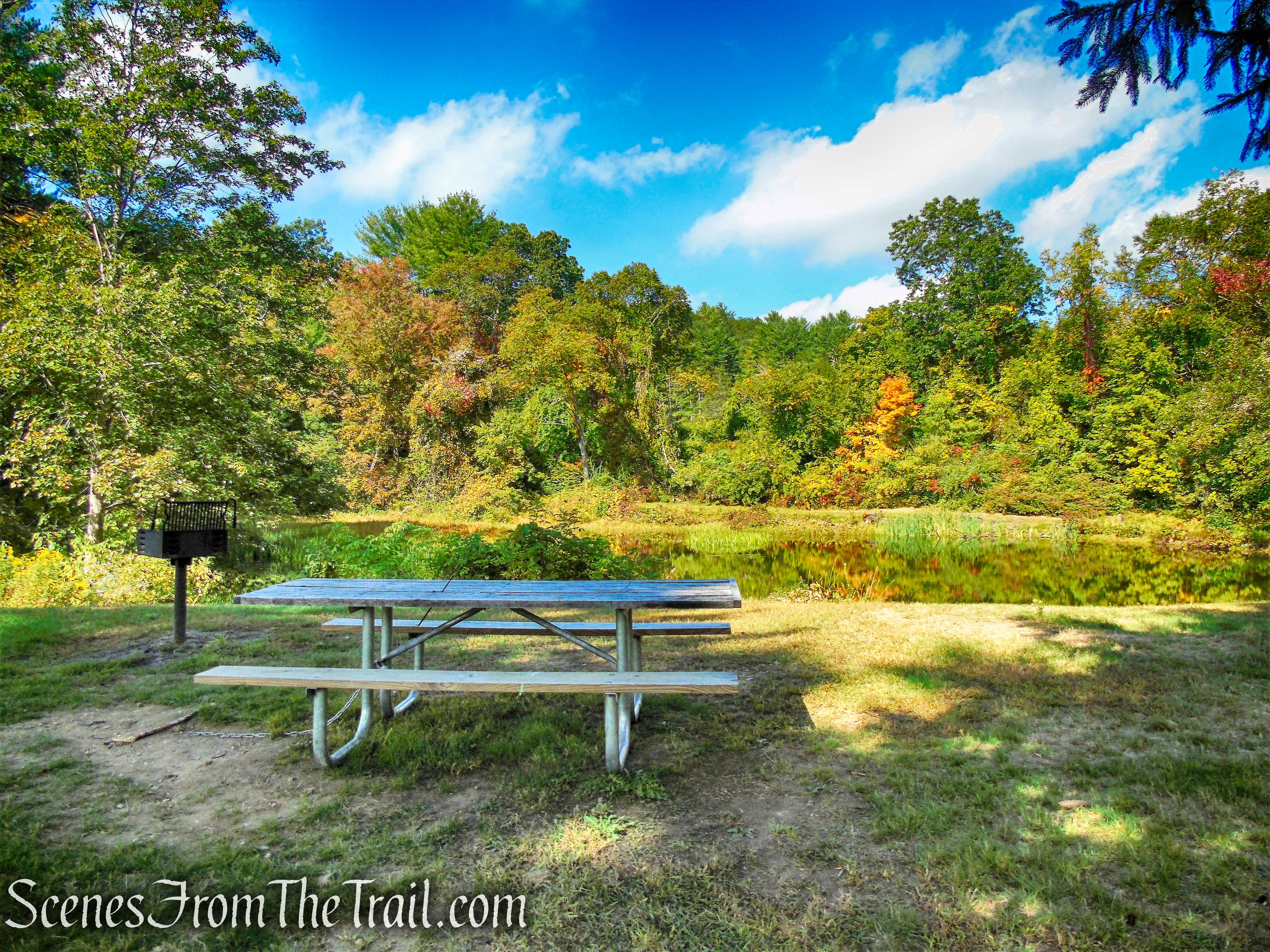
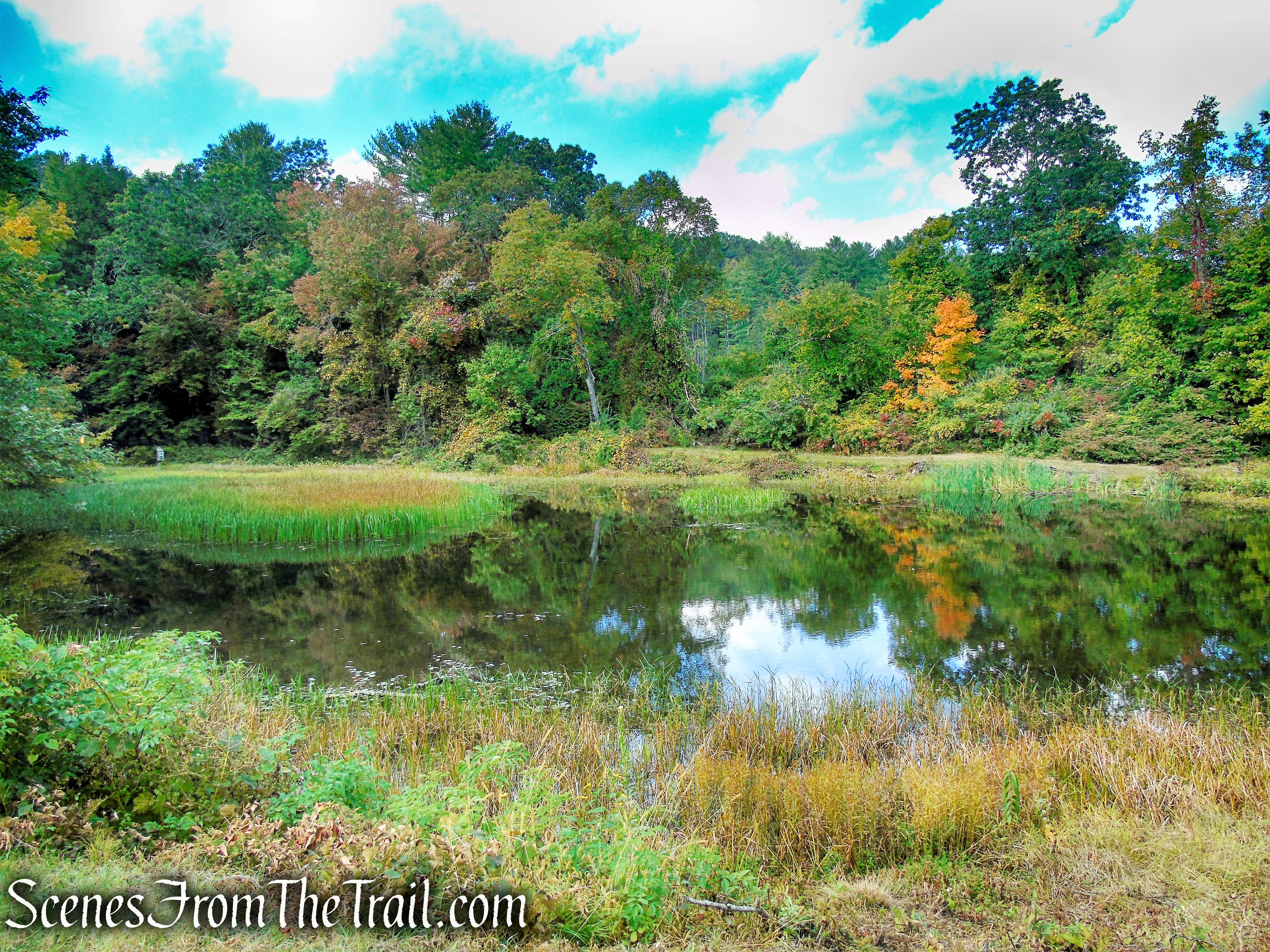
After the hike, we found a picnic table by a small pond and enjoyed a nice lunch.

Black Rock State Park

Black Rock State Park

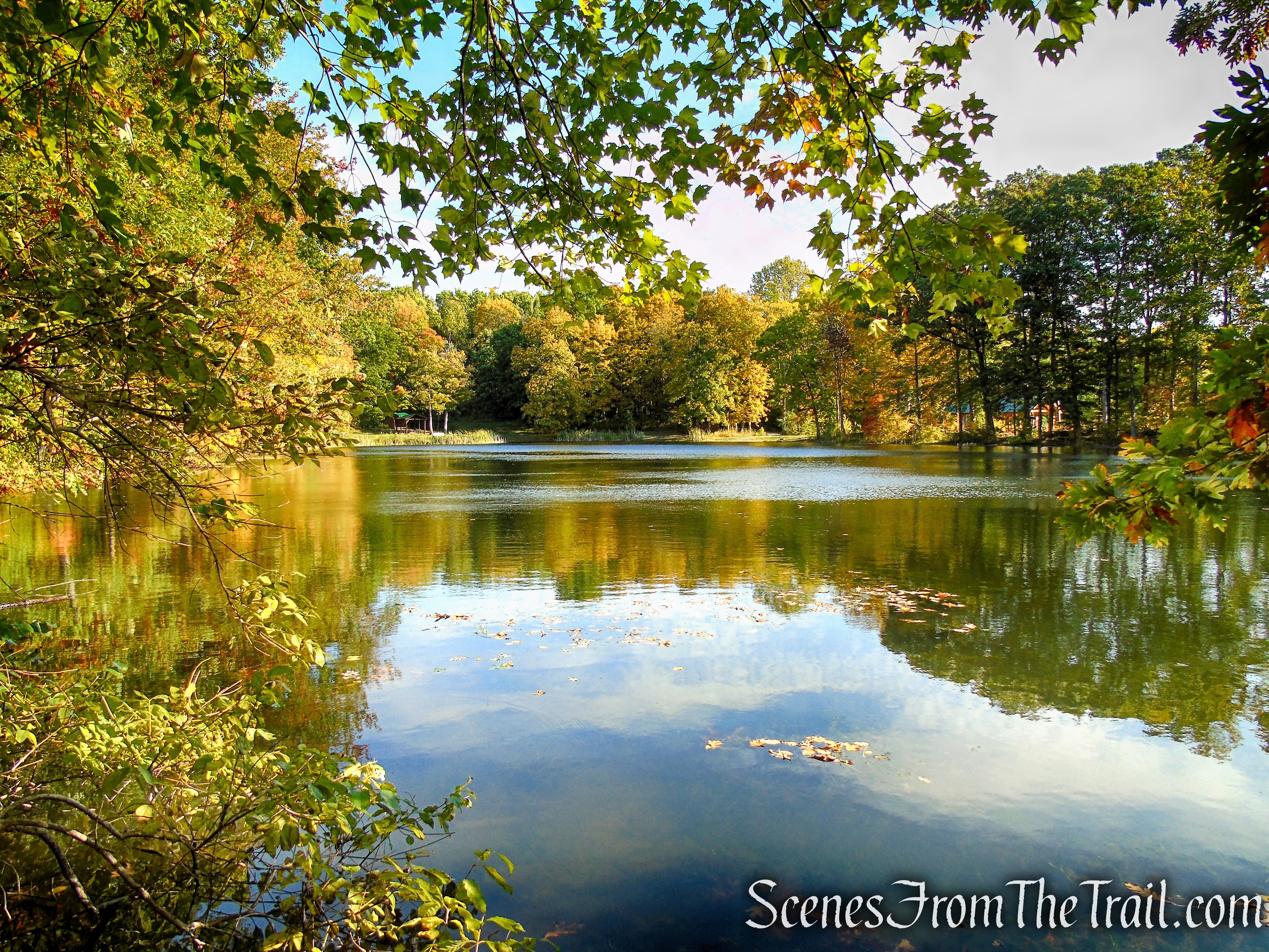
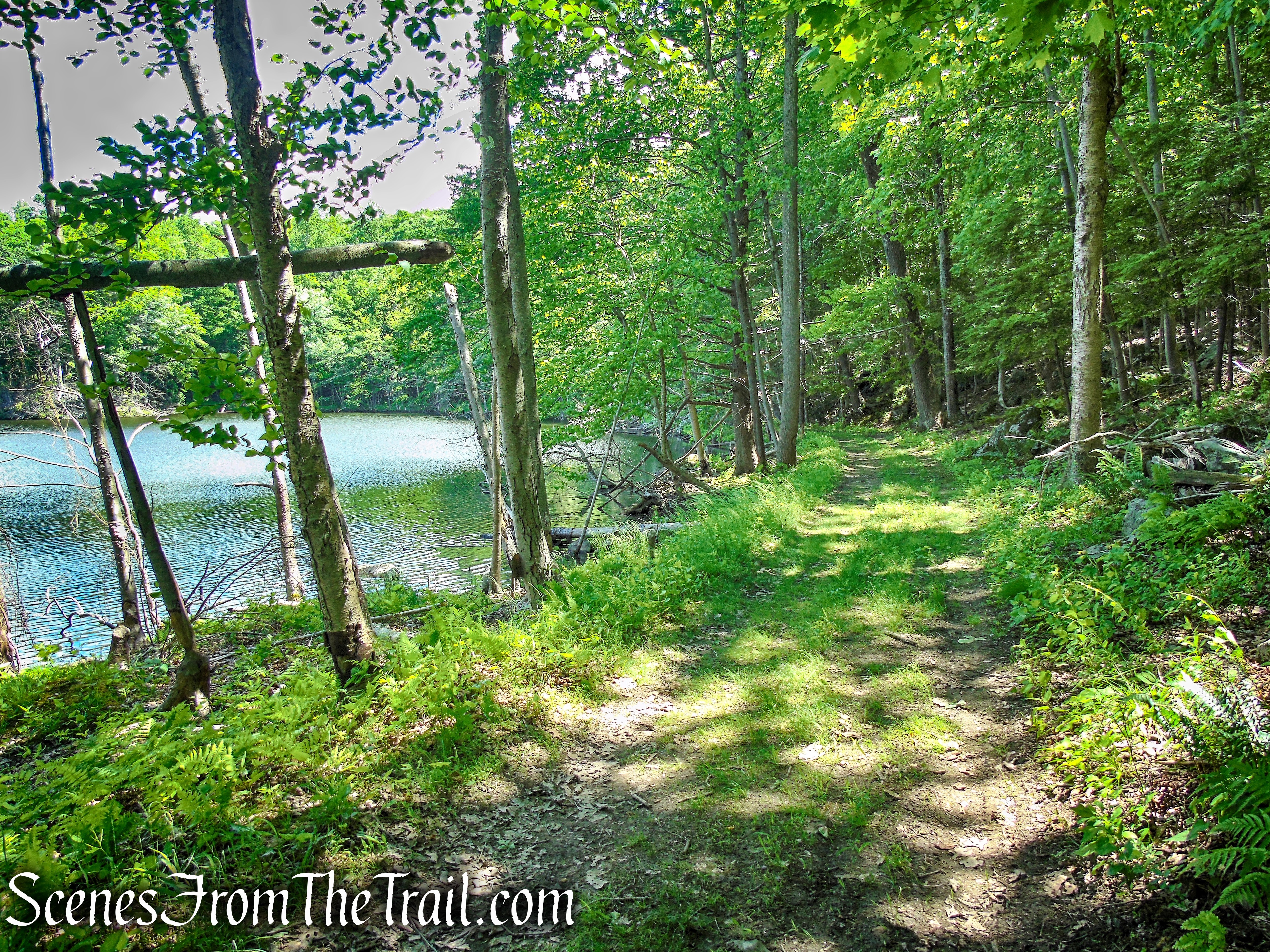
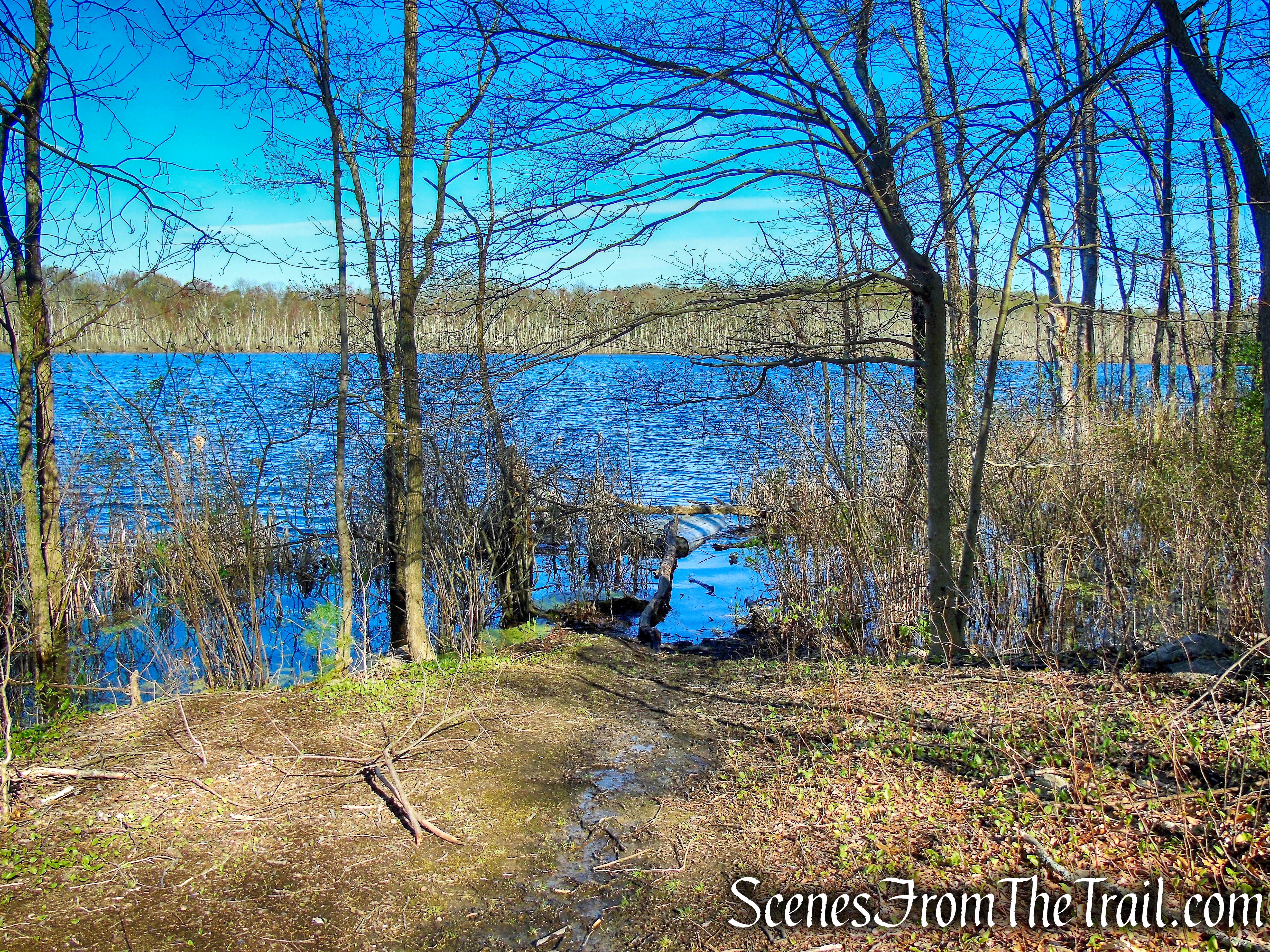
We walked to Black Rock Pond both at the start and at the end of the hike.

Black Rock State Park

Black Rock State Park

Please keep in mind that most of the elevation gained during this hike occurs in less than a 1/2 mile section of the Mattatuck Trail.

Black Rock State Park Elevation Graph

Black Rock State Park Elevation Graph


The Hike:

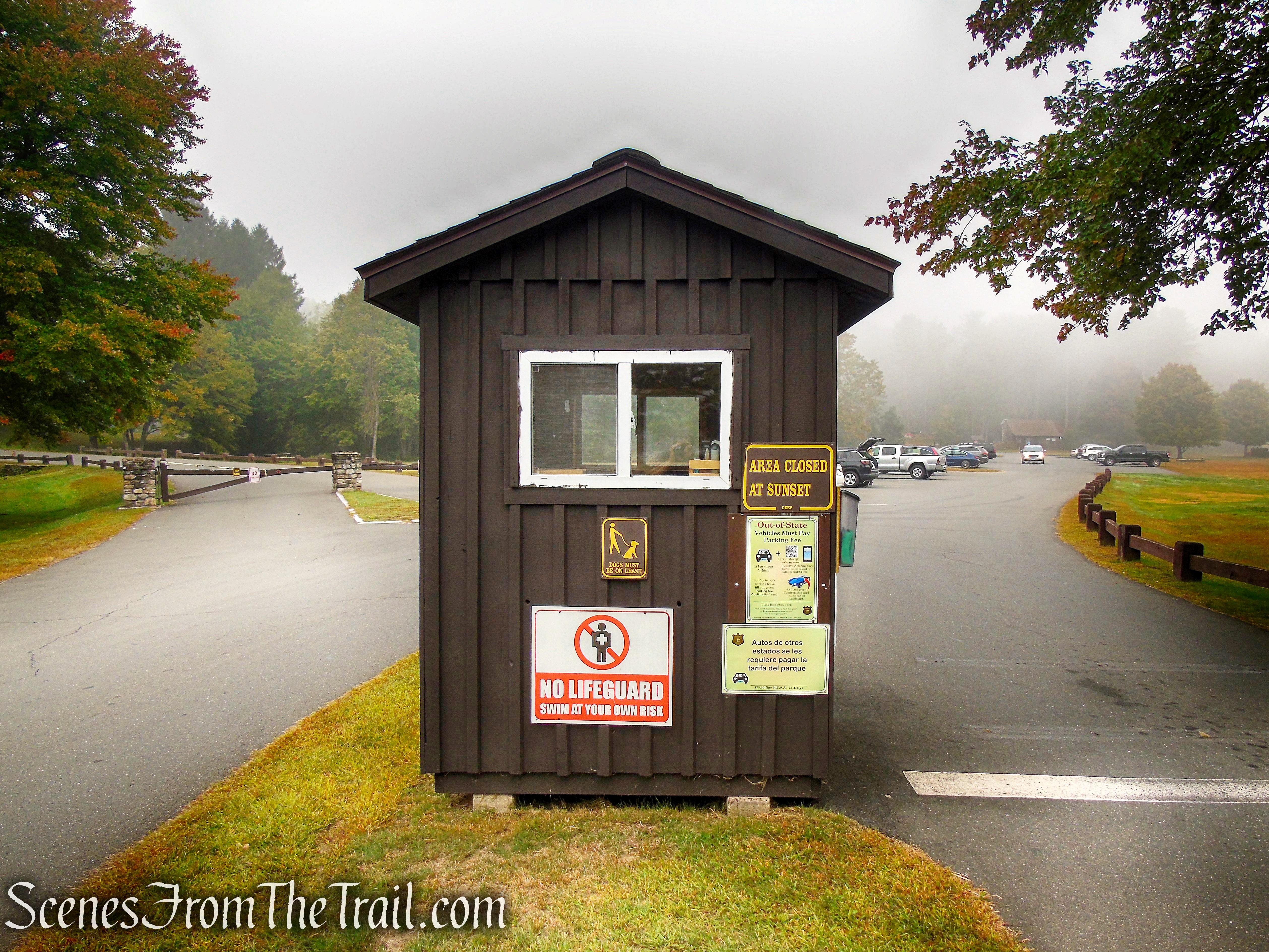
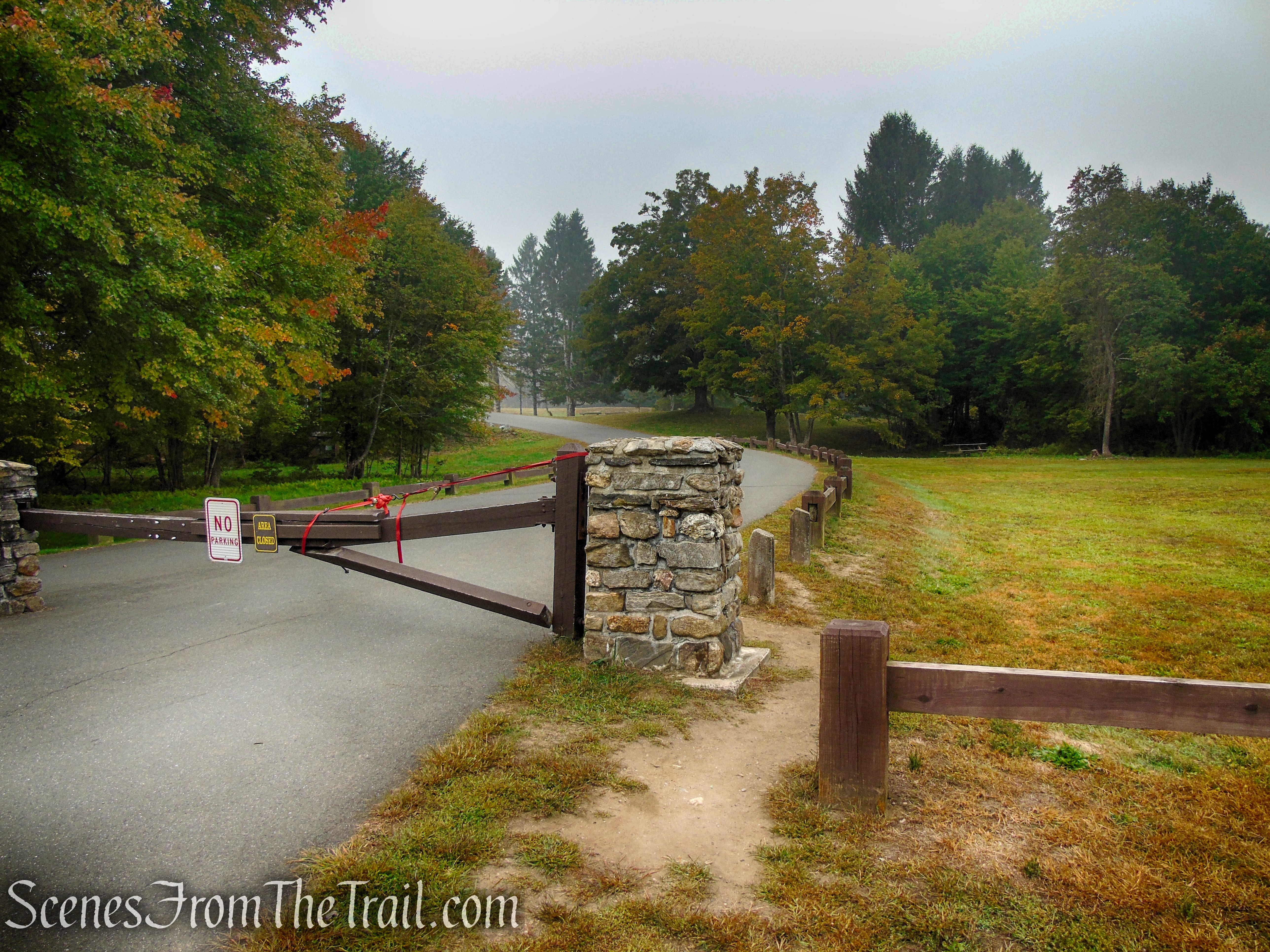
We drove in and parked just past the paved park road that leads to the beach (Black Rock Pond). You can see the closed gate to the left of the booth. If the gate is open, there is parking closer to the pond.

ticket booth - Black Rock State Park

ticket booth – Black Rock State Park

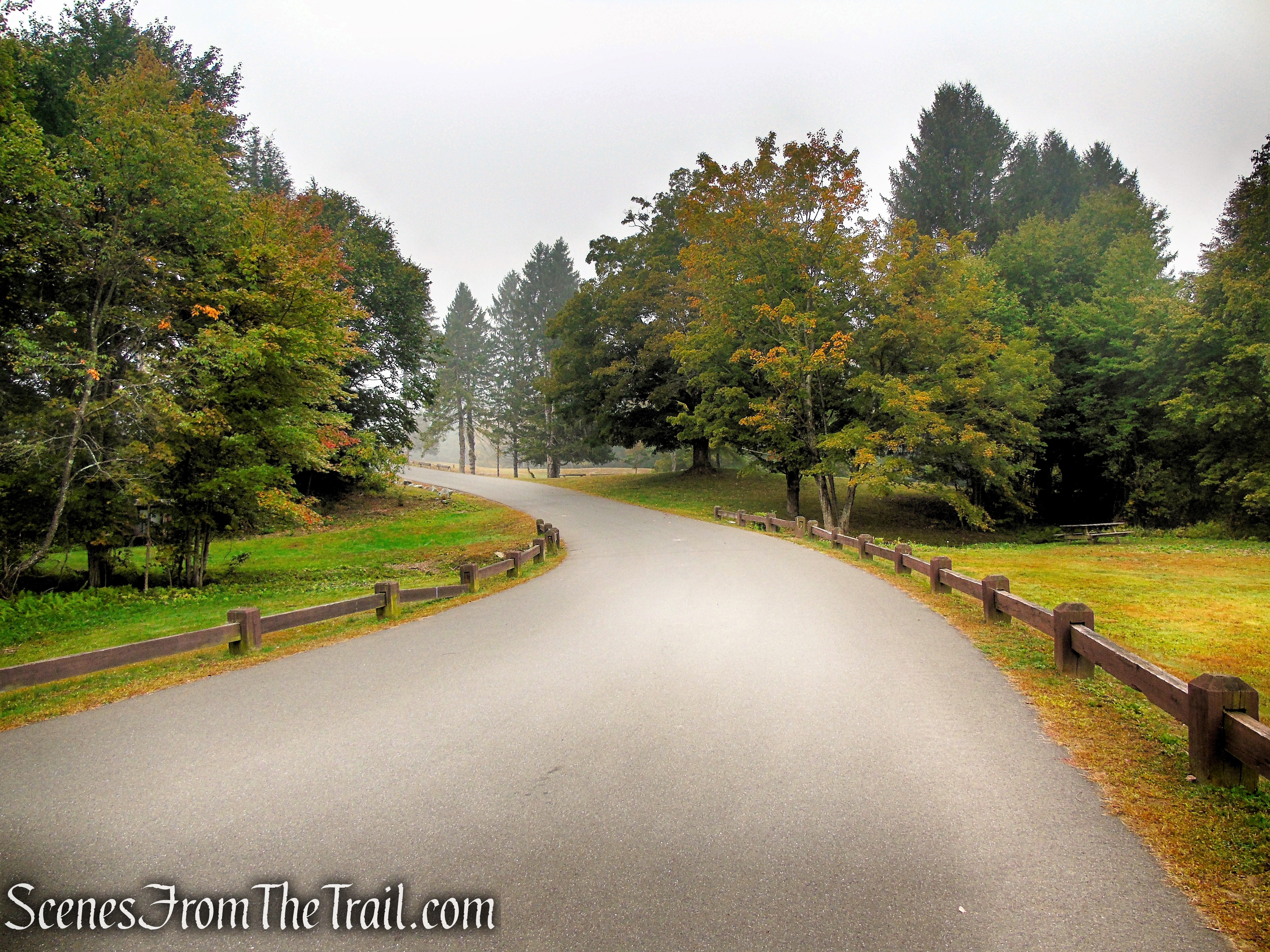
We walked past the gate and proceeded up the paved park road towards Black Rock Pond. Since it was extremely foggy, we were in no hurry to get to the viewpoint.

paved park road - Black Rock State Park

paved park road – Black Rock State Park

paved park road - Black Rock State Park

paved park road – Black Rock State Park

beach parking area - Black Rock State Park

beach parking area – Black Rock State Park

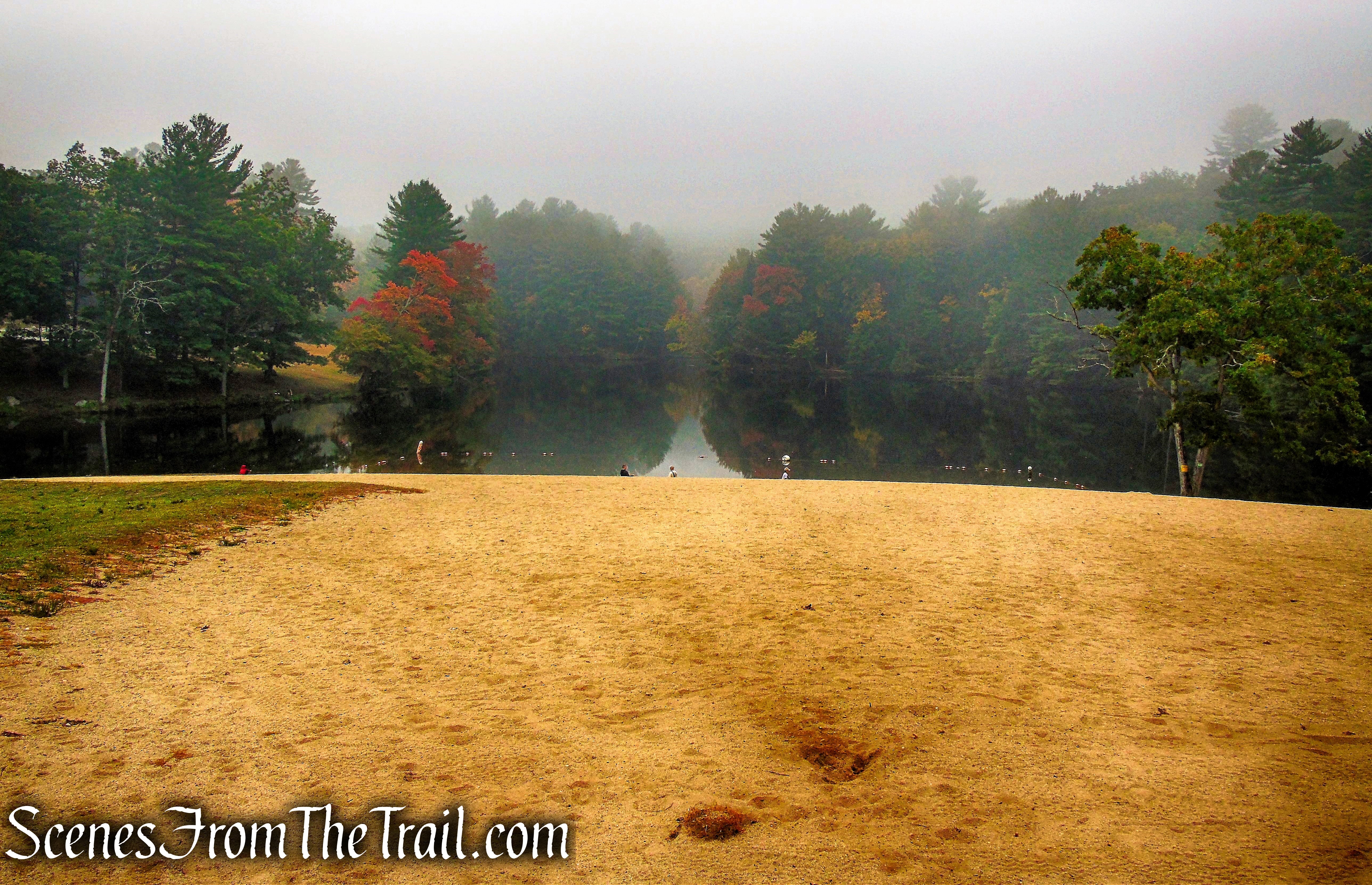
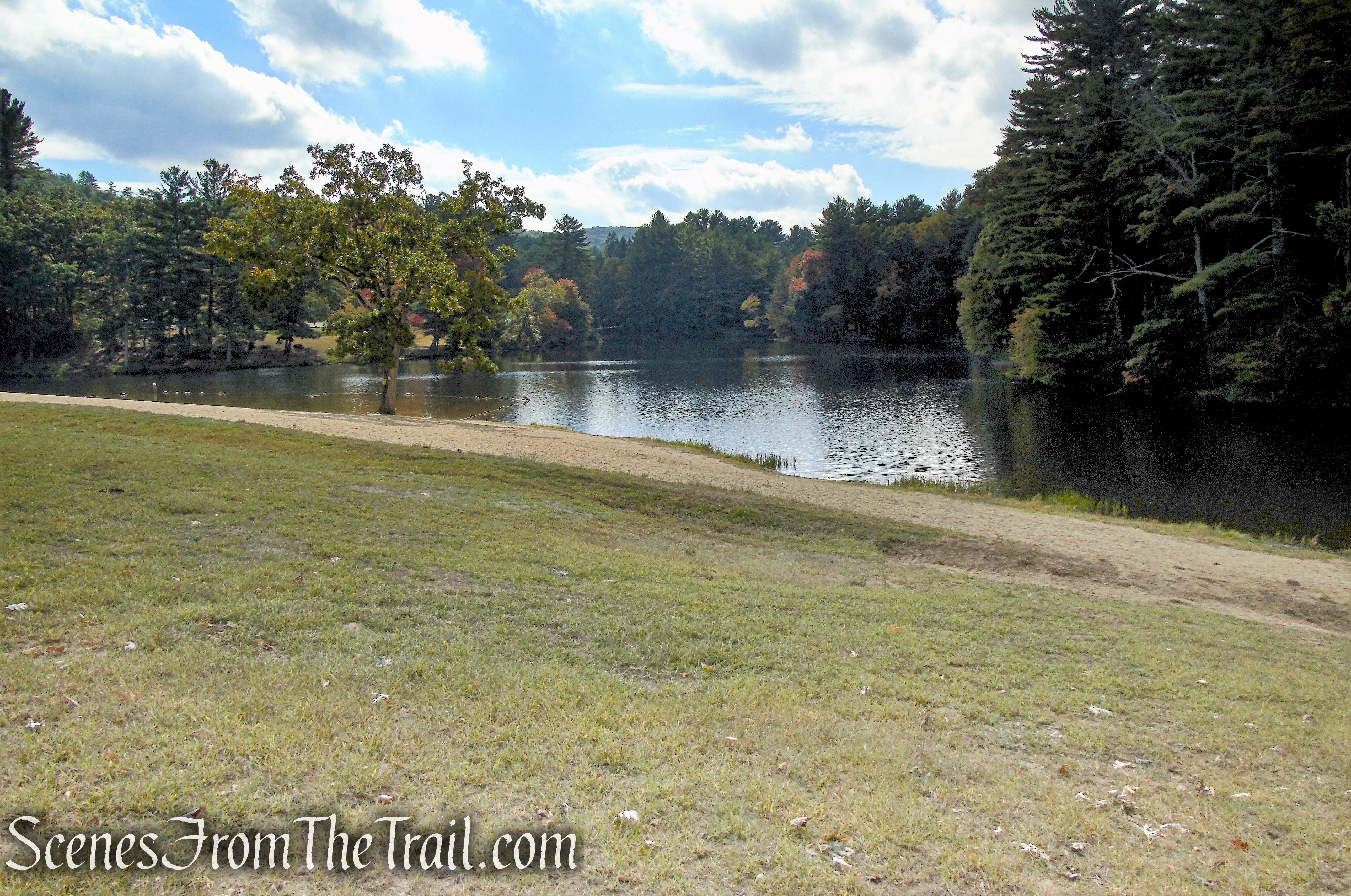
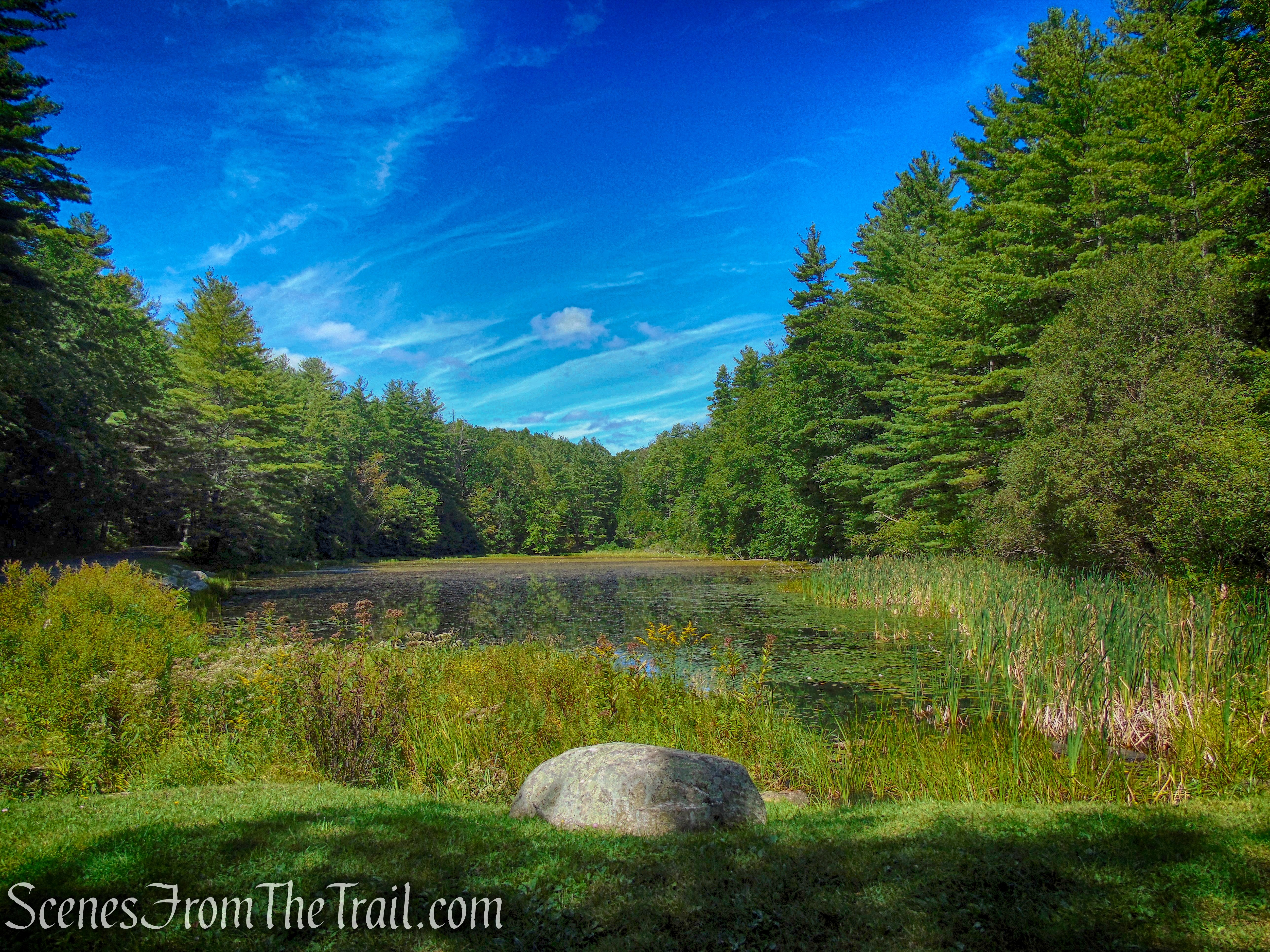
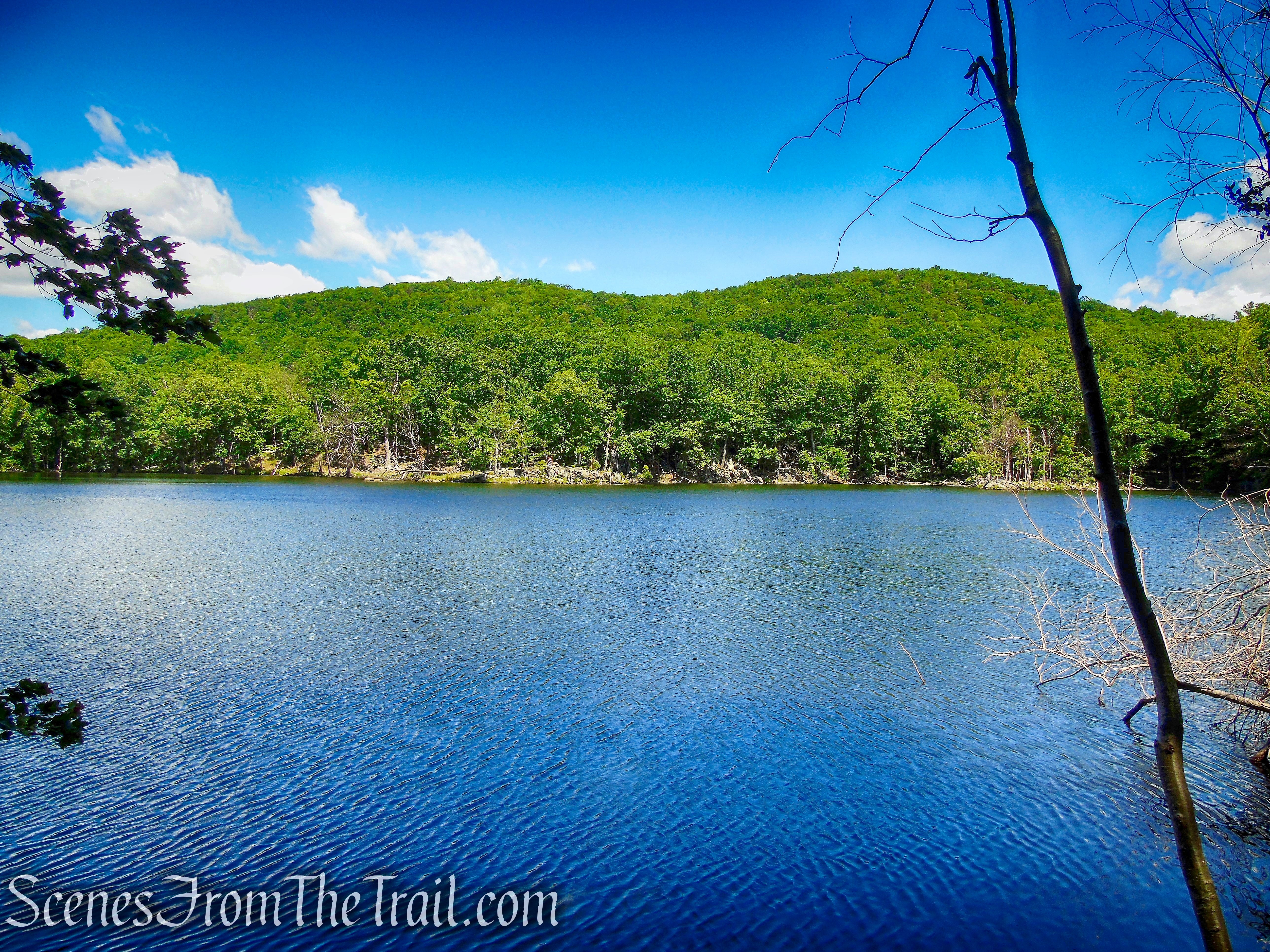
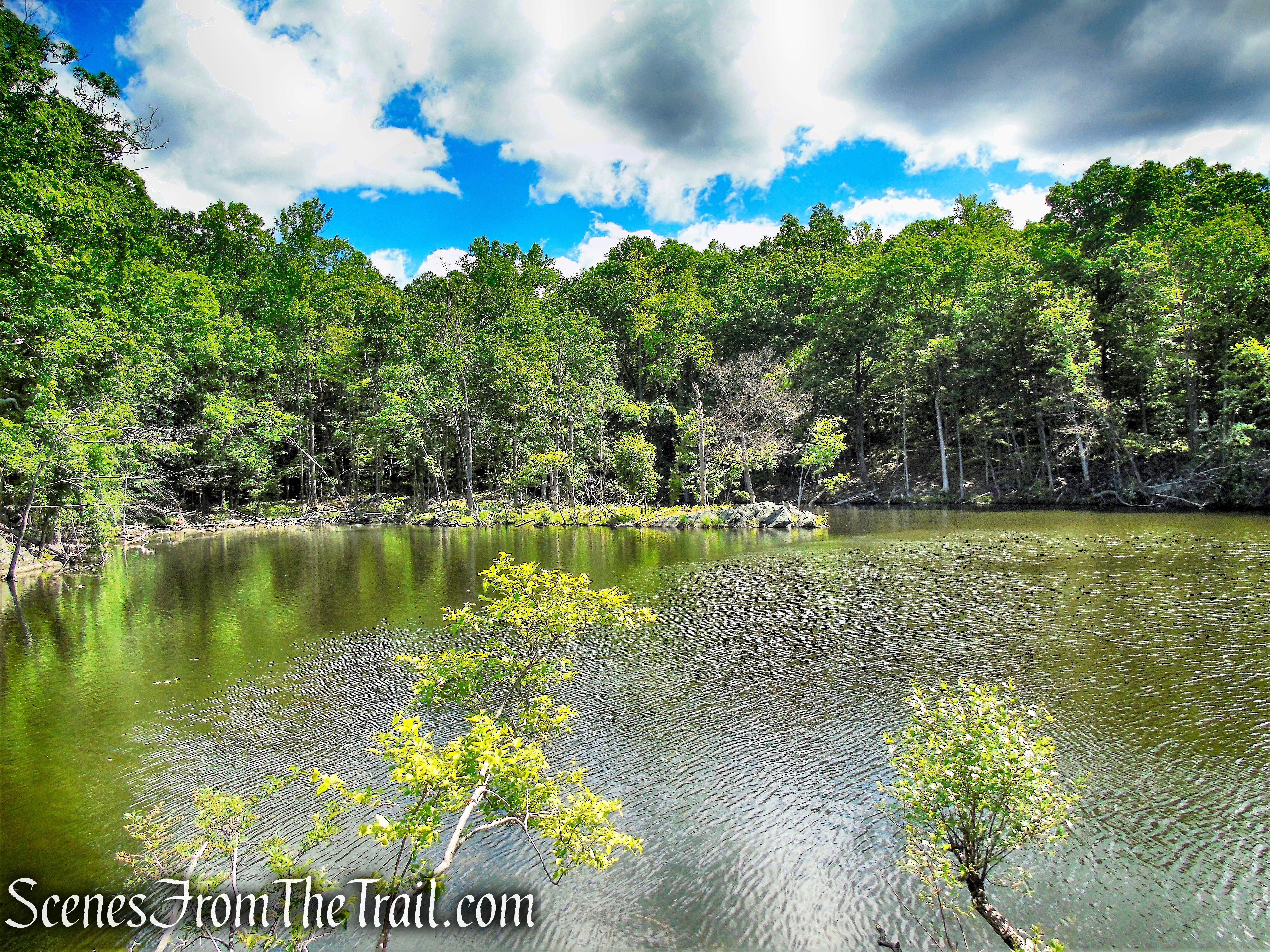
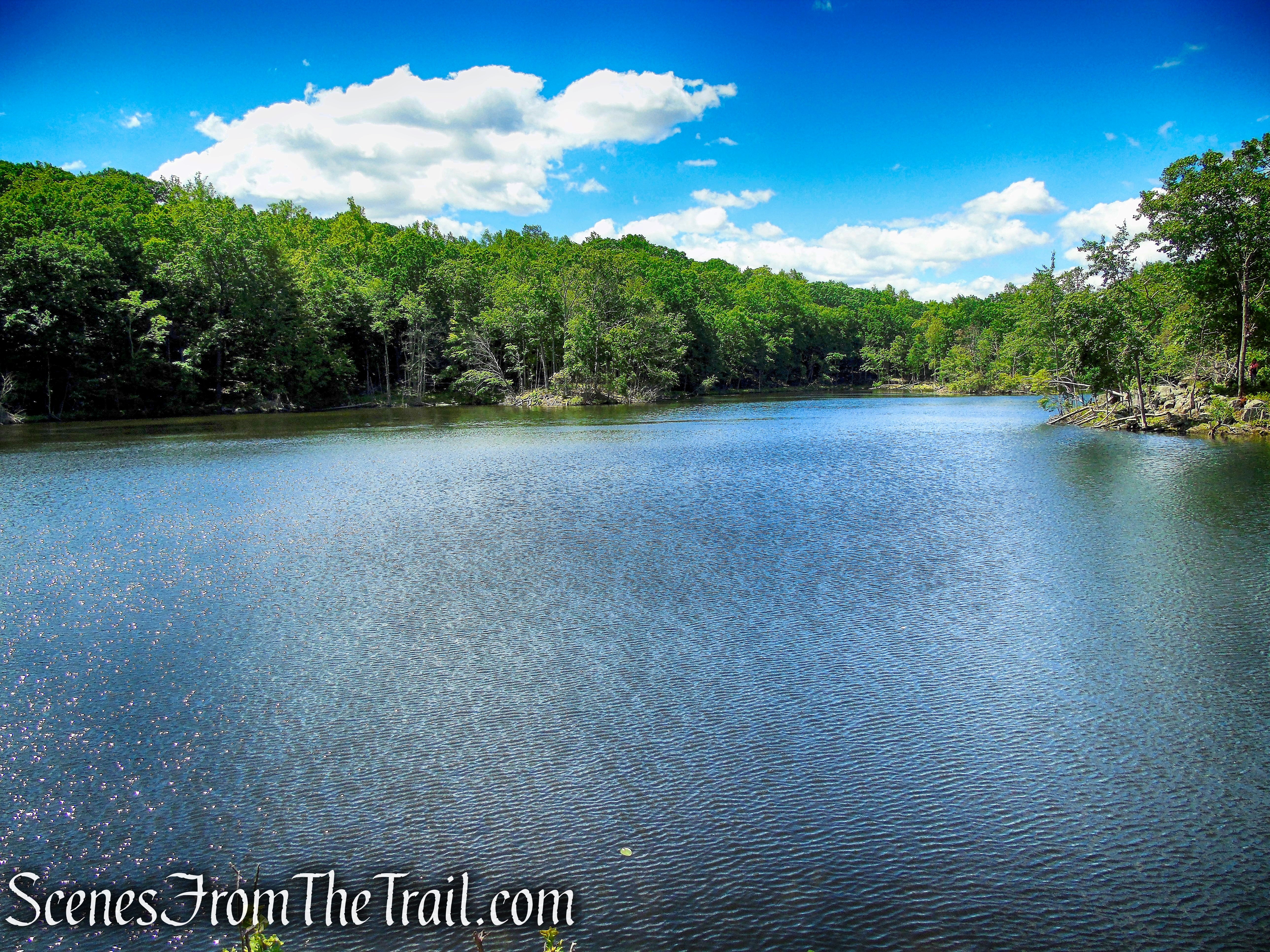
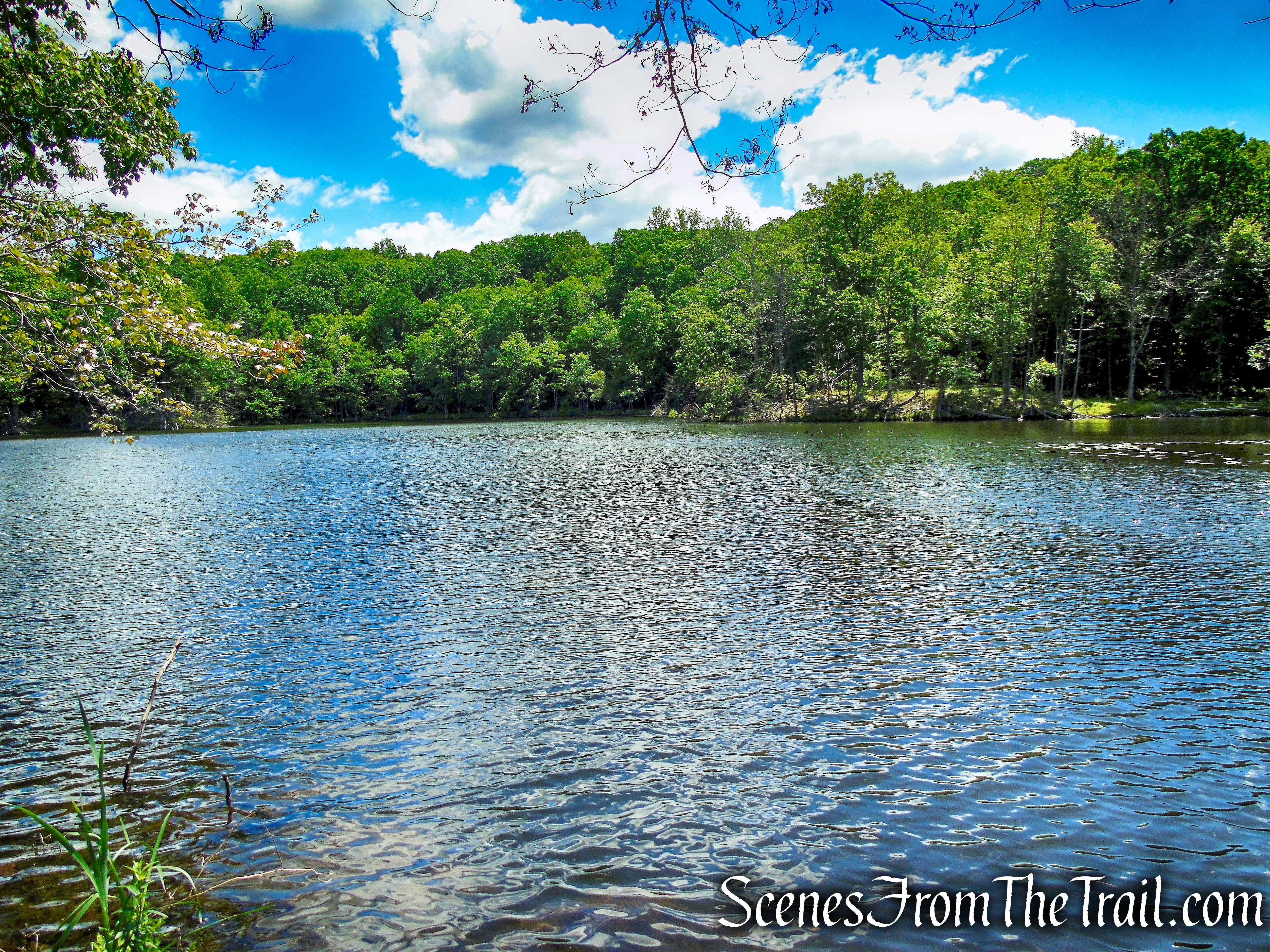
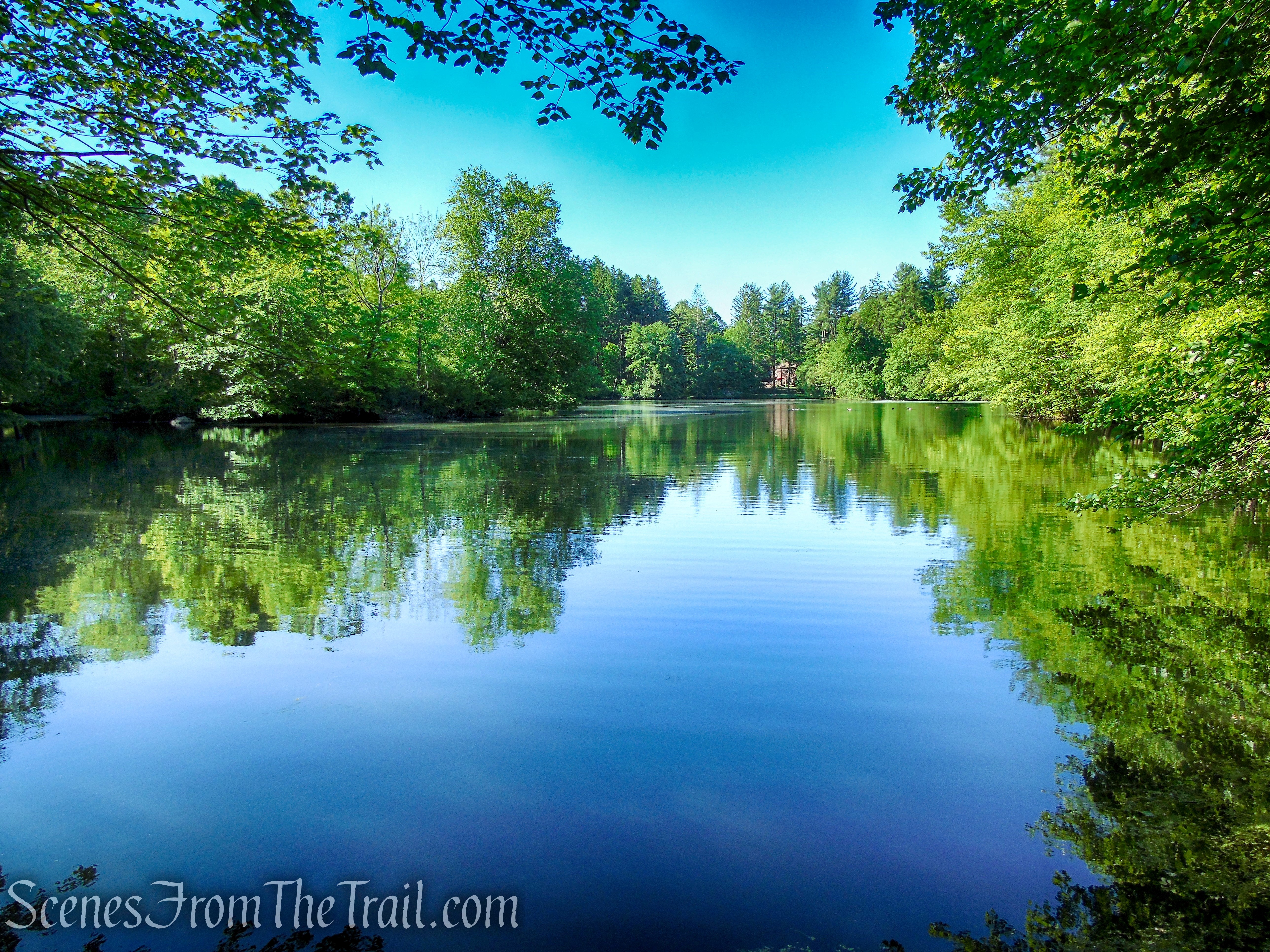
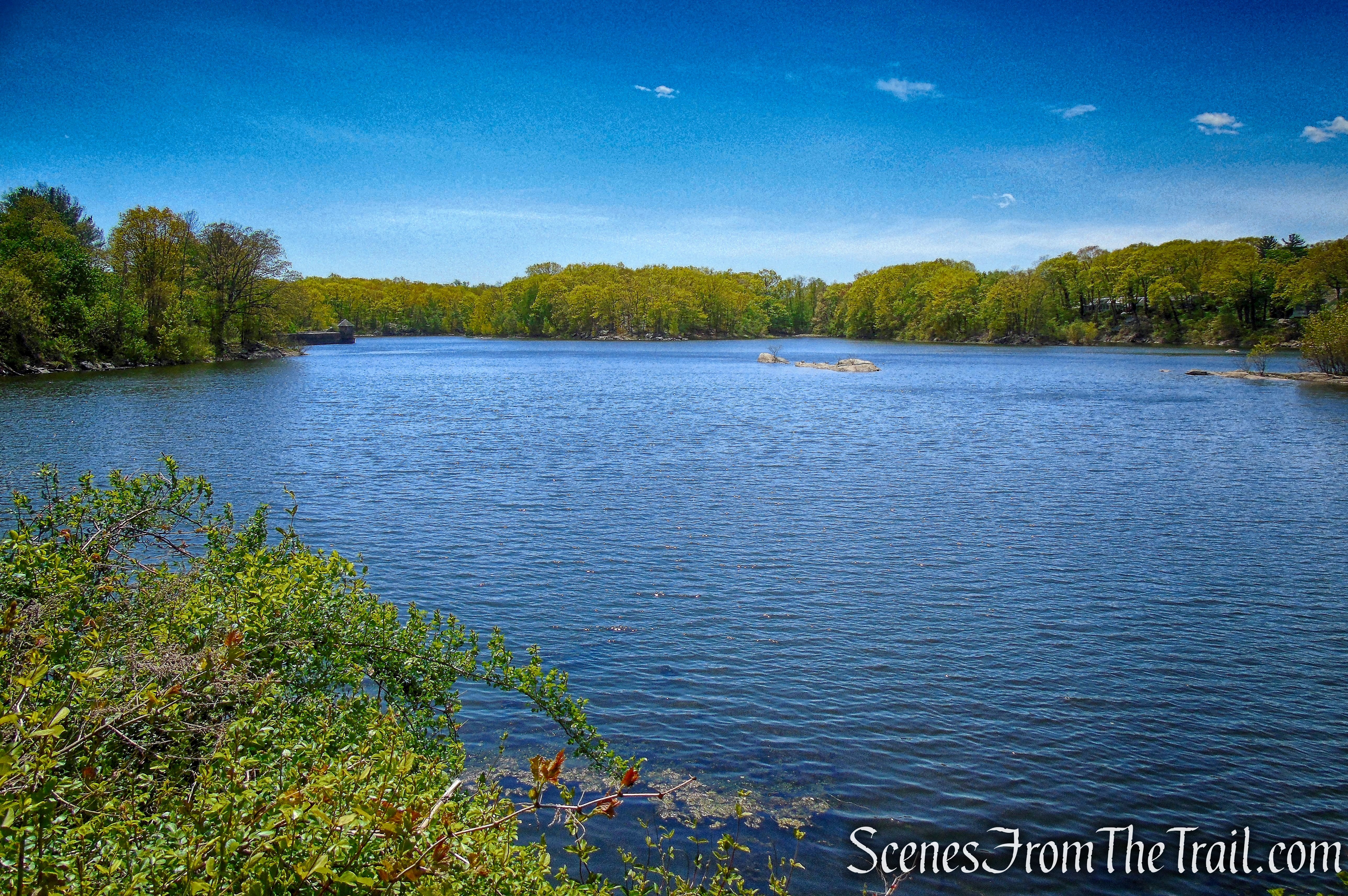
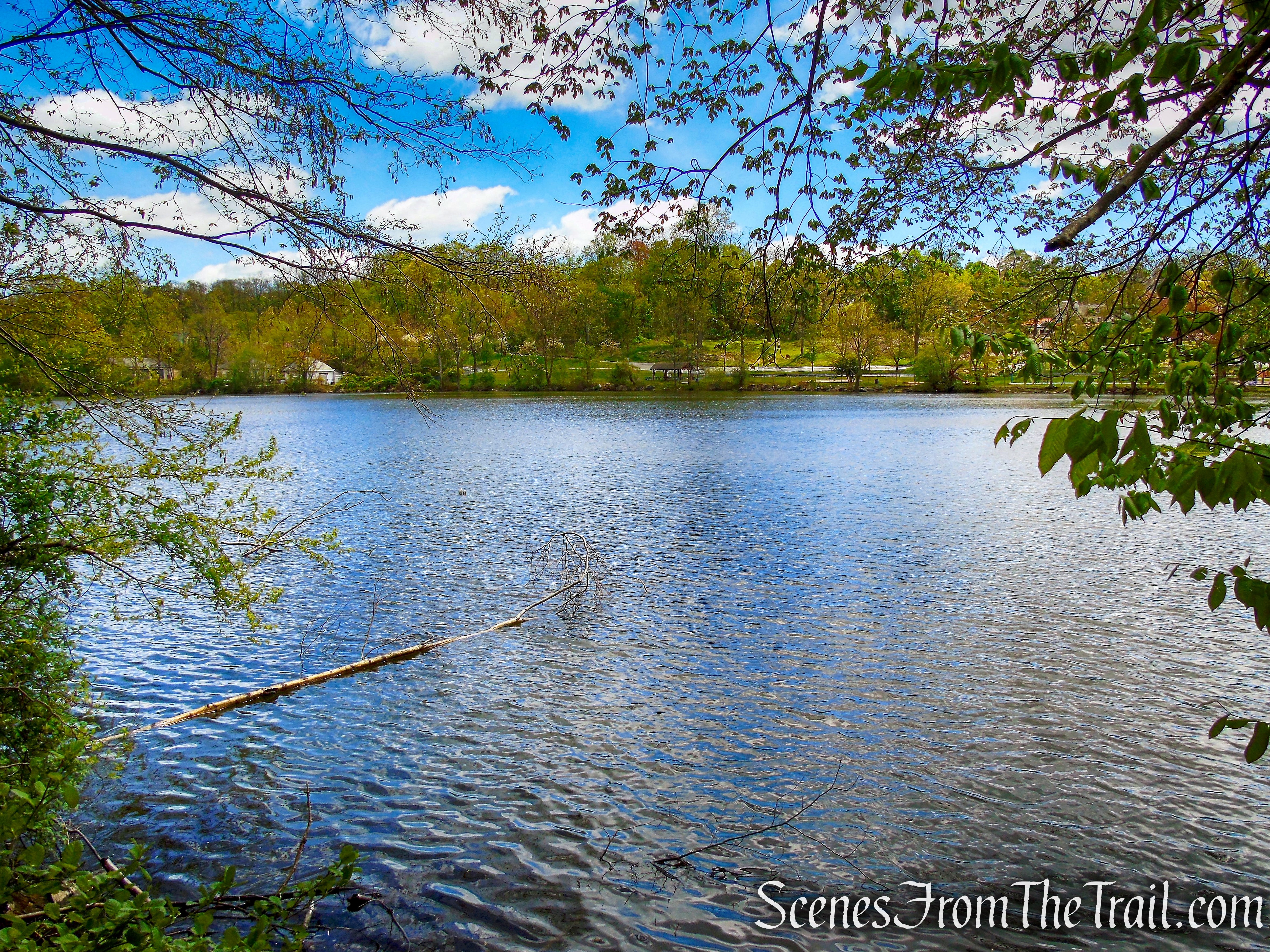
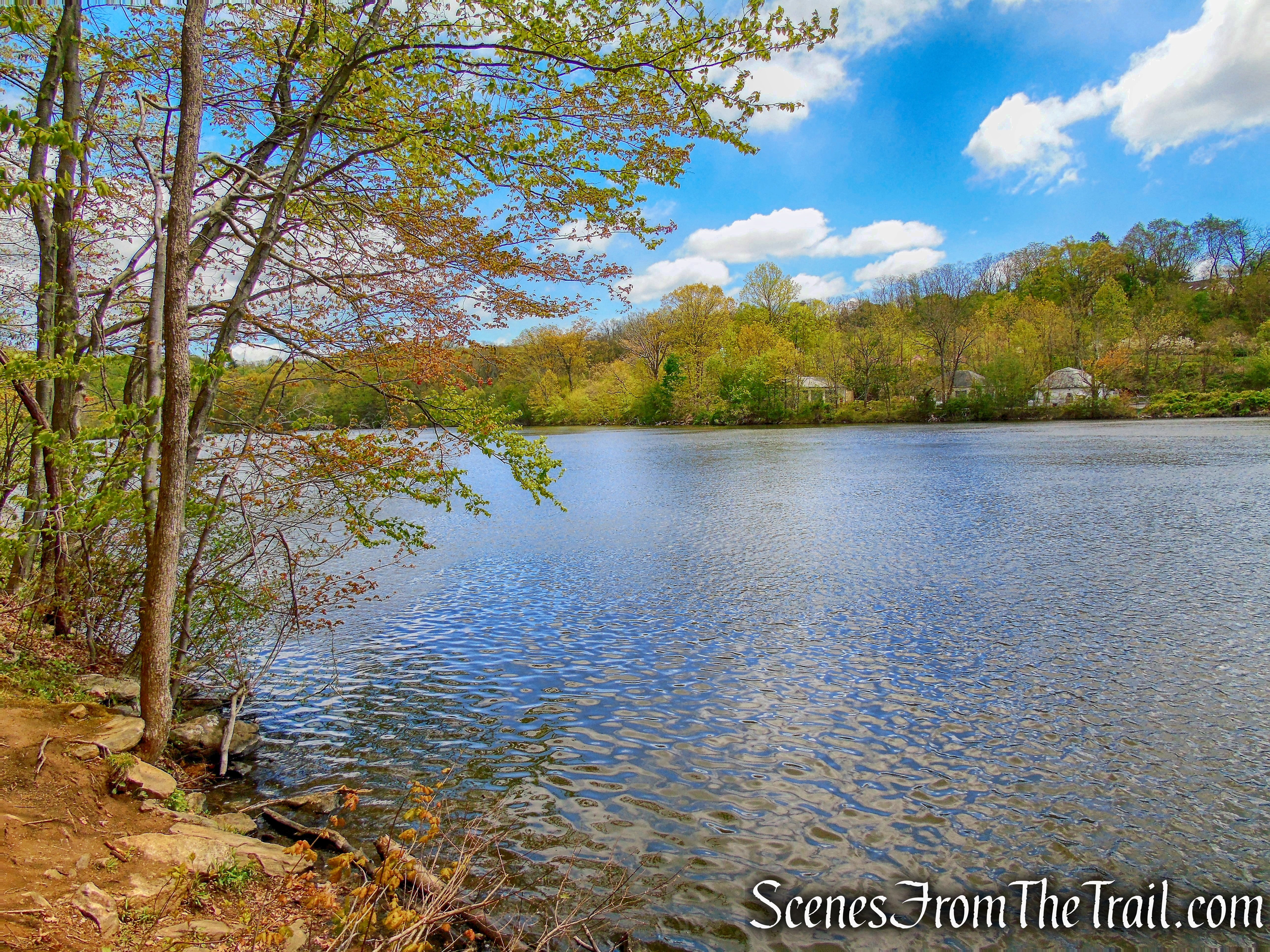
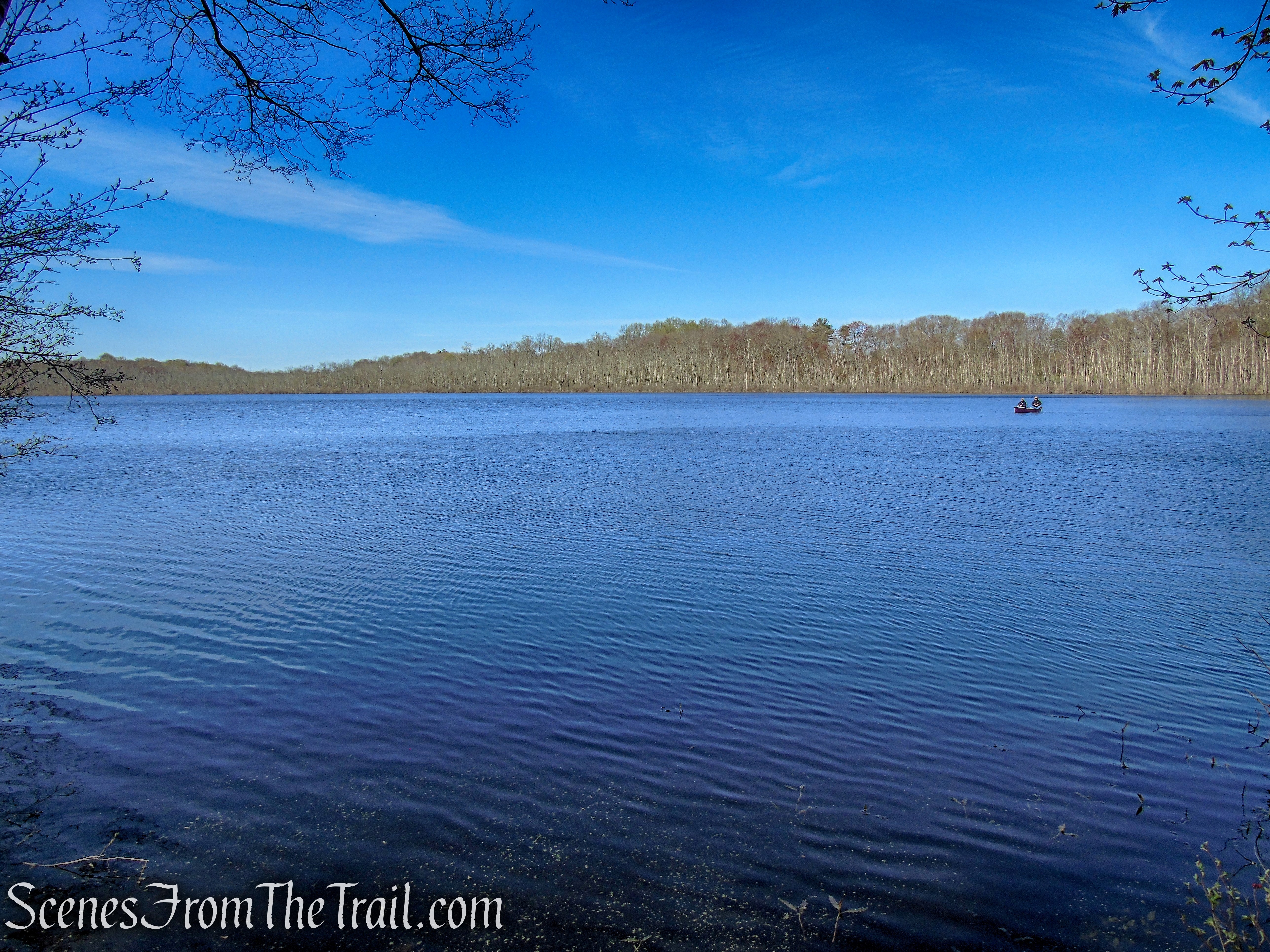
Black Rock Pond (9.5 acres), is a popular spot for fishing and swimming. From the “Report of the State Park and Forest Commission to the Governor – 1926” – “a small pond of clean water, known locally as the “Sand Dam.” It was a popular swimming “hole” before it came into the State park system.”

Black Rock Pond

Black Rock Pond

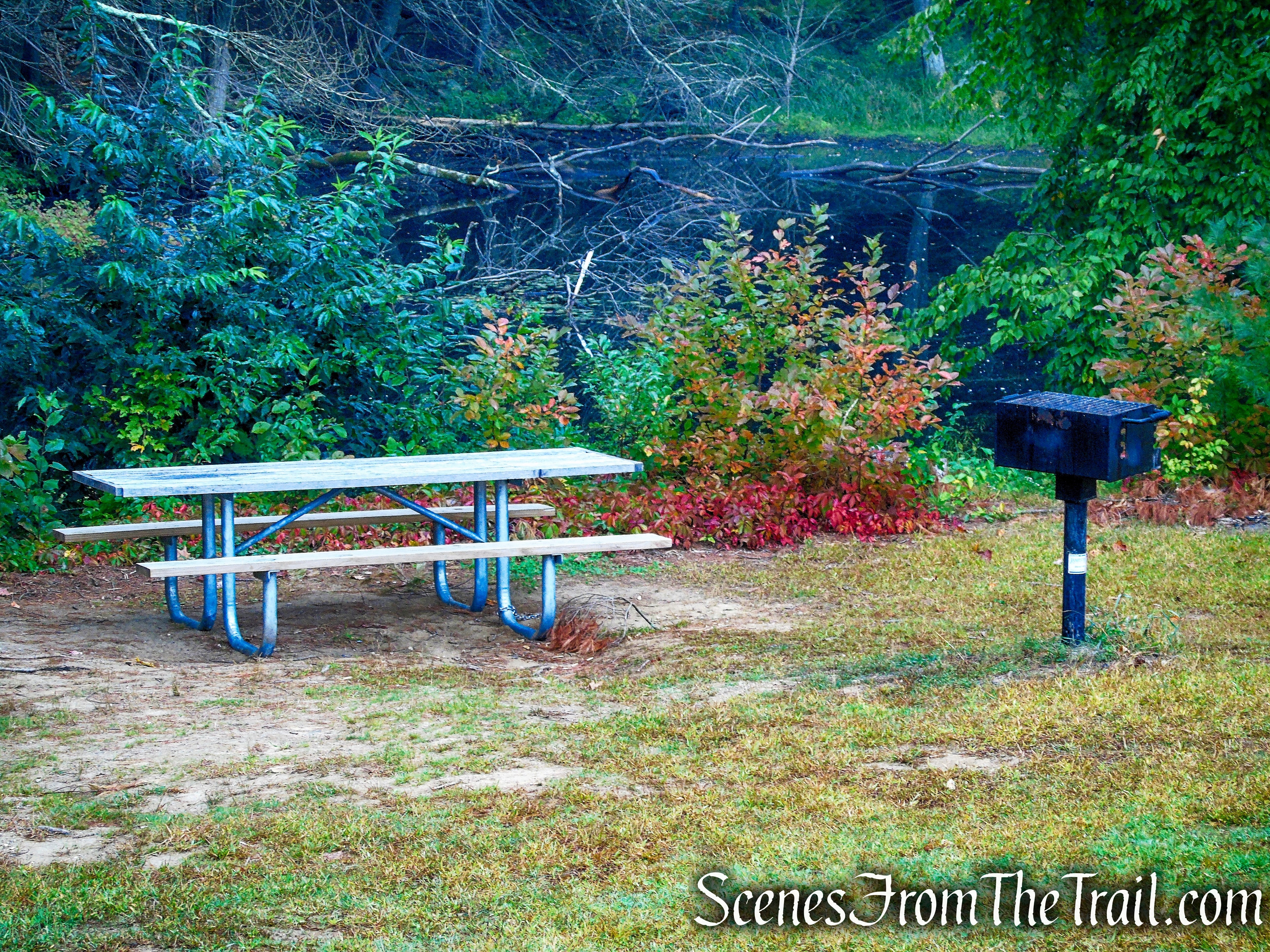
A nice spot to grill some food.

Black Rock State Park

Black Rock State Park

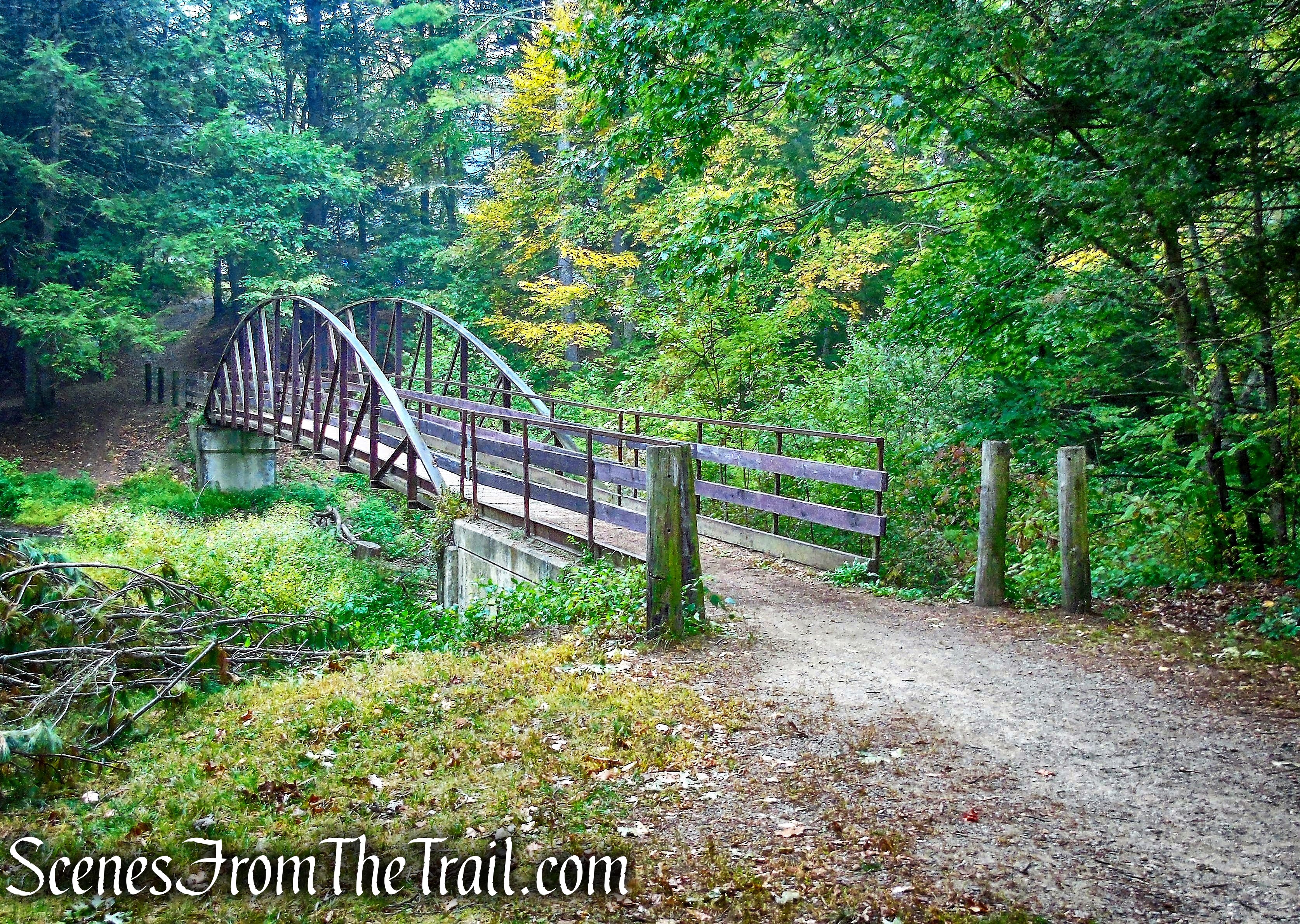
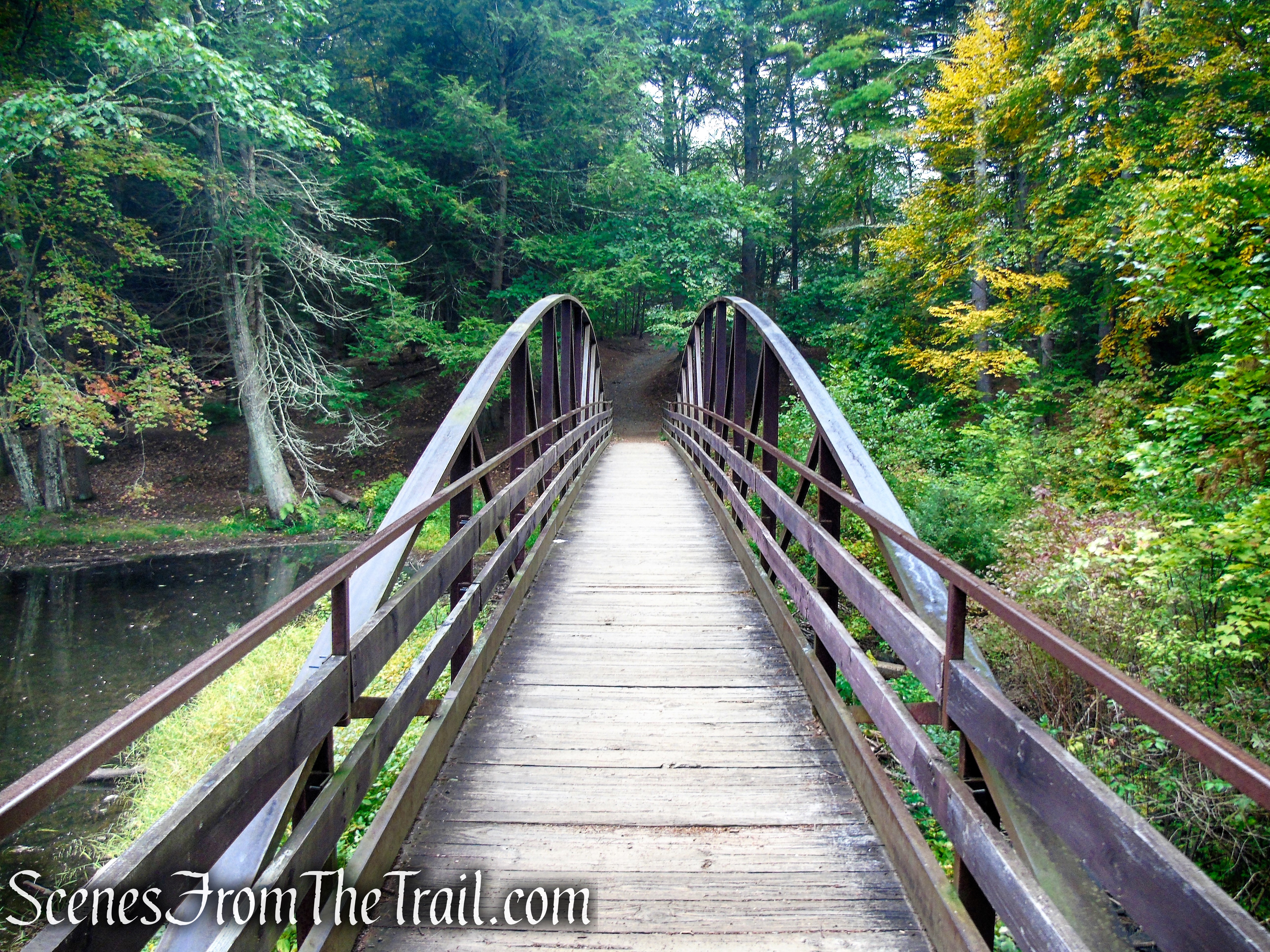
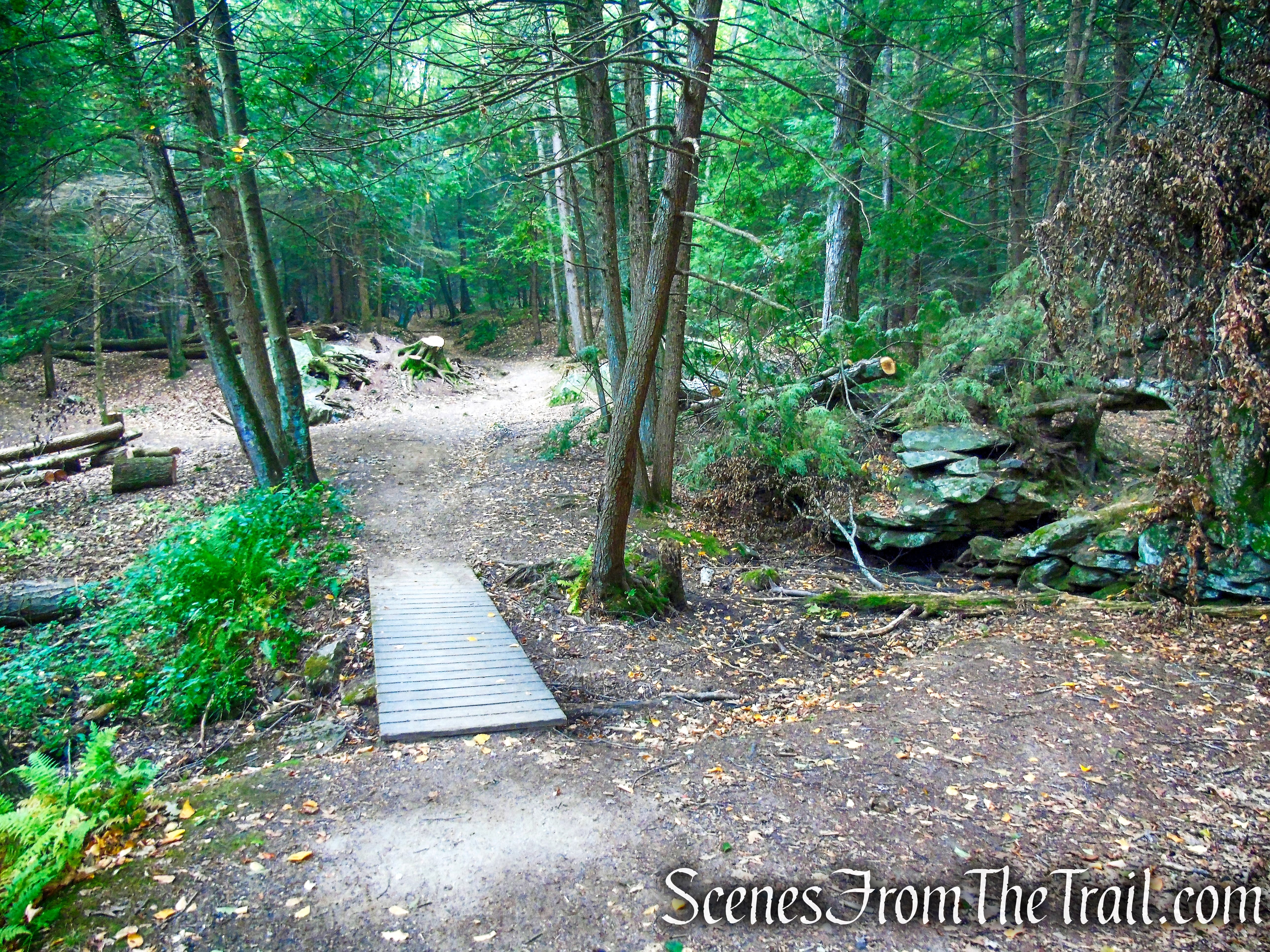
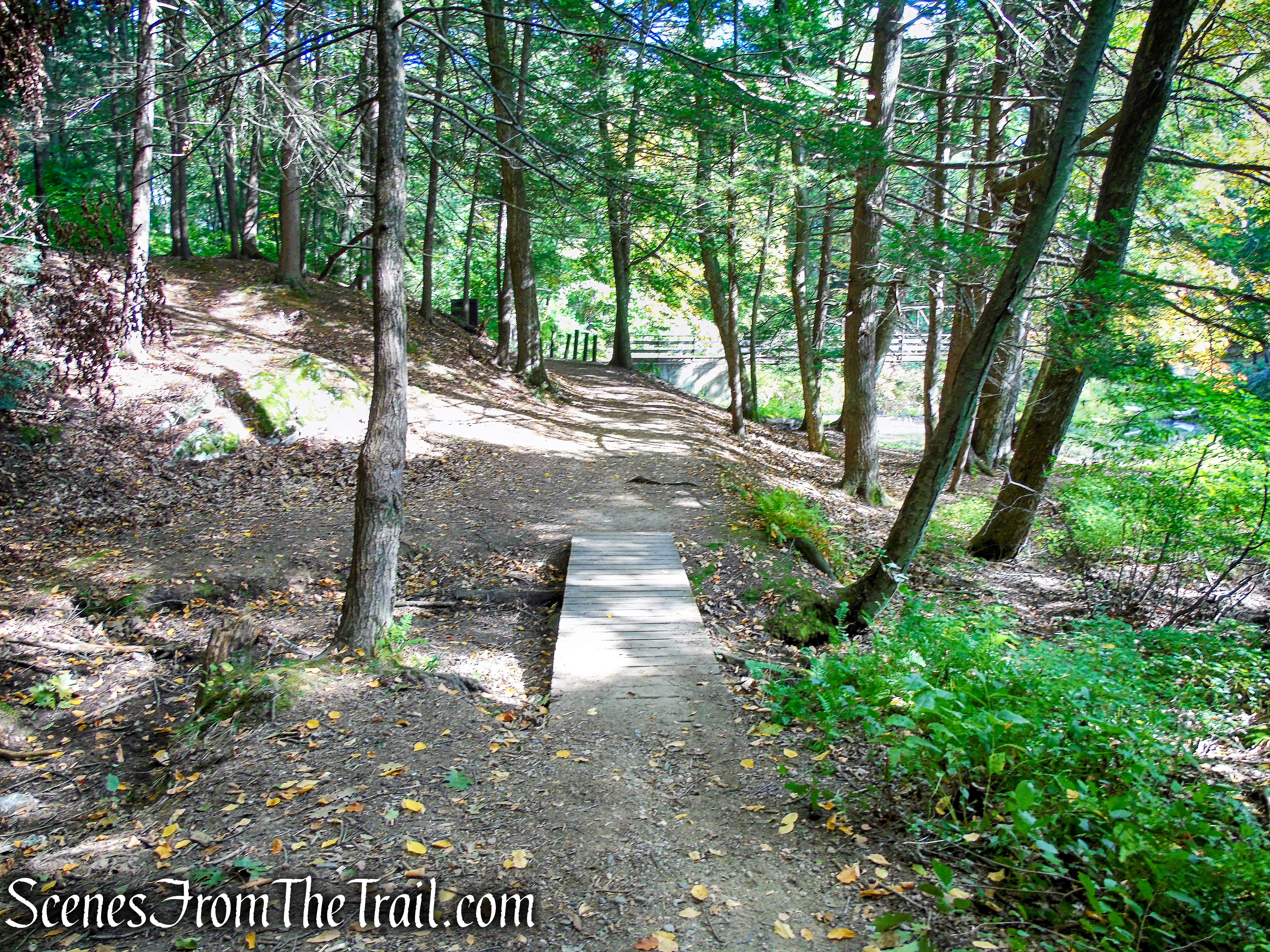
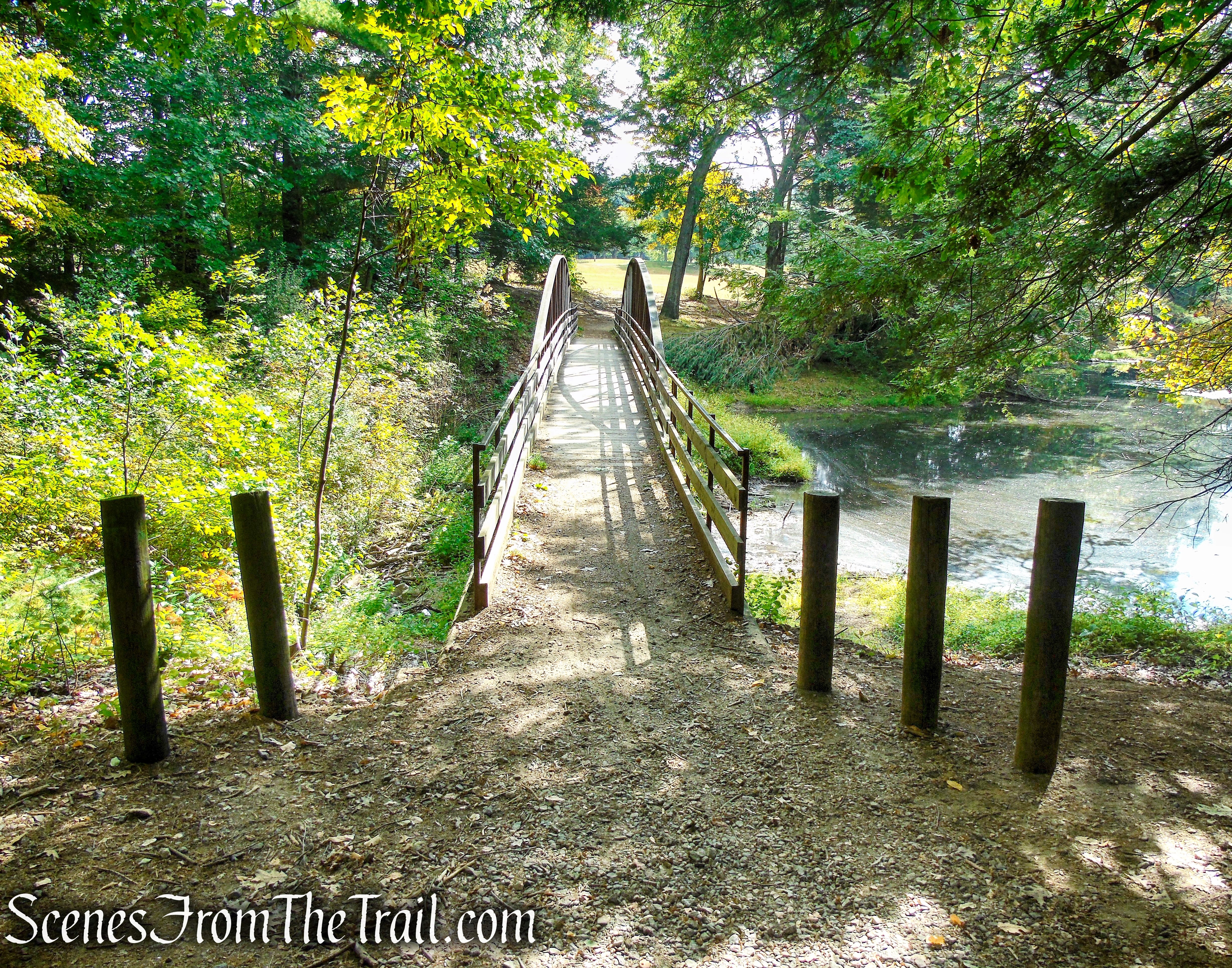
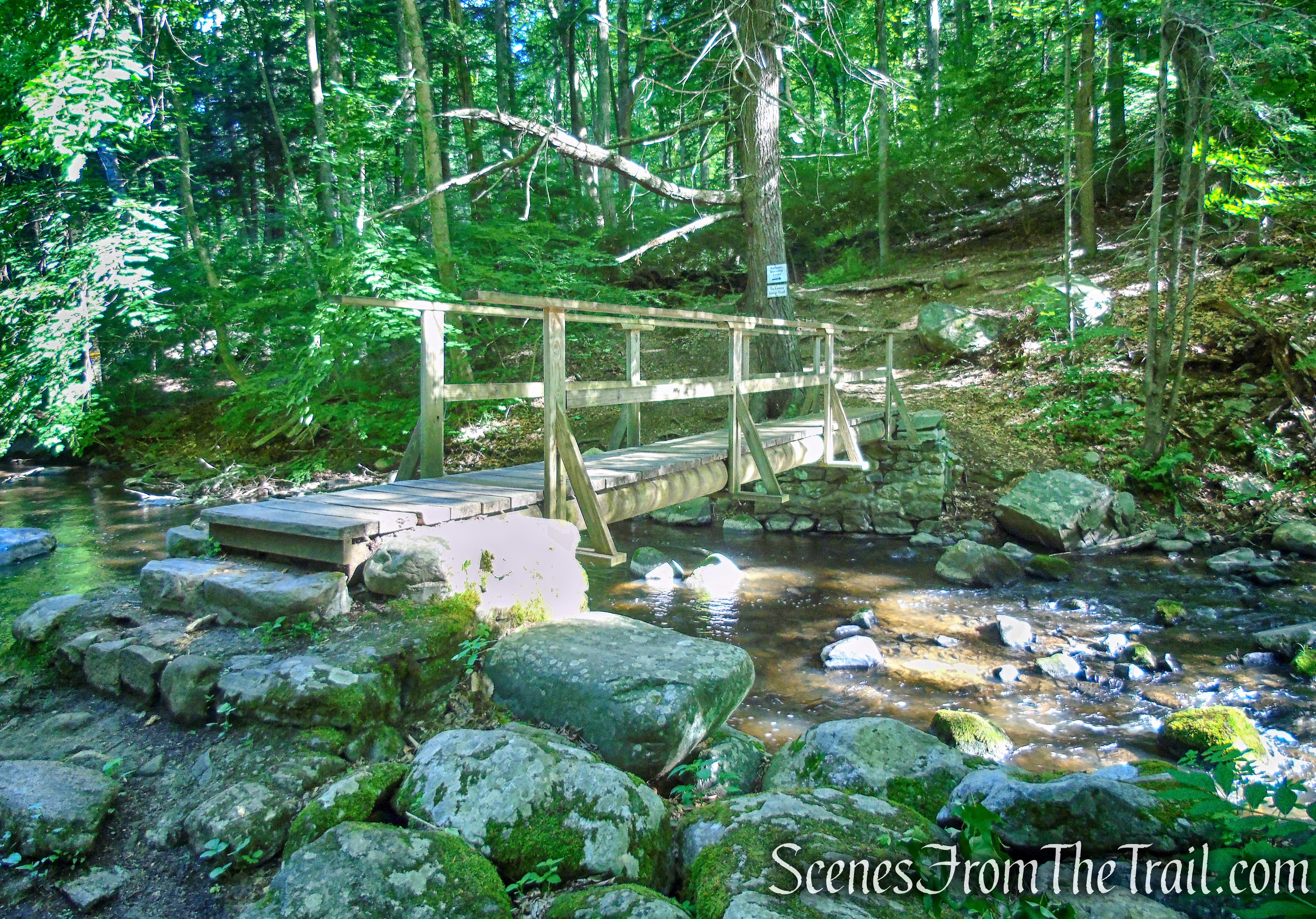
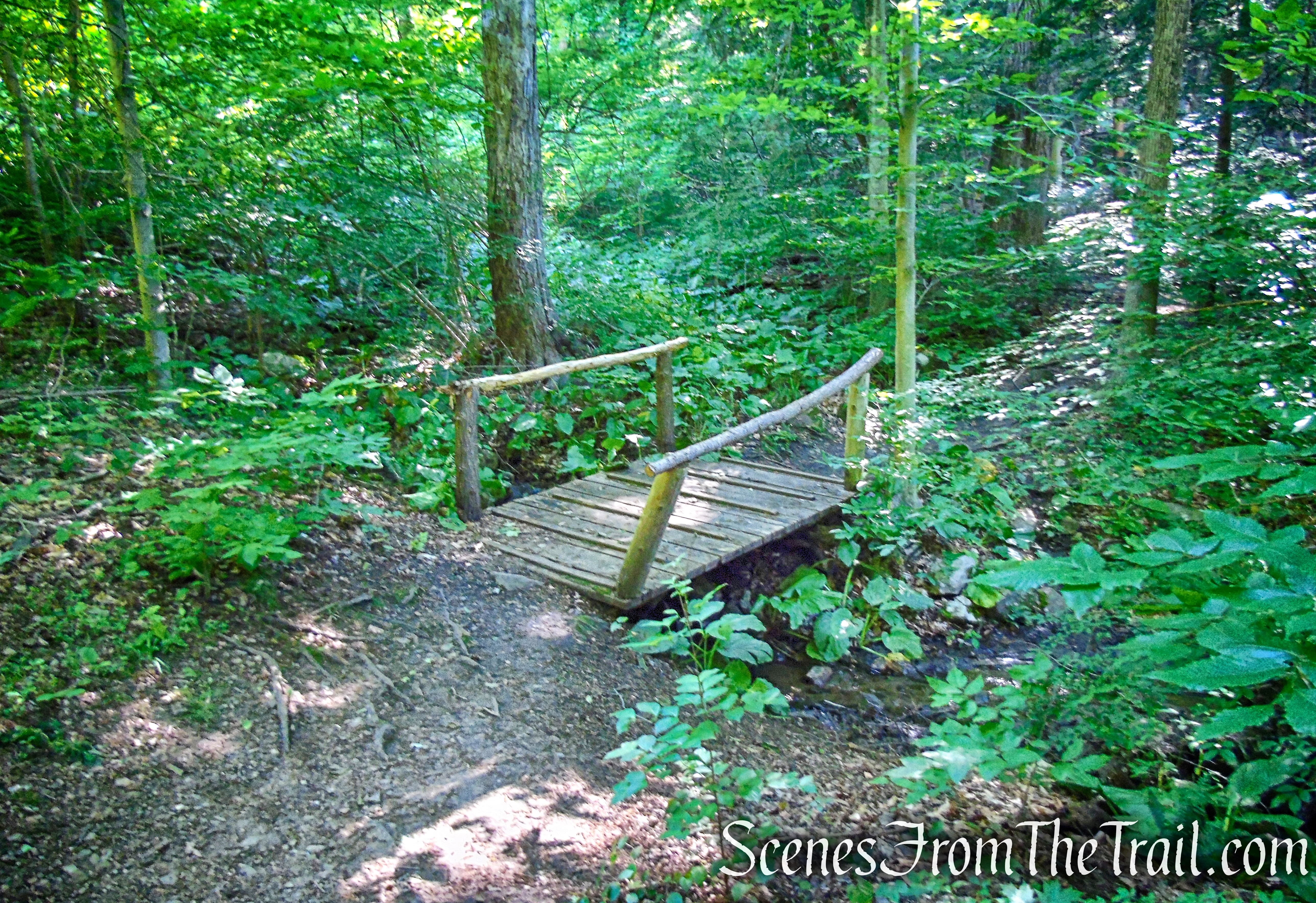
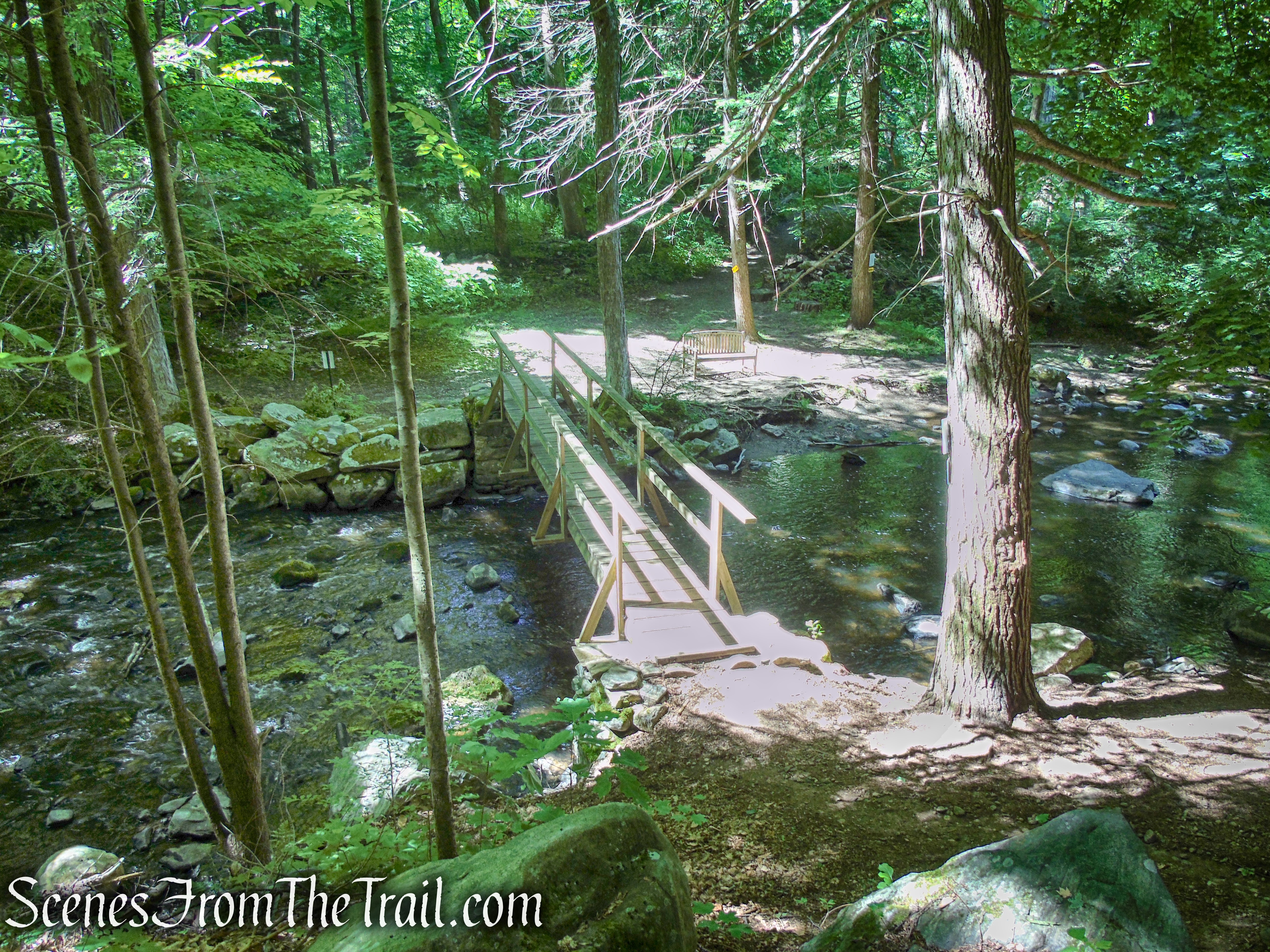
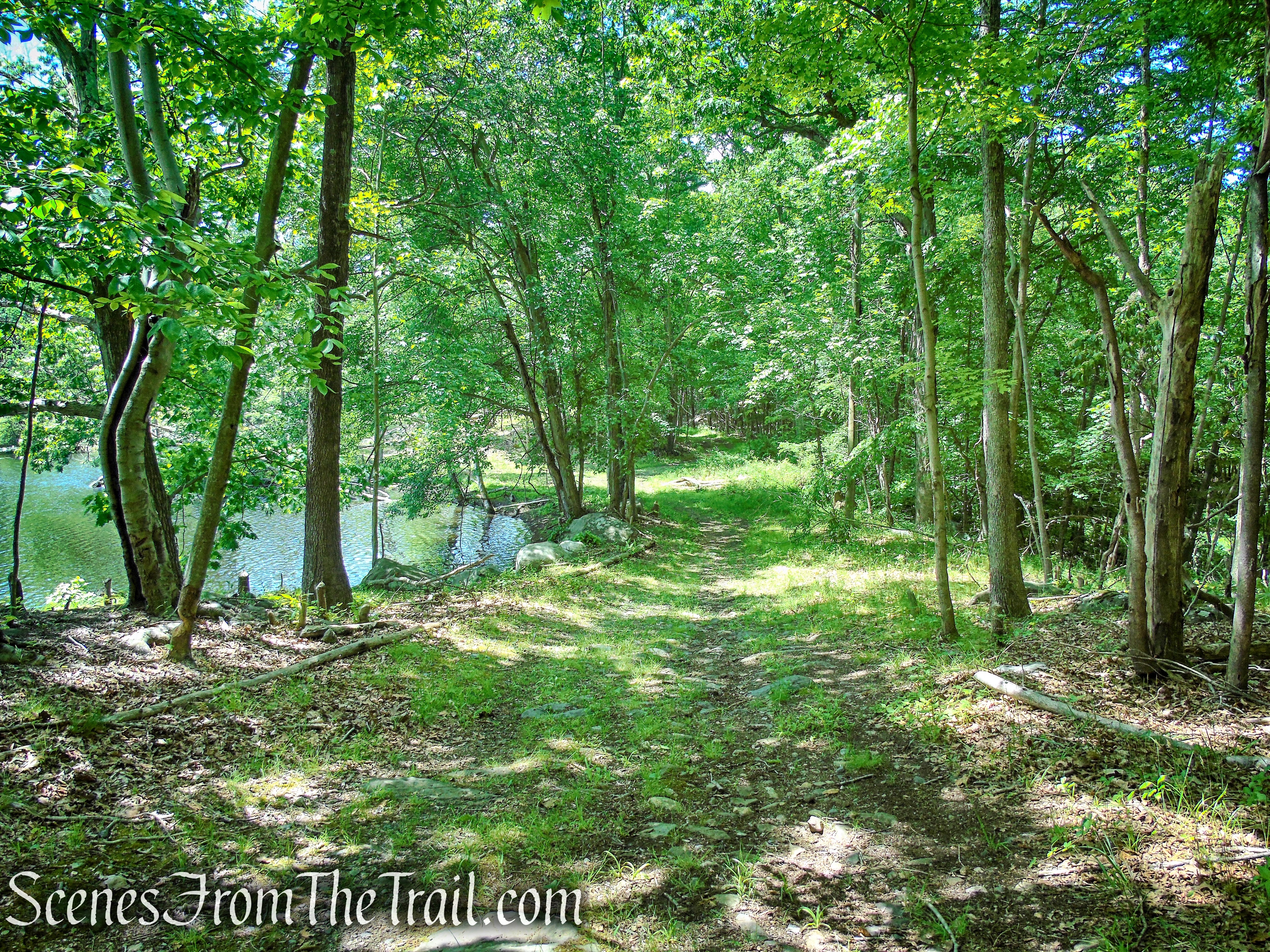
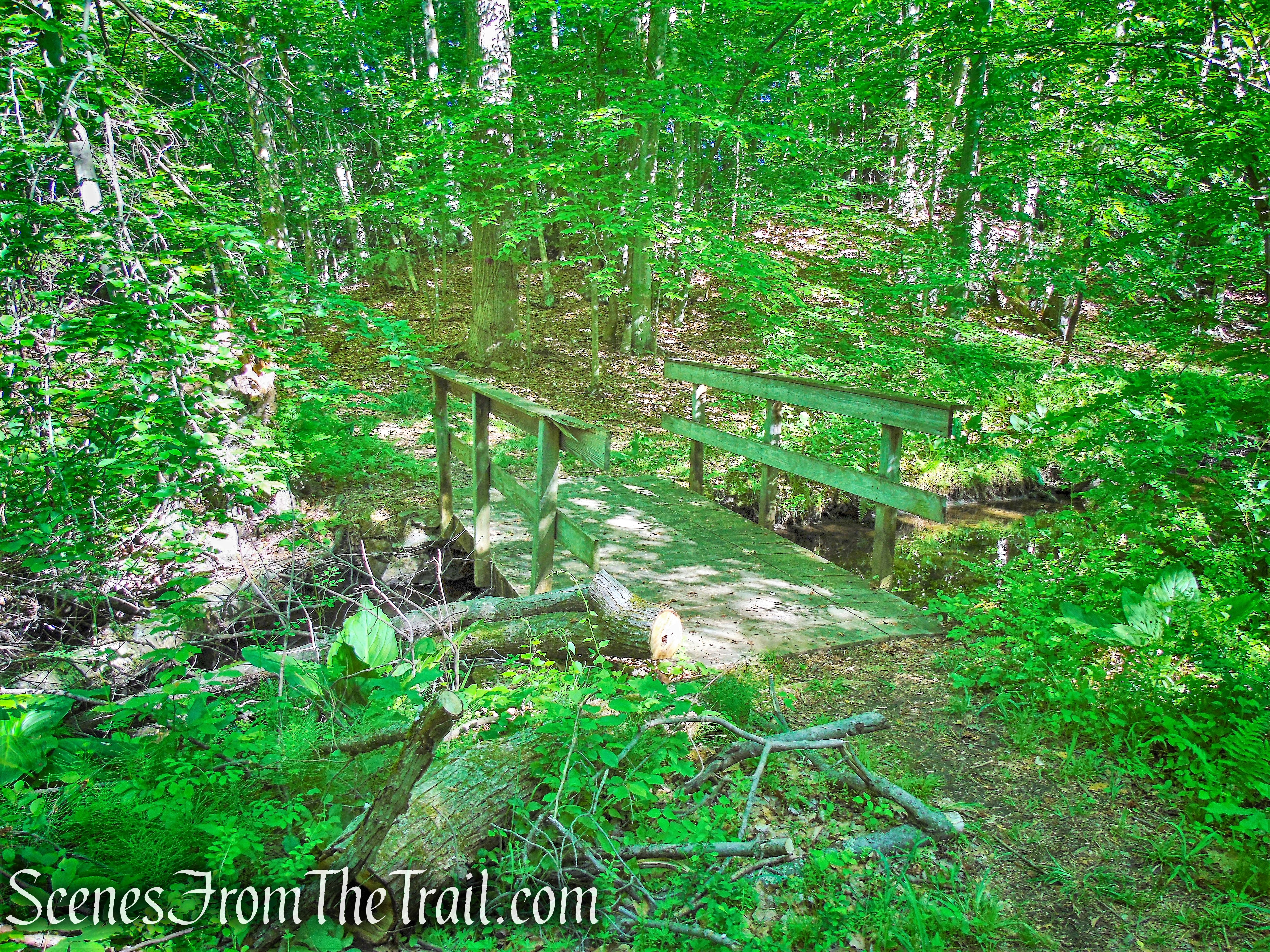
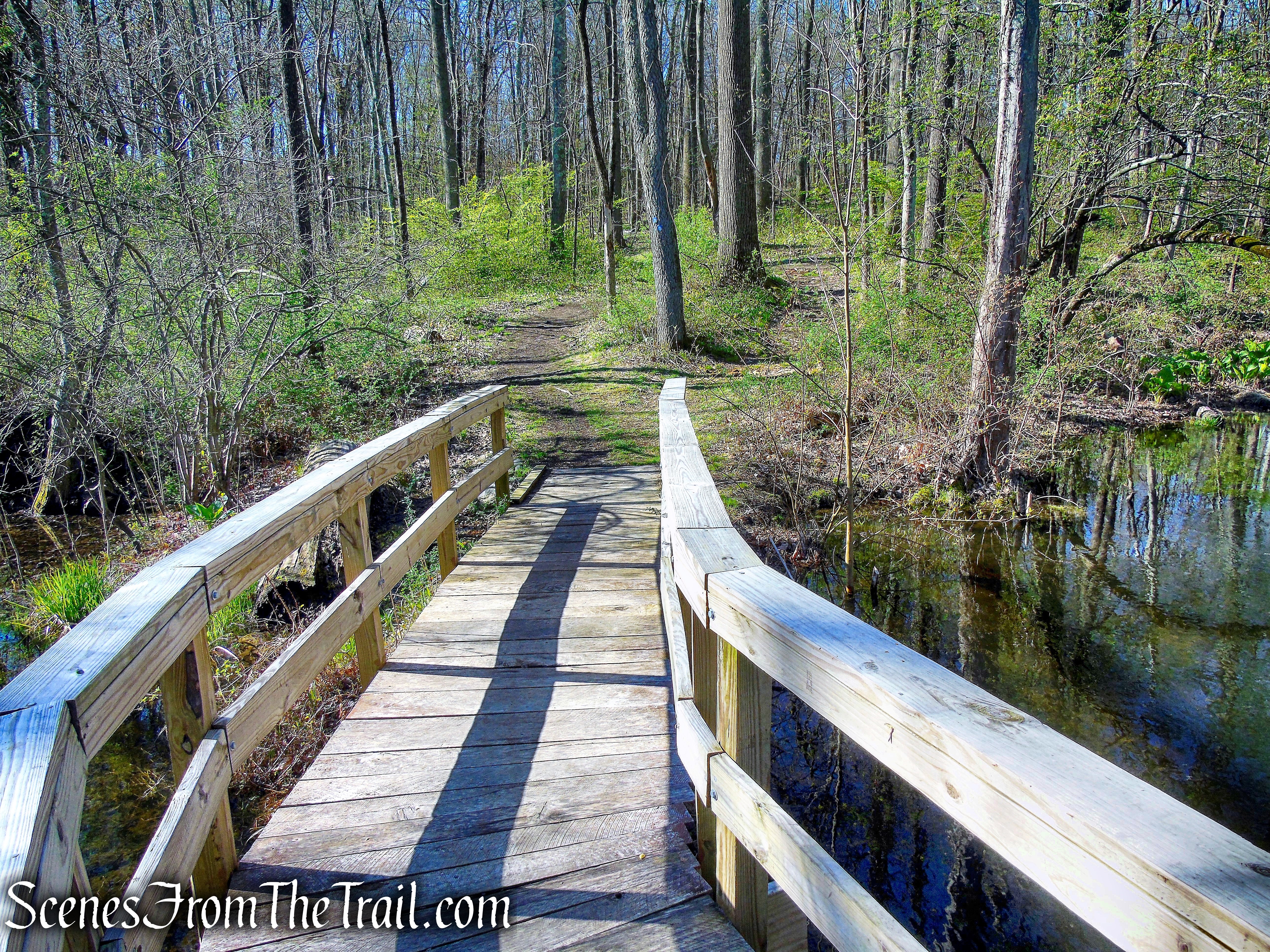
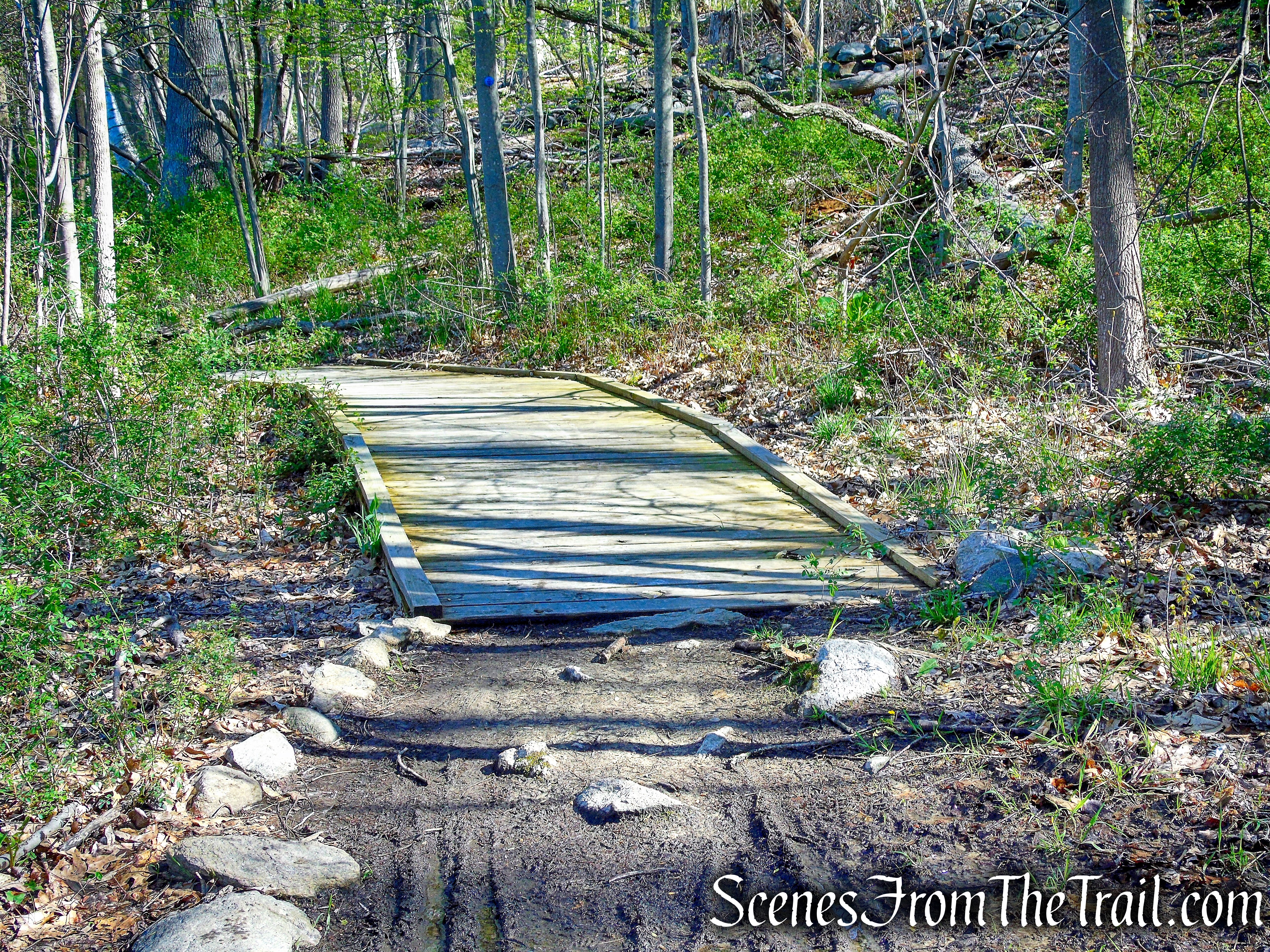
After lingering about, we made our way across the steel footbridge and turned left on a woods road, crossing a small wooden footbridge.

footbridge - Black Rock State Park

footbridge – Black Rock State Park

footbridge - Black Rock State Park

footbridge – Black Rock State Park

woods road - Black Rock State Park

woods road – Black Rock State Park

woods road - Black Rock State Park

woods road – Black Rock State Park

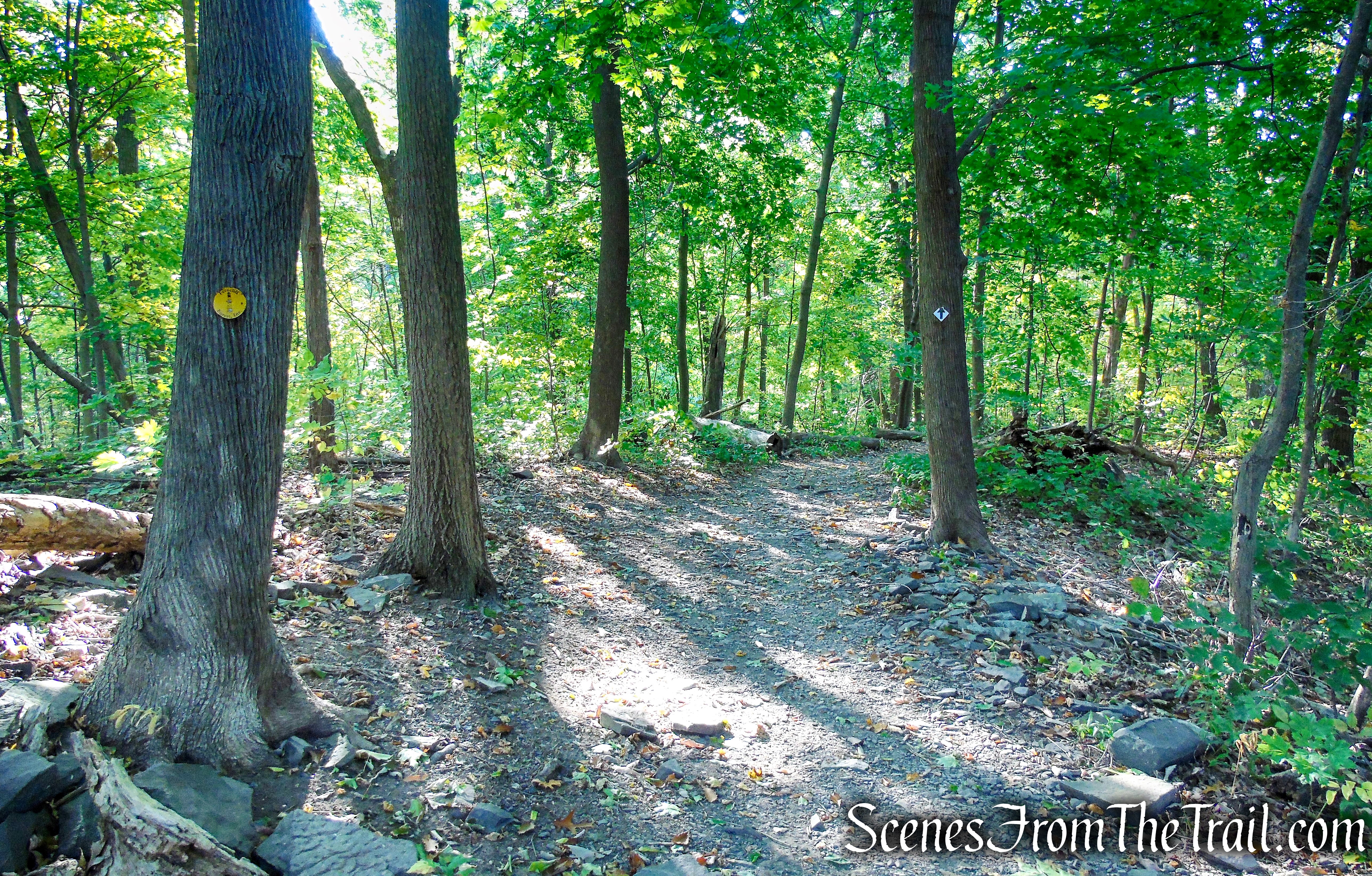
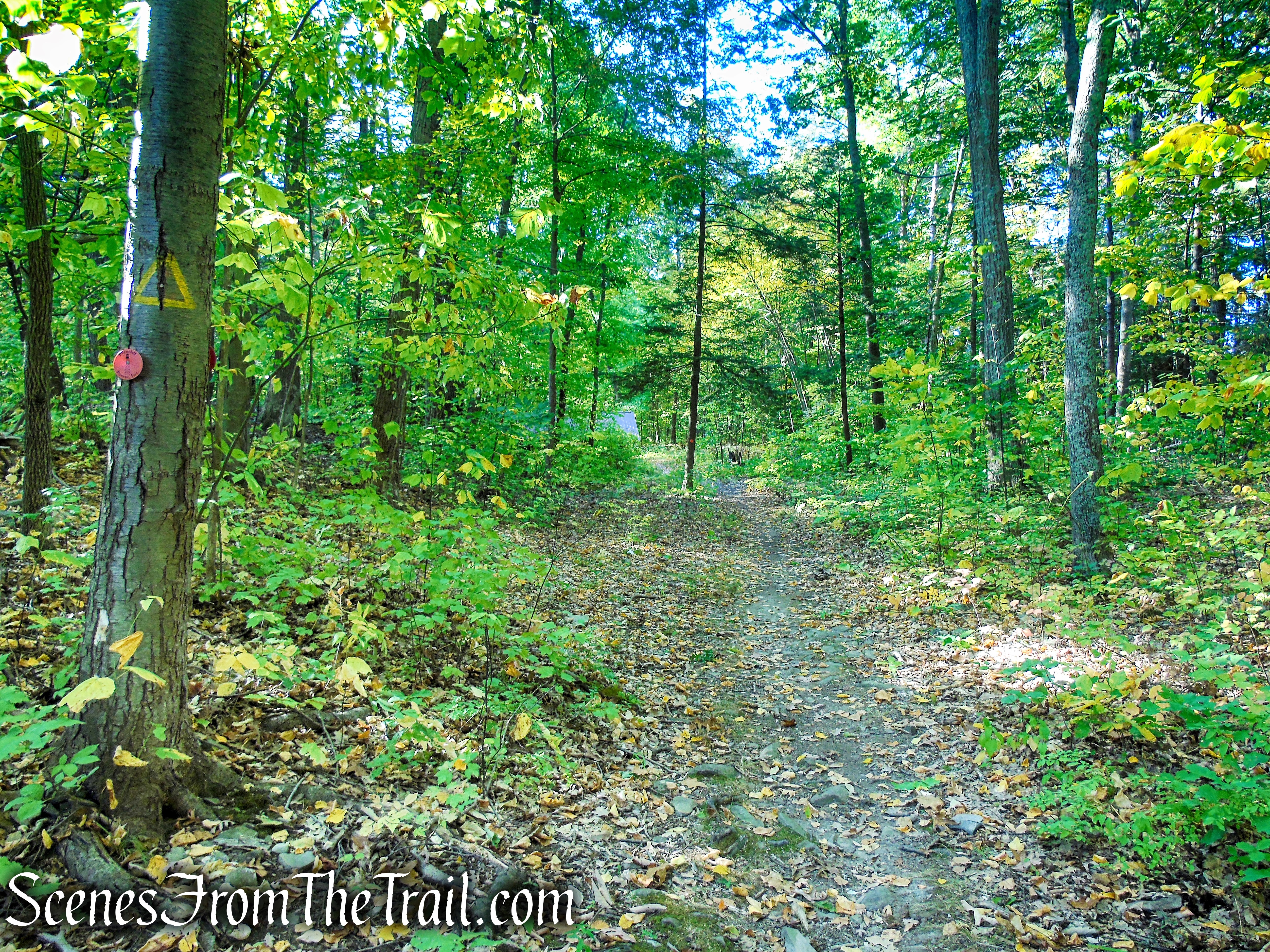
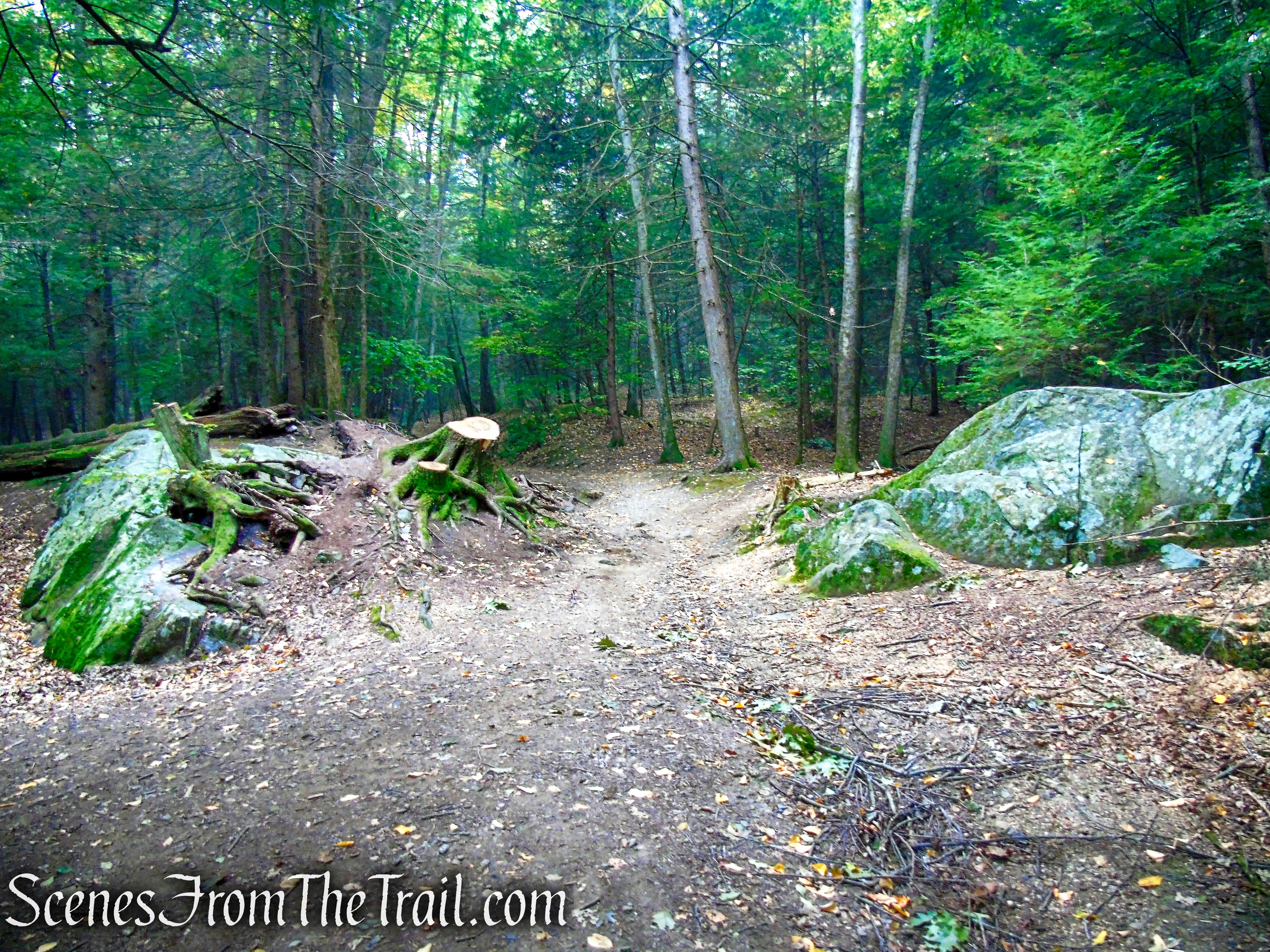
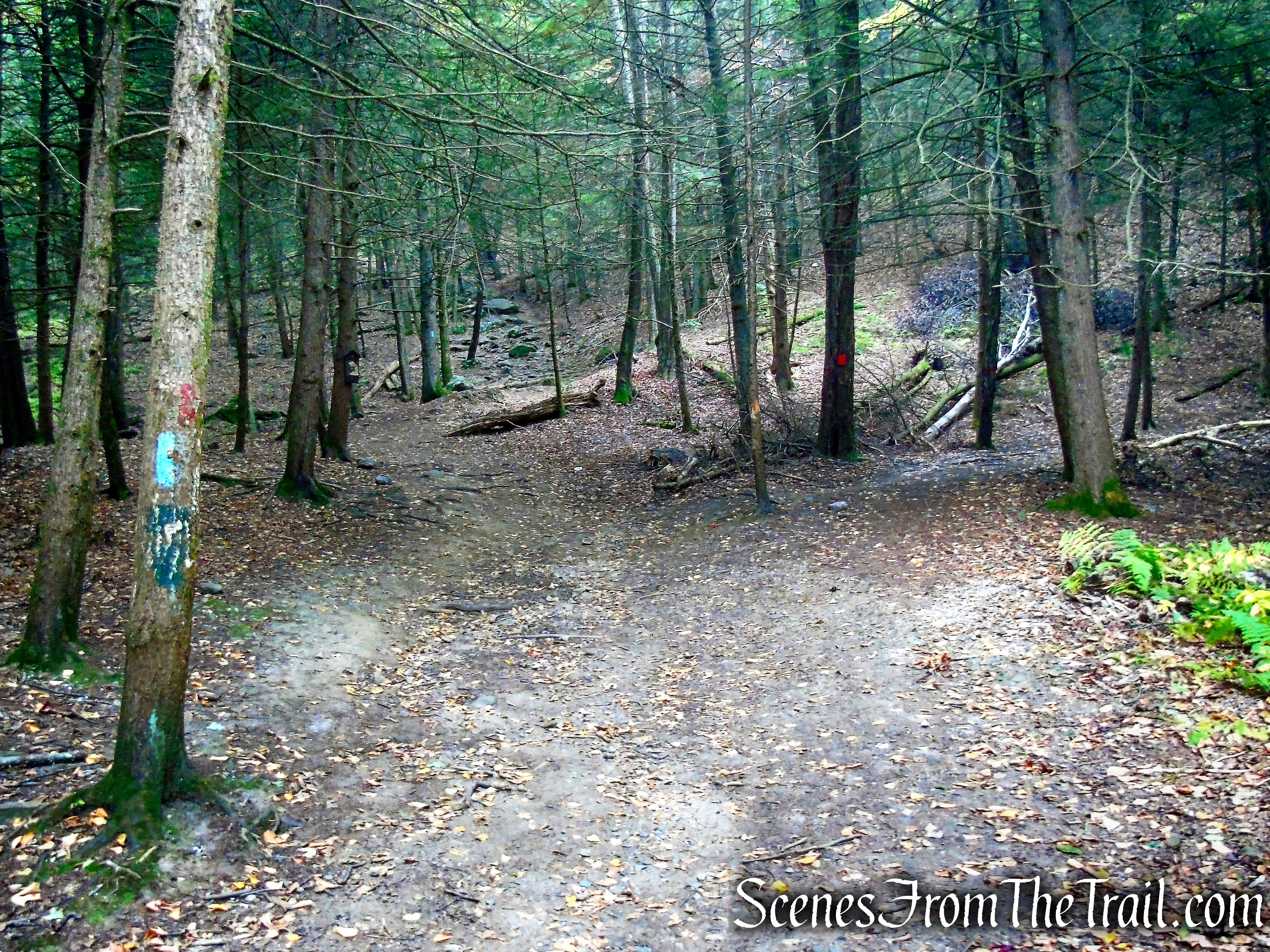
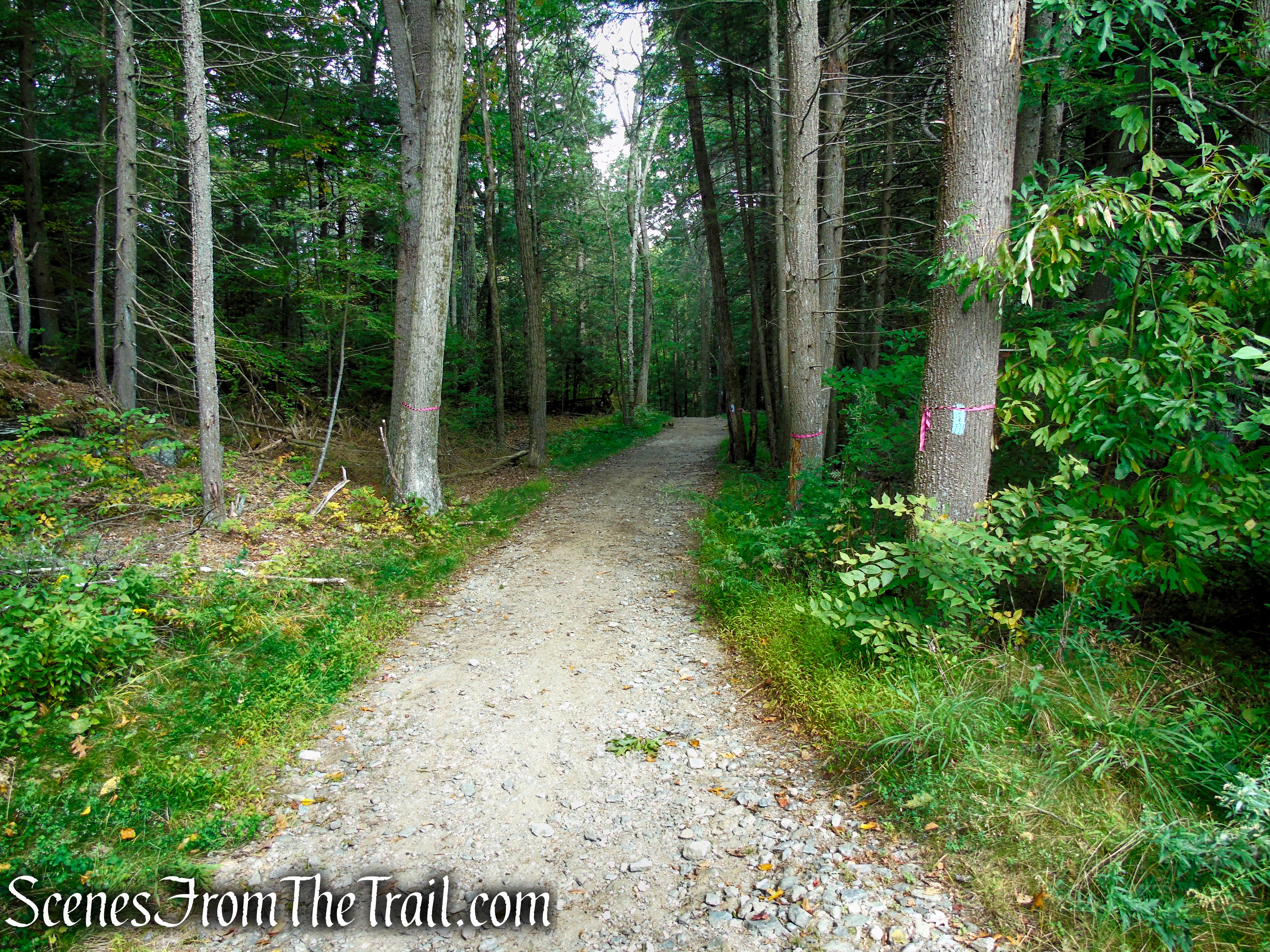
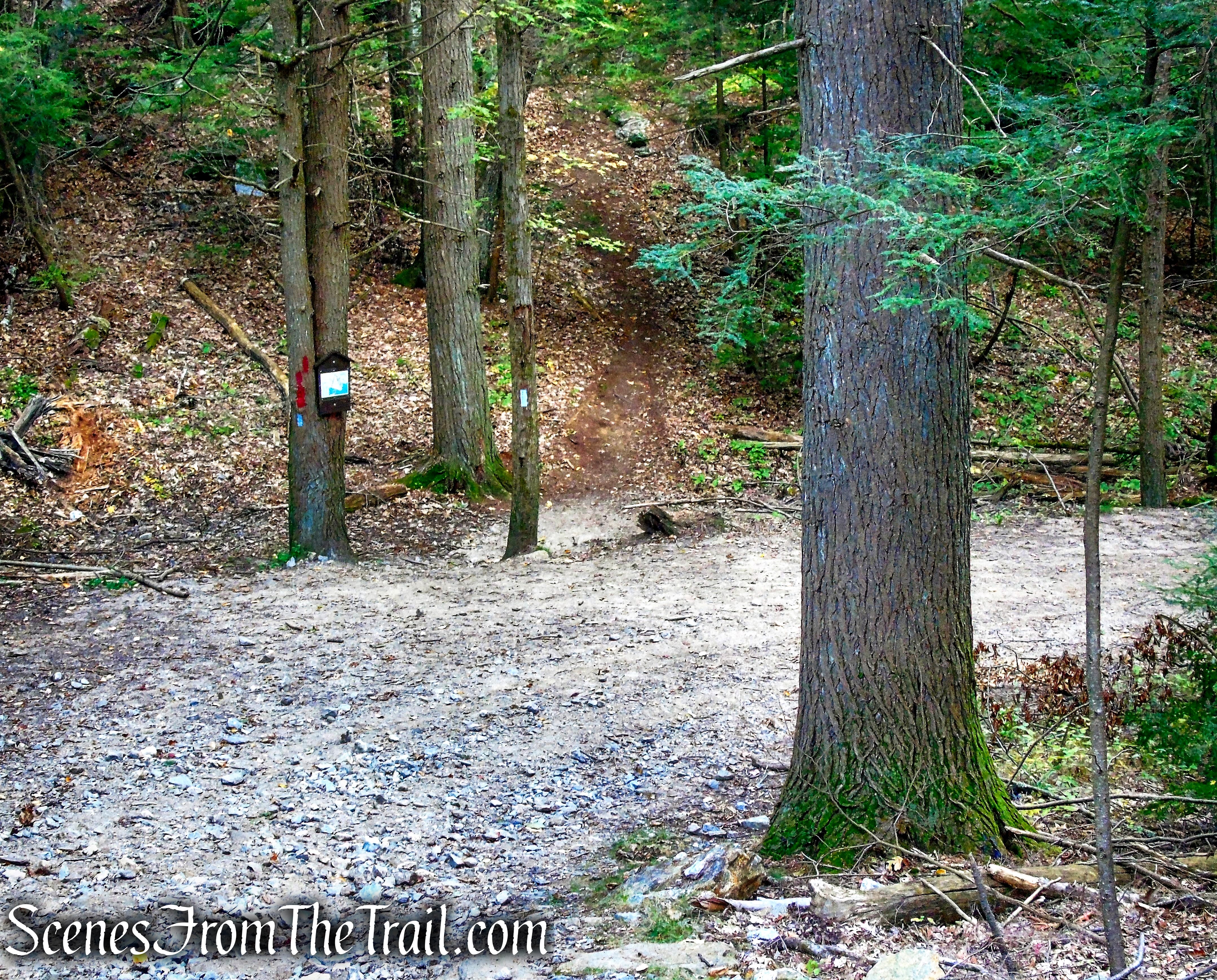
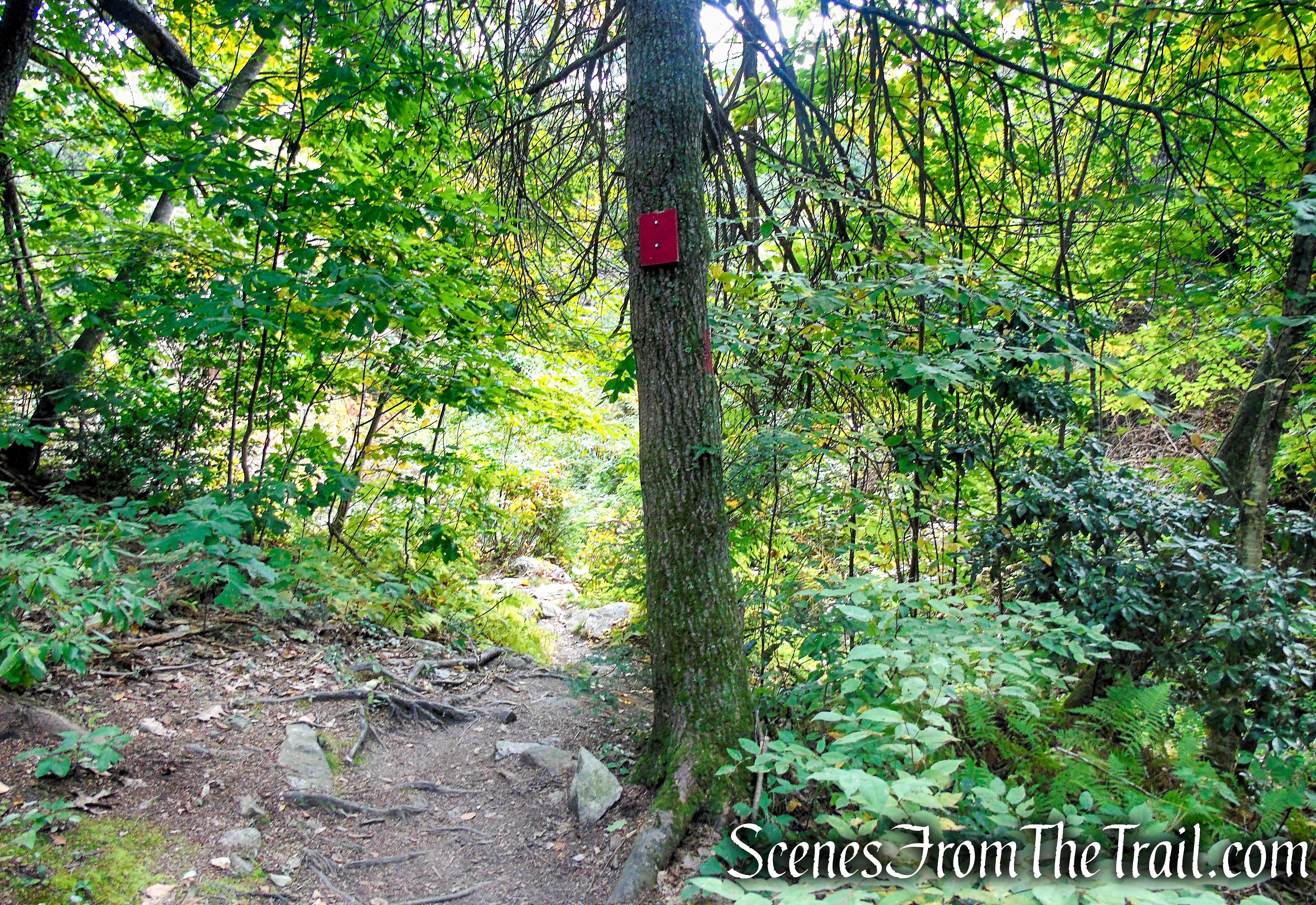
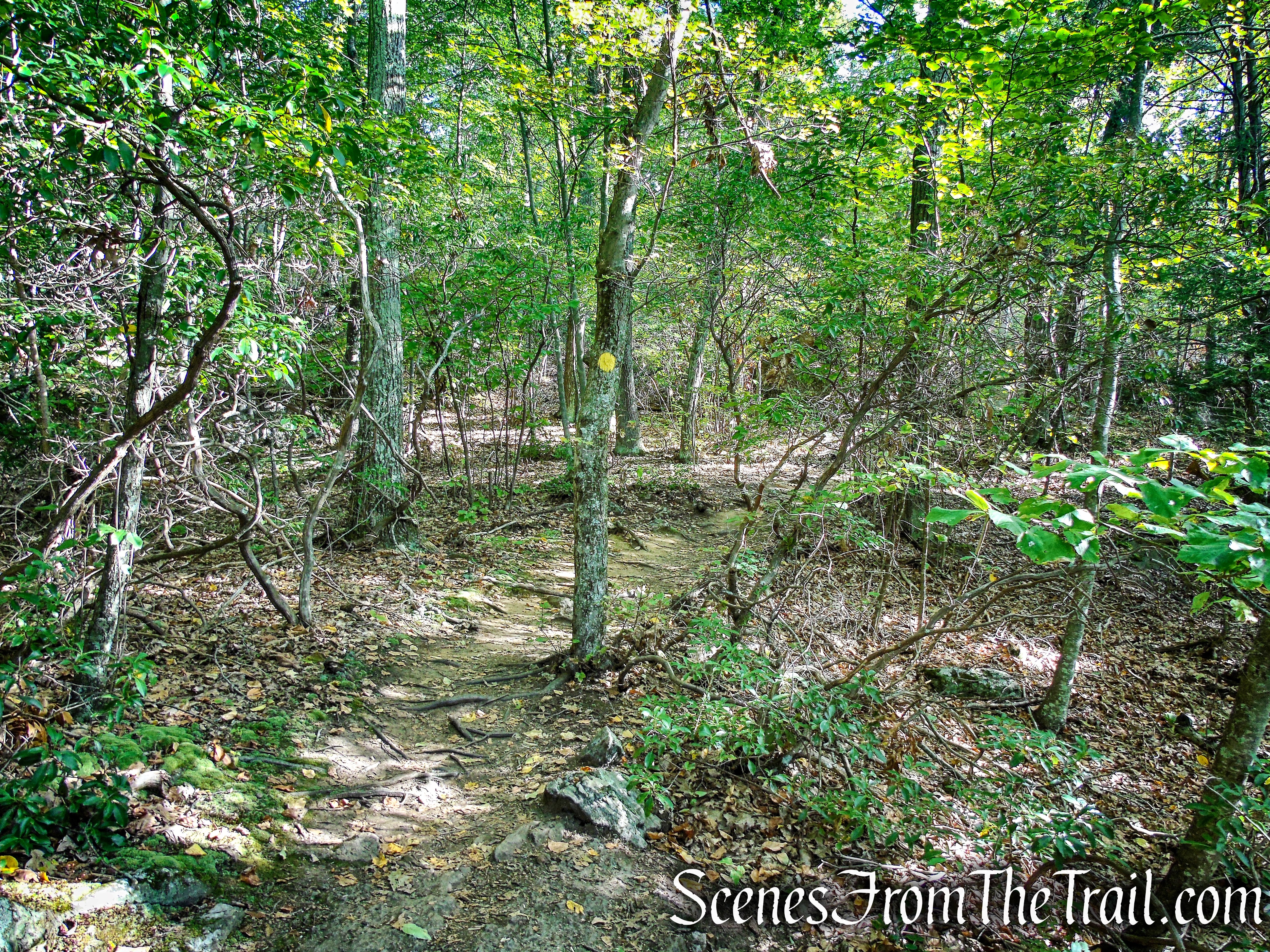
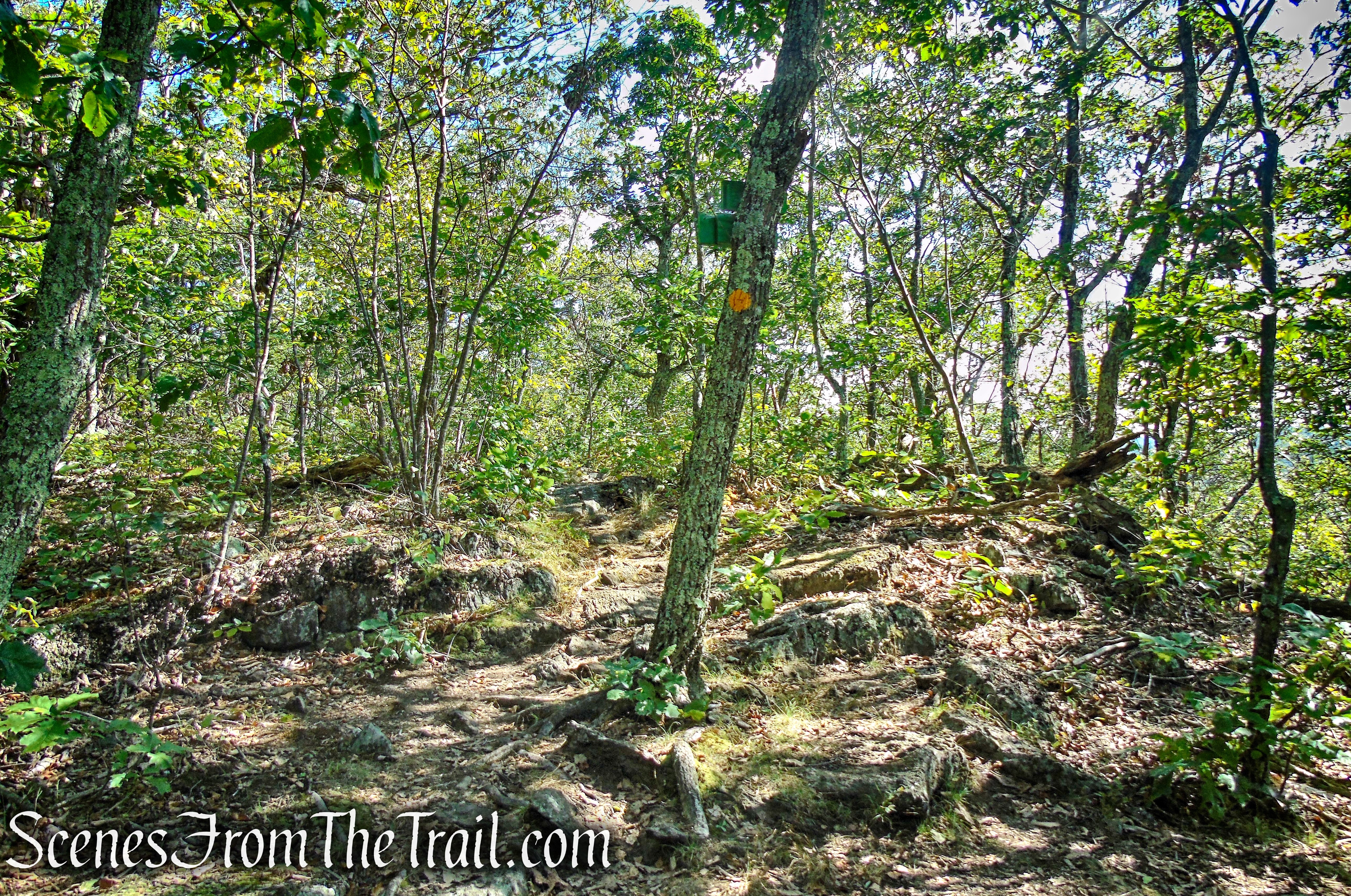
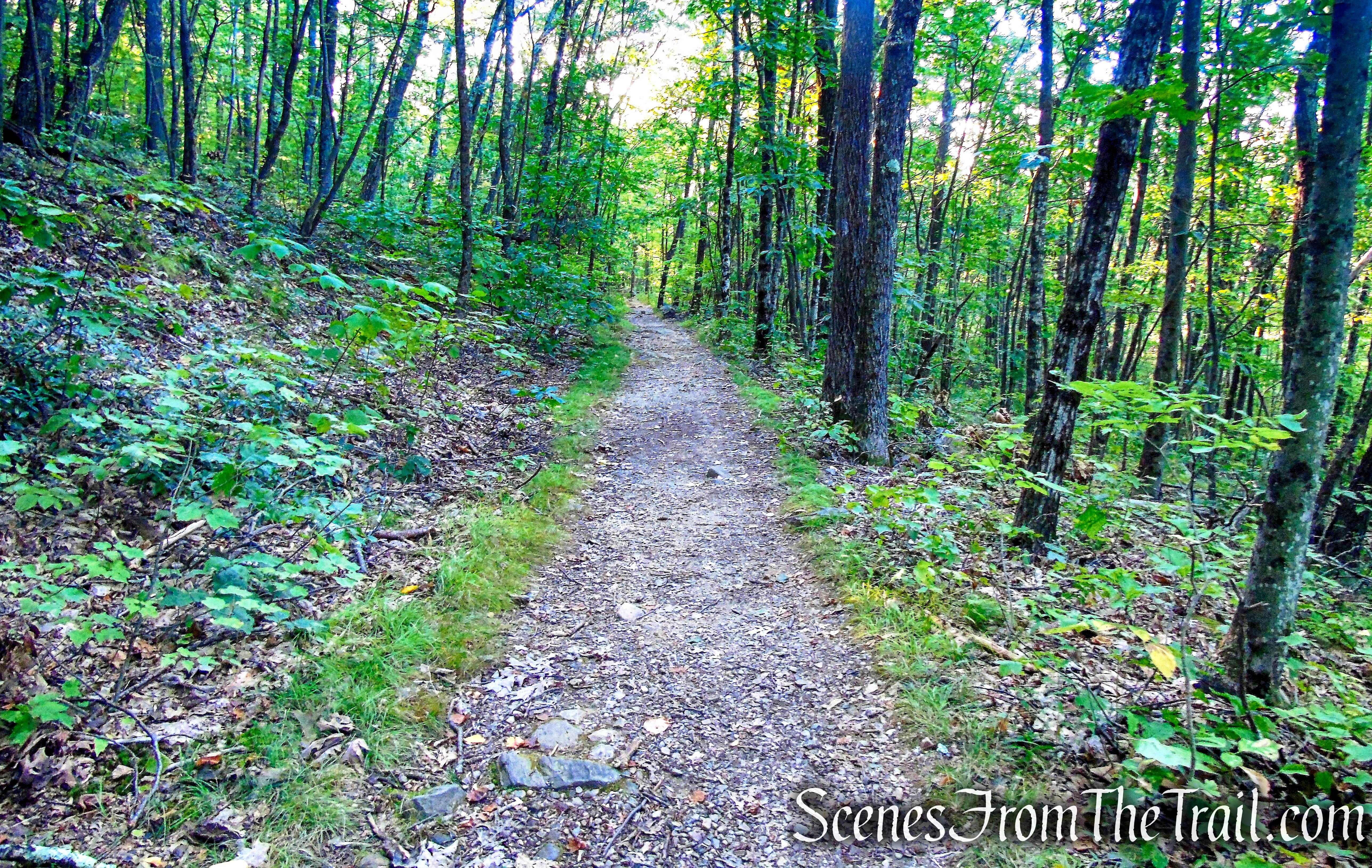
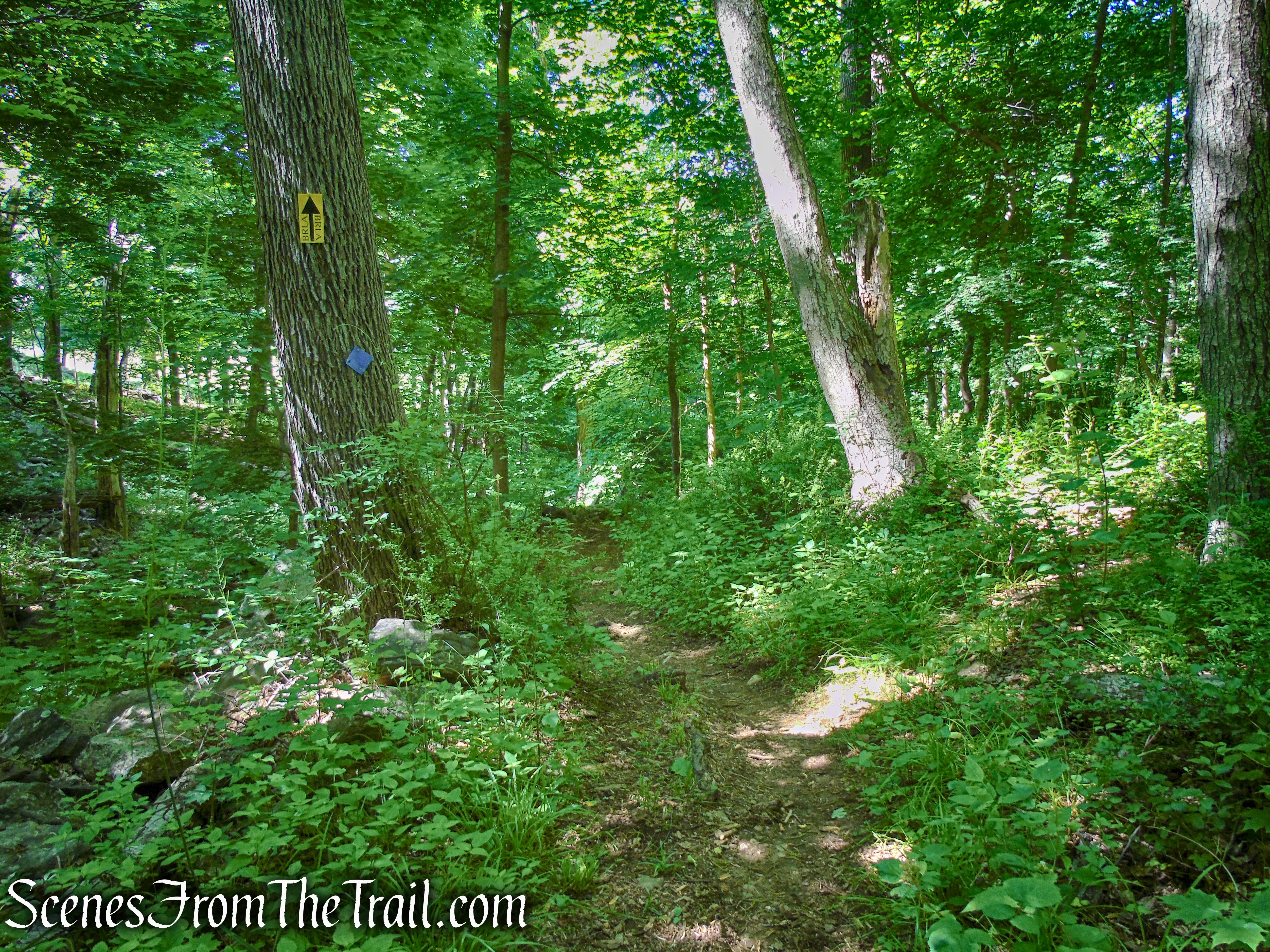
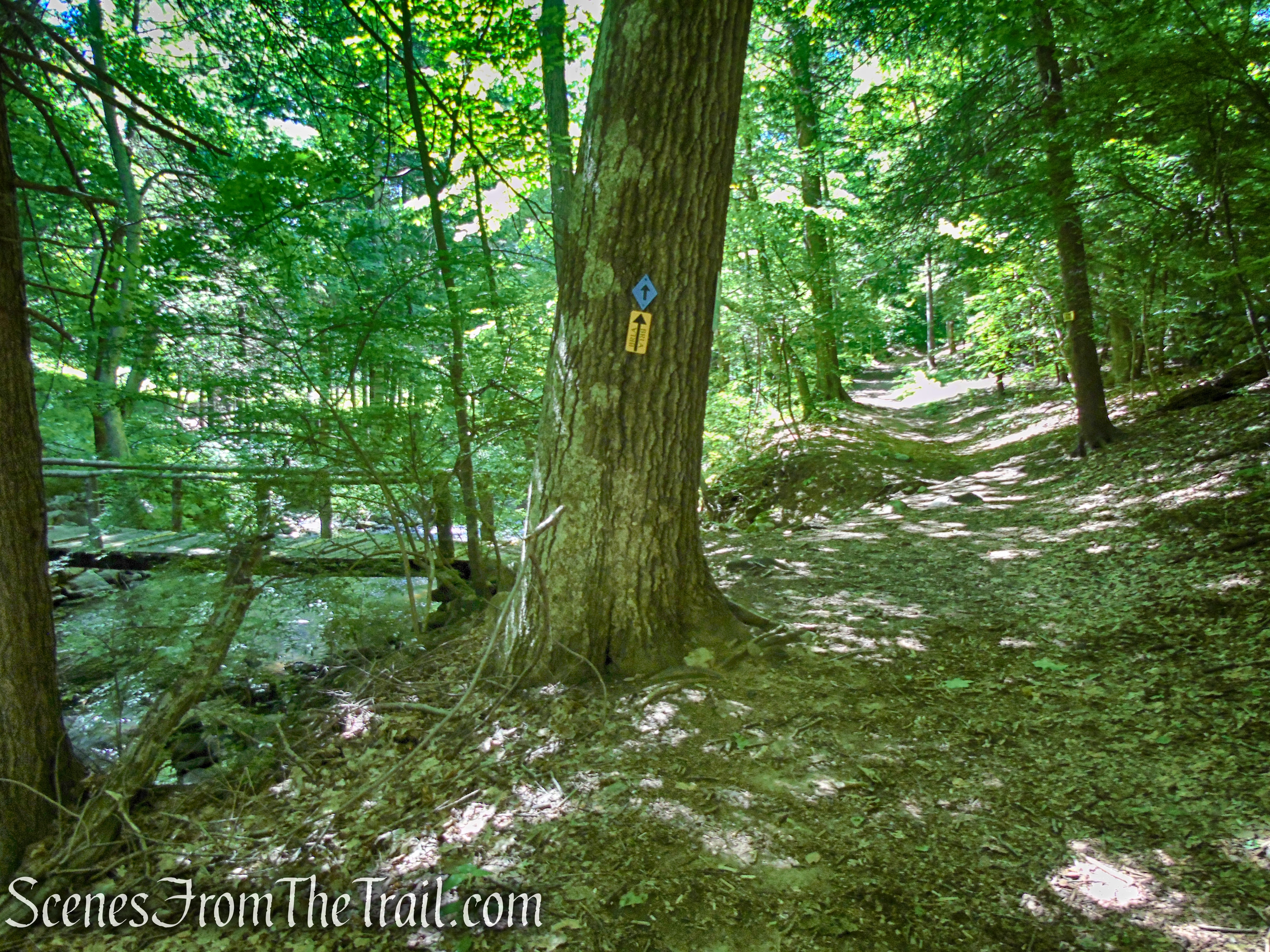
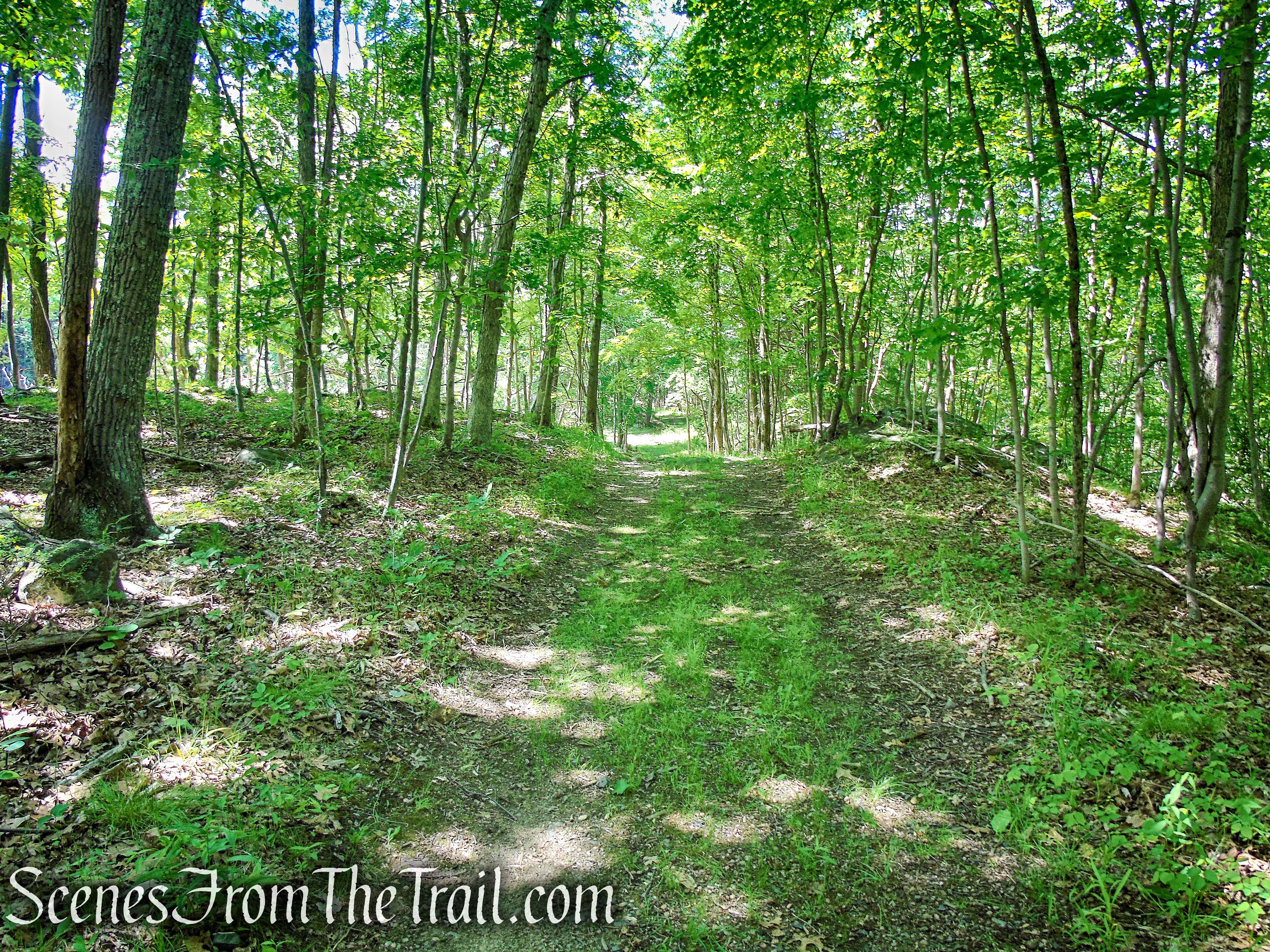
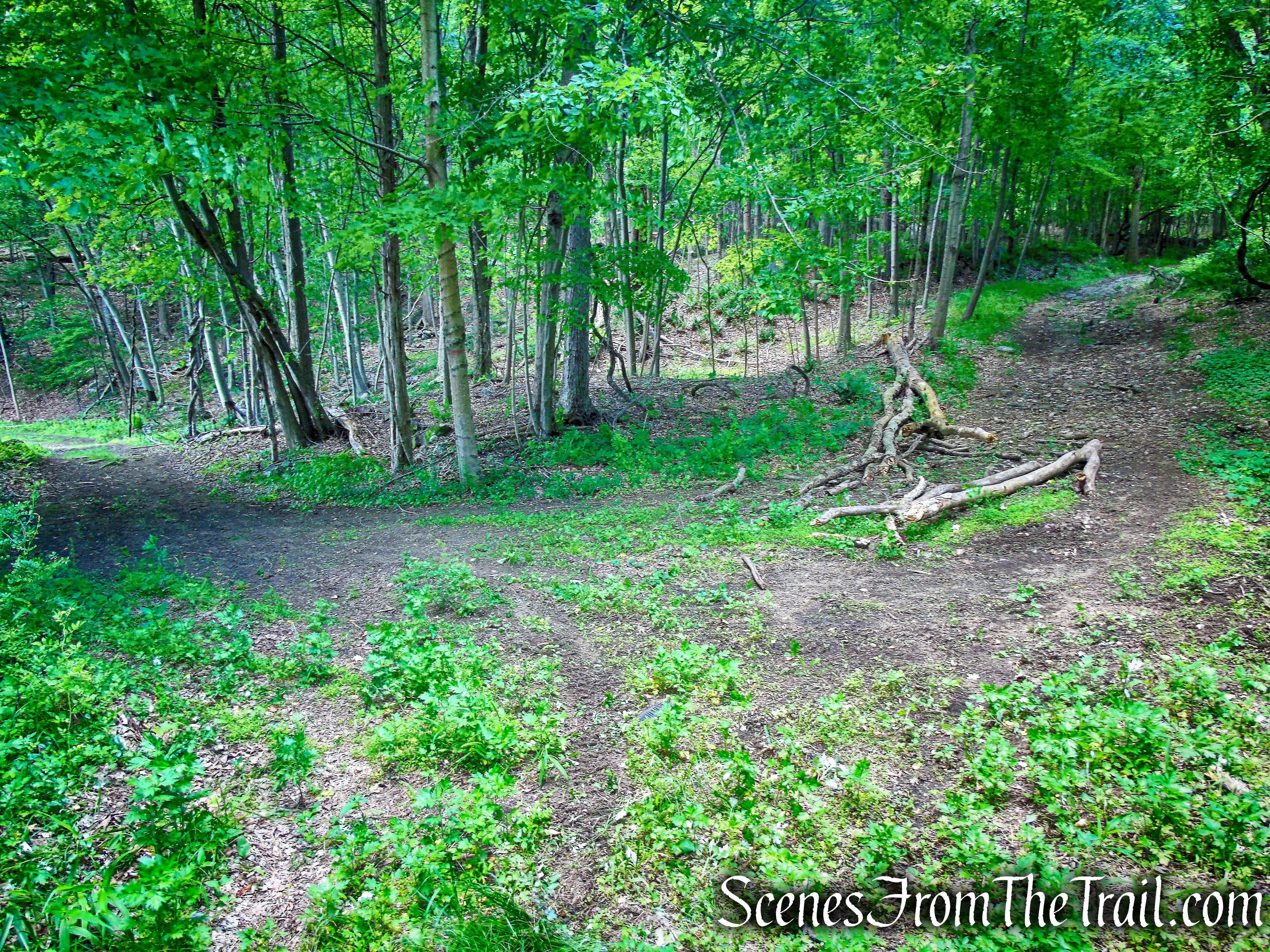
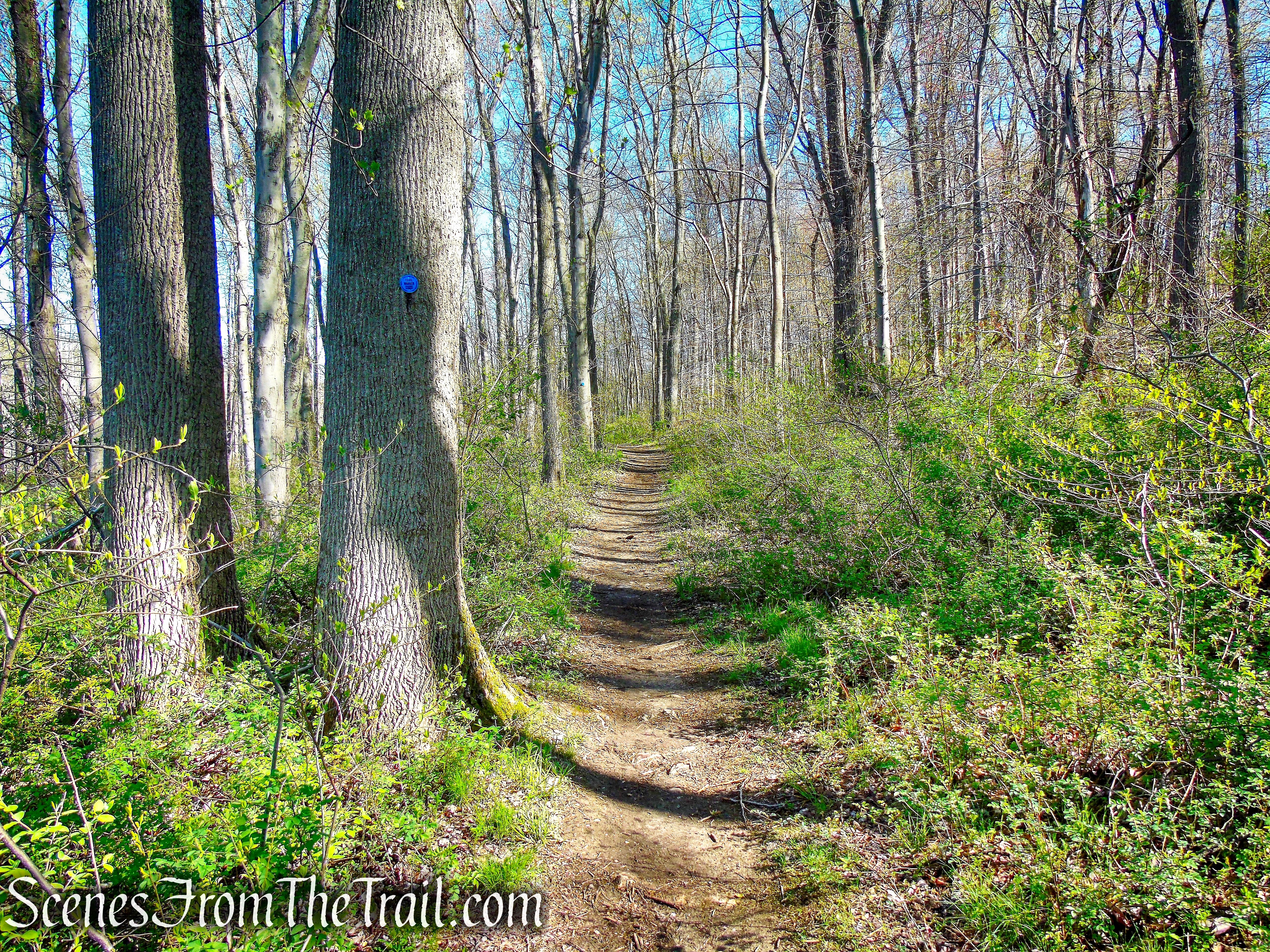
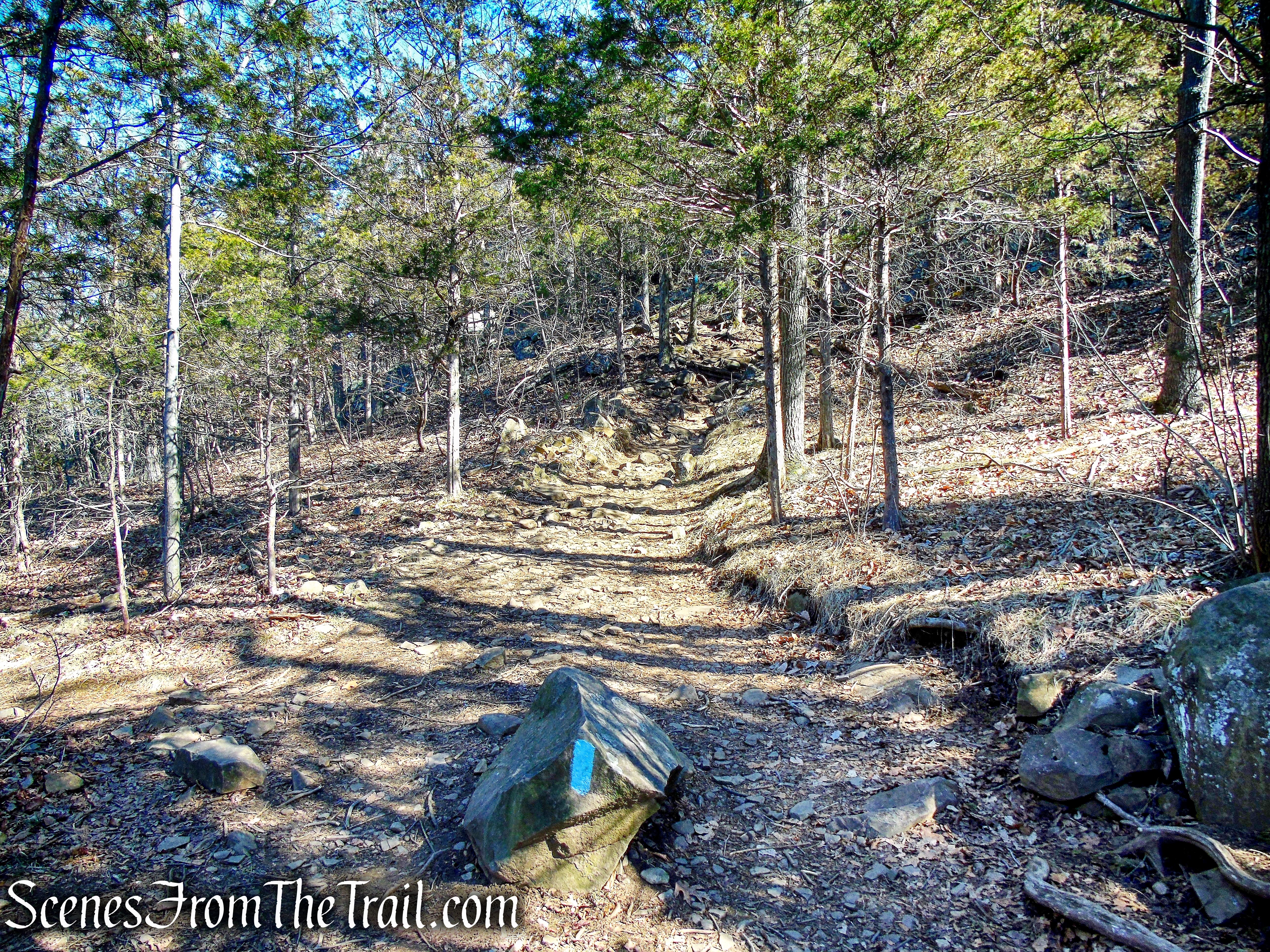
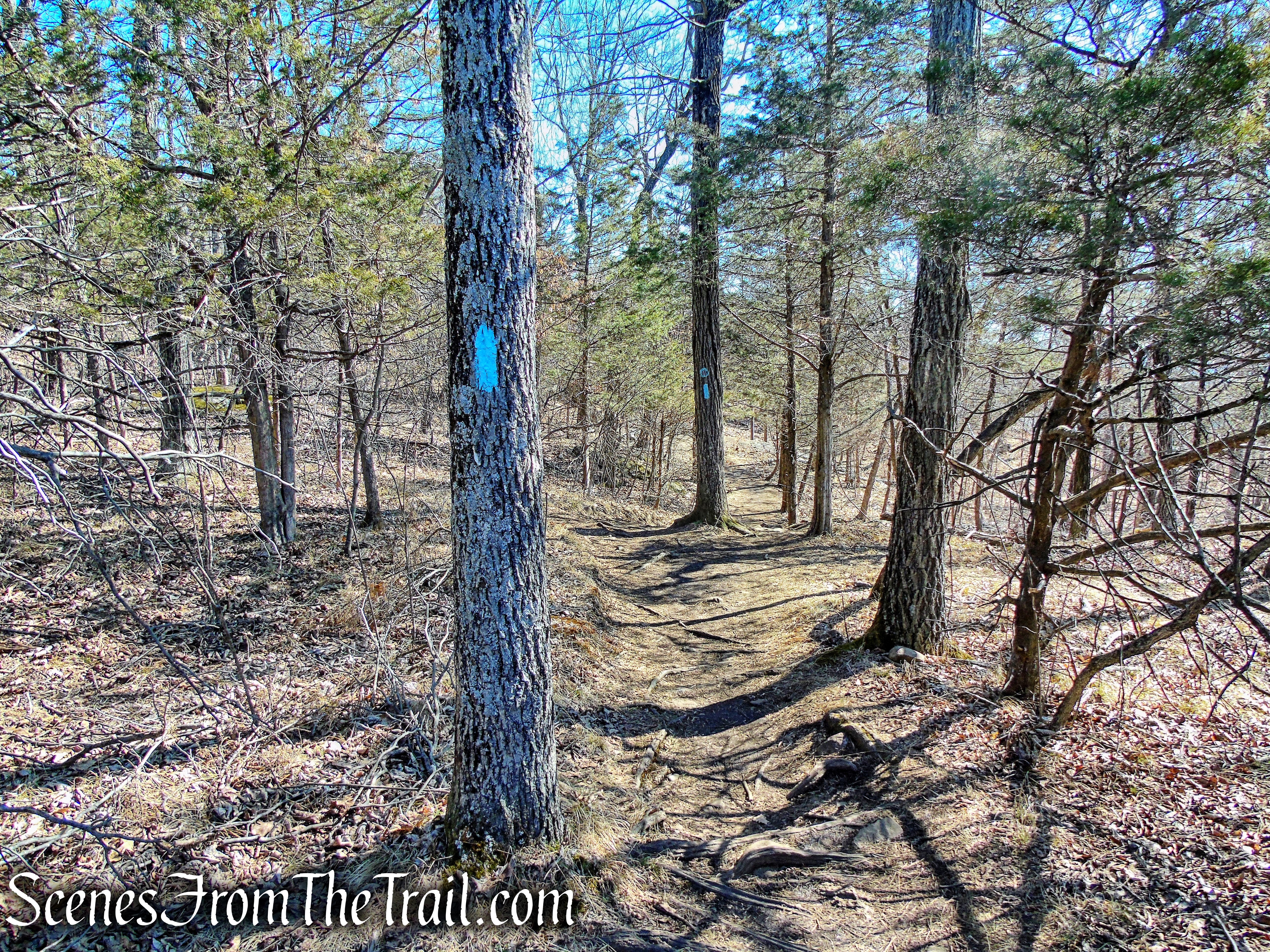
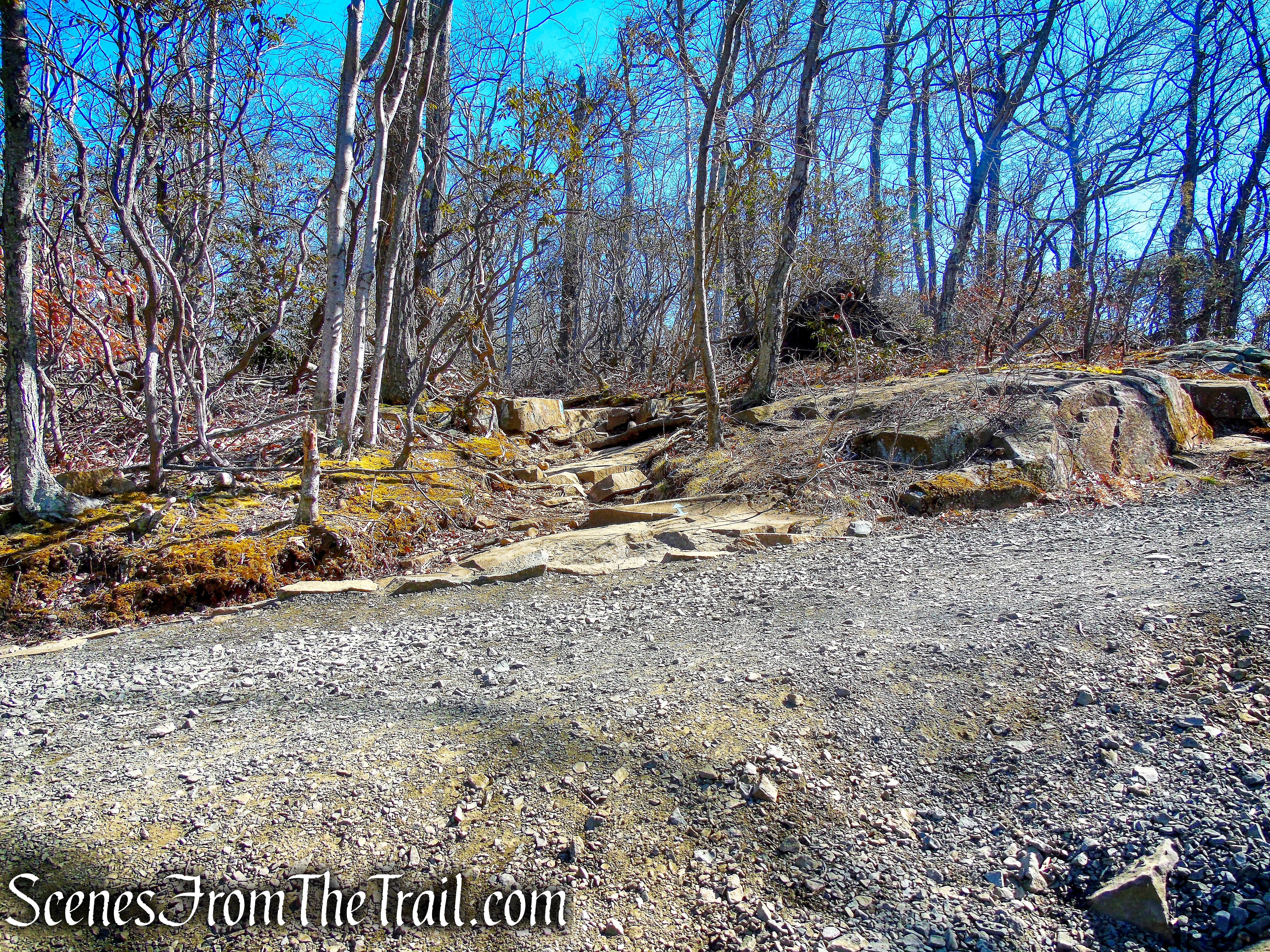
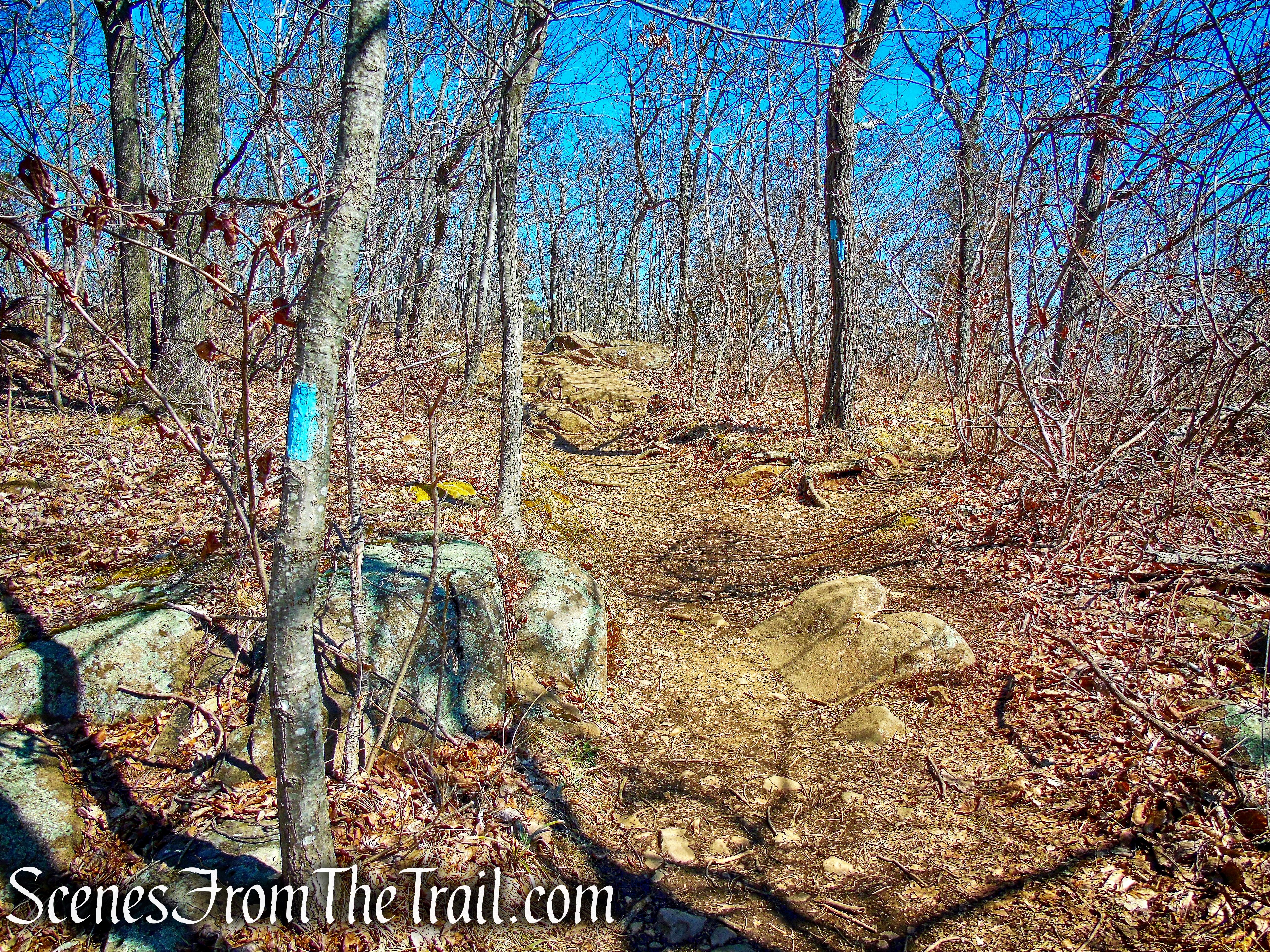
In about 280 feet (from the steel bridge), the blue-blazed Mattatuck Trail crosses the woods road. We turned right and began following the blue blazes, which run along another woods road. In a short distance, The Red Trail begins on the right. That would be our return route, for now, we followed the blue blazes all the way to Black Rock.

Mattatuck Trail - Black Rock State Park

Mattatuck Trail – Black Rock State Park

Mattatuck Trail - Black Rock State Park

Mattatuck Trail – Black Rock State Park

Mattatuck Trail - Black Rock State Park

Mattatuck Trail – Black Rock State Park

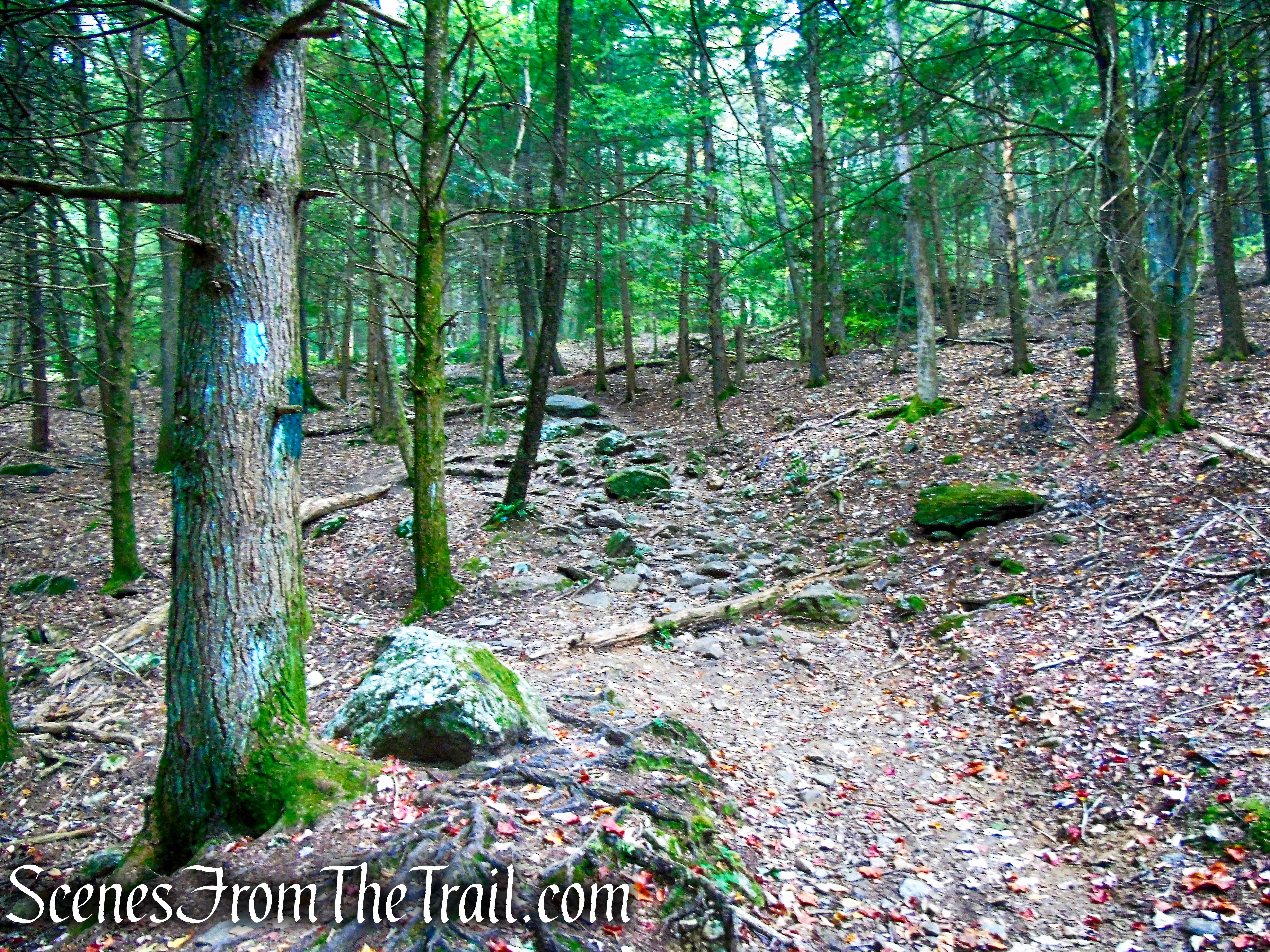
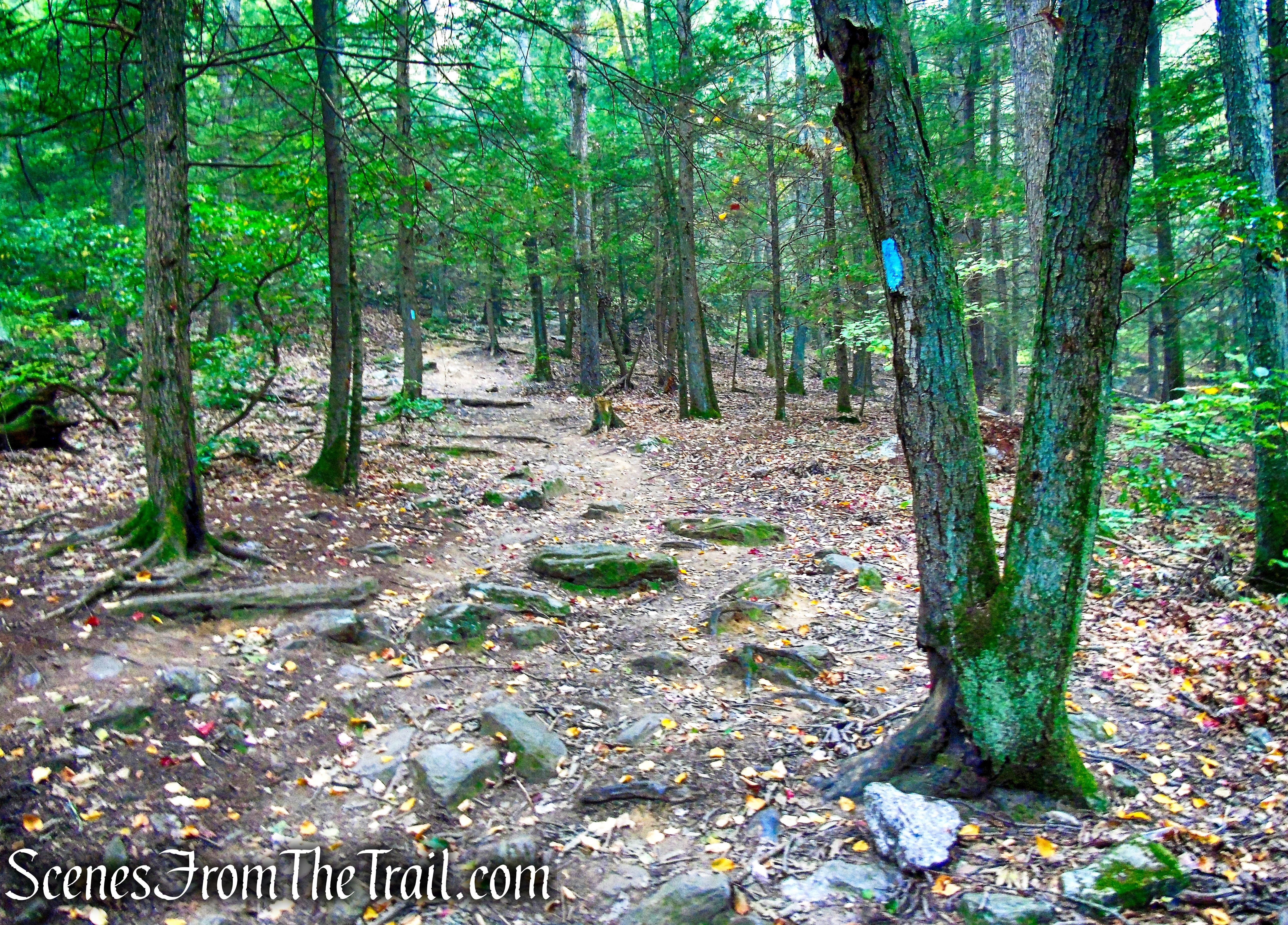
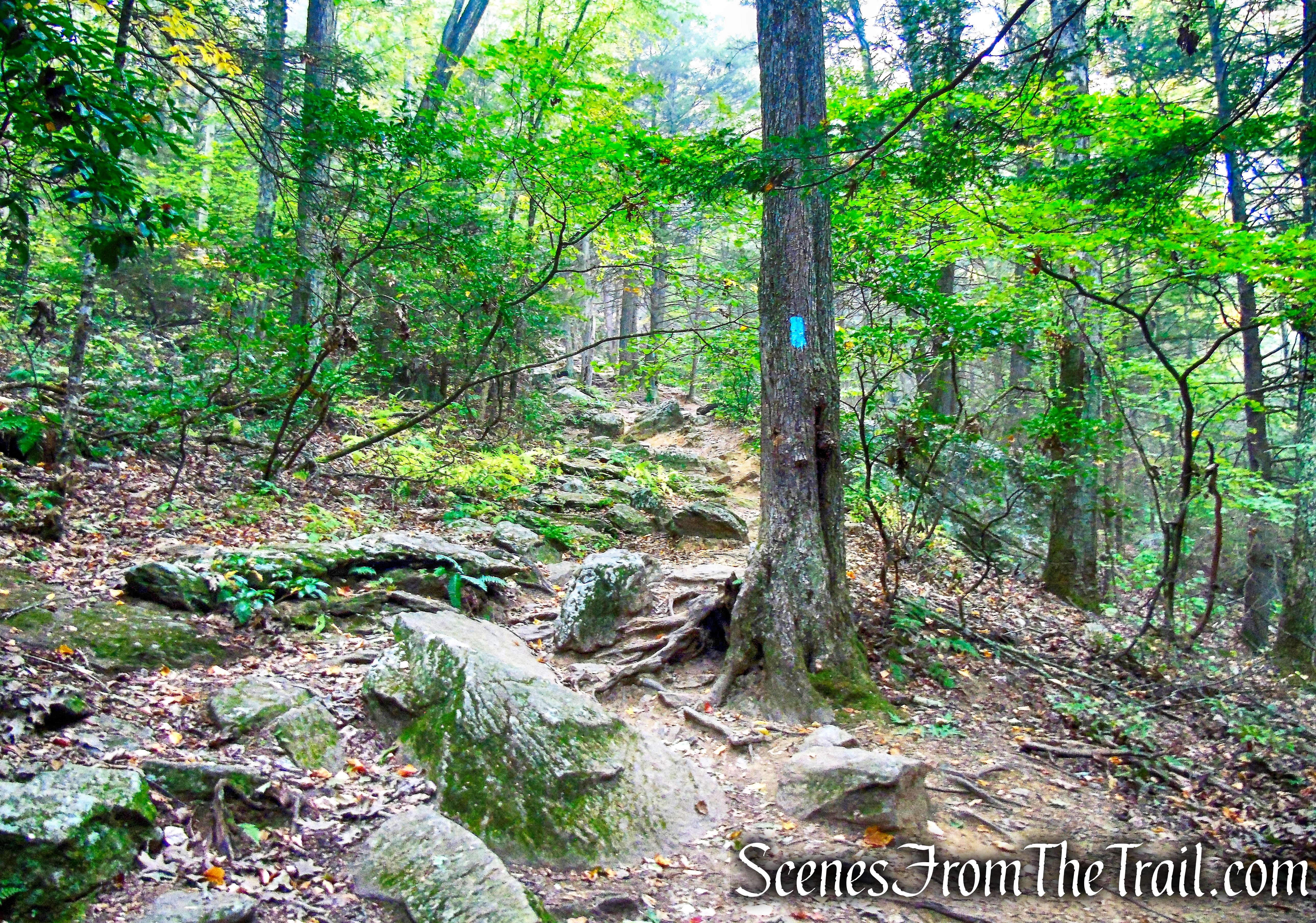
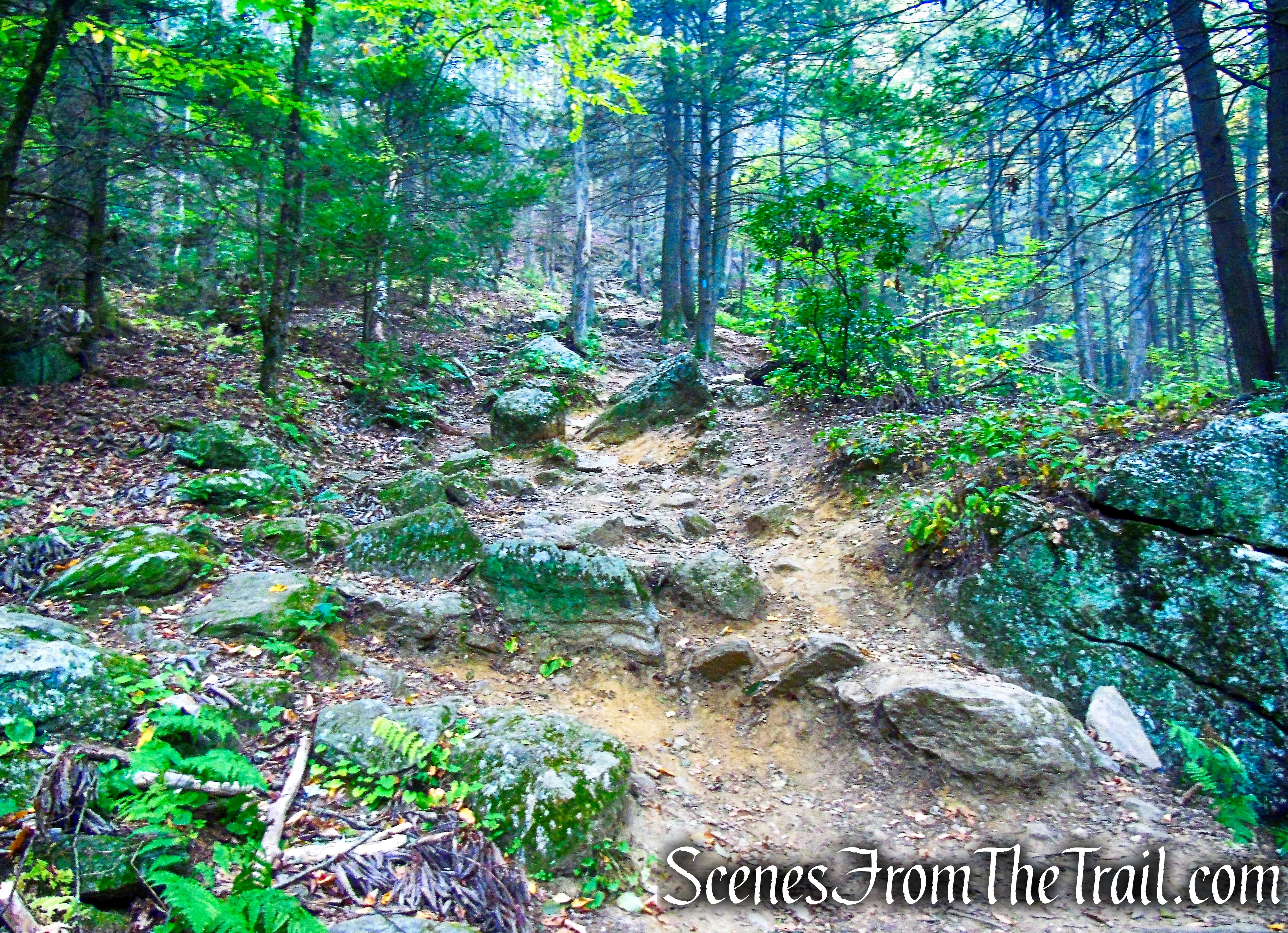
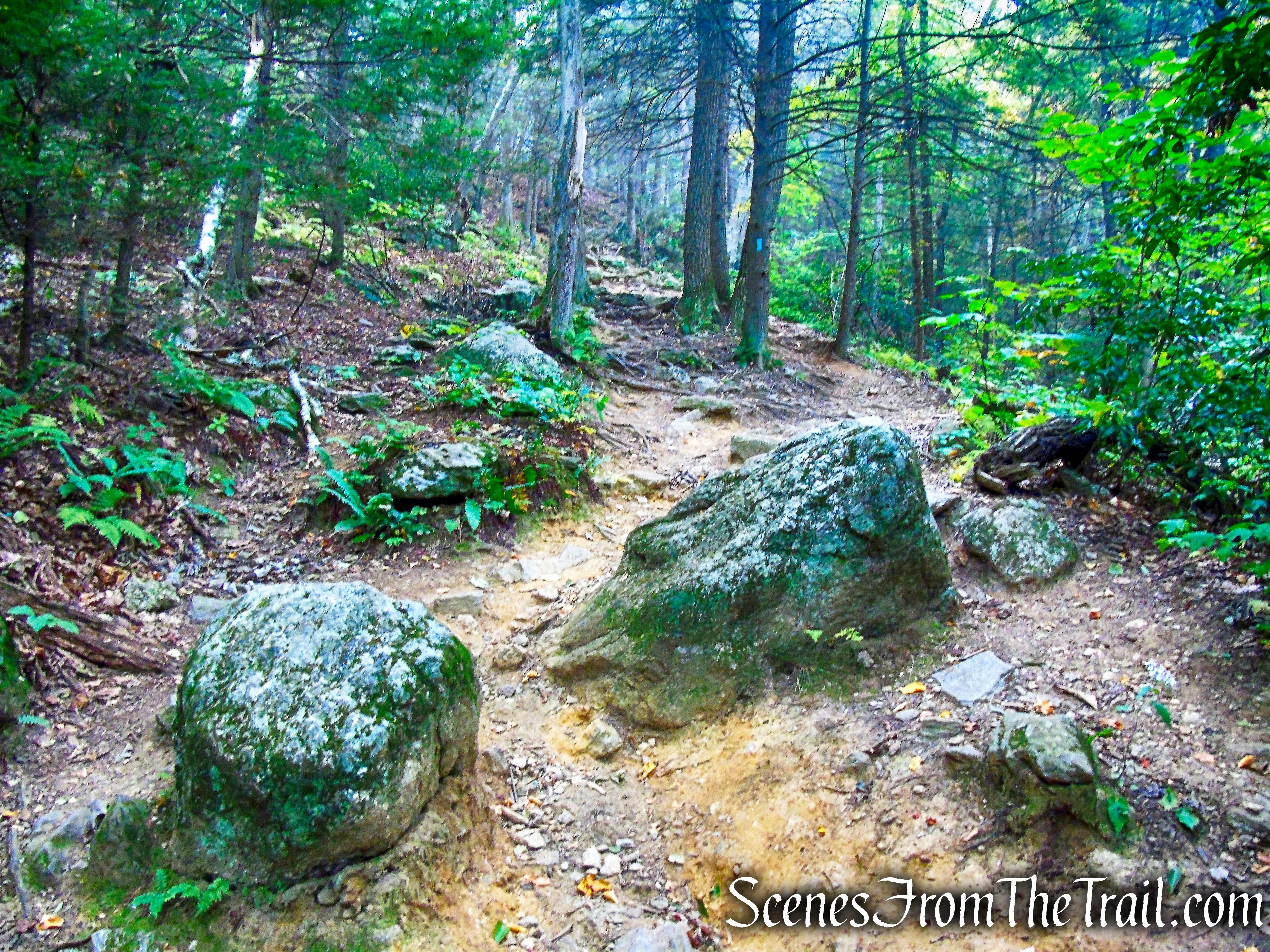
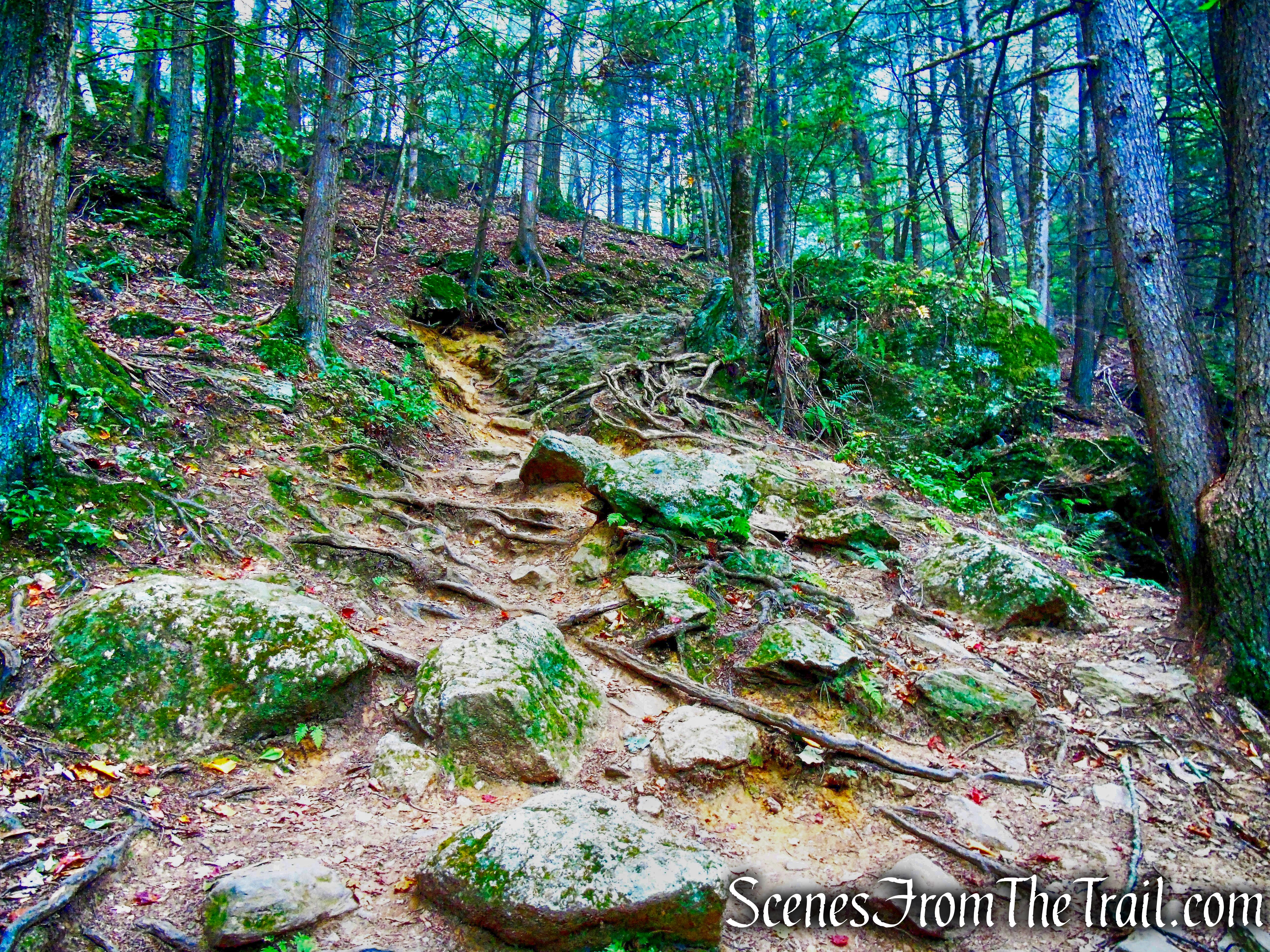
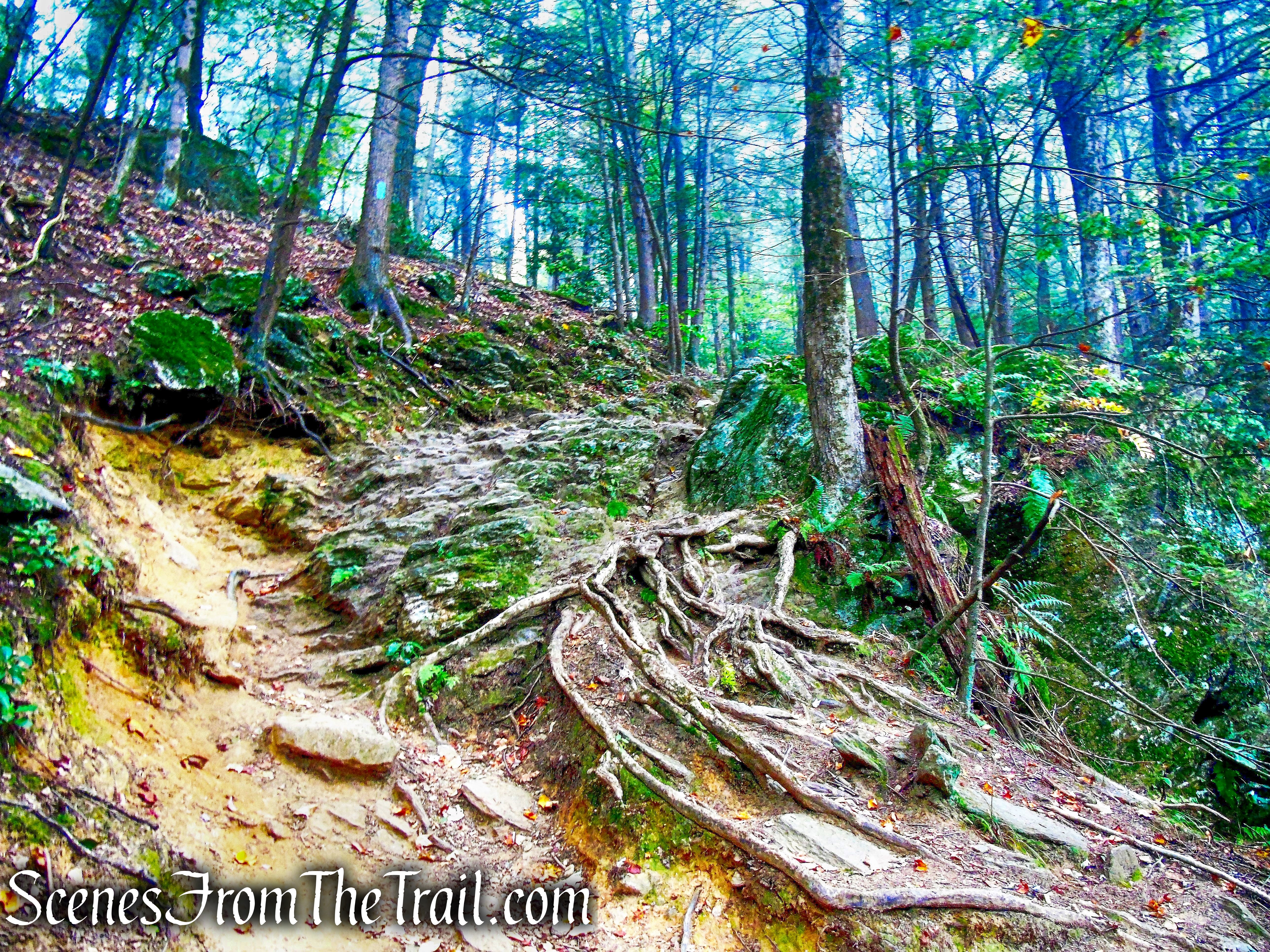
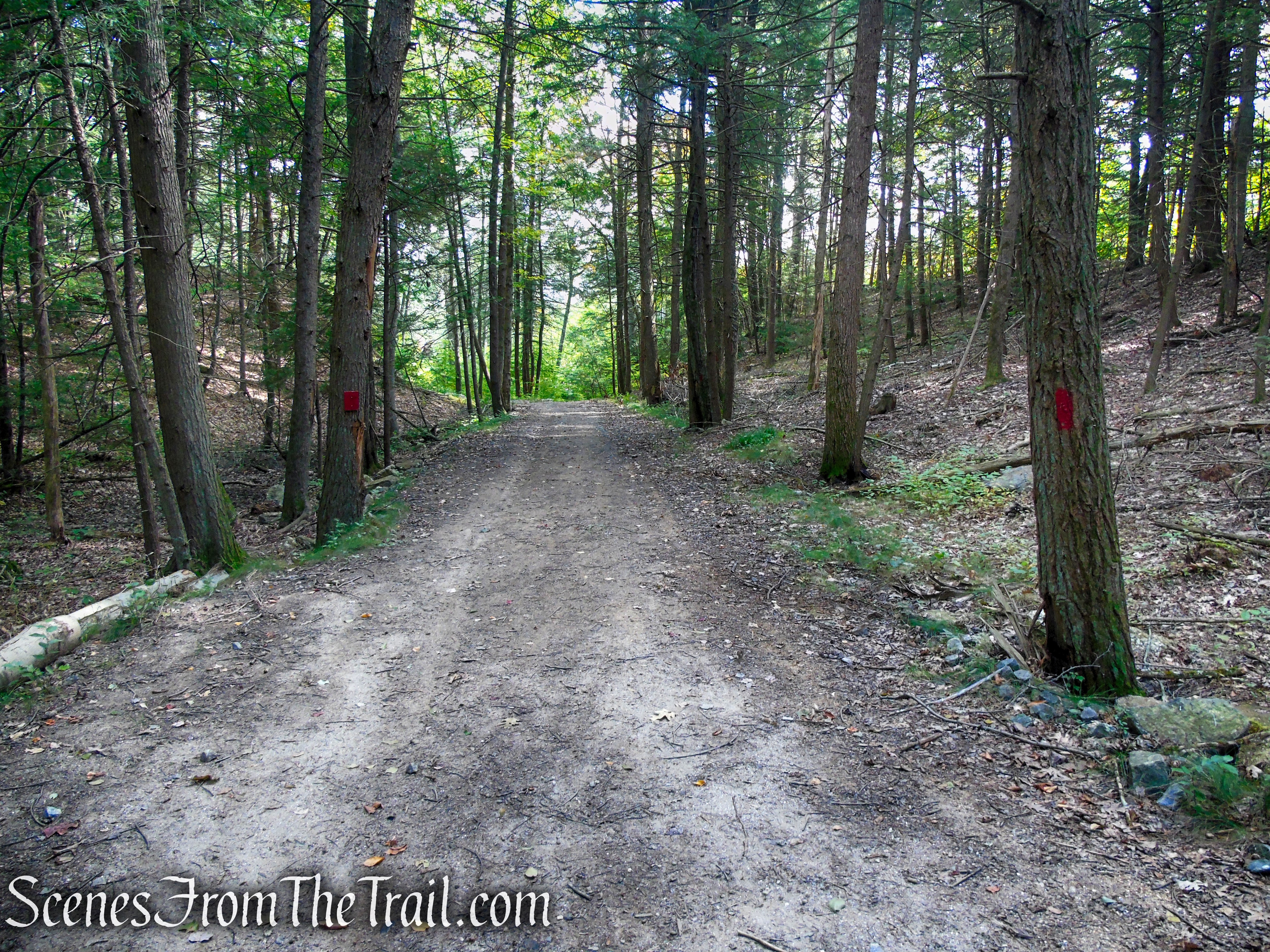
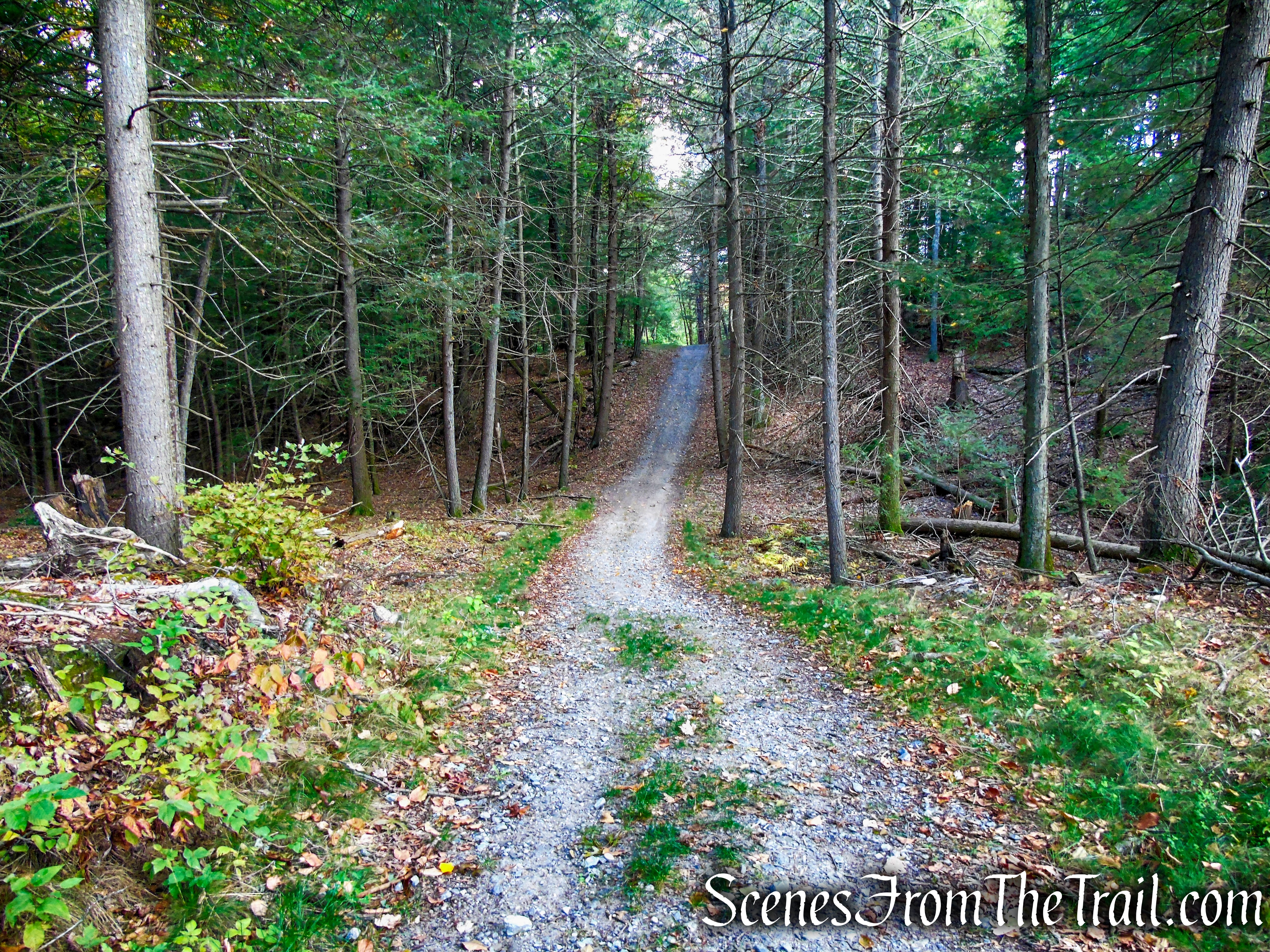
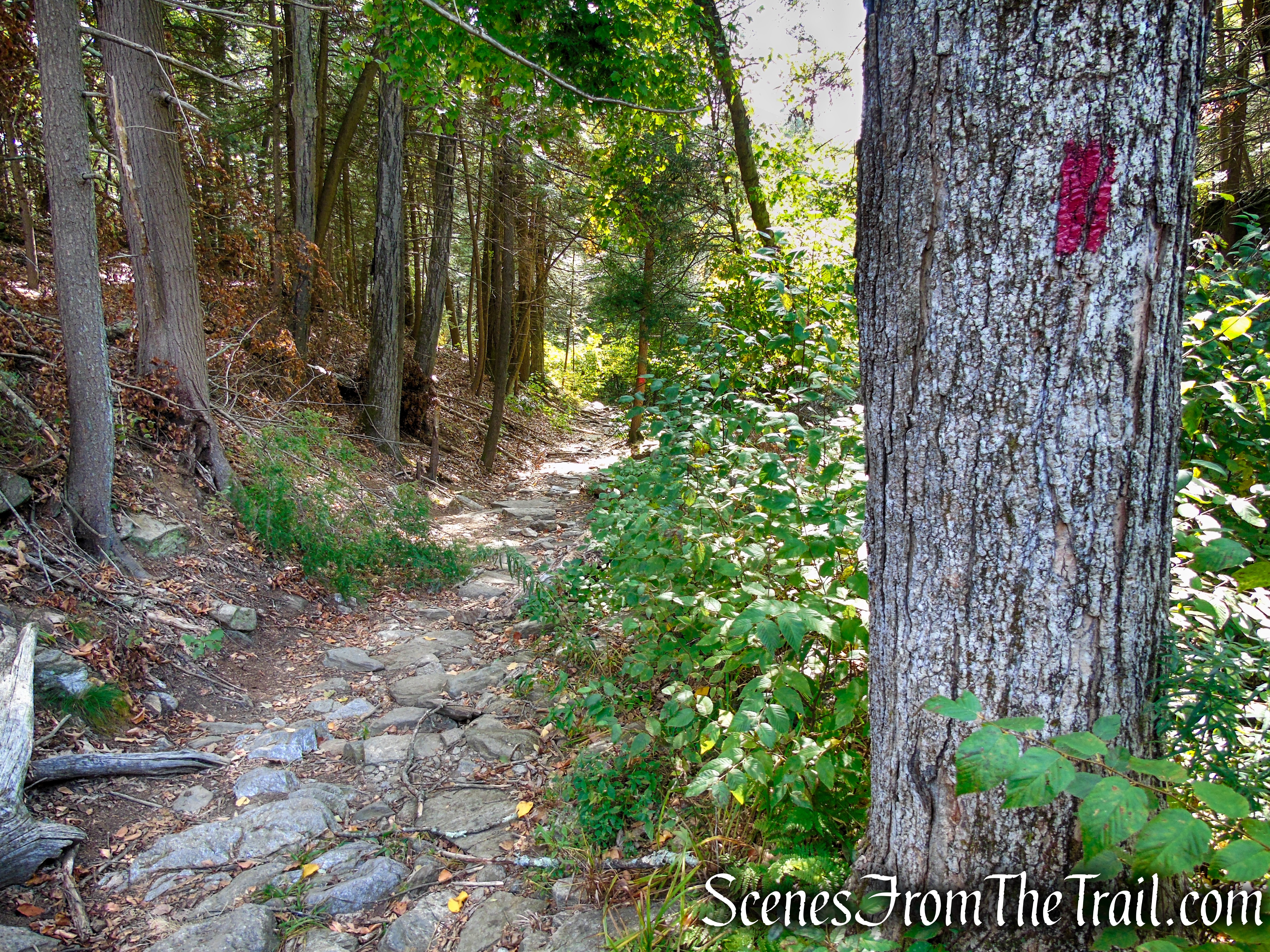
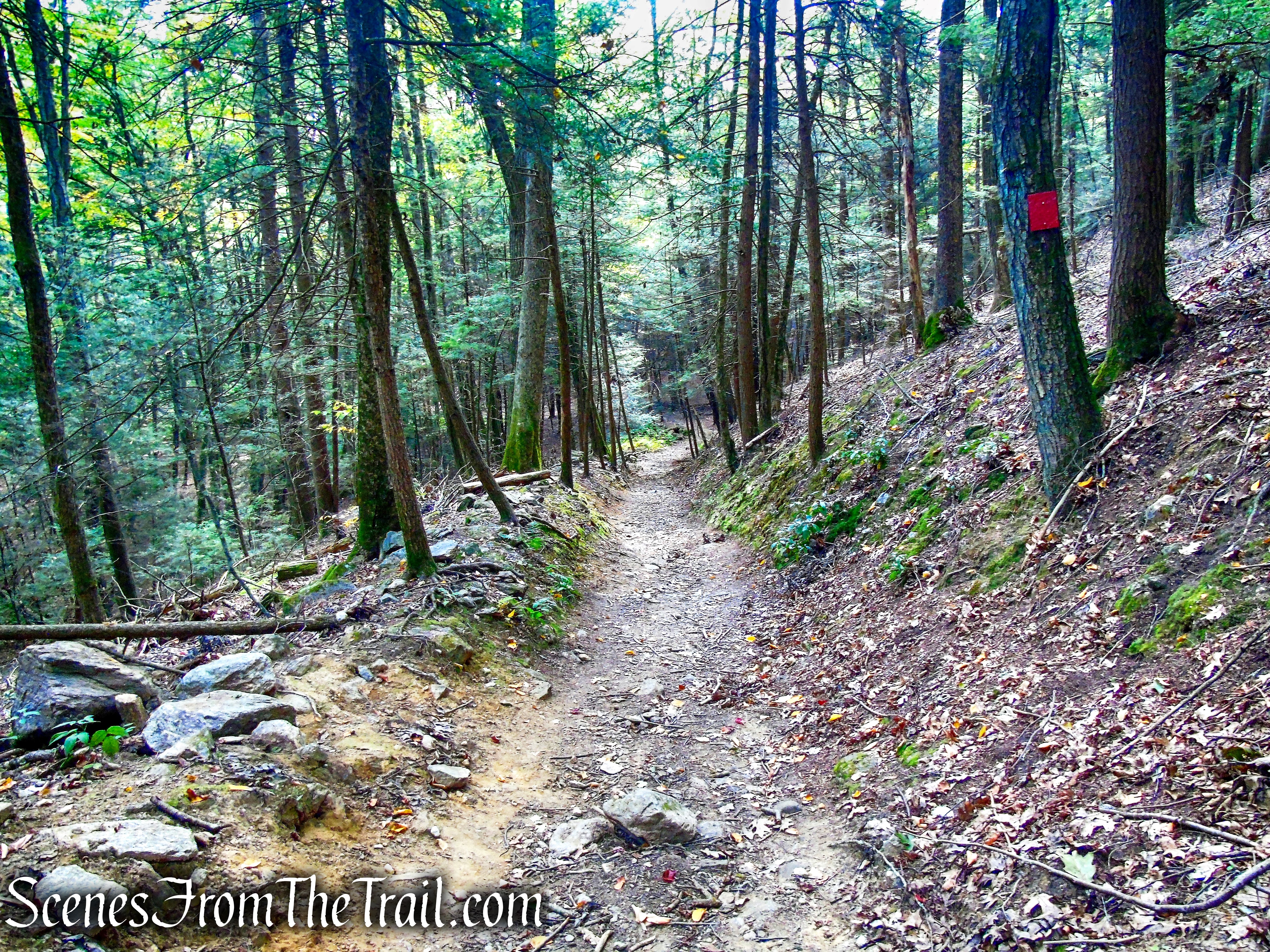
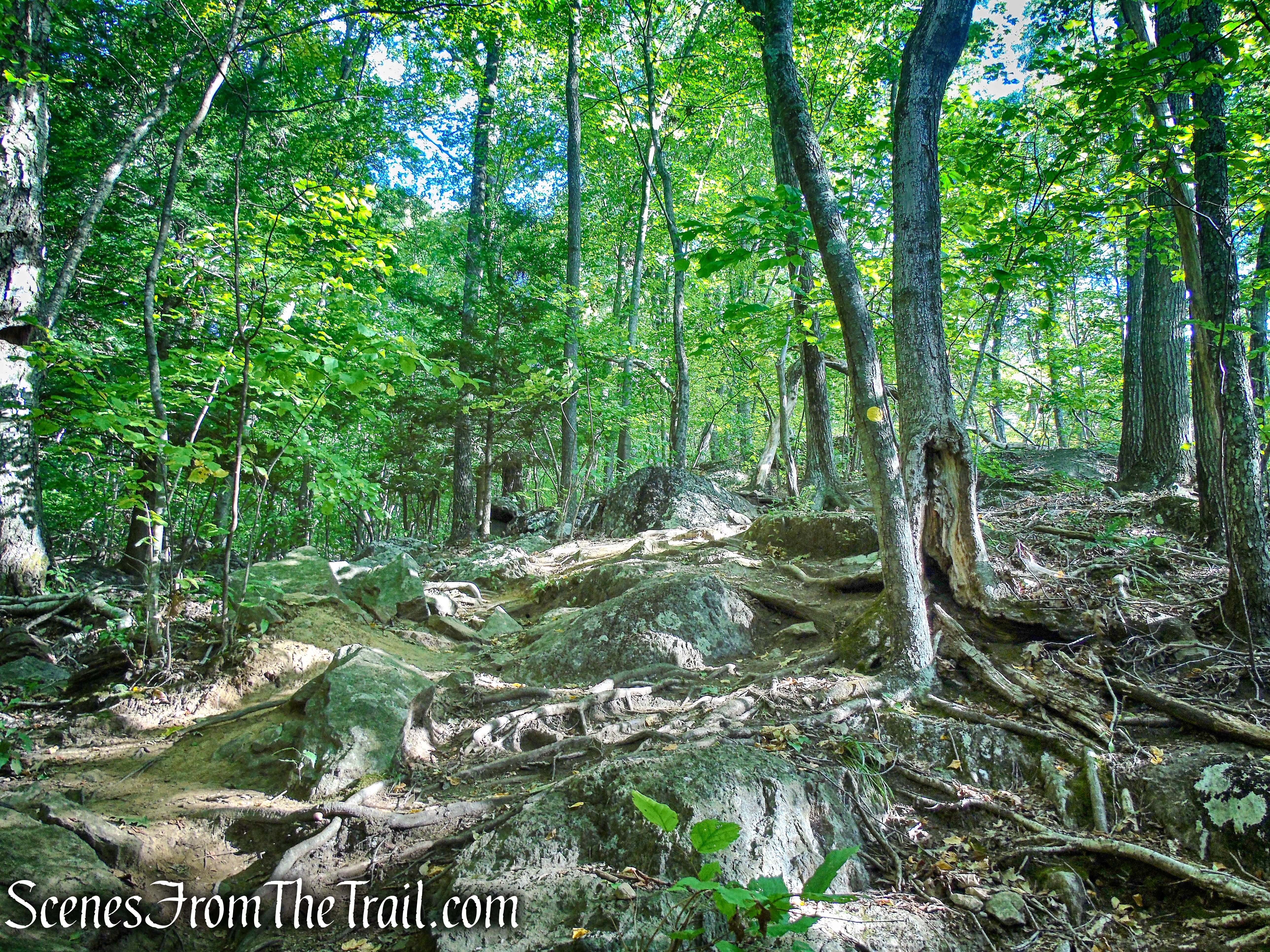
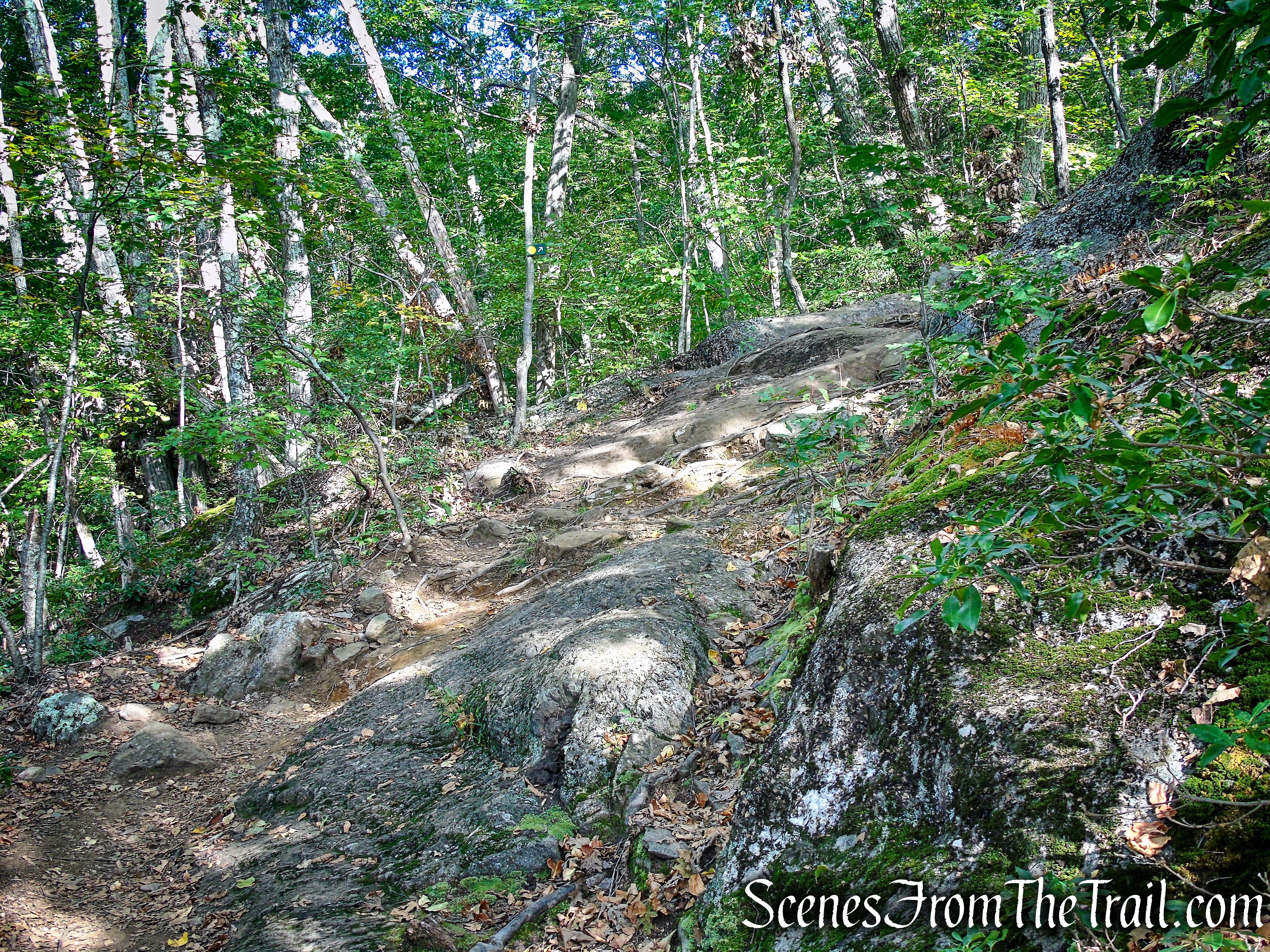
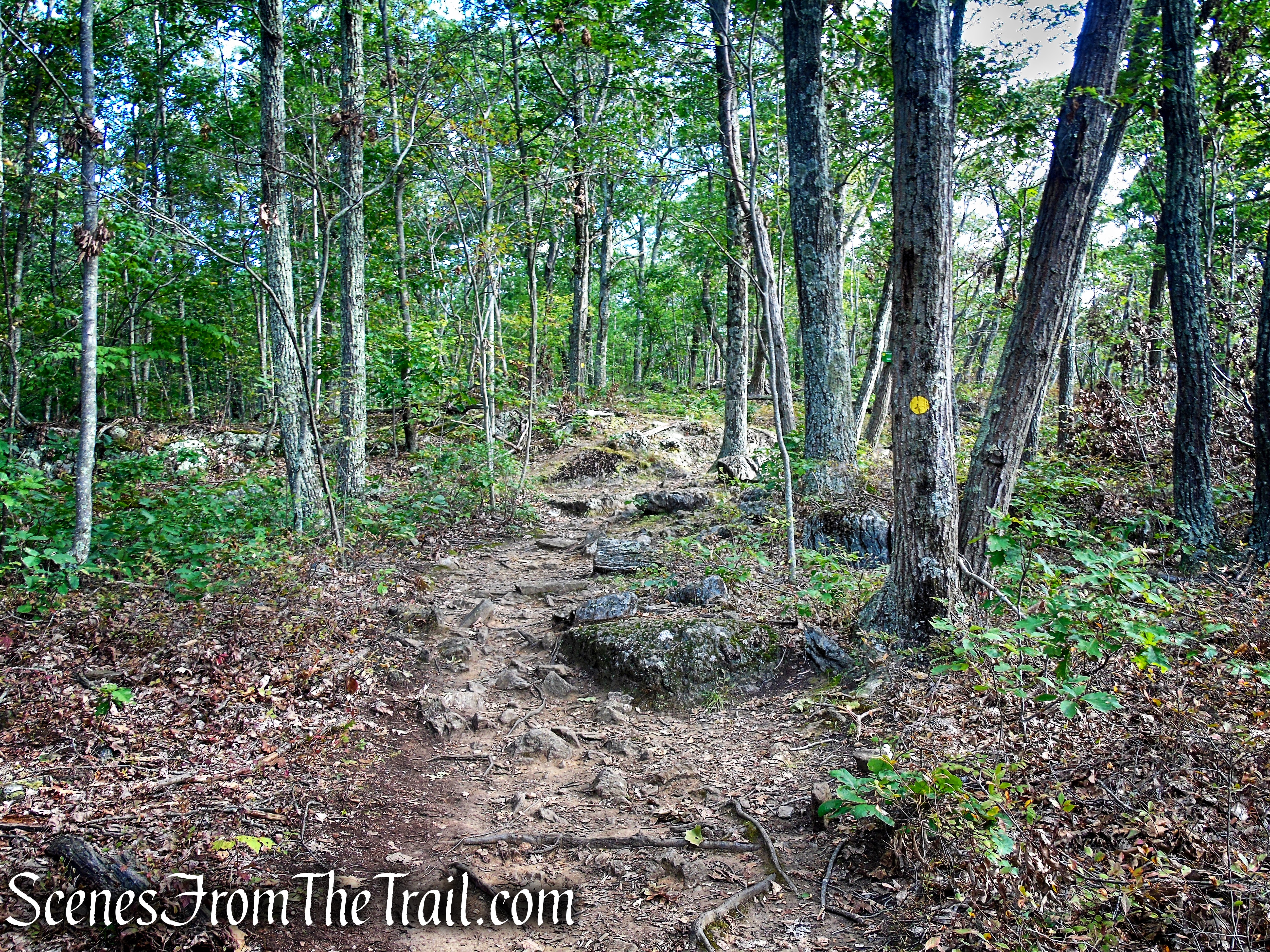
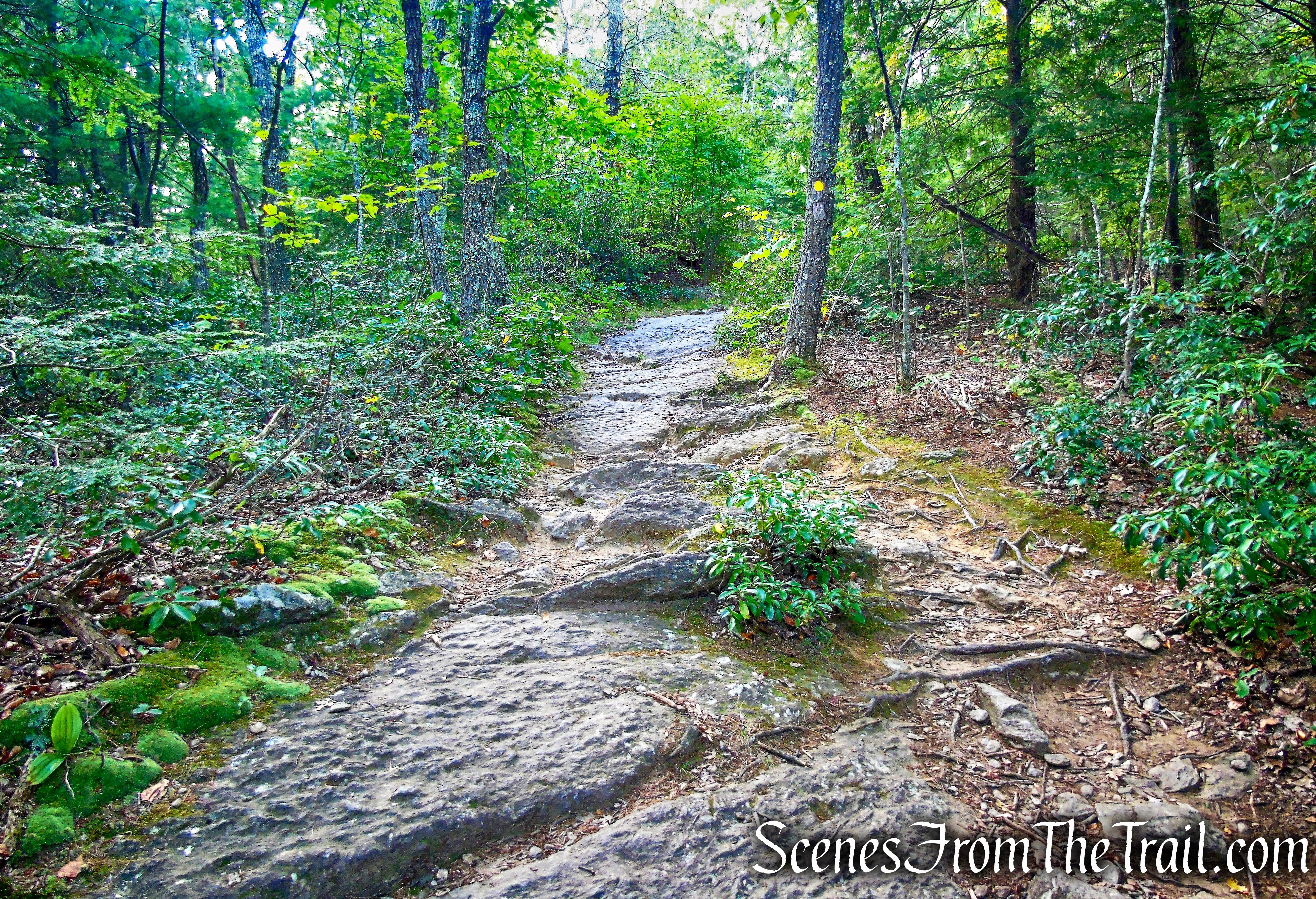
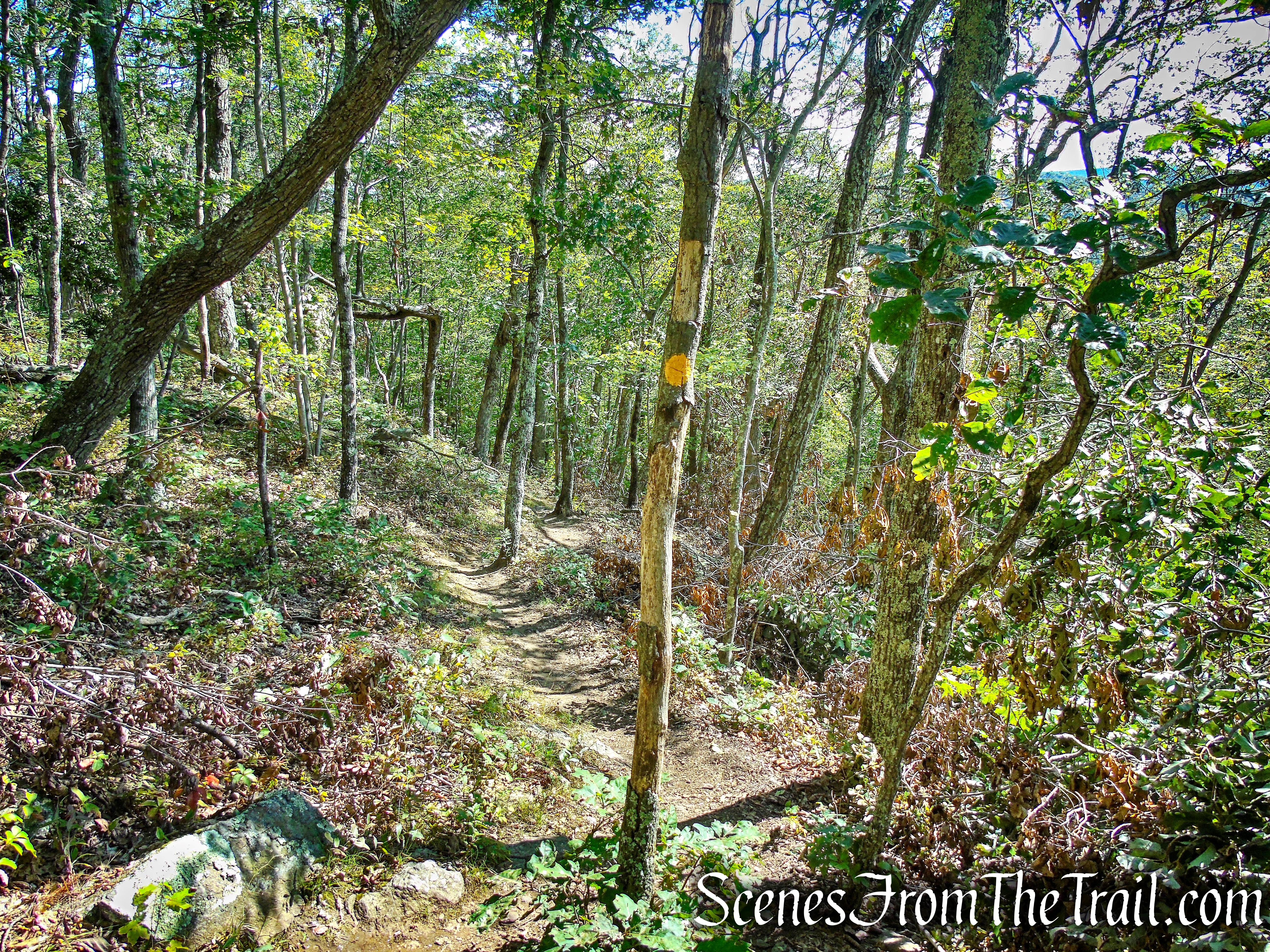
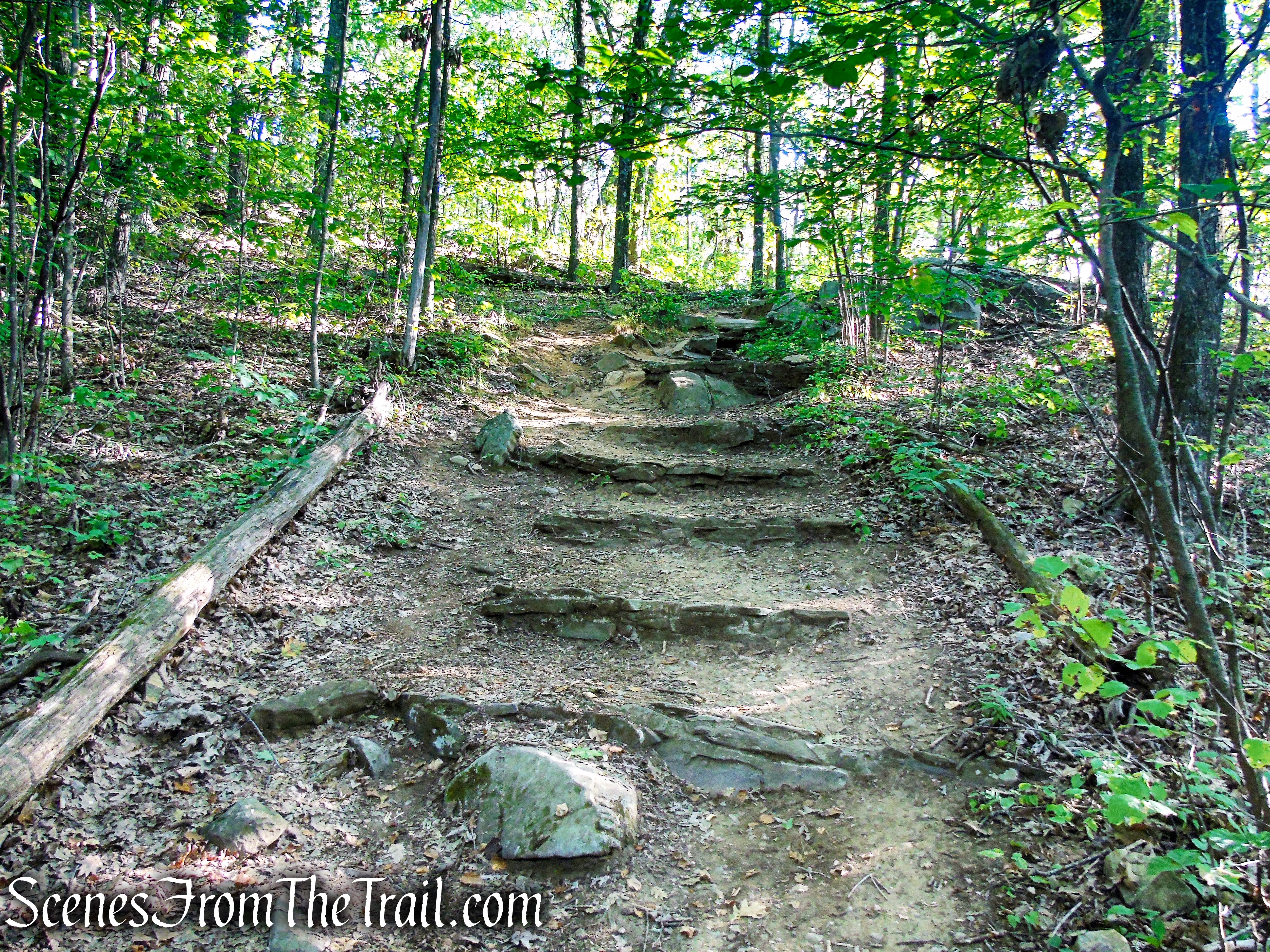
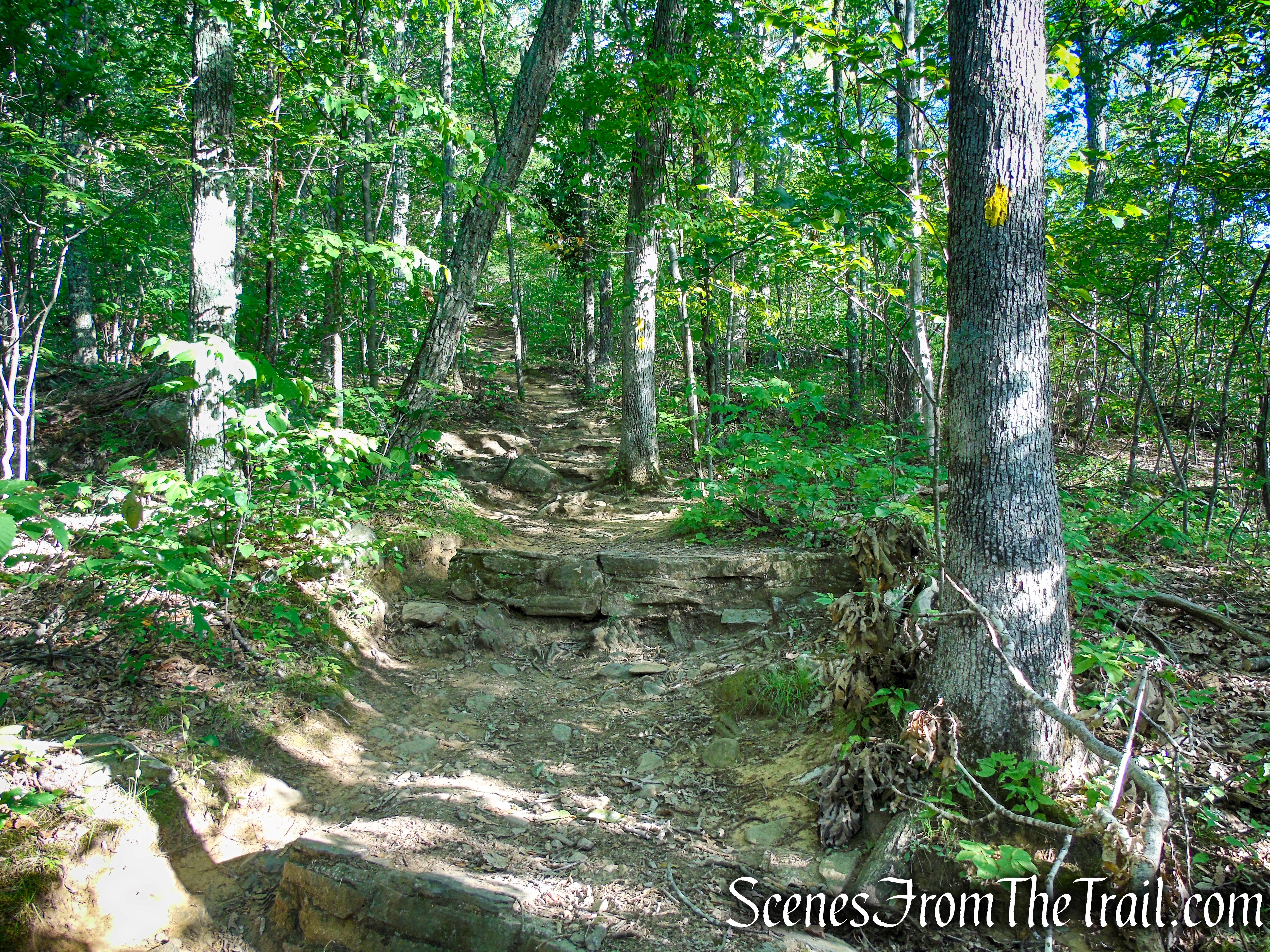
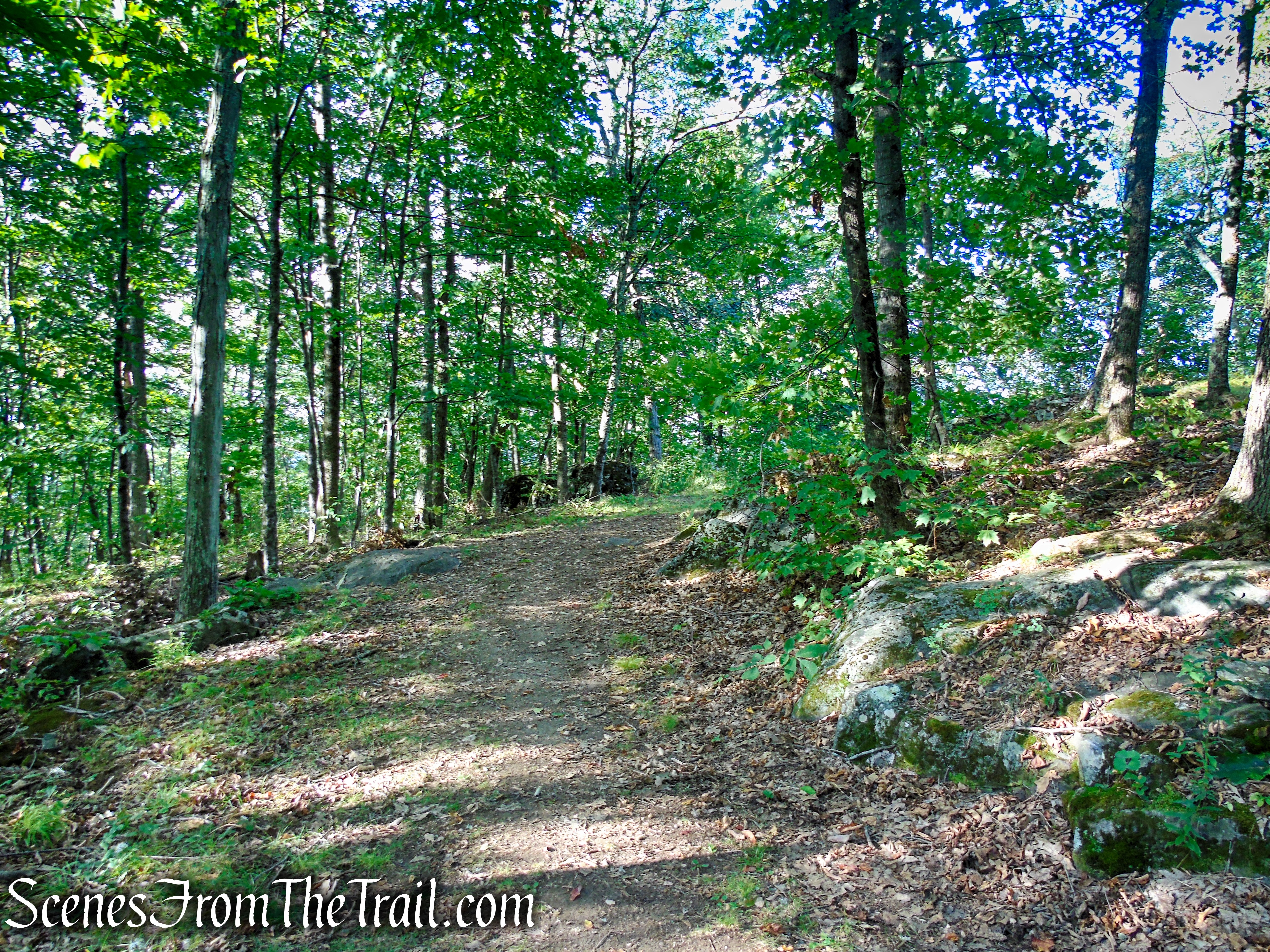
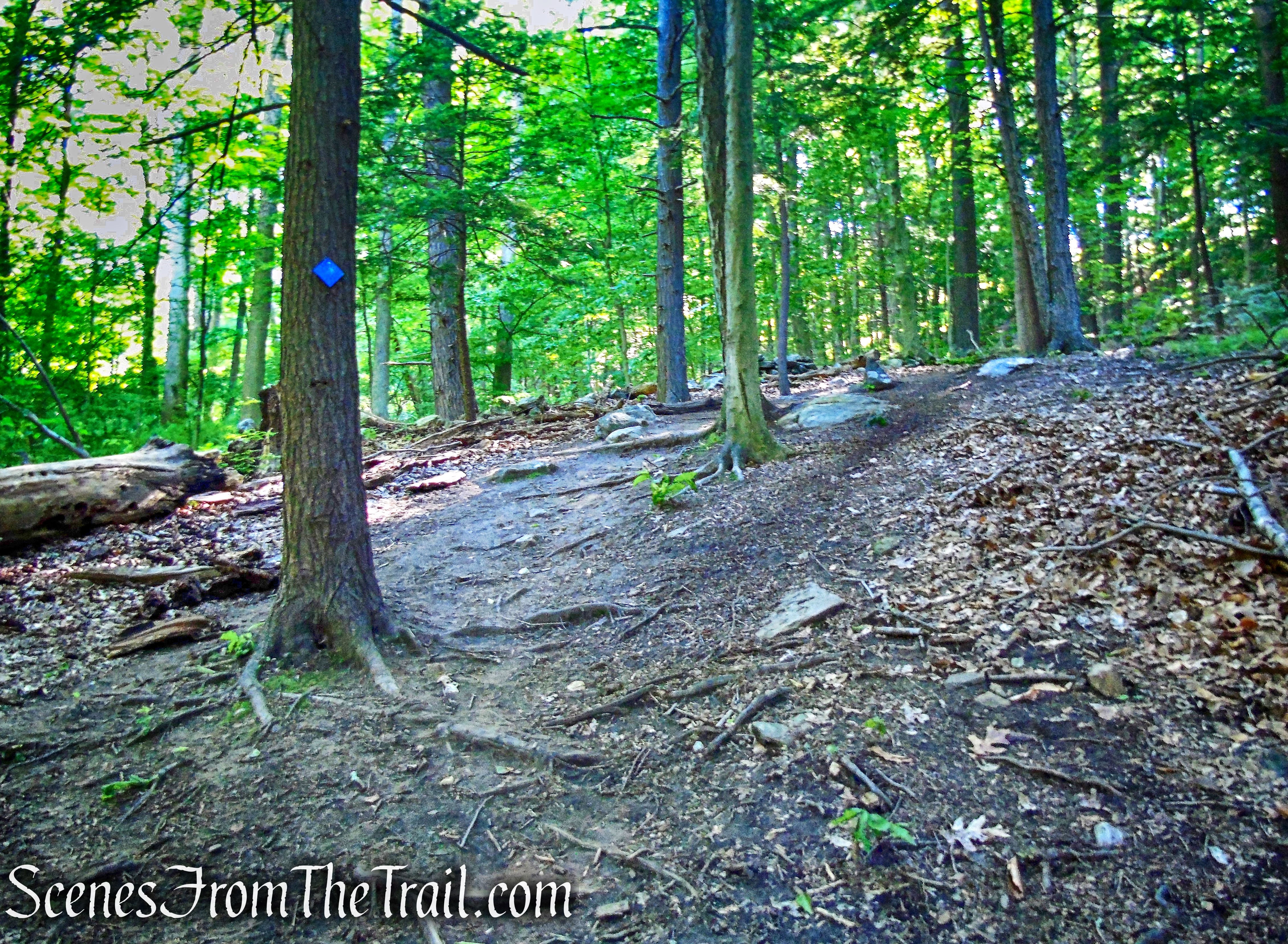
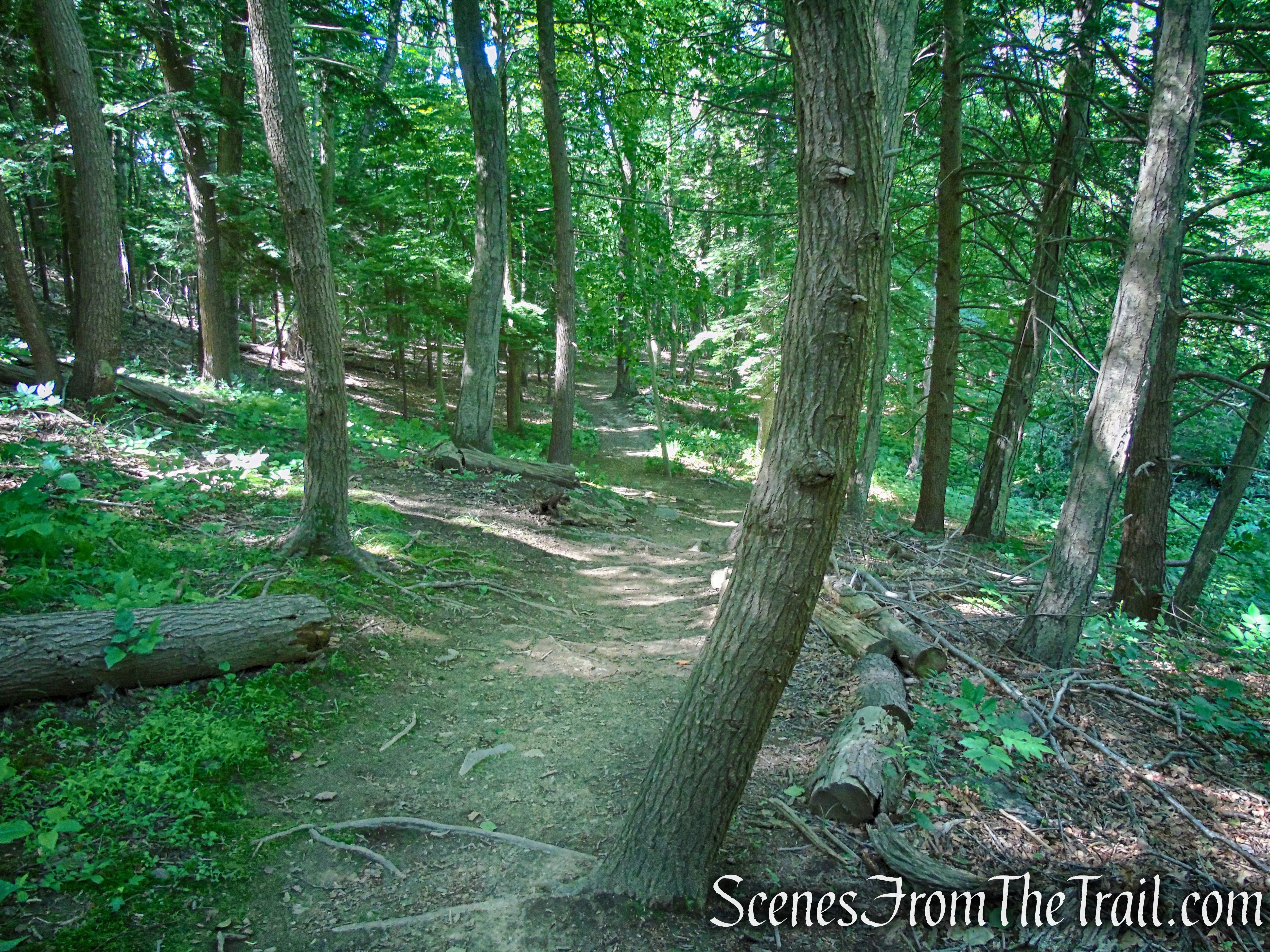
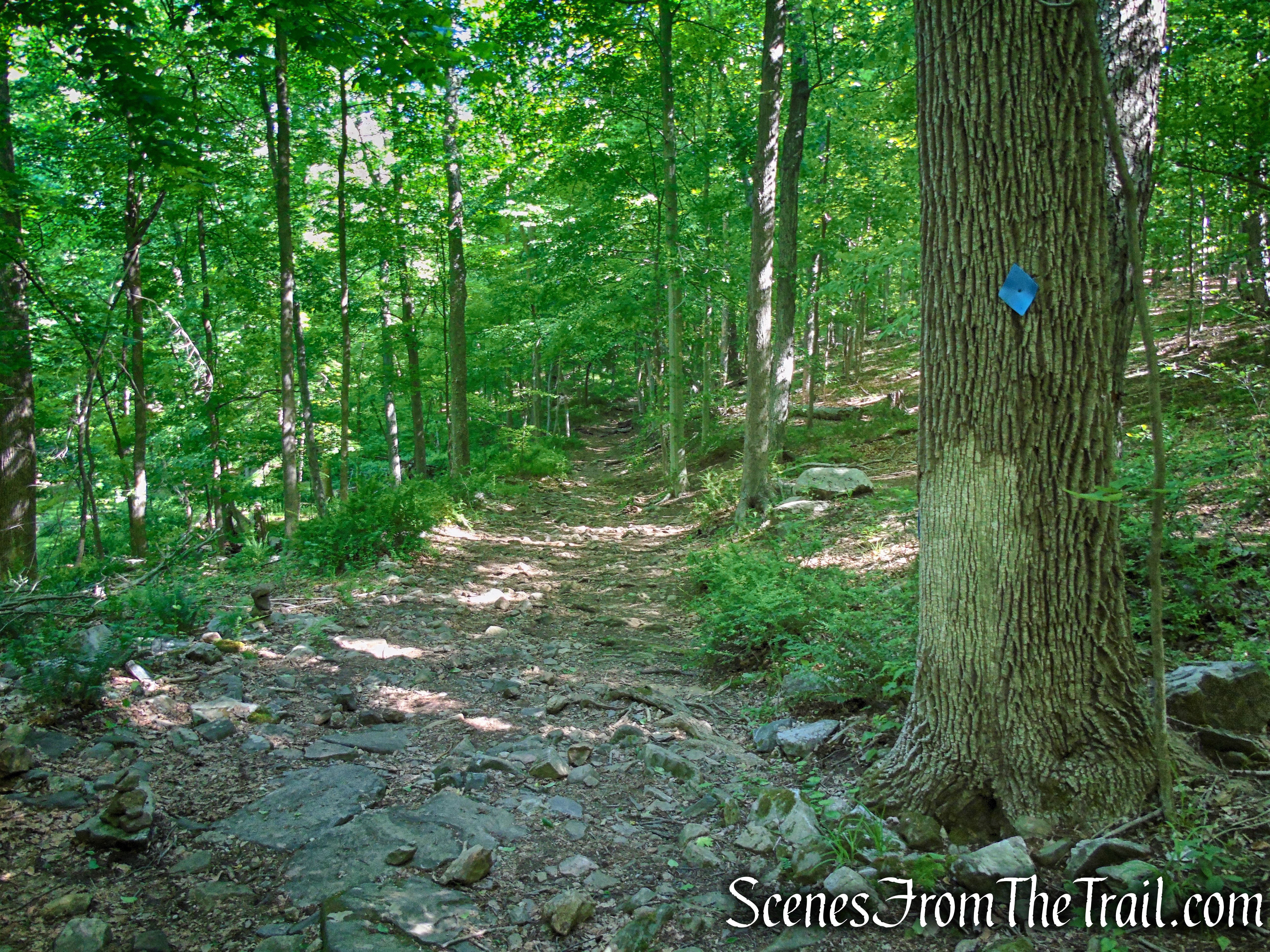
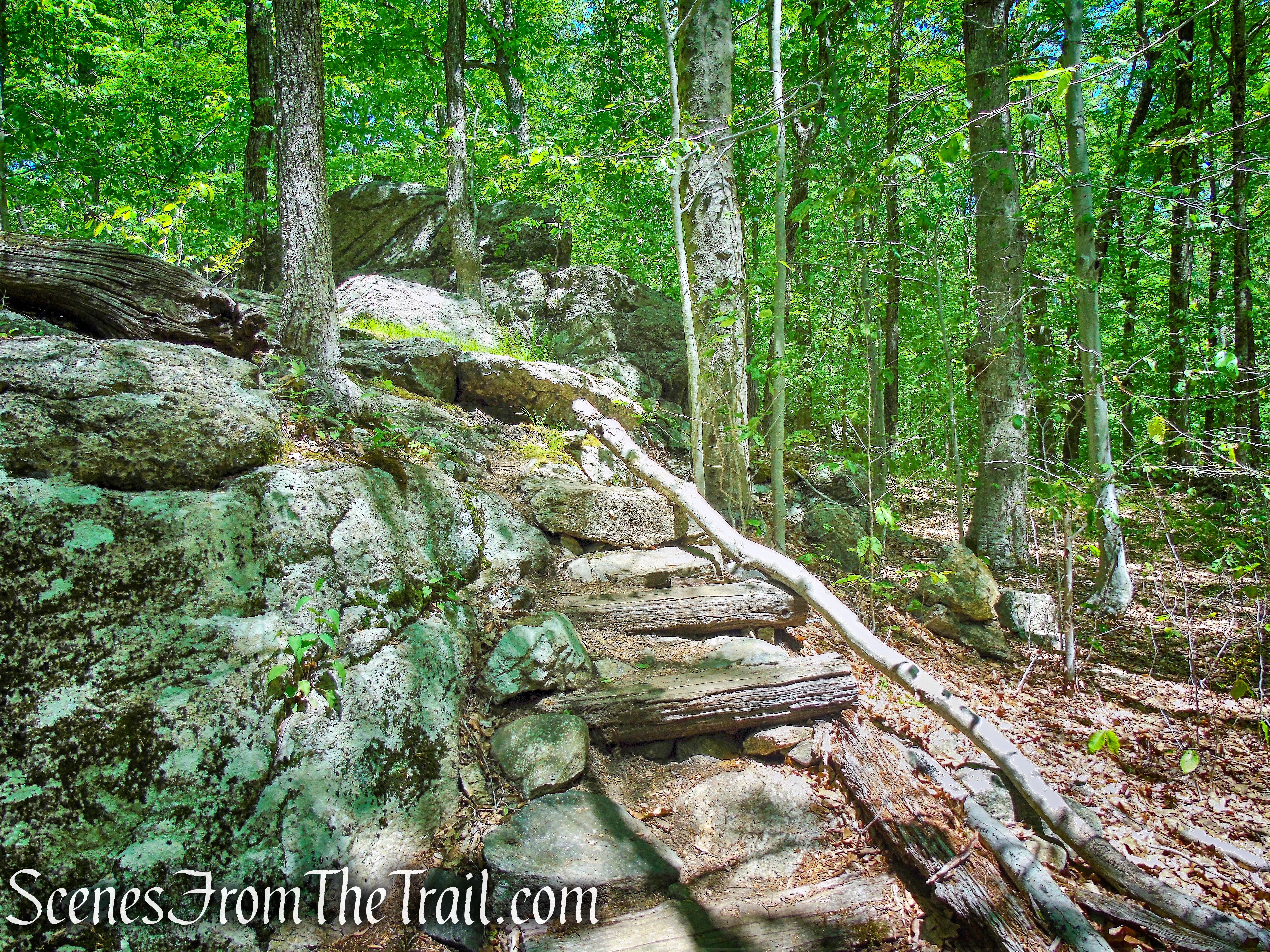
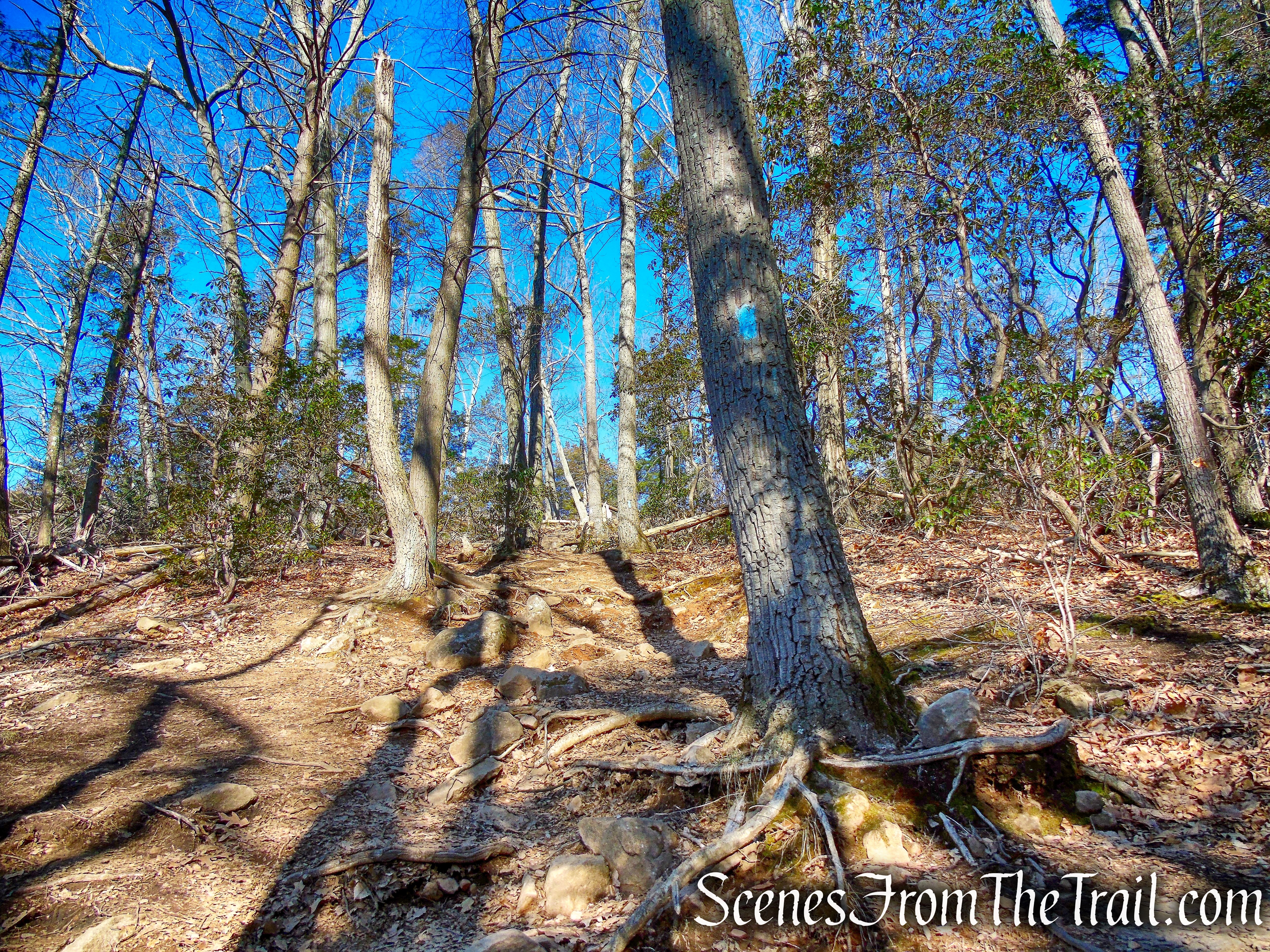
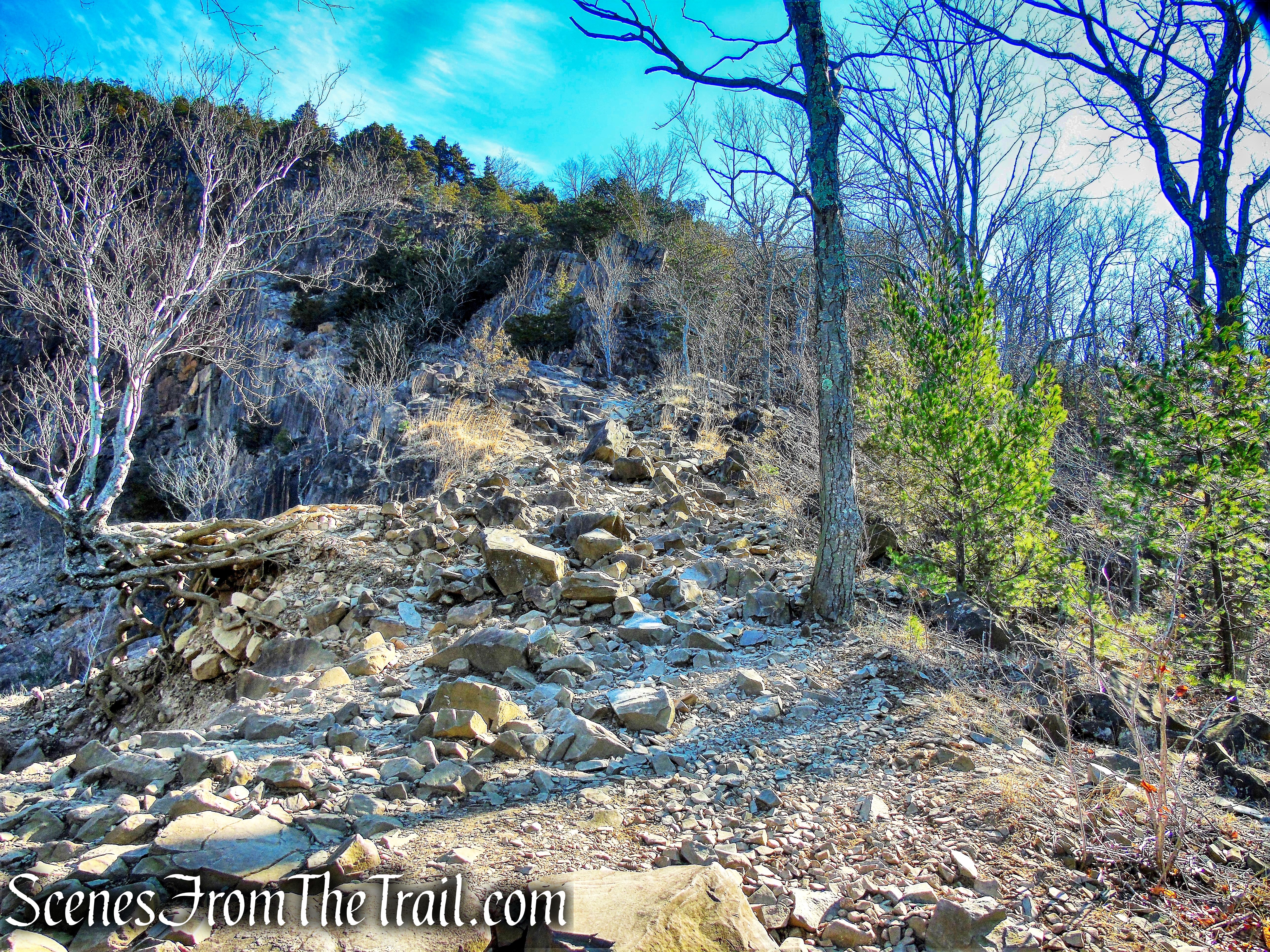
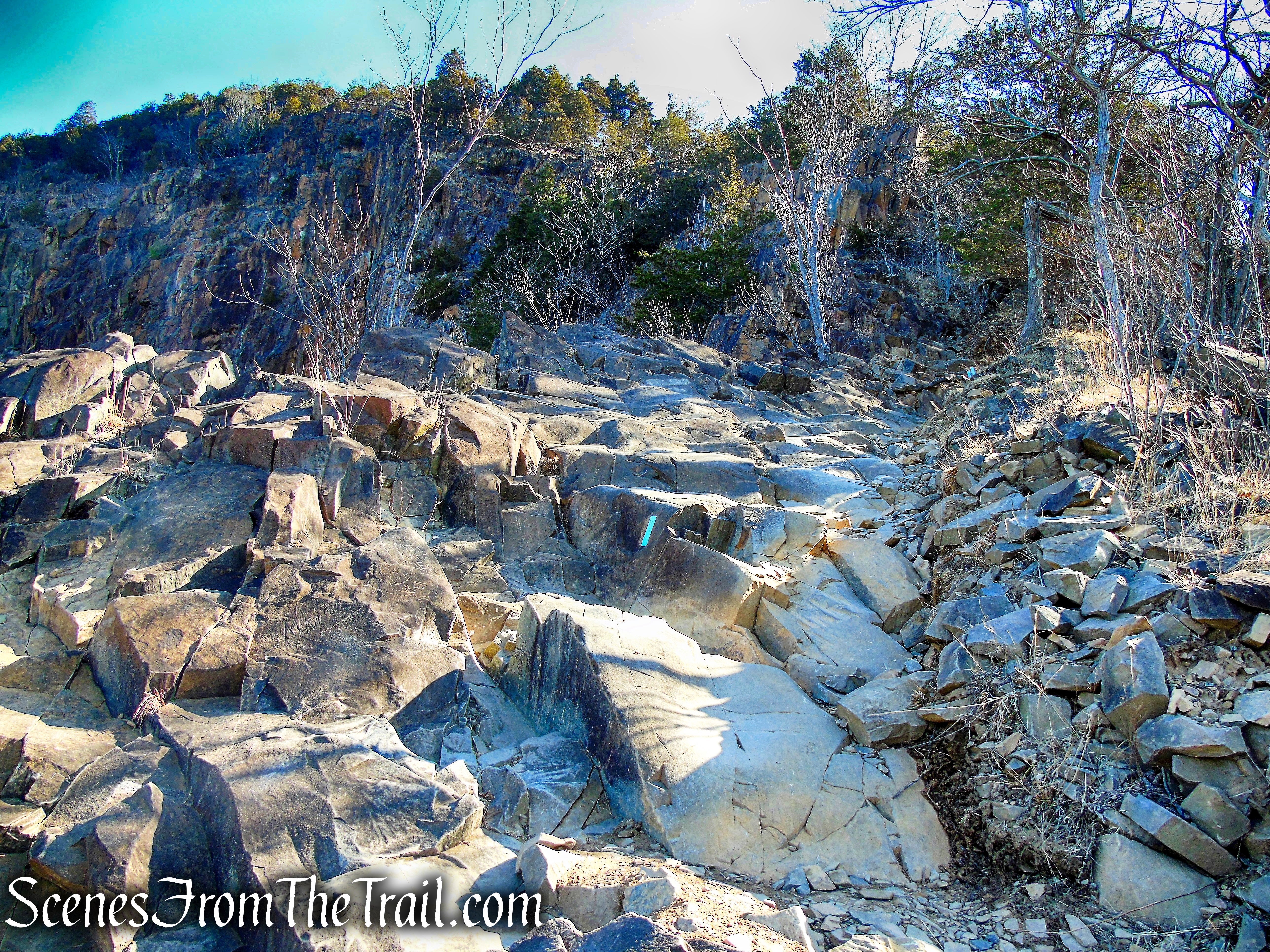
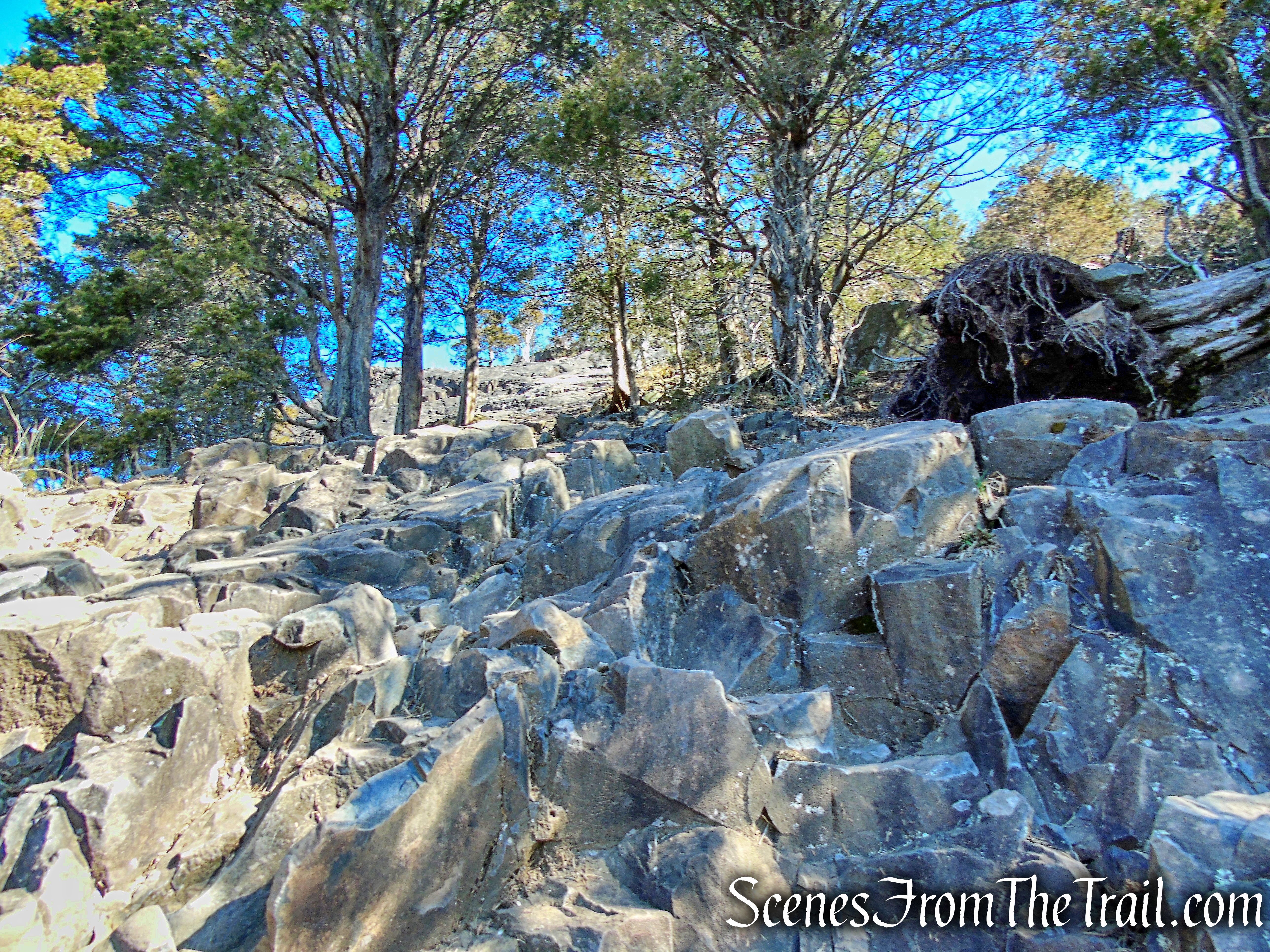
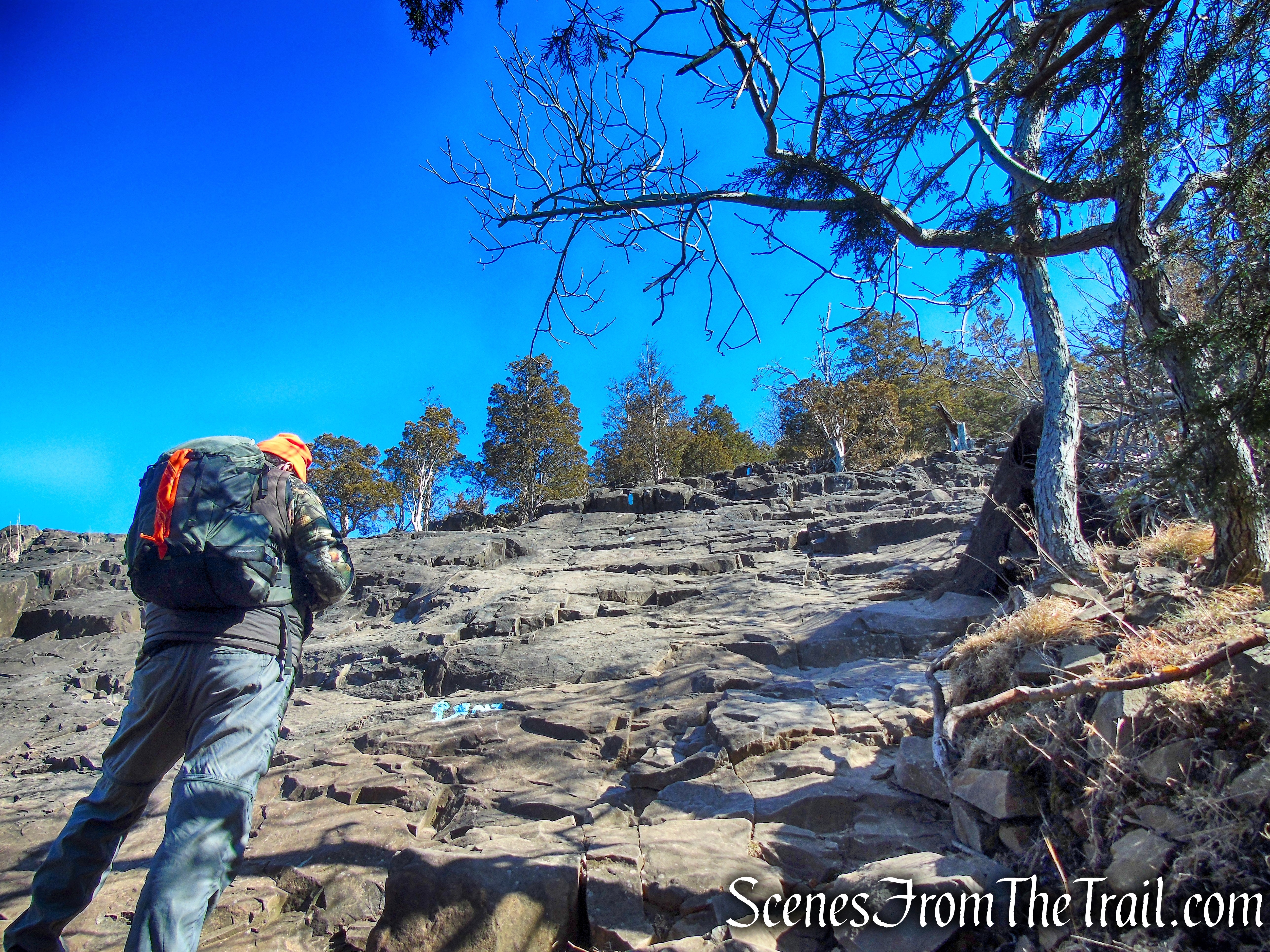
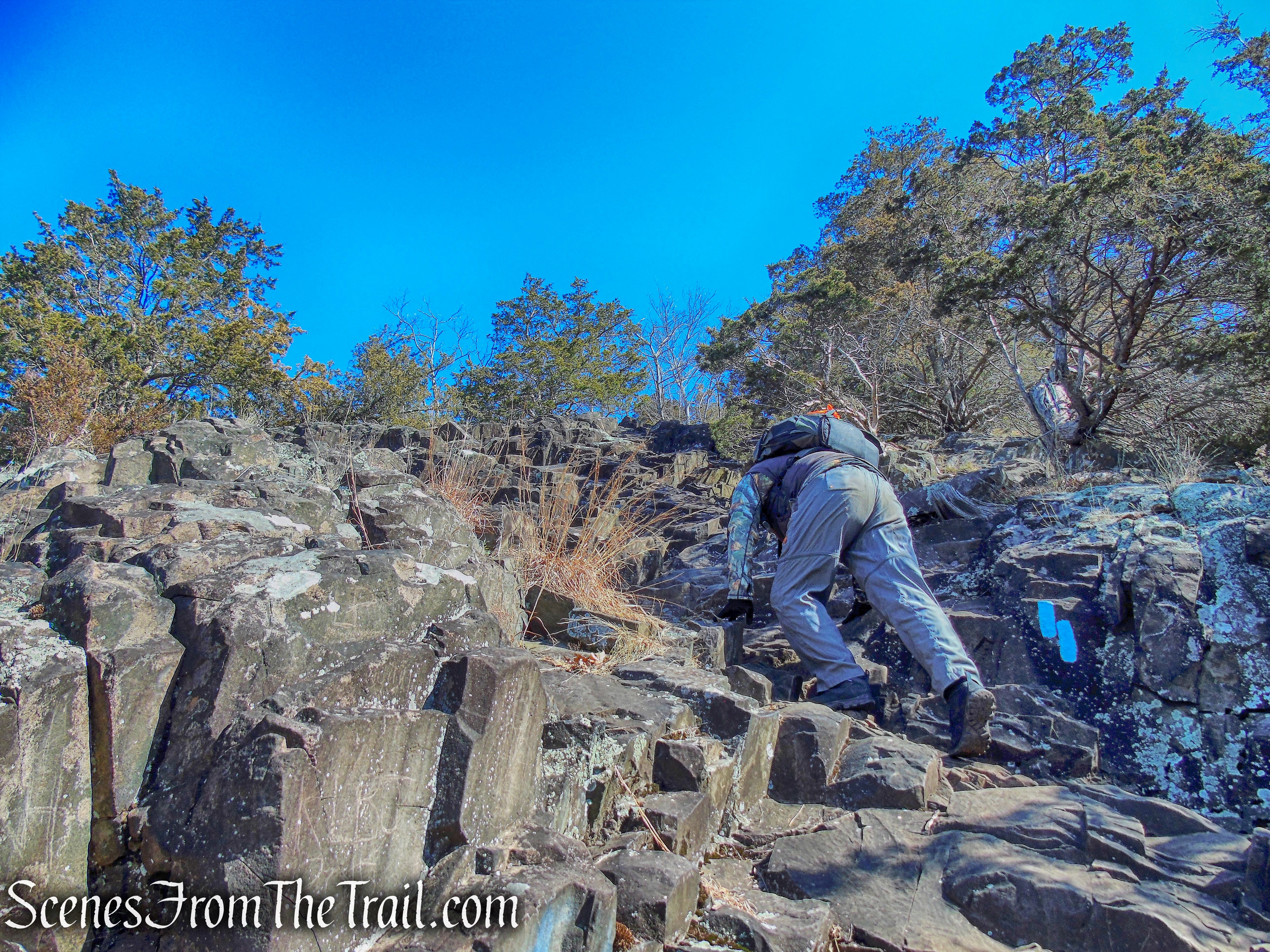
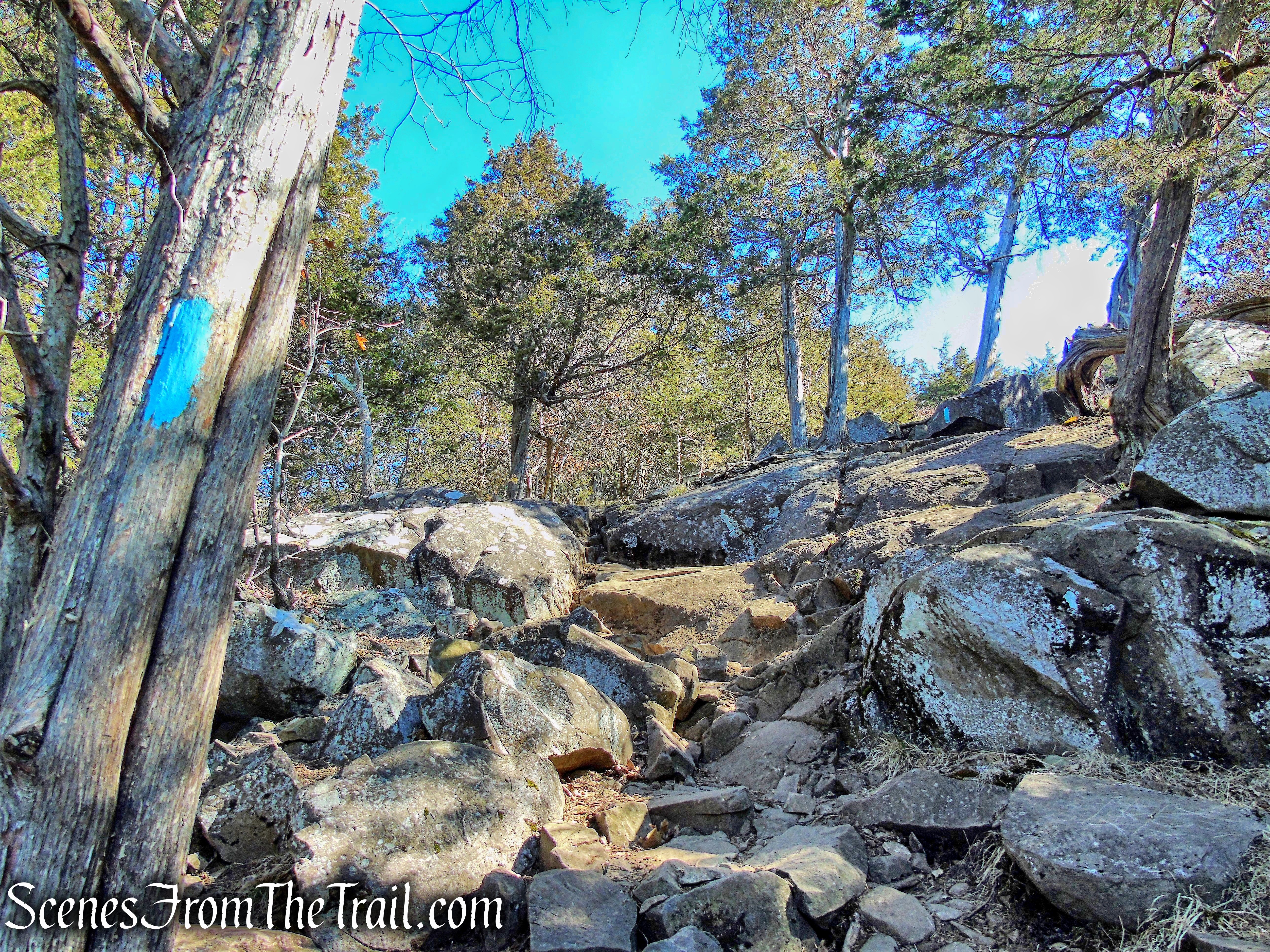
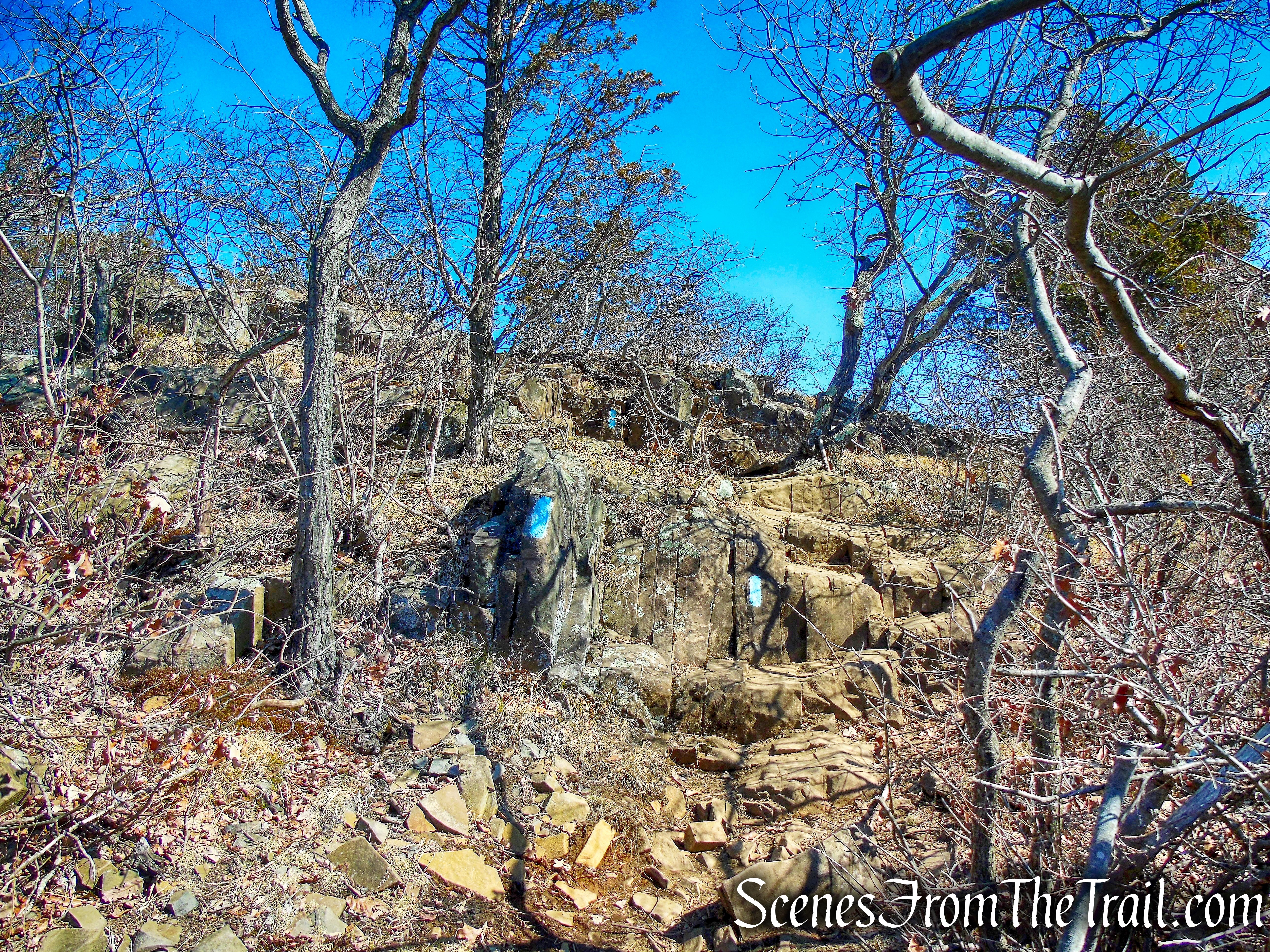
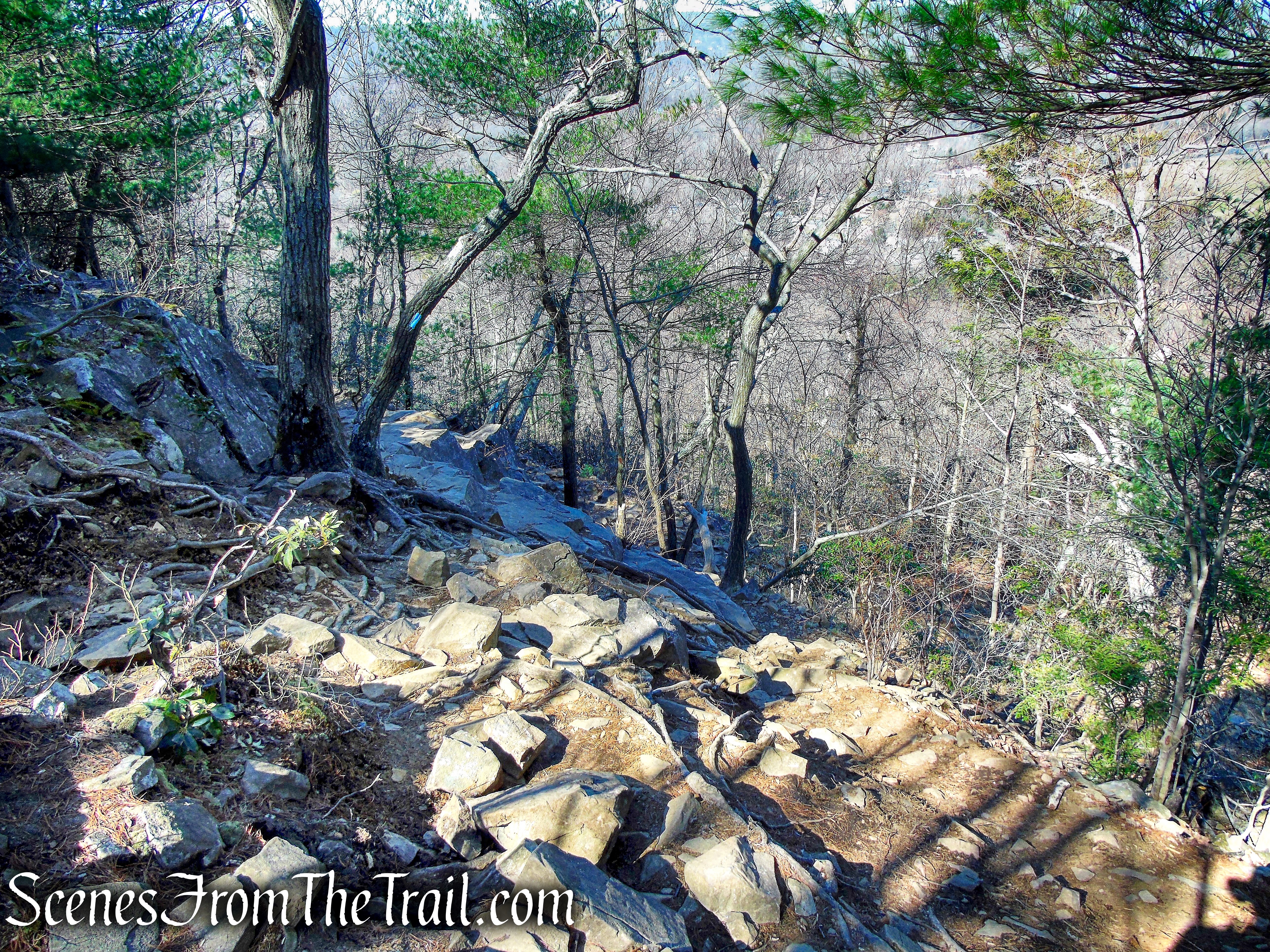
The Mattatuck Trail climbs gradually at first then the grade steepens on the extremely eroded and rocky woods road. The more the trail climbs, the steeper it gets.

Mattatuck Trail - Black Rock State Park

Mattatuck Trail – Black Rock State Park

Mattatuck Trail - Black Rock State Park

Mattatuck Trail – Black Rock State Park

Mattatuck Trail - Black Rock State Park

Mattatuck Trail – Black Rock State Park

Mattatuck Trail - Black Rock State Park

Mattatuck Trail – Black Rock State Park

Mattatuck Trail - Black Rock State Park

Mattatuck Trail – Black Rock State Park

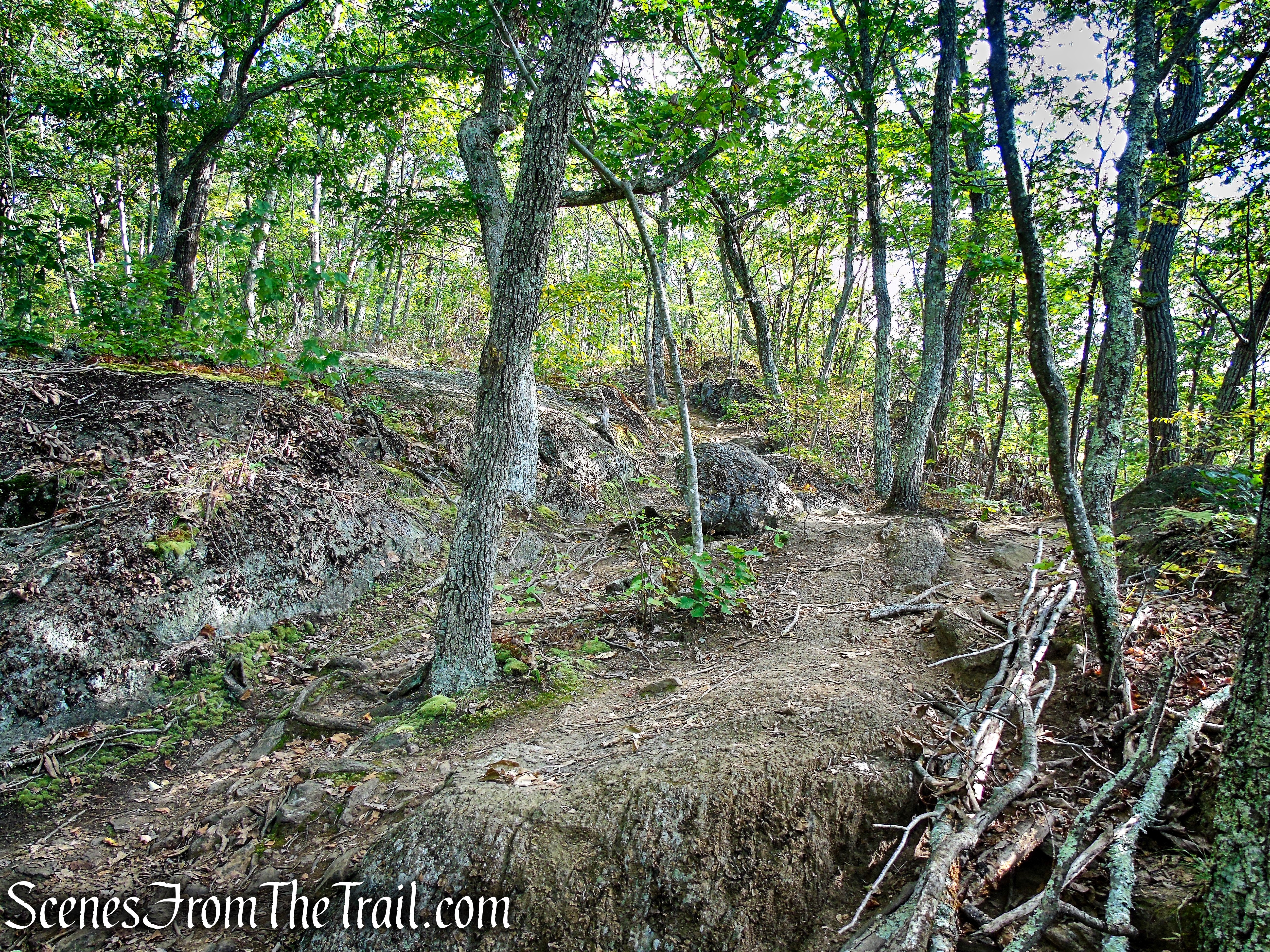
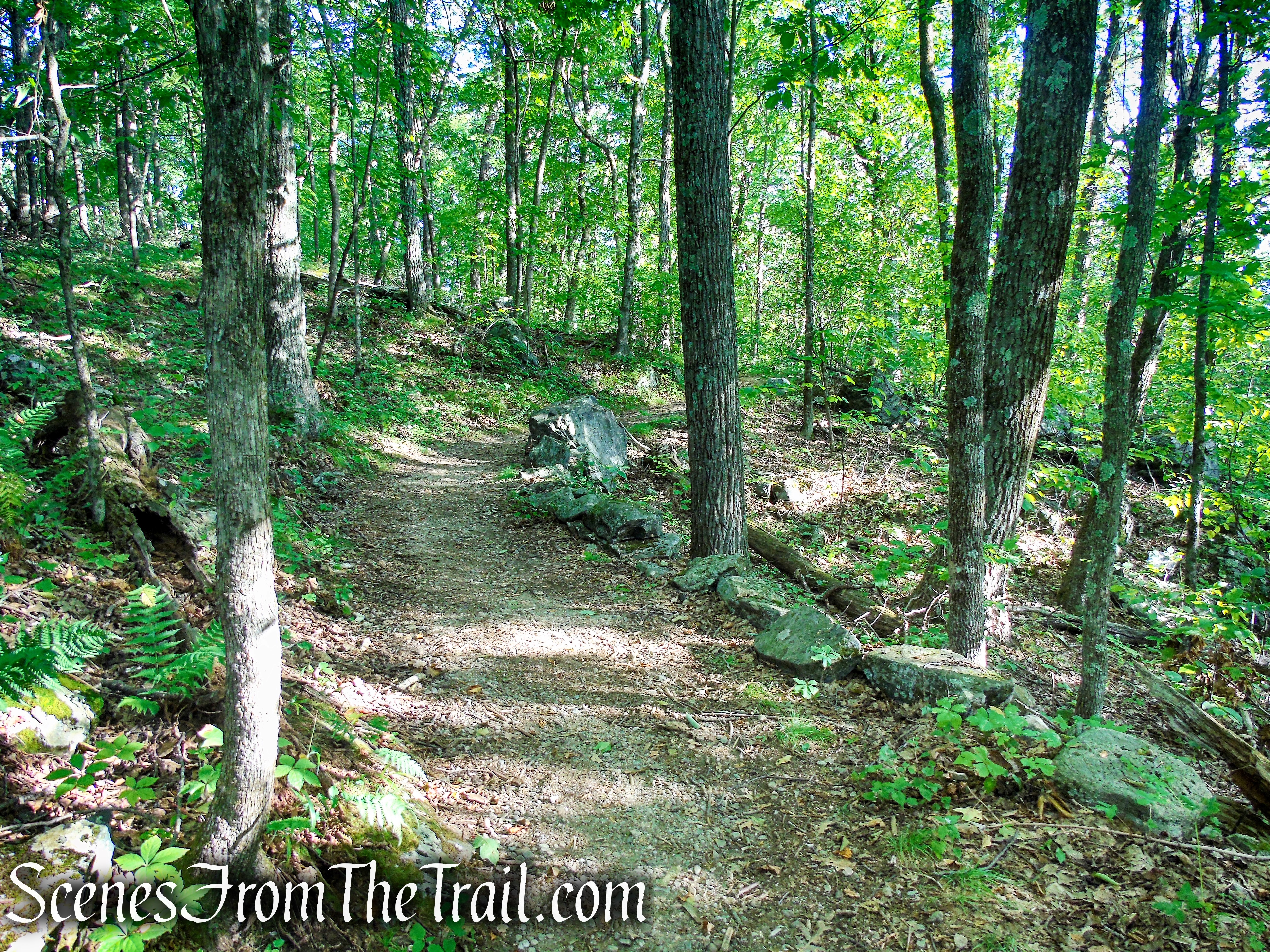
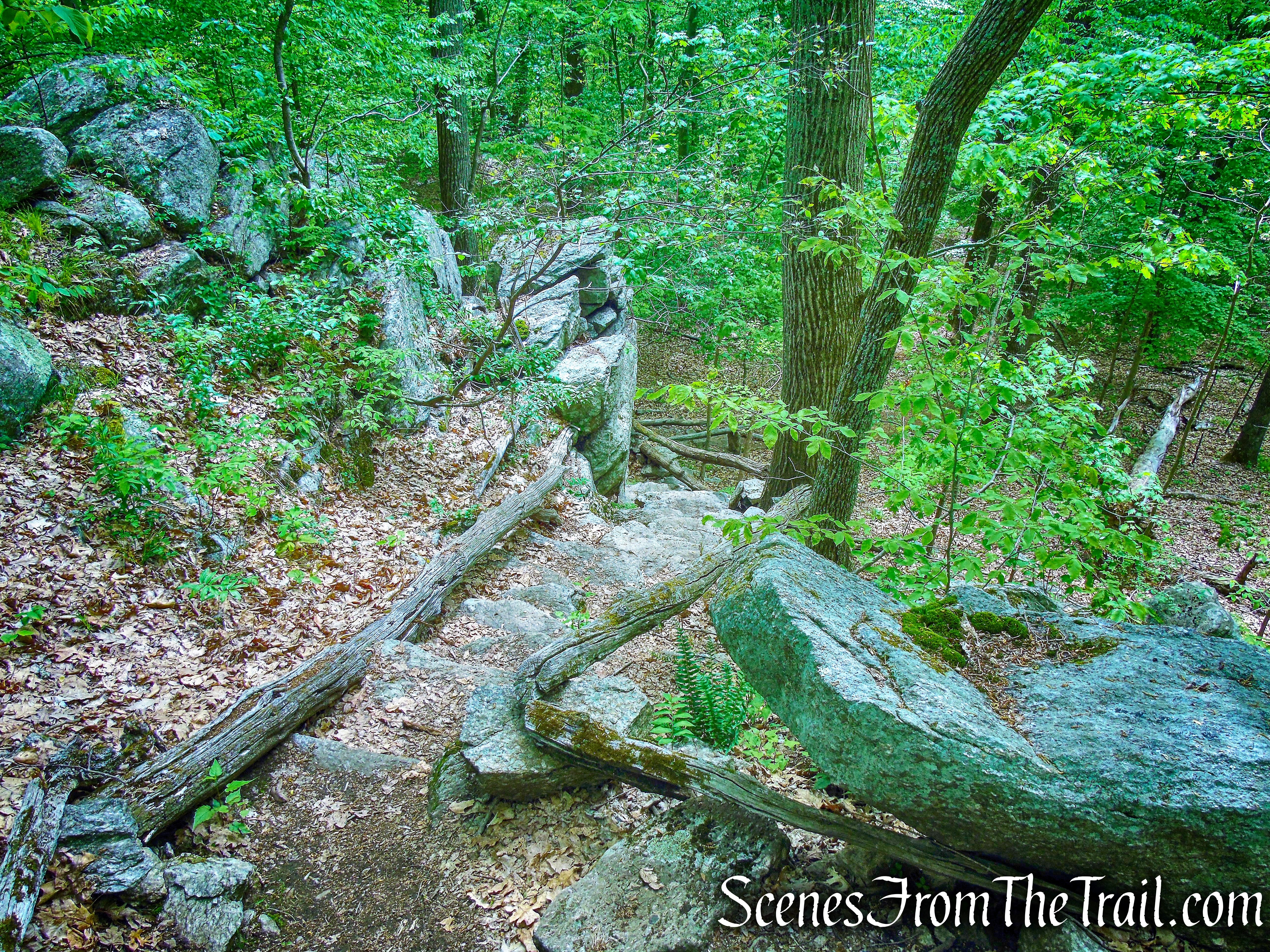
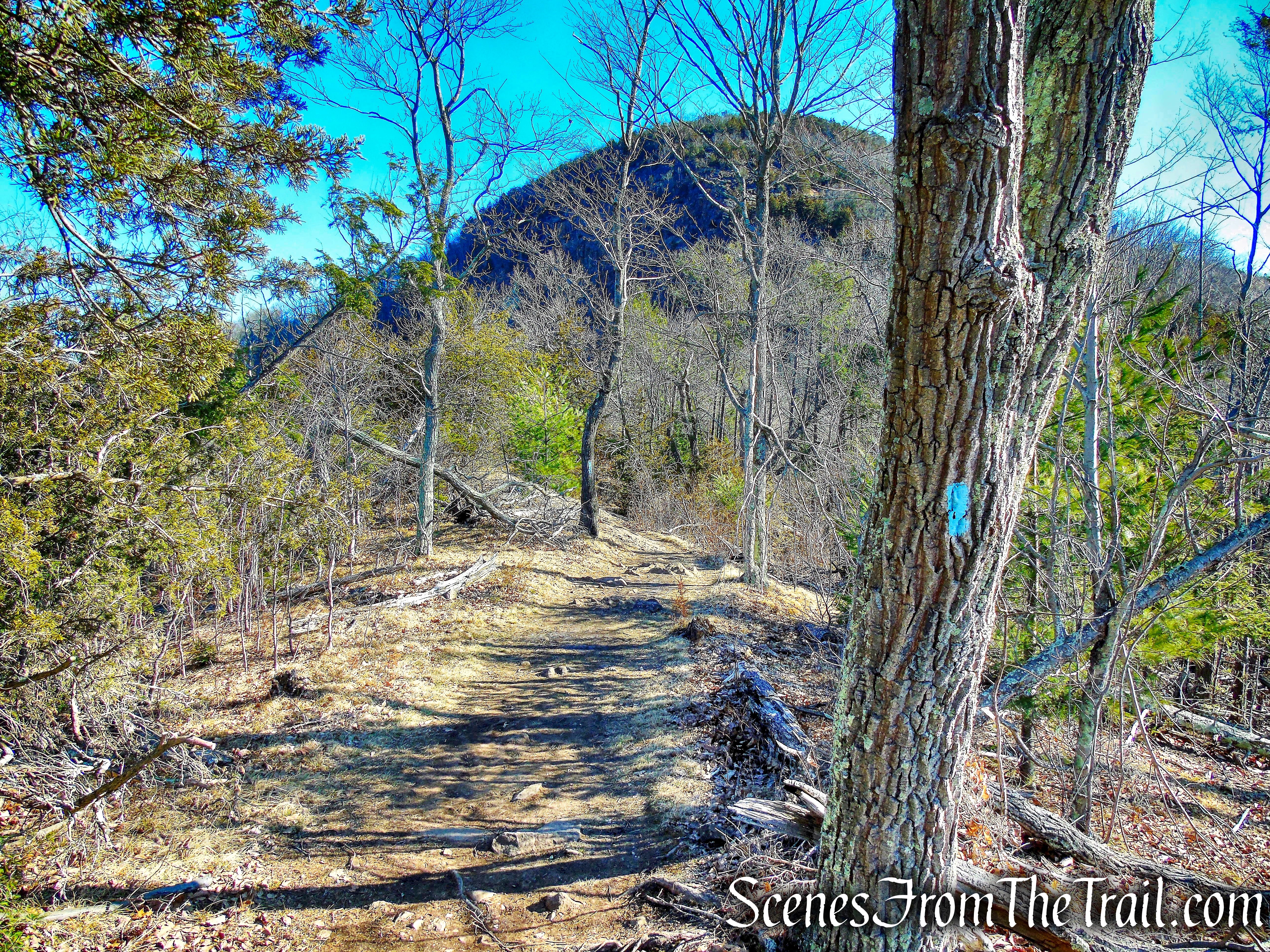
After a particularly steep section, the trail levels off briefly, turns right and continues to climb, then levels off again.

Mattatuck Trail - Black Rock State Park

Mattatuck Trail – Black Rock State Park

Mattatuck Trail - Black Rock State Park

Mattatuck Trail – Black Rock State Park

Mattatuck Trail - Black Rock State Park

Mattatuck Trail – Black Rock State Park

Mattatuck Trail - Black Rock State Park

Mattatuck Trail – Black Rock State Park

Mattatuck Trail - Black Rock State Park

Mattatuck Trail – Black Rock State Park

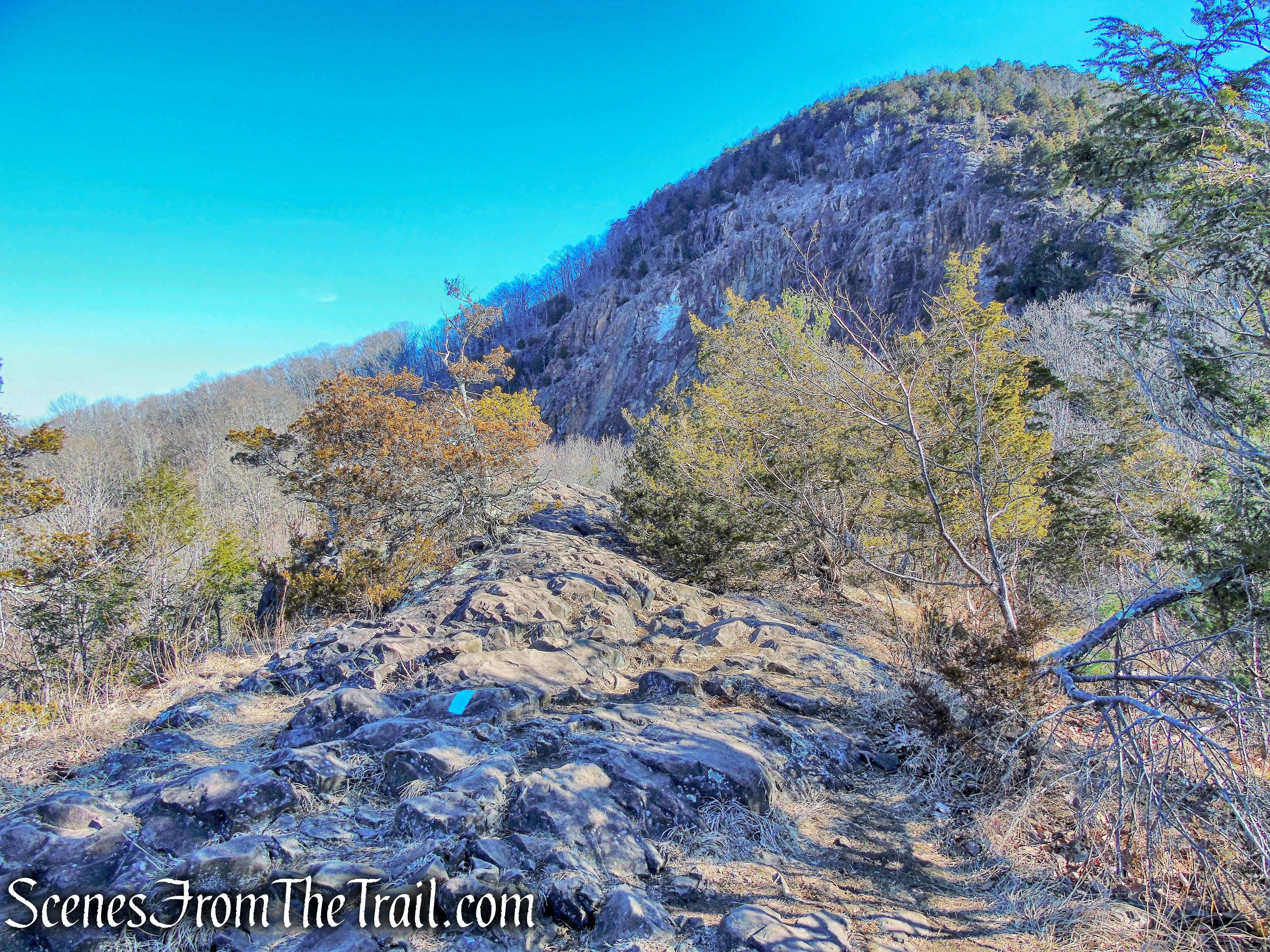
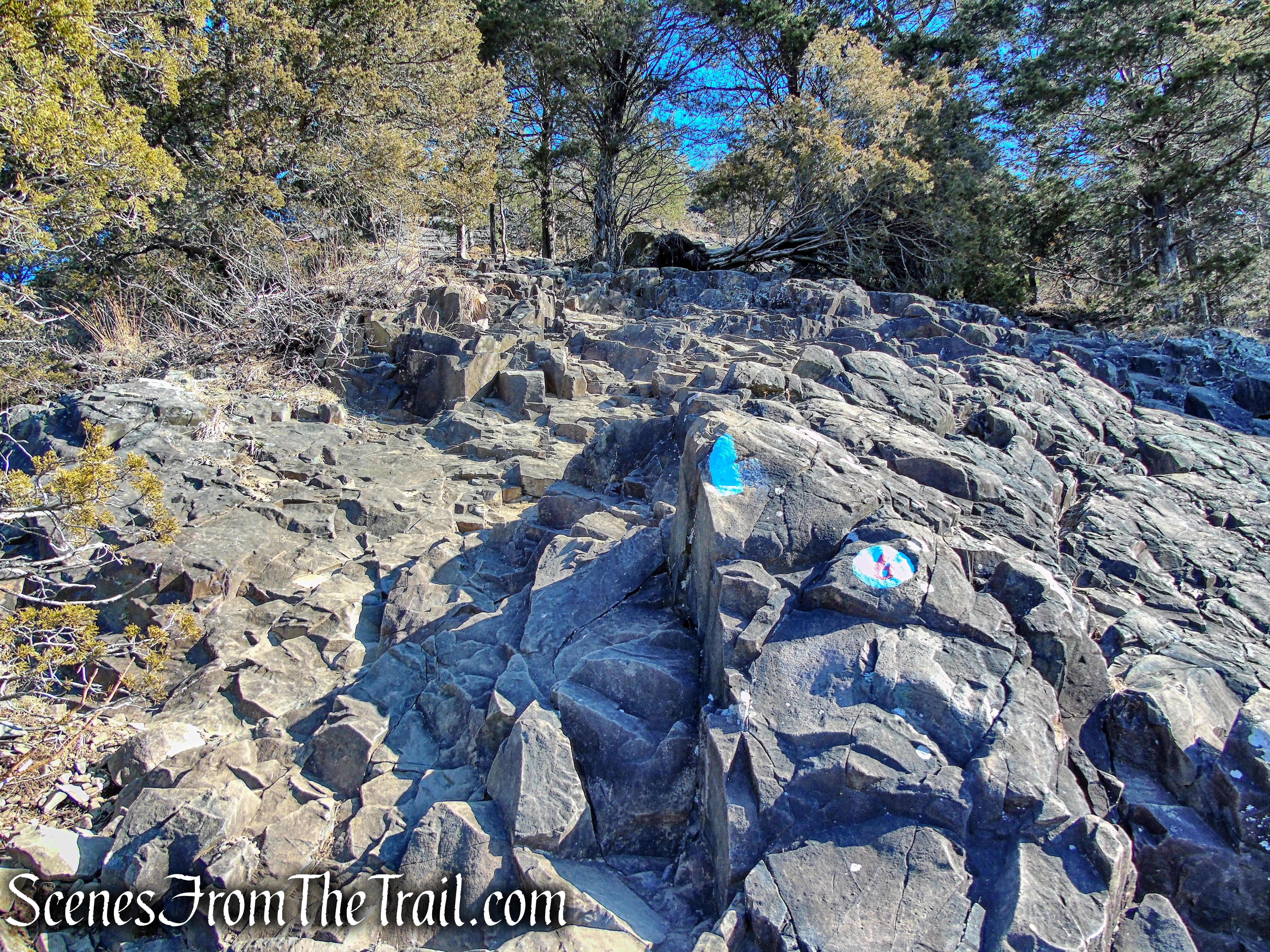
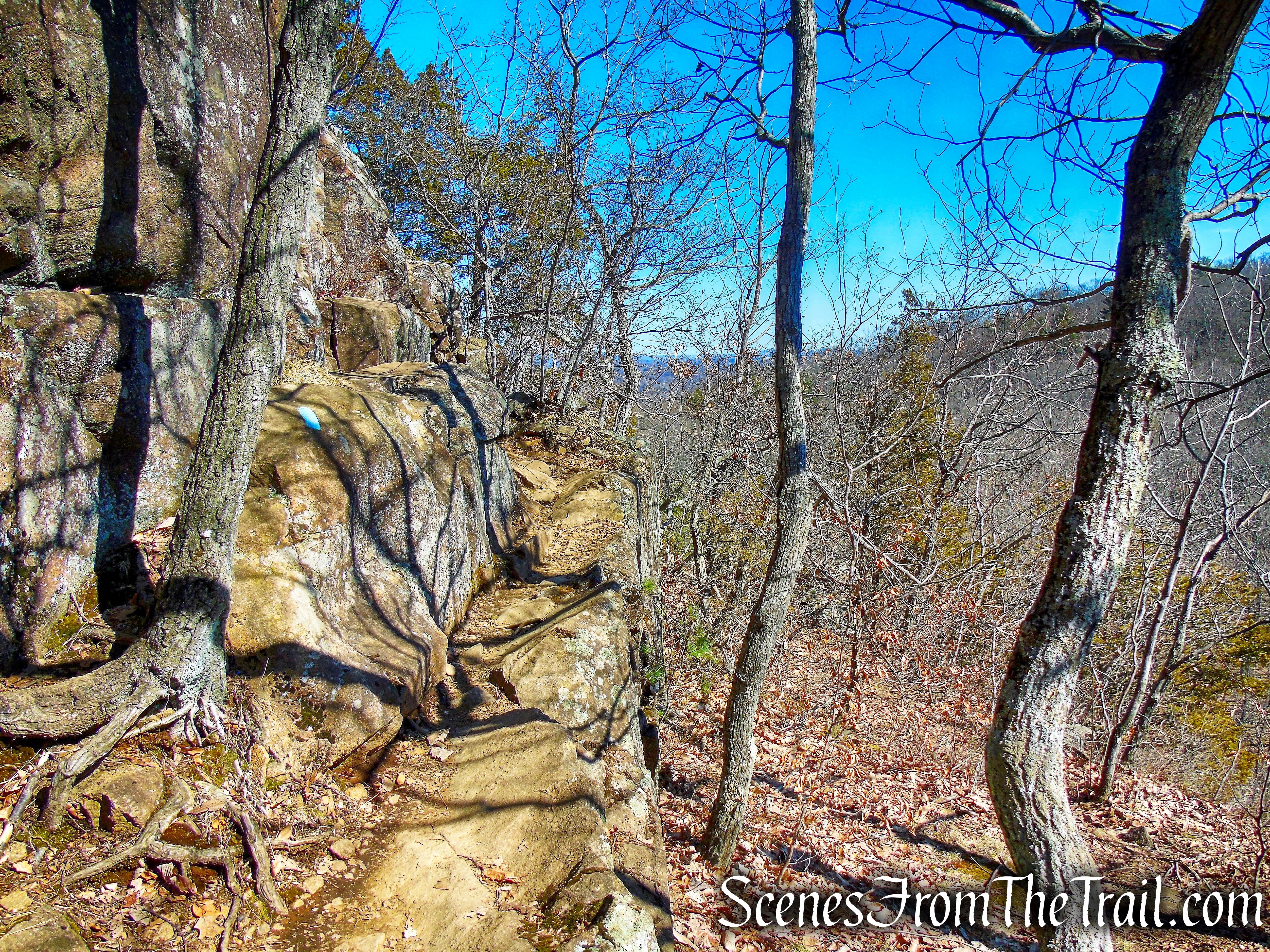
The trail steepens again just before reaching Black Rock.

Mattatuck Trail - Black Rock State Park

Mattatuck Trail – Black Rock State Park

Mattatuck Trail - Black Rock State Park

Mattatuck Trail – Black Rock State Park

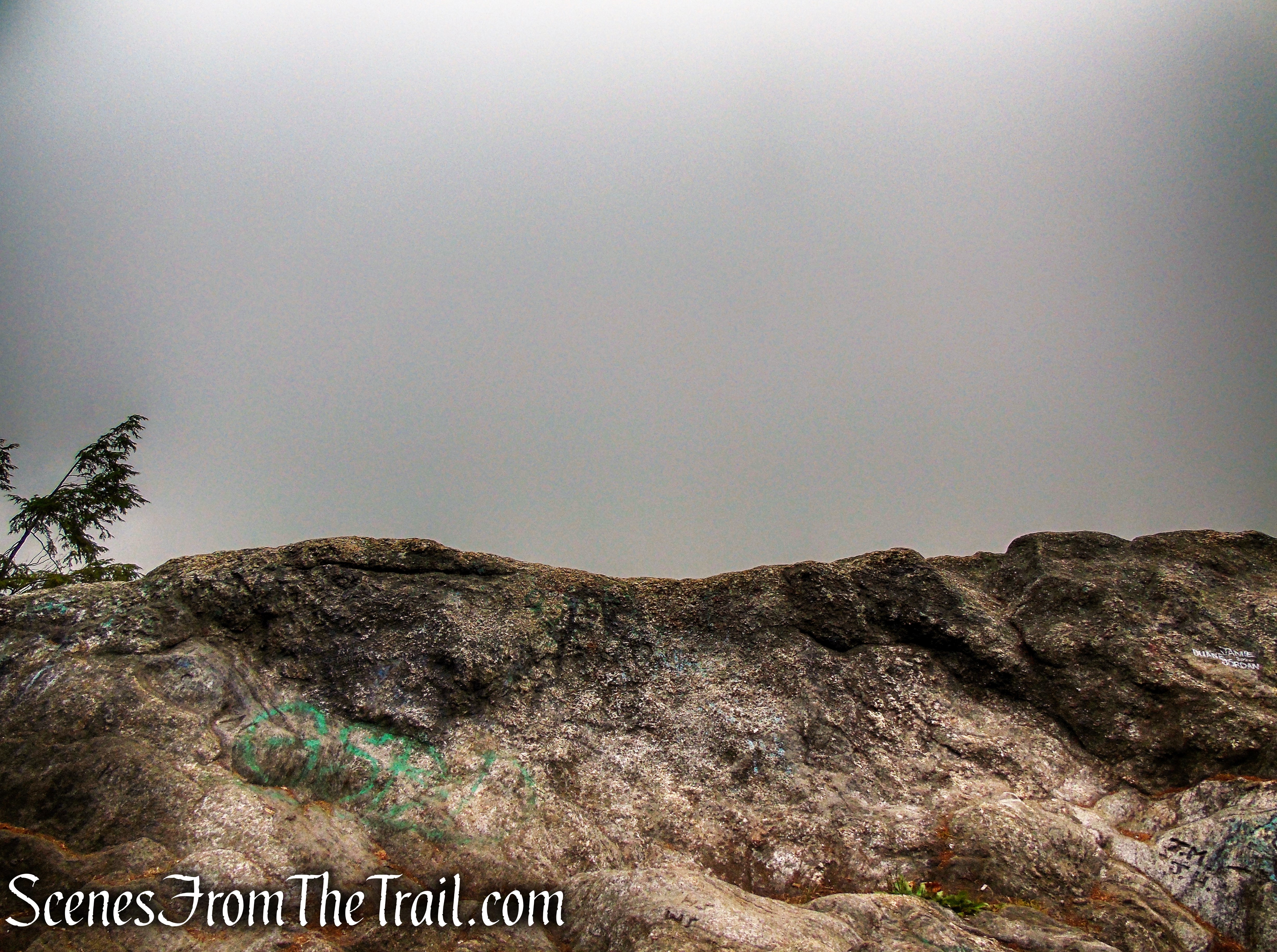
When we got to Black Rock, it was so foggy that you couldn’t see anything beyond Black Rock itself. We were a little bummed, but decided to see if we could wait out the fog.

Black Rock

Black Rock

Black Rock

Black Rock

This rock made a good spot to sit and gaze out at the fog.

Black Rock

Black Rock

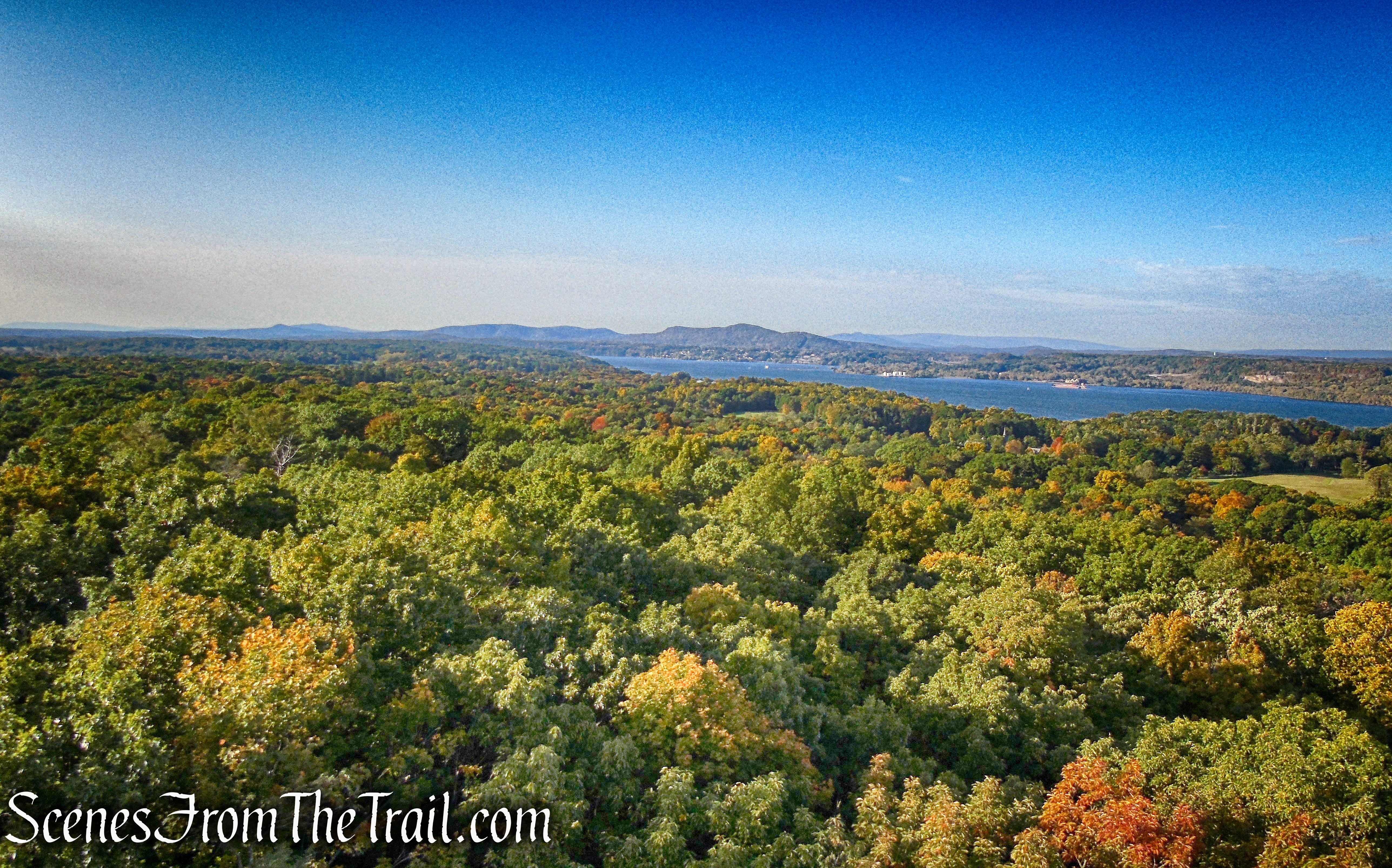
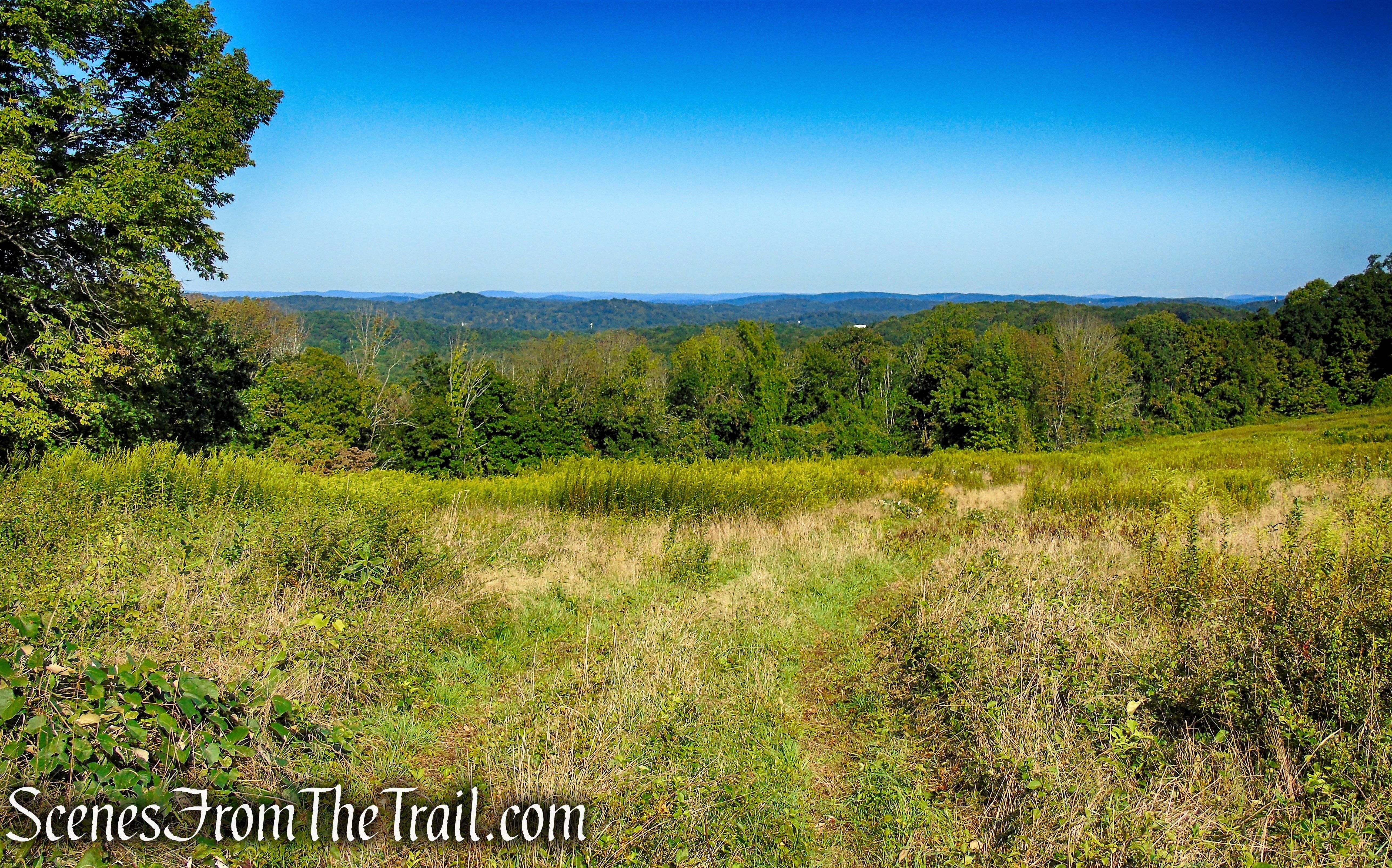
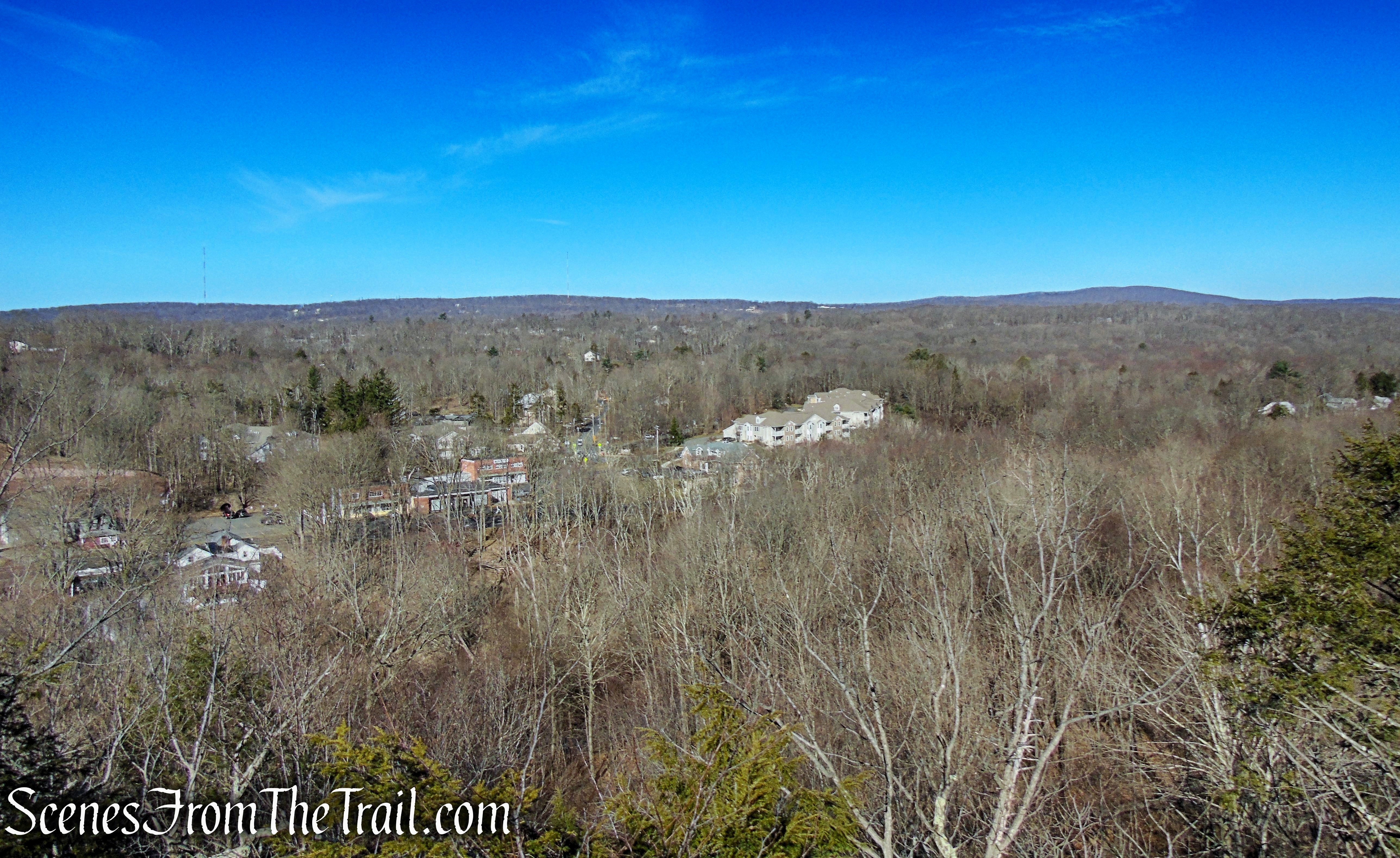
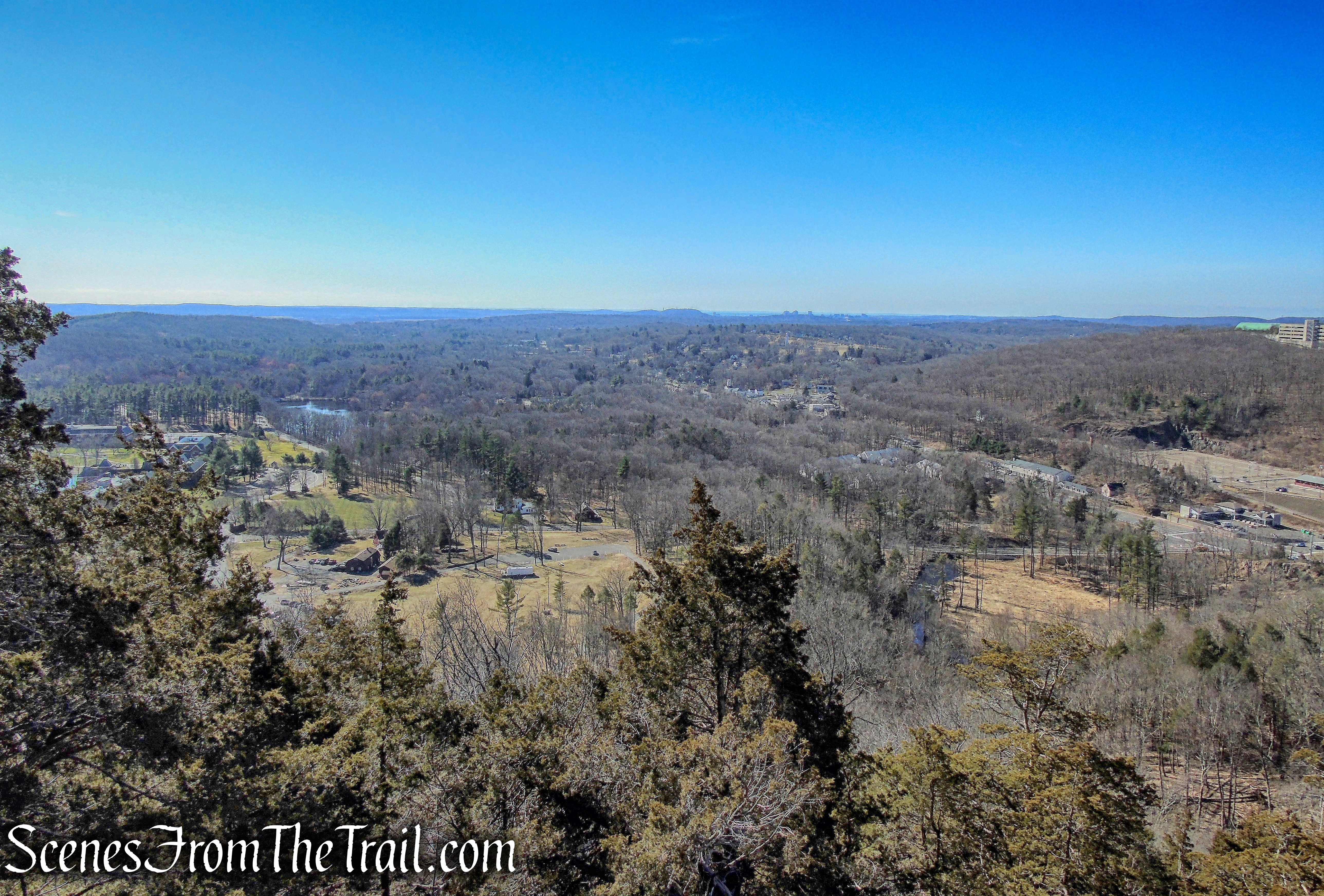
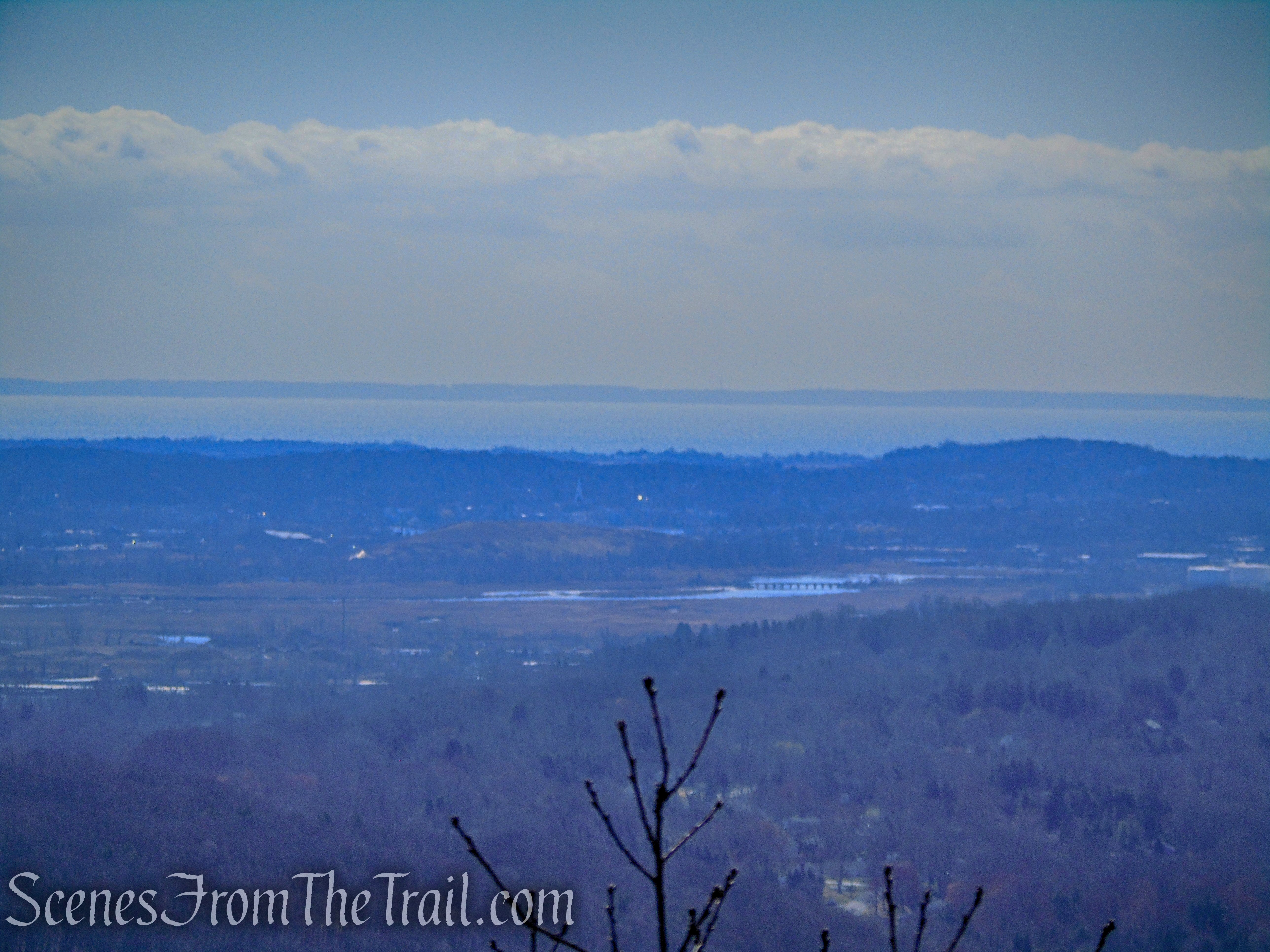
In due time, the fog began to roll away and the views opened up. The field in the distance, is alongside the entrance road, adjacent to where we parked. On the far right is Black Rock Pond, looking like a small dot.

Black Rock

Black Rock

Black Rock

Black Rock

When we were ready to go, we continued ahead on the Mattatuck Trail as it descends Black Rock.

Mattatuck Trail - Black Rock State Park

Mattatuck Trail – Black Rock State Park

Mattatuck Trail - Black Rock State Park

Mattatuck Trail – Black Rock State Park

Mattatuck Trail - Black Rock State Park

Mattatuck Trail – Black Rock State Park

Mattatuck Trail - Black Rock State Park

Mattatuck Trail – Black Rock State Park

In about 500 feet, the Mattatuck Trail crosses a power line corridor and reenters the woods on a woods road.

Mattatuck Trail - Black Rock State Park

Mattatuck Trail – Black Rock State Park

Mattatuck Trail - Black Rock State Park

Mattatuck Trail – Black Rock State Park

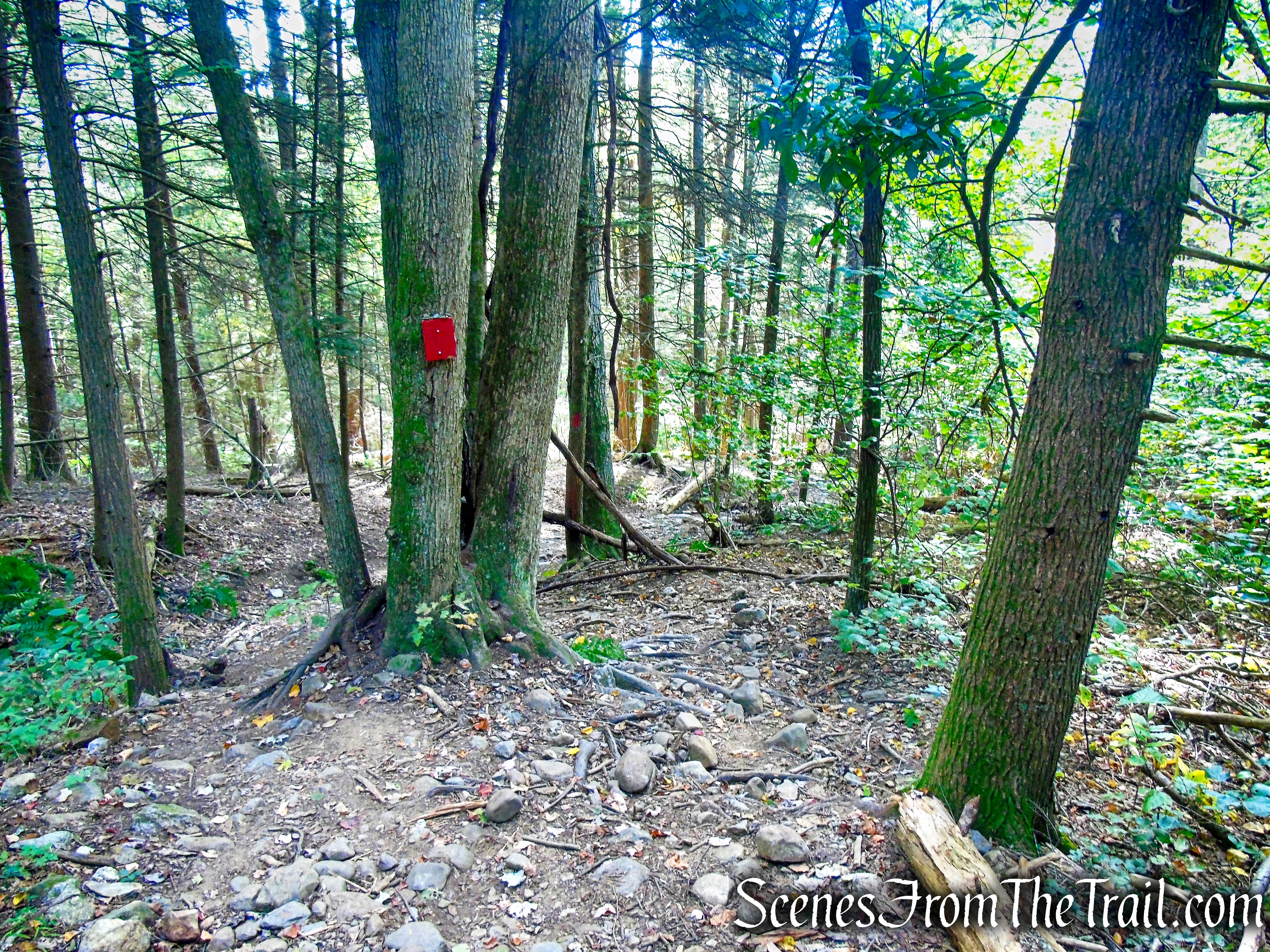
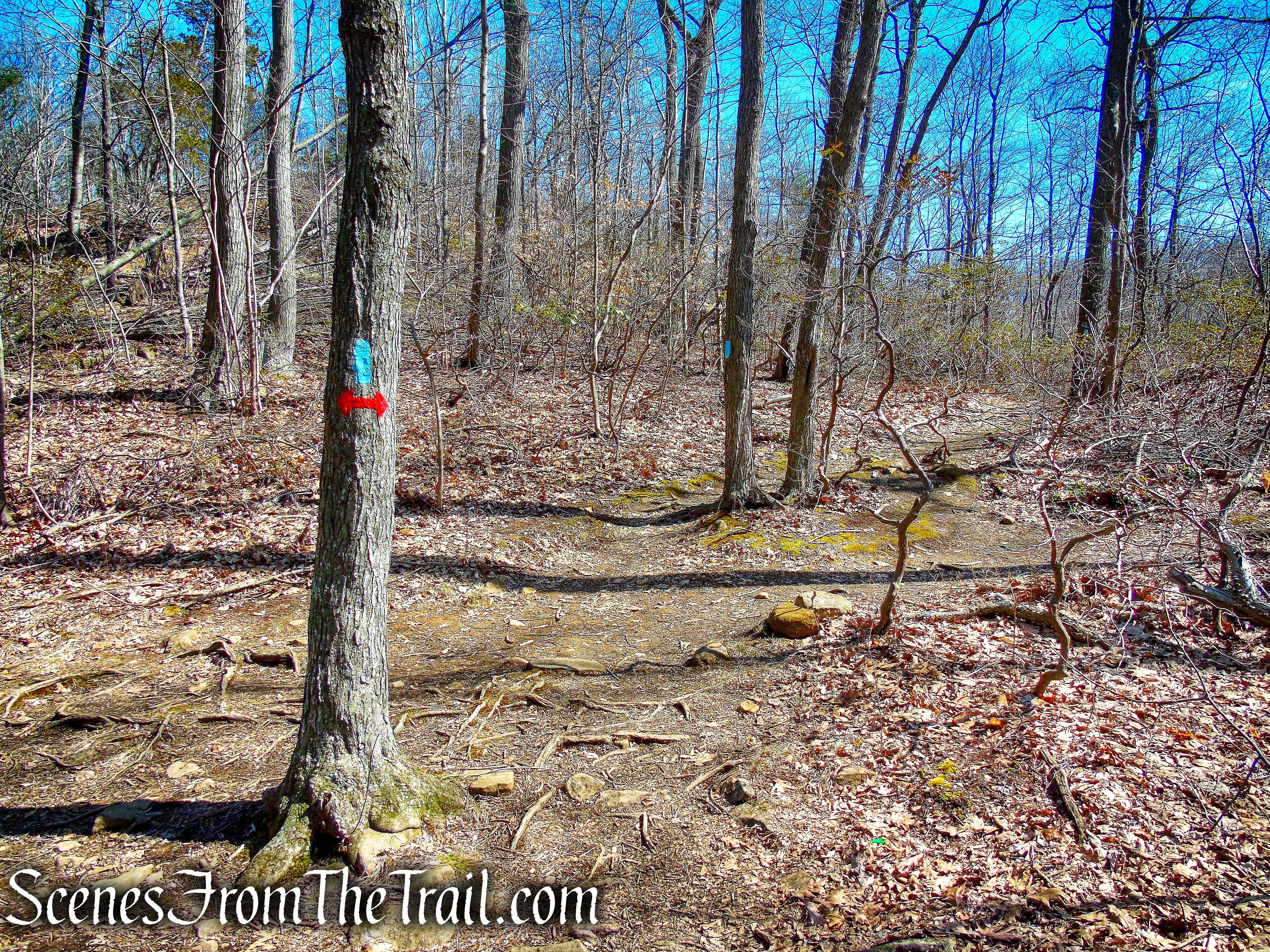
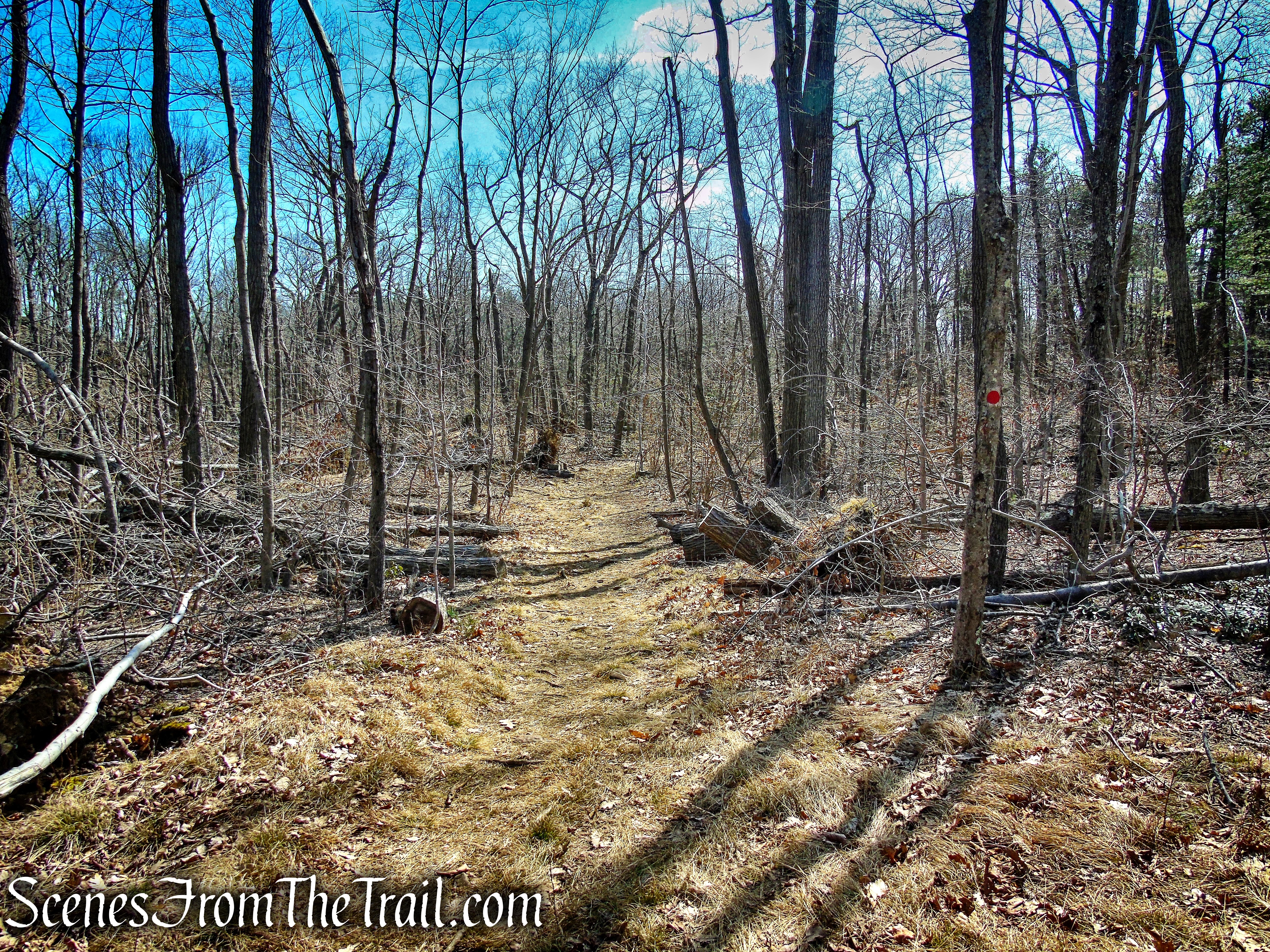
In about 400 feet, the Mattatuck Trail crosses another woods road. The Red Trail begins here, so we turned right, leaving the Mattatuck Trail and now following the red blazes. In another 400 feet, the Red Trail crosses the power line corridor again as it heads southeast.

turn right on Red Trail

turn right on Red Trail

Red Trail - Black Rock State Park

Red Trail – Black Rock State Park

Red Trail - Black Rock State Park

Red Trail – Black Rock State Park

Red Trail - Black Rock State Park

Red Trail – Black Rock State Park

Red Trail - Black Rock State Park

Red Trail – Black Rock State Park

Red Trail - Black Rock State Park

Red Trail – Black Rock State Park

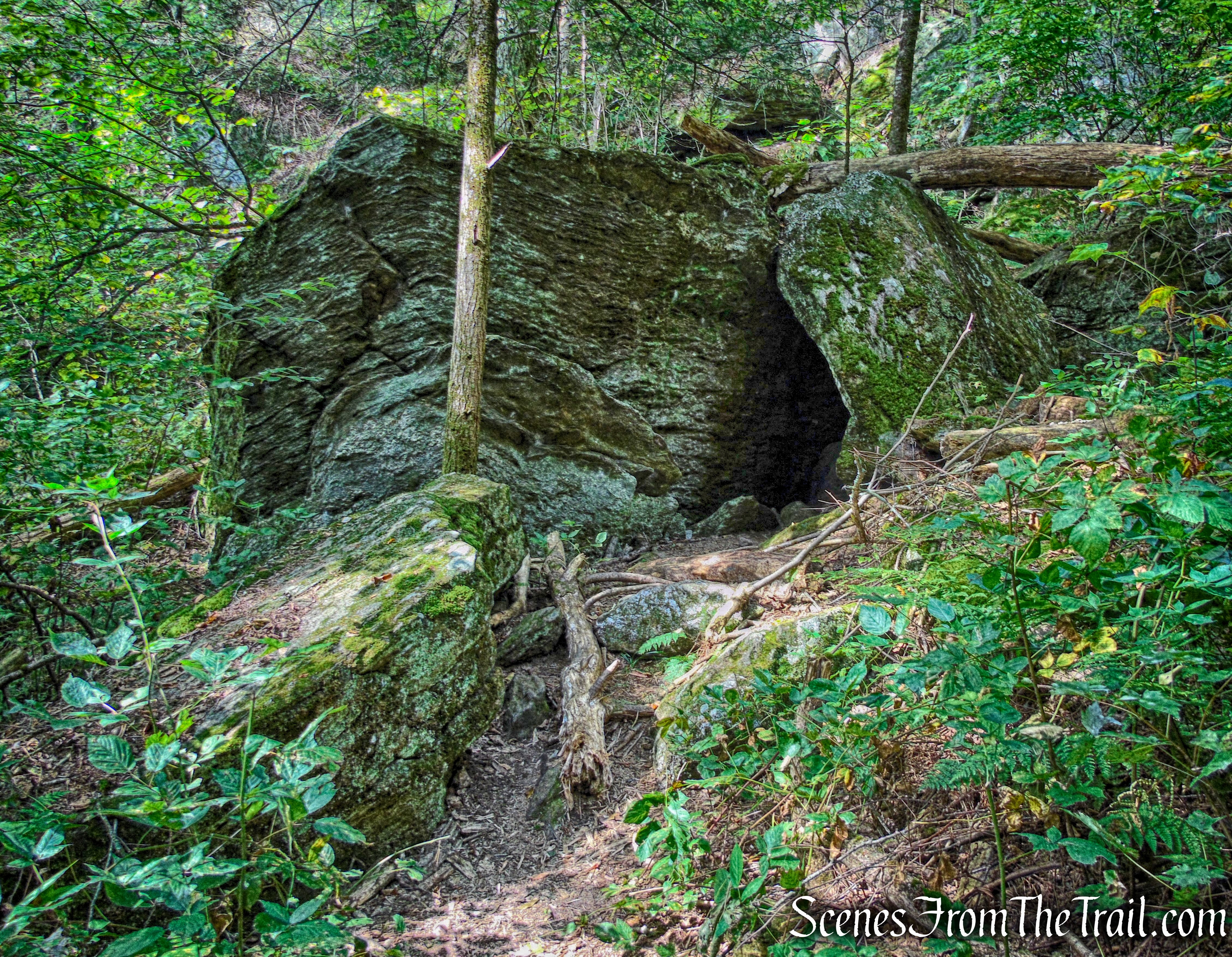
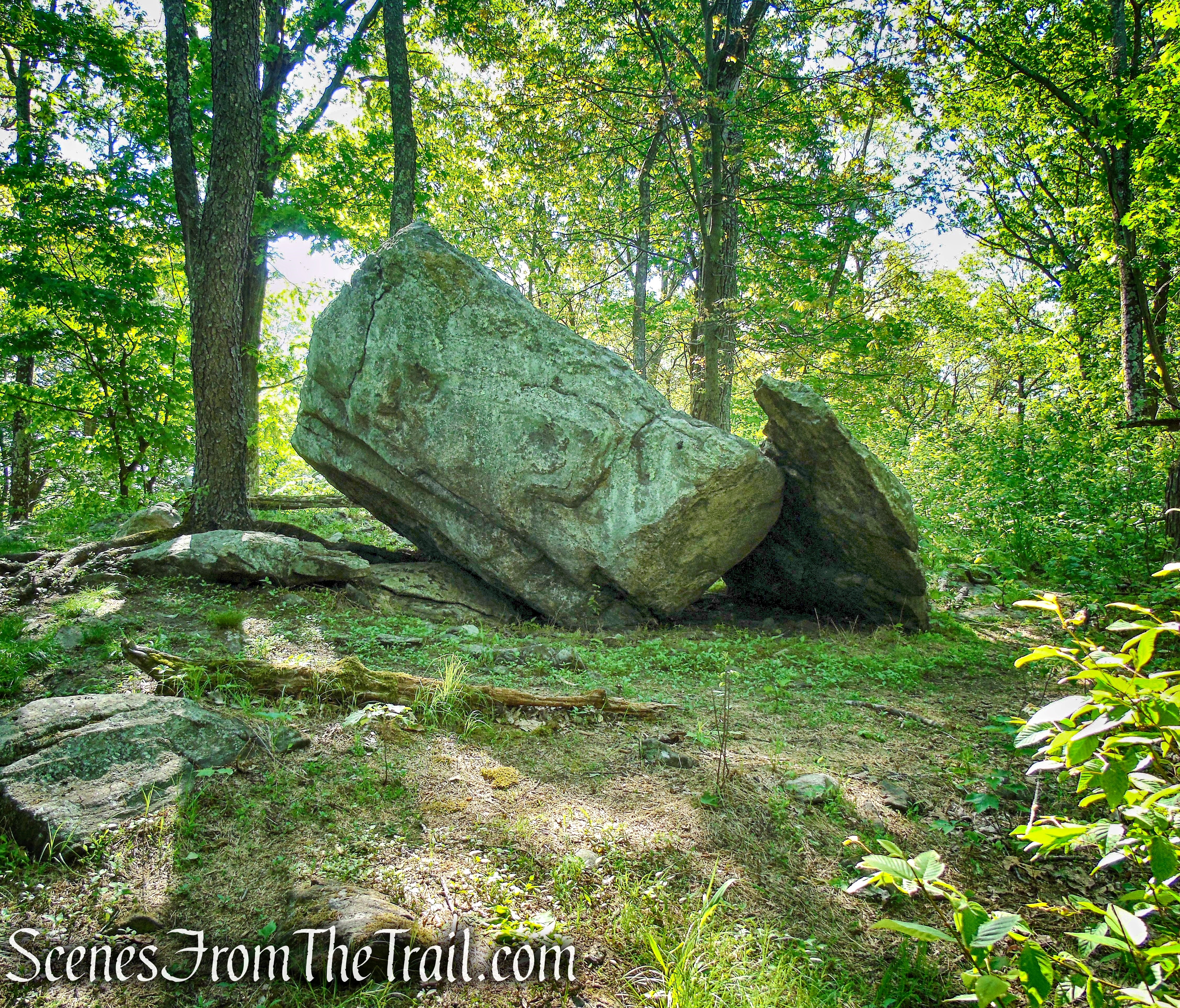
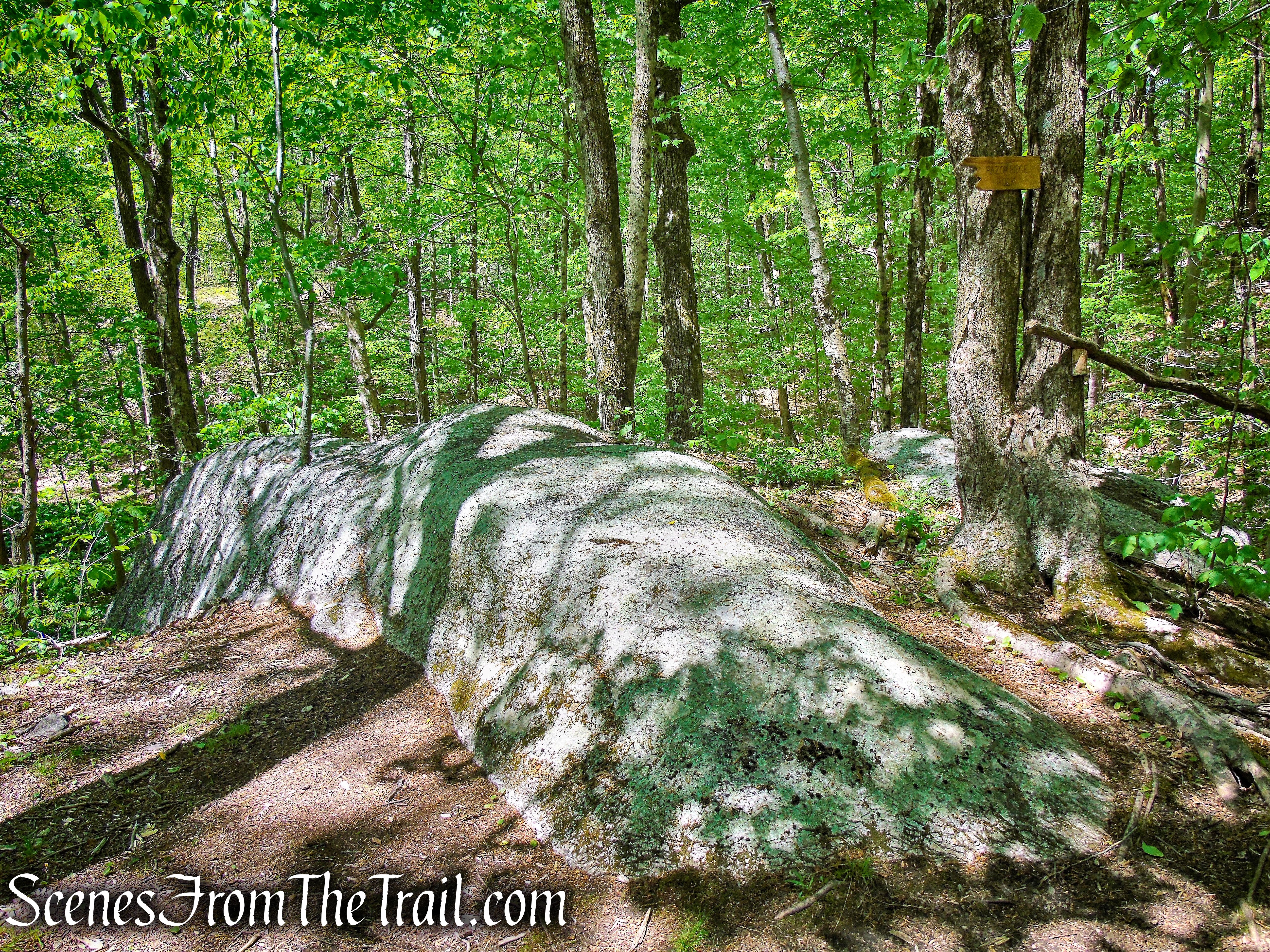
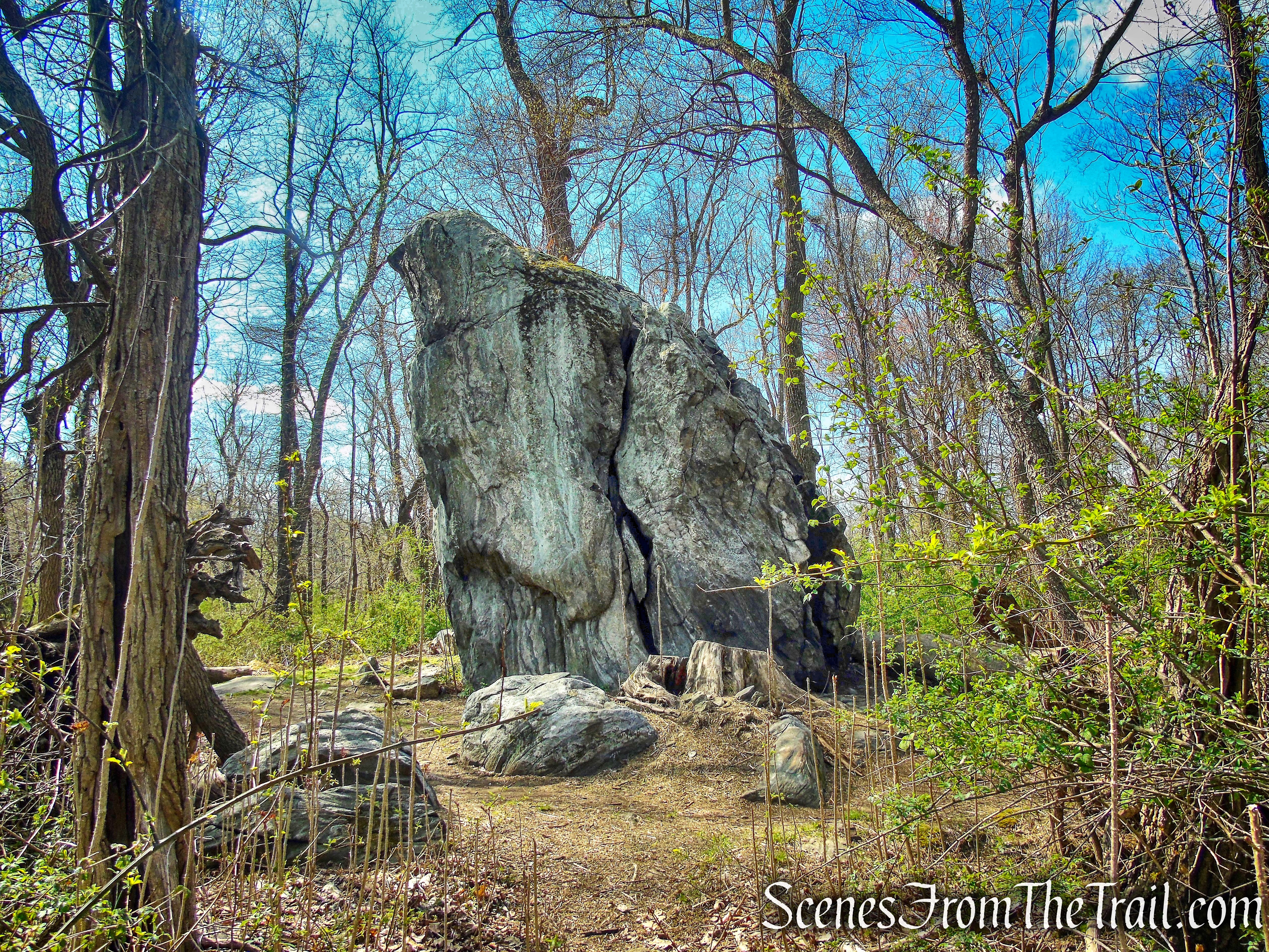
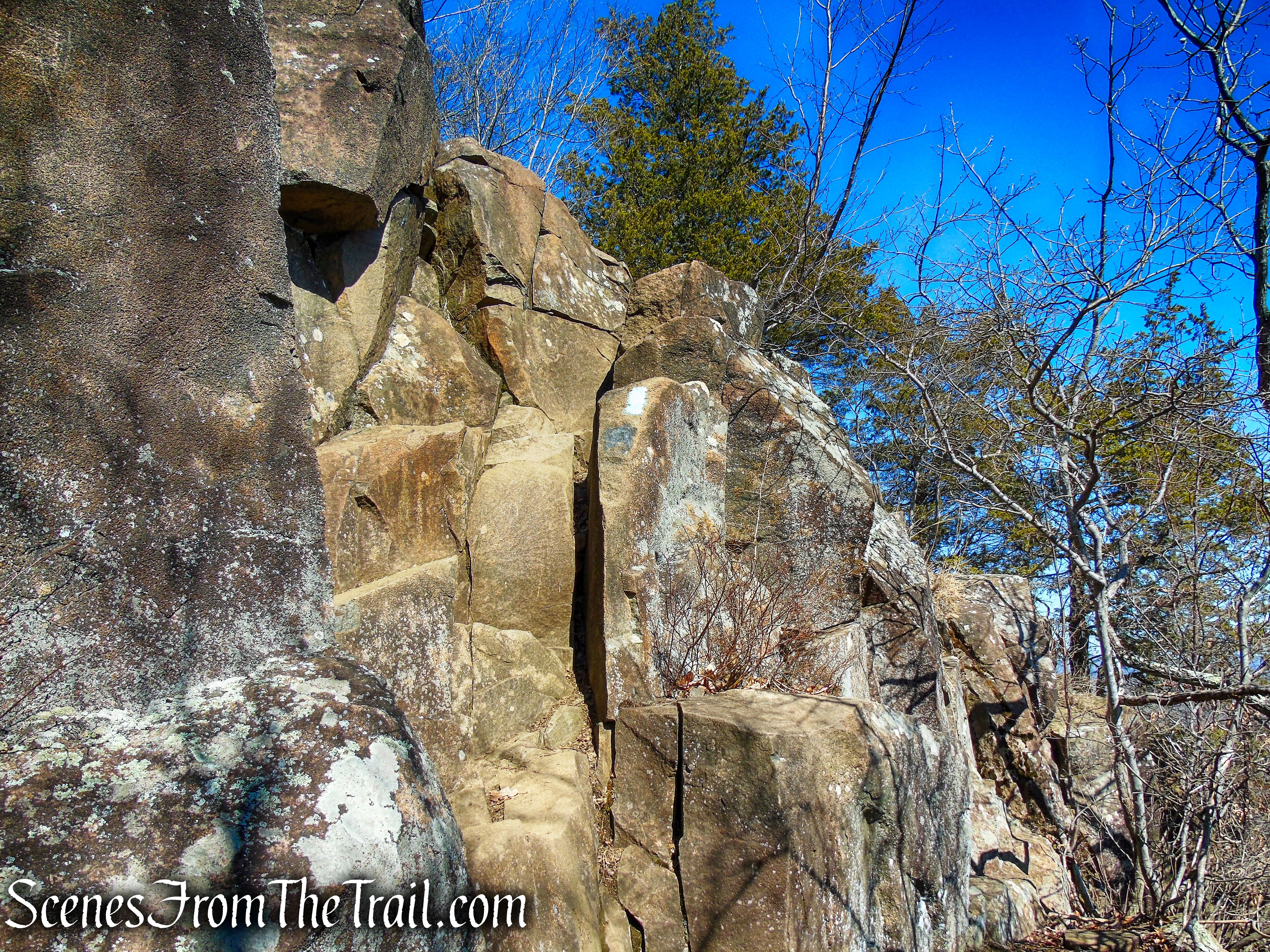
An interesting rock formation along the Red Trail.

Red Trail - Black Rock State Park

Red Trail – Black Rock State Park

Red Trail – Black Rock State Park

Red Trail – Black Rock State Park

We followed the Red Trail until its terminus, at a junction with the Mattatuck Trail, where we turned left, now retracing our steps from earlier in the hike.

turn left on Mattatuck Trail

turn left on Mattatuck Trail

As the blue blazes veer right, we turned left on the unmarked woods road, crossing the small wooden footbridge, then turning right and crossing the steel footbridge.

turn left on woods road

turn left on woods road

woods road - Black Rock State Park

woods road – Black Rock State Park

footbridge – Black Rock State Park

footbridge – Black Rock State Park

We took a walk over by Black Rock Pond to get another look then made our way back to the parking lot via the paved park road.

Black Rock Pond

Black Rock Pond

On the way back down the park road, Black Rock is visible in the distance.

Black Rock

Black Rock

After walking to the vehicle and gathering up our lunch supplies. We walked back to this spot and spent a few hours here. There are several picnic tables and grills scattered about for one to enjoy a picnic or a barbecue.

Black Rock State Park

Black Rock State Park

Black Rock Pond

Black Rock Pond  


Review:

A truly beautiful park with lots of available activities. The marked trails in the park don’t provide a lot of distance, but the Mattatuck Trail offers hikers choosing to extend their hike, an option. Although the majority of the hike is on woods roads, it is still rugged enough to keep you focused. The view from Black Rock is first-rate as is the surrounding landscape. This park is definitely worth a visit if only for the view.

Pros:

Black Rock, Black Rock Pond, scenic views, rugged terrain, well marked trails.

Cons:

N/A


Take a hike!

Black Rock State Park

Black Rock State Park


Sources:

Macricostas Preserve

September 20, 2020 – Washington, Connecticut

Difficulty: Moderate

Length: Approximately 5 miles

Max elevation: 1,280 ft.– total elevation gain approximately 712 ft.

Route type: Circuit

Free Web Map: Macricostas Preserve Trail Map 2020

Avenza App Map (FREE): Macricostas Preserve Trail Map

Trailhead parking: 124 Christian St, New Preston, CT 06777

The preserve is open daily, Sunrise to Sunset

Macricostas Preserve is “Carry in-Carry out,” Do not litter.


Overview:

The Macricostas Preserve is home to 490 acres of breathtaking landscapes, rare species of birds and blooming wildflowers. This patchwork of contrasting terrains; forest, ridges, swamplands, meadows, and running water, encompass a taste of all those landscapes that hikers have come to love. All starting from a single trailhead tucked away in the hills of Washington, Connecticut.

Meeker Swamp is located in the center of the preserve and essentially splits the remainder of Macricostas Preserve in two halves. The rocky ridge and woodlands to the north and the meadows to the south. The swamp itself acts as the headwaters of Bee Brook, which emerges from the wetlands to meander throughout the southern half of the Preserve on its way to feed the nearby Shepaug River.

Macricostas Preserve

Macricostas Preserve

Macricostas Preserve is one of three public preserves owned by Steep Rock Association (SRA). Steep Rock Preserve and Hidden Valley Preserve are the other two. SRA is is a non-profit land trust whose mission is to conserve ecologically and historically significant landscapes in and around Washington, CT and the Shepaug River Valley and to enhance the community’s connection with nature. SRA is entirely funded by donations from visitors.


History:

At one time, the property was slated for subdivision, destined to hold hundreds of private homes. In a 1978 development project known as The Washington Glen, investors envisioned an adult community of 265 one to three bedroom homes, 190 acres of shared recreational space and a community waste treatment plant.

Purchased in 2000 in a “bargain sale” from Constantine Macricostas, the 238-acre parcel was also commonly known as “Meeker Swamp.” It was bought with a combination of funds from the Town of Washington, Connecticut’s Open Space and Watershed Land Acquisition Program, and the Steep Rock Association, via individual contributions. Contiguous to four other previously donated parcels and subsequent adjacent land acquisitions, have expanded Macricostas Preserve to its current 490 acres.

Constantine “Dino” Macricostas is a Greek-born, award-winning entrepreneur who has held private business in Brookfield since 1960, before which he attended University in Hartford and served in the US Army. He is no stranger to philanthropy, and has given generously to Western Connecticut State University, The American School of Classical Studies in Athens and to the Steep Rock Association.


Trails Overview:

There are 6 miles of trails in Macricostas Preserve, with some new trails being established which would add to the total in the near future.

Hiking trails in the northern section of Macricostas Preserve ascend the slope of Waramaug’s Rock, a forested ridge that rises to an elevation of 1280 feet and rewards those who reach the summit with an excellent overlook of picturesque Lake Waramaug in the distance.

In the southern section, the trails loop around a hay field, with a short spur trail leading to a viewing platform over Meeker Swamp.


Hike Overview:

I happen to see an image of the view from Waramaug’s Rock online and decided that I wanted to hike to that spot. I was not disappointed, as this was worth the 70 minute drive from the Lower Hudson Valley in New York. As usual in this day and age of trails being crowded, we got an early start and arrived at the trailhead shortly after 8am on a Sunday morning. There were several cars in the ample parking lot when we arrived, but when we returned to the trailhead at approximately 12:30pm, the lot was full, and vehicles waiting to park.

The plan was to hit as many of the trails and points of interest as possible. With the exception of the Pinnacle Valley Trail (0.5 mile) and the Waramaug’s Trail (1 mile), we did just that.

This hike is mostly a loop that was done clockwise, but several times we did retrace our steps.

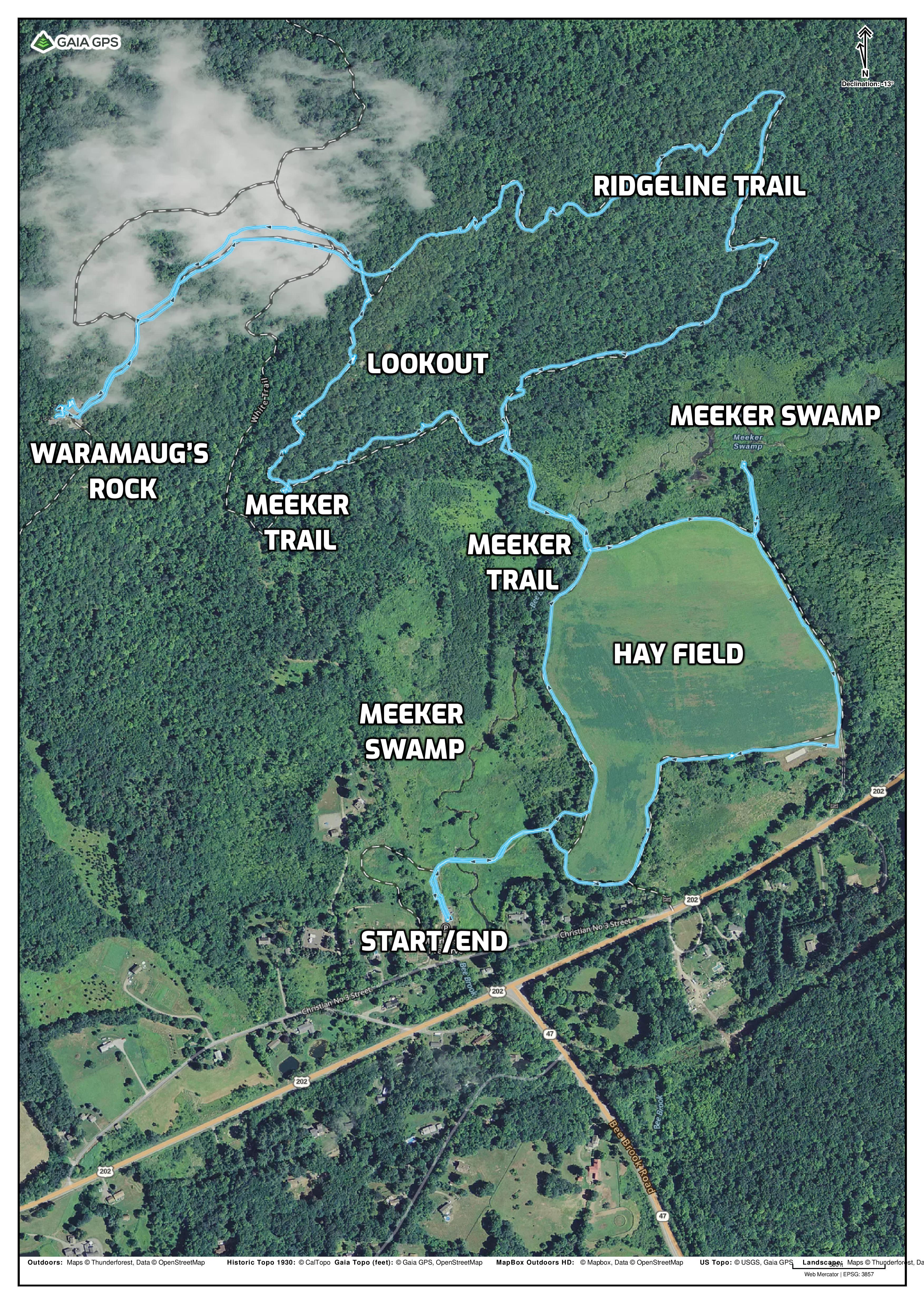
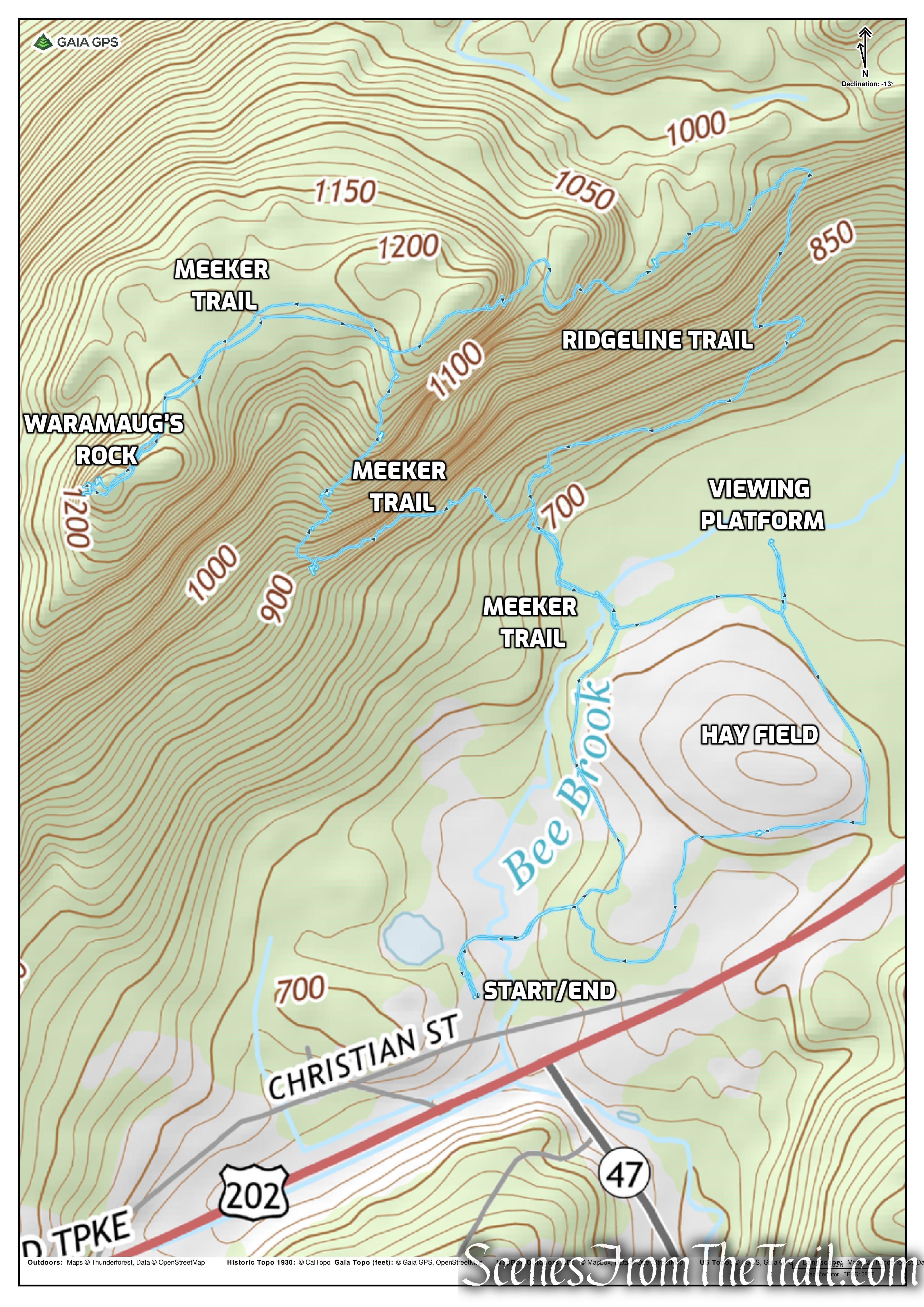
Macricostas Preserve Loop

Macricostas Preserve Loop

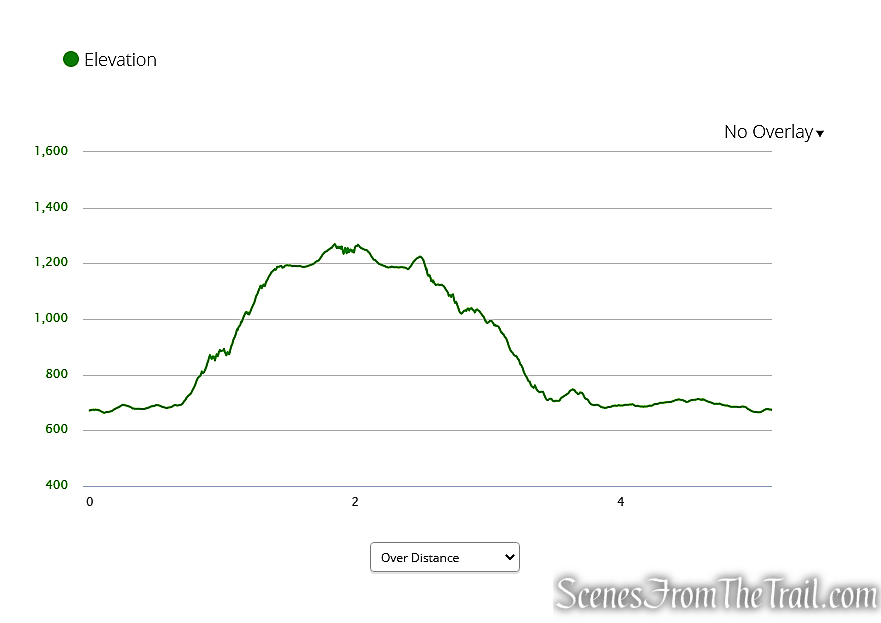
Macricostas Preserve Elevation Graph

Macricostas Preserve Elevation Graph


The Hike:

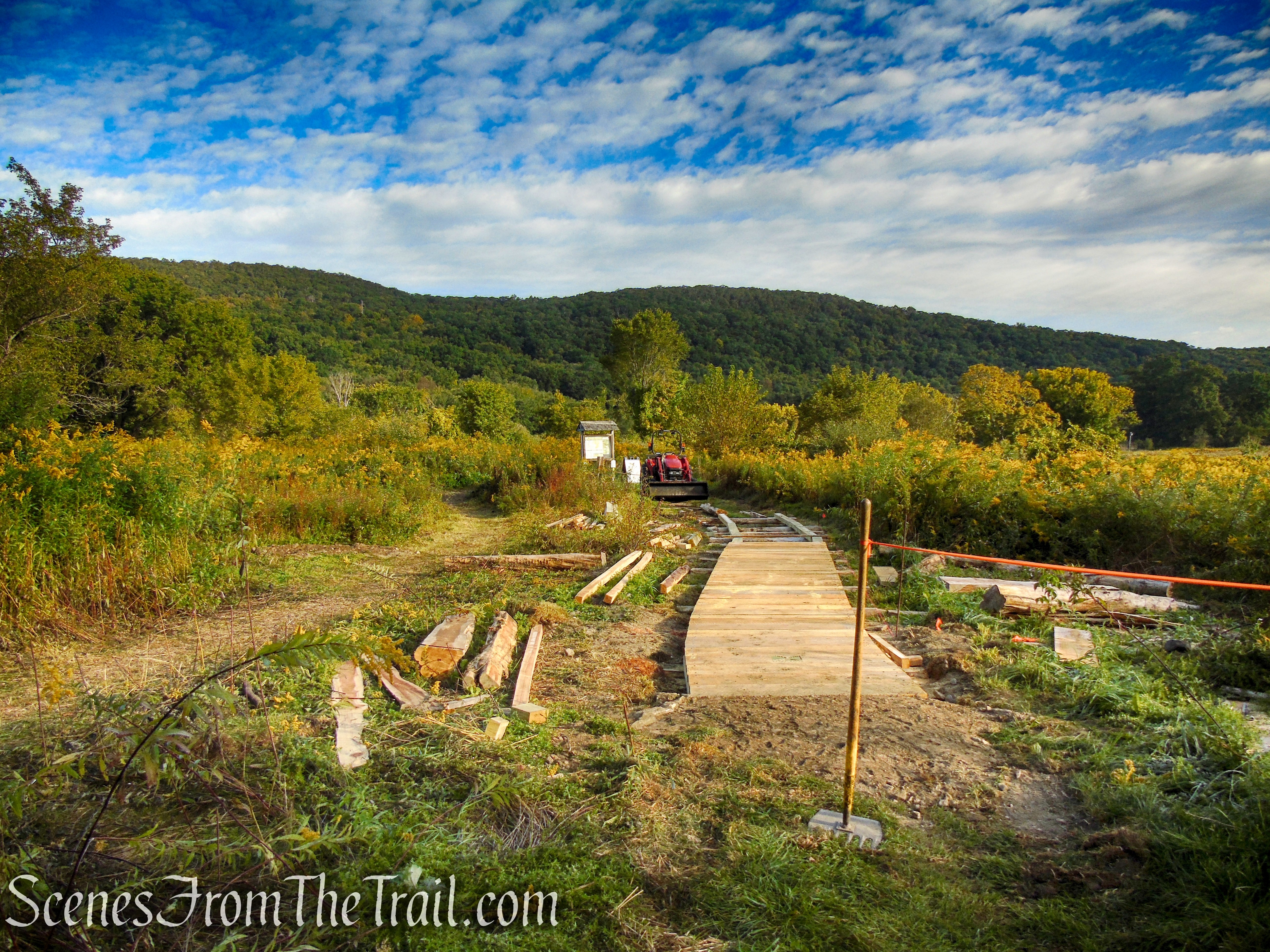
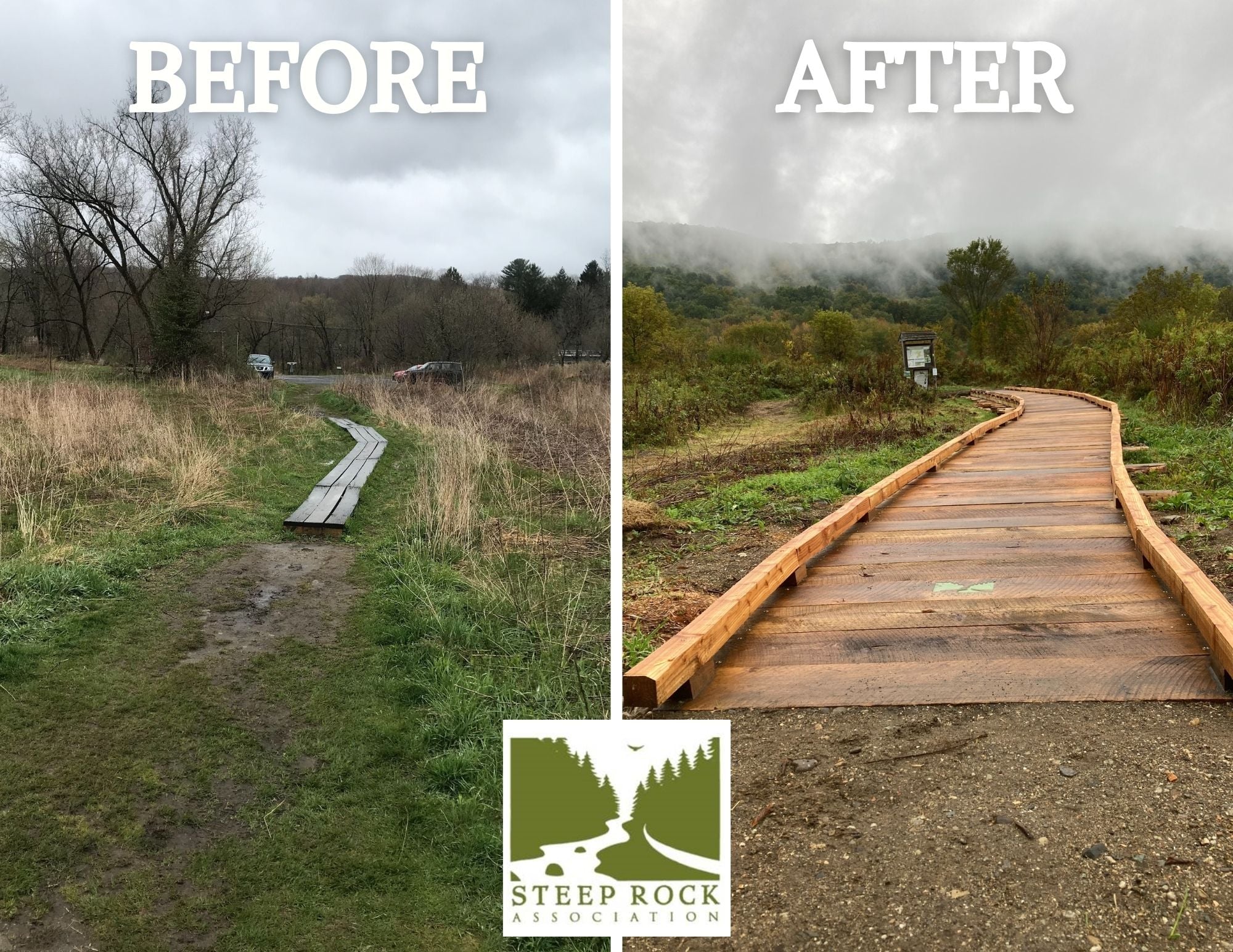
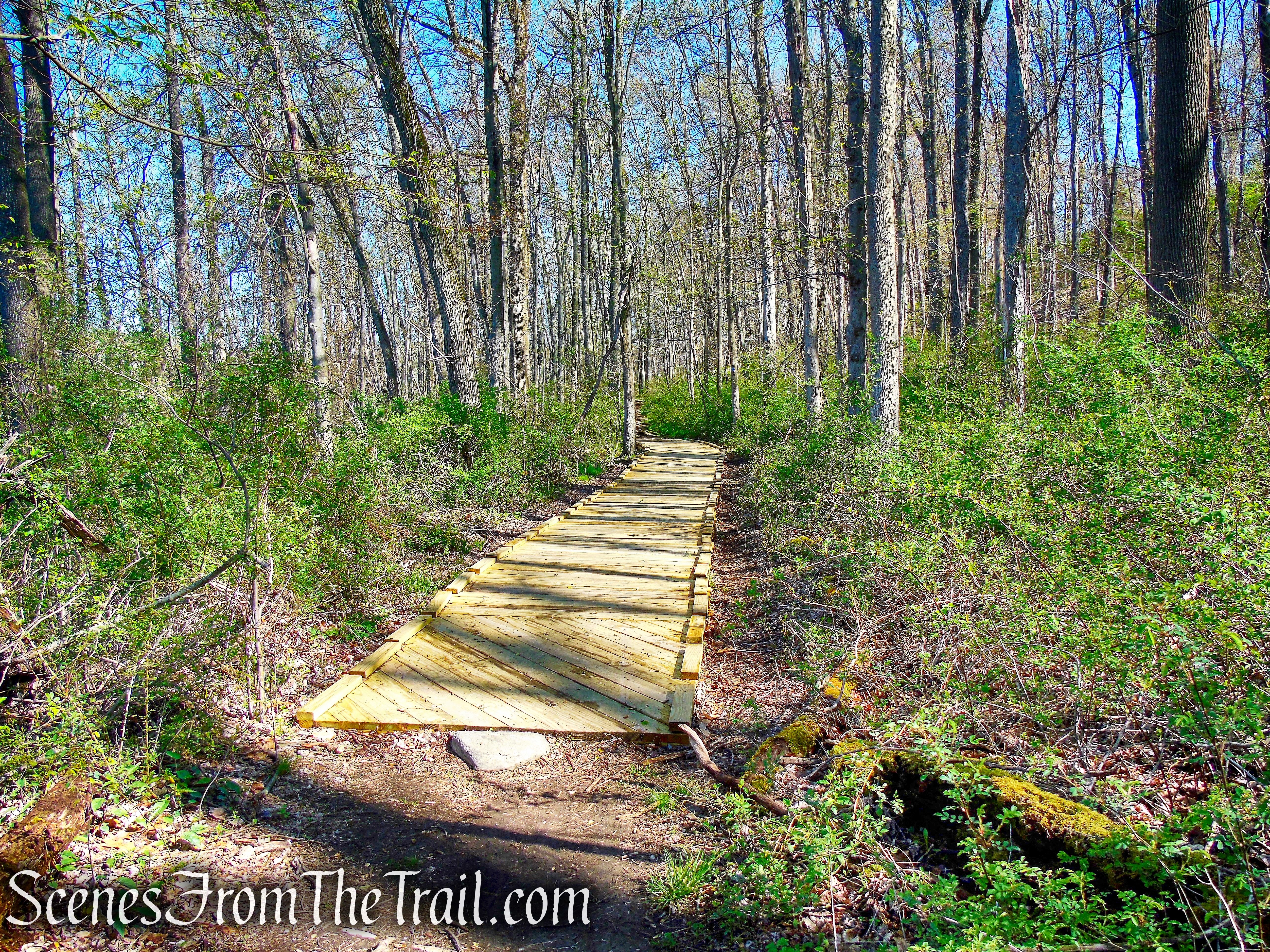
On the day of our hike, they were working on a new section of boardwalk from the parking lot to the kiosk. The work has since been completed.

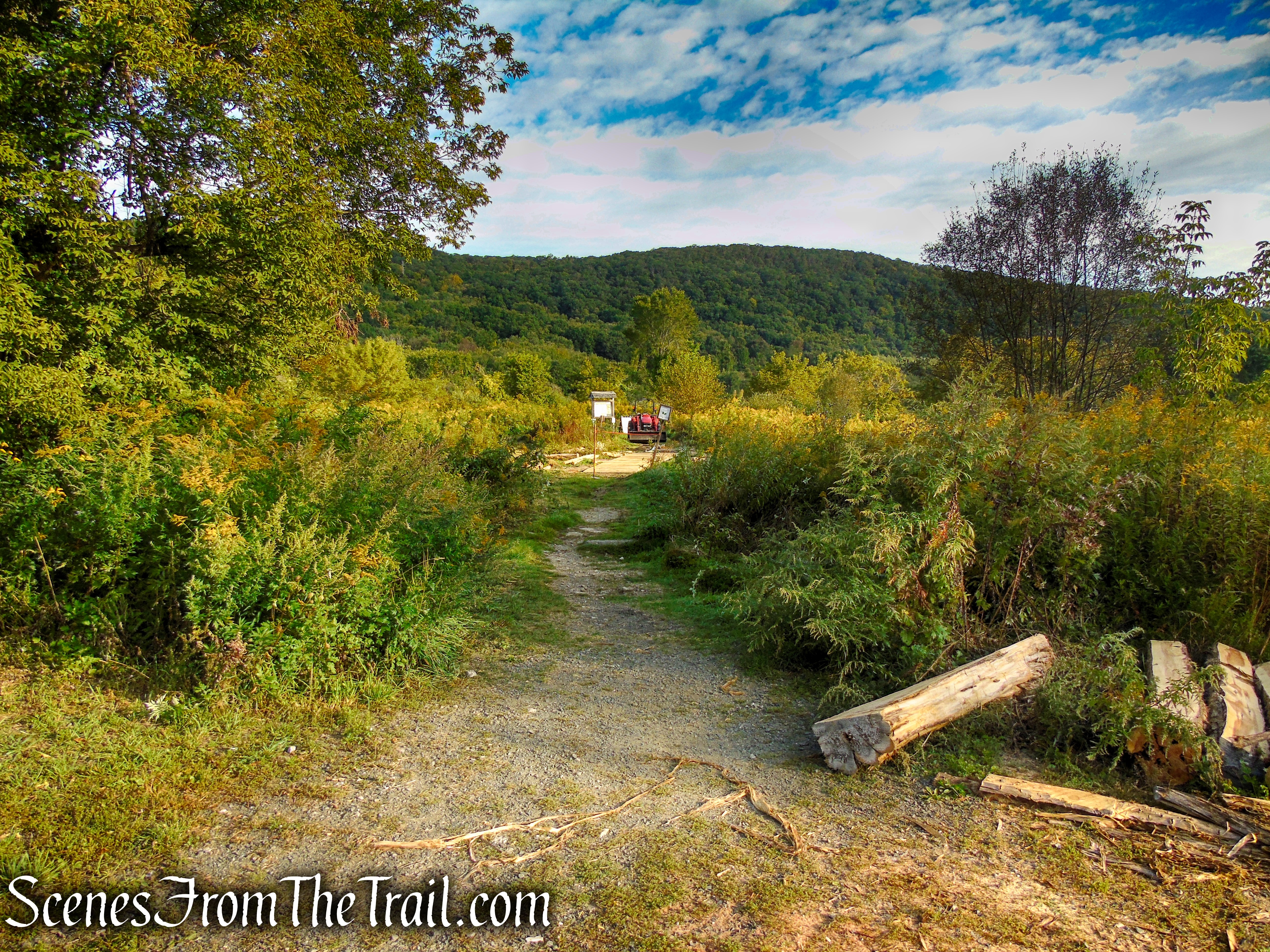
trailhead - Macricostas Preserve

trailhead – Macricostas Preserve

trailhead - Macricostas Preserve

trailhead – Macricostas Preserve

Macricostas Preserve Boardwalk

Macricostas Preserve Boardwalk

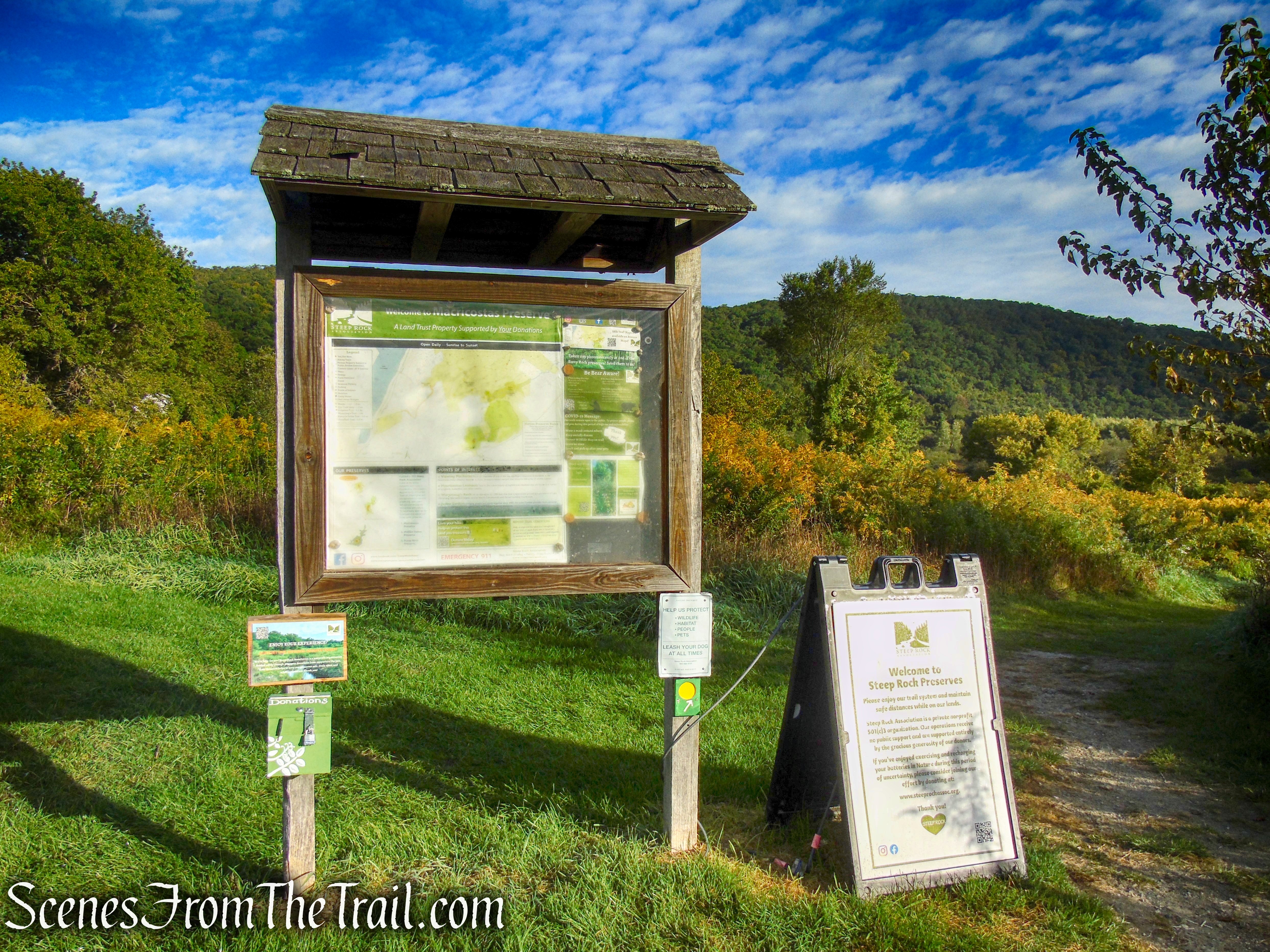
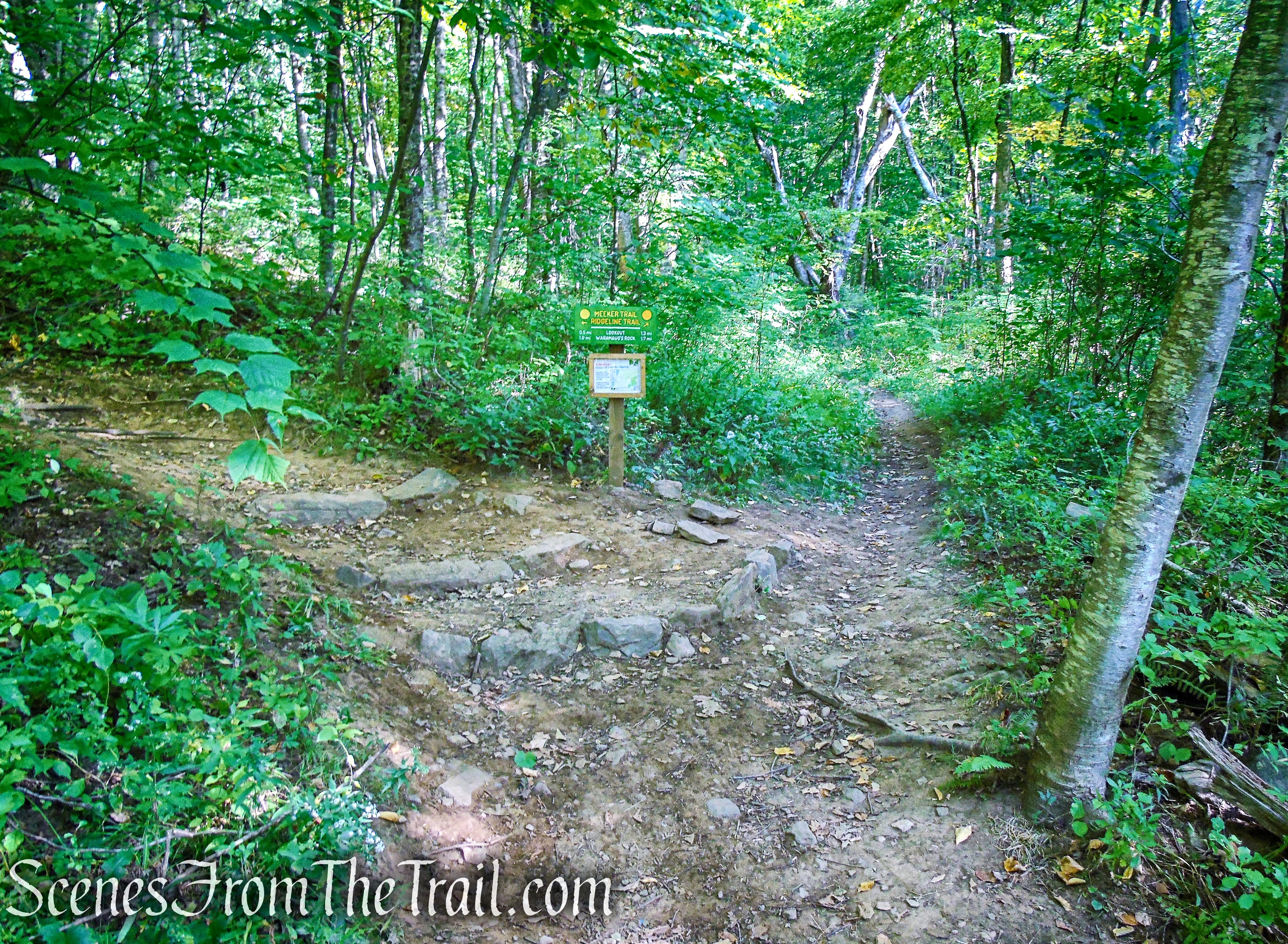
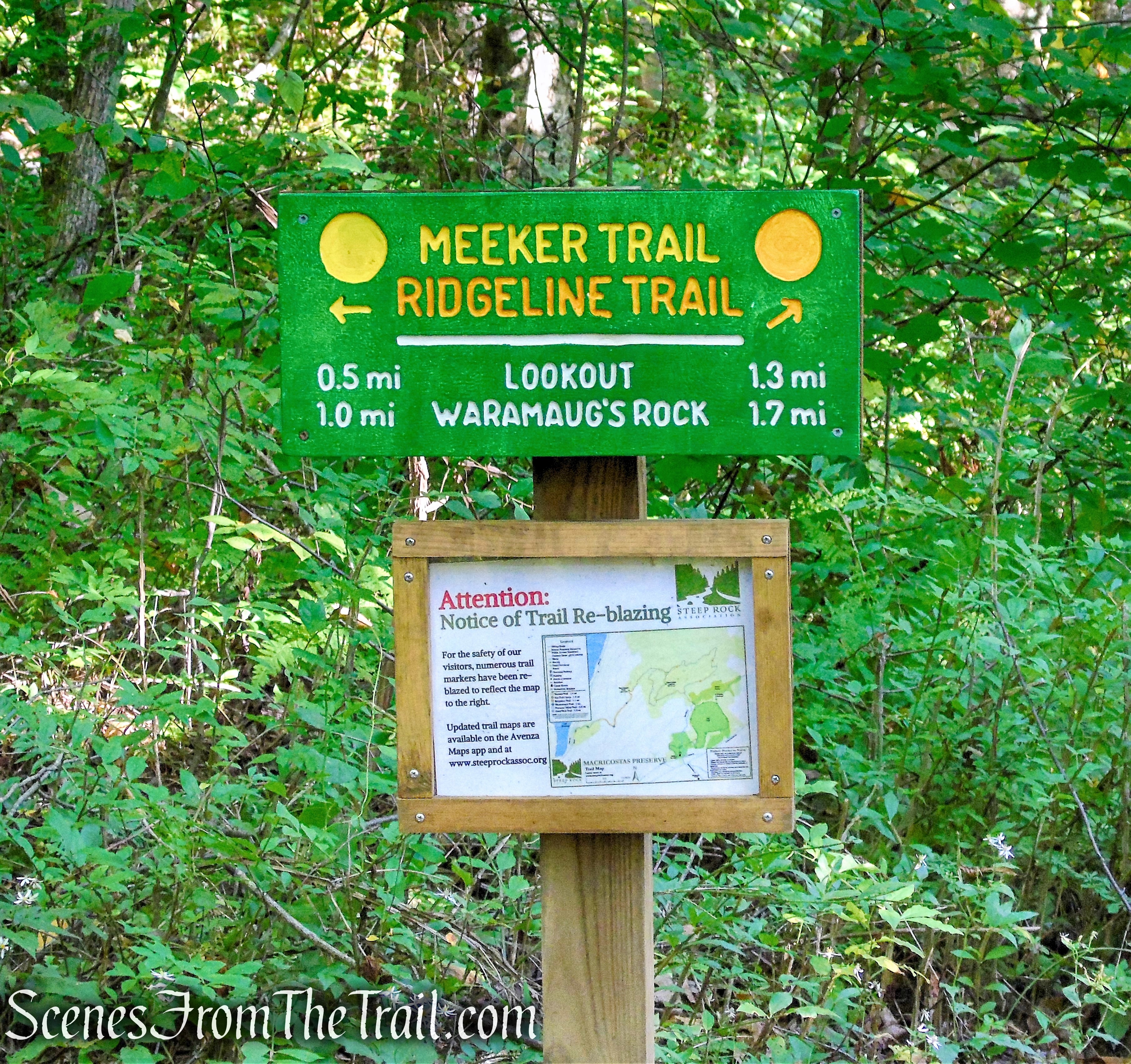
At the northern end of the parking lot, proceed ahead on a footpath that leads to the boardwalk. At the end of the boardwalk there is a kiosk marked with a yellow circle blaze. This is the start of the Meeker Trail. You will be following the yellow circles for the next 1.6 miles until you reach Waramaug’s Rock.

Meeker Trail - Macricostas Preserve

Meeker Trail – Macricostas Preserve

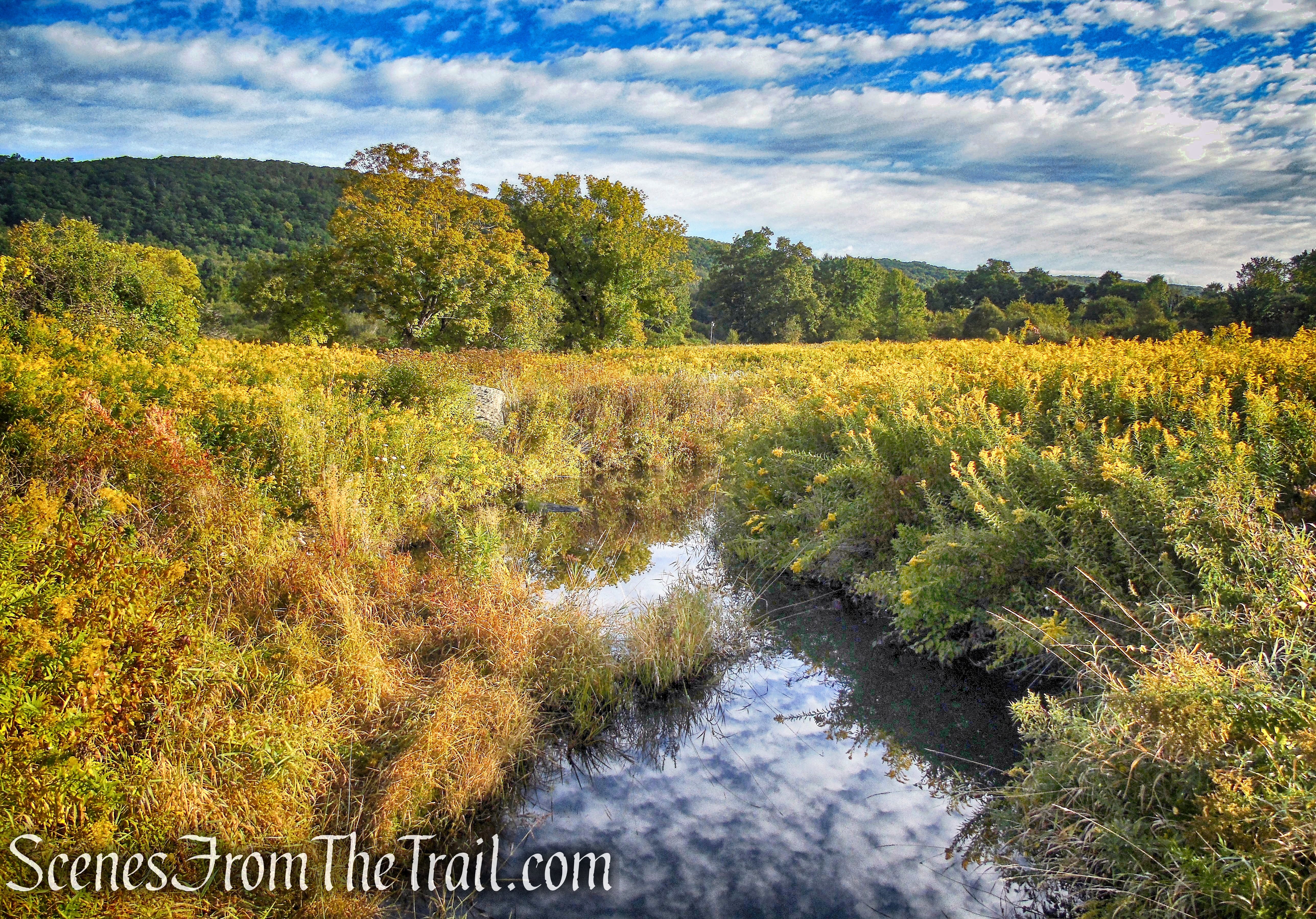
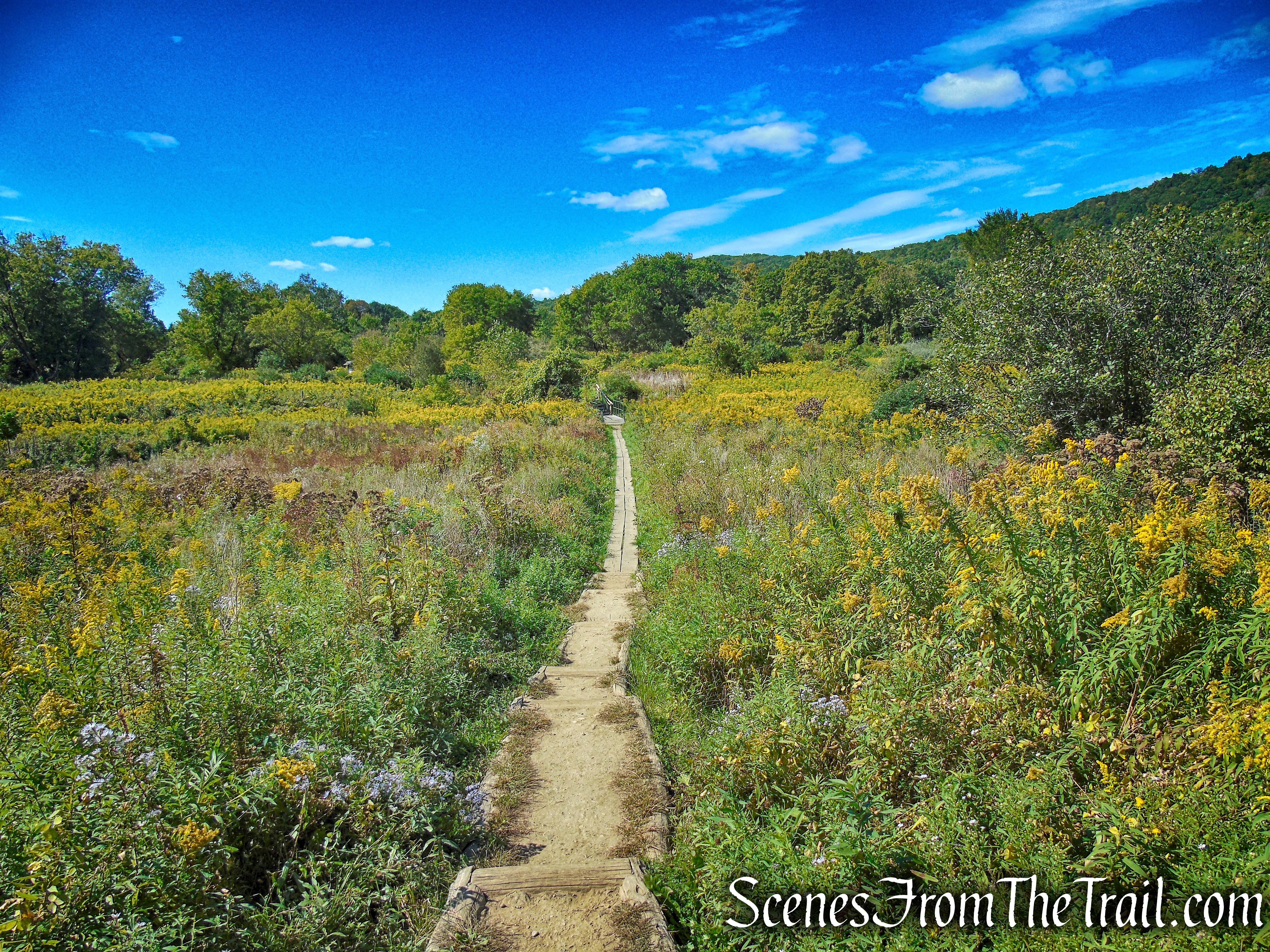
Continue ahead on the Meeker Trail which starts out level, crosses Bee Brook on a small footbridge and meanders through a large wildlife meadow. In about 450 feet after crossing the footbridge, The Meeker Trail reaches the hayfield and turns left, skirting the hayfield along the edge of the forest.

Meeker Trail - Macricostas Preserve

Meeker Trail – Macricostas Preserve 

Bee Brook - Macricostas Preserve

Bee Brook – Macricostas Preserve

Meeker Trail - Macricostas Preserve

Meeker Trail – Macricostas Preserve

Meeker Trail - Macricostas Preserve

Meeker Trail – Macricostas Preserve

Meeker Trail - Macricostas Preserve

Meeker Trail – Macricostas Preserve

In another 620 yards, the Meeker Trail turns left and passes through Meeker Swamp on wooden planks, crosses Bee Brook again on a wooden footbridge and continues on a boardwalk and more planks.

turn left to stay on Meeker Trail

turn left to stay on Meeker Trail

turn left to stay on Meeker Trail

turn left to stay on Meeker Trail

Meeker Trail - Macricostas Preserve

Meeker Trail – Macricostas Preserve

Meeker Trail - Macricostas Preserve

Meeker Trail – Macricostas Preserve

Meeker Trail - Macricostas Preserve

Meeker Trail – Macricostas Preserve

In about another 860 feet, the Meeker Trail comes to a junction with the orange-circle-blazed Ridgeline Trail, which begins on the right. The Ridgeline Trail is your return route, for now, bear left at this junction and continue following the yellow circles.

turn left to remain on Meeker Trail

turn left to remain on Meeker Trail

turn left to remain on Meeker Trail

turn left to remain on Meeker Trail

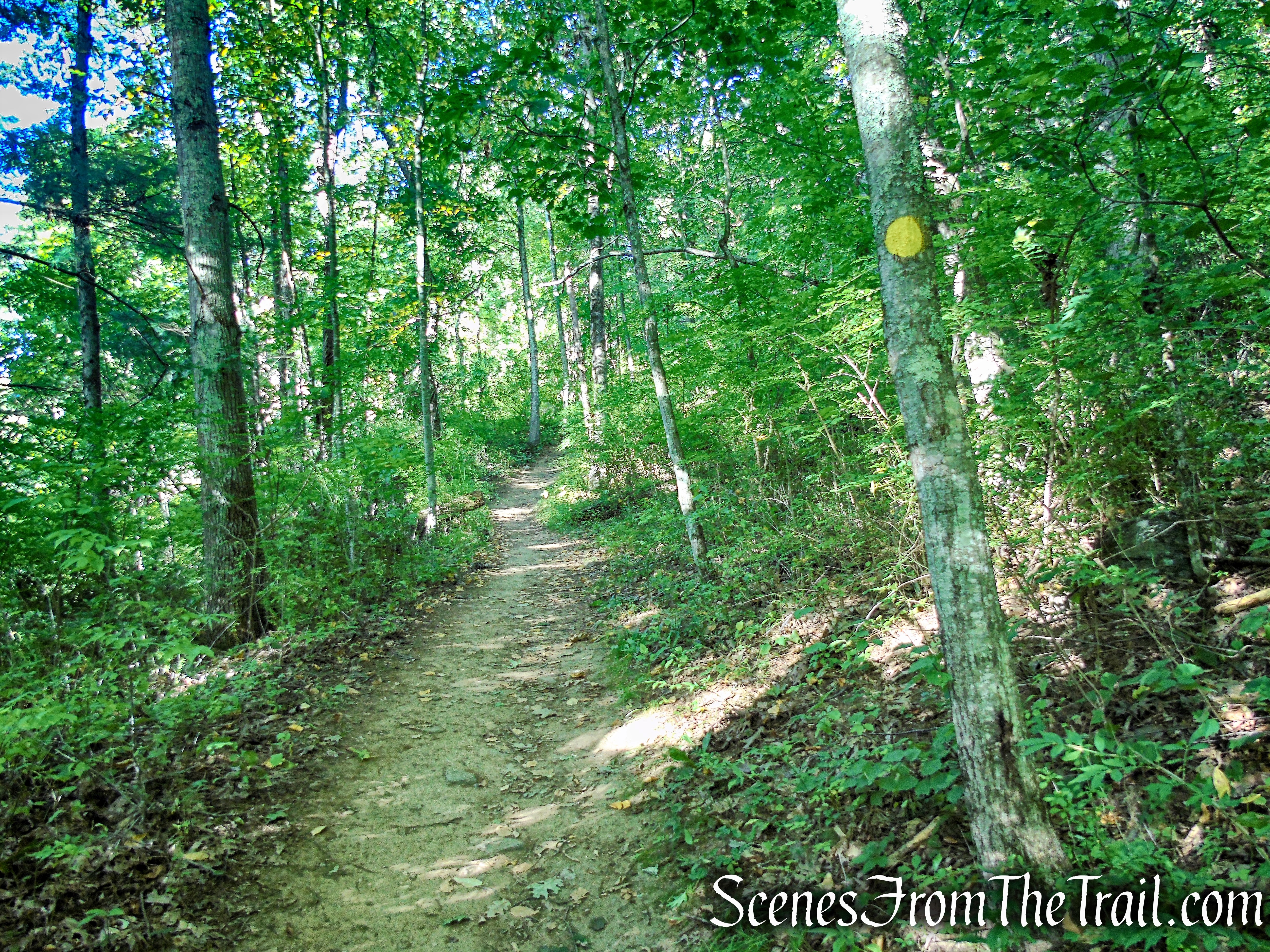
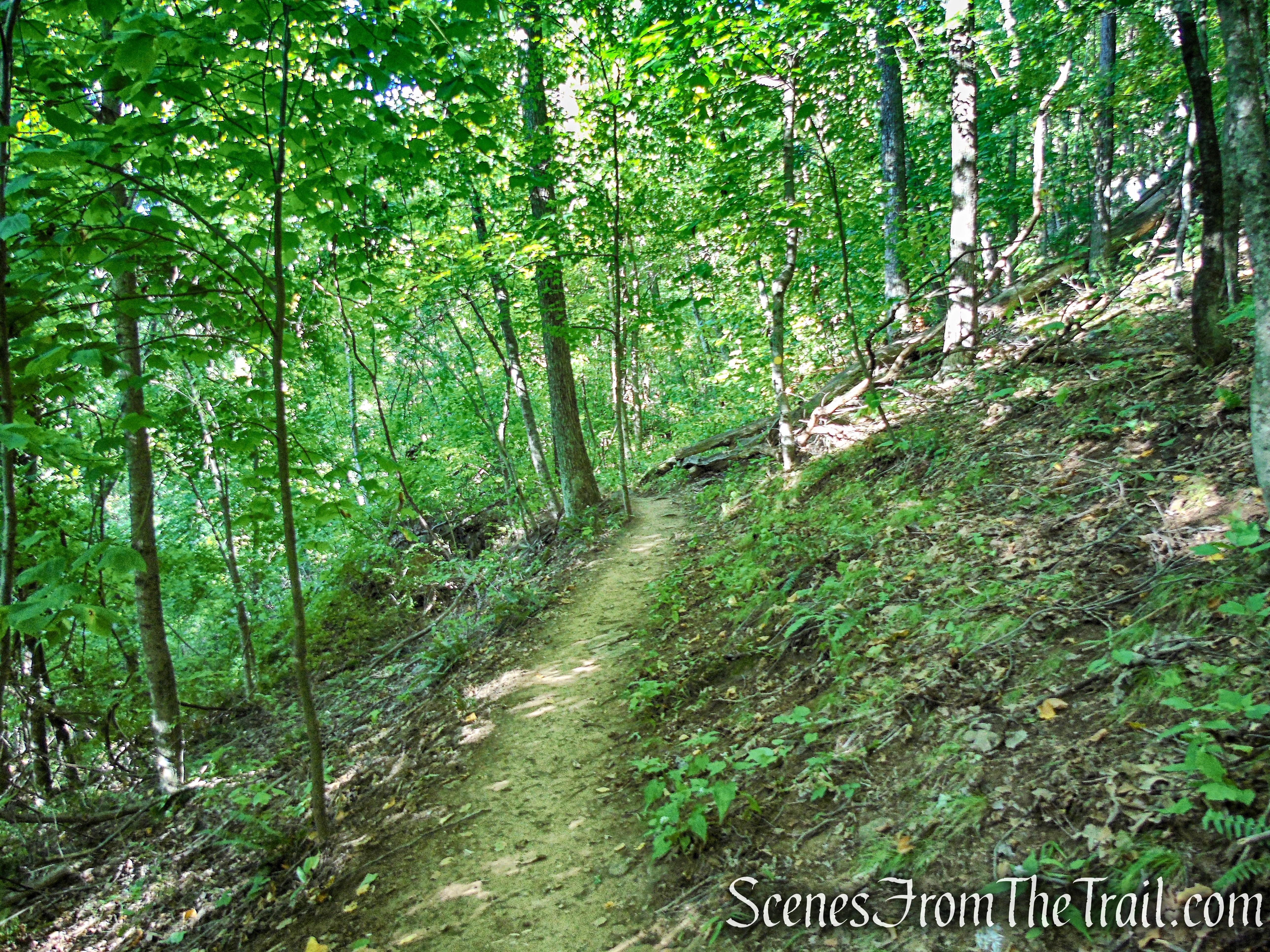
The Meeker Trail ascends gradually at first and in about 460 yards, passes a junction with the white-square-blazed Pinnacle Valley Trail (this trail can be used as a shortcut to Waramaug’s Rock, bypassing the first viewpoint). The Meeker Trail turns right and climbs steeply along a series of switchbacks before emerging at the Lookout.

Meeker Trail - Macricostas Preserve

Meeker Trail – Macricostas Preserve

Meeker Trail - Macricostas Preserve

Meeker Trail – Macricostas Preserve

Meeker Trail - Macricostas Preserve

Meeker Trail – Macricostas Preserve

Meeker Trail - Macricostas Preserve

Meeker Trail – Macricostas Preserve

Meeker Trail - Macricostas Preserve

Meeker Trail – Macricostas Preserve

Meeker Trail - Macricostas Preserve

Meeker Trail – Macricostas Preserve

The Lookout is a rock outcrop that provides southeast-facing views over the hayfield below and the surrounding countryside. You have now hiked just over a mile and gained about 440 feet in elevation. This is a good place to take a break and enjoy the view.

Lookout - Macricostas Preserve

Lookout – Macricostas Preserve

Lookout - Macricostas Preserve

Lookout – Macricostas Preserve

Lookout - Macricostas Preserve

Lookout – Macricostas Preserve

When you are ready to proceed, follow the yellow circle blazes of the Meeker Trail which turn left and continue to climb, but now more gradually.

Meeker Trail - Macricostas Preserve

Meeker Trail – Macricostas Preserve

In a short distance, the Meeker Trail comes to a junction with the other end of the Ridgeline Trail. You will return back to this spot on your way back from Waramaug’s Rock. For now continue following the yellow circles as they head in a westerly direction.

Meeker Trail - Macricostas Preserve

Meeker Trail – Macricostas Preserve

Meeker Trail - Macricostas Preserve

Meeker Trail – Macricostas Preserve

In another 250 feet, the Meeker Trail passes a junction with the other end of the Pinnacle Valley Trail, which begins on the left. In about another 590 feet, the Meeker Trail turns left and heads in a southwesterly direction.

continue past the junction with the Pinnacle Valley Trail

continue past the junction with the Pinnacle Valley Trail

Meeker Trail - Macricostas Preserve

Meeker Trail – Macricostas Preserve

Meeker Trail - Macricostas Preserve

Meeker Trail – Macricostas Preserve

The Meeker Trail climbs a little over rock slabs and ends at the bald summit of Waramaug’s Rock.

Meeker Trail - Macricostas Preserve

Meeker Trail – Macricostas Preserve

Waramaug’s Rock - Macricostas Preserve

Waramaug’s Rock – Macricostas Preserve

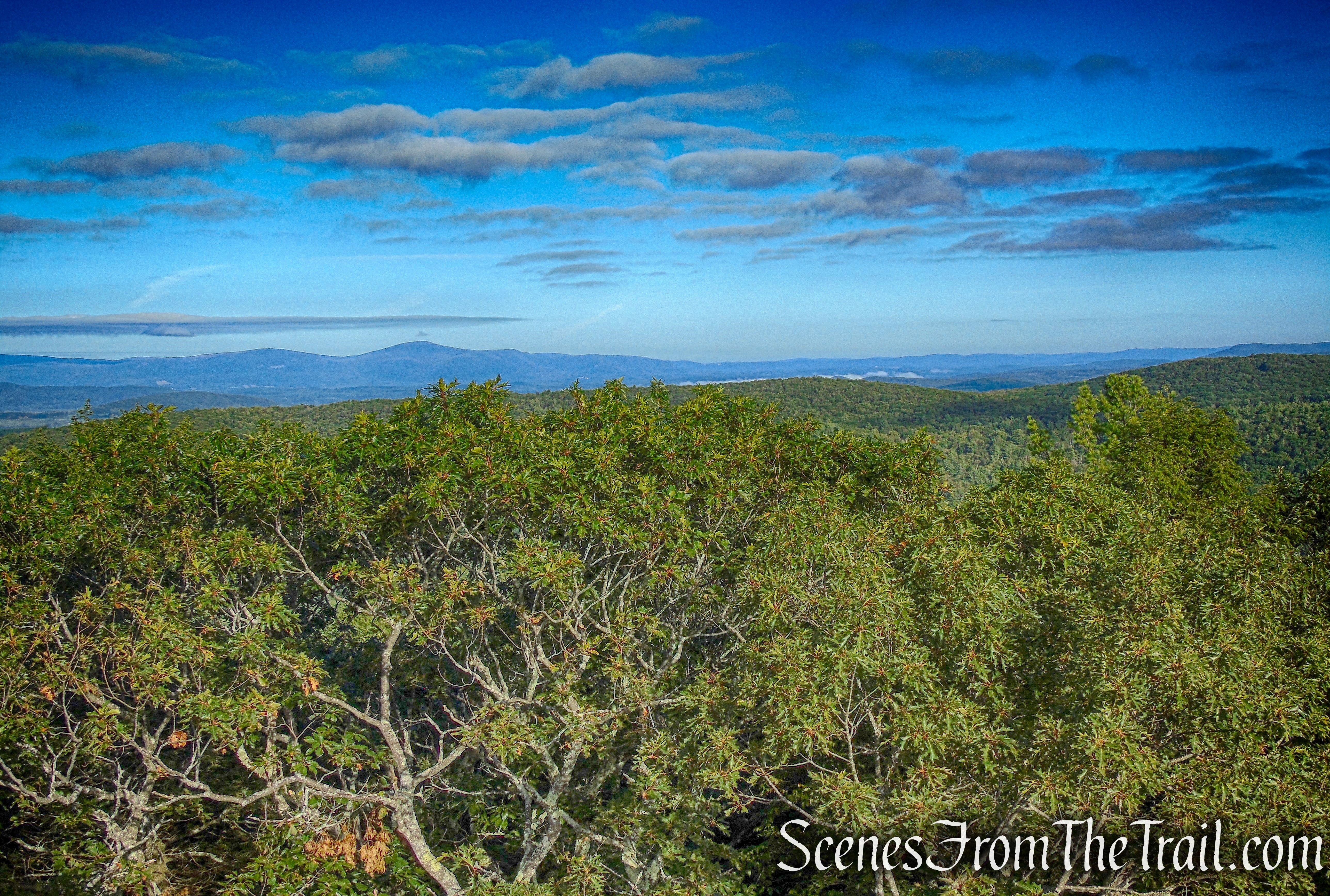
At an elevation of 1,280 feet, Waramaug’s Rock rewards hikers with panoramic views of Lake Waramaug and the surrounding countryside. The open summit has few trees so if visiting on a hot day, be prepared to be exposed to the sun while you’re here.

Lake Waramaug from Waramaug’s Rock

Lake Waramaug from Waramaug’s Rock

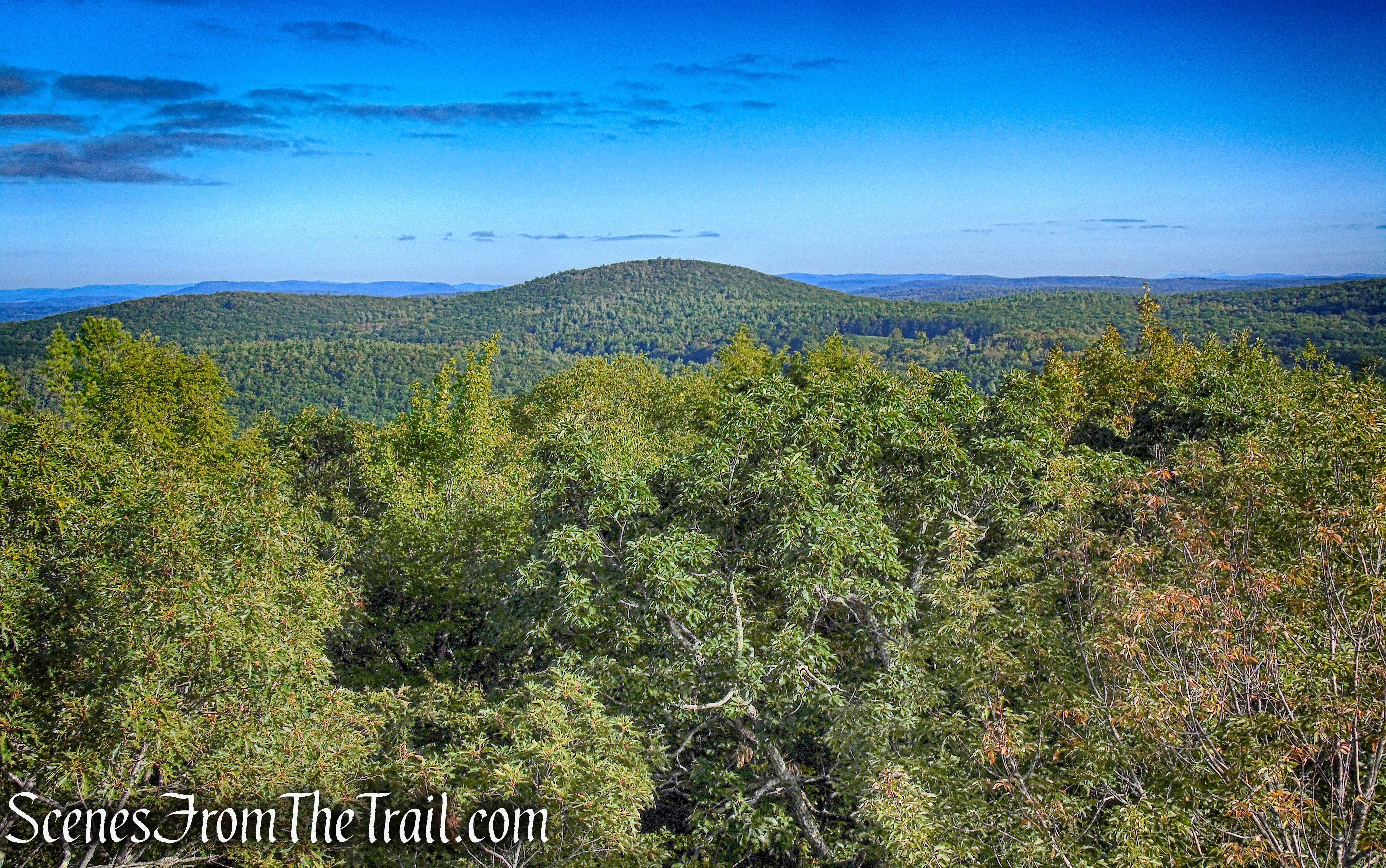
Looking southwest from Waramaug’s Rock.

view southwest from Waramaug’s Rock

view southwest from Waramaug’s Rock

Lake Waramaug is a 656-acre lake occupying parts of the towns of Kent, Warren and Washington in Litchfield County. Waramaug is the name of an Indian chief (1650-1735) of the Wyantenock tribe who had hunting grounds near falls on the Housatonic River, now referred to as “Lover’s Leap,” in the town of New Milford. Chief Waramaug and his followers wintered in the area now covered by Lake Lillinonah, which was later created by damming the Housatonic, and made Lake Waramaug their summer residence.

Lake Waramaug from Waramaug’s Rock

Lake Waramaug from Waramaug’s Rock

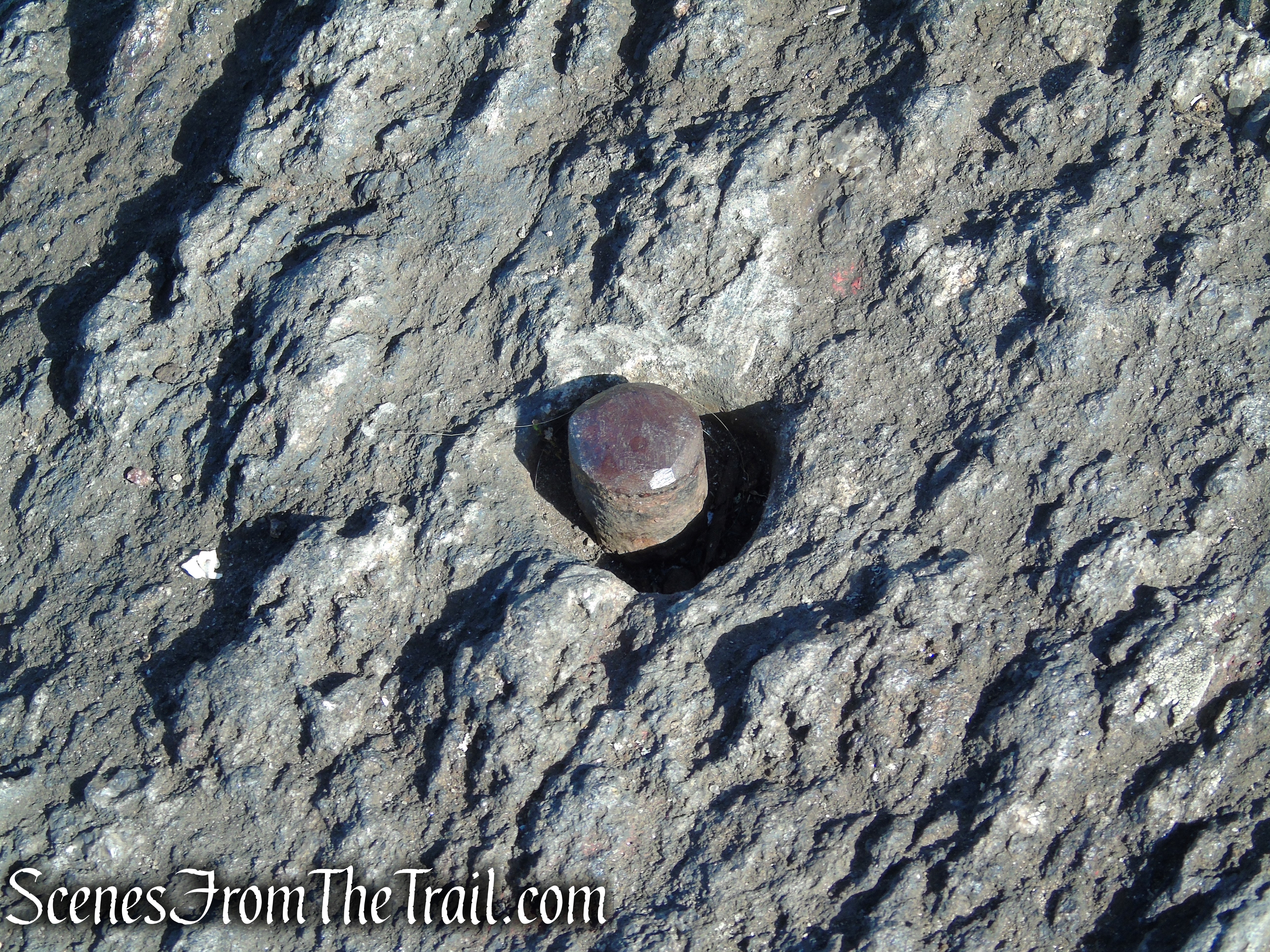
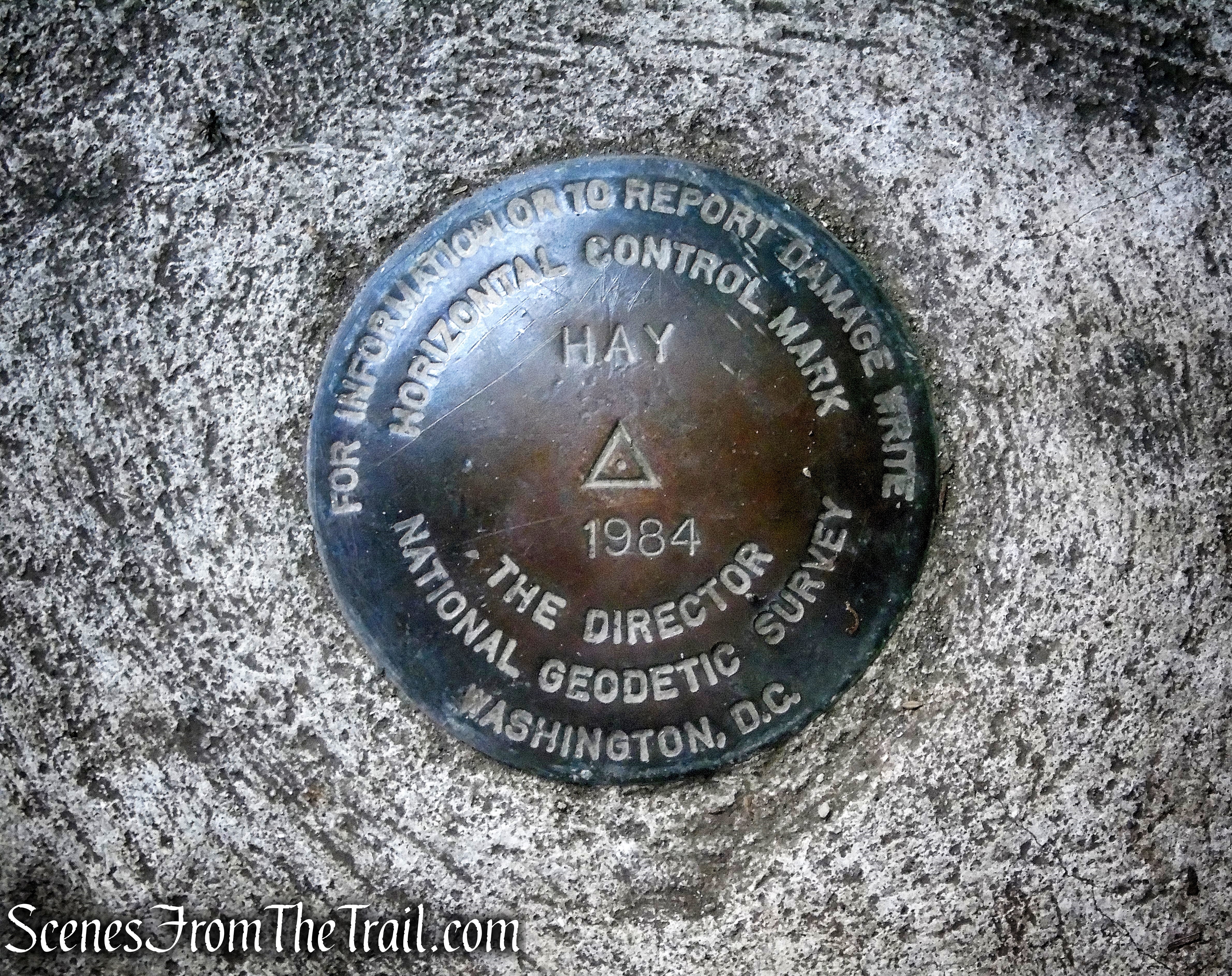
Possibly a summit marker.

Waramaug’s Rock - Macricostas Preserve

Waramaug’s Rock – Macricostas Preserve

When you are ready to continue, retrace your steps on the Meeker Trail.

turn left on Meeker Trail

turn left on Meeker Trail

In about 0.4 mile, the trail reaches the junction with the Ridgeline Trail that you passed earlier.

turn left on Ridgeline Trail

turn left on Ridgeline Trail

To continue on this loop hike, bear left, leaving the Meeker Trail and follow the orange-circle-blazed Ridgeline Trail. If you want to cut the hike short, bear right and continue following the yellow circles and retrace your steps the rest of the way back to the parking lot.

turn left on Ridgeline Trail

turn left on Ridgeline Trail

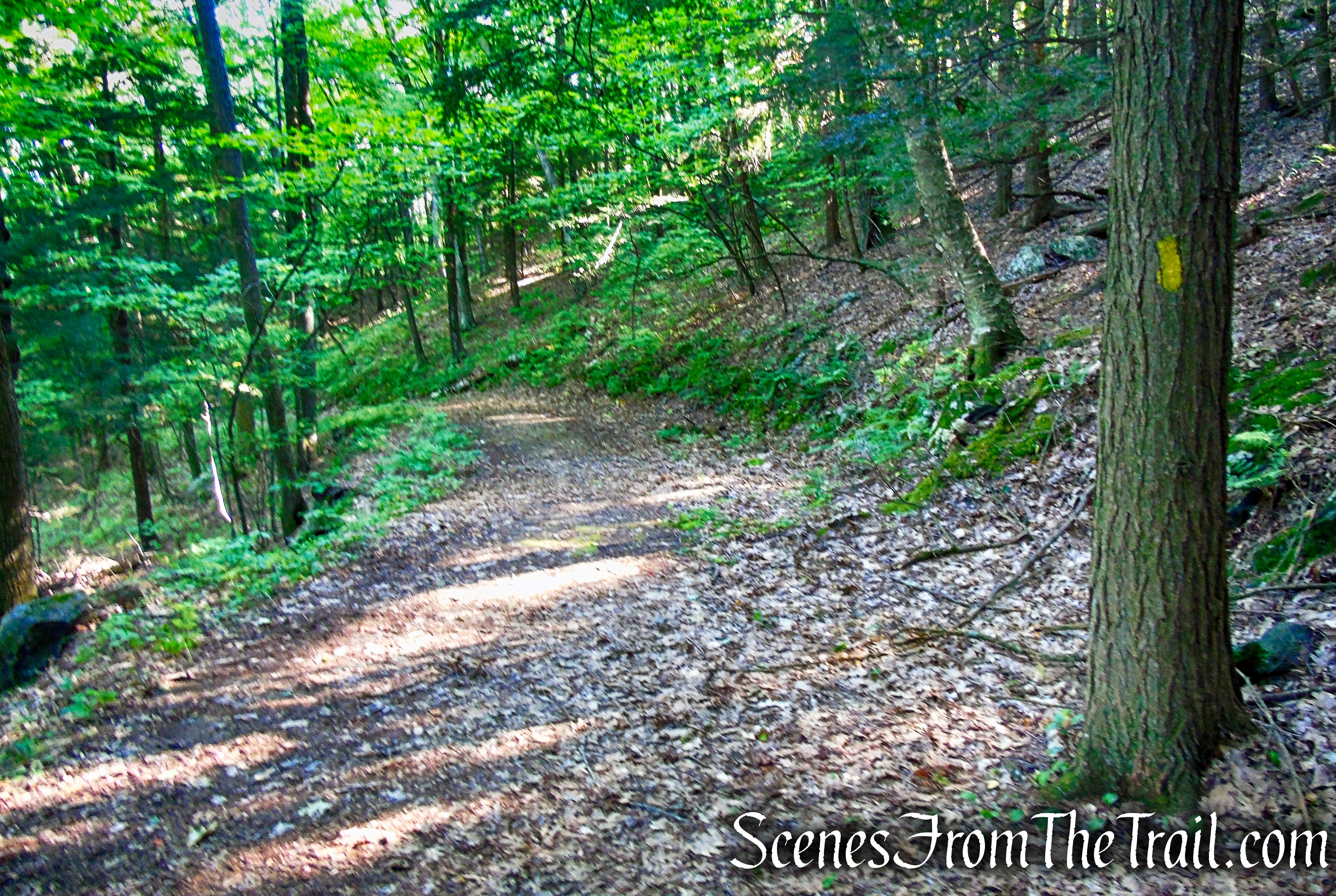
The Ridgeline Trail (1.1 miles) climbs briefly over rocks, then begins a steady descent along the rocky ridge, losing the elevation that you gained on the way up. For the next mile or so, you will be following the orange circles as they descend the ridge, sometimes steeply.

Ridgeline Trail - Macricostas Preserve

Ridgeline Trail – Macricostas Preserve

Ridgeline Trail - Macricostas Preserve

Ridgeline Trail – Macricostas Preserve

Ridgeline Trail - Macricostas Preserve

Ridgeline Trail – Macricostas Preserve

Ridgeline Trail - Macricostas Preserve

Ridgeline Trail – Macricostas Preserve

Along the way, you’ll pass some interesting rock formations and boulders.

Ridgeline Trail - Macricostas Preserve

Ridgeline Trail – Macricostas Preserve

Ridgeline Trail - Macricostas Preserve

Ridgeline Trail – Macricostas Preserve

Ridgeline Trail - Macricostas Preserve

Ridgeline Trail – Macricostas Preserve

Ridgeline Trail - Macricostas Preserve

Ridgeline Trail – Macricostas Preserve

In 1.1 miles, the Ridgeline Trail ends at the junction with the Meeker Trail, that you passed at the beginning of the hike. Continue ahead, now following the yellow circle blazes as they lead gradually downhill.

terminus of Ridgeline Trail

terminus of Ridgeline Trail

Cross the wooden planks, boardwalk and footbridge through Meeker Swamp until you come out to the hayfield.

Meeker Trail - Macricostas Preserve

Meeker Trail – Macricostas Preserve

To continue on the loop, turn left and follow the Hay Field Loop along the edge of the woods. To return to the parking lot, turn right and follow the Meeker Trail.

turn left on Hay Field Loop

turn left on Hay Field Loop

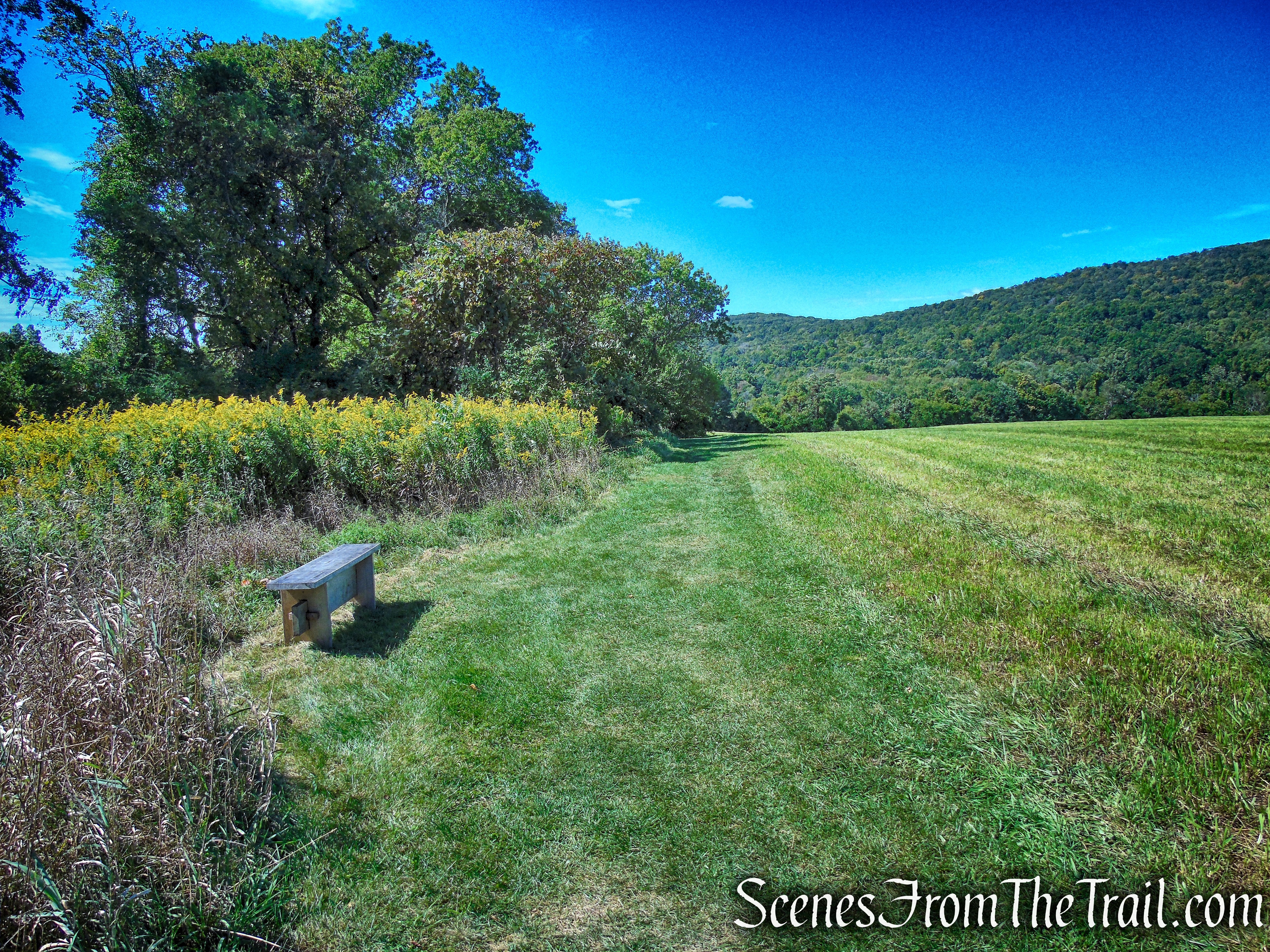
The Hay Field Loop runs along the edge of the woods on a mowed path. In about 900 feet, the trail comes to the entrance of Meeker Swamp.

Hay Field Loop - Macricostas Preserve

Hay Field Loop – Macricostas Preserve

turn left to Meeker Swamp

turn left to Meeker Swamp

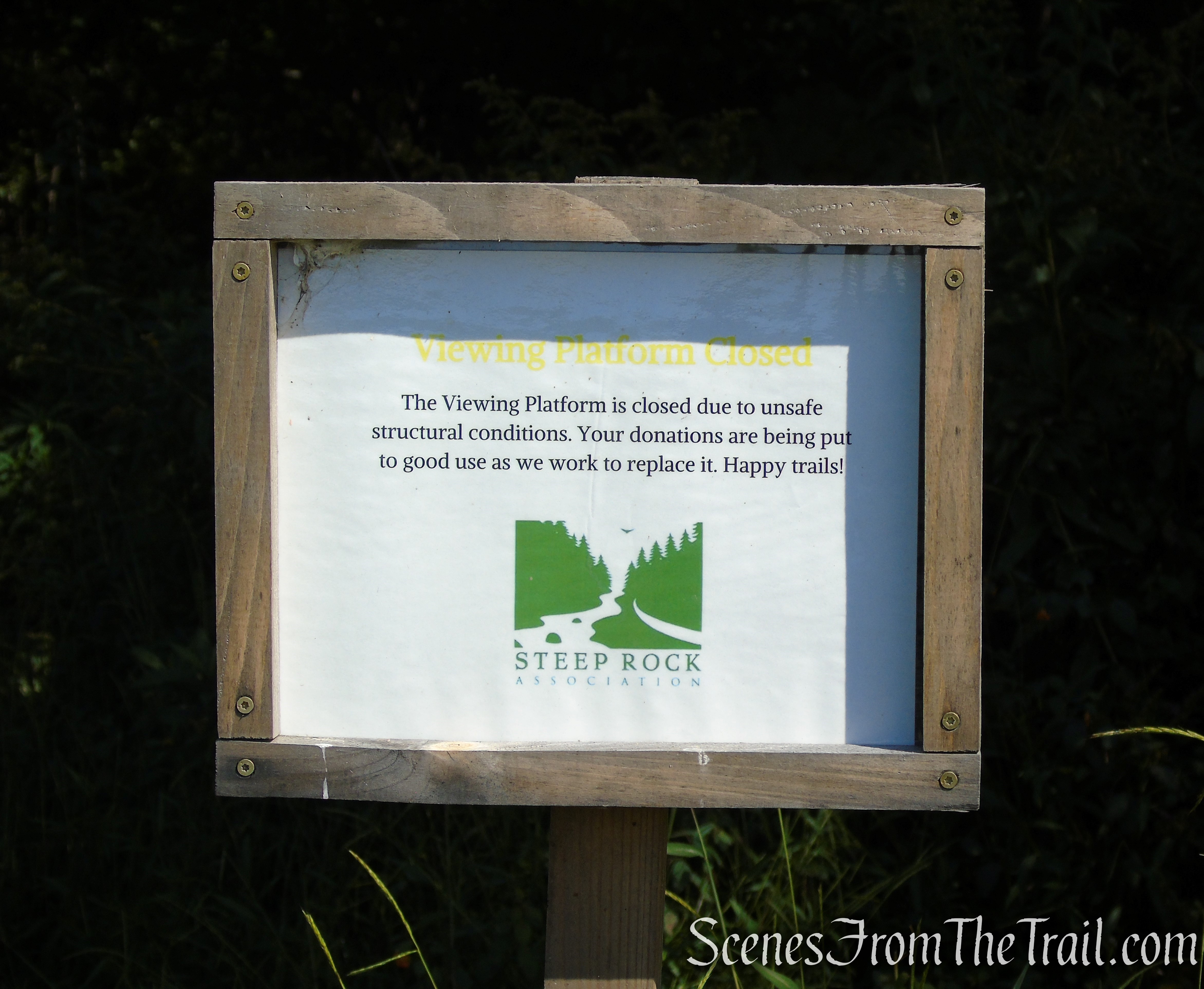
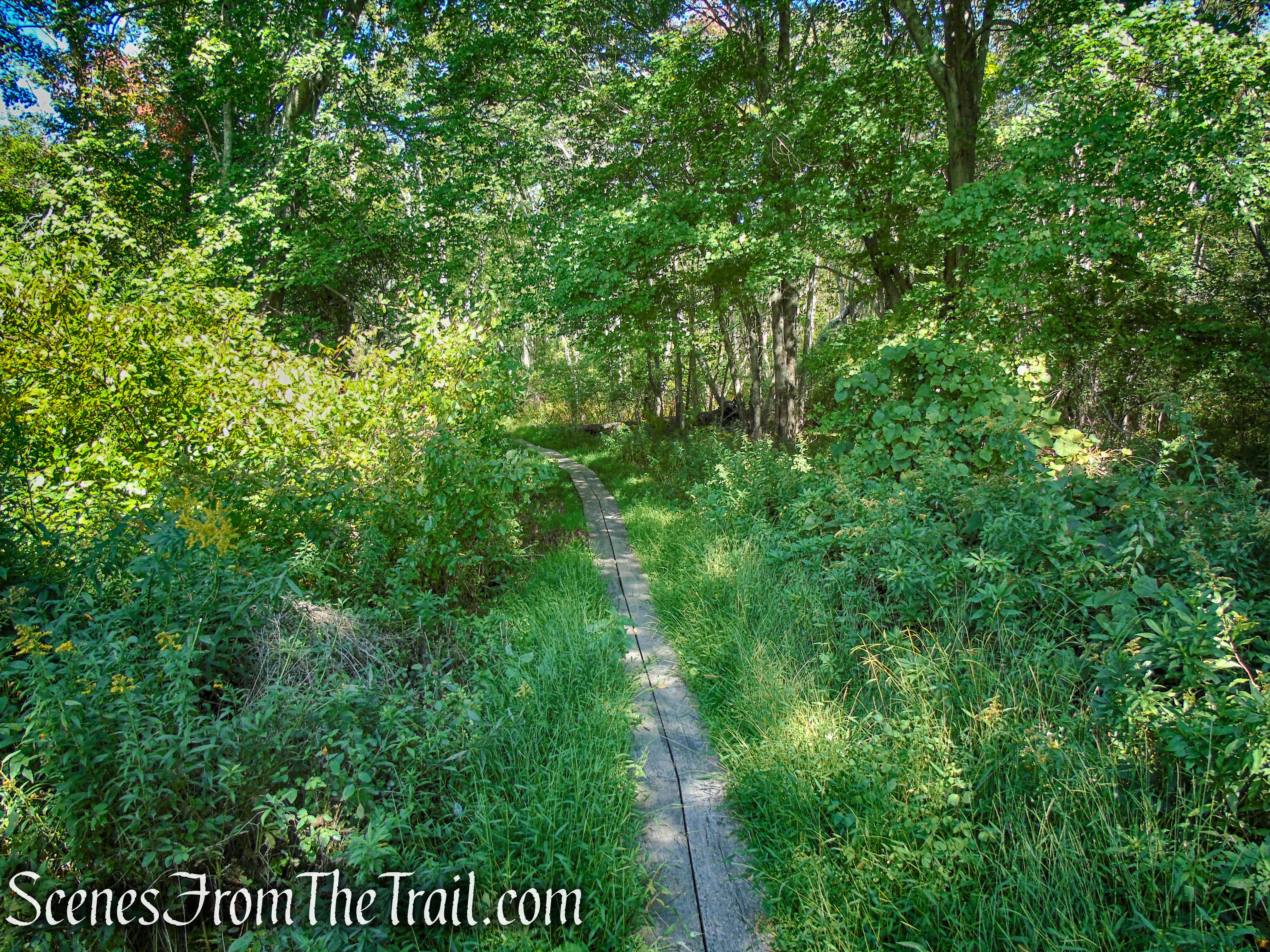
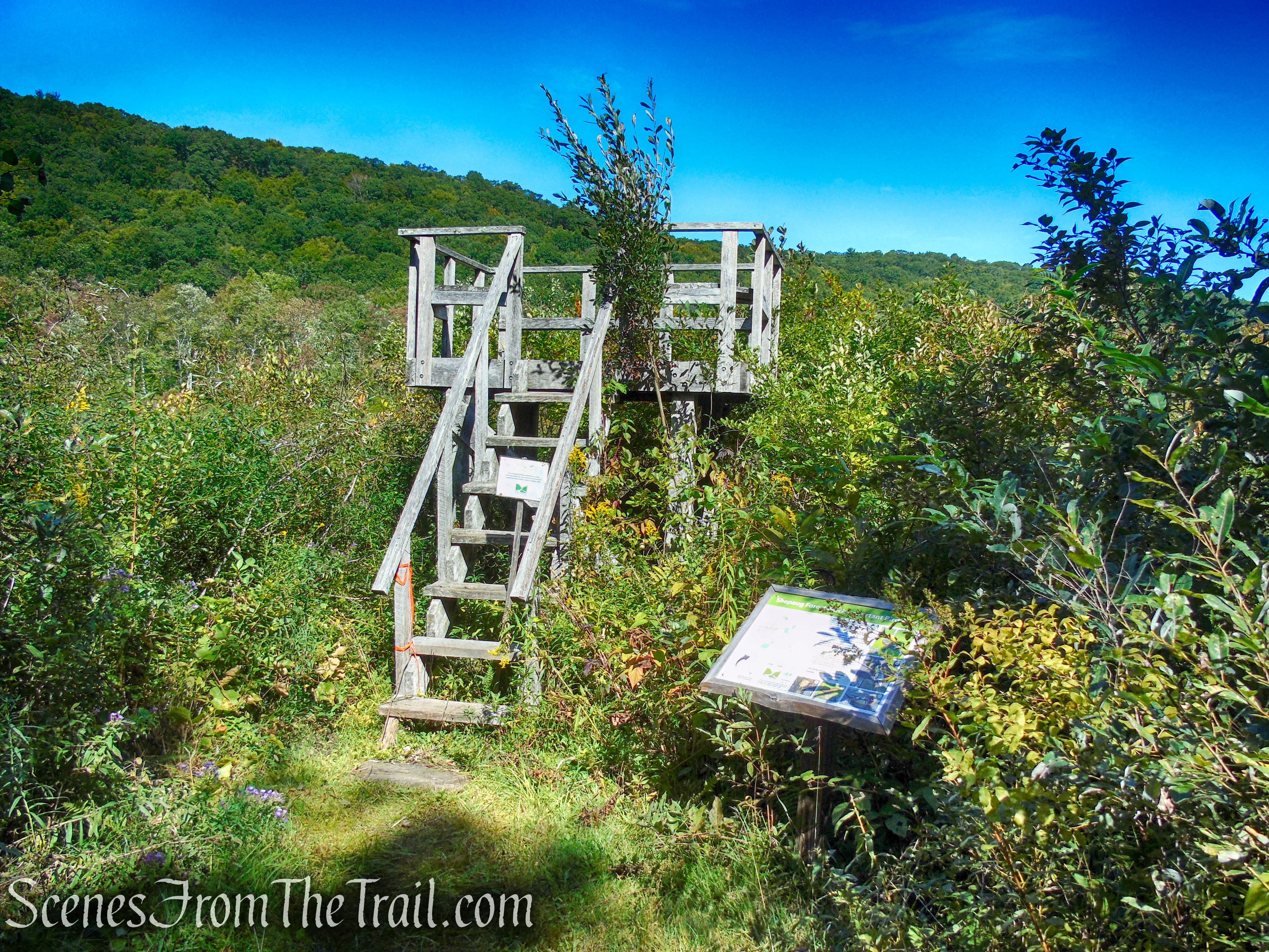
This short spur trail is part of the Hay Field Loop and is only about 400 feet long. The trail runs on wooden planks and leads to a wooden viewing platform that was closed due to unsafe structural conditions.

Meeker Swamp - Macricostas Preserve

Meeker Swamp – Macricostas Preserve

Meeker Swamp - Macricostas Preserve

Meeker Swamp – Macricostas Preserve

Meeker Swamp - Macricostas Preserve

Meeker Swamp – Macricostas Preserve

Meeker Swamp - Macricostas Preserve

Meeker Swamp – Macricostas Preserve

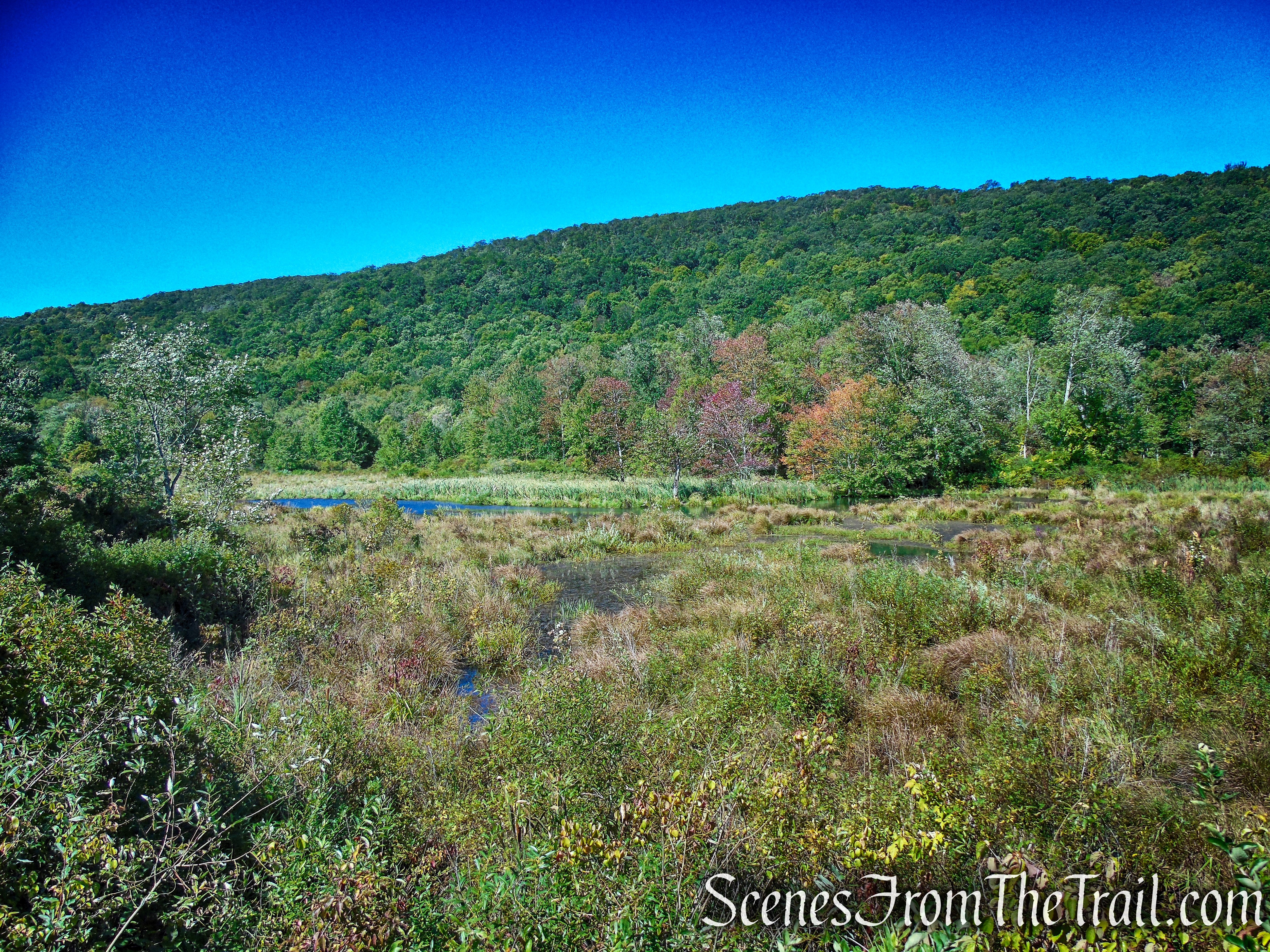
Meeker Swamp is a unique calcareous wetland, a chalky limestone-based geology rarely found east of the Appalachian Mountains. One of the last significant calcareous ecosystems in the Northeast Hills, it encompasses over 300 acres and includes part of the Bee Brook stream, wet meadows and agricultural fields as well as an adjacent ridge of talus slopes and rocky outcroppings. An excellent habitat for a variety of wildlife, the preserve overlies one of Washington’s largest aquifers and protects the town’s drinking water supply.

Meeker Swamp - Macricostas Preserve

Meeker Swamp – Macricostas Preserve

Meeker Swamp - Macricostas Preserve

Meeker Swamp – Macricostas Preserve

Retrace your steps back out to the hayfield and turn left. The Hay Field Loop continues along the edge of the woods and in about 420 yards, cuts across the field, heading west along another wooded section.

Hay Field Loop - Macricostas Preserve

Hay Field Loop – Macricostas Preserve

Hay Field Loop - Macricostas Preserve

Hay Field Loop – Macricostas Preserve

Looking north across the field, you can see the ridge that you just hiked.

Hay Field Loop - Macricostas Preserve

Hay Field Loop – Macricostas Preserve

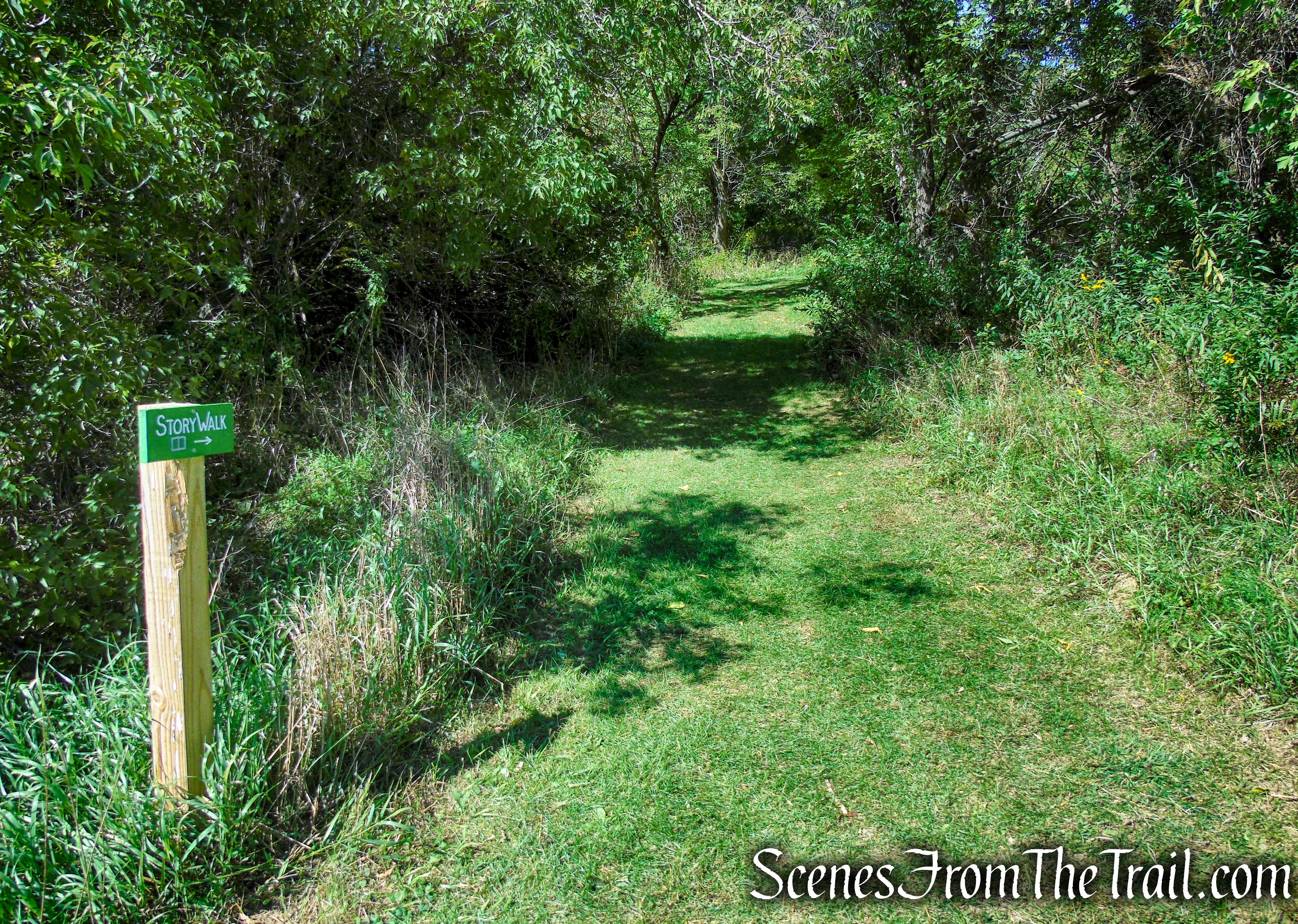
Continue heading west on the Hay Field Loop. When you reach a wooded area in front of you, turn right then take the next left on the StoryWalk Trail.

Hay Field Loop - Macricostas Preserve

Hay Field Loop – Macricostas Preserve

turn left on Story Walk Trail

turn left on Story Walk Trail

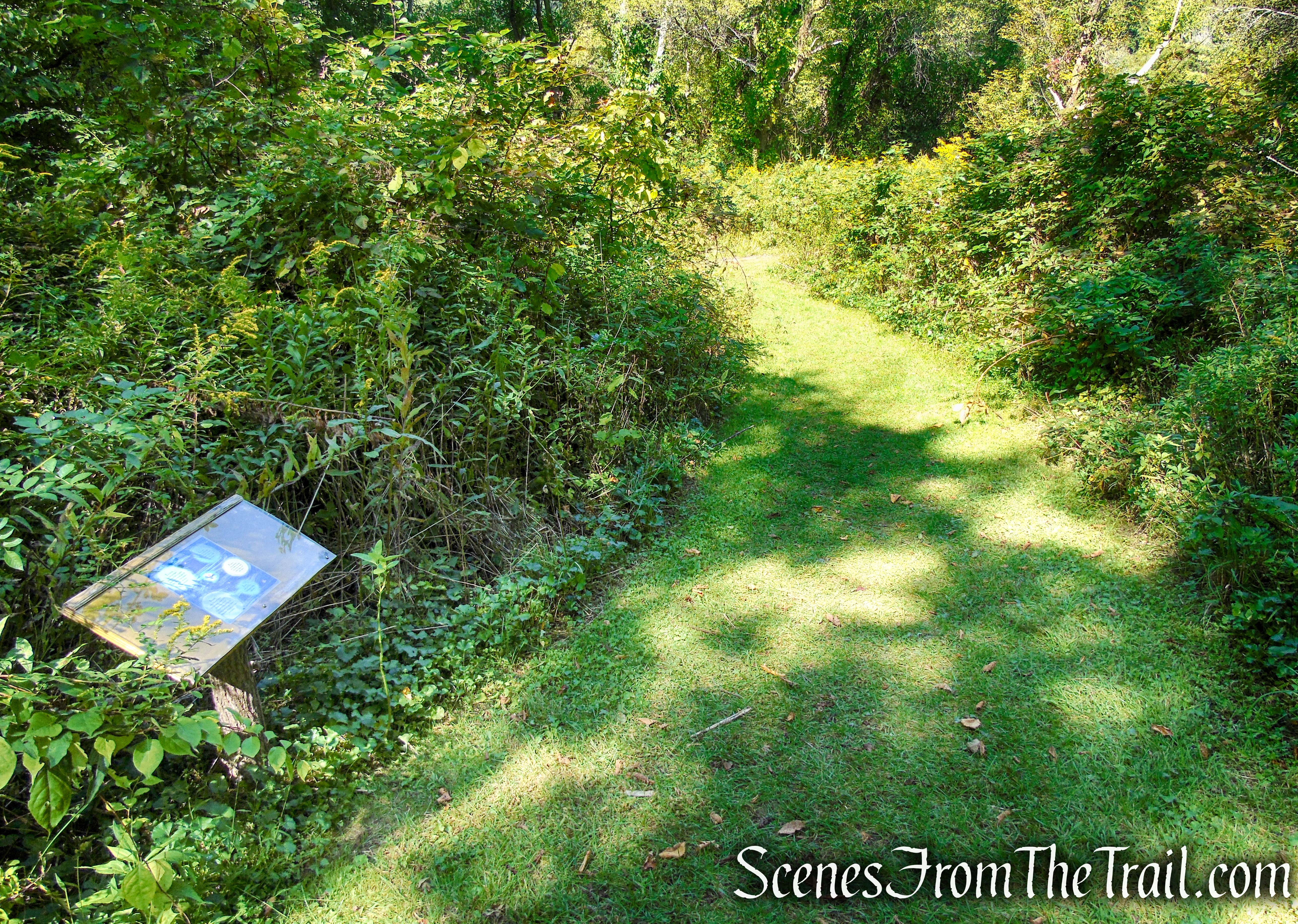
Story Walk Trail - Macricostas Preserve

Story Walk Trail – Macricostas Preserve

At the end of the StoryWalk Trail, turn left on the Meeker Trail, and follow it back through the meadow, crossing the footbridge and returning back to the parking lot, where the hike began.
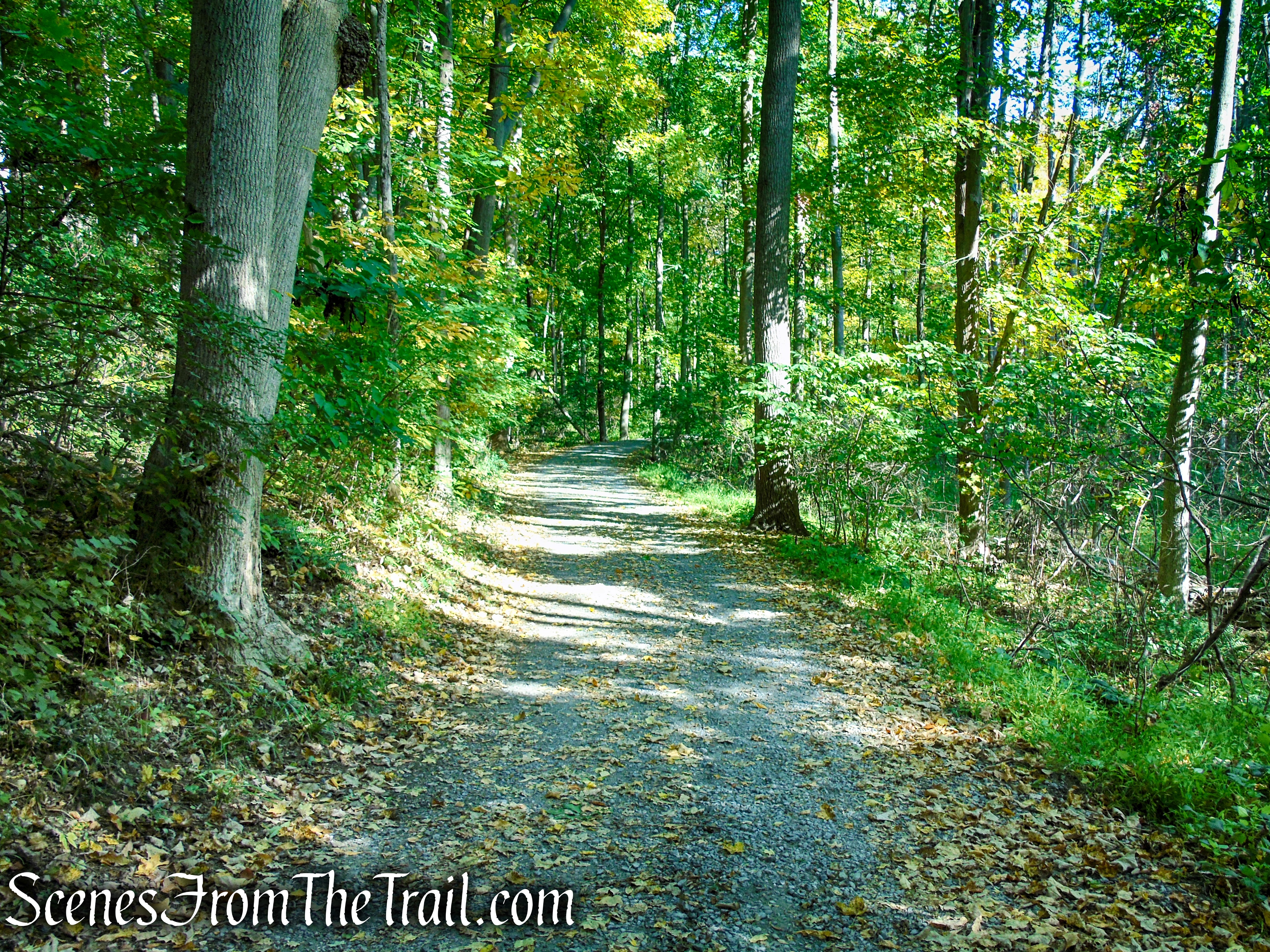
Meeker Trail - Macricostas Preserve

Meeker Trail – Macricostas Preserve

Meeker Trail - Macricostas Preserve

Meeker Trail – Macricostas Preserve

trailhead - Macricostas Preserve

trailhead – Macricostas Preserve


Review:

An excellent hike through a very diverse topography. The climb up to Waramaug’s Rock is rugged, but doable by most novice hikers. The view speaks for itself and is the highlight of the hike. The bald summit is expansive enough that even with other groups up there, one can find a quiet spot to relax. The Ridgeline Trail is rocky and steep, but once you reach the Hay Field Loop, it becomes a casual stroll around the field. Meeker Swamp is worth a visit as well. It’s best to get here early or visit on a weekday as this place can get crowded on nice days. All in all, a great place for a hike and worth the drive.

Pros:

Diverse topography, Waramaug’s Rock, scenic views, Meeker Swamp, well maintained and free of trash, well marked trails.

Cons:

Meeker Swamp viewing platform in need of repair and closed on the day of our visit.


Take a hike!

Macricostas Preserve

Macricostas Preserve


Sources:

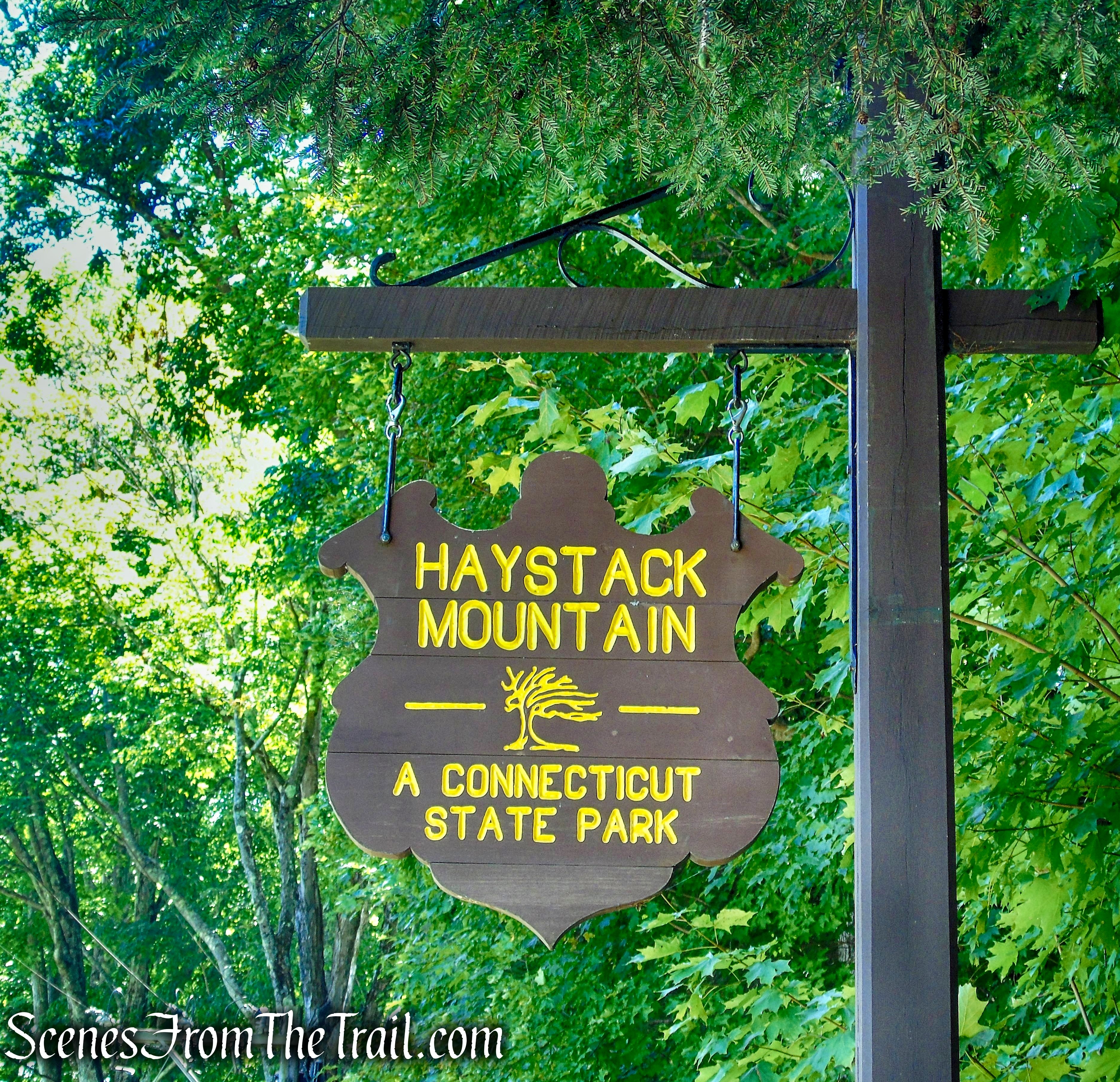
Haystack Mountain State Park

September 12, 2020 – Norfolk, Connecticut

Difficulty: Easy – Moderate

Length: Approximately 2.5 miles

Max elevation: 1716 ft.– total elevation gain approximately 495 ft.

Route type: Circuit

Free Web Maps: Haystack Mountain State Park Trail Maps (DEEP)

Avenza App Map (FREE): Haystack Mountain State Park Trail Map

Trailhead parking: Route 272 – North St, Norfolk Historic District, CT 06058

Please Note: From November 1st through the third weekend in April, this park is a “walk-in” facility with limited parking available at the entrance.


Park Overview:

Haystack Mountain is a 1,716-ft. high mountain topped with a stone observation tower that is the main feature of the 292-acre Haystack Mountain State Park, a public recreation area in the Litchfield Hills region of northwestern Connecticut, in the town of Norfolk. The mountain is called Haystack from a fancied resemblance to a stack of hay. The park is managed and maintained by the Department of Energy and Environmental Protection. The Norfolk Land Trust maintains the trails.

Haystack Mountain State Park

Haystack Mountain State Park

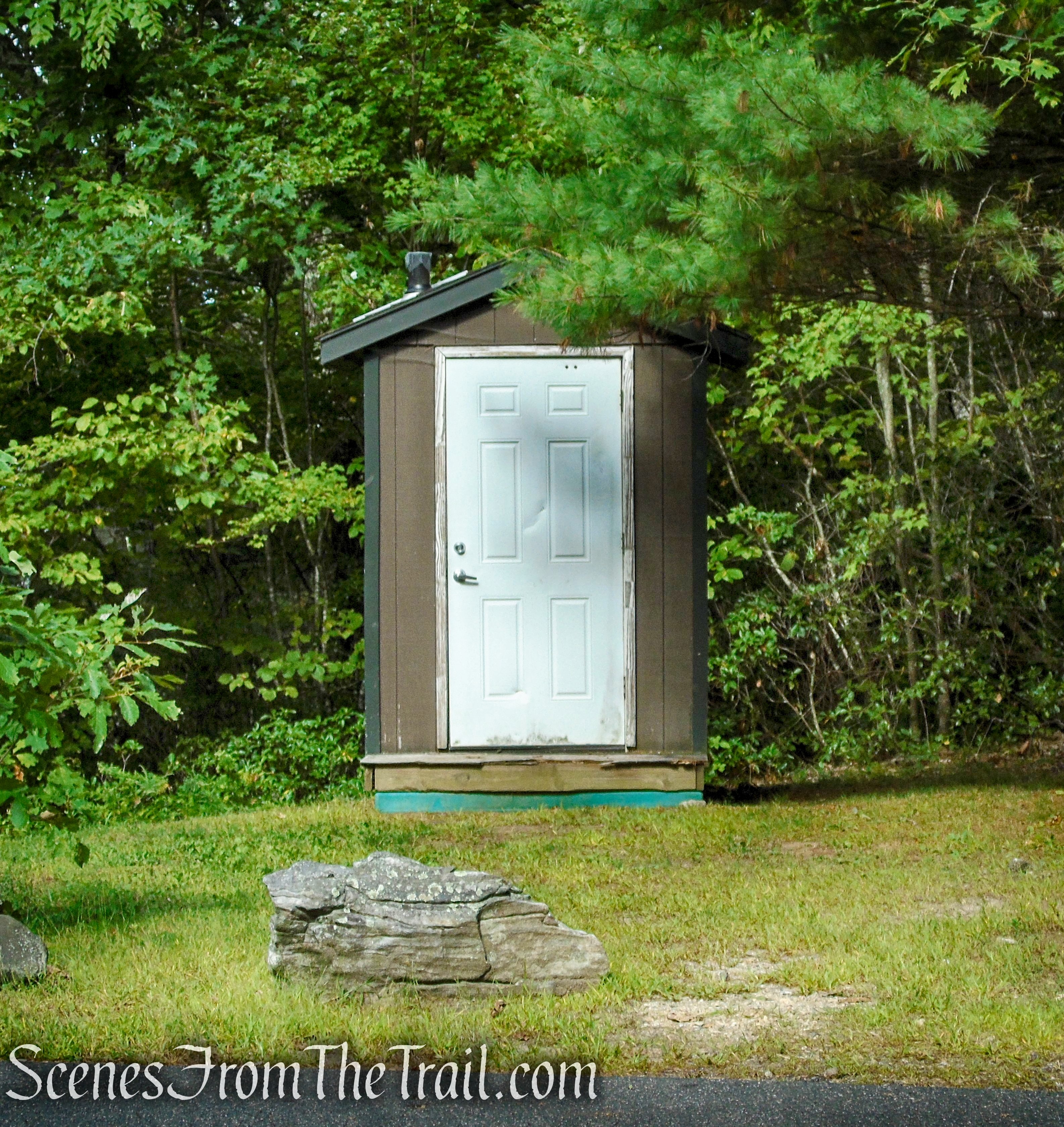
The park has hiking trails, a pond, picnic tables and a compost toilet at the upper trailhead.

Haystack Park Pond

Haystack Park Pond

compost toilet - Haystack Mountain State Park

compost toilet – Haystack Mountain State Park

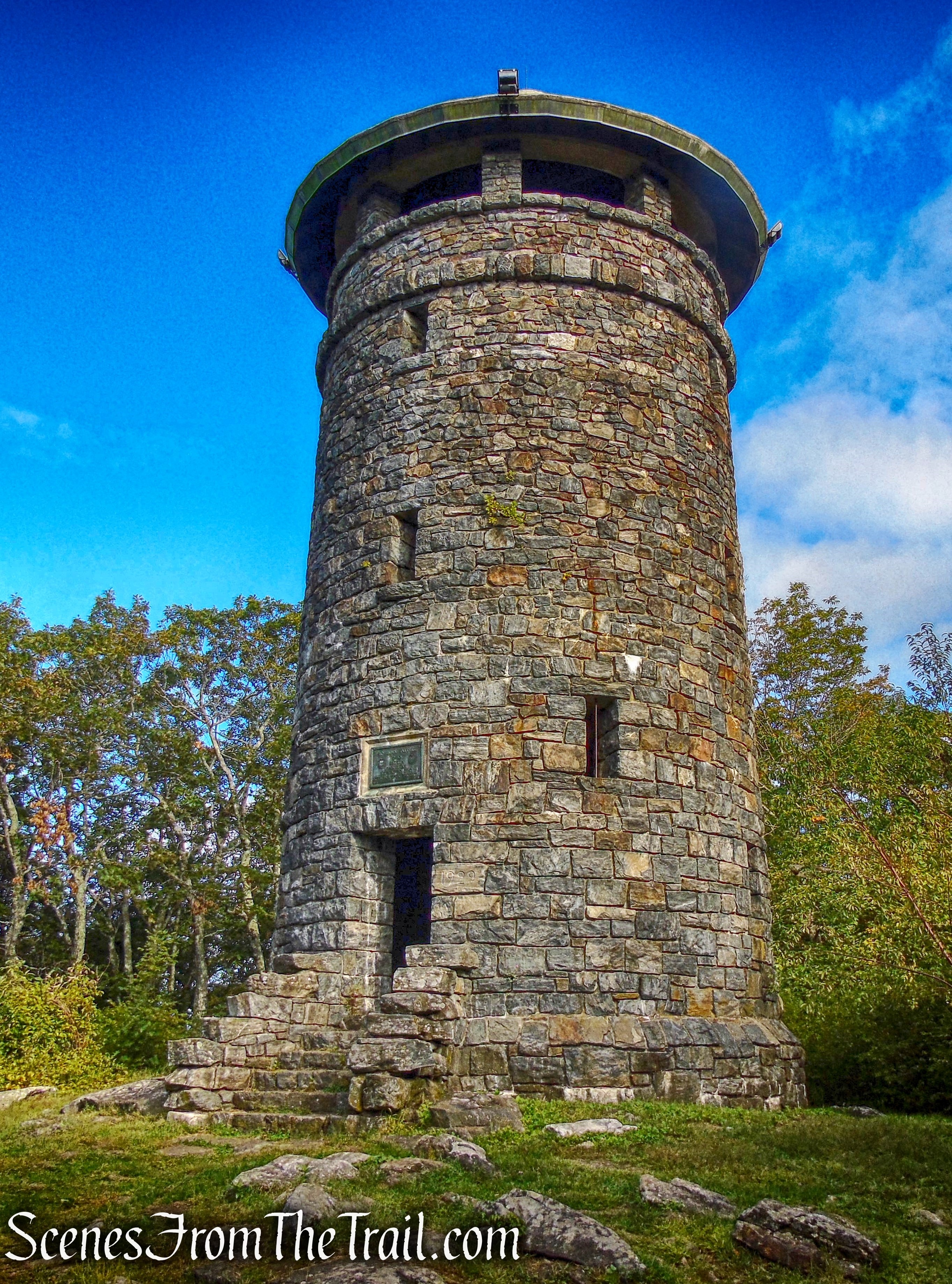
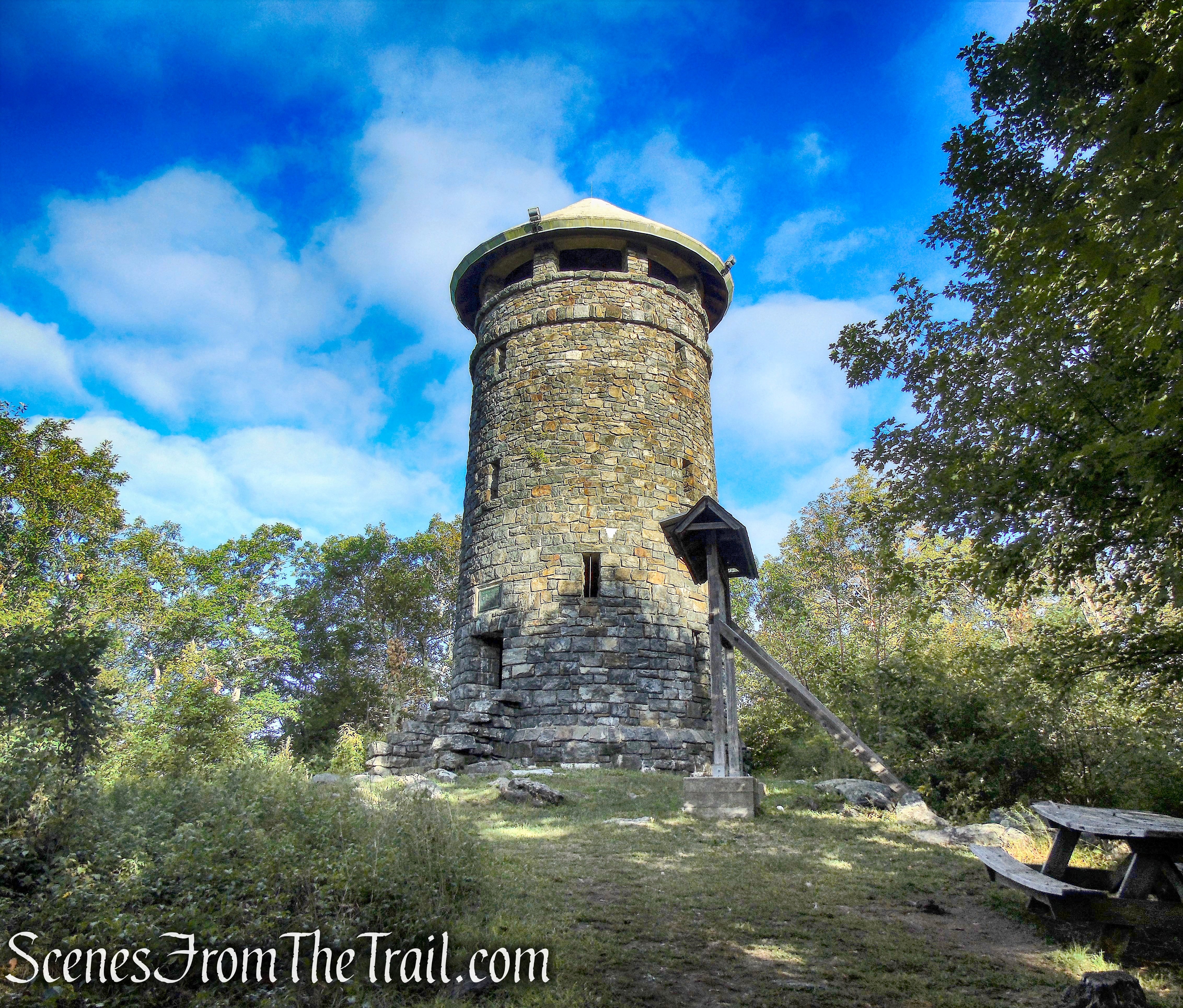
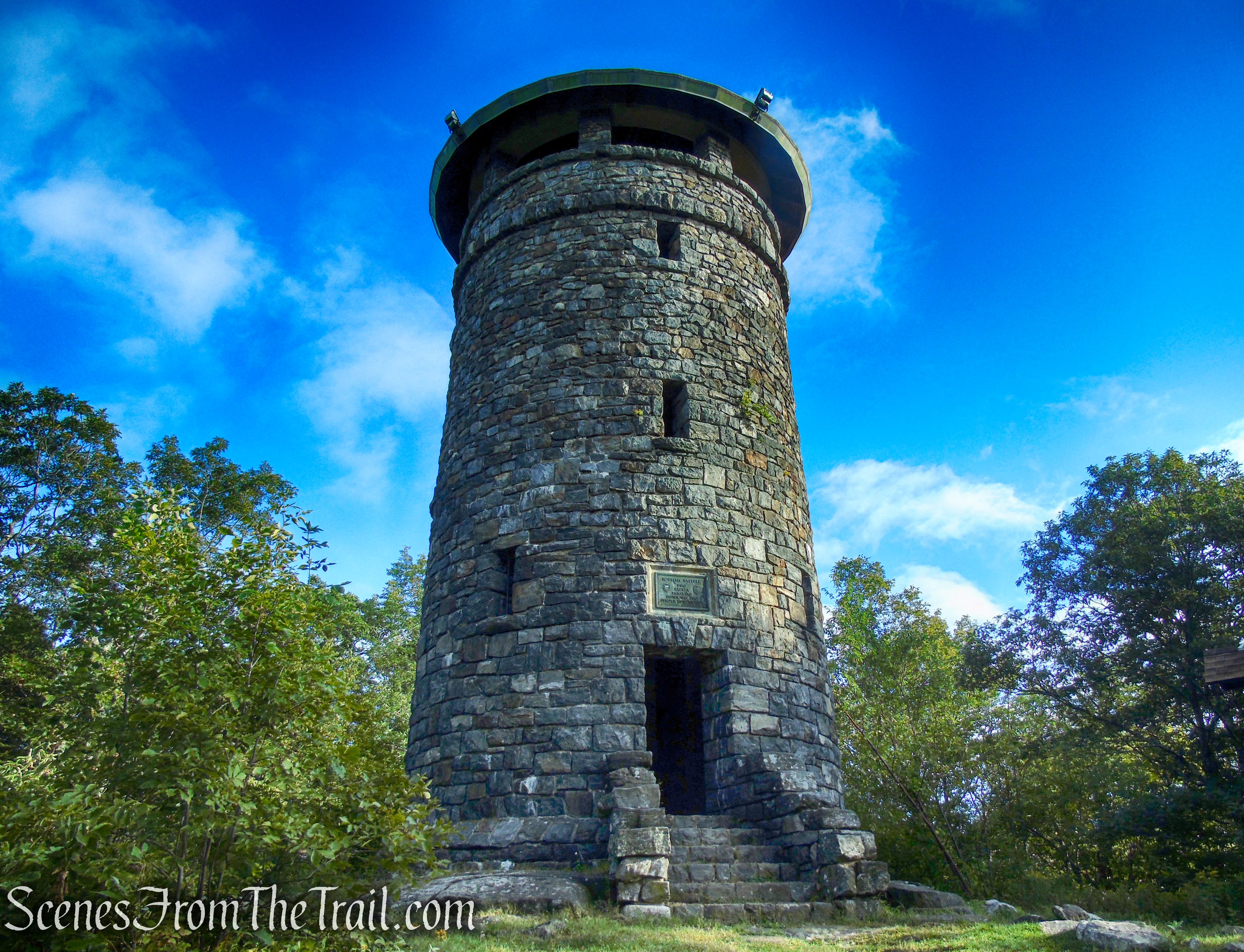
The 50-ft. high stone tower at the summit of Haystack Mountain (1716 feet above sea level) allows visitors to see the Berkshires, and peaks in Massachusetts, New York, and the Green Mountains of Vermont.

Haystack Mountain Tower

Haystack Mountain Tower

Travel the twisting mountain road or hike the rugged trail to the top, either way you will be astounded at the beauty of mountain laurel in June and the spectacular colors of foliage in the fall.

Haystack Mountain State Park

Haystack Mountain State Park


History:

In the nineteenth century, a Norfolk resident, Robbins Battell (1819-1895), bought the mountaintop in order to preserve it. In 1886, Battell, a philanthropist and adviser to Abraham Lincoln, built a carriage road (now part of the Tower Loop Trail) to the summit and had a wooden tower erected which he called the Haystack Belvedere. He granted public access to climb the hill and admire the views, which was a very unusual move for the time. The original tower was destroyed during a storm and was no longer standing by 1924.

A single acre on the summit of Haystack Mountain was purchased for $1,200 in 1917 from Mr. and Mrs. Carl Stoeckel, in the hope that upon that slender foothold it might sometime be possible to erect a suitable observation tower to replace the earlier one constructed in 1886 by Mrs. Stoeckel’s father, Robbins Battell.

Subsequent acquisitions by the state of Connecticut of adjoining lands, increased the size of Haystack Mountain State Park to 292 acres.

After the passing of Carl Stoeckel (1858-1925), his wife Ellen donated $50,000 in 1929 to the state, to build a stone tower with a beacon light at the top. The beacon no longer exists. The Haystack Mountain Tower is also known as the Stoeckel Memorial Tower.

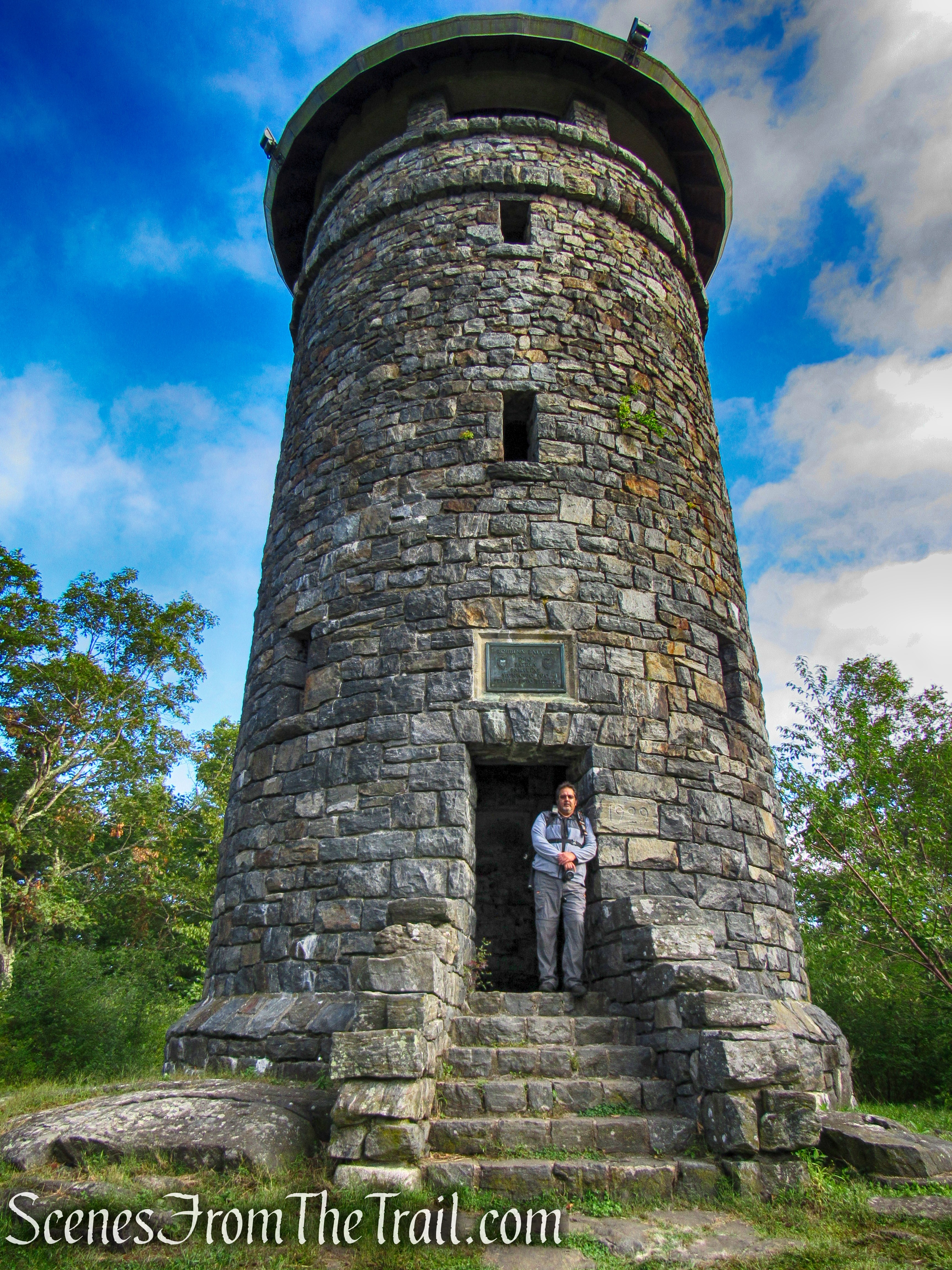
Haystack Mountain Tower is a stone lookout tower 22 feet in diameter and 50 feet high. It has eight window openings at the top. Erected in 1929 (the date is incised to the right of the door), it is now the centerpiece of Haystack Mountain State Park. From the first floor, which is 4 feet, 6 inches above grade, helical concrete steps three feet, three inches wide hug the wall on the way to a middle landing and an upper landing. The walls are 30 inches thick.

Haystack Mountain Tower

Haystack Mountain Tower

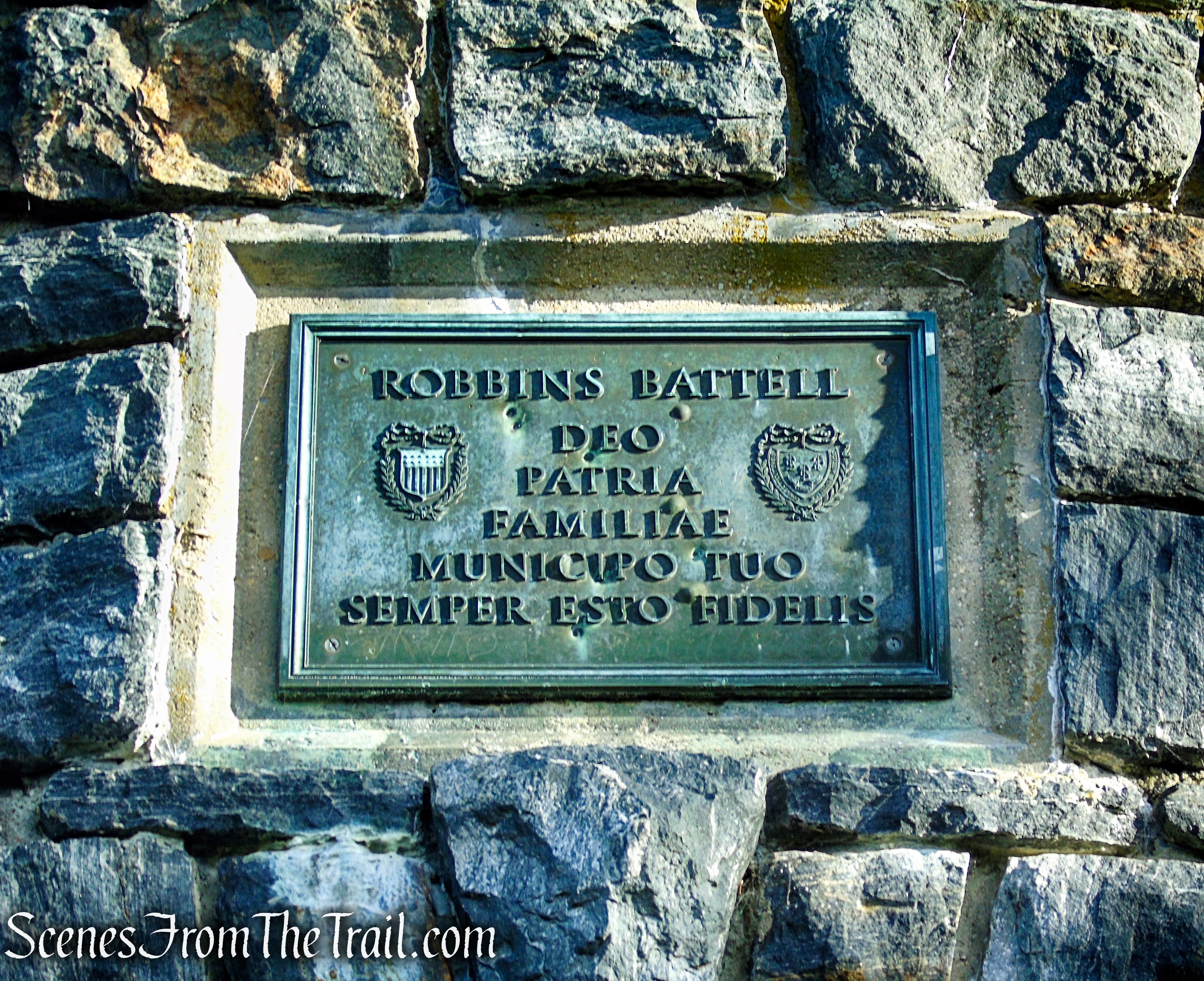
A plaque hangs over the entrance to the tower, its verse written in Latin and translated: “To thy God, state and town be thou ever faithful.” The plaque, dedicated in memory of Robbins Battell, was moved from the original wooden tower.

Haystack Mountain Tower

Haystack Mountain Tower

A second plaque, dedicated to Mrs. Stoeckel’s husband, Carl Stoeckel, was attached to a wall inside the tower, but is now missing. It read: “Requiem Anternam dona els Domine et lux perpetua luceat els” (Eternal rest give unto him, 0 Lord, and may perpetual light shine upon him).

Stepped stone piers flank the six stone risers that lead to the 3×7 ft. doorway, which no longer has its original red oak door hung on wrought-iron butts and hinges.

Haystack Mountain Tower

Haystack Mountain Tower

Haystack Mountain Tower is significant architecturally because it is a good example of a monumental Tudor Revival-style structure, showing medieval influence, designed by a well-known architect of the period, Erick K. Rossiter, who had a summer home nearby.

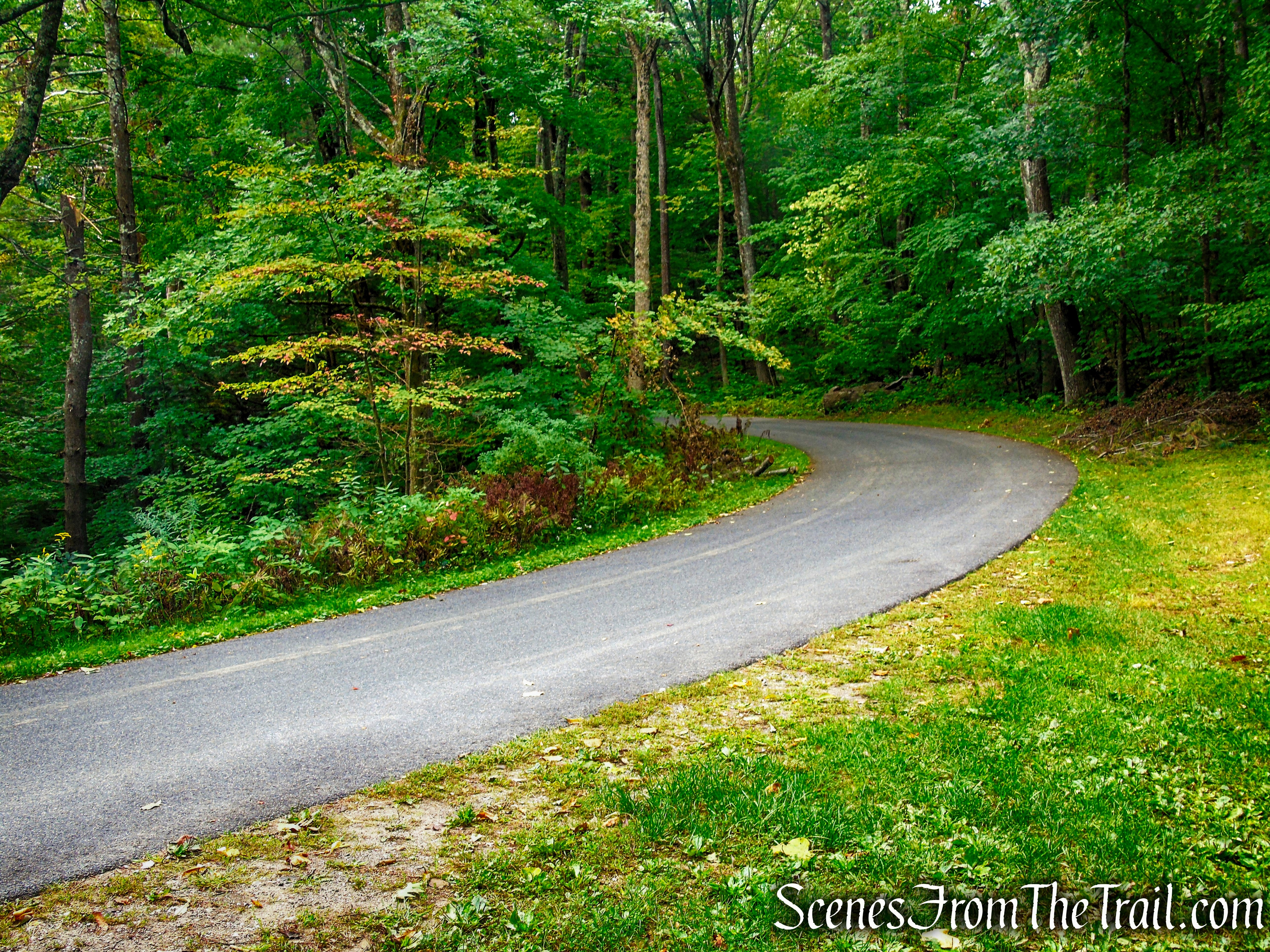
The paved parked road, called Stoeckel Drive, was built by the Civilian Conservation Corps in the 1930’s, runs from State Route 272 (North Street) through the grounds and up the mountain to a parking area.

Haystack Mountain Tower was struck by lightning on the evening of July 3rd, 2002, setting the roof and supporting timbers on fire. While people gathered in front of the National Iron Bank to watch the flames, the volunteer firemen climbed the mountain in full gear and saved most of the structure.

Haystack Mountain Tower was listed on the National Register of Historic Places in 1993.


Trails Overview:

There are two ways to get to the tower. The park’s road is open the third weekend in April until the end of October and brings visitors to a parking area. The tower is a half-mile hike from the parking area. The road is closed Nov. 1 until late April so visitors can hike about two miles up the paved road or take a mile-long path along the yellow-blazed Tower Loop Trail that runs along parts of an old carriage road to the tower and sometimes rocky terrain.

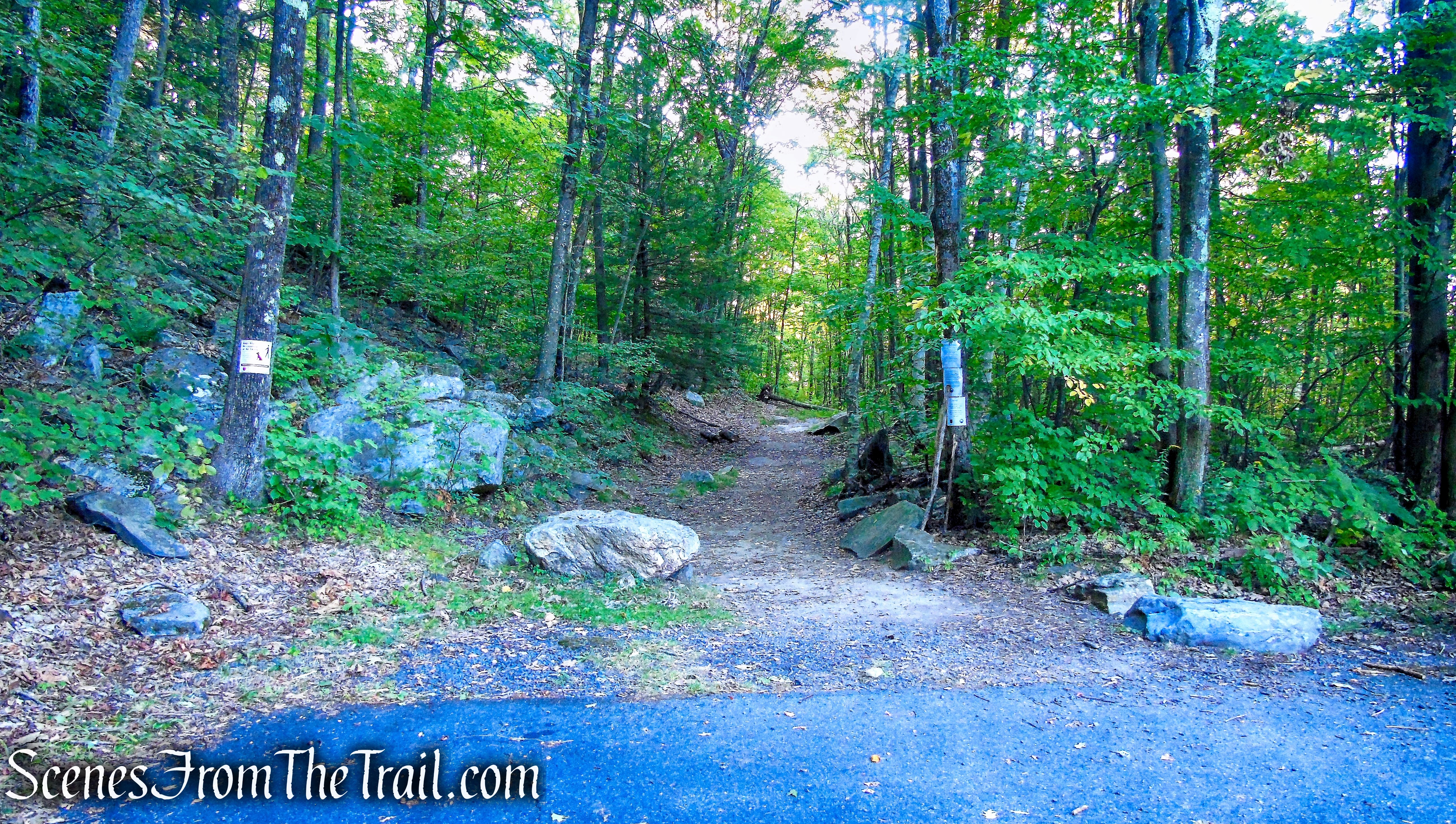
The upper trailhead is at the end of the paved park road as you follow it up the mountain. There is a small parking area with a compost toilet nearby.

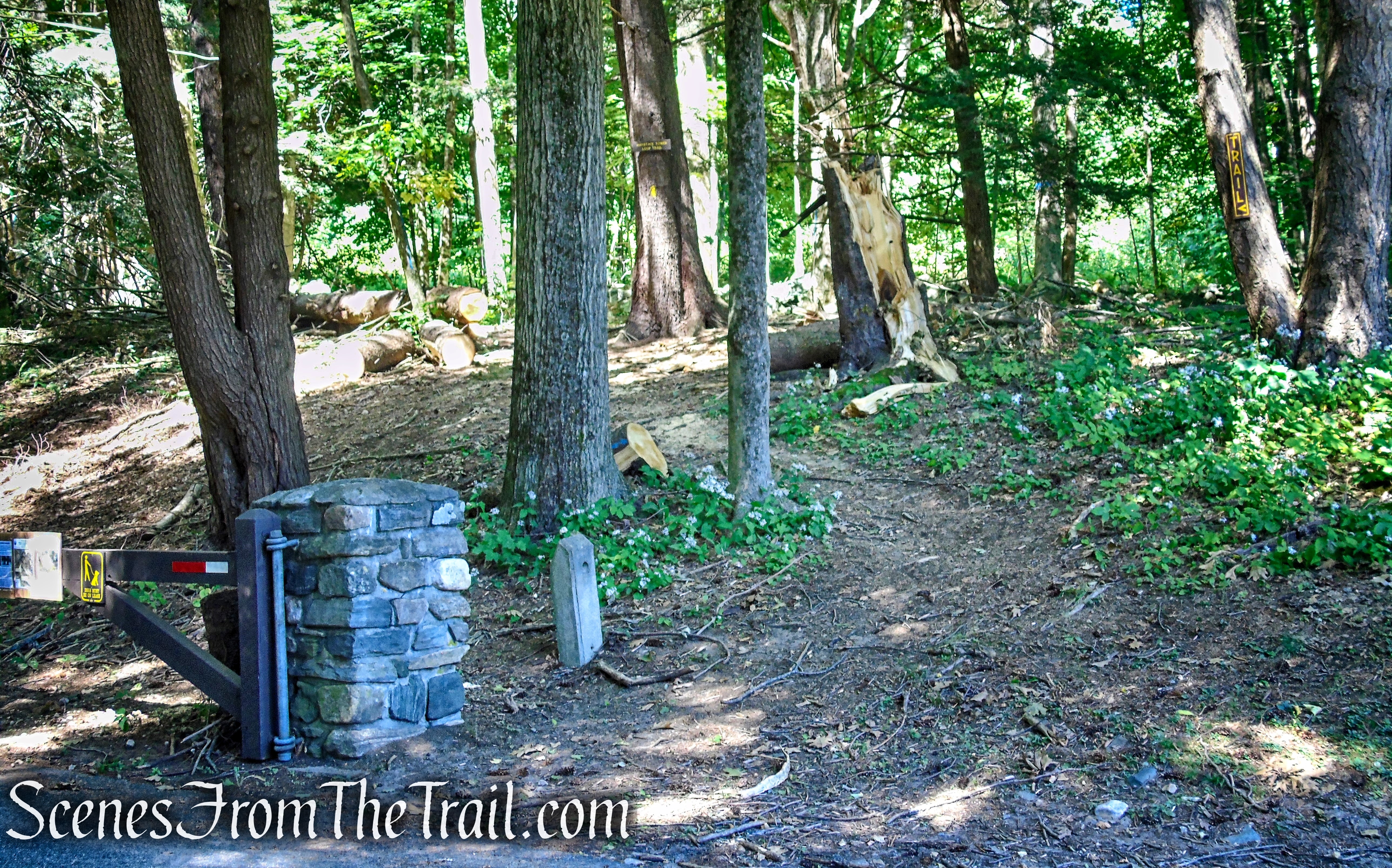
The lower trailhead is located to the right of the entrance gate to Haystack Mountain State Park on Route 272. Please park so as not to block the entrance gate.

Haystack Mountain State Park

Haystack Mountain State Park


The Hike:

At the rear of the parking area is the start of the connector trail. I have seen it referred to as the White Trail, but I did not notice any blazes. In about 320 yards, the connector trail comes to a T-intersection with the yellow blazed Tower Loop Trail. Here we veered left and followed the yellow blazes as they lead up towards the summit of Haystack Mountain.

upper trailhead - Haystack Mountain State Park

upper trailhead – Haystack Mountain State Park

connector trail - Haystack Mountain State Park

connector trail – Haystack Mountain State Park

Tower Loop Trail - Haystack Mountain State Park

Tower Loop Trail – Haystack Mountain State Park

Tower Loop Trail - Haystack Mountain State Park

Tower Loop Trail – Haystack Mountain State Park

Tower Loop Trail - Haystack Mountain State Park

Tower Loop Trail – Haystack Mountain State Park

In another 300 yards, the Tower Loop Trail reaches a T-intersection with a woods road. We turned left and in another 65 feet, turned right on a short footpath that leads to the summit of Haystack Mountain and the stone tower.

Tower Loop Trail - Haystack Mountain State Park

Tower Loop Trail – Haystack Mountain State Park

Haystack Mountain Tower

Haystack Mountain Tower

Haystack Mountain

Haystack Mountain

Haystack Mountain Tower

Haystack Mountain Tower

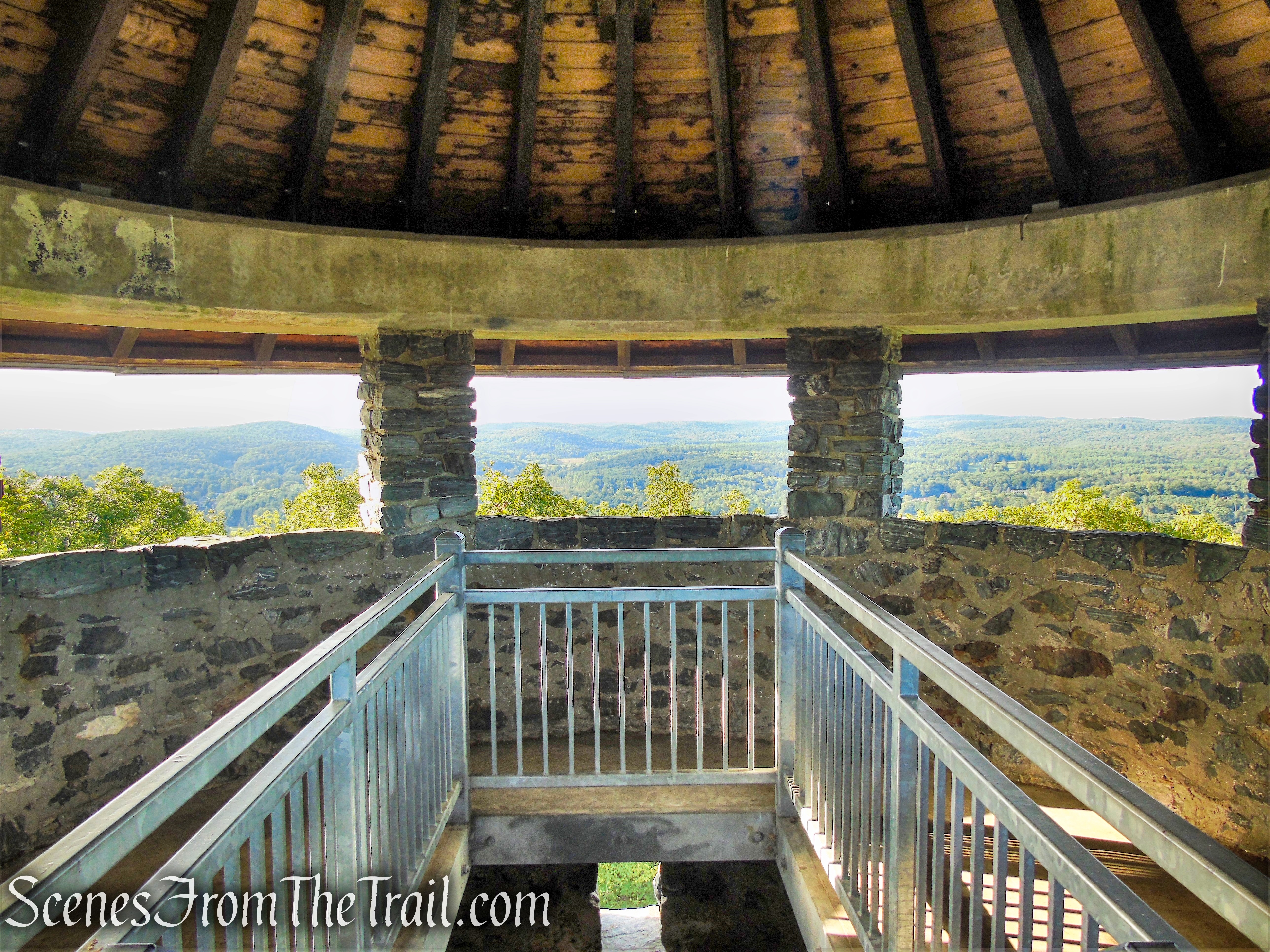
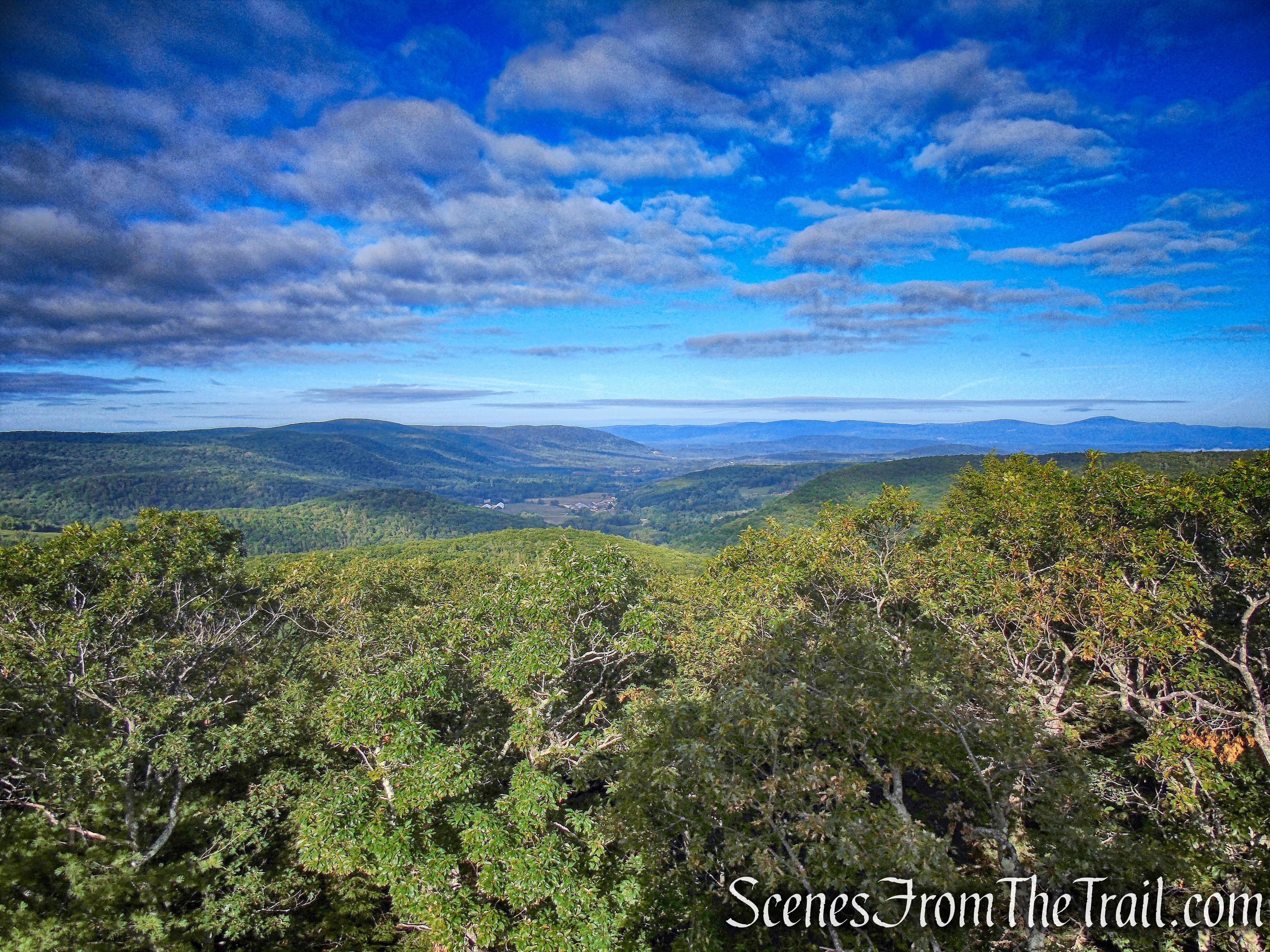
We climbed the tower and were greeted with outstanding views.

Haystack Mountain Tower

Haystack Mountain Tower

Haystack Mountain Tower

Haystack Mountain Tower

Haystack Mountain Tower

Haystack Mountain Tower

Haystack Mountain Tower

Haystack Mountain Tower

Haystack Mountain Tower

Haystack Mountain Tower

Haystack Mountain Tower

Haystack Mountain Tower

When we were done enjoying the majestic views from the top of Haystack Mountain Tower, we walked back to the woods road and turned right, walking around the back (northern side) of the tower. The Tower Loop Trail runs along this old woods road and descends Haystack Mountain gradually. This is the original road that was used to access the tower, built by Robbins Battell in 1886.

Tower Loop Trail - Haystack Mountain State Park

Tower Loop Trail – Haystack Mountain State Park

Tower Loop Trail - Haystack Mountain State Park

Tower Loop Trail – Haystack Mountain State Park

Tower Loop Trail - Haystack Mountain State Park

Tower Loop Trail – Haystack Mountain State Park

Tower Loop Trail - Haystack Mountain State Park

Tower Loop Trail – Haystack Mountain State Park

In about 0.9 mile, The Tower Loop Trail comes to a 3-way junction where the yellow blazes go both left and right. The left leg of the trail descends toward the main entrance of the park by Route 272. We turned right, leaving the woods road and began following the yellow blazes uphill on a footpath.

Tower Loop Trail - Haystack Mountain State Park

Tower Loop Trail – Haystack Mountain State Park

Tower Loop Trail - Haystack Mountain State Park

Tower Loop Trail – Haystack Mountain State Park

Tower Loop Trail - Haystack Mountain State Park

Tower Loop Trail – Haystack Mountain State Park

In about another 0.3 mile, The yellow-blazed Tower Loop Trail turns right, marked by two blazes on a tree. Here we turned left and followed the unmarked connector trail downhill, back to the parking area, where the hike began.

Tower Loop Trail - Haystack Mountain State Park

Tower Loop Trail – Haystack Mountain State Park

connector trail - Haystack Mountain State Park

connector trail – Haystack Mountain State Park

connector trail - Haystack Mountain State Park

connector trail – Haystack Mountain State Park


Review:

Although short, this was a really good hike, with the payoff being the 360° views from the top of the stone tower. Even though we got an early start, about 8:00am, we saw several couples in the vicinity of the tower. However, we did not see anyone else after leaving the tower until we arrived back at the trailhead. When we were done, we had a picnic lunch by the pond and spent a few hours there. All in all, a great day spent at Haystack Mountain State Park.

Pros:

Well marked trails, Haystack Mountain Tower, scenic views, not much foot traffic.

Cons:

Blue spray paint all over the trees on a section of the Tower Loop Trail.


Take a hike!

Haystack Mountain State Park

Haystack Mountain State Park


Sources:

Merestead

September 6, 2020 – Mount Kisco, NY

Difficulty: Easy

Length: Approximately 3 miles

Max elevation: 720 ft. – total elevation gain: approximately 371 ft.

Route type: Circuit

Map: Merestead Trail Map

Trailhead parking: 455 Byram Lake Road, Mount Kisco, NY 10549

Restrooms: None available


Overview:

Merestead is a Westchester County park, that is located in the Town of Bedford and Mount Kisco. It is comprised of a Georgian Revival mansion, designed by Delano and Aldrich and built in 1907. There are twelve additional out buildings on the 130-acre property, including an historic farmhouse (1850), carriage house and barn. The estate grounds includes woodlands and rolling hills that overlook the surrounding valley.

Merestead

Merestead

Access to the trail system is located across the street from the main driveway to the property. Follow the signs to the parking lot. Their website states that the grounds and trails are open seven days a week, 8am to dusk. The sign below reads differently.

Merestead

Merestead


History:

Merestead, Scottish for farmland, is the former estate of William Sloane (1873-1922), who was President of the W&J Sloane Furniture Company and his daughter Margaret Sloane Patterson (1910-2000).

On December 6, 1905, William Sloane purchased the deeds to two pieces of property, the Joseph Sarles estate and the E.V. Weeks estate on Byram Lake Road in Mount Kisco to be his legal residence. Merestead was a country estate designed for a gracious, and elegant lifestyle. Built at a time when automobiles were replacing the horse.

It includes a neo-Georgian mansion completed in 1907. It was designed by Delano and Aldrich and is a ​2-1⁄2-story, rectangular mansion with open porches on the ends and a ​1-1⁄2-story service wing. Also on the 130-acre property are 12 other contributing buildings.

Merestead mansion - 1981

Merestead mansion – 1981

In 1967 and 1973, the Pattersons deeded portions of their original estate, including a parcel given to the Nature Conservancy and another which led to the creation of the nearby Marsh Sanctuary. 

In 1982, the Pattersons deeded the property to Westchester County for use as a park, and upon Mrs. Patterson’s death in August of 2000, Westchester took full possession of the property.

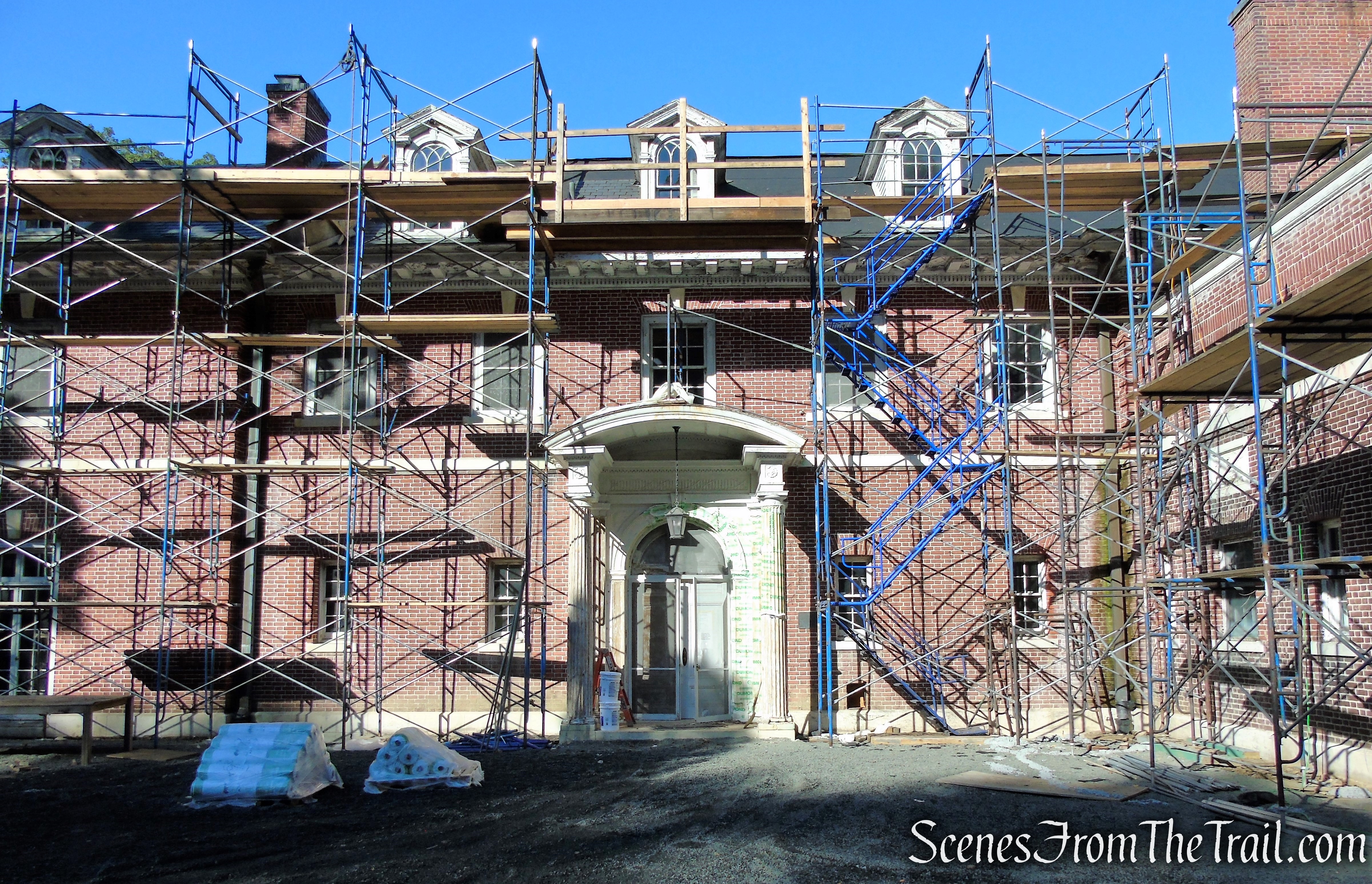
In 2019, The Westchester County Board of Legislators approved $2.05 million in funding to repair and preserve Merestead.

Merestead mansion - 2020

Merestead mansion – 2020

Merestead mansion - 2020

Merestead mansion – 2020

It was added to the National Register of Historic Places in 1984.


Trails Overview:

The more than 3 miles of trails meander through woodlands, open fields and gardens that offer attractive scenery. Some of the trails are original to the property and were utilized by the Patterson family during the early part of the century and follow along old farm roads. Thanks to the efforts of park staff and the County’s Youth Conservation Corps, these old trails were rehabilitated and several new trails were developed during the summer of 2003.

Blue Trail - Merestead

Blue Trail – Merestead

Red Trail - Merestead

Red Trail – Merestead

Hill to Meadow Trail - Merestead

Hill to Meadow Trail – Merestead

Garden Trail - Merestead

Garden Trail – Merestead

Farm Road - Merestead

Farm Road – Merestead

Farm Road - Merestead

Farm Road – Merestead  

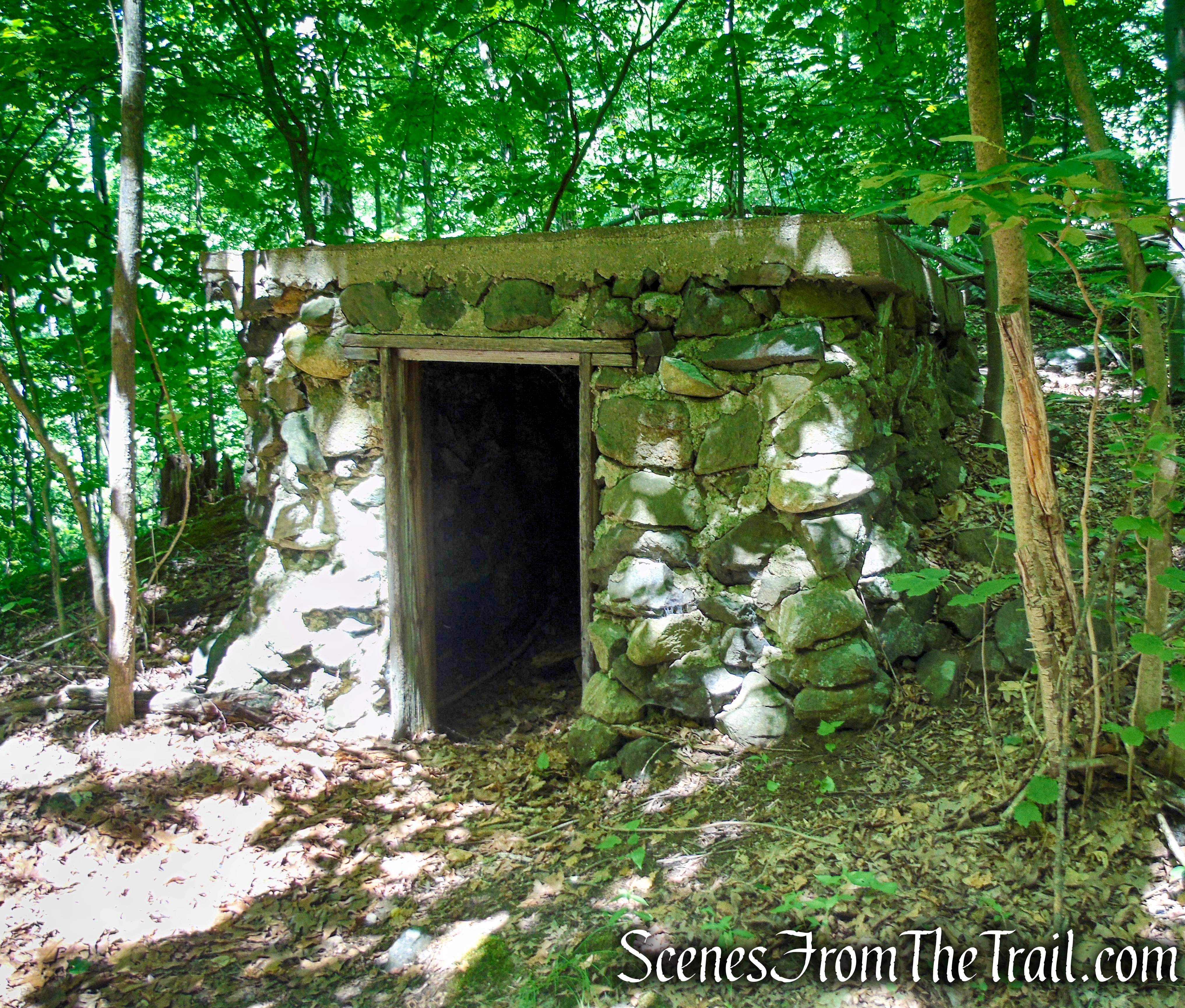
Highlights along the trails include bridges that are remnants of 100-year-old farm bridges, restored fieldstone root cellars, the masonry milk spring, the old pet cemetery, and two Chinese lantern statuaries that lead the way to a magnificent vista of the Hudson Highlands. With its high terrain and varying habitats, Merestead is also an ideal site for watching local resident birds and migrating species throughout the year.

root cellar - Merestead

root cellar – Merestead

old pet cemetery - Merestead

old pet cemetery – Merestead

Chinese lantern statuary - Merestead

Chinese lantern statuary – Merestead

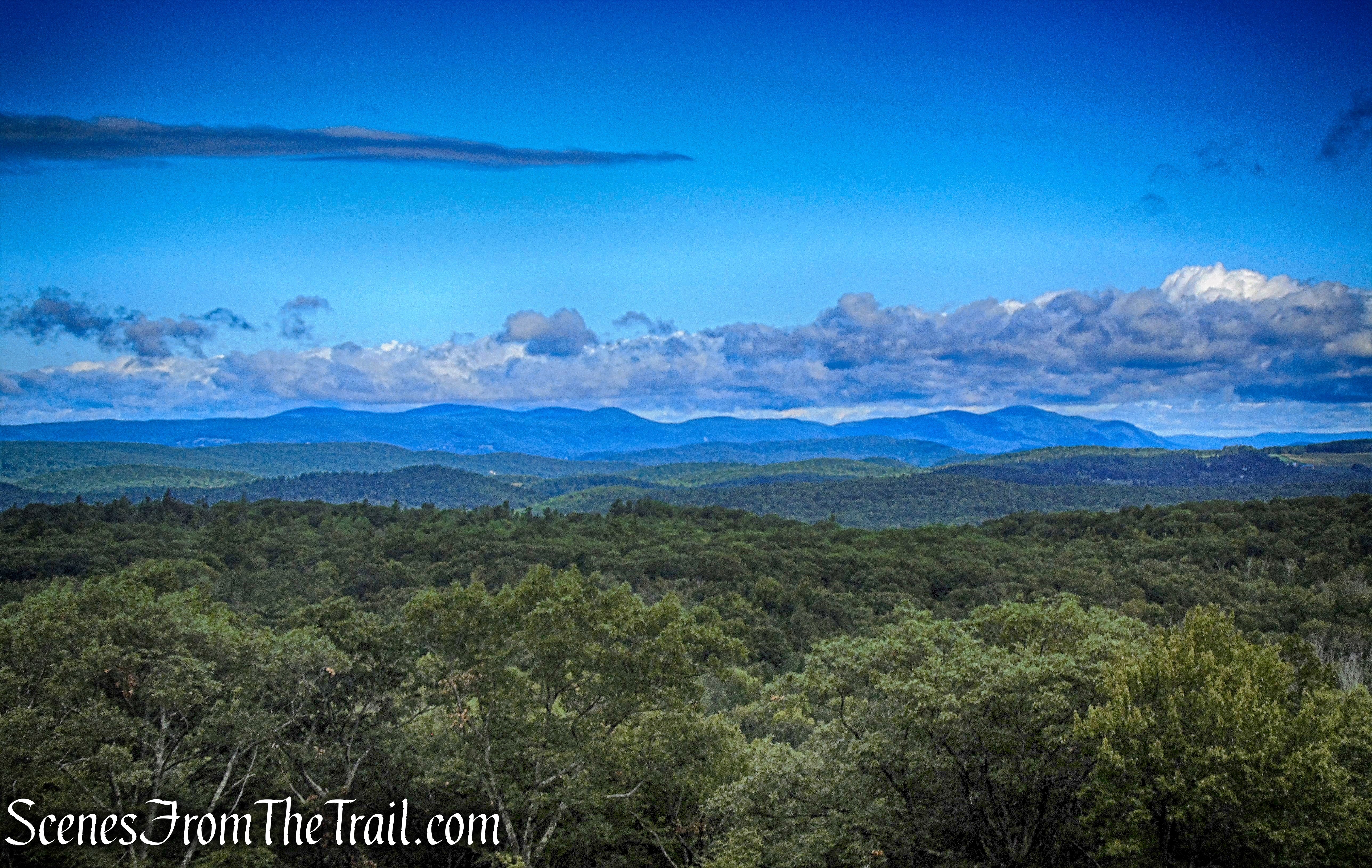
Hudson Highlands view - Merestead

Hudson Highlands view – Merestead

The trails at Merestead connect to the adjacent Marsh Sanctuary and the Arthur W. Butler Memorial Sanctuary.


Buildings:

The estate buildings and the entire original estate lands have remained virtually unchanged since the early twentieth century. Below are some of the buildings that are listed National Register of Historic Places. 

  • Mansion, 1906-1907

The mansion is the centerpiece of the estate. It was designed in the neo-Georgian style by the noted architectural firm of Delano and Aldrich and was completed in 1907. It is currently undergoing renovations.

Merestead mansion – 2020

Merestead mansion – 2020

  • Garden House, circa 1907

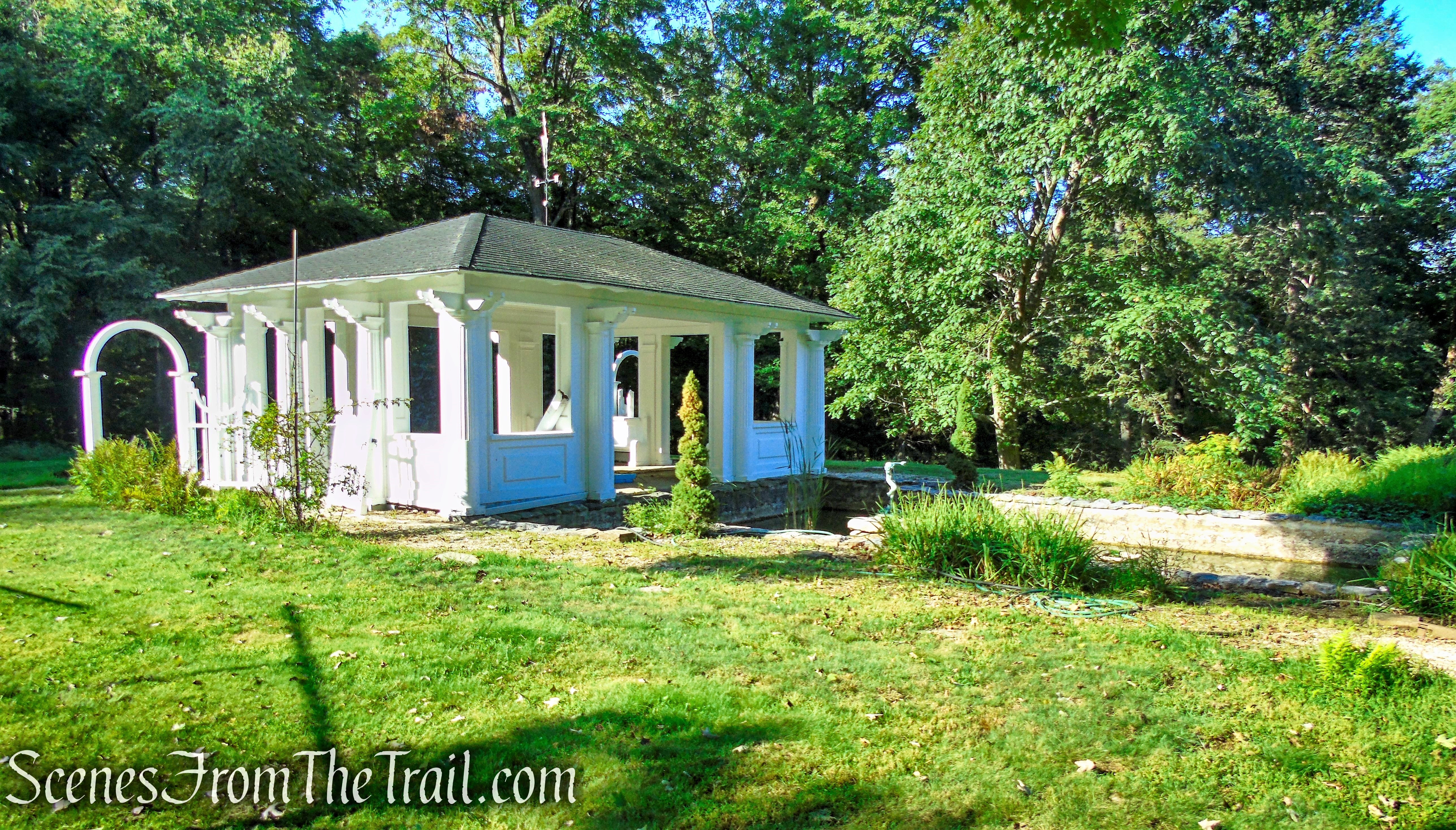
A single story frame garden pavilion with a hipped roof is located a short distance south of the mansion at the opposite side of the croquet court. Surrounded by gardens and a small rectangular pool, it has engaged columns and a paneled wainscot.

Garden House - Merestead

Garden House – Merestead

  • Carriage House, circa 1907

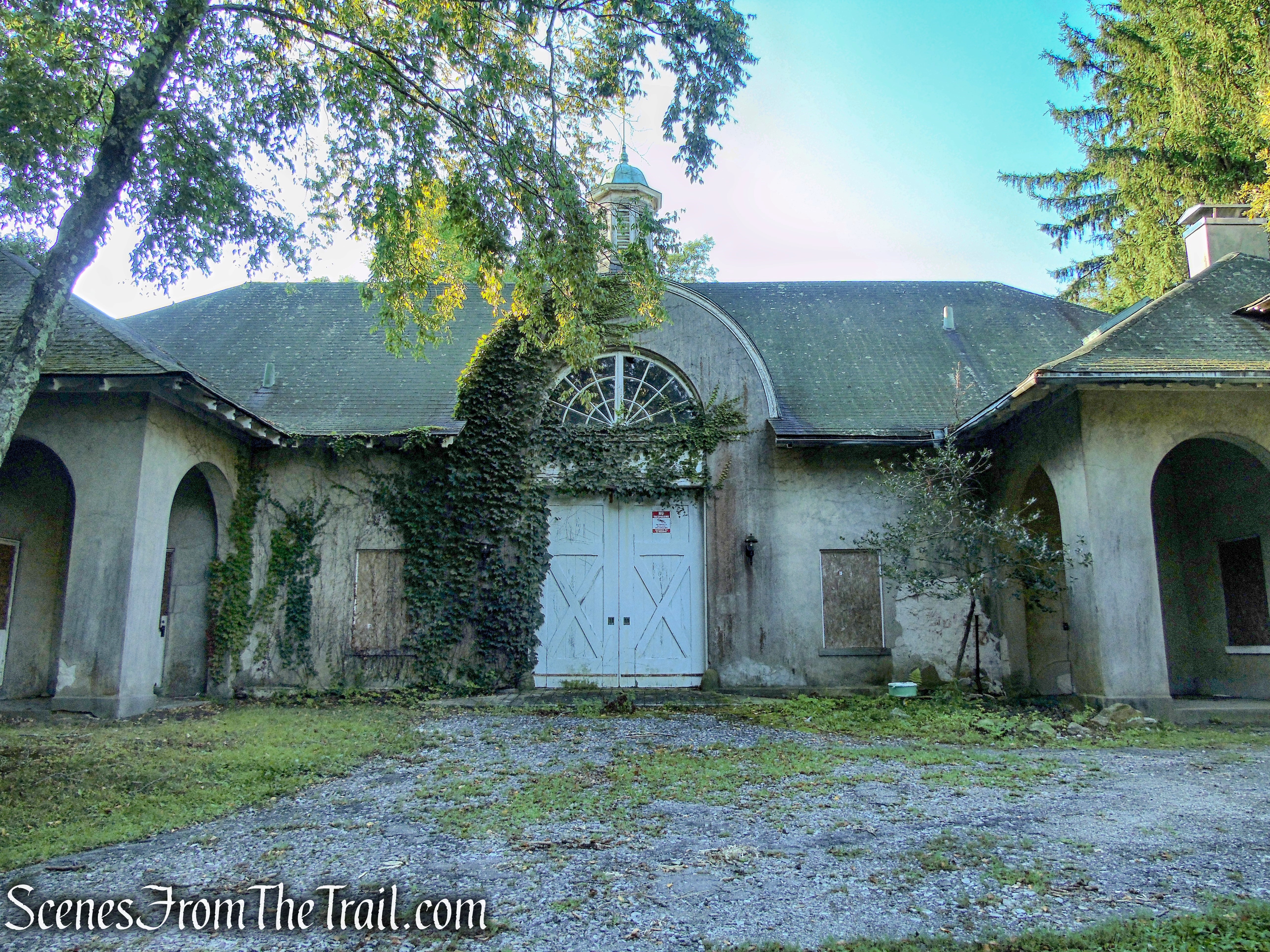
South of the mansion on the south side of Byram Lake Road stands a single story carriage house. The structure consists of a rectangular block with two flanking, projecting pavilions at the main (north) facade. The building is sheathed in stucco and covered by a hipped, slate roof which has several dormers, a chimney, and a rooftop octagonal cupola with a dome. Door openings are located at the center of the north facade beneath a large semi-circular fanlight which projects above the eaves of the roof.

Carriage House - Merestead

Carriage House – Merestead

Carriage House - Merestead

Carriage House – Merestead

  • Garage, circa 1907

A modest, three-bay, hipped roof garage is located immediately west of the carriage house. It includes three segmentally arched openings at the main facade, each opening filled with a pair of wooden garage doors, glazed in the upper halves. The roof is covered with slate.

Garage - Merestead

Garage – Merestead

  • Tenant Farmhouse, mid-19th century

A two-story mid-nineteenth century frame farmhouse built prior to the development of Merestead is located southeast of the mansion on the north side of Byram Lake Road. It forms the nucleus of the extant farm complex purchased by William Sloane to augment his Merestead estate. Originally built as a simple, vernacular structure at an undetermined date, it was modified around 1907 by the addition of dormer windows and a central pediment with lunette in order to make the house more architecturally compatible with the new buildings erected on the estate. The house is rectangular in form and features a full width (five-bay) front porch, a small, two-story east side extension, and gable roofs. An entrance with sidelights occurs at the center of the first story on the main facade which is flanked by two-over-two windows with shutters. The structure is sheathed with clapboard siding.

Tenant Farmhouse - Merestead

Tenant Farmhouse – Merestead

  • Cow Barn, circa 1907

North of the tenant farmhouse stands a large frame cow barn with a jerkin head gable roof. The barn is constructed above a raised stone foundation with primary entry gained through sliding barn doors at the center of the east side. A ramp with stone retaining walls leads directly to this entrance from the farmyard. The walls of the barn above the foundation are sheathed in clapboard siding and the roof is covered with asphalt shingles. Octagonal ventilation cupolas rise at each end of the roof ridge, which is itself ventilated by a low, full-length monitor.

Cow Barn - Merestead

Cow Barn – Merestead

The design of Merestead is the product of Delano & Aldrich (William A. Delano 1874-1960, Chester Holmes Aldrich 1871-1940), a New York architectural partnership established in 1903.

Please note: There are more buildings and structures not listed or pictured here that may be of interest.


Review:

A very pleasant walk through the woods, fields and rolling hills of a once grand estate. The property can be traversed in several hours at a leisurely pace, taking in all it has to offer. The old buildings and root cellars make  the trek through the grounds worthwhile. A nice day trip for families.

Pros:

Historical features, scenic landscape, mansion.

Cons:

Ongoing construction around the mansion.

Take a hike!


Sources:


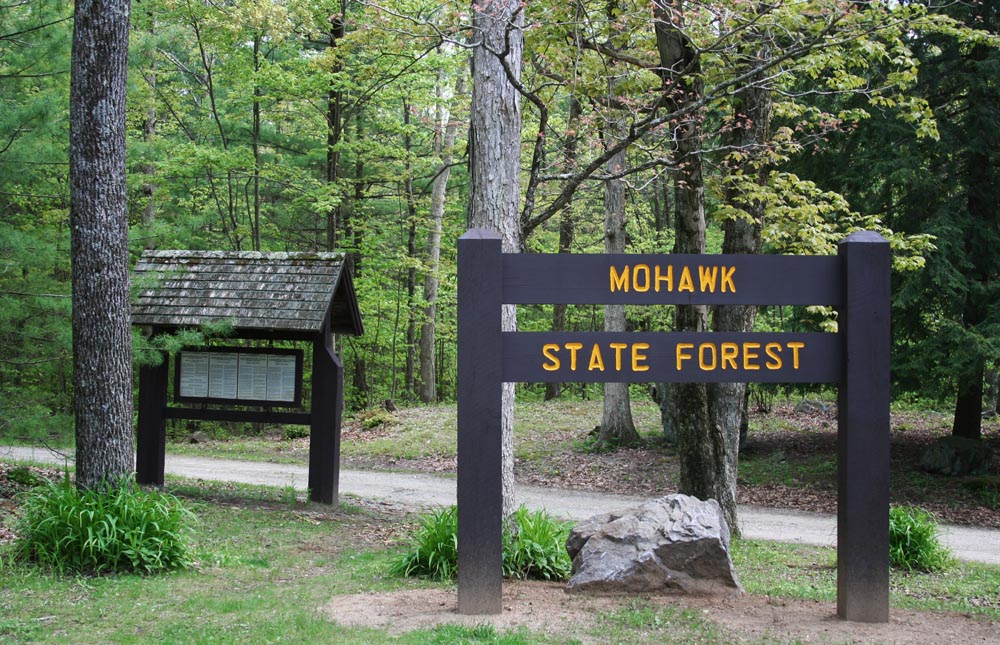
Mohawk Overlook and Cunningham Tower – Mohawk State Forest

August 30, 2020 – Litchfield, Connecticut

Maps: Mohawk Mountain State Forest Maps

Parking: Toumey Rd, Litchfield, CT 06759


Overview:

From atop the 1,683-ft. Mohawk Mountain, the view is literally forever on a clear day. The summit offers panoramic views of the Taconic Mountains and Berkshire Mountains to the north and northwest including Bear Mountain, Canaan Mountain, and Cream Hill in Connecticut as well as peaks in Massachusetts (Race Mountain, Mount Everett, Mount Greylock) and the eastern Catskills in New York State.

Mohawk Overlook - Mohawk State Forest

Mohawk Overlook – Mohawk State Forest

Mohawk State Forest, also known as Mohawk Mountain State Park, encompasses over 4,000 acres in the towns of Cornwall, Goshen, and Litchfield, in the southern Berkshires of Litchfield County, Connecticut. As overseen by the Connecticut Department of Energy and Environmental Protection, the area is used for hiking, picnicking, and winter sports by the public, while being actively managed to produce timber and other forest products.

  • The forest recreation areas are open from 8 am to sunset. Other forest areas are open one-half hour before sunrise to one-half hour after sunset.
  • Gates remain open between April-November. They close during the winter. Dates vary with the first snowfall and the end of mud season.

Mohawk State Forest

Mohawk State Forest


Trails Overview:

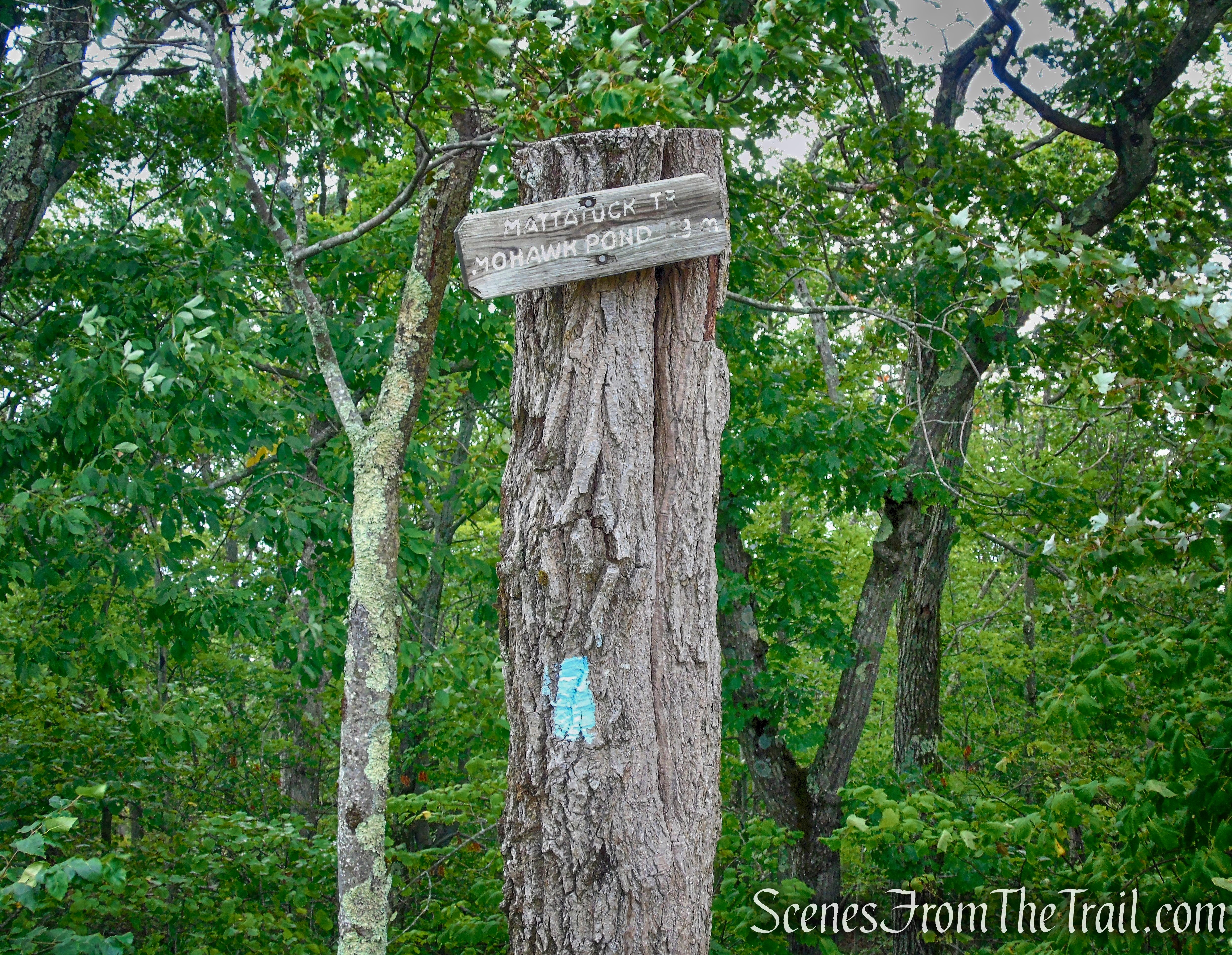
Both the Mattatuck and Mohawk Trails, major arteries of the Connecticut Blue Trail system, weave through Mohawk State Forest, unveiling its quiet beauty. Rustic Adirondack-style shelters, scattered about, serve thru-hikers. The forest trails brush past the Mohawk Mountain Ski Area.

Mohawk Mountain is the highest point on the blue-blazed Mattatuck Trail, which passes over the summit. The northernmost section of the 42 mile long Mattatuck Trail, travels through the Mohawk State Forest in Cornwall, one of the most scenic woodland areas in Connecticut. Meandering beside streams and through rock walls, the trail climbs Mohawk Mountain and offers outstanding panoramic views from the Mohawk Overlook. The Mattatuck’s northern terminus is at its junction with the blue-blazed Mohawk Trail.

Mattatuck Trail - Mohawk State Forest

Mattatuck Trail – Mohawk State Forest

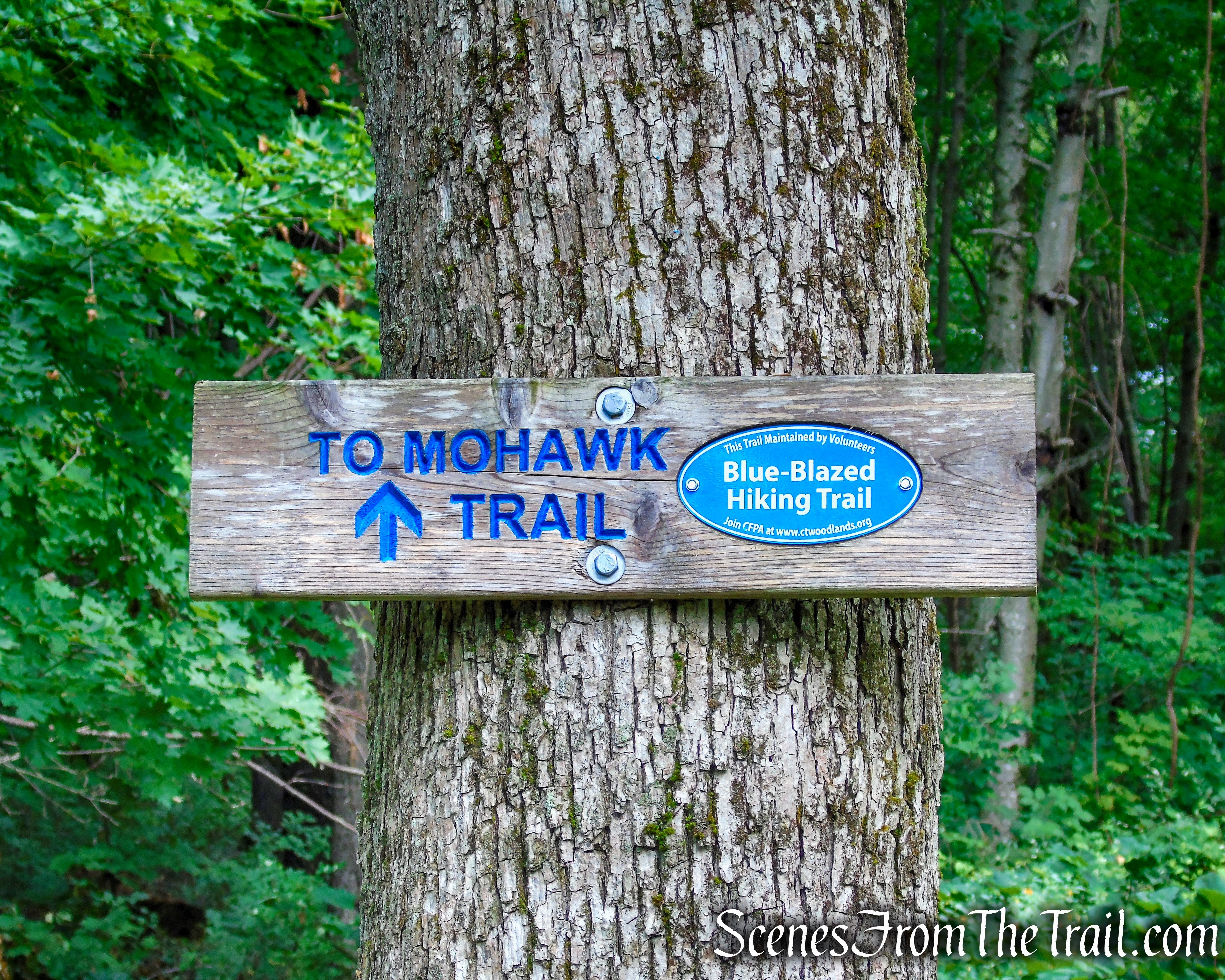
The Mohawk Trail (24.3 miles), established as a Blue-Blazed Hiking Trail on May 8, 1988, follows the former eastern route of the Appalachian Trail. The Mohawk Trail crosses Mohawk Mountain and Housatonic Meadows State Parks and the Mohawk, Wyantenock and Housatonic State Forests. The Mohawk Trail intersects the Mattatuck Trail on Mohawk Mountain in Cornwall. Distinctive features such as Cathedral Pines, Mohawk Mountain, Red Mountain, Dean Ravine, and Lookout Point on Barrack Mountain, as well as spectacular views from many points along the trail, make it a popular hiking destination.

Mohawk Trail - Mohawk State Forest

Mohawk Trail – Mohawk State Forest


History:

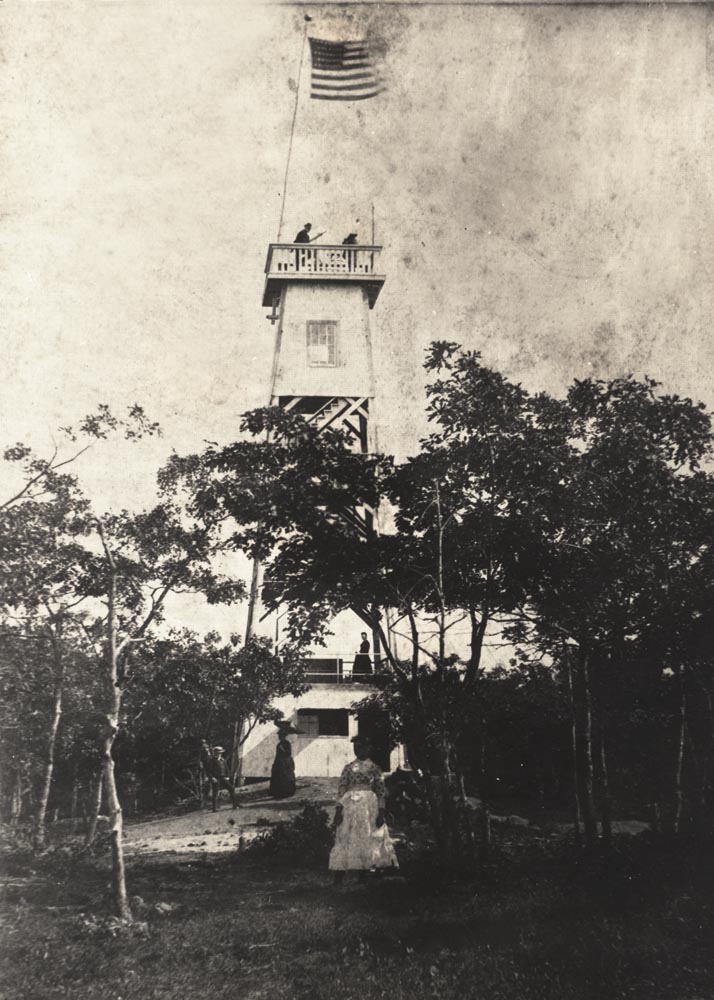
In 1882, a little over one acre of land on the mountain’s peak was purchased from the Hunts Lyman Iron Company by Cynthia J. “Nina” White and Henry Norton in order to build a tower for sightseeing. Outdoor recreation and the enjoyment of nature had become popular all over the country.

Mohawk Tower opened with great fanfare on July 4, 1883 and quickly became a popular picnic site. For twenty-five cents, visitors could climb the 40-ft. tower and use a telescope to enjoy the view. By 1890, interest in maintaining the tower dwindled, and it fell into disrepair. By 1892 the tower was unsafe to climb, and the cabin was looted and began to fall into ruin. The wooden tower was finally knocked down by a strong wind in 1898.

Mohawk Tower 1883 - Cornwall Historical Society

Mohawk Tower 1883 – Cornwall Historical Society

In 1912, Litchfield resident Seymour Cunningham began acquiring land on Mohawk Mountain. After acquiring the land, Cunningham erected a new circular stone tower on the northwestern side of Mohawk Mountain, just below the summit. The new structure was thirty feet in circumference and thirty feet high, and referred to as “Aerie.”

Cunningham Tower - Cornwall Historical Society

Cunningham Tower – Cornwall Historical Society

In 1917, Cunningham’s neighbor on Mohawk, Andrew Clark, donated five acres of woodland to the Connecticut State Park Commission, the first tract of what was to become Mohawk State Forest. It was known as Mohawk Mountain Park until the 1920’s.

In 1921, the White Memorial Foundation donated approximately 1,200 acres of land on Mohawk Mountain to Connecticut. This included Seymour Cunningham’s property, which had been acquired by White Memorial in 1920. Mohawk Mountain Park was joined with this larger tract to form Mohawk State Forest. In total, the White Memorial Foundation contributed over 2,900 acres to the acquisition of the forest. One of the conditions of the gift of this forest was that a lookout station should be erected and maintained on the summit of the mountain.

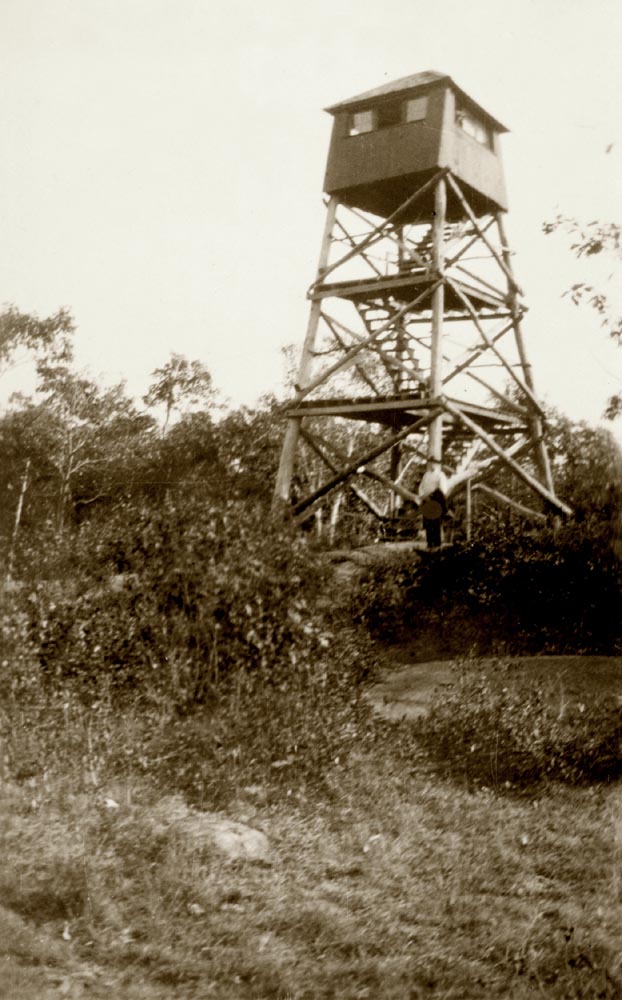
During the spring of 1922, with the assistance of the White Memorial Foundation, a rough 35-ft. timber lookout tower with an enclosed cab, was constructed by contract on the summit of Mohawk Mountain. Braced by four legs on the bare glacial rock, it was ungainly looking, but it stood firm for ten years. Cornwall’s first Fire Warden, Henry J. Bouteiller walked to the tower daily during fire season.

Mohawk Mountain Fire Tower 1922 - Cornwall Historical Society

Mohawk Mountain Fire Tower 1922 – Cornwall Historical Society

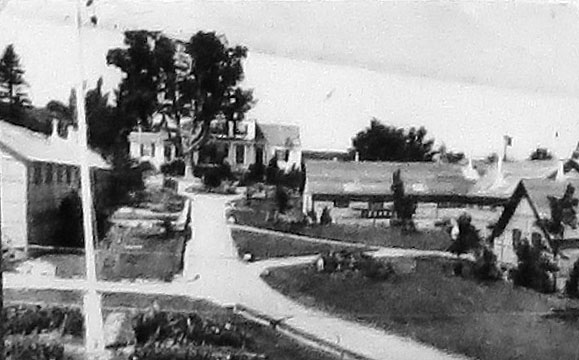
The Civilian Conservation Corps’ (C.C.C.) Camp Toumey was stationed at Mohawk State Forest from June 25, 1933 to July 26, 1941. Named for James W. Toumey, Dean of the Yale School of Forestry, this camp was originally designed as a camp exclusively for veterans of World Was I and, as such, the enrollees were older. But as the veterans’ need for employment waned, younger enrollees were gradually added to the camp. Some of the projects and accomplishments included: fighting forest fires; making improvements on the Old Farm House and renovations to the Old Hart House; construction of the Western District saw mill, a sawdust storage shed, a warehouse, and the lumber shed that served the entire western half of Connecticut. The camp also included a carpentry and cabinet shop which produced furniture, doors, and trim wood.

Camp Toumey - Mohawk State Forest

Camp Toumey – Mohawk State Forest

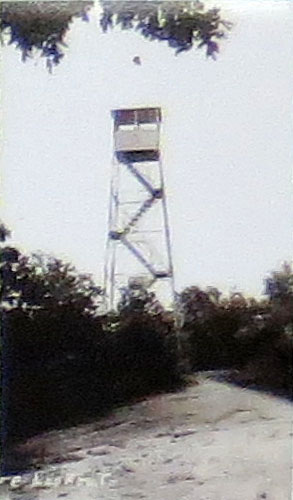
In 1937, the Civilian Conservation Corps (C.C.C.) took down the wooden 1922 tower and erected a new steel lookout tower that was 37-ft. high with a cab for fire watchers. For the next sixteen years, the public could enjoy climbing the tower on weekends and holidays for much of the year. Ted Starr served in the tower from 1945 to1953.

steel fire tower - Mohawk State Forest

steel fire tower – Mohawk State Forest

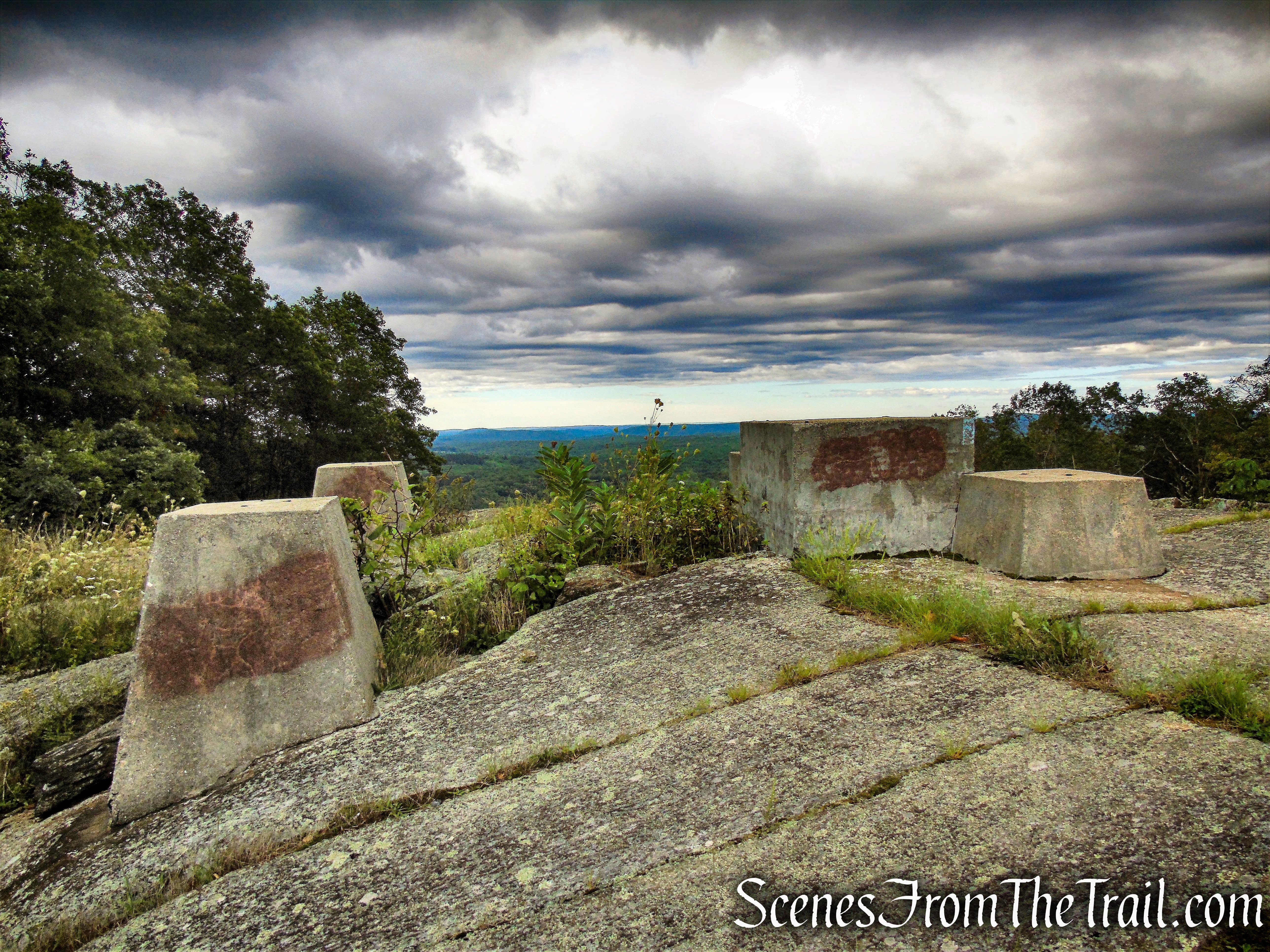
The structure, which was located by the parking area at Mohawk Overlook (at the end of Toumey Road), is no longer standing, but the concrete pillars can still be seen.

concrete pillars - 1937 fire tower

concrete pillars – 1937 fire tower

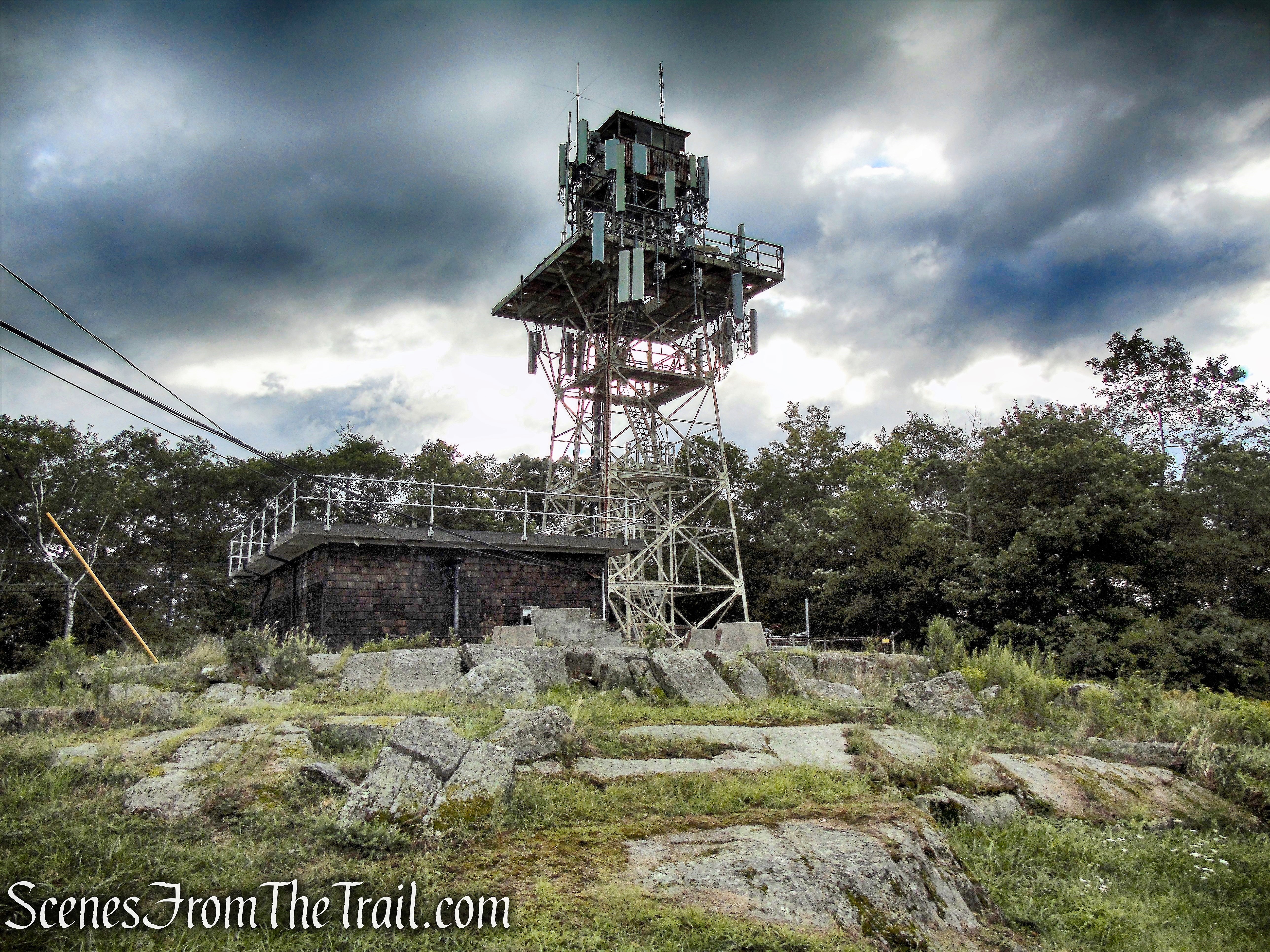
In 1953, the State of Connecticut made an arrangement with AT&T to place a booster microwave repeater at the summit. They took down the CCC tower and in order to receive permission to build one on state land, AT&T agreed to put a cab on the top of the tower for the fire lookout and the fire detection apparatus. The new 65-ft. AT&T tower was kept locked at all times and was surrounded by a ten-ft. mesh fence. On the ground floor, in the building, are the instruments for the relay station. Since repair crews must be able to reach the tower at all times, throughout the winter, Tower Road is kept plowed by Connecticut State Highway crews. This tower has changed ownership over the years and has been modified, but still stands today and is still off limits to the public.

AT&T Tower - August 2020

AT&T Tower – August 2020

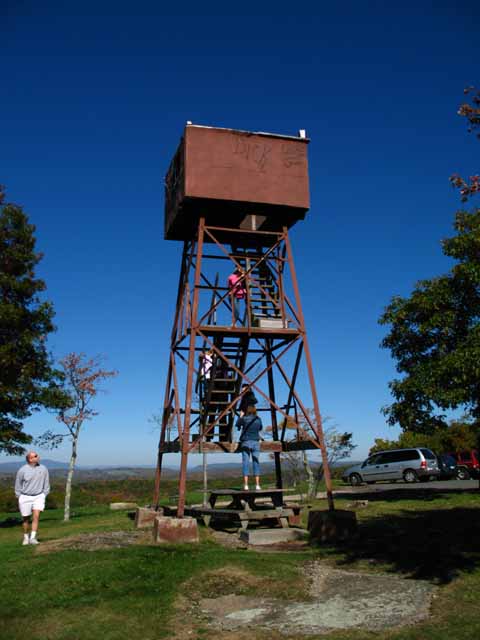
During the 1960’s, a group led by Cornwall residents complained that there was no way that the public could enjoy the views from the summit of Mohawk Mountain. The vegetation was growing, blocking the view and the AT&T tower was always locked. Eventually the protest was noticed and around 1974, the former 40-ft. lookout tower on Booth Hill in Hartland was moved to the Mohawk summit. A new wooden cab was built by Edwin Palmer of Cornwall, a State Forest carpenter. An area to the south was cleared so that people could again look down on Mohawk Lake and out at the Litchfield Hills.

Booth Hill tower

Booth Hill tower

This tower was removed from Mohawk Mountain in September of 2008.

Booth Hill tower - date unknown

Booth Hill tower – date unknown

The concrete footings are still visible at the summit.

concrete footings - Booth Hill tower

concrete footings – Booth Hill tower

In 1979, a 180-ft. self-supporting telecommunication tower was erected on Mohawk summit. The tower provides emergency communications for the Department of Public safety (a division of the State Police), the Department of Energy and Environmental Protection (DEEP) and the Connecticut Department of Public Health.

Presently, there are two towers at the Mohawk Overlook that are off limits to the general public. The now gutted Cunningham Tower sits below the summit, and offers no views.


Today:

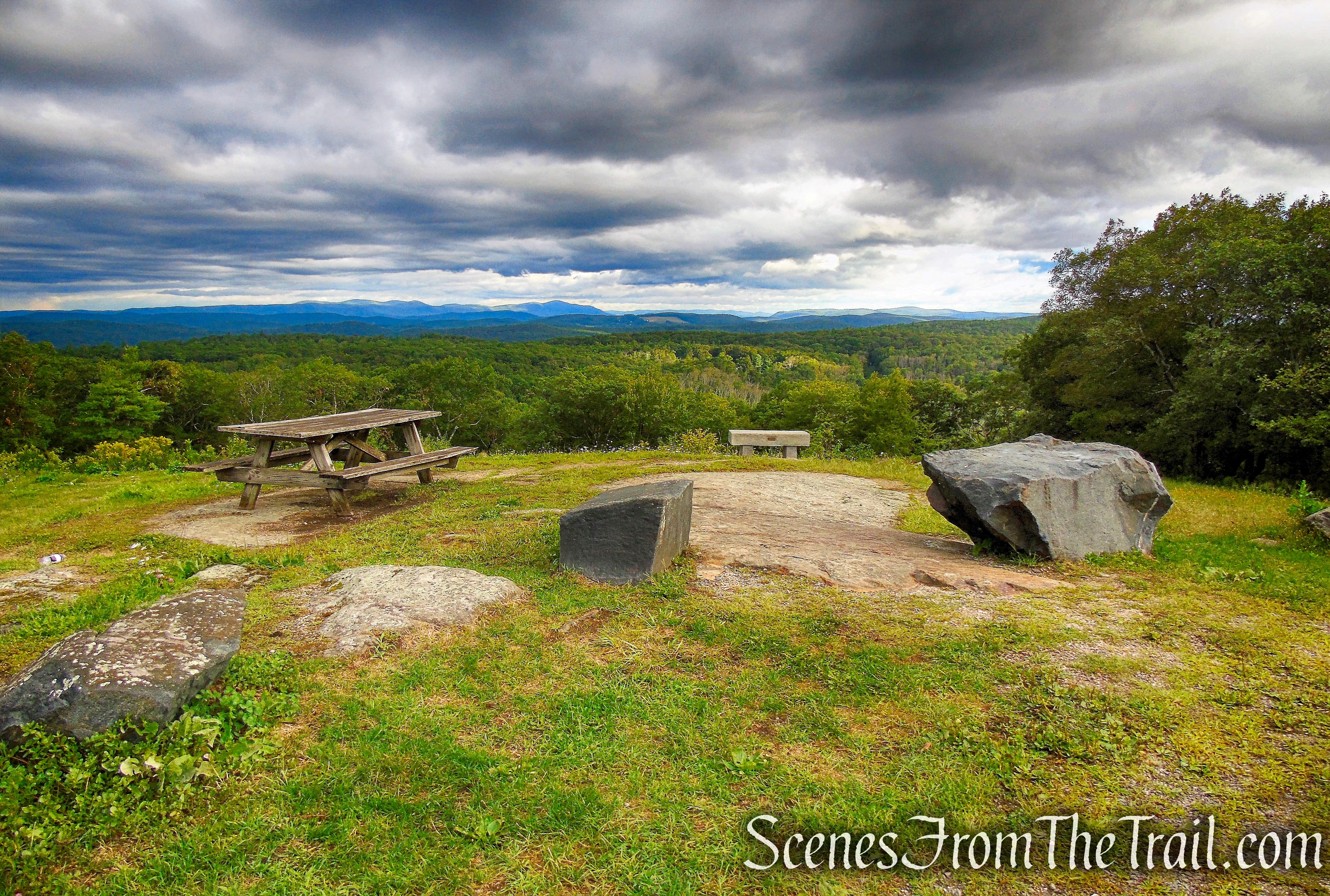
Although there are no accessible towers at the summit, the Mohawk Overlook provides visitors with outstanding views. One can drive right up to the summit (April – November) and enjoy the scenic vistas while enjoying a picnic.

Mohawk Overlook

Mohawk Overlook

Mohawk Overlook

Mohawk Overlook

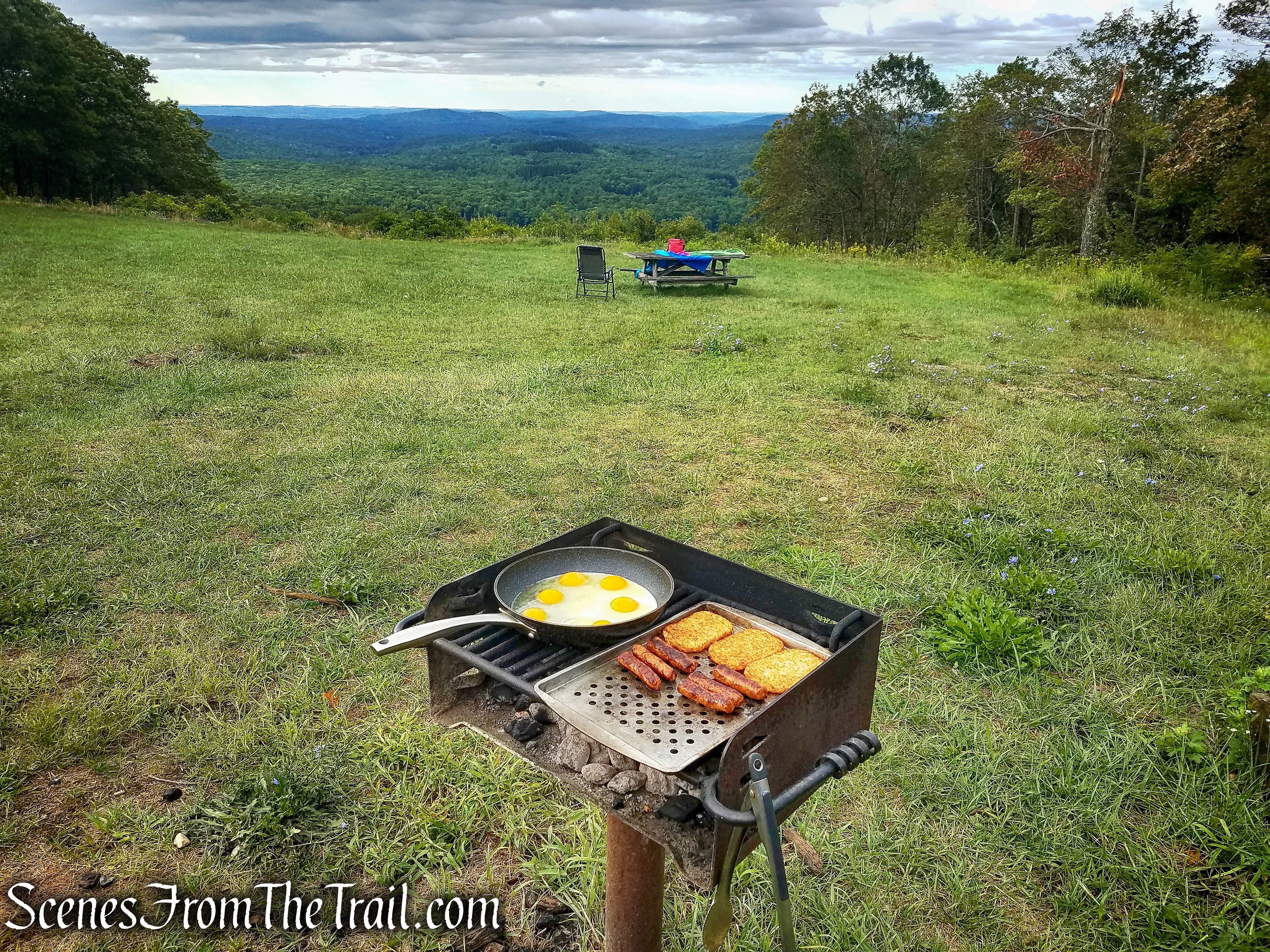
If you arrive early and are lucky enough to secure the lone grill at the summit, you can grill some breakfast while enjoying the panoramic views.

Grilling breakfast - Mohawk Overlook

Grilling breakfast – Mohawk Overlook

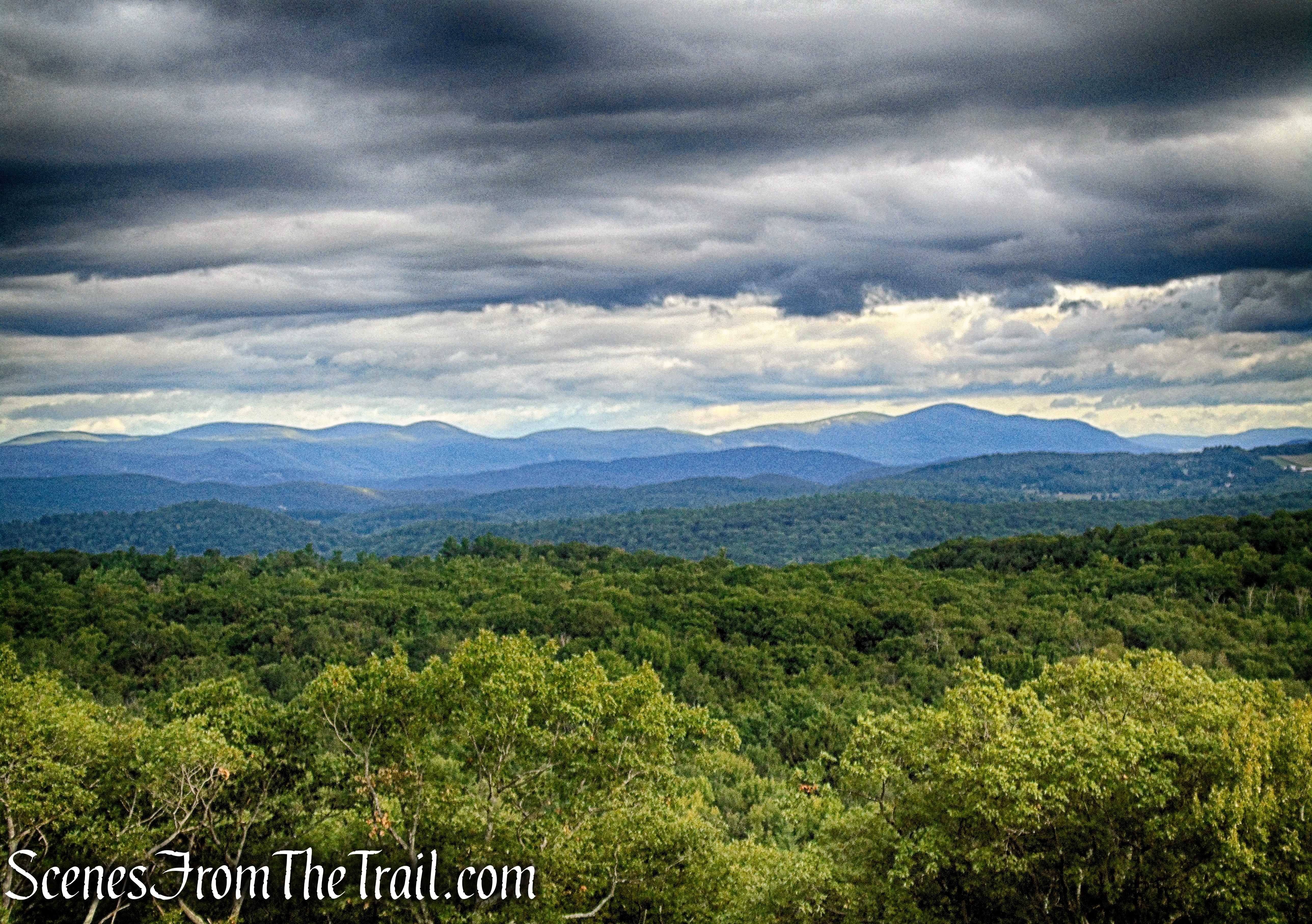
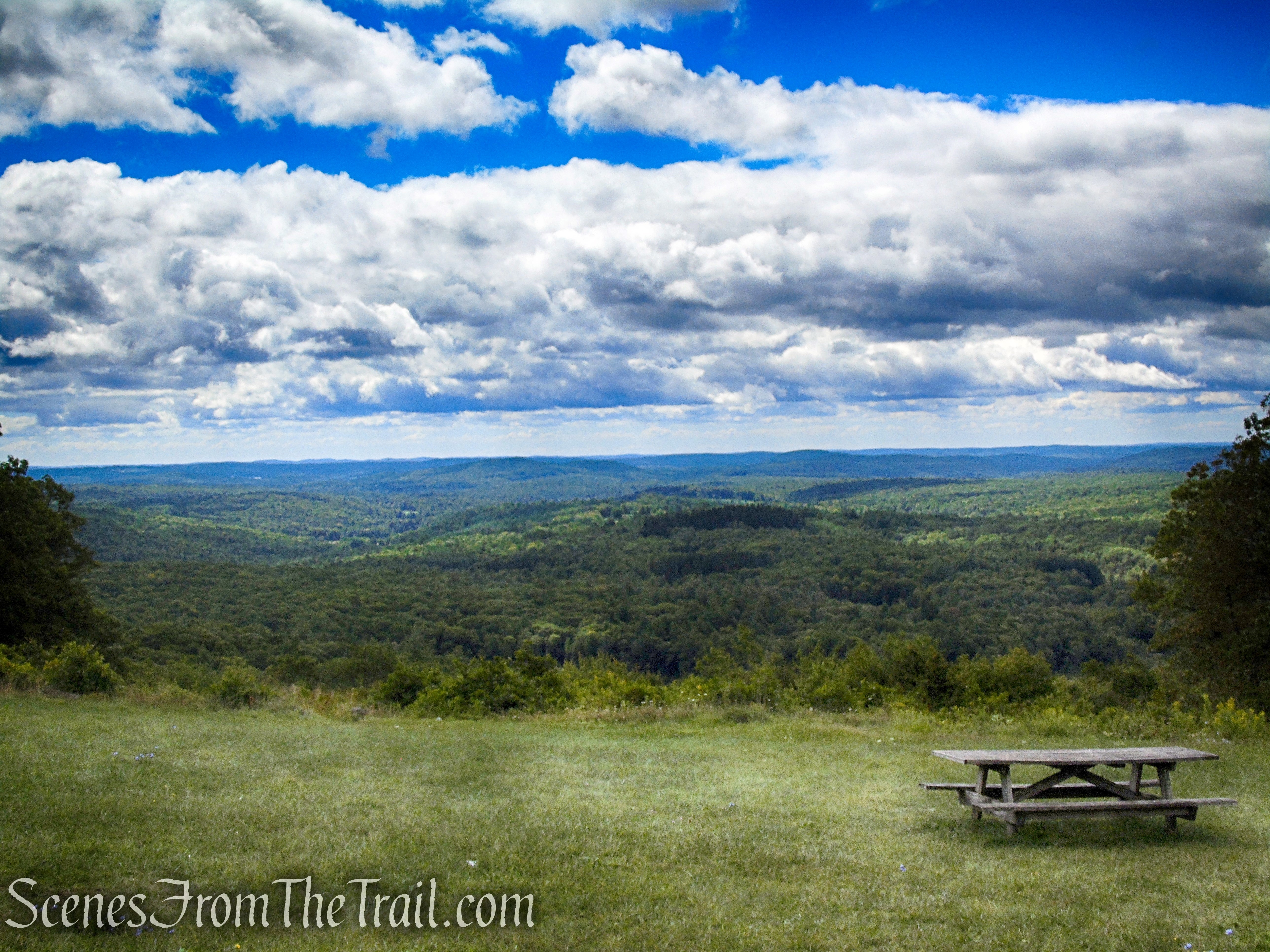
From atop the 1,683-foot Mohawk Mountain, the view is literally forever on a clear day.

Mohawk Overlook – Mohawk State Forest

Mohawk Overlook – Mohawk State Forest

View northwest.

Mohawk Overlook – Mohawk State Forest

Mohawk Overlook – Mohawk State Forest

View southeast.

Mohawk Overlook – Mohawk State Forest

Mohawk Overlook – Mohawk State Forest

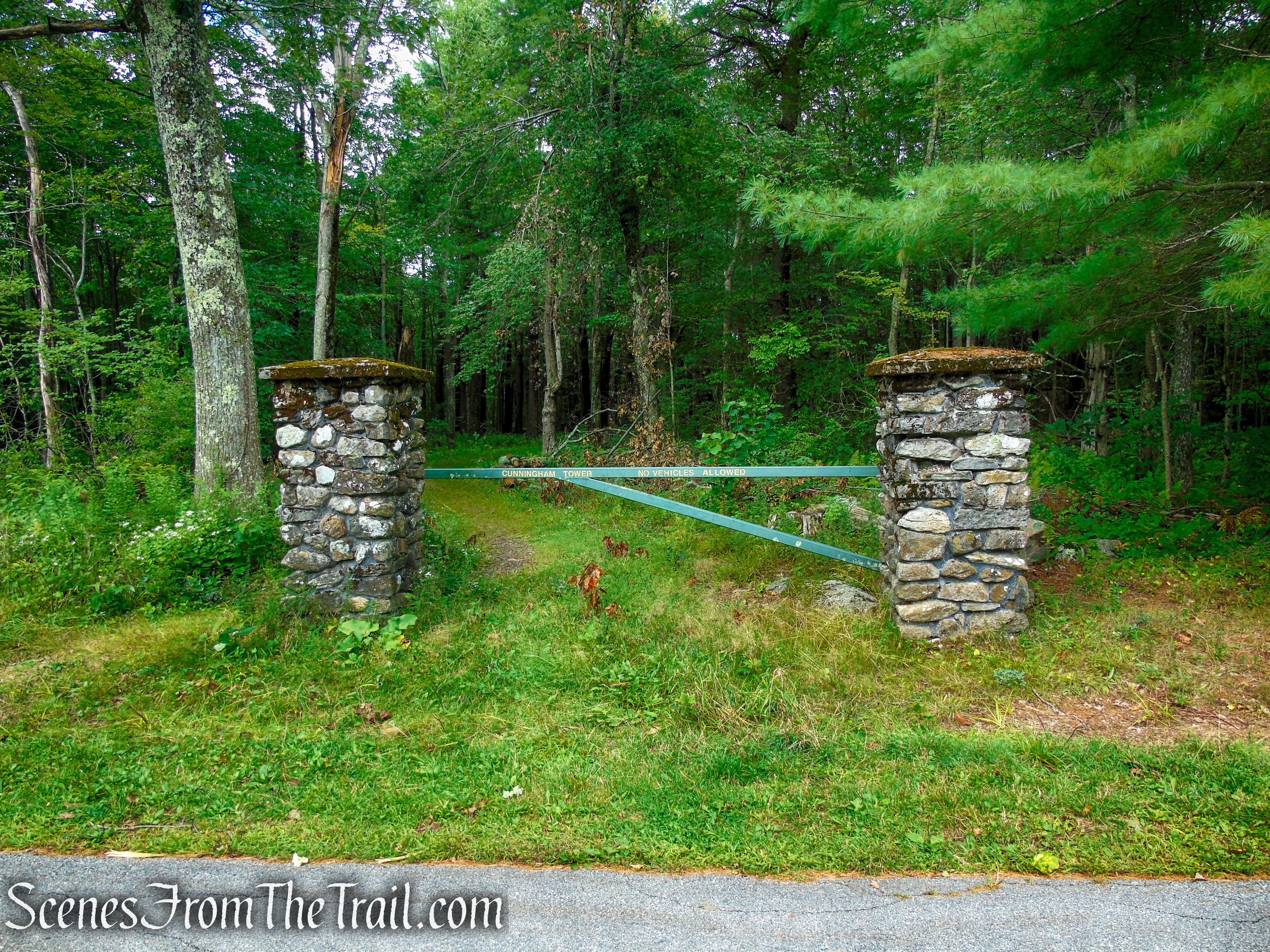
When you are done admiring the views, you can drive down the road and check out Cunningham Tower. There is a gate with two stone pillars and shown on Google Maps as Cunningham Tower Trailhead. There is room for several cars along the road.

Cunningham Tower Trailhead

Cunningham Tower Trailhead

Cunningham Tower Trailhead

Cunningham Tower Trailhead

Proceed past the gate and follow the old road into the woods. Soon the road curves to the left and joins the blue-blazed Mohawk Trail, a short distance later, the tower will come into view.

Cunningham Tower trail

Cunningham Tower trail

Just ahead is the two-story fieldstone structure.

Cunningham Tower – Mohawk State Forest

Cunningham Tower – Mohawk State Forest

The trees around the tower have grown tall, so there is no view of the surrounding area.

Cunningham Tower – Mohawk State Forest

Cunningham Tower – Mohawk State Forest

The tower is open for all to explore, although it is mostly just a shell.

Cunningham Tower – Mohawk State Forest

Cunningham Tower – Mohawk State Forest

The red tiled floor seems to have weathered well.

Cunningham Tower – Mohawk State Forest

Cunningham Tower – Mohawk State Forest

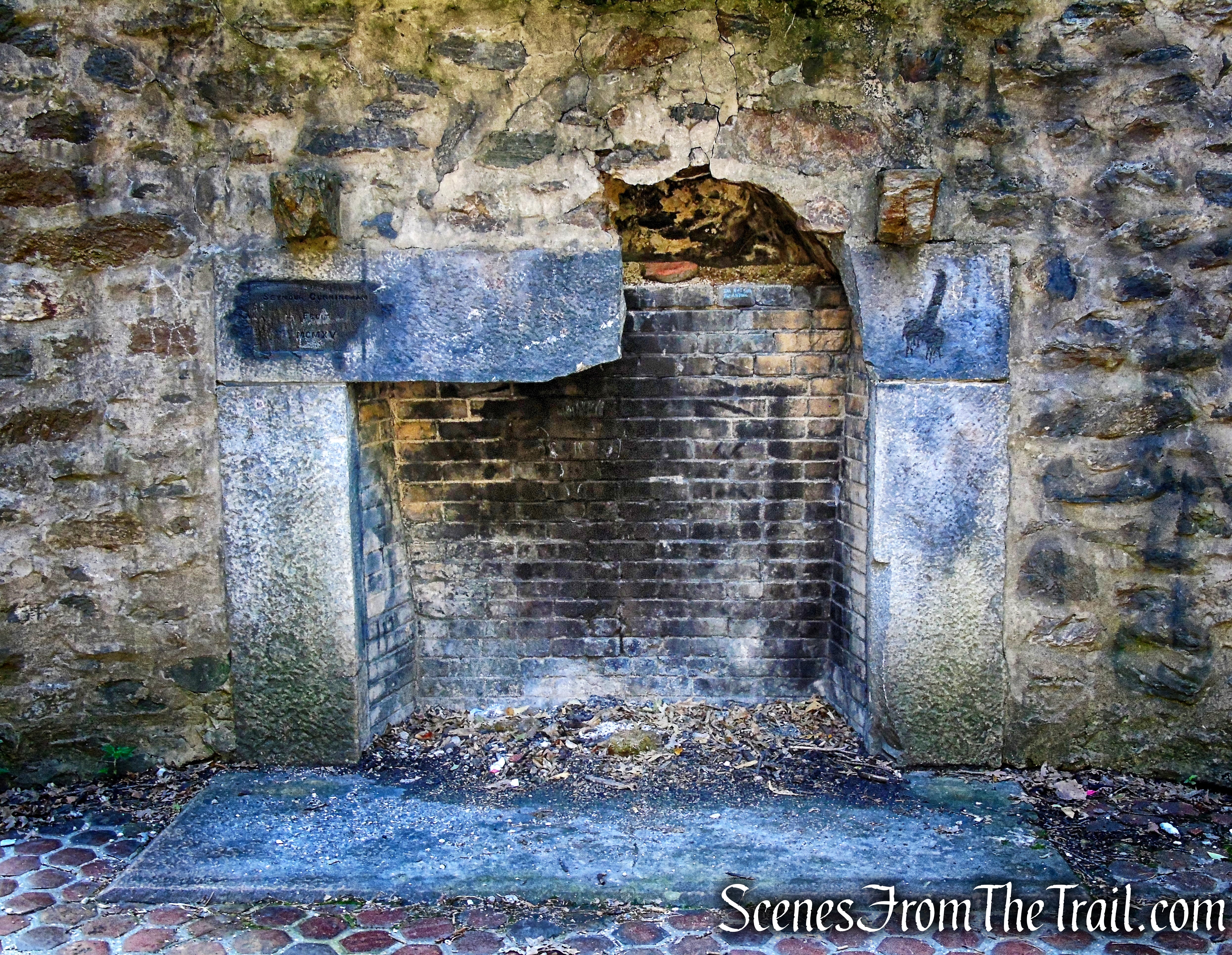
The fireplace is still used on occasion.

Cunningham Tower – Mohawk State Forest

Cunningham Tower – Mohawk State Forest

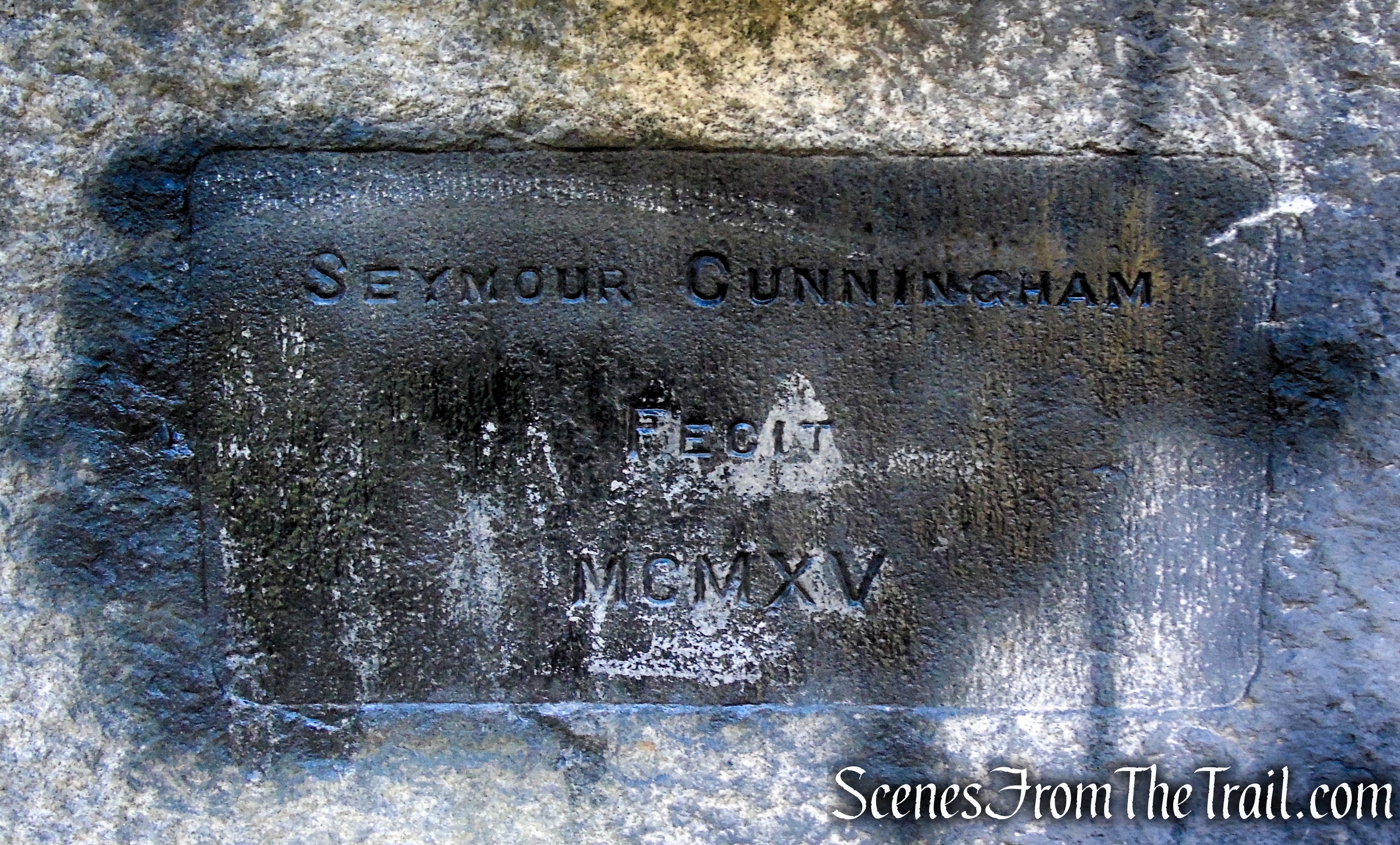
A keystone in the wall next to the fireplace reads: “Seymour Cunningham, Fecit, MCMXV.” Translated from Latin, the word “Fecit” is used on artwork (such as a painting, sculpture, engraving, or building) to identify its creator. “MCMXV” = 1915, the year it was built.

Cunningham Tower – Mohawk State Forest

Cunningham Tower – Mohawk State Forest

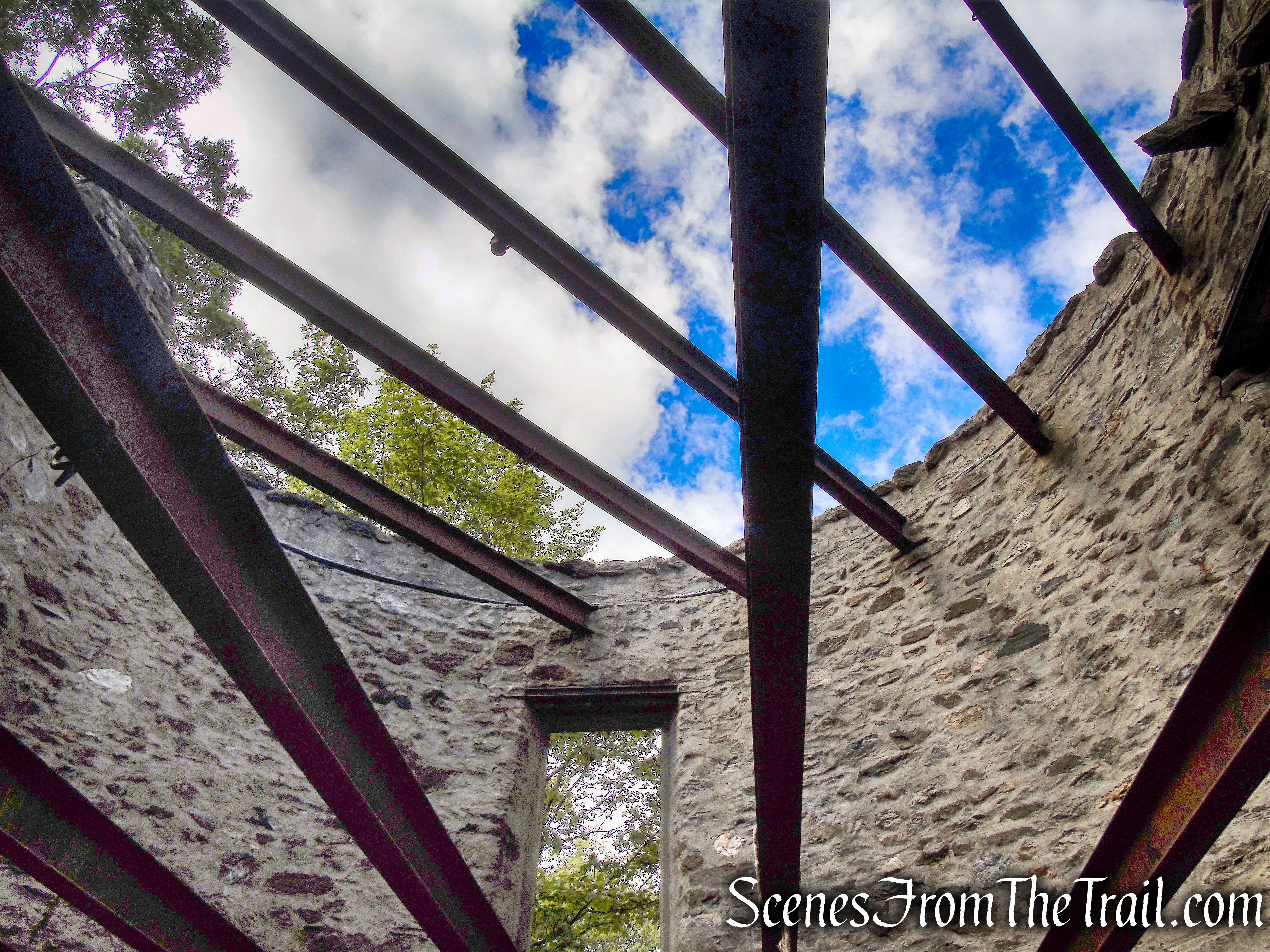
The second floor and roof are long gone, just steel beams where the second floor and roof used to be.

Cunningham Tower – Mohawk State Forest

Cunningham Tower – Mohawk State Forest

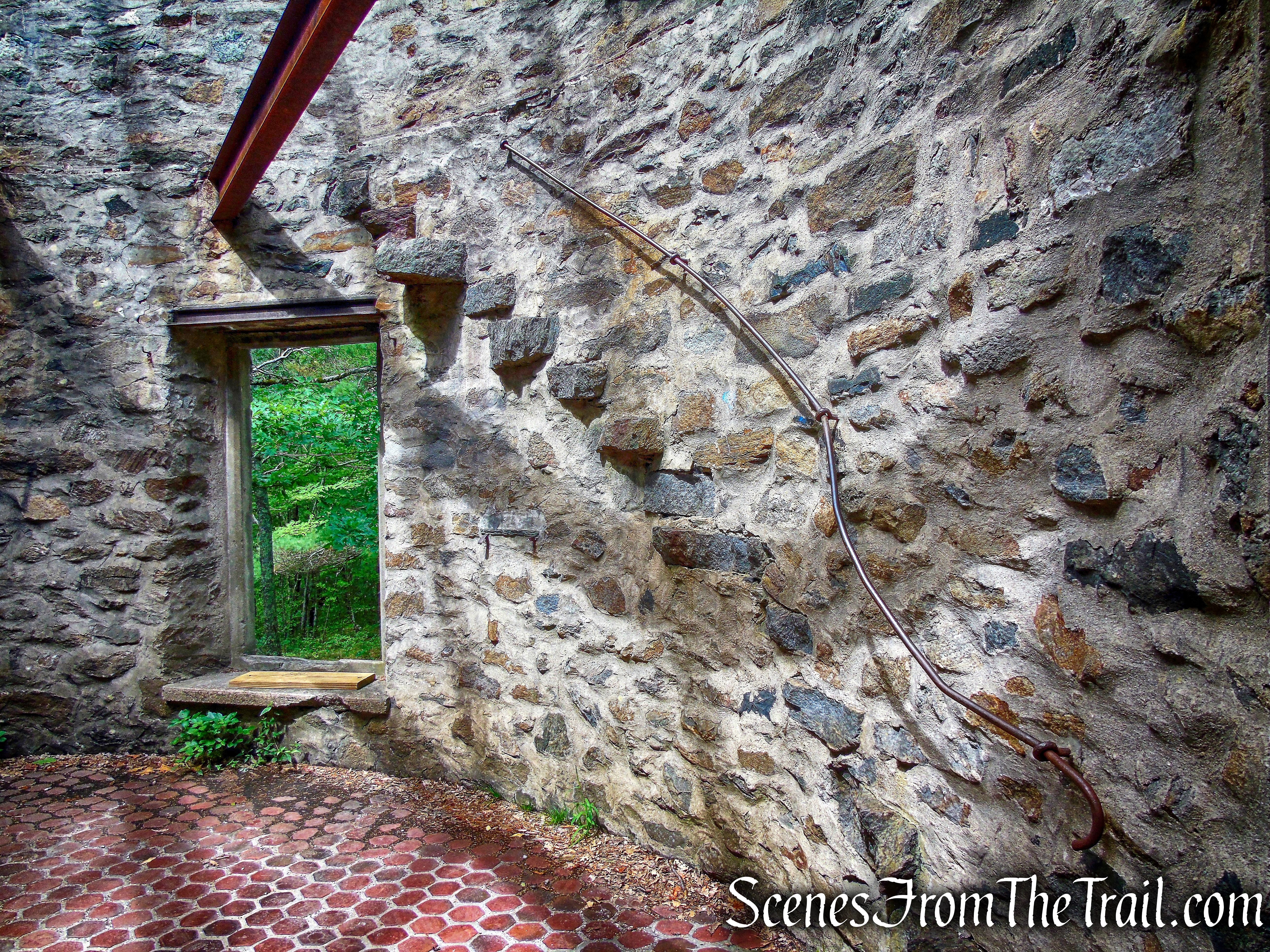
The stone steps leading to the second floor have been broken off and all that is left is the twisted steel railing that climbs the wall.

Cunningham Tower – Mohawk State Forest

Cunningham Tower – Mohawk State Forest


If you are in the area, or just want to take a day trip, the Mohawk Overlook in Mohawk State Forest is definitely a great place to visit. Hikers and tourists alike will enjoy the panoramic views and the historic stone tower.


Sources:

Little-Laurel Lime Ridge Park

August 1, 2020 – Seymour, Connecticut

Difficulty: Moderate

Length: Approximately 2.3 miles

Max elevation: 547 ft.– total elevation gain approximately 314 ft.

Route type: Circuit

Maps: Little-Laurel Lime Ridge Park Trail Map 2022

Trailhead parking: At the end of the road, just past 99 Tibbets Road, Seymour, CT 06483


Park Overview:

Little-Laurel Lime Ridge Park is a 209-acre park that is owned and managed by the town of Seymour. Part of the Seymour Land Trust, the park features a unique ridge-top ecosystem dominated by chestnut oak, pitch pine and mountain laurel. The old mining roads lead to the ruins of an early 1800’s colonial limestone kiln, marble caves, stone shelters and quarries. The topography is characterized by rolling hills with intermittent steep slopes that offer spectacular views of the Housatonic River Valley from rock outcrops. There is no park signage currently, at the end of Tibbets Road (the main access point) and there are no facilities. This is a Carry In – Carry Out park.

view of the Housatonic River - Little-Laurel Lime Ridge Park

view of the Housatonic River – Little-Laurel Lime Ridge Park

History:

Two hundred million years ago, the state was covered by an ocean that included a large coral reef that surrounded a volcanic island. Eventually, the reef metamorphosed into the marble that can still be seen in the park today. Local farmers in the late 18th and early 19th centuries made use of this marble to “sweeten” their crop fields and enhance plant growth by lowering soil acidity. But first they had to burn the marble in a kiln for six to seven days to drive off carbon dioxide and produce “burnt lime.” Two local lime kilns were constructed for this purpose, with one remaining in Seymour.

lime kiln ruins - Little-Laurel Lime Ridge Park

lime kiln ruins – Little-Laurel Lime Ridge Park

Little-Laurel Lime Ridge Park was purchased by the Town of Seymour in 1977 with Federal and state grants. Further funding was obtained by members of the Seymour Land Trust, a nonprofit that conserves nature in the Naugatuck River Valley in Connecticut. It was named for Jane Little, a local conservationist who saw the unique historical and ecological importance of preserving the area, the abundance of mountain laurel, the marble (lime) found on the property, and for the ridge that runs above the Housatonic River.


Trails Overview:

Little-Laurel Lime Ridge Park has an extensive network of blazed and unblazed woods roads and footpaths. The trail guide lists three main trails: The Southern Loop, Northern Loop and the Boundary Loop Trails, which total about 5.1 miles. There are other ATV trails and footpaths which are not depicted on the map that is provided by the Seymour Land Trust. The blazed trails are not clearly marked and are at times, hard to follow.

To better navigate this park, download the free Gaia GPS app on your smartphone and use the “Gaia Streets” or “Open Street Map” layers. As you zoom in, the points of interest will come into view. There are intersecting trails/woods roads that lead to public streets and by using the app, you are less likely to take a wrong turn or get lost.

Below is an image from the Gaia GPS app that was used during our visit. Some of the points of interest can only be seen when you zoom in while using the app.

Little-Laurel Lime Ridge Park

Little-Laurel Lime Ridge Park

Hike Overview:

This is a great place to visit and explore. On our visit, we did not encounter any other hikers, nor were there any cars in the parking area at the end of Tibbetts Road when we arrived or when we left. Although I have read reports of unauthorized ATV use, we didn’t encounter any, nor did we hear any motorized vehicles in the park. We arrived shortly before 8:30 am on a Saturday morning and it was very quiet and peaceful throughout our visit.


The Hike:

Normally I do turn by turn descriptions of my hikes. With so many poorly blazed and unmarked trails and woods roads in the park, it is difficult to direct others. Even using the paper map and the app, I was confused at times which way to go.

The hike was done clockwise from Tibbetts Road and I will list the points of interest in that order.

The start of the Blue Trail at the end of Tibbets Road.

Blue Trail - Little-Laurel Lime Ridge Park

Blue Trail – Little-Laurel Lime Ridge Park

Blue Trail - Little-Laurel Lime Ridge Park

Blue Trail – Little-Laurel Lime Ridge Park

In about 500 yards, the Blue Trail splits. We took the left leg of the Blue Trail, doing the loop clockwise. The right leg was our return route, but if you just want to visit the “caves” and the view, it’s a much shorter distance if you take the right leg.

Blue Trail - Little-Laurel Lime Ridge Park

Blue Trail – Little-Laurel Lime Ridge Park

The area of the south quarry.

south quarry - Little-Laurel Lime Ridge Park

south quarry – Little-Laurel Lime Ridge Park

south quarry - Little-Laurel Lime Ridge Park

south quarry – Little-Laurel Lime Ridge Park

Interesting rock formation on the hillside above the Blue Trail.

rock formation - Little-Laurel Lime Ridge Park

rock formation – Little-Laurel Lime Ridge Park

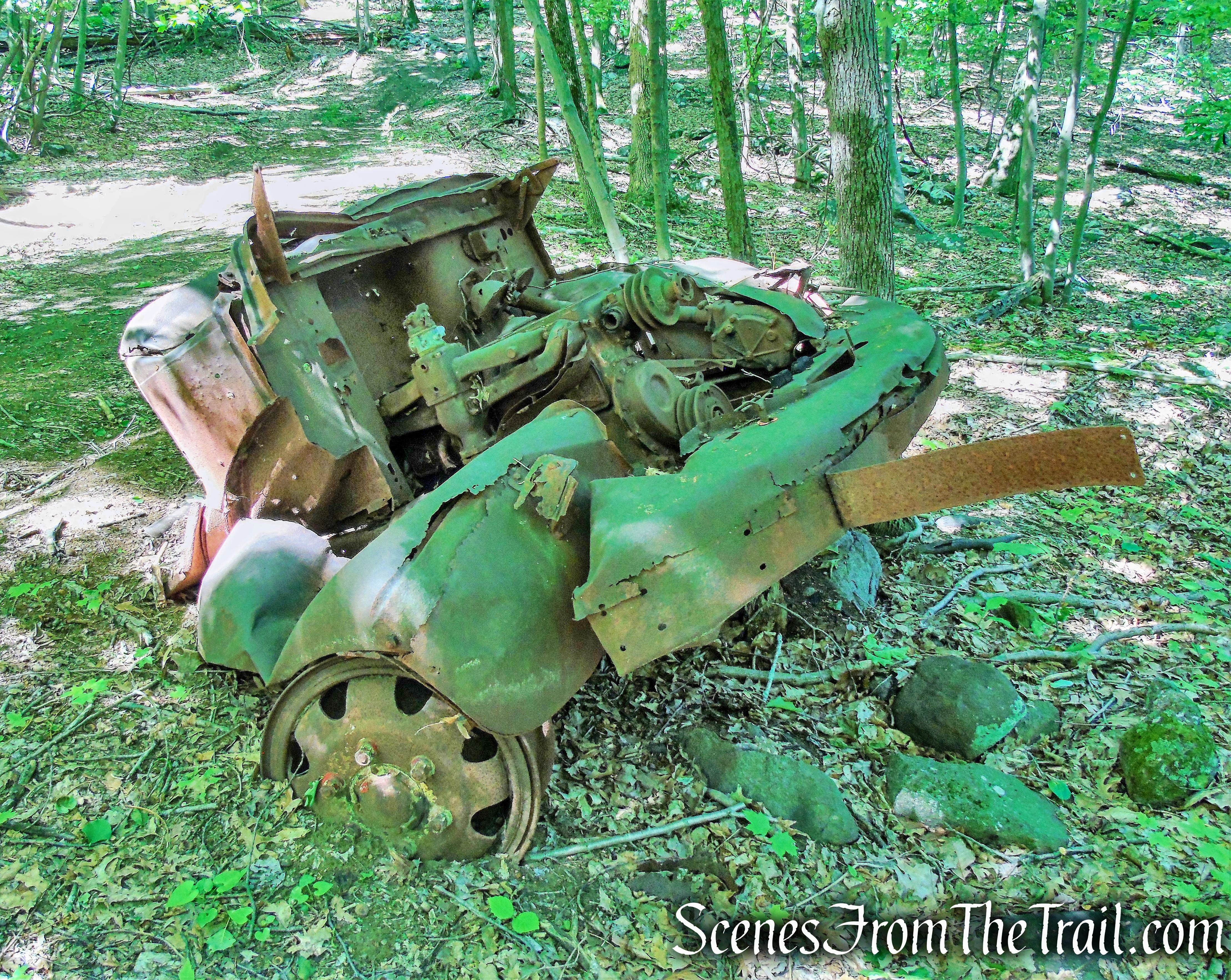
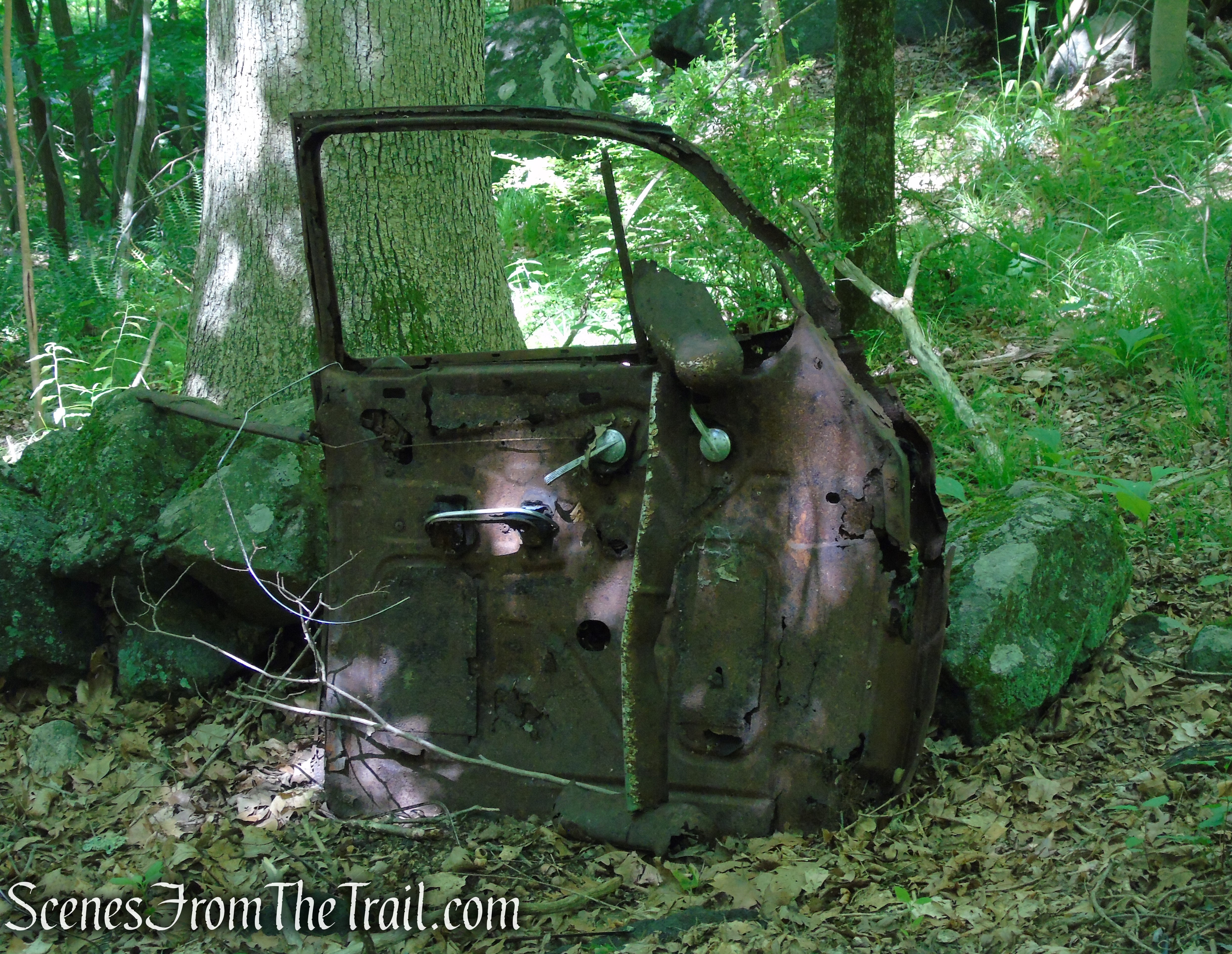
A wrecked car just below the Blue Trail.

car wreck - Little-Laurel Lime Ridge Park

car wreck – Little-Laurel Lime Ridge Park

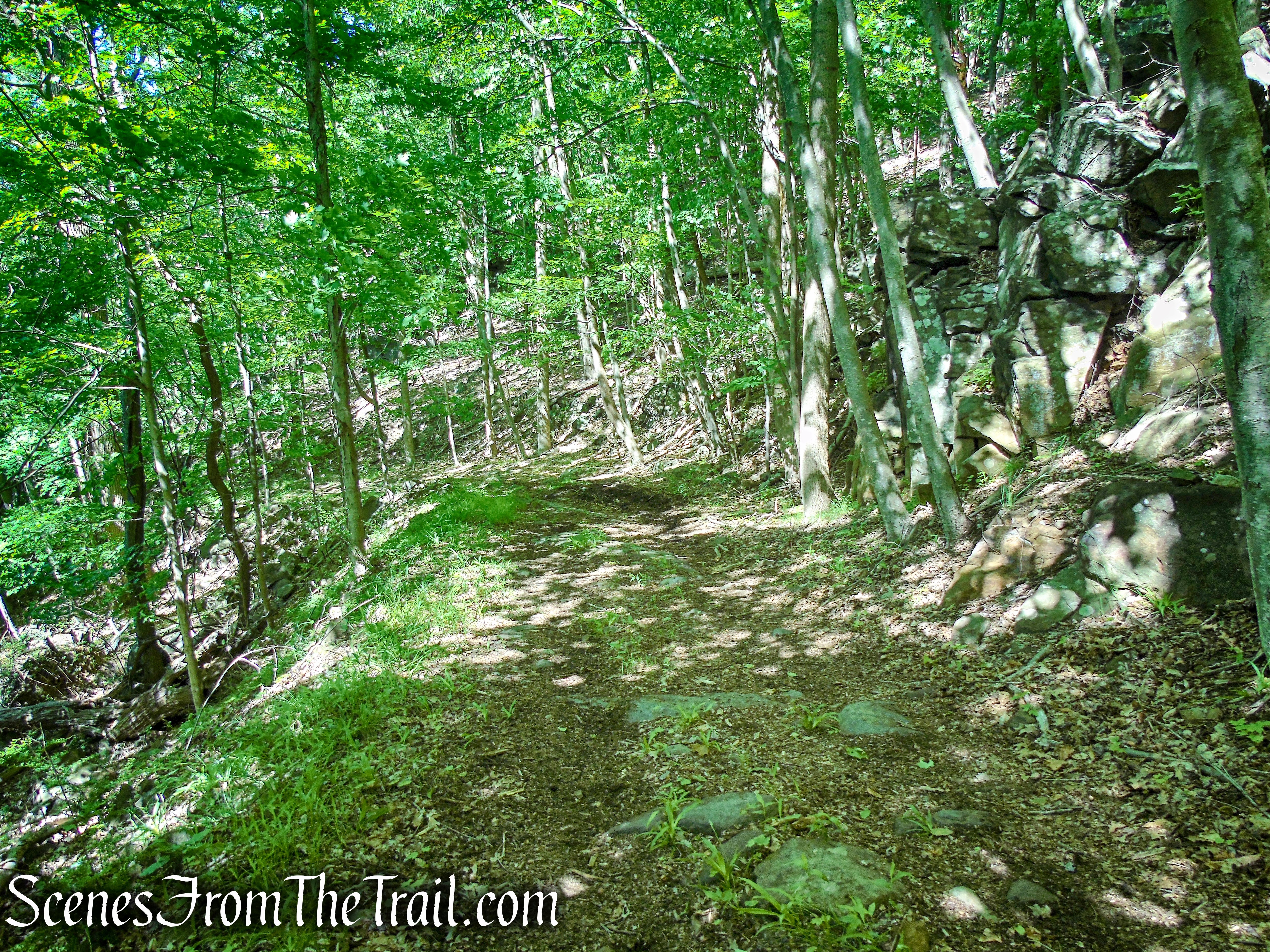
The Blue Trail descending in a southerly direction, in the center of the park, near its southern boundary.

Blue Trail - Little-Laurel Lime Ridge Park

Blue Trail – Little-Laurel Lime Ridge Park

A moss covered rock formation along the Blue Trail.

moss covered boulder - Little-Laurel Lime Ridge Park

moss covered boulder – Little-Laurel Lime Ridge Park

The Blue Trail descends more steeply as it heads west, along a seasonal streaming cascade.

Blue Trail - Little-Laurel Lime Ridge Park

Blue Trail – Little-Laurel Lime Ridge Park

An unmarked trail that heads in a northerly direction towards the area of the viewpoint. The Blue Trail continues its steep descent, but since we were headed to the viewpoint, We turned right onto the unmarked trail. The Blue Trail after descending steeply, ascends to the viewpoint. By taking the unmarked trail, we eliminated some elevation gain.

unmarked trail - Little-Laurel Lime Ridge Park

unmarked trail – Little-Laurel Lime Ridge Park

After climbing steeply along an unmarked footpath, a large open rock outcrop appears.

rock outcrop - Little-Laurel Lime Ridge Park

rock outcrop – Little-Laurel Lime Ridge Park

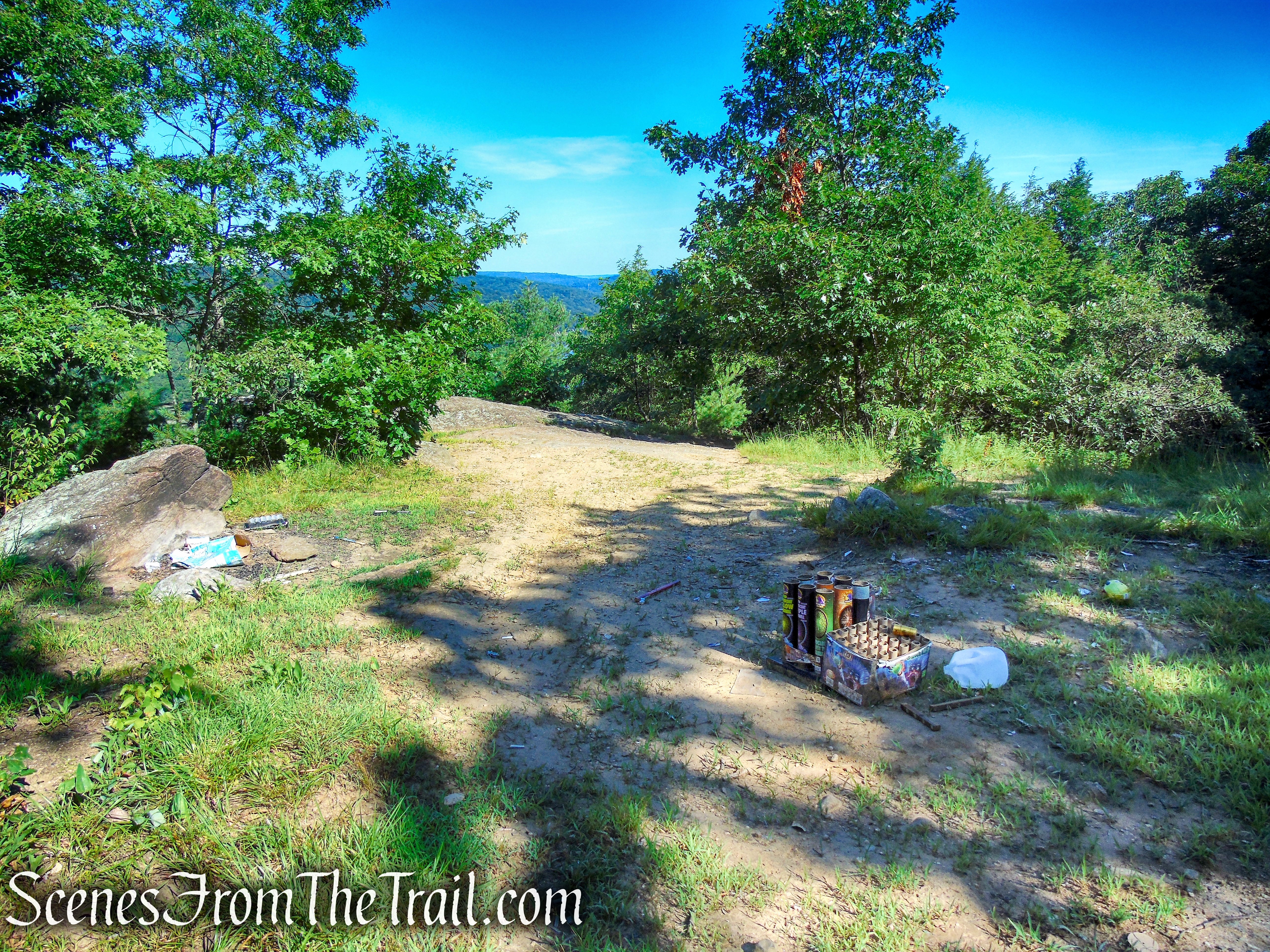
Spent fireworks left behind from previous visitors.

rock outcrop - Little-Laurel Lime Ridge Park

rock outcrop – Little-Laurel Lime Ridge Park

Looking north, up the Housatonic River. This is a good place to take a break and relax.

view of the Housatonic River - Little-Laurel Lime Ridge Park

view of the Housatonic River – Little-Laurel Lime Ridge Park

view of the Housatonic River – Little-Laurel Lime Ridge Park

view of the Housatonic River – Little-Laurel Lime Ridge Park

view of the Housatonic River – Little-Laurel Lime Ridge Park

view of the Housatonic River – Little-Laurel Lime Ridge Park

The Blue Trail passes by the viewpoint, and heads northeast near the park’s northern boundary, as it ducks back into the woods.

Blue Trail – Little-Laurel Lime Ridge Park

Blue Trail – Little-Laurel Lime Ridge Park

The Blue Trail runs along an old mining road, leading to the ruins of an early 1800’s colonial limestone kiln.

lime kiln ruins - Little-Laurel Lime Ridge Park

lime kiln ruins – Little-Laurel Lime Ridge Park

As the Blue Trail heads south, not far from the kiln ruins, it passes alongside the northen quarry.

marble quarry - Little-Laurel Lime Ridge Park

marble quarry – Little-Laurel Lime Ridge Park

marble quarry - Little-Laurel Lime Ridge Park

marble quarry – Little-Laurel Lime Ridge Park

The Blue Trail continues south, through the center of the park……..

Blue Trail – Little-Laurel Lime Ridge Park

Blue Trail – Little-Laurel Lime Ridge Park

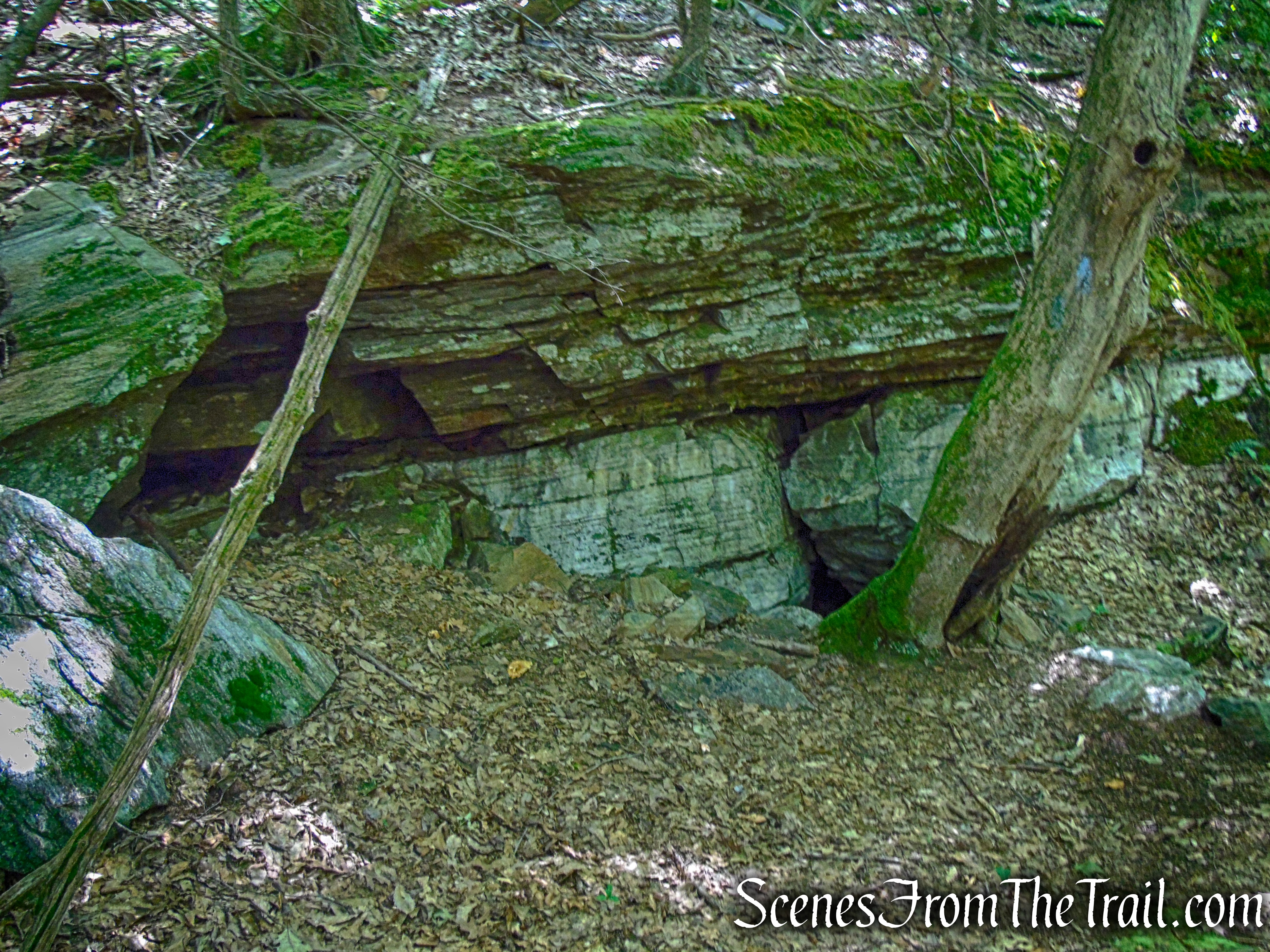
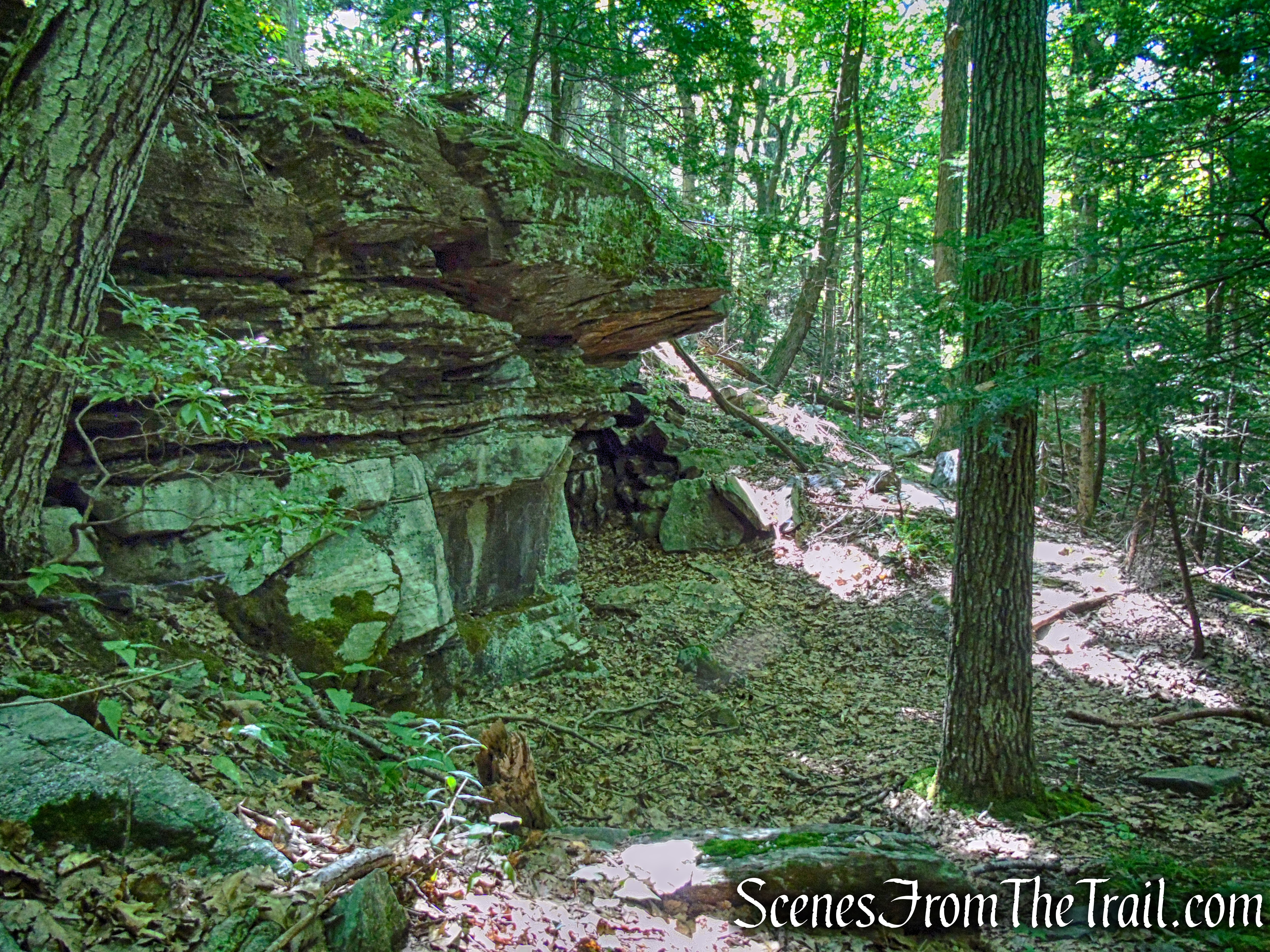
…..soon passing some interesting rock formations, rock shelters and marble caves.

Blue Trail – Little-Laurel Lime Ridge Park

Blue Trail – Little-Laurel Lime Ridge Park

Blue Trail – Little-Laurel Lime Ridge Park

Blue Trail – Little-Laurel Lime Ridge Park

Blue Trail – Little-Laurel Lime Ridge Park

Blue Trail – Little-Laurel Lime Ridge Park

Blue Trail – Little-Laurel Lime Ridge Park

Blue Trail – Little-Laurel Lime Ridge Park

If you’re expecting some deep caverns to walk into and explore, you will be sorely disappointed. These “holes in the rock” are still a very interesting geological feature to see.

Blue Trail – Little-Laurel Lime Ridge Park

Blue Trail – Little-Laurel Lime Ridge Park

Blue Trail – Little-Laurel Lime Ridge Park

Blue Trail – Little-Laurel Lime Ridge Park

Review:

A quiet place to explore with many points of interest. With the myriad of trails and old mining roads, along with ATV trails, one can spend a good deal of time in this park. The rock formations, quarries, caves and views of the Housatonic River make Little-Laurel Lime Ridge Park a worthwhile place to check out. The trails could be better blazed and an up-to-date trail map would be helpful, but all in all, a few hours well spent on the trails.


Pros:

Scenic views, rock formations, historical features, quarries, marble caves, not much foot traffic.


Cons:

Trails are not well marked and no updated trail map.


Sources:

Leon Levy Preserve

June 20, 2020 – South Salem, NY

Difficulty: Easy – moderate

Length: Approximately 4 miles

Max elevation: 764 ft. – total elevation gain: approximately 485 ft.

Route type: Circuit

Map: Leon Levy Preserve Trail Map

Trailhead parking: Smith Ridge Rd (NY-123) South Salem, NY 10590

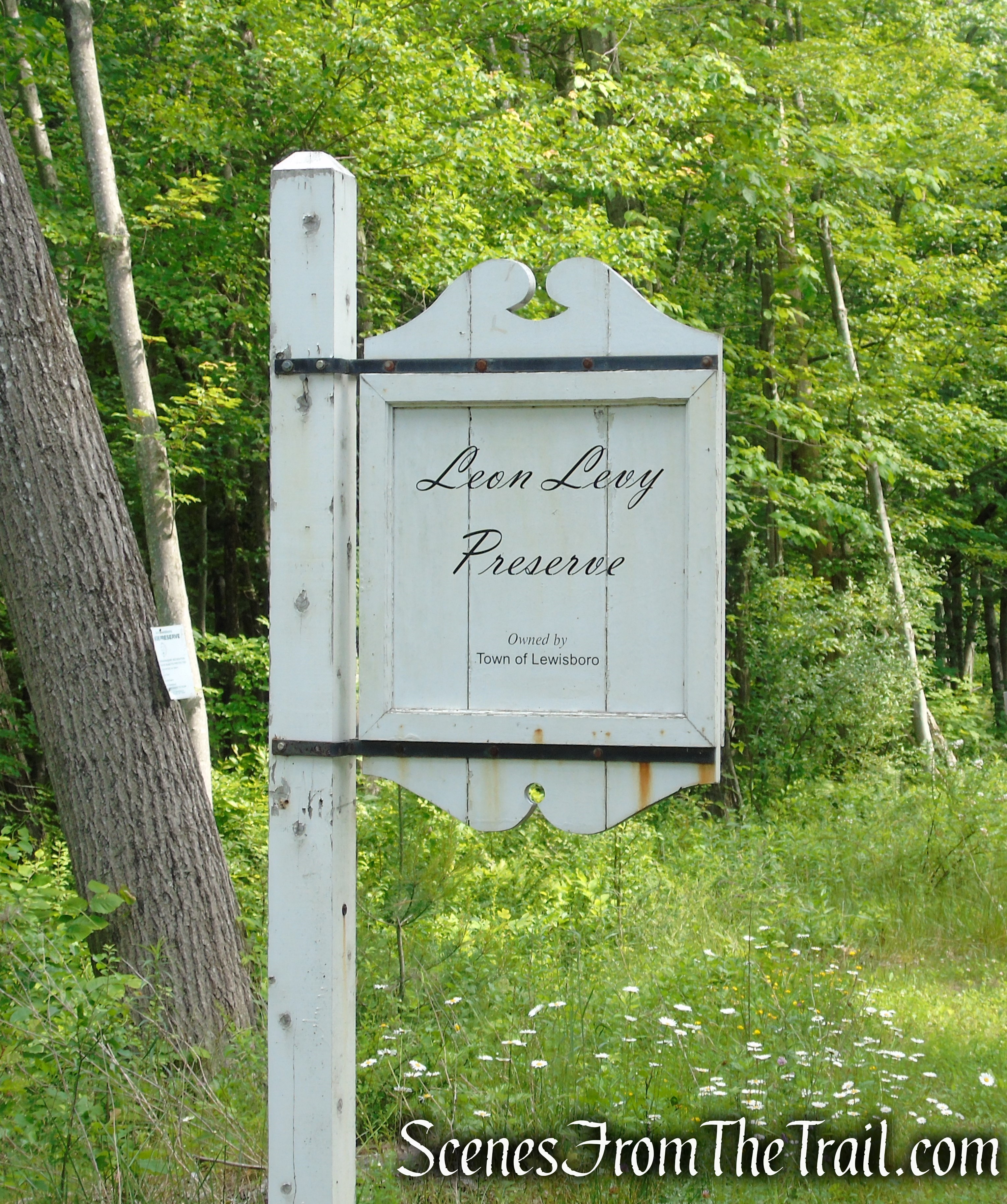
The main entrance and parking lot is on Route 123 (Smith Ridge Road), just south of the intersection with Route 35. A white sign marks the entrance.

For an updated version of this hike, click HERE


Preserve Overview:

The Leon Levy Preserve, formerly the Bell property, is 370 acres of forest and wetlands, located in the watersheds of both New York City and Stamford. About 90 acres lie within the watershed of New York City’s Croton Reservoir system, and the rest of the land drains into Stamford’s reservoirs. Leon Levy Preserve is owned by the Town of Lewisboro.

Leon Levy Preserve

Leon Levy Preserve

The preserve is maintained by the Lewisboro Trail Volunteers, of the town Open Space and Preserves Advisory Committee. They work over 1,000 hours yearly, building, improving and maintaining the trails and features at Leon Levy Preserve.

Lewisboro Trail Volunteers

Lewisboro Trail Volunteers

The preserve features wetlands rich in wildlife, a ravine with 75’ cliffs, diverse hardwood forest, rare plants such as Purple Milkweed and Blue Cohosh and a native plant garden adjacent to parking lot. The preserve has an extensive trail system, the ruins of the Black Mansion (1899-1979) and other outbuildings. In 2015, the Leon Levy Native Plant Garden was added by Lewisboro Land Trust.

Black Mansion ruins - Leon Levy Preserve

Black Mansion ruins – Leon Levy Preserve

History:

Long before there was a Leon Levy Preserve, the area was home to bands of Algonkian-speaking Kitchawancs. Lake Kitchawan and streams provided a water source; Native Peoples were gone by the early 1700’s.

Part of the property, known in Revolutionary times as Keeler’s Ridge, was the encampment of Colonel Elisha Sheldon and his Second Continental Regiment of Light Dragoons.

  • Circa 1790 – 1874 ~ First recorded property owner was Sgt. Jeremiah Keeler (1760 – 1835) who saw much action in the Revolutionary War. The property passed to his son Thaddeus at Jeremiah’s death in 1853.
  • Circa 1890 – 1923 ~ Dr. James M. Crafts (1839 – 1917) purchased the property from the Keeler heirs and built the house on the hilltop between 1890 and 1900. He was called the first of the “City People” to build a summer home in South Salem.
  • 1923 – 1959 ~ Abram I. Kaplan purchased the property from the Crafts heirs. The Kaplan family spent one season in the house and moved full time to another house on the property.
  • 1959 ~ The property was purchased by the Bell/Lyden Partnership as an investment. No development followed.
  • Circa Early 1960’s to 1979 ~ Mansion remained unoccupied and acquired the name “Black Mansion” by locals.
  • January 28, 1979 ~ Black Mansion was destroyed by fire.
  • 2005 ~ The property was purchased by Town of Lewisboro with contributions from the Jerome Levy Foundation, NYCDEP, and the Dextra Baldwin McGonagle Foundation.

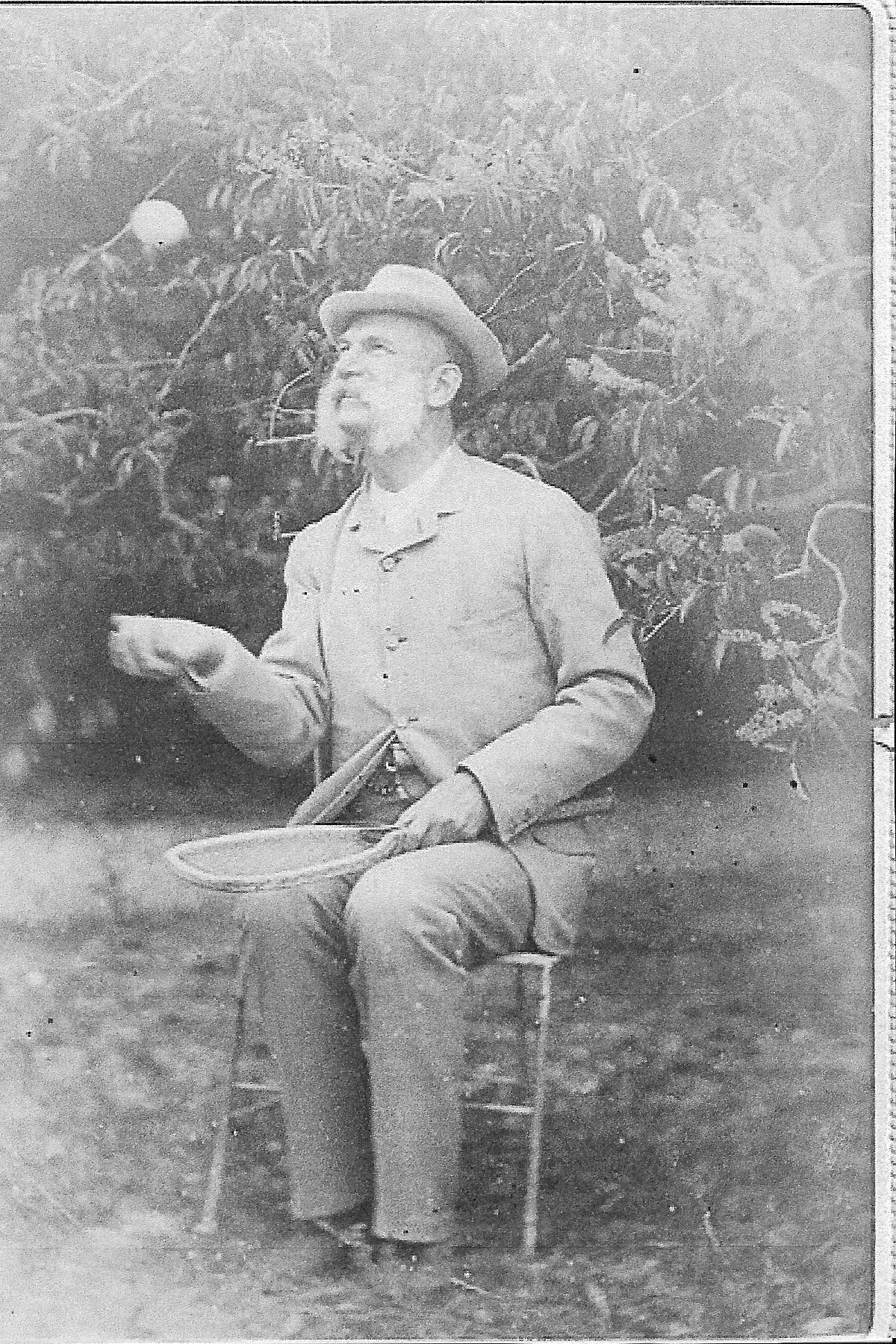
Professor James Mason Crafts was an organic chemist and the fifth president of Massachusetts Institute of Technology from 1897 to 1900. Crafts was a professor of chemistry at Cornell College (1867-1870) and at MIT (1870-1880 and 1892-1897). He was one of the most highly regarded chemists of his era.

James Mason Crafts - image courtesy of Maureen Koehl

James Mason Crafts – image courtesy of Maureen Koehl

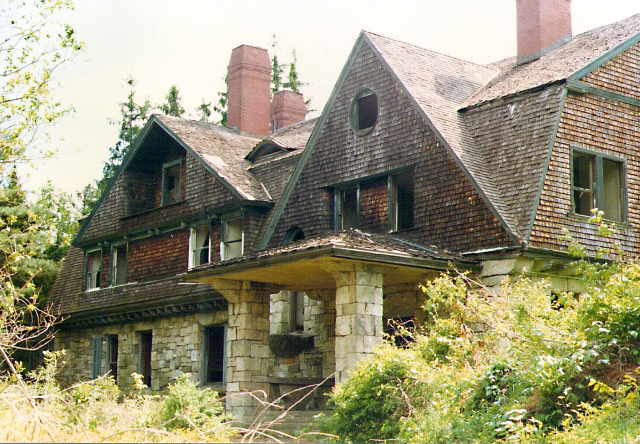
It was Dr. Crafts who built the mansion and many of the property’s enhancements. The Black Mansion, as it is known today, sat atop the hill, about 700 feet above sea level, one of the highest spots in Lewisboro, but so far up a winding drive that it was not easily seen from the highways.

In addition to the mansion, Professor Crafts built a coach house, a garage, an ice house and a laboratory. A cottage was built later for Mrs. Crafts’ daughter to spend weekends. The garage had six bays and a grease pit. The Keeler-era cow barn survived until about 2000, when it mysteriously burned as it was being restored.

In 1923, Mr. Crafts’ heirs sold the property to Mr. Abram Kaplan. The Kaplan family fortunes were tied to the sugar and molasses business in the Caribbean and to lumbering in New Mexico. Mrs. Kaplan did not like the house because the only heat in the mansion was generated from the fireplaces and she found it cold and drafty.

For whatever reason, the grand house on top of the hill was abandoned by the family and left derelict with all its furnishings and accessories in place. This made the empty house a target for vandals and adventure seekers out for a good time and a few souvenirs. Perhaps it was during this period that the house started being known as The Black Mansion. During the forties and fifties, it was called the Kaplan place.

Black Mansion - Leon Levy Preserve taken by Carol Gracie circa 1973

Black Mansion – Leon Levy Preserve taken by Carol Gracie circa 1973

The Kaplans, in turn, sold the property to Robert Bell and his partner, Mr. Leyden. The acreage at the time reached from Route 35, all the way to Lake Kitchawan, and wandered along Ridgefield Avenue. Little by little parts were sold off, until it stood as it does today. Several attempts were made to develop the land, but none were successful. On a very cold winter night, January 28, 1979, at 12:35 a.m., the alarm bell rang at the South Salem fire house, the mansion is on fire! By the time the firemen arrived, the Black Mansion was “totally involved.” There was little to do but pump water on the blaze and try to contain the flames. The cause of the fire was never determined.

Black Mansion - January 28, 1979 - image courtesy of Maureen Koehl

Black Mansion – January 28, 1979 – image courtesy of Maureen Koehl

Black Mansion Aerial - image courtesy of Maureen Koehl

Black Mansion Aerial – image courtesy of Maureen Koehl

In 2005, a partnership of public and private organizations succeeded in buying the former “Bell Property” and the Leon Levy Preserve came into existence. Lewisboro and Westchester Land Trusts worked with the Town of Lewisboro to negotiate the $8.3 million acquisition. The purchase was made possible because of a $5 million contribution from the Jerome Levy Foundation; $1 million each from the Town of Lewisboro and the New York City Department of Environmental Protection; and $500,000 over five years from the Dextra Baldwin McGonagle Foundation.

The land was named the Leon Levy Preserve in honor of the well-known Wall Street investor and founder of Oppenheimer Funds. The late Mr. Levy was the Jerome Levy Foundation’s primary benefactor. His widow, Shelby White, arranged the gift. “Our involvement in the project is a fitting tribute to Leon’s love for Lewisboro, and he would have been proud and pleased to see this land protected.”

An interesting side-note involving a member of the Kaplan family:

Joel David Kaplan, one of Abram’s sons, was arrested in Mexico in November 1961, at the age of 35. He was convicted in 1962 of killing a man, and sentenced to 28 years in Acatitla prison. After nine years in the Mexican prison, on August 19, 1971, a helicopter landed in the prison yard. The guards mistakenly thought this was an official visit. In two minutes, Kaplan and Kaplan’s cellmate Carlos Antonio Contreras Castro, a Venezuelan counterfeiter, boarded the craft and were piloted away. No shots were fired. Both men were flown to Texas and then different planes flew Kaplan to California and Castro to Guatemala.

Joel David Kaplan

Joel David Kaplan

The Mexican government never initiated extradition proceedings against Kaplan. The escape is recounted in a book, “The 10-Second Jailbreak: The Helicopter Escape of Joel David Kaplan.” It also inspired the 1975 action movie “Breakout” which starred Charles Bronson and Robert Duvall.

The 10-Second Jailbreak - image courtesy of Maureen Koehl

The 10-Second Jailbreak – image courtesy of Maureen Koehl

Trails Overview:

A combination of footpaths and carriage roads make up the approximately 5.5 miles of hiking trails that are within the preserve. They will be adding more trails over the next few years.

Some of the carriage roads on this former estate are wide enough to allow walking two or three abreast. Extensive stonework is apparent on the many at-grade raised roadbeds. The narrower footpaths require walking single file.

The trails are well marked as are the junctions, which are numbered and some have maps. The numbered trail junctions correspond with those on the trail map, making the trails easy to follow. The trail blazes consist of 2” x 6” pieces of colored aluminum of the appropriate trail color. Red blazes appear co-aligned with some of the marked carriage roads sporadically throughout the preserve, but there isn’t a Red Trail listed on the map. The red blazes are Lewisboro Horsemen’s Association permissible trails.

Silver Trail - Leon Levy Preserve

Silver Trail – Leon Levy Preserve

As of 2018, there are new trails on the east side of Route 123, directly across from the main entrance. Cross the road carefully, and ascend the steps on the other side to access these new trails.

Leon Levy Preserve

Leon Levy Preserve

Hike Overview:

I visited the Leon Levy Preserve in May of 2016, when I first started this blog and enjoyed the experience. In keeping with the recent trend of hiking local, I decided to pay it a return visit. The preserve is well maintained, the trails are mostly all shaded and the landscape is quite scenic.

Due to Covid, the parking has been reduced to 14 cars and the preserve is only open to NYS residents.

Leon Levy Preserve

Leon Levy Preserve

This hike is mostly a loop, with only retracing of steps on short sections of trails. It covers all of the main points of interest, including the Black Mansion ruins.

Leon Levy Preserve

Leon Levy Preserve

The Hike:

The hike begins at the northwest end of the parking lot, to the left of the kiosk. The three blue blazes on the tree, mark the start of the Blue Trail (Main Trail). Follow the blue blazes as they head west into the preserve. In about 200 feet, the trail reaches Junction 1, where the Blue Trail turns right, which will be your return route. For now, turn left on the White Entrance Trail as it leads southwest on a woods road, gradually climbing the hillside. The White Entrance Trail curves to the north and in 0.3 mile, ends at Junction 19 (Blue Trail).

Trailhead - Leon Levy Preserve

Trailhead – Leon Levy Preserve

start of Blue Trail - Trailhead - Leon Levy Preserve

start of Blue Trail – Trailhead – Leon Levy Preserve

Junction 1 - Leon Levy Preserve

Junction 1 – Leon Levy Preserve

Junction 1 - White Entrance Trail - Leon Levy Preserve

Junction 1 – White Entrance Trail – Leon Levy Preserve

White Entrance Trail - Leon Levy Preserve

White Entrance Trail – Leon Levy Preserve

White Entrance Trail - Leon Levy Preserve

White Entrance Trail – Leon Levy Preserve

Junction 19 - White Entrance Trail - Leon Levy Preserve

Junction 19 – White Entrance Trail – Leon Levy Preserve

Turn right on the Blue Trail as it heads northeast on another woods road. The Blue Trail is joined by another road that comes in from the left (not on trail map). Continue straight on the Blue Trail, soon passing Junction 23 (pink-blazed Cottage Trail). Stay on the Blue Trail and approximately 0.3 mile from where you began on the Blue Trail, it reaches Junction 3 (Yellow Trail). Turn left here, leaving the Blue Trail and now follow the yellow blazes up the hill.

Blue Trail - Leon Levy Preserve

Blue Trail – Leon Levy Preserve

Blue Trail - Leon Levy Preserve

Blue Trail – Leon Levy Preserve

Blue Trail - Leon Levy Preserve

Blue Trail – Leon Levy Preserve

Blue Trail - Leon Levy Preserve

Blue Trail – Leon Levy Preserve

turn left on Yellow Trail

turn left on Yellow Trail

Yellow Trail - Leon Levy Preserve

Yellow Trail – Leon Levy Preserve

In about 210 feet, there is an unmarked woods road on the left with the Black Mansion ruins visible about 130 feet away. You may want to take some time to view this interesting structure.

Black Mansion ruins - Leon Levy Preserve

Black Mansion ruins – Leon Levy Preserve

Black Mansion ruins - Leon Levy Preserve

Black Mansion ruins – Leon Levy Preserve

This 3-story fieldstone and shingle mansion was built as a luxurious summer home, the only heat was from large fireplaces. On the main floor were several large reception rooms, a grand entry, a paneled library and a music room with an Aeolian organ.

Black Mansion ruins - Leon Levy Preserve

Black Mansion ruins – Leon Levy Preserve

This is the lone remaining column, of the pair that once adorned the front entrance.

Black Mansion ruins - Leon Levy Preserve

Black Mansion ruins – Leon Levy Preserve

This brick enclosure may have been a root cellar. The roof, which was collapsing, was removed in recent years.

Black Mansion ruins - Leon Levy Preserve

Black Mansion ruins – Leon Levy Preserve

Black Mansion ruins - Leon Levy Preserve

Black Mansion ruins – Leon Levy Preserve

The ceiling was decorated with blue sky and birds. To the rear was an elevator encircled by a staircase. On the second floor, a long hall led to the bedrooms and an art gallery. From the attic the view extended to Long Island Sound. The electricity was produced by acetylene gas.

Black Mansion ruins - Leon Levy Preserve

Black Mansion ruins – Leon Levy Preserve

Black Mansion ruins - Leon Levy Preserve

Black Mansion ruins – Leon Levy Preserve

Black Mansion ruins - Leon Levy Preserve

Black Mansion ruins – Leon Levy Preserve

Black Mansion ruins - Leon Levy Preserve

Black Mansion ruins – Leon Levy Preserve

On the north end, there was a circular atrium or garden room/porch.

Black Mansion ruins - Leon Levy Preserve

Black Mansion ruins – Leon Levy Preserve

When you are done examining the Black Mansion ruins, continue on the Yellow Trail near the north end of the ruins, passing Junction 4 (pink-blazed Cottage Trail). In just under 700 feet, the Yellow Trail reaches Junction 5 (Green Trail). Turn right here, leaving the Yellow Trail and turn right on the Green Trail. Follow the green blazes downhill as they head north then gradually curve to the south. When you reach Junction 6, continue straight (turning right leads to Ridgefield Ave.). The Green Trail winds its way through the woods as it descends into the valley, crossing through, then bordering a stone wall.

Yellow Trail - Leon Levy Preserve

Yellow Trail – Leon Levy Preserve

turn right on Green Trail

turn right on Green Trail

Green Trail - Leon Levy Preserve

Green Trail – Leon Levy Preserve

Green Trail - Leon Levy Preserve

Green Trail – Leon Levy Preserve

Green Trail - Leon Levy Preserve

Green Trail – Leon Levy Preserve

At the base of the descent, the Green Trail reaches Junction 7 (purple-blazed West Valley Trail). Turn right here, leaving the Green Trail and proceed ahead on the Purple Trail. The Purple Trail (West Valley Trail), travels through a remote and tranquil valley with wetlands, along the western edge of preserve.

Junction 7 - turn right on Purple Trail

Junction 7 – turn right on Purple Trail

Purple Trail - Leon Levy Preserve

Purple Trail – Leon Levy Preserve

Purple Trail - Leon Levy Preserve

Purple Trail – Leon Levy Preserve

The Purple Trail crosses a small stream on a log bridge and a short distance later, reaches Junction 25 (White Stream Trail). Continue straight, still following the Purple Trail and crossing another small stream on a log bridge. The trail then borders a stone wall as it continues south.

Purple Trail - Leon Levy Preserve

Purple Trail – Leon Levy Preserve

Purple Trail - Leon Levy Preserve

Purple Trail – Leon Levy Preserve

Purple Trail - Leon Levy Preserve

Purple Trail – Leon Levy Preserve

Purple Trail - Leon Levy Preserve

Purple Trail – Leon Levy Preserve

Purple Trail - Leon Levy Preserve

Purple Trail – Leon Levy Preserve

Purple Trail - Leon Levy Preserve

Purple Trail – Leon Levy Preserve

In about 0.3 mile, the Purple Trail turns left, climbs a little, then turns left again, crossing through a stone wall at Junction 9 (Yellow-Purple Trail). Stay to the right bordering the stone wall to remain on the Purple Trail, which turns right as it passes a high section of the stone wall.

Purple Trail - Leon Levy Preserve

Purple Trail – Leon Levy Preserve

Purple Trail - Leon Levy Preserve

Purple Trail – Leon Levy Preserve

The trail heads in a southerly direction and soon crosses through another stone wall. Next to the stone wall is the Shepherd’s Hut ruins.

Purple Trail - Leon Levy Preserve

Purple Trail – Leon Levy Preserve

According to Maureen Koehl, Lewisboro Town Historian: The “Shepherd’s Hut” is another fanciful name given by the trails’ head just for want of what else to call the ruin. I don’t think there was ever a bona fide herdsman on the land! It may have been some sort of animal enclosure when the property was more used for farmland during the Keeler ownership.

Shepherd's Hut ruins - Leon Levy Preserve

Shepherd’s Hut ruins – Leon Levy Preserve

Soon the Purple Trail veers southeast and ends at Junction 10 (Blue Trail). Turn left on the Blue Trail which heads northeast on a woods road. In about 140 yards, the Blue Trail reaches Junction 12 (Yellow Trail – South Gorge Rim Trail).

terminus of Purple Trail at Junction 10 - Leon Levy Preserve

terminus of Purple Trail at Junction 10 – Leon Levy Preserve

Blue Trail - Leon Levy Preserve

Blue Trail – Leon Levy Preserve

The Yellow Trail (South Gorge Rim Trail) travels on a footpath along the edge of the cliffs, high above the gorge. The map shows that there is a view of the gorge (★), but perhaps only during leaf-off season. The trail curves around and ends at Junction 13 (Blue Trail). Turn right on the Blue Trail and follow it as it crosses over the gorge on a stone bridge.

Junction 12 - South Gorge Rim Trail

Junction 12 – South Gorge Rim Trail

Yellow Trail - Leon Levy Preserve

Yellow Trail – Leon Levy Preserve

Blue Trail - Leon Levy Preserve

Blue Trail – Leon Levy Preserve

The Blue Trail ascends a little and soon reaches Junction 14 (silver-blazed Gorge Overlook Trail). Turn right on the Silver Trail and follow it to the end. There is an interesting rock formation near the edge of cliffs that is worth seeing. Again, the map shows that there are two viewpoints from this trail, but only during leaf-off season. Follow the silver blazes as the trail loops around and returns to Junction 14 (Blue Trail).

Blue Trail - Leon Levy Preserve

Blue Trail – Leon Levy Preserve

Junction 14 - Leon Levy Preserve

Junction 14 – Leon Levy Preserve

Gorge Overlook Trail Loop - Leon Levy Preserve

Gorge Overlook Trail Loop – Leon Levy Preserve

Gorge Overlook Trail Loop - Leon Levy Preserve

Gorge Overlook Trail Loop – Leon Levy Preserve

Gorge Overlook Trail Loop - Leon Levy Preserve

Gorge Overlook Trail Loop – Leon Levy Preserve

Junction 14 - Leon Levy Preserve

Junction 14 – Leon Levy Preserve

Proceed northeast on the Blue Trail for about 0.4 mile, passing Junction 19 (White Trail) and then reaching Junction 23 (pink-blazed Cottage Trail).

Blue Trail - Leon Levy Preserve

Blue Trail – Leon Levy Preserve

Blue Trail - Leon Levy Preserve

Blue Trail – Leon Levy Preserve

Turn left on the Pink Trail and follow the footpath in a northerly direction, soon arriving at the Cottage ruins.

Junction 23 - Cottage Trail

Junction 23 – Cottage Trail

Cottage Trail - Leon Levy Preserve

Cottage Trail – Leon Levy Preserve

Cottage Trail - Leon Levy Preserve

Cottage Trail – Leon Levy Preserve

The “cottage” appears to be a dwelling that at one time had a small patio on the NE side, probably built late 19th or early 20th century. We did find ‘modern’ heating and plumbing debris when we did an exploratory dig several years ago, but who lived there is another unknown. ~Maureen Koehl – Lewisboro Town Historian

Cottage ruins - Leon Levy Preserve

Cottage ruins – Leon Levy Preserve

The Pink Trail continues around the southwest side of the ruins and soon ends at Junction 4 (Yellow Trail). Turn right on the Yellow Trail, passing the Black Mansion ruins and continue downhill on the road.

Cottage Trail - Leon Levy Preserve

Cottage Trail – Leon Levy Preserve

Cottage Trail - Leon Levy Preserve

Cottage Trail – Leon Levy Preserve

Junction 4 - Leon Levy Preserve

Junction 4 – Leon Levy Preserve

Black Mansion ruins - Leon Levy Preserve

Black Mansion ruins – Leon Levy Preserve

Black Mansion ruins – Leon Levy Preserve

Black Mansion ruins – Leon Levy Preserve

Yellow Trail - Leon Levy Preserve

Yellow Trail – Leon Levy Preserve

The Yellow Trail ends at Junction 3 (Blue Trail). Continue downhill, now following the blue blazes and turn right at Junction 2 (Blue Trail). Follow the blue blazes downhill and in a very short distance, the trail passes another set of ruins.

Continue straight past junction 3 onto Blue Trail

Continue straight past junction 3 onto Blue Trail

Turn right at junction 2, remaining on Blue Trail

Turn right at junction 2, remaining on Blue Trail

The ruins with the tall chimney along the Blue Trail was a small house with an attached garage on the north side. It was surrounded by a flagstone walk/patio so we believe it was used as a dwelling at one time. During the ownership of Dr. Crafts, the builder of the mansion, the building was quite likely used as his chem lab in the early 1900’s. We did not find any lab detritus (debris) during several digs in this area, but found mid-century plumbing and heating artifacts and lots of burned and melted glass. This structure may have burned in the 1970’s as well. I have been told that it was rented during the 1950’s as a dwelling. ~Maureen Koehl – Lewisboro Town Historian

stone ruins on Blue Trail

stone ruins on Blue Trail

Continue downhill on the Blue Trail turning left at Junction 1 and returning to the parking area, where the hike began.

Blue Trail - Leon Levy Preserve

Blue Trail – Leon Levy Preserve

Turn left at junction 1

Turn left at junction 1

Review:

This is a really good hike with a very interesting history. The combination of woods roads and footpaths compliment each other. The hike is almost entirely shaded, with the exception of the Black Mansion ruins, which is perfect for a hot and humid day. The scenic woods, stone walls, rock formations and ruins make this lovely preserve worth a visit. This hike was done on a Saturday morning and although there were several cars in the lot when we arrived at about 9:00 am, we only saw a couple of people on the trails during our visit. Extremely quiet and a very enjoyable day on the trails.

Pros:

Historical features, Black Mansion ruins, rock formations, well marked trails and junctions, lightly trafficked and well maintained preserve.

Cons:

None.

Take a hike!

Leon Levy Preserve

Leon Levy Preserve

Sources:


Larchmont Manor Park

June 16, 2020 – Larchmont, NY

Difficulty: Easy

Length: Approximately 0.5 mile

Address: 65 Park Ave, Larchmont, NY 10538

Park Overview:

Manor Park is in the Village of Larchmont, New York. It consists of about 13 acres of land, with a shoreline of more than 5,000 feet, that lies along the Long Island Sound and Larchmont Harbor. It is well known for its striated rocks, walking pathways, scenic views and gazebos.

Larchmont Manor Park

Larchmont Manor Park

North Gazebo - Larchmont Manor Park

North Gazebo – Larchmont Manor Park

It’s one of the most beautiful and scenic places to visit in the Village of Larchmont. Located along Park Avenue, this lovely tree-lined masterpiece overlooks the Long Island Sound. Walk along its pathways, or relax on one of its many benches, it’s sure to be a time that you won’t soon forget!

Larchmont Manor Park

Larchmont Manor Park

Larchmont Manor Park

Larchmont Manor Park

Larchmont Manor Park

Larchmont Manor Park

Larchmont Manor Park

Larchmont Manor Park

Larchmont Manor Park

Larchmont Manor Park

Larchmont Manor Park is privately owned and maintained by the Larchmont Manor Park Society, a not-for-profit organization. This park was formed as a contemplation and passive use park. Although Manor Park is privately owned, it is open to the public year-round, from dawn to dusk.

South Gazebo - Larchmont Manor Park

South Gazebo – Larchmont Manor Park

South Gazebo - Larchmont Manor Park

South Gazebo – Larchmont Manor Park

South Gazebo - Larchmont Manor Park

South Gazebo – Larchmont Manor Park

Larchmont Manor Park is one of the most picturesque settings in all of New York, located on a beautiful stretch of the Long Island Sound.

Umbrella Point - Larchmont Manor Park

Umbrella Point – Larchmont Manor Park

Umbrella Point - Larchmont Manor Park

Umbrella Point – Larchmont Manor Park

Umbrella Point - Larchmont Manor Park

Umbrella Point – Larchmont Manor Park

Umbrella Point - Larchmont Manor Park

Umbrella Point – Larchmont Manor Park

Bordered by a private beach, a yacht club and the stately Victorian homes that line the street, Manor Park is the only place in the village where the public can go, to admire the scenery and walk along the water.

Larchmont Manor Park

Larchmont Manor Park

Larchmont Manor Park

Larchmont Manor Park

The sweeping views of the Long Island Sound, make this park an idyllic place to spend a few hours.

Larchmont Manor Park

Larchmont Manor Park

Larchmont Manor Park

Larchmont Manor Park

Larchmont Manor Park

Larchmont Manor Park

Great Egret - Larchmont Manor Park

Great Egret – Larchmont Manor Park

The melting glaciers left behind the rocks that you see today. All along the Park’s coastline, you will see deposits of sandstone, limestone and shale, but most evident are the deposits of granite.

South Gazebo - Larchmont Manor Park

South Gazebo – Larchmont Manor Park

Larchmont Manor Park

Larchmont Manor Park

Larchmont Manor Park

Larchmont Manor Park

If you visit:

  • On street parking only, please park only where permissible. The area is heavily patrolled and vehicles parked illegally will be ticketed or towed.
  • Larchmont Manor Park does not have restroom facilities so please plan accordingly. Both Manor Beach and HHYC Yacht Club are not permitted to allow outsiders to enter their facility for this purpose. There are no exceptions.

For the rest of the park rules and there are quite a few, click HERE.

Take a walk!

Larchmont Manor Park

Larchmont Manor Park

Sources:

St. Matthew’s Church Woodlands

June 13, 2020 – Bedford, NY

Difficulty: Moderate

Length: Approximately 3 miles

Max elevation: 618 ft. – total elevation gain: approximately 500 ft.

Route type: Triple Lollipop Loop

Map: Glebe and Ketchum Trails Map

Trailhead parking: 382 Cantitoe St, Bedford, NY 10506


Overview:

St. Matthew’s Church Woodlands in Bedford, NY, consists of The Glebe and the Ketchum Sanctuary, totaling 67-acres, that are nestled between ridges and surrounded by private estates. These two parcels of land were set aside for reflection and the quiet enjoyment of nature. The Glebe and Ketchum Trails are privately owned by St. Matthew’s Church but are open to the public for the enjoyment of nature and contemplation. They do ask that visitors respect the beauty of the flora and fauna. Please keep dogs on leashes and the trails clean.

St. Matthew's Church Woodlands

St. Matthew’s Church Woodlands

History:

In 1803 forty acres of land (the Glebe) was purchased and construction began on “the Brick Church” that would lead to the consecration of St. Matthew’s Episcopal Church in 1810. The rectory was built the following year.

St. Matthew's Church

St. Matthew’s Church

The Churchyard, the burial ground for St. Matthew’s, was officially established in the northwest corner of the property in 1812, and has been extended several times toward the eastern edge of the glebe, bordered by the Beaver Dam River. In 2004, a new memorial garden was built and consecrated in the Churchyard.

The Churchyard

The Churchyard

The Churchyard

The Churchyard

The Children’s Chapel, consecrated on September 14, 2013, was built for worship by the youngest children in the parish. Every child in the church school contributed a stone that is incorporated into the stonework.

The Children’s Chapel

The Children’s Chapel

The Children’s Chapel

The Children’s Chapel

The Children’s Chapel

The Children’s Chapel

The 25-acre Ketchum Preserve was given to the Church in 2003 by the Nature Conservancy. Along with the Parsonage Glebe, St. Matthew’s owns a total of 67 acres and maintains both properties.

For a more detailed history of the church, click here.

Trails Overview:

There are approximately 3 miles of hiking trails in St. Matthew’s Church Woodlands. They are well blazed with directional signs at the junctions. The Glebe and Ketchum Sanctuary’s trails are marked with blue blazes except for the Summit Trail in the Ketchum Sanctuary, which is blazed in red. The Summit Trail bisects the Lower and Upper Loop sections of the trail and can be used to create a shorter loop.

Glebe and Ketchum Sanctuary Trails

Glebe and Ketchum Sanctuary Trails

The trail that connects the two pieces of land is a BRLA horse trail marked in yellow and blue.

Glebe and Ketchum Sanctuary Trails

Glebe and Ketchum Sanctuary Trails

There are other BRLA horse trails in both parcels that are marked in yellow. Except for the the trail between the two parcels, hikers should only follow the red and blue trail markers.

BRLA horse trail

BRLA horse trail

Hike Overview:

Keeping with the recent trend of hiking local, I decided to give this place a try. We got there fairly early, about 8:30 am on a Saturday morning. The large parking lot had one car in the lot and the groundskeepers were working on the main church property. It was very quiet an peaceful. When we walked over to take a look at the Children’s Chapel, one of the groundskeepers told us that we could go inside and have a look, so we did.

The Blue Trails consist of three loops, with the trail that connects the two parcels, the stick. We did the hike clockwise, doing the west leg of the three loops on the way up and returning on the east leg. We stopped at the summit (no views) twice, where there is a bench. Once on the way up and again on the way back. We were the only ones in the woods during our hike and the scenic woods were quiet. Once back at the parking lot, where we stayed for a bit, several cars pulled up with persons that headed off on the trails.

This is a hike that is probably better done on any day other than a Sunday, when they hold services.

St. Matthew's Church Woodlands

St. Matthew’s Church Woodlands

The Hike:

The hike begins at the northwest end of the parking lot on a gravel road. Follow the road a short distance in and you will see a large sign with a map and description of the trails, along with a mailbox containing trail maps (always print one at home just in case). This is the start of the Glebe Trail. Follow the gravel road as it heads downhill past the cemetery. When the road comes to a fork, bear left and continue downhill, soon passing the outdoor chapel, with wooden benches and a large bell.

Glebe Trail - St. Matthew's Church Woodlands

Glebe Trail – St. Matthew’s Church Woodlands

Glebe Trail - St. Matthew's Church Woodlands

Glebe Trail – St. Matthew’s Church Woodlands

Glebe Trail - St. Matthew's Church Woodlands

Glebe Trail – St. Matthew’s Church Woodlands

bear left - Glebe Trail - St. Matthew's Church Woodlands

bear left – Glebe Trail – St. Matthew’s Church Woodlands

Glebe Trail - St. Matthew's Church Woodlands

Glebe Trail – St. Matthew’s Church Woodlands

In 1939, Rector Arthur Ketchum had a vision for an outdoor chapel to further capture the beauty of St. Matthew’s. The result was the rustic Chapel in the Woods with its rough-hewn benches and an altar made of fieldstone slab. The Chapel is used for summer services and for weddings, baptisms, and special events.

Outdoor Chapel - Glebe Trail - St. Matthew's Church Woodlands

Outdoor Chapel – Glebe Trail – St. Matthew’s Church Woodlands

Outdoor Chapel - Glebe Trail - St. Matthew's Church Woodlands

Outdoor Chapel – Glebe Trail – St. Matthew’s Church Woodlands

Continue downhill past the chapel and after 0.2 mile, the Glebe Trail reaches the Beaver Dam River. Cross the wooden footbridge and turn right as the trail leads steeply uphill on the Glebe – Ketchum Connector Trail, marked with both yellow BRLA and blue blazes.

Glebe Trail - St. Matthew's Church Woodlands

Glebe Trail – St. Matthew’s Church Woodlands

Glebe Trail - St. Matthew's Church Woodlands

Glebe Trail – St. Matthew’s Church Woodlands

Foley Bridge - St. Matthew's Church Woodlands

Foley Bridge – St. Matthew’s Church Woodlands

Foley Bridge - St. Matthew's Church Woodlands

Foley Bridge – St. Matthew’s Church Woodlands

Foley Bridge - St. Matthew's Church Woodlands

Foley Bridge – St. Matthew’s Church Woodlands

Glebe - Ketchum Connector

Glebe – Ketchum Connector

Glebe - Ketchum Connector

Glebe – Ketchum Connector

Glebe - Ketchum Connector

Glebe – Ketchum Connector

Glebe - Ketchum Connector

Glebe – Ketchum Connector

Glebe - Ketchum Connector

Glebe – Ketchum Connector

In another 0.2 mile, the Glebe – Ketchum Connector Trail comes to the start of the Lower Loop Trail, marked with arrows and signs. There is a bench to the left of the trail. The right leg of the loop is your return route, for now stay left and follow the Lower Loop Trail as it climbs steeply. The trail soon passes a rock outcrop with a bench that overlooks the woods, you may want to stop here and catch your breath.

Lower Loop - St. Matthew's Church Woodlands

Lower Loop – St. Matthew’s Church Woodlands

Lower Loop - St. Matthew's Church Woodlands

Lower Loop – St. Matthew’s Church Woodlands

Lower Loop - St. Matthew's Church Woodlands

Lower Loop – St. Matthew’s Church Woodlands

Lower Loop - St. Matthew's Church Woodlands

Lower Loop – St. Matthew’s Church Woodlands

Continue following the blue blazes uphill and at 0.3 mile from the start of the Lower Loop, the trail comes to a Y-intersection with the Upper Loop and Summit trails. Turn right and follow the red-blazed Summit Trail for 0.1 mile, to its terminus where there is another wooden bench.

Lower Loop - St. Matthew's Church Woodlands

Lower Loop – St. Matthew’s Church Woodlands

Lower Loop/Upper Loop junction - St. Matthew's Church Woodlands

Lower Loop/Upper Loop junction – St. Matthew’s Church Woodlands

Summit Trail - St. Matthew's Church Woodlands

Summit Trail – St. Matthew’s Church Woodlands

Summit Trail - St. Matthew's Church Woodlands

Summit Trail – St. Matthew’s Church Woodlands

Summit Trail - St. Matthew's Church Woodlands

Summit Trail – St. Matthew’s Church Woodlands

When you are ready to proceed, retrace your steps back to the Y-intersection and turn right, leaving the Lower Loop Trail and proceed ahead on the Upper Loop Trail (also blue). The Upper Loop Trail crosses through a stone wall and soon approaches private property, but veers right, away from it and heads downhill and through a wet area on rocks. The trail curves to the south and soon crosses two short footbridges in quick succession and heads to higher ground. The trail climbs gradually, crosses through a stone wall, turning left and soon parallels a stone wall. In about 0.8 mile from the start of the Upper Loop Trail, it goes through another stone wall and reaches a junction with the Lower Loop/Summit Trails.

Upper Loop - St. Matthew's Church Woodlands

Upper Loop – St. Matthew’s Church Woodlands

Upper Loop - St. Matthew's Church Woodlands

Upper Loop – St. Matthew’s Church Woodlands

Upper Loop - St. Matthew's Church Woodlands

Upper Loop – St. Matthew’s Church Woodlands

Upper Loop - St. Matthew's Church Woodlands

Upper Loop – St. Matthew’s Church Woodlands

Upper Loop - St. Matthew's Church Woodlands

Upper Loop – St. Matthew’s Church Woodlands

Upper Loop - St. Matthew's Church Woodlands

Upper Loop – St. Matthew’s Church Woodlands

Upper Loop - St. Matthew's Church Woodlands

Upper Loop – St. Matthew’s Church Woodlands

Upper Loop - St. Matthew's Church Woodlands

Upper Loop – St. Matthew’s Church Woodlands

Lower Loop/Upper Loop/Summit Trail junction - St. Matthew's Church Woodlands

Lower Loop/Upper Loop/Summit Trail junction – St. Matthew’s Church Woodlands

Straight ahead is an unmarked trail that leads to the wooden bench at the summit. You can choose to take or bypass this detour. If visiting this spot, when you are done, retrace your steps back to the junction and turn right, now following the Lower Loop Trail.

unmarked footpath to summit - St. Matthew's Church Woodlands

unmarked footpath to summit – St. Matthew’s Church Woodlands

summit - St. Matthew's Church Woodlands

summit – St. Matthew’s Church Woodlands

The eastern leg of the Lower Loop Trail parallels a stone wall and soon descends steeply. If you look up to the right, that large rock formation that you see, is the summit where the bench is located. Follow the Lower Loop Trail downhill to where a wooden bench is located at the junction with Glebe – Ketchum Connector Trail closing the loop. Turn left and retrace your steps on the Glebe – Ketchum Connector Trail for 0.2 mile, crossing the Foley Bridge and turn left on the Glebe Trail.

Lower Loop - St. Matthew's Church Woodlands

Lower Loop – St. Matthew’s Church Woodlands

Lower Loop - St. Matthew's Church Woodlands

Lower Loop – St. Matthew’s Church Woodlands

Glebe - Ketchum Connector

Glebe – Ketchum Connector

Glebe - Ketchum Connector

Glebe – Ketchum Connector

The Glebe Trail heads upstream on a woods road, along the Beaver Dam River, passing a bench along the way. The trail soon climbs a little, passing a BRLA wooden bridge. Do not cross the bridge. Continue uphill on the woods road, passing a lovely cascade. The trail soon turns right, leaving the woods road and enters the woods. In a short distance, the Glebe Trail turns right, paralleling the parking lot and in a couple of hundred feet, ends at the northeast end of the parking lot. Continue across the parking lot, back to where you parked your vehicle.

Lower Loop - St. Matthew's Church Woodlands

Lower Loop – St. Matthew’s Church Woodlands

Lower Loop - St. Matthew's Church Woodlands

Lower Loop – St. Matthew’s Church Woodlands

Lower Loop - St. Matthew's Church Woodlands

Lower Loop – St. Matthew’s Church Woodlands

Lower Loop - St. Matthew's Church Woodlands

Lower Loop – St. Matthew’s Church Woodlands

Lower Loop - St. Matthew's Church Woodlands

Lower Loop – St. Matthew’s Church Woodlands

Lower Loop - St. Matthew's Church Woodlands

Lower Loop – St. Matthew’s Church Woodlands

terminus of Lower Loop - St. Matthew's Church Woodlands

terminus of Lower Loop – St. Matthew’s Church Woodlands

Review:

A really nice hike through a quiet and peaceful area. The heavily forested woods offers respite from the sun on a hot day. Although there are no views, the summit makes a nice place to sit and relax for a bit. The well manicured grounds as well as the architecture are worth exploring as well. The Upper Loop Trail was somewhat uninteresting, wet and a little overgrown in spots, but since there are only three miles of trails, it is worth doing. I would recommend wearing long pants as your shins would be brushing up against the overgrowth in certain areas. The well marked trails and junctions make this a good hike for the novice hiker.

Pros:

Scenic landscape, well marked trails, shaded trails, Beaver Dam River, small waterfall, quiet and peaceful, not heavily trafficked.

Cons:

No views.


Take a hike!

St. Matthew's Church Woodlands

St. Matthew’s Church Woodlands

Sources:


Salt Hill State Forest

June 7, 2020 – Cortlandt, NY

Difficulty: Moderate

Length: Approximately 6 miles

Max elevation: 699 ft. – total elevation gain: approximately 680 ft.

Route type: Circuit

Map: None available

Trailhead parking: Croton Ave, Cortlandt, NY 10567

Please note: There is only room for 3 cars at the GPS location listed above. Pull-off parking for two cars on the western side of Croton Avenue and pull-off parking for one car directly opposite. There is more pull-off parking available, both north and south of the GPS location listed above.

Please note: A portion of this hike takes place on NYC watershed property and may require a DEP Access Permit, which comes with a mirror hanger parking permit. It is free and takes about five minutes to fill out and can be printed off your home computer.


Overview:

Salt Hill State Forest consists of 269.7-acres of rocky ridgelines cloaked in a green forest, with wetlands, fields, and associated wildlife and plant communities. The tract of land is bounded to the east by the Croton Reservoir, making it part of the New York City water supply system’s Croton Watershed. It is otherwise surrounded by dense residential development, and forms the nexus of a major corridor that ecologically links the Town of Cortlandt with Yorktown. There are roughly 15-acres of New York State protected wetlands on the property.

Salt Hill State Forest

Salt Hill State Forest

Salt Hill State Forest is a deciduous forest that climbs unbroken from Croton Avenue and Route 129, to the 699 ft. summit of Salt Hill, encompassing rocky outcrops, rolling hills, brooks, vernal pools and swamps. The centerpiece of Salt Hill State Forest is the picturesque Blue Lake, with its variety of fish including perch, brown trout and rainbow trout. Blue Lake is approximately 8-acres and was created/enhanced by a low dam. The area is peppered with old stone walls and some root cellars, as well as remnants of stone cottages.

Blue Lake - Salt Hill State Forest

Blue Lake – Salt Hill State Forest

History:

Most of Salt Hill was owned by a man named John R. Nelson for many years until his death on October 2, 1971. Mr. Nelson also owned other lands in the area, including the Croton Airpark, just across Route 129. Mining for emery (corundum) was done on the property at some time and John Nelson operated the Cortlandt Complex emery mines for two years, just southwest of Salt Hill. The area was logged by Mr. Nelson and and as early as 1930 and through WW II, a sawmill was being operated for lumbering purposes and the cutting of large timber for sale. One of his customers was the U.S. Government. Mr. Nelson also constructed the small summer cottages, the foundations of which can still be seen, along the shore of Blue Lake, which he would rent out during the summer.

Blue Lake - Salt Hill State Forest

Blue Lake – Salt Hill State Forest

In 1950, the NYS Department of Environmental Conservation erected a fire tower at the summit of Salt Hill. Known as the Nelson Mountain Fire Tower at Salt Hill, the tower was placed into service in 1951, reporting 22 fires and 70 visitors. With the advent of aerial detection, this tower was closed at the end of the 1971 season. Some time following that date, the tower was cut down or pulled over by persons unknown, and its twisted remains are still at the summit of Salt Hill.

Nelson Mountain Fire Tower at Salt Hill - image courtesy of Westchester County Historical Society

Nelson Mountain Fire Tower at Salt Hill – image courtesy of Westchester County Historical Society

The 73′ Aermotor LS-40 tower had 11 flights of stairs. The LS-40 was the preferred fire tower of the officials in the Bureau of Forest Fire Control.

73′ Aermotor LS40 - Copyright 1984 - 2010 Unpublished Work by Bill Starr

73′ Aermotor LS40 – Copyright 1984 – 2010 Unpublished Work by Bill Starr

The Roster of the NYS Forest Fire Observers that were employed during its time in service.

Nelson Mountain Fire Tower - Copyright 1984 - 2010 Unpublished Work by Bill Starr

Nelson Mountain Fire Tower – Copyright 1984 – 2010 Unpublished Work by Bill Starr

After John R. Nelson died in 1971, the land was sold off to developers, but opposition from locals and conservation groups, the land stood idle and switched ownership several times. In 1997, Gov. George E. Pataki pledged $7.5 million to acquire environmentally sensitive lands in the Croton Watershed. In 2002, NY State purchased the 269-acre parcel for $2,940,000. The New York City Department of Environmental Protection (DEP) and NYSDEC hold conservation easements restricting development on this property.

The NYSDEC bought the property for transfer to the NY City Dept of Environmental Protection (DEP) to protect its watershed. However, property transfer has been delayed due to a lack of funding and the difficulty of access to the site, especially to the summit of Salt Hill where a building and collapsed firetower are located.

The property is open to hiking, fishing and hunting. Because of the ongoing intent to transfer the property to the NYC DEP, NY State is not advertising the property.

Trails Overview:

There are several footpaths throughout the forest, some with faded blazes, but mostly unmarked. The trails climb Salt Hill in big looping switchbacks and possibly connect to other properties. The trails were probably cut by mountain bikers, which I have encountered there in the past. An old woods road winds its way down from the summit. This old road was used to access the fire tower and passes by Blue Lake and comes out on Route 129. Another woods road circles the lake.

Hike Overview:

If you enjoy navigating your own path through the open woods with little undergrowth, this is an ideal hike. We basically bushwacked west up the rocky hillside, occasionally jumping on a trail when the cliffs became too steep. We stopped at the the summit, where there are no views, to see the mangled fire tower. From there we took the the woods road down to Blue Lake and enjoyed an early lunch. We circled the lake, exploring the stone ruins then made our way to Route 129 via the woods road. Approximately a 1 mile road walk along Route 129, Short Hill Road and Croton Avenue took us back to the vehicle. In hindsight, a bushwack would have been preferable to the road walk, but at the time, we didn’t know where the woods road would come out at. This hike was done counterclockwise.

UPDATED: The road walk is not necessary and this post has been updated to reflect that. 

A good app for this hike is Gaia GPS with the USGS Topo map (see image below). It is the only map that I found that shows the location of the fire tower, Blue Lake and the woods road that connects them. It is very helpful with the bushwack to make sure you are headed in the right direction. The small black squares around Blue Lake depicts the ruined structures.

Salt Hill State Forest

Salt Hill State Forest

The Hike:

From the parking area, walk south along the road a short distance until you see a narrow footpath that leads into the woods. Follow this unblazed trail as it heads southwest. Although the trail is unmarked, it is well defined at the start. As the trail starts to head more south, you can follow it or do as we did, leave the trail and bushwack west. During this bushwack, we crossed several trails along the way, but we continued west, climbing over and around rocks, trying to hike the shortest (albeit more difficult) distance to the summit.

Salt Hill State Forest

Salt Hill State Forest

Salt Hill State Forest

Salt Hill State Forest

Salt Hill State Forest

Salt Hill State Forest

Salt Hill State Forest

Salt Hill State Forest

Salt Hill State Forest

Salt Hill State Forest

Salt Hill State Forest

Salt Hill State Forest

Salt Hill State Forest

Salt Hill State Forest

Salt Hill State Forest

Salt Hill State Forest

Salt Hill State Forest

Salt Hill State Forest

Salt Hill State Forest

Salt Hill State Forest

Salt Hill State Forest

Salt Hill State Forest

Salt Hill State Forest

Salt Hill State Forest

Once we got to an area where the cliffs were really steep, we jumped on the trail and headed in a southwesterly direction. The footpath curves around the cliffs as it continues to climb. In leaf off season there are views of the Croton Reservoir from rock outcrops along the way.

Salt Hill State Forest

Salt Hill State Forest

Salt Hill State Forest

Salt Hill State Forest

If you continue to follow the footpath, it will take you the long way to the summit. Once we saw the rusty top of the fire tower, we left the trail and made a beeline for it, climbing over some rock formations.

Salt Hill State Forest

Salt Hill State Forest

Nelson Mountain Fire Tower at Salt Hill

Nelson Mountain Fire Tower at Salt Hill

The concrete footings make a good spot to take a break. You have now hiked (bushwacked) about a mile and gained well over 500 feet of elevation. The hard part of the hike is over and the rest of the hike is a breeze.

Nelson Mountain Fire Tower at Salt Hill

Nelson Mountain Fire Tower at Salt Hill

Nelson Mountain Fire Tower at Salt Hill

Nelson Mountain Fire Tower at Salt Hill

Nelson Mountain Fire Tower at Salt Hill

Nelson Mountain Fire Tower at Salt Hill

Nelson Mountain Fire Tower at Salt Hill

Nelson Mountain Fire Tower at Salt Hill

All along the woods, on either side of the open summit, there is scattered debris, including barrels, steel and foundations of structures that once stood near the fire tower. You may want to take some time to explore the woods in this area.

Salt Hill summit

Salt Hill summit

ruins - Salt Hill summit

ruins – Salt Hill summit

ruins - Salt Hill summit

ruins – Salt Hill summit

When you are ready to proceed, follow the woods road that begins near the northern end of the summit.

start of woods road - Salt Hill summit

start of woods road – Salt Hill summit

woods road - Salt Hill State Forest

woods road – Salt Hill State Forest

The front end of an old truck, perhaps Mr. Nelson’s, that was used to haul materials to build what now lies in ruins at the summit.

truck ruins on woods road - Salt Hill State Forest

truck ruins on woods road – Salt Hill State Forest

The woods road descends on big looping switchbacks, that were created to reduce the steepness of the road, in order to make it easier for vehicles to ascend and descend Salt Hill.

woods road - Salt Hill State Forest

woods road – Salt Hill State Forest

woods road - Salt Hill State Forest

woods road – Salt Hill State Forest

We saw a Box Turtle crossing the road on the way down.

Box Turtle on woods road - Salt Hill State Forest

Box Turtle on woods road – Salt Hill State Forest

Soon the road borders some wetlands and levels off a bit. Some sections of the road are rutted, wet and muddy in this area.

woods road - Salt Hill State Forest

woods road – Salt Hill State Forest

In about 1.4 miles from the summit, the woods road reaches Blue Lake. This scenic lake makes a perfect setting to enjoy a picnic.

Blue Lake - Salt Hill State Forest

Blue Lake – Salt Hill State Forest

What appears to be what is left of an old BBQ grill, makes a good place to sit and take in the view.

Blue Lake - Salt Hill State Forest

Blue Lake – Salt Hill State Forest

Looking east.

Blue Lake - Salt Hill State Forest

Blue Lake – Salt Hill State Forest

Follow the road counter clockwise along the shore of Blue Lake.

woods road around Blue Lake - Salt Hill State Forest

woods road around Blue Lake – Salt Hill State Forest

You may want to stop and explore the old stone structures that line the northern shore of Blue Lake.

ruins at Blue Lake - Salt Hill State Forest

ruins at Blue Lake – Salt Hill State Forest

Looking northeast.

Blue Lake - Salt Hill State Forest

Blue Lake – Salt Hill State Forest

The road hugs the shoreline, offering many views of the lake.

woods road around Blue Lake - Salt Hill State Forest

woods road around Blue Lake – Salt Hill State Forest

Looking north with Salt Hill in the background.

Blue Lake - Salt Hill State Forest

Blue Lake – Salt Hill State Forest

This stone structure appears to have been a pump house that was used to supply water to the cottages around the lake.

ruins at Blue Lake - Salt Hill State Forest

ruins at Blue Lake – Salt Hill State Forest

ruins at Blue Lake - Salt Hill State Forest

ruins at Blue Lake – Salt Hill State Forest

There is a trail to the left of this stone structure that ascends the hill steeply. At the top of the rise, the trail comes to a T-intersection. If you turn left at the intersection, you can take this trail all the way back to your starting point, eliminating the road walk. This trail is somewhat rugged with lots of ups and downs, but is only about 0.6 miles compared to the 1 mile road walk. There is an easier trail a little farther, at the eastern side of the lake that is less than 0.5 mile to the parking area.

unmarked trail alongside ruin

unmarked trail alongside ruin

Blue Lake - Salt Hill State Forest

Blue Lake – Salt Hill State Forest

At the eastern end of the lake, if you look to the right, you’ll see a faint footpath that leads into the woods. This footpath which is well defined once entering the woods and easy to follow, is a more direct and mostly level route back to your starting point. It eliminates the road walk and also the elevation gain of the unmarked trail next to the stone ruin.

unmarked trail at east end of Blue Lake

unmarked trail at east end of Blue Lake

truck hood - Salt Hill State Forest

truck hood – Salt Hill State Forest

Blue Lake - Salt Hill State Forest

Blue Lake – Salt Hill State Forest

Blue Lake - Salt Hill State Forest

Blue Lake – Salt Hill State Forest

ruins at Blue Lake - Salt Hill State Forest

ruins at Blue Lake – Salt Hill State Forest

After looping around the lake, continue on the road to the southern end of the lake. When you come to a fork, veer right and follow the road uphill past more stone ruins.

woods road around Blue Lake - Salt Hill State Forest

woods road around Blue Lake – Salt Hill State Forest

Blue Lake - Salt Hill State Forest

Blue Lake – Salt Hill State Forest

bear right at the fork

bear right at the fork

woods road - Salt Hill State Forest

woods road – Salt Hill State Forest

ruins near Blue Lake - Salt Hill State Forest

ruins near Blue Lake – Salt Hill State Forest

ruins near Blue Lake - Salt Hill State Forest

ruins near Blue Lake – Salt Hill State Forest

ruins near Blue Lake - Salt Hill State Forest

ruins near Blue Lake – Salt Hill State Forest

From this point you can retrace your steps and walk along the south side of Blue Lake and take the trail alongside the pump house ruin, climbing the hill and turning left, following the unmarked trail back to your starting point or take the easier trail which is about 270 feet past the pump house ruins. You can also choose to continue ahead as described below.

Follow the road as it goes through an overgrown field, which at one time was a driving range.

woods road - Salt Hill State Forest

woods road – Salt Hill State Forest

Soon the road climbs a little and joins a paved road. Follow the paved road a short distance and turn left near another set of ruins and follow the unpaved road.

asphalt road - Salt Hill State Forest

asphalt road – Salt Hill State Forest

woods road - Salt Hill State Forest

woods road – Salt Hill State Forest

Soon the road passes alongside a pond and a short distance later ends at Route 129. Turn left then veer left onto Short Hill Road, then left on Croton Avenue and follow it until you return to the parking area, where the hike began. The road is very narrow, with not much of a shoulder so great care should be taken while walking on the road. If you would prefer to avoid the road walk, retrace your steps back to Blue Lake and follow the directions below.

woods road - Salt Hill State Forest

woods road – Salt Hill State Forest

pond - Salt Hill State Forest

pond – Salt Hill State Forest

terminus of woods road at Route 129

terminus of woods road at Route 129

When you return to Blue Lake, turn right and walk along the south side of the lake. When you get to the pump house ruins, you can take the trail just to the left and climb steeply up the hill or take the easier route by walking approximately 270 feet past the stone pump house, turn right on an unmarked footpath, that was pointed out earlier.

ruins at Blue Lake - Salt Hill State Forest

ruins at Blue Lake – Salt Hill State Forest

I will call this the Blue Lake Trail, as it leads directly from Blue Lake to Croton Avenue.

Blue Lake Trail - Salt Hill State Forest

Blue Lake Trail – Salt Hill State Forest

Once in the woods, the trail becomes well defined and you may occasionally see a red blaze on the trees. There is minimal elevation gain as this trail goes through the valley. The trail proceeds in a northeasterly direction through the woods. In about 300 yards, the trail turns left and there is an old car door on the left. Almost immediately, the trail turns right, passes a stone structure and continues northeast.

Blue Lake Trail - Salt Hill State Forest

Blue Lake Trail – Salt Hill State Forest

Blue Lake Trail - Salt Hill State Forest

Blue Lake Trail – Salt Hill State Forest

Blue Lake Trail - Salt Hill State Forest

Blue Lake Trail – Salt Hill State Forest

Blue Lake Trail - Salt Hill State Forest

Blue Lake Trail – Salt Hill State Forest

Soon the trail passes through wetlands, climbs slightly then descends gradually, bordering a seasonal stream. In just under 0.5 mile from Blue Lake, the trail reaches Croton Avenue. Turn left on Croton Avenue and walk about 225 feet back to the parking area, where the hike began.

Blue Lake Trail - Salt Hill State Forest

Blue Lake Trail – Salt Hill State Forest

Blue Lake Trail - Salt Hill State Forest

Blue Lake Trail – Salt Hill State Forest

Blue Lake Trail - Salt Hill State Forest

Blue Lake Trail – Salt Hill State Forest

Blue Lake Trail - Salt Hill State Forest

Blue Lake Trail – Salt Hill State Forest

Blue Lake Trail - Salt Hill State Forest

Blue Lake Trail – Salt Hill State Forest

Croton Avenue

Croton Avenue

Review:

With the exception of the road walk (which can be averted), this is a great hike with lots to see. The woods were real quiet on our visit with hardly a soul around. We saw two mountain bikers coming down on a trail some distance away as we were bushwacking and a father and his sons fishing at Blue Lake. With the limited roadside parking along Croton Avenue, which is mostly used by fisherman, this place should never see crowds. The canopied forest makes this a good hike when the sun is hot. Blue Lake with its interesting stone ruins, makes it worth the trip on its own.

Pros:

Fire tower ruins, stone ruins, Blue Lake, off the beaten path.

Cons:

No trail map or official trails, road walk.


Take a hike!

Salt Hill State Forest

Salt Hill State Forest


Whippoorwill Park Loop

May 31, 2020 – Chappaqua, NY

Difficulty: Easy – moderate

Length: Approximately 3.5 miles

Max elevation: 650 ft. – total elevation gain: approximately 447 ft.

Route type: Circuit

Map: Whippoorwill Park Trail Map

Trailhead parking: 403-399 Whippoorwill Rd, Chappaqua, NY 10514


Park Overview:

Whippoorwill Park, New Castle’s largest park, encompasses 169-acres. The topography is primarily heavily forested hillsides and steep slopes with rocky ridges and valleys. The Woodlands are primarily hardwoods, with some mature trees and some areas of young growth. The low elevation areas include wetlands, streams and a pond that is dammed at its north end. The higher elevations are more rugged terrain with rock outcroppings and glacial erratics.

Whippoorwill Park

Whippoorwill Park

History:

Originally part of the Henry Berol Estate, it was purchased by the town in 1964 for $270,415.73, in part with State funds and designated as passive parkland. Berol’s 500-acre estate, used primarily as a game preserve, was broken up after 1966 into Whippoorwill park (169 acres) and the Stornawaye residential area.

Henry Berol (Berolzheimer until 1947) (1896-1976), was the fifth generation of his family to run the Eagle Pencil Company, later called the Berol Corporation, which was founded by Mr. Berol’s great-grandfather, Heinrich Berolzheimer, in Bavaria, and was moved to New York City in 1856.

Henry Berol

Henry Berol

The Eagle Pencil Co. was one of the world’s leading manufacturers and suppliers of Pencils. The company produced many writing instruments, including Copying, Indelible, and Woodcase graphite pencils. It also produced erasers, and other drawing/writing accesories.

Eagle Pencil Company

Eagle Pencil Company

After the Depression drastically lowered property values, Charles T. Butler found himself obliged to sell 57-acres on Whippoorwill Road at a loss to Henry Berol in 1932. Mr. Berol named the house “Berol Lodge” and acquired much additional property in the area, ultimately creating a 500-acre game preserve. He made several improvements of his own to the estate, such as facilities for raising game pheasants, exotic birds, English Pointers, and Cocker Spaniels. He donated part of the property to the town to create Whippoorwill Park. All the rest was sold in the 1960’s, and has been subsequently developed into such neighborhoods as Stornawaye and Whippoorwill Lake. The house which is located just west of Whippoorwill Lake, has since had four owners, but has changed little since it belonged to Mr. Berol.

Henry Berol was a man who adored Cocker Spaniels and along with his wife Gem, contributed greatly to Cocker field trials following World War II. He was one of the most important breeders of dogs that performed exceptionally well in trials and he was a respected leader who, as head of the Field Trial Committee of the American Spaniel Club for many years, organized the first National Cocker Field Trial Championship in 1953.

According to Sports Illustrated, by 1954 Berol Lodge Kennels had 75 cockers in its kennel in Chappaqua, NY. All of his cockers were large, strong, field-bred American Cockers, a type that no longer exists and they were known to be marvelous hunting companions and/or field trial competitors. Eleven became field trial champions, including three which won the National Cocker Field Trial Championships in 1957, 1960 and 1961.

GUNS Magazine August 1962

GUNS Magazine August 1962

By the late 1950’s, Henry Berol decided to relocate from New York to the other bird dog capital of the world besides Grand Junction, Waynesboro, Georgia. There Mr. Berol purchased a plantation which he named Di-Lane Plantation in honor of his two daughters, Diane and Elaine, and he became actively involved in pointer/setter field trials. Today the plantation is a public wildlife area and on it is a cemetery where over 70 of Mr. Berol’s dogs are laid to rest, each with its own headstone.

Di-Lane Plantation

Di-Lane Plantation

Trails Overview:

The trails are a combination of footpaths and old dirt roads from the former estate. The trails are relatively well marked with the exception of a few turns that are lacking blazes. The trail map accurately represents the trails, which are marked with colored diamond blazes. The trail map shows the park as having 4 miles of trails, but there are some unmarked trails within the property that one can explore as well.

Hike Overview:

With all the popular hiking spots being overwhelmed these days, I have been exploring some smaller and more local parks and preserves. Trying to keep the driving within 30 minutes of home, I have discovered some nice places to spend a little time in the woods. There are no stunning views or notable points of interests, but each of these local jaunts have their own allure. From the history to the charming woods, they are all worth a visit. The smaller parking areas assure that some of these places do not become overcrowded as some of the larger and more well-known parks.

Whippoorwill Park has a gravel parking area with room for about 10 vehicles. It is surrounded by private property which means that the local residents frequent the park via the connecting trails from residential streets.

We tried to hit every trail in the park and tried to make it as long a loop as feasible, retracing our steps as little as possible. This hike was done counterclockwise, beginning on the Red Trail.

Whippoorwill Park Loop

Whippoorwill Park Loop

The Hike:

There is a call box at the trailhead in case of an emergency or maybe if you spot a Coyote.

call box - Whippoorwill Park

call box – Whippoorwill Park

Whippoorwill Park

Whippoorwill Park

The Red Trail begins at the northeast corner of the parking lot and heads downhill on a narrow footpath. At the base of the descent, the Red Trail reaches a fork with the Blue Trail, that begins on the right.

Trailhead - Whippoorwill Park

Trailhead – Whippoorwill Park

Red Trail - Whippoorwill Park

Red Trail – Whippoorwill Park

Red Trail - Whippoorwill Park

Red Trail – Whippoorwill Park

turn right on Blue Trail

turn right on Blue Trail

Turn right on the Blue Trail, heading south, which skirts an extensive wetland and parallels a stone wall on the right. Soon the trail climbs a little and comes to a Y-intersection with the Purple Trail. There are no visible purple blazes until you walk a short distance in. Follow the Purple Trail which soon crosses a wooden footbridge over a stream.

Blue Trail - Whippoorwill Park

Blue Trail – Whippoorwill Park

Blue Trail - Whippoorwill Park

Blue Trail – Whippoorwill Park

turn right on Purple Trail

turn right on Purple Trail

Purple Trail - Whippoorwill Park

Purple Trail – Whippoorwill Park

Purple Trail - Whippoorwill Park

Purple Trail – Whippoorwill Park

Purple Trail - Whippoorwill Park

Purple Trail – Whippoorwill Park

A short distance after crossing the stream, the Purple Trail ends at Whippoorwill Lake Road, a residential street. Cross the road to the northern edge of the scenic Whippoorwill Lake. The area around the lake is private property, so it’s a good idea to take in the view and keep it moving.

Purple Trail - Whippoorwill Park

Purple Trail – Whippoorwill Park

Whippoorwill Lake Road

Whippoorwill Lake Road

Whippoorwill Lake

Whippoorwill Lake

Whippoorwill Lake

Whippoorwill Lake

Return to the Purple Trail and retrace your steps. Shortly after recrossing the footbridge, there is a footpath that veers off to the right and heads uphill. This is the other leg of the Purple Trail. You may see some faded purple blazes on several trees. Follow the trail a short distance to its terminus at the Blue Trail.

Purple Trail - Whippoorwill Park

Purple Trail – Whippoorwill Park

Purple Trail - Whippoorwill Park

Purple Trail – Whippoorwill Park

veer right on Purple Trail - Whippoorwill Park

veer right on Purple Trail – Whippoorwill Park

Purple Trail - Whippoorwill Park

Purple Trail – Whippoorwill Park

Turn right on the Blue Trail as it heads downhill. In a short distance, at the base of the descent, the Blue Trail splits. Take the right leg of the Blue Trail which passes through a large fallen tree. Soon the Blue Trail crosses a stream on a wooden footbridge and immediately turns sharp left.

Blue Trail - Whippoorwill Park

Blue Trail – Whippoorwill Park

Blue Trail - Whippoorwill Park

Blue Trail – Whippoorwill Park

Blue Trail - Whippoorwill Park

Blue Trail – Whippoorwill Park

After crossing a wet section on rocks along the stream, the Blue Trail ascends on a woods road. In about 0.25 mile, as the Blue Trail turns left, the Orange Trail begins on the right. This junction is easy to miss as there was an orange marker hanging on a thin branch and covered by leaves on our visit.

Blue Trail - Whippoorwill Park

Blue Trail – Whippoorwill Park

Blue Trail - Whippoorwill Park

Blue Trail – Whippoorwill Park

The Orange Trail climbs along the hillside on an old woods road, heading southwest. In about 0.4 mile, the Orange Trail ends at a junction with the Green Trail. If you continue straight on the Green Trail (south), you will come out on Whippoorwill Lake Road. Instead, turn left on the Green Trail and follow it as it climbs the hill rather steeply.

turn right on Orange Trail - Whippoorwill Park

turn right on Orange Trail – Whippoorwill Park

Orange Trail - Whippoorwill Park

Orange Trail – Whippoorwill Park

Orange Trail - Whippoorwill Park

Orange Trail – Whippoorwill Park

After a short but steep ascent, the trail levels off briefly, then continues to climb on a rocky footpath. At the top of the rise, there is a balanced boulder alongside the trail.

Green Trail - Whippoorwill Park

Green Trail – Whippoorwill Park

Green Trail - Whippoorwill Park

Green Trail – Whippoorwill Park

Green Trail - Whippoorwill Park

Green Trail – Whippoorwill Park

Green Trail - Whippoorwill Park

Green Trail – Whippoorwill Park

Green Trail - Whippoorwill Park

Green Trail – Whippoorwill Park

Green Trail - Whippoorwill Park

Green Trail – Whippoorwill Park

From here, the trail descends on a footpath along the rocky ridge. The Green Trail ends at a junction with the Blue Trail, a few feet from where the Orange Trail starts.

Green Trail - Whippoorwill Park

Green Trail – Whippoorwill Park

Turn right on the Blue Trail which heads north on an extremely eroded and rocky woods road. In about 240 yards, the Blue Trail turns left, leaving the woods road and proceeds on a footpath. This turn is also easy to miss.

Blue Trail - Whippoorwill Park

Blue Trail – Whippoorwill Park

The Blue Trail turns left again, joining another woods road, crosses an intermittent stream on rocks, then crosses the outlet stream of the pond on rocks.

Blue Trail - Whippoorwill Park

Blue Trail – Whippoorwill Park

Blue Trail - Whippoorwill Park

Blue Trail – Whippoorwill Park

Almost immediately after crossing the stream, the Yellow Trail crosses the Blue Trail just before the Blue Trail turns left. Turn left on the Yellow Trail which follows the stream up to the ruined dam of the pond. The Yellow Trail then hugs the shoreline of the pond (there are no good views of the pond from the trail) and soon ends at a T-intersection with the Blue Trail.

turn left on Yellow Trail

turn left on Yellow Trail

Yellow Trail - Whippoorwill Park

Yellow Trail – Whippoorwill Park

Yellow Trail - Whippoorwill Park

Yellow Trail – Whippoorwill Park

Yellow Trail - Whippoorwill Park

Yellow Trail – Whippoorwill Park

Yellow Trail - Whippoorwill Park

Yellow Trail – Whippoorwill Park

Yellow Trail - Whippoorwill Park

Yellow Trail – Whippoorwill Park

Turn right on the Blue Trail and follow it a short distance to the intersection with the yellow Trail. When the Blue Trail turns right, proceed ahead on the Yellow Trail. A short distance later, there is a footpath on the right. This is the start of the White Trail. It is not marked at the junction, but you will see white markers a short distance in.

Blue Trail - Whippoorwill Park

Blue Trail – Whippoorwill Park

Yellow Trail - Whippoorwill Park

Yellow Trail – Whippoorwill Park

The White Trail parallels the outlet stream of the pond, then veers away and crosses through stone walls. There are white informational signs along the trail which you may want to stop and read. Soon the trail passes an unmarked footpath on the right that leads to Kitchel Road. A short distance later, with houses visible through the trees on the right, the trail crosses an intermittent stream on rocks. The trail soon begins a steady climb through the woods then ends at a T-intersection with the Yellow Trail.

White Trail - Whippoorwill Park

White Trail – Whippoorwill Park

White Trail - Whippoorwill Park

White Trail – Whippoorwill Park

Turn right on the Yellow Trail and follow the footpath as it heads southwest. In about 0.2 mile, the Yellow Trail ends at a T-intersection with the Red Trail.

Yellow Trail - Whippoorwill Park

Yellow Trail – Whippoorwill Park

Yellow Trail - Whippoorwill Park

Yellow Trail – Whippoorwill Park

Turn right on the Red Trail and in about 175 yards, it passes the junction with the Blue Trail, which is on the left. Continue following the red blazes, now retracing your steps, and returning back to the parking area, where the hike began.

Red Trail - Whippoorwill Park

Red Trail – Whippoorwill Park

Red Trail - Whippoorwill Park

Red Trail – Whippoorwill Park

Red Trail - Whippoorwill Park

Red Trail – Whippoorwill Park

Review:

This is a nice hike through some scenic woods. The terrain is rugged enough to keep it interesting. The Green Trail is steep and rocky, and in my opinion, the highlight of the hike. The walk out to Whippoorwill Lake is a nice detour and quite scenic, the pond, not so much. There were quite a few people with dogs, a lot of them unleashed, that were probably from the adjacent neighborhoods. The park was more crowded than the previous places I have written about, but not in an uncomfortable way. I for one, go into the woods to get away from people and prefer not to see anyone while I’m there. When we arrived at about 8:20 am on a Sunday morning, the lot was just about full. When we arrived back at 10:30 am, the lot was full and there were several cars along the road.

Pros:

Well marked trails, scenic landscape, stream crossings.

Cons:

Some junctions can be better blazed, a lot of unleashed dogs, popular local spot which can get crowded.


Take a hike!

Whippoorwill Park Loop

Whippoorwill Park Loop

Sources:


Donald J. Trump State Park – Indian Hill Section

May 25, 2020 – Putnam Valley, NY

Difficulty: Easy

Length: Approximately 3 miles

Max elevation: 758 ft. – total elevation gain: approximately 151 ft.

Route type: Out and back

Map: None available

Trailhead parking: Indian Hill Rd, Mahopac, NY 10541

Park Overview:

There are two sections of Donald J. Trump State Park, the French Hill Section and the Indian Hill Section. Both are adjacent to the Taconic State Parkway, but are almost 7 miles apart with separate entrances.

The 282-acre Indian Hill property in northern Jefferson Valley, straddles the Westchester County/Putnam County border with 54 acres in the Town of Yorktown, Westchester County, and 228 acres in the Town of Putnam Valley, Putnam County. It is situated east of the Taconic State Parkway, in close proximity to both the Clarence Fahnestock and Franklin Delano Roosevelt (FDR) State Parks. The new parkland is a mix of heavily wooded lands, large open meadows, and a large wetland running north/south along the eastern boundary.

Donald J. Trump State Park – Indian Hill Section

Donald J. Trump State Park – Indian Hill Section

It has a gravel parking lot (16 car capacity) and a kiosk with a stone slab bench, but no restrooms. The property has never been developed into a full-fledged park. It was briefly closed along with other parks in 2010 during a NY State cash flow crisis and has remained largely undeveloped since. Some recent improvements in 2019 to the entrance include an asphalt driveway, gravel parking lot, entrance gates and wood fencing, native tree and shrub plantings, an access path from the parking lot to the kiosk area and gravel spread out on the main walking path behind the kiosk.

Donald J. Trump State Park – Indian Hill Section

Donald J. Trump State Park – Indian Hill Section

Donald J. Trump State Park – Indian Hill Section

Donald J. Trump State Park – Indian Hill Section

Donald J. Trump State Park – Indian Hill Section

Donald J. Trump State Park – Indian Hill Section

While the park remains officially open, it isn’t listed on the official NY State Parks website. It is managed as an undeveloped, passive park to preserve open space and provide low-impact recreation, such as hiking and birdwatching. For someone who loves to take quiet walks in the woods, the Indian Hill Section provides opportunities for walking miles on relatively level unmarked woods roads and ATV trails.

History:

Indian Hill is an expansive mountain stretching from Osceola Lake and Route 6 on the south, to almost Bryant Pond Road on the north in Putnam County. It borders the Taconic State Parkway on the west and parts of Wood Street on the east. The highest point is listed at 758 feet above sea level.

Yorktown’s first inhabitants were deer, wild turkeys, other wild animals and Indians. These Indians were subdivisions of the great Mohegan Tribe and the last known Indian encampment in Westchester County, was on Indian Hill.

By the early 18th century, white settlers of Yorktown had forced the native Mohegan Indians to withdraw to high ground above Osceola Lake. There on the elevation known as Indian Hill, a band of Indians made their final stand on Westchester soil. It is said that on the south side of Indian Hill, there is an Indian burial ground.

There is not a lot of later history readily available on the lands that make up this park. The stone walls that criss-cross the property is an indication that the park is made up of many farmsteads that once occupied the land. Below is a Frederick W. Beers map from 1867, of southeastern Putnam Valley, just above the Westchester County line. The area below Barger Pond and east of Barger Road is the area of the current park today. As you can see there are numerous landowners on the map. Notice at the bottom, just right of center is “Indian Hill.”

Frederick Beers map - Yorktown 1867

Frederick Beers map – Yorktown 1867

In the years that followed, the property, at various times, hosted a mink farm, cattle ranch and an equestrian center.

In 1998 Donald Trump bought the first parcel, 282 acres known as Indian Hill that straddle Westchester and Putnam counties, from an estate sale for $1.75 million. He also bought 154 acres in Westchester County known as French Hill, also part of an estate sale, for $750,000. In 2000, he bought 58 acres of a nearby “surplus” stretch of the Taconic State Parkway from the New York State Department of Transportation for $250,000.

By 2002, local authorities had rejected his plans for two 18-hole championship golf courses on Indian Hill and French Hill, on the grounds that the courses would drain the area’s water supply as well as affect the water supply of New York City downstream.

In 2006 Donald Trump donated the two parcels in Westchester and Putnam counties that became New York’s 174th state park. As part of the deal, New York State agreed that Trump’s name “will be prominently displayed at least, at each entrance to each property.”

In 2010, a budget crisis leads to closings at 58 parks and historic sites across the state, Donald J. Trump State Park, still mostly wetlands and forest, is included on the chopping block. The park eventually reopened and remains open to present day.

As of May 2020, at the time of this writing, the park remains open with some maintenance evident, such as grass mowing, downed trees cut and cleared.

Trails Overview:

The former farm fields in the 282-acre Indian Hill section are thick with brush and brambles which are, in places, quite dense. It is possible to walk along rutted ATV tracks or on former farm roads. In spring, the flowering apple trees and an occasional dogwood add a splash of color to the vast expanse of green. Birding opportunities abound for birders who are intrepid enough to venture into the expanse of invasive plants. These fields provide habitat for shrub-dependent bird species whose number have declined.

Hike Overview:

Not knowing what to expect, we had no real plan going in. We figured that we would just wander around and explore a bit. Knowing it was previously farmland, we didn’t expect much elevation gain. The mostly level main road that travels north through the overgrown field, eventually enters the woods and continues north. We walked as far as the power lines and then headed back. At the time I wasn’t sure how far the property extends, but the main road goes past the power lines and continues through the woods. We also ventured a bit on two other roads that branch off the main road and head towards the Taconic State Parkway. It was quiet in the woods and we only saw two dog walkers while we were there.

Donald J. Trump State Park – Indian Hill Section

Donald J. Trump State Park – Indian Hill Section

The Hike:

There are no formal trails in the Indian Hill section of Donald J. Trump State Park. There is however, a wide gravel road that leads into the property from the kiosk.

Donald J. Trump State Park – Indian Hill Section

Donald J. Trump State Park – Indian Hill Section

The gravel road heads west from the kiosk to a hilltop field from where there is a limited view over the trees of the Hudson Highlands.

Donald J. Trump State Park – Indian Hill Section

Donald J. Trump State Park – Indian Hill Section

Donald J. Trump State Park – Indian Hill Section

Donald J. Trump State Park – Indian Hill Section

Donald J. Trump State Park – Indian Hill Section

Donald J. Trump State Park – Indian Hill Section

There are ATV trails that have been cut through the head high brush, and in places forming tunnel-like trails.

Donald J. Trump State Park – Indian Hill Section

Donald J. Trump State Park – Indian Hill Section

Donald J. Trump State Park – Indian Hill Section

Donald J. Trump State Park – Indian Hill Section

The main farm road bisects the center of the property south to north. It begins from the open field as a grassy surfaced road and soon becomes a crater filled dirt road as it travels across the farm land, bordered by thick brush.

Donald J. Trump State Park – Indian Hill Section

Donald J. Trump State Park – Indian Hill Section

Donald J. Trump State Park – Indian Hill Section

Donald J. Trump State Park – Indian Hill Section

The road eventually leaves the overgrown former farm fields and enters into an open and verdant forest. There are trails that lead west, towards the Taconic State Parkway that one could explore.

Donald J. Trump State Park – Indian Hill Section

Donald J. Trump State Park – Indian Hill Section

Donald J. Trump State Park – Indian Hill Section

Donald J. Trump State Park – Indian Hill Section

Donald J. Trump State Park – Indian Hill Section

Donald J. Trump State Park – Indian Hill Section

Donald J. Trump State Park – Indian Hill Section

Donald J. Trump State Park – Indian Hill Section

Or Continue north along the main woods road, which crosses numerous stone walls.

Donald J. Trump State Park – Indian Hill Section

Donald J. Trump State Park – Indian Hill Section

Donald J. Trump State Park – Indian Hill Section

Donald J. Trump State Park – Indian Hill Section

Donald J. Trump State Park – Indian Hill Section

Donald J. Trump State Park – Indian Hill Section

Donald J. Trump State Park – Indian Hill Section

Donald J. Trump State Park – Indian Hill Section

Donald J. Trump State Park – Indian Hill Section

Donald J. Trump State Park – Indian Hill Section

The old dirt road will eventually come out to a power lines cut that runs west to east. This was our turn around point, but the road continues past the power lines cut and there are more woods to explore. At the time I was not sure of the park boundary, but as you can tell from the map above, the park continues for some distance past the power lines.

Donald J. Trump State Park – Indian Hill Section

Donald J. Trump State Park – Indian Hill Section

Review:

A nice place to take a walk in the woods. Although at times, road noise from the parkway can be heard, it’s not too much of a bother. It’s seems to be a lightly trafficked area, at least on the day that I was there. The area was known for ATV riding, but I am not sure if that is still the case. I did not hear any motorized vehicles or bikes while we were there.

Pros: 

Quiet place for a walk, lush green forest, the woods have a lot of tree cover for hot days.

Cons:

No real views, overgrown fields, could use more trails.

Take a hike!

Donald J. Trump State Park – Indian Hill Section

Donald J. Trump State Park – Indian Hill Section

Sources:

Westchester Wilderness Walk – Zofnass Family Preserve

May 25, 2020 – Pound Ridge, NY

Difficulty: Moderate

Length: Approximately 6 miles

Max elevation: 579 ft. – total elevation gain: approximately 600 ft.

Route type: Circuit

Maps: Westchester Wilderness Walk – Zofnass Family Preserve Trail Map

Trailhead parking: Upper Shad Rd, Pound Ridge, NY 10576


Preserve Overview:

Westchester Wilderness Walk – Zofnass Family Preserve is the largest of Westchester Land Trust’s preserves. Its 150-acres encompasses rocky woods, hillside streams, lakes and wetlands. The preserve is shoehorned between residential lots in Pound Ridge, a mile from the Connecticut border, but rarely will you catch a glimpse of a house, road or car. Although it is dwarfed by the Ward Pound Ridge Reservation a few miles to the north, it has a similar look and feel. The large rock formations and glacial erratics that are predominant in this section of Westchester, forms a rugged and picturesque landscape. The Westchester Wilderness Walk – Zofnass Family Preserve is owned and maintained by the Westchester Land Trust.

Westchester Wilderness Walk - Zofnass Family Preserve

Westchester Wilderness Walk – Zofnass Family Preserve

The Westchester Wilderness Walk might not fit the dictionary definition of “wilderness.” The area is criss-crossed with stone walls, remnants of the early settlements in the area, and houses may occasionally be seen from the trails. But remarkably, for nearly the entire hike, one is entirely removed from the surrounding civilization of Westchester County.

Northern Loop - Westchester Wilderness Walk

Northern Loop – Westchester Wilderness Walk

ATTENTION: The Westchester Wilderness Walk – Zofnass Family Preserve has two parking lots. One lot is on Upper Shad Road, about a quarter mile from Long Ridge Road. The lot can be muddy after rain and there are a few extra spots on the road shoulder.

Upper Shad Road parking lot

Upper Shad Road parking lot

The second lot is a five-car gravel lot on Joshua Hobby Lane, just off Upper Shad Road. Visitors must follow parking regulations. Signs have been installed by the Pound Ridge Police Department. If the lots are full, please come back another time or visit a different trail. Vehicles that ignore the signs will be ticketed or towed.

Joshua Hobby Road parking lot

Joshua Hobby Road parking lot

FYI: When we returned to our cars at the conclusion of the hike, there was a police officer that drove by us, turned around and parked a short distance from us, watching us like a hawk. We were parked legally along the very narrow shoulder and the tires may have been partially on the road surface. Not sure what the issue was, but be forewarned that there is police presence in the area and given all the “No Parking” signs, they will most likely either ticket or tow your vehicle if you choose to park illegally.


History:

Paul Zofnass, a Manhattan investment banker, Pound Ridge resident and a member of the Westchester Land Trust’s Board of Directors, first conceived the idea of creating a trail preserve here and worked for over 10 years to put the project together. Paul and his family donated land, persuaded their neighbors to donate land, and created the impressive trail system.

Mr. Zofnass, who bought his six-acre place in 1982, would walk through the woods behind the house on weekends and began seeing surveyors’ markers in the trees. He and a neighbor bought several small parcels from a developer in order to preserve the land. Mr. Zofnass did not stop there, in the following years he hammered together a patchwork of property fragments trimmed from the abutting ends of neighboring lots, some donated through easements, some sold or given away.

Paul Gallay, executive director (Feb 2000 – Jun 2008) of the Westchester Land Trust, which was founded in 1988 and which now owns or holds easements on 8,600 acres across the county, said this project which received no county or state assistance, was “one of the most complex and rewarding” the trust had ever tackled.

In October 2019 with funding from the Land Trust Alliance/New York State Conservation Partnership Program, a five-car gravel parking opened on Joshua Hobby Road providing access to the Eastern Loop section.

In December 2019 Westchester Land Trust announced the acquisition of a 3-acre parcel adjacent to Westchester Wilderness Walk – Zofnass Family Preserve. The new acquisition features an arboretum established by Zofnass over the past 10 years. It includes roughly 250 different species of trees, plants and grasses, all identified, along a winding foot path which will become part of the Southern Loop Trail.


Trails Overview:

The trails have been routed, often quite circuitously, to pass many unusual and interesting natural features, resulting in a hike that will probably seem longer than the map appears to indicate. There are a number of named natural features along the trail, many of which are marked by signs.

Total walking distance in the preserve is listed as 10 miles. The trails in the preserve form five loops and are shown on the map in various colors, but the entire trail system is blazed with the same green Westchester Land Trust markers and some blue paint blazes on rocks.

Westchester Wilderness Walk - Zofnass Family Preserve

Westchester Wilderness Walk – Zofnass Family Preserve

The junctions are clearly marked with wooden signs that correspond with those on the map, along with a copy of the trail map with a “You Are Here” written on it.

Westchester Wilderness Walk - Zofnass Family Preserve

Westchester Wilderness Walk – Zofnass Family Preserve

There are white circular markers throughout the preserve. These are not trail markers, they are used to provide information about certain points of interest or a helpful hint about the trail, such as an alternate route, if available.

Westchester Wilderness Walk - Zofnass Family Preserve

Westchester Wilderness Walk – Zofnass Family Preserve

Many of the trails are bordered by logs. However, the hiker should be alert for sharp turns, some of which are easily missed, especially if the ground is covered with snow.

Westchester Wilderness Walk - Zofnass Family Preserve

Westchester Wilderness Walk – Zofnass Family Preserve

Even in places that the trail travels over rocks, such as the “streambed steps,” it is bordered by logs. This is good to know as it took us several wrong turns to figure this out. There are a lot of unmarked trails throughout the preserve, but the main trails are well blazed. If you don’t see a green marker or logs bordering the trail, there is a good chance that you have strayed from the main trail.

Streambed Steps - Southern Loop

Streambed Steps – Southern Loop

Hike Overview:

The goal was to hike all of the main trails, but unfortunately, a section of the Western Loop was closed on our visit, so we skipped that entire trail.

Westchester Wilderness Walk - Zofnass Family Preserve

Westchester Wilderness Walk – Zofnass Family Preserve

Nevertheless, the remaining trails were enough and we were exhausted afterwards. The terrain is rugged enough for even the more seasoned hiker and the way the loops are designed, make it easy to do shorter hikes if so desired. With the limited parking, don’t expect to see crowds swarming the trails like at Ward Pound Ridge Reservation.

We started out at the parking area on Upper Shad Road and took the west leg of the Southern Loop (blue on map) to the Central Roundabout (yellow on map). We intended to take the eastern leg of the Southern Loop, but after crossing “Becky’s Brook,” we lost the main trail (which climbs over rocks) and took an unmarked trail instead. That was before we figured out the log border system. We turned right on the Central Roundabout (yellow on map) and then right on the Eastern Loop (purple on map) going counter clockwise. After returning to the Central Roundabout and turning right, we turned right again onto the Northern Loop (green on map) going counter clockwise, then returned to the Central Roundabout, turned right and proceeded past the first junction with the Southern Loop (that’s the way we came up) and turned right at “Jessica’s Junction” and onto the east leg of the Southern Loop and back to Upper Shad Road, where the hike began.

Westchester Wilderness Walk - Zofnass Family Preserve

Westchester Wilderness Walk – Zofnass Family Preserve

There are a lot of rocks, roots, wet and/or muddy areas, uneven stone stairs and stepping stones on this hike. A good pair of boots is highly recommended. There are also numerous points of interest on this hike, some of which we missed. As this hike can be a little difficult to guide someone through, I will highlight some of the scenes and points of interest that we encountered on our hike. For a detailed description (The one that I partially followed) click HERE.


The Hike:

A brief description of the various loops and some of the more interesting sights along the various trails.

  • Southern Loop ~ 2.7 miles

The trail begins at a kiosk just beyond the parking area, where a map of the preserve is posted. It continues along a woods road, with a wetland on the left, soon passing the start of the West Loop. A short distance beyond, a sign on the right (behind a deer exclosure) marks the Princess Pine Grove – named for the tiny club moss found in the area. This is the first of a number of named natural features along the trail, many of which are marked by signs.

Southern Loop Trailhead - Upper Shad Road

Southern Loop Trailhead – Upper Shad Road

Southern Loop Trailhead - Upper Shad Road

Southern Loop Trailhead – Upper Shad Road

Southern Loop - Westchester Wilderness Walk

Southern Loop – Westchester Wilderness Walk

Soon, the trail narrows to a footpath and crosses several streams on rocks. When you reach a T-intersection, with a wooden bridge on the right, turn left and cross a rock causeway, with a wooden handrail, over a stream.

Southern Loop - Westchester Wilderness Walk

Southern Loop – Westchester Wilderness Walk

Southern Loop - Westchester Wilderness Walk

Southern Loop – Westchester Wilderness Walk

Southern Loop - Westchester Wilderness Walk

Southern Loop – Westchester Wilderness Walk

Just beyond, you’ll come to a junction, where the South Loop begins. You can go either way here, to either follow the loop clockwise or in a counter-clockwise direction. The suggested route is counter-clockwise, but we lost the trail after Becky’s Brook, and ended up on an unmarked trail. We ended up catching the main trail up by Lichen Ledge and proceeded clockwise. I will just show some of the points of interest in this area.

Southern Loop - Westchester Wilderness Walk

Southern Loop – Westchester Wilderness Walk

Southern Loop - Westchester Wilderness Walk

Southern Loop – Westchester Wilderness Walk

Southern Loop - Westchester Wilderness Walk

Southern Loop – Westchester Wilderness Walk

Lichen Ledge - Southern Loop

Lichen Ledge – Southern Loop

Layer Cake Rock - Westchester Wilderness Walk

Layer Cake Rock – Westchester Wilderness Walk

The trail runs near the edge of an escarpment, with views over a wetland below, passes Jurassic Rock, Pauley’s Point Rock and Fowler Rock then descends rock steps.

Southern Loop - Westchester Wilderness Walk

Southern Loop – Westchester Wilderness Walk

Southern Loop - Westchester Wilderness Walk

Southern Loop – Westchester Wilderness Walk

Jurassic Rock - Southern Loop

Jurassic Rock – Southern Loop

Fowler Rock - Southern Loop

Fowler Rock – Southern Loop

Fowler Rock - Southern Loop

Fowler Rock – Southern Loop

This section of the trail is called the Streambed Steps and is marked with blue paint blazes.

Streambed Steps - Southern Loop

Streambed Steps – Southern Loop

Campfire Rock - Southern Loop

Campfire Rock – Southern Loop

The trail goes through Wedge Walk Rock, a narrow passage between two boulders.

Wedge Walk Rock - Southern Loop

Wedge Walk Rock – Southern Loop

After descending through Wedge Walk Rock, the western leg of the Southern Loop Trail ends at the Central Roundabout. Turn right and walk about 300 feet to Jessica’s Junction and turn right again to resume the Southern Loop.

Central Roundabout - Westchester Wilderness Walk

Central Roundabout – Westchester Wilderness Walk

Jessica's Junction - Westchester Wilderness Walk

Jessica’s Junction – Westchester Wilderness Walk

Crossing a wet area on rocks.

Southern Loop - Westchester Wilderness Walk

Southern Loop – Westchester Wilderness Walk

The arboretum, a new addition to the Southern Loop Trail.

arboretum - Southern Loop

arboretum – Southern Loop

arboretum - Southern Loop

arboretum – Southern Loop

A short distance beyond, you’ll ascend a small hill, reach Trudeau’s Point of View and descend rock steps in a narrow passage between two rocks.

Trudeau’s Point of View - Southern Loop

Trudeau’s Point of View – Southern Loop

Trudeau’s Point of View - Southern Loop

Trudeau’s Point of View – Southern Loop

Southern Loop - Westchester Wilderness Walk

Southern Loop – Westchester Wilderness Walk

Southern Loop - Westchester Wilderness Walk

Southern Loop – Westchester Wilderness Walk

The ruins of Tom’s Cabin.

Tom’s Cabin - Southern Loop

Tom’s Cabin – Southern Loop

Southern Loop - Westchester Wilderness Walk

Southern Loop – Westchester Wilderness Walk

Southern Loop - Westchester Wilderness Walk

Southern Loop – Westchester Wilderness Walk

  • Central Roundabout ~ 1 mile

Forming a hub, the Central Roundabout connects the Southern, Eastern and Northern Loops. Beginning at a junction with the Southern Loop called Jessica’s Junction, follow the Roundabout in a counter-clockwise direction. The trail heads uphill, climbs a knoll with a stone bench and at 0.2 mile, passes through a stone wall and reaches the junction of the Eastern Loop. Turning left to continue on the Central Roundabout, the trail heads downhill, paralleling a stone wall.

Jessica's Junction - Westchester Wilderness Walk

Jessica’s Junction – Westchester Wilderness Walk

Central Roundabout - Westchester Wilderness Walk

Central Roundabout – Westchester Wilderness Walk

Central Roundabout - Westchester Wilderness Walk

Central Roundabout – Westchester Wilderness Walk

Central Roundabout - Westchester Wilderness Walk

Central Roundabout – Westchester Wilderness Walk

Mossy Knoll - Central Roundabout

Mossy Knoll – Central Roundabout

Central Roundabout - Westchester Wilderness Walk

Central Roundabout – Westchester Wilderness Walk

The trail descends to cross a stream on large rocks. A short distance beyond, it climbs to Over the Top (a rock outcrop to the left of the trail) and descends to Moss Falls, a huge boulder covered with moss. It then climbs to Razor Ridge Rock.

stream crossing - Central Roundabout

stream crossing – Central Roundabout

Over the Top - Central Roundabout

Over the Top – Central Roundabout

Over the Top - Central Roundabout

Over the Top – Central Roundabout

Over the Top - Central Roundabout

Over the Top – Central Roundabout

Moss Falls - Central Roundabout

Moss Falls – Central Roundabout

Moss Falls - Central Roundabout

Moss Falls – Central Roundabout

Central Roundabout - Westchester Wilderness Walk

Central Roundabout – Westchester Wilderness Walk

Razor Ridge Rock - Central Roundabout

Razor Ridge Rock – Central Roundabout

After paralleling a stone wall, the trail turns left, making a sharp U-turn, and descends. The trail circles the interesting Roundabout Rock and soon arrives at another junction, the start of the Northern Loop. Turning left, immediately, you’ll cross a stream on rocks. After briefly paralleling the stream, the trail bears left and begins to head south. The trail comes to another junction, the western leg of the Southern Loop at Wedge Walk Rock then continues southwest on stepping stones. At approximately 1 mile, it closes the loop at Jessica’s Junction.

Roundabout Rock - Central Roundabout

Roundabout Rock – Central Roundabout

Central Roundabout - Westchester Wilderness Walk

Central Roundabout – Westchester Wilderness Walk

  • Eastern Loop ~ 1 mile

Beginning from the Central Roundabout, this is the “lollipop stick” of the Eastern Loop. After a relatively level section, the trail crosses through a stone wall and reaches the top of the Grand Stone Staircase. Two routes are provided to descend this interesting feature, with the left route designated as “easier” and the right route “harder.” Neither route is particularly difficult, but you will be returning this way, so you may wish to select the “harder” route for the descent and the “easier” route for the ascent on the return.

Eastern Loop - Westchester Wilderness Walk

Eastern Loop – Westchester Wilderness Walk

Eastern Loop - Westchester Wilderness Walk

Eastern Loop – Westchester Wilderness Walk

Eastern Loop - Westchester Wilderness Walk

Eastern Loop – Westchester Wilderness Walk

approach to the Grand Stone Staircase

approach to the Grand Stone Staircase

Grand Stone Staircase - Eastern Loop

Grand Stone Staircase – Eastern Loop

Grand Stone Staircase - Eastern Loop

Grand Stone Staircase – Eastern Loop

After a short descent, you’ll reach an intersection where the Eastern Loop proper begins. Bear right to follow the loop in a counter-clockwise direction. Cross a wet area on large rocks, climb a little, then turn left onto a woods road, with a large wetland to the left. When you reach a sign “Out to Upper Shad .1 mile,” turn left to continue along the trail. At the end of the wetland, you’ll come to another paved private road. Turn left and follow the road for 250 feet, crossing the outlet of the wetland on the road bridge, then turn left, cross a small stream on a rock bridge, and reenter the woods.

Eastern Loop - Westchester Wilderness Walk

Eastern Loop – Westchester Wilderness Walk

wetland - Eastern Loop

wetland – Eastern Loop

The trail now follows a rather rugged footpath along the northeast shore of the wetland, with several cliffs looming above to the right. We saw two hawks in this area. They were making quite a racket as they soared just above the treeline, landed on a tree briefly, then flew off.

Eastern Loop - Westchester Wilderness Walk

Eastern Loop – Westchester Wilderness Walk

wetland - Eastern Loop

wetland – Eastern Loop

Eastern Loop - Westchester Wilderness Walk

Eastern Loop – Westchester Wilderness Walk

Eastern Loop - Westchester Wilderness Walk

Eastern Loop – Westchester Wilderness Walk

Eastern Loop - Westchester Wilderness Walk

Eastern Loop – Westchester Wilderness Walk

When you reach the end of the loop at the northwest corner of the wetland, turn right, following the sign for the Central Roundabout. You’re now retracing your steps along the “lollipop stick” of the loop, going back up the Grand Stone Staircase and continuing to the junction with the Roundabout.

Grand Stone Staircase - Eastern Loop

Grand Stone Staircase – Eastern Loop

Grand Stone Staircase - Eastern Loop

Grand Stone Staircase – Eastern Loop

Eastern Loop - Westchester Wilderness Walk

Eastern Loop – Westchester Wilderness Walk

  • Northern Loop ~ 1 mile

From the northwest portion of the Central Roundabout, the Northern Loop heads uphill along a stone wall, crosses through another stone wall and descends. It reaches the loop portion of the Northern Loop at 0.2 mile. Continuing to the right, the trail is on easy terrain and reaches the far end of the loop at 0.4 mile. Descending, the Northern Loop reaches the corner of Bedford and Mallard Lake Roads at 0.5 mile (no parking).

Northern Loop - Westchester Wilderness Walk

Northern Loop – Westchester Wilderness Walk

Northern Loop - Westchester Wilderness Walk

Northern Loop – Westchester Wilderness Walk

Northern Loop - Westchester Wilderness Walk

Northern Loop – Westchester Wilderness Walk

Northern Loop - Westchester Wilderness Walk

Northern Loop – Westchester Wilderness Walk

Northern Loop - Westchester Wilderness Walk

Northern Loop – Westchester Wilderness Walk

Northern Loop - Westchester Wilderness Walk

Northern Loop – Westchester Wilderness Walk

Northern Loop - Westchester Wilderness Walk

Northern Loop – Westchester Wilderness Walk

On the return trip, turning right at the trail junction, the Northern Loop passes the Awesome Oak and the south end of the loop to arrive at the junction that leads back to the Central Roundabout. The trip out and back to the Central Roundabout is about 1 mile.

Awesome Oak - Northern Loop

Awesome Oak – Northern Loop

Review:

This is a great hike through very scenic woods and the forest canopy offers lots of shade on a hot day. The varied terrain keeps you on your toes and at becomes a little challenging the longer you hike. The trails are well thought out and pass by or very near many points of interest. In this hiker’s opinion, the best trails are the Southern Loop, Central Roundabout and Eastern Loop in that order. The Northern Loop was my least favorite, but was done to tack on mileage. The stick portion of the Western Loop was closed so we did not hike that trail. With limited parking, we only ran into several small groups, mostly going in the opposite direction. For the most part, we had the woods to ourselves. If you like the rocky landscape of Ward Pound Ridge Reservation, you’ll like this place.

P.S. Bring bug spray.

Pros:

Well marked junctions, scenic landscape, quiet place to hike, well laid out trails.

Cons:

No hilltop views, buggy in the wetlands areas.


Take a hike!

Westchester Wilderness Walk – Zofnass Family Preserve

Westchester Wilderness Walk – Zofnass Family Preserve

Sources:


Croton Landing Park

May 21, 2020 – Croton-on-Hudson, NY

Difficulty: Easy

Length: Approximately 2 miles

Max elevation: 14 ft. – total elevation gain: approximately 13 ft.

Route type: Out and back

Maps: Westchester RiverWalk Map

Trailhead parking: 1 Senasqua Road, Croton-On-Hudson, NY 10520

Park Overview:

Croton Landing Park stretches over a mile along the Hudson River and is located north of Senasqua Park, beyond the Yacht Club. Its paved walkway is part of the 51-mile Westchester RiverWalk (33 miles are complete). The park has an athletic field, a restroom, and a 9/11 memorial. The paved pathway extends along the river with benches, a footbridge and informational signage explaining about the river. This is a popular destination with the local community. Croton Landing Park is open to all New York State residents.

Croton Landing Park

Croton Landing Park

History:

Croton Landing Park was the site of a former asphalt batching plant and at various times in its past, the land had been the site of brick works and a location for depositing fill from construction done in NYC. This property is a 30-acre site bounded on the west by the Hudson River and on the east by the Metro North/Amtrak railroad.

The property was formerly owned by the Ottaviano family and was referred to as the Seprieo property. The letters in “Seprieo” represented the initials of the Ottaviano children.

Before Route 9 was created, several streets in the Village led to the Hudson River, although the railroad tracks had to be crossed to get there. With the advent of Route 9, the property was almost impossible to reach or to utilize except by some determined fishermen. Over time, it became overgrown and strewn with trash both dumped there and washed up from the river.

In the late 1980’s a ten-story residential development named Mariner’s Cove was proposed for the property, but the problem of access to the site was not solved.

In 1995, the property was subdivided into two lots. Lot 1 is 16.6 acres (of which 9.7 acres are underwater) and Lot 2 is 13.4 acres (of which 6.0 acres are underwater). Lot 2 was conveyed to the Village of Croton-on-Hudson and Lot 1 was conveyed to the Beaverkill Conservancy, Inc., a nonprofit land acquisition affiliate of the Open Space Institute.

Croton Landing Park

Croton Landing Park

In 2002, the former Seprieo property is officially named Croton Landing based on historic maps showing that name for the area dating back to 1865.

Croton Landing

Croton Landing

In early 2003 the Open Space Institute transferred its title of the Beaverkill portion (the northern section) of Croton Landing to the Village. The nothern section is now unofficially named North Cove.

In 2006, Westchester County and Croton agree to combine their efforts and funds for Croton Landing improvements, including the County’s proposed Riverwalk trail addition in the northern portion of the park. The 2300-foot trail addition is part of the County’s 51.5-mile RiverWalk trail system along the Hudson River from NYC to Putnam County.

In 2008, thirteen years after the initial purchase of the property, Croton Landing Park officially opened.

The Stroll:

You don’t need a map or a compass for this place. Just head towards the river and follow the paved path (the route of the Westchester RiverWalk), stopping as often as you like to capture images with your trusty camera. Or sit on a bench and soak in the gorgeous Hudson River Valley.

Westchester RiverWalk - Croton Landing Park

Westchester RiverWalk – Croton Landing Park

Hudson River - Croton Landing Park

Hudson River – Croton Landing Park

Westchester RiverWalk - Croton Landing Park

Westchester RiverWalk – Croton Landing Park

Westchester RiverWalk - Croton Landing Park

Westchester RiverWalk – Croton Landing Park

When the path splits, follow the arrows to the right, and walk across a boardwalk that spans a wetland. There are three benches for one to sit and spot some birds, if you have the patience.

Westchester RiverWalk - Croton Landing Park

Westchester RiverWalk – Croton Landing Park

Westchester RiverWalk - Croton Landing Park

Westchester RiverWalk – Croton Landing Park

Westchester RiverWalk - Croton Landing Park

Westchester RiverWalk – Croton Landing Park

As you continue on the paved path, there are some more benches that look out on the Hudson and across to Rockland County.

Westchester RiverWalk - Croton Landing Park

Westchester RiverWalk – Croton Landing Park

The Westchester RiverWalk continues north along the wide park road.

Westchester RiverWalk - Croton Landing Park

Westchester RiverWalk – Croton Landing Park

Looking south towards Croton Point Park (left) and Hook Mountain (right).

Hudson River - Croton Landing Park

Hudson River – Croton Landing Park

If you look between Croton Point Park (left) and Hook Mountain (right) on a clear day, you can see the new Tappan Zee Bridge.

Hudson River - Croton Landing Park

Hudson River – Croton Landing Park

Looking out across Haverstraw Bay, with Hook Mountain State Park (the long ridge on the left) and High Tor State Park on the right.

Hudson River - Croton Landing Park

Hudson River – Croton Landing Park

Westchester RiverWalk - Croton Landing Park

Westchester RiverWalk – Croton Landing Park

At the end of this section of the Westchester RiverWalk is “Reaching Through the Shadow,” a September 11 Memorial built around a 14-ft. steel beam from the World Trade Center. This section of the Westchester RiverWalk ends here. Eventually it will continue along the tracks to connect with Oscawana Island Nature Preserve.

September 11 Memorial - Croton Landing Park

September 11 Memorial – Croton Landing Park

Recovered steel from the twin towers has been used as a memorial in each of the fifty states.

September 11 Memorial - Croton Landing Park

September 11 Memorial – Croton Landing Park

“Reaching Through the Shadow,” a Buchanan – Cortlandt – Croton-On-Hudson 9/11 Remembrance Memorial was created by Lauren Davis from Croton. The bronze was cast using the lost-wax technique at Modern Art Foundry in Queens.

September 11 Memorial - Croton Landing Park

September 11 Memorial – Croton Landing Park

Across Haverstraw Bay, Rockland County’s Hudson River Palisades undulate on the horizon.

Hudson River - Croton Landing Park

Hudson River – Croton Landing Park

Looking north up the Hudson River.

Hudson River - Croton Landing Park

Hudson River – Croton Landing Park

Looking west towards Rockland County. Haverstraw Bay’s physical and biological characteristics make it one of the most significant estuarine areas in the Hudson River. The bay is deeper on its western side with a shipping channel of minimum 32 feet in depth and 300 feet in width. The bay’s eastern side is shallower with most of that section of bay not more than 10 feet deep. Look across the river and see if you can spot the “Sleeping Indian” there among the hills. His head is downstream (left), toes pointing the way to Albany.

Hudson River - Croton Landing Park

Hudson River – Croton Landing Park

On the return walk, one can wander along the sandy beach.

Hudson River - Croton Landing Park

Hudson River – Croton Landing Park

Looking south towards the Tappan Zee Bridge.

Hudson River - Croton Landing Park

Hudson River – Croton Landing Park

A Killdeer along the shore. Shallow depths with ample sunlight lead to robust aquatic vegetation. Inflows of brackish Atlantic Ocean water overlaid with fresh stream water promote a nutrient rich environment for myriad invertebrate, fish, and bird species.

Killdeer - Croton Landing Park

Killdeer – Croton Landing Park

A powerboat on the Hudson, with Croton Point Park just beyond.

Hudson River - Croton Landing Park

Hudson River – Croton Landing Park

There are interrupted sections of beach along the way.

Hudson River - Croton Landing Park

Hudson River – Croton Landing Park

Hudson River - Croton Landing Park

Hudson River – Croton Landing Park

You may want to take a break along the beach, perhaps on a well placed length of driftwood.

Hudson River - Croton Landing Park

Hudson River – Croton Landing Park

Or catch some shade in a driftwood hut on the beach.

driftwood hut - Croton Landing Park

driftwood hut – Croton Landing Park

The best seat in the house.

driftwood hut - Croton Landing Park

driftwood hut – Croton Landing Park

At the time that it was acquired, the park was not particularly “park like.” A former industrial site, the property was littered with trash and access was hampered by the presence of the Amtrak/Metro North railroad corridor in Croton-on-Hudson.

Westchester RiverWalk - Croton Landing Park

Westchester RiverWalk – Croton Landing Park

Croton Landing Park celebrates the rehabilitated Hudson River, on the east shore of Haverstraw Bay. The park is a good example of reclaiming the beauty of the Hudson River Valley, that was almost lost.

Westchester RiverWalk - Croton Landing Park

Westchester RiverWalk – Croton Landing Park

A different persepective as you retrace your steps back to the parking lot. If you wish to extend your walk, you can follow the Westchester RiverWalk to Senasqua Park and beyond.

Westchester RiverWalk - Croton Landing Park

Westchester RiverWalk – Croton Landing Park

Review:

Gorgeous Hudson River views, what more can you ask for? Been here numerous times and have enjoyed every one of my visits. The change of seasons gives the park different looks. Great for a leisurely stroll or just to have lunch, picture perfect every time. For extended walks, one can park by Senasqua Park and begin from there or walk south on the Westchester RiverWalk to Croton Point Park and beyond.

Pros:

Hudson River views, well maintained park, plenty of benches to sit on, ample parking.

Cons:

Does see a lot of foot traffic in nice weather.

Take a stroll!

Croton Landing Park

Croton Landing Park

Sources:

Crawbuckie Nature Preserve

May 20, 2020 – Ossining, NY

Difficulty: Easy

Length: Approximately 1.5 miles

Max elevation: 101 ft. – total elevation gain: approximately 98 ft.

Route type: Circuit

Maps: None available

Trailhead parking: End of Beach Rd, Ossining, NY 10562


Park Overview:

The Edward M. Wheeler Crawbuckie Nature Preserve is a 26-acre passive Village park that is located at the end of Beach Road on the river side of the roadway. The trails within the preserve will eventually be part of the Ossining segment of the larger Westchester RiverWalk trail system that will extend from Yonkers to the border of Putnam County when completed.

Edward M. Wheeler Crawbuckie Nature Preserve

Edward M. Wheeler Crawbuckie Nature Preserve

The preserve contains a number of unique trees and shrubs, making it of special interest to both naturalists and casual hikers. A person walking through the Crawbuckie Nature Preserve quickly forgets its proximity to development and feels the peace and tranquility of the woods while enjoying occasional glimpses of the river through the trees.

Crawbuckie Nature Preserve

Crawbuckie Nature Preserve

History:

It is believed that Crawbuckie, also spelled Crawbucky, is of Dutch origin meaning “Crab Cove.” It was used to describe the mile of Hudson River shoreline in Ossining, south of the Croton River.

In the 1800’s, the property was owned by Benjamin Brandreth (1807-1880), a pioneer in the early use of mass advertising to build consumer awareness of his product, the “Vegetable Universal Pill,” a purgative that allegedly cured many ills by purging toxins out of the blood. He became a successful and wealthy businessman, bank president, and New York State Senator.

Dr. Brandreth's Pills

Dr. Brandreth’s Pills

In 1837 he constructed a factory along the Hudson River in what was then the village of Sing Sing. The Brandreth Pill Works expanded and absorbed Allcock’s Porous Plaster in 1848 and eventully became the Allcock Manufacturing Company, producing pills and porous plaster, a medicated plaster bandage that was said to bring relief from aching muscles, rheumatism, neuralgia, sprains and bruises. The Allcock Manufacturing Company, manufactured the Havahart Trap, an animal trap that captures rather than kills. The factory was demolished in 2015.

Brandreth Pill Factory

Brandreth Pill Factory

Between 1862 and 1863 Brandreth’s average annual gross income surpassed $600,000. For fifty years Brandreth’s name was a household word in the United States. Indeed, the Brandreth pills were so well known they received mention in Herman Melville’s classic “Moby Dick.”

Brandreth's Pills ad

Brandreth’s Pills ad

Glyndon, the Brandreth mansion was built on the property next to the factory. This Frederick W Beers map from 1867 shows roughly some of the area of the Crawbuckie Nature Preserve in Ossining. Glyndon, the home of Dr. Benjamin Brandreth no longer stands but some of the large trees of the estate still do.

Glyndon - Brandreth property

Glyndon – Brandreth property

Calvin Pollard (1797-1850) designed Brandreth’s second home ‘Glyndon” in 1848. Influenced by the decorative ironwork of homes in New Orleans, Benjamin Brandreth incorporated large verandas with fanciful gingerbread trim into the design of Glyndon. Situated close to the railroad tracks, the mansion contained 35 rooms and 18 baths, unheard of in a house built in 1850. The mansion was demolished in 1930.

Glyndon - image courtesy of the Ossining Historical Society

Glyndon – image courtesy of the Ossining Historical Society

In 1967 the Crawbuckie property was purchased by the Village of Ossining from the federal government to provide a publicly-owned recreational area. The land had been intended as an interchange of the proposed Hudson River Expressway (I-487), but in 1961 the plan was scrapped and I-684 was built instead. More adjacent land was added over the years to bring it to its present total of 26-acres.

Hudson River Expressway

Hudson River Expressway

In 2010, the Village of Ossining renamed Crawbuckie Nature Preserve the Edward M. Wheeler Crawbuckie Nature Preserve. The Hon. Edward M. Wheeler served the Village in many capacities and areas of service, including as Trustee of the Village from January, 1971 through December of 1974, and as Mayor of the Village from January 1, 1975 through December 31, 1982. In honor of his long and dedicated service to the Village, the Board of Trustees of the Village of Ossining has determined that it would be fitting and appropriate to rename Crawbuckie Nature Preserve in his honor.


Trails Overview:

The work at the Edward M. Wheeler Crawbuckie Nature Preserve provides a great example of using trails to get the most out of a relatively small yet diverse piece of land. Obtained in 1967, the land remained largely unused by the public until 2012, when a grant allowed the town to contract Tahawus Trails LLC to design and build a trail system to access the park land’s unique attributes along the Hudson River. The project was funded by the Village of Ossining and the New York Department of State’s Local Waterfront Revitalization Program.

Crawbuckie Nature Preserve

Crawbuckie Nature Preserve

The natural surface trail takes visitors through wetlands and forested tracts of willow, beech and massive ginko trees. To allow sustainable travel through this varied terrain, 65 stone steps, a 65-foot boardwalk and 2 observation platforms (both made from locally sourced black locust) were installed along with over 400 square feet of stone crib retaining walls.

stone steps - Crawbuckie Nature Preserve

stone steps – Crawbuckie Nature Preserve

boardwalk - Crawbuckie Nature Preserve

boardwalk – Crawbuckie Nature Preserve

observation platform - Crawbuckie Nature Preserve

observation platform – Crawbuckie Nature Preserve

The project also features a 300-foot long accessible trail that provides an additional viewing area of the river with access from the main parking lot. To provide a place to enjoy these numerous viewpoints, 7 wooden benches were crafted from black locust trees and constructed on-site. The finished product provides the user with several opportunities for a quick loop hike or a quiet picnic overlooking the Hudson River.

additional viewing area - Crawbuckie Nature Preserve

additional viewing area – Crawbuckie Nature Preserve

Hike Overview:

Since this is a small preserve, it is easy to walk every section of trail. We began on the main trail that leads down towards the railroad tracks, climbed the stone steps then walked past the two viewing platforms. We then followed the loop out to a driveway and walked down Beach Road back to the parking area. We walked a short distance down the handicapped accessible trail and back. We then followed the trail that branches off from the main trail, that loops around and returns to the parking area.

Crawbuckie Nature Preserve

Crawbuckie Nature Preserve

Just past the entrance, the trail splits and to the left is the handicapped accessible trail.

handicapped accessible trail - Crawbuckie Nature Preserve

handicapped accessible trail – Crawbuckie Nature Preserve

handicapped accessible trail - Crawbuckie Nature Preserve

handicapped accessible trail – Crawbuckie Nature Preserve

handicapped accessible trail - Crawbuckie Nature Preserve

handicapped accessible trail – Crawbuckie Nature Preserve

handicapped accessible trail - Crawbuckie Nature Preserve

handicapped accessible trail – Crawbuckie Nature Preserve

To the right, the trail reaches a fork, bearing left, the trail heads downhill, passes a view and crosses streams. First on a short wooden footbridge, then on the 65-ft. boardwalk, from where an old dam is visible to the left.

bear left at fork

bear left at fork

Crawbuckie Nature Preserve

Crawbuckie Nature Preserve

Crawbuckie Nature Preserve

Crawbuckie Nature Preserve

Crawbuckie Nature Preserve

Crawbuckie Nature Preserve

Crawbuckie Nature Preserve

Crawbuckie Nature Preserve

Crawbuckie Nature Preserve

Crawbuckie Nature Preserve

Crawbuckie Nature Preserve

Crawbuckie Nature Preserve

boardwalk - Crawbuckie Nature Preserve

boardwalk – Crawbuckie Nature Preserve

dam - Crawbuckie Nature Preserve

dam – Crawbuckie Nature Preserve

The trail reaches a flight of stone steps which curve gracefully around to ascend the hill. The trail reaches the top of the bluff, where at a trail junction, a loop goes to two viewing platforms with the second one on a dead spur. Along the way there are short connector trails on the left.

stone steps - Crawbuckie Nature Preserve

stone steps – Crawbuckie Nature Preserve

stone steps - Crawbuckie Nature Preserve

stone steps – Crawbuckie Nature Preserve

stone steps - Crawbuckie Nature Preserve

stone steps – Crawbuckie Nature Preserve

stone steps - Crawbuckie Nature Preserve

stone steps – Crawbuckie Nature Preserve

Crawbuckie Nature Preserve

Crawbuckie Nature Preserve

viewing platform - Crawbuckie Nature Preserve

viewing platform – Crawbuckie Nature Preserve

viewing platform - Crawbuckie Nature Preserve

viewing platform – Crawbuckie Nature Preserve

Crawbuckie Nature Preserve

Crawbuckie Nature Preserve

viewing platform - Crawbuckie Nature Preserve

viewing platform – Crawbuckie Nature Preserve

viewing platform - Crawbuckie Nature Preserve

viewing platform – Crawbuckie Nature Preserve

The trail dead ends at this bench where there are limited views through the trees. To the left there is a footpath that descends to North Water Street, the area of the former Brandreth Pill Factory.

Crawbuckie Nature Preserve

Crawbuckie Nature Preserve

Retracing steps back to the viewing platform, the trail to the right continues and soon ends at Sandy Drive. Turn left and follow the road north. Near the end of the road, look to the right for an old stone swimming pool that has been partially filled in. Turn left on Beach Road where the entrance to the preserve is downhill 0.2 mile on the left.

observation platform - Crawbuckie Nature Preserve

observation platform – Crawbuckie Nature Preserve

Crawbuckie Nature Preserve

Crawbuckie Nature Preserve

Crawbuckie Nature Preserve

Crawbuckie Nature Preserve

Crawbuckie Nature Preserve

Crawbuckie Nature Preserve

Crawbuckie Nature Preserve

Crawbuckie Nature Preserve

Crawbuckie Nature Preserve

Crawbuckie Nature Preserve

swimming pool ruins

swimming pool ruins

Beach Road

Beach Road

Crawbuckie Nature Preserve

Crawbuckie Nature Preserve

Continue through the entrance back to the fork and this time veer right. This side trail travels north through an overgrown field with tree cover, passes a pond behind the Avalon housing development and turns right onto a woods road. The road heads south and ends at a gate near the parking area where the hike began. Just before the gate there is a footpath to the left (east) that leads uphill about 0.3 mile to the Old Croton Aqueduct.

bear right at fork

bear right at fork

Crawbuckie Nature Preserve

Crawbuckie Nature Preserve

Crawbuckie Nature Preserve

Crawbuckie Nature Preserve

Crawbuckie Nature Preserve

Crawbuckie Nature Preserve

Crawbuckie Nature Preserve

Crawbuckie Nature Preserve

Crawbuckie Nature Preserve

Crawbuckie Nature Preserve

Review:

This is a nice small preserve to take a walk in the woods. The foliage at the overlooks need to be cut back a bit to open up the views. I saw one person going in the opposite direction while I was there and a couple arriving to do some planting as I was leaving. I probably wouldn’t go back, but I’m glad that I visited it.

Pros:

Ample parking, not much foot traffic, nice trails.

Cons:

Foliage needs trimming at viewpoints.


Take a hike!

Crawbuckie Nature Preserve

Crawbuckie Nature Preserve

Sources:


Northern Loop – Ward Pound Ridge Reservation

May 16, 2020 – Cross River, NY

Difficulty: Moderate

Length: Approximately 5 miles

Max elevation: 605 ft. – total elevation gain: approximately 566 ft.

Route type: Circuit

Maps: Westchester Trails MapWard Pound Ridge Reservation Trail Map

Trailhead parking: Meadows Parking Lot – Cross River, NY 10518

Park Overview:

Ward Pound Ridge Reservation’s 4,700-acres, makes it the largest park in Westchester County. The hilly terrain is a mix of second-growth hardwood forest, hemlock, laurel, bold rock outcroppings, steep ravines, wetlands, and open meadows. With its varied terrain and landscapes, ranging from deep hollows to ridges 800 feet high, the park provides a variety of activities in all seasons. Brown, Rainbow and Brook trout inhabit the Cross River and Waccabuc River, which flow through the park. There are areas for picnicking, lean-to camping, fishing and cross-country skiing. It is managed by the Westchester County Department of Parks, Recreation and Conservation.

Ward Pound Ridge Reservation

Ward Pound Ridge Reservation

History:

The name Pound Ridge (originally spelled “Poundridge”) is credited to the Indians who originally lived in the area. They had a local pound in which they kept game on the hoof until they needed it for food. The Indians built an enclosure of saplings driven into the ground and drove their game into the pound.

Originally part of Cortlandt Manor, the reservation was settled by farmers from Connecticut. The low stone walls that crisscross the forest floor indicate that more than thirty farms once existed within the park’s boundaries.

In 1925 Westchester County purchased over 4,000 acres of land in northern Pound Ridge and adjacent Lewisboro to create the Pound Ridge Reservation. The park was renamed the Ward-Pound Ridge Reservation in 1938 after the park planner and longtime Republican county leader William L. Ward. From 1933 to 1940 the Reservation was host to a Civilian Conservation Corp camp known variously as Camp SP-9, Camp No. 24 and Camp Merkel after the parks superintendent for Westchester County. The camp had about 200 enrollees at any one time. Workers improved roads and built bridges, planted trees and constructed shelters, picnic areas, walls, latrines and a museum.

Trails Overview:

There are 42 miles of wooded trails, mostly on the old farm roads that bisect the property. This gives hikers many options for either short strolls or longer and more rugged hikes.

North of Reservation Road, the Brown Trail offers a pleasant 3.8-mile walk along the Cross River. It is accessible from the picnic areas along Reservation Road.

The trails and junctions are well marked and easy to follow.

Hike Overview:

This hike loops around the northern section of the park and parallels the scenic Cross River upon returning. It is done clockwise and although there are many turns and junctions, it’s an easy hike to follow. All the junctions in this area of the park are marked with numbered signs. The links supplied above for the trail maps have the corresponding junction numbers as well.

Northern Loop - Ward Pound Ridge Reservation

Northern Loop – Ward Pound Ridge Reservation

Helpful Hint: My advice is to print out the trail map (always carry a paper map) and download the Avenza Maps app (FREE). You can then download the free Ward Pound Ridge Reservation Trails Map through the app or purchase the NY-NJ Trail Conference Map for Avenza (more detailed), which can be purchased as a set or just a single map. This will tell you exactly where you are on the trail and you can record your track and mileage. I have found that this is a great resource when hiking on unfamiliar trails and helps avoids wrong turns and missing points of interest.

The Hike:

From the kiosk at the northwest corner of the parking area, proceed north on a wide path, following the Fox Hill Trail, marked with “FH” blazes. After crossing a wet area on a boardwalk and a stream on a bridge, the trail continues between stone walls. When the “FH” blazes turn right, continue ahead and cross a bridge over the Cross River. Just beyond, you’ll reach junction 1, where you turn left onto the Brown Trail.

Fox Hill Trail - Ward Pound Ridge Reservation

Fox Hill Trail – Ward Pound Ridge Reservation

Fox Hill Trail - Ward Pound Ridge Reservation

Fox Hill Trail – Ward Pound Ridge Reservation

Fox Hill Trail - Ward Pound Ridge Reservation

Fox Hill Trail – Ward Pound Ridge Reservation

Fox Hill Trail - Ward Pound Ridge Reservation

Fox Hill Trail – Ward Pound Ridge Reservation

bridge over the Cross River

bridge over the Cross River

bridge over the Cross River

bridge over the Cross River

Cross River - Ward Pound Ridge Reservation

Cross River – Ward Pound Ridge Reservation

Brown Trail - Ward Pound Ridge Reservation

Brown Trail – Ward Pound Ridge Reservation

Brown Trail - Ward Pound Ridge Reservation

Brown Trail – Ward Pound Ridge Reservation

At junction 46, turn right and follow the Brown Trail uphill on a wide woods road. The trail levels off, then resumes its climb. When you reach the top of the climb at junction 45, bear right to continue along the Brown Trail, which now descends. After traversing a relatively level section, the trail climbs steadily.

Brown Trail - Ward Pound Ridge Reservation

Brown Trail – Ward Pound Ridge Reservation

Brown Trail - Ward Pound Ridge Reservation

Brown Trail – Ward Pound Ridge Reservation

Brown Trail - Ward Pound Ridge Reservation

Brown Trail – Ward Pound Ridge Reservation

Brown Trail - Ward Pound Ridge Reservation

Brown Trail – Ward Pound Ridge Reservation

Brown Trail - Ward Pound Ridge Reservation

Brown Trail – Ward Pound Ridge Reservation

bear right at junction 45

bear right at junction 45

Brown Trail - Ward Pound Ridge Reservation

Brown Trail – Ward Pound Ridge Reservation

Brown Trail - Ward Pound Ridge Reservation

Brown Trail – Ward Pound Ridge Reservation

Continue ahead at junction 44, where another road joins from the left. Just ahead, at junction 5 (marked by a cairn on a stump), turn left, leaving the Brown Trail, and follow the Deer Hollow Trail, marked with “DH” blazes. This trail follows along the hillside, with Deer Hollow below on the right.

Brown Trail - Ward Pound Ridge Reservation

Brown Trail – Ward Pound Ridge Reservation

turn left at junction 5

turn left at junction 5

Deer Hollow Trail - Ward Pound Ridge Reservation

Deer Hollow Trail – Ward Pound Ridge Reservation

Deer Hollow Trail - Ward Pound Ridge Reservation

Deer Hollow Trail – Ward Pound Ridge Reservation

In a quarter mile, the Deer Hollow Trail begins to descend, passing a trail register on the right (please sign) and a blue trail on the left that leads into the Lewisboro Town Park. At the base of the descent, it crosses an intermittent stream, then climbs again, passing a yellow trail on the left. From the crest of the rise, the trail descends steeply, then more gradually. It soon begins to parallel a stream on the right and passes the start of another blue trail on the left.

Deer Hollow Trail - Ward Pound Ridge Reservation

Deer Hollow Trail – Ward Pound Ridge Reservation

Deer Hollow Trail - Ward Pound Ridge Reservation

Deer Hollow Trail – Ward Pound Ridge Reservation

Deer Hollow Trail - Ward Pound Ridge Reservation

Deer Hollow Trail – Ward Pound Ridge Reservation

Deer Hollow Trail - Ward Pound Ridge Reservation

Deer Hollow Trail – Ward Pound Ridge Reservation

Deer Hollow Trail - Ward Pound Ridge Reservation

Deer Hollow Trail – Ward Pound Ridge Reservation

Deer Hollow Trail - Ward Pound Ridge Reservation

Deer Hollow Trail – Ward Pound Ridge Reservation

Deer Hollow Trail - Ward Pound Ridge Reservation

Deer Hollow Trail – Ward Pound Ridge Reservation

Deer Hollow Trail - Ward Pound Ridge Reservation

Deer Hollow Trail – Ward Pound Ridge Reservation

Deer Hollow Trail - Ward Pound Ridge Reservation

Deer Hollow Trail – Ward Pound Ridge Reservation

After passing a fenced-off horse farm, with Route 35 visible in the distance, the trail crosses a stream, goes through a gap in a stone wall, and passes a wetland on the left. At junction 40, a white-blazed trail comes in from the right, but you should continue ahead on the Deer Hollow Trail.

Deer Hollow Trail - Ward Pound Ridge Reservation

Deer Hollow Trail – Ward Pound Ridge Reservation

Deer Hollow Trail - Ward Pound Ridge Reservation

Deer Hollow Trail – Ward Pound Ridge Reservation

Deer Hollow Trail - Ward Pound Ridge Reservation

Deer Hollow Trail – Ward Pound Ridge Reservation

Deer Hollow Trail - Ward Pound Ridge Reservation

Deer Hollow Trail – Ward Pound Ridge Reservation

Deer Hollow Trail - Ward Pound Ridge Reservation

Deer Hollow Trail – Ward Pound Ridge Reservation

The trail now follows a relatively level route, with some minor ups and downs. It passes rock outcrops to the right, continues to parallel the wetland on the left, and goes through an area with thick barberry bushes. After paralleling a stone wall for some distance, it climbs a little, then makes a short, steep descent. You are now about a quarter mile from Route 124, which may be heard and seen through the trees.

Deer Hollow Trail - Ward Pound Ridge Reservation

Deer Hollow Trail – Ward Pound Ridge Reservation

Deer Hollow Trail - Ward Pound Ridge Reservation

Deer Hollow Trail – Ward Pound Ridge Reservation

Deer Hollow Trail - Ward Pound Ridge Reservation

Deer Hollow Trail – Ward Pound Ridge Reservation

Soon, the trail begins to climb, passing more rock outcrops on the right. When it reaches a point where the road ahead is badly eroded, the trail bears right and continues on a footpath. It turns sharply right, rejoins the road, and soon bends left to reach junction 8.

Deer Hollow Trail - Ward Pound Ridge Reservation

Deer Hollow Trail – Ward Pound Ridge Reservation

Deer Hollow Trail - Ward Pound Ridge Reservation

Deer Hollow Trail – Ward Pound Ridge Reservation

Deer Hollow Trail - Ward Pound Ridge Reservation

Deer Hollow Trail – Ward Pound Ridge Reservation

Deer Hollow Trail - Ward Pound Ridge Reservation

Deer Hollow Trail – Ward Pound Ridge Reservation

Deer Hollow Trail - Ward Pound Ridge Reservation

Deer Hollow Trail – Ward Pound Ridge Reservation

Deer Hollow Trail - Ward Pound Ridge Reservation

Deer Hollow Trail – Ward Pound Ridge Reservation

Deer Hollow Trail - Ward Pound Ridge Reservation

Deer Hollow Trail – Ward Pound Ridge Reservation

Deer Hollow Trail - Ward Pound Ridge Reservation

Deer Hollow Trail – Ward Pound Ridge Reservation

Deer Hollow Trail - Ward Pound Ridge Reservation

Deer Hollow Trail – Ward Pound Ridge Reservation

Deer Hollow Trail - Ward Pound Ridge Reservation

Deer Hollow Trail – Ward Pound Ridge Reservation

Deer Hollow Trail - Ward Pound Ridge Reservation

Deer Hollow Trail – Ward Pound Ridge Reservation

Deer Hollow Trail - Ward Pound Ridge Reservation

Deer Hollow Trail – Ward Pound Ridge Reservation

Deer Hollow Trail - Ward Pound Ridge Reservation

Deer Hollow Trail – Ward Pound Ridge Reservation

Deer Hollow Trail - Ward Pound Ridge Reservation

Deer Hollow Trail – Ward Pound Ridge Reservation

Deer Hollow Trail - Ward Pound Ridge Reservation

Deer Hollow Trail – Ward Pound Ridge Reservation

Deer Hollow Trail - Ward Pound Ridge Reservation

Deer Hollow Trail – Ward Pound Ridge Reservation

Deer Hollow Trail - Ward Pound Ridge Reservation

Deer Hollow Trail – Ward Pound Ridge Reservation

Here, you should turn right onto a white-blazed trail and follow it for a third of a mile to junction 7, passing large rock formations on both sides of the trail.

turn right at junction 8

turn right at junction 8

turn right at junction 8

turn right at junction 8

White Trail - Ward Pound Ridge Reservation

White Trail – Ward Pound Ridge Reservation

White Trail - Ward Pound Ridge Reservation

White Trail – Ward Pound Ridge Reservation

White Trail - Ward Pound Ridge Reservation

White Trail – Ward Pound Ridge Reservation

White Trail - Ward Pound Ridge Reservation

White Trail – Ward Pound Ridge Reservation

White Trail - Ward Pound Ridge Reservation

White Trail – Ward Pound Ridge Reservation

Turn left at junction 7 onto the Brown Trail, which soon descends – first steeply, then more gradually. At junction 3, turn right, briefly rejoining the Deer Hollow Trail, but when the two trails diverge (at a sign for junction marker 42), bear left to stay on the Brown Trail, which descends to cross a wet area on a wide boardwalk.

turn left at junction 7

turn left at junction 7

Brown Trail - Ward Pound Ridge Reservation

Brown Trail – Ward Pound Ridge Reservation

Brown Trail - Ward Pound Ridge Reservation

Brown Trail – Ward Pound Ridge Reservation

Brown Trail - Ward Pound Ridge Reservation

Brown Trail – Ward Pound Ridge Reservation

turn right at junction 3

turn right at junction 3

turn right at junction 3

turn right at junction 3

turn right at junction 3

turn right at junction 3

take left fork to remain on Brown Trail

take left fork to remain on Brown Trail

take left fork to remain on Brown Trail

take left fork to remain on Brown Trail

Brown Trail - Ward Pound Ridge Reservation

Brown Trail – Ward Pound Ridge Reservation

For the next three-quarters of a mile, the Brown Trail follows a woods road along the Cross River, below on the left (to avoid several wet sections, it detours slightly to the right). This is a particularly scenic section, with the trail paralleling the cascading stream. Most of the way, the trail is elevated above the stream, but it dips down in places to approach the stream.

Brown Trail - Ward Pound Ridge Reservation

Brown Trail – Ward Pound Ridge Reservation

Brown Trail - Ward Pound Ridge Reservation

Brown Trail – Ward Pound Ridge Reservation

Brown Trail - Ward Pound Ridge Reservation

Brown Trail – Ward Pound Ridge Reservation

Cross River - Ward Pound Ridge Reservation

Cross River – Ward Pound Ridge Reservation

Brown Trail - Ward Pound Ridge Reservation

Brown Trail – Ward Pound Ridge Reservation

Brown Trail - Ward Pound Ridge Reservation

Brown Trail – Ward Pound Ridge Reservation

Cross River - Ward Pound Ridge Reservation

Cross River – Ward Pound Ridge Reservation

Cross River - Ward Pound Ridge Reservation

Cross River – Ward Pound Ridge Reservation

Brown Trail - Ward Pound Ridge Reservation

Brown Trail – Ward Pound Ridge Reservation

Brown Trail - Ward Pound Ridge Reservation

Brown Trail – Ward Pound Ridge Reservation

Brown Trail - Ward Pound Ridge Reservation

Brown Trail – Ward Pound Ridge Reservation

Brown Trail - Ward Pound Ridge Reservation

Brown Trail – Ward Pound Ridge Reservation

Cross River - Ward Pound Ridge Reservation

Cross River – Ward Pound Ridge Reservation

Brown Trail - Ward Pound Ridge Reservation

Brown Trail – Ward Pound Ridge Reservation

Cross River - Ward Pound Ridge Reservation

Cross River – Ward Pound Ridge Reservation

When you reach junction 2, turn left, cross the bridge over the river, then immediately turn right to proceed west on the Fox Hill Trail, which continues to parallel the stream. After passing high above the stream, below on the right, the trail goes by a playground and picnic area on the left. A short distance beyond, the Fox Hill Trail reaches another bridge over the river. Turn left (do not cross the bridge) and retrace your steps on the Fox Hill Trail back to the parking area.

turn left and cross the bridge over the river

turn left and cross the bridge over the river

cross the bridge over the river

cross the bridge over the river

Cross River - Ward Pound Ridge Reservation

Cross River – Ward Pound Ridge Reservation

Fox Hill Trail - Ward Pound Ridge Reservation

Fox Hill Trail – Ward Pound Ridge Reservation

Fox Hill Trail - Ward Pound Ridge Reservation

Fox Hill Trail – Ward Pound Ridge Reservation

Fox Hill Trail - Ward Pound Ridge Reservation

Fox Hill Trail – Ward Pound Ridge Reservation

Fox Hill Trail - Ward Pound Ridge Reservation

Fox Hill Trail – Ward Pound Ridge Reservation

turn left to remain on Fox Hill Trail

turn left to remain on Fox Hill Trail

Meadows Parking Lot - Ward Pound Ridge Reservation

Meadows Parking Lot – Ward Pound Ridge Reservation

Review:

This is a really good hike through scenic woods with interesting rock formations. With many of the popular trails being overcrowded as of late, this is a good spot to avoid the masses. we began the hike about 8:30 am on a Saturday morning and only encountered the occasional jogger until we were walking along the Cross River, near the end of the hike, at about 11:30 am. There are no hilltop views on this hike, but if you are looking for a relaxing walk in the woods, this is worth doing.

Pros:

Cross River, rock formations, well marked trails.

Cons:

Some road noise can be heard on Deer Hollow Trail.

Take a hike!

Northern Loop - Ward Pound Ridge Reservation

Northern Loop – Ward Pound Ridge Reservation

Sources:

.

Larchmont Reservoir

May 10, 2020 – New Rochelle, NY

Difficulty: Easy

Length: Approximately 2.5 miles

Max elevation: 163 ft. – total elevation gain: approximately 100 ft.

Route type: Lollipop Loop

Map: Larchmont Reservoir Trail Map

Trailhead parking: Pinebrook Tennis Center – 1-99 Albert Leonard Place, New Rochelle, NY 10804


Overview:

The Larchmont Reservoir (James G. Johnson, Jr. Conservancy) is a 60-acre wildlife sanctuary and nature study area with lakeside trails and quiet woodland paths. The entire Conservancy is owned by the Village of Larchmont although 12.76 acres lies within the Town of Mamaroneck and the rest within the City of New Rochelle. The property is maintained and managed by the Town of Mamaroneck under Village of Larchmont supervision and in cooperation with the City of New Rochelle. The property is open daily from dawn to dusk.

Larchmont Reservoir

Larchmont Reservoir

The Mamaroneck Environmental Resource Center, located adjacent to the Reservoir, houses the Sheldrake Environmental Center and the Monroe summer camp. The Sheldrake Environmental Center offers nature programs for adults and children throughout the year.

Mamaroneck Environmental Resource Center

Mamaroneck Environmental Resource Center

There are several parking areas that can be used to access the trails at the reservoir.

My recommendation is to park at the Pinebrook Tennis Center which has a larger parking lot than the others.

History:

Larchmont Reservoir is actually two bodies of water that are separated by a dam and spillway. The upper reservoir is known as Sheldrake Lake and the lower reservoir as Goodliffe Pond.

It is believed that traces of post-Revolutionary building sites remain on the Mamaroneck side of the Larchmont Reservoir property. Three quarry sites have also been identified at the Reservoir property. In addition, the Reservoir was the site of a saw mill, grist mill and ice-harvesting business.

The reservoir was created in the 18th century to harness water power for mills along the Sheldrake River. A saw mill and a grist mill were built in the 1750’s and by 1800, a cotton mill was operating there as well. In 1876, John T. Goodliffe constructed a dam to create a pond for his ice business. In the 1880’s, the Larchmont Water Company purchased the the pond for use as a water source.

Goodliffe Pond dam - Larchmont Reservoir

Goodliffe Pond dam – Larchmont Reservoir

Flood control of the Sheldrake River and the increased demand for drinking water resulted in construction of a dam to create what is now Sheldrake Lake. The original dam was completed in 1903 and in 1934, the original masonry dam was capped with concrete to raise the crest an additional 5 feet.

Sheldrake Lake dam - Larchmont Reservoir

Sheldrake Lake dam – Larchmont Reservoir

The reservoir ceased being the source of Larchmont’s drinking water in 1975, when the village discovered that it was less expensive to connect to New York City’s Aqueduct system (a blend of the Catskill and Delaware watersheds). It was then maintained as a conservation area and flood control facility. Even though the reservoir was closed to the public, walkers and birders continued to use the site. Since the the property is physically removed from the village, Larchmont wanted to sell it.

Larchmont Reservoir

Larchmont Reservoir

James G. Johnson Jr. (1915 – 2011) an environmental activist and namesake of the James G. Johnson Conservancy at the Larchmont Reservoir, served as president of Friends of the Reservoir Inc., a conservation group that led the efforts to preserve the Larchmont Reservoir. In October 1984, this property was dedicated in perpetuity by the Village of Larchmont for specified public purposes including conservation, nature study, wildlife preserve, flood control, standby water supply, and environmental and historical education.

James G. Johnson Conservancy at the Larchmont Reservoir

James G. Johnson Conservancy at the Larchmont Reservoir

In 1993, the National Institute for Urban Wildlife certified the Larchmont Reservoir as an “Urban Wildlife Sanctuary.”

Beginning in the early 1980’s, Friends of the Reservoir, a local nonprofit organization, exercised a stewardship role in the Conservancy, helping to develop and maintain its walking trails and buildings in cooperation with the Town of Mamaroneck and the Village of Larchmont, and producing, together with the L.I.F.E. Center, educational events and entertainments there. These functions were taken over in 2001 by the newly formed Sheldrake Environmental Center, created by a merger between the L.I.F.E. Center and Friends of the Reservoir.

Hike & Trails Overview:

Co-aligned trails are the name of the game at Larchmont Reservoir. The Colonial Greenway (blue with white stars) is co-aligned with three different trails as it goes through the park. This 15-mile unpaved trail loop system links numerous open spaces and spans five municipalities, utilizing the Hutchinson River Pathway and the Leatherstocking Trail, as well as existing trail systems within the County and local parks and nature preserves.

Colonial Greenway - Larchmont Reservoir

Colonial Greenway – Larchmont Reservoir

Although the numerous blazed trails and unmarked paths that bisect the property can be daunting, it’s really not very difficult to find your way around. Rule of thumb is to stay on the trails that are close to the shoreline of the lake and pond, and you can’t go wrong. After all, even though the woods are scenic, the real views are along the water.

Please note: A loop around the entire property (approximately 2.35 miles) can be done utilizing the streets from Dennis Drive to the Pinebrook Tennis Center (see inset on map).

This 2.5 mile hike begins at the Pinebrook Tennis Center (far left on the map) and winds its way through the woods, following the contour of Sheldrake Lake. When the trail reaches the southern end of the Sheldrake Lake dam, we turned right and followed the trail around Goodliffe Pond to the northern end of the Sheldrake Lake dam. From there we walked along the eastern side of the lake to its northern point, crossing a long wooden boardwalk. Where the Colonial Greenway Trail makes a sharp left uphill to Dennis Drive, we turned around and made our way back.

Larchmont Reservoir Trail Map

Larchmont Reservoir Trail Map

The Hike:

From the east end of the Pinebrook Tennis Center, proceed past the kiosk for the James G. Johnson, Jr. Conservancy. Follow the sign that reads “Upper Trail.” Proceed past the tennis courts that are on the right, and towards the woods. Climb the steps and follow the red-triangle-on-white blazes.

Pinebrook Tennis Center

Pinebrook Tennis Center

Pinebrook Tennis Center Trailhead

Pinebrook Tennis Center Trailhead

Upper Trail - Larchmont Reservoir

Upper Trail – Larchmont Reservoir

Pay careful attention to the blazes at the start of the hike as there is a myriad of unmarked trails in this area. The trail heads northeast at first, turns right, heading in a southerly direction and soon descends.

Upper Trail - Larchmont Reservoir

Upper Trail – Larchmont Reservoir

A Scarlet Tanager spotted along the Upper Trail.

Upper Trail - Larchmont Reservoir

Upper Trail – Larchmont Reservoir

An unmarked footpath on the left affords views of Sheldrake Lake and the dam.

Upper Trail - Larchmont Reservoir

Upper Trail – Larchmont Reservoir

Upper Trail - Larchmont Reservoir

Upper Trail – Larchmont Reservoir

Upper Trail - Larchmont Reservoir

Upper Trail – Larchmont Reservoir

The trail ascends slightly then descends again to the southern end of Sheldrake Lake.

Upper Trail - Larchmont Reservoir

Upper Trail – Larchmont Reservoir

Upper Trail - Larchmont Reservoir

Upper Trail – Larchmont Reservoir

southern end of Sheldrake Lake

southern end of Sheldrake Lake

Follow the trail through a mass of jumbled boulders and rock slabs. At times you may have to use both your hands and feet to navigate this section of trail.

Upper Trail - Larchmont Reservoir

Upper Trail – Larchmont Reservoir

Upper Trail - Larchmont Reservoir

Upper Trail – Larchmont Reservoir

Upper Trail - Larchmont Reservoir

Upper Trail – Larchmont Reservoir

Upper Trail - Larchmont Reservoir

Upper Trail – Larchmont Reservoir

Upper Trail - Larchmont Reservoir

Upper Trail – Larchmont Reservoir

Upper Trail - Larchmont Reservoir

Upper Trail – Larchmont Reservoir

In about 0.5 mile, the Upper Trail comes to the southern end of the Sheldrake Lake Dam.

Upper Trail - Larchmont Reservoir

Upper Trail – Larchmont Reservoir

The dam was designed by George B. Burbank and Louis L. Tribus in 1897. In 1900, expert stonemasons from Italy began construction on the Dam and spillway (Larchmont Water Company Dam #2), which was completed by 1903. In 1924, Hazen and Wipple, Civil Engineers from New York City, designed flashboards for the existing structure.

turn right to remain on Upper Trail

turn right to remain on Upper Trail

In 1934, the original masonry dam was capped with a concrete structure and rock fill was placed behind the existing stone masonry to raise the crest an additional 5 feet. This work was designed by Fuller and Everett, Civil Engineers, 22 East 40th Street, New York City. The top width is 10 ft wide; 6 ft of this width is composed of the reinforcing rock fill while the upstream 4 feet Is made up of the concrete cap which Is placed above the original masonry structure..

Sheldrake Lake Dam - Larchmont Reservoir

Sheldrake Lake Dam – Larchmont Reservoir

The original portion of the dam is a masonry structure of cut and hand laid stone. The present length of the dam is approximately 1,000 feet and 30 feet tall.

turn right to remain on Upper Trail

turn right to remain on Upper Trail

The splllway is an ogee stone masonry structure.

Sheldrake Lake Dam - Larchmont Reservoir

Sheldrake Lake Dam – Larchmont Reservoir

Turn right at the southern end of the dam and follow the Upper Trail as it soon joins the Colonial Greenway and Cliff Emanuelson Trail. The three co-aligned trails run along the western side of Goodliffe Pond.

Colonial Greenway - Larchmont Reservoir

Colonial Greenway – Larchmont Reservoir

Follow the trail as it circles Goodliffe Pond, taking time to view the wildlife.

Goodliffe Pond - Larchmont Reservoir

Goodliffe Pond – Larchmont Reservoir

Goodliffe Pond - Larchmont Reservoir

Goodliffe Pond – Larchmont Reservoir

Goodliffe Pond - Larchmont Reservoir

Goodliffe Pond – Larchmont Reservoir

Colonial Greenway - Goodliffe Pond

Colonial Greenway – Goodliffe Pond

Colonial Greenway - Goodliffe Pond

Colonial Greenway – Goodliffe Pond

Colonial Greenway - Goodliffe Pond

Colonial Greenway – Goodliffe Pond

Goodliffe Pond - Larchmont Reservoir

Goodliffe Pond – Larchmont Reservoir

The stone gatehouse (pumping station or pumphouse) at the edge of Goodliffe Pond is now used as a bird blind.

Goodliffe Pond - Larchmont Reservoir

Goodliffe Pond – Larchmont Reservoir

Goodliffe Pond - Larchmont Reservoir

Goodliffe Pond – Larchmont Reservoir

Goodliffe Pond - Larchmont Reservoir

Goodliffe Pond – Larchmont Reservoir

Goodliffe Pond - Larchmont Reservoir

Goodliffe Pond – Larchmont Reservoir

Goodliffe Pond - Larchmont Reservoir

Goodliffe Pond – Larchmont Reservoir

As the Colonial Greenway and Upper Trail leave to the right (they go to the parking area on Weaver St.), continue ahead and cross the wooden footbridge which spans the Sheldrake River as it falls from the Goodliffe Pond Dam.

Leddy Trail - Larchmont Reservoir

Leddy Trail – Larchmont Reservoir

Goodliffe Pond dam - Larchmont Reservoir

Goodliffe Pond dam – Larchmont Reservoir

Continue on the footpath, now on the east side of Goodliffe Pond and head towards the Sheldrake Lake Dam.

Leddy Trail - Larchmont Reservoir

Leddy Trail – Larchmont Reservoir

Goodliffe Pond - Larchmont Reservoir

Goodliffe Pond – Larchmont Reservoir

Leddy Trail - Larchmont Reservoir

Leddy Trail – Larchmont Reservoir

Turn right on a footpath along the dam, the route of the Colonial Greenway (also the Cliff Emanuelson Trail) and head northeast along the lake.

turn right at the north end of the dam

turn right at the north end of the dam

Take a look back across the dam.

Sheldrake Lake dam - Larchmont Reservoir

Sheldrake Lake dam – Larchmont Reservoir

Follow the mostly level footpath along the eastern side of the lake, a short distance to a rock outcrop that looks out over Sheldrake Lake.

Colonial Greenway - Larchmont Reservoir

Colonial Greenway – Larchmont Reservoir

Colonial Greenway - Larchmont Reservoir

Colonial Greenway – Larchmont Reservoir

Sheldrake Lake - Larchmont Reservoir

Sheldrake Lake – Larchmont Reservoir

Sheldrake Lake - Larchmont Reservoir

Sheldrake Lake – Larchmont Reservoir

To the west, a stone arch bridge that carries Pinebrook Blvd over the Sheldrake River.

Sheldrake Lake - Larchmont Reservoir

Sheldrake Lake – Larchmont Reservoir

Sheldrake Lake - Larchmont Reservoir

Sheldrake Lake – Larchmont Reservoir

Continue heading north on the Colonial Greenway with views of the lake through the trees. As the trail rounds the northern end of the lake, views open up over the entire lake.

Colonial Greenway - Larchmont Reservoir

Colonial Greenway – Larchmont Reservoir

Sheldrake Lake - Larchmont Reservoir

Sheldrake Lake – Larchmont Reservoir

Sheldrake Lake - Larchmont Reservoir

Sheldrake Lake – Larchmont Reservoir

Sheldrake Lake - Larchmont Reservoir

Sheldrake Lake – Larchmont Reservoir

Follow the Colonial Greenway as it veers away from the lake, enters the woods and crosses a long wooden boardwalk. At the end of the boardwalk, the Colonial Greenway turn sharp left, climbs the hill to the Dennis Drive cul-de-sac parking area.

Colonial Greenway - Larchmont Reservoir

Colonial Greenway – Larchmont Reservoir

Continue ahead on another boardwalk (Cliff Emanuelson Trail) just ahead that curves to the right. This boardwalk loops around and rejoins the Colonial Greenway near Sheldrake Lake. Now retrace your steps along the lake and when you get to the dam, continue straight along the grassy area at the base of the dam, soon connecting with the Upper Trail. Retrace your steps on the Upper Trail, passing by the southern end of Sheldrake Lake, past the tennis courts and back to the parking area, where the hike began.

Cliff Emanuelson Trail - Larchmont Reservoir

Cliff Emanuelson Trail – Larchmont Reservoir

Sheldrake Lake Dam - Larchmont Reservoir

Sheldrake Lake Dam – Larchmont Reservoir

Sheldrake Lake - Larchmont Reservoir

Sheldrake Lake – Larchmont Reservoir

Sheldrake Lake - Larchmont Reservoir

Sheldrake Lake – Larchmont Reservoir

Review:

I was really impressed by this place. I was expecting a leisurely walk around the reservoir on paved paths with benches, but some of the area is surprisingly rugged. The Upper Trail is a must do if visiting. The jumbled boulders and giant rock slabs that must have been strewn about while constructing the reservoir, makes for an interesting hike. The area around Goodliffe Pond is also very picturesque and a good spot to linger and check out the wildlife. The Sheldrake Lake Dam is quite impressive and walking alongside the lake makes for a pleasant day outdoors.

Pros:

Picturesque setting, Upper Trail, Goodliffe Pond, Sheldrake Lake Dam, lots of bird activity and quite a few Chipmunks.

Cons:

None.


Take a hike!

Larchmont Reservoir

Larchmont Reservoir

Sources:
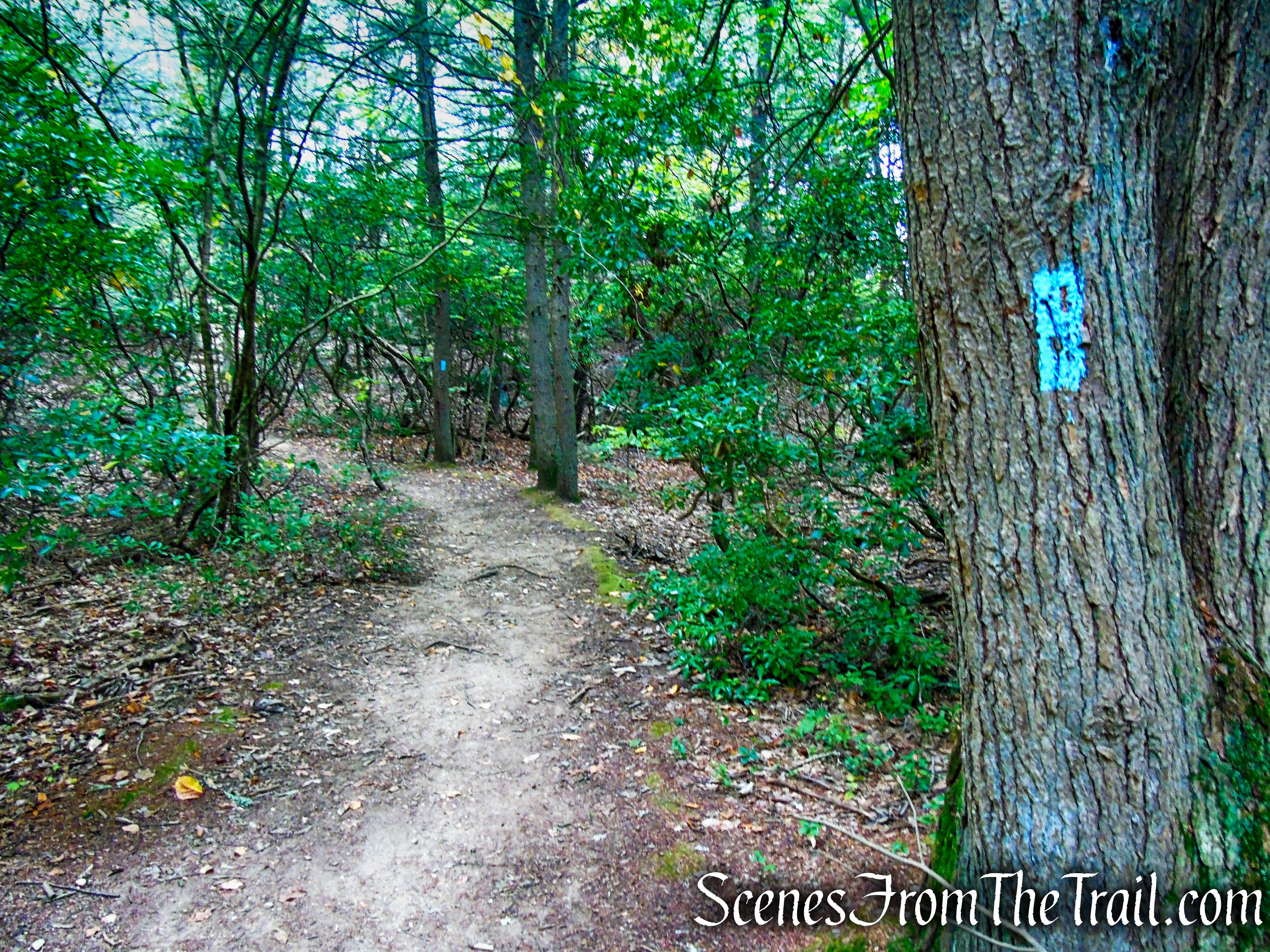


Silver Lake Preserve

May 9, 2020 – West Harrison, NY

Difficulty: Easy – moderate

Trailhead parking: Silver Lake Preserve 1-59 Old Lake St, West Harrison, NY 10604


Park Overview:

Silver Lake Preserve, which is a predominantly unimproved passive open space, features trails through woodlands and fields, some small streams and old stone foundations throughout its 236 acres. The topography is rugged, rising in steep rock outcrops from the scenic 43-acre lake. Fishing is not permitted. The preserve stretches across the borders of Harrison, North Castle, and White Plains. It is managed by the Westchester County Department of Parks, Recreation and Conservation.

Silver Lake Preserve

Silver Lake Preserve

History:

According to Michael R. Casarella, the Harrison Town Historian: “Some people say the trees around the lake once had silver leaves and that’s how Silver Lake got it’s name.”

During the colonial era, Silver Lake was known at Horton’s Pond, then later St. Mary’s, before the name was finally changed to Silver Lake. The Horton’s Pond title was designated as such because the Horton family used to operate a grain mill powered by pond water here, which was formed through the damming of the Mamaroneck River. That mill is still there today, but it’s used as a private residence separate from the park.

Horton's Grist Mill

Horton’s Grist Mill

It was during October 1776 that one of the final engagements of the Battle of White Plains took place on Merritt Hill, bordering Lake Street in West Harrison.

Merritt Hill - Silver Lake Preserve

Merritt Hill – Silver Lake Preserve

This historic site is Merritt Hill which marks one of the actions in the Battle of White Plains on October 28, 1776. Lt. Fenno fired a cannonball directly into 20 British horsemen approaching Hatfield Hill. This single shot caused the British to retreat back towards White Plains.

Merritt Hill - Silver Lake Preserve

Merritt Hill – Silver Lake Preserve

Merritt Hill - Silver Lake Preserve

Merritt Hill – Silver Lake Preserve

In the late 1800’s and early 1900’s, the Stony Hill community extended at least 26 homes and outbuildings along Stony Hill Road. At its steepest point, the road was paved with cobblestones, ending with a footpath that joined Buckhout Road. Although the park was created in 1925, the last family did not leave until 1941. Several prehistoric and archeological resources have been identified within Silver Lake Preserve.

cobblestones - Silver Lake Preserve

cobblestones – Silver Lake Preserve

Stony Hill Cemetery on Buckhout Road dates back to Revolutionary times. Buried here are many former slaves, freed by the Quakers of Purchase, who settled them on land near the cemetery during the 18th century. Many Civil War veterans are buried here. Foundations of the church are still visible. There are many unmarked graves scattered about in Stony Hill Cemetery, decorated with flags to honor their memory.

Stony Hill Cemetery

Stony Hill Cemetery

One of the few marked graves belongs to Harvey Seymour, April 1, 1805 – March 10, 1904 (98 years old at the time of his death).

Harvey Seymour

Harvey Seymour

In 1924 and 1925, Westchester County acquired the site in two parcels. In the northern section, you can find the ruins of the old Stony Hill Settlement, which was founded by the Purchase meeting of the Quakers.

stone ruins - Silver Lake Preserve

stone ruins – Silver Lake Preserve

The preserve’s trails, including stone steps that lead up steep inclines, were constructed by members of the Depression-era Work Projects Administration and Civilian Conservation Corps programs. There was a C.C.C. camp in the northwest portion of the preserve during the 1930’s.

Yellow Trail - Silver Lake Preserve

Yellow Trail – Silver Lake Preserve

Trails Overview:

There are three marked trails in Silver Lake Preserve, blazed Blue, Yellow and White, and all three are loops. They are sparsely blazed in some areas and well marked in others. There are also unmarked trails that connect to the blazed trails.  Part of the Heritage Trail, which opened in 1969 and passes by significant Revolutionary War era landmarks in Harrison, White Plains and North Castle, runs through the preserve as well. The Heritage Trail is difficult to follow in the area of Stony Hill Cemetery. There is no official trail map available.

Silver Lake Preserve Map

Silver Lake Preserve Map

Parking:

There are several access points to the preserve, but the best place to park is on Old Lake Street. The gravel parking lot is easy to miss as the sign is partially obscured.

Silver Lake Preserve

Silver Lake Preserve

Trail Descriptions:

  • Blue Trail – 0.6 mile ~ Beginning at the north end of the parking lot, the Blue Trail heads downhill into the woods. At a T-intersection, the Blue Trail turns left and joins the left leg of the Yellow Trail. The co-aligned trails descend and reach a trail junction at a double Tulip tree. The Blue Trail turns left and the Yellow Trail goes straight.

Blue Trail - Silver Lake Preserve

Blue Trail – Silver Lake Preserve

Blue Trail - Silver Lake Preserve

Blue Trail – Silver Lake Preserve

Blue Trail - Silver Lake Preserve

Blue Trail – Silver Lake Preserve

Heading gradually uphill, the Blue Trail enters a field and turns left. It follows the edge of the field as it ascends Merritt Hill. To the right is a cannon marking where a British flank attack was thwarted during the Revolutionary War. The trail reenters the woods on a narrow path at 0.5 mile. It parallels the road and closes the loop near the parking lot entrance.

Blue Trail - Silver Lake Preserve

Blue Trail – Silver Lake Preserve

Blue Trail - Silver Lake Preserve

Blue Trail – Silver Lake Preserve

Blue Trail - Silver Lake Preserve

Blue Trail – Silver Lake Preserve

Blue Trail - Silver Lake Preserve

Blue Trail – Silver Lake Preserve

terminus of Blue Trail - Silver Lake Preserve

terminus of Blue Trail – Silver Lake Preserve

  • Yellow Trail – 1 mile ~ Beginning on the Blue Trail that heads north from the parking lot, the Yellow Trail is a loop with sections co-aligned with the White and Blue Trails. To go counterclockwise around the loop, turn right and leave the Blue Trail. The Yellow Trail skirts the base of a hill and turns left when an unmarked trail heads north towards private property. After descending several stone steps, the Yellow Trail turns right at an intersection where an unmarked trail descends 250 feet downhill to the lake. As the Yellow Trail ascends on uneven stone steps, it passes, to the right, rock outcroppings with surfaces marked by flowing water.

Yellow Trail - Silver Lake Preserve

Yellow Trail – Silver Lake Preserve

Yellow Trail - Silver Lake Preserve

Yellow Trail – Silver Lake Preserve

Yellow Trail - Silver Lake Preserve

Yellow Trail – Silver Lake Preserve

Yellow Trail - Silver Lake Preserve

Yellow Trail – Silver Lake Preserve

Yellow Trail - Silver Lake Preserve

Yellow Trail – Silver Lake Preserve

Yellow Trail - Silver Lake Preserve

Yellow Trail – Silver Lake Preserve

Yellow Trail - Silver Lake Preserve

Yellow Trail – Silver Lake Preserve

The trail continues uphill and reaches an unmarked woods road leading 0.2 mile through a valley. Heading downhill, the Yellow Trail enters a network of old ATV trails. The Heritage Trail, on the right, leads 0.2 mile to the Stony Hill Cemetery. At 0.5 mile, the White Trail joins from the left and large flat rocks pave the treadway of the co-aligned trails. The two trails pass a fireplace surrounded by a stone wall and then cross a stream on large flat stones. At a T-intersection at 0.6 mile, the Yellow Trail turns left as the White Trail continues straight.

Yellow Trail - Silver Lake Preserve

Yellow Trail – Silver Lake Preserve

Yellow Trail - Silver Lake Preserve

Yellow Trail – Silver Lake Preserve

ruins - Yellow Trail - Silver Lake Preserve

ruins – Yellow Trail – Silver Lake Preserve

Yellow Trail - Silver Lake Preserve

Yellow Trail – Silver Lake Preserve

cobblestones - Silver Lake Preserve

cobblestones – Silver Lake Preserve

stone ruins - Yellow Trail - Silver Lake Preserve

stone ruins – Yellow Trail – Silver Lake Preserve

Yellow Trail - Silver Lake Preserve

Yellow Trail – Silver Lake Preserve

Yellow Trail - Silver Lake Preserve

Yellow Trail – Silver Lake Preserve

Yellow Trail - Silver Lake Preserve

Yellow Trail – Silver Lake Preserve

After descending stone steps at 0.7 mile, the Yellow Trail reaches lake level and turns left, joining the White Trail, which comes in from the right. Now at lake level, the co-aligned trails cross two inlet streams on rocks and the White Trail leaves to the left. At 0.8 mile, the Yellow Trail reaches a T-intesection with the Blue Trail. The Yellow Trail joins the left leg of the Blue Trail and climbs the hill. At 1.0 mile, the Yellow Trail closes the Loop as the Blue Trail continues uphill to the north end of the parking lot.

Yellow/White Trails - Silver Lake Preserve

Yellow/White Trails – Silver Lake Preserve

Yellow/White Trails - Silver Lake Preserve

Yellow/White Trails – Silver Lake Preserve

Yellow/White Trails - Silver Lake Preserve

Yellow/White Trails – Silver Lake Preserve

Yellow/White Trails - Silver Lake Preserve

Yellow/White Trails – Silver Lake Preserve

Yellow Trail - Silver Lake Preserve

Yellow Trail – Silver Lake Preserve

Yellow Trail - Silver Lake Preserve

Yellow Trail – Silver Lake Preserve

  • White Trail – 1.6 miles ~ Beginning at the top of the hill, where the White Trail joins the Yellow Trail from the left and large flat rocks pave the treadway of the co-aligned trails. The two trails pass a fireplace surrounded by a stone wall and then cross a stream on large flat stones. At a T-intersection at 0.1 mile, the Yellow Trail turns left as the White Trail continues straight.

Yellow/White Trails - Silver Lake Preserve

Yellow/White Trails – Silver Lake Preserve

stone ruins - Yellow/White Trails - Silver Lake Preserve

stone ruins – Yellow/White Trails – Silver Lake Preserve

Yellow/White Trails - Silver Lake Preserve

Yellow/White Trails – Silver Lake Preserve

Yellow/White Trails - Silver Lake Preserve

Yellow/White Trails – Silver Lake Preserve

Yellow/White Trails - Silver Lake Preserve

Yellow/White Trails – Silver Lake Preserve

The White Trail continues southwest on a woods road and passes an unmarked trail on the left that descends to the lake. The trail soon ascends uneven stone steps then levels off. At 0.3 mile, the trail turns left, descends stone steps, levels off then descends more stone steps.

White Trail - Silver Lake Preserve

White Trail – Silver Lake Preserve

White Trail - Silver Lake Preserve

White Trail – Silver Lake Preserve

White Trail - Silver Lake Preserve

White Trail – Silver Lake Preserve

White Trail - Silver Lake Preserve

White Trail – Silver Lake Preserve

White Trail - Silver Lake Preserve

White Trail – Silver Lake Preserve

White Trail - Silver Lake Preserve

White Trail – Silver Lake Preserve

White Trail - Silver Lake Preserve

White Trail – Silver Lake Preserve

White Trail - Silver Lake Preserve

White Trail – Silver Lake Preserve

White Trail - Silver Lake Preserve

White Trail – Silver Lake Preserve

After leveling off briefly, the White Trail passes some large rock formations as it ascends stone steps. At about 0.5 mile, the trail levels off again and passes a vernal pool.

White Trail - Silver Lake Preserve

White Trail – Silver Lake Preserve

White Trail - Silver Lake Preserve

White Trail – Silver Lake Preserve

White Trail - Silver Lake Preserve

White Trail – Silver Lake Preserve

White Trail - Silver Lake Preserve

White Trail – Silver Lake Preserve

At about 0.6 mile, the trail begins to descend steeply on uneven stone steps, with Silver Lake visible through the trees below. At 0.75 mile, the trail reaches the shore of Silver Lake and turns left. The unmarked trail that continues south along the lake, leads to Liberty Park. The Trail now travels in a northerly direction along the lake, with occasional open views of Silver Lake. This lower section of the White Trail is vastly different than the more rugged topography of the upper section.

White Trail - Silver Lake Preserve

White Trail – Silver Lake Preserve

White Trail - Silver Lake Preserve

White Trail – Silver Lake Preserve

White Trail - Silver Lake Preserve

White Trail – Silver Lake Preserve

White Trail - Silver Lake Preserve

White Trail – Silver Lake Preserve

White Trail - Silver Lake Preserve

White Trail – Silver Lake Preserve

White Trail - Silver Lake Preserve

White Trail – Silver Lake Preserve

White Trail - Silver Lake Preserve

White Trail – Silver Lake Preserve

White Trail - Silver Lake Preserve

White Trail – Silver Lake Preserve

White Trail - Silver Lake Preserve

White Trail – Silver Lake Preserve

At 1.4 miles, the Trail reaches a junction with the Yellow trail that joins in from the left. The co-aligned trails cross two inlet streams on rocks and at 1.5 miles, the White Trail leaves to the left, climbs stone steps and closes the loop at a junction with the Yellow Trail at 1.6 miles.

Yellow/White Trails - Silver Lake Preserve

Yellow/White Trails – Silver Lake Preserve

Yellow/White Trails - Silver Lake Preserve

Yellow/White Trails – Silver Lake Preserve

Yellow/White Trails - Silver Lake Preserve

Yellow/White Trails – Silver Lake Preserve

Yellow/White Trails - Silver Lake Preserve

Yellow/White Trails – Silver Lake Preserve

Yellow Trail - Silver Lake Preserve

Yellow Trail – Silver Lake Preserve

  • Heritage Trail – red-white-blue ~ The Heritage Trail blazes appear sporadically throughout the preserve and the section that leads to Stony Hill Cemetery is especially difficult to follow.

Heritage Trail - Silver Lake Preserve

Heritage Trail – Silver Lake Preserve

It is more of a bushwack than following a trail. It is recommended that if you plan on visiting Stony Hill Cemetery, that you carry a compass or GPS device to help with navigation. The cemetery can easily be reached from Buckhout Road.

Stony Hill Cemetery

Stony Hill Cemetery

Stony Hill Cemetery is a 6.5-acre parcel and is the last remaining identifiable element of “The Hills.” The property on which the cemetery sits was part of a land grant given by the Purchase Friends (Quakers) to slaves they voluntarily freed in the 18th century. The remains (approximately 200) of “The Hills’” residents and those of several African American Civil War veterans are buried in the cemetery, mostly in unmarked graves.

Stony Hill Cemetery

Stony Hill Cemetery

In 1983 the Stony Hill Cemetery was listed as a Westchester County Tricentennial Historic Site. The cemetery was listed on the National Register of Historic Places in 1999.

Stony Hill Cemetery

Stony Hill Cemetery

The Hike:

We followed the Blue Trail from the north end of the parking area to the Yellow Trail. We then took the Yellow Trail and turned right on the Heritage Trail. After crossing several small streams and passing through stone walls, the Heritage Trail became hard to follow. Having a GPS device and knowledge of the general vicinity of the Stony Hill Cemetery, we bushwacked down and up several steep slopes until we ran into a dirt road that leads right to the cemetery.

We retraced our steps back to the Yellow Trail, turned right and began following the Yellow Trail and continued straight on the White Trail as it traverses the upper slopes. Descending on White to Silver Lake, turning left and heading north around the lake, connecting with the right leg of the Blue Trail and ascending Merritt Hill, past the cannon and returning to the parking area.

The hike we did was about 4.5 miles, with approximately 600 feet of elevation gain, including off trail exploration, bushwacking and one missed turn. This hike was done clockwise from the parking area on Old Lake Street.

Silver Lake Preserve

Silver Lake Preserve

Depending on your navigational abilities and/or desire, you can bypass the Stony Hill Cemetery altogether. You can also choose to explore some of the unmarked trails that bisect the property. It is possible to create any number of loop hikes within the preserve of desired length and level of difficulty.

Review:

This is a great place to hike if you’re not expecting dramatic cliff top views. With many of the popular parks and trails being overwhelmed by people getting outdoors these days, Silver Lake Preserve gives hikers a respite from the madness. We saw several people down by the lake, but nowhere else during our visit. Definitely a good place to explore off trail and test out your navigational skills, using a map and compass. 

Pros:

Rugged slopes, historical features, Silver Lake, Stony Hill Cemetery, not heavily trafficked, shaded trails.

Cons:

No official trail map.


Take a hike!

Silver Lake Preserve

Silver Lake Preserve

Sources:
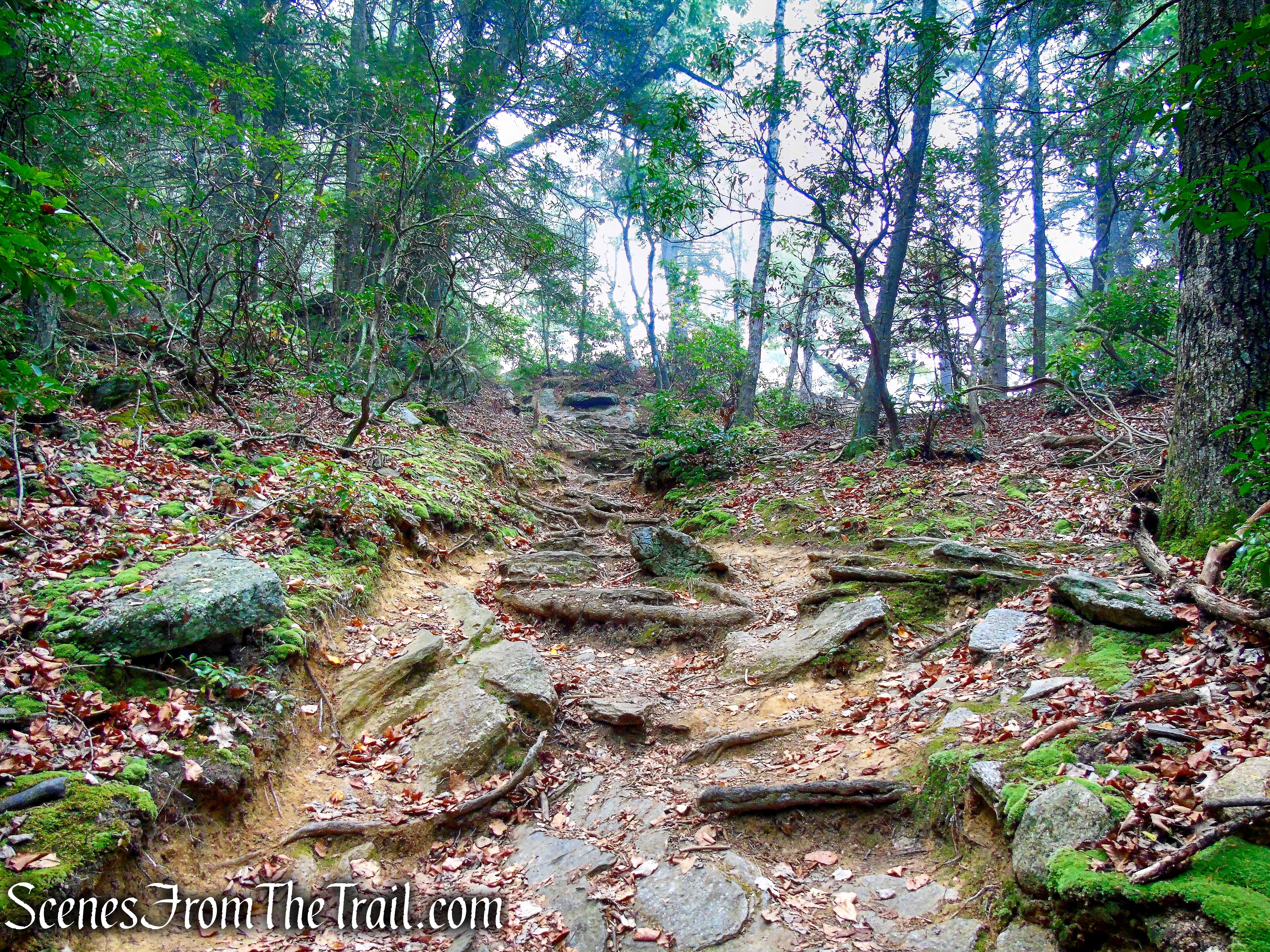


Lenoir Nature Preserve

May 3, 2020 – Yonkers, NY

Difficulty: Easy

Trailhead parking: 19 Dudley Street, Yonkers 10701


Park Overview:

Lenoir Preserve is a 40-acre nature preserve comprising woodlands and field habitats. It is located in northwest Yonkers, NY. and is adjacent to the Old Croton Aqueduct on slopes overlooking the Hudson River. The property was formerly home to two Hudson River estates, only one of which stands today.

Lenoir Preserve

Lenoir Preserve

The preserve boasts a number of unusual specimen trees and shrubs imported from around the world. Among them are some magnificent copper beeches from Europe, gingko trees from Asia and Douglas firs from the Pacific Northwest. These imports join native sugar maples, red oaks, hemlocks, pines and tulip trees in providing shelter for many kinds of wildlife including woodpeckers, owls and bats.

Lenoir Preserve

Lenoir Preserve

Every spring and autumn, bird watchers gather to observe major hawk migrations. Nature enthusiasts can learn about raptor identification markings, such as flight patterns and silhouettes, and can take part in official tracking counts of raptors.

The Nature Center houses many different nature exhibits. Nature center hours: September to June, Tuesday through Saturday from 9 a.m. to 4 p.m.; July and August, Monday through Friday from 9 a.m. to 4 p.m. The 40-acre Lenoir Nature Preserve opened in 1978 and is owned and operated by the County of Westchester.

Lenoir Preserve Nature Center

Lenoir Preserve Nature Center

Trails are open every day dawn to dusk. Maps are available at the kiosk near the Nature Center.

Lenoir Preserve

Lenoir Preserve

History:

At the southeast end of the preserve, the Lenoir Mansion stands atop the hill overlooking the meadow. The Lenoir Mansion was built between 1850 and 1870 for future presidential candidate Samuel J. Tilden and was built from granite quarried on the estate. The two wings were added around 1907 by C.C. Dula where he named the mansion after Lenoir, North Carolina, where he grew up. C. C. Dula’s niece, Purl Parker, inherited the estate in 1939 where she lived with her husband, Dr. Orrin Wightman until 1965 when Dr. Wightman died.

Lenoir Mansion - Green Trail

Lenoir Mansion – Green Trail

Lenoir Mansion

Lenoir Mansion

Lenoir Preserve History

Lenoir Preserve History

Lenoir Preserve History

Lenoir Preserve History

Lenoir Preserve History

Lenoir Preserve History

Lenoir Preserve History

Lenoir Preserve History

Trails Overview:

Lenoir Preserve has a combination of traditional trails and paved footpaths that total about 2 miles. There is also a trail that connects to the Old Croton Aqueduct which in turn connects to nearby Untermyer Park and Gardens. Trail maps are available at the preserve.

Lenoir Nature Preserve Map

Lenoir Nature Preserve Map

  • Blue Trail:

The Blue Trail traverses the property from north to south, along the hillside, just above the Old Croton Aqueduct (OCA), then climbs the hillside (east) along the property’s southern border. The trail begins near the “Sugar Shack” descends a little then proceeds along the hillside. There are several unmarked footpaths that branch off it, including one that descends to the OCA. When it reaches the southern end of the preserve, it ascends steeply and runs along the preserve boundary, ending near a parking lot by the mansion.

Blue Trail - Lenoir Preserve

Blue Trail – Lenoir Preserve

Blue Trail - Lenoir Preserve

Blue Trail – Lenoir Preserve

Blue Trail - Lenoir Preserve

Blue Trail – Lenoir Preserve

Blue Trail - Lenoir Preserve

Blue Trail – Lenoir Preserve

Blue Trail - Lenoir Preserve

Blue Trail – Lenoir Preserve

Blue Trail - Lenoir Preserve

Blue Trail – Lenoir Preserve

Blue Trail - Lenoir Preserve

Blue Trail – Lenoir Preserve

Blue Trail - Lenoir Preserve

Blue Trail – Lenoir Preserve

  • Unmarked Side Trail:

An unmarked trail branches off the Blue Trail and climbs steeply to a stone staircase and through a stone arch on one of the terraces.

stone staircase - Lenoir Preserve

stone staircase – Lenoir Preserve

stone staircase - Lenoir Preserve

stone staircase – Lenoir Preserve

stone arch - Lenoir Preserve

stone arch – Lenoir Preserve

stone arch - Lenoir Preserve

stone arch – Lenoir Preserve

  • Yellow Trail:

The Yellow Trail starts near the Nature Center on a woods road heading northeast then makes a sharp right and heads south, passing just above the Nature Center, terminating at a junction with the paved Green Trail.

Yellow Trail

Yellow Trail

Yellow Trail

Yellow Trail

  • Green Trail:

The paved Green Trail starts behind the Nature Center and loops around the interior of the preserve in a Figure-8. It passes by the Butterfly Garden, the Terraces and loops around the meadow, passing by the mansion and the stone gazebo, as it makes its way back to the Nature Center.

Green Trail - Lenoir Preserve

Green Trail – Lenoir Preserve

Lenoir Mansion - Green Trail

Lenoir Mansion – Green Trail

Upper Meadow - Green Trail

Upper Meadow – Green Trail

Lenoir Mansion - Green Trail

Lenoir Mansion – Green Trail

stone gazebo - Lenoir Preserve

stone gazebo – Lenoir Preserve

Nature Center - Lenoir Preserve

Nature Center – Lenoir Preserve

Review:

A really nice place to go for a walk and avoid the crowds. The grounds are well kept these days compared to several years ago when the place was severely overgrown. The adjacent Old Croton Aqueduct allows visitors to extend their walk towards South Yonkers and the Bronx, or north towards Dobbs Ferry.

Pros:

Historical features, Lenoir Mansion, stone walls and terraces, gothic arch, lots of bird activity.

Cons:

None

Take a walk!

Sources:
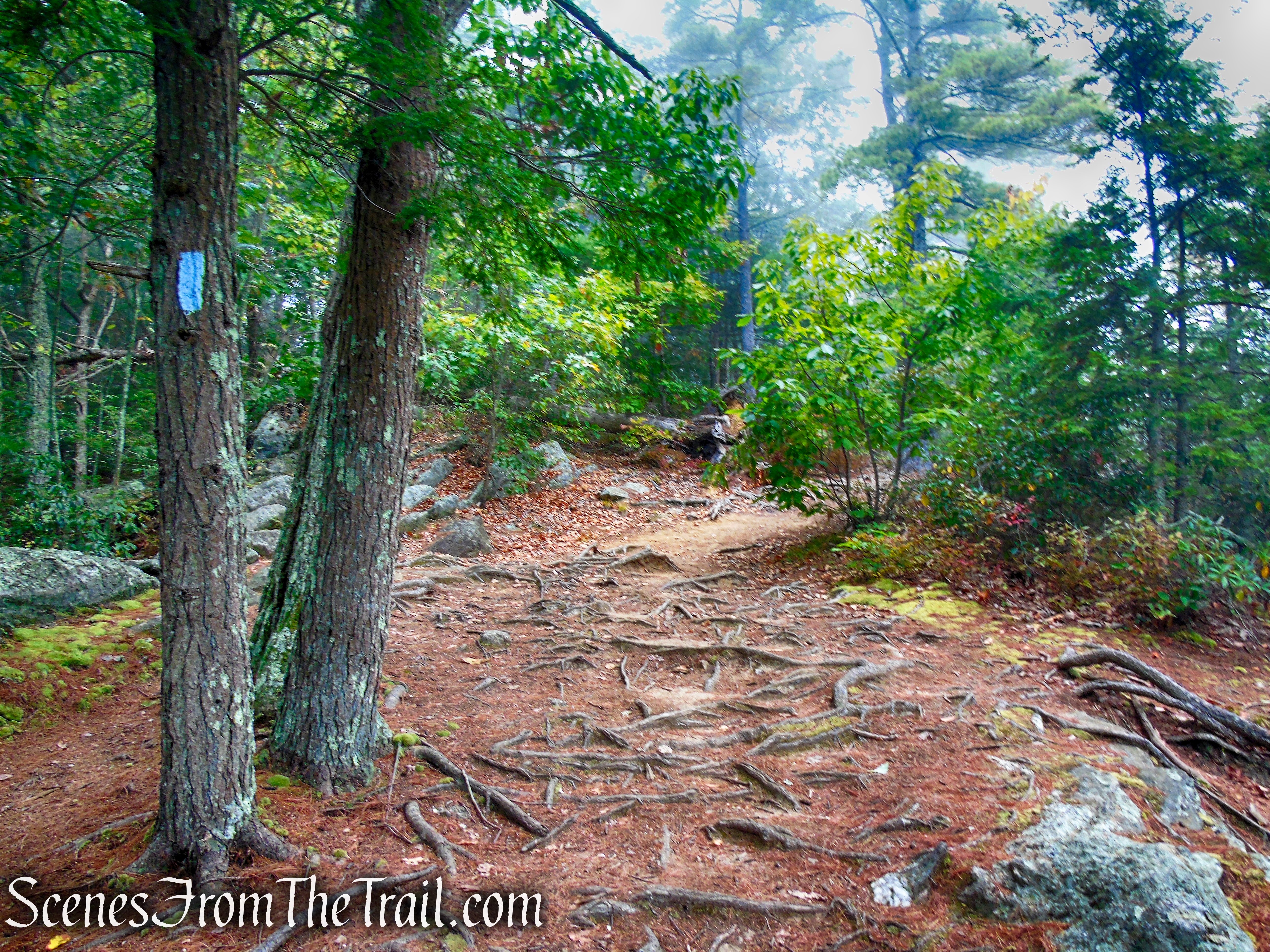


Franklin D. Roosevelt State Park

May 2, 2020 – Yorktown Heights, NY

Difficulty: Easy

Length: Approximately 4 miles

Max elevation: 543 ft. – total elevation gain: approximately 157 ft.

Route type: Lollipop Loop

Free Maps: Franklin D. Roosevelt State Park Trail MapFranklin D. Roosevelt State Park Map provided by the Trail Conference

Trailhead parking: FDR State Park pool parking lot – Yorktown Heights, NY 10598

Park Overview:

Franklin D. Roosevelt State Park is a 960-acre state park in Westchester County, NY. It is situated in Yorktown, approximately 40 miles from New York City. FDR State Park is a large multi-use facility with picnic tables, board rentals, playing fields, and a swimming pool. In season and weekends, picnickers arrive by the carful and busload, filling the park with sounds of people enjoying the outdoors and smells wafting from grills. On weekdays and off season weekends, local residents walk, jog, or bike along the park roads in relative isolation.

FDR State Park

FDR State Park

Franklin D. Roosevelt State Park encompasses two water bodies, Mohansic Lake and Crom Pond, which provide recreational boating and are home to many native fishes, including largemouth bass, yellow perch, and bluegill. The park is operated and managed by the New York State Office of Parks, Recreation and Historic Preservation.

Mohansic Lake - FDR State Park

Mohansic Lake – FDR State Park

History:

Formerly known as Mohansic Park and Mohansic State Park, the park was created in 1922 on the former site of the Mohansic State Hospital. It was renamed Franklin D. Roosevelt State Park in 1982.

Mohansic State Hospital

Mohansic State Hospital

Franklin D. Roosevelt State Park

Franklin D. Roosevelt State Park

More history of FDR State Park

Trails Overview:

The trails at FDR are blazed, mostly on wide woods roads which have minimal elevation changes. On the easternmost part of the park, a road built by the Civilian Conservation Corps provides a quiet place to walk under tall trees. A paved path essentially paralleling the park road to the swimming area is handicapped accessible. In 2016, thanks to an Eagle Scout project, a bridge now crosses the inlet stream of Crom Pond. In 2017 a bridge was built across the outlet stream, which now connects the park to the Mohansic Trailway, an abandoned rail bed.

Hike Overview:

This hike follows the blue-blazed Crom Pond Trail over newly built boardwalks and bridges alongside Crom Pond to its terminus with the Mohansic Trailway. Returning the same way, then turning right on the white-blazed Forested Loop Trail. The final stretch is on the yellow-blazed Mid Park Loop Trail and back to the pool parking lot.

FDR State Park hike

FDR State Park hike

The Hike:

From FDR State Park’s swimming pool parking lot, look for a bench on the east side, near a post with white tag blazes. Walk down the woods road and at a broad intersection in 0.2 mile, turn right onto the Crom Pond Trail. Crom means crooked in Dutch. Head down the stone steps. In 0.3 mile, turn right onto a narrow path. Cross a 70′ long board walk in the wetlands, turn left to cross a stone wall and a short board walk. The path reaches a bridge built thanks to an Eagle project and east side of the bridge has a ramp that hugs the side of a large rock.

Forested Loop Trail - FDR State Park

Forested Loop Trail – FDR State Park

Forested Loop Trail - FDR State Park

Forested Loop Trail – FDR State Park

Forested Loop Trail - FDR State Park

Forested Loop Trail – FDR State Park

turn right on Crom Pond Trail

turn right on Crom Pond Trail

Crom Pond Trail - FDR State Park

Crom Pond Trail – FDR State Park

Crom Pond Trail - FDR State Park

Crom Pond Trail – FDR State Park

Crom Pond Trail - FDR State Park

Crom Pond Trail – FDR State Park

Crom Pond Trail - FDR State Park

Crom Pond Trail – FDR State Park

Crom Pond Trail - FDR State Park

Crom Pond Trail – FDR State Park

Crom Pond Trail - FDR State Park

Crom Pond Trail – FDR State Park

Crom Pond Trail - FDR State Park

Crom Pond Trail – FDR State Park

inlet stream - Crom Pond Trail

inlet stream – Crom Pond Trail

Crom Pond Trail - FDR State Park

Crom Pond Trail – FDR State Park

In 0.5 mile, turn right onto a woods road. Continue along the woods road and bear right to head towards Crom Pond at 0.7 mile. The views over Crom Pond and its adjacent wetlands make you think you are much further away from New York City than you actually are except that you can hear some traffic noise from the Taconic State Parkway. The animal paths down to the shore allow you to take a closer look at Crom Pond.

Crom Pond Trail - FDR State Park

Crom Pond Trail – FDR State Park

Crom Pond Trail - FDR State Park

Crom Pond Trail – FDR State Park

Crom Pond Trail - FDR State Park

Crom Pond Trail – FDR State Park

Crom Pond Trail - FDR State Park

Crom Pond Trail – FDR State Park

Crom Pond Trail - FDR State Park

Crom Pond Trail – FDR State Park

Crom Pond - FDR State Park

Crom Pond – FDR State Park

The path turns left to go away from the water. At 0.8 mile, the trail crosses a 108-foot long boardwalk that lets you keep your feet dry. Turning right, the trail parallels a wetland. It reaches a 50-foot long boardwalk that spans the flood plain of the outlet stream of Crom Pond and connects to the bridge over the stream. At first glance the bridge seems really long. But, it is only 32 feet spanning the stream and then reaches a narrow piece of land which provides a foundation for board walk on the south side. You have walked 0.9 mile when you reach the south side of the bridge.

Crom Pond Trail - FDR State Park

Crom Pond Trail – FDR State Park

Crom Pond Trail - FDR State Park

Crom Pond Trail – FDR State Park

Crom Pond Trail - FDR State Park

Crom Pond Trail – FDR State Park

Crom Pond Trail - FDR State Park

Crom Pond Trail – FDR State Park

Crom Pond Trail - FDR State Park

Crom Pond Trail – FDR State Park

Crom Pond Trail - FDR State Park

Crom Pond Trail – FDR State Park

Crom Pond Trail - FDR State Park

Crom Pond Trail – FDR State Park

Crom Pond Trail - FDR State Park

Crom Pond Trail – FDR State Park

Crom Pond Trail - FDR State Park

Crom Pond Trail – FDR State Park

After crossing the bridge, continue to follow the blue blazes on a woods road that soon turns right and leads toward the edge of Crom Pond then turns left. In about another 400 yards, the blue-blazed Crom Pond Trail, leaves the woods road and turns left at a junction with the Yellow Connector Trail and soon ends at the abandoned rail bed, the route of the orange-blazed Mohansic Trailway.

Crom Pond Trail - FDR State Park

Crom Pond Trail – FDR State Park

Crom Pond Trail - FDR State Park

Crom Pond Trail – FDR State Park

Crom Pond Trail - FDR State Park

Crom Pond Trail – FDR State Park

Crom Pond Trail - FDR State Park

Crom Pond Trail – FDR State Park

Crom Pond Trail turns left

Crom Pond Trail turns left

Turn right on the abandoned rail bed and walk a few feet to the junction with the Yellow Connector Trail and turn right. Follow the yellow blazes for a short distance to its terminus at the junction with the blue-blazed Crom Pond Trail which you passed a few minutes earlier.

Mohansic Trailway

Mohansic Trailway

turn right on Yellow Connector Trail

turn right on Yellow Connector Trail

Yellow Connector Trail - FDR State Park

Yellow Connector Trail – FDR State Park

Yellow Connector Trail - FDR State Park

Yellow Connector Trail – FDR State Park

terminus of Yellow Connector Trail

terminus of Yellow Connector Trail

Continue straight on the Crom Pond Trail, now retracing your steps. Recross the wooden footbridge that spans the outlet stream and continue back the way you came.

Crom Pond Trail - FDR State Park

Crom Pond Trail – FDR State Park

Crom Pond Trail - FDR State Park

Crom Pond Trail – FDR State Park

Crom Pond Trail - FDR State Park

Crom Pond Trail – FDR State Park

Crom Pond Trail - FDR State Park

Crom Pond Trail – FDR State Park

Crom Pond Trail - FDR State Park

Crom Pond Trail – FDR State Park

Crom Pond Trail - FDR State Park

Crom Pond Trail – FDR State Park

Crom Pond - FDR State Park

Crom Pond – FDR State Park

Crom Pond Trail - FDR State Park

Crom Pond Trail – FDR State Park

Crom Pond Trail - FDR State Park

Crom Pond Trail – FDR State Park

Crom Pond Trail - FDR State Park

Crom Pond Trail – FDR State Park

Crom Pond Trail - FDR State Park

Crom Pond Trail – FDR State Park

Crom Pond Trail - FDR State Park

Crom Pond Trail – FDR State Park

Crom Pond Trail - FDR State Park

Crom Pond Trail – FDR State Park

Crom Pond Trail - FDR State Park

Crom Pond Trail – FDR State Park

When the Crom Pond Trail comes to a T-intersection with a woods road, make sure to turn left and follow the blue blazes back to the broad intersection with the white-blazed Forested Loop Trail.

Crom Pond Trail - FDR State Park

Crom Pond Trail – FDR State Park

Crom Pond Trail - FDR State Park

Crom Pond Trail – FDR State Park

You have a few options here. You can continue straight on blue a short distance to its terminus, turn left and return to the parking lot. You can turn left and retrace your steps on white back to the parking lot (that would make the hike about 2.3 miles total), or you can turn right on white to extend the hike. We turned right.

turn right on Forested Loop Trail

turn right on Forested Loop Trail

The white-blazed Forested Loop Trail follows a wide woods road north. In about 0.6 mile, the trail reaches Downing Park (no trails), turns left and skirts its boundary along a wooden fence. The trail then heads west, passing the green-blazed CCC Camp Trail (another option), then comes to a pair of benches with an informational sign and turns left, now heading south.

Forested Loop Trail - FDR State Park

Forested Loop Trail – FDR State Park

Forested Loop Trail - FDR State Park

Forested Loop Trail – FDR State Park

Downing Park

Downing Park

Downing Park

Downing Park

Forested Loop Trail - FDR State Park

Forested Loop Trail – FDR State Park

This section of the trail is paved and you may encounter walkers and kids on bikes. To avoid this paved section, you can walk a few feet farther and turn left on the yellow-blazed Mid Park Loop Trail, or do as we did and just cut through the woods to it.

Forested Loop Trail - FDR State Park

Forested Loop Trail – FDR State Park

The Mid Park Loop Trail runs parallel to, and just below the white trail. You can see the people and hear them, but if you prefer a dirt path to pavement, this trail works. In just over a 1/2 mile, as the yellow trail starts to veer right, there is a short footpath that leads back to the paved white trail near a kiosk where the green, white and blue trails meet.

Mid Park Loop Trail - FDR State Park

Mid Park Loop Trail – FDR State Park

Mid Park Loop Trail - FDR State Park

Mid Park Loop Trail – FDR State Park

Continue south past the kiosk and back to the pool parking lot, where the hike began.

Forested Loop Trail - FDR State Park

Forested Loop Trail – FDR State Park

pool parking lot - FDR State Park

pool parking lot – FDR State Park

Review:

A nice, mostly level walk in the woods, but nothing really exciting about it. The bridges and boardwalks are cool and the Crom Pond Trail itself is worth hiking. There aren’t any real open views of Crom Pond and you have to maneuver in order to get a decent photograph. The Crom Pond Trail has a lot of wet and muddy sections where there aren’t any boardwalks, although our visit was after it rained the previous day. We got there before 8:30 am and there were already quite a few people in the lower areas of the park. We only encountered several hikers on the Crom Pond Trail, but quite a few more on the Forested Loop Trail, especially the paved section. If nothing else, this is a decent hike to stretch your legs while social distancing and staying local.

Pros:

Crom Pond Trail with its boardwalks and bridges, mostly lesser traveled area, huge parking lot.

Cons:

No real good views of Crom Pond. Besides the Crom Pond Trail, not much to see on the other trails except people.

Take a hike!

Franklin D. Roosevelt State Park

Franklin D. Roosevelt State Park

Sources:
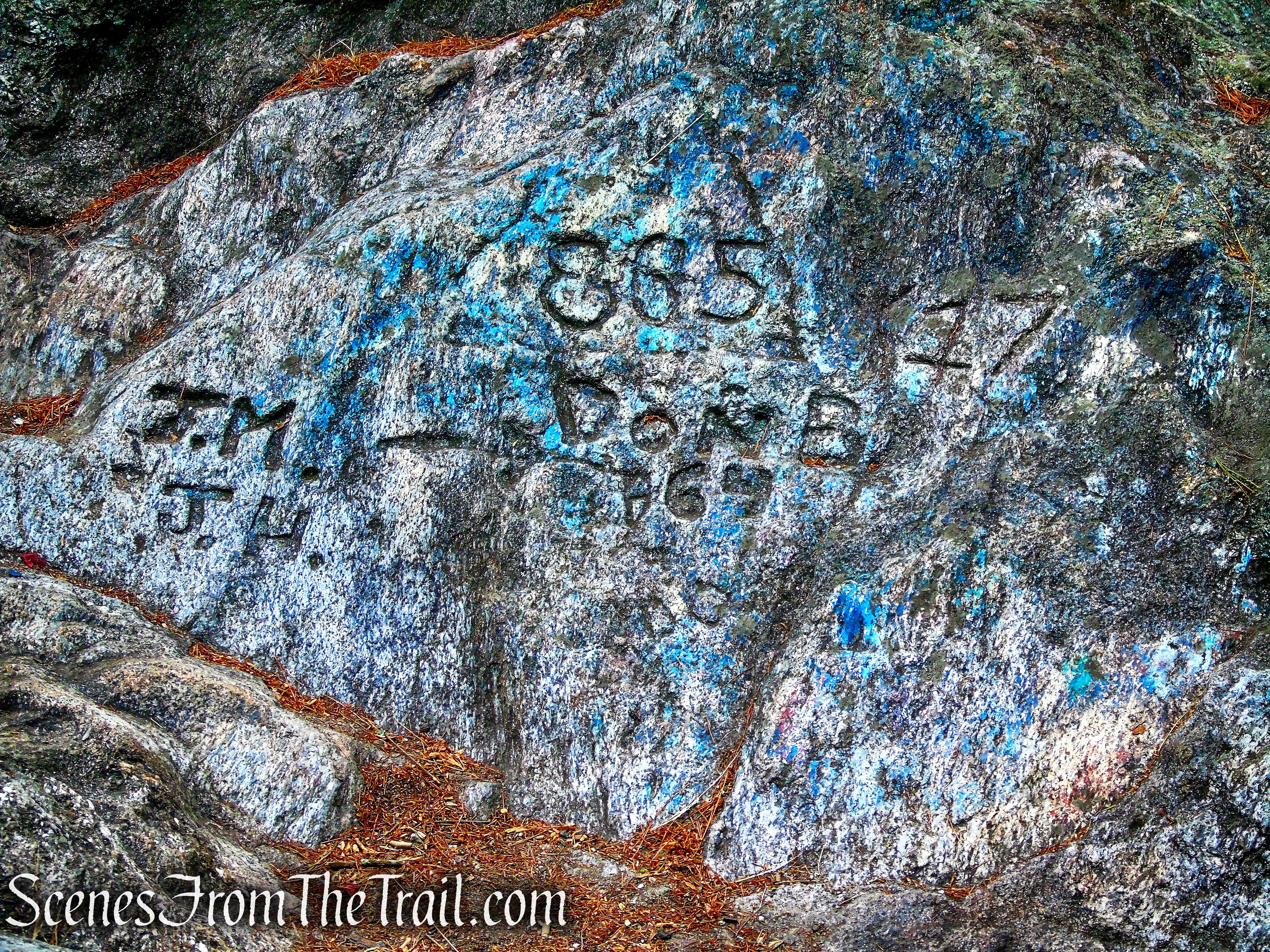
Great Hunger Memorial Park at V.E. Macy

April 25, 2020 – Ardsley, NY

Difficulty: Easy

Trailhead parking: Saw Mill River Parkway – Irvington, NY 10533

Please Note:

Great Hunger Memorial Park at V.E. Macy can only be entered by heading north on the Saw Mill River Parkway and then turning right when you reach the Great Hunger Memorial Park sign.

Great Hunger Memorial Park at V.E. Macy

Great Hunger Memorial Park at V.E. Macy

Park Overview:

The Great Hunger Memorial was unveiled on June 24, 2001 at V.E. Macy Park in Ardsley to commemorate the suffering of millions of Irish peasants who died from the potato famine or were forced to leave their country.

Great Hunger Memorial

Great Hunger Memorial

Great Hunger Memorial

Great Hunger Memorial

The monument’s sculptor, Eamonn O’Doherty of Ireland, describes the memorial as comprising three related elements.

Great Hunger Memorial

Great Hunger Memorial

The first represents five members of an Irish family group.

Great Hunger Memorial

Great Hunger Memorial

Great Hunger Memorial

Great Hunger Memorial

The second element depicts the deserted shell of the homestead they were forced to leave.

Great Hunger Memorial

Great Hunger Memorial

The third element refers to the potato blight and consists of an overturned basket from which potatoes, as they spill onto the ground, metamorphose into skulls.

Great Hunger Memorial

Great Hunger Memorial

After its dedication in June 2001 the monument received widespread critical praise and won several awards, including American Institute of Architects’ community recognition as Most Outstanding Work of Public Art.

Great Hunger Memorial

Great Hunger Memorial

Great Hunger Memorial

Great Hunger Memorial

V.E. Macy Park History:

The Woodlands Lake area was originally owned by Frederick Philipse, a royalist, and was part of Philipse Manor. After the American Revolution, victorious patriot forces confiscated the land. In 1816, Joseph Howland purchased 100-acre tract along with the saw mill that was located there, and for many years afterward the property became known as Howland’s Mill and Howland’s Mill Pond (now Woodlands Lake). Mr. Howland lived in a mansion near the pond.

The waterfall was created by building a dam across the Saw Mill River. In the past, the water power created by this waterfall successfully powered saw mills and grist mills along the Saw Mill River during the latter part of the 18th Century and throughout all of the 19th Century.

Woodlands Lake Waterfall

Woodlands Lake Waterfall

During the late 1800’s and early 1900’s, Woodlands Lake Waterfall and its surrounding area, served as a popular resort. The original wooden bridge that crossed the waterfall acted as an access road connecting Saw Mill River Road to the Woodlands Lake Waterfall resorts area.

Woodlands Lake Waterfall

Woodlands Lake Waterfall

For those vacationers living far away, the “Put” Railroad Woodlands Station made arriving at the Woodlands Lake Waterfall resort areas easy. For the travelers coming from the city, they would simply disembark at the Woodlands Station and then use the original wooden bridge that crossed over the waterfall to arrive at the resort hotels and areas.

Woodlands Lake Station

Woodlands Lake Station

Woodlands Lake Station

Woodlands Lake Station

In the 1930’s when the Saw Mill River Parkway was constructed, a more substantial concrete and steel bridge replaced the original wooden bridge that crossed the waterfall. This new bridge now made it possible for automobiles to cross over the waterfall. This concrete bridge was used until 1950 when The New York Thruway construction cut off the road and the bridge thereafter saw only fishermen and strollers. Today it is used to connect Great Hunger Memorial Park to the South County Trailway.

Woodlands Lake Falls and Bridge

Woodlands Lake Falls and Bridge

In 1923, Westchester County purchased the Woodlands Lake Waterfall area and park, comprising of approximately 212 acres, for $157,000 from J.P. Morgan. It was originally called Woodlands Lake Park, but was renamed for Valentine Everit Macy, Sr., the first Commissioner of Public Welfare. In fact, he was the first Westchester County Commissioner of any kind. He later served as chairman of the County Parks Commission from 1926-1929. The park is located in the villages of Irvington, Ardsley, and Dobbs Ferry, in the town of Greenburgh, Westchester County, N.Y.

V.E. Macy Park

V.E. Macy Park

In the 1920’s, the Woodlands Lake area was a place of fun: it hosted the circus when it came to town; it provided picnic areas where ladies and gentlemen could go for an outing and a barbecue; and it had a place where families could park their cars in the shade while they had a family picnic and had the accessibility of having a food van nearby to provide the food they could not supply for themselves. There was also a place where a baseball game could be played and watched.

Woodlands Park

Woodlands Park

Woodlands Park

Woodlands Park

Then there was the wooden bridge over the waterfall from which bathers could dive into the cooling waters or show off the latest bathing suit fashions.

Woodlands Park

Woodlands Park

With the construction of the Saw Mill River Parkway (1930) and the NY State Thruway (1955), V.E. Macy park is now divided into three distinct areas. One section, east of the NYS Thruway, features ballfields, a playground, comfort stations and picnic pavilion. The Woodlands Lake section, sandwiched between the Saw Mill River Parkway to the west and the NYS Thruway to the east, is an excellent spot for short strolls and birdwatching, provides access to the South County Trailway. This section (that is the subject of this post) has been renamed Great Hunger Memorial Park at V.E. Macy. For nature-lovers fond of hiking and hill climbing, the rugged, heavily wooded hillside west of the Saw Mill River Parkway (lies within the Irvington Woods trailway system), is especially attractive.

Woodlands Lake

Woodlands Lake

In the 1930’s, Howland’s mansion was demolished when the Saw Mill River Parkway was constructed. It was at this time that the Woodlands Lake Hotel complex and the Reinhardt Hotel replaced the resorts in the Woodlands Lake Waterfall area. Eventually, the hotels were torn down. Later, the Woodlands Lake Waterfalls area was occupied by a number of restaurants including Leighton’s Restaurant and then La Cantina.

Cantina Restaurant

Cantina Restaurant

The restaurants have long since been closed down, but the structures are still standing near the Woodlands Lake Waterfall.

Cantina Restaurant 2020

Cantina Restaurant 2020

Today, Woodlands Lake, its waterfall and the surrounding park areas can still be enjoyed. V.E. Macy Park is now 172-acres, the Great Hunger Memorial Park section is only accessible by car via the northbound lanes of the Saw Mill River Parkway or by the South County Trailway on foot or bicycle.

Woodlands Lake

Woodlands Lake

A short walking path along the west side of the Saw Mill River, allows visitors to view wildlife, although some road noise from the nearby parkway and thruway can be heard.

Great Hunger Memorial at V.E. Macy Park

Great Hunger Memorial at V.E. Macy Park

Green Heron - Great Hunger Memorial at V.E. Macy Park

Green Heron – Great Hunger Memorial at V.E. Macy Park

There are some benches along the lake for those that choose to just sit and enjoy the scenery.

Great Hunger Memorial at V.E. Macy Park

Great Hunger Memorial at V.E. Macy Park

Woodlands Lake

Woodlands Lake

Great Hunger Memorial at V.E. Macy Park

Great Hunger Memorial at V.E. Macy Park

Great Hunger Memorial at V.E. Macy

Great Hunger Memorial at V.E. Macy

The “Old Put” railroad line is now the South County Trailway which is a bicycle and foot path that travels along the Old Put’s railroad tracks, now paved over. The South County Trailway starts in the Bronx at Van Cortland Park and passes right by the eastern side of the Woodlands Lake, pretty much where the Woodlands Station used to be located. You can gain access to the South County Trailway by simply crossing over the Woodlands Lake Waterfall bridge. You can then either go south towards the Bronx or north where you can then connect with the North County Trailway at Eastview.

Great Hunger Memorial at V.E. Macy Park

Great Hunger Memorial at V.E. Macy Park

Woodlands Lake

Woodlands Lake

Saw Mill River

Saw Mill River

South County Trailway

South County Trailway

Review:

This section of the park, which includes the Great Hunger Memorial, Saw Mill River, Woodlands Lake and waterfall, is a nice place to stop to take a break, a walk or have a picnic lunch (no grills). This is also a good place to park if wishing to connect to the South County Trailway. Definitely worth a visit if in the area.

Pros:

Historical features, Great Hunger Memorial, waterfall, Woodlands Lake, Saw Mill River, access to South County Trailway.

Cons:

Road noise from the Saw Mill River Parkway and NYS Thruway.


Take a walk!

Sources:
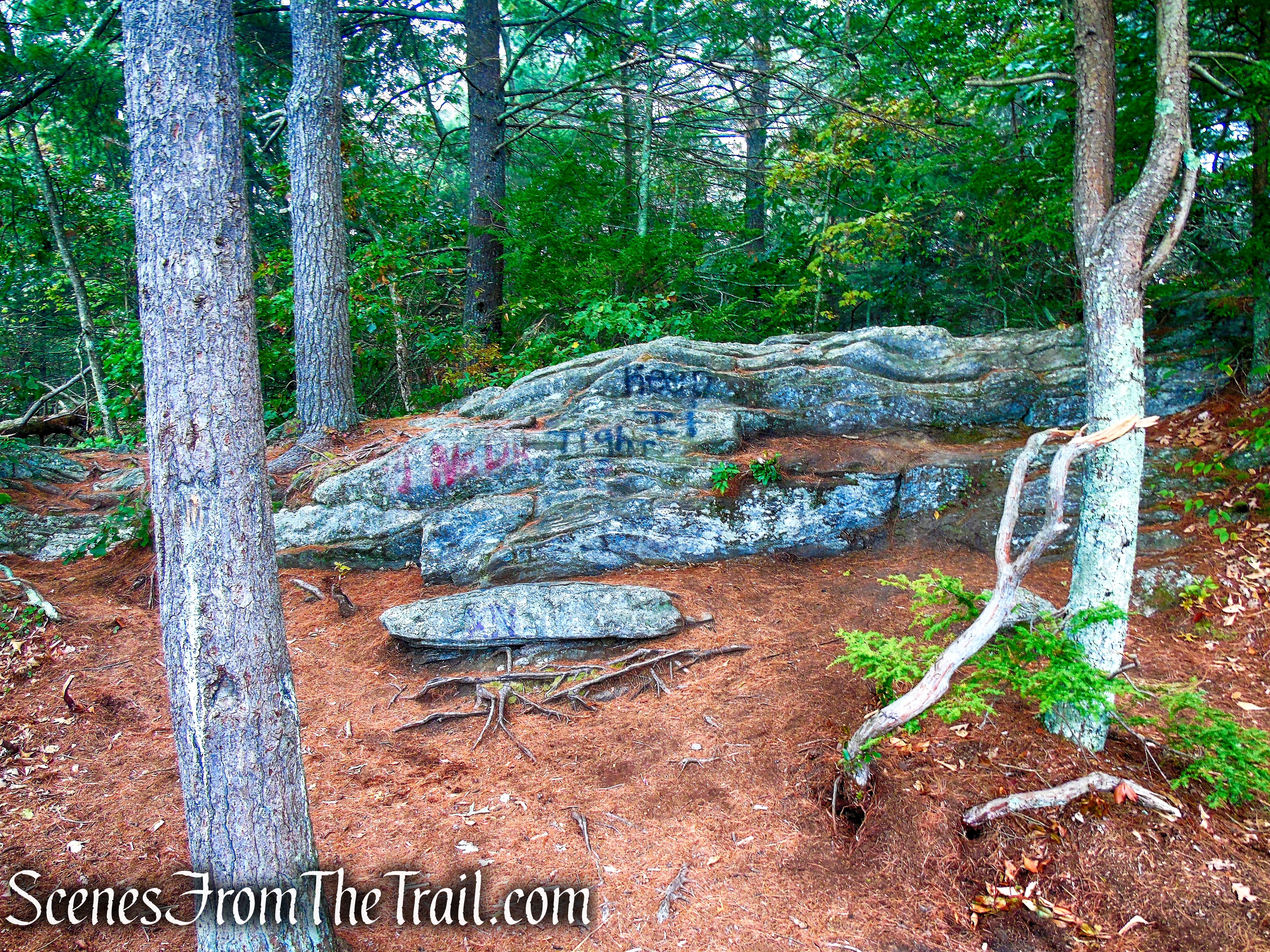


Halsey Pond Park

April 25, 2020 – Irvington, NY

Difficulty: Easy

Length: Approximately 1 mile

Max elevation: 311 ft. – total elevation gain: approximately 27 ft.

Route type: Circuit

Map: None available

Trailhead parking: Havemeyer Rd, Irvington, NY 10533

Please Note: Halsey Pond Park is open to Village of Irvington residents only.


Park Overview:

Halsey Pond Park is a 30-acre scenic and tranquil area that is located in Irvington, NY. Nestled between a golf course and private residences, it’s a peaceful oasis drawing families and dog walkers alike. The park is touted as Irvington’s best kept secret. Halsey Pond Park is open to village residents for passive recreation activities. New York State fishing license required for fishing (catch & release). Halsey Pond Park is open from dawn to dusk. The park is managed by the Irvington Recreation & Parks Department.

Halsey Pond Park

Halsey Pond Park

A wide 1/2 mile long crushed stone path circles the scenic pond, passing old stone walls, a dam, and the Beltzhoover Teahouse that overlooks the pond. A haven for birdwatchers, on any given day, you may see ducks, geese, herons, cormorants, warblers or even an Osprey.

Beltzhoover Teahouse - Halsey Pond Park

Beltzhoover Teahouse – Halsey Pond Park

History:

Rochroane castle was built between 1902 and 1905 for Melchior S. Beltzhoover, an oil and cotton magnate from Natchez, Missisippi. The 44 room stone castle, once part of a 200-acre estate overlooking the Hudson River, was designed by Arthur. J. Manning, a New York City architect who also lived in Irvington. The stone was quarried from the land upon which it was built. This “Rhine castle” featured a spectacular stained-glass window by Louis Comfort Tiffany that depicted the Hudson River view as seen from the castle.

Beltzhoover Mansion

Beltzhoover Mansion

Benjamin Halsey bought Rochroane castle in 1927, and renamed it “Grey Towers.” After Halsey’s death in 1956, his widow began donating portions of the estate to the Immaculate Conception Church, ending with the mansion itself in 1976. Gutted by fire a few months later, the mansion and 38 acres were sold to a developer who, in 1980, deeded Halsey Pond and its folly, sometimes called Halsey Teahouse, to the Village of Irvington in exchange for permission to remove Rochroane/Grey Towers and subdivide the rest of the property.

Grey Towers

Grey Towers

The castle’s Tiffany stained glass window, which portrays a Hudson River view from the window in which it was set, is on exhibit at the Corning Glass Museum in Corning, N.Y.

Tiffany window - Rochroane castle

Tiffany window – Rochroane castle

Beltzhoover Teahouse, the last remaining structure of the once-grand estate, is a little turn-of-the-century castle, with an open hexagonal tower featuring gothic arched windows and a roof terrace overlooking Halsey Pond.

Beltzhoover Teahouse - Halsey Pond Park

Beltzhoover Teahouse – Halsey Pond Park

Neglect and years of deterioration threatened the survival of this rare historic architectural resource. Beltzhoover Teahouse was preserved through the initiative and support of concerned citizens, the Village of Irvington Trustees and Irvington Landmarks Preservation, Inc.

Beltzhoover Teahouse on Halsey Pond

Beltzhoover Teahouse on Halsey Pond

The Walk:

There is designated roadside parking on Havemeyer Road, with room for about 8 cars.

Halsey Pond Park

Halsey Pond Park

A wide dirt path leads from the cul-de-sac, a short distance to the edge of Halsey Pond, with the Beltzhoover Teahouse directly across the pond.

Halsey Pond Park

Halsey Pond Park

Halsey Pond Park

Halsey Pond Park

Halsey Pond is a 6-acre man-made impoundment built before 1835 and is rimmed by stonework, including a controlled outlet at its western end and a channeled inflow to the east.

Halsey Pond

Halsey Pond

Beltzhoover Teahouse - Halsey Pond Park

Beltzhoover Teahouse – Halsey Pond Park

Turning left, the wide crushed stone path circles around the pond, passing over the newly renovated stone dam.

Halsey Pond Park

Halsey Pond Park

Halsey Pond Dam

Halsey Pond Dam

Halsey Pond Dam is a composite masonry and earth structure about 25 feet high, 20 feet wide and 160 feet long, located on a tributary to Barney Brook. It was built in the early 1900’s as part of the estate. The dam and spillway were renovated in 2018.

Halsey Pond Dam

Halsey Pond Dam

Halsey Pond Dam spillway

Halsey Pond Dam spillway

Soon after crossing the dam, the Beltzhoover Teahouse is on the right overlooking Halsey Pond. You may want to take some time to explore this awe-inspiring creation.

Beltzhoover Teahouse - Halsey Pond Park

Beltzhoover Teahouse – Halsey Pond Park

Beltzhoover Teahouse - Halsey Pond Park

Beltzhoover Teahouse – Halsey Pond Park

Beltzhoover Teahouse - Halsey Pond Park

Beltzhoover Teahouse – Halsey Pond Park

Beltzhoover Teahouse - Halsey Pond Park

Beltzhoover Teahouse – Halsey Pond Park

Beltzhoover Teahouse - Halsey Pond Park

Beltzhoover Teahouse – Halsey Pond Park

Beltzhoover Teahouse - Halsey Pond Park

Beltzhoover Teahouse – Halsey Pond Park

The terrace looks out over the pond and affords a scenic view of the park and gives visitors a chance to spot many different types of birds that inhabit the area.

Beltzhoover Teahouse - Halsey Pond Park

Beltzhoover Teahouse – Halsey Pond Park

Beltzhoover Teahouse - Halsey Pond Park

Beltzhoover Teahouse – Halsey Pond Park

Halsey Pond

Halsey Pond

Geese - Halsey Pond Park

Geese – Halsey Pond Park

Common Grackle - Halsey Pond Park

Common Grackle – Halsey Pond Park

Grey Warbler - Halsey Pond Park

Grey Warbler – Halsey Pond Park

Beltzhoover Teahouse - Halsey Pond Park

Beltzhoover Teahouse – Halsey Pond Park

Beltzhoover Teahouse - Halsey Pond Park

Beltzhoover Teahouse – Halsey Pond Park

Beltzhoover Teahouse - Halsey Pond Park

Beltzhoover Teahouse – Halsey Pond Park

Beltzhoover Teahouse - Halsey Pond Park

Beltzhoover Teahouse – Halsey Pond Park

Keep an eye towards the small man-made island for Green Herons. You may spot one or two sitting in a tree. If you’re lucky, one of them may make an appearance.

Halsey Pond

Halsey Pond

Green Herons - Halsey Pond Park

Green Herons – Halsey Pond Park

Green Heron - Halsey Pond Park

Green Heron – Halsey Pond Park

The path continues around the pond, passing old stone walls of the former estate with open views of Halsey Pond and different angles of the Beltzhoover Teahouse.

Halsey Pond Park

Halsey Pond Park

Halsey Pond

Halsey Pond

Halsey Pond Park

Halsey Pond Park

The road crosses an old stone bridge that spans the inlet of the pond.

Halsey Pond Park

Halsey Pond Park

Benches allow visitors to relax and enjoy the scenery on a lovely day.

Halsey Pond Park

Halsey Pond Park

The reflections on the still pond makes this a charming place for a walk.

Halsey Pond

Halsey Pond

Always in view while walking around the pond is the Beltzhoover Teahouse.

Halsey Pond Park

Halsey Pond Park

Halsey Pond Park

Halsey Pond Park

A stone fountain near the southern end of the pond.

stone fountain - Halsey Pond Park

stone fountain – Halsey Pond Park

stone fountain - Halsey Pond Park

stone fountain – Halsey Pond Park

Halsey Pond

Halsey Pond

After a walk around the pond, retrace your steps back to your vehicle on Havemeyer Road or walk around the pond again.

Halsey Pond Park

Halsey Pond Park

Review:

This is a gorgeous place for a pleasant walk around an extremely scenic pond. This park makes up for its lack of size with the history behind it and picturesque landscape. A lovely place to spend some time on a sunny day.

Pros:

Historical features, Beltzhoover Teahouse, Halsey Pond, scenic area, lots of bird activity.

Cons:

Park is for village residents only.


Take a walk!

Sources:
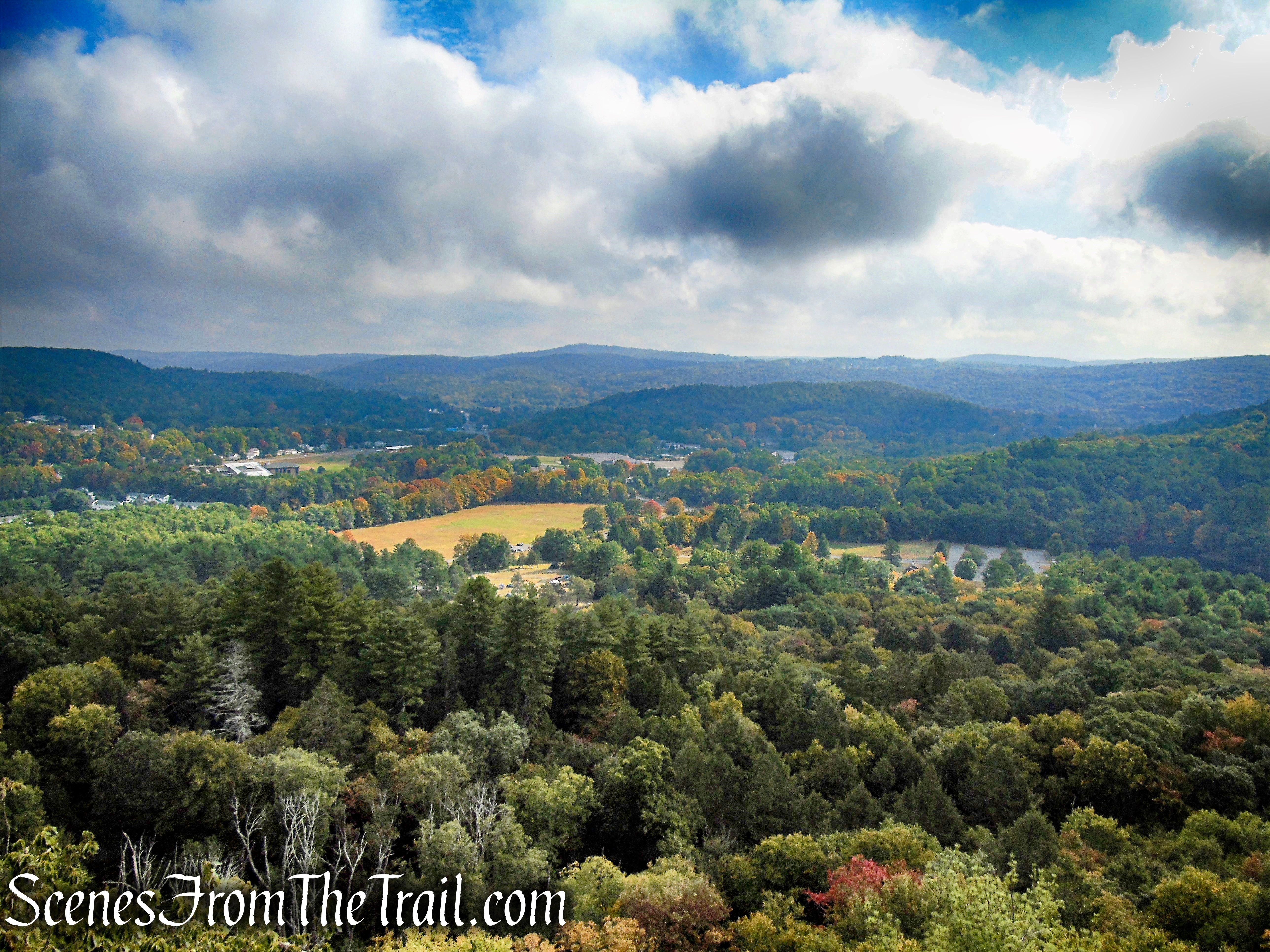


Pocantico Lake County Park

April 19, 2020 – Pleasantville, NY

Difficulty: Easy

Length: Approximately 2 miles

Max elevation: 245 ft. – total elevation gain: approximately 53 ft.

Route type: Out and back

Map: Westchester Trails Map

Trailhead parking: Old Sleepy Hollow Rd, Pleasantville, NY 10570


Park Overview:

Pocantico Lake County Park is a 164-acre parcel of land that features the 69-acre Pocantico Lake, which formerly provided a population of 26,000 with drinking water. The property, situated mostly in the town of Mount Pleasant, is adjacent to Rockefeller State Park Preserve. The park which does not appear on Westchester County’s list of parks, is undeveloped and dedicated for passive park use only, including hiking, fishing, horseback riding and nature study.

Pocantico Lake

Pocantico Lake

There are three access points to the park, at the junction of Sleepy Hollow Rd and Old Sleepy Hollow Rd, in Pleasantville; from Pocantico Lake Rd, also in Pleasantville; and from Old Sleepy Hollow Rd in Briarcliff Manor.

There are no marked trails at Pocantico Lake County Park, just an abandoned section of Pocantico Lake Road that follows the contour of the lake along its eastern shore. The road does not loop around the lake, beginning at the southern end by the dam and ending at its northern point in Briarcliff Manor.

Pocantico Lakes County Park

Pocantico Lake County Park


History:

The Pocantico River and Pocantico Lake traverse the park from north to south where they empty into the Hudson River at Kingsland Point Park in Sleepy Hollow (North Tarrytown until 1996). The river was once called by the English as “the Mill river,” while the Native Americans called it Pocanteco, a derivative of the Algonquin term Pockóhantès, meaning a “run between two hills.”

The original dam and reservoir were built around 1888 by the Pocantico Water-Works Company to supply water to North Tarrytown and neighboring municipalities. Later it was owned and operated by the Consolidated Water Company of Suburban New York (circa 1910) and at some point after 1920, it was transferred to the the New Rochelle Water Company which operated it until about 1977 when the use of the facility as a water supply was abandoned.

Pocantico Water-Works Company

Pocantico Water-Works Company

The Pocantico Lake site was operated as a water supply until 1977, when it was considered more economical to buy water from the New York City reservoir system. In the early 1980’s, the site was sold to private interests and was expected to be used for residential development.

In 1992 Westchester County bought the 164-acre parcel, including the 69-acre Pocantico Lake, from a Pennsylvania developer for $3.7 million. After being classified by NYSDEC as “high-hazard,” the demolition and reconstruction of the Pocantico Lake Dam was completed in 2013.


Hike Overview:

This hike is an out and back along the paved service road that begins at the gate on Old Sleepy Hollow Road.

Pocantico Lakes County Park

Pocantico Lakes County Park


The Hike:

Proceed past the gate and walk along the paved road which parallels the Pocantico River on the left. In a short distance the road comes to the ruins of an old stone pumphouse near the base of the dam.

Pocantico Lakes County Park

Pocantico Lakes County Park

Pocantico Lakes County Park

Pocantico Lakes County Park

Pocantico River

Pocantico River

stone pump house - Pocantico Lakes County Park

stone pump house – Pocantico Lakes County Park

stone pump house - Pocantico Lakes County Park

stone pump house – Pocantico Lakes County Park

stone pump house - Pocantico Lakes County Park

stone pump house – Pocantico Lakes County Park

stone pump house - Pocantico Lakes County Park

stone pump house – Pocantico Lakes County Park

stone pump house - Pocantico Lakes County Park

stone pump house – Pocantico Lakes County Park

stone pump house - Pocantico Lakes County Park

stone pump house – Pocantico Lakes County Park

Walk along the left side of the building and follow the footpath to the top of the dam, along the spillway.

Pocantico Lake Dam spillway

Pocantico Lake Dam spillway

The spillway Is constructed on bedrock and discharges through a bedrock channel down to the Pocantico River.

Pocantico Lake Dam spillway

Pocantico Lake Dam spillway

Pocantico Lake, a reservoir was formed by the construction of a concrete and earth dam across the river. The dam was raised in 1916 and completely rebuilt in 2013.

Pocantico Lake Dam

Pocantico Lake Dam

Walk across to the other side of the dam and on the left you will see a woods road. This is an abandoned section of Pocantico Lake Road, which you will be following. You may want to take a moment to check out the abandoned structure that sits opposite the road.

Pocantico Lake Dam

Pocantico Lake Dam

Pocantico Lake Dam

Pocantico Lake Dam

Pocantico Lake

Pocantico Lake

The large stone building at the base of the dam served as a filtration plant and pumphouse.

stone pump house - Pocantico Lakes County Park

stone pump house – Pocantico Lakes County Park

New Rochelle Water Company ruins

New Rochelle Water Company ruins

Concrete water settling/treatment pools (coagulation basins) are now abandoned. From an intake shaft located near this dam, the water flows by gravity to a coagulating basin in the form of a steel stand pipe located below the dam. The suction lines of the pumps are led from this stand pipe.

New Rochelle Water Company ruins

New Rochelle Water Company ruins

New Rochelle Water Company ruins

New Rochelle Water Company ruins

New Rochelle Water Company ruins

New Rochelle Water Company ruins

When you are ready to proceed walk along Pocantico Lakes Road taking time to stop along the viewpoints at the edge of the lake.

Pocantico Lake Road

Pocantico Lake Road

Pocantico Lake Road

Pocantico Lake Road

Pocantico Lake

Pocantico Lake

Pocantico Lake Road

Pocantico Lake Road

Pocantico Lake Road

Pocantico Lake Road

In about 0.3 mile the road reaches a footbridge at the Pocantico Lakes Road Trailhead. Continue past the bridge and boulders that block vehicle access on the other side. You are now walking on the Pocantico Lake Trail.

Pocantico Lake Road Trailhead

Pocantico Lake Road Trailhead

Pocantico Lake Trail

Pocantico Lake Trail

The Pocantico Lake Trail crosses an old bridge at the northern end of the lake, with a view south towards the dam.

Pocantico Lake Trail

Pocantico Lake Trail

Pocantico Lake

Pocantico Lake

This is the Briarcliff Manor Trailhead which allows parking on either side of the sign.

Pocantico Lake Trail parking area

Pocantico Lake Trail parking area

Pocantico Lake Trail parking area

Pocantico Lake Trail parking area

Now retrace your steps and follow the road back the way you came.

Pocantico Lake Trail

Pocantico Lake Trail

Pocantico Lake Road Trailhead

Pocantico Lake Road Trailhead

Be on the lookout for birds that are active in this area. We saw several Turkey Vultures and a Red-tailed Hawk.

Red-tailed Hawk - Pocantico Lakes County Park

Red-tailed Hawk – Pocantico Lakes County Park

Recross the dam, walk along the paved service road and back to the parking area, where the hike began.

Pocantico Lake Dam

Pocantico Lake Dam

Pocantico Lakes County Park

Pocantico Lakes County Park

Pocantico Lakes County Park

Pocantico Lakes County Park


Review:

A very pleasant walk along the lake, with some interesting ruins to view. The roadside parking area on Old Sleepy Hollow/Sleepy Hollow Roads is usually lined with cars, but most are entering Rockefeller State Park Preserve. We visited at about 11:00 am on a Sunday for about an hour or so (during social distancing) and there were relatively few people there. A nice place to visit if you’re trying to avoid the masses.

Pros:

Pocantico Lake, New Rochelle Water Company ruins, lightly trafficked, lots of bird activity.

Cons:

N/A


Take a hike!

Pocantico Lakes County Park

Pocantico Lakes County Park


Sources:
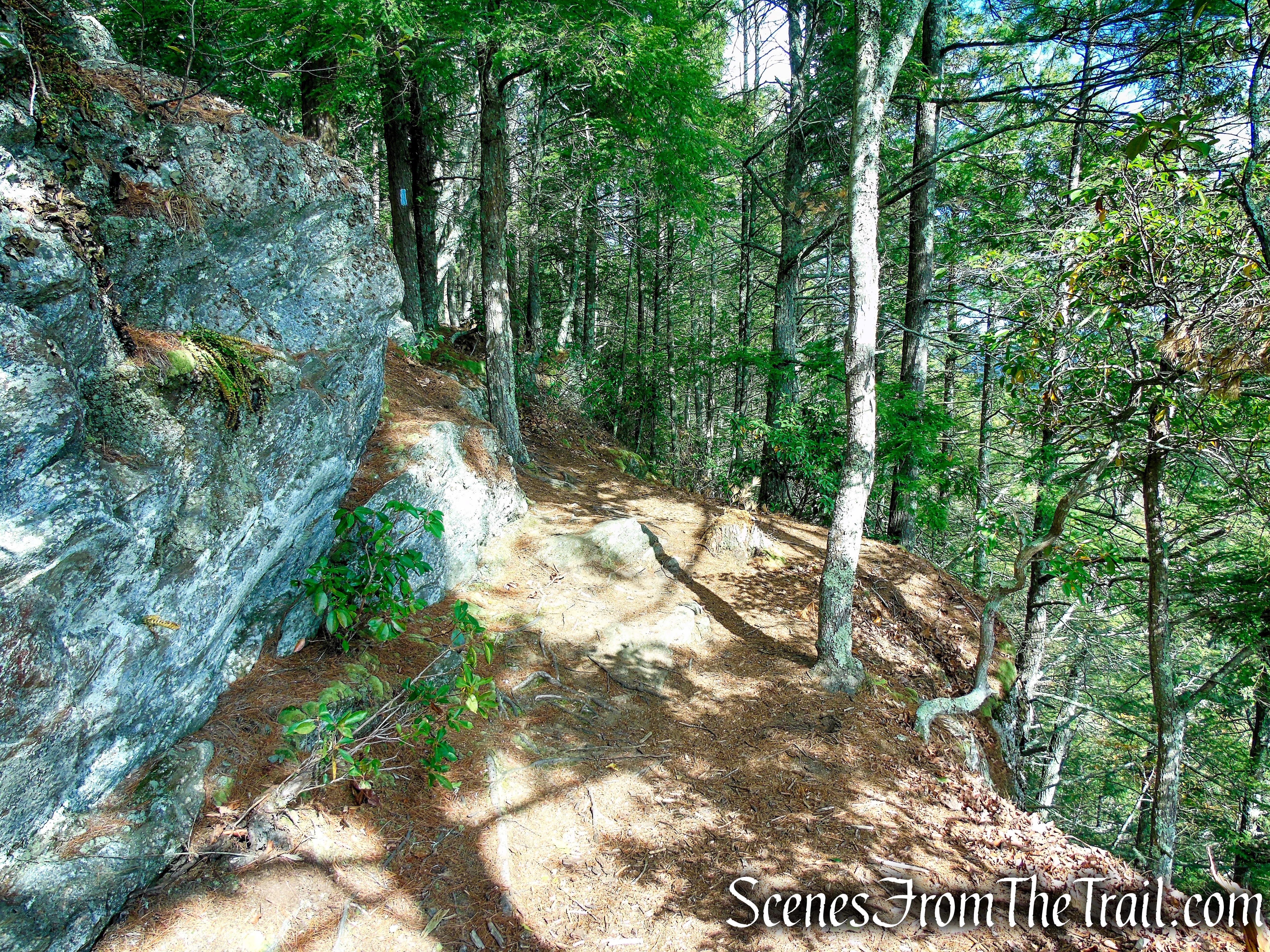

Donald J. Trump State Park – French Hill Section

April 19, 2020 – Yorktown Heights, NY

Difficulty: Easy

Length: Approximately 3 miles

Max elevation: 562 ft. – total elevation gain: approximately 128 ft.

Route type: Circuit

Map: None available

Trailhead parking: Old Baldwin Rd, Yorktown Heights, NY


Park Overview:

There are two sections of Donald J. Trump State Park, the French Hill Section and the Indian Hill Section. Both are adjacent to the Taconic State Parkway, but are almost 7 miles apart with separate entrances.

The 154-acre French Hill Section is located in southern Yorktown Heights, just south of FDR State Park in Westchester County. The park features a mix of continuous forest, open meadows, and several large wetlands. Headwaters for two streams, French Hill Brook and Dogwood Creek, are located within the French Hill section of the park. The entire park is located within the New York City Watershed Area and is easily accessible from the Taconic State Parkway.

Donald J. Trump State Park - French Hill Section

Donald J. Trump State Park – French Hill Section

It has a gravel parking lot and a kiosk with two benches, but no restrooms. The property has never been developed into a full-fledged park. It was briefly closed along with other parks in 2010 during a NY State cash flow crisis and has remained largely undeveloped since. While the park remains officially open, it isn’t listed on the official NY State Parks website. It is managed as an undeveloped, passive park to preserve open space and provide low-impact recreation such as hiking and birdwatching. For someone who loves exploring, the French Hill Section provides opportunities for walking on unmarked woods roads and footpaths.

Donald J. Trump State Park - French Hill Section

Donald J. Trump State Park – French Hill Section

History:

The French Army encamped twice on and around what is now French Hill in Yorktown. Once before the Battle of Yorktown, Virginia in 1781, then on their march back in 1782. They would make French Hill and Crompond their longest encampment on their return march in 1782. On October 21st, the French broke camp and marched out of Crompond never to return. Without their help the Continental Army could not have defeated the British and secured the independence of the United States of America.

William Delavan Baldwin (1856-1930) was the first President of the Otis Elevator Company in Yonkers. He was also the first President of the Westchester County Park Commission from 1922-1925. Baldwin owned 550-acres here and called his estate “French Hill Farm.” In 1928 he donated more than 25 acres of his estate for the construction of the Bronx River Parkway Extension, now the Taconic State Parkway. A brass tablet is affixed to a large boulder that overlooks the Taconic State Parkway, memorializes Mr. Baldwin’s  gift of his land that the parkway cuts through.

William Delavan Baldwin Plaque

William Delavan Baldwin Plaque

In 1998 Donald Trump bought the first parcel, 282 acres known as Indian Hill that straddle Westchester and Putnam counties, from an estate sale for $1.75 million. He also bought 154 acres in Westchester County known as French Hill, also part of an estate sale, for $750,000. In 2000, he bought 58 acres of a nearby “surplus” stretch of the Taconic State Parkway from the New York State Department of Transportation for $250,000.

By 2002, local authorities had rejected his plans for two 18-hole championship golf courses on Indian Hill and French Hill, on the grounds that the courses would drain the area’s water supply as well as affect the water supply of New York City downstream.

In 2006 Donald Trump donated the two parcels in Westchester and Putnam counties that became New York’s 174th state park. As part of the deal, New York State agreed that Trump’s name “will be prominently displayed at least at each entrance to each property.”

In 2010, a budget crisis leads to closings at 58 parks and historic sites across the state, Donald J. Trump State Park, still mostly wetlands and forest, is included on the chopping block. The park eventually reopened and remains open to present day.

In April 2020, at the time of this writing, the park remains open with some maintenance evident, such as grass mowing, downed trees cut and cleared.

Donald J. Trump State Park - French Hill Section

Donald J. Trump State Park – French Hill Section

Trails Overview:

There are no marked trails in the park, but there is a footpath that travels from north to south overlooking the Taconic State Parkway. It continues south until it reaches private property near Underhill Avenue. Along the way it passes the William Delavan Baldwin plaque that overlooks the parkway. There is one main woods road that traverses the park north-south, plus another woods road that leads east. They can be combined to form about a 3-4 mile loop. This hike also includes a little off trail exploration as well.

Donald J. Trump State Park - French Hill Section

Donald J. Trump State Park – French Hill Section

The Hike:

From the parking lot, proceed south past the kiosk and into the open field. Just ahead are some interesting stone ruins that you may want to check out.

Donald J. Trump State Park - French Hill Section

Donald J. Trump State Park – French Hill Section

Donald J. Trump State Park - French Hill Section

Donald J. Trump State Park – French Hill Section

fountain ruins - French Hill Section

fountain ruins – French Hill Section

This appears to be what’s left of a fountain.

fountain ruins - French Hill Section

fountain ruins – French Hill Section

This may have been changing rooms for the tennis court which is just beyond. The grassy area surrounded by the stone wall may have been used for volleyball.

changing rooms ruins - French Hill Section

changing rooms ruins – French Hill Section

changing rooms ruins - French Hill Section

changing rooms ruins – French Hill Section

changing rooms ruins - French Hill Section

changing rooms ruins – French Hill Section

stone ruins - French Hill Section

stone ruins – French Hill Section

Continue through the changing room ruins and past the tennis court. Turn left and walk through the open field between the tennis court and parking lot. Walk west towards the parkway and follow the split rail fence to where there are two stone columns with stone steps, near the northwest area of the park.

tennis court - French Hill Section

tennis court – French Hill Section

Donald J. Trump State Park - French Hill Section

Donald J. Trump State Park – French Hill Section

This is the start of the unmarked footpath that leads south through the woods with the Taconic State Parkway visible below to the right.

unmarked trail - French Hill Section

unmarked trail – French Hill Section

Looking back at the steps.

Looking back towards the steps

Looking back towards the steps

Follow the unmarked, but discernible footpath south. In a short distance, the trail comes to a huge boulder on the right. Walk around to the other side of the boulder and view the William Delavan Baldwin bronze tablet that is embedded on the side that faces the parkway.

unmarked trail - French Hill Section

unmarked trail – French Hill Section

unmarked trail - French Hill Section

unmarked trail – French Hill Section

William Delavan Baldwin plaque

William Delavan Baldwin plaque

William Delavan Baldwin Plaque

William Delavan Baldwin Plaque

William Delavan Baldwin plaque that overlooks the Taconic State Parkway.

William Delavan Baldwin Plaque

William Delavan Baldwin Plaque

Continue south along the trail, soon passing some interesting rock formations.

unmarked trail - French Hill Section

unmarked trail – French Hill Section

unmarked trail - French Hill Section

unmarked trail – French Hill Section

unmarked trail - French Hill Section

unmarked trail – French Hill Section

The trail then goes through a wet area and ascends slightly. Soon the trail comes to a point where the Taconic State Parkway and Underhill Avenue are visible below. If you continue on the trail, it descends towards Underhill Avenue.

unmarked trail - French Hill Section

unmarked trail – French Hill Section

unmarked trail - French Hill Section

unmarked trail – French Hill Section

Turn left and bushwack towards a stone wall with a break in it. There is a woods road on the other side of the wall that heads north.

Donald J. Trump State Park - French Hill Section

Donald J. Trump State Park – French Hill Section

north-south woods road - French Hill Section

north-south woods road – French Hill Section

This woods road is a straight shot back to area of the ruins. We left the trail briefly to explore the woods a little, but found nothing of interest.

north-south woods road - French Hill Section

north-south woods road – French Hill Section

There is another woods road on the right that heads east through the wetland area.

east-west woods road - French Hill Section

east-west woods road – French Hill Section

east-west woods road - French Hill Section

east-west woods road – French Hill Section

stone ruins - French Hill Section

stone ruins – French Hill Section

wetlands - French Hill Section

wetlands – French Hill Section

At a stone wall, the road turns right and climbs to end at Westview Drive, a public street.

woods road continues south to Westview Drive

woods road continues south to Westview Drive

To the left, a wide path goes through several stone walls as it climbs the eastern side of the French Hill Section. I didn’t go too far in thinking that I was entering private property, but upon doing research for this post, have determined that this was still state property.

trail left continues north to French Hill

trail left continues north to French Hill

We retraced our steps on the woods road through the wetland area, turned right on the main woods road and came out by where the ruins are located.

Donald J. Trump State Park - French Hill Section

Donald J. Trump State Park – French Hill Section

Review:

A nice area to spend some alone time in the woods. Not much foot traffic in this park and it is very quiet, road noise from the TSP aside. Not much in way of trails, but a nice walk in the woods with some interesting stone ruins. A nice place to visit if you’re in the area and want to take a quick hike.

Pros:

Quiet park that is off the beaten path, historical features, interesting stone ruins.

Cons:

Road noise from the Taconic State Parkway.


Take a hike!

Donald J. Trump State Park - French Hill Section

Donald J. Trump State Park – French Hill Section


Rockefeller State Park Preserve via Gory Brook Road

April 17, 2020 – Sleepy Hollow, NY

Difficulty: Easy – Moderate (distance)

Length: approximately 6.5 miles

Max elevation: 314 ft. – total elevation gain: approximately 590 ft.

Route type: Circuit

Map: 2020 Westchester Trails MapRockefeller State Park Preserve Free Map

Trailhead parking: Gory Brook Rd, Sleepy Hollow, NY 10591


Park Overview:

Rockefeller State Park Preserve offers quiet countryside walks of all lengths through forested hills and valleys surrounding sunlit pastoral fields. Managed by New York State Office of Parks, Recreation, and Historic Preservation, the Preserve is open to the public year-round, sunrise to sunset. The trails of the Preserve are crushed stone carriage roads laid out by John D. Rockefeller Sr. and Jr. in the first half of the 20th century. Designed to compliment the landscape, the 55 miles of scenic carriage roads are wide and easy to walk. Popular for walking, riding, jogging, and carriage driving, combinations of trails lead through varied landscapes and past natural and historical features, such as Swan Lake, the Pocantico River with its wood and stone bridges, gurgling streams, colonial stone walls and rock outcroppings. The carriage roads are the constant feature in what is otherwise a diverse and complex natural landscape of seemingly innumerable characteristics.

Rockefeller State Park Preserve

Rockefeller State Park Preserve

History:

In 1886, William Rockefeller bought the 200-acre estate and castle, Rockwood, from the heirs of William Henry Aspinwall. Seven years later, John D. Rockefeller bought land in 1893 at Pocantico Hills.

Rockwood Hall

Rockwood Hall

That same year, John D. Rockefeller Sr. and Jr. started purchasing land immediately around the family home, Kykuit, forming an enclosed estate of approximately 300 acres. Gradually, more than 3,000 acres of the surrounding rolling farmlands and woods were also acquired. During the summer of 1902, the first Rockefeller home at Kykuit, the Parsons-Wentworth House, burned down.

Parsons-Wentworth House

Parsons-Wentworth House

Kykuit, derived from the Dutch word Kijkuit meaning “lookout,” is situated on the highest point in Pocantico Hills, overlooking the Hudson River. The family estate was rebuilt and completed in 1913 in its present four-story Classical Revival Georgian form. The imposing structure, of local stone topped with the Rockefeller emblem, is located centrally in a 250-acres inner compound (referred to as “the Park”) within the larger Rockefeller family estate. This gated compound is guarded at all times. Save family residences, the rest of the estate (known as the open space) is open to the public for recreational purposes, as it always has been.

Kykuit

Kykuit

Beginning in 1910, John D. Rockefeller Sr. and Jr. worked together to lay out a system of broken stone roads surrounding Kykuit. As the system of carriage roads extended into outlying family properties, Junior assumed the lead role in overseeing their construction. Junior made a commitment to a social compact by ensuring that the roads were open to the public for walking, riding, and carriage driving as soon as they were built.

John D. Rockefeller Sr.

John D. Rockefeller Sr.

Rockefeller State Park Preserve has been made possible by the farsighted and generous gift of the Rockefeller family. Since 1983, over 1,600 acres have been deeded over to the State of New York to protect the scenic and natural beauty of the area for the public to enjoy.


Trails Overview:

Rockefeller State Park Preserve’s network of carriage roads are not blazed. There are signposts with trail names at most major junctions. This can be a little confusing at times and even though I have been there numerous times, I have taken a wrong turn on occasion.

My advice is to print out the trail map and download the Avenza Maps app (FREE). You can then download the free Rockefeller State Park Preserve map through the app or purchase the NY-NJ Trail Conference Westchester Trails Map for Avenza (more detailed), which can be purchased as a bundle ($11.95) or just a single map ($3.99). This will tell you exactly where you are on the trail and you can record your track and mileage.

Hike Overview:

With all the social distancing and parks being overcrowded lately, it’s put a damper on my hiking plans. Trying to stay local, recently I’ve been hitting some places that I would normally reserve for cold weather and/or when there is snow on the ground.

Growing up in the area, I have been hiking the Rockefeller woods since I was a kid. We didn’t call it hiking back then, we would just say “let’s go for a walk in the woods” or “let’s go up to Rockefeller’s.” We spent many a day exploring these woods without hiking boots, maps or carrying water. We sipped from the streams and only headed home when we were hungry. Even as a young adult, we had plenty of keg parties and bonfires in those woods, Gory Brook Road being our favorite point of entry. We used to drive down that road, evading potholes along the way and drinking warm and foamy beer along the banks of Gory Brook and the Pocantico River.

This hike revisits some of the areas that I explored in my youth and at the same time avoids some of the more heavily trafficked areas of the preserve. We started out on Gory Brook Road with no real plan and just improvised.

Rockefeller State Park Preserve via Gory Brook Road

Rockefeller State Park Preserve via Gory Brook Road

The Hike:

Wanting to take a walk down memory lane, we started at the end of the paved section of Gory Brook Road. We started at about 8:45 am on a Friday morning and there were no cars when we arrived. We walked past the chain strung across the road, leaving the pavement and began walking on the gravel road which closely parallels the Old Croton Aqueduct, which would be our return route.

Gory Brook Road

Gory Brook Road

Gory Brook Road

Gory Brook Road

Gory Brook Road

Gory Brook Road

The chained off section of Gory Brook Road is an abandoned Village-owned roadbed that runs north from the main built area of Sleepy Hollow through the Rockefeller State Park Preserve to Sleepy Hollow Road in the Town of Mount Pleasant. This informal trail links the Village of Sleepy Hollow (North Tarrytown until 1996) with the network of Trails in the Rockefeller State Park Preserve.

Gory Brook Road

Gory Brook Road

Gory Brook Road

Gory Brook Road

This stone entranceway used to lead to Long View, the thirty-eight-acre estate of Henry L. Douglas, that stood on Cedar Hill east of the Old Croton Aqueduct. Douglas first came to this area in 1868. Douglas Park was named for stockbroker John Douglas (d. 1883). John Douglas was the brother of Henry L. Douglas, who owned the adjoining land in the 1880’s. The Douglas mansion stood on the hill above the park. Henry L. Douglas occupied the mansion from the 1880’s until about 1900.

Gory Brook Road

Gory Brook Road

Black Squirrel - Gory Brook Road

Black Squirrel – Gory Brook Road

When the gravel road turns left (Big Tree Trail) we continued ahead to remain on Gory Brook Road.

continue straight on Gory Brook Road

continue straight on Gory Brook Road

Gory Brook Road

Gory Brook Road

After about 0.8 mile, Gory Brook Road crosses the Pocantico River Trail. Just ahead is the Gory Brook Road Bridge that carries the old road over the Gory Brook.

Gory Brook Road

Gory Brook Road

Gory Brook Road

Gory Brook Road

Gory Brook – Three theories are offered for this brook’s name: (1) local bloody encounters during the Revolution; (2) hogs were once butchered nearby; (3) the name has been shortened from the name Gregory. Take your pick. Gory Brook runs south into the Pocantico River near Gory Brook Road, four-tenths of a mile from Route 9.

Gory Brook

Gory Brook

Gory Brook Road Bridge

Gory Brook Road Bridge

White-tailed deer - Rockefeller State Park Preserve

White-tailed deer – Rockefeller State Park Preserve

White-tailed deer - Rockefeller State Park Preserve

White-tailed deer – Rockefeller State Park Preserve

We spent a little time exploring this area that we used to frequent as kids.

Gory Brook

Gory Brook

Gory Brook

Gory Brook

Old Gory Brook Road becomes hard to follow after the bridge so we bushwacked across the field to the Gory Brook Road Trail, a carriage road. It runs just above the old road which becomes discernible at times just below this carriage road. We followed this carriage road past the junction with the Witch’s Spring Trail and just before reaching Rt. 117 that runs overhead, we turned right towards the Eagle Hill Trail.

Gory Brook Road Trail

Gory Brook Road Trail

Eagle Hill:

The carriage road ascends to a three way junction where the Eagle Hill Trail splits. Stay right at the junction and follow it uphill. In a short distance, the road comes to a fork. Either way is fine because the Eagle Hill Trail loops around and comes back to that spot.

Eagle Hill Trail - Rockefeller State Park Preserve

Eagle Hill Trail – Rockefeller State Park Preserve

Eagle Hill Trail - Rockefeller State Park Preserve

Eagle Hill Trail – Rockefeller State Park Preserve

At the top of the rise you will have arrived at the summit of Eagle Hill. Us locals always called it Eagle Mountain and I never heard it referred to as Eagle Hill until they installed the trail signs. To the southeast on the highest point, is Kykuit, the Rockefeller family estate.

Eagle Hill Trail - Rockefeller State Park Preserve

Eagle Hill Trail – Rockefeller State Park Preserve

You may need binoculars or a decent zoom lens to get a better view of it.

Eagle Hill Trail - Rockefeller State Park Preserve

Eagle Hill Trail – Rockefeller State Park Preserve

As you continue along the road, there are openings in the trees where you can see the Hudson River and the Tappan Zee Bridge.

Eagle Hill Trail - Rockefeller State Park Preserve

Eagle Hill Trail – Rockefeller State Park Preserve

The Eagle Hill Trail curves around the summit, descends to the fork, turns left and returns to the 3-way junction. Turn right at the junction to continue following the Eagle Hill Trail. The trail heads downhill and soon ends at a T-intersection with the Pocantico River Trail. Turn left and almost immediately turn right on the Old Sleepy Hollow Trail.

Eagle Hill Trail - Rockefeller State Park Preserve

Eagle Hill Trail – Rockefeller State Park Preserve

Eagle Hill Trail - Rockefeller State Park Preserve

Eagle Hill Trail – Rockefeller State Park Preserve

Glacial Erratic:

Follow the Old Sleepy Hollow Trail as it crosses the Pocantico River on a footbridge and ascends to crosses Sleepy Hollow Road. This is a busy road at times so take care crossing.

Old Sleepy Hollow Trail - Rockefeller State Park Preserve

Old Sleepy Hollow Trail – Rockefeller State Park Preserve

Pocantico River upstream - Rockefeller State Park Preserve

Pocantico River upstream – Rockefeller State Park Preserve

Pocantico River downstream - Rockefeller State Park Preserve

Pocantico River downstream – Rockefeller State Park Preserve

Old Sleepy Hollow Trail - Rockefeller State Park Preserve

Old Sleepy Hollow Trail – Rockefeller State Park Preserve

Continued to follow the Old Sleepy Hollow Trail as it ascends more steeply. In about 250 yards, look for the Nature’s Way Trail that begins on the left. Follow this trail for about 160 yards then turn left on the Glacial Erratic Trail.

Old Sleepy Hollow Trail - Rockefeller State Park Preserve

Old Sleepy Hollow Trail – Rockefeller State Park Preserve

At almost 20 feet high and 65 feet in circumference, it is probably the largest glacial erratic to be found anywhere in Westchester County.

Glacial Erratic - Rockefeller State Park Preserve

Glacial Erratic – Rockefeller State Park Preserve

There is a good article about its discovery in 1987 in the New York Times. It is 600 million years old and was carried and dropped here by the Late Wisconsin continental glacier from some mountaintop in the Hudson Highlands.

Glacial Erratic - Rockefeller State Park Preserve

Glacial Erratic – Rockefeller State Park Preserve

A side view of this massive boulder resembles a hawk, in my opinion.

Glacial Erratic - Rockefeller State Park Preserve

Glacial Erratic – Rockefeller State Park Preserve

Here’s how I see it. The orange line traces around the lower body and tail. The purple lines shows its wings partially spread as it’s about to take off.

Glacial Erratic - Rockefeller State Park Preserve

Glacial Erratic – Rockefeller State Park Preserve

Pocantico River Trail:

When you are done marveling at the massive boulder, retrace your steps back to the footbridge (don’t forget to look both ways before crossing the road!) and turn left after crossing the bridge.

Old Sleepy Hollow Trail - Rockefeller State Park Preserve

Old Sleepy Hollow Trail – Rockefeller State Park Preserve

You are now following the Pocantico River Trail which winds along the edge of the Pocantico River. Take time to enjoy the stroll along this carriage road, stopping to view the cascades as they tumble over the rocks.

Pocantico River Trail - Rockefeller State Park Preserve

Pocantico River Trail – Rockefeller State Park Preserve

Pocantico River Trail - Rockefeller State Park Preserve

Pocantico River Trail – Rockefeller State Park Preserve

Pocantico River Trail - Rockefeller State Park Preserve

Pocantico River Trail – Rockefeller State Park Preserve

Pocantico River Trail - Rockefeller State Park Preserve

Pocantico River Trail – Rockefeller State Park Preserve

Just ahead is a single arch stone bridge. There are several ways to go here. We stayed left and crossed a small footbridge that connects to the Canter Alley Trail.

Pocantico River Trail - Rockefeller State Park Preserve

Pocantico River Trail – Rockefeller State Park Preserve

Canter Alley Trail:

The view of the stone bridge and the Pocantico River is nice from the simple footbridge.

Canter Alley Trail - Rockefeller State Park Preserve

Canter Alley Trail – Rockefeller State Park Preserve

The Canter Alley Trail parallels Sleepy Hollow Road (the road that you crossed earlier) and a small stream, and crosses several footbridges. Soon it passes open fields that are lined with trees.

Canter Alley Trail - Rockefeller State Park Preserve

Canter Alley Trail – Rockefeller State Park Preserve

Canter Alley Trail - Rockefeller State Park Preserve

Canter Alley Trail – Rockefeller State Park Preserve

View west from the Canter Alley Trail.

Canter Alley Trail - Rockefeller State Park Preserve

Canter Alley Trail – Rockefeller State Park Preserve

The trail heads south and you may encounter walkers or runners as the trail runs fairly close to Sleepy Hollow Road and several access points.

Canter Alley Trail - Rockefeller State Park Preserve

Canter Alley Trail – Rockefeller State Park Preserve

View west from the Canter Alley Trail.

Canter Alley Trail - Rockefeller State Park Preserve

Canter Alley Trail – Rockefeller State Park Preserve

Turning around, Eagle Hill is visible to the north.

Canter Alley Trail - Rockefeller State Park Preserve

Canter Alley Trail – Rockefeller State Park Preserve

The Canter Alley Trail ends at a T-intersection with the Douglas Hill Loop Trail. Turn left and continue in a southerly direction. A short distance later the trail comes to a fork, bear right to stay on the Douglas Hill Loop Trail. The trail that goes under the bridge, leads to Stone Barns.

Douglas Hill Loop Trail - Rockefeller State Park Preserve

Douglas Hill Loop Trail – Rockefeller State Park Preserve

Cedar Hill:

This section is not technically part of Rockefeller State Park Preserve, but I eyed a lovely lunch spot from afar and decided to make a slight detour. This carriage road is just above the Douglas Hill Loop Trail and offers some fine views of the area we just traveled through.

Cedar Hill - Rockefeller State Park Preserve

Cedar Hill – Rockefeller State Park Preserve

Cedar Hill - Rockefeller State Park Preserve

Cedar Hill – Rockefeller State Park Preserve

The carriage road climbs Cedar Hill and we veered off it to a nice rock formation near the summit that overlooks the fields below.

Cedar Hill - Rockefeller State Park Preserve

Cedar Hill – Rockefeller State Park Preserve

We sat here and enjoyed a nice roast beef wedge from the Tarrytown Deli, they make their own roast beef and it’s delicious.

Cedar Hill - Rockefeller State Park Preserve

Cedar Hill – Rockefeller State Park Preserve

When we were done with lunch, we walked to the west side of Cedar Hill and were welcomed with a decent view of the Hudson River.

Cedar Hill - Rockefeller State Park Preserve

Cedar Hill – Rockefeller State Park Preserve

Since we weren’t sure if we were allowed to be there (no signs), we cut across the field and rejoined the Douglas Hill Loop Trail, just north of Cedar Hill.

Cedar Hill - Rockefeller State Park Preserve

Cedar Hill – Rockefeller State Park Preserve

Douglas Hill Loop Trail - Rockefeller State Park Preserve

Douglas Hill Loop Trail – Rockefeller State Park Preserve

On the way down there is a north-facing view across a field, with Eagle Hill visible in the distance.

Douglas Hill Loop Trail - Rockefeller State Park Preserve

Douglas Hill Loop Trail – Rockefeller State Park Preserve

Old Croton Aqueduct:

The Douglas Hill Loop Trail ends at Gory Brook Road. We crossed the road and walked a few feet to The Aqueduct and turned left. I didn’t feel like returning on the same road, plus I was searching for an engraved stone along The Aqueduct.

Old Croton Aqueduct

Old Croton Aqueduct

This stone engraved with initials and the year 1879, I have seen in the past and always wondered about it. Someone inquired about it recently so I did some digging. I am not sure if my findings are correct, but here goes. The thirty-eight-acre estate of Henry L. Douglas, stood on Cedar Hill just east of this spot. We passed the stone entrance-way at the start of the hike and it is close by. This stone retaining wall holds up Gory Brook Road. That tells me that this section of Gory Brook Road was either built or improved in 1879 and the initials probably belong to the worker(s). Henry L. Douglas occupied the mansion on Cedar Hill from the 1880’s until about 1900. Makes sense to me, but I could be wrong.

Old Croton Aqueduct

Old Croton Aqueduct

Old Croton Aqueduct

Old Croton Aqueduct

Old Croton Aqueduct

Old Croton Aqueduct

Old Croton Aqueduct

Old Croton Aqueduct

Review:

The allure of Rockefeller State Park Preserve comes from the carriage roads that take you through the diverse landscapes. Whether it be the meadows, streams, stone walls or rock formations, this park is scenic throughout. Walking along these historical carriage roads give you a sense of being out in the country. Most visitors have no idea that they are in a designed environment, which attests to the genius of John D. Rockefeller, Jr’s design and insight as a landscape architect and naturalist. Perfect for a tranquil walk in all seasons.

Pros:

Historical features, glacial erratic, Gory Brook, Pocantico River, scenic landscape.

Cons:

Highly trafficked near parking areas.


Take a hike!

Rockefeller State Park Preserve via Gory Brook Road

Rockefeller State Park Preserve via Gory Brook Road

Sources:
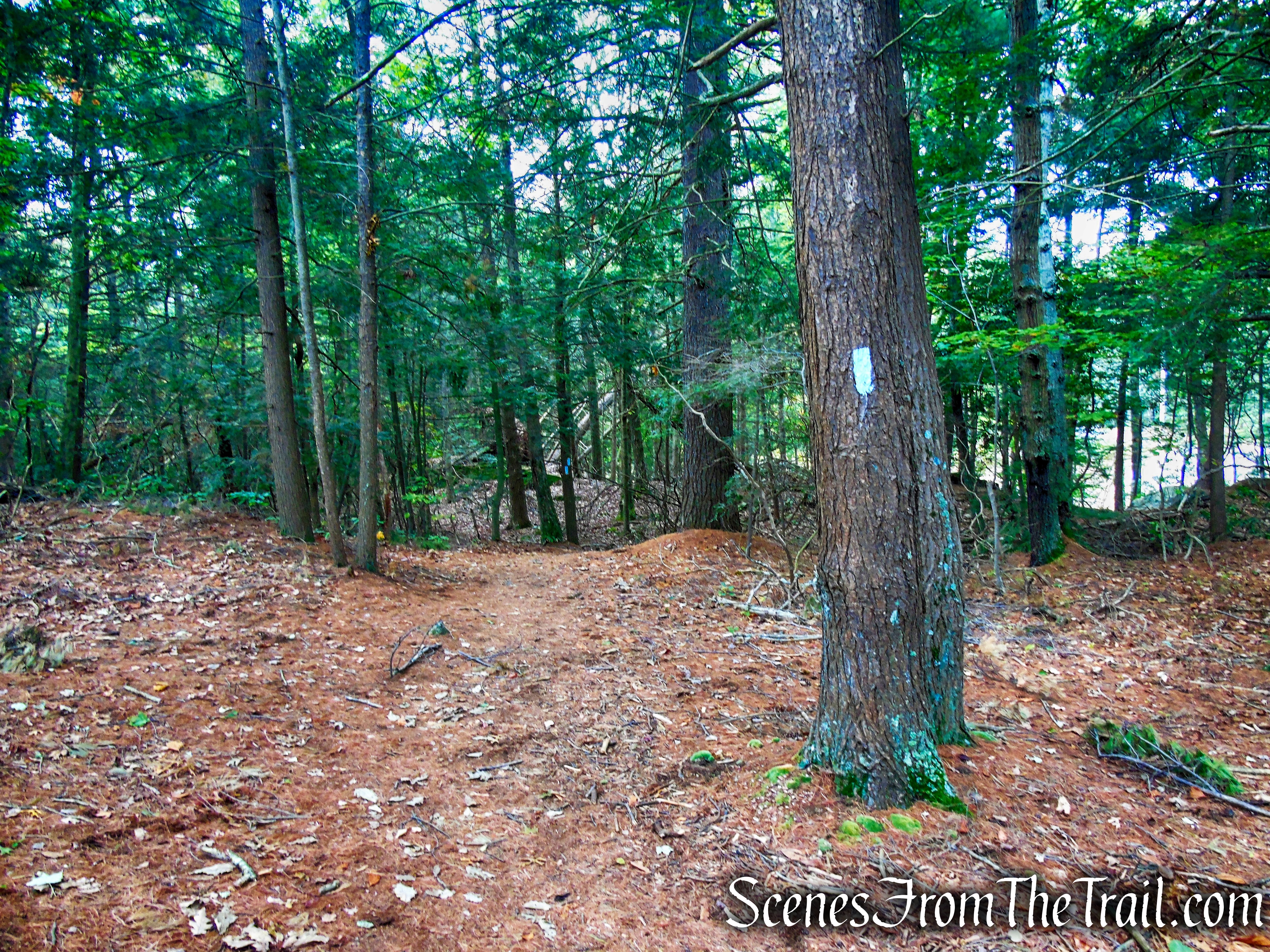


Tower Loop via the Quinnipiac Trail – Sleeping Giant State Park

March 16, 2020 – Hamden, Connecticut

Difficulty: Strenuous

Length: Approximately 4 miles

Max elevation: 713 ft.– total elevation gain approximately 904 ft.

Route type: Circuit

Maps: Sleeping Giant State Park Maps & GuidesSleeping Giant State Park DEEP Map
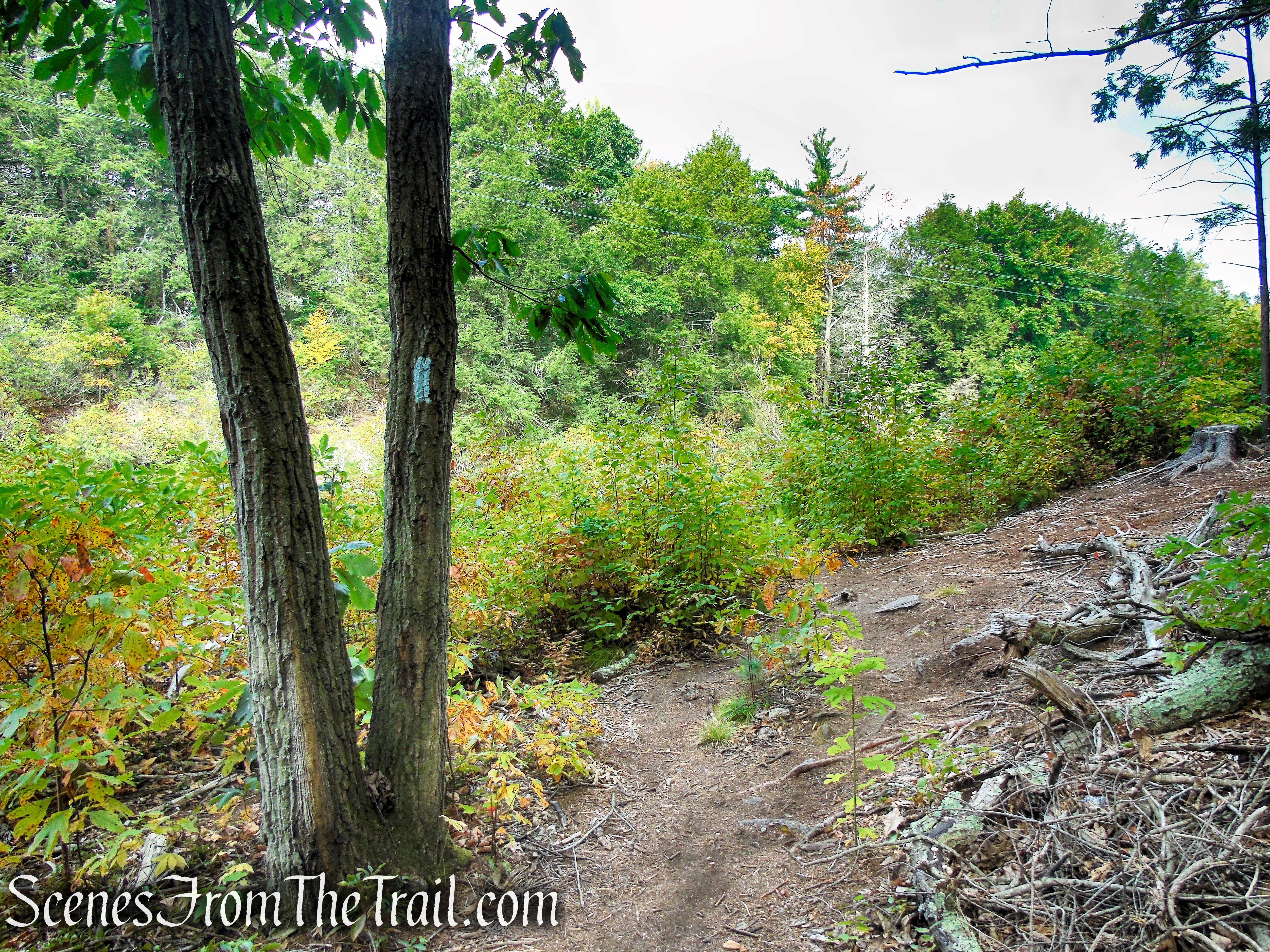
Trailhead parking: Mt Carmel Ave – Hamden, CT 06518
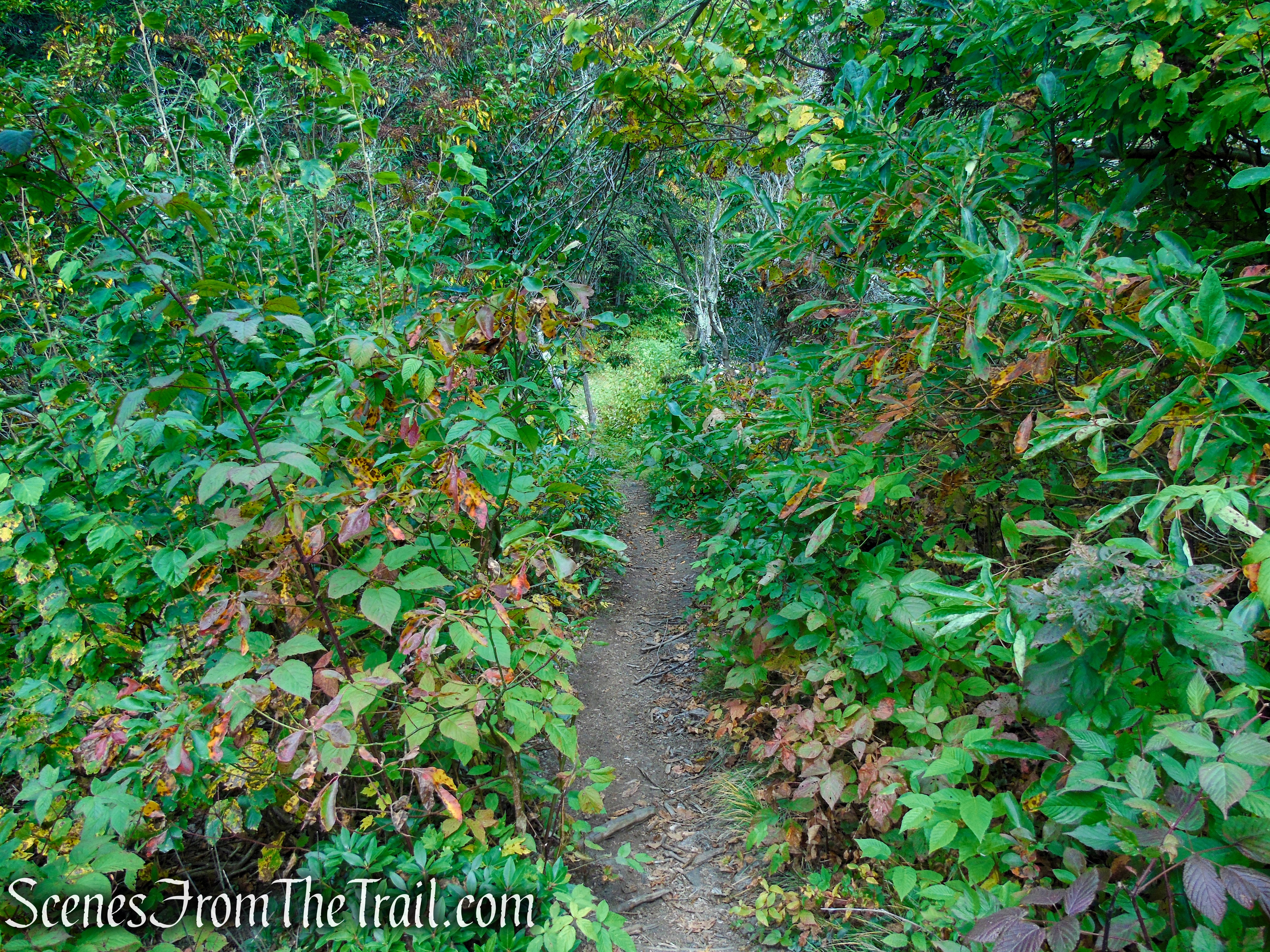
 

Park Overview:

Sleeping Giant (also known as Mount Carmel) is a rugged traprock mountain with a high point of 739 feet, located in northern Hamden, Connecticut. A prominent landscape feature visible for miles, the Sleeping Giant receives its name from its resemblance to a slumbering human figure as seen from either the north or south. The Giant is known for its expansive clifftop vistas, rugged topography, and microclimate ecosystems. Most of the Giant is located within Sleeping Giant State Park with approximately 1,650-acres. The mountain is a popular recreation site with over 30 miles of hiking trails that traverse it, including 5 miles of the 23-mile Quinnipiac Trail.

Sleeping Giant State Park

Sleeping Giant State Park

The Sleeping Giant, 2.75 miles long by 1.75 miles wide, is located in Hamden with its eastern edge falling into Wallingford. The Giant’s profile features distinct “head,” “chin,” “chest,” “hip,” “knee,” and “feet” sections topographically represented by traprock outcrops and ridge crests. The highest point is the Left Hip at 739 ft. above sea level, where there is a stone observation tower that offers 360° views of the surrounding Mill and Quinnipiac River valleys. It is part of the narrow, linear Metacomet Ridge that extends from Long Island Sound north through the Connecticut River Valley of Massachusetts to the Vermont border.

observation tower - Sleeping Giant State Park

observation tower – Sleeping Giant State Park

History:

Conservation of the Giant began in 1924 with the creation of the Sleeping Giant Park Association (SGPA) by a group of local residents concerned with ongoing traprock quarrying on the Giant’s head. The property was purchased by the SGPA in 1933, during the Great Depression, for $30,000; the money was raised through private donations and the property became the Sleeping Giant State Park.

Sleeping Giant received its name thanks to local Native American creation stories, which are part of a complex belief system about the beginnings of the cosmos and human beings. The giant rock formation embodied Hobbomock, an evil spirit who became angry at the neglect of his people. In his rage, Hobbomock stamped his foot near the current location of Middletown, which caused the course of the Connecticut River to change. A good spirit named Keihtan is said to have cast a spell on Hobbomock that caused him to sleep forever, preventing any further damage to the area.

During the mid-1800’s, as New Englanders took to the mountains searching for a respite from the era of industrialization, many cottages appeared on the ridges of Sleeping Giant. Judge Willis Cook built one of these cottages on a part of the ridge known as the giant’s “head.” By 1911, however, vandals had become such a problem that Cook decided to lease the land to the Mount Carmel Traprock Company for quarrying.

Local residents objected to the continuous blasting and the damage that quarrying did to the area. In 1924, they formed the Sleeping Giant Park Association in order to acquire, preserve, and maintain the land around Sleeping Giant. The organization raised tens of thousands of dollars and eventually bought the rights to land, ending quarrying there by 1933.

In subsequent decades, the Association managed to halt plans for an oil pipeline across Sleeping Giant and defeated proposals for the installment of nearby television and telephone antennas. Today, Sleeping Giant State Park affords visitors in an otherwise urban area a natural refuge that offers miles of hiking trails and spectacular views of Long Island Sound and the New Haven area.


Trails Overview:

The Sleeping Giant Park Association maintains the extensive trail system within the park. The trails offer distant views from rocky crags, remote quiet woods, pleasant pine groves, and mountain brooks with mossy cascades. The trail map makes note of at least 28 different viewpoints.

The 5-mile section of the blue-blazed Quinnipiac Trail in Sleeping Giant State Park is crisscrossed by myriad color-coded park trails.

Six east/west trails traverse the park, with the White Trail and blue-blazed Quinnipiac Trail being the most strenuous.

Five north/south trails connect Mount Carmel Avenue on the south with Tuttle Avenue or Mansion Road on the north, crossing all the east/west trails. These five red-blazed trails are frequently used as feeders or crossovers to other trails.

Trails used on this loop hike are as follows:

  • Violet Trail 
  • Blue Trail (Quinnipiac Trail)
  • Circle Trail (Red)
  • Yellow Trail

Sleeping Giant State Park

Sleeping Giant State Park

Hike Overview:

This hike begins at the southwest corner of the parking area, near the ranger station and follows the Violet Trail in a northerly direction a short distance along the Mill River. When the blue-blazed Quinnipiac Trail joins in from the left, we began following the blue blazes east as it climbs the “head” of The Giant. We followed the Blue Trail all the way to the stone tower and beyond, turning right on the red-blazed Circle Trail and heading south, then turning right on the Yellow Trail, heading west and back to the parking area, where the hike began. This hike was done clockwise.

Tower Loop via the Quinnipiac Trail - Sleeping Giant State Park

Tower Loop via the Quinnipiac Trail – Sleeping Giant State Park

The Hike:

A look up at the head of The Giant before we began the hike.

the "Head" - Sleeping Giant State Park

the “Head” – Sleeping Giant State Park

From the southwest corner of the parking area, follow the Violet Trail as it heads in a northerly direction along the Mill River. In just over 200 yards, the blue-blazed Quinnipiac Trail comes in from the left along with the Red Diamond Trail. In another 100 feet, both the Blue and Red Trails leave to the right. Turn right, leaving the Violet Trail and follow the co-aligned Blue/Red trails. In another 150 feet, the two trails split. Veer left and follow the Blue Trail.

Quinnipiac Trail - Sleeping Giant State Park

Quinnipiac Trail – Sleeping Giant State Park

Quinnipiac Trail - Sleeping Giant State Park

Quinnipiac Trail – Sleeping Giant State Park

veer left on Quinnipiac Trail

veer left on Quinnipiac Trail

The Blue Trail climbs steeply and then levels off a bit as it travels along the rim of the quarry, with the Giant’s head looming just beyond. As the trail comes out on open rock, there are views west over the town of Hamden and beyond.

Quinnipiac Trail - Sleeping Giant State Park

Quinnipiac Trail – Sleeping Giant State Park

Quinnipiac Trail - Sleeping Giant State Park

Quinnipiac Trail – Sleeping Giant State Park

Quinnipiac Trail - Sleeping Giant State Park

Quinnipiac Trail – Sleeping Giant State Park

Quinnipiac Trail - Sleeping Giant State Park

Quinnipiac Trail – Sleeping Giant State Park

The Blue Trail continues heading northeast and soon comes to a short steep descent. It’s almost straight down with the hand and footholds far apart.

Quinnipiac Trail - Sleeping Giant State Park

Quinnipiac Trail – Sleeping Giant State Park

This spot can be avoided by taking the Red Diamond Trail when the Blue/Red trails split. The Red Diamond Trail crosses just below this spot.

Quinnipiac Trail - Sleeping Giant State Park

Quinnipiac Trail – Sleeping Giant State Park

The Blue Trail now begins an earnest climb of the head. The loose rock and steep dropoff down to the quarry makes this area especially hazardous if the ground is wet. It is not recommended to hike this section during times of rain or ice.

Quinnipiac Trail - Sleeping Giant State Park

Quinnipiac Trail – Sleeping Giant State Park

Quinnipiac Trail - Sleeping Giant State Park

Quinnipiac Trail – Sleeping Giant State Park

Quinnipiac Trail - Sleeping Giant State Park

Quinnipiac Trail – Sleeping Giant State Park

Quinnipiac Trail - Sleeping Giant State Park

Quinnipiac Trail – Sleeping Giant State Park

Quinnipiac Trail - Sleeping Giant State Park

Quinnipiac Trail – Sleeping Giant State Park

There isn’t much shade along the way so if you find some, you may want to take a break and enjoy the view.

Quinnipiac Trail - Sleeping Giant State Park

Quinnipiac Trail – Sleeping Giant State Park

Quinnipiac Trail - Sleeping Giant State Park

Quinnipiac Trail – Sleeping Giant State Park

Quinnipiac Trail - Sleeping Giant State Park

Quinnipiac Trail – Sleeping Giant State Park

Quinnipiac Trail - Sleeping Giant State Park

Quinnipiac Trail – Sleeping Giant State Park

As the trail climbs the head, it becomes even more steep, but the craggy traprock makes the footing much better.

Quinnipiac Trail - Sleeping Giant State Park

Quinnipiac Trail – Sleeping Giant State Park

Quinnipiac Trail – Sleeping Giant State Park

Quinnipiac Trail – Sleeping Giant State Park

Quinnipiac Trail - Sleeping Giant State Park

Quinnipiac Trail – Sleeping Giant State Park

Looking northwest from the trail, gives you a good idea of the steepness.

Quinnipiac Trail - Sleeping Giant State Park

Quinnipiac Trail – Sleeping Giant State Park

As the steep climb continues, there are views to the south and southeast.

Quinnipiac Trail - Sleeping Giant State Park

Quinnipiac Trail – Sleeping Giant State Park

Quinnipiac Trail – Sleeping Giant State Park

Quinnipiac Trail – Sleeping Giant State Park

Quinnipiac Trail – Sleeping Giant State Park

Quinnipiac Trail – Sleeping Giant State Park

As the trail goes over the head, it levels off briefly then resumes its climb.

Quinnipiac Trail – Sleeping Giant State Park

Quinnipiac Trail – Sleeping Giant State Park

Quinnipiac Trail – Sleeping Giant State Park

Quinnipiac Trail – Sleeping Giant State Park

The trail levels off again as it travels across the head, then climbs again as it reaches the chin, with views southeast towards the chest of The Giant.

Quinnipiac Trail – Sleeping Giant State Park

Quinnipiac Trail – Sleeping Giant State Park

Quinnipiac Trail – Sleeping Giant State Park

Quinnipiac Trail – Sleeping Giant State Park

After 0.7 mile from the start of the hike and over 500 feet of elevation gain, this is a good spot to take a break and soak in the view.

Quinnipiac Trail – Sleeping Giant State Park

Quinnipiac Trail – Sleeping Giant State Park

Quinnipiac Trail – Sleeping Giant State Park

Quinnipiac Trail – Sleeping Giant State Park

The trail continues along the edge of the chin and climbs a rock ledge before descending steeply.

Quinnipiac Trail – Sleeping Giant State Park

Quinnipiac Trail – Sleeping Giant State Park

Quinnipiac Trail – Sleeping Giant State Park

Quinnipiac Trail – Sleeping Giant State Park

Quinnipiac Trail – Sleeping Giant State Park

Quinnipiac Trail – Sleeping Giant State Park

Quinnipiac Trail – Sleeping Giant State Park

Quinnipiac Trail – Sleeping Giant State Park

Quinnipiac Trail – Sleeping Giant State Park

Quinnipiac Trail – Sleeping Giant State Park

At the base of the descent, the trail turns right and crosses the Red Hexagon Trail then the Tower Trail (gravel road) a short distance later. The Blue Trail passes to the left of the chest, heading in an easterly direction. It soon descends then climbs again, crossing the Tower Trail for a second time. A short distance later, it reaches the stone observation tower. You have now hiked about 1.5 miles.

Quinnipiac Trail – Sleeping Giant State Park

Quinnipiac Trail – Sleeping Giant State Park

Quinnipiac Trail – Sleeping Giant State Park

Quinnipiac Trail – Sleeping Giant State Park

Quinnipiac Trail – Sleeping Giant State Park

Quinnipiac Trail – Sleeping Giant State Park

Quinnipiac Trail – Sleeping Giant State Park

Quinnipiac Trail – Sleeping Giant State Park

On The Giant’s left hip is a large open-air fieldstone building 739 feet above mean sea level, the highest point of the 1,500-acre park. The square four-story tower was built in the Romanesque-style between 1936 and 1939 by 60 workers through the Works Progress Administration, as a Depression-era relief and recovery project.

observation tower – Sleeping Giant State Park

observation tower – Sleeping Giant State Park

Henry Webb helped build a gradual ascent to the Tower and installed ramps, rather than steps, inside the castle-like tower. Stone material from the 1900 Park house, the first house built on the third ridge, was used to construct the tower.

observation tower – Sleeping Giant State Park

observation tower – Sleeping Giant State Park

Restrooms used to be in the one-story flat roofed section but were bricked off in the 1960’s and the fixtures were removed in the 1990’s. The rooms are now open to the public for exploration. While both rooms have window and door holes, one still has a bench with cemented-over toilets. There are marks on the room’s walls where partitions used to exist. A closet-sized room was used for restroom supplies.

observation tower – Sleeping Giant State Park

observation tower – Sleeping Giant State Park

On the first floor, there is a large room with two fireplaces.

observation tower – Sleeping Giant State Park

observation tower – Sleeping Giant State Park

The Sleeping Giant Park Association (SGPA) celebrated the tower’s opening in 1939 with a plaque dedicated to the pioneers who tirelessly worked to get the property designated as a state park in 1924.

observation tower – Sleeping Giant State Park

observation tower – Sleeping Giant State Park

The 50’x50′ tower with a 30′ high observation deck was added to the National Register of Historic Places in 1986.

observation tower – Sleeping Giant State Park

observation tower – Sleeping Giant State Park

A spider web and a spider were installed in the third floor window, a feature added to all structures built by Webb. The spider has since gone missing. The monogram “CSP,” which stands for Connecticut State Parks, was constructed in the second floor window.

observation tower – Sleeping Giant State Park

observation tower – Sleeping Giant State Park

According to the SGPA, “during World War II, the tower was ‘manned’ and there was a telephone installed to notify authorities in the event that any ‘enemy planes’ were spotted.”

observation tower – Sleeping Giant State Park

observation tower – Sleeping Giant State Park

While there are observation windows on the tower’s second and third levels, the best views are at the top, on the fourth level.

observation tower – Sleeping Giant State Park

observation tower – Sleeping Giant State Park

To the south, the Long Island Sound is visible in the distance on a clear day.

observation tower – Sleeping Giant State Park

observation tower – Sleeping Giant State Park

If you are worn out by this point, you can simply walk about 1.6 miles downhill on the Tower Trail, which is a gravel road.

The Blue Trail continues northeast along the ridge, with south-facing views from rock ledges, to the right of the trail.

Quinnipiac Trail – Sleeping Giant State Park

Quinnipiac Trail – Sleeping Giant State Park

Quinnipiac Trail – Sleeping Giant State Park

Quinnipiac Trail – Sleeping Giant State Park

Quinnipiac Trail – Sleeping Giant State Park

Quinnipiac Trail – Sleeping Giant State Park

The Red Circle Trail descends the south slope of the Giant, beginning at the left leg, skirting a wet area. The trail is rugged and rocky, and at times you have to scramble over boulders. After crossing a stream the trail soon joins a woods road and heads south. The Red Circle Trail crosses intersections with the Green and Orange trails as it continues its descent. Between the right knee (left) and right leg (right), the Red Circle Trail crosses the White Trail and veers to the west.

turn right on Red Circle Trail

turn right on Red Circle Trail

Red Circle Trail – Sleeping Giant State Park

Red Circle Trail – Sleeping Giant State Park

Red Circle Trail – Sleeping Giant State Park

Red Circle Trail – Sleeping Giant State Park

Red Circle Trail – Sleeping Giant State Park

Red Circle Trail – Sleeping Giant State Park

After 0.6 mile, the Red Circle Trail comes to a junction with the Yellow Trail. Turn right on the Yellow Trail which runs along the southern half of the ridge, beginning about halfway up. Follow the yellow blazes as they descend gradually for about 0.9 mile. The Yellow Trail makes a good return trip west from the Red Circle Trail. This trail is mostly shady, with outlooks from two rocky spots. Short, steep switchbacks lead down to ancient hemlocks at the Hexagon Trail intersection.

The Yellow Trail ends at a gravel road, the route of the Tower Trail. Follow the gravel road down towards the parking area and walk to the southwest corner of the parking lot, where the hike began.

Yellow Trail – Sleeping Giant State Park

Yellow Trail – Sleeping Giant State Park

Review:

This is an excellent hike that is both rewarding and challenging. The rock scrambles on the Blue Trail over the head of The Giant is the highlight of the hike. The views of the surrounding Mill and Quinnipiac River valleys are exceptional. Only saw a handful of people (pre-pandemic) until we got to the tower and several others after the tower. The tower is the easiest and most popular destination in the park. The crushed stone path, switchbacks uphill for about 1.6 miles and can be completed by anyone, so expect crowds. This is one of the better hikes in the area and Sleeping Giant State Park is a popular hiking spot. Don’t expect solitude unless you start out really early.

Pros:

Quinnipiac Trail, Red Circle Trail, rock scrambles, scenic views, well marked trails, large parking lot (also means more people).

Cons:

Popular hiking spot and does draw crowds.


Take a hike!

Tower Loop via the Quinnipiac Trail – Sleeping Giant State Park

Tower Loop via the Quinnipiac Trail – Sleeping Giant State Park

Sources:
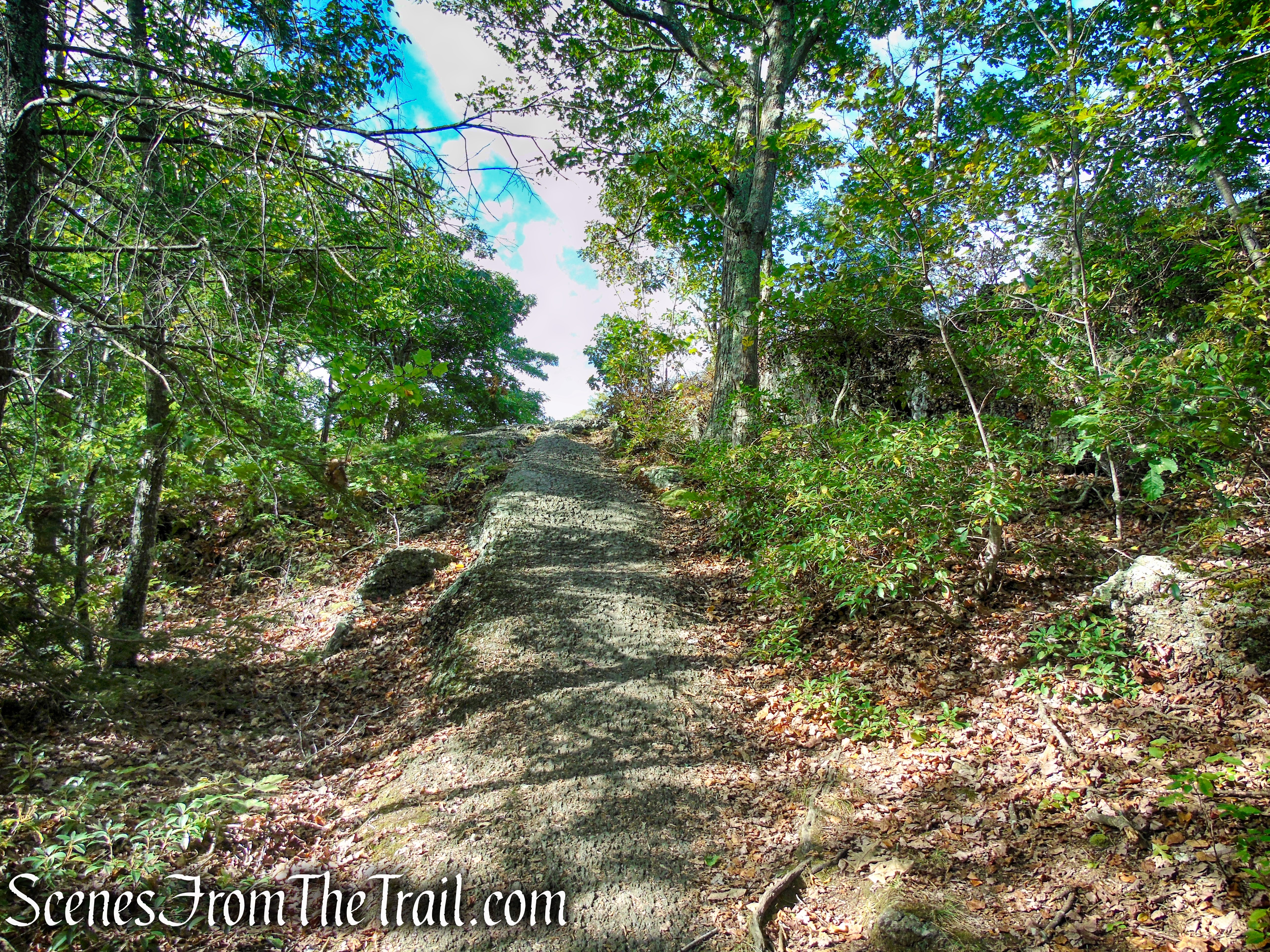


Irvington Woods – Full Perimeter Loop

April 12, 2020 – Irvington, NY

Difficulty: Moderate

Length: Approximately 5 miles

Max elevation: 474 ft. – total elevation gain: approximately 650 ft.

Route type: Circuit

Map: Irvington Woods Trail MapFull Perimeter Loop Map

Trailhead parking: Cyrus Field Rd, Irvington, NY 10533


Park Overview:

The Irvington Woods is home to the O’Hara Nature Center, the Peter K. Oley Trail Network and the Irvington Reservoir.

O’Hara Nature Center

O’Hara Nature Center

At 400 Acres, the Irvington Woods is one of the largest forested areas in Southern Westchester and possesses tremendous ecological value. As part of one of the largest continuous corridors of open space in the New York City Metropolitan area, it provides sanctuary for diverse wildlife, and includes the largest fresh water wetlands in Southern Westchester County.

Marshall Pond

Marshall Pond

It’s extensive trail way system is accessible from several trailheads for hiking and biking. The trails in the Irvington Woods provide for everything from leisurely strolls to moderate hikes. The Irvington Woods Trails are open dawn to dusk.

Cyrus Field Road Trailhead

Cyrus Field Road Trailhead

The Irvington Reservoir (also called the Harriman Road Reservoir) is a 12.4-acre man-made water body that was completed in 1900 to provide drinking water for village residents. The reservoir, now a backup water supply, is home to a wide variety of migratory and all-season birds, including Red-tailed Hawks, Loons, and Great Blue Herons.

Irvington Reservoir

Irvington Reservoir

History:

Parcels of land from several 18th and 19th century estates can be found in the Irvington Woods. They include the homes of Cyrus W. Field, a successful businessman and financier who created the Atlantic Telegraph Company and laid the first telegraph cable across the Atlantic Ocean in 1858; Philip Schuyler, a Revolutionary War general and kinsman of Alexander Hamilton; and Isaac Stern, one of three brothers who founded Stern Brothers Department Store in 1868 in New York City. Throughout the woods are remnants from these estates, including stone terraces, benches, steps and walls. Several of the trails within the system were initially carriage roads for these estates.

In the late 1970’s, some of the property was originally slated for development as a residential subdivision, but due to the poor economic conditions in the early 1980’s, it was donated to the Village of Irvington. Subsequent land purchases with significant funding from the County of Westchester, Scenic Hudson and the Open Space Institute, was joined with other Village lands and property owned by Westchester County, to form the largest such preserve south of I-287 in Westchester.

Trails Overview:

The Peter Oley Trailways System is a marked system of trails In Irvington Woods. The red numbers on the map correspond to numbered trail markers at junctions within the woods. Village emergency services uses the number system on the map to identify locations. There are a number of marked trails accessible from several trailheads.

Irvington Woods Trails

Irvington Woods Trails

The trails are well groomed, but navigating them is at times confusing. They are absent of markers in critical areas and some of the wooden posts at junctions are missing or have been removed and tossed aside, away from the trail.

Irvington Woods Trails

Irvington Woods Trails

There are countless unmarked trails and woods roads on the Irvington Woods property. There are numerous junctions that don’t have the numbered wooden posts or blazes. At times the blazes don’t appear until some distance past the junction. During our hike, we ran into a couple that was lost and needed a little help. I also spoke to several hikers near the trailhead and they mentioned that they got lost on their previous visit. On my first visit here several years ago, I had a little difficulty trying to navigate the route I had planned.

Irvington Woods is bordered by the Irvington Reservoir and Cyrus Field Road to the west, the Saw Mill River Parkway to the east, and Mountain Road (also called Peter Bont Road) to the north. This helps with trying to navigate the trails. This is a good place to practice your navigational skills using a map and compass.

Hike Overview:

This hike begins at the South Parking Lot on Cyrus Field Road, by the Irvington Reservoir. It can also be done by starting at the O’Hara Nature Center as well. We did one of their suggested hikes that is listed on their website, the “Full Perimeter Route.” They have this listed as 3 miles with about 200 feet of elevation gain. I found this to be inaccurate. Although we did several short detours (as is suggested), my GPS mapped it as approximately 5 miles with about 650 ft. of elevation gain.

Cyrus Field Road Trailhead

Cyrus Field Road Trailhead

First off download a copy of both maps from the links supplied at the top of this page. The full trail map has the red numbers on it that indicate the junctions. The route map for this hike does not, but it has the route that you will take highlighted in red.

Irvington Woods - Full Perimeter Loop

Irvington Woods – Full Perimeter Loop

I consulted both maps constantly throughout this hike before making any turns at junctions where I was unsure. Looking at the red number on the main map and the red line on the route map. I didn’t make any wrong turns, but there were times when I didn’t know that until I was some distance past the junction and a blaze appeared on a tree. You shouldn’t feel hesitant about doing this hike as you will probably run into others along the trails and you are never that far away from civilization. This is a beautiful place to explore and on your return visit you will probably help others find their way.

The Hike:

From the Cyrus Field Road Trailhead, the NS Trail (North-South Trail) heads uphill. At a woods road it turns left and at 0.2 mile joins a woods road and turns left again. The SN Trail (Sunset Rock Trail) crosses it and leads uphill. The ML Trail (Monument Loop Trail) begins to the right and also heads uphill. If you choose to bypass Sunset Rock, turn right on the ML trail, otherwise follow the SN Trail up towards Sunset Rock.

Cyrus Field Road Trailhead

Cyrus Field Road Trailhead

Cyrus Field Road Trailhead

Cyrus Field Road Trailhead

cross the road and take the SN Trail uphill

cross the road and take the SN Trail uphill

SN Trail

SN Trail

From their website: “This site at the top of a ridge is named for its striking sunset views of the Hudson River. Early birds will appreciate its wondrous sunrises overlooking the Saw Mill River Valley.”

Sunset Rock

Sunset Rock

There are no views west from this spot, as the image below demonstrates, but still a worthwhile stop if only to hit a point of interest on the map and lengthen the hike slightly.

Sunset Rock

Sunset Rock

Sunset Rock

Sunset Rock

A Pileated Woodpecker a short distance away, making quite a racket in the morning.

Pileated Woodpecker

Pileated Woodpecker

The Terrace:

Retrace your steps from Sunset Rock and turn left at about the point you reach the wide woods road you crossed earlier. The ML Trail is well defined, but you may not see a trail marker right away. Follow the ML Trail as it climbs to the top of the ridge, levels off then comes to a T-intersection at post #21. Turn right here and follow the trail as it descends.

ML Trail – post #21

ML Trail – post #21

ML Trail – post #21

ML Trail – post #21

When the ML Trail reaches post #23 and the trail turns left, walk past the wooden post and up the five stone steps to “The Terrace.”

ML Trail - post #23

ML Trail – post #23

The Terrace

The Terrace

There are no views here either, but one can imagine the view over the Saw Mill River Valley when this terrace was first built. If the leaves are down you can see the Saw Mill River Parkway down below. If possible, look down below for a large granite rock, slightly to the left of the terrace. That is where the Macy Monument is located.

The Terrace

The Terrace

The Terrace

The Terrace

The Steps:

Retrace your steps back to the ML Trail and turn right, descending the stone steps.

The Steps

The Steps

Macy Monument:

At the base of the stone steps is post #24. Take the unmarked woods road that travels below the terrace as it heads in a southerly direction. Macy Monument is located just below this road, but you should follow this road a short distance to see the stone benches. Once you pass the second stone bench, turn around and begin retracing your steps, looking for the large granite rock which is just below.

ML Trail – post #24

ML Trail – post #24

White-Tailed Deer

White-Tailed Deer

stone bench

stone bench

stone bench

stone bench

There may be a faint path visible that descends a little right by a large tree that is laying across the road.

retrace steps to fallen tree

retrace steps to fallen tree

A walkway leads to a large granite rock with a plaque honoring V. Everit Macy, 1871-1930. V. E. Macy was the first Commissioner of Public Welfare and President of the Westchester County Park Commission. A portion of the 172-acre Macy Park, bisected by the Saw River Parkway and NY State Thruway, lies within the Irvington Woods trailway system.

Macy Monument - Irvington Woods

Macy Monument – Irvington Woods

The bronze plaque measures 5′ 9.75″ x 2′ 9.25″ and the memorial was completed in June of 1933.

The plaque reads: “V. Everit Macy was a great citizen of Westchester County. He gave generously not only of his wealth, but of himself. His Countless private benefactions and deeds of kindness were never heralded, but his constructive achievement as Superintendent of the Poor, Commissioner of Public Welfare, and Preseident of the Westchester County Park Commission were widely known. In recognition of these services this park had been named for him and this tablet erected by his friends. MDCCCLXXI – MCMXXX”

Macy Monument - Irvington Woods

Macy Monument – Irvington Woods

The path continues past the monument and climbs the hillside back to to the road right behind post #24. Turn right and continue heading north on the ML Trail.

Macy Monument Trail - Irvington Woods

Macy Monument Trail – Irvington Woods

More Stone Benches:
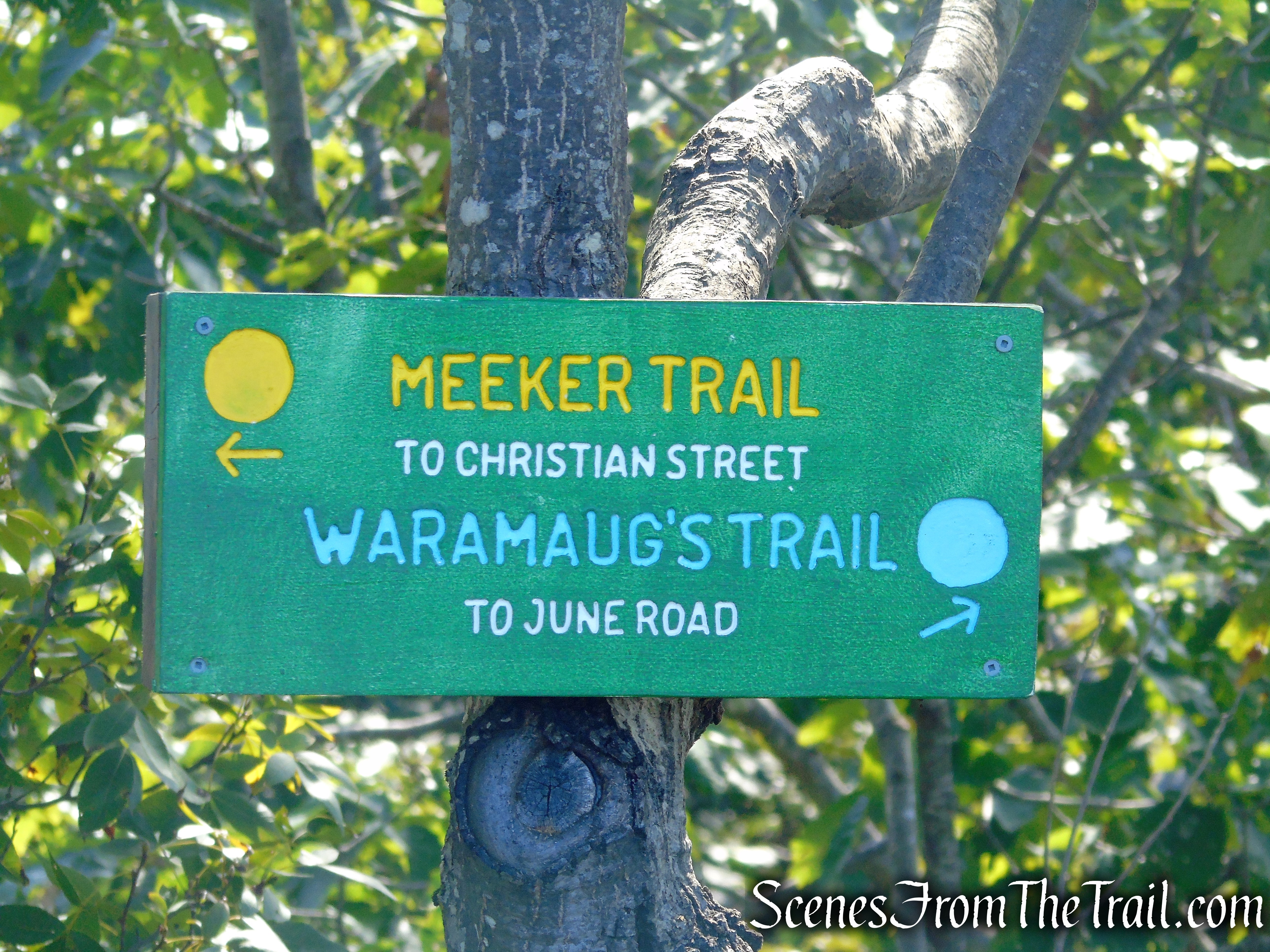
The ML Trail proceeds north, parallel to the Saw Mill River Parkway and utilizes drywall roads to cross wet areas and benches, which have been cut out of the huge boulders.

stone benches - Irvington Woods

stone benches – Irvington Woods

stone benches - Irvington Woods

stone benches – Irvington Woods

stone benches - Irvington Woods

stone benches – Irvington Woods

ML Trail - Irvington Woods

ML Trail – Irvington Woods

Abandoned Sam Mill River Parkway Exit:

Just before the trail veers away from the parkway, ahead on the right is a massive stone retaining wall. which supports the abandoned section of the concrete road. The trail turns left, continues uphill and reaches post #25, where you’ll turn right on the HG Trail (Hermit’s Grave Trail).

ML Trail – post #25

ML Trail – post #25

A few steps in you will see a concrete curb across the trail. Turn right, leaving the trail and walk along the concrete road as it descends down to the parkway. This abandoned road was built in 1928 and was possibly an exit that was to lead into the park.

Abandoned Sam Mill River Parkway Exit

Abandoned Sam Mill River Parkway Exit

Abandoned Sam Mill River Parkway Exit

Abandoned Sam Mill River Parkway Exit

Hermit’s Grave:

Retrace your steps from the abandoned road, turn right and follow the HG Trail up a short steep hill to the Hermit’s Grave.

HG Trail – post #26

HG Trail – post #26

Hermit's Grave - Irvington Woods

Hermit’s Grave – Irvington Woods

In 1810 Johann Wilhelm Stolting was born in Heligoland (Germany) in the North Sea. He was well educated and spoke German, Greek, French and Hebrew. Although he was a teacher, linguist, scientist and landowner; at the end of his days he became a recluse, making buttons on a homemade lathe to support his few needs. The eccentric Stolting roamed the streets and woods and bathed in the Saw Mill and Hudson Rivers. In a small shed on his land overlooking the Saw Mill River valley, he slept in his own coffin made of local chestnut wood. Stolting was a fascinating figure, and became known as the Hermit of Irvington.

Hermit's Grave - Irvington Woods

Hermit’s Grave – Irvington Woods

He died in Irvington on January 10, 1888. His is the only marked grave in the village.

Hermit's Grave - Irvington Woods

Hermit’s Grave – Irvington Woods

perched boulder - Hermit's Grave Trail

perched boulder – Hermit’s Grave Trail

Hermit’s Wetlands:
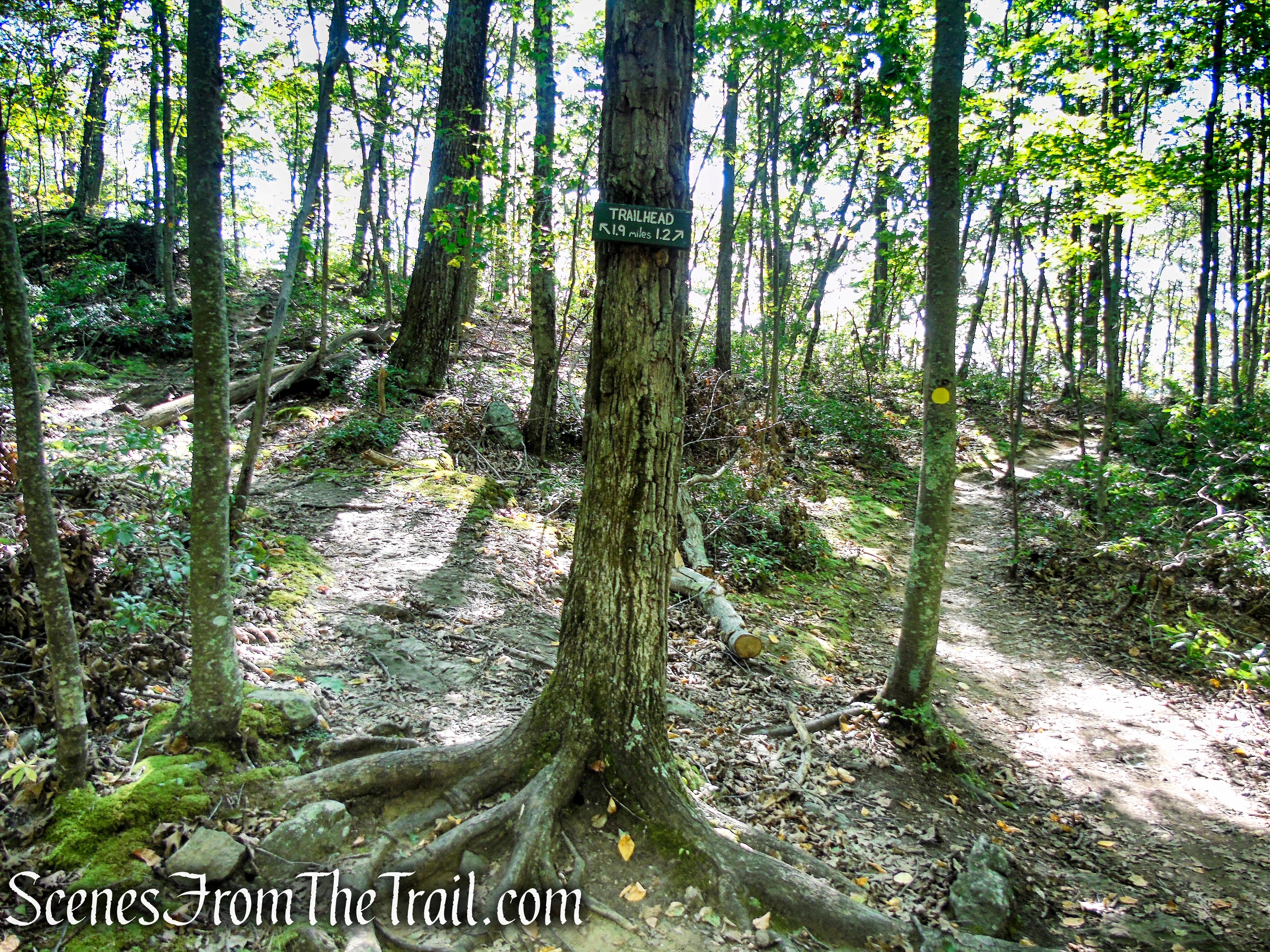
Retrace your steps back to post #25 and walk past it, now following the co-aligned ML/HG Trails. Follow this trail uphill to post #20, where the trails split. Turn right and follow the HG Trail north as it continues uphill.

co-aligned Monument Loop/Hermit's Grave Trails

co-aligned Monument Loop/Hermit’s Grave Trails

co-aligned Monument Loop/Hermit's Grave Trails

co-aligned Monument Loop/Hermit’s Grave Trails

post #20

post #20

At post #17A, in front of a massive rock formation, turn left and follow the trail as it wraps around the rock formation then turns left again. At post #17 turn right (turning left leads to Sunset Rock) and in a short distance you’ll cross a small wooden footbridge. At the next junction (post #16 is missing) bear right on the HW Trail (Hermit Wetland Trail) (you’ll have to walk a little to see the first blaze) as the HG Trail leaves to the left.

turn left at post #17A

turn left at post #17A

rock formation on HG Trail

rock formation on HG Trail

HG Trail - Irvington Woods

HG Trail – Irvington Woods

There is an unmarked footpath that leads deeper into the Hermit’s Wetlands to the right, we bypassed it. The largest remaining wetlands in southern Westchester, this area is home to many migratory and all-season resident birds, as well as a variety of turtles, reptiles and other water creatures

Hermit's Wetlands - Irvington Woods

Hermit’s Wetlands – Irvington Woods

Split Rock:
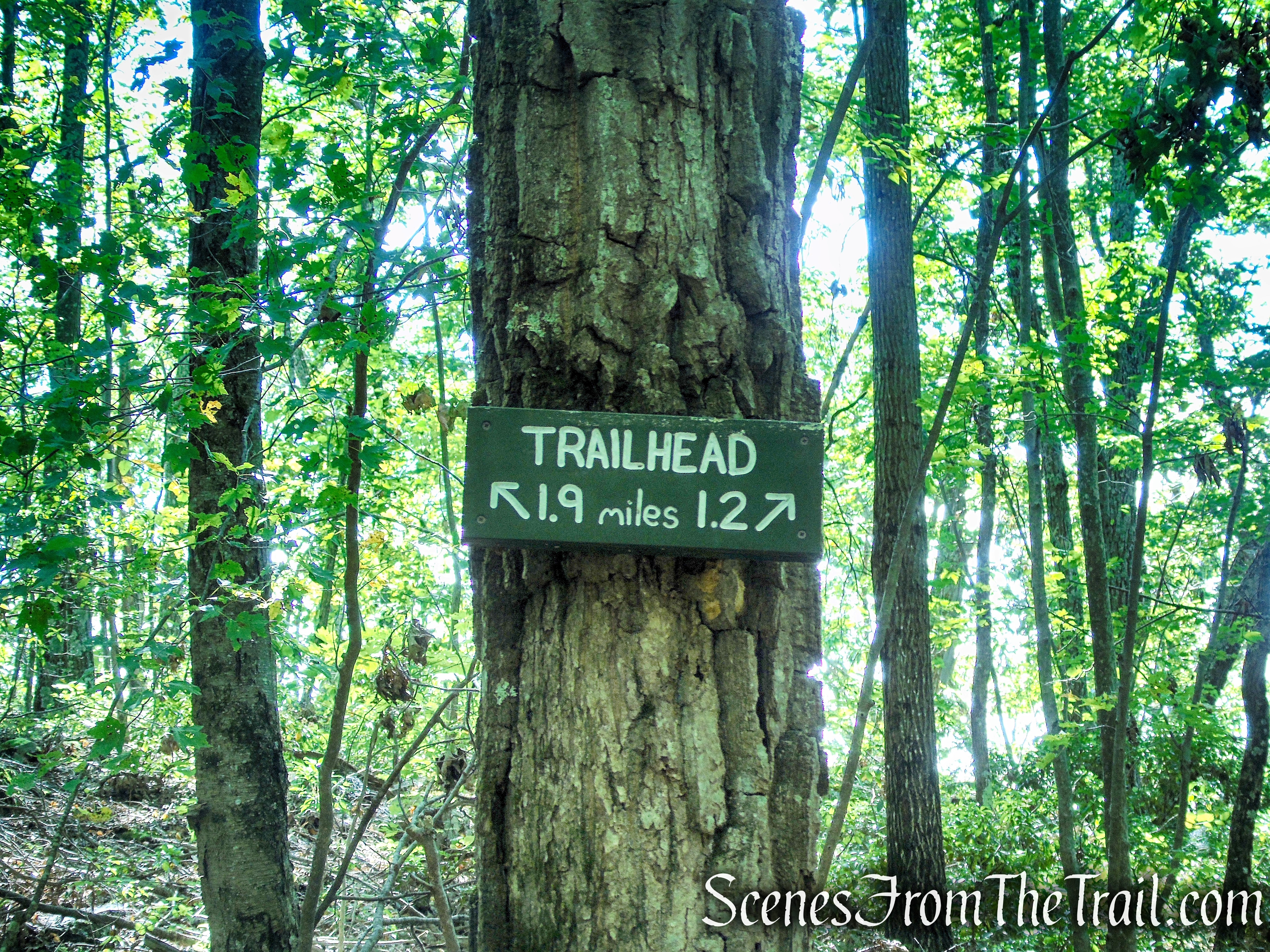
Soon you will come to a confusing junction (post #9 is missing) where you should bear left. We were confused because of the lack of blazes and no signage at this junction, but I happened to see Split Rock through the trees a short distance away. We left the trail and bushwacked to the glacial erratic.

HW and NS Trails junction

HW and NS Trails junction

This striking glacial erratic was carried miles to its present resting place by a glacier. It is said that writer Washington Irving composed some of his works here.

Split Rock - Irvington Woods

Split Rock – Irvington Woods

Split Rock - Irvington Woods

Split Rock – Irvington Woods

Ice Pond:

We bushwacked back to the trail, crossing a small stream near an attractive rock formation. Now following the NS Trail (North-South Trail) which leads to the O’Hara Nature Center. As the NS Trail turns right towards the nature center, the IP Trail (Ice Pond Trail) continues ahead (post #6 was missing).

rock formation - Irvington Woods

rock formation – Irvington Woods

The IP Trail soon crosses a gravel access road (post #5 was laying on the ground to the left after crossing the road), descends and turns left onto a woods road. It then turns left, leaving the woods road, descending more steeply then turning left again, rejoining the woods road. It parallels a stone wall and soon reaches the Ice Pond which is on the right.

post #5

post #5

post #5 - Irvington Woods

post #5 – Irvington Woods

IP Trail - Irvington Woods

IP Trail – Irvington Woods

IP Trail - Irvington Woods

IP Trail – Irvington Woods

This man made pond is a part of the Barney Brook watershed. Ice Pond was used to harvest ice for storage in the icehouses on the nearby estates. Before refrigeration, the ice was needed to preserve perishable foods.

Ice Pond - Irvington Woods

Ice Pond – Irvington Woods

Marshall Pond:

A short distance away, at a T-intersection, the IP Trail turns right and passes post #2. Soon after, it comes to Marshall Pond.

post #2 - Irvington Woods

post #2 – Irvington Woods

This man-made pond is a part of the Barney Brook watershed.

Marshall Pond - Irvington Woods

Marshall Pond – Irvington Woods

You may want to walk to the far end which borders Irvington High School property, for a nice view of the pond.

Marshall Pond - Irvington Woods

Marshall Pond – Irvington Woods

Jenkin’s Rock at Irvington Reservoir:

Retrace your steps past post #2 and continue ahead on the woods road past the junction that leads to the Ice Pond. You will walk past post #3, and are now following the WL Trail (Water Line Trail). At the next junction (post #4 was missing), bear right and head in a southerly direction. This section of the trail had no blazes and looks like a service road. Follow the road, crossing a small wooden footbridge and soon the BB Trail (Barney Brook Trail) leaves to the right.

post #3 - Irvington Woods

post #3 – Irvington Woods

WL Trail - Irvington Woods

WL Trail – Irvington Woods

WL Trail - Irvington Woods

WL Trail – Irvington Woods

Turn right onto this trail which descends and parallels Barney Brook. The trail ends at a concrete bridge at the northern end of the Irvington Reservoir. Turn right and cross the bridge and you will have arrived at Jenkin’s Rock.

turn right on BB Trail

turn right on BB Trail

BB Trail - Irvington Woods

BB Trail – Irvington Woods

On the northern shore of the reservoir is a beautiful rock dedicated in 1984 to the Rev. Dr. Frederick Jenkins. While Pastor of the Irvington Presbyterian church from 1959-1984, he held Easter Sunday sunrise services overlooking the reservoir.

Jenkins Rock - Irvington Reservoir

Jenkins Rock – Irvington Reservoir

The stone gatehouse was constructed circa 1900.

stone gatehouse - Irvington Reservoir

stone gatehouse – Irvington Reservoir

Jenkins Rock - Irvington Reservoir

Jenkins Rock – Irvington Reservoir

Jenkins Rock - Irvington Reservoir

Jenkins Rock – Irvington Reservoir

Completing the Loop:

Recross the concrete bridge and proceed ahead on the HG Trail. Almost immediately you’ll pass the stone ruins of an old structure on the left. Proceed ahead on the HG Trail as it heads east with the reservoir visible through the trees on the right. When you come to a T-intersection, turn right as the trail now heads south.

stone ruins - HG Trail

stone ruins – HG Trail

HG Trail - Irvington Woods

HG Trail – Irvington Woods

bear right at T-intersection

bear right at T-intersection

When you reach post #14, continue ahead on the SN Trail on the fairly level woods road (DO NOT turn left and go uphill). A short distance later you will return to the Cyrus Field Road Trailhead, where the hike began.

continue past post #14

continue past post #14

Cyrus Field Road Trailhead

Cyrus Field Road Trailhead

Review:

A really good hike for locals that offers more than just a walk in the woods. The numerous points of interest give the hiker something to look forward to while navigating the sometimes confusing trails. The trails are mostly woods roads or old ATV trails, but the landscape is rugged and quite scenic, giving one an almost deep woods experience. There is some road noise along the ML Trail when it parallels the parkway, but otherwise an overall good hike.

Pros:

Scenic landscape, historical features, glacial erratics, well groomed trails, many points of interests.

Cons:

Wooden posts and blazes missing at some junctions, making trails somewhat confusing.

Take a hike!

Irvington Woods - Full Perimeter Loop

Irvington Woods – Full Perimeter Loop

Sources: