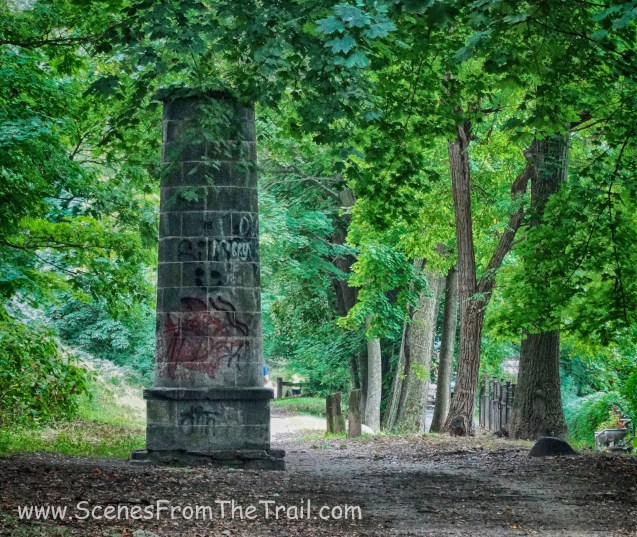
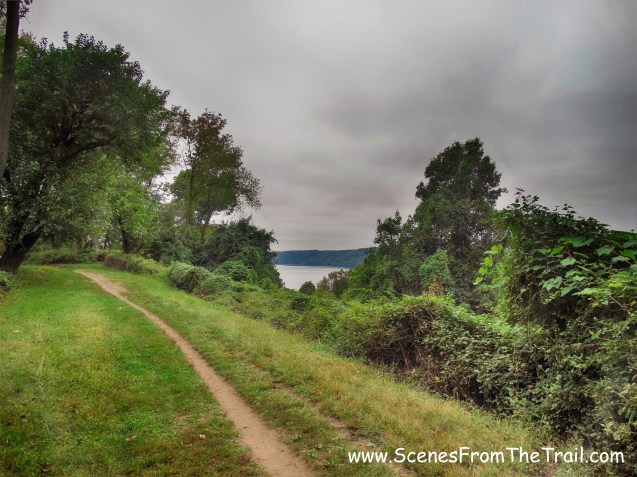
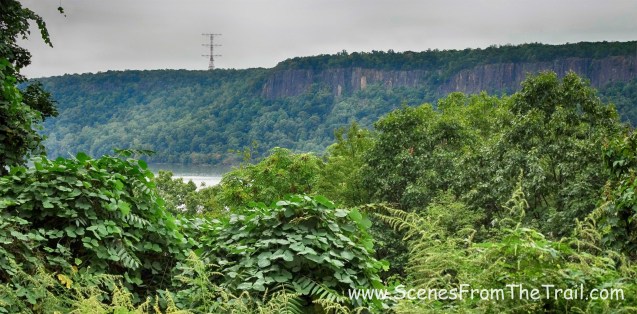
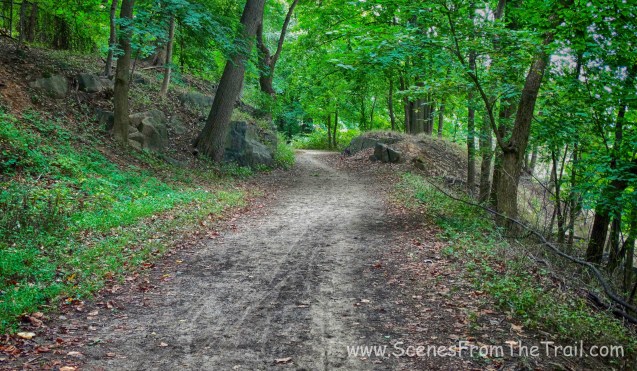
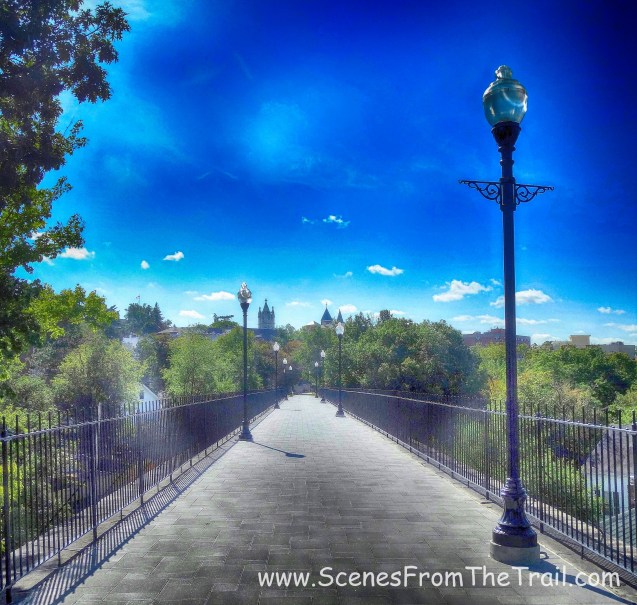
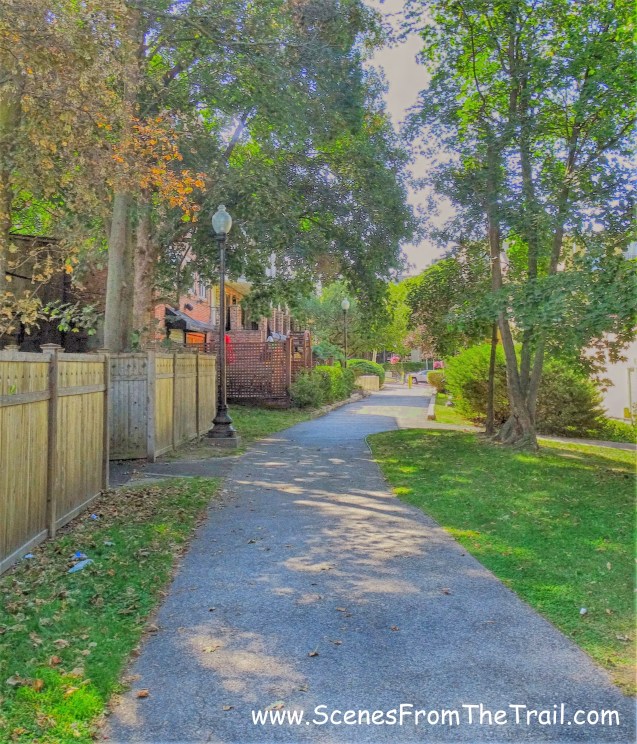
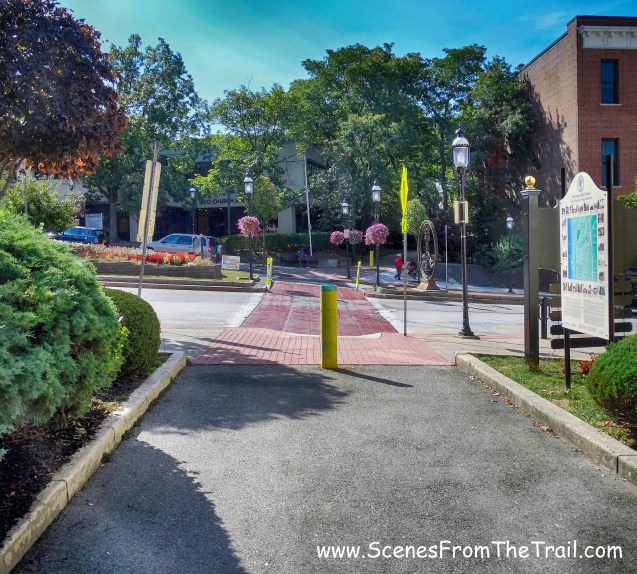
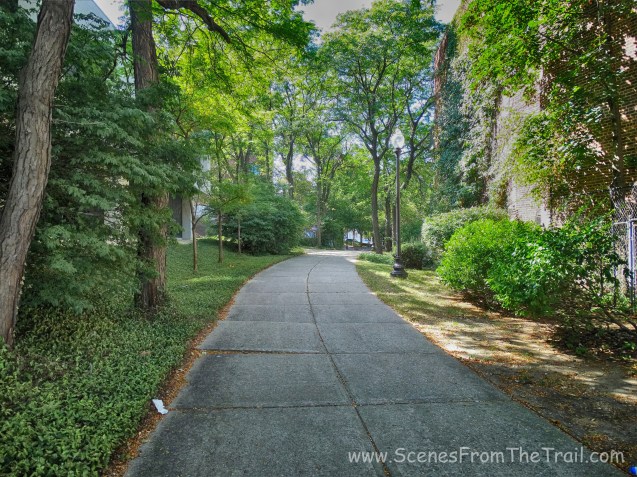
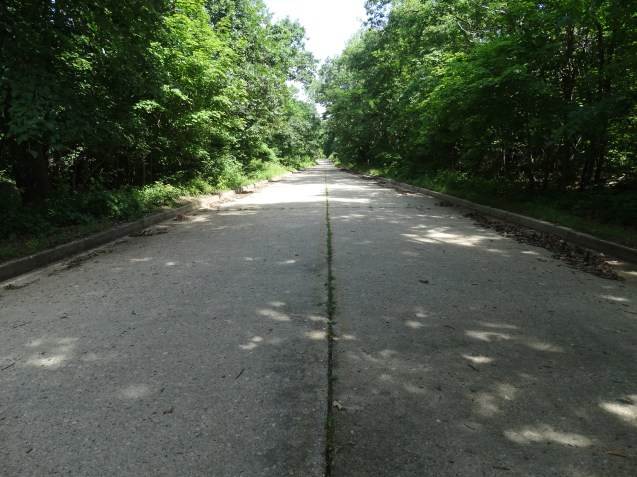
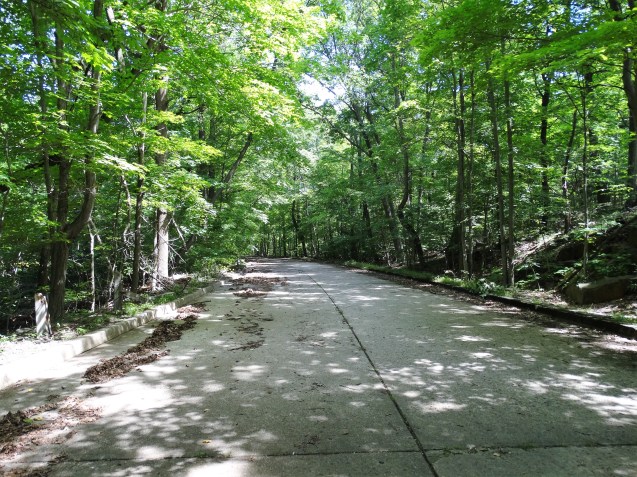
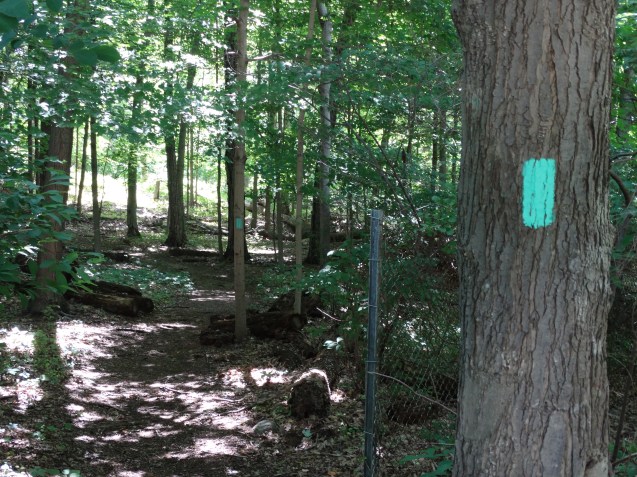
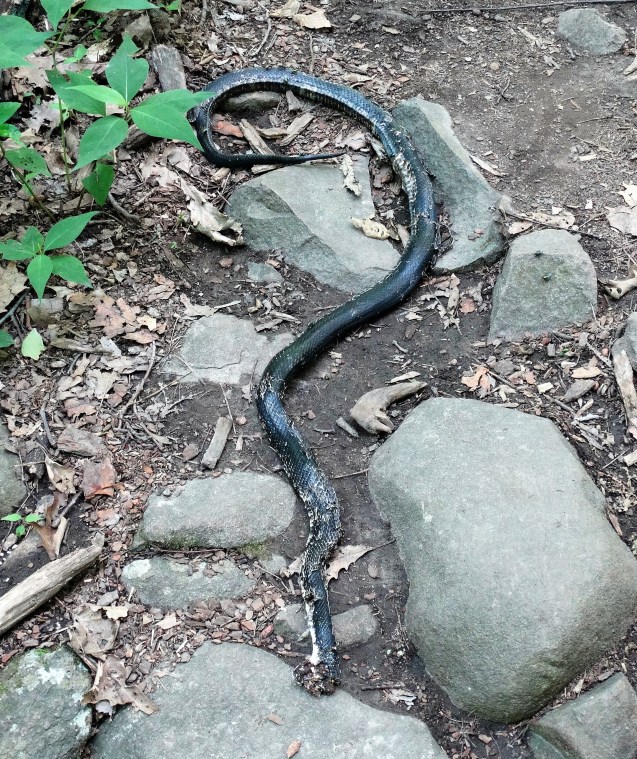
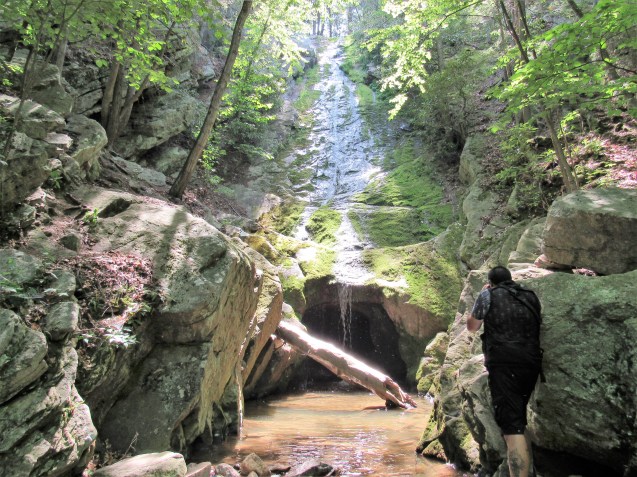
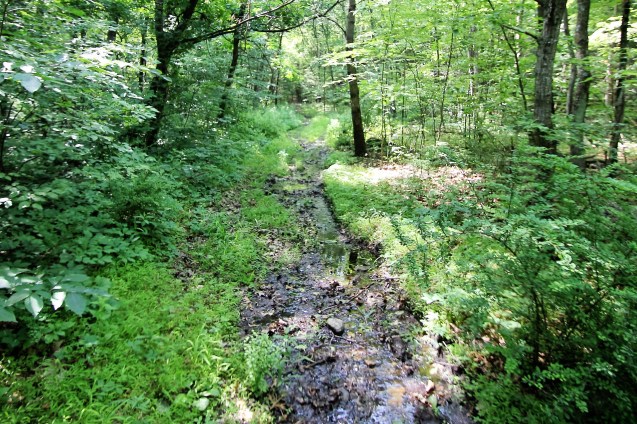
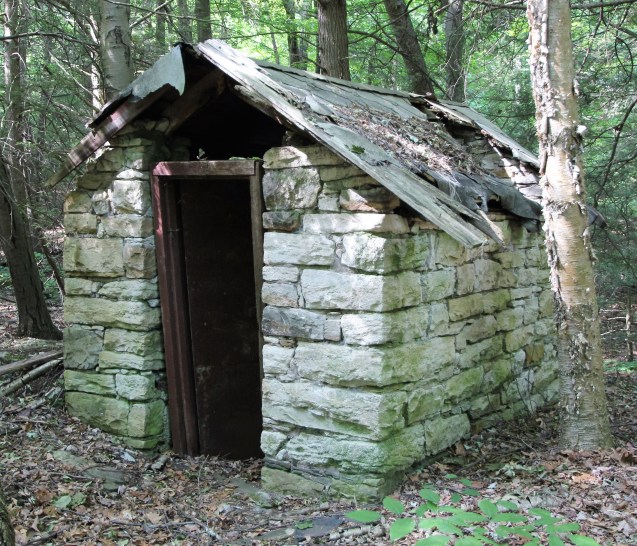
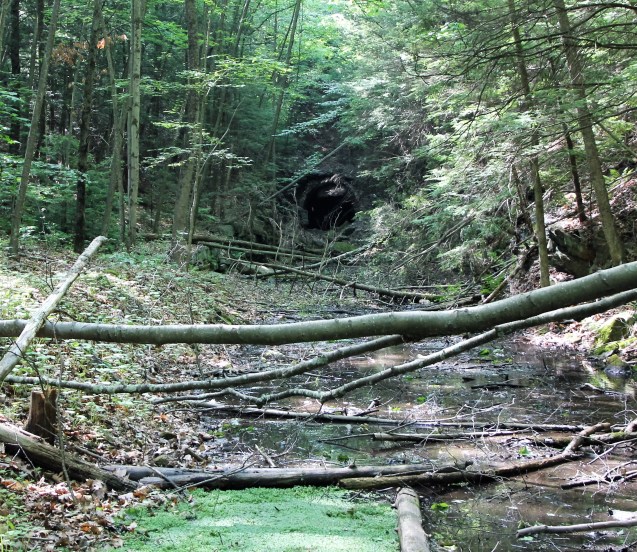
Old Croton Aqueduct Trail – Sleepy Hollow to Dobbs Ferry

September 24, 2016 – Sleepy Hollow, NY to Dobbs Ferry, NY

Difficulty: easy

Length: approximately 6 miles

Route type: linear

This is the third leg of my section hike on the 26 mile Westchester County portion of the Old Croton Aqueduct Trail. You can check out the first leg of my hike here and the second leg here. Another beautiful day for hiking on this September morning. Temperatures were in the low 70’s and no rain. We parked one vehicle at Mercy College in Dobbs Ferry, which would be our ending point and drove back to Gory Brook Road in Sleepy Hollow where our hike would begin.

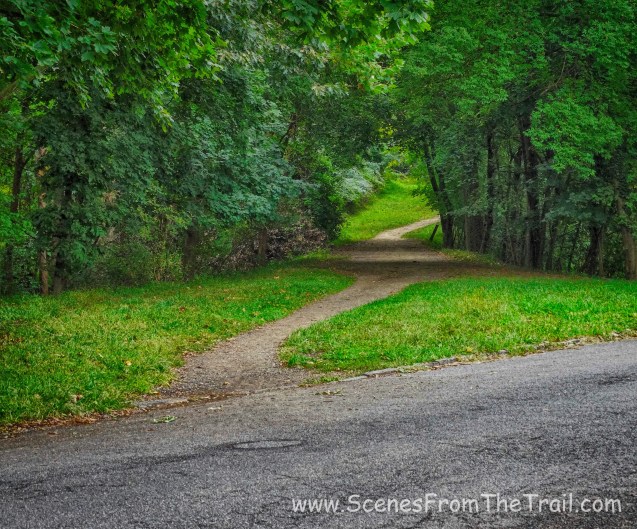
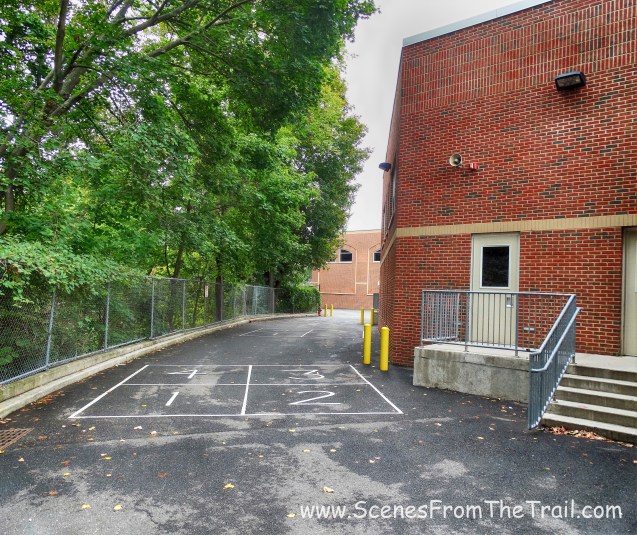
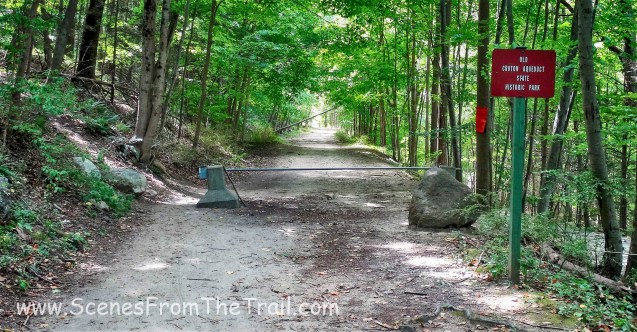
Gory Brook Road

Gory Brook Road

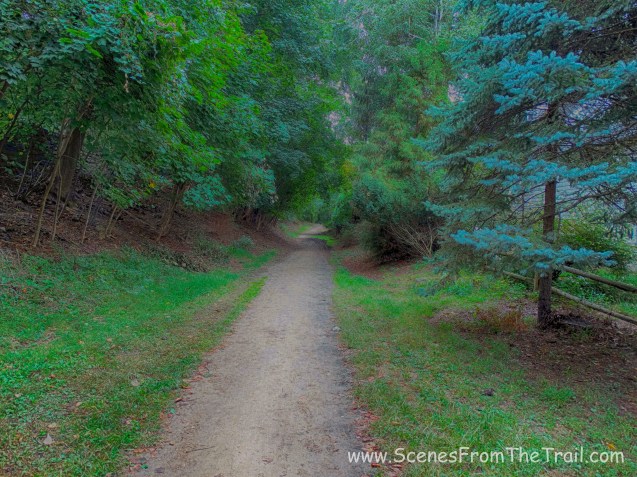
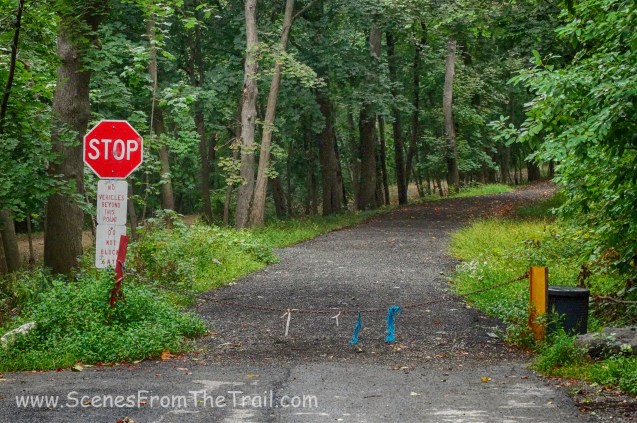
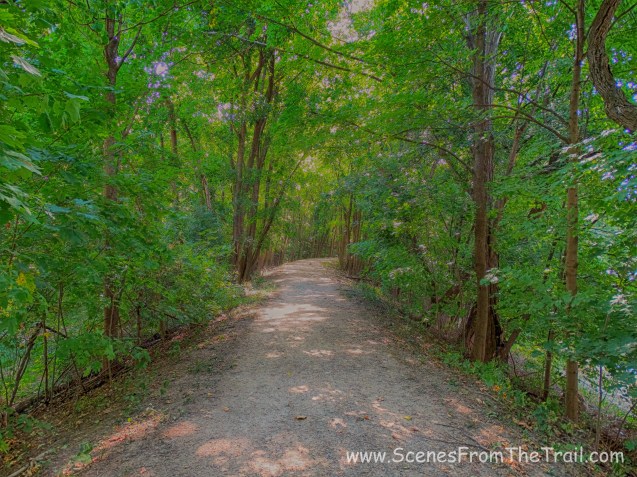
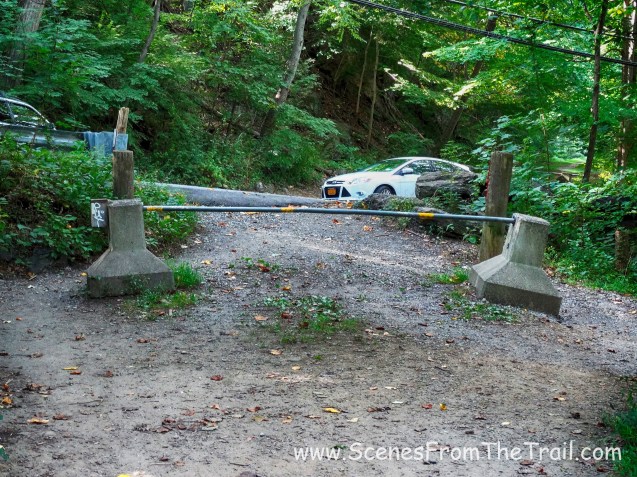
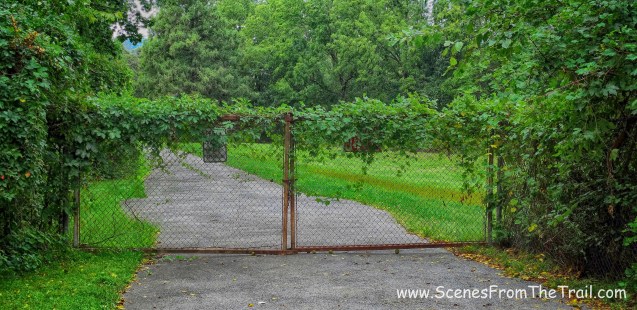
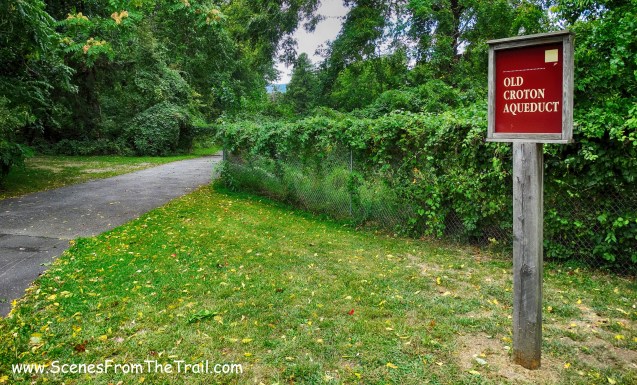
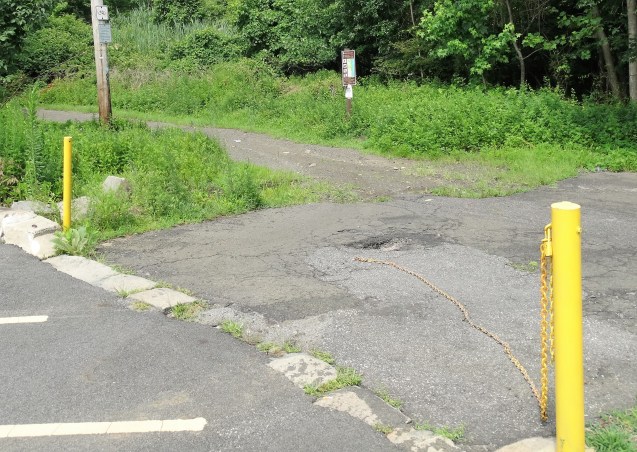
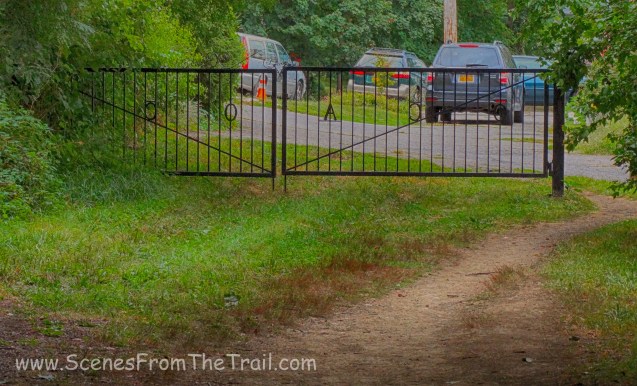
After parking the vehicle, we walked towards the chained off Section of Gory Brook Road (above) and turned left onto the Old Croton Aqueduct Trail. We began our hike by proceeding south along the trail.

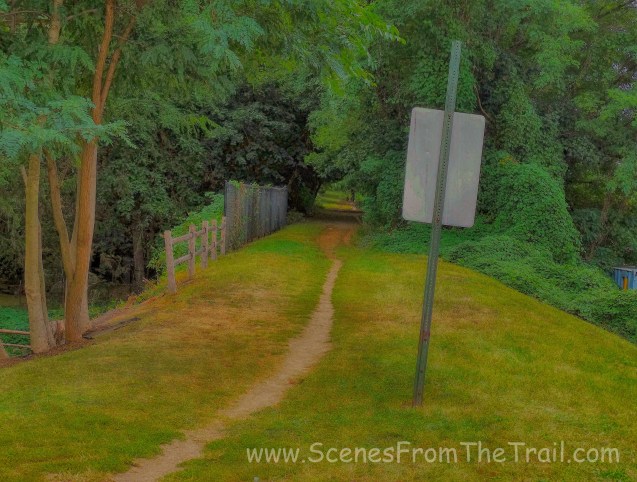
Old Croton Aqueduct Trail – Sleepy Hollow

Old Croton Aqueduct Trail – Sleepy Hollow

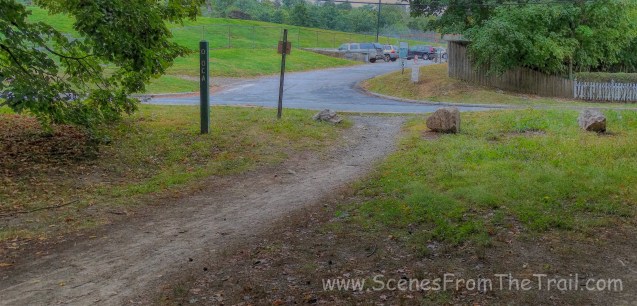
We walked past the gate onto Gory Brook Road.

Old Croton Aqueduct Trail – Sleepy Hollow

Old Croton Aqueduct Trail – Sleepy Hollow

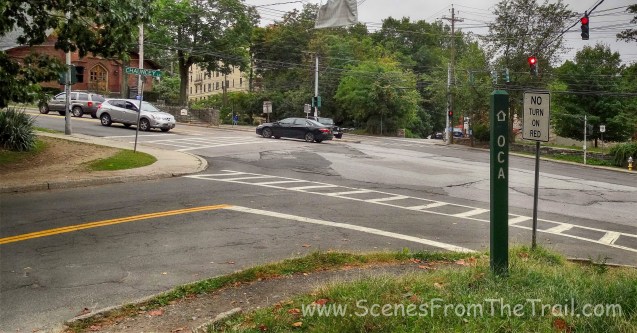
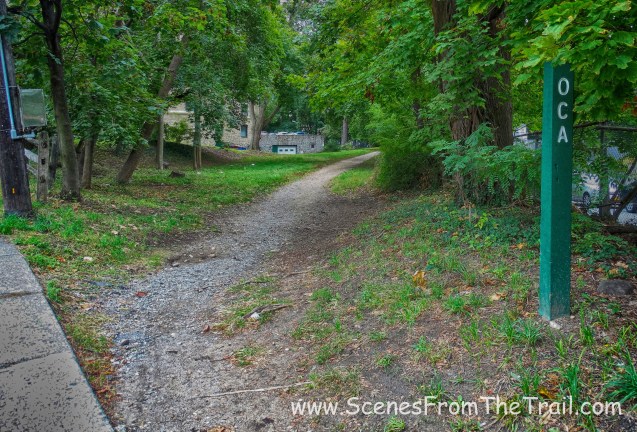
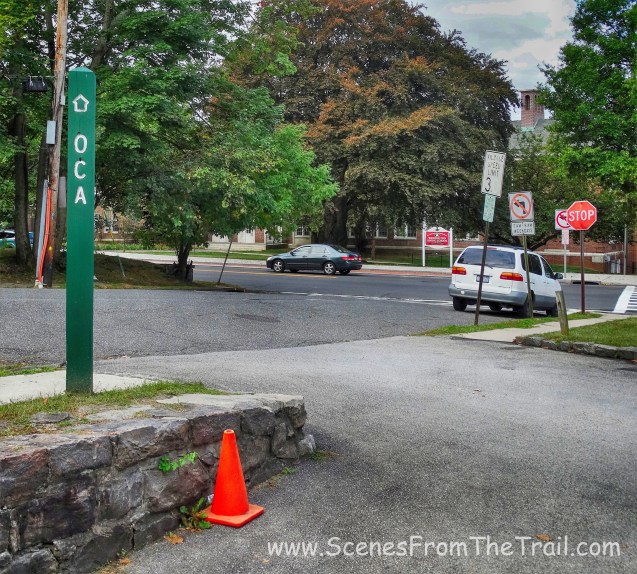
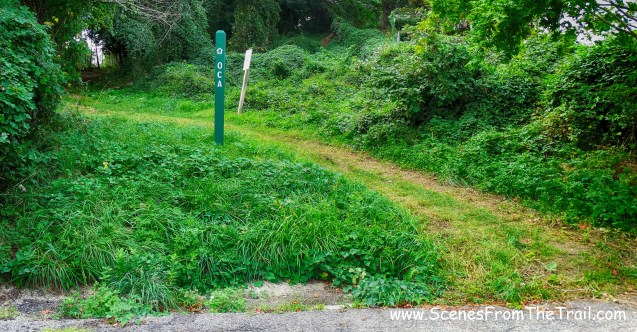
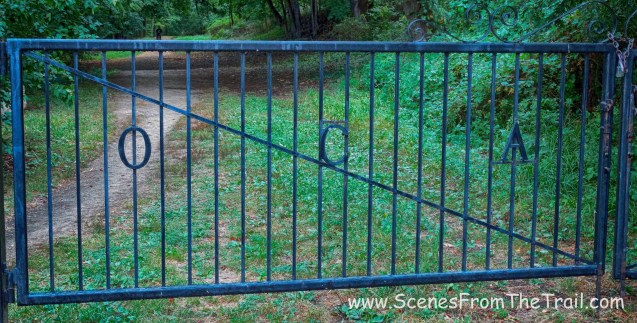
The gate has the OCA lettering on it which is a nice touch.

Old Croton Aqueduct Trail – Sleepy Hollow

Old Croton Aqueduct Trail – Sleepy Hollow

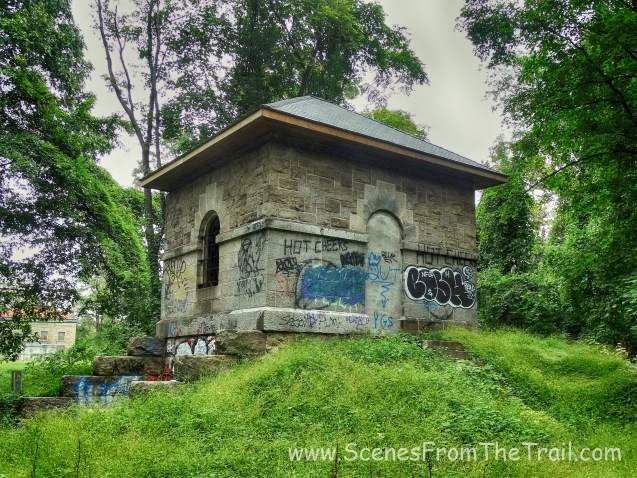
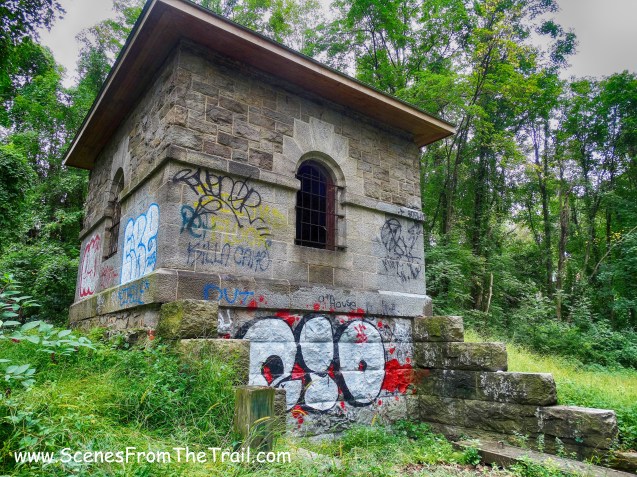
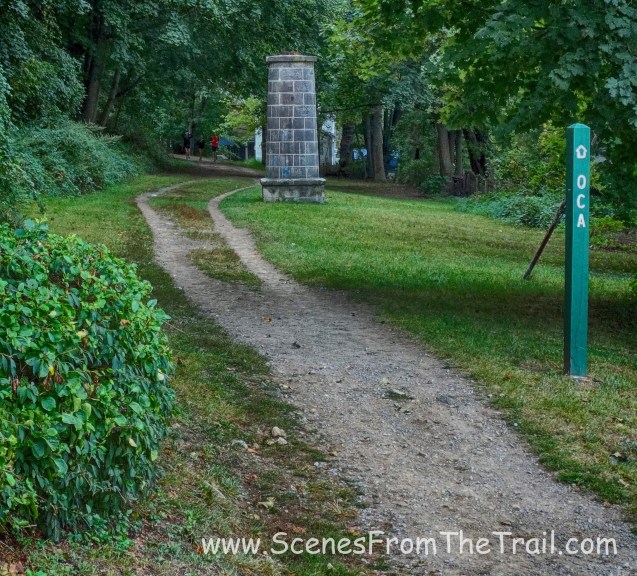
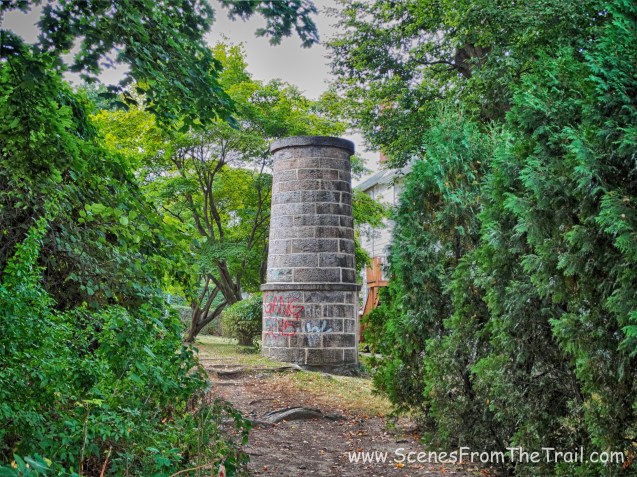
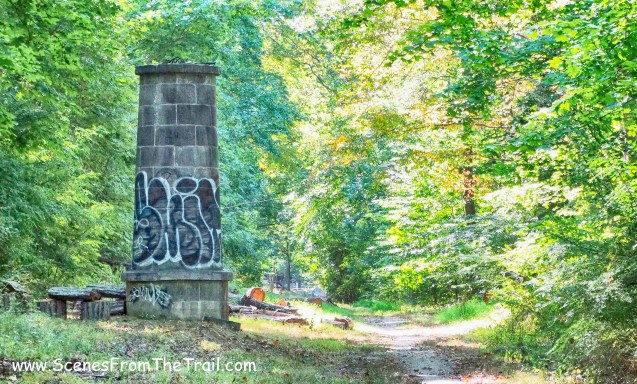
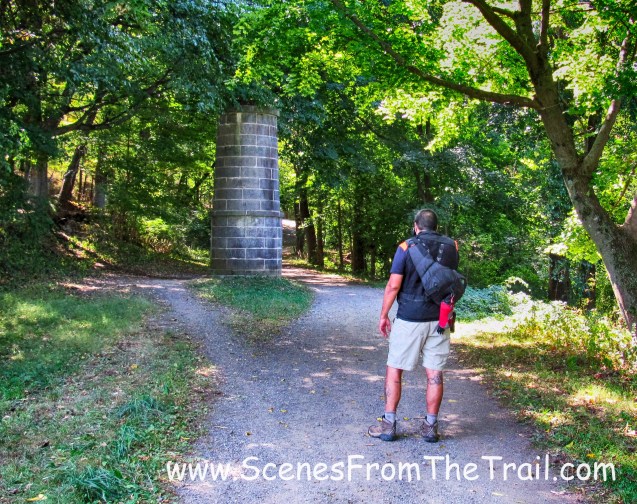
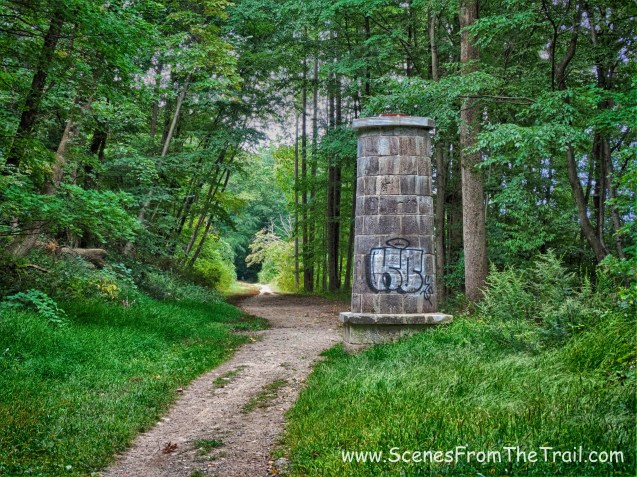
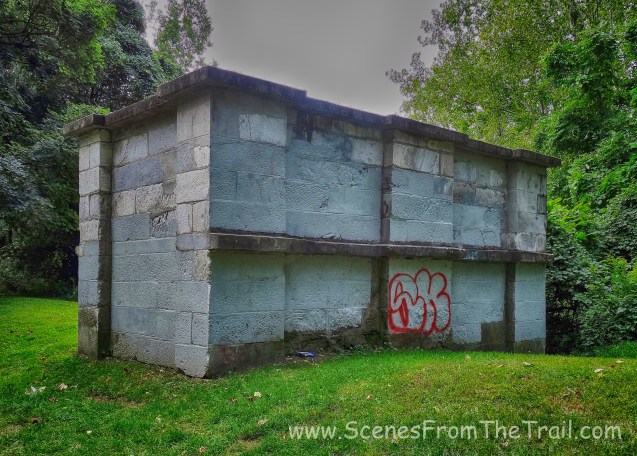
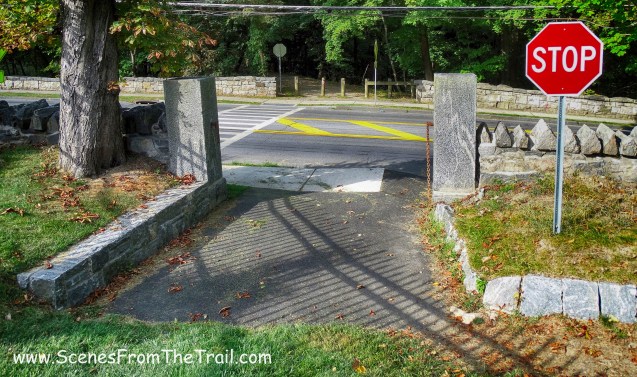
Crossing the road, we encountered ventilator shaft 12.

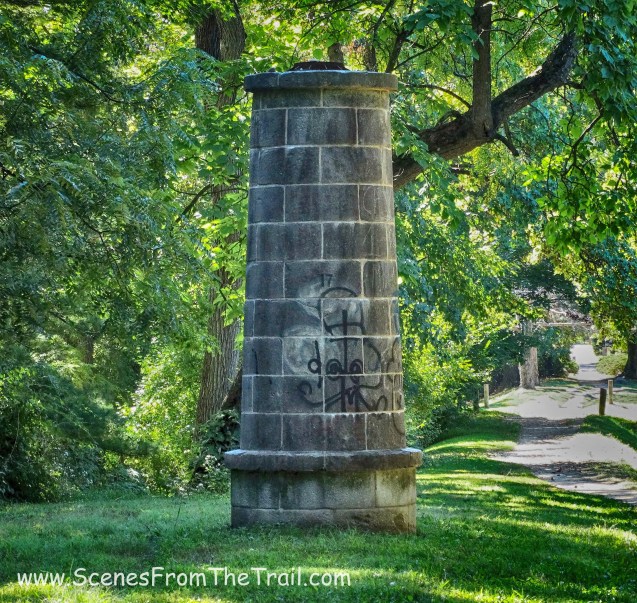
ventilator shaft 12

ventilator shaft 12

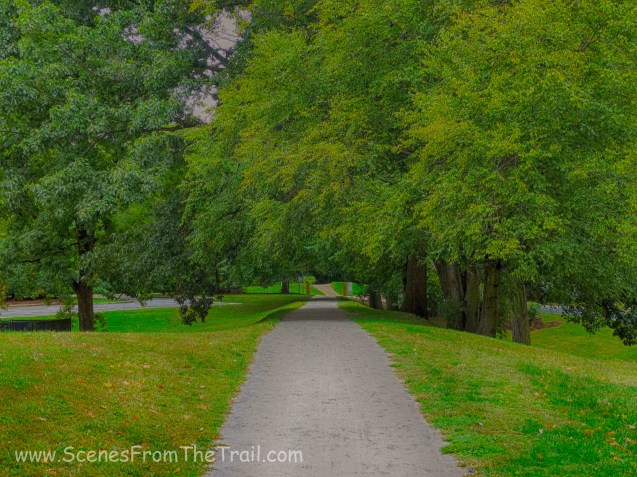
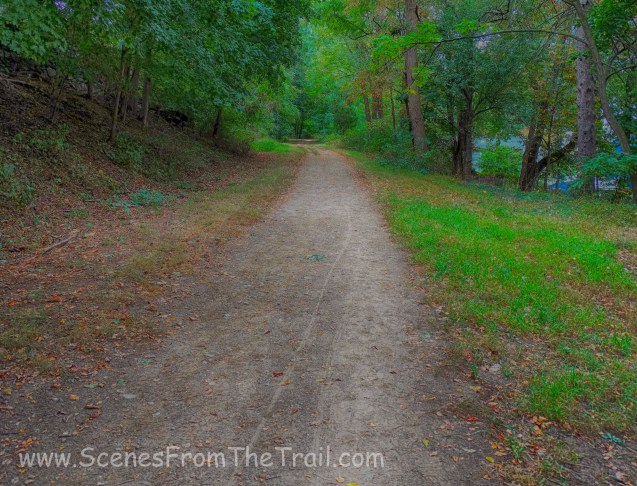
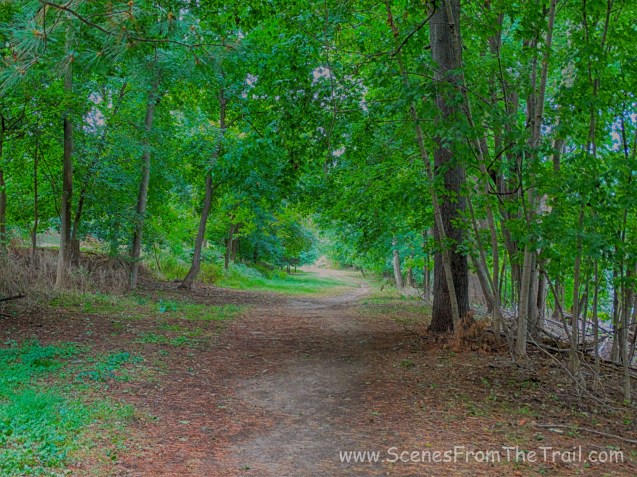
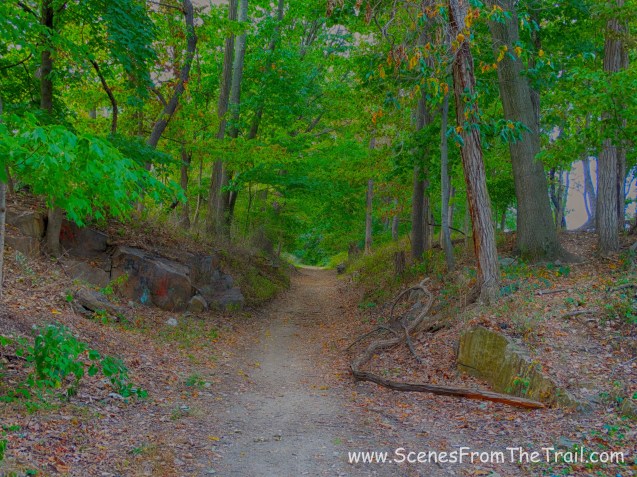
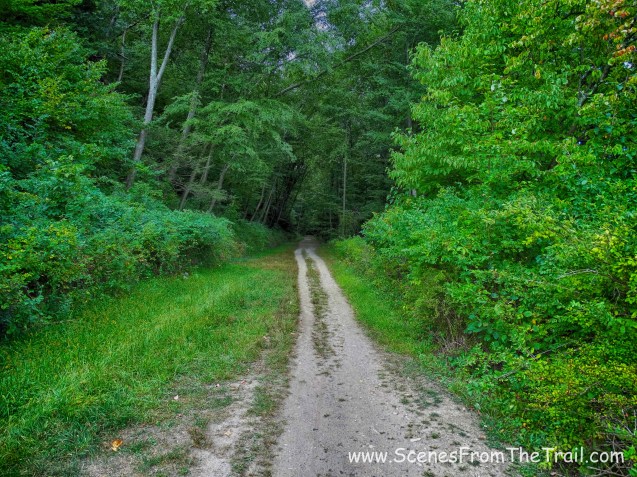
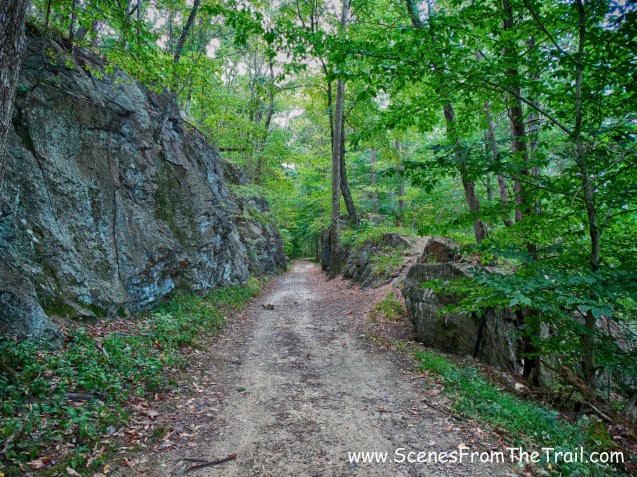
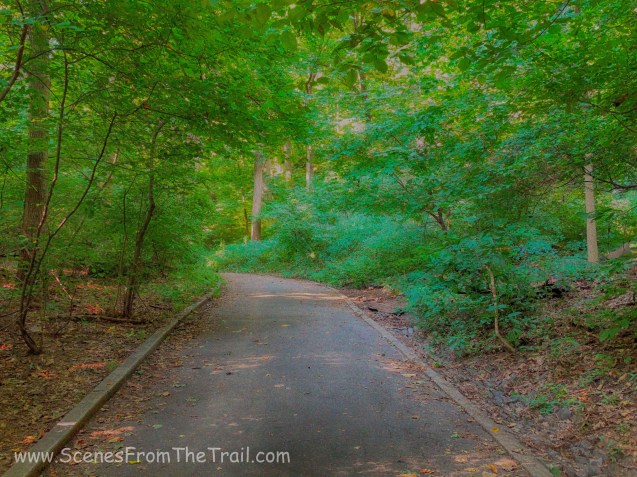
As always, the aqueduct is a nice easy, mostly level walk.

Old Croton Aqueduct Trail – Sleepy Hollow

Old Croton Aqueduct Trail – Sleepy Hollow

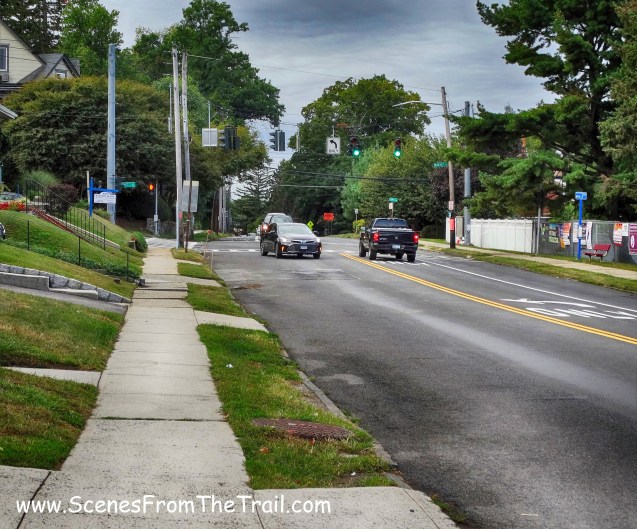
After a short walk, we crossed over Bedford Road and into the Sleepy Hollow HS parking lot.

Old Croton Aqueduct Trail – Sleepy Hollow

Old Croton Aqueduct Trail – Sleepy Hollow

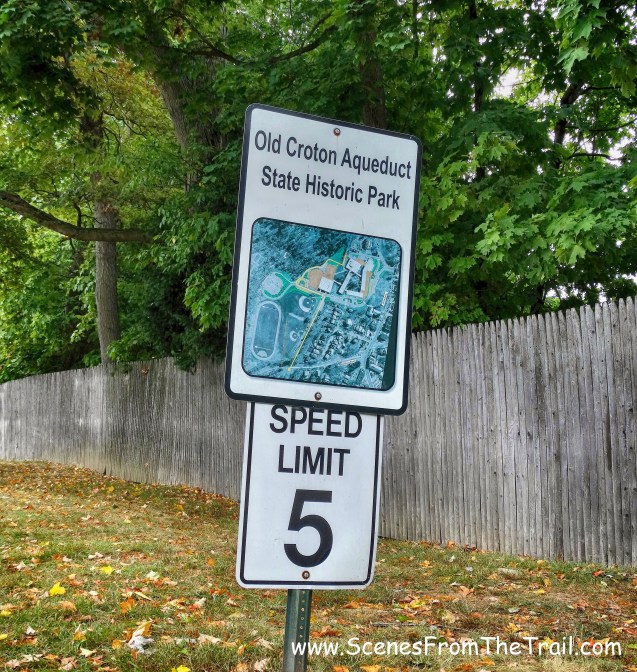
The OCA trail goes through the back lot of the school which is evident by the sign.

Old Croton Aqueduct Trail – Sleepy Hollow

Old Croton Aqueduct Trail – Sleepy Hollow

When we reached the end of the parking lot we turned left and walked along the side of the high school. When we reached the back of the auditorium we turned right at the rear of the building, bordered by a fence and the school.

Old Croton Aqueduct Trail – Sleepy Hollow

Old Croton Aqueduct Trail – Sleepy Hollow

We followed the blacktop around the back of the school until we were walking towards the cafeteria and once again on the aqueduct.

Old Croton Aqueduct Trail – Sleepy Hollow

Old Croton Aqueduct Trail – Sleepy Hollow

We crossed Cobb Lane and continued along the tranquil path, now in Tarrytown.

Old Croton Aqueduct Trail – Tarrytown

Old Croton Aqueduct Trail – Tarrytown

We crossed McKeel Avenue and Hamilton Place, then came to ventilator shaft 13.

ventilator shaft 13

ventilator shaft 13

After crossing Neperan Road and East Elizabeth Street, we came to East Franklin Street where the OCA trail veers right away from the aqueduct. We walked towards Route 9 and headed south along Broadway (Route 9).

East Franklin Street - Tarrytown

East Franklin Street – Tarrytown

Broadway (Route 9) - Tarrytown

Broadway (Route 9) – Tarrytown

We walked on Route 9 until we got to Leroy Avenue and turned left.

Leroy Avenue - Tarrytown

Leroy Avenue – Tarrytown

There we caught up with the aqueduct which was on the right.

Old Croton Aqueduct Trail - Tarrytown

Old Croton Aqueduct Trail – Tarrytown

Walking along the aqueduct which was tucked between homes and businesses on either side, we continued on.

Old Croton Aqueduct Trail - Tarrytown

Old Croton Aqueduct Trail – Tarrytown

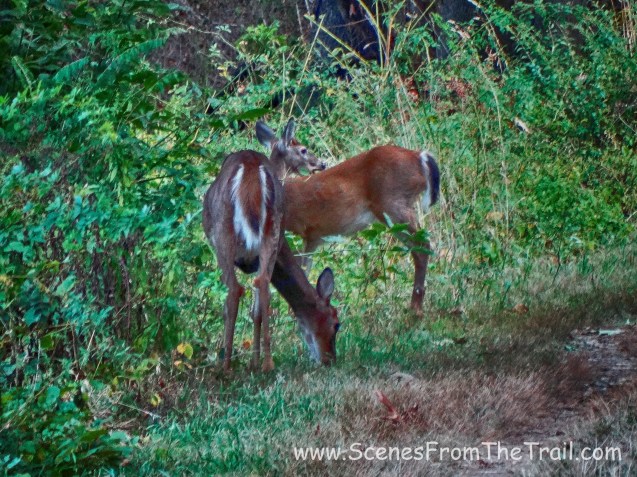
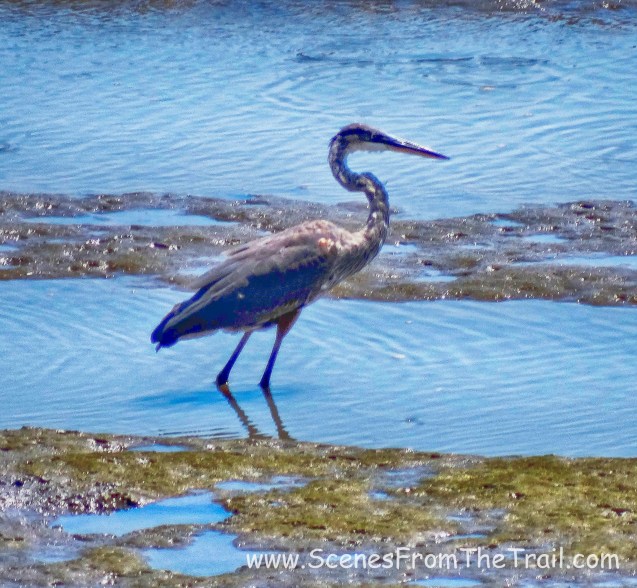
It’s always nice to see some wildlife on the trail.

Old Croton Aqueduct Trail - Tarrytown

Old Croton Aqueduct Trail – Tarrytown

We came to ventilator shaft 14, which is located right near Route 119.

ventilator shaft 14

ventilator shaft 14

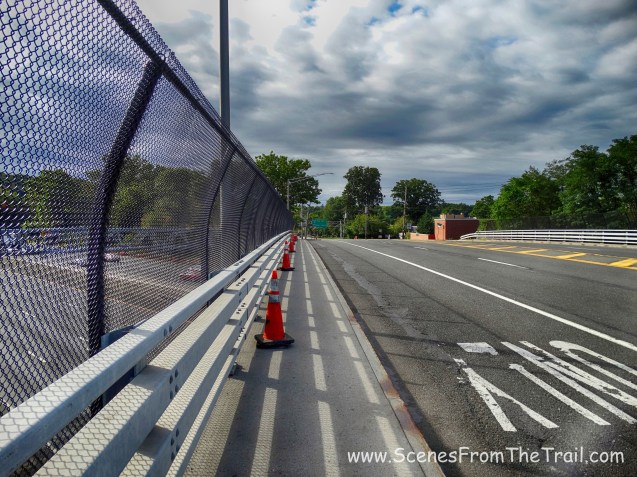
The OCA trail once again veers right, away from the actual location of the aqueduct at Route 119. That is due to the construction of the NYS thruway, which cuts right through it. We crossed Route 119, turned left onto Route 9, heading south and crossing over the thruway.

Route 9 - Tarrytown

Route 9 – Tarrytown

When we came to the Honda dealership, we turned left onto Walter Street and proceeded up to Sheldon Avenue. Walking past Short Street, the aqueduct is now visible on the right. We continued following the OCA trail and then crossed Route 9.

crossing Route 9 - Tarrytown

crossing Route 9 – Tarrytown

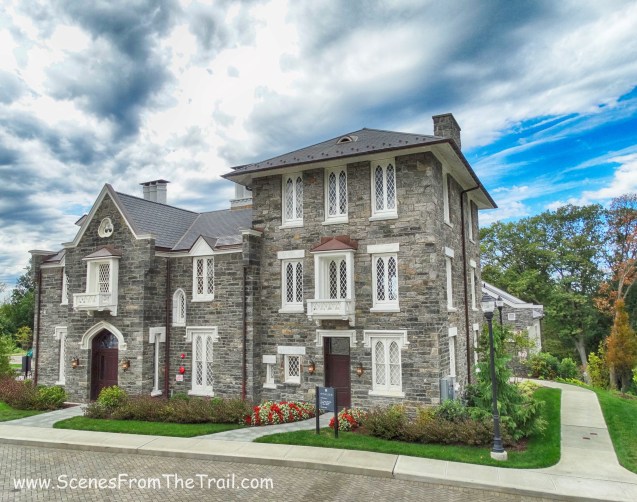
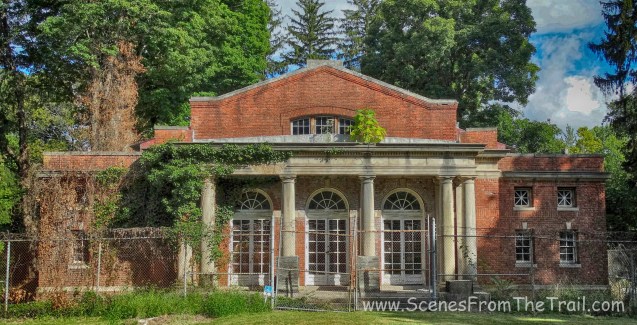
After crossing Route 9, we entered the Lyndhurst estate property. Along the left side of the aqueduct is the indoor pool building (also known as a natatorium).

pool building

pool building

The OCA trail cuts right through the property.

Old Croton Aqueduct Trail - Lyndhurst estate property

Old Croton Aqueduct Trail – Lyndhurst estate property

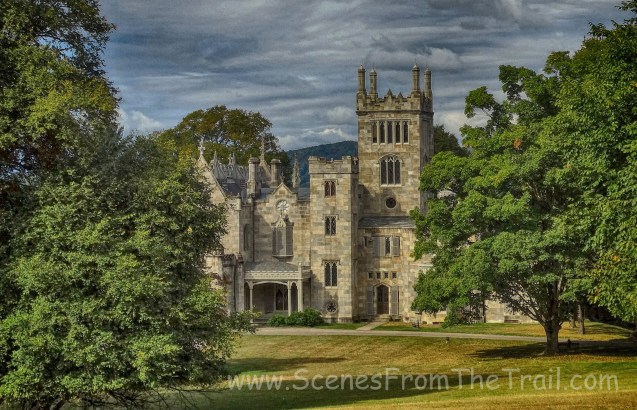
Lyndhurst is a beautiful place and it is where we took our first break. The grounds are very scenic and well kept. They also have a Gothic Revival castle.

Lyndhurst Castle

Lyndhurst Castle

Lyndhurst Castle

Lyndhurst Castle

We sat on a bench facing this majestic castle and enjoyed a bite to eat along with some refreshments. I have visited this property countless times over the years and always enjoy the tranquility that this setting provides.

Lyndhurst estate

Lyndhurst estate

After a pleasant break, we got back on the trail and almost immediately came upon ventilator shaft 15.

ventilator shaft 15

ventilator shaft 15

This part of the aqueduct which passes through Irvington, is bordered by some grand estate properties, some of which are no longer residential. Long ago, palatial mansions lined the Hudson River, most of which are no longer standing. We walked alongside a high stone wall with a barbed wire fence above it. On the other side of that wall was the former Belvedere property.

Old Croton Aqueduct Trail - Tarrytown/Irvington

Old Croton Aqueduct Trail – Tarrytown/Irvington

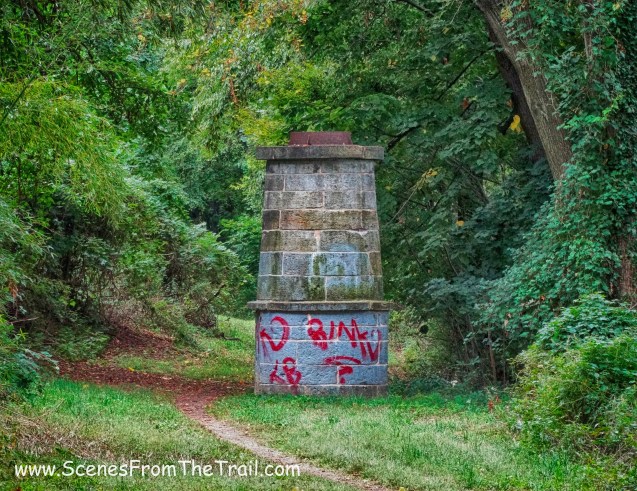
Visible from the OCA is a brick tower with a cone shaped roof.

brick tower - Belvedere

brick tower – Belvedere

After crossing over several Irvington streets, we came to Villa Lewaro, the former estate of Madam C. J. Walker. She was an African American entrepreneur, philanthropist, and a political and social activist. Eulogized as the first female self-made millionaire in America, she became one of the wealthiest African American women in the country. The estate is quite lavish to say the least, but from the aqueduct, you only get a partial view of the rear.

Villa Lewaro

Villa Lewaro

Crossing Main Street, we arrived at ventilator shaft 16.

ventilator shaft 16

ventilator shaft 16

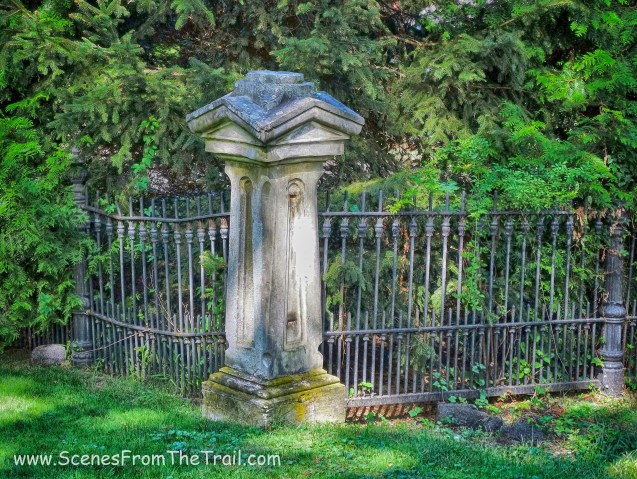
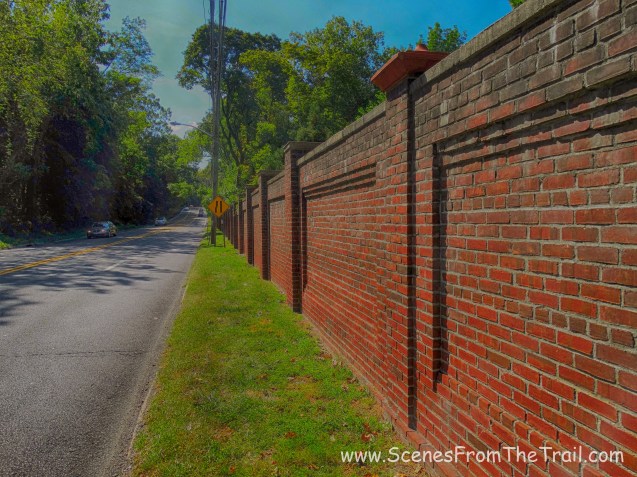
Along this stretch we saw some nice homes, a long and high brick wall and an ornate wrought iron fence.

high brick wall

high brick wall

wrought iron fence

wrought iron fence

We walked by the Nevis Estate, built by James Hamilton, son of Alexander Hamilton in 1835 and named after the West Indies Island where his father had been born.

Nevis Estate

Nevis Estate

As we approached our stop point, which was Mercy College in Dobbs Ferry, we came to ventilator shaft 17.

ventilator shaft 17

ventilator shaft 17

Once past the ventilator shaft, we entered the parking area for Mercy College and back to the vehicle. We drove back to Gory Brook Road and picked up the car we had parked there when our hike began. I hope you enjoyed today’s hike, I sure did. Don’t forget to follow my blog and stay informed about hikes in the Hudson Valley and beyond. Until next time folks, keep on trekking.

keep on trekking
keep on trekking

Old Croton Aqueduct – Ossining Weir Chamber

September 17, 2016 – Ossining, NY

I planned my 26 mile section hike of the Old Croton Aqueduct to coincide with a tour of the weir chamber in Ossining, NY. That is why my stopping point for the first leg and starting point for the second leg was the Ossining weir. The tour was given courtesy of Friends of the Old Croton Aqueduct. They conduct tours occasionally and I am glad that I attended this most informative tour. First off, they showed a short film about the history of the aqueduct. There were approximately 70 people in attendance so they broke us up into two groups. I made sure that I was in the first group that made its way to the weir. I had a hike to do following my visit to the weir and did not want to sit around waiting when I could be hiking.

Old Croton Aqueduct - Ossining Weir Chamber

Old Croton Aqueduct – Ossining Weir Chamber

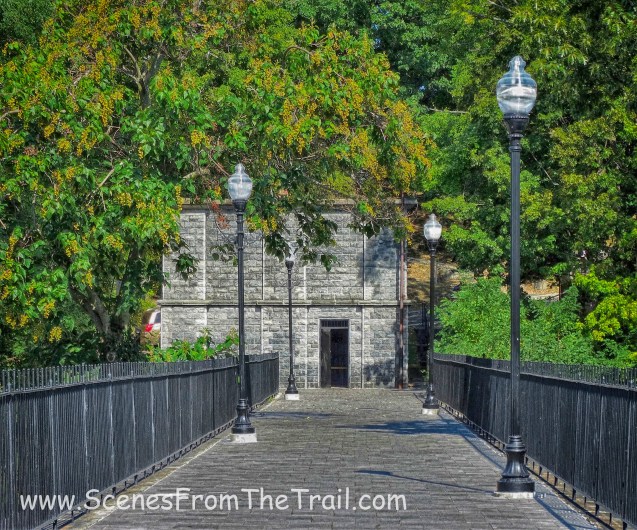
The weirs along the Old Croton Aqueduct were structures that were built right over or next to the aqueduct, enabling direct access to the aqueduct tunnel. This allowed for maintenance and repair by diverting the waters to a nearby waterway.

Ossining Weir

Ossining Weir

The Ossining Weir is twenty feet long, ten feet wide, and thirty feet high, including the portion of the weir that is built underground for the waste-water conduit.

Ossining Weir

Ossining Weir

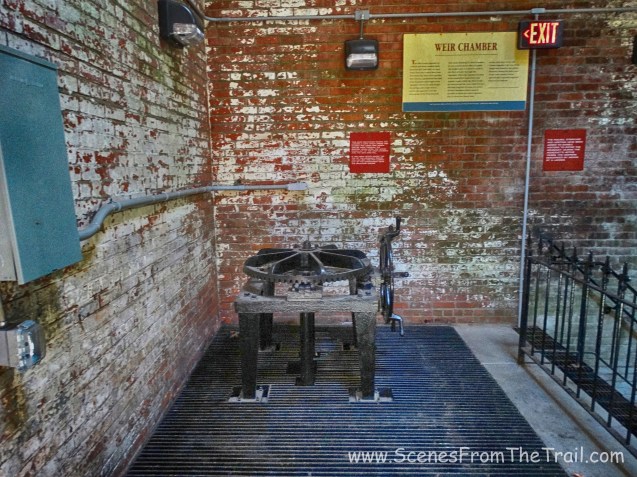
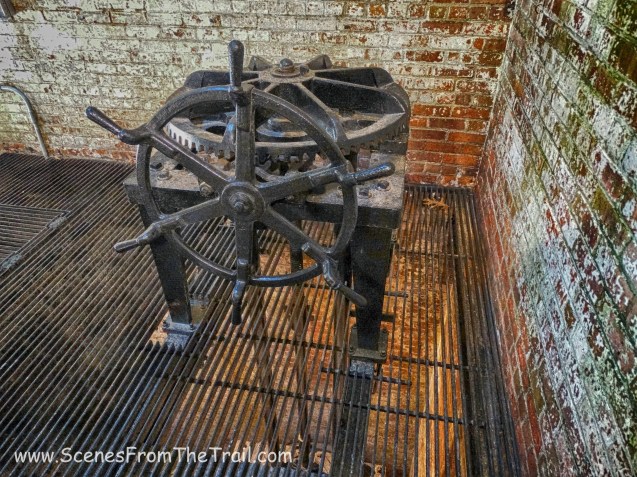
The Ossining weir was a later addition (1882) and a modernization of the system. Upon entering, inside to the left, is an effluent valve wheel. It was used in order to allow the water coming southward in the tunnel to be diverted into a 4 foot drain pipe which led to the Sing Sing Kill under the arched aqueduct bridge.

effluent valve wheel

effluent valve wheel

effluent valve wheel

effluent valve wheel

The wheel opens and closes the release valve which is directly underneath.  It would keep water pressure from building up on the gate or from overburdening the tunnel with water.

release valve

release valve

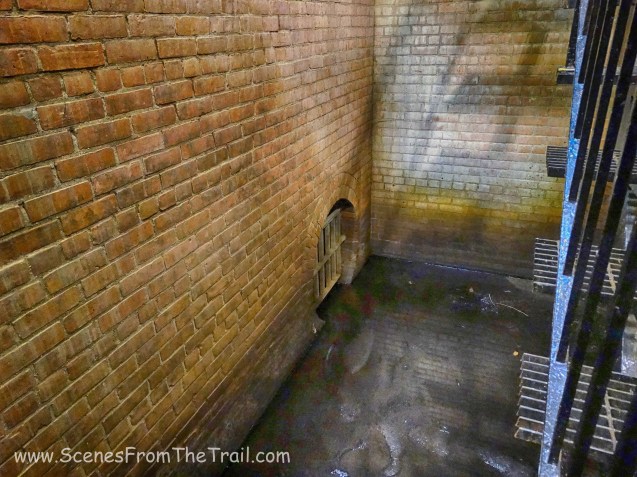
The water is released through the above opening, which in turn flows through this 4 foot drain pipe under the arched aqueduct bridge.

drain pipe

drain pipe

drain pipe

drain pipe

And then flows into the Kill Brook via this stone splash block.

stone splash block

stone splash block

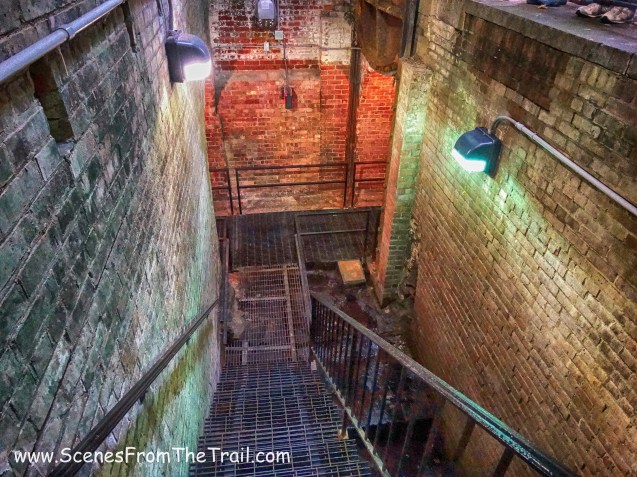
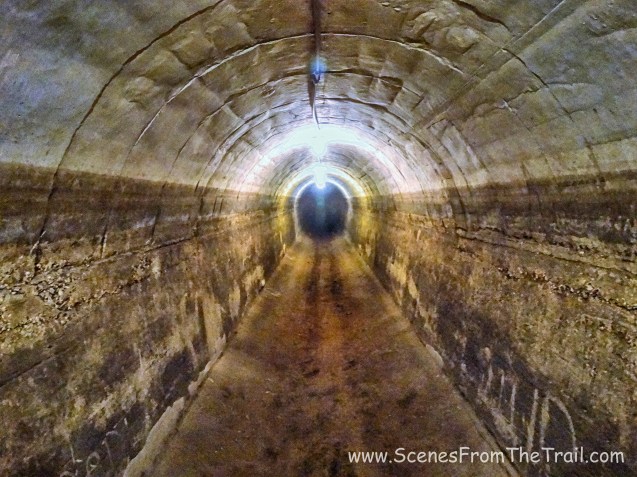
Walking down the stairs and turning right, now looking south into the tunnel. This part of the tunnel is built into the arch bridge which carries the water over the Sing Sing Kill.

looking south

looking south

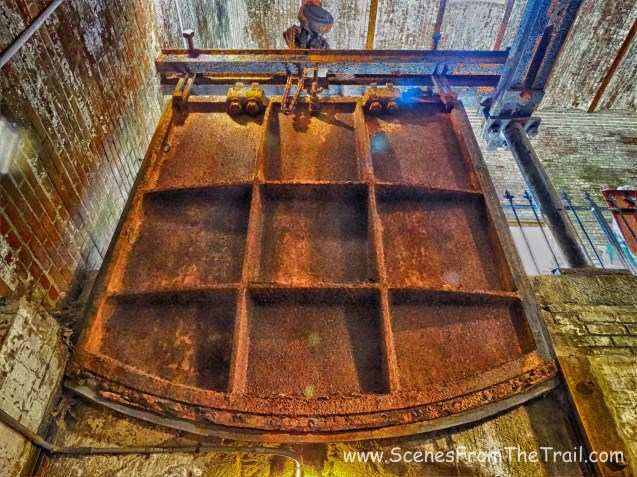
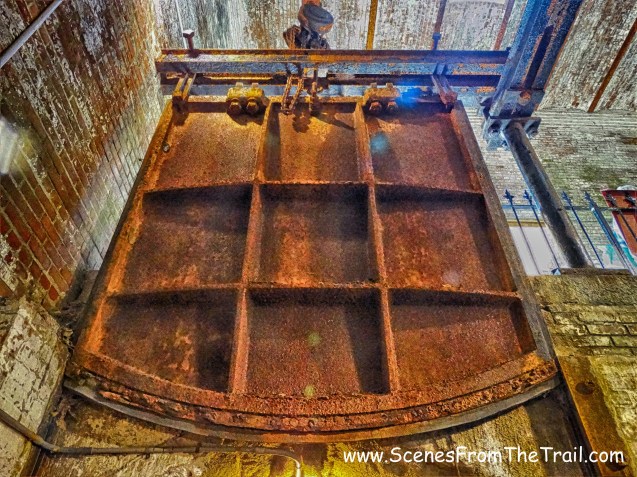
This steel gate is lowered to divert water away from the south side of the tunnel for routine maintenance and/or repairs.

steel gate

steel gate

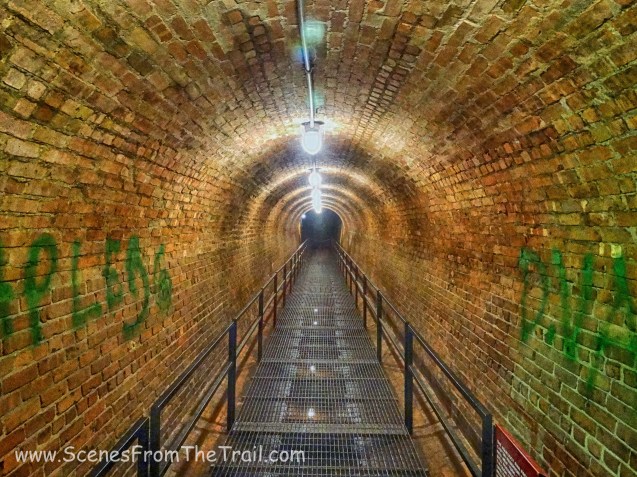
Looking north through the tunnel, this catwalk was added for visitors to walk on during tours.

catwalk - looking north

catwalk – looking north

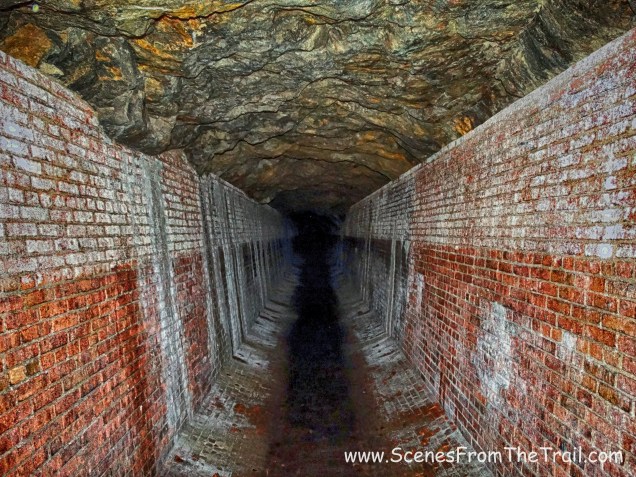
Walking to the end of the catwalk, still looking north. Notice the waterline that is visible along the side of the tunnel. They incorporated the rock of the hillside as the roof.

looking north

looking north

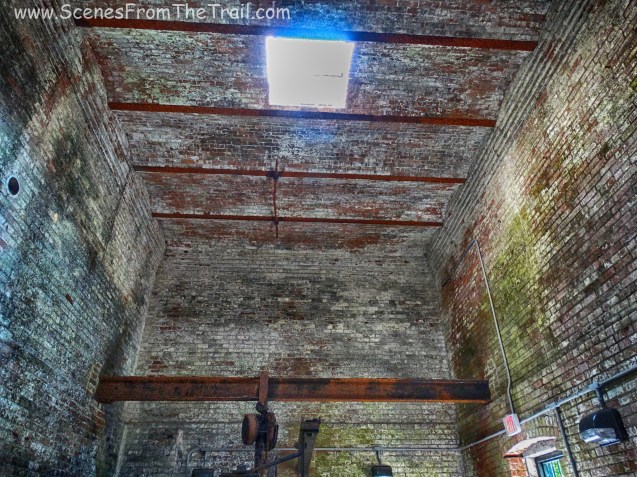
A look up at the inside of the weir. You can see the ventilating hole on the brick lined ceiling. Also visible is the steel beam that supports the weight of the steel gate.

Ossining Weir - interior

Ossining Weir – interior

I hope that you enjoyed the virtual tour of the inside of the Ossining weir chamber. Don’t forget to follow my blog to keep up to date on my ramblings throughout the Hudson Valley and beyond. Until next time folks, keep a steady flow.

Old Croton Aqueduct Trail – Ossining Weir to Sleepy Hollow

September 17, 2016 – Ossining, NY – Sleepy Hollow, NY

Difficulty: easy

Length: approximately 6 miles

Route type: linear

This is the second leg of my quest to hike the 26 mile Westchester County portion of the Old Croton Aqueduct Trail. You can check out the first leg of my hike here. It was a beautiful day for hiking on this September morning. Temperatures were in the mid to high 70’s and no rain. We parked one vehicle at Gory Brook Road in Sleepy Hollow, which would be our ending point and continued up to Ossining where our hike would begin. Since this section includes several roadwalks and places where the trail veers away from the actual location of the aqueduct, it was imperative to have an OCA map. Our hike started underground with a tour of the Ossining Weir.

Ossining Weir

Ossining Weir

It was cool to see what the aqueduct looked like beneath our feet since we were hiking the trail.

Ossining Weir

Ossining Weir

At 5am on June 22, 1842, Croton water first entered the aqueduct. John B. Jervis who was the chief engineer on this project, along with a couple of assistants, took a rowboat dubbed the “Croton Maid” into the newly completed aqueduct to inspect the work with a small amount of water flowing through it. Twenty two hours later they emerged on the Bronx shore of the Harlem River. They could not cross the High Bridge (originally the Aqueduct Bridge) which was still under construction.

Old Croton Aqueduct

Old Croton Aqueduct

This massive steel door was lowered to cut off or divert the flow of water.

steel door

steel door

It was pretty cool to see the underbelly of the aqueduct. I was tempted to walk deep into the tunnel, but I prefer to do my hiking above ground.

Old Croton Aqueduct

Old Croton Aqueduct

Once satisfied with the images captured underground, we hit the trail. We began by heading south over the Double Arch Bridge which spans the Sing Sing Kill.

Double Arch Bridge

Double Arch Bridge

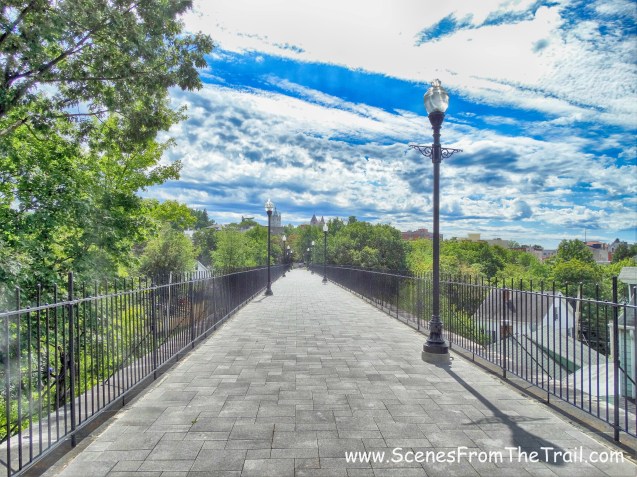
After crossing the bridge, we walked on a paved path bordered by homes and businesses on either side.

Old Croton Aqueduct Trail – Ossining

Old Croton Aqueduct Trail – Ossining

Then we came to Main Street and we crossed over.

Old Croton Aqueduct Trail – Ossining

Old Croton Aqueduct Trail – Ossining

We continued to follow the paved trail that was bordered by buildings…….

Old Croton Aqueduct Trail – Ossining

Old Croton Aqueduct Trail – Ossining

Old Croton Aqueduct Trail – Ossining

Old Croton Aqueduct Trail – Ossining

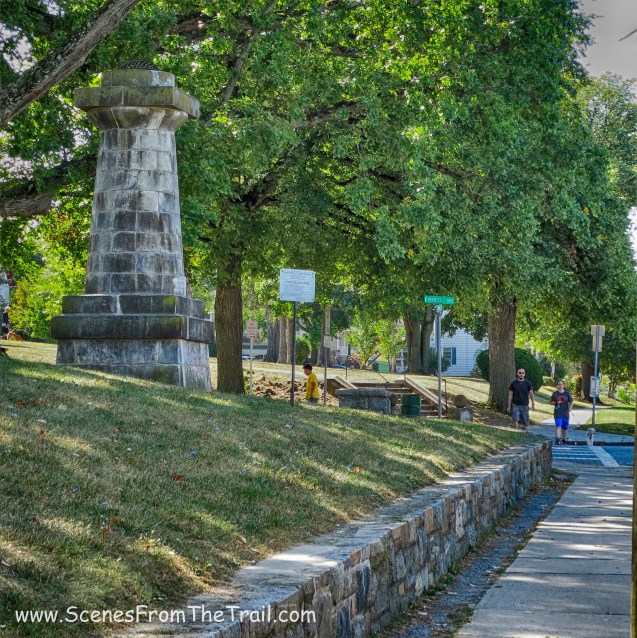
We came out on Maple Place and turned right towards Spring Street, then continued south on Spring Street until we reached Everett Ave. There we saw ventilator shaft number 8.

ventilator shaft number 8

ventilator shaft number 8

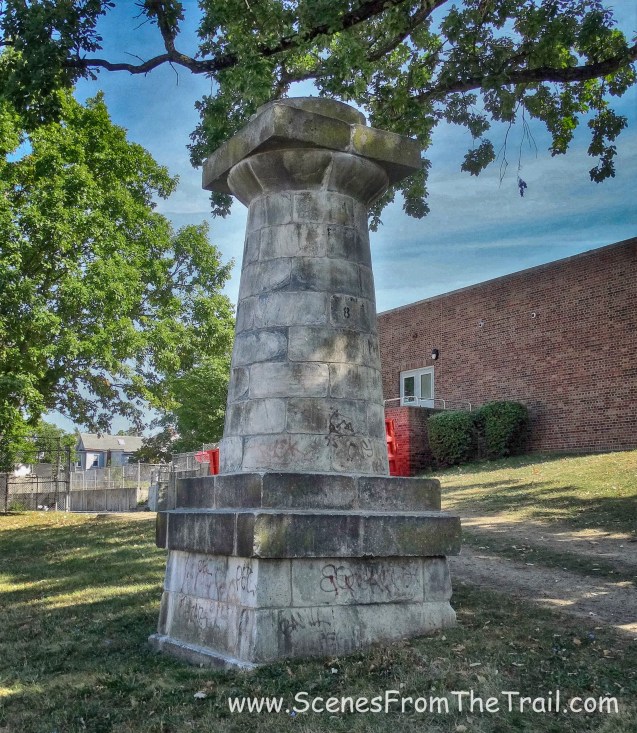
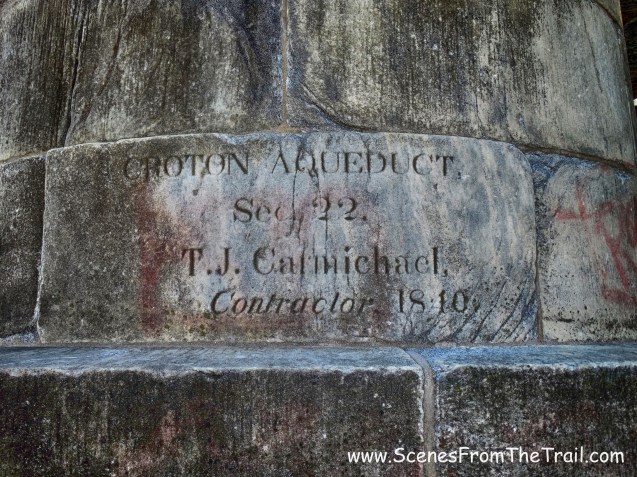
From this point all the ventilator shafts are numbered. I do not know why they didn’t bother to number the ones north of here. This one is also slightly different than the others.

ventilator shaft number 8

ventilator shaft number 8

It is more ornate than the others I have seen along the trail and apparently the builder was very proud of his work. He engraved his name into the stone.

ventilator shaft number 8

ventilator shaft number 8

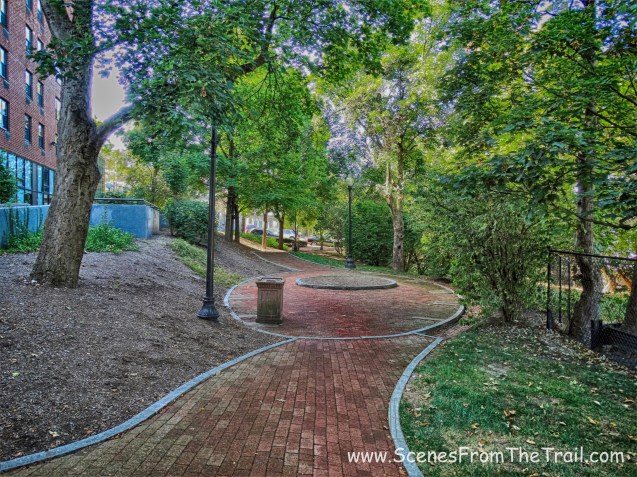
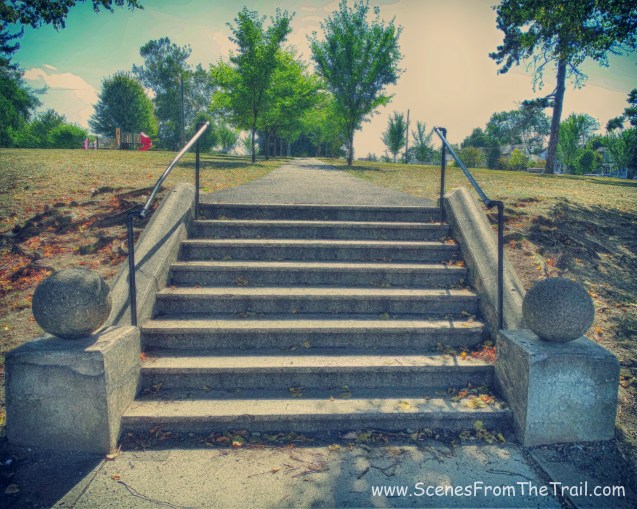
We crossed the street and walked up the stone steps into a park.

stone steps

stone steps

We walked diagonally through the park on a paved path.

paved path

paved path


We crossed the street to Nelson Park and walked on the paved path along the northern part of the park. The path veered to the right near Highland Avenue (Route 9) and we walked towards the southern boundary of Nelson Park, where we then crossed Route 9. We followed a footpath into the parking lot of the apartment complex and in the rear of the lot we thrust into the woods. Once again on the aqueduct and off the street.

Old Croton Aqueduct Trail – Ossining

Old Croton Aqueduct Trail – Ossining

It was a pleasant woods walk with only the sound of a distant lawnmower permeating the landscape. After a short while we came upon ventilator shaft number 9.

ventilator shaft number 9

ventilator shaft number 9

We continued walking along the aqueduct, crossing Scarborough Road and then came out on Long Hill West where we turned right and walked towards Route 9. The trail here diverts away from the aqueduct due to it being on private property. The aqueduct continues on the west side of Route 9, just past the Clear View School (formerly the Scarborough School). The map avoids walking along Route 9 due to the heavy traffic. The suggested route is substantially longer so I took my chances along Route 9.

Route 9

Route 9

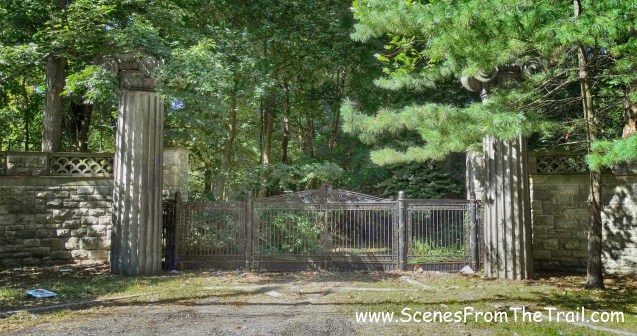
The shoulder is narrow, but it was mowed, so that made it easier to avoid getting hit by a car. I also wanted to capture an image of the gate near the main entrance to the Scarborough School, which I have passed many times by car. It is the former entrance to the Beechwood Estate which was owned by Frank A. Vanderlip. He was president of the National City Bank of New York (now Citibank) from 1909 to 1919, and was Assistant Secretary of the Treasury from 1897 to 1901. Vanderlip is known for his part in founding the Federal Reserve System.

Scarborough School

Scarborough School

While Vanderlip was vice president of the First National City Bank, he had two columns from the headquarters at 55 Wall Street shipped to Beechwood. He had the columns placed two-thirds above ground in Beechwood’s entranceway. Among the guests the Vanderlips hosted at the house were Woodrow Wilson, Henry Ford, Sarah Bernhardt, Annie Oakley, Franklin D. Roosevelt, John D. Rockefeller, and Isadora Duncan. The Wright Brothers even landed a plane on the property.

Scarborough School

Scarborough School

History lesson is over, let’s get back to hiking. Once past the Clear View School, we turned right onto River Road and we caught up with the aqueduct again. It wasn’t long until we reached ventilator shaft 10.

ventilator shaft 10

ventilator shaft 10

From here the trail was discernible, even with several road crossings. Signage was plentiful and since we were walking on the actual aqueduct, it was easy to follow. We came to a road crossing on Country Club Lane and proceeded past the gate.

gate

gate

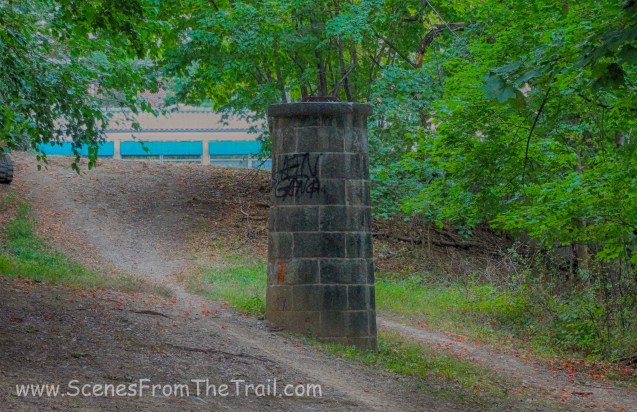
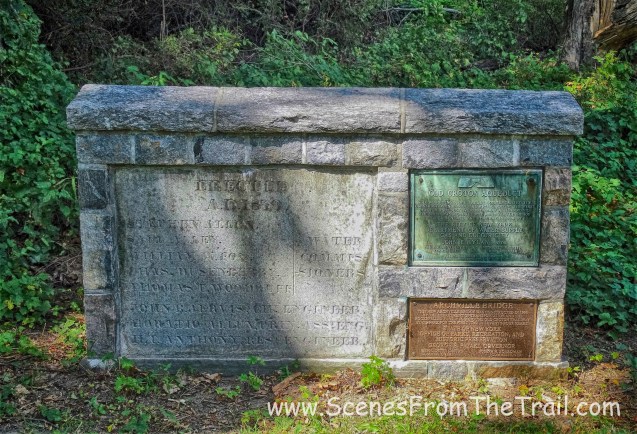
We walked along the aqueduct until we came to a monument on the left side of the trail, just before we crossed Archville Bridge. This monument was moved from its original spot on Route 9 to its present location and the informational plaques added.

monument

monument

The plaques denote a little history of the aqueduct and the bridge. Click on the ensuing images to enlarge.

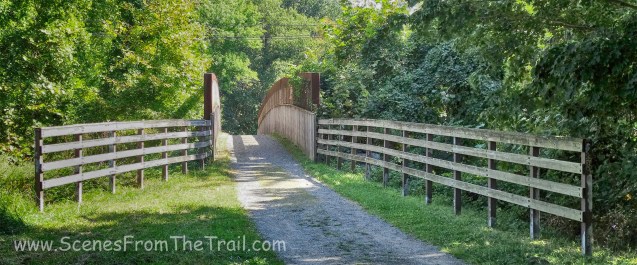
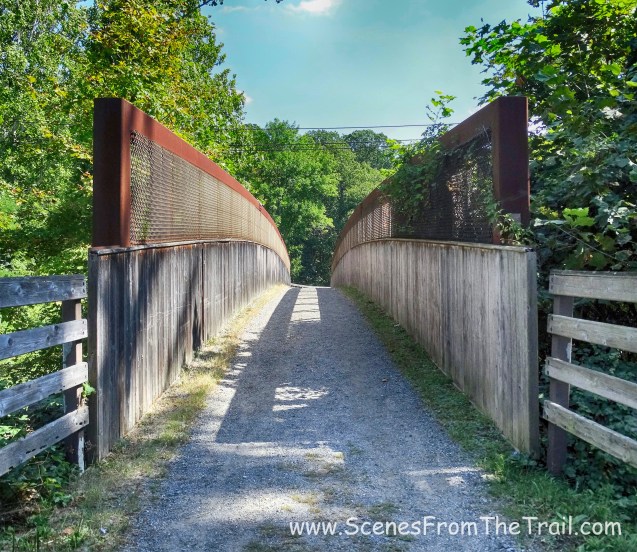
Then we crossed over Route 9 on the Archville Bridge.

Archville Bridge

Archville Bridge

This bridge has some interesting design features. Click here for more info.

Archville Bridge

Archville Bridge

After crossing the bridge, we continued hiking until we reached ventilator shaft 11.

ventilator shaft 11

ventilator shaft 11

We wanted to take a break here, but there was nowhere to sit. I suggested that we continue until we reached the weir behind the Sleepy Hollow Cemetery because I knew there were some benches made from logs there. So on we trekked, crossing over Route 117.

bridge over Route 117

bridge over Route 117

Soon we came to the weir that I mentioned earlier and it was time for lunch.

Sleepy Hollow Weir

Sleepy Hollow Weir

After taking a well deserved break along with having some lunch, we were on the move again. This part of the aqueduct is very familiar to me. I have walked this section since I was a kid. It is also a very picturesque section as well that rises up to 80 feet to span over the Pocantico River.

Old Croton Aqueduct Trail – Sleepy Hollow

Old Croton Aqueduct Trail – Sleepy Hollow

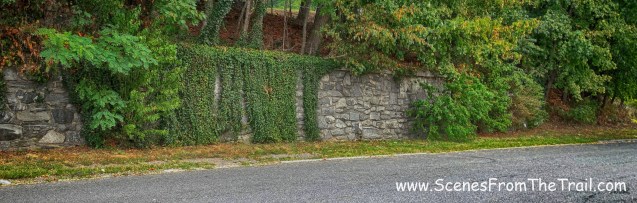
Separated by a stone wall, the aqueduct began to parallel Gory Brook Road, which is very familiar to those that grew up in this area.

Old Croton Aqueduct Trail – Sleepy Hollow

Old Croton Aqueduct Trail – Sleepy Hollow

When we got to the chain that runs across Gory Brook Road, we ended our hike there. That is where we had parked one of the vehicles earlier. We got in the car and drove back to Ossining where we began the hike, to pick up the other vehicle. I hope you enjoyed part 2 of my 26 mile Old Croton Aqueduct Trail section hike. Until next time folks, keep on trekking……

keep on trekking

keep on trekking


Old Croton Aqueduct Trail – Croton Gorge Park to Sing Sing Kill Greenway

September 11, 2016 – Cortlandt, NY – Ossining, NY

Difficulty: easy

Length: approximately 6 miles

Route type: linear

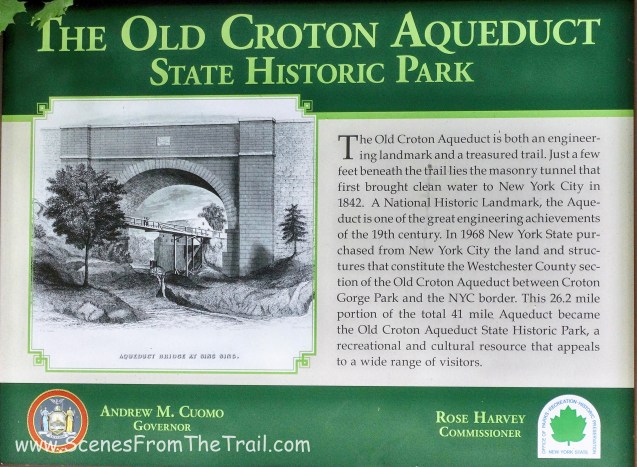
The Old Croton Aqueduct State Historic Park is a linear park which runs from Van Cortlandt Park at the Bronx County/City of Yonkers border to the Croton Dam in Cortlandt. The scenic path over the underground aqueduct winds through urban centers and small communities. It passes near numerous historic sites, preserves, a museum highlighting the construction of the Aqueduct, and many homes. The Aqueduct’s grassy ceiling provides abundant recreational opportunities for outdoor enthusiasts. While primarily for walking and running, parts of the trail are suitable for horseback riding, biking (except during “mud season”), bird watching, snowshoeing, and cross country skiing.

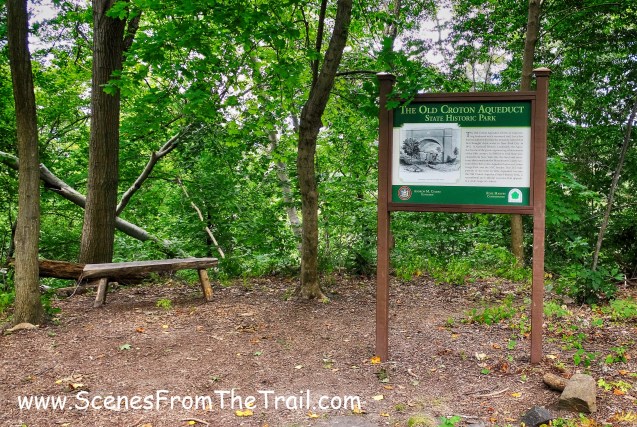
Old Croton Aqueduct State Historic Park

Old Croton Aqueduct State Historic Park

I grew up using “the aqueduct” as a method of travel and recently decided to hike the entire 26.2 mile Westchester section of the trail from Croton Gorge Park to Van Cortlandt Park on the Bronx/Westchester border.  My plan is to section hike it in consecutive weekends. This is the first portion of my hike. Since there are some roadwalks on this hike and some sections of the trail break away from the actual aqueduct itself,  I made sure to obtain an OCA – Westchester Section Map which sells for 5 bucks.

Since this is a linear hike, it is necessary to spot cars. This means parking one vehicle at the finishing point and another vehicle at the starting point. For this section of the hike one vehicle was parked at the Joseph G. Caputo Community Center in Ossining and the second car at Croton Gorge Park.

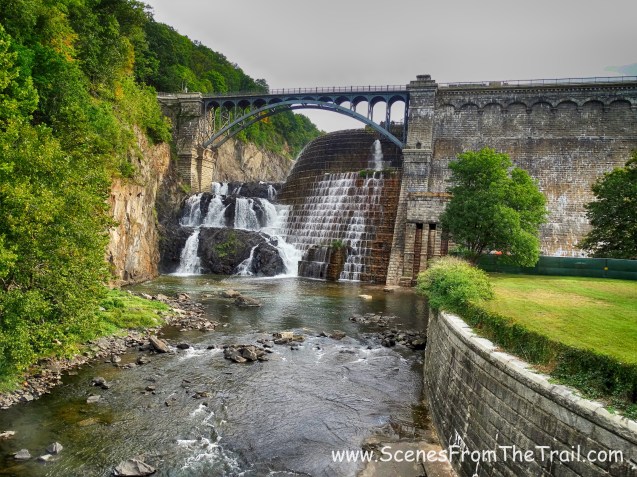
Croton Dam

Croton Dam

After arriving at Croton Gorge Park, we headed out towards the trailhead which is located just north of the restrooms and up the hill. The service road switchbacks up the hill, but we ended up taking a shortcut up a somewhat steep side trail that brought us up to the aqueduct trailhead a little quicker.

aqueduct trailhead

aqueduct trailhead

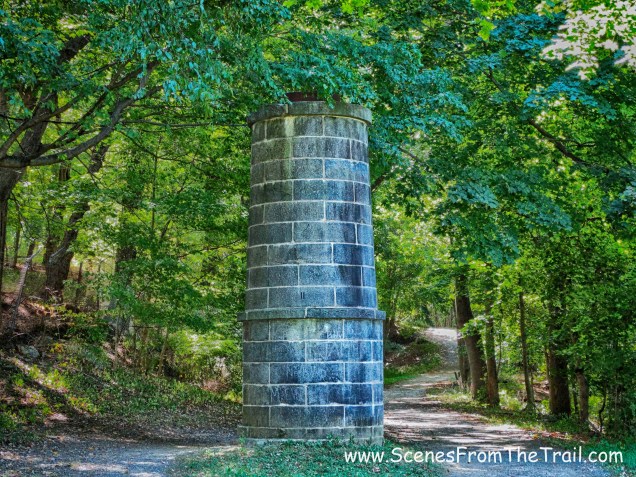
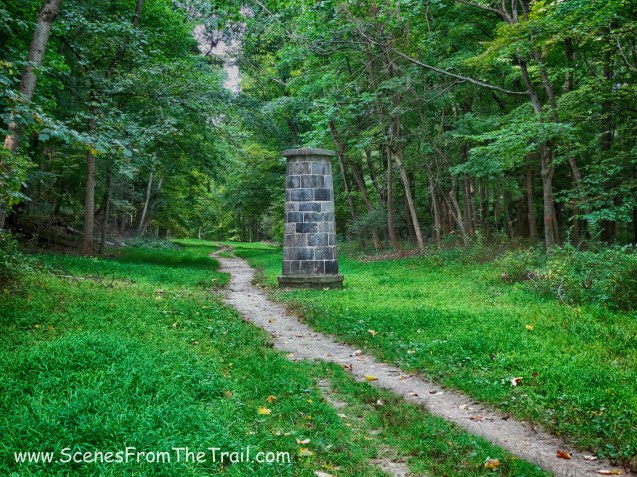
Almost immediately we came to the first of 21 stone ventilator shafts that line the trail. They were placed roughly a mile apart along the northern part of the aqueduct. They were erected to keep the aqueduct at atmospheric pressure.

stone ventilator

stone ventilator

It was a little cloudy on this day, but the sun would be coming out soon. We were grateful for the canopy of the trees, which made for a comfortable hike.

Old Croton Aqueduct

Old Croton Aqueduct

We came to a scenic rock cut and we stopped for a minute to take some photographs.

rock cut

rock cut

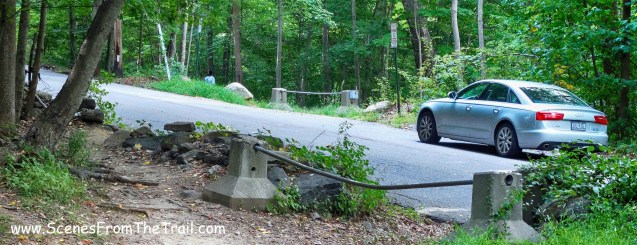
Then shortly thereafter we came to our first road crossing. This was at Quaker Bridge Road, which we would cross twice.

Quaker Bridge Road

Quaker Bridge Road

Prior to our first road crossing there were numerous dog walkers on the trail. One group of men had 6 or 7 unleashed dogs. Near the road crossings there were people to be seen since they could park and just walk onto the aqueduct. As we went further away from the roads, the aqueduct became more secluded. After crossing Quaker Bridge Road we came to the second stone ventilator shaft of the day. At this point we were approximately one mile into our hike.

stone ventilator shaft

stone ventilator shaft

Then we crossed the other end of Quaker Bridge Road.

Quaker Bridge Road

Quaker Bridge Road

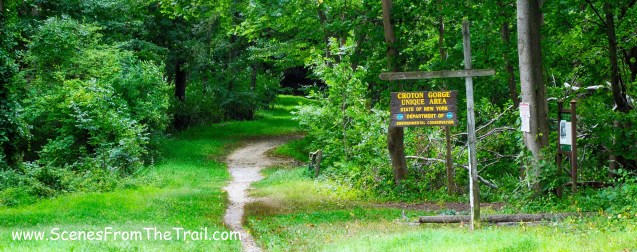
After crossing the road we came to Croton Gorge Unique Area, which I had never heard of before. I filed it away for future reference.

Croton Gorge Unique Area

Croton Gorge Unique Area

There was a bench alongside the trail and we took a short breather.

resting spot

resting spot

After a brief rest on the bench that was placed there for our benefit, we continued on and came upon another stone ventilator shaft.

stone ventilator shaft

stone ventilator shaft

Another road crossing on Hillcrest Avenue…….

road crossing

road crossing

and we trekked on into Crotonville.

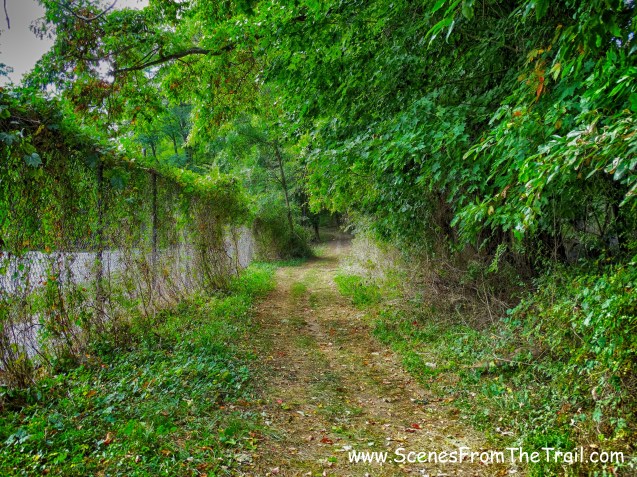
Old Croton Aqueduct Trail

Old Croton Aqueduct Trail

We passed some more strategically placed benches, but did not stop this time.

benches

benches

We came out on Indian Brook Service Road by the Ossining Water Treatment Plant. We crossed the road and picked up the trail once again.

Old Croton Aqueduct Trail

Old Croton Aqueduct Trail

The trail now hugged a fence that bordered the GE Management Development Institute.

Old Croton Aqueduct Trail

Old Croton Aqueduct Trail

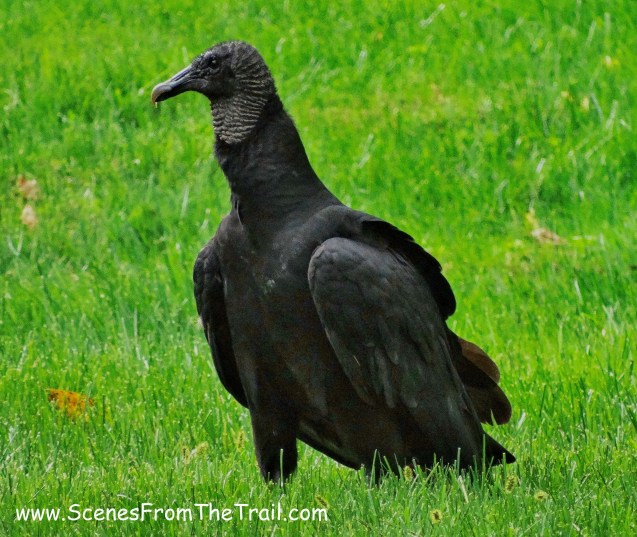
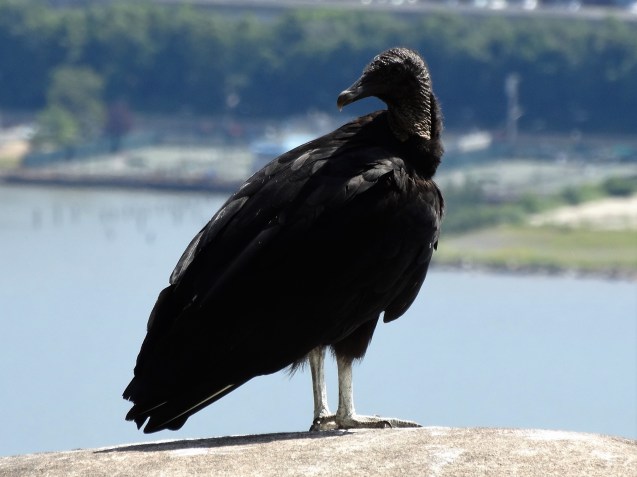
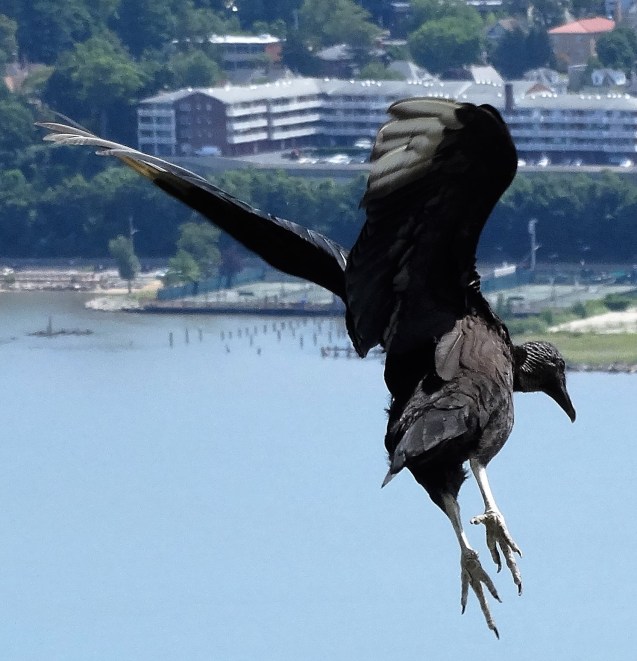
We came out on Old Albany Post Road by the American Legion and walked underneath Route 9A. We proceeded up to Ogden Avenue and turned left where we picked up the trail again. I knew that we would be crossing Highland Avenue (Route 9) soon, and not being familiar with the OCA Trail in this area, we somehow lost the trail. Since I knew we would be crossing the road, I did not want to miss the trailhead, so I inadvertently decided to cross too soon. If not for this error on my part we wouldn’t have seen this Black Vulture on the side of the road trying to make dinner out of a dead squirrel that lay in the road while not being roadkill itself.

Black Vulture

Black Vulture

Not liking road walks too much, I saw what looked like a trail that paralleled Route 9 and decided to take that route. I knew it would lead us to the aqueduct and I was right. Unfortunately there was a locked gate between us and the aqueduct. I was willing to climb the gate, but my hiking partners declined.

locked gate

locked gate

So we retraced our steps until we could walk around the fence and back onto Highland Avenue. Proceeding south, we came to the trailhead we were looking for.

Old Croton Aqueduct Trail - Ossining

Old Croton Aqueduct Trail – Ossining

Now we were back in business! After a short walk, we came to Kane Mansion, which was built in 1843.

Kane Mansion

Kane Mansion

As we continued on our hike, we passed several more road crossings and came to a weir. Six weirs were constructed along the OCA to allow water to be drained from the aqueduct if the level rose above a certain height, weirs with hand-controlled gates and waste outlets were constructed. These also provided ventilation and access, making it possible not only to divert water and control its depth, but to stop it completely at the site of the weir.

Weir

Weir

Weir

Weir

After several more road crossings we arrived at the Ossining Weir.

Ossining Weir

Ossining Weir

The New Ossining Weir is twenty feet long, ten feet wide, and thirty feet high, including the portion of the weir that is built underground for the waste-water conduit.

Ossining Weir

Ossining Weir

At this time we walked across the Double Arch Bridge which spans the Sing Sing Kill and Broadway in Ossining.

Double Arch Bridge

Double Arch Bridge

After crossing the bridge, we veered off to the left towards Broadway and the Joseph G. Caputo Community Center, which is where we had parked one of the vehicles earlier. The aqueduct portion of the hike was over for today. We rested briefly in the parking lot and then began the Sing Sing Kill Greenway portion of the hike. I had been here on several occasions and figured it would be a good place to end this section of our OCA hike since it shares a parking lot with the community center. It is only a 1/2 mile to the end and back, so we trekked on.

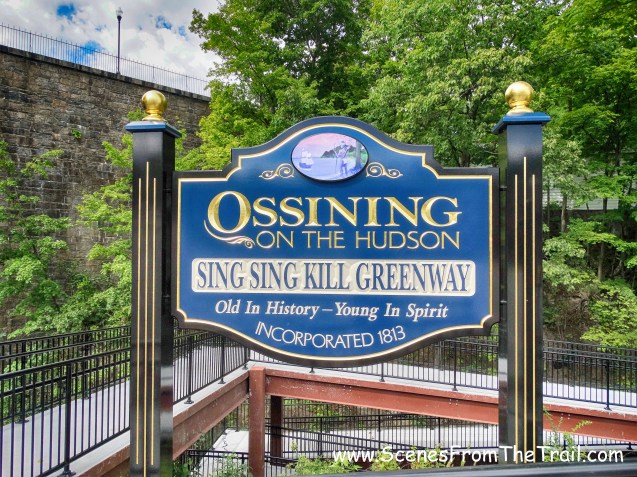
Sing Sing Kill Greenway

Sing Sing Kill Greenway

From here we caught a nice view of the Double Arch Bridge from underneath. Although the lower bridge (Broadway) had debris netting draped on it, you can see how it got its name.

Double Arch Bridge

Double Arch Bridge

We strolled along the walkway at a leisurely pace and had the place to ourselves.

Sing Sing Kill Greenway

Sing Sing Kill Greenway

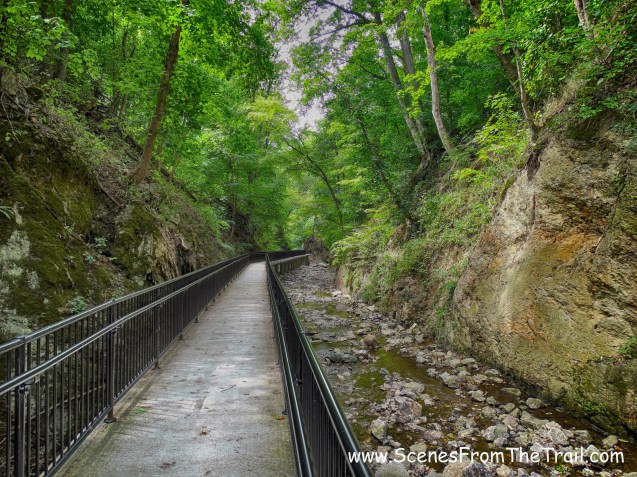
Kill Brook, which flows into the Hudson River was a bit dry, but the gorge is still a nice place to go for a walk.

Sing Sing Kill Greenway

Sing Sing Kill Greenway

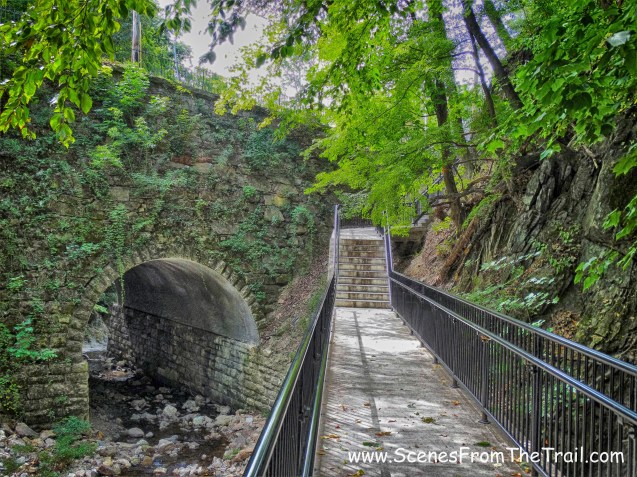
We walked to the end of the walkway where the stairs lead up to Central Ave.

Sing Sing Kill Greenway

Sing Sing Kill Greenway

From there we retraced our steps back to the parking lot where our chariot awaited us. We had to drive back to Croton Gorge Park to pick up the other vehicle. That was it for today, by this time we were tired and hungry and I had some pork in the slow cooker that was calling my name. As far as hikes go, this wasn’t the most scenic one I have done, but it had meaning. Growing up in North Tarrytown, “the aqueduct” as we all called it, ran through the center of town. It was right behind the cafeteria of Sleepy Hollow HS and we spent many days wandering all over it. I have walked some areas of it in town and some sections south, but never really explored beyond. With the first section under my belt, I look forward to next week, when my hike takes me through Sleepy Hollow and Tarrytown. Stay tuned, until next time folks, keep on trekking.

keep on trekking
keep on trekking

Walpack Township – Abandoned in New Jersey

September 10, 2016 – Walpack Township – Walpack Center, NJ

Walpack , New Jersey  is located in the scenic western section of Sussex County along the Delaware River. The township includes a section of the Old Mine Road, which is reputed to have been constructed by the early Dutch miners in the mid-1600s as a means of transporting copper ore from the Pahaquarry area to Kingston (formerly Esopus), NY. At one time it was considered the longest commercial road of note in the colonies. The area was sparsely settled before 1736. The 24 square mile township is peaceful and exceedingly quiet, almost to the point of being spooky.

Walpack , New Jersey

Walpack , New Jersey

In the 1960s, in order to control damaging flooding and provide clean water to supply New York City and Philadelphia, the U.S. Army Corps of Engineers proposed building a dam. When completed, the Tocks Island Dam would have created a 37 mile long lake between Pennsylvania and New Jersey, with depths of up to 140 feet. This meant that all the homes in the area would be underwater. This lake and the land surrounding were to be organized as the Tocks Island National Recreation Area. Although the dam was never built, 72,000 acres of land were acquired by condemnation and eminent domain. The Corps and the National Park Service would end up spending $100 million to buy homes, stores and churches on either side of the river. About 8,000 people were evicted from their homes. The dam was never built and the land was subsequently transferred to the oversight of the National Park Service.


signs seen on many of the abandoned buildings

signs seen on many of the abandoned buildings

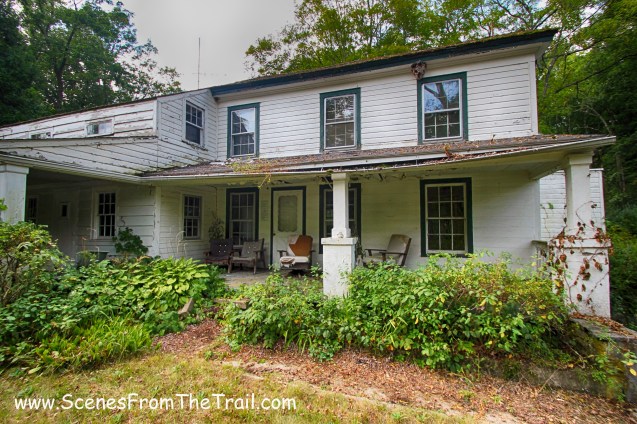
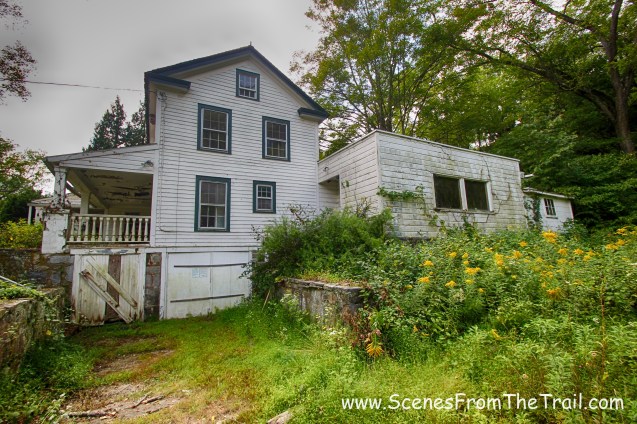
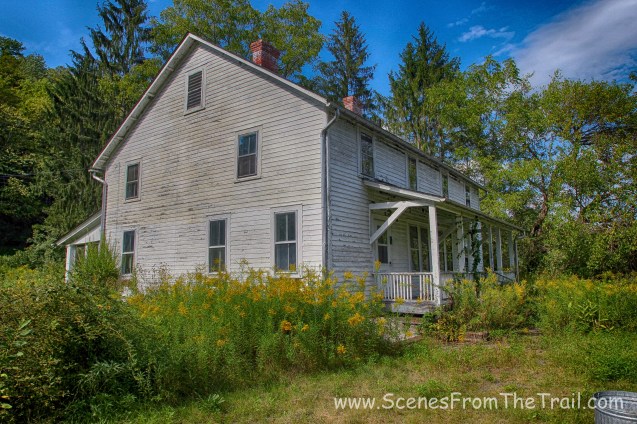
There are numerous abandoned homes and barns throughout the area that have been left to rot. Upon entering Walpack, I came upon this home alongside National Park Service Route 615 (Walpack Flatbrook Road).

along Route 615

along Route 615

Since these structures are overseen by the National Park Service, the grass was mowed on properties easily viewed from the road. Below are some more images for the same house.

along Route 615

along Route 615

along Route 615

along Route 615

A short drive away is Main Street, also known as Walpack Center. Although these homes are unoccupied, there seems to be some restoration being done on some of the structures. I parked across the street from the church and captured some images of the buildings which date as far back as 1850.

Walpack Methodist Church – This well built church was erected in 1872 at its present site at a cost of seven thousand dollars. Today the church is owned by the National Park Service. The Walpack Historical Society uses this facility for its general meetings.

Walpack Methodist Church

Walpack Methodist Church

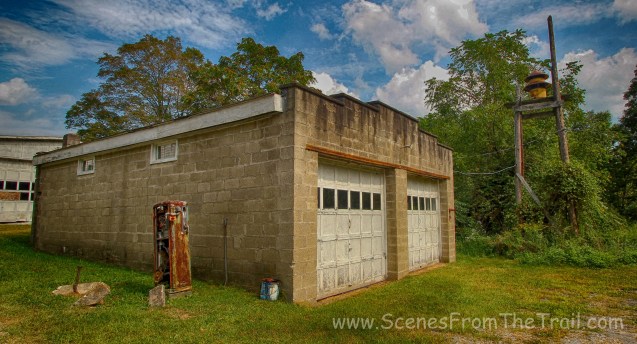
Across the street from the church is a garage with an old gas pump. To the right there is an old fire or air raid siren.

garage

garage

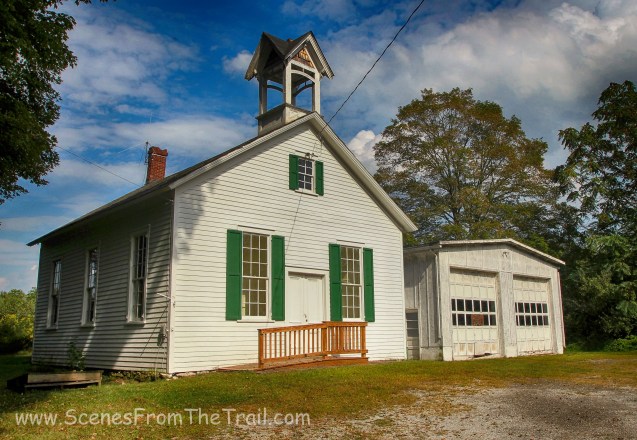
Back behind the garage is the one room schoolhouse.

one room schoolhouse

one room schoolhouse

Below are some more buildings that line Main Street in Walpack Center. Click on the ensuing images to enlarge.


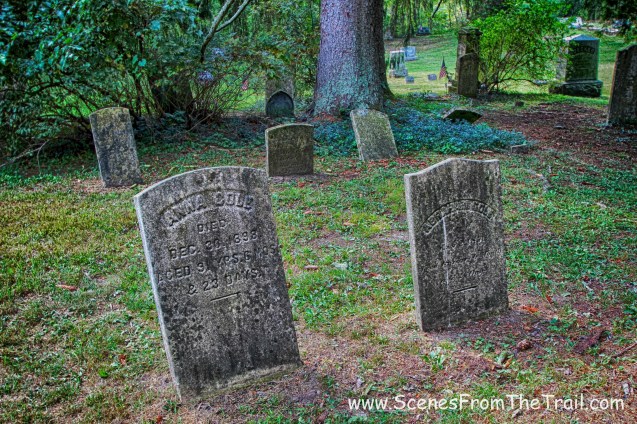
I continued down Main Street and turned right onto Mountain Road. I stopped momentarily at Walpack Cemetery.

Walpack Cemetery

Walpack Cemetery

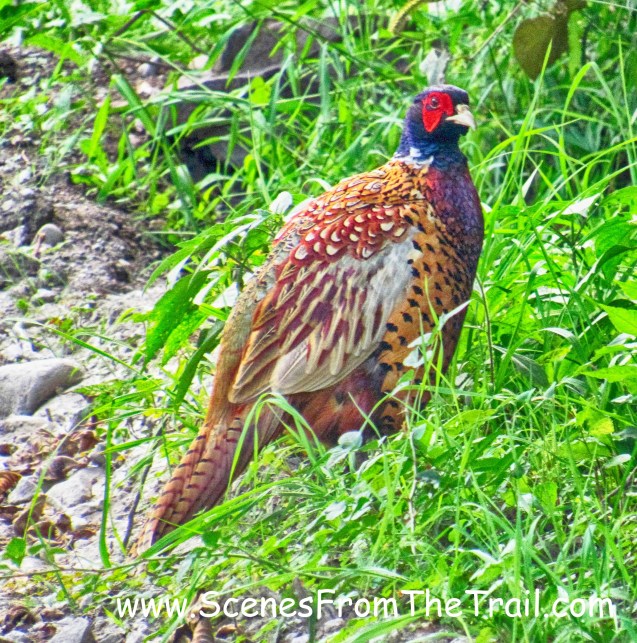
Just after leaving the cemetery I saw a Pheasant in the road so I stopped and was able to capture an image before he dashed into the woods.

Pheasant

Pheasant

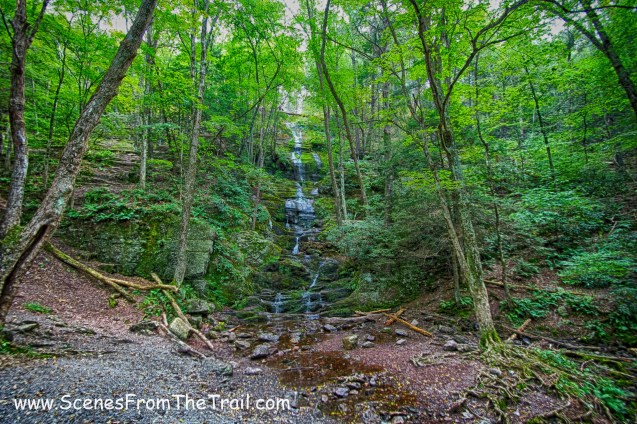
Continuing down Mountain Road, I stopped at Buttermilk Falls, which is the tallest falls in the state of New Jersey. I had visited this waterfall several times before and it was quite a sight to see, but today it was nothing more than a trickle.

Buttermilk Falls

Buttermilk Falls

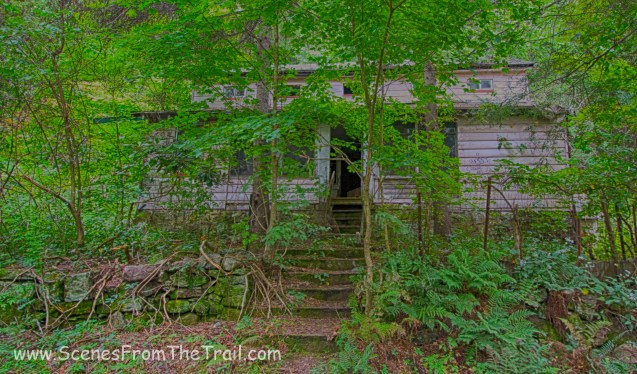
Just down the road from Buttermilk Falls was another abandoned and dilapidated house.

ruined house on Mountain Road

ruined house on Mountain Road

Away from Main Street the houses were in really bad shape. No restoration job here. Click on the ensuing images to enlarge.


I continued down the road and a short distance away was an old barn. When I pulled up there were three older women there checking out the barn. One woman told me that the barn and the house up the road (pictured above) belonged to her sister until she was forced to move.

barn on Mountain Road

barn on Mountain Road

The barn was huge and looked to have been squatted in at one time like most of the buildings I visited.

barn on Mountain Road

barn on Mountain Road

It also had a storm cellar, but I did not venture down the stairs to check it out.

storm cellar

storm cellar

Here’s a view of the rear of the barn.

rear of the barn

rear of the barn

At this point I turned around and headed back towards Walpack Center. I stopped and took a few more shots before I headed out. I turned left at the end of Main Street onto Walpack Flatbrook Road (National Park Service Route 615) and saw some more abandoned houses just off the road. I pulled in the driveway to check them out.

structure alongside Walpack Flatbrook Road

structure alongside Walpack Flatbrook Road

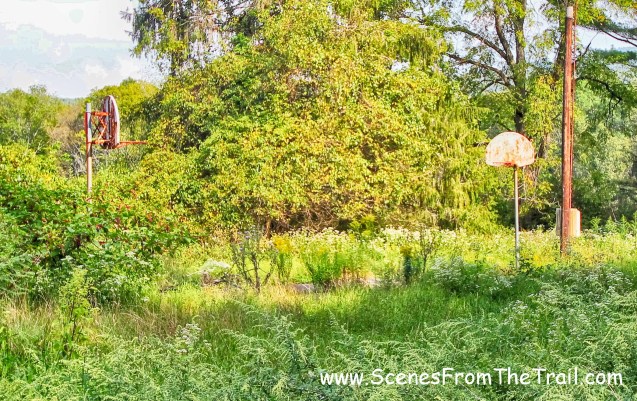
Right by the barn was an overgrown basketball court.

overgrown basketball court

overgrown basketball court

It looked like all these buildings shared a common driveway. A little further in was this more modern looking home.

modern looking home

modern looking home

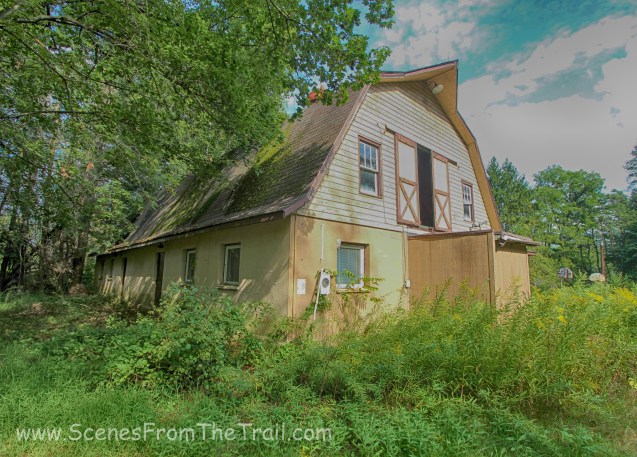
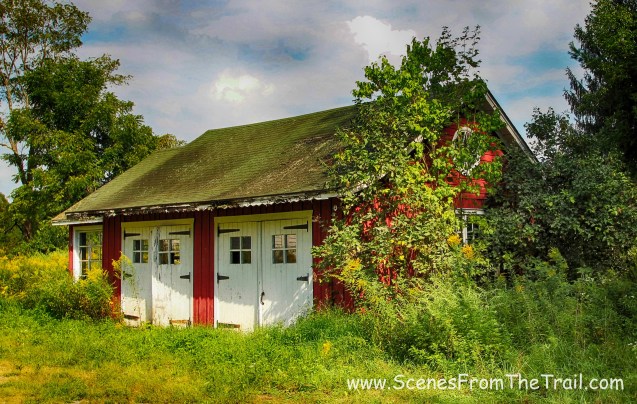
I turned around and walked back past where I was parked and this red barn seemed to be in decent shape.

red barn

red barn

red barn

red barn

Across from the red barn was an old farmhouse.

old farmhouse

old farmhouse

After checking out these structures, I was off to Old Mine Road. I had read that there was some abandoned structures along that old gravel road.

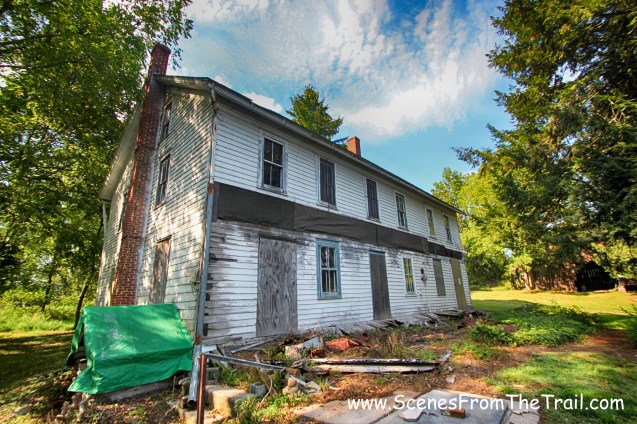
Once off the pavement and driving the gravel road, I came to what seemed like a farm. The property had numerous structures some in worse shape than others.

The main house

The main house

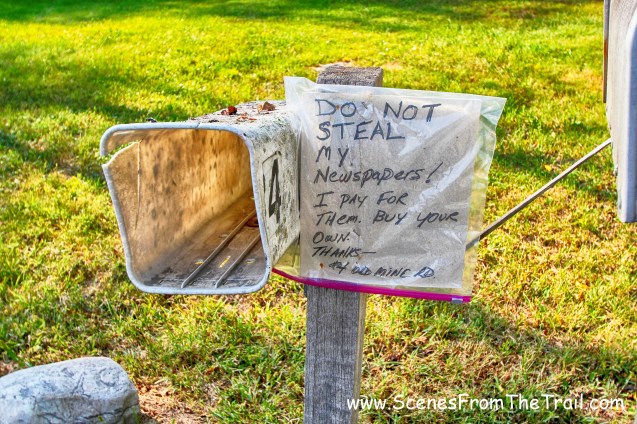
There were several mailboxes out front, but this newspaper box caught my eye.

newspaper box

newspaper box

Near the front of the property sat this structure.

outbuilding

outbuilding

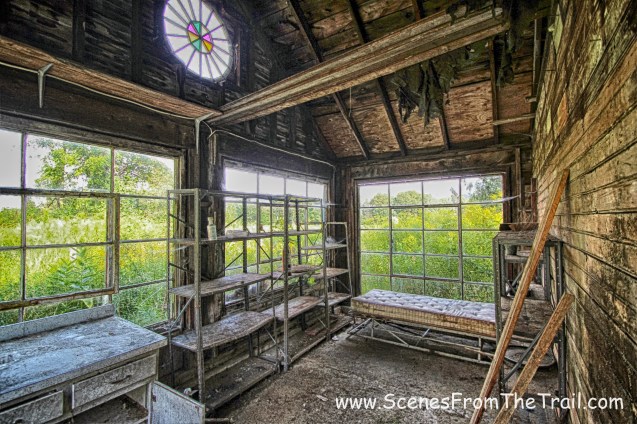
Below are a couple of shots of the interior.

outbuilding

outbuilding

outbuilding

outbuilding

Behind the main house was a shed like structure.

shed

shed

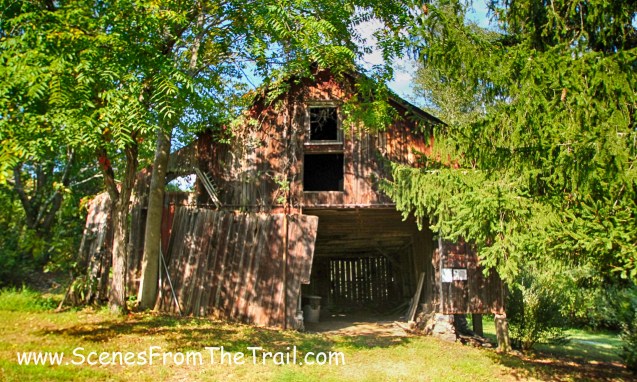
Towards the back of the property there was a large L shaped barn. It was in pretty bad shape as part of it had collapsed.

L shaped barn

L shaped barn

L shaped barn

L shaped barn

L shaped barn

L shaped barn

This was a huge building and the interior was cavernous.

L shaped barn

L shaped barn

There were signs posted on all the buildings due to the poor condition of the structures.

sign

sign

To the left of the main house stood another small outbuilding.

small outbuilding

small outbuilding

I drove down Old Mine Road and saw another dilapidated house.

dilapidated house

dilapidated house

I continued driving down Old Mine Road with the Delaware River visible through the trees on my right. It was a tight squeeze anytime a vehicle came from the opposite direction. Thankfully that only happened a few times. After about 1.5 miles I arrived at the Van Campen Inn. Despite its name, the Van Campen Inn was never really used as an inn, at least not as we know them today. This “inn” was actually a “Yaugh house,” a rural house in a remote area that was required by early colonial law to provide shelter and food to travelers.

Van Campen Inn

Van Campen Inn

It was an interesting day visiting a town that time forgot. I hope that you enjoyed my journey into the abandoned town of Walpack, NJ. Until next time folks……….


Grossinger’s Catskill Resort Hotel

September 5, 2016 – Liberty, NY

Disclaimer: Exploring abandoned and/or ruined structures can be dangerous and you could be trespassing. Should you choose to enter the property of any of the places featured on this site, do so legally.

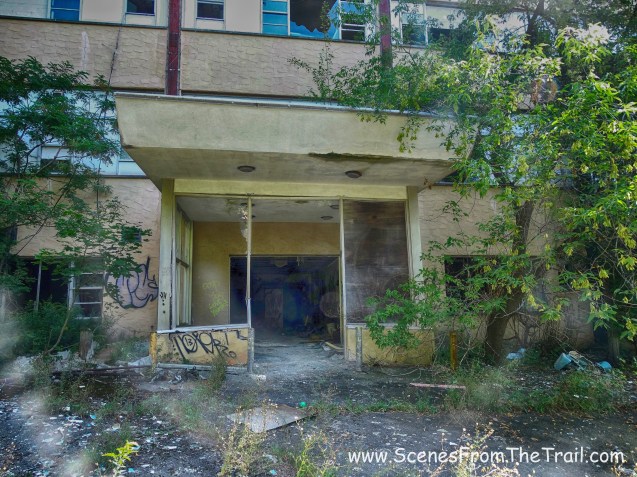
Grossinger’s Catskill Resort Hotel was a resort in the Catskill Mountains in the Town of Liberty, New York. One of the largest Borscht Belt resorts, it was a kosher establishment that catered primarily to Jewish clients from New York City. After decades of activity and notable guests, it closed its doors in 1986.

In 1952, Grossinger’s earned a place in the history of skiing as the first resort in the world to use artificial snow. In 1972, the hotel had grown to 35 buildings on 1,200 acres that served 150,000 guests a year. It had its own airstrip and post office. During his fighting days Rocky Marciano would train at the resort. Elizabeth Taylor got married there and Jackie Robinson vacationed there. Unfortunately in the late 1970s and 1980s, resorts like Grossinger’s could no longer attract younger guests. In 1986, the Grossinger descendants sold the property. Grossinger’s main hotel and main resort areas closed in 1986, but the golf course is still open as of 2016.

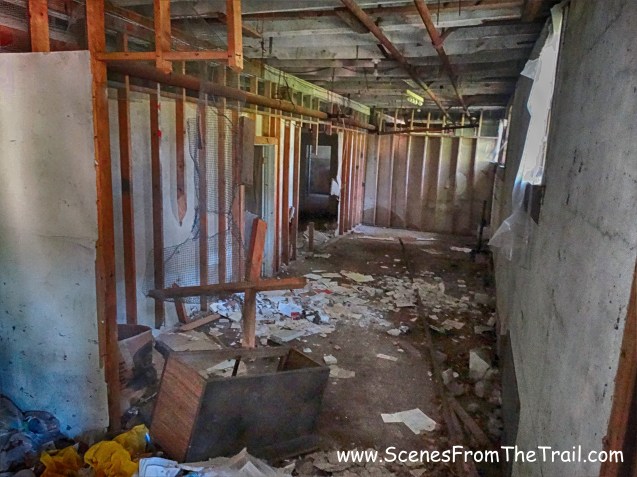
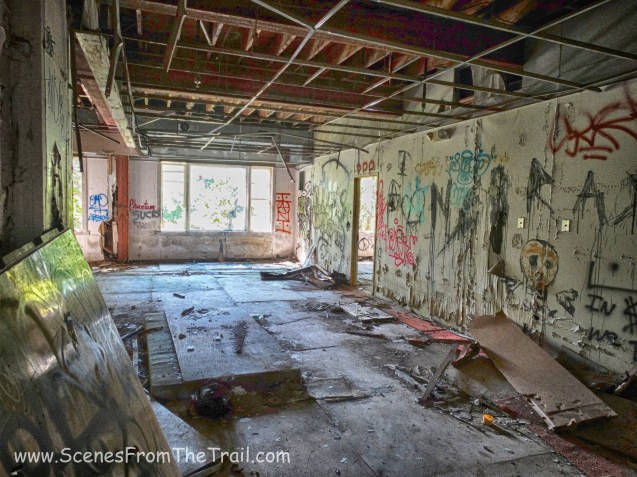
Today, what is left of it sits in ruin and decay. Any semblance to yesteryear was stripped away long ago. It is a place of curiosity and a haven for urban explorers. There’s not much left to see as the place has been pillaged of anything of value or what may have been souvenirs. The tall grass and weeds have enveloped the roads and walkways that once paved the way around the property. The buildings that remain standing have been left to rot and and most are not safe to wander through. Nevertheless below are some images that were captured in September of 2016.

UPDATE: Demolition of the remaining buildings on the resort property started in summer 2018. According to the Sullivan County Democrat, all remaining structures are scheduled to be demolished by the end of 2018. They posted a video on Facebook of the Jennie G. building being torn down on August 12th, 2018.

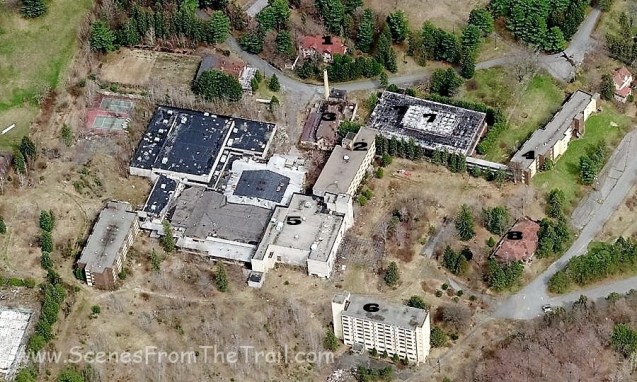
I added an image from Google Maps and numbered the areas that were photographed.

aerial view

aerial view

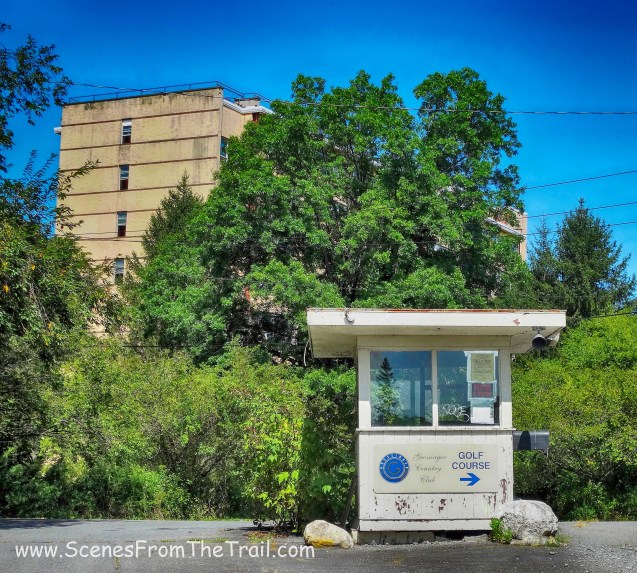
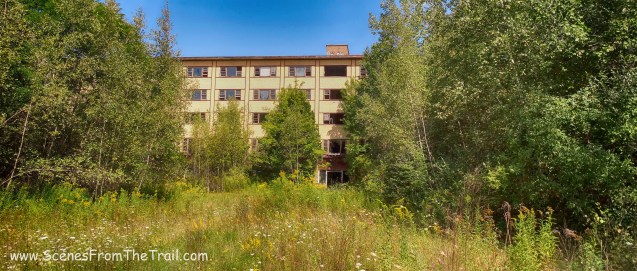
The guard booth is the first thing you see coming up the driveway with the Jennie G. wing just beyond it.

guard booth

guard booth

  1. First up is the Lyman Building. I believe it was named after Abe Lyman, a popular bandleader from the 1920s to the 1940s. It is top center on the map above.
    Lyman Building

    Lyman Building

    Lyman Building

    Lyman Building

    Lyman Building

    Lyman Building

    Lyman Building

    Lyman Building

    2. I believe that this is the main house.

    main house

    main house

    These shots were taken from the rear of what I assume is the main house.

    main house

    main house

    main house

    main house

    main house

    main house

    3. The power plant.

    power plant

    power plant

    Click on the ensuing images to enlarge.

4. The Paul G. wing.

Paul G. wing

Paul G. wing

Click on the ensuing images to enlarge.

5. The conference center.

conference center

conference center

6. The Jennie G. wing.

Jennie G. wing

Jennie G. wing

Click on the ensuing images to enlarge.

More images from the Jennie G. wing captured from the front.

Jennie G. wing - lobby entrance

Jennie G. wing – lobby entrance

Click on the ensuing images to enlarge.

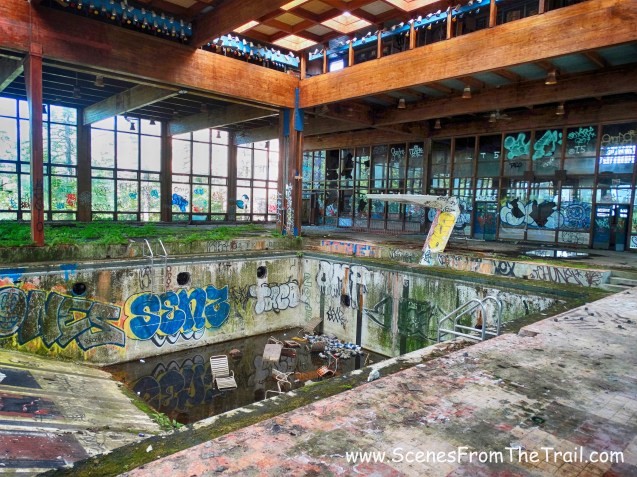
7. The Natatorium – which is the indoor pool area.

indoor pool

indoor pool

Click on the ensuing images to enlarge.

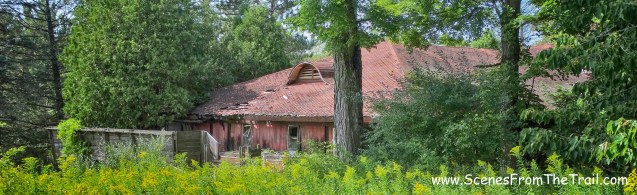
8. The Joy cottage.

The Joy cottage

The Joy cottage

Click on the ensuing images to enlarge.

So there you have it, what once was the crown jewel of the Catskills is now nothing but a mass of rot and decay. The bones have been picked clean and the rest has been reclaimed by nature. I hope that you enjoyed this post. Don’t forget to follow my blog so you don’t miss any future posts. Until next time folks……..

Schunemunk Mountain from Gonzaga Park

September 3, 2016 – Highland Mills, NY

Difficulty: moderate

Length: approximately 4.7 miles

Route type: out and back

Schunemunk Mountain is the highest mountain in Orange County and has over 2700 acres of rolling meadows and a spectacular mountain top. Hikers encounter elevations up to 1664 feet and thrilling 360 degree views of adjacent valleys, portions of the distant Hudson River and surrounding forest and farm lands. The eight marked trails include the Long Path, Jessup, Western Ridge, Trestle, Sweet Clover, Otterkill, Dark Hollow and Barton Swamp Trails totaling over 20 miles which traverse the mountain and glades.

Gonzaga Park is a 216 acre parcel of varying topography, including steep slopes and rock formations, as well as open areas and interesting buildings. This site contains a large athletic field, used primarily for Gaelic Football and other field sports, as well as picnicking and other passive uses. The property also provides access to the Long Path, a hiking trail operated and maintained by the New York/New Jersey Trail Conference. The parcel contains parts of the Towns of Blooming Grove, Monroe and Woodbury.

This hike was my introduction to Schunemunk Mountain. I have been wanting to check this place out for quite some time, but with so many great hikes on my “to do” list, it got pushed to the back burner. A few weeks ago I took out my West Hudson Trails Map and decided to  put together a hike at Schunemunk. The Megaliths is the most popular hike on the mountain, but I wanted to try a less traveled area. I saw Gonzaga Park on the map and Googled it. I couldn’t find much information on the park except that it had some interesting stone structures. It once had a Monastery that looked like a castle on the grounds that had been torn down. Remaining were several stone buildings that included a very cool looking small chapel. I knew then that I would begin my hike from there. I prefer circuit or loop hikes over an out and back hike because I prefer not to tread the same ground on the way back. Some out and back hikes give you a different look on the way back, this was one of them.

We arrived at Gonzaga Park about 9:30am on Saturday morning and the lot was empty which was a good sign.

Gonzaga Park

Gonzaga Park

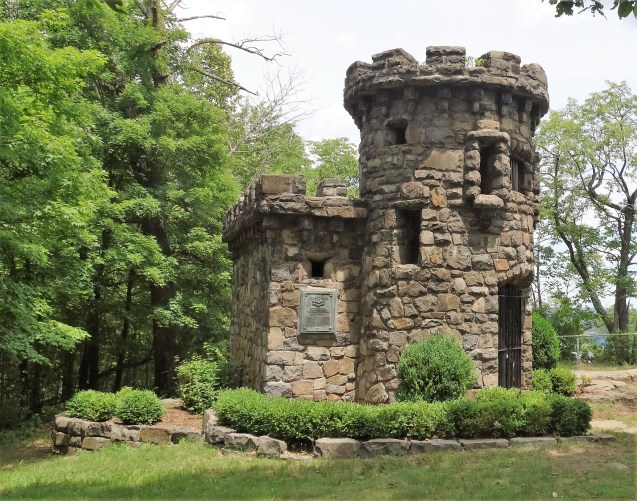
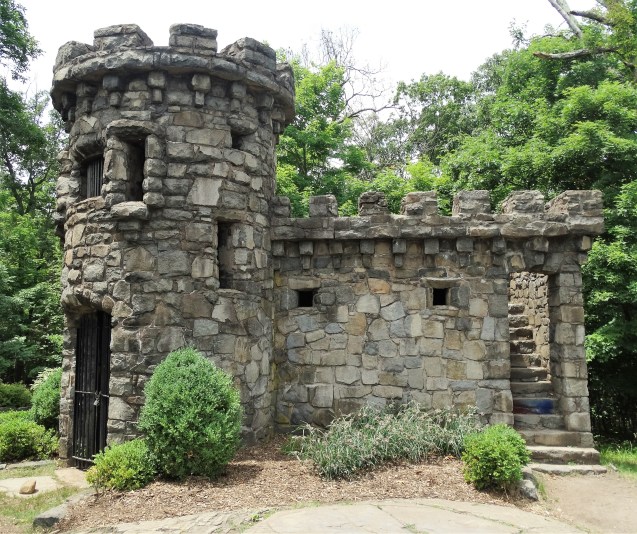
A small stone gazebo like structure appeared on the right as we entered the parking area…..

gazebo like structure

gazebo like structure

and a larger cylindrical structure was a little further in. From older images on the internet it seems that at one time this building was connected to the old Monastery.

old Monastery

old Monastery

After checking out these two structures which were in close proximity to where we parked, we headed out to find the chapel. I knew the approximate location of where it stood in the park after locating it on Google Maps. On the way to the chapel we encountered another stone building that had seen better days.

stone building

stone building

I peeked my head in to grab an image of the interior, but did not venture inside.

interior of stone building

interior of stone building

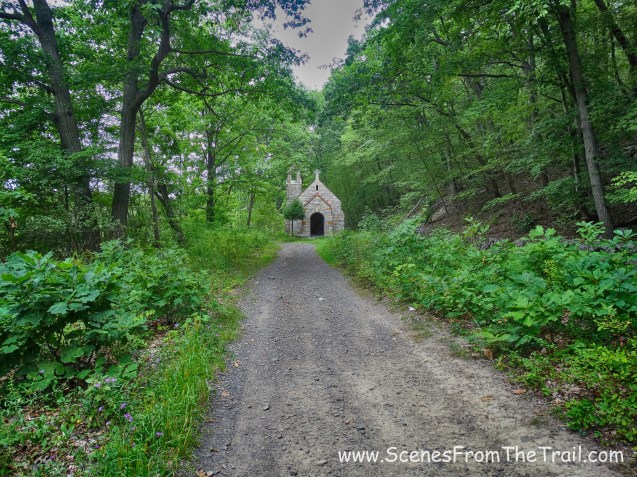
Not too far from that building was a gravel road that led us up to the chapel.

road to the chapel

road to the chapel

This was one cool looking chapel. I have encountered many ruined structures on my hikes, but this was right at the top of the list. I’m glad that we found our way to it.

chapel

chapel

chapel

chapel

chapel

chapel

chapel

chapel

chapel

chapel

After taking numerous shots of this fantastic looking chapel in the woods, we were ready to begin our hike. Walking down the gravel road away from the chapel, I was able to spot some faded blazes on a tree. For this hike we would be following the yellow blazes of the Jessup Trail. The Jessup Trail (8.6 miles, yellow) is the main north-south trail on the mountain and traverses its full length. The Highlands Trail (teal diamond) is co-aligned with the Jessup Trail for its entire length. The Long Path is co-aligned with the Jessup Trail from Gonzaga Park for the entirety of the hike we were doing on this day. We followed the yellow Jessup Trail blazes, as the Long Path and Highlands Trail are marked with their trail logos only at occasional intervals and at junctions.

The Jessup Trail

The Jessup Trail

The trail was mostly a woods road that occasionally turned into a footpath, but reverted back to a woods road. It was somewhat rocky, but not too bad. The most strenuous part of the hike was at the beginning where we gained over 300 feet of elevation in about 3/4 of a mile. After that it was mostly undulating terrain with long stretches of level trail.

The Jessup Trail

The Jessup Trail

It turned out to be a great day for a hike. Mostly cloudy, but no rain made it a much easier trek up to the top. After about a 1/2 mile into our hike we came to 3 scenic view points in succession. A nice reward early on.

first scenic view

first scenic view

After taking in some views we continued on the yellow blazed Jessup Trail and came upon an old park bench on the mountain. I wish it fit in my backpack because it was more comfortable than sitting on rocks.

old park bench

old park bench

We came to a clearing with limited views and I captured an image. Upon further inspection, it seems like there are skulls in the clouds.

skulls in the sky

skulls in the sky

We came to a steep descent into a ravine which was helped by step like stones. The image below was taken after we climbed down as I looked back.

a look back at steep descent

a look back at steep descent

Then we climbed out of the ravine.

the climb out of the ravine

the climb out of the ravine

Once out of the ravine, we walked briefly through the woods…..

The Jessup Trail

The Jessup Trail

and came out to a clearing that afforded some really good views.

scenic view

scenic view

There were several more viewpoints that faced north with a nice view of the Shawangunks with the Catskills just beyond.

Shawangunks with the Catskills just beyond

Shawangunks with the Catskills just beyond

We continued along the trail searching for a southern facing view.

The Jessup Trail

The Jessup Trail

When we came to the southern view we were looking for, this became our turnaround point. Looking south towards Harriman-Bear Mountain State Parks.

southern view

southern view

At this point we had hiked about 2.5 miles and decided that this would be a good place to turn around. Like I said earlier, the hike back had a different look. It felt like we were treading new ground instead of retracing our steps.

The Jessup Trail

The Jessup Trail

The Jessup Trail

The Jessup Trail

Seeing the trail from a different perspective made it more enjoyable. We paused at all the viewpoints momentarily to gaze at the gorgeous views one last time as we continued our way back down the mountain.

The Jessup Trail

The Jessup Trail

The Jessup Trail

The Jessup Trail

The hike back was relatively easy with only a few ups and downs. It was a gentle descent down for most of the way with many photo ops.

The Jessup Trail

The Jessup Trail

One last look south towards Harriman-Bear Mountain State Parks.

Harriman-Bear Mountain State Parks

Harriman-Bear Mountain State Parks

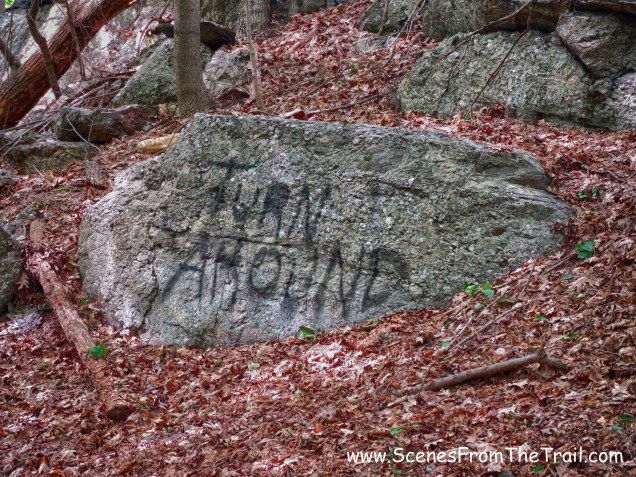
When we neared the end/beginning of The Jessup Trail (Gonzaga Park), we then began following the aqua blazed Long Path which veered left. I knew there was a spring house and a small cemetery along the trail and I wanted to check it out. My hiking partners weren’t too enthused, but I coaxed them along. It was a short walk until I could see the spring house through the trees. Just before the spring house was a rock face with a warning?

graffitti rock

graffiti rock

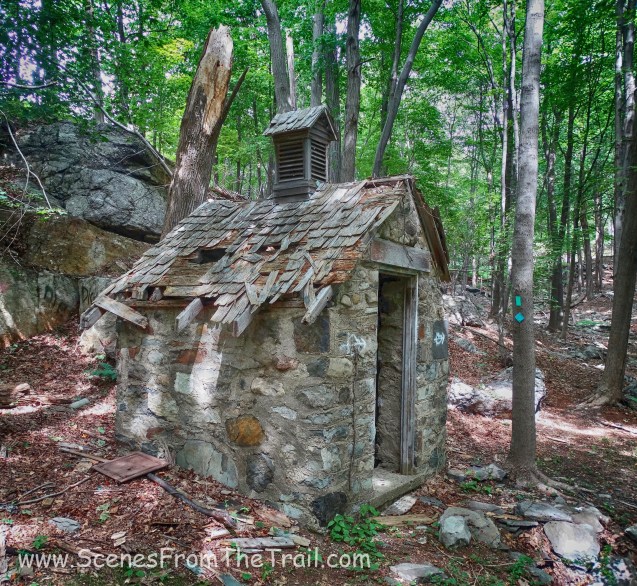
We got to the spring house and captured some images of the little stone structure.

spring house

spring house

spring house

spring house

spring house

spring house

I wanted to see the cemetery, but my hiking partners were done and wanted to call it a day. I walked alone over a clearing a short distance away and spotted what I assume was a cemetery.

cemetery

cemetery

At this point we were all a little tired and retraced our steps back to The Jessup Trail where we turned left and walked back to the parking lot, where our hike began. I truly enjoyed this hike as it had enough to keep me interested. The stone structures and especially the chapel were extremely compelling, the trail was scenic as were the views. The absolute best thing about this hike is that we didn’t encounter another living soul at any point on the trail. This hike gets a thumbs up from me. Until next time folks, keep on trekking………

keep on trekking

keep on trekking


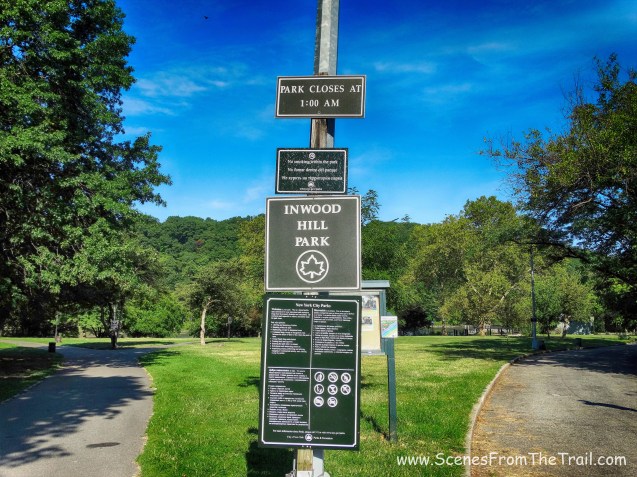
Inwood Hill Park

August 27, 2016 – Manhattan, NYC

Difficulty: easy

Length: approximately 4.7 miles

Route type: circuit

Inwood Hill Park is a city-owned and maintained public park in the Inwood neighborhood of Manhattan, NYC. It is operated by the New York City Department of Parks and Recreation. Situated on a high schist ridge that rises 200 feet above the Hudson River from Dyckman Street to the northern tip of the island, Inwood Hill Park’s densely folded, glacially scoured topography contains the largest remaining forest land on Manhattan Island.

Inwood Hill Park

Inwood Hill Park

The park covers 196.4 acres and sits on the banks of the Hudson River on the west and the Spuyten Duyvil Creek to the north. A number of foot paths criss-cross the park. Some of these trails are former roads leading to what were once summer estates. Inwood Hill Park is more than just a tranquil forest with great views of the Hudson River. Inwood was the site of a Native American village (Shorakapkok) and was at one time believed to be the place where, in 1626, according to legend, Peter Minuit “purchased” Manhattan Island from the Indians in exchange for objects then valued at 60 guilders (24 dollars).

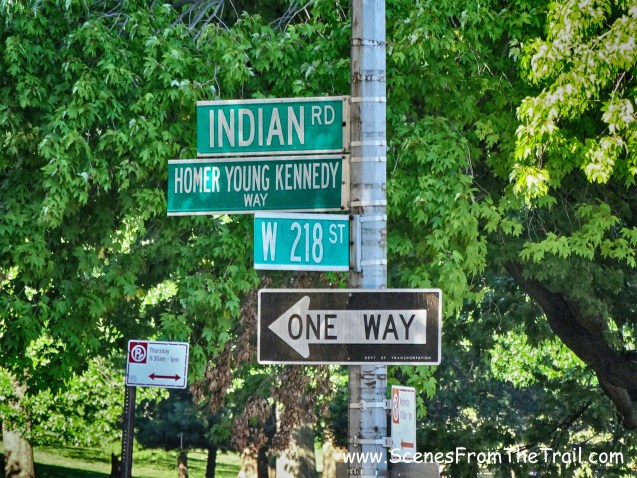
We arrived before 9:00 am on a Saturday morning and after driving around the block several times found a parking spot on 218th Street. We wanted to begin at the northern end of the park figuring that finding a spot would be easier and it was. The park entrance is at the corner of 218th Street and Indian Road right by the Columbia University football field. Indian Road is the only street in Manhattan that ends with “Road.”

218th Street and Indian Road

218th Street and Indian Road

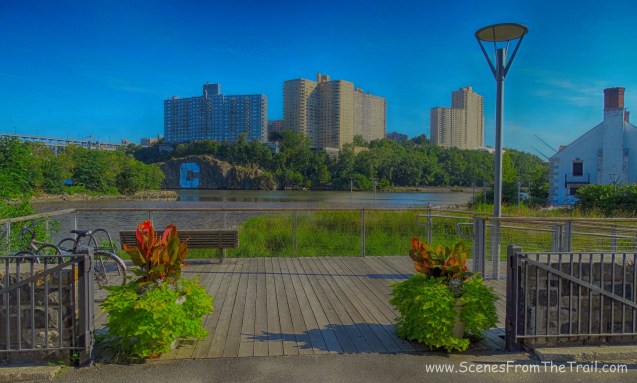
Upon entering the park we decided to check out Muscota Marsh which is adjacent to Inwwod Hill Park. Muscota Marsh is a one acre public park on the shore of Spuyten Duyvil Creek, a section of the Harlem River.

Muscota Marsh

Muscota Marsh

Muscota Marsh

Muscota Marsh

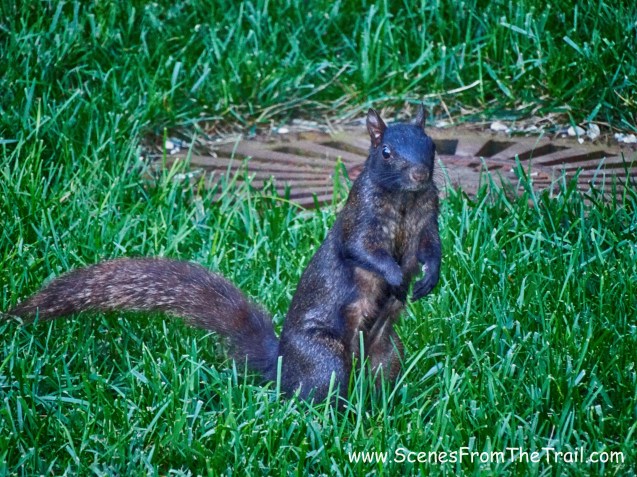
As soon as I started walking down the boardwalk I encountered this little fellow that just stood and stared at me.

Squirrel

Squirrel

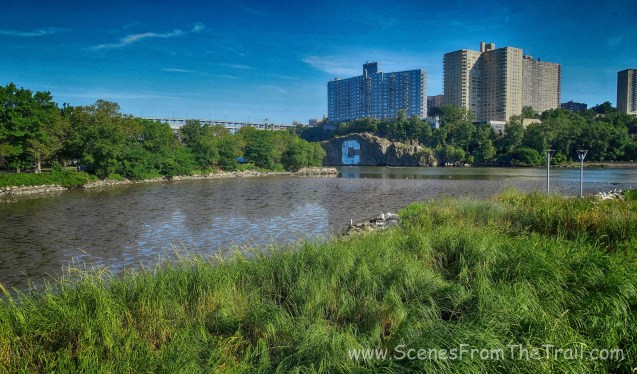
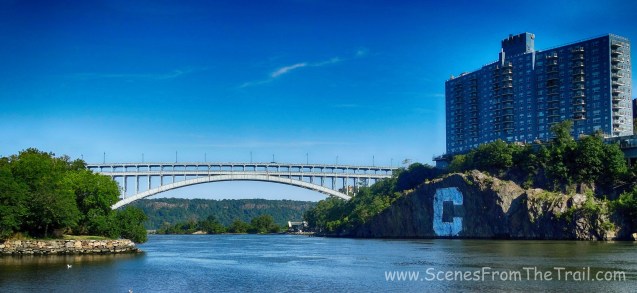
The blue and white 60-foot by 60-foot Columbia University “C”  has been painted and repainted on the gneiss rock facing the Harlem River in Spuyten Duyvil, Bronx, since 1952. Originally conceived by Robert Prendergast, a medical student of Columbia University and coxswain on the heavyweight rowing crew team, Prendergast approached the New York Central Railroad for permission (which was given) to have this sign painted on the 100-foot-high wall of Fordham Gneiss, which was completed in the fall of 1952 by the rowers of the crew team, which continues to maintain it.

C-Rock

C-Rock

There was an Egret hanging out in the salt marsh and we snapped some shots.

Egret

Egret

Muscota Marsh is a quaint little park that offers a nice view of the Palisades and the Hudson River just beyond the Henry Hudson Bridge.

Muscota Marsh

Muscota Marsh

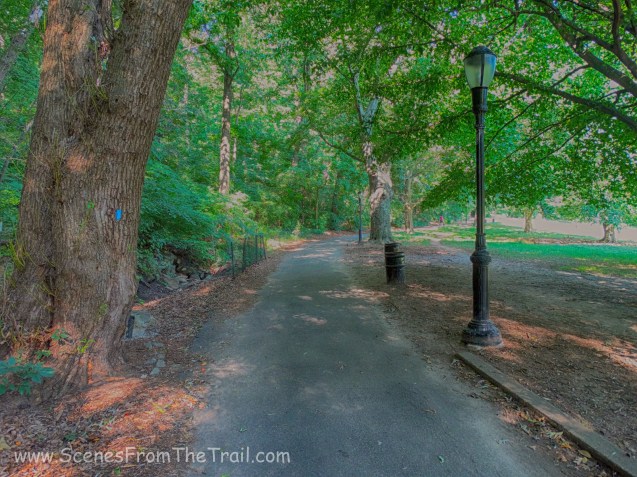
It was time to get hiking, so off we went. I had a map of the park that outlined two blazed trails. The blue trail travels the high ground for much of its entirety and the green blazed trail hugs the river. I always like to hike the more strenuous sections first, so we started following the blue blazes. On the map it shows the blue trail as Bolton Road. The blue trail is a paved road which is sparsely blazed, but I was in a wandering mood and didn’t mind exploring the park with no real direction.

blue blaze trail

blue blaze trail

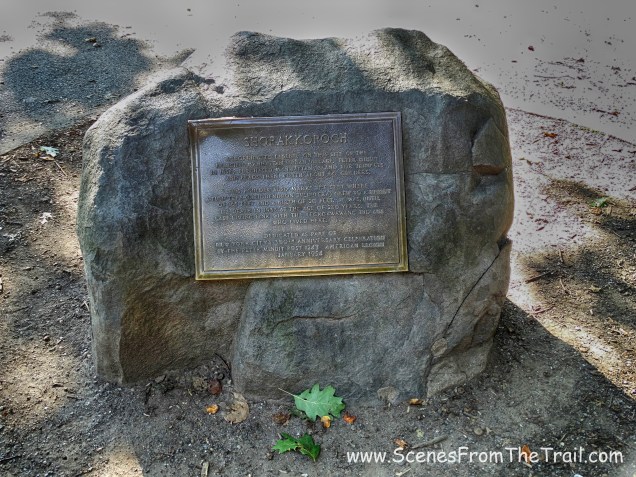
Our first stop was The Shorakkopoch Rock  which marks the site of the tulip tree under which Peter Minuit, allegedly “purchased” Manhattan from a band of Native Americans in 1626 for beads and trinkets worth 60 guilders which was the equivalent of about $24.00 back then.

Shorakkopoch Rock

Shorakkopoch Rock

Shorakkopoch Rock

Shorakkopoch Rock

After our history lesson we looked around and no blue blazes. This would happen all throughout this hike. I happened to see green blazes, so I knew that the blue trail was on higher ground. So we proceeded up the hill.

blue trail

blue trail

Walking up the road I saw a footpath off to the right which led through the woods. It went west, which was the direction we wanted to go, so we took it.

footpath

footpath

I was glad we took this route because this was better than walking a paved road. We were hiking in the woods in Manhattan. How cool is that? We came to some stairs in the woods which we climbed.

stairs

stairs

Then we passed several blowdowns on this section of the trail. The image below shows a huge tree across the trail with a smaller tree just beyond.

blowdown

blowdown

After a short while the footpath ended at the paved road and we turned right and continued to follow it west.

paved road

paved road

In a moment we passed underneath the Henry Hudson Bridge and came to a clearing where the Hudson River and the Palisades were visible to our right.

Hudson River and the Palisades

Hudson River and the Palisades

As we walked along the paved road we came to a junction. Left went to a tunnel that crosses under the southbound lanes of the Henry Hudson Parkway. Straight was the green trail. We decided to go left which was probably the blue trail.

tunnel that crosses under the southbound lanes of the Henry Hudson Parkway

tunnel that crosses under the southbound lanes of the Henry Hudson Parkway

Below are some more images of the southbound tunnel crossing. Click on the ensuing images to enlarge.

After passing underneath the southbound lanes of the Henry Hudson Parkway, We paralleled the parkway as we headed uphill.

alongside the northbound Henry Hudson

alongside the northbound Henry Hudson

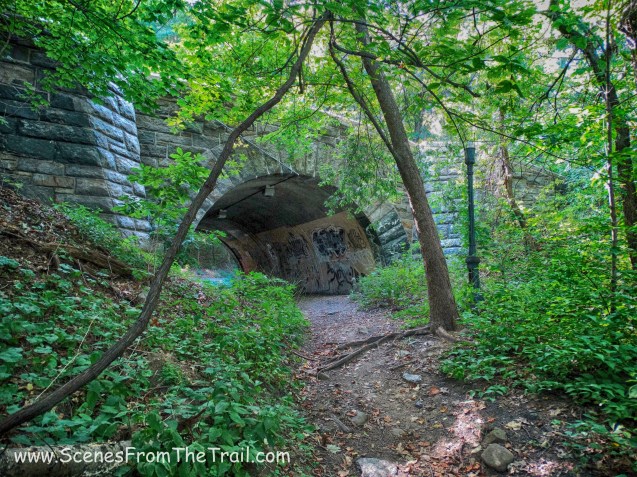
The trail veered away from the parkway as we headed uphill. We saw quite a few old light posts on our hike and none of them looked like they worked.

light post on trail

light post on trail

A very scenic hike this turned out to be. It was hard to believe that we were in Manhattan. The only reminder that we were in the city was the sound of cars when we were close to the parkway and the sound of helicopters up above.

scenic trail

scenic trail

As we continued through the woods, we came to the tunnel that crossed beneath the northbound lanes of the Henry Hudson Parkway.

tunnel that crossed beneath the northbound lanes of the Henry Hudson Parkway

tunnel that crosses beneath the northbound lanes of the Henry Hudson Parkway

Below are some more images of the northbound tunnel crossing. Click on the ensuing images to enlarge.

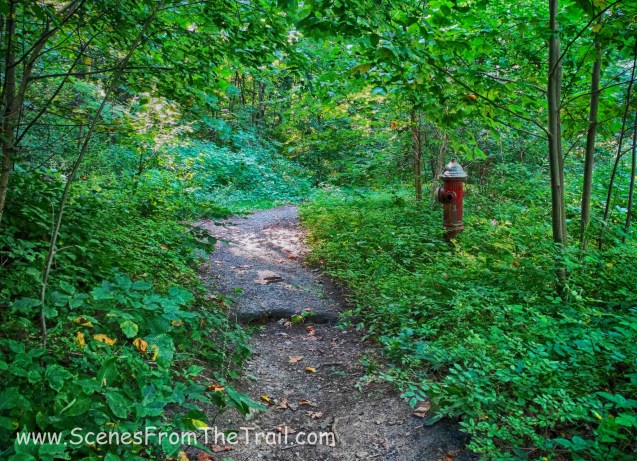
This hike turned out to be quite interesting. At almost every turn there seemed to be something that you don’t usually see while hiking in the woods.

fire hydrant

fire hydrant

We continued on the trail frequently consulting the map which was helpful at times. It outlined points of interest and also stairs which helped pinpoint where we were. The map didn’t help much when we came to the numerous forks in the trail which had no markings to point out the correct direction. Somehow we managed to always end up going the right way. It must have been my great navigational skills. The trail opened up once again to a paved road.

paved road

paved road

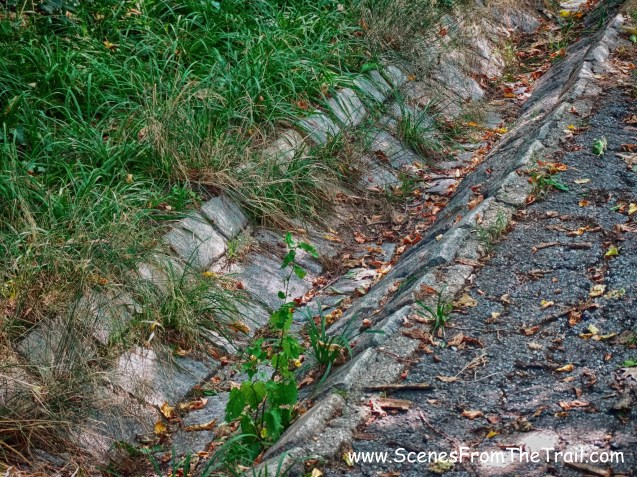
At one time these roads led to estates and there were numerous forks and triangles. They even had stone valley gutters to divert water away from the roads.

valley gutter

valley gutter

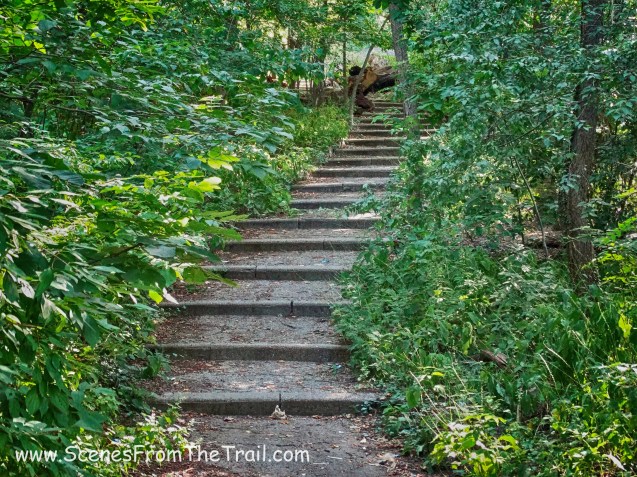
According to the map we were to climb the upcoming stairs to continue on the blue trail.

stairs on the blue trail

stairs on the blue trail

After climbing the stairs we continued on the paved road, which at this time had grown on me. I was starting to dig walking on this old road. At times it was a little spooky, but I dug that too. Hardly a soul was seen, but a jogger every now and then. We were hiking in Manhattan along some secluded roads that at one time led to some grand estates, but were now overgrown and deserted.

secluded road

secluded road

As we gained some elevation, the view started to open up. I could see the Palisades across the Hudson River through the trees. Then all of a sudden it was wide open and a fantastic view appeared.

Overlook Meadow

Overlook Meadow

According to the map this spot was called Overlook Meadow. It had nice views west and north of the Hudson Valley.

Overlook Meadow

Overlook Meadow

We stopped here for a little while and captured some images of a great view on such a beautiful day.

Overlook Meadow

Overlook Meadow

After taking in the view we continued on the blue trail and came upon another point of interest which was Whale Back Rock, an outcrop of Manhattan schist.

Whale Back Rock

Whale Back Rock

As we continued on the blue trail I was imagining what it must have been like so long ago when these roads were built. They had built curbs in places and the amount of paving materials that were used for the network of roads must have cost a hefty sum.

curbed road

curbed road

As we descended on the blue trail we came to one of the most unique spots in the park, the Indian Caves. The caves were created by the tumbling of rocks during a glacial retreat more than 30 thousand years ago forming overhangs of natural rock shelters. These cave shelters were once used as a seasonal camp by the Lenape people who lived in the region before the arrival of Henry Hudson in 1609.

Indian Caves

Indian Caves

We stopped and explored the shallow caves and hung out and relaxed for a while. I had read that homeless people use these caves as shelter so I approached them with caution.

Indian Cave

Indian Cave

Indian Cave

Indian Cave

There were several shallow caves that were more like rock shelters than actual caves. From what I read they used to interconnect via tunnels that were sealed up by the parks department long ago. Nevertheless they were one of the highlights of a hike that had many.

Indian Cave

Indian Cave

Even the trees had caves.

tree cave

tree cave

After leaving the caves we arrived back at The Shorakkopoch Rock. That was the conclusion of the blue trail. At the rock we turned left and began following the green blazes. This trail was better blazed and much easier to follow as it ran along the lower section of the park. This one also followed a paved road, which the map lists as Spuyten Duyvil Road. Heading west on the green trail, it was bordered by a rock face to the left and a steep drop off into the ravine on the right. The road/trail had stone borders on the edge to prevent vehicles/carriages from going over the side way back when…..

green trail

green trail

Spuyten Duyvil Creek and C-Rock was visible to our right through the trees as we walked up hill along the trail.

C-Rock

C-Rock

We continued underneath the Henry Hudson Bridge, where we came to the junction that we earlier had turned left to pass through the first tunnel beneath the parkway. This time we veered right and continued to follow the green blazes. Some parts of the green trail run together with the Hudson River Valley Greenway bike trail. Caution is needed during these sections. I almost walked into the path of a cyclist coming quickly behind me. He didn’t ring a bell or shout. I came real close to getting run down. There are green signs on posts indicating the aforementioned sections like the one in the image below. We came to a footbridge that stretched over the tracks and crossed over.

footbridge

footbridge

After crossing over the tracks we walked towards the Hudson River and turned right.

Hudson River

Hudson River

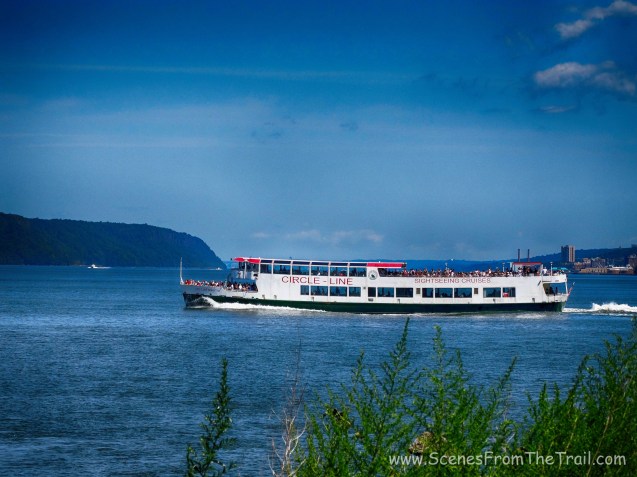
This section of the park has many playing fields. Most of the baseball fields are to the south, closer to Dyckman Street. We walked north along the river and took in the beauty of our surroundings while avoiding the crowds. This area was more heavily populated than any other section of the hike, but for NYC it felt almost desolate. We sat on a bench facing the river and had some sandwiches that we normally bring along on hikes. The breeze was really strong and it felt good! It was such a gorgeous day and we were content just basking in all its glory. I got up to capture some images and was greeted with the Circle Line that was hooking a left onto the Hudson from Spuyten Duyvil Creek/Harlem River.

Circle Line

Circle Line

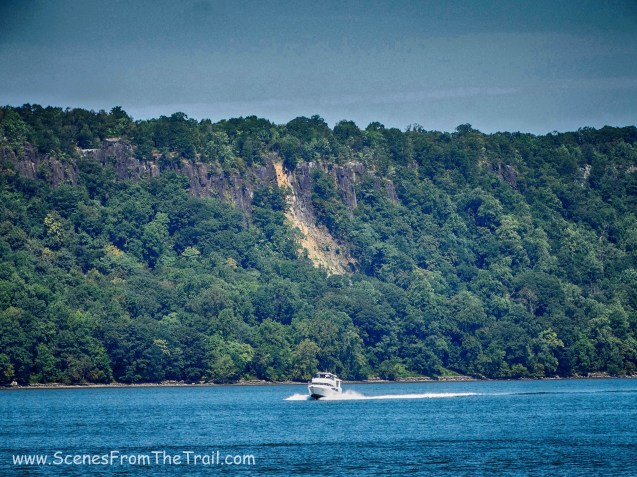
I grew up across from the cliffs of the Palisades so I have always enjoyed gazing at them. The view from here was exceptional.

Palisades

Palisades

Looking north I could see all the way to the Tappan Zee Bridge.

view north

view north

Once we were well fed and well rested, we decided it was time to get going. I could have spent a lot more time at this spot, but we still had some hiking to do. We retraced our steps, crossing over the tracks and followed the green trail back the way we came. As we approached the end of our hike I saw a Heron in the distance hanging out in the salt marsh.

Heron

Heron

A short while later we heard some hawks making a racket and looked up to see three Red Tailed Hawks soaring high above us. We rested on a shady bench alongside Spuyten Duyvil Creek and watched the hawks. This hike exceeded my expectations. I figured it would be a walk through some thin woods and having to walk through hordes of people. I was wrong and I’m glad I was. Even on a beautiful August day this park offered a little solitude along with one of the more photo worthy hikes I have done. I hope that you enjoyed today’s  hike. Until next time, keep on trekking…..

keep on trekking
keep on trekking
Arden Point and Glenclyffe

August 20, 2016 – Garrison, NY

Difficulty: easy

Length: approximately 4 miles

Route type: circuit

Map: East Hudson Trails Map #101

Arden Point is a peninsula on the Hudson River in the hamlet of Garrison, Town of Philipstown, Putnam County, NY. Approximately 17 acres lie west of the Metro North railroad with another 21 acres east of the tracks. Access is provided along Lower Station Road and from the Metro North station parking lot at Garrison.  A wooded trail that snakes along the eastern banks of the Hudson River eventually leads to a rocky bluff known as Arden Point with river views north and south, including a full view of West Point on the opposite shore.

Glenclyffe is a 93-acre parcel of land on the Hudson River in the Highlands, which is preserved through the efforts of the Open Space Institute and its partners. Benedict Arnold rode through it trying to escape to the British. New York Governor Hamilton Fish, later to become Secretary of State under President Ulysses Grant, lived on it. Grant and President Abraham Lincoln both visited it.

On a hot and humid August day I was looking to do a hike that had some shady trails, views and level terrain. This hike fit the bill quite nicely. As far as I’m concerned any hike that includes walking along the shore of the Hudson River is always pleasurable. I decided to do the hike described in the NY/NJ Trail Conference’s website. It was a good call because this hike had everything that I was seeking and more.

We parked at the Garrison Metro North Station which offers free parking on weekends. The trailhead is just to the left of the entrance to the lot and we were off.

Arden Point trailhead

Arden Point trailhead

We headed south on a blue blazed shady woods road that was level.

blue blazed shady woods road

blue blazed shady woods road

After a few minutes we passed an old railing on the right side of the trail.

old railing

old railing

Just past the railing were some ruins of several buildings. I could not find out any information online as to what these buildings were. If anyone has any info on their history please comment below. Below are some shots that I took.

Arden Point ruins

Arden Point ruins

Arden Point ruins

Arden Point ruins

Arden Point ruins

Arden Point ruins

Arden Point ruins

Arden Point ruins

Just past the ruins we crossed a footbridge and continued on the relatively straight and level trail.

footbridge

footbridge

After about a half mile from the start of the hike we came upon a steel truss bridge. We crossed the bridge over the railroad tracks towards the Hudson River.

steel truss bridge

steel truss bridge

When we crossed over the bridge there were two female hikers that were somewhat lost so I let them take a look at my East Hudson Trails Map and then we continued on. At the end of the bridge we kept following the blue blazed trail which went to the right.

blue blazed trail

blue blazed trail

The trail was now a footpath and there were some blow downs along the way. A minor inconvenience and not hard to get around.

blowdown on blue blazed trail

blowdown on blue blazed trail

blowdown on blue blazed trail

blowdown on blue blazed trail

The blue trail ended at a junction with the red trail and we now started following the red markers staying to the right. We walked through the break in a stone wall……

stone wall

stone wall

and then moments later we arrived at Arden Point North with a view of West Point to the left and Bull Hill towards the center.

Arden Point North

Arden Point North

It was nice and breezy by the river and we hung out enjoying the view and the cool summer river breeze. As we relaxed there for a while, a few dog walkers and a family of hikers appeared on the scene. I just continued to gaze at the boats and jet skis as they raced along the river. Below are some more images captured at this lookout.  Click on the ensuing images to enlarge.

When we were ready to continue we retraced our steps back to the red trail, this time heading south. At times we lost the red markers and bushwacked through the woods. I wasn’t concerned, I knew that keeping the river at my right shoulder would lead us south which was our intended route. We found the red blazes, but several times throughout this section of the hike we bushwacked until we once again met up with the red trail. We arrived at Arden Point South and took in the southern views towards the Bear Mountain Bridge.  Click on the ensuing images to enlarge.

Once done enjoying the view and the cool river breeze, we headed back onto the red trail which proceeded to lead us uphill and back to the steel truss bridge over the tracks. Once we crossed back over the bridge we turned right and briefly followed the white blazed trail until we came to the Open Space Institute (OSI) red blazed trail. This was the start of the Glenclyffe Loop, which circles the Glenclyffe property of OSI.  Shortly we came to a gazebo with obstructed views of the river. The trail passes just to the left of it.

gazebo

gazebo

As we hiked through the woods, we came to a red brick building on the left that was built in the 1860s. It was once the home of Hamilton Fish who was the governor of NY.

home of Hamilton Fish

home of Hamilton Fish

We captured some images of the former governor’s home.

home of Hamilton Fish

home of Hamilton Fish

home of Hamilton Fish

home of Hamilton Fish

As we continued following the red blazes of the Glenclyffe Loop we came to a sign that pointed towards the Historic Overlook.

sign

sign

We made our way to the overlook where there was a viewing platform that overlooked the site of Beverly Dock, which was used in 1780 by Benedict Arnold to escape when his treason was discovered. I would take some caution on this platform because the railings were loose and it sits over a steep drop off .

viewing platform

viewing platform

After leaving the Historic Overlook we continued on the red trail. This section of the trail was where Benedict Arnold rode through to escape.

Benedict Arnold's escape route

Benedict Arnold’s escape route

We passed by a couple of ponds and dams along the way and then came out onto an open field alongside Route 9D.

open field

open field

We walked along the treeline which was marked with red blazes. Across 9D, Castle Rock was visible up on the hill.

Castle Rock

Castle Rock

At the sign for the Garrison Institute we turned left and walked up to a trail map that signified the beginning of the white blazed Marcia’s Mile trail.

trail map

trail map

We followed the white blazes through the woods and a field and we passed the ruins of a small structure.

ruins

ruins

As we hiked through the woods we saw some wooden crosses staked into the ground that seemed like a shrine. I have no idea what they represented, but it felt a little creepy seeing them in the woods. It may have something to do with Marcia, seeing as the trail is named after her.

wooden crosses

wooden crosses

wooden crosses

wooden crosses

At the end of Marcia’s Mile we came to the steel truss bridge that we had crossed twice earlier and we turned right where we retraced our steps back to the Garrison Metro North lot.

blue trail heading north

blue trail heading north

I hope you enjoyed today’s hike, and don’t forget to follow my blog to stay informed about my latest journeys. Until next time, keep on trekking…….

keep on trekking
keep on trekking


Lenoir Preserve – Old Croton Aqueduct

August 13, 2016 – Yonkers, NY

Difficulty: easy

Length: approximately 3.5 miles

Route type: lollipop loop

A more recent post of Lenoir Nature Preserve can be found HERE.

Lenoir Preserve is a 40-acre nature preserve comprising woodlands and field habitats. It is located in Yonkers, NY. It is adjacent to the Old Croton Aqueduct on slopes overlooking the Hudson River. The property was formerly home to two Hudson River estates, only one of which stands today. I have been here several times and was not really impressed. They have blazed trails, but they are not well kept and overgrown in places. However it is in close proximity to another estate which has some really interesting architecture, the Old Croton Aqueduct (OCA), and Untermyer Park.

Lenoir Preserve

Lenoir Preserve

Plaque on stone wall at entrance.

Plaque

Plaque

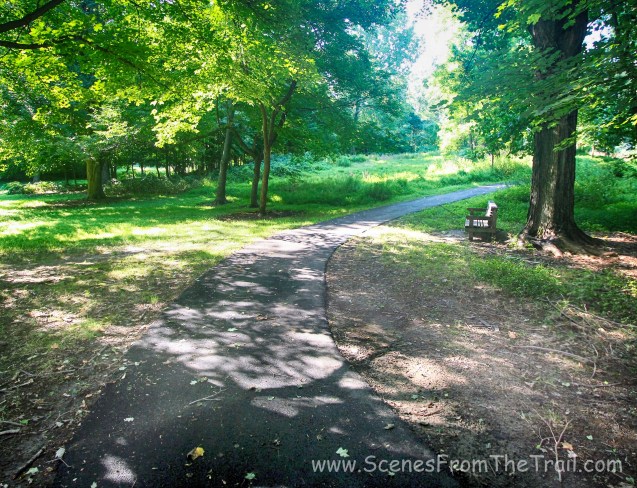
On the day of this hike it was extremely hot with high humidity. An extreme heat warning was in effect with “real feel” temp at 107. With that being said, I chose a hike that wasn’t strenuous, offered some shade and was photo worthy. I decided on Lenoir Preserve as a starting point. I know my way around so I didn’t bother with any maps, although they are available. From the parking lot we walked south past the Nature Center on a blacktop path.

blacktop path

blacktop path

When we came to a fork in the paved path, we stayed to the right.

IMG_6993_HDR_marked

fork in the paved path

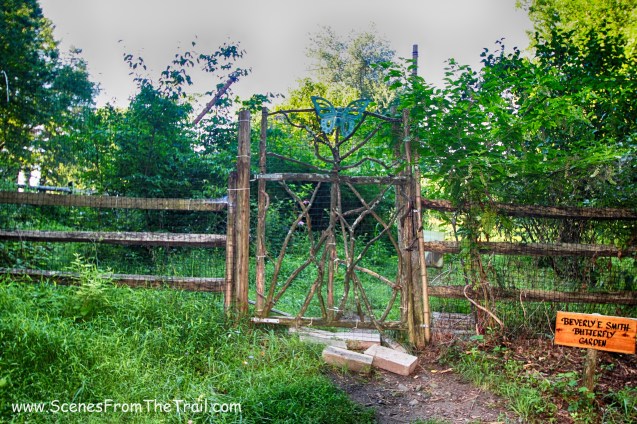
Almost immediately we came to the Butterfly Garden. I wasn’t too interested in butterflies so I took a shot of it and kept it moving.

Butterfly Garden

Butterfly Garden

We walked past the Butterfly Garden, staying to the right and in a minute we saw the rear of Lenoir Mansion on our left.

Lenoir Mansion

Lenoir Mansion

We continued south on the paved path which led towards the edge of the property.

south on the paved path

south on the paved path

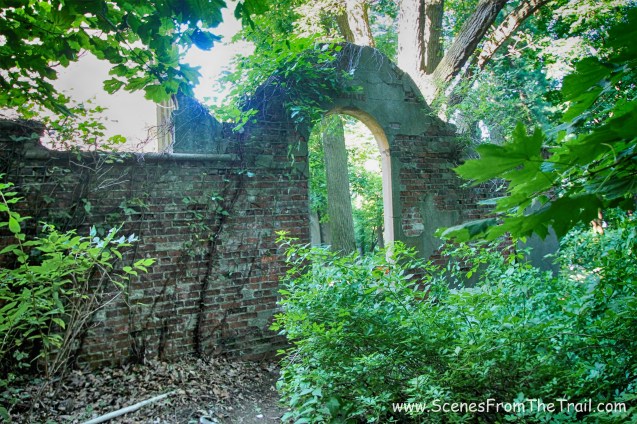
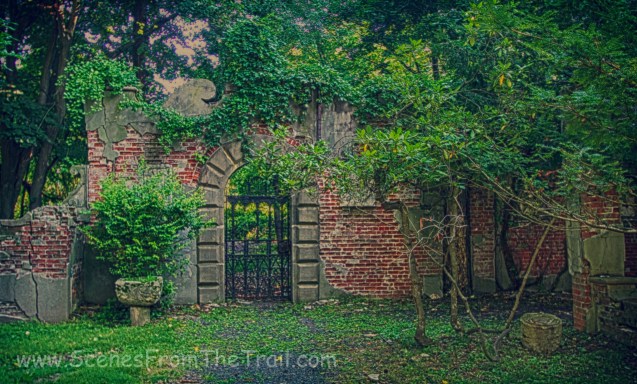
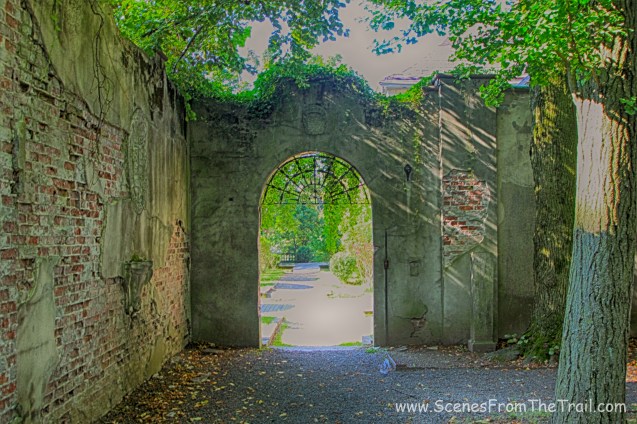
At the edge of the Lenoir Preserve property was a wall with an arch that led to another estate.

wall with an arch

wall with an arch

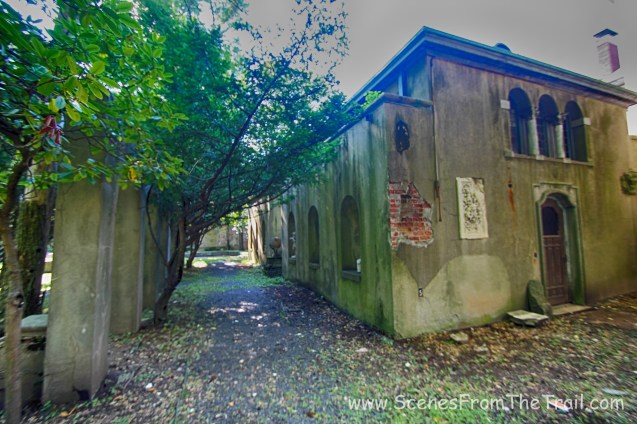
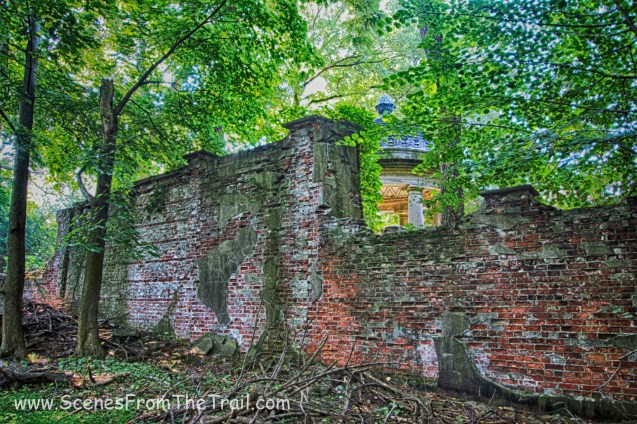
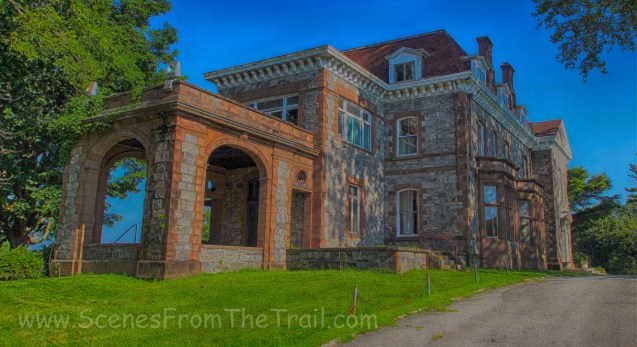
This is Alder Manor also known as the W. B. Thompson Mansion. It was built around 1912 by William Boyce Thompson, a mining tycoon and financier, as his weekend home. At the turn of the century, large riverside estates characterized much of Yonkers; today the Thompson Mansion is one of the few to have survived the city’s 20th century urbanization. The Thompson family lived there until the mid 20th century; afterwards it was willed to the Roman Catholic Archdiocese of New York and became Mary Elizabeth Seton High School, the first Catholic school in Yonkers.

Alder Manor - March 16, 2016

Alder Manor – March 16, 2016

After ten years as a high school, it was upgraded to a junior college. A few years after merging with Iona College, the campus was closed. While the other buildings on the property were repurposed, the mansion fell into neglect and was looted until Tara Circle, an Irish American cultural organization, bought it from the city. To raise money for its restoration, Tara Circle holds occasional events there and rents it out for weddings and filming for movies such as Mona Lisa Smile and A Beautiful Mind. The manor is private property.

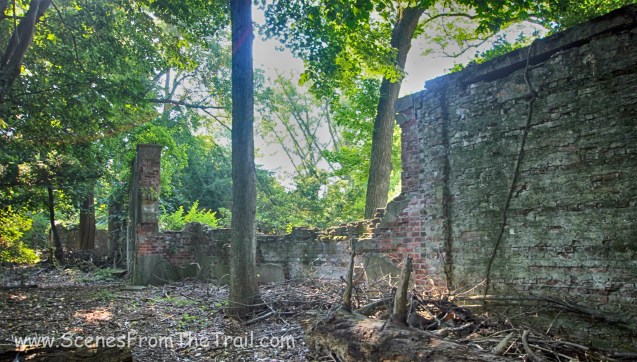
The architecture on this property is very ornate and although much of it is in ruins, it has a certain appeal. It is rich in Hudson Valley history.

other side of wall with arch entry

other side of wall with arch entry

The wall extends from west to east along the edge of the property.

wall on edge of the property

wall on edge of the property

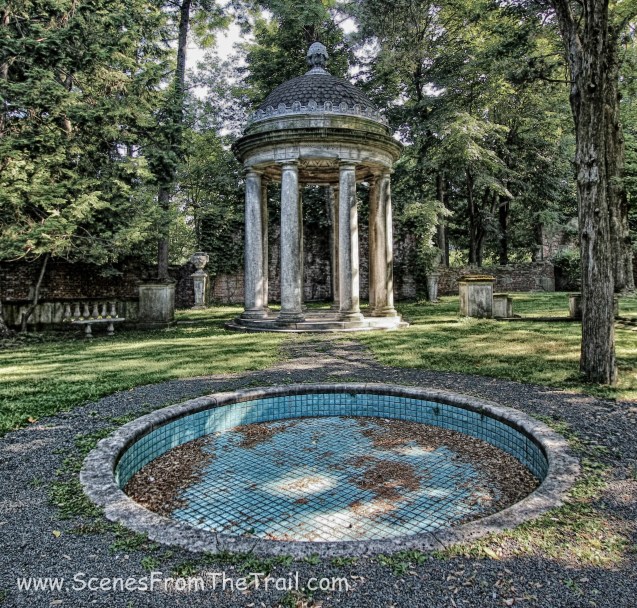
There was a lot to photograph on the grounds. I have read that it is sometimes referred to as a mini Untermyer Park. There was a gazebo like structure with a shallow tiled pool.

gazebo like structure

gazebo like structure

The north side of the manor.

north side of the manor

north side of the manor

north side of the manor

north side of the manor

The walled gate that leads to the Lenoir Preserve property.

walled gate

walled gate

At the east end of the property towards Broadway (Route 9) is a columned area.

columned area

columned area

To the right of the columned area is an archway which leads to the front of the house.

archway

archway

Facing west, a tiled mosaic pool.

tiled mosaic pool

tiled mosaic pool

This place was quite interesting and had a lot of unique features. Click on the ensuing images to enlarge.

The north wall of the manor.

north wall

north wall

A built in bench on the west side of the grounds.

built in bench

built in bench

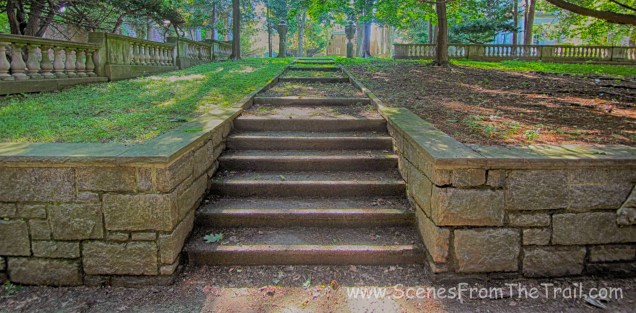
Stairs leading east.

Stairs leading east

Stairs leading east

Back on the Lenoir property the high wall of Alder Manor as it runs from west to east.

wall of Alder Manor

wall of Alder Manor

wall of Alder Manor

wall of Alder Manor

The other side of the gate that leads to the grounds of Alder Manor previously shown.

gate that leads to the grounds of Alder Manor

gate that leads to the grounds of Alder Manor

After heading east along the wall, we turned left towards Lenoir Mansion.

Lenoir Mansion

Lenoir Mansion

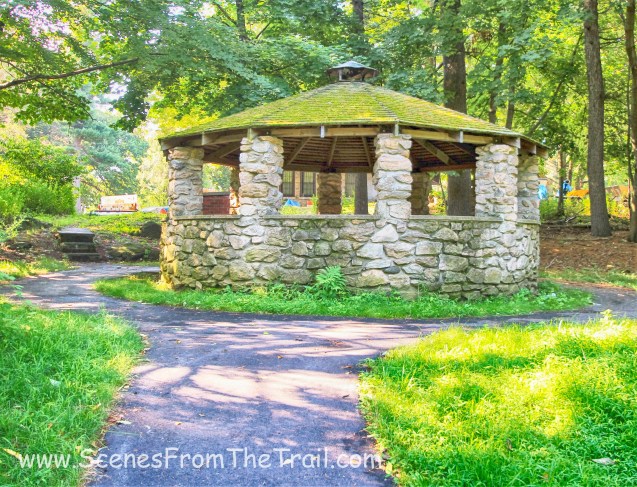
We continued past the mansion until we caught up with the trail which led to this stone gazebo.

stone gazebo

stone gazebo

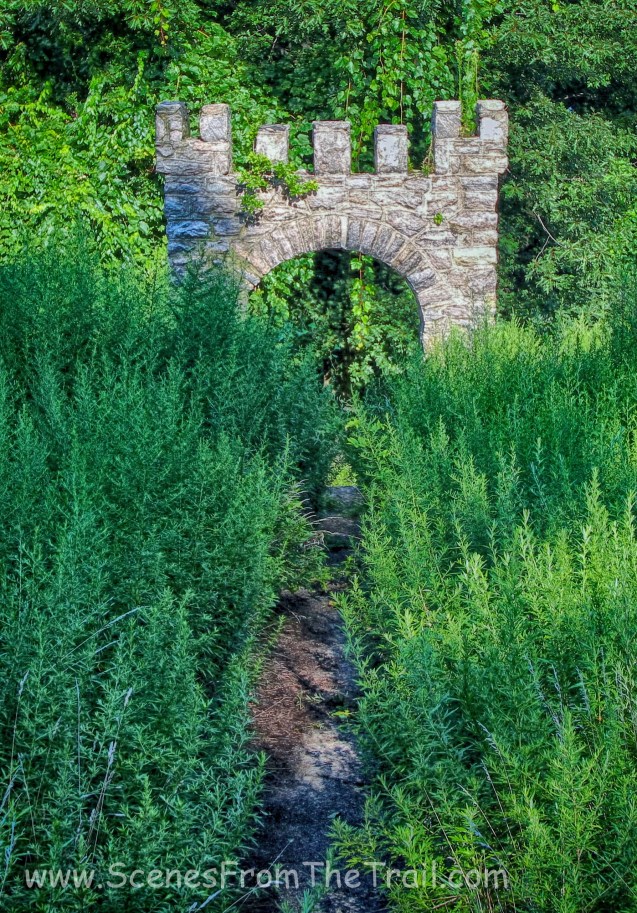
We passed the Butterfly Garden again and just to the right there was a trail that led to a castle like arch. This part of the trail was a bit overgrown, but it was short lived once we passed through the arch.

castle like arch

castle like arch

After passing through the arch, the trail led downhill then split. We continued towards the right and down the hill which would lead us to the Old Croton Aqueduct (OCA). Once we passed through the gate we turned left and headed south along the aqueduct.

gate

gate

Old Croton Aqueduct

Old Croton Aqueduct

The OCA was a level straight walk which was nicely shaded on this sweltering August day. Once we got to this rock cut…….

rock cut

rock cut

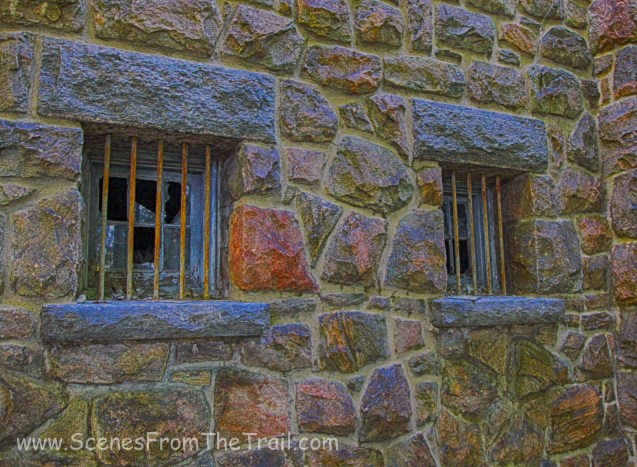
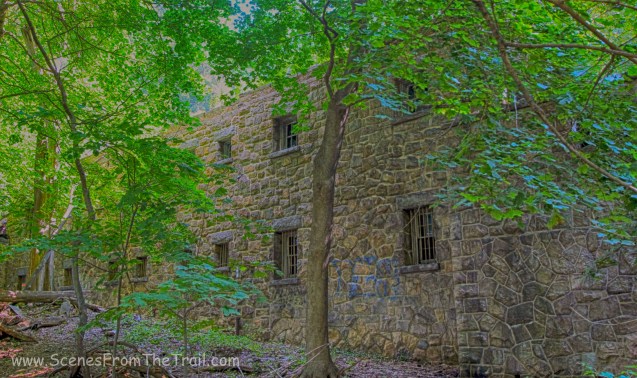
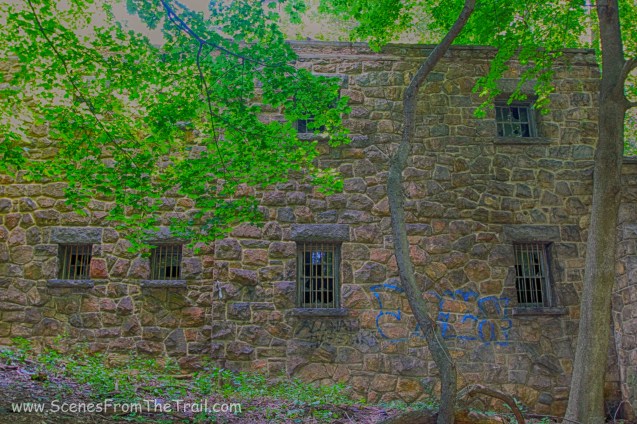
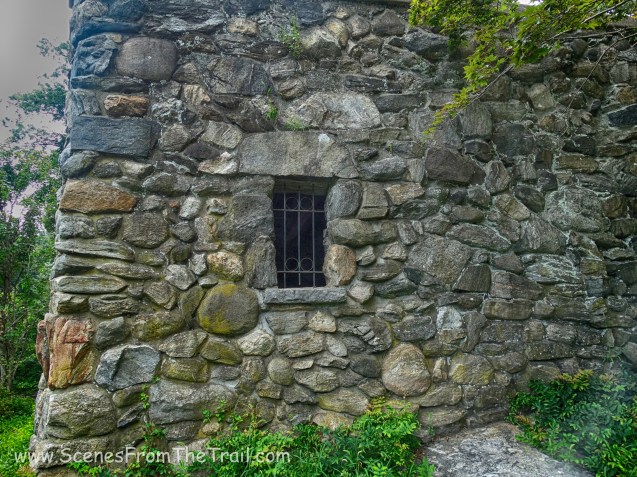
There was a stone building with bars on the windows on the left that looked very much like a jail of some sort.

stone building

stone building

stone building

stone building

IMG_7087_HDR_marked

stone building

IMG_7149_HDR_marked

stone building

stone building

stone building

After capturing some images of this interesting looking structure, we continued south on the aqueduct passing a stone ventilator.

stone ventilator

stone ventilator

We crossed the road and continued on the OCA until we came to the rear gate of Untermyer Park on the left.

rear gate of Untermyer Park

rear gate of Untermyer Park

Beyond the gate were ruins which I believe used to be the gatehouse.

gatehouse ruins

gatehouse ruins

Click on the ensuing images to enlarge.

Although this was an easy hike the heat was brutal so we took a seat in the shade and relaxed for a while. Then I headed to the gate house to take some more shots.

gate house

gate house

As I got closer to the gate house I noticed a guy sleeping towards the back. He looked like he was in a deep sleep so I stayed in the front and took some shots from there.

gate house

gate house

gate house

gate house

We decided not to walk up the somewhat steep hill into Untermyer Park because it was too hot and we had been there numerous times. So we headed back to the aqueduct that was on the other side of the gate.

gate

gate

We headed north on the aqueduct back towards the Lenoir Preserve. We proceeded up the steps and through the gate that separated the OCA from the Lenoir Preserve.

steps

steps

Once through the gate we hiked up the hill and as the trail split, we stayed left and continued uphill until we got back to the Nature Center. From there we headed to the parking lot, jumped in the vehicle and blasted the AC. It was a hot one, but we still got our hike in and captured some nice images as well. I hope you enjoyed today’s hike, I know I did. Be sure to follow my blog and stay informed about my journeys. Until next time folks, keep on trekking…….

keep on trekking
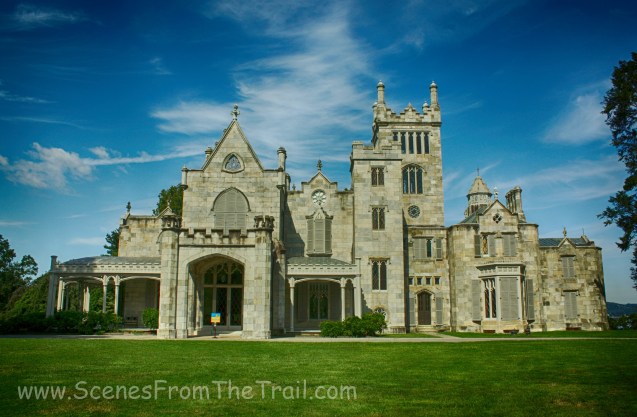
keep on trekking


Drayton Grant Park at Burger Hill

August 7, 2016 – Rhinebeck, NY

Difficulty: easy

Length: approximately 1 mile

Route type: up and back (can be done in a loop)

Drayton Grant Park at Burger Hill is one of the highest points in Rhinebeck. From the peak of the Hill you can enjoy a magnificent view of the Catskill Mountains to the West and the Taconic Mountains to the east. Everyone likes views and this place provides some of the best views that I have seen. To top it off, the payoff is only a 1/2 mile walk up a somewhat steep grassy hill. I had heard about this place and have seen some images of the view. I was looking to incorporate this short hike with another in the area because of the 1 1/2 hour drive from where I live. After driving up to Poets’ Walk Park and doing a 2 mile loop, I was left wanting some real views. This was just a short drive away, so off I went.

The parking area is a decent size and there weren’t many vehicles in the lot. As it turned out they were shooting a video there so the vehicles belonged to the cast and crew. I was surprised that there wasn’t anyone else there at midday on a Sunday, but I was thankful to have the place to ourselves.

The trail up to Burger Hill starts to the left of the informative kiosk on the other side of the fence.

Drayton Grant Park at Burger Hill kiosk

Drayton Grant Park at Burger Hill kiosk

We proceeded up the trail which immediately began to steepen.

Burger Hill summit trail

Burger Hill summit trail

It was a scenic walk up the hill with the entire countryside in view to my right.

countryside

countryside

I couldn’t believe how good the view was. The hill was kind of steep, but I only stopped to capture images. I was anxious to get to the summit and see the whole world from there.

countryside

outstanding!

Once at the top I just started to snap away. I took photographs from every angle.

view from the summit

view from the summit

It was a gorgeous day and the sky was filled with clouds. I even saw the DirecTV blimp.

DirectTV blimp

DirecTV blimp

It was nice sitting on a rock at the summit without anyone else there. This place was amazing! definitely one of the Hudson Valley’s best scenic views.

one of the Hudson Valley's best scenic views

one of the Hudson Valley’s best scenic views

After quite some time at the summit of Burger Hill, it was time to go. I almost didn’t want to leave, but it was National Lighthouse Day and I wanted to see one. The trail  goes past the summit and around the back of the property. I decided to descend the same way I went up. After all, I was going to savor the view on the way down as I did going up. For such a short hike this place rewards you with one hell of a payoff. If you haven’t been here, what are you waiting for! Until next time folks, keep on trekking…….

keep on trekking
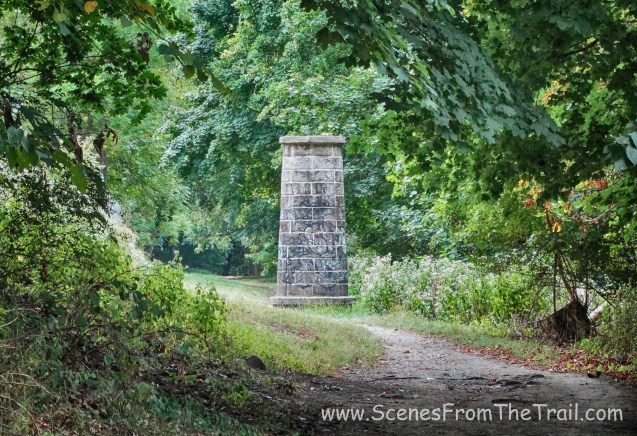
keep on trekking
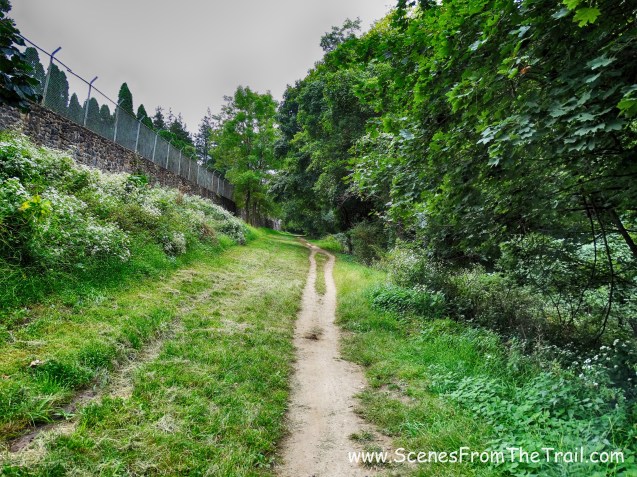


Poets’ Walk Park

August 7, 2016 – Red Hook, NY

Difficulty: easy

Length: approximately 2 miles

Route type: circuit

Poets’ Walk Park consists of 120 acres which includes rolling meadows, forests, and a ravine. It is operated by Scenic Hudson which maintains many parks and trails in the Hudson Valley. Its 2 miles of trails takes you through woods and rolling meadows with rustic cedar pavilions, footbridges, and many hand made benches along the way to relax and take in the views. The park has been visited by Fitz-Greene Halleck and many literary contemporaries, including Washington Irving, William Cullen Bryant and Jack Kerouac. It is referred to as a “romantic landscape,” intended to celebrate the connection between landscape and poetry. I figured what the hell, the Hudson River, scenic views and a short hike on a hot Sunday morning. I decided to pay a visit and see for myself. The parking lot is a decent size and there was plenty of room to park when we arrived at approximately 10am, but when we were leaving around noon or so the lot was almost filled to capacity. Rule of thumb is that if it’s easy and picturesque, it gets crowded. We did encounter quite a few people along the hike, but mostly at points of interest.

We started out at the trailhead that had an informative kiosk along with some benches. A large map of the trails is available for viewing or you can print one from Scenic Hudson’s website. I didn’t bother to print one and just saved it to my phone. It is difficult to get lost here.

trailhead

trailhead

The trail for the first 1/4 mile or so was a wide footpath with a crushed stone base. It seems as they are currently doing some work as there was some heavy equipment on the property. It was easy walking and from the info on their website it is wheelchair accessible.

trail

trail

It was a gorgeous Sunday morning as we walked on the well maintained trail. It was still early and relatively mild. After a short walk along the winding trail we came upon an open meadow with a large gazebo on the hill with the Catskill Mountains as a backdrop.

gazebo on the hill

gazebo on the hill

There were a few people sitting on the built in benches in the gazebo as we approached. No doubt that they were enjoying the view along with their day. We didn’t linger too long there and let them have their space. I didn’t take any photographs of the gazebo until we were on the way back because I am not in the habit of including strangers in the images I capture. These are some shots I took on the way back.

gazebo on the hill

gazebo on the hill

This gazebo was like a work of art. It looked like it had been handcrafted from fallen trees from the area. It was massive and solid.

gazebo on the hill

gazebo on the hill

An old inoperable water spigot stood nearby as well.

water spigot

water spigot

I have to say that the view from this spot was probably the best in the park. Due to the minimal elevation and the height of the trees along the rest of the hike, most views were partially obscured. So if you are just looking for some views no need to go any further.

view from the gazebo

view from the gazebo

view from the gazebo

view from the gazebo

From the gazebo we headed downhill through the wide mowed path.

wide mowed path

wide mowed path

After a short walk downhill we came to a sign.

sign

sign

As we approached the sign I saw a couple turn left, so we continued on towards the summer house. In no time we entered the woods which provided much needed shade as the morning grew hotter. It was a tranquil walk through the woods, although we passed several couples going in the opposite direction. We crossed a wooden bridge along the way.

wooden bridge

wooden bridge

Shortly thereafter we crossed a stone bridge.

stone bridge

stone bridge

We continued through the woods until we came to a fork in the trail. According to the map the spur trail that veered right was where the summer house was located. There was a sign on the tree which indicated that, but it was only visible if you were coming from the other direction. I had read that Washington Irving had walked through these woods and had spent some time at the summer house, which wasn’t anything more than a glorified gazebo.

summer house

summer house

At this point we were close to the Hudson River and there were some partially obstructed views. There was a woman resting on one of the benches looking out towards the river so we didn’t spend much time there.

view from the summer house

view from the summer house

We returned back to the main trail and proceeded on. This section of the trail was a little more rugged. Not rugged compared to most trails I have hiked, but compared to the rest of this hike it was. Nevertheless it was short lived and still pretty easy. We crossed another wooden bridge along the way.

wooden bridge

wooden bridge

Shortly after crossing the wooden bridge we came out of the woods and walked up the grassy hill to the flagpole lot which had 2 benches and what I assume is the flagpole.

flagpole lot

flagpole lot

We rested here for a little while taking photographs of the scenery. We would have spent more time here except that we were exposed to the glaring sun. To be honest I expected some awesome views, but like I stated earlier the best views were from the first gazebo. The trail map shows a trail that curves along the edge of the property then veers left to connect back to the hill that leads from the flagpole lot. We took the aforementioned trail, but it was overgrown and there was nothing really to see. The best way back is to walk up the grassy hill and turn around on occasion to check out the landscape you just left.

grassy hill

grassy hill

We headed up the hill and back to the gazebo which was deserted for the time being. I was able to get my shots which I posted previously above. We sat in the gazebo for a bit enjoying the shade and the breeze. It wasn’t long before others came to do the same. It was time to move on. We retraced our steps back to the lot which was now getting full. We passed more people the last 1/4 mile than we did the entire hike. This is a nice park, especially for non hikers. I prefer less populated areas and that usually comes with a higher level of difficulty. I probably wouldn’t visit this park again, but I am glad to have seen what it has to offer. Until next time folks, keep on trekking……..

keep on trekking
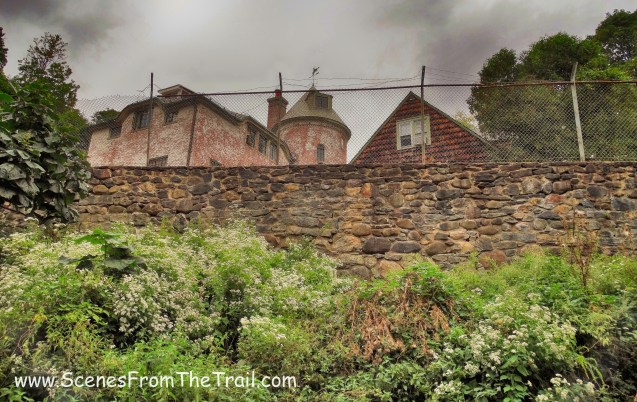
keep on trekking
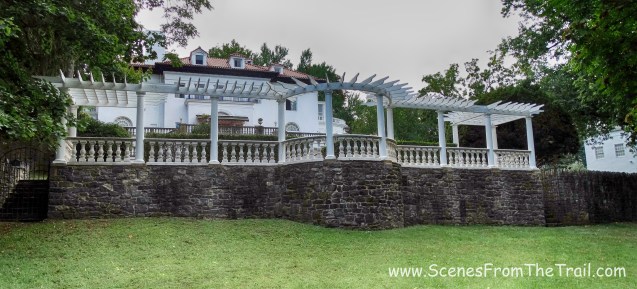


Beltzhoover Teahouse at Halsey Pond Park

August 6, 2016 – Irvington, NY

Difficulty: easy

For an updated version of this park, please click HERE.

Halsey Pond Park is a 30-acre park that once used to be part of a large estate. In 1905 A. J. Manning was commissioned by oil and cotton magnate Melchior Beltzhoover to build an exact replica of a Rhineland castle. The building, called “Rochroane”, was sold to Benjamin Halsey in 1927 and renamed “Grey Towers,” but was abandoned in 1976, and it burned down the next year (the exterior was stone, but the interior was wood). Much of the land that was part of the original estate was sold to developers and all that remains is the pond with some land around it.

Halsey Pond Park

Halsey Pond Park

I came upon this park while doing some research about castles in New York in April of 2015. On Irvington’s website it reads “Halsey Pond Park is considered Irvington’s best kept secret.” They weren’t lying, up until recently there was no information listed on the location of the park. Prior to my first visit in 2015 I used Google Maps to find Halsey Pond and planned my route from there. I have visited the park twice and didn’t see another soul either time. There are trails, but not a formal trail system. On both of my visits I stayed on the trail that looped around the pond. Ironically there are 3 listed entrances to the park now. I entered through Hamilton Road which has parking for about 3 cars at the end of the street. There are 2 signs that reserve those spots for visitors of the park.

I started out at the entrance to the park located at the dead end.

Halsey Pond Park entrance

Halsey Pond Park entrance

I walked up what I assumed was the driveway to the estate at one time.

woods road

woods road

It was an uphill walk until I reached a fork in the road. I turned left which would take me to the teahouse. A plaque on a rock explains some history.

plaque on a rock

plaque on a rock

The whole purpose of my visit was to photograph the teahouse. I had been here in April of 2015, but after a rough winter there was not much greenery at the time. I figured it would look nicer with some green around it. It did look nicer, but the vegetation did obscure it somewhat.

Beltzhoover Teahouse

Beltzhoover Teahouse

I captured some images from different angles as I fought the afternoon sun.

Beltzhoover Teahouse

Beltzhoover Teahouse

It was a pretty cool little spot that I had found and this structure was indeed the payoff.

Beltzhoover Teahouse

Beltzhoover Teahouse

Beltzhoover Teahouse

Beltzhoover Teahouse

I walked down to the front of it by the pond and it had a barred door and window.

Beltzhoover Teahouse

Beltzhoover Teahouse

Beltzhoover Teahouse

Beltzhoover Teahouse

I walked back up and took some shots of the interior.

Beltzhoover Teahouse

Beltzhoover Teahouse

From the inside looking out towards the pond.

Beltzhoover Teahouse

Beltzhoover Teahouse

After I took countless shots of the teahouse, I continued along the trail around the pond. There were stone walls that probably at one time surrounded the estate.

trail around the pond

trail around the pond

stone bridge

stone bridge

As I walked along the pond I captured some more images of the teahouse across the way.

Halsey Pond

Halsey Pond

Beltzhoover Teahouse across the pond

Beltzhoover Teahouse across the pond

From across the pond to the left of the teahouse I could see the stone bridge that I had walked across when I first got to the pond. It was covered in vines and barely visible until now.

stone bridge

stone bridge

After walking around the pond I ended up back at the teahouse and just relaxed for a little while. The skies started to turn and I started feeling some drops. I didn’t feel like getting wet so I retraced my steps back to the car.

Here are some shots I took on April 3, 2015 on my first visit here. With less foliage the teahouse is much more visible.

009_HDR_marked

Beltzhoover Teahouse – April 3, 2015

Beltzhoover Teahouse - April 3, 2015

Beltzhoover Teahouse – April 3, 2015

Beltzhoover Teahouse - April 3, 2015

Beltzhoover Teahouse – April 3, 2015

I hope you enjoyed today’s hike. Don’t forget to follow my blog and stay up to date with my journeys. Until next time, keep on trekking……

keep on trekking
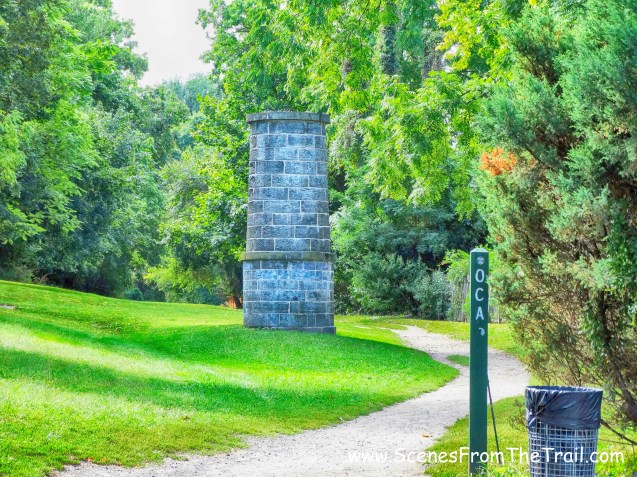
keep on trekking
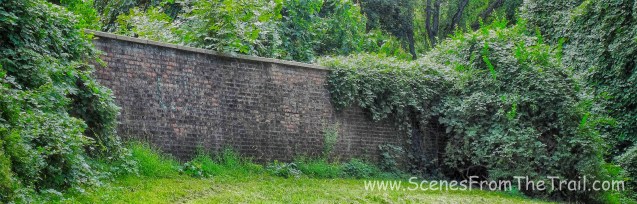


Waterfalls of Pike County, Pennsylvania

Pike County, Pennsylvania, according to the U.S. Census Bureau, has a total area of 567 square miles, of which 545 square miles is land and 22 square miles (3.9%) is water. It borders Sullivan County, New York to the north and Orange County, New York to the east. It is approximately a 1-1/2 hour drive from Westchester County, NY, where I reside. It is my go to place when I am in the mood for a good waterfall.

Factory Falls - George W. Childs Recreation Site October 10, 2015

Factory Falls – George W. Childs Recreation Site – October 10, 2015

There are many gorgeous waterfalls In Pike County, Pennsylvania. Quite a few are clustered together with relatively short hikes to the falls. This makes viewing numerous falls in one day possible. I have visited the different falls on several occasions in different seasons. I will start out by listing the name, location and images of the falls. Clicking on the location/falls name will give you the GPS location of the trailhead/entrance to the waterfalls. This guide will help you to easily find your way to some of nature’s beauties that Pike County has to offer.
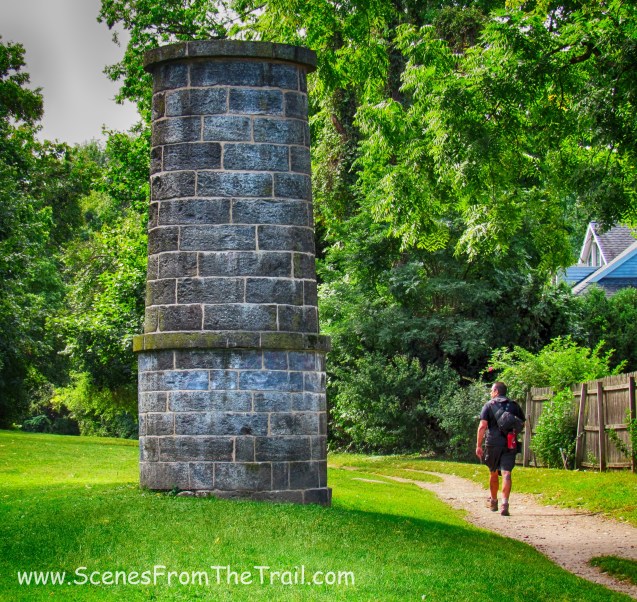
Please Note: George W. Childs Park has been CLOSED since 2018 due to damage sustained from Winter Storms Riley & Quinn. Construction work is in progress to repair the damage. The site remains closed to visitors during construction.
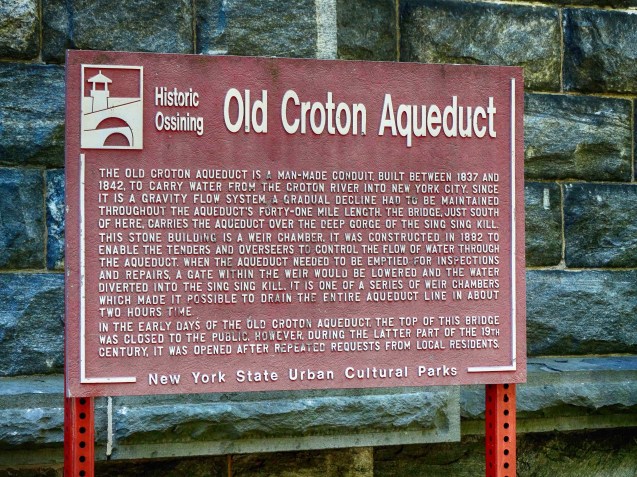
George W. Childs Recreation Site  is a very attractive park, which is a part of the Delaware Water Gap National Recreational Area and includes hemlock groves and cascading waterfalls, along with picnic areas, restrooms, and an easy 1.4 mile loop trail along the falls. It is located in Dingmans Ferry, in Delaware Township. The three main waterfalls are Factory Falls, Fulmer Falls and Deer Leap Falls. All 3 waterfalls are beautiful and are easily viewed from different vantage points along the trail.
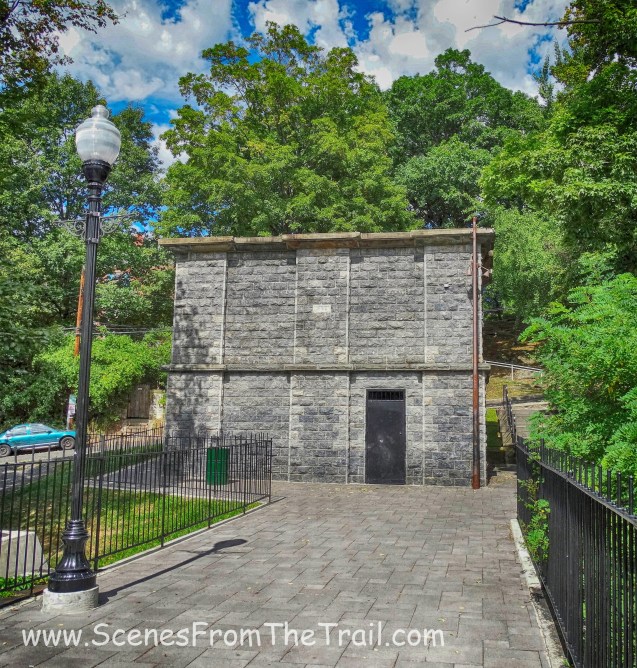
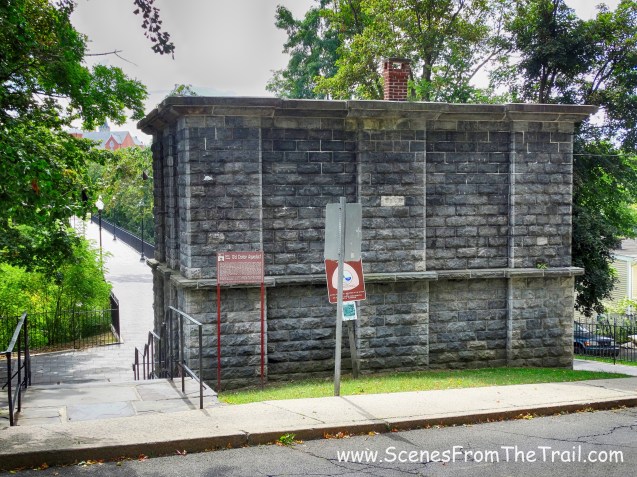
Factory Falls - February 6, 2016

Factory Falls – February 6, 2016

Fulmer Falls - October 10, 2015

Fulmer Falls – October 10, 2015

Deer Leap Falls - October 10, 2015

Deer Leap Falls – October 10, 2015

Dingmans Falls Visitors Center has two waterfalls. Dingmans Falls which at 130 feet is the second highest waterfall in the state and Silverthread Falls, drops a thin ribbon of water 80 feet and is located along the way to Dingmans Falls. Dingmans Creek Trail is a .4 mile wheelchair accessible flat boardwalk that meanders through a hemlock ravine.

Silverthread Falls - October 10, 2015

Silverthread Falls – October 10, 2015

Dingmans Falls - October 10, 2015

Dingmans Falls – October 10, 2015

Raymondskill Falls is a series of three cascading waterfalls located on Raymondskill Creek in Dingman Township. The three tiers have a combined height of approximately 150 feet. It is the tallest waterfall in the state of Pennsylvania. It is part of the Delaware Water Gap National Recreation Area. The Raymondskill Creek Trail is .3 miles long, but is steep in places and somewhat uneven. Since the first three locations I have listed are in close proximity to each other and involve short hikes to view the waterfalls, I have on several occasions visited all six falls in one day.

Raymondskill Falls - June 20, 2015

Raymondskill Falls – June 20, 2015

Hackers Falls is in Milford, with the 1.4 miles (one way) yellow blazed Hackers Trail located right across the street from the Raymondskill Falls parking lot. You will hike over rolling hills and through hemlock and mixed hardwood forests.
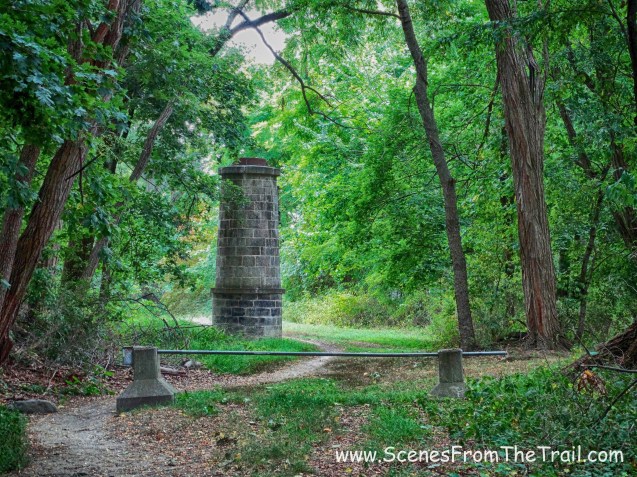
Hackers Falls - June 20, 2015

Hackers Falls – June 20, 2015

Shohola Falls is located in Shohola Township, which is 10 miles northwest of Milford, in State Game Lands 180. It is a very picturesque spot with a lake, a dam and the falls. The trail to the waterfall is unblazed and is easy to get to. Further down the trail there is a ledge which is angled and slippery from the spray. The view point from this ledge is directly across from the falls. One should take extreme caution at this area and should probably be avoided if there is ice. It is also a State Game land, so if hiking away from the falls you should wear orange. The falls are a multi-tier level of falls flowing from Shohola Creek and continuing down the river.
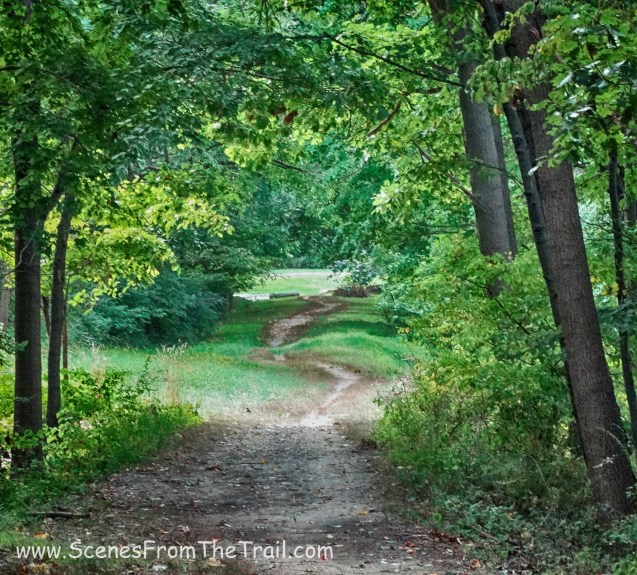
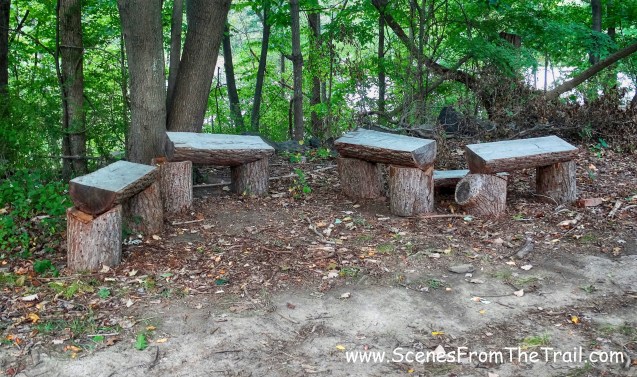
Shohola Falls - upper tier - May 30, 2015

Shohola Falls – upper tier – May 30, 2015

Shohola Falls - middle tier - May 30, 2015

Shohola Falls – middle tier – May 30, 2015

Shohola Falls - middle tier - July 30, 2016

Shohola Falls – middle tier – July 30, 2016

Shohola Falls - lower tier - May 30, 2015

Shohola Falls – lower tier – May 30, 2015

Hornbecks Creek Falls is another gorgeous waterfall in Dingmans Ferry. The Hornbecks Creek trailhead is located at mile marker 10.4 on US 209, just south of Chestnut Hill Road. It is a short drive up the gravel road to the trailhead.  The trail follows an old roadbed along Hornbecks Creek and is approximately a 1 mile hike to the falls.

Hornbecks Creek Falls - July 30, 2016

Hornbecks Creek Falls – July 30, 2016

Indian Ladder Falls is located near Hornbecks Creek Falls and was once reachable along the Hornbecks Creek Trail. A portion of the trail has sloughed off, causing a hazardous condition between the two falls. I normally visit both falls, but return to the vehicle and drive to Emery Road where Indian Ladder Falls is just a short walk from the trailhead.

Indian Ladder Falls - July 30, 2016

Indian Ladder Falls – July 30, 2016

Tumbling Waters Falls at the Pocono Environmental Education Center in Dingmans Ferry is just down the road from the Indian Ladders trailhead. The PEEC offers six trails that vary in distance and difficulty. All trails are loops that begin and end on the PEEC Campus. The trail to the waterfall is the Tumbling Waters Trail (orange blazes), which is a 3 mile loop and has a moderate level of difficulty. It is a nice hike through a hemlock forest, a mixed oak forest and views of the Delaware Valley & the Kittatinny Mountains in New Jersey.

Tumbling Waters Falls - June 7, 2015

Tumbling Waters Falls – June 7, 2015

I have visited many waterfalls in New York, New Jersey, Connecticut and Pennsylvania. Unless you are visiting one of the state parks that has many waterfalls, most often the falls are spread out throughout the states. With most waterfalls they tend to be at their best after the winter thaw and dry out some during the summer months. Pike County, Pennsylvania has many waterfalls in close proximity that are usually running strong throughout the year. Keep in mind that the easier it is to get to a waterfall, the more likely there will be more people visiting it. I tend to go early mornings and more times than not I feel like I have the place to myself. I hope that you enjoyed my latest entry and don’t forget to follow my blog. See you on the trail.

See Ya!

See Ya!

Labyrinth and Lemon Squeeze – Mohonk Mountain House

July 25, 2016 – New Paltz, NY

Difficulty: moderate – strenuous

Length: approximately 6.5 miles

Route type: circuit

The Mohonk Mountain House is a resort hotel located on the Shawangunk Ridge in Ulster County, New York. It is situated in the town of New Paltz, N.Y. on the western side of the Hudson River. The property consists of 1,325 acres and adjoins the Mohonk Preserve, which is crisscrossed by 85 miles of hiking trails and carriage roads.  I have been wanting to do this hike for quite some time. It’s very popular among hikers and even though it costs $26.00 per person to gain access to the grounds on weekends, I had heard that it is often crowded. I was lucky enough to receive some free day hiking passes to the Mohonk Preserve and decided to visit on a Monday to avoid the crowds. I had just gotten a Shawangunk Trails map set from the NY/NJ Trail Conference and was itching to put it to use. Upon arrival at the gatehouse, we were told that the free passes entitled us to park free at the Spring Farm Trailhead which would have added another 2.5 miles to our planned hike. The woman at the gatehouse told us we could park in the gatehouse lot for $10.00 per person. We didn’t want to add any additional mileage to our planned hike since it was going to be a scorcher in the mid 90’s, so we paid and parked. She also gave us a map.

We had gotten an early start so there were only a few cars in the lot when we arrived. The trailhead started behind the bathrooms (which were filthy).

Trailhead

Trailhead

We walked along the trail which was not marked, but they did have signs at some of the junctions which helped somewhat. There were some areas that were confusing and even after consulting my trusty map they were hard to figure out. At first we walked along a carriage road that ascended slightly.

carriage road

carriage road

We turned left at the sign towards the Glen Anna Path.

directional sign

directional sign

The Glen Anna Path was unmarked but the trail was mostly discernible until it ended at a staircase which led out onto Huguenot Drive.

Glen Anna Path

Glen Anna Path

We crossed the road and began on the Fox Path which was also unblazed, but well worn.

When we came upon Sky Top Road we turned left. We were supposed to turn right according to the hike directions we were following, but I misread it (it was also poorly worded). So we continued on Sky Top Road which was another carriage road that overlooked the Mohonk Mountain House.

Mohonk Mountain House

Mohonk Mountain House

We stopped at one of the many gazebos along the way and took in the view.

gazebo

gazebo

This was our first real view of the hike and it wouldn’t be the last.

first real view

first real view

Up to this point I thought that we were still going along with the hike directions that I had printed out, but were sitting comfortably by my desktop at home. Nevertheless it wasn’t a big deal at that time because the route we took was very scenic and we didn’t encounter another soul along the way. We continued up Sky Top Road and passed by Lily Pond which was a very picturesque detour.

Lily Pond

Lily Pond

Quack!

duck at Lily Pond

duck at Lily Pond

As we continued on the carriage road I saw a wild turkey which was much too quick for my lens and then western views opened up to our left.

western views

western views

western views

western views

All of a sudden I looked up and I could see the Sky Top Tower. This was supposed to be our turnaround point. We had missed the Labyrinth and Lemon Squeeze. I was not to be deterred, but first we climbed the tower and captured some images.

Albert K. Smiley Memorial Tower

Albert K. Smiley Memorial Tower

The views from the tower were spectacular. It was a hot day and that breeze really hit the spot. It felt like I could see forever up there. Click on the ensuing images to enlarge.

After taking in some views from the tower we found some shade and rested a bit while we contemplated our next move. Click on the ensuing images to enlarge.

After consulting my map I discovered that the end of the Labyrinth and Lemon Squeeze trail was just below us. It is a one way trail so we decided to descend down the mountain on Sky Top Path to the lake where we would take on this challenging trail. That meant having to climb the mountain twice, but I didn’t care. I was not going to let something like double elevation in one day stop me. We arrived at the start of the Labyrinth and Lemon Squeeze trail and encountered this sign. To be honest, I didn’t even read it. I took a photograph of it and kept it moving.

Labyrinth and Lemon Squeeze

Labyrinth and Lemon Squeeze

I would have preferred to do this at the beginning of the hike due to the strenuous nature of the trail. We had already hiked over 3 miles at this point on a hot day, but the adventure was about to begin. A group of loud 20 somethings got there at the same time we did, so we let them gain some distance before we proceeded with our journey. Click on the ensuing images to enlarge.

Right from the beginning it was challenging. We had to crawl through a space between two boulders, climb up a ladder and like a contortionist twist around and drop down on the other side. The trail was easy to follow as it was blazed with red arrows which indicated the correct direction in which to go. We continued on, stopping every so often to stay hydrated. In places where it would have been more difficult there were ramps positioned to assist.

Labyrinth and Lemon Squeeze Trail

Labyrinth and Lemon Squeeze Trail

As I approached some sections, I thought to myself “say what?”

Labyrinth and Lemon Squeeze Trail

Labyrinth and Lemon Squeeze Trail

The ladders were helpful and kind of fun.

Labyrinth and Lemon Squeeze Trail

Labyrinth and Lemon Squeeze Trail

I am 6′, 200 lbs and not as flexible as I once was, so some of these spots were a tight fit.

Labyrinth and Lemon Squeeze Trail

Labyrinth and Lemon Squeeze Trail

We just kept following the red arrows.

Labyrinth and Lemon Squeeze Trail

Labyrinth and Lemon Squeeze Trail

Labyrinth and Lemon Squeeze Trail

Labyrinth and Lemon Squeeze Trail

There were a few tight spots along the way and we hadn’t even gotten to the “Lemon Squeeze” yet.

Labyrinth and Lemon Squeeze Trail

Labyrinth and Lemon Squeeze Trail

A little more bouldering…………

DSC03328_HDR_marked

Labyrinth and Lemon Squeeze Trail

DSC03330_HDR_marked

Labyrinth and Lemon Squeeze Trail

and we arrived at the entrance to the Lemon Squeeze!

Lemon Squeeze

Lemon Squeeze

We climbed up a few ladders……..

Lemon Squeeze

Lemon Squeeze

and now we were about to get squeezed!

Lemon Squeeze

Lemon Squeeze

From this point it got very narrow and I got stuck a couple of times, but after removing my backpack and twisting around to get the best angle I was able to wiggle through. The last few feet seemed to be the most difficult part of the trail. The ladder ends about 12 feet from the top and with limited footholds and space it felt as though it was almost impossible to climb out. Heat and exhaustion certainly didn’t help either. After taking a moment to survey the situation, I pulled myself up and out.

I made it!!!!

Up and out of the crevice!

Up and out of the crevice!

It was a pretty tight squeeze and even though I wore the smallest camera sling pack I owned, I had to remove it in order to squeeze up through the crevice.

Up and out of the crevice!

Up and out of the crevice!

A look down where we got squeezed.

The crevice

The crevice

The crevice

The crevice

Well, that was certainly a very unique hike. I felt such a sense of accomplishment having completed this challenging trail. It took us a little under an hour to complete this portion of the hike. After rising out of the crevice I was greeted with sweeping views that seemed to go on forever. Click on the ensuing images to enlarge.

We certainly earned these magnificent views and we were in no hurry to leave. We could hear hikers grunting, cursing and complaining as they made their way up the crevice. Some repeating the same phrases as us when we were in their place. Click on the ensuing images to enlarge.

After spending quite some time at this magnificent spot, it was time to move on. Since this hike had left us up by Sky Top Tower, we decided to retrace our steps from there back to the parking lot. After a challenging hike and thunder roaring in the sky followed by lightning, we preferred a nice carriage road to make our way back. We got drenched for the last 2 miles of the hike, stopping once at one of the gazebos for shelter and to dry off a bit. This hike makes my top 5 list for sure. I’m looking forward to going back to explore some more trails soon. I hope you enjoyed the hike. Don’t forget to follow my blog to receive an email every time I publish a new post. Until next time, keep your boots on the ground and I’ll see you around.

041_HDR_marked

See ya!


Hook Mountain State Park

July 10, 2016 –Congers, NY

Difficulty: moderate

Length: approximately 6.5 miles

Route type: circuit

Please Note: The Upper Nyack Trail has been relocated and the beginning of the hike is quite different. Please see Hook Mountain Summit via Upper Nyack Trail & Long Path for an updated hike to the summit. From the summit, the guide below is still accurate.


Hook Mountain State Park  is part of the Palisades Interstate Park system, just north of Nyack. It extends along almost seven miles of continuous waterfront and cliff slopes. The Long Path runs along the escarpment above while a bike path follows the river’s edge from Haverstraw Beach State Park to Nyack Beach State Park in Upper Nyack. Hiking through an oak-maple-beech hardwood forest to the summit at 730 feet offers spectacular views overlooking the Hudson River valley.

Hook Mountain

Hook Mountain

I have been coming to Hook Mountain since I was a kid, but have never actually hiked the area. My friends and I used to park on Landing Hill Road and race up a steep slope to a crest that was directly across from Sing Sing Correctional Facility. We only visited at night and did what teens did back then. Over the years I have gone back numerous times, but never fully explored the trails. I figured today was a good day to do so. I decided to do the hike listed on the NY/NJ Trail Conference website, which was the Long Path/Hook Mountain Bike Path Loop to Summit of Hook Mountain. It was a gorgeous Sunday so armed with my Hudson Palisades Trails Map I was off.

I parked at Nyack Beach State Park which charges $6.00 to park in season unless you have the Empire Passport which costs $65.00 for a year and is a sound investment. From the parking area I headed back up to the entrance to begin following the white blazes of the Upper Nyack Trail which began as a road walk.

Nyack Beach State Park - Upper Nyack Trail

Nyack Beach State Park – Upper Nyack Trail

I followed the white blazes which were painted on telephone poles until I reached a rock which indicated a right turn into the woods.

The Upper Nyack Trail weaves throught the forest…

and ends at a T-intersection with the aqua blazed Long Path where I turned right. At this point  the Long Path follows the route of an old road that was built in the 1870’s, this road was supposed to extend to the top of Hook Mountain, but it was never finished.

After a while the trail begins to narrow and steepens with partially obstructed views of the Hudson River and Tappan Zee Bridge to the right. At one point the trail turns sharply right as you near the summit.

The Long Path at the summit of Hook Mountain

The Long Path at the summit of Hook Mountain

One final push up the trail and I was rewarded with some fantastic views.

View from the summit of Hook Mountain

View from the summit of Hook Mountain

After climbing 730 feet this was a great place to rest and take in the scenery.

View from the summit of Hook Mountain

View from the summit of Hook Mountain

This was the first official scenic view of the day, but it would not be the last. The hard part of this hike was done. There were numerous ups and downs from this point forward, but they were mostly gradual. A good part of the route on the Long Path afforded great views along the way. There were some nicely graded woods roads as well that was a nice change from the rocky trails along the ridge.

graded woods road

graded woods road

There were also some pretty cool ruins scattered throughout this hike. I do not know the origins of these structures, but it made for a more interesting hike.

After walking in the woods for a while, there was an unmarked trail that led off to the right that brought me to the edge of the cliffs once again. This was the spot that I had been to before and will always be one of my favorite places.

View east towards Ossining and Croton

View east towards Ossining and Croton

I knew that this was the last of the ridgetop views so I was in no hurry to leave. The breeze and the scenery had a calming effect that I did not want to depart from.

Northeast view with Croton Point Park to the left

Northeast view with Croton Point Park to the left

After a rather steep descent back onto the road, I left the Long Path and followed a paved road which led down to the river. Once down at the base of the cliffs, I looked up at where I was just moments earlier.

Hook Mountain

Hook Mountain

Along the way there were some ruins near a private residence.

DSC02905 (2)

ruins

DSC02908 (2)

ruins

I even saw Guineafowl trying to take shelter as it began to rain.

Guineafowl

Guineafowl

The rest of the way back was a very easy level walk along the multi purpose path. It was a bit crowded with bikes and people walking, but it was scenic as well.

multi purpose path

multi purpose path

I ran into some more ruins.

DSC02922 (2)

ruins

DSC02927

ruins

There were many points along the river with picnic tables to sit and enjoy the views. It was a perfect way to end a great hike. Click on the ensuing images to enlarge.

This was definitely one of the more enjoyable hikes that I have done. It had a little bit of everything and the weather was perfect as well. I hope that you enjoyed the hike. Until next time, happy trails……

At the summit

At the summit


Giant Stairs Hike – Hudson River Palisades

July 7, 2016 – Closter, NJ

Difficulty: strenuous

Length: approximately 5.5 miles

Route type: circuit

View a more recent version of this hike HERE

Palisades Interstate Park  is on the western shore of the Hudson River in northeastern New Jersey and also stretches into Rockland County, NY. It is about 12 miles long, a half-mile wide, and encompasses 2,500 acres of wild Hudson River shorefront, uplands, and cliffs. The Palisades affords some great views of Manhattan and the Hudson River.

View North of Hook Mountain and Rockland side of Tappan Zee Bridge from State Line Lookout.

View North of Hook Mountain and Rockland side of Tappan Zee Bridge from the Palisades.

I have done numerous hikes in the park which is just across the river from where I live. The one hike that I was dying to do was the Giant Stairs hike. It is the most strenuous hike in the park and I have been wanting to do it for quite some time. On this day we did a variation of the hike listed on the NY/NJ Trail Conference website. Although there are many steep sections of stairs throughout the park in order to navigate the steep cliffs in such a short distance, “Giant Stairs” refers to a mile long section of jumbled boulders that are part of the white blazed Shore Trail that runs along the Hudson River. Most of which is 100 vertical feet above the river.

Giant Stairs - Shore Trail

Giant Stairs – Shore Trail

The day of this hike called for temperatures in the 90’s, high humidity and a poor air quality alert. probably not the wisest decision on my part to choose to do such a tough hike on a day like this, but I did. It was exactly a year ago to the day that I did Breakneck Ridge under similar circumstances and it kicked my ass. This day would be no different.

We arrived at the State Line Lookout to find flyers posted about a missing man whose car was found in the parking lot several days earlier. More on this later. We began at the NW section of the parking lot following the aqua blazed Long Path which then runs jointly with Trail A.

NW end of the State Line Lookout

NW end of the State Line Lookout

I had done a portion of this hike 4 days earlier( Women’s Federation Monument Loop Hike ) so I decided to take a more gradual descent towards the river than have to walk down the steep steps which the NY/NJ Trail Conference suggests. By taking this route it also added mileage to our hike. We took the Forest View trail towards the Women’s Federation Monument and snapped a few photographs.

Women’s Federation Monument

Women’s Federation Monument

From there we continued on the Forest View trail which was now joined by the Long Path. The trail split where the Long Path went uphill and to the left (which would have been the way we came down if we took the suggested route) and the Forest View trail turned right and descended towards the river.

Forest View Trail

Forest View Trail

This is where the day got interesting to say the least. As we were about to descend the trail towards the river I wanted to stop and take a shot of the sign pictured above. Right after taking that shot we heard a tree cracking and a few seconds later it broke and fell down with a thundering roar upon the trail just a few feet from where we were standing. If we didn’t stop when we did that tree would have come crashing down on top of us. That was a close call. The tree blanketed the stairs along the trail and we had to climb over and around it to get by.

fallen tree on Forest View trail

fallen tree on Forest View trail

DSC02659

fallen tree on Forest View trail

DSC02660

fallen tree on Forest View trail

Once getting past that obstacle we proceeded down the trail which descended steeply on a narrow path and switchbacks towards the Shore Trail and the river.

The Forest View trail ended at a T-intersection with the Shore Trail where we took a left and began to follow the white blazes. It was a nice level walk at this point which led out to an area filled with vines. At this point the Palisades cliffs were on our left and the Hudson River was to our right.

Shore Trail

Shore Trail

As we neared the Giant Stairs there was a Park vehicle sitting across the trail. When I didn’t see any park personnel nearby, I knew that it had something to do with the missing man on the posted flyer that we had seen earlier.

park vehicle

park vehicle

We continued on and began the arduous undertaking which was the Giant Stairs. I have to say that this part of the hike was not easy for me on this day. I attributed this to having had only 3 hours of sleep the previous night combined with the heat, humidity and poor air quality. I had to stop often to rest as I felt the strength and stamina being sucked out of my body. I am a trooper so I was going to complete this hike no matter what. Click on the ensuing images to enlarge.

Not too long after beginning the Giant Stairs section of the hike we saw a helicopter hovering above. News 12 was on the scene covering the missing man which I now assumed was a recovery effort. We saw some park employees along the trail and were told that they had found a body just above us on a cliff. Emergency workers were trying to recover the body and from the location I knew it wasn’t going to be easy. You can read about it here.

News 12 helicopter

News 12 helicopter

As we continued on I was really feeling the ill effects of the weather along with the strenuous nature of the hike. I was guzzling water and stopping frequently to catch my breath. My hiking partner had no difficulties whatsoever. Somewhere along the way I lost a bottle of water and that surely didn’t help.

After a mile (which felt much longer) of maneuvering along the giant boulders and talus field we were at Peanut Leap Cascade and the ruins of the Italian Garden. Peanut Leap wasn’t more than a trickle, but after a good rainfall it is supposed to be spectacular.

The ruins, which are remnants of an Italian Garden built around 1900 were pretty cool.

Italian Garden ruins

Italian Garden ruins

Click on the ensuing images to enlarge.

There was a nice breeze coming in off the river which seemed to come from the impending thunderstorms, but at this point I was in no hurry to climb 550 feet back up the cliff. I was tempted to sit on this swing that was hanging from a tree by the shore,  but thought better of it.

rope swing

rope swing

After a lengthy rest at river’s edge and darkening skies, it was time to go.

Hudson River

Hudson River

The Shore Trail continued up over the ruins…..

ruins

ruins

and almost immediately to our right another tree snapped and came crashing down. It barreled down the hilly slope taking out smaller trees in it’s path until it came to rest on the banks of the river. Another close call. We continued up the Shore Trail where we caught up to the Long Path. As we followed the Long Path up to old Route 9W it began to pour. We got totally drenched as we walked the last mile back to the State Line Lookout. The most eventful hike I have ever done. I was wiped out and vowed that I wouldn’t revisit this hike again. As I write this, a day removed from this journey, I would definitely do this hike again. Next time in cooler weather. Until next time, happy trails………

Women’s Federation Monument Loop Hike – Hudson River Palisades

July 3, 2016 – Closter, NJ

Difficulty: moderate – strenuous

Length: approximately 5 miles

Route type: circuit

The Women’s Federation Monument was built in 1929 to honor the role the New Jersey State Federation of Women’s Clubs played in preserving the Palisades. Basically it’s a miniature castle high atop the cliffs of the Palisades in Alpine, New Jersey. I love hiking the Palisades, mostly because it’s right across the river from me and also because the Long Path runs through them. The trails and the views are great too. I have done some of the hikes listed on the NY/NJ Trail Conference’s site for The Palisades, but today I felt like freestyling. I made sure I had my Hudson Palisades Trails Map because one should never hike without a compass or a map of the area.

State Line Lookout

I started my hike from the State Line Lookout which immediately provides views without any effort.

State Line Lookout

State Line Lookout

There were vultures flying near and far and I happened to capture an image of a Black Vulture sitting on the edge of the cliff.

Black Vulture

Black Vulture

Then as he took flight.

Black Vulture

Black Vulture

After snapping away for a few minutes I decided that I would start out walking along old U.S. Route 9W. Old Route 9W is a 1.5 mile remnant of a concrete surface highway constructed in 1926. With the construction of the Palisades Interstate Parkway in the 1950s, Route 9W was shifted to the west. The old highway is now closed to traffic and enjoyed by pedestrians and cyclists.

Old Route 9W

Old Route 9W

I walked along old Route 9W for it’s entire length. I could see the faded double yellow line.

Old Route 9W

Old Route 9W

I noticed they still had the old cable barriers in some places.

old cable barrier

old cable barrier

It was cool to walk on this stretch of old highway.

DSC02500

Old Route 9W

DSC02504

Old Route 9W

When I reached the end of old 9W I began to follow the aqua colored blazes of The Long Path which was off to the right.

Long Path

Long Path

The Long Path like most long distance trails are usually quite rugged. This stretch is no exception. It’s not as strenuous as other parts that I have hiked, but it gives you a workout. At the beginning it was a little rocky, but it was nothing more than just a walk in the woods. Click on the ensuing images to enlarge.

Then I crossed a series of puncheons.

From there the trail steepened somewhat.

I almost stepped on this dead snake. Yes I jumped a little.

dead snake

dead snake

The Long Path led me towards the river and a partially obstructed view.

partially obstructed view

partially obstructed view

It was all uphill from here. This is where The Long Path lets you know where you’re at. Stairs…..

Long Path stairs

Long Path stairs

lots of them………

After conquering the stairs I was rewarded with some outstanding views.

After sitting on a rock outcrop catching some rays and enjoying some views it was time to get going again. As I continued along the edge of the cliff on The Long Path, I was greeted with, you guessed it, more stairs.

Long Path steps

Long Path steps

Then I reached the New Jersey Border monument.

I continued through the woods on The Long Path and found a nice shady spot to relax for minute.

Long Path

Long Path

As I continued on The Long Path I had to cross over old Route 9W back near the Stateline Lookout. I then kept following the aqua colored blazes of The Long Path as it ran together with trail A.

Long Path

Long Path

I then proceeded straight onto trail B instead of following The Long Path as it went left.

trail B

trail B

I then saw this lil fella off to the side admiring my hiking prowess.

Deer

Deer

Trail B led me back out to the access road near the Palisades Parkway where there was an unmarked trail between two boulders which I took.

unmarked trail

unmarked trail

This unmarked trail was an easy short walk through the woods which paralleled the Palisades Parkway.

Then I came to the blue & white Forest View Trail which I began to follow.

After a short distance the Forest View Trail turned left and joined The Long Path that came in from the right.

Forest View Trail - Long Path

Forest View Trail – Long Path

As I neared the cliff’s edge the castle came into view.

Women’s Federation Monument

Women’s Federation Monument

Such a cool structure to find along the edge of a cliff. I had been here before on a much shorter loop hike, but it is always a great spot to visit.

Women’s Federation Monument

Women’s Federation Monument

There were nice views from the castle as well.

More images of the castle.

When I was done enjoying my castle on the cliff, I headed off down the ravine on the joint Forest View Trail – Long Path. When I came to a junction where the Forest View Trail went right and the Long Path went left, I started following the aqua blazed Long Path once again.

Long Path bridge

Long Path bridge

As soon as I crossed over the small bridge I encountered more stairs.

Long Path stairs

Long Path stairs

Stairway to heaven it wasn’t, but at least I got my cardio in for the week.

Once I tackled those stairs I was back up at the same elevation where I began the hike. It was a flat walk back to the car. First I had to take a photograph of the Glenwood Power Station in Yonkers.

Glenwood Power Station

Glenwood Power Station

The Long Path crossed over the access road once again…

Long Path

and I followed it and turned right onto trail A which led me back to the parking lot. This hike was fun and slightly challenging at the same time. After doing 5 miles the previous day, I was a little worn out after this hike. I hope you enjoyed the hike. If you would like to follow my blog click the tab on the left side of the page. Until next time, happy trails……….

me

Taking in the scenery after the hike.

Wappinger Greenway Trail

‎July ‎2, ‎2016 – Wappingers Falls, NY

Difficulty: moderate

Length: approximately 5 miles

Route type: circuit

Map: Wappinger Greenway Trail Map


The Wappinger Greenway Trail consists of an 11-mile figure-eight loop hike of on and off-road trails, encircling lower Wappinger Creek and Wappinger Lake. With that being said, I wasn’t going to do the whole loop. So I Incorporated Bowdoin Park to make it a shorter loop hike. I parked at the New Hamburg Metro North Station which allows free parking on weekends. So armed with a Wappinger Greenway Northern trail map, I set off on my hike. I started up Main St. and turned right on New Hamburg Road. On the left side of the road just past the mailboxes marked 29-31 was a gated dirt road with a white Wappinger Greenway logo blaze.

gated dirt road

gated dirt road

This is where I begin following the white blazes of the Wappinger Greenway Trail.

Wappinger Greenway Trail

Wappinger Greenway Trail

Almost immediately I came upon Reese Sanctuary Cemetery which predates the Civil War.

Reese Sanctuary Cemetery

Reese Sanctuary Cemetery

It’s a shame that this cemetery seems to be forgotten as there are numerous tombstones that have fallen over or have been knocked down.

Reese Sanctuary Cemetery

Reese Sanctuary Cemetery

I walked towards the right of the cemetery where there was a bench with a view. Considering I didn’t even break a sweat yet, it was a nice payoff.

Hudson River - Southern view

Hudson River – Southern view

After taking in the view, I proceeded through the gap in a stone wall.

gap in a stone wall

gap in a stone wall

The trail continued high alongside Wappinger Creek through some shaded woods. It was sunny and in the 80’s, so the shaded woods walk was cool.

Wappinger Greenway Trail

Wappinger Greenway Trail

There were plenty of ups and downs on this hike with partially obstructed views.

view

view

view

view

The woods were relatively quiet during this hike. I saw 3 hikers all day going the opposite way. That works for me.

marred up tree

marred up tree

The trail steepened somewhat as we continued up on switchbacks. That was the biggest ascent of the day.

Once the trail leveled off I took a breather and consulted my map. I had walked past the left I had to make and doubled back to get on the correct path. Luckily it was only a few hundred feet before I decided to recheck the map. My turn was at the Wappinger Greenway logo sign.

Wappinger Greenway Trails logo

Wappinger Greenway Trails logo

After getting my bearings, I kept moving along mostly with camera in hand to capture anything interesting along the way.

Wappinger Greenway Trail

Wappinger Greenway Trail

Then I came to Channingville Road which I crossed.

Channingville Road

Channingville Road

After crossing the road the white blazed Wappinger Greenway Trail goes right, but I went left, now following the purple blazes. I was now in Bowdoin Park.

purple trail

purple trail

I walked on the purple trail for a while. It was overgrown in some sections, but overall it was a pleasant stroll through the woods.

purple trail

purple trail

Then I crossed the road again to check out an old fence with columns.

DSC02403

fence with columns

DSC02406

fence with columns

After walking on the purple trail for a little while longer, I made a left onto a short trail marked with red & blue blazes. This trail led to a t-intersection where the yellow trail began.

yellow trail

yellow trail

The yellow trail began to climb as I continued along.

Then just off to the right was a rock outcrop…..

rock outcrop

rock outcrop

that had a nice view of the Hudson River.

Hudson River view

Hudson River view

After continuing along the yellow trail I came across a very unusual sight. Something that appeared to be in the shape of a heart. I’m guessing the Boy Scouts had some time to kill.

heart shaped

heart shaped

There were a few rustic stream crossings along the yellow trail. This one being the high tech of the bunch.

bridge

bridge

After coming to a t-intersection I continued to follow the yellow trail.

t-intersection

t-intersection

The trail became quite overgrown and narrow. I’m not a big fan of branches and leaves rubbing against me, but I kept it moving.

overgrown yellow trail

overgrown yellow trail

The yellow trail ends near the Hudson River along the banks of a bay that was created when Metro North filled in it’s right of way. It has a wildlife viewing platform, a decent view and a beaver lodge.

wildlife viewing platform

wildlife viewing platform

decent view

decent view

beaver lodge

beaver lodge

From here I made a left up a hill where I saw the white blazes of the Wappinger Greenway Trail and turned right which led me to some stone steps right behind the firehouse. I stepped out onto Channingville Road and walked down the hill to the New Hamburg Metro North station where I began my hike.

This was a pretty decent hike that had some interesting things to see and photograph. If I lived in the area I would probably explore more of it, But I live in Westchester County so this was one and done for me. I hope you enjoyed the hike. Until next time, happy trails………

me

me

Bear Hill Nature Preserve

June 26, 2016 – Pine Bush, NY

Difficulty: easy

Length: approximately 1.5 miles

Route type: out and back

Bear Hill Nature Preserve is in the same Shawangunk Ridge as Sam’s Point. At an elevation of 1,950 feet, it provides spectacular views. It is a 50 acre privately owned park. They charge a $5.00 per person trail use fee, but have no maps available nor are the trails blazed. this is a short easy hike with some of the best views anywhere. My only complaint is that I could not find a trail map online and I assumed that after paying 5 bucks they would provide me with one. I was wrong, but other than that it is one of the coolest places that I have hiked.

DSC02270

Bear Hill Nature Preserve

From the parking area we proceeded onto the main trail which we followed, ignoring the numerous side trails that veered off from it. It was a little frustrating not having a map for fear of missing something by not venturing down all those unmarked trails. In the same turn, not having a map and not knowing the layout of the trails I didn’t feel like getting lost.

DSC02164

main trail

The main trail was a nice easy stroll through some very scenic woods. The Mountain Laurel was everywhere and the people weren’t. I didn’t arrive there until about noon and was surprised at seeing so few cars in the parking area.

DSC02186

main trail

What a beautiful day for a hike. I was getting my moneys worth thus far. When I came upon this sign it was either turn left or right, I turned left.

DSC02265

sign

Almost immediately the views began. I wandered around taking shot after shot of some of the most glorious views. Trying to choose which images to post was a tough task as there wasn’t a bad shot in the bunch. That’s a testament to Bear Hill not my skills as a photographer. Click on the ensuing images to enlarge.


I was so enamored of the views that I did not want to leave. A gorgeous Sunday with spectacular views. I did forget to mention that Bear Hill also has chasms. Plenty of them in fact. Some more dangerous than others, but if you like rock scrambling and exploring, this is the place for you.


Even though this is a relatively small preserve, it has a lot going on. I didn’t check out as much of the preserve as I would have liked. Not having a map and the thought of grilled steak fajitas that awaited me, made me cut my visit short. I will be back in October to see the fall foliage. Until next time, happy trails…….

IMG_5363

Bear Hill Nature Preserve

Horseshoe Mine and Buttermilk Falls

June 26, 2016 – Spring Glen, NY

Difficulty: easy

Length: approximately 1/4 mile

Route type: out and back

The Horseshoe mine is an exploratory lead mine near Spring Glen, NY. The mine is situated at the base of a mountain waterfall, with the water flowing down and over the mouth of the mine. No record of this mine seems to exist, however it may have been part of the North American Coal and Iron Co. Mine explorations, which dates it back to between 1838 and 1850. From different accounts that I have read the mine is said to go back as far as 300 – 500 feet. At the time of my visit the sun was shining brightly which caused significant glare to bounce off the wet rocks and also the fallen tree which lay across the front. On this day I did not go inside the mine due to the water being higher than what I was equipped for. I plan on going back when the sun is at a different angle and with higher boots.

The mine/falls is located a little down the road from the Spring Glen Campgrounds on a dead end street. It is also just a stones throw from the Delaware and Hudson Canal Trail which passes right by there. When I first heard of this unique spot I knew I had to check it out. A mine with a waterfall cascading over it, come on, it was a no brainer. After visiting the High View Tunnel I headed right over to it. I had decent directions thanks to a YouTube video, because when it comes to certain cool places people are hesitant to share the location. I had no trouble finding the spot and was pleased to find a trail leading up to it which meant no bushwacking. When I got to the falls there was a family enjoying their morning there. They left not too long after I arrived. I hope I didn’t scare them away. I took numerous shots, but that glare was awful. Next time I hope to get better shots.

Horseshoe Mine and Buttermilk Falls

Horseshoe Mine and Buttermilk Falls

Click on the ensuing images to enlarge.

After spending some time at this picturesque and tranquil spot it was time to get going. I was 20 minutes from Bear Hill Nature Preserve and some majestic views.

Happy trails……..

IMG_5277

Horseshoe Mine and Buttermilk Falls

High View Tunnel

June 26, 2016 – Mamakating, NY

Difficulty: easy

Length: approximately 2 miles

Route type: out and back

There is an updated version of this hike HERE.


High View Tunnel is an approximately one mile long railroad tunnel that bores through Shawangunk mountain from Bloomingburg to Mamakating. The New York, Ontario and Western Railway, more commonly known as the O&W or NYO&W, was a regional railroad with origins in 1868, lasting until March 29, 1957 when it was ordered liquidated by a US bankruptcy judge. The O&W holds the distinction of being the first notable U.S. railroad to be abandoned in its entirety. This was the main line of the New York, Ontario & Western Railroad, which was the major travel route to the Catskills in the heyday of the Sullivan County resorts.

IMG_6934

High View Tunnel

While doing some research on abandoned train tunnels, I came upon this one and it seemed an interesting place to visit. The information that I gathered stated that this tunnel was haunted and that people have drowned due to the tunnel being flooded up to nine feet in places. One of the key points about my desire to visit High View Tunnel was that it was accessible without having to trespass. So, after having located it on Google Maps, I decided to combine this trip with two other places I wanted to visit in the area.

Across Mamakating Road is an old abandoned bridge abutment where an unmarked trail was off to the left.

IMG_6959

bridge abutment

After climbing up the hill I encountered the railway grade which I began to follow.

IMG_6957

railway grade

After a short walk along the grade I saw an odd looking small structure through the vegetation on the left. I thought initially that it might have been a guard shack, but have since found out that it is a cast concrete telephone booth.

IMG_6956

cast concrete telephone booth

I continued ahead through a rock cut.

IMG_6951

rock cut

The trail began to get muddy which led me to believe that I was getting close.

IMG_6950

muddy trail

Then on the right I came upon the ruins of a small stone building. This building was used for the “day storage” of explosives.

IMG_6926

stone magazine

It was not too far past the stone building that the tunnel came into view.

IMG_6929

High View Tunnel

The trail leading up to the tunnel was very muddy and I had to stay to the left so I wouldn’t sink in the mud and risk losing a boot. It had an eerie atmosphere and was relatively quiet except for the road noise from New York State Route 17 which the tunnel runs under.

Here are some images that I captured of the High View Tunnel. Click on the ensuing images to enlarge.

I did not try to explore inside the tunnel as it was filled with water and some bats. I also left my flashlight in the car so any desire to venture inside was quickly diminished. It is not advisable to enter this tunnel because it has not been maintained since the 1950’s, it is flooded and there is the danger of falling debris along with other hazards when exploring abandoned places.

After hanging out and taking some photographs I retraced my steps back to the car. I was now off to find a lead mine with a waterfall in front of it that was a short distance away.

Until next time, happy trails……

022

High View Tunnel


Valley Forge National Historical Park

June 19, 2016 – King of Prussia, Pennsylvania

Valley Forge was the site of the 1777-78 winter encampment of the American Continental Army during the American Revolutionary War. It is located in southeastern Pennsylvania, approximately 20 miles northwest of Philadelphia. Starvation, disease, malnutrition, and exposure killed over 2,500 American soldiers by the end of February 1778.

Valley Forge cannon

Valley Forge cannon

Valley Forge is the story of the six month encampment of the Continental Army of the newly formed United States of America under the command of General George Washington. No battle was fought here, but from December 19, 1777 to June 19, 1778, a struggle against the elements and low morale was overcome on this sacred ground.

Valley Forge hut

log hut

Valley Forge National Historical Park encompasses 3,500 acres and includes restored historic structures, reconstructed structures such as the iconic log huts, and monuments erected by the states from which the Continental soldiers came. facilities include Ranger programs, tours (walking, self driving and trolley). The park also provides 26 miles of hiking and biking trails, which are connected to a regional trails system.

American Flag

Old Glory

I was driving back to NY from Pennsylvania when I saw the sign for Valley Forge. I thought “what the hell,” so I got off the exit and drove over to the park. It is set up similar to Gettysburg, but on a smaller scale. They also had a self driving tour, so that’s the tour that I took. I will just post some basic info with images below of what I saw while I was there. I encourage all who can, to pay this place a visit. I am glad that I had the opportunity.

Muhlenberg huts – The original huts were built in a matter of days within arriving at Valley Forge, with George Washington turning it into a competition among the men to see who could build fastest.

Muhlenberg huts

Muhlenberg huts

Each one of the huts would house a dozen soldiers, crammed on bunks.

National Memorial Arch – was erected to commemorate the arrival of General George Washington and his Continental Army into Valley Forge. It stands 60 feet high.

Huts were scattered throughout the park that varied in design.

log hut

log hut

Massachusetts State Marker – In memory of the soldiers of Massachusetts who served at Valley Forge.

Massachusetts State Marker

Massachusetts State Marker

Pennsylvania Columns – Granite columns crowned with bronze eagles and bronze bas reliefs of Pennsylvania officers.

Pennsylvania Columns

Pennsylvania Columns

Anthony Wayne Statue – The first monument to be erected by the state of Pennsylvania in Valley Forge National Historical Park and is a replica of the one commissioned for Stony Point, New York.

Anthony Wayne Statue

Anthony Wayne Statue

Unknown Soldiers Monument – In Memory of Unknown Soldiers Buried at Valley Forge 1777 – 1778.

Unknown Soldiers Monument

Unknown Soldiers Monument

Washington’s Headquarters – Isaac Potts House – General George Washington made his headquarters here during the encampment in the winter and spring of 1777-1778.

Washington's Headquarters - Isaac Potts House

Washington’s Headquarters – Isaac Potts House

Commander-in-Chief’s Guard huts – Behind Washington’s Headquarters are huts where the Commander-in-Chief’s Guard stayed.

Commander-in-Chief’s Guard huts

Commander-in-Chief’s Guard huts

Valley Forge Railroad Station – was erected in 1913 to serve passengers along the Reading Railroad.

Valley Forge Railroad Station

Valley Forge Railroad Station

New Jersey State Marker – New Jersey was the fourth state to erect a monument to its soldiers at Valley Forge. The New Jersey troops or “Jersey Blues” as they were called were some of the staunchest soldiers of the Continental Army and apparently were exceedingly well organized and disciplined.

New Jersey State Marker

New Jersey State Marker

Redoubt 4 – anchored one end of the inner defense line. This line was a secondary line of defense. The area around the redoubt was occupied by troops commanded by Brigadier General Jedediah Huntington.

Redoubt 4

Redoubt 4

Artillery Park – is a field that was used by the artillery units of the Continental Army. Most of the cannon brought to Valley Forge were massed in this area called the Artillery Park. Here, under the command of Brigadier General Henry Knox, artillery was stored and repaired and gun crews were trained and drilled. In the event of an attack, the cannon could be dispatched from this central location to wherever they were needed.

Artillery Park

Artillery Park

Another log hut.

log hut

log hut

Schoolhouse.

IMG_6830

Schoolhouse

IMG_6832

Schoolhouse

Washington’s Marquee Site Marker – On this spot General George Washington erected his campaign tent (marquee) when he entered Valley Forge December 19, 1777. He occupied this tent until December 24, 1777 when he moved his headquarters to the Potts house.

Washington's Marquee Site Marker

Washington’s Marquee Site Marker

Cannons along the way.

Cannons

cannons

Baron von Steuben Statue – The statue of von Steuben is one of only two statues in the park of the generals who served at Valley Forge. General von Steuben’s statue overlooks the Grand Parade Ground where he trained the soldiers of the Continental Army in the finer points of marching and maneuvering.

Baron von Steuben Statue

Baron von Steuben Statue

General James Varnum’s Quarters – is an early 18th century farmhouse overlooking the Grand Parade and once occupied by General James Varnum.

General James Varnum’s Quarters

General James Varnum’s Quarters

Washington Memorial Chapel – is both a monument to General George Washington and an active Episcopal parish.

Washington Memorial Chapel

Washington Memorial Chapel

Closeups of Washington Memorial Chapel. Click on the ensuing images to enlarge.

After visiting Valley Forge National Historical Park, I was pleased that I did. An important part of American history.

National Memorial Arch

National Memorial Arch

Valley Forge is the story of an army’s epic struggle to survive against terrible odds, hunger, disease and the unrelenting forces of nature. Though no military battle was fought here, the six months in Valley Forge, with its heavily-rationed supplies and awful winter, were among the roughest for the Continental Army during the entire war.


Hawk Mountain Sanctuary

June 18, 2016 – Kempton, Pennsylvania

Difficulty: moderate

Length: approximately 3 miles

Route type: out and back

Hawk Mountain Sanctuary is a 2,600-acre natural area in southeastern Pennsylvania that is famous as the world’s first refuge for birds of prey. As the world’s oldest wildlife sanctuary exclusively committed to the protection and observation of birds of prey, Hawk Mountain holds a unique place in geographic and scientific history. It is not owned or financially supported by the state; it remains entirely self-sufficient. In 1965 the sanctuary was registered as a National Natural Landmark.

DSC02080

Hawk Mountain Sanctuary

Hawk Mountain is part of the Kittatinny Ridge or Blue Mountain, the prominent, southeastern most Appalachian ridge in the Ridge-and-Valley Province. Nine trails of varying difficulty are available to hikers and linked to the Appalachian Trail. They charge Trail fees to help offset their costs of maintaining the property as well as programs. At an elevation of 1521 feet it affords views that extend up to 70 miles.

DSC02001 (2)

elevation of 1521 feet

I learned about this place through a website about the best views in Pennsylvania. It definitely had views. It had lookouts along many points on the trail with fantastic views that stretched for miles. I arrived early on a Saturday morning to beat any crowds there might be. I got there before the Visitor Center opened so there was no one to pay the trail fees to. Lucky me.

Hawk Mountain Sanctuary

entrance from the parking area

After not having to pay, I proceeded along a brick walkway to hit the trails. Luckily I had downloaded a map and printed it prior to my visit, which is always a good idea. You can’t always count on locating a map at the hiking site.

Hawk Mountain Sanctuary

on the way to the trails

I crossed the road to the trailhead and an empty kiosk. This place was very well done and very  aesthetically pleasing throughout. The trail that I followed for most of the hike was the Lookout Trail. Their trail system even connects to the Appalachian Trail.

First up was South Lookout, it was about 200 yards from the kiosk. A very short walk which made me feel like I didn’t really earn the view.

After taking in the view, I proceeded along the Lookout trail. It was already getting hot and except for the overlooks the trail was almost entirely shaded. I was really digging this place.

DSC01917

Lookout Trail

Next up was the Appalachian Overlook.

Appalachian Overlook

Appalachian Overlook

From there I continued up the trail to the next view, which was the River of Rocks Overlook. These massive boulder fields were deposited here during the last Ice Age, approximately 10,000-15,000 years ago.

River of Rocks

River of Rocks

I’ll skip to the Bald Overlook which had a little rock scramble to get to the view.

Bald Overlook

Bald Overlook

After the Bald Overlook the trail got quite rocky with an increase in elevation. It was time to concentrate on where I placed my feet. I’ve been on rockier trails so this wasn’t too bad.

On some of the steeper sections they installed some railings which made it a little easier on the ascent.

At this point I had worked up a sweat and decided to take a break on a bench that was right near this informational sign.

informational sign

informational sign

After a brief hydration break, I made the final push to the summit, or so I thought.

The Kettle View came first, which was pretty awesome.

Kettle View

Kettle View

After snapping a few photographs I was anxious to get to the money spot. One last push, I mean it this time.

Finally, the view I was waiting for. By this time I felt like I earned it.

North Lookout

I have to say that North Lookout did indeed have some impressive views. I snapped away to my heart’s content. This place rocks. Click on the ensuing images to enlarge.

I spent some time there just soaking up the view. A few groups of hikers came and went while I was there, but what a tranquil place to be. I was reluctant to leave, but all good things must end. I retraced my steps back to that informational sign to check out “The Slide.” It was a dead end with not much of a view, but with such a short walk I had to check it out.

DSC02023

The Slide

I back tracked to the trail junction to go check out the Sunset Overlook. After a little rock scrambling………

IMG_4874

Scramblin’ man

I made it to the overlook.

Sunset Overlook

Sunset Overlook

I would have liked to explore the many other trails which are a little more challenging, but my time was limited. This is one place that I look forward to returning to. Until next time, happy trails……..

me at North Lookout

me at North Lookout

Saucks Covered Bridge

June 15, 2016 – Gettysburg, Pennsylvania

Saucks Covered Bridge also known as Sachs Covered Bridge and Waterworks Covered Bridge was built in 1854 by David Spooner using the Town truss and utilizing one span. The structure is 100 ft. long and 15 ft. wide, and it is only open to foot traffic. The bridge crosses Marsh Creek and is owned by Gettysburg Battlefield Preservation Association.

Saucks Covered Bridge

Saucks Covered Bridge

The bridge was known as Sauck’s during the Civil War, it was built using oak and pine. The bridge was repaired in 1997 after heavy rains washed the bridge from it’s foundation and carried it approx. one hundred yards downstream.

Saucks Covered Bridge

Saucks Covered Bridge

On July 3rd and 4th, 1863 , the bridge was used by a portion of the Confederate army, in retreat out of Gettysburg, but is said to have been used by both armies during the time of the Gettysburg conflict. Robert E. Lee had split his army into 2 sections, with one headed Northwest toward Cashtown, the other crossed Sauck’s Bridge and headed Southwest.

Saucks Covered Bridge

Saucks Covered Bridge

The bridge is said to have been the site of a triple hanging at one end, and in close proximity to a crude post battle field hospital, the Sauck’s Covered Bridge is a favorite of ghost hunters. SOURCE

Saucks Covered Bridge

Saucks Covered Bridge

It is said that hundreds of confederate wounded soldiers died along the banks of the creek after the Battle of Gettysburg.

Saucks Covered Bridge

Saucks Covered Bridge

I didn’t encounter any apparitions on my visit to this bridge, but I did enjoy the architectural beauty of it.

Saucks Covered Bridge

Lancaster County Covered Bridge Tour – Northern Amish Countryside

June 14, 2016 – Lancaster County, Pennsylvania

This is the second leg of my covered bridge tour. I started this one immediately after finishing the last one. No rest for the wicked. This tour was called  Northern Amish Countryside, due to the fact that most of the route led me past Amish farms. This one also consisted of five covered bridges and beautiful scenery along the way.

Bucher’s Mill Covered Bridge spans Cocalico Creek and has a single span, wooden, double Burr arch trusses design with the addition of steel hanger rods. The deck is made from oak planks. It is painted red, the traditional color of Lancaster County covered bridges, on both the inside and outside. Both approaches to the bridge are painted in the traditional white color. The structure has a length of 64 feet and the width is 15 feet it is open to all traffic and in good condition. Click on the ensuing images to enlarge.

Red Run Covered Bridge once spanned the Muddy Creek in Lancaster County. It is currently situated on private property next to the Red Run Campground. It is 107 feet long with a width of 15 feet and is also known as the Oberholzer’s Covered Bridge. The structure is closed to traffic. The bridge has a single span, wooden, double Burr arch trusses. It is painted red, the traditional color of Lancaster County covered bridges, on the outside. Both approaches to the bridge are painted in the traditional white color.

Weaver’s Mill Covered Bridge is 85 feet long and 15 feet wide. It spans the Conestoga River and has a single span, wooden, double Burr arch trusses design with the addition of steel hanger rods. It is painted red, the traditional color of Lancaster County covered bridges, on both the inside and outside. Both approaches to the bridge are painted in the traditional white color. The bridge is in good condition and open to daily traffic.

Pool Forge Covered Bridge spans the Conestoga River and is now on private property where it was once used as a storage barn before the owner added a road to receive vehicle traffic. The bridge has a single span, wooden, double Burr arch trusses design with the addition of steel hanger rods. It is painted entirely red, the traditional color of Lancaster County covered bridges on the outside. The inside of the bridge is not painted. Both approaches to the bridge are painted in red without any of the traditional white paint. The bridge is 99 feet and the width is 15 feet.

Bitzer’s Mill Covered Bridge spans the Conestoga River and is the oldest bridge in the county still in use. The bridge has a single span, wooden, double Burr arch trusses design with the addition of steel hanger rods. The deck is made from oak planks. Added later, secondary steel I-beams support the bridge from underneath. The bridge is painted red on the outside, the traditional color of Lancaster County covered bridges. The inside of the bridge is not painted. Both approaches to the bridge are painted in the traditional white color. The bridge length is 98 feet and the width is 15 feet it is open to all traffic and in good condition.

That completes the second leg of the covered bridge driving tour. Next up is the Scenic Parks & Preserves, so stay tuned.

IMG_4007

me

Lancaster County Covered Bridge Tour – Scenic Parks & Preserves

June 14, 2016 – Lancaster County, Pennsylvania

This is the third leg of my covered bridge tour. Courtesy of Discover Lancaster, they have mapped out the driving tour. This tour includes seven bridges and is called Scenic Parks & Preserves. This will bring the total to 17 bridges in one day. There are 25 covered bridges in Lancaster County divided up into five self driving tours. I completed three out of the five. I can truly say that I was covered bridged out by the end of the day. Below I will list the name of the bridge along with some basic info and some images. Some bridges were easier to photograph than others. I couldn’t always get the ideal angle for a good shot. For more detailed information about the bridges please visit Lancaster County Bridge Map.

Willow Hill Covered Bridge is located off U.S. Route 30 that spans Miller’s Run (which flows into Mill Creek a tributary of the Conestoga River). The bridge has a single span, wooden, double Burr arch trusses design with the addition of steel hanger rods. It is painted red, the traditional color of Lancaster County covered bridges, on the outside. The inside is unpainted. Both approaches to the bridge are painted in the traditional white color. The bridge is in good condition and wasn’t open to daily traffic when I visited it. Click on the ensuing images to enlarge.

Leaman Place Covered Bridge spans Pequea Creek and is also known as Eshelman’s Mill Covered Bridge and Paradise Bridge. The bridge has a single span, wooden, double Burr arch trusses design with the addition of steel hanger rods. The deck is made from oak planks. It is painted red, the traditional color of Lancaster County covered bridges, on both the inside and outside. Both approaches to the bridge are painted in the traditional white color. The length of the structure is 113 feet and the width is 15 feet, it is in good condition and open to all traffic.

Herr’s Covered Bridge spans Pequea Creek and is also sometimes known as Soudersburg Bridge. The bridge has a double span, wooden, double Burr arch truss design. It is painted red on the outside, the traditional color of Lancaster County covered bridges. Both approaches to the bridge are painted in the traditional white color. The length is 178 feet and the width is 15 feet, this bridge is blocked off and admits no traffic at all. The bridge is in poor condition.

Lime Valley Covered Bridge or Strasburg Bridge spans Pequea Creek. The bridge has a single span, wooden, double Burr arch trusses design with the addition of steel hanger rods. The deck is made from oak planks. It is painted red, the traditional color of Lancaster County covered bridges, on both the inside and outside. Both approaches to the bridge are painted in the traditional white color. The bridge is 103 feet long and 15 feet wide, the structure is open to daily traffic.

Colemanville Covered Bridge spans Pequea Creek and is also referred to as the Martic Forge Covered Bridge and Pequea #12 Bridge. The bridge has a single span, wooden, double Burr arch design with the addition of steel hanger rods. The deck is made from oak planks. It is painted red, the traditional color of Lancaster County covered bridges, on both the inside and outside. Both approaches to the bridge are painted red with white trim. The length is 170 feet and the width is 15 feet, it is open to all traffic and is in good condition.

Baumgardner’s Covered Bridge spans Pequea Creek and has a single span, wooden, double Burr arch trusses design with the addition of steel hanger rods. The deck is made from oak planks. It is painted red, the traditional color of Lancaster County covered bridges, on both the inside and outside. Both approaches to the bridge are painted in the traditional white color. The length of the structure is 120 feet and the width is 15 feet. The bridge is open to all traffic.

Kurt’s Mill Covered Bridge spans Mill Creek in Lancaster County Park. The bridge has a single span, wooden, double burr arch trusses design with the addition of steel hanger rods. The deck is made from oak planks. It is painted red, the traditional color of Lancaster County Covered Bridges,on both the inside and outside. Both approaches to the bridge are painted in red with white trim. The bridge is accessible to road traffic from within the park.

That’s it folks. Seventeen covered bridges in one day. A lot of driving, but I am glad I had the chance to see them. The next day day I was off to Gettysburg as my road trip continued. Stay tuned…….

IMG_3999

me