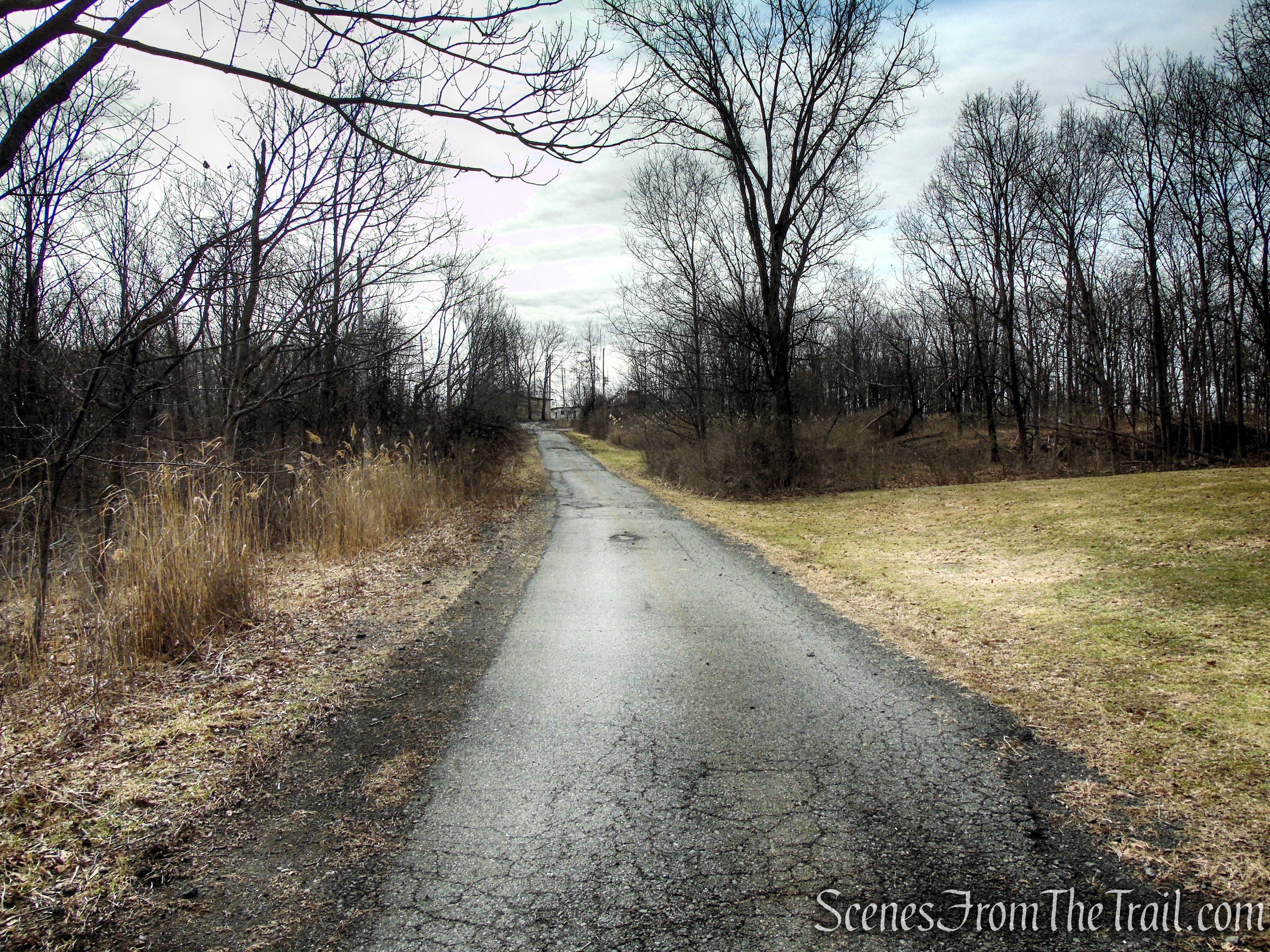
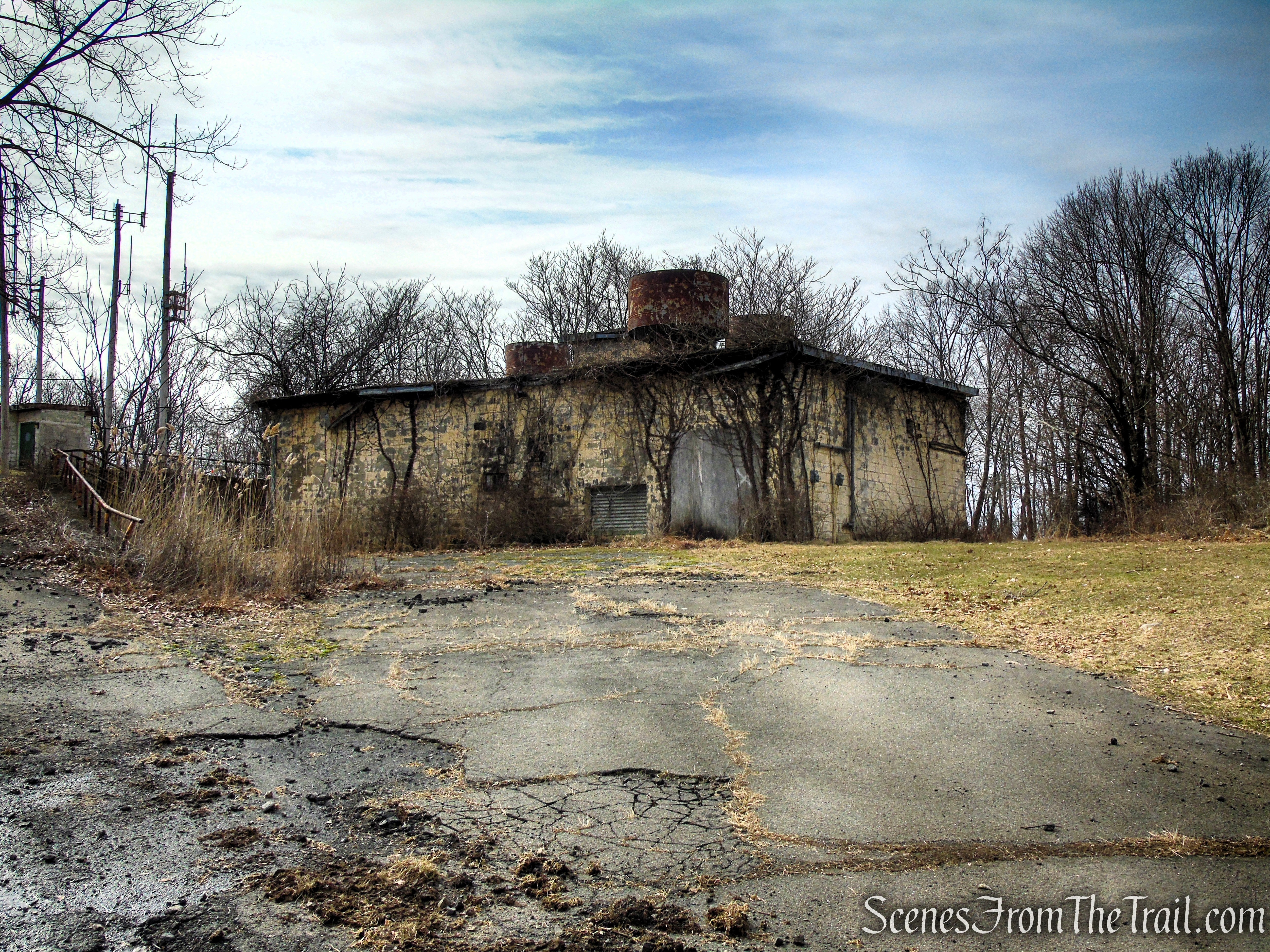
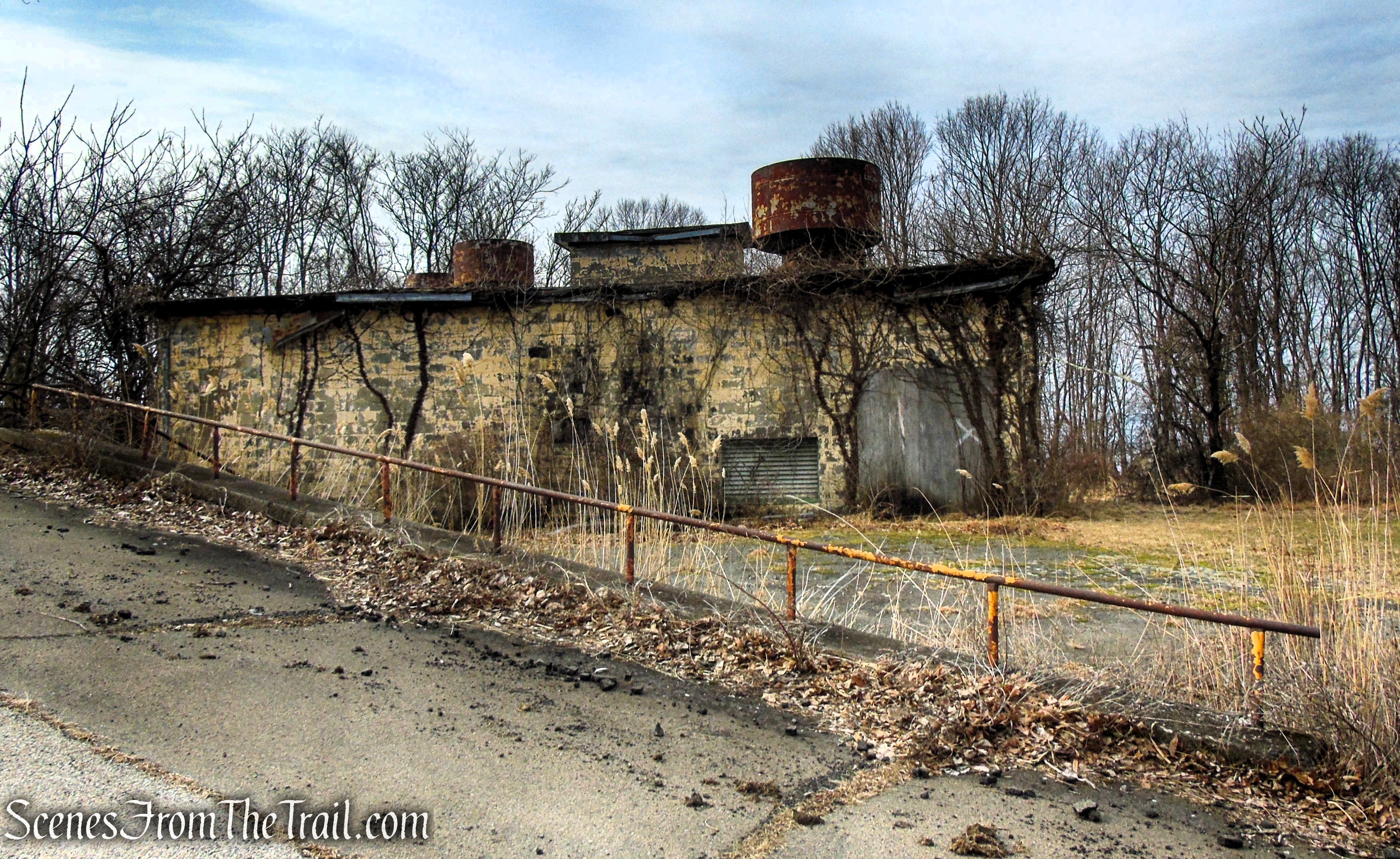
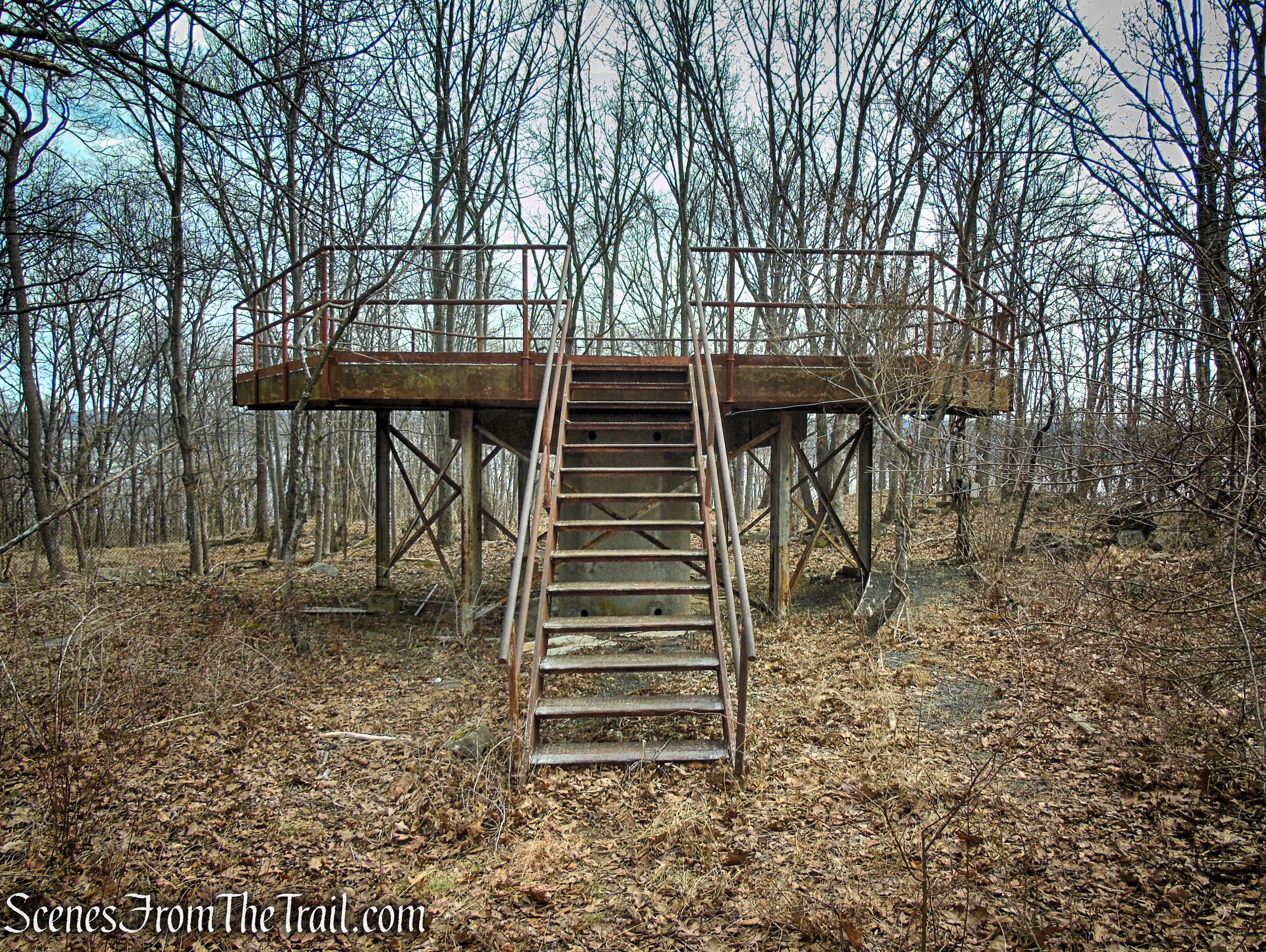
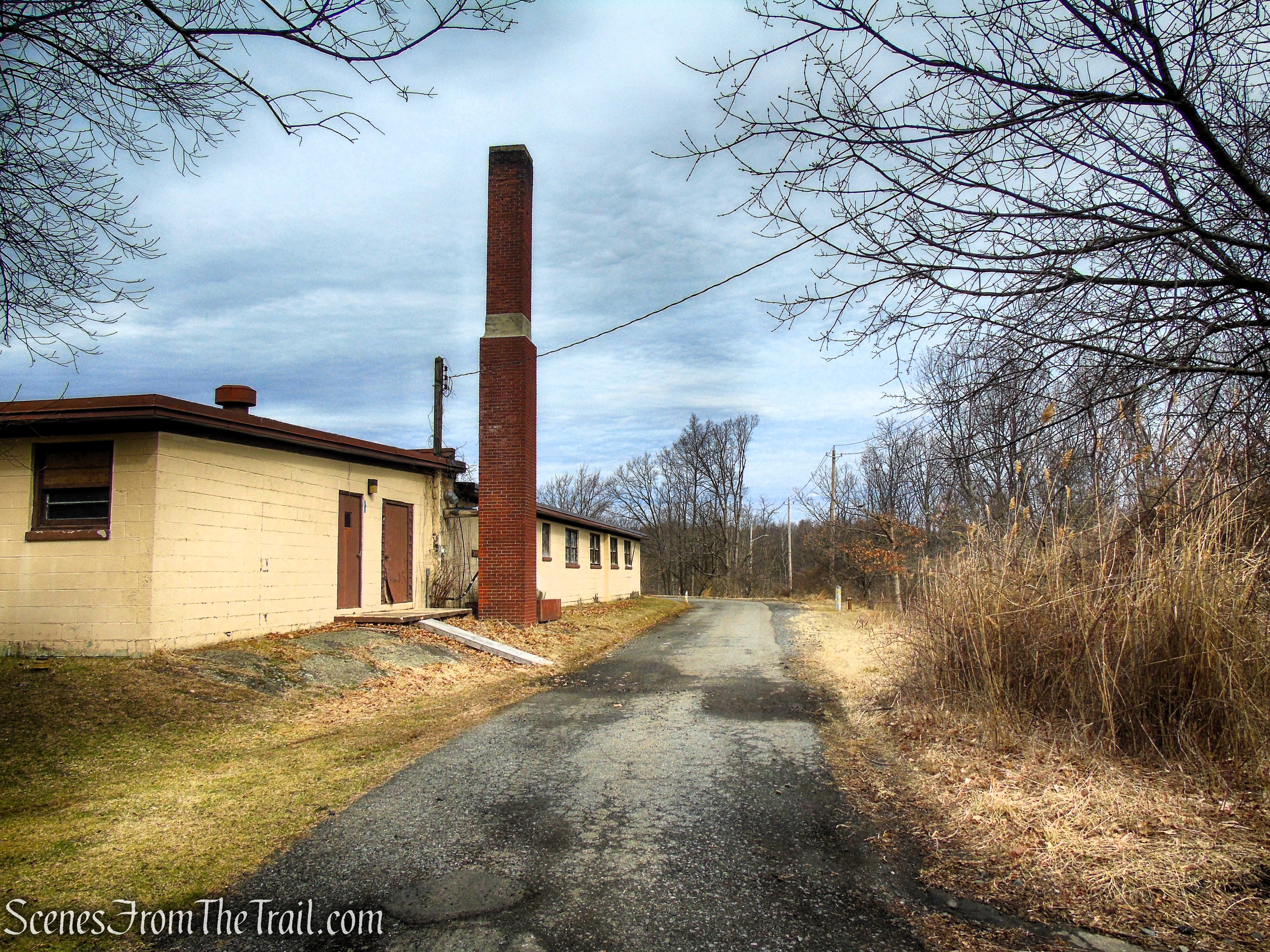
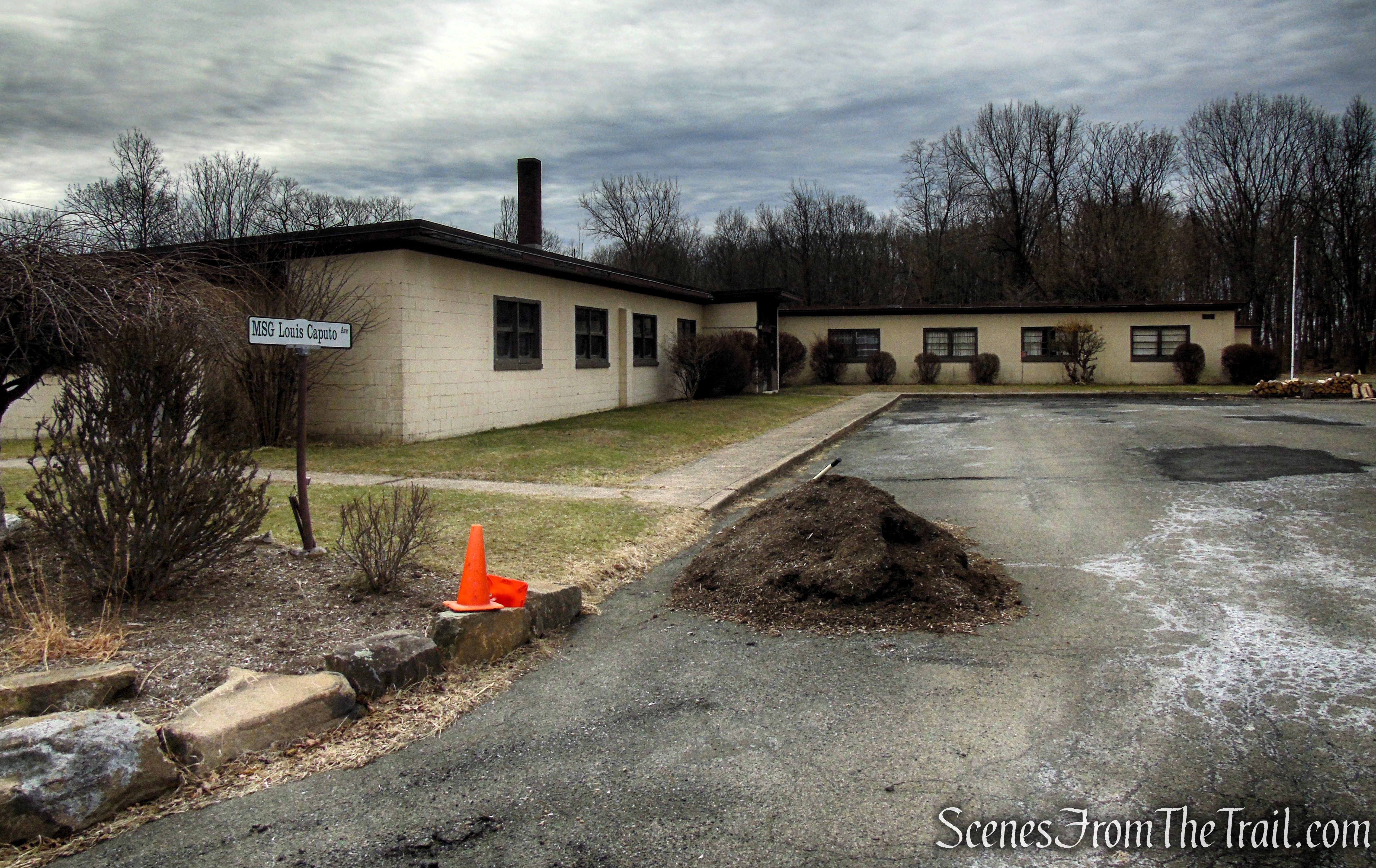
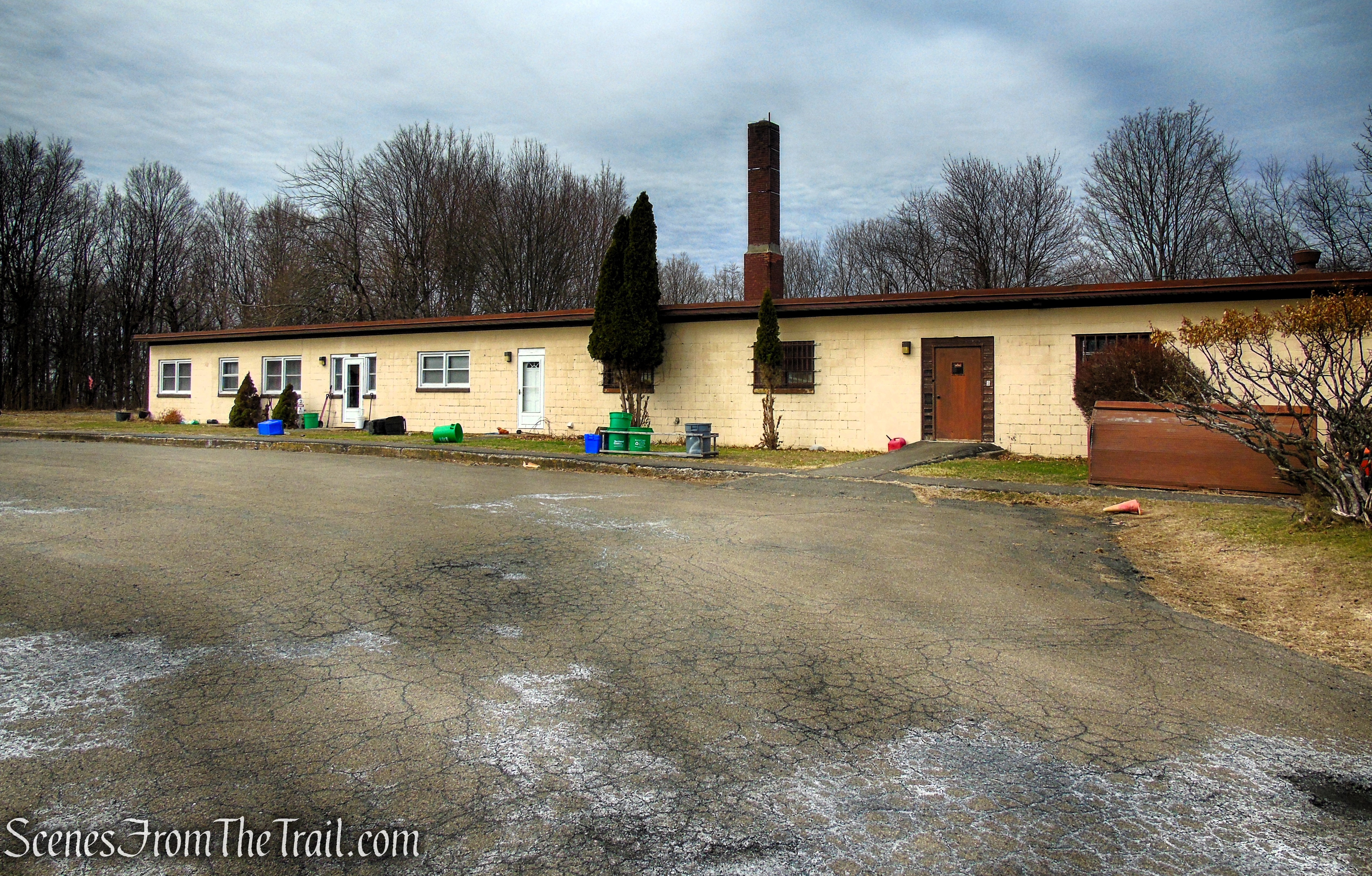
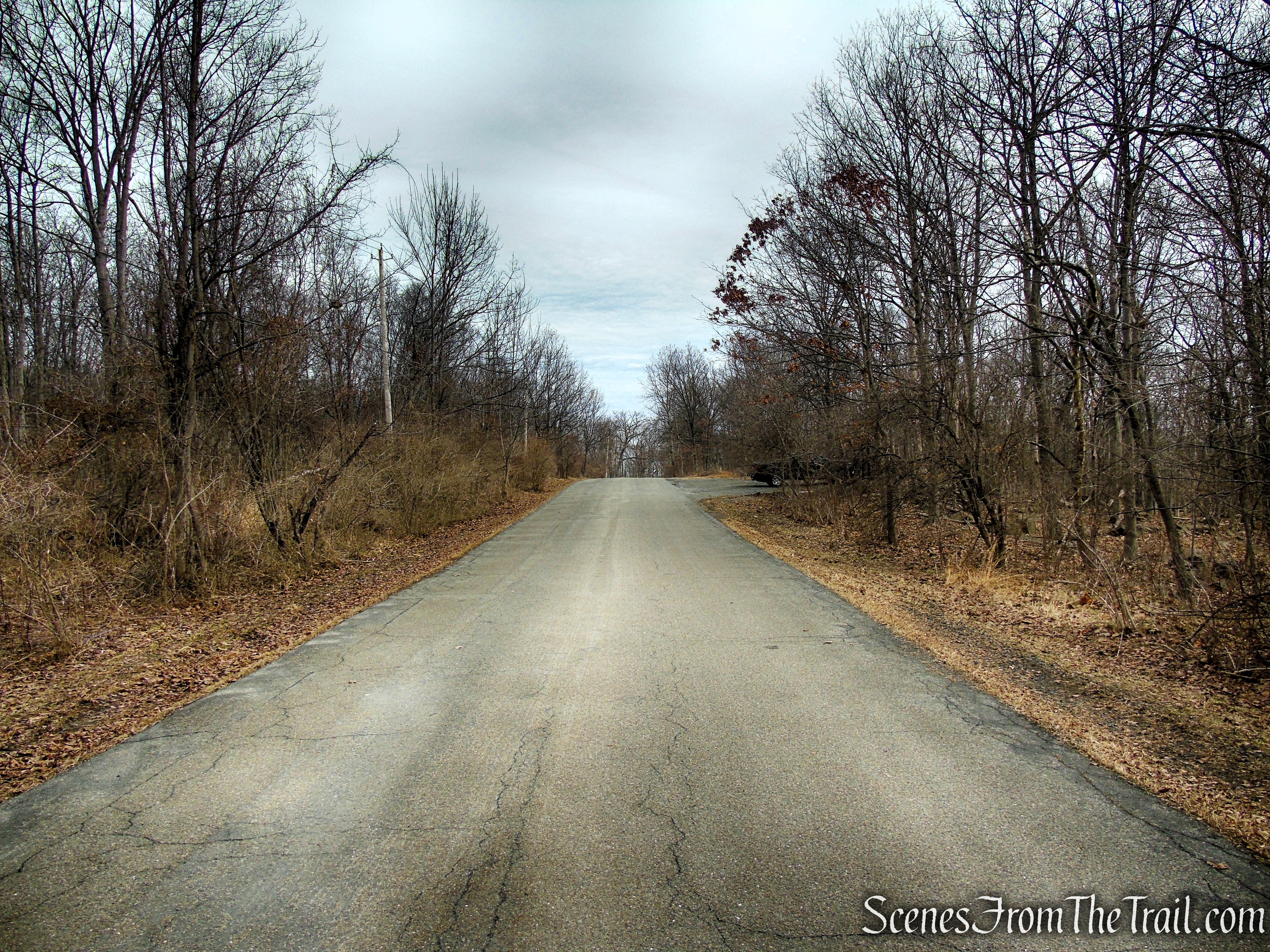
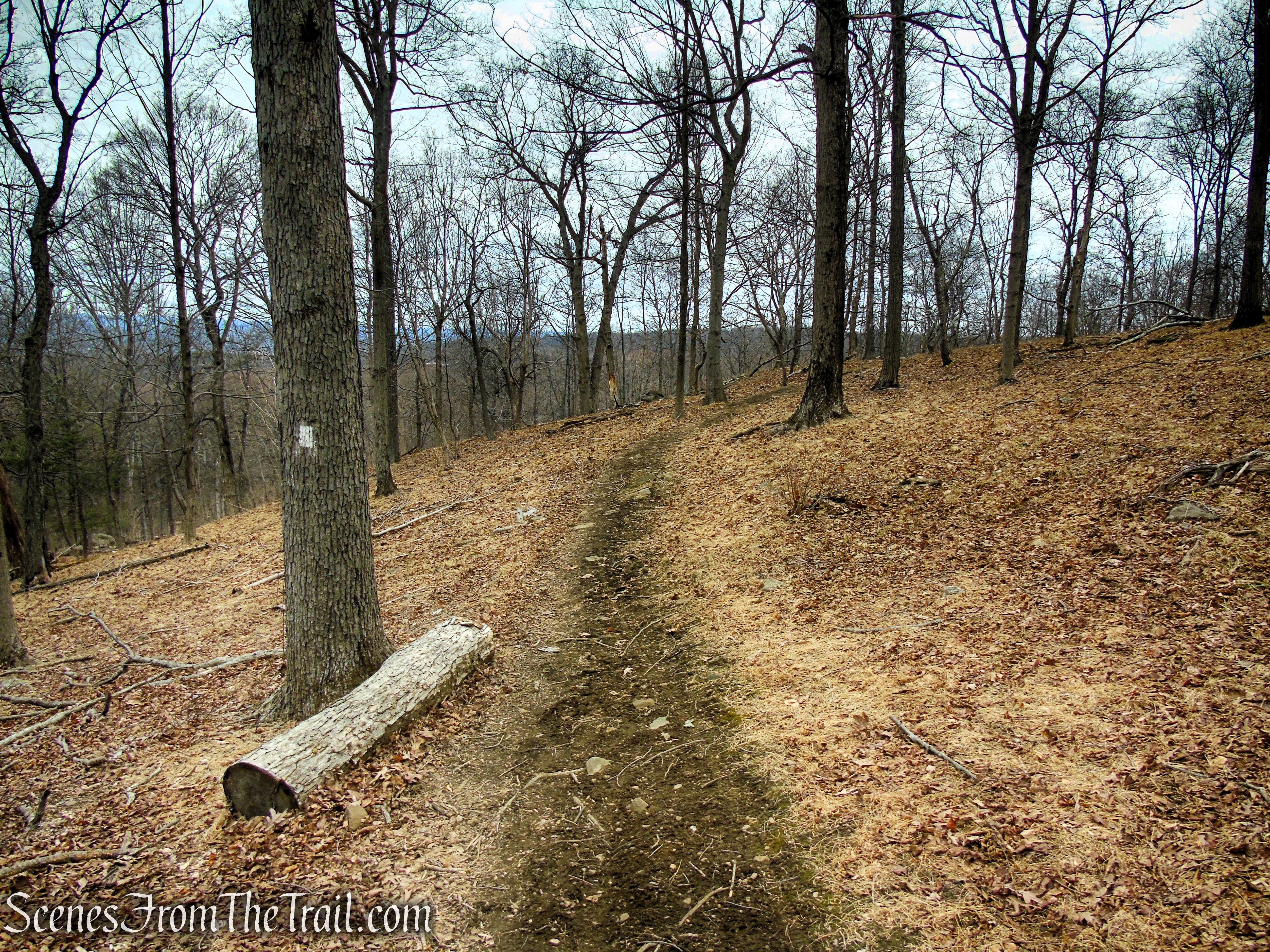
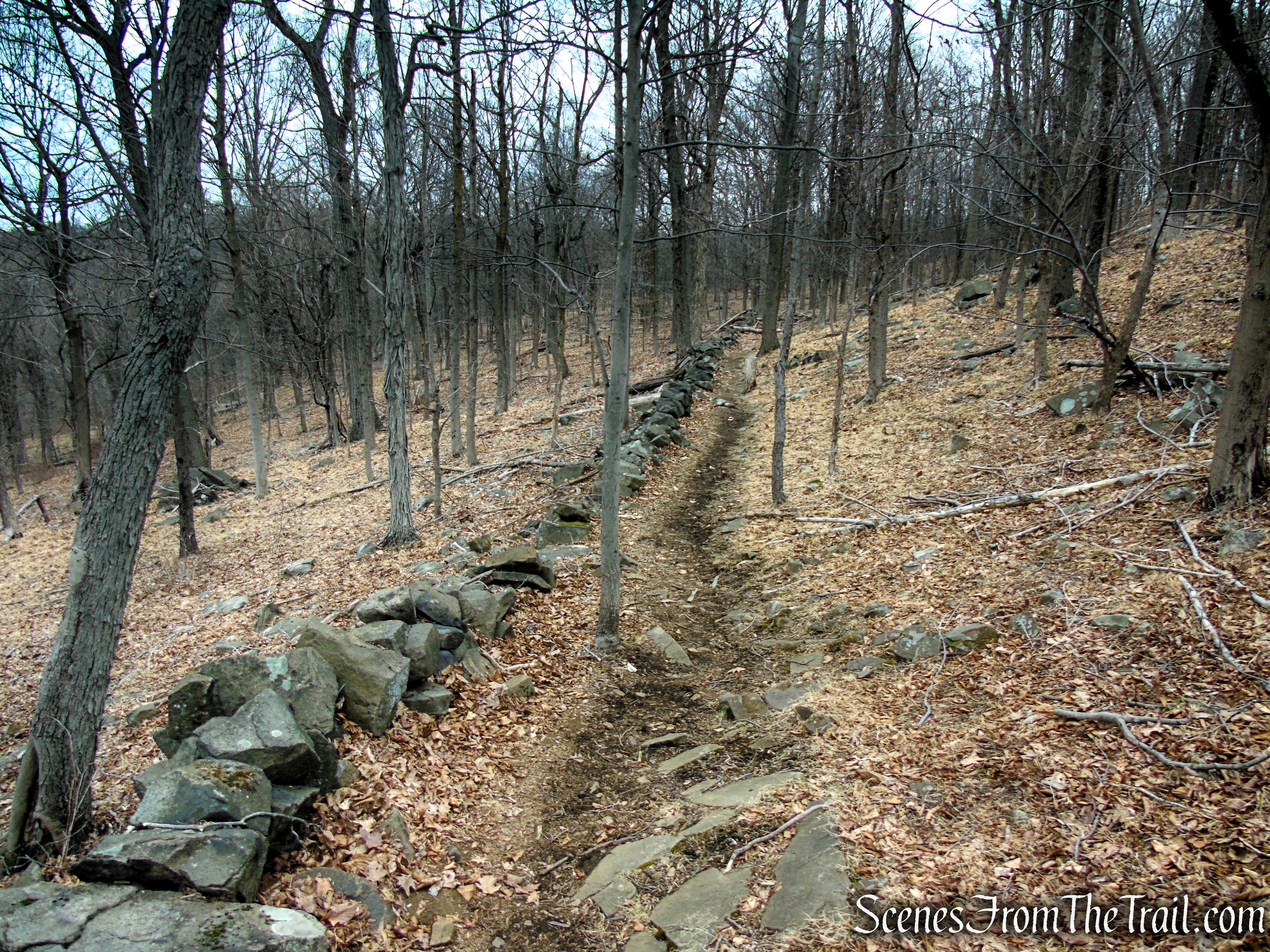
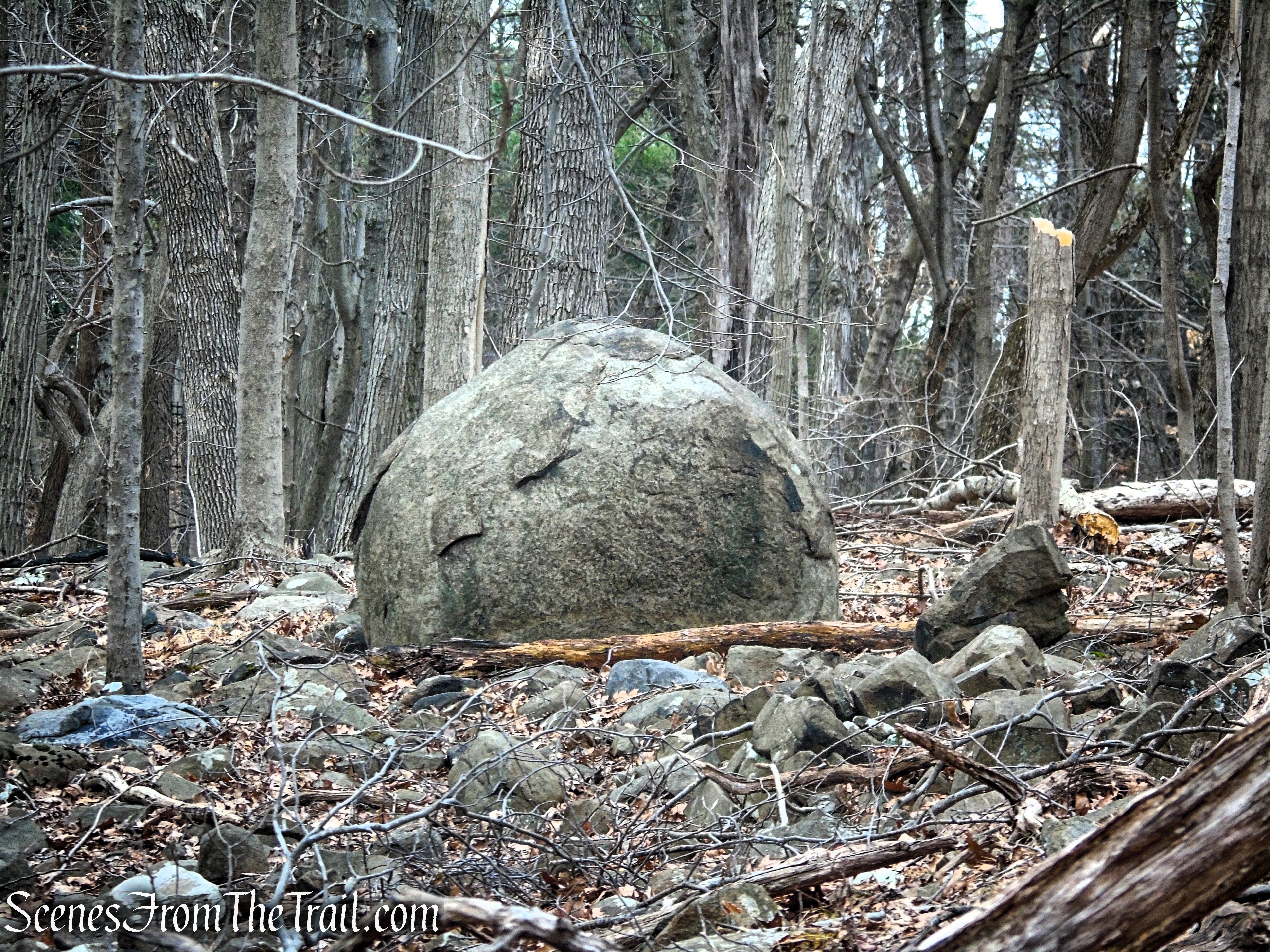
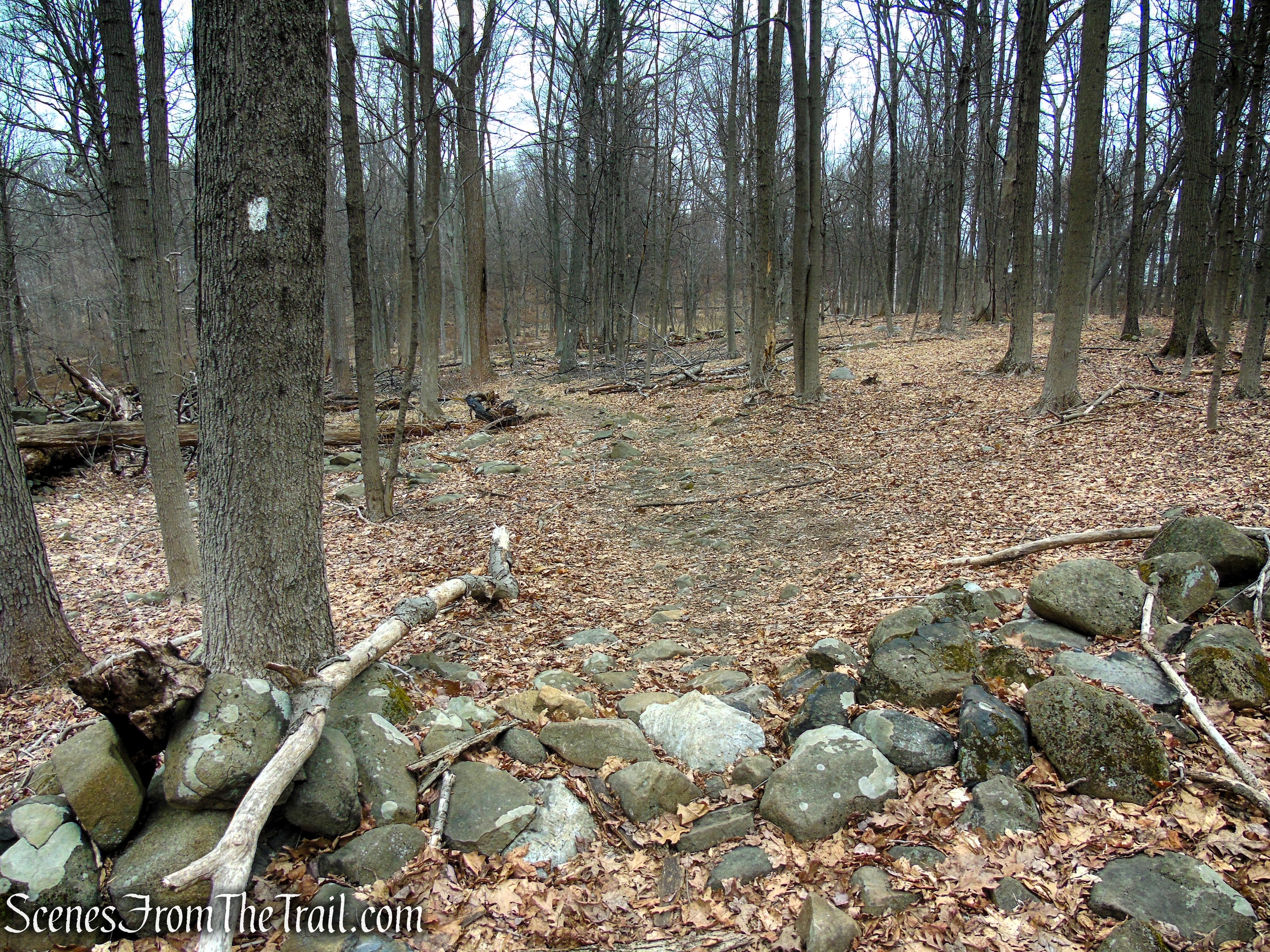
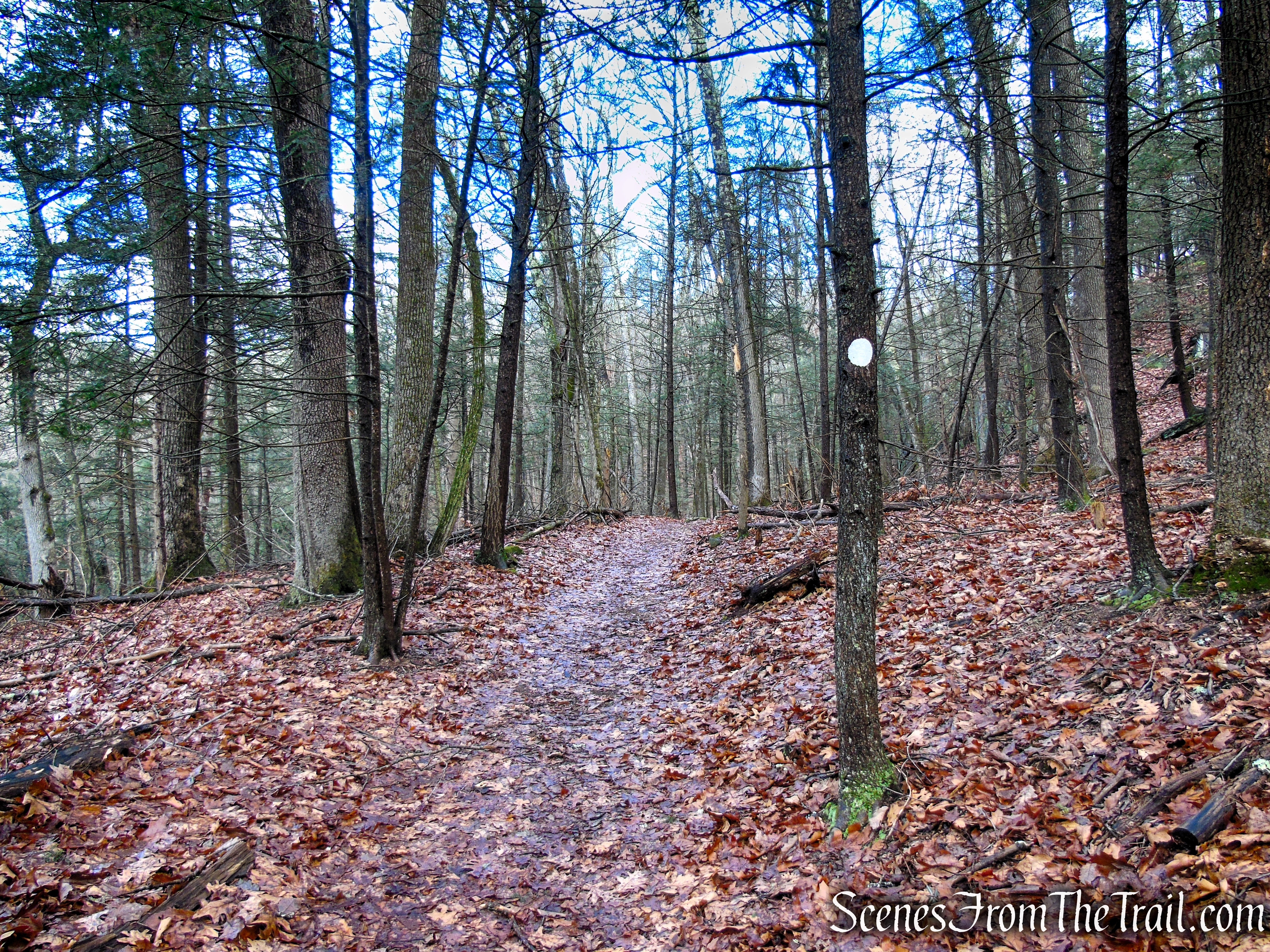
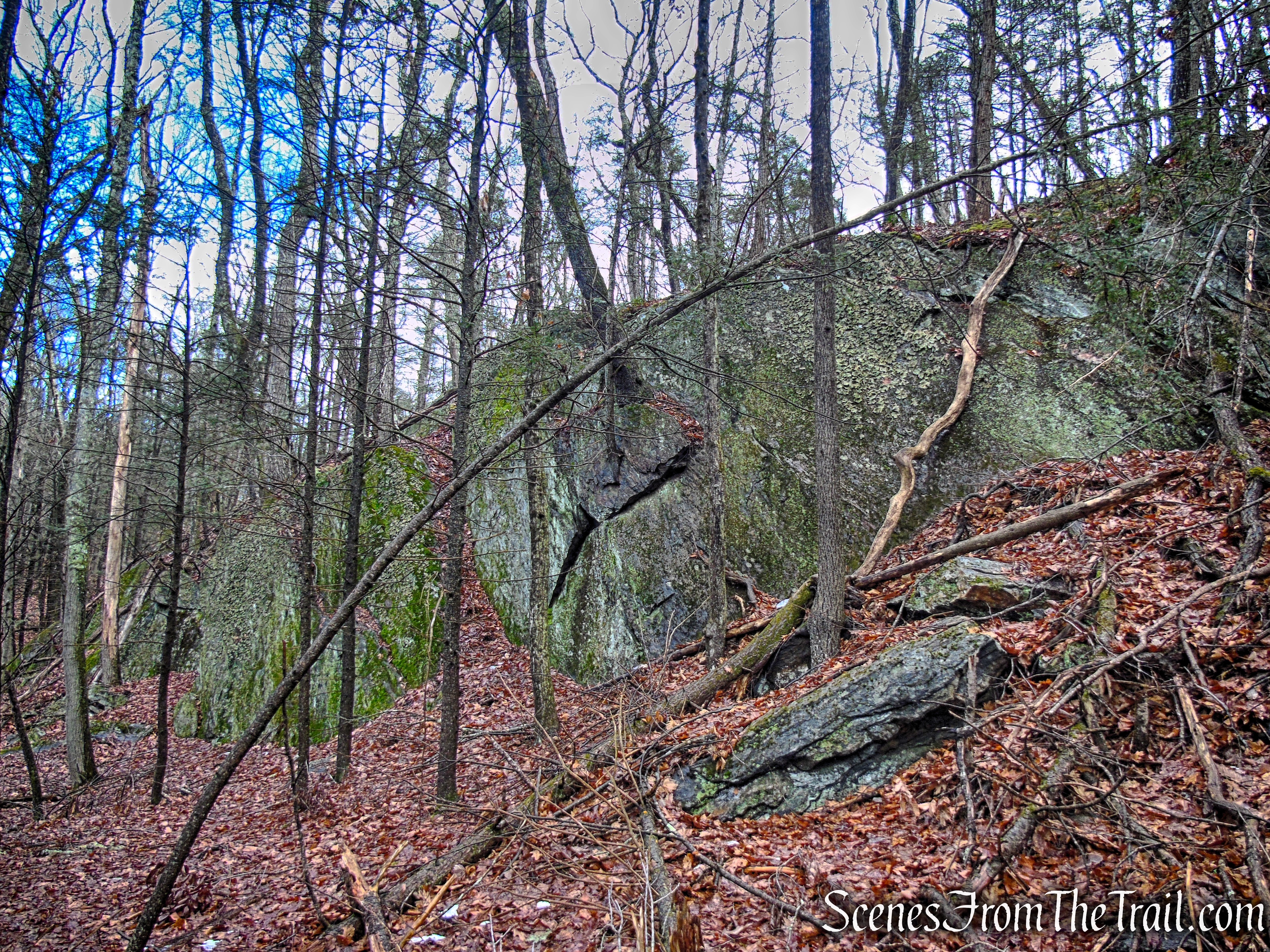
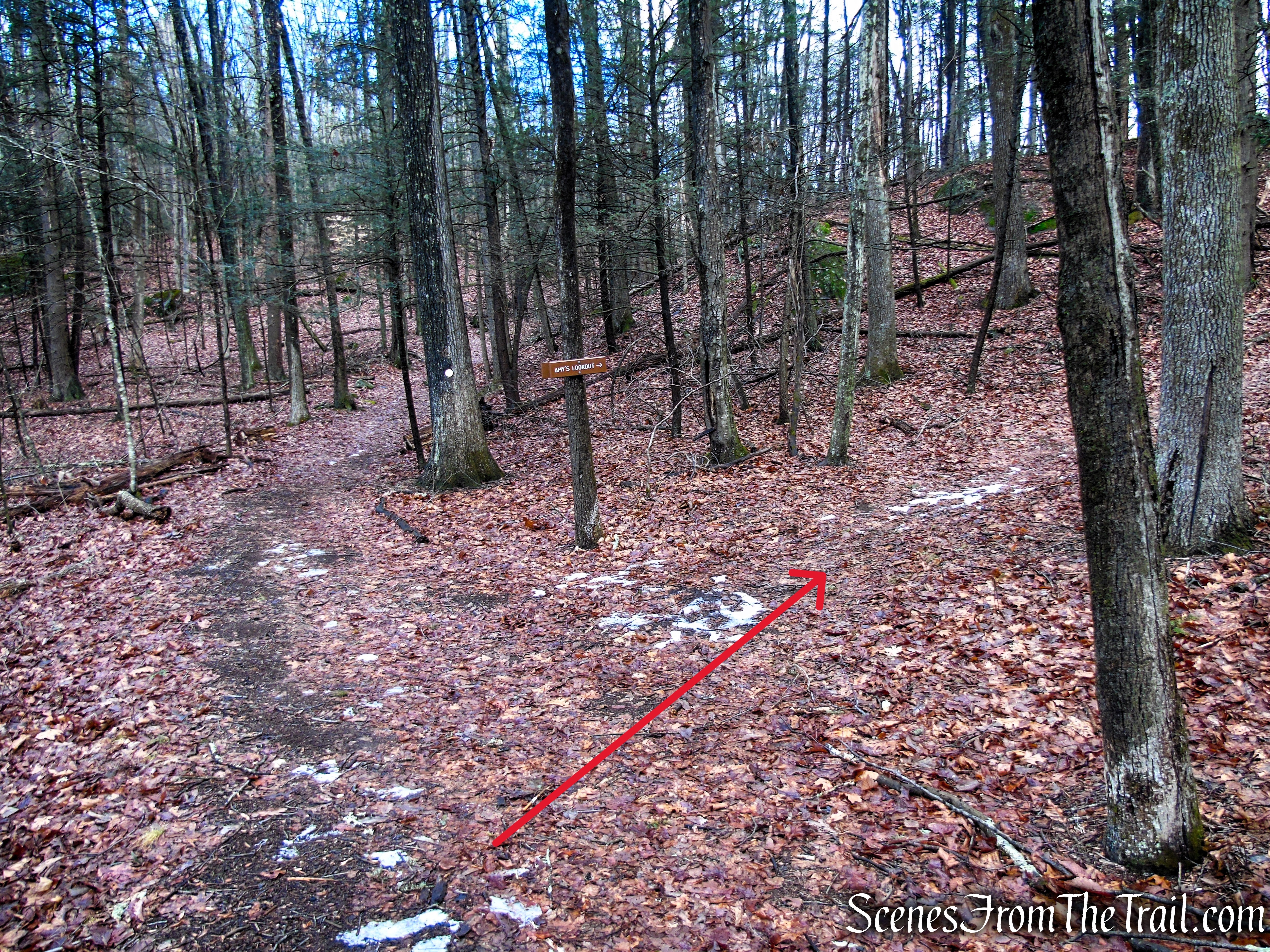
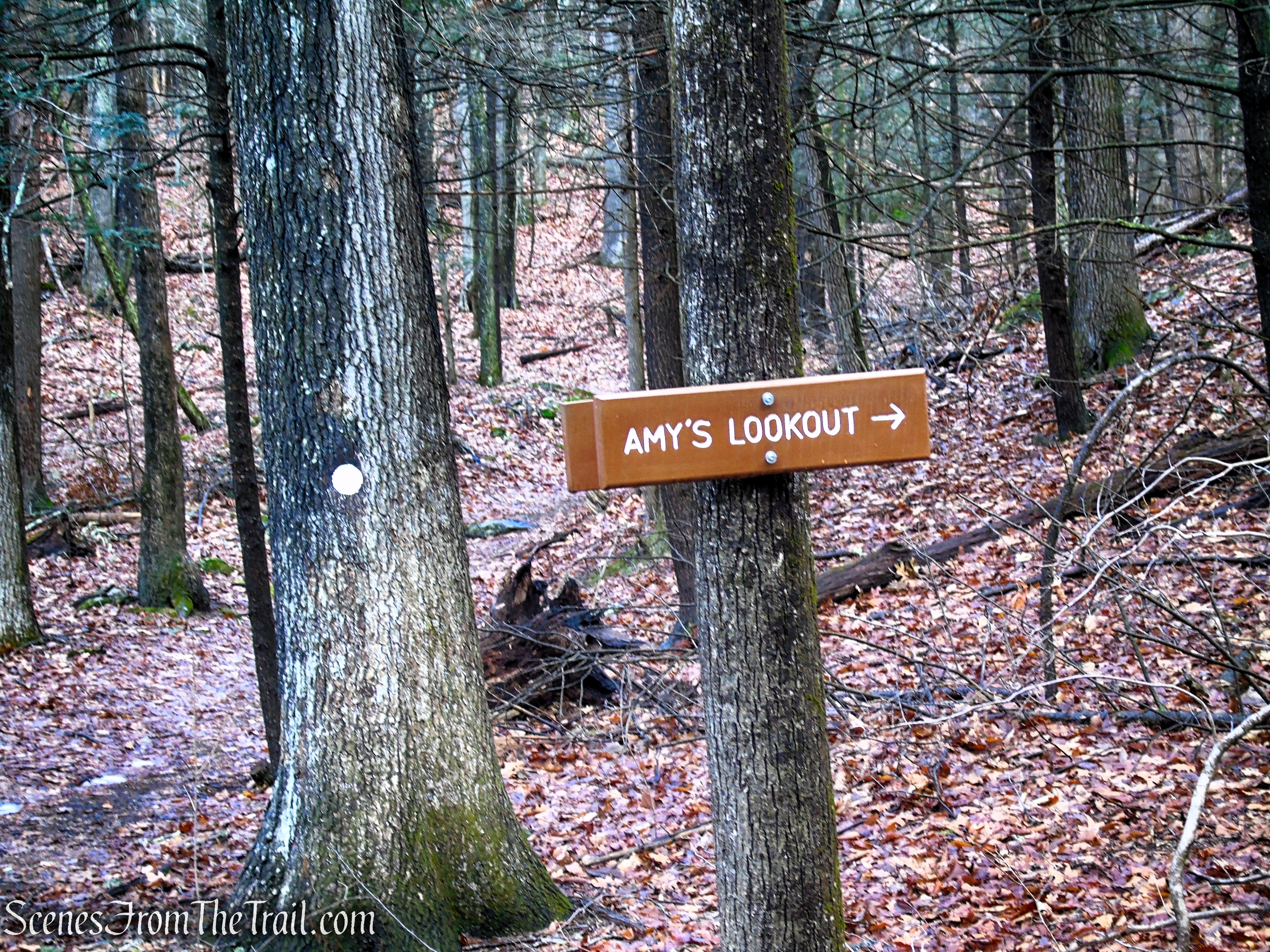
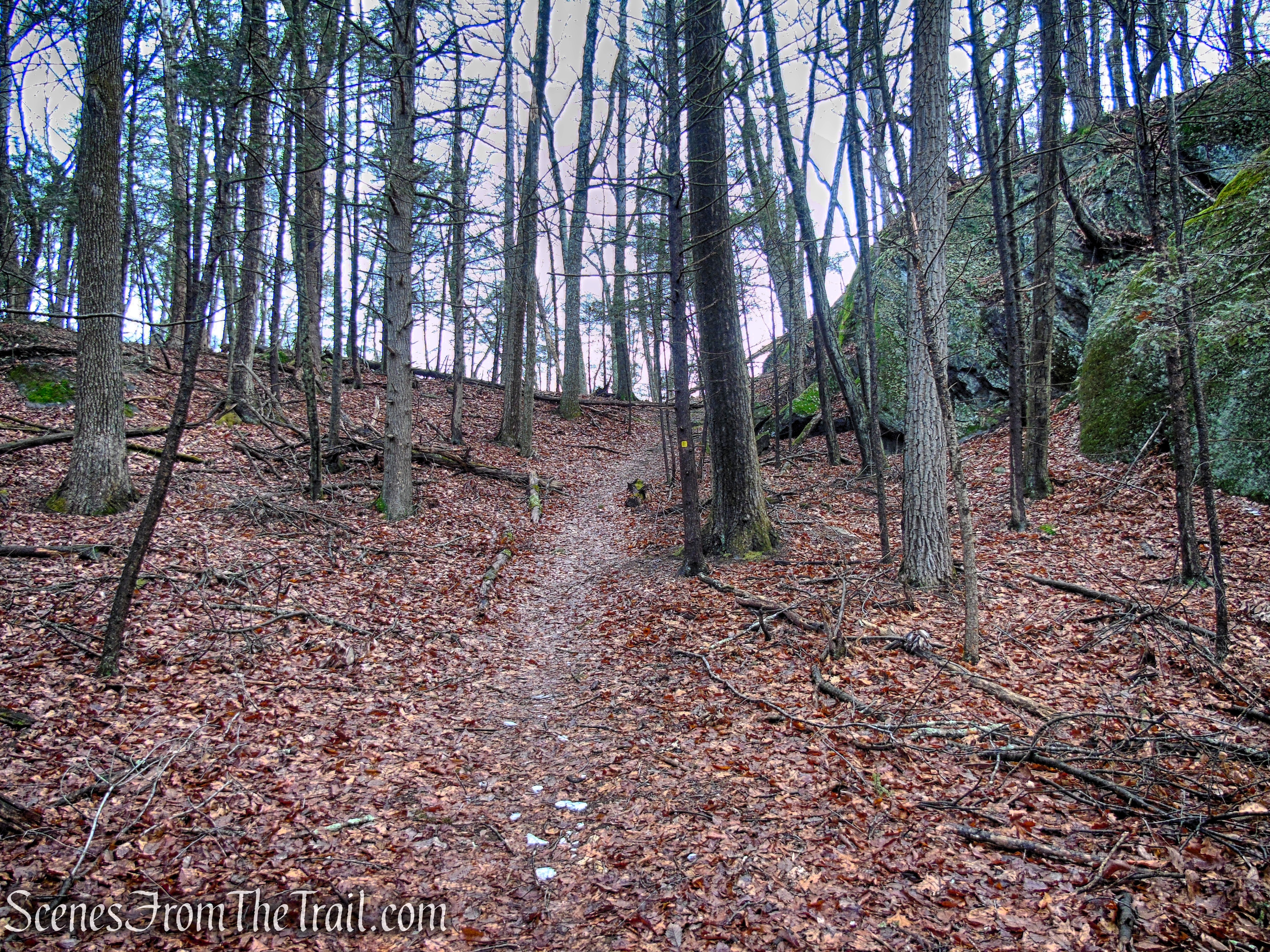
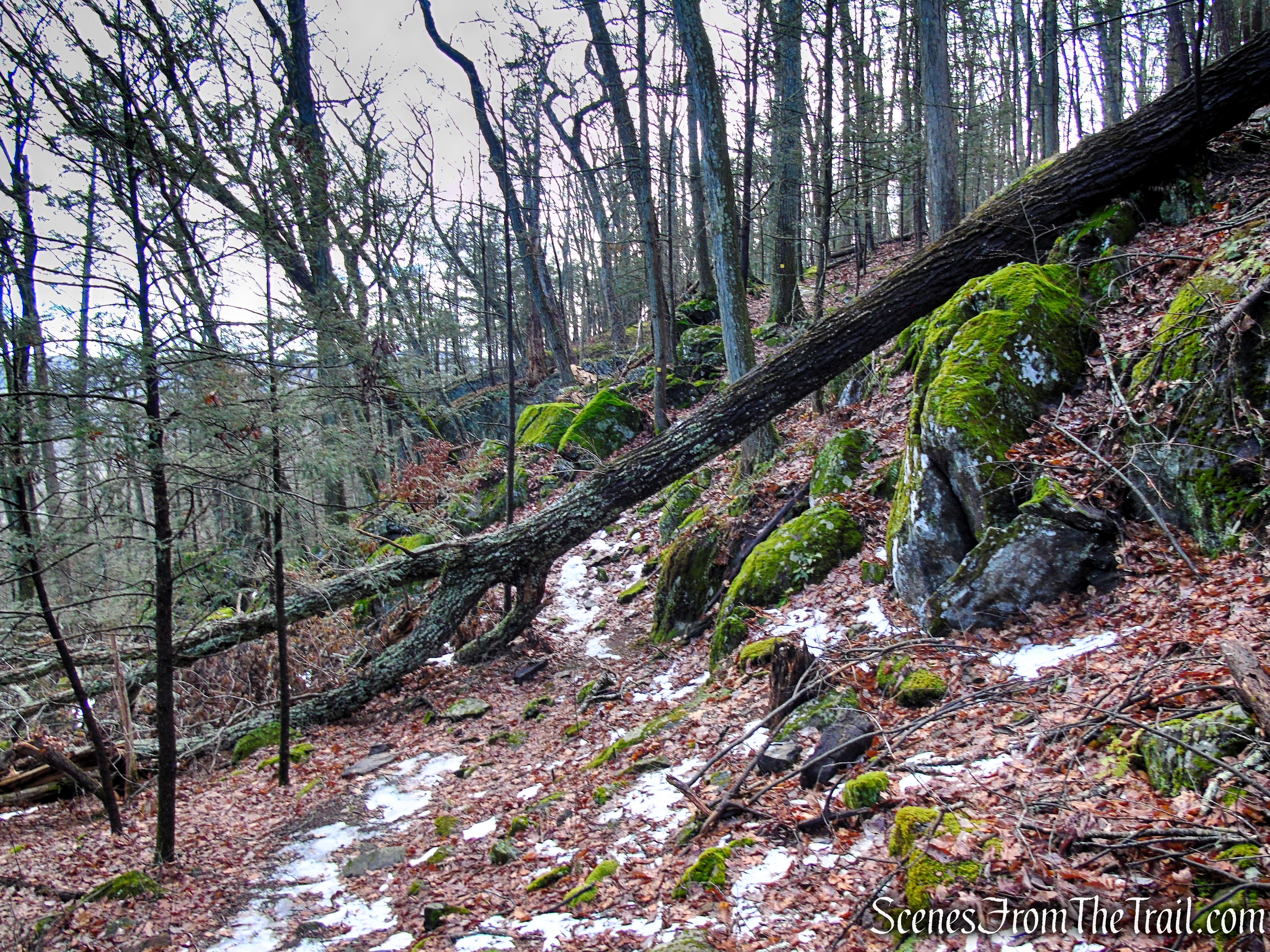
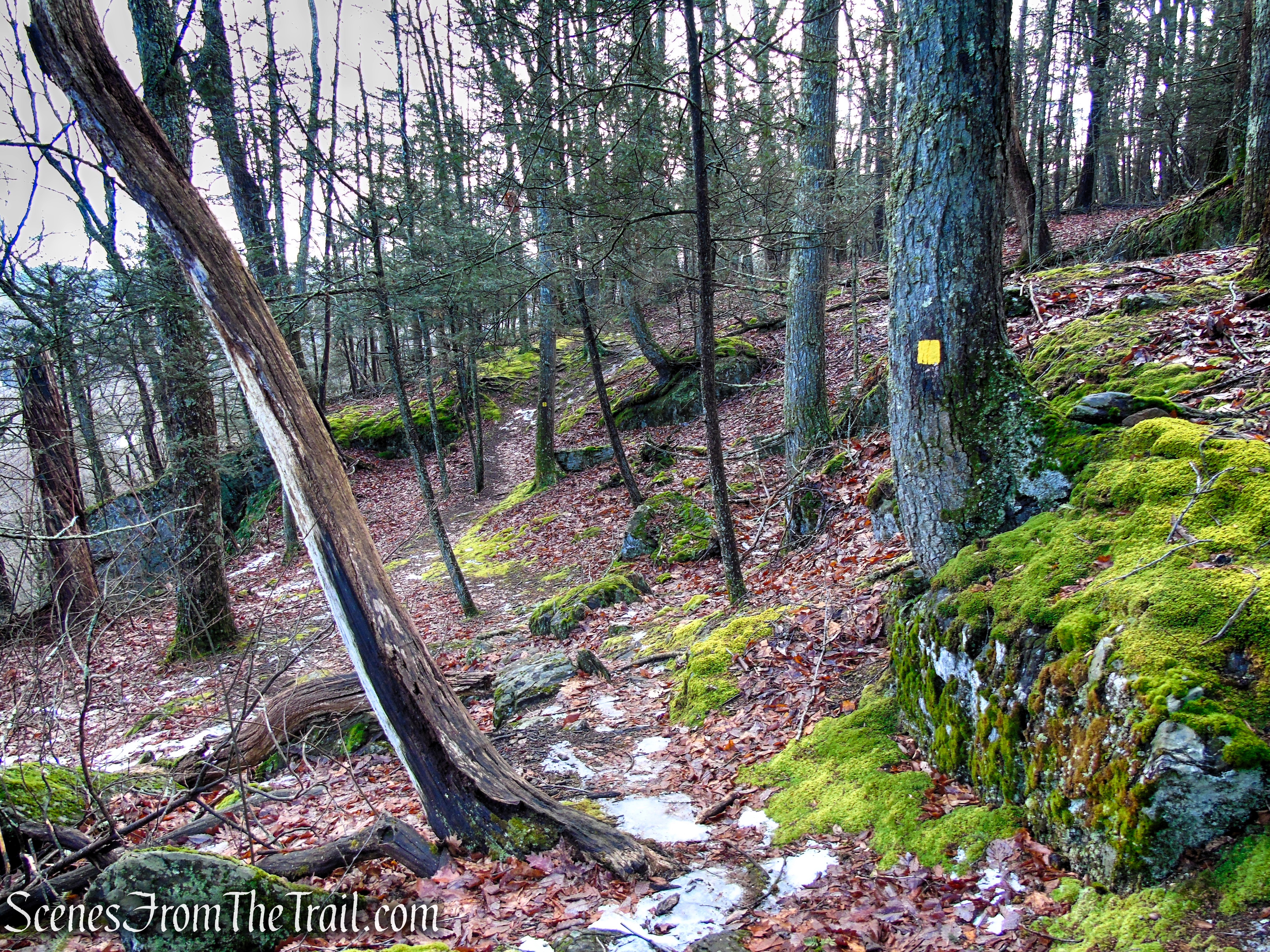
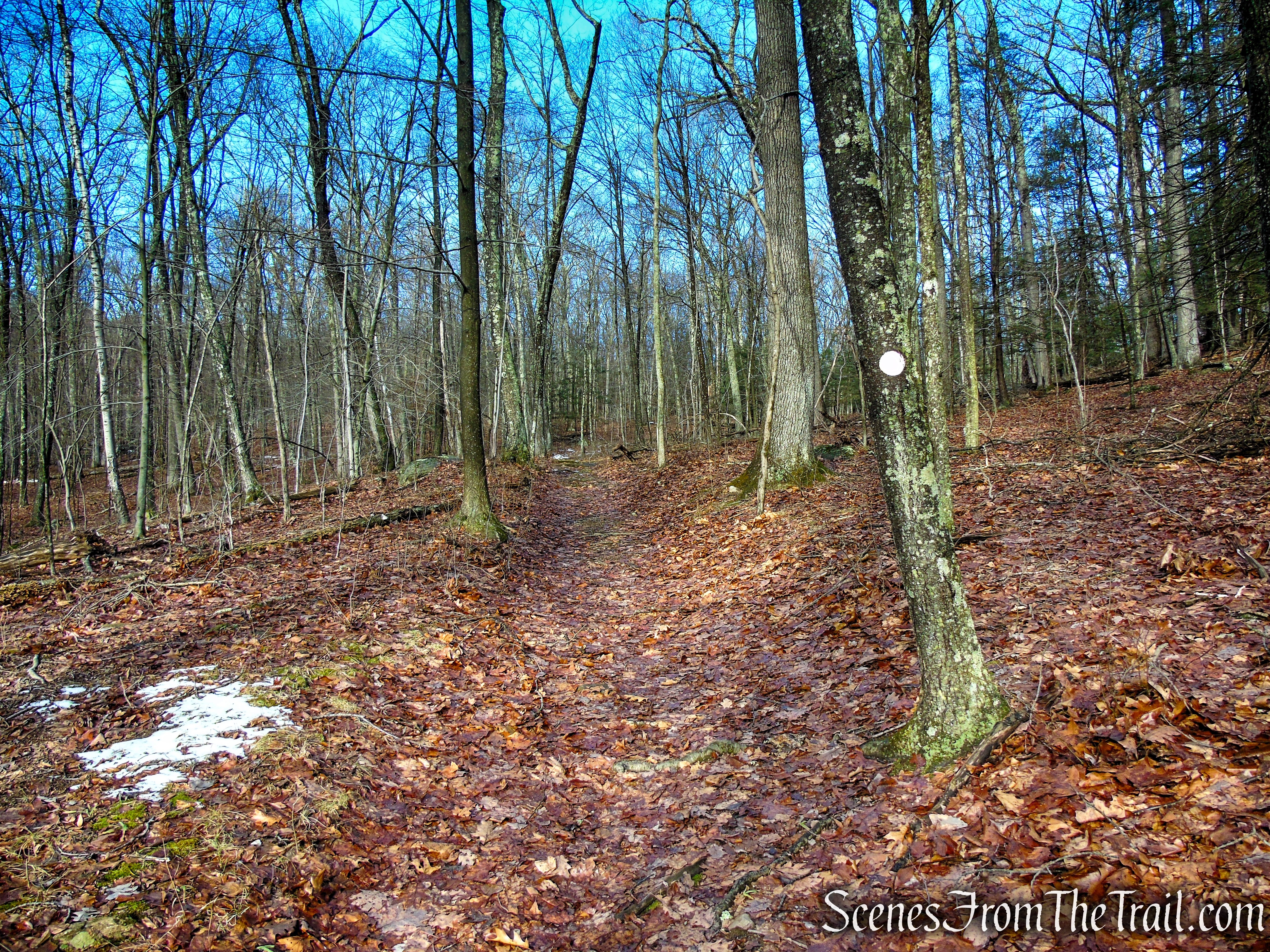
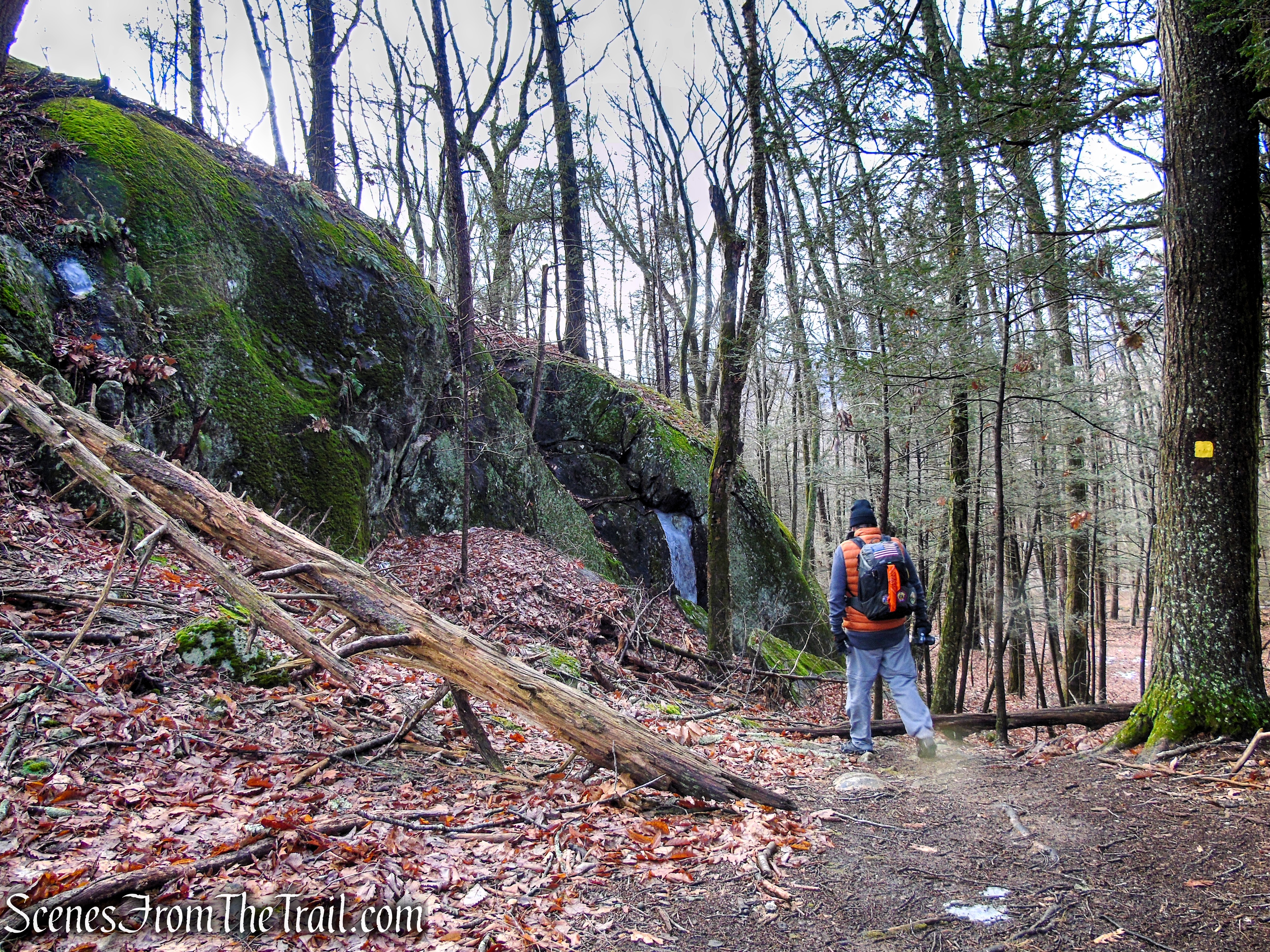
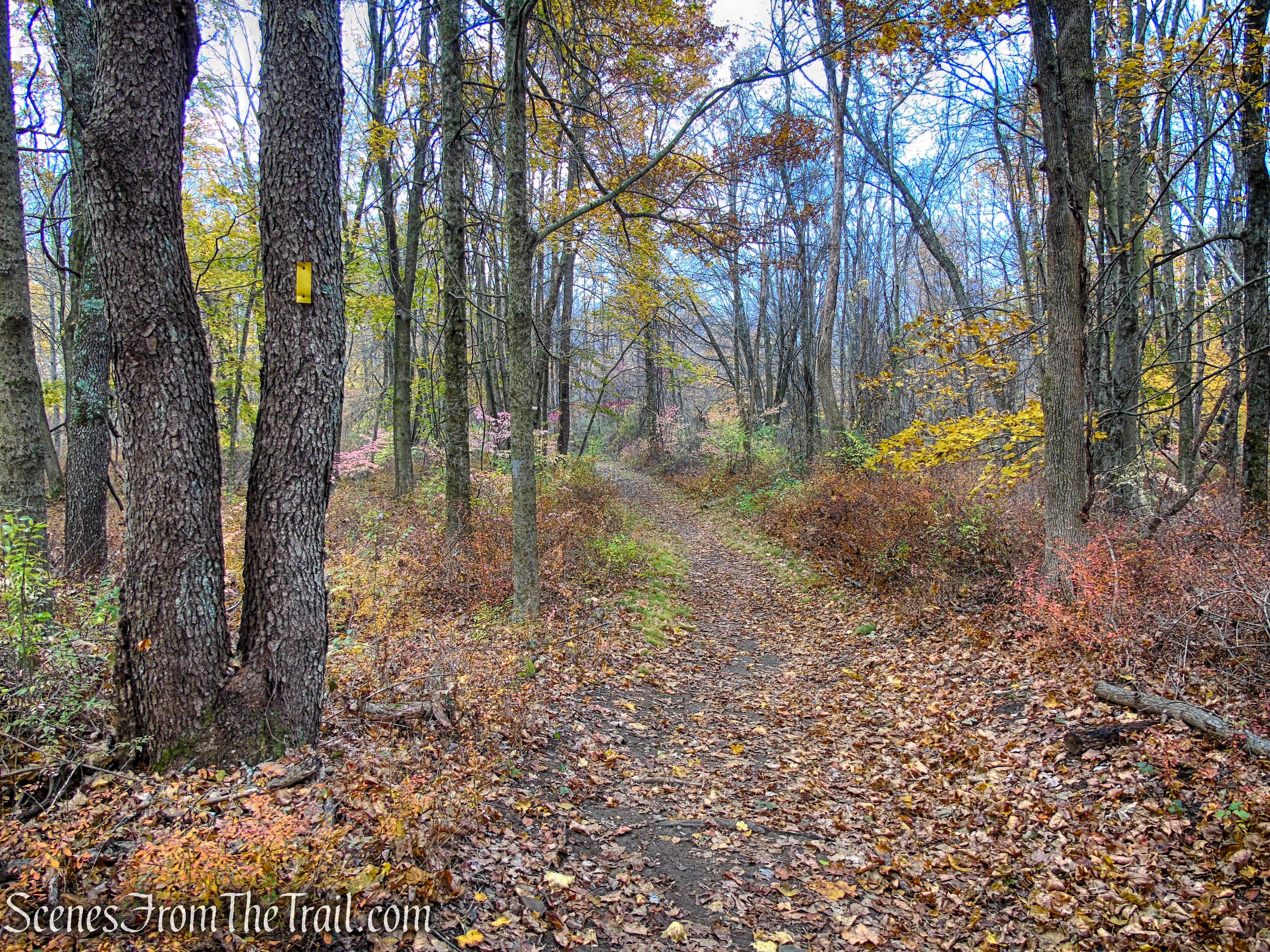
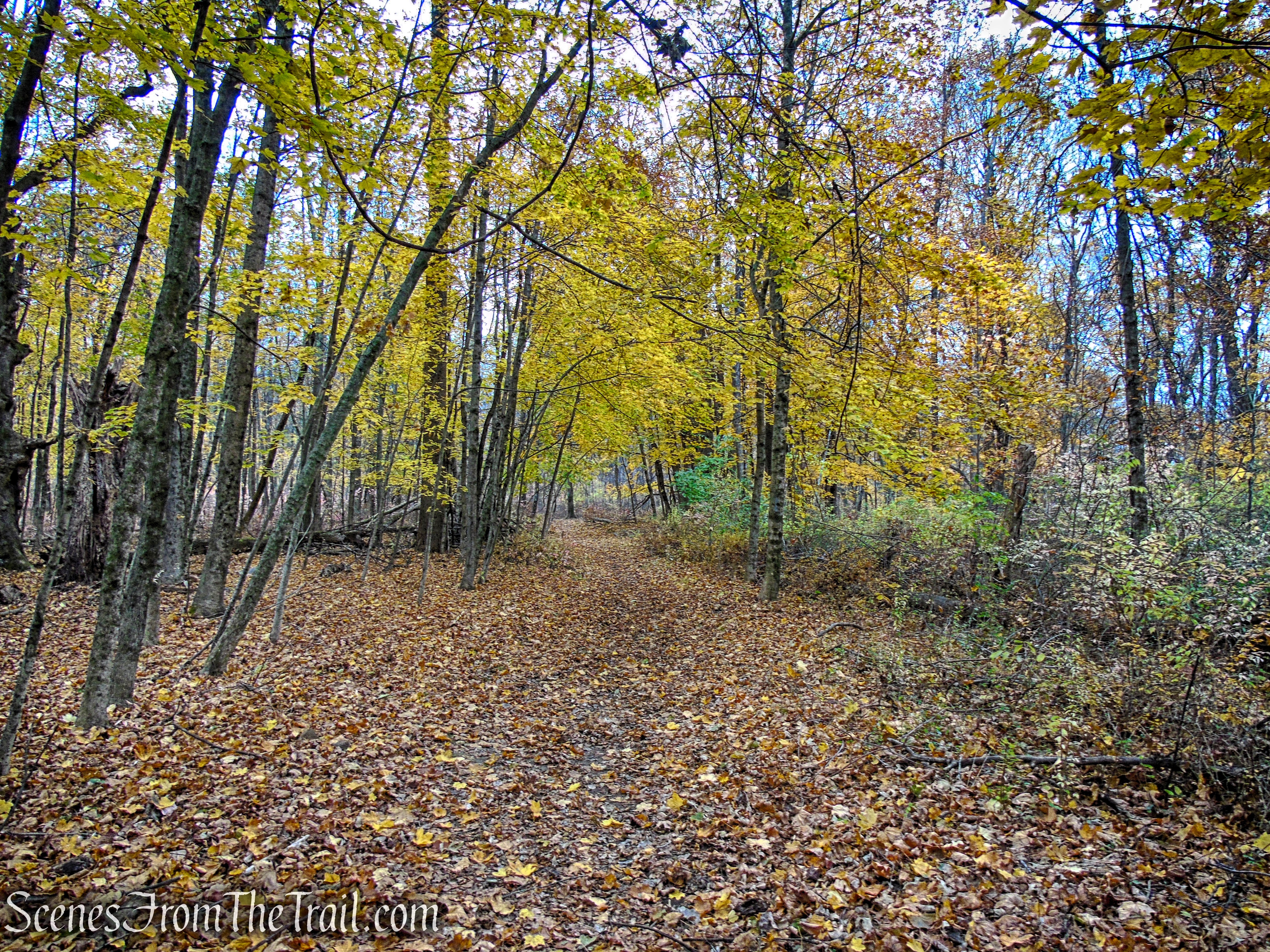
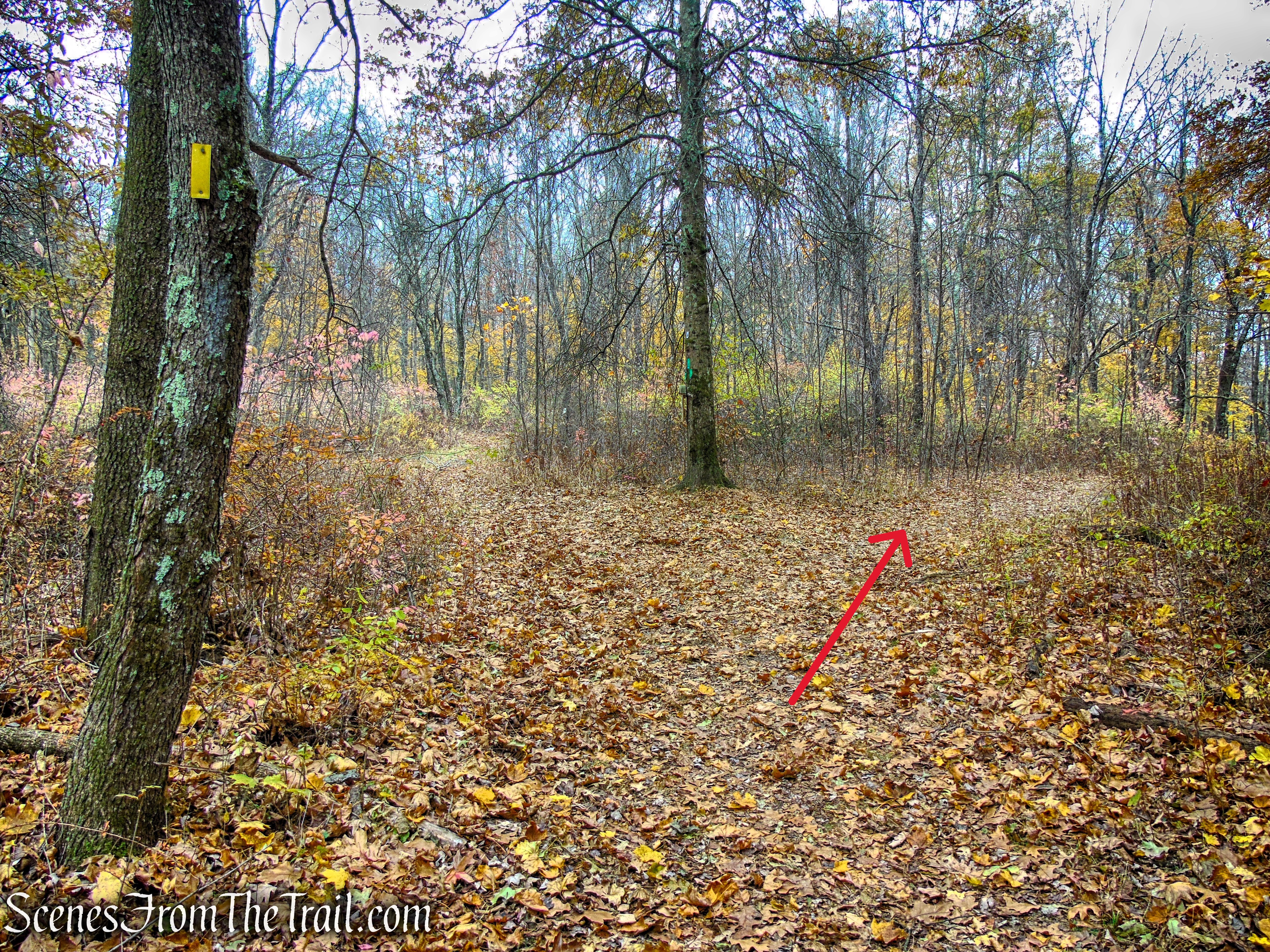
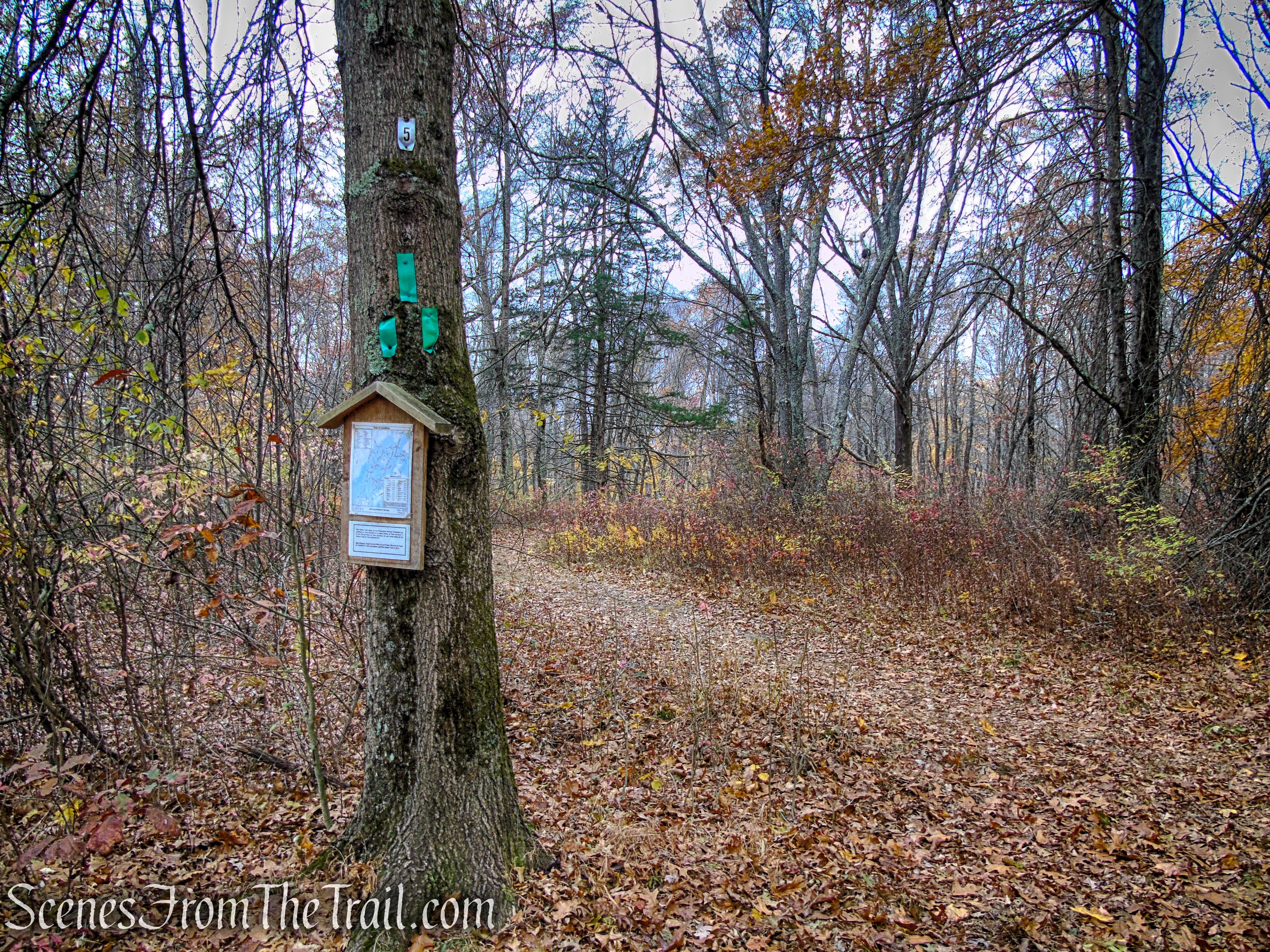
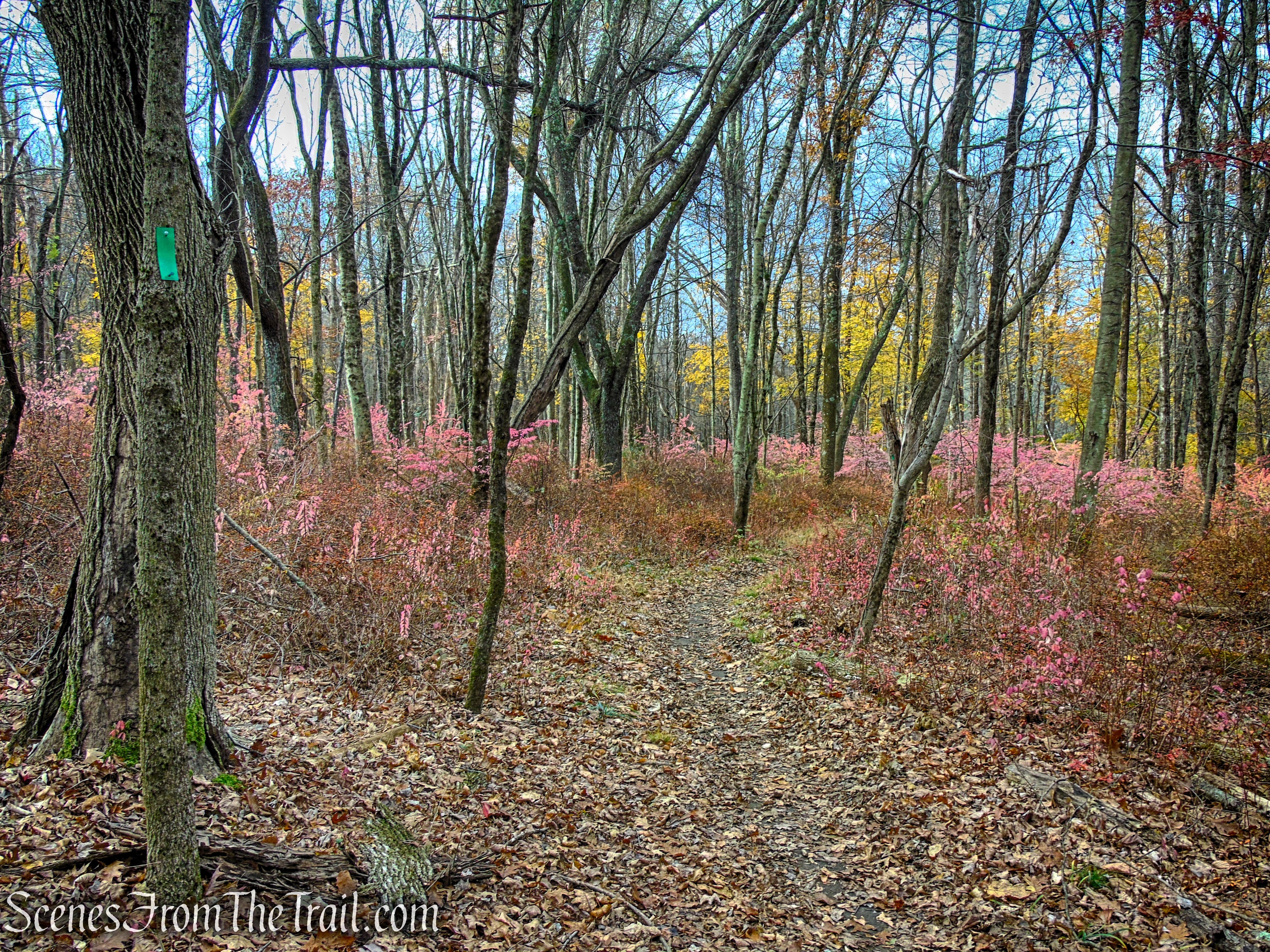
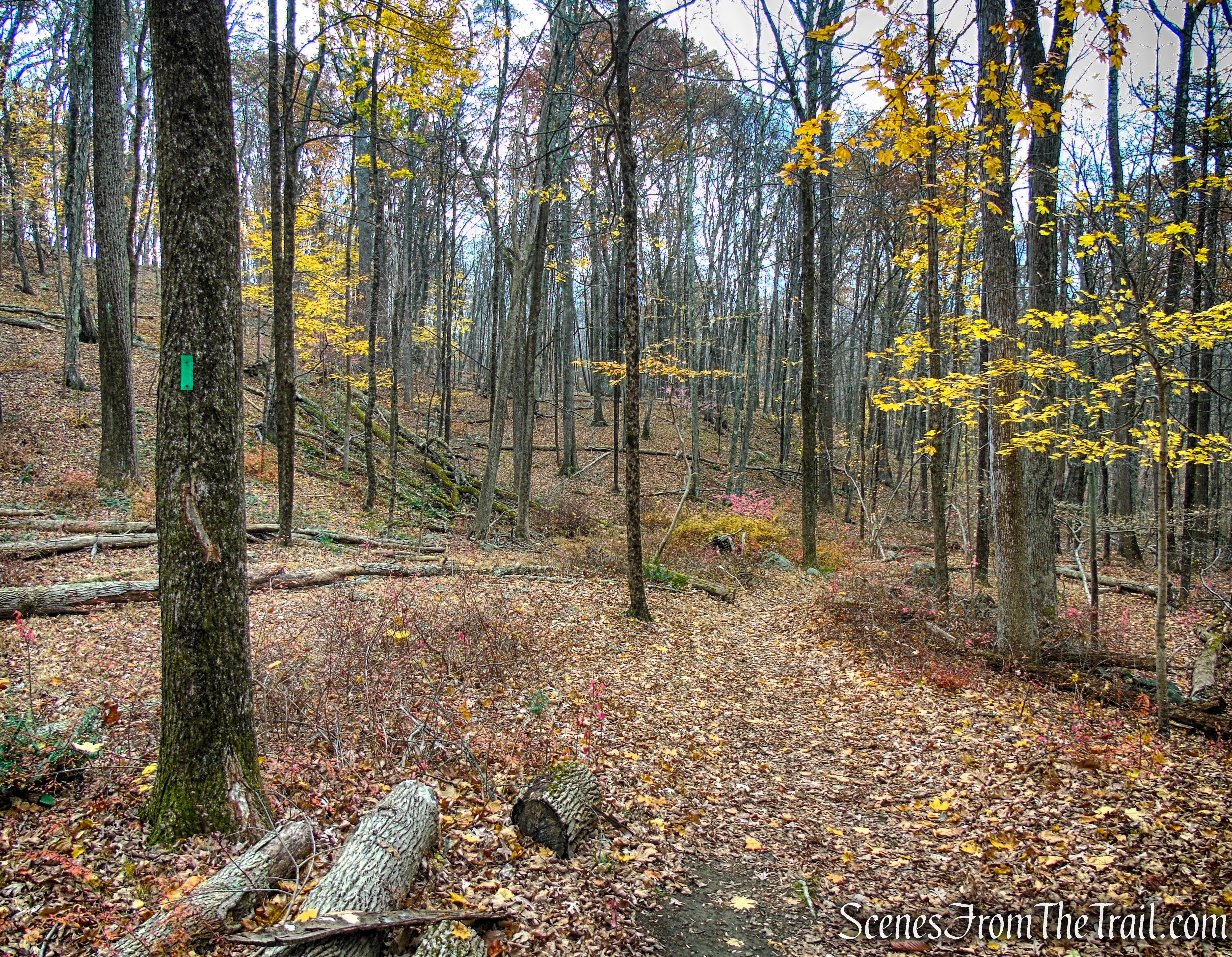
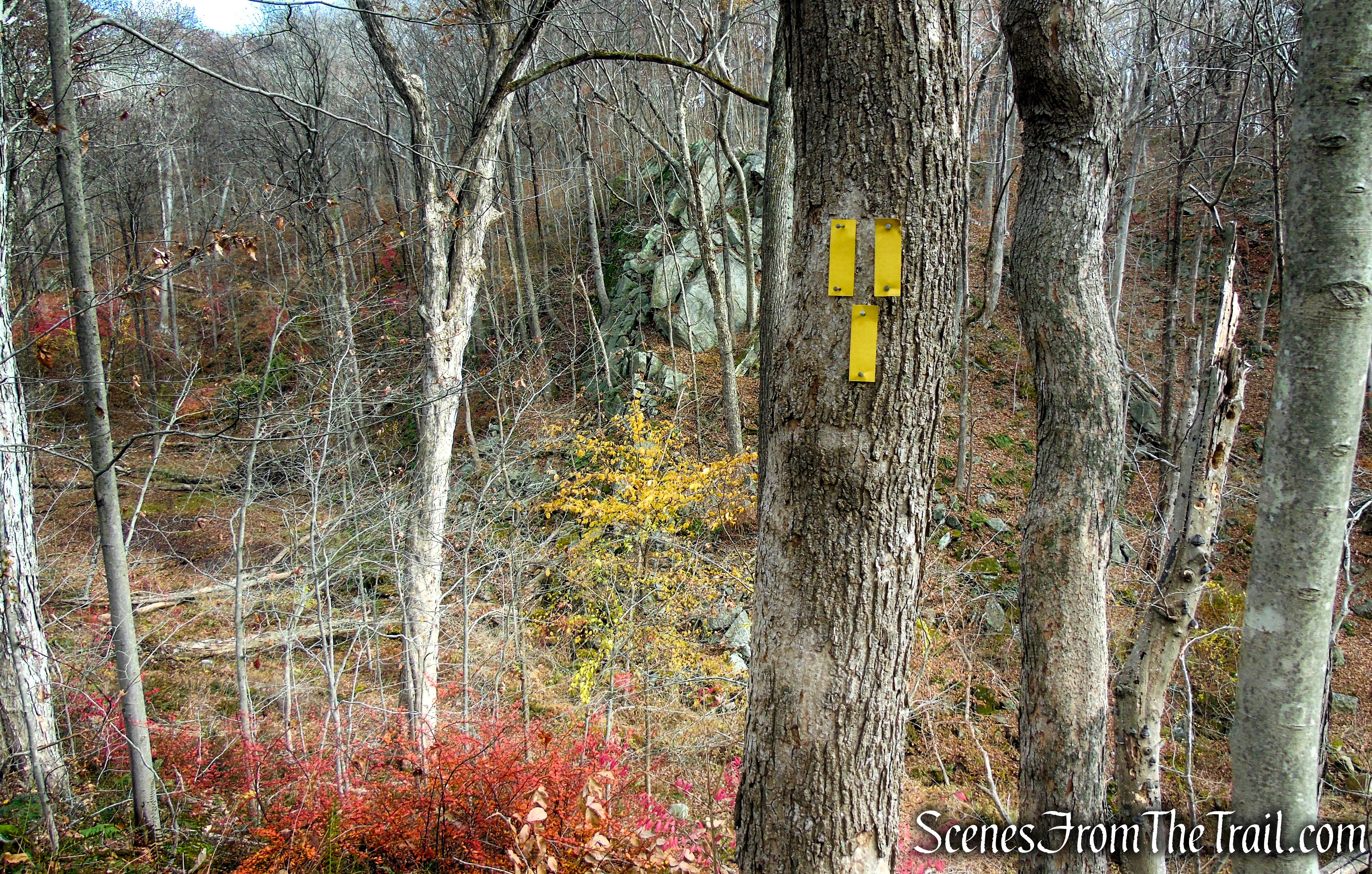
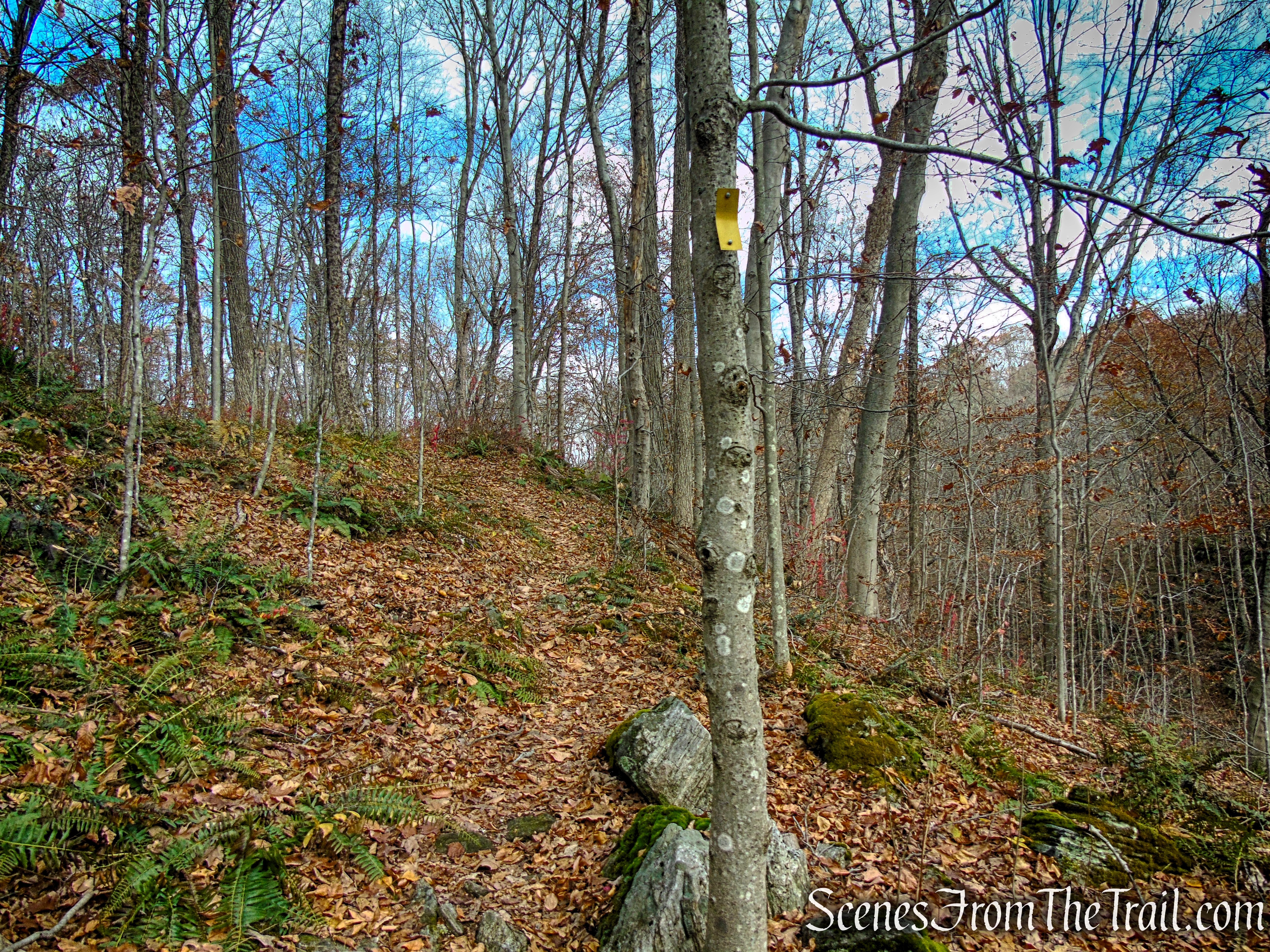
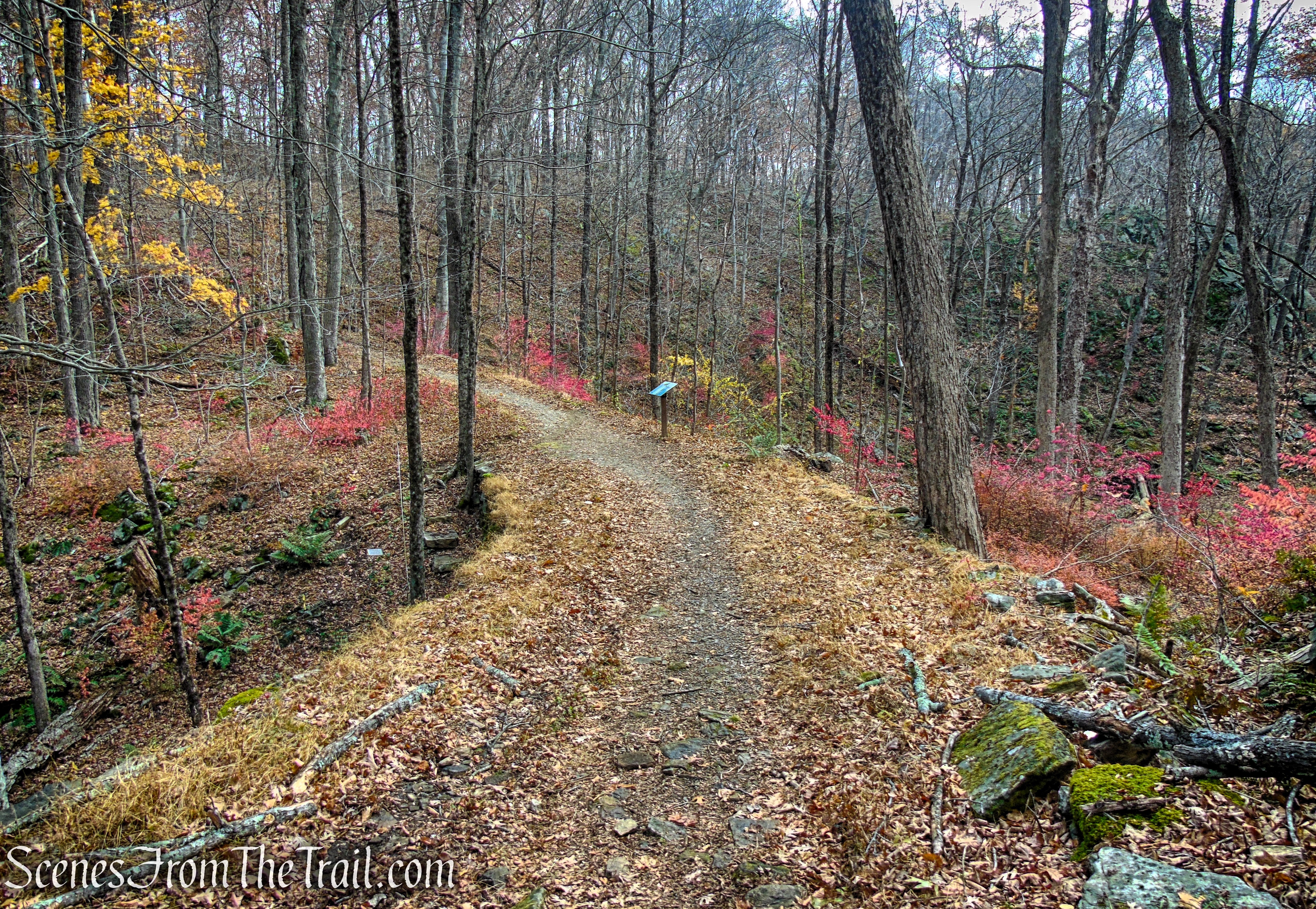
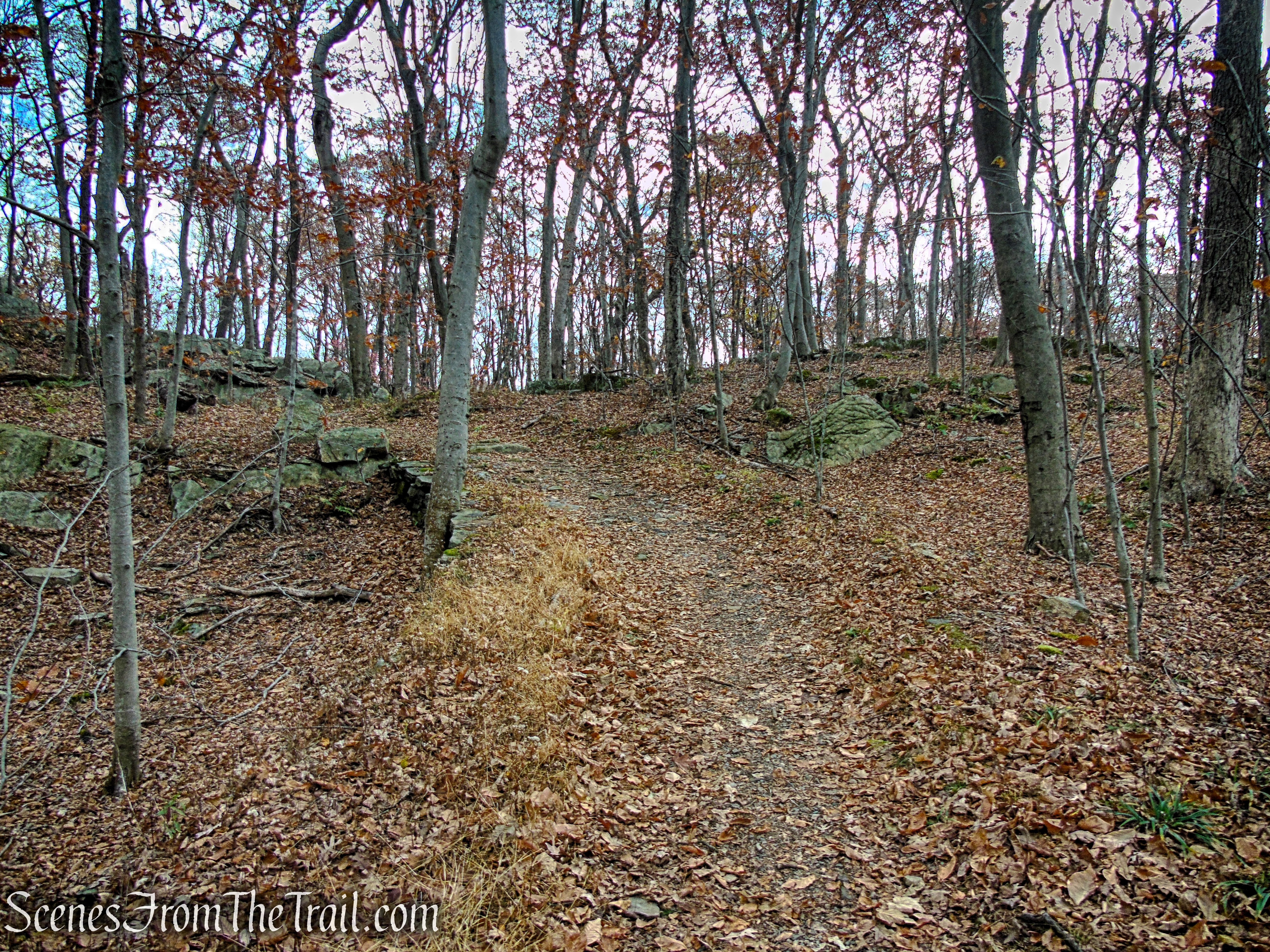
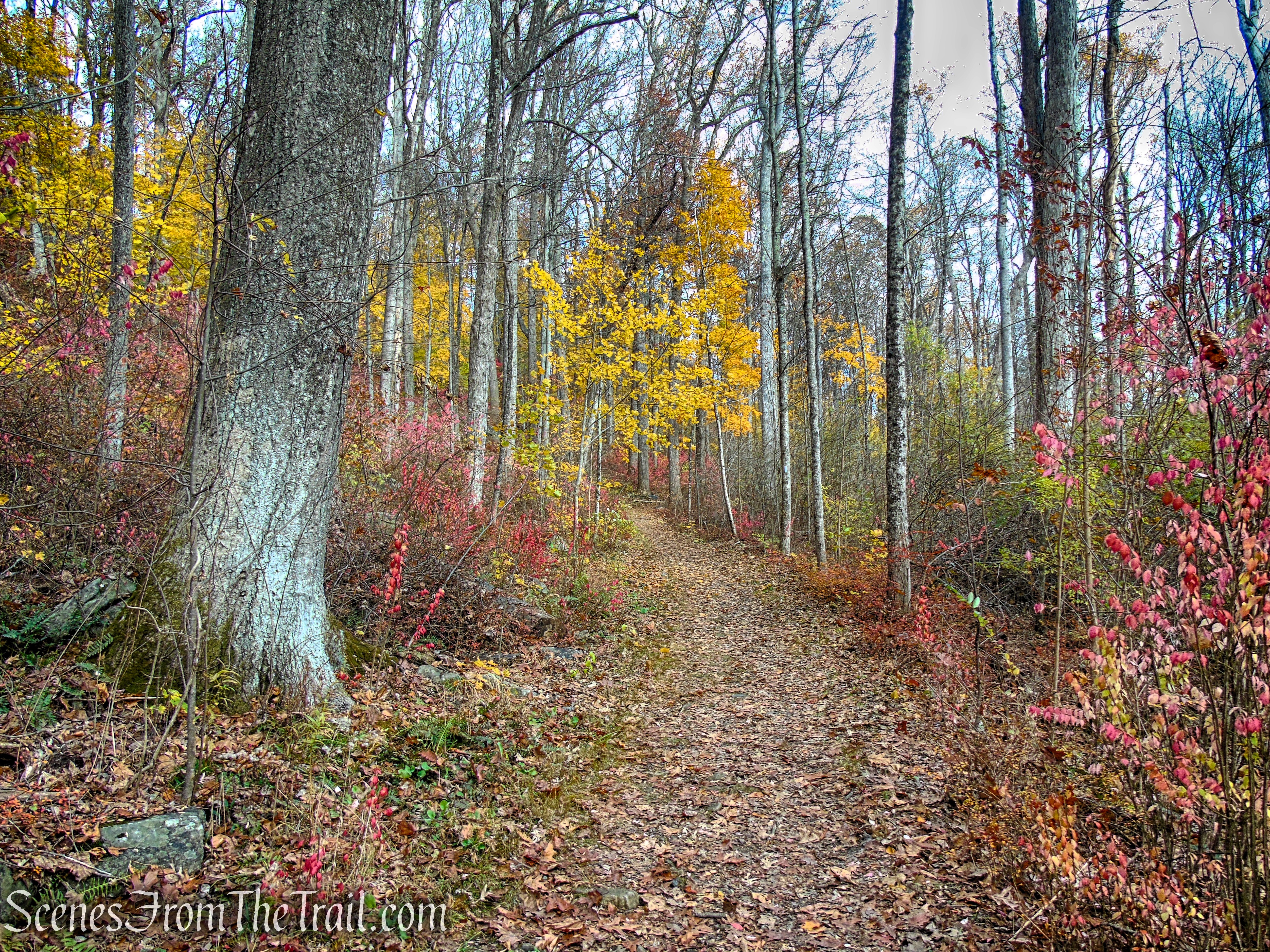
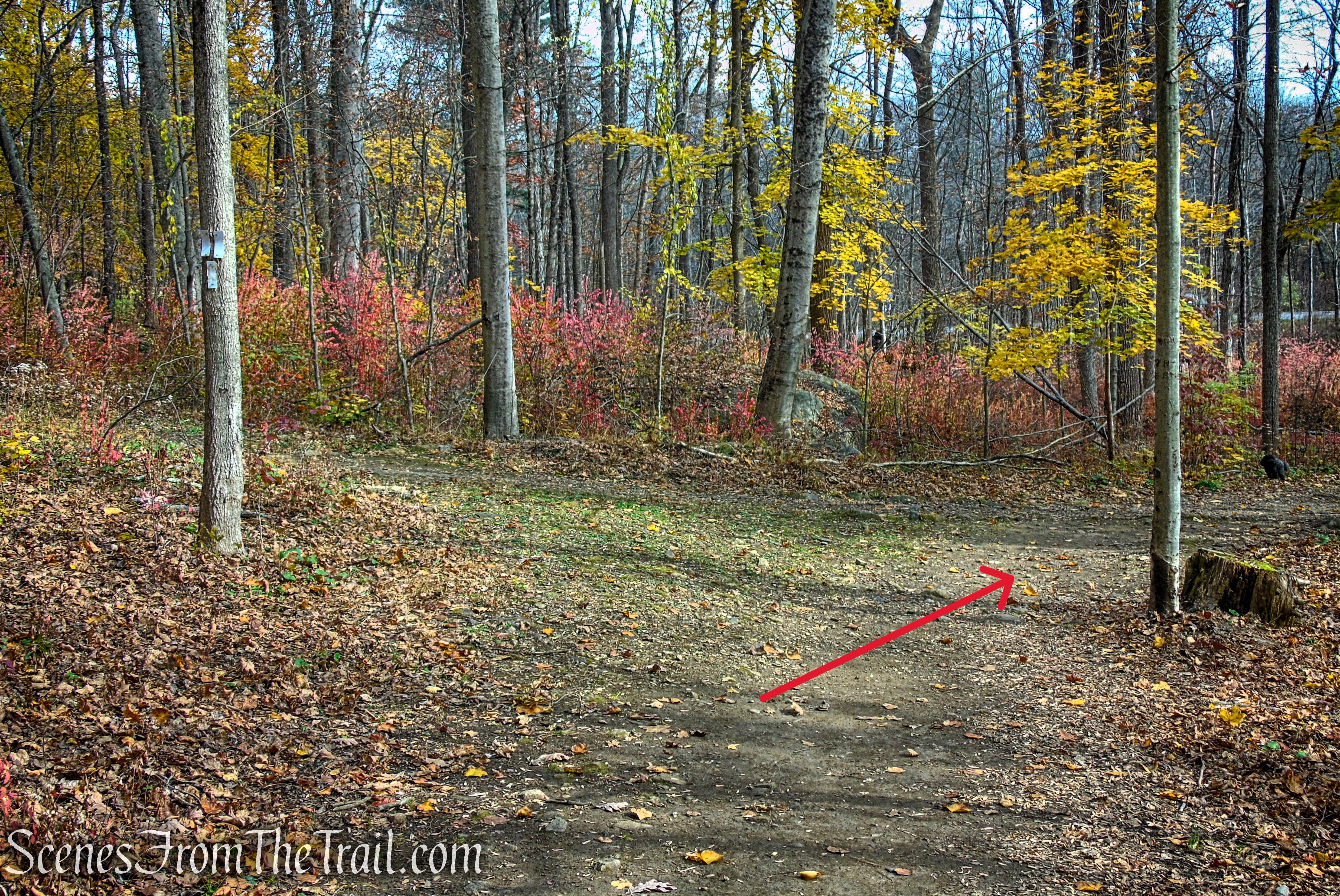
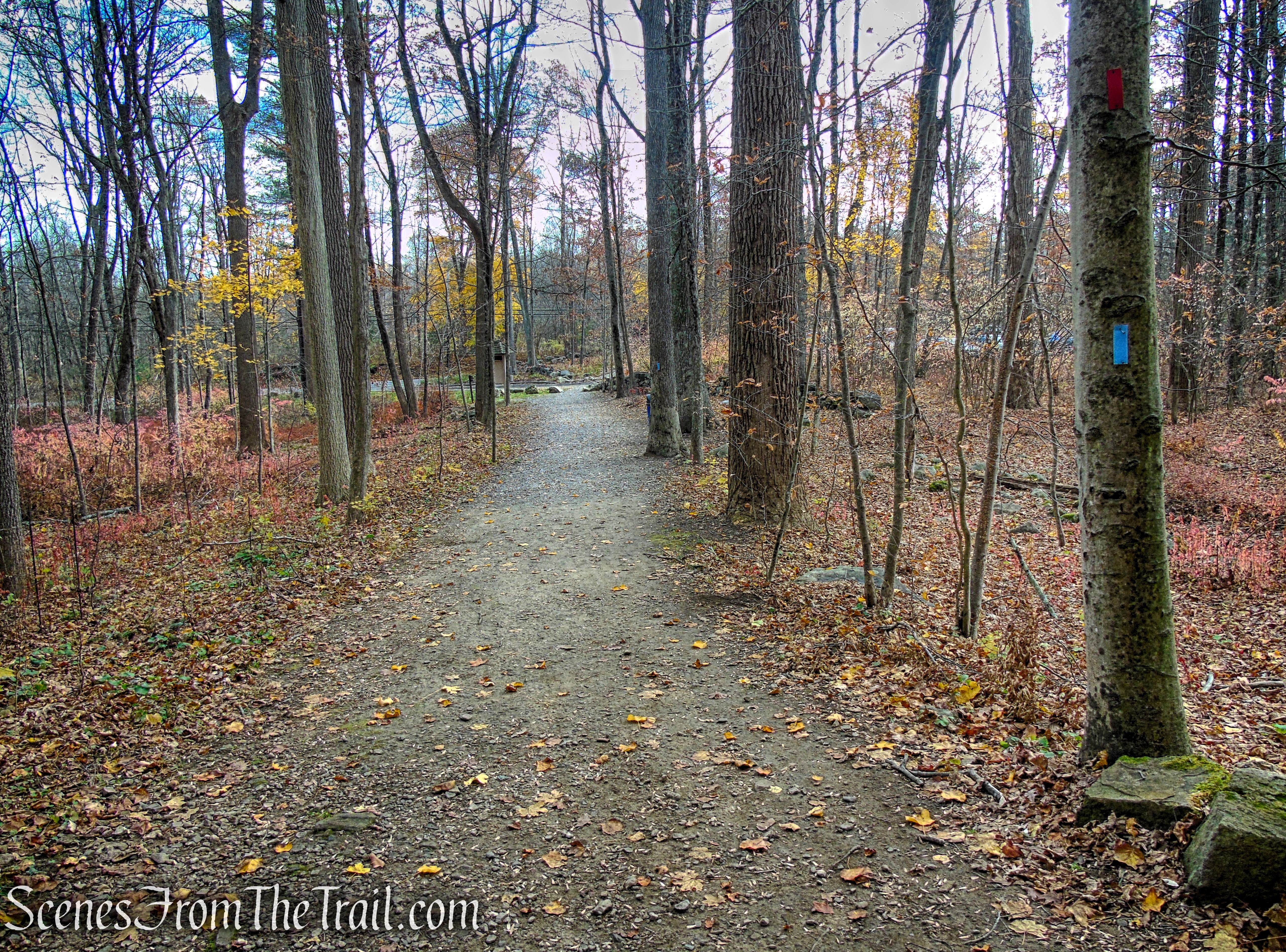
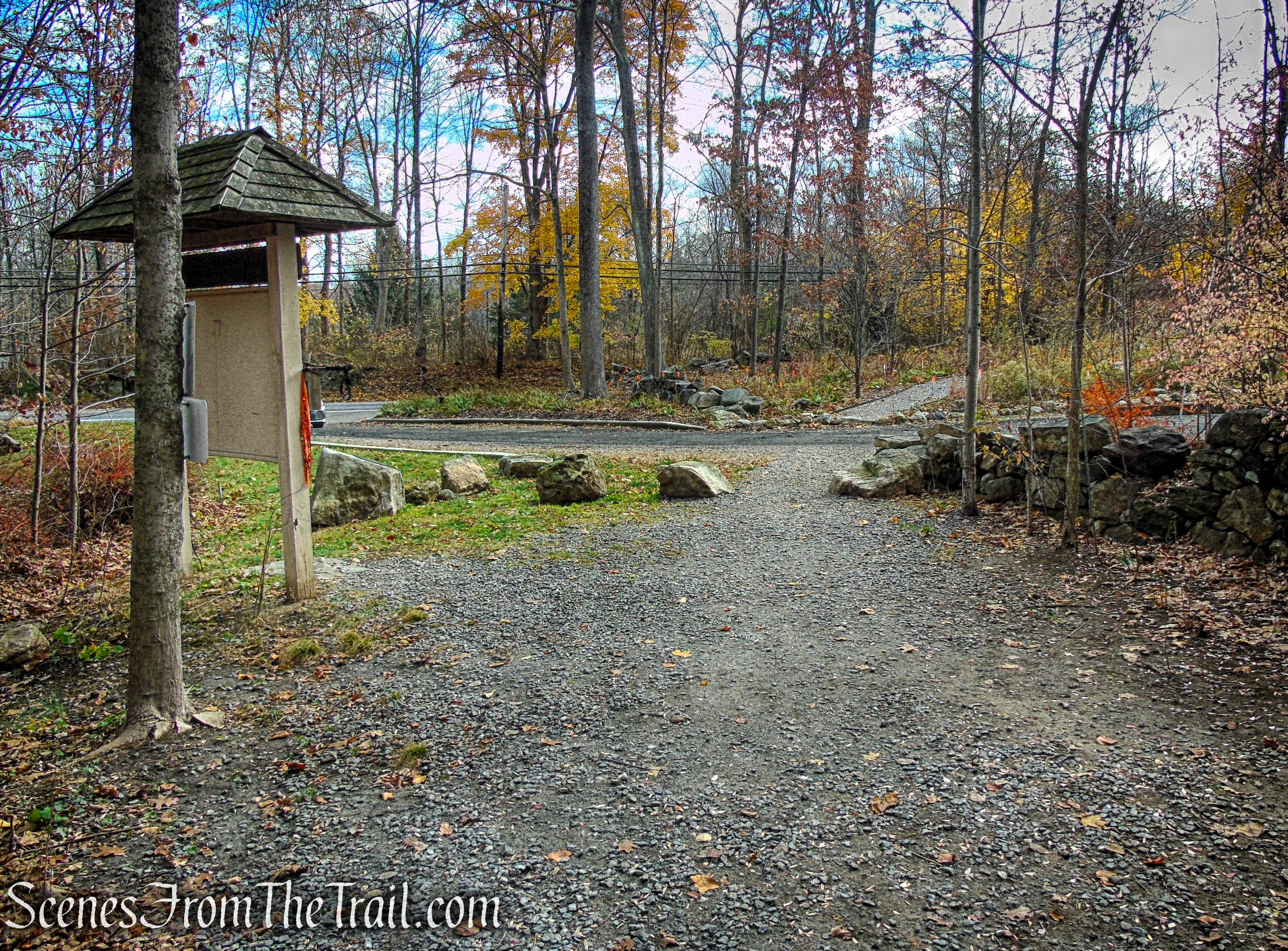
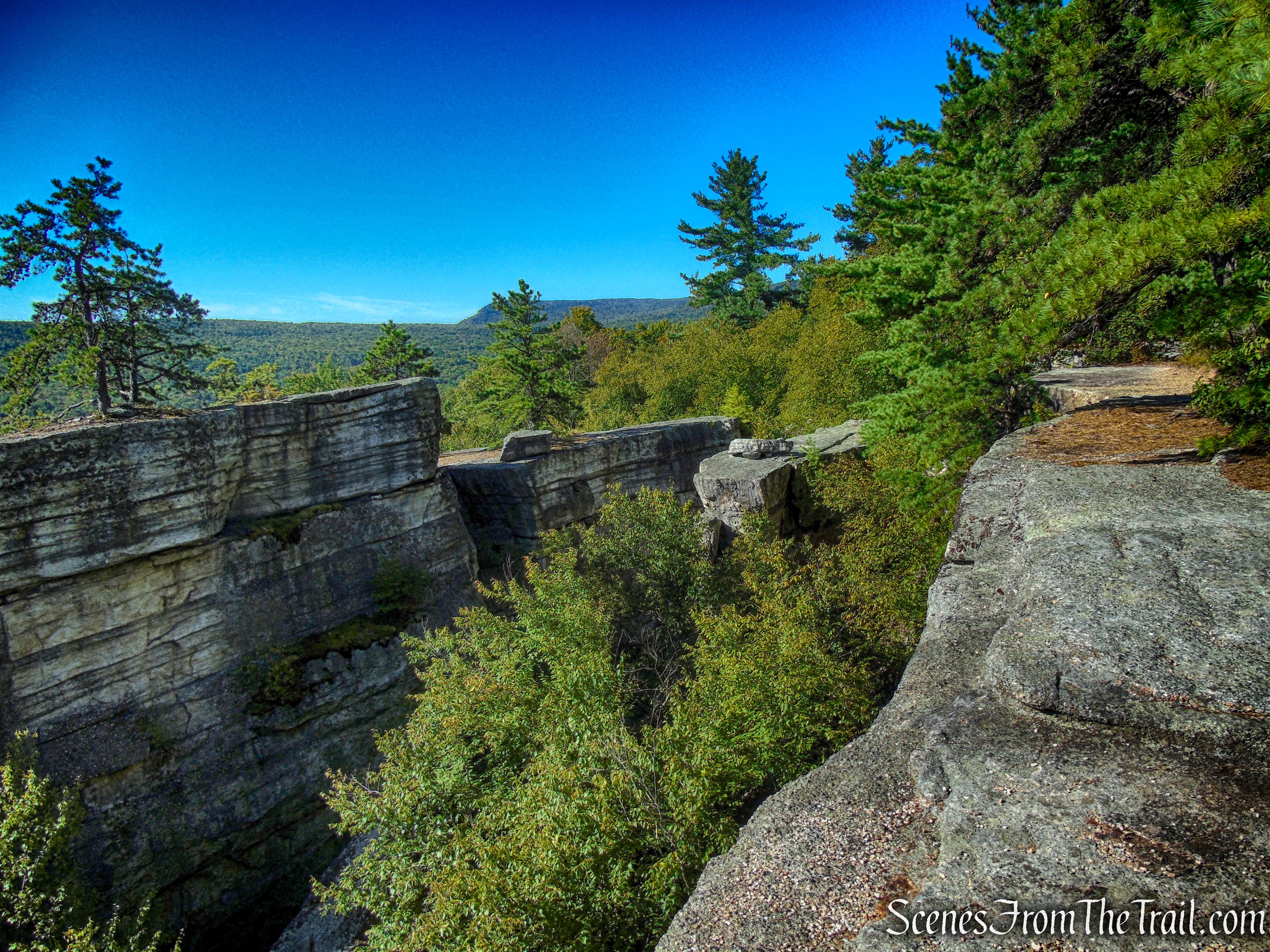
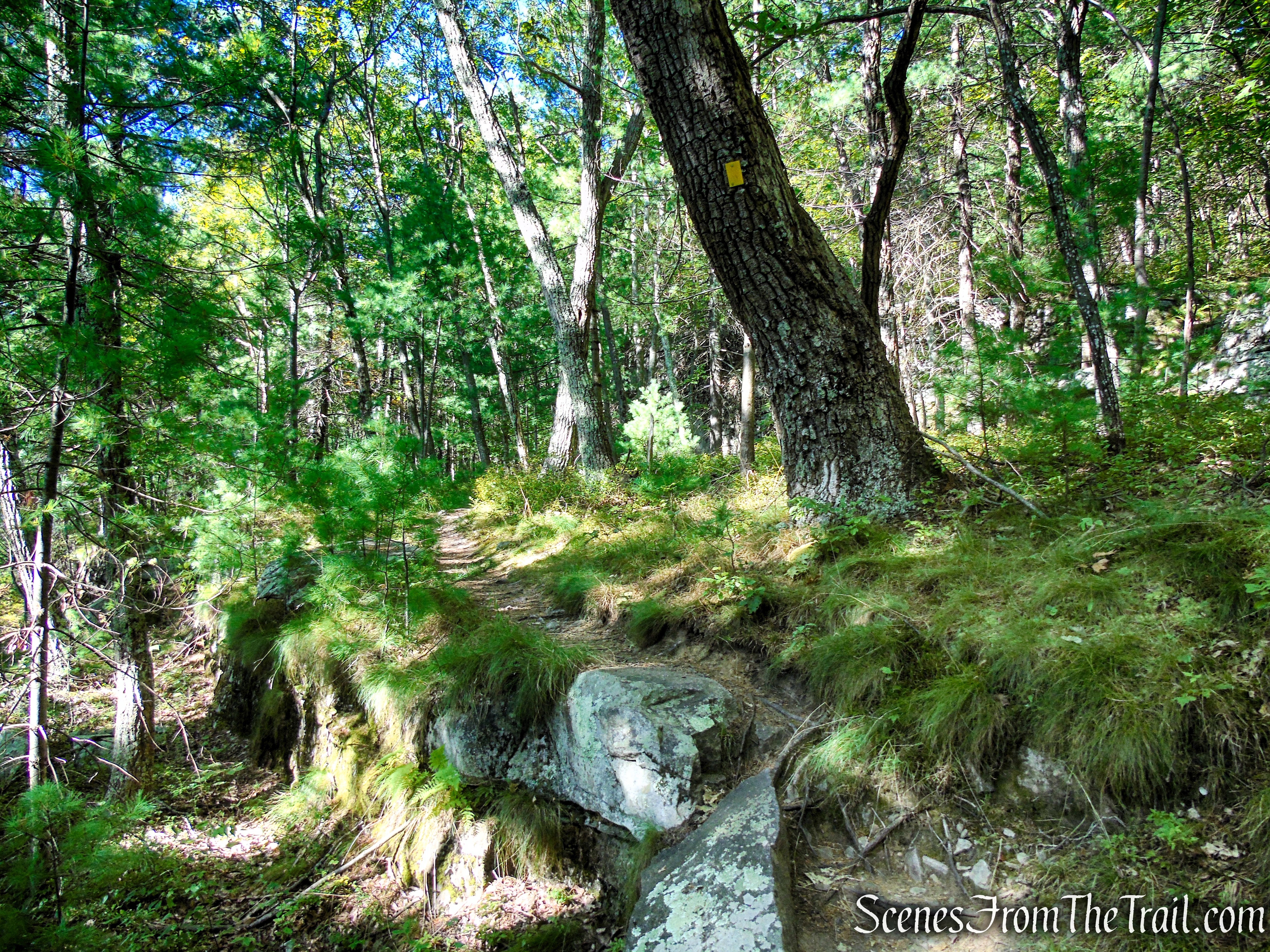
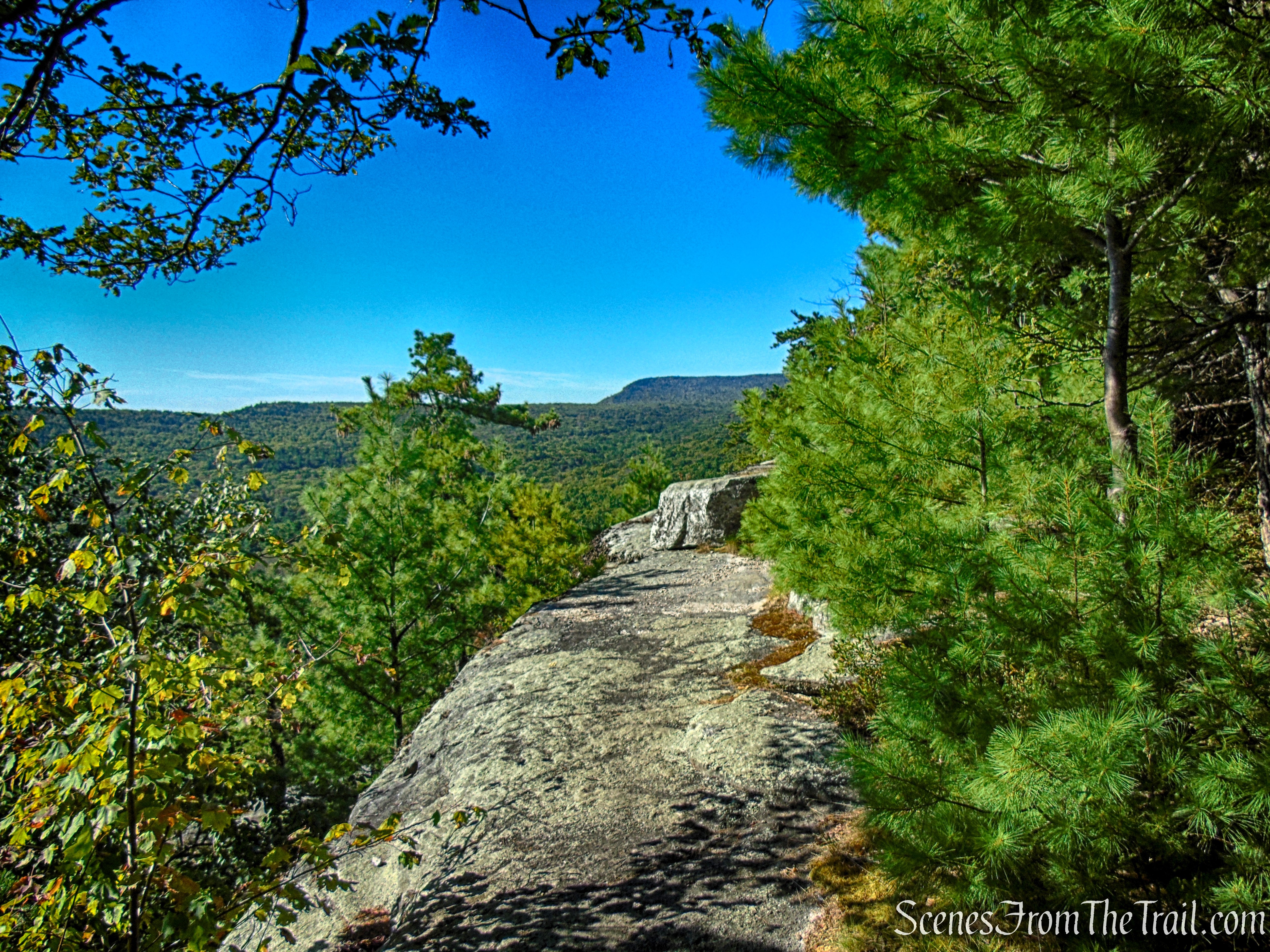
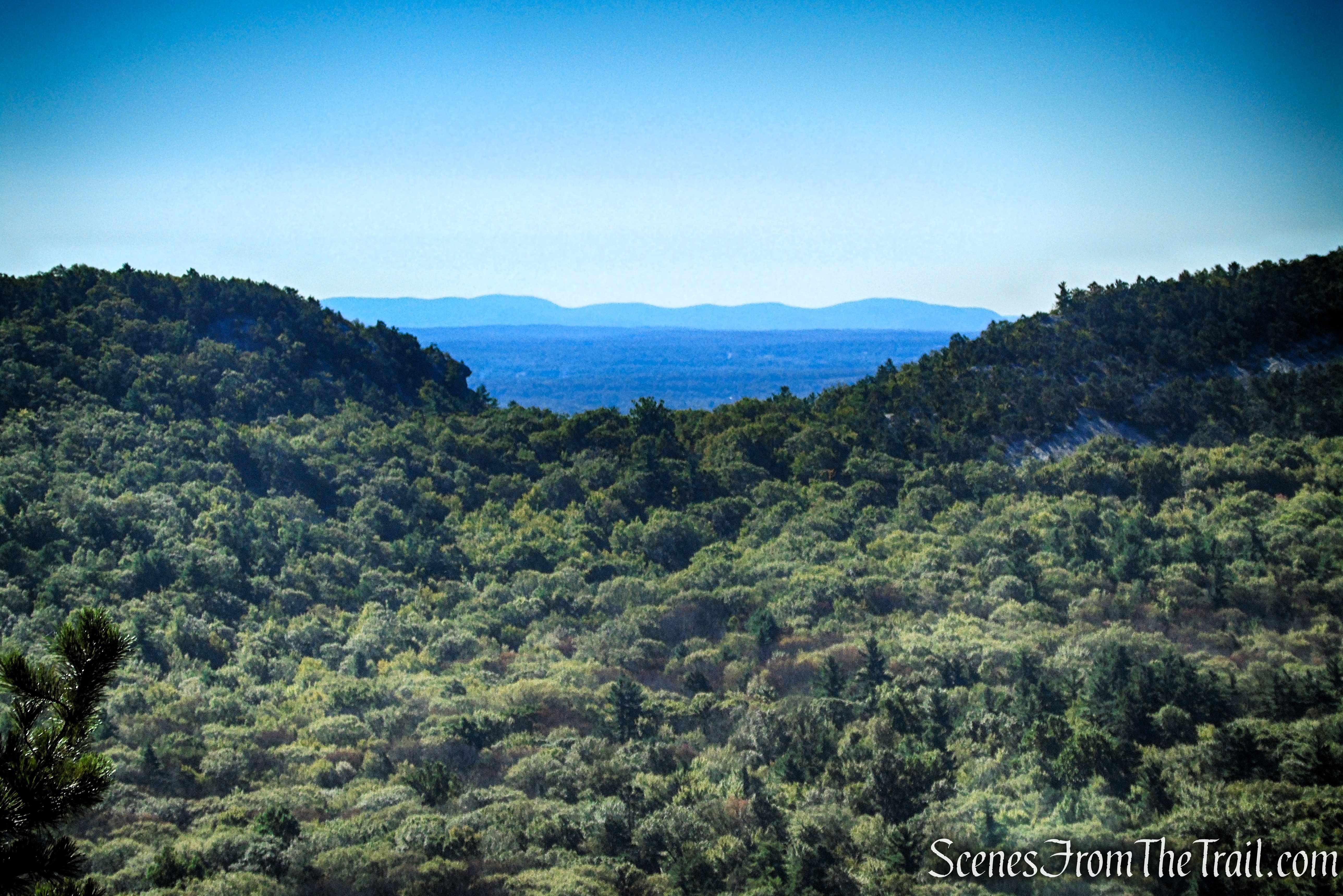
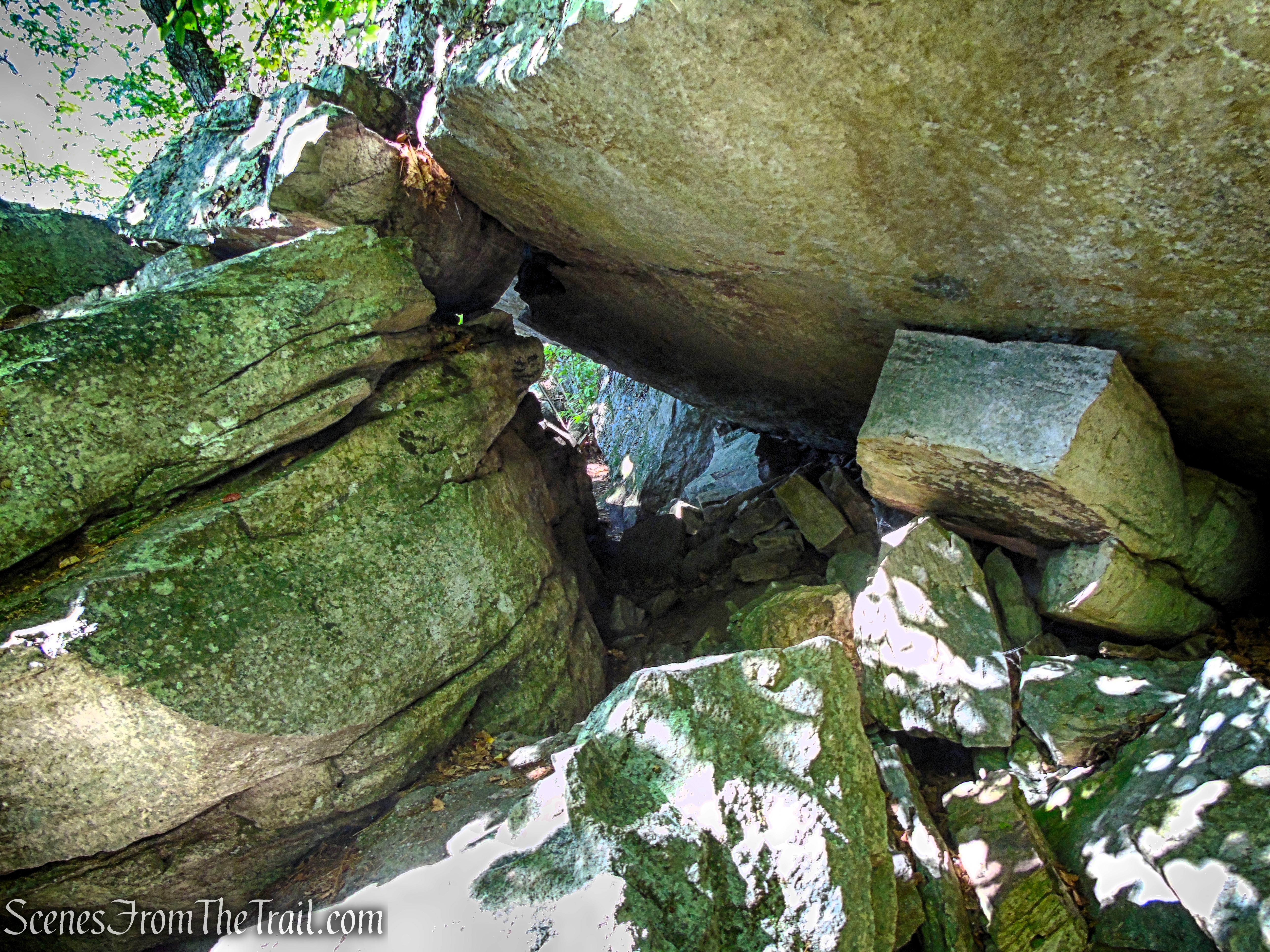
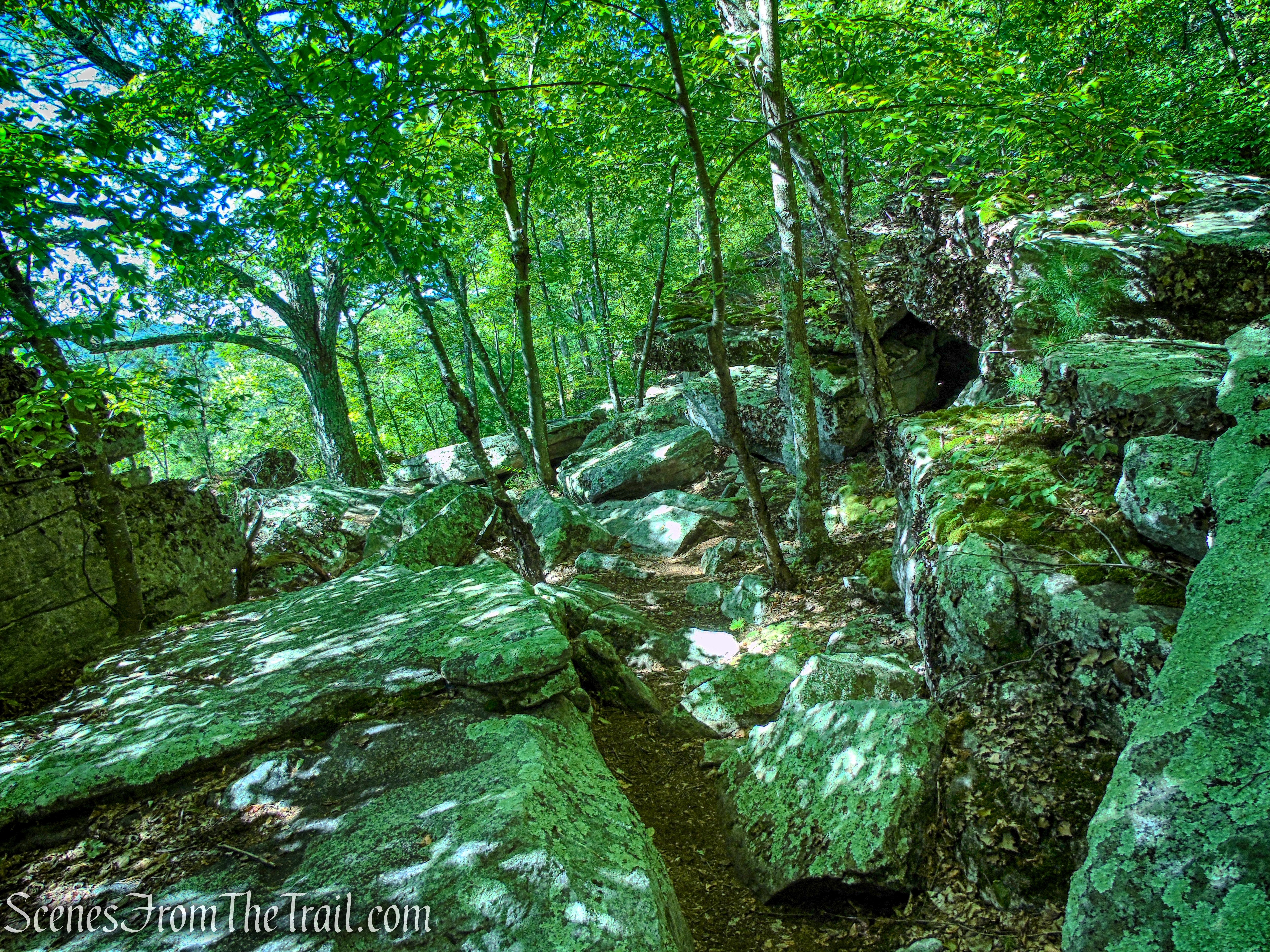
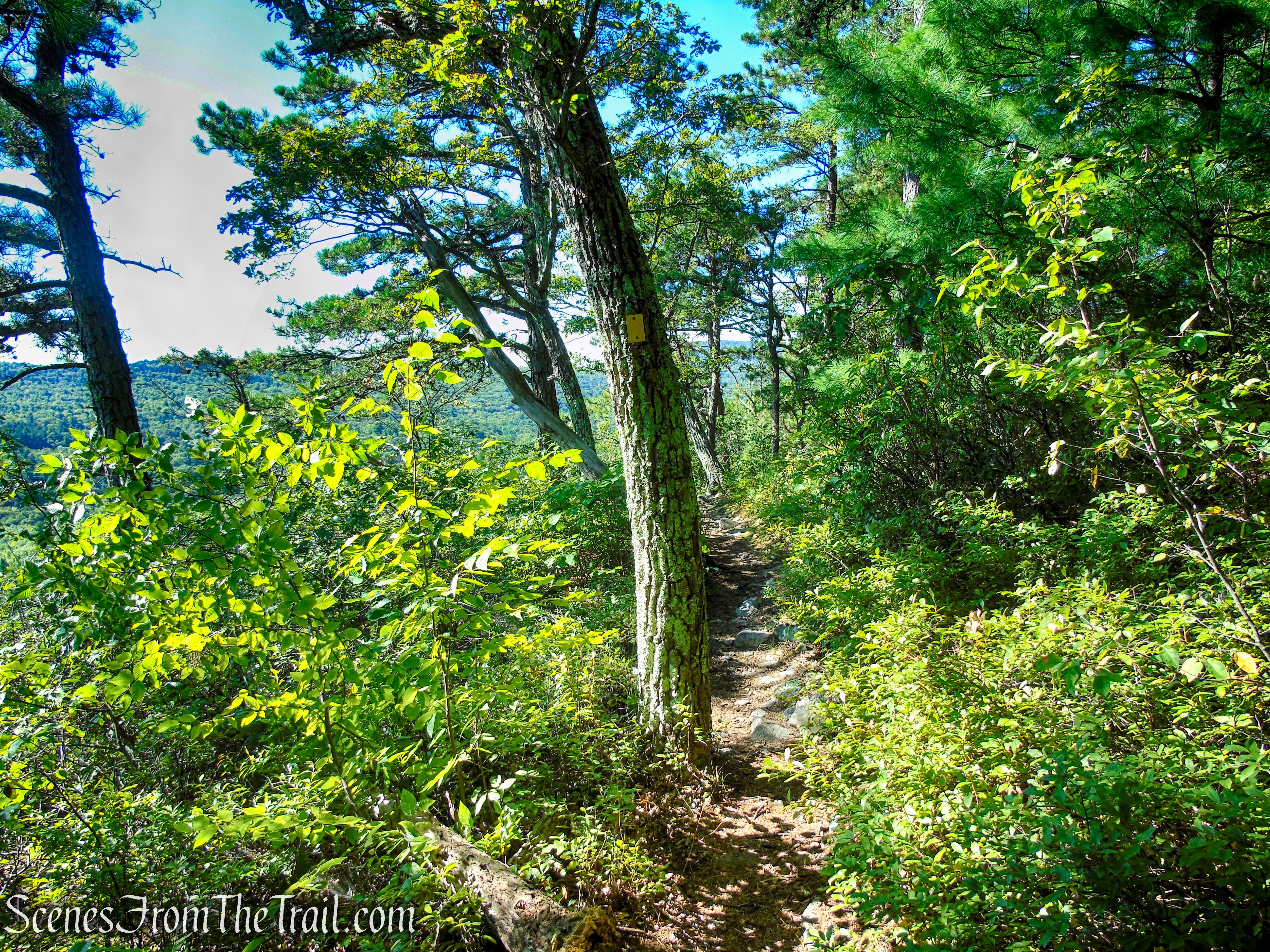
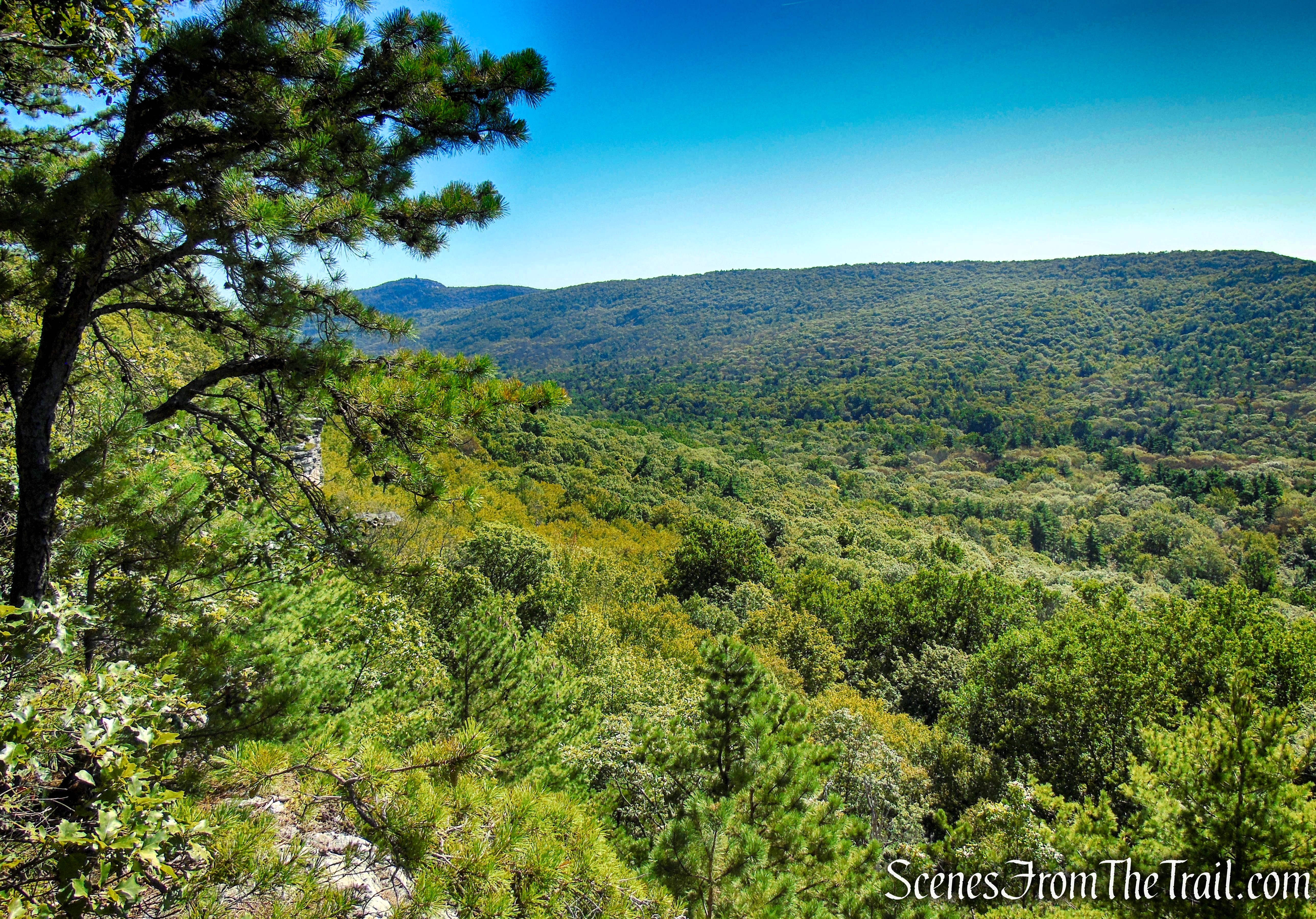
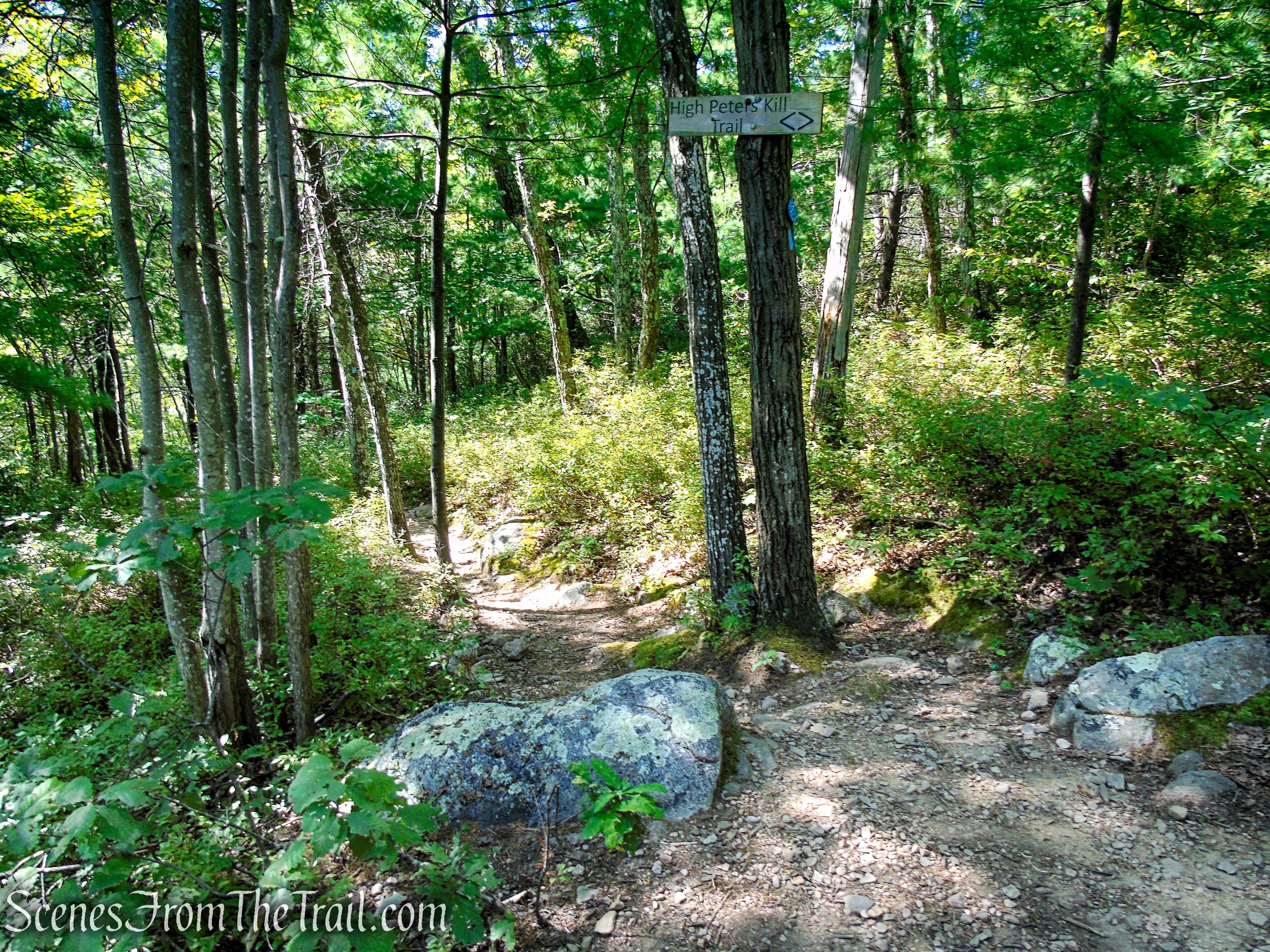
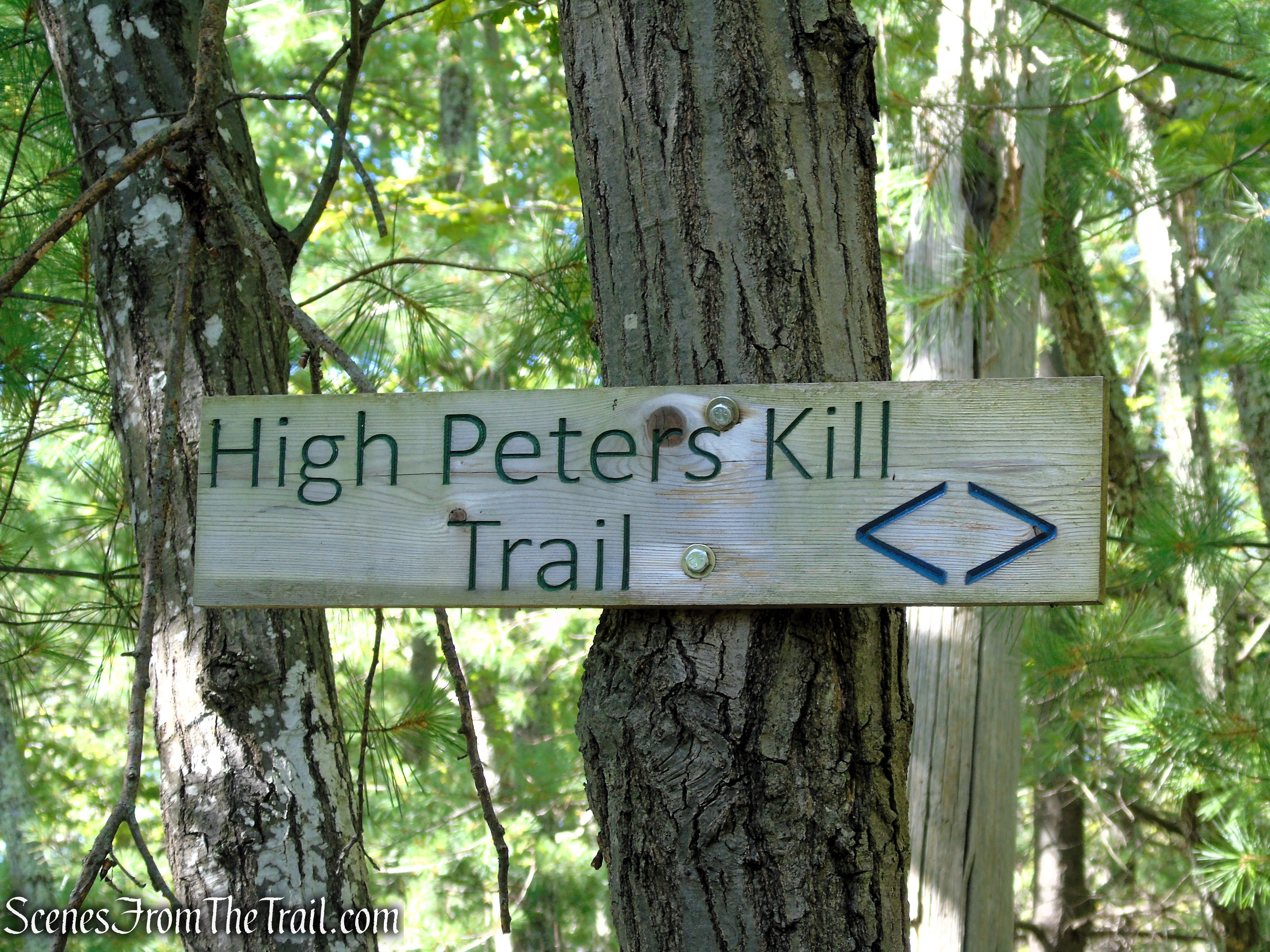
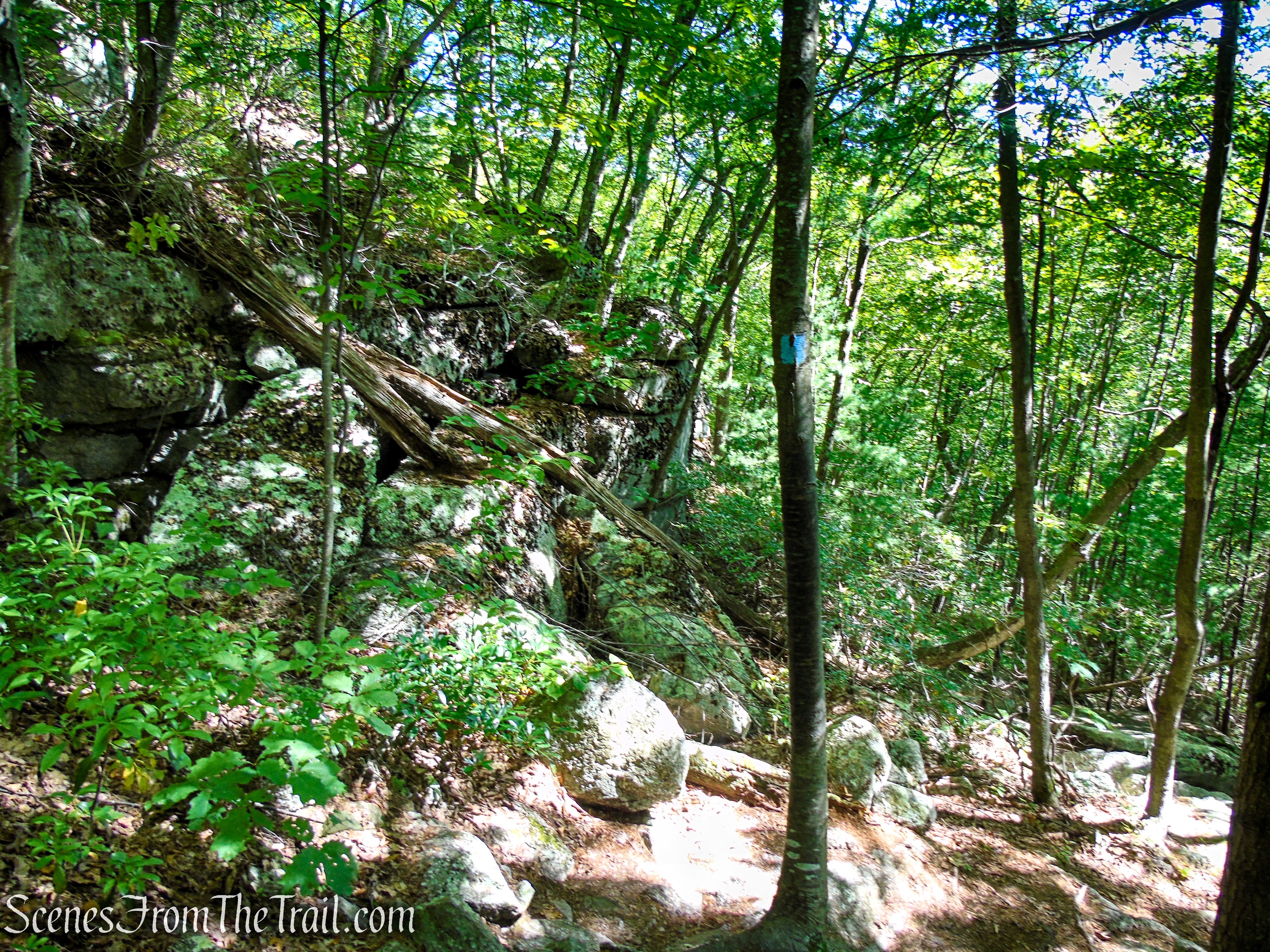
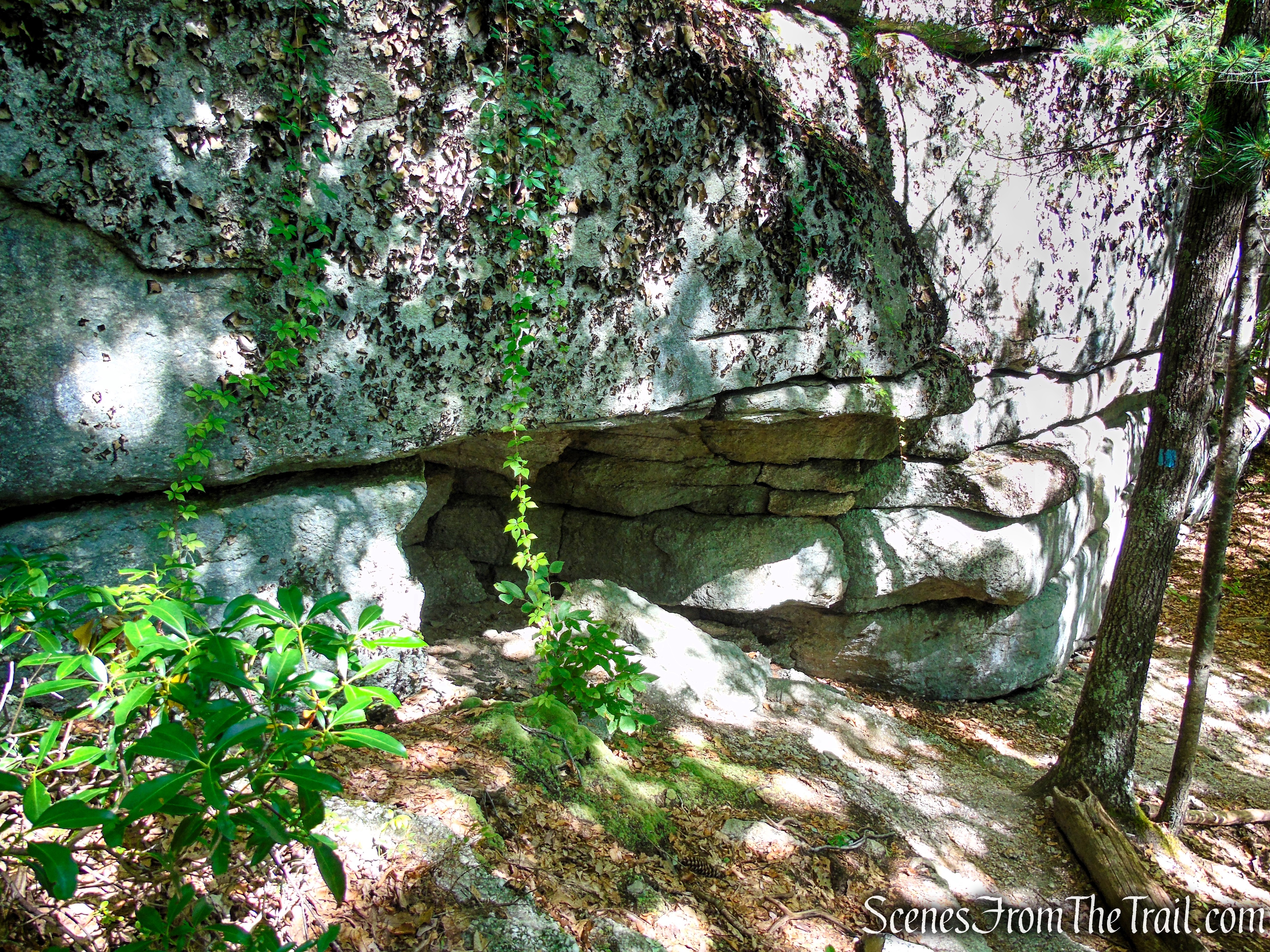
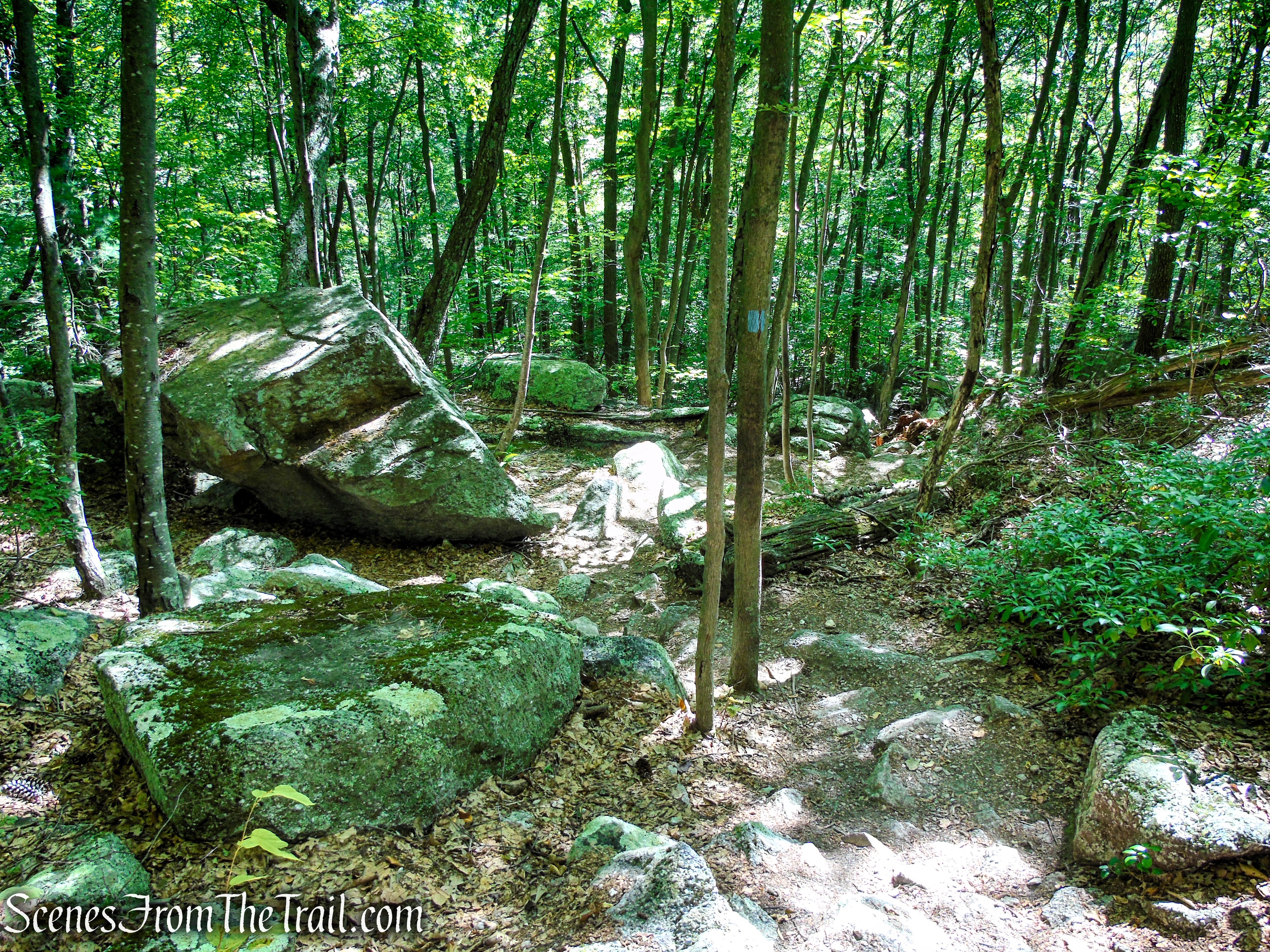
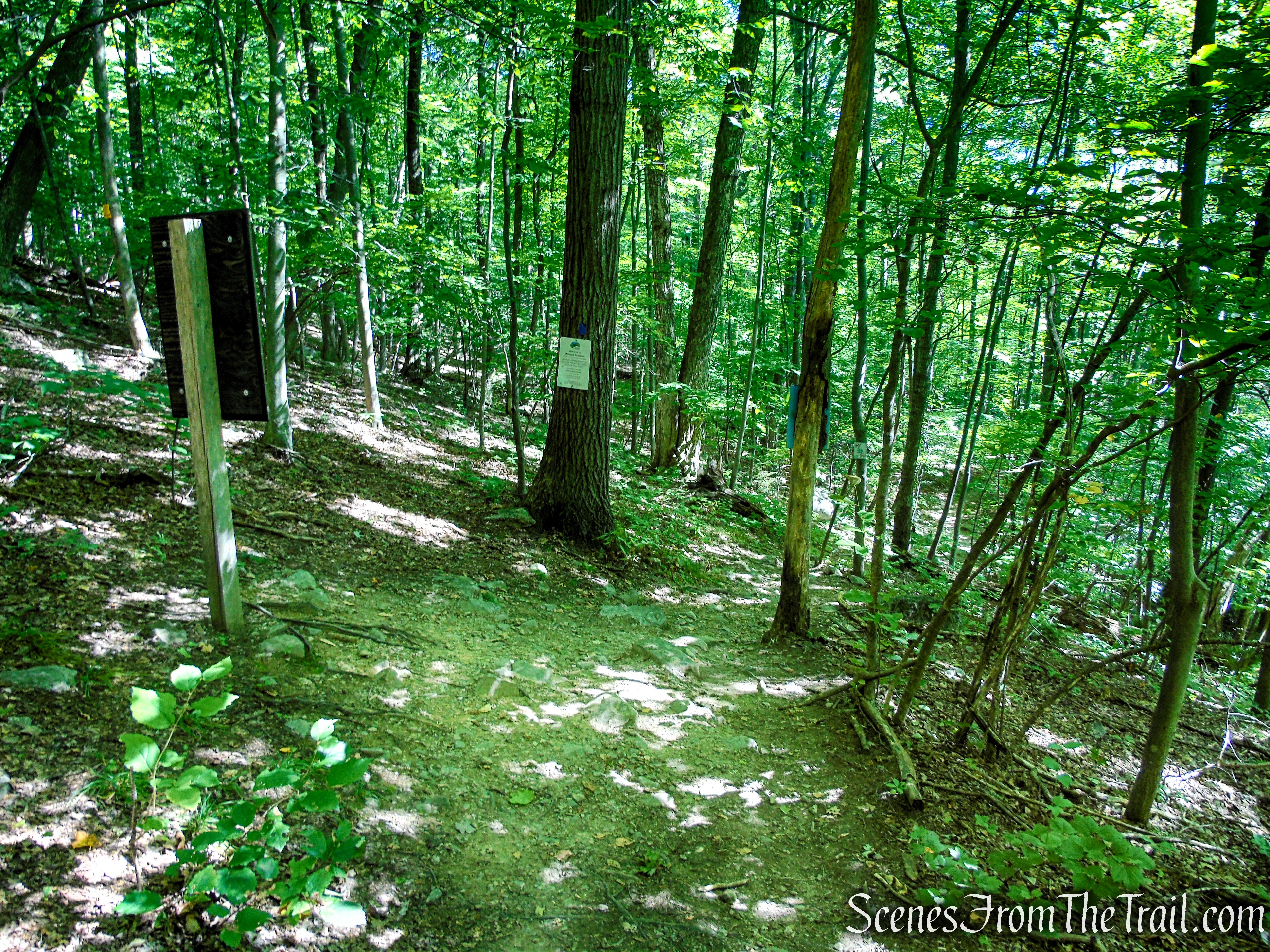
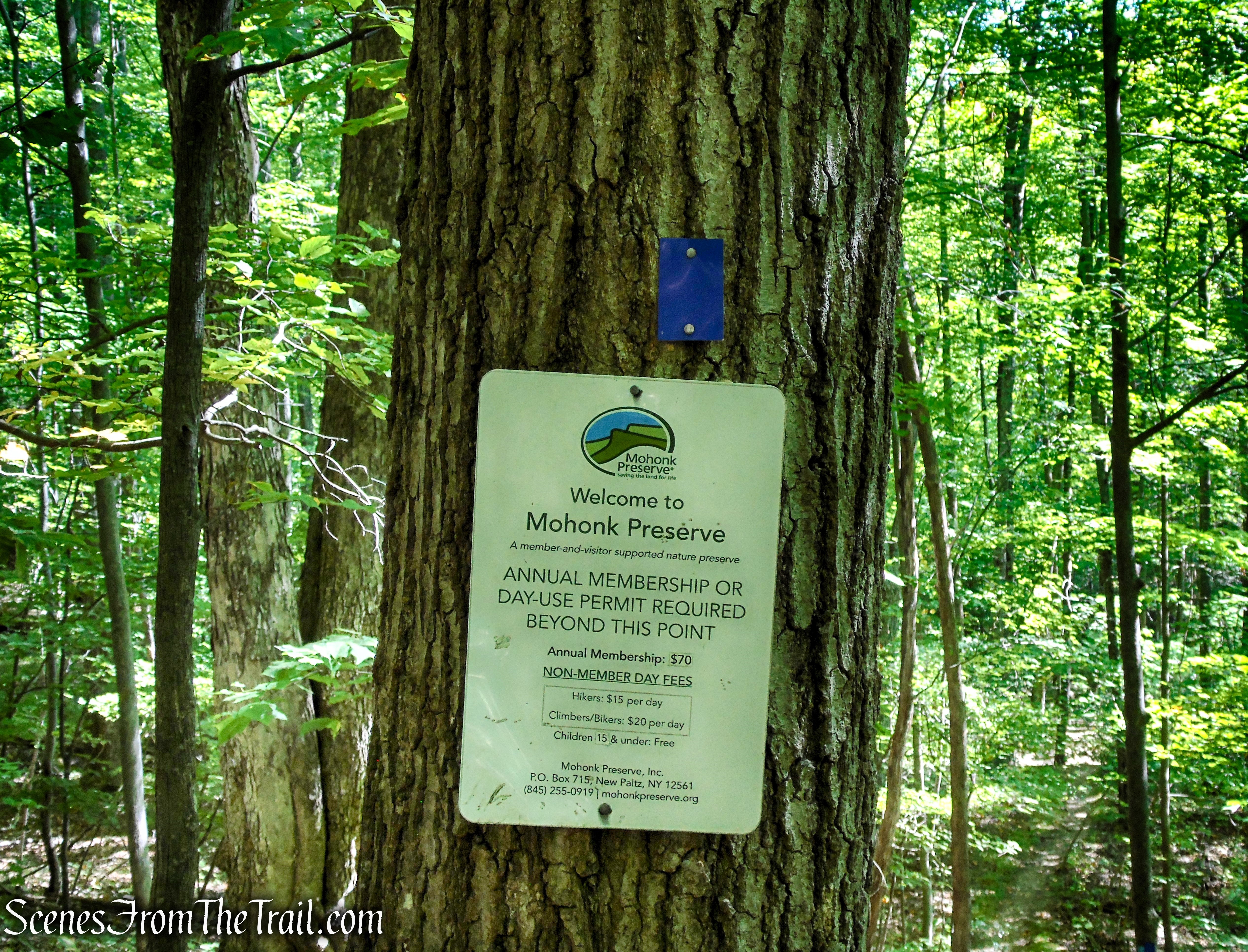
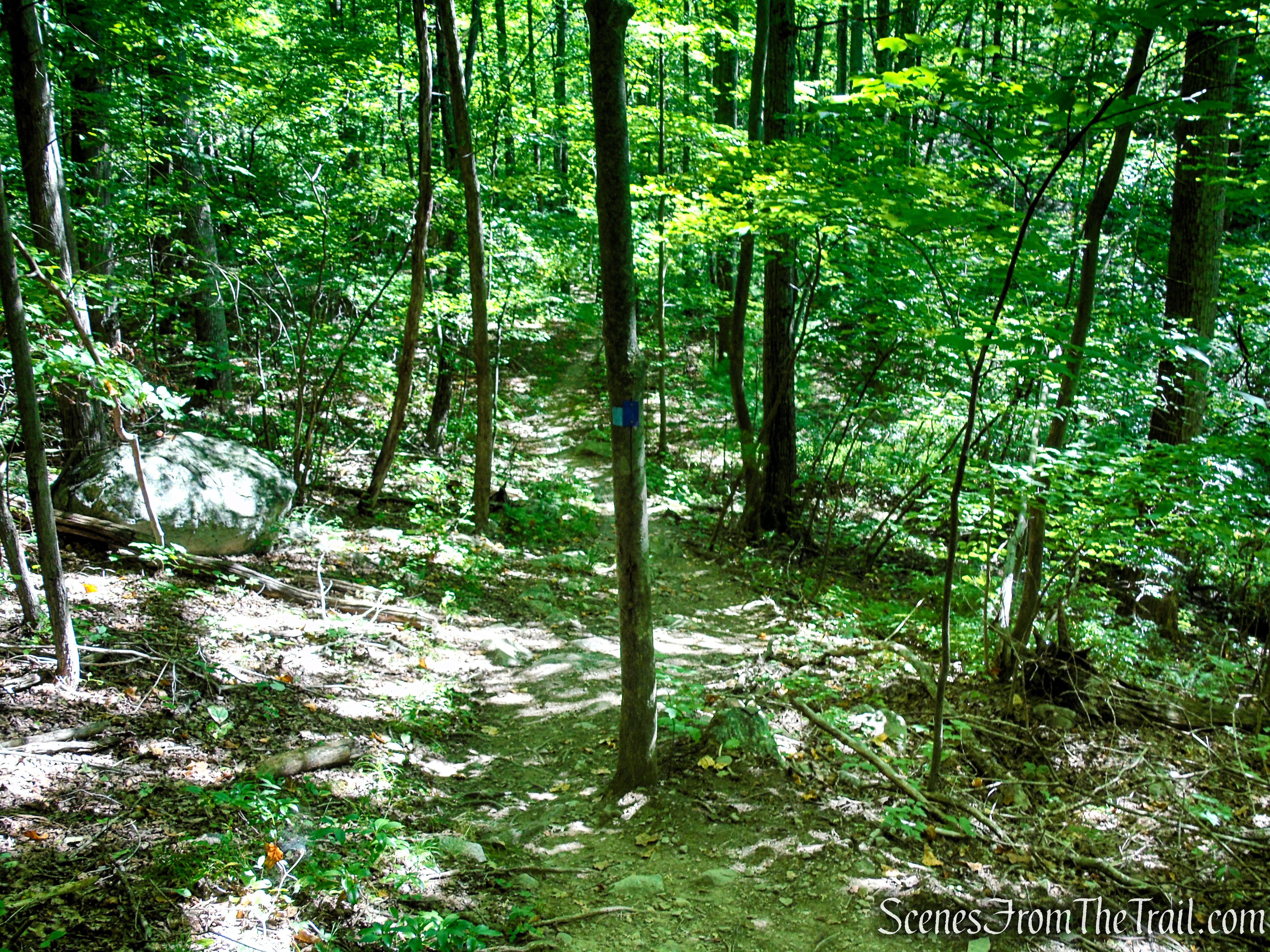
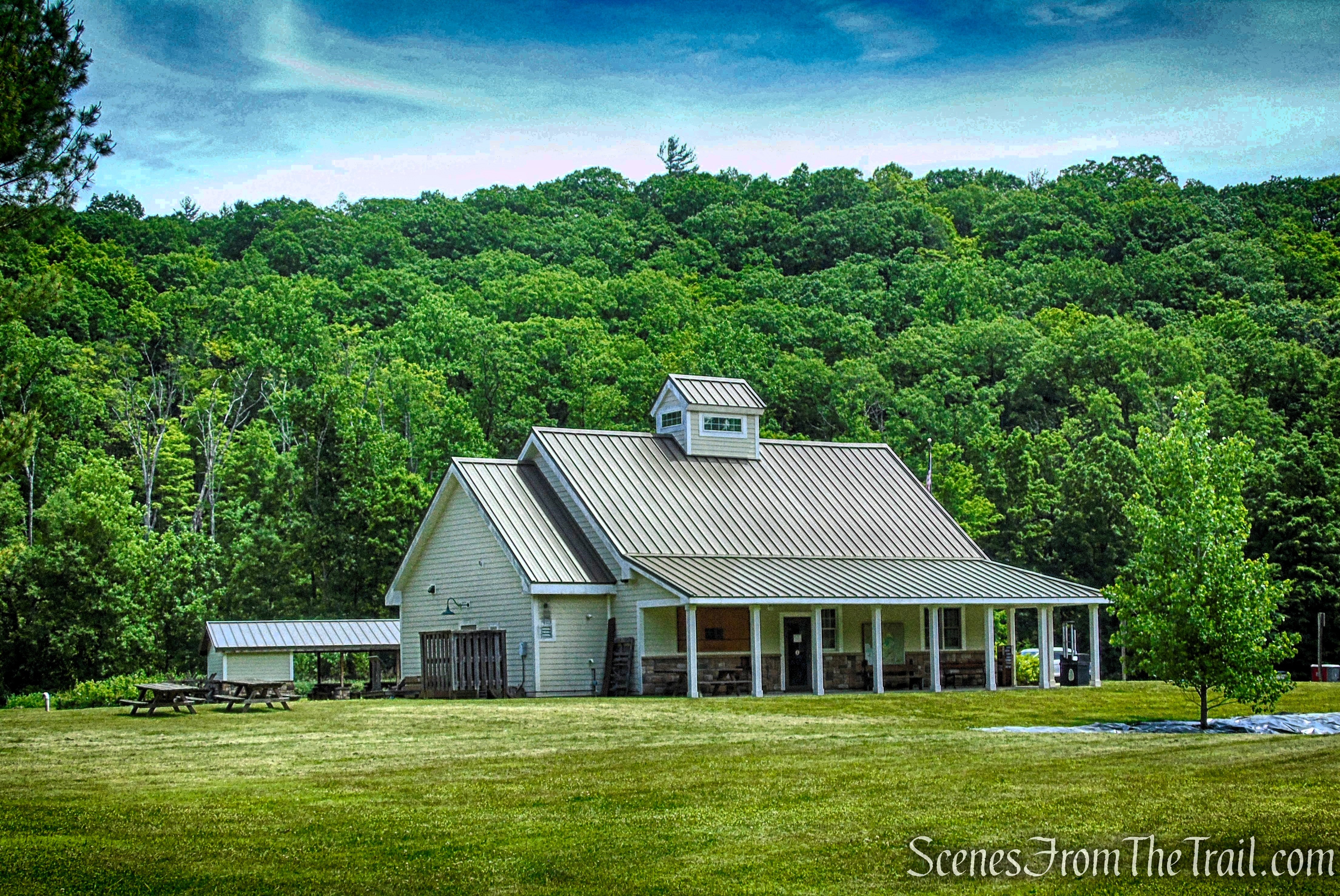
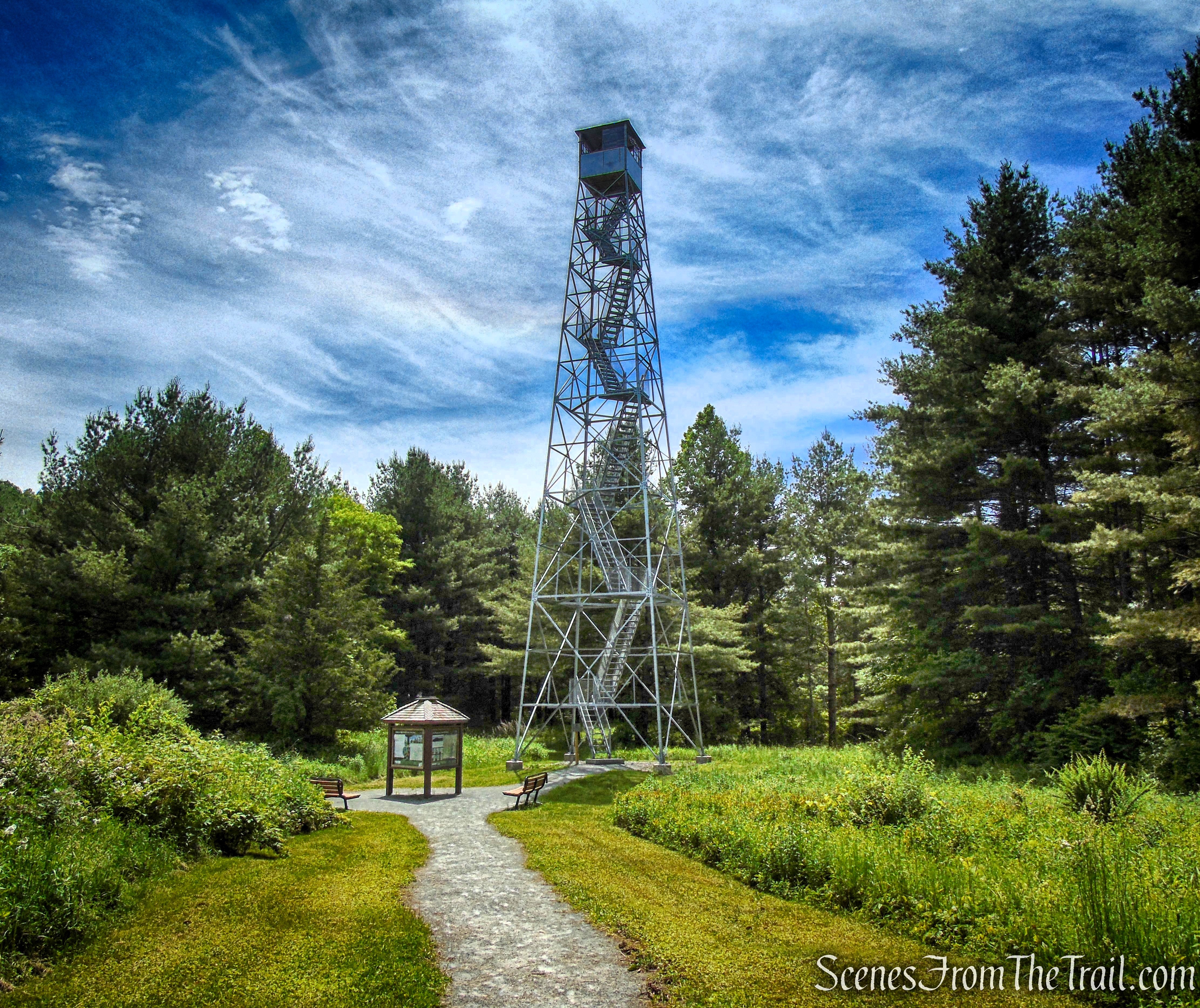
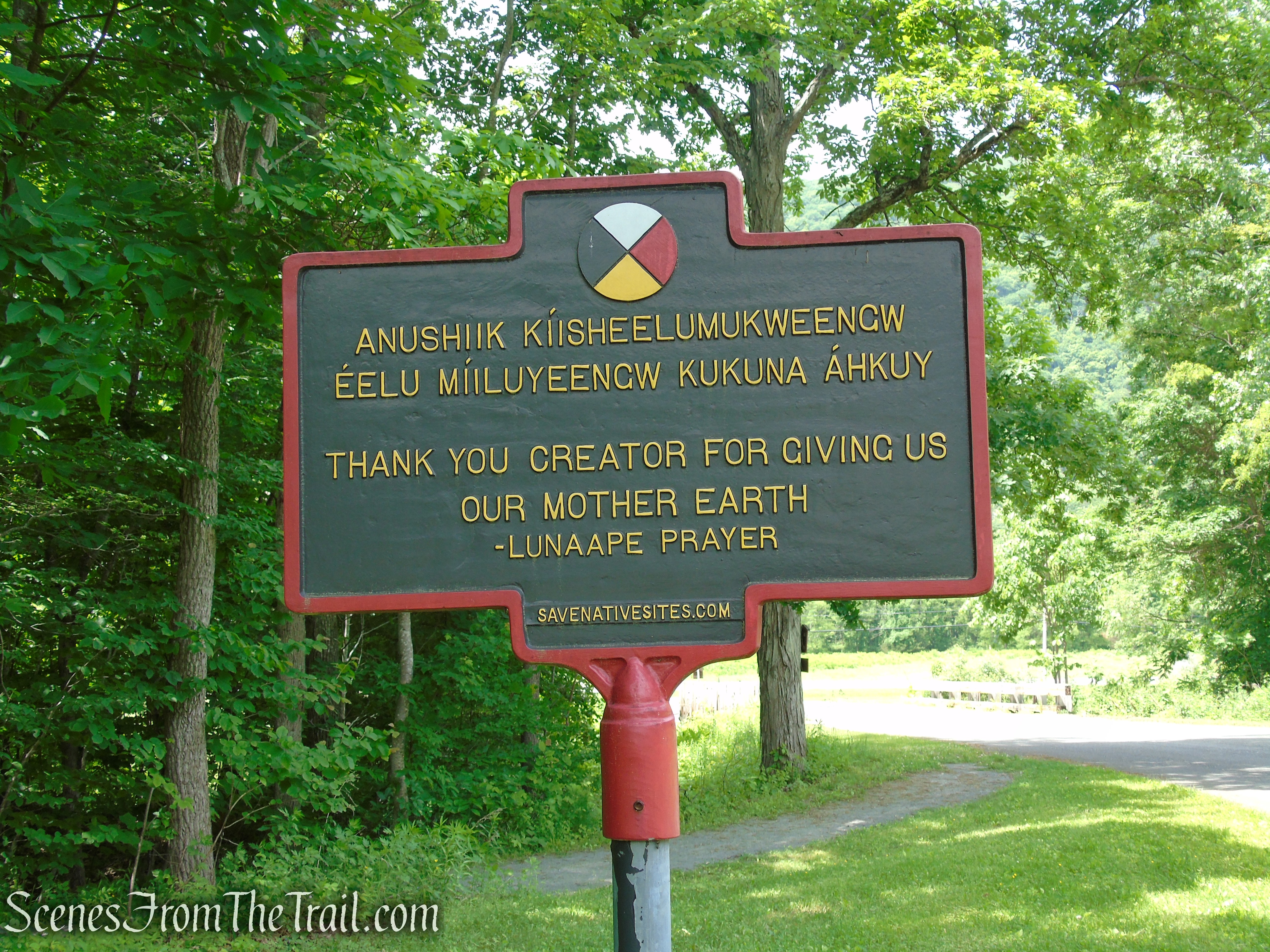
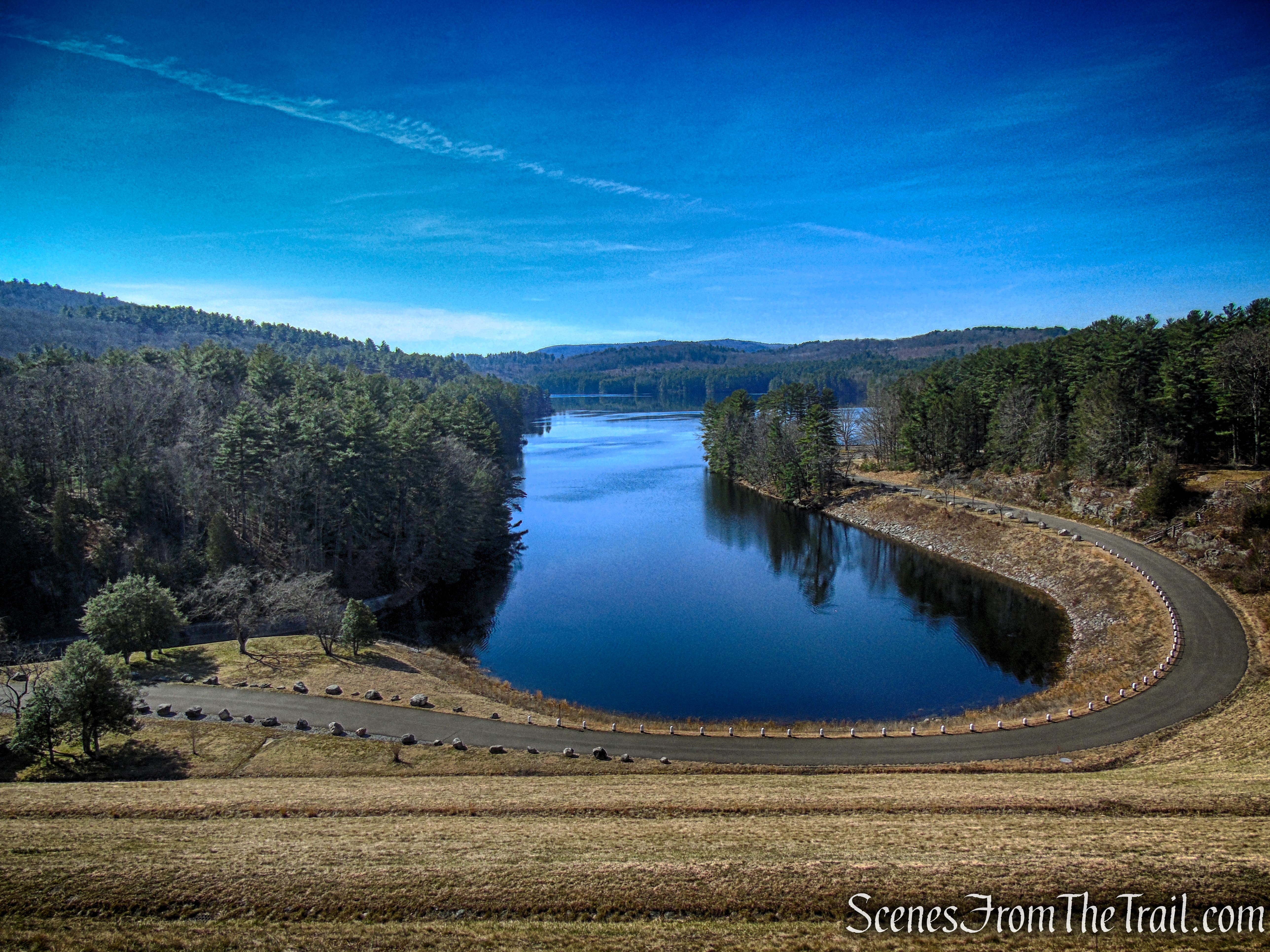
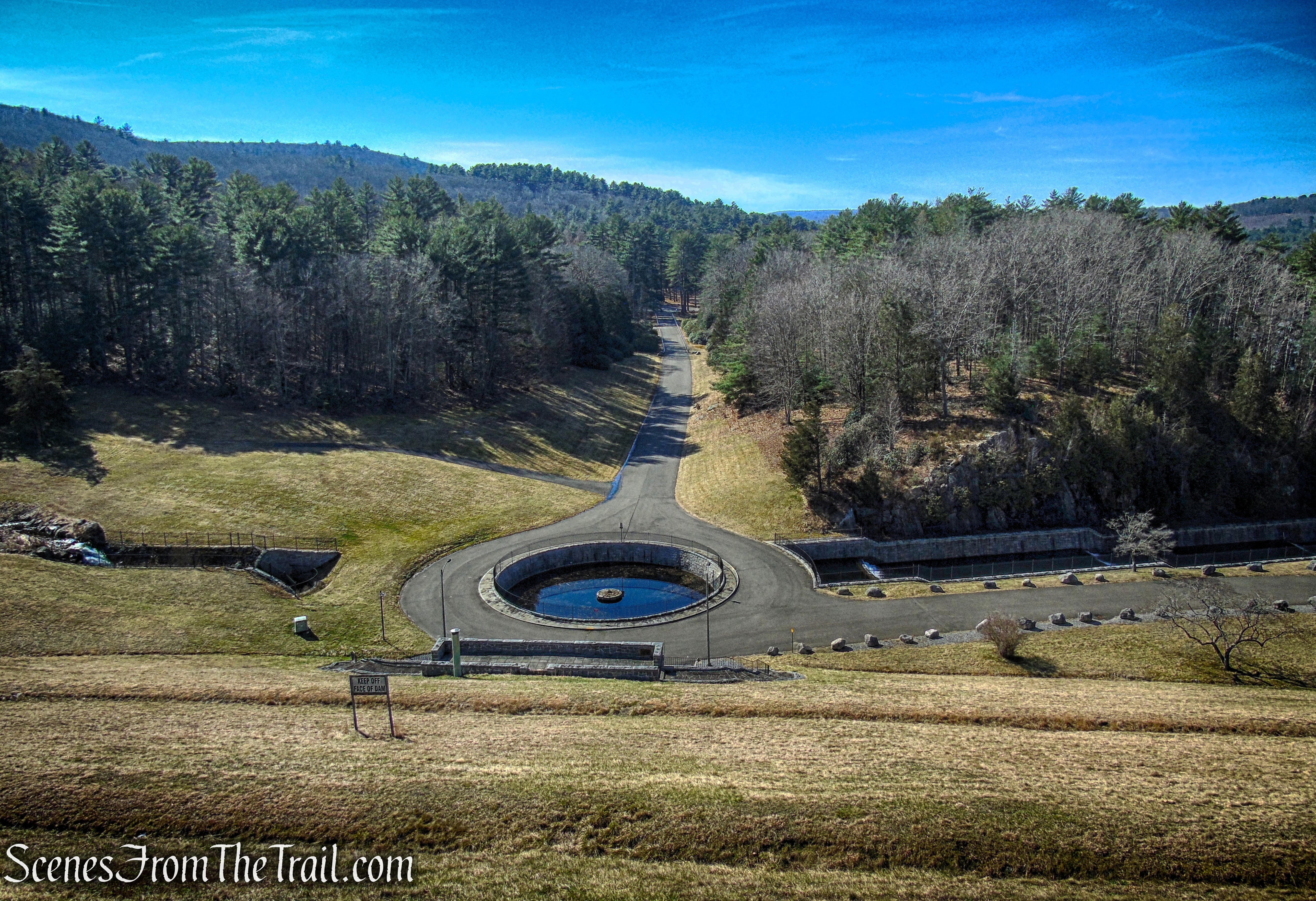
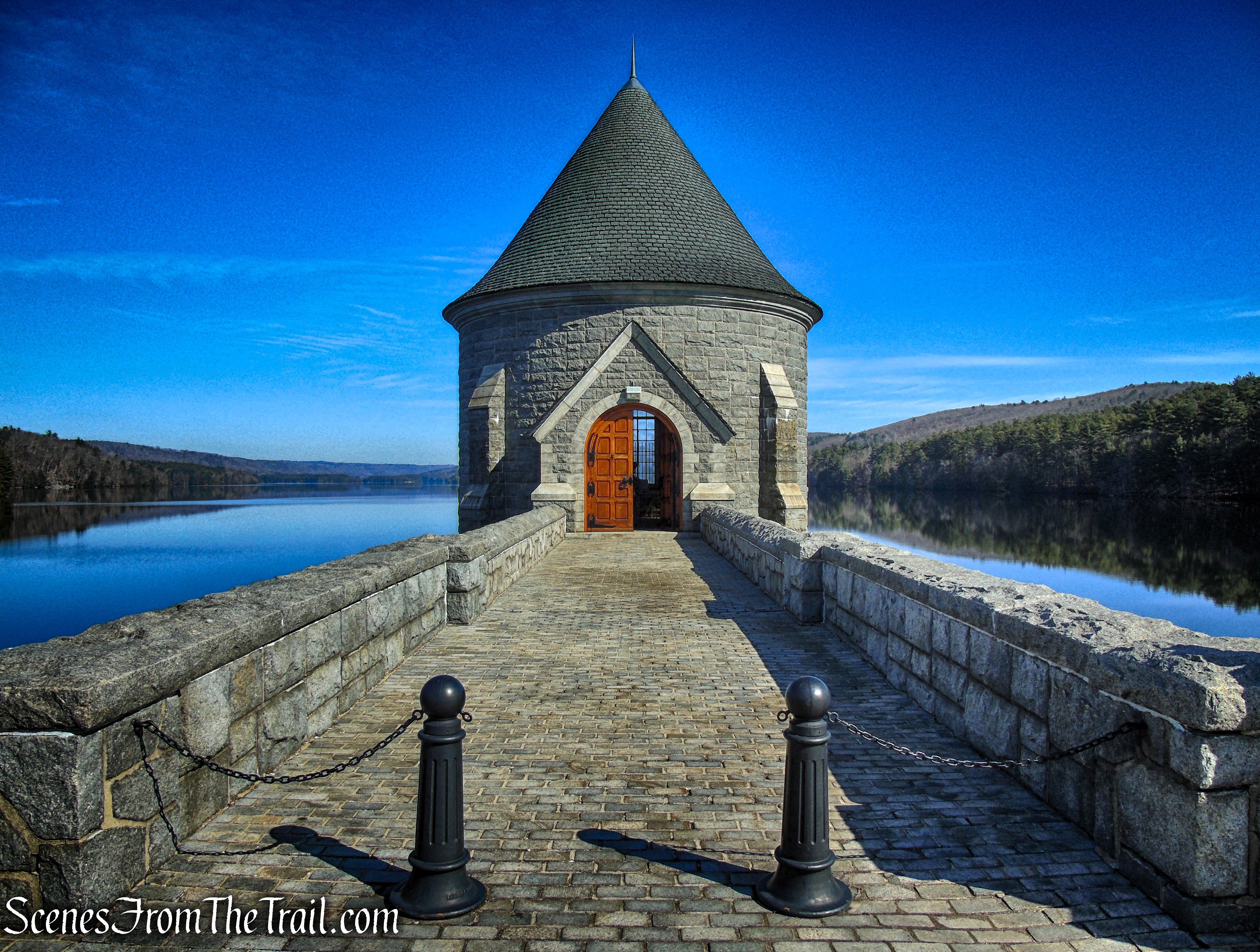
Leon Levy Preserve Outer Loop

November 9, 2025 – South Salem, NY

Difficulty: Easy – moderate

Length: Approximately 3 miles

Max elevation: 764 ft. – total elevation gain: approximately 400 ft.

Route type: Circuit

Map: Leon Levy Preserve Trail Map 2021Leon Levy Preserve Avenza Map

Trailhead parking: Smith Ridge Rd (NY-123) South Salem, NY 10590

The main entrance and parking lot is on Route 123 (Smith Ridge Road), just south of the intersection with Route 35. A white sign marks the entrance.

There are no restrooms on site, so please plan accordingly.


Overview:

Tucked into the rolling woodlands of the Town of Lewisboro, New York, the Leon Levy Preserve spans nearly 400 acres of forest, ravine, and wetland habitat. Once part of a grand 19th-century estate owned by chemist Dr. James M. Crafts, the land is now a peaceful haven for hikers and nature lovers.

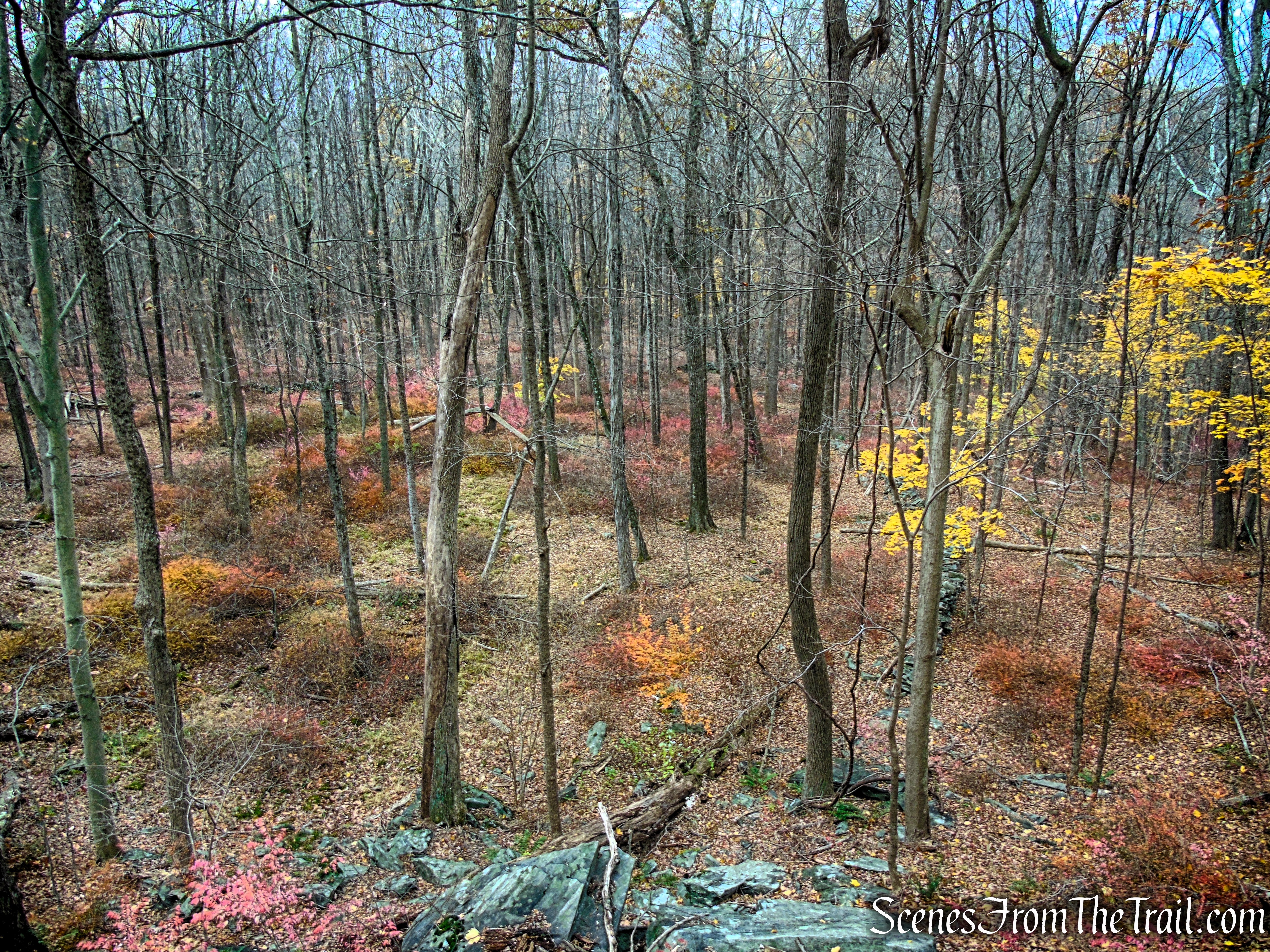
Leon Levy Preserve

Leon Levy Preserve

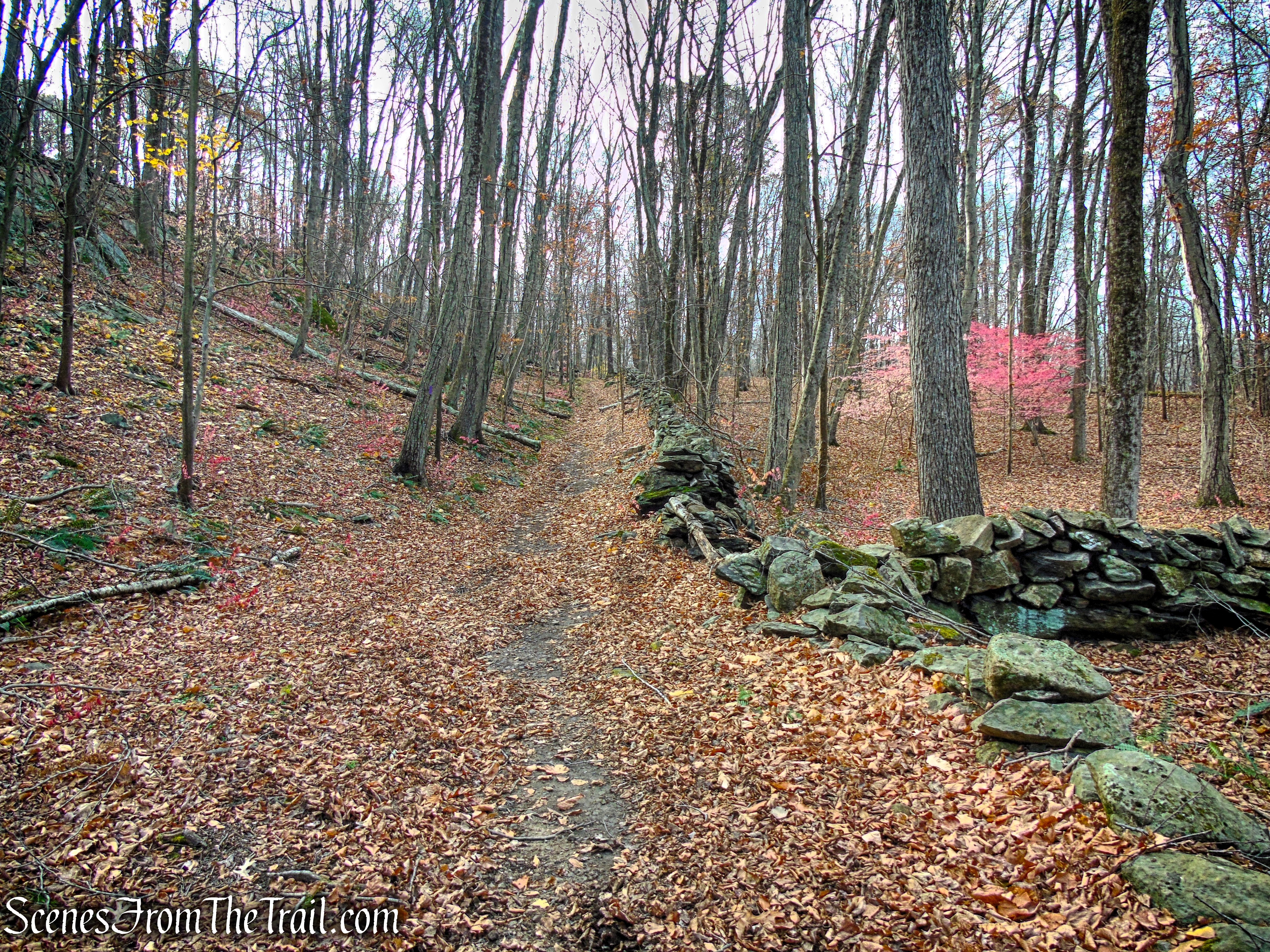
The preserve features about five miles of trails that wind through hardwood forest, past quiet wetlands, and along broad, historic carriage roads once used by horse-drawn carriages.

Leon Levy Preserve

Leon Levy Preserve

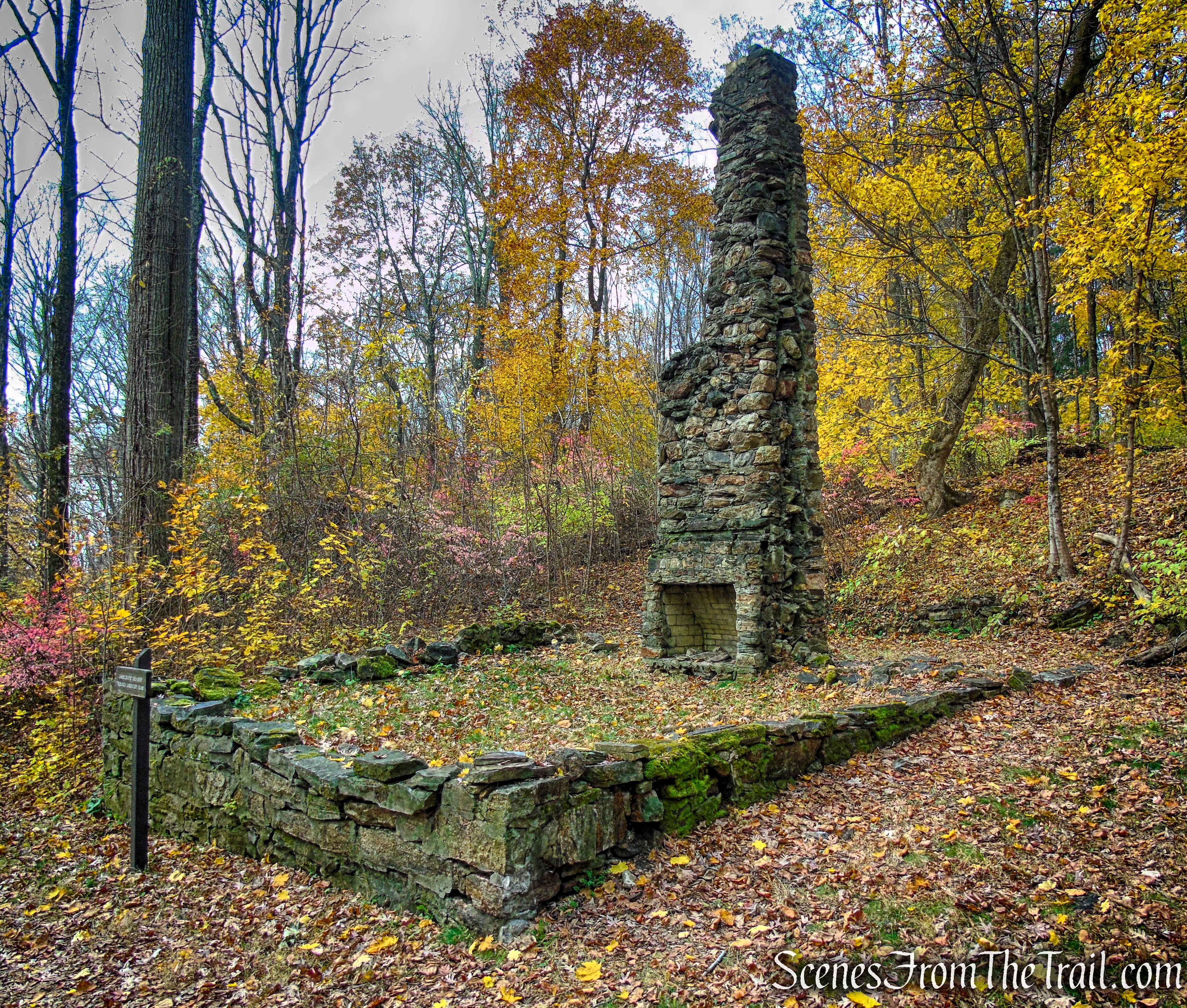
Along the way, visitors encounter remnants of the property’s storied past—stone foundations, a towering chimney from Crafts’s former chemistry laboratory, and the moss-covered outlines of an old mansion site.

Laboratory ruins - Leon Levy Preserve

Laboratory ruins – Leon Levy Preserve

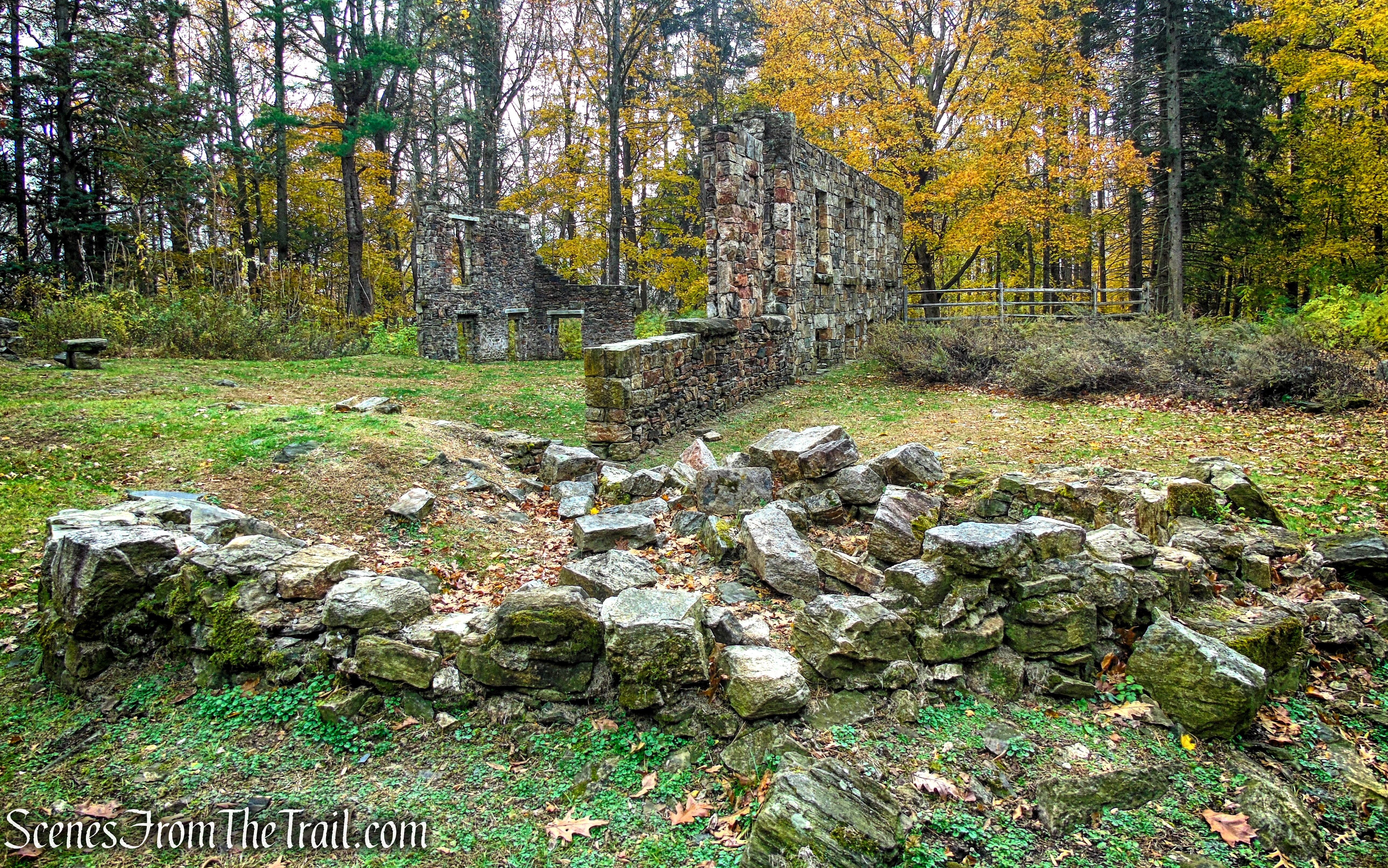
Black Mansion ruins - Leon Levy Preserve

Black Mansion ruins – Leon Levy Preserve

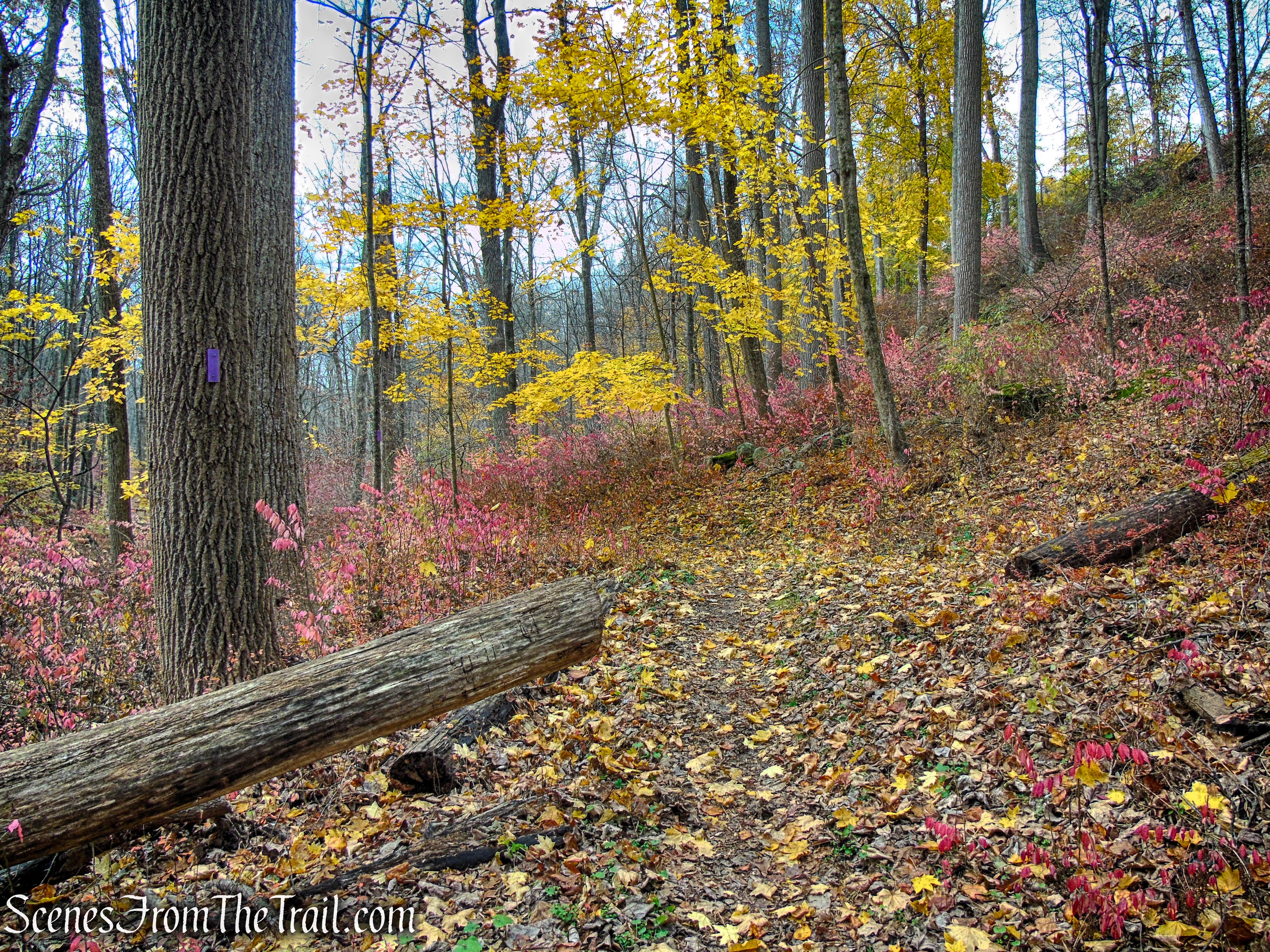
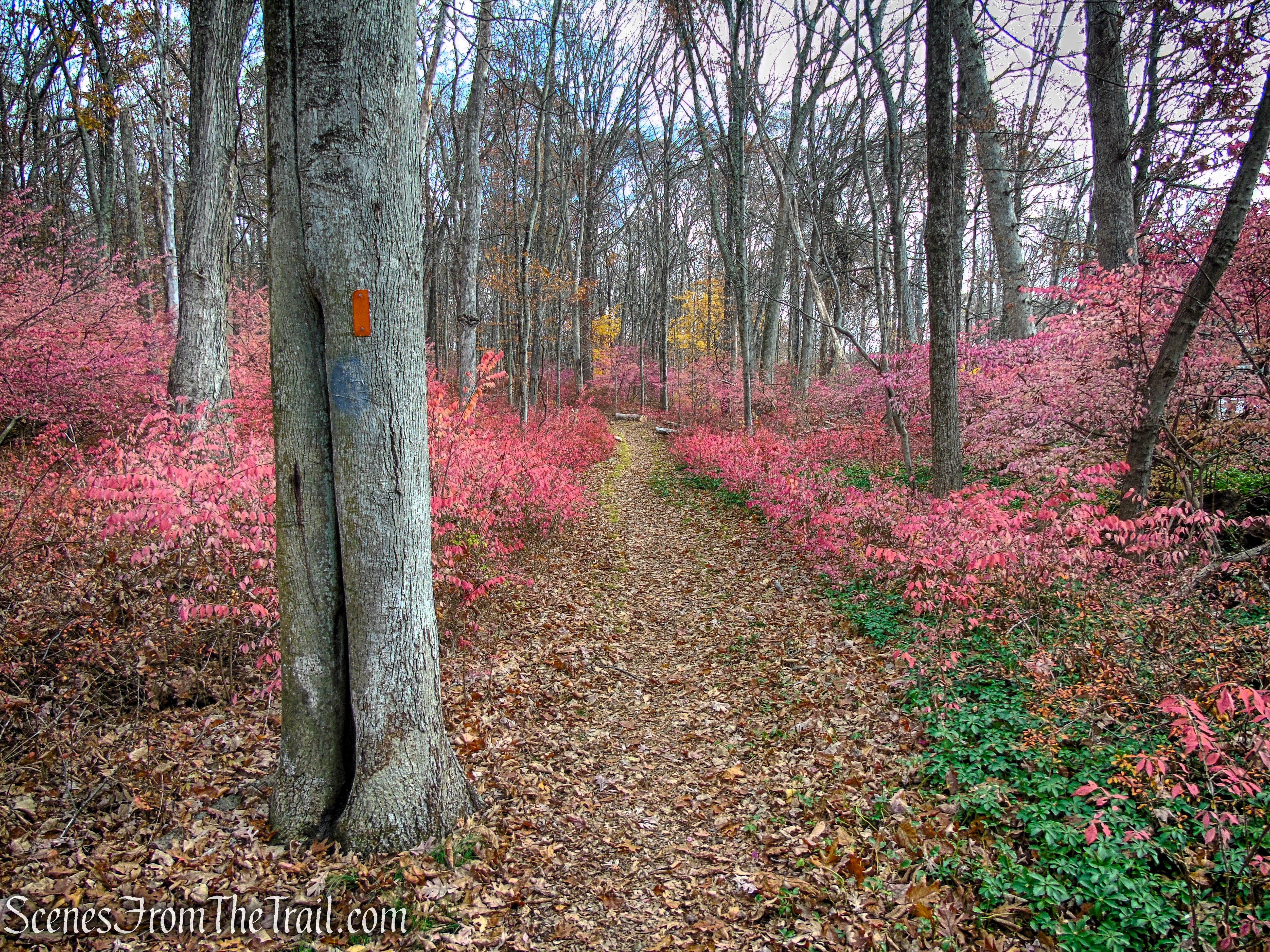
Natural beauty is everywhere here. The Purple Trail meanders through tranquil wetlands alive with frogs and songbirds. In spring and summer, native wildflowers like blue cohosh and purple milkweed brighten the understory, while fall brings an explosion of color that transforms the forest into a glowing canopy of reds and golds.

Purple Trail - Leon Levy Preserve

Purple Trail – Leon Levy Preserve

Purple Trail - Leon Levy Preserve

Purple Trail – Leon Levy Preserve

With its mix of history, ecology, and scenic tranquility, the Leon Levy Preserve is a perfect spot for a half-day hike, a bit of quiet exploration, or simply a walk through one of Westchester’s most atmospheric landscapes.


History:

The Leon Levy Preserve occupies land once owned by Dr. James M. Crafts, a renowned 19th-century chemist and former president of MIT, who established his country estate here in the late 1800’s. Crafts used the property not only as a retreat but also as a site for experimentation, constructing a chemistry research laboratory and an elaborate system of carriage roads that still form the backbone of today’s trail network. After his death, the estate changed hands several times before falling into disuse, leaving behind evocative ruins—stone foundations, a towering chimney, and moss-covered walls that now blend into the surrounding forest.

Black Mansion ruins - Leon Levy Preserve

Black Mansion ruins – Leon Levy Preserve

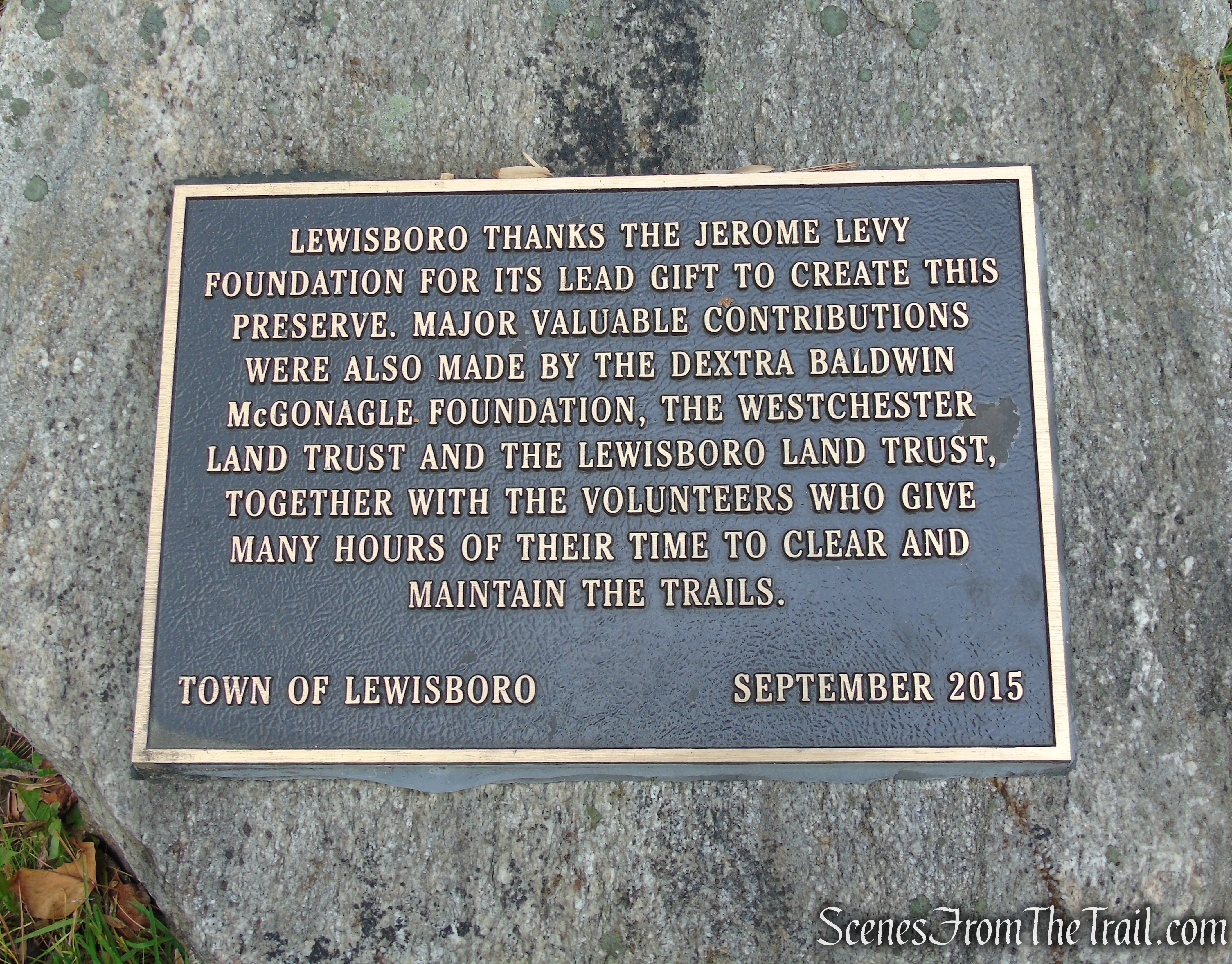
In 2005, the Leon Levy Foundation, in partnership with the Town of Lewisboro and the Westchester Land Trust, preserved the land to protect its rich ecology and fascinating past. Today, the preserve serves as both a natural sanctuary and an open-air museum, where history and wilderness coexist in quiet harmony.

Leon Levy Preserve

Leon Levy Preserve

Want to dig deeper into the preserve’s fascinating past? Click here to learn more.


Trails Overview:

The trail system at Leon Levy Preserve covers about five miles and offers a rewarding mix of easy-to-moderate terrain, scenic highlights, and historical intrigue. The network is designed as a series of color-coded loops and connectors that make it easy to tailor a hike to your interests or time. Many of the trails follow the preserve’s historic carriage roads, wide and gently graded, while others branch off into narrower footpaths that wind through forest, wetland, and rocky upland terrain.

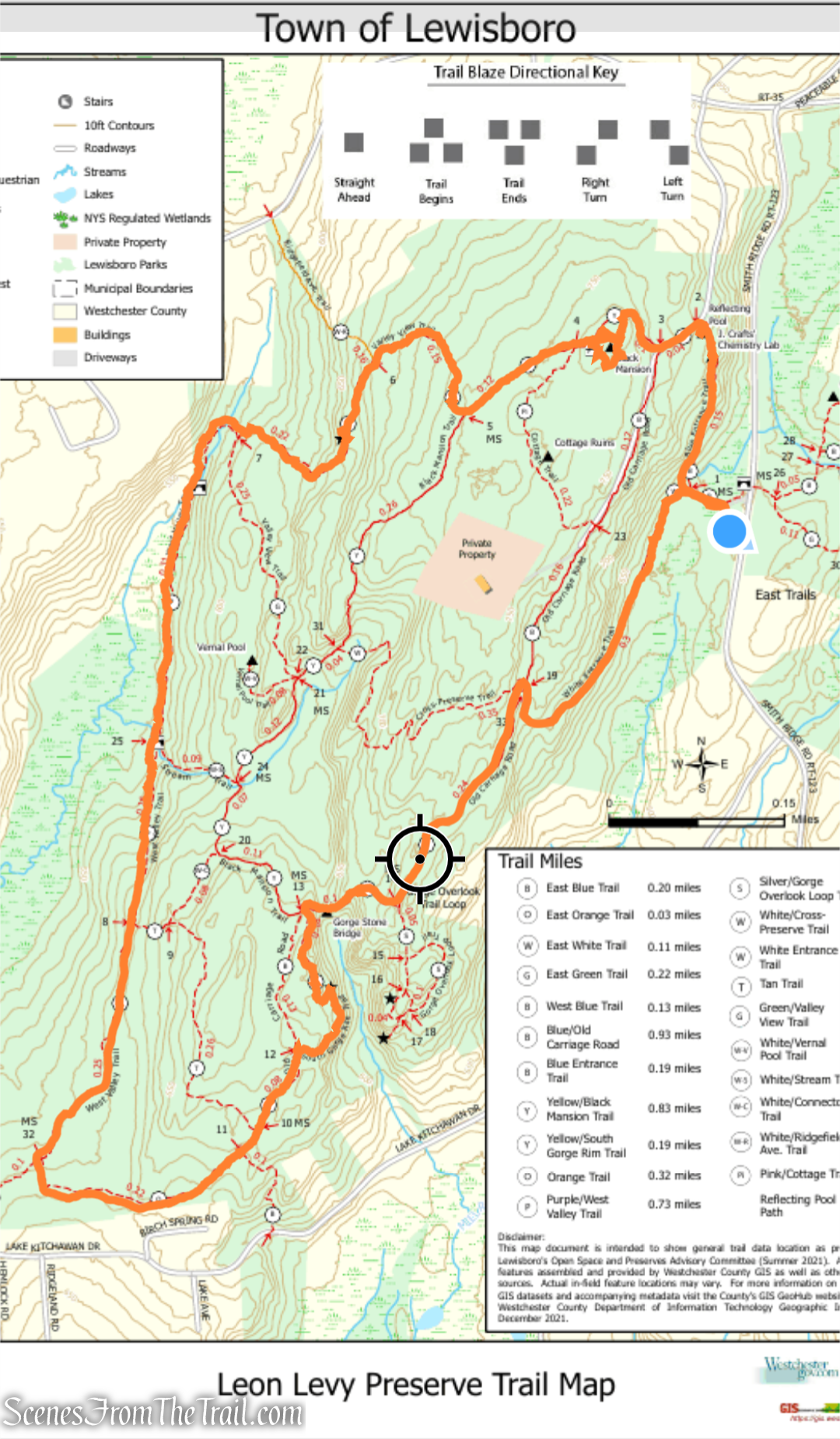
Leon Levy Preserve Trail Map

Leon Levy Preserve Trail Map

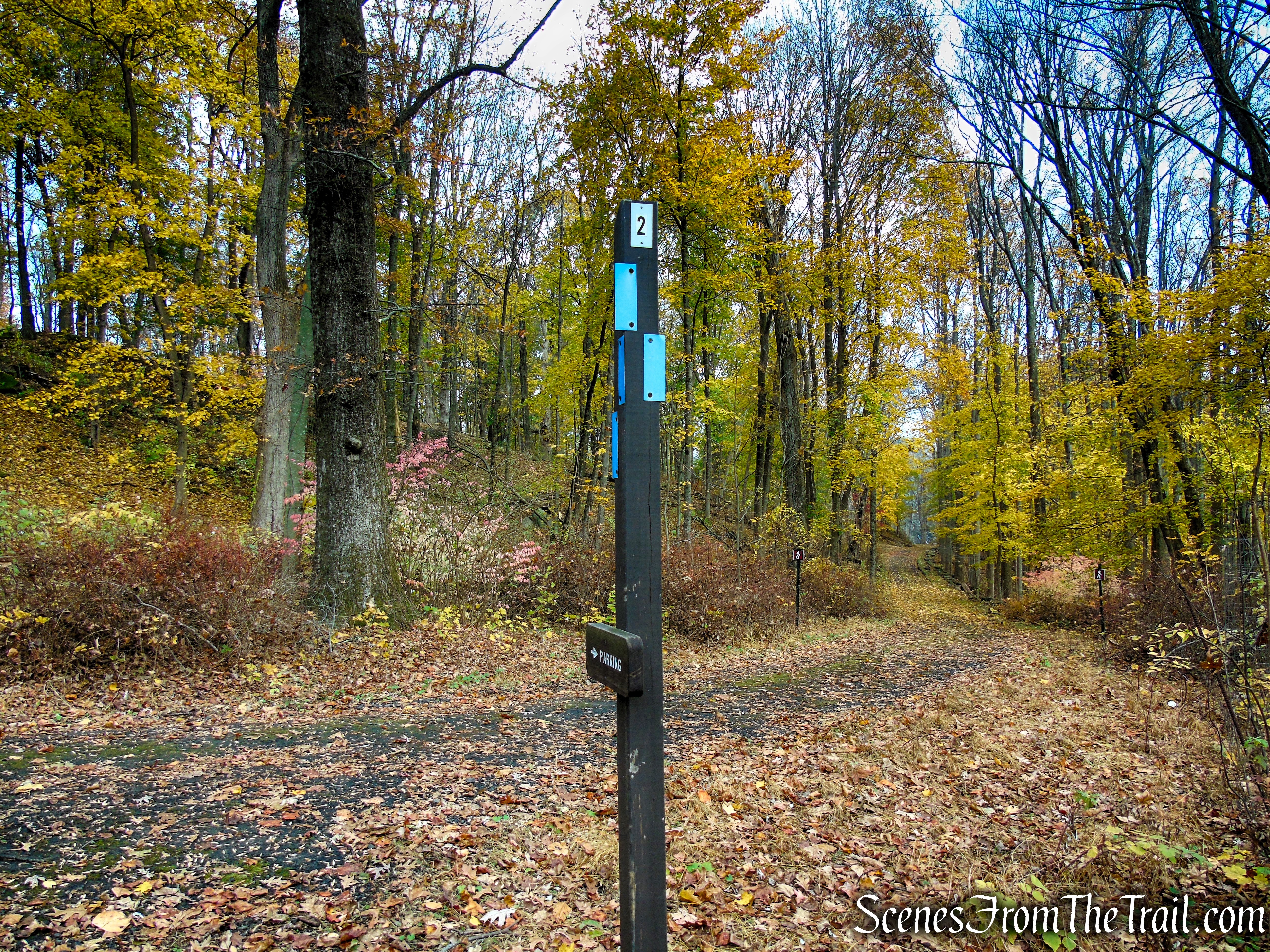
The numbered junctions throughout the Leon Levy Preserve form an intuitive wayfinding system that helps visitors navigate its network of intersecting trails. Each junction is marked with a number that corresponds to locations on the official trail map, making it easy to track your position and plan your route. This system is especially useful since many of the trails loop and intersect—allowing hikers to customize the length and difficulty of their walk without getting disoriented.

Junction 2 - Leon Levy Preserve

Junction 2 – Leon Levy Preserve

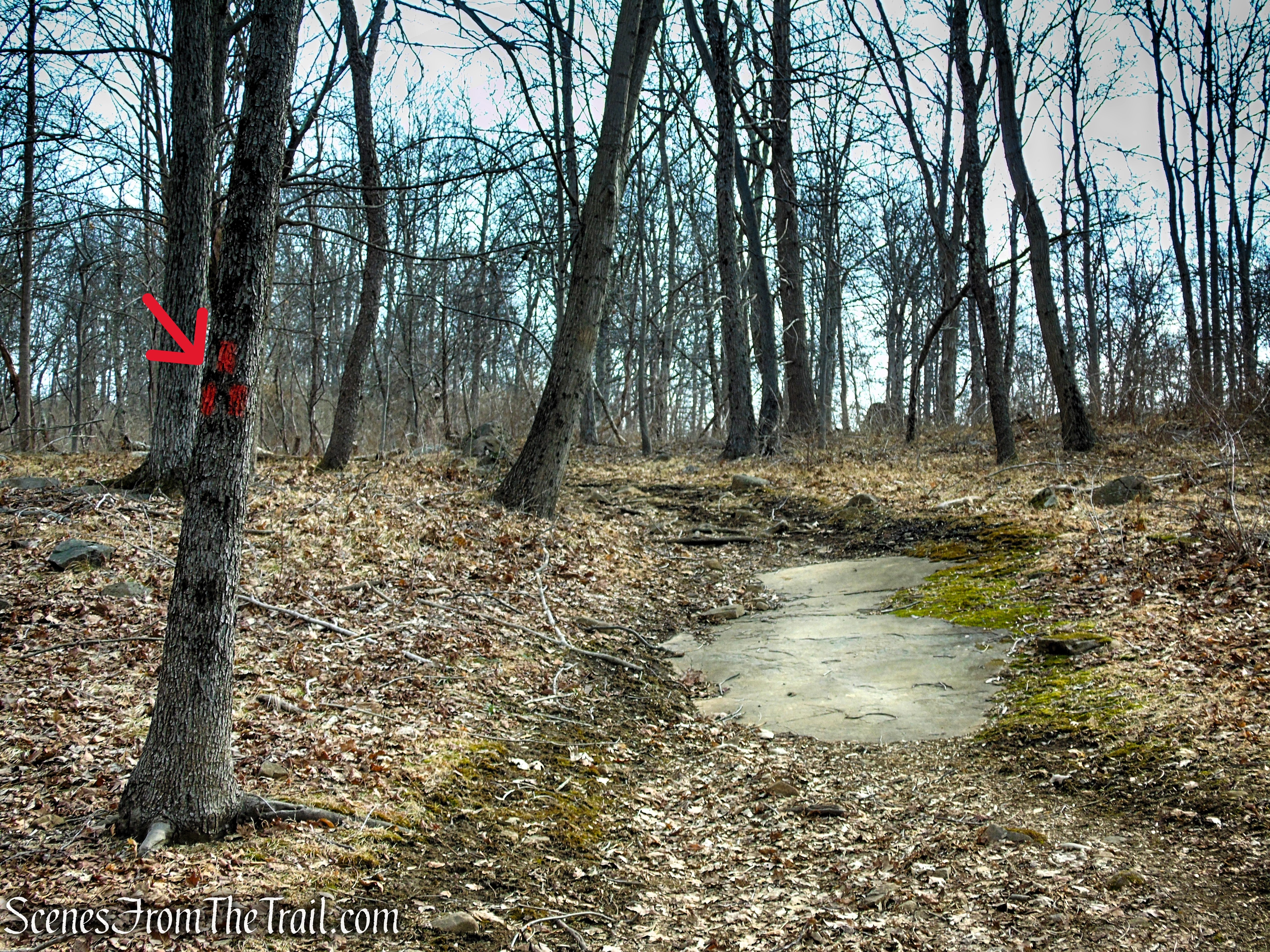
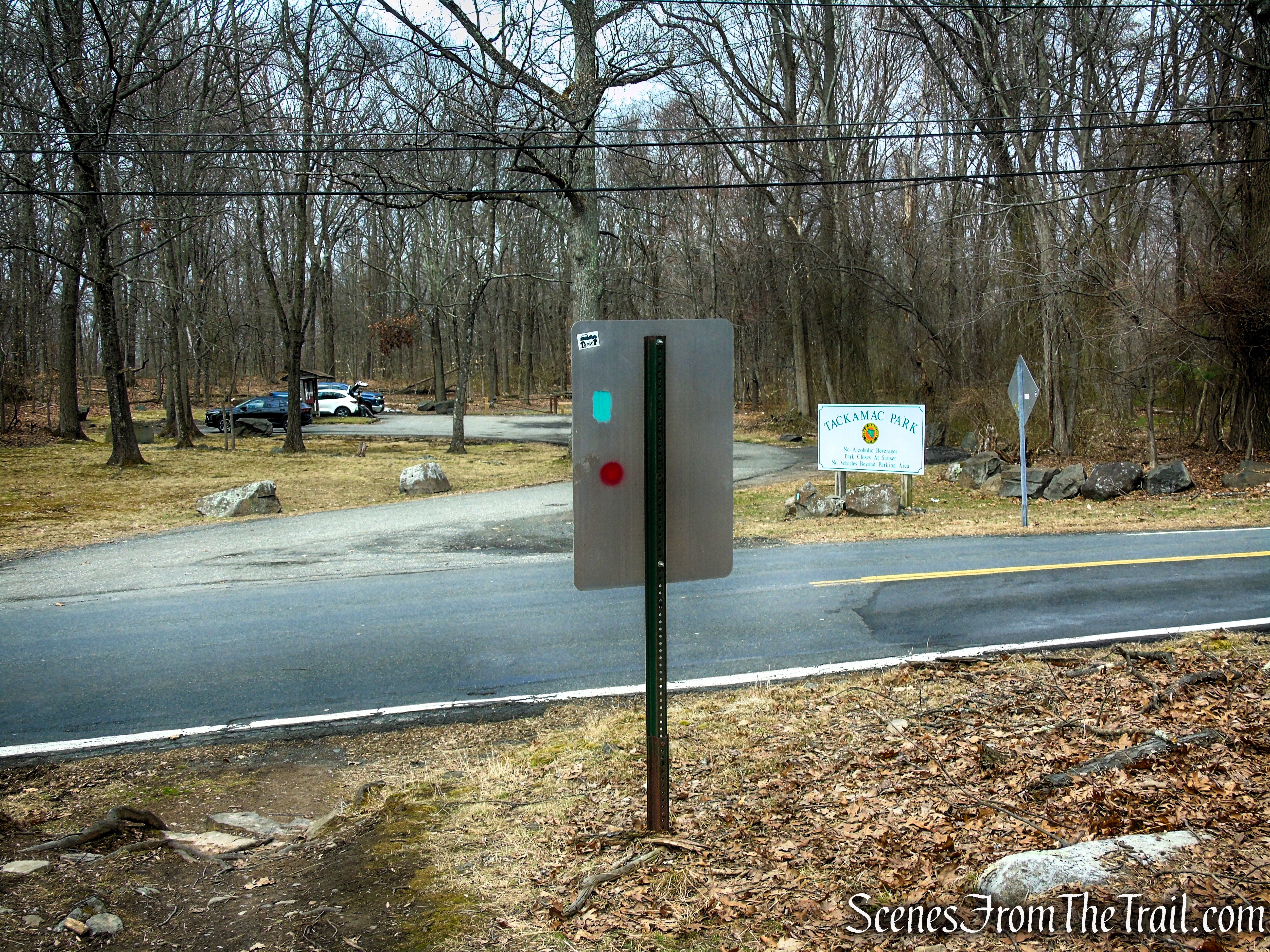
A red blaze over another color blaze indicates that the trail is shared with horses.

Blue Trail - Leon Levy Preserve

Blue Trail – Leon Levy Preserve


Hike Overview:

I’ve visited the Leon Levy Preserve several times since 2016, and it has evolved a bit over the years. Today, the trails and junctions are clearly marked, and the trail map is more detailed and informative—highlighting points of interest along the way and making it much easier to navigate throughout the preserve.

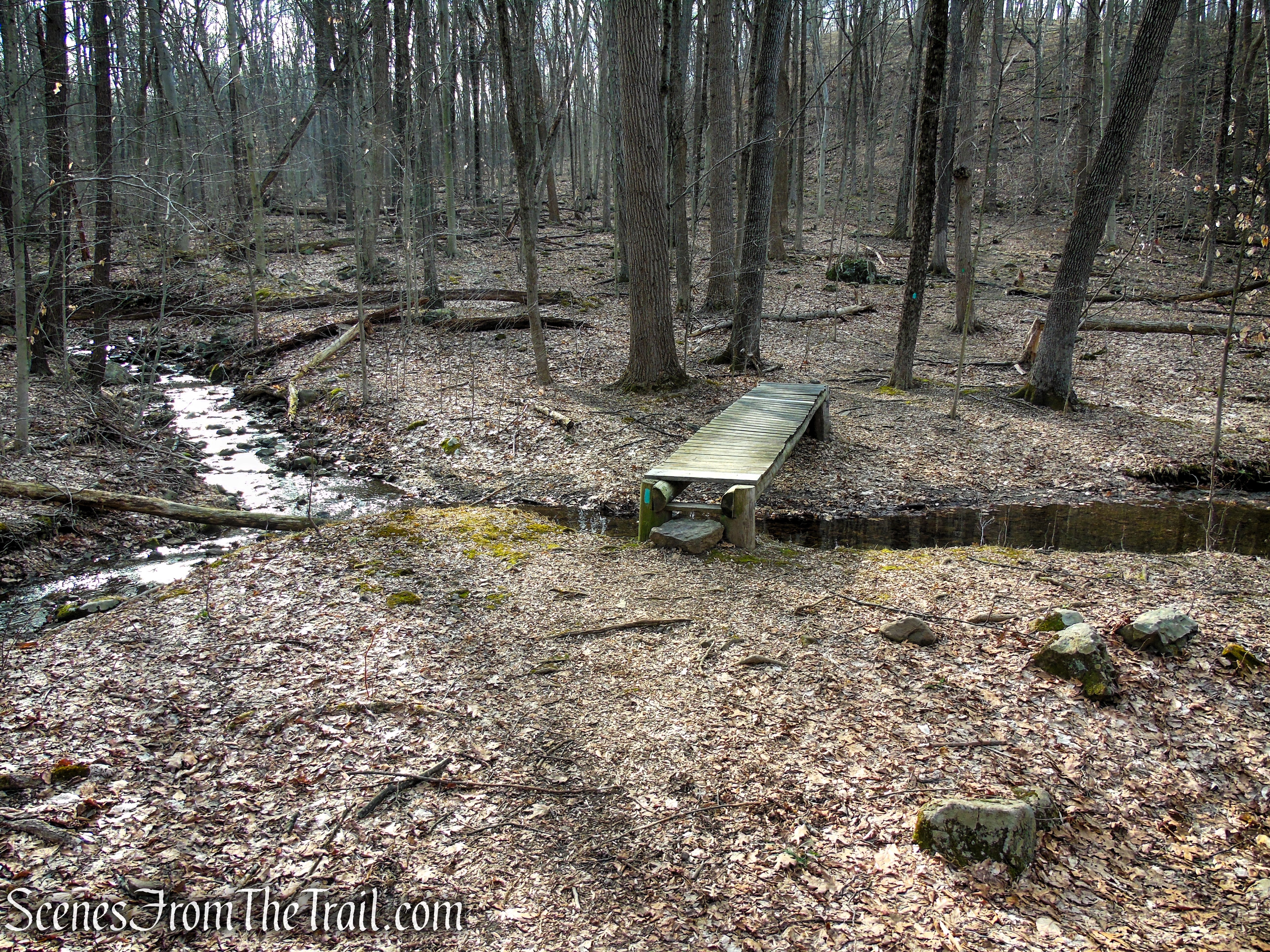
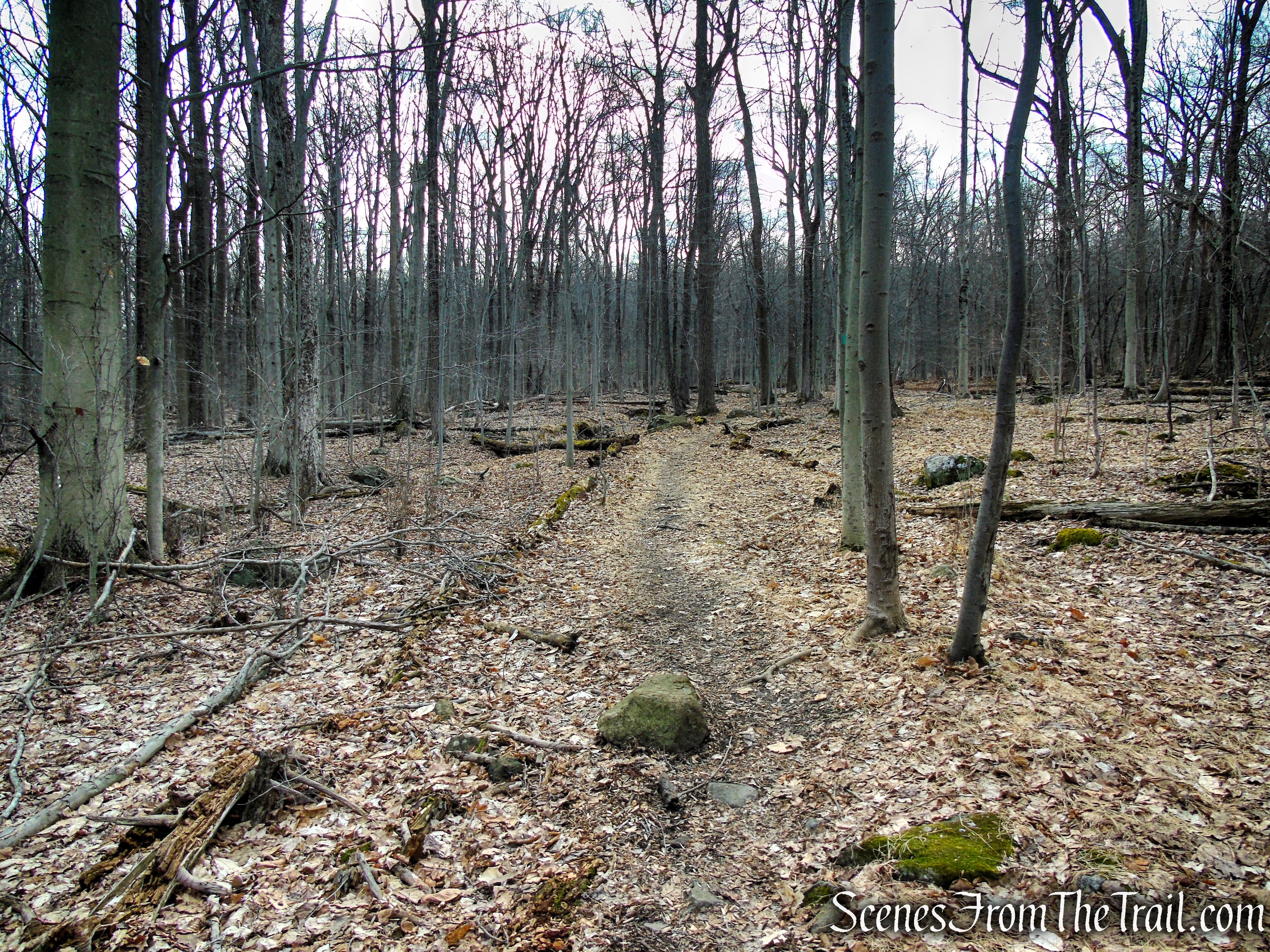
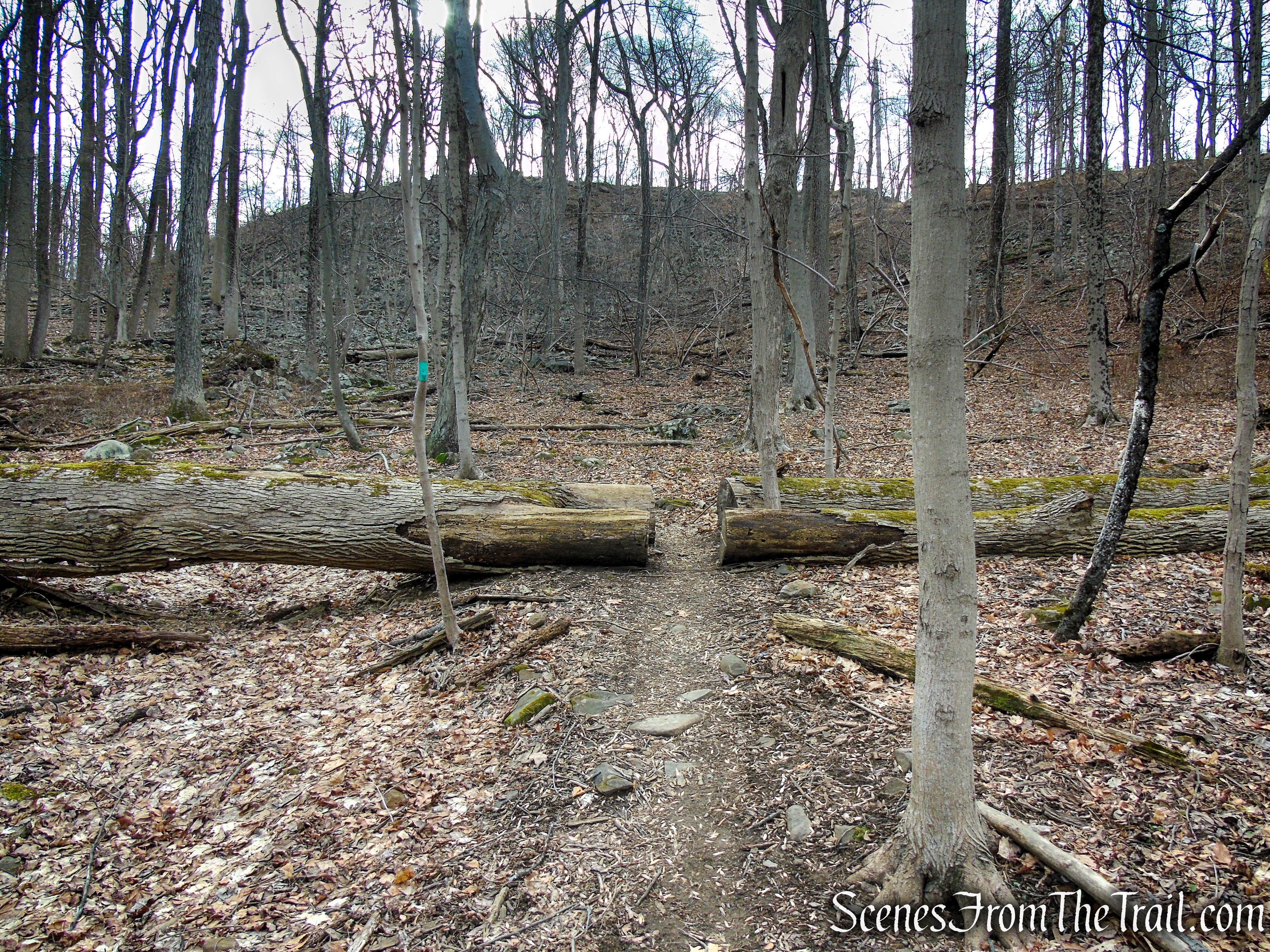
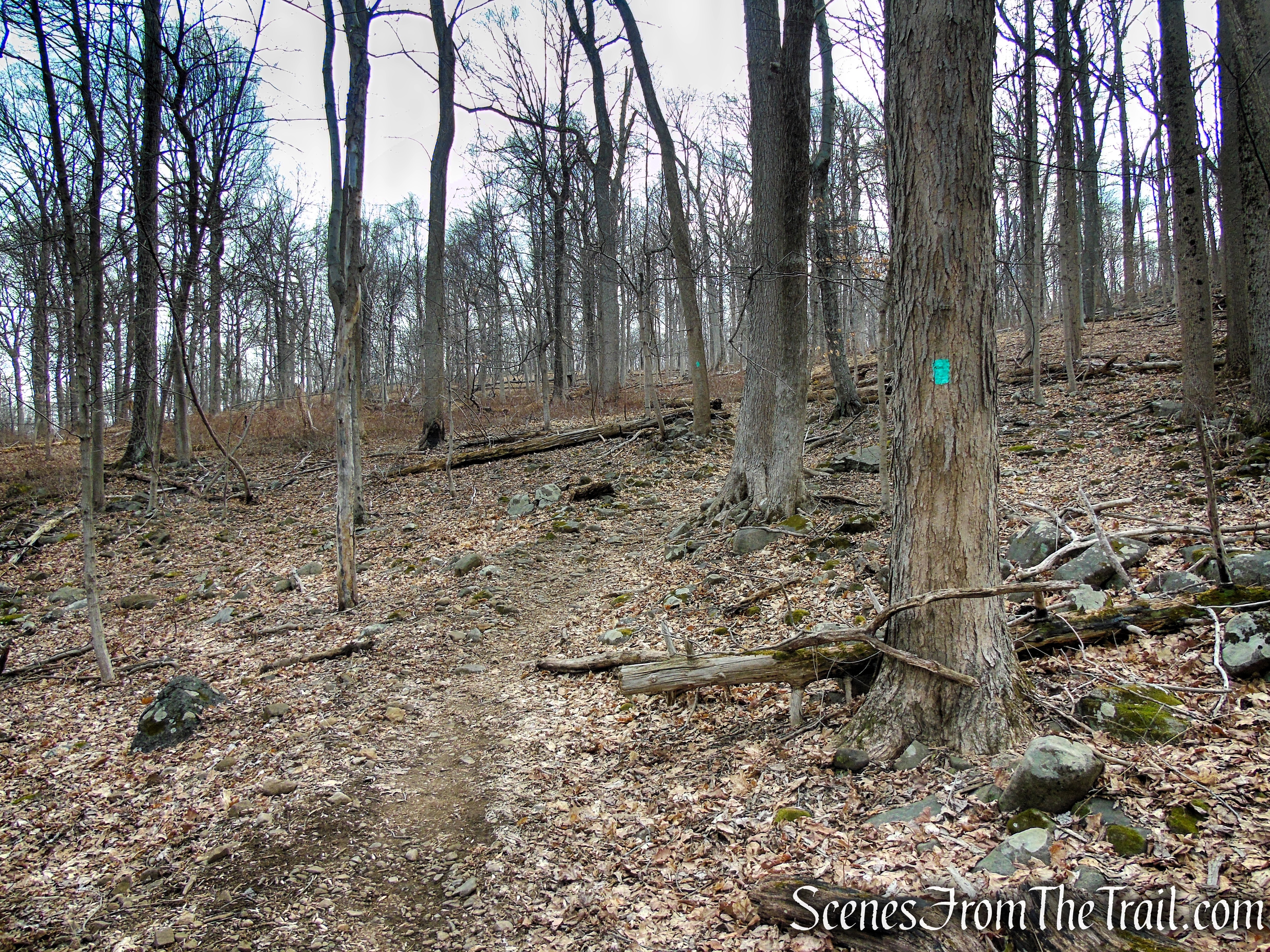
With rain in the forecast, I wanted to squeeze in a quick hike before the skies opened up. Having explored most of the trails here, I was familiar with the terrain. This route follows various colored trails around the preserve’s perimeter, bypassing some of the interior points of interest, but offering a peaceful loop through quieter sections.

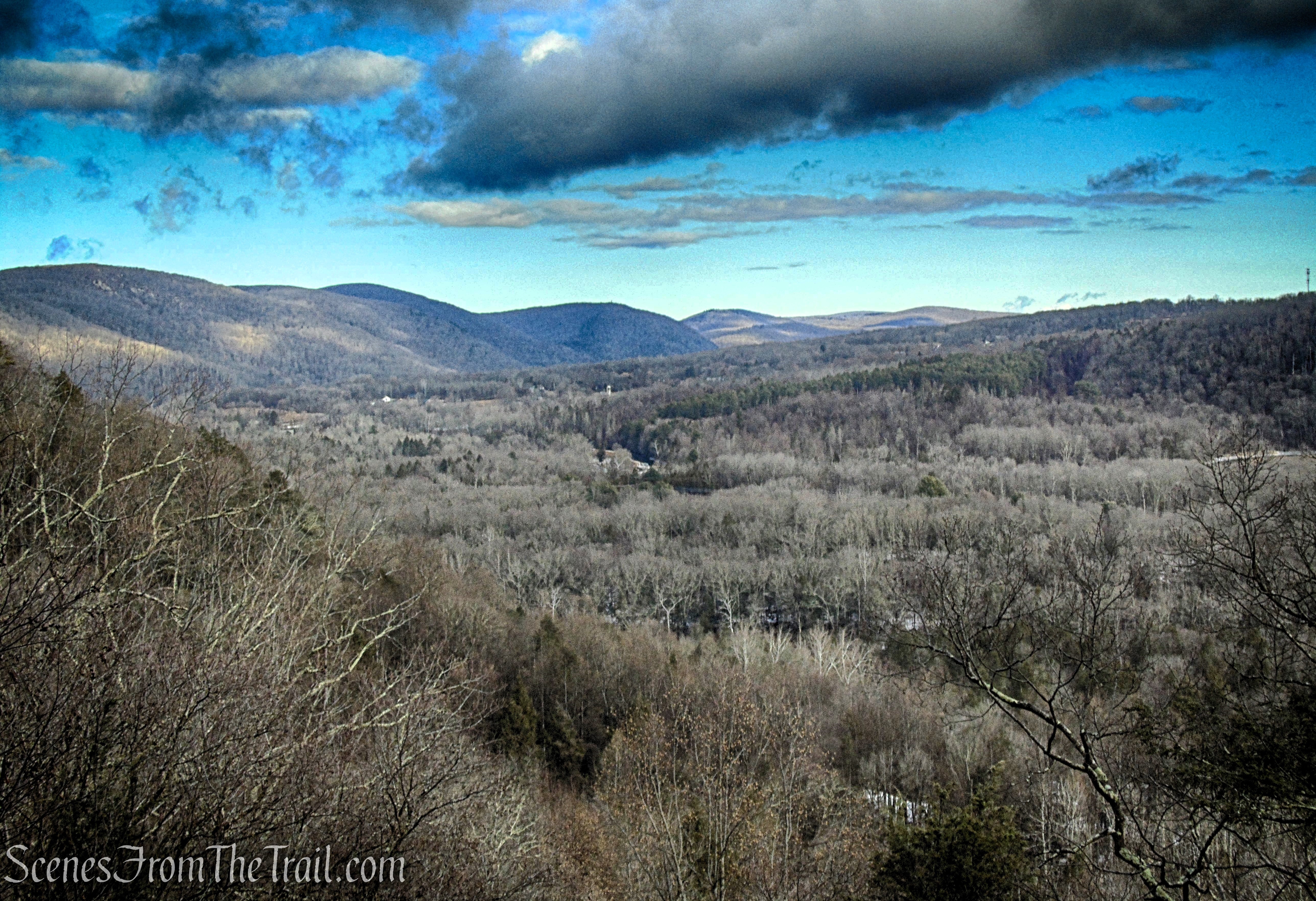
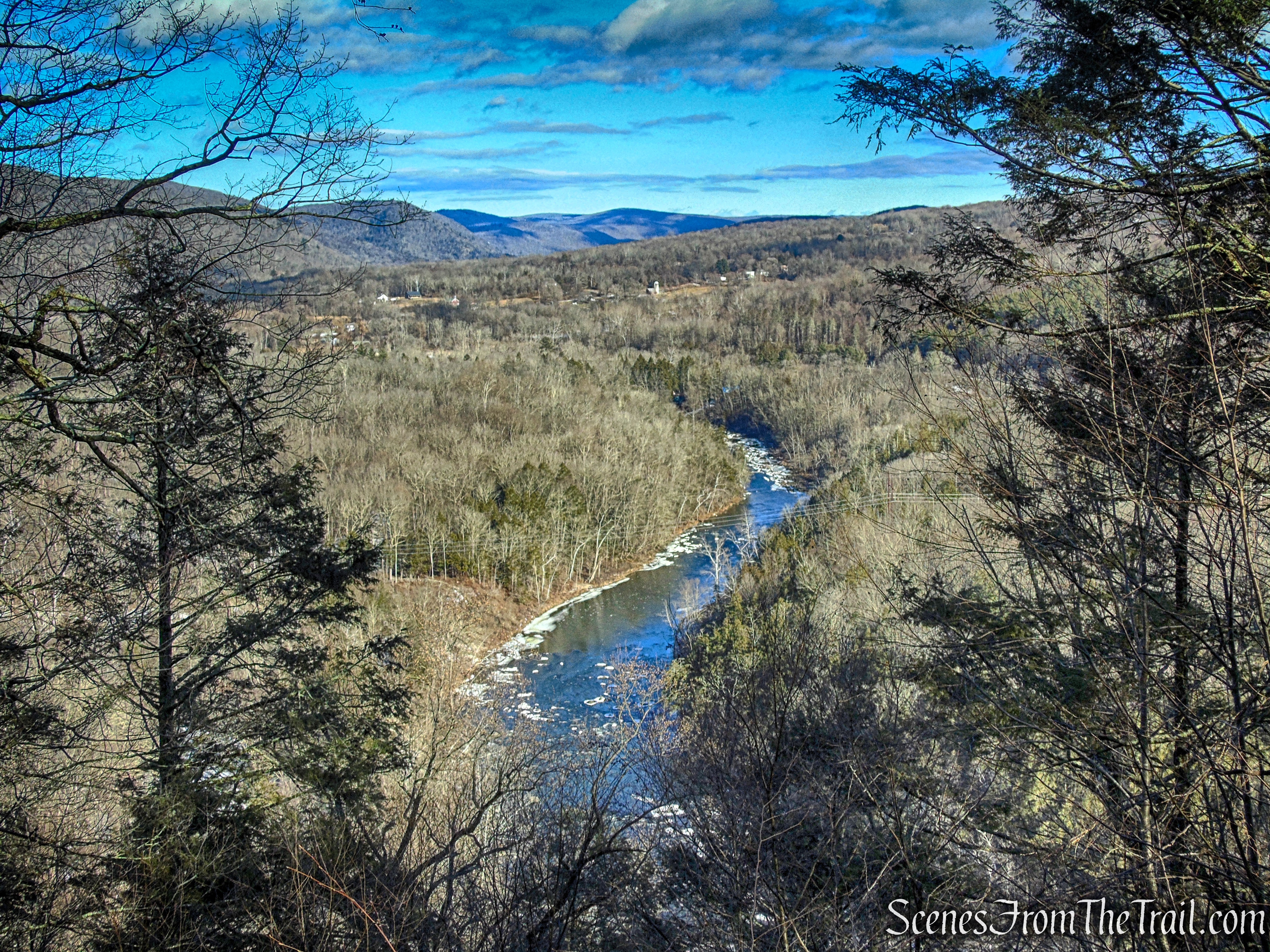
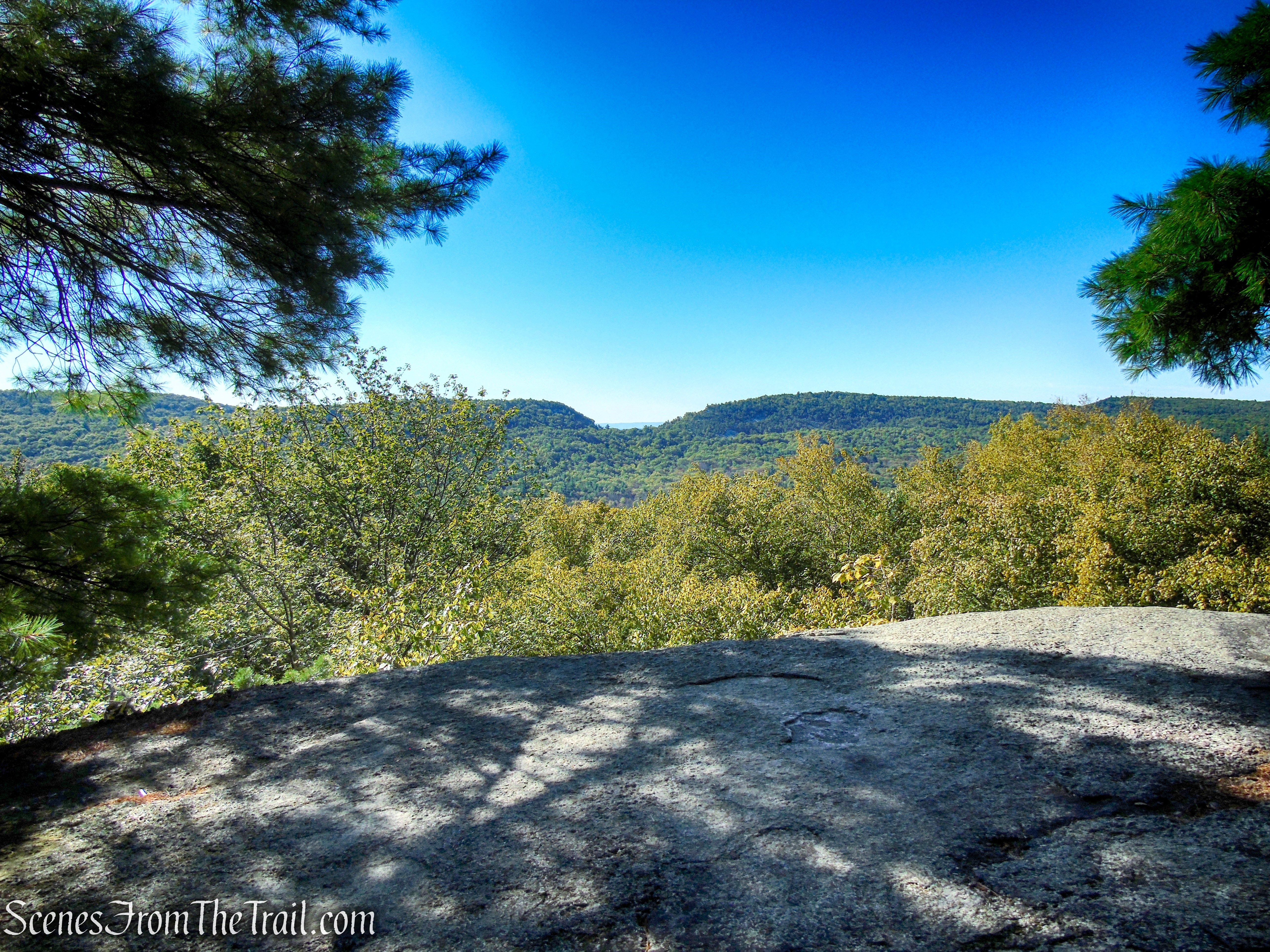
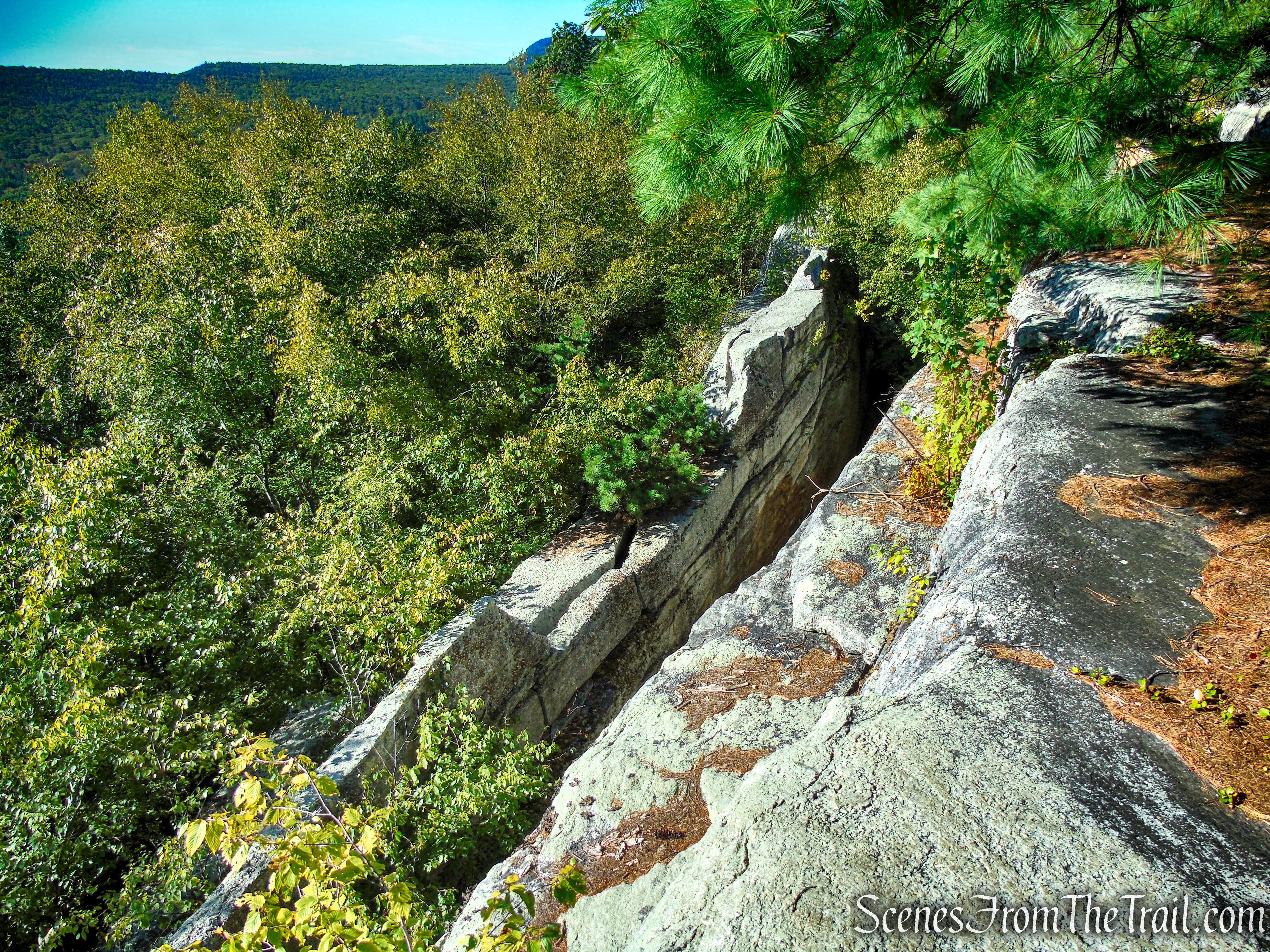
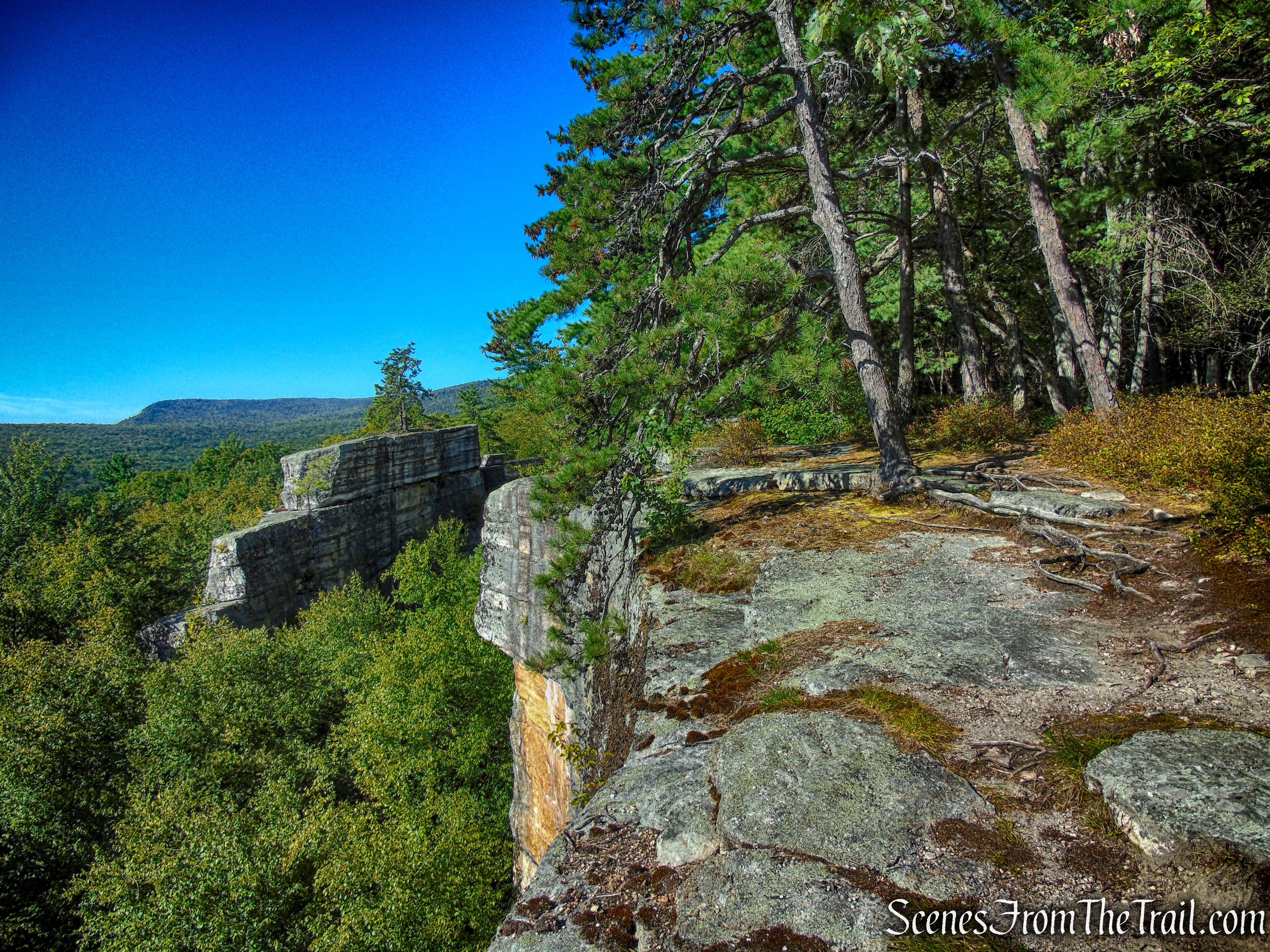
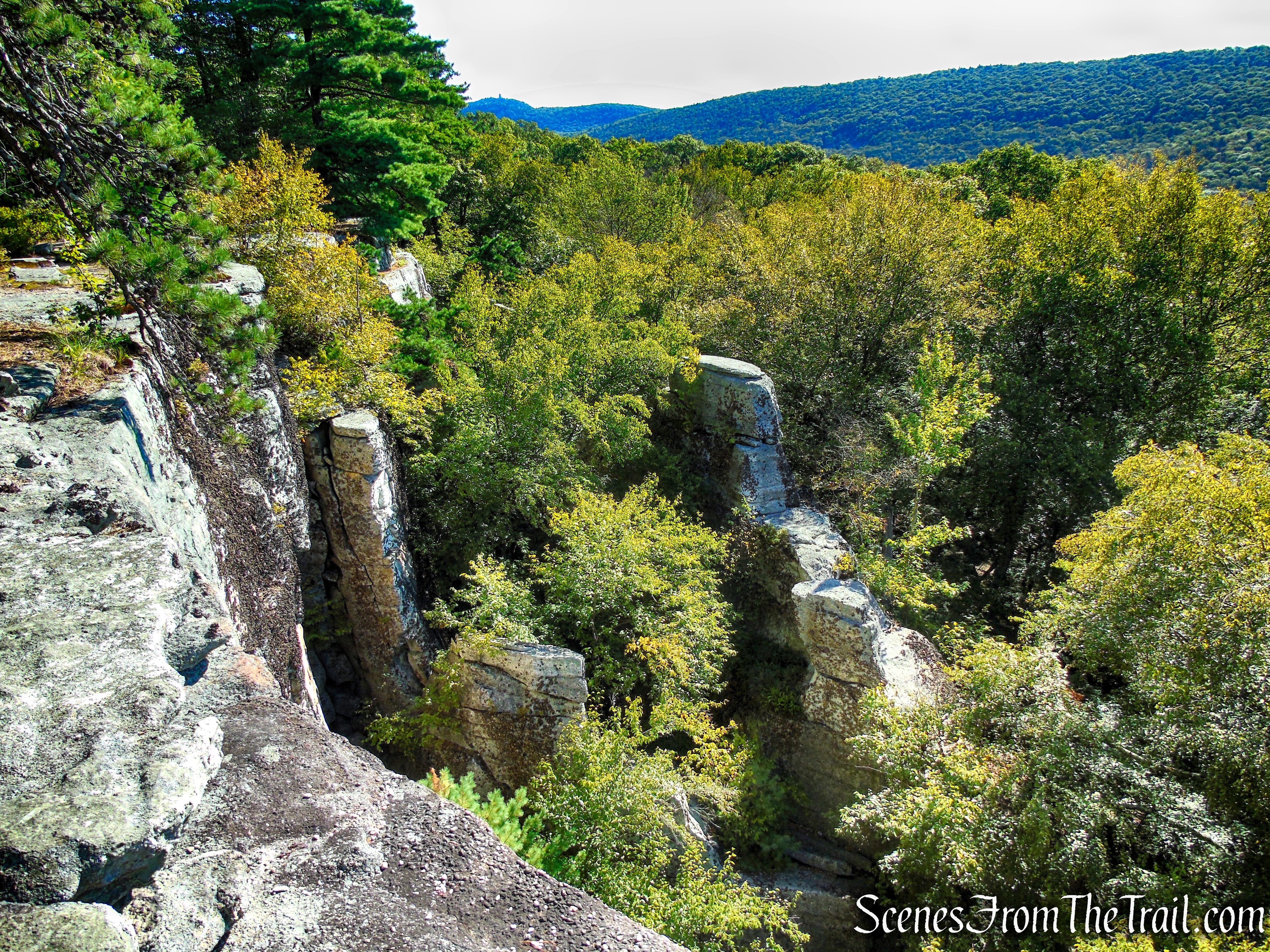
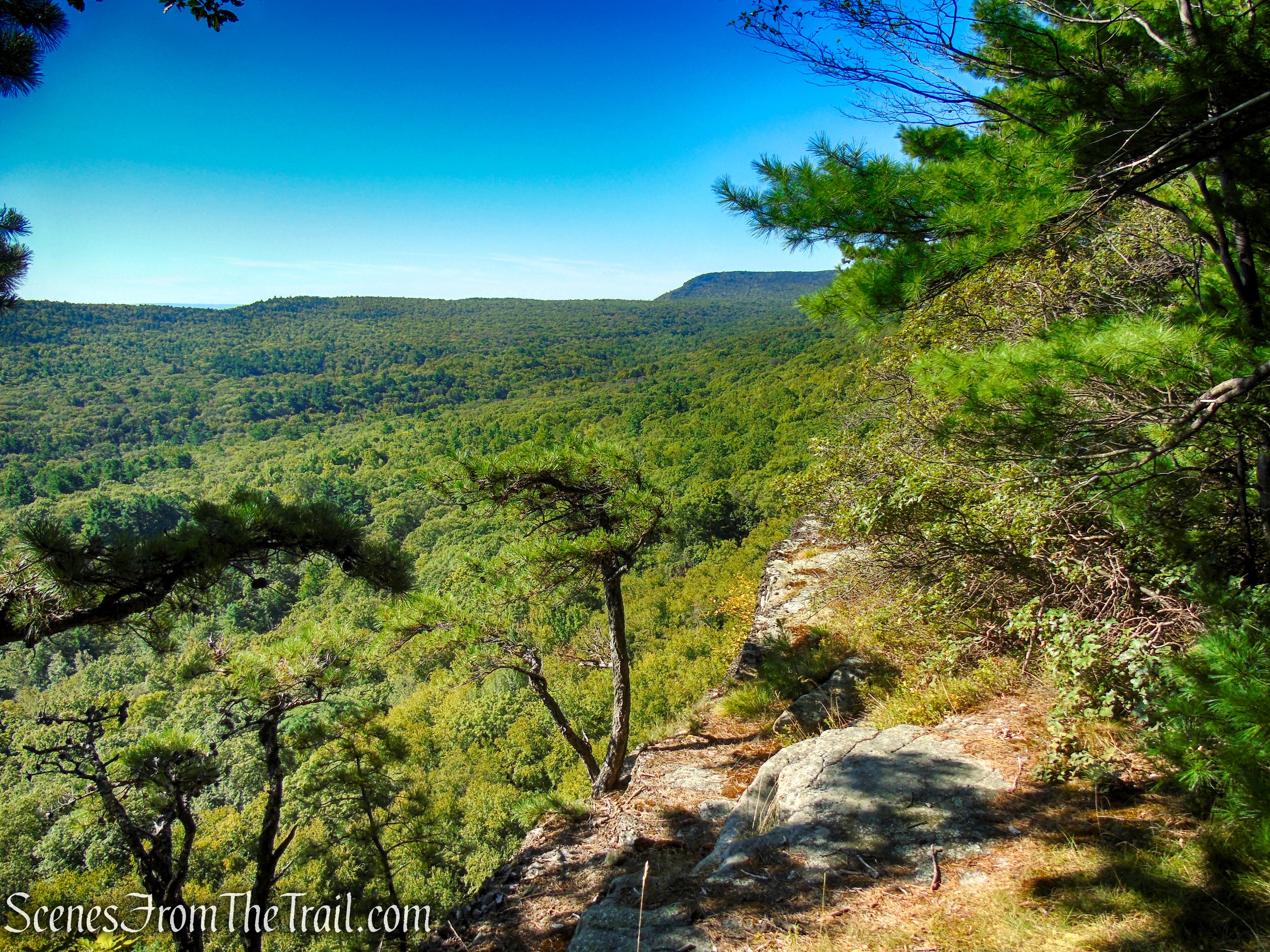
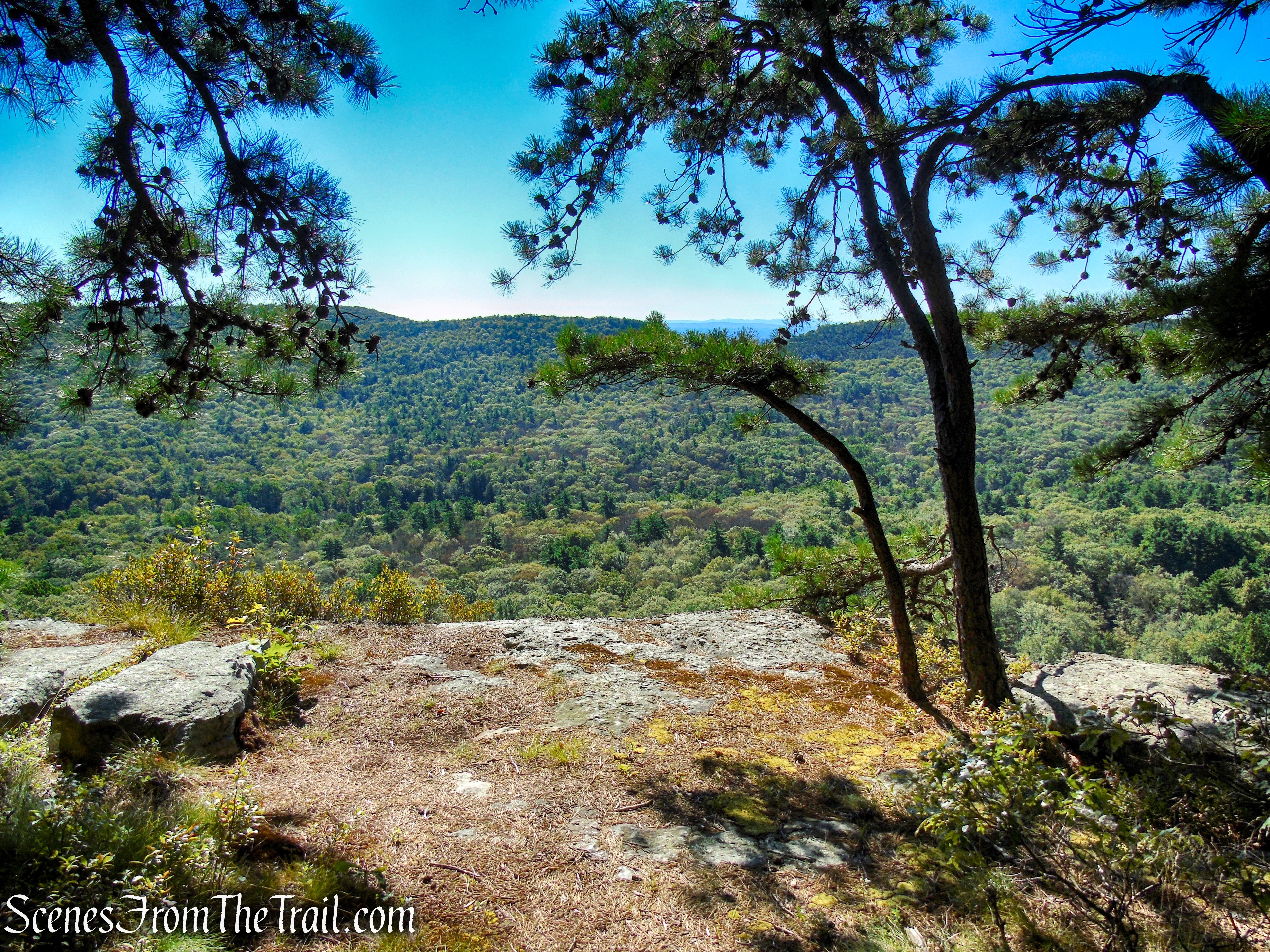
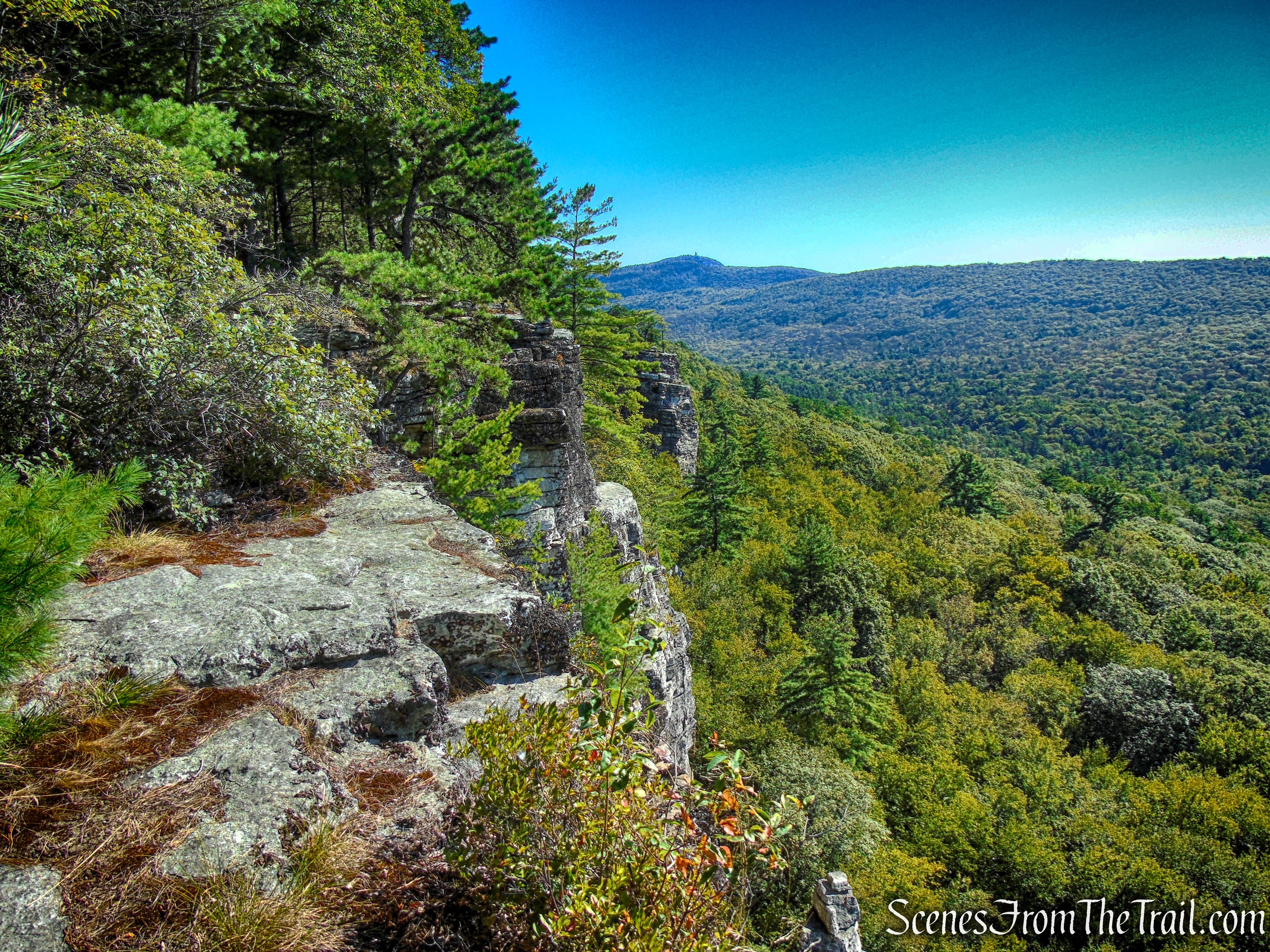
The viewpoints at Leon Levy Preserve aren’t the sweeping vistas one might expect. Instead, they offer modest overlooks of the surrounding landscape, which become even less visible when the trees are in full bloom.

Valley View - Leon Levy Preserve

Valley View – Leon Levy Preserve

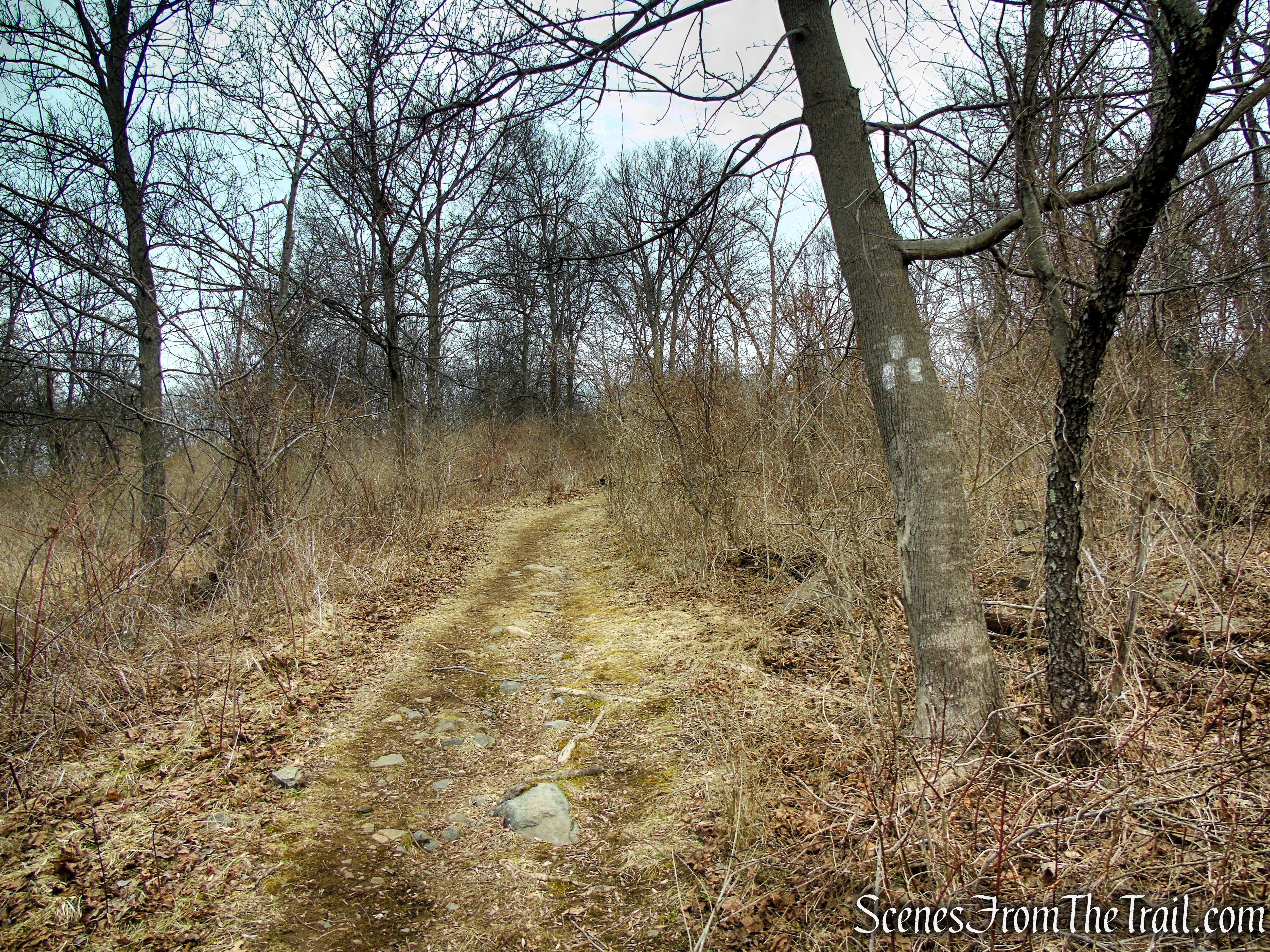
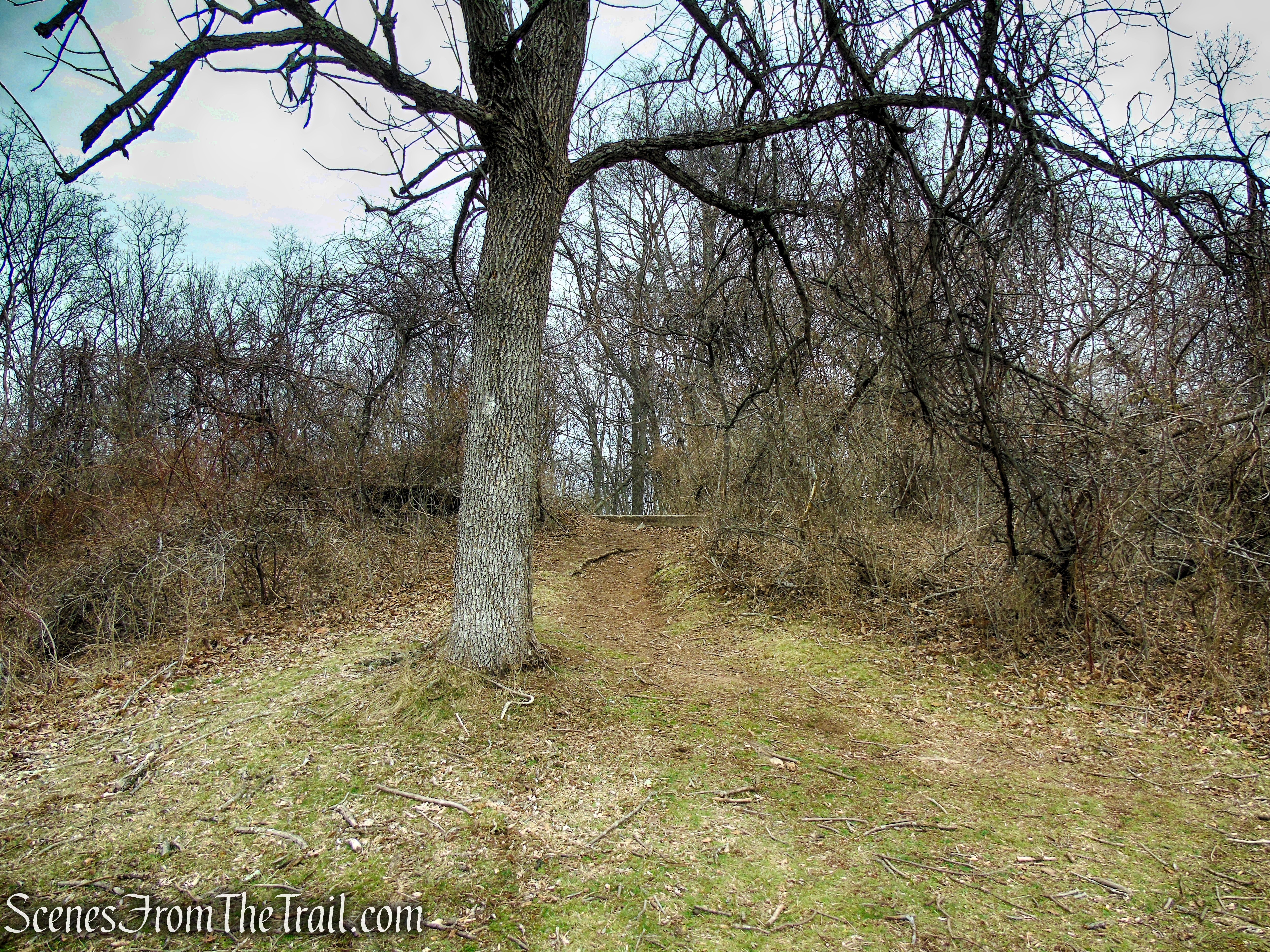
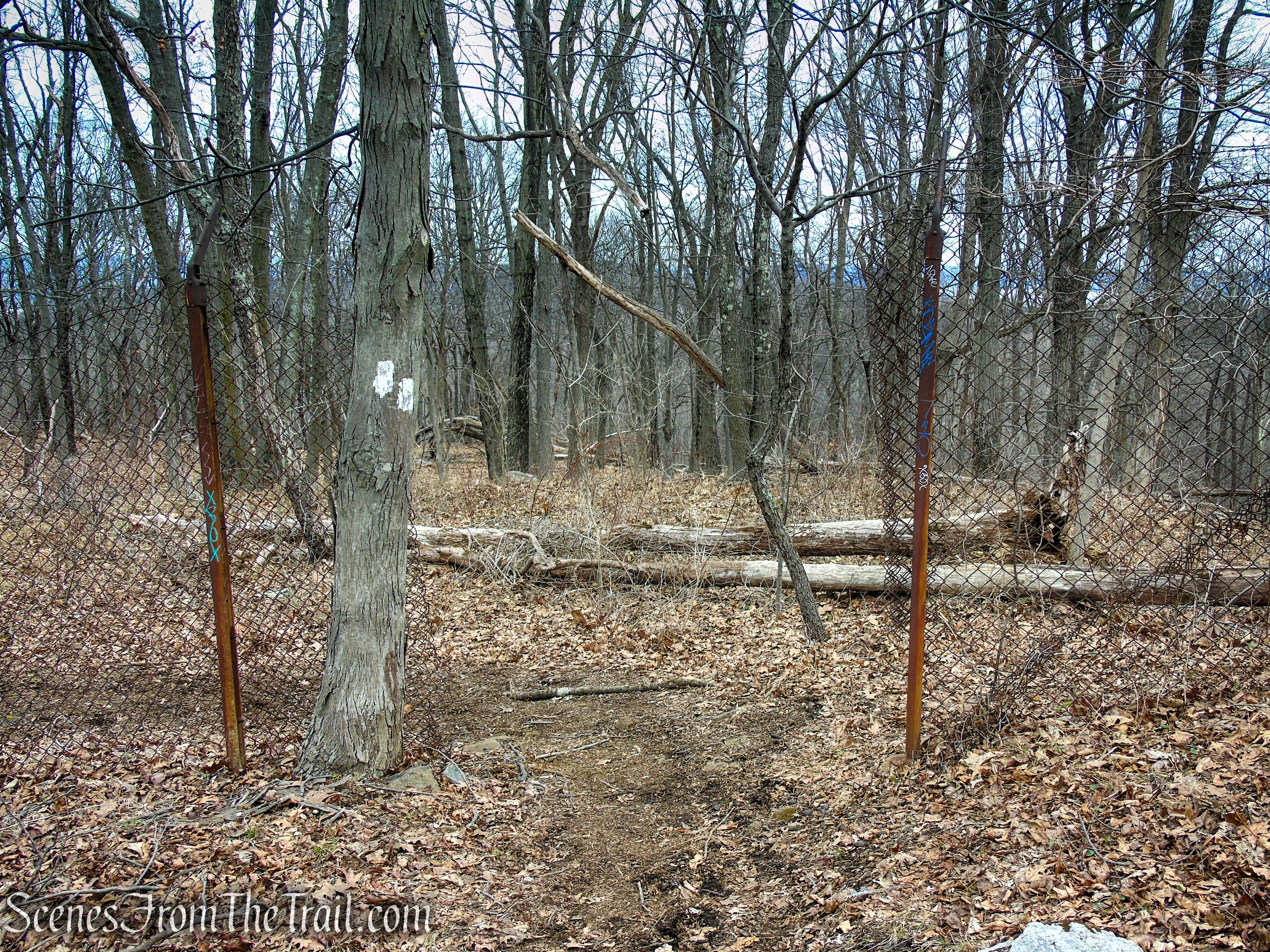
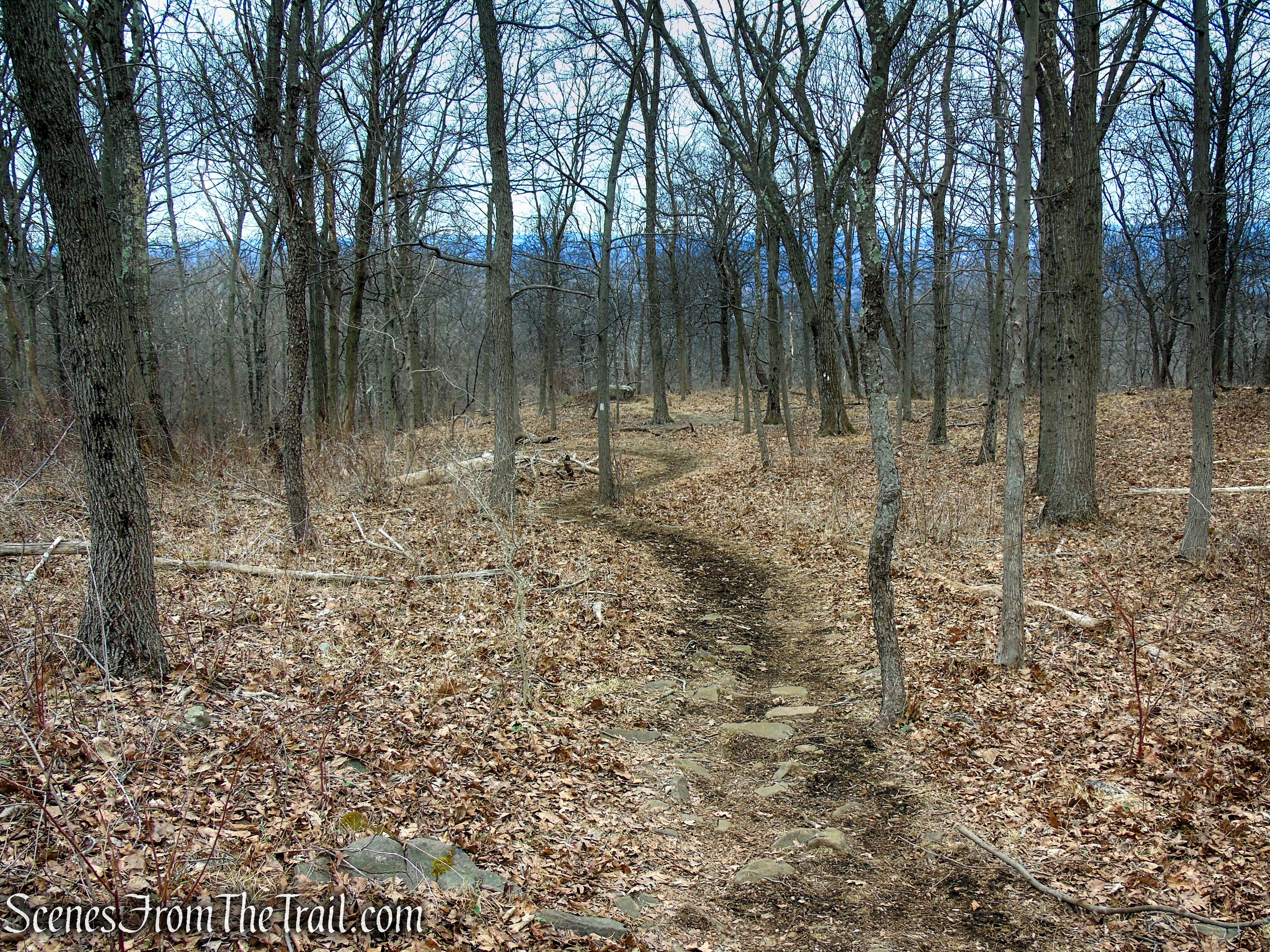
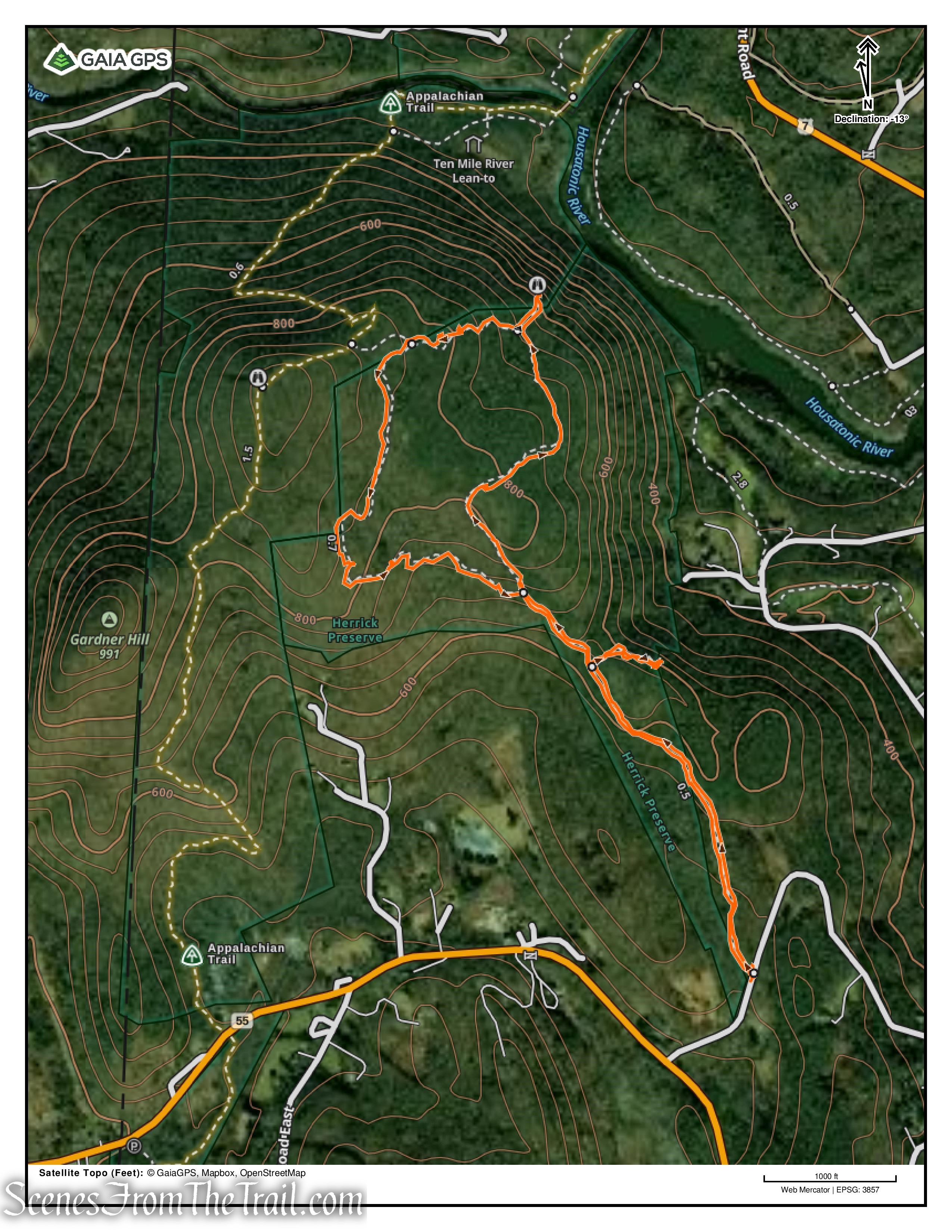
This counterclockwise loop covers about 3 miles along the preserve’s outer perimeter, mainly on wide carriage roads with occasional narrower footpaths. On our visit, the trails and junctions were clearly marked.

Leon Levy Preserve Outer Loop

Leon Levy Preserve Outer Loop

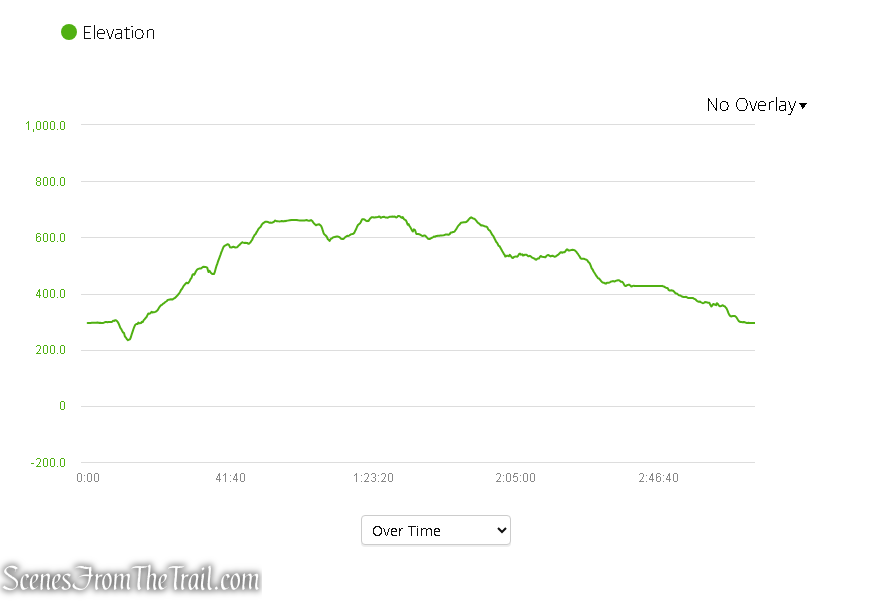
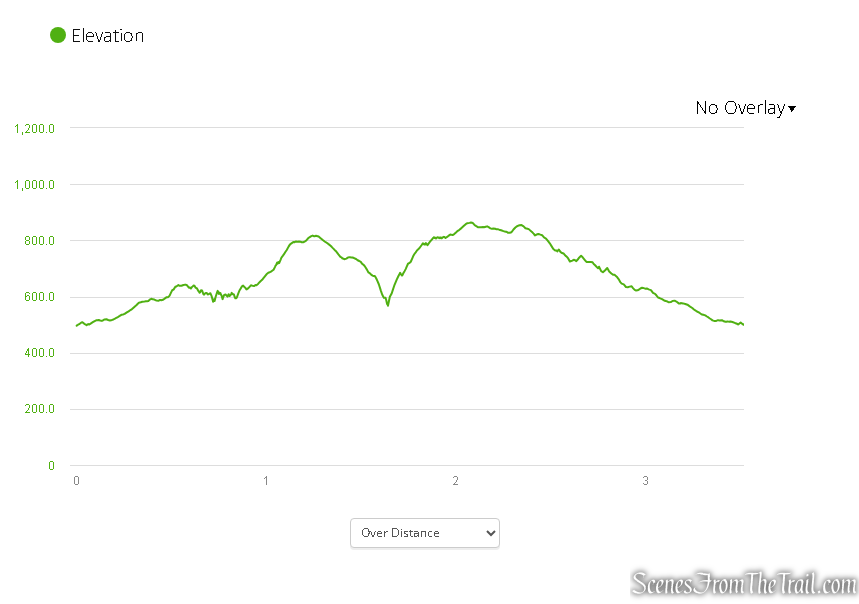
The graph below illustrates the modest elevation gain on this loop hike.

Leon Levy Preserve Outer Loop elevation profile

Leon Levy Preserve Outer Loop elevation profile


Parking:

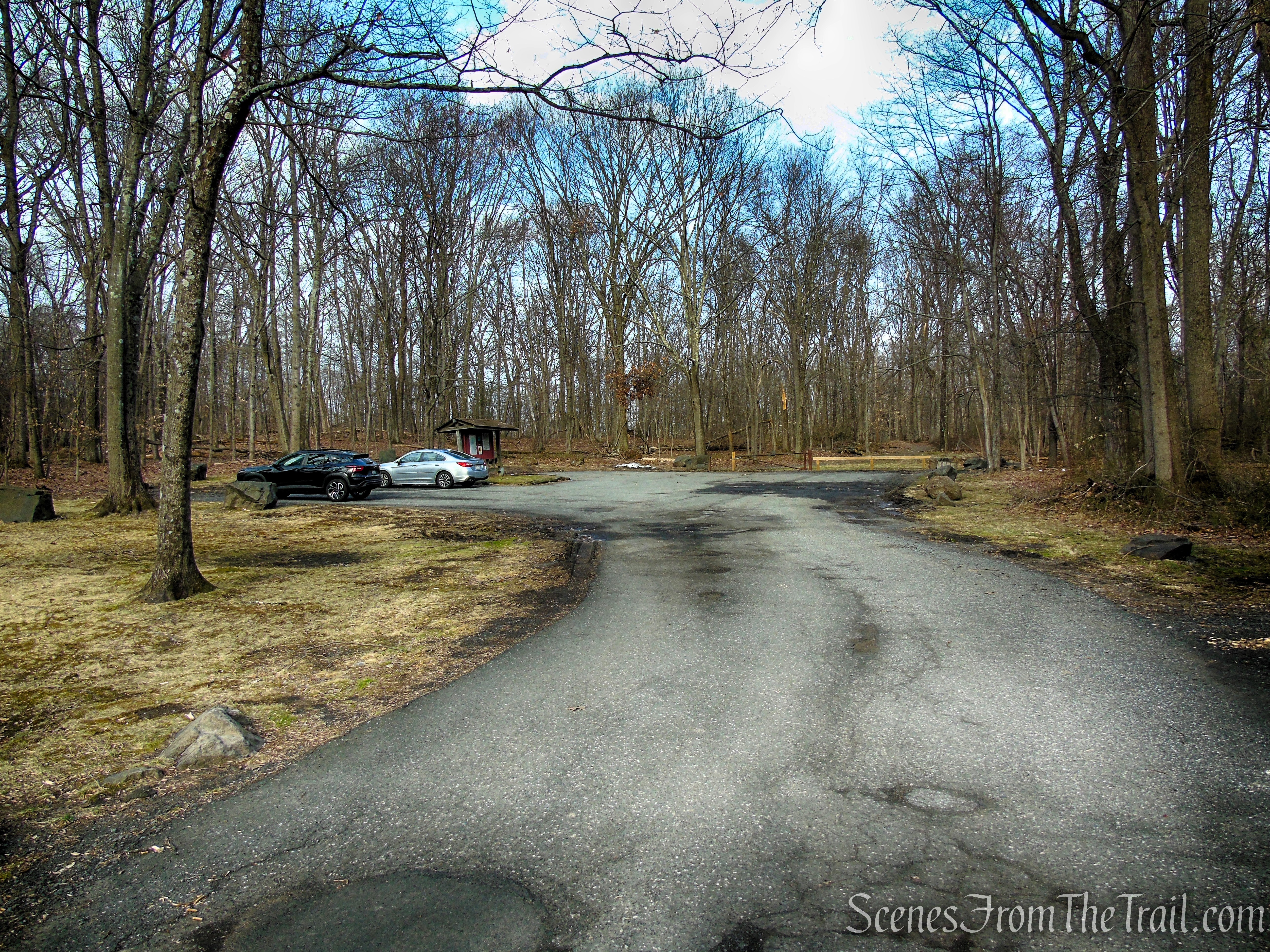
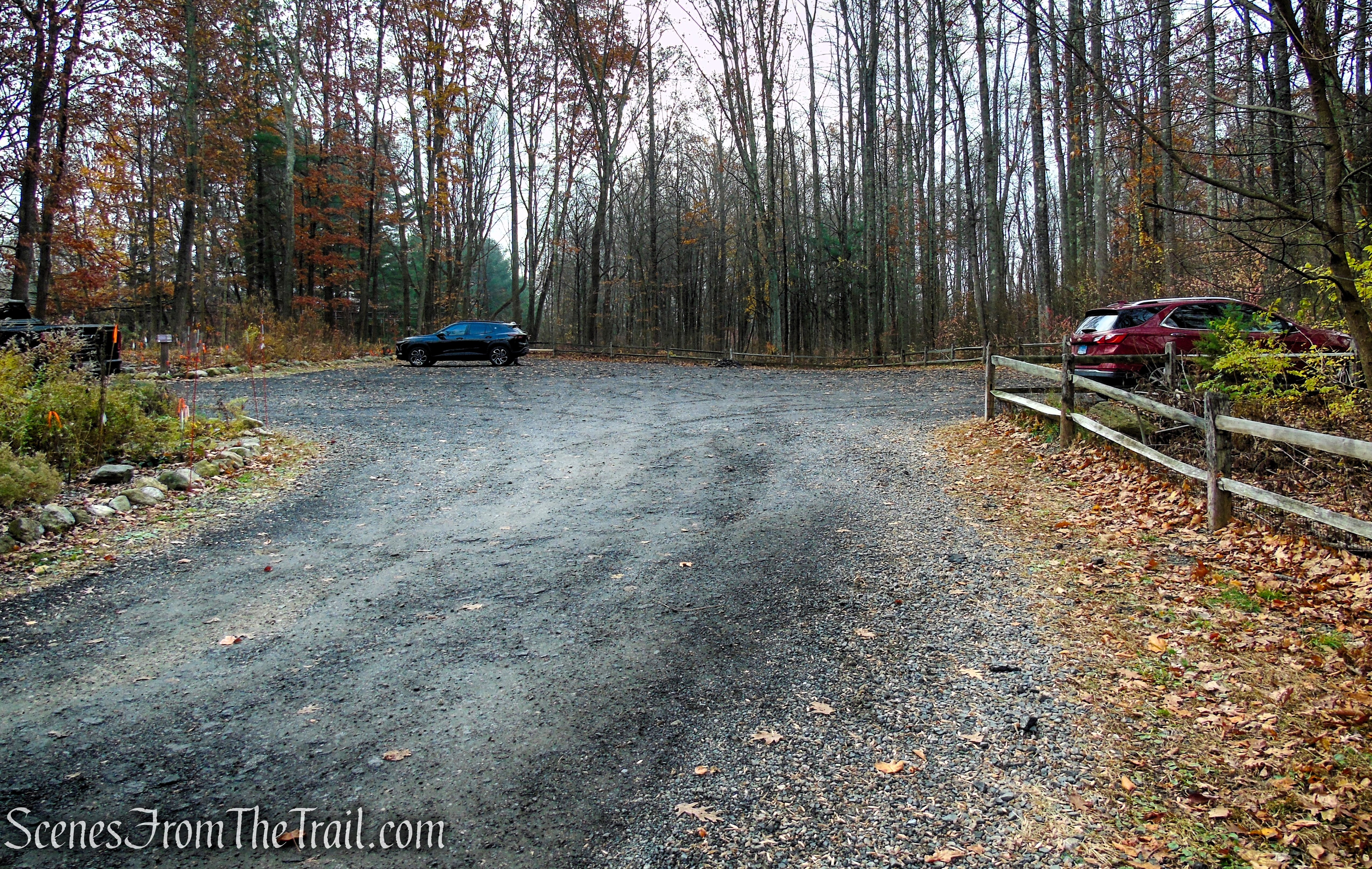
Parking is available for free at Leon Levy Preserve. The main lot is on Route 123 (Smith Ridge Road) in South Salem. The spacious parking lot accommodates regular vehicles (and horse trailers). While adequate for normal visits, on very busy days you may want to go early to secure a spot.

Leon Levy Preserve parking lot

Leon Levy Preserve parking lot


The Hike:

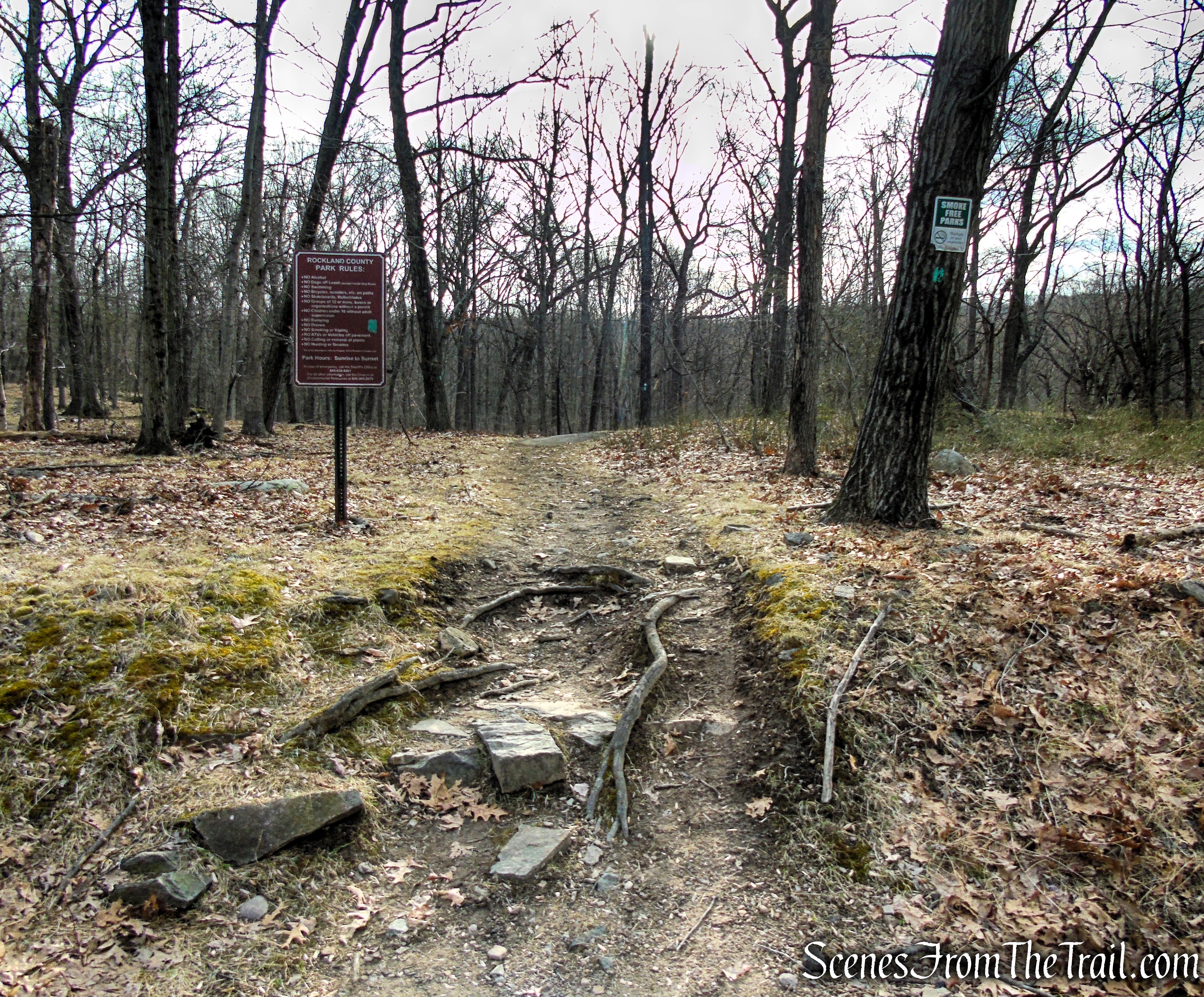
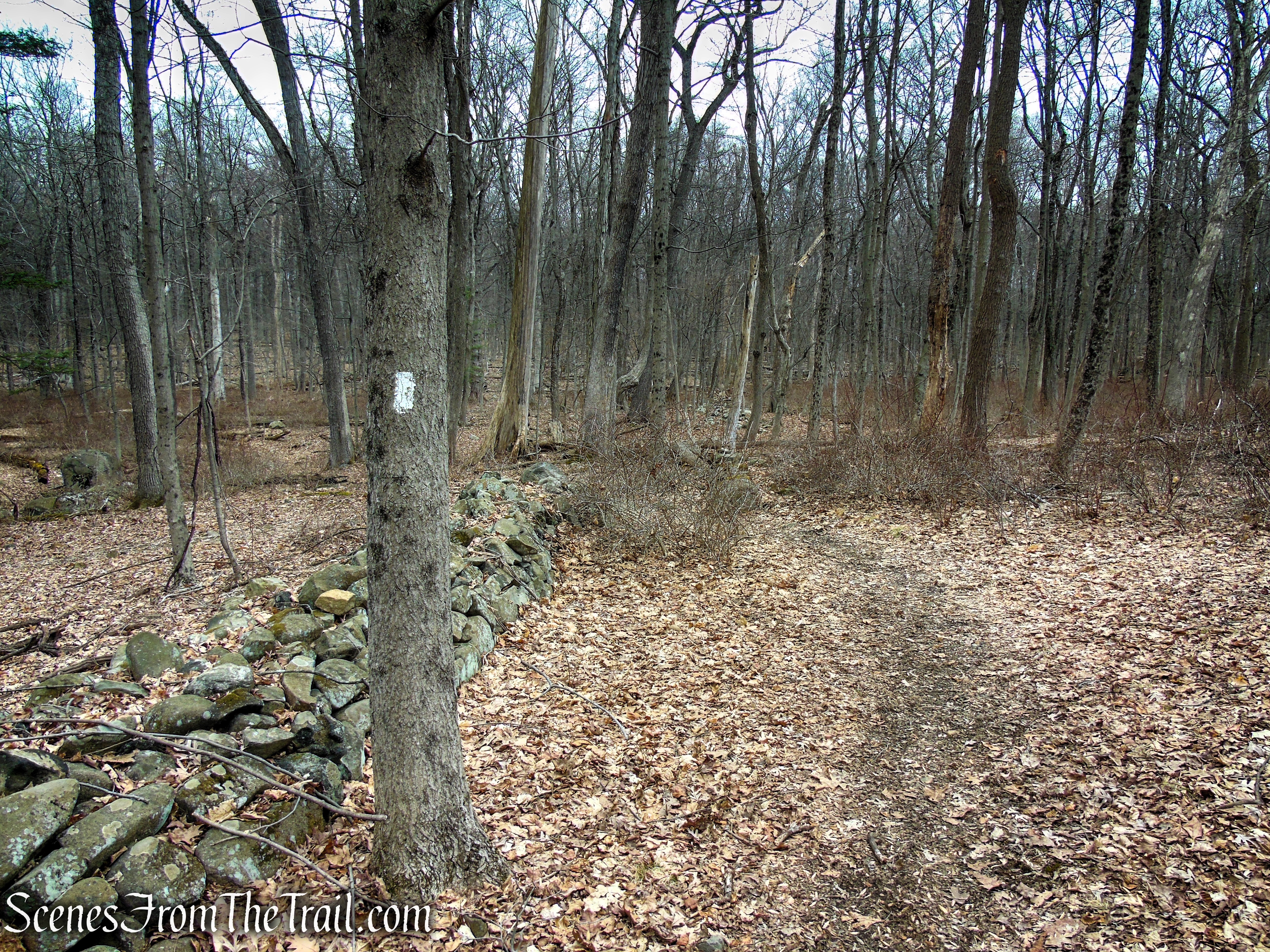
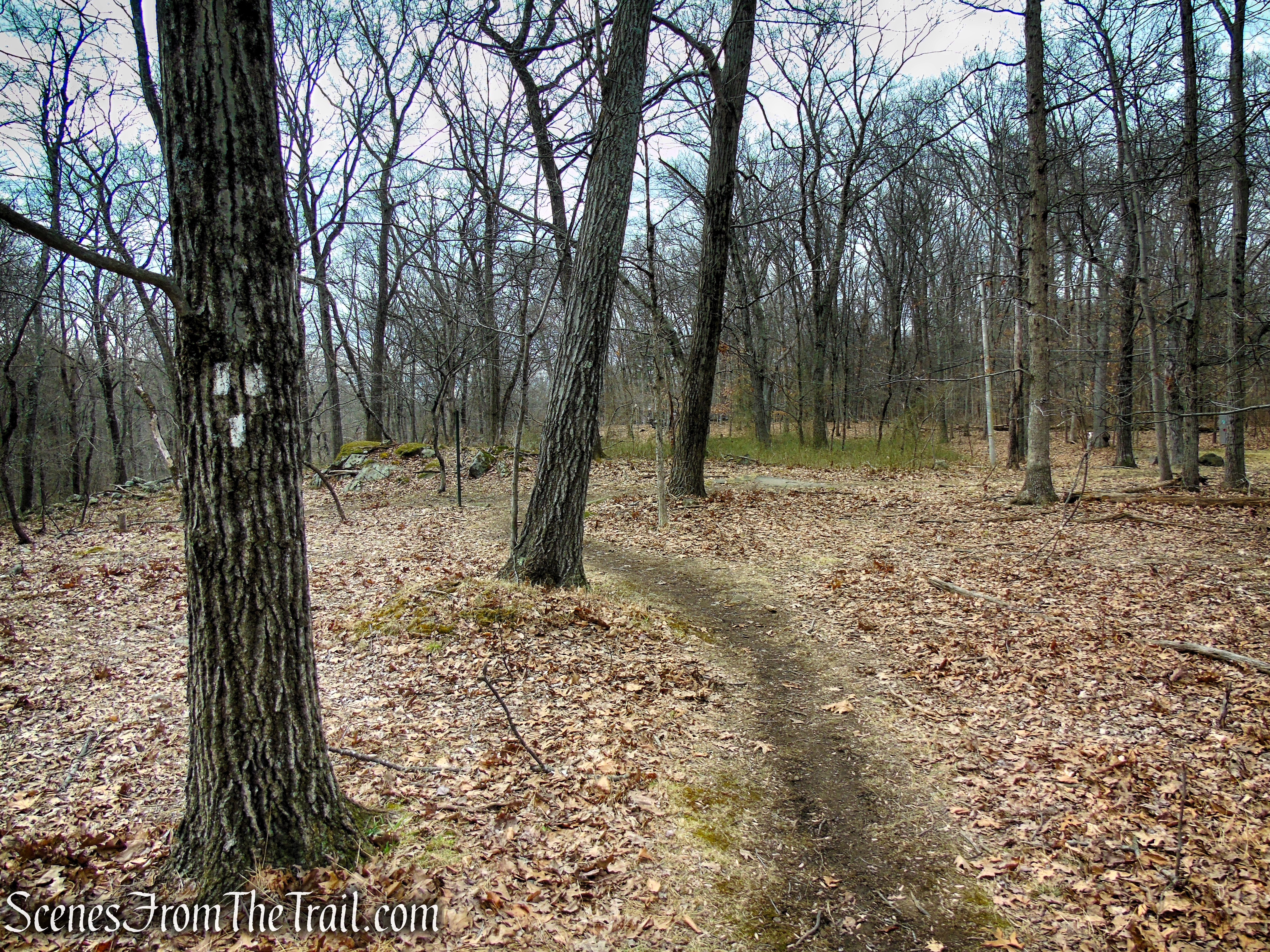
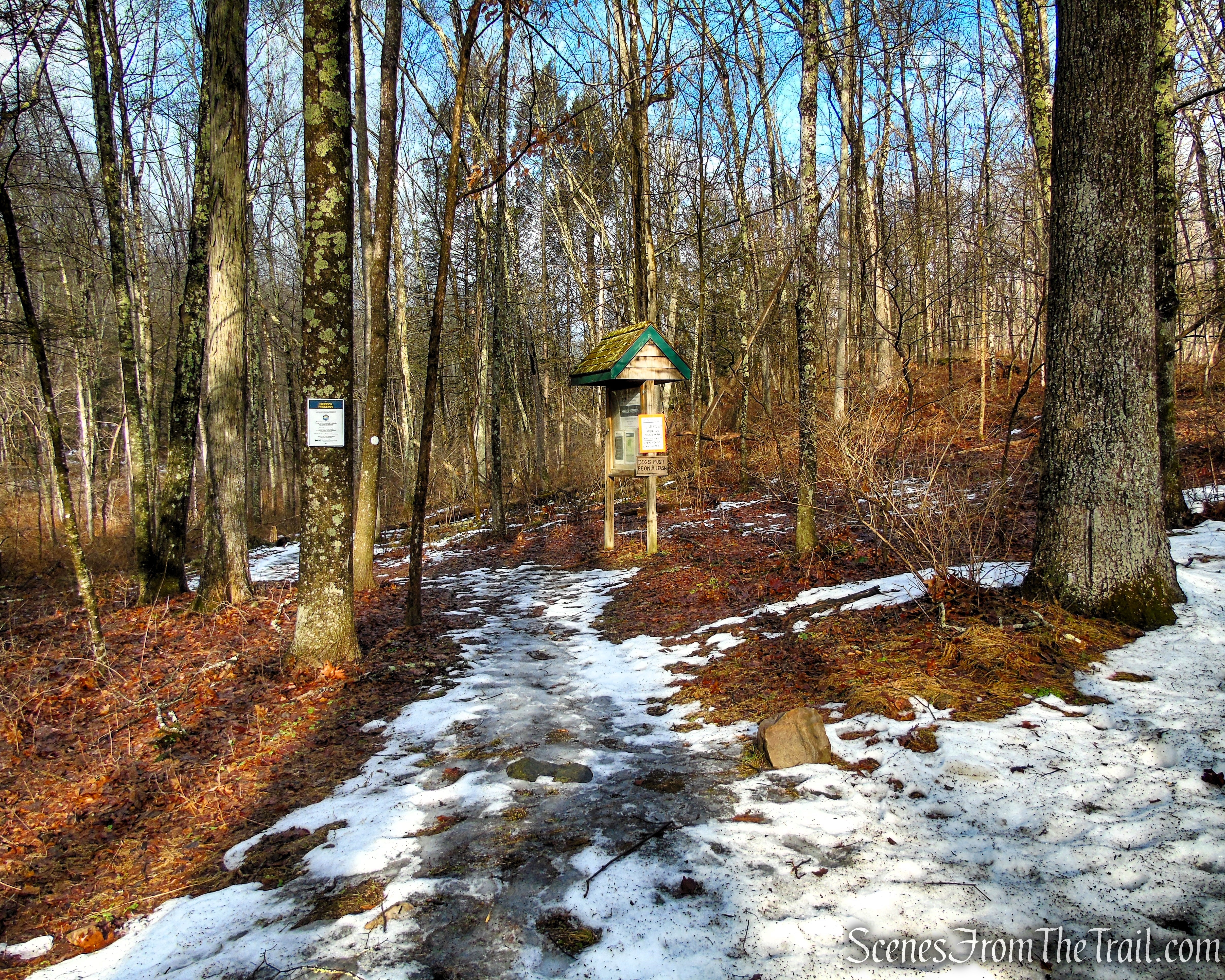
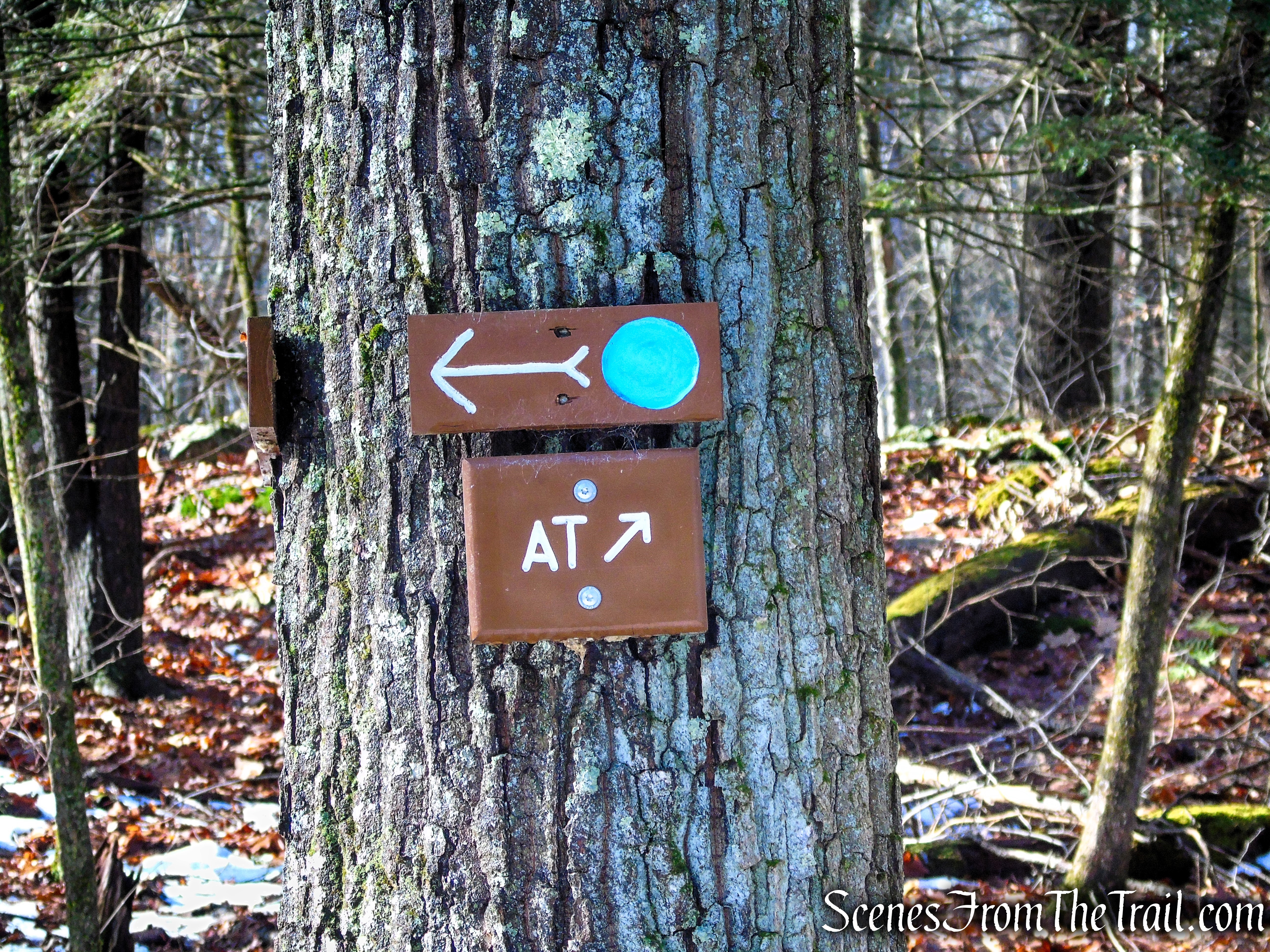
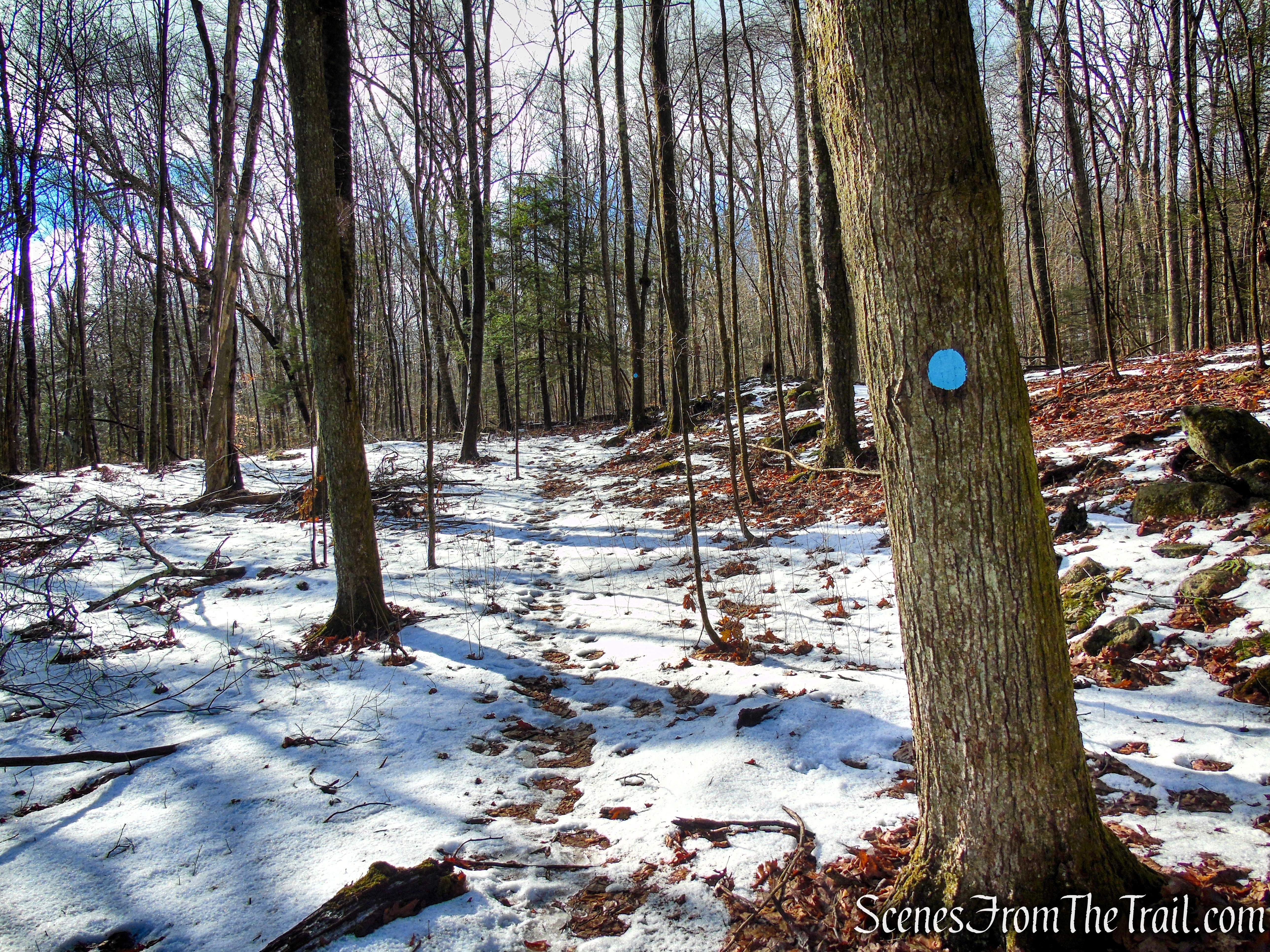
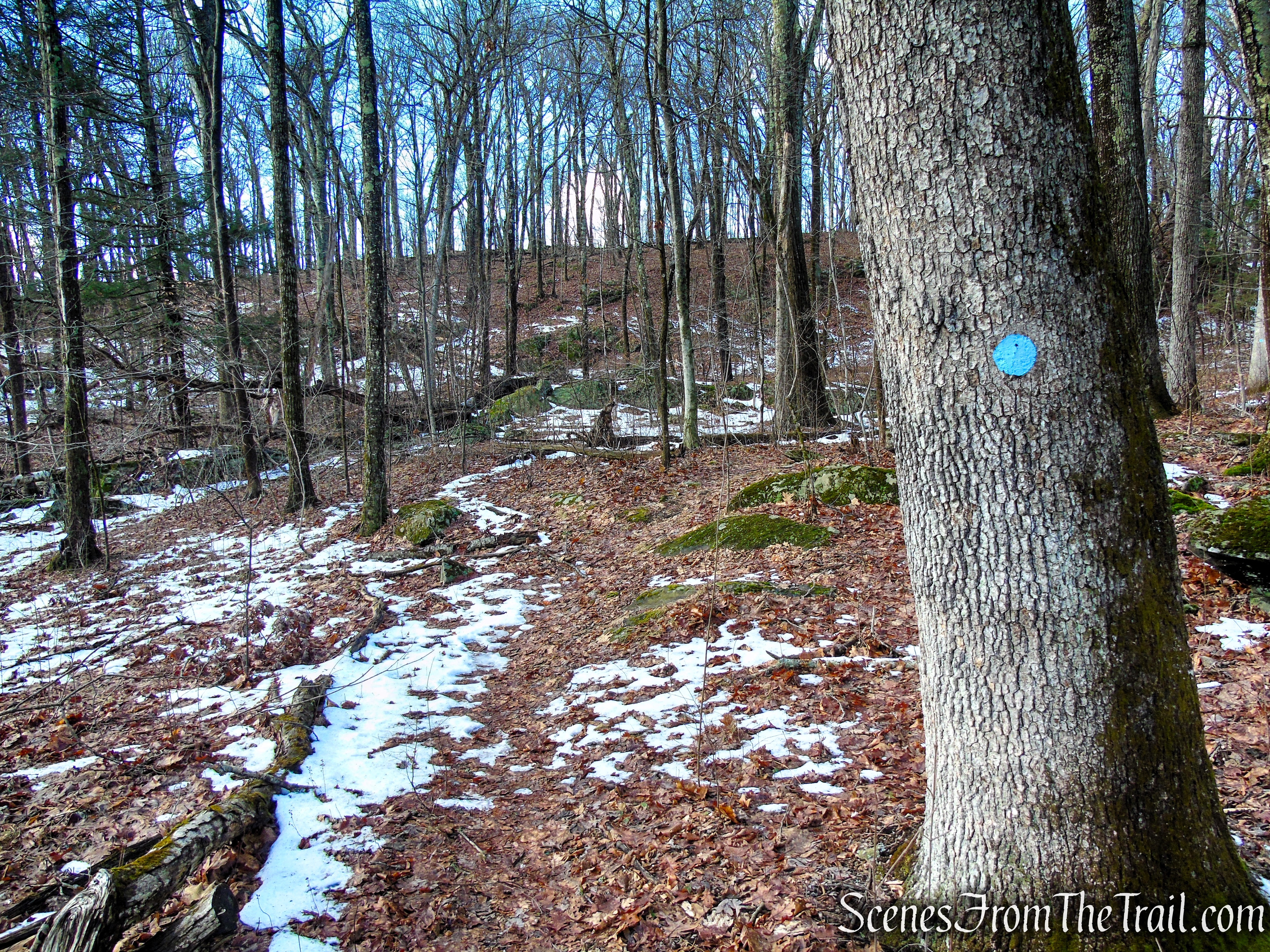
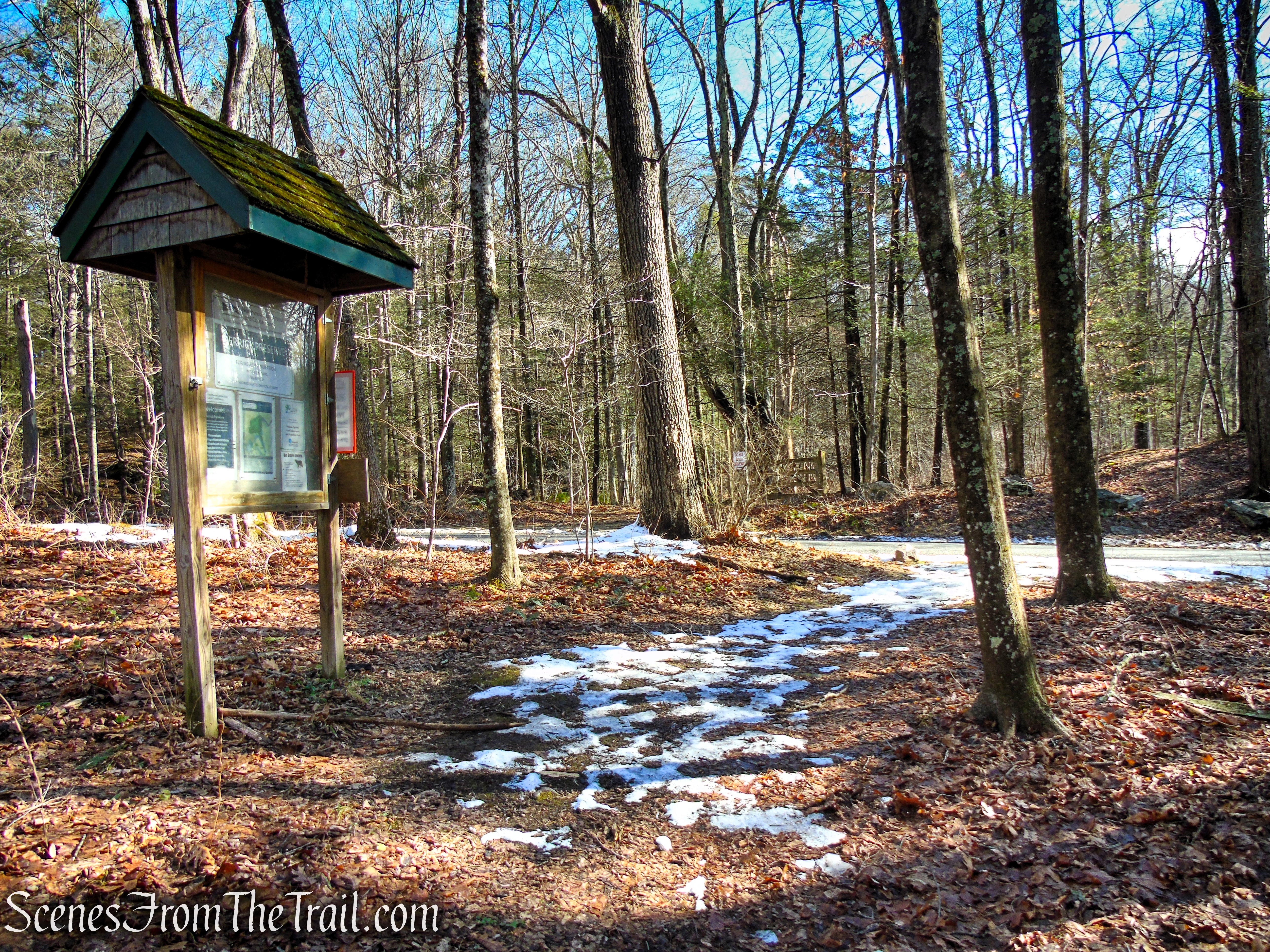
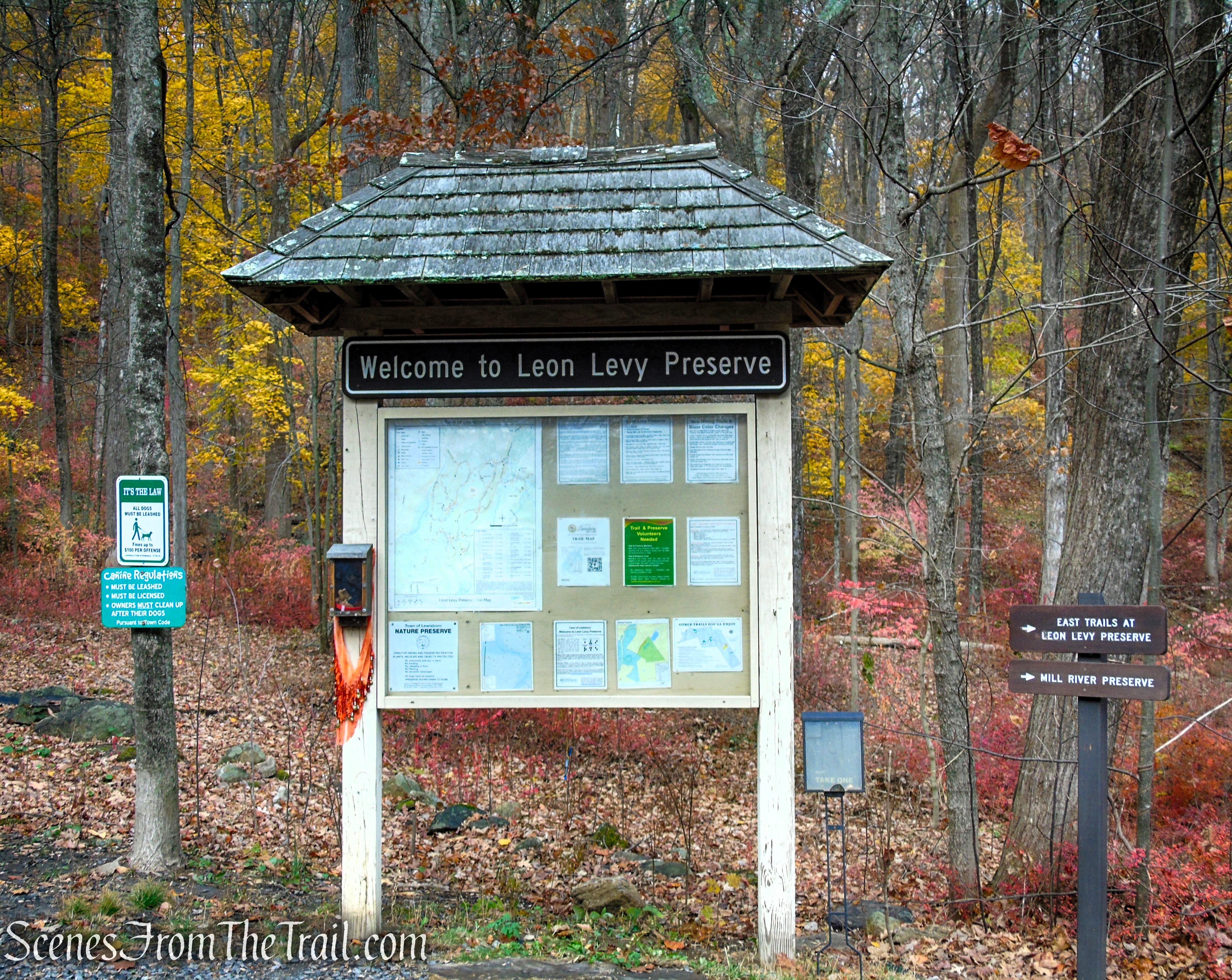
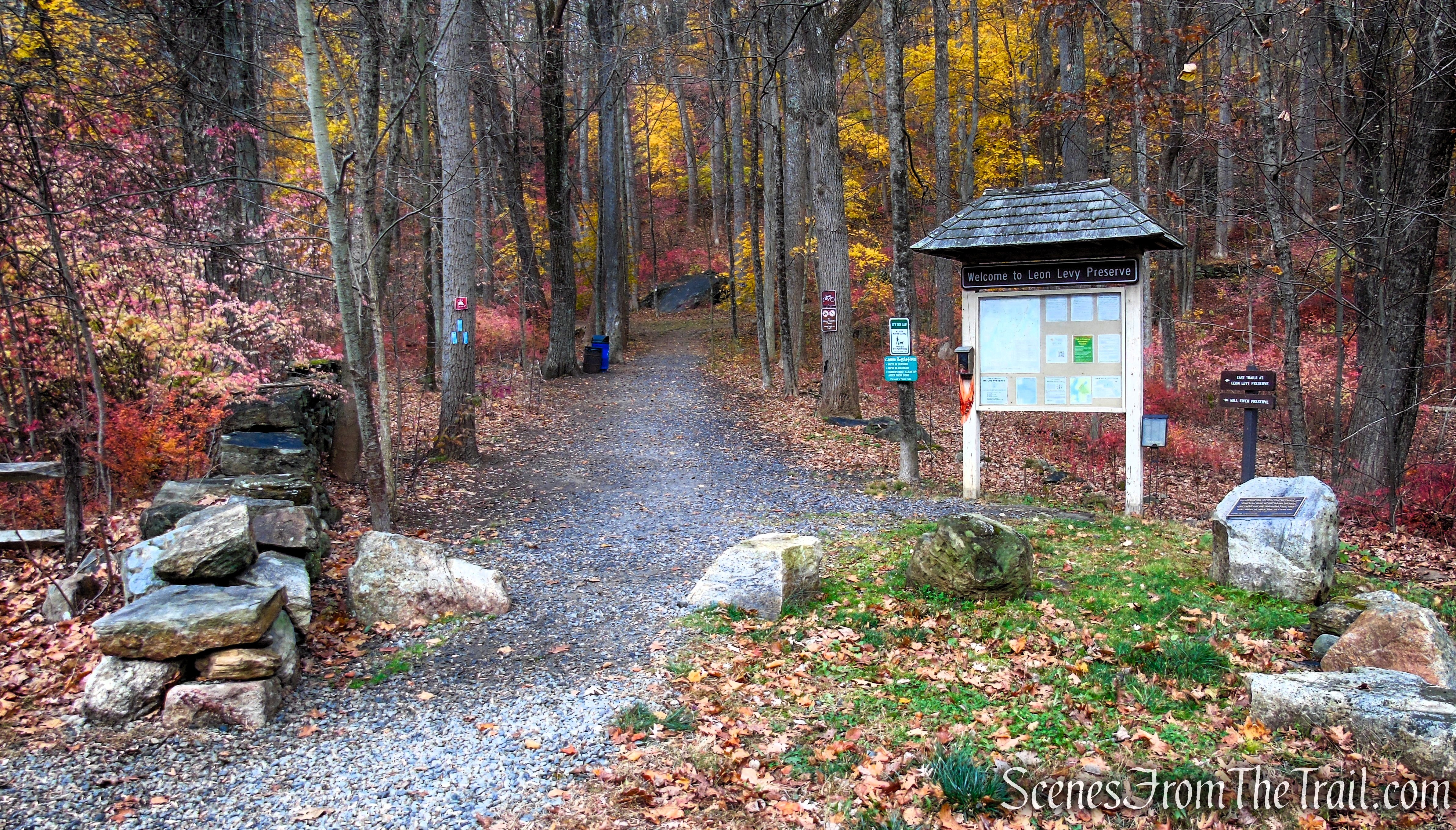
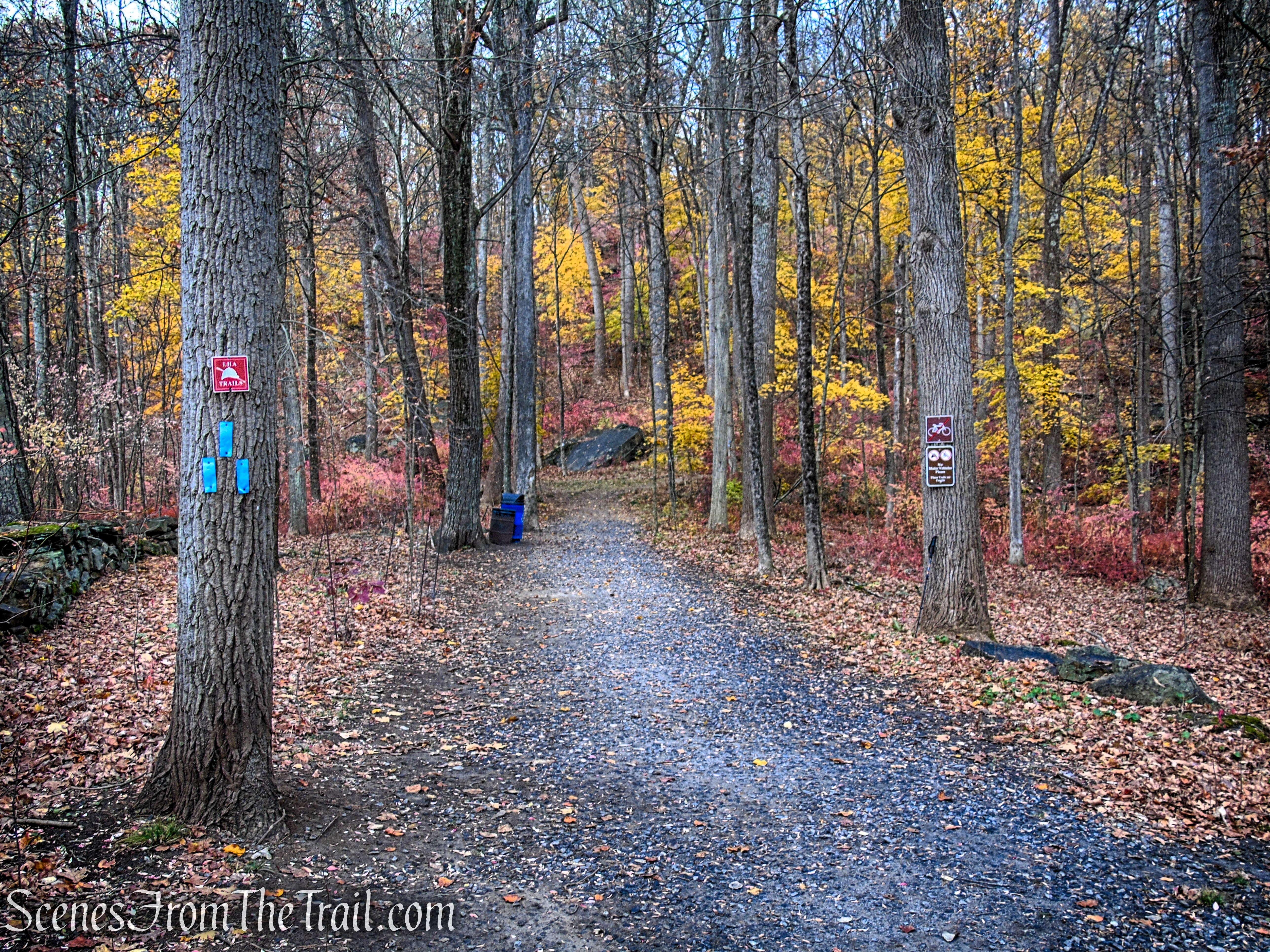
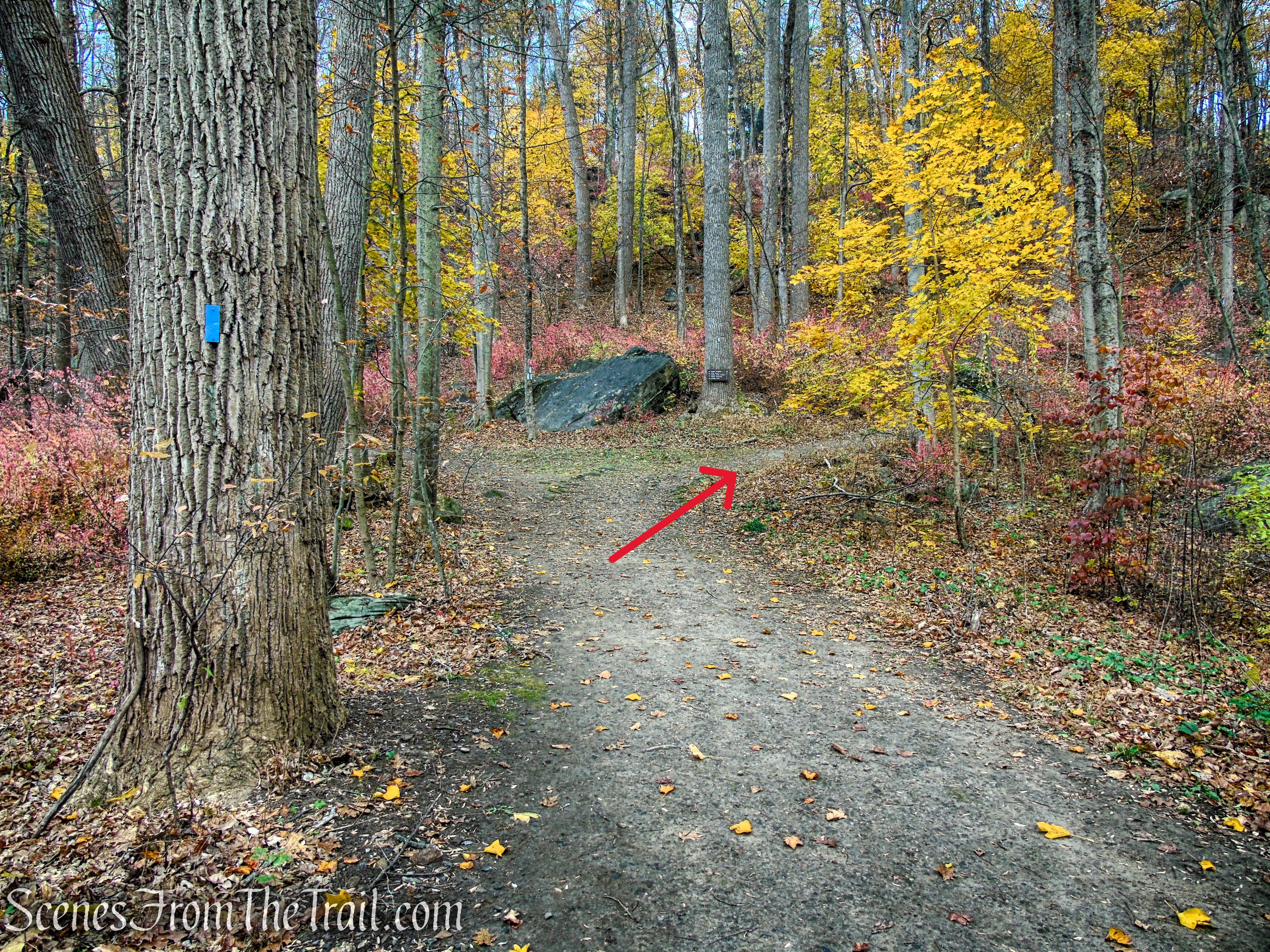
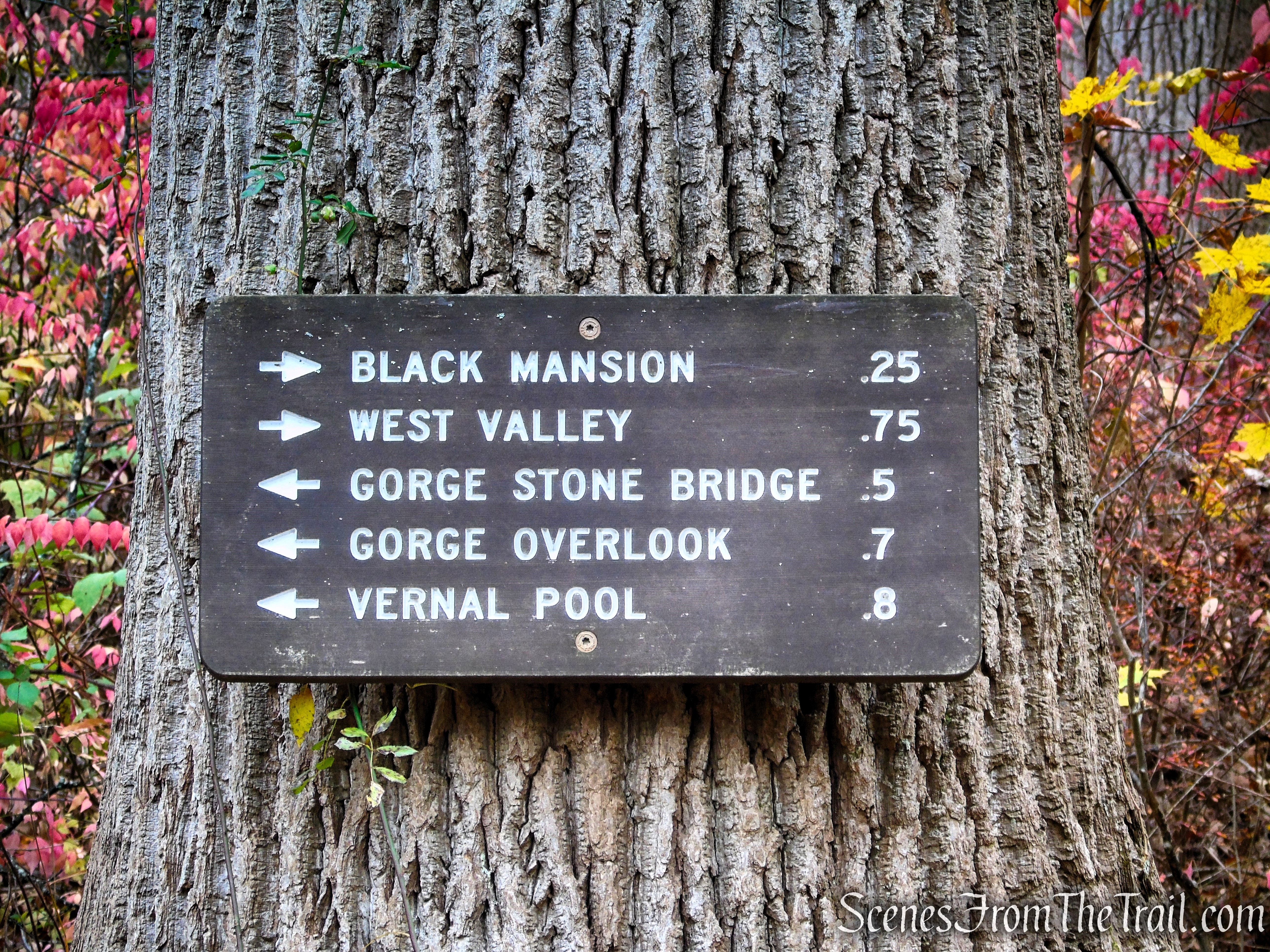
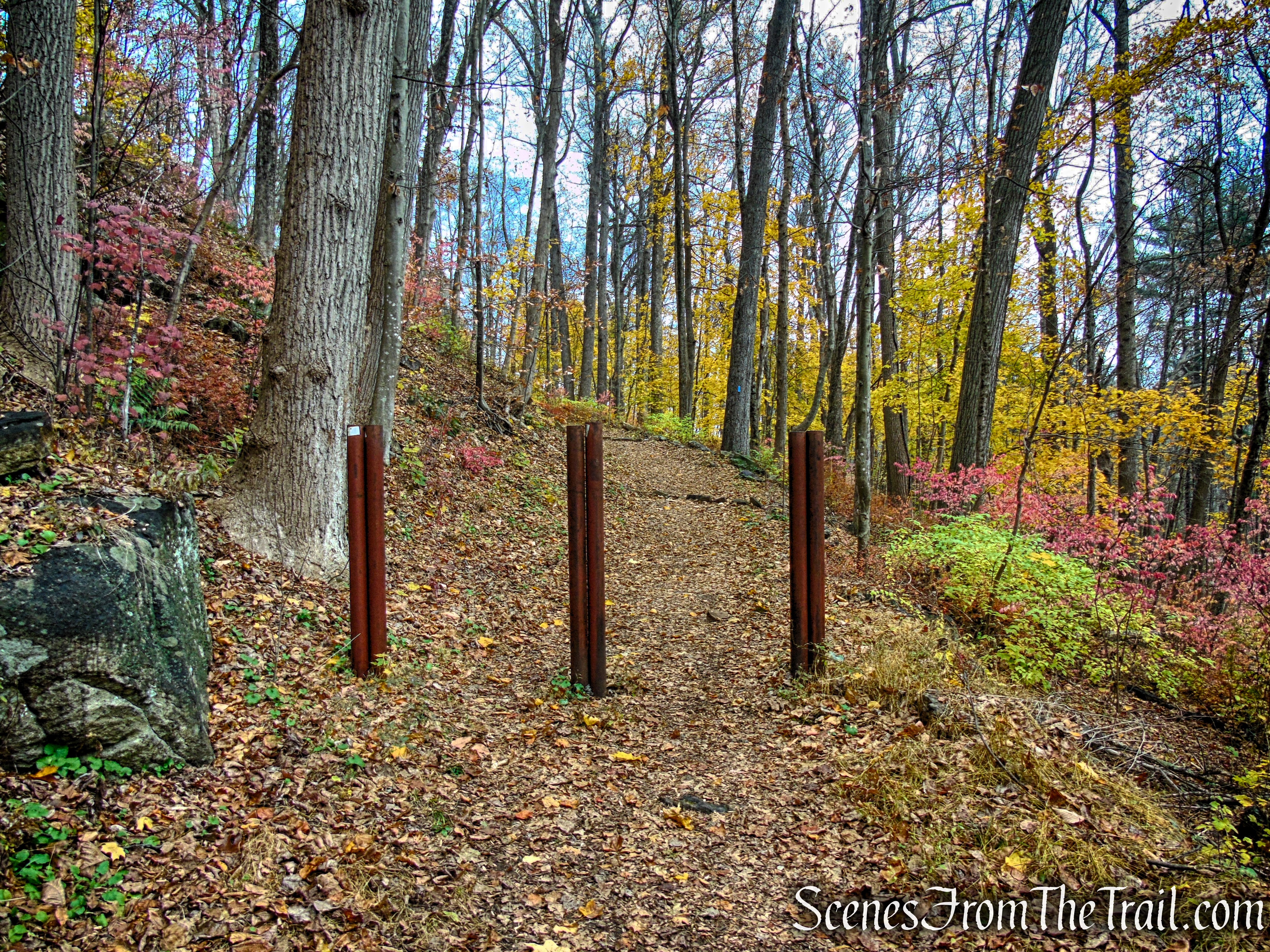
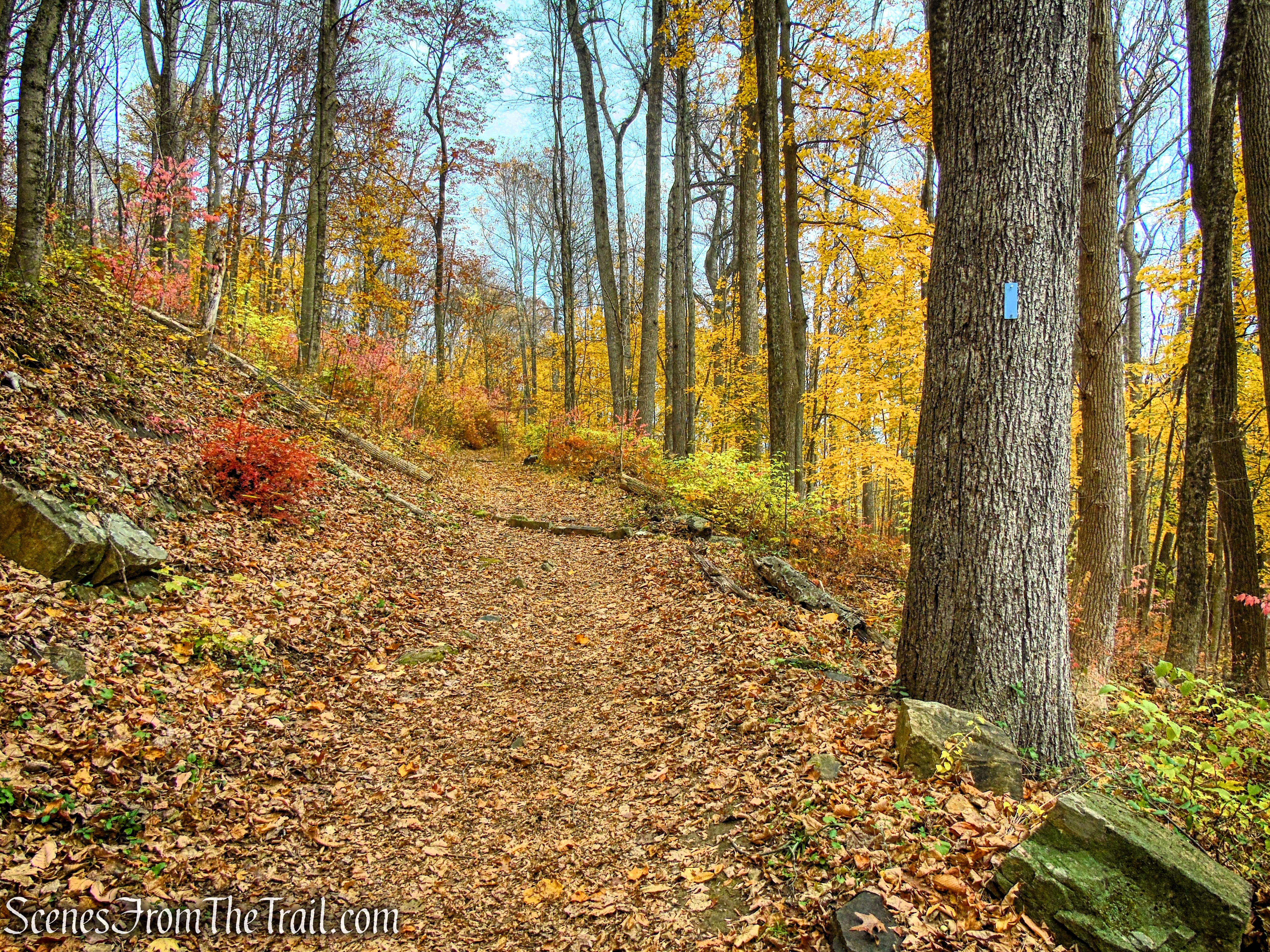
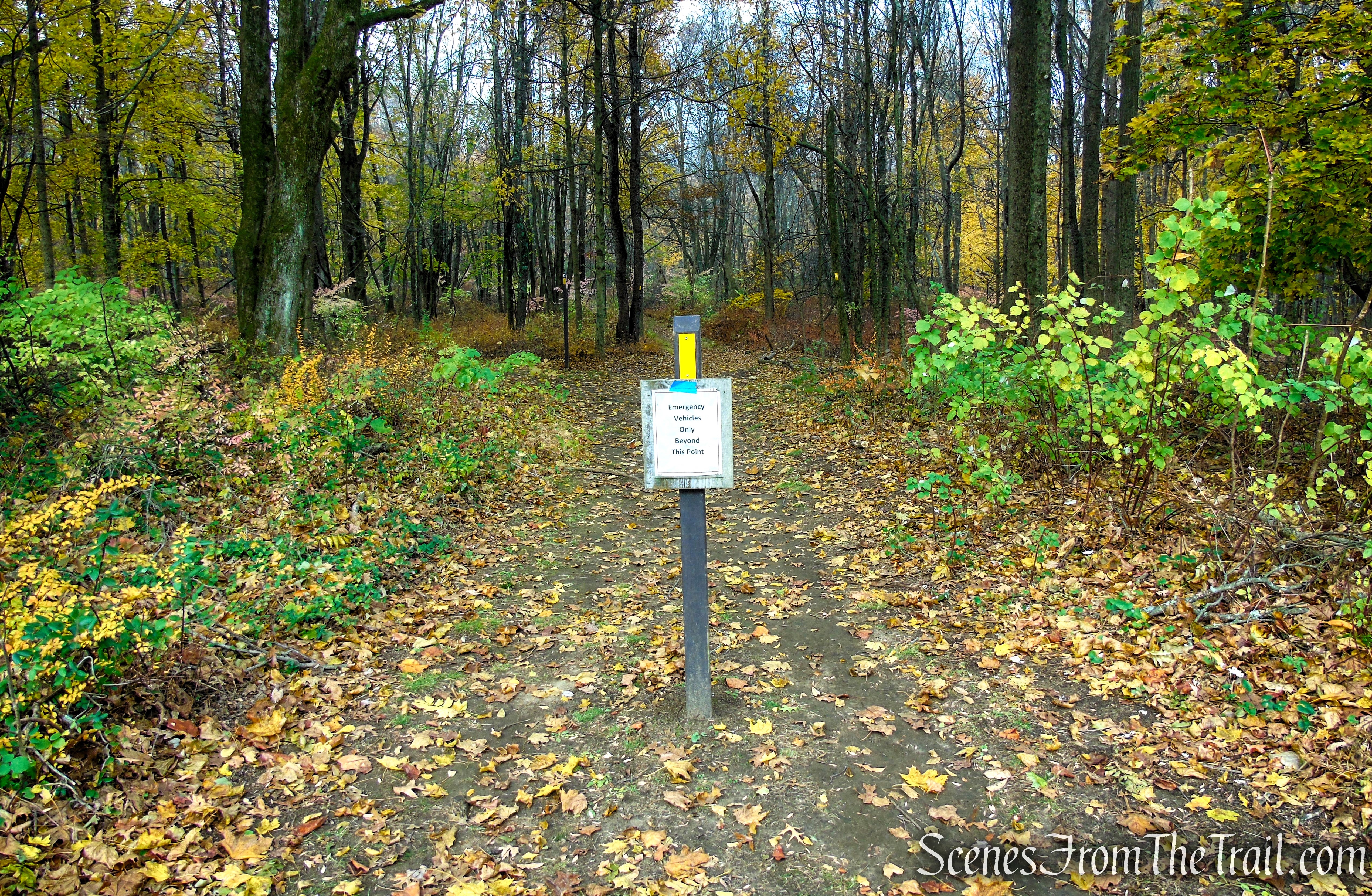
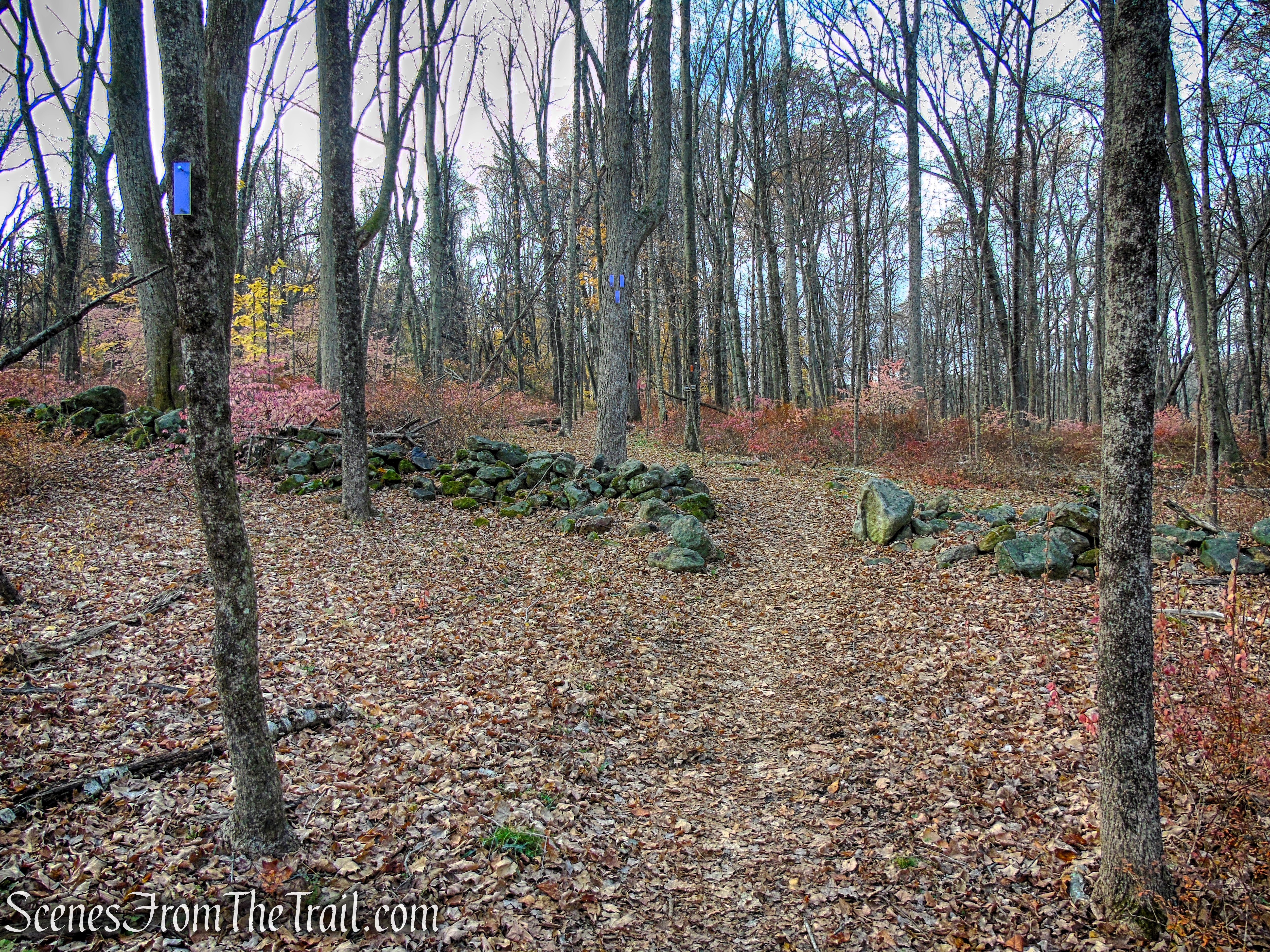
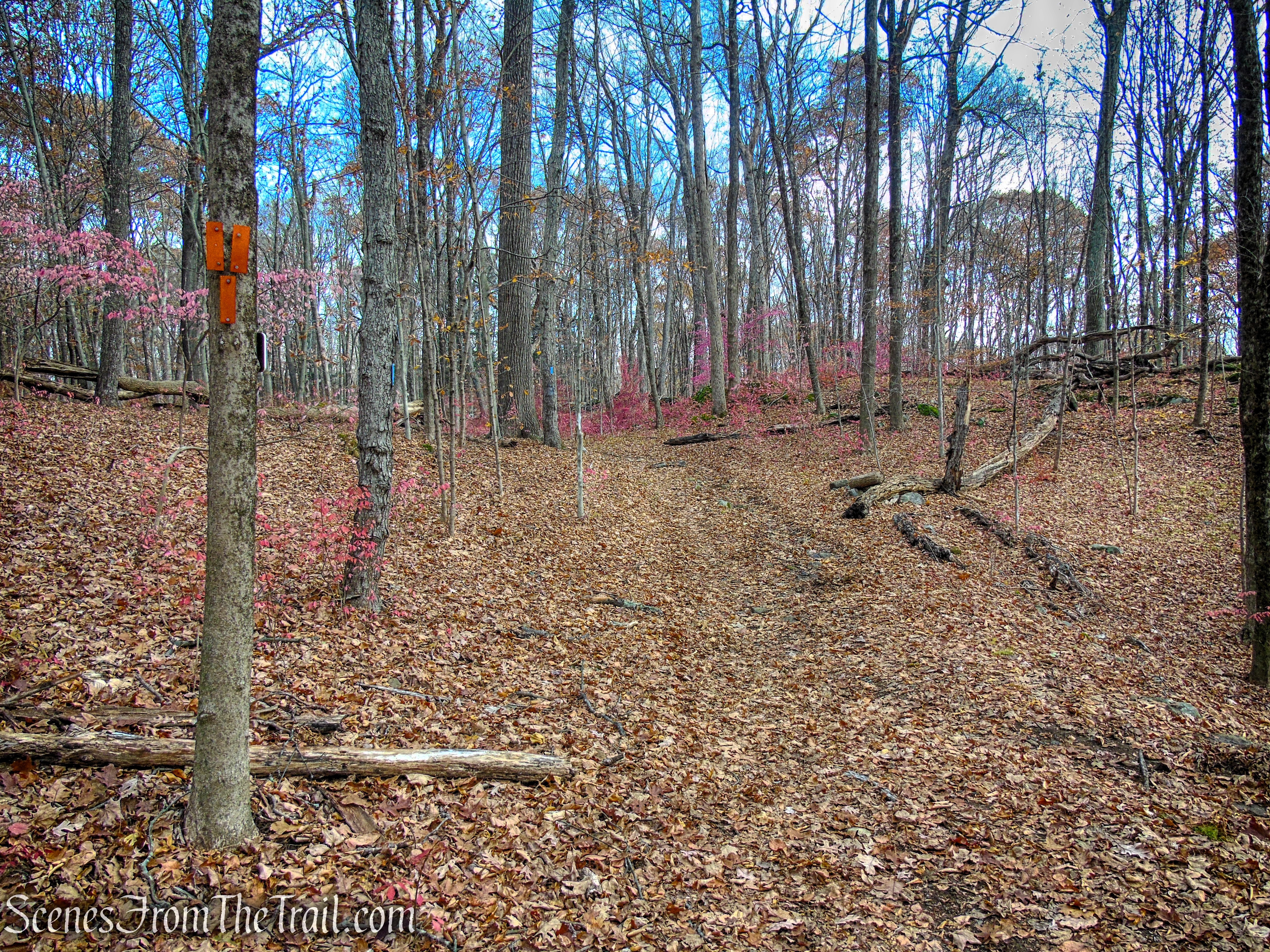
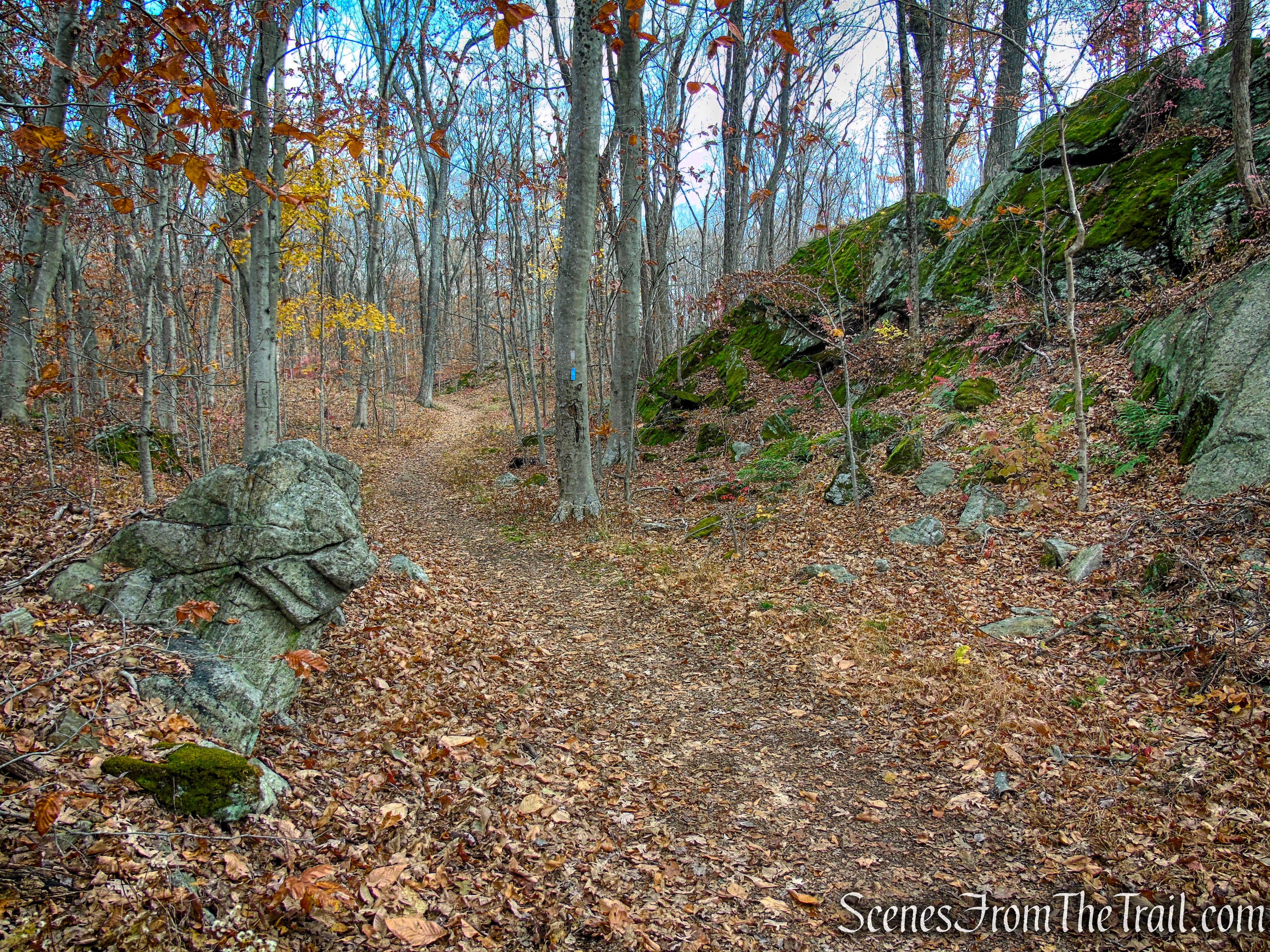
This hike begins at the kiosk on the Blue Trail, marked by three blue blazes on a tree. Follow the trail to a T-intersection at a large boulder and turn right. Continue past the steel bollards and head uphill, where the trail soon passes a stone foundation and chimney.

Leon Levy Preserve Trailhead

Leon Levy Preserve Trailhead

Blue Trail - Leon Levy Preserve

Blue Trail – Leon Levy Preserve

Blue Trail - Leon Levy Preserve

Blue Trail – Leon Levy Preserve

Blue Trail - Leon Levy Preserve

Blue Trail – Leon Levy Preserve

Blue Trail - Leon Levy Preserve

Blue Trail – Leon Levy Preserve

Blue Trail - Leon Levy Preserve

Blue Trail – Leon Levy Preserve

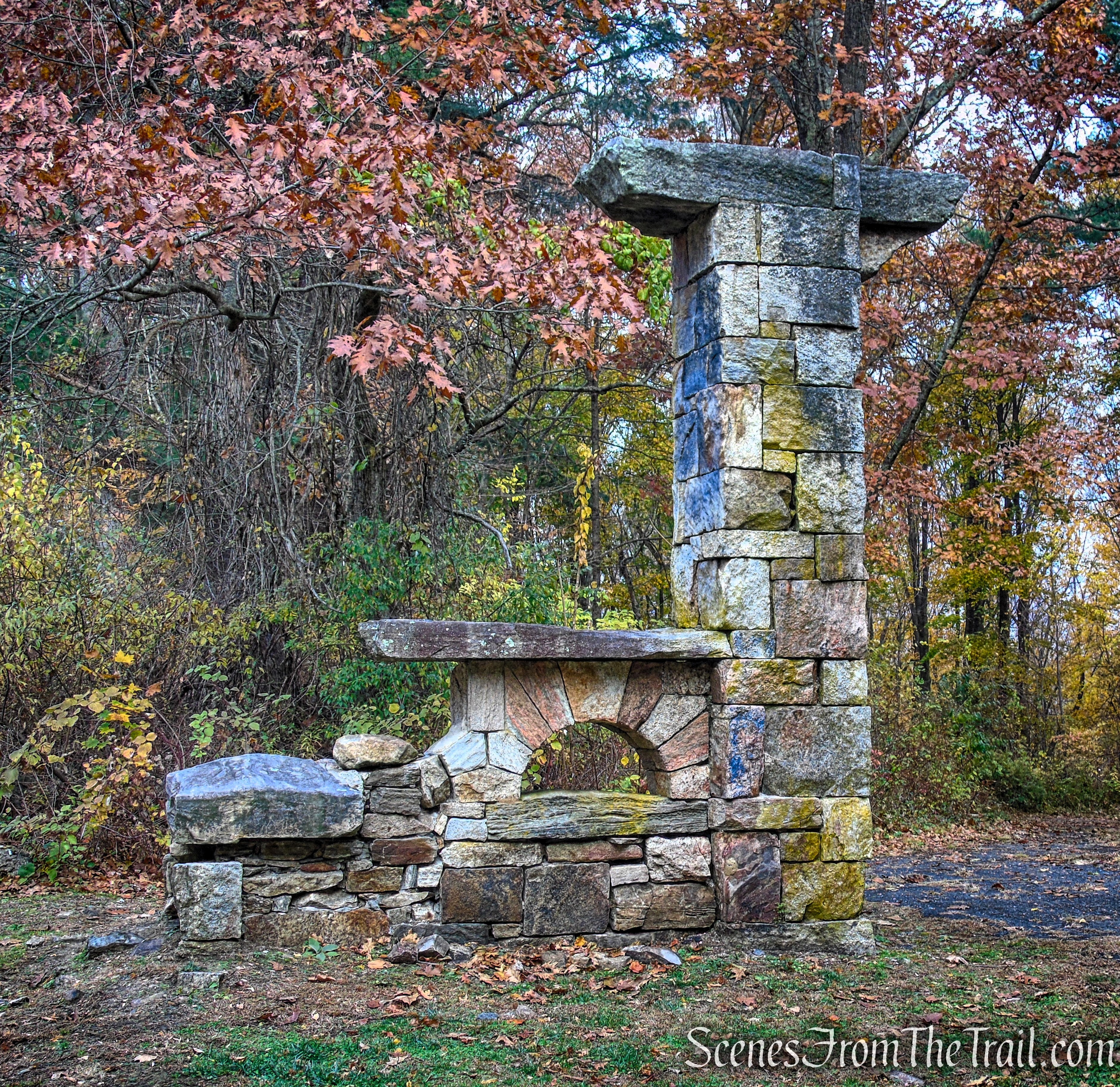
The laboratory ruins of James M. Crafts, a prominent organic chemist known for the “Friedel–Crafts reaction,” served as the fifth president of Massachusetts Institute of Technology from 1897-1900. After his academic tenure, he built his summer estate “Black Mansion” here on a wooded hillside, and among the outbuildings was a dedicated chemistry laboratory. What remains today includes a tall chimney, stone foundation walls, evidence of a flagstone patio and walk-ways.

Laboratory ruins - Leon Levy Preserve

Laboratory ruins – Leon Levy Preserve

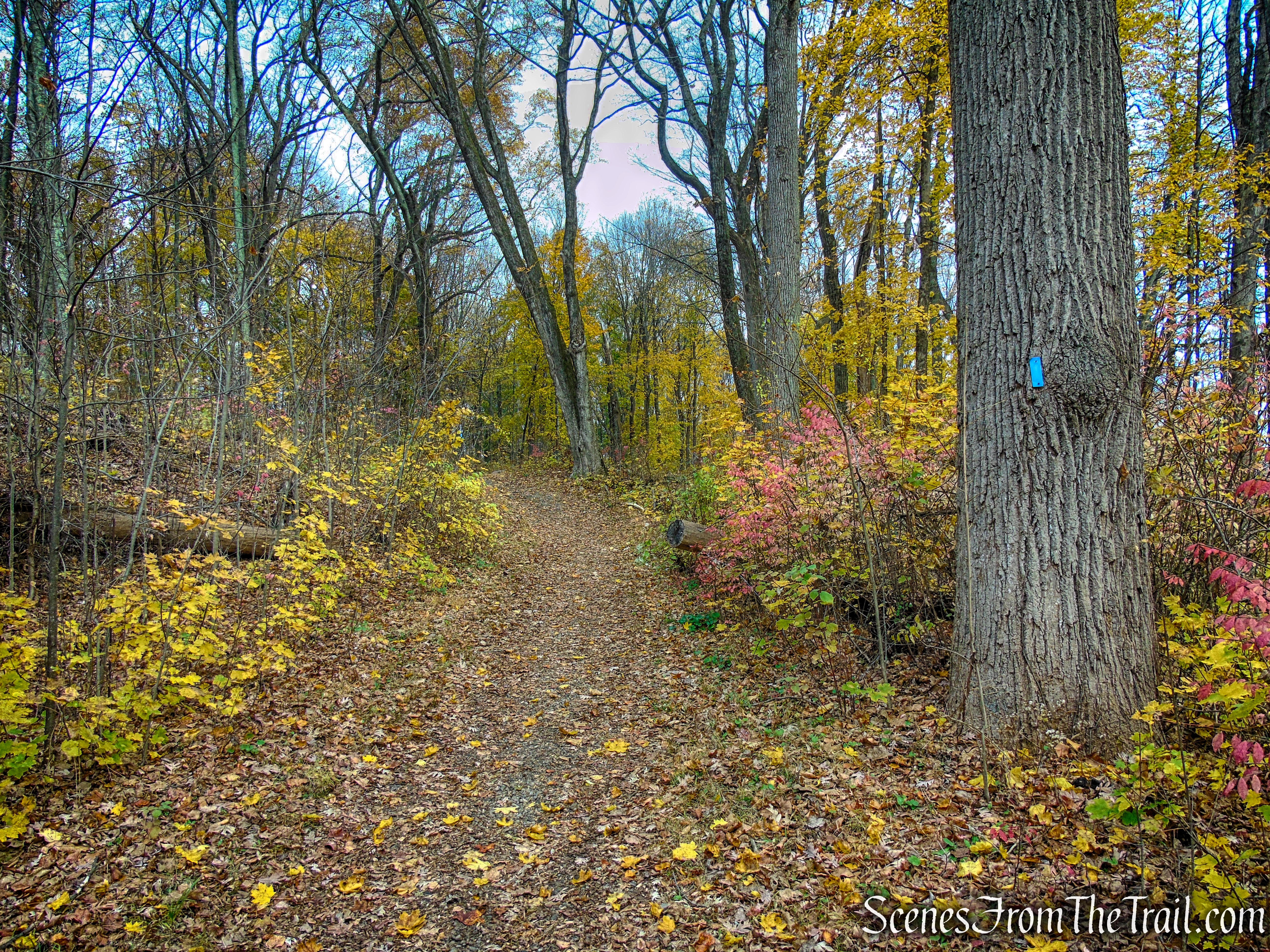
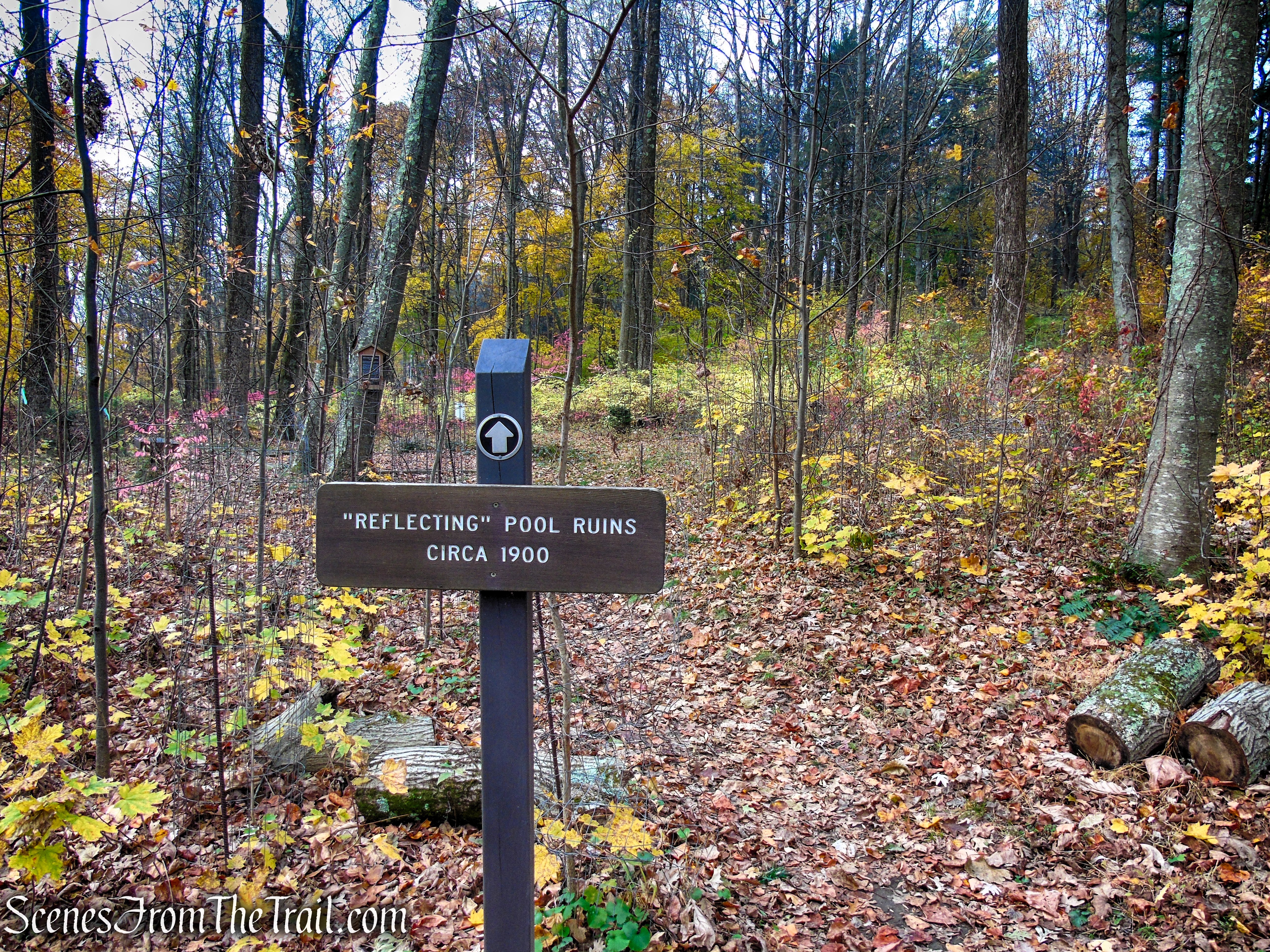
When you’re done exploring the stone ruins, continue uphill on the Blue Trail. Shortly ahead, you’ll reach the site of James Craft’s Reflecting Pool ruins, located just to the left of the trail.

Blue Trail - Leon Levy Preserve

Blue Trail – Leon Levy Preserve

Reflecting Pool ruins - Leon Levy Preserve

Reflecting Pool ruins – Leon Levy Preserve

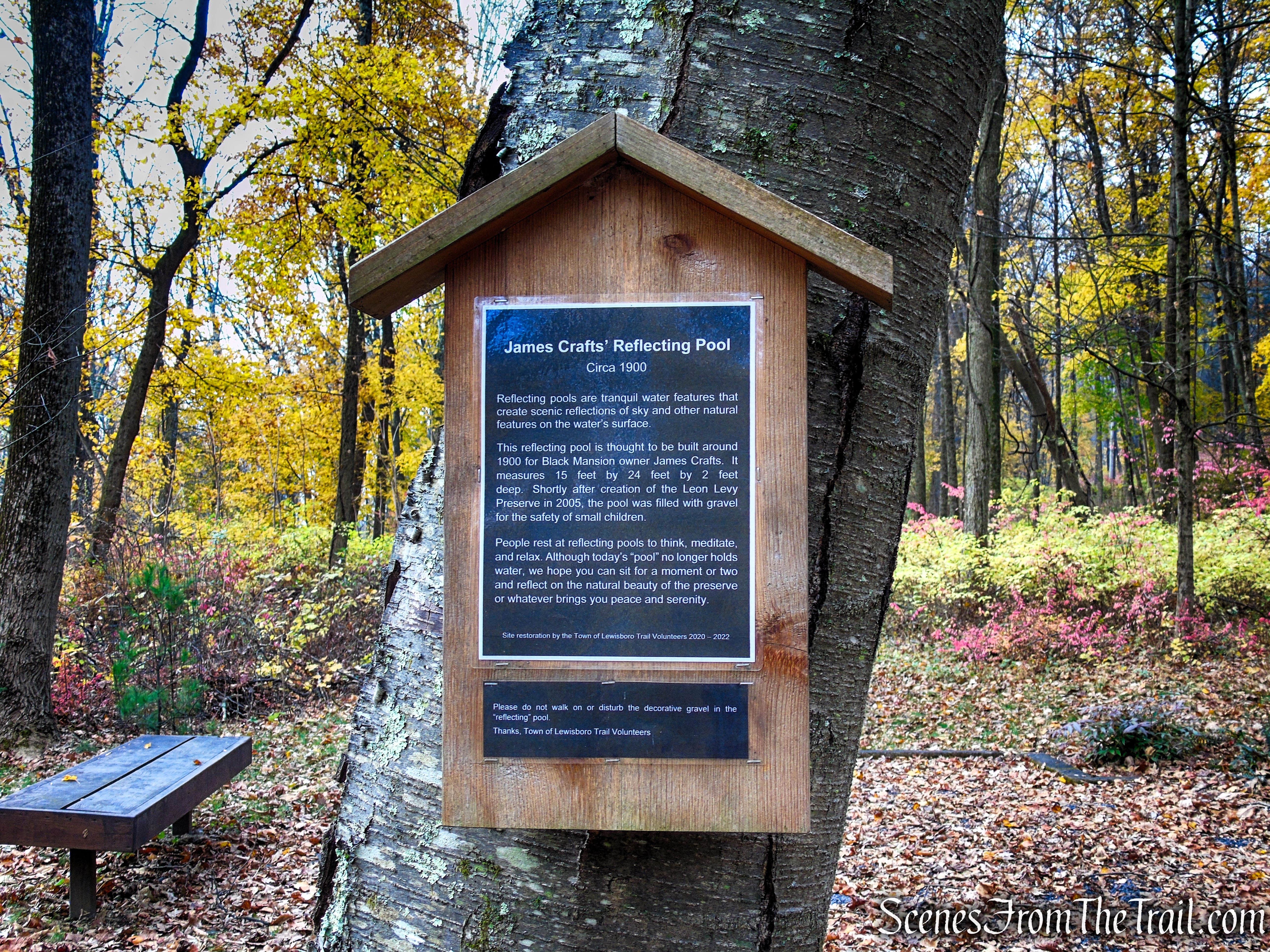
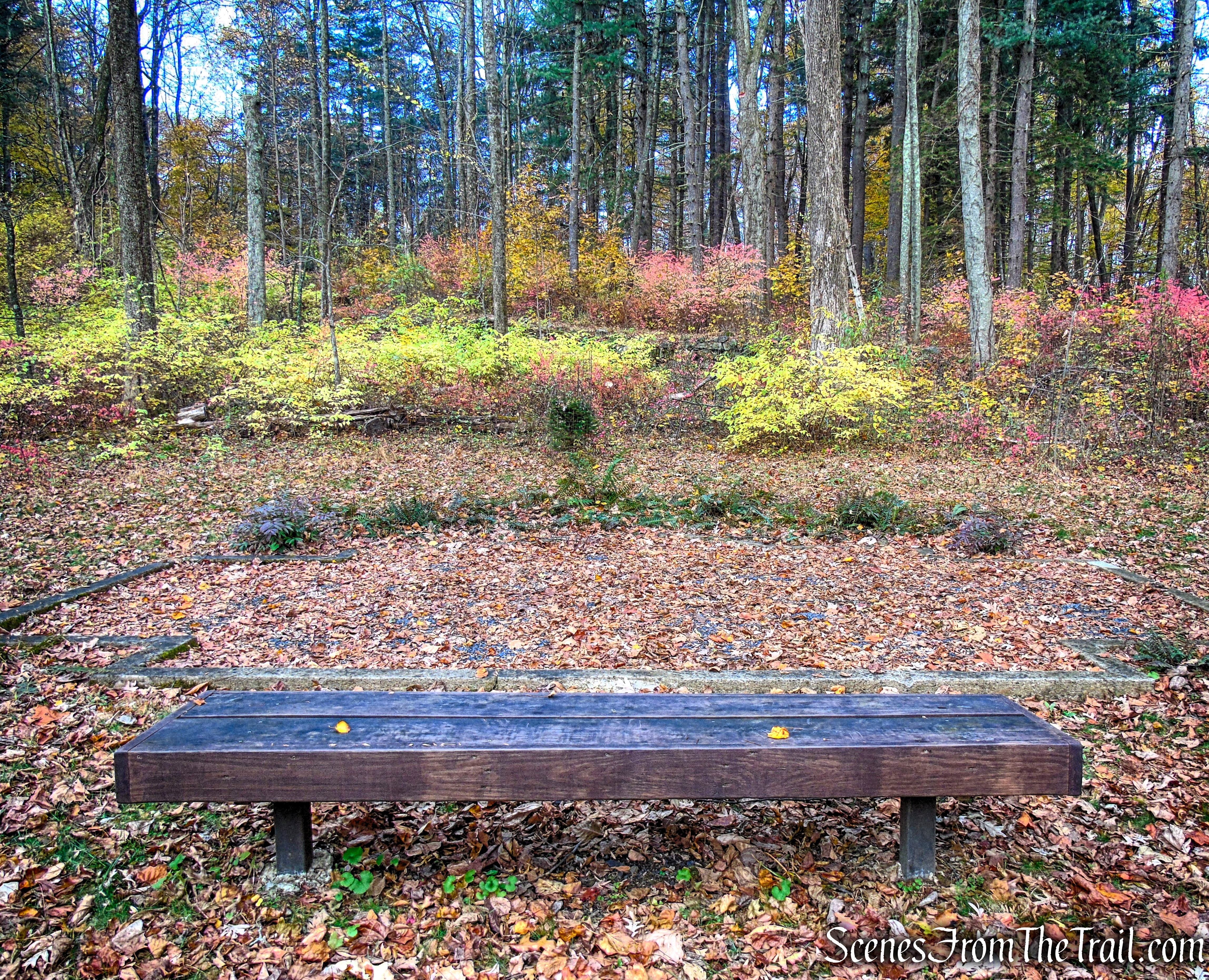
Not much remains of the Reflecting Pool, as it was filled with gravel shortly after the preserve was established in 2005. Today, a bench overlooks the spot where it once stood.

Reflecting Pool ruins - Leon Levy Preserve

Reflecting Pool ruins – Leon Levy Preserve

Reflecting Pool ruins - Leon Levy Preserve

Reflecting Pool ruins – Leon Levy Preserve

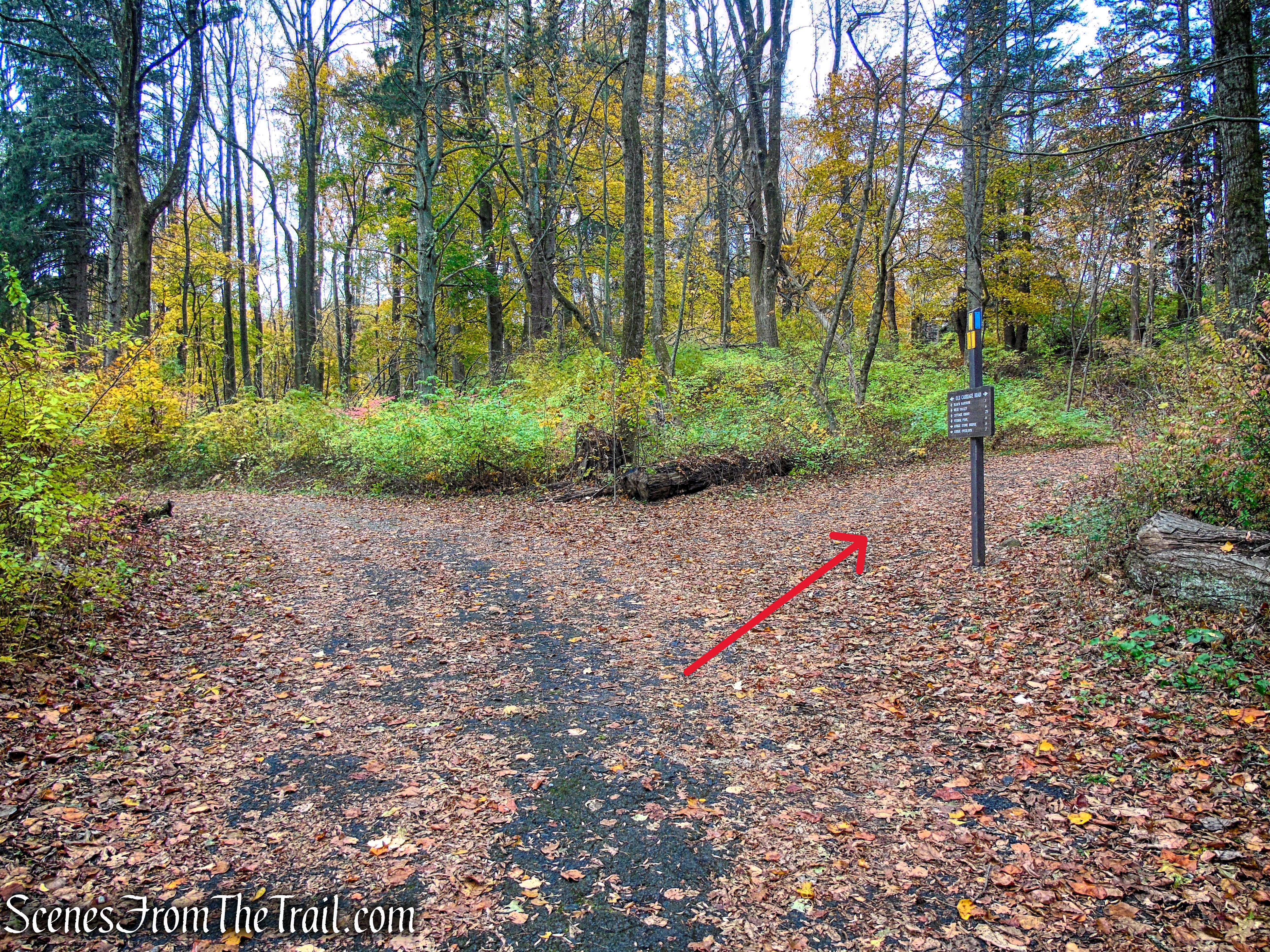
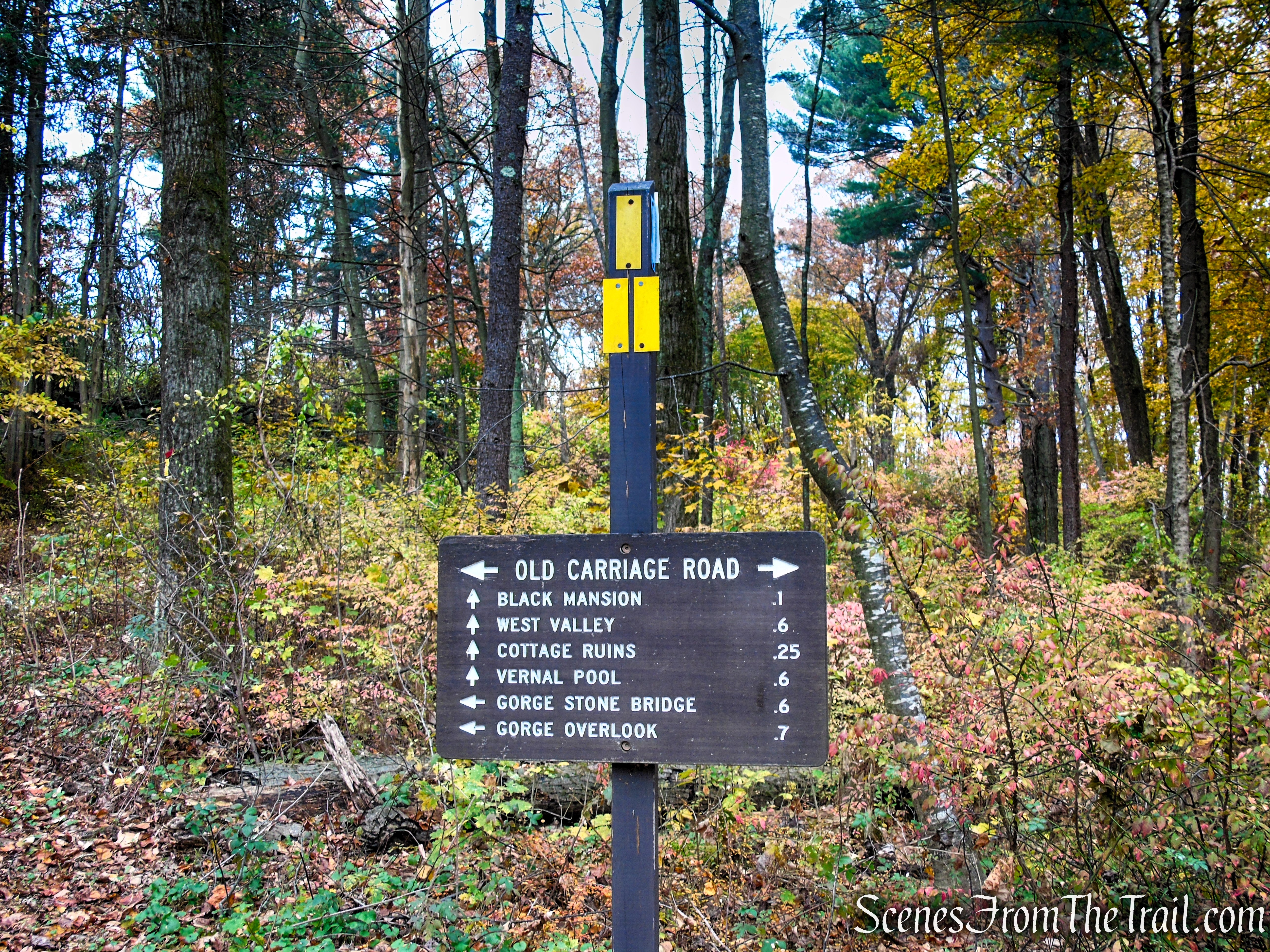
When you return to the Blue Trail, turn left, then left again at Junction 2. Follow the Blue Trail a short distance to its junction with the Yellow Trail, and turn right.

Turn left at junction 2

Turn left at junction 2

Blue Trail - Leon Levy Preserve

Blue Trail – Leon Levy Preserve

Turn right on Yellow Trail

Turn right on Yellow Trail

Yellow Trail - Leon Levy Preserve

Yellow Trail – Leon Levy Preserve

Yellow Trail - Leon Levy Preserve

Yellow Trail – Leon Levy Preserve

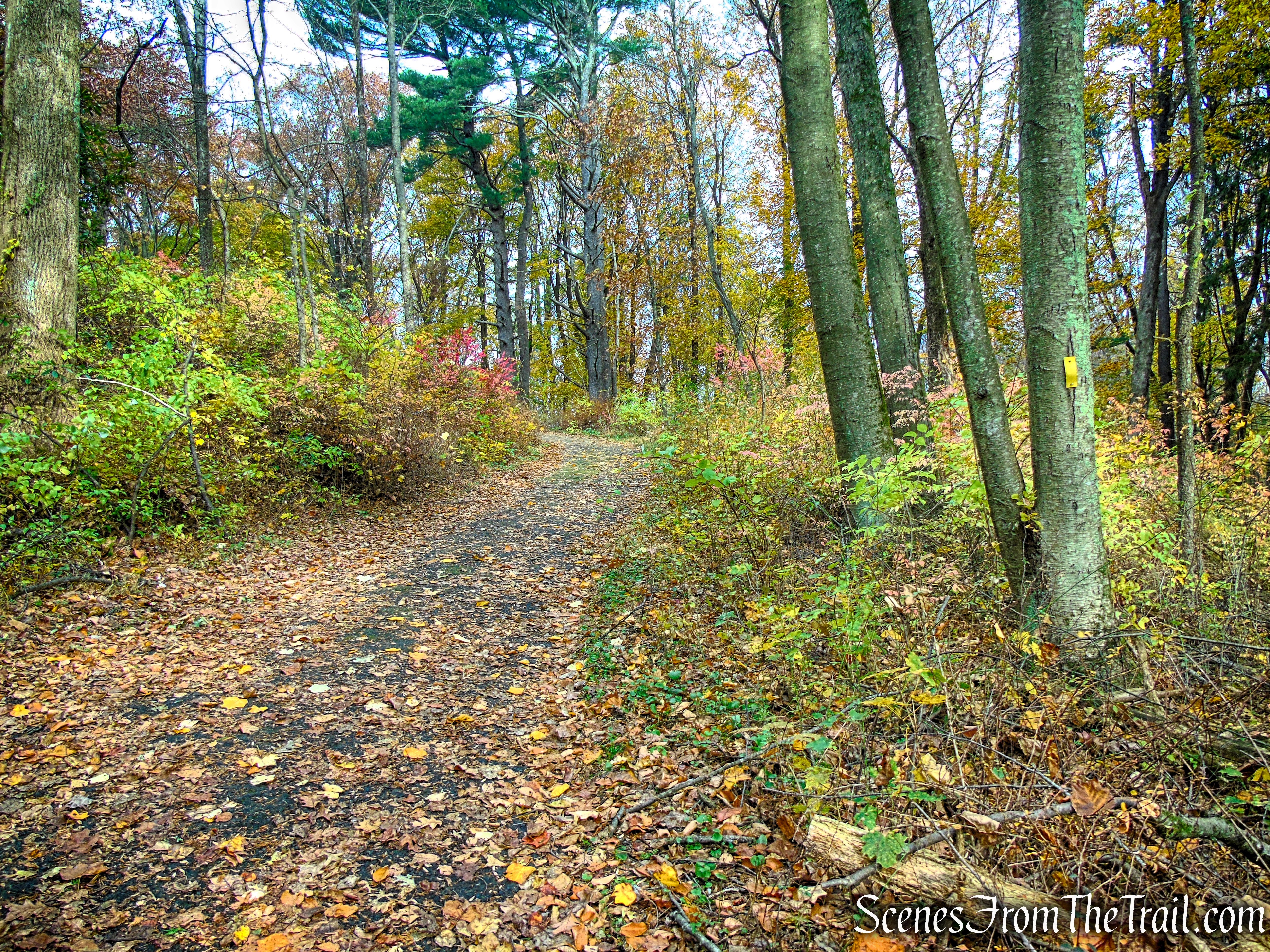
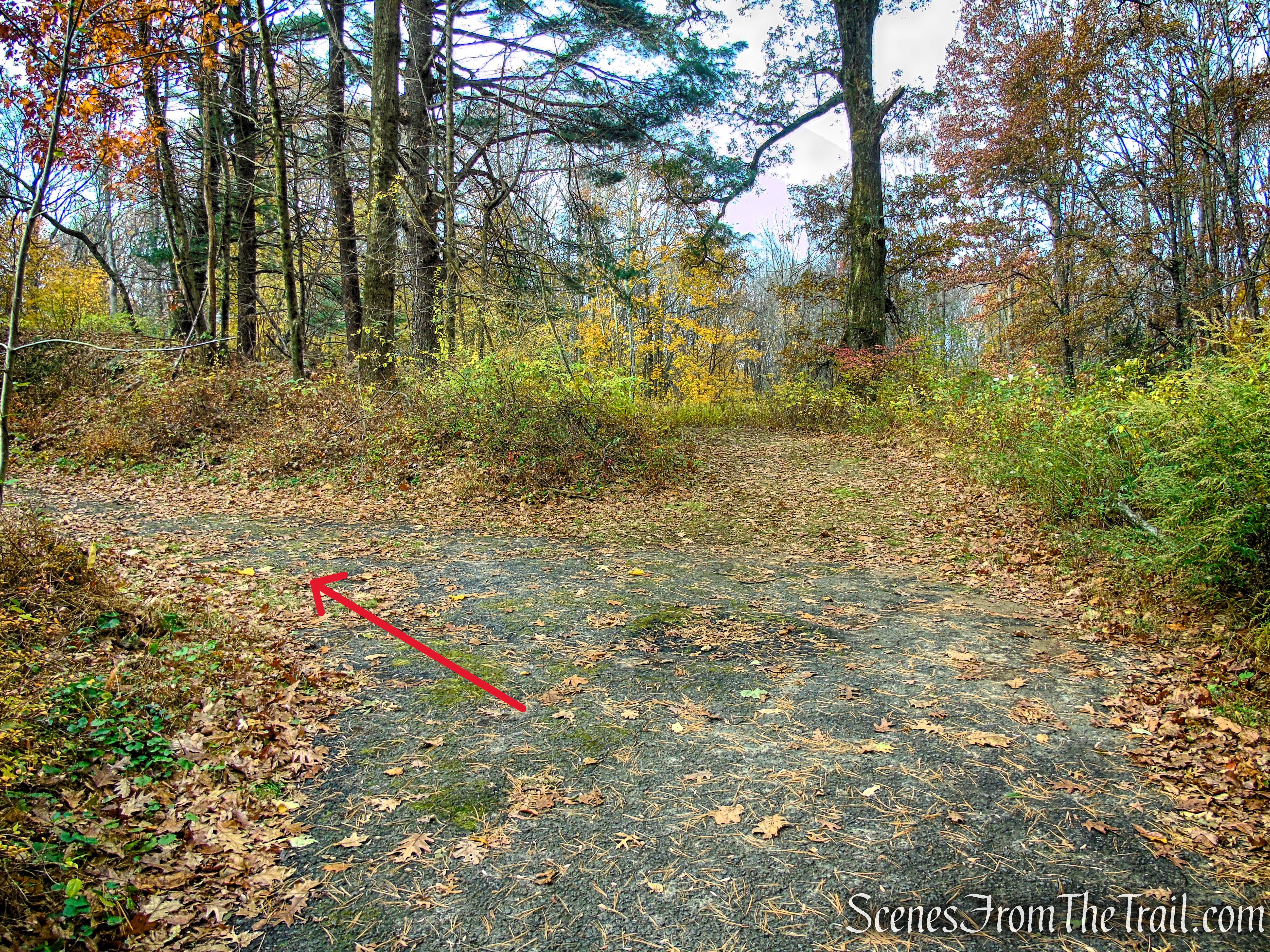
Follow the Yellow Trail a short distance to a fork. While the trail continues straight ahead off the asphalt road, turn left and stay on the paved road to reach the ruins of the Black Mansion.

Turn left to remain on asphalt road

Turn left to remain on asphalt road

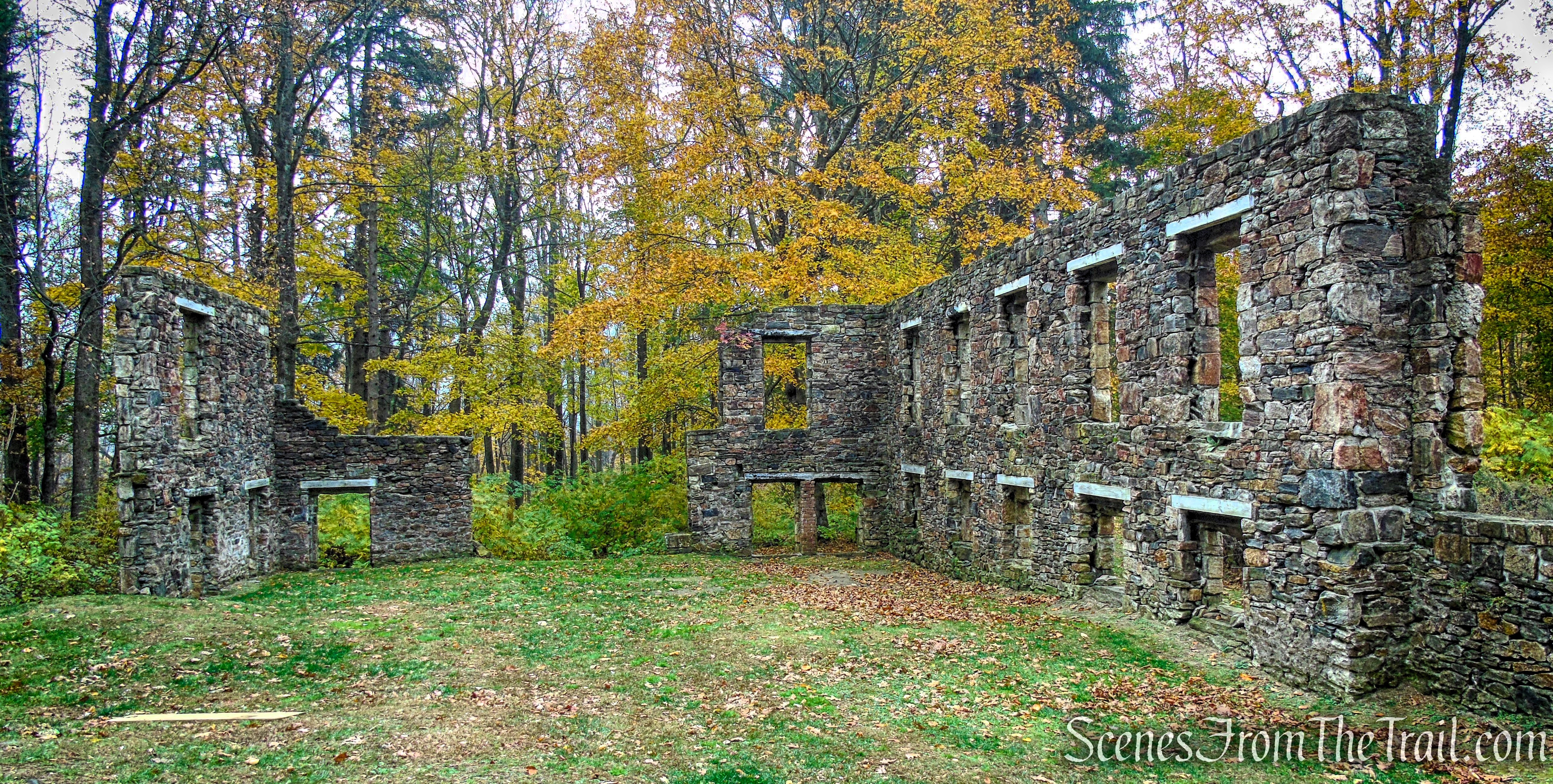
Before you lie the stone ruins of the first floor and partial basement of a three-story fieldstone and shingle mansion, once a luxurious summer home heated only by large fireplaces.

Black Mansion ruins - Leon Levy Preserve

Black Mansion ruins – Leon Levy Preserve

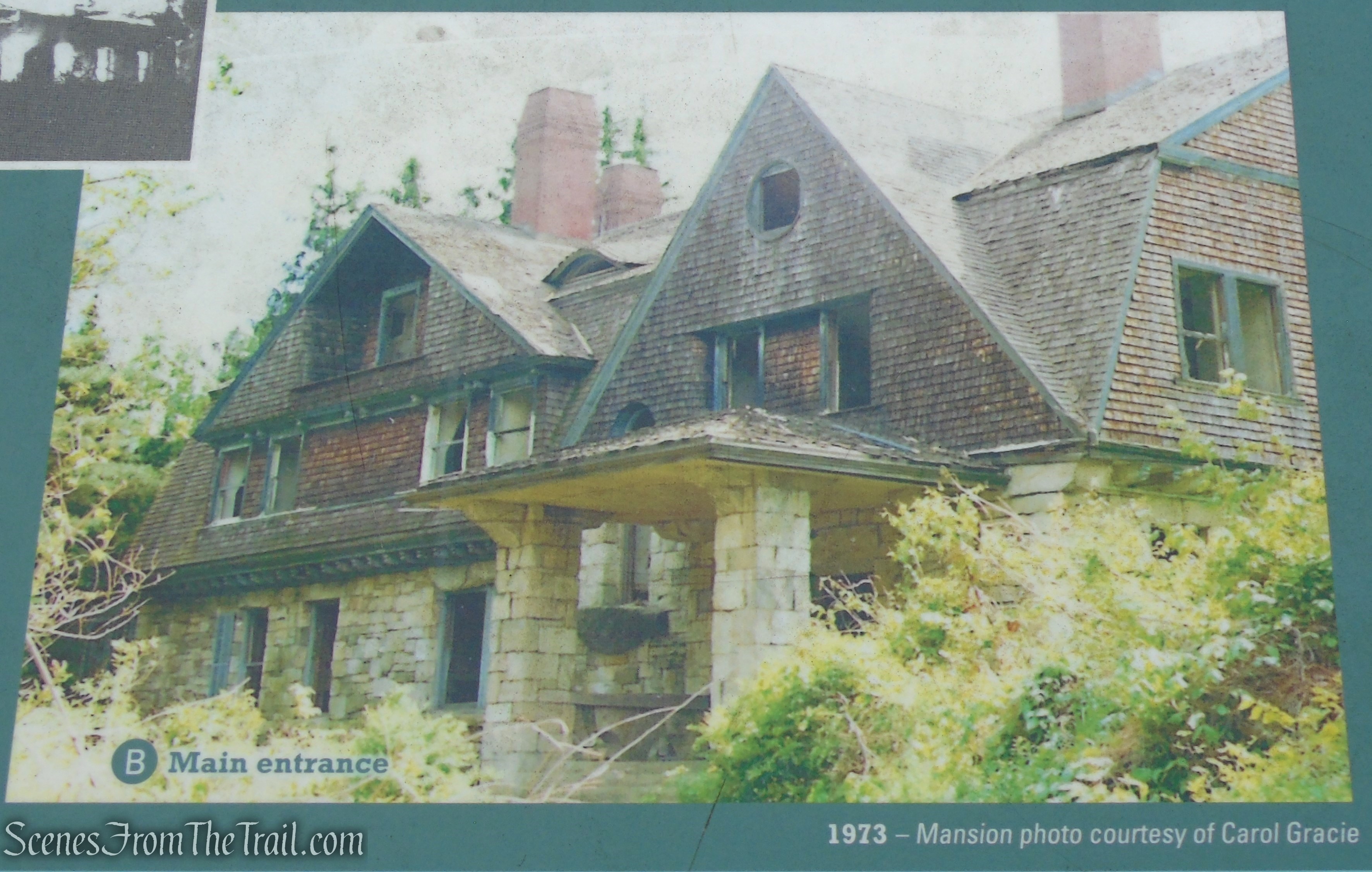
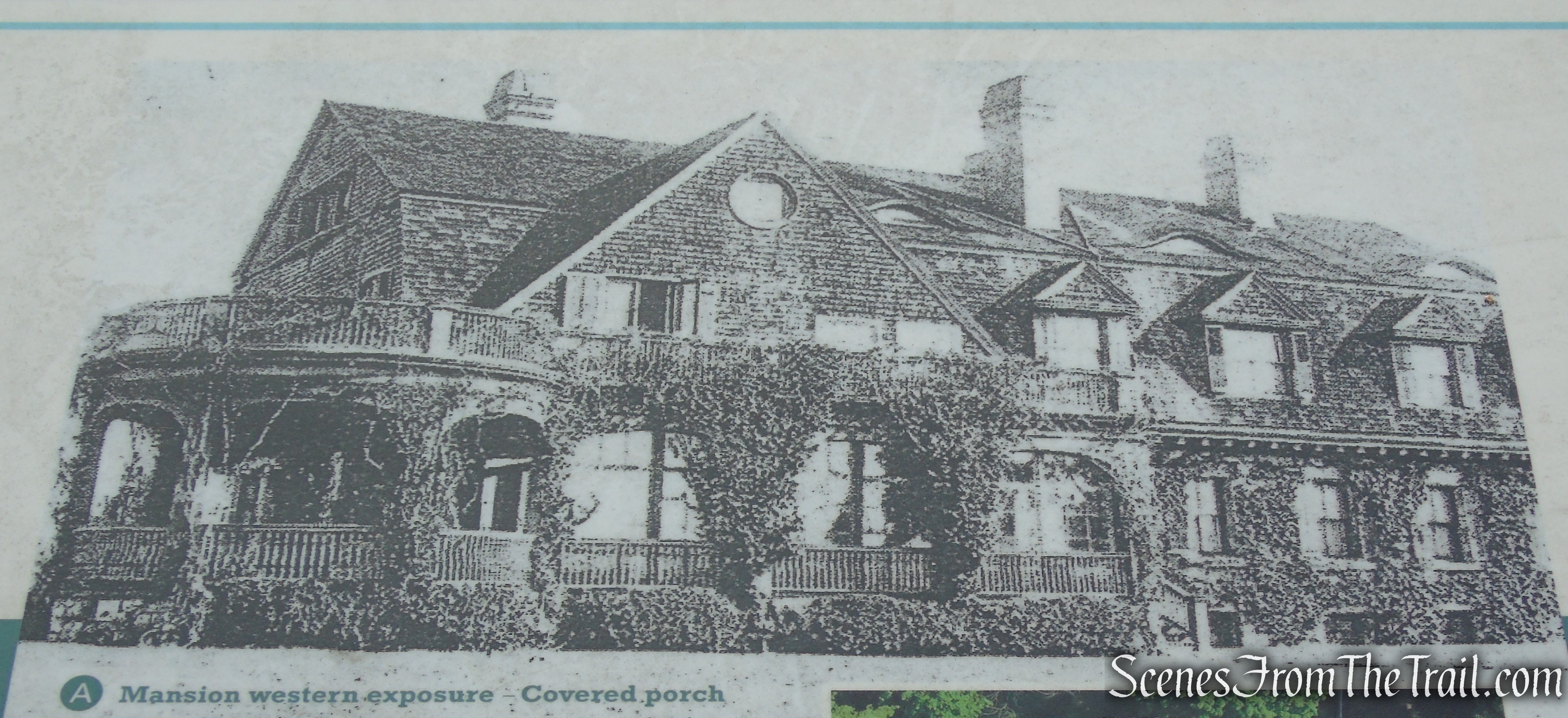
Here’s a glimpse of the mansion in 1973—note the stone columns on the front porch. Only one still stands today.

Black Mansion 1973

Black Mansion 1973

The main floor featured several spacious reception rooms, a grand entryway, a paneled library, and a music room with an Aeolian organ. Its ceiling was painted to resemble a blue sky filled with birds. On the second floor, a long hall connected the bedrooms and an art gallery, while the attic offered sweeping views of Long Island Sound.

Black Mansion ruins - Leon Levy Preserve

Black Mansion ruins – Leon Levy Preserve

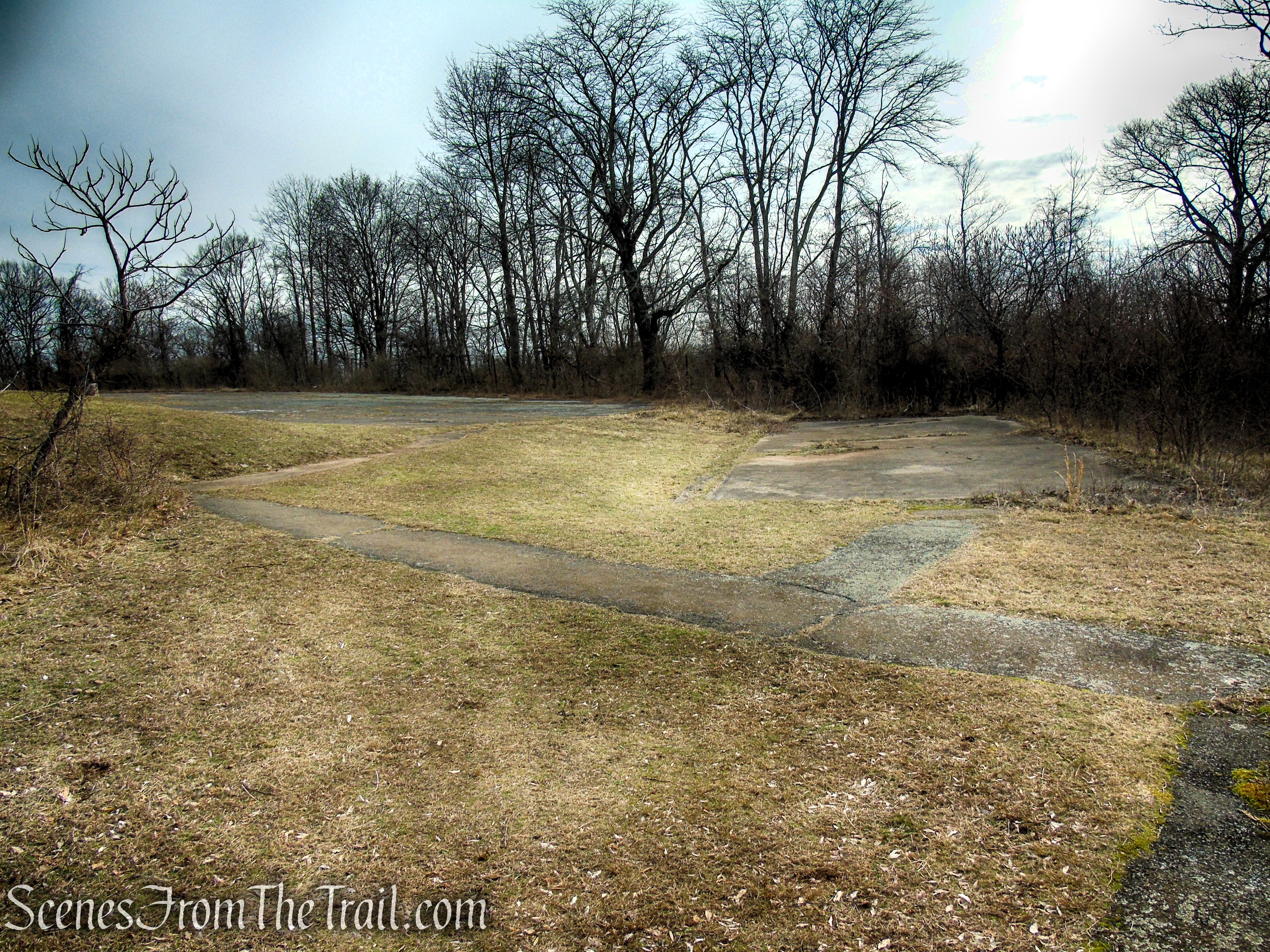
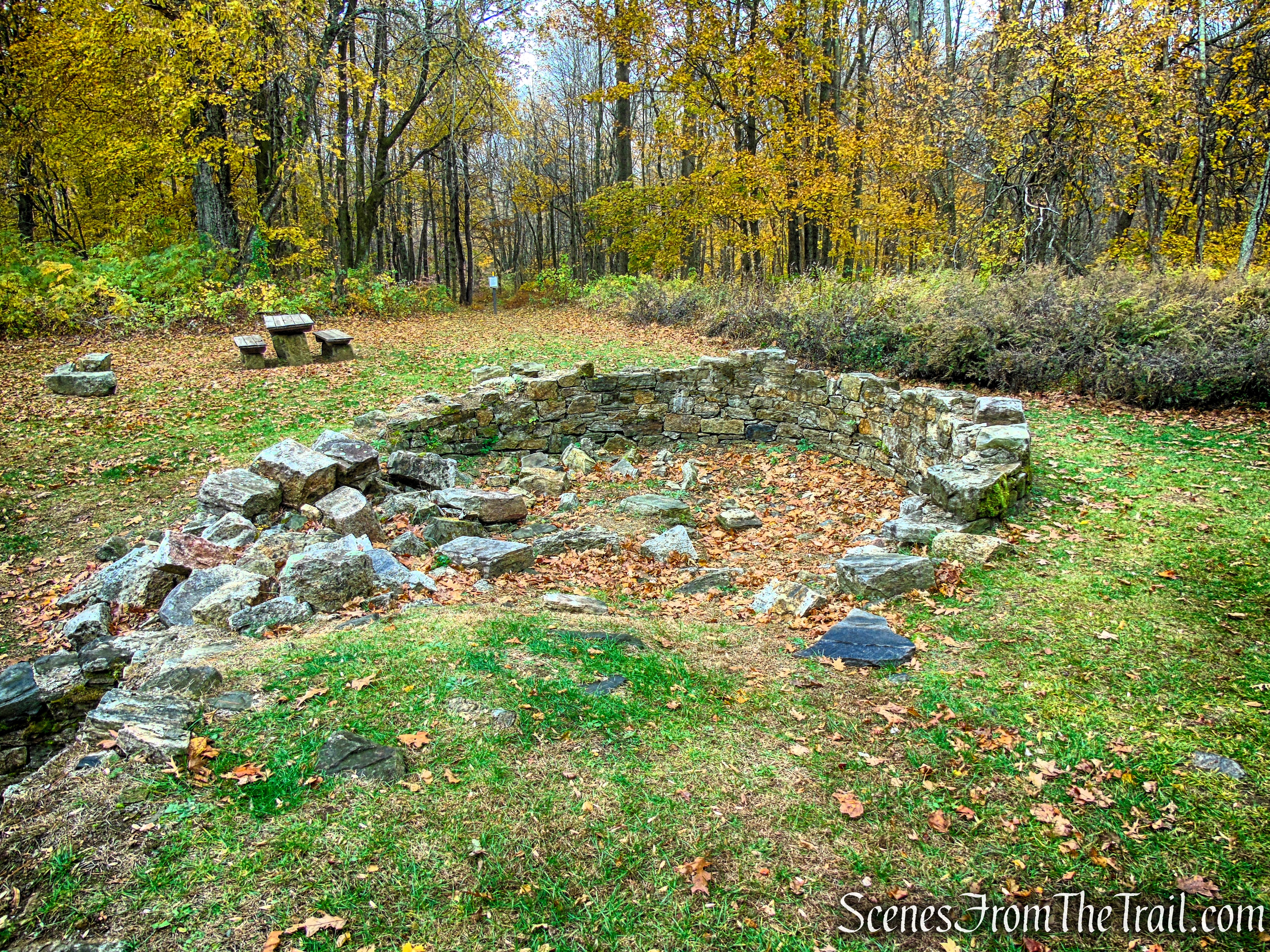
Fragments of stone mark where the Black Mansion’s western circular porch once curved gracefully, offering sweeping views of the surrounding grounds.

Black Mansion ruins - Leon Levy Preserve

Black Mansion ruins – Leon Levy Preserve

The Black Mansion’s circular porch along the western side offered a sweeping, panoramic view of the surrounding landscape. Designed for relaxation and entertaining, it curved gracefully from the main structure, allowing residents to enjoy the afternoon sun and the tranquil scenery of the grounds.

Black Mansion undated photo

Black Mansion undated photo

 Today, only fragments of the stone foundation hint at the porch’s elegant curve and former charm.

Black Mansion ruins - Leon Levy Preserve

Black Mansion ruins – Leon Levy Preserve

The covered porch of the Black Mansion was an elegant feature that wrapped around the front of the home, providing a shaded space to enjoy the outdoors. Supported by sturdy stone columns, the porch offered a grand entrance and a place for summer leisure, blending seamlessly with the mansion’s fieldstone and shingle design. Today, only a single column remains as a silent reminder of the porch’s former grandeur.

Black Mansion ruins - Leon Levy Preserve

Black Mansion ruins – Leon Levy Preserve

The Black Mansion was renowned for its intricate architectural details, from ornate woodwork to expansive windows that filled the rooms with light. Though much of the structure has vanished, the layout and remaining stonework hint at a home designed for both comfort and impressive social gatherings. A fire on January 28, 1979 destroyed most of the Black Mansion, leaving only its stone walls and ruins to tell the story of its former splendor.

Black Mansion ruins - Leon Levy Preserve

Black Mansion ruins – Leon Levy Preserve

After exploring the Black Mansion ruins, look west for a wooden post marked with a yellow blaze. Follow the Yellow Trail westward for about 250 yards until you reach Junction 5, the start of the Green Trail. From there, follow the green blazes as the trail descends and curves southwest.

Yellow Trail - Leon Levy Preserve

Yellow Trail – Leon Levy Preserve

Yellow Trail - Leon Levy Preserve

Yellow Trail – Leon Levy Preserve

Yellow Trail - Leon Levy Preserve

Yellow Trail – Leon Levy Preserve

Turn right on Green Trail

Turn right on Green Trail

Turn right on Green Trail

Turn right on Green Trail

The Green Trail at the Leon Levy Preserve offers a peaceful, secluded hike that showcases the preserve’s rich natural diversity. Winding through hardwood forests, along wetland edges, and over gentle slopes, the trail highlights the tranquil and restorative side of the preserve.

Green Trail - Leon Levy Preserve

Green Trail – Leon Levy Preserve

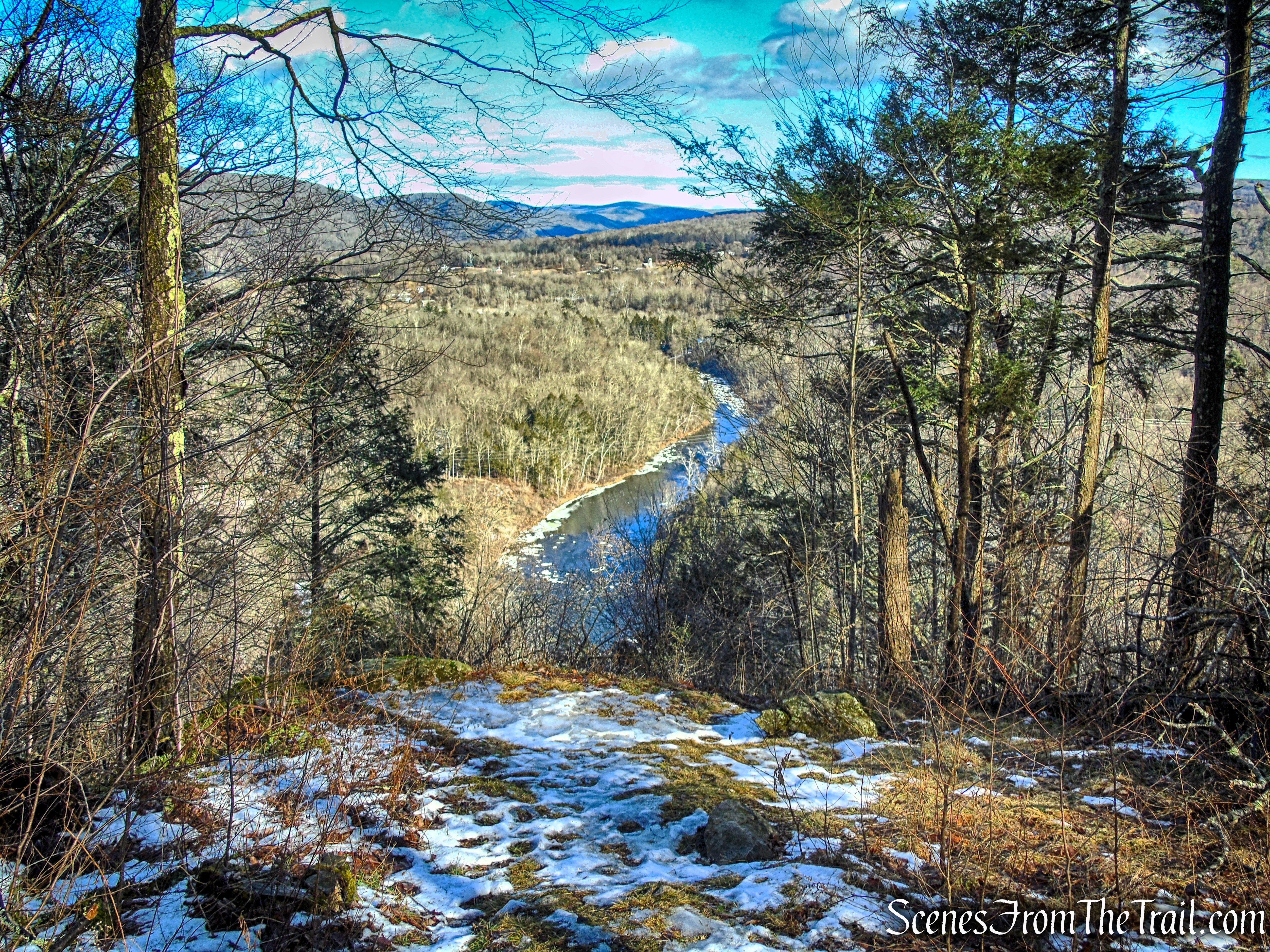
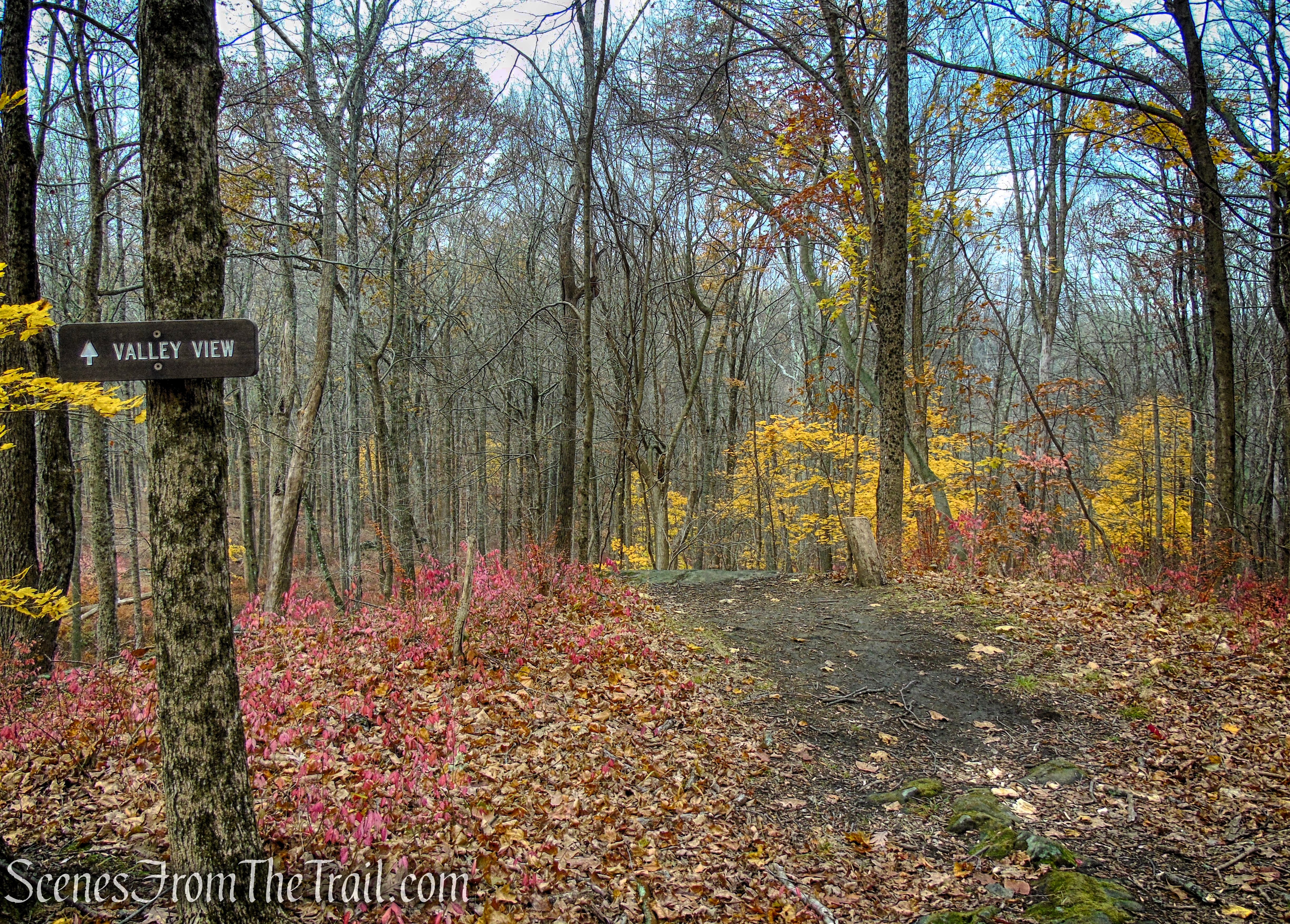
From Junction 5, the Green Trail leads hikers downhill and southwest through peaceful hardwood forests and along gentle slopes. The trail gradually opens to the Valley View overlook.

Valley View - Leon Levy Preserve

Valley View – Leon Levy Preserve

Perched above the preserve, Valley View offers a quiet spot to take in sweeping natural scenery and the peaceful forest below.

Valley View - Leon Levy Preserve

Valley View – Leon Levy Preserve

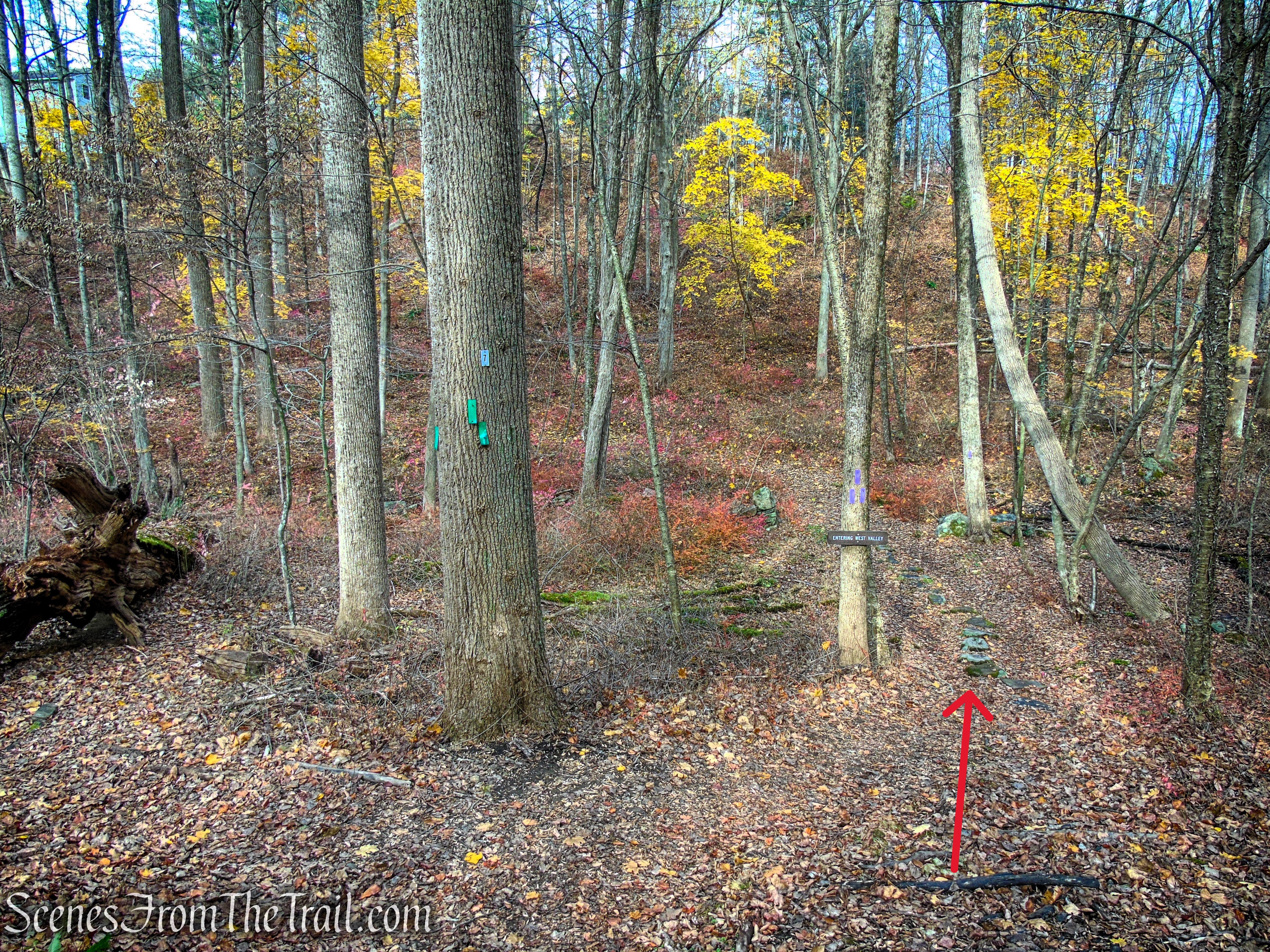
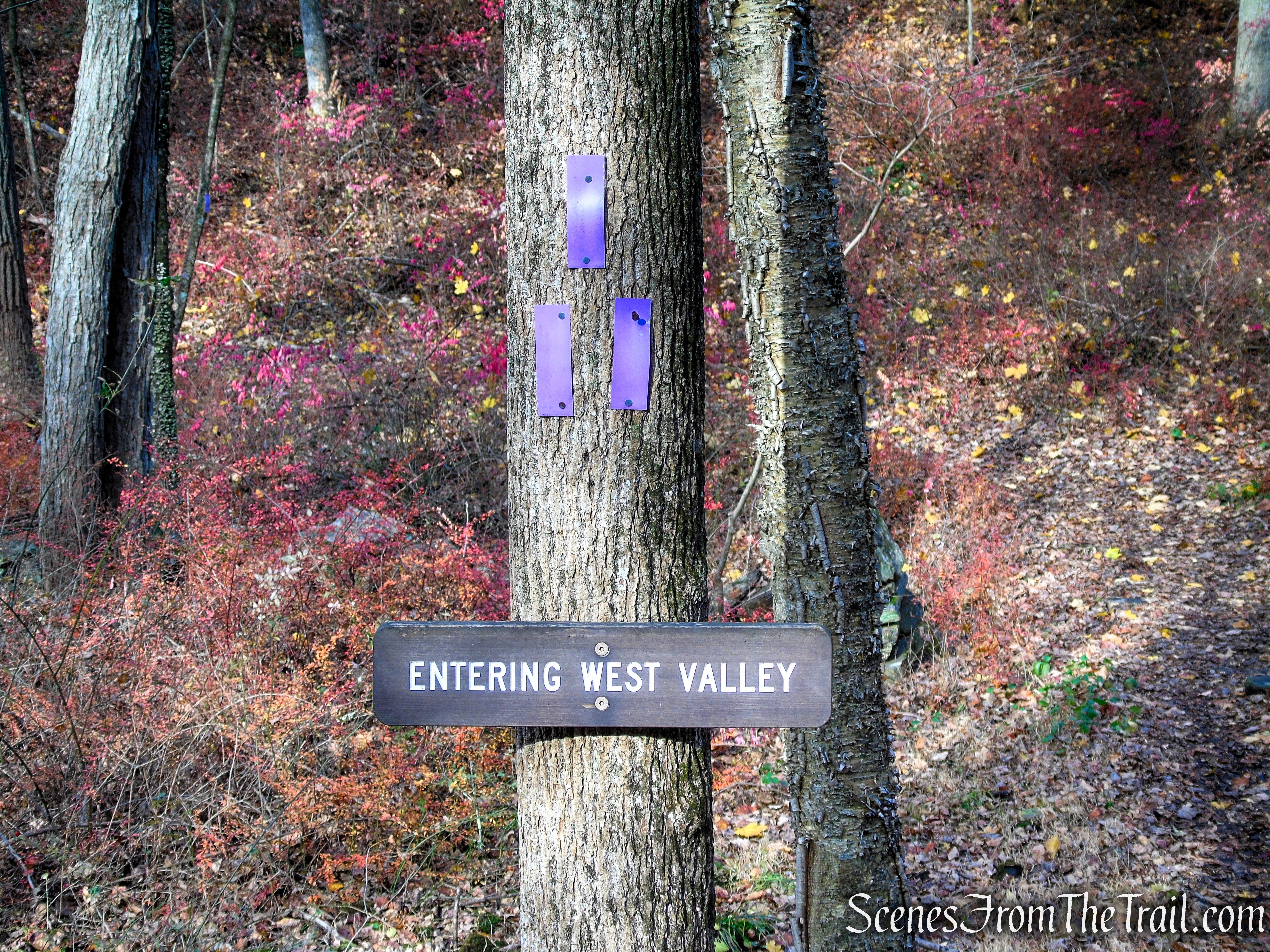
From the Valley View overlook, the Green Trail continues downhill, winding through quiet hardwood forests and along gently rolling terrain. After a scenic stretch, the trail reaches Junction 7, where it meets the Purple Trail in the West Valley section of the preserve.

Green Trail - Leon Levy Preserve

Green Trail – Leon Levy Preserve

Veer right on the Purple Trail

Veer right on the Purple Trail

Purple Trail - Leon Levy Preserve

Purple Trail – Leon Levy Preserve

Purple Trail - Leon Levy Preserve

Purple Trail – Leon Levy Preserve

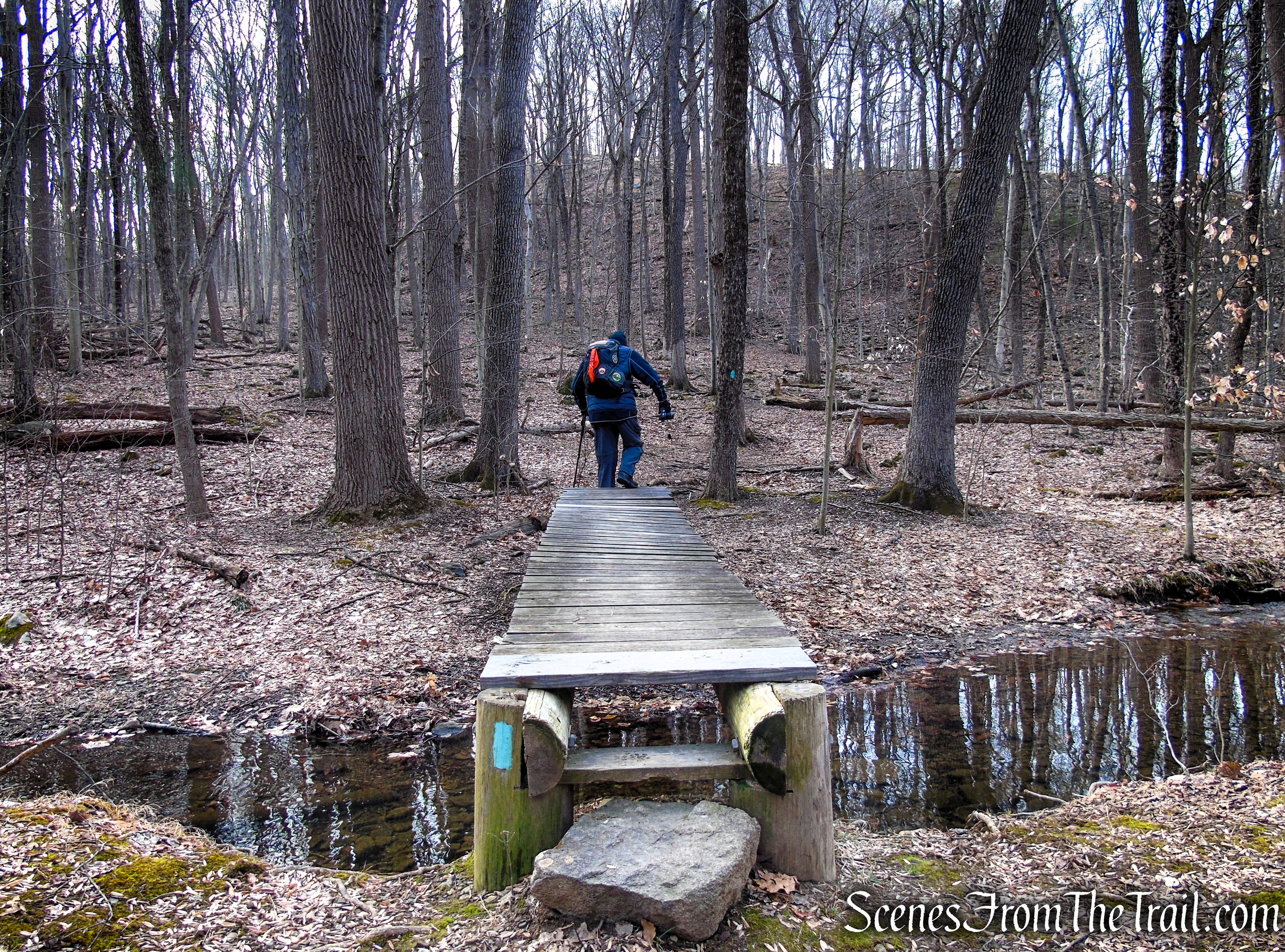
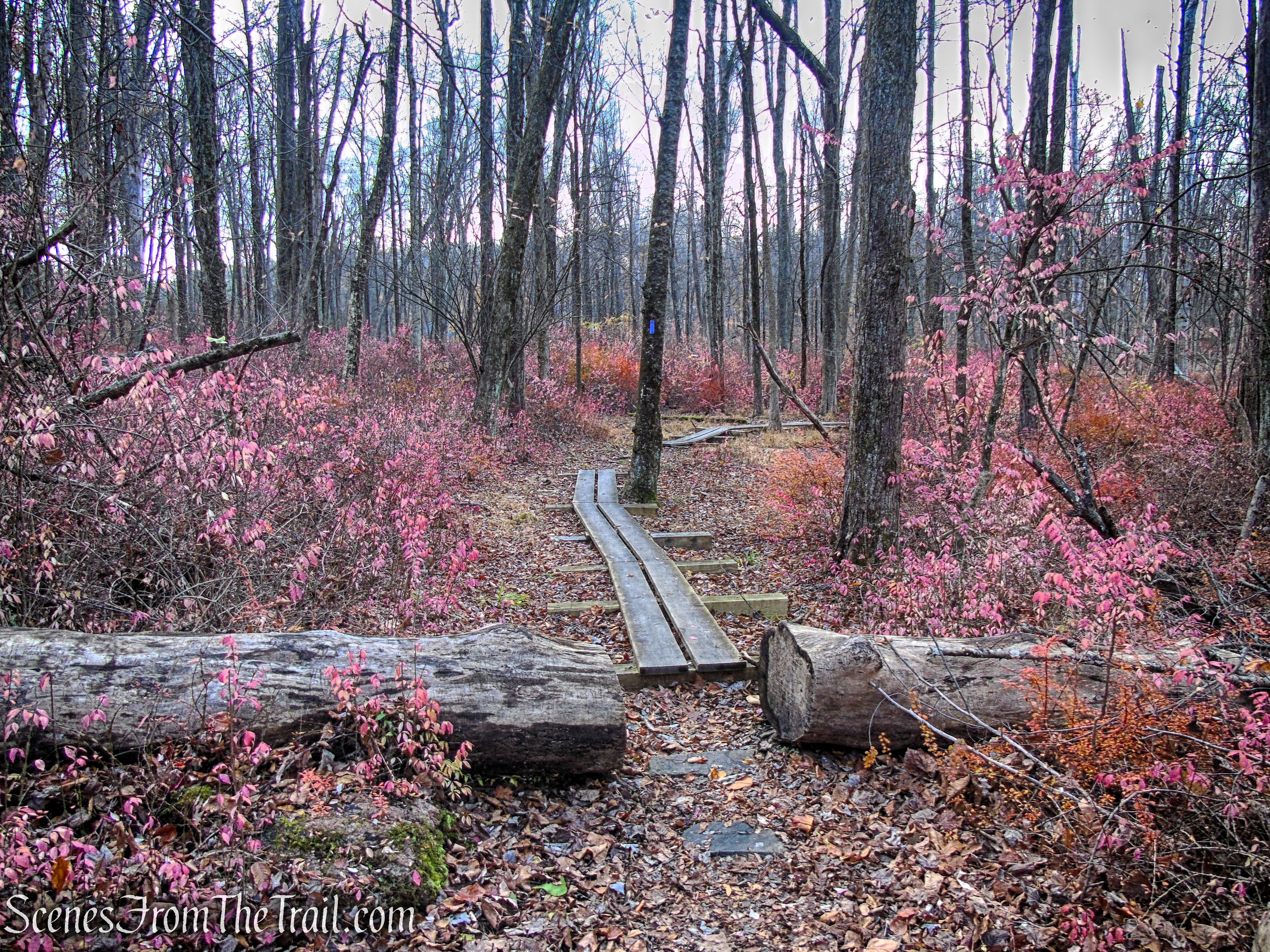
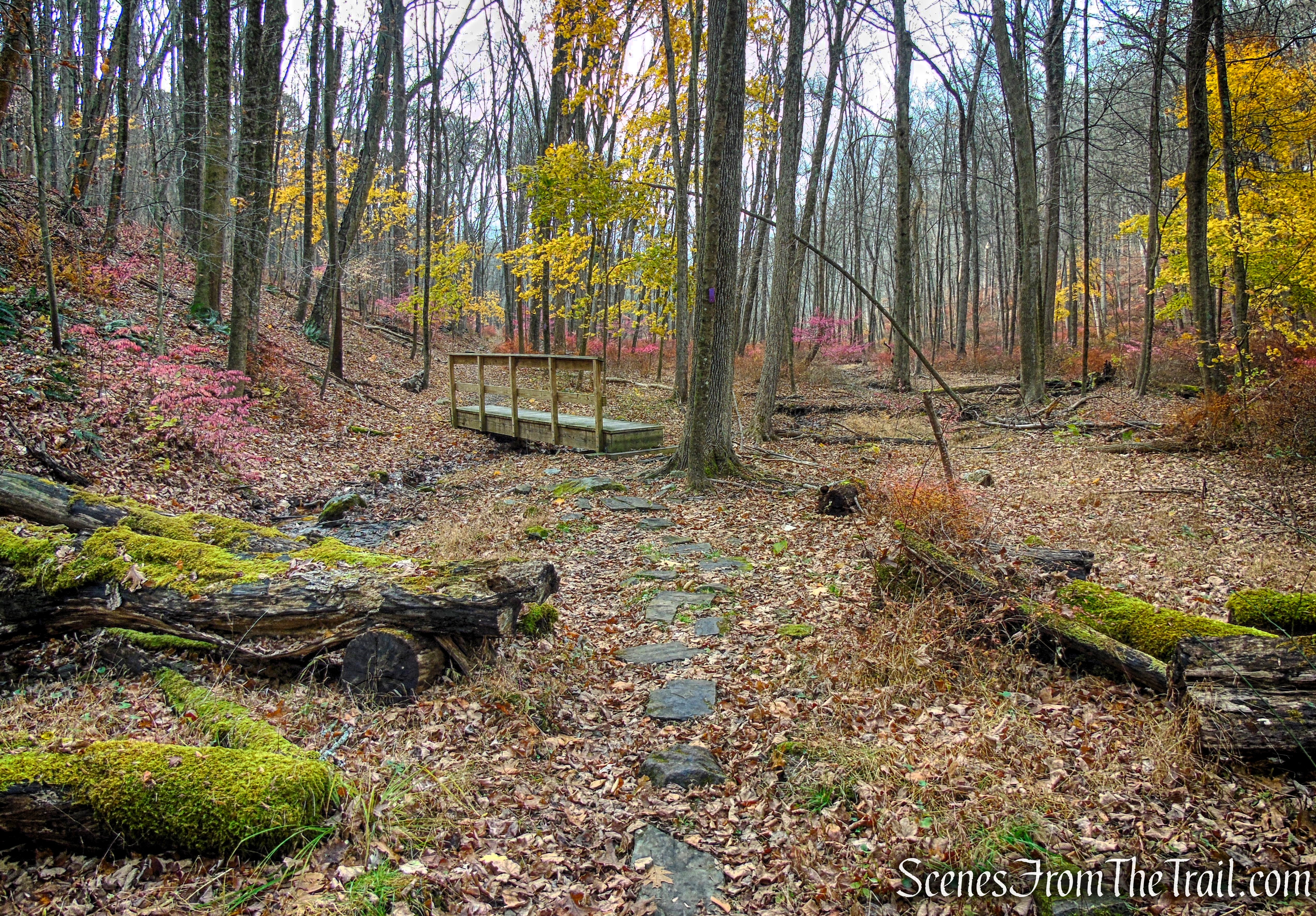
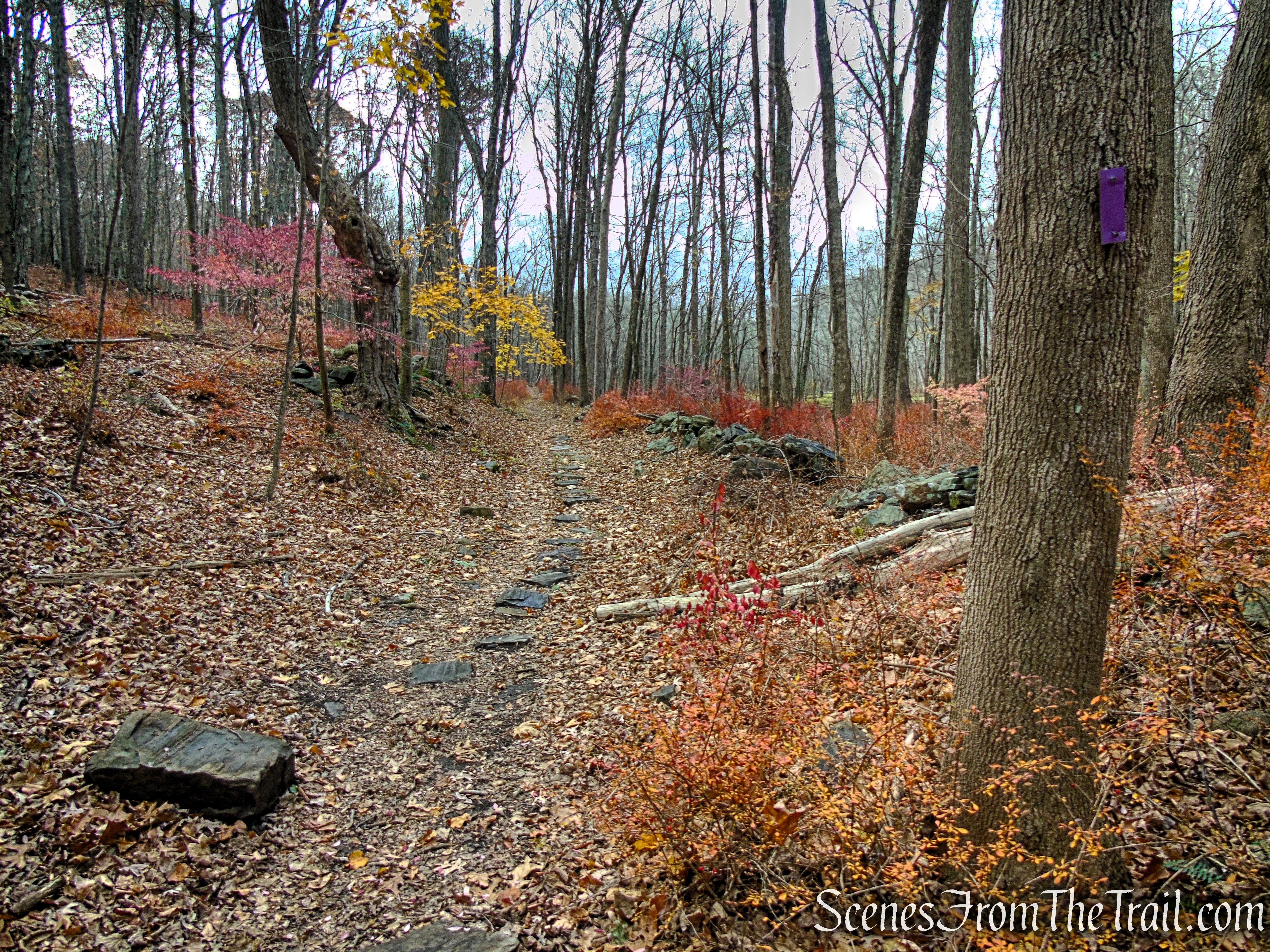
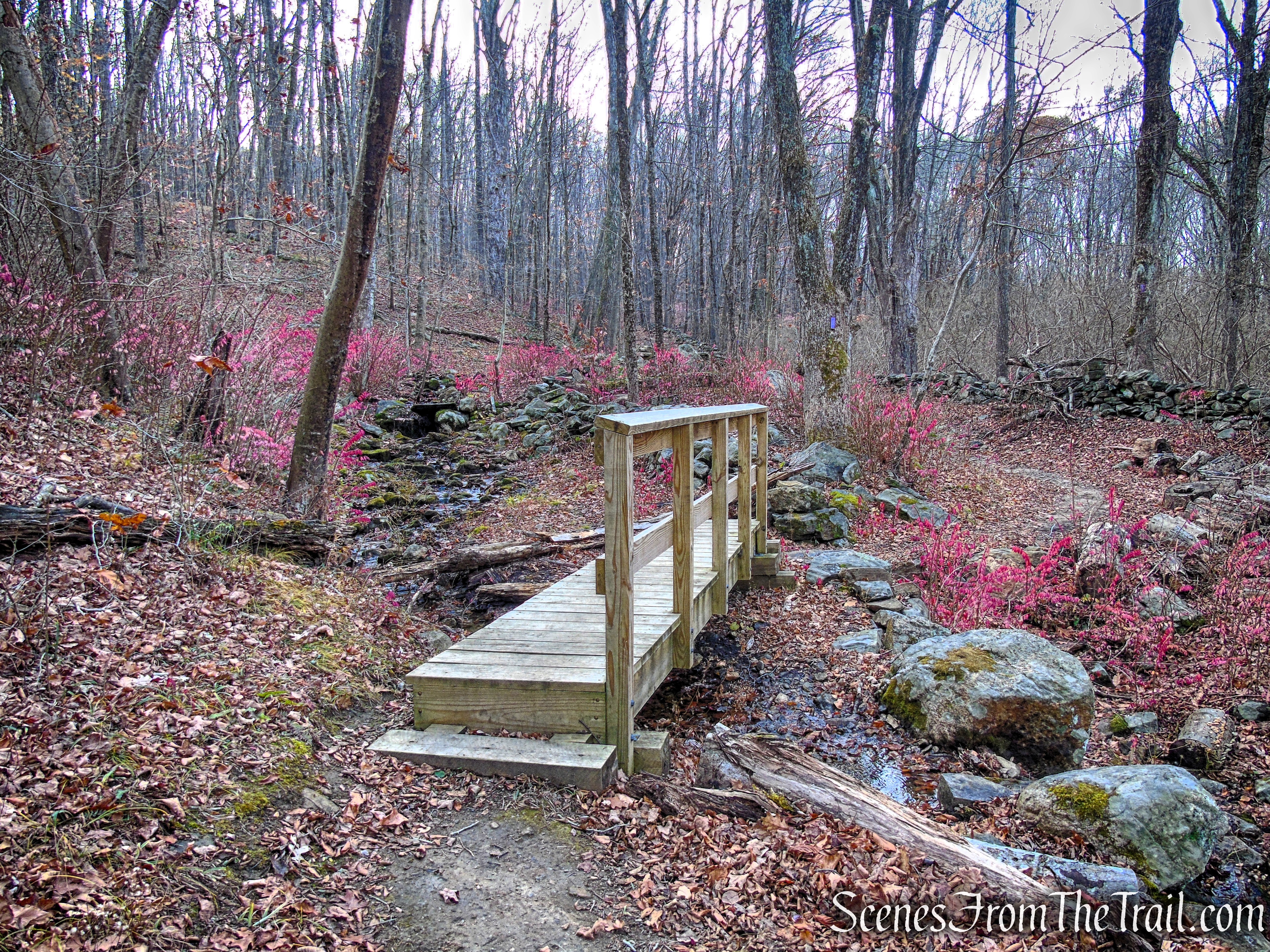
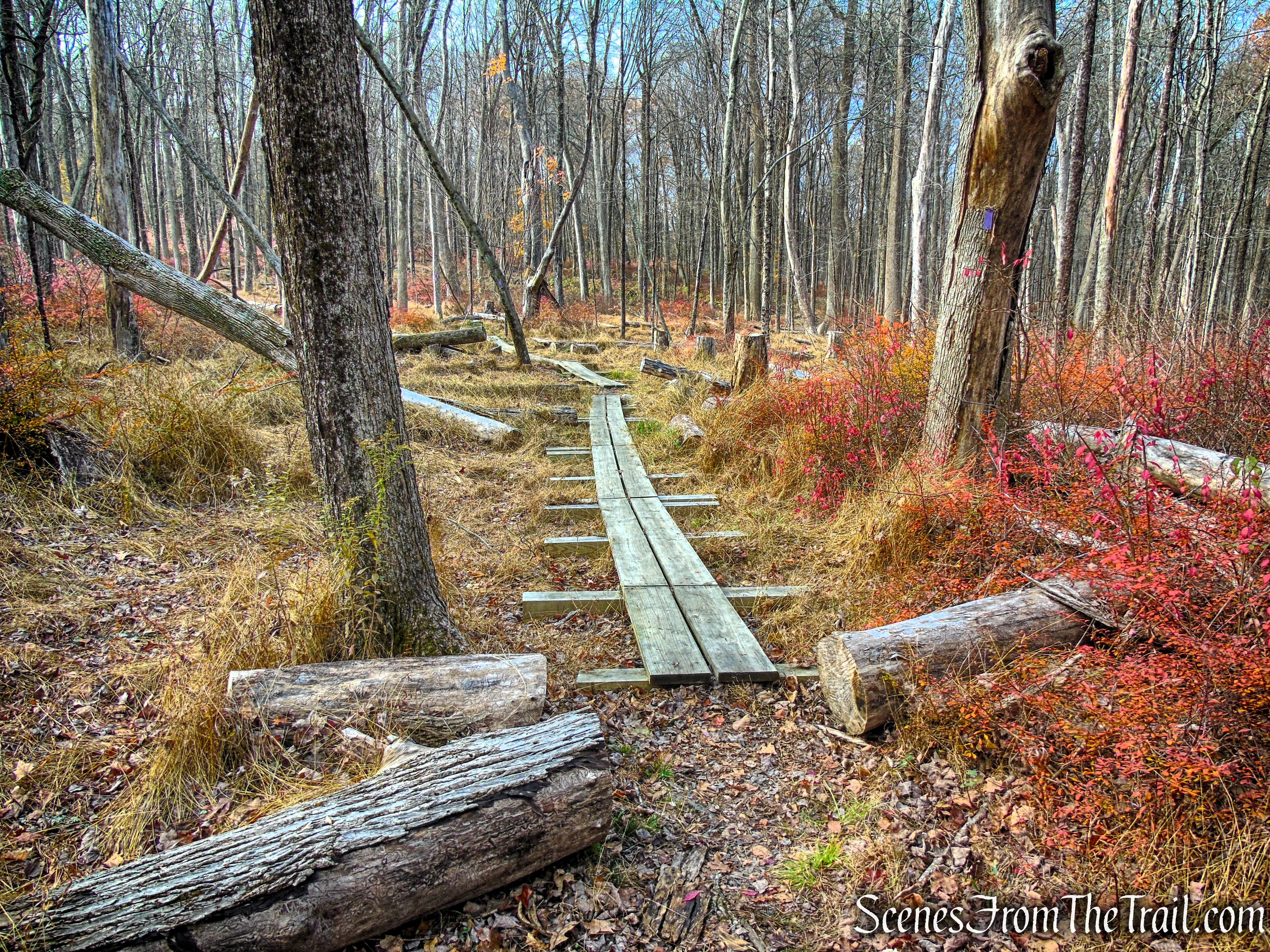
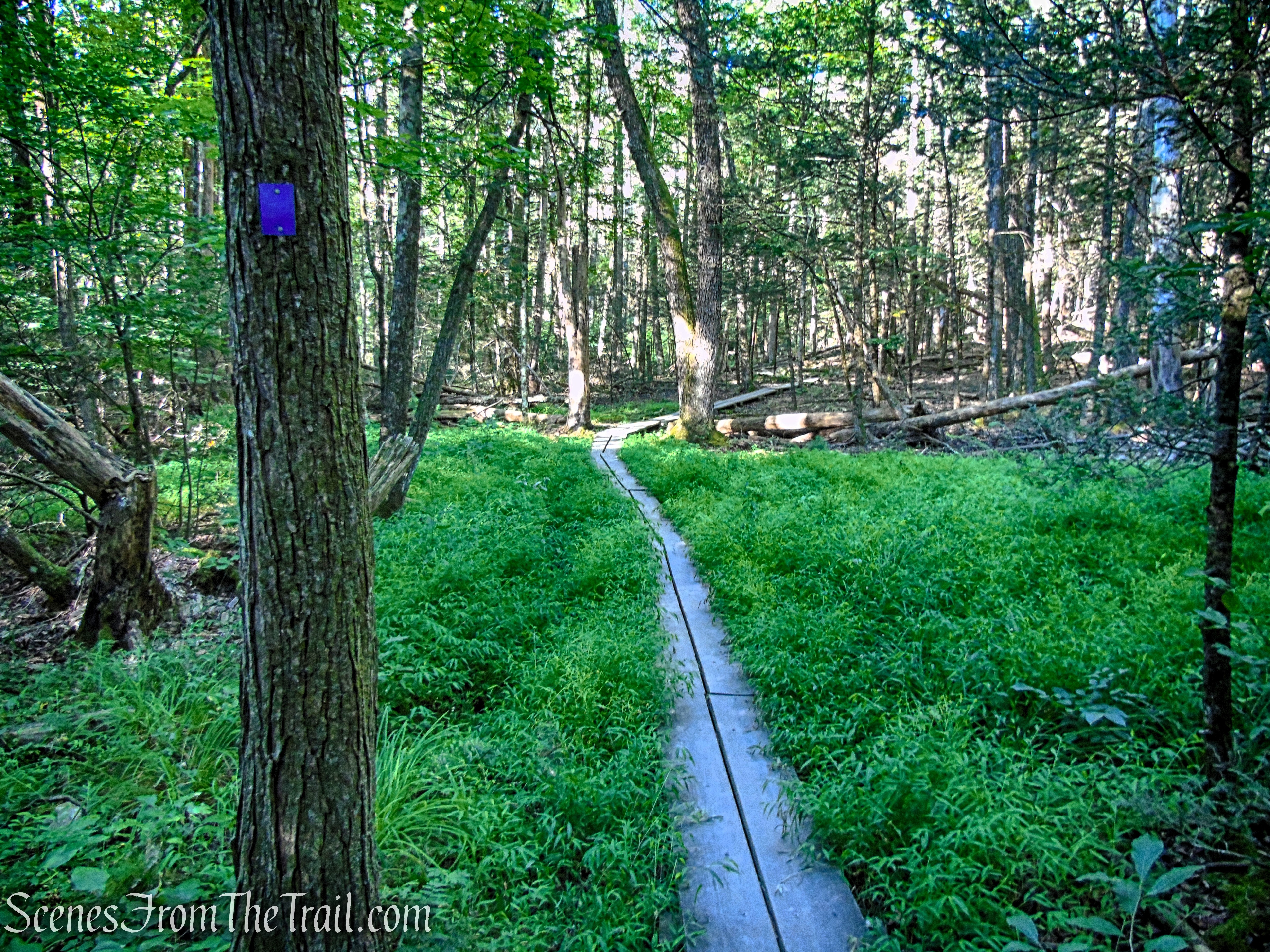
From Junction 7, follow the Purple Trail through the West Valley, crossing several wooden footbridges and bog walks that carry you over damp areas. The trail winds through mixed hardwood forests and serene wetlands before reaching the Orange Trail, offering a peaceful and scenic connector through the quieter parts of the preserve.

Purple Trail - Leon Levy Preserve

Purple Trail – Leon Levy Preserve

Purple Trail - Leon Levy Preserve

Purple Trail – Leon Levy Preserve

Purple Trail - Leon Levy Preserve

Purple Trail – Leon Levy Preserve

Purple Trail - Leon Levy Preserve

Purple Trail – Leon Levy Preserve

Purple Trail - Leon Levy Preserve

Purple Trail – Leon Levy Preserve

Purple Trail - Leon Levy Preserve

Purple Trail – Leon Levy Preserve

Purple Trail - Leon Levy Preserve

Purple Trail – Leon Levy Preserve

Purple Trail - Leon Levy Preserve

Purple Trail – Leon Levy Preserve

The Purple Trail concludes at a stone wall marking its junction with the Orange Trail. From here, turn left and follow the Orange Trail as it traces the eastern boundary of the preserve, offering gentle terrain and views of the surrounding forest.

Purple Trail - Leon Levy Preserve

Purple Trail – Leon Levy Preserve

Orange Trail - Leon Levy Preserve

Orange Trail – Leon Levy Preserve

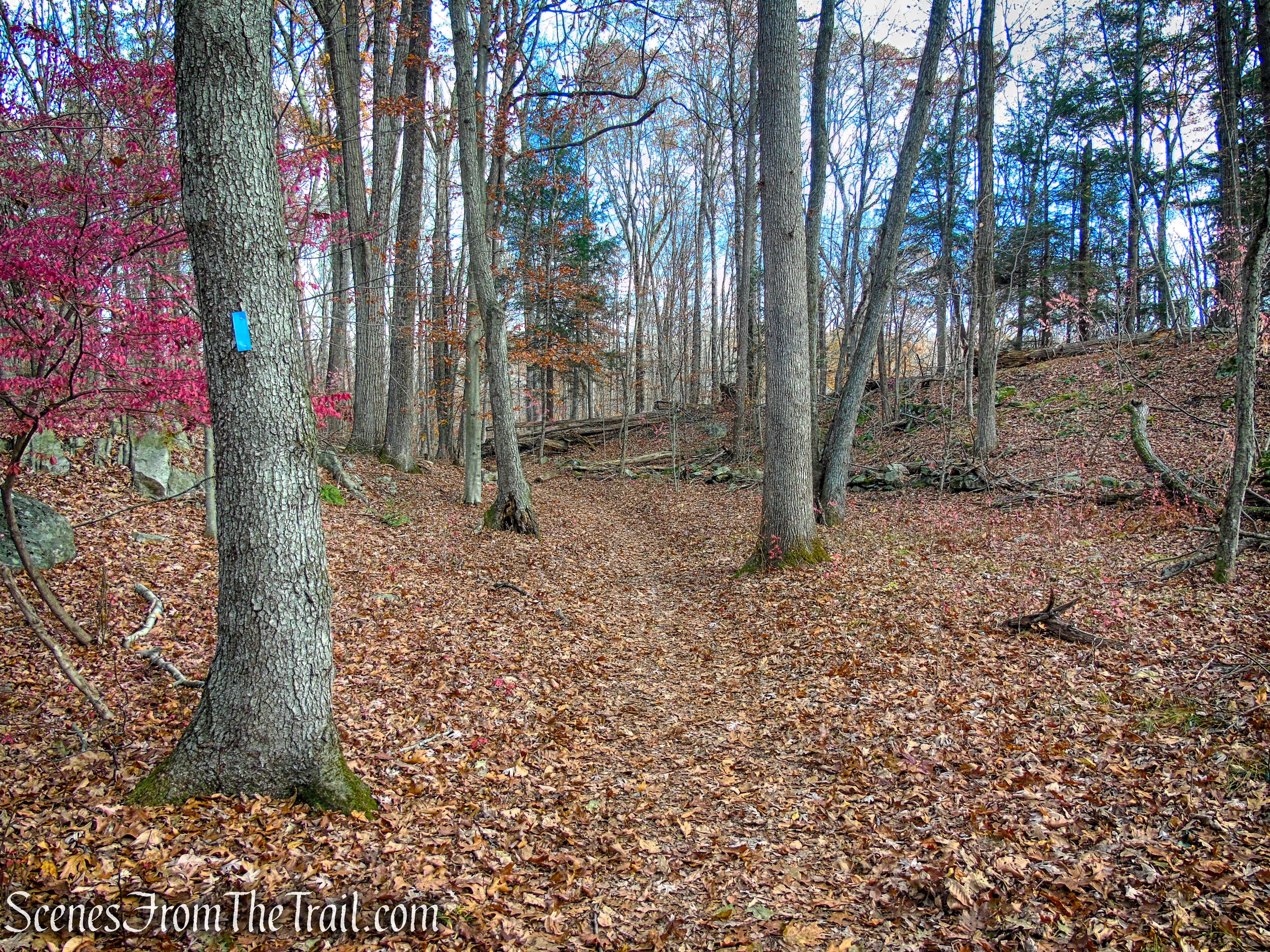
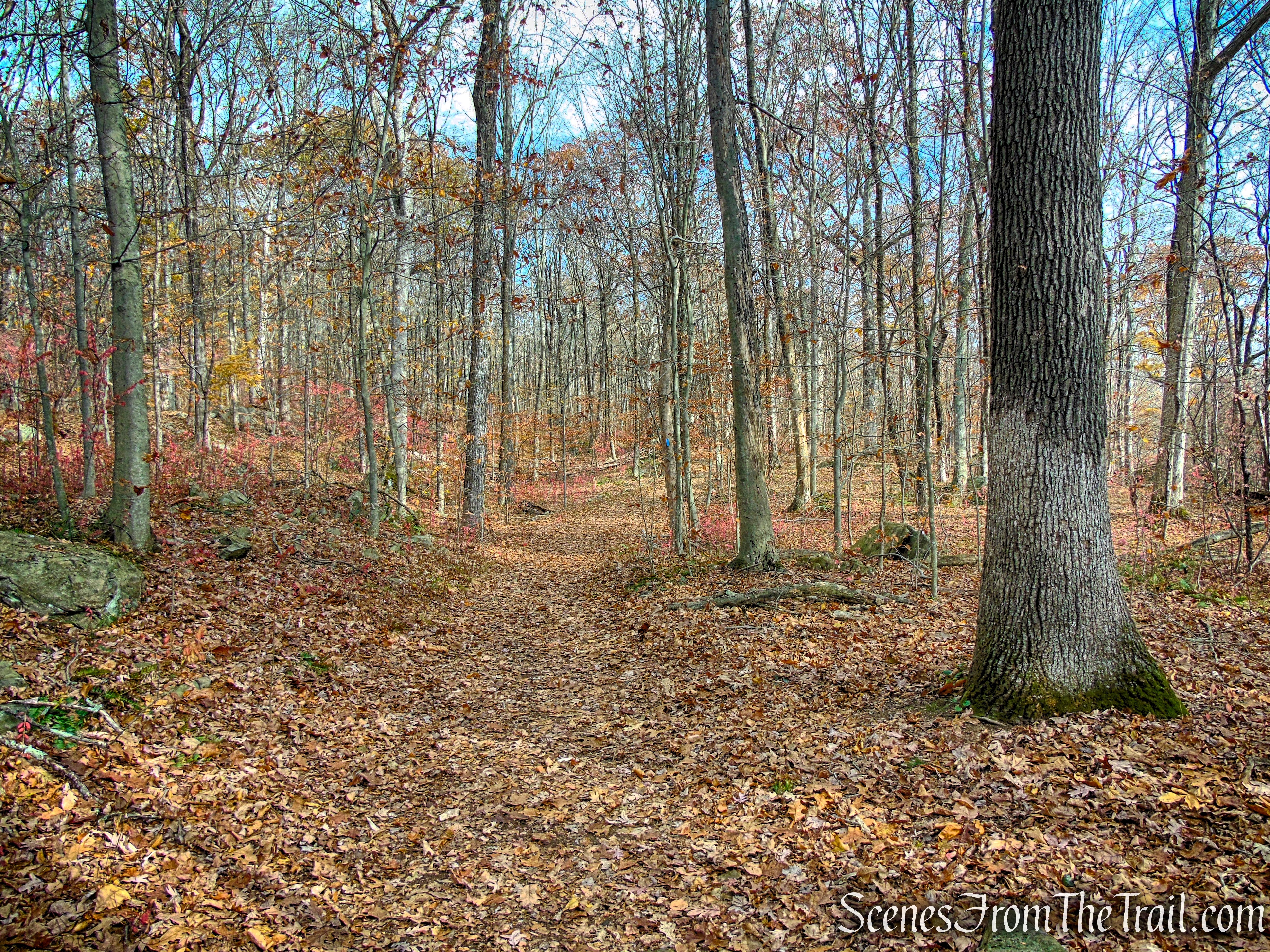
The Orange Trail ends at a junction with the Blue Trail. Continue straight on the Blue Trail (do not turn right) for about 140 yards, passing through shaded forest, until you reach the junction with the Yellow Trail.

Orange Trail - Leon Levy Preserve

Orange Trail – Leon Levy Preserve

Blue Trail - Leon Levy Preserve

Blue Trail – Leon Levy Preserve

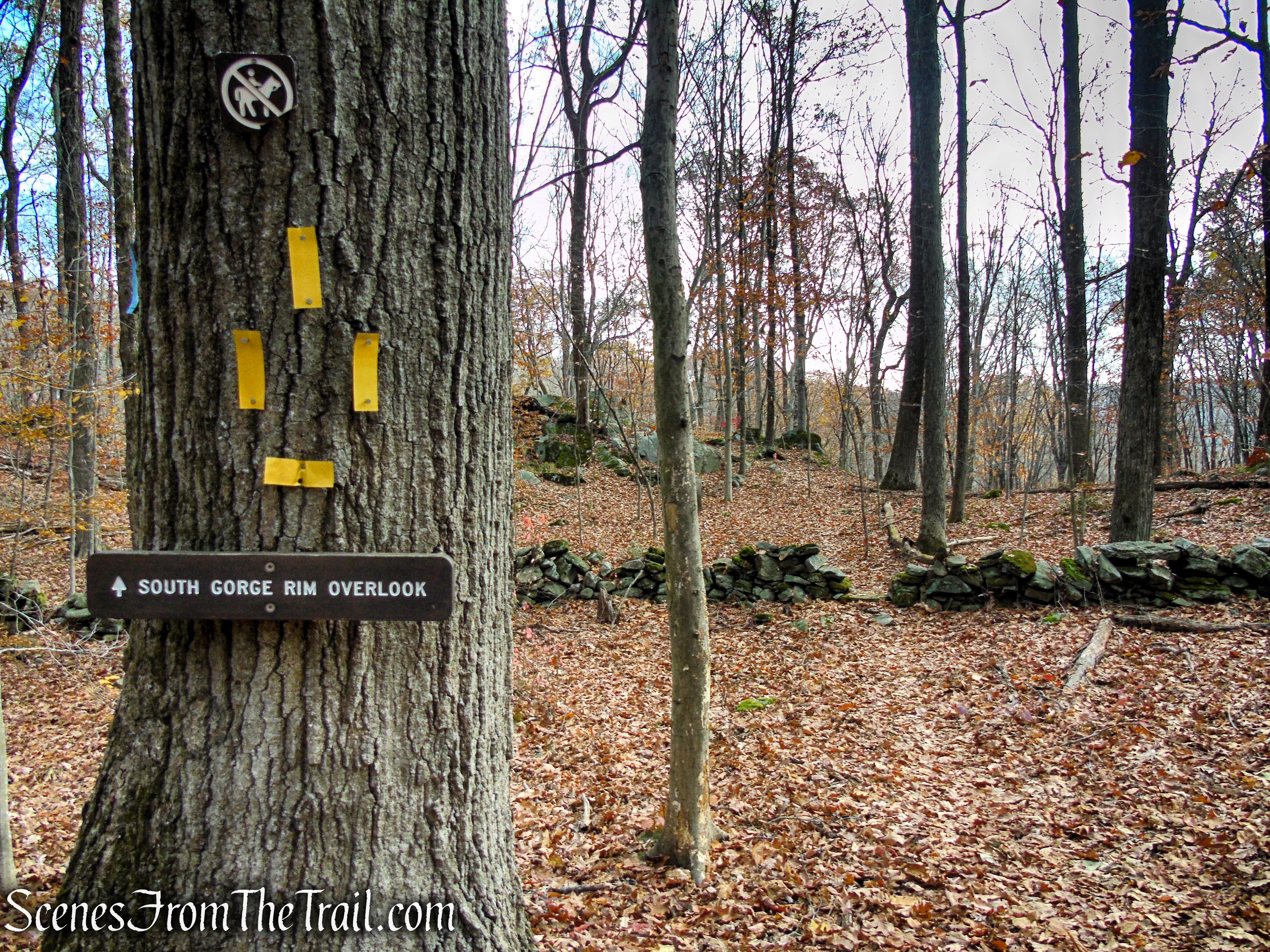
From the junction with the Blue Trail, follow the Yellow Trail north along the gorge. The trail meanders through forested terrain until you reach the North Gorge Rim Overlook, offering views of the ravine and surrounding woods.

Yellow Trail - Leon Levy Preserve

Yellow Trail – Leon Levy Preserve

Yellow Trail - Leon Levy Preserve

Yellow Trail – Leon Levy Preserve

Yellow Trail - Leon Levy Preserve

Yellow Trail – Leon Levy Preserve

Yellow Trail - Leon Levy Preserve

Yellow Trail – Leon Levy Preserve

Yellow Trail - Leon Levy Preserve

Yellow Trail – Leon Levy Preserve

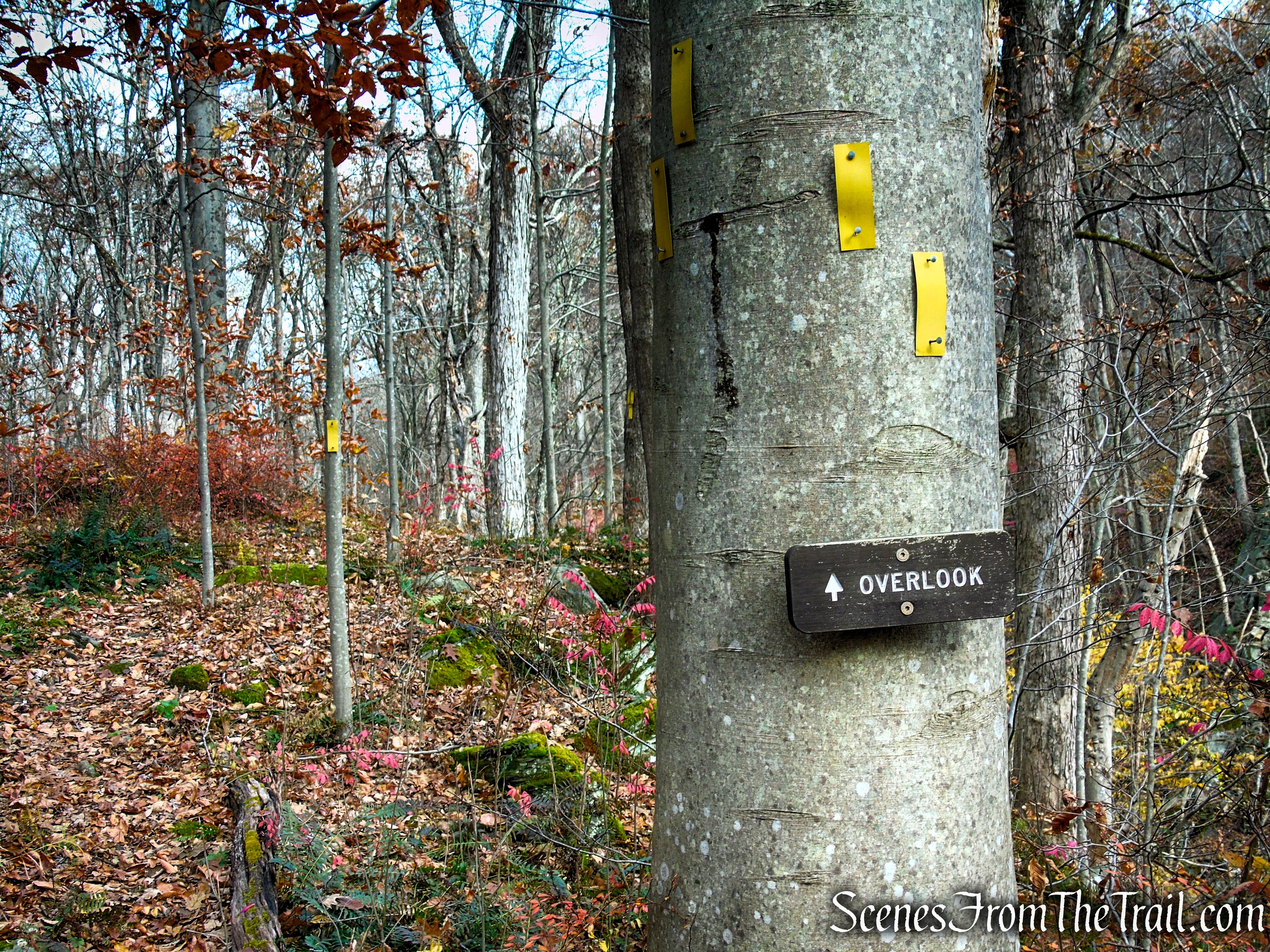
At the end of the Yellow Trail, turn right onto the Blue Trail. Cross the historic Gorge Stone Bridge, taking a moment to enjoy the view below, then follow the trail as it begins its steady climb up the hillside through shaded forest.

Blue Trail - Leon Levy Preserve

Blue Trail – Leon Levy Preserve

Blue Trail - Leon Levy Preserve

Blue Trail – Leon Levy Preserve

The Blue Trail leads hikers through shaded woods and gentle slopes, showcasing the preserve’s serene beauty.

Blue Trail - Leon Levy Preserve

Blue Trail – Leon Levy Preserve

Blue Trail - Leon Levy Preserve

Blue Trail – Leon Levy Preserve

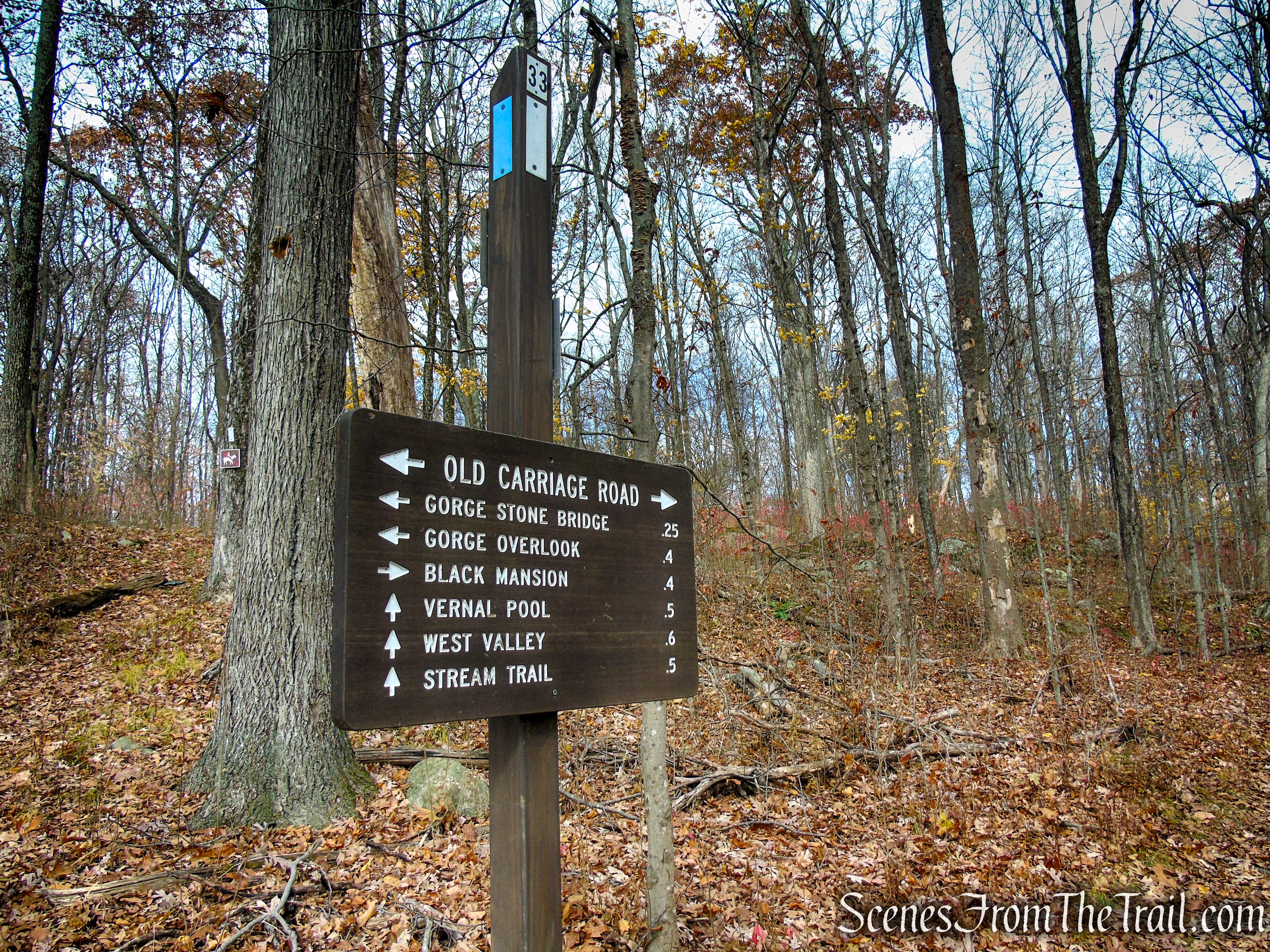
From Junction 33, follow the White Trail as it winds downhill through a mix of hardwood forests, moss-covered rocks, and gently rolling terrain. The trail offers occasional glimpses of the wetlands below and the surrounding wooded hills.

Junction 33 - Leon Levy Preserve

Junction 33 – Leon Levy Preserve

White Trail - Leon Levy Preserve

White Trail – Leon Levy Preserve

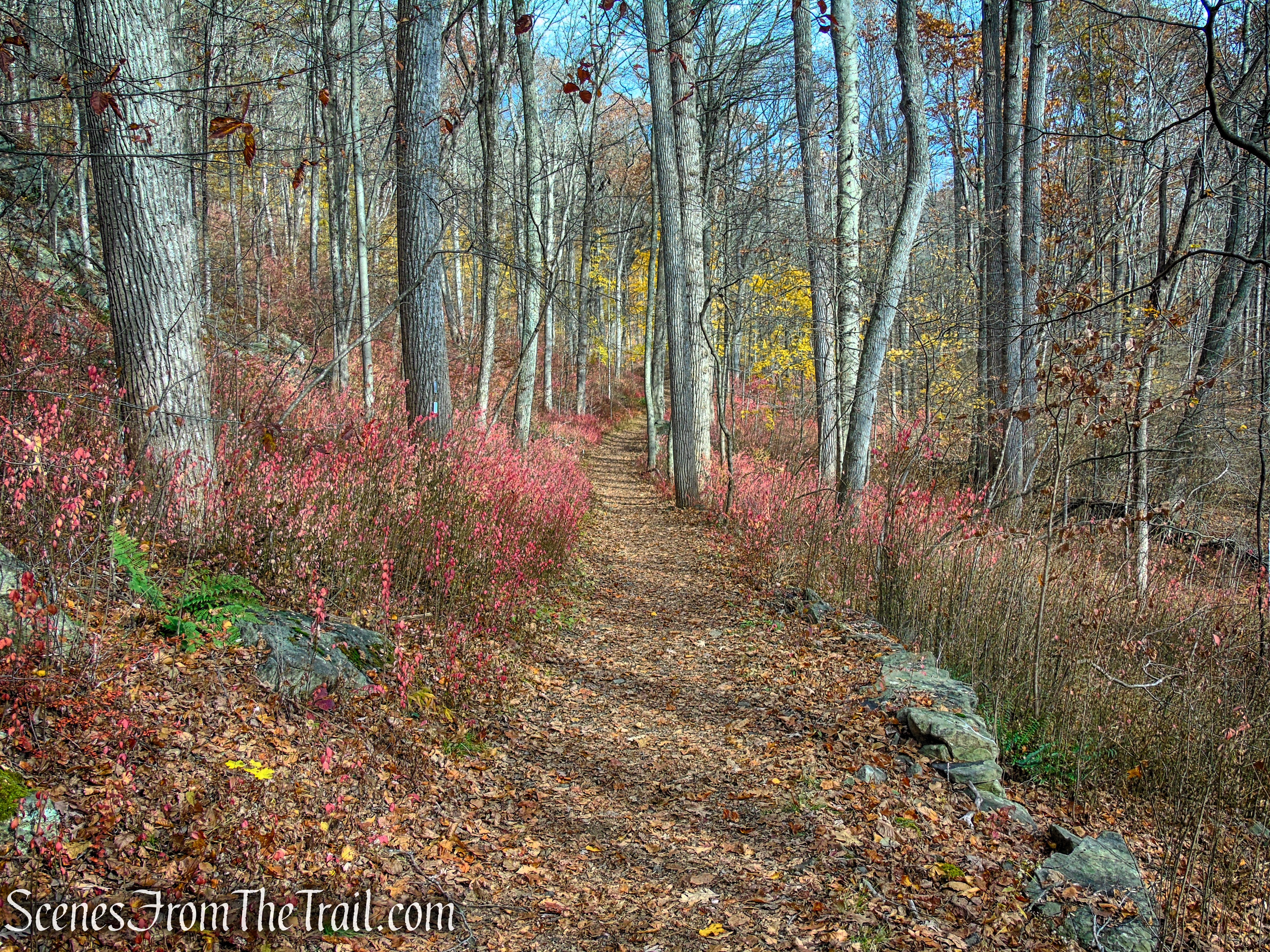
Along the White Trail, The forest floor is dotted with ferns, moss-covered rocks, and patches of low shrubs, creating a lush, textured underbrush that adds to the trail’s tranquil, woodland atmosphere.

White Trail - Leon Levy Preserve

White Trail – Leon Levy Preserve

White Trail - Leon Levy Preserve

White Trail – Leon Levy Preserve

At the end of the White Trail, turn right onto the Blue Trail and follow it a short distance back to the parking lot, where your hike began.

Turn right on Blue Trail

Turn right on Blue Trail

Blue Trail - Leon Levy Preserve

Blue Trail – Leon Levy Preserve

Leon Levy Preserve Trailhead

Leon Levy Preserve Trailhead


Review:

Leon Levy Preserve offers a peaceful and scenic hiking experience through a mix of quiet forests, and gently rolling hills. The well-marked trails and wide carriage roads make it easy to explore at a relaxed pace, while the sounds of birds and rustling leaves create a calm, natural atmosphere. Historic ruins and stonework add interest along the way, giving the hike a sense of quiet discovery. It’s an ideal spot for anyone looking to unwind in nature and enjoy a tranquil walk through one of Lewisboro’s most beautiful preserves.

Pros:

Scenic landscape, peaceful forested areas, well-marked trails, historic ruins, gentle elevation changes, seasonal foliage displays.

Cons:

No restroom facilities


Take a hike!

Leon Levy Preserve Outer Loop

Leon Levy Preserve Outer Loop


Sources:


Swan Lake Loop from Bedford Road – Rockefeller State Park Preserve

November 2‎, ‎2025 – Pocantico Hills, NY

Difficulty: Easy – Moderate

Length: approximately 4.7 miles

Max elevation: 499 ft. – total elevation gain: approximately 300 ft.

Route type: Circuit

Maps: Rockefeller State Park Preserve Trail Map 2023Rockefeller State Park Preserve Avenza Map

Trailhead parking: 176-94 Bedford Rd, Tarrytown, NY 10591

Overview:

Rockefeller State Park Preserve, established in 1983, offers visitors over 55 miles of scenic carriage roads that wind through woodlands, fields, and wetlands once part of the Rockefeller family estate. These historic roads, originally designed for horse-drawn carriages, now provide a peaceful setting for walking, jogging, and horseback riding. The park’s beautifully maintained network of trails showcases the natural beauty and historic charm of the Pocantico Hills landscape.

Barnyard Hill Trail - Rockefeller State Park Preserve

Barnyard Hill Trail – Rockefeller State Park Preserve

Swan Lake, located at the heart of Rockefeller State Park Preserve, is a man-made lake constructed in the early 20th century as part of the Rockefeller family estate’s landscape design. The lake covers roughly 22 acres and was created by damming a tributary of the Pocantico River to enhance the estate’s scenic character and provide a tranquil focal point for the surrounding carriage roads.

Swan Lake - Rockefeller State Park Preserve

Swan Lake – Rockefeller State Park Preserve


Trails Overview:

Rockefeller State Park Preserve features over 45 miles of meticulously crafted carriage roads, originally designed by John D. Rockefeller Sr. and Jr. for horse-drawn travel through their Pocantico Hills estate. Built from layers of crushed stone and gravel, these gracefully winding roads now provide walkers, runners, and equestrians with peaceful routes through forests, fields, and rolling countryside. Each road is typically 10 to 12 feet wide, allowing comfortable passage for two carriages side by side.

Greenrock Road Trail - Rockefeller State Park Preserve

Greenrock Road Trail – Rockefeller State Park Preserve

The carriage roads at Rockefeller State Park Preserve are not blazed with traditional painted trail markers like those found in many hiking areas. Instead, they’re identified by blue wands corresponding to locations on the official park map.

Farm Meadow Trail - Rockefeller State Park Preserve

Farm Meadow Trail – Rockefeller State Park Preserve

Because many roads look similar and there are numerous junctions, visitors are encouraged to carry the preserve’s trail map—available at the visitor center, online, or through the Avenza GPS map app—to help with navigation.


Hike Overview:

In 2019, the estate of David Rockefeller made a landmark 346-acre donation to Rockefeller State Park Preserve, marking one of the largest gifts of private land to New York State Parks in recent decades. This land, known as the Hudson Pines Farm property, was part of the Rockefeller family’s historic Pocantico Hills holdings and lies adjacent to the preserve near Bedford Road and Swan Lake.

This hike begins and ends on carriage roads that were once off-limits to the general public. The Pocantico Gate Trail, which starts along Bedford Road near the entrance to Kykuit, the historic Rockefeller estate, serves as a scenic gateway into Rockefeller State Park Preserve. This carriage road connects to others that wind past fenced pastures and shaded woodlands before joining a broader network of trails leading toward Swan Lake and the heart of the preserve.

Swan Lake - Rockefeller State Park Preserve

Swan Lake – Rockefeller State Park Preserve

This easy, clockwise loop circles Swan Lake and includes a short detour to the Stone Barns Center for Food & Agriculture.

Swan Lake Loop from Bedford Road

Swan Lake Loop from Bedford Road

As shown in the graph below, this hike features only a modest change in elevation.

Swan Lake Loop elevation profile

Swan Lake Loop elevation profile


The Hike:

There is roadside pull-off parking for approximately 12 to 14 vehicles at the Pocantico Gate Trailhead along Bedford Road (Route 448).

Pocantico Gate Trailhead - Rockefeller State Park Preserve

Pocantico Gate Trailhead – Rockefeller State Park Preserve

Proceed past the gate and continue straight through the four-way intersection, then bear right at the next fork to follow the Barnyard Hill Trail.

Pocantico Gate Trailhead - Rockefeller State Park Preserve

Pocantico Gate Trailhead – Rockefeller State Park Preserve


Pocantico Gate Trailhead - Rockefeller State Park Preserve

Pocantico Gate Trailhead – Rockefeller State Park Preserve


Pocantico Gate Trailhead - Rockefeller State Park Preserve

Pocantico Gate Trailhead – Rockefeller State Park Preserve


Pocantico Gate Trail - Rockefeller State Park Preserve

Pocantico Gate Trail – Rockefeller State Park Preserve


Barnyard Hill Trail - Rockefeller State Park Preserve

Barnyard Hill Trail – Rockefeller State Park Preserve

Heading north on the Barnyard Hill Trail, the path gently rises through open meadows bordered by post-and-wire fencing and clusters of hardwood trees. From the crest, you’re rewarded with sweeping views of the surrounding farm fields, and with a bit of luck, you may spot dairy cows grazing peacefully in the fenced pastures of this working farm.

Barnyard Hill Trail - Rockefeller State Park Preserve

Barnyard Hill Trail – Rockefeller State Park Preserve


Barnyard Hill Trail - Rockefeller State Park Preserve

Barnyard Hill Trail – Rockefeller State Park Preserve


Barnyard Hill Trail - Rockefeller State Park Preserve

Barnyard Hill Trail – Rockefeller State Park Preserve


Barnyard Hill Trail - Rockefeller State Park Preserve

Barnyard Hill Trail – Rockefeller State Park Preserve


Barnyard Hill Trail - Rockefeller State Park Preserve

Barnyard Hill Trail – Rockefeller State Park Preserve

At the T-intersection, turn right to leave the Barnyard Hill Trail and continue onto the Farm Meadow Trail. This gently descending carriage road is bordered by quiet woodlands on both sides, offering a peaceful and scenic stretch through the preserve.

Farm Meadow Trail - Rockefeller State Park Preserve

Farm Meadow Trail – Rockefeller State Park Preserve

Follow the Farm Meadow Trail as it heads northeast, continuing straight through two four-way intersections. The route meanders between shady stretches of woodland and wide-open fields, offering a pleasant mix of forest cover and pastoral scenery.

Farm Meadow Trail - Rockefeller State Park Preserve

Farm Meadow Trail – Rockefeller State Park Preserve


Farm Meadow Trail - Rockefeller State Park Preserve

Farm Meadow Trail – Rockefeller State Park Preserve


Farm Meadow Trail - Rockefeller State Park Preserve

Farm Meadow Trail – Rockefeller State Park Preserve


Farm Meadow Trail - Rockefeller State Park Preserve

Farm Meadow Trail – Rockefeller State Park Preserve

After about 0.6 mile, the Farm Meadow Trail ends at a junction with Brothers’ Path, which enters from the right. Continue straight to follow Brothers’ Path, a scenic carriage road that loops around Swan Lake. Before long, the trees open up to reveal tranquil views of the shimmering water framed by gently sloping hills.

Veer left to Brothers' Path

Veer left to Brothers’ Path


Brothers' Path - Rockefeller State Park Preserve

Brothers’ Path – Rockefeller State Park Preserve


Swan Lake - Rockefeller State Park Preserve

Swan Lake – Rockefeller State Park Preserve


Brothers' Path - Rockefeller State Park Preserve

Brothers’ Path – Rockefeller State Park Preserve

At the northern end of Swan Lake, bear right to stay close to the shoreline. The path to the left leads toward the park’s main entrance and Visitor Center off Route 117.

Brothers' Path - Rockefeller State Park Preserve

Brothers’ Path – Rockefeller State Park Preserve


Brothers' Path - Rockefeller State Park Preserve

Brothers’ Path – Rockefeller State Park Preserve

The carriage road is punctuated on the lakeside by “Rockefeller Teeth,” a row of jagged stones that add a dramatic, natural accent to the tranquil scenery along the shore. Their tooth-like appearance gives them their name.

Brothers' Path - Rockefeller State Park Preserve

Brothers’ Path – Rockefeller State Park Preserve

From the northern end of Swan Lake, the view stretches south across calm, reflective waters framed by rolling hills and stately hardwoods. The gently curving shoreline and surrounding carriage roads create a classic Hudson Valley scene—peaceful, picturesque, and beautifully balanced between nature and design.

Swan Lake - Rockefeller State Park Preserve

Swan Lake – Rockefeller State Park Preserve

Brothers’ Path bears right and follows the shoreline along the east side of the lake.

Brothers' Path - Rockefeller State Park Preserve

Brothers’ Path – Rockefeller State Park Preserve

Throughout the year, Swan Lake offers ever-changing views that capture the essence of each season. In autumn, the surrounding hills blaze with shades of gold, orange, and crimson.

Swan Lake - Rockefeller State Park Preserve

Swan Lake – Rockefeller State Park Preserve

A walk along Brothers’ Path on the east side of Swan Lake offers a peaceful, shaded route beneath tall oaks and maples, with frequent glimpses of the shimmering water through the trees. The gentle curves of the carriage road trace the shoreline, providing a serene and picturesque lakeside experience.

Brothers' Path - Rockefeller State Park Preserve

Brothers’ Path – Rockefeller State Park Preserve

My understanding is that the New York and Putnam Railroad, nicknamed the Old Put, originally ran along this route. Around 1930–31, John D. Rockefeller Jr. had the tracks removed from his Pocantico Hills property and relocated them through the Saw Mill River Valley, along the eastern edge of the Rockefeller estate. The project, which cost an estimated $1 million, significantly reduced the railroad’s intrusion through the family’s private lands.

Brothers' Path - Rockefeller State Park Preserve

Brothers’ Path – Rockefeller State Park Preserve

As Brothers’ Path curves right along the southern edge of Swan Lake, continue straight to join the Greenrock Road Trail. This wide carriage road stretches beneath a canopy of towering oaks and maples, offering tranquil woodland scenery and occasional views of the surrounding hills.

Greenrock Road Trail - Rockefeller State Park Preserve

Greenrock Road Trail – Rockefeller State Park Preserve

Along this stretch of the old railroad bed, the trail passes through rock cuts, where the stone was carved away to make way for the original rail line, now serving as a striking reminder of the area’s transportation history.

Greenrock Road Trail - Rockefeller State Park Preserve

Greenrock Road Trail – Rockefeller State Park Preserve


Greenrock Road Trail - Rockefeller State Park Preserve

Greenrock Road Trail – Rockefeller State Park Preserve

Along the way, you may spot cows grazing peacefully in the fenced pastures, adding to the pastoral charm of the surrounding farmland.

Greenrock Road Trail - Rockefeller State Park Preserve

Greenrock Road Trail – Rockefeller State Park Preserve

If you’d like to take a detour to Stone Barns, turn left onto the Stone Barns Path and follow it uphill, bearing left at the forks and watching for signs along the way. The detour adds roughly half a mile, depending on how much exploring you do at Stone Barns. I hadn’t been there in a few years, so I decided to pay a visit. If you choose to skip this side trip, simply continue straight on Greenrock Road to return to Bedford Road.

Turn left on Stone Barns Path

Turn left on Stone Barns Path


Stone Barns Path - Rockefeller State Park Preserve

Stone Barns Path – Rockefeller State Park Preserve


Stone Barns Path - Rockefeller State Park Preserve

Stone Barns Path – Rockefeller State Park Preserve


Stone Barns Path - Rockefeller State Park Preserve

Stone Barns Path – Rockefeller State Park Preserve


Stone Barns Path - Rockefeller State Park Preserve

Stone Barns Path – Rockefeller State Park Preserve

We wanted to see the farm animals, so we walked past the greenhouses and Visitor Center, then turned left after passing the main Stone Barns complex. From there, we continued toward the red-roofed barns, where the farm animals are housed.

Stone Barns Center for Food & Agriculture

Stone Barns Center for Food & Agriculture


Stone Barns Center for Food & Agriculture

Stone Barns Center for Food & Agriculture

On this day, only a few goats and some chickens were out and about. A farm worker mentioned that there were no pigs at the moment, though I spotted at least three of them foraging in the woods as we were leaving the complex—perhaps a few curious escapees.

Stone Barns Center for Food & Agriculture

Stone Barns Center for Food & Agriculture


Stone Barns Center for Food & Agriculture

Stone Barns Center for Food & Agriculture


Stone Barns Center for Food & Agriculture

Stone Barns Center for Food & Agriculture

From this high point, views of the new Tappan Zee Bridge and the distant Palisades emerge above the treetops, offering a scenic glimpse beyond the rolling hills of Stone Barns.

Stone Barns Center for Food & Agriculture

Stone Barns Center for Food & Agriculture


Stone Barns Center for Food & Agriculture

Stone Barns Center for Food & Agriculture

When you’ve finished exploring the Stone Barns complex, retrace your steps to Greenrock Road and turn left. Continue along Greenrock Road for approximately one-third of a mile.

Greenrock Road Trail - Rockefeller State Park Preserve

Greenrock Road Trail – Rockefeller State Park Preserve


Greenrock Road Trail - Rockefeller State Park Preserve

Greenrock Road Trail – Rockefeller State Park Preserve

At the three-way intersection, take the middle trail, which is the Pocantico Gate Trail. Follow it a short distance back to the parking area on Bedford Road, where your hike began.

Pocantico Gate Trail - Rockefeller State Park Preserve

Pocantico Gate Trail – Rockefeller State Park Preserve


Pocantico Gate Trail - Rockefeller State Park Preserve

Pocantico Gate Trail – Rockefeller State Park Preserve


Review:

With its well-maintained carriage roads, minimal elevation change, and exceptional scenery, this loop is ideal for both casual walkers and seasoned hikers seeking a peaceful escape just minutes from Tarrytown.

Pros:

Historic carriage roads, beautiful Swan Lake views, relatively easy navigation, picturesque landscapes, minimal elevation gain.

Cons:

No restrooms, benches, or water sources near the Bedford Road access point. The area around Swan Lake is popular with walkers, joggers, and photographers, and can become quite busy on pleasant days.


Sources:


Bannerman Island – Hudson Highlands State Park Preserve

October 5, 2025 – Beacon, NY

Difficulty: Easy

Parking: 2 Red Flynn Drive, Beacon, NY 12508

Admission to the island for the Cruise & Walking Tour is $45 per adult.

The Cruise & Walking Tour is offered on Saturdays and Sundays, with occasional Friday evening departures as well, during the May–October season.


Overview: 

Pollepel Island, more commonly known as Bannerman Island, is a small, rocky isle located in the Hudson River near Beacon, New York.

Bannerman Island as viewed from Storm King Mountain

Bannerman Island as viewed from Storm King Mountain

Steeped in history and legend, the island has long captured the imagination of locals and visitors alike. Its most iconic feature is the dramatic ruins of Bannerman Castle, a castle-like arsenal built in the early 1900’s by Francis Bannerman VI to store surplus military goods. The striking structure, designed to resemble a Scottish castle, stands as a romantic and haunting reminder of the island’s industrial past.

Bannerman Island 1926

Bannerman Island 1926

In addition to the castle ruins, the island features a former family residence, formal gardens, and various support buildings—all set against the rugged natural beauty of the Hudson Highlands. Panoramic views from the island showcase the surrounding mountains, including Breakneck Ridge and Storm King Mountain, as well as sweeping vistas north toward the Newburgh-Beacon Bridge.

Bannerman Island

Bannerman Island

Looking north - Bannerman Island

Looking north – Bannerman Island

Today, Pollepel Island is part of the Hudson Highlands State Park Preserve, with access managed by the Bannerman Castle Trust, which offers tours, events, and preservation programs that help keep the island’s unique history alive.


Tours Of The Island:

Tours of Bannerman Island offer a rare and captivating opportunity to explore one of the Hudson River’s most intriguing historic landmarks. Accessible only by boat, the island is home to the striking ruins of Bannerman’s Castle—an early 20th-century arsenal built by military surplus dealer Francis Bannerman—as well as Crag Inch Lodge, the Bannerman family’s summer residence.

Bannerman Island Tours

Bannerman Island Tours

In addition, the Bannerman Castle Trust also offers specialty experiences, such as self-guided tours with live music, kayak trips, and theatrical performances during the summer season. All tours require moderate physical ability—visitors must climb 72 steps from the dock and navigate uneven trails. While the island’s rugged beauty and dramatic ruins make for a memorable visit, the tours are as much about storytelling as sightseeing, bringing to life the legacy of Francis Bannerman, the rise and fall of his “castle,” and the mystery that still clings to this tiny, storied island in the Hudson.


Cruise & Walking Tour:

The most popular tour departs from the Beacon waterfront aboard the Estuary Steward. This 30-minute cruise offers stunning views of the Hudson River and the island’s iconic castle ruins. 

East Hudson Highlands

East Hudson Highlands

Bannerman Island Arsenal

Bannerman Island Arsenal

Along the way, visitors learn about the island’s military, architectural, and personal histories, as well as ongoing preservation efforts. 

Once ashore, guests embark on a guided walking tour through the castle grounds, gardens, and the partially restored residence. that lasts about 45 minutes, exploring the island’s key sites—including the dramatic remains of the Bannerman arsenal, the Bannerman family’s summer residence (Crag Inch Lodge), terraced gardens, and restored pathways. Along the way, knowledgeable guides share stories of Francis Bannerman’s eccentric life, the military surplus empire he built, and the castle’s mysterious decline. The tour combines history, architecture, and natural beauty into an unforgettable experience, perfect for day-trippers, history buffs, and curious explorers alike.

After the guided walking tour, visitors have about 45 minutes to explore the island on their own—arguably the best part of the experience. With around 43 people on the tour, it was a welcome relief to break away from the group and wander the rocky terrain alone, taking photographs without interruption.


Parking:

Parking near Red Flynn Drive in Beacon, NY, is conveniently located for those attending the Bannerman Island Cruise & Walking Tour. The primary docking point for the tour is at 2 Red Flynn Drive, directly across from the Metro-North Train Station. Visitors can park along Red Flynn Drive or utilize the nearby Metro-North Train Station parking lot, which offers free parking on weekends

Red Flynn Drive

Red Flynn Drive – Beacon, NY

Red Flynn Drive - Beacon, NY

Red Flynn Drive – Beacon, NY

For those arriving by car, it’s advisable to arrive at least 30 minutes prior to the scheduled departure time to ensure ample time for parking and boarding. The dock is situated on the Hudson River, providing a scenic and convenient starting point for the tour.

Beacon Dock

Beacon Dock

Historical Marker - Beacon Dock

Historical Marker – Beacon Dock

The scenery around Beacon Dock is a beautiful blend of natural and urban charm. Nestled along the Hudson River, the dock offers stunning panoramic views of the river and the Hudson Highlands, with rolling hills and lush forests framing the water.

Beacon Harbor

Beacon Harbor

The Sloop Woody Guthrie is a traditionally rigged wooden sailboat operated by the Beacon Sloop Club, offering free public sails on the Hudson River to promote environmental awareness and river stewardship. Named after the legendary folk singer and activist, the boat is often seen docked near Beacon’s waterfront.

The Sloop Woody Guthrie - Beacon Harbor

The Sloop Woody Guthrie – Beacon Harbor

Cormorants are large, dark waterbirds commonly seen along the Hudson River, often perched with their wings outstretched to dry.

Cormorant - Beacon Harbor

Cormorant – Beacon Harbor

The combination of serene waterfront views and the vibrant town atmosphere makes the area around the dock both relaxing and picturesque, an ideal starting point for a cruise to Bannerman Island.


The Boat Ride:

The departure for the Bannerman Island Cruise & Walking Tour begins at the Beacon dock, located just steps from the Beacon Metro-North train station, making it easily accessible by car or public transit.

Visitors board the Estuary Steward, a comfortable passenger boat operated by the Bannerman Castle Trust, for a 30-minute scenic cruise along the Hudson River.

Estuary Steward

Estuary Steward

As the boat heads south toward Pollepel Island, passengers are treated to panoramic views of the Hudson Highlands, with forested cliffs, winding shorelines, and glimpses of historic landmarks along the way.

East Hudson Highlands

East Hudson Highlands

From the Hudson River, the view of North and South Beacon Mountains is breathtaking. The twin peaks rising steeply from the river’s edge, their forested slopes shifting in color with the seasons and crowned by the historic Mount Beacon fire tower, which stands like a sentinel over the valley below.

North & South Beacon Mountains

North & South Beacon Mountains

During the ride, guides often provide background on the region’s natural and cultural history, offering insight into the strategic significance of the river and the mysterious allure of Bannerman Island.

Bannerman Island

Bannerman Island

As the boat nears the island, the castle’s crumbling turrets and stone walls come into view, rising dramatically above the trees—an unforgettable sight that sets the tone for the tour ahead. The ride is smooth and relaxing, making it a fitting prelude to the more adventurous walking portion of the visit.

Bannerman Island Arsenal

Bannerman Island Arsenal


Amenities on Bannerman Island:

Overall, the island is geared toward short, daytime visits, emphasizing history, nature, and preservation over comfort or commercialism. Visitors are encouraged to bring essentials like water, sunscreen, and sturdy walking shoes. There is no potable water on the island, so plan accordingly.

Bannerman Island is equipped with composting toilets, an eco-friendly alternative to traditional restrooms that reflects the island’s commitment to sustainability and minimal environmental impact. These dry toilets operate without water or plumbing, using natural decomposition and ventilation systems to safely break down waste over time. Housed in a small wooden outbuilding, they are clean, well-maintained, and thoughtfully designed to blend into the natural surroundings. Note that there is no running water on the island.

Restrooms - Bannerman Island

Restrooms – Bannerman Island

The deck near the dock on Bannerman Island serves as the primary arrival and gathering spot for visitors stepping off the boat. This modest but functional wooden platform provides a place to orient guests before tours begin. The decks are constructed with wooden planks and bordered with simple railings, designed to blend into the landscape without detracting from the historic surroundings. Benches and resting spots are placed at intervals, especially near scenic viewpoints like the patio decks.

wooden deck - Bannerman Island

wooden deck – Bannerman Island

On Bannerman Island, several of the main walkways are paved paths with wooden railings, thoughtfully designed to provide safe and accessible routes through uneven or elevated terrain. Other paths are more rustic, winding through wooded areas and open spaces, with occasional roots, rocks, and uneven surfaces—so sturdy footwear is recommended.

Walkway - Bannerman Island

Walkway – Bannerman Island

Marked trails lead visitors through the island’s key sites, including the castle ruins, gardens, scenic overlooks, and Crag Inch Lodge. Some areas may be roped off or fenced due to structural instability or restoration work.

Trail Marker - Bannerman Island

Trail Marker – Bannerman Island


Bannerman Island:

Upon arrival at Bannerman Island, the boat docks at a small landing on the island’s northern shore, where visitors disembark to begin the land portion of the tour.

Bannerman Island

Bannerman Island

From the dock, guests climb a wooden staircase of 72 steps to reach the main trailhead leading into the heart of the island, where they are greeted by two brick and stucco columns—remnants of the original formal entrance to the estate. Built in the early 1900’s, these weathered pillars once supported an iron gate and served as a symbolic welcome to the Bannerman family’s summer retreat. Their design echoes the island’s unique architectural style, offering a first glimpse into the blend of function and fantasy that defines Bannerman’s legacy.

Bannerman Island

Bannerman Island

As you reach the top, the first clear view of the castle ruins appears—weathered, towering, and partly hidden among the trees.

Bannerman Island Arsenal

Bannerman Island Arsenal

Bannerman Island Arsenal

Bannerman Island Arsenal

Bannerman Island Arsenal

Bannerman Island Arsenal

A guide then leads the group along gravel and dirt paths, weaving through historic structures, terraced gardens, and scenic overlooks. Along the way, visitors hear stories of the Bannerman family’s life on the island, the construction and tragic decline of the arsenal, and the ongoing efforts to preserve this unusual piece of Hudson River history. The experience is immersive and atmospheric, with each turn revealing new perspectives of both nature and architecture.

Bannerman Island

Bannerman Island

Bannerman Island Arsenal

Bannerman Island Arsenal

Bannerman Island Arsenal

Bannerman Island Arsenal

Bannerman Island Arsenal

Bannerman Island Arsenal

Bannerman Island

Bannerman Island

Crag Inch Lodge is perched near the southern end of Bannerman Island, offering sweeping views of the surrounding Highlands. Built in the early 20th century by Francis Bannerman VI, the lodge served as a modest yet charming residence, in contrast to the imposing, armory-style castle constructed to store surplus military goods. Inspired by Scottish baronial architecture, Crag Inch Lodge reflects the Bannerman family’s heritage. Its name—“Crag Inch”—is a nod to Bannerman’s Scottish roots, with “crag” meaning rocky cliff and “inch” meaning island.

Crag Inch Lodge

Crag Inch Lodge

Today, Crag Inch Lodge stands as one of the last remaining habitable structures on Bannerman Island, its weathered stucco walls bearing witness to more than a century of history. From its patio, visitors can look south through the Wey-Gat—the narrow, dramatic passage between Breakneck Ridge and Storm King Mountain—once considered a natural gateway to New York’s interior. More than just a relic of the Bannerman era, the lodge offers a rare and striking vantage point to experience the Hudson River’s natural beauty and historical significance.

Crag Inch Lodge

Crag Inch Lodge

From the patio of Crag Inch Lodge, the view to the south reveals a wide, glimmering expanse of the Hudson River, framed by forested hills that fade into the distance. This stretch of river, nestled between Breakneck Ridge and Storm King Mountain, is known as Wey-Gat—Dutch for “Wind Gate.” The name refers to the northern narrows of the Hudson Highlands, where the two mountains form a dramatic gateway through which the river flows.

View south from Crag Inch Lodge

View south from Crag Inch Lodge

The main living area included a fireplace for warmth on cooler evenings, with windows strategically placed to frame views of the Hudson River and surrounding Highlands. Furnishings were modest and practical, consistent with the Bannerman family’s utilitarian needs while staying on the island. Over time, the lodge weathered exposure to the elements, and while much of the original interior detail has worn away, some historic features remain, such as fragments of the original plasterwork, wood framing, and traces of the original hearth.

Crag Inch Lodge

Crag Inch Lodge

The interior of Crag Inch Lodge reflects the rustic charm and modest elegance of an early 20th-century island retreat. Originally designed as a summer residence for the Bannerman family, the lodge featured simple yet sturdy construction, in keeping with the rugged setting of Bannerman Island. The layout was compact but functional, with cozy rooms finished in wood and stone, designed more for comfort than opulence.

Crag Inch Lodge

Crag Inch Lodge

Today, Crag Inch Lodge is not fully restored but serves as a preserved structure that offers a glimpse into the domestic side of life on Bannerman Island—far removed from the grandeur of the castle armory. Efforts by the Bannerman Castle Trust have helped stabilize and protect the building, making it a meaningful stop on guided tours of the island.

Crag Inch Lodge

Crag Inch Lodge

Inside, you’ll find interpretive displays, photographs, and historical information that offer insight into the Bannerman family’s life on the island. It functions as an informal museum—more of a historic site with curated exhibits than a full-scale museum.

Crag Inch Lodge

Crag Inch Lodge

Once the guided portion of the tour ends, you’re given about 45 minutes to explore the island on your own. I found this part of the visit the most enjoyable. I spent the time walking the marked trails, some of which were roped off in places due to structural instability or restoration work. Still, I was able to reach some of the more remote and quiet corners of the island.

Bannerman Island

Bannerman Island

Looking north from Bannerman Island, the Hudson River winds gracefully between forested shores and historic rail lines, framed on both sides by the majestic Hudson Highlands.

Looking north - Bannerman Island

Looking north – Bannerman Island

As you make your way to the highest point on the island, you’ll come across a triangulation station marker set in the middle of the trail. A triangulation station marker (or “trig point”) is a permanently placed survey mark used to establish a precise horizontal position for map-making and land surveys, typically marked by a disk with a small triangle. These markers form networks for accurate geodetic control and are often accompanied by reference marks—disks with arrows pointing to the main station—to help re-establish the station’s position if it’s disturbed or lost. 

Bannerman Island

Bannerman Island

The U.S. Geological Survey and the U.S. Board on Geographic Names currently list Pollepel Island as the preferred name, with “Polypus Island” as a historical or variant name.

triangulation station marker - Bannerman Island

triangulation station marker – Bannerman Island

Looking south from Bannerman Island, the Hudson River winds between the dramatic cliffs of Breakneck Ridge and the forested slopes of Storm King Mountain, creating one of the most breathtaking vistas in the Hudson Highlands.

View south - Bannerman Island

View south – Bannerman Island

Some of the rougher paths are equipped with steel railings to help visitors navigate the rocky terrain more safely.

Trail - Bannerman Island

Trail – Bannerman Island

The dirt trails on Bannerman Island are narrow, rustic paths that wind through the island’s rugged terrain, connecting key points of interest like the castle ruins, gardens, and scenic overlooks. These trails follow the island’s natural topography, often passing through rocky outcrops, shaded groves, and areas with sweeping views of the Hudson River and surrounding Highlands.

Trail - Bannerman Island

Trail – Bannerman Island

The breakwater ruins at Bannerman Island are the remnants of a protective barrier built to shield the island’s harbor from strong currents and ice flows on the Hudson River. Originally constructed in the early 1900’s as part of the island’s use as a military surplus storage facility, the breakwater was made of stone and concrete, designed to create a calm docking area for transporting goods to and from the island.

Today, what’s left of the breakwater can still be seen jutting out from the shoreline — a skeletal, partially submerged structure that hints at the island’s industrial past. Though weathered by time and river conditions, the ruins remain a striking feature of the island’s waterfront, adding to its sense of mystery and historic decay.

Breakwater - Bannerman Island

Breakwater – Bannerman Island

Looking up at Crag Inch Lodge from the south side of Bannerman Island, just below the grotto, you’re greeted by a striking view of the lodge’s façade rising above the rocky shoreline. From this vantage point, the lodge appears perched like a sentinel overlooking the Hudson River. The surrounding natural landscape—jagged rocks, dense trees, and the gentle curve of the island’s contours—frames the building, highlighting its secluded and almost castle-like presence amid the rugged terrain.

South side of Bannerman Island

South side of Bannerman Island

The grotto on the south side of Bannerman Island is a charming and somewhat hidden natural feature that adds to the island’s mysterious and romantic atmosphere. Nestled along the rocky shoreline, the grotto is a small, sheltered cave-like recess formed by the rugged cliffs and rock formations that line the southern edge of the island.

Grotto - Bannerman Island

Grotto – Bannerman Island

Touring Bannerman Island is a memorable experience—part history lesson, part scenic adventure. As you explore the castle ruins, quiet trails, and riverfront views, the island unfolds like a forgotten chapter of the Hudson Valley, full of mystery, beauty, and unexpected charm.

Bannerman Island Cruise & Walking Tour

Bannerman Island Cruise & Walking Tour


I came for the crumbling castle, and stayed for the surprisingly enthusiastic history lesson.

Bannerman Island Cruise & Walking Tour

Bannerman Island Cruise & Walking Tour


Sources:


Everett Cave

September 10, 2025 – Bennington, Vermont

Difficulty: Easy

Length: Approximately 1.2 miles

Max elevation: 1,100 ft.– total elevation gain approximately 200 ft.

Route type: Lollipop-Loop

Map: Bennington Area Trail System – BATS

Trailhead parking: Mountaineer Athletic Center – Mansion Dr, Bennington, VT 05201

Ample parking available at Mountaineer Athletic Center.


Overview:

Tucked away in the scenic beauty of Bennington, Vermont, Everett Cave offers a captivating blend of natural wonder and outdoor exploration. Known for its striking rock formations, multiple chambers, and the tranquil sound of dripping water, the cave provides a memorable experience for visitors of all ages.

One of its most praised features is its accessibility, with the cave reachable via a short hike. It’s ideal for casual hikers looking for adventure without extensive preparation. Though the trail includes a short steep section, the effort is well rewarded once you’re at the cave.

It is recommended to wear sturdy footwear and bring a strong flashlight or lantern, as the cave’s interior is pitch black. If you dare to venture inside, you might spot bats and get an up-close look at fascinating geological features.

Often described as a hidden gem of Southern Vermont, Everett Cave is a rewarding destination for anyone looking to connect with nature and enjoy a unique outdoor experience.


History:

Everett Cave is a natural limestone cave formed through a solutional process, where water dissolves the surrounding rock. It is located on the former Southern Vermont College campus in Bennington, Vermont. Known for its striking underground formations, the cave is accessible via the Bennington Area Trail System (BATS). Although detailed historical records are limited, the cave’s origins trace back millions of years to ancient seabeds. Over time, it became a popular landmark along the college’s trail network.

Everett Cave

Everett Cave

The property was originally the estate of Edward Hamlin Everett, known as The Orchards, who purchased 500 acres from the John Holden estate in 1910. In 1926, it was acquired by the St. Joseph Business School, which became St. Joseph College in 1962 and then Southern Vermont College (SVC) in 1974. SVC closed at the end of the academic year in May 2019. Southwestern Vermont Health Care (SVHC) purchased the 371-acre former SVC campus in late December 2020.

Mount Anthony, standing at 2,346 feet, overlooks the Bennington Monument and serves as a scenic backdrop to the Town of Bennington.

Mount Anthony

Mount Anthony

According to unverified reports, Everett Cave is one of five caves on the mountain and it’s not the largest. The cave features a short entrance passage leading to a main chamber, a small side room, and a climb to three smaller rooms—two of which are typically filled with water for much of the year.


Trails Overview:

The Bennington Area Trail System (BATS) is a network of multi-use trails on the wooded slopes of Mount Anthony, just south of downtown Bennington, Vermont. Winding through the Green Mountains, the trails offer diverse terrain for hiking, mountain biking, and trail running. Highlights include scenic views, open meadows, forested switchbacks, and connections to other BATS trails across Mount Anthony, along with access to natural and historic landmarks.

BATS Trail Map

BATS Trail Map

The network of trails through the meadows consists of mowed paths without navigation markings. These paths are maintained by SVHC. In the woods however, trails are marked with colored blazes and signposts at junctions, and are maintained by BATS.

Fieldhouse Trail

Fieldhouse Trail

Cave Trail

Cave Trail


Parking:

The parking area at the Mountaineer Athletic Center/Fieldhouse serves as a trailhead for the BATS trails, including the Cave Trail leading to Everett Cave. The Mansion Drive lot (next to the Fieldhouse) is currently one of the permitted public access points and offers the shortest route to Everett Cave.

Mansion Drive Trailhead

Mansion Drive Trailhead

The parking lot is large, so finding a parking space shouldn’t be a problem.

Mansion Drive Trailhead

Mansion Drive Trailhead


Hike Overview:

I was traveling to the Bennington area for some sightseeing and came across an easily accessible, fascinating cave that I wanted to check out. To avoid aimlessly wandering through the woods like I have on past explorations, I did some research to find its exact location. I do the legwork so you don’t have to.

There’s a lot of outdated information about the trails and parking since SVC closed and new owners took over. However, the trails are still accessible, and parking is available at the Mountaineer Athletic Center/Fieldhouse on Mansion Drive.

This is a beautiful hike, with the cave being the highlight. However, the viewpoint we visited was also quite impressive. Overall, it’s an easy trail, with the only steep section being the approach to the cave. With a network of trails crisscrossing the fields in all directions, I used Gaia GPS to help navigate.

This is a short hike that can be extended using the BATS trail network. The goal of this trail report is to guide you to the cave—and as a bonus, to a great viewpoint. With more time, I would have explored additional trails.


The Hike:

Head to the right side of the Mountaineer Athletic Center/Fieldhouse and walk around to the back of the building. Look for the “Fieldhouse Trail” and follow the mowed path west toward the tree line.

Parking for Everett Cave

Parking for Everett Cave

A fine view from the parking lot.

View from the parking lot.

View from the parking lot.

Mountaineer Athletic Center/Fieldhouse

Mountaineer Athletic Center/Fieldhouse

Mountaineer Athletic Center/Fieldhouse

Mountaineer Athletic Center/Fieldhouse

Fieldhouse Trail

Fieldhouse Trail

Fieldhouse Trail

Fieldhouse Trail

Fieldhouse Trail

Fieldhouse Trail

Once you enter the woods, you’ll reach a T-intersection with a yellow-blazed trail—this is the Cave Trail. Turn right (north) and follow the narrow footpath a short distance to a fork.

Cave Trail

Cave Trail

Cave Trail

Cave Trail

Cave Trail

Cave Trail

Although the yellow-blazed trail continues straight, take the left fork and follow the trail as it climbs steeply uphill via switchbacks.

Turn left on Everett Cave Spur Trail

Turn left on Everett Cave Spur Trail

Everett Cave Spur Trail

Everett Cave Spur Trail

Everett Cave Spur Trail

Everett Cave Spur Trail

Everett Cave Spur Trail

Everett Cave Spur Trail

Everett Cave Spur Trail

Everett Cave Spur Trail

The trail ends a short distance ahead, near the entrance to Everett Cave. If you plan to enter the cave, use extreme caution. I only went in briefly before hearing unsettling noises from inside.

Everett Cave

Everett Cave

Everett Cave

Everett Cave

You have to bend down—and, depending on your height, you may even need to crawl—through a short entrance passage to reach the main room. At that point, I heard strange noises coming from inside the cave, so I decided not to go any farther.

Everett Cave

Everett Cave

Everett Cave

Everett Cave

When you are ready to continue, retrace your steps back to the Cave Trail and turn right (south). Walk past the junction with the Fieldhouse Trail. 

Carriage Path

Carriage Path

At the four-way intersection, continue straight on the yellow-blazed trail.

Carriage Path

Carriage Path

Carriage Path

Carriage Path

Most of these trails were originally built as logging roads to help the Everett family collect and transport fuel for their wood-burning furnaces.

Carriage Path

Carriage Path

Carriage Path

Carriage Path

A short distance ahead, a trail to the left leads to a small pond and the Valley of Vermont Overlook, offering views to the north, east, and southeast. Take a moment to enjoy the view.

Valley of Vermont Overlook

Valley of Vermont Overlook

Valley of Vermont Overlook

Valley of Vermont Overlook

Valley of Vermont Overlook

Valley of Vermont Overlook

When you are ready to continue, proceed ahead on the mowed path which heads northeast across the field. You can see the red roof of the Fieldhouse down below.

Valley of Vermont Overlook

Valley of Vermont Overlook

We took the right fork, but both paths lead back to the parking lot. Neither of these two mowed paths appear on the current trail map.

Hayfield Trail

Hayfield Trail

Soon, you’ll reach a T-intersection with the Hayfield Trail. Turn right and follow the trail downhill, back to the parking lot, where the hike began.

Hayfield Trail

Hayfield Trail

Hayfield Trail

Hayfield Trail

Hayfield Trail

Hayfield Trail


Review:

A short, but sweet hike with fabulous views and of course a cave. I would have liked to explore the cave a bit more, but after hearing some noises coming from inside, I wasn’t going to stick my head in there.

Pros:

Everett Cave, gorgeous views, scenic landscape.

Cons:

None.


Take a hike!

Everett Cave

Everett Cave


Scott Tower

September 10, 2025 – Holyoke, Massachusetts

Difficulty: Easy

Length: Approximately 2 miles

Max elevation: 679 ft.– total elevation gain approximately 211 ft.

Route type: Lollipop-Loop

Map: No Map Available

Trailhead parking: Community Field Rd, Holyoke, MA 01040

Ample parking and restrooms are available at Community Field.

Overview:

Scott Tower, officially known as the Walter Scott Memorial Tower, is a 56-foot stone structure located in Anniversary Hill Park in Holyoke, Massachusetts. Built in 1940 as a public works project, the tower was constructed using stone quarried directly from the hill on which it stands. It was named in honor of Colonel Walter Scott (1861-1935), the original owner and donor of the land.

Scott Tower

Scott Tower

Designed as both a scenic overlook and a symbol of community pride, the tower offers panoramic views from its observation platform, accessible via a spiral staircase.

Scott Tower

Scott Tower

Visitors reach the tower by following a paved, one-mile path through a wooded area, making it a popular destination for hikers, history buffs, and locals seeking a quiet escape.

Scott Tower Road - Anniversary Hill Park

Scott Tower Road – Anniversary Hill Park

During the 1940’s, the site was further developed by the Civilian Conservation Corps (CCC) and the Works Progress Administration (WPA), which added trails and footbridges to improve public access. However, since the 2000’s, the tower has suffered from neglect, including graffiti and vandalism, raising concerns about its preservation.


History:

Originally known as “Crafts Hill,” Anniversary Hill Park in Holyoke was established between 1923 and 1939 to commemorate the City’s 50th anniversary. It became a popular destination for recreation, featuring stonework and Scott Tower, built in the 1940’s by the Civilian Conservation Corps.

Scott Tower - circa 1940's

Scott Tower – circa 1940’s

However, the park declined after the 1960’s when I-91 split the landscape, isolating Scott Tower and limiting access. While nearby Community Field was revitalized in 2010, the larger park remained underused.

In 2020, Kestrel Land Trust partnered with the City to protect 14 forested acres near Scott Tower, reconnecting and expanding parklands. In 2024, invasive brush was cleared, views were restored, and a new, accessible entrance with parking and a gravel path was created west of I-91.

Future plans include adding community amenities, restoring historic stonework, and managing graffiti—revitalizing the park as a welcoming space for all.


Trails Overview:

The main route to Scott Tower is an old paved road open only to foot traffic. Several dirt footpaths branch off from it, but we did not explore them. Currently, no trail map is available for the area.

The image below is a map layer from Gaia GPS, showing some or all of the available trails and paths.

Anniversary Hill Park

Anniversary Hill Park


Hike Overview:

Scott Tower had been on my list of places to visit for years. During a recent road trip to Vermont, I decided to take a short detour to stretch my legs and finally see this historic landmark.

The walk to the tower is a relatively easy uphill climb along a paved road. While there are no signs or markers along the way, simply following the road toward the highest point will get you there.

The spiral staircase inside the tower is partially damaged—some steps are missing or unstable—and it’s quite dark as you ascend. I recommend bringing a small flashlight for safety.

In the past, the area around Scott Tower had a reputation for illegal activity, including graffiti, litter, and drug use. However, the park has seen significant cleanup efforts in recent years. Still, as it’s a secluded spot, it’s wise to remain cautious during your visit.

This simple lollipop loop starts at Community Field and follows a paved road, passing under both the northbound and southbound lanes of Interstate 91 before reaching the tower and returning.

Scott Tower - Anniversary Hill Park

Scott Tower – Anniversary Hill Park

I saw a sign near the restrooms warning that bears have been spotted throughout the park, so be “Bear Aware.”

As shown in the graph below, the elevation gain is minimal.

elevation profile - Scott Tower

elevation profile – Scott Tower

There is ample parking available at Community Field where there are restrooms available.

Community Field parking lot

Community Field parking lot


The Hike:

From the northwestern end of the Community Field parking lot, proceed along the paved road past the gate. This is Scott Tower Road (as labeled on Google Maps), which passes beneath both the northbound and southbound lanes of Interstate 91.

Scott Tower - Anniversary Hill Park

Scott Tower Road – Anniversary Hill Park

Scott Tower Road - Anniversary Hill Park

Scott Tower Road – Anniversary Hill Park

Follow the paved road uphill. Shortly, it curves to the right, passing an old stone wall and a stone staircase on the left.

Scott Tower Road - Anniversary Hill Park

Scott Tower Road – Anniversary Hill Park

Scott Tower Road - Anniversary Hill Park

Scott Tower Road – Anniversary Hill Park

Old stone staircase - Scott Tower Road

Old stone staircase – Scott Tower Road

Scott Tower Road - Anniversary Hill Park

Scott Tower Road – Anniversary Hill Park

When you reach a fork in the road with the communication towers visible ahead on the right, either path will lead you to the tower. The left fork is the quicker route. We took the right fork because we weren’t sure which way to go. This marks the beginning of the loop portion of the hike.

Scott Tower Road - Anniversary Hill Park

Scott Tower Road – Anniversary Hill Park

If you’re taking the longer route (bearing right at the fork), when the paved section ends, continue straight onto the gravel road. Shortly after, turn left at a junction marked by a rock.

Scott Tower Loop Road - Anniversary Hill Park

Scott Tower Loop Road – Anniversary Hill Park

Turn left for Scott Tower

Turn left for Scott Tower

Follow the road uphill for a short distance until you reach the base of Scott Tower.

Scott Tower Loop Road - Anniversary Hill Park

Scott Tower Loop Road – Anniversary Hill Park

Though undeniably tall, the tower doesn’t dominate its surroundings. It stands on a walled platform, with an entrance framed by pillars made of native stone. These pillars support a wide balcony, ten feet above the ground. Inside, 68 steps spiral upward to a small lookout post offering a sweeping, 360-degree view of the lower Valley—from Mt. Tom all the way to Hartford.

Scott Tower

Scott Tower

In 1960, the construction of Interstate 91 cut through Anniversary Hill Park, separating part of the park, including the tower, and reducing accessibility. As access declined over the following decades, public use of the tower and its surroundings also diminished.

Scott Tower

Scott Tower

Watch your step while climbing the spiral staircase, some steps are cracked or missing. The stairwell is also quite dark.

Scott Tower

Scott Tower

The lower level of the tower.

Scott Tower

Scott Tower

The second level of Scott Tower.

Scott Tower

Scott Tower

Scott Tower offers scenic views of the city and the Connecticut River Valley. It stands on land that was once part of Holyoke’s largest and most impressive city park, originally opened in 1923 to commemorate the city’s 50th anniversary.

Scott Tower

Scott Tower

Over the years, the trees have grown, obscuring the 360° views that were once visible from the top of the tower. However, there are still glimpses. During leaf-off season, the views are probably much better.

Scott Tower

Scott Tower

Graffiti, vandalism, and neglect have damaged the historic tower, which once offered past generations a hiking area and a unique view of the Connecticut River Valley.

Scott Tower

Scott Tower

In the 1970’s, at least one cleanup effort, part of the ‘Legacy of Parks’ conservation program, was undertaken to remove graffiti.

Scott Tower

Scott Tower

On December 11, 1941, shortly after the park was completed, Holyoke’s volunteer air raid observation post was relocated to the top of Scott Tower. Standing over 550 feet above sea level, the tower offered a commanding view of the surrounding countryside, making it an ideal lookout for potential air attacks. City officials worked with the Army and the American Legion to establish a camp at the site.

Scott Tower

Scott Tower

When you’re ready to continue, take the paved road that begins parallel to the one you came up, to begin your descent.

Scott Tower Loop Road - Anniversary Hill Park

Scott Tower Loop Road – Anniversary Hill Park

At the intersection with Scott Tower Road, turn right and follow the paved road downhill, retracing your steps back to the parking area where the hike began.

Turn right on Scott Tower Road

Turn right on Scott Tower Road

Scott Tower Road - Anniversary Hill Park

Scott Tower Road – Anniversary Hill Park

Scott Tower Road - Anniversary Hill Park

Scott Tower Road – Anniversary Hill Park


Review:

A short and easy walk along a mostly paved road, but the tower and its history make it a worthwhile destination. I wish I’d had more time to explore the surrounding trails, but it was definitely worth the visit.

Pros:

Scott Tower, some views, historical features, seclusion.

Cons:

No trail map or informational signage.


Take a hike!

Scott Tower

Scott Tower


Sources:


Poet’s Seat Tower – Rocky Mountain Park

September 12, 2025 – Greenfield, Massachusetts

Parking: 70 Mountain Road, Greenfield, MA 01301

No restrooms or visitor facilities on-site

Overview:

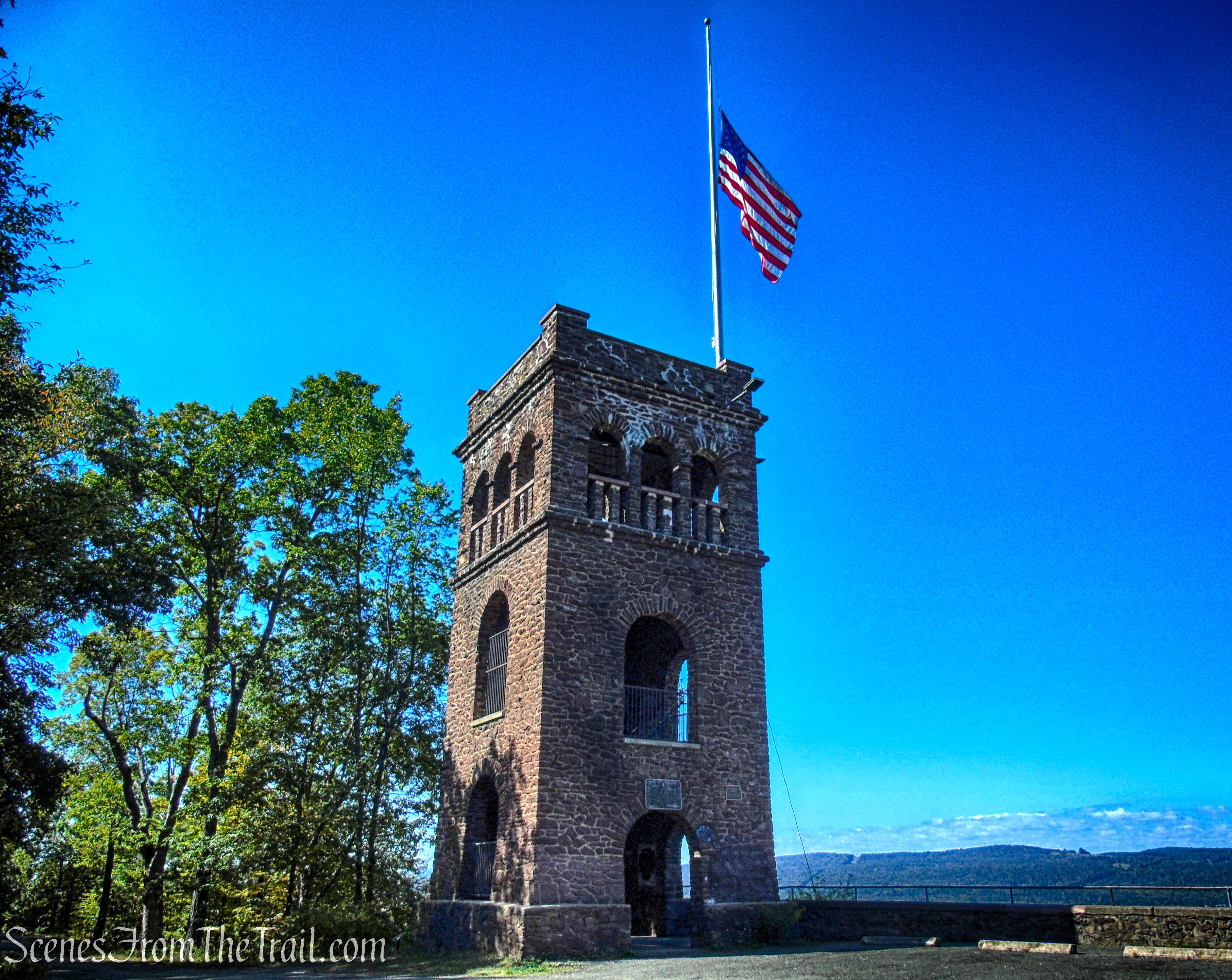
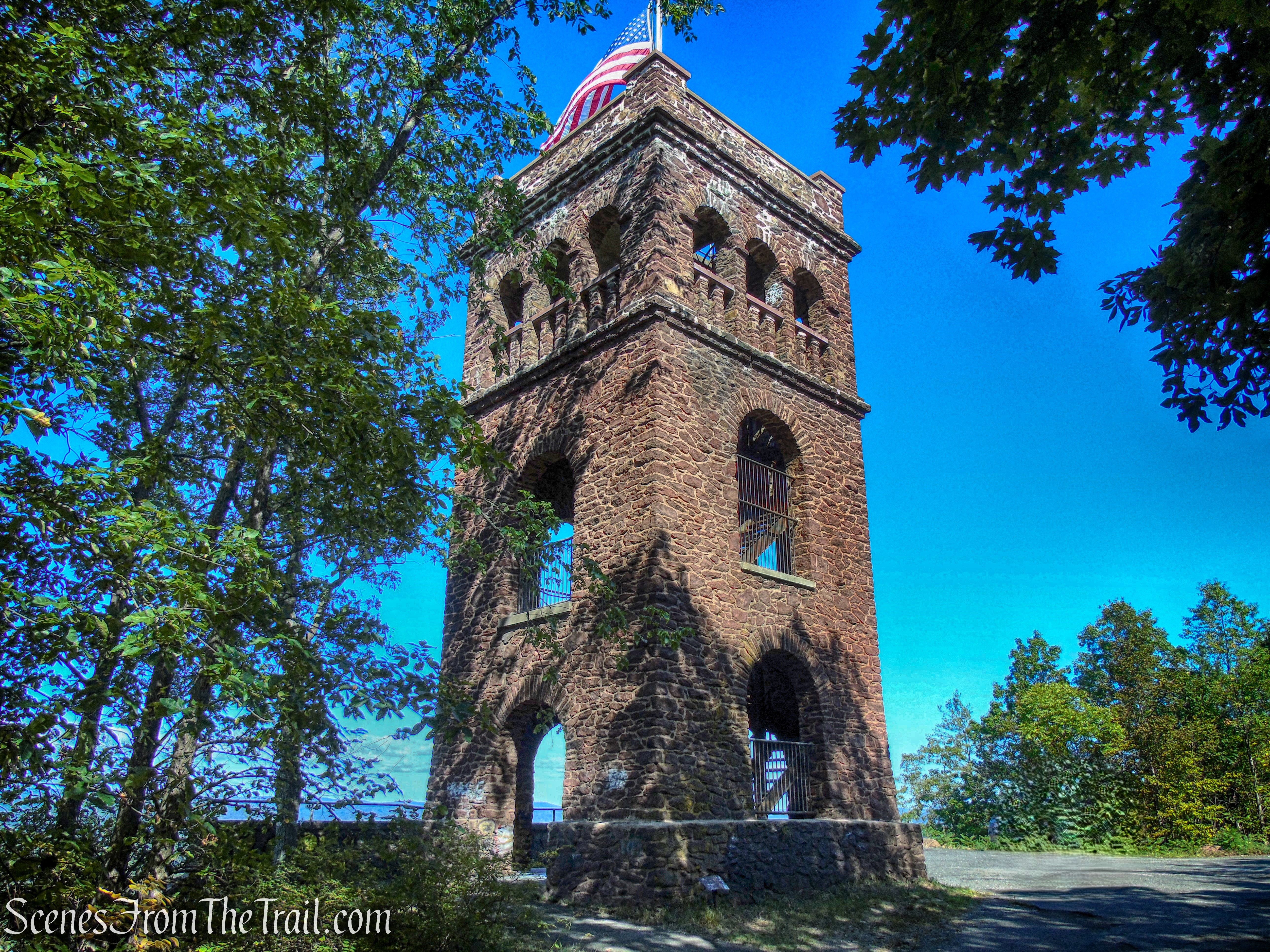
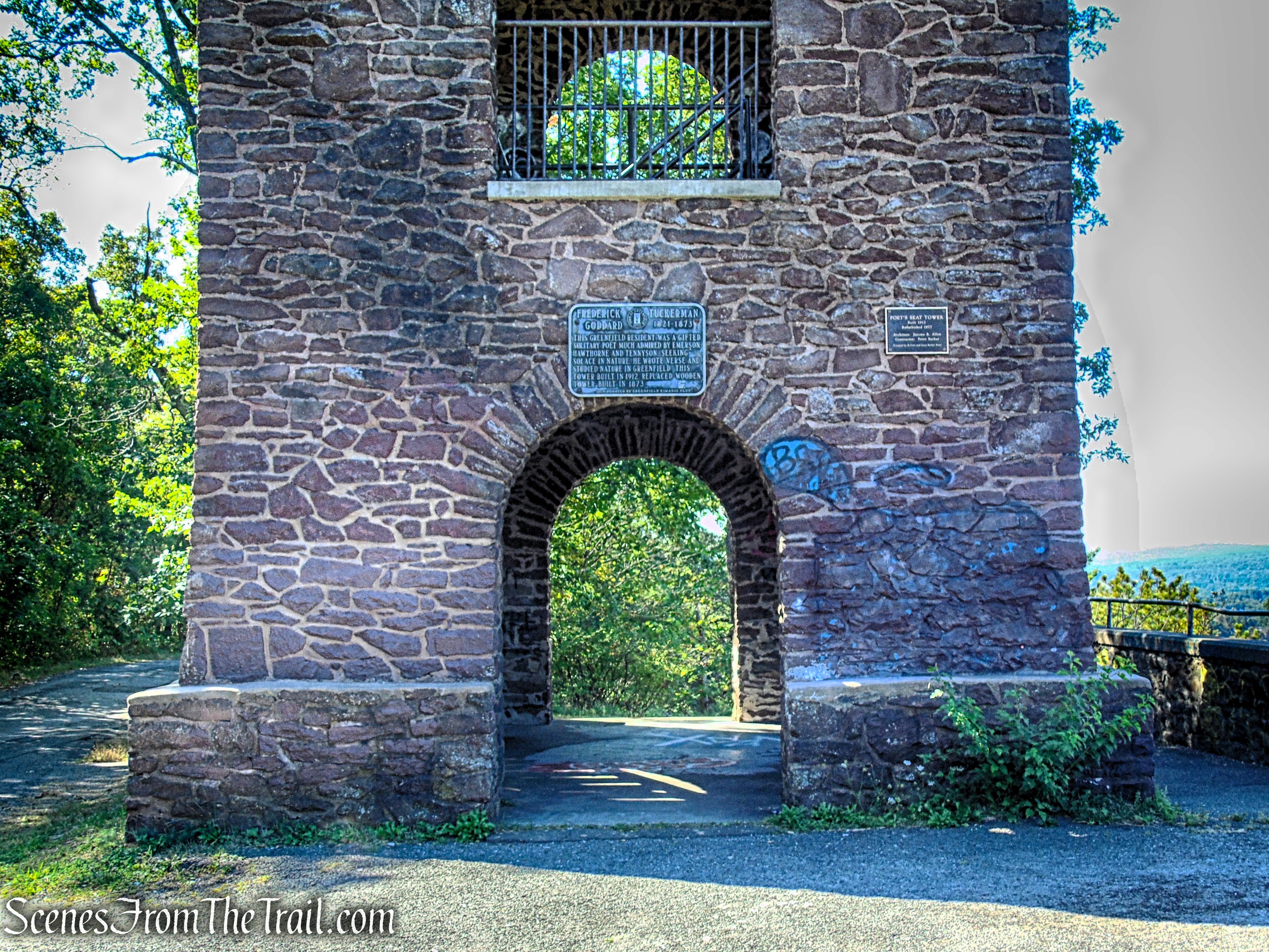
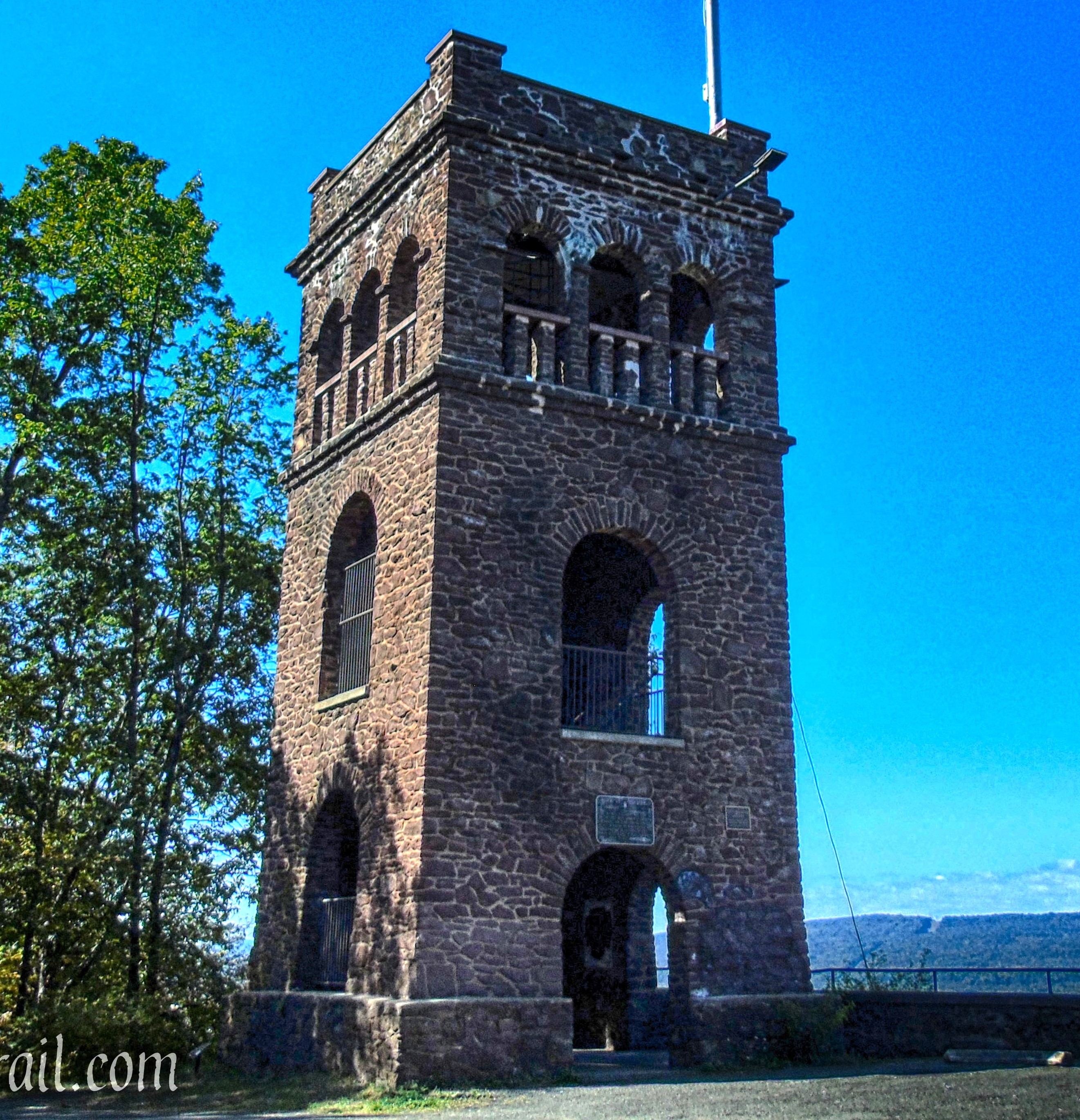
Poet’s Seat Tower is a 46-foot sandstone observation tower atop Rocky Mountain in Greenfield, Massachusetts, standing about 515 feet above sea level. 

Poet's Seat Tower

Poet’s Seat Tower

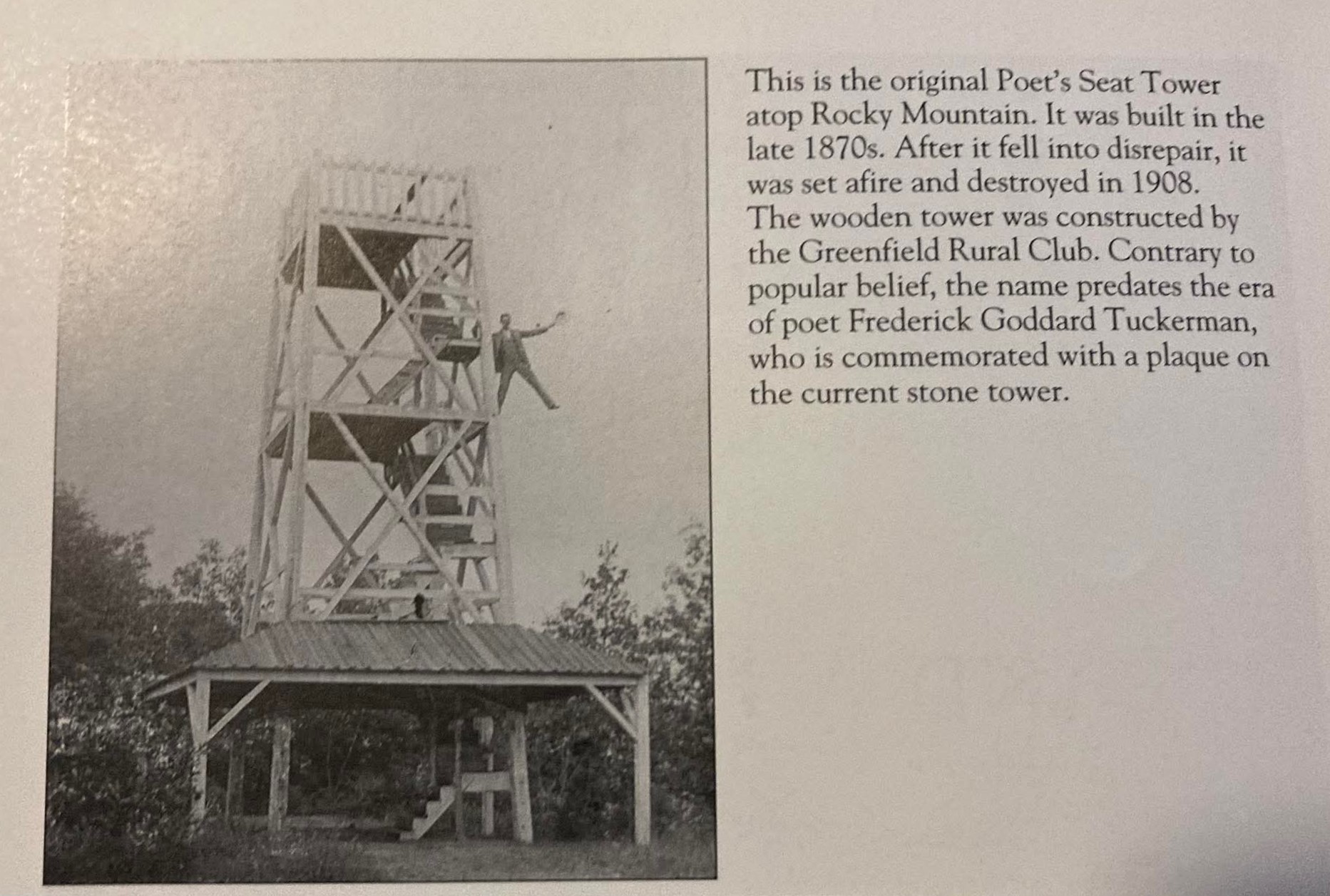
The original Poet’s Seat Tower was a wooden structure built in 1877. It stood on a scenic bluff now known as Rocky Mountain Park, overlooking the Connecticut River Valley. The site was long associated with poets and writers who were drawn to its sweeping vistas and tranquil atmosphere — hence the name “Poet’s Seat.”

Poet’s Seat Tower - Rocky Mountain Park

Poet’s Seat Tower – Rocky Mountain Park

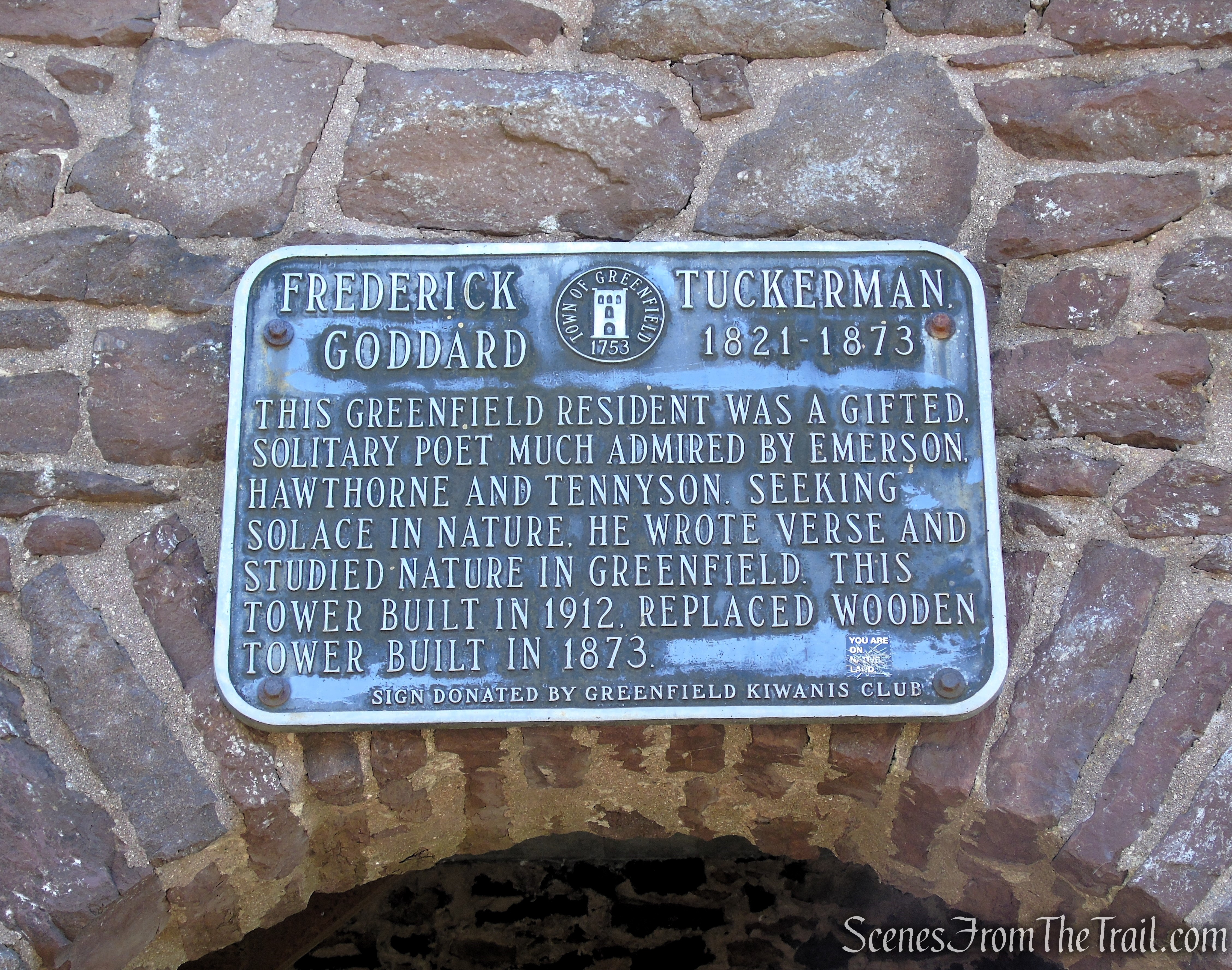
The first tower was a simple wooden lookout constructed by local residents to commemorate Frederick Goddard Tuckerman (1821–1873), a reclusive 19th-century poet from Greenfield who often visited the spot for inspiration. Tuckerman’s friends and admirers dedicated the tower in his honor, recognizing both his literary legacy and his connection to the landscape.

Original Poet’s Seat Tower

Original Poet’s Seat Tower

That original wooden tower stood for several decades before deteriorating. That original wooden tower stood for several decades before deteriorating. It was eventually replaced by the current sandstone tower, which still stands today and serves as a beloved local landmark.

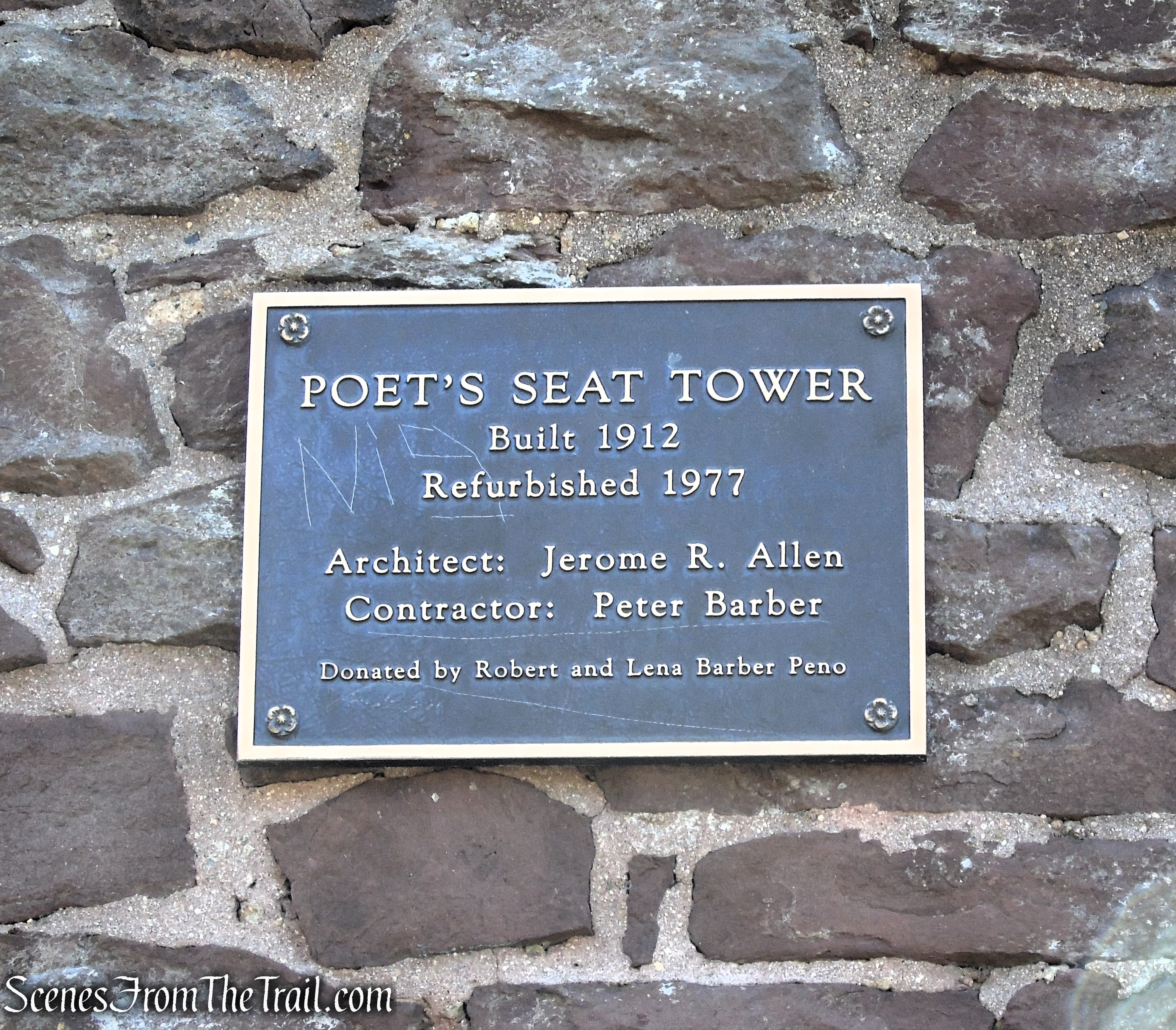
Built in 1912 to replace the earlier wooden tower from 1877, it honors the area’s long association with poets—most notably Frederick Goddard Tuckerman, who drew inspiration from the scenic overlook in the 19th century.

Poet's Seat Tower

Poet’s Seat Tower

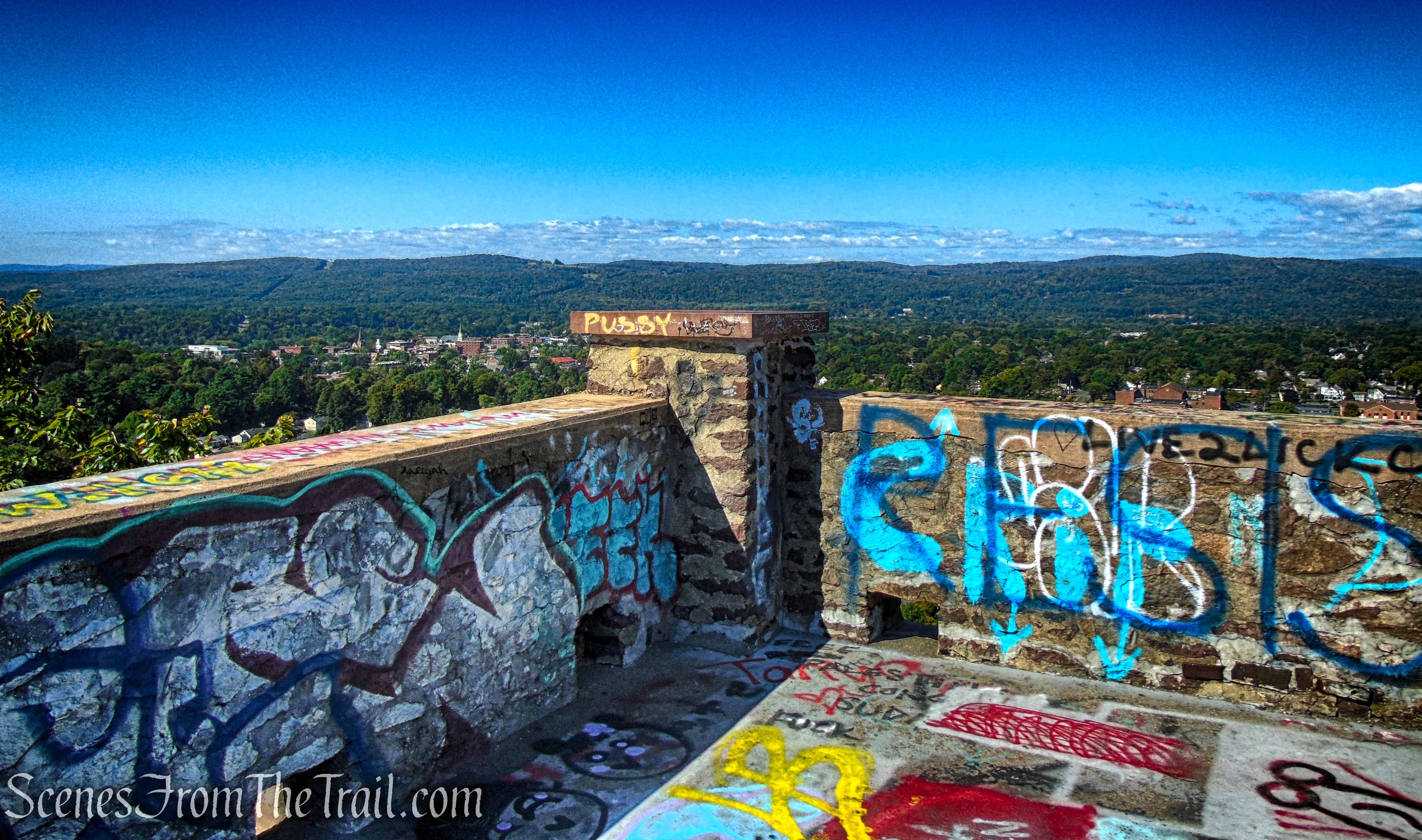
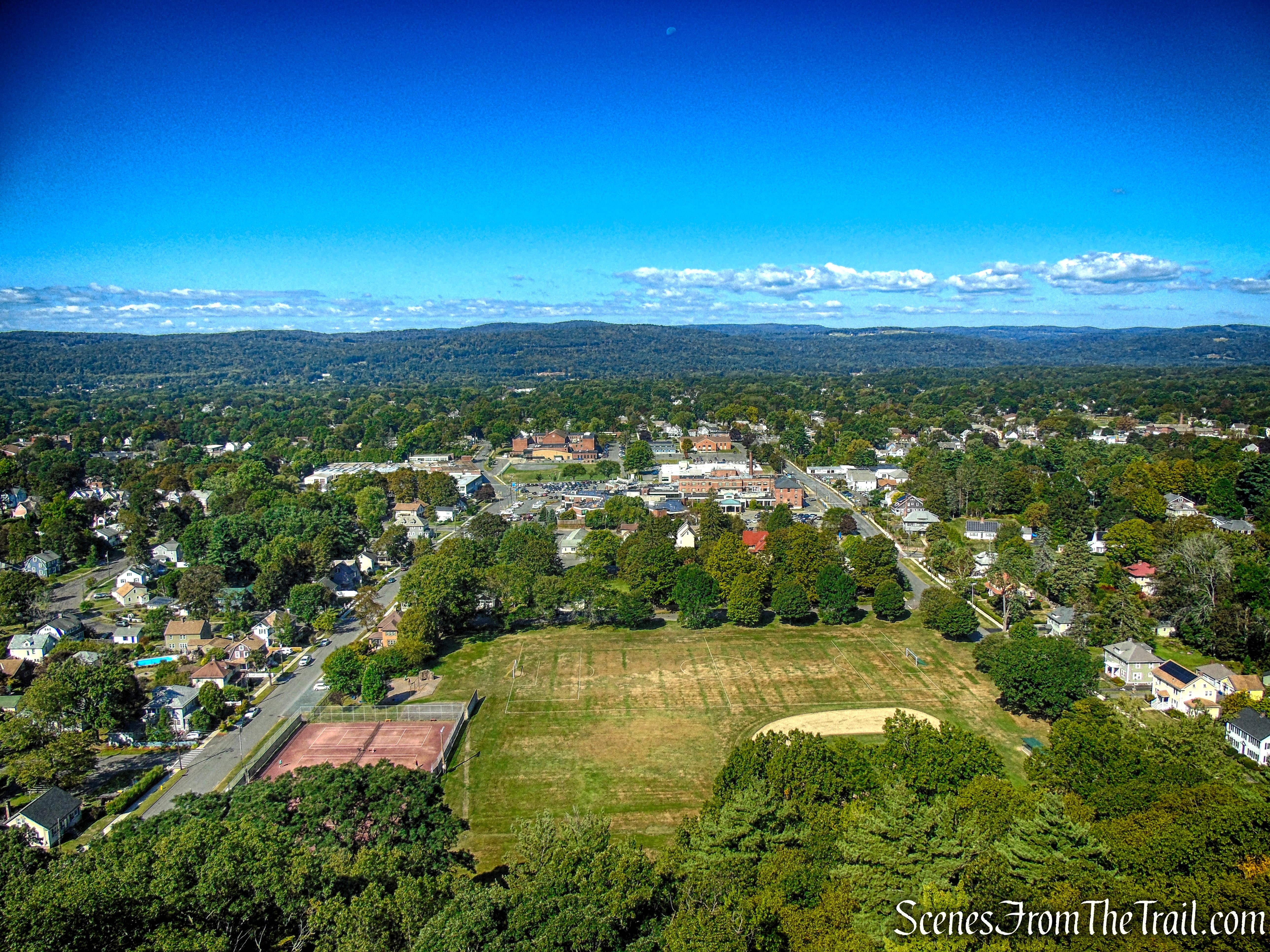
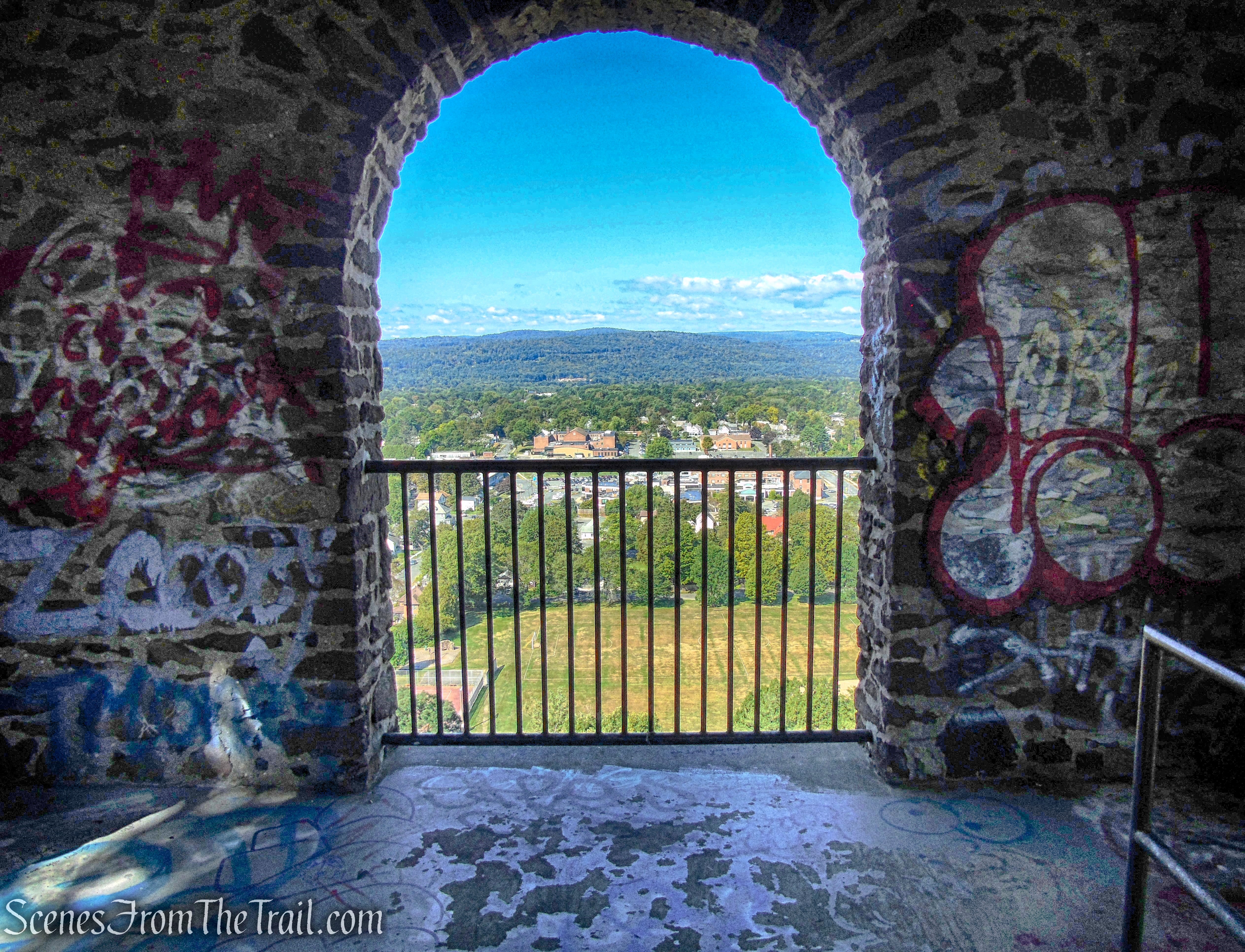
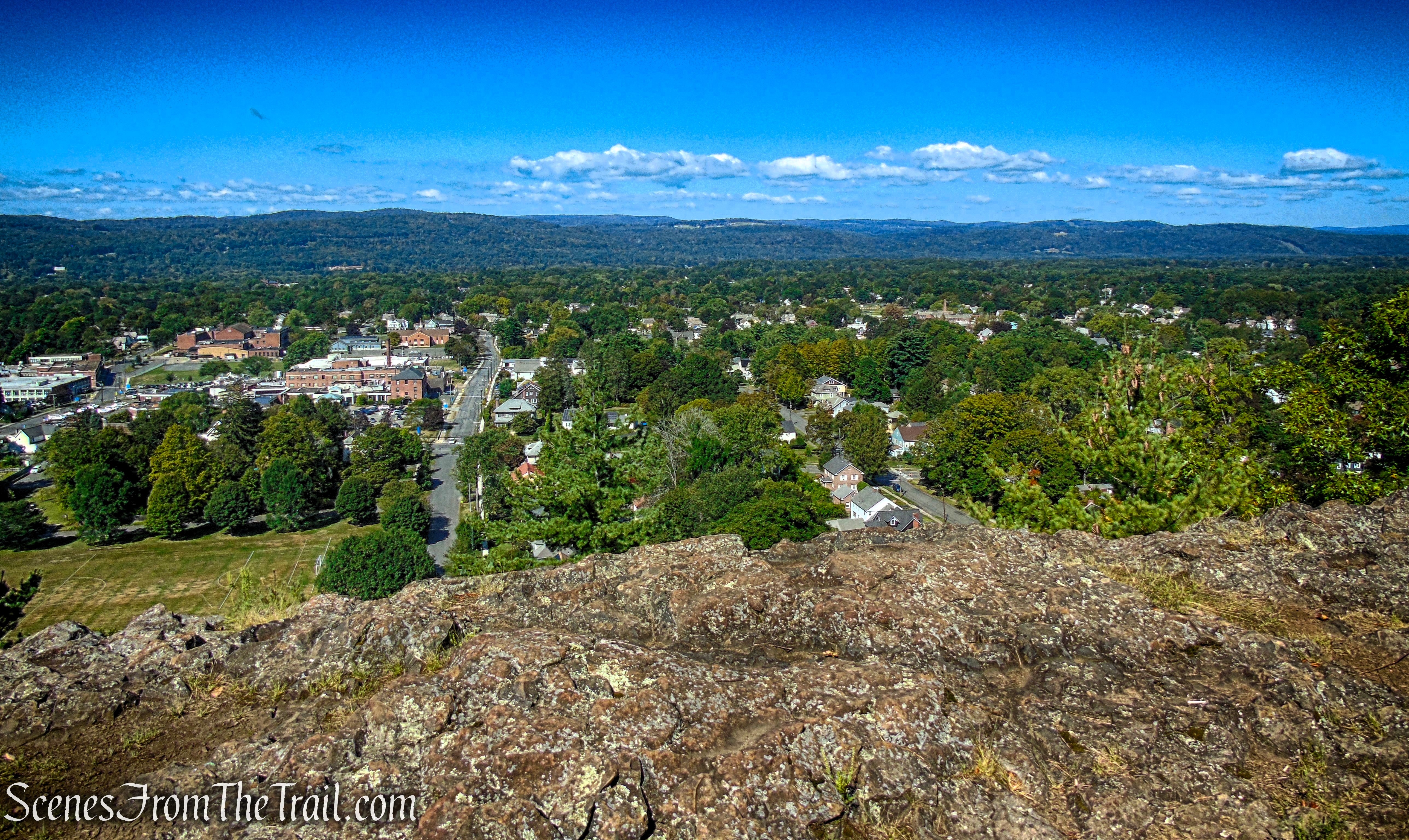
From the top, visitors are treated to sweeping views of the Connecticut River Valley, the Pocumtuck Range, and the surrounding hilltowns—especially stunning during autumn when the landscape blazes with color.

View southwest - Poet's Seat Tower

View southwest – Poet’s Seat Tower

View west - Poet's Seat Tower

View west – Poet’s Seat Tower

The tower’s rustic stone construction and crenellated top give it the look of a small medieval fortress, a fitting tribute to the romantic spirit of the poets who once admired the same view.

Poet's Seat Tower

Poet’s Seat Tower

In 1977, Poet’s Seat Tower underwent a major restoration to preserve its structure and historic charm. Funded by the town of Greenfield, the Bicentennial Commission, and local civic groups, the project included repointing the sandstone exterior, repairing the spiral staircase, and reinforcing the tower’s interior with new steel and cement work.

Poet’s Seat Tower

Poet’s Seat Tower

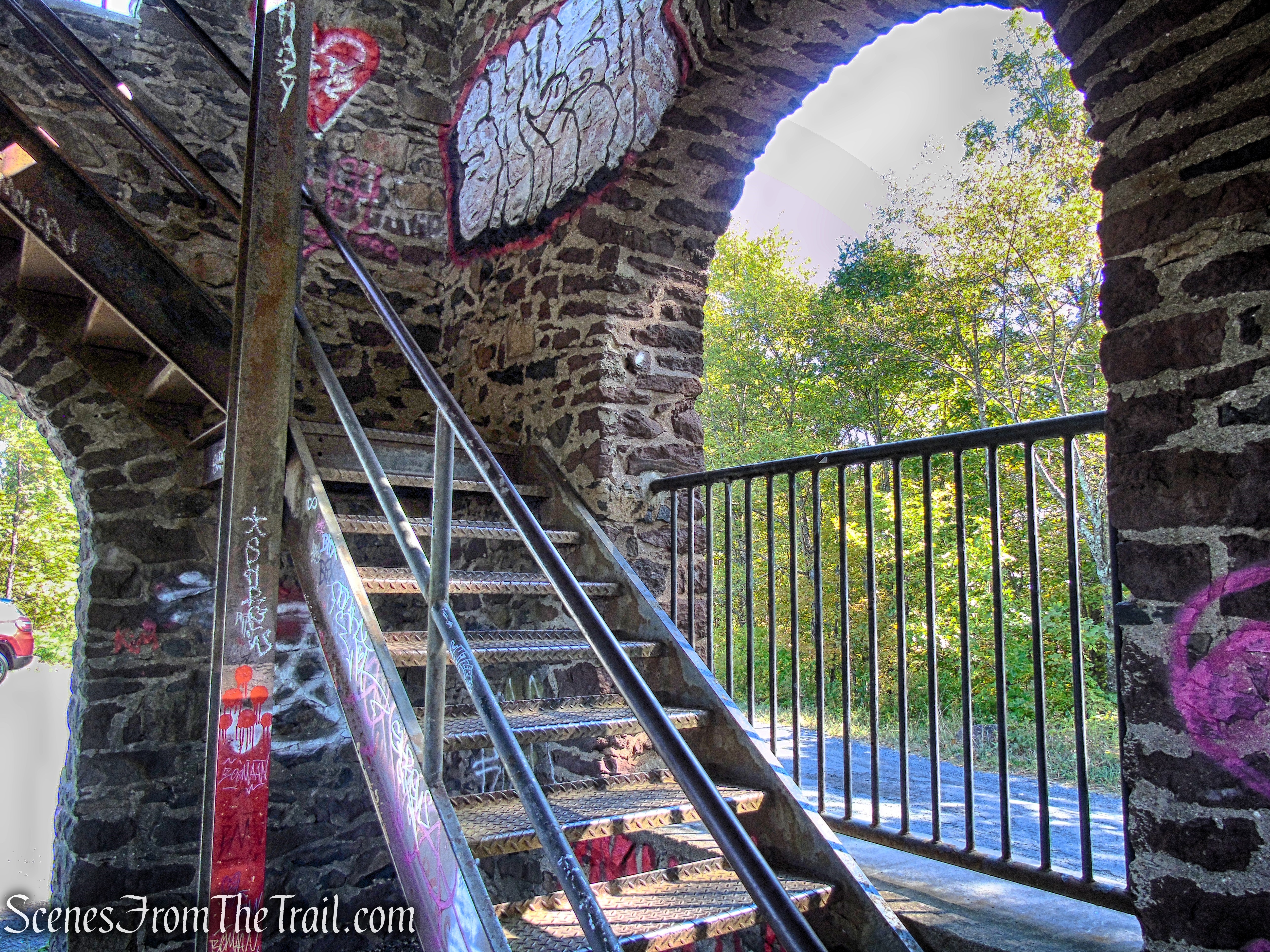
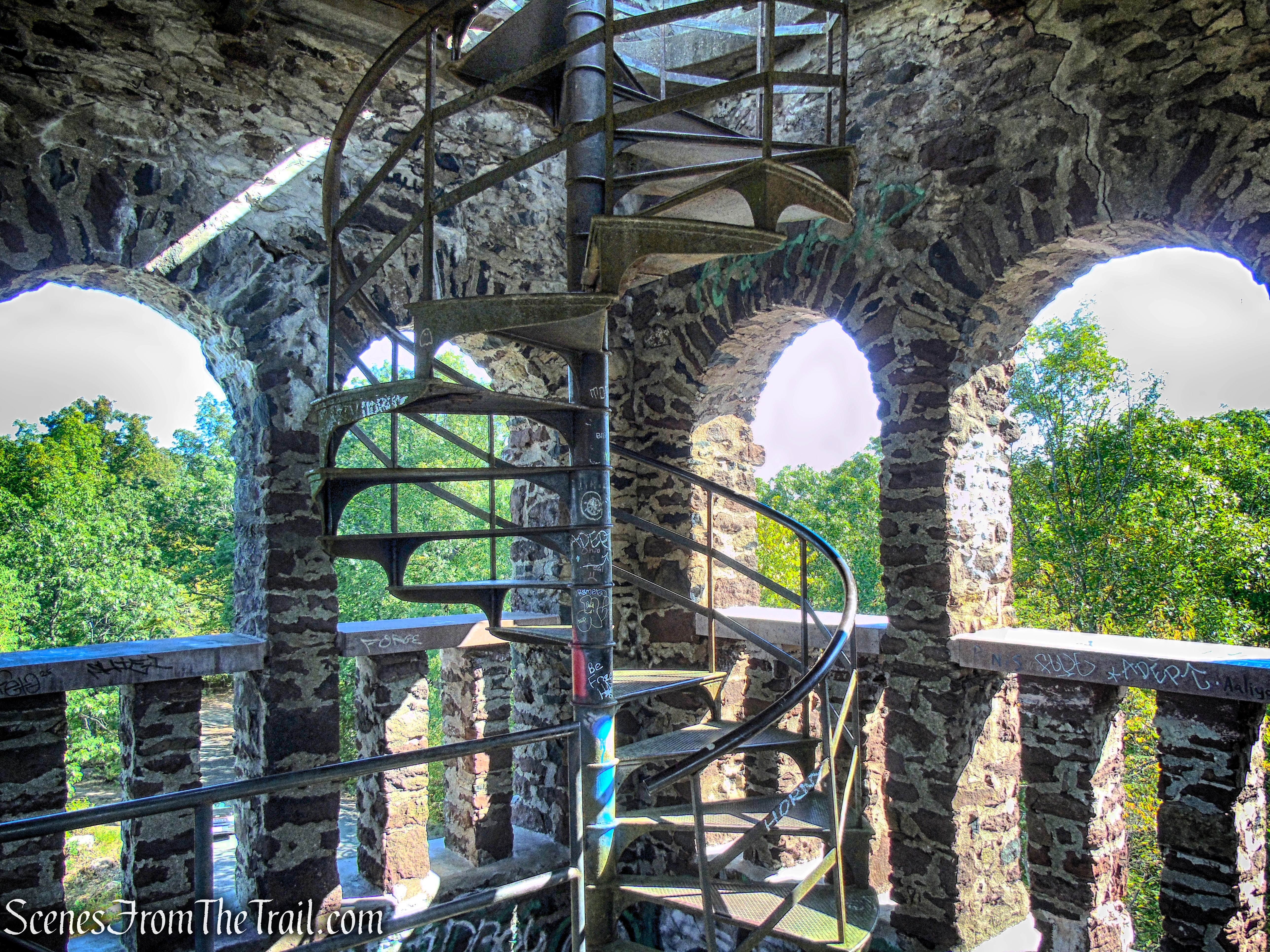
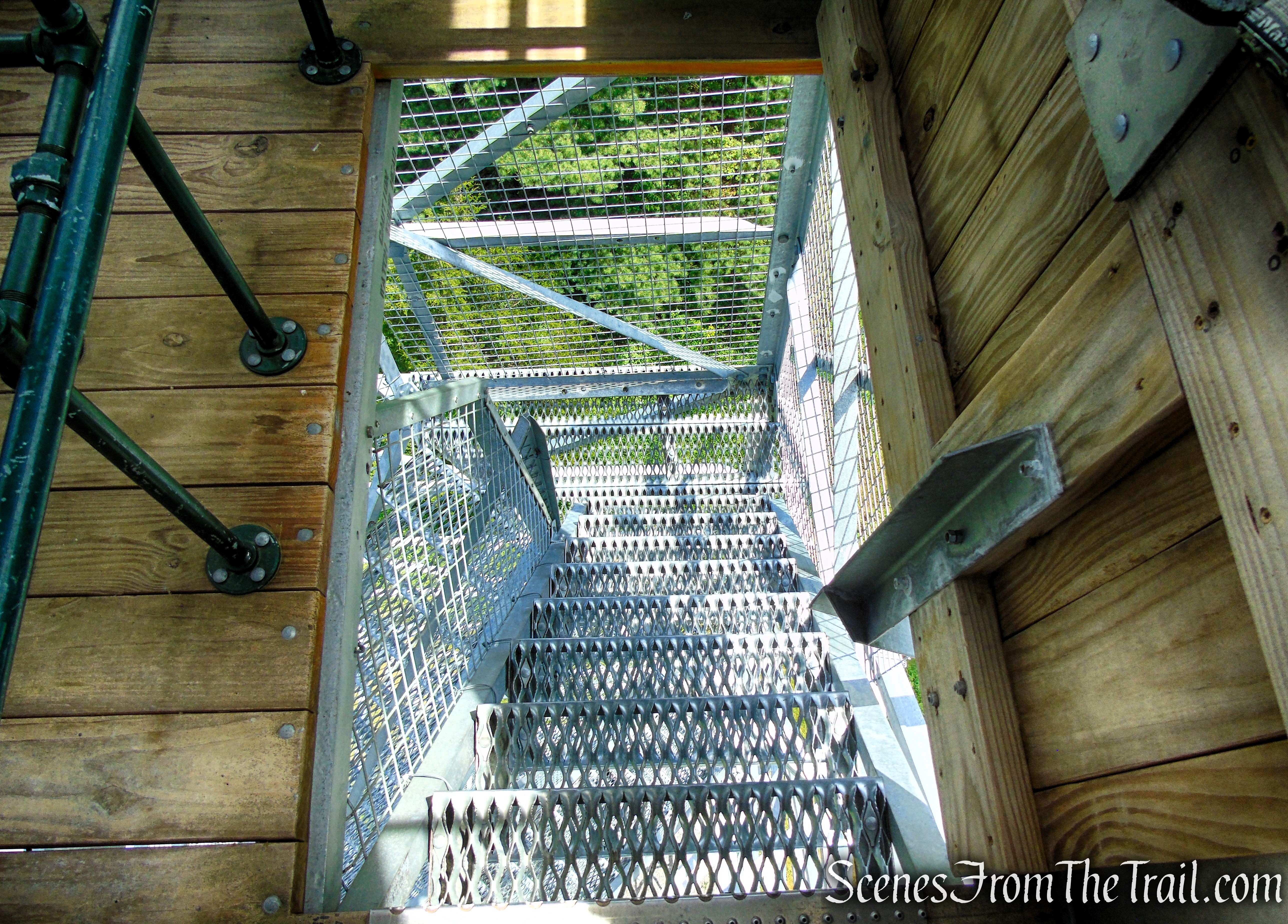
Inside Poet’s Seat Tower, a short flight of straight iron steps leads upward from the ground floor to the two interior upper levels, where a spiral iron staircase continues to the open observation deck.

Poet’s Seat Tower

Poet’s Seat Tower

Poet’s Seat Tower

Poet’s Seat Tower

The interior features rough sandstone walls and arched window openings that let in natural light and frame views of the surrounding landscape. Reinforced with steel and concrete during the 1970’s restoration, the tower’s interior remains sturdy yet retains its historic character, guiding visitors upward to the open observation deck and its sweeping vistas.

Poet’s Seat Tower

Poet’s Seat Tower

The tower is open to the public year-round, and parking is available nearby, making it an easy stop for scenic vistas and a taste of local history. Along with its literary connections, the site offers picnic spots and walking trails, adding to its appeal as a peaceful getaway.

Poet’s Seat Tower

Poet’s Seat Tower

Poet’s Seat Tower

Poet’s Seat Tower


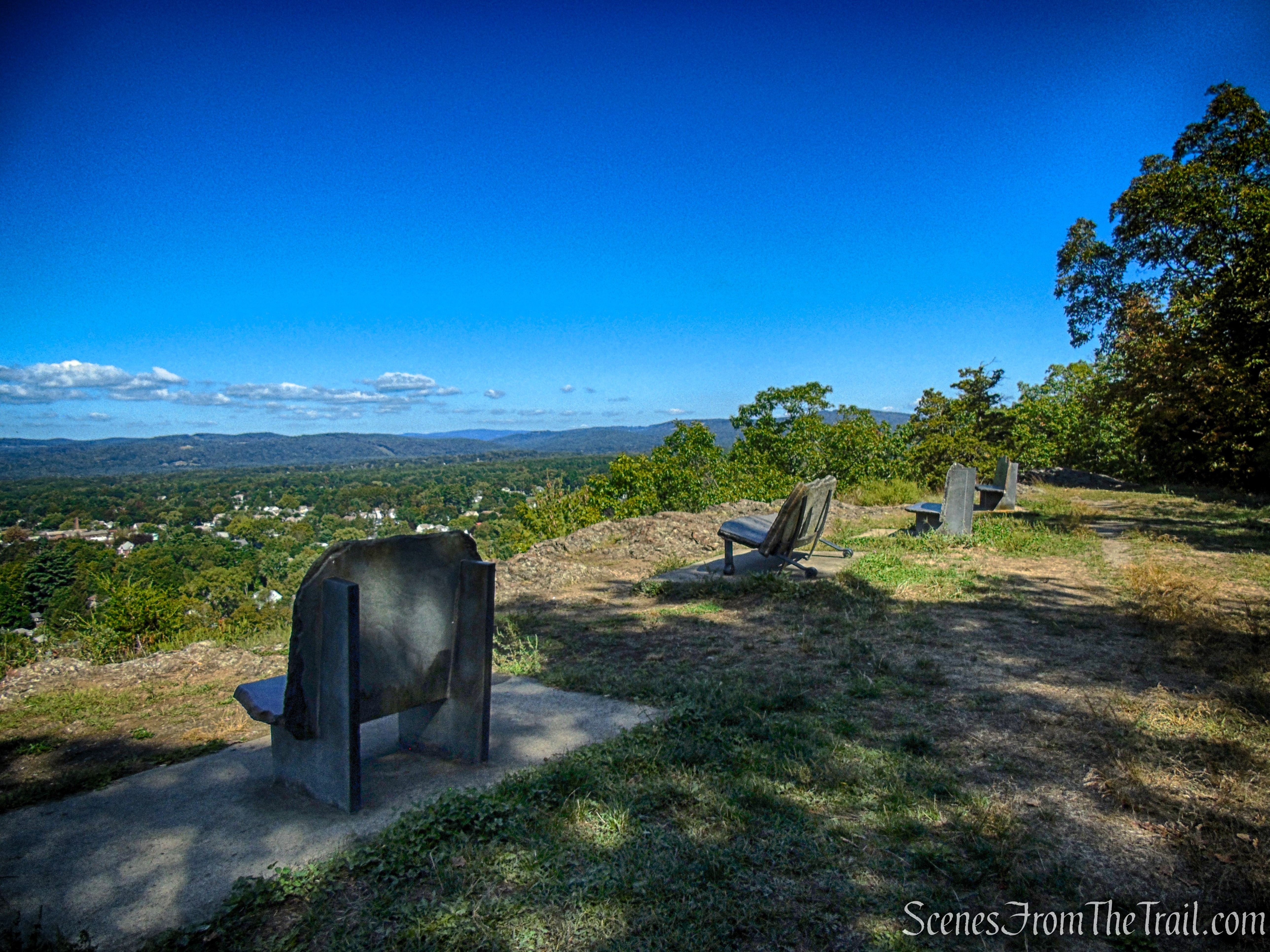
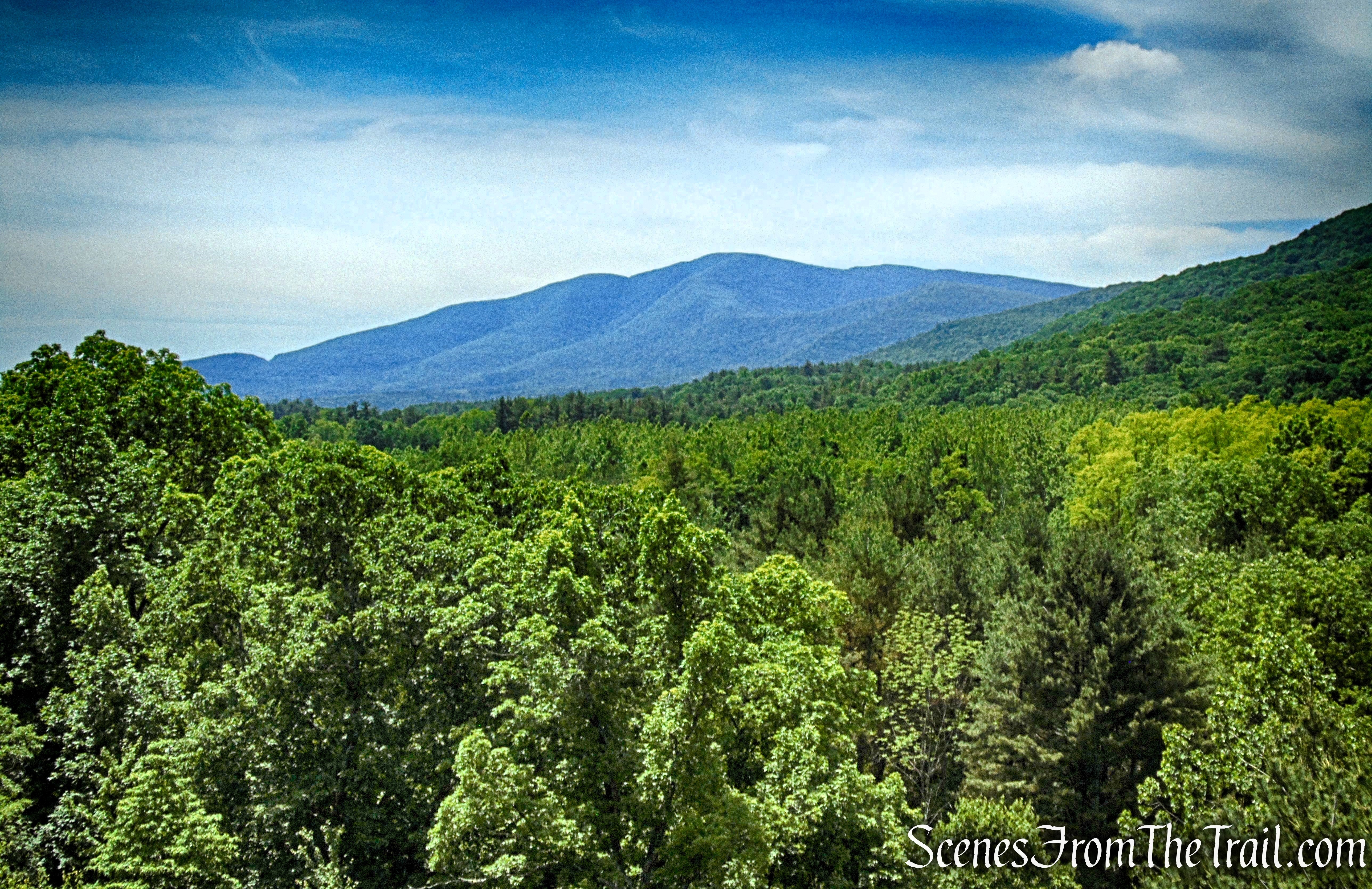
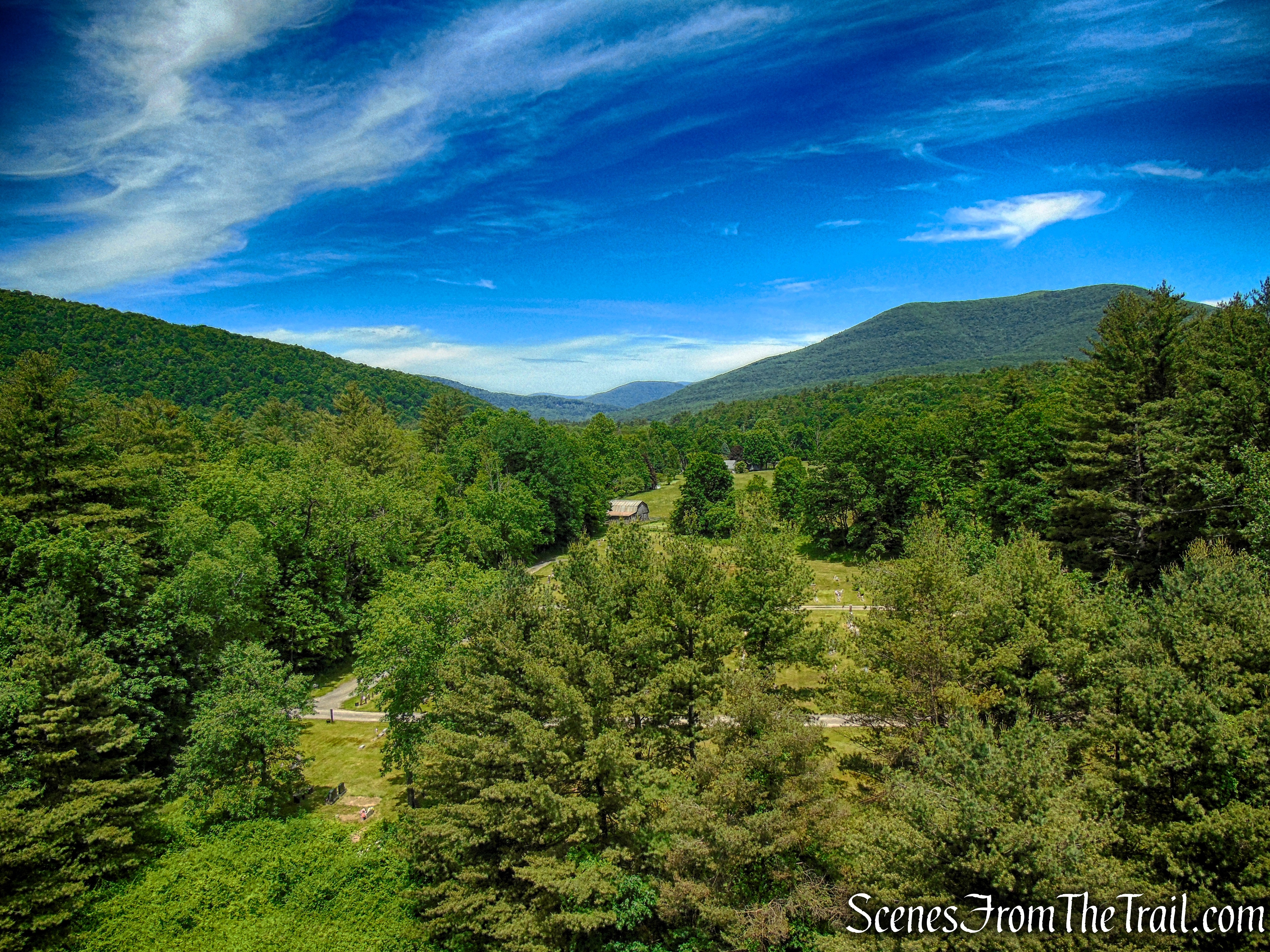
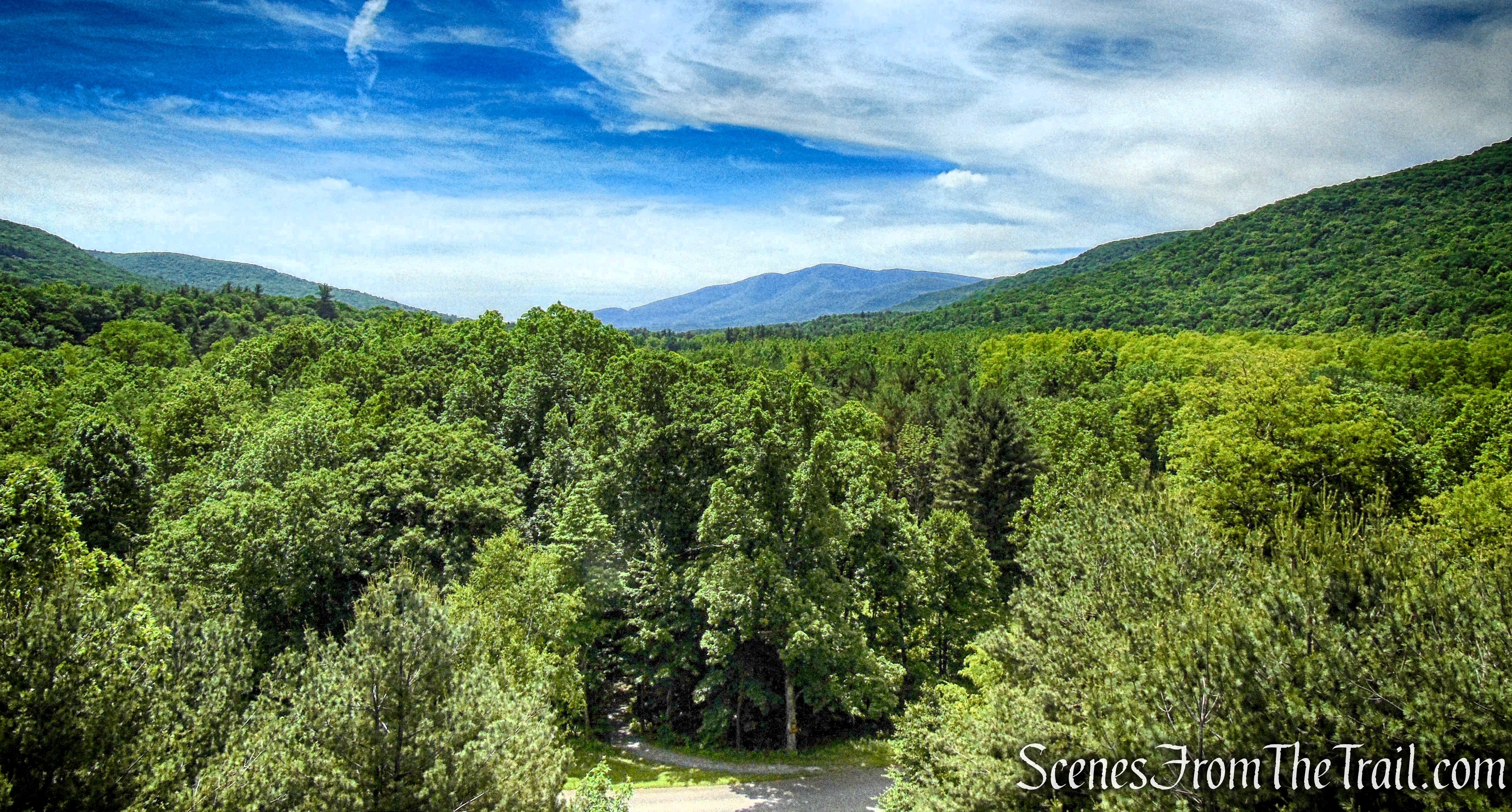
Rocky Mountain Park in Greenfield, Massachusetts, is a scenic public preserve that stretches along a forested ridgeline above the Connecticut River Valley. Centered around Poet’s Seat Tower, the park features wooded trails, rocky cliffs, and open ledges that offer sweeping views of the surrounding countryside. It’s one of Greenfield’s most beloved outdoor destinations, blending natural beauty with local history.

Rocky Mountain Park

Rocky Mountain Park

The park’s network of trails winds through oak and pine forests, connecting scenic overlooks such as High Ledge and Beacon Field below. Visitors can hike, picnic, or simply enjoy the views from the tower and its surrounding stone benches. The area has long been a place of inspiration—once visited by 19th-century poets like Frederick Goddard Tuckerman, and later preserved by local citizens who valued its rugged charm and panoramic vistas.

Rocky Mountain Park

Rocky Mountain Park

Rocky Mountain Park has roughly 2 to 3 miles of interconnected trails that wind along the ridgeline and surrounding woodland. These trails vary from gentle paths near Beacon Field to steeper, more rugged sections that climb toward Poet’s Seat Tower and other rocky overlooks. Many visitors extend their walk by linking to nearby green spaces and town trails, creating longer loop options around Greenfield’s hillside parks.


Sources:


Lost City Loop – Mohonk Preserve

August 31, 2025 – Gardiner, NY

Difficulty: Moderate

Length: Approximately 3 miles

Max elevation: 1,224 ft.– total elevation gain approximately 610 ft.

Route type: Lollipop-Loop

Map: Shawangunk Trails Map #105

Fee: $15.00 day hiking fee (Non-Member) – Purchase Membership

Trailhead parking: Mohonk Preserve Coxing Trailhead – Gardiner, NY 12525

Please note: The Coxing Trailhead is Mohonk Preserve’s smallest parking lot and fills VERY early on peak weekends. On summer and fall weekends, arrive early to ensure a parking space.


Overview:

Mohonk Preserve is the largest private nature preserve in New York State, encompassing over 8,000 acres of protected land in the scenic Shawangunk Ridge near New Paltz, about 90 miles north of New York City. Mohonk Preserve offers more than 70 miles of trails and carriage roads used for hiking, trail running, biking, horseback riding, and cross-country skiing.

Lost City Escarpment Trail – Mohonk Preserve

Lost City Escarpment Trail – Mohonk Preserve

It is also a world-renowned destination for rock climbing. “The Gunks” (Shawangunk Mountains), is one of the oldest climbing areas in the U.S.

Shawangunk Conglomerate is a tough, silica-cemented rock made of quartz pebbles and sand, formed over 400 million years ago. Its durability shapes the dramatic cliffs of the Shawangunk Ridge and provides a unique landscape for hikers, nature lovers, and climbers alike. Visually, the rock appears as a light gray or white matrix embedded with rounded quartz pebbles.

Lost City Escarpment Trail – Minnewaska State Park Preserve

Lost City Escarpment Trail – Minnewaska State Park Preserve

The “Gunks,” as they are affectionately known, are part of a 245 mile long ridge that runs from New York to Pennsylvania, forming a spectacular and rare landscape. Miles of Victorian-era carriageways and backwoods trails allow nearly limitless exploration of places of extraordinary scenic beauty.

Lost City Escarpment Trail – Minnewaska State Park Preserve

Lost City Escarpment Trail – Minnewaska State Park Preserve

The Lost City Escarpment Trail is the highlight of this hike. It is a relatively newly blazed trail which was constructed sometime between 2018 and 2020. It travels through varied terrain along the Dickie Barre cliffs, with almost constant views of both the Lost City below and the surrounding countryside.

Lost City Escarpment Trail – Mohonk Preserve

Lost City Escarpment Trail – Mohonk Preserve


History:

The area’s human history traces back to early 19th-century settlers like the Enderly family. They homesteaded along Coxing Kill, operating a water-powered sawmill beginning in 1801, leaving behind stone walls and a family graveyard near the Coxing Trailhead.

Established in 1869 by the Smiley brothers, the Mohonk Mountain House resort laid the foundation for a legacy of conservation in the region. To protect the surrounding natural landscape, the Mohonk Trust was created in 1963, eventually evolving into Mohonk Preserve Inc. in 1978. In recognition of their historical and environmental significance, both the Mohonk Preserve and the Mohonk Mountain House were designated a National Historic Landmark in 1986.


Trails Overview:

  • High Peters Kill Trail ~

This blue-blazed footpath connects Mohonk Preserve (via Coxing Trailhead) with Minnewaska State Park. The trail features a mix of terrain: forested sections, rocky ledges, narrow cliffside paths, water crossings, and ridgeline traverses. The High Peters Kill Trail serves as a connector within the broader network of trails spanning Mohonk Preserve and Minnewaska State Park Preserve. Whether you’re looking for a short loop or an extended hike across the Gunks, this trail offers a solid starting point.

High Peters Kill Trail - Coxing Trailhead

High Peters Kill Trail – Coxing Trailhead

  • Kings Lane ~

This yellow blazed trail is a historic and scenic hiking route that offers a glimpse into the region’s past. Originally an old woods road used for transporting materials like conglomerate to be made into grindstones, the trail now serves as a path for hikers and rock climbers. It begins at a junction with the High Peterskill Trail and continues uphill through a forested area. The trail leads to the Lost City, a notable rock climbing area featuring dramatic cliffs and panoramic views.

King’s Lane - Mohonk Preserve

King’s Lane – Mohonk Preserve

  • Lost City Escarpment Trail ~

The Lost City Escarpment Trail is a relatively newly marked footpath known for its dramatic cliffs, lush forests, and panoramic views. It features unique rock formations and offers a mix of moderate to challenging terrain. The impressive glacially-formed cliffs and crevices resemble a “Lost City” skyline, offering a unique and visually striking landscape. Hikers can navigate through boulder-strewn areas, ascending to panoramic views of the Catskill Mountains and the Hudson Valley, especially breathtaking during the fall foliage season.

Lost City Escarpment Trail – Mohonk Preserve

Lost City Escarpment Trail – Mohonk Preserve

These three trails make up the Lost City Loop. All three trails are well marked and easy to follow. 


Hike Overview:

This scenic hike through the Lost City and Dickie Barre area features well-marked, rocky trails that wind through rugged terrain. The route offers wide-ranging views of the valley below and the surrounding hills, making it a rewarding journey for hikers. The trail through the Lost City, with its unique rock formations, add a sense of adventure and discovery to the experience.

King’s Lane - Mohonk Preserve

King’s Lane – Mohonk Preserve

The Coxing Trailhead is Mohonk Preserve’s smallest parking lot and fills to capacity VERY early on peak weekends. On summer and fall weekends, arrive early to ensure a parking space. 

To access the land you need to have a current membership or pay a day use fee.

Coxing Trailhead - Mohonk Preserve

Coxing Trailhead – Mohonk Preserve

The last time that I hiked this area was in 2018. At the time, the Lost City Escarpment Trail was not marked. I decided to pay it a return visit to check it out. We explored the crevices on our last visit, but this time we just hiked the trails in order to document the Lost City Escarpment Trail as a loop. If you wish to explore the crevices of the Lost City, you may do so at your own risk.

This moderate loop on well marked trails was done counterclockwise, starting at the Coxing Trailhead.

Lost City Loop

Lost City Loop

Although this is a moderate hike, it does have numerous ups and downs, and there is one spot where you will have to crawl through.

elevation profile - Lost City Loop

elevation profile – Lost City Loop

Remember to wear sturdy footwear, as the terrain can be uneven and challenging in spots.


The Hike:

This hike begins at the southern end of the Coxing parking area by a kiosk, where three blue blazes mark the start of the High Peters Kill Trail. You’ll be following the High Peters Kill Trail for about .35 mile (this trail is also the route of the Shawangunk Ridge Trail, with its logo markers appearing at junctions and other locations along the way).

High Peters Kill Trail - Coxing Trailhead

High Peters Kill Trail – Coxing Trailhead

High Peters Kill Trail - Coxing Trailhead

High Peters Kill Trail – Coxing Trailhead

The High Peters Kill Trail follows a woods road, passing the Enderly Burial Ground on the right. It then crosses a wet area on a boardwalk and continues through a Hemlock forest. After crossing a stream on a wooden bridge, the trail begins a gentle climb, paralleling the stream for a short distance. It then crosses the stream on rocks and bears right, away from the stream.

Enderly Burial Ground - Mohonk Preserve

Enderly Burial Ground – Mohonk Preserve

Enderly Burial Ground - Mohonk Preserve

Enderly Burial Ground – Mohonk Preserve

High Peters Kill Trail - Mohonk Preserve

High Peters Kill Trail – Mohonk Preserve

High Peters Kill Trail - Mohonk Preserve

High Peters Kill Trail – Mohonk Preserve

Soon, you’ll come to a junction with the yellow-blazed King’s Lane Trail, which continues straight ahead. Leave the blue blazed trail and follow the yellow blazes. This is the start of the loop. You will return to this spot on the blue trail.

King’s Lane - Mohonk Preserve

King’s Lane – Mohonk Preserve

If you plan to explore the crevices, look for side trails on the left that lead to the base of the cliffs. Otherwise, continue following the old road as it climbs the hillside, first somewhat steeply, then the grade moderates as it passes an impressive line of cliffs used by rock climbers. This is the “Lost City,” a faulted section of Coxing Clove, which has canyon like fissures in the towering rock outcrops.

King’s Lane - Mohonk Preserve

King’s Lane – Mohonk Preserve

Originally, this road was used to haul conglomerate stone to create grindstones. Today, it’s been repurposed as a hiking trail that passes by the cliffs of the Lost City.

King’s Lane - Mohonk Preserve

King’s Lane – Mohonk Preserve

King’s Lane - Mohonk Preserve

King’s Lane – Mohonk Preserve

King’s Lane - Mohonk Preserve

King’s Lane – Mohonk Preserve

King’s Lane - Mohonk Preserve

King’s Lane – Mohonk Preserve

King’s Lane - Mohonk Preserve

King’s Lane – Mohonk Preserve

The towering cliffs of the Lost City can be seen through the trees.

King’s Lane - Mohonk Preserve

King’s Lane – Mohonk Preserve

King’s Lane - Mohonk Preserve

King’s Lane – Mohonk Preserve

King’s Lane - Mohonk Preserve

King’s Lane – Mohonk Preserve

Soon, King’s Lane ends where the Lost City Escarpment Trail begins. You will have to navigate through a boulder-strewn area to gain the ridge. Follow the yellow blazes as they climb the hill and turns left to reach the ridge.

Lost City Escarpment Trail – Mohonk Preserve

Lost City Escarpment Trail – Mohonk Preserve

Lost City Escarpment Trail – Mohonk Preserve

Lost City Escarpment Trail – Mohonk Preserve

Lost City Escarpment Trail – Mohonk Preserve

Lost City Escarpment Trail – Mohonk Preserve

Once on the ridge, the trail follows the edge of the Dickie Barre cliffs and views open up of the surrounding area.

Lost City Escarpment Trail – Mohonk Preserve

Lost City Escarpment Trail – Mohonk Preserve

Lost City Escarpment Trail – Mohonk Preserve

Lost City Escarpment Trail – Mohonk Preserve

As the trail heads in a westerly direction, it comes extremely close to the edge of the cliffs. Extreme caution should be excercised. You will have a good vantage point of the Lost City below as you walk the trail.

Lost City Escarpment Trail – Mohonk Preserve

Lost City Escarpment Trail – Mohonk Preserve

Lost City Escarpment Trail – Mohonk Preserve

Lost City Escarpment Trail – Mohonk Preserve

Lost City Escarpment Trail – Mohonk Preserve

Lost City Escarpment Trail – Mohonk Preserve

Lost City Escarpment Trail – Mohonk Preserve

Lost City Escarpment Trail – Mohonk Preserve

Lost City Escarpment Trail – Mohonk Preserve

Lost City Escarpment Trail – Mohonk Preserve

The trail alternately veers away from and returns to the cliff line, offering nearly continuous views.

Lost City Escarpment Trail – Mohonk Preserve

Lost City Escarpment Trail – Mohonk Preserve

Lost City Escarpment Trail – Mohonk Preserve

Lost City Escarpment Trail – Mohonk Preserve

Lost City Escarpment Trail – Mohonk Preserve

Lost City Escarpment Trail – Mohonk Preserve

Looking south, to the left of the narrow notch is The Trapps and Millbrook Mountain is on the right. Through the notch, across the Walkill Valley, the Catskill Mountains are visible on a clear day.

Lost City Escarpment Trail – Mohonk Preserve

Lost City Escarpment Trail – Mohonk Preserve

Lost City Escarpment Trail – Mohonk Preserve

Lost City Escarpment Trail – Mohonk Preserve

To the east, Skytop Tower sits at 1,253 feet above sea level, atop Mohonk Mountain.

View of Skytop Tower atop Mohonk Mountain from Lost City Escarpment Trail

View of Skytop Tower atop Mohonk Mountain from Lost City Escarpment Trail

Continue heading west on the Lost City Escarpment Trail, enjoying the scenic ridge walk. At times you will encounter short spur paths that lead to views. 

Lost City Escarpment Trail – Mohonk Preserve

Lost City Escarpment Trail – Mohonk Preserve

Lost City Escarpment Trail – Mohonk Preserve

Lost City Escarpment Trail – Mohonk Preserve

Lost City Escarpment Trail – Mohonk Preserve

Lost City Escarpment Trail – Mohonk Preserve

Lost City Escarpment Trail – Mohonk Preserve

Lost City Escarpment Trail – Mohonk Preserve

Lost City Escarpment Trail – Mohonk Preserve

Lost City Escarpment Trail – Mohonk Preserve

Lost City Escarpment Trail – Mohonk Preserve

Lost City Escarpment Trail – Mohonk Preserve

Here, you will have to crawl through. It is larger than it appears.

Lost City Escarpment Trail – Mohonk Preserve

Lost City Escarpment Trail – Mohonk Preserve

Lost City Escarpment Trail – Mohonk Preserve

Lost City Escarpment Trail – Mohonk Preserve

Lost City Escarpment Trail – Mohonk Preserve

Lost City Escarpment Trail – Mohonk Preserve

Lost City Escarpment Trail – Mohonk Preserve

Lost City Escarpment Trail – Mohonk Preserve

Lost City Escarpment Trail – Mohonk Preserve

Lost City Escarpment Trail – Mohonk Preserve

After about 3/4 of a mile of ridge walking, the Lost City Escarpment Trail enters Minnewaska State Park. Continue following the yellow blazes along the edge of the cliffs. A short distance later, the trail comes to a wide ranging viewpoint which makes a nice spot to take a break. You have now traveled about 1.4 miles.

Lost City Escarpment Trail – Mohonk Preserve

Lost City Escarpment Trail – Mohonk Preserve

Lost City Escarpment Trail – Minnewaska State Park Preserve

Lost City Escarpment Trail – Minnewaska State Park Preserve

Lost City Escarpment Trail – Minnewaska State Park Preserve

Lost City Escarpment Trail – Minnewaska State Park Preserve

Lost City Escarpment Trail – Minnewaska State Park Preserve

Lost City Escarpment Trail – Minnewaska State Park Preserve

The steep, vertical rock face of the Dickie Barre cliffs.

Lost City Escarpment Trail – Minnewaska State Park Preserve

Lost City Escarpment Trail – Minnewaska State Park Preserve

Lost City Escarpment Trail – Minnewaska State Park Preserve

Lost City Escarpment Trail – Minnewaska State Park Preserve

Lost City Escarpment Trail – Minnewaska State Park Preserve

Lost City Escarpment Trail – Minnewaska State Park Preserve

Looking east. The highpoint, just right of center, is Mohonk Mountain with Skytop Tower at its summit.

Lost City Escarpment Trail – Minnewaska State Park Preserve

Lost City Escarpment Trail – Minnewaska State Park Preserve

The Lost City Escarpment Trail ends at a T-intersection with the blue-blazed High Peters Kill Trail.

Lost City Escarpment Trail – Minnewaska State Park Preserve

Lost City Escarpment Trail – Minnewaska State Park Preserve

Turn left at the junction and follow the blue blazes as the trail descends steeply, passing large rock formations along the way.

High Peters Kill Trail – Minnewaska State Park Preserve

High Peters Kill Trail – Minnewaska State Park Preserve

High Peters Kill Trail – Minnewaska State Park Preserve

High Peters Kill Trail – Minnewaska State Park Preserve

High Peters Kill Trail – Minnewaska State Park Preserve

High Peters Kill Trail – Minnewaska State Park Preserve

High Peters Kill Trail – Minnewaska State Park Preserve

High Peters Kill Trail – Minnewaska State Park Preserve

High Peters Kill Trail – Minnewaska State Park Preserve

High Peters Kill Trail – Minnewaska State Park Preserve

Soon, the High Peters Kill Trail re-enters Mohonk Preserve. Continue following the blue blazes as the trail continues to descend.

High Peters Kill Trail – Minnewaska State Park Preserve

High Peters Kill Trail – Minnewaska State Park Preserve

High Peters Kill Trail - Mohonk Preserve

High Peters Kill Trail – Mohonk Preserve

High Peters Kill Trail - Mohonk Preserve

High Peters Kill Trail – Mohonk Preserve

After almost a 1/2 mile from where you began on the blue trail, you will pass the junction with King’s Lane. Bear right to continue on blue, now retracing your steps from the beginning of the hike, and returning back to the parking lot, where the hike began.


Review:

This is a really great hike in The Gunks. It’s one of the shorter loop hikes that can be done at Mohonk Preserve, but if you’re feeling ambitious, you can take anyone of the connesting trails to lengthen the hike. On most nice weekends, Mohonk is swarming with people, but we only saw a few hikers during our visit.

Pros:

Lost City, Dickie Barre cliffs, well marked trails, scenic landscape, scenic views.

Cons:

Parking lot fills up early.


Take a hike!

Lost City Loop – Mohonk Preserve

Lost City Loop – Mohonk Preserve


Sources:


Torne Mountain and Osio Rock Loop – Norvin Green State Forest

August 24, 2025 – Bloomingdale, New Jersey

Difficulty: Moderate

Length: Approximately 3 miles

Max elevation: 1,116 ft.– total elevation gain approximately 620 ft.

Route type: Figure-Eight Loop

Buy Maps (Paper & Avenza): Northern New Jersey Highlands (Combined Map)

Free Web Map: Norvin Green State Forest Trail Map 2023

Trailhead parking: 582 Glenwild Ave, Bloomingdale, NJ 07403

Small dirt parking lot for approximately 10-12 cars – No bathrooms on site


Park Overview:

Norvin Green State Forest spans approximately 5,416 acres in Passaic County, New Jersey, near Bloomingdale and Ringwood, adjacent to the Wanaque Reservoir. The undisturbed forest and rugged terrain is part of the Wyanokie Wilderness Area. The Park is home to an extensive trail system built from old logging roads. The existing trails, either old forest roads or new trails constructed by volunteers, are perfect for those looking for moderate to strenuous hikes.

Hewitt-Butler Trail - Norvin Green State Forest

Hewitt-Butler Trail – Norvin Green State Forest

With hills ranging from 400 to 1,300 feet in elevation, Norvin Green provides the avid hiker with scenic vistas, including the New York skyline, Burnt Meadow Brook and Lake Sonoma.

Hewitt-Butler Trail - Torne Mountain

Hewitt-Butler Trail – Torne Mountain

The park is operated and maintained by the New Jersey Division of Parks and Forestry.

Norvin Green State Forest - Otter Hole Trailhead

Norvin Green State Forest – Otter Hole Trailhead


History:

Norvin Green State Forest was named for Norvin Hewitt Green, the grandson of Ringwood Manor owner Abram S. Hewitt, who donated the land in 1946 to the State of New Jersey to expand Ringwood State Park. It was later designated as Norvin Green State Forest.


Trails Overview:

This Figure-Eight Loop follows two trails, the blue-blazed Hewitt-Butler Trail and the red-blazed Torne Trail. Both trails are relatively well blazed, but there were several instances where I briefly lost the Blue Trail and had to double back. Both trails are extremely rocky with some exposed roots. And in several places you may have to use both your hands and feet.

On this hike, the Hewitt-Butler Trail (2.1 miles) crosses Glenwild Avenue and traverses the southern portion of Norvin Green via Torne Mountain and Osio Rock, before terminating by a small stream at the southern base of Osio Rock.

Hewitt-Butler Trail - Osio Rock

Hewitt-Butler Trail – Osio Rock

The red-blazed Torne Trail (.75 mile) begins at the terminus of the Hewitt-Butler Trail and heads north, splitting Torne Mountain and Osio Rock. There is a short section where the trail climbs over jumbled boulders.

Torne Trail - Norvin Green State Forest

Torne Trail – Norvin Green State Forest

Trails in this park are maintained by volunteers through the New York-New Jersey Trail Conference.


Hike Overview:

The parking lot is small, holding about 10-12 cars. This lot fills up early most weekends and an early start is essential. We arrived at the trailhead at about 8am on a Sunday morning and there were about 2 spaces left. When we returned after the hike, the lot was full.

Otter Hole parking lot - Norvin Green State Forest

Otter Hole parking lot – Norvin Green State Forest

This hike is surprisingly rugged with some steep sections, rocky trails, open rock slabs and some minor scrambling. The trails are mostly shaded except for the areas around the viewpoints which are exposed. This seems to be a lesser used area of Norvin Green as we did not encounter any hikers during our time there.

There is a bailout option after descending Torne Mountain. Instead of climbing to Osio Rock, turn left at the junction with the red-blazed Torne Trail which will lead you back to Glenwild Ave.

The trail traverses over open rock and there are ankle-breaker type rocks and exposed roots throughout. Probably not a good hike to do if the ground is wet. A good pair of durable hiking boots and trekking poles are recommended. 

This Figure-Eight Loop climbs Torne Mountain in a counterclockwise direction, descends, then climbs Osio Rock before descending to meet the red-blazed Torne Trail at its southern end and returning north, back to the start.

Torne Mountain and Osio Rock Loop - Norvin Green State Forest

Torne Mountain and Osio Rock Loop – Norvin Green State Forest

The graph below shows the ups and downs of this hike. There is a total elevation gain of approximately 620 feet, but it felt like more.

Elevation Profile - Torne Mountain and Osio Rock Loop

Elevation Profile – Torne Mountain and Osio Rock Loop


The Hike:

From the Otter Hole parking lot, cross the road diagonally to the left to the trailhead next to a road sign, “Begin 700 Passaic County.” Start following the blue-blazed Hewitt-Butler Trail as it ascends on a rocky footpath and curves to the right, paralleling the road for a bit.

Hewitt-Butler Trail - Torne Mountain

Hewitt-Butler Trail – Torne Mountain

Hewitt-Butler Trail - Torne Mountain

Hewitt-Butler Trail – Torne Mountain


Hewitt-Butler Trail - Torne Mountain

Hewitt-Butler Trail – Torne Mountain

Hewitt-Butler Trail - Torne Mountain

Hewitt-Butler Trail – Torne Mountain

Hewitt-Butler Trail - Torne Mountain

Hewitt-Butler Trail – Torne Mountain

The trail soon dips down and after about 350 yards, the blue-blazed Hewitt-Butler Trail comes to a junction with the red-blazed Torne Trail, which begins on the left. The Red Trail is your return route, and the paved road that you crossed at the start of the hike can be seen through the trees on the right. Continue following the blue blazes as it ascends Torne Mountain over a rocky trail surface.

Hewitt-Butler Trail - Torne Mountain

Hewitt-Butler Trail – Torne Mountain

Hewitt-Butler Trail - Torne Mountain

Hewitt-Butler Trail – Torne Mountain

Hewitt-Butler Trail - Torne Mountain

Hewitt-Butler Trail – Torne Mountain

Hewitt-Butler Trail - Torne Mountain

Hewitt-Butler Trail – Torne Mountain

Hewitt-Butler Trail - Torne Mountain

Hewitt-Butler Trail – Torne Mountain

Hewitt-Butler Trail - Torne Mountain

Hewitt-Butler Trail – Torne Mountain

At the top of the rise, the Hewitt-Butler Trail reaches an open area marked by a cairn, then ducks back into the woods briefly before coming out at another open area. Look to your left for a faint footpath on the left that leads to the Stone Living Room. It’s easier to spot the Stone Living Room during leaf-off season. 

Hewitt-Butler Trail - Torne Mountain

Hewitt-Butler Trail – Torne Mountain

Hewitt-Butler Trail - Torne Mountain

Hewitt-Butler Trail – Torne Mountain

Stone Living Room - Torne Mountain

Stone Living Room – Torne Mountain

After checking out the Stone Living Room, retrace your steps back to the main trail, turn left and continue following the blue blazes in a southerly direction. As you continue, the trail soon reaches the height of land and views begin to appear.

Hewitt-Butler Trail - Torne Mountain

Hewitt-Butler Trail – Torne Mountain

Hewitt-Butler Trail - Torne Mountain

Hewitt-Butler Trail – Torne Mountain

Hewitt-Butler Trail - Torne Mountain

Hewitt-Butler Trail – Torne Mountain

Hewitt-Butler Trail - Torne Mountain

Hewitt-Butler Trail – Torne Mountain

Hewitt-Butler Trail - Torne Mountain

Hewitt-Butler Trail – Torne Mountain

Hewitt-Butler Trail - Torne Mountain

Hewitt-Butler Trail – Torne Mountain

Hewitt-Butler Trail - Torne Mountain

Hewitt-Butler Trail – Torne Mountain

Hewitt-Butler Trail - Torne Mountain

Hewitt-Butler Trail – Torne Mountain

When you arrive at this junction, it is up to you to decide which way to go. We chose the “Alternate & Easier Route.” Both trails meet up farther down. It’s still steep in spots but not a straight shot over rock slabs like the black-dot-on-blue blazed trail. 

Bear left to remain on the Hewitt-Butler Trail

Bear left to remain on the Hewitt-Butler Trail

As the Hewitt-Butler Trail descends, it is slightly overgrown in this area and becomes harder to follow. I had to consult my Avenza Maps app a few times to get back on the right track. The trail essentially zig-zags down the hill and at times can be a bit hard to determine in some spots.

Hewitt-Butler Trail - Torne Mountain

Hewitt-Butler Trail – Torne Mountain

In a short distance, the Hewitt-Butler Trail comes to the best viewpoint (in my opinion) on this hike. 

Hewitt-Butler Trail - Torne Mountain

Hewitt-Butler Trail – Torne Mountain

Hewitt-Butler Trail - Torne Mountain

Hewitt-Butler Trail – Torne Mountain

Hewitt-Butler Trail - Torne Mountain

Hewitt-Butler Trail – Torne Mountain

As the trail leaves the viewpoint, it makes a hard right and descends just below the viewpoint. This turn is easy to miss.

Hewitt-Butler Trail - Torne Mountain

Hewitt-Butler Trail – Torne Mountain

Hewitt-Butler Trail - Torne Mountain

Hewitt-Butler Trail – Torne Mountain

Soon the trail descends more steeply, passing the other end of the black-dot-on-blue blazed trail then reaches a junction with the red-blazed Torne Trail.

Hewitt-Butler Trail - Torne Mountain

Hewitt-Butler Trail – Torne Mountain

When you reach the rock pictured below, you have hiked just over a mile. If you want to cut this hike short, turn left and follow the red blazes back towards the parking lot. To continue on, remain on the Blue Trail as it ascends somewhat steeply to the summit of Osio Rock.

Junction of Hewitt-Butler and Torne Trails

Junction of Hewitt-Butler and Torne Trails

Hewitt-Butler Trail - Osio Rock

Hewitt-Butler Trail – Osio Rock

Hewitt-Butler Trail - Osio Rock

Hewitt-Butler Trail – Osio Rock

Hewitt-Butler Trail - Osio Rock

Hewitt-Butler Trail – Osio Rock

Hewitt-Butler Trail - Osio Rock

Hewitt-Butler Trail – Osio Rock

When you reach the open summit of Osio Rock, there are views over the surrounding mountains with the Wanaque Reservoir visible in the distance.

Hewitt-Butler Trail - Osio Rock

Hewitt-Butler Trail – Osio Rock

Hewitt-Butler Trail - Osio Rock

Hewitt-Butler Trail – Osio Rock

Continue following the blue blazes by scrambling down the other side of Osio Rock. There are more views as the trail heads downhill.

Hewitt-Butler Trail - Osio Rock

Hewitt-Butler Trail – Osio Rock

Hewitt-Butler Trail - Osio Rock

Hewitt-Butler Trail – Osio Rock

Hewitt-Butler Trail - Osio Rock

Hewitt-Butler Trail – Osio Rock

Hewitt-Butler Trail - Osio Rock

Hewitt-Butler Trail – Osio Rock

Hewitt-Butler Trail - Osio Rock

Hewitt-Butler Trail – Osio Rock

Hewitt-Butler Trail - Osio Rock

Hewitt-Butler Trail – Osio Rock

Hewitt-Butler Trail - Osio Rock

Hewitt-Butler Trail – Osio Rock

Hewitt-Butler Trail - Osio Rock

Hewitt-Butler Trail – Osio Rock

Hewitt-Butler Trail - Osio Rock

Hewitt-Butler Trail – Osio Rock

After about 3/4 of a mile from the junction with the Red Trail, the blue-blazed Hewitt-Butler Trail ends at the southern end of the red-blazed Torne Trail alongside a small stream.

Terminus of Hewitt-Butler Trail - Osio Rock

Terminus of Hewitt-Butler Trail – Osio Rock

Start of Torne Trail - Norvin Green State Forest

Start of Torne Trail – Norvin Green State Forest

Turn right and follow the red blazes along a relatively level route. Soon the grade steepens and the trail becomes more rocky and root filled. This trail travels the saddle between Torne Mountain and Osio Rock.

Torne Trail - Norvin Green State Forest

Torne Trail – Norvin Green State Forest

Torne Trail - Norvin Green State Forest

Torne Trail – Norvin Green State Forest

Torne Trail - Norvin Green State Forest

Torne Trail – Norvin Green State Forest

After passing the junction with the Hewitt-Butler Trail, there is a short section where you’ll have to scramble up through some large rocks and boulders.

Torne Trail - Norvin Green State Forest

Torne Trail – Norvin Green State Forest

The Torne Trail soon reaches its high point then descends gradually. 

Torne Trail - Norvin Green State Forest

Torne Trail – Norvin Green State Forest

Torne Trail - Norvin Green State Forest

Torne Trail – Norvin Green State Forest

Torne Trail - Norvin Green State Forest

Torne Trail – Norvin Green State Forest

After about 3/4 of a mile (before reaching the paved road), turn right on the blue-blazed Hewitt-Butler Trail, now retracing your steps. Follow the blue blazes for about a 1/4 mile, back to the parking lot, where the hike began.

Hewitt-Butler Trail - Norvin Green State Forest

Hewitt-Butler Trail – Norvin Green State Forest

Hewitt-Butler Trail - Norvin Green State Forest

Hewitt-Butler Trail – Norvin Green State Forest

Hewitt-Butler Trail - Norvin Green State Forest

Hewitt-Butler Trail – Norvin Green State Forest

Otter Hole parking lot - Norvin Green State Forest

Otter Hole parking lot – Norvin Green State Forest


Review:

This is a really nice hike through a lesser used area of Norvin Green State Forest. The trails are rocky throughout and there are large rock formations that the trail climbs over or around. The views are nice, but the solitude made it a worthwhile hike. The trails are mostly shaded with the exception of the open rock summits. There are a lot of slanted rock slabs that the trails travel over and some jumbled boulders on the Torne Trail to climb over. I wouldn’t recommend this hike if the ground is wet. 

Pros:

Nice views, Stone Living Room, well marked trails, interesting rock formations little foot traffic.

Cons: 

None.


Take a hike!

Torne Mountain and Osio Rock Loop - Norvin Green State Forest

Torne Mountain and Osio Rock Loop – Norvin Green State Forest


Sources:


Dismal Harmony Natural Area

April 13, 2025 – Mendham Township, New Jersey

Difficulty: Moderate

Length: Approximately 3.4 miles

Max elevation: 829 ft. – total elevation gain approximately 500 ft.

Route type: Lollipop Loop

Map: No accurate or current map available

Trailhead parking: East Main St., Mendham Township, NJ 07945

No fees for parking or hiking.


Overview:

Named for the two streams that run through it, Dismal Harmony Natural Area is characterized by a combination of thick forests, lush wetlands, and steep slopes.

Dismal Brook

Dismal Brook

In addition to the natural landscape, there are numerous points of interests to see and explore.

Stone cabin ruins - Dismal Harmony Natural Area

Stone cabin ruins – Dismal Harmony Natural Area

Legend Rock - Dismal Harmony Natural Area

Legend Rock – Dismal Harmony Natural Area

Boy Scout cabin ruins - Dismal Harmony Natural Area

Boy Scout cabin ruins – Dismal Harmony Natural Area

This Mendham Township Open Space offers 146 acres of woodlands with several hiking trails of various difficulty levels. This natural area provides a tranquil environment for individuals to connect with nature and enjoy the beauty of the surrounding landscape.

Dismal Harmony Natural Area

Dismal Harmony Natural Area


History:

Dismal Harmony Natural Area was acquired in 1967 through the contributions of residents, and with the help of the New Jersey Conservation Foundation. It was the first natural area to be established in Mendham Township. The original 77 acres have been expanded to the present 146 acres. The park is named for the two streams that flow through the property: Dismal Brook and Harmony Brook. The origin of the name “Dismal” is unknown. Harmony Brook was probably named for the village of Harmony, which was the source of the stream. The village was settled about 1750 in the area now covered by Clyde Potts Reservoir and was destroyed when the reservoir was filled in the early 1930’s. The two brooks powered several 18th and 19th century mills in the downtown Brookside area, formerly known as Water Street. Remains of stone walls from the farming era are evident throughout the property, as well as millponds and millraces. Dismal harmony Natural Area is bordered to the east by 198 acres of woods and streams donated to the Morris County Park Commission by the Badenhausen family. This beautiful natural area now comprises 344 acres.

Legend Rock ~

Henry Clark, a Scotsman who came to the area in 1727, was one of the earliest settlers of the property. In 1750, he built a dam and sawmill at the head of Dismal Brook. Just west of Dismal Brook, on a steep hill, they spotted the native Lenni Lenape down in the Dismal Valley hunting and gathering in the forest. Afraid that the Lenape were hostile natives and fearing for their lives, the small party quickly took refuge in the cave-like crags of the rock until the danger had passed. As the others slept inside, Henry Clark kept watch all night long with his gun by his side.


Parking and Restrooms:

There are no restrooms on site so prepare accordingly.

The gravel parking lot on East Main Street can accomodate about 8-10 vehicles. There were four vehicles when we arrived shortly after 9am and almost full when we returned just before noon.

Dismal Harmony Natural Area Parking

Dismal Harmony Natural Area Parking

There are four access points (Patriots’ Path connects to all of them):
East Main Street (where we started);
Tingle Road at intersection with Washington Valley Road;
at the end of Stoney Hill Road; and
at the bend on Woodland Terrace.

Trails Overview:

The trail maps available are fragmented with no trail names/blaze colors making it almost impossible to determine what connects to what. All of the trail maps that I have seen, that do show blaze colors, don’t correspond to the actual colors of the blazes on the trails. Trails are well marked, but there a numerous intersections, especially those marked in yellow, which could make navigating the trails a bit confusing.

I used the Gaia GPS app with the Gaia Topo (feet) map layer to better navigate the trails. It shows most if not all of the trails on the property and was quite helpful in locating Legend Rock. Those who are not confident of their route-finding ability may want to choose another hike. 

Dismal Harmony Natural Area

Dismal Harmony Natural Area

Near the beginning of the hike, I took a wrong turn, and walked nearly a half mile down the wrong end of the Pink Trail, all uphill. My hiking partner was not thrilled. From that point on, I frequently consulted the Gaia GPS app, especially at the multitude of intersections along the way.

The Yellow Trail can be confusing to say the least. It seems like every turn or junction along its route are marked by three yellow blazes, which signifies the start or end of the trail. In a few spots, the Yellow Trail goes in different directions. Using the Gaia GPS app saved me from walking in circles.

Yellow Trail - Dismal Harmony Natural Area

Yellow Trail – Dismal Harmony Natural Area

Yes boys and girls, even an expert navigator such as myself can take a wrong turn now and then. Or as I like to say “taking the scenic route.”

The Patriots’ Path, which extends some 20 miles across Morris County, was developed by the Morris County Park Commission and follows a generally east-west route from its entrance into Mendham Township in Lewis Morris Park near Sunrise Lake. Much of the route through the Mendhams follows the right-of-way of the Rockaway Valley Railroad, abandoned in 1913, and for the most part is hard-packed gravel with gentle slopes. Maps are available from the Morris County Park Commission.

Patriots' Path - Dismal Harmony Natural Area

Patriots’ Path – Dismal Harmony Natural Area


Hike Overview:

After seeing some posts on Social Media about this place, I decided to pay it a visit. I was hesitant in the past because there is not much information available online and the trail maps are not much help. I saw that someone posted the track of their hike with the point of interests marked and labeled. I knew that by knowing the general vicinity of the POI’s, I could probably find them. 

Dismal Harmony Natural Area

Dismal Harmony Natural Area

The first bump below is the wrong turn. The mileage and elevation gain from the wrong turn has been deducted from this hike report.

elevation profile - Dismal Harmony Natural Area

elevation profile – Dismal Harmony Natural Area


The Hike:

From the parking area, follow the white-blazed Patriots’ Path as it heads north on a footpath parallel to the cascading Dismal Brook. After crossing two wooden footbridges over tributary streams, the trail moves away from the brook, climbing gradually on a woods road.

Dismal Harmony Natural Area Trailhead

Dismal Harmony Natural Area Trailhead

Patriots' Path - Dismal Harmony Natural Area

Patriots’ Path – Dismal Harmony Natural Area

Patriots' Path - Dismal Harmony Natural Area

Patriots’ Path – Dismal Harmony Natural Area

Patriots' Path - Dismal Harmony Natural Area

Patriots’ Path – Dismal Harmony Natural Area

Patriots' Path - Dismal Harmony Natural Area

Patriots’ Path – Dismal Harmony Natural Area

Patriots' Path - Dismal Harmony Natural Area

Patriots’ Path – Dismal Harmony Natural Area

Patriots' Path - Dismal Harmony Natural Area

Patriots’ Path – Dismal Harmony Natural Area

Patriots' Path - Dismal Harmony Natural Area

Patriots’ Path – Dismal Harmony Natural Area

Patriots' Path - Dismal Harmony Natural Area

Patriots’ Path – Dismal Harmony Natural Area

Patriots' Path - Dismal Harmony Natural Area

Patriots’ Path – Dismal Harmony Natural Area

In about half a mile, you’ll come to a T-intersection with a gravel road. Turn left to continue on the Patriots’ Path, which once again closely parallels the brook, now below on the left. 

Patriots' Path - Dismal Harmony Natural Area

Patriots’ Path – Dismal Harmony Natural Area

This gravel road is actually an old rail bed. Rockaway Valley Railroad, informally known as the “Rock-A-Bye Baby.” The Rockaway Valley Railroad (RVRR) ceased operation in 1914 and was abandoned in 1917. Much of the old railbed is now the route of the Patriots’ Path.

Patriots' Path - Dismal Harmony Natural Area

Patriots’ Path – Dismal Harmony Natural Area

Patriots' Path - Dismal Harmony Natural Area

Patriots’ Path – Dismal Harmony Natural Area

A short distance beyond, the trail bears left and crosses a wooden bridge over Dismal Brook. It immediately turns right onto a woods road and continues to parallel the brook, now on the right. Just ahead, the trail bears left onto a footpath to avoid a wet section of the road, which it soon rejoins.

Patriots' Path - Dismal Harmony Natural Area

Patriots’ Path – Dismal Harmony Natural Area

Patriots' Path - Dismal Harmony Natural Area

Patriots’ Path – Dismal Harmony Natural Area

Dismal Brook

Dismal Brook

Dismal Brook

Dismal Brook

Patriots' Path - Dismal Harmony Natural Area

Patriots’ Path – Dismal Harmony Natural Area

Patriots' Path - Dismal Harmony Natural Area

Patriots’ Path – Dismal Harmony Natural Area

Patriots' Path - Dismal Harmony Natural Area

Patriots’ Path – Dismal Harmony Natural Area

Patriots' Path - Dismal Harmony Natural Area

Patriots’ Path – Dismal Harmony Natural Area

A short distance ahead, the woods road followed by the Patriots’ Path bears left and heads uphill, continuing to run parallel to the brook. In about 1,000 feet from the wooden footbridge you just crossed, look to your left, up on the hillside, for the ruins of an old stone cabin.

Patriots' Path - Dismal Harmony Natural Area

Patriots’ Path – Dismal Harmony Natural Area

A faint footpath leads to these interesting stone ruins.

Stone cabin ruins - Dismal Harmony Natural Area

Stone cabin ruins – Dismal Harmony Natural Area

The stone cabin ruins, was a cabin restored by the Badenhausens. The cabin had heat and hot water, a bathroom, kitchen, and livingroom with fireplace. It was destroyed by a large tree that fell on it.

Stone cabin ruins - Dismal Harmony Natural Area

Stone cabin ruins – Dismal Harmony Natural Area

Stone cabin ruins - Dismal Harmony Natural Area

Stone cabin ruins – Dismal Harmony Natural Area

Stone cabin ruins - Dismal Harmony Natural Area

Stone cabin ruins – Dismal Harmony Natural Area

Stone cabin ruins - Dismal Harmony Natural Area

Stone cabin ruins – Dismal Harmony Natural Area

When you are done exploring the cabin ruins, return to the Patriots’ Path and turn left. Soon you’ll come to a junction marked by a huge cairn. Here, the Patriots’ Path bears left, but you should proceed ahead on a pink-blazed trail, which begins here. The trail continues north, parallel to the brook, climbing gradually. Several unmarked side trails on the right lead down to beautiful cascades in the brook.

Bear right on Pink Trail

Bear right on Pink Trail

Pink Trail - Dismal Harmony Natural Area

Pink Trail – Dismal Harmony Natural Area

Pink Trail - Dismal Harmony Natural Area

Pink Trail – Dismal Harmony Natural Area

Pink Trail - Dismal Harmony Natural Area

Pink Trail – Dismal Harmony Natural Area

Pink Trail - Dismal Harmony Natural Area

Pink Trail – Dismal Harmony Natural Area

About a mile from the start of the hike, turn left on a yellow-blazed trail as it turns sharply left, away from the brook, and begins to climb rather steeply. This turn is easy to miss so stay alert.

Turn left on Yellow Trail

Turn left on Yellow Trail

Yellow Trail - Dismal Harmony Natural Area

Yellow Trail – Dismal Harmony Natural Area

Yellow Trail - Dismal Harmony Natural Area

Yellow Trail – Dismal Harmony Natural Area

After a short, relatively level section, you’ll reach a T-intersection, where the yellow blazes lead both ways. Turn right, then bear left a short distance ahead, continuing to follow the yellow blazes which lead to a huge boulder known as Legend Rock. 

Yellow Trail - Dismal Harmony Natural Area

Yellow Trail – Dismal Harmony Natural Area

Yellow Trail - Dismal Harmony Natural Area

Yellow Trail – Dismal Harmony Natural Area

Yellow Trail - Dismal Harmony Natural Area

Yellow Trail – Dismal Harmony Natural Area

Legend Rock - Dismal Harmony Natural Area

Legend Rock – Dismal Harmony Natural Area

The story goes that, in the 1700’s, Scottish settlers hid from the Native Americans by crawling into cracks in this rock formation. Although there is a sheer face on the east side of the rock, it can be easily climbed from the west side.

Legend Rock - Dismal Harmony Natural Area

Legend Rock – Dismal Harmony Natural Area

Legend Rock - Dismal Harmony Natural Area

Legend Rock – Dismal Harmony Natural Area

The top of Legend Rock.

Legend Rock - Dismal Harmony Natural Area

Legend Rock – Dismal Harmony Natural Area

Legend Rock - Dismal Harmony Natural Area

Legend Rock – Dismal Harmony Natural Area

After exploring this interesting feature, continue southeast on the Yellow Trail as it climbs to the height of land, about 829 feet above sea level. This ridgeline is known as Blueberry Ridge. There are views through the trees (during leaf-off season) of Clyde Potts Reservoir and the surrounding area.


Yellow Trail - Bluberry Ridge

Yellow Trail – Bluberry Ridge

Yellow Trail - Bluberry Ridge

Yellow Trail – Bluberry Ridge

Yellow Trail - Bluberry Ridge

Yellow Trail – Bluberry Ridge

Yellow Trail - Bluberry Ridge

Yellow Trail – Bluberry Ridge

Soon, the Yellow Trail descends, steeply at times, into the valley below. In about 0.3 mile from Legend Rock, the trail comes to a T-intersection. Turn left here as the Patriots’ Path joins the Yellow Trail from the right. Almost directly across from this junction is a stone fireplace. You may want to stop here and explore these ruins.

Yellow Trail - Bluberry Ridge

Yellow Trail – Bluberry Ridge

Yellow Trail - Dismal Harmony Natural Area

Yellow Trail – Dismal Harmony Natural Area

The remains of a 1937 Boy Scout cabin that was called Camp Swastika. It was originally built of Chestnut trees from the area. In the 1960’s it was completely restored by local young people using the original foundation and fireplace. A few of the logs were used for an outhouse. 

Boy Scout cabin ruins - Dismal Harmony Natural Area

Boy Scout cabin ruins – Dismal Harmony Natural Area

This cabin was later destroyed by fire and replaced with a log Adirondack shelter, once again using part of the original foundation and fireplace.

Boy Scout cabin ruins - Dismal Harmony Natural Area

Boy Scout cabin ruins – Dismal Harmony Natural Area

The trail now begins to head southwest. You may see sporadic yellow and white blazes in this section.

Patriots' Path - Dismal Harmony Natural Area

Patriots’ Path – Dismal Harmony Natural Area

Patriots' Path - Dismal Harmony Natural Area

Patriots’ Path – Dismal Harmony Natural Area

Patriots' Path - Dismal Harmony Natural Area

Patriots’ Path – Dismal Harmony Natural Area

In about a 1,000 feet from the last junction (where the fireplace is), The trail reaches another T-intersection, marked by a rock cairn and a bench. Turn left here and continue following yellow/white blazes. 

Turn left at the junction

Turn left at the junction

Turn left at the junction

Turn left at the junction

A short distance later as the Yellow Trail turns left, continue straight ahead past the rock cairn to continue following the white blazes of the Patriots’ Path, which descends steeply on switchbacks.

Continue straight

Continue straight

Patriots' Path - Dismal Harmony Natural Area

Patriots’ Path – Dismal Harmony Natural Area

At the base of the descent, when you reach Dismal Brook, turn right to remain on the Patriots’ Path. You are now retracing your steps from earlier in the hike.

Bear right

Bear right

Follow the white blazes with Dismal Brook on your left until you reach the footbridge. 

Patriots' Path - Dismal Harmony Natural Area

Patriots’ Path – Dismal Harmony Natural Area

Patriots' Path - Dismal Harmony Natural Area

Patriots’ Path – Dismal Harmony Natural Area

Dismal Brook

Dismal Brook

Patriots' Path - Dismal Harmony Natural Area

Patriots’ Path – Dismal Harmony Natural Area

Turn left, crossing the footbridge over Dismal Brook then turn right. Follow the Patriots’ Path along the old rail bed with Dismal Brook now on your right.

Patriots' Path - Dismal Harmony Natural Area

Patriots’ Path – Dismal Harmony Natural Area

Patriots' Path - Dismal Harmony Natural Area

Patriots’ Path – Dismal Harmony Natural Area

Bear right at the next junction, cross the two wooden footbridges, and return to the parking lot where the hike began.

Bear right

Bear right

Patriots' Path - Dismal Harmony Natural Area

Patriots’ Path – Dismal Harmony Natural Area

Patriots' Path - Dismal Harmony Natural Area

Patriots’ Path – Dismal Harmony Natural Area

Patriots' Path - Dismal Harmony Natural Area

Patriots’ Path – Dismal Harmony Natural Area

Patriots' Path - Dismal Harmony Natural Area

Patriots’ Path – Dismal Harmony Natural Area


Review:

This is a really good hike that doesn’t seem to get a lot of foot traffic. The woods were quiet with the exception of birds that serenaded us during the entire hike. The trails are well marked, but it still gets a little confusing without an up-to-date trail map. There is plenty to see in this wild and scenic preserve.

Pros:

Quiet area, well marked trails, ruins, Dismal Brook.

Cons:

No accurate trail map. 


Take a hike!

Dismal Harmony Natural Area

Dismal Harmony Natural Area


Yellow Trail Loop – Garret Mountain Reservation

March 30, 2025 – Woodland Park, New Jersey

Difficulty: Easy

Length: Approximately 3.4 miles

Max elevation: 520 ft.– total elevation gain approximately 350 ft.

Route type: Circuit

Map: Garret Mountain Reservation Map

Trailhead parking: Barbour’s Pond Picnic Area, Woodland Park, NJ 07424

No fees for parking or hiking, just admission to Lambert Castle.


Overview:

Garret Mountain Reservation is a 568-acre park located on First Watchung Mountain in Paterson and Woodland Park and extending into Clifton. Situated more than 500 feet above sea level, it provides sweeping views of northern New Jersey and the New York City skyline. Garret Mountain Reservation is easily one of Passaic County’s most frequented parks. The original landscape was designed by the famed Olmsted Brothers Firm.

Garret Mountain Reservation

Garret Mountain Reservation

This beautiful park, operated by the Passaic County Parks Department, the park includes an equestrian center, athletic fields, fishing, picnic grounds, jogging paths, and trails for cross country skiing, hiking and running.

Lambert Castle and Lambert Tower, two of Passaic County’s historic sites, are also located within Garret Mountain Reservation.

Lambert Castle

Lambert Castle

Lambert Tower – Garret Mountain Reservation

Lambert Tower – Garret Mountain Reservation


History:

The rocks themselves are over 190 million years old, part of lava flows that created the Watchung Mountains that run roughly north-south in northeastern New Jersey. You can see exposed basalt in many places with the marks of a glacier’s passing over the basalt, both smoothing it but also cutting grooves (striations) into the stone.

Yellow Trail – Garret Mountain Reservation

Yellow Trail – Garret Mountain Reservation

Before contact with Europeans, the native populations used the mountain (also known as Garret Rock) and traces of their lives can be found in artifacts and even drawings made on some rocky surfaces.

The Watchung Mountains were an important observation post for the Continental Army during the Revolutionary War. After the Civil War, two of Paterson’s mill owners purchased land atop the Mountain. Catholina Lambert purchased land on the northeast corner of the mountain and built Belle Vista as his showplace home, now known as Lambert Castle. Lambert Tower was also constructed atop the mountain. Southwest of the land owned by Lambert, the Barbour Flax Mill purchased a stream fed pond, and this pond was used for suppressing fires at its mills on Grand and Spruce Streets. This pond became a place to cut ice as well as a swimming pond for locals.

Barbour's Pond

Barbour’s Pond

By the mid 1920’s Lambert’s property passed to Passaic County and plans were made for a park. By the 1930’s, Barbour’s Pond was also taken over by Passaic County. The combined properties became Garret Mountain Reservation and the land became the location for relief projects for Works Progress Administration (WPA).

Historical Marker – Garret Mountain Reservation

Historical Marker – Garret Mountain Reservation

Garret Mountain Reservation was designed by the Olmsted Brothers, the landscape architecture firm carried on the work of Frederick Law Olmsted who designed Central Park in New York.

Garret Mountain Reservation opened to the public in 1931.

In 1967, Garret Mountain was designated a National Natural Landmark.


Parking and restrooms:

There are at least a half dozen parking areas from you to choose from. All the parking areas provide access to the Yellow Trail. For this particular hike, we parked at the Pat Di Ianni Boathouse aka Barbour’s Pond Picnic Area. 

Barbour's Pond Picnic Area

Barbour’s Pond Picnic Area

The parking lot is sizable and can fit a number of vehicles.

Barbour's Pond Picnic Area

Barbour’s Pond Picnic Area

There are comfort stations throughout the park that are open in season. Portable toilets are provided in the parking areas for use during the off season.


Trails Overview:

The Yellow Trail circles around the outer perimeter of Garret Mountain Reservation, and offers several panoramic overlooks. The New York City skyline can be seen from several overlooks along the Yellow Trail on a clear day. This trail is very well marked with yellow blazes.

The White Trail traverses the center of the park and connects at both ends with the Yellow Trail, making additional loop hikes possible. With the exception of the short sections where it overlaps the Yellow Trail, I did not hike this trail.

The Teal section of the paved Park Road is designated for joggers and walkers and loops around the park.

Garret Mountain Reservation Trail Map

Garret Mountain Reservation Trail Map


Hike Overview:

I did this hike in 2018 and decided it was time for a return visit. Unfortunately, it was quite foggy and overcast on the day of this hike, so the views were very limited. Things have changed within the park, with significant improvements added since I was last here.

This hike was done counterclockwise from the Barbour’s Pond Picnic Area. With the exception of a slight detour at the “Auto Overlook,” the entirety of this hike takes place on the Yellow Trail. This trail is well marked and easy to follow.

Yellow Trail Loop – Garret Mountain Reservation

Yellow Trail Loop – Garret Mountain Reservation

There are numerous ups and downs on this hike, but all relatively short.

Elevation profile - Yellow Trail Loop

Elevation profile – Yellow Trail Loop


The Hike:

From the parking area, follow the paved path downhill towards the southern end of Barbour’s Pond and turn left onto another wide paved path. Continue south along the paved path, passing to the left of the Pat Di Ianni Boathouse. Once behind the boathouse, turn left on the gravel path which is the route of the Yellow Trail, which comes in from the right.

Barbour's Pond Picnic Area

Barbour’s Pond Picnic Area

Pat Di Ianni Boathouse

Pat Di Ianni Boathouse

Yellow Trail – Garret Mountain Reservation

Yellow Trail – Garret Mountain Reservation

Yellow Trail – Garret Mountain Reservation

Yellow Trail – Garret Mountain Reservation

After paralleling a stream on the right, the trail turns left, away from the stream and begins to climb, passing some cliffs on the right. As the trail nears private homes, it climbs slightly, turns left and crosses a small field. The trail then turns sharply to the right, descends the hill, turns left and crosses Park Road.

Yellow Trail – Garret Mountain Reservation

Yellow Trail – Garret Mountain Reservation

Yellow Trail – Garret Mountain Reservation

Yellow Trail – Garret Mountain Reservation

Yellow Trail – Garret Mountain Reservation

Yellow Trail – Garret Mountain Reservation

Yellow Trail – Garret Mountain Reservation

Yellow Trail – Garret Mountain Reservation

Yellow Trail – Garret Mountain Reservation

Yellow Trail – Garret Mountain Reservation

Yellow Trail – Garret Mountain Reservation

Yellow Trail – Garret Mountain Reservation

Yellow Trail – Garret Mountain Reservation

Yellow Trail – Garret Mountain Reservation

The trail now runs along a wide gravel road, and in a short distance, the Yellow Trail reaches a junction with the start of the White Trail, which begins straight ahead. TURN RIGHT on the wide gravel road and continue following the yellow blazes.

Yellow Trail – Garret Mountain Reservation

Yellow Trail – Garret Mountain Reservation

Yellow Trail – Garret Mountain Reservation

Yellow Trail – Garret Mountain Reservation

In about 250 feet, the gravel road bears left as the Yellow Trail continues straight ahead, climbing an embankment and crossing the paved Park Road again. The Yellow Trail turns right at the entrance to the Garret Mountain Equestrian Center and runs along the road near the edge of the woods.

Yellow Trail – Garret Mountain Reservation

Yellow Trail – Garret Mountain Reservation

Yellow Trail – Garret Mountain Reservation

Yellow Trail – Garret Mountain Reservation

Yellow Trail – Garret Mountain Reservation

Yellow Trail – Garret Mountain Reservation

Yellow Trail – Garret Mountain Reservation

Yellow Trail – Garret Mountain Reservation

Just before reaching the park boundary, the yellow blazes turn left, away from the road and ascend into the woods on a footpath. With the access road to the stables visible ahead, the trail bears right and passes between abandoned concrete tank supports.

Yellow Trail – Garret Mountain Reservation

Yellow Trail – Garret Mountain Reservation

Yellow Trail – Garret Mountain Reservation

Yellow Trail – Garret Mountain Reservation

Yellow Trail – Garret Mountain Reservation

Yellow Trail – Garret Mountain Reservation

The Yellow Trail climbs slightly, then descends and turns left and enters the parking area for the Passaic County Mounted Patrol Squad. Here, the trail turns right and begins to run along the ridge of Garret Mountain, with the stables to the left. At the end of the stables, the trail bears left then turns right, continuing along the ridge.

Yellow Trail – Garret Mountain Reservation

Yellow Trail – Garret Mountain Reservation

Yellow Trail – Garret Mountain Reservation

Yellow Trail – Garret Mountain Reservation

Yellow Trail – Garret Mountain Reservation

Yellow Trail – Garret Mountain Reservation

Yellow Trail – Garret Mountain Reservation

Yellow Trail – Garret Mountain Reservation

Yellow Trail – Garret Mountain Reservation

Yellow Trail – Garret Mountain Reservation

Yellow Trail – Garret Mountain Reservation

Yellow Trail – Garret Mountain Reservation

Yellow Trail – Garret Mountain Reservation

Yellow Trail – Garret Mountain Reservation

Yellow Trail – Garret Mountain Reservation

Yellow Trail – Garret Mountain Reservation

Yellow Trail – Garret Mountain Reservation

Yellow Trail – Garret Mountain Reservation

Yellow Trail – Garret Mountain Reservation

Yellow Trail – Garret Mountain Reservation

A Deer carcass near the edge of the cliffs alongside the Yellow Trail.

Deer carcass – Garret Mountain Reservation

Deer carcass – Garret Mountain Reservation

A short distance beyond the stables, the Yellow Trail reaches a viewpoint to the east from the edge of the ridge. Clifton, as well as the southern part of Paterson, may be seen directly below, with much of southern Bergen County beyond and the Manhattan skyline visible (on a clear day) in the distance.

Yellow Trail – Garret Mountain Reservation

Yellow Trail – Garret Mountain Reservation

Yellow Trail – Garret Mountain Reservation

Yellow Trail – Garret Mountain Reservation

The trail continues north along the ridge, passing several more viewpoints.

Yellow Trail – Garret Mountain Reservation

Yellow Trail – Garret Mountain Reservation

Yellow Trail – Garret Mountain Reservation

Yellow Trail – Garret Mountain Reservation

Yellow Trail – Garret Mountain Reservation

Yellow Trail – Garret Mountain Reservation

Yellow Trail – Garret Mountain Reservation

Yellow Trail – Garret Mountain Reservation

A short distance later, Lambert Tower comes into view.

Lambert Tower – Garret Mountain Reservation

Lambert Tower – Garret Mountain Reservation

Lambert Tower, a 70 foot stone observation tower, was constructed in 1896 by Catholina Lambert. The tower was built on the crest of the cliffs above Lambert Castle, which is visible through the trees below.

Lambert Tower – Garret Mountain Reservation

Lambert Tower – Garret Mountain Reservation

The grounds around the tower and along the 150-foot sheer cliffs are open to visitors of the Garret Mountain Reservation. Lambert Tower was undergoing renovations and not accessible at the time of this hike.

Lambert Tower – Garret Mountain Reservation

Lambert Tower – Garret Mountain Reservation

Lambert Tower – Garret Mountain Reservation

Lambert Tower – Garret Mountain Reservation

The tower was not open on the day we visited, but the Passaic County Parks website states: It offers stunning views of the area from Bear Mountain NY, to Northern New Jersey, the George Washington Bridge and the New York City skyline all the way to the Verrazano Narrows Bridge and beyond to Sandy Hook, NJ.

Lambert Tower – Garret Mountain Reservation

Lambert Tower – Garret Mountain Reservation

The Yellow Trail passes to the right of the tower along a stone wall, but on this day we had to walk around the fenced off construction site and walk between the fence and the wall. Just past the tower, the Morris Canal Greenway Trail (marked with canal-boat-logo-on-yellow blazes) joins. Continue to follow both the yellow and the Greenway logo blazes. The crushed stone path at a break in the stone wall leads downhill to Lambert Castle.

Yellow Trail – Garret Mountain Reservation

Yellow Trail – Garret Mountain Reservation

Yellow Trail – Garret Mountain Reservation

Yellow Trail – Garret Mountain Reservation

Yellow Trail – Garret Mountain Reservation

Yellow Trail – Garret Mountain Reservation

After curving to the right, the trail descends on a rocky path and stone steps, and it briefly parallels the paved park road. About 0.2 mile from the tower, a side trail to the right leads to another expansive viewpoint to the east from the edge of a cliff (we bypassed this since there were no views on this day).

Yellow Trail – Garret Mountain Reservation

Yellow Trail – Garret Mountain Reservation

Yellow Trail – Garret Mountain Reservation

Yellow Trail – Garret Mountain Reservation

The trail soon passes a small gravel parking area on the left, follows a footpath into the woods, then emerges onto a grassy field and follows along its right side. A new playground and gazebo are just to the left.

Yellow Trail – Garret Mountain Reservation

Yellow Trail – Garret Mountain Reservation

Yellow Trail – Garret Mountain Reservation

Yellow Trail – Garret Mountain Reservation

At the end of the field, the Yellow Trail, together with the Greenway Trail, descend on a footpath to the entrance of the Auto Overlook. 

Yellow Trail – Garret Mountain Reservation

Yellow Trail – Garret Mountain Reservation

Here, the White Trail and the Greenway Trail leave to the right, as the Yellow Trail continues ahead. Turn right, leaving the Yellow Trail briefly towards the overlook. The overlook affords a panoramic view over downtown Paterson (directly below) and High Mountain to the north.

Yellow Trail – Garret Mountain Reservation

Yellow Trail – Garret Mountain Reservation

Auto Overlook – Garret Mountain Reservation

Auto Overlook – Garret Mountain Reservation

Auto Overlook – Garret Mountain Reservation

Auto Overlook – Garret Mountain Reservation

Auto Overlook – Garret Mountain Reservation

Auto Overlook – Garret Mountain Reservation

Auto Overlook – Garret Mountain Reservation

Auto Overlook – Garret Mountain Reservation

Follow the paved path as it curvers to the left towards Park Road and turn right, rejoining the Yellow Trail, which climbs along the road that leads to Veterans Memorial Point, the site of a communications tower.

Auto Overlook – Garret Mountain Reservation

Auto Overlook – Garret Mountain Reservation

Yellow Trail – Garret Mountain Reservation

Yellow Trail – Garret Mountain Reservation

Just to the left of the trail is a round stone platform called the “Crow’s Nest.”

Yellow Trail – Garret Mountain Reservation

Yellow Trail – Garret Mountain Reservation

Crow's Nest – Garret Mountain Reservation

Crow’s Nest – Garret Mountain Reservation

The Yellow Trail continues past the guard rail and turns left, but you may want to take a moment to check out the view from Crow’s Nest.

Yellow Trail – Garret Mountain Reservation

Yellow Trail – Garret Mountain Reservation

Crow's Nest – Garret Mountain Reservation

Crow’s Nest – Garret Mountain Reservation

Crow's Nest – Garret Mountain Reservation

Crow’s Nest – Garret Mountain Reservation

Crow's Nest – Garret Mountain Reservation

Crow’s Nest – Garret Mountain Reservation

Crow's Nest – Garret Mountain Reservation

Crow’s Nest – Garret Mountain Reservation

Lambert Tower in the distance.

Crow's Nest – Garret Mountain Reservation

Crow’s Nest – Garret Mountain Reservation

When you are ready to continue, retrace your steps to the guardrail barrier and turn left, rejoining the Yellow Trail as it descends into the woods. In about a quarter of a mile, after the White Trail comes in from the right and quickly leaves to the left, the Yellow Trail climbs over a small rise.

Yellow Trail – Garret Mountain Reservation

Yellow Trail – Garret Mountain Reservation

Yellow Trail – Garret Mountain Reservation

Yellow Trail – Garret Mountain Reservation

Yellow Trail – Garret Mountain Reservation

Yellow Trail – Garret Mountain Reservation

Yellow Trail – Garret Mountain Reservation

Yellow Trail – Garret Mountain Reservation

Yellow Trail – Garret Mountain Reservation

Yellow Trail – Garret Mountain Reservation

Yellow Trail – Garret Mountain Reservation

Yellow Trail – Garret Mountain Reservation

The trail then descends, first gradually, then more steeply on switchbacks. At the base of the descent, the trail turns right onto a path, then bears left and crosses the park entrance road. The Yellow Trail then bears right and runs between Mountain Park Road and the treeline.

Yellow Trail – Garret Mountain Reservation

Yellow Trail – Garret Mountain Reservation

Yellow Trail – Garret Mountain Reservation

Yellow Trail – Garret Mountain Reservation

Yellow Trail – Garret Mountain Reservation

Yellow Trail – Garret Mountain Reservation

Yellow Trail – Garret Mountain Reservation

Yellow Trail – Garret Mountain Reservation

Yellow Trail – Garret Mountain Reservation

Yellow Trail – Garret Mountain Reservation

The Yellow Trail soon crosses a footbridge and views of Barbour’s Pond begin to appear on the left. The trail continues along the west side of the pond, soon passing over the small cliffs overlooking the pond.

Yellow Trail – Garret Mountain Reservation

Yellow Trail – Garret Mountain Reservation

Yellow Trail – Garret Mountain Reservation

Yellow Trail – Garret Mountain Reservation

Yellow Trail – Garret Mountain Reservation

Yellow Trail – Garret Mountain Reservation

Yellow Trail – Garret Mountain Reservation

Yellow Trail – Garret Mountain Reservation

Barbour's Pond – Garret Mountain Reservation

Barbour’s Pond – Garret Mountain Reservation

Barbour's Pond – Garret Mountain Reservation

Barbour’s Pond – Garret Mountain Reservation

Barbour's Pond – Garret Mountain Reservation

Barbour’s Pond – Garret Mountain Reservation

Yellow Trail – Garret Mountain Reservation

Yellow Trail – Garret Mountain Reservation

Barbour's Pond – Garret Mountain Reservation

Barbour’s Pond – Garret Mountain Reservation

Yellow Trail – Garret Mountain Reservation

Yellow Trail – Garret Mountain Reservation

Yellow Trail – Garret Mountain Reservation

Yellow Trail – Garret Mountain Reservation

Barbour's Pond – Garret Mountain Reservation

Barbour’s Pond – Garret Mountain Reservation

Barbour's Pond – Garret Mountain Reservation

Barbour’s Pond – Garret Mountain Reservation

The Yellow Trail then joins a gravel road along a short stone wall, and a short distance later, reaches the south end of the pond.

Yellow Trail – Garret Mountain Reservation

Yellow Trail – Garret Mountain Reservation

Yellow Trail – Garret Mountain Reservation

Yellow Trail – Garret Mountain Reservation

Yellow Trail – Garret Mountain Reservation

Yellow Trail – Garret Mountain Reservation

After crossing another footbridge, the Yellow Trail bears right on a paved path towards the Pat Di Ianni Boathouse. Here, TURN LEFT and follow another paved path across the dam of the pond alongside a black fence, past another gazebo, then climb the stone steps, back to the parking lot, where the hike began.

Yellow Trail – Garret Mountain Reservation

Yellow Trail – Garret Mountain Reservation

Yellow Trail – Garret Mountain Reservation

Yellow Trail – Garret Mountain Reservation

Barbour's Pond Picnic Area

Barbour’s Pond Picnic Area

Barbour's Pond – Garret Mountain Reservation

Barbour’s Pond – Garret Mountain Reservation

Barbour's Pond Picnic Area

Barbour’s Pond Picnic Area


While you are in the area, Lambert Castle is worth a visit. You can take the path down from Lambert Tower to the castle during the hike or you can stop by afterwards. The images below are from 2018.

Lambert Castle

Lambert Castle

“The Castle,” a well-known landmark in Northern New Jersey, is located on Garret Mountain overlooking the City of Paterson. Once a private residence, the building is fashioned after an English castle. Catholina Lambert, an English immigrant who made his fortune in the silk industry, built the Castle in 1892-93. He named it “Belle Vista.” Many prominent individuals of that era, including President McKinley, visited the Lambert family in their luxurious residence.

Lambert Castle

Lambert Castle

Lambert’s son, Walter, sold the Castle to the City of Paterson in 1925. The city used the building as a Tuberculosis Hospital for several years. In 1928, the title was transferred to the Passaic County Park Commission as part of Garret Mountain Reservation.

Lambert Castle

Lambert Castle

The New Jersey and National Registers of Historical Places awarded the Castle Landmark Designation in 1976.

Lambert Castle

Lambert Castle


Review:

A really nice hike even though there were no views due to the fog. The park’s scenic landscape provides a respite from urban life within a historic and well-maintained park. If you are looking for a backwoods experience, this is not the place. The trails are not far removed from civilization and the park can get crowded on warm days. There are plenty of other activities to enjoy in the park if hiking is not your thing. Garret Mountain Reservation is worth a visit to see and enjoy all it has to offer. 

Pros:

Lambert Castle, stone observation tower, scenic views, lots of birds, pond. The trails were well maintained and easy to follow on the day of my visit.

Cons: 

Lambert Tower was not open, can get crowded.


Take a hike!

Yellow Trail Loop – Garret Mountain Reservation

Yellow Trail Loop – Garret Mountain Reservation


Sources:


Yellow Trail Loop – Rifle Camp Park

March 23, 2025 – Woodland Park, NJ

Difficulty: Easy – Moderate

Length: Approximately 3.5 miles 

Max elevation: 562 ft. – total elevation gain approximately 400 ft.

Route type: Circuit

Maps: Rifle Camp Park Trail Map

Trailhead parking: 387 Rifle Camp Rd, Woodland Park, NJ 07424

Portable Toilets on site


Overview:

Rifle Camp Park is a 225-acre county park of Passaic County, New Jersey. The park sits on the ridgeline of Garret Mountain, a section of First Watchung Mountain. It is extensively forested, containing only a few open areas. Due to the local geology, large trap rock outcrops are abundant throughout the property. The eastern section of the park consists of nearly vertical basalt cliffs that provide panoramic views of the surrounding area. The park includes about 5 miles of hiking trails.

Rifle Camp Park

Rifle Camp Park


History:

The park is named for a Revolutionary War encampment that took place for approximately one week in 1780 in the vicinity of the “Great Notch,” which is now where U.S. Route 46 passes though the ridgeline. Major James Parr’s Rifle Corps were commanded to take a position in the Great Notch to protect the pass and observe British troop movements. This encampment is presumed to have occurred south of the current park property, closer to U.S. Route 46. Although it is impossible to rule out that they used vistas along the eastern edge of the park as lookouts for British troop movements, no evidence has been found that could substantiate this.

From October 9th to October 17th, 1780, Major James Parr’s rifle corps based themselves in the area now known, as Rifle Camp Park. The area also served as a location for General George Washington’s troops to observe British movements during the American Revolution. Washington relied heavily on the protection of the Watchung Mountains, which run from Mahwah in Bergen County to Bound Brook in Somerset County. They offered him ideal vantage points over New York City, which remained under British control for most of the Revolution, while providing an elevated, heavily-wooded, easily defended area for the Continental Army to camp and train.

Historical Marker - Rifle Camp Park

Historical Marker – Rifle Camp Park

Much of the park property was originally purchased by the County Park Commission in the 1920’s from several individuals and entities along with lands that would be used to develop Garret Mountain Reservation. The newly acquired mountain was divided in half into Garret Mountain Reservation and South Mountain Park (later renamed Rifle Camp Park). The Olmsted Brothers firm developed an interim design for the property in the late 1940’s, and the Park Commission continued land acquisition for full park development through the 1960’s. With the necessary properties acquired, the Park Commission secured the services of Kinsey Associates, a national known park planner, to develop and design a Master Plan for the newly named “Rifle Camp Park” in 1969 with park completion following in 1973.


Trails Overview:

There are 2 marked trails totaling almost 5 miles. The Yellow Trail is listed at 3.2 miles and the Red Trail is listed at 1.5 miles. The two trails overlap in two different sections. 

Rifle Camp Park Trail Map

Rifle Camp Park Trail Map

The Yellow Trail for the most part, loops around the perimeter of the park. For a good chunk of that distance, it runs along the fence line….literally. 

The Yellow Trail is well marked and easy to follow. 


Hike Overview:

This is one of those hikes that I was curious about for some time now. From the images that I have seen online, it looked like a great spot to check out. Some years back, I hiked Garret Mountain Reservation and assumed that Rifle Camp Park would be similar. I was sadly mistaken. Don’t get me wrong, the park is nice, but there are way too many fences! For most of the hike, we walked alongside a fence. There are fences along the edge of the cliffs, along the reservoir and bordering private property. That kind of ruined it for me. Other than that it was a decent hike.

Rifle Camp Park

Rifle Camp Park

There are a fair amount of minor ups and downs on the Yellow Trail totalling about 400 feet of elevation gain.

Elevation profile - Rifle Camp Park

Elevation profile – Rifle Camp Park

Parking:

There are 5 parking lots in Rifle Camp Park. For this hike, we parked all the way up top, by the John Crowley Nature Center. By parking there, we came upon the NYC skyline view almost immediately. That meant the we experienced the best part of the hike right at the beginning. That also meant that the last part of the hike is uphill.


The Hike:

From the southern end of the parking lot, look for a yellow blaze on a tree. Follow the yellow blazes south until it reaches a gravel path that runs parallel to the fence line. Almost immediately views over Clifton and the NYC skyline will appear on the left (on a clear day). 

Yellow Trail Loop - Rifle Camp Park

Yellow Trail Loop – Rifle Camp Park

Yellow Trail Loop - Rifle Camp Park

Yellow Trail Loop – Rifle Camp Park

NYC skyline from Yellow Trail

NYC skyline from Yellow Trail

View east from Yellow Trail

View east from Yellow Trail

The Yellow Trail hugs the fence line along the edge of the cliffs, then veers right, away from the fence and proceeds downhill. The Yellow Trail reaches a paved path near a pond and turns left.

Yellow Trail Loop - Rifle Camp Park

Yellow Trail Loop – Rifle Camp Park

Yellow Trail Loop - Rifle Camp Park

Yellow Trail Loop – Rifle Camp Park

Yellow Trail Loop - Rifle Camp Park

Yellow Trail Loop – Rifle Camp Park

The Yellow Trail passes a small 1 acre pond on the eastern edge of the property.

Yellow Trail Loop - Rifle Camp Park

Yellow Trail Loop – Rifle Camp Park

Yellow Trail Loop - Rifle Camp Park

Yellow Trail Loop – Rifle Camp Park

The trail runs along the eastern side of the pond, and at about the midway point, the trail turns left and heads uphill on a footpath.

Yellow Trail Loop - Rifle Camp Park

Yellow Trail Loop – Rifle Camp Park

The Yellow Trail reaches a black fence, turns right and continues along the fence line with more views to the east.

Yellow Trail Loop - Rifle Camp Park

Yellow Trail Loop – Rifle Camp Park

The townhomes below were built in the area that was once a quarry.

Yellow Trail Loop - Rifle Camp Park

Yellow Trail Loop – Rifle Camp Park

The Yellow Trail continues along the fence line with views to the east and south (through the fence). The NYC skyline can be seen in the far distance. Soon, the trail bears right and descends a small hill near the southern end of the Great Notch Reservoir and bears right.

Yellow Trail Loop - Rifle Camp Park

Yellow Trail Loop – Rifle Camp Park

Yellow Trail Loop - Rifle Camp Park

Yellow Trail Loop – Rifle Camp Park

Yellow Trail Loop - Rifle Camp Park

Yellow Trail Loop – Rifle Camp Park

View east from Yellow Trail

View east from Yellow Trail

Yellow Trail Loop - Rifle Camp Park

Yellow Trail Loop – Rifle Camp Park

Yellow Trail Loop - Rifle Camp Park

Yellow Trail Loop – Rifle Camp Park

Yellow Trail Loop - Rifle Camp Park

Yellow Trail Loop – Rifle Camp Park

Yellow Trail Loop - Rifle Camp Park

Yellow Trail Loop – Rifle Camp Park

The Yellow Trail climbs a hill along the fence of the reservoir and turns left, hugging the fence. The trail now heads in a northerly direction. Through the trees, if you look to the right, you can see the black fence along the ridge where you walked just a few minutes earlier.

Yellow Trail Loop - Rifle Camp Park

Yellow Trail Loop – Rifle Camp Park

Great Notch Reservoir

Great Notch Reservoir

Yellow Trail Loop - Rifle Camp Park

Yellow Trail Loop – Rifle Camp Park

Yellow Trail Loop - Rifle Camp Park

Yellow Trail Loop – Rifle Camp Park

Yellow Trail Loop - Rifle Camp Park

Yellow Trail Loop – Rifle Camp Park

The Great Notch Reservoir was constructed between 1924 and 1938.

Great Notch Reservoir

Great Notch Reservoir

In a short distance, the trail leaves the fence line and heads northeast through the woods, soon approaching a large rock formation, and heads uphill alongside it. The trail turns right, then a quick left as it passes through a small ravine.

Yellow Trail Loop - Rifle Camp Park

Yellow Trail Loop – Rifle Camp Park

Yellow Trail Loop - Rifle Camp Park

Yellow Trail Loop – Rifle Camp Park

Yellow Trail Loop - Rifle Camp Park

Yellow Trail Loop – Rifle Camp Park

Yellow Trail Loop - Rifle Camp Park

Yellow Trail Loop – Rifle Camp Park

The Yellow Trail then levels off as it continues northeast on a wide dirt road. Soon it turns left and is joined by the Red Trail, which comes in from the right.

Yellow Trail Loop - Rifle Camp Park

Yellow Trail Loop – Rifle Camp Park

Yellow Trail Loop - Rifle Camp Park

Yellow Trail Loop – Rifle Camp Park

The coaligned Yellow/Red Trail heads in a northwesterly direction, passing a fitness station and a dog park.

Yellow Trail Loop - Rifle Camp Park

Yellow Trail Loop – Rifle Camp Park

Yellow Trail Loop - Rifle Camp Park

Yellow Trail Loop – Rifle Camp Park

Dog Park - Rifle Camp Park

Dog Park – Rifle Camp Park

The trail turns left by the dog park and proceeds uphill on a paved path. At the top of the rise, the trail reaches a playground area with picnic tables and grills.

Yellow Trail Loop - Rifle Camp Park

Yellow Trail Loop – Rifle Camp Park

Yellow Trail Loop - Rifle Camp Park

Yellow Trail Loop – Rifle Camp Park

The Yellow Trail turns left by the picnic tables, as the Red Trail continues ahead. Follow the yellow markers as they head north and soon bear right uphill. As the trail levels off, it soon crosses the main park road, not far from the entrance. 

Yellow Trail Loop - Rifle Camp Park

Yellow Trail Loop – Rifle Camp Park

Yellow Trail Loop - Rifle Camp Park

Yellow Trail Loop – Rifle Camp Park

Yellow Trail Loop - Rifle Camp Park

Yellow Trail Loop – Rifle Camp Park

After crossing the park road, the Yellow Trail turns left, approaches private property, then turns right on a gravel path. Soon, the trail departs the gravel path and heads east along the northern edge of the property, bordered by another fence. 

Yellow Trail Loop - Rifle Camp Park

Yellow Trail Loop – Rifle Camp Park

Yellow Trail Loop - Rifle Camp Park

Yellow Trail Loop – Rifle Camp Park

Yellow Trail Loop - Rifle Camp Park

Yellow Trail Loop – Rifle Camp Park

Yellow Trail Loop - Rifle Camp Park

Yellow Trail Loop – Rifle Camp Park

Yellow Trail Loop - Rifle Camp Park

Yellow Trail Loop – Rifle Camp Park

The Yellow Trail veers away from the fence line briefly before returning to it. As the trail heads uphill, views over the City of Clifton and the NYC skyline appear to the left.

Yellow Trail Loop - Rifle Camp Park

Yellow Trail Loop – Rifle Camp Park

Yellow Trail Loop - Rifle Camp Park

Yellow Trail Loop – Rifle Camp Park

Yellow Trail Loop - Rifle Camp Park

Yellow Trail Loop – Rifle Camp Park

Yellow Trail Loop - Rifle Camp Park

Yellow Trail Loop – Rifle Camp Park

At the top of the rise, the Yellow Trail turns right and passes by the new nature & environmental center. A short distance later, the Yellow Trail reaches the upper parking lot and turns left, passing through the lot and back to where the hike began.

Yellow Trail Loop - Rifle Camp Park

Yellow Trail Loop – Rifle Camp Park

Yellow Trail Loop - Rifle Camp Park

Yellow Trail Loop – Rifle Camp Park

Yellow Trail Loop - Rifle Camp Park

Yellow Trail Loop – Rifle Camp Park

Yellow Trail Loop - Rifle Camp Park

Yellow Trail Loop – Rifle Camp Park


Review:

This is the type of place that I am glad that I hiked, but would probably never return to again. To be honest, it wasn’t worth the 35 minute drive from the Tappan Zee Bridge. The woods were scenic and the cliff top views were nice, but those fences! I appreciate the history of the park and enjoyed the solitude, but those fences! If you are seeking a true hiking experience, this might not be the place for you.

Pros:

Well marked trails, scenic landscape, NYC skyline views, plenty of parking.

Cons:

Too many fences.


Take a hike!

Yellow Trail Loop – Rifle Camp Park

Yellow Trail Loop – Rifle Camp Park


Sources:
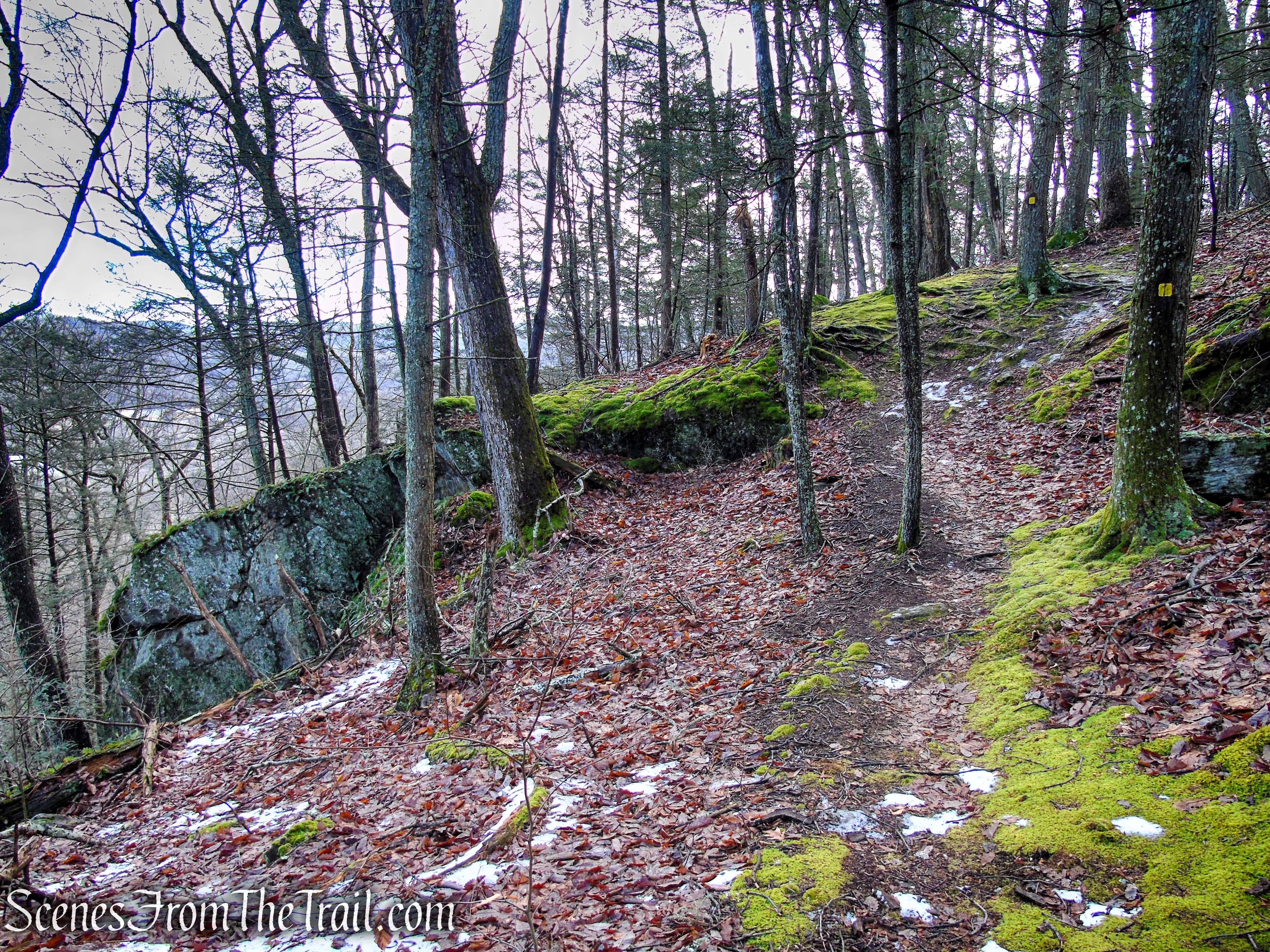

Overlook Mountain Fire Tower – Catskill Park

March 15, 2025 – Woodstock, NY

Difficulty: Moderate – Strenuous

Length: Approximately 5 miles – total elevation gain approximately 1,400 ft.

Route type: Out and Back

Maps: Overlook Mountain Fire Tower Trail MapOverlook Mountain Fire Tower Map for Avenza

Trailhead parking: 353 Meads Mountain Rd, Woodstock, NY 12498

Portable Toilets on site

Caution: Overlook Mountain has the highest population of Timber Rattlesnakes in the Catskill Mountains. They can be found anywhere from the parking lots to the summit of Overlook Mountain, and Echo Lake. The road to the summit of Overlook Mtn is very wide, so it is easy to avoid them. Please stay on the designated trails.


Overview: 

Overlook Mountain is the southernmost peak of the Catskill Escarpment near Woodstock, NY. The centerpiece of the 590-acre Overlook Mountain Wild Forest area of Catskill Park, the mountain offers a unique combination: a historic fire tower, mountain house ruins, and impressive views of the Hudson River Valley and the central Catskills.

Overlook Mountain Fire Tower

Overlook Mountain Fire Tower

Overlook Mountain House ruins

Overlook Mountain House ruins

View of Ashokan Reservoir from Overlook Mountain

View of Ashokan Reservoir from Overlook Mountain

This is one of the busiest mountains in the Catskills. The summit of Overlook Mountain is one of the top three most visited locations in the Catskill Forest Preserve (after Slide Mountain and North-South Lake). On a typical weekend day in the warm weather, hundreds of hikers will make their way up and down the 2-½ mile gravel road that leads to the summit.

The Overlook Wild Forest is a small part of the Catskill Forest Preserve, but an extraordinary part of American history. The area has long influenced painters, writers and musicians, and played a prominent role in creating America’s perspective on nature and wilderness. It is owned and managed by the New York State Department of Environmental Conservation (NYSDEC).

Meads Mountain Road Trailhead

Meads Mountain Road Trailhead


Parking:

The Overlook Mountain Trailhead, located on Meads Mountain Road, is the most visited trailhead in the southern Catskills. There is room for approximately 15-17 vehicles, depending on how well people park. The parking lot at this trailhead fills up quickly.

Overflow parking is available about a 1/2 mile down the road. The Meads Meadow Trailhead Parking Lot on McDaniel Road opened for public use in 2017. The overflow parking lot is located at 463 Macdaniel Rd, Bearsville, NY 12409 and can accomodate about 30 vehicles.

There is a 1/2-mile foot trail which connects both parking lots, eliminating the need to walk along the shoulder of the road. This connector trail ends near the kiosk, just past the gate of main parking area.

Please keep in mind that parking in the overflow lot will add 1 mile (1/2 mile each way) to the hike described here.

Parking is only available in the designated areas, please observe all posted traffic and parking signs, otherwise your vehicle may be ticketed and/or towed.

Restrooms:

There are portable toilets in the parking lot. 

Meads Mountain Road Trailhead

Meads Mountain Road Trailhead

There is also a Privy (outhouse) at the summit behind the Observer’s Cabin.

Privy - Overlook Mountain summit

Privy – Overlook Mountain summit


History:

South Peak, as Overlook Mountain was once known, was described in detail by Charles Lanman in magazine articles and his book Letters of a Landscape Painter published in 1845. Lanman was a great admirer of the artist Thomas Cole (1801–1848) and for some time tried to persuade him to explore the mountain. Although Thomas Cole included the mountain in several of his paintings. It was not until 1846 that he visited, and played a part in replacing the name South Peak with Overlook Mountain. Thomas Cole, as far as is known, was the first person to set down in writing ‘Overlook Mountain’ as the name of the entire mountain.

Cole wrote of the view: “The vast valley of the Hudson lies like a Sea before and beneath you while the base of the mountain on which you stand rises abrupt and definitely from its misty bosom & seems like the prow of a stupendous vessel ploughing the great deep.”

Until the end of his life, Cole was drawn to the upper elevations of the Catskills. It was however, Overlook, to which he returned for a final visit. According to Cole’s biographer, Louis Noble, in The Course of Empire (1858), Cole was aware that he was approaching the end of his life when he chose to hike the Overlook Cliffs in October of 1847: “From this dizzy crag Cole took a long and silent look up and down the beloved valley of the Hudson. He had gazed upon it, from other points unnumbered times, alone and with companions. . . it had filled his heart for years. This was his last look.” Cole died a few months later at the age of 47.

Overlook Mountain House ~

The first of a long series of efforts to build a hotel on the mountain began in 1833; when Overlook Mountain was still known as South Peak or Woodstock Mountain. Nearby was Schue’s Pond, today Echo Lake. James Booth built a horseback – hiking trail that year to what he called a “temporary mountain house,” which he proposed to expand into a large structure, like the popular Catskill Mountain House. However, this venture did not survive the economic turmoil of 1833. Booth was followed by other disappointed Overlook dreamers – William Scobie, Nicholas Elmendorf, Robert Livingston Pell and Isaac N. Secor. Finally, a corporation with large stockholders, William Brinkerhoff (a Woodstock hotel owner) and Charles H. Krack (a summer homeowner who owned a floating bathhouse in New York City), succeeded. The first Overlook Mountain House was built in 1871 by designer and builder Lewis B. Wagonen of Kingston; but by then, the solitude, peace and beauty that had attracted the early visitors was in competition with the bluestone and charcoal industries. Tourism eventually prevailed. By the early 1900’s, Overlook Mountain was well known to the art community and nearby Woodstock’s reputation as an art colony was growing thanks to Ralph Radcliffe Whitehead’s arts and crafts colony Byrdcliffe.

The original Overlook Mountain House accommodated 300 guests by 1873. Destroyed by a chimney fire in 1875, it was rebuilt in 1878 by the Kiersted Brothers of Saugerties. In its early seasons, the Mountain House resembled a sanitarium for lung and tuberculosis patients especially since it was the highest elevation mountain house in the State. Anchored to the mountain by cables, the second mountain house stood three stories high and was 200 feet long. However, between the years 1887 and 1917 it operated irregularly. In 1917 it was sold to financier Morris Newgold, but was again destroyed by fire in 1924. Resurrected in concrete to become a grand hotel, it was never completed, a victim of changing public tastes and the automobile. Since 1940, when it was boarded up, theft, vandalism and the elements have brought it to its present condition.

Fire Tower ~

The Overlook Mountain Fire Tower is the newest of the five remaining fire towers in the Catskill Park, having been built in its present location in 1950. The tower closed in 1988 and was reopened in 1999, making it the first tower to re-open to the public in the Catskills. The steel tower offers incredible views of the Hudson River Valley across to the Berkshires, Taconics and Litchfield Hills, the Ashokan Reservoir and the Devil’s Path Range.

The Overlook Mountain Fire Tower is a standard 60′ Aermotor LS40 steel tower that was first erected on Gallis Hill in 1927. It was taken down by the Conservation Department and moved to this location in 1950. The tower has been restored as a part of the Catskill Fire Tower Project and appears in the National Historic Lookout Register. The tower sits at the 3,140′ ft. summit. The staircase is open every day at Overlook Mountain Fire Tower. The top cab is open on weekends and holidays from Memorial Day through Columbus Day when volunteer summit/fire tower stewards are present on the mountain.


Trail Overview:

Starting at the Overlook Mountain parking area located on Meads Mountain Road, the red-blazed Overlook Spur Trail is a steady climb on an old carriage road that once transported guests in the late 19th century to the Overlook Mountain House and later, to access the fire tower.

Overlook Spur Trail - Overlook Mountain

Overlook Spur Trail – Overlook Mountain

Overlook Spur Trail - Overlook Mountain

Overlook Spur Trail – Overlook Mountain


Hike Overview:

I rated this hike as Moderate – Strenuous, but that is subjective. The strenuous part is the first half of the hike that gains 1,400 feet of elevation. The moderate part is that it’s on a wide gravel road which is easier to walk than a footpath, and the second half of the hike is all down hill.

This is a pretty straightforward out-and-back hike on a wide gravel road. It’s almost impossible to get lost, even for the most navigationally challenged hiker. It’s a popular hiking spot so you will see other hikers, especially in warmer weather.  The hike described here is about 5 miles round trip.

Overlook Mountain Fire Tower

Overlook Mountain Fire Tower

As you can see from the elevation graph below, it’s a steep climb to the fire tower, approximately 1,400 feet of elevation gain.

elevation profile - Overlook Mountain

elevation profile – Overlook Mountain


The Hike:

From the back of the parking lot on Meads Mountain Road, proceed past the gate onto the wide gravel road heading northeast on the red-blazed Overlook Spur Trail. The trail markers are scant, but the route is obvious. 

Overlook Mountain Trailhead - Meads Mountain Road

Overlook Mountain Trailhead – Meads Mountain Road

Please sign the Trail Register. Trailhead registers are used by the NYSDEC to estimate the amount of public use on State lands and as a guide to assist with management decisions regarding the use of public lands. Knowing how many people use the area determines the need for funding allocations. They also help SAR teams find you if you are lost, and provide a communication forum for hikers of current hazards or warnings.

Overlook Mountain Trailhead - Meads Mountain Road

Overlook Mountain Trailhead – Meads Mountain Road

Overlook Mountain Trailhead - Meads Mountain Road

Overlook Mountain Trailhead – Meads Mountain Road

The trail starts to climb immediately. This trail utilizes the existing gravel road which was constructed for access to the Overlook Mountain House and later, to access the fire tower.

Overlook Spur Trail - Overlook Mountain

Overlook Spur Trail – Overlook Mountain

Overlook Spur Trail - Overlook Mountain

Overlook Spur Trail – Overlook Mountain

Overlook Spur Trail - Overlook Mountain

Overlook Spur Trail – Overlook Mountain

Overlook Spur Trail - Overlook Mountain

Overlook Spur Trail – Overlook Mountain

Overlook Spur Trail - Overlook Mountain

Overlook Spur Trail – Overlook Mountain

Overlook Spur Trail - Overlook Mountain

Overlook Spur Trail – Overlook Mountain

Overlook Spur Trail - Overlook Mountain

Overlook Spur Trail – Overlook Mountain

After almost 2 miles of a steep uphill climb, the skeletal remains of the Overlook Mountain House come into view. You may want to take a little time to explore the massive concrete ruins. Please heed caution around the ruins for loose or falling concrete. There is a high population of Rattlesnakes in and around this area. Watch where you step.

Overlook Spur Trail - Overlook Mountain

Overlook Spur Trail – Overlook Mountain

Owned by New York City hotelier Morris Newgold, He began to make improvements, but the hotel burned down in 1924.

Overlook Mountain House ruins

Overlook Mountain House ruins

Newgold decided to rebuild, swearing to create a hotel that would “last the test of time and weather.” In 1927 he decided to build a four-story building out of concrete, including a power station and other amenities.

Overlook Mountain House ruins

Overlook Mountain House ruins

By 1935, he had spent $1 million, but Newgold died before it was complete. World War II was looming, and Newgold’s grandson was about to enlist. He had the grounds sealed up and joined the service. When he came back after the war, he found the building had been broken into and everything of value carted off.

Overlook Mountain House ruins

Overlook Mountain House ruins

Vandalized beyond repair, the hotel was abandoned for good. Ironically, now it’s more popular than ever, albeit not as an overnight stop.

Overlook Mountain House ruins

Overlook Mountain House ruins

The ruins are impressive and castle-like.

Overlook Mountain House ruins

Overlook Mountain House ruins

As you continue on the trail, you will encounter another smaller structure.

Overlook Mountain House ruins

Overlook Mountain House ruins

Overlook Mountain House ruins

Overlook Mountain House ruins

To the north of the main hotel is an old spring and reservoir, with nearby ruins of the “bowling alley.”

Old spring with reservoir

Old spring with reservoir

After passing the hotel ruins, continue to follow the trail uphill. From here it’s another 1/2 mile to the actual summit. Circling around a small cliff, hikers will reach the Observer’s Cabin.

Overlook Spur Trail - Overlook Mountain

Overlook Spur Trail – Overlook Mountain

Overlook Spur Trail - Overlook Mountain

Overlook Spur Trail – Overlook Mountain

Overlook Spur Trail - Overlook Mountain

Overlook Spur Trail – Overlook Mountain

Overlook Mountain Observer's Cabin

Overlook Mountain Observer’s Cabin

There are several picnic tables at the summit.

Overlook Mountain summit

Overlook Mountain summit

A nice grill is available for use, but with the high winds probably not advisable. 

Overlook Mountain summit

Overlook Mountain summit

The 60-foot Aermotor steel tower with 7X7-foot metal cab was placed on the National Historic Lookout Register in October of 1997.

Overlook Mountain Fire Tower

Overlook Mountain Fire Tower

Originally built for Gallis Hill in Kingston, the tower was moved piece-by-piece to its present location in 1950. For outstanding views, you can climb the 81 steps to the top.

Overlook Mountain Fire Tower

Overlook Mountain Fire Tower

Overlook Mountain Fire Tower

Overlook Mountain Fire Tower

The high winds and cloud cover dissuaded me from climbing to just below the cab, which was locked. I went about half way, clicked some pics and descended.

Overlook Mountain Fire Tower

Overlook Mountain Fire Tower

View northwest from the middle of the fire tower.

View north towards the Indian Head Wilderness

View north towards the Indian Head Wilderness

Below is a similar shot on a clear day.

View from Overlook Mountain Fire Tower - 2016

View from Overlook Mountain Fire Tower – 2016

View southwest from the middle of the fire tower.

View southwest from Overlook Mountain Fire Tower

View southwest from Overlook Mountain Fire Tower

Below is a similar shot on a clear day with Ashokan Reservoir visible.

View of Ashokan Reservoir from Overlook Mountain

View of Ashokan Reservoir from Overlook Mountain

Overlook Mountain House ruins peeking out above the trees.

View west of the Overlook Mountain House ruins

View west of the Overlook Mountain House ruins

When you are done checking out the views from the fire tower, proceed past the Observer’s Cabin to the Scenic Overlook.

Bear right at the Observer's Cabin

Bear right at the Observer’s Cabin

It’s a short walk on this footpath to a rock ledge with panoramic views to the east, south and west.

Scenic Overlook Trail

Scenic Overlook Trail

Scenic Overlook Trail

Scenic Overlook Trail

Not much to see on this day due to the low lying clouds.

Scenic Overlook

Scenic Overlook

Below is a similar shot on a clear day. The Hudson River is visible on the far left with Ashokan Reservoir on the right.

View west from Overlook Mountain

View west from Overlook Mountain

Scenic Overlook

Scenic Overlook

Below is a similar shot on a clear day. 

View southwest from Overlook Mountain

View southwest from Overlook Mountain

Scenic Overlook

Scenic Overlook

Here you’ll find graffiti carved into the rock going back to the early 1800’s. The one pictured below is 100 years old.

Scenic Overlook

Scenic Overlook

When you are done enjoying the views from the Scenic Overlook, retrace your steps past the Observer’s Cabin and proceed downhill on the Overlook Spur Trail.

Overlook Spur Trail - Overlook Mountain

Overlook Spur Trail – Overlook Mountain

Overlook Spur Trail - Overlook Mountain

Overlook Spur Trail – Overlook Mountain

Overlook Spur Trail - Overlook Mountain

Overlook Spur Trail – Overlook Mountain

You may want to stop at the Overlook Mountain House ruins again and snap some more pics before you make your way down the mountain.

Overlook Spur Trail - Overlook Mountain

Overlook Spur Trail – Overlook Mountain

Overlook Spur Trail - Overlook Mountain

Overlook Spur Trail – Overlook Mountain

Overlook Spur Trail - Overlook Mountain

Overlook Spur Trail – Overlook Mountain

Overlook Spur Trail - Overlook Mountain

Overlook Spur Trail – Overlook Mountain

Overlook Spur Trail - Overlook Mountain

Overlook Spur Trail – Overlook Mountain

Overlook Mountain House ruins

Overlook Mountain House ruins

Overlook Mountain House ruins

Overlook Mountain House ruins

From the ruins, it’s about 2 miles back to the parking lot, where the hike began.

Overlook Spur Trail - Overlook Mountain

Overlook Spur Trail – Overlook Mountain


Review:

The hike itself is rather boring. A slog steeply uphill on an old gravel road with telephone poles and power lines overhead. However, the payoff makes it totally worth it. The massive ruins, views and the fire tower make for an enjoyable day on the mountain. This is a great hike for those that enjoy a good climb, but don’t care to venture into the deep woods. I have not seen any Rattlesnakes on my two visits to Overlook Mountain, but they are there. Both times that I have hiked Overlook Mountain took place in March so they were probably still in their dens. Awareness of high grass and rock crevices are essential to avoid any unwanted encounters with Rattlesnakes.

Pros:

Overlook Mountain House ruins, Overlook Mountain Fire Tower, Hudson Valley views.

Cons:

Old gravel road is monotonous, parking lot fills up quickly, tends to get crowded in warmer weather.


Take a hike!

Overlook Mountain Scenic Overlook

Overlook Mountain Scenic Overlook


Sources:


King’s Chamber Loop – Fahnestock State Park

December 14, 2024 – Kent, NY

Difficulty: Moderate

Length: Approximately 3.6 miles

Max elevation: 1020 ft. – total elevation gain approximately 600 ft.

Buy Maps (Paper & Avenza): East Hudson Trails Map 2023

Parking: Waywayanda Lake Boat Launch – 170 Waywayanda Ct, Carmel Hamlet, NY 10512

Dirt road (somewhat rough) – No toilets on site

Hours: Open Daily, 8:00am – Sunset

There are no admission or parking fees at this park.

Please Note: This hike is done using old unmarked woods roads and/or trails which are not maintained. The area itself contains a maze of old roads that go off in different directions, some of which are not on any maps that I viewed. Those who are not confident of their route-finding ability might wish to choose another hike.


Overview:

Clarence Fahnestock Memorial State Park, also known as Fahnestock State Park, is a 16,171-acre state park located in north central Putnam County with portions in the towns of Carmel, Kent, Philipstown and Putnam Valley. The park is traversed by the Taconic State Parkway, US Route 9, NYS Route 301 and several local roads. Rail stations operated by Metro North Railroad are within ten miles of the park at Garrison, Cold Spring and Beacon. The park does not have a single, formal entrance. The park is managed and maintained by the New York State Office of Parks, Recreation and Historic Preservation.

Clarence Fahnestock Memorial State Park

Clarence Fahnestock Memorial State Park

Fahnestock is characterized by parallel ridges and hills that trend in a southwest to northeast direction. Steep slopes are often found on the southeast and northwest aspects of some of these ridges. Elevations range from approximately 400 feet in the lowest area of the park along Clove Creek in the vicinity of U.S. Route 9, to a maximum of over 1300 feet on a ridge west of Canopus Lake. The majority of the park is at elevations greater than 600 feet.

As the peaks of Clarence Fahnestock Memorial State Park are more hills than mountains, the hiking is generally less strenuous than others in the region. This makes the park a popular destination for casual hikers.


History:

King’s Chamber: The King’s Chamber is as grand as its name suggests. It is the largest stone chamber in Putnam County, boasting a standing ceremonial stone in front of it. Its dimensions are roughly 30 ft. deep, 6 ft. high, and 10 ft. wide. Speculation on their origins, age, and purpose are as numerous as they are varied. Folklore surrounds them. The King’s Chamber aligns with the winter solstice sunrise and it is also a lunar standstill chamber. That alignment happened in 2023.

Camp Collins: The King’s Chamber sits on a tract of land that was once an old Boy Scouts camp. Camp Collins was a 99-acre Scout Camp located in the Moose Hill area, and owned by the Yonkers Council. It opened prior to 1935 and continued in operation until 1952. In April 1953 it was announced that Camp Collins would close and the Yonkers Council would begin sharing space at Camp Bullowa in Stony Point across the Hudson River.

The entire area around Moose Hill is now part of Clarence Fahnestock Memorial State Park and is accessible from various entry points.


Hike Overview:

This is a really nice hike with lots to discover. The historical aspects of the points of interests, make for a worthwhile day hike. Currently, there are no blazed trails and there are numerous woods roads that go off in different directions. Some of the woods roads are on the trail map, but others are not, and it could get confusing. My advice is to use the Avenza Maps app and the NY-NJ Trail Conference East Hudson Trails Map 2023 (for Avenza).

I have pretty good navigational skills, but I had to refer to the Avenza app numerous times to insure that I was on the right track. This area doesn’t get a lot of foot traffic and makes for a quiet area to hike. 

This Lollipop Loop hike was done countercounterclockwise from the Waywayanda Lake boat launch area.

King’s Chamber Loop – Fahnestock State Park

King’s Chamber Loop – Fahnestock State Park


King’s Chamber Loop – Fahnestock State Park

King’s Chamber Loop – Fahnestock State Park

It’s mostly downhill on the way to King’s Chamber and a lot of ups and downs on the way back.

elevation profile - King's Chamber Loop

elevation profile – King’s Chamber Loop


The Hike:

For the purpose of this guide, I named the trails/woods roads so that they can be more easily followed. 

From the Waywayanda Lake Boat Launch (aka Pudding Street Pond or Cranberry Swamp on some maps), look for a wide trail just to the right of a private driveway. Head south along this road which I call the Connector Trail.

Waywayanda Lake Boat Launch

Waywayanda Lake Boat Launch


Connector Trail - Fahnestock State Park

Connector Trail – Fahnestock State Park

The Connector Trail rises gradually alongside private property. Stay on the wide woods road as it passes large rock formations.

Connector Trail - Fahnestock State Park

Connector Trail – Fahnestock State Park

In about 0.3 mile, when you reach the power lines corridor, bear left to begin walking on the Power Lines Trail.

Power Lines Trail - Fahnestock State Park

Power Lines Trail – Fahnestock State Park

In about another 475 feet, turn right, leaving the Power Lines Trail and begin walking on a woods road. This turn can be easy to miss if you are not paying attention.

Power Lines Trail - Fahnestock State Park

Power Lines Trail – Fahnestock State Park

You’ll see a lot of Orange signs along the way letting you know that you are in Fahnestock State Park.

King's Chamber Trail - Fahnestock State Park

King’s Chamber Trail – Fahnestock State Park

This road which I will call the King’s Chamber Trail, Climbs gradually and soon reaches the high point of the hike, 1020 ft.

King's Chamber Trail - Fahnestock State Park

King’s Chamber Trail – Fahnestock State Park

Continue heading southwest on the King’s Chamber Trail, passing stone walls along the way.

King's Chamber Trail - Fahnestock State Park

King’s Chamber Trail – Fahnestock State Park

The old road dips down into the valley very gradually. You may notice other woods roads that branch off from the main road, but you should continue on the King’s Chamber Trail Consult your map (or Avenza Maps app) for verification.

King's Chamber Trail - Fahnestock State Park

King’s Chamber Trail – Fahnestock State Park


King's Chamber Trail - Fahnestock State Park

King’s Chamber Trail – Fahnestock State Park


King's Chamber Trail - Fahnestock State Park

King’s Chamber Trail – Fahnestock State Park

Soon, Roaring Brook (a tributary of the Peekskill Hollow Creek Watershed) will appear on your right. Follow the road as it parallels the brook. In about 3/4 mile from the junction with the Power Lines Trail, the road comes really close to the brook and becomes less discernible. Look just ahead to a break in a stone wall. That is the route of the King’s Chamber Trail.

King's Chamber Trail - Fahnestock State Park

King’s Chamber Trail – Fahnestock State Park

After crossing through the break in the stone wall, the road widens and begins heading southeast.

King's Chamber Trail - Fahnestock State Park

King’s Chamber Trail – Fahnestock State Park


King's Chamber Trail - Fahnestock State Park

King’s Chamber Trail – Fahnestock State Park

In another 370 yards from the break in the stone wall, the trail reaches the King’s Chamber which is just to the left of the trail.

King’s Chamber - Fahnestock State Park

King’s Chamber – Fahnestock State Park

A historical curiosity in Putnam County are the “corbelled stone chambers.” 

King’s Chamber - Fahnestock State Park

King’s Chamber – Fahnestock State Park

These are structures with roofs of large stone slabs, with stone side walls angled slightly inward.

King’s Chamber - Fahnestock State Park

King’s Chamber – Fahnestock State Park

The age, the creators, and the original purposes of the chambers are unknown, and continue to be the subject of much speculation.

King’s Chamber - Fahnestock State Park

King’s Chamber – Fahnestock State Park

Theories about the creators range from Native Americans of the distant past, Norsemen in the 10th century, Welshmen in the 12th century, and early European settlers.

King’s Chamber - Fahnestock State Park

King’s Chamber – Fahnestock State Park

There could be as many as 200 stone chambers in all of Putnam County. While their origins and ages are in dispute, they have certainly been used by area residents as root cellars for crop and ice storage well into the 20th century.

King’s Chamber - Fahnestock State Park

King’s Chamber – Fahnestock State Park

When you are done checking out the King’s Chamber, proceed ahead on the King’s Chamber Trail which is diagonally to the east of the entrance. In a very short distance, as you descend a rocky area, you will pass a standing stone. Look to your left (you may have to walk a few feet) and you will see another much smaller stone chamber.

King's Chamber Trail - Fahnestock State Park

King’s Chamber Trail – Fahnestock State Park

This is known as “The Tomb.” It is a small, slightly subterranean chamber with a tomb like appearance and a quartz shelf in the rear.

The Tomb - Fahnestock State Park

The Tomb – Fahnestock State Park


The Tomb - Fahnestock State Park

The Tomb – Fahnestock State Park

When you are ready to continue, proceed east a short distance and you will pass an old picnic shelter.

King's Chamber Trail - Fahnestock State Park

King’s Chamber Trail – Fahnestock State Park

This picnic shelter was part of Camp Collins. 

Camp Collins - Fahnestock State Park

Camp Collins – Fahnestock State Park

Camp Collins was a 99-acre Scout Camp located in the Moose Hill area, and owned by the Yonkers Council. It opened prior to 1935 and continued in operation until 1952. In April 1953 it was announced that Camp Collins would close and the Yonkers Council would begin sharing space at Camp Bullowa in Stony Point across the Hudson River.

Camp Collins - Fahnestock State Park

Camp Collins – Fahnestock State Park


Camp Collins - Fahnestock State Park

Camp Collins – Fahnestock State Park

As you continue east, there are small stone steps to the left of the trail that lead to a large stone chimney. 

Stone steps - Fahnestock State Park

Stone steps – Fahnestock State Park

Possibly the site of a cabin or another picnic shelter.

Stone chimney - Fahnestock State Park

Stone chimney – Fahnestock State Park

The King’s Chamber Trail continues east, but soon bends to the north. 

King's Chamber Trail - Fahnestock State Park

King’s Chamber Trail – Fahnestock State Park

A short distance later, the road comes to a Y-Intersection. Bear left and begin heading north.

Turn left

Turn left

The King’s Chamber Trail soon passes an old park storage shed on the left.

Old storage shed - Fahnestock State Park

Old storage shed – Fahnestock State Park

Continue heading north on the King’s Chamber Trail for another 280 yards (from the Y-Intersection), and you will pass through an area with remnants of Camp Collins on both sides of the trail. 

King's Chamber Trail - Fahnestock State Park

King’s Chamber Trail – Fahnestock State Park


Camp Collins - Fahnestock State Park

Camp Collins – Fahnestock State Park


Stone chimney - Fahnestock State Park

Stone chimney – Fahnestock State Park


Stone chimney - Fahnestock State Park

Stone chimney – Fahnestock State Park


King's Chamber Trail - Fahnestock State Park

King’s Chamber Trail – Fahnestock State Park


Camp Collins - Fahnestock State Park

Camp Collins – Fahnestock State Park


Camp Collins - Fahnestock State Park

Camp Collins – Fahnestock State Park


Camp Collins - Fahnestock State Park

Camp Collins – Fahnestock State Park

The trail soon starts gaining elevation, turning left at the next intersection.

King's Chamber Trail - Fahnestock State Park

King’s Chamber Trail – Fahnestock State Park


Bear left

Bear left


King's Chamber Trail - Fahnestock State Park

King’s Chamber Trail – Fahnestock State Park

The trail dips down a little then begins climbing Moose Hill in earnest.

King's Chamber Trail - Fahnestock State Park

King’s Chamber Trail – Fahnestock State Park

When you reach the next intersection, bear right. If you turn left, the trail climbs to the near summit of Moose Hill. In retrospect, I would have taken the left fork to avoid the rocky section of the Power Lines Trail which is just ahead. Either way you go, you will end up at the Power Lines Trail.

King's Chamber Trail - Fahnestock State Park

King’s Chamber Trail – Fahnestock State Park


King's Chamber Trail - Fahnestock State Park

King’s Chamber Trail – Fahnestock State Park

Turn left on the Power Lines Trail, which is rocky and quite steep.

Power Lines Trail – Fahnestock State Park

Power Lines Trail – Fahnestock State Park

At the top of the rise, you will see the “Summit Trail” on the left. Continue along on the Power Lines Trail as it descends along the eastern boundary of Fahnestock State Park.

Power Lines Trail – Fahnestock State Park

Power Lines Trail – Fahnestock State Park

The Power Lines Trail runs along the edge of the woods. The power line corridor is owned by the New York State Electric & Gas Corporation and abuts much of the park’s eastern boundary, with NYC Watershed lands and NYS DEC multiple use areas beyond.

Power Lines Trail – Fahnestock State Park

Power Lines Trail – Fahnestock State Park

The trail navigates several smaller hills as it heads north.

Power Lines Trail – Fahnestock State Park

Power Lines Trail – Fahnestock State Park


Power Lines Trail – Fahnestock State Park

Power Lines Trail – Fahnestock State Park

The Power Lines Trail soon bears right, avoiding another hill, and passes the junction with the start of the King’s Chamber Trail where you turned earlier in the hike. 

Power Lines Trail – Fahnestock State Park

Power Lines Trail – Fahnestock State Park

Soon the trail leaves the power line corridor and you are now retracing your steps on the Connector Trail. Follow the woods road north, back to the boat launch area, where the hike began.

Connector Trail – Fahnestock State Park

Connector Trail – Fahnestock State Park


Connector Trail – Fahnestock State Park

Connector Trail – Fahnestock State Park


Connector Trail – Fahnestock State Park

Connector Trail – Fahnestock State Park


Connector Trail – Fahnestock State Park

Connector Trail – Fahnestock State Park


Review:

A really good hike with lots to see. Although the King’s Chamber was the highlight of this hike, the scattered ruins of Camp Collins and the numerous stone walls, make this a fun discovery hike. The Taconic State Parkway is nearby during the first half of this hike, and some slight road noise can be heard, but it’s not a distraction. For almost the entirety of the hike, it was quiet except for an occasional critter rustling through the leaves or birds chirping. The only people that we saw, was a couple walking their dogs as we returned to the trailhead. A totally enjoyable hike.

Pros:

King’s Chamber, The Tomb, Camp Collins ruins, stone walls, quiet area, little foot traffic.

Cons:

No marked trails, some blowdowns.


Take a hike!

King’s Chamber Loop – Fahnestock State Park

King’s Chamber Loop – Fahnestock State Park


Sources:
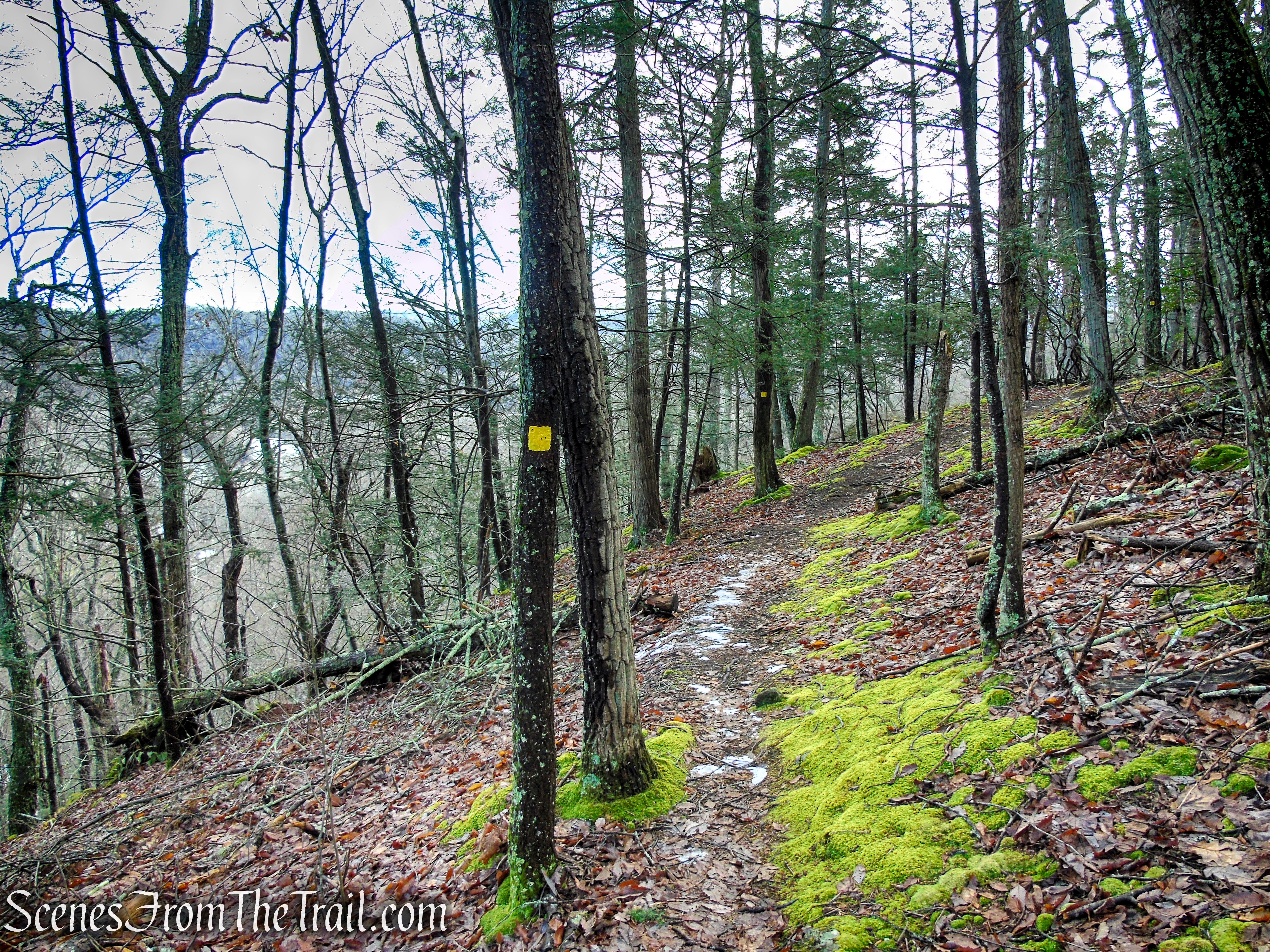

Squaw Cave, Flag Rock and Mohegan Trail Loop – Bolton Notch State Park

August 25, 2024 – Bolton, Connecticut

Difficulty: Moderate

Length: Approximately 3 miles

Max elevation: 811 ft. – total elevation gain approximately 400 ft.

Map: Bolton Notch State Park Trail Map

Parking: Bolton Notch State Park Access Road, Bolton, CT 06043

Paved parking lot – Portable toilet on site

Hours: Open Daily, 8:00am – Sunset

There are no admission or parking fees at this park.


Park Overview:

Bolton Notch State Park is located about 15 miles east of Hartford, Connecticut and offers visitors a wide range of recreational activities. The park is home to several picturesque hiking trails, including the Hop River Trail, Shenipsit Trail, and the Mohegan Trail which winds through the forested hills of the park. Spread out over 95 acres, the state park serves as a nice day trip for locals as well as visitors.

Bolton Notch State Park

Bolton Notch State Park

Bolton Notch State Park is a recreational hub that connects the north central and eastern parts of Connecticut for hikers, walkers, cyclists and runners. From the park, there is access to the Shenipsit Trail, Charter Oak Greenway, Hop River Trail, Freja Park, Valley Falls Park, and Box Mountain Forest.

The park is home to several unique points of interest, including an 800-ft, abandoned railroad tunnel, Squaw Cave and Flag Rock.

Bolton Notch Tunnel - Hop River Trail

Bolton Notch Tunnel – Hop River Trail

Squaw Cave - Bolton Notch State Park

Squaw Cave – Bolton Notch State Park

Flag Rock - Bolton Notch State Park

Flag Rock – Bolton Notch State Park


History:

Bolton was originally part of the hunting grounds of the Podunk Indians. The Podunks lived in what is now East Hartford and South Windsor, along the Podunk River. Most early historians agree that Bolton Notch was the boundary between the Podunk territory to the west and the Mohegan territory to the east. The Indians called it Saqumsketuck, which means land or place at the hard rock.

The Hop River Trail that runs through Bolton from Valley Falls Park to Willimantic is an old railroad bed. From 1849 to the mid-1950’s the Hartford, Providence and Fishkill Railroad traveled through this corridor. It brought prosperity to Bolton’s slate and grindstone quarries at the Notch. The rock was first quarried during the War of 1812, and throughout the 19th century was sent to major cities in the Northeast to pave streets.

Freight trains used the line throughout the 1960’s. The last train ran on September 29, 1970, by which time the line was part of the bankrupt Penn Central.

The railroad had a yard and a station at the Notch where stone, lumber, hay, grain, etc., was loaded and unloaded. If you walk the trail, you’ll see remnants of ties and telegraph poles.

Bolton Notch Railroad Station

Bolton Notch Railroad Station

The State of Connecticut purchased the first 70 acres from the estate of Albert H. Pitkin in 1918, for development of a Wayside Park.

Squaw Cave:

According to legend, A Dutch cabin boy named Peter Hager was part of a trading party with the local Podunk Nation. He fell in love with a local woman, Wunnee-Neetunah, and they got married in the way of her nation. When Peter tried to return to his trading party, he was rejected and the couple spent their exile together in the cave.

Wunnee-Neetunah (also called Wunnee), was the daughter of a Podunk Chief named Tantonimoh. Her family adopted Peter Hager, the cabin boy of a Dutch trader named Captain May. After Peter fell in love with Wunnee, the Captain encouraged him to live among the Podunks to learn their language and customs.

After a few years, Peter and Wunnee traveled to Boston with Wunnee’s mother to get married, but learned that there was a law against intermarriage. While they stayed outside the city, Peter was seen gathering wood on the Sabbath and was arrested and whipped. Before he was imprisoned, Wunnee and her mother rescued Peter and they fled back to Connecticut. Along the way, they were attacked, presumably by Massachusetts colonists, and one died in the fight. Peter was accused of killing the man. Peter and Wunnee did not return to Wunnee’s home, but were married in another Podunk community in Connecticut. Bailiffs from Boston were sent to capture or kill Peter, but the Podunks warned Peter and Wunnee.

As they sought safety from the bailiffs and other groups attacking the Podunks, Peter and Wunnee moved farther east to a cave on the south side of a rocky mountain known as Wiashguagwumsuck. After about 30 years, Peter and Wunnee planned to move north to a settlement in an area without European colonists or hostile native groups. However, a group of Mohegan men found Peter, the outlaw, living with his Indian wife in the cave. The Mohegans reported them to the local bailiffs who shot Peter. He reached the cave, and Wunnee was sent in after him. They remained in the cave for a few days, and when when the bailiffs went into the cave, they found it empty. Wunnee had either snuck out the cave entrance with Peter’s body or found a deeper passage in the cave through the mountain. Peter was reportedly buried in the royal burying ground of the Podunk Tribe, and Wunnee was reportedly taken in by a Windsor couple and was reportedly buried in Windsor.

It is unknown how much of the legend is truth or fiction.

The Bolton Board of Selectmen felt that “Squaw Cave” was a derogatory name and decided to change the name to Wunnee-Neetunah Cave in 2023.


Parking:

At the junction of Route 44 and Route 6 in Bolton. Heading west on I-384 from Bolton Notch, turn right at the end of the guardrail and go downhill to the parking lot.

Bolton Notch State Park is located off the west-bound lane of I-384 about 1/3 of a mile from the beginning of I-384 (at the junction of US-6 and US-44). Although there is a sign at the entrance it is difficult to spot and not advertised in advance. It is a sharp right turn into the parking lot and in case of fast moving traffic, it is advised that visitors park in the Bolton Park & Ride Lot, which is 0.4 mile west. The main area of the park can be safely accessed from the commuter parking lot via the Charter Oak Greenway Trail, a short five minute walk to the main section of the park.

The sign below is not visible until you get to the turn. The Charter Oak Greenway, the paved path behind the sign, connects the commuter parking lot with the parking area of the park.

Bolton Notch State Park

Bolton Notch State Park

The parking lot has room for about 18 vehicles. When I arrived at the trailhead at approximately 9am, I got the last remaining spot. Upon completion of the hike (image below) the lot was still full and there were a few vehicles waiting for a spot to park as others left.

Trailhead - Bolton Notch State Park

Trailhead – Bolton Notch State Park


Trails Overview:

There are approximately five miles of trails in the park, from easy to moderate level. The Charter Oak Greenway, Hop River State Park Trail and the Shenipsit Trail can be used to access adjoining public lands.

Bolton Notch State Park Trail Map

Bolton Notch State Park Trail Map

The marked trails that were used on this hike, are fairly well blazed and easy to follow.

Mohegan Trail - Bolton Notch State Park

Mohegan Trail – Bolton Notch State Park

The “Cave Trail,” so named for the purpose of this writing, is somewhat overgrown, but discernible if you know where to look. The Mohegan Trail is well shaded.


Hike Overview:

This hike pertains to the southern section of the park only. Utilizing the Hop River State Park Trail, Cave Trail (unmarked), Garnet Trail and the Mohegan Trail.

The hike was done counterclockwise once on the Mohegan Trail.

Bolton Notch State Park Loop

Bolton Notch State Park Loop

elevation profile - Bolton Notch State Park Loop

elevation profile – Bolton Notch State Park Loop


The Hike:

From the parking lot, turn right on the Hop River Trail and head east, past a fitness station and interpretive signage that explains some of the site’s history.

Hop River Trail - Bolton Notch State Park

Hop River Trail – Bolton Notch State Park

Hop River Trail - Bolton Notch State Park

Hop River Trail – Bolton Notch State Park

Hop River Trail - Bolton Notch State Park

Hop River Trail – Bolton Notch State Park

Hop River Trail - Bolton Notch State Park

Hop River Trail – Bolton Notch State Park

Hop River Trail - Bolton Notch State Park

Hop River Trail – Bolton Notch State Park

In a short distance, you’ll arrive at the western portal of the old train tunnel. Do not enter the tunnel. Instead turn left by the opening and follow the unmarked path.

Hop River Trail - Bolton Notch State Park

Hop River Trail – Bolton Notch State Park

The Cave Trail begins between the western portal and a large boulder. Follow this narrow and somewhat overgrown footpath as it bears to the right and rises alongside the tunnel.

Cave Trail - Bolton Notch State Park

Cave Trail – Bolton Notch State Park

Cave Trail - Bolton Notch State Park

Cave Trail – Bolton Notch State Park

Cave Trail - Bolton Notch State Park

Cave Trail – Bolton Notch State Park

When you reach the guard rail, walk alongside it until you reach the end of the guard rail.

Cave Trail - Bolton Notch State Park

Cave Trail – Bolton Notch State Park

Look for this pole and follow this faint footpath steeply uphill for a short distance as it bends to the right.

Cave Trail - Bolton Notch State Park

Cave Trail – Bolton Notch State Park

The cave will appear as you approach the cliff. I would advise those who want to enter the cave to bring a headlamp or a flashlight. It is quite dark in there and you may want to shine a light inside to make sure that there are no critters lurking around inside.

Squaw Cave - Bolton Notch State Park

Squaw Cave – Bolton Notch State Park

Wunnee-Neetunah Cave is a true cave, meaning it was caused by water erosion of Limestone.

Squaw Cave - Bolton Notch State Park

Squaw Cave – Bolton Notch State Park

The cave consists of a 10 foot chamber, followed by a 3 foot wide tunnel that continues for roughly 40 feet before narrowing to a point that is unsafe to pass through, but continues for an unknown number of feet to a second chamber containing running water.

Squaw Cave - Bolton Notch State Park

Squaw Cave – Bolton Notch State Park

Squaw Cave - Bolton Notch State Park

Squaw Cave – Bolton Notch State Park

Squaw Cave - Bolton Notch State Park

Squaw Cave – Bolton Notch State Park

Squaw Cave - Bolton Notch State Park

Squaw Cave – Bolton Notch State Park

The ceiling of the cave may have some spiders.

Squaw Cave - Bolton Notch State Park

Squaw Cave – Bolton Notch State Park

Squaw Cave - Bolton Notch State Park

Squaw Cave – Bolton Notch State Park

When you are done exploring this unique historical feature, retrace your steps along the Cave Trail, back to the west portal of the tunnel.

Cave Trail - Bolton Notch State Park

Cave Trail – Bolton Notch State Park

Cave Trail - Bolton Notch State Park

Cave Trail – Bolton Notch State Park

Cave Trail - Bolton Notch State Park

Cave Trail – Bolton Notch State Park

Cave Trail - Bolton Notch State Park

Cave Trail – Bolton Notch State Park

I did an out-and-back through the tunnel just to check it out. The tunnel is curved, so the other side sometimes cannot be seen clearly by those entering. Exercise caution when walking through the dark tunnel.

Bolton Notch Tunnel - Hop River Trail

Bolton Notch Tunnel – Hop River Trail

With tracks laid and rocks blasted out in the mid-1800’s for a rail line, the 30-foot tall, 800-foot-long tunnel was built in 1955 due to the above construction of a complicated interchange as I-384 transitions to Route 6 and Route 44.

Bolton Notch Tunnel - Hop River Trail

Bolton Notch Tunnel – Hop River Trail

The Bolton Tunnel is part of the Hop River State Park Trail, a former railroad line. This trail winds 24.8 miles through the towns of Manchester, Vernon, Bolton, Coventry, Andover, Columbia, and Windham. The Hop River Trail is part of the East Coast Greenway, a bicycle and pedestrian pathway that winds through 15 states and 450 communities, spanning 3,000 miles from Florida to Maine.

Bolton Notch Tunnel - Hop River Trail

Bolton Notch Tunnel – Hop River Trail

At the eastern end of the tunnel, I turned around and walked back through it, heading west.

Bolton Notch Tunnel - Hop River Trail

Bolton Notch Tunnel – Hop River Trail

Bolton Notch Tunnel - Hop River Trail

Bolton Notch Tunnel – Hop River Trail

Bolton Notch Tunnel - Hop River Trail

Bolton Notch Tunnel – Hop River Trail

Now retracing my steps, I walked past the parking area for a short distance to pick up the joint Mohegan/Garnet trails which is on the right.

Hop River Trail - Bolton Notch State Park

Hop River Trail – Bolton Notch State Park

Turn right on Yellow/Red Trail

Turn right on Yellow/Red Trail

Yellow/Red Trail - Bolton Notch State Park

Yellow/Red Trail – Bolton Notch State Park

I followed the yellow/red blazes a short distance until the two trails split.

Yellow/Red Trail - Bolton Notch State Park

Yellow/Red Trail – Bolton Notch State Park

Yellow/Red Trail - Bolton Notch State Park

Yellow/Red Trail – Bolton Notch State Park

Yellow/Red Trail - Bolton Notch State Park

Yellow/Red Trail – Bolton Notch State Park

The yellow-blazed Mohegan Trail turns left, but I continued straight on the Red Trail. I would come back to this junction a short while later after visiting Flag Rock.

Continue straight on Red Trail

Continue straight on Red Trail

The Red Trail forks left, but either way that you go will lead you to Flag Rock. I took the left fork to Flag Rock and returned on the right fork.

Garnet Trail - Bolton Notch State Park

Garnet Trail – Bolton Notch State Park

Garnet Trail - Bolton Notch State Park

Garnet Trail – Bolton Notch State Park

In a short distance, the red-blazed Garnet Trail dead ends at a rock outcrop that is covered in graffiti.

Garnet Trail - Bolton Notch State Park

Garnet Trail – Bolton Notch State Park

If you walk up to the high point of the rock outcrop (far left in the image below), you will get a view southwest over I-384 and the surrounding area.

Flag Rock - Bolton Notch State Park

Flag Rock – Bolton Notch State Park

This view is more extensive during leaf-off season.

View from Flag Rock - Bolton Notch State Park

View from Flag Rock – Bolton Notch State Park

If you walk along the rock outcrop as it descends, there is a path that leads to the front of Flag Rock that provides a nice view of this feature. You may want to take a break in this area, just watch out for broken glass.

Flag Rock - Bolton Notch State Park

Flag Rock – Bolton Notch State Park

For perspective, the image below is of me standing on Flag Rock (at the viewpoint). Flag Rock was painted shortly after September 11, 2001 and has been maintained by unknown persons since that time.

Flag Rock - Bolton Notch State Park

Flag Rock – Bolton Notch State Park

When you are ready to continue, descend back to the Red Trail, which is a short distance down the hill.

Garnet Trail - Bolton Notch State Park

Garnet Trail – Bolton Notch State Park

Garnet Trail - Bolton Notch State Park

Garnet Trail – Bolton Notch State Park

Garnet Trail - Bolton Notch State Park

Garnet Trail – Bolton Notch State Park

Garnet Trail - Bolton Notch State Park

Garnet Trail – Bolton Notch State Park

When you return to the junction with the yellow-blazed Mohegan Trail, turn right.

Turn right on Mohegan Trail

Turn right on Mohegan Trail

The Mohegan Trail does a big loop around the southern section of the park. Hiking counter-clockwise, the trail climbs the hill on a moderate grade. The Mohegan Trail does not climb to the summit, but just below it. Once reaching the height of land, the trail descends gradually through the lush green forest.

Mohegan Trail - Bolton Notch State Park

Mohegan Trail – Bolton Notch State Park

The Mohegan trail, is rumored to be haunted by the Sachem of the Rhode Island Narrangassett Tribe, Miantonomoh, who was executed by the Mohegan Tribe after the Battle of The Great Plains in 1644. The body of Miantonomoh, with a hatchet buried in the back of his head, was never found and it is said that his spirit still wanders alone and lost along the Mohegan trails through Bolton.

Mohegan Trail - Bolton Notch State Park

Mohegan Trail – Bolton Notch State Park

Mohegan Trail - Bolton Notch State Park

Mohegan Trail – Bolton Notch State Park

This trail doesn’t seem to get a lot of foot traffic. I blew through a countless amount of spiderwebs with my face.

Mohegan Trail - Bolton Notch State Park

Mohegan Trail – Bolton Notch State Park

Mohegan Trail - Bolton Notch State Park

Mohegan Trail – Bolton Notch State Park

After about 1.3 miles, the trail makes a hard right turn onto a woods road. This junction is not well marked. If you come to a concrete highway barrier, you went too far.

Mohegan Trail - Bolton Notch State Park

Mohegan Trail – Bolton Notch State Park

In a few feet, the Yellow Trail veers left, leaving the woods road and descends to its terminus at the Hop River Trail.

Mohegan Trail - Bolton Notch State Park

Mohegan Trail – Bolton Notch State Park

Mohegan Trail - Bolton Notch State Park

Mohegan Trail – Bolton Notch State Park

When you reach the Hop River Trail, turn left and walk past the yellow vehicle barriers, heading east. You are now on the Hop River Trail.

Hop River Trail - Bolton Notch State Park

Hop River Trail – Bolton Notch State Park

This last stretch of the hike makes for a pleasant walk on the smooth surface of the trail.

Hop River Trail - Bolton Notch State Park

Hop River Trail – Bolton Notch State Park

The Hop River Trail passes through deep rock cuts and depending on the weather, you will see a lot of walkers, cyclists and runners throughout this section.

Hop River Trail - Bolton Notch State Park

Hop River Trail – Bolton Notch State Park

Hop River Trail - Bolton Notch State Park

Hop River Trail – Bolton Notch State Park

Hop River Trail - Bolton Notch State Park

Hop River Trail – Bolton Notch State Park

In about 0.3 mile (from the yellow vehicle barriers), the Hop River Trail will leave you right back at the parking area, where the hike began.

Hop River Trail - Bolton Notch State Park

Hop River Trail – Bolton Notch State Park

Trailhead - Bolton Notch State Park

Trailhead – Bolton Notch State Park


Review:

This was a great hike. The points of interest are enough to warrant an hour and forty minute ride from the Tappan Zee Bridge. Aside from the Hop River Trail, I did not see anyone else on the other trails. I definitely recommend this moderate loop hike for those that are seeking something out of the ordinary.

Pros:

Wunnee-Neetunah Cave, Flag Rock, Bolton Tunnel, well marked trails, not much foot traffic in the interior of the park.

Cons:

Signage is inadequate at the entrance to the park, road noise can be heard pretty much throughout the hike.


Take a hike!

Squaw Cave, Flag Rock & Mohegan Trail Loop – Bolton Notch State Park

Squaw Cave, Flag Rock & Mohegan Trail Loop – Bolton Notch State Park


Sources:
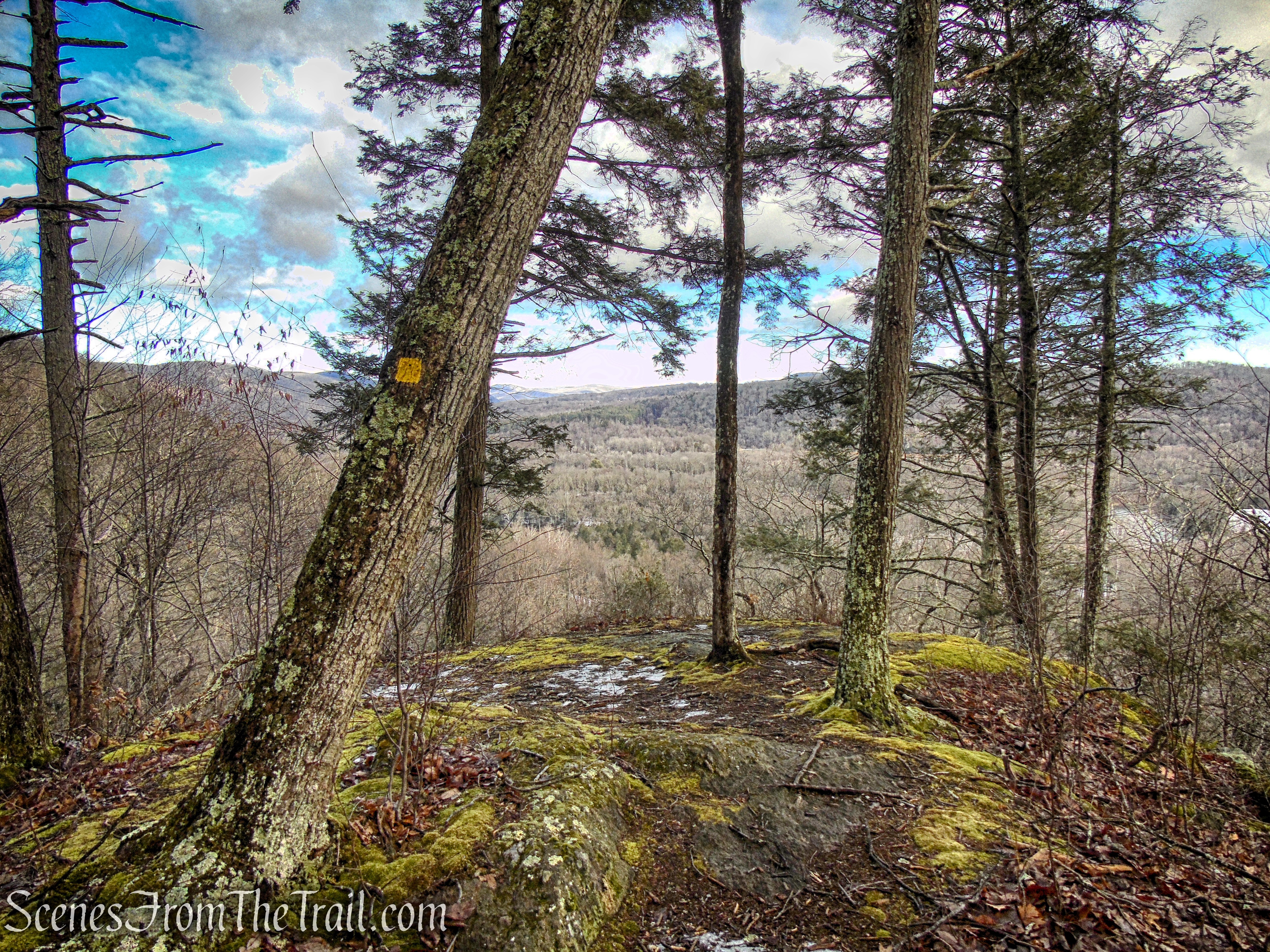

Stissing Fire Tower Loop

July 14, 2024 – Pine Plains, NY

Difficulty: Strenuous

Length: Approximately 2.2 miles

Max elevation: 1460 ft. – total elevation gain approximately 950 ft.

Route type: Lollipop Loop

Map: Thompson Pond/Stissing Mt Trail Map

Trailhead parking: 499 Lake Rd, Pine Plains, NY 12567

No toilets on site – No entrance or parking fees

Pull-off parking lot on shoulder for about 10 cars


Overview:

Stissing Mountain is a 1,402-foot-tall mountain in Pine Plains, NY. It is composed of the same Precambian bedrock as the Hudson Highlands but is separated from them or any other Precambian outcrop by many miles. The terrain is very steep and rocky, with many exposed ledges, rocky crests, and talus slopes. There is an exhibit devoted to the mountain’s geology in the American Museum of Natural History.

Stissing Mountain as viewed from Thompson Pond Preserve

Stissing Mountain as viewed from Thompson Pond Preserve

A short lollipop-loop of freshly marked trails begins at a small parking lot on Lake Road. It steeply climbs the mountain to the 80-foot fire tower near the summit. The Stissing Fire Tower provides vistas east to Connecticut, Massachusetts, and Vermont; Southwest to Pennsylvania and New Jersey; and North to the Empire State Plaza in Albany.

Stissing Mountain Fire Tower as viewed from Thompson Pond Preserve

Stissing Mountain Fire Tower as viewed from Thompson Pond Preserve

Stissing Mountain is part of the Thompson Pond Nature Preserve, managed by The Nature Conservancy. The steel tower is open to the public, and it is a popular hiking destination. The tower is owned by the Friends of Stissing Landmarks, a citizens group that formed to rescue it from demolition.

Stissing Mountain Fire Tower

Stissing Mountain Fire Tower


History:

While the name Stissing is most certainly of Native American origin, its etymology is not precisely known. Earlier forms of the word are Tishasink, Teesink, and Stissink. In his book, Aboriginal Place Names of New York, William M. Beauchamp says that its possible origin is the Algonkian word tahshin, meaning “he raises himself”. There is a legend that the mountain was named for an Indian chief who lived in the notch between Stissing Mountain and Little Stissing, its neighbor to the immediate north. On an old patent survey map drawn in 1734 by surveyor Richard Edsall, it is called Stissink Mountain. This may be the earliest written record of the name of this mountain.

According to the Forest Fire Lookout Association, the structure on Stissing Mountain is a 79′ 6″ International Derrick E-4898 (circa 1932) tower, provided to the State of New York by the US Forest Service and erected by the Boston Corners – Civilian Conservation Corps (CCC) Camp in November and December of 1933.

Stissing Mountain Fire Tower

Stissing Mountain Fire Tower

This tower was first staffed in 1935 reporting 91 fires and 610 visitors. This tower ceased operation sometime between 1979 and 1982.

Forest Fire Observers - Stissing Mountain

Forest Fire Observers – Stissing Mountain

The ranger’s cabin, located approximately 200 feet to the north, burned in 1976.

Remains of the former ranger cabin

Remains of the former ranger cabin

New York State announced in 1986 that the Tower was no longer needed and would be removed. Concerned citizens formed Friends of Stissing Landmarks (FOSL) in 1986 to take over responsibility for the Tower and keep it open for the public. In 1994, the Tower was turned over to FOSL, which maintains the structure today. Hikers are welcome to access the Tower at their own risk and at no cost. FOSL encourages all users to send donations to assist in the maintenance of the Tower.

Beginning in 1958, The Nature Conservancy acquired 530 acres of Stissing Mountain and Thompson Pond, forming the Thompson Pond Preserve. The New York State Department of Environmental Conservation has also designated Stissing and Little Stissing Mountains, together with the Wappinger Creek Valley, part of a Significant Biodiversity Area called the Stissing Mountain Wetlands Complex.

In late 2022, the lower parts of the trail was rerouted away from the eroded gully and is now well graded with multiple switchbacks. New trail markers were added to replace the old can tops that were previously used.

In October 2023, Friends of Stissing Landmarks (FOSL) replaced the stairs and landings on the fire tower. The stairs up the tower consist of 106 treads and seven landings. It was estimated that about half of the treads were original from 1933-34 when the Civilian Conservation Corps constructed the tower. All 106 treads and the landings were replaced.

Stissing Fire Tower

Stissing Fire Tower

The wood is Larch and came from the pilings of the old Tappan Zee Bridge.


Trails Overview:

From Lake Road, the trails are mostly woods roads that climb steeply up the mountain. The trails are marked with Friends of Stissing Landmarks (FOSL) round metal discs.

Red Trail - Stissing Mountain

Red Trail – Stissing Mountain

The trails used to be marked with rusty can tops and faded orange or blue discs, with some of the old markers remaining.

Blue Trail – Stissing Mountain

Blue Trail – Stissing Mountain

The Red Trail is steeper, but makes for a shorter route. The Blue Trail utilizes an old deteriorating access road, which is more gradual, but longer, making a loop hike possible.

The available trail map is outdated (2019) and only shows one trail up the mountain.


Hike Overview:

I did this hike in June 2022 on a cold and extremely windy day. It was in the mid 50’s and cloudy that day, but the blustery wind at the top of the tower, made it feel more like it was in the low 40’s. Because of the high winds, we didn’t spend much time at the top of the fire tower.

Shortly after doing the hike, I read that they added brand spanking new blazes to the trails. It took two years to get back up there to update the hike, but here we are. It was much warmer on this day and the air quality wasn’t very good. It felt like an easier hike when it was cooler. The trails are well shaded.

We only saw a few people near the fire tower and passed a lone hiker on our way down.

This Lollipop Loop was done clockwise, ascending on Red (steeper) and descending on Blue. I prefer a less steep descent which is gentler on the knees.

Stissing Mountain Fire Tower Loop

Stissing Mountain Fire Tower Loop

As you can see from the elevation graph, it is quite steep going up and down.

Elevation profile - Stissing Mountain Fire Tower Loop

Elevation profile – Stissing Mountain Fire Tower Loop

Please Note: There is no view from the base of the fire tower, so if you don’t climb at least part of the way up, you will not enjoy any of the marvelous views.


The Hike:

From the trailhead parking lot on Lake Road, carefully cross the street and head into the woods on a steep, rocky footpath, following the red blazes. The trail soon bears left and climbs on switchbacks to avoid an old eroded section of trail.

Lake Road Trailhead - Stissing Mountain

Lake Road Trailhead – Stissing Mountain

Lake Road Trailhead - Stissing Mountain

Lake Road Trailhead – Stissing Mountain

Lake Road Trailhead - Stissing Mountain

Lake Road Trailhead – Stissing Mountain

Lake Road Trailhead - Stissing Mountain

Lake Road Trailhead – Stissing Mountain

Red Trail - Stissing Mountain

Red Trail – Stissing Mountain

Red Trail - Stissing Mountain

Red Trail – Stissing Mountain

Red Trail - Stissing Mountain

Red Trail – Stissing Mountain

Red Trail - Stissing Mountain

Red Trail – Stissing Mountain

Red Trail - Stissing Mountain

Red Trail – Stissing Mountain

Red Trail - Stissing Mountain

Red Trail – Stissing Mountain

In about 350 yards, the Red Trail reaches a junction with an old woods road, the route of the Blue Trail, which is marked by a pile of rocks. The Blue Trail will be your return route. For now, bear left to remain on the Red Trail, which soon becomes quite steep and rocky.

Bear left on Red Trail

Bear left on Red Trail

Bear left on Red Trail

Bear left on Red Trail

Bear left on Red Trail

Bear left on Red Trail

Red Trail - Stissing Mountain

Red Trail – Stissing Mountain

Soon, the grade moderates a little and the trail becomes less rocky, but the steep climb soon resumes. Along the way, there are limited views through the trees to the left of the trail.

Red Trail - Stissing Mountain

Red Trail – Stissing Mountain

Red Trail - Stissing Mountain

Red Trail – Stissing Mountain

Red Trail - Stissing Mountain

Red Trail – Stissing Mountain

Red Trail - Stissing Mountain

Red Trail – Stissing Mountain

Red Trail - Stissing Mountain

Red Trail – Stissing Mountain

Red Trail - Stissing Mountain

Red Trail – Stissing Mountain

After about 0.4 mile of steep climbing (from the last intersection), you’ll pass stone steps to the right of the trail (the remains of a former ranger cabin) and reach the summit ridge. Just ahead is the fire tower. There are no views from the base of the tower, but you’ll want to climb this almost 80-foot tower to get a spectacular view of the countryside.

Red Trail - Stissing Mountain

Red Trail – Stissing Mountain

Red Trail - Stissing Mountain

Red Trail – Stissing Mountain

Red Trail - Stissing Mountain

Red Trail – Stissing Mountain

Stissing Fire Tower

Stissing Fire Tower

The International Derrick Model 1933 Fire Tower was developed through a cooperative effort between the Aermotor Company and the U.S. Forest service. Although it is advertised as a 90-foot tower, it’s actual height is 79′ 6″ with 8 flights and 106 steps.

Stissing Fire Tower

Stissing Fire Tower

The wooden plank steps and landings are reclaimed Larch and came from the old Tappan Zee Bridge pilings.

Stissing Fire Tower

Stissing Fire Tower

You will have to climb the fire tower at least part way to enjoy the views. There are no views from the base of the tower.

Stissing Fire Tower

Stissing Fire Tower

The Stissing Fire Tower provides views east to Connecticut, Massachusetts, and Vermont; Southwest to Pennsylvania and New Jersey; and North to the Empire State Plaza in Albany.

Stissing Fire Tower

Stissing Fire Tower

Thompson Pond directly below to the east.

View east from Stissing Fire Tower

View east from Stissing Fire Tower

View west with the Catskill Mountains visible in the distance.

View west from Stissing Fire Tower

View west from Stissing Fire Tower

Little Stissing Mountain is the peak immediately north. Looking northeast – Twin Island Lake (upper left), Stissing Pond (right of center). The Taconic Mountains in the distance, with the states of Vermont and Massachusetts behind them.

View northeast from Stissing Fire Tower

View northeast from Stissing Fire Tower

A peek through the windows of the 7×7-foot metal cab.

View southeast from Stissing Fire Tower

View southeast from Stissing Fire Tower

View southeast with the true summit of Stissing Mountain in the foreground.

View southeast from Stissing Fire Tower

View southeast from Stissing Fire Tower

After taking in the panoramic views from the cab of the tower, descend the tower carefully, and watch your head as you leave the cab.

Stissing Fire Tower

Stissing Fire Tower

At the bottom of the steps, look straight ahead looking for blue blazes on a tree. Follow the blue blazes as they first turn left and descend on a narrow footpath, soon the Blue Trail curves to the right and descends to a woods road. Follow the blue blazes on this rocky road, which descends steeply.

Blue Trail – Stissing Mountain

Blue Trail – Stissing Mountain

Blue Trail – Stissing Mountain

Blue Trail – Stissing Mountain

Blue Trail – Stissing Mountain

Blue Trail – Stissing Mountain

Blue Trail – Stissing Mountain

Blue Trail – Stissing Mountain

Blue Trail – Stissing Mountain

Blue Trail – Stissing Mountain

After a while, the road bears right, passes rock ledges on the right, and continues to descend more gradually on a less rocky route. You’ll come to a number of forks and intersections; in each case, bear right and stay on the woods road, following the blazes, continuing to descend gradually.

Blue Trail – Stissing Mountain

Blue Trail – Stissing Mountain

Blue Trail – Stissing Mountain

Blue Trail – Stissing Mountain

DSC07039_HDR_marked

Blue Trail – Stissing Mountain

Blue Trail – Stissing Mountain

Blue Trail – Stissing Mountain

About 0.7 mile from the start of the Blue Trail, near the base of the fire tower, you’ll come to the fork you passed on the climb up the mountain, with the tree in the middle and rocks piled up in front of it. Turn left here, now retracing your steps on the Red Trail. Follow the red blazes and descend the final pitch to Lake Road, where the hike began.

Terminus of Blue Trail – Stissing Mountain

Terminus of Blue Trail – Stissing Mountain

DSC07050_HDR_marked

Red Trail – Stissing Mountain

Lake Road Trailhead – Stissing Mountain

Lake Road Trailhead – Stissing Mountain


Review:

A very enjoyable hike with the payoff being the marvelous views from the top of the fire tower. Not many people on the trails either time that I visited. The trails are well marked and easy to follow. I would definitely do this hike again.

Pros:

Stissing Mountain Fire Tower, 360° views from the tower, scenic landscape, relatively quiet area.

Cons:

An updated trail map would be nice.


Take a hike!

Stissing Fire Tower Loop

Stissing Fire Tower Loop


Sources:


Thompson Pond Preserve Loop

June 29, 2024 – Pine Plains, NY

Difficulty: Easy

Length: Approximately 3 miles

Max elevation: 487 ft. – total elevation gain approximately 41 ft.

Route type: Circuit

Maps: Thompson Pond/Stissing Mt Trail MapThompson Pond Trail Map

Trailhead parking: 261 Lake Rd, Pine Plains, NY 12567

Portable toilet on site – No entrance or parking fees

Pull-off parking on shoulder for about 10 cars


Overview:

Thompson Pond in Pine Plains, NY is a 75-acre, 15,000-year-old glacial kettle pond at the foot of 1,403-foot Stissing Mountain. It is the source of Wappinger Creek, a tributary of the Hudson River that drains much of Dutchess County.

Thompson Pond as viewed from Stissing Mountain Fire Tower

Thompson Pond as viewed from Stissing Mountain Fire Tower

The pond and mountain are part of a 530-acre nature preserve managed by The Nature Conservancy.

Thompson Pond Preserve

Thompson Pond Preserve

Thompson Pond Preserve

Thompson Pond Preserve

Thompson Pond Preserve has several hiking trails, including the Yellow Trail that loops around the pond and a trail that climbs to the Stissing Mountain Fire Tower.

Yellow Trail - Thompson Pond Preserve

Yellow Trail – Thompson Pond Preserve

A new wheelchair-accessible trail made of fine crushed stone is approximately one half mile and concludes at a viewing point overlooking Thompson Pond.

Yellow Trail - Thompson Pond Preserve

Yellow Trail – Thompson Pond Preserve


History:

Thompson Pond and two other nearby bodies of water, Stissing Lake, and Twin Island Lake, were all originally connected, but separated over time.

Beginning in 1958, the Nature Conservancy has acquired 530 acres of Stissing Mountain and Thompson Pond, forming Thompson Pond Preserve. The first 180 acres of this acquisition, encompassing Thompson Pond, was purchased from the Briarcliff Farm holdings of George W. Brown for $20,000 and was one of the Nature Conservancy’s first projects.

The pond is supposedly named for Amos Thompson (1702-1795) who settled in the area around 1746. Amos Thompson along with his two brothers, Enos and Samuel, owned 2,800 acres around Thompson Pond.

Thompson Pond was designated a National Natural Landmark by the U.S. Department of the Interior in 1973. It is considered an excellent example of a calcareous (or limy) wetland that abounds with a variety of wildlife.


Trails Overview:

There are nearly 5 miles of hiking trails around the pond, including one that goes to the top of Stissing Mountain. There is a firetower at the summit that is open to the public.

There is a main trail that circles the pond, with a newly constructed bog bridge that makes it possible for visitors to complete the full loop. The Yellow Trail around Thompson Pond, at times, travels close to the water’s edge; visitors might get their feet wet. Please wear appropriate footwear.

This is the only version of the trail map that shows the new trail (Green) that climbs to the fire tower, which opened in September 2023. Older maps shows the shorter trail as marked Blue (now White). This updated map corresponds with the current trail colors.

Thompson Pond Preserve Trail Map

Thompson Pond Preserve Trail Map

On the day of my visit, the Yellow Trail was very overgrown in spots, but it may be in better shape after volunteer trail maintainers pay it a visit.

Yellow Trail - Thompson Pond Preserve

Yellow Trail – Thompson Pond Preserve

The trail is well marked and relatively easy to follow.

Yellow Trail - Thompson Pond Preserve

Yellow Trail – Thompson Pond Preserve


Hike Overview:

This is a place that I have wanted to visit for a while. I’ve seen images posted on social media and it looked like a scenic spot. I was looking forward to seeing and photographing some wildlife while hiking around the pond. Unfortunately, sometimes things don’t turn out the way you plan them. I saw a few small birds, but nothing to write home about. The trail although very tranquil, was extremely overgrown in the southeastern section of the preserve. I know that Thompson Pond Preserve is maintained by volunteers and it’s possible that I could have visited in between trail maintenance sessions, but still, it made for an uncomfortable walk nonetheless. By the time I exited the trail at its terminus on Lake Road, my pants were soaked from the knees down from brushing up against the wet foliage. With that being said, I would visit again either after the trails have been cleared or when the cooler weather sheds some of the dense foliage.

This was a counterclockwise loop from the main entrance strictly on the Yellow Trail.

Thompson Pond Preserve Loop

Thompson Pond Preserve Loop

This hike has minimal elevation gain.

elevation profile - Thompson Pond Preserve Loop

elevation profile – Thompson Pond Preserve Loop

There is pull-off parking on the shoulder just outside the entrance to the preserve.

Lake Road Parking Area - Thompson Pond Preserve

Lake Road Parking Area – Thompson Pond Preserve


The Hike:

As you enter Thompson Pond Preserve, there are two handicap parking spaces and one van accessible space in the small parking lot. A new wheelchair-accessible trail was recently installed at Thompson Pond Preserve. The fine crushed stone trail is approximately a half mile and concludes at a viewing point overlooking Thompson Pond.

Thompson Pond Preserve

Thompson Pond Preserve

Proceed ahead on the gravel path heading south.

Yellow Trail - Thompson Pond Preserve

Yellow Trail – Thompson Pond Preserve

A short distance in, you should start to see yellow markers on trees.

Yellow Trail - Thompson Pond Preserve

Yellow Trail – Thompson Pond Preserve

Yellow Trail - Thompson Pond Preserve

Yellow Trail – Thompson Pond Preserve

In less than 1/2 a mile, the trail reaches a kiosk with a map. Here the White Trail begins on the right, but you should bear left to remain on the Yellow Trail.

Yellow Trail - Thompson Pond Preserve

Yellow Trail – Thompson Pond Preserve

Yellow Trail - Thompson Pond Preserve

Yellow Trail – Thompson Pond Preserve

After passing the kiosk, the trail begins to run along the contour of the pond. The trail never strays too far from Thompson Pond, and depending on the time of year that you visit, will determine how clear the view of the pond is through the trees.

Yellow Trail - Thompson Pond Preserve

Yellow Trail – Thompson Pond Preserve

Yellow Trail - Thompson Pond Preserve

Yellow Trail – Thompson Pond Preserve

Yellow Trail - Thompson Pond Preserve

Yellow Trail – Thompson Pond Preserve

Yellow Trail - Thompson Pond Preserve

Yellow Trail – Thompson Pond Preserve

Yellow Trail - Thompson Pond Preserve

Yellow Trail – Thompson Pond Preserve

Yellow Trail - Thompson Pond Preserve

Yellow Trail – Thompson Pond Preserve

Yellow Trail - Thompson Pond Preserve

Yellow Trail – Thompson Pond Preserve

Yellow Trail - Thompson Pond Preserve

Yellow Trail – Thompson Pond Preserve

Yellow Trail - Thompson Pond Preserve

Yellow Trail – Thompson Pond Preserve

Yellow Trail - Thompson Pond Preserve

Yellow Trail – Thompson Pond Preserve

Yellow Trail - Thompson Pond Preserve

Yellow Trail – Thompson Pond Preserve

Yellow Trail - Thompson Pond Preserve

Yellow Trail – Thompson Pond Preserve

As the trail nears the southern end of the pond, there is a commemorative stone bench with limited views over the pond. On the far left is Stiissing Mountain, with Little Stissing Mountain visible straight ahead (center).

Yellow Trail - Thompson Pond Preserve

Yellow Trail – Thompson Pond Preserve

Yellow Trail - Thompson Pond Preserve

Yellow Trail – Thompson Pond Preserve

As the trail nears the southern end of the pond, it becomes a narrow footpath.

Yellow Trail - Thompson Pond Preserve

Yellow Trail – Thompson Pond Preserve

Yellow Trail - Thompson Pond Preserve

Yellow Trail – Thompson Pond Preserve

Yellow Trail - Thompson Pond Preserve

Yellow Trail – Thompson Pond Preserve

Yellow Trail - Thompson Pond Preserve

Yellow Trail – Thompson Pond Preserve

Yellow Trail - Thompson Pond Preserve

Yellow Trail – Thompson Pond Preserve

Yellow Trail - Thompson Pond Preserve

Yellow Trail – Thompson Pond Preserve

Yellow Trail - Thompson Pond Preserve

Yellow Trail – Thompson Pond Preserve

The southern end of Thompson Pond follows the first of a series of wooden boardwalks and bog bridges that carry the trail over wet areas.

Yellow Trail - Thompson Pond Preserve

Yellow Trail – Thompson Pond Preserve

Yellow Trail - Thompson Pond Preserve

Yellow Trail – Thompson Pond Preserve

Yellow Trail - Thompson Pond Preserve

Yellow Trail – Thompson Pond Preserve

When the trail turns along the east side of the pond and begins heading north, it runs on another boardwalk that was recently repaired. The trail becomes increasingly overgrown in this area.

Yellow Trail - Thompson Pond Preserve

Yellow Trail – Thompson Pond Preserve

Yellow Trail - Thompson Pond Preserve

Yellow Trail – Thompson Pond Preserve

Yellow Trail - Thompson Pond Preserve

Yellow Trail – Thompson Pond Preserve

Bear scat?

Yellow Trail - Thompson Pond Preserve

Yellow Trail – Thompson Pond Preserve

Yellow Trail - Thompson Pond Preserve

Yellow Trail – Thompson Pond Preserve

Yellow Trail - Thompson Pond Preserve

Yellow Trail – Thompson Pond Preserve

Yellow Trail - Thompson Pond Preserve

Yellow Trail – Thompson Pond Preserve

The Yellow Trail soon passes a wooden platform with views over the pond and the surrounding landscape.

Yellow Trail - Thompson Pond Preserve

Yellow Trail – Thompson Pond Preserve

To the west, Stissing Mountain with its fire tower at the summit.

Yellow Trail - Thompson Pond Preserve

Yellow Trail – Thompson Pond Preserve

Yellow Trail - Thompson Pond Preserve

Yellow Trail – Thompson Pond Preserve

Yellow Trail - Thompson Pond Preserve

Yellow Trail – Thompson Pond Preserve

As the trail passes by the northeastern edge of the preserve, it travels over more bog bridges and boardwalks. This section borders a cattle farm.

Yellow Trail - Thompson Pond Preserve

Yellow Trail – Thompson Pond Preserve

Yellow Trail - Thompson Pond Preserve

Yellow Trail – Thompson Pond Preserve

Yellow Trail - Thompson Pond Preserve

Yellow Trail – Thompson Pond Preserve

Yellow Trail - Thompson Pond Preserve

Yellow Trail – Thompson Pond Preserve

Yellow Trail - Thompson Pond Preserve

Yellow Trail – Thompson Pond Preserve

Yellow Trail - Thompson Pond Preserve

Yellow Trail – Thompson Pond Preserve

The trail in this area was so overgrown, that from the knees down, my pants got soaked from walking through the high grass.

Yellow Trail - Thompson Pond Preserve

Yellow Trail – Thompson Pond Preserve

Yellow Trail - Thompson Pond Preserve

Yellow Trail – Thompson Pond Preserve

Yellow Trail - Thompson Pond Preserve

Yellow Trail – Thompson Pond Preserve

Yellow Trail - Thompson Pond Preserve

Yellow Trail – Thompson Pond Preserve

Yellow Trail - Thompson Pond Preserve

Yellow Trail – Thompson Pond Preserve

Yellow Trail - Thompson Pond Preserve

Yellow Trail – Thompson Pond Preserve

Yellow Trail - Thompson Pond Preserve

Yellow Trail – Thompson Pond Preserve

The trail then crosses a wooden bridge where Thompson Pond flows into Wappinger Creek. Wappinger Creek is 42 miles long and runs from Thompson Pond to the Hudson River at New Hamburg.

Yellow Trail – Thompson Pond Preserve

Yellow Trail – Thompson Pond Preserve

The overgrown trail continues in a northerly direction, now hugging the pond, and soon some partial views of the pond and Stissing Mountain begin to appear.

Yellow Trail - Thompson Pond Preserve

Yellow Trail – Thompson Pond Preserve

Yellow Trail - Thompson Pond Preserve

Yellow Trail – Thompson Pond Preserve

Yellow Trail - Thompson Pond Preserve

Yellow Trail – Thompson Pond Preserve

Yellow Trail - Thompson Pond Preserve

Yellow Trail – Thompson Pond Preserve

Yellow Trail - Thompson Pond Preserve

Yellow Trail – Thompson Pond Preserve

Yellow Trail - Thompson Pond Preserve

Yellow Trail – Thompson Pond Preserve

Yellow Trail - Thompson Pond Preserve

Yellow Trail – Thompson Pond Preserve

Yellow Trail - Thompson Pond Preserve

Yellow Trail – Thompson Pond Preserve

Farm field that borders the preserve.

Yellow Trail - Thompson Pond Preserve

Yellow Trail – Thompson Pond Preserve

Yellow Trail - Thompson Pond Preserve

Yellow Trail – Thompson Pond Preserve

Yellow Trail - Thompson Pond Preserve

Yellow Trail – Thompson Pond Preserve

The Yellow Trail ends at Lake Road. Here you will turn left and carefully walk along Lake Road for about 350 yards, back to the parking area, where the hike began.

Terminus of Yellow Trail - Thompson Pond Preserve

Terminus of Yellow Trail – Thompson Pond Preserve

Lake Road - Thompson Pond Preserve

Lake Road – Thompson Pond Preserve

Lake Road - Thompson Pond Preserve

Lake Road – Thompson Pond Preserve

Lake Road Parking Area - Thompson Pond Preserve

Lake Road Parking Area – Thompson Pond Preserve


Review:

This is a nice area, but the trails being so overgrown, did not make for an enjoyable experience. Perhaps I visited Thompson Pond in between trail maintenance. I wouldn’t want to dissuade others from visiting and would suggest reaching out to The Nature Conservancy to check if the trail was recently maintained.

Pros:

Beautiful area, not much foot traffic.

Cons:

Overgrown trails.


Take a hike!

Thompson Pond Preserve Loop

Thompson Pond Preserve Loop

Sources:


Joppenbergh Mountain Loop

June 23, 2024 – Rosendale, NY

Difficulty: Easy – Moderate

Length: approximately 2.2 miles

Max elevation: 482 ft. – total elevation gain: 471 ft.

Route type: Circuit

Map: Joppenbergh Mountain Map 2021

Trailhead parking: Willow Kiln Park – 5 Hardenburgh Lane, Rosendale, NY 12472

Joppenbergh Mountain is free of charge and open daily from dawn until dusk for use by the public.

Portable toilet located near the start of the trail.


Overview:

Joppenbergh Mountain is a nearly 500-foot tall mountain in Rosendale, NY (Ulster County). The mountain dominates the natural landscape of the Town of Rosendale. It is located at the very northern end of the Shawangunk Ridge and, north of the Rondout Creek. Newly marked trails lead to the top of the mountain from Willow Kiln Park, with a view of the Rosendale Trestle and the rolling hills beyond.

Lookout Trail - Joppenbergh Mountain

Lookout Trail – Joppenbergh Mountain

Willow Kiln Park is located behind the municipal parking lot off Main Street, behind the Rosendale Theatre. Trails to Joppenburgh Mountain are accessed from the park. The park is the site of the former cement kilns, which give the park its name and also hosts a Farmer’s Market on weekends.

Willow Kiln Park

Willow Kiln Park


History:

Joppenbergh, or Jacob’s Mountain, is named after Colonel Jacob Rutsen, a merchant and the son of a Dutch immigrant from Albany. He founded the first settlement in what is now the town of Rosendale in the late 17th century. The spelling of the mountain’s name has been disputed, and has been rendered as Joppenberg and Joppenburgh. It has also been called Jacob’s Nose, Jacob’s Mount, and, in an early 18th-century deed, Jobsenbright.

Joppenbergh Mountain - October 2018

Joppenbergh Mountain – October 2018

In September of 2011, the Open Space Institute’s land acquisition affiliate, the Open Space Conservancy, purchased Joppenbergh Mountain, a 117-acre parcel that towers over Rosendale, NY. Friends of the Shawangunks, through its land-trust affiliate, The Shawangunk Conservancy, agreed to raise $85,000 (46%) of the sale price in order to secure the mountain’s preservation.

Joppenbergh is laced with a network of old roads, paths and trails. The mountain’s rich history is reflected in this network. Farming, logging, mining, recreational sports and communication technology have all had a place at different times, and each of these has left its traces.

Over one hundred years ago, Willow Kiln Park was a very busy spot. The kilns that form the parks backdrop burned all the rock mined under Joppenberg Mountain. It is this cement company’s claim that its product built the Brooklyn Bridge, in fact calling its cement “Brooklyn Bridge Brand.” America’s first railroad steam engine, the Sturbridge Lion, passed through today’s park on a canal boat on the Delaware & Hudson canal located on the south side of the park.

Willow Kiln Park

Willow Kiln Park

Today the Wallkill Valley Land Trust (WVLT) owns and manages the property.


Trails Overview:

When I hiked Joppenburgh in 2018, the trails were unmarked.

In 2019, the WVLT and its volunteers, added yellow blazes to the Lookout Trail and built the Pink Trail. In 2021, they began cutting more trails, and in 2022 began installing bog bridges along the Multi-Use Purple Trail.

Today, the trails are mostly well marked with plenty of signage and are well maintained.

A leg of the Purple Trail was closed off on the day of my visit. Not sure if it is permanent or just a temporary closure.

Detour - Joppenbergh Mountain

Detour – Joppenbergh Mountain

The trails are marked with WVLT round plastic discs of various colors.

Trails used on this hike:

  • Access Trail/Link Trail (green) is the first trail encountered upon leaving the Willow Kiln parking lot. It serves as a connector trail to access the other trails at Joppenbergh Mountain. I did not see any green markers, but it’s the only trail until you reach the junction with the yellow-blazed Lookout Trail.

Green Trail - Joppenbergh Mountain

Green Trail – Joppenbergh Mountain

  • Lookout Trail (yellow) is the crown jewel of Joppenbergh mountain, offering trail users amazing views of the Wallkill River, Rosendale Trestle, and the Shawangunk Ridge. It is 1.02 miles long and only accessible on foot, not MTB. Heading up the Link Trail from the Parking lot, the Lookout Trail will be on your left and features a quick climb up to the look-out before continuing to the summit of Joppenbergh Mountain at 482 feet.

Lookout Trail - Joppenbergh Mountain

Lookout Trail – Joppenbergh Mountain

  • The Outcrop Trail (purple) is moderately easy to traverse. The outcrop trail is named for it’s unique geological features, with glacial erratics from the last ice age and bedrock ridges visible from the trail. It is a multi-use trail, available to both pedestrians and bicyclists. Bog bridges help hikers and bikers traverse the wet areas of the trail.

Purple Trail – Joppenbergh Mountain

Purple Trail – Joppenbergh Mountain

  • Buteo Trail (pink/red?) is a multi-use trail that is suitable for Hiking, Trail Running, and Mountain Biking. It is a nice, wide trail for most of its length. Some of the markers on the trail may appear more red than pink.

Buteo Trail – Joppenbergh Mountain

Buteo Trail – Joppenbergh Mountain


Hike Overview:

Not long after I did this hike in October 2018, I read that they were cutting new trails and adding blazes to the existing trails. I finally got around to hiking Joppenbergh again, and I am glad that I did.

Aside from the birds-eye view of the Rosendale Trestle and beyond, this is a relatively quiet spot to hike. I only encountered two separate hikers during my time there. The canopied forest provides ample shade from the hot sun, making it a good hike in any season.

This clockwise loop begins and ends in Willow Kiln Park.

Joppenbergh Mountain Loop

Joppenbergh Mountain Loop

As you can see from the graph below, after the initial steep ascent, the grade moderates substantially.

elevation profile - Joppenbergh Mountain Loop

elevation profile – Joppenbergh Mountain Loop


The Hike:

There is plenty of parking in the Rosendale Municipal Parking Lot, which is adjacent to Willow Kiln Park. The Farmer’s Market was setting up when I arrived at just before 9am on a Sunday morning in June.

Willow Kiln Park

Willow Kiln Park

As you walk along the rear of the park, you may want to take a minute to check out the cement kilns before you embark on your hike.

Willow Kiln Park

Willow Kiln Park

The kiln wall which runs 100 feet along the park, is 35-foot-high wall (at its tallest section) and is constructed of stone rubble and grout core, with a stone and mortar face.

Willow Kiln Park

Willow Kiln Park

The hike begins at the eastern end of the park, to the far right of the kilns. There is a kiosk with a map. If you don’t have a printed map, then you may want to take a picture of the map on the kiosk. This is the Green Trail as shown on the map. I did not see any green markers, but the signs indicate the way.

Trailhead - Willow Kiln Park

Trailhead – Willow Kiln Park

Trailhead - Willow Kiln Park

Trailhead – Willow Kiln Park

Follow this gravel trail as it bends to the left and crosses the hillside above the kilns.

Green Trail - Willow Kiln Park

Green Trail – Willow Kiln Park

In a short distance, the trail comes to a junction. On the left is the yellow-blazed Lookout Trail. This is the shortest distance to the viewpoint. Follow the Yellow Trail as it begins to climb gradually.

Turn left on Lookout Trail - Joppenbergh Mountain

Turn left on Lookout Trail – Joppenbergh Mountain

Lookout Trail - Joppenbergh Mountain

Lookout Trail – Joppenbergh Mountain

Lookout Trail - Joppenbergh Mountain

Lookout Trail – Joppenbergh Mountain

Lookout Trail - Joppenbergh Mountain

Lookout Trail – Joppenbergh Mountain

The trail climbs steadily along the southern slope of Joppenbergh Mountain, with the Town of Rosendale is visible through the trees below.

Lookout Trail - Joppenbergh Mountain

Lookout Trail – Joppenbergh Mountain

Lookout Trail - Joppenbergh Mountain

Lookout Trail – Joppenbergh Mountain

Lookout Trail - Joppenbergh Mountain

Lookout Trail – Joppenbergh Mountain

After about 0.6 mile from the start, the trail reaches a small rock outcrop with views to the south and west. You may want to take a few minutes to enjoy the view.

Lookout Trail - Joppenbergh Mountain

Lookout Trail – Joppenbergh Mountain

The view point is small, and you have to stand on a slanted rock to get the full view, but what a view it is. Use caution when trying to get a look. Especially if it is wet or icy.

Lookout Trail - Joppenbergh Mountain

Lookout Trail – Joppenbergh Mountain

The Northern Shawangunks, including Giant’s Ledges Pocket Park.

Lookout Trail – Joppenbergh Mountain

Lookout Trail – Joppenbergh Mountain

Rosendale Trestle is a 940-foot long former railroad trestle rising 150 feet above Rondout Creek. When it was built in 1872 it was the highest span bridge in the United States. Since 2013 it has been a pedestrian walkway on the Wallkill Valley Rail Trail, a 22-mile path through Ulster County.

Lookout Trail – Joppenbergh Mountain

Lookout Trail – Joppenbergh Mountain

Just after leaving the viewpoint, a large branch came crashing down, taking other branches with it, just off the trail.

Lookout Trail – Joppenbergh Mountain

Lookout Trail – Joppenbergh Mountain

The trail continues to climb, soon reaching the height of land, just west of the summit. It then levels off somewhat, before beginning a steady descent on an eroded woods road.

Lookout Trail – Joppenbergh Mountain

Lookout Trail – Joppenbergh Mountain

Lookout Trail – Joppenbergh Mountain

Lookout Trail – Joppenbergh Mountain

Lookout Trail – Joppenbergh Mountain

Lookout Trail – Joppenbergh Mountain

Lookout Trail – Joppenbergh Mountain

Lookout Trail – Joppenbergh Mountain

Lookout Trail – Joppenbergh Mountain

Lookout Trail – Joppenbergh Mountain

Lookout Trail - Joppenbergh Mountain

Lookout Trail – Joppenbergh Mountain

We arrived at a detour. I believe that this is the southern leg of the Purple Trail, but I didn’t see any markers. I wasn’t planning on going that way. I turned left and took the northern leg of the Purple Trail.

Detour - Joppenbergh Mountain

Detour – Joppenbergh Mountain

Detour - Joppenbergh Mountain

Detour – Joppenbergh Mountain

Terminus of Overlook Trail – Joppenbergh Mountain

Terminus of Overlook Trail – Joppenbergh Mountain

The Purple Trail meanders through the northern end of the property, passing some interesting looking rock formations along the way.

Purple Trail – Joppenbergh Mountain

Purple Trail – Joppenbergh Mountain

Stay alert for mountain bikes. I didn’t see any, but you never know.

Purple Trail – Joppenbergh Mountain

Purple Trail – Joppenbergh Mountain

Purple Trail – Joppenbergh Mountain

Purple Trail – Joppenbergh Mountain

Purple Trail – Joppenbergh Mountain

Purple Trail – Joppenbergh Mountain

DSC06487_HDR_marked

Purple Trail – Joppenbergh Mountain

Bog bridges pave the way along wet sections of the trail.

Purple Trail – Joppenbergh Mountain

Purple Trail – Joppenbergh Mountain

Purple Trail – Joppenbergh Mountain

Purple Trail – Joppenbergh Mountain

Purple Trail – Joppenbergh Mountain

Purple Trail – Joppenbergh Mountain

Purple Trail – Joppenbergh Mountain

Purple Trail – Joppenbergh Mountain

The Purple Trail climbs a little as it curves to the south.

Purple Trail – Joppenbergh Mountain

Purple Trail – Joppenbergh Mountain

Purple Trail – Joppenbergh Mountain

Purple Trail – Joppenbergh Mountain

The Purple Trail then ends at a T-intersection with the Pink Trail. Turn right on the Pink Trail (some of the blazes may look red), and follow it in a southerly direction.

Terminus of Purple Trail – Joppenbergh Mountain

Terminus of Purple Trail – Joppenbergh Mountain

Pink Trail – Joppenbergh Mountain

Pink Trail – Joppenbergh Mountain

Pink Trail – Joppenbergh Mountain

Pink Trail – Joppenbergh Mountain

When you come to a junction where the Pink Trail goes both left and right, TURN RIGHT, now heading southwest.

Pink Trail – Joppenbergh Mountain

Pink Trail – Joppenbergh Mountain

Pink Trail – Joppenbergh Mountain

Pink Trail – Joppenbergh Mountain

The Pink Trail passes some rock formations with trees growing out of them.

Pink Trail – Joppenbergh Mountain

Pink Trail – Joppenbergh Mountain

Pink Trail – Joppenbergh Mountain

Pink Trail – Joppenbergh Mountain

On the trail map, the Pink Trail ends at a junction with the southern leg of the Purple Trail, but continues ahead on the woods road as the Green Trail. It passes a short blue blazed bike trail on the left. Continue descending on the woods road passing through a powerlines cut.

Green Trail – Joppenbergh Mountain

Green Trail – Joppenbergh Mountain

A short distance later, the trail reaches the junction with the Yellow Trail. Bear left at this junction and retrace your steps back to Willow Kiln Park, where the hike began.

Turn left on Green Trail

Turn left on Green Trail

Green Trail – Joppenbergh Mountain

Green Trail – Joppenbergh Mountain

Green Trail – Joppenbergh Mountain

Green Trail – Joppenbergh Mountain


Review:

Although the mountain now has marked trails, it can still be a little confusing. There is enough signage for hikers to find their way around, but you need to pay attention. This was a lovely hike through a particularly scenic area. The viewpoint overlooking the Rosendale Trestle, is the highlight of the hike. The lush, green forest and interesting rock formations make exploring the other trails worthwhile. I would definitely recommend this hike to beginners and seasoned hikers alike.

Pros:

Scenic landscape, nice view, not heavily used, better marked trails.

Cons:

Trail map needs updating.


Take a hike!

Joppenbergh Mountain Loop

Joppenbergh Mountain Loop


Sources:


Catskills Visitor Center

June 2, ‎2024 – Mount Tremper, NY

Map: Catskills Visitor Center Trails Map

Address: 5096 NY-28, Mt Tremper, NY 12457

The grounds are open to the public every day during daylight hours.

Public restrooms, free wifi and cell service.

Phone: 845-688-3369


Overview:

Situated on 60 acres of forest, fields, and wetlands in the hamlet of Mount Tremper is the Congressman Maurice D. Hinchey Catskills Visitor Center (CVC).

Catskills Visitor Center

Catskills Visitor Center

The CVC is the official visitor center for the Catskill Park and is operated by Catskill Center in partnership with the New York State Department of Environmental Conservation.

Explore the peaceful grounds to discover the 80-foot tall Upper Esopus Fire Tower; 1.5 miles of nature trails (including ADA accessible trails); picnic areas; a covered pavilion; wildlife viewing; Esopus Creek access and much more. Whether you’re new to the area or just passing through, this is a good place to stop for information and get helpful insight from the friendly staff.

Upper Esopus Fire Tower - Catskills Visitor Center

Upper Esopus Fire Tower – Catskills Visitor Center

The Catskills Visitor Center serves as a gateway for outdoor enthusiasts to learn about the Catskills Park’s opportunities to enjoy the great outdoors. The center showcases the Catskills’ natural resources and recreational opportunities with information about the 700,000-acre park, New York City’s one million-acre Catskills/Delaware drinking watershed, and ways to recreate and enjoy these treasured natural resources.

The Catskills Visitor Center is open year-round with all the info, maps, and advice you need to plan your best Catskill adventure.


History:

The Catskills Visitor Center opened in July 2015 as the Maurice D. Hinchey Catskill Interpretive Center. In 2019 the name was changed to the Catskills Visitor Center. It remains dedicated to the late Congressman Maurice Hinchey.

Catskills Visitor Center

Catskills Visitor Center

The visitor center continues as a partnership between the Catskill Center and the NYS Department of Environmental Conservation.

The Congressman Maurice D. Hinchey Catskills Visitor Center seeks to educate and inform visitors about the history, culture, natural resources, recreational opportunities, and geography of the Catskill Park and the Catskill Region. The Catskills were formed 300 million years ago and were carved by the glaciers of the last ice age 25,000 years ago. Humans have been occupying the Catskill Region for the past 10,000 years. More recently, the Catskills were settled by tribes of the Lenni Lenape people, then the Dutch followed by the English and a number of other European groups including the French and people of German heritage.

Catskills Visitor Center

Catskills Visitor Center

Many people think the Catskill Forest Preserve and the Catskill Park are the same thing, but they are not. The Catskill Park is a mix of public and private land, defined by the “blue line,” a boundary the state established in 1904. The Catskill Forest Preserve is state-owned land that is protected as “forever wild” within the park.

Catskill Park

Catskill Park sign – (Lori Van Buren / Times Union)

Upper Esopus Fire Tower:

The Upper Esopus Fire Tower was originally named the Venetia Fire Tower, and used for fire surveillance in Venice, Florida. It was completely restored for its new home in the Catskills. It was rebuilt on the grounds at the Catskills Visitor Center in the fall of 2019. This 80-foot steel tower is a great way for hikers, casual and advanced, to enjoy a view of the area with only a 1/4-mile walk from the parking area. It is suggested that you call the Catskills Visitor Center at 845-688-3369 before you head out to confirm that the tower is open.

Upper Esopus Fire Tower - Catskills Visitor Center

Upper Esopus Fire Tower – Catskills Visitor Center

The story of the Venetia Fire Tower began several decades ago and more than 1,300 miles south on the West Coast of Florida, in the city of Venice. The fire tower sat in a remote area with no other residents except for a few farm houses scattered nearby. Soaring 80-feet above ground, this Aermotor MC-39 model fire tower once served as a Florida Division of Forestry lookout tower for decades until it was decommissioned in the 1970’s. 

It is estimated that the Venetia Fire Tower was first built in the mid 1940’s, possibly 1945. The State of Florida has very few records of their fire towers, but had 310 of them at one point in time. The fire tower was purchased online for $1,000. The tower was then shipped and brought back to life at the Catskills Visitor Center.

Venetia Fire Tower

Venetia Fire Tower

Adding the final piece at the CVC.

Upper Esopus Fire Tower – Catskills Visitor Center

Upper Esopus Fire Tower – Catskills Visitor Center

The Aermotor MC-39 is a heavily galvanized free-standing, batter-legged, hurricane-proof structure with a 7×7′ metal cab. It is 79’6″ tall, with 8 flights of stairs and 97 steps.

On October 3, 2019, the New York State Department of Environmental Conservation (NYSDEC) officially dedicated and announced the opening of the new Upper Esopus Fire Tower at the Maurice D. Hinchey Catskills Visitor Center.


My Visit:

I walked the Ashokan Reservoir Promenade West on a Sunday morning in June and decided to check out the Catskills Visitor Center at the conclusion of my walk. It is only 10 miles away (15 minute drive) and worth checking out. I specifically went there just to climb the fire tower since I was in the vicinity, but I also went inside to see what they were all about. If you are unfamiliar with the area or just interested in exploring the Catskills, this is a good place to visit.

Catskills Visitor Center

Catskills Visitor Center

The fire tower is open!!

Catskills Visitor Center

Catskills Visitor Center


Catskills Visitor Center

Catskills Visitor Center

The Catskills Visitor Center is a gateway to the Catskill Region and the Catskill Park. The staff and volunteers are on hand to help you plan your Catskill adventures, from information about local communities, to the best trails for a variety of users.

Catskills Visitor Center

Catskills Visitor Center


Catskills Visitor Center

Catskills Visitor Center

Trained staff and volunteers will help answer any questions you may have.

Catskills Visitor Center

Catskills Visitor Center

The Catskills Visitor Center’s Gift Shop has a wide variety of books and guides about the Catskill Park, the Catskill Mountains and the surrounding areas. They also carry a large selection of quality trail maps and trail guides to help you have a safe and enjoyable adventure on the trails.

Catskills Visitor Center

Catskills Visitor Center

In addition to books, maps and guidebooks, the Catskills Visitor Center Gift Shop offers, fire tower merchandise, including Catskill Fire Tower patches and a number of items to help you enjoy your stay in the Catskills.

Catskills Visitor Center

Catskills Visitor Center


Visiting The Fire Tower:

From the parking lot of the Catskills Visitor Center, walk about a quarter of a mile on the red-blazed Interpretive Loop Trail.

The Interpretive Loop Trail circles the Visitor Center and passes by the fire tower along the way. The trail is ADA accessible. Along the trail, there are multiple interpretive panels, telling the story of the Catskills Visitor Center site, the ecology, and history of the Catskills.

Interpretive Loop Trail - Catskills Visitor Center

Interpretive Loop Trail – Catskills Visitor Center


Interpretive Loop Trail - Catskills Visitor Center

Interpretive Loop Trail – Catskills Visitor Center


Interpretive Loop Trail - Catskills Visitor Center

Interpretive Loop Trail – Catskills Visitor Center

The view while standing in front of the interpretive sign.

Interpretive Loop Trail - Catskills Visitor Center

Interpretive Loop Trail – Catskills Visitor Center

The Upper Esopus Fire Tower weighs 18,000 pounds and stands 92 feet high from the ground to the peak of the cab. It stands at an elevation 670’ above sea level.

Upper Esopus Fire Tower - Catskills Visitor Center

Upper Esopus Fire Tower – Catskills Visitor Center

NYSDEC staff constructed a nature trail around the tower and a kiosk at its base with information about all of the Catskills Fire Towers.

Upper Esopus Fire Tower - Catskills Visitor Center

Upper Esopus Fire Tower – Catskills Visitor Center

Climb the 8 flights of stairs and 97 steps for a view of the surrounding area.

Upper Esopus Fire Tower

Upper Esopus Fire Tower


DSC03029_marked

Upper Esopus Fire Tower

DSC03032_marked

Upper Esopus Fire Tower

Upper Esopus Fire Tower


Upper Esopus Fire Tower

Upper Esopus Fire Tower

A highlight of the fire tower is a map table.

Upper Esopus Fire Tower

Upper Esopus Fire Tower

Looking north towards Mount Tremper. 

Upper Esopus Fire Tower

Upper Esopus Fire Tower

Looking southwest towards Ashokan High Point.

Upper Esopus Fire Tower

Upper Esopus Fire Tower

The Upper Esopus Valley.

Upper Esopus Fire Tower

Upper Esopus Fire Tower


Upper Esopus Fire Tower

Upper Esopus Fire Tower

Watch your step on the way down. 

Upper Esopus Fire Tower

Upper Esopus Fire Tower


Sources:


Ashokan Reservoir Promenade

June 2, ‎2024 – Olivebridge, NY

June 5, 2024 – Kingston, NY

Difficulty: Easy

Length: Approximately 5.8 miles – total elevation gain approximately 180 ft.

Route type: Out and Back

Map: Ashokan Day Use Area

Ashokan Reservoir Promenade East Parking Lot: 27 B W S Rd, Kingston, NY 12401
Room for 30 vehicles

Ashokan Reservoir Promenade West Parking Lot: Olivebridge, NY 12461
Room for 20 vehicles

Portable Toilets on site

No dogs allowed

Please be advised that there is no tree cover and you will be fully exposed to the elements, including the hot sun.


Overview:

Ashokan Reservoir, located 14 miles west of the City of Kingston in Ulster County, was created in 1915 by the construction of 5-1/2 miles of dams and dikes within the Esopus Creek drainage. This 8,315 acre reservoir is a major component of the Catskill System of the New York City Water supply. The reservoir is broken into two basins by a dividing weir near its center. The Dividing Weir, pinches and separates the upper west basin from the lower east basin.

Dividing Weir - Ashokan Reservoir

Dividing Weir – Ashokan Reservoir

Aside from being a valuable freshwater resource, the Ashokan Reservoir is also an enjoyable recreational site seeing about 75,000 local visitors and tourists annually. The day use areas on the south side of the reservoir feature spectacular views and natural beauty.

Ashokan Reservoir Promenade East

Ashokan Reservoir Promenade East

There are some very specific rules and regulations in place regarding the use of the reservoir though. The reservoir is heavily monitored to ensure that it isn’t contaminated, and visitors need to follow specific guidelines and rules to enjoy the area around the reservoir safely.

DSC02949_marked

Ashokan Reservoir Promenade West

Take note that recreational users of NYC DEP trails are required to closely observe usage limitations and may incur fines for non-compliance with posted rules.

Ashokan Reservoir Promenade

Ashokan Reservoir Promenade

There is no swimming allowed at Ashokan Reservoir.

Ashokan Reservoir Promenade

Ashokan Reservoir Promenade

A paved handicap accessible path along the southern edge of the Ashokan Reservoir offers beautiful views and multiple recreational opportunities. The path is 2.9 miles one way and 5.8 roundtrip. The two parking areas are on either side of the walking path: one in Olivebridge, and the other in Kingston.

Ashokan Reservoir Promenade East

Ashokan Reservoir Promenade East

A tranquil area within the Catskill Park and Catskill Forest Preserve, it is filled with wildlife, majestic mountain peaks, and unlimited opportunities for the outdoor lover. Visitors can walk, ride bikes, rollerblade, or cross-country ski in the wintertime. With a DEP Access Permit, fishing is permitted on the reservoir.

Ashokan Reservoir Promenade West

Ashokan Reservoir Promenade West

Public access to the Day Use Areas along the reservoir is provided for free by the New York City Department of Environmental Protection (NYC DEP).


History:

Ashokan, meaning “Place of Fish” is aptly named given the recreational fishing opportunities for both coldwater and warm water fish that the reservoir provides.

The Ashokan Reservoir was constructed between 1907 and 1915, by the New York City Board of Water Supply, by impounding the Esopus Creek. Thousands of acres of farmland were submerged. The impoundment covered twelve communities located in a valley where farming, logging, and quarrying prevailed. The area that became the West Basin of the reservoir contained 504 dwellings, nine blacksmith shops, 35 stores, 10 churches, 10 schools, seven sawmills and a gristmill. Several of these communities were re-established in nearby locations. The dam was mainly built by local laborers, but also attracted an influx of itinerant workers from outside of the Hudson Valley, including a number of Italian immigrants. In addition to construction, these laborers also did the job of razing most of the trees and buildings in the area. A police force was formed to keep watch over the construction site, which would later become the New York City Department of Environmental Protection Police, an agency that today is charged with protecting and preserving the New York City water supply system.

At over 8300 acres, it was the world’s largest at the time and the first of six to be built in the Catskills between 1907 and 1965. It can hold 122.9 billion gallons at full capacity. Impressively, all the water flows by gravity through more than 100 miles of underground piping to reach New York City. In sheer scale, ingenuity, and functionality, the achievement was considered on a par with the building of the Panama Canal, which opened just one year earlier.

Today, more than a billion gallons of Catskills water reaches New York City per day.

After the September 11 attacks, the city and state decided to permanently close the spillway road to vehicular traffic as a security precaution.

The closed roadway was turned into a muti-use pedestrian pathway known as the Ashokan Reservoir Promenade. The paved walkway provides visitors with panoramic views of the Catskill Mountains.


Walk Overview:

Visiting the Catskills is always fun and quite scenic. Dealing with some leg issues, but still wanting to enjoy the outdoors, this place was perfect. Since the entire paved path is relatively flat, it allowed me to log some miles without the elevation. The scenery is absolutely gorgeous and on a beautiful Sunday morning in June, there weren’t too many people on the promenade.

I visited the Ashokan Reservoir Promenade twice in three days and started from opposite ends on each visit.

On my first visit, I parked at the Five Pines Parking Area at the West Basin entrance in Olivebridge. The out and back mileage was about 3.3 miles.

Ashokan Reservoir Promenade West

Ashokan Reservoir Promenade West

When I was done, I also visited the Catskills Visitor Center which is about 10 miles away (15 minute drive) and climbed their fire tower.

When I returned three days later, I parked at the Frying Pan parking area in Kingston, at the East Basin entrance.

I will describe the two separate walks the way they were done. You can choose to do this walk as an out and back, park a vehicle at each end, or do it as two separate walks.


From the Olivebridge Parking Area:

The western section of the Ashokan Reservoir Promenade is referred to as the Olivebridge Dam. This parking area is also known as the Five Pines Parking Area.

Five Pines Parking Area - Ashokan Reservoir Promenade

Five Pines Parking Area – Ashokan Reservoir Promenade

Proceed past the retractable bollards to begin your walk along the Ashokan Reservoir Promenade West.

Ashokan Reservoir Promenade West

Ashokan Reservoir Promenade West

Signs like this around the Ashokan Reservoir mark the sites of former communities that were displaced or submerged by its construction.

Ashokan Reservoir Promenade West

Ashokan Reservoir Promenade West

The paved path along the Olivebridge Dam provides beautiful views of the reservoir.

Ashokan Reservoir Promenade West

Ashokan Reservoir Promenade West

Ashokan Reservoir Promenade West

Ashokan Reservoir Promenade West

Ashokan Reservoir Promenade West

Ashokan Reservoir Promenade West

Ashokan Reservoir Promenade West

Ashokan Reservoir Promenade West

There are interpretive signs spread out along the promenade that detail the Ashokan Reservoir’s history.

Ashokan Reservoir Promenade West

Ashokan Reservoir Promenade West

The promenade continues across a section of the dam under which water can be released into the Esopus Creek.

Ashokan Reservoir Promenade West

Ashokan Reservoir Promenade West

Ashokan Reservoir Promenade West

Ashokan Reservoir Promenade West

The Olivebridge Dam is the main structure that forms the Ashokan Reservoir by impounding water from the Esopus Creek. The dam is 4,650 feet long. It’s 1,000-foot main section is made of concrete and large blocks of Bluestone harvested from local quarries. Its two wings are made of earth tightly compacted around concrete cores.

Ashokan Reservoir Promenade West

Ashokan Reservoir Promenade West

Ashokan High Point dominates the landscape on the western section of the Ashokan Reservoir Promenade.

Ashokan Reservoir Promenade West

Ashokan Reservoir Promenade West

The Slide Mountain Wilderness to the west of the promenade.

Ashokan Reservoir Promenade West

Ashokan Reservoir Promenade West

Ashokan Reservoir Promenade West

Ashokan Reservoir Promenade West

As you are walking on the promenade, look around. Deer can often be seen grazing on the grassy slope.

Ashokan Reservoir Promenade West

Ashokan Reservoir Promenade West

Benches are provided for visitors to take a rest and soak in the views.

Ashokan Reservoir Promenade West

Ashokan Reservoir Promenade West

Ashokan Reservoir Promenade West

Ashokan Reservoir Promenade West

Ashokan Reservoir Promenade West

Ashokan Reservoir Promenade West

This section of the promenade goes along the reservoir and then enters a wooded section passing a monument dedicated to J. Waldo Smith, engineer of the New York City water supply system.

Ashokan Reservoir Promenade West

Ashokan Reservoir Promenade West

After about a mile from the Five Pines Parking Area, there is a road on the right. Turn right and follow the road a short distance up to Winchell Hill

Ashokan Reservoir Promenade West

Ashokan Reservoir Promenade West

Road to Winchell Hill

Road to Winchell Hill

The historic monument was built in 1908 as hundreds of workers constructed the dam, dikes, chambers and tunnels that would become Ashokan Reservoir. It was built atop Winchell Hill, a high point in the vicinity of the construction and used as a triangulation tower to provide surveyors with an elevated and unimpeded view from which to take measurements.

J. Waldo SmithMonument - Winchell Hill

J. Waldo Smith Monument – Winchell Hill

On Nov. 11, 1908, the tower was dedicated as the McClellan Monument. It was named after New York City Mayor George B. McClellan, who successfully pushed for the construction of Ashokan Reservoir, the Catskill Aqueduct, and the other reservoirs and infrastructure that comprise NY City’s Catskills Water Supply System.

J. Waldo Smith Monument - Winchell Hill

J. Waldo Smith Monument – Winchell Hill

J. Waldo Smith Monument - Winchell Hill

J. Waldo Smith Monument – Winchell Hill

In 1936, a memorial tablet was added to the monument in memory of J. Waldo Smith, the chief engineer for the Board of Water Supply, who directed construction of the Catskill System.

J. Waldo Smith Monument - Winchell Hill

J. Waldo Smith Monument – Winchell Hill

Continuing east along the promenade.

Ashokan Reservoir Promenade West

Ashokan Reservoir Promenade West

Ashokan Reservoir Promenade West

Ashokan Reservoir Promenade West

The Dividing Weir Bridge, which carries Reservoir Road over Ashokan Reservoir.

Dividing Weir Bridge - Ashokan Reservoir Promenade West

Dividing Weir Bridge – Ashokan Reservoir Promenade West

Dividing Weir - Ashokan Reservoir

Dividing Weir – Ashokan Reservoir

The Dividing Weir, atop which Reservoir Road crosses the reservoir, functions to abate sedimentation that periodically occurs in waters that enter the upper reservoir basin. The weir slows the flow of water between the basins so that the sediment is allowed to settle before the less turbid water is release from the lower basin to begin its journey to the taps of New York City. The dividing weir offers spectacular views of the reservoir and the backdrop of forested mountains.

Dividing Weir - Ashokan Reservoir

Dividing Weir – Ashokan Reservoir

The Fountain Day Use Area is located south of the reservoir wall and midway along the promenade, near Reservoir Road. Water that runs through the decorative fountain is also used to turn two turbine generators situated below the ground to produce a total of 4,750 kilowatts. The small hydroelectric plant was installed in 1982 and is operated by the New York Power Authority.

Brown's Station Fountain - Ashokan Reservoir

Brown’s Station Fountain – Ashokan Reservoir

Take time to read about Ashokan Reservoir’s history along the way.

Ashokan Reservoir Promenade West

Ashokan Reservoir Promenade West

Dividing Weir - Ashokan Reservoir

Dividing Weir – Ashokan Reservoir

Here the western section of the promenade ends to allow vehicular traffic to pass from Reservoir Road along a NYC Board of Water Supply (BWS) Road to Route NY-28A. If you decide to proceed past this point, use caution while walking along the road.

Terminus of Ashokan Reservoir Promenade West

Terminus of Ashokan Reservoir Promenade West

The concrete Dividing Weir on Reservoir Road. The Ashokan Reservoir is separated into two basins by Reservoir Road. Water does not pass freely between the two basins, and the eastern basin is seven inches lower than the western basin.

Dividing Weir Bridge - Ashokan Reservoir

Dividing Weir Bridge – Ashokan Reservoir

The Dividing Weir Bridge, as it is called, is made up of concrete arches that carry Reservoir Road between the north and south sides of the Ashokan Reservoir.

Dividing Weir Bridge - Ashokan Reservoir

Dividing Weir Bridge – Ashokan Reservoir

From the Dividing Weir Bridge, there are great views over both basins of the reservoir.

View of East Basin from Dividing Weir Bridge.

View of East Basin from Dividing Weir Bridge.

This yellow device is a robotic monitoring buoy. This particular buoy at Ashokan Reservoir is part of a network that transmits real-time data back to their water supply operations center, providing DEP with key information to ensure the best quality water is always sent from the reservoir system to the City. The artificial owl on top of the buoy is utilized to scare away cormorants, preventing them from fouling the buoy.

A robotic water quality monitoring buoy in the east basin.

A robotic water quality monitoring buoy in the east basin.

Looking west towards Ashokan High Point.

View of Ashokan High Point from the Dividing Weir Bridge.

View of Ashokan High Point from the Dividing Weir Bridge.

Zoomed in view of Ashokan High Point from the Dividing Weir Bridge.

Zoomed in view of Ashokan High Point from the Dividing Weir Bridge.

A concrete Dividing Weir on Reservoir Road.

Dividing Weir - Ashokan Reservoir

Dividing Weir – Ashokan Reservoir

Keep an eye out for passing traffic as you make your way back to the promenade.

Reservoir Road - Ashokan Reservoir

Reservoir Road – Ashokan Reservoir

When you return to the western section of the promenade, retrace your steps along the paved path, back to the Five Pines Parking Area, where the walk began.

Ashokan Reservoir Promenade West

Ashokan Reservoir Promenade West

Ashokan Reservoir Promenade West

Ashokan Reservoir Promenade West

From the Kingston Parking Area:

The Frying Pan area forms the eastern entrance and exit point to the reservoir’s pedestrian-only promenade. The site is defined by a flat, circular lawn with a central cluster of tall, old pines surrounded by a drainage ditch and road. Visitors primarily use this space to rest and picnic before and/or after biking, walking, or jogging on the promenade. It sees use by visitors in all seasons. The circular lawn features an information kiosk that is connected to the road by a flat path and a scattered arrangement of picnic tables that are placed or removed seasonally.

Frying Pan area – Ashokan Reservoir Promenade East

Frying Pan area – Ashokan Reservoir Promenade East

This gathering space provides visitors with a pleasing view to the west that captures the vastness of the promenade and reservoir. Limited vegetation provides minimal shade and leaves most of the site exposed to the sun. Parking for vehicles is concentrated along the outer perimeter of the road, in parallel fashion.

Ashokan Reservoir Promenade East is about 2.5 miles if doing an out and back. It is totally flat, with only about 8 feet of elevation gain.

Ashokan Reservoir Promenade East

Ashokan Reservoir Promenade East

At the western end of the parking area, proceed past the retractable bollards onto the promenade. The open, paved path runs westerly along the edge of the reservoir for approximately 1.25 miles.

Frying Pan area - Ashokan Reservoir Promenade East

Frying Pan area – Ashokan Reservoir Promenade East

The eastern section of the Ashokan Reservoir Promenade is known as the Middle Dike.

Ashokan Reservoir Promenade East

Ashokan Reservoir Promenade East

Almost immediately you will be greeted with views of the Ashokan Reservoir and some of the Catskill Mountains to the north, across the reservoir.

Ashokan Reservoir Promenade East

Ashokan Reservoir Promenade East

From left to right: Sugarloaf Mountain (3,810′), Twin Mountain (3,557′ South Summit – 3,643′ North Summit), Indian Head (3,573′), and Overlook Mountain (3,140′).

View north - Ashokan Reservoir Promenade East

View north – Ashokan Reservoir Promenade East

From left to right: Ticetonyk (2,509′), Little Tonshi (1814′), Tonshi Mountain (1991′).

View north – Ashokan Reservoir Promenade East

View north – Ashokan Reservoir Promenade East

As you proceed west along the Ashokan Reservoir Promenade, you will see the Slide Mountain Wilderness in front of you.

Ashokan Reservoir Promenade East

Ashokan Reservoir Promenade East

Ashokan High Point (3081′) totally dominating the view south and west, with South Mountain, Balsam Cap, Friday Mountain, Cornell Mountain and Wittenberg Mountain trailing off to its right.

Ashokan Reservoir Promenade East

Ashokan Reservoir Promenade East

View of the Slide Mountain Wilderness from the Ashokan Reservoir Promenade East.

Ashokan Reservoir Promenade East

Ashokan Reservoir Promenade East

The Dividing Weir Bridge, which carries Reservoir Road over Ashokan Reservoir, and separates the east and west basins.

Ashokan Reservoir Promenade East

Ashokan Reservoir Promenade East

Lots of Geese can be seen along the way.

Ashokan Reservoir Promenade East

Ashokan Reservoir Promenade East

The panoramic views of the Catskill Mountains are magnificent.

Ashokan Reservoir Promenade East

Ashokan Reservoir Promenade East

Ashokan Reservoir Promenade East

Ashokan Reservoir Promenade East

The Dividing Weir Bridge, also known as the 15 Arch Bridge was built in 1915.

Ashokan Reservoir Promenade East

Ashokan Reservoir Promenade East

The eastern end of the promenade ends at the retractable bollards, then runs alongside the shoulder of NY-28A, crosses Reservoir Road then connects to the western end of the promenade.

Ashokan Reservoir Promenade East

Ashokan Reservoir Promenade East

Ashokan Reservoir Promenade East

Ashokan Reservoir Promenade East

Ashokan Reservoir Promenade East

Ashokan Reservoir Promenade East

NYCDEP hard at work. On the boat is Field Supervisor Paul Perri, intern Emily Beeler, and Scientist Water Ecologist Caitlyn Korren.

NYCDEP boat in the East Basin - Ashokan Reservoir

NYCDEP boat in the East Basin – Ashokan Reservoir

Even though it’s only a short stretch along the shoulder, stay alert for vehicles in both directions.

Ashokan Reservoir Promenade East

Ashokan Reservoir Promenade East

Heading back the way you came.

Ashokan Reservoir Promenade East

Ashokan Reservoir Promenade East

Optical Rain Gauge, a tool used for rain measurement.

Ashokan Reservoir Promenade East

Ashokan Reservoir Promenade East

Back at the Frying Pan Parking Area.

Ashokan Reservoir Promenade East

Ashokan Reservoir Promenade East

Frying Pan area – Ashokan Reservoir Promenade East

Frying Pan area – Ashokan Reservoir Promenade East


Review:

A splendid way to stretch your legs and enjoy the mountain air and views. I would not suggest to do this walk in hot weather as there is no shade anywhere on the promenade. Nevertheless, it’s worth a visit on it’s own or to wind down after doing a hike in the area.

Pros:

Scenic area in the Catskills, easy paved walking path, wildlife viewing.

Cons:

No shade.


Sources:


World War II Lookout Tower – Cape May Point State Park

May 22, 2024 – Cape May, NJ

Difficulty: Easy

Map: Cape May Point State Park Area Map

Parking: 536 Sunset Blvd, Cape May, NJ 08204


Overview:

Officially known as Fire Control Tower No. 23, this lookout tower is New Jersey’s last remaining restorable World War II tower. It was a component of the immense Harbor Defense of the Delaware system known as Fort Miles, playing a major role in coastal defenses.

Fire Control Tower No. 23

Fire Control Tower No. 23

Fort Miles was a collection of fire control towers and gun batteries, plus barracks and support buildings, on both sides of the Delaware Bay. By World War II the military used a spread-out series of towers and batteries, whose firing ranges overlapped, to protect a large territory. Its largest guns and headquarters were located on the Delaware side, in what is now Cape Henlopen State Park, since the shipping channel hugs the Southern shore of Delaware Bay.

Designed by the Army Corps of Engineers, the Tower was built here in June, 1942 (after the bombing of Pearl Harbor) by using a sliding tube-shaped form. A ring of reinforced concrete was poured. When that solidified, the form was slid up and more concrete was poured. The whole Tower was formed this way except for the top, which required a form of its own. The whole process took only 2-1/2 days. The Tower is 71 feet tall and 17 feet in diameter and consists of six levels.

Fire Control Tower No. 23

Fire Control Tower No. 23

Soldiers stationed in the tower peered through its eye-like slits, scanning the ocean and bay for German warships and submarines.

Fire Control Tower No. 23

Fire Control Tower No. 23

This Azimuth instrument is a telescope-like device used by the United States to triangulate the positions of German vessels during World War II.

Azimuth instrument - Fire Control Tower No. 23

Azimuth instrument – Fire Control Tower No. 23

Had any been noticed, the lookouts would transmit information to the Battery 223, located along the shore at Cape May Point State Park. Battery 223’s guns were never fired at an enemy, though there were drills and live fire tests.

Telephone Box - Fire Control Tower No. 23

Telephone Box – Fire Control Tower No. 23


Recent History:

Like the Cape May Lighthouse, Fire Control Tower No. 23 is owned by the State of New Jersey, specifically, the Department of Environmental Protection, Division of Parks & Forestry. As was the case with the Cape May Lighthouse, the State sought to transfer administration of certain historic sites to non-profits and organizations that were in a good position to restore, maintain and operate them.

Fire Control Tower No. 23 was listed on the National Register of Historic Places on Nov. 17, 2003. In 2004, the Mid-Atlantic Center for the Arts & Humanities (MAC) — now Cape May MAC (Museums+Arts+Culture) — signed a 20-year lease for the tower after raising $1 million and receiving public grant funding. Cape May MAC restored the tower in 2008–09 and opened it to the public in April 2009.

The award-winning restoration project included: building spiral staircases in the Tower so that the public can safely climb to the top; construction of a wooden walkway from the street to the Tower, and a deck around its base, to preserve the fragile dune environment; replacing the missing windows and doors; recreating historical details, such as the original wooden ladders, and outfitting the watch room and viewing platform at the top; installing interpretive panels along the walkway and at every level in the Tower; introducing lighting and safety alarms; and upgrading the existing parking lot across Sunset Boulevard and connecting it with a cross-walk to the Tower.

The organization continues to maintain and interpret the site for members of the public.

Cape May MAC is currently raising funds to construct a visitors welcome center for the site.


Visiting the tower:

Although the World War II Lookout Tower is part of Cape May Point State Park, it’s on a separate parcel of land, located on Sunset Blvd, near Sunset Beach.

They sell shirts, hats and other souvenirs (available online also) that help support its maintenance. I purchased a nice t-shirt for $16.00.

T-shirt - World War II Lookout Tower

T-shirt – World War II Lookout Tower

If you are interested in visiting this World War II Lookout Tower, please call ahead (609) 884-5404 or check their calendar to insure that they are open. Currently, admission to climb the tower is $8 for adults and $5 for children (ages 3-12). It is FREE for Active Military & Veterans.

World War II Lookout Tower - Cape May Point State Park

World War II Lookout Tower – Cape May Point State Park

The Tower can be reached by way of an accessible boardwalk which crosses environmentally sensitive dunes. Along the boardwalk are interpretive panels explaining the Tower’s history and role in homeland defense during World War II.

World War II Lookout Tower - Cape May Point State Park

World War II Lookout Tower – Cape May Point State Park

The lower floor of the Tower is accessible and a small shop offers Tower mementos and bottled water. For those who do not climb, the staff has assembled a binder with photos and information, and can provide a wealth of information on the Tower’s history.

World War II Lookout Tower - Cape May Point State Park

World War II Lookout Tower – Cape May Point State Park

Inside, spiral staircases wind their way to the sixth floor spotting gallery. Climb the 102 steps, where Observers will answer questions and share history about the tower.

World War II Lookout Tower

World War II Lookout Tower

There are changing exhibits along the way to highlight varying topics of history, related to the tower. Interpretive panels and photos explain the tower’s function, while a Wall of Honor pays tribute to local residents who served during World War II.

World War II Lookout Tower

World War II Lookout Tower

Over 160 veterans photos are on display.

World War II Lookout Tower

World War II Lookout Tower

World War II Lookout Tower

World War II Lookout Tower

The World War II Lookout Tower is an easy climb, with exhibits and information on different floors as you climb to the sixth floor spotting gallery.

World War II Lookout Tower

World War II Lookout Tower

World War II Lookout Tower

World War II Lookout Tower

An interpreter at the top will explain the equipment used and the role of those who manned the Tower during the war.

World War II Lookout Tower

World War II Lookout Tower

Looking west towards Sunset Beach and the Atlantic Ocean.

World War II Lookout Tower

World War II Lookout Tower

Across the road from the Tower is where the Northwest Magnesite Company once stood. The plant operated 24-7 during WW II making firebricks necessary for the production of steel.

World War II Lookout Tower

World War II Lookout Tower

To the west are the remains of an experimental concrete ship, the SS Atlantus. One of twelve built during World War I due to the scarcity of steel during the war. Proven impractical after several Trans-Atlantic trips because of its weight. The Atlantus was used to transport American troops back home from Europe and also to transport coal in New England. On June 8, 1926 a storm hit and the ship broke free of her moorings and ran aground 150 feet off the coast of Sunset Beach. Several attempts were made to free the ship, but none were successful.

SS Atlantus

SS Atlantus

SS Atlantus the day she ran aground, June 8, 1926

SS Atlantus the day she ran aground, June 8, 1926

SS Atlantus the day she ran aground, June 8, 1926

Below is a postcard of the SS Atlantus after it ran aground in in 1926.

SS Atlantus

SS Atlantus

The Cape May Lighthouse as viewed from the spotting gallery, just south of the tower.

Cape May Lighthouse

Cape May Lighthouse

At the rear of the Tower is the All Veterans Memorial, an “eternal flame” monument with benches in a contemplative setting.

Eternal Flame sculpture - Fire Control Tower No. 23

Eternal Flame sculpture – Fire Control Tower No. 23

When you are done checking out the tower, you may want to take a short ride to Cape May Point State Park (a 4 minute drive) and take a walk out on the beach to see Battery 223. Fire Control Tower No. 23 and Battery 223 worked in tandem as part of New Jersey’s coastal defense.

From 1940-1945, Cape May was bustling with military activity. The Army, Navy and Coast Guard were all stationed here. The Navy had been here since World War I, when it established its air base. The rest of the military presence was newly established for the upcoming war. Due to the lack of existing infrastructure, as well as the immediate need for services for the troops, several Cape May hotels were called into service as barracks and hospitals. The Admiral, Cape May’s largest beachfront hotel, was used to house naval officers and their families. Even private homes were used by the military, as accommodations were tight, especially in the winter; only a limited number of houses had heat. Some
residents opened up their houses to share. Others provided individual rooms to the military and the civilian staff.


Battery 223:

Constructed in the fall of 1942 and completed in June 1943 as part of the Harbor Defenses of the Delaware, Battery 223 is made of thick reinforced concrete with a substantial blast proof roof. Although originally covered with earth, today it is fully exposed and set upon wood pilings, an incongruous man-made object within the natural setting of the beach. Its floor plan has twenty rooms including several shell rooms, a plotting room, a switchboard room, a latrine and a chemical warfare room among other features.

Battery 223 - Cape May Point State Park

Battery 223 – Cape May Point State Park

Today, Battery 223 is located on the beach within Cape May Point State Park. When it was first constructed, it was located 900 feet from the shore; by the 1970s, however, its pilings were underwater due to beach erosion that is severe at this location. In 2005, to stave off the erosion, the Army Corps of Engineers began a beach replenishment project that brought 1.4 million cubic yards of sand to the Cape May beaches. This project set Battery 223 back from the shoreline, re-establishing it in the sand as it was originally constructed.

Battery 223 - Cape May Point State Park

Battery 223 – Cape May Point State Park

The 6-inch guns on Battery 223 could hit targets that were nine miles out. This system depended on mathematical triangulation through coordinates provided by base-end stations, often referred to as fire control towers, which were sent on to aim the guns. From the towers, coastal artillery soldiers scanned the horizon for enemy activity.

Battery 223 - Cape May Point State Park

Battery 223 – Cape May Point State Park

There were four towers in New Jersey which served Battery 223 after it was completed. Fire Control Tower No. 23, the closest to the battery, provided range finding for Battery 223 only. It had two azimuth instruments and exclusively served this battery.

Battery 223 - Cape May Point State Park

Battery 223 – Cape May Point State Park

Battery 223 was decommissioned in 1944. The Navy took over the Army facilities in 1953. Although no paperwork has been uncovered about the Navy’s ownership of the battery specifically, records about Fire Control No. 23 confirm that the Navy took over all the Army resources at Cape May Point.

Battery 223 - Cape May Point State Park

Battery 223 – Cape May Point State Park

Under the Navy tenure, there was a Quonset hut on top of Battery 223; it was used for radio communications. A concrete pad was poured on the roof to accommodate this structure; remnants of the pad remain today.

Battery 223 - Cape May Point State Park

Battery 223 – Cape May Point State Park

Most of the batteries, fire control towers, barracks and auxiliary support buildings that were erected on both coasts between 1940-1945 have been lost. The World War II system that remains is rarely interpreted; it survives because it was forgotten, not because it was valued.

Battery 223 - Cape May Point State Park

Battery 223 – Cape May Point State Park

The military lands, including Battery 223, became Cape May Point State Park in 1962.

Battery 223 - Cape May Point State Park

Battery 223 – Cape May Point State Park


Sources:
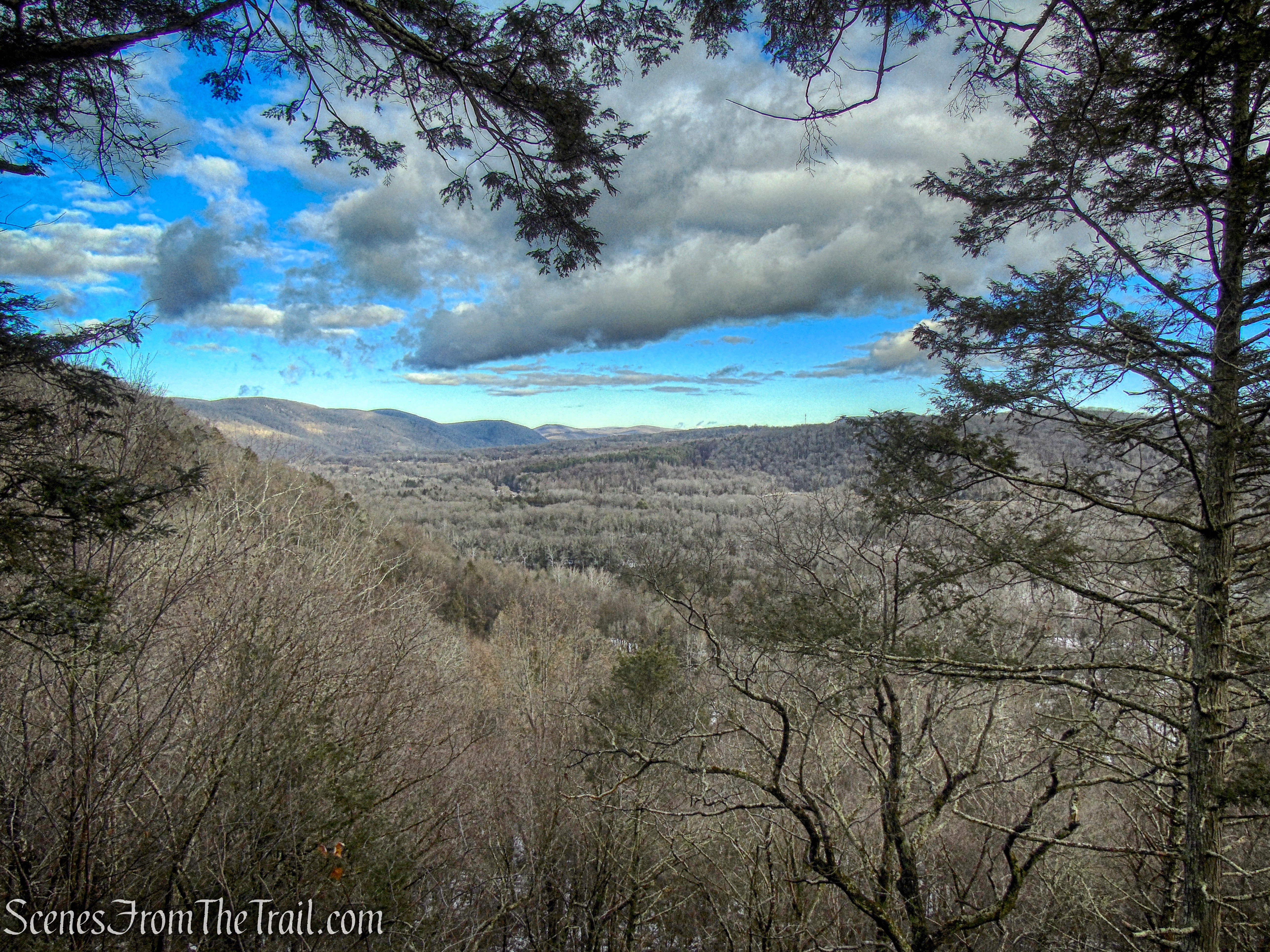

Marshall’s Falls Park – Delaware Water Gap

April 28, 2024 – East Stroudsburg, Pennsylvania

Difficulty: Easy

Length: Approximately 0.5 mile

Max elevation: 582 ft.– total elevation gain approximately 87 ft.

Route type: Out and back

Map: None available at this time.

Trailhead parking: 274 Marshalls Creek Rd, East Stroudsburg, PA 18302

Portable bathroom on site – Paved parking lot with 13 spaces plus 1 handicapped spot.

Please note: Waterfall conditions are dynamic, changing with weather and seasons. Stay on the trail when possible and be cautious of your surroundings, like slippery or rocky terrain, fast moving water, or steep drops.


Overview:

This picturesque 17-acre park showcases Marshall’s Falls, which drops through a narrow rock chasm, into a small and narrow gorge surrounded by 25-foot rock walls.

Marshall's Falls Park

Marshall’s Falls Park

An ADA compliant path accessible to all visitors leads from the parking area to the bridge near the falls.

Marshall's Falls Park

Marshall’s Falls Park

Marshall’s Falls Park officially opened to the public on Friday, April 12, 2024.

Marshall's Falls Park

Marshall’s Falls Park

Marshall's Falls Park

Marshall’s Falls Park


History:

Marshalls Creek is a 13.3-mile-long tributary of Brodhead Creek in the Pocono Mountains. Variant names were “Marshall Creek” and “Marshall’s Creek.” Marshalls Creek is said to be named after Edward Marshall, the successful walker in the “Walking-Purchase” of 1737, by which the Lenape Indians were cheated out of a vast hunting ground.

Beginning in the late 19th century, the property, which was owned by the Congdon Family, functioned as “Hygiene Park,” a hotel and resort (built in 1888) that sought to attract travelers looking to enjoy the beautiful scenery and natural environment surrounding the house.

Marshall's Falls circa 1898

Marshall’s Falls circa 1898

After the turn of the century, Hygiene Park stopped promoting health and became a regular resort named “Titania House” after the queen of the fairies in Shakespeare’s A Midsummer Night’s Dream. Titania House was able to accommodate up to 35 guests. It continued operation until sometime in the early 20th century, after which time it was used as a “finishing school” for girls.

Titania House - 1898

Titania House – 1898

Smithfield Township purchased the land back in 2008, just off of Marshalls Creek Road. Work to install an access trail and boardwalk crossing to the falls started in 2023.

The township removed three buildings from the 17-acre property to make room for a much-needed parking lot. Previously there was only roadside parking for one car. The new paved parking lot has 13 spaces plus 1 handicapped spot. There is also a Porta-Potty in the parking lot.

Marshall's Falls Park

Marshall’s Falls Park

In addition, they installed sidewalks and curbs for safe pedestrian access, paved walking trails, signage with historical information and even created a rain garden. The township plans to expand the trails in the park in future phases.

Marshall's Falls Park

Marshall’s Falls Park

Marshall's Falls Park

Marshall’s Falls Park

Marshall's Falls Park

Marshall’s Falls Park

Marshall’s Falls Park officially opened to the public on Friday, April 12, 2024.


Hike Overview:

I tried visiting Marshall’s Falls in 2021, but couldn’t find a place to park. Then I read about the park opening to the public on April 12, 2024. I decided it was time to go check it out. Although more of a walk than a hike. It was definitely worth visiting. Since the park is small and the ride to the park was 1-1/2 hours, we visited several other waterfalls in the area. Resica Falls is about a 10 minute drive from Marshall’s Falls Park, so we stopped by there as well. We also stopped by Dingman’s Falls.

We arrived at the park at about 8:30am on a Sunday morning and the parking lot was empty. It was nice to have the park to ourselves. When we were leaving, a car pulled in the lot. 


The Hike:  

At the north end of the parking lot, follow the paved path as it gently goes downhill. 

Marshall's Falls Park

Marshall’s Falls Park

Marshall's Falls Park

Marshall’s Falls Park

In a short distance, the path reaches a bench and an elevated boardwalk that descends the now steeper grade on switchbacks.

Marshall's Falls Park

Marshall’s Falls Park

Marshall's Falls Park

Marshall’s Falls Park

Marshall's Falls Park

Marshall’s Falls Park

At the base of the descent, the path reaches a wooden footbridge that spans Marshalls Creek. Proceed ahead to the bridge and you will see the falls on your left between the high rock walls.

Marshall's Falls Park

Marshall’s Falls Park

The best view of Marshall’s Falls is from the center of the footbridge.

Marshall's Falls

Marshall’s Falls

Marshall’s Falls is listed at between 15-20 feet tall, but its unique drop through the narrow rock chasm, creates a dramatic waterfall that is framed by the gorge walls that surround it. 

Marshall's Falls

Marshall’s Falls

Marshall's Falls

Marshall’s Falls

After returning to the parking lot, we drove the 6 miles (9 minutes) to the Resica Falls Scout Reservation to view another easy to get to waterfall.


Resica Falls:

Address: 1200 Resica Falls Rd, East Stroudsburg, PA 18302

Resica Falls is a picturesque roadside waterfall located in East Stroudsburg, Pennsylvania. The falls are located along Bushkill Creek and is part of the Resica Falls Scout Reservation, but is open to the public for viewing. Its easy accessibility makes it a favorite for both locals and tourists seeking to experience the magnificence of a Poconos waterfall.

The parking area is located across from the Scout camp office, just past the entrance from Resica Falls Road.

Resica Falls Scout Reservation

Resica Falls Scout Reservation

Visitors to Resica Falls should be aware that while the waterfall viewing area is open to the public, the rest of the Scout reservation is not.

Resica Falls Scout Reservation

Resica Falls Scout Reservation

It’s important to respect these boundaries and enjoy the falls from the designated viewing area only.

Resica Falls

Resica Falls

Just follow the path past the entrance to the falls and across the catwalk.

Resica Falls

Resica Falls

Resica Falls

Resica Falls

The presence of a protective fence around the viewing area ensures the safety of visitors.

Resica Falls

Resica Falls

Resica Falls at approximately 25-ft. high and 60-ft. across, is quite a sight, depending on the volume of water.

Resica Falls

Resica Falls

Resica Falls

Resica Falls

Resica Falls

Resica Falls


Review:

Marshall’s Falls Park is a beautiful park and it was litter free on the day of our visit. Please, let’s keep it that way. Definitely worth a visit, but I would combine it with other waterfalls in the area, of which there are many.

Resica Falls is a good place to stop if you just want to see a really nice waterfall. It’s a very short walk to the viewing area and the rest of the property is off limits to visitors. 

Below are a few waterfalls that are in close proximity to Marshall’s Falls and Resica Falls.


Breakneck Ridge Short Loop

April 17, 2024 – Cold Spring, NY

Difficulty: Moderate-Strenuous

Length: Approximately 1.9 miles

Max elevation: 596 ft.– total elevation gain approximately 650 ft.

Route type: Circuit

Buy Map: East Hudson Trails Map #102

Free Web Map: Hudson Highlands Trail Map North 2023

Trailhead parking: Breakneck Ridge Trailhead – Cold Spring, NY 10516

Please Note: Despite its short length, this is generally considered to be one of the more strenuous hikes in the East Hudson Highlands. It involves steep climbs over rock ledges that can be very slippery when wet. You’ll need to use both your hands and your feet in many places along the way. Proper footgear is essential for this hike, which is best done on weekdays, to avoid the weekend crowds. Do not attempt this hike in wet weather, or if the trail is covered with snow or ice.

The Breakneck Ridge area has been impacted by the construction of the Hudson Highlands Fjord Trail. The next set of Breakneck Ridge improvements is set to begin in the Fall of 2024, with preparatory work already underway. Expect road and trail closures while construction is ongoing.


Overview:

Breakneck Ridge is a mountain along the Hudson River between Beacon and Cold Spring, straddling the boundary between Dutchess and Putnam counties.

Breakneck Ridge as viewed from Storm King Mountain

Breakneck Ridge as viewed from Storm King Mountain

Breakneck Ridge has several summits, or bumps as they are sometimes called. The highest point (true summit) is some distance inland, reaching approximately 1,260 feet above sea level. The southern face of the peak is remarkable for its striking cliffs, the result of quarrying in past years.

Breakneck Ridge as viewed from Little Stony Point

Breakneck Ridge as viewed from Little Stony Point

Breakneck Ridge is considered one of the best and toughest day hikes in the country. The steep ascent up its western face involves climbing over rock ledges, using both hands and feet.

Breakneck Ridge Trail

Breakneck Ridge Trail

This rock scramble attracts hikers from all over, and is often called “the most popular day hike in America.” Breakneck Ridge is about 90 minutes north of New York City, and rewards hikers with sweeping views of the Hudson River Valley.

View south from Breakneck Ridge

View south from Breakneck Ridge

Breakneck Ridge is located within the confines of Hudson Highlands State Park Preserve and is administered by the New York State Office of Parks, Recreation and Historic Preservation (NYS OPRHP).

Nimham Trail – Breakneck Ridge

Nimham Trail – Breakneck Ridge


History:

Breakneck Ridge lies immediately across the river from Storm King and is well known for its high cliffs, which were formed as a result of heavy quarrying throughout the 19th century. Breakneck was originally known as St. Anthony’s Face or Turk’s Face, due to the presence of a face like rock formation on the southern cliffs, which was eventually destroyed by quarrying in 1846. Today Breakneck Ridge is an immensely popular hiking destination, located within Hudson Highlands State Park Preserve.

According to The History of Putnam County, N.Y., which was published by William J. Blake in 1849, Breakneck Ridge got its name after a group of farmers chased a bull off of a cliff, where the animal broke its neck. A bull had made the mountain just south of Breakneck Ridge (Mt. Taurus aka Bull Hill) its home. At night, it would descend to the low grounds in its vicinity, and plunder corn fields, meadows, and grain fields. The neighbors formed an “alliance” against the bull, determined to pursue him to his strongholds, and effect his capture or destruction. They chased him from this Hill (Bull Hill) to the one immediately north of it (Breakneck), where, being hard pressed by dogs and armed men, was forced off a cliff, thus breaking his neck. His pursuers immediately christened the hill from which they started “Bull Hill,” and the one where they captured the wayward bull, “Breakneck.”

Since 2020, the Breakneck Ridge area has been impacted by the construction of the Hudson Highlands Fjord Trail. Work at Breakneck Ridge Trailhead and Upper Overlook was completed in July 2023. Months of work included the relocation of the trailhead farther up Breakneck Ridge, repair of eroding trail surfaces, improved stormwater management along the trail, installation of stone steps leading up to the Breakneck ascent, and construction of a new Trail Steward Station. This initial work at Upper Overlook marks the launch of Phase 1: Breakneck Connector & Bridge of the Hudson Highlands Fjord Trail.

The next set of Breakneck Ridge improvements is set to begin in the Fall of 2024, with preparatory work already underway. The Hudson Highlands Fjord Trail Project is slated for completion in 2031.


Trails Overview:

The Breakneck Ridge Trail has become the number one hiking destination in the NYC metropolitan area. In good weather, the trail frequently brings more than 3,000 hikers a weekend to hike its steep, rocky ascent and enjoy its breathtaking views.

The white-blazed Breakneck Ridge Trail starts on the west side of Route 9D, just north of the tunnel. The trail climbs steeply up the west face of Breakneck Ridge, often requiring using both hands and feet. This rock scramble is short, but feels much longer. This is a one way trail (up only) and should not be used as the way down.

Breakneck Ridge Trail

Breakneck Ridge Trail

The green-blazed Nimham Trail opened in 2021, making for an easier bailout option for those that just want to hike to the flagpole. This trail follows the natural “bench,” or shelf, along the ridge, connecting the flagpole area to the Wilkinson Memorial Trail.

Nimham Trail - Breakneck Ridge

Nimham Trail – Breakneck Ridge

The yellow-blazed Wilkinson Memorial Trail runs in a westerly direction for about 350 yards from the junction with the Nimham Trail out to Route 9D.

Nimham Trail – Breakneck Ridge

Nimham Trail – Breakneck Ridge

This hike also includes a short road walk (0.3 mile total) along Route 9D, at the beginning and end of the hike.

The trails are well marked and easy to follow.


Hike Overview:

I have hiked Breakneck Ridge numerous times since 2015 using different trails to descend  the ridge. This hike is a good introductory to Breakneck. It allows hikers to enjoy the sweeping views of the Hudson River Valley without having to commit to a much longer and tougher hike.

I did this hike on a Wednesday morning and arrived at the trailhead at about 8am. Surprisingly, there was only one other vehicle when I arrived at the trailhead. Once at the area of the flagpole, a few people started to pass through.

This hike begins and ends on Route 9D and is done counterclockwise.

Breakneck Ridge Short Loop

Breakneck Ridge Short Loop

A majority of the elevation is gained within the first mile.

Elevation profile - Breakneck Ridge Short Loop

Elevation profile – Breakneck Ridge Short Loop


The Hike:

Since I came from south of Cold Spring, I parked facing south so that I could exit more easily after the hike and not have to make a U-Turn.

On the opposite side of the guard rail, alongside the southbound lane, there is a footpath that leads to the trailhead. Follow this path south towards the tunnel.

Route 9D Trail

Route 9D Trail

Route 9D Trail

Route 9D Trail

Breakneck Ridge Trailhead

Breakneck Ridge Trailhead

If you don’t already have a trail map, check the box for a printed map of the trails.

Breakneck Ridge Trailhead

Breakneck Ridge Trailhead

The sign states that this hike is only a mile long. It’s almost twice that long if you do the hike as decribed by this writer.

Breakneck Ridge Trailhead

Breakneck Ridge Trailhead

The white-blazed Breakneck Ridge Trail starts on the west side of Route 9D, just north of the tunnel. The trail climbs stone steps and heads south, almost immediately reaching a viewpoint over the Hudson River from a rock outcrop to the right of the trail. Storm King Mountain is directly across the river with far reaching views to the north and south.

Breakneck Ridge Trail

Breakneck Ridge Trail

Breakneck Ridge Trail

Breakneck Ridge Trail

Breakneck Ridge Trail

Breakneck Ridge Trail

Breakneck Ridge Trail

Breakneck Ridge Trail

Breakneck Ridge Trail

Breakneck Ridge Trail

On weekends, Memorial Day Weekend through Veterans Day, Breakneck Trail Stewards are available at the Breakneck trailhead with maps (highly recommended), water (highly recommended), trail condition updates, and other tips to help you enjoy your day.

Breakneck Ridge Trail

Breakneck Ridge Trail

If you look up towards the ridge, you may be able to see the flags, the destination on this hike, flapping in the wind.

Flagpole Area - Breakneck Ridge

Flagpole Area – Breakneck Ridge

The climb of Breakneck begins on stone steps. Completed in 2023, native stones were utilized from the site to create a rustic, but clear stone staircase that safely guides hikers through the boulder field, to the base of the rock slab scramble just ahead.

Breakneck Ridge Trail

Breakneck Ridge Trail

Breakneck Ridge Trail

Breakneck Ridge Trail

Breakneck Ridge Trail

Breakneck Ridge Trail

Breakneck Ridge Trail

Breakneck Ridge Trail

Breakneck Ridge Trail

Breakneck Ridge Trail

Breakneck Ridge Trail

Breakneck Ridge Trail

At times you may have to use both hands and feet, to scramble up the ridge. The trail is well marked, with arrows painted on rocks directing the way.

Breakneck Ridge Trail

Breakneck Ridge Trail

Breakneck Ridge Trail

Breakneck Ridge Trail

Breakneck Ridge Trail

Breakneck Ridge Trail

Breakneck Ridge Trail

Breakneck Ridge Trail

Follow the white-blazed trail as it steeply climbs the rocky ridge. Pay attention to the white blazes and arrows as you ascend to stay on the right track.

Breakneck Ridge Trail

Breakneck Ridge Trail

Breakneck Ridge Trail

Breakneck Ridge Trail

There are views through the trees of the river as you climb and you may want to take a brief rest here and there to admire them.

Breakneck Ridge Trail

Breakneck Ridge Trail

Breakneck Ridge Trail

Breakneck Ridge Trail

Breakneck Ridge Trail

Breakneck Ridge Trail

Breakneck Ridge Trail

Breakneck Ridge Trail

Breakneck Ridge Trail

Breakneck Ridge Trail

Breakneck Ridge Trail

Breakneck Ridge Trail

Breakneck Ridge Trail

Breakneck Ridge Trail

Breakneck Ridge Trail

Breakneck Ridge Trail

Breakneck Ridge Trail

Breakneck Ridge Trail

In just under a mile, the trail reaches a rock ledge with a flagpole. This is a great spot to rest from the tough climb and enjoy the panoramic views over the Hudson River.

Breakneck Ridge Trail

Breakneck Ridge Trail

Looking north up the Hudson River, with Pollepel Island visible below. Across the river (from left to right), is Cornwall-On-Hudson, New Windsor, and the City of Newburgh. The long ridge that straddles New Windsor and Newburgh is Snake Hill, another great hike.

Breakneck Ridge Trail

Breakneck Ridge Trail

Pollepel Island is a 6.5-acre uninhabited island in the Hudson River. The principal feature on the island is Bannerman’s Castle, an abandoned military surplus warehouse.

Pollepel Island

Pollepel Island

Pollepel Island has been called many different names, including Pollopel Island, Pollopel’s Island, Bannerman’s Island, and Bannermans’ Island. Pollepel is a Dutch word meaning “ladle.”

Bannerman's Castle

Bannerman’s Castle

To the south, Little Stony Point can be seen jutting out on the east side of the river, with Crow’s Nest, North Point and Storm King Mountain across the river.

Breakneck Ridge Trail

Breakneck Ridge Trail

Breakneck Ridge Trail

Breakneck Ridge Trail

Breakneck Ridge Trail

Breakneck Ridge Trail

Breakneck Ridge Trail

Breakneck Ridge Trail

Breakneck Ridge Trail

Breakneck Ridge Trail

Breakneck Ridge Trail

Breakneck Ridge Trail

Breakneck Ridge Trail

Breakneck Ridge Trail

Breakneck Ridge Trail

Breakneck Ridge Trail

Looking up to the top of the ridge from the junction with the Nimham Trail, you’ll notice a steep, near-vertical rock outcrop that the Breakneck Ridge Trail climbs to gain the crest of the ridge. But that section is not part of this hike.

Breakneck Ridge Trail

Breakneck Ridge Trail

When you are done enjoying these majestic views, continue ahead a short distance uphill to a junction with the green-blazed Nimham Trail.

Breakneck Ridge Trail

Breakneck Ridge Trail

Turn left on the Nimham Trail, which is marked by a sign.

Turn left on Nimham Trail

Turn left on Nimham Trail

Turn left on Nimham Trail

Turn left on Nimham Trail

Turn left on Nimham Trail

Turn left on Nimham Trail

Follow the green blazes along the Nimham Trail, which loses over 500 feet of elevation in about a 1/2 mile. There are 500 stone steps throughout this trail that help hikers negotiate the steep sections much more easily. This trail opened in 2021 and makes for an enjoyable and scenic descent of Breakneck Ridge.

Nimham Trail - Breakneck Ridge

Nimham Trail – Breakneck Ridge

Nimham Trail - Breakneck Ridge

Nimham Trail – Breakneck Ridge

Nimham Trail - Breakneck Ridge

Nimham Trail – Breakneck Ridge

Nimham Trail - Breakneck Ridge

Nimham Trail – Breakneck Ridge

Nimham Trail - Breakneck Ridge

Nimham Trail – Breakneck Ridge

Nimham Trail – Breakneck Ridge

Nimham Trail – Breakneck Ridge

Nimham Trail – Breakneck Ridge

Nimham Trail – Breakneck Ridge

Nimham Trail – Breakneck Ridge

Nimham Trail – Breakneck Ridge

Nimham Trail – Breakneck Ridge

Nimham Trail – Breakneck Ridge

DSC01424_HDR_marked

Nimham Trail – Breakneck Ridge

Nimham Trail – Breakneck Ridge

Nimham Trail – Breakneck Ridge

Nimham Trail – Breakneck Ridge

Nimham Trail – Breakneck Ridge

On the way down, there is a rock outcrop with more Hudson River views. You may want to take a moment here for your last viewpoint from Breakneck Ridge.

Nimham Trail – Breakneck Ridge

Nimham Trail – Breakneck Ridge

Nimham Trail – Breakneck Ridge

Nimham Trail – Breakneck Ridge

Nimham Trail – Breakneck Ridge

Nimham Trail – Breakneck Ridge

Nimham Trail – Breakneck Ridge

Nimham Trail – Breakneck Ridge

Nimham Trail – Breakneck Ridge

Nimham Trail – Breakneck Ridge

Nimham Trail – Breakneck Ridge

Nimham Trail – Breakneck Ridge

Nimham Trail – Breakneck Ridge

Nimham Trail – Breakneck Ridge

Nimham Trail – Breakneck Ridge

Nimham Trail – Breakneck Ridge

Nimham Trail – Breakneck Ridge

Nimham Trail – Breakneck Ridge

Nimham Trail – Breakneck Ridge

Nimham Trail – Breakneck Ridge

In about 1/2 mile, the green-blazed Nimham Trail ends at a junction with the yellow-blazed Wilkinson Memorial Trail. Here you want to turn left and follow the yellow blazes downhill for about 350 yards.

Nimham Trail – Breakneck Ridge

Nimham Trail – Breakneck Ridge

Wilkinson Memorial Trail – East Hudson Highlands

Wilkinson Memorial Trail – East Hudson Highlands

Wilkinson Memorial Trail – East Hudson Highlands

Wilkinson Memorial Trail – East Hudson Highlands

When you reach Route 9D, carefully return to your vehicle, where the hike began.

Wilkinson Memorial Trail – East Hudson Highlands

Wilkinson Memorial Trail – East Hudson Highlands


Review:

This is one of those must do hikes in the Hudson Valley. It’s better done early mornings on a weekday to avoid the crowds. With that being said, it’s worth a visit to experience the rock scramble and the fantastic views. If you don’t want to do the rock scramble, you can still enjoy the same views by utilizing the Nimham Trail and doing an out-and-back hike.

Pros:

Rock scramble, panoramic Hudson Valley views, challenging hike, well marked trails.

Cons:

Breakneck gets overcrowded on weekends.


Take a hike!

Breakneck Ridge Short Loop

Breakneck Ridge Short Loop


Sources:


Nuclear Lake Short Loop

April‎ 14‎, ‎2024 – Pawling, NY

Difficulty: Moderate

Length: Approximately 3.3 miles

Max elevation: 832 ft.– total elevation gain approximately 230 ft.

Route type: Lollipop Loop

Map: None available

Trailhead parking: 156 Old Rte 55, Pawling, NY 12564

No restrooms on site – gravel lot for 10-12 vehicles.


Overview:

Nuclear Lake is 1137 acres located on the Boundary of Pawling and Beekman in Dutchess County, NY. The tract of land contains a 55-acre lake that is known for its scenic beauty and diversity of plant life. From 1958 to 1972, the property housed a nuclear fuels processing and research facility and thus received the name “Nuclear Lake.” The Appalachian Trail runs along the western shore of the lake and is widely regarded as one of the most beautiful lakes along the entire Appalachian Trail.

Nuclear Lake

Nuclear Lake


History:

At some point in time, before it was named Nuclear Lake, it was known as Pawling Pond. 

  • Between 1934 and 1942, Herbert Teets acquired approximately ten parcels in the towns of Beekman and Pawling, NY, which comprises the large marjority of the current 1137-acre Nuclear Lake tract.
  • In 1945, the property was sold to Joseph Chazen and Leland Ryder. The dam creating the lake, was constructed shortly thereafter. In 1953, Chazen sold his interests to Ryder.
  • In April 1955, Leland Ryder sold the property to the Southern Dutchess Corporation.
  • In March 1958, the property was transferred to the Nuclear Development Corporation of America (NDA).
  • In May 1961, NDA transferred the property and its assets to United Nuclear Corporation (UNC), which then entered into a contract with the United States Atomic Energy Commission.
  • On December 21, 1972, at approximately 2:55 pm, a chemical explosion occurred at the Plutonium facility, releasing solid and particulate Plutonium Oxide to the lab area. The explosion took place in a plexiglass “glove box” which was used to prepare and examine fuel pellets. After all employees left the building, a second explosion took place. The second explosion is suspected of having blown out two exterior windows on the north side of the building and two exterior doors on the south, spreading radioactive contamination to the outside environment.
  • In June 1979, the 1137-acre parcel was sold to the National Park Service for almost $1 million for relocation of the Appalachian Trail. The purchase was part of a plan to move sections of the Appalachian Trail off of paved roads and back onto a wilderness path.
  • In 1986, after overseeing its cleanup and receiving a clean bill of health, the Appalachian Trail officially opened in the Nuclear Lake area.

Trails Overview:

This hike incorporates an old service road, the Appalachian Trail and the Nuclear Lake Loop Trail.

  • Service Road – This old road is a nice easy and level walk to the southwestern end of the lake. It is just under a mile from the parking lot to the lake.
Nuclear Lake - Service Road

Nuclear Lake – Service Road

  • Appalachian Trail – This white blazed trail runs along the western side of Nuclear Lake. It runs on an old woods road then changes to a footpath. 
Appalachian Trail - Nuclear Lake

Appalachian Trail – Nuclear Lake

  • Nuclear Lake Loop Trail – This yellow blazed footpath begins at the northern end of the lake and ends at the service road, near the southern end. This trail runs along the eastern side of the lake. This section of trail can be wet, has several stream crossings and requires climbing over some rocks.
Nuclear Lake Loop Trail

Nuclear Lake Loop Trail


Hike Overview:

This hike has been on my list for years. On the day of this hike, we only saw a few people on the trails. 

There is another smaller trailhead parking lot about a 1/2 mile northwest on Route 55, where the AT crosses the busy road, but I decided to utilize the larger lot which is easier to access. Either trailhead will get you to the lake.

Nuclear Lake Trailhead – Old Route 55

Nuclear Lake Trailhead – Old Route 55

Nuclear Lake Trailhead – Old Route 55

Nuclear Lake Trailhead – Old Route 55

I rated this hike as moderate strictly for the stream crossings and the rocky hillside on the eastern side of Nuclear Lake. The rest of the hike is relatively easy.

Even though no official trail map is available, I used Gaia GPS with the NatGeo Appalachian Trail map layer. 

Nuclear Lake Short Loop

Nuclear Lake Short Loop

As you can see from the graph below, there are only a couple of short, steep sections on this hike.

Elevation profile - Nuclear Lake Short Loop

Elevation profile – Nuclear Lake Short Loop


The Hike:

From the rear of the parking lot, proceed past the gate on the access road, walk past the dam keeper’s house, and past another gate.

Nuclear Lake Trailhead - Old Route 55

Nuclear Lake Trailhead – Old Route 55

Nuclear Lake - Service Road

Nuclear Lake – Service Road

Nuclear Lake - Service Road

Nuclear Lake – Service Road

Nuclear Lake - Service Road

Nuclear Lake – Service Road

It’s a pleasant walk along the access road. You will soon cross over a culvert, where the Nuclear Lake outlet stream flows beneath the road. Just after crossing the culvert, the yellow blazed Nuclear Lake Loop Trail crosses the road, but continue ahead on the access road.

Nuclear Lake - Service Road

Nuclear Lake – Service Road

Nuclear Lake - Service Road

Nuclear Lake – Service Road

Nuclear Lake outlet stream

Nuclear Lake outlet stream

In just under a mile, you will arrive at the southern end of Nuclear Lake. You may want to take a little time to enjoy the beauty of the lake and the surrounding area.

Nuclear Lake

Nuclear Lake

When you are ready to continue, proceed north on the access road which soon comes to a clearing with a view of the lake.

Appalachian Trail - Nuclear Lake

Appalachian Trail – Nuclear Lake

Nuclear Lake

Nuclear Lake

Nuclear Lake

Nuclear Lake

As you continue north on the old road, you will start seeing the white blazes of the Appalachian Trail, which comes in from the left, with more views of Nuclear Lake.

Appalachian Trail - Nuclear Lake

Appalachian Trail – Nuclear Lake

Nuclear Lake

Nuclear Lake

Appalachian Trail - Nuclear Lake

Appalachian Trail – Nuclear Lake

The AT soon leaves the road and runs on a footpath along the lake. There are more views of the lake along the way. As you near the northern end of the lake, you will pass some interesting rock formations and stone walls. 

Appalachian Trail - Nuclear Lake

Appalachian Trail – Nuclear Lake

Appalachian Trail - Nuclear Lake

Appalachian Trail – Nuclear Lake

Appalachian Trail - Nuclear Lake

Appalachian Trail – Nuclear Lake

Nuclear Lake

Nuclear Lake

Appalachian Trail - Nuclear Lake

Appalachian Trail – Nuclear Lake

The trail can be wet and/or muddy along this section.

Appalachian Trail - Nuclear Lake

Appalachian Trail – Nuclear Lake

Appalachian Trail - Nuclear Lake

Appalachian Trail – Nuclear Lake

Appalachian Trail - Nuclear Lake

Appalachian Trail – Nuclear Lake

Appalachian Trail - Nuclear Lake

Appalachian Trail – Nuclear Lake

View of Nuclear Lake from the northern end.

Nuclear Lake

Nuclear Lake

Appalachian Trail - Nuclear Lake

Appalachian Trail – Nuclear Lake

At the northern end of the lake, the Appalachian Trail turns left, but you should continue straight on the yellow-blazed Nuclear Lake Loop Trail, marked by a wooden sign and a yellow blaze on a tree.

Appalachian Trail - Nuclear Lake

Appalachian Trail – Nuclear Lake

Nuclear Lake Loop Trail

Nuclear Lake Loop Trail

The yellow-blazed trail begins to head in a southerly direction, passing by a stone wall and stone ruins.

Nuclear Lake Loop Trail

Nuclear Lake Loop Trail

Nuclear Lake Loop Trail

Nuclear Lake Loop Trail

Nuclear Lake Loop Trail

Nuclear Lake Loop Trail

The trail starts to veer away from the lake and soon crosses the Nuclear Lake inlet stream on rocks, which are partially submerged. This crossing wasn’t too difficult, but it can be during times of high water. This is where your waterproof boots and hiking poles come in handy.

Nuclear Lake Loop Trail

Nuclear Lake Loop Trail

Nuclear Lake Loop Trail

Nuclear Lake Loop Trail

Looking back after crossing the stream.

Looking back at the Nuclear Lake inlet stream, with the crossing on the far left.

Looking back at the Nuclear Lake inlet stream, with the crossing on the far left.

The trail parallels the stream briefly, then veers away from it. This section can be wet and muddy as well.

Nuclear Lake Loop Trail

Nuclear Lake Loop Trail

Nuclear Lake Loop Trail

Nuclear Lake Loop Trail

The yellow-blazed trail soon climbs the steep hillside, with views of the lake through the trees. Soon the trail levels off and passes through another possible wet section of trail. 

Nuclear Lake Loop Trail

Nuclear Lake Loop Trail

Nuclear Lake Loop Trail

Nuclear Lake Loop Trail

Nuclear Lake Loop Trail

Nuclear Lake Loop Trail

Nuclear Lake Loop Trail

Nuclear Lake Loop Trail

The Nuclear Lake Loop Trail bears right and climbs a small hill, crosses another small stream and soon comes to several small rock outcrops that overlook the lake.

Nuclear Lake Loop Trail

Nuclear Lake Loop Trail

Nuclear Lake Loop Trail

Nuclear Lake Loop Trail

Nuclear Lake Loop Trail

Nuclear Lake Loop Trail

Nuclear Lake Loop Trail

Nuclear Lake Loop Trail

Nuclear Lake Loop Trail

Nuclear Lake Loop Trail

The trail soon traverses an area with large boulders that you may have to climb over. The trail then descends, passes through another wet area, and a short distance later reaches the access road by the culvert from earlier in the hike.

Nuclear Lake Loop Trail

Nuclear Lake Loop Trail

Nuclear Lake Loop Trail

Nuclear Lake Loop Trail

Nuclear Lake Loop Trail

Nuclear Lake Loop Trail

Rock formations on the hillside.

Nuclear Lake Loop Trail

Nuclear Lake Loop Trail

Nuclear Lake Loop Trail

Nuclear Lake Loop Trail

Nuclear Lake Loop Trail

Nuclear Lake Loop Trail

Nuclear Lake Loop Trail

Nuclear Lake Loop Trail

Turn left on the access road, now retracing your steps, and follow the road back to the parking lot, where the hike began.

Nuclear Lake – Service Road

Nuclear Lake – Service Road

Nuclear Lake – Service Road

Nuclear Lake – Service Road

Nuclear Lake Trailhead – Old Route 55

Nuclear Lake Trailhead – Old Route 55


Review:

This was a really nice hike in a very scenic area. Nuclear Lake is gorgeous and worth a visit on its own. Hiking any part of the Appalachian Trail is always fun and the interesting rock formations along the lake, really enhance the scenic landscape. After rainfall or Spring thaw, sections of this route may be wet. The stream crossings may be challenging in times of high water. I recommend wearing some waterproof boots. All in all, a good day on the trails.

Pros:

Nuclear Lake, interesting rock formations, well marked trails, scenic landscape, less foot traffic than some of the more popular trails.

Cons:

No official trail map.


Take a hike!

Nuclear Lake Short Loop

Nuclear Lake Short Loop


Sources:


Charles Island – Silver Sands State Park

March 16, 2024 – Milford, Connecticut

Difficulty: Easy – moderate

Length: Approximately 3 miles

Max elevation: 27 ft. – total elevation gain approximately 20 ft.

Map: Silver Sands State Park Trail MapMap & Brochure

Parking: 1 Silver Sands Pkwy, Milford, CT 06460

Paved parking lot – Restrooms on site

Hours: Open Daily, 8:00am – Sunset

Entrance Fees:
No charge for Connecticut registered vehicles
From April 1 through October 31:
$22 – Out-of-State Vehicles (Weekends/Holidays)
$15 – Out-of-State Vehicles (Weekdays)

Please Note: The sandbar that connects to Charles Island overwashes twice a day when the tides come in, creating dangerous currents and undertow. Walking on any portion when it is covered with water should be avoided.


Park Overview:

Silver Sands State Park in Milford, Connecticut is a 297-acre natural haven that features a combination of beach, salt marshland, fishing area, and wildlife refuge. The park boasts breathtaking views of the Long Island Sound, Charles Island, and the surrounding wildlife.

Silver Sands State Park

Silver Sands State Park

Charles Island - Silver Sands State Park

Charles Island – Silver Sands State Park

Beaches, boardwalks, birds, and a sandbar connecting the park to Charles Island are the big attractions at Silver Sands State Park. Rated the best state park in Connecticut by Travel & Leisure, the park sits along over 1/2-mile of shoreline and features a three-quarter-mile, all-weather boardwalk, sand dunes, marshland, wildlife, and a dazzling array of seashells.

Silver Sands State Park

Silver Sands State Park

Silver Sands State Park

Silver Sands State Park

Silver Sands State Park

Silver Sands State Park

Silver Sands State Park

Silver Sands State Park

Silver Sands State Park

Silver Sands State Park

Over 200 species of birds are seen at Silver Sands. They use this important area for nesting, wintering, and foraging areas during spring and fall migration.

Red-winged Blackbird - Silver Sands State Park

Red-winged Blackbird – Silver Sands State Park

Rough-legged Hawk - Silver Sands State Park

Rough-legged Hawk – Silver Sands State Park

Great Blue Heron - Silver Sands State Park

Great Blue Heron – Silver Sands State Park

Great Egret - Silver Sands State Park

Great Egret – Silver Sands State Park

Many butterflies, several rare plants, and other wildlife can also be seen during walks in this area.

Charles Island is a 14-acre island located roughly a 1/2 mile off the coast of Milford, Connecticut, in Long Island Sound. Though an island during high tide, during low tide it is accessible by foot using a rocky tombolo (locally referred to as a sandbar) that stretches from the beach to the island. Visitors are cautioned about the strong undertow and twice-daily flooding of the sandbar as a result of the tides.

Charles Island tombolo

Charles Island tombolo

Silver Sands State Park and Charles Island are owned and managed by the Connecticut Department of Energy and Environmental Protection (DEEP).

Silver Sands State Park

Silver Sands State Park


History:

Charles Island was originally known as Poquehaug and “was a favorite summer resort” with chief sachem Ansantawae of the Paugussett Tribe having a “big wigwam” upon it. After the area was settled by the English in 1639, the island was referred to as Milford Island. It was renamed Charles Island after Charles Deal bought the 14-acre island in 1657. Deal made a failed attempt to raise tobacco on the island, one of the first such efforts in Connecticut.

In 1835 Major John Harris purchased the island for $800 and built a beautiful summer residence there. The big home, built on the highest ground, had verandas encircling it on the first and second stories. Harris elegantly furnished the house and spent $14,000 grading and landscaping the island making it resemble “a large green inverted saucer.” After his death the island had several different owners.

In 1852 it was purchased by Elizur Pritchard of Waterbury, Connecticut, a wealthy button manufacturer who had recently retired. Pritchard turned the large house into a summer resort known originally as Island House, then later Charles Island House and then Ansantawae House. On Thanksgiving Day 1860, Pritchard died while walking back to shore on the tombolo. His daughter Sarah continued to run the resort and expanded it with new features. The hotel grew to a total of seventy-five rooms and other improvements included a swimming bath with plank bottom, and an aquarium claimed to be the largest in the country.

Island House

Island House

The resort closed by 1868, when the island was leased to the George W. Miles Company to build a plant to produce fertilizer and fish oil. The fish oil plant functioned there until 1884 when it closed amidst lawsuits brought by the town because of the odors that emanated from the operation. The once grand hotel burned down that summer and the island went into foreclosure in 1888.

The next important phase of Charles Island’s history started in 1927 when the Dominican Fathers from St. Mary’s parish on Hillhouse Avenue in New Haven announced they would build a layman’s retreat center on Charles Island. During the next two summers workers cleared the land and built a small complex of wood frame structures. A chapel, dining and
recreation hall, about fourteen cabins (each baptized with a different saint’s name), a grotto, walking paths, and Stations of the Cross were built and eventually accommodated up to fifty retreatants. It was a tranquil and simple sanctuary with few amenities. The facility held its first retreat on the weekend of July 4th, 1929. Two years after opening, several additions were made to the retreat. The wooden chapel that was originally on the grounds was replaced with a stone chapel constructed near the same spot and a statue of St. Christopher was erected on a rock pedestal in memory of six workers who had drowned returning to the mainland in a small boat in 1929. The Dominican fathers also added a dormitory building, a bell tower built of stone gathered from the shore, and a statue of Our Lady mounted on a rock pedestal fronted by a stone altar. For unknown reasons the Aquinas Retreat closed and the little island again went up for sale in 1938.

Bell Tower - Charles Island

Bell Tower – Charles Island

There are a few structural remnants visible on the island including a portion of the bell tower and part of the stone chapel’s foundation, though it is eroding into Long Island Sound. Storms have taken their toll over the years and the evidence of human activity on the island is gradually blending into the sand.

Bell Tower ruins - Charles Island

Bell Tower ruins – Charles Island

Today, Charles Island is owned by The State of Connecticut and is part of Silver Sands State Park. It was designated a Natural Area Preserve in 1999 and is the site of a large Heron and Egret rookery. 

According to legend, infamous pirate Captain Kidd buried his treasure on the island in the late 17th century. While there is no evidence that this is true, it has certainly added to the island’s allure over the years. Some say the island is cursed.


Trails Overview:

Over 3 miles of walking trails, boardwalk, and bridges await to bring you through the park’s range of terrain, from wetlands, beach, coastal forest, to the tombolo linking the park to Charles Island.

Silver Sands State Park

Silver Sands State Park

The Charles Island Trail is roughly a 2-mile lollipop loop across the tombolo and around the island, not including the paths on the interior of the island. This lollipop trail follows the land bridge to Charles Island, loops around its perimeter, then doubles back to the mainland.

Charles Island - Silver Sands State Park

Charles Island – Silver Sands State Park

The interior of the island is an avian sanctuary and off limits to human visitors, but you might be able to catch a glimpse of the ruins from the former resort and religious retreat that were once located there. The area around the island is extremely rocky and a pair of good waterproof hiking boots is recommended.


Hike Overview:

Timing is everything with this hike. Be sure to check the tides before heading out, they rise fast – as much as ten feet in less than two hours. And the way the waves crash and roll over the spit of sand creates a dangerous undertow, perilous for even the strongest swimmer. Several people have drowned walking on the sandbar to the island. They drowned after misjudging the tides.

I visited this park in March of 2020, but the low tide was much too early or later in the day, so I just admired Charles Island from shore. Since this park charges an admission fee beginning April 1st for out of state visitors, I checked the tide charts and got lucky. I checked several different websites for the tides, as the times vary slightly. Pick a day with the lowest amplitude number. A negative number is best, especially if you plan on walking around the island. Below are some helpful tips for staying safe if you choose to visit the island.

Charles Island safety tips

Charles Island safety tips

The tombolo (locally referred to as a sandbar), doesn’t always materialize, even at the lowest tide. On the day of our visit, the amplitude number was just above zero and the walkway didn’t emerge completely. It is not recommended to walk on the tombolo if it is submerged, due to strong currents and undertow. 

Since we had been to this park previously and walked the trails and boardwalks along the beach, this hike was just to Charles Island and back, with a little wandering thrown in. 

This is an easy hike, but the island itself is rocky along its perimeter and I would suggest good waterproof hiking boots and a hiking stick to prevent tripping and/or slipping. There is practically no elevation gain on this hike.

Charles Island – Silver Sands State Park

Charles Island – Silver Sands State Park


The Hike:

From the parking lot, head out towards the boardwalk that spans the tidal marsh and leads to the beach. 

Silver Sands State Park

Silver Sands State Park

Silver Sands State Park boardwalk

Silver Sands State Park boardwalk

tidal marsh - Silver Sands State Park

tidal marsh – Silver Sands State Park

boardwalk - Silver Sands State Park

boardwalk – Silver Sands State Park

It is paramount that you check the online tide charts before you attempt to walk out to Charles Island. Several people have drowned walking on the sandbar to the island. They drowned after misjudging the tides. Don’t let this happen to you or someone you know.

Danger sign - Silver Sands State Park

Danger sign – Silver Sands State Park

Make sure that the tombolo (sandbar) is exposed. Since we arrived at Silver Sands State Park just before 9:30am on a Saturday morning, I was surprised to see a long section of the tombolo already exposed. Low Tide was scheduled for 11:12am, but it is recommended to begin walking the sandbar as it appears, giving you enough time to walk around the island and back before the tide rises and covers the tombolo.

Charles Island tombolo

Charles Island tombolo

We began walking out on the tombolo, but stopped where it was still underwater. We waited patiently as the tide receded and the path materialized. We walked a little farther and stopped each time where the water still covered the sandbar. Since I had waterproof boots, I walked through a couple inches of water to the next exposed section while others waited. 

Charles Island tombolo

Charles Island tombolo

Charles Island tombolo

Charles Island tombolo

Charles Island with submerged tombolo

Charles Island with submerged tombolo

Charles Island with submerged tombolo

Charles Island with submerged tombolo

Charles Island with submerged tombolo

Charles Island with submerged tombolo

A look back at people waiting for the tombolo to appear.

Looking back at the submerged tombolo

Looking back at the submerged tombolo

I continued ahead, carefully navigating across exposed sections of the tombolo.

Charles Island tombolo

Charles Island tombolo

As you get close to the island, there is a low point in the tombolo. This section on some days, never fully emerges. It didn’t on the day I was there, but the water was only a few inches deep so I decided to walk through it. I wouldn’t recommend anyone else to do it. It is not safe. 

Charles Island with submerged tombolo

Charles Island with submerged tombolo

After trudging through the water for about 100 yards or so, the section of the tombolo which is closest to the island was visible and I made my way onto the island.

Charles Island tombolo

Charles Island tombolo

American Oystercatcher - Charles Island

American Oystercatcher – Charles Island

Before becoming a nesting area for Egrets and Herons, Charles Island was home to a resort in the 1850’s and 1860’s. It was in the 1930’s when the island was briefly used as a religious retreat.

Charles Island

Charles Island

I knew that I wouldn’t have too much time to circle the island so I hurriedly did a counterclockwise loop around its rocky shoreline.

Charles Island

Charles Island

Charles Island

Charles Island

I saw a path off to the left and wandered down it to explore. I saw what looked like the remains of a bell tower that was left over from The Aquinas Retreat in the 1930’s. The area was overgrown and hard to navigate through and this was as close as I decided to get. I was hoping to find another route that was easier, but I did not.

Bell Tower ruins - Charles Island

Bell Tower ruins – Charles Island

These stone ruins are right by the path that I took to get to the bell tower. 

ruins - Charles Island

ruins – Charles Island

There were a lot of geese on the island and they were making quite a racket as I walked by. 

Charles Island

Charles Island

ruins - Charles Island

ruins – Charles Island

The views from the island are quite nice, but I didn’t have much time to enjoy them. As I made my way around the front of the island (the beach-facing section), I checked the time and it was 11:12am. That meant that the tide would begin rising and I had to make my way back to the mainland.

view northeast from Charles Island

view northeast from Charles Island

Charles Island

Charles Island

Charles Island

Charles Island

large nest in a tree - Charles Island

large nest in a tree – Charles Island

Near the front, not far from where the tombolo is, there is a wide path that travels to the interior of the island. There I saw more stone ruins. Although I made my way to where the bell tower is, I couldn’t get a good vantage point due to the pricker bushes. I tried another route, but with time running out, I returned to the tombolo and began my return to the mainland.

ruins - Charles Island

ruins – Charles Island

Charles Island tombolo on the way back to the mainland.

Charles Island tombolo on the way back to the mainland.

Since the tombolo never fully appeared, the low point was more submerged than when I walked out. I had to walk through about 6 inches of water for about 100 yards. The water was higher than my boots and my feet got soaked. I could feel the current from both sides, making for rather unstable footing. I hurriedly splashed through until I made it to the still exposed section.  

Charles Island tombolo on the way back to the mainland.

Charles Island tombolo on the way back to the mainland.

A look back at Charles Island after walking through the submerged section.

A look back after walking through the submerged tombolo.

A look back after walking through the submerged tombolo.

I was glad to make it back to the wide exposed section of the tombolo and continued back to the sandy beach.

Charles Island tombolo on the way back to the mainland.

Charles Island tombolo on the way back to the mainland.


Review: 

This was a wonderful adventure that provided a unique experience. After all, how many opportunities does one get to walk out to an island? Fully enjoyable yet a little stressfull not to get stuck on the island. Timing it just right is key. 

Pros:

Charles Island, Long Island Sound, sandy beach, shore birds, scenic area, the tombolo.

Cons:

The tombolo never fully materialized, not enough time to explore the island.


Take a hike!

Charles Island tombolo - Silver Sands State Park

Charles Island tombolo – Silver Sands State Park


Sources:
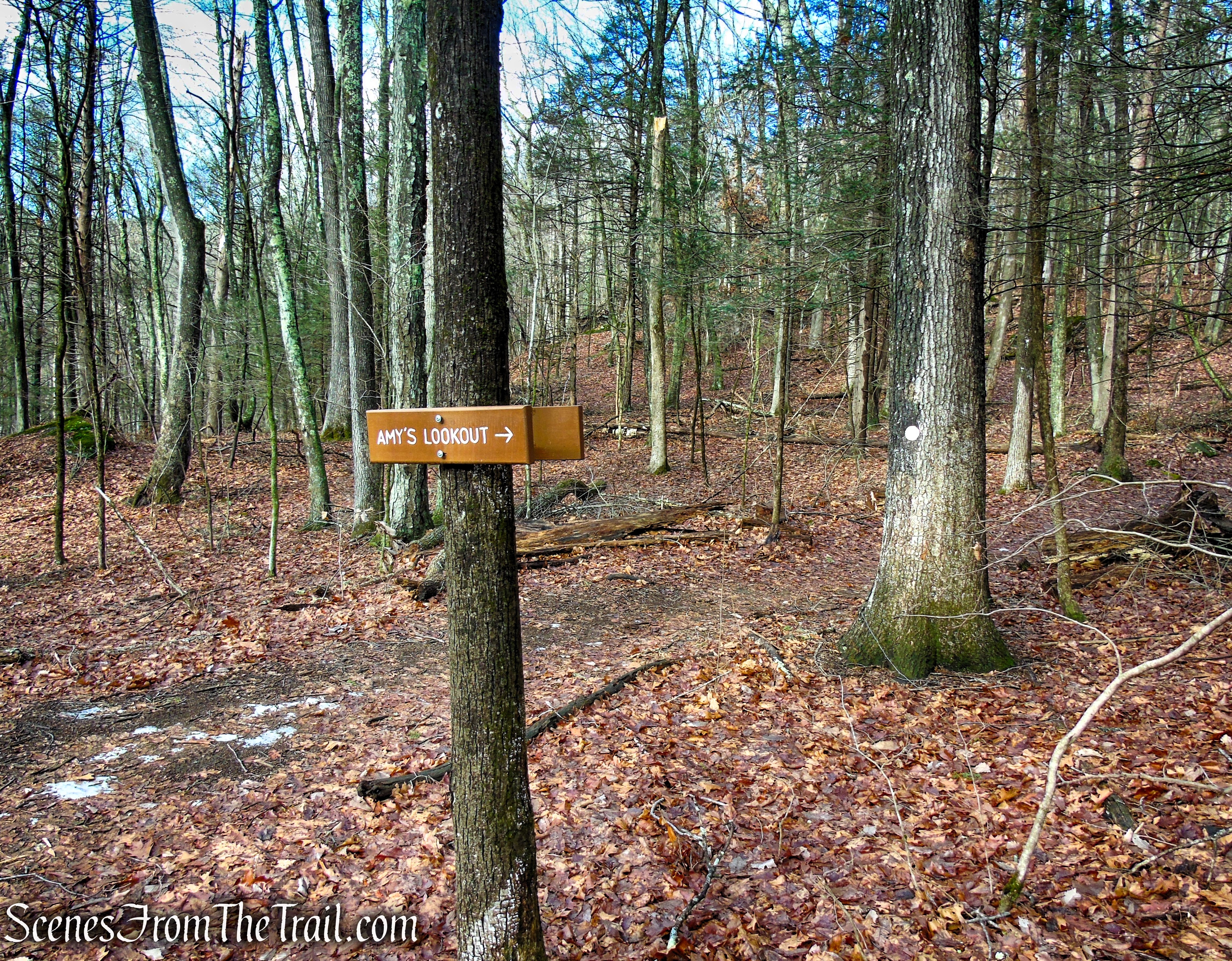

Saville Dam and Barkhamsted Reservoir

March 14, 2024 – Barkhamsted, Connecticut

Parking: Saville Dam Road, Barkhamsted, CT 06063


Overview:

The Saville Dam and Barkhamsted Reservoir are located in Barkhamsted and Hartland, Connecticut, and together they form one of the most important water supply systems in the state.

Saville Dam and Barkhamsted Reservoir

Saville Dam and Barkhamsted Reservoir

Completed in 1940, the Saville Dam is one of Connecticut’s most iconic landmarks and a stunning example of early 20th-century engineering. Spanning nearly 2,000 feet across the East Branch of the Farmington River, the dam features a striking stone-faced gatehouse that looks like something out of a fairytale.

Saville Dam

Saville Dam

Named after Calvin D. Saville, the Metropolitan District Commission’s chief engineer, the dam created the vast Barkhamsted Reservoir that supplies drinking water to the Hartford region. Visitors can stop at the scenic overlook on Route 318 to walk along the top of the dam and take in panoramic views of the water and surrounding forested hills—especially breathtaking during the fall foliage season.

Stretching for nearly eight miles through the valleys of Barkhamsted and Hartland, the Barkhamsted Reservoir is the largest body of water in the Metropolitan District Commission’s system and a crucial source of clean drinking water for more than 400,000 residents. Completed in 1940 when the Saville Dam was finished, the reservoir holds about 36 billion gallons of water and is surrounded by thousands of acres of protected forest. Though swimming and boating are prohibited to maintain water quality, the area offers exceptional scenic beauty, quiet roadside vistas, and nearby hiking opportunities in Peoples State Forest. Beneath the surface lie the remnants of Barkhamsted Hollow, a once-thriving farming community relocated when the valley was flooded to create the reservoir.

Barkhamsted Reservoir

Barkhamsted Reservoir


The Saville Dam and its upper gatehouse have become one of the most photographed spots in Connecticut, drawing visitors year-round for its storybook architecture and panoramic scenery. Its location along Route 318 makes it an easy and accessible stop, and the combination of the stone tower, calm reservoir waters, and forested hills provides a picture-perfect backdrop—especially at sunrise or during peak fall foliage. The site’s mix of natural beauty and historic charm has made it a favorite destination for photographers, road-trippers, and anyone exploring the Litchfield Hills region.

Saville Dam Upper Gatehouse

Saville Dam Upper Gatehouse

I visited Saville Dam and Barkhamsted Reservoir to photograph the iconic upper gatehouse and the scenic surroundings. By pure luck, a maintenance worker happened to be there that day and kindly let me step inside for a closer look. Timing is everything—thanks to that chance encounter, I got a rare, firsthand glimpse of the gatehouse’s inner workings.

Saville Dam Upper Gatehouse

Saville Dam Upper Gatehouse

Inside the Saville Dam’s upper gatehouse, the design is both practical and impressive. Beneath its storybook exterior lies a system of heavy steel valves, control wheels, and pipes that regulate the flow of water from the Barkhamsted Reservoir into the underground aqueduct leading toward Hartford. These mechanisms allow operators to precisely control water levels, releases, and flow rates depending on demand and weather conditions.

Saville Dam Upper Gatehouse

Saville Dam Upper Gatehouse


Saville Dam Upper Gatehouse

Saville Dam Upper Gatehouse

Inside the upper gatehouse at Saville Dam, the ceiling is just as striking as the rest of the structure. It features arched stonework that reflect the same craftsmanship seen on the exterior. Iron fixtures, pulleys, and support hooks are mounted overhead—part of the original system used to lift and operate the massive gate valves that control the reservoir’s outflow. These mechanical components, along with the exposed stone and metalwork, give the interior an almost cathedral-like feel—equal parts utility and artistry—showcasing how even a functional space was designed with enduring beauty and precision.

Saville Dam Upper Gatehouse

Saville Dam Upper Gatehouse


Saville Dam Upper Gatehouse

Saville Dam Upper Gatehouse

The gatehouse extends well below the surface, with access ladders and platforms descending to additional control chambers. Though it appears decorative from the outside, the interior reveals the dam’s true purpose—a carefully engineered heart of Connecticut’s largest water supply system.

Saville Dam Upper Gatehouse

Saville Dam Upper Gatehouse


Saville Dam Upper Gatehouse

Saville Dam Upper Gatehouse


The landscape around Barkhamsted Reservoir is a picture of serene New England beauty. Forested hills rise on either side of the long, winding reservoir, their slopes blanketed in a mix of evergreens and deciduous trees. The water’s surface reflects the changing seasons, while the protected, largely undeveloped shoreline gives the area a quiet, untouched feel. Rolling ridges, occasional clearings, and the gentle curves of the reservoir create a peaceful, scenic setting that feels both expansive and intimate.

Barkhamsted Reservoir

Barkhamsted Reservoir

From the Saville Dam, you can see Lake McDonough stretching out just below, framed by rolling, forested hills that seem to flow endlessly into the distance. The view captures the calm beauty, where the clear blue water winds through a landscape of dense woods and gentle valleys. It’s a peaceful, postcard-perfect scene—especially striking when the morning mist rises off the lake or when autumn colors light up the hillsides surrounding the reservoir. Lake McDonough functions mainly as a regulatory and compensatory reservoir within the Metropolitan District Commission’s system.

Lake McDonough

Lake McDonough

On the opposite side of Barkhamsted Reservoir, near Lake McDonough, a decorative fountain serves as a scenic focal point on the calm waters. When running, it creates gentle ripples that enhance the beauty of the surrounding forested hills. The fountain is a favorite for photographers and visitors enjoying views from nearby roads or trails, especially when sunlight sparkles on the water, adding a subtle, charming touch to the serene New England landscape.

A service road associated with the reservoir system runs parallel to Lake McDonough and leads directly to the fountain at the far end of Barkhamsted Reservoir. Primarily used by Metropolitan District Commission (MDC) personnel for maintenance and water management, the road is not open to public traffic.

Saville Dam fountain

Saville Dam fountain

The area surrounding the Saville Dam and Barkhamsted Reservoir offers excellent opportunities for hiking and nature walks. A network of forest roads, short trails, and scenic overlooks allows visitors to explore the landscape and enjoy close-up views of the dam, reservoir, and surrounding valley.

Beyond the immediate dam area, nearby state forests offer more established hiking options. In Peoples State Forest, you’ll find both loop and out-and-back trails with moderate climbs, leading to scenic overlooks and peaceful wooded areas perfect for photography and nature exploration.

Visiting Saville Dam and the Barkhamsted Reservoir is a peaceful and visually rewarding experience. The fairytale-like gatehouse, calm blue water, and surrounding forested hills created a picture-perfect New England scene. Walking along the dam which offers sweeping views in every direction, and the quiet, natural setting makes it easy to linger and take in the beauty. It’s a must-visit spot for photographers, nature lovers, and anyone looking for a scenic escape.

Saville Dam Upper Gatehouse

Saville Dam Upper Gatehouse


Sources:


Pomerance Park

January 27, 2024 – Greenwich, Connecticut

Difficulty: Easy

Length: Approximately 2.5 miles

Max elevation: 83 ft. – total elevation gain approximately 135 ft.

Map: Pomerance Park Trail Map

Parking: 101 Orchard St, Greenwich, CT 06830

Paved parking lot – Restrooms on site

Hours: Open year round, sunrise to sunset


Park Overview:

Pomerance Park is located in Cos Cob, a neighborhood in the town of Greenwich, Connecticut. The Town-owned park is comprised of 107 acres that features hiking trails and the stone ruins of the former estate of Ernest Thompson Seton, who helped establish the Boy Scouts of America in the early twentieth century.

Wyndygoul - Pomerance Park

Wyndygoul – Pomerance Park

The park is also home to the 4.6-acre Cos Cob Pond, paved and unpaved trails, an elevated wooden boardwalk and some interesting historical remnants that are scattered about, such as the “Hobbit House” located not far from the entrance.

Cos Cob Pond - Pomerance Park

Cos Cob Pond – Pomerance Park

“Hobbit House” - Pomerance Park

“Hobbit House” – Pomerance Park

Pomerance Park is open to the public and managed by the Greenwich Department of Parks & Recreation.

Pomerance Park

Pomerance Park


History:

The history of Pomerance Park is remarkable, beginning with naturalist-author Ernest Thompson Seton (August 14, 1860 – October 23, 1946) laying out his Wyndygoul estate in 1901. In Scottish Gaelic, Wyndygoul translates to Windy Gulch or Windy Glen.

Wyndygoul

Wyndygoul

There he created the Woodcraft Indians, a precursor to the Boy Scouts of America.

Medicine Rock - Council and War Dance - circa 1910

Medicine Rock – Council and War Dance – circa 1910

Ernest Thompson Seton is the father of distinguished historical fiction writer Anya Seton. Mr. Seton would eventually sell his estate in 1912 to financier Maurice Wertheim (February 16, 1886 – May 27, 1950), who willed the property to his three daughters, one of whom married into the Pomerance family, and another became the distinguished historian and Pulitzer winning author (twice), Barbara W. Tuchman. The property was then divided among the three sisters.

The home was demolished in 2014, but its stone walls have been preserved as a memorial to Seton. There is a plaque commemorating Wyndygoul and Seton in the park.

Wyndygoul ruins - Pomerance Park

Wyndygoul ruins – Pomerance Park

You can also see several features prominent in some of Seton’s writings about his home, including the pond and Medicine Rock.

Medicine Rock - Pomerance Park

Medicine Rock – Pomerance Park

In 2003, the Town acquired 75 acres of the Pomerance Property off Orchard Street. Then, in 2007 the Tuchman Property added 31 more acres.

For more information about Wyndygoul and the history of the park, check the links at the bottom of the page.


Trails Overview:

The red-blazed trail is the main trail in the park. It runs mostly around the perimeter of the property, but passes by or near most of the points of interest. On the map it is listed as 1.3 miles long, but it may be a little longer.

Red Trail - Pomerance Park

Red Trail – Pomerance Park

There are unmarked footpaths, along with paved and dirt roads that criss-cross the property. Pomerance Park is adjacent to the 90-acre Montgomery Pinetum Park, which has more trails to explore.


Hike Overview:

Pomerance Park may be accessed from Orchard Street in the Cos Cob neighborhood of Greenwich, CT. There is a paved lot that holds about 14 cars.

Pomerance Park entrance

Pomerance Park entrance

There are restrooms available, just across from the Hobbit House, not far from the entrance.

Restrooms - Pomerance Park

Restrooms – Pomerance Park

I happened to stumble upon this park while searching the internet for something else. After seeing some images of interesting stone structures, I decided to check it out. It’s only a 1/2 hour drive from the Tappan Zee Bridge and less than 5 miles from Greenwich Point Park, another great spot to check out.

We arrived at the park about 8:30am on a Saturday morning and there were several cars in the lot. Upon our return, at about 10am, there were still several spots available. From what I read and saw during my visit, it’s a popular spot for dog walkers.

Parking lot - Pomerance Park

Parking lot – Pomerance Park

This hike is mostly a counterclockwise loop using the Red Trail. The elevation gain is minimal and the woods, for the most part, are quiet, except for the occasional barking dogs and loud phone talkers.

Pomerance Park - Red Trail Loop

Pomerance Park – Red Trail Loop

elevation profile- Pomerance Park

elevation profile- Pomerance Park

It rained for days prior to our visit, and the ground was quite saturated, making the wet areas muddy, but passable. I recommend wearing waterproof boots.


The Hike:

At the southeastern end of the parking lot, look for a break in the wooden fence with a red blaze on a tree. This is the start of the loop. Continue ahead, following the well marked trail which parallels Orchard Street, but soon turns left, heading north. The Red Trail soon approaches a paved road and turns left, now running along Brothers Brook.

Start of Red Trail - Pomerance Park

Start of Red Trail – Pomerance Park

Red Trail - Pomerance Park

Red Trail – Pomerance Park

Red Trail - Pomerance Park

Red Trail – Pomerance Park

Red Trail - Pomerance Park

Red Trail – Pomerance Park

Red Trail - Pomerance Park

Red Trail – Pomerance Park

In about 1/3 of a mile, the Red Trail reaches the southern end of Cos Cob Pond. Just before reaching the pond, there is a short spur trail on the left that leads to the Stone Arch bridge and a picturesque small waterfall. You may want to take a few minutes to enjoy this scenic spot.

Red Trail - Pomerance Park

Red Trail – Pomerance Park

Stone Arch bridge - Pomerance Park

Stone Arch bridge – Pomerance Park

Below is an old image before the  Stone Arch bridge was built.

Cos Cob Pond Dam - Pomerance Park

Cos Cob Pond Dam – Pomerance Park

Cos Cob Pond Dam

Cos Cob Pond Dam

Mr. Seton created the Cos Cob Pond after damming Brothers Brook. In addition, he populated the pond with trout, bass, duck and geese.

Cos Cob Pond - Pomerance Park

Cos Cob Pond – Pomerance Park

When you are ready to continue, return to the Red Trail, which follows the paved road uphill. In a short distance, the Red Trail veers right and leaves the paved road, now running along a wide dirt path.

Red Trail - Pomerance Park

Red Trail – Pomerance Park

Veer right to remain on Red Trail

Veer right to remain on Red Trail

Red Trail - Pomerance Park

Red Trail – Pomerance Park

Red Trail - Pomerance Park

Red Trail – Pomerance Park

Red Trail - Pomerance Park

Red Trail – Pomerance Park

Red Trail - Pomerance Park

Red Trail – Pomerance Park

The trail soon bears right at a fork. Bear left, leaving the trail momentarily to the site of an old root cellar.

Red Trail - Pomerance Park

Red Trail – Pomerance Park

Root Cellar - Pomerance Park

Root Cellar – Pomerance Park

Root Cellar - Pomerance Park

Root Cellar – Pomerance Park

When you are done checking out the root cellar, return to the Red Trail and turn left, heading northeast. A short distance later, the Red Trail comes to another junction and turns left, now joined by the Green Trail (from Montgomery Pinetum Park), which comes in from the right.

Red Trail - Pomerance Park

Red Trail – Pomerance Park

Turn left to remain on the Red Trail

Turn left to remain on the Red Trail

Follow the Red Trail as it passes under a trestle bridge. Immediately after passing under the bridge, turn left and follow an unmarked footpath uphill to the site of Wyndygoul.

Red Trail - Pomerance Park

Red Trail – Pomerance Park

Red Trail - Pomerance Park

Red Trail – Pomerance Park

Turn left on unmarked trail

Turn left on unmarked trail

In a very short distance, the trail reaches the stone ruins of Wyndygoul. You may want to take a little time here to explore this interesting area.

Wyndygoul ruins - Pomerance Park

Wyndygoul ruins – Pomerance Park

Wyndygoul ruins - Pomerance Park

Wyndygoul ruins – Pomerance Park

Wyndygoul ruins - Pomerance Park

Wyndygoul ruins – Pomerance Park

Wyndygoul ruins - Pomerance Park

Wyndygoul ruins – Pomerance Park

Wyndygoul ruins - Pomerance Park

Wyndygoul ruins – Pomerance Park

Wyndygoul ruins – Pomerance Park

Wyndygoul ruins – Pomerance Park

This viewpoint, once held a grand view of the pond and the garden below. The trees have since grown up, obscuring the view.

Wyndygoul Overlook - Pomerance Park

Wyndygoul Overlook – Pomerance Park

The stone garden just below the Wyndygoul site. We would be headed there soon.

Wyndygoul Overlook - Pomerance Park

Wyndygoul Overlook – Pomerance Park

Opposite the pond overlook is a curved stone wall with benches built in. The view extends over the woods and the Red Trail below.

Wyndygoul site - Pomerance Park

Wyndygoul site – Pomerance Park

Wyndygoul site - Pomerance Park

Wyndygoul site – Pomerance Park

When you are done checking out these historical ruins, retrace your steps back to the trestle bridge and cross it. 

Wyndygoul site - Pomerance Park

Wyndygoul site – Pomerance Park

Trestle bridge - Pomerance Park

Trestle bridge – Pomerance Park

Trestle bridge - Pomerance Park

Trestle bridge – Pomerance Park

At the split in the bridge, turn right to check out more ruins. 

Trestle bridge - Pomerance Park

Trestle bridge – Pomerance Park

Ruins - Pomerance Park

Ruins – Pomerance Park

Ruins - Pomerance Park

Ruins – Pomerance Park

Retrace your steps and follow a path that curves around to the left and meets up with the Red Trail. Turn right on the Red Trail and follow it downhill.

Red Trail - Pomerance Park

Red Trail – Pomerance Park

The Red Trail comes to a T-intersection and turns right. You should leave the Red Trail and follow another unmarked trail that runs along the left of the pond. This short footpath will bring you to the garden ruins along the edge of Cos Cob Pond.

Unmarked trail - Pomerance Park

Unmarked trail – Pomerance Park

Garden ruins - Pomerance Park

Garden ruins – Pomerance Park

Garden ruins - Pomerance Park

Garden ruins – Pomerance Park

Cos Cob Pond - Pomerance Park

Cos Cob Pond – Pomerance Park

Garden ruins - Pomerance Park

Garden ruins – Pomerance Park

Stone Arch bridge - Pomerance Park

Stone Arch bridge – Pomerance Park

Garden ruins - Pomerance Park

Garden ruins – Pomerance Park

Garden ruins - Pomerance Park

Garden ruins – Pomerance Park

When you are ready to continue, retrace your steps along the edge of the pond, rejoin the Red Trail and continue straight, now heading north.

Unmarked trail - Pomerance Park

Unmarked trail – Pomerance Park

Red Trail - Pomerance Park

Red Trail – Pomerance Park

Red Trail - Pomerance Park

Red Trail – Pomerance Park

Red Trail - Pomerance Park

Red Trail – Pomerance Park

Red Trail - Pomerance Park

Red Trail – Pomerance Park

Soon the Red Trail turns left, heading in a westerly direction. The trail now skirts private property as it runs along the northern perimeter of the park.

Turn left to remain on the Red Trail

Turn left to remain on the Red Trail

Red Trail - Pomerance Park

Red Trail – Pomerance Park

Red Trail - Pomerance Park

Red Trail – Pomerance Park

In a short distance, the Red Trail crosses a wooden bridge over Brothers Brook, the inlet stream of Cos Cob Pond, and turns right. After crossing the bridge, turn left at this junction, leaving the Red Trail briefly, and walk a short distance on the unmarked woods road.

Red Trail - Pomerance Park

Red Trail – Pomerance Park

Turn left at the junction

Turn left at the junction

A short distance down that road, on the left, there is an old chimney in the woods that was once the site of a log cabin. This may be hard to see when the foliage is grown in.

Chimney ruins - Pomerance Park

Chimney ruins – Pomerance Park

Below is an image of the cabin that used to be there.

Cabin - Pomerance Park

Cabin – Pomerance Park

Return to the junction with the Red Trail and turn left.

Turn left on Red Trail

Turn left on Red Trail

Turn left on Red Trail

Turn left on Red Trail

The trail heads west then curves south, bordering private homes on the right. The trail soon passes through wetlands, with wooden planks and stepping stones to help keep your feet dry.

Red Trail - Pomerance Park

Red Trail – Pomerance Park

Red Trail - Pomerance Park

Red Trail – Pomerance Park

Red Trail - Pomerance Park

Red Trail – Pomerance Park

Red Trail - Pomerance Park

Red Trail – Pomerance Park

The Red Trail soon emerges on a paved park road and turns right. Follow the paved road a short distance and keep your eyes open for an unmarked footpath on the left, marked with a stone with a plaque on it. Turn left on this footpath to the location of Medicine Rock.

Turn right on Red Trail

Turn right on Red Trail

Medicine Rock Trail - Pomerance Park

Medicine Rock Trail – Pomerance Park

Medicine Rock Trail - Pomerance Park

Medicine Rock Trail – Pomerance Park

Medicine Rock - Pomerance Park

Medicine Rock – Pomerance Park

Cos Cob Pond - Medicine Rock Trail

Cos Cob Pond – Medicine Rock Trail

When you are done, return to the paved road and turn left. Not far from Medicine Rock, is the Hobbit House.

Turn left on Red Trail (paved road)

Turn left on Red Trail (paved road)

I couldn’t find any information on the purpose of this unique looking structure, nor the year that it was built, but it makes for an intriguing stop along the trail.

"Hobbit House" - Pomerance Park

“Hobbit House” – Pomerance Park

You may want to return to the southern end of Cos Cob Pond, which is close by, for another look. 

Cos Cob Pond - Pomerance Park

Cos Cob Pond – Pomerance Park

When you are ready to continue, retrace your steps back to the Hobbit House and turn left. The restrooms are located opposite the Hobbit House, so if you have to go, this is a good time to do so.

Cos Cob Pond Dam - Pomerance Park

Cos Cob Pond Dam – Pomerance Park

"Hobbit House" - Pomerance Park

“Hobbit House” – Pomerance Park

Restrooms - Pomerance Park

Restrooms – Pomerance Park

Continue on the paved road (route of the Red Trail) and follow it a short distance back to the parking lot, where the hike began.

Red Trail - Pomerance Park

Red Trail – Pomerance Park

Parking lot - Pomerance Park

Parking lot – Pomerance Park


Review:

Although short in distance, this hike packs a lot of points of interest. The Red Trail is well marked and easy to follow. The majority of people that we saw, were along the paved sections. We didn’t see anyone along the dirt (muddy on this day) trails. This is a really nice spot to visit for the historical features alone. I would recommend this hike for anyone looking for an easy hike in the woods.

Pros:

Scenic landscape, historical features, stone ruins, Cos Cob Pond, the Red Trail is well marked.

Cons:

Not much information available on some of the structures in the park.


Take a hike!

Pomerance Park

Pomerance Park


Sources:
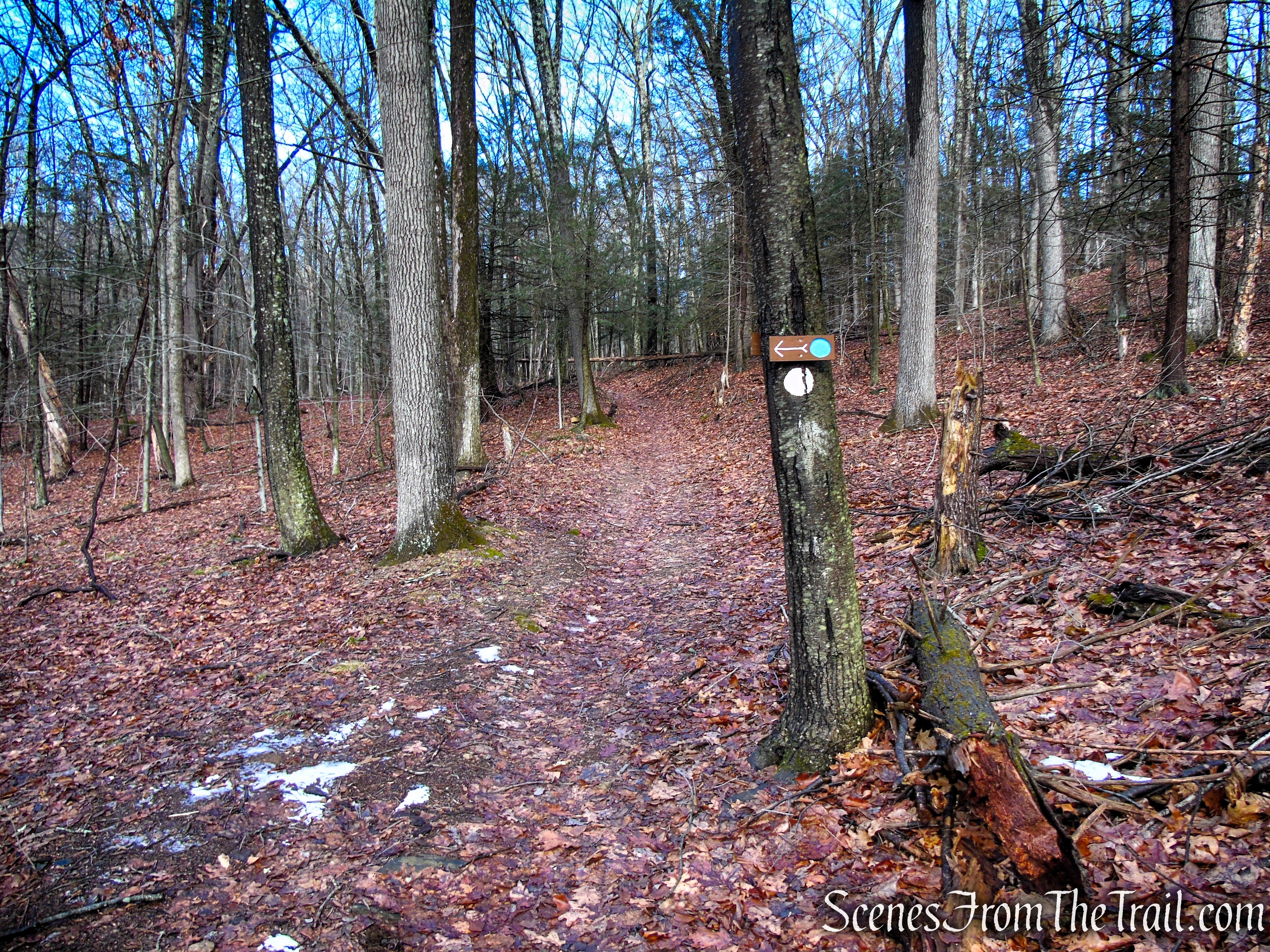


Rockland Breakwater Lighthouse

September‎ 25‎, ‎2023 – Rockland, Maine

Difficulty: Easy

Length: Approximately 2 miles

Parking: Samoset Rd, Rockland, ME 04841

Parking is available at near the end of Samoset Rd.

Grounds are open sunrise to sunset. Lighthouse tours are volunteer dependent, please visit the Rockland Breakwater Lighthouse Facebook page for any announcements. All tours are weather permitting.


Overview:

The Rockland Breakwater Lighthouse sits at the end of a 7/8-mile granite breakwater that stretches 4,346 feet into Rockland Harbor. It is an active U.S. Coast Guard aid to navigation. The property is owned by the City of Rockland and managed by Friends of Rockland Harbor Lights, a chapter of the American Lighthouse Foundation.

Rockland Breakwater Lighthouse

Rockland Breakwater Lighthouse

A favorite destination for locals, it has also been a popular tourist attraction for years. The Rockland Breakwater and Lighthouse is a good choice for an interesting walk while providing a different kind of outdoor experience. The breakwater is just under a mile long and is a beautiful and scenic walk on sunny days. During bad weather, waves often crash over the granite breakwater which can make the walk a very wet one and possibly hazardous. Along the way, there are stunning views of Rockland, Rockland Harbor and Penobscot Bay.

Looking northwest - Rockland Breakwater Lighthouse

Looking northwest – Rockland Breakwater Lighthouse

Looking northeast - Rockland Breakwater Lighthouse

Looking northeast – Rockland Breakwater Lighthouse


History:

  • Rockland Breakwater~

A breakwater is a barrier that is built out into a body of water to help “break the water,” protecting a coast or harbor from strong waves. The Rockland Breakwater was built between 1881 and 1899 by the United States Army Corps of Engineers. Almost a mile long, it was built to help protect Rockland Harbor. The Bodwell Granite Company used around 700,000 tons of granite for the project, which cost more than three quarters of a million dollars. It was listed on the National Register of Historic Places in 2003.

The Rockland Breakwater is a 4,346 long granite structure that stretches across the mouth of the broad Rockland Harbor south from Jameson Point. At its southern terminus the breakwater supports the Rockland Breakwater Lighthouse.

Since its completion, the Rockland Breakwater has drawn the attention of visitors and local residents alike. Throughout its history it has been a popular spot for walking, boating, fishing, swimming and picnicking. Although designed to ensure the safety of the vessels and businesses that relied on Rockland Harbor it has become a community landmark and resource.

  • Rockland Breakwater Lighthouse~

The Rockland Breakwater Lighthouse was established in 1902, about two years after completion of the breakwater. The complex consists of the lighthouse itself, a fog-signal building, and a Keeper’s house, all constructed on a rectangular platform of dressed granite. All of these elements are attached to each other, and the lighthouse tower rises from the roof of the fog signal building. In 1964 the Rockland Breakwater Lighthouse was automated by the Coast Guard. The Lighthouse was listed on the National Register of Historic Places on March 20, 1981.

Rockland Breakwater Lighthouse

Rockland Breakwater Lighthouse

Today, the Rockland Breakwater and its historic lighthouse that stands sentinel at the south end of the granite structure are well-known and beloved icons of Midcoast Maine. The breakwater continues to serve as a harbor of refuge along Penobscot Bay, with thousands of people walking the nearly mile-long stretch each year. This enjoyable walk allows visitors to admire panoramic seascapes, historic schooners, and marine life before reaching the end of their destination at the lighthouse.

Rockland Breakwater Lighthouse

Rockland Breakwater Lighthouse


Visiting Rockland Breakwater Lighthouse:

There are roughly 35 or so parking spots along Samoset Road. Park in the pull-offs on the left-side of the road in front of the golf course. Once on foot, walk down Samoset Road to where it ends and the Breakwater Path begins. This path along the beach takes you to the beginning of the Rockland Breakwater.

Rockland Breakwater Lighthouse Parking

Rockland Breakwater Lighthouse Parking

When walking the breakwater to the Lighthouse, it is important to keep several things in mind. As you set out on this scenic walk, treat it like you would a hike through the woods.

  • There is no running water at the lighthouse, which means no bathrooms. This also means that you need to bring water for yourself just like any other hike.
  • This walk is about 2 miles round trip.
  • You will need appropriate footwear with good gripping soles.
  • Granite can become very slick when it gets wet, so pay attention.
  • There are also some gaps between the blocks that can trip you up if you are not paying attention.
  • Finally, you should always dress for cooler weather because there is always a cool breeze on the breakwater. There is also a noticeable decrease in temperature as you approach the lighthouse because it is nearly a mile out into the bay.

There is a small park near the beginning of the breakwater, the Marie H. Reed Breakwater Park. The lighthouse is also part of the 5.5-mile Rockland Harbor Trail that also takes hikers through the city and some of its open spaces.

Once you are ready to go, walk down towards the water and turn left on the Breakwater Path. This short dirt path connects Samoset Road to the Rockland Breakwater.

Breakwater Path – Rockland Breakwater Lighthouse

Breakwater Path – Rockland Breakwater Lighthouse

Breakwater Path - Rockland Breakwater Lighthouse

Breakwater Path – Rockland Breakwater Lighthouse

Breakwater Path – Rockland Breakwater Lighthouse

Breakwater Path – Rockland Breakwater Lighthouse

Breakwater Path - Rockland Breakwater Lighthouse

Breakwater Path – Rockland Breakwater Lighthouse

Breakwater Path - Rockland Breakwater Lighthouse

Breakwater Path – Rockland Breakwater Lighthouse

Proceed ahead on the breakwater and head towards the lighthouse. Please watch your step to keep from tripping or slipping (if it is wet).

Rockland Breakwater

Rockland Breakwater

Rockland Breakwater

Rockland Breakwater

You probably won’t be alone while walking the breakwater, especially if it’s a nice day.

Rockland Breakwater Lighthouse

Rockland Breakwater Lighthouse

Rockland Breakwater Lighthouse

Rockland Breakwater Lighthouse

Rockland Breakwater Lighthouse

Rockland Breakwater Lighthouse

Rockland Breakwater Lighthouse

Rockland Breakwater Lighthouse

The best views for photographing the Rockland Breakwater Lighthouse are from the water itself. If you do not want to travel on any of the boats and schooners that frequent the harbor, there are daily ferries from Rockland to Vinalhaven and to North Haven that pass close by. The ferries run hourly during the day from the Maine State ferry terminal located in Rockland Harbor nearby. The image below was taken from the floating dock which was added in 2003.

Rockland Breakwater Lighthouse

Rockland Breakwater Lighthouse

At the base of the flagpole.

Rockland Breakwater Lighthouse

Rockland Breakwater Lighthouse

Carved into the granite at the end of the breakwater: “BRW – 4347 FEET LONG.” Records have the Rockland Breakwater listed at 4,346 feet long.

Rockland Breakwater

Rockland Breakwater

View southeast from the Rockland Breakwater Lighthouse.

Rockland Breakwater

Rockland Breakwater

The steps are on the right side and can be used to walk around the lighthouse.

Rockland Breakwater Lighthouse

Rockland Breakwater Lighthouse

Rockland Breakwater Lighthouse

Rockland Breakwater Lighthouse

Looking south.

Looking south - Rockland Breakwater Lighthouse

Looking south – Rockland Breakwater Lighthouse

Looking north.

Looking north - Rockland Breakwater Lighthouse

Looking north – Rockland Breakwater Lighthouse

Looking north - Rockland Breakwater Lighthouse

Looking north – Rockland Breakwater Lighthouse

You may want to take a break here to relax and enjoy the views.

Looking northwest - Rockland Breakwater Lighthouse

Looking northwest – Rockland Breakwater Lighthouse

A look back the way you came.

Looking north - Rockland Breakwater Lighthouse

Looking north – Rockland Breakwater Lighthouse

Looking northeast - Rockland Breakwater Lighthouse

Looking northeast – Rockland Breakwater Lighthouse

Looking north - Rockland Breakwater Lighthouse

Looking north – Rockland Breakwater Lighthouse

The floating dock and boat ramp which was added in 2003, is the best spot to photograph the lighthouse. Just watch your step if you decide to walk on it, especially if the water is a little rough.

Looking northwest - Rockland Breakwater Lighthouse

Looking northwest – Rockland Breakwater Lighthouse

View over Penobscot Bay and the majestic hills rising beyond.

Looking northeast - Rockland Breakwater Lighthouse

Looking northeast – Rockland Breakwater Lighthouse

Rockland Breakwater

Rockland Breakwater

Rockland Harbor

Rockland Harbor

When you are ready to return to the mainland, retrace your steps along the breakwater, and back to the parking area, where the hike began.

Rockland Breakwater

Rockland Breakwater


Review:

A very cool experience that was quite enjoyable. I would definitely recommend visiting this historic breakwater and lighthouse if you are able.

Pros:
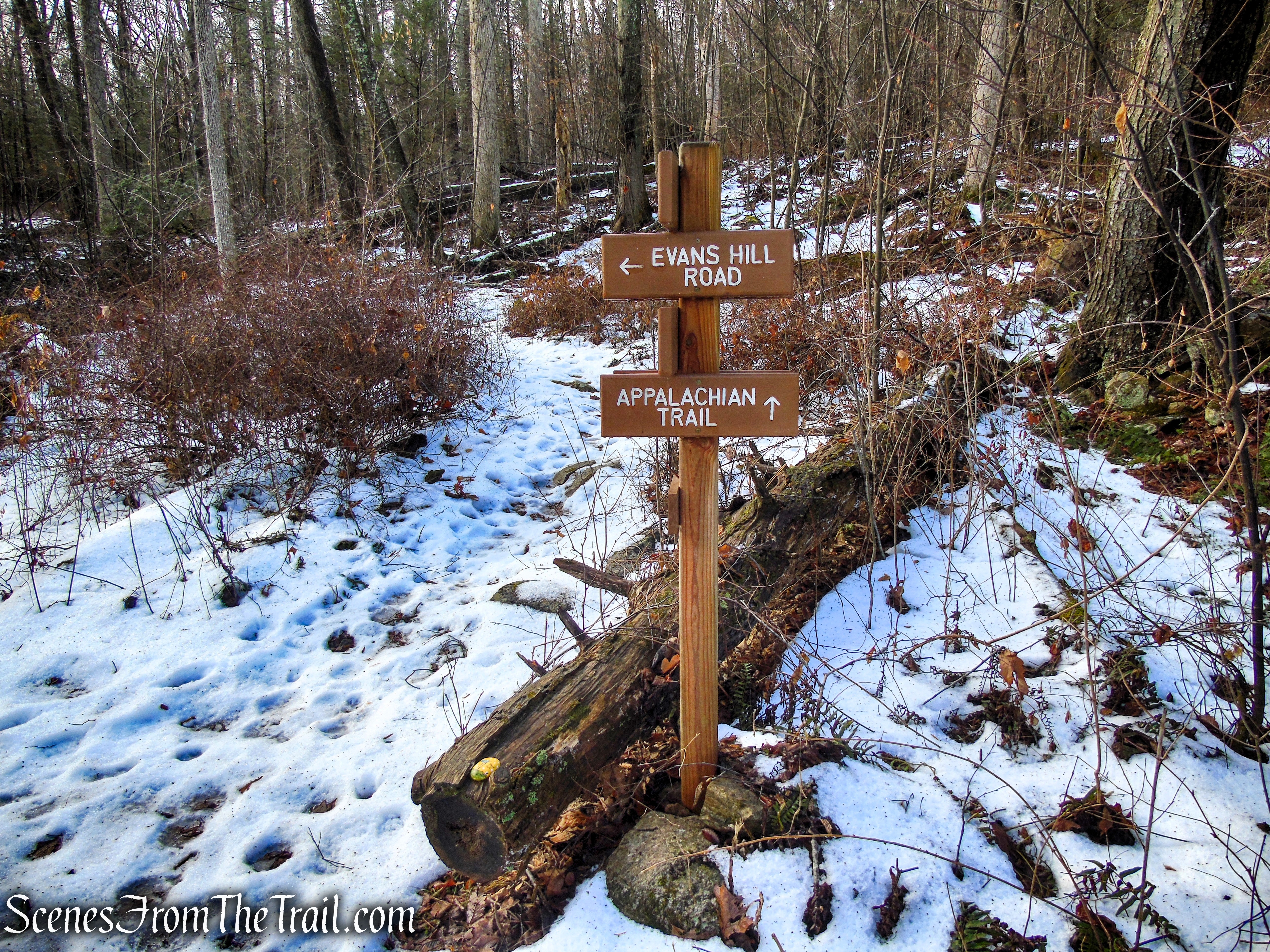
Rockland Breakwater Lighthouse, Rockland Breakwater, panoramic views, scenic seascape.

Cons:

Can get crowded during warm weather.


Sources: